
By: Matt Liebsch at Gear West
At Gear West we have a strong understanding of flex data and how it relates to glide properties of skate skis. Looking at classic skis has been more involved because there are more variables compared to skating, both kick and glide. Over the past year we have spent considerable time looking at bad, good and great classic skis. We look at how the flex pattern changes with load and the static shapes at a given skier body weight. We take the gathered flex data and draw a parallel to how the ski actually performs on the trails.
New software implements to our flex tester from Josh Dobbert have allowed us to set a pocket length and sum the given load inside the kick zone during kick and glide phases. This is exciting because we can calculate a numeric “kick force” value for a classic ski. Ideally, at 50% body weight a ski should not have any load within the kick zone (double poling and tucking) and at full kicking weight the ski needs to have load applied inside the kick zone.
What do we know about “kick force” and classic skis??
In order for a ski to have a chance at kicking the kick force needs to be roughly 33-50% of a skier’s body weight. Less than 33% and the ski can be very difficult to kick or is a specialty klister ski with a large amount of residual pocket.
Skis that have load inside the kick zone at 50% load are generally too soft and tend to be draggy. Unless you are specifically looking for a colder powder ski.
Shape matters. When looking at the dynamic load response of a classic ski the manner in which the pocket closes is very important. Skis that initiate kick right at the load point/balance point are generally too inelastic within the pocket to kick well no matter what kick force value. These skis generally “punch” the snow too aggressively and only seem to kick in easy kicking conditions. Skis with pockets that close from the front of the pocket or both front and back of the pocket simultaneously are very easy to kick due to the manner in which they interact with the snow. They tend to “paw” the snow. Pair a strong kick force with the correct pocket action and you will have a brilliant classic ski.
My favorite classic ski has a kick force of roughly 70% yet holds the pocket open at half my body weight. This is what we at Gear West refer to as “magic skis” I can literally lightly sand my ski in the pocket and the thing kicks. Yet the ski was picked specifically as a Klister ski. 902/speedmax mold from Fischer.
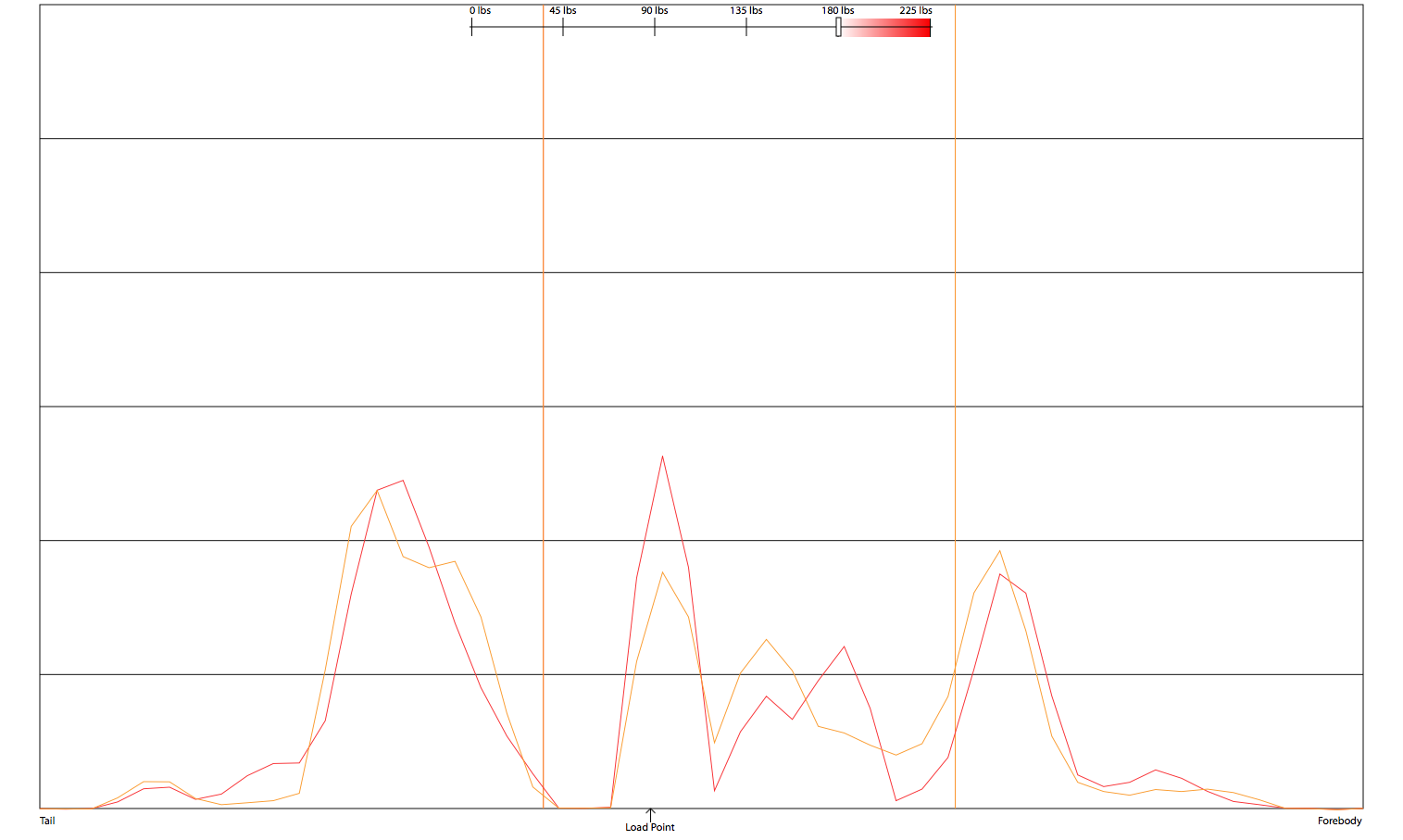
For another example, let’s look at Doug Debold’s 2013 winning Birkie classic ski that I picked for him out of the Salomon service center in Ogden Utah in summer of 2012.
Things to notice include…
Smooth pressure at 50% load. This ski is designed for cold snow. But it holds the pocket open = fast.
The kick force for a 180lb Doug Debold is roughly 50%
The pocket closes from the front, makes for easy kicking
One last takeaway is that a highly trained set of eyes and hands can pick very good classic skis. Our flex tester allows us to take ski fitting one step further and verify our selections. We can also very easily identify classic skis that just won’t work for anyone… these skis are promptly turned into firewood.


Leave a Reply
You must be logged in to post a comment.