From the FasterSkier archive — posts syndicated from athletes’ and coaches’ own blogs between 2004 and 2012, kept online as published. Current coverage is at fasterskier.com.
In April of 2017 we decided that we needed to make a meaningful gesture in recognition of the threat posed to our industry and livelihood by climate change. We created a partnership between our customers and our suppliers to donate $100 from each pair of skis ordered on one day (Earth Day) to Protect Our Winters; an advocacy organization working to promote a pro-winter agenda.
The program surpassed our expectation. We took orders for 46 pairs of skis, and made a $4600 donation to POW. It’s not millions, but it felt good to write that check, knowing that it represented the commitment and partnership of so many customers and suppliers. Many of our fellow skiers find themselves on the fence about a continued investment in the sport. Is it worth it? Will it last? Last year we conduced a follow-up survey with the people who participated in the program, and we found that this project provided a good incentive to keep people invested in skiing. This is positive for us, but it’s also positive for the industry, and for that reason we invited our friends at Boulder Nordic Sport to join us for this year.
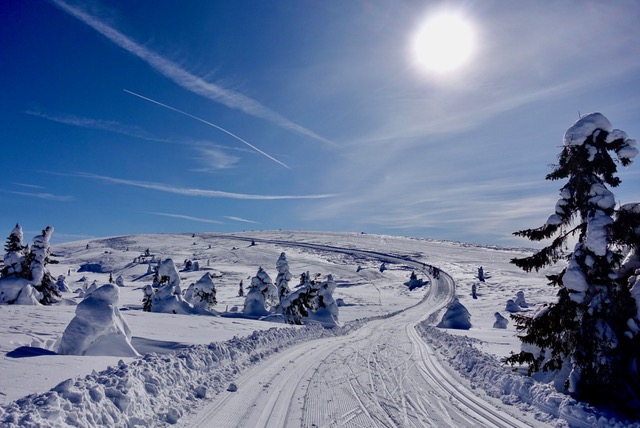
A changing climate remains the biggest threat to our sport. Since making a public recognition of the issue a year ago, we have passed the last year with a greater willingness to acknowledge the role that climate plays shaping weather and conditions. We’re wrapping up a season with record numbers of ski days at many locations in the east. Europe has had an amazing snow year as well, and the World Cup race calendar was unmarred by low-snow conditions. But this isn’t any more “normal” than the lean years we’ve had. For all the places that enjoy good snow and a long season, others suffered with terrible conditions. Volatility is the new normal, and it makes planning for the future a tricky business.
Last year I pointed out many of the ways in which we are lucky to make a living in a sport that we love. This year, our luck has held. We’ve just wrapped up a great season and our business is strong. Our goal remains modest; we want to share our passion with people, and make a living doing it. In the face of the changing climate, that modest goal appears audacious. We will continue to rely on you, our friends and customers, to join us in doing what we can to live this dream. And in the meantime, we’ll ask you to once again help us by creating another donation to POW.
There are many organizations that are worthy of support in a project like this. We have chosen to return our support to POW because of the perfect overlap of their mission with our concerns. The outdoor industry is huge; in February the federal Bureau of Economic Analysis pegged its contribution to the GDP at 2%, putting it on par with other economic giants. While the size of the outdoor industry is considerable, its voice in Washington is small. Any meaningful and beneficial change will be political change, and POW is a powerful and effective voice on our behalf.
Winter has run long, and late April has snuck up on us early this year; we’re a week or so behind schedule putting this program together. So this year we’ll make contributions to POW on all orders received April 30th and May 1st – next Monday and Tuesday. We will once again be joining forces with our suppliers to donate $100 for each pair of skis ordered on these days. We’ll also be rolling out options to generate donations with orders from KV+, Red Creek, and Star.
Happy Thanksgiving! This spring we ran an Earth Day promotion in which we partnered with our ski suppliers to make a $100 contribution to Protect Our Winters for each pair of skis that was ordered. We had never done anything like that, but we felt strongly that it is the responsibility of all winter sports businesses to raise awareness of the issues surrounding climate change, and create opportunities for consumers and the industry to join forces to protect winter.
The promotion got a much better response than we expected, and we ended up sending a check for $4600 to Protect Our Winters. And even though we were reducing our margins on the skis we sold, it was good business as well. It seemed to give people a great reason to think about skiing, and we picked up more than double the number of orders we thought we might get.
As a small business, it’s tempting to offer sales or discounts to boost business. It’s worth noting that the Earth Day promotion offered no discounts on our prices, which are generally higher than those found at other retailers. It’s instructive for us to see clear evidence that skiers are as motivated by an opportunity to contribute to an important cause, as they are by an opportunity to get a bargain price. It says a lot about our customers, and reinforces the reasons that the ski industry is a really rewarding place to put our energy.
Now we’ve got another idea to help us join forces with our customers to combat climate change. From now until December 15th, we’ll purchase Carbon Offsets for the shipping of any item purchased from our web store.
Purchasing carbon offsets isn’t exactly the same thing as reducing our own carbon footprint. It’s tempting to claim that it’s simply buying good feelings and a clear conscience. Fair enough. What we see in reality is that buying a clear conscience is a sign that you have a conscience. Awareness and action are close partners. We all can do more in our own lives, and every time we take a small step to make a difference we own a small piece of our own footprint. If nothing else, this will help Amy and myself feel that we have not forgotten that we owe our livelihood and lifestyle to winter. These things are important during the holiday bonanza season!
As always, thanks for your support and partnership.
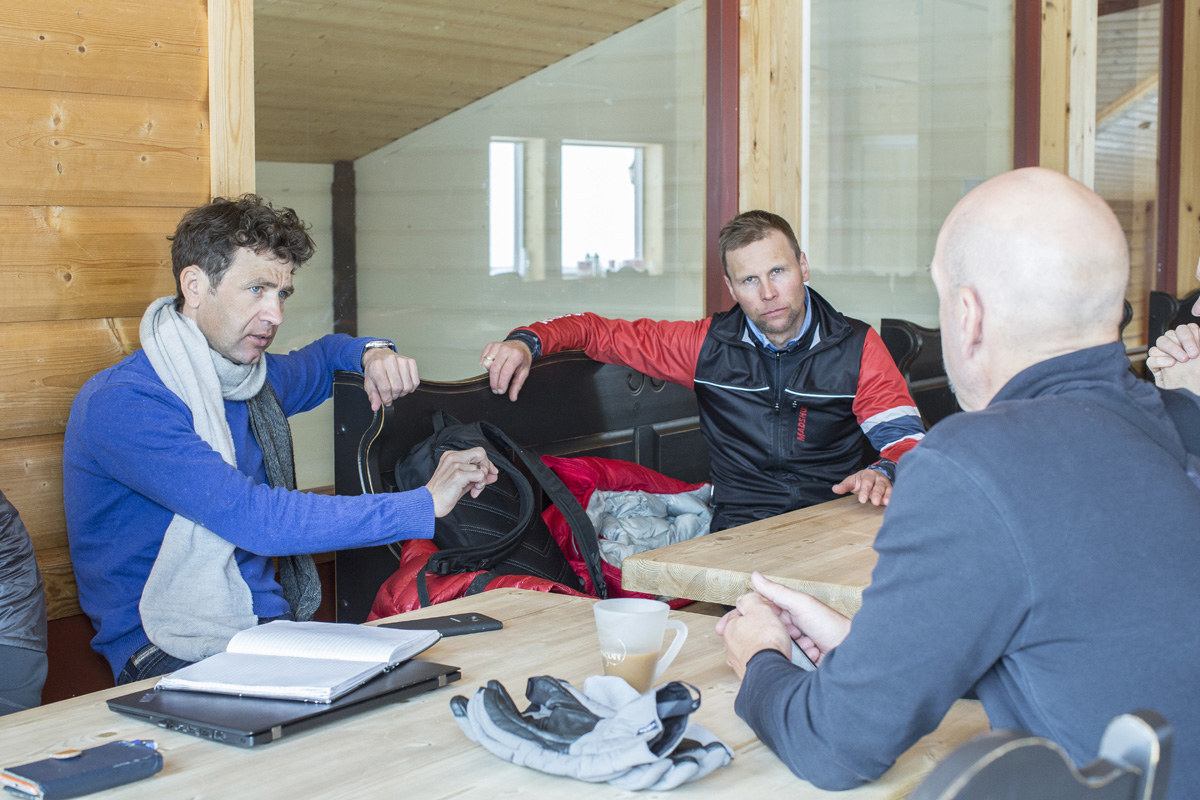
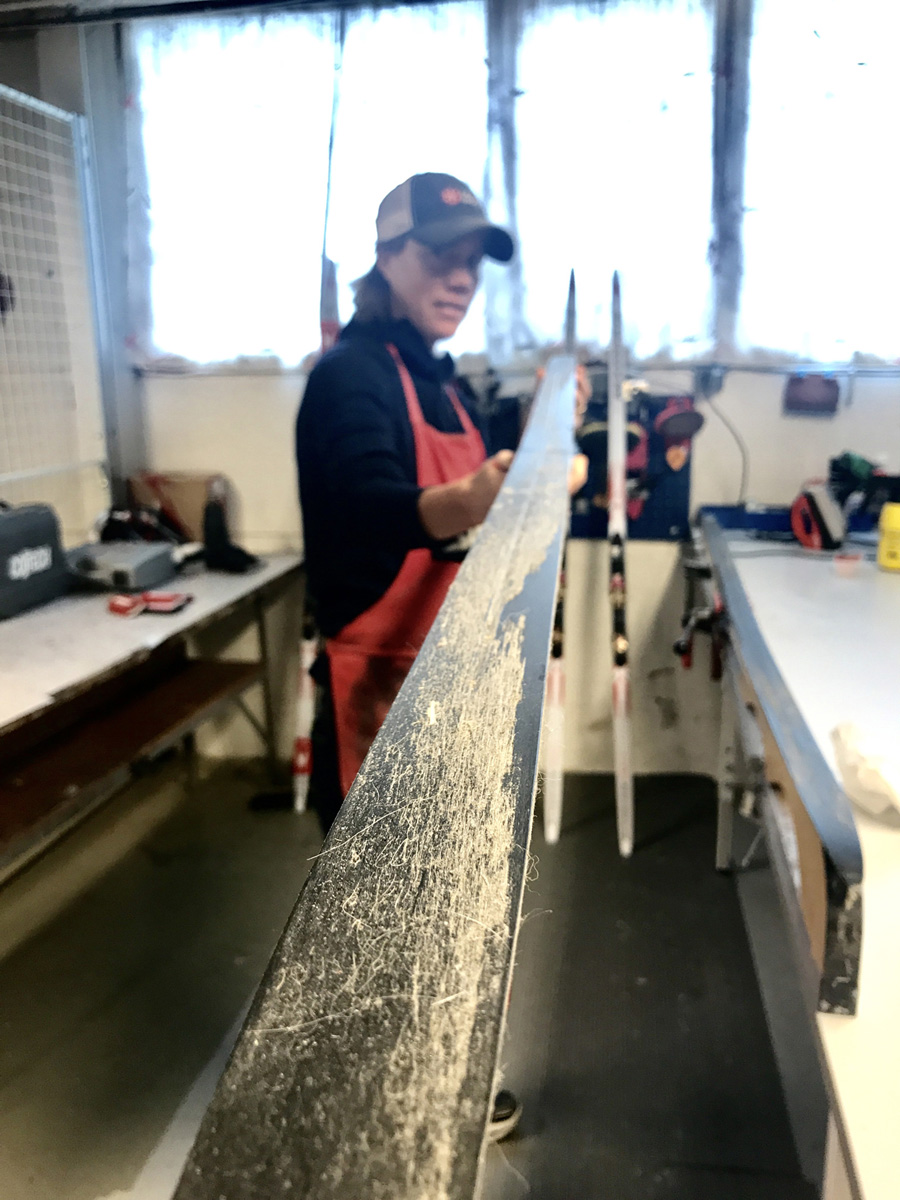
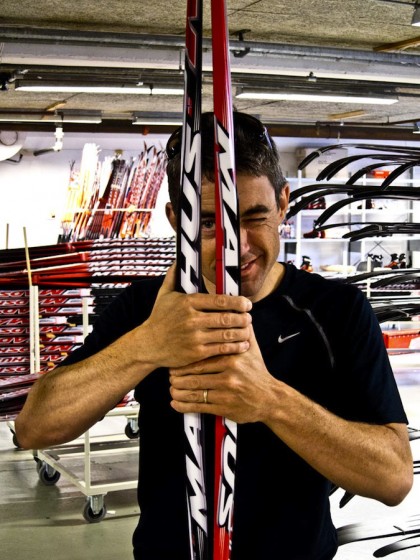
Svein Ivar Moen (looking at the camera) has worked with Ole Einar Bjorndalen for many years, and is now directing the testing and development of new race products for Madshus.
We don’t often worry, or even think much, about the layers of ownership involved in the ski industry. But last October, Newell Brands announced that it would be selling off its winter sports holdings following a merger with Jarden, the parent company of K2, and subsequently Madshus. Newell and Jarden are big players in in the consumer products world, accounting for common brands like Rubbermaid, Coleman, and Mr Coffee, to drop a few recognizable names from a long list of other recognizable names. The winter sports market is small potatoes in the world of Rubbermaid and Coleman, and it’s not a surprise that Newell Brands decided not to pursue the winter sports industry, which is notoriously difficult and unstable business.
When they announced the sale, Newell also announced that they wanted to move fast, and would consider shutting down assets that did not sell quickly. In addition to Madshus the K2 holdings included Volkl, Marker, Dalbello, Line, Atlas, Tubbs, and others. The whole package was being sold as a bundle, and the big question was whether a buyer would keep the package intact, or immediately split everything up – keep some brands, sell others, and close the duds. The concern for Madshus dealers in the US was that K2 is not only the parent company; it’s also the distributor in the US market. A break-up could have meant a change in distribution, which could have been very disruptive to the supply chain and customer support in the US.
The Corporate acquisition story turned out happily. Kohlberg & Company – a private equity firm with at least one consultant on the team who is seriously invested in Nordic skiing – bought K2, and left the structure intact. That means that business with Madshus is business as usual.
If some of us American retailers were getting a bit jittery over the ownership situation this last winter, the folks at Madshus in Biri never seemed to lose any sleep over it. Madshus hasn’t always been a tight ship, but in recent years they’ve been stable, well organized, and independently profitable. No matter what ownership shake-up went down, Madshus was always going to land on its feet.
And if some people in the industry were taking a “wait and see” approach, the Madshus race and development program was full speed ahead. In the spring of 2016 Per Wiik told me that he had secured the funding to add a full time position to the race development program, and by fall of 2016 Madshus had hired Svein Ivar Moen away from the Norwegian Biathlon team. Svein Ivar had worked directly with Ole Einar Bjorndalen as a tester and waxer for years, and was already deeply involved with the Madshus brand.
So, at about the same time that Newell Brands was announcing that K2 would be sold, Madshus was starting an entirely new development project. Svein Ivar’s job was to coordinate testing and manage the huge amount of information that would be generated by a development and testing process in which almost every variable in the ski construction process was open for revision.
When we say things like “every variable is open for revision” it’s necessary to clarify a point or two. Every ski brand has developed a method of building skis using a certain set of materials and manufacturing processes. It’s common to see similar materials – sometimes from the same supplier – in skis from different brands. But the construction method is unique for each brand, and it represents a massive investment in factory tooling and process development. What Madshus did not set out to revisit in the last year was their construction method. They didn’t proposed to redesign the structure of the skis from the inside out.
What they did open up for assessment is everything else. The geometric shape of the skis, including the sidecut, the thickness profile, and the 3-D shape, all contribute to the stiffness profile and the performance characteristics of the skis. A ski of a different shape is a fundamentally different object, and will behave differently. And once the physical dimensions of the ski are defined, there are a huge number of different camber variations and ideas that can be explored. Because of their materials and production methods, Madshus can manipulate and control cambers with a level of precision and flexibility that is unmatched in the industry. If Madshus has any advantage over other brands, it’s the degree to which they can manipulate and reproduce cambers.
Camber is a critical variable. What do you see in the shape of a ski?
Camber is often a misunderstood factor in ski construction. Unlike bikes, or ski poles, or most other sports equipment, skis are dynamic objects – designed to bend. The materials and physical shape of the skis define the physical characteristics of the object. But those physical characteristics only matter when the ski is in motion over varying terrain, under ever changing loads. The camber is what determines the expression of the materials – how they behave between the skier and the snow. Camber is where the variation from one pair of skis to the next occurs, and it’s what we travel to Norway to select.
When you think about the number of iterations possible between different sidecuts, different thickness profiles, and different cambers, the possibilities seem almost endless. It was these endless possibilities, and the results that they generate in different types of conditions, that Svein Ivar was brought on board to manage. At the start of the process there was no clear idea how things would come out. How many lengths would there be? How many different models? How many camber variations? Would there be different geometries for different conditions? A year ago, all of these questions were open, and on the table. After meeting Svein Ivar, and discussing the project with him and Per for the first time last September, my head was swimming with the sheer scale of the task ahead.
We visited Norway twice this spring; once in March for a family vacation in Sjusjoen, and once in May to begin selecting skis for the coming season. I don’t know anything about the process that occurred over the bulk of the winter, except that the Madshus team tested a lot of different materials. In March we had an opportunity to try some new skis. The classic skis were a finished product – a subtle but significant change from the previous model, and a joy to ski on. But the skate skis were… well – they were a work in progress. They had excellent edge stability, and good low speed release on icy snow, but they were really unresponsive to active skiing, and had a tendency to lose speed very quickly. Per had warned me that they were unsatisfactory, and my feelings weren’t unique.
We went home from Norway, and didn’t think too much about skiing for a while, until we returned to select skis over eight weeks later in May. When we returned the Madshus team had just wrapped up their final days of an intensive testing program based out of the Natrudstilen stadium in Sjusjoen. They had been testing skis every day since the conclusion of the World Cup season, including a bunch of new model testing with many of their top World Cup athletes.
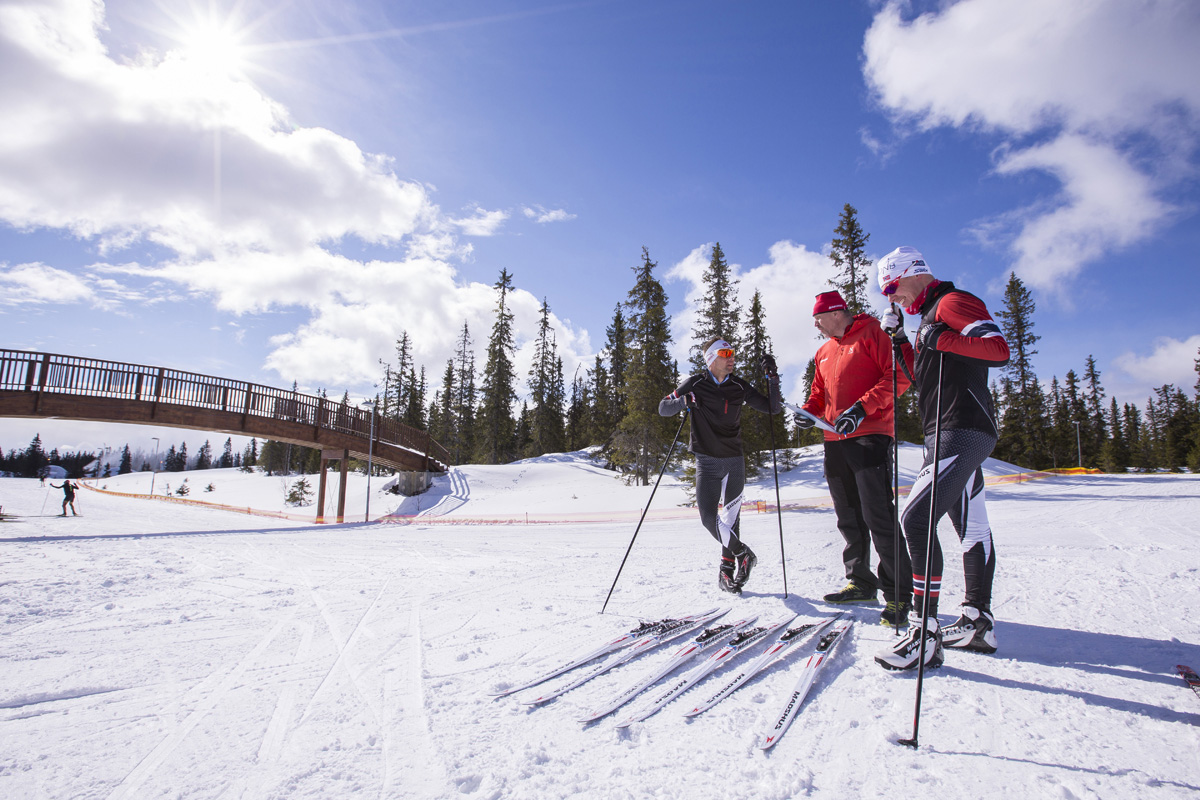
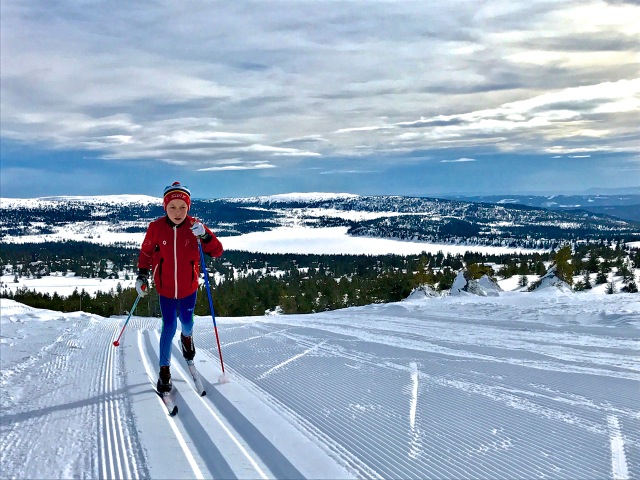
The Madshus testing team on snow with prototypes at Natrudstilen.
The skate skis had been revised with entirely new molds, and the testing had gone well. The snow was pretty well used up, and the last day of grooming was the day before we arrived. But that didn’t stop Amy and me from getting out on the slushy “crust” up in Sjusjoen every morning that we were there, to “test” the new skis. We also took some of the most race proven skis from the old model for comparison, and we slogged through a season’s worth of accumulated klister residue, dirt, and dog hair. And although we didn’t expect the conditions to provide any real testing, there was no question which skis we liked. The new skis were faster, and easier to control, even when they were totally coated with dog hair.
New skin skis? Nope – an hour of skiing in Sjusjoen in May…
Given our limited experience with the skis, we weren’t surprised to hear that all of the athletes who tested the new skis wanted to race on them. It was an encouraging vote of confidence, even if the team hadn’t yet decided exactly how to configure the models and cambers. I had a very interesting meeting with Per and Svein Ivar, discussing the process, and what they had learned. Svein Ivar showed me a couple of skis from a couple of different productions, and asked me what I thought. Maybe it was a bit of a test, and I don’t know whether I passed or failed, but I do know that I appreciated (and was flattered by) the attention, and the engaging discussion.
So, what now? I’m know that some new models are being produced for World Cup racers, because that’s the next stage in development and testing. It’s the same with us, when we make a new grind. We start by casting a wide net with a new concept, and we do our own testing. If something encouraging emerges after a season of testing, then we start to produce it for use by racers in a controlled setting – where we know that we’ll receive both good and bad feedback, and we’ll gather information from a wide variety of conditions and venues. That second stage of testing is where I consider the real proof to reside. Until a grind is producing good race results in a variety of venues, with a variety of athletes, it hasn’t been proven.
Every time we test Madshus skis in Lillehammer or Sjusjoen, they’re amazing. Sometimes we take along other skis to compare, and it’s usually pretty clear that Madshus has their home environment dialed. It’s not a surprise, since that’s where they do most of their in-house testing. Madshus needs World Cup skiers to get that next stage of testing – a wider variety of testers using the material all over the world. When the skis are reliably producing results on the World Cup, then it becomes the job to figure out how to bring the concept to the market.
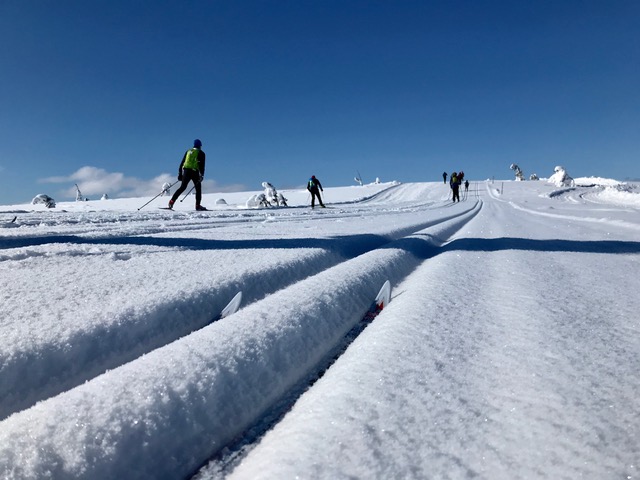
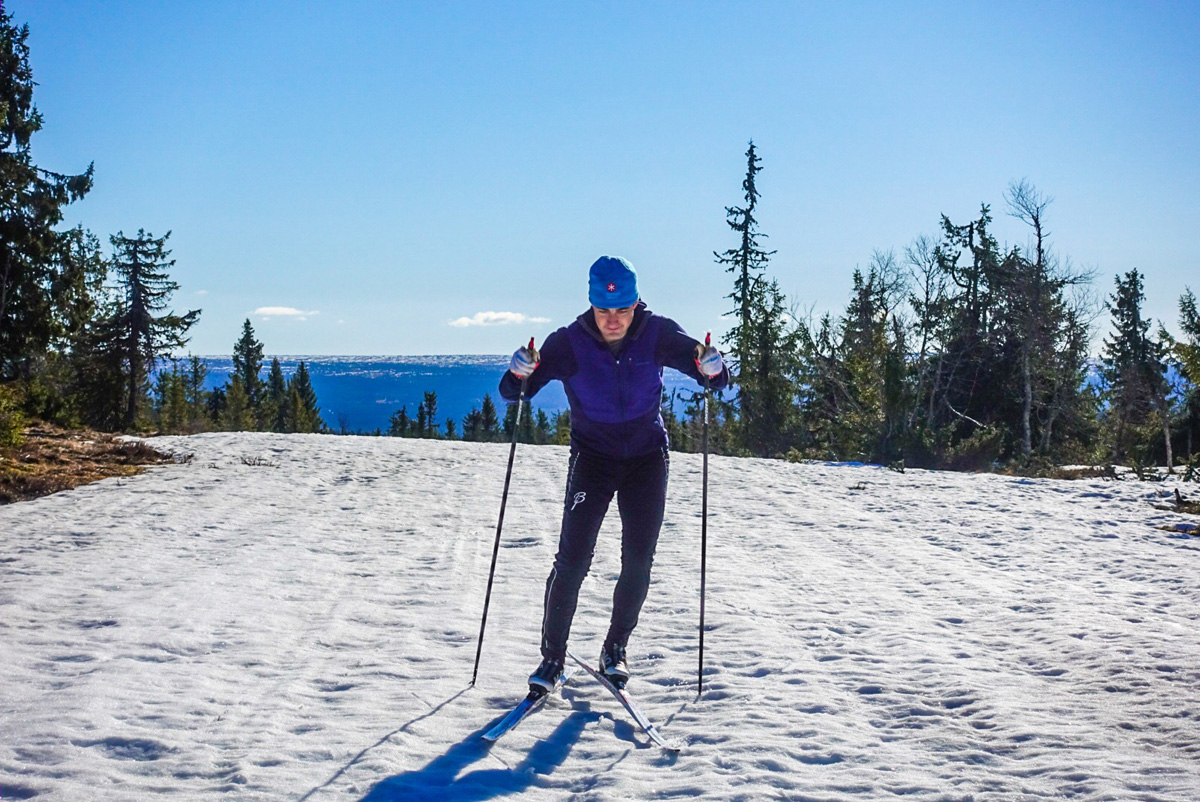
Skiing new skis in May on icy crust at the top of Midtfjellet – the high point of the Norwegian Birkebeiner course.
Ski companies survive by selling skis to skiers, and the racing programs exist to support that process. One of the things we like about Madshus is how direct the links are between development and racing and production. I have no idea whether the ski designs that we tested this spring will succeed on the World Cup and make their way to production, though I have a pretty good idea that they’ll do well in competition. It’s inevitable that another round of testing new concepts will follow this one. After all, Svein Ivar is there full time to drive that process along. When they know that the design is good, both in terms of performance and in terms of flexibility, then we’ll see new skis on the market.
While the scope of the testing project hasn’t always been as broad as it was this time around, a similar process has worked to produce incrementally better skis every couple of years for as long as we’ve been paying attention. It’s not so different with other companies – development never ends. Madshus is unique because they’re very open with their process.
I have been obsessed with skis since I was a kid, and I’ve made a living selecting and tuning skis since I was a young(er) adult. If this job were a question of simply taking what we’re given by the ski companies and passing it along to customers without ever trying to understand what went into the skis in the first place, it would be incredibly boring. When Madshus shares their process with us, it feeds our interest and enthusiasm for their work, and we want to share it with you in hopes that it makes you excited as well.
We’ve scheduled our fall ski selection trip to Norway for the first week of October – a month later than normal. That’s to give the factory time to produce some of the new models that we’ll be picking for Brian and Caitlin Gregg, Noah Hoffman, Ida Sargent, and Liz Stephen. Liz will join the Madshus team this winter after some very encouraging testing in Bend in early May. We’ll also be selecting skis for customers and shop inventory on that trip. Get in touch if you’ve got Madshus fantasies that need fulfilling.
Pre-order partnership on Earth Day supports ski-focused climate change activism
We are lucky to have a business that allows us to pursue our passion as a job, and to earn a living doing what we love. We are lucky to have a client base that values our work and shares our values. We help our customers get the most out of their investment in a passion and a hobby, and we’re lucky to see the very best of the people we work with. We’re lucky to share our favorite lifestyle with a cool kid, who also loves skiing, and to travel the world as a family, and call it “work”. We have worked hard to make the life we’ve got, and we’re lucky that we work in an industry where everybody is willing to work hard and make sacrifices to ensure that we get to keep skiing. The question we are faced with is a big one; how long will our luck hold?
Climate change is happening, and the future of winter sport is uncertain. We believe in a future for winter sport. We’re not ready to throw in the towel and give up on winter, but we can’t continue to count on luck to ensure the future of our lifestyle and livelihood. Like most people that we know and work with, we’ve had our heads firmly buried in the sand. We’re not denying the scientific reality that confronts all of us, but we haven’t exactly been willing to face it head-on. It’s time to change that approach. We’re in a good position to call attention to a cause and to forge partnerships with our suppliers and our customers to make a difference. So here’s what we’re going to do:
On Earth Day, April 22nd, we will accept $100 deposits for new ski orders. Those deposits will be applied to the cost of a new pair of skis, and the $100 deposits will be donated in their entirety to Protect Our Winters. For specifics, and to place an order and a deposit, follow this link to our webstore.
Why Protect Our Winters? Well, we looked at them first because of their partnership with Andy Newell and Simi Hamilton. We reached out to those guys, and they both endorsed the plan. POW is a non-partisan organization with a goal of “mobilizing the outdoor sports community to lead the charge towards positive climate action”. They focus on political advocacy (that’s lobbying, where massive fossil fuel industry dollars are focused), education, and community action. They recognize the potential power and influence of the outdoor industry as a 650 billion dollar contributor to the economy. They’re a perfect fit, and a very well regarded organization.
We’ve approached our ski industry partners with this idea, and Fischer, Madshus and Salomon have all agreed to support this project. Fischer is especially connected, since Simi and Andy, along with Fischer athletes Kikkan Randall and Steve Nyman (USST Alpine) are part of POW’s Rider’s Alliance. We’re really pleased that all of our major ski brands have been quick to offer their support and will share the cost of this project.
What’s the bottom line?
We don’t really know what to expect from this. At a minimum, we hope that this causes our readers to pause and reflect. We hope that it provides an opportunity for our customers to contribute directly to a cause that concerns all of us. We hope that you recognize that participating in this project is a great way to leverage our commitment, and the commitment of our ski suppliers, to contribute to fighting climate change.
We don’t expect this to generate a huge amount of new business for us. That’s not the goal. But we hope it makes our commitment clear, and we hope that it generates a meaningful contribution to POW.
It’s also good timing, since we’re currently planning our ski selection trips for the season, and it’s time to be taking orders. So, think it over, and let us know if you have any questions.
Noah Hoffman at U.S. nationals in Rumford, Maine. (Photo: Caldwell Sport/FlyingPointRoad.com)
Around the country people are just starting to get skis on snow, and that means we’re just starting to get feedback on our work. I get nervous for the early feedback every year, but every year the feedback gets better. It’s not easy to write a glowing review of your own work without sounding conceited, so a press-release on early season feedback is really hard. Lucky for us, one of our customers has taken care of it! We decided not to publish his name because of the cough (cough, cough) that he developed on the day he got his new skis. He thought a pseudonym would be fitting, and suggested “Einaar” or “Leopold” or maybe “Jerome”. Take your pick!
This fellow is currently excited about Madshus, which is great. But as he points out, it could have been any brand. We work hard to put people on the skis that will support the best experience possible.
Caldwells:
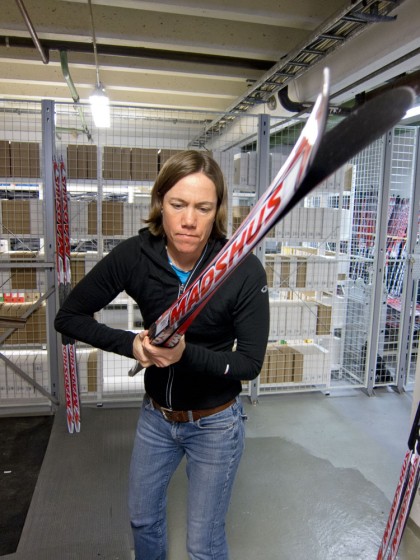
Zach Caldwell with a pair of Madshus skis
Thanks for the three pairs of Madshus skate skis! I wanted to drop you a note about my impressions. Zach may recall from our conversations that I’m not exactly an elite skier. I do think, though, that my experience so far may be useful in talking to other less-than-elite skiers who may be on the fence about whether they need great skis.
A reality check first. I just dropped a bunch of money on skis, and I’m surely interested in validating my purchase. What’s more, I’ve done the usual reading about skis in deciding what to buy, so there’s no doubt that some of what others (including you) have said has been knocking around my brain, perhaps creating certain expectations. In addition, I just don’t have the years of experience on different skis that provides an ideal foundation for noting the nuances.
However, in balance, I’ll note this: as a long-time racer of bikes who’s desperately trying to get away from racing, it was almost criminally easy to unload some redundant gear (still leaving me with multiple levels of redundancy, in some cases) and turn it in to new skis. So, really, I almost felt like I was getting something for nothing when the new skis showed up. Second, while I haven’t been on hundreds of skis – not even a dozen, probably – my years as an obsessive bike racer have left me, for better or worse, with what I think is a fairly attuned sense for some of the differences between different materials and equipment. With skis, many of those differences surely drown in my sea of bad technique, but at least some of my ability to perceive these things is there.
So, getting to it… I spent last season, my first on skate skis, on a pair of off-the-rack (top of the line race skis). I found them at a low advertised price, was told the shop had a pair that would work for my 70kg, and got skiing. I suppose I bought them in the same way some people shop for bike components online. They were fine, so I thought, until I happened upon a couple of hard snow days and found myself all over the place. Frightening. Over the summer I did the obsessive Internet reading thing, eventually deciding to find something new. With your help I ended up with a Madshus 118 and 119. My wife will be skiing on her pair of 118s this weekend.
Although I was mentally ‘over’ the old skis and waiting for the new skis, I couldn’t resist the chance to ski and took the old skis out on Sunday. The snow was a couple of days old and shallow enough that grooming had been done by dragging a trash can lid behind a sno mo, or something. Again, they were fine. A little skittish, a tendency for the edges to wash out on push-off, but they were what I was accustomed to. It was simply great to ski in the sun.
Yesterday, well, there wasn’t any new snow, but there were new skis from Caldwell Sport. With a light calendar at work, I was able to develop a small cough (cough cough) that, unfortunately, prevented me from making it in to the office. I returned to the trails to find the same shallow, now even older snow, transformed to very granulated sugar. I couldn’t resist the 118, so skied them first. The higher camber and different feel was apparent right away. The 118 felt like it wanted to run away from me at first. So I skied some more. My confidence increased and I was navigating trails much easier than before, especially descending and twisting trails. And then I skied some more and, after about 45 minutes, realized I was working harder than I ever had on my other skis. It was like the skis were allowing me to work harder, but in a good way. As the hour ticked away I realized that I had become a better skier on the 118. They still seemed vaguely foreign, but it was as though they were helping me start to get it in a way that a season on my old skis had not.
Amy Caldwell with a pair of Madshus
I was impressed, but it was time for the 119. Things were warming up a bit, and it was probably a 119 day anyway. I changed skis and right away, the 119 felt somewhat familiar, or at least more familiar than the 118. I suppose the 119 felt more like the old skis to me, at least in some respects. Lower, closer to the snow, less motion than the 118. It felt amazing. The 119 felt like it was easier to bring the ski under on recovery, like the swing weight was less than the 118, but that’s hard to nail down. They were great. Very comforting and friendly.
After an hour on the 119 I went back to the 118, and the Holy Shit moment happened. As soon as I got back on the 118 there was something instantly apparent that hadn’t been there before. The difference between the skis, and what the 118 felt like in particular, actually had me blurt out “Holy shit!” as I skied away from the cabin. The ski-to-ski acceleration on the 118 was scary. The initial hour hadn’t really made that obvious to me, but now it was after coming off the 119. I kept skiing, switching back and forth a time or two, and ended four hours of solo skiing feeling like I’d made as much progress over one day as I did during the whole of the previous year.
The skis seemed to allow me (or force me, or encourage me) to ski better and ski harder. I can’t say that I prefer one pair or the other, and in reality, I think I could be happy skiing either in most of the conditions we routinely see.
So, what does this mean? Well, most importantly to me, I’m incredibly inspired to continue working to be a better skier. After 15 years of competing in a different sport I’m telling myself I won’t be racing skis anytime soon, but that doesn’t mean I don’t have the desire to push myself and improve. These skis are motivating me to continue doing that work on skis the same way I do it on bikes or with running, even though I hope I never pin a number on again. I may not be a typical customer, in that I’m more obsessive and driven than a typical casual athlete, but I’m no longer focused on competition.
However, for those non-racing skiers out there, don’t believe the advice about not needing top level skis. You need top level expertise to get the most out of the sport. In cycling, I wouldn’t advise a new rider to get a ProTour team bike and adopt a pro’s position right away. While I do believe that most ‘comfort’ and enthusiast positions are ridiculous and that good racing bikes are the most comfortable bikes, there’s no doubt that using that kind of equipment can require some adaptation and progression before a rider can be comfortable and efficient on pro gear in a pro position.
Skis are different, I think. I see no reason why a developing skier shouldn’t be on top level skis, assuming the ability and willingness to pay for them. In many cases we’re talking about a few hundred bucks between average and great, so if it’s possible to bridge that gap, skiers will benefit from doing so. I was told by someone that Madshus skis were ‘harder’ for a new skier to learn on, something that my initial experience suggests is totally wrong. The Madshus skis got me skiing better in a few hours and I can’t wait to keep it going. I certainly don’t mean to knock other brands, because I’m sure I’d have done well with a properly selected pair of Fischers or Salomons too, but good skis are good skis, for everyone.
So, thanks. I appreciate the time spent on finding the skis and all the other advice along the way. Looking forward to the winter.

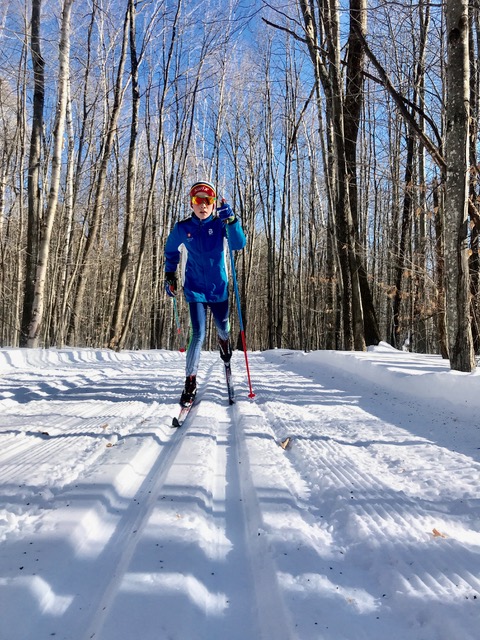 A changing climate remains the biggest threat to our sport. Since making a public recognition of the issue a year ago, we have passed the last year with a greater willingness to acknowledge the role that climate plays shaping weather and conditions. We’re wrapping up a season with record numbers of ski days at many locations in the east. Europe has had an amazing snow year as well, and the World Cup race calendar was unmarred by low-snow conditions. But this isn’t any more “normal” than the lean years we’ve had. For all the places that enjoy good snow and a long season, others suffered with terrible conditions. Volatility is the new normal, and it makes planning for the future a tricky business.