From the FasterSkier archive — posts syndicated from athletes’ and coaches’ own blogs between 2004 and 2012, kept online as published. Current coverage is at fasterskier.com.

Author: Chelsea Little

  • Lifelong Skiers Show Increased Risk of Developing Heart Arrhythmias

    Lifelong Skiers Show Increased Risk of Developing Heart Arrhythmias

    (Note: On Tuesday, Swedish researchers published an article in the European Heart Journal reporting that Vasaloppet competitors are at an increased risk of heart arrhythmias. Their results were striking, and grabbed headlines from science and medicine websites to magazines like The Atlantic and Forbes. In their paper, Dr. Kasper Andersen and his colleagues reported that skiers who competed in more races were at a higher chance of an arrhythmia, with those completing five Vasaloppets having a 30% higher risk, and also that those skiing fastest were at a similarly higher risk. The most common type of arrhythmia was atrial fibrillation.

    Arrhythmia has been in the ski news earlier this year, when Norwegian star Marit Bjørgen skipped the Tour de Ski after being hospitalized for one. But what do all these terms mean, and how can you tell if you are at risk? When Andersen’s study was first publicized almost two years ago, we delved into the science and medicine behind the headlines. We’ve updated the piece to include a more detailed breakdown of the risks in the final published paper, which were not available in initial press releases.)

    A diagram of the heart from the 1884 volume Physiology for Young People. Via flickr used cori kindred.
    A diagram of the heart from the 1884 volume Physiology for Young People. Via flickr used cori kindred.

    All the way back in 1889, skiing was what originally inspired doctors to examine how sports affect the human heart.

    “Skiing causes an enlargement of the heart, and this enlarged heart can perform more work than the normal heart,” wrote a Dr. Henschen. “There is therefore, a physiologic enlargement of the heart, due to athletic activity.’’

    Today, skiers are still being used to investigate how endurance training can change the heart. A recent study by Swedish researchers found that elite nordic skiers frequently developed heart arrhythmias. While most people assume that endurance training has only positive effects on cardiovascular health, a growing body of work suggests that a lifetime of exercise can contribute to cardiac abnormalities.

    “Basically, this study shows, that even though physical activity is generally healthy, athletes committed to endurance sports at elite level have higher risk of suffering from a heart rhythm disorder,” lead researcher Kasper Andersen of Uppsala University said in a press release. “There seems to be a relation with the duration of the sport commitment and at which level the athletes competed.”

    The study surveyed skiers who completed Sweden’s Vasaloppet, one of the longest and most popular races in the world. In all, over 47,000 skiers who competed between 1989 and 1998 were included, and those who had competed five or more of the races had a 29 percent higher frequency of heart arrhythmias.

    But Dr. Andresen said that the increase in arrthymias did not lead to an increase in fatalities. So what does this mean for athletes?

    The Anatomy of Arrhythmia

    Several kinds of irregular heartbeats are included in the loose grouping of arrhythmia. A heart can beat too quickly or too slowly, it can beat too early, or it can simply beat erratically. There are different specific causes of arrhythmia, but all of them are at the most basic level problems with either the structure of the heart or the electrical impulses which cause the heart muscle to contract.

    For those who don’t remember high school biology, here’s a basic refresher on the heart. In humans, the heart has four chambers and two different pumping circuits, a low-pressure one to the lungs and a higher-pressure one to the body. Low-oxygen blood returning from the body is pumped through veins into the right atrium, into the right ventricle, and then to the lungs, where it picks up oxygen. The refreshed blood is then sent into left atrium, the left ventricle, and back into the body through the arteries.

    All of this movement is caused by powerful muscle contractions, which must be perfectly timed in the different parts of the heart. The atria contract at the same time, about a tenth of a second before the ventricles, and this pattern explains the characteristic “bump-bump” heard through a stethoscope.

    The electrical signals which cause the muscle contractions come from pacemaker cells, which are located in the right atrium. The electrical stimuli can pass directly from cell to cell in the heart, meaning that all of the muscles can contract in unison. Once the muscles in the atria contract, the signal passes through a node which controls the pause before the ventricles contract.

    How can this process go wrong? Sometimes, instead of producing one strong electrical pulse, the heart produces many weak ones, leading to a fibrillation or a flutter. Other times, the structure of the heart itself may change, for example due to coronary heart disease or vascular disease. Another possible cause is that the electrical circuits may have changed or grown; sometimes additional cells outside the ventricles produce electrical impulses.

    In the Swedish study, the most common arrhythmias found in skiers were the erratic and usual heartbeat in the right atria, called atrial fibrillation, and the slow heartbeat, called bradycardia.

    What’s So Bad About Bradycardia?

    The Vasaloppet paper reported that skiers completing five or more Vasaloppets had a more than twofold increase in risk of a bradycardia compared to skiers that had only done the race once. Bradycardia is defined as a hearbeat under 60 beats per minute, which doesn’t actually get at the underlying causes of the syndrome. For endurance athletes, definitions such as these aren’t particularly useful because having a heart rate under 60 beats per minute is not unusual.

    “What’s too slow for you may depend on your age and physical condition,” the American Heart Association writes on its website. “Physically active adults often have a resting heart rate slower than 60 BPM but it doesn’t cause problems.”

    Bradycardia is one symptom of the condition known as “athlete’s heart”, in which the resting pulse slows, the left ventricle enlarges, and the heart walls become thicker. These changes are due to regular aerobic exercise; the large muscles in the body require more oxygen to contract and as a result more blood must be pumped in each beat of the heart.

    Dr. Paul Thompson of the Hartford Hospital noted in a 2002 paper that bradycardia has been shown to occur in a staggering 91% of endurance athletes. But athlete’s heart isn’t known to have any dangerous side effects, and once athletes stop training, their heart eventually returns to normal. So if bradycardia is simply caused by physiological adaptation to exercise, it probably isn’t a problem.

    Another potential cause of bradycardia is what is called atrioventricular block, when the electrical signal from the atria are not fully transmitted to the ventricles. First-degree block is when the electrical impulses are simply transmitted more slowly to the ventricles, causing a delay in the pumping action. In second-degree block, not all of the signals actually reach the ventricles, and in third-degree block, none of the electrical impulses reach the ventricles. Most of the bradycardias reported in Vasaloppet participants were second- or third-degree blocks.

    A widely cited 1982 study by Finnish researchers using elite skiers and runners as test subjects found that endurance athletes were more than twice as likely to show first-degree heart block and more than four times as likely to show second-degree heart block compared to the controls. In some cases, the atrioventricular block lasted more than an hour, but the symptoms always disappeared as the heart rate increased during exercise.

    The Finnish team did not find believe that these cases of atrioventricular block were particularly dangerous, but they did note that in a small number of cases second-degree heart block can develop into full-blown heart block, which is fatal.

    All in all, a review paper in the New England Journal of Medicine noted that athletes shouldn’t be alarmed by bardycardia or first-degree heart block.

    “Trained athletes are particularly prone to bradycardia, with heart rates below 40 beats per minute common at rest,” wrote Dr. Michael Mangrum and Dr. John DiMarco. “In one series, sinus pauses lasting between two and three seconds were found in 37 percent of athletes during sleep.”

    However, there are some more sinister causes of bradycardia, such as heart disease, low thyroid levels, or electrolyte imbalances. In terms of effects, the danger of the condition is that the body does not receive enough oxygen because blood is moving so slowly and getting refreshed at a lower rate. If a skier has a low resting heart rate and experiences fainting, dizziness, chest pain, low blood pressure, shortness of breath, confusion or trouble focusing, then bradycardia could be the underlying cause and ought to be examined more closely.

    All Aflutter About Atrial Fibrillation

    For another type of arrhythmia, the researchers found that Vasaloppet participants showed an increased risk of atrial fibrillation of about 9% for each race completed. And the Swedish study isn’t the first to allege that atrial fibrillation (AF) is more common among endurance athletes. A 1997 paper by Finnish researchers showed that elite orienteers were more than five times more likely than the sedentary population to experience AF.

    Interestingly, study after study has shown that male athletes are more inclined towards AF than women. AF also frequently appears for the first time in resting situations rather than during exercise.

    Unlike bradycardia, the prevalence of AF isn’t simply an issue of definition. There’s no way around the fact that the syndrome is caused by abnormalities in electrical signaling, which is never a positive development. While not always life-threatening, AF can lead to palpitations, chest pain, fainting, stroke, and congestive heart failure.

    Most AF cases in athletes are what is called lone atrial fibrillation, which means that there are no accompanying heart defects. While AF is often caused by heart attacks, abnormal heart valves, congenital heart defects, or sleep apnea, in lone AF no other disease is present. Lone AF is caused by electrical disorders rather than structural ones, and it’s rare to have serious complications from lone AF.

    Researchers aren’t sure exactly why athletes have a higher prevalence of AF, but inflammation caused by training might be one cause. Inflammation leads an increase in the production of C-reactive protein (CRP), which is positively associated with AF, although why is unclear. Scientists have also hypothesized that the enlargement of the heart chambers might have some effect on electrical signaling.

    New Zealand rower Nicola Coles woke up from a nap several weeks before the Beijing Olympics with AF, which persisted for more than 24 hours. After going to the hospital, doctors found that the only way to return her heartbeat to normal was cardioversion, a procedure using electricity and drugs to convert the heart rate.

    Coles didn’t experience AF again and went on to place fifth in the women’s pair. But as her case shows, even without complications, AF is uncomfortable and requires treatment if it doesn’t disappear on its own.

    “Although having a benign course, regular follow-up of patients with lone AF is warranted,” a group of Dutch researchers led by Dr. Bas Schoonderwoerd wrote in a 2008 paper. “In time, risk factors such as hypertension, heart failure, diabetes, and peripheral vascular disease may develop, changing prognosis.”

    A separate trio of Dutch scientists followed a cohort of endurance athletes for ten years, and in a 2004 paper noted that AF developed in to permanent, chronic AF in fifteen percent of the study subjects.

    Athletes should also be concerned about AF because it means that the heart is not pumping blood efficiently. Instead of producing one big electrical signal, the pacemaker cells in the atria beat chaotically, producing a group of weaker electrical signals. As a result, the atria pumps quickly; however, not all of these signals reach the ventricles, so they pump more slowly. The end result is that pumping is not as powerful.

    So What’s the Big Deal?

    “The absolute incidence of death during or within one hour of sports participation among U.S. high school and college athletes is one death per year for every 133,000 men and 769,000 women,” Dr. Thompson wrote in his 2002 paper. “These numbers overestimate the incidence of cardiac events, because of the 136 deaths, only 100 were caused by cardiac disease.”

    An individual skier who shows signs of bradycardia or atrial defibrillation has only a miniscule chance of dropping dead on the trails; if their heart is otherwise healthy, the arrhythmias found by the Swedish researchers aren’t necessarily dangerous.

    The more important finding of their study on the Vasaloppet skiers, however, was that as skiers trained and raced more and more, they because more likely to develop arrhythmias.

    This concept is supported by previous research showing that there is some threshold of lifetime training volume above which arrhythmias become markedly more common. As athletes move into middle age and keep training, they are more likely to experience AF, and as they continue to age, they show more risk factors for serious complications – although even these complications are not as prevalent or as dangerous as some of the other heart problems which are common in the rest of the population.

    In short, the more a skier trains, the more the heart restructures itself to deal with the stress of exercise – for better or for worse.

    “The veteran athlete may not be as healthy as believed with many established areas lacking conclusive evidence to support the benefits of a lifelong career in high intensive endurance exercise,” a team of international researchers noted in a paper just last year.

    While it’s not a reason to stop training, skiers should be cautious about heart health. It’s often difficult to tell whether abnormalities are due to athlete’s heart or an underlying condition, but if a skier is blacking out on the trails or experiences heart palpitations, they need to head to the doctor’s office – pushing so hard you see stars might actually be a serious condition.

    Journal Sources

    Hoogsteen J, Schep G, van Hemel NM, van der Wall EE. Paroxysmal atrial fibrillation in male endurance athletes: a 9 year follow up. Europace 2004;6(3):222-228.

    Karjalainen J, Kujala UM, Kaprio J, Sarna S, Viitasalo M. Lone atrial fibrillation in vigorously exercising middle-aged men: a case-control study. British Medical Journal 1998;316:1784.

    Mangrum JM, DiMarco JP. The Evaluation and Management of bradycardia. New England Journal of Medicine 200;342(10)703-709.

    Partarrieu J. “Link Between Elite Cross-Country Skiing And Increased Risk Of Subsequent Arrhythmias“. Medical News Today, August 31, 2011. Web. 10 Sep, 2011.

    Schoonderwoerd BA, Smit MD, Pen L, Van Gelder IC. New risk factors for atrial fibrillation: causes of ‘not-so-lone atrial fibrillation.’ Europace 2008:10(6):668-673.

    Swanson DR. Atrial fibrillation in athletes: implicit literature-based connections suggest that overtraining and subsequent inflammation may be a contributory mechanism. Medical hypotheses 2006:66(6)1085-1092.

    Thompson P. Exercise and the Heart: The Good, the Bad, and the Ugly. Dialogues in Cardiovascular Medicine 2002;7:143-162.

    Viitasalo MT, Kala R, Eisalo A. Ambulatory electrocardiographic recording in endurance athletes. British Heart Journal 1982;47:213-220.

    Wilson M, O’Hanlon R, Basavarajaiah S, George K, Green D, Ainslie P, Sharma S, Prasad S, Murrell C, Thijssen D, Nevill A, Whyte G. Cardiovascular function and the veteran athlete. European Journal of Applied Physiology 2010;3:459-478.

  • Weekly Roundup: Season Kickoffs

    Liz Stephen (l) with Justyna Kowalczyk (POL) and Russia’s Yulia Tchekaleva (r) on the podium on Sunday in Muonio, Finland. Kowalczyk won the FIS 10 k skate race by 4.46 seconds over Stephen. (Holly Brooks courtesy photo)

    After months of training and anticipation, the nordic sports opened their seasons around the world this weekend with races around the world. Established veterans had several dominating performances, but there were new faces on the podiums as well, signaling that when World Cup racing starts next weekend, things could be pretty interesting.

    In Bruksvallarna, Sweden, the Swedish, Canadian, and Slovenian national teams butted heads in a three-day race series. One of the biggest surprises was Swedish 23-year-old Emma Wiken taking a 2.4-second win over Charlotte Kalla on the first day of racing. But otherwise, Sweden’s top stars prevailed, with Daniel Richardsson, Johan Olsson, Teodor Peterson, and Ida Ingemarsdotter taking wins and Kalla returning to completely decimate the women’s field in the 10 k skate. Canada had strong performances as well, with Alex Harvey placing fourth in the 10 k classic, Ivan Babikov third in the 15 k skate, and Chandra Crawford second in the skate sprint. Katja Visnar of Slovenia also stepped on the podium in the sprint.

    To the northeast in Muonio, Finland, even more national teams tried out their racing legs. Finland was joined by Russia, the United States, the Czech Republic, Poland, Kazakhstan, Japan, and Germany in a three-race series. Justyna Kowalczyk of Poland swept the women’s competitions, and was at her most dominant in a 29-second win in Saturday’s 5 k classic. For the men, Alexey Poltoranin of Kazakhstan took two victories before Matti Heikkinen of Finland bested the field in the 15 k skate. The U.S. had several top performances, headlined by Liz Stephen‘s second-place finish in the 10 k skate, just 4.6 seconds down on Kowalczyk; Holly Brooks and Jessie Diggins also made the top ten. But Kris Freeman also placed fourth in the men’s classic race, and Andy Newell and Ida Sargent both made the sprint finals.

    Meanwhile, Beitostolen, Norway, was hosting the opening races for both skiers and biathletes. The women’s races were characterized by familiar Norwegian faces on top of the podium: Maiken Caspersen Falla in the sprint, Therese Johaug in the two distance races, and Tora Berger dominating the biathlon competitions. Perhaps the biggest surprise was Marit Bjørgen‘s two losses to Johaug, including a 50-second blowout in the classic race. Petter Northug won on Friday before falling in the sprint final, leaving Anders Glørsen to take the win, while Chris Andre Jespersen skied to a huge victory on Sunday. World Champion Martin Fourcade of France won Saturday’s biathlon sprint, before sitting out Sunday’s mass start and leaving the victory to Erlen Bjøntegaard.

    Finally, the U.S. race season began in Fairbanks with the Tour de Ski Fairbanks, a three-day series culminating in pursuit races on Sunday. Designed to be a meet for University of Alaska Anchorage and University of Alaska Fairbanks skiers, the weekend consisted of prologues on Friday, classic mass starts on Saturday, which included sprint preems, and then skate pursuits on Sunday. Logan Hanneman and Raphaela Sieber, both from UAF, picked up the overall titles, although Viktor Braenmaark and Marine Dusser (UAA) had the fastest ski times on Sunday and Rebecca Konieczny (UAF) won the women’s prologue.

    Elsewhere on the site, we previewed the upcoming race seasons – nordic combined, biathlon, the U.S. and Canadian World Cup squads – and conditions and potential start lists for on upcoming races at West Yellowstone and Canmore. Finally, we checked in with Canadian biathlete Nathan Smith as his team made their final World Cup preparations, interviewed APU coach Erik Flora, reviewed the history of Olympic anti-doping efforts, and examined why U.S. skiers no longer have free phone service in Europe.

    Here’s a roundup of race reports and results.

    Bruksvallarna, Sweden: Friday 5/10 k classic | Saturday 10/15 k skate | Sunday skate sprints | results

    Muonio, Finland: Friday classic sprints | Saturday 5/10 k classic | Sunday 10/15 k skate | results: here from race organizers (scroll down for earlier races), eventually here on FIS

    Beitostolen, Norway: Friday 10k skate & 15k skate | Saturday classic sprints | Saturday biathlon sprints | Sunday 10/15 k classic | Sunday biathlon mass starts | biathlon results | ski results

    Fairbanks, Alaska: Friday blog post  |  Saturday blog post  | Sunday blog post  | results will eventually be posted here.


  • Johan Olsson Paces to Bruksvallarna Victory; Using New Tactics, Babikov Surges to Third

    Johan Olsson Paces to Bruksvallarna Victory; Using New Tactics, Babikov Surges to Third

    Ivan Babikov (CAN) racing to third in the 15 k skate in Bruksvallarna, Sweden on Saturday. Photo courtesy of Babikov/Salomon.

    Devon Kershaw had a good start in Bruksvallarna, Sweden today. So did Daniel Richardsson. But in the end, for both the Swedes and the Canadians, it was steady pacing that garnered skiers a top finish: Johan Olsson bested Richardsson for the win, and Ivan Babikov placed third for Canada while Kershaw faded to tenth.

    At 4.6 k into the 15 k, interval-start skate race, the second competition in the opening series of FIS races, Richardsson had an 11-second lead over Kershaw, with Olsson another two seconds back. Babikov was tenth, 21 seconds out of the lead.

    And yet Olsson, if anything, picked up the pace and was unstoppable over the last half of the race.

    “I did my own race, and it felt good,” Olsson told Sweden’s TV4. “It was nice to go first in the seeded field. I’ve been away a lot and haven’t had so many training races, so I haven’t had any direct comparison to the others yet. It was nice that it went well today.”

    Richardsson, who won Friday’s 10 k classic race, also seemed happy with the result; traditionally he has been stronger in the classic technique.

    For Babikov, the slow start and strong finish were all part of his plan.

    “I tried new tactics today,” he told FasterSkier in a phone interview. “The goal was to start really conservative for the first lap, and not thrash it, just to ski and glide. I tried to save as much power and energy as I could for the last few laps. And it worked really well I think… I didn’t know it was going to be that hard. The snow is pretty fast, so I thought it would be a fast 15 k, but it ended up that lots of people got tired on the last laps and maybe started too fast.”

    Kershaw was one of those – “I licked chode”, he tweeted after the race – and told FasterSkier that the large workload he’s had in training for the last few weeks was clearly still affecting his ability to go hard. He was impressed with Babikov’s control.

    “I want to say how psyched I am for Babs though- he was great today,” Kershaw wrote at the end of an e-mail to FasterSkier describing his race. “Paced it perfectly and was really, really moving that last lap. I’m impressed. He’s been notorious for slow starts to seasons, too, and to have a race like that so early in the year, on a course that was pretty rolling (read: not epically difficult which is Babs terrain!) is a very, very good sign. It was awesome to see.”

    Babikov said that as far as the tactics test went, he was likely to use the same approach to next weekend’s 15 k skate in Gällivare, the first World Cup of the season. He was optimistic about his chances there, and not concerned about the time back from Olsson.

    “Of course I’m happy with the race in total, because I’m on the podium and those two guys – Johan Olsson is potentially the winner for next weekend, too,” Babikov said. “He won last year’s opener in Sjusjøn in Norway, and he’s always been strong. And Richardsson is a really good skier, too. And I beat quite a few good guys too, Hellner was back there somewhere, so I’m really happy with my race, for sure.”

    Babikov had a few other advantages, as well. He was the very last starter in the field, which he said played in his favor on a crowded course; for the first two laps, he was constantly passing large groups of skiers, and some parts of the course were quite narrow. There was even a tunnel narrow enough that racers could only double-pole, “so if you’re stuck behind somebody you have to wait until it opens at the end,” Babikov said. By the last lap, the course had cleared out and he had more room to run.

    He also lapped with Olsson and had the chance to ski a loop with the eventual winner.

    “I was pretty relaxed behind him, which gave me some good confidence, and I could use that on the last lap,” Babikov reported.

    All in all, he said, he is in “good form at this moment.”

    The same could not be said for Kershaw – or Sweden’s star skier Marcus Hellner, who finished ninth, one place ahead of the Canadian and well over a minute behind Olsson. Although Hellner didn’t have Kershaw’s strong start, he experienced a similar fade at the end.

    “I’m not sure how Hellner raced, but for him to be ninth in a 15 k skate race… It must be one of his worst 15 k skate races ever,” Kershaw wrote. “You know he’ll be a different person next weekend on his home courses of Gallivare.”

    Kershaw hoped that he would, too, with another week to recover from his training load.

    “I am and have been training very hard these last weeks, which is pretty normal for me this time of year,” Kershaw wrote. “Of course, last year I’m not even sure I was top 30 in this race, but it doesn’t feel good to get the floor wiped with you. Apparently it takes some time to digest that workload, but I am hoping that next weekend in Gallivare goes WAY better than it did today. I’ll try and take the small positives out of this effort, and move forward.”

    His fast pace early – Kershaw actually led at 1.8 k – was deliberate, he said, and he hadn’t taken into account how tired his body was. After feeling good and expecting to be able to hold the pace, he found that quite the opposite was true. Coming down the last hill into the finish, Kershaw bent over and put his hands on his knees, trying to steady his shaky legs.

    “I was feeling pretty good for that first part, skiing big/smooth which is how I wanted to attack the course,” he wrote. “I felt relaxed and was hitting the technique well, but… I was on fumes with one lap to go, and I was able to hold on a bit until the 11.8 k mark when things got really, really ugly. In those last 3 k I was running on empty – legs like concrete and I couldn’t recover, let alone attack… I lost oodles of time and it was a big effort for sure.”

    Kershaw and Babikov were the only non-Swedes to break into the top ten; Lars Nelson placed fourth, the third Swede for a second day in a row, and likely won himself a start in next weekend’s World Cup. Anton Lindblad was fifth and Martin Johansson sixth.

    The lone remaining Canadian, last year’s NorAm winner Kevin Sandau, placed 36th.

    Results

  • 2013 World Cup Biathlon Preview: What to Watch for in Östersund

    2013 World Cup Biathlon Preview: What to Watch for in Östersund

    The 2012-13 IBU World Cup biathlon season will kick off on November 25th with a mixed relay in Östersund.

    When the IBU World Cup kicks off in Östersund, Sweden, on Sunday, it will feel much the same like any other year – after all, the northern city has hosted several of the last biathlon openers. But that first race will feel decidedly different as well. For the first time, Östersund is hosting not only three individual races for both men and women, but also a mixed relay, which will be held a week earlier than usual; the traditional individual, sprint, and pursuit races will still be held at their usual times midweek and during the first weekend of December, stretching the race series for a few extra days.

    The change is being embraced by athletes; American Sara Studebaker, for example, said that it would help take the nerves off to start with a relay instead of the traditional 15 or 20 k individual races, arguably the hardest format on the schedule.

    If last year’s results are any indication, then Russia is the team to look out for in that opening race. Not only did they win both the men’s and women’s Nations Cup trophies, but they also won the first mixed relay of the 2011/12 season and the mixed relay total score. Here’s more to watch as the World Cup gets under way: the top five teams, the North Americans, and a few more individual contenders

    Russia

    Anton Shipulin in the pursuit at 2012 World Championships, Ruhpolding, Germany.

    Thinking back on last season, you might not automatically think, Russia! The two Nations Cup wins were a sort of quiet domination: Russia’s top man in the overall standings was Anton Shipulin in eighth place, and the top woman Olga Zaitseva in sixth, and the two only combined for four victories.

    But Russia showed impressive depth on its men’s team. Andrei Makoveev, Evgeniy Garanichev, and Evgeny Ustyugov ranked 11th through 13th in the total score and Dmitry Malyshko ended up in 19th. Those four combined for two wins and five more podiums. Furthermore, team captain Ivan Tcherezov, a two-time Olympian and seven-time World Cup winner, missed last season after breaking his leg and going through some complex surgeries. He had a metal plate removed from his leg in May and started training with the team again a month later.

    To put it shortly, the roster of the Russian men’s team is dizzying. There’s also a number of other men who have or could pop a podium: Alexey Volkov, Timofey Lapshin, Maxim Maksimov, and Maxim Tchoudov. Several young racers have made the step up to the senior team, including 2012 Continental Champion Alexander Loginov and four-time World Junior Champion Maxim Tsvetkov. Plus, former World Junior medalist in cross country, Alexey Slepov, has converted to biathlon and won a test race at Sochi in March, after just one year in the sport.

    Olga Zaitseva in the World Championships sprint.

    Russia’s win in the women’s Nations Cup was more surprising, as their women’s team came into last season as an unknown quantity. They had performed poorly the year before, their coach had been sacked, and the federation had made the extremely out-of-character decision to bring in a European coach, Wolfgang Pichler. The 2012 win came down to the last race, with Russia eking out a five-point victory over Germany.

    The team had won a single relay and just one woman besides Zaitseva hit the podium. But Olga Vilukhina did so at an opportune time, taking bronze in the pursuit at World Championships. Svetlana Sleptsova, who carries the weight of expectation as she has already been lauded as Russia’s next great female biathlete, had another so-so-season; she and Anna Bogaliy-Titovets finished 16th and 18th in the total score. Bogaliy-Titovets has now retired, so the team is hoping that Ekaterina Glazyrina, Iana Romanova, or one of the other women will step up.

    “We will fight for the Nations Cup again,” Pichler recently told the IBU in an interview, “we will simply fight for victory in every race.” But while some success is guaranteed, the Russians will certainly have to fight for another win.

    Germany

    While German fans are surely hoping that the women can avenge their close loss in the Nations Cup, Andrea Henkel told FasterSkier that this year will be different for the team. Of course the biggest news is that Magdalena Neuner retired after winning the overall World Cup title last season. But Henkel, who ended up eight in the total score, is looking to get on the podium consistently, and has a strong ally in Tina Bachmann, who finished 14th.

    Andreas Birnbacher en route to a mass start in in Oberhof, Germany, in January. Photo: Fischer/NordicFocus.

    Youngsters Franziska Hildebrand and Miriam Gössner made the top 30, and Germany will likely still have a strong relay team. The most interesting addition is Olympic gold medalist Evi Sachenbacher-Stehle, who took up biathlon this spring. She won the team’s summer testing and acquitted herself well at German rollerski championships this fall, using three spare rounds in prone and the shooting perfectly in standing to help Michael Greis and Florian Graf to a mixed relay victory.

    On the men’s side, Germany finished third in the standings, led by Andreas Birnbacher and Arnd Peiffer in third and fourth in the total score. There were high expectations placed on Peiffer, and over the course of 2012 it often seemed like he couldn’t handle the pressure, particularly at World Championships. Peiffer nonetheless won two races and stood on the podium five more times. Birnbacher, on the other hand, excelled particularly in that tough head-to-head racing, winning three mass starts and a pursuit.

    Florian Graf and Simon Schempp should provide good relay legs for the team, while veteran and fan favorite Michael Greis should be able to make a comeback after a 2012 season that was marred by injury. The men’s team has lost two-time World Cup winner Michael Rösch, who will now be representing Belgium.

    France

    Marie Laure Brunet of France in the 15 k mass start in Antholz, Italy. Photo: NordicFocus/USBA.

    The French team placed second in the men’s Nations Cup and third in the women’s division, providing a foil for Germany. On the women’s side, it was again the Maries leading the team: Marie Laure Brunet and Marie Dorin Habert. Both are relatively young, but have already been notching top finishes for several years. Brunet has at times seemed like an overall title contender, but placed seventh in the total score, while Dorin Habert was ninth. While neither won a race in 2012, together with Anais Bescond and Sophie Boilley they put together an impressive relay record, winning the Antholz relay and never finishing off the podium all season.

    The men’s team was of course led by Martin Fourcade, the winner of the World Cup total score. It was a breakout season for not only him, but also his brother, Simon, who wound up fifth; in the World Championships individual, the only race in Ruhpolding that Martin did not win, Simon took silver. In the middle of the season, Simon Fourcade went six straight races finishing no worse than fourth. The brothers, who train together, are primed for 2013.

    Martin Fourcade alone on the range at World Championships, in the lead as he often was last season.

    With results like that, it’s easy to say that France could get away with being the Fourcade show. But it isn’t. Alexis Boeuf had five top-ten performances, and Jean Guillaume Beatrix landed 29th in the total score despite starting less than 80 % of the races. 2010 Olympic gold medalist Vincent Jay had little success, but is back this year hoping to do better. As a team, the French men almost matched the women’s success, winning one relay and only missing the podium once.

    Norway

    Surprisingly, Norway finished fourth in both the men’s and women’s Nations Cup scores, which can certainly be considered a disappointment. Coming off a 2011 season in which Tarjei Bø, Emil Hegle Svendsen, Ole Einar Bjørndalen, Lars Berger, Tora Berger, and Ann Kristin Flatland all won World Cups, what happened?

    On the men’s team, Bø couldn’t keep up the pace that left him with the overall World Cup title in 2011, but Svendsen tried his mightiest to take his place, ending up just 65 points behind Fourcade in the standings and wearing the yellow bib at several points. Although he didn’t dominate as he had when he won the World Cup in 2010, Svendsen did take four wins. Bjørndalen, meanwhile, proved that even aging kings can still impress as he picked up a win of his own.

    Norway won the mixed relay at 2012 World Championships. l-r, Tora Berger, Synnøve Solemdal, Ole Einar Bjørndalen, and Emil Hegle Svendsen.

    Bø’s season isn’t looking good at the moment and it would be surprising if Bjørndalen improved much at this point in his career, but Svendsen can be expected to be at the top of the results sheet consistently again this season. Lars Berger had lasik surgery this summer, which he thinks will improve his notoriously poor shooting, and Bø’s younger brother Johannes Thingnes Bø has also been named to the national team after stunning at World Juniors last year with two victories.

    On the women’s side, Flatland sat out 2012 to have a baby, which may partly explain the women’s slip in the standings. But her place was arguably filled by Synnøve Solemdal, who had a breakout year and snagged six top-tens. Elise Ringen finished in the top ten just once, and Norway’s relays – which were quite successful – relied heavily on Tora Berger’s finishing speed. She always obliged by skiing strong anchor legs, to go along with her three regular-season wins and her World Championship in the individual. With Neuner retired, look for Berger to try to climb her way from third up to the top of the overall standings this year.

    Sweden

    Carl Johan Bergman (r) made himself the leader of the Swedish team last season.

    In the men’s races, the next team to watch for is obviously Sweden. They’re coming off their best season in years, and nothing could capture their success better than the results sheets from World Championships: Carl Johan Bergman capped off the best season of his life with two medals, bronze in the sprint and silver in the pursuit, and then Bjorn Ferry took silver and Fredrik Lindstrom bronze in the mass start. In fact, no other team had as many individual medalists in Ruhpolding.

    So while the women’s team reels from the retirement of Helena Ekholm, who won some hardware of her own at World Championships, the men be fighting to climb their way further towards the top top.

    Ukraine and Belarus

    World Cup runner-up Darya Domracheva competing in Nove Mesto, Czech Republic. Photo: NordicFocus/Fischer.

    In the women’s races, the fifth spot last year went to Belarus, based almost entirely on the performance of Darya Domracheva, who was the runner-up to Neuner in the total score. Ukraine, which finished sixth, traditionally has better relays and also features a deeper roster: Vita Semerenko won bronze in the sprint at World Championships, her twin sister Valj landed 22nd in the overall standings, and Natalya Burdyga edged her out in 21st. With no retirements from either team’s top athletes, they’ll likely be battling each other again this season.

    United States

    The U.S. had a strong season, placing ninth in the men’s Nations Cup and eleventh in the women’s; combined, they had a top-ten-worthy team across the board.

    Susan Dunklee’s fifth place performance in the individual race at World Championships buoyed the women to new heights, while Sara Studebaker was left frustrated with a single top-20 finish – something that, a few years ago, would have topped her resume. Annelies Cook broke into the top-40 and Lanny Barnes placed 37th at World Championships. Those four are likely to be selected as the World Cup squad this year, but Lanny’s twin Tracy Barnes-Colliander is looking to climb back onto the top circuit as well. The biggest change on the team has been the retirement of 2010 Olympian Laura Spector.

    Tim Burke after placing fourth in Khanty-Mansiysk. Photo: NordicFocus/USBA.

    For the men, the already-strong team gained momentum when Russell Currier snagged a few top-tens, joining Tim Burke, Lowell Bailey, and Jay Hakkinen in that regard. Bailey in particular had a strong season, finishing a best-ever 14th in the total score, while Burke seemed to rebound from the compartment syndrome woes that marred his 2011 season and placed 20th in the total score. He had the best performance of the season, placing fourth in a World Cup sprint in Khanty-Mansiysk, Russia. Leif Nordgren will be looking to improve on his last season and Jeremy Teela hopes to get back on the World Cup, so the men’s team has plenty of depth.

    Canada

    The Canadians finished a bit further down in the Nations Cup standings, due to two things: less depth than the Americans, especially on the men’s side, and because they skipped a weekend of World Cup racing and its associated points.

    Zina Kocher climbing out of the shadows at World Championships in March.

    Like the Americans, the Canadian men seemed to be gaining momentum, with JP Le Guellec and Brendan Green trading the position of team leader back and forth throughout the season. Unfortunately, the fun stopped when Green threw out his back in Oslo; he’s had surgery, but is unlikely to see World Cup action until late this season, if at all. Le Guellec had a strong end to the season, placing 14th in the sprint at World Championships and then eighth the following weekend in Khanty-Mansiysk, and told FasterSkier that he’s finally feeling like he has completely recovered from a case of mono. He’ll be helped out by Scott Perras, Nathan Smith and Marc-André Bédard, as well as younger team members Scott Gow and 2012 World Junior Champion Kurtis Wenzel.

    The women’s team saw the resurgence of Zina Kocher, who went from having her worst season in 2011 to repeatedly hitting the top ten in 2012. This year, she told FasterSkier, she’s hoping to make a return to the podium for the first time in a few years. Right there with her will be Megan Imrie, who had two top-20 results and several strong relay legs. After that, things get a little scarce; the next logical starter is Megan Heinicke, who is based in Germany and does not train with the team, or Rosanna Crawford. There are also several younger racers like Yolaine Oddou, who competed at World Championships, but Canadian High Performance Director Chris Lindsay has said that he would rather bring a small team than fill the roster with women who aren’t ready for the World Cup.

    A Few More Individuals

    While their teams aren’t particularly strong, there are a few more individuals who stand out. On the women’s side, Kaisa Makarainen of Finland is almost certainly a sure bet: when she won the overall World Cup title in 2011, she kicked things off with wins in Östersund. Olympic gold medalist Anastasiya Kuzmina of Slovakia didn’t do as well in 2012, but in the absence of Neuner and Ekholm is likely to climb the podium again as well. She started off her pre-season with a time trial victory in Canmore.

    World Champion Jakov Fak of Slovenia.

    There are many more men capable of winning, where the women’s field often sees the same leaders over and over again. That was in evidence at World Championships, where the only man besides Fourcade to win a race was Jakov Fak of Slovenia. While he had a strong background, he had never won a race and certainly wouldn’t have been a predictable choice for World Champion.

    In that same race, Jaroslav Soukup of the Czech Republic placed third. This year, Soukup is a question mark – he recently had a horrific bike accident that left him hospitalized in bad shape. Luckily for the Czechs, Michal Slesingr also had a podium in 2012, so they’re still looking good. Benjamin Weger of Switzerland, Lukas Hofer of Italy, and Daniel Mesotitsch or any of his Austrian teammates could also easily pop a podium sometime during the season.

    2012 Nations Cup Scores: Women, Men, and Combined

    (The combined score is not calculated by the IBU nor does it hold any honor, but we thought it was interesting.)

    Country Women’s Score   Country Men’s Score   Country Total
    Russia 7089 Russia 7070 Russia 14159
    Germany 7084 France 7044 Germany 13985
    France 6857 Germany 6901 France 13901
    Norway 6716 Norway 6712 Norway 13428
    Belarus 6490 Sweden 6333 Sweden 12224
    Ukraine 6143 Czech 5813 Ukraine 11591
    Sweden 5891 Austria 5790 Belarus 11286
    Poland 5594 Italy 5692 Italy 10877
    Slovakia 5275 USA 5659 USA 10186
    Italy 5185 Ukraine 5448 Czech 10062
    USA 4527 Slovenia 5240 Slovakia 9424
    Finland 4404 Switzerland 4999 Poland 8859
    Czech 4249 Belarus 4796 Slovenia 8626
    Canada 3964 Bulgaria 4681 Bulgaria 8453
    Bulgaria 3772 Slovakia 4149 Canada 8088
    Romania 3581 Estonia 4140 Austria 8004
    Slovenia 3386 Canada 4124 Finland 7606
    Estonia 3183 Poland 3265 Estonia 7323
    Japan 2759 Finland 3202 Switzerland 7076
    Kazakhstan 2359 Latvia 3007 Japan 5463
    Austria 2214 Japan 2704 Romania 4584
    Switzerland 2077 Kazakhstan 2136 Kazakhstan 4495
    Lithuania 1653 GBR 1818 Latvia 4238
    China 1558 Serbia 1686 Lithuania 3303
    Korea 1326 Lithuania 1650 GBR 2813
    China 2577
    Korea 2013
    Serbia 1686


  • With a Few Last Laps on Frozen Thunder, Smith Readies for Pressure-Laden December World Cups

    Nathan Smith competing at 2012 World Championships in Ruhpolding, Germany.

    Despite tying his career-best World Cup result last year, winning three IBU Cup races and hitting the podium in another, and securing a spot on Biathlon Canada’s “A” team, until recently Nathan Smith wasn’t feeling too confident about the upcoming season of racing.

    “I got a cold at the end of August and I guess I underestimated how much of a toll it took on me,” he told FasterSkier in an interview on Thursday. “So I did the NorAm races here in September and then went on a camp to Austria. I was pretty tired from that and October was pretty rough – I wasn’t feeling like my usual self. But within the last two or three weeks, I feel like I’m starting to get back into better shape.”

    That fitness was on display last week, when the Canadians had two time trials in Canmore on their two-kilometer on-snow loop, Frozen Thunder. In the sprint, Smith shot one penalty in each stage and finished a second off the podium.

    “It was a lot better for me,” Smith said. “I was pretty happy with my skiing, and shooting was good, especially in the pursuit considering that it was very windy at the range. So I’m happy with it… now I’ve had a couple of good time trials, so I’m feeling good about going into the season. I was a little bit worried earlier.”

    While Smith, as an “A” team member, is pre-qualified for the first World Cup races in Östersund, Sweden, the pressure is far from off. He has never spent a full season competing on the World Cup circuit: thanks to Biathlon Canada’s philosophy that athletes should routinely excel at IBU Cup races before making the jump to the World Cup, there’s typically a lot of movement in and out of the last starting spots on Canada’s World Cup team over the course of the season.

    Nathan Smith (l) and Scott Perras training in Bend, Oregon, this spring, a new camp for the Canadians.

    There’s added pressure this year because the organization will more or less select the team for World Championships, to be held in mid-February, before Christmas.

    “Due to a very unusual IBU Cup schedule, we do not anticipate having any IBU Cup athletes in Europe during January, just our World Cup team,” Biathlon Canada High Performance Director Chris Lindsay wrote in an e-mail. “This means that if you are on the World Championships team you will have been at the World Championships prep camp [in early February], and to be at the prep camp you were probably at World Cups five and six [in January], and to be selected for [them] you will have had to do well in December.”

    Although Lindsay stressed that total season performance would be considered in selecting the Championships team, and that World Cup athletes who didn’t perform well in the January World Cups wouldn’t be kept in Europe if other athletes had excelled in IBU Cup races, the strange schedule definitely puts the pressure on to perform well early in the season and hold onto a World Cup starting spot.

    “December is really important for us,” said Smith, who has raced at three prior senior World Championships and finished 43rd in the pursuit at the 2012 edition. “You have to show what you can do.”

    He’s also already thinking ahead to the Olympics, since the qualifying window is now open and senior athletes can only qualify through World Cup and World Championship events. Doing so is another reason to stay on the World Cup rather than bouncing down to the IBU Cup, where he won three races last year.

    “I’d like to make some Olympic criteria,” he said. “As a senior, you have to be going for top-30’s on the World Cup, so I would like to get a few of those, and then that will help a lot. Last year I didn’t have any top-30’s, but I think that some of my best IBU Cup races would have been at that level, so I hope that I can pull off races like that on the World Cup when I need to.”

    That’s a lot to think about, but luckily the team has been having fun as well. Last Tuesday, part of the national team headed to Calgary to try out speedskating.

    “It was pretty fun, but then yesterday we had to do our time trial and then again today, and pretty much everyone was complaining about their backs hurting because you have to bend over so much,” Smith said. “Yesterday my back was destroyed, but now it’s better. So it was fun, but next time I won’t do that this time of year.”

    It was a good exercise – “I can’t really think of anything that would be closer to cross-country skiing, the way that you’re supposed to set your foot and the balance,” Smith said – and typical of the Canadian team’s current tendency towards involvement with other sports. Head coach Matthias Ahrens, Smith said, had invited some of the speedskaters up to try an agility course and other biathlon training in Canmore earlier this year. And then there’s the increased collaboration with the national cross country team.

    “We did two or three intensity workouts with their team this year,” Smith said of the skiers. “Obviously that’s not a lot, maybe not enough, but it’s a start and it’s more than we have done before, so that was good. I hope it continues.”

    The issue of joint training is similar to that faced by the American ski and biathlon teams: how do you coordinate schedules? The skiers, Smith said, are often gone on camps, much more so than the biathletes. So even they are both at home base (more or less) in Canmore, it’s tough to line up workouts.

    “We do see them,” Smith said. “I’ve been seeing Ivan [Babikov] out there pretty much every day.”

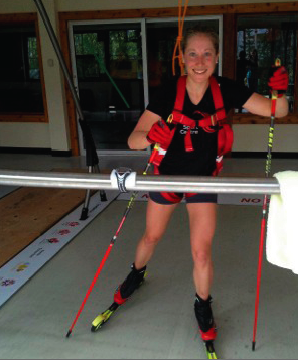
    In addition to training, the two teams have gone in on a few other things together. One is the new rollerski treadmill in Canmore, which both groups used for testing. They also  announced their national teams at the same time in a joint media event.

    “That’s good especially for raising our profile,” Smith said. “Biathlon Canada is maybe riding their coattails a little bit. I think it’s partly because Chris Lindsay, our High Performance Director, is based out of Canmore now [he had been in Ottawa], so he probably gets to chat more with the cross country guys. That’s certainly a good thing.”

    Having a few more training partners was especially beneficial for the men’s team this year because Brendan Green, one of the most successful of the biathletes, has been out since February with a bad back and will likely miss the whole competition season.

    “We definitely miss training with him,” Smith said. “He’s always pushing us.”

    While Green’s absence is a blow to the team, it might help Smith in his quest to stay on the World Cup, however.

    “A lot of the time I’m kind of the fourth guy, and without Brendan last year we lost quite a bit of points at the end of the season so we actually only have three World Cup spots this year,” Smith explained. “It is unfortunate. So if Brendan was racing I would probably hardly do any World Cups. So I guess that’s one positive thing for me, but it’s not really that great.”

    Luckily, Smith said, Green didn’t fashion himself as the team captain, so leaving him at home in Canada doesn’t create as much of a hole as it could have.

    “Brendan is a pretty quiet guy,” he said. “I know he had the best results out of all of us, but he never really – he doesn’t like to be the leader. I don’t think our team really has a leader. Obviously Scott Perras and I really look up to the results that Brendan and JP [Le Guellec] have gotten, but it’s not really a leadership thing.”

    For another week or so, Smith is with the team in Canmore, training away until they depart for Sweden. That means more loops on Frozen Thunder.

    “Last week was pretty warm here,” he lamented. “We lost all of our natural snow, and Frozen Thunder was getting pretty thin and dirty. There were lots of rocks. But then a cold front came in and it started snowing, so it’s getting better. Just a little bit on top really helped it out.”

    Is he getting bored of skiing around such a small loop?

    “I don’t know, it’s okay, especially with shooting,” Smith said. “I think if you’re a cross country skier, it would be a lot worse.”

  • Fifty Years Later, Olympic Anti-Doping Quest is Unrecognizably Changed for the Better

    Fifty Years Later, Olympic Anti-Doping Quest is Unrecognizably Changed for the Better

    Note: This is the third piece culled from an interview with Professor Arne Ljungqvist. The first two addressed the cultural response and history of doping in Scandinavia and current challenges faced by the International Ski Federation (FIS) and other anti-doping groups today.

    Since humans first started challenging each other in feats of athleticism, there have been cheaters. And likely for almost that long, there have been cheaters that used some sort of performance enhancing substances to beat their competitors. But it wasn’t until the 1960s that any international athletic federation began to implement drug testing. Yes, as early as 1928, the International Association of Athletics Federations (IAAF) banned doping – but it was a largely symbolic statement, as there was no real way to implement their rules.

    So what changed? According to Professor Arne Ljungqvist, current head of the International Olympic Committee (IOC) Medical Commission, vice president of the World Anti-Doping Agency (WADA), and an anti-doping crusader for the last four decades, it was the death of Danish cyclist Knud Enemark Jensen that finally brought doping to the forefront of international sports.

    “That was too much for the IOC,” Ljundgqvist said of the 1960 incident in Rome while talking to FasterSkier in Stockholm last week. “[Professional] cycling had experienced casualties before, but not in the Olympics … of course this was a death in the Olympics, but it was also the first worldwide televised Olympic Games, so it was bad timing. An Olympian died right in the houses of people, in their living rooms.”

    In 1961, the IOC created its Medical Commission with the sole purpose of combating drug use at the Olympics. Nobody would say that the task is finished, but the fight has evolved in the last fifty years and in 1999, the Medical Commission passed the torch on to WADA to supervise and document anti-doping efforts. Considering that it took the original commission six years to issue its first report, the fact that administrators are now not only being forced to, but actually succeeding at, pursuing “non-analytical positives” is a testament to the progress the community has made.

    Initially, a Supporting Role

    The challenges faced by the IOC in the early 1960s were huge, says Ljungqvist, who was not yet involved in the issue.

    “They started from scratch with no knowledge, no background, no competence in this idea,” he marveled. “They tried to identify the problem in terms of quality and quantity and to start to recruit people, and this took a long time. So not until the IOC session in 1967 was there a report about the issue and some draft rules.”

    As soon as the report was made, the original head of the commission, Arthur Porrit, resigned and was replaced by Prince Alexandre de Merode of Belgium, the man who would lead the IOC’s anti-doping crusade until his death in 2002 – through ups and downs, scandals, positive tests, and allegations of cover-ups.

    Despite having no medical background, de Merode was able to bring knowledgeable people to his team and draw up a list of banned substances. By 1968, there was drug testing at the Olympic Games, but not until 1972 in Munich was it extensive or effective. Among the partners were Professor Arnold Beckett from Kings College in London, an expert in ephedrine and other stimulants, which were being abused by cyclists at the time. (In a strange turn, Beckett exited the IOC in the early 1990s and began supporting athletes who he thought were wrongly accused.)

    Another recruit was Manfred Donike, who ran the laboratory at the University of Cologne at the time. Ljungqvist was then working within the IAAF, and teamed up with Donike and Beckett to do drug testing; since the Games were only every four years, the IOC was actually quite limited in its regulation of performance-enhancing substances.

    “The first test for anabolic steroids, when we figured out that they were in use in the 1970s, we found out that method for analysis,” Ljungqvist said. “Donike did, within the IAAF concept, and the first tests were conducted at the IAAF European Championships in 1974, not at the Montreal Games in 1976. … It was the international federations that conduct international sport on a year-round basis. The IAAF was the one who started to accredit laboratories, to do out-of-competition testing, to develop methods.”

    At this point, it was largely the federations doing the heavy lifting on catching dopers. At the 1976 winter Olympics, 356 tests were performed with two positive results. In that summer Olympics, 275 tests were administered, leading to eight positive tests for steroids. In comparison, approximately about 400 tests were run every day at the London Olympics this summer.

    More athletes were being caught in non-Olympic competition. At a 1977 European Cup in Helsinki, the IAAF suspended five athletes in track and field alone, including East German shot putter Ilona Slupianek, one of the only East German athletes to ever fail an international drug test. In 1978, the IAAF suspended five more athletes.

    (This wasn’t completely the case: then, as now, the cycling federation fell behind. In the 1972 Olympics, for example, two cyclists were stripped of their medals after testing positive for Coramine, a drug that was banned by the IOC but allowed by the UCI.)

    Finally, the IOC was hampered not only by timing and a weak mandate, but also by politics.

    “Sports administrators and people high up in the leadership were very ambivalent about us, and the media was not very much on our side,” Ljungqvist said. “There was the Cold War going on. East Germany had very much drug use, and it was the same although less sophisticated in other parts of Europe, and all of this was done to show the superiority of the political system to produce good Olympic athletes. It was part of the Cold War.”

    A Canadian Game-Changer

    Anti-doping efforts middled along in the 1980s – at the boycotted 1980 summer Games, de Merode reported that there were no positive tests, while in 1984, a Swedish wrestler and a Finnish runner were stripped of their medals. But in many ways, doping was not a priority for the IOC.  Officials in other sections of the IOC believed that the Medical Commission was too big and too costly.

    For instance, Norman Hess, a member of the organizing committee for the Lake Placid Games in 1980 and the Assistant Chief of Ski Jumping Calculations there, said that “it would cost Lake Placid far more to provide doping controls than to house and feed the athletes for the whole of the Winter Games.” Despite his objections, $1.4 million were spent administering 790 tests, none of which were positive. De Merode stated publicly that blood doping was not significant or even beneficial to athletes.

    Highlighting the IOC’s lack of credibility was de Merode’s biggest scandal: at the 1984 Olympics in Los Angeles, nine samples were “lost.” The twelve athletes suspended for doping violations seemed like a particularly small number given that in the previous year’s Pan American Games in Caracas, the largest doping scandal in sports history had erupted when 15 athletes tested positive, large numbers withdrew from competition rather than be tested, and more deliberately performed below their capabilities to avoid the automatic testing that came with a podium performance.

    At that point, many of the tests lagged far behind the dopers themselves. It was easy to evade tests, as evidenced by the East German system. Although many former athletes from East Germany have testified to systematic doping, few ever tested positive. This was partly due to a policy of testing athletes internally before sending them into international competition in order to avoid detection, but it was also because tests were not overly sophisticated.

    For instance, Donike personally tested samples from female athletes at the Moscow Games, and found that many, including those of 16 gold medalists, had high levels. However, the IOC hadn’t been interested in testing for testosterone, so his results did not lead to any disciplinary action.

    Then, in 1988, four medals were stripped at the Seoul Games. One of them was Canadian Ben Johnson, who won the 100 meters in a much-hyped matchup with Carl Lewis. In doing so, he set a new world record of 9.79 seconds. Then he tested positive for stanozolol, an anabolic steroid. Ljungqvist had just joined the IOC Medical Commission and was head of doping control for the case.

    “The whole world’s attention was on who would win, him or Carl Lewis,” Ljungqvist said. “It was a big thing. When this came, then the sports leadership around the world understood that this cannot go on, that competitive sport was in danger.”

    Finally, Ljungqvist said, he and his fellow administrators felt like they had support from the public, governments, and the IOC itself. It helped that the Cold War was fading and in a few years the Soviet Union would disband and the Berlin Wall come down.

    “The atmosphere changed from having been very silent or even actually working against us, which we felt in the air throughout the 1970s and ’80s,” he explained. “It changed completely – we got good recognition of what we were doing, and we got increased support through the 1990s.”

    Emergence of WADA

    Anti-doping efforts were made easier, then, in the 1990s, and the IOC began to catch larger numbers of athletes at the Games. By 2000, officials banned 13 athletes from a single Games and rescinded twelve medals, including five by U.S. sprinter Marion Jones.

    And at about that time, the IOC Medical Commission concluded their duties and handed responsibility off to the newly-created WADA, a 50-50 venture between the IOC and national governments. The commission still oversees doping tests at the Olympics themselves, but in 1999, WADA took over the supervision of testing the rest of the time.

    “WADA was created as a joint venture between the governments around the world and Olympic, international sport,” Ljungqvist said. “Then it became a clear message: this is unacceptable both from a political point of view and a sports point of view. The establishment on both sides were clear that doping was unacceptable.”

    In 2003, Ljungqvist took over for de Merode as head of the Medical Commission, and set about reorganizing it. One division of the current commission is dedicated to drug testing at the Games, which now happen every two years (winter and summer offset) rather than every four as in the 1980s and earlier. The other division is dedicated to health and safety, including research and managing health care services at the Games.

    But Ljungqvist still does plenty of doping work. He is coming to the end of a six-year term as WADA vice president, and so has had a front-row seat to the organization’s rise.

    “With the new WADA Code, one of the big issues from the start was the different rules for different sports and different countries,” he said. “It was chaotic. Cases ended up in tribunals around the world, civil courts, it was terrible. But against all odds, WADA managed, supported by the IOC, to create a uniform set of rules for anti-doping.”

    In fact, it was the IOC’s clout that forced nations and sports to adhere to the WADA code. The IOC stated that those federations who did not sign the code would be unable to compete at the 2004 Games in Athens and, said Ljungqvist, it came down to the wire, with FIFA (the soccer federation) literally signing on at the deadline. But it was a strong display by the IOC, which had been so weak a few decades earlier.

    In another pleasant surprise, the national governments scorned politics as well.

    “The governments have managed to agree upon a formula in which they contribute in different amounts,” Ljungqvist said. “It is fantastic that in a few years they did it.”

    Remaining Hurdles

    Still, though, there are challenges, both for the IOC and WADA. One is funding and research, since the organizations need to keep up with emerging doping methods and try to come up with tests to detect new drugs.

    “People believe that the IOC is a very rich body, it is only partially true,” Ljungqvist explained. “They’re giving the money back to the organizing committees. … Also according to a formula there is money going back to the national Olympic committees, to international federations, to cover administrative costs. And the philosophy of the IOC there is to have the amount of money in reserve, so that the IOC can survive as an organization should the Olympic Games for one reason or another be cancelled. It is all either given out, or reserved for particular purposes.”

    In general, science is not one of those purposes.

    “I remember when I came into the IOC in 1994, I found to my surprise that there was no budget for research,” Ljungqvist continued. “This was incredible to me: this rich body and no funding for research! In particular since doping was such a hot issue… Everything was already locked into a system of formulas, so there was nobody ready to give their money away for research. Only when WADA was created did the IOC recommend that a particular percentage of the WADA budget should go to research.”

    Still, WADA’s entire budget is about $25 million, with about a fifth of that going to research. By comparison, the U.S. Olympic Committee had revenues totaling $127 million for the year ending December 31, 2011 – and that was a year without Olympic broadcasting revenue.

    “It is a little frustrating when you see people playing golf or tennis or whatever and get millions of dollars – and we are working for them,” Ljungqvist said. “Anti-doping is for them, and for their protection. There are so many millions of dollars out there in sport, at least a fraction should find its way – but that’s the way it is.”

  • “Doping is Such a Shame Here”: Why Skiing’s Next Positive Test Won’t Come from Scandinavia

    “Doping is Such a Shame Here”: Why Skiing’s Next Positive Test Won’t Come from Scandinavia

    World Champions Charlotte Kalla (R) and Ida Ingmarsdotter aren’t doping, says the man who has made anti-doping efforts in Sweden – and around the world – his business.

    STOCKHOLM, Sweden – Imagine if Charlotte Kalla or Marcus Hellner were caught this season with a positive test for EPO, or maybe a bag of blood in a hotel room. Or what if Ole Einar Bjørndalen showed up with HGH, or Petter Northug with steroids?

    If you can’t imagine any of these things, it’s because of a cultural change in Scandinavia in the last two or three decades that is the result largely of the efforts of one man, nicknamed “the doping hunter”: Professor Arne Ljungqvist, who started as an Olympic high jumper, became a medical researcher and has gone on to clean up sport in Sweden and around the world.

    In the 1970’s, Swedish athletes – like many others around the world – didn’t see why doping was a problem and still believed that using medication to improve performance was their right. The media and fans supported them, and decried antidoping efforts as harsh rules that would make their country less competitive on the global stage. But more recently, a high-profile athlete caught doping became so unpopular that she literally moved out of the country rather than face her shame. What changed?

    Now the head of the IOC Medical Commission and the vice president of WADA, Ljungqvist sat down with FasterSkier for a far-ranging interview at the offices of International Doping and Tests Management (IDTM) here in Stockholm.

    “I Was Scared”

    Ljungqvist’s first career was as a field athlete, and he was a Swedish junior national champion in not only the high jump but also the pole vault and the javelin. At just 21 years of age, he became senior national champion in the high jump and represented Sweden in the Olympics that year, 1952, in Helsinki. He finished 15th and then went to medical school.

    After completing his studies, Ljungqvist went on to become a researcher, professor, and eventually dean at the Karolinska Institute in Stockholm, one of the most prestigious medical universities in Europe. Although clearly still interested in sports, his research turned first to renal health, then cardiovascular health, and eventually even to cancer.

    But by 1970 he was ready to return to his beloved track and field, this time in an administrative position, and joined the Swedish Athletic Association. What he saw surprised him: the sport was not the same as when he had left it 22 years earlier.

    “I was scared by what was going on, and I told myself that I would not be part of this,” Ljungqvist said of the increased drug use by athletes. “But then I was advised to do something to it instead, so I tried.”

    By 1972, because of his general medical expertise, Ljungqvist had been named to the International Association of Athletic Federations (IAAF) Medical Committee and Anti-Doping Commission, and he knew that before going into the international scene, he had to “clean up [his] own house.” After becoming president of the Swedish Athletics Association, he tried to do so – and it did not go over well.

    “When I launched an anti-doping campaign in Sweden in 1976, the Swedish national team made a written petition to throw me out,” Lungqvist said. “That was the attitude at the time, and the media was on their side. It was so much ignorance, unawareness, misunderstanding, confusion. They thought it was unfair because this was the Cold War they knew what was going on – they said, why will you not give us the opportunity to be competitive?”

    Things came to a head in 1981 when Ljungqvist discovered that Sweden’s biggest star, Linda Haglund, was doping. Fourth in the Moscow Olympics in 1980, three of Haglund’s Swedish records still hold; she was the country’s first female superstar in the world of athletics, vocal in demanding equal pay for female athletes, and undeniably benefitted women’s sports to a huge extent. Among Swedes she was, Ljungqvist says, like seven-time World Champion alpine skier Anja Pärson and Olympic gold medalist in heptathlon, Karolina Klüft, in one person.

    She was also cheating, and didn’t leave her sport quietly. Haglund’s case went all the way to Jamaica for an international tribunal.

    “That was terrible,” Ljungqvist said. “I had to take action, and some important media were terribly against it as late as 1981. Her case, of course, helped raise attention to this problem.”

    The Nice Boy from Norrbotten

    In the fight against performance-enhancing drugs, there have been several turning points which have galvanized administrators and the public. For the IOC, it was the death of Danish cyclist Knud Enemark Jensen at the 1960 Olympics. For the sports world in general, it was Canadian sprinter Ben Johnson’s positive test at the 1988 Olympics. For the U.S., it was the realization around the time of the 2000 Olympics that American athletes had tested positive, and then kept competing.

    For Sweden, what finally told the media, sports fans, and athletes themselves that doping had to stop was the confession of a wrestler from the tiny town of Haparanda, the country’s easternmost locale which is cozied up to Finland and latitudinally on par with Iceland.

    Tomas Johansson was 22 years old when he went to the Los Angeles Olympics in 1984 with the intention of winning a gold medal. He came up short, losing to an American in the final, but still received a silver medal – a big deal for Sweden. Shortly thereafter, he tested positive for steroids and had to hand his medal back.

    Strangely enough, the ensuing scandal didn’t seem to decrease the popularity of Johansson, who immediately confessed to everything.

    “He told the world, and Swedish media, ‘Of course I did it,’ ” Ljungqvist said. “He said, ‘Everybody else does, and otherwise I would have no chance.’ He was such a nice guy, and innocent, and naïve, and people liked that comment and saw that there was something wrong with sport, not with Tomas …  he was just a nice chap from the north of Sweden.”

    By then, Ljungqvist had signed on with Norwegian administrators for a pan-Scandinavian anti-doping code. The two countries agreed that they would use the same rules and police their athletes as if there were no borders. Later, Denmark and Finland signed on.

    “We created a Nordic anti-doping convention in the early 1980’s, which is cited by President Rogge as the predecessor of WADA,” Ljungqvist said. “It was the first international convention.”

    The problem was that at first, there wasn’t much support for such an effort. After Johansson told the world why he doped, however, the Swedish public changed their tune. Instead of arguing that their athletes should be allowed to dope in order to compete with the rest of the world, they began to believe that nobody should be able to use performance-enhancing drugs – so that “nice chaps” like Johansson wouldn’t have to, either.

    From Russia with Drugs

    Since then, Scandinavian sports have been considerably more clean. (Finland is another story; their notorious scandal in the ski world in 2001, Ljungqvist says, is symptomatic of some of their structural and cultural differences from the rest of the Nordic countries.) Sweden is even cleaner than most. In terms of positive tests that have been litigated, it has far fewer even than Norway, and one involved a modern pentathlete who was disqualified for drinking beer.

    And these days, when a Swedish athlete dopes, the consequences are far different than they used to be.

    Russian hurdler Lyudmila Narozhilenko was a World Champion in 1991, but then tested positive for steroids in 1993 and served a four-year ban. During that time, she married her Swedish manager, moved to the country, and became Lyudmila Engqvist. She also became very popular.

    “As a Soviet athlete she had been found doped, and banned,” Ljungqvist said. “It was thought that she was a victim of a terrible system, which was probably true. She came here and appeared in all sorts of good circumstances and became very popular after having served her ban – she confessed everything, how the system was.”

    Reinstated by the IAAF in 1995, Engqvist began competing for Sweden and won Olympic gold in the 110 meter hurdles at the 1996 Olympics in Atlanta, further raising her stature in Sweden. After battling injuries and breast cancer, she set a new goal: to become the first woman to win gold in both summer and winter Olympics. Like many sprinters, she turned to bobsled, and began training for Salt Lake City.

    “She took steroids to become heavier, and was caught,” Ljungqvist said. “She left the country for Spain. That’s the attitude here.”

    As soon as Engqvist learned that she had tested positive, she began dreading the day that the Swedish public would find out. She became depressed and eventually suicidal.

    “It was as if my life was over,” she told the BBC at the time. “I wanted to flee and didn’t tell anyone where I was going.”

    These days, she’s back in Sweden, albeit living a low-profile life as a masseuse outside of Stockholm with her husband and son. She didn’t give a major interview until 2005, when she told the newspaper Expressen that “it was my own fault, and I’ll take the punishment.”

    To Skiing, and Today

    Of the perception in the ski community that Scandinavians don’t dope, Ljungqvist exclaims, “of course it’s not true!” But in the same breath, he explains that it’s not exactly unfounded, either.

    “Today, I would say, at the elite level we don’t have much [doping],” he said. “At the Swedish Olympic team level, it’s negligible, probably nothing… because we were so early out. We were the first [to fight it] at the national level. The generation that is competing now, doping is such a shame here.”

    Furthermore, Swedes can hold their heads high because when their athletes win, it’s on merit, not medications – and the rest of the world knows it.

    “At the 2004 Olympics, when Sweden got three gold medals in athletics in a single weekend – Stefan Holm in high jump, Christian Olsson in triple jump, and Karolina Klüft in heptathlon – the IAAF was so happy,” Ljungqvist said. “They said, this proves that you can get a gold medal without doping.”

    So is Kalla doping? Hellner? Carl Johan Bergman? Will skiing’s next scandal come from Scandinavia?

    “Pssssshh,” the doping hunter huffed, not deeming the question worthy of his words.

    ***

    Want to hear more from Professor Ljungqvist about the doping issues facing skiing and other sports today? Read our second piece, published this morning from material from the same interview.

  • For Anti-Doping Administrators, a Constant Battle Requiring Creativity & Strong Leadership

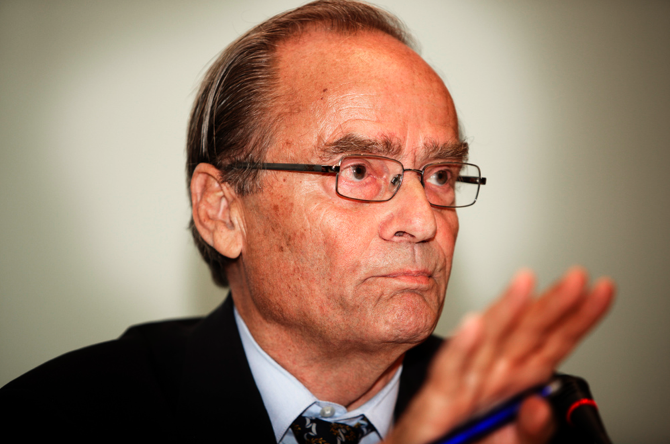
    For Anti-Doping Administrators, a Constant Battle Requiring Creativity & Strong Leadership

    Professor Arne Ljungqvist, Lord in Waiting to His Majesty the King of Sweden. (Photo: Tine Harden/Playthegame.org)

    Note: For more on Professor Ljungqvist’s fight against doping in Sweden, and its effect on Scandinavian sport culture, you can read our companion piece, also published this morning.

    STOCKHOLM, Sweden – Professor Arne Ljungvist has been fighting doping since the 1970’s, when he began with the Swedish Athletics Association and the International Association of Athletics Federations (IAAF). These days, he has retired from his day job – researching cancer and other medical topics at the prestigious Karolinska Institute – and holds two others: the head of the International Olympic Committee (IOC) Medical Commission, and the vice presidency of the World Antidoping Agency (WADA).

    In the intervening decades, doping rose to seemingly absurd levels, but Ljungqvist believes that in some sports, performance-enhancing drugs are no longer so prevalent.

    “You can see it,” he told FasterSkier. “In measurable sport, you can see the difference. In no [Olympic] throwing event in London would the gold medalist been on the podium in Seoul 24 years ago. It’s incredible. So it’s been cleaned up.”

    But that doesn’t mean that the problem is gone – it is an ever-evolving, ever-escalating battle between dopers and administrators. In some ways, the efforts by people like Ljungqvist are still the same as they were in the 1960’s, when one of the biggest jobs was simply determining which substances ought to be banned. Administrators have always been trying to catch up with dopers, tests always lagging behind the discovery of new performance-enhancing substances and methods.

    And as they have lost patience, perhaps, the game has changed. Recognizing that they won’t be able to test every athlete for every possible performance-enhancing method at every potentially important time, administrators have in recent years embraced “non-analytical” cases where there is no positive test for a banned substance. This tool for catching cheaters was showcased last month when Lance Armstrong was stripped of his seven Tour de France titles, based mostly on the words of other cyclists.

    With these changes and challenges in mind, FasterSkier asked Ljungqvist and Staffan Sahlström, a longtime ally of the professor’s, a few questions about sports today in a long interview at the offices of International Doping Tests and Management (IDTM), a company which Sahlström founded here in Stockholm.

    No-Start Rules and Biological Passports

    The International Ski Federation (FIS) was one of the first federations to try to nail dopers without an actual positive test. One of the main goals of endurance athletes who dope is to raise the capacity of their blood to carry oxygen. For a long time, there was no test for erythropoietin (EPO), the main drug used to do so. Then, too, dopers learned to reinject their own blood back into their veins, which was hard to detect. So the federation got creative.

    “FIS felt that they had problems with blood doping, and the Finnish incident proved that they were right,” Ljungqvist said, referring to the scandal that disqualified six Finns from FIS World Championships in 2001. “And the way they tried to stop it in the absence of detection was to institute this no-start rule, to say that if you had too-high blood counts you couldn’t compete because it would be dangerous to your health.”

    The rule, which stated that no skier could start a race if their hemoglobin tested higher than 16.5 g/dl for women or 18.5 g/dl for men, was designed to detect the symptoms of blood doping, if not the actual substances or transfused blood itself. To the public, FIS explained that having too-thick blood was dangerous, which was true, but not the real purpose of the rule.

    The rule did work, if its goal was to lower competitors’ hemoglobin levels before they raced. In 2006, U.S. skiers Leif Zimmerman and Kikkan Randall had to wait five days before re-testing and competing in the Torino Games. At the 2010 Olympics, Maine-based New Zealand racer Ben Koons encountered the same problem.

    According to Ljungqvist and many others – such as the aforementioned three, who say their hemoglobin levels had nothing to do with doping – it wasn’t a good solution.

    “I don’t like that,” he said of the FIS policy. “I think they were covering themselves under a false argument. And I told them that many times – that there is no proof, and particularly the individual, probably, some are born with different levels. This is a bad excuse. They were trying to combat doping with a false argument. That’s ethically doubtful.”

    Not only is hemoglobin likely under some degree of genetic control, but it can also be affected by living at altitude (which can train the body to carry more oxygen in the blood) or even by dehydration. Plus, the rule didn’t actually catch all the cheaters. Ljungqvist pointed out that Armstrong, for instance, had repeatedly taken saline infusions to dilute his blood when he knew he would be tested.

    “They notify the skiers by just putting up a message in the lockerroom, which says, you are due for your blood sampling at nine o’clock,” Sahlström explained to get at the rule’s shortcomings. “So you have a notification and even though you are observed during your notification, the bad guys could do something. And the levels are just below – a little bit too little below. So they achieved something, but it is a false excuse.”

    FIS has expanded the concept, however, into something called an “athlete biological passport.” The idea is that by tracking markers like hemoglobin through time, administrators will have some idea of an athlete’s natural levels, and if they dope, the changes will show up in tests even if the substance itself does not. Last season, FIS administered 1,432 out-of-competition tests as part of its biological passport program.

    “I think it’s well worth trying, and it’s a good idea,” Ljungqvist said of the passport concept. “We’ll see if it works. It has already been used – the International Cycling Union has been doing it, IAAF did it just before London, and they banned a few athletes based on passport information. The more sophisticated, the more detailed you can make the passport, the better.”

    As part of his role with WADA, Ljungqvist has watched the agency adopt the program itself. Next week, he’ll take part in discussions about whether WADA can expand the passport to include endocrinology data, which could help detect steroid and hormone use – as well as other future methods that athletes haven’t even tried yet. For the first time, Ljungqvist hopes, maybe administrators will be one step ahead of dopers, rather than the other way around.

    “Maybe we will finally have a good identification of the athlete’s biochemistry,” he said. “That will also be helpful when it comes to detecting gene doping, so it’s a good path to follow.”

    Strong Leadership for Clean Sport

    In the fallout from the Armstrong scandal, many clean athletes have to wonder: how do I know that the playing field is level, and that the system is working, if Lance Armstrong could get by for so long without being caught?

    That, say Ljungqvist and Sahlström, depends on a lot of things, sport and country among them. But in the U.S., athletes shouldn’t be too worried, Ljungqvist believes. He remembers what happened at the Sydney Olympics in 2000, when it came out that U.S. athletes had tested positive for banned substances, but the cases had been swept under the rug by the U.S. Track and Field federation and the United States Olympic Committee (USOC). At the time, Ljungqvist publicly states that the Americans had failed to do their jobs.

    “I got a direct call from the responsible people at the White House, the drug czar, who told me that they understood our problems in Sydney,” he said. “I had criticized them and it had come out in the United States newspapers. So they said, please, calm down, if you can, and we’ll do something. And they did. They created USADA.”

    Recently, Ljungqvist says, USADA has done an admirable job tackling the rampant doping in Olympic sports (professional sports are, of course, another matter). He cited first the BALCO investigation, and then the Armstrong affair, as cases where the agency laid out meticulous cases against high-profile athletes and didn’t seem hampered by political pressure.

    “They were very thorough, very serious, and very professional,” Ljungqvist said. “They are cleaning up sport in the United States. But it shows that the system had been bad… this goes back to the late 1990’s and early 2000’s. They weren’t doing the job. Marion Jones is another example – tested hundreds of times, at the wrong times.”

    The turnaround was due to something that hasn’t happened in every country: the antidoping agency was separated from any organizations that might have an interest in the outcome, like the government or the national Olympic Committee. One reason that the U.S. system had been so bad, Ljungqvist implied, was that it had been enforced by two organizations which had a vested interest in U.S. athletes winning medals, and so had some incentive to avoid banning star performers.

    “I think that one of the answers [to the doping problem] is the independence of the organizations that are handling different cases,” Sahlström said. “And then it should be discussed, what is being independent? I can question being independent in some countries.”

    He would know, because IDTM handles doping tests for various federations around the world. The company started based on the pair’s out-of-competition testing program in Sweden; the IAAF asked, can you do this internationally? Since then, Sahlström  has assembled a network of doping control officers around the globe. And different countries, he says, sometimes have different ideas of what a doping agency should do.

    Then there’s the question of who is leading national agencies and international federations. Travis Tygard of USADA has gotten a lot of press lately, as have International Cycling Union President and Vice President Pat McQuaid and Hein Verbruggen. While Tygard attacked a popular American hero, the UCI leaders quietly protected a system of doping in their sport. People have called for the resignation of all three, for various reasons: Armstrong reporters are furious at what Tygard has done, while fans of pure sport are disappointed in the spinelessness of the UCI.

    “It’s difficult to be the governing body – you have to run the sport,” Sahlström admitted. “If you are not strong as Professor Ljungqvist has been in the IAAF, and if you have weak leadership that says, okay, we need to protect our athletes because they are our asset and they can’t be found doped and we will lose sponsorships, or TV rights, et cetera, then that’s something that we should be looking into.”

    Whether it’s at the USOC, USSA, USADA, or FIS, athletes have to rely on their leaders – and that’s a big question. It’s made tougher, Sahlström said, because most of these high-level administrators keep their jobs for a long time – sometimes decades. The lines can blur after such long relationships, he suggested, and administrators can bow under the pressure from athletes and coaches to ignore problems with doping.

    “If you have a fairly closed family like the professional cyclists, they all know each other,” Ljungqvist said. “Sports-wise, it’s a small group. It’s easy to organize something and people protect each other.”

    In insular sports such as cycling, Sahlström agreed, it’s a tougher problem.

    “For leaders to start to clean out something, it takes some courage, and I’m not sure that every leader today has that,” he said. “Who are the leaders? Are they strong enough? If there are leaders who have been part of an old regime, I’m not accusing anyone, but if you have been in that area, then no. If you come into a federation with new eyes and ears you can say, okay, something has to be done. But if you have been part of it, you would be biased.”

    Should American skiers be worried, though? Of course no sport is perfect. But as Americans, the athletes should trust USADA, the pair said. And as skiers – well, at least it’s not cycling.

    “The confidence in the system, I wouldn’t doubt it,” Ljungqvist said.

  • For Germany’s Olympic Champion Andrea Henkel, Americans are “A Second Team”

    For Germany’s Olympic Champion Andrea Henkel, Americans are “A Second Team”

    Germany’s Andrea Henkel (second from right) with American biathletes (l-r) Sara Studebaker, Susan Dunklee, Annelies Cook, and Hannah Dreissigacker in Utah last week. (Dreissigacker courtesy photo)

    Soldier Hollow, the Utah venue that played host to the nordic events at the 2002 Olympics, is no stranger to big-name athletes. Just a few weeks ago, World Cup sprint champ Kikkan Randall was there training with the cross-country national team. The medal-winning nordic combined team skis there regularly.

    But last week, Utah had a visit from another of the nordic world’s most recognizable athletes: Germany’s Andrea Henkel, who joined the U.S. biathlon team for a part of their annual fall camp in Utah. Henkel, who enters the 2012 season as the most decorated woman currently on the World Cup circuit, hadn’t returned to Soldier Hollow since she won two gold medals back in 2002.

    “It’s nice to come back,” she told FasterSkier in an interview on Wednesday. “It has been lots of good memories, fun memories too, not just about the races. When you have a good time somewhere it’s nice to come back and just enjoy it.”

    Despite the high quality of the Soldier Hollow trail system, neither the FIS cross country World Cup nor the IBU World Cup have returned to Utah since those Olympics, a fate that seems likely to befall the Vancouver venues as well.

    “Biathlon is a European sport,” Henkel said. “I would like it if we came to the U.S. more, but you often get the question, ‘what is biathlon?’ They just have no idea of it, or that there was some [American] who was leading the World Cup, even.”

    Sara Studebaker (USA) and Andrea Henkel (GER) in the mixed relay at 2012 World Championships.

    Time recently spent with the Americans and at the former Olympic site has made Henkel muse on the support for programs in countries like the U.S., where biathlon doesn’t get top billing. In her own home country, it’s the most popular winter sport, and biathletes, especially those as successful as Henkel, are followed by the media as closely as if they were Hollywood celebrities.

    “It’s hard for teams who don’t get real respect,” she said of conditions on this side of the Atlantic. “Maybe having more World Cups in America would make it better for them. It would be nice to have more World Cups in America – maybe the future will bring it.”

    With the schedule often set far in advance, it seems unlikely that any World Cups will return to the States while Henkel is still competing. But by all appearances, the future is bringing the German star her a fourth Olympic appearance, which will give her the chance to see a venue in another surprising place: the Black Sea, where Sochi is situated.

    And the magic, and medal potential, is still there. Although the 2012 season was so often a battle between Henkel’s teammate Magdalena Neuner and Belorussian Darya Domracheva, Henkel took a win of her own in Oslo. It was her 16th regular-season victory to go with one individual Olympic gold, four individual world titles, and five relay wins at championship events.

    That longevity – and Henkel’s humble attitude about it – seems incredible to the U.S. women she was training with in Utah.

    “As we travel around Salt Lake and the Heber Valley, she has been reminiscing about that experience,” national team member Susan Dunklee, who now battles Henkel on the World Cup, wrote in an e-mail. “I am impressed not only at how long she has been competing in biathlon, but how long she has been competing at the highest level. During the Salt Lake Olympics, I was stressing about the upcoming Vermont State High School Championships… biathlon wouldn’t be on my radar for another six years.”

    U.S. as a Second Home

    More overdistance fun. Photo: Dreissigacker.

    Henkel estimates that she began visiting the U.S. four or five years ago, after she started dating American biathlete Tim Burke. At first, she would train on her own or with the men’s team. Back then, the women were intimidated and shy around Henkel, but that broke down in the coming years as the trips to Lake Placid began racking up and Henkel started to spend more time training with the women.

    “Before I met her, Andrea had seemed so larger than life, but when I met her, I couldn’t believe how small she actually was,” Dunklee wrote. After a few years, Henkel and her personality became part of the team: “She is known for blunt honesty. She tells it like it is, and it is refreshing to hear her opinions.”

    Things changed for Henkel in 2010, when her teammates Kati Wilhelm, Simone Hauswald, and Martina Beck all retired. Although she’s had plenty of teammates retire in the course of her career, Henkel said the post-Vancouver rush was the toughest: the four women were the same age and had trained and competed together for years. Between that and the impressive length of Henkel’s career, it’s easy to see why she began looking for new ideas to stay engaged in her training.

    “I have been doing this for a while, and I have to get my motivation from something,” she said. “It’s been so long that if I have the same focus year in and year out, I would be tired already or maybe I wouldn’t be doing it anymore, even.”

    Henkel says that the Americans are “like a second team,” and the feeling is mutual. Dunklee thought that the sense of camaraderie was one of the biggest benefits Henkel might get from training with her team. The German system is different in that there are multiple training centers around the country and the national team comes together mainly for camps, which are generally short – just one week.

    “The last couple years, the US women’s team has become very close,” Dunklee wrote. “Andrea fits right in with that. Besides training with us, she has joined us for shopping trips on rest days, volunteered her home kitchen for birthday cake baking, and shared an occasional bottle of wine with our team and staff. Of course I want to beat her on race day, but I am also psyched when she does well. Our whole team is.”

    Veterans Train Different

    And while the U.S. women have never been as strong as the Germans, they have improved over the last few years into a faster group that has more to offer Henkel in terms of training.

    Henkel skiing her way to a mass start win in Oslo, Norway on last season. Photo: NordicFocus/Fischer.

    “The team had started changing already when I started coming here,” Henkel said, noting that the hiring of dedicated women’s coach Jonne Kahkonen had helped substantially. “It’s good training.”

    Of course, it helps that biathletes like Dunklee have had one of the sport’s biggest stars to learn from. Initially, the American worried that if she spent too long skiing around behind Henkel, she would be annoying. As she has gotten to know the German better, she’s no longer as nervous about that. And besides trying to pick up specific technique, the U.S. women say that Henkel’s attitude in general is something to emulate.

    “She is one of the world’s most talented and most experienced biathletes,” Dunklee wrote. “She has high expectations for herself but also lots of perspective, which keeps her even keeled. Her professional attitude towards training and racing rubs off on our team and that has been a very positive thing… and having her around sets the bar higher and gives us a measuring stick. It’s awesome!”

    Henkel’s German coaches don’t mind when she travelled to the States: “they know that I train very hard, and they trust that I’m working,” she said. Henkel talks to them regularly while she’s gone to assess what she should be doing for training. Although her plan is different than the Americans’, she tries to jump in with them as much as possible if the day’s goals line up well enough, simply because it’s easier.

    But that doesn’t always happen. Henkel has been competing at the World Cup level since 1995, more than ten years longer than Studebaker and Dunklee have even been biathletes.

    “The German’s have a slightly different philosophy than we do, but Andrea’s training is different more just because she’s been training for a lot longer than most of us,” wrote Sara Studebaker. “She’s at the point in her career where she has the endurance and the volume, so speed and intensity are more important in her plan than the endurance piece.”

    As such, Henkel often jumps in interval workouts and time trials; last week she swept the two time trials at Soldier Hollow that were used to pick athletes to send to the World Cup. She told FasterSkier that she was surprised she did so well; even for such an experienced athlete, flying across eight time zones is no small thing, and she arrived recovering from a cold and initially struggled to adjust to the altitude.

    “I was shooting really badly in the beginning,” Henkel laughed. “It got better in the last few days, and skiing was okay I think. I didn’t prepare for the race, but not everybody could. For me it was good to race again, to go this speed. So it was good for my motivation and my mind.”

    2013: Still Nerves, Still Pressure

    Henkel flew home to Germany on Sunday, and in a week she’ll head to Muonio, Finland, for final World Cup preparations with her team. Then, she’ll fly to Ostersund, Sweden, and stay with the Americans again for a few days before the first World Cup races. When she hits the start line, she’ll have butterflies.

    “The first race is the one I’m the most nervous about,” she said. “You get to figure out what you have done already for the last year, and see where you are, what you can do and what you can’t do anymore.”

    Henkel crossing the line for gold as the anchor leg of the German relay at 2012 World Championships. Photo: NordicFocus/USBA.

    For instance, one thing that has changed over the years is Henkel’s shooting speed and accuracy. These days, she says, she’s less “comfortable” on the range, although she’s always working to change that. In big races, though, she still seems to have nerves of steel: at World Championships in 2012, it was Magdalena Neuner who had to hit the penalty loop in the women’s relay, while Henkel anchored the team to a 28-second win with perfect shooting.

    And for Germany, that’s important. At the end of last season Neuner retired at age 25, leaving a big gap in the roster. For so many years, the German women have been the team to beat in relays; Henkel grew up, athletically, in a climate where if you couldn’t podium, you wouldn’t even have a shot at making a relay team.

    “We had a very strong team in 2010, the strongest team we ever had,” Henkel said of the squad that hadn’t even included Neuner. “ At that time I think the coaches expected that every race, somebody would be on the podium. We shouldn’t expect this anymore so much. The new team is very good and we can still have some podiums and good relays, but it won’t be like it was in 2008 to 2010.”

    In terms of day-to-day life, Henkel said that Neuner’s retirement didn’t affect her much; even last year, Neuner was doing some training on her own with her coach. She’s more concerned with trying to minimize the pressure put on her by Germany.

    “I know that now, for sure, they expect that somebody will be [doing well] and they expect that person will be me,” she said. “Luckily there is also Tina Bachmann, who is able to go to the podium.”

    As Dunklee had said, Henkel has high expectations for herself, so the pressure is as much internal as anything else. But, the star explained, she’s just doing the best she can.

    “I don’t want to push myself too much in terms of pressure,” she said.

    Although the World Cup schedule is much the same from year to year, there are small changes that can break up the monotony for a career athlete, and this year has an extra special opportunity: the first chance to compete on the trails in Sochi, where Henkel will chase her fifth Olympic medal.

    “It’s not often that we see something new,” Henkel said. “But last year we saw something new with Nove Mesto, and this year we will see Sochi. I have seen some pictures already, and I’m really excited to go there and check it out. Hopefully the tracks there will be good for me!”

    What does that mean?

    “I’d like it to be more challenging than Vancouver was, for example,” she explained. “But still doable. And the range should be not too easy, but doable. You need to have a little challenge in both the shooting and the skiing.”


  • This Month in Journals: Does Compartment Syndrome Diagnosis Method Lead to Unnecessary Surgeries?

    This Month in Journals: Does Compartment Syndrome Diagnosis Method Lead to Unnecessary Surgeries?

    FasterSkier is starting a once-a-month series looking at new research in the field of sports science. Periodically, we’ll flip through some of the world’s best peer-reviewed medical journals and summarize, in plain English, studies that we think will be of interest to skiers. Here’s our second installment; you can check out the first here.

    * Compartment syndrome, the compression of muscles with in a myofascial “compartment,” is prevalent though it has become in cross-country skiing, but is not a well-understood disease. Drs. Andrew Roberts and Andrew Franklyn-Miller of Surrey, England, admit as much in a recent paper in the Scandinavian Journal of Medicine and Science in Sports.

    “The pathophysiology of the condition is poorly understood, and the criteria used to make the diagnosis are based on small sample sizes of symptomatic patients,” they write.

    Chronic exertional compartment syndrome, or CECS, can’t be diagnosed just by MRI’s or other non-invasive means. Instead, doctors typically cut a slit in the skin and insert a catheter (in some cases a fluid-filled needle) into the muscle, then ask the patient to exercise on a treadmill or bike and measure how the pressure in the muscle changes from rest to exercise.

    CECS also usually can’t be cured simply by resting or doing physiotherapy. Typically, skiers (and other athletes) with bad cases of CECS have surgery to remove the fascia, or coating, around the affected muscles in their calves or shins so that they can expand without causing pain.

    Nobody wants to have surgery that they don’t need, so it’s troubling that there doesn’t seem to be a quick and easy diagnosis. Drs. Roberts and Franklyn-Miller examined the use of intramuscular pressures to assess the technique’s accuracy. Even before starting their literature review, they knew that some of the studies which were used to set the cutoff values defining CECS had failed to use a control group of healthy subjects.

    So, the pair set out in search of studies that would give them some baseline information. And what they found was troubling: when researchers actually look at intramuscular pressure in healthy people, the values are sometimes above the cutoff currently used to diagnose CECS.

    “If a measured [intramuscular pressure] is above the criteria, clinicians can not have confidence as to whether the subject belongs to the upper end of the distribution curve for healthy subjects or at the lower end of the curve for subjects with CECS,” the authors wrote.

    Furthermore, they found that factors such as how deep the catheter was inserted and its position in the muscle, as well as which activity the patient was doing and even shoe shape contributed to variation in measurements of intramuscular pressure. The authors called the intramuscular pressure method “flawed” and wrote that they would not recommend it as a mode of diagnosis.

    “The [intramuscular pressure] at all the gold-standard time points has shown to be dependent on variables other than the presence or absence of CECS, and considerable overlap exists in the available literature between normal and symptomatic subjects in IMP measurement,” Robers and Franklyn-Miller wrote. “The current diagnostic criteria certainly cannot be applied with reliable certainty… These flaws could potentially lead to false positives and subsequent fasciotomy where it is not indicated.”

    Among other things, the authors suggested that rest and conservative treatments be tried before jumping to surgery. For instance, the fact that shoe shape and construction could determine intramuscular pressure dictates that athletes might want to change their footwear – several times – before going under the knife and losing weeks or months of training. The takeaway message for skiers is not to jump to conclusions when their calves and shins start hurting – and that if pain isn’t severe, having high measured intramuscular pressure doesn’t mean that it’s compartment syndrome.

    * In Acta Physiologica, both an editorial by Dr. Timothy Carroll of the University of Queensland and a paper by researchers from Deakin University in Melbourne argue that a large part of an athlete’s improvement in strength can be tied to adaptations in their brains, not just the muscles themselves.

    The Deakin team, led by Dr. Dawson Kidgell and his graduate student Ashleigh Weier, began from the pattern that athletes generally see improvements in strength very early on in a training program, before their muscles actually get significantly bigger. To examine whether the improvements might be all in their heads, the team used transcranial magnetic stimulation: they sent of magnetic pulses through a subjects head, which then gave them information about synaptic activity and possible inhibitions.

    Briefly, the magnetic pulse technique has been used many times before to examine how the brain controls performance of many tasks, including strength training – where results have been conflicting and inconclusive. The Deakin team took a slightly different approach of comparing single-pulse with paired-pulse stimulations.

    After four weeks of training, university students improved their squats significantly but did not develop thicker muscles compared to a control group. More importantly, the study showed an adaptation to training: the students who had been training showed changes in the motor cortex that led them to perform better.

    The editorial further hypothesized that, compared to other studies, the more complex a task is, the larger the magnitude of change in the cortex will be. Because the maximum-load squats were both taxing and required very specific technique combining multiple muscle and joint movements, the brain changed more to facilitate the difficult task.

    “It seems likely that repetitive muscle actions against high loads alter motor cortical connectivity to facilitate the specific patterns of muscle activity required to produce maximal force in the training context,” Carroll wrote.

    Training: maybe it really is mind over matter….

    * The International Olympic Committee published its consensus statement on thermoregulation and altitude adjustment this month in the British Journal of Sports Medicine. In short, the IOC wants to make sure that environmental conditions don’t adversely affect the health of its athletes. As examples of some conditions they want to control, they listed heat, cold, wind, altitude, and humidity.

    The group, anchored by Dr. Lars Engebretsen of the University of Oslo, noted that it was difficult to set hard-and-fast criteria for conditions given that each sport – summer to winter, from land to water – encountered different challenges.

    In terms of challenges relevant to nordic sports, the IOC started by writing off hypothermia: “And while some Nordic skiing and biathlon events require 2 h to complete, metabolic heat production during these activities is even higher, often reaching 13–18 METS (1250–1800 W)… these very high-metabolic rates will offset heat loss and prevent athletes from developing hypothermia during competition in conditions typifying the past three winter Olympics, and probably even with much more extreme cold conditions.”

    It’s worth noting, however, that the group used as its guidelines only the temperatures from the last three winter Olympics – including, for example, the rather warm Vancouver edition. They wrote that air temperature would have to be below -4° F – the technical cutoff for FIS-sanctioned races – for nordic athletes to get frostbite, and suggested that it was more a concern to worry about coaches, volunteers, and support staff.

    The group went on to note the prevalence of exercise-induced asthma and bronchial hyper-responsiveness in elite skiers and swimmers.  “Furthermore,” the authors wrote, “participation in competitive cross-country skiing over a winter season markedly enhanced airway infl ammation in bronchial biopsies in young skiers with and without asthma.”

    What to do? The IOC helpfully recommends recording temperature and wind speed at events and telling athletes to wear warm, windblocking clothes when training. and notes that inhaled steroids can treat asthma without being performance-enhancing and warned against over-using beta-2 agonists (read more about that issue in our piece from last week).

    While the consensus statement itself was based on many previously published studies and revealed little that was new or exciting, it did provide a pulling-together of the IOC’s thoughts on many medical issues. And perhaps the group failed to make any bold statements because they are waiting on more results from researchers around the world: the piece closed with a call for more work to be done.

    “We urge the Commission and Federations leaders to assertively and openly press further in their pursuit to better appreciate, closely monitor and appropriately respond to the health and safety challenges in all sport venues, so every Olympic and international-level athlete is adequately protected and thus given the opportunity to demonstrate optimal athletic performance,” the group wrote.

  • The First to Take MWSC Program from Hometown to World Cup Top 10, Currier Focuses on Consistency

    Russell Currier (USBA/Maine Winter Sports Center) pushing through the final stretch of a sixth-place effort in Nove Mesto, Czech Republic, this winter. Photo: USBA / NordicFocus.

    Last winter, a number of relatively young American athletes catapulted their way to top-ten World Cup results in nordic disciplines – often very much to their own surprise, and certainly to the surprise of European commentators. One of those was Stockholm, Maine’s Russell Currier, who, joining the biathlon circuit halfway through the season, had a breakout performance in his second race of that weekend.

    In a sprint in Nove Mesto, Czech Republic, 24-year-old Currier started more than half an hour after eventual winner Emil Hegle Svendsen of Norway finished – but the announcers couldn’t coast through the back half of the field, because, out of the blue, Currier charged his way towards the podium, ultimately missing it by nine seconds and placing sixth. He repeated that result a few weeks later in Kontiolahti, Finland.

    This summer, Currier had reason to gain a little spring in his step – and so did his home club, the Maine Winter Sports Center.

    “Russell has been with us literally from day one,” said MWSC President Andy Shepard. “When we started our Healthy Hometowns program in 1999, we decided to start off small with one or two or maybe three communities, to really figure it out and nail it and then we’d start to expand it. One of the first communities we were in was Stockholm, Maine. Russell was in that very first class.”

    MWSC has had plenty of standout athletes in the past, but Currier is the first to go all the way through the program from Healthy Hometowns to the first page of World Cup results – something that Shepard says he wouldn’t have believed a decade ago.

    “Nobody who knew Russell at the time would have imagined he would grow up to be a world-class biathlete,” he laughed in an interview from Park City. “He was your typical middle school kid. He didn’t look like a world-class athlete and he didn’t act like a world-class athlete. But he started skiing to and from school, he spent a lot of time hanging out with our coaches, and really from day one he has embraced this notion of living a healthy, active, outdoor lifestyle, and it has changed his life as a result.”

    Currier at the finish of the Nove Mesto sprint. Photo: NordicFocus/USBA.

    Shepard said that Currier’s recent success was another boost to the program, which uses its elite athletes to inspire younger kids to get outside and be active. Having one of the most successful of those athletes come from just down the road? It helps.

    FasterSkier caught up with Currier to check in about his summer training, whether the 2012 results have changed his approach, and what he’s working on for 2013.

    FasterSkier: How has your summer gone?

    Russell Currier: It’s pretty busy. I’ve spent a lot of time over here at the Olympic Training Center in Lake Placid, based out of there. I spent a few weeks back at home, but not too much. It’s a good training group and a good system – a little repetitive at times, but it works pretty well.

    FS: Northern Maine and Lake Placid are a pretty long drive apart, so how does it work to try to split your time like that?

    RC: If I’m going to be in one place, I try to be in one place. In the past I have spent the low weeks back home, but this summer even in the rest weeks I would stay in Lake Placid because it’s a solid eight- to ten-hour drive back home, and it’s not very exciting. If I can dodge that, it’s almost always worth it. It’s been like this for I’d say the past three years.

    FS: With Kris Freeman and Annelies Cook coming on board at MWSC, has the training dynamic changed there at all?

    RC: It’s hard to say, just because I haven’t spent enough time at home. The cross country team has its own schedule, so we’re not all in the same place at once. I think for sure it has been great to have those guys, but I wish I could say that I spent more time with the group as the whole to see. With this kind of lifestyle, everybody is on different pages.

    FS: It’s definitely a lot of travel. Was last year the most continuous time you had spent on the European circuit?

    RC: Yeah. That was by far the longest. It wasn’t too hard on you, bouncing around central Europe, but at the same time, if you can do it then that means you’re on the circuit and you’re on the team, so it’s a fair trade. It’s going to set the bar higher for next year, and I think it was a good confidence booster.

    FS: Have you thought more about why you had such a pickup in results, and whether it has changed anything?

    Currier training in Ruhpolding, Germany, this summer, where the U.S. team had a training camp.

    RC: We’re always trying to find where to make up time, by any way. Last year the coaches and I just sat down and basically did that – we said, what can we do to up my shooting percentages and to keep ski speed going? This year we have done the same thing. We have worked on transitions a little, improved technique, done all sorts of mechanical work on the rifle and really pushed that whole process, both prone and standing. So it’s the same formula, just constantly trying to move forward with it I guess.

    FS: Do you have any goals for this season – big events? Consistency?

    RC: Nothing too specific, unfortunately. I would just like to get as close to having a little more consistency as I can, being safely on the circuit, and jumping into that top-40 points range as much as I can, instead of past years just trying to stay on the World Cup circuit and going back and forth – being home for February, then being gone. This year I want to be in a more consistent, safer spot.

    FS: Are you pre-qualified for the Sweden trip, or do you still have to go through trials for that?

    RC: No, I actually got my plane ticket yesterday.

    FS: Is it a relief to at least know that you’re starting over there with the team?

    RC: Yes, absolutely. Last year there was pressure going into the races in Jericho and Utah. You have to switch up your training a little bit. This year, to not have that stress is a nice bonus. You can just train right through it and it’s not an issue if you’re tired on the day of a time trial in October.

    FS: Since your results this winter, do you have any more resources at your disposal? More sponsorship?

    RC: Not that much. Nothing financially, at least not from up north. But it’s nice coming from a small town, because everybody was more than excited whenever I had good results. Whatever time I spent home was great just to be able to catch up with everyone.

    FS: I would imagine that finally coming home after that trip, you must have had quite the welcome.

    RC: It was. I wish we’d had some more snow.

    FS: In terms of current events, one big thing that has happened is obviously the Lance Armstrong case. What has that meant to you?

    RC: I think we all had our suspicions. When we were younger, he was definitely one of our sport heroes, and then in the last few years, at least from my perspective, that has kind of changed and now this certainly backs up that change in perception. But it’s interesting – unless you’re right in that mix, you’ll never get the full scope of what’s going down. All we have is what we can read from media and the articles. You kind of have to take it with a grain of salt. It’s interesting to watch and try to keep up with it.

    FS: Do you think it has any implications for your own sport?

    RC: It makes you wonder. The general assumption is that it is much cleaner – we’re in a good place. But for sure, we’re not perfect, and there’s people getting busted here and there. There was a pretty good bust a few years ago. It’s there, and it sucks, but I guess I’m optimistic to think that it’s fairly clean, and certainly cleaner than it used to be back in the 1990’s.

    FS: It seems like a big problem in that case was the cycling federation’s refusal to do serious testing. How does biathlon compare?

    RC: There was a strong push with how strict it was and how much energy there was going towards catching dopers and that whole testing process. That actually helped out a lot. They caught a lot. With the Russians, there was a new method of EPO they were using that was so hard to detect, that finally when the standards went up they were able to bust them. Long story short, I think that testing with the IBU is better than it was, but it’s hard to say if it’s good enough or not.


  • Rhetoric Aside, a Less Publicized Goal in WADA Ban of Asthma Medications: Healthy Athletes

    Rhetoric Aside, a Less Publicized Goal in WADA Ban of Asthma Medications: Healthy Athletes

    This is the second of two pieces looking at the use of bronchodilating drugs to treat asthma in athletes – and their changing place on WADA’s prohibited list. The first, published last week, examined the potential of Spiriva, a drug usually used in COPD patients, in treating asthma.

    ***

    Asthma, a constriction of the airways caused by one or several stimuli and also characterized by chronic airway inflammation, is especially common in winter sports such as skiing. And between the cold weather and the cardiovascular effort required by the sport, it can be difficult for asthmatics to manage their symptoms while competing. There are plenty of asthma medications out there – and yet, until two years ago, athletes had to submit at Therapeutic Use Exemption (TUE) to the appropriate anti-doping organization before they took a puff of their inhalers. Β-2 agonists, a common class of drugs that expand the airways, were categorically banned.

    Then in 2011, the World Anti-Doping Agency (WADA) removed salbutamol, one of the most common asthma medications, from its Prohibited List except for in quantities of over 1600 micrograms in 24 hours, and in 2012 gave the same treatment to formoterol, this time with a limit of 36 micrograms in 24 hours. Salmeterol, another β-2 agonist, is also not banned. All of these drugs fall into the category of bronchodilators: substances which relax and expand airways.

    “There are really no regulations requiring documentation of asthma to use a bronchodilator – that has really sort of fallen by the wayside,” said Kenneth Rundell, a former member of the International Olympic Committee’s asthma group, in an interview last week.

    Was the move simply to accommodate asthmatic athletes and cut down on the amount of TUE paperwork that was submitted, or are the three un-prohibited drugs really different than their fellow β-2 agonists which remain on the list? Other types of medications that relax and expand airways, – the entire category of these drugs are called bronchodilators – are not on the Prohibited List at all, despite achieving the same end result as β-2 agonists. So why were β-2 agonists tagged as performance-enhancing substances?

    WADA itself didn’t provide much clarification: “A substance is put on the List if it is deemed to be performance enhancing,” WADA’s Senior Manager of Media Relations and Communications, Terence O’Rourke, wrote in a brief e-mail to FasterSkier.

    Exercise and the Normal Athlete

    To understand how these drugs work and why they might be banned, one must first understand airways. Lungs respond to exercise by dilating to accommodate the added airflow and reduce constriction. And asthmatic lungs do the same thing, at least initially: for instance, a 1999 paper by Kenneth Beck of the Mayo clinic reported that during steady-state exercise, asthmatics experienced dilation of the airways for the first 15-20 minutes of exercise, before the smooth muscle started constricting. In an incremental VO2 max test, airways continuously expanded, reaching their maximum width at the end of the test and then constricting once the bout was over.

    “After a couple of minutes of exercise, even the asthmatics, except for the very severe asthmatics, will bronchodilate, just for mechanical reasons,” Rundell, who was formerly the head of the Human Physiology Laboratory at Marymount University, told FasterSkier. He added that bronchodilating drugs will further help this process in asthmatics for whom the response is lower.

    The worst effects of exercise on lung function actually come after the workout is over. In a 2010 report on exercise-induced asthma by the U.S. Department of Health and Human Services (available as PDF), the authors write that

                “Vigorous physical exercise can be followed by transient clinical signs and symptoms similar to an asthma attack and are due to post-exercise bronchoconstriction (i.e., a narrowing of the airways). Clinical symptoms include coughing, wheezing, shortness of breath, excessive mucus production, chest tightness, chest pain, or an ‘itching or scratching sensation’ in the chest. Though it is more common in people with asthma, it also occurs in people without asthma.”

    There’s a distinction between Exercise-Induced Bronchoconstriction (EIB), as described above, and asthma, which is not necessarily exercise-induced.

    So in a normal interval session, skiers with and without asthma might experience very similar lung function. Multiple studies show that non-asthmatics also experience and report coughing, wheezing, and shortness of breath. One cause is that the deeper breathing during exercise brings in more dry, cold air than the upper airways can warm and humidify before sending to the more sensitive lower airways, leading to constriction as self-defense.

    “Even with interval-type exercise, if you measure lung function during exercise, you can see some mechanical protection during exercise,” Rundell explained. “Then when they have their resting period you can see the airways narrow a bit, and then they will bronchodilate when they start exercising again, but not as much as, say, after the first four-minute bout. So over time, half an hour of that, you’ll see a gradual decline in lung function during the exercise. With steady-state exercise, you’ll see a decline as well.”

    So Why The Bans?

    In 2005, WADA chief Dick Pound told the Associated Press that athletes were faking asthma to obtain the medications, and that “we’ve caught on to their scam,” while an IOC board member from Hungary said that “We need to stop this pretending to be ill and taking dope in order to enhance the sporting performance.” Both implied that bronchodilating medications would help minimize the natural decrease in lung function of the course of a workout or race.

    It’s true that Β-2 agonists like salbutamol have been shown to help with EIB, as well as asthma. But that doesn’t exactly make them performance enhancing, as Pound had suggested. For instance, the worst bronchoconstriction comes after exercise, not during a competition – meaning that prevention of those symptoms wouldn’t lead to a performance benefit.

    “The extensive research on therapeutic doses of inhaled β2-agonsits clearly rules out any ergogenic effects,” researchers from Copenhagen wrote all the way back in 2007. “Only few studies have shown ergogenic effects of inhaled salbutamol, but these are limited by enrollment of recreational subjects. It is now a common opinion that inhaled β2-agonists in therapeutic doses has no advantageous effects in healthy athletes.”

    So, if bronchodilators aren’t performance-enhancing in regular athletes – and a large number of studies, some cited by FasterSkier in a 2011 article, have come to the same conclusion as the Copenhagen researchers – there had to be another reason that they were on the list. As it turns out, one criteria for prohibiting a medication is that it is detrimental to athletes’ health. This was a concern for WADA – salbutamol has been shown to have tough side effects when used over the long term – as well as the fact that long-term use of β-2 agonists decreases the drugs’ effectiveness over time.

    “Inhaled β2 agonists are the most effective drugs for… relieving intermittent symptoms of asthma,” the IOC’s asthma committee wrote in a 2008 report. “However… athletes who use either short- or long-acting β2-agonists on a daily basis should be advised that their effectiveness to prevent EIB will partially diminish. Frequent use of β2 agonists may also increase the bronchoconstrictor response to exercise and allergens. Strategies to avoid these problems could include restricting β2 agonists to infrequent use…”

    According to Rundell, who was part of that committee, the consensus by the IOC’s scientists and doctors seems to have had diverged from the rhetoric by its anti-doping leaders.

    “The reason was not because they provided any type of performance enhancement, but that the athletes thought that they provided performance enhancement,” Rundell told FasterSkier of the drugs’ ban. “Clenbuterol has been shown to do that, but that’s not an inhaler. At any rate, there was rampant use of the bronchodilators, so it was more out of concern for the athletes’ health that they had to provide documentation showing that they had hyper-reactive airways.”

    Publicly, however, WADA continues to assert that the bans are because the drugs are performance-enhancing, and that the organization will continue to investigate their effects.

    “The issue of β-2 agonists will continue to be a focus of WADA’s research activity in order to ensure that the administration of large doses or by systemic routes of these substances is prevented and prohibited,” WADA wrote on their website when they released the 2012 Prohibited List.

  • Despite Increased Overlap in Camp Schedules, Little Joint Training Between U.S. Ski, Biathlon Teams

    Noah Hoffman (U.S. Ski Team/Team Homegrown) tries to ski away from Russell Currier (U.S. Biathlon/Maine Winter Sports Center) in the 50 k at U.S. Distance Nationals in March at Craftsbury, Vt. Currier went on to place seventh and Hoffman 11th. Despite an upswing in synchrony between the pair’s respective national team training schedules, there’s been little joint training.

    For the third time this year, the U.S. Ski Team ran into their counterparts on the biathlon squad earlier this week when both groups were in Utah for their respective training camps.

    “The biathletes were at Soldier Hollow yesterday as was the entire U.S. Ski Team,” skier Noah Hoffman wrote in an e-mail to FasterSkier on Tuesday. “Cross country was doing a speed (10-15 seconds) session classic. I’m not sure what was involved in the biathletes’ workout. It was fun to be out there at the same time as them – I enjoyed seeing several of my friends on the team.”

    In spite of the synchrony in camp schedules – which seems to be at an all-time high this year, after earlier trips to Bend, Oregon, and Lake Placid, New York, where the biathletes are based – Hoffman and teammate Liz Stephen didn’t think they’d actually get a chance to train with the other World Cup squad.

    “Our camp here ends Thursday, as we head to Canmore, so I am not sure whether we will have time to line up any training sessions this camp,” Stephen wrote in an e-mail. “But as a whole this year we have been trying to mesh some training with them where we can.”

    In the past, athletes like Kikkan Randall have called for more joint training sessions between the two teams – it just makes sense, agreed biathlete Russell Currier.

    “In any country the two sports are just so closely related in terms of the community, it’s almost one and the same,” he said in an interview last week.

    This year, there have been a few notable successes: some of the biathletes jumped in a speed session with the skiers in Bend, and in Lake Placid, the groups joined up for an overdistance classic rollerski as well as an intensity session. Even though the teams aren’t often doing exactly the same training on a given day, they don’t always need to get caught up in the details that might separate them.

    Biathlete Susan Dunklee of Craftsbury (right) mixed it up with Chandra Crawford (CNST) and Rosie Brennan (APU) in the quarterfinals of the classic sprint at SuperTour Finals. Dunklee advanced to the B-final and finished 11th overall.

    “We did one session classic skiing – and that’s always surprising for people to hear, that we do classic,” laughed women’s biathlon coach Jonne Kahkonen in an interview this weekend. “When we saw that we were going to end up in the same place for some of the same days, we decided to take a look into whether there were some workouts that we could do together as a bigger group and have the top Americans training together. I think that worked out really well.”

    But despite a few successful sessions, there hasn’t been as much overlap as athletes might expect given the amount of time they have spent in the same place.

    “Unfortunately we [haven’t joined up] as much as I would have liked to,” Currier said. “When we were out in Bend, I thought we were going to do at least one workout, but it just never happened. I guess we just have different schedules and different training plans.”

    According to Kahkonen, a similar problem came up in Lake Placid when the two teams were supposed to do a running workout together, with the biathletes teaching the skiers the rudimentary aspects of shooting beforehand, and then mixed teams of athletes “competing” in informal shooting matches during the rest periods of their intervals.

    “We did modify the plan, or Chris [Grover] did,” he said. “We were planning on doing a running combo session together with the ski team, but unfortunately that didn’t happen this time around. I felt sorry for the skiers because they seemed like they were excited about doing some shooting with us. So hopefully we can do that at another camp, maybe next year or something.”

    The consensus seemed to be that there were pros and cons to merging workout sessions.

    “It’s good to train with other people in a good competitive group like that,” Currier said. “But it’s also good to stick to your own system. If you have your own needs and your coach and you can plan out what you’re going to do, it’s just much more efficient. So it depends on how you look at it – it’s a fair tradeoff.”

    Hoffman agreed, writing that he thought he would be more likely to train with the biathletes in Park City if there hadn’t also been a U.S. Ski Team camp; now, he has “plenty of training partners,” but if he was in a non-camp phase of his training, he would get a bigger benefit.

    “Trying to do things as one huge group might be counterproductive,” he wrote.

    Relays?

    But Hoffman made it clear that just because he didn’t feel a great need to ski with Currier, Tim Burke, Lowell Bailey, and the other biathletes while he’s at Soldier Hollow, he still might have a lot to gain from them.

    “I believe they are great athletes and really good at skating,” he wrote. “I would like to train with them in the future when we have less going on. Any chance to ski with a world class athlete is a great learning opportunity and chance to improve… and if one of the biathletes is skiing really well, I would love for him to be considered for (and to consider skiing) a skate relay leg for us.”

    Currier, for one, said that Hoffman shouldn’t worry about that last part, and that it had “gone through everyone’s minds” on his own team.

    “It would be awesome, and I would love it,” he said. “But I’m unfortunately out of that loop so I’m not always getting that gossip if there was ever any thought of that. But if there was ever a possibility, that would be awesome, for sure.”

    And despite the fact that he hasn’t seen as much of the U.S. Ski Team squad as he had hoped, he didn’t think it would be difficult for one of the biathletes to join their team.

    “The ski team is full of cool guys, so I don’t think it would be too tough,” Currier said.

    Sochi and Beyond

    While the skiers themselves didn’t have any scheduled time together, U.S. Ski Team and U.S. Biathlon Association staff met up in Park City to discuss potential collaborations at the 2014 Olympics in Sochi, Russia.

    “We pulled together all the data that we had for both of us during the Games and then already this season when we both have our pre-Olympic races there,” Kahkonen reported. “We want to do as much preparation and as much testing, and share some of the information so we can prepare as well as possible, since we’re going to be side by side there at the venue.”

    Almost as soon as the Vancouver Olympics were over, the two teams began talking; they seemed to both recognize that they could do better in terms of sharing resources at their sports’ most visible events. The Park City meeting seemed to indicate progress in that direction, although nobody from the U.S. Ski Team would comment on the matter.

    “I actually do not want to talk about it for a number of reasons, but I’ll be happy to talk about it after the Games,” head coach Chris Grover wrote in an e-mail.

  • With Added Flexibility in National Team Schedule, Studebaker Finds Balance In Anchorage

    With Added Flexibility in National Team Schedule, Studebaker Finds Balance In Anchorage

    Sara Studebaker training in Ruhpolding, Germany this summer.

    Sara Studebaker is an Idaho-raised, New-Hampshire educated, Lake Placid-based Olympic biathlete – who just happens to be adopting Anchorage, Alaska as her second (or third) home. While Studebaker lives and trains primarily out of the Olympic Training Center in upstate New York, her boyfriend, former biathlete Zach Hall, stays in Anchorage, where he has works and trains junior biathletes part-time.

    Between traveling on the biathlon World Cup all winter and the distance separating the East Coast from Alaska, Studebaker, who just celebrated her 28th birthday, has been upfront about her need for time away from the team – to have time for what she calls her “other life.” In the past, that’s been hard to find: the national team program has been fairly strict about requiring athletes to be in Lake Placid for large chunks of time.

    This year, that has changed a bit, and Studebaker just returned from a several-week trip to Anchorage – one of several so far.

    “For the first couple of years, I wanted to be maybe a little more strict if you will, just to make sure that we are really on the same page,” said Jonne Kahkonen, who is entering his third winter as the U.S. women’s coach. “But the more mature and experienced the athletes are, the more flexible I want to be with the training. I see this as a long-term progression. Some athletes can be more independent, and Sara is more experienced and has been around a little bit longer, so it’s maybe a little easier.”

    Allowing Studebaker to head to Alaska was made a bit easier thanks to the city’s world-class shooting range, which also recently added paved rollerski loops connecting to the Coastal Trail. These days, Alaska isn’t the biathlon hotbed that it has been at some points in the past, but with excellent facilities and a group of dedicated juniors, that could be changing. Kahkonen hopes that Studebaker’s periodic presence there might help.

    “Whenever we can be visible it’s good for us, and good for the sport – that’s a given,” he said in a phone interview from Utah. “I haven’t had a chance to travel up there yet, but it’s on my to-do list, for sure something that I’d like to do. I see it as a huge opportunity for us – they have a really solid program for cross-country skiing and some interest in biathlon as well. So having Sara there is a good thing.”

    Studebaker, whose top World Cup finish of the 2012 season was 15th in a sprint in Kontiolahti, Finland, is hoping that the added flexibility will help her rebound after a year that wasn’t what she had hoped for. After making the Olympics in 2010 and then breaking into the top-20 on the World Cup on four different occasions in 2011, Studebaker’s goal had been to continue that ascent. World Championships was especially frustrating; her top finish was 38th.

    She’ll soon have a chance for redemption. The biathletes arrived in Heber, Utah, for a camp yesterday, and after that the team will have just ten days before they fly to Sweden for a pre-competition camp and then the first World Cup races.

    “It’s kind of like Utah and then, bam, season, basically,” Studebaker said.

    FasterSkier talked to when she was finishing up her latest trip to Anchorage.

    FasterSkier: What have you been up to in Alaska?

    Studebaker hiking outside of Anchorage. Photo: Zach Hall.

    Sara Studebaker: Trying to stay dry! It has been really, really rainy up here. Alaska was floating away, which was kind of difficult because I had an intensity week and I was trying to do intervals in the pouring rain. I got pretty wet. But fall training everywhere has its headaches.

    FS: So, fall training… Did you do any more adventurous or touristy things?

    SS: Zach went out hunting last week, so I was able to tag along with him, based out of his brother’s house outside of Anchorage. I would go out in the early morning and sit on the marshes and watch for animals, and then go and train during the day. It was a good mix of training and other life things.

    FS: Were you able to meet up with any of the APU women, or were you always training alone?

    SS: This time of year, we’re doing more and more biathlon-specific training, so it’s not always conducive to meeting up with a lot of other people. But they actually just paved a loop up here at the range and connected it to the Coastal Trail, so the situation for biathlon training is really good.

    FS: Are there a lot of other biathletes training at the range?

    SS: Zach does coaching with some of the juniors up here, so I did some training with them. They have an Eagle Eyes [kids’] biathlon program which sometimes coincides with when I’m up there. It’s nice to hook up with the juniors in the area and to help motivate them. It’s a pretty new program up here in Anchorage, and they have a lot of potential so it’s helpful for them to see the top level of biathlon and places that they can go.

    FS: How do you like the added flexibility in your schedule this year?

    SS: It has been really nice. I’m getting to the point where I know how to train, I know what I need to do, and I’m really committed to my goals. So being either with the team or here on my own, I’m going to be doing the same high-quality training – especially with the situation here, having a paved range now.

    I had to find a balance this year in terms of my biathlon life and my “other” life. To be able to be happy – that’s the only way that you can continue this at a high level. You see people, especially like Holly [Brooks] and Kikkan [Randall], who have made it a priority to be in the place that they know they want to be, and still have a semblance of a normal life but still perform at a high level. I think that’s a good model for a lot of us, especially as we get older and we have more life things that start happening.

    FS: So I guess that begs the question – is Anchorage that place that you want to be?

    SS: For right now, it is pretty perfect. Zach is here working and it’s where his family is, and it works out really well for me to train here. So I definitely see this as being a little bit of a home base for me for the next couple years. But in my heart I’ll always be an Idaho girl!

    FS: You’ve been over in Europe for most of the season for a couple of years now – how are you adjusting to that, and how does it fit in with “life things”?

    Training in Anchorage isn’t complete without the moose encounters – this one on the Coastal Trail. Photo: Sara Studebaker.

    SS: It’s definitely hard, and the times that are the hardest are when we are in places where the internet doesn’t work very well, especially if things aren’t going well for you in the races. It can be really tough. There are things you can’t change – I’m going to be leaving in November, and I’ll come back for a little bit over Christmas and then I’ll be gone again until the end of March.

    That’s why in the spring, summer, and fall you have to take advantage as much as you can of the times when we can train somewhere else. Luckily Jonne and USBA have been pretty understanding of my want and need to do that. It’s a little bit different for me because I’m not from Lake Placid like Tim [Burke] and Lowell [Bailey] and Annelies [Cook], and even Susan [Dunklee] is from fairly nearby. We have found a good balance between times when I need to be back there, and times when I can to be here.

    FS: How do you feel about the 2012 season, and have you identified some of the reasons why it didn’t go as you were hoping?

    SS: Looking back at last season, there were some definite high points, and things that made me realize that the potential is certainly there, and then there were some things that didn’t go how I wanted them to. World Championships wasn’t the World Championships I wanted to have.

    FS: Do you feel more confident in your training now?

    SS: I had a really good discussion with Jonne [Kahkonen] after the season was over, and we changed a lot of things going into this season as far as the training and the volume.  It has been really helpful to have him as a dedicated women’s team coach for the last two years or so – we can see across the board with the women that there’s a little more athlete-specific stuff happening. We’re getting to know each other better, and being able to change things as they are ongoing is important – for instance I was getting kind of tired in the middle of the summer, and we changed my training and it has been going better since then. So I definitely feel very positive right now.

    FS: Do you try to peak for World Championships as the focus or your season, or what are your goals? Ole Einar Bjørndalen recently said that it was very difficult, for example, to win the overall World Cup if he focused on also peaking for World Championships… What is your philosophy on that?

    SS: In an ideal world, I think that you’d be able to start out pretty strong and then continue that way throughout the whole season. It’s definitely hard to do that, just because the season is so long. For sure for us, for our whole team in general, World Championships is a focus, but I also think that there’s no reason that you can’t be pretty strong all year.

    You look at the best biathletes and they perform well in Östersund, and they perform well in Oslo and Khanty-Mansiysk at the end of the season. Maintaining a consistent level of training throughout the season and coming into the season rested is important. I think that’s something that hindered me last year. I trained a little bit too much leading up to the first World Cups and so I wasn’t rested enough, and then it’s really hard to recover from that.

    FS: Sochi is on the World Cup calendar for the first time – are you excited to see the new venue?

    SS: I am! The biathlon circuit goes to so many of the same places over the years that it’s really cool when there’s a different place on the schedule. I know Sochi has been working really hard to make their venues really good, so it will be cool to see what it’s like. The biggest thing for me when I get to a new venue, especially knowing that it will be an important venue for World Championships or the Olympics, is that you have to have a total positive outlook when you look at the course. You don’t want to be thinking, “Oh my God, this is so hard,” or “oh, I’m going to fall on this corner.” You have to be thinking about the positives.

    FS: That also means you’ll be spending two weekends in Russia, since Khanty-Mansiysk is also still on the calendar… what will that be like?

    SS: We hope it’s going to be great! But I think that might be the period that people are most worried about. Russia, to their credit, they always put on great events there. The level of organization that goes into it is very high. They are very proud of their biathlon venues and their World Cup, and Sochi is a big project so I’m sure they will make sure that things are very good there. But we spent a little over two weeks in Siberia for World Champs two years ago and it was tough. Hopefully having a little bit of a mix of being in Sochi and then Khanty, the change of scenery will help.

  • Study Suggests New Strategy for Long-Term Asthma Treatment – and It’s Not on the Banned List

    Study Suggests New Strategy for Long-Term Asthma Treatment – and It’s Not on the Banned List

    This is the first of two pieces looking at the use of bronchodilating drugs to treat asthma in athletes – and their changing place on WADA’s prohibited list.

    ***

    Asthma is far from uncommon in cross-country skiers: a 1994 study in Norway found that high-level skiers were about three times as likely to self-report as asthma patients compared to the normal population. A 1999 study by researchers in Norway, Sweden, and Nebraska found that even non-asthmatic skiers had a higher level of airway inflammation than your average Joe, and deemed the condition “ski asthma.”

    With so many breathing-challenged winter athletes, and a list of banned substances a mile long from the World Anti-Doping Agency (WADA), how are doctors to treat the condition? Standard drugs to treat asthma, such as salbutamol, taken by Norway’s Marit Bjørgen among others, have been on and off the banned list, although as FasterSkier wrote last year, it’s doubtful that the drug is actually performance-enhancing.

    But there’s another option on the table: a recent paper in the New England Journal of Medicine suggested using different drugs to treat asthma – specifically, those currently used to treat chronic obstructive pulmonary disease (COPD), a long-term disease suffered primarily by smokers.

    Tiotropium, unlike salbutamol, is not a b-2 agonist, a class of drugs prohibited by WADA (salbutamol itself and two other drugs are allowed for the treatment of asthma only, and only in specific doses). Classified as an anticholinergic agent – a class of drugs not currently on the WADA list – tiotropium is marketed under the trade name Spiriva.

    (FasterSkier was unable to reach anybody at the U.S. Anti-Doping Agency for comment on tiotropium; understandably, they’re a little busy right now.)

    Both salbutamol and tiotropium are bronchodilators, meaning that they work by opening up the airways, allowing lungs to get plenty of oxygen rather than leaving their owners wheezing. Long-acting b-2 agonists (LABA’s) like salbutamol work with the b-2 adrenergic receptors in smooth muscle tissue, and through a complex chemical pathway relax muscles in the lungs. Besides salbutamol, another high-profile LABA is clenbuterol, for which Spanish cyclist Alberto Contador tested positive in 2010.

    Anticholeinergics work by blocking some of the effects of acetylcholine, the main neurotransmitter in the lungs. In asthma and COPD patients, there’s more acetylcholine released and more receptors for it in the smooth muscles of the lungs; that means muscle constriction and airway inflammation, with a net result of less oxygen. Tiotropium works with those specific receptors to achieve the same effect as LABA’s: relaxing the muscle and soothing airways.

    The research team, led by Dr. Huib Kjerstens of the University of Groningen in the Netherlands, started from the problem that some asthmatics can’t control their symptoms even with a combination of steroids to reduce airway inflammation and long-acting bronchodilators like salbutamol. They tried adding a daily dose of tiotropium to roughly 400 asthmatics’ daily regimen, while 400 other patients got a control inhaler with no medicine.

    After finding that the tiotropium group generally had better lung function after 24 weeks, fewer hospitalizations due to asthma, and a longer period of time before asthma worsened, Kjerstens’ team concluded that adding a second long-acting bronchodilator could help patients with severe asthma.

    Kjerstens’ work follows an earlier paper in the same journal, which suggested in 2010 that tiotropium could help patients with uncontrolled asthma. That study was based on a 210-patient trial.

    In an editorial from the more recent issue of the journal, Dr. Elisabeth Bel of the University of Amsterdam noted that while LABA’s are delivered as large, dry particles from inhalers, tiotropin is a much finer mist; the smaller particles may go deeper into a patient’s lungs and reach some of the smaller airways, thus working better than LABA’s, which is good news for asthma sufferers.

    But Bel also warned that tiotropin may disperse into the bloodstream in greater quantities and pose a risk to cardiovascular health. Indeed, a 2011 review in the British Medical Journal showed that COPD patients using Spiriva mist inhalers had a 52 percent higher death rate than patients using a placebo inhaler. That’s a big risk for an asthmatic to take when other bronchodilators, such as salbutamol and other LABA’s, are available.

    What does the new study mean for skiers? Like salbutamol, tiotropin would likely only be prescribed to serious asthmatics, and it’s not for an acute attack – it works over the long term. That, along with the drug’s risks, is part of the reason that it hasn’t been prescribed in the past, despite being on the market since 2004; as early as 1996, researchers were suggesting that it provided relief from asthma-like bronchial constriction, yet the drug still has not been used to treat asthma.

    It’s likely that even more studies will be done before doctors start prescribing Spiriva to asthma patients on a large scale. Still, the evidence that it is effective in relieving severe asthma might be comforting to patients – it’s always nice to know that there’s another treatment option out there, and one that at no time was considered a illegal peformance enhancer.

    The Studies

    Bel, E.H., 2012. Tiotropium for Asthma — Promise and Caution. New England Journal of Medicine 367, 1257–1259.

    Gosens, R., Zaagsma, J., Meurs, H., Halayko, A., 2006. Muscarinic receptor signaling in the pathophysiology of asthma and COPD. Respiratory Research 7, 73.

    Heir, T., Oseid, S., 1994. Self-reported asthma and exercise-induced asthma symptoms in high-level competitive cross-country skiers. Scandinavian Journal of Medicine & Science in Sports 4, 128–133.

    Kerstjens, H.A.M., Engel, M., Dahl, R., Paggiaro, P., Beck, E., Vandewalker, M., Sigmund, R., Seibold, W., Moroni-Zentgraf, P., Bateman, E.D., 2012. Tiotropium in Asthma Poorly Controlled with Standard Combination Therapy. New England Journal of Medicine 367, 1198–1207.

    Peters, S.P., Kunselman, S.J., Icitovic, N., Moore, W.C., Pascual, R., Ameredes, B.T., Boushey, H.A., Calhoun, W.J., Castro, M., Cherniack, R.M., Craig, T., Denlinger, L., Engle, L.L., DiMango, E.A., Fahy, J.V., Israel, E., Jarjour, N., Kazani, S.D., Kraft, M., Lazarus, S.C., Lemanske, R.F., Lugogo, N., Martin, R.J., Meyers, D.A., Ramsdell, J., Sorkness, C.A., Sutherland, E.R., Szefler, S.J., Wasserman, S.I., Walter, M.J., Wechsler, M.E., Chinchilli, V.M., Bleecker, E.R., 2010. Tiotropium Bromide Step-Up Therapy for Adults with Uncontrolled Asthma. New England Journal of Medicine 363, 1715–1726.

    Singh, S., Loke, Y.K., Enright, P.L., Furberg, C.D., 2011. Mortality associated with tiotropium mist inhaler in patients with chronic obstructive pulmonary disease: systematic review and meta-analysis of randomised controlled trials. British Medical Journal 342, d3215–d3215.

    Sue-Chu, M., Larsson, L., Moen, T., Rennard, S.I., Bjermer, L., 1999. Bronchoscopy and bronchoalveolar lavage findings in cross-country skiers with and without “ski asthma”. European Respiratory Journal 13, 626–632.


  • Enjoying Park City’s Fall Color, Kocher Sets Sights on More World Cup Top-Tens in 2013

    Enjoying Park City’s Fall Color, Kocher Sets Sights on More World Cup Top-Tens in 2013

    Canadian biathletes Zina Kocher and Rosanna Crawford run through the aspens in Utah last week. (Photo: Roddy Ward/Biathlon Canada)

    By all accounts, Canada’s Zina Kocher had a great season on biathlon’s World Cup in 2012. After a disappointing Olympics in Vancouver and then a dismal 2011, she joined the newly-formed Biathlon Alberta Training Center, skated through trials races, and rejoined the World Cup, where she had three top-ten finishes and landed 19th in the overall standings, her best-ever ranking in nine seasons on the circuit.

    This year she’s training to more consistently hit the top ten, and despite a temporary setback when she re-aggravated an old back injury, Kocher says her training is going well. She’s had several camps already, and along with the other Canmore athletes, she has a new toy to play with: a $200,000 ski treadmill that has been installed in the Bill Warren Training Center through a grant to the partnership of Cross Country Canada, Biathlon Canada, and the country’s paralympic nordic teams. Among the more standard ski treadmill features, this one, which was built in Calgary, has the ability to upload data taken on an actual racecourse, so it can simulate the terrain of venues around the world.

    Zina Kocher taking advantage of the new rollerski treadmill in Canmore. (Photo: Biathlon Canada)

    Kocher is currently in Park City, Utah, where she trained with the national “B” team and Canada’s cross country national team for a week; now, she’ll have a week there with her own Biathlon Alberta Training Center, and she’s sure to run into the many American skiers and biathletes who coming to town as well.

    We caught up with Kocher for an interview from Canmore, just before she left for her Park City trip, and then checked in again partway through her camp. The following has been edited and condensed.

    FasterSkier: So how is Park City?

    Zina Kocher: Training has been awesome here. I love this time of year in Park City, and it’s been great to see the cross country women’s team this week and do an intense uphill interval session with them. We had a huge contingent of women training that day! But it’s busy. We also just had Fast and Female.

    FS: Since you’ve been training with them… would you ever consider racing in a cross country World Cup? [Note: a typical ski for Kocher was at the last weekend of the 2012 World Cup in Khanty-Mansiysk, Russia, where her course times were the fourth, fifth, and eleventh-fastest over three days of racing]

    ZK: Yes, sometime before I retire, I would like to do a skate World Cup race – distance, not sprinting! The Canadian women’s team is really strong in sprinting, but at the moment not as strong in the distance disciplines. It’s also a matter of figuring out how to fit it in. The biathlon World Cup circuit is a pretty busy schedule, so it’s a matter of when I can exchange one for the other. It would be cool to do a World Cup at home in Canmore, but it’s very unlikely for it to work this year!

    FS: You have been training with the Biathlon Alberta Training Centre again instead of the national team. How has that been going compared to last year – has the team grown?

    ZK: The size has definitely increased. I think at one point we had fifteen athletes during the summer. It was a lot, but I still get the individual attention that I need. We split into two groups during the summer, with the younger and new athletes going with Peter Zidek and the older athletes staying with Richard [Boruta]. So we had some division on the shooting range to keep the numbers under control.

    FS: It seems like joining that team was a really good move for you last year. Are there any specific changes to your training plan this year?

    ZK: It’s pretty much the same. We’re trying to do a little bit more volume this year, and to increase some of the volume around shooting specifically, just to build more confidence on the shooting range. But my season last year really provided a lot of the confidence I needed for this summer and going into the season next year.

    Kocher at World Championships in March.

    FS: Do you have any specific goals for this year, or are you trying more to build towards the Olympic season next winter?

    ZK: Definitely building towards the Olympic season, of course. But this year I’m trying to up the results, and get back on the podium and have some more consistent top-tens.

    FS: How does it work for you training with the national team after you declined their nomination?

    ZK: I was put on the “A” team this year, but I turned it down. But I’m still able to do, and they want me to do, testing with the national team. And camps – I haven’t made it to any of the camps because I’ve had my own camps. So I just have to pay for a few things, but I can do it. Richard works with the national “B” team coach, Roddy Ward, so I’ll be doing some workouts with them but probably not exactly what they’re doing.

    FS: Are you automatically qualified for the opening World Cups this year?

    ZK: Yes, I am pre-qualified. It’s definitely a relief. It’s great to be able to train and not worry about having to be mentally prepared for trials racing. I won’t have to decrease a training load at an awkward time this year; I can keep a training load going and get ready to race at the right time, which is the World Cups.

    FS: How has your summer training been going so far? Did you see any improvements in this year’s “testival”?

    ZK: Unfortunately I aggravated my back right during the week of testival, so I didn’t participate. I re-injured an old disc injury that I had from 2008. It was an accumulation of a few things – I fell rollerskiing and jammed up my back, and then I went and did strength a few days later and did something wrong with lower-body strength. I had to take a few days off, adjust my training, and go to physio every single day.

    FS: After what has been going on with Brendan Green, hurting your back is probably kind of terrifying.

    ZK: It is. I bulged a disc in 2008, so it was terrifying and I had a lot of worry and fear going on. But I just took it easy and slowly ramped it up as it got better and better. The shooting position was really painful, so I didn’t get to shoot for a few weeks. Luckily I was able to start skating a few days after injuring it, and skate skiing seems to be the least painful thing. I did a lot of swimming, and I was able to hike – hike up, but then take the gondola down! Now I’m 95 % or so, and I can start to run again. Everything is on the mend.

    FS: We’ve heard there’s a new rollerski treadmill in Canmore.

    ZK: Yes. We had it put in in the middle of June, and I did a test on it in June, and then the national team went on it in July.

    FS: What did you have before? Will this have a big impact on testing and training?

    ZK: Speedskating Canada had a treadmill that they put into the Olympic oval in Calgary. They thought that they would use it a lot for technique, but then they didn’t, so we used it a lot. But it was always a lot of driving, to go to Calgary just to use a treadmill.

    Moving the treadmill into its new home. Photo: Biathlon Canada.

    [The new treadmill] is built into the ground, and the material is a little different than the one in Calgary – it’s a different type of rubber so the poles stick a little bit better. We’ve set up video cameras around the treadmill, so that we can work on technique and there will be a TV right in front of us so that we can see how we’re looking while we’re skiing.

    FS: That’s pretty cool!

    ZK: Yeah. We’re going to use it a lot for physical testing and higher-intensity intervals before we get on snow, as we go through that transition phase. It’s really great that we don’t have to drive to Calgary – it’s local, right at the nordic center, in the main building at the Bill Warren Training Center.

    FS: You said the surface is a little different; are you able to compare your testing numbers to the ones from the old treadmill?

    ZK: I’ve only been on it twice now, but it does seem like it’s a little bit different speed. We always keep one pair of rollerskis that we only use on the treadmill, so that we can keep things exactly the same [from test to test]. I did what we call a sustainability test, which is a 30-minute test where you have to stay on the treamill, which is put on a speed so that it is difficult, or almost impossible, for you to finish the 30 minutes. It was based on a test we did a few weeks before that in Calgary, but it was not very difficult for me to finish – it was more like I was doing a 30-minute threshold. The speed should have been higher. So it’s not exactly the same as the one in Calgary. It’s going to take some time to figure everything out. But as long as we do an incremental test, where you slowly push up the speed until you’re at your max speed, we should be able to find the right speed for things like sustainability tests. I don’t think it will be a big deal.

    Melanie Schultz, Rosanna Crawford, and Zina Kocher enjoyed a classic rollerski outside of Park City last week. (Photo: Roddy Ward/Biathlon Canada)
  • Long a Resource for Twin Cities Athletes, Bednarski Shifts Roles to Join Loppet Nordic Racing

    Long a Resource for Twin Cities Athletes, Bednarski Shifts Roles to Join Loppet Nordic Racing

    Carolyn Bramante, a 2006 Olympian, who trained with Piotr Bednarski. (Courtesy Photo)

    Coaching a college team which you yourself are part of might not seem like the best way to learn the tricks of the trade – or to become a better athlete, for that matter.

    And yet that was the situation in which Piotr Bednarski found himself in the late 1980’s at Cornell University in upstate New York. From there, he has gone on to be one of the most successful coaches in the Midwest, across a range of endurance sports and with several teams that he invented himself. All the while, he has kept racing, even at age 45 and with two children.

    “I’m still competing,” Bednarski laughed in a recent interview from Minneapolis, where he lives and works. “I’m still a frustrated athlete.”

    That’s Piotr (“Pea-ought”), as everybody calls him, being modest. Despite his heavy coaching load, Bednarski is still fit to have placed in the top 20 of the classic race of the American Birkebeiner in several of the past few years; he’s also a former masters national champion in biathlon and a frequent mountain bike racer in the summer.

    Coaching, though, is his focus. Between the Minnesota Biathlon team he ran in the 1990’s through 2002, and his Go! Training program that lasted through this spring, Bednarski has trained a handful of Olympians in both biathlon and skiing, as well as mountain biking 2011 World Championship team member Jack Hinkens.

    These days, he is working through Loppet Nordic Racing, a new program of the City of Lakes Nordic Ski Foundation, which absorbed Go! Training along with Reid Lutter’s Minnesota Valley ski team. It’s a new role for Bednarski, but one in which he will have no less of an impact on Midwestern skiing.

    “All I can say is that he is super, super psyched, always, to have athletes that are interested and motivated,” said 2010 Olympian Caitlin Gregg, who has worked with Bednarski for the last eight years. “So when I first met him, I thought, man, this guy seems really awesome and he seems like he has a lot of energy.”

    Learning To Coach

    After graduating from Cornell, Bednarski stayed to coach the team for two years. But it wasn’t there, he said, that he realized that he had a passion for coaching. He can pinpoint the exact moment when his career was born: a 1989 clinic in Marquette, Michigan, with U.S. Ski Team coach Steve Gaskill.

    “That really just got me super excited about coaching long-term,” Bednarski says. “Then the following year I started graduate school in biomechanics. That was because I realized, ‘I don’t know anything.’ It seemed like the best way to pursue it. You know, in other countries they have formal schooling for coaches, but that doesn’t exist here.”

    Bednarski (right) and Sverre Caldwell of the Stratton Mountain School preparing skis at the Youth Olympic Games in Innsbruck this winter. Bednarski has coached on several international racing trips.

    After starting his masters degree in biomechanics at Oregon State University, Bednarski became frustrated by the lack of snow in Corvallis. So he moved to Saint Cloud State in Minnesota, where there was plenty of skiing, and also a biomechanics department focused on the sport.

    “The program in Saint Cloud actually did a lot of skiing research, both with equipment and a variety of skiing studies,” Bednarski explained. “The professors were part of a sports science committee for the biathlon team. So they were traveling to West Yellowstone to do video, and just help with doing stuff like lactate profiles and a variety of little studies. That was a little more exciting than Oregon State for me.”

    By the time he finished in 1993, he had studied mechanical forces in double-poling and done two studies based on the 1992 Olympics: the first looking at mechanical energy transfer in skiers, the second analyzing the timing system in a biathlon race. He had also developed a prototype for a quick-release pole strap for biathletes.

    In other words: he was ready to go.

    Bednarski cut his coaching teeth at Team Birkie, a team organized by Gaskill that brought together juniors, seniors and masters skiers. When the team folded due to financial constraints, Bednarski was left searching around for another coaching gig. He went into business more or less by himself, creating Minnesota Biathlon.

    “Minnesota Biathlon was a really successful program but it was small,” Bednarski said. “We had usually four or five seniors at a really high level, and then maybe 15 or 20 juniors. They all paid something, but it was really pretty well-supported, a little bit by USBA, and then the Community Olympic Development program came into being and helped fund us. I did that in a full-time way for seven or eight years.”

    In his interview, Bednarski glossed over that part of his history. But very few biathlon teams have had so much success: Andy Erickson raced at the 1998 Olympics, Dan Campbell in 2002, and Carolyn Bramante in 2006. Bednarski’s athletes also competed at senior World Championships, the World University Games, and World Junior Championships for both skiing and biathlon. He was the United States Biathlon Association’s Development Coach of the Year in 1996 and its Elite Coach of the Year in 2000.

    But as good as the program was, it didn’t last. After the 2002 Olympics, many winter sports saw drastic cuts in funding from the Olympic Committee, and biathlon was one of them. Minnesota Biathlon was done, although Bednarski still keeps the name of the program; you can find its website online, where he announces biathlon races that he organizes in Minnesota.

    Time to Go!

    Left once again searching for a job, Bednarski changed tactics: instead of a biathlon program, he would start a ski team, employing only himself.

    “I was still doing some biathlon, but mostly to a smaller degree it’s really hard to make it pay for itself,” Bednarski explained. “You need a larger number of coaches and a lot of time to do biathlon training. It’s difficult to make the cash flow. Plus the biathlon range is pretty inconvenient, it’s almost an hour away, so training became super difficult for me.”

    While staying on with USBA as the Athlete Development Director, Bednarski started what was essentially a training group, calling it Go! Training. Early in the program’s existence, Gregg showed up for her first practice. She had moved to the Twin Cities to support her mother, who had cancer, and a few friends had suggested that she train with Bednarski.

    Caitlin Gregg, another athlete who works with Bednarski, winning the 2011 American Birkebeiner in the colors of CXC. (Courtesy photo)

    “The first workout that I met up with him was at 6:45 in the morning,” Gregg remembered in an interview last week. “I drove half an hour to this little alpine area – it was minus fifteen outside, super slow, pitch black. Everything that would make you think, ‘you know, I’m cool. I can just go for a run.’ I got to the parking lot and I was sitting there thinking maybe he wasn’t going to show up. But then he came up to my window, and he was like, ‘Are you ready? Are you psyched?’”

    Bednarski’s attitude, Gregg said, was infectious. It was impossible for her not to be psyched, so she started coming to more workouts. At first, Bednarski said, she’d show up with the masters group, in many ways the odd one out. But the program grew and grew, and Bednarski eventually had more elite racers – and a particularly strong group of Minneapolis-based women.

    “In a winter we’d have 50 or 60 adults enrolled, and in the summers and fall and pretty much year-round 50 juniors or so,” Bednarski said. “So it was a pretty good group.”

    Gregg grew as an athlete, as well.

    “There’s no doubt in my mind that Piotr was the catalyst and the one that convinced me that I could train in the Twin Cities and kick ass there,” Gregg said. “After seeing him spread that to so many athletes – it’s just absolutely incredible the number of athletes he reaches. So for myself he’s always been there.”

    But as successful as Go! Training was, it had its downsides, Bednarski readily admits that it had its downsides. First of all, it was not a non-profit foundation like so many top clubs, and he didn’t have any supervisors, board members, or oversight.

    “Running a club in basically a for-profit mode is something that always rubbed me the wrong way,” he said. “You can’t really ask people to volunteer. It’s not a normal club, it’s like the Piotr club, and that’s not so good. I mean, it worked fine, but it’s not how you’re supposed to run something.”

    Skiing For Everyone

    Throughout his tenures at Minnesota Biathlon and Go! Training, Bednarski managed to coach a widely varying group of athletes seemingly simultaneously. That, says Gregg, is part of the reason that so many people flocked to his teams. Bednarski doesn’t discriminate.

    “He’s the kind of coach that doesn’t get stuck on ego or whether you’re ‘his’ athlete or not, or this is the way that he does things that’s so much better,” Gregg said. “In my opinion he has the perfect attitude. He’s always eager to learn new things from other programs, whether it’s athletes who are coming back from college or athletes like myself being a part of CXC, or other athletes working with the biathlon national team.”

    That’s how Gregg was able to keep working with Bednarski even after she joined CXC in its infancy – a move that she said Bednarski encouraged. Other skiers have done the same, including Garrott Kuzzy.

    Matt Liebsch, who has worked with Bednarski off and on for several years, racing at U.S. Nationals in 2012.

    And after they are done racing, or perhaps while they’re still training for elite competition, they have also come back to Bednarski to help coach in his program. It’s a good move for the racers, but also for Bednarski and his junior and masters skiers, who have the chance to learn from skiers whose names they recognize from the very top of the results sheet. Matt Liebsch, Johanna Winters, and Audrey Weber are among the Go! athletes who have come back to pitch in.

    “Piotr has really helped me develop an enjoyment and passion for coaching,” Gregg said.

    It helped that she was able to do some training as she coached – and that’s another trademark of Bednarski’s training sessions. Instead of dividing his training sessions strictly by age or ability level, skiers can train together any day, and each reap the benefits.

    “The beauty of Piotr’s workouts is that, from my experience, we have a huge variety of athletes,” Gregg explained. “We have high school, then elite athletes like myself and Matt Liebsch, all the way to masters or even beginners who are trying to do their first Birkie. And what Piotr is able to do is somehow attend to all of us… he really has the workouts dialed in so that we can train with him on any given day, any workout, and we’re guaranteed to get a good workout.”

    The Big Picture

    That didn’t change when Go! Training morphed into Loppet Nordic Racing this summer. Rather than losing any of his team’s well-tested strategies, Bednarski mostly gained the advantages of being part of a larger, foundation-based club, and he is digging into his new role with gusto. One reason is that looking at the whole region, Bednarski has seen shortcomings which he was unable to address with his own for-profit team. Minnesota should be the best place in the country to be a skier, he said.

    “Historically, there’s such a Scandinavian and Finnish history here; there really is a culture,” he explained. “People ski. From where I live, I can go to probably 20 different places in a 30-minute drive to ski on groomed trails. And four of those have manmade snow. There’s tons of places to ski.

    “So we really should be one of the top places, in terms of having the best juniors, there’s no question,” he continued. “And we do have the most – there’s more skiers, whether it be juniors or adults, than anywhere in the country. So the fact that the level of performance is okay, but not great, that’s a fault of programs and coaching, not facilities or lack of that. If we get it right, we should have the best programs and the best athletes.”

    With Loppet Nordic Racing, Bednarski thinks that the Twin Cities are getting one step closer. The foundation does not yet have an elite program, but he hopes to develop one in a few years. For now, they are looking at the comprehensive picture of skiing in the cities. Starting with kids – 150 of them this summer.

    “Clubs in the Swedish and Scandinavian models have little kids, and juniors, and seniors and adults, everybody,” Bednarski said. “That’s how we’re structured now. Most of the programs start at about age 8. Something we’re really pushing now is that range of 8 to 13, which is something that has been missing in the Midwest in a big way.”

    He cited the fact that while the Midwest frequently excels in the J1 and OJ races at Junior Nationals, the J2 results are poor. That’s because, he says, most kids in the region don’t start skiing until they are in high school. Despite the urban environment which guarantees the sport plenty of potential participants, it’s hard to actually engage the thousands of children who could join a ski team.

    “There’s lots of kids,” Bednarski said. “But there are also a gazillion other programs going on that we compete with, whether it be soccer or swimming or whatever it is. It’s tough to break in. we get a lot of kids who are learning how to ski in ninth grade. That’s way too late. You can’t expect them to do well at a Junior National level. It’s possible, but it’s hard to be competitive.”

    So for now, Loppet Nordic Racing is sticking with the high school programs previously run by Lutter and Bednarski, while focusing on grabbing more of those elementary- and middle-school aged athletes. In the future, Bednarski hopes, it will lead to a more robust ski community.

    Gregg, for one, is sure that it will.

    “I think that Piotr will still be a huge [in the Twin Cities], and I think it will even strengthen the ski community,” she said of Loppet Nordic Racing. “And I think that was his focus in getting this job. The Loppet has really gotten behind his training and allowing the whole network of programs, instead of having more fractioned little segment programs. They’re emphasizing that the whole west side of the metro should get together and help each other, which is awesome.”


  • After a Summer at School, Caitlin Gregg is ‘Tearing Through Fall,’ Eyeing Canadian World Cups

    Caitlin Gregg (CXC) free skating into the stadium on her way to third place in the 10 k skate at 2012 U.S. Nationals. Photo: Flying Point Road.

    Caitlin Gregg’s 2012 season couldn’t be considered a disappointment – she finished second in the American Birkebeiner by just 0.4 seconds to her friend Holly Brooks, notched four SuperTour wins, landed third in the overall standings, and twice stood on the podium at U.S. Nationals.

    And yet the 2010 Olympican, 2011 Birkie winner, and 2007 SuperTour leader found herself considering life after skiing come spring, when roster and coaching changes rocked her CXC team. As of early May, her status with the squad was uncertain.

    These days, she’s very much on board, but rather than focus on training all summer like she has so many times before, Gregg decided to go back to school.

    “I wanted to start taking classes and focusing on the next phase of my life,” Gregg said in an interview earlier this week. “CXC was fantastic in allowing me to do school. It had been eight years since I graduated college and 13 since I had taken a science class, and I really felt that I needed to be in daily classes in a classroom with a professor to really maximize my potential there.”

    The anatomy and physiology classes are part of a schedule of prerequisites that Gregg needs for the next phase of her education; having now completed a few blocks of five-week intensive courses, she’s free to move into the realm of online classes, which can fit more easily with the rest of her schedule.

    And what a schedule it was this summer. School wasn’t the only thing Gregg found to keep herself busy.

    Gregg in the skate sprint at 2012 Nationals. Photo: Toko.

    “Brian [Gregg, her husband] and myself also work for In The Arena,” Gregg explained. “So that’s another passion and direction that we put a lot of our time towards. I was coaching at Loppet Nordic Racing, I was working with children for In the Arena, and I was also going to school. And I do other clinics for sponsors and other groups, and private coaching. I was pretty busy.”

    While most elite athletes don’t fill quite so much of their time with things that aren’t training, Gregg said it worked out well, and definitely didn’t see it as a detriment to the rest of her year as a skier.

    “For sure the summer was a time for me to take some time off from completely focused training, where I was kind of going after it every single day, and really take a step back and experience a different schedule,” she said. “I think it worked out great.”

    After eight years of training since college, Gregg said, she knew that she needed something different – and it wasn’t because CXC wasn’t working for her. She just needed to get out of the daily grind. As it turned out, she now appreciates her athletic routine even more.

    “To be honest, sitting in a classroom for four months and watching the mornings go by – some of my classes were sort of early and those are the best times of the day to train,” she laughed. “So I’d think how it was going to be so hot later and I wasn’t going to want to do anything, and I’d rather be outside biking or something right now. It kind of refreshed me.

    “You forget how awesome your lifestyle is until you’re told to sit in this classroom all day,” Gregg continued. “Then you think, oh my God, it’s so awesome to be an athlete. So if anything it totally inspired me in a different way, which I think is always good. It was a good kind of break from traditional summer training.”

    Winter Goals: The World Stage

    After more or less missing out on international racing since the 2010 season, Gregg has her sights set on making the World Cup races in Quebec and Canmore this December.

    “Now I’m tearing through this fall and things are going great,” she said. “The Canadian World Cups are a huge goal. I’m really excited about those being on the calendar this year.”

    After that, she would like to make her return to the World Championships, where she last competed in 2009 in Liberec, Czech Republic. In 2011, she was not selected for the championships in Oslo despite being near the top of the National Ranking List; at the time she said that she hadn’t trained as well that season and that other women were indeed more deserving of their spots.

    This season, with just one year to go before the 2014 Olympics in Sochi, Gregg is surely hoping for a different outcome.

    “I think that for a lot of us who are skiing and training full-time, the World Championships is always a huge goal,” Gregg said. “So seeing how the beginning of the year goes and those World Cups will be a huge focus to qualify for and then perform in, and then sort of seeing how things lay out after that.”

    There’s only one thing to slightly dampen her enthusiasm about the potential trip to Val di Fiemme, Italy, and it has to do with one of her favorite races, the Birkie. Like in many other years, the country’s biggest ski marathon is scheduled to overlap with World Championships.

    “It’s such a fun race, and one of my favorite events of the year both because of the people I get to see and the whole environment,” Gregg lamented. “But it coincides with World Championships and so it’s one or the other. I wish I could say that both of them are on the schedule.”

    CXC Regroups, Retools

    To help her get back on the world stage, Gregg is relying on her two usual support networks: CXC, and Twin Cities coach Piotr Bednarski, who now coaches at Loppet Nordic Racing (for more on Bednarski, tune in on Monday).

    And despite the loss of Jason Cork and Gus Kaeding from the coaching staff, and Jessie Diggins from the athlete roster, Gregg says that CXC is doing just fine, thanks.

    “We’ve got a really motivated group,” she explained. “Igor [Badamshin], who took over as the head coach, had been working with the juniors in the past, and he is probably one of the most qualified coaches in the country. You can see his passion in what he is doing and how he has coached the juniors in the past. And he’s transferring that knowledge and excitement to the seniors. I think it’s going to continue to be a strong program this year.”

    As part of its restructuring, CXC combined its elite senior team with its junior development program for this year; it’s all one big CXC team. Gregg, who was able to go to training camps on the weekends this summer before heading back down to the Twin Cities for class, said that she has been enjoying the change.

    “There’s a great opportunity for some of the older elite athletes to join up with the CXC juniors,” she said. “So that was really fun because they were more incorporated into our workouts.”

    After finishing her last class in August, she flew out to Telluride, Colorado, to do a high-elevation camp with the CXC team – and all those youngsters.

    “It was a huge camp with a lot of athletes, and a lot of the younger, up-and-coming athletes were there,” Gregg said. “For me it was a great experience after being in the cities all summer to get out and do something new.”

  • September Edition: This Month In Journals

    September Edition: This Month In Journals

    FasterSkier is starting a new, once-a-month series looking at new research in the field of sports science. Periodically, we’ll flip through some of the world’s best peer-reviewed medical journals and summarize, in plain English, studies that we think will be of interest to skiers. Here’s our first installment – enjoy!

    * Those dopers who claim that their blood measurements were funny because they just did a really hard workout might actually have a point. A team of Australian researchers showed in a paper in the International Journal of Sports Medicine that hemoglobin mass (Hb Mass) does, in fact, increase after an endurance race effort.

    Blood. Image via creative commons.

    Back in 2008, a German group led by Dr. Nicole Prommer at the University of Bayreuth suggested in Medicine and Science in Sports and Exercise that Hb Mass, which unlike the Hemoglobin concentration (Hb) measurement used in biological passport programs by anti-doping organizations is not influenced by fluctuations in blood and plasma volume, should be used in anti-doping efforts.

    But the Australian team followed up on previous work done since 2008 and put 18 sub-elite triathletes through their paces in an Ironman, and then compared them to 8 control athletes who hadn’t done the race. They found that the racers’ Hb Mass increased by 3.2 % from before the race to directly afterwards, while the control subjects showed no significant change.

    Noting that this increase corresponds to the illicit benefit of the infusion of one bag of blood, the researchers discouraged WADA from including Hb Mass in their biological passport program, at least until further work can be done to determine how long the effect lasts after a hard effort.

    More information: Gough, C.E., Eastwood, A., Saunders, P.U., Anson, J.M., and Gore, C.J., (2012) Spurious Hb Mass increases following exercise. International Journal of Sports Medicine 33:691-695.

    * In the September 1 issue of the British Medical Journal, a team of researchers from several Boston-area hospitals and medical schools published a meta-analysis (review of past studies) of the effects of progestin-only contraception on the risk of thrombosis, a condition in which a blood clot forms in a vein or artery; 300,000 Americans die from venous thrombosis each year. As FasterSkier reported last summer, the use of hormonal birth control appears to have an indirect, if not necessarily direct, impact on athletic performance in female skiers. In addition, U.S. star Kikkan Randall suffered a scary run-in with Deep Vein Thrombosis (DVT), which she attributed to her use of birth control.

    creative commons/flickr user Anna.

    As the Boston team wrote, when hormonal birth control became available in the 1960’s, the corresponding increase in thrombosis incidence was pinned on estrogen, the first of two hormonal elements in the typical birth control pill (progestin being the other). Over the last 50 years, pills have gradually decreased in their estrogen concentration, and the types of synthetic estrogen and progestin used in birth control have also changed. It has been assumed that progestin-only pills, which were put on the market beginning in the 1970’s, carried a smaller risk of thrombosis.

    But as FasterSkier found last summer, there hasn’t been much in the way of controlled, high-quality testing on this issue. The team led by Drs. Simon Mantha of the Lahey Clinic and Jeffrey Zwicker of Beth Israel and the Harvard Medical School encountered a similar problem. A search using terms like “progestin”, “progesterone”, and “thromboembolism” in the top three scientific search engines returned over 2,000 papers, but after screening, only eight addressed the question of progestin and thrombosis.

    Not a single one of the studies was randomized, one of the cornerstones of strong scientific and medical research, to compare outcomes for women taking the progestin and those in a control group. Instead, all eight studies used existing groups of patients. Five of the eight studies were case-control, taking patients with known outcomes (thrombosis, no thrombosis) and looking back at their histories to examine the cause. The other three studies were cohort studies, which take groups of patients with known risk factors (for example, progestin vs. not) and then examing the prevalence of a disease (for example, thrombosis) going forward.

    The Boston team then effectively combined all of the women in the various studies and ran a global test, determining that the relative risk factor for thromboembolism (either venous or pulmonary) for progestin-only users compared to the general population was 1.03, deemed an insignificant risk (this would mean that progestin users would have a three percent greater chance than the general population of developing thrombosis). Interestingly, the relative risk factor for women using an injectable progestin (rather than a pill of IUD) was 2.67.

    Mantha and Zwicker’s team concluded that the lack of increased risk might be due to the fact that progestin-only “mini-pills” contain much lower doses of the hormone than do the more common combined estrogen-progestin pills. But they also called for more studies, saying that the small amount of research on this subject could mean that some studies were biased.

    More information: Mantha, S., Karp, R., Raghavan, V., Terrin, N., Bauer, K.A., and Zwicker, J.I., (2012) Assessing the risks of venous thromboembolic events in women taking progestin-only contraception: a meta-analysis. British Medical Journal 345:4944.

    * Do girls drop out of sports more frequently than boys, and when children or teenagers of either gender quit athletics, why is it? These are a few of the questions addressed by Dr. Jose Francisco Guzman of the University of Valencia and Dr. Kieran Kingston of the University of Wales in a recent paper in the European Journal of Sports Science.

    Following a group of 857 Spanish children ages 11 to 19, all of whom participated in some kind of organized sports, for 19 months, the researchers tried to determine why athletes quit using a model called “self-determination theory.” They looked at how self-motivated the athletes were, how they perceived sports to impact their studies, and how satisfying they found athletics, among other metrics, and pooled athletes by age and gender.

    They found that there was a correlation between an athlete’s level of motivation and their perception of how their sport might hamper their studies; taking it one step further, the researchers guessed that motivated athletes were less likely to consider athletics a drawback to their academic success. Regardless, they found that this combination led athletes to stay in their sports longer.

    Interestingly, the team saw that dropout rate did not change significantly with age or gender, and concluded that their model could be applied generally to assess and predict how many children would stay in sport.

    More information: Guzman, J.F., and Kingston, K., (2012) Prospective study of sport dropout: a motivational analysis as a function of age and gender. European Journal of Sports Science 12:431-442.

    * Summer may be basically over, but a study published in the October issue of the European Journal of Applied Physiology suggests a way for athletes to better cope with heat during training: pre-cooling. But was does that mean? If you’re running a race in the summer, do you have to sit in an ice bath before hitting the start line?

    Because heat stresses the body in many ways and can athletic performance, previous research had suggested preemptively cooling the body to try to curb heat stress. A paper by researchers at Charles Sturt University in Australia, led by Dr. Geoffrey Minett, examined various durations of pre-cooling and their effects not only on athletic performance but also on neuromuscular function.

    The Australians used eight subjects in their study, all men in their mid-20’s who were club-level athletes in team sports. At roughly 91 ºF and 33 % relative humidity, the men were asked to perform two 35-minute exercise sessions separated by 15 minutes of rest. Each session included both maximal sprints and “shuttle running” intervals of 50 seconds, with jogging and walking recovery in between, measuring how far the athletes ran in each 50-second interval.

    Each subject did the workout three times, with randomly assigned pre-cooling treatments: either no cooling, ten minutes of cooling, and twenty minutes of cooling. The treatment itself was complex and comprehensive: an iced towel over the head, neck and shoulders, dunking the hands in cold water up to the wrists, placing ice packs on the thighs, and wearing an ice vest.

    The treatments did have their desired effect. Core body temperature was significantly lower in the 20-minute pre-cooled group compared to the others, and that effect lasted the entire workout. Other physiological variables, such as heart rate and blood pH or glucose levels, were unaffected. Muscles, however, also showed the benefits of pre-cooling: the maximum voluntary contractions (MVC), in this case the force applied by the right knee extensor in response to an electric stimulus, were higher both mid- and post-exercise in the pre-cooled athletes.

    All of this led to performance increases for the 20-minute pre-cooling treatment. The times of the maximal sprints in the second bout of a session declined more drastically in athletes having only the control (8.82 %) or ten-minute (6.95 %) pre-cooling treatment, whereas the 20-minute pre-cooled athletes declined a modest 6.09 % during the second bout. Distances covered during the shuttle-running portion of the workout were significantly higher for the 20-minute athletes as well.

    The researchers concluded not only that pre-cooling was beneficial, but that the dose was important: ten minutes of the treatment did not produce the same performance increase shown by twenty minutes of cooling.

    More information: Minett, G.M., Duffield, R., Marino, F.E., Portus, M., (2012) Duration-dependent response of mixed-method pre-cooling for intermittent-sprint exercise in heat. European Journal of Applied Physiology 112:3655–3666.

    * Publishing in the same journal online ahead of the print edition, ew: score one for icky science. In an attempt to understand why athletes so often exhibit signs of asthma or general bronchial constriction, a Madrid-based research team looked at what the athletes coughed up. Sputum!

    Lead author Dr. Beatriz Sastre of the IIS-Fundacion Jimenez-Dıaz Immunology Department and five Spanish colleagues rounded up 68 subjects, divided between athletes and non-athletes and asthmatics and non-asthmatics; the athletes were Spain’s Olympians from 2008. All the subjects were put through breathing “challenges”, which meant chemically inducing a constricted airway. Between the asthmatic and non-asthmatic athletes, the researchers actually didn’t find any difference in inflammation of the airways.

    In the sputum samples, the researchers found that athletes had expelled more bronchial skin cells – meaning that there were injuries to their airways that left them spewing tissue. They also tested the presence of several kinds of white blood cells, finding that healthy control subjects expelled fewer of three different kinds of white cells (eosinophils, neutrophils, and basophils) than athletes and asthmatics; athletes showed higher levels of neutrophils and basophils than even asthmatic non-athletes. Basophils, for example, initiate inflammation.

    Given the lack of inflammation difference between asthmatic and non-asthmatic athletes, and the fact that athletes seem to have more epithelial airway injuries and also more white blood cells which promote inflammation, the study concludes that exercise can induce airway difficulties in all athletes – even the best-trained ones.

    More information: Sastre, B., Fernandez-Nieto, M., Rodriguez-Nieto, M.J., Aguado, E., Sastre, J., and del Pozo, V., (2012) Distinctive bronchial inflammation status in athletes: basophils, a new player. European Journal of Applied Physiology

  • Exclusive Interview: Maurice Manificat, Skier and Student, ‘Able to Manage the Two, and Do So Very Well’

    Maurice Manificat of France competing in the 15 k pursuit at World Cup Finals in March in Falun, Sweden.

    As Vincent Vittoz’s career drew to a close in the late 2000’s, French skiing needed a breath of life – and it found it in a group of young racers led by Maurice Manificat. A several-time junior national champion and a member of the bronze-medal relay at 2005 World Junior Championships, Manificat stepped up to earn another bronze medal in the U23 30 k in 2008 and his first World Cup podium a year later.

    Since then he has been constantly hovering near the top of the World Cup, with one win, six other podiums, and similar results in the Tour de Ski and mini-tours; he has also finished sixth in both the Olympics and World Championships. In 2012, Manificat finished the World Cup season ranked eighth overall. For the upcoming season he has said that his biggest focus is the World Championships in Val di Fiemme, specifically the 15 k skate race.

    But skiing isn’t the only thing on the Frenchman’s plate: he’s also a student, currently enrolled in a Masters program in biology at the University of Grenoble. After taking five years to complete his License (the equivalent of an American bachelor’s degree), Manificat is working through a new program called Inter’Val, which is designed specifically for high-level skiers of various disciplines. Not only does it feature a schedule optimized for “asynchronous” student-athletes, it also specializes with tutoring and distance learning courses. Inter’Val currently has about 40 students, all of whom are required to compete at the highest level of international sport in order to qualify for the program.

    Manificat in the prologue at World Cup Finals.

    FasterSkier snagged Manificat for an interview over e-mail about what it’s like to be a French skier and how he balances school with a successful athletic career. The following has been translated and condensed.

    FasterSkier: You were very successful at the junior level. After that, did the national team offer you a place, or how did you decide what to do?

    Maurice Manificat: I basically finished as the top junior in France and I won the junior classification of the OPA Cup, so I obtained a place on the French “B” team for the 2006-2007 Continental Cup season. I was unfortunately the only first-year senior in the national team group that year. I was a freshman at the University during my last season as a junior, having made my return in September 2005 after passing my baccalaureate.

    FS: Did other top skiers go to University? What did other skiers and coaches think of that decision?

    MM: I wasn’t the first skier at University. Most of my fellow junior racers entered University like other people our age. For several years at the University of Annency there had already been a class specially arranged for top-level skiers and snowboarders, but it was a specialized DUT in the beginning. [Note: DUT is a Diplôme Universitaire Technologique, an intense, two-year degree that can be quite selective and involve more lectures than a normal university course.]

    At Premanon, there were correspondence classes. But at Grenoble, in the faculty of science, there wasn’t any special arrangement for skiers. I was the first cross country skier to be able to benefit from having the courses arranged as they were with Inter’Val. Specifically at Grenoble, we have face-to-face courses where we saw the professors. I integrated into the Université Joseph Fourier for the Licence Sciences et Technologies program along with an alpine skier who had gone to the same ski academy as me. The program wasn’t as significant then – this is just the second year since “Inter’Val” began. Now, other cross country skiers followed as well.

    Manificat at the Tour de Ski.

    Certain skiers thought I was crazy. The coaches thought it was good to be able to take advantage of the new program.

    FS: When you went to University, did you have a coach there? Were there other skiers for you to train with?

    MM: There aren’t coaches at the University. Our trainers are the national team coaches, but they aren’t at the University. Most of the skiers there are autonomous, and each has his own training plan made with national team coaches. Each of the student-skiers has a different course to follow, and different teachers, so the schedules and time constraints are different. As a consequence, we train alone, but in the past few years more and more students were grouped into the same year and the same course, so they can train together. For my part I often train alone. I like to train alone because when I am with the national team, we train together.

    FS: How much time did you actually spend at the university from 2006 to 2011, when you were getting your bachelors degree? You must not have had the same calendar as other students.

    MM: I’m at school from the beginning of September to the beginning of November, just before the first World Cups. Then from April to the beginning of June. So I am free for the summer training period, which is very intense, and for the winter competition season. It’s an arrangement “à la carte.”

    FS: Did your professors understand what you wanted to do, or was it difficult to explain to them why you weren’t always there?

    MM: It’s always complicated to clearly explain to professors how I train and my constraints. Despite that, the majority were understanding. After all, the faculty members themselves have very busy schedules, so we understand each other. We often actually find them to be lions of sympathy. Because we have private lessons, we have more time to be casual with them and to talk about what we are doing, them about their research and us about our sport. It’s very enriching for both sides.

    FS: When you began competing on the World Cup, or for instance when the Olympics were approaching, did you have to change your study plans or even reconsider your path? Did any of the national team staff suggest that you leave your studies?

    MM: None of the coaches or the federal staff asked me to quit University. They saw that I was able to manage the two, and more than that to do so very well. Moreover, in the year of a big event like the Olympics or the World Championships, I try to alleviate my University commitments. Basically, when we are planning my course at the university with the professors and tutors, the main focus is my sport. So in the years of the Olympics or the World Championships I take a lighter course load.

    FS: Today, are you completely with the national team, or do you have a personal trainer?

    MM: My coaches are the national team coaches; it’s with them that I make my training plan, and select what areas I work on. And more than that, as I accumulate years of experience I know what I have to do. Sometimes I do ask the advice of my club coach or other trainers that I have had in the past. But I’m mostly someone who likes my independence.

    FS: How does the national team work – do you only train together at camps?

    MM: At a camp, we train together, that’s the point: so that each one progresses, and can push his limits while inspiring his teammates. On the other hand, we don’t all live in the same place, and when we aren’t at a camp we train alone or with other skiers who live nearby.

    FS: Why a masters degree – what are you hoping to do when you finish with sports?

    MM: My masters is the next logical step after my License (a Bachelors in America, I think). I don’t want to stop my studies and a License won’t open very many doors down the road. When I finish my athletic career, I’m still not quite sure what I will do. It’s whether that I will join the operational service of French Customs (who is my actual employer now) in a capacity that corresponds to by studies in biology, for example in the Customs laboratories, or whether I will become a national team coach, whether I will work in a laboratory as an extension of my studies in biology, or some other career in biology.

    FS: In the U.S., one must complete a “thesis” for their masters, which is more research-oriented and less classes. Is this the same in France? Will this be easier or more difficult to coordinate with your athletic schedule?

    MM: In France, a masters is two years: mostly courses in the first year with a seven-week stage at the end of the year; the second year there are courses in the first half, and then six months in which you can effectively do a research project (depending on what kind of masters, “pro” or “recherche”, you choose); at the end you must make a report and pass an oral defense. I’m in the first year of my masters right now so I’m not confronting this problem yet, but it will be difficult to arrange. It’s in discussion with the teaching staff.

    FS: How do you finance your career? Is there much funding through the national team, or must the athletes provide their own support?

    MM: I’ve been employed by French Customs as part of the Customs Team of France since 2009. Thus I have the salary of a Customs officer which permits me to contribute to my retirement, because in France high-level sports is not recognized like that. To that I’ve added contacts for with companies for skis (Fischer), poles and gloves (Swix), glasses (Uvex), and my ski station (Grand Massif-Agy). As for the budget of the national team, the budget isn’t sufficient, we have the bare minimum to function professionally, but we are clearly lacking in money. For example: this summer, we didn’t have the benefit of a physiotherapist at our camps, which was very detrimental to our recover and injuries if we had any.

    FS: So what do you have to do with Customs, and how to you balance that with your training? Are many skiers part of Customs or maybe the military?

    MM: As I said, my contract with Customs allows me to have a salary so that I can be autonomous, since until 2009 it was my parents who financed the majority of my career and gave me some financial aid. On the other hand, I’m completely detached so that I can practice my sport and not the job of a Customs officer, just like in the military. Sometimes the administration asks us to be present at events with our bosses, like in Paris, but it’s rare. These contracts with the French administration are a real support for athletes on the national team in the nordic disciplines. Almost all of the athletes have a contract with either Customs or the Army. It is very important for us and a point of pride.

    FS: Finally, for North American fans, will you compete in the World Cups in Canada? How does a trip across the Atlantic fit into your goals for the season, the Tour de Ski, World Championships, etc?

    MM: In effect you have asked a question for which I don’t have a response. The calendar is again very complicated this year. I would love to return to Canada, the last time I was there was for the Olympics, but I still don’t know Canmore or Quebec. I would love to be able to race with our “cousins” from across the Atlantic. But unfortunately the calendar of races over there is not very advantageous with the Tour de Ski just afterwards. Jet lag is something that is hard to digest, the distance races were placed at the end of the race block, and thus it is complex. But I haven’t decided anything yet. Val di Fiemme is much later in the season, and it’s the big goal.

    Manificat in the final climb up the Alpe Cermis, 2012 Tour de Ski.