From the FasterSkier archive — posts syndicated from athletes’ and coaches’ own blogs between 2004 and 2012, kept online as published. Current coverage is at fasterskier.com.
The silver-medal winning Russian men’s relay team at the 2014 Olympics. Alexander Bessmertnykh, Maxim Vyegzhanin, and Alexander Legkov were disqualified for doping, but had their bans overturned by the Court of Arbitration for Sport.
The gold medalist was initially banned and ordered to turn over his medal. That happened after investigations by journalists and anti-doping administrators found that he had likely benefitted from a sample-swapping scheme instituted by the Russian government. The crowning achievement of the scheme came at the Olympics in Sochi, Russia, where athletes’ “dirty” urine was swapped for “clean” samples so that their illicit doping would not be detected by tests.
On Monday, CAS released the details behind its decision in Legkov’s case.
In short, they did not find enough evidence that Legkov had personally been involved in the scheme, which they acknowledged existed. But testimony by whistleblowers and forensic evidence was not deemed to be enough to justify disqualifying him.
Grigory Rodchenkov, the former director of the Moscow Anti-Doping laboratory, wrote in testimony to the Panel in January that Legkov had been involved in the doping scheme and had been instructed to provide clean urine samples so that they could be swapped out to hide dirty ones. Legkov had also participated in “washout testing,” he said, to determine how long drugs would stay in his body. He related conversations with higher-ups who told him that Legkov was a “special project”, and had notes in his diary from the 2014 Olympics which described swapping out Legkov’s urine sample after he won the 50 k.
The CAS panel didn’t agree with any of those assertions. The fact that Rodchenkov stated that Legkov was providing clean urine had little value, they wrote, because nobody testified to having seen him do it.
“The Panel notes that the IOC does not specify the particular date when, or location where, the Athlete is alleged to have provided clean urine for this purpose,” it writes. “Further, no physical evidence has been presented showing the specific vessel in which the clean urine from the Athlete is alleged to have been collected and stored. Nor has the Panel seen any communications sent by or to the Athlete that refer to the collection, transmission, storage or use of clean urine for the purpose of urine substitution.”
Regarding Legkov’s presence on the “Duchess list” of athletes receiving a special drug cocktail, and and Rodchenkov’s conversation with a boss who told him to make sure Legkov was protected, the panel wrote, “this evidence is hearsay and as such its probative value is very limited, particularly insofar as it relates to the Athlete’s subsequent actions during the Sochi Games in February 2014. In any event, even if it is accepted at face value, the alleged statement merely reflects an intention on Ms. Rodionova’s part. It does not provide any evidence regarding the actions or state of mind of the Athlete.”
Rodchenkov’s testimony was not the only aspect of the International Olympic Committee’s (IOC) case against Legkov. In addition, multiple marks were found on Legkov’s sample bottles, consistent with having been opened.
CAS did not buy this as evidence of an anti-doping rule violation either, however.
“The Panel considers that the fact that sample bottles were opened would, if established, provide considerable, albeit not conclusive, inferential evidence that urine was substituted and, as a further step of conclusion, the substituted urine contained prohibited substances,” they wrote.
After that, they tore apart the testimony of the expert who identified the marks on the bottle, writing that while he had established that such marks did not occur as part of “normal use”, they could have occurred when the bottles were being transported from one place to another.
Another criticism? That while the IOC’s chosen expert established “normal use” using empty bottles, the presence of urine in a bottle could change things. Maybe these marks might not actually be indicative of the bottles being opened. They wrote, “the Panel considers that there is some merit in the Athlete’s criticism that the failure to conduct tests on sample bottles that were filled with liquid reduces the probative value of the results of those tests.”
In total, they found that the existence of state-sponsored doping could not be used to punish Legkov without other strong evidence that he had benefitted – and didn’t deem any of the evidence presented to be strong enough.
“In reaching these conclusions, the Panel wishes to underscore what it has not decided in this appeal,” the panel wrote. “The Panel has not made a ruling on whether and to what extent the alleged doping scheme during the Sochi Games existed and how it operated even though it recognizes that there is significant evidence that it was in place and worked.”
IBU President Anders Besseberg speaking at a press conference in 2017. (Screenshot: IBU TV)
Note: This article has been updated with information about bribes as reported by Le Monde on Wednesday.
Austrian police raided the headquarters of the International Biathlon Union (IBU) in Salzburg on Tuesday night and into Wednesday. According to Austrian press, the investigators were acting on behalf of the Business and Corruption Prosecutor’s Office and were particularly concerned with computer evidence.
The IBU released a statement on Wednesday, revealing that the search was part of an investigation into President Anders Besseberg and Secretary General Nicole Resch. Resch has taken an immediate leave of absence, and Executive Director Martin Kuchenmeister has taken over as Acting Secretary General.
Full details into the reason of the investigation remain unclear, but it is at least tangentially related to doping.
On Wednesday, the French daily Le Monde broke new information it obtained from a 16-page confidential World Anti-Doping Agency (WADA) report, which was released in late 2017. Besseberg and Resch are being investigated for accepting Russian bribes in regards to the nation’s doping case. The bribes were to the tune of a few hundred thousand dollars, and Alexander Kravtsov, the Russian Federation’s chef de mission at the Sochi Olympics, is quoted as saying that a suitcase can hold up to $400,000 dollars. The Russian Federation also allegedly promised members of the IBU Congress between $25,000 and $100,000 Euros.
In that report, WADA cited the following: “Mr. Besseberg’s unalterable support for Russian interests, the suspicious management of the biological passport’s obligations by Ms. Resch and the initial allocation of World Championships from 2021 to Russia.”
WADA communications director James Fitzgerald confirmed to Norway’s NRK broadcaster that WADA’s Intelligence and Investigations unit had exchanged information with Norwegian and Austrian police, as well as Interpol. He stated that as a result, police were also involved in Norway (Besseberg’s home country) on Tuesday.
“The European Commission can confirm that on 10 April 2018 its officials carried out unannounced inspections in several Member States at the premises of companies active in the distribution of media rights and related rights pertaining to various sports events and/or their broadcasting. The Commission has concerns that the companies involved may have violated EU antitrust rules that prohibit cartels and restrictive business practices (Article 101 of the Treaty on the Functioning of the European Union). The Commission officials were accompanied by their counterparts from the relevant national competition authorities.”
According to the Le Monde article, the IBU has emphasized that it is taking these investigations “extremely seriously” and “cooperating fully”. Resch, 42, was reportedly suspended from her office at her request. The head of the IBU since 1992, Besseberg recently announced that he would not seek re-election at the 2018 IBU Congress in September.
U.S. Biathlon Association women’s coach Jonne Kähkönen checks in with Kelsey Dickinson after an uphill running time trial in 2014.
When Jonne Kähkönen was hired to be the women’s national team coach by the US Biathlon Association (USBA) in 2010, there wasn’t much of a playbook to follow.
The Finn couldn’t mimic the footsteps of his predecessor, because there wasn’t one.
For the first time, the women’s team was going to have a coach of their own.
“The men’s program was on a really high level going into Vancouver [2010 Olympics],” USBA Chief of Sport Bernd Eisenbichler – then the high-performance director – said on the phone this weekend. “It was a deep program and the men’s relay was having pretty good potential. And we saw the women coming up having the same potential to go up to the top as well.
“We knew that if we wanted to build up a strong women’s program, we needed to have a dedicated coach for them,” he explained. “Really just focused on their development, and putting the group together to make it a really good environment.”
Enter Kähkönen, who had spent the previous four years as the head coach of the Finnish biathlon team.
US women’s coach Jonne Kähkönen, left, and men’s coach Jonas Johansson on the range in Sweden in 2014. (Photo: USBA/NordicFocus.com)
“Obviously the first quad [four-year Olympic cycle] felt like it went by really quick, because everything was new,” Kähkönen said in a phone interview last week. “I think looking back, we made really good decisions overall with the philosophy of the team for both the men and the women. Especially for the women, in the early years, to get them up to speed, to be competitive. And it was successful already after the first couple years.”
In 2009, the U.S. women were ranked 20th in the World Cup’s Nations Cup standings. Eight years later, they have had numerous top-20 performances from multiple athletes, World Youth and Junior Championships flower ceremonies, and World Cup podiums and a World Championships silver medal by Susan Dunklee.
“When we started, we didn’t think we were capable of that,” Eisenbichler said. “We saw the potential, but to win a silver medal with Susan, to have these multiple top 20’s by six or seven different athletes, I think we can be really happy with what the women’s program has looked like the last eight years and where we are right now.”
And after leading that charge for eight years, Kähkönen is leaving the team to take back his role as the head coach for Finland – a program that has also risen in that period, with Kaisa Mäkäräinen winning three overall World Cup titles, Mari Laukkanen scoring two World Cup victories, and the mixed relay team finishing sixth at the 2018 Olympics.
“It has been a process,” Kähkönen said of the transition. “I definitely have been thinking of each quad [cycle] as a project. At the end of the project it is always good to evaluate and think about the next steps and what’s good for me professionally, but then I want what’s best for the team and the athletes also. And I feel like now with the few retirements, it’s probably good in a way to make the changes now.”
“I think that the women need a new stimulus,” Eisenbichler said. “Not that the old stimulus wasn’t good or wasn’t working anymore, but after eight years it’s normal. And Jonne and I see that the same way. I could not be more thankful and grateful to Jonne. And now it’s time for him to have a new era with the Finnish biathlon association.”
The Fun-Loving Finn
The US Biathlon women’s team after an uphill interval session up Koli, the highest point in southern Finland, with coach Jonne Kähkönen (l) and his wife (r), who also rollerskied up, and Finnish World Cup champion Kaisa Mäkäräinen (second from l). (Photo: Jonne Kähkönen)
“I think that having a women’s coach changed something in the heart of the women’s team, because it felt like a validation that we were improving and deserved someone that was there specifically for us,” 2014 Olympian and five-time World Championships competitor Annelies Cook, who retired in 2016, wrote in an email last week.
“Personally, I am really grateful that I had Jonne as a coach,” she continued. “Jonne was there in my life through many big changes and I could always talk to him and I always felt supported by him. He was always positive for us, and that is something you really need in a sport that can really get you down sometimes. Biathlon is different from cross-country skiing in where the differences in performances from day to day don’t change that drastically. Biathlon can change instantly from good to bad, and that can be really emotional sometimes.”
Kähkönen said that he learned a lot in his years of coaching in the U.S., not least from the athletes and the team’s international staff, who hail from Sweden, Italy, the Czech Republic, and Germany.
“It makes me think what works and what doesn’t work, and also to take that into account working with the athletes,” he said.
But what he learned the most was to have fun.
“I know that having fun seems dangerous to say [in a serious environment],” he said. “It’s not only about having fun, but enjoying your work and enjoying what you’re doing — I think that’s more descriptive. But, at times, having fun as well!”
Sara Studebaker, Lanny Barnes, Annelies Cook, and Susan Dunklee, with coach Jonne Kahkonen, model their new hairstyles at 2012 World Championships.
Case in point: in 2012 at World Championships, Kähkönen dyed his hair purple. He had told the team that if any of the women finished in the top 10, he’d do it. Susan Dunklee placed fifth in the 15 k individual. So purple it was.
“I think those types of things are important, whatever it is, just to try to lighten it up a little,” he said. “Me being Finnish, people say that I’m not a typical Finn. I’m more open or more lively or whatever.”
Quite apart from the hair, Dunklee’s fifth-place finish in Ruhpolding was one of Kähkönen’s favorite moments from his tenure with the team. At the time, he was midway through his second winter leading the women’s squad, and Dunklee had competed in just two weekends of World Cup racing.
“Probably one of the most exciting moments was Susan’s first breakthrough at Ruhpolding World Champs in that individual,” Kähkönen reminisced. “She had the lead for a good while, and her being really surprised by it. That was definitely, maybe not the start of it all, but one of the very good results that we had early on.”
The previous year, Sara Studebaker and Laura Spector had broken into the top 20 on the World Cup, and Haley Johnson had been close in 21st. One year later, Cook made her own jump into the land of top-20’s. And later still, Hannah Dreissigacker and then Clare Egan would hit the top 20, along with Dunklee’s four World Cup podiums and her World Championships silver medal.
“Obviously after all the hard work, all the medals, Tim [Burke] in Nove Mesto and then Susan and Lowell [Bailey] in Hochfilzen last year, those are on top of the list,” Kähkönen said.
Back to Finland
Kähkönen hesitated to say that he was headed for home.
“It may be a cliché to say that home is where your heart is, but Lake Placid has been my home,” he said. “I’ve said this to a couple of people, but it hasn’t hit me yet because I’m still here. It has been great. The community is so supportive. There are great people there and we made good friends. So it will be tough to leave when that day comes.”
The family will move this summer, after his oldest son graduates from high school in June.
U.S. women’s coach Jonne Kahkonen talks to his team between intervals at a training camp in Bend, Oregon, in 2012.
But it is an interesting assignment for Kähkönen to retake the reins of a program that has changed a lot since he last worked there.
“With Kaisa [Mäkäräinen] being the star, it is exciting to go back and work with her, if she decides to continue [racing], which remains to be seen,” he said of an athlete who had five podiums the last time he worked with the team, but now owns 23 international wins and 54 more podiums. “We worked together in the past, so it will be fun to be reunited.”
But the other pieces of Finland’s biathlon puzzle are no less compelling.
“At the same time, I think as big a part of it is seeing the rise of the next generation,” Kähkönen said. “They won a couple medals at the junior level. It’s not just the juniors and youth who won the medals, but even behind them, there are just more people doing biathlon now, which is good to see. And just seeing the good results that the men’s team is starting to post on the World Cup now. That’s inspiring to me.”
And in the end, the fun is one thing that he hopes to bring back to Finland.
“I just read in one of the Finnish papers today, Aino-Kaisa Saarinen, who is part of the cross-country team — she has trained a bunch with Kikkan Randall and the U.S. women — she made a comment that what she was missing a little bit in the last couple of years was having this sort of North American type of relaxed and having fun atmosphere while doing the work that everyone is committed to.”
Russell Currier, Tim Burke, Lowell Bailey, and Leif Nordgren after a fifth-place relay finish in the IBU World Cup relay in Oberhof, Germany, in 2013. Currier, Burke, and Bailey are all retiring. (Photo: USBA.)
With the 2018 Olympics come and gone, many of biathlon’s athletes are calling it quits. Here’s a roundup of who you won’t see on the World Cup next season – and who’s still on the fence about their future.
USA
2017 Word Champion Lowell Bailey has long planned to retire after the 2018 season, and now that time has come. His first World Junior Championships was in 1999 and he got his first World Cup start in 2002. He raced 2003 World Championships before taking a break to go to the University of Vermont, before returning and competing in the 2006, 2010, 2014, and 2018 Olympics. His eighth-place finish in the 20 k individual at the 2014 Games are the best ever by an American biathlete. Bailey is the Executive Director of the Crosscut Mountain Sports Center in Bozeman.
Susan Dunklee and Lowell Bailey celebrate after finishing second in the World Cup single mixed relay in Kontiolahti, Finland, in 2017. Austria won the competition. Bailey is retiring and Dunklee is undecided as to whether she will continue racing. (Photo: IBU/Twitter)
“I told myself this morning that I just wanted to go out on a high note,” he told FasterSkier in Oslo after leading off a U.S. relay team that finished seventh, in his last World Cup race. “I wanted to go out with a good result. And, I’m really happy to have shot clean in standing, clean from the clip in my last stage as a World Cup biathlete. That feels good. I’ll always remember that — that I went out with a clean stage.”
Longtime teammate and 2013 World Championships silver medalist Tim Burke will also retire. Burke has six World Cup podiums to his name including that silver medal, and led the World Cup partway through the 2009-2010 season. Burke started racing internationally at 2000 Junior World Championships, and made his first senior World Championships in 2004. Like Bailey, he is a four-time Olympian.
“It’s weird, I don’t honestly I don’t know if it’s truly hit me,” he said after the Oslo relay. “It might take weeks… I think it’s going to take a long time for all to settle in and for me to really reflect back on my career. Yeah, it’s a lot of emotion.” Burke says that his post-biathlon plans are not yet certain.
Tim Burke after placing sixth in a World Cup pursuit in Khanty-Mansiysk, Russia, in 2016. (Photo: USBA/NordicFocus)
Also retiring is Russell Currier, an off-and-on member of the national team and the Maine Winter Sports Center (now the Outdoor Sports Institute). Currier had two sixth-place World Cup results in 2012, and is a four-time World Championships team member. Since his World Cup debut in 2009, he has contributed to many U.S. relay efforts. He also competed at the 2014 Olympics, with a top finish of 49th, and was a member of the 2018 Olympic team though he did get any starts in PyeongChang.
“USBA nationals will be officially be the last race of my biathlon career,” Currier wrote in an email to FasterSkier this week.
The women’s team likely won’t see three retirements, and will thus have some more stability than the men’s crew, but there is more uncertainty regarding the women’s roster. Clare Egan wrote in an email this week that she was “Undecided!” about whether to continue racing. And in Oslo, after finishing third in the pursuit which was her last World Cup of the season, Susan Dunklee said the wasn’t sure if she would keep competing. “Ask me again in a month,” she said.
Canada
Julia Ransom retired in Oslo, as the 25-year-old is planning a career in dentistry and has many years of school ahead of her. “It’s just a good time for my partner and I to kind of move on,” she said after crossing the line in her final World Cup, the pursuit, hand in hand with teammate Rosanna Crawford.. “And it does feel right. It feels right.”
The Canadian men’s team (l-r) Christian Gow, Nathan Smith, Scott Gow, and Brendan Green celebrate bronze in the men’s 4 x 7.5 k relay at 2016 World Championships in Oslo, Norway. Both Green and Smith are undecided on their future plans. (Photo: JoJo Baldus)
Ransom scored two top-ten finishes at 2014 World Juniors, and made her first senior World Championships team in 2015. This season she had two top-ten World Cup finishes, and went to the Olympics in PyeongChang, where she finished 28th in the pursuit.
She is the only one from the Canadian team who is definitely retiring, but quite a few of her teammates are on the fence and there could be huge turnover on the team depending on what they decide. That includes Rosanna Crawford and Brendan Green, even though Crawford finally bagged her first World Cup podium this season.
“We’re not 100% sure yet,” Green said after the relay in Oslo. “Both Rosanna and I will sit on it a little bit over the spring. We will reevaluate a little bit and see what other opportunities arise. I think we both still love to race and train, and if we continue down that path I know we will still be motivated. But as of right now I’m not sure.”
2015 World Championships silver medalist Nathan Smith – who was also, along with Green, Christian Gow, and Scott Gow, part of a bronze-medal relay at 2016 World Championships – is also unsure. He missed most of the 2016-2017 season with health issues and though he returned to the World Cup and the Olympics this year, did not perform up to his own expectations.
Rosanna Crawford, Megan Imrie, Megan Tandy, and Zina Kocher celebrate a fourth-place World Cup relay finish in Annecy, France, in 2014. Crawford and Tandy may not keep racing after this season; Imrie retired in 2014 and Kocher in 2016. (Photo: Matthias Ahrens)
“I’m kind of waiting to see what happens with Biathlon Canada,” Smith wrote in an email this week. “I think some very difficult years are coming for the organization, unfortunately. That will play a big part in my, and I’m sure many other athletes’, decisions. Of course, I’m also not looking to have a continuation of the health problems over the last two seasons, which made competing at the highest level really difficult. So I will be keeping a close eye on how my body is reacting to training. If it’s still not coming around that would certainly not encourage me to continue either.”
2010, 2014, and 2018 Olympian Megan Tandy also struggled with health issues this winter, and is likewise not sure what her future holds.
“Originally it was my intention to retire after this season, however it was literally my worst season ever!” she wrote in an email. “I was sick more in the past 6 months than in the past two years. Anyways, I have taken some time since the Olympics to followup about my health and to consider options for next season. I want to race a final season – one where I feel good and can put up a good fight (not necessarily results dependant, I just want to leave this sector of my life feeling like I gave it all I got), but a lot of things will need to fall into place for that to be realistic: sponsor support, coaching opportunities during the training season, and my health of course.”
Poland
Weronika Nowakowska is calling it a career. The 31-year-old picked up two World Cup podiums in the 2015 season before taking a break from competition to give birth to twins. She made a successful return this season and represented Poland in PyeongChang, with a top finish of 21st in the individual. She also had sixth- and fourth-place finishes on the World Cup this year and contributed to four different top-eight relay efforts, including one at the Olympics.
“I leave happy, fulfilled and cheerful,” she wrote on her Facebook page, according to a translation. “I was not outstanding, but so far no Polish biathlete has done better”
France
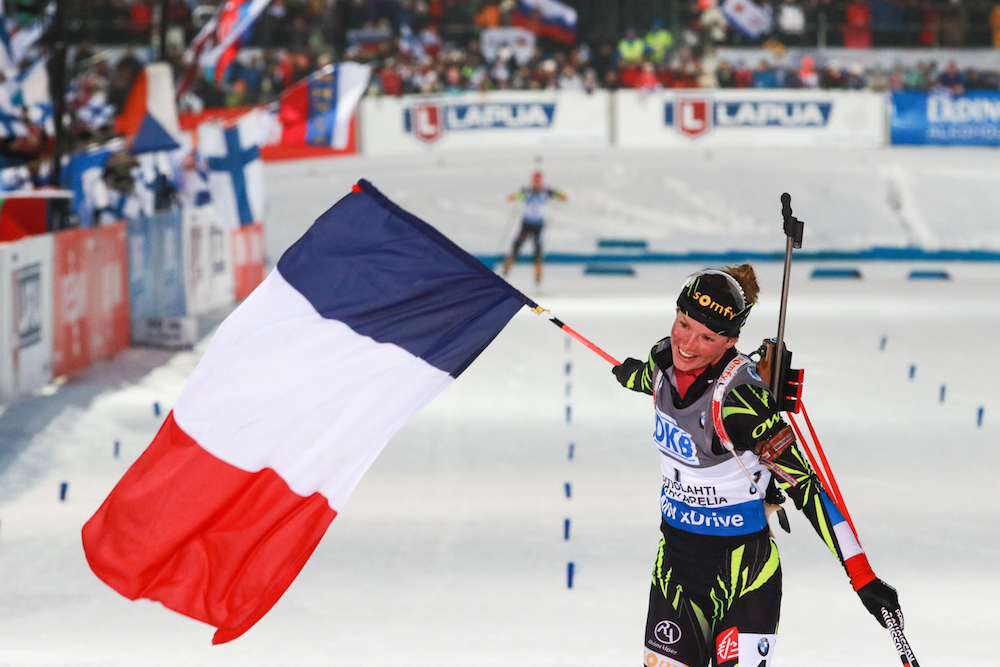
Back in Oslo, French star Marie Dorin Habert ended her career. Dorin Habert – then simply Marie Dorin – competed in her first senior World Championships in PyeongChang in 2009, where she had a top individual finish of 18th and was part of the bronze-medal relay team. Fast forward and she had racked up a sprint bronze at the 2010 Olympics, seven World Cup wins, ten more World Championships relay medals, and four individual gold, one silver, and one bronze medal at World Championships, four of which were from the 2016 edition where she did not finish a single race without a medal.
France’s Marie Dorin Habert celebrates her second win in as many races at 2015 IBU World Championships, after taking gold in the 10 k pursuit in Kontiolahti, Finland. (Photo: Kontiolahden Urheilijat/Jarno Artika)
She found herself back in PyeongChang for the 2018 Olympics, where, despite a frustrating season until then, she was fourth in the sprint, bronze in the women’s relay, and gold in the mixed relay.
“It’s so nice to end this way, to share it with all of the team, and the beautiful sun, and all the French people,” Dorin Habert said after winning the women’s relay in Oslo along with her teammates. “It’s a wonderful day for me. I would like to thank a lot, well, everyone, for being there in the biathlon family. I’m really happy to have this career, and I’m really happy for everything.”
Jean Guillaume Beatrix he told is also retiring. Beatrix was a World Junior Champion in 2009, before going on to be a five-time World Championships team member and a 2014 Olympic bronze medalist in the pursuit. He was part of three silver- and one bronze-medal winning men’s relay teams at World Championships. But this season, he did not perform well enough to make a very competitive French team for the 2018 Olympics. His retirement was “a decision precipitated by my results”, L’Equipe, according to a translation.
Czech
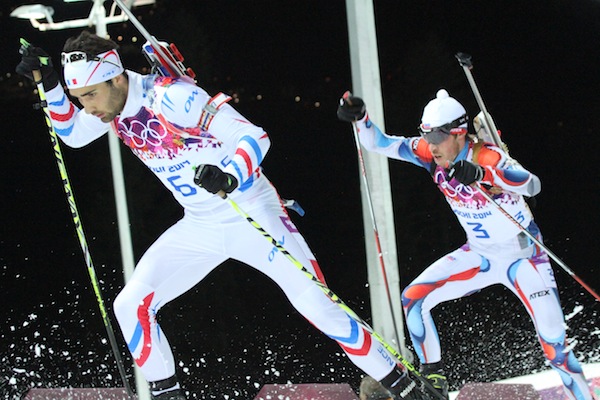
France’s Martin Fourcade leading Jaroslav Soukup of the Czech Republic during the men’s Olympic 12.5 k pursuit at the 2014 Olympics.
Jaroslav Soukup, the bronze medalist in the sprint at 2012 World Championships, where he was also part of the silver-medal mixed relay team, is retiring. Later in 2012, he suffered a horrendous accident while biking, including open fractures in his arm and neck and back injuries. By 2014, he made it back and won the same medals at the Olympics that he had at World Championships two years before: bronze in the sprint and silver in the mixed relay. Soukup qualified for the 2018 Olympics but only competed in the relay, which finished seventh. He had one World Cup top-30 this season.
Norway
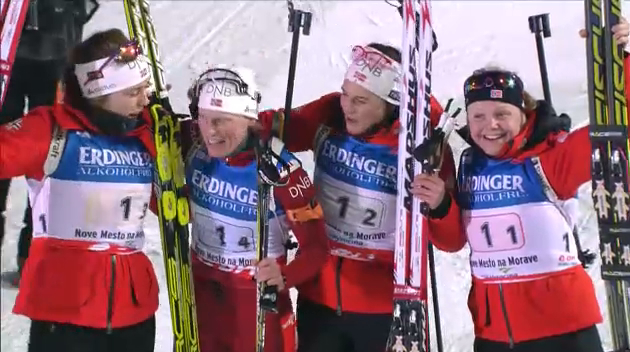
Hilde Fenne, a staple of the Norwegian women’s team, retired after the last race of the season in Tyumen, Russia. Fenne never found breakout success as an individual; she had three top-15 finishes in her career. But she was an integral part of the women’s team and contributed to numerous World Cup relay podiums, as well as the gold-medal winning women’s relay at 2013 World Championships in Nove Mesto, Czech Republic.
The Norwegian women’s relay celebrates its second-ever World Championships title after winning the 4 x 6 k event in Nove Mesto, Czech Republic. From left to right: Synnøve Solemdal, Tora Berger, Ann Kristin Flatland and Hilde Fenne.
In that final race, her teammates wrote her name on their cheeks. “She has been a very important piece for me,” teammate Synnøve Solemdal told NRK, almost in tears. “We have stayed in a lot of hotel rooms together. I’m going to miss her very much.”
On the men’s side, there is uncertainty as to whether some veterans will stick with racing or not. One is Ole Einar Bjørndalen, whowas left off Norway’s Olympic team, who for the first time since 1992 this season. And yet, the 44-year-old has not stated that he will retire, and some who know him are speculating that he may try to stick it out one more year and go out with better results than he saw this season.
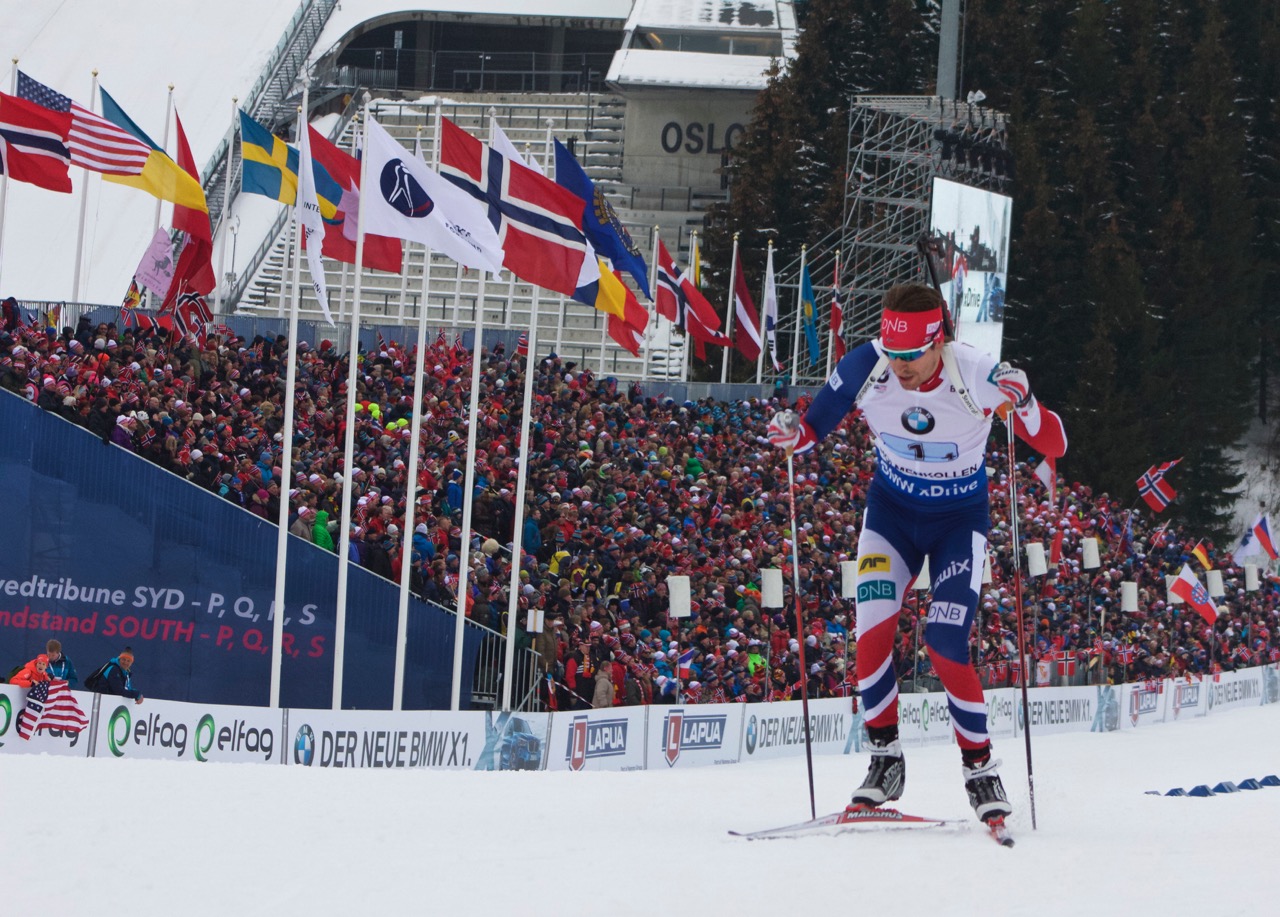
Also with no stated plans is Emil Hegle Svendsen. Bjørndalen is the winningest athlete in World Cup history; Svendsen is number four. He won the World Cup overall title in 2010, and is a four-time Olympian. He won gold in the individual in 2010 and in the mass start in 2014, after which he suffered a total collapse anchoring the Norwegian men’s relay. In the past seasons he has been off and on, and he has only won two races since then. But this season he showed flashes of brilliance, and he was third in the mass start at the 2018 Olympics as well as anchoring the silver medal men’s relay and mixed relays.
Emil Hegle Svendsen of Norway leaves the stadium in the 2016 Holmenkollen World Cup as thousands of his countrymen cheer him on. Svendsen has not officially announced his plans for next season. (Photo: JoJo Baldus)
“What Emil has done is absolutely fantastic,” teammate Tarjei Bø – who won the overall World Cup the year after Svendsen – told NRK two weeks ago. “He has won everything, and in addition done it several times, and he has come back again and again after being down. He has had a fantastic career and I hope he continues.”
Finland
She just won the overall World Cup crystal globe, but Kaisa Makarainen is not sure whether she will continue racing. In several previous years she had already discussed potentially retiring, but now she is reportedly waiting to think it over more as well as to discuss with the new team staff. U.S. Biathlon Women’s Coach Jonne Kahkonen, himself a Finn, was just announced as the new Head Coach for Finland.
Germany
Florian Graf, an athlete who finished as high as fourth on the World Cup in 2013 but has more recently been racing on the IBU Cup, is calling it quits at age 29.
Several other top athletes are suspected to be considering retiring, but there hasn’t been much on the record discussion by them. Stay tuned.
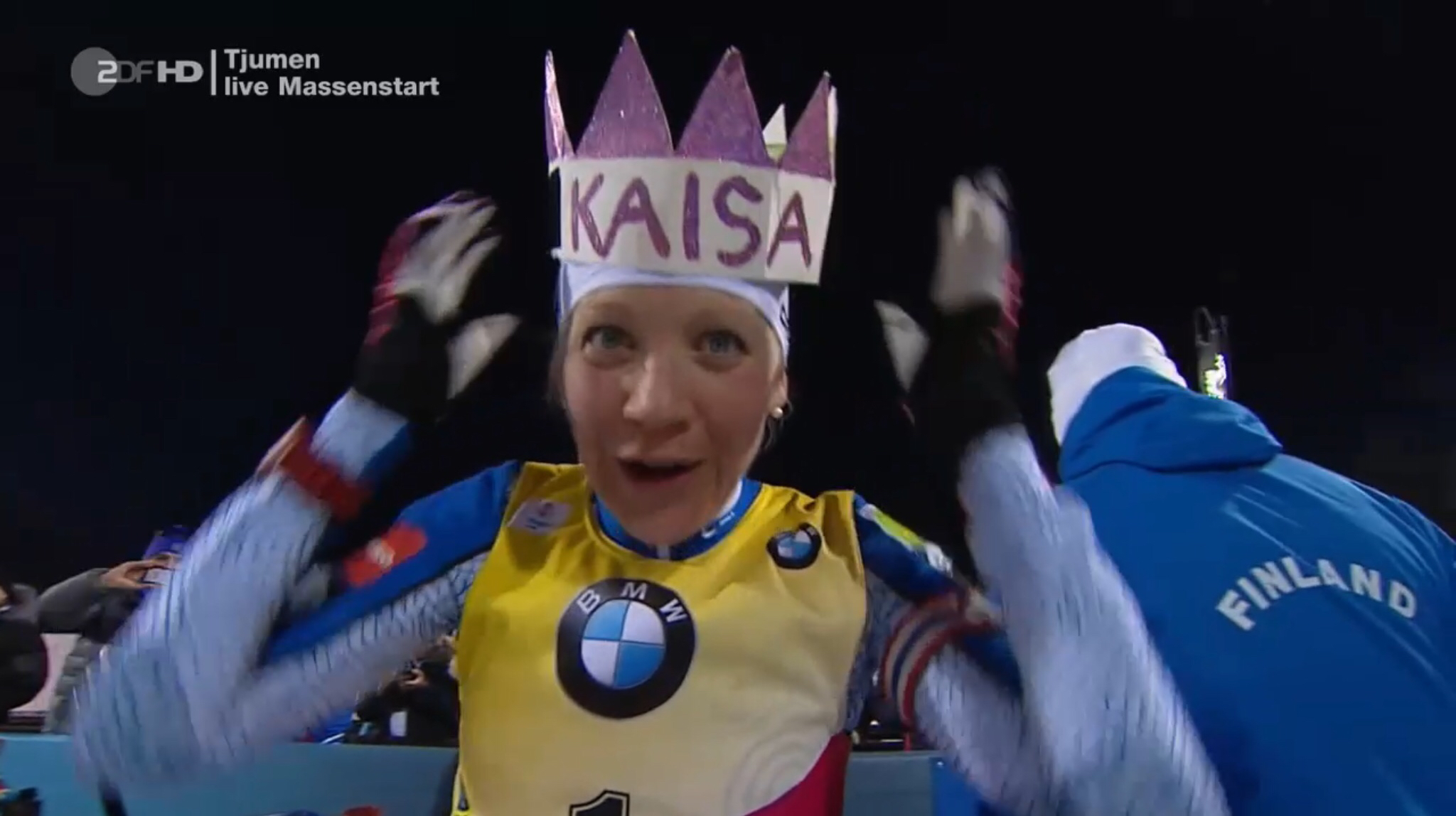
Kaisa Makarainen celebrates her third overall World Cup title after securing it with a sixth-place finish in the last race of the season, a mass start in Tyumen, Russia. (ZDF screencap)
Martin Fourcade didn’t have to do much at the final IBU World Cup weekend in Tyumen, Russia, in order to lock up the overall crystal globe. But the French biathlete came in guns blazing, so to speak, winning Thursday’s sprint by 33.2 seconds and claiming the Total Score title.
His only close(ish) challenger in the overall score, Johannes Thingnes Bø of Norway, had finished just 14th in the sprint. He raced up to second in the pursuit, but by then it was too late to take the globe from Fourcade.
It is the Frenchman’s seventh overall title; the last time anyone else won one was in 2010-2011.
“I am really satisfied with what I did today,” Fourcade told the IBU on Thursday. “It was mentally challenging all these days fighting with Johannes for the Crystal Globe. It seems easy watching on TV, but I can confirm that it is not. I must admit that it was not my main goal back [at the first World Cup weekend] in Östersund; it was the Olympics. But as the season went on, the globe became the most important aim for both of us.”
After that, Fourcade could relax a little.
“You know, before the race I planned to act like usual, be calm on the shooting range and being strategic,” Fourcade told German broadcaster ZDF after winning the pursuit, this time by 47.9 seconds. “But when I came to the zeroing [target practice] I told my coach ‘today I will play a little’. I don’t have many races to enjoy my biathlon [without pressure], to do what I would like to do. I told him ‘do not think (worry?) I will go full attack’, but I wanted to show that the strategy I had all year long is [just] a strategy not a need to shoot slow.”
On Saturday it worked; then came Sunday’s mass start. Fourcade had his worst race of the season, with four penalties and skiing to 19th place, over a minute behind winner Maxim Tsvetkov of Russia. But it didn’t matter – the globe was already decided, and Fourcade had already found his satisfaction.
The fight for the women’s crystal globe had much more drama. Coming into the weekend, Slovakia’s Anastasiya Kuzmina led by 41 points over Finland’s Kaisa Makarainen. But it was Belarus’s Darya Domracheva, in third in the standings, who won Friday’s sprint, by just 1.2 seconds over Makarainen; Kuzmina was 12th.
“Before today’s race I tried to focus only on this race, not think about the overall World Cup so much because I know that I am really [far] behind,” Makarainen told ZDF after the sprint. “But I know that everything is possible. I think that’s also the best tactic for tomorrow: not think about the others or the Total Score, just focus on a good race and enjoy that.”
Makarainen saw her chance and went for the win in the pursuit, edging France’s Anais Bescond by an even smaller margin – 0.2 seconds.
With Domracheva winning the mass start, Makarainen rallying for sixth despite three missed shots, and Kuzmina 11th with the same tally, the title went to the Finn. She edged out Kuzmina by just three points, while Domracheva was only another 15 points back.
Makarainen jumped up and down when she saw the score announced, and her teammates rushed her and placed a pink paper crown on her head. It is her third overall title; she also won in 2011 and in the 2013-2014 season, when she likewise secured the crystal globe in the very last race of the season.
The fields were somewhat reduced in size and depth as the Canadian, U.S., Czech, and Ukrainian teams all skipped the event due to Russia still remaining out of compliance with the World Anti-Doping Code. Other individual athletes skipped the races as well.
Other Notes:
Simon Desthieux of France got his first career World Cup podium, finishing second in the sprint behind teammate Fourcade.
Maxim Tsvetkov of Russia claimed his first career win in the mass start, edging Norway’s Erlend Bjøntegaard by 2.7 seconds as each shot 20-for-20.
In the men’s mass start, Slovakia’s Paulina Fialkova got her first World Cup podium, finishing second, just 1.8 seconds behind Domracheva as each had a single penalty.
The top ranked North American biathletes in the Total Score are Susan Dunklee in 34th in the women’s standings, and Tim Burke in 32nd in the men’s standings, both from the United States. The U.S.’s Lowell Bailey and Sean Doherty ranked 35th and 36th. No Canadians were ranked in the top 40.
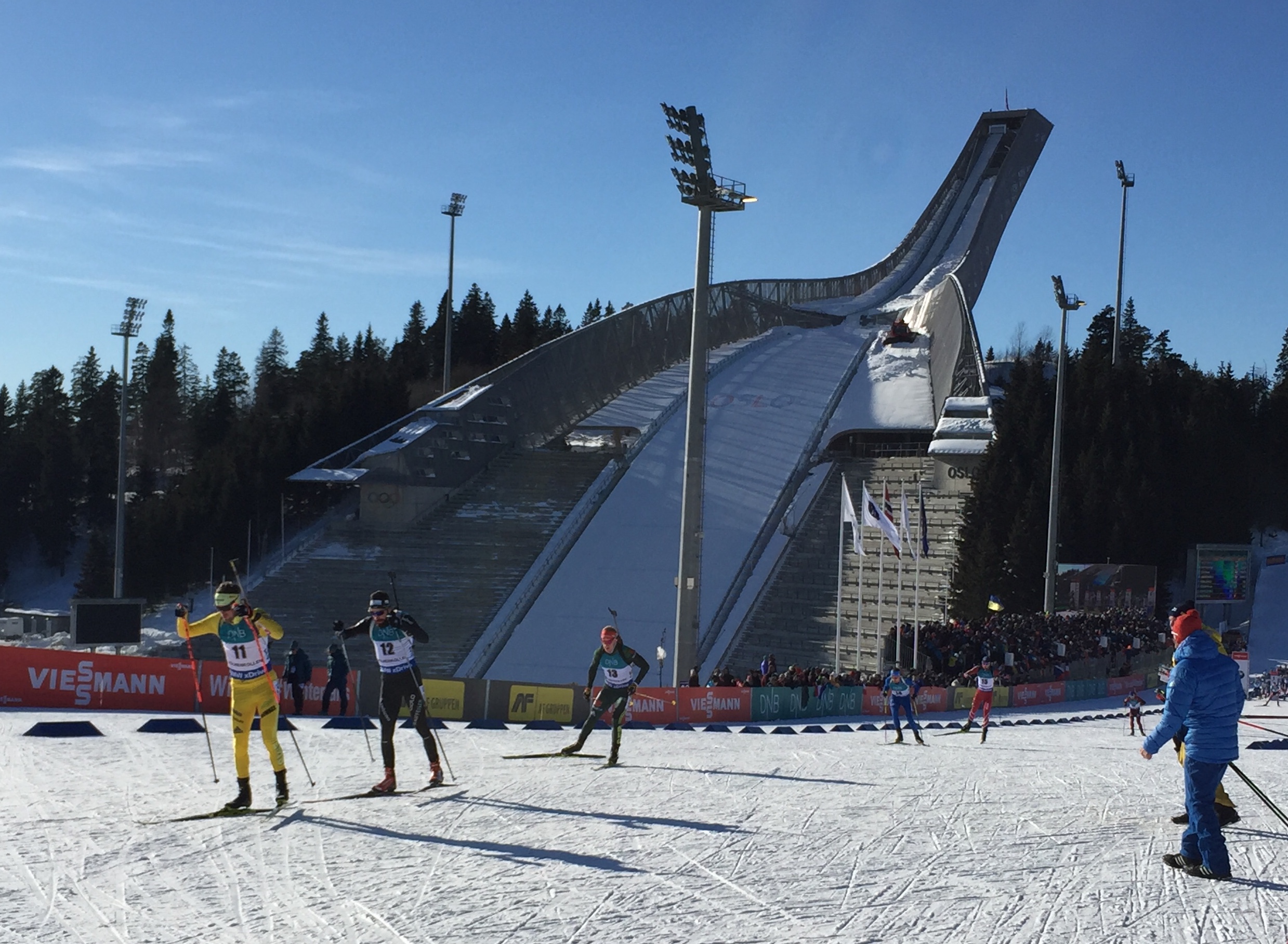
Clare Egan (r) cheers on her US Biathlon teammate Tim Burke in the final World Cup race of his career, as he races the third leg of the U.S. men’s relay at the IBU World Cup in Oslo, Norway.
OSLO, Norway — In some ways, Sunday’s 4 x 7.5-kilometer men’s relay was very special for the U.S. biathlon team.
Two stalwart members – World Championships gold medalist Lowell Bailey and silver medalist Tim Burke – were retiring. It would be the last race of their long international careers.
In other ways, though, the team wanted it to just be a normal race. Their goal was to put together a good relay and a good result.
“Nothing’s changed in terms of, it’s about getting the best result we can,” Bailey said after leading off the relay and tagging teammate Sean Doherty in seventh place, having used just one spare rounds. “At the end of the day, that’s what we all want, and I couldn’t be happier if that’s how my career ended.”
After Bailey’s relay leg, the team moved around quite a bit within the top 10, but by the race’s end, they came back to seventh place, 2:01.5 behind Norway, who took a blowout win over Austria (+50.3) and Russia (+56.9).
All the American men had good skiing, with their relay legs ranked fourth (Bailey), eighth (Doherty), sixth (Burke), and eighth (Leif Nordgren) for ski times, respectively. Together, they used eight spare rounds – far more than the winning Norwegian team’s three, but similar to many other teams in the middle of the field.
“That’s solid,” Burke said. “See how tight it is up front, besides Norway with the big lead? Other than that, it’s really close. We’re in the mix. You always want more, but it’s a solid result … the Olympic relay, we were very happy with. The sixth place there [in PyeongChang, South Korea], we were right there. That was a great race for us, but this is solid as well.”
Even though the U.S. had started in bib 24, in the very back of the mass start, Bailey had been able to find his way through the crowded pack and move up to seventh place. He then used a spare round in prone, dropping to 12th, but with clean standing and his good skiing, moved the U.S. back into contention.
“It didn’t seem it, but it took a lot of mental energy and focus to execute a good race,” Bailey said. “I told myself this morning that I just wanted to go out on a high note. I wanted to go out with a good result. And, I’m really happy to have shot clean in standing, clean from the clip in my last stage as a World Cup biathlete. That feels good. I’ll always remember that — that I went out with a clean stage.”
After Bailey, Doherty used two spare rounds and moved up to sixth place.
“I had a little ride there for the first lap, which was nice, and got into a good rhythm,” he said. “I had one spare [in each stage] … no harm there. It’s not ideal because it would have been really good to try to get contact with that kind of pack of four or five guys that were kind of together ahead, but we’re still right in it.”
Burke had clean shooting in prone to stay in sixth place, but used two spare rounds in standing and dropped to 10th, where he stayed until he tagged off.
Given his emotions, however, he was more than happy with just two spare rounds.
“I was more nervous for this race than nearly any other race in my career,” he admitted. “I was like, pull it together, because the other guys are counting on you today. So I tried to approach it like any other race, but honestly, it was a challenge to keep bringing myself back into the race mentally. I’m was happy to have stayed out of the penalty loop.”
Nordgren anchored the team and despite using all three spare rounds in standing, he moved up to eighth place when he left the range and passed another racer on the trails to bring the team home in seventh.
“I’ve been here a long, long time, and an top eight today is very different than a top eight when I came on the World Cup 14 years ago,” the 36-year-old Burke said, looking back over his career. “It’s so close now. There’s so many good teams. So it’s a solid result.”
The fact that he and Bailey, also 36, were here competing is a result of many changed plans over the last decade. The two initially planned to retire after the 2006 Olympics in Torino, Italy.
“The original goal was 2006 or bust,” Bailey said. “You know, like make the Olympic team, be an Olympian and move on. I’m so glad I didn’t follow through with that, because, you know, it’s a great feeling and accomplishment to make an Olympic team, but biathlon is so much more than that.”
“… It’s a great feeling and accomplishment to make an Olympic team, but biathlon is so much more than that.” — Lowell Bailey, US Biathlon
Both retiring athletes plan to stay involved with biathlon in one way or another. Bailey is a board member at the Crosscut Mountain Sports Center in Bozeman, Montana.
“I wouldn’t even say goodbye, because I intend to still be in contact with everyone and I really want to see US Biathlon move forward in the next four to ten years,” Bailey said. “I think the future is bright, and we have some great athletes that still have a lot to contribute on the World Cup. But then also, there’s new athletes out there right now that will come onto the World Cup stage. The future definitely is bright.
“I can honestly say biathlon has made my life so much better,” he continued. “So I feel very fortunate to have been introduced to the sport so many years ago. And it’s taken me on a wild roller coaster ride.”
Burke is not sure of his plans moving forward, but won’t be saying goodbye to biathlon permanently either.
“Nothing’s set in stone yet,” he said. “I really want to take a few months to myself right now. You know, I’ve been married for three years; I’ve never spent any anniversary with Andrea. We just built a new house last year. I haven’t really spent any time in it. I’ve missed all my nieces and nephews’ birthdays for the last eight years. I’m so excited to have more time with my family and friends, and try and make up for some lost time there.
“But I will absolutely stay in biathlon in one way or another,” he continued. “I’d like to think I’ve learned a lot in the 14 years I’ve been on the World Cup. Done some things right. Made a ton of mistakes. I would love to be able to share those experiences with the next generation coming up.”
Burke said that while he had been a wreck and barely able to focus on his race in Saturday’s pursuit, with the prospect of his last World Cups weighing on him, at the same time he wasn’t fully processing that his career was over.
“It’s weird. I don’t honestly I don’t know if it’s truly hit me,” he said. “It might take weeks. It’ll probably be May 1 when my body’s telling me, ‘OK, time to get back into training routine. Time to open up the training log. All right, what’s the plan?’ I think it’s going to take a long time for all to settle in and for me to really reflect back on my career. Yeah, it’s a lot of emotion.”
Even for those not retiring, it was a memorable day.
“It is special, for sure,” Doherty said. “It’s an honor to race with these guys and to have raced with them for the few years that I have. It has been great.”
As the sun shone, the team and a staff drank champagne and then stood out in the middle of the stadium soaking it all in.
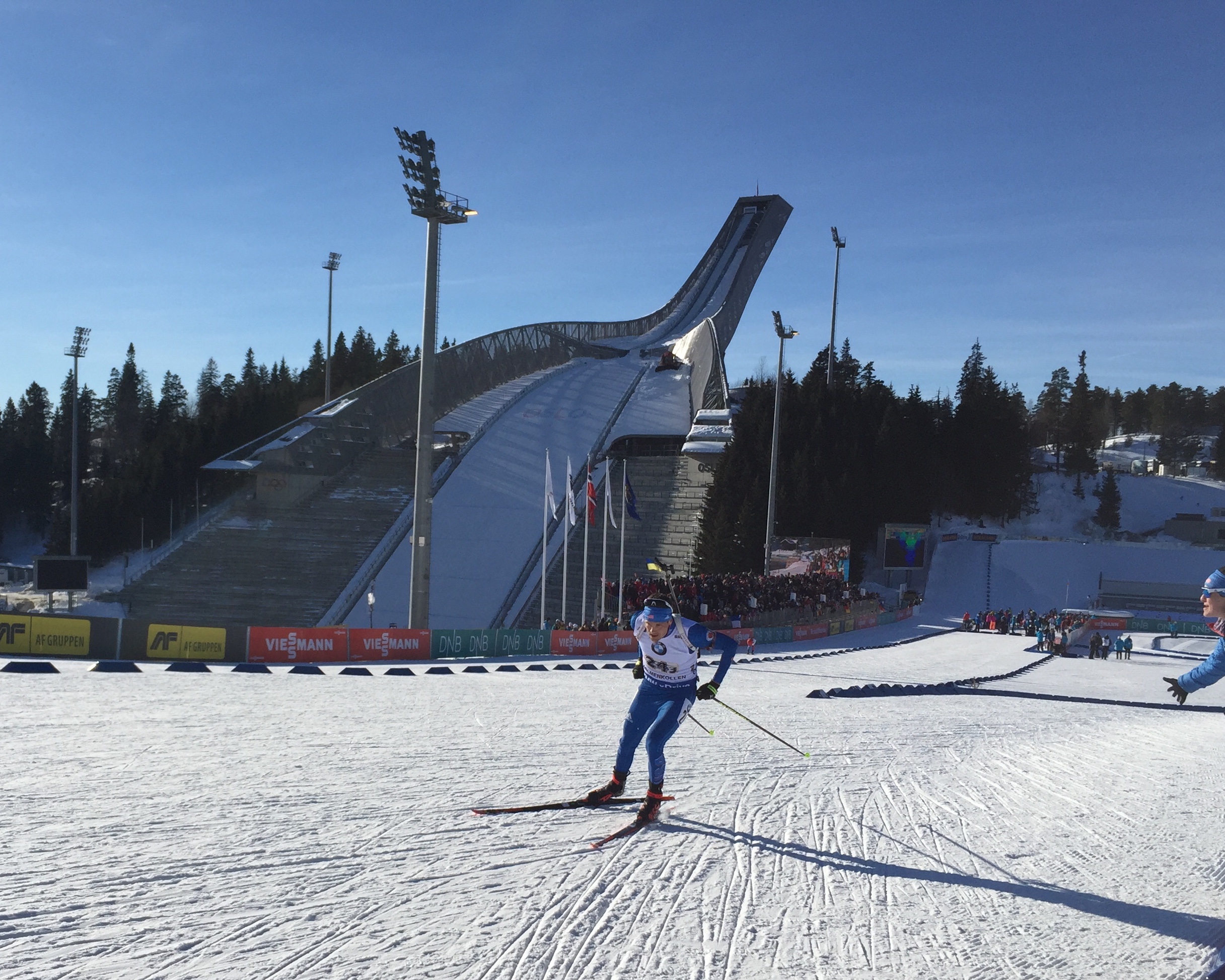
“You know, it’s such a beautiful venue and a great place to compete,” Bailey said of Holmenkollen. “It’s about the history, and the course obviously is spectacular. But, you know there’s a little bit of luck involved in World Cups, and you can have really bad weather and you can have good weather, and this is the best weather we’ve had the whole year. I feel kind of blessed to be able to experience my last World Cup in these conditions, with the sun out and everyone smiling. I’ve never really thought about it or pictured it, but if I have, this is what it would look like.”
The Canadian team of Christian Gow, Scott Gow, Brendan Green, and Macx Davies finished 16th (+5:42.4) with 10 spare rounds.
“I’ve been kind of out of gas since like I got pretty sick after the Olympics, and I just haven’t been able to build my shape back,” Christian Gow said. “It’s been an arduous couple race weekends — even if the shooting’s good, I’m physically just exhausted. So, it’s disappointing to feel that way. … After the [Olympic] peak, you need to rebuild a bit, and I wasn’t able to do any of that because I had to take a week off or something like that [due to illness]. So, yeah, I’d rather be strong at the Olympics and then not as strong at the end of the year, but it doesn’t make it easier in the moment.”
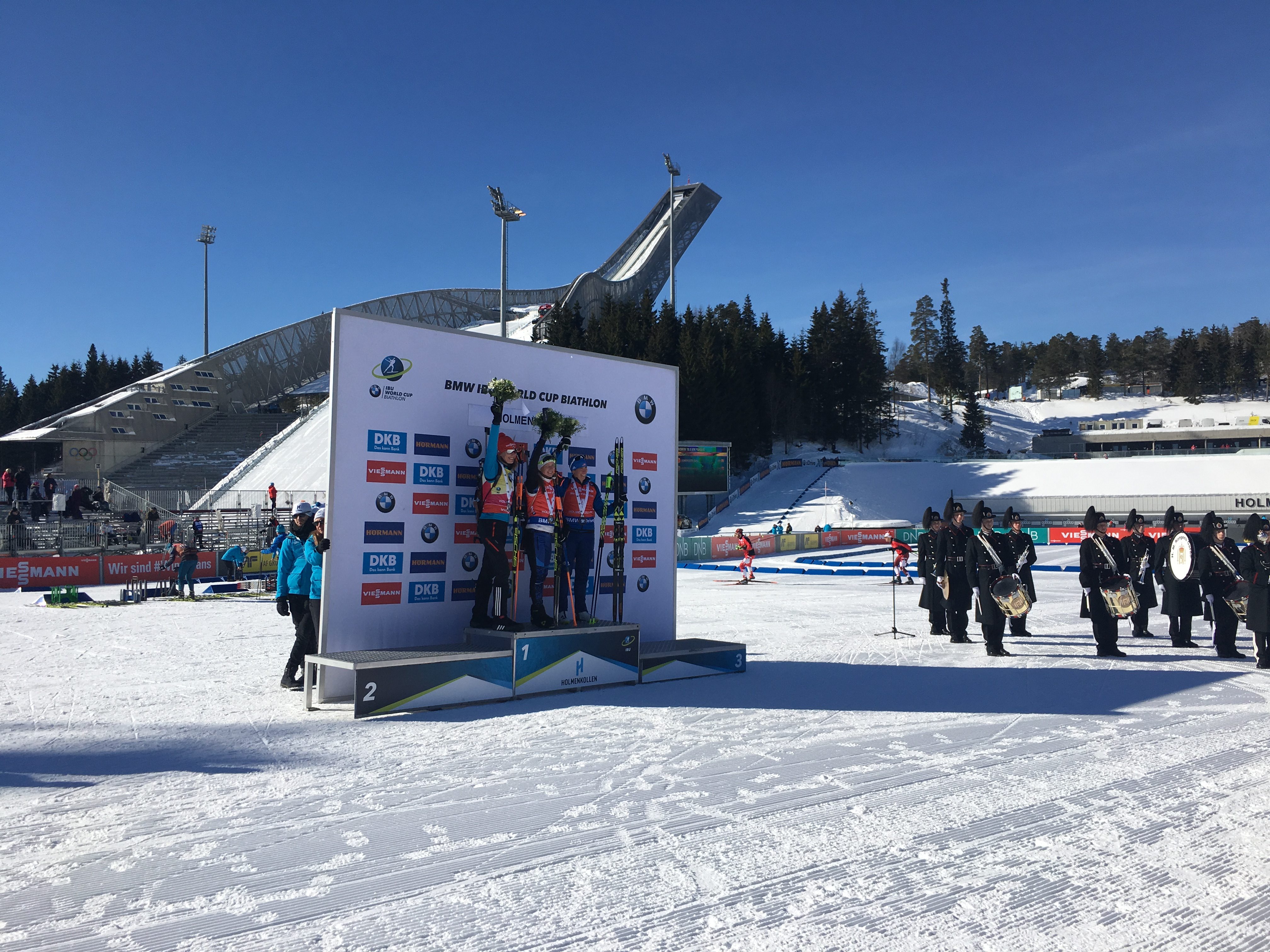
Darya Domracheva in first, Anastasiya Kuzmina in second, and Susan Dunklee in third on the podium after the women’s 10 k pursuit at Holmenkollen. (Photo: US Biathlon)
OSLO, Norway—Eight World Cup weekends, a swing by Open European Championships, two weeks at the Olympics, and it all came down to this: Susan Dunklee’s last international race of the season was also her first podium of the season, and she’s heading back to the United States with a third-place finish in the 10 k pursuit.
“I’m super happy,” Dunklee said. “I often start feeling stronger and stronger as the season goes on, and this season it took a little longer. I had a lot of sickness, and some frustrating shooting days early in the season that made it hard for me to keep going. I’m really happy right now.”
The World Cup concludes next weekend in Tyumen, Russia, but the Americans are among other teams (including Canada, the Czech Republic, and Ukraine) who are boycotting the event because Russia is not currently compliant with the World Anti-Doping Code.
Dunklee finished fourth in the 7.5 k sprint here at Holmenkollen on Thursday, and started today’s pursuit 35.7 seconds behind sprint winner Anastasiya Kuzmina of Slovakia.
She missed a shot in the first prone stage, and then another in the first standing stage. But Dunklee was never out of the top ten, bouncing around from fifth to tenth. Not a single woman in the field cleaned all 20 targets.
The race for first came down to Kuzmina and Darya Domracheva of Belarus. Both women cleaned their final stage, while Germany’s Franziska Hildebrand and Laura Dahlmeier ahead of them each missed two and fell out of contention. Kuzmina hit the trails with a 1.5-second advantage.
Domracheva caught up to her, and then pulled away on the Hellnerbacken climb coming back to the stadium. She claimed a 9.2 second win by the finish line.
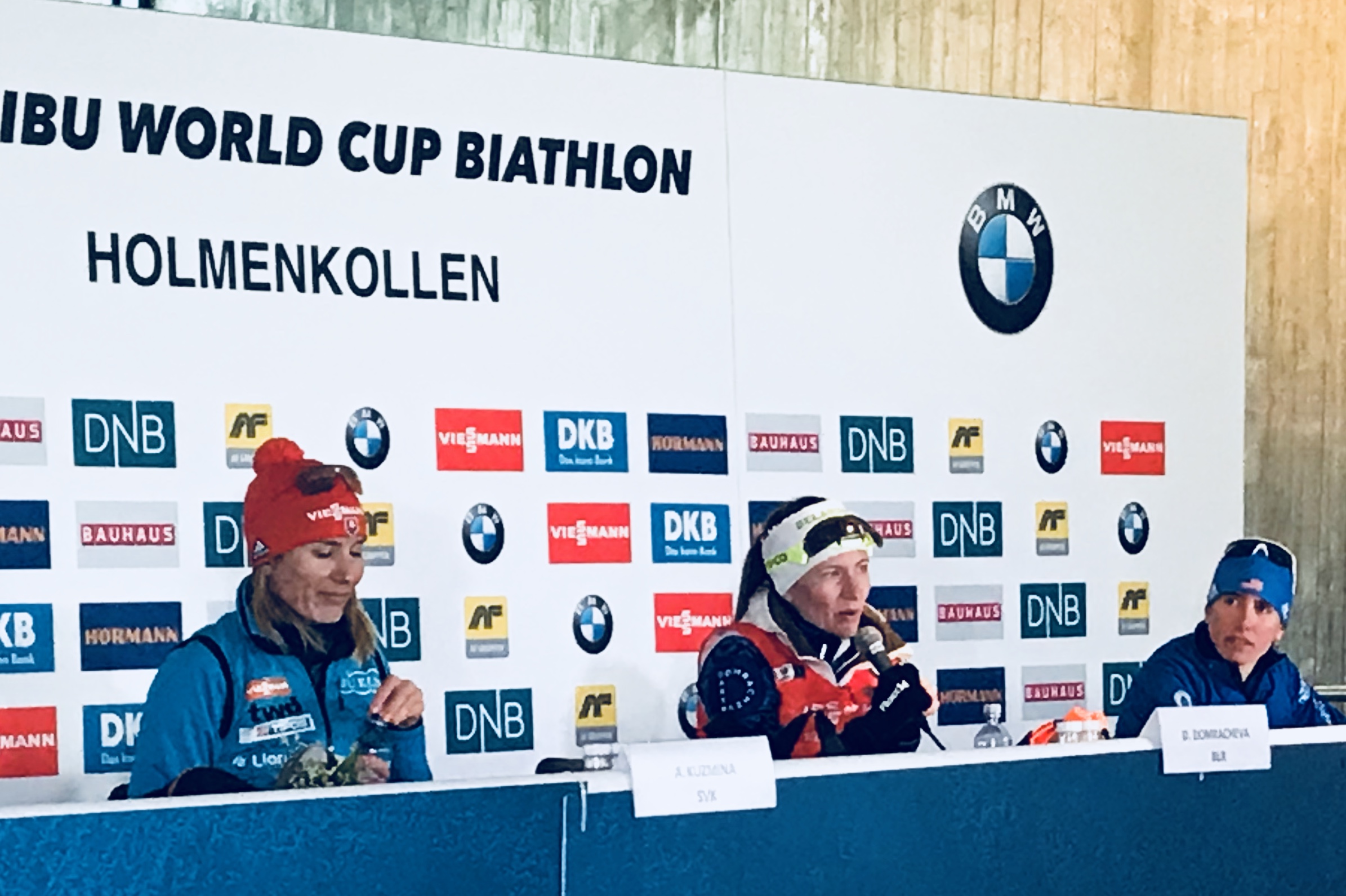
Darya Domracheva explains her race in a press conference as Anastasiya Kuzmina and Susan Dunklee look on.
Dunklee came into the final shooting in ninth place. But aside from Kuzmina and Domracheva, all those in front of her missed shots.
She left in third place, but with Fuyuko Tachizaki of Japan hot on her tails.
“She was chasing me and I heard that from the coaches right away as I was leaving the stadium,” Dunklee said. “She is a strong skier, but I was hoping I would have enough strength on that last hill to be able to take her if needed. So I was trying to put a gap on her but it was like, if she catches me, there’s a Plan B.”
Dunklee accumulated about a two-second gap on Tachizaki around the first part of the loop, but just as in the race for first, the decisive move came on the Hellnerbacken.
“I didn’t know who else was back there, and I just hammered up that back hill hoped to keep her and whoever else away,” Dunklee explained.
It worked, and she came into the stadium with a comfortable lead of 8.1 seconds, third place seemingly secured. Dunklee continued hammering up the steep hill behind the shooting range before dropping into the stadium, where she – and the other top finishers, none of them Norwegian – were met with deafening cheers by the crowd in the grandstand.
“I love this crowd,” Dunklee said. “It was great, you know they are always are happy to cheer on their own, but they also cheer on some of the underdogs. That’s kind of neat.
It wasn’t the only support she had out on course, either. None of the other American women qualified for the pursuit. That was disappointing for the team, but meant that they were out in force cheering Dunklee towards the Americans’ first podium of the World Cup season.
Dunklee on the shooting range, partway through cleaning her final stage.
“My teammates were out on the course, other girls, Clare [Egan], Em [Dreissigacker], and JoJo [Reid], and Alex [Howe], and that meant the world to me. I saw them multiple times through the loop. All our staff was out there. It was really cool.”
It hadn’t been a perfect shooting race from Dunklee, but as Domracheva and Kuzmina also showed, it’s the last shooting that counts.
“I don’t think that many people had a perfect race out there today,” Dunklee said. ”It’s crazy some days — I mean, it doesn’t really matter what everybody else is doing, you just have to try to put the best race you can. Because sometimes you have a perfect race and five other people do too, and then you are sixth. But some days you don’t have a perfect race and you end up third.”
As Dunklee alluded to, the beginning of her season was marred with disastrous shooting performances. But the last several weeks have seen better shooting, and two penalties was a good tally in the field today.
“I spent awhile this summer with a crazy plan of preparing myself for wind, because I knew that [the Olympics in] Korea could be windy,” Dunklee said. “I was playing with shading, which is a sort of advanced skill that I haven’t done much until this year. And that’s fine in itself, but what it did was it took my focus off the really good speed shooting, which I had going for me last year and worked really well.”
Partway through the season, Dunklee decided to abandon the shading project and go back to basics. Finally, it is starting to pay off.
“I realized half way through this winter that I can’t really keep both at the same time. at least not right now — it might take me a few more years to get there,” she said. “And so right before the Olympics, about two weeks before we went, I kind of switched to my old style. But it takes a while to get the feel for it again. But it was finally back.”
She also was sick several times throughout the winter, including before and during the Olympics, and then after the Olympics when the World Cup moved to Finland. But today her ski speed was back, too; her last loop was the 13th-fastest in the field.
“I feel a lot better than I did yesterday,” Dunklee said. “During the relay I felt kind of flat. But yeah, I often get to my strongest right as the season finishes, that is pretty typical. I think the biggest thing was that I had a cold or some sort of sickness for three or four weeks, through January/February, and that took a lot out of me. I’m finally getting healthy again.”
Dunklee is not sure whether she will keep competing for another season, saying to ask again in a month.
But whether it was the last race of her career or just the last one of the year, Oslo is a special place for her.
“My first podium was here in Oslo, and I believe Darya was ahead of me on the podium on that day too,” Dunklee said. “So it’ s a little bit déjà vu.”
Canada’s Julia Ransom and Rosanna Crawford crossed the finish line together, +4:52.4, after collecting four and five penalties, respectively.
“It was fun that Julia and I — I guess we were disappointed that we both were bad, but it led us to being able to cross the finish line together,” Crawford said. “So that was nice. Celebrate that team.”
Teammate Emma Lunder was lapped and did not finish.
Dorin Habert is also not going to Tyumen next weekend, and the Canadians were the first team to announce a boycott of the event.
“I’m disappointed that the IBU has taken away our chance to compete at World Cup Finals, because [IBU President] Besseberg and the IBU have decided not to stand up for clean sport,” Crawford said.
Julia Ransom of Canada on the shooting range in the last World Cup of her career, the pursuit in Oslo, Norway.
OSLO, Norway—Julia Ransom had been mulling over retirement from elite sport for at least two years.
That’s even though the Canadian is just 25 years old. She collected two top-ten results this year, in the 15 k individual in Östersund, Sweden, and the 7.5 k sprint in Oberhof, Germany.
“I definitely played with the idea for the last year or two — to end with the Olympics,” she explained after today’s pursuit in Oslo. “I’d say going into this year, I had the idea that I’ll retire unless I felt very strongly. This was a reassessment point I guess. I was just going to sit with the idea of retiring for the last couple of months, and if it felt right then I’d do it.”
As the season wore on, Ransom decided that it was the right time to go. So the pursuit was her last international competition.
“It’s just a good time for my partner and I to kind of move on,” she said. “And it does feel right. It feels right.”
In the pursuit, Ransom had four penalties and finished 51st. It wasn’t a great race, but she was still happy.
“I’ve had better pursuits, but it was — I just had fun the whole time,” she said. “I was smiling, I had my friends on the track, I had the girls around me. It was just awesome. I had a lot of fun.”
Among other notable retirements is French star Marie Dorin Habert. As she crossed the finish line in 20th place, her teammates – France had put five women in the pursuit – mobbed her, and then showered her with champagne.
When Ransom crossed the finish line together with teammate Rosanna Crawford, her teammates had also prepared some champagne.
The French and Canadian teams are very close, and the two celebrations merged into one. Neither Dorin Habert nor the Canadians will compete next weekend in Tyumen, Russia, and there were lots of teary but laughing hugs.
“Oh gosh, we’ll be friends forever,” Ransom said of the teammates who will keep competing next year without her. “We’ll always be tight. I’ve know them since I was really little, and they’re my best buddies.”
Dorin Habert and Ransom had both chosen a favorite place to have their last races.
“I can’t complain — it’s my favorite place in the world,” Ransom said.
Crawford isn’t sure yet whether she will retire or not, but said that she would most likely be racing next season.
“It almost would be nice to just retire now so I don’t have to go through all the sadness that Julia did,” Crawford said. “But there is probably a pretty high chance I’ll do one more year.”
Ransom is headed back to school, so she already has her post-biathlon career planned.
“I am enrolled at UBC Okanagan for sciences,” she said. “So that’s going to be something. And my goal is to go into dentistry. Or medicine, I‘m still going back and forth. But that’s that. I‘m going to move to Penticton, going back to my hometown…. have got approximately eight to twelve years of school ahead of me.”
The first thing she’ll do this spring? Something on the list of activities that was discouraged while she was an athlete, to avoid injuries.
“I think the first thing I’m going to do is go downhill biking,” she laughed. “Really doing the things I wasn’t allowed to.”
As the kilometers and shooting stages ticked by, it looked possible that L’Abée-Lund would do it again, or at least come close. After two prone stages, one standing stage, one penalty lap, and 7.5 kilometers of skiing, L’Abée-Lund hit the trails together with the man who is always a pre-race favorite: Martin Fourcade of France.
Over the next 2.5 kilometers, Fourcade skied faster, but wasn’t able to put too much of a gap on the Norwegian. Fourcade came into the range with a 4.5-second lead and hit his first target before L’Abée-Lund started shooting.
Fourcade kept right on going, hitting all five targets for a score of 18/20 on the day, and cruised to victory.
When asked at the post-race press conference whether the win was easy, Fourcade replied, “It wasn’t, because the fight on the beginning was really tight. I had a lot of pressure on the standing shooting. So I must say I’m really satisfied about the win today. I heard it’s my 10th win in Holmenkollen and I’m the most-awarded biathlete in Holmenkollen. It’s probably my favorite place on the World Cup. I’m really happy I did that.”
L’Abée-Lund missed two and fell out of podium contention.
In his absence, Johannes Thingnes Bø – the more favored Norwegian – also missed a shot on the final stage. Italy’s Lukas Hofer cleaned and went past him into second, and that was the podium at the finish.
It was Fourcade’s seventh win in a season where he has never been off the podium in a World Cup race (although he was twice off the podium at the Olympics), and he now has a 49-point lead over Bø in the World Cup Total Score standings with three individual races to go.
“It’s really nice fight,” Fourcade said in a press conference. “I must say, I’m surprised [to say it], but I like it. Johannes is an amazing opponent. No matter what happens in Tyumen, I know that I will thank him for the fight we had. Even if he wins the World Cup, I don’t want that, but I will thank him. I really appreciate the good fight, the fair fight we had, and the good biathlon show we made for people.”
“I think I have maybe 10-percent chance to win this,” Bø said of the overall World Cup title. “So it’s not a big chance, but you know, many things can happen. I know for sure that Martin will probably on the podium every race next weekend. And then there is no chance for me to win the globe. So then I have to just do my best and then we see, but it has been a good season no matter what happens, and it’s a big step in my career.
Hofer finished 18.1 seconds back in second place with one penalty, and Bø 32.5 seconds back reached the podium despite four missed shots.
“I went out [from the last shooting stage] and my trainer told me, ‘It’s only a small gap, only four seconds,’ ” Hofer said, although he actually led Bø by nearly 15 seconds at that point. “I think they told me this so that I keep pushing on the last loop. I tried to keep some energy for the last 600 meters a the end. When I saw Johannes and that I had a bigger gap to him, I was really happy.”
“I knew that Hofer is one of the strongest guys on the last laps,” Bø said. “But I was feeling really good today, so I was thinking there was a chance [to catch him]. We had really good material and skis. And I had good shape today, but in the end of the last lap, I saw there was no chance. So then it was just to look behind and secure the third place. “
Fourth place went to Russia’s Maxim Tsvetkov (+42.7), who cleaned the whole race and moved up from bib 28. L’Abée-Lund finished fifth (+45.2).
US Biathlon’s Sean Doherty started the day in bib 14, and cleaned all his prone targets to stay in contention for a top 10. He missed a shot in each standing stage but still finished 17th on the day (+1:34.2), tying his second-best result of the season.
“I’m really happy with today,” Doherty said. “I really had a goal in mind to stay in my own lane, on the range there. Skiing with these top guys, the pace is really high, so stay focused on my [shooting], and I did that well. I’m happy with how I shot and how I executed this race. I obviously left two in standing there, but those were just my mistake … Standing is usually stronger for me, but I was kind of pushing the limit, which you have to do if you’re still trying to make up some time on the range. So I was just a little hasty at times, and that’s just kind of my nature.”
Doherty had the 23rd-fastest course time on the day.
“It’s been a pretty lousy season in a lot of ways,” he said. “There were some good moments before Christmas, and it’s good to finish on a really strong note with Finland and with these races here. So I’m really happy about that – it’s nice for the body to be picking up. But it’s a little bit of a bummer that we are not going to Russia, because I’m starting to ski better, and really feeling like I’m in good form for some more racing.”
Teammate Lowell Bailey started in 42nd and had two missed targets to move up to 28th (+2:07.2), thanks to the 19th-fastest course time of the day. For both him and Tim Burke, who finished 47th (+4:12.6) with four penalties, it was the last individual World Cup starts for long careers, as the U.S. is boycotting next weekend’s World Cup stage in Tyumen, Russia.
Leif Nordgren finished 40th (+3:07.5) with four penalties, three of which came in the second prone stage. He had the 27th-fastest course time.
“It was a really good race except for one stage,” Nordgren said. “That second prone stage set me back quite a bit. But I was really happy with my skiing today. [Ski speed] came just a couple weeks late after the Olympics unfortunately. I definitely feel a lot stronger now, and it’s too bad it’s the end of the season. But it’s nice to end on a high note. You don’t have to be pissed off all spring.”
For Canada, Scott Gow finished 51st (+4:59.7) and younger brother Christian Gow 54th (+5:07.4) with five and two penalties, respectively.
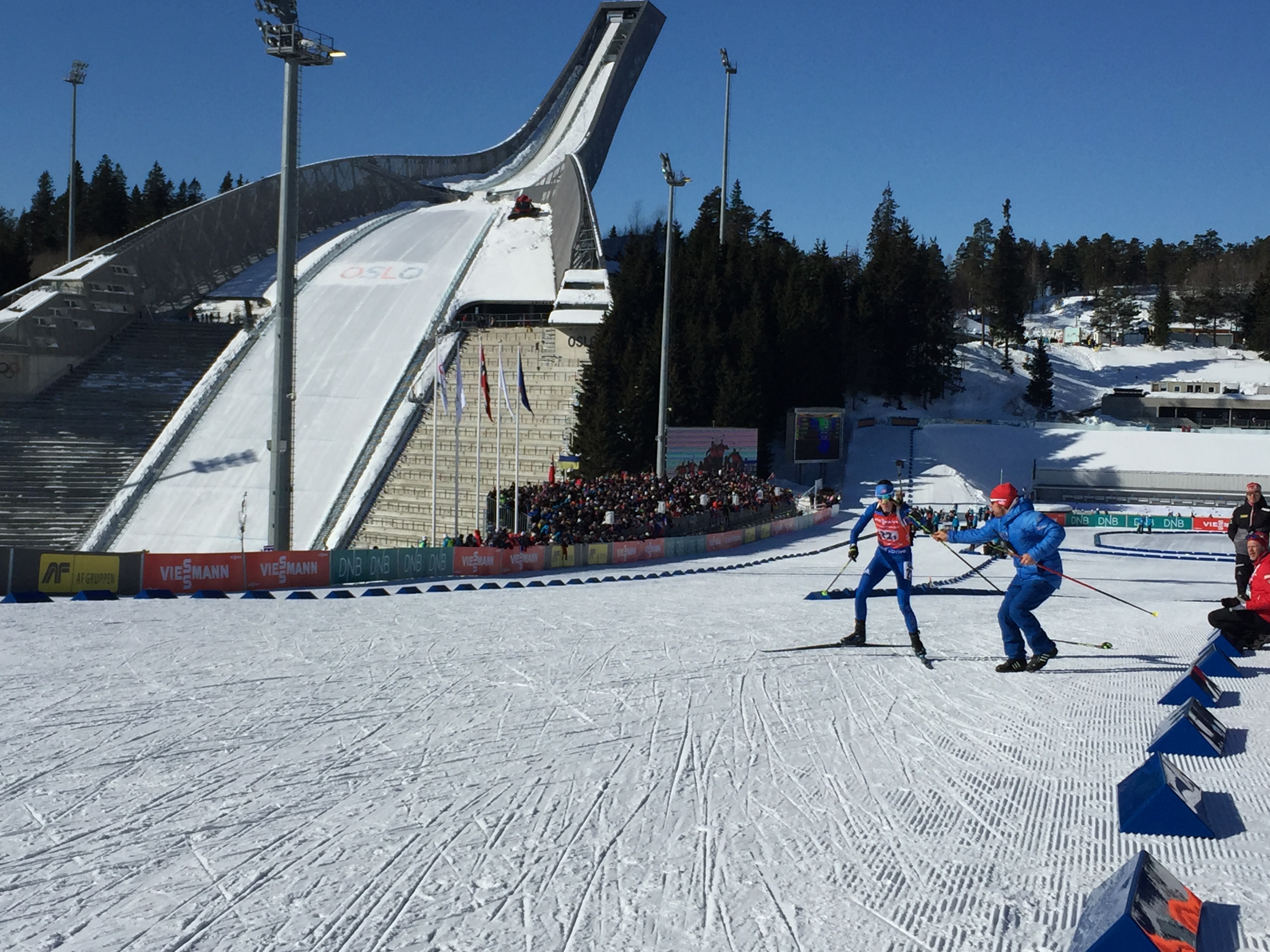
Clare Egan receives a pole from US Biathlon Chief of Sport Bernd Eisenbichler during the first leg of the women’s relay at Holmenkollen.
OSLO, Norway — In the last relay of French star Marie Dorin Habert’s career, she turned in a crucial performance to bring her team to the front. Anaïs Bescond extended the gap and France took the win in the women’s 4 x 6-kilometer relay here at Holmenkollen by 14.4 seconds over Germany.
Was she nervous going into the last team event she will ever race?
“I wasn’t really nervous,” Dorin Habert, 31, said in a press conference. “I think it’s a special thing to know that there is no more starts and no more relays for me, so I just wanted to fight and struggle hard like every relay. I think I did my best today.”
Dorin Habert won two gold medals, in the individual and the pursuit, here at World Championships two years ago. So Oslo is a special place.
“It’s so nice to end this way, to share it with all of the team, and the beautiful sun, and all the French people,” Dorin Habert said. “It’s a wonderful day for me. I would like to thank a lot, well, everyone, for being there in the biathlon family. I’m really happy to have this career, and I’m really happy for everything.
The Italian duo of Lisa Vittozzi and Dorothea Wierer put their team in first place at the halfway point, and it was their teammate Nicole Gontier whom Dorin Habert passed to pull France into first. Gontier stuck with her, and Italy was only 2.2 seconds back at the last exchange.
The German anchor, Laura Dahlmeier, charged past Italian skier Federica Sanfilippo. She was unable to catch Bescond, but Germany finished second with seven spare rounds to six by the French, and Italy placed third with eight spare rounds (+33.2).
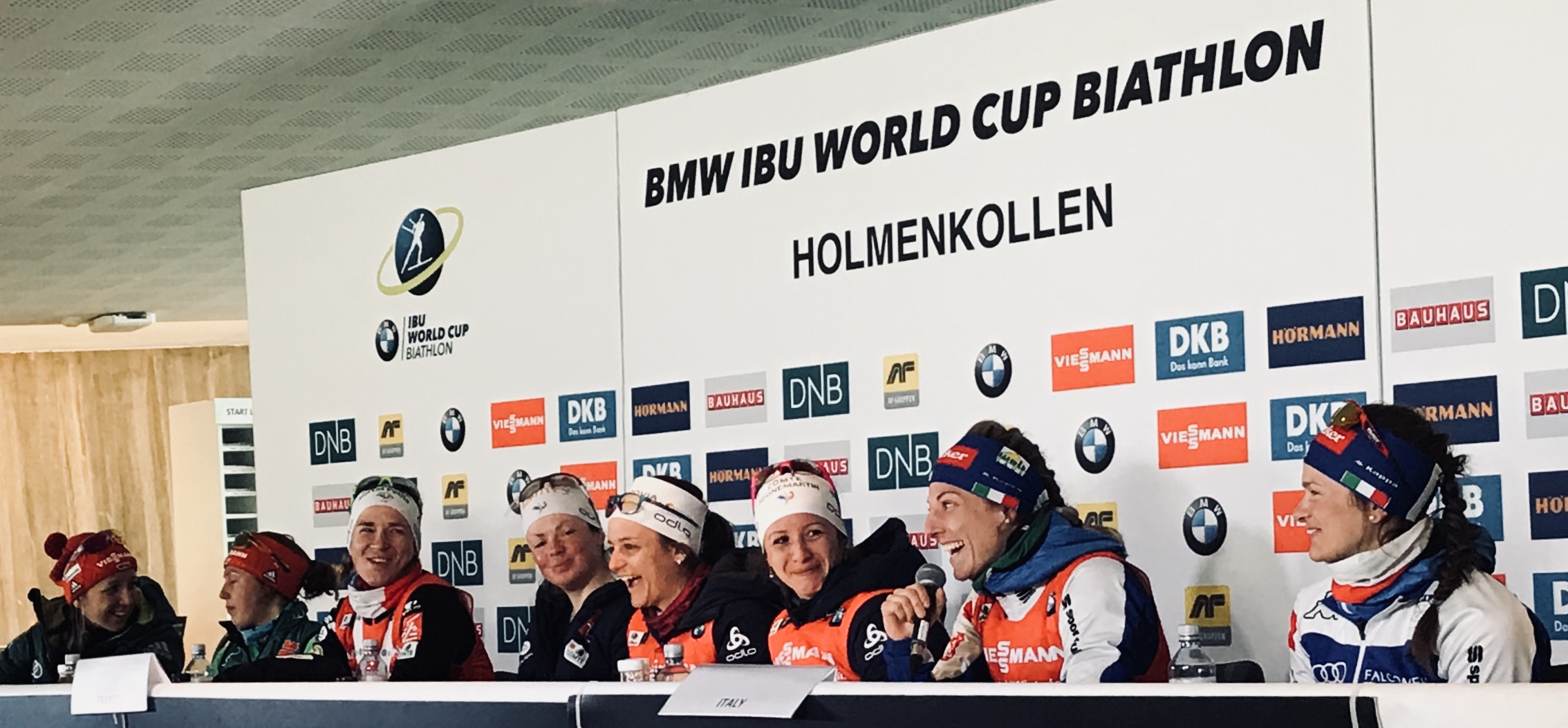
The Italian and French teams joking in the press conference.
Norway placed fourth with a penalty loop and 10 spares (+1:26.5), Switzerland fifth with eight spare rounds (+1:54.2), and Sweden sixth with a remarkable three spare rounds (+2:27.2).
The Canadian team skied an even race, with Sarah Beaudry leading off in 12th, Julia Ransom tagging in 14th, Emma Lunder in 15th, and then Rosanna Crawford bringing the team up to 11th.
“I love coming from behind and chasing girls down, and I just looked at it as practice for tomorrow,” said Crawford, who will start Sunday’s pursuit in bib 38. “I was within somewhat contact with the other women around me, so that was nice. People to chase, people to ski with.”
It wasn’t the result the team knew they were capable of, with 11 spare rounds. But it has been a long season.
“Of course everyone is tired, every team is tired,” Crawford said. “But our fast isn’t as fast as the fastest, so our slow is, well, a lot slower. I felt so good through Finland, and I really thought the ski speed was going to hold, but then it wasn’t there in the sprint. And also, today was slightly better, but not what I had last weekend. It’s so frustrating to be up and down.”
The U.S. team started off with a tough leg by Clare Egan, who used all of her spare rounds in both prone and standing and had two penalty laps. She tagged off at the first exchange in 21st and last place.
“This is I think the worst race of my career,” she said after the finish. “I’m really embarrassed. It is the worst possible thing to do it in a relay. I hate letting everyone down. It’s a really terrible feeling.”
Her teammates, though, were more circumspect.
“I never, ever, want to hear a teammate apologizing for tagging off far back like that,” said Susan Dunklee, who took the tag from Egan. “The only thing they can apologize for is if they didn’t try. And Clare was out there and trying her best. So I have nothing but respect for that.
“What I yelled at Clare, when she was at the top corner and I was warming up, I yelled, ‘We love you and we think you’re awesome!’ ” Dunklee continued. “She was in last place, and we still do love her. You just have to know that your teammates have all been there, they have all done the same thing in the relay, and they know exactly how you feel. Usually, there’s a piece of our relay that we can look at and get really excited about, so we will do that today.”
For Egan, though, it was a race that just came apart. The team started with bib 22, one of the last in the field, but she move up 10 places to 12th by the first shooting.
Then, spare rounds and penalty laps.
“I’ve never had a penalty loop in prone, in the World Cup [in a relay], but to do that in the first stage and immediately be like a minute behind everyone – no, I didn’t lose hope,” Egan said. “I knew that anything can happen in the standing. And I actually, I didn’t come into the range last. I had passed one person. But, you know, with another [penalty lap] in standing, I was just trying to get as fast as I could to the finish because … I just hoped that my teammates all would get a chance to do the race. If we get lapped then we get pulled. That’s it.”
She also lost part of a pole early on in the race, and the replacement process did not go smoothly.
“I just had to get a new one, but then the new one was shorter than my own pole,” Egan explained. “So when I went by a coach I meant to switch out the shorter pole for a spare that was the right height, and I gave him my own pole. So then I finished the race and I was like, ‘What the heck? I still have this stupid pole.’ ”
As the relay continued, Dunklee had the seventh-fastest second leg time, and Reid the eighth-fastest third leg time; by the third exchange, the U.S. was in 17th place.
“The shooting didn’t feel really sharp today,” said Dunklee, who used three spare rounds in total. “I don’t know what the times were but I don’t think they were very fast. I just felt sluggish and, a little out of it, really.”
Reid used only one spare round, a performance she was excited about.
“It’s always easier to start from behind and work your way up because there’s no pressure,” she said. “Whereas if you come into the range in first and have to shoot on point one, and everyone is staring at you, that’s really hard. Today was low-pressure shooting.”
Emily Dreissigacker anchored the team, and used four spare rounds to move up to 15th. She caught the team from Kazakhstan and held off a challenge from Korea in a three-way sprint finish, chasing Austria who finished jut 2.1 seconds ahead.
“I don’t know when the last time I actually had to sprint for the finish was, but it was great!” she said.
China and Slovenia were disqualified, and Bulgaria and Lithuania were lapped. But despite being the last team on the first leg, the U.S. women avoided that fate by a large margin.
“I definitely went out hard,” Dreissigacker said. “I knew we were sort of in the danger zone for getting lapped, but actually, the skiing felt really good the first two laps. I kind of died at the end, so I was glad I was able to come through at the finish.”
“I think we’ve all been through some ups and downs this season and struggling with that,” Dunklee said of Egan’s relay leg. “It’s important to remember that biathlon isn’t everything. There’s other stuff going on in our daily lives that is meaningful to us. It’s important to never lose sight of that.”
Canada’s Christian Gow (12) chases Germany’s Erik Lesser during the men’s 4 x 7.5 k relay at the 2018 Olympics in PyeongChang, South Korea. Germany won bronze. Lesser lamented the situation and said of the IBU’s decision to hold World Cups in Tyumen, Russia, despite requests from him and other athletes to move the event: “If we don’t go, it’s wrong because it’s our sport we love. [But] if we go to Tyumen, we maybe send the wrong sign to IBU.” (Photo: FlyingPointRoad)In three weeks time, biathlon’s World Cup circuit will move to Russia.
But a number of the sport’s stars won’t be there – and others plan to attend, but aren’t very happy about it.
In an Executive Board session in PyeongChang, South Korea, a few weeks ago, the International Biathlon Union (IBU) decided to go on as planned with World Cup races in Tyumen, Russia, even though the Russian Anti-Doping Agency is still not compliant with the World Anti-Doping Code.
Biathlon Canada had announced in December that it would boycott the event if it was kept in Russia, following revelations of systematic abuse of the anti-doping system by that country. In the intervening months, athletes appealed to the IBU through private channels to move the races to a country which complies with the WADA Code.
Sebastien Samuelsson of Sweden celebrating silver in the men’s 12.5 k pursuit at his first Olympics on Monday in PyeongChang, South Korea. Samuelsson announced today that he is boycotting the World Cup Finals in Tyumen, Russia, because Russia is not in compliance with the World Anti-Doping Code. (Photo: IBU/Biathlonworld)
Today, 2018 Olympic pursuit silver medalist (and relay gold medalist) Sebastian Samuelsson of Sweden announced on Twitter that he will not go to the races either.
“Nations without a functioning anti-doping organization should not have competitions at the international level,” he wrote, according to a translation. “Also, worried about the safety of both myself and the doping tests in Russia.”
Also not going is Klemen Bauer of Slovenia, a 2012 World Championships relay medalist who is a four-time Olympian.
“I’m not planning to go to Russia at all,” he told FasterSkier in a Twitter exchange. “I was quite sure the IBU will replace the races, but despite all the effort we put into the clean/er biathlon, thanks to the president of the IBU that didn’t happen.”
Both men are running for positions on the IBU’s Athletes Committee.
“The idea is to improve the active role of the athletes and the voice of the athletes,” Bauer wrote of his candidacy. “We’ll see.”
Another man running for a spot on the Committee is Germany’s Erik Lesser, 2014 Olympic silver medalist in the individual, 2015 World Champion in the pursuit, and several-time Olympic and World Championships relay medalist.
Lesser will be attending the races in Tyumen, but he wasn’t happy about the IBU’s decision to hold them there.
Klemen Bauer of Slovenia competing in the mass start at the 2018 Olympics in PyeongChang, South Korea. Bauer will not compete in the World Cup Finals in Tyumen, Russia. (Photo: FlyingPointRoad)
“In my opinion the RUSADA and the Russian Federation have not done enough to light up this case,” he wrote in an email to FasterSkier. “During the last years, WADA and some commissions found a bunch of proof about a doping system in Russia. But RUSADA and [the Russian Biathlon Union] did nothing to fight against doping. The Anti-Doping-Laboratory in Moscow still does not have a license, and all the officials are in the same seats. It’s a wrong sign, after these problems, to go to Russia and celebrate World Cup Finals.”
Lesser and teammate Arnd Peiffer, the 2011 World Champion in the sprint who then won gold at the 2018 Olympics, and who has even more World Championships and Olympic relay medals than Lesser, wrote a letter to the IBU explaining their position.
Yet a few weeks ago, the IBU decided to go ahead and hold the World Cup in Tyumen anyway. They issued a press release explaining the decision.
“I‘ve read the press release and I still don‘t understand why they decided this way,” Lesser wrote. “Because it‘s a threat to Russian biathlon fans and the Organizing Committee will take care of our safety? Wow, these are true reasons to keep the World Cup in Tyumen. So, I don‘t really think that reasons are valid.”
Last season, there was also supposed to be a World Cup in Russia. But in 2017, several teams announced that they would boycott the event and IBU President Anders Besseberg had a contentious meeting with athletes, after which the IBU decided to move the event.
This season, despite appeals by athletes like Lesser, Peiffer, and the others, that has not yet happened. And so in the end, Lesser says that he will compete in Tyumen, even though he wishes the races were somewhere else.
“We argued with our federation and we decided to go to Tyumen,” he wrote. “The sport is the first [priority] and we want to compete. We hope that we can do a good job in Russia. We are there to stand as clean athletes.
“It‘s bad that the IBU put us athletes in this position,” he wrote. “Actually it‘s not our job to be political. It‘s our job to be athletes and compete against other. If we don’t go, it’s wrong because it’s our sport we love. [But] if we go to Tyumen, we maybe send the wrong sign to IBU.”
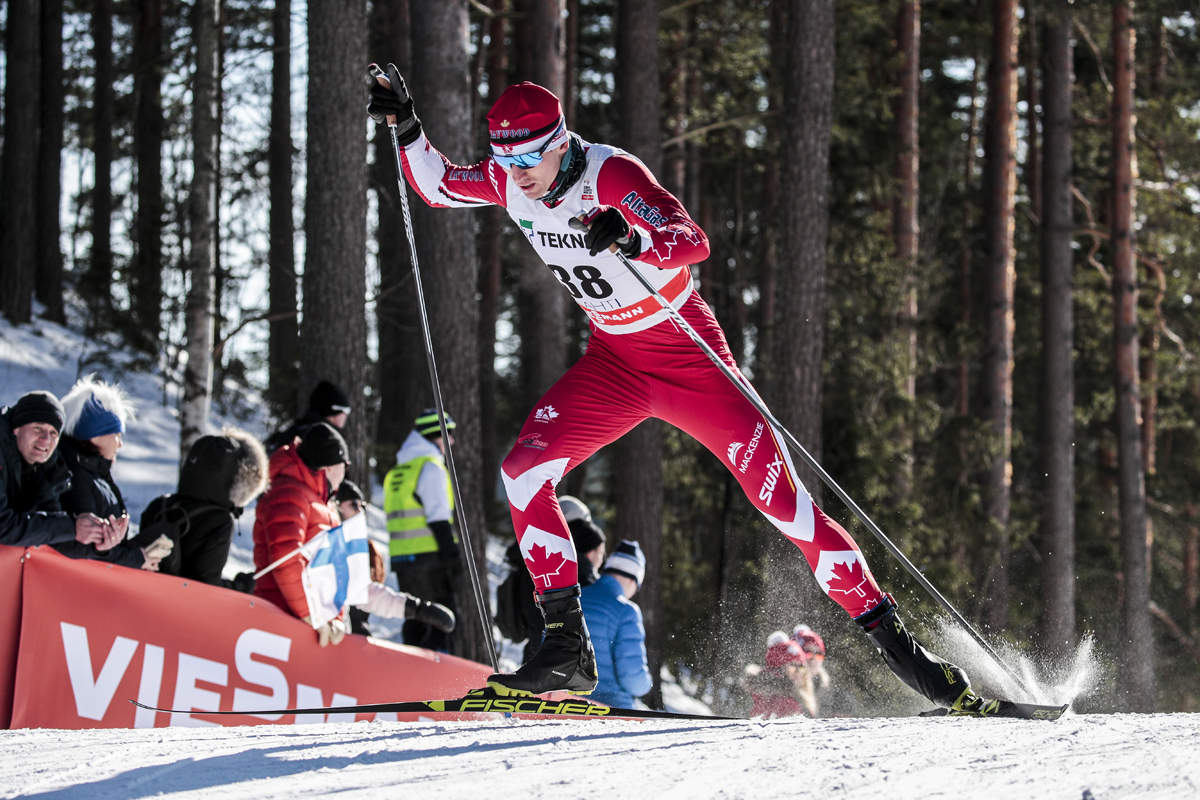
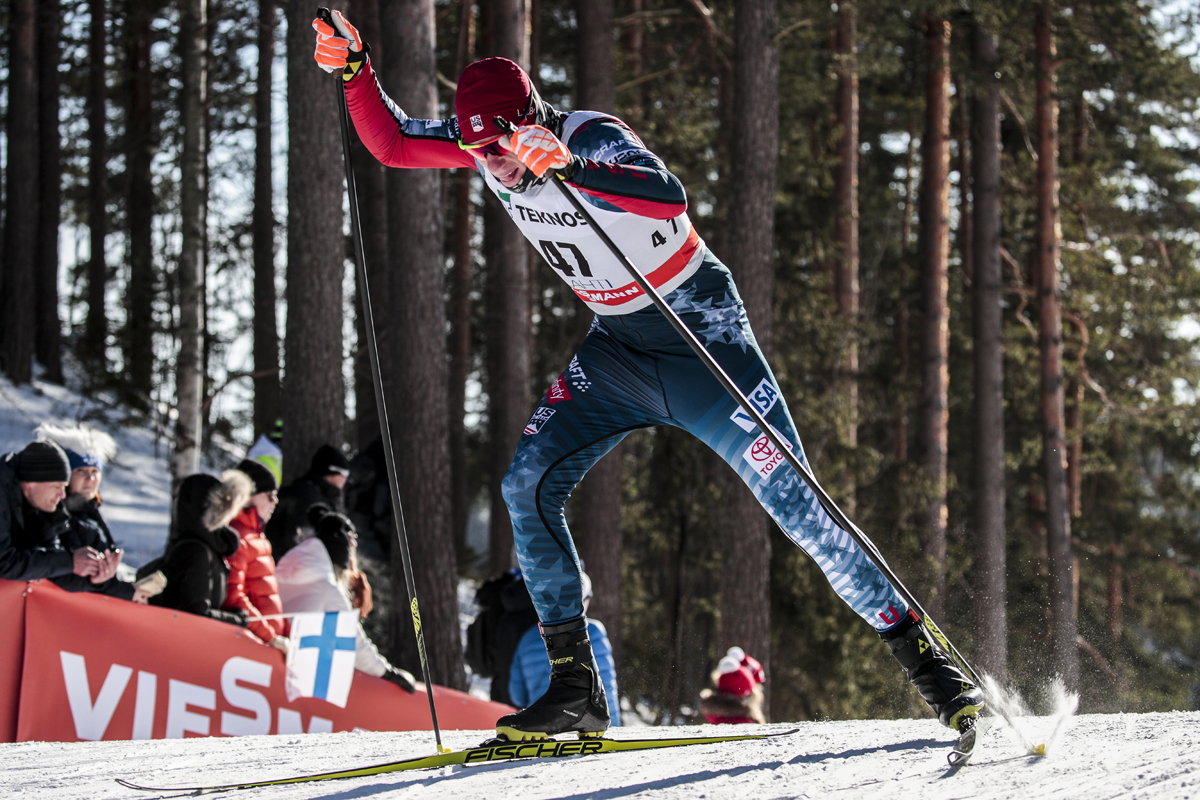
Kevin Bolger (Sun Valley XC Gold Team, second from left) in his quarterfinal heat in the World Cup skate sprint in Lahti, Finland, on Saturday. In fifth here going into the last downhill, he moved into fourth in the finishing straight and advanced to the semifinals as a lucky loser, finishing 11th on the day. (Photo: Ophira Group)
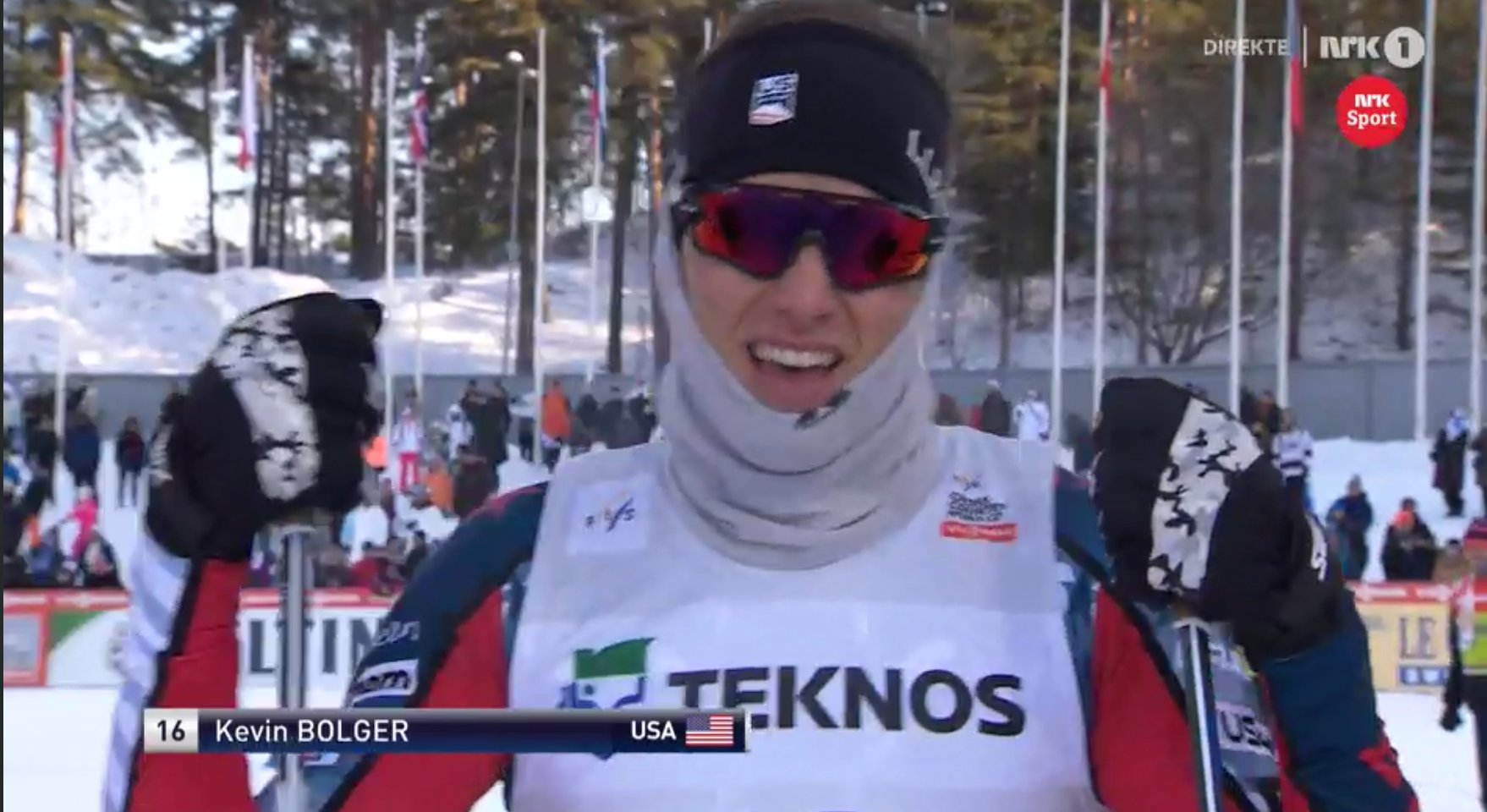
On Saturday in Lahti, Finland, Kevin Bolger of the Sun Valley XC Gold Team made his World Cup debut. In his first season since graduating from the University of Utah, Bolger earned start rights for the final period of World Cup racing by leading the SuperTour.
It was quite the debut: in the skate sprint, Bolger qualified in 16th, then advanced through the rounds to the semifinals and finished 11th on the day. There are not so many U.S. men who have ever finished that well in a World Cup in the last decade, much less on their first try – such a debut hasn’t been matched since Garrott Kuzzy finished ninth in a skate sprint in Canmore, Canada, in 2008, in his first weekend of World Cup racing.
The crowd certainly wasn’t expecting it. The Norwegian television commentators referred to him as “the surprising man”, and Bolger admitted in an interview over email after the race that he was a bit surprised himself.
The next day, he finished 54th in the 15 k classic, +3:09.5 from the time set by Kazakhstan’s Alexey Poltoranin.
The following interview has been lightly edited and condensed.
FasterSkier:Your coach, Chris Mallory, and he mentioned that getting some World Cup starts was a big goal for you this year. How does it feel to check that box, especially in such a fashion?
Kevin Bolger: Reaching the World Cup is the next step for skiers back in the U.S., so once I got my opportunity to get over here and race I wanted to capitalize on it. Just cracking the top 30 would have been amazing, so to have qualified 16th, and then overall finish in 11th on the day, is incredible, and I know there is more. But it also shows that I have what it takes to be competing over here with these guys.
FasterSkier:Do you usually consider yourself a strong qualifier skier in sprints?
Kevin Bolger: Qualifying has been, in the past, a weaker point for me. So I have been putting a lot of thought into how I can improve this with my coach Chris Mallory. I think we have dialed in a great pre-race strategy. And obviously I think this year it has been working.
FasterSkier:What were your first thoughts when you saw that you were 16th in the qualifier?
Kevin Bolger: I didn’t quite understand what happened when I finished. I remember some official telling me I was 16th, but I did not think he was talking to me. Once I saw my name up on the Live Timing board next to 16th, I was blown away. A lot of emotion kicked in. The hard part was over, now it was time to have some fun. It’s crazy watching World Cups back home, and suddenly I was in the middle of it, and I wanted to put a staple in my day!
FasterSkier:Does this course play to your strengths as a skier? Was there a part that you could work particularly well?
Kevin Bolger: I always try to ski a course and think of sections that will play into my advantage – being a big guy there are always good and bad spots. But I think this course skied well, and a lot came down to where you were positioned coming into the last turn at the top off the last climb, and coming down the final hill into the finish. The finishing stretch was my biggest strength, being a big guy and being able to really slingshot that corner and carry speed all the way to the finish, as I did in my quarterfinal. But I wasn’t where I wanted to be in the semi, and unfortunately it was too late.
FasterSkier:In your quarterfinal, you seemed stuck at the back for a long part of the heat. Was that a deliberate strategy to just save energy, or was it stressful to be back there and not able to get around people?
Kevin Bolger: My biggest strategy was just to stay on my feet, own my space, and not get intimidated. I talked a lot with Matt Whitcomb and we both agreed that I should ski confident and do what felt comfortable. Going to the back is not normally what I would like to do, but this is sprinting – sometimes what you plan doesn’t always happen and you need to be able to change your game plan and tactics. I had to work a little harder but that’s okay. I learned a lot for being my first World Cups, and next time I’ll be able to try new tactics.
FasterSkier:How did the semifinal go?
Kevin Bolger: The semi was great. Unfortunately I only had about a few minutes from the time I finished my quarterfinal until my semi started, so that was a quick turnover, but the U.S. guys were on it with my skis and helping out so much, without them I would have been a lost puppy! So, huge shout out to the U.S. crew!
FasterSkier:Are you happy with your skiing?
Kevin Bolger: After any race you can always look back and think about what you could have done differently, and of course I wish I would have skied a bit more aggressive in the final climb, but I was toeing the line with the gold and silver medalist from the Olympics, and some of the best guys in the world – so to know I’m right there shows I have what it takes to compete with these guys! I am very happy with my skiing. Not everyone gets this opportunity, so being able to show up on the world stage and ski like I know I can and throw down – I can’t be anything but happy!
The women’s 10 k classic podium at Sunday’s World Cup in Lahti, Finland, with Finland’s Krista Pärmäkoski (c) in first, Russia’s Natalia Nepryaeva (l) in second and Norway’s Marit Bjørgen (r) in third. (Photo: Fischer/NordicFocus)
(Note: This article has been updated to include comments from American Caitlin Patterson.)
The 2018 Olympics were pretty successful for Finland, in terms of cross-country skiing: Iivo Niskanen won gold in the 50 k and Krista Pärmäkoski earned silver in the 30 k and bronze in the skiathlon and the 10 k skate.
After the Games finished, the FIS Cross Country World Cup moved to Finland, but on the first day of competition – skate sprints – the host nation was stymied.
Among the frustrated was Pärmäkoski, who was tangled up when Germany’s Victoria Carl fell in a quarterfinal heat. Carl was relegated to last for her skiing, but that didn’t lessen the sting of not advancing for Pärmäkoski, who had qualified with the third-best time in the women’s field.
Sunday brought a 10 k classic, a favorite discipline for her, however.
“Yesterday was kind of annoyed, so I wanted to show [what I could do] today,” Pärmäkoski told Finland’s YLE broadcaster, according to a translation.
She set out with a vengeance, eventually notching her second career World Cup victory with a 20.9-second win over Natalia Nepryaeva of Russia.
Finland’s Krista Pärmäkoski celebrates the second World Cup victory of her career, on home turf in Finland in the Lahti 10 k classic. (ARD screencap)
“When in good shape, feeling bad feels good,” Pärmäkoski said.
Third place went to Norway’s Marit Bjørgen, who skied an even race to finish +29.2. She was tenth after a kilometer and a half, seventh at 3.7 k, and fifth at 5 k, but managed to ski up and bump Finland’s Kerttu Niskanen off the podium by just 0.3 seconds, for her first 10 k classic podium since 2012.
“I think it was the finish that secured [the podium],” she told Norway’s VG news site, according to a translation. “I think it went smoothly, very strong on the uphills, and I’m happy with it. I’ll take this finish with me.”
“Marit is the best athlete of all time, so it feels good that the time has come for me to be able to beat her,” Pärmäkoski told YLE.
Fifth went to Norway’s Heidi Weng, who opened hard but lost ground on the second lap of the 5 k course and finished 43.3 seconds behind Pärmäkoski. Teresa Stadlober of Austria was sixth (+52.4), Sadie Bjornsen of the U.S. seventh (+57.6), and Ingvild Flugstad Østberg of Norway eighth (+59.0). Aino Kaisa Saarinen (+59.1) and Johanna Matintalo (+1:13.4) rounded out the top ten, giving Finland four finishers in the top ten.
It was Saarinen’s last time competing on home ground, as the 39-year-old former World Champion is ending her World Cup career after this season. She cried as she was handed a bouquet of flowers at the finish line.
“It was certainly the best race of the season,” she told YLE.
Bjornsen Seventh in Post-Olympics Rebound
Sadie Bjornsen (U.S. Ski Team) finishing seventh in the women’s 10 k classic at the World Cup in Lahti, Finland. (Photo: Fischer/NordicFocus)
Like Pärmäkoski, Bjornsen had left Saturday’s sprint feeling frustrated. She had qualified in fifth position but then couldn’t make the right move in the quarterfinals and failed to advance to the semifinals.
“Yesterday was really awesome because I could see that I finally had some good feelings in my legs and I got really excited to keep racing,” Bjornsen said in an interview after the 10 k. “So, today, I don’t know, I was just approaching it like I wonder what can happen, like, let’s just send it hard and see what happens.”
With cold temperatures making for firm tracks, Bjornsen attacked the course’s long climbs – the biggest of which has a 44-meter height differential.
“I definitely really love the Lahti courses here,” she said. “I think that there’s like a lot of really awesome climbing. It’s not like they’re necessarily running hills; there’s actually some glide involved with them, and so I think it’s just really cool classic skiing… Right away I could see that I had some good skis under my feet and I just had nothing in the way, so I just went. I tried to go really hard from the start.”
The effect was immediately noticeable.
“I always try to go out hard and sometimes it’s hard, and sometimes it’s not,” Bjornsen laughed. “There’s no change in what my perceived effort. I think when I have good races is when that going hard actually is going hard. It was funny, because Matt [Whitcomb, the U.S. Ski Team women’s coach] was cheering at 3 k, and he just yelled ‘you finally went out hard!’ and I actually smiled in the race and was like, ‘ok, this is awesome.’ Like, ‘this is fun,’ you know?”
Unlike Weng and Niskanen, who faltered at the end, Bjornsen skied a fairly consistent race. She was sixth at 3.5 k, eighth at 6.1 k, and seventh at the finish, 57.6 seconds behind Pärmäkoski’s time and 30.9 seconds off the podium.
“I maybe struggled a little bit right there in the middle where I needed to continue being strong,” Bjornsen said. “I think that’s where those top girls are really making some time. When I have had my best distance races, it’s when I really nail between 5 and 7.5 k and that is kind of a point that I’ve been working on this year. And, I think that I maybe stuttered a little bit during that time. So I guess, looking back, I feel like that’s where I have to make an improvement for the future–to be in that podium place.”
Caitlin Patterson (Craftsbury Green Racing Project) racing to 32nd in the women’s 10 k classic at the World Cup in Lahti, Finland. (Photo: Fischer/NordicFocus)
For the U.S., Caitlin Pattersonwas next, just missing the World Cup points in 32nd (+2:02.7).
“The end of the race was good, but the beginning was a little rough,” Patterson wrote in an email. “The course starts out going up one of the sunniest hills, and by the time I started the snow had transitioned on that hill away from the wax that we were using. I had a terrible time getting up the first long rolling climb, but luckily I was able to pull myself together and re-focus for the rest of the race, and the skis worked much better for the rest of the course. So I’m happy with my effort, that I kept pushing and didn’t let up after a bumpy start. I would have been happier with a more consistently strong race, since I did lose quite a bit of time at the beginning that I wasn’t able to make up for later.”
Patterson raced the first and last events of the Olympics, placing 34th in the 15 k skiathlon and 26th in the 30 k classic mass start.
“My two races in Korea were separated by 15 days, but I certainly kept busy with training,” she explained. “I did a time trial, at least 3 interval sessions, some strength workouts, and distance workouts. It’s best for me to stay active and keep the speed up, since I knew that would be the best way to hopefully feel good for the 30k as well as to stay strong for the rest of the season. Beyond training in Korea, I felt really busy with all the time spent taking buses to and from places, but I did get out to watch a Big Air competition one day, and visited the Coastal village area a different day, so a bit of sight-seeing.
“I’m feeling ready to race and still excited for each start even at this point in the season,” Patterson continued. “If there was another race tomorrow, I’d absolutely want to do it. I feel like it’s been a while since I’ve had a consistent string of races, so I need more back to back to clear the cobwebs out again, and to reaffirm that I still have good racing fitness which I know is true.”
Ida Sargentand Sophie Caldwellfinished 40th (+2:21.9) and 42nd (+2:24.2), respectively. Rosie Brennanfinished 48th (+3:02.1) and SuperTour leader Kaitlynn Millerplaced 51st (+3:09.1).
Liz Stephenof the U.S. Ski Team did not start due to illness.
Canada started two women: Emily Nishikawafinished 41st (+2:22.2) and Dahria Beatty44th (+2:40.7).
The men’s 1.6 k freestyle sprint podium at Saturday’s World Cup in Lahti, Finland, with Italy’s Federico Pellegrino (c) in first, Russia’s Gleb Retivykh (l) in second and Norway’s Johannes Høsflot Klæbo (r) in third. (Photo: Fischer/NordicFocus)
The men’s freestyle sprint final in Lahti, Finland, started in almost comical fashion: the six men who had made it to the final heat of the day skied slowly, then even slower, as nobody wanted to lead.
The final was full of dangerous men. Norwegian youngster Johannes Høsflot Klæbo has won five sprints this season, and he just became an Olympic gold medalist in the sprint in PyeongChang, South Korea, a mere ten days ago. In his quarterfinal and semifinal heats, he had put in big turns of speed which had dropped most of the field.
They hadn’t dropped Italy’s Federico Pellegrino, though, and the 2017 World Champion was the only man competing in Lahti who had beaten Klæbo in a sprint this season.
Then there was France’s Lucas Chanavat, who put in a huge burst of speed up a hill in his own quarterfinal, perhaps mimicking the move that Klæbo usually makes to test it out or prove a point.
They were all lurking there in the final, along with Russia’s Gleb Retivykh, Finland’s Ristomatti Hakola – consistently one of the fastest qualifiers on the World Cup – and Norway’s Sindre Bjørnestad Skar.
Norway’s Johannes Høsflot Klæbo leading his quarterfinal, which included Italy’s Federico Pellegrino (3) and American Erik Bjornsen (29), in the men’s 1.6 k skate sprint at the World Cup in Lahti, Finland. (Photo: Fischer/NordicFocus)
Klæbo finally got up to some sort of speed on a gradual downhill, stringing out the field after a full 90 seconds of being clumped together and moving at walking pace. But he still wasn’t going full bore. On one of the final opportunities, it was Skar who went to the front and sprinted up a hill, finally turning the speed dial to “full”.
Coming down the final hill into the stadium, it was Skar, Klæbo, and Pellegrino, who overtook the leader going into the last turn. In the finishing stretch, the two Norwegians seemed to just fade away; Pellegrino sprinted for the line and a big win of 0.77 seconds.
“I think that when I returned after the Olympics, back home I had a very good time, really good weather in the Alps,” Pellegrino – the silver medalist in the PyeongChang sprint – said in a post-race interview with FIS. “And it was very good to recover and train a lot, so that I could come here in the best shape. I’m really proud of this.”
Also surging past the Norwegian duo was Retivykh, who had accelerated into and through the final corners and pulled away in finishing lane.
“I have been waiting quite long for the World Cup podium,” said Retivykh, according to FIS. “Last time I was top three was in PyeongChang last year. So it feels great to be back. I am not surprised to be second because I knew I could do it. It feels great… I am sharing the podium with two great athletes.”
Klæbo hung on for third, +0.90 seconds, and Skar was fourth, +1.30. He edged Hakola (+1.44) while Chanavat was left in sixth (+7.55).
Coming into the final as the giant everyone feared, Klæbo’s tactics had not paid off.
“I’m glad this was not the Olympics,” Klæbo told Norwegian broadcaster NRK, according to a translation. “Pellegrino was too strong. I had nothing to answer with. Then you have to be thankful for third place. And I’m still smiling pretty wide.”
Pellegrino, meanwhile, played his cards exactly right. He also beat Klæbo here one year ago to win World Championships gold, and he channeled that experience.
“I lost too many races in the past when I was leading almost the whole race,” he told FIS. “I think that on this track I know how to do it.”
And with the win, Pellegrino became the most decorated skate sprinter in men’s World Cup history. It was his tenth skate sprint victory, a new record.
With third place, however, Klæbo has sealed this year’s overall Sprint Cup trophy even though there are still two sprints to come in Drammen, Norway, and Falun, Sweden.
“That is a bright spot, then,” he told NRK. “It helps a little, but there was no snap today. The [qualifier] was good, but otherwise it was a bit dead.”
By placing 11th in the freestyle sprint in Lahti, Sun Valley’s Kevin Bolger won some Gruyere cheese for being the top-ranked Continental Cup skier of the day. (Photo: Matt Whitcomb)
Bolger 11th in World Cup Debut, Bjornsen 20th
You didn’t have to scroll very far down the qualifier results sheet to find the name of a World Cup debutant. In 16th place was Kevin Bolger of the Sun Valley XC Gold Team. The SuperTour leader made the most of his opportunity, and NRK broadcasters referred to him as “the surprising man – Kevin Bolger.”
“Honestly, I didn’t necessarily expect him to qualify in a Scandinavian World Cup, in his first go at it,” Bolger’s coach Chris Mallory wrote in an email. “He generally builds into sprint days as they progress, as he’s a bit of an all-arounder. But he really stepped up to the plate today.”
In his quarterfinal, Bolger was last out of the start gates and sat in sixth place for much of the race. But near the end of the heat he moved into fifth and then coming into the finish turned on the afterburners to move up to fourth.
The last of the quarterfinals, it also turned out to be the fastest one, and both Bolger and third-place Karl-Johan Westberg of Sweden moved on to the semifinals as lucky losers behind Retivykh, the heat’s winner, and second-place Franceso De Fabiani of Italy.
“He’s a big glider, and can carry his speed really well, but he’s focused a lot on improving his speed this year,” Mallory wrote of that finishing sprint.
In the semifinal, Bolger couldn’t quite pull the same move. He was again in sixth out of the gate, but Pellegrino broke a pole, dropping to last. The two traded off places as Pellegrino then caught back up, and then replaced his pole again. Then Bolger passed Emil Iversen, but the Norwegian passed him back by the finish and Bolger ended up sixth in the semifinal and 11th on the day.
Bolger before the start of his semifinal heat. (NRK screencap)
Bolger graduated from the University of Utah last year and it is his first season as a full-time senior racer with the Gold Team, although Mallory said that Bolger had trained with Sun Valley for two years as a high school postgraduate before heading to college.
Before heading to Europe for the World Cup, Bolger had won a SuperTour sprint in Ishpeming, Michigan, and placed second and sixth in 20 k and 10 k races there. Earlier in the season, he was second in the skate sprint and fifth in the classic sprint at U.S. National Championships.
“My goal was for him to get some World Cup starts and a top 30 this season, so those opportunities would keep coming,” Mallory explained. “I watched FIS live timing all night, normally not so exciting, but last night it was!”
Erik Bjornsen of the U.S. Ski Team and APU qualified in 29th place and in his quarterfinal, had a poor start position as a result of his bib and was immediately shunted to the back of the heat.
“Up the first climb I tried to make a couple moves, but I was just kind of boxed in,” he explained.
He was in the first quarterfinal, along with Klæbo, Pellegrino, and Renaud Jay of France. By late in the heat Bjornsen was able to move up to fifth when Poland’s Maciej Starega, who had led early, began to fade. Then in the final downhill he moved into fourth and held that position through the finish.
Norway’s Johannes Høsflot Klæbo and Italy’s Federico Pellegrino (3) going head to head down the finishing stretch in the first men’s quarterfinal at the World Cup 1.6 k skate sprint in Lahti, Finland, with American Erik Bjornsen (l) chasing. (Photo: Fischer/NordicFocus)
But he hadn’t been able to get to the front early in the heat, and by the finish, the two eventual podium finishers were jetting off at hyperspeed. Though he wasn’t able to catch onto their tails, Bjornsen said that he was feeling better than he had at the Olympics, where his results had been disappointing.
“I definitely kind of struggled,” he admitted of the 2018 Olympic experience. “It was some of my worst distance racing of the year, so it was obviously very frustrating.”
After today’s sprint, however, there might be light at the end of the tunnel.
“I felt like I had good energy left,” Bjornsen said of his heat. “I tried making moves on both sides… the fitness is feeling a lot better than it was a couple of weeks ago. And so, I mean, the peaking plan for the Olympics didn’t work as planned. But it’s been a relatively good season for me, pretty consistent. I had a lot of top 30 finishes… I’m just trying to move past [the Olympics] and have a solid period four on the World Cup.”
He now looks to the 15 k classic on Sunday, which he called “one of my favorite races.”
And on getting upstaged by Bolger, Bjornsen seemed the opposite of upset.
“I was just really psyched to see that,” he said. “The kid has put in a lot of work the last few years and – I mean, I was very surprised. It was great to see. I like to see those younger dudes coming here and having successful results. It’s really impressive. You know, it’s his first World Cup and he just looked comfortable and good out there. It’s just the perfect transition to the World Cup. Keep it up!”
Canada’s Julien Locke on his way to 42nd in the men’s 1.6 k skate sprint at the World Cup in Lahti, Finland. (Photo: Fischer/NordicFocus)
“It was so awesome to have two World Cup first timers, Kelsey [Phinney] and Kevin, have such impressive results,” agreed teammate Sophie Caldwell. “Kevin had the race of the day and it was so inspiring for our entire team, staff, and hopefully all the skiers back home to see that success in a young, up and coming racer who just sent it today. We were going crazy!”
The rest of the North American field did not make it into the quarterfinals. In the qualifier, Logan Hanneman (APU) placed 49th (+11.45). Paddy Caldwell (U.S. Ski Team/SMS T2) finished 59th (+13.55), and APU’s Reese Hanneman and David Norris placed 61st (+14.33) and 67th (+19.27).
Julien Locke led Canada in 42nd place (+9.78), and Andy Shields finished 60th (+14.29).
Logan Hanneman (Alaska Pacific University) on his way to 49th in the men’s 1.6 k skate sprint at the World Cup in Lahti, Finland. (Photo: Fischer/NordicFocus)
The US Biathlon coaching staff, poses for a photo following the men’s World Cup sprint in Khanty-Mansiysk, Russia, in 2016. The US will not attend this year’s World Cup final in Tyumen. (Photo: USBA/NordicFocus)
In December, Biathlon Canada announced that it would not attend World Cups slated for Tyumen, Russia, in March, due to the doping scandal that has consumed Russian sports. Russia is still not in compliance with the World Anti-Doping Code, and, Biathlon Canada stated, “the integrity of anti-doping procedures in Russia is still very much uncertain, given the current situation in which RUSADA remains non-compliant with WADA.”
This caused little reaction from the International Biathlon Union (IBU) at the time.
The United States and the Czech Republic have now also announced their intentions to boycott the event, and other individual high-level athletes also do not plan on attending.
“I am really discouraged by our international federation, the IBU,” Lowell Bailey said after the men’s relay at the Olympics on Friday. “Our President, Anders Besseberg… at every turn when he has the chance to defend clean sport, he has turned the other way. And it’s not fair to clean athletes. The latest decision by the IBU was to send the World Cup tour to Tyumen, Russia, for our World Cup final. Team USA is boycotting. The Czech team is boycotting. Canada is boycotting. We are trying to rally more support. I know that as an Athletes’ Representative, almost every country had athletes that wrote letters to the IBU [about the World Cup final].”
The Czechs know that they will lose Nations Cup points, and possibly World Cup quota spots, by skipping a weekend of racing, but said that it was worth it.
“We have taken a certain stance, with some sacrifices, and it would be wrong to give it up now,” Czech Biathlon Union President Jiří Hamza told iDNES, a Czech news agency, according to a translation.
“If you are convinced something is not right, you should keep that stance,” shooting coach Ondřej Rybář said in the same article. “If the other countries talk about RUSADA being noncompliant and that they should not have international races in Russia, but they eventually go there, that’s their issue. We clearly stated that we do not agree with what is happening in Russia. We therefore want that the work did in the fight against doping isn’t lost.”
And in the meantime, the IBU had apparently received private feedback from athletes who wanted the World Cups to be moved to a Code-compliant country.
“The outcry from our fellow athletes around the world has been respectful, strong, and definitive,” the U.S. biathletes wrote in a joint statement that they each posted to social media platforms (for example, here). “In addition to the dozens who expressed their opinion to the IBU Athletes Commission members ahead of the meeting in January 2018, the IBU received letters representing over 30 athletes, from eight countries, and included three 2018 Olympic Champions… ”
French star Marie Dorin Habert, a four-time World Championships gold medalist, has announced that she will retire after the World Cup weekend in Oslo – which by definition means that she won’t be going to the final weekend of competition in Russia.
Teammate Martin Fourcade, however, reportedly will attend the races in order to fight for the World Cup crystal globe, which he currently leads by just 54 points over Johannes Thingnes Bø of Norway.
“My position on doping and on Russians who have cheated is clear, but my position on Russia is different,” he said, according to the German Press Agency via a translation. “The country is a fan of biathlon, and I think the Russian public should not be eternally punished for the actions of some of its officials and athletes.”
Sebastian Samuelsson, a Swede who won silver in the Olympic pursuit and then gold in the relay, also expressed his dissatisfaction with the IBU’s handling of the situation.
“Hugely disappointed with the [IBU] decision today to, despite considerable pressure, to keep the [World Cup] in Russia,” he tweeted, according to a translation.
Samuelsson was rewarded with numerous twitter replies from Russian accounts telling him to stay home, one of which called him a baby and another of which said he was “not welcome in Russia”. He was then attacked on Instagram, with obscenity-filled threats and more sober ones, like, “your whole family will die.”
And that’s something that the Americans mentioned in their open letter explaining why they wouldn’t be traveling to Russia: safety.
“I’ve got online threats because of things I’ve said,” Canada’s Rosanna Crawford told Norwegian broadcaster NRK after the Canadians announced their boycott in December. “There are people who say they can’t wait until I come to Russia, ‘we’ll see what happens to you then’.”
It’s something the Czechs are intimately familiar with, too. After their 2014 women’s relay team celebrated being awarded Olympic bronze after the Russian relay team was disqualified for doping – several relay members’ cases are now pending at the Court of Arbitration for Sport – they were attacked as well, with hundreds of comments on social media calling the women “pigs” and “prostitutes” and threatened that if they did come to Russia, their anti-doping samples would be sabotaged.
And indeed, the first comment on U.S. biathlete Susan Dunklee’s Instagram post announcing the boycott was sexually-explicit and degrading insult, the only part of which can be written on a family-friendly website was the part calling her “ugly”. More obscenity-laden comments followed.
“Thank God the Americans won’t come!” another commenter wrote. “If you came to us, I’d throw you tomatoes.”
“You’re not an athlete,” added a third.
“American coward,” mocked another.
Bailey did not post about the boycott on Instagram, but commenters went there anyway, flocking to his most recent post – from nearly a year ago – to call him a doper.
“… the protection of clean athletes and the fight against doping are of the highest priority,” the IBU wrote in a September press release regarding the Russian doping investigation.
But when it comes to online threats against the athletes competing in their sport, the federation has so far been silent.
In response to Canada’s boycott announcement in December, Anders Besseberg said, “It’s not mandatory for anyone to attend, let’s put it that way.”
Dario Cologna has shown that he meant business this season, winning another Tour de Ski title as well as the last World Cup before the Olympics. But it was still remarkable that he came out and won the 15 k skate today, by a dominant margin of 18.3 seconds over Norway’s Simen Hegstad Krüger. At 31 years old, Switzerland’s Cologna becomes the first man to ever win three 15 k Olympic gold medals in a row. The first came in the freestyle race in Vancouver in 2010, the second in the classic race in Sochi in 2014, and now another gold today.
“A lot has come together for me today,” Cologna – who was in tears after he finished – said in a postrace interview with Switzerland’s SRF broadcaster, according to a translation. “A lot of hard work behind this. For me to come back this year, and that it now was enough for another Olympic gold, I can hardly describe that… Most of all I wanted to win a medal, and now it’s even a golden one. I have had a lot of successes in the past, so I don’t have to prove anything in that regard, but you do sports for those moments, to win. So of course I am very proud to be able to win a gold medal for Switzerland. An Olympic medal is always a little more special and a little more beautiful than other victories.”
Simen Hegstad Krueger of Norway (bib 60) pushed his way onto another Olympic podium, earning silver in the 15 k skate. (Photo: FlyingPointRoad)
Krüger, who is at his very first Olympics, picked up his second medal of the Games after winning the 30 k skiathlon to open the men’s cross-country ski competitions. In third place (+23.0) was 21-year-old Denis Spitsov of Russia, who placed fourth in the 30 k.
Fourth place went to Norway’s Martin Johnsrud Sundby (+24.9) who was still denied in his quest for individual Olympic gold, and fifth to France’s Maurice Manificat (+27.0). Rounding out the top six was Norway’s Hans Christer Holund (+34.5).
Canada’s Alex Harvey was in the fight for the medals in the middle of the race, but faded over the final kilometers to end the day seventh (+35.5). Behind him, Graeme Killick finished 38th (+2:39.4), Knute Johnsgaard 69th (+4:04.6), and Devon Kershaw 71st (+4:17.6).
The United States was led by Scott Patterson in 21st place (+1:44.1). Erik Bjornsen was close behind Patterson in the opening kilometers but slipped to 41st place by the finish (+2:44.7). Noah Hoffman placed 48th (+3:01.3), and Tyler Kornfield 74th (+4:34.0).
University of Utah alumnus Snorri Einarsson, racing for Iceland, placed 56th (+3:21.7). Dartmouth College alum Tucker Murphy of Bermuda finished 104th (+9:21.8) and Canada-based Kequyen Lam of Portugal 113th (+20:50.2).
Sweden’s Stina Nilsson (center) won gold in the classic sprint at the 2018 Olympics, with Norway’s Maiken Caspersen Falla (left) taking silver and Russia’s Yulia Belorukova bronze. (Photo: FlyingPointRoad)
After winning the sprint qualifier by 0.39 seconds over defending gold medalist Maiken Caspersen Falla and then besting the Norwegian by 0.03 seconds in her semifinal, Sweden’s Stina Nilsson captured Olympic gold in a dominating performance in the classic sprint final, ultimately besting Falla by 3.03 seconds.
Falla had to fight to even keep silver, as Olympic Athlete of Russia Yulia Belorukova pushed the pace on the final uphill and came close to outsprinting Falla in the finishing straight. However, the 23-year-old Russian couldn’t quite sneak past and settled for bronze, 0.34 seconds behind Falla.
Jessie Diggins of the United States after finishing sixth in the classic sprint in PyeongChang. (Photo: FlyingPointRoad)
Her teammate Natalia Nepryaeva finished fourth (+9.14 in the final), Sweden’s Hanna Falk fifth (+11.16), and the United States’ Jessie Diggins sixth (+11.23).
Diggins’s teammate Sophie Caldwell finished unlucky number eight, and based on time was the last woman not to make the final after finishing a close fourth behind Nilsson, Falla, and Falk in her semifinal. Both semifinal heats were fast, with one lucky loser coming from each, and Caldwell was 0.18 seconds off that time.
Also for the United States, Sadie Bjornsen finished third in her quarterfinal heat, 2.46 seconds behind Belorukova and also behind Norway’s Heidi Weng. That put her 14th on the day.
In the men’s final, it was a fight to the final uphill when 21-year-old Norwegian phenom Johannes Høsflot Klæbo ran away from the field over the top of the climb and sailed to the finish to become the youngest ever gold medalist in cross-country skiing at the Olympics. Alexander Bolshunov of Russia had matched Klæbo for most of the race but ran out of steam at the top, allowing Italy’s Federico Pellegrino to catch onto his tails before the downhill. While Klæbo widened his lead, Bolshunov and Pellegrino battled to the finish line and Pellegrino ultimately won in a photo finish, securing silver (+1.34) while Bolshunov took bronze (+1.36).
Johannes Høsflot Klæbo won the men’s Olympic sprint in dominating fashion while Federico Pellegrino just edged Alexander Bolshunov for silver. (Photo: FlyingPointRoad)
Norway’s Pål Golberg finished fourth (+3.81 in the final) and Sweden’s Oskar Svensson fifth (+7.73). Top qualifier Ristomatti Hakola of Finland didn’t have it in the final, finishing sixth (+20.72).
Canada’s Len Valjas finished third in his semifinal, but well off the pace (3.98 seconds behind Hakola) and did not advance as a lucky loser to the final. That put him seventh overall, Canada’s best result in two Olympic cycles.
Both American men, Erik Bjornsen and Simi Hamilton, were eliminated in the quarterfinals. Hamilton’s quarterfinal was marred by a crash involving nearly the entire group, and he ended up fourth with a slow time as a result, and landed 20th on the day. Bjornsen finished fifth in his heat, 1.63 seconds behind Klæbo in one of the tightest quarterfinals of the day, good for 25th overall.
Norway has now won both men’s gold medals in cross-country skiing, while Sweden has swept the women’s gold medals.
Sprint racing at the PyeongChang Olympics kicked off on Tuesday, with Sweden’s Stina Nilsson setting the pace in the women’s qualifier just 0.39 seconds ahead of defending Olympic champion Maiken Caspersen Falla of Norway.
The rest of the field couldn’t touch those two. Krista Parmakoski of Finland, the bronze medalist in the 30 k skiathlon, came closest, notching a time 3.56 seconds slower. Sweden’s Hanna Falk qualified fourth (+3.80), Slovenia’s KatjaVisnar fifth (+6.50), Olympic Athlete of Russia Natalia Nepryaeva sixth (+6.91), American Jessie Diggins seventh (+7.02), Sweden’s Ida Ingemarsdotter eighth (+7.32), American Sadie Bjornsen ninth (+7.38), and Norway’s Heidi Weng tenth (+7.54).
For the United States, Sophie Caldwell also qualified for the quarterfinals in 12th position (+8.32). Ida Sargent, who recently had surgery on her thumb, did not, notching the 33rd-best time of the day – 17.06 seconds off the pace and 1.78 seconds out of the heats.
For Canada, Emily Nishikawa led the team in 34th, 2.73 seconds out of quarterfinals. Dahria Beatty finished 42nd (+21.03) and Cendrine Browne 51st (+25.56).
CU student Petra Hyncicova of the Czech Republic finished 45th (+23.29). APU’s Jessica Yeaton, racing for Australia, finished 48th (+24.27), and Aussie teammate Casey Wright (University of Alaska Anchorage) 63rd (+41.06). Canada-based Mathilde Petitjean of Togo finished 59th (+37.19).
In the men’s sprint qualifier, Ristomatti Hakola of Finland turned heads by posting a time that last year’s Sprint Cup champion Johannes Høsflot Klæbo of Norway could not beat. The Norwegian posted a time 0.19 seconds slower than the Finn.
The men’s field was much closer than the women’s, with just 9.51 seconds separating the top 30 finishers who would move on to the quarterfinals. The third qualifier was young Olympic Athlete of Russia AlexanderBolshunov (+1.66), with Italy’s MaicolRastelli a surprise fourth-place finisher (+2.78). Sweden’s Teodor Peterson qualified fifth (+3.01), Olympic Athlete of Russia Alexander Panzhinsky sixth (+3.09), Sweden’s OskarSvensson and Viktor Thorn seventh (+3.48) and eighth (+3.65), and Italy’s FedericoPellegrino ninth +4.64. Calle Halfvarsson notched the tenth-best time (+4.73) and gave Sweden four qualifiers in the top ten, while Klæbo was the lone Norwegian in the top ten.
For the United States, Simi Hamilton and Erik Bjornsen made the quarterfinals, qualifying in 19th (+7.59) and 29th (+9.15) respectively. Bjornsen actually tied for 29th with France’s Richard Jouve, making him the last man to make the cut, so to speak. Canada’s Len Valjas will be the lone representative of his country in either the men’s or women’s heats after qualifying 26th (+8.57).
Alex Harvey just missed the quarterfinals in a tie for 32nd (+9.41), with Canadian teammate Jesse Cockney close behind in 35th (+10.00). Russell Kennedy rounded out the Canadian team in 54th (+14.83).
For the U.S., Andy Newell was also on the outside looking in, placing 37th in the qualifier (+10.82). So was Logan Hanneman in 42nd (+12.20).
FasterSkier’s Alex Kochon, Nat Herz, and the author (Chelsea Little) at the 2014 Olympics in Sochi, Russia. Little did we know what was going on behind the scenes of those Games. Looking back at our coverage of the 2014 Olympics, I’m very proud of the work we did. But I’m not too proud to say that while we thought we had a realistic understanding of international sports governance, we were still naive to its incredible inertia.
The following is an editorial written by FasterSkier’s Editor-at-Large Chelsea Little, who has been covering doping in sport, specifically cross-country and biathlon, for the better part of the last decade. The opinions expressed are her own and do not necessarily reflect those of other FasterSkier staff.
The athletes had been disqualified from the 2014 Games by an International Olympic Committee (IOC) Commission. This was after more than 18 months of buildup in which the world learnt of systematic manipulation of the anti-doping process by the Russian state security apparatus at those Olympics.
I was both shocked, and not shocked. When all these athletes had been disqualified by the IOC and handed lifetime bans from Olympic competition, I knew in my heart of hearts that it would be undone (I’ll explain why below). But I hadn’t, somehow, put any thought into how exactly that would come to pass. So on one level, I was surprised, even if on another level I wasn’t.
When the news broke, I had written a profanity-laced all-caps message on our company Slack channel. On Twitter, I wrote, “I am so tired. That means that they have won.” That’s about all I could muster.
“I’m sure you are extremely disappointed by the CAS ruling,” one member of my extended family wrote in an email, knowing how many nights and weekends I had spent covering this story, how many hours and days of my personal life I had erased to chase it, because doing so does not pay the bills if you work for a cross-country ski website in America.
And I was disappointed.
I had thought that those nights and weekends would help make a better sporting world, help bring cheating to light, help hold the powers that be in sport accountable and call on them to do a little better.
But it felt like all that work had accomplished nothing, not changed a single thing to make nordic sports more fair.
I can only imagine how the athletes felt. The ones who found out that they would not be receiving medals after all, medals that they felt had been stolen from them by cheaters, medals that they had been slated to finally receive but now would never see.
I can only imagine.
More than anything, I was disappointed because I didn’t understand. I’m an analyst. No analysis I could do would explain to me just what had happened because CAS did not release a reasoned argument for their decision, which, as USADA General Cousel Bill Bock pointed out, is ludicrous. So at the moment we don’t know why these athletes were cleared; we only have speculation and hearsay.
In that decision, an arbitration panel wrote that they trusted the statements of whistleblower Grigory Rodchenkov and investigator Richard McLaren.
That testimony that is widely speculated to have been found untrustworthy by the arbitration panel which more recently cleared the athletes.
There is a difference between provisional suspensions and rule violations, and maybe that’s the root cause (or maybe it’s not; one day we will find out).
But if two different arbitration panels can come to two completely different conclusions about whether evidence is trustworthy, then what is the point of a “high court” of arbitration? That’s disappointing.
On the other hand, maybe the new panel did believe that the whistleblower testimony was true, but that witness statements alone are not enough to prove a doping violation. We’ll set aside for a moment all the forensic evidence [see footnote 1].
If that’s the case, it’s even more disappointing. It means that all of the rhetoric over the last few years about putting more resources into investigations will not actually result in cleaner sport, unless there is a positive test or the presence of drugs or medical equipment (see: Austrian skier Wurm, Russian skier Pankratov).
It would mean that the World Anti-Doping Agency’s new “secure digital platform” for whistleblowing — and statements by athletes and doctors and team staff — are all useless to anti-doping unless they are followed by physical evidence of prohibited substances or methods.
But we don’t know the panel’s reasoning. This is all just speculation.
I was tired and disappointed because my job as a journalist is to take complicated things, and make them make sense to our readers.
Here, there was nothing to work with. There was nothing to explain.
A second suggested storyline is that the IOC set up the cases to fail, so that it would look like they tried to do something heroic, but in the end nothing would change.
To some extent, that is absolutely the case. Lifetime bans for doping have been attempted by the IOC before. Every time, they have been overturned. There was a zero percent chance it would work this time, either.
Did the IOC go further than that in “set up to fail”? Both storylines may be true. Neither may be true. But each of these storylines is far too myopic in their attempts to explain what happened with this CAS decision.
The reason that, in my heart of hearts, I knew that things would turn out just fine for most of these seemingly disqualified athletes, is that far more than CAS is broken [2].
Broken would imply that at some point the system worked. When was that, again?
This scandal has been going on for years. And in both it and other, non-Russia-related doping scandals, organizations have dragged their feet at every turn. There is no political will to keep sport clean. Ensuring clean sport would be hard. Nobody wants to do hard work. Universally, these organizations just want to run sporting events and for fans to be happy.
“We need to stop pretending sport is clean,” International Ski Federation (FIS) President Gian Franco Kasper [3] famously told New York Times reporter Rebecca Ruiz. “It’s a noble principle, but in practice? It’s entertainment. It’s drama.”
People were mad when Kasper said this, but it was an especially revealing comment. Maybe it is a testament to our optimism that we quickly moved on, focusing on how we would try to “solve” the problem of doping.
There have been individuals and groups who have worked passionately to uncover the truth, and done an admirable job. Beckie Scott at WADA [4] is one who comes to mind. But their work is always prevented from reaching its logical conclusion.
Let’s first look at the IOC, which has deservedly gotten a bad rap for dragging its investigations out for as long as seems humanly possible.
The IOC has certainly not put the resources or good-faith effort into looking under every stone, or doing so quickly. That’s how we got the first Sochi disqualifications – like Legkov’s – being announced in November of 2017. Most of the criticism leveled at the organization on this front is absolutely justified.
In all the time between May 2016, when the Sochi scandal was first broken by the New York Times, and November 2017, the IOC did very little. The decision banning Legkov relied mostly on the same evidence that had been in the McLaren Report.
The IOC Commission asked new experts to revisit the issues of scratches on sample bottles and salt content of urine samples. Basically, they repeated a lot of work which had already been done, expanding it to a larger number of samples but taking longer to do so by insisting on using different experts, who nonetheless came to the same conclusions.
For Legkov, all of this resulted in the same evidence that had been in the McLaren Report: that Legkov’s sample bottle from after the 50 k, which he had won, showed signs of being tampered with.
Sure, the IOC Commission got testimony from Rodchenkov. But that only at the last minute, perhaps because they were publicly shamed when it was revealed that they hadn’t contacted him.
It’s fair to criticize the IOC for its anemic investigation, but this is not just an IOC problem, just like the disqualifications being overturned is not really a CAS problem.
Look further. Since the McLaren Report, few other governing bodies have been doing better.
“We like to play coy, like the cat wagging its tail when the mouse runs in front,” IBU Vice President for Medical Issues Jim Carrabre told me back at the 2014 Olympics, in an interview that led to the IBU’s media chief calling me into his office at the press center and dressing me down for talking about things that he would rather journalists didn’t ask his organization’s board members.
“It goes by once or twice, and then the third time it gets bitten,” Carrabre said at the time.
He was referring to blood profiles, a topic that has recently gained prominence.
For years I have been told by various people that the IBU has cases in the works, that soon I will hear about them, that they know some people are doping and are about to catch them.
I don’t doubt that Carrabre is a true believer in the anti-doping fight. He gets pretty fired up about things, as does fellow Executive Board member Max Cobb.
But the cases that I heard rumors of, even promises of, have never materialized.
The Athlete Biological Passport (ABP) was supposed to revolutionize anti-doping and indicate if athletes had been blood doping even when no illicit substance was detected. That sure would have been handy due to the drugs’ short detection windows and athletes’ and doctors’ strategies of “microdosing.”
But there have been no doping bans on the basis of ABP in skiing or biathlon [5]. I don’t think that even the most optimistic of fans really believes that this is because there is no blood doping going on.
What does that mean? That ABP doesn’t work, that it wouldn’t hold up in arbitration? Or that something else is going on?
It would be hard to look at IBU President Anders Besseberg’s behavior in the last two years – for instance, the IBU’s continued insistence that it’s totally fine to hold events in Russia, or his demeanor and statements during meetings with athletes – and conclude anything other than that he is sympathetic to Russia and would even more generally like to simply pretend that there was no scandal in his sport.
Having a few true anti-doping crusaders on a governing board does not clean sport make. I don’t want to put words into their mouths, but probably, it just makes these crusaders even more frustrated.
“When the McLaren Report first came out, I thought that doping was the greatest threat to our sport,” U.S. biathlete Susan Dunklee told FasterSkier in January 2017. “However after watching the last few weeks play out, I believe that the IBU’s reluctance to meaningfully act to prevent doping is the greatest threat to our sport.”
Then there is FIS. As I’ve repeatedly pointed out, there were 46 skiers implicated in the McLaren report. Not all of them, obviously, were at the 2014 Olympics or Paralympics, yet as far as anyone can tell, FIS has done nothing to investigate the other cases, some of which include alleged anti-doping rule violations.
(Which, by the way, how can I get in on that? Hi? I’m over here! I know a lot about doping in skiing and I also how to do statistics!)
The data is interesting, but nothing can really be done with it, as it is old and from the days before ABP was a policy. Without the journalists or their experts explaining how they decided what an “abnormal or highly abnormal” blood profile is, it’s impossible to judge what percentage of the athletes they identify as potentially having doped actually were likely dopers.
But perhaps this indicates that someone within FIS is frustrated with how things are going. If you cared about skiing being clean, cared about doing your job well, and listened to Kasper say things like “sanctioning entire countries is purely political and I do not agree with this,” you might be frustrated too.
And here’s the last thing. In this whole scandal we are talking about one country. That’s Russia, and it has led to a lot of ideological discussion.
But it’s not really about Russia.
Yes, the IOC and the IBU and FIS want to keep Russia happy, because their sports are popular in Russia, the Russian athletes are talented and popular even outside the country, because Russia is great at hosting events, and because Russian fans travel all over to watch competitions. That’s part of it.
And yes, some commentators have complained that athletes are being punished just because they are Russian. They have complained that this is a U.S.-led effort reviving Cold War hostilities. That we are Russophobes. That we are hypocrites because American sports stars dope too, and/or that lots of countries dope but we just haven’t found out about it.
But again, that’s being far too myopic about things, and believing that this scandal is only a thing unto itself, not part of the bigger problem.
If this scandal had taken place with Norway, Sweden, Germany, the United States, or any other country at the center – the outcome or the (lack of) speed of its resolution probably wouldn’t have been much different [6].
I – yes, I’m among those journalists accused of being hypocritical and anti-Russian, I’ve even been compared to Nazis, gee that was fun – I would chase this scandal just as hard if it had arisen in any of these other countries.
In fact, I would have investigated it with even more fervor if these were American or Canadian skiers and biathletes we were talking about. And presumably most of the evidence would have been in English, so I could investigate more effectively, without translating things I was looking for into Russian, searching the internet or evidence documents, and then translating the Russian back into English, in a crappy game of “telephone”.
I think that the North American athletes I routinely interview are aware that if I found out they were cheating, I would have no remorse and they would have nowhere to hide.
Just as I’m not a hypocrite, these sports organizations aren’t, either – well, they are, but not in this way, not when it comes to nationality. The claims that various decisions just come from Russian money and bribes are missing the point.
Whether coming from Russia or elsewere, these organizations don’t want a big scandal. They don’t want to rewrite their results sheets. The athletes who missed out on medals they probably should have taken home? These organizations don’t really care about athletes.
They are just an unfortunate bit of collateral damage, but oh well.
Time will march on. A new race will be held. It will be an exciting race! We will all be caught up in it.
Maybe Pellegrino will upset Klæbo.
Maybe an American will finally win a medal.
Maybe Fourcade will mess up his first stage, but then climb back to gold anyway.
Maybe Makarainen will mess up all her shooting stages, and we will all watch rapt to see whether she can pass 15 people on the final loop. Maybe she can.
Maybe Harvey will finally truly become the Prince of Quebec, crowned with an Olympic medal.
Maybe the breakaway will succeed.
Or maybe the favorite will win, but we will be enthralled until the final moment, watching to see whether they will pull it off.
Soon, we will forget about those athletes whom we were wondering about, the ones who maybe probably should have a medal stashed in their safe deposit box somewhere and a whole lot more sponsor money than they have now.
Those athletes will slip farther and farther to the back of our minds. In the forefront will be the day’s competition – so amazing! – and the big happy family that is sport.
Actual clean sport is not, and never was, these organizations’ goal.
*****
Footnotes:
[1] On the topic of skiers who were cleared by CAS: Maxim Vylegzhanin’s sample from Sochi also had scratches on it and had an incorrectly reported specific gravity; the two other members of the men’s relay team also had marks on their sample bottles, and one had a sample whose specific gravity was too high to be believable; two sprinters had marks on their sample bottles and for one, there as also a foreign fiber inside the bottle. Julia Ivanova, whose ban was not overturned by CAS, had an impossibly high salt value in her urine sample.
[2] I actually think CAS does work. CAS handles far more than doping cases – they handle contract disputes, team selection, trades, anything you can think of that would need arbitration. And as far as I know, they do a good job. This is the first CAS decision that has left me truly baffled.
[3] Term limits, man. We really, really need term limits.
[4] I’m not going to talk in much detail in this piece about WADA, which alternatingly does the right thing and the wrong thing, and often does the wrong thing for a very long time first. But at least in the last year or so, WADA is no worse than any other group, and indeed maybe a bit better.
[5] Blood profiles have certainly led to targeted testing, which caught athletes before the 2014 Olympics. But nobody bothered to try an ABP case, that we know of. Nor, seemingly, did the biathletes that the McLaren Report alleges were doping – Olga Vilukhina and Yana Romanova – fail their ABP’s. Either ABP is not being used, or it is not being successful and the details of the cases are never made public.
[6] If the perpetrator of this scandal hadn’t been Russia, I think the main difference might have been the reaction within that different country. I don’t think the Norwegian public would react the same way the Russian public has. Each place has its own culture around sport and what it means, and government also plays various different roles in supporting and controlling sport. But the reaction from the international organizations? Things would probably be much the same.
An analysis by a group of international journalists and scientists revealed that many top cross-country ski races have had abnormal blood profiles at some point during their careers. In some cases these profiles would be nearly impossible to achieve without doping. (Photo: Salomon/NordicFocus)
A team of international journalists from Sweden, Switzerland, Britain, and Germany – led by Hajo Seppelt at Germany’s ARD broadcaster – has reported that hundreds of international skiers have had abnormal blood profiles at some point during their careers.
In autumn of 2017, a whistleblower shared a database of 10,000 blood test values collected by FIS between 2001 and 2010 with Seppelt, the German documentarian who has brought to mainstream attention serious doping scandals in Russia as well as across international track and field.
The team anonymized the records with respect to athlete names and nationalities before presenting them to two scientists for analysis, including Salt Lake City-based Dr. Jim Stray-Gunderson. The scientists identified athletes for whom the values would be statistically nearly impossible without having used performance-enhancing drugs.
“In my analysis of the data presented to me, there is a significant number of medalists that had abnormal or highly abnormal blood profile results, that suggests that there’s a significant incidence of doping in cross-country skiing,” Stray-Gunderson said in the television segment. “One of the things that was apparent in the profiles was that there was a lot of change going on around the time of major championships.”
The most egregiously abnormal blood profiles are those with very high values which then change quickly to more normal values. Such extremes and fast changes are nearly impossible to attribute to natural changes in physiology – and the high, abnormal values were usually during Championships events.
However, these blood profiles can’t be considered as hard proof of doping.
The athletes identified in the analysis won 313 medals at World Championships and Olympic Games between 2001 and 2017, about 46% of all medals.
One fifth of the athletes identified as suspicious in the analysis have been picked up for doping violations during their careers.
On the other hand, about 50 of the athletes who have had abnormally high blood values reported in the past are set to compete in PyeongChang, South Korea, when the 2018 Olympics kick off in just under a week.
According to the Sunday Times piece on the investigation (which is behind a paywall), the International Ski Federation stated that it was “more than satisfied” with its antidoping program.
The highest number of the suspicious athletes identified were Russian, but athletes from Norway, Sweden, Austria, and Germany are also among the athletes with abnormal blood profiles.
No other countries were mentioned, and it is also not clear what constitutes an “abnormal” blood profile, what specific parameters were considered, or whether only high values were considered or changes through time.
Matveeva later served a doping ban for using EPO and Pankratove for having blood doping equipment. But high hemoglobin values can occur naturally, and Germany’s Jens Filbrich received a dispensation from FIS to race despite constantly having hemoglobin values above their cutoff (a system which FIS no longer uses to police blood values).
The analysis by Stray-Gunderson appeared to use a more sophisticated method looking at change over time rather than simply numerical cutoff values.
The silver-medal winning Russian men’s relay team at the 2014 Olympics. Alexander Bessmertnykh, Maxim Vyegzhanin, and Alexander Legkov were disqualified for doping, but just had their bans overturned by the Court of Arbitration for Sport.
The Court of Arbitration for Sport (CAS) has overturned doping bans assigned to eight cross-country skiers based on investigations into manipulation of the anti-doping process at the 2014 Winter Olympics.
“In 28 cases, the evidence collected was found to be insufficient to establish that an anti-doping rule violation (ADRV) was committed by the athletes concerned,” CAS wrote in a press release. “With respect to these 28 athletes, the appeals are upheld, the sanctions annulled and their individual results achieved in Sochi 2014 are reinstated.”
The athletes whose results will be reinstated are:
50 k gold medalist and relay silver medalist Alexander Legkov
50 k silver medalist, team sprint and relay silver medalist Maxim Vylegzhanin, also fourth in the 30 k skiathlon
relay silver medalist Alexander Bessmertnykh, also seventh in the 15 k classic
Evgeny Belov, 19th in the 30 k skiathlon and 25th in the 15 k classic
team sprint silver medalist Nikita Kriukov, also 13th in the men’s sprint
Alexei Petukhov, eighth in the men’s sprint
Evgenia Shapovalova, 28th in the women’s sprint
Natalia Matveeva, 20th in the women’s sprint
The disqualifications of skiers Julia Ivanova, Yulia Tchekaleva, and Anastasia Dotsenko were upheld, although CAS held that instead of being banned from the Olympics for life, the three women were merely banned from the 2018 Games.
The cases of biathletes Olga Zaitseva, Olga Vilukhina, and Yana Romanova have not yet been handled.
The eight athletes whose disqualifications were overturned had not been invited to the 2018 Olympics, and many other Russian athletes who had not been convicted of doping offenses also did not meet the IOC’s requirements of proof of being clean either. Thus, it is doubtful whether the CAS appeals will affect the Olympic rosters.
CAS did not release any information about how the arbitration panel came to its decision.
“Although the operative part of the decision is issued, the principle of confidentiality of the procedure still applies,” Legkov’s lawyer, Christof Wieschemann, wrote in a statement emailed to the media. “I assume that all parties involved will respect this. The panel has to decide in its judgment what details of the proceedings becomes subject of the reasoning of the decision and therefore will also become public. We will wait for the reasoned decisions.”
The evidence in the McLaren report showed, for instance, that anti-doping sample bottles belonging to Legkov, Vylegzhanin, Shapovalova, and Petukhov, among others, showed marks consistent with having been tampered with. A sample belonging to Vylegzhanin also showed discrepancies in the reported specific gravity.
There was no explanation offered as to why this evidence is not valid in proving an anti-doping rule violation.
Likewise, CAS offered no explanation as to why this testimony was not sufficient to prove an anti-doping rule violation.
“Dr. Rodchenkov testified fully and credibly at CAS,” Rodchenkov’s lawyer, Jim Walden, wrote in a statement. “His truth has been verified by forensic evidence, other whistleblowers, and, more recently, recovery of the Moscow lab’s secret database, showing thousands of dirty tests that were covered up. The panel’s unfortunate decision provides a very small measure of punishment for some athletes but a complete ‘get out of jail free’ card for most. Thus, the CAS decision only emboldens cheaters, makes it harder for clean athletes to win, and provides yet another ill-gotten gain for the corrupt Russian doping system generally, and Putin specifically.”


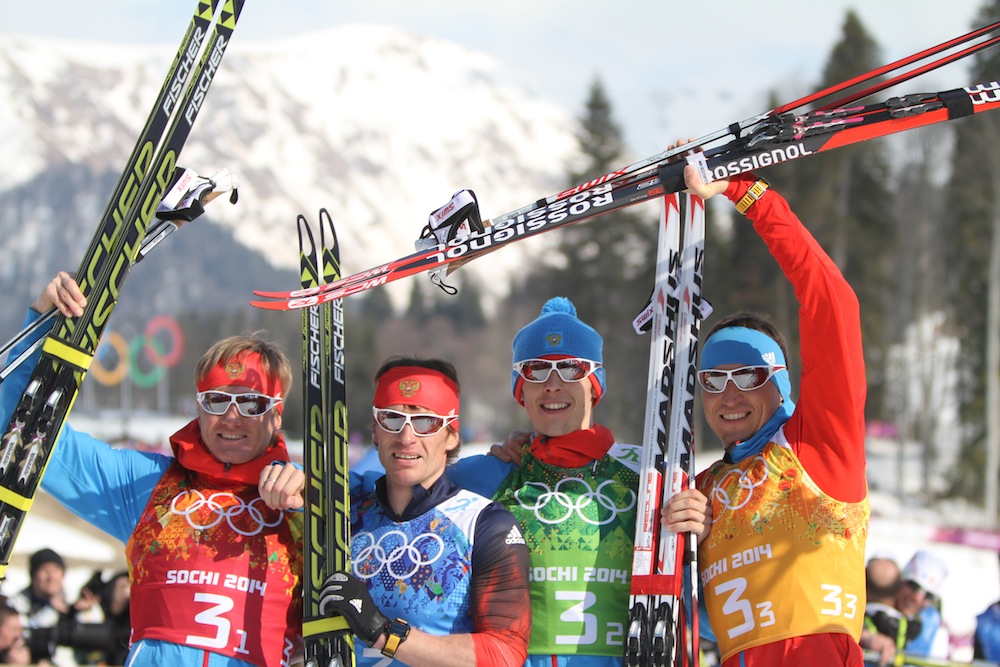

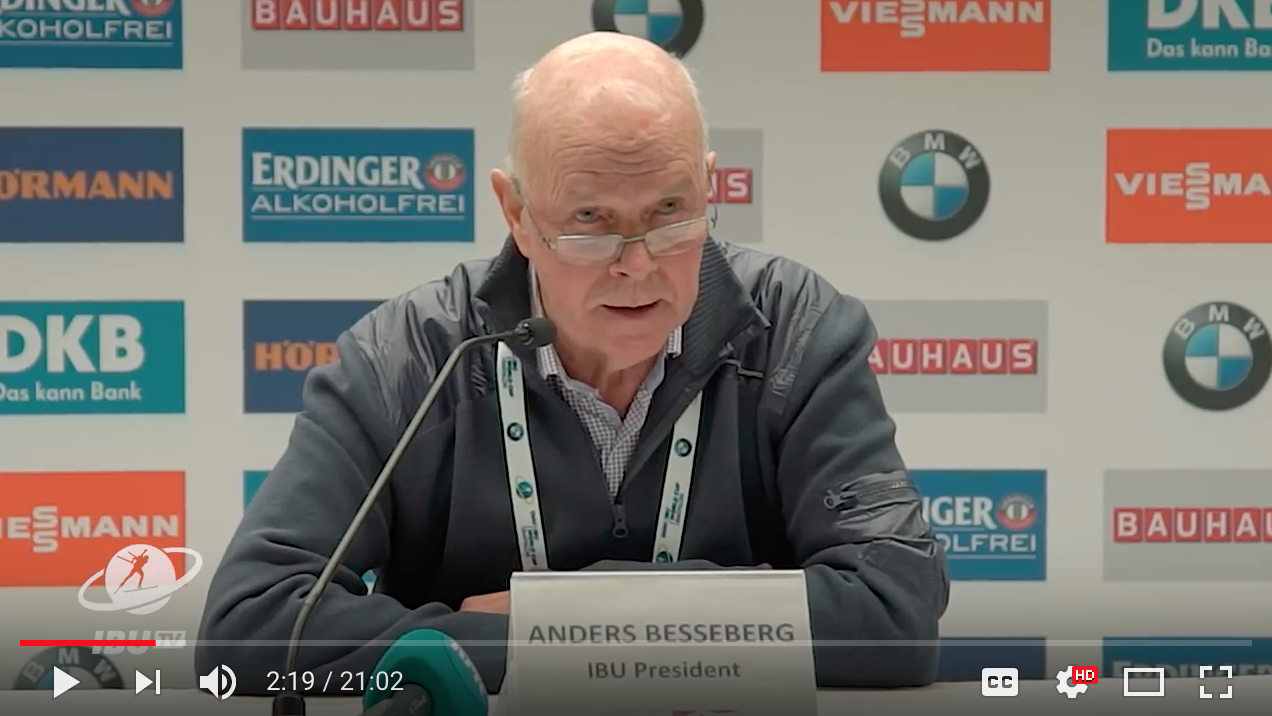

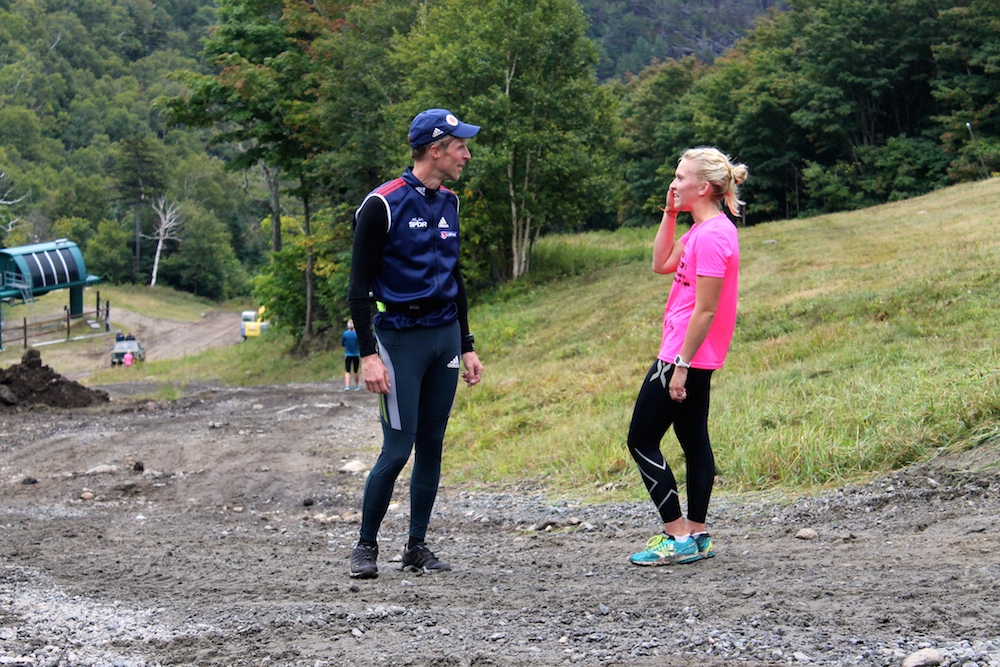
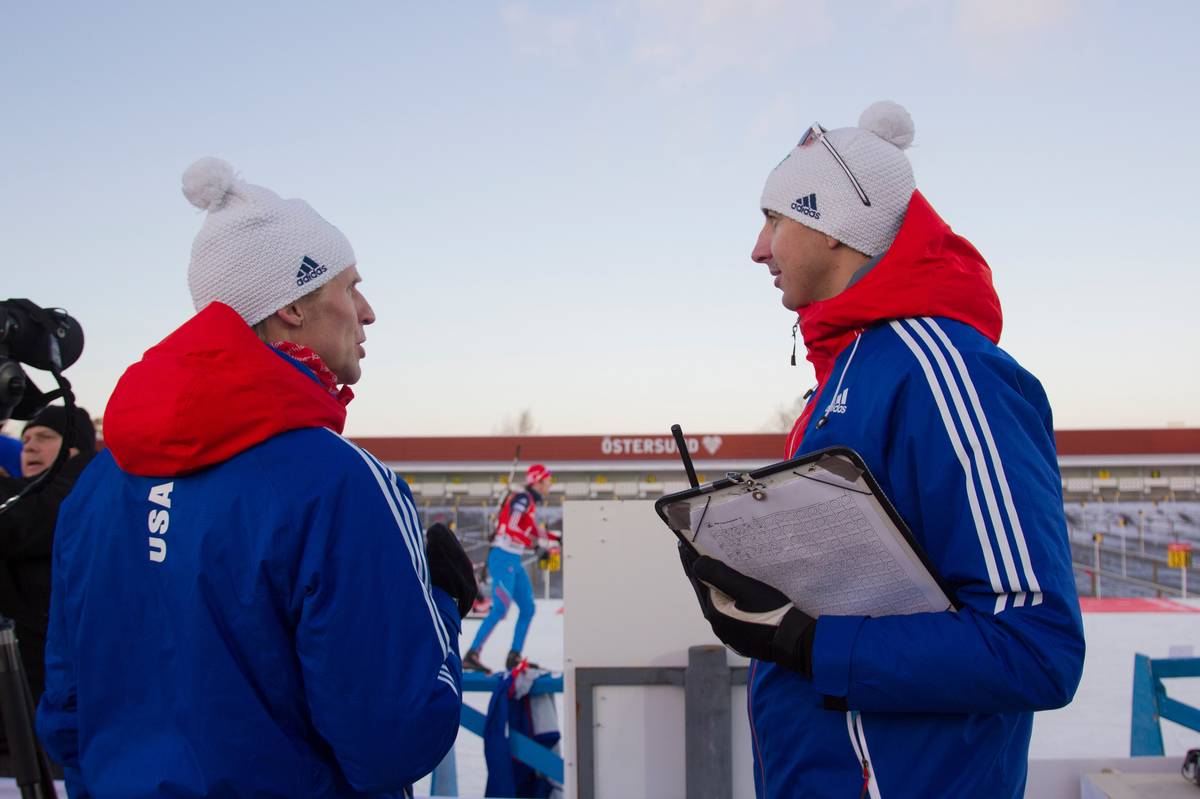
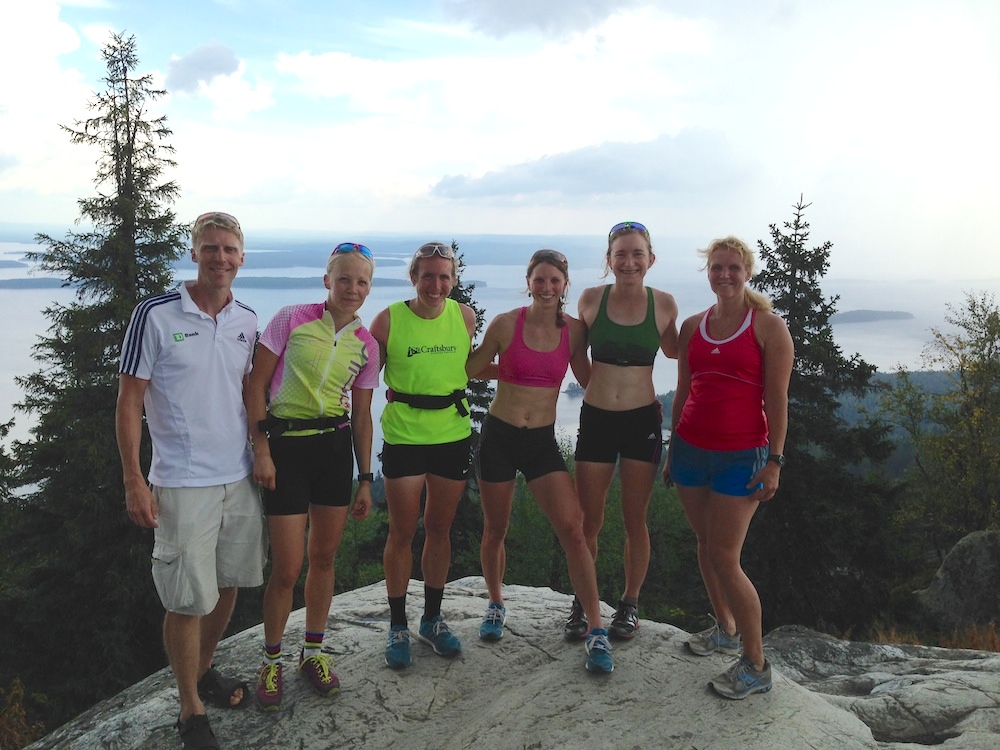
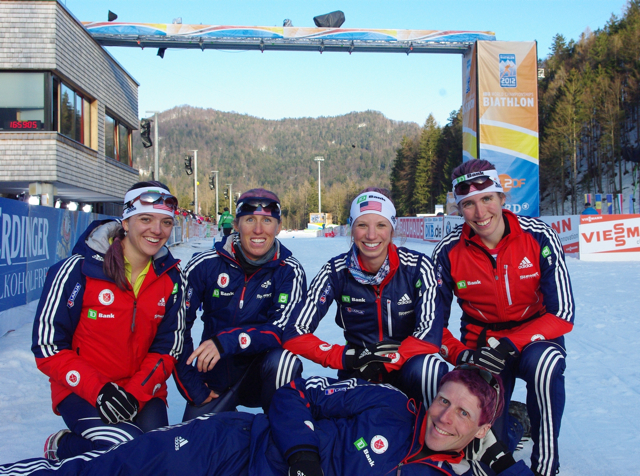
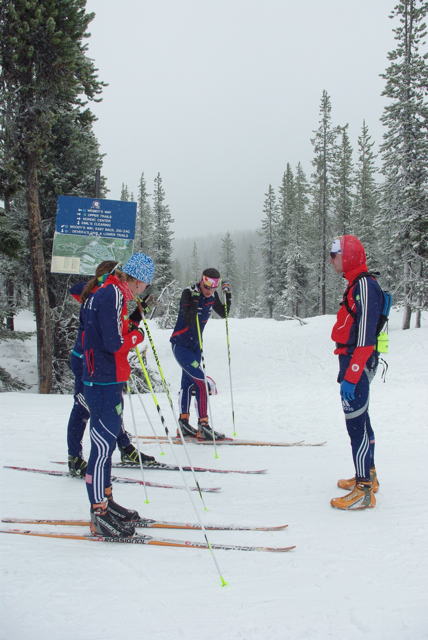

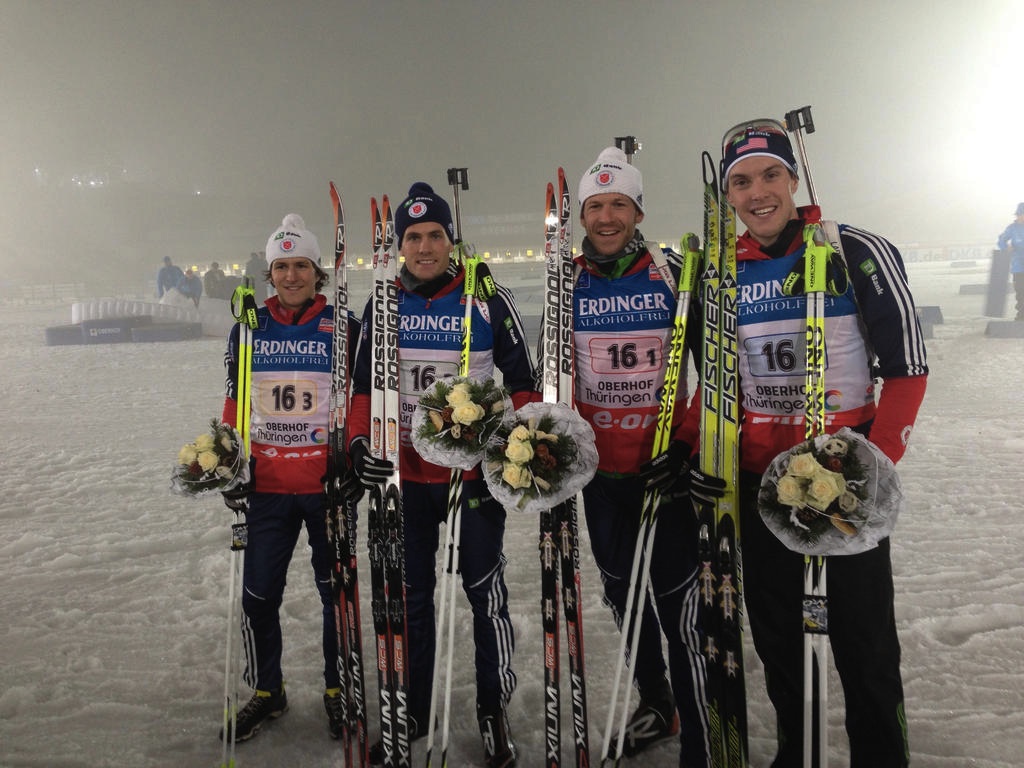
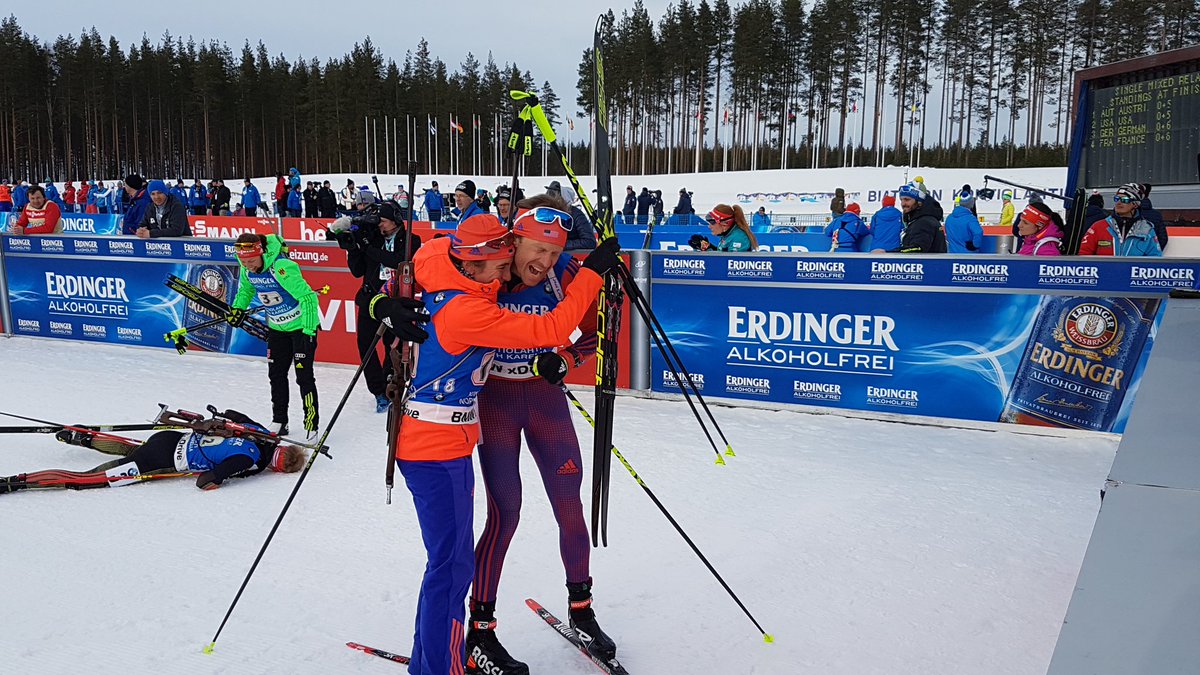
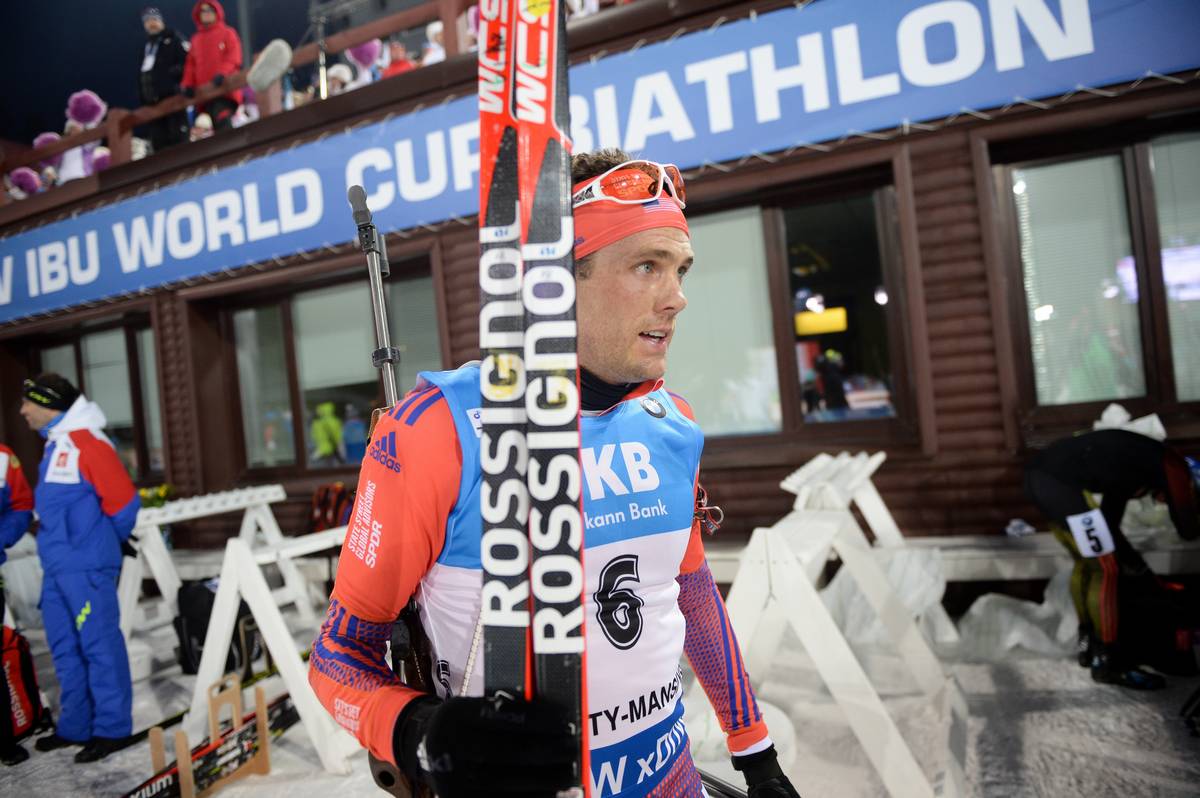
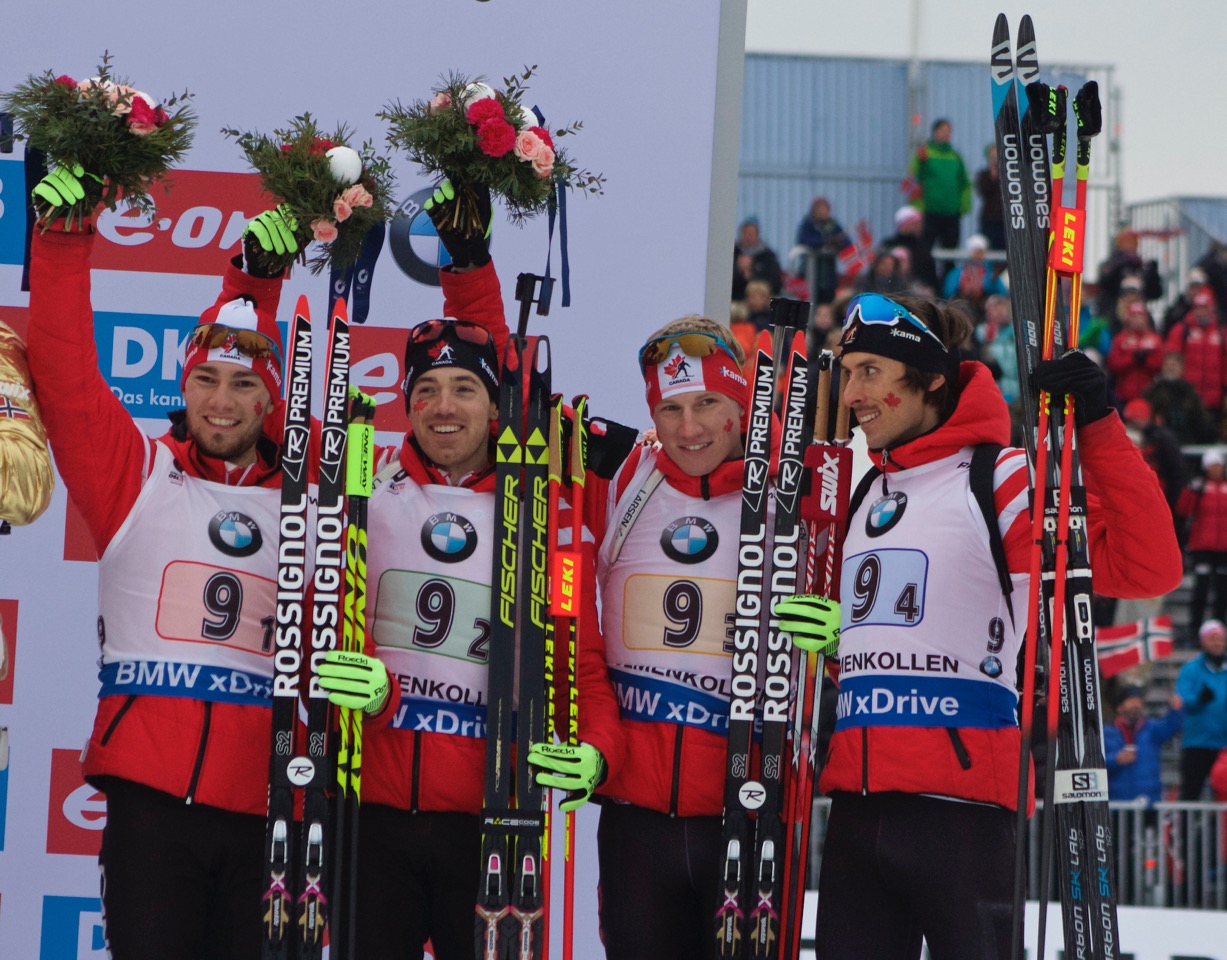
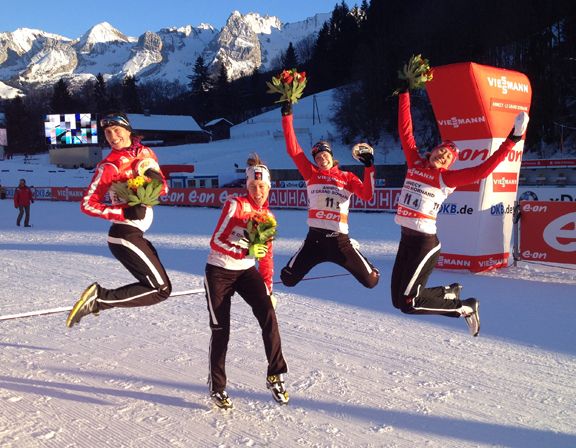
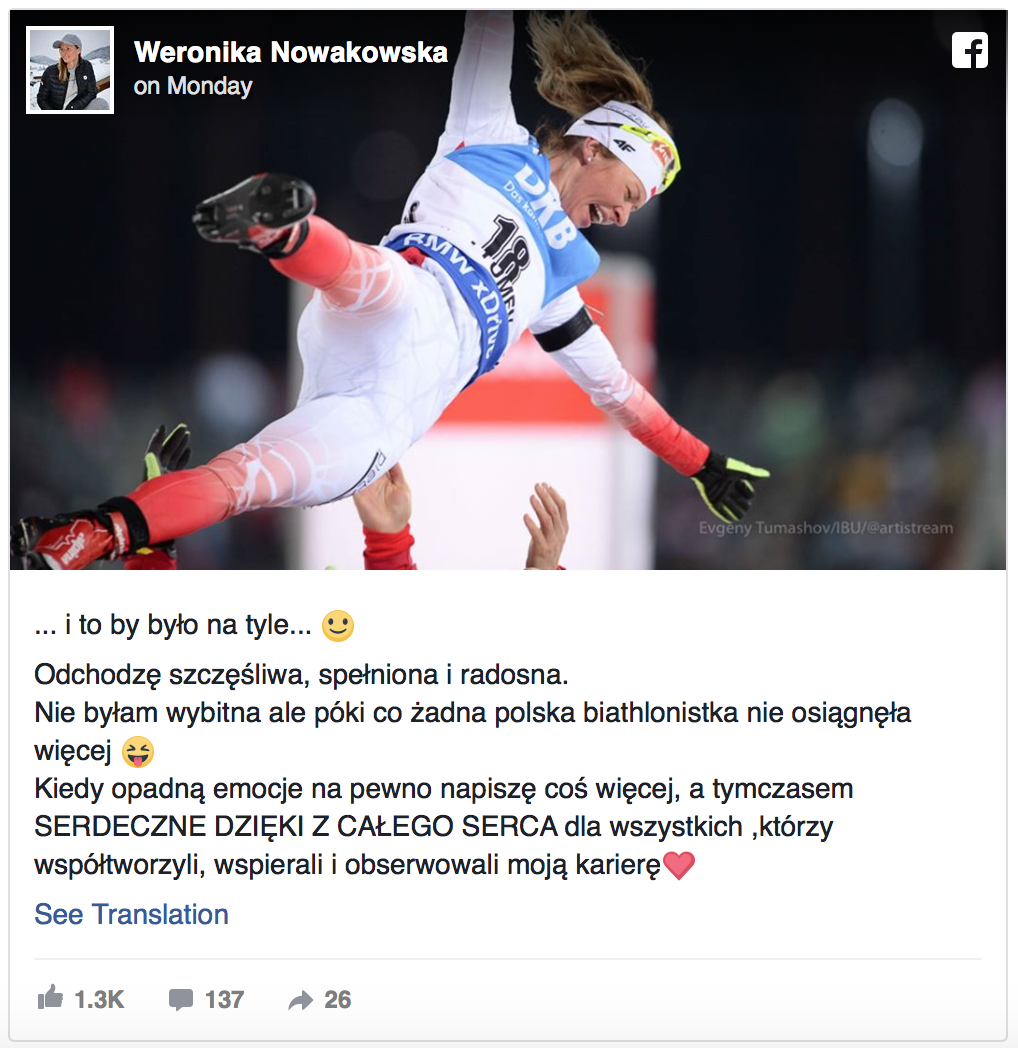 Weronika Nowakowska is calling it a career. The 31-year-old picked up two World Cup podiums in the 2015 season before taking a break from competition to give birth to twins. She made a successful return this season and represented Poland in PyeongChang, with a top finish of 21st in the individual. She also had sixth- and fourth-place finishes on the World Cup this year and contributed to four different top-eight relay efforts, including one at the Olympics.