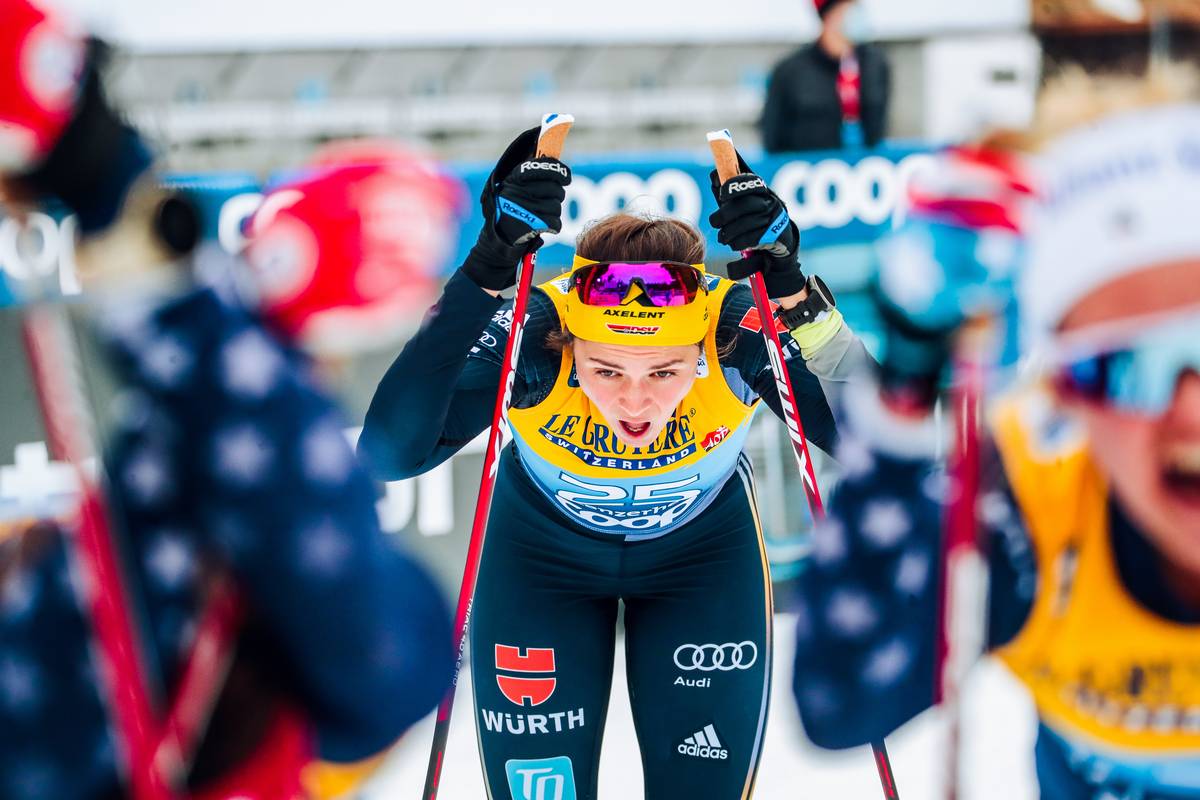
Author: Ella Hall

  • Sundling Dominates Final Sprint; Kern Finishes a Close Fourth

    Sundling Dominates Final Sprint; Kern Finishes a Close Fourth

    This World Cup coverage is made possible through the generous support of Marty and Kathy Hall and the A Hall Mark of Excellence Award.  To learn more about A Hall Mark of Excellence Award or to learn how you can support FasterSkier’s coverage please contact info@fasterskier.com.

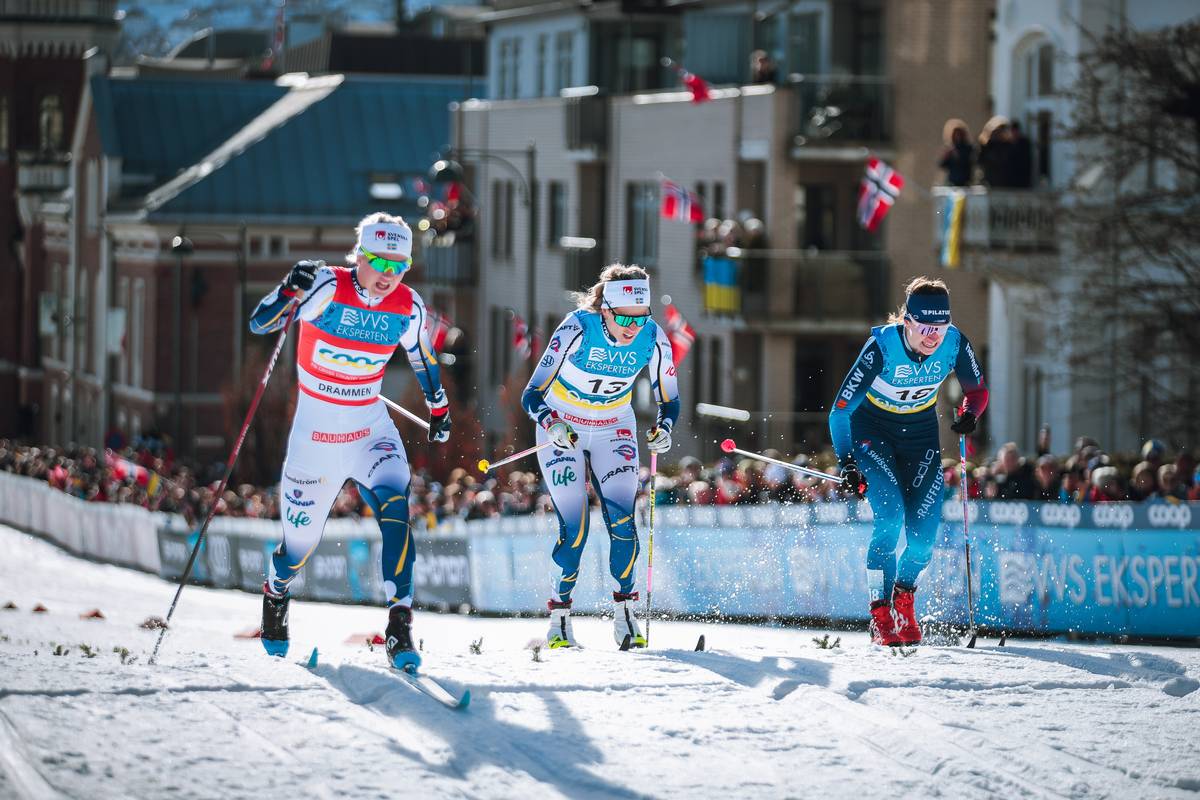
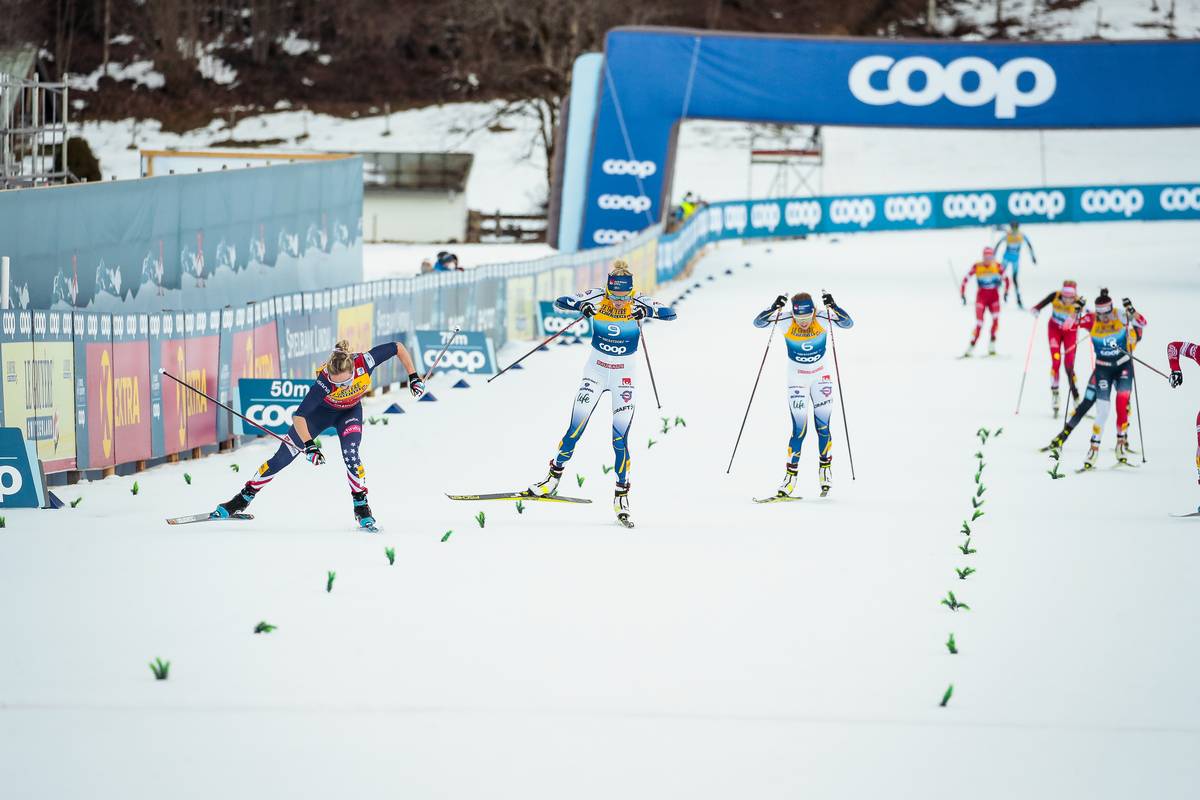
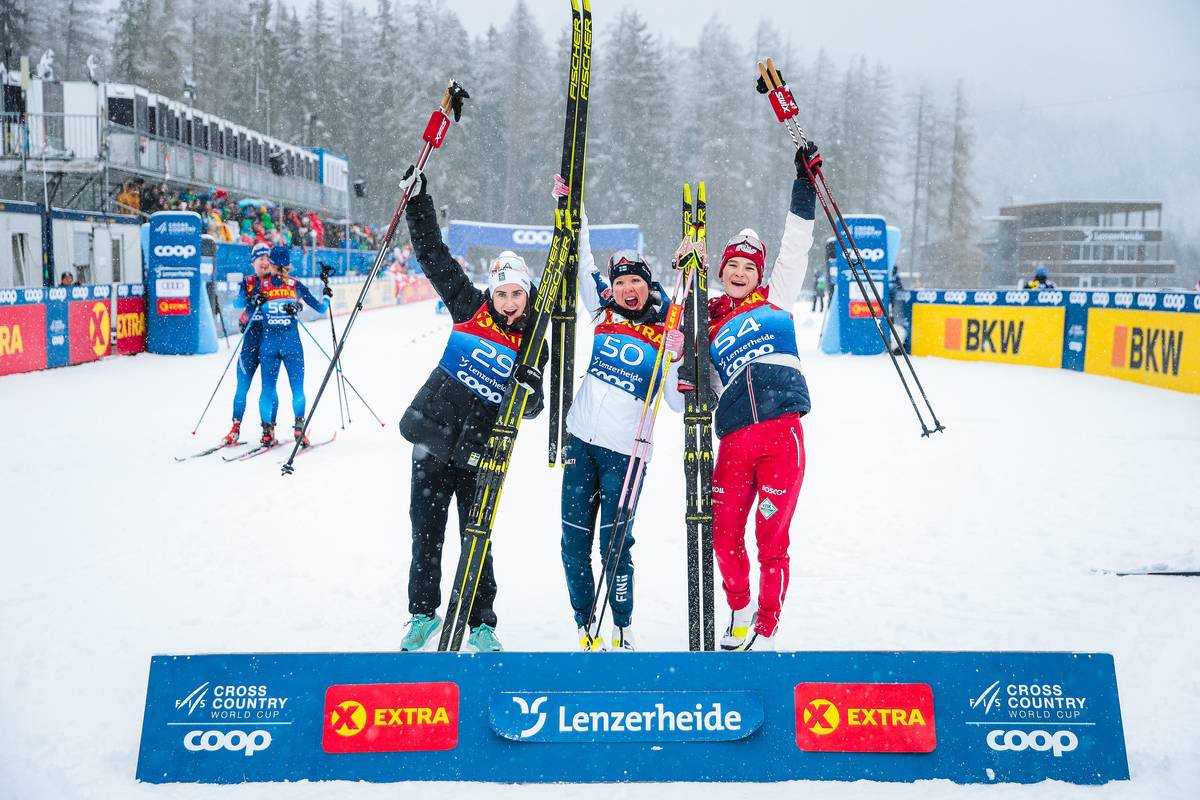
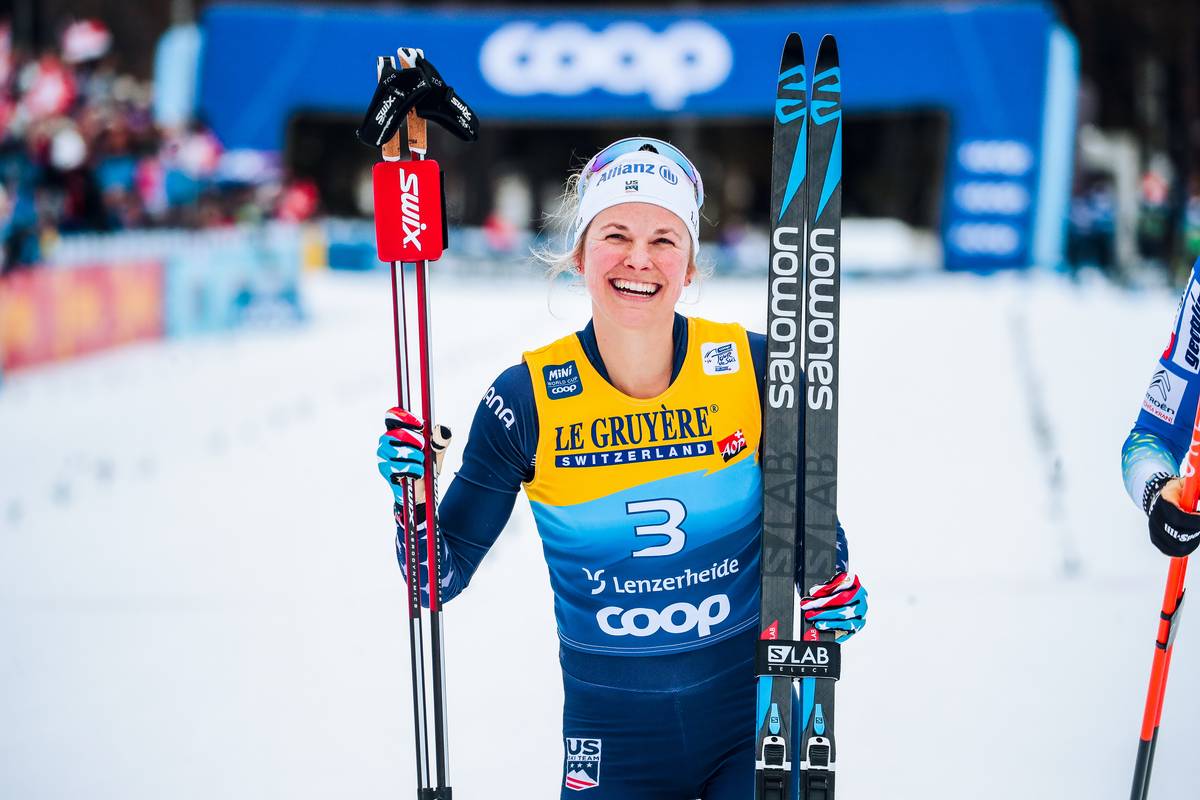
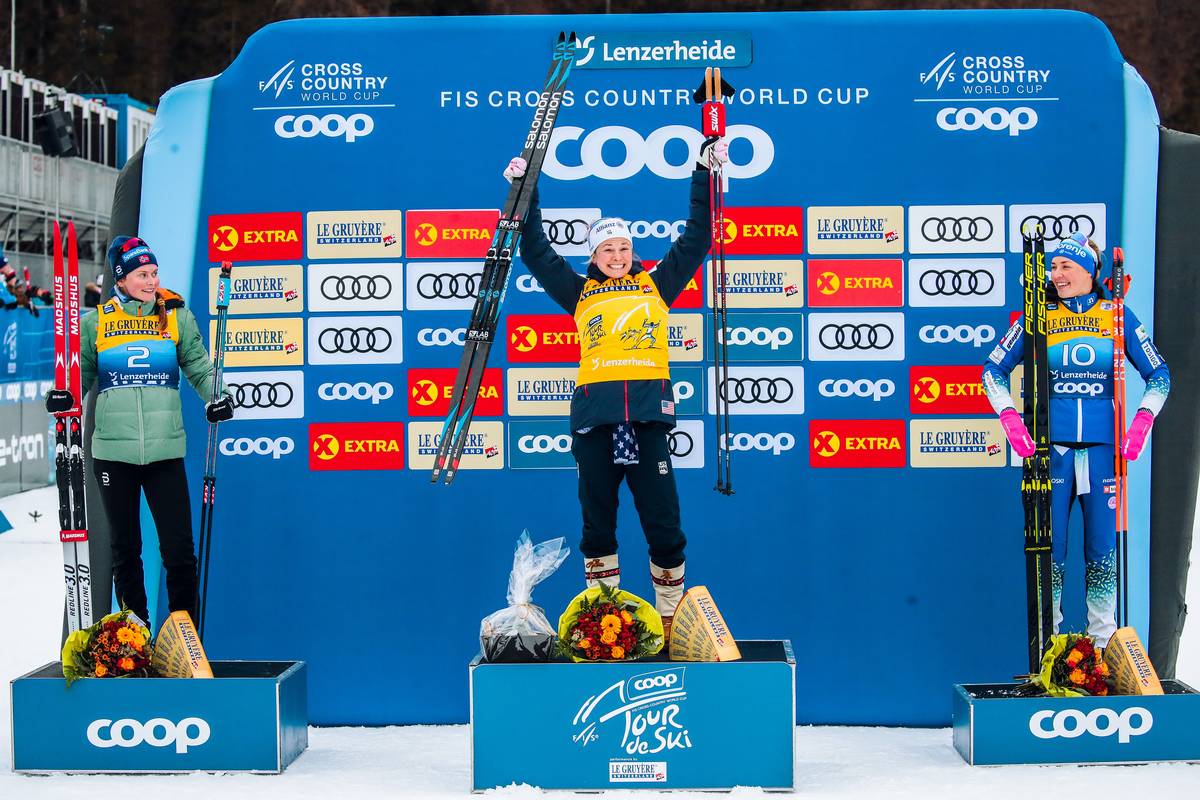
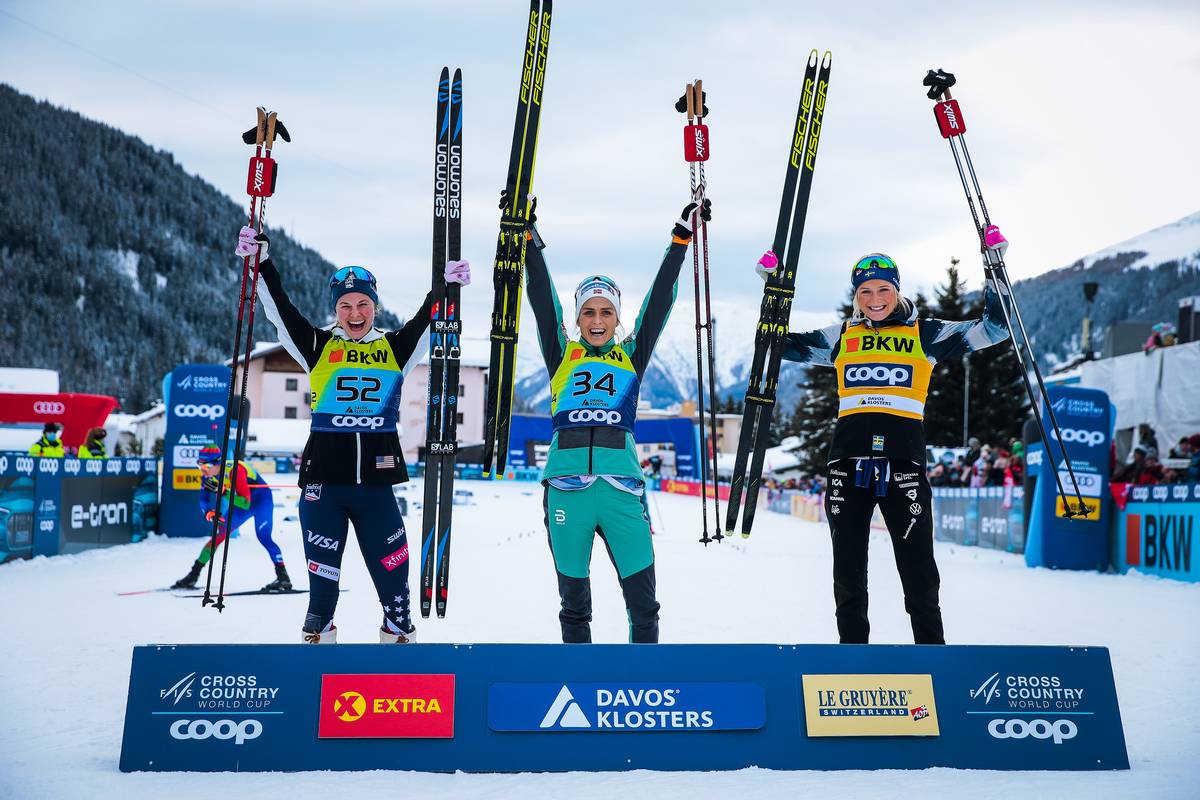
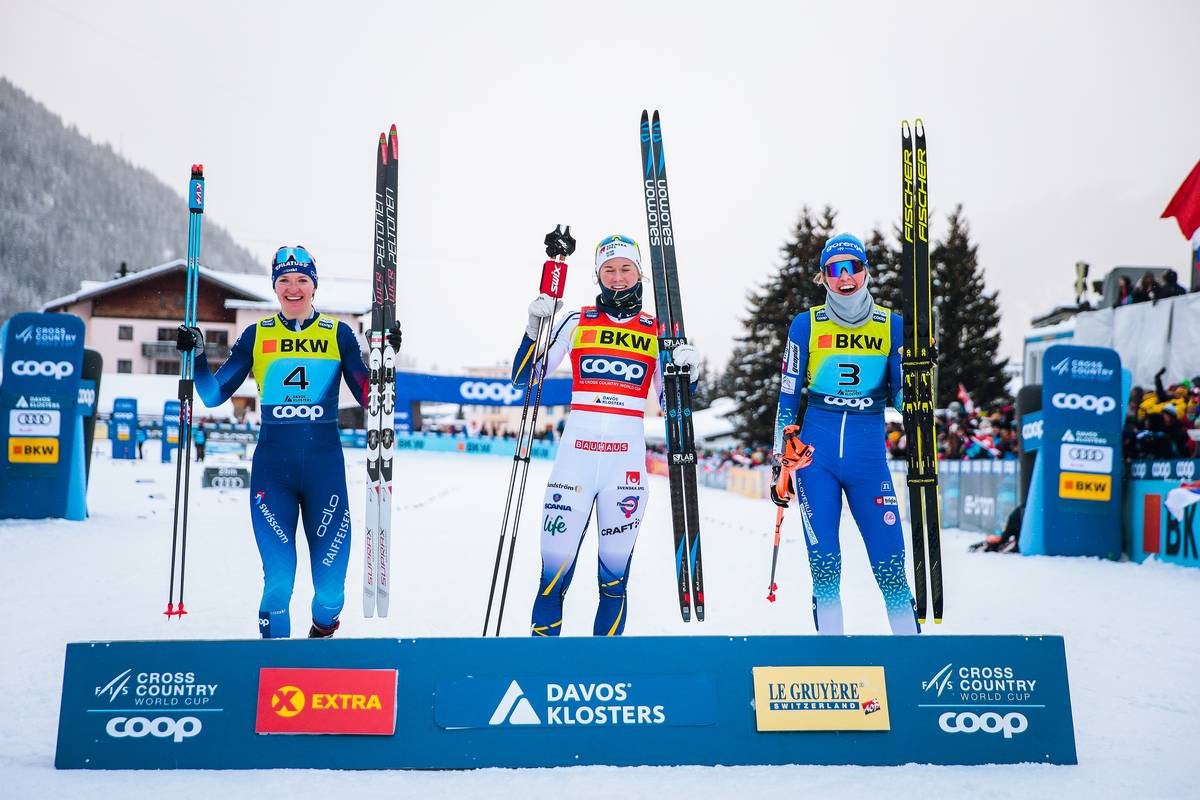
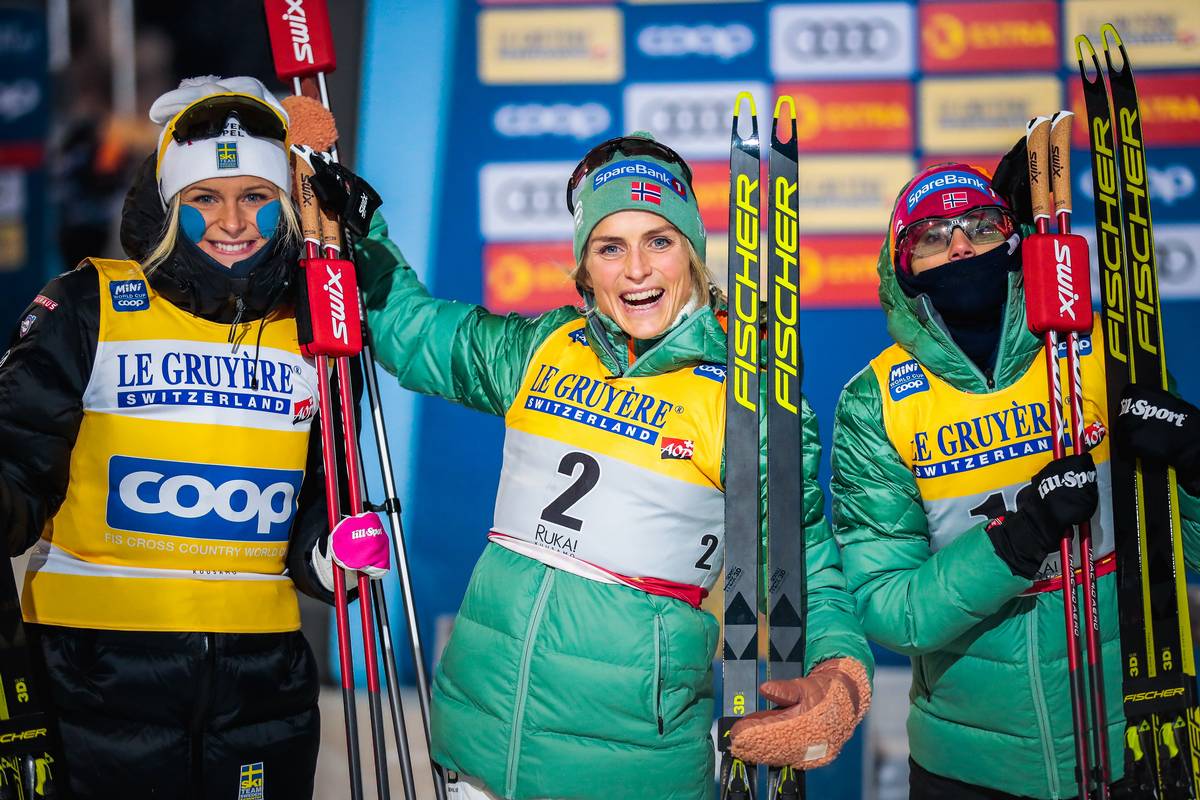
    Women’s 1.4 k classic sprint podium in Falun, Sweden: Jonna Sundling (SWE) took the win ahead of Anamarija Lampic (SLO) and Maja Dahlqvist (SWE). (Photo: NordicFocus)

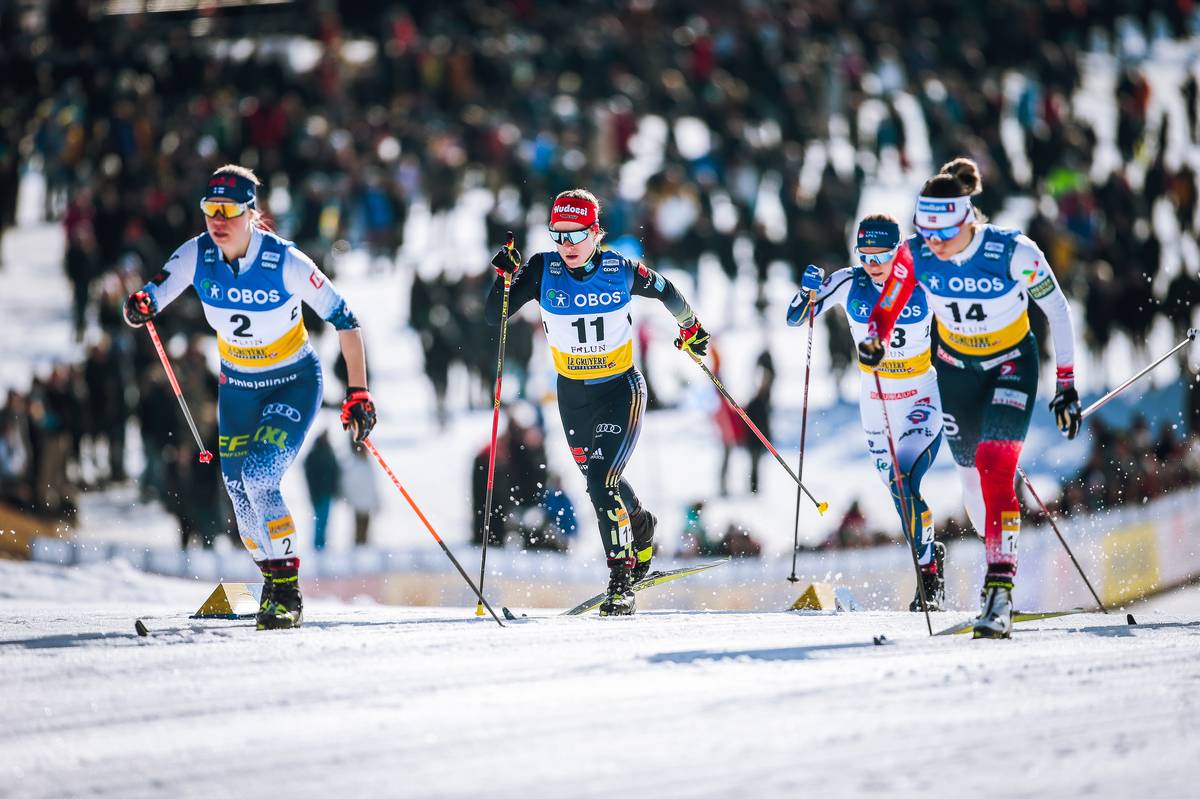
    We’ve arrived at the final weekend of World Cup racing. After the cancellation of the finals scheduled to take place in Tyumen, Russia and the difficulty of finding a last-minute replacement, these three days of racing in Falun, Sweden will be the culmination of the 2021/22 World Cup season. On a warm sunny day, in full spring conditions, the women executed an exciting classic sprint on the familiar 1.4 k Falun sprint course. With this being the last sprint of the season, it was also a day to cement the places in the running for the overall women’s sprint globe (none of the team events happening Sunday will influence the rankings). 

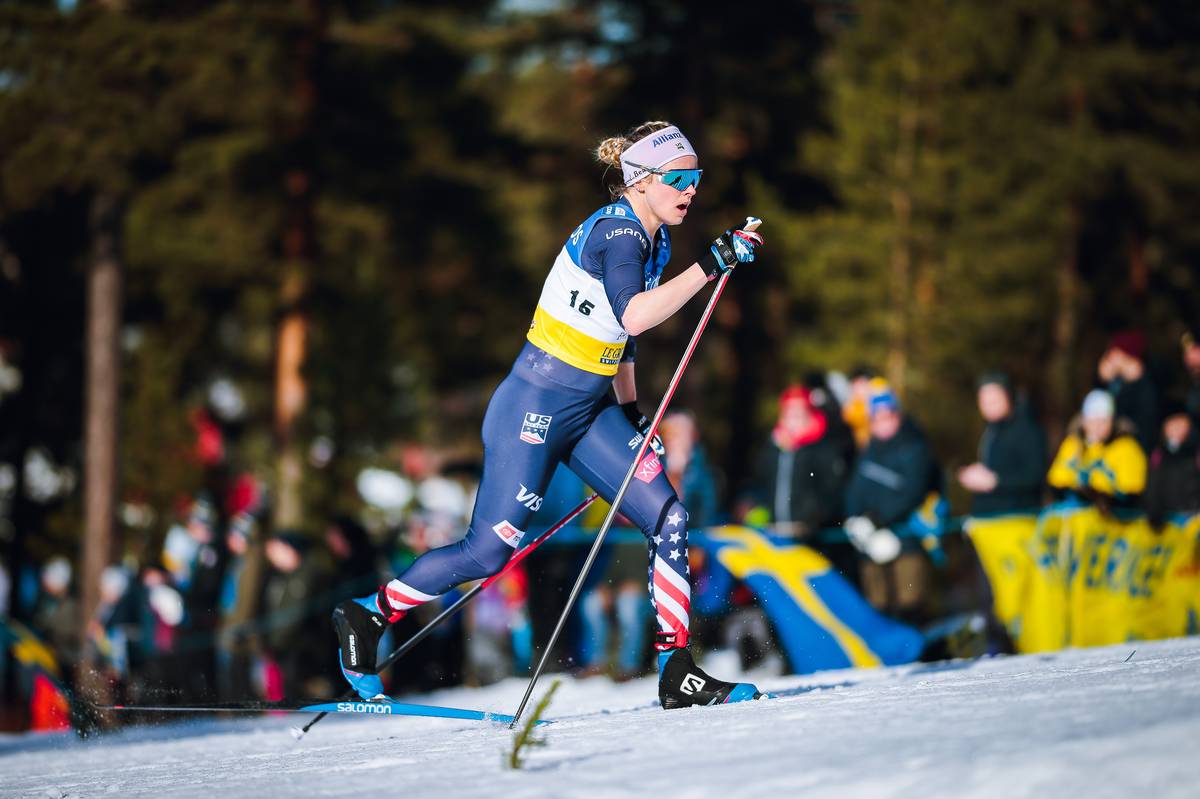
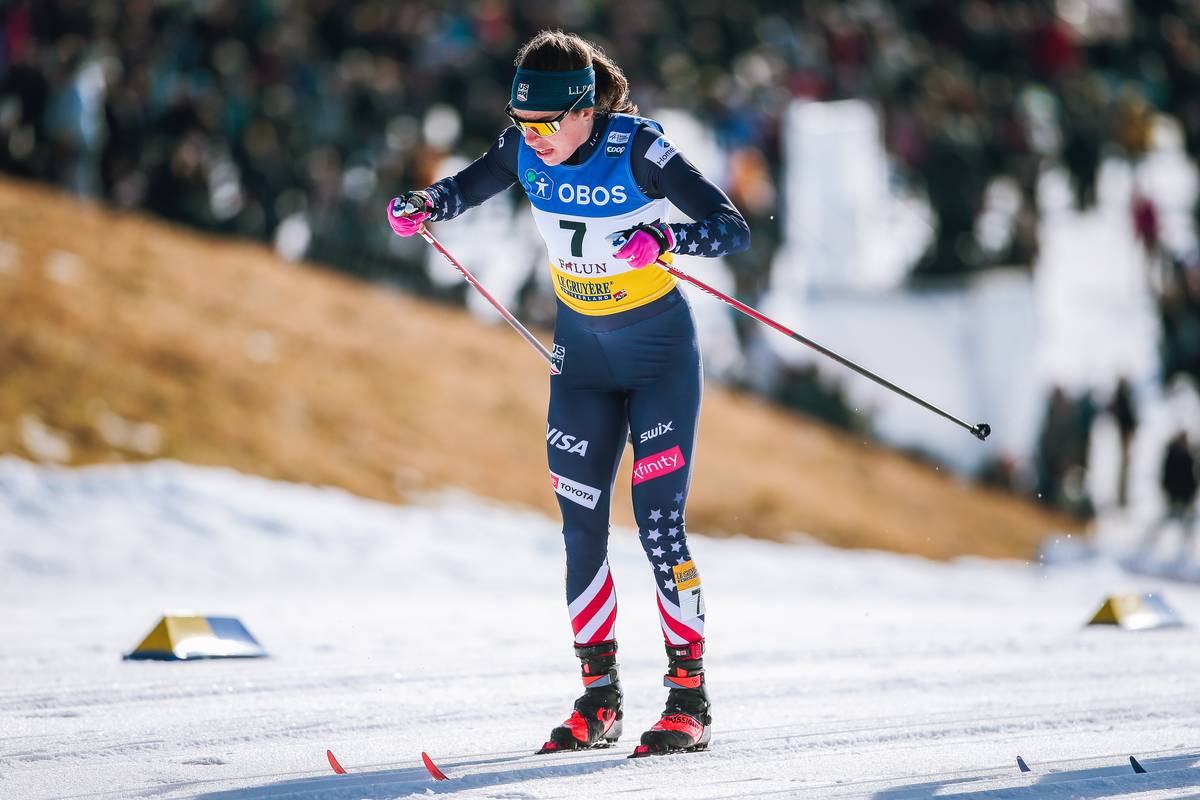
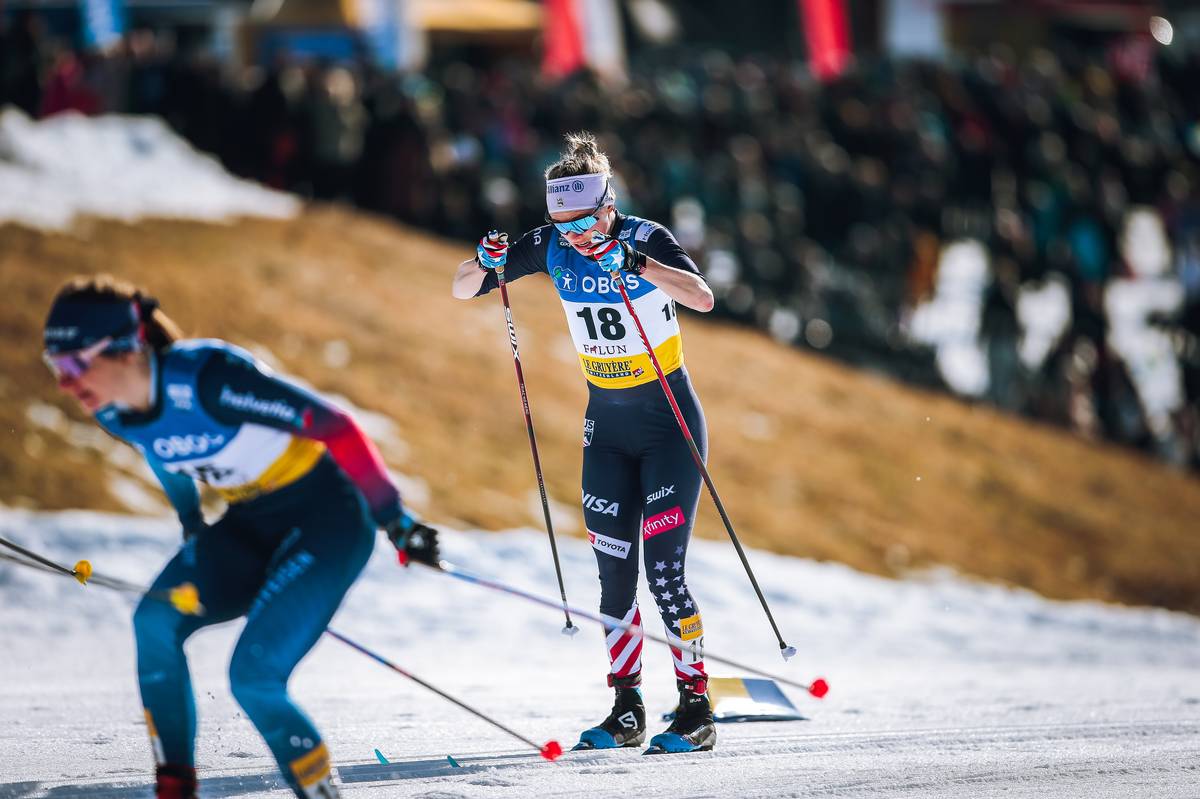
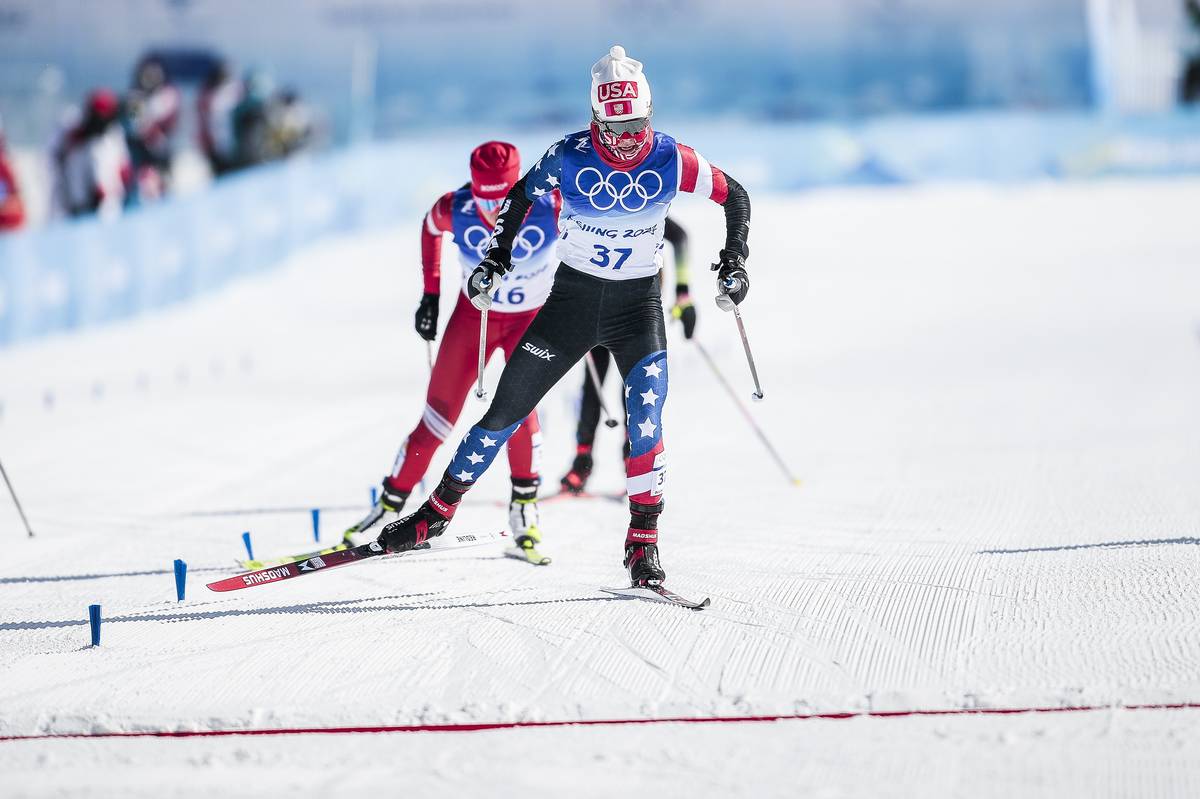
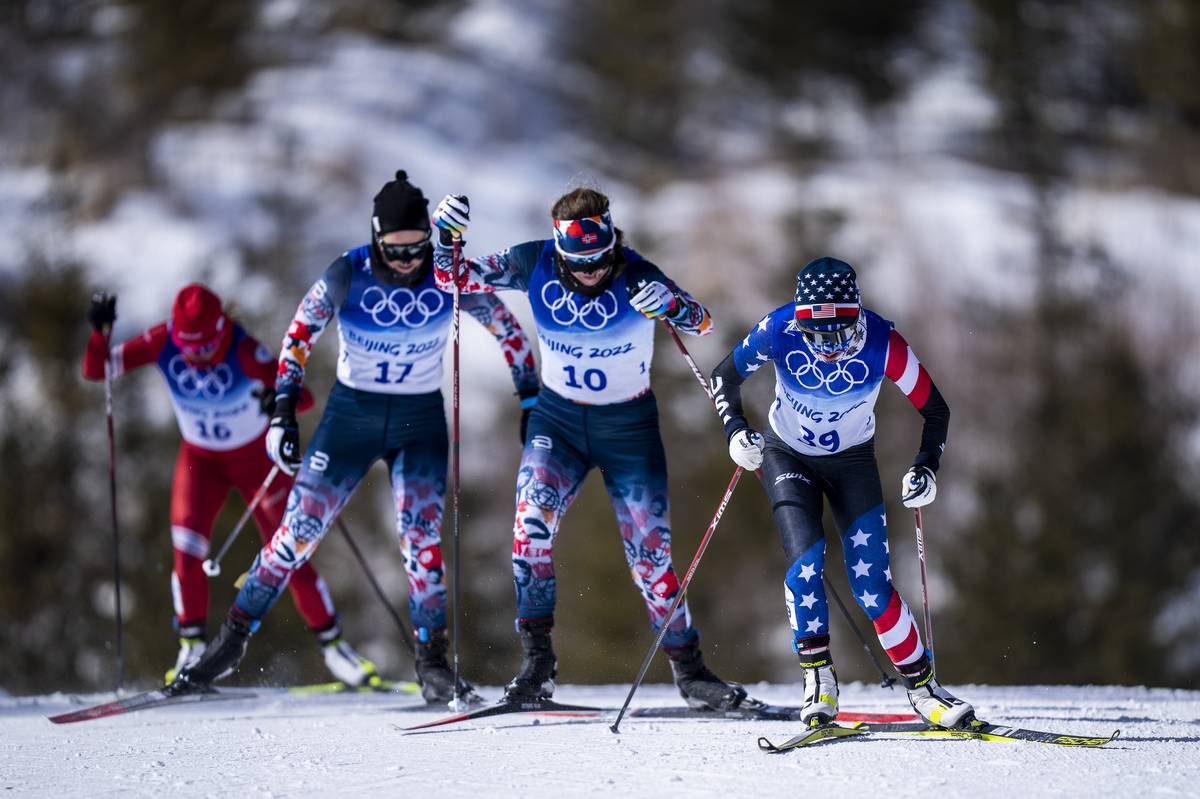
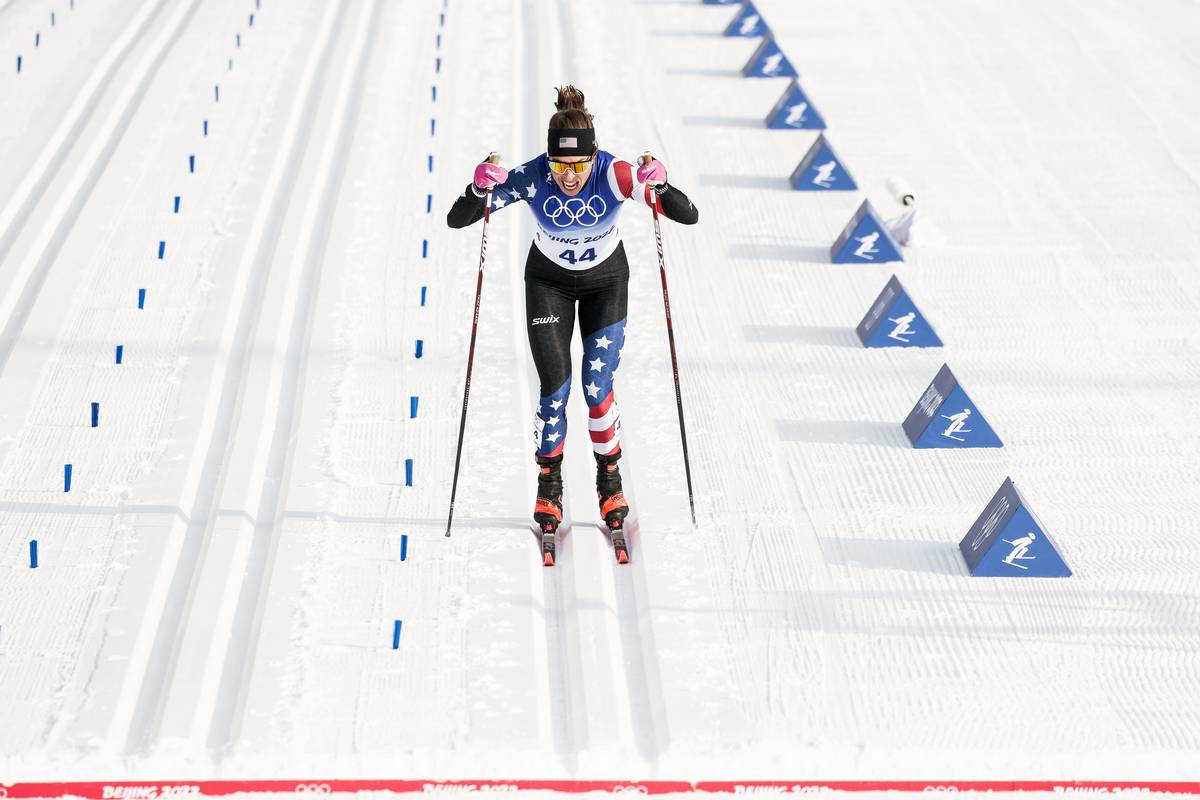
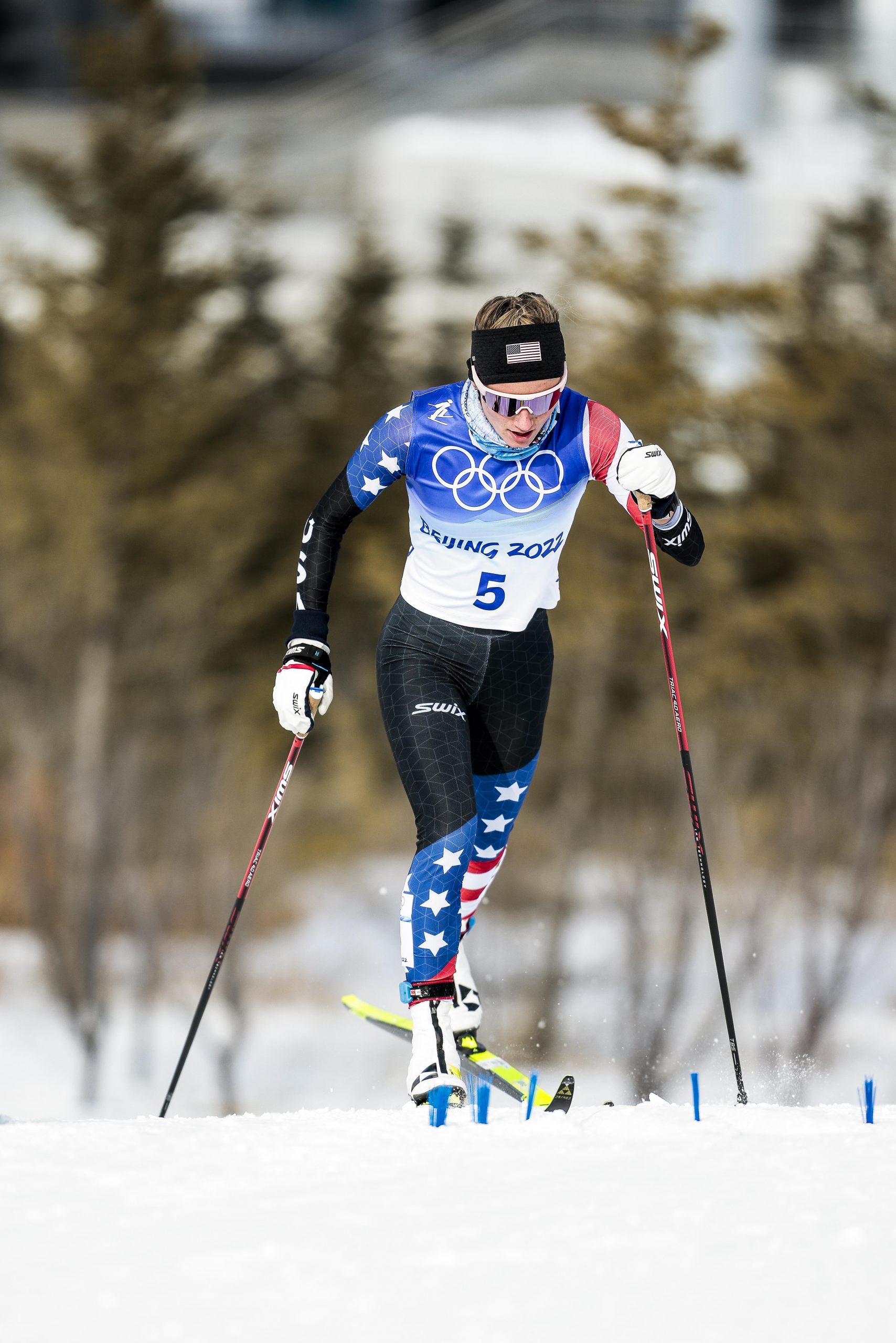
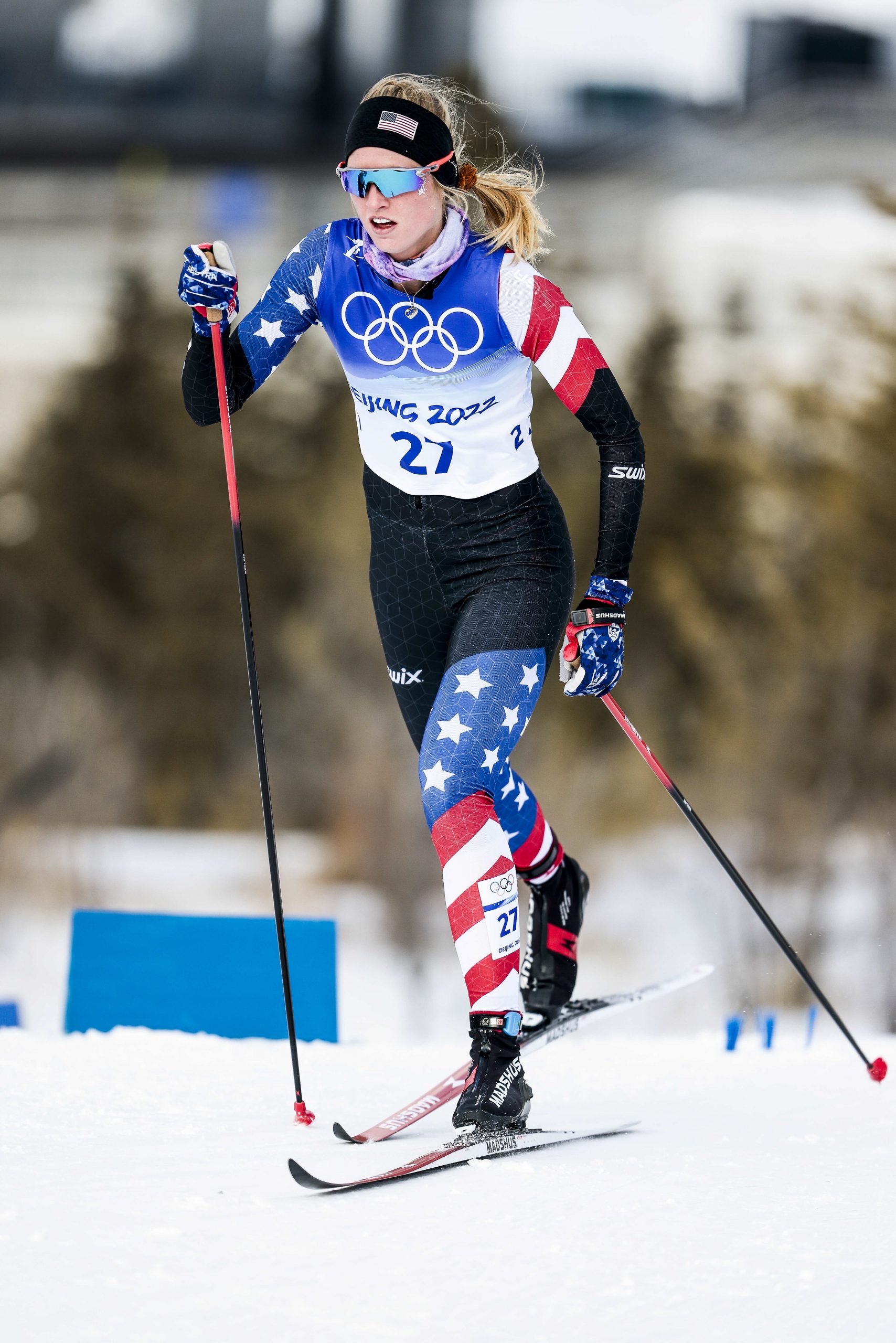
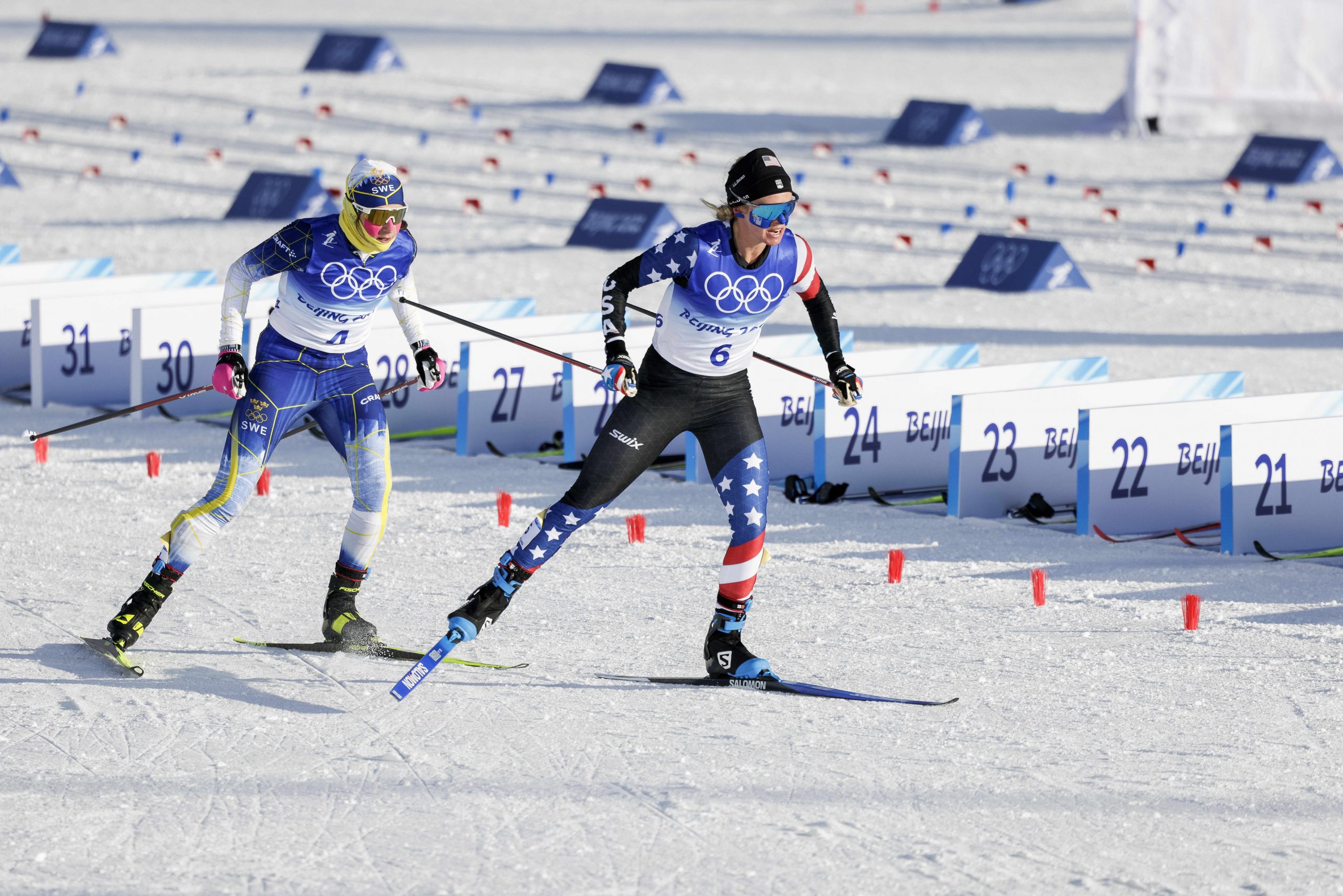
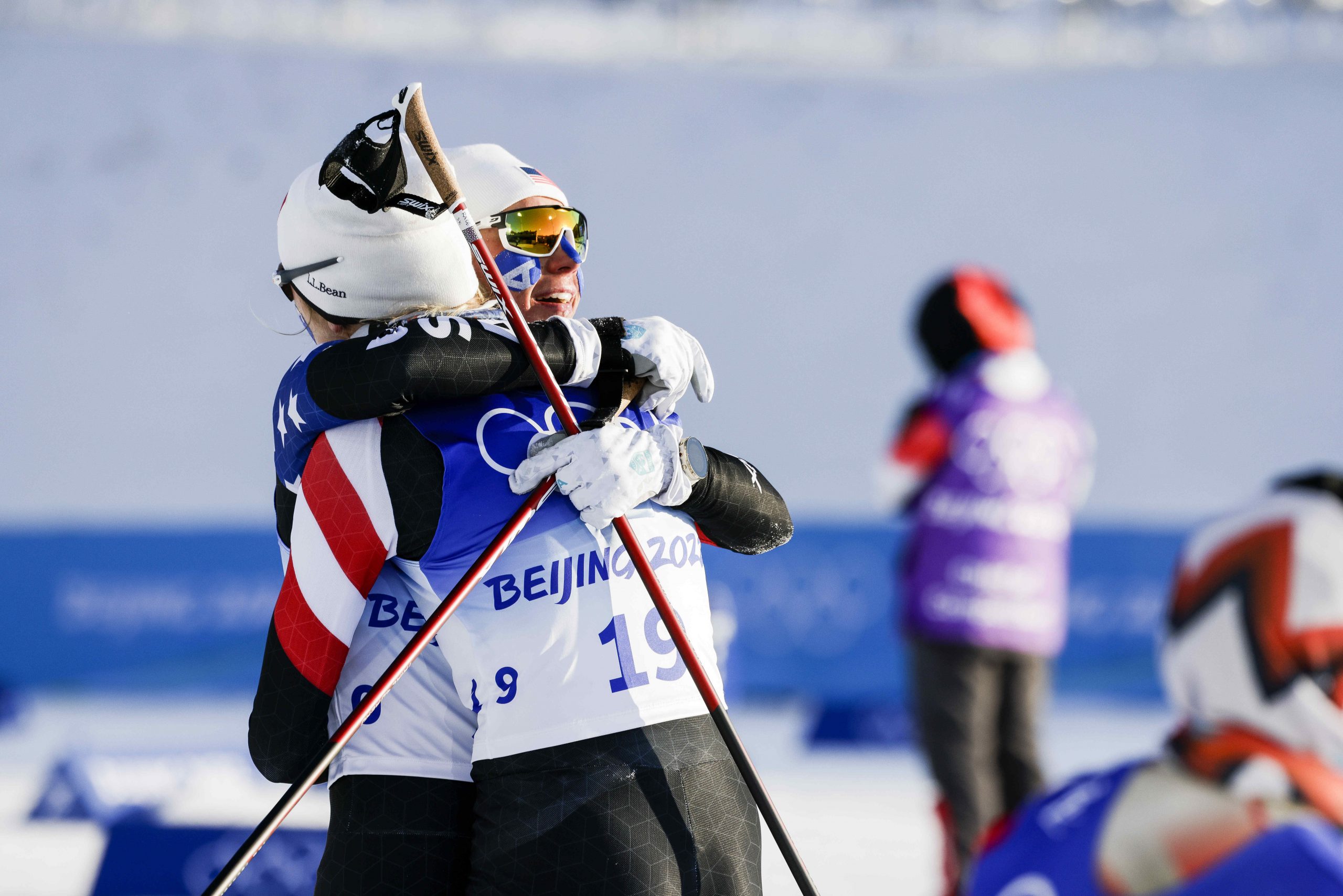
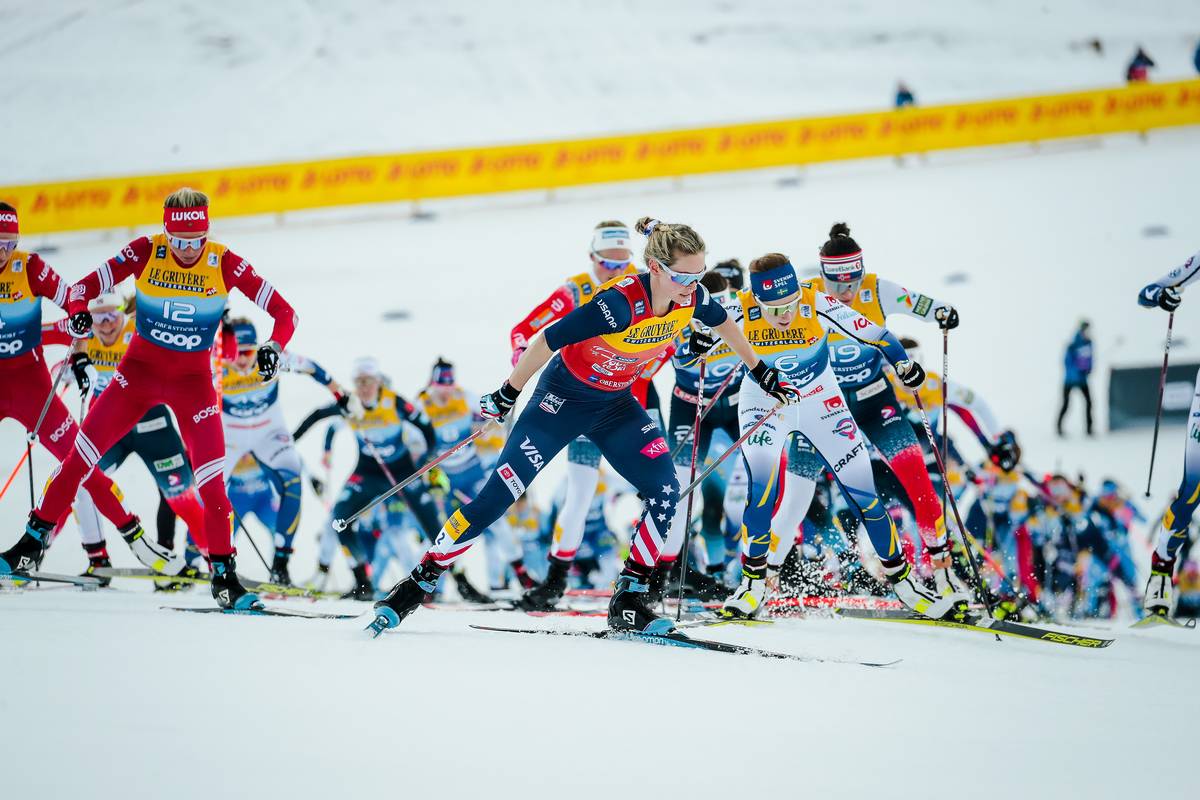
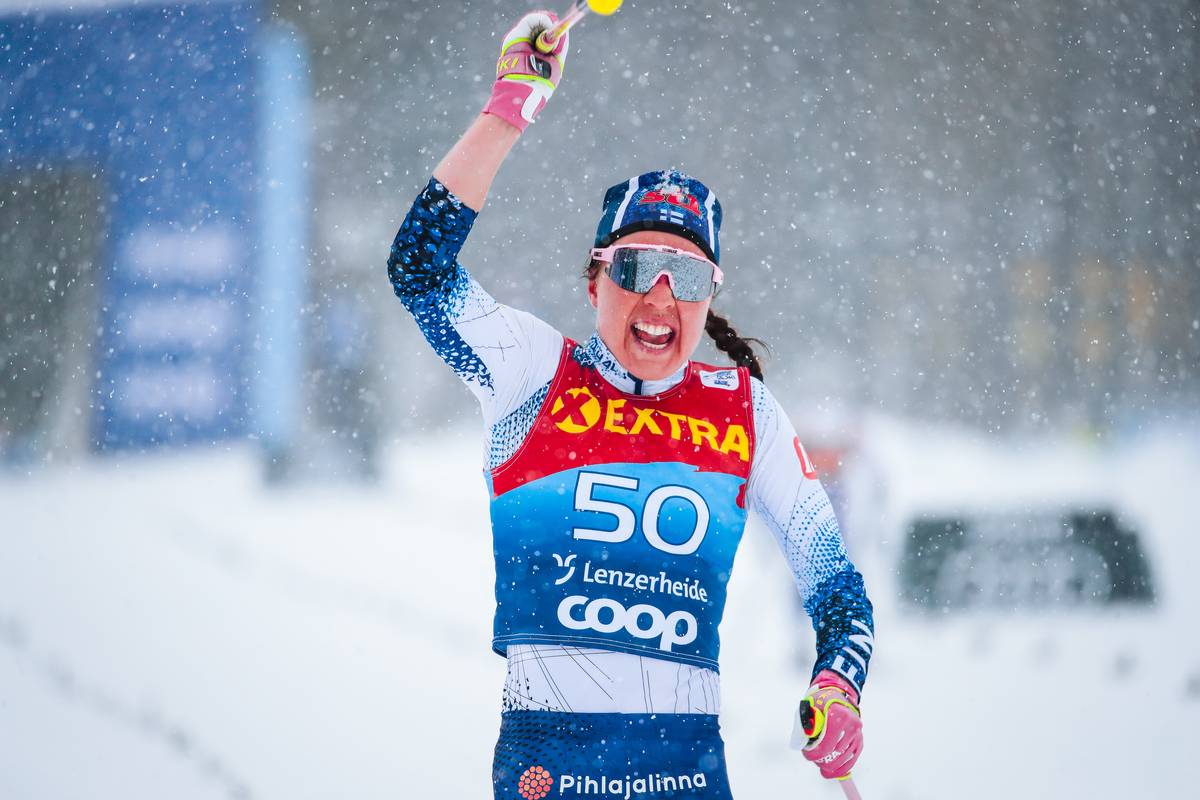
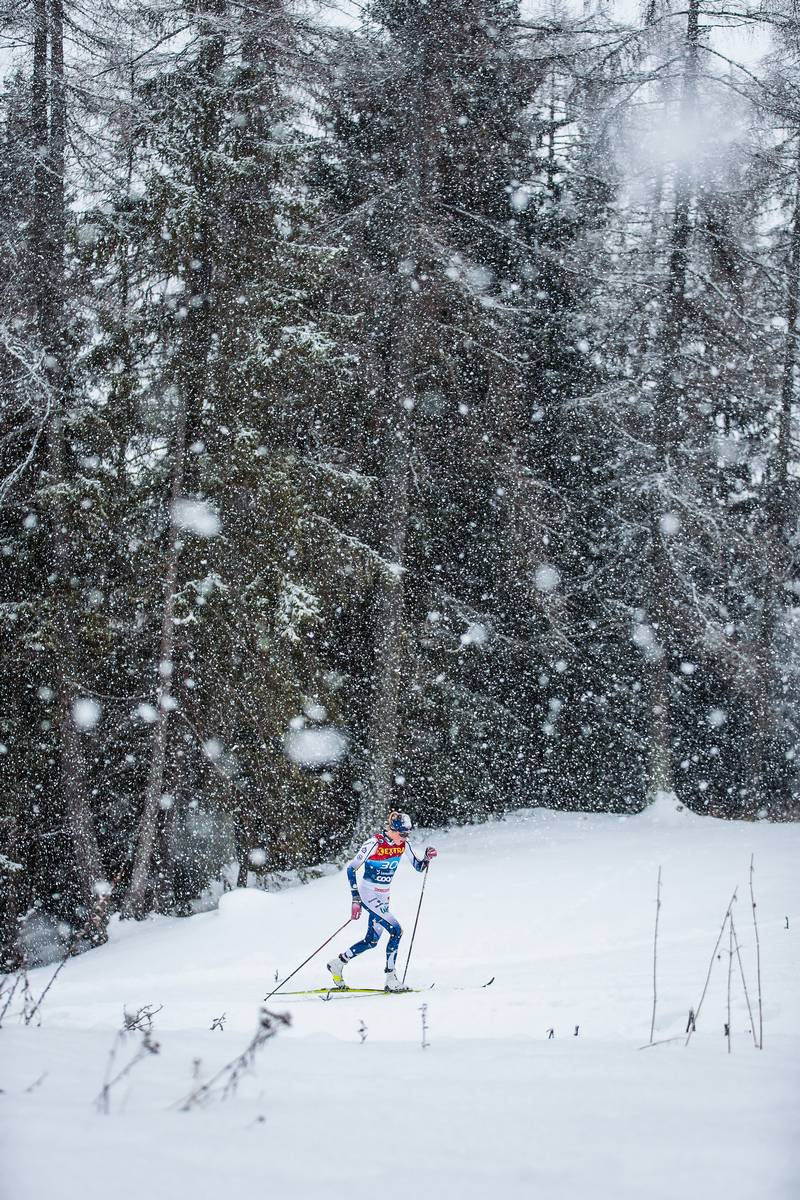
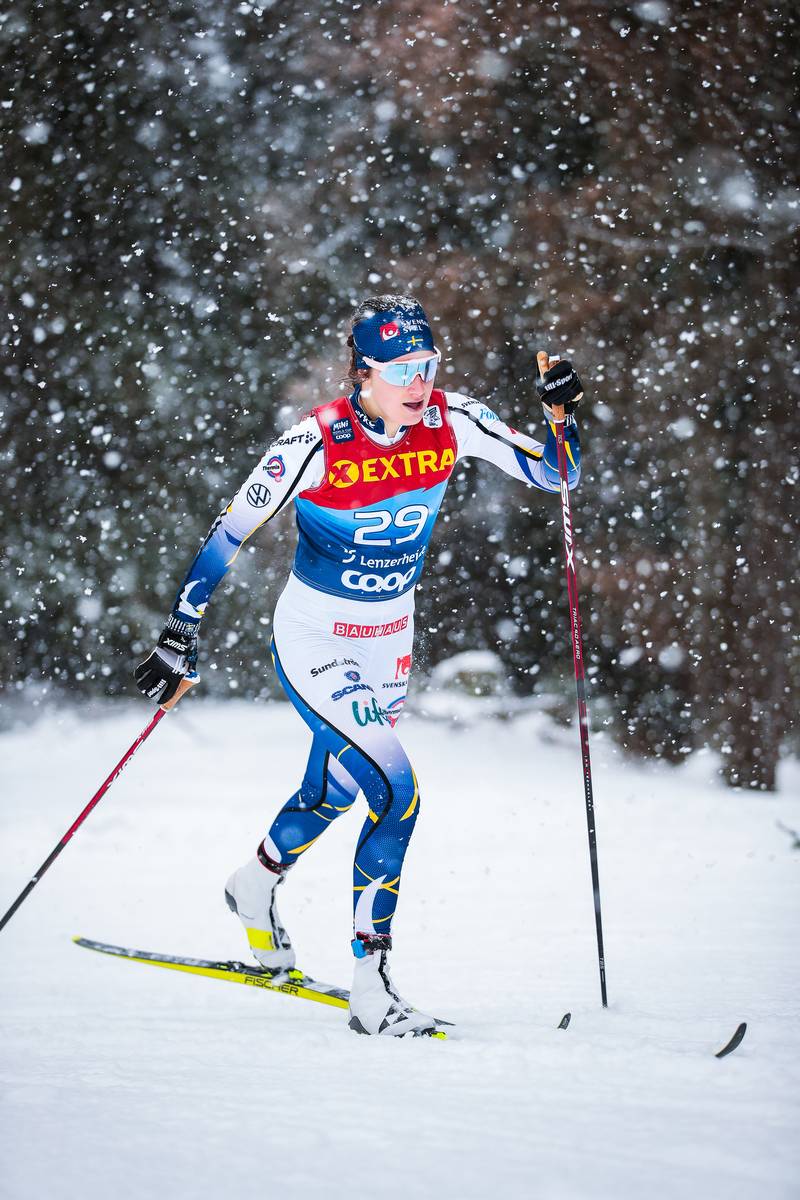
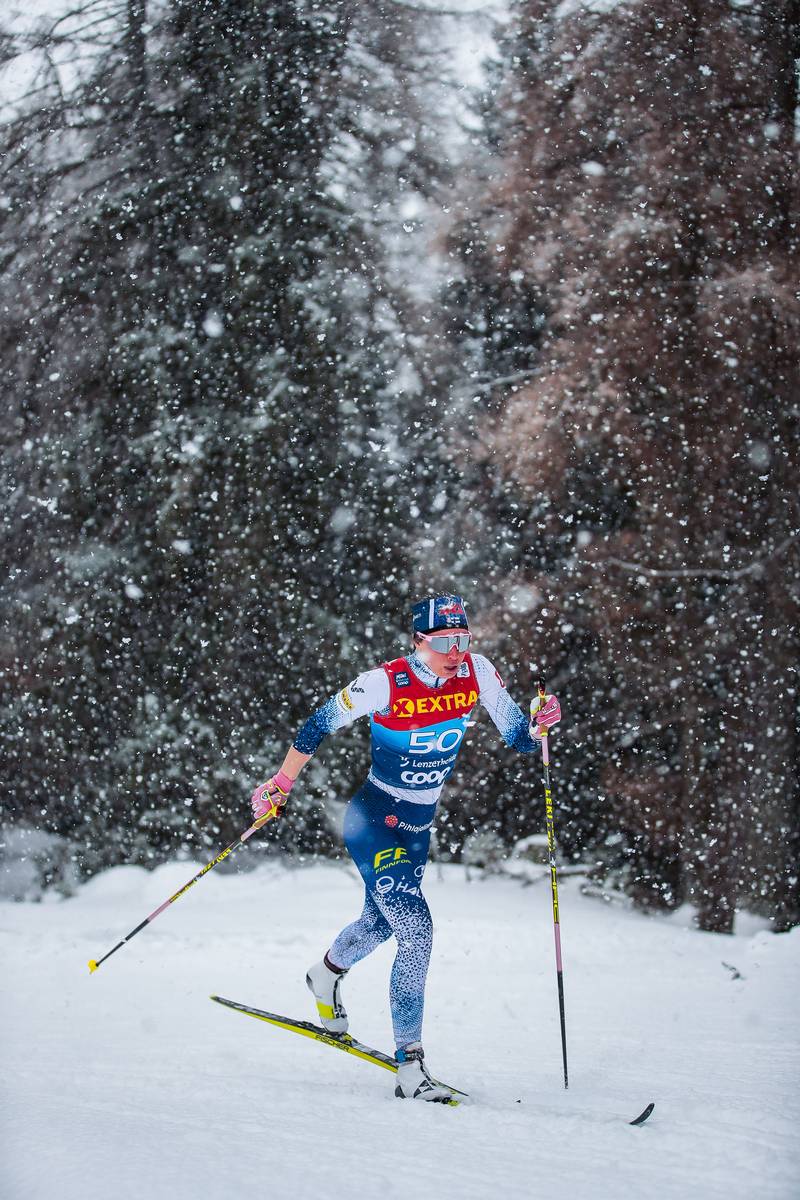
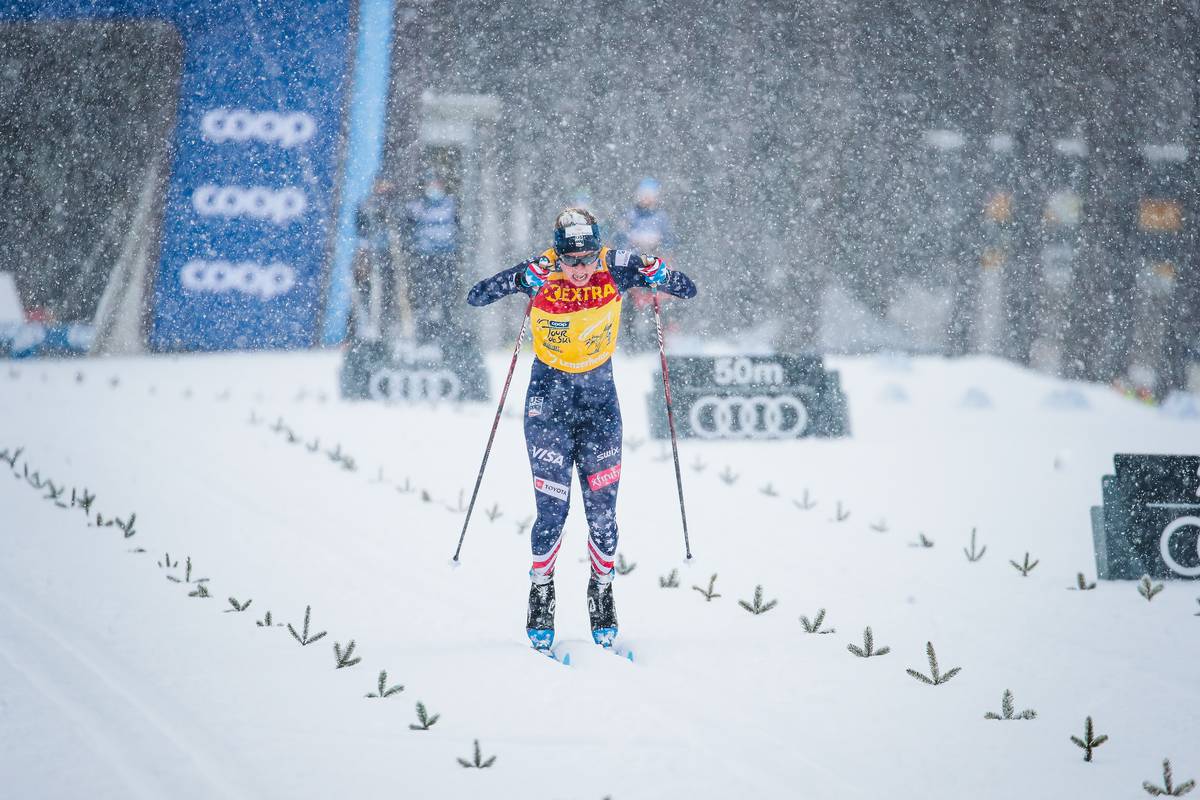
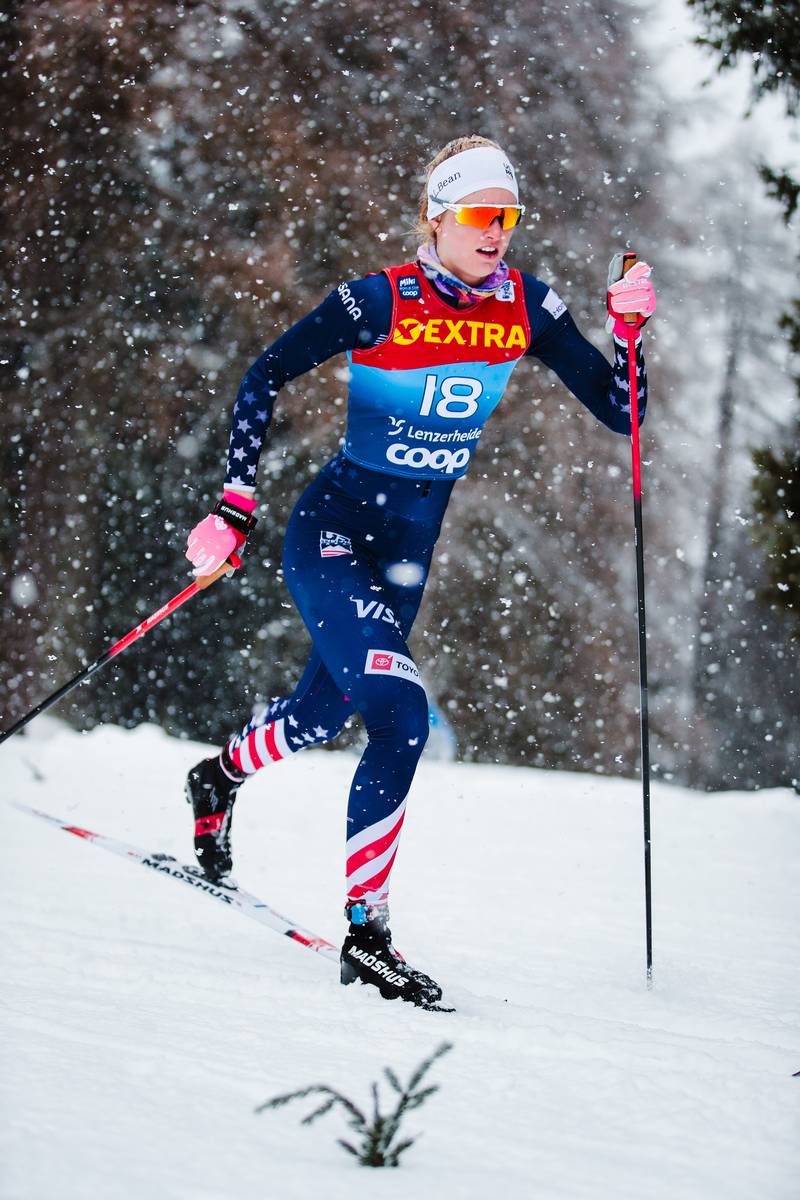
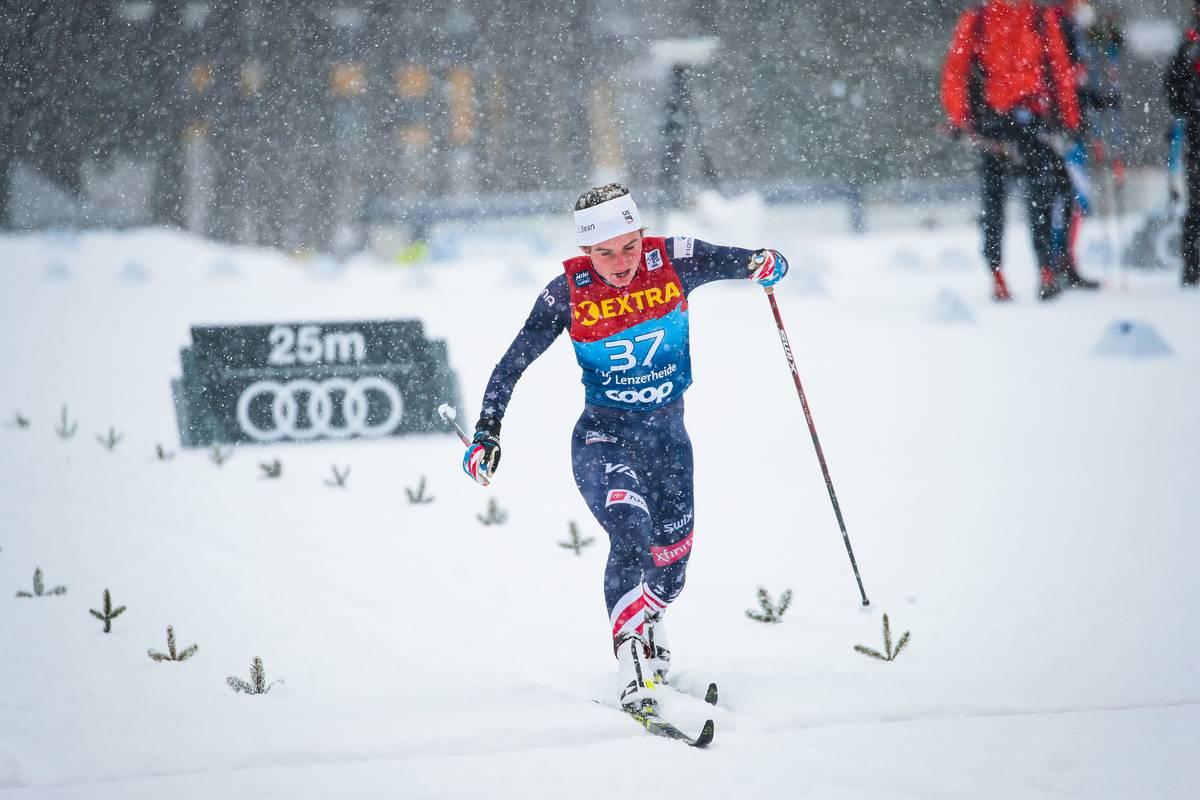
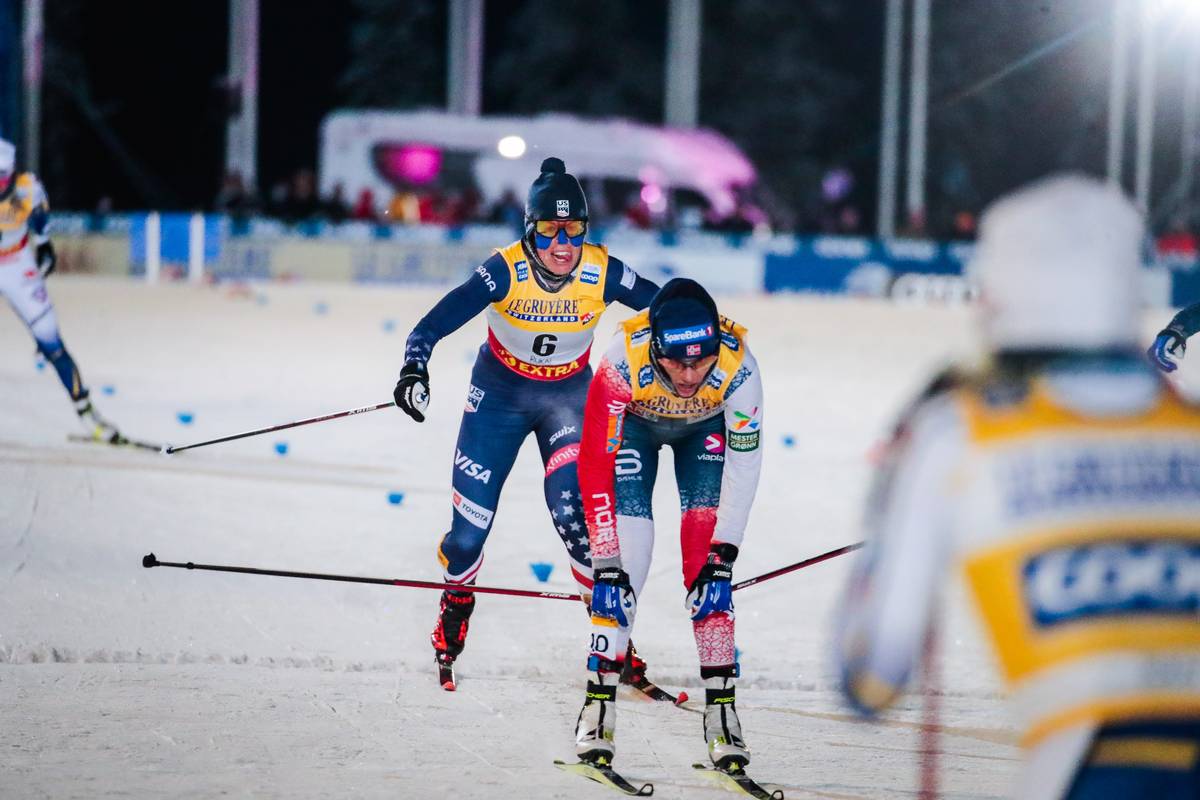
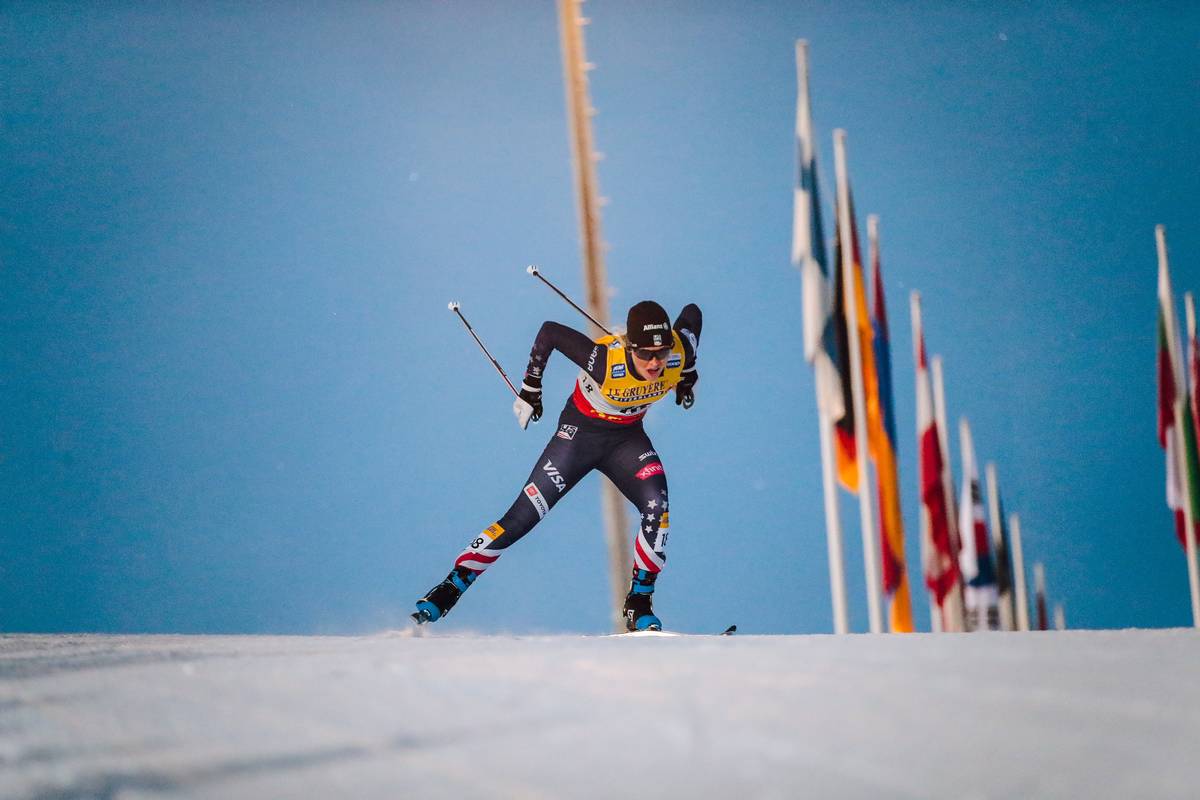
    Starting with a bang, Jonna Sundling of Sweden won the qualifier by an astonishing margin of +8.41 seconds, ahead of runner up Jasmi Joensuu of Finland. The American’s put three women into the quarter-finals, led by Rosie Brennan in 7th (+9.61). Julia Kern qualified in 17th position (+12.30), followed by her teammate and roommate, Jessie Diggins in 18th (+12.49). 

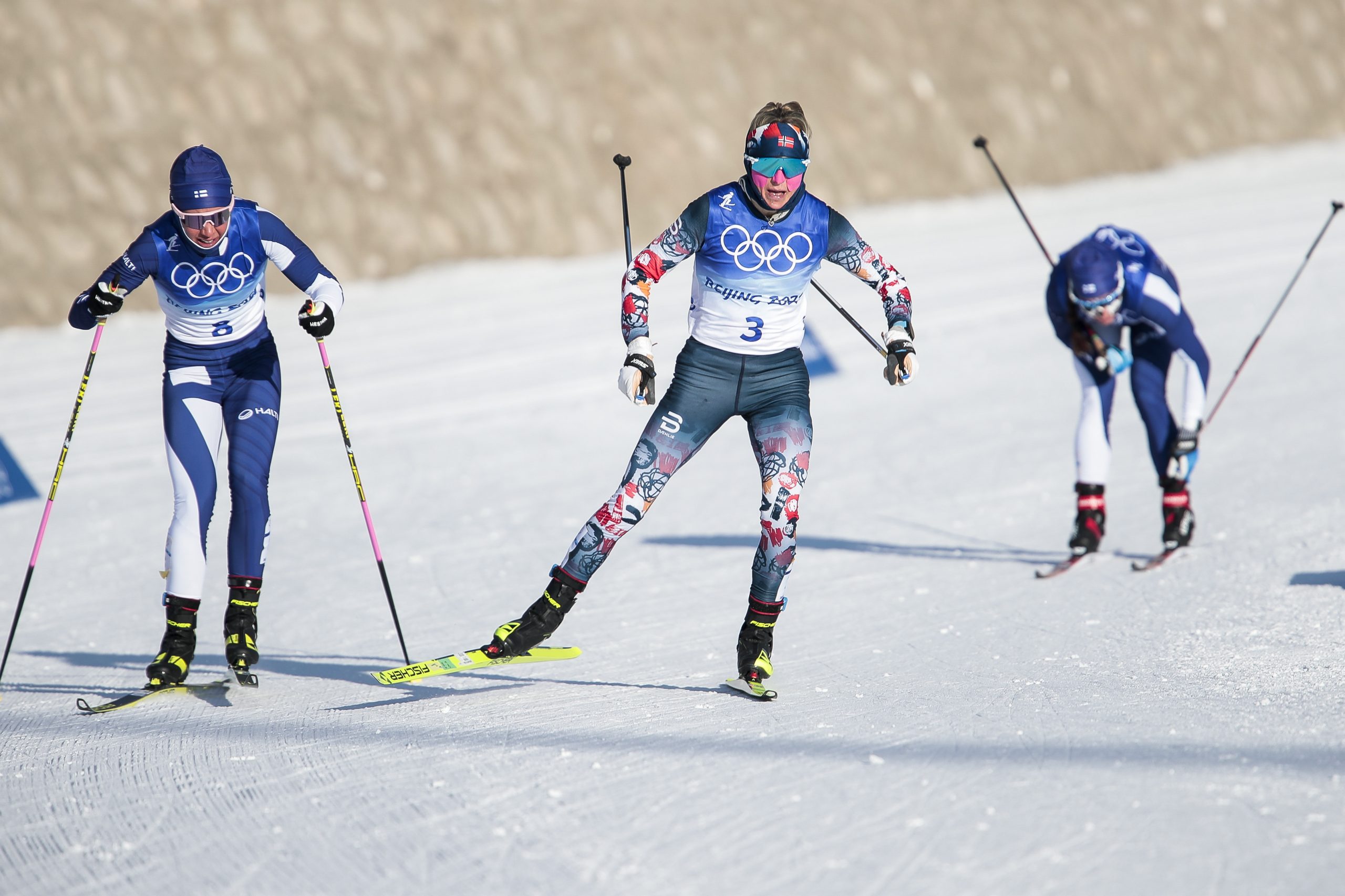
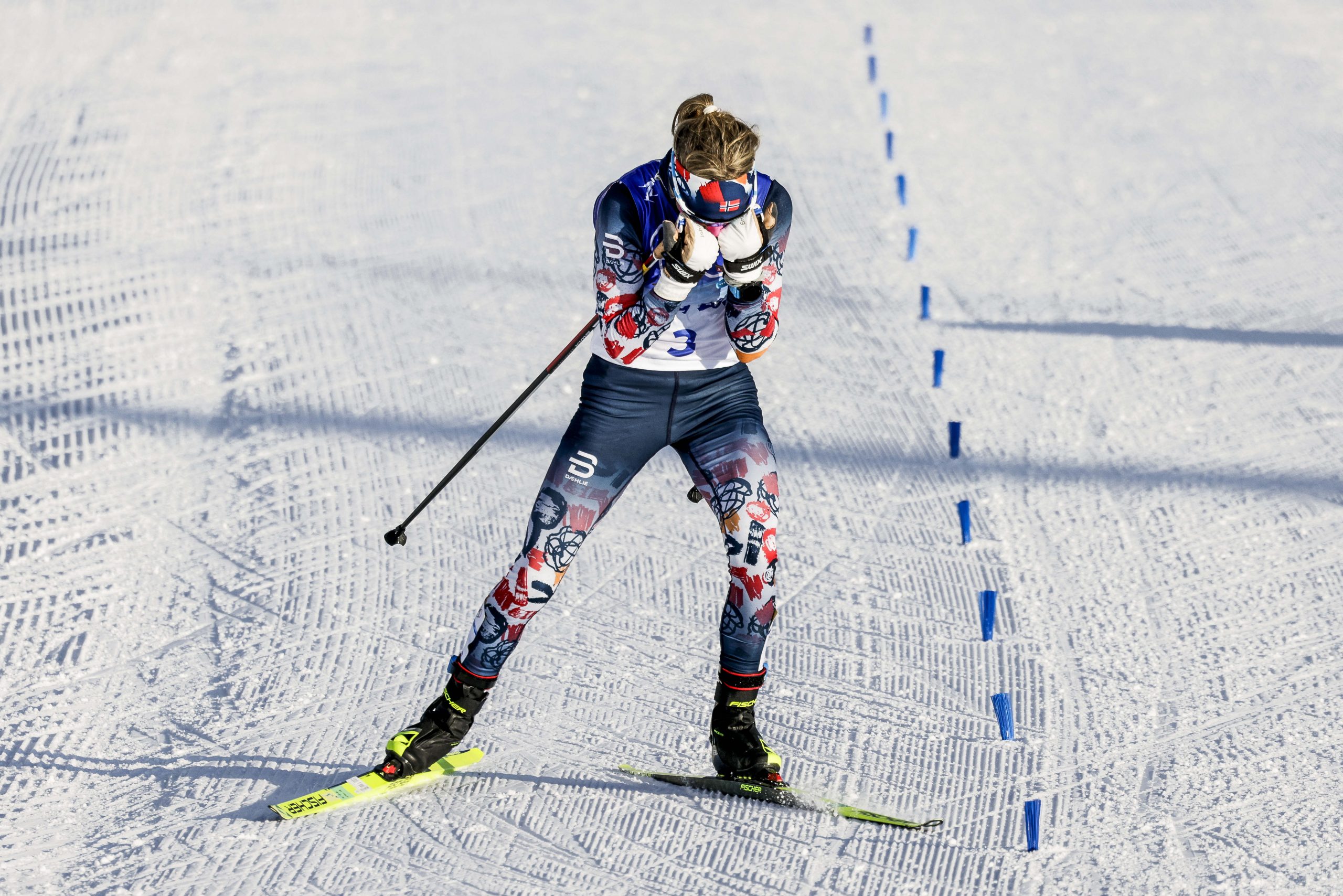
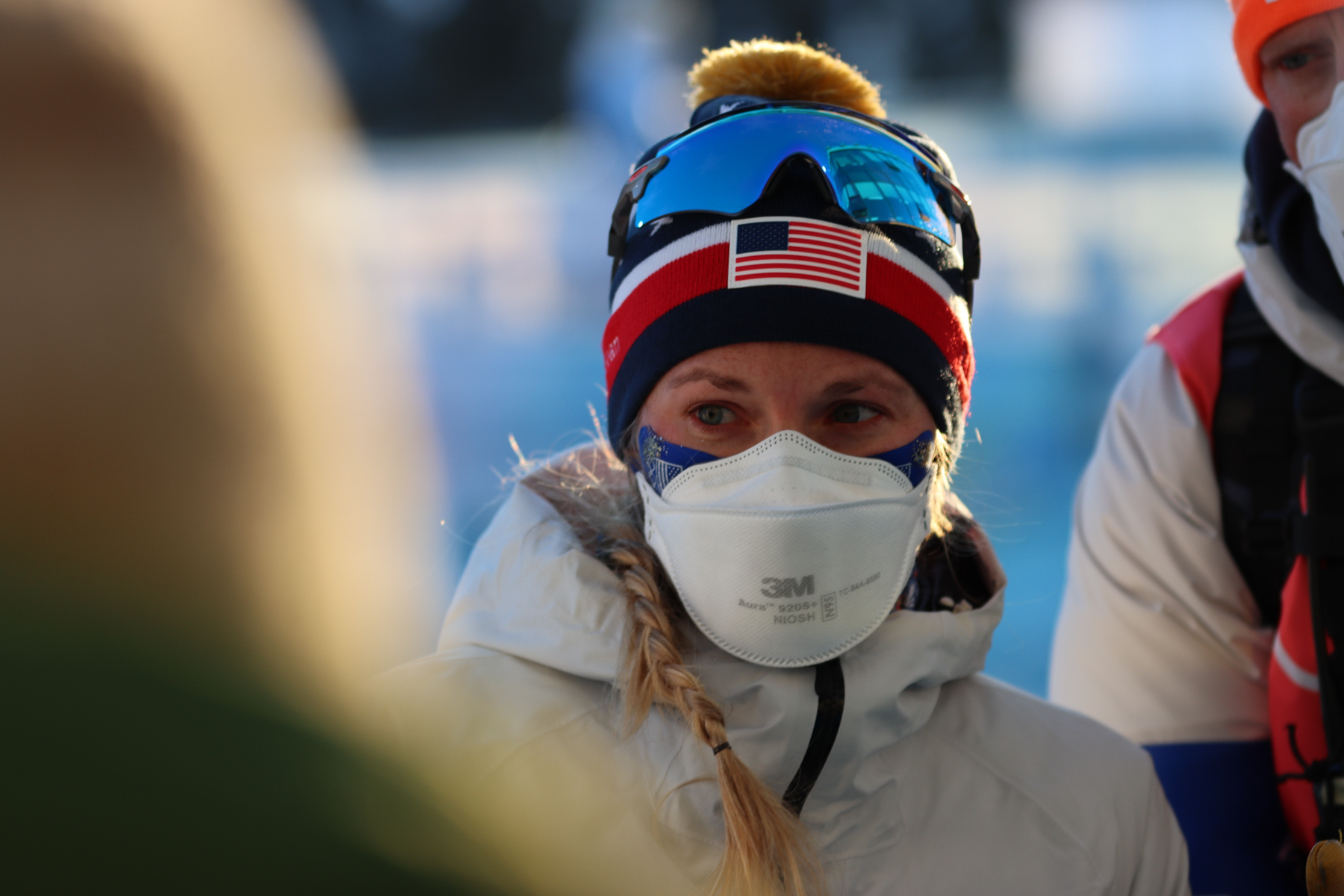
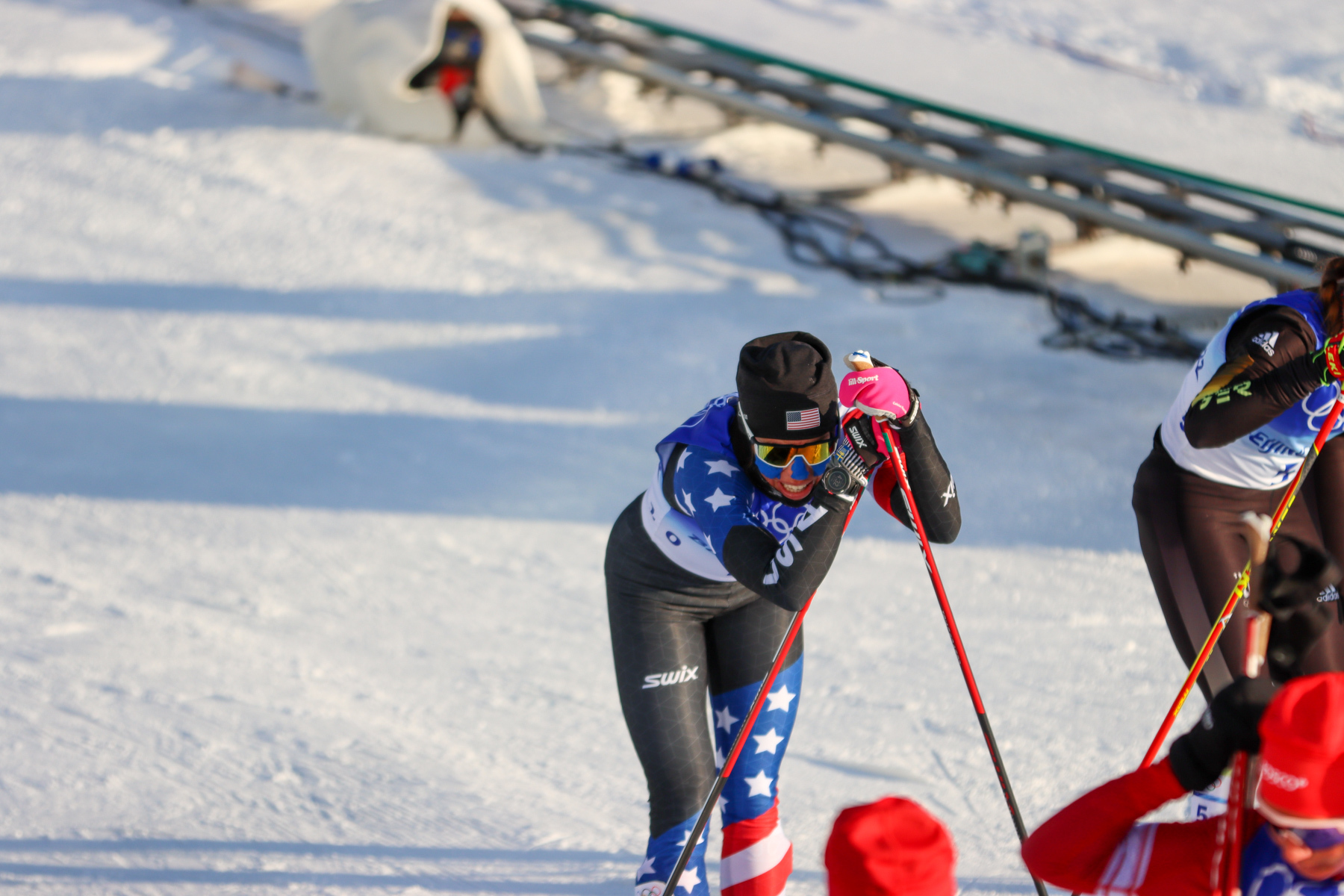
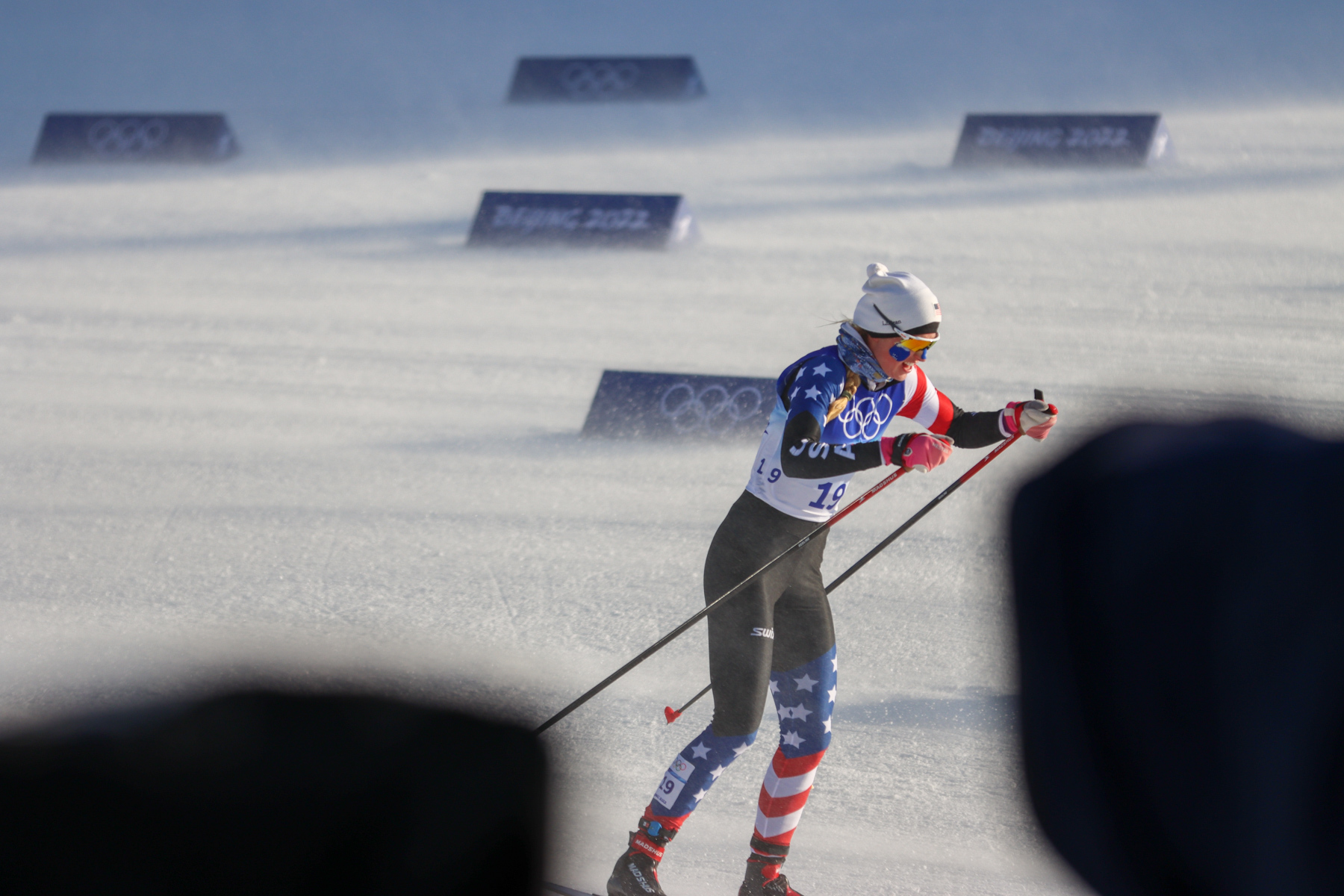
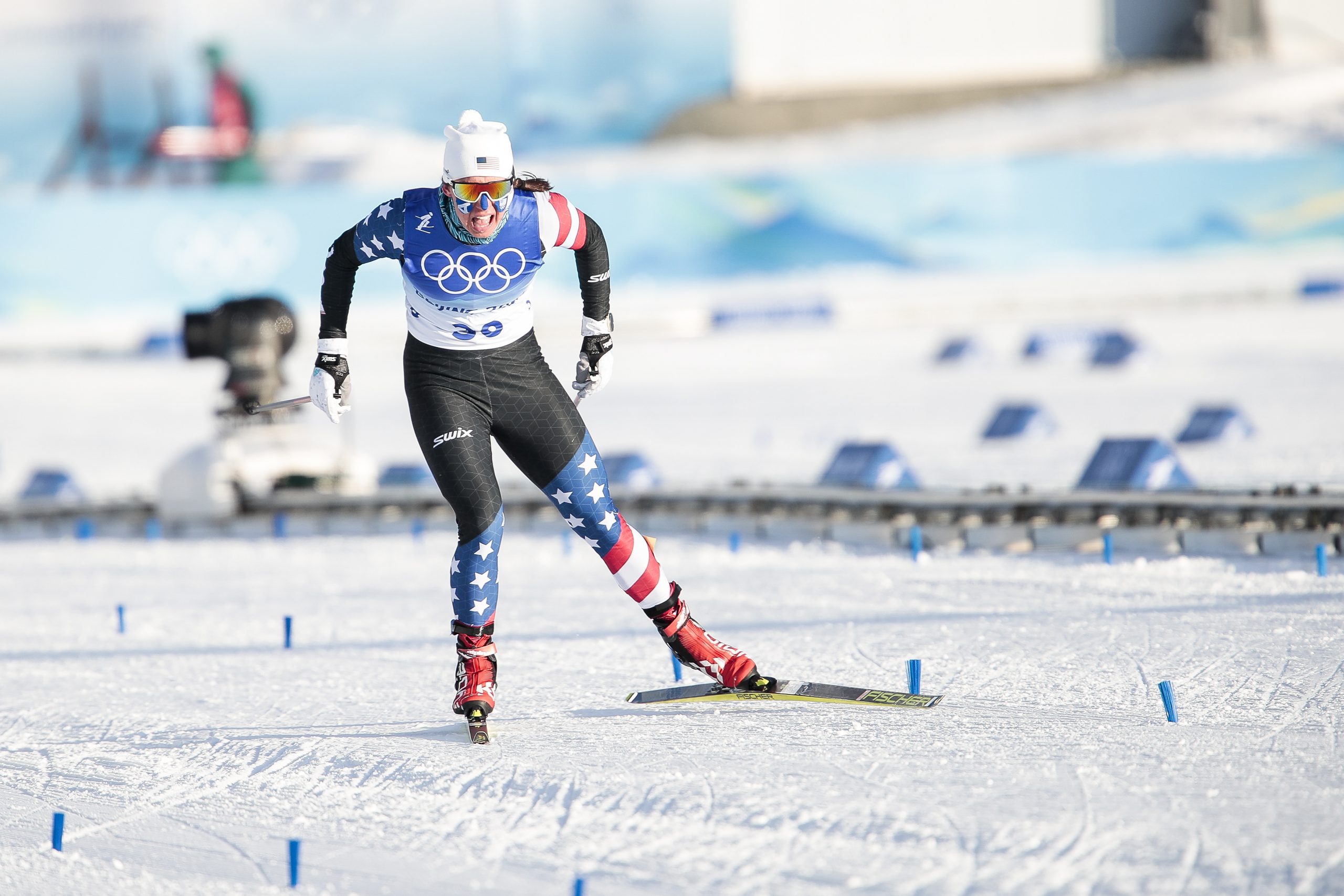
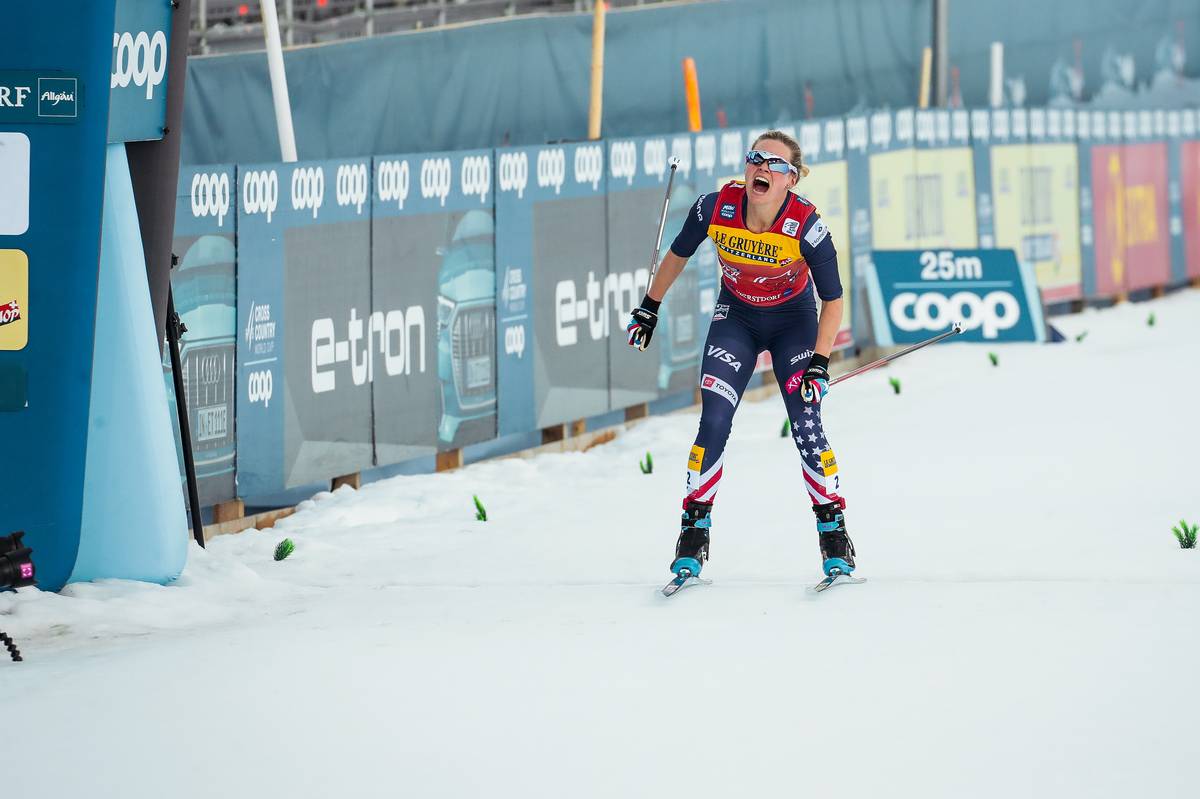
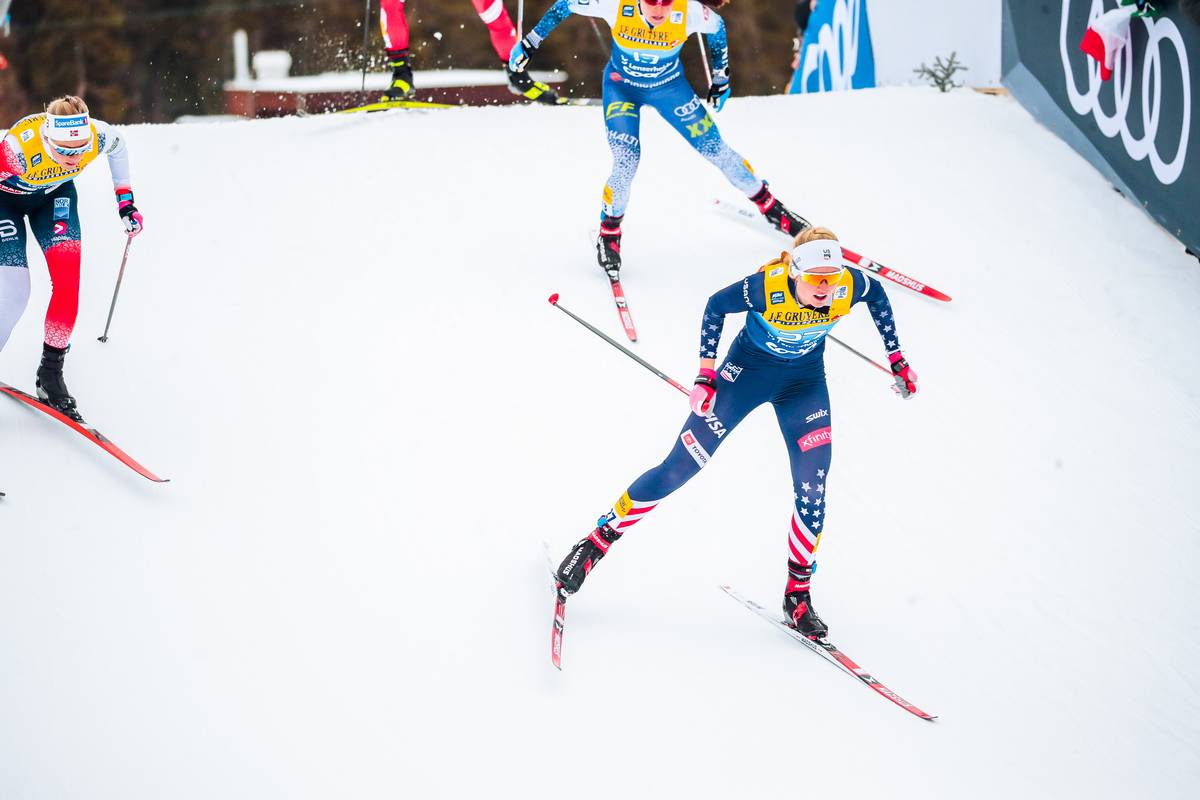
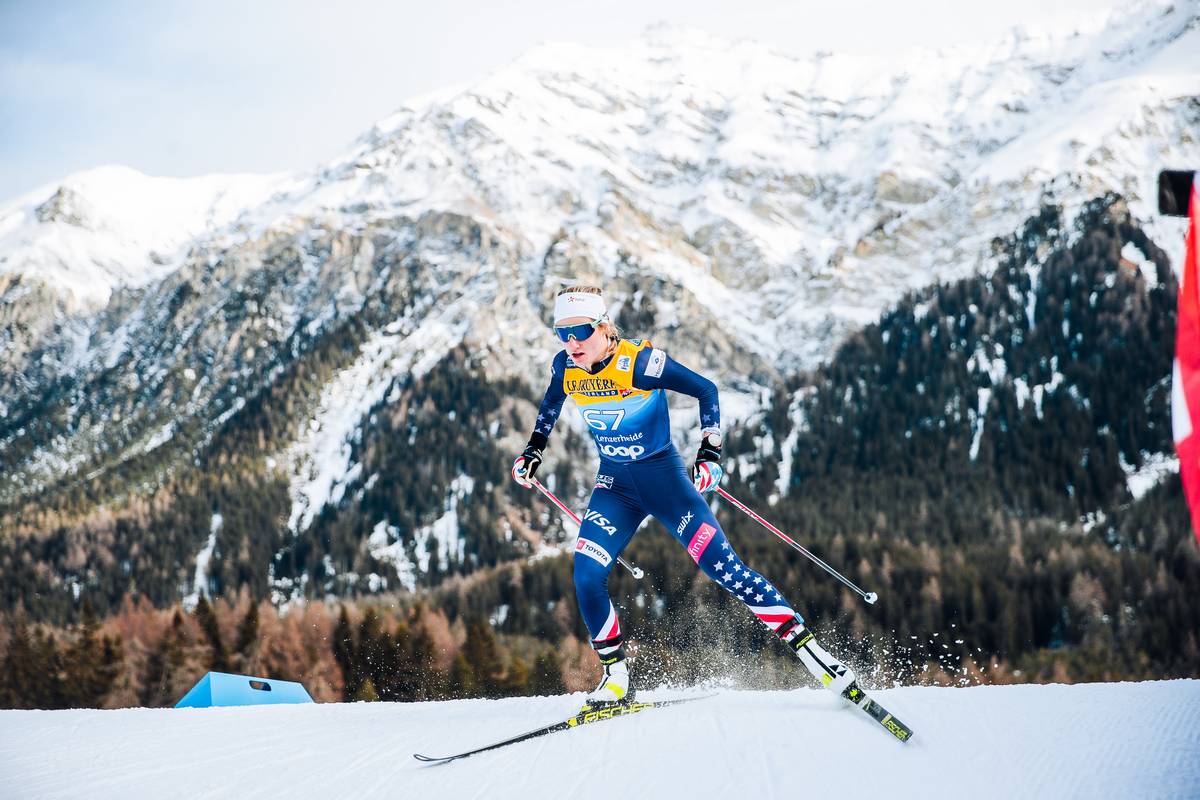
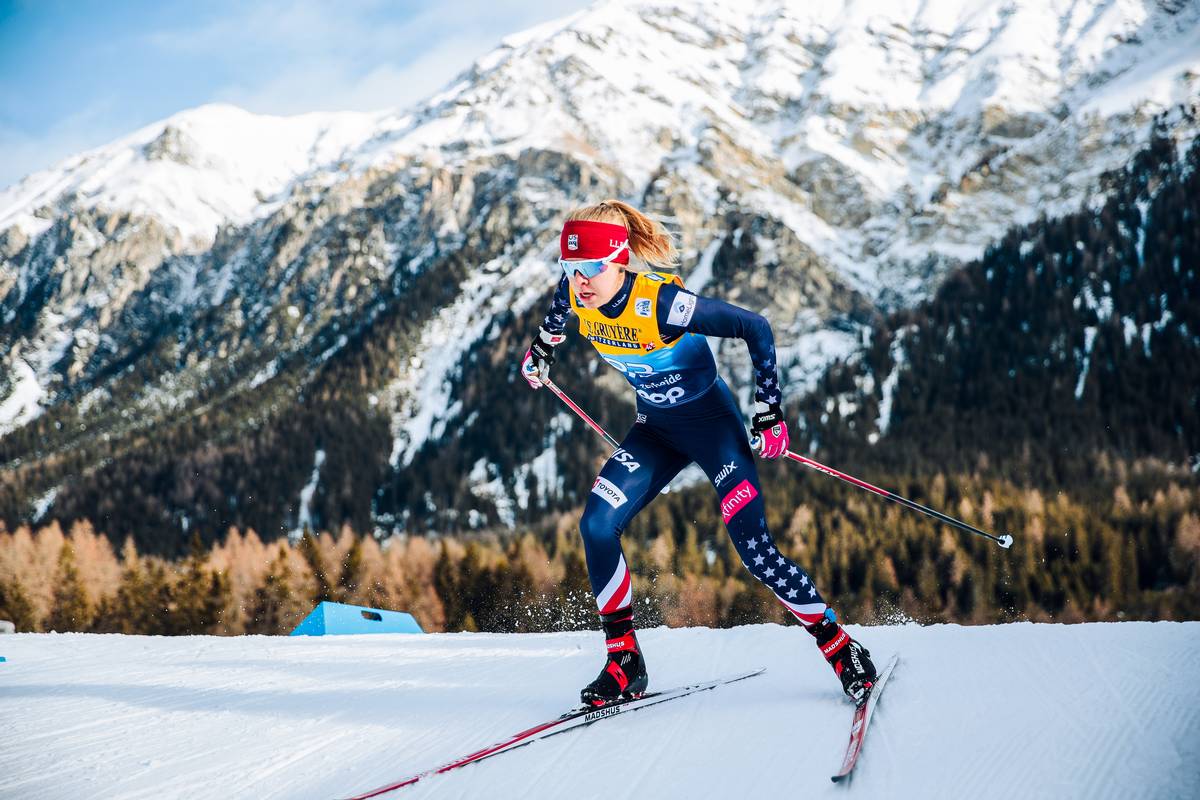
    Jessie Diggins on her way to 18th place in the qualifier. Diggins ultimately ended her day 19th. (Photo: NordicFocus)

    These were the only three American women competing today as unfortunately some late-stage positive covid tests barred the rest from competing. Having made it through a winter of international travel, living, and competing during the Omicron surge, Hailey Swirbul and Katherine Ogden announced on Monday that they had both tested positive in Norway. Lauren Jortberg, who had her World Cup debut in Lahti, Finland two weeks earlier, came directly to Falun to prepare for this weekend, only to test positive on Wednesday. 

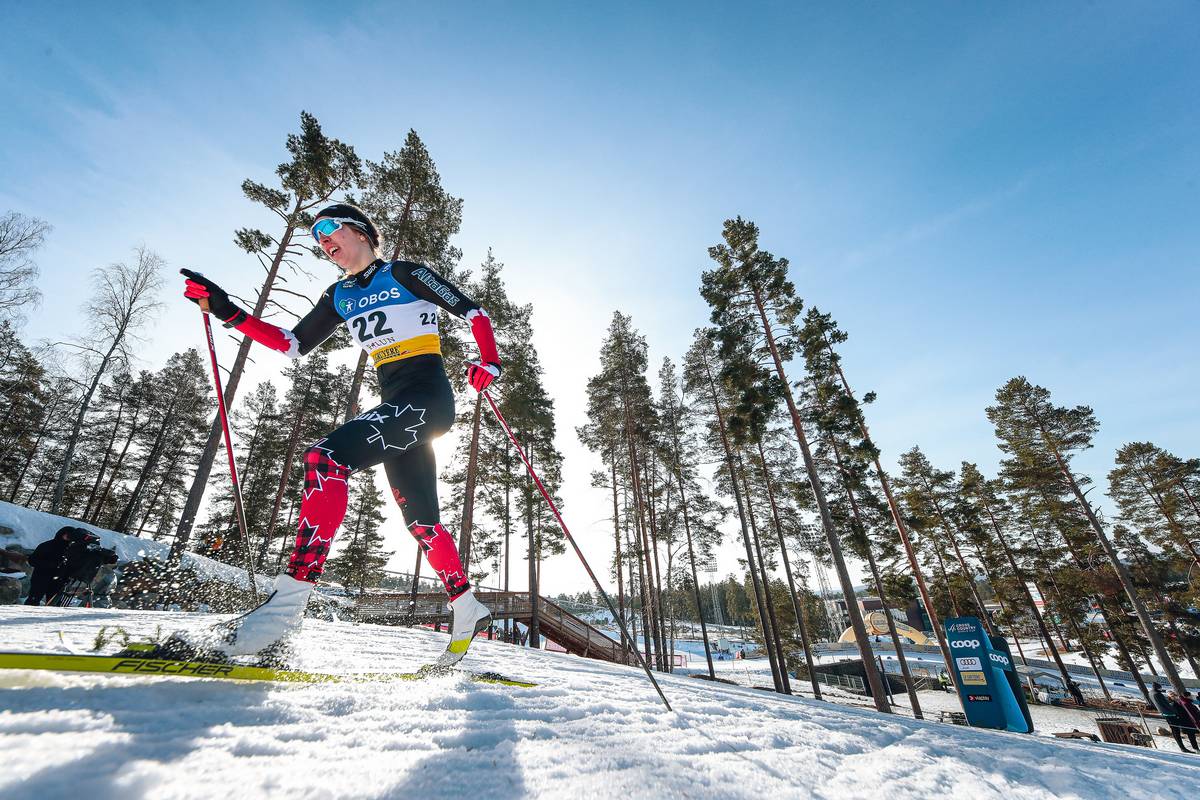
    No Canadian women made it into the top thirty, their first finisher was Olivia Bouffard-Nesbitt in 32nd (+17.54). Katherine Stewart-Jones led a string of fellow country-women, finishing 37th (+19.49), followed by Dahria Beatty in 38th (+19.75) and Jasmine Drolet in 39th (+20.08). After competing at World Juniors in Lygna, Norway, Drolet joined the senior women and made her first World Cup appearance in the Holmenkollen 30 k last weekend where she finished 42nd. 

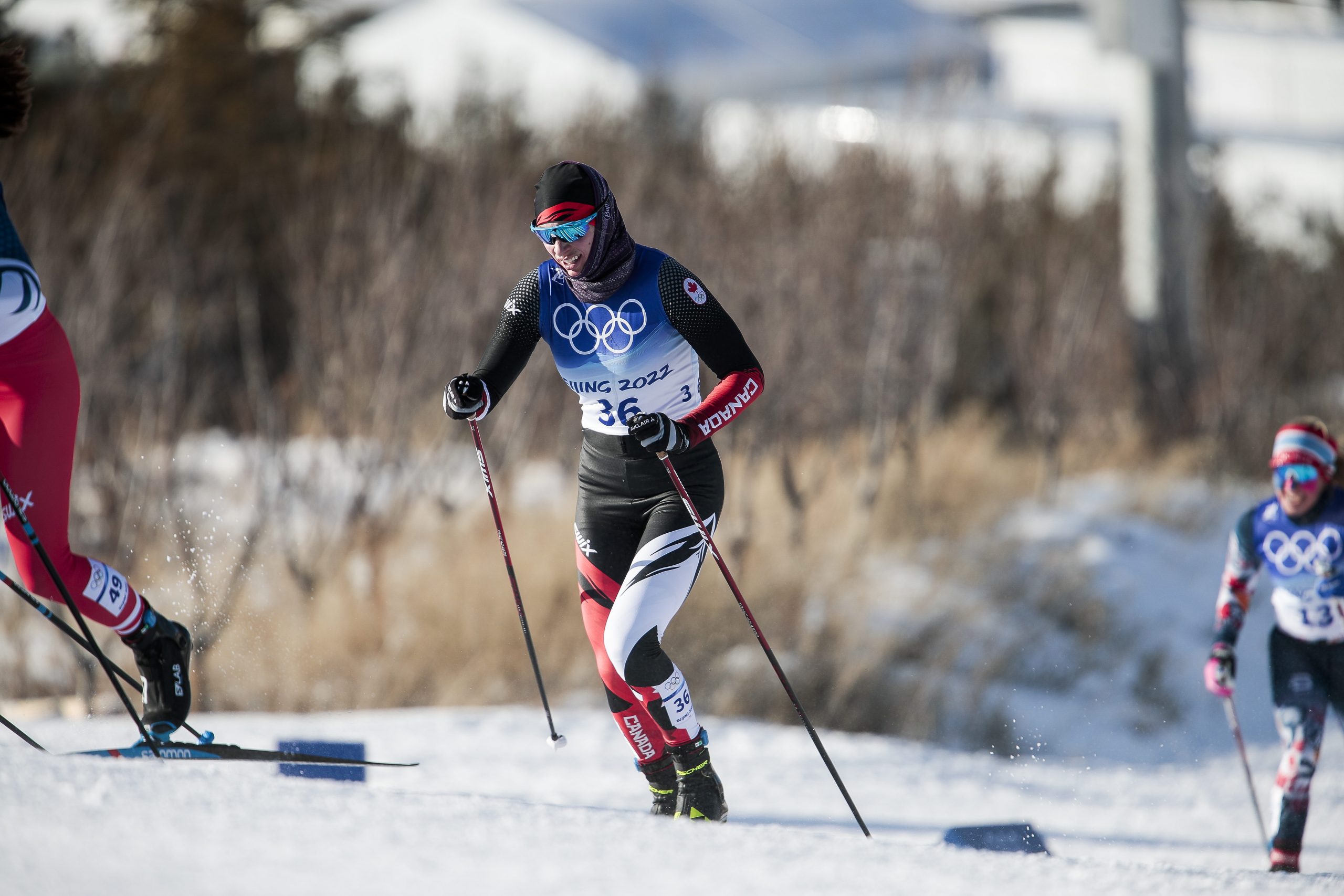
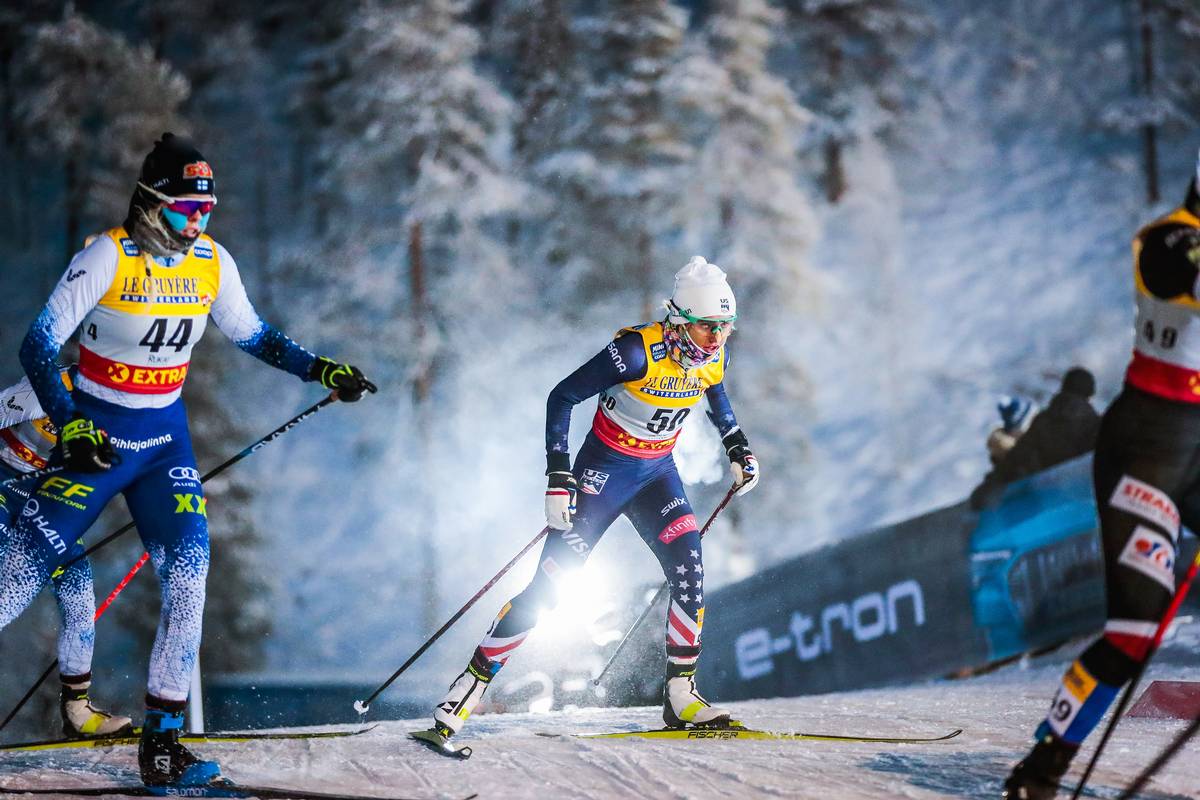
    Dahria Beatty (CAN) racing to 38th in the classic sprint qualifier on Friday (Photo: NordicFocus)

    As crowds of fans gathered, the women’s quarterfinals kicked off at 12:15 local time. In the first heat, a fast pace bought three women tickets to the semi finals, led by Anna Svendsen of Norway. After winning the classic sprint qualifier in Drammen, Norway last week only to fall in the quarter finals, Johanna Hagström (SWE), skiing on a home course, made it safely through in second. Kerttu Niskanen of Finland took third but with a fast enough time to snag a lucky loser position.

    Heat two was controlled entirely by Sundling as she skied easy out front, spreading the rest of the field. Behind her came Johanna Matintalo of Finland and Julie Myhre of Norway who made it to the semis as the second lucky loser. Brennan (USA) finished fourth, +3.39 behind Sundling, ending her day in 16th overall. 

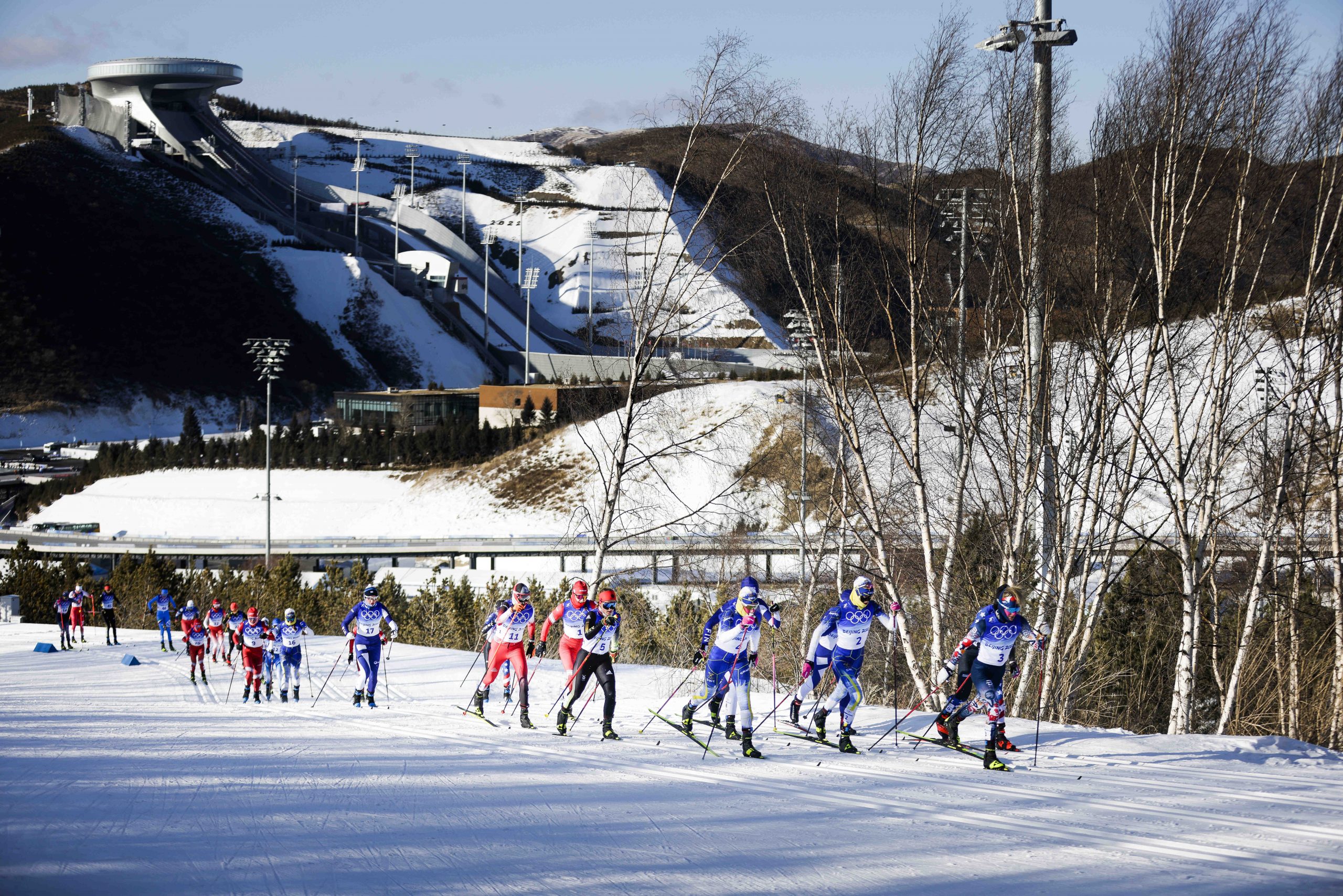
    Rosie Brennan races the quarterfinal after qualifying 7th. (Photo: NordicFocus)

    “It was warm and wild out there today,” wrote Brennan after the race. “This course is quite technical and has some challenging downhills which has made it a tough course for me in the past so I was ready to make some progress today. I had a good qualifier and that gave me some confidence for the heats. I had a very stacked heat which can go either way for me. I struggled finding space to move on the uphills which is my strength and that ultimately cost me moving on to the semi-finals by less than a second. In the bigger picture, I do think I made some strong progress on some of my weak spots on this course and I am really excited about that. I am also still feeling good and excited to race which bodes well for the rest of the weekend.”

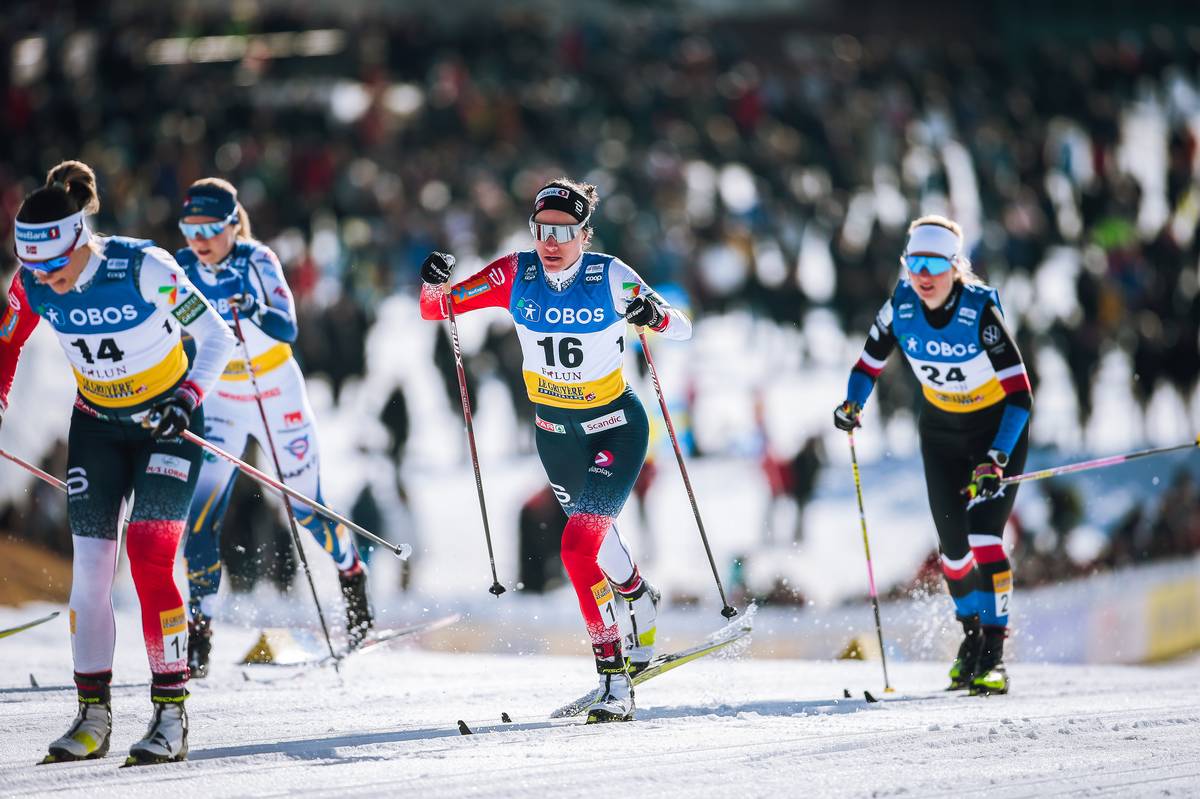
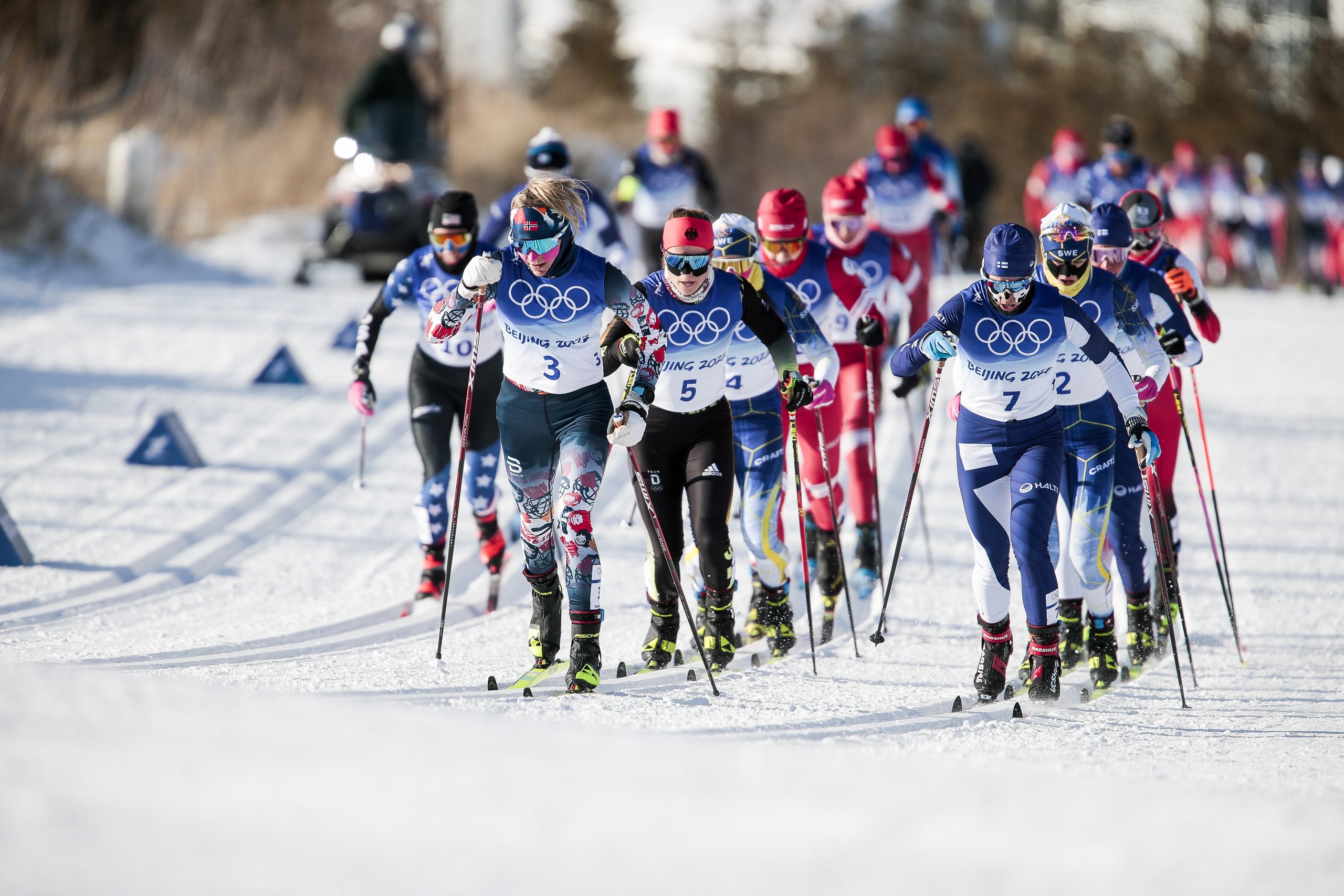
    In heat number three, Anamarija Lampic of Slovenia took on the lead, as Diggins and Moa Lundgren of Sweden chased. Entering the final straight Nadine Fähndrich of Switzerland employed her blistering finish speed to surpass both Diggins and Lundgren, and nearly overtake an unsuspecting Lampic. This left Diggins in fourth place in a heat that was not quick enough to make lucky loser. Diggins ends the sprint season in fourth place in the overall sprint standings with 351 points; having entered the day in third with 339 points, she was bumped off the podium by Sundling. 

    Jessie Diggins races in heat number three in the 1.4 k classic sprint in Falun. (Photo: NordicFocus)

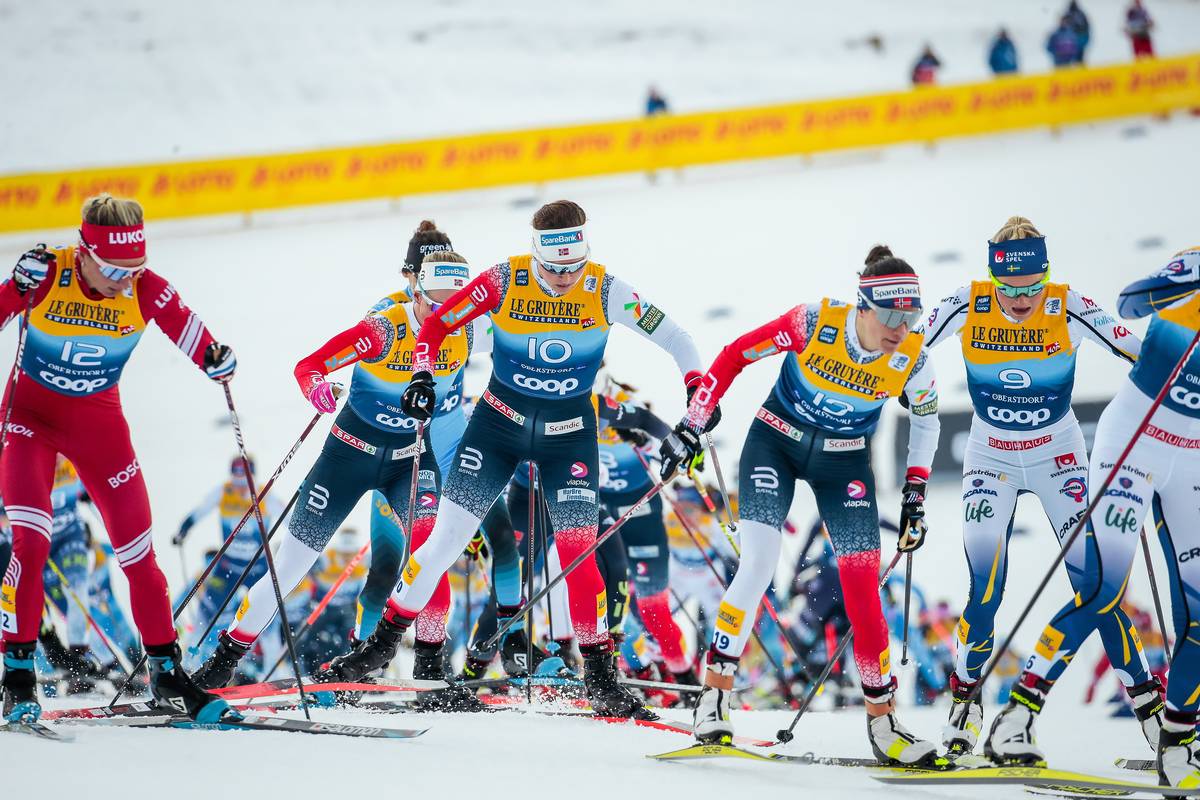
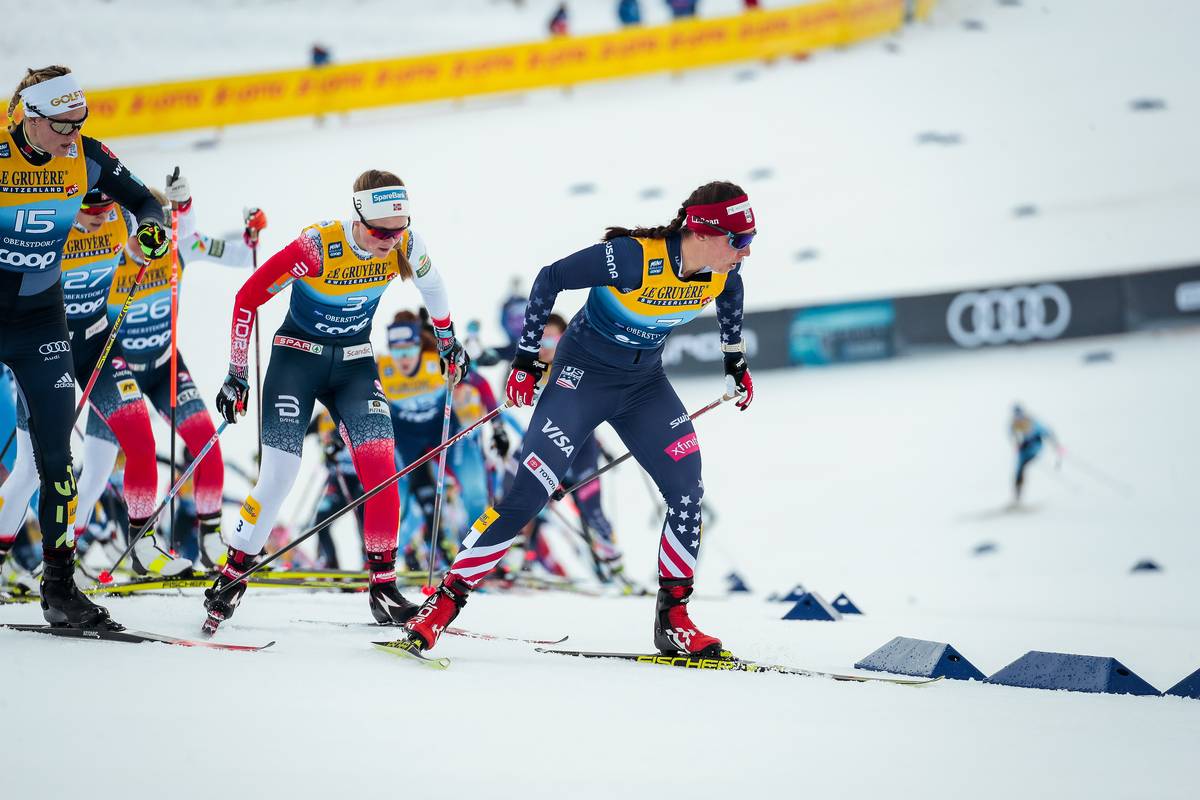
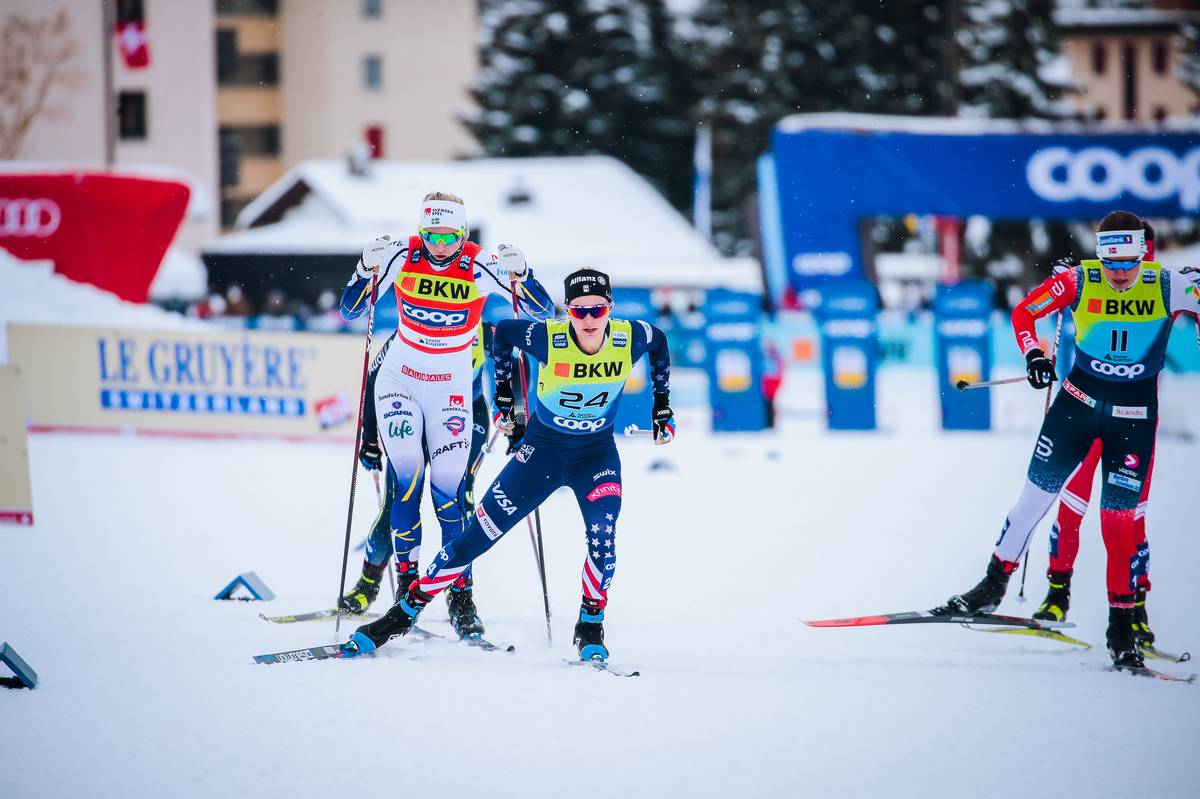
    Heat four saw an easy pace from the gun, with the pack largely staying together. With all six athletes still in touch as they crested the big climb, Kern navigated into third place on the ensuing tight downhill corner. An injection of speed from Maja Dahlqvist (SWE) over the next rise split the pack as Lotta Udnes Weng (NOR) shadowed, followed by Kern still in third. In the long downhill glide-out, Weng overtook the Swede, entering the final corner in first. Right with her were Kern, Dahlqvist and Laura Gimmler of Germany. A close finish saw Kern out double-pole Dahlqvist to take the win, with Weng coming second. However, a disqualification for Weng bumped Dahlqvist into second and thus have her a ticket to the semi-finals. 

    Jasmi Joensuu (FIN) and Maiken Caspersen Falla (NOR) duke it out in the quarter-final (Photo: NordicFocus)

    After a redeeming win in Drammen last week, Maiken Caspersen Falla of Norway charged off the startline for heat five. Joensuu (FIN) and Heidi Weng (NOR) took up the chase and eventually overtook Falla on the long descent back into the stadium. Together the two Norwegians pulled away from the Finn as Joensuu faded slightly. Falla finished first and Weng, with a scream of satisfaction, crossed in second. 

    Heidi Weng (NOR) racing in quarterfinal heat number five (Photo: NordicFocus)

    Echoing her moves from the quarter-final, Sundling (SWE) approached semi-final number one in the same manner, skiing smooth and easy out front. Lampic (SLO) followed with some occasional slips on a mushy course. Those front two continued to pull away, Sundling making it look easy as she found herself well clear of the rest of the competition. Lampic maintained second position and Matintalo (FIN) came in third, though was not quick enough to move onto the final. 

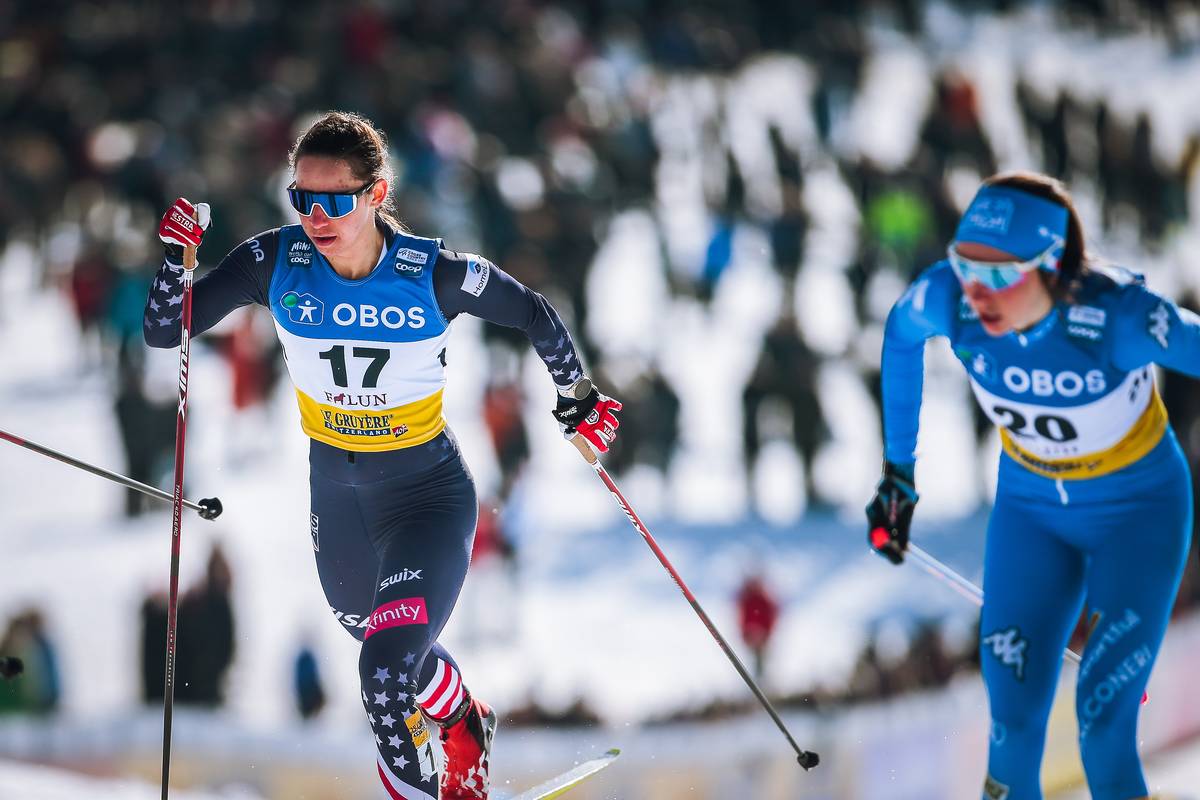
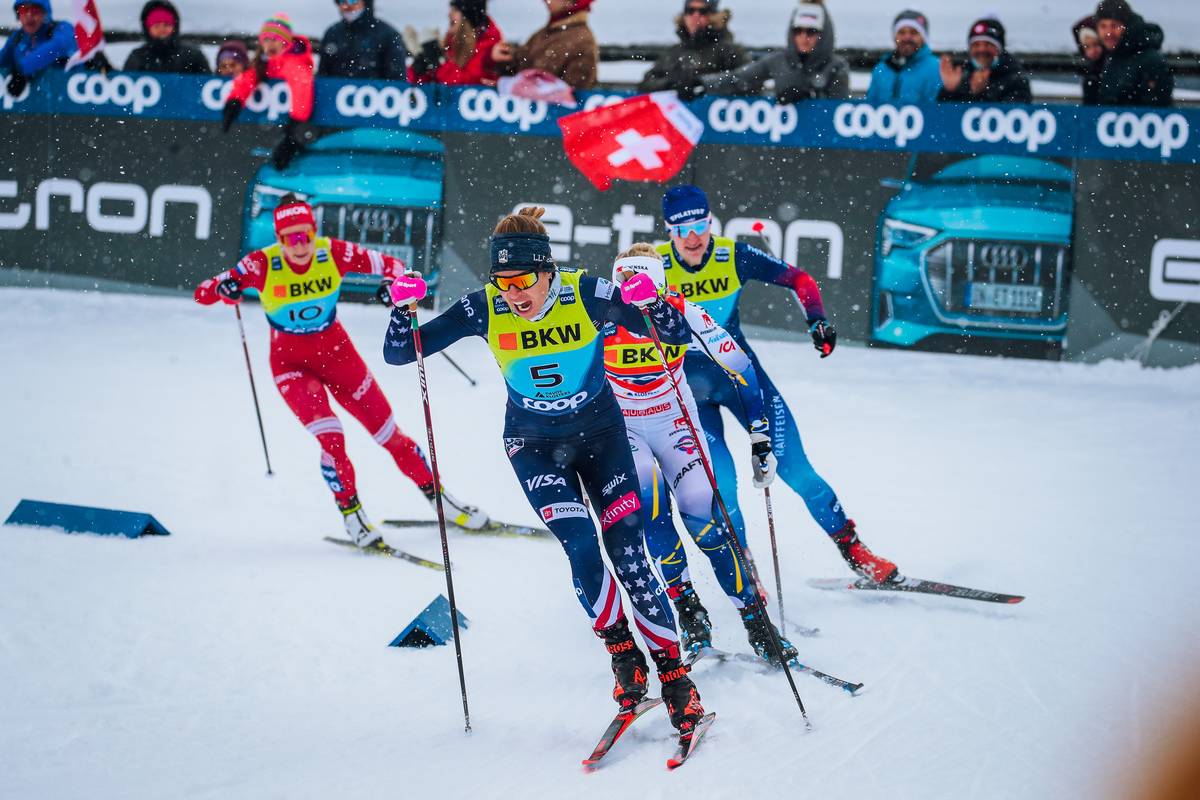
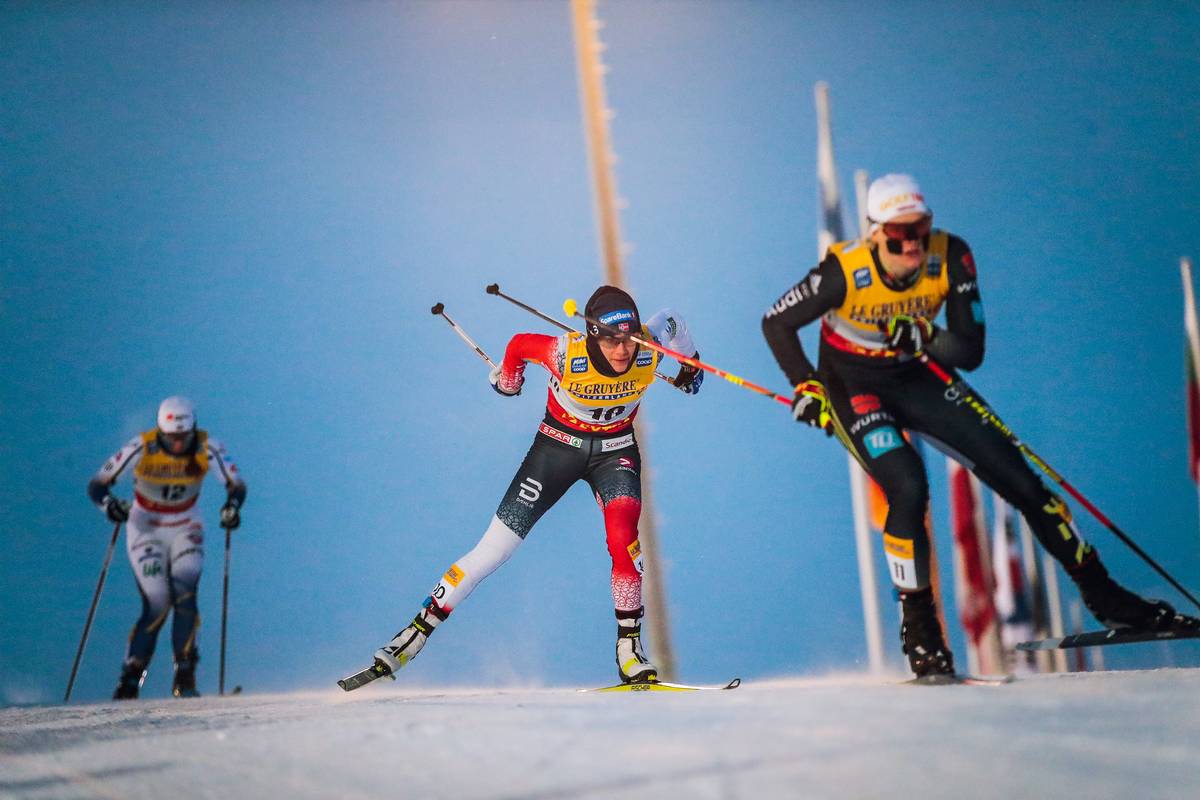
    In the second semi-final, Falla (NOR) took the lead, again trailed by Weng (NOR). Once again, Kern (USA) moved into third position on the tight middle downhill portion, setting herself up well. A fall from Weng on the next hill took her out of contention as Dahlqvist (SWE) moved into second position, Kern still in third. Switching tracks, Dahlqvist stumbled but managed to stay on her feet as Kern took the lead into the final corner. Kern held onto first position with some strong double poling and behind her Dahlqvist, Falla and Fähndrich all qualified for the final in second through fourth positions respectively. 

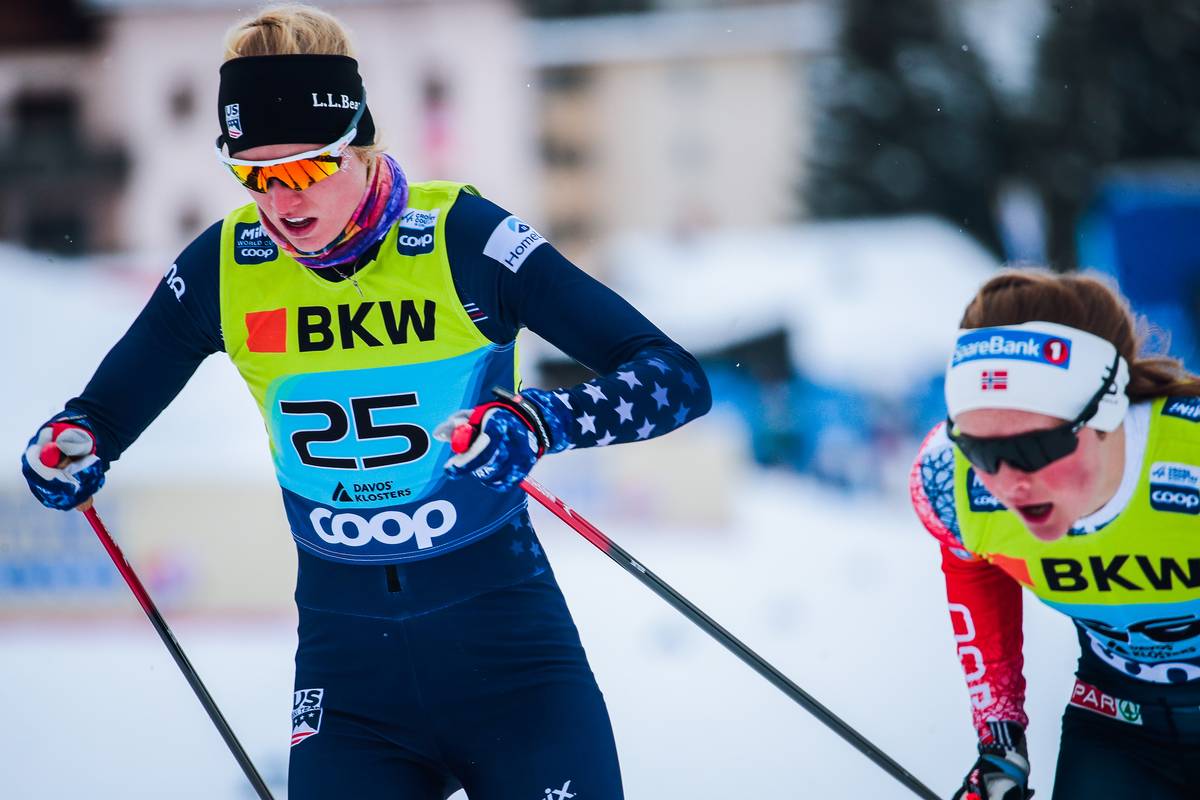
    Julia Kern, closing out fast (Photo: NordicFocus)

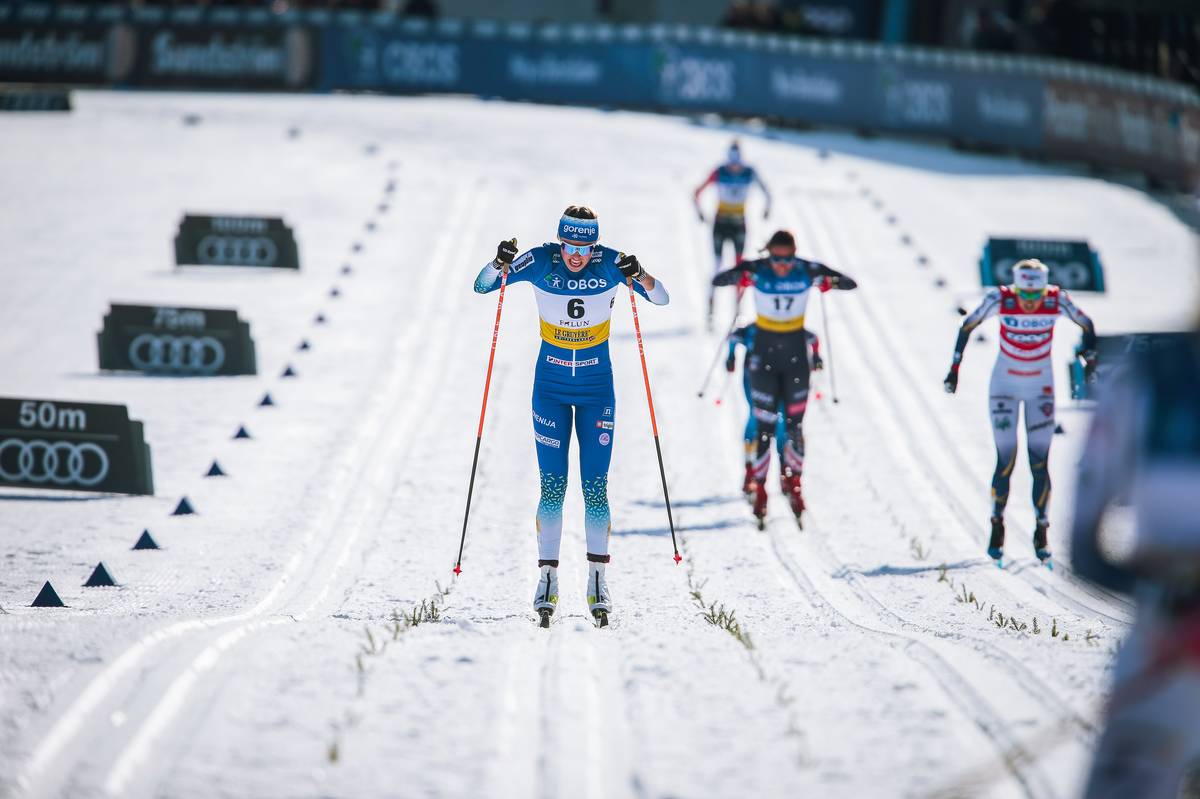
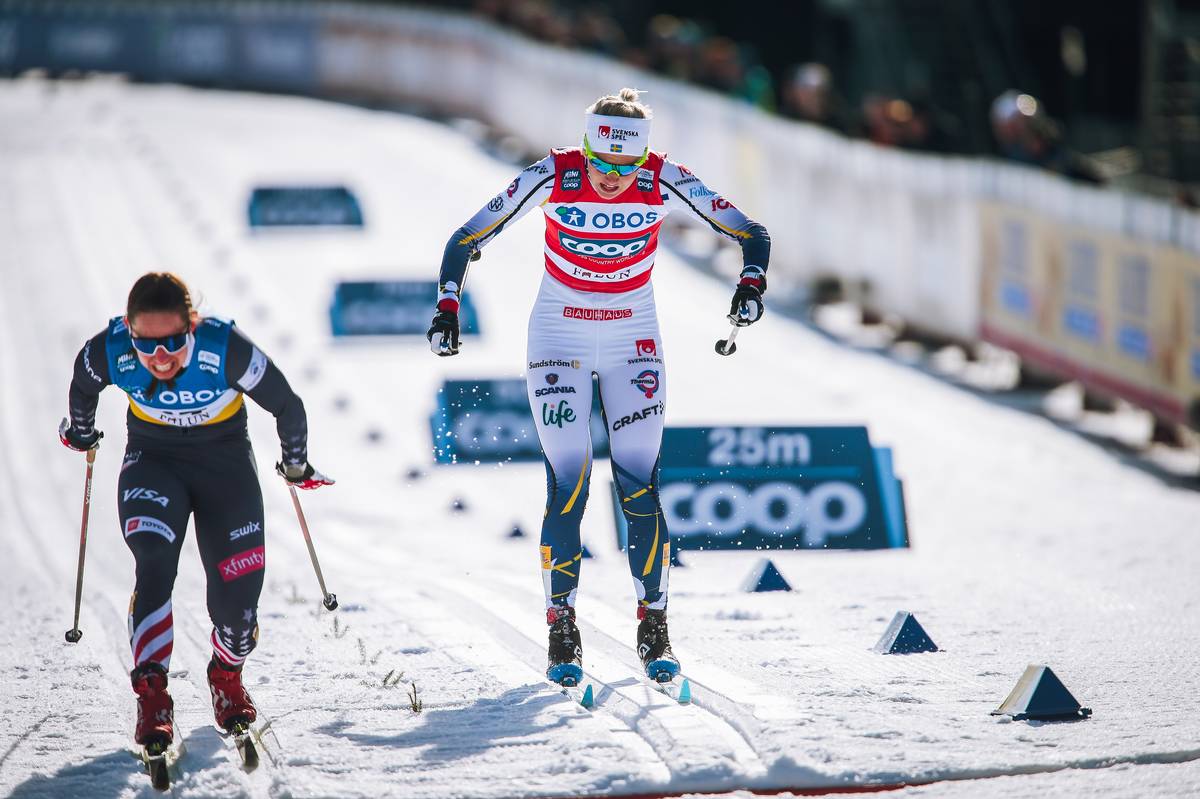
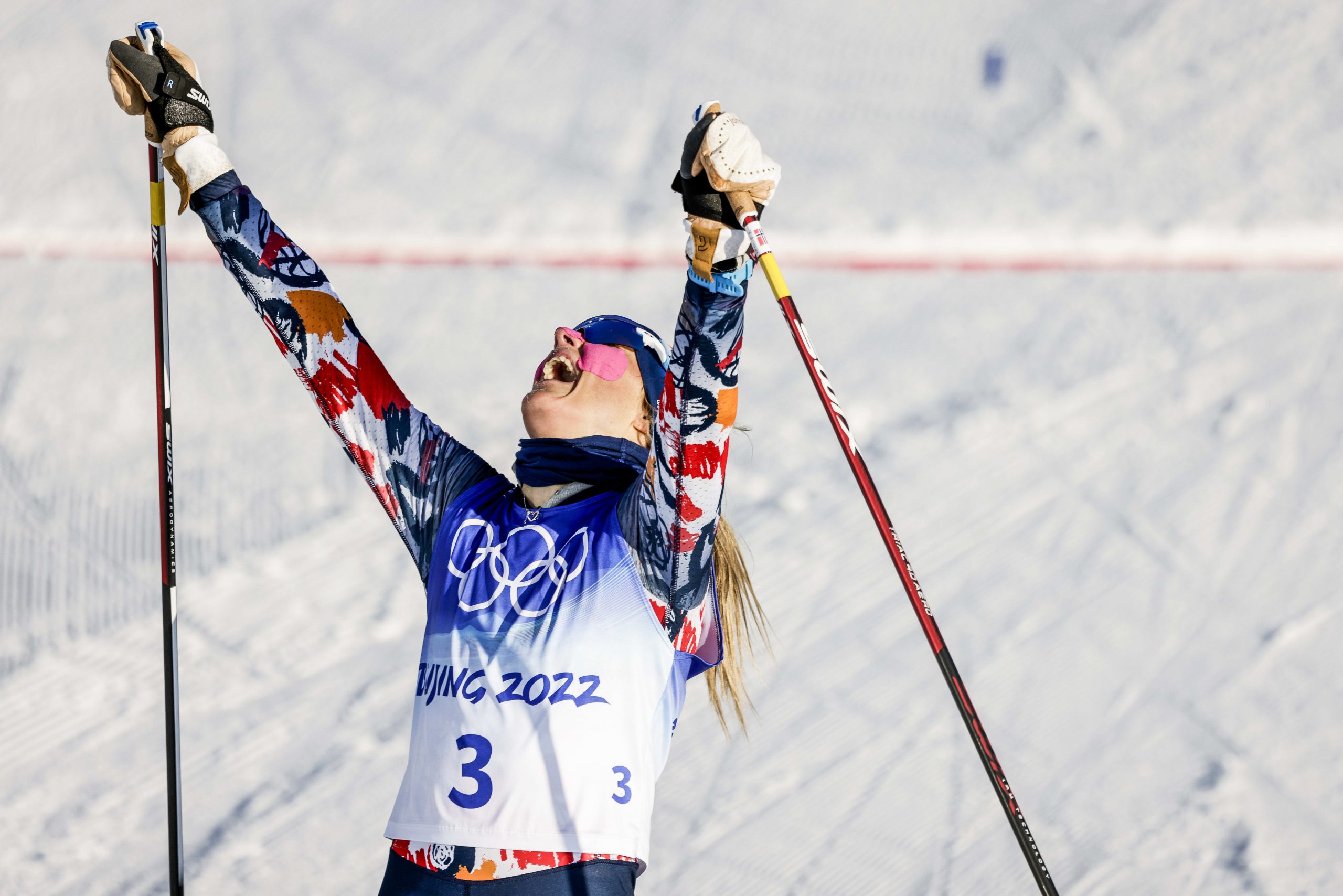
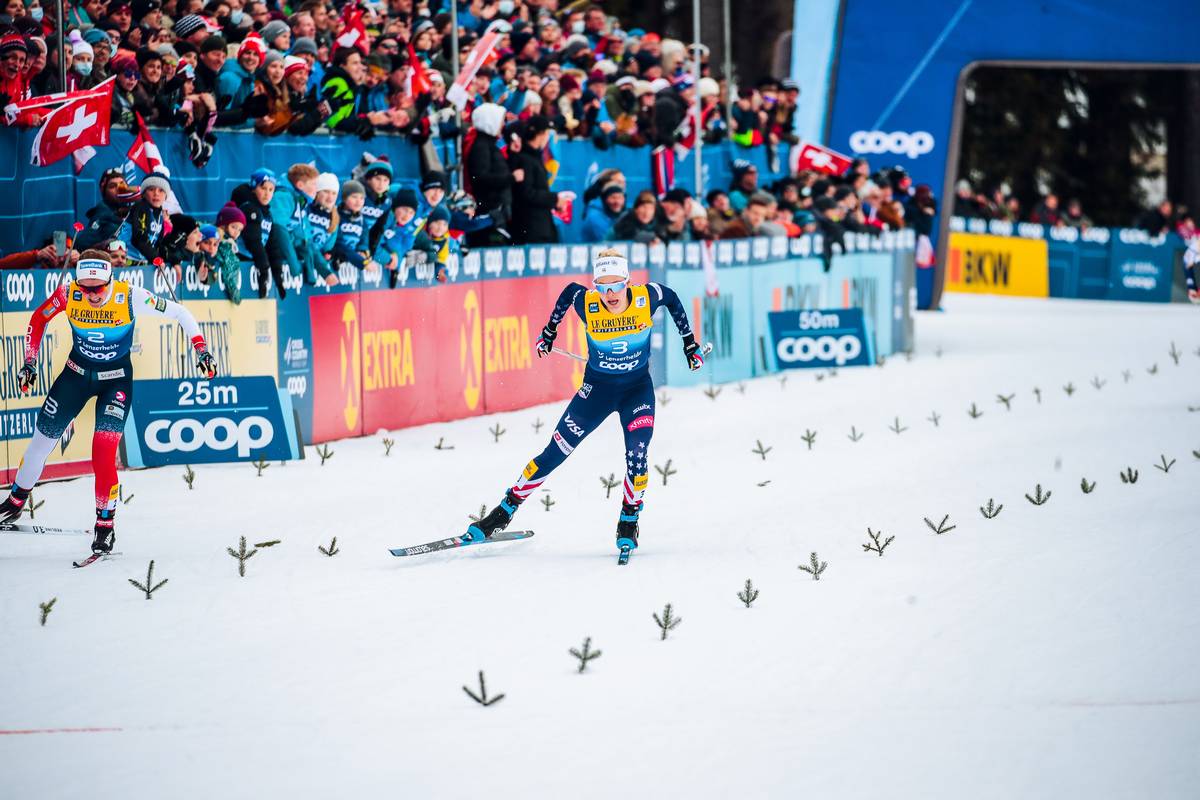
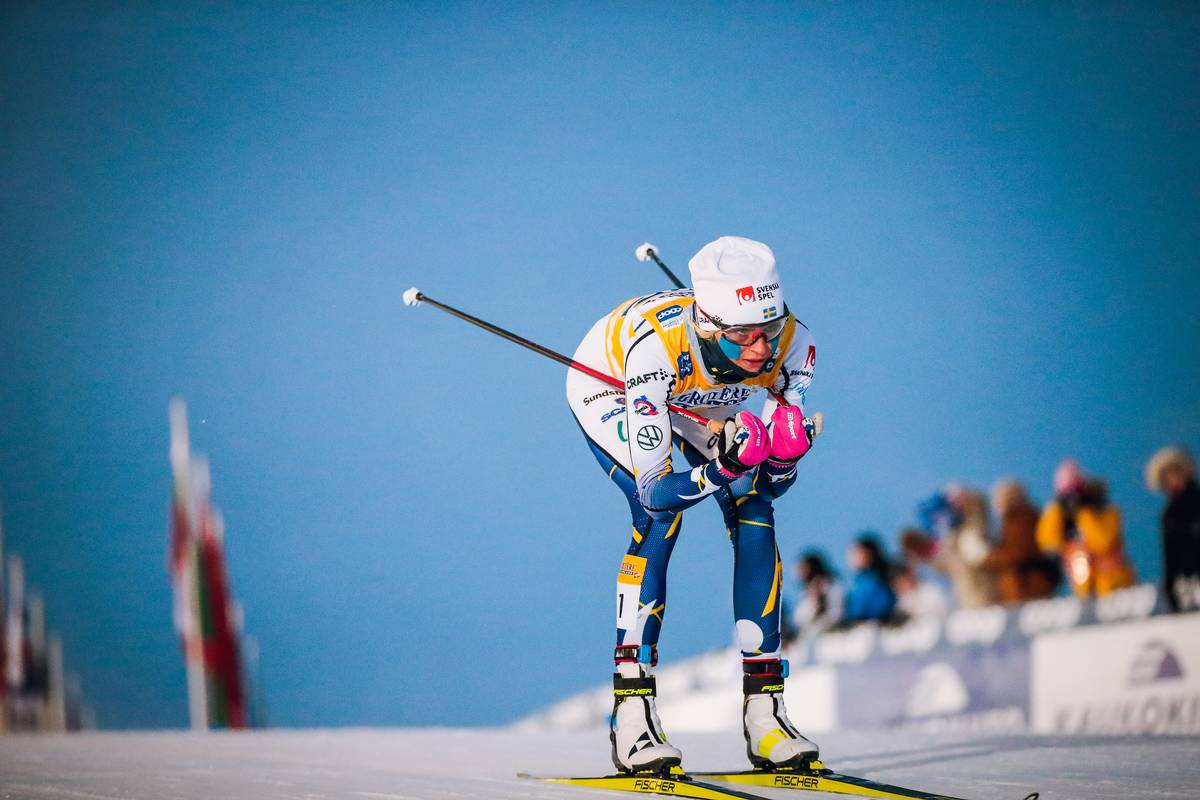
    Making her first sprint final since a stage race in Lenzerheide, Switzerland in December, Kern was all smiles on the start line as the athletes lined up for their final round. Right away, Sundling and Lampic began to pull away from the rest of the field. Up the A-climb, Sundling broke into a herringbone, clearly moving fast as she increased her lead. Dahlqvist who had been in third was overtaken by Kern who topped the hill in third. Lampic was holding strong in second, though being chased by Kern. Navigating the remaining corners and descents, Sundling cruised easily to the finish with enough of a lead to give a celebratory wave before crossing the line.

    No challengers around, Jonna Sundling cruises to victory. (Photo: NordicFocus)

    Coincidentally, Sundling won by the same margin over Lampic (+8.41 seconds) as she had on second-place qualifier Joensuu (FIN) earlier this morning. “I don’t know what is behind this result today, but the last weeks I’ve been feeling really good and it’s nice to keep the shape still,” said Sundling after her dominant victory. She added, “I didn’t compete so much in the beginning [of the season] because of injury but my motivation is on top and so is my shape, and it’s just fun to ski right now.”

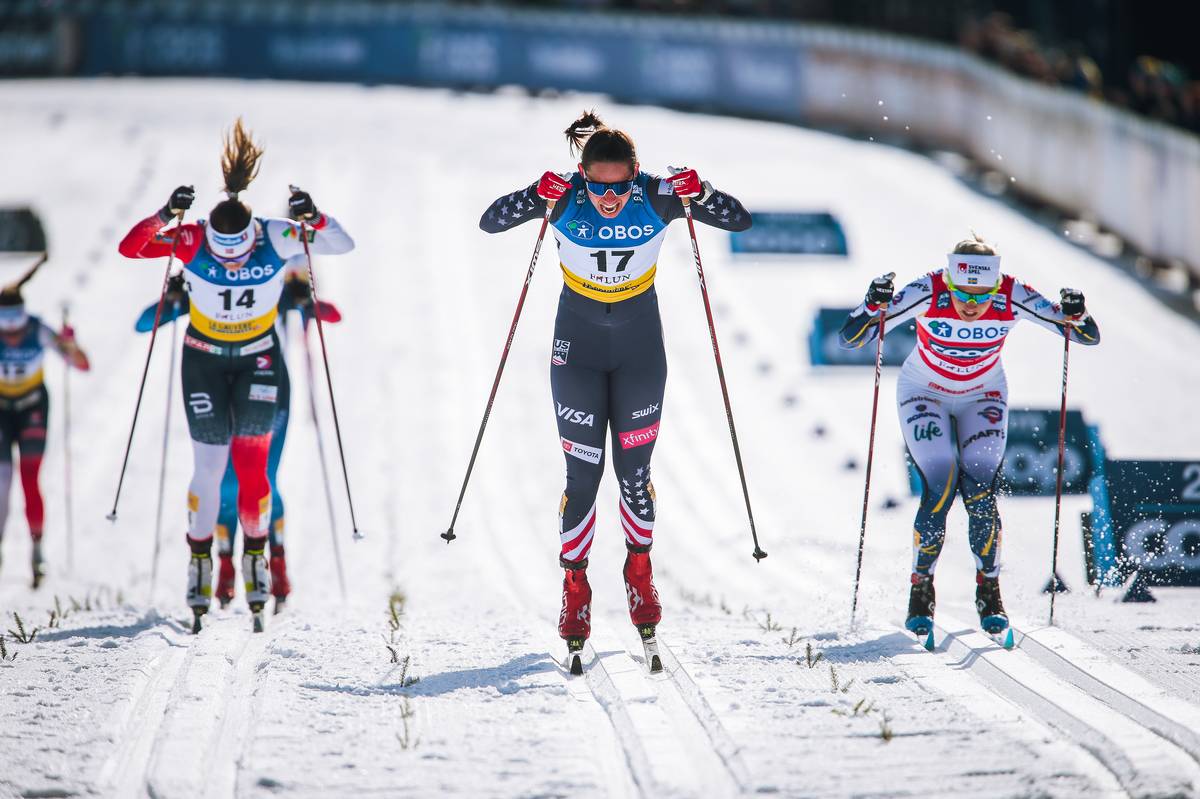
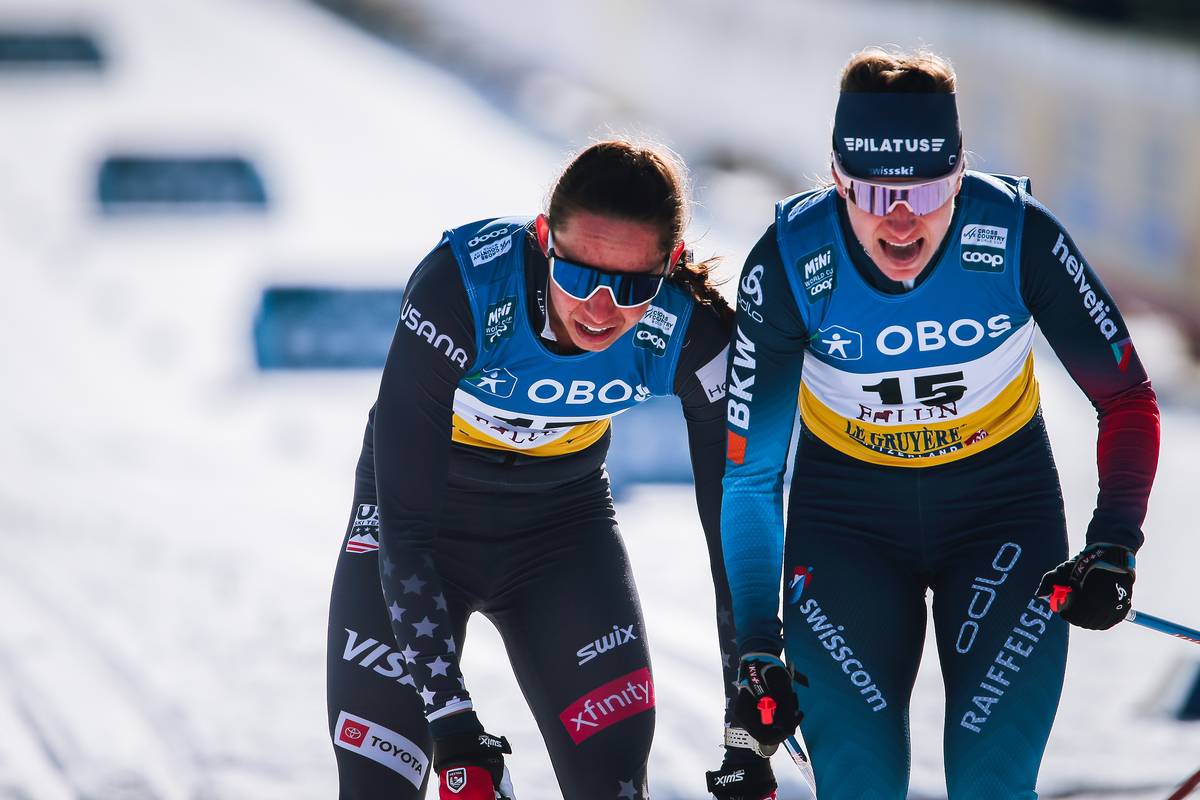
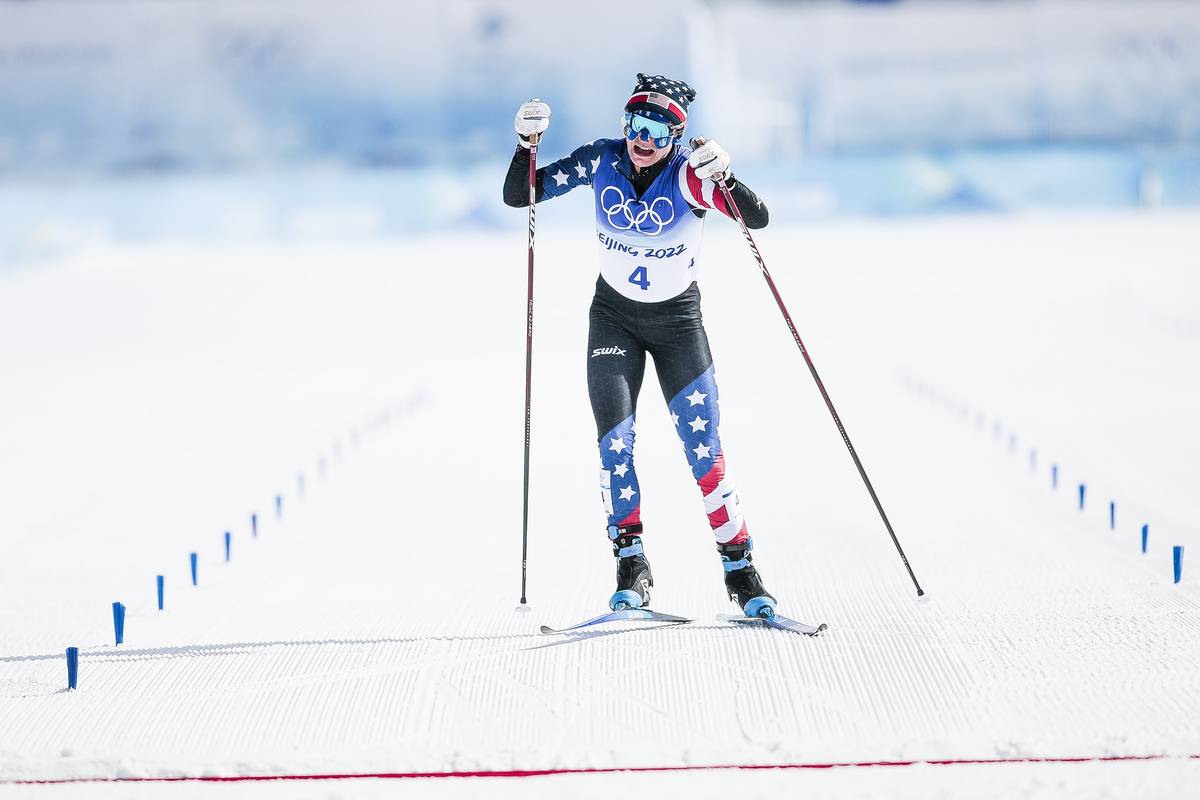
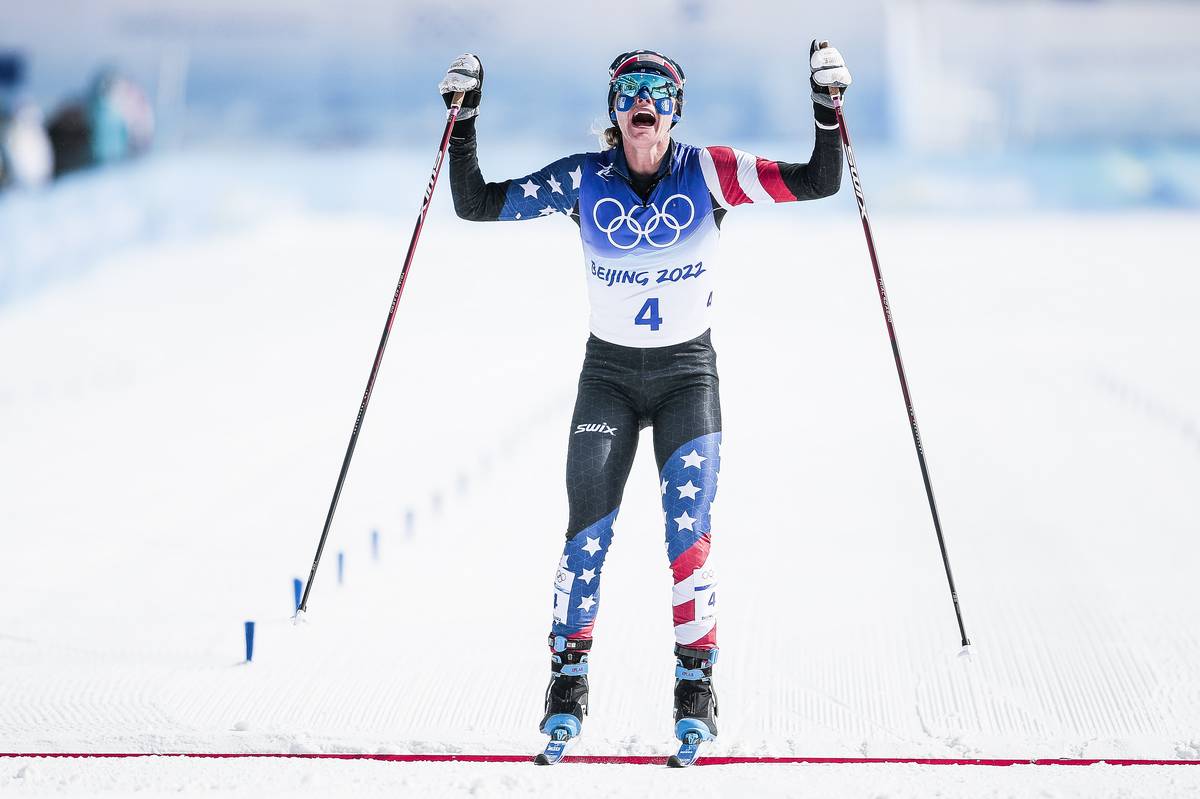
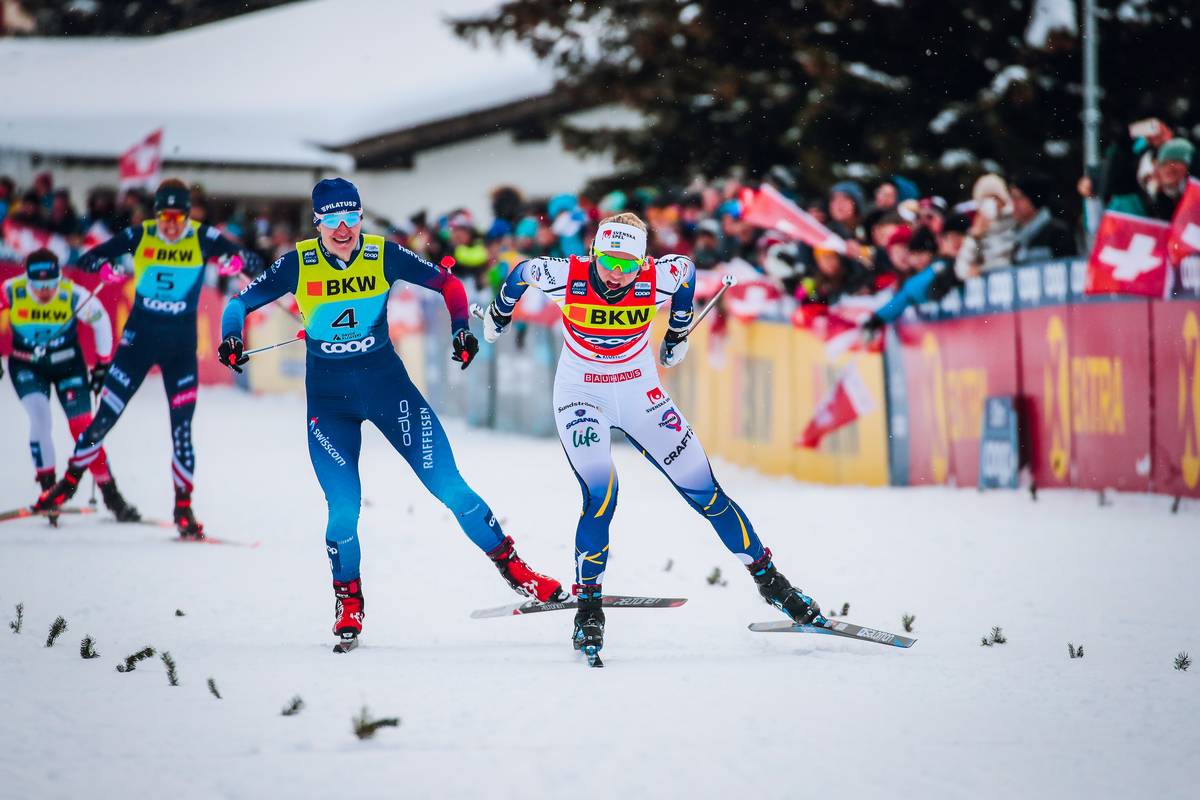
    Behind them, Dahlqvist was finding a second wind in the finish straight and overtook Kern to finish in third. Kern finished fourth, matching her season personal-best from Lenzerheide where she also finished fourth, in a skate sprint. 

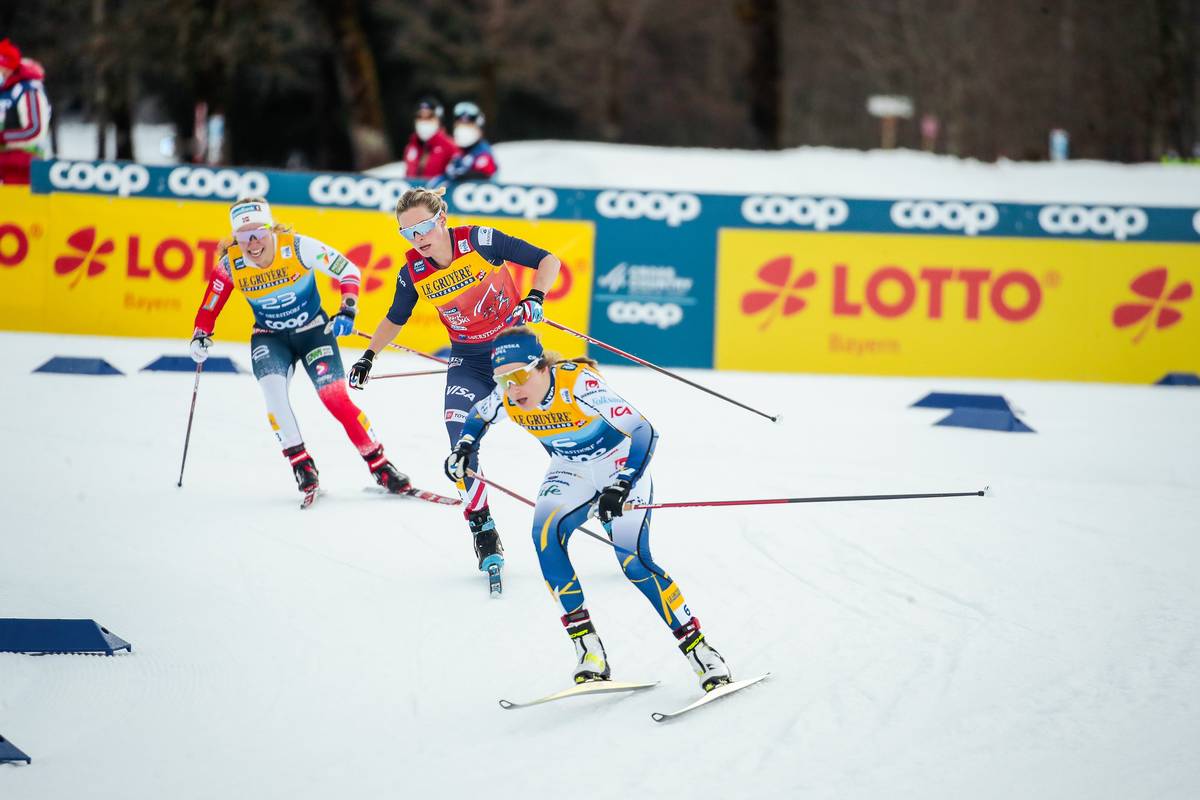
    Anamarija Lampic (SLO) heads towards a silver medal as behind her Maja Dahlqvist (SWE) overtakes Kern (USA). (Photo: NordicFocus)

    “[Kern] was really smart through the quarters and semis,” reflected coach Matt Whitcomb, “where she would ski really smooth through the first climb, and position herself really well. And normally what was happening is she was both being smart tactically and feeling very good today and that just led to a break between positions 3 or 4 and allowed her to get away. And her doublenpole punch at the end was as good as I’ve ever seen her today.”

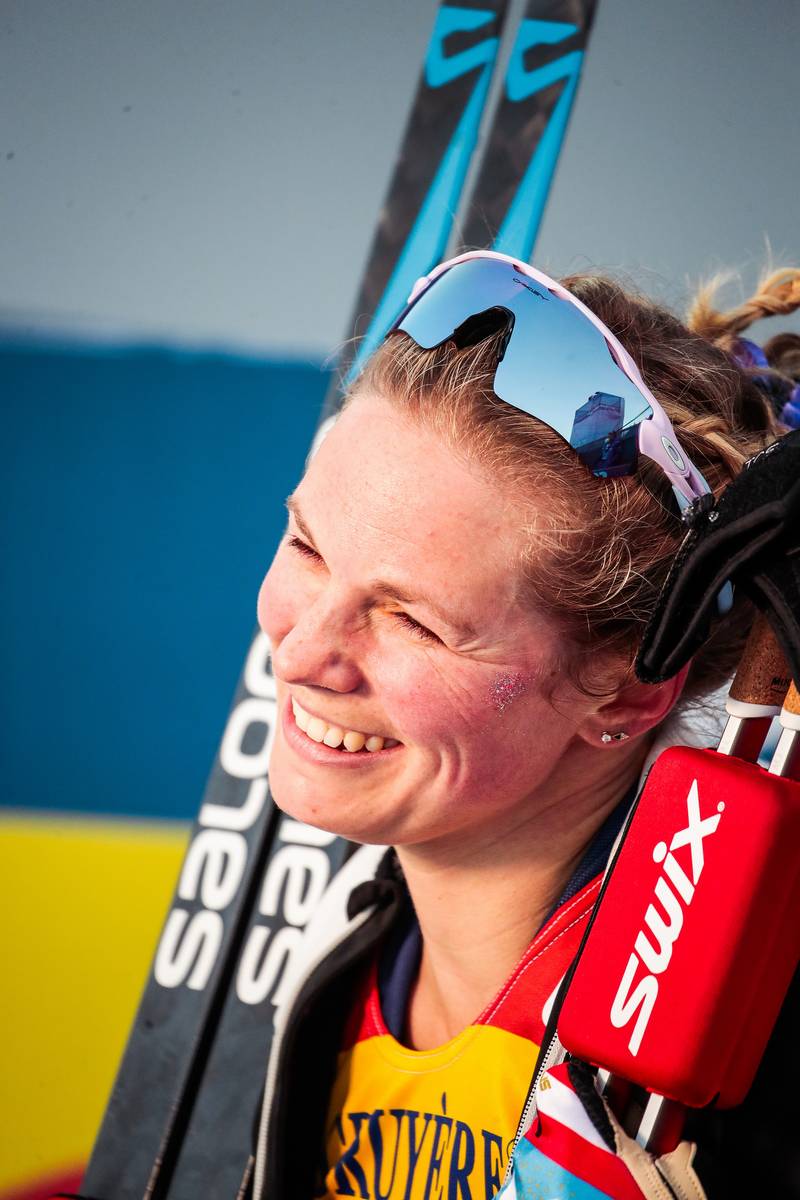
    Julia Kern after fending of Nadine Fähndrich (SUI) to finish fourth in the 1.4 k classic sprint. (Photo: NordicFocus)

    Regarding the final in which Kern seemed to have a lock on third but lost out in the closing stages Whitcomb said, “We talked about if there was a big mistake she made and we decided she could do the same thing 10 times and maybe land on the podium four or five times. She had some stumbles, had those things not happened, it would have been a little bit closer between her and Maja [Dahlqvist], but I don’t want to discredit Maja, she had all kinds of fire in the finish today.”

    He added, “It was cool, Julia’s parents are out here today, she has raced well when her parents are watching. It’s important to point out that she was fourth and not fifth, she fended off a hard-charging Fähndrich and we’re really happy with her performance today.”

    Listen to the full interview with U.S. Ski Team Head Coach Matt Whitcomb here.

    Julia Kern races through the heats in Falun. (Photo: NordicFocus)

    Kern has put together a string of strong performances in the final period of World Cup racing, placing in the top-10 in each of the last three sprints. These results come on the tails of a first Olympic appearance that left her wanting more, after having rebounded early-season from a 2020/21 season she had described as challenging.

    “It’s a bit of a bittersweet ending,” Kern said in a call. “We’ve been on the road for so long now that, after the Olympics, especially, I was feeling excited to go home. But now when things are going well and I’m feeling really good, I don’t want to go home and I don’t want the season to end. I’m happy to end on a high note and find my stride after a frustrating Games. It’s just kind of reminded me how important having some sense of normalcy is, and I’ve kind of embraced that more after the Games. I think that’s paid off, plus some hard work, and I’ve had a little extra fire from the frustration after the games. Happy to end the season this way, and [we have] another shot tomorrow, so I’m excited for that race.”

    Commenting on how these strong results and better energy feed momentum, Kern discussed a mid-week training session she felt primed her for today’s sprint.

    “Now that I’ve been having really good energy in training… I have to give a big shoutout to our staff. On Tuesday this week, I did an interval workout here on the courses. I had Matt, Kate [Barton], and [tech] Chris Hecker out there with me, racing me around the course doing speeds, throwing elbows, pulling tactical moves, practicing the slingshot. Those types of sessions are super valuable for me when I put the energy to put in a good interval session. I learned so much from that session, and it gave me the confidence here today to ski well in the heats and be ready for anything.”

    Kern continued with a laugh that her family is her fourth place good luck charm, as they also watched her race to fourth in Lenzerheide, SUI during the Tour de Ski, ending with a comment on the American team as the season draws to a close.

    “I think our team has done a really incredible job, working through all the different colleges this season has brought. When things get tough, we bring out humor and come together. I just feel more and more appreciation for the team. My wax tech Eli and I have worked really hard all season together to start linking together some classic performances. We’ve had four classic races in a row now, and pretty much all personal bests, so that’s been a really fun relationship to build and [I appreciate] all the hard work the wax team puts in.”

    Full post-race interview with Julia Kern. Apologies for the bad echo — working through the kinks as we work our way along the audio learning curve.

    Julia Kern edges out Maja Dahlqvist (SWE) in the classic sprint semifinal in Falun. (Photo: NordicFocus)

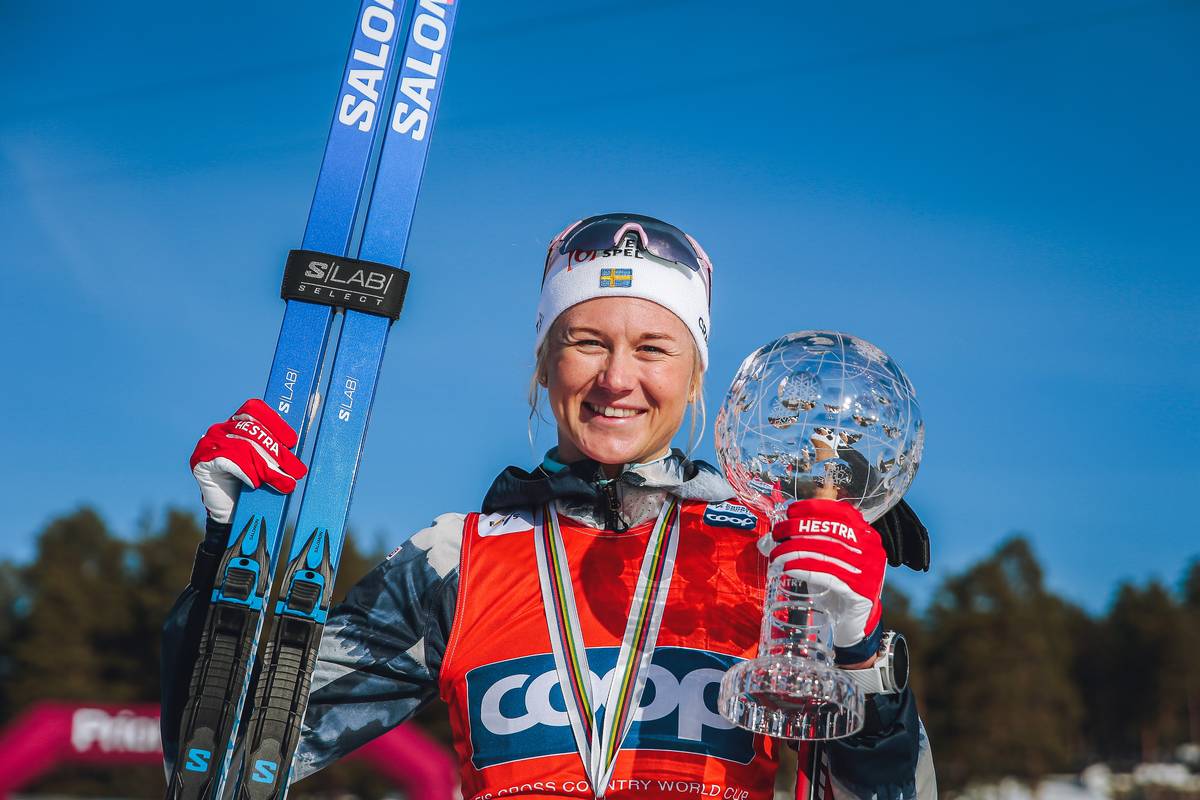
    Dahlqvist already had the sprint globe on lock, but her third place finish today only reinforced her strength in sprint racing this season as she racked up 638 points throughout the year. She began the season with four straight wins and earned a silver medal in the Olympic skate sprint last month. A fourth place finish in Drammen was the only time this season in which she did not finish on the podium in a sprint event.

    “It feels really really, super duper good,” said Dahlqvist about taking home the globe. “I’m super happy with that.” 

    Sweden’s Maja Dahlqvist is the 2022 World Cup sprint champion. (Photo: NordicFocus)

    Last year’s sprint globe winner, Anamaria Lampic (SLO) finished second this year with 506 points. After today’s victory, Sundling (SWE) overtook Diggins (USA) to move into third in the sprint standings with 442 points. Delaying her start to the season after sustaining an injury in an early-season FIS race, Sundling’s first World Cup start was Dresden in mid-December where she finished second in the individual skate sprint. She did not take part in the Tour de Ski, but returned to the World Cup circuit in dominant fashion, after collecting three Olympic medals, one of each color, and taking fourth place in the 30 k.

    In the final three weekends of World Cup racing, Sundling landing on the podium in four out of the five races she entered, including a third place finish in the legendary Holmenkollen 30 k classic last weekend. 

    Anamarija Lampic (SLO) congratulates the days winner, Jonna Sundling (SWE) (Photo: NordicFocus)

    Racing continues tomorrow with a 10 k skate interval start for the women. Sunday will feature two new team events, with a mixed relay happening in the morning followed by a mixed team sprint in the afternoon. 

    Results:

    Qualification | Final | Sprint Overall Standings

  • Lizzie Larkins on Learning on the Job as a Wax Tech at World Juniors

    Lizzie Larkins on Learning on the Job as a Wax Tech at World Juniors

    The role of a wax technician seems both secretive and extremely public. As spectators, we don’t see what happens on race day inside a wax truck or trailer. We aren’t privy to the tips and tricks that are employed to work magic on an athlete’s skis. Conversely, when the wax is off for a racer, that error is on full display for the public as we watch an athlete struggle through a race on skis that aren’t competitive. Though we often don’t see much of the wax techs, as they are busy testing or preparing skis, another observation to be made about the profession is that it is largely male-dominated. 

    Athlete Hailey Swirbul and her wax tech bundle up for training on Friday, February 4, 2022 at the Zhangjiakou National Cross-Country Skiing Center. (Nat Herz/FasterSkier-ADN)

    Earlier this season FIS made a behind-the-scenes video, highlighting Vale Veurich, the only long-term female wax technician on the World Cup circuit. Gender representation among wax techs is not the only area of inequality in the cross-country world but there are groups working to change this. 

    The Women Ski Coaches Association launched in September 2019 in pursuit of gender equity in coaching.

    One example is the Women Ski Coaches Association which launched in 2019 with the goal to “develop, retain, and advance women in ski coaching leadership.” While the WSCA is primarily focused on representation in coaching, as part of this work they hosted a wax webinar in the fall of 2020 titled “Waxing Skis & Waning the Gender Gap. Prior to the event, they conducted a survey which showed that seventy-six percent of participants did not have access to information that made them feel successful as a wax tech. Fifty percent responded “Yes” to the question: “Do you ever feel like you are at a disadvantage obtaining wax product or process information because of your gender?”

    Systemic change takes time but there is no time like the present. At World Juniors in Lygna, Norway a few weeks ago the US contingent had five female staff members, including two female wax-techs. Both Lizzie Larkins and Julia Hayes spent the week learning and working as techs for the junior racers. FasterSkier caught up with Larkins to hear more about her involvement and perspective on this experience. 

    The following interview has been edited slightly for clarity. 

    FasterSkier (FS): Can you fill us in a little on your background? 

    Lizzie Larkins is the assistant nordic coach at Montana State University in Bozeman. (Photo: msubobcats.com)

    Lizzie Larkins (LL): When I reflect on my experience coaching thus far, I think, “Well, that escalated quickly!” I graduated in 2020 from UVM with a degree in Nutrition and Food Science and a lot of love for the sport of nordic skiing. Between graduating from UVM in a pandemic and moving to Bozeman, I lived in my hometown of Truckee, California. I started coaching full-time for Auburn Ski Club (the club I skied for in high school). I primarily coached the high school-aged comp team, but I also coached the Master’s team, middle school team, and did technique clinics. In August of 2021, I accepted the assistant coach position at MSU, moved to Bozeman, and I have not looked back since!

    FS: What drew you to the position at MSU? 

    LL: As a recent college graduate and someone who understands the demands of being a student-athlete, I was drawn to coaching at the college level because I know what it feels like to be in the athletes’ shoes. I very recently had them on. I was also drawn to this position because of its location. Bozeman is a nordic hot-spot, but it is also an ideal place for work-life balance. I love that I can coach in the morning and spin Bridger laps with friends in the afternoon. It is wonderful to be exploring this mountain playground and living in a college town once again. 

    Working with [head coach] Adam St. Pierre was also a factor in my decision to come to MSU. Adam cares so much about this team, goes above and beyond for every athlete he works with, and graciously shares his enthusiasm and knowledge for this sport, this community, and the future of US Skiing. I am extremely grateful to have the opportunity to be a part of the MSU Ski Program. It’s a great fit!  

    FS: Can you explain what the application process was like to join the World Juniors trip?

    LL: In the late fall, I saw an email from Greta Anderson with the call for staff for both World Junior/U23 Championships as well as the U18 trip. While at our Thanksgiving Camp in Canmore, I compiled a coaching resume, wrote a cover letter, and emailed in my application. I heard back in December while home in Truckee for the holidays.

    Throughout the process, one constant for me was self-doubt. I questioned whether I should apply while completing each step of this process. I am very fortunate that Adam saw this as a huge opportunity for professional development and encouraged me to apply in the first place. Even with his support, I had to dig deep to believe in myself and ignore the imposter syndrome. It was a huge leap outside my comfort zone, but I am really glad I licked the envelope and sent it. I encourage others to do the same especially if you find you are riding the same wave of uncertainty. 

    FS: So you joined the staff as a wax tech, what has the learning process been like for that?

    LL: The learning process for waxing has been one of the steeper ascents on the coaching learning curve for me. Don’t get me wrong, I love going uphill, but I was humbled by how much there is to learn about waxing in my transition from athlete to coach. One of the major keys to my learning process is being a nordic sponge in the wax cabin and on race day. I try to soak it all up and tune into all of the little steps in the testing, application, and decision-making process. I still have a ways to go before I am comfortable calling myself a wax-tech, but I am deeply motivated to keep learning and growing in this realm. I am also very grateful to have the hands-on learning opportunity in Lygna alongside a very talented service staff.

    FS: Can you talk through what a race day looked like for you?

    LL: In Lygna, we had seven races in six days with no days off in between, so a typical day was packed to the brim. Wake up, put on ski clothes, fuel up at breakfast, chug coffee, drive to the venue, inspect track conditions, prep skis for athletes who were training, drink more coffee, help with prepping test skis, do glide outs and necessary testing, help athletes test, run skis to start, retest if necessary, run more skis to start, cheer on athletes, eat lunch and Norwegian chocolate, zero test fleets, clean kick wax, prep training and race skis for the next day, eat a late dinner as a tech staff, pack a backpack for the following day, sleep hard, and get ready to do it all again!  

    Lizzie Larkins enjoying bluebird conditions in Norway (courtesy photo)

    FS: If you had to pick one highlight from the trip what would it be?

    LL: The highlight of my trip was watching Sammy Smith advance through the sprint heats on the final day of competition. Sammy skied with heart, determination, and most importantly, she was having fun. I love watching athletes exceed their expectations and enjoying the experience of racing. Sammy was doing just that and it was awesome to be there cheering her on. 

    FS: What has been the biggest challenge of this experience?

    LL: One of the biggest challenges was seeing athletes lose sight of why we do this sport and the associated disappointment. On social media, we only see the highlights, so it was hard for me to watch extraordinary athletes be unrelentingly hard on themselves and define their experience solely from results. There are an abundance of reasons to pursue this sport and love it. At major events like this, it is easy to get sucked into the numbers and lose sight of the successes along the way. 

    FS: Among the US staff it seems like the split was pretty even in terms of male/female, were you able to get a sense if this was the case for other countries too?

    LL: Truth be told, this was not at all the case for other countries. Once the racing began, it became quite obvious that Julia Hayes and I were the only two female techs at this event. There were a number of female coaches and staff members at the event, but in the testing depot and after the racing concluded, Julia and I noticed frequently that we were the only females there. Prior to this event, I knew we needed more female coaches and techs. Now, I understand how far we have to go before this becomes less of a male-dominated industry at the higher levels. 

    FS: Any final thoughts you want to share?

    LL: A few nuggets of wisdom from Coach Lizzie:

    • Rocket ships need rocket fuel. Eating enough as an athlete should be a priority for health, wellness, and longevity in sport. 
    • Have fun, be authentic, and be kind to yourself and others. 
    • Fast is smooth, smooth is fast. Happy skiers indubitably go faster 🙂


    After returning from Norway, Larkins will be rejoining the MSU team and preparing for NCAAs in Soldier Hollow happening this weekend from March 9-12th

  • Falla Earns Sixth Drammen Victory on Home-ground; Kern leads Americans in 7th, Three in Top-20

    Falla Earns Sixth Drammen Victory on Home-ground; Kern leads Americans in 7th, Three in Top-20

    This World Cup coverage is made possible through the generous support of Marty and Kathy Hall and the A Hall Mark of Excellence Award.  To learn more about A Hall Mark of Excellence Award or to learn how you can support FasterSkier’s coverage please contact info@fasterskier.com.

    Returning to Norway after last year’s coronavirus induced hiatus, the World Cup picked up with a 1.2-kilometer classic city sprint in Drammen. With the Russian and Belarusian athletes banned from competing thanks to a recent decision by FIS, the size of the field was slightly reduced. Last weekend’s skate sprint in Lahti, Finland saw 62 racers on the women’s side, whereas today’s qualifier had only 53 finishers. 

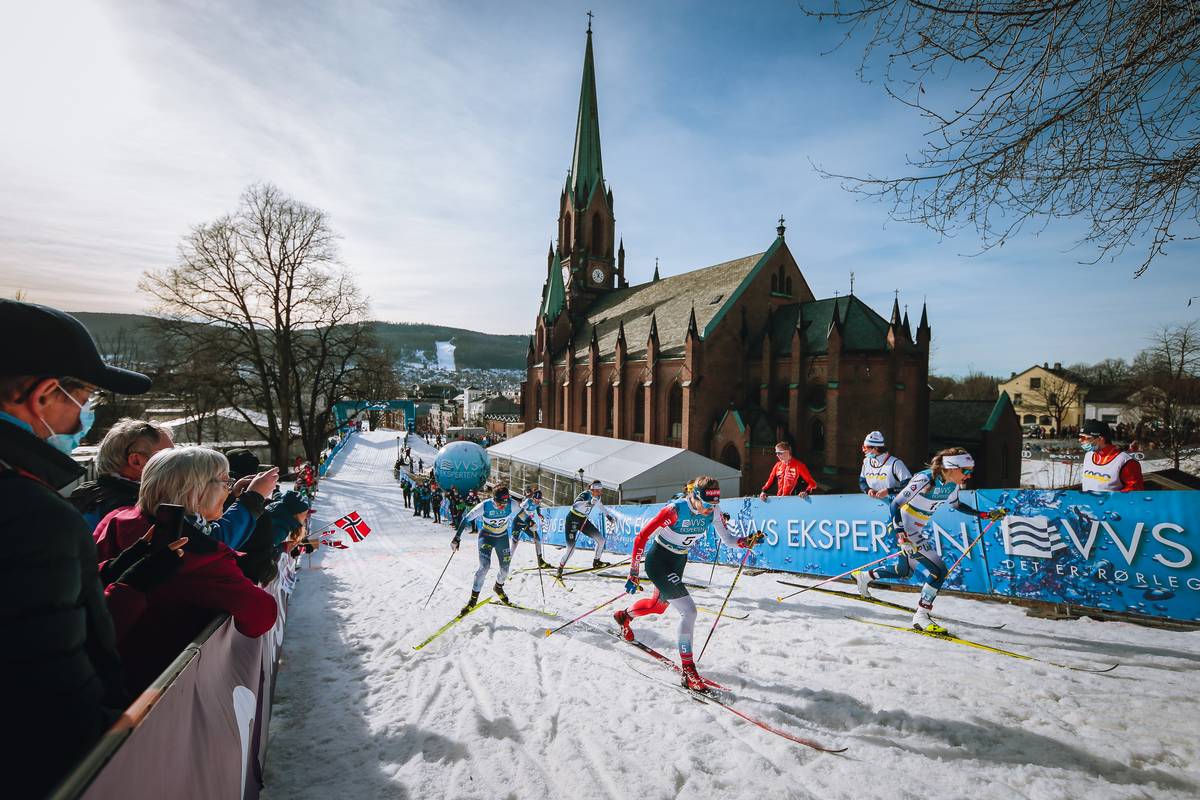
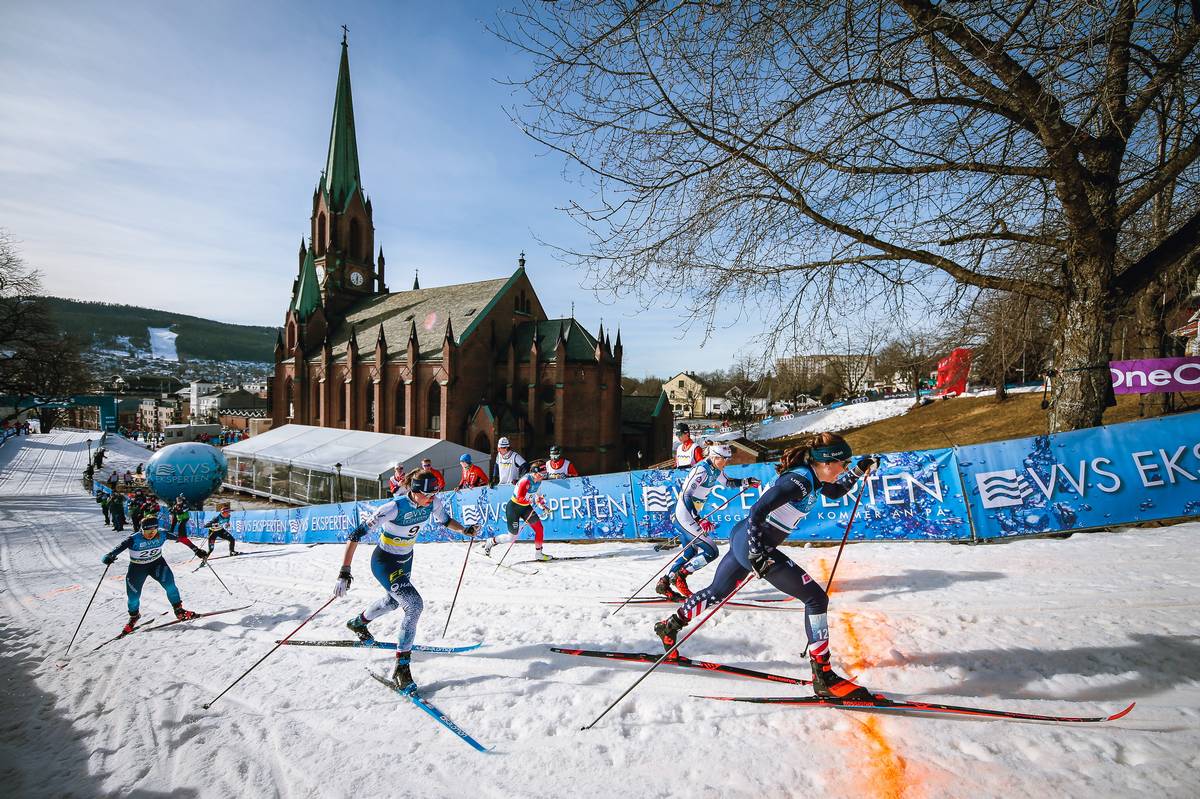
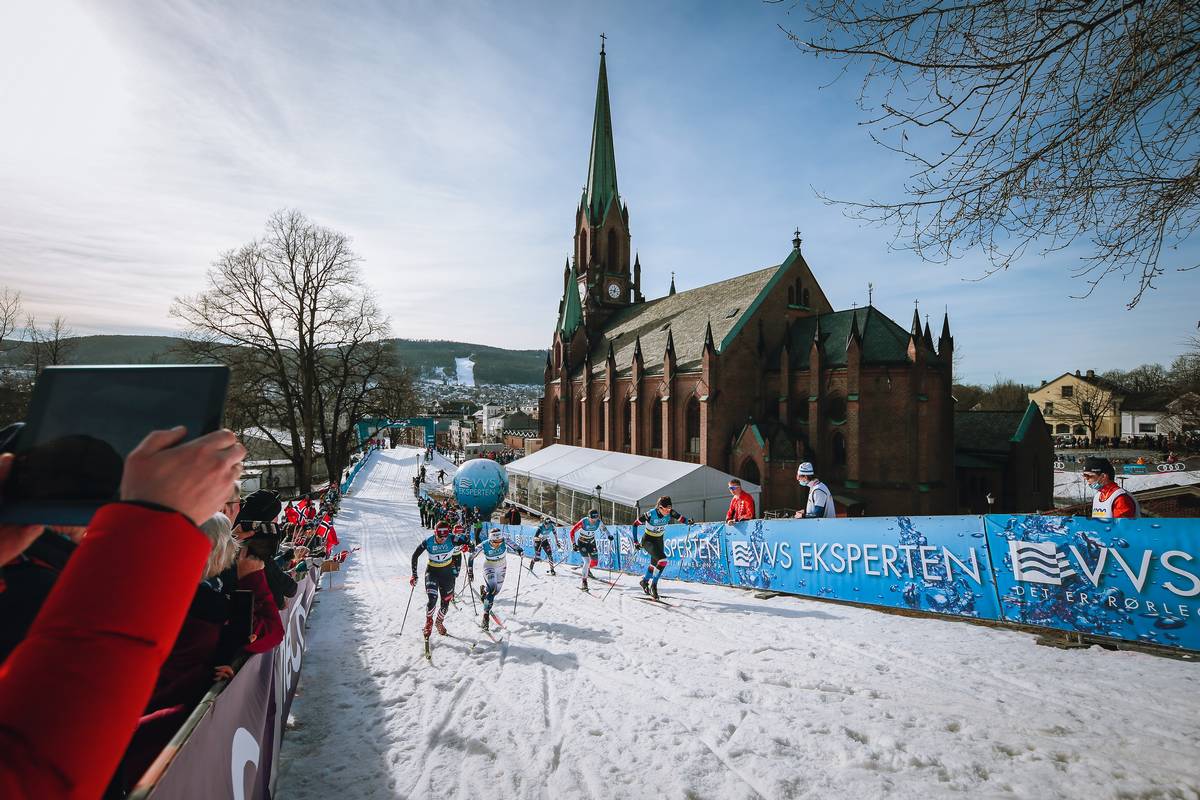
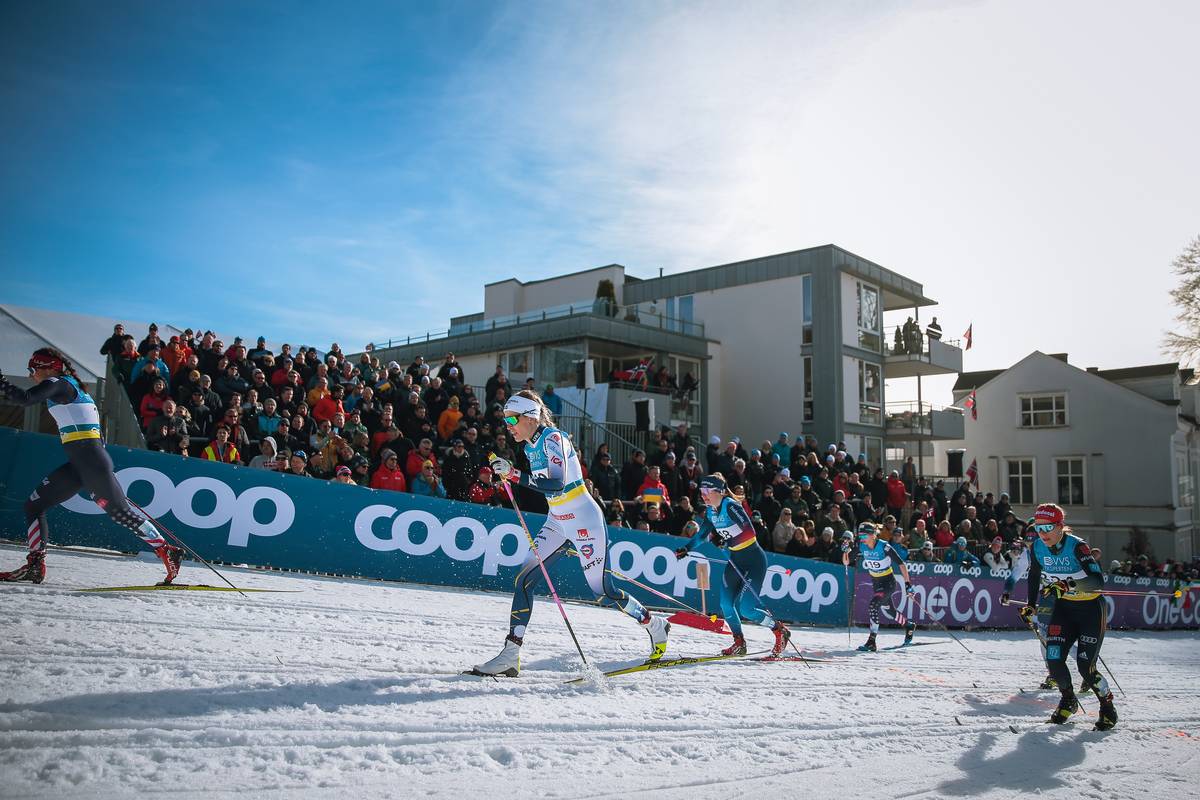
    Katri Lylynpera (FIN), Kerttu Niskanen (FIN) and Hedda Østberg Amundsen (NOR) duke it out on the initial climb in the Drammen city sprint in front of excited crowds (Photo: NordicFocus)

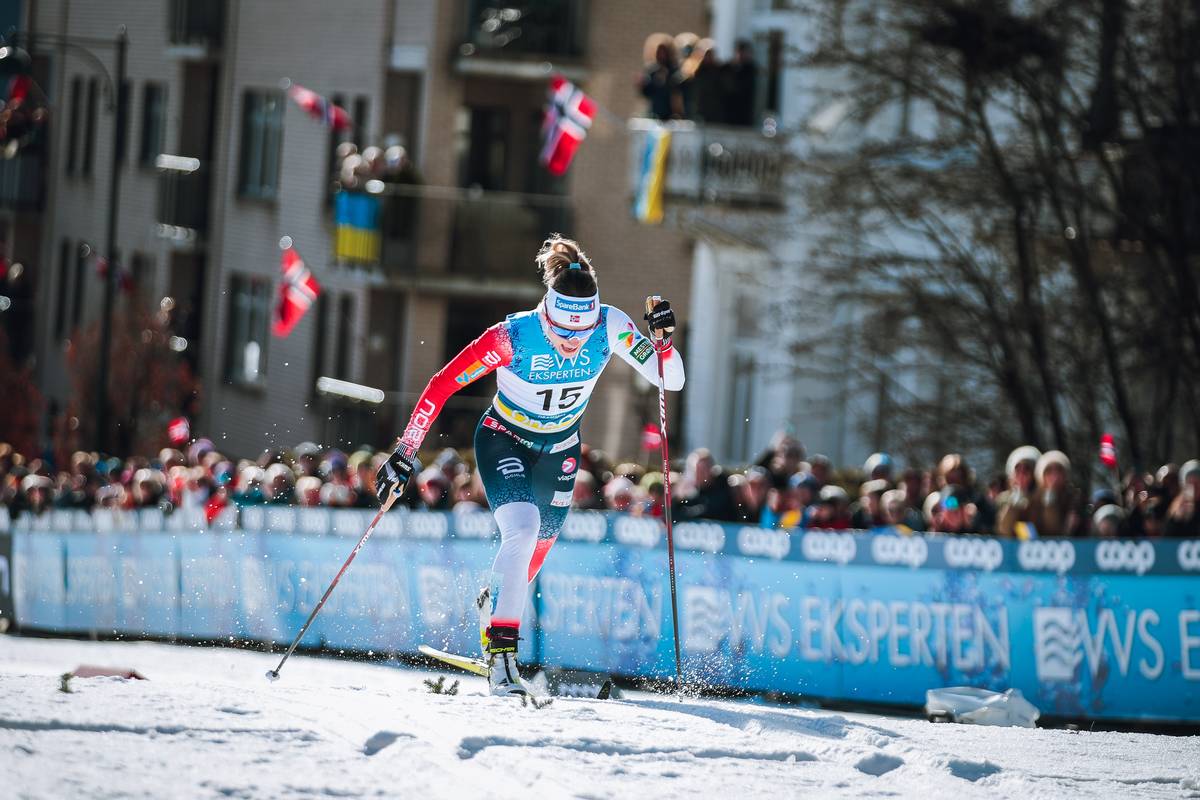
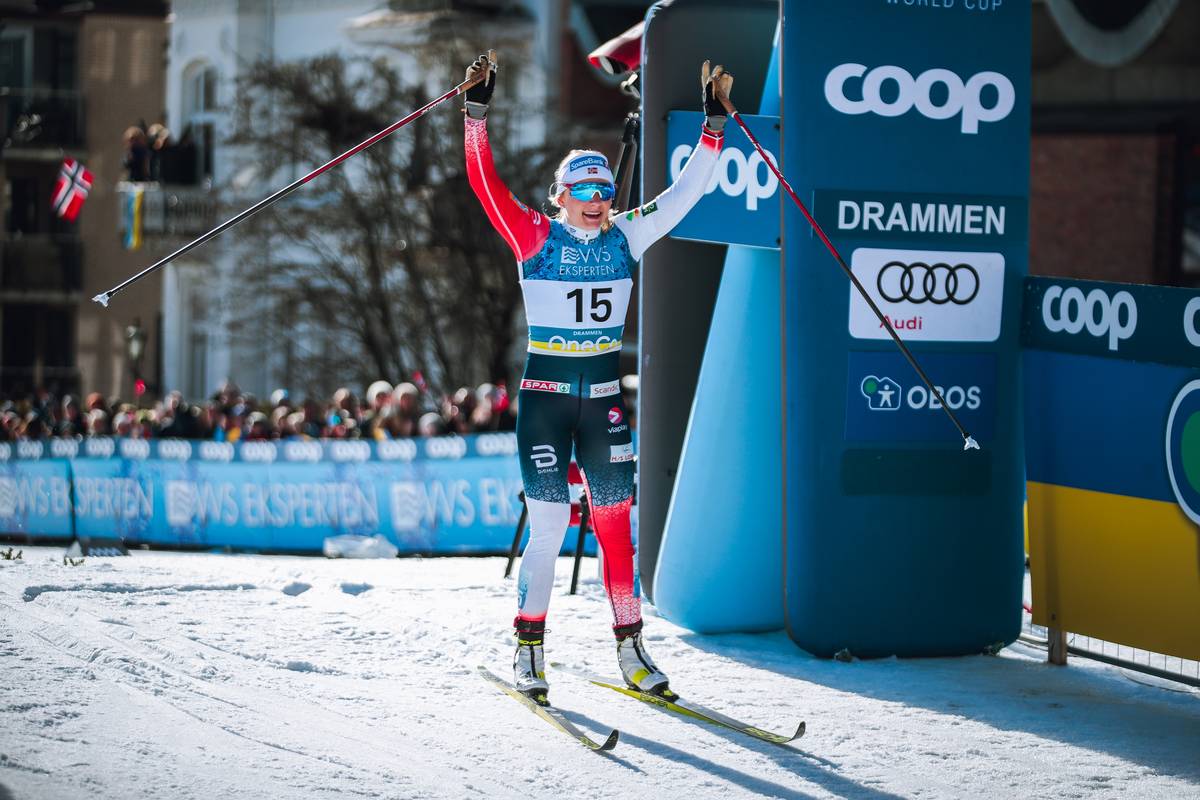
    Unlike the largely flat city sprint in Dresden, Germany earlier the season, the Drammen course features significantly more climbing and descent. This combined with the soft snow and tight trails led to lots of mishaps throughout the rounds, providing drama for the fans that packed the sidelines in stands and along the sideboards. In a show of support for Ukraine, the country’s blue and yellow colors were displayed on the sponsor boards that line the track, on the athletes’ bibs and in the flags and hats born by the spectators. 

    Johanna Hagström wins the women’s sprint qualifier (Photo: NordicFocus)

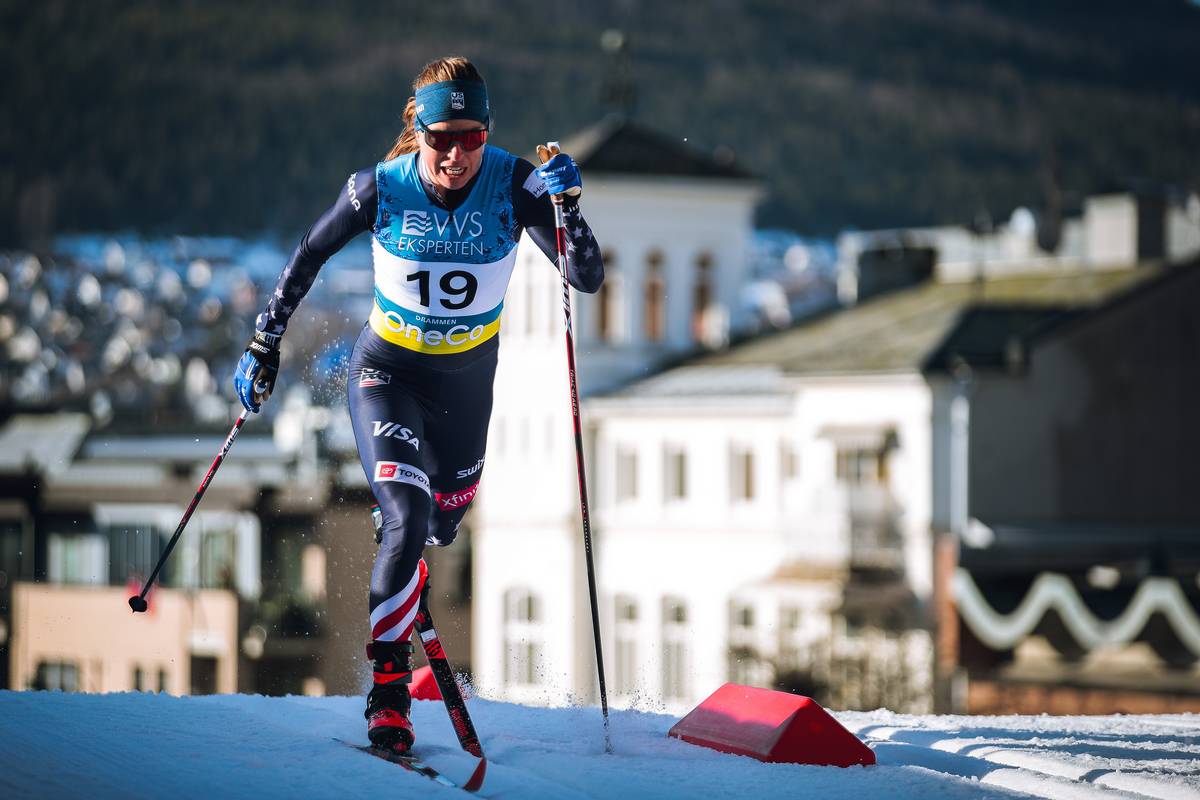
    The qualifier was won by Johanna Hagström of Sweden in a time of 2:48.88. Rosie Brennan was the first American qualifier in 12th position, +4.30 back from Hagström. Julia Kern qualified in 17th, (+4.97) and Jessie Diggins was the final American woman through to the heats in 19th (+5.11). Hailey Swirbul came in 36th (+9.05), Katharine Ogden finished 44th (+10.98) and Alayna Sonnesyn ended 52nd (+18.14) after hopping on a plane following her Birkie win last weekend

    The Canadian women all finished outside the top thirty, led by Olivia Bouffard-Nesbitt in 40th (+10.21). Dahria Beatty came in 41st (+10.37), Katherine Stewart-Jones in 48th (+13.86), Laura Leclaire in 51st (+17.20) and Cendrine Browne in 53rd (+18.85). 

    Temperatures were warm and springlike, above 40°F, as the athletes lined up for the heats. The first heat featured the second-fastest qualifier and this year’s Olympic sprint gold medalist, Jonna Sundling of Sweden. Brennan (USA) also elected to go in heat one, and she and Sundling took on the lead out of the start. A move by Johanna Matintalo of Finland on the first climb took out Sofie Krehl of Germany, resulting in a yellow card for Matintalo.

    Rosie Brennan leads her quarterfinal during Drammen’s classic sprint. (Photo: NordicFocus)

    On the descent, Julie Myhre of Norway moved to the front, aided by a pair of speedy skis. Rounding the tight corner at the bottom of the course, Myhre and Sundling were in the lead, Brennan having dropped slightly. With a powerful double-pole Sundling pulled clear of the field to take the first qualifying position easily. A tight three-way finish between Myhre (NOR), Laurein Van der Graaff of Switzerland and Brennan, went in favor of Myhre. This left Brennan in fourth place, with a time not quick enough to make lucky loser. 

    Rosie Brennan leads the American women in the classic sprint qualifier in Drammen, NOR, placing 12th and ultimately finishing 17th overall. (Photo: NordicFocus)

    “Drammen is such a cool event and I really love doing the city sprint thing at least once during the season,” wrote Brennan after the race. “It’s been a few years since I’ve raced here and with so many improvements in my sprinting since then, I felt I could have a good day today. As with all city sprints, a big part of it is not getting too pushed around and that part I did a bad job of today. After a decent qualifier, I got way to pushed around and skied over in my quarterfinal to move on. I had a strong finish and thought maybe it was enough but I lost another lunge this weekend. It’s always a tough way to get out because it’s so close, but that is such a big part of sprinting. I guess I will have to work with master lunger Tyler [Kornfield] (Brennan’s partner) and see if I can improve on those close finishes in the future. In the meantime, it’s a fast turn around to Holmenkollen so I will be focusing on recovery.”

    The second heat saw another fall on the initial climb, Lucia Scardoni of Italy got bogged down in deep snow and broke a pole, taking herself out of contention. In the end, Maja Dahlqvist of Sweden strided to victory, with Anamarija Lampic also qualifying. 

    Lucia Scardoni of Italy goes down on the hill (Photo: NordicFocus)

    In heat three, Lotta Udnes Weng of Norway and Jasmi Joensuu of Finland got tangled on the hill. The third time in three sprints that Joensuu has broken a pole in the quarterfinals. Maiken Caspersen Falla of Norway proved again that the Norwegians had ripping skis as she gained on the downhill and put in a fast finish, Nadine Fähndrich of Switzerland and Laura Gimmler of Germany also qualifying from this heat. 

    As in Lahti last weekend, roommates Julia Kern and Jessie Diggins chose the same heat, both going in quarterfinal number four. All athletes making it up the initial climb without a fall, it seemed like this might be the first heat to get away without any spills, only to have the fastest qualifier, Hagström (SWE), wipe out on the downhill. Losing all her speed at the wrong moment, Hagström was out and the two Americans capitalized on this. Diggins entered the final turn in first, followed by Kern. On a deceptively long finishing straight, Kern continued to press hard, besting Falla’s time from the prior heat. Behind her, Diggins battled a surge from Katharina Hennig of Germany, ultimately both of them qualifying for the semis. 

    Julia Kern and Jessie Diggins race in the fourth quarterfinal in Drammen, finishing first and second in the heat. (Photo: NordicFocus)

    “I didn’t know what to expect going into today,” shared Kern, “I’ve only done Drammen once and was around 60th or so, so I was really excited to have qualified in this iconic sprint.”

    The final quarterfinal heat saw a relatively chill pace. In the end, Anna Dyvik of Sweden took first and Katri Lylynpera of Finland also qualified, finishing second. 

    Moving into the semi-finals, the first heat hosted two Norwegians, two Swedes, a German and a Slovenian. It was the Slovenian, Lampic, who took the pace out hot from the start. She was followed closely by Sundling and Dahlqvist as they rounded the corner at the bottom of the course.

    Anamarija Lampic (SLO) and Jonna Sundling (SWE) lead the first heat of women’s semifinal in Drammen. (Photo: NordicFocus)

    Coming from the back, Falla (NOR) went wide to get a clear track into the finish and put in an impressive burst of speed. She took the win followed by Sundling (SWE) as Lampic dropped to third. Dahlqvist came in fourth but given the fast pace, both qualified in lucky loser spots. 

    The second semi featured higher bib numbers, with the lowest qualifier being Dyvik of Sweden in bib 13. Both Kern and Diggins were in this heat and when the gun went off, Kern shot to the front. Her quick start was matched by Dyvik but on the first climb, Kern began to pull away. Over the top, she appeared to have created a gap to the rest of the field, however she was quickly reeled in and passed by Dyvik (SWE) on the descent, her ski speed no match for those of the Swede.

    Julia Kern (top left) leads the second semifinal, racing with Jessie Diggins, in Drammen, NOR. (Photo: NordicFocus)

    Fähndrich (SUI) also pulled ahead of Kern and those front three maintained their respective positions exiting the final corner. Fähndrich nearly fell in a sudden loss of balance but managed to stay on her feet and came across the line in second, behind Dyvik. Despite her efforts out of the start, Kern finished third and the heat was not as quick as the first. Diggins came in fifth to end her day in 10th position. 

    “It was a really cool atmosphere out there, that was super fun to see,” Diggins shared with FasterSkier. “They always do a great job here, everyone was out cheering and it really felt like spring World Cup out there. It was sunny, it was warm and honestly the course held up pretty well given that it’s snow that they had to truck in and it is super warm. But there were a lot of crashes out there, it was sort of crazy, wild skiing.”

    Diggins continued, “Andy Newell reminded us last night that in Drammen you just have to embrace the chaos. It was cool to get out there and I’m feeling really lucky to be able to be racing right now.”

    For Kern, her approach was to stay flexible. She said, “I knew the start was important, but I also had a flexible approach since in tight city sprinting you never know where you slot in out of the start. I ended up almost tangling and finding my open lane on the right out of the start, and it ended up being the tactical move that I liked. My body was feeling good, I’ve had great energy the past two weeks and my skis were climbing well.”

    Lining up for the final, it was Dyvik, Sundling, and Dahlqvist for Sweden, with Falla for Norway and Fähndrich for Switzerland. Out of the start, Sundling went to the front, eager to take on the lead work as four skiers slotted in behind her. Over the top of the course Sundling, Falla and Lampic had pulled clear of the others.

    As they exited the bottom corner, Falla cut wide once again. With all three skis abreast, Sundling looked strong and had a slight lead. But Falla executed another incredible change of pace, switching to diagonal stride and edging ahead of the Swede she crossed the line in first. 

    Maiken Caspersen Falla (NOR) races to the line to win her career sixth sprint on the streets of Drammen, NOR. (Photo: NordicFocus)

    “I felt so good,” said Falla in a FIS interview afterwards, “it’s so good to be back here in Drammen, to have a good atmosphere and it was a really good day.” Falla has had a challenging season, the only other time she made a sprint final was back in November in the first weekend of racing in Ruka, Finland.

    The Drammen event is something of a favorite for Falla however, she has won it on five occasions prior to today, her last win here coming in 2019. “It is really good to be back,” continued Falla, “I’ve been watching a lot of ski races on TV this season. I’m so happy to be here and to finish the season in a good way.” 

    Maiken Caspersen Falla (NOR) celebrates her sixth win in Drammen. (Photo: NordicFocus)

    Behind Falla, Sundling finished second, continuing to show her strength in sprint racing with yet another podium finish. Lampic finished third, her fourth third-place finish of the season. For Dahlqvist, who finished fourth, it was her first time off the podium in a sprint yet this year. 

    Maja Dahlqvist (SWE), Anna Dyvik (SWE), Nadine Fähndrich (SUI)(l-r) head to the line to take fourth through sixth, respectively, in the women’s classic sprint final in Drammen, NOR. (Photo: NordicFocus)

    Results: Women’s sprint

  • World Juniors: Schumacher leads North American U23 Sprint Contingent in 19th

    The 2022 FIS Junior/U23 World Ski Championships trip has been made possible through support from the National Nordic Foundation (NNF), which has identified this invaluable opportunity for developing athletes as one of its “Pillar Projects”. You can support the NNF and the next generations of America’s top skiers by making a donation here.

    LYGNA, Norway – The second U23 event took place Saturday morning in the form of a 1.2-kilometer skate sprint. Qualification occurred under a sunny blue sky, with temperatures around 20°F, though moving into the heats it started to get cloudy as the wind picked up. 

    Moa Hansson of Sweden won the women’s qualifier in a time of 2:33.13. Abigail Jarzin (University of Utah/Salt Lake City, Utah) led the US women, finishing 43rd (+13.16). Behind her came Lucida Anderson (University of New Hampshire/Golden Valley, Minnesota) in 45th (+14.02), and Anabel Needham (Michigan Tech University/Houghton, Michigan) in 46th (+14.08).

    Needham spoke to FasterSkier after the race saying, “it was a tough day, I was really hoping to possibly make heats, just felt a little tired. But the sprint course was so much fun. Super fast, and an actual sprint, so that was really cool.”

    Anabel Needham races the freestyle sprint qualifier during the 2022 Junior World Ski Championships in Lygna, NOR. (Photo: flyingpointroad.com)

    Rena Schwartz (Dartmouth Ski Team/Middlesex, Vermont) rounded out the US finishers in 54th, +17.95. For the Canadian women, Anna Pryce finished 35th, +10.98 back. Beth Granstrom was 44th, +13.35, Anna Parent 47th, +14.68 and Bronwyn Williams came in 52nd, +16.85. 

    Qualification for the men was won by Valerio Grond of Switzerland in 2:10.10. For the US, Gus Schumacher (Alaska Winter Stars/Anchorage, Alaska) and Noel Keeffe (University of Utah/Steamboat Springs, Colorado) advanced to the rounds, with 22nd and 29th places respectively. Jonny Hagenbuch (Sun Valley Ski Education Foundation/Ketchum, Idaho), the only other American U23 man competing, finished in 39th, +10.64 back. Canada had one qualifier in Pierre Grall-Johnson who finished 25th in the qualifier. Sam Hendry finished 56th for Canada, +16.54, Joe Davies 65th, +21.6 and Leo Grandbois did not start. 

    As usual, the women completed their quarterfinals first. The five rounds of heats saw a few broken falls, a crash or two, and the two lucky loser qualifiers coming from heat number three, Anna Grukhvina of Russia and Lisa Lohmann of Germany. 

    For the men, both Americans were competing in heat number four. Also in that heat was the second-fastest qualifier, Norwegian Ansgar Evensen, who won the skate sprint at Norwegian Nationals in 2020 (though notably Johannes Høsflot Klæbo did not race). Evensen broke the field apart on the first climb out of the stadium, with Czech skier Ondřej Černý keeping pace.

    Those two remained clear of the field as they descended and entered the final “waffle hill”. Schumacher was in fifth, still in contact with Jaume Pueyo of Spain and Jan Stölben of Germany, while Keeffe followed. Into the finish straight, Schumacher executed a quick no-pole skate that brought him into fourth place and appeared to be a good lucky loser time. Keeffe finished 6th, +7.11 behind heat winner Černý (CZE). 

    Noel Keeffe (bib 29) and Gus Schumacher (bib 22) race the quarterfinal of the freestyle sprint during the 2022 Junior World Ski Championships in Lygna, NOR. (Photo: flyingpointroad.com)

    “It was great, so excited to ski in a heat again,” said Schumacher after the race. Ultimately, heat five proved to be the quickest and Schumacher was bumped out of lucky loser position. Schumacher spent nearly the last month in Zhangjiakou, China, competing in his first Olympics. From there, he traveled with the US Ski Team to Helsinki. While the rest of the World Cup squad continued to Lahti for this weekend’s World Cup event, Schumacher flew to Oslo to meet up with the junior/U23 team.

    When asked how the transition has been, Schumacher replied, “It’s incredibly refreshing, I can relax a lot more I feel like and it’s nice to be in Norway where there’s definitely more of a fun ski vibe, like it’s more about just doing it. It’s nice to be back with these guys, this team.” Comparing the wind today to the infamous gales of Zhangjiakou, Schumacher said, “It’s not as cold, but it is definitely picking up a little bit. But I’m fairly used to it, I’ve got my tuck dialed.”

    With Canadian Grall-Johnson Pierre finishing sixth in his heat, all the North American competitors were out for the day. 

    In the women’s final, Moa Hansson continued her domination; after winning the qualifier, her quarter-final, and her semi-final, she took gold in the final as well. She was followed by bib 19, Monika Skinder of Poland. Nataliya Mekryukova of Russia rounded out the women’s U23 sprint podium. 

    Abigail Jarzin races the freestyle sprint qualifier during the 2022 Junior World Ski Championships in Lygna, NOR. (Photo: flyingpointroad.com)

    The men’s final started with some drama as Jules Chappaz of France snapped a pole immediately out of the start gate. He quickly got a replacement and was able to move himself into fourth as the skiers entered the final hill. Though Grond (SUI) was out front, the pack was tight, and as they crested the hill, Chappaz (FRA) became tangled and fell, taking him out of contention. Grond held his lead to the finish to take gold. Runner-up was Denis Filimonov of Russia, followed by Magnus Øyås Håbrekke of Norway in third. Evensen (NOR) finished fourth. 

    Tomorrow the program switches back to the juniors in the morning, with a skate sprint for the U20 racers. That will be followed by a mixed-relay for the U23’s in the afternoon to conclude the week of racing here in Lygna. 

    Results: Women’s Qualifier | Men’s Qualifier | Women’s Heats | Men’s Heats

    World Juniors links and information:

    Home page and general info | race program | results and live timing (all races) | streaming (only for Thursday through Sunday’s races, purchase required)

  • Exciting Relay Day 2 at World Juniors with US Women 5th and US Men on the Podium in 3rd

    Coaches, support staff, and athletes celebrate a bronze medal in the men’s 4 x 5 k relay. Staff, left to right: Greta Anderson (front left), Bryan Fish (back left), Dr. Katie Eichten (partially obscured), Olof Hedberg, Pat O’Brien, Julia Hayes (middle row, blue NNF hat), Paul Smith, Anson Moxness, Lizzie Larkins, August Teague, Jack Novak. (Photo: flyingpointroad.com)

    The 2022 FIS Junior/U23 World Ski Championships trip has been made possible through support from the National Nordic Foundation (NNF), which has identified this invaluable opportunity for developing athletes as one of its “Pillar Projects”. You can support the NNF and the next generations of America’s top skiers by making a donation here

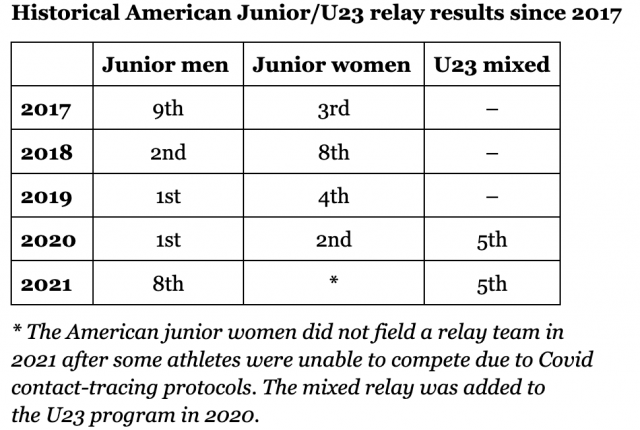
    LYGNA, NOR — The second event of the week for 2022 FIS Junior World Ski Championships, and perhaps the most highly anticipated, was the men’s and women’s relays. It was in the relay in 2017 when the US women broke onto the podium on home turf at Soldier Hollow, Utah, starting a cascade of strong American performances in the World Juniors relay. The next year, in Goms, Switzerland, it was the men who landed on the podium with an historic second-place finish, which they then one-upped the next two years to bring home gold from Lahti in 2019 and Oberwiesenthal in 2020. The US women also finished on the podium in 2020, in second place. 

    After a little lapse in 2021, when the US junior women were not even able to field a team due to Covid contact-tracing protocols, both the men’s and women’s teams were ready to fight today.

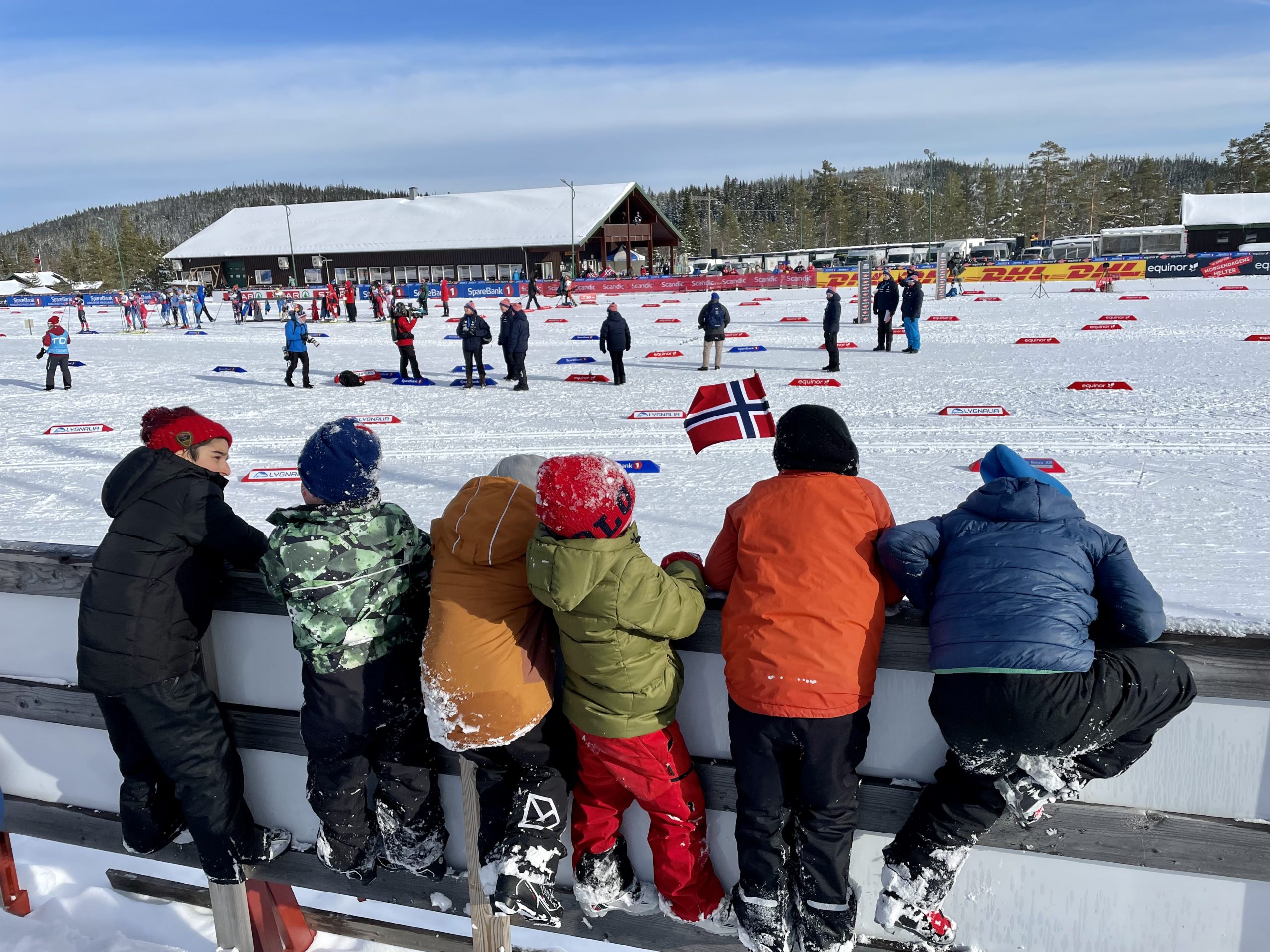
    First up was the women’s 4 x 3.3 k, which featured separate courses for the classic and skate legs. As the women warmed up and made final preparations, the stadium filled with eager spectators in the form of young schoolchildren. As the announcer explained, one of the event sponsors had paid for the transportation of hundreds of local school kids to the venue each day. Thus as the start gun went off, it was to the chorus of many small voices shouting “heia, heia!” and many waving Norwegian flags.

    Enthusiastic young fans prepare for the start of the women’s 4 x 3.3 k relay (photo: Ella Hall)

    Skiing the scramble leg for the US team was Kate Oldham (Aspen Valley Ski Club/Carbondale, Colorado). “It was really fast,” she shared afterwards, “everyone went out really hot, it was fun just trying to ski with the best.” Oldham finished her 3.3 k in a time of 10:03.5 and tagged off to her teammate, Samatha Smith in eighth position. 

    Kate Oldham skis the first leg of the women’s 4 x 3.3 k relay in Lygna, NOR. (Photo: flyingpointroad.com)

    As Russia started to pull away at the front, Smith (Sun Valley Ski Education Foundation/Sun Valley, Idaho) worked to gain ground on the others, moving the team up to fifth place at the completion of her leg. From there, Nina Schamberger (Summit Nordic Ski Club/Leadville, Colorado) took over as the technique switched to skate. Schamberger closed on the Swiss team, who was sitting in fourth, just ahead.

    As the skiers entered the final climb, dubbed “waffle hill,” a pack had formed with Russia still out front. “I definitely tried to pace it like a sprint and just really push myself and try to use the downhills to recover as best I could,” explained Schamberger, “but it was definitely very painful but short enough because you were able to push as hard as you could the whole time.”

    Kate Oldham tags Samatha Smith during the junior women’s 4 x 3.3 k relay. (Photo: flyingpointroad.com)

    For the final leg, Schamberger tagged Sydney Palmer-Leger (University of Utah/Park City, Utah), handing off in seventh place. Up front, Norwegian anchor Anna Heggen was closing the gap to the Russian, Elizaveta Bekisheva and the two entered the stadium together, leading to a sprint finish and lunge which ultimately went in favor of the host nation. The Germans were next in third, +35.4 behind. Palmer-Leger picked off two places on her leg to land the US women in fifth, +1:14.7.

    “It was really windy out there and you just try to push every little part because there’s no rest until the end,” said Palmer-Leger. 

    For three of the four athletes on the US team, this was their first time competing in a relay. When asked if they practiced exchanges at all they said, “it was pretty much just winging it.” Palmer-Leger elaborated saying, “It was pretty smooth, it’s a really short course and just taking a few seconds in the tagging is not going to do much. You don’t want to crash or mess up the hand-off because then that’s 30 seconds so, yeah you kinda just look back and double-pole and then wait for them to tag you.”

    The junior women’s 3 x 3 k relay team: Sydney Palmer-Nina Schamberger, Samantha Smith, and Kate Oldham (l – r). (Photo: flyingpointroad.com)

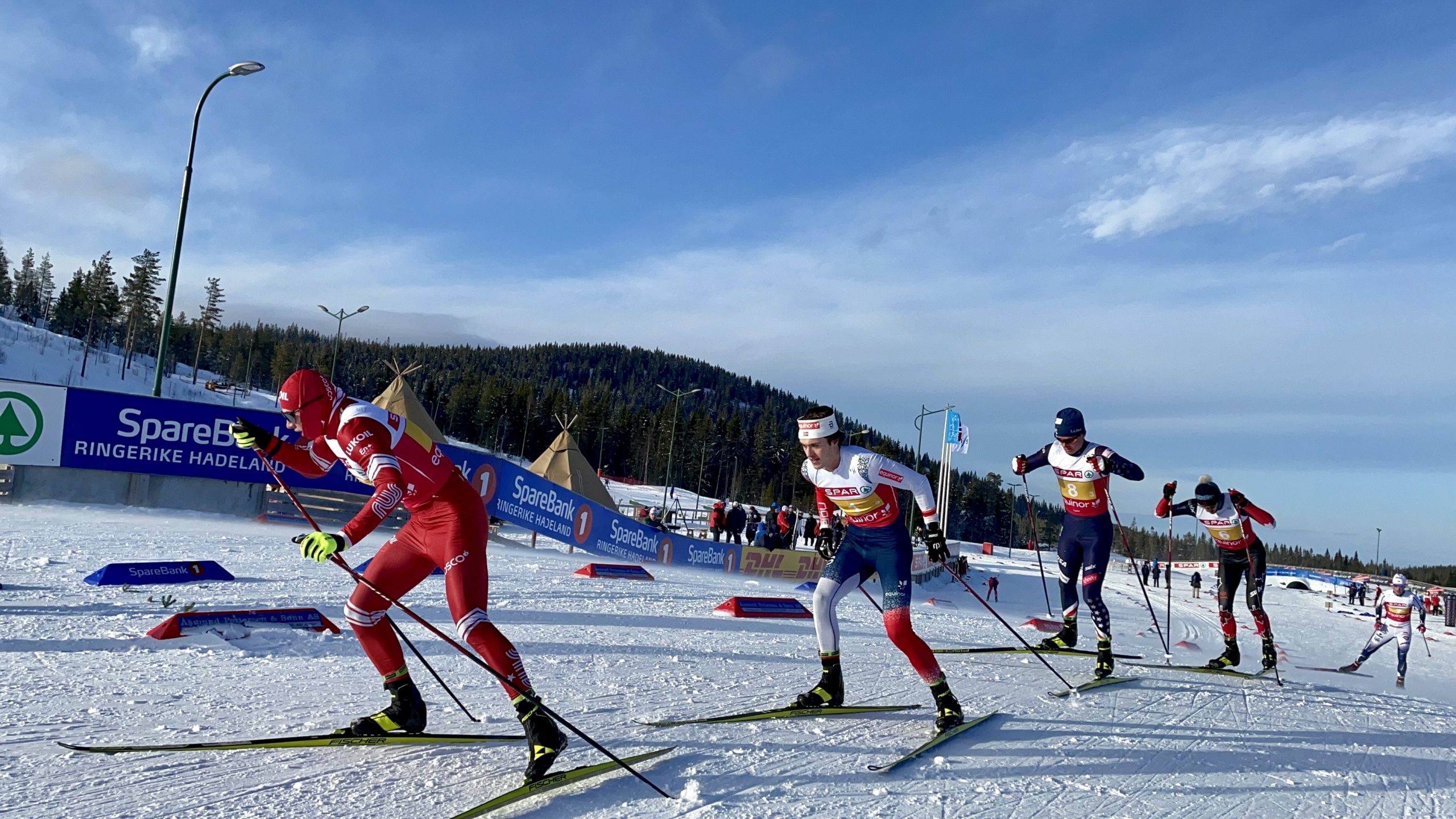
    With the women’s race complete, it was time for the men to line up, the race for them a 4 x 5 k with each leg skiing two 2.5 k loops. For the US, Michael Earnhart (APU Nordic Ski Center/Eagle River, Alaska) took the scramble leg. After the first 2.5 k it seemed that Swedish skier Måns Skoglund had broken away but the pack hunted him down as they exited the stadium for the second time, Earnhart tucked in behind Team Norway. Entering the stadium for the second of their two laps, Skoglund (SWE) had again gained a slight lead, with teams Russia and Japan in second and third. Behind them, Earnhart was leading the chase to close them down.

    Into the first exchange, the gaps had closed and Brian Bushey (University of Utah/Waitsfield, Vermont) took over for Team USA. 

    Brian Bushey skis the second leg of the junior men’s 4 x 5 k relay in Lygna, NOR. (Photo: flyingpointroad.com)

    Heading out into a ripping headwind, it was Sweden, Japan, Russia, and the US, being chased by Norway. As they descended into the stadium for the first time, there were still four teams up front, though Japan had dropped and Norway had joined. This time with the wind blowing in their favor, the skiers all chose to stay outside the tracks. “The first lap, coming through, I saw everyone hop out of the tracks so that’s when I decided to,” explained Bushey. “It was definitely faster.”

    As Russia started to pull away slightly, Norway and the US were slightly detached at the start of the second lap of leg two. Canada was closing in on them and by the time they entered the exchange zone, they were a group of four, behind Russia, the US tagging in second position with Team Canada on their tails. 

    Switching to skate, Walker Hall (University of Utah/Winthrop, Wash.) took over for the US and over the course of his first lap closed the gap to Russia, bringing the lead pack up to five nations. Letting the Russian break the wind, the others slotted in behind as Sweden began to fade.

    Nikita Denisov (RUS), Elde Holmbœ (NOR), Walker Hall (USA) and Sasha Masson (CAN) head out for the final lap of leg three as Sweden starts to fade. (Photo: Ella Hall)

    Canada too dropped off the pace, leaving Hall and Nikolai Elde Holmbœ of Norway skiing together. Up the steep “waffle hill,” Hall pulled away from the Norwegian, leaving the front three teams all separated by some seconds as they executed the final exchange. 

    Will Koch (University of Colorado/Peru, Vermont) took the anchor leg for the US. He was soon caught by Aleksander Elde Holmbœ of Norway, the two of them skiing together with Russia off the front. In a scene that brought to mind Rosie Brennan’s efforts in the Olympic 30 k, though admittedly lasting a much shorter duration, Koch tried to get the Norwegian to take on some of the lead work as they headed straight into a bracing wind.

    “As soon as that Norwegian caught me, I almost tried to stop and let him by,” said Koch, “but he didn’t want to lead either so he kinda stopped with me, but we luckily didn’t get caught by anyone.”

    At this point, they were well clear of Team Canada, who was in fourth position. 

    Will Koch races Norway’s Aleksander Elde Holmbœ during the anchor leg of the men’s 4 x 5 k relay. (Photo: flyingpointroad.com)

    Passing through the stadium, with only the “waffle hill” remaining, Koch had the lead, though he was overtaken by Holmbœ (NOR). The Norwegian seemed to have pulled away, but Koch put in a surge. This move was answered by Norway, and when they came into view on the descent, Norway had maintained its lead. “It came down to just a final sprint over the last hill!” said Koch afterwards.

    Team Russia took gold in a time of 49:16.4, followed +21.8 seconds later by Norway. The US was close behind in bronze-medal position, +22.4 back. 

    “I think we definitely wanted to get on the podium, that was a huge [goal], it would have been fun to win but we’re really stoked with bronze,” concluded Koch. Adding to that Hall said, “Yeah, I think just going out, and skiing the best we could.” Bushey echoed that sentiment saying, “Yeah, we all just had to ski our best.”

    The bronze medal winning junior men’s relay team: Walker Hall, Brian Bushey, Will Koch and Michael Earnhart. (l-r) (Photo: flyingpointroad.com)

    To the fans following along at home, the boys said “We love you guys, it would not be possible without all of you! Thanks for the support, thank you NNF, go USA!”

    The program now switches to U23 competition for a day with a 10/15 k classic race on Thursday. The juniors will resume racing on Friday. 

    Results: women’s relay | men’s relay


    World Juniors links and information:

    Home page and general info | race program | results and live timing (all races) | streaming (only for Thursday through Sunday’s races, purchase required)

  • The 2022 FIS Junior World Ski Championships kick off in Lygna, NOR with 15/30 k skate

    The 2022 FIS Junior/U23 World Ski Championships trip has been made possible through support from the National Nordic Foundation (NNF), which has identified this invaluable opportunity for developing athletes as one of its “Pillar Projects”. You can support the NNF and the next generations of America’s top skiers by making a donation here


    LYGNA, NOR — Originally scheduled to take place in Zakopane, Poland but moved to Lygna, Norway, the 2022 FIS Junior World Ski Championships kicked off a week of competition on Tuesday. Situated roughly an hour north of Oslo at around 2,000 ft, the Lygna stadium could be described crudely as the middle-of-nowhere. But that would be vastly underselling the venue that hosted the Norwegian National Championships in 2019, which features a stout race course and offers classic Norwegian countryside charm. 

    The first event on the schedule was the 15 k skate mass start for the women and a 30 k skate mass start for the men. The women went first, completing three laps of a 5 k loop. Toeing the line for the US were Sydney Palmer-Leger (University of Utah/Park City, Utah), Samantha Smith (Sun Valley Ski Education Foundation/Sun Valley, Idaho), Nina Schamberger (Summit Nordic Ski Club/Leadville, Colorado), and Kate Oldham (Aspen Valley Ski Club/Carbondale, Colorado). 

    “This is my third World Juniors,” said Palmer-Leger, “I was in Lahti, my first one. [It’s] definitely the best World Juniors I’ve been to right now, it’s kinda chill, the last couple years are intense. You know, the first World Juniors you don’t know what to expect and now I’m the one with the most experience, being over in Europe so it’s kind of fun to know what I’m doing a little bit.” 

    Sydney Palmer-Leger leads the women’s 15 k mass start skate during the 2022 Junior World Ski Championships in Lygna, NOR. (Photo: flyingpointroad.com)

    Palmer-Leger spent the first part of the season racing Period I of the World Cup with the US Ski Team, including skiing the scramble leg for the second US relay team in Lillehammer. Speaking to the course here in Lygna, Palmer-Leger said, “It’s a pretty hard course, there’s not a whole lot of rest in the first part but, it’s fun, there’s a lot of V1 the first part.” Last year at World Juniors in Vuokatti, Finland, several of the junior US women were not able to compete due to Covid-contact tracing protocols. Palmer-Leger was one of those unlucky few and she explained, “This is my second mass start at World Juniors because last year Novie [McCabe] and I were quarantined. This is my last year as a junior, so that’s really fun.”

    15 k later, Palmer-Leger was the first finisher for the US in sixth position, with Helen Hoffman of Germany, Lisa Eriksson of Sweden, and Tuva Brusveen-Jensen of Norway finishing first through third respectively. “It’s sort of difficult doing these races because girls are not very relaxed,” Palmer-Leger explained, “and you’re stepping on each others poles and skis, and [the course] is really tight [in some places], and it goes from a a gradual downhill into a pretty steep uphill and girls sometimes will just stop and it’s like the accordion effect and I got stuck in the middle a bunch of times and luckily I didn’t break any poles. A bunch of Russians broke poles and some of our girls broke poles. I went down once but didn’t break anything.” 

    After this strong start to the week, she concluded “I’m really excited. Being in Norway is amazing.”

    The next US finisher was youngster Samantha Smith. Smith is just 16 years old and the 15 k was her first-ever World Juniors race. She finished in 11th (+1:11.3) behind race winner Hoffmann (GER). Kate Oldham was also competing for the first time at World Juniors and posted a top-thirty finish in 27th place (+3:09.5). Nina Schamberger is also 16 years old and the 15 k was her first World Juniors race. She finished in 41st, +4:04.1 back. 

    Michael Earnhart (left) and Walker Hall (right) race the 30 k skate during the 2022 Junior World Ski Championships in Lygna, NOR. (Photo: flyingpointroad.com)

    Moving right along, the men were soon on the start-line, ready for their six laps. Starting at 3pm local time, the temperature was dropping as a slight wind picked up. Competing for the US was Michael Earnhart (APU Nordic Ski Center/Eagle River, Alaska), Walker Hall (University of Utah/Winthrop, Wash.), Brian Bushey (University of Utah/Waitsfield, Vermont), and Alexander Maurer (University of Colorado/Anchorage, Alaska). 

    “Last year was my first [World Juniors] but this year is the first year I felt like I had a chance to get top 10 and everything, last year I was like ‘well I’ll be happy if I get top 30’” said Earnhart, after the race. In a competition where Russians took the top four finish positions, Earnhart managed to achieve that goal in the first race of the week, finishing in 10th (+2:33.5). 

    Talking through his race he said, “ the first half of the race I was just trying not to break equipment, trying not to fall, kinda trying to have fun you know, it’s fun skiing in a pack so I was just trying to stay relaxed. I got pushed a little ways back, I think I was back to 20th or 30th at some points but I just stayed relaxed. Then, on the fourth lap it started to string out and I was like, ‘Ok, I’ve got to get in a better position, get up there.’ Going into the last lap, I think I was in 12th and I knew that top ten gets you on the US ski team and I really wanted that, so I was just looking at 10th. I was like, ‘He’s right there. I gotta keep going.’ He got a little tired and I was hungry so…”

    Earnhart pre-qualified for World Juniors this year by achieving a sub-50 FIS points result in the 15 k skate mass start Super Tour in Cable, WI earlier this season. He explained, “I did the 30 k at Nationals because I pre-qualified for this, just for the simple [reason], ‘I need more 30k experience.’” 

    Michael Earnhart leads the American junior men in the 30 k mass start skate during the 2022 Junior World Ski Championships in Lygna, NOR. (Photo: flyingpointroad.com)

    Also pre-qualifying for World Juniors in the same event, Brian Bushey finished his day in 16th position, +3:46.5 behind the top Russian, Alexander Ivshin. This in spite of the fact that as Earnhart put it, “Bushey took a big tumble, it’s a learning experience for sure.” 

    Speaking of learning experiences, Walker Hall was having one out on the course as he made his first World Juniors appearance, racing his first-ever 30 k. “My legs were so tired after like 10 k,” he said at the finish. He landed just outside the top-thirty, coming 31st, +6:01.7 back. Rounding out the U.S. finishers, Alexander Maurer finished 36th, +6:48.9 out, also making his first World Juniors appearance. 

    Racing continued Wednesday with the women’s and men’s relay events. Coverage of that event to follow. 

    World Juniors links and information:

    Home page and general info | race program | results and live timing (all races) | streaming (only for Thursday through Sunday’s races, purchase required)

  • Diggins Brings Home a Second Silver for USA in Windy 30k; Johaug Earns her Third Gold of the Games

    Diggins Brings Home a Second Silver for USA in Windy 30k; Johaug Earns her Third Gold of the Games

    Drifting snow visible around the athletes feet as they complete four laps of the 7.5 k course (Photo: NordicFocus)

    This World Cup coverage is made possible through the generous support of Marty and Kathy Hall and the A Hall Mark of Excellence Award.  To learn more about A Hall Mark of Excellence Award or to learn how you can support FasterSkier’s coverage please contact info@fasterskier.com.

    The women’s 30 k underway at 11am local time (Photo: NordicFocus)

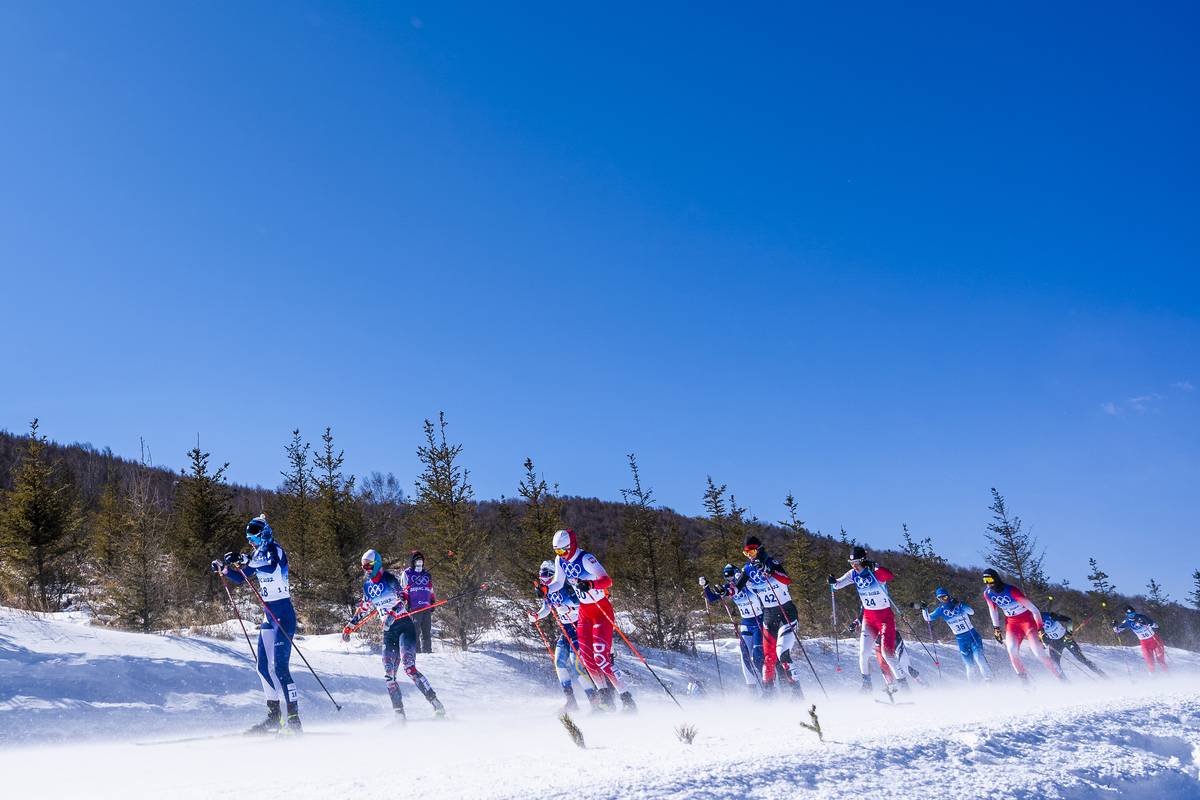
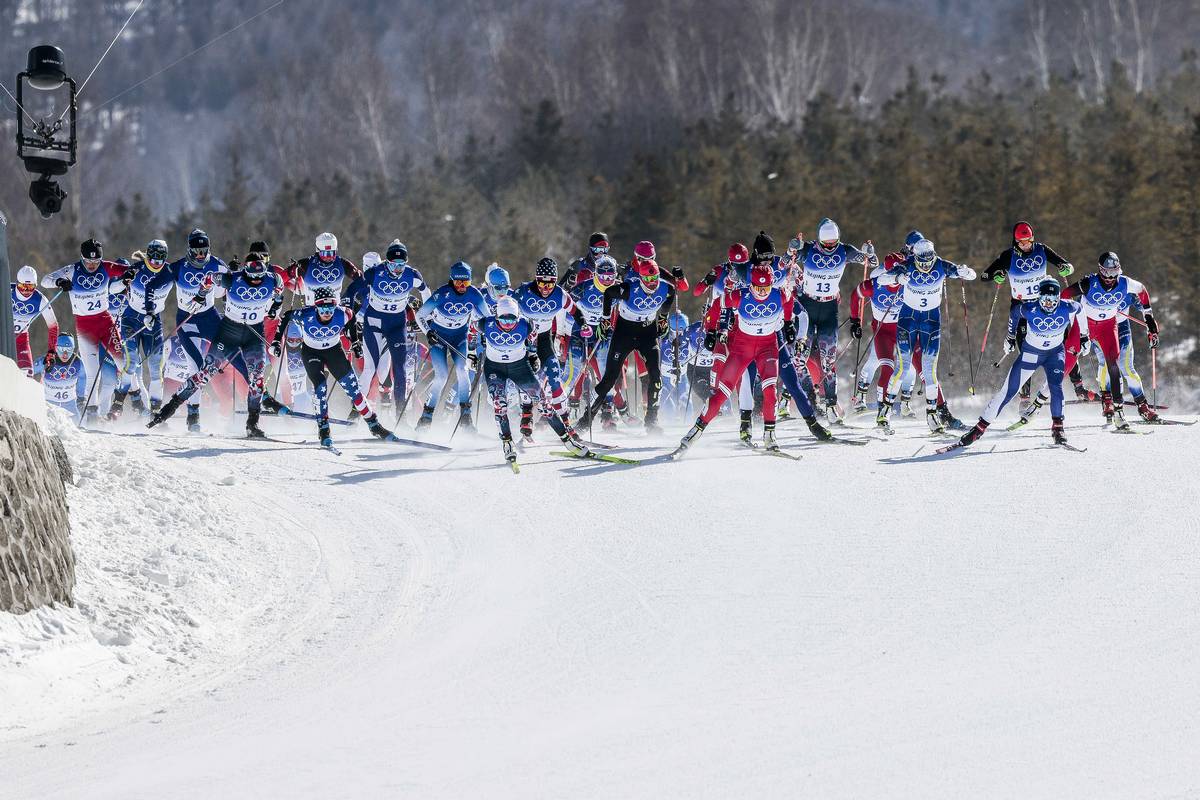
    Sunday morning, battling through ripping winds, the women delivered an impressive and dramatic final cross-country event to close out the 2022 Beijing Winter Olympics. For the first time, skiing further than the men (gender parity coming more quickly than anyone could have guessed) thanks to the men’s kilometer event getting shortened to 28.4 k due to harsh conditions. Though the thermometer did not read particularly low in the Zhangjiakou stadium, roaring winds made racing both considerably colder and considerably more difficult as the women completed four laps of the 7.5 k course, the race happening three hours earlier than originally planned due to the weather.

    Jessie Diggins (USA) and Therese Johaug (NOR) congratulate each other after the 30 k (Photo: NordicFocus)

    First the highlights, Therese Johaug of Norway secured her third individual gold medal of the Games in dominant fashion, +1:43.3 clear of second place. In a truly gutsy performance, Jessie Diggins earned US women’s cross-country its second individual women’s medal, securing silver, and all four American women finished in the top twenty. 

    Jessie Diggins celebrates with teammates and staff after finishing second in the 30 k skate (Photo: NordicFocus)

    But how did we get there? Within five minutes of starting, Johaug was at the front, pushing the pace. Any thoughts that she might have preferred to stick with pack skiing given the windy conditions were quickly banished. After just 2.9 k, she had successfully broken up the field and pulled away, bringing six athletes with her. Moments later the front group was down to four as Johaug charged ahead, with Diggins, Ebba Andersson of Sweden, and Delphine Claudel of France sticking with her. A chase pack formed, initially composed of Rosie Brennan of the USA, along with Krista Pärmäkoski and Kerttu Niskanen of Finland, the bronze and silver medalists from the 15 k classic. 

    Ebba Andersson (SWE) was overtaken in the closing stages of the race after skiing in third for more than 20 k (Photo: NordicFocus)

    The rest of the first lap saw lots of lead changes among the front four as no one was eager to take on the wind at the front. In each of the more sheltered sections we saw Johaug applying pressure, but the three athletes with her responded to the moves and stayed with her. Behind them, Brennan was working hard to close the gap but not finding luck gaining any ground. 

    Rosie Brennan leading Kerttu Niskanen (FIN), Jonna Sundling (SWE) and Krista Pärmäkosk (FIN) (Photo: NordicFocus)

    With one lap complete, we saw the first withdrawal from the race as skiathlon silver medalist, Natalia Nepryaeva, representing the Russian Olympic Committee (ROC), stopped her race. Petra Novakova of the Czech Republic also pulled out later on. 

    Up at the front, as the athletes took on the first major climb out of the stadium, Claudel (FRA) started to fade. By the top of the hill, she had lost contact and was off the back on her own. Behind her, the chase pack had strengthened in numbers to ten, led by Brennan (USA) and trailed by her teammate, Sophia Laukli (USA) making her first Olympic appearance. 

    Sophia Laukli, heavily taped up, skied to 15th in her first Olympic appearance (Photo: NordicFocus)

    As Johaug (NOR), Diggins (USA) and Andersson (SWE) crested the initial climbing section and entered a feed zone, Johaug seized an opportunity. Diggins and Andersson swung wide to grab bottles and Johaug rocketed away. Though Diggins worked to chase her down, the move was set and Johaug had taken up her favorite race position- out front on her own. 

    Therese Johaug (NOR) battling the elements on her own out front (Photo: NordicFocus)

    With 10.4 k of racing complete, the first four athletes were spaced out evenly with 16 seconds between each of them. Johaug led, +16 ahead of Diggins, who was trailed by Andersson (+32.8), followed by Claudel (+49).

    Behind them, Brennan was having difficulty getting her two Finnish shadows to take on any of the lead work as she battled the wind, still trying to close. 

    Rosie Brennan, still leading the chase pack (Photo: NordicFocus)

    With two laps of racing complete, the time gap continued to grow in Johaug’s favor. The chasers were quickly reeling in Claudel (FRA) and looked to be nearing Andersson (SWE) as well, just +14 seconds behind her. On the A-climb out of the stadium, Claudel was absorbed by the group and the margin to Andersson was down to just ten seconds. Perhaps sensing this, the Swede redoubled her effort and at 17.9 k had widened the margin to +31 seconds. 

    The front two, each entirely by herself, continued fighting hard, Johaug’s advantage to Diggins and the rest of the field growing steadily. At 21.2 k Johaug was +1:08 ahead of Diggins and +2:07.1 ahead of Andersson. As such, the top three entered and exited the stadium in turn, each one leaving as the next entered, now with one lap to go. 

    Jessie Diggins skied most of the race on her own (Photo: NordicFocus)

    Andersson (SWE) appeared to be well clear of the chasers, +36.1 seconds ahead at 22.5 k. Around this time, Pärmäkoski (FIN) broke a pole and dropped from the chase pack, which was now composed of Brennan (USA), Claudel (FRA), Niskanen (FIN), Jonna Sundling (SWE), Tatiana Sorina (ROC), Teresa Stadlober (AUT) and Mariya Istomina (ROC). 

    Through 25.4 k, Johaug had a lead of +1:39.8 to Diggins. Andersson was +2:40.2 behind and still 36 seconds up on the chasing group, as the camera caught Johaug lapping a skier, a full 7.5 k ahead.

    Heading into the final grinding climb the chasers seemed to have sensed an opportunity. Spindrift almost fully obscured Niskanen and Brennan, being blasted by the wind as they closed in on Andersson, +14 seconds behind at 28.7 k. 

    Kerttu Niskanen sensing third place is close by in the final stages of the women’s 30 k (photo: NordicFocus)

    Over two minutes ahead of them, Johaug entered the stadium and was handed a Norwegian flag to manage in the wind as she headed into the finish. 1:24.54 of racing and she had earned her third gold medal of the games, having won every distance race.

    Therese Johaug earns her third victory of the Games with a margin of +1:43 (Photo: NordicFocus)

    “I am so proud and I am so happy,” said Johaug, “It is a dream come true that I can stand here for Norway with three gold medals in the same Olympics. I was so, so happy 14 days ago when I got my first [gold medal] and I cannot believe I should have more. It’s fantastic to end my Olympic career with these three gold medals.”

    Johaug, who is 33 years old, announced before the 30 k that this would be her last Olympic appearance.

    Therese Johaug crosses the finish line taking her third victory of the 2022 Olympic Games (Photo: NordicFocus)

    With Johaug winning by the second-largest margin of victory in this event, +1:43.3 later came Diggins, V1’ing across the finish line and collapsing, having spent everything out on the course.

    “It’s really emotional,” said Diggins after the race, “That’s one of the hardest things I’ve ever done in my whole life, especially because I had food poisoning 30 hours ago, which is why I thought I was going to die at the finish line… My legs were cramping the whole last 17 k, I don’t know how I made it to the finish. It was amazing.”

    Jessie Diggins nears the line after 30 k of tough racing (Photo: NordicFocus)

    Diggins now holds three Olympic medals, gold from the team sprint in 2018, silver from today’s effort, and bronze from the skate sprint two weeks ago. With this silver medal Diggins also becomes the first non-European woman to land on the podium in the women’s 30 k event.

    Speaking to the food poisoning issue Diggins said, “I woke up yesterday morning and pretty much everything was coming right out of me, so I basically laid in bed all day and made myself eat food. Luckily it wasn’t so bad, but I was feeling pretty bad 24 hours ago. I talked to my parents and my mom said, ‘Don’t decide how you feel right now, just go out there and ski because you love to race.’ And she was right.”

    Johannes Høsflot Klæbo withdrew from the men’s race yesterday, also citing food issues. 

    Jessie Diggins celebrates silver before dropping flat (Photo: NordicFocus)

    “We had amazing skis,” concluded Diggins, “Our team worked so hard. I just tried to ski smart and then I wanted to ski a gutsy race, so when Therese [Johaug] went, I tried to go with her and I couldn’t stay. So then I thought I would just put my head down and ski my own race.”

    “That might have been the best race of my entire life, I’m not going to lie. It was also maybe the hardest race of my whole life. It’s been an emotional roller-coaster, but I am so happy we made it to the end. To have a medal in the sprint and the 30 k are the ultimate bookends for me. I have been trying to be a good all-around athlete my whole life, so this has been really cool.”

    Earning her second individual medal of the Games, Jessie Diggins in silver position (Photo: NordicFocus)

    With the first two medals decided, the race for bronze was turning into a nail-biter. Having held off the pack and skied by herself for nearly 20 k, Andersson (SWE) was quickly being overtaken. Niskanen was closing fast and bringing the rest of the chase group with her.

    As the skiers headed into the final little climb into the stadium, Niskanen blazed past Andersson. Suddenly, what had seemed like a sure bet for bronze had turned to an 8th place for the Swede as Sundling (SWE), Sorina (ROC), Brennan (USA) and Claudel (FRA) all finished in front of her.

    Kerttu Niskanen (FIN) fast closing on the finish line to bring home bronze (Photo: NordicFocus)

    Niskanen (FIN) earned her second medal of the Games, after finishing just +0.4 behind Johaug in the 10 k classic, with bronze in the 30 k, this time with a much larger margin of +2:33.3. “The last 1500 meters in a 30 k is important,” said Niskanen in the press conference afterwards, “everyone is tired and I only did push hard and believe in my medal all the time.” 

    The Niskanen family cumulatively won five medals in Beijing, Kerttu’s brother Iivo won gold, silver and bronze over the course of these games.

    “We’re both happy,” said Kerttu, referring to herself and her brother, “I am happy that he made an amazing Olympics here. The whole family is waiting for us at home. Everyone is very happy.”

    Rosie Brennan working hard, her every move closely followed by Kerttu Niskanen (FIN) (Photo: NordicFocus)

    Having taken on much of the lead work for the majority of the race and after her near-medal performance in the skate sprint earlier in the Games, Brennan was once again just outside, finishing in 6th position (+2:38.7).

    “[It’s] Frustrating,” said Brennan afterwards, “I literally tried everything I had and nobody wanted to work with me, so I just had to try to do the best I could and unfortunately it wasn’t enough and that’s hard to swallow, but I tried my best.” 

    Bringing us further inside the experience on course, Brennan continued, “There was a gap that formed [at the beginning] and I just wasn’t in the right place at the right time, and Jessie played that so beautifully, it was amazing. I thought about fighting the wind to bridge it but I had a feeling there would be some places that popped off the back so I was trying to get that group to work with me and keep a steady pace and pick up the people that dropped, but those girls had absolutely zero interest in working with me. I kept yelling at them and being like ‘lets go get them’, and they did nothing. When that happens, there’s not much you can do but ski your own race. I did everything I could. I think the Finns have really fast skis, which was hard for me. I don’t regret trying but I wish it had turned out differently.”

    Kerttu Niskanen is happy with her skis and with her bronze medal (Photo: NordicFocus)

    When asked about not sharing the lead, Niskanen (FIN) replied, “I have to say that Rosie was really strong today, she push sometimes really hard to uphills and it was good for me because I thought that we had the best skiers in our group to make a strong speed all the time. I thought that we need to ski fast all the time, but many times I was tired and sometimes I thought that Rosie go in front of me but I think I had a little bit faster skis today so it helps me a little bit. I think everyone was really really tired, a long trip, many many races, and I was tired but today’s race was like a tired girls competition.”

    Brennan confirmed that her skis were not competitive with those of the Finns, and when asked about seeing those athletes ski past her after she had done so much pulling she said, “It’s definitely a little demoralizing. Especially since I don’t think I had the skis to match that, I wasn’t able to get enough of a gap on the uphill to hold it on the downhill and that’s always a bummer but that’s a part of ski racing too.”

    In the end, Brennan reflected, “I feel very confident that I’m in the best shape of my life this past week and I did everything I could to be in a place to win a medal and the rest is just largely out of my control. I can’t control the weather, I can’t control my skis, I did everything I could to prepare for the day so I have to be proud of that.”

    Brennan also gave a shout-out to her supporters at home, saying, “I’m overwhelmed with all the support I’ve received, especially given the time [difference] and the number of people that have become nocturnal to cheer me on. It really means so much.”

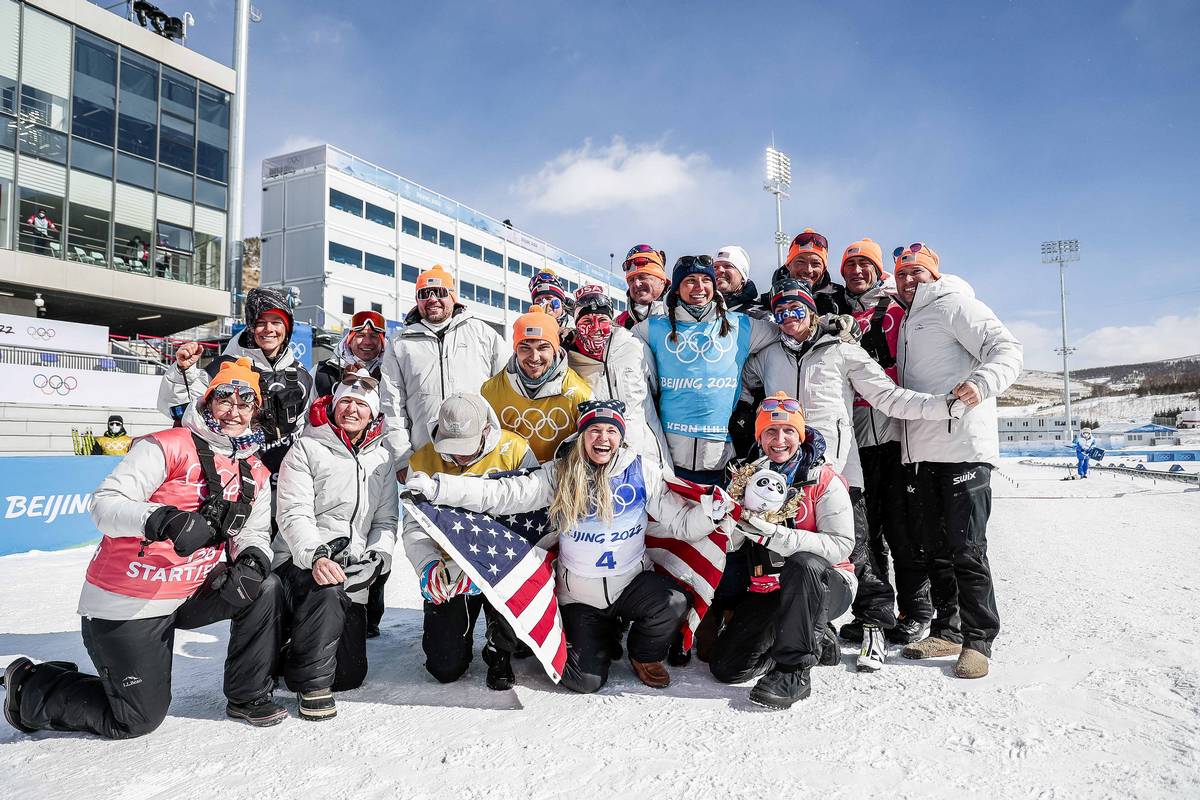
    Jessie Diggins with teammates and staff after winning a historic silver medal (Photo: NordicFocus)

    “I’m so happy for Jessie, and I never wanted a podium more for someone like Rosie today.” said USST head coach, Matt Whitcomb, “Nobody deserves it more or less than anybody [else]. You just see Rosie come so close and all this hard work, and she’s at the absolute peak of her career, it’s been a long wonderful career, a challenging career, and you just want to see a medal wrapped around her neck. And so, if there’s something to take away from today, it’s one of the most successful days in US skiing history.”

    2022 Olympic 30 k podium: Jessie Diggins, Therese Johaug and Kerttu Niskanen (l-r) (Photo: NordicFocus)

    Speaking to Brennan’s work leading the chase pack for much of the race he said, “[Niskanen’s] bronze medal was in large part earned by Rosie, and everybody knows it. And that’s just racing, it’s like a game of poker. Every time Rosie would try to pull aside and let someone else lead they would not. And there’s nothing wrong with that, that’s just tactics, but 10 seconds would open up every time she did so she would stay on the gas. She had no other choice. She did the only thing she could have done.”

    Minutes later, the camera showed an American skier who had gone the wrong way, entering the lap instead of the finish. It turned out to be Laukli, who had to double-back and in the process was passed by the Weng twins, Tiril and Lotta, of Norway. In the end, Laukli came across the line 15th, +6:27.2 back.

    Sophie Laukli, finished 16th after taking the wrong lane and being passed by two skiers (Photo: NordicFocus)

    “I’m bummed for her,” said coach Chris Grover, “that she lost two places because she worked hard for those but she did the right thing, retracing her steps all the way back and that’s one of the lessons that you do once on the big show and then you never do it again. Jessie did it in Sochi.” 

    He continued, “It’s just an outstanding performance [by all the women] we had great skis. The techs did a great job.”

    Laukli was followed just seconds later by her teammate Novie McCabe who completed her Olympics with an Olympic personal-best 18th place (+6:28.5) after an impressive few weeks of race efforts. McCabe was 24th  in the 10 k classic, and helped the American women to 6th in the relay last week. 

    Novie McCabe (USA) followed by Tiril and Lotta Udnes Weng of Norway (Photo: NordicFocus)

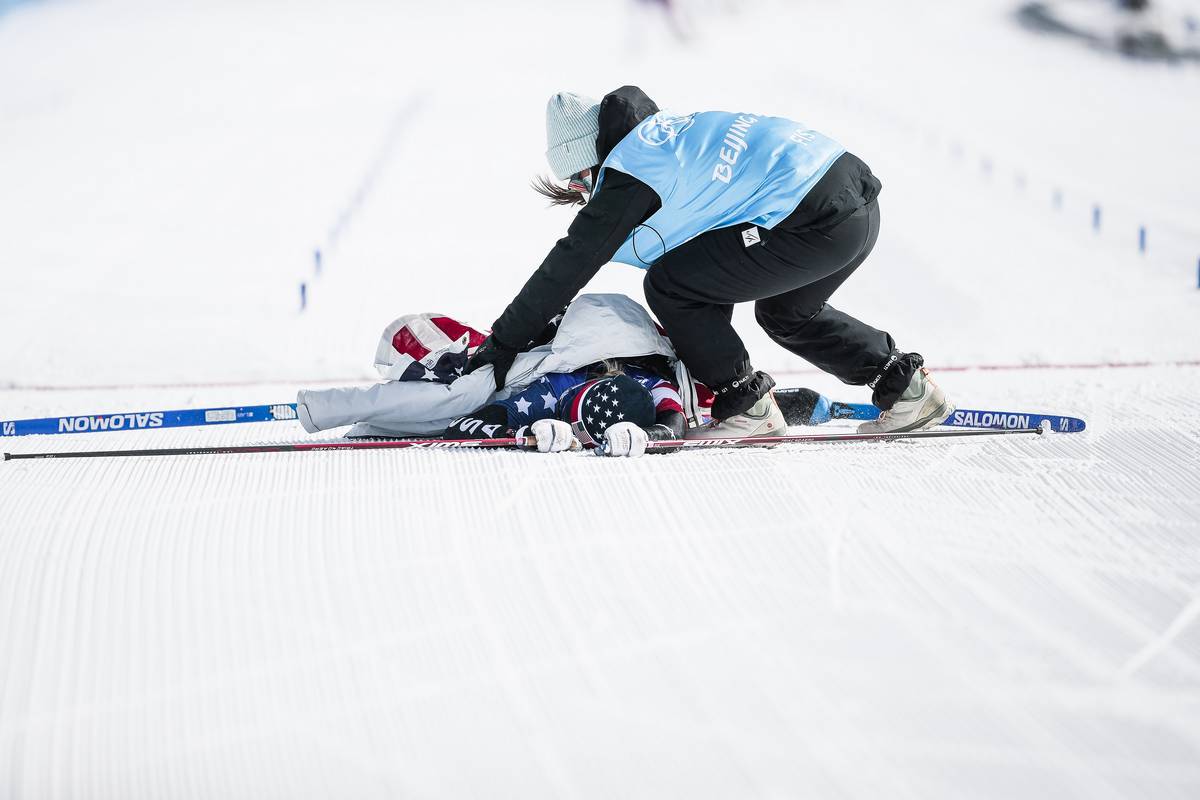
    The scene at the finish line was reminiscent of the top of the Alpe Cermis after the Tour de Ski, skiers lay sprawled on the snow as staff members rushed to get them into warmer clothes.

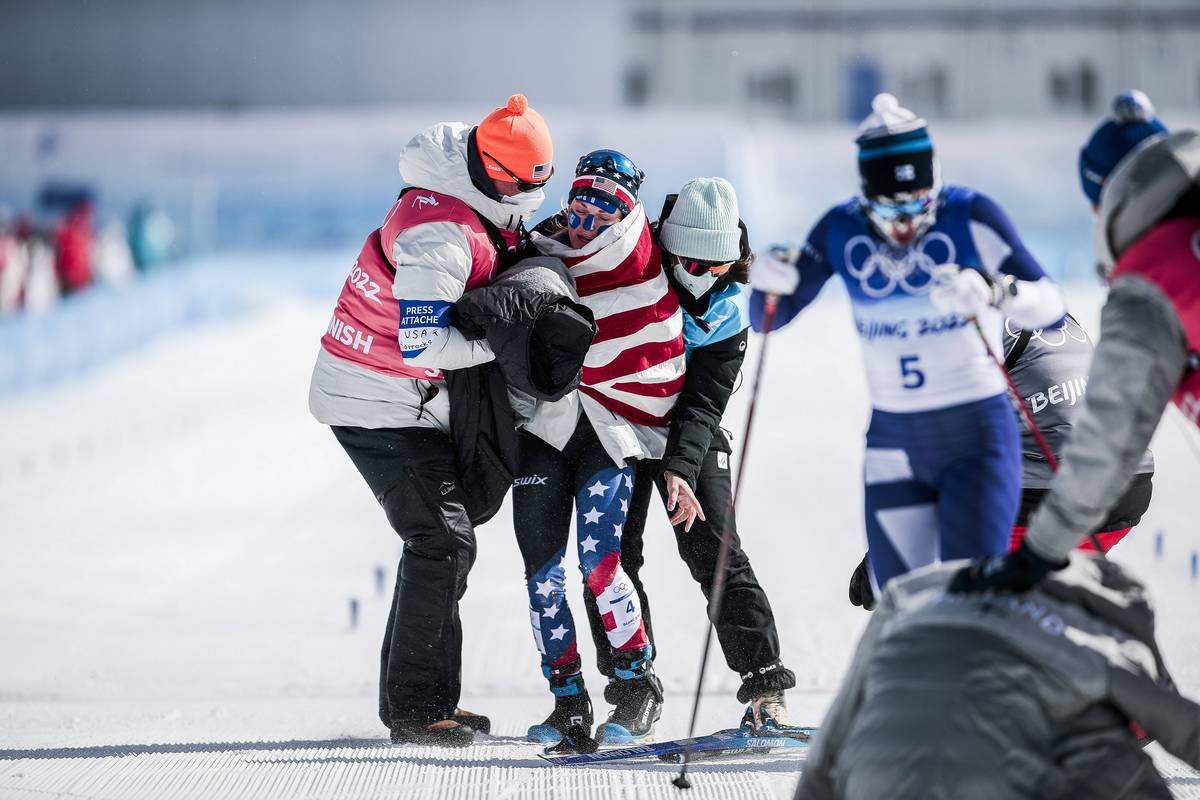
    Diggins was unable to stand on her own and was escorted out of the finish pen with two helpers on either side. 

    An exhausted Diggins is covered by a coat and an American flag, having earned silver in the women’s 30 k. (Photo: NordicFocus)

    Grover shared, “Jessie had food poisoning 36 hours ago and had a really rough night, she didn’t ski the last few days. You could see out there, her body language, for the last two laps she did not look fresh and for her to hang on like that for those two laps was an unbelievable athletic and mental performance. [Diggins] asked Matt in the feed zone what lap she was on and we had to tell her she was in the third lap, she had one more to go and then when she needed to go to the finish.” 

    Jessie Diggins is escorted out of the finish area with help (Photo: NordicFocus)

    He added, ““I think this might have been the deepest she’s ever dug.”

    Leading the way for the Canadians, Cendrine Browne finished in 16th (+6:27.6).

    “[This is a] Canadian record in a mass-start at the Olympics and it’s also my personal best,” said Browne, “It’s amazing to leave the Olympics on such a high note. I’m thrilled, I have no words. It was tough conditions out there, really cold, very windy but I think I played it well. In the last lap there was an attack and I was able to stay with the group and pull away to finish 16th.”

    Cendrine Browne reached a new personal best with her 16th place finish (Photo: NordicFocus)

    In a race with giant time margins, Kathrine Stewart-Jones notched 30th, +7:39.3 behind Johaug. Dahria Beatty was 39th (+11:14.2) and Laura LeClair was 51st (+15:20.5). 

    Jessica Yeaton, competing for Australia, was 43rd (+12:12.1). 

    30 k winner Therese Johaug greets last place finisher Dinigeer Yilamujiang of China who finished over 25 minutes behind the Norwegian (Photo: NordicFocus)

    World Cup racing resumes next weekend in Lahti, Finland with a skate sprint and 10 k classic for the women. 

    Results

  • Double Gold: ROC Dominates Men’s 4 x 10 k Relay in Lengthy Race; USA 9th, CAN 11th

    Double Gold: ROC Dominates Men’s 4 x 10 k Relay in Lengthy Race; USA 9th, CAN 11th

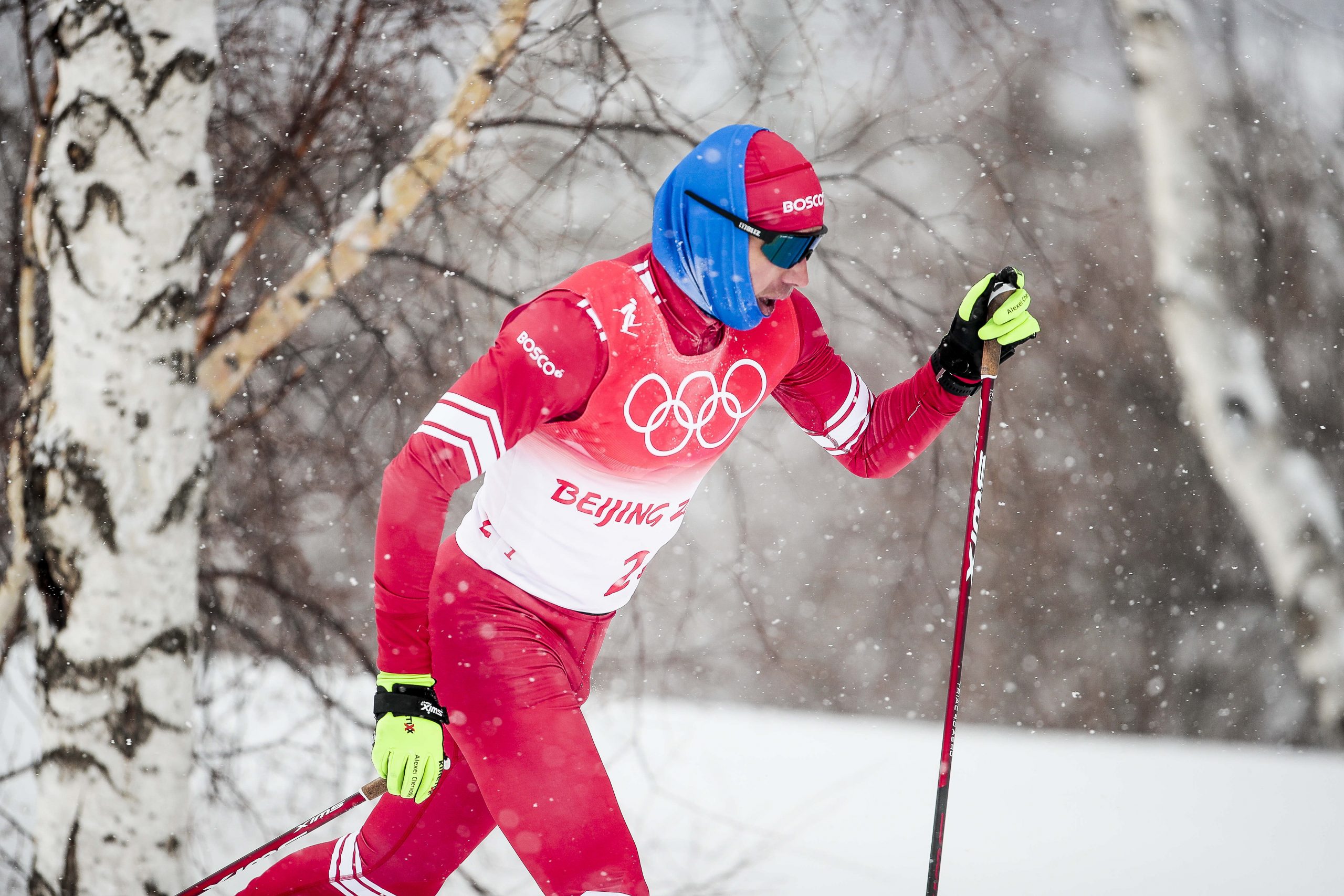
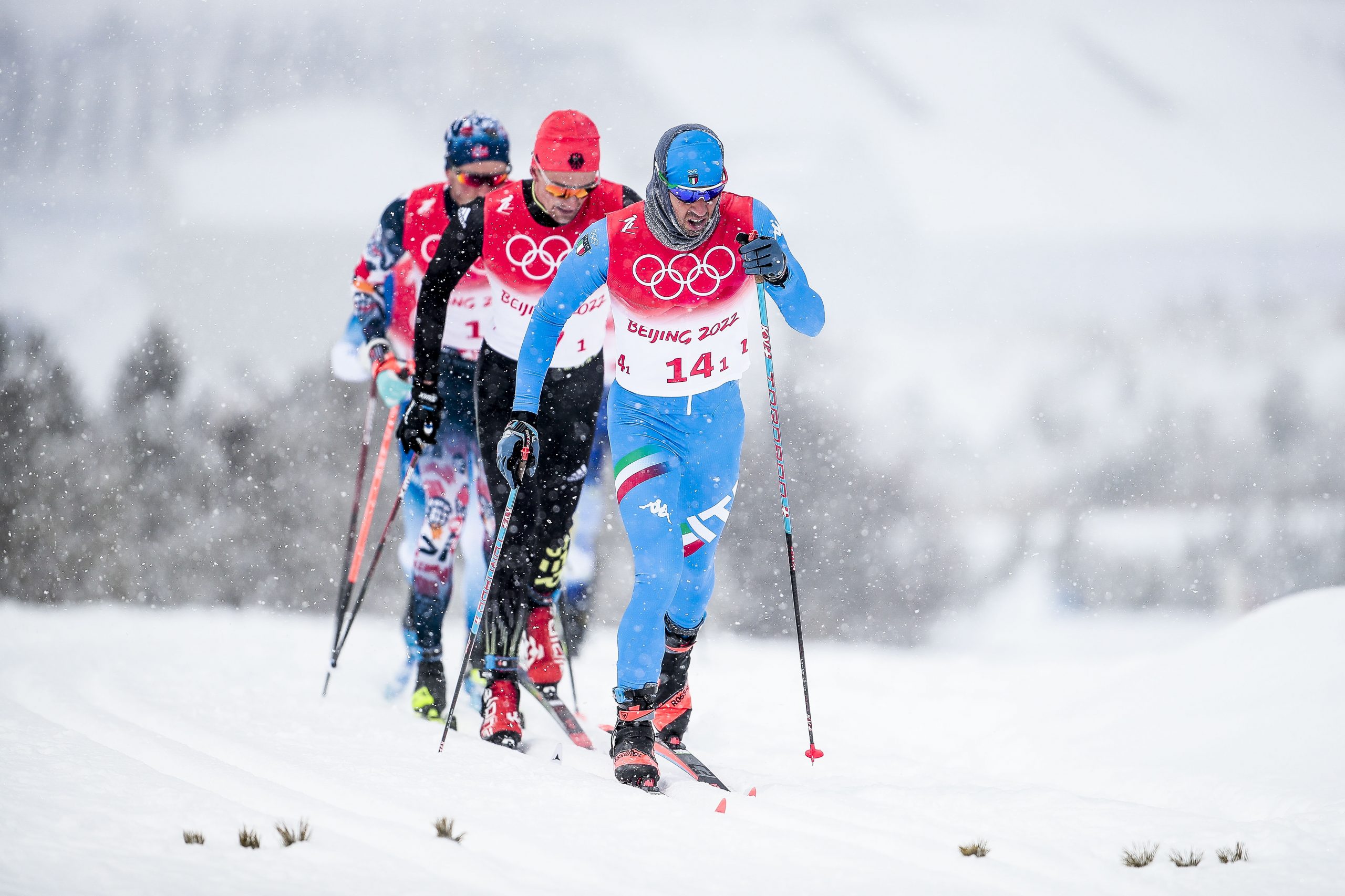
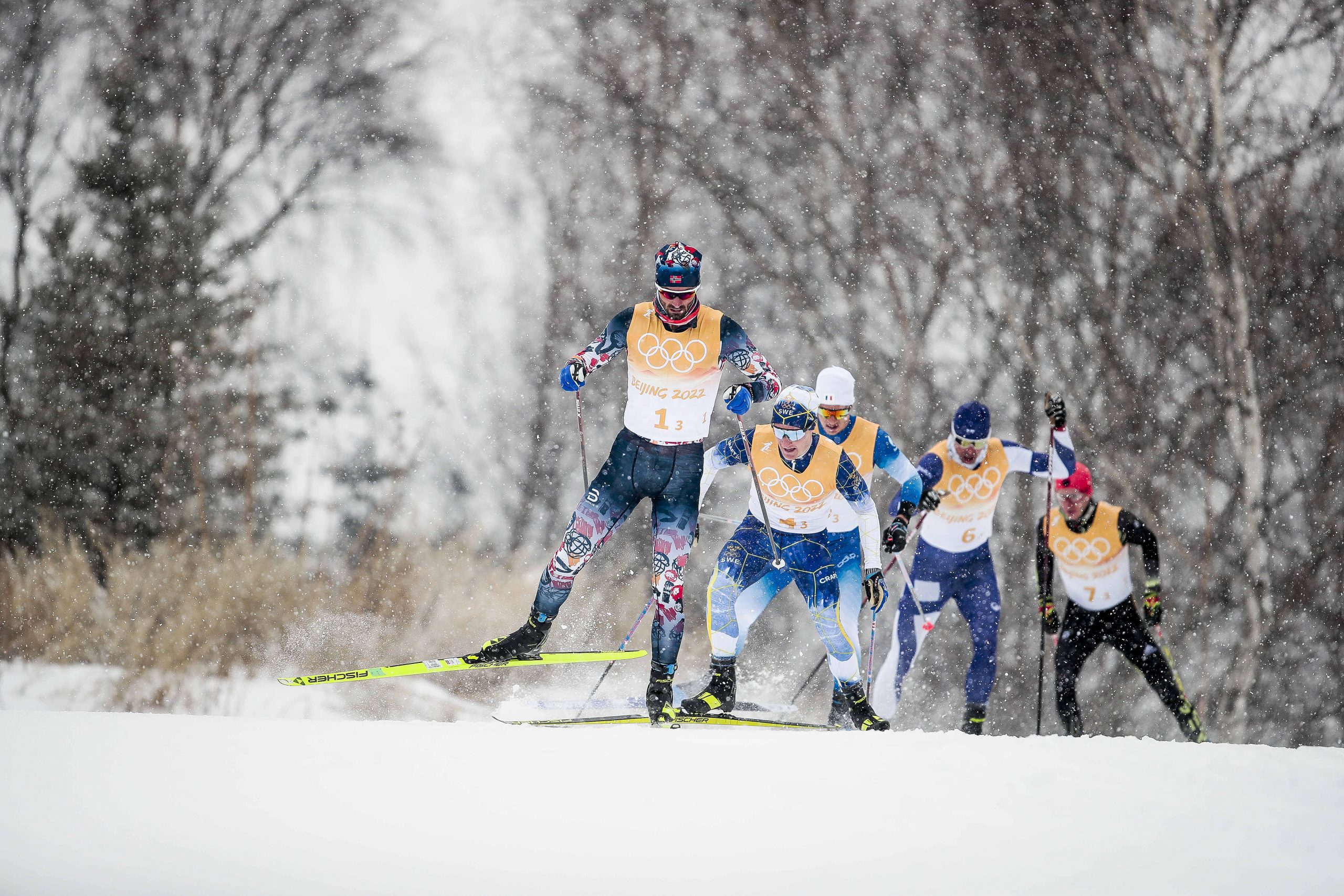
    Early stages, Emil Iversen (NOR), Alexey Chervotkin (ROC), Richard Jouve (FRA), and Oskar Svensson (SWE) (l-r) lead the men’s 4 x 10 k relay. (Photo: NordicFocus)

    This World Cup coverage is made possible through the generous support of Marty and Kathy Hall and the A Hall Mark of Excellence Award.  To learn more about A Hall Mark of Excellence Award or to learn how you can support FasterSkier’s coverage please contact info@fasterskier.com.

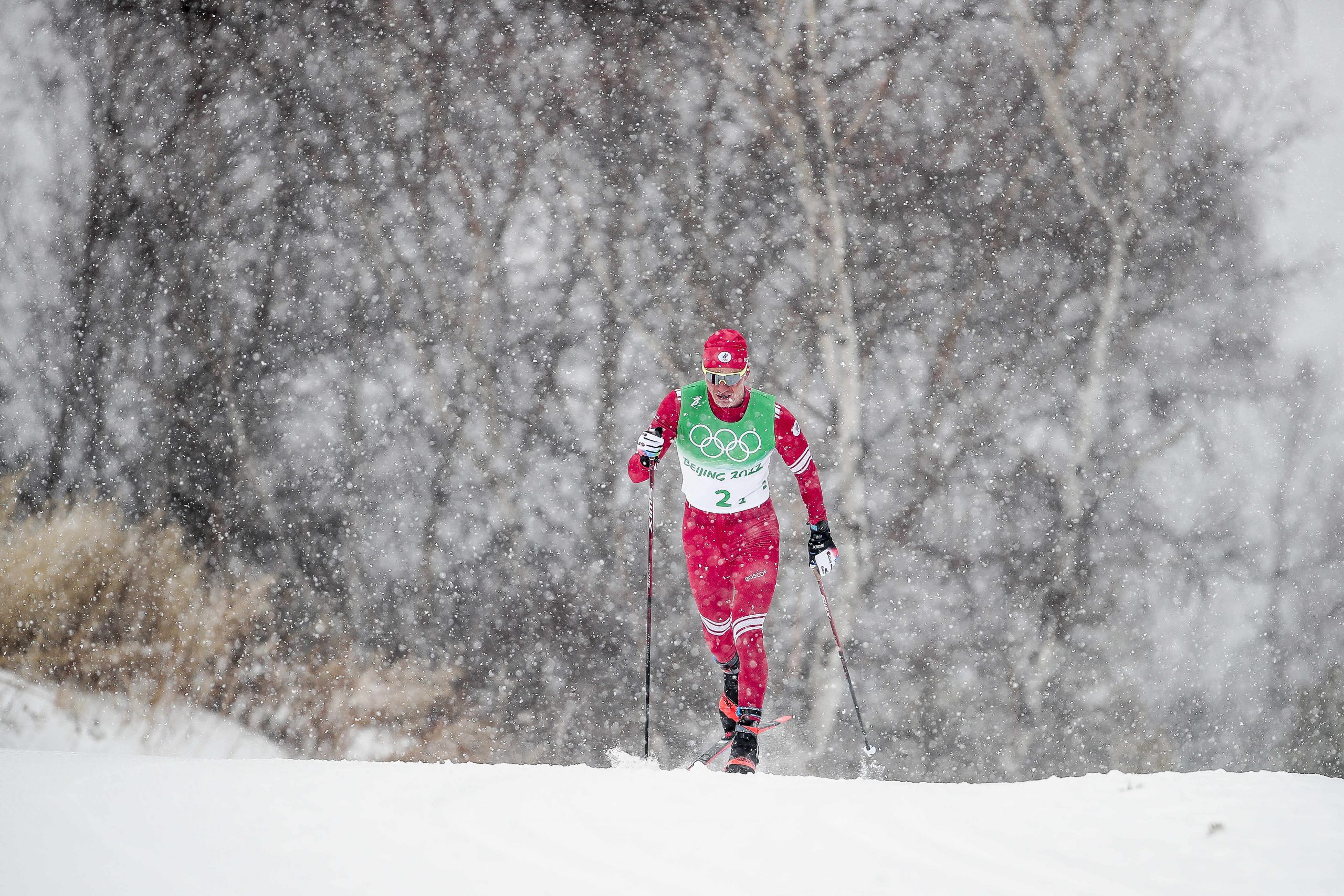
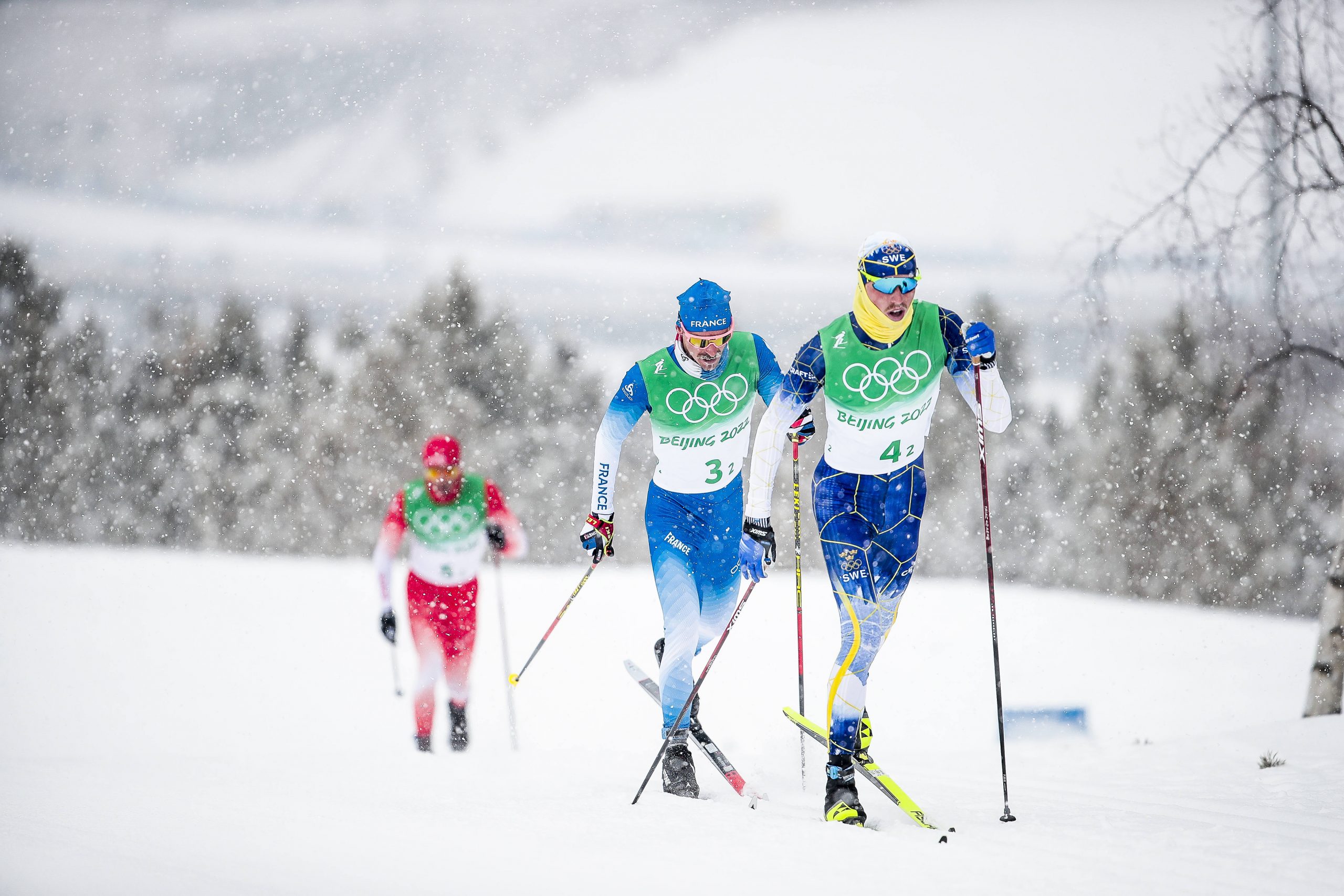
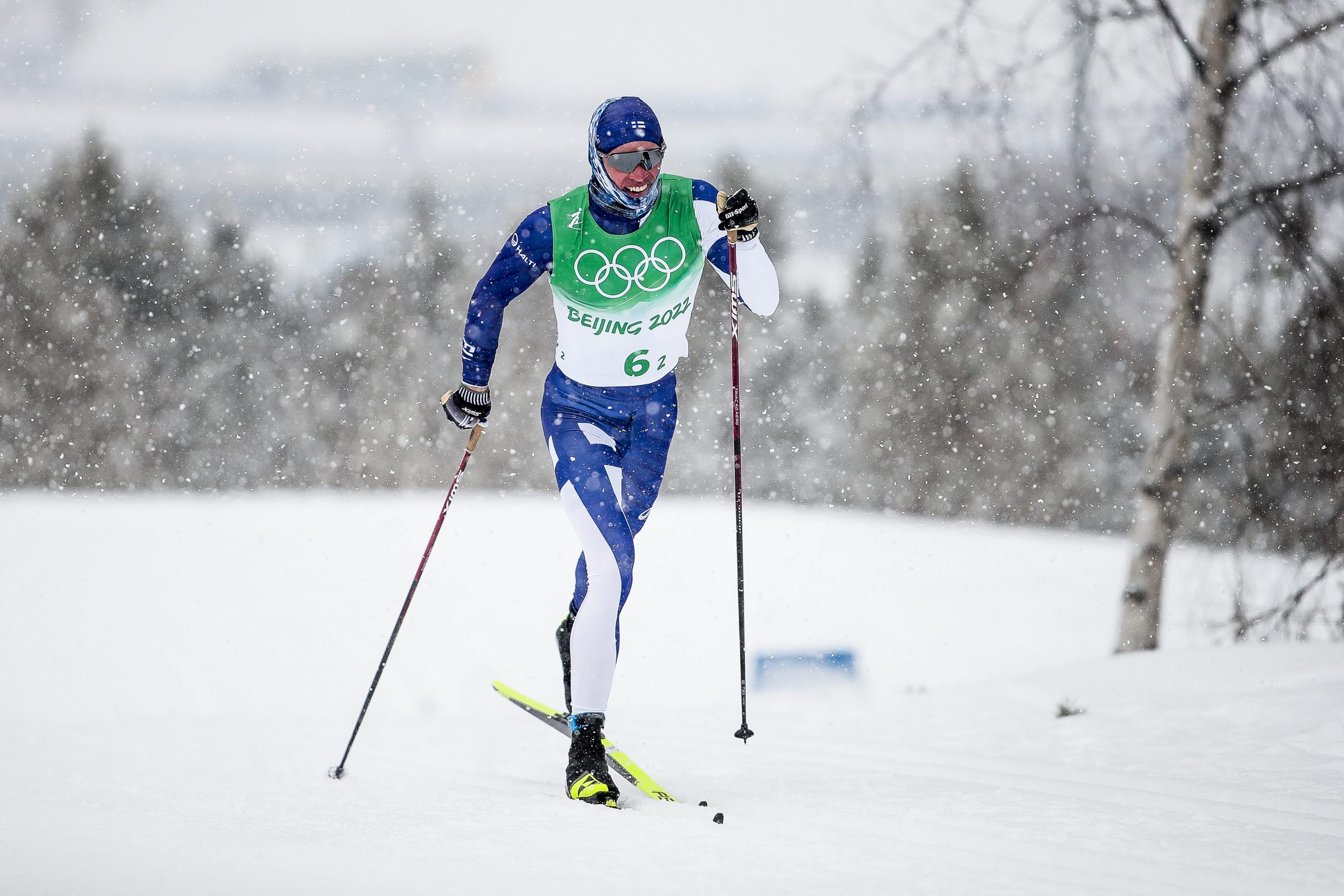
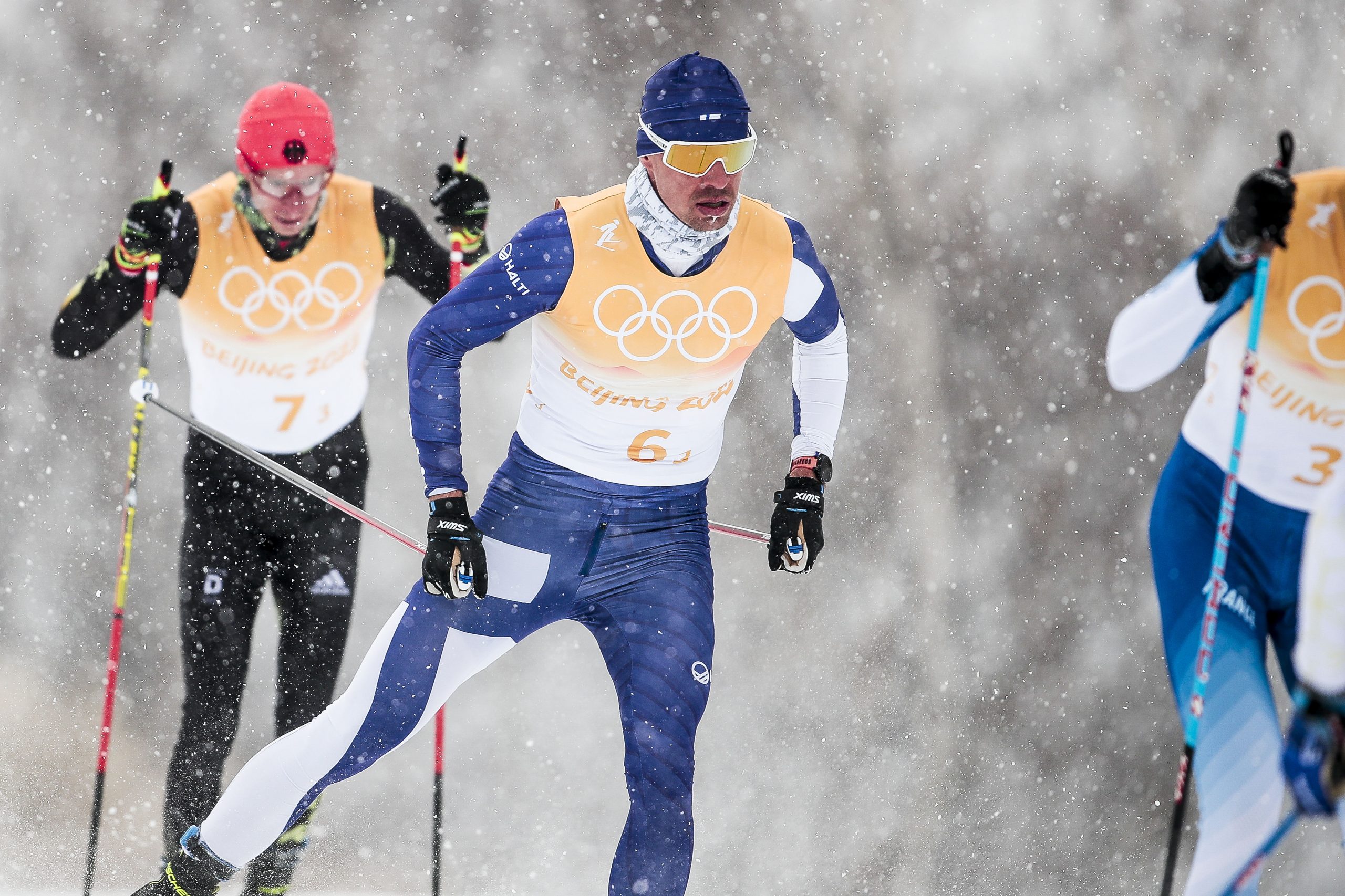
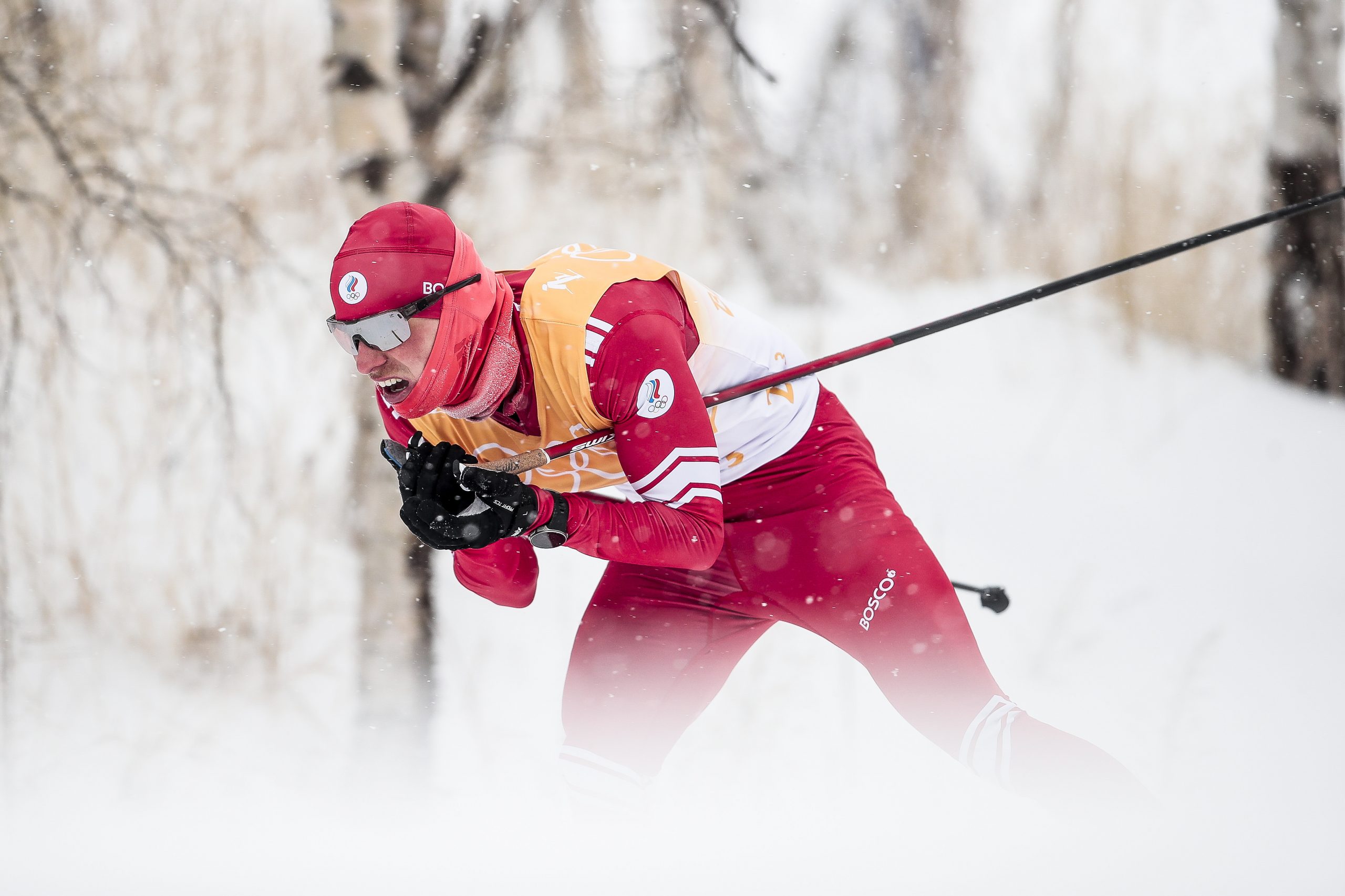
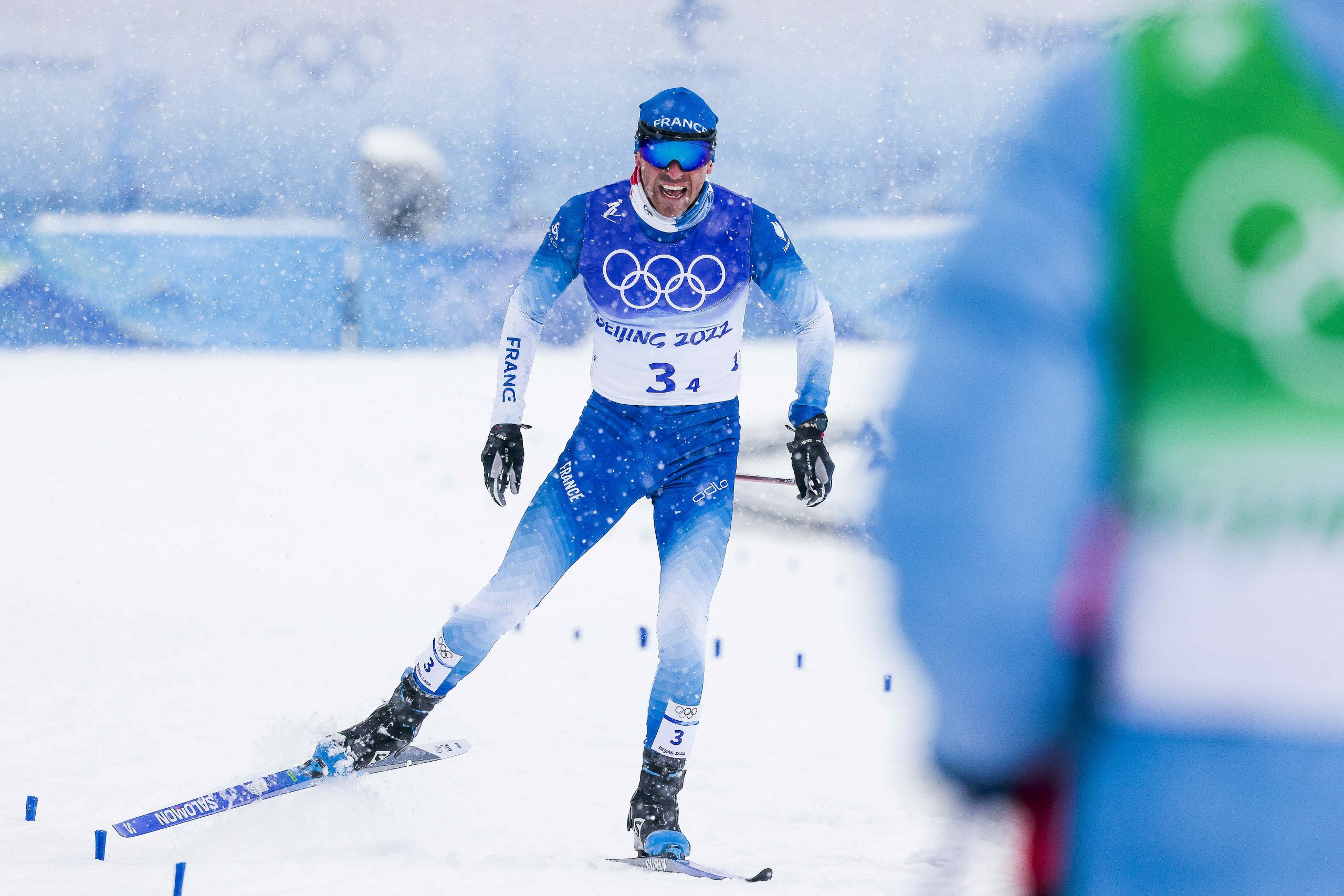
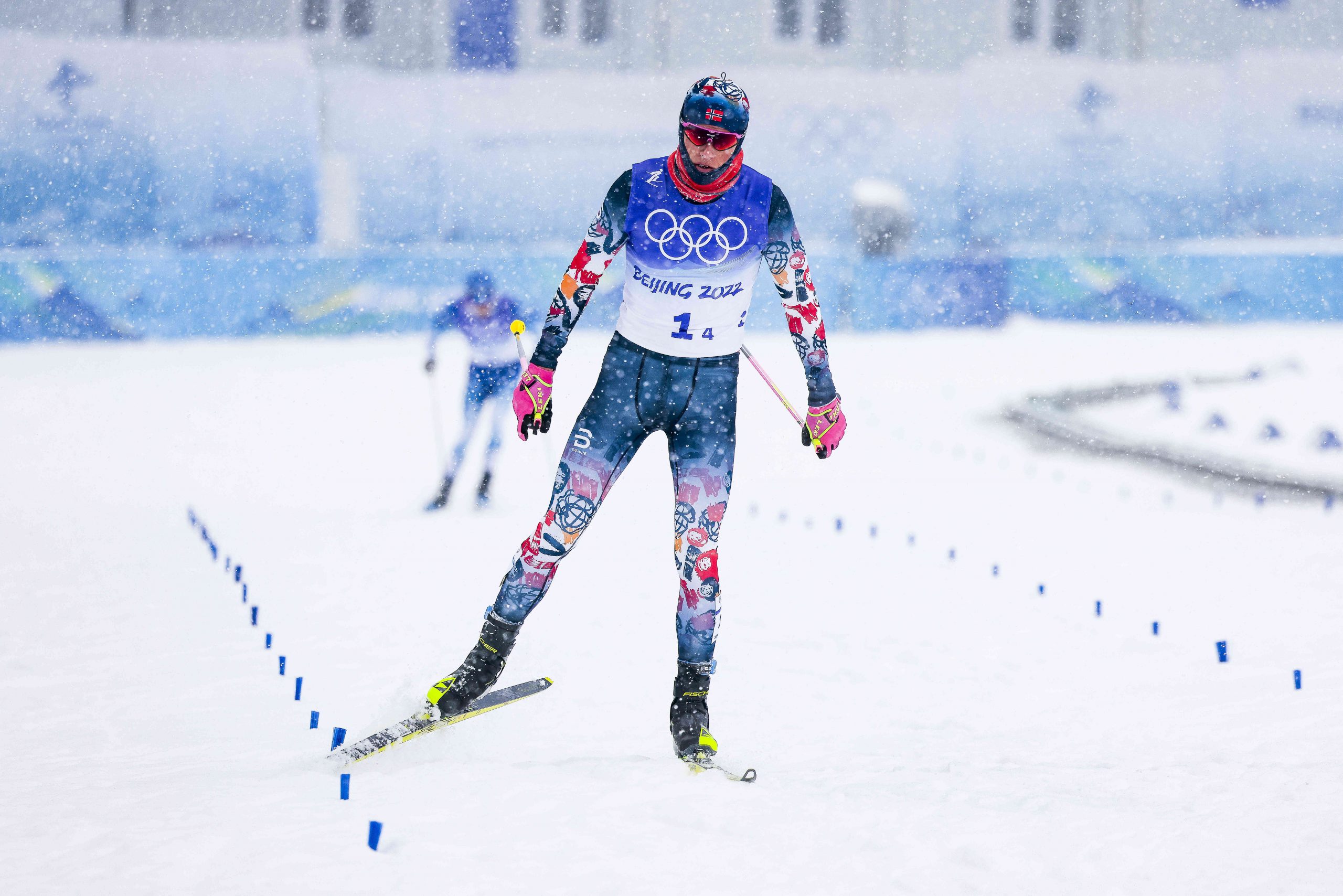
    After a thrilling women’s relay event on Saturday, it was the men’s turn to compete, each athlete skiing the laps of 3.3-kilometers for a total of 4 x 10 k. In a surprising turn of events, more snow than has fallen in a decade came down in Zhangjiakou over the last 24 hours, altering the otherwise stable man-made conditions the men have raced to this point. Conditions being what they were, heavy snowfall and 11°F on challenging courses, this made for an especially long race.

    The ROC proved to best handle the conditions, winning gold in 1:54:50.7. Norway skied to silver (+1:07.2), with France taking bronze (+1:16.4), while the American men skied to ninth (+8:05.6), with the Canadians in 11th (+9:10.4).

    Scott Patterson skis the second leg of the men’s 4 x 10 k relay through unprecedented conditions. (Photo: NordicFocus)

    Men’s skiing for the past few years has been dominated by two nations, Norway and Russia (or as they are known at these Games, the Russian Olympic Committee (ROC)). When it comes to the men’s 4 x 10 k relay however, Norway has historically been in a class of its own. 

    Results summary for men’s 4 x 10 k relay at World Championships since 1999.

    Since Team Norway’s all-around poor showing at Sochi in 2014, which included the men’s team finishing 4th, they have not lost a championship relay. Indeed, looking at relay results from World Championships, you have to dig all the way back to 1999 to find Norway not winning gold, when Norway finished second to Austria in Ramsau. Their performances at the Olympics have been less dominant but most relevant for today’s race, they won gold in PyeongChang in 2018 with the same man, Johannes Høsflot Klæbo, in the anchor leg. 

    As such, despite the Norwegian men’s struggles thus far at these games, it seemed likely that fans would be seeing another battle between Norway and the ROC for top spot. Fifteen nations were represented on the start line and as the first leg was underway Sunday morning, the race appeared to be playing out remarkably similarly to the World Championships in Oberstdorf last year.

    A brief recap for those who don’t remember, in heavy snowfall, ROC athlete Alexey Chervotkin made an early move and ended his leg with nearly a minute lead on the rest of the field which was later eaten up and the win went to Norway. Today it was a different story.

    Alexey Chervotkin (ROC) making a decisive early break (Photo: NordicFocus)

    Chervotkin was once again in the scramble position for the ROC and he put the hammer down right from the start gun. At 4.3 k he had a gap of +12.6 seconds to the rest of the field and that was the closest anyone got to the ROC for the rest of the race. Although it took three more athletes and another hour and forty-one minutes of skiing to seal the deal. 

    All smiles for Sergey Ustiugov, Denis Spitsov, Alexander Bolshunov, Alexey Chervotkin, (l-r) after taking Olympic gold for the ROC for the first time in over forty years. (Photo: NordicFocus)

    Making his first appearance at these games after some controversy regarding a start in the 15 k classic, Emil Iversen took the first leg for Norway. For the majority of his leg, Iversen did the work to pull at the front of the chase group, which was composed of teams Italy, Germany, Sweden and France. No doubt inspired by the German women’s relay performance, Janosch Brugger skied a strong leg for Germany, ultimately pulling away with Italy’s Federico Pelligrino in the final kilometers of their leg.

    Federico Pellegrino (ITA) leads Janosch Brugger (GER) and Emil Iversen (NOR) (Photo: NordicFocus)

    With Iversen fading fast on the final lap up the A-climb, Brugger and Pelligrino gapped the Norwegian by 10 seconds, coming into the first exchange +23.5 and +24.1, respectively, behind Chervotkin of the ROC. Next came Iversen, who tagged his teammate, Pål Golberg, with a gap of +34.4 to the ROC.

    Despite the hard work put in by Chervotkin, the conditions were such that it took him 30:14.7 to ski 10 k, which is much slower than we might normally expect. Chervotkin had taken 5th place in the 15 k classic on Friday in 38:51.7 with stable conditions; five additional kilometers in roughly 8.5 minutes longer.

    Gliding on his own through falling snow, Alexander Bolshunov (ROC)(Photo: NordicFocus)

    With the first leg complete, it was skiathlon winner Alexander Bolshunov who took over for the Russian Olympic Committee. Grinding out front on his own, Bolshunov continued to put time into the rest of the field, widening his lead to +37.8 through 13.3 k, up to +44.5 at 16.6 k and +59.5 at the completion of his three laps.

    Behind him, Golberg worked quickly to close the gap to Italy and Germany, legs which were being skied by Francesco de Fabiani and Friedrich Moch. Over the course of his second lap, Golberg began to pull away, creating a ten second gap to the chasers. However, as the skiers completed the third, and their final, 3.3 k lap, things were shaking up. 

    Pål Golberg (NOR) who would later fade and be caught by William Poromaa of Sweden (Photo: NordicFocus)

    Iivo Niskanen, having been tagged in 11th position and +1:47.5 behind, was executing another outstanding classic performance, gaining time on everyone in the field. With the Finn closing quickly, what had been two chase groups merged to one.

    Moch for Germany, William Poromaa for Sweden, Hugo Lapalus for France and Niskanen for Finland were all battling for bronze medal position as de Fabiani of Italy faded off the back. Up the final A-climb that had been the undoing of Iversen one leg earlier, Golberg too began to slow.

    Hugo Lapalus (FRA) and William Poromaa (SWE) both skiing well (Photo: NordicFocus)

    This show of weakness was all Poromaa needed to up the pace, and by the time they entered the stadium for the second exchange, the Swede had caught the Norwegian.

    Golberg tagged Hans Christer Holund, +59.5 behind Bolshunov who had given way to Denis Spitsov. Poromaa handed over to Jens Burman, +59.7 behind the ROC. Behind them, Niskanen had moved his team from 11th to 4th and gained 36 seconds on the ROC as he tagged Perttu Hyvarinen. Lapalus of France handed off to Clement Parisse, +1:09.7 back. 

    Showing his classic strength, Iivo Niskanen (FIN) works to close a big deficit (Photo: NordicFocus)

    Having switched to freestyle technique, the third leg was underway and suddenly there was a pack of five nations vying for silver and bronze position, the ROC nearly a minute ahead and all but secured the gold.

    Despite the deep snow, Spitsov (ROC) seemed to have no trouble maintaining his advantage as Holund (NOR) took up the mantle of the chase. Through 23.3 k, Holund led the train, still trailing +51.4 behind the ROC.

    Perttu Hyvarinen (FIN) fading fast (Photo: NordicFocus)

    After Niskanen’s effort, the Finnish team was dropping quickly with Hyvarinen at the helm and was soon out of contention. Florian Notz, skiing for Germany, was also beginning to fade, seeming to drift off the back on each uphill and regain time on the downhill. Eventually, as the chase group entered the stadium for the final lap of their leg, Notz lost contact, bringing the group down to three nations, Norway, Sweden and France. 

    Hans Christer Holund (NOR) leads a train of chasers (Photo: NordicFocus)

    Spitsov still clear off the front, Holund continued to lead the chase. With each section of downhill it became clear that the skis of Parisse (FRA) were not gliding like those of Burman (SWE) and Holund (NOR). In spite of this, and perhaps thanks to the trailside encouragement of his teammates, Parisse dug deep to stay in contact with the Swede and the Norwegian. 

    Denis Spitsov (RUS) holds a tuck, skiing through deep snow on his own (Photo: NordicFocus)

    With 1:27:09.3 on the clock, Spitsov tagged off to Sergey Ustigov, still well clear of the rest of the field. Gaining a few meters on the Frenchman, Holund and Burman tagged their anchor legs with virtually no time between them, +44.9 and +45.4 behind the ROC. A few seconds later, Parisse gave way to the veteran Maurice Manificat, +49.2. 

    Clement Parisse (FRA) who hung tough in the third leg to help secure bronze for France (Photo: NordicFocus)

    This lengthy battle now in its final stages, Manificat worked to close the gap to Sweden and Norway, making the chase pack a group of three once again.

    The skis still looked to be a challenge for France as Norway’s anchor, Klæbo, pulled away from the other two by thirteen seconds on the descent towards the stadium, in a move that appeared to be largely unintentional. Not letting up, Manificat took on the task of closing on Klæbo once again, pulling Sweden’s Johan Häggström with him. The second time up the last A-climb of the 3.3 k loop, Manificat busted away from the Swede, catching Klæbo, who appeared to be out for an easy distance ski. 

    Maurice Manificat (FRA) in the closing moments of his relay leg (Photo: NordicFocus)

    Through the stadium for the final time with 36.6 k complete, Ustigov and the ROC was +1:04.3 clear of France and Norway.

    To put it bluntly, the last 3.3 k were hard to watch. Knowing he had no chance of beating the Norwegian in a sprint finish, Manificat continued to push to his limit, his ski speed not doing him any favors. Klæbo was all too happy to sit in behind, drafting easily as Manificat tried his best to shake him. In the end, Klæbo did not even have to reach into his bag of tricks, he simply out-glided the Frenchman, who could do nothing about it. 

    No big moves from Johannes Høsflot Klæbo (NOR) as he brings home the silver medal for Norway (Photo: NordicFocus)

    Many meters ahead, Ustigov cruised into the stadium, grabbed an ROC flag and waved it triumphantly as he crossed the finish line before any challengers had even entered the stadium. Finishing in a time of 1:54:50.7 the men secured the second relay gold medal of the Games, after the ROC women brought home gold in the 4 x 5 k yesterday.

    Chervotkin, who gave the ROC such a strong start, said of winning gold, “we were aiming for this. We tried to achieve it, and for several years we haven’t been able to. Today everything aligned. Everything was super. The weather seemed to be hard and there was snow but it was in our favor so everything was great.”

    Alone with a flag, Sergey Ustiugov (ROC) heads for gold (Photo: NordicFocus)

    Despite the consistent strength of the Russian team, they have not won a 4 x 10 k relay in over forty years. The last time they topped the podium in this event it was under yet another name, as the Soviet Union, at Lake Placid in 1980. Of course in recent years, they have consistently been runner-up, earning silver in 2021 Obserstdorf, 2019 Seefeld, 2018 PyeongChang and 2017 Falun. 

    Ustigov crosses the finish line unchallenged as his teammates wait to congratulate him (Photo: NordicFocus)

    Today the positions were reversed as Klæbo skied slowly across the line for silver, having simply glided away from Manificat in the closing stages. He was met by rather somber congratulations from his teammates, particularly in comparison to the French who celebrated their bronze as if it were gold.

    Elation for the French at having secured another Olympic bronze in the men’s relay (Photo: NordicFocus)

    After the race, Klæbo said, “when you’re doing a relay, you’re doing it as a team and that is the beautiful part of it, so it’s always fun to race the relay and do it together. We all need to be satisfied with today’s result, and I guess we’re going to celebrate it in the evening and then some of us need to start preparing for the next race. But still we’re going to enjoy this evening.”

    His teammate Pål Golberg spoke about the challenging conditions, saying, “The course was tough before and with the snow and wind today, it was even tougher. So I mean, with altitude and everything it’s challenging but we did our best today. The four Russian guys were better so just take the hat off to them and try to be satisfied with the silver.” 

    Emil Iversen (NOR), Pål Golberg (NOR), Hans Christer Holund (NOR), Johannes Høsflot Klæbo (NOR), (l-r) were the only team not celebrating their medal (Photo: NordicFocus)

    If Norway has held a monopoly on gold in the men’s relay, then the same can be said about the French and bronze. This is the third consecutive Olympics that France has earned bronze in the men’s 4 x 10 relay and Maurice Manificat has played a part in all of them. Similarly, in the last four World Championships, France has collected bronze in three of them.

    When asked about winning another medal at the Games, Manificat replied, “four Olympics for me and some medals in the relay since Sochi, so for sure it’s an amazing feeling.”

    Regarding the challenge of trying to drop Klæbo he said, “I tried, in the big uphill and I give my best, I give all I had. Medal in relay is the best medal. Because you share it together. We thought all the year about the relay, it’s our soul.” 

    Teammates congratulate Maurice Manificat (FRA) on a gutsy final leg to bring France the bronze medal (Photo: NordicFocus)
    Clement Parisse (FRA) and Richard Jouve (FRA) share a moment at the finish. (Photo: NordicFocus)

    With three teams lapped out of the race and the spread between the ROC and 12th place finishers, the Czech Republic at +10:07.1, the day was evidently a tough one.

    Improving on an 11th place finish in PyeongChang, the American men skied to 9th place today, +8:05.6 behind. 

    Luke Jager skis the scramble leg for the Americans during the Olympic 4 x 10 k relay. (Photo: NordicFocus)

    Luke Jager took the scramble leg for Team USA, putting the team in 13th, +2:39 behind at the conclusion of his leg.

    “I felt kind of like I’d become sort of aware of some of the subtleties of how scramble legging in skiing works in the last years, but it was sort of like, all that went out the window,” Jager told FasterSkier from the mixed zone. “For a lot of reasons: the course is really hard, the altitude was really hard, and 10 k versus five or 7.5, was a really big difference. At the end of the day, I just wasn’t fit enough to be where I want to be and there was no hiding to be had. So, I feel like I learned a lot from it, but I just feel like I need to go home and train a lot more.”

    While Jager chalked it up as a disappointment, he contrasted the statement it with: “that’s obviously multifaceted. There’s pros to it all, and I’m really thankful to be here.”

    Up next was Scott Patterson, who started the Games with an impressive 11th place finish in the skiathlon. Patterson bumped the team up into 11th place, though the time gap continued to widen at +4:23.2.

    “I think as we’ve seen in every race this week, those courses are pretty unforgiving,” Patterson explained. “I felt like I had to go out and ski my own race and not really think too much about what everyone else was doing, just go move into the race and try to ski well. It was a little bit interesting place where Luke tagged me off, but I think I picked off some people and put us in a good spot, so I’m happy with that.”

    Gus Schumacher races the third leg of the men’s 4 x 10 k relay. (Photo: NordicFocus)

    Patterson tagged Gus Schumacher who maintained their position in 11th place and finished his leg +6:04 behind. In the anchor position, Kevin Bolger moved past both the Japanese and Czech team to put the team in 9th place. 

    “I’m proud of us for coming together the team,” said Schumacher after the race. “We’ve all had some tough races here… It hasn’t been easy for us. I think it’s a little bit hard especially to have the girls’ success – there’s some pressure there.”

    While the team was seemingly unanimous that this pressure was self-imposed and that it had been a relief to feel they had “nothing to lose and everything to gain,” the Americans also affirmed that they brought hopeful energy to the day, looking to take a step forward as a team, regardless of what that looked like on paper.

    Over the last four Olympic cycles, the Americans have been 11th place in the last two Games, along with 12th in 2006 and 13th in 2010. It might not be a medal, but it was, in fact, a step forward for the program.

    “I think we all really put it out there and yeah, good energy,” Schumacher concluded.

    Kevin Bolger (USA) skiing the anchor leg for Team USA (Photo: NordicFocus)

    The Canadian team was led out by Graham Ritchie who ended his leg in 14th, +2:42 behind. Antoine Cyr took the second classic leg and moved up one position to 13th, +4:23.2.

    In the transition to skate, Olivier Léveillé skied Canada’s third leg, again moving the team up one position to 12th, +6:44.6. Rémi Drolet anchored to bring the team home in 11th position, +9:10.4. 

    Antoine Cyr (CAN) skiing the second leg for Canada (Photo: NordicFocus)
    American men’s 4 x 10 k relay team: Kevin Bolger, Scott Patterson, Luke Jager, and Gus Schumacher (l-r) (Photo: NordicFocus)

    “The relay is really a game of staying in contact,” Matt Whitcomb told FasterSkier in the mixed zone. “When you lose contact, it becomes a different race. Time expands immeasurably. So I’m very proud of the way that these guys tackled the project that they’re handled today. There’s also – and I say it with a Canadian over my shoulder – this is one of our favorite rivalries: our northern friends. And it really is a friendly and very fun rivalry, where we’re always giving each other splits back and forth, and I’m proud of both teams today. And I’m also excited for our guys to come out just a little bit on top.”

    The next Olympic cross country ski event will be the men’s and women’s team sprint, happening on Wednesday, February 16th.

    Results

  • Johaug Wins Second Gold in a Close Race; Diggins Leads Americans in 8th

    Johaug Wins Second Gold in a Close Race; Diggins Leads Americans in 8th

    Podium finishers, Kerttu Niskanen (FIN), Therese Johaug (NOR), Krista Pärmäkoski (FIN), (l-r) (photo: NordicFocus)

    This World Cup coverage is made possible through the generous support of Marty and Kathy Hall and the A Hall Mark of Excellence Award.  To learn more about A Hall Mark of Excellence Award or to learn how you can support FasterSkier’s coverage please contact info@fasterskier.com.

    Thursday morning saw the third women’s cross-country race in the Zhangjiakou stadium. On the docket, a 10-kilometer individual start classic with two laps of a challenging 5 k course. After a reprieve from the wind during the sprint event Tuesday evening, it was blowing once again as the athletes headed to the start.

    Zhangjiakou 5 k course. (screenshot from FIS homologation certificate)

    Unlike the skiathlon which saw 62 finishers, the start list for the 10 k individual classic featured 98 racers. Most of the later starters represented nations we don’t normally see at World Cup events, such as Greece, Brazil, and Hungry. Many of these skiers fall into the ‘B-standard’ Olympic qualification category; provided they can earn less than 300 FIS points in a competition prior to the games, but have greater than the 100 point threshold of the A-standard, these athletes can race in the 10 k and relay events. 

    To set the stage for Thursday’s race, we can begin with a brief dive into recent Olympic, World Championship, and World Cup results at this distance. Given that this year’s edition of the individual-start 10 k event was contested in classic technique, the 10 k individual start in PyeongChang was a freestyle race (disciplines alter every two years at championship events). As such, it is harder to draw direct predictions from the podium four years ago to possible success in today’s event. Nevertheless, to remind ourselves, it was Ragnhild Haga of Norway who walked away with the gold in 2018. Charlotte Kalla of Sweden finished second and she was followed by Marit Bjørgen of Norway in third position. Delving deeper into the Olympic records, a look at the results from the 10 k individual classic in Sochi, shows that Justyna Kowalczyk of Poland took gold, with Kalla again the runner-up, and Therese Johaug rounding out the podium with bronze. 

    Sweden’s Charlotte Kalla racing to silver in the 10 k classic individual start at the 2014 Olympics in Sochi, Russia. (Photo: FS archives)

    The most recent championship-level 10 k individual-start classic race was in Seefeld, Austria when the World Championships were held there in 2019. There, the victory went to Therese Johaug who finished 12.2 seconds ahead of Frida Karlsson of Sweden. Johaug’s teammate, Ingvild Flugstad Østberg was third, but has since battled health concerns and been largely absent from international racing

    This season, the two 10 k individual start classic events have been won by Karlsson (in Ruka, FIN +13.7 ahead of Johaug) and Kerttu Niskanen of Finland in Lenzerheide, SUI (during the Tour de Ski in which Johaug did not compete). 

    Perhaps one of the more open events in terms of podium predictions, the race turned out to be an exciting one with the margins between medal positions coming down to hundredths of seconds. In the end, it was Johaug of Norway who walked away with her second gold medal from these Games, eking out a win ahead of Niskanen (FIN) by just 0.4 seconds. 

    Therese Johaug (NOR) crosses the finish line and collapses (Photo: NordicFocus)

    Rewinding to the start, Russian Olympic Committee athletes Natalia Nepryaeva and Tatiana Sorina clocked the fastest times to begin. Looking at the course profile, the first split at 1.3 k comes at the end of a good deal of climbing. Close behind the ROC athletes were two Finn’s, Niskanen and Krista Pärmäkoski, with Johaug rounding out the top five, a surprising +12.8 seconds behind Nepryaeva. 

    Move forward to 3.6 k and the top three were within 0.5 seconds of each other, Niskanen and Johaug tied with a split of 10:47.7, Nepryaeva passing through at 0.5 seconds off their mark. With one lap complete, Nepryaeva had started to fade, perhaps paying the price for her early pace. At 5 k it was Johaug with the advantage over Niskanen, but only by +0.6 seconds, and Nepryaeva was now +6.2 behind. 

    Therese Johaug (NOR) striding her way to a win in the 10 k classic (Photo: NordicFocus)

    Through 6.3 k it seemed like Niskanen had made a break, pulling ahead of Johaug by 11 seconds, on a section of course that is mostly climbing, generally a strong point for Johaug. Nepryaeva was still in third +14.7 behind Niskanen and Pärmäkoski (FIN) was holding onto her fourth place position, +17.7 back. In the next 0.5 k, something appears to have happened to the ROC athlete, as Nepryaeva lost 12.1 seconds to Niskanen (+26.8) and was overtaken in by Pärmäkoski who moved into third +18 seconds behind her teammate. 

    The final course split was at the 8.6 k mark and with Johaug having the earlier bib, we saw her through first. She had gained the minute start deficit she had to Jessie Diggins and moved past the American, employing her signature high tempo up the final A-climb. When Niskanen came through moments later, her body language was visibly more labored than Johaug’s. In spite of this, Niskanen still held the lead, +1.3 seconds ahead of the Norwegian. Pärmäkoski remained in third, +23.6 behind, followed by Nepryaeva who was +31.8 behind. 

    Natalia Nepryaeva (ROC) slides her foot across the line, 0.1 seconds behind Krista Pärmäkoski of Finland (Photo: NordicFocus)

    Entering the stadium, Johaug was skiing outside the windblown tracks. Knowing the margins were tight, she pushed hard, crossing the finish line in a time of 28:06.3. Facing a headwind into the finish, Niskanen chose to keep her skis inside the tracks, battling the final meters as the stopwatch ticked by. Sliding her foot across the line, the timestamp turned to red. She crossed +0.4 seconds behind Johaug. 

    “It was the two most nervous minutes in my life, waiting for [Niskanen]”, said Johaug in the press conference after the race. 

    “It was a really tough race out there today and, as Kerttu said, it was really close race,” Johaug continued. “So I feel that it’s also Kerttu’s gold medal because 0.4 second is nothing. I think we both are the the winners today in my head.”

    Kerttu Niskanen (FIN) digs deep for precious time in the 10 k classic (Photo: NordicFocus)
    Teammates Krista Pärmäkoski (FIN) and Kerttu Niskanen (FIN) celebrate their podium finishes. (Photo: NordicFocus)

    After earning her first individual gold medal just days ago in the skiathlon, Johaug continues to cement her place in history as she gains another. Her performance gives the Norwegians something to hold onto as the rest of the team struggled to perform at the level fans are accustomed to.

    With twins Tiril Udnes and Lotta Udnes Weng finishing 21st and 25th respectively and Mathilde Myhrvold back in 44th position, the remaining women racing on behalf of  Norway did not have their strongest showing. 

    So far, Johaug is the only female Norwegian athlete to earn a medal of any color, while Johannes Høsflot Klæbo earned the only medal on the men’s side, a gold in the 1.5 k freestyle sprint on Tuesday. Three Norwegian athletes, including medal favorites Heidi Weng and Simen Hegstad Krüger, remain detained due to a positive COVID test just prior to travel. Weng recently announced on social media that she will not be making it to China and it is unclear whether Krüger will be cleared in time to compete in events next week.

    Lotta Udnes Weng (NOR) finished 25th in the 10 k classic (Photo: NordicFocus)

    For Kerttu Niskanen, this silver marks her first individual championship medal. She holds two silver medals from team events, both coming from Sochi in 2014. Niskanen only has three World Cup victories to her name and they all were in 10 k classic events, a specialty of hers. 

    “My plan before this race was to push hard every time and try to ski within my limits,” Niskanen explained in the press conference. “In the second laps on the long uphill from stadium, on the big uphill, [that] was the best part part for me in these tracks… I tried to push hard also end of the race but the I can say that Therese was much better than me. I did my best and it was really near but, yeah.”

    Kerttu Niskanen (FIN) celebrating her first individual Olympic medal (photo: NordicFocus)

    The bronze medal was also decided by a razor-thin margin. Pärmäkoski started bib number 38 and was hunted by Nepryaeva in bib 60 who had the advantage of more split information. However, when Nepryaeva crossed the finish line, she was outside by just 0.1 seconds, having finished in a time of 28:37.9 whereas Pärmäkoski came across in 28:37.8. Pärmäkoski has three individual Olympic medals, from a range of events in PyeongChang. She earned bronze in both the skiathlon and 10 k individual freestyle in 2018, as well as silver in the 30 k classic mass start. 

    Krista Pärmäkoski (FIN) stretching for the lunge that gave her third place (Photo: NordicFocus)

    For the American contingent, there was some back and forth playing out between Jessie Diggins and Rosie Brennan throughout the race. Just 48 hours after winning the first individual medal for women’s cross-country skiing, Diggins was back on the start line wearing bib 34, starting one minute ahead of eventual winner, Johaug in bib 36. Brennan started in bib 44.

    Jessie Diggins (USA) crests a climb in the 10 k individual start classic (Photo: NordicFocus)

    At the 1.3 k mark, the two were 13th and 14th, with Brennan +19.9 behind and Diggins +20.4. At 3.6 k Brennan had moved into 8th, +21.3 behind with Diggins in 10th, +25.1 back. With the climbing complete for the first lap, the 5 k split showed Diggins in 9th, +30.1 behind with Brennan now behind her in 11th, +31.8. Begin the climbing for the second lap and Brennan was again the first American, in 9th place and +45.7 behind while Diggins was in 14th, +52.7.

    Rosie Brennan (USA) hits a dynamic stride in the 10 k classic (photo: NordicFocus)

    At 8.6 k the two were neck and neck, Diggins in 10th, +1:05.6 and Brennan in 11th, +1:11.6. Over the final 1.4 k Diggins grew her advantage over her teammate to finish in 8th position, +1:08.8 behind winner, Therese Johaug (NOR). Brennan finished her day in 13th place, +1:22.3 behind Johaug. 

    Jessie Diggins (USA) left it all out on the course in the 10 k classic, per usual. (Photo: NordicFocus)

    As she provided comments on today’s performance, Diggins first spoke to savoring the moment of yesterday’s medal ceremony. “It was so special to call my family and call my fiancé, and come back to the apartment and show our staff like our coaches the medal and just enjoy that moment.”

    After a “rollercoaster” of eating, drinking, and other recovery-focused actions – Diggins said the Tour de Ski was helpful for knowing how to handle the tight turnaround – she turned her full attention to today’s classic race.

    “I was really, really happy today,” Diggins said in the mixed zone. “I was so focused on my process. This is undoubtably my weakest event, but I was just so focused on enjoying it – like, ‘Great! No pressure. This is just my day to go out there and enjoy racing at the Olympics.’ Especially seeing Novie do her first Olympic race – I got to put the glitter on her I give her a hug – it was honestly pretty emotional. But in a good way.”

    Though she has steadily closed the gap between her results in skate and classic performances, Diggins has been primarily seen success in freestyle competitions. On today’s race, she maintained that her focus was not on the result, but on giving her all despite classic being her weaker technique.

    “It was so cool to work on that process and dial in the kick,” Diggins said. “I was so, so grateful for awesome skis. When I go really hard, I can’t feel my body from the waist down. And when you can’t feel your legs and you’re still kicking up the hill –  you have to have great kick… And man, they delivered. I was just so proud of them.Especially in challenging conditions where it’s windblown in the tracks, or you’re trying to keep skis fast and grippy. That’s hard… I think they did a great job.”

    Speaking to whether she has made progress in her classic skiing, Diggins continued, “I would like to think so. I’ve been working very very hard on it for a lot of years. I’ve been just so focused on that process on the technique and every single stride I was just thinking so hard about my technique. It really kept me right in the moment and thinking about what I could do so yeah, I’m gonna keep working on it to keep improving it.”

    Jessie Diggins skis to 8th in the 10 k classic. (Photo: NordicFocus)

    On a course Brennan described as “brutal” she explained that seconds could easily be gained or lost along any stretch, up or downhill. She also acknowledged the challenge of facing the wind in an interval start race where there may be less opportunity to use another skier to block the wind than there is in a mass start. Overall, Brennan executed her goals on the day, despite looking to be higher on the results sheet.

    “I was really focused on having powerful classic skiing and I was pretty happy with how I skied,” Brennan said in the mixed zone. “I wish I had a little more, but I did what I could with what I had today.”

    Brennan finished one place (just 0.6 seconds) behind Sweden’s Frida Karlsson, who has two wins in the 10 k classic on the World Cup, including a win over Johaug earlier this season. This strong result is on the heels of her Olympic career best finish in the individual skate sprint, which was held under the lights Tuesday evening.

    “The turnaround was definitely hard,” Brennan said. “It’s really hard with these late night races to  get good sleep afterwards. So I think that was challenging. I did a lot of training this summer to try to like mimic that load. So I’m hoping that I can manage it, but we will take it day by day and see what we can do.”

    Rosie Brennan comes to the line in 13th in the 10 k individual start classic. (Photo: NordicFocus)

    Making her Olympic debut, Novie McCabe was the first starter for the United States, wearing bib number 5. At the age of 20, McCabe is the youngest member of a young team in Beijing. After earning her first World Cup points in Davos earlier this year, McCabe also notched a top-ten finish during the Alpe Cermis hill climb during the Tour de Ski. In an impressive performance, McCabe skied her way to 24th in a time of 30:34.9.

    When she started, the British Eurosport announcers remarked, “I think McCabe is going to be a superstar like Diggins in a few years.”

    At 5 k, McCabe was in 38th position, +1:27.9 behind Johaug. At 6.3 k she had moved into 32nd, at 6.8 k she was in 29th and by 8.6 k she had jumped to 24th, which she held through the finish. 

    The long last hill was, for sure, so hard,” McCabe said after the race. “I tried to kind of just zone out and get through it. And I knew that it would be tough, especially on the last time up. But it was nice also to have so many people like around me out there and kind of have people to watch ahead of me. That helps a lot.”

    Novie Mccabe (USA) skiing strong in her first Olympic race (Photo: NordicFocus)

    Hailey Swirbul was the fourth American competitor and wore bib 27. Swirbul raced in the skiathlon earlier this week and finished in 40th. In today’s 10 k classic, she bested that performance and landed herself in 32nd, +2:59.0 behind Johaug. Swirbul was just five seconds outside of the Top-30.

    “It was better than my last race,” Swirbul said simply in response to how she felt about her day. “I’m excited. I had a little bit of a reset – had a few days to recover from that first effort and have really focused on kind of resetting my goals, trying to push as hard as I could through that whole race and not give up no matter what. And I was able to do that today.”

    With the women’s relay looming, team selection is a buzzing topic amongst ski fans. Swirbul skied a classic leg in the December, 2021 relay in Lillehammer, NOR, and was a member of the 2021 World Championship relay team in Oberstdorf, GER. The American team finished just off the podium in fourth in both races.

    Swirbul said that relay team selection was not on her mind during her race today, though she does feel the pressure to perform that is perhaps inescapable at an Olympic level competition.

    “That definitely does factor in for all of us here,” she said. “But I think at the end of the day, everyone on our team is confident that we’re going to try to put in the team with the best shot of a relay medal. So there are no hard feelings. There’s nothing personal about that team selection. We all trust that we’re just trying to do the best for our nation and give us a good shot.”

    Hailey Swirbul (USA) working her way to a 32nd place finish in the 10 k classic (Photo: NordicFocus)

    For the Canadians, Dahria Beatty continued her momentum, building off of strong performances in both the skiathlon and sprint to finish 18th, +1:53.9. This is a personal best for Beatty, following a week of personal bests. She finished 25th in the skiathlon and 25th in the sprint; her best Olympic performance before that was a 37th place in 2018 during the 10 k freestyle at PyeongChang. 

    Dahria Beatty (CAN) skiing to a personal best result of 18th (Photo: NordicFocus)

    Behind Beatty, Kathrine Stewart-Jones finished 36th for team Canada, +3:02.3 behind. Cendrine Brown was 48th (+3:41.6), and Olivia Bouffard-Nesbitt was 61st (+4:54.8). 

    Representing Australia, Jessica Yeaton finished 51st (+3:48.3). 

    The women now have a day to recover before the 4 x 5 k relay, which will take place on Saturday. 

    Results

    Rachel Bachman Perkins contributed.

  • Johaug Wins First Individual Olympic Gold; Diggins Leads US in Sixth

    Johaug Wins First Individual Olympic Gold; Diggins Leads US in Sixth

    Striding out of the stadium at the Zhangjiakou National Cross-Country Skiing Center (Photo: NordicFocus)

    This World Cup coverage is made possible through the generous support of Marty and Kathy Hall and the A Hall Mark of Excellence Award.  To learn more about A Hall Mark of Excellence Award or to learn how you can support FasterSkier’s coverage please contact info@fasterskier.com.

    After a long hiatus from international racing, the top athletes found themselves on the start line once again, ready to contest the first event of the 2022 Winter Olympics. First up, a 15-kilometer skiathlon, featuring 64 starters completing four 3.75 k loops. The skiathlon, which combines both classic and skate in one race (7.5 k of each in this case), is an infrequent event on the World Cup circuit though appears on the schedule at all championships.

    Four years ago, at the Olympics in PyeongChang, it was Charlotte Kalla of Sweden who bested the field to take gold, followed by Marit Bjørgen of Norway and Krista Pärmäkoski of Finland. Notably, this year’s winner, Therese Johaug was not present, but we will return to this point later on. 

    Celebration for Therese Johaug (NOR) as she takes her first ever individual Olympic gold medal (Photo: NordicFocus)

    Watched by a few masked fans in the stands, the athletes completed final preparations before the start. Even without looking at the temperature, the cold was evident, from the blowing trees and bibs to the drifting snow across the tracks and the face-tape present on all the starters. The thermometer said -12.5°C or 9.5°F, though this reading likely didn’t factor in the windchill. With minutes to go, the athletes emerged from a set of underground stairs, bundled in parkas, to take their places on the start line. 

    At the starters command, the first cross-country ski race of the 2022 Olympics was underway, and almost immediately two skiers went down in a crash, though thankfully the damage did not impact the rest of the field. Coralie Bentz of France and Anne Kyllönen of Finland recovered quickly and rejoined the pack. With the first A-climb less than 1 k into the course, early leaders Rosie Brennan (USA) and Therese Johaug (NOR) pushed the pace, and the pack soon thinned.

    Therese Johaug (NOR) leads the charge up the first big hill, Rosie Brennan (USA) can be seen leading the left most column (Photo: NordicFocus)

    On the descents, the camera showed most athletes opting to ski on the platform, rather than the tracks, due to the drifting snow that was filling them. Skirting another fall, this time from Johanna Matintalo of Finland, the front group entered the stadium for the first round in a pack of roughly fifteen. With just over eleven minutes on the race clock, there were ten athletes within five seconds of Johaug, a slight surprise given her tendency for early breakaways. 

    Therese Johaug (NOR) battles Kerttu Niskanen (FIN)  (Photo: NordicFocus)

    Heading out for the second lap, Johaug visibly upped the pace though still had difficulty shaking her followers. Through the 5.1 k mark, the spread was now ten athletes over the span of ten seconds, led by Kerttu Niskanen (FIN) and ending with her teammate Matintalo, who had recovered from her fall. Whittled away over the duration of that lap, when they reached the second A-climb of the course before descending towards the stadium, Johaug was leading a group of just six skiers. 

    Entering the stadium for the transition to skate skis, Johaug double-poled the final rise, managing to open a slight gap to Niskanen, Frida Karlsson (SWE) and Pärmäkoski (FIN). Executing a quick exchange she held the lead and was out with 23:04.7 elapsed on the clock. Niskanen followed +1.0 behind, Pärmäkoski +2.2 and Karlsson +4.3.

    It is worth noting that after the exchanges, Jessie Diggins of the USA was in tenth, +57.5 seconds behind Johaug, having dropped significantly over the first two classic loops. Rosie Brennan was next in 14th (+1:11.9), with Hailey Swirbul in 23rd (+1:52.6) as the final American inside the Top-30. Julia Kern was +4:07.1 behind in 53rd, about to hit the gas on the skate laps. 

    Jessie Diggins (USA) strides up one of the many challenging climbs (Photo: NordicFocus)

    Capitalizing on her one-second advantage, Johaug found herself off the front for the first time. Pärmäkoski, Karlsson and Niskanen shared leads in an attempt to chase her down but by 8.8 k the gap had stretched to +15.8, effectively securing Johaug her first ever individual Olympic gold medal. From that point, the margins only grew: +26 at 10 k, +44 at 12.6 k and +30.2 at the completion of 15 k.

    Despite her utter dominance of World Cup races and World Championships the past few seasons, Johaug’s results sheet at the Olympics is not what you might expect.

    Tears were shed by Therese Johaug (NOR) as she finally gets her long deserved gold medal (Photo: NordicFocus)

    Prior to the day’s skiathlon victory, she had only one other gold medal, coming from the team relay in the 2010 Games in Vancouver Canada. She was a runner-up in Sochi 2014 during the 30 k freestyle mass start when she placed second behind teammate, Marit Bjørgen, and she also earned bronze in the 10 k classic in Sochi. Johaug received an 18-month competition ban in 2017 for a positive doping test which prevented her from attending the 2018 Olympics in PyeongChang.

    In her post-race press conference, Johaug said she does not hold onto anger about her suspension, which left her even more motivated to prove herself this year.

    “I’m finished with these years and I’m focusing on myself, and the future and things I can do something with,” Johaug said in a press conference. “It means maybe more for me today when I’m didn’t have this gold medal, and maybe if I had the gold medal before, this Olympics, maybe I would not been here.”

    Therese Johaug (NOR) on top in the first cross-country competition at the 2022 Olympics (Photo: NordicFocus)

    With the recent outbreak of COVID amongst the Norwegian team, Johaug’s path to Beijing has not been as smooth as she would have liked. She only arrived at the venue on Wednesday, leaving just a few days to adjust to the time change and climate before the first event. In spite of these challenges, she proved equal to the task, skiing away with the victory in a time of 44:13.7. 

    Behind Johaug, the race for silver and bronze was playing out in a dramatic way. Initially, Karlsson of Sweden seemed to have pulled away, when at 10 k she was 26 seconds behind Johaug, and 10 seconds ahead of Niskanen (FIN) and Teresa Stadlober of Austria. However, this break was short-lived, and at 11.3 k, Karlsson was less than a second ahead of Natalia Nepryaeva (ROC) who had worked with Stadlober to rejoin the chase pack. Pärmäkoski (FIN) began to drop off the pace and the group was down to four. At this point, Diggins (USA) could be spotted closing in on Pärmäkoski, who continued to fade. 

    The chase pack, pictured here: Kerttu Niskanen (FIN), Teresa Stadlober (AUT), Natalia Nepryaeva (ROC), (l-r) (Photo: NordicFocus)

    Entering the final A-climb of the race, Stadlober (AUT) injected some pace, attempting to pull away but Karlsson of Sweden and Nepryaeva (ROC) hung on. Only Niskanen (FIN) dropped slightly.

    Thus it was three skiers vying for two medal spots. But as they descended towards the stadium Niskanen closed in again, making the group four. Nepryaeva crested the final rise in front as across the stadium the camera showed Johaug crossing the line, arms raised and a frozen smile on her face. 

    Frozen but happy, Therese Johaug (NOR) (Photo: NordicFocus)

    Down the finishing straight Nepryaeva held onto her lead as Stadlober mounted a final challenge, ultimately running out of space as the two finished in silver and bronze position respectively. Niskanen (FIN) finished fourth (+36.1), Karlsson (SWE) in fifth (+42.5), and in an impressive comeback, Diggins crossed the line sixth (+50.5). 

    A tight battle for silver and bronze between Teresa Stadlober (AUT) and Natalia Nepryaeva (ROC), (l-r) (Photo: NordicFocus)

    This silver is the first Olympic medal for Natalia Nepryaeva, who most recently became the first Russian women to win the Tour de Ski. Her only other Olympic appearances came in PyeongChang where her best finish was fourth in the classic sprint. 

    Teresa Stadlober (r-AUT) celebrates a bronze medal as Natalia Nepryaeva (l-ROC) is overcome with emotion (Photo: NordicFocus)

    For Teresa Stadlober of Austria, this bronze medal could be viewed as redemption. Stadlober was in medal contention during the 30 k classic at PyeongChang when a last minute wrong turn took her out of the running. Furthermore, after a total of 18 individual starts at championship events (Olympics and World Championships), this is Stadlober’s first medal. She holds just three World Cup podiums, two during the 2018 edition of the Tour de Ski in Toblach where she placed third in the 10 k classic mass start and had the second fastest time of the day on the Alpe Cermis hill climb. The third podium was in a 15 k skiathlon in Oberstdorf Germany in 2020 where she also placed third. 

    First Olympic medal for Teresa Stadlober (AUT) (Photo: NordicFocus)

    Other noteworthy performances from the day includes Anastasia Rygalina (ROC), who has had just ten World Cup starts in her career and never finished in the top ten, finishing the race in 8th. Behind her, Delphine Claudel of France earned a new personal best for the Olympics placing 9th. 

    Jessie Diggins (USA) exits the transition zone, followed by Ebba Andersson (SWE) (Photo: NordicFocus)

    After being +55.5 seconds behind Pärmäkoski and the chase group at the exchange, Diggins ended up finishing a full eight seconds ahead of the Finn and was just 20 seconds behind bronze medalist, Stadlober.

    “I definitely finished with nothing left so I feel really good about that,” said Diggins in the mixed zone after the race. “I was so proud of never giving up. I feel really good about the pacing and where my fitness is. I definitely want to figure out some things with my power striding, but overall I think this was a really encouraging start to the Games and honestly it feels really good just to have gotten here and to be able to race.”

    Left it all on the course, Jessie Diggins (USA) collapsed in the finish (Photo: NordicFocus)

    When asked about the cold and windy conditions Diggins replied, “My hands got pretty cold because I needed thinner gloves for the pit-box changing. My muscles stayed warm though. [The wind] is really something, and that’s what makes it so cold, so I think it’s important to really push that and stay warm.”

    Regarding the course, Diggins said, “They’re really good courses. I really like them. I think they’re really fair and great championship courses. They’re as hard as they look, you’ve really got to work for it.”

    Jessie Diggins fields media questions in the mixed zone. (Nat Herz/FasterSkier-ADN)

    In Diggins final 5k, she advanced from eighth place and over 1:13 back to finish sixth place and roughly 50 seconds back. This is a difference of 23 seconds gained on the leader over 5k, with ten seconds gained in the final 2.4k.

    “I had amazing skate skis and I think I had paced just well enough to be able to do that,” Diggins said of this progress. “I crossed the finish line with nothing left. It’s really cool to get a race on these courses in and I think I’m figuring [them] out.”

    Rosie Brennan leaves the exchange zone halfway through the women’s 15k skiathlon, the opening race of the 2022 Winter Olympics. (Nat Herz/FasterSkier-ADN)

    Brennan was the next finisher for Team USA, in fourteenth position (+2:51.7). Brennan had initially fallen behind Germany’s Katharina Hennig in the skate leg to slide into 15th, but she regained her position with 3 k to go, further accelerating to give herself a 7 second cushion at the finish. 

    “Definitely a little bit of everything out there today,” Brennan told U.S. Ski & Snowboard communications manager Tom Horrocks after the race. “Some good, some ugly, some in between.”

    While Brennan’s result might not be evidence that she is a medal threat in the event, and she is surely left wanting more, she spoke like a true veteran, showing maturity and perspective in her response to how she will look back on the performance.

    “I think I have to take the like big picture perspective. Four years ago, I think I was close to dead last fighting some [mononucleosis], and that was my first and last Olympic race. So I really had kind of a — I don’t know what you’d call it — a demon in the back of my mind that I needed to get rid of. So to be in a better place today, even if it wasn’t my best, was a step in the right direction. And that’s something that I’m proud of.”

    Rosie Brennan catches her breath after finishing 14th in the women’s skiathlon at the 2022 Beijing Winter Olympic Games. (Nat Herz/FasterSkier-ADN)

    While official start lists are not yet available, as Brennan is one of USA’s top skiers, she will likely start in multiple upcoming events.

    On her mindset and how she’s feeling heading into these stages, Brennan said, “It’s been a while since I’ve done racing at an international level. (Brennan left Europe after the Davos World Cup races in mid-December, spending the last six weeks near her home in Park City, UT.) I’m really hoping that the effort today was what I needed to just get back into things and find a better place ,because I certainly have had some workouts that have indicated that I’m in good shape. So I do want more and I think I can get more. I’m really looking forward to the other races.”

    Behind Brennan, Hailey Swirbul finished in 40th (+5:28.8).

    “It’s a lot of V1 skate, it’s hard,” Swirbul said in the mixed zone in reference to the course, “It makes for fair racing but you have to be totally on your game. It didn’t feel like [you get a break] today, it was a tough day for sure.”

    Hailey Swirbul transitions from classic to skate, fighting windy conditions on course during the women’s 15k skiathlon. (Nat Herz/FasterSkier-ADN)

    When asked about taking part in the Olympics and the momentum of the team, Swirbul said, “It’s a hugely exciting time to be part of this team. We’ve shown over the last four years what we’re capable of. We will give everything we have out there. It feels like a relief that we made it here and that our team has been healthy and we prepared really well so far. A race is a race, no matter if it’s an Olympic or local race. It’s important to keep your head in the game, and be ready to fight no matter what.” 

    Hailey Swirbul (USA) embraces teammate Julia Kern (USA) after the skiathlon (Photo: NordicFocus)

    Julia Kern rounded out the US finishers in 53rd position (+7:51.8). It was “windy and tough,” said Kern definitively. “That was a really tough race, probably the windiest race I’ve ever done. I had a ton of base layers on so I stayed warm, but the wind cools you right down on the downhill.”

    Regarding her participation in the Games, Kern said, “It’s a dream come true, I’m really excited to see what we can do as a team for the rest of the Games. This is just the beginning.”

    Julia Kern (USA) fights hard to the finish (Photo: NordicFocus)

    The Canadian women made a strong showing in the top thirty, led by Cendrine Browne in 20th (+3:44.4). Not far behind her was Kathrine Stewart-Jones, matching her bib number and finishing in 23rd (+4:03.6). In a dramatic finish – essentially a forward fall across the line – Dahria Beatty finished 28th (+4:38.8), putting three Canadians in the top thirty. Olivia Bouffard-Nesbitt was the fourth Canadian and finished 44th (+5:58). 

    Dahria Beatty (CAN) finished 28th in the 15 k skiathlon (Photo: NordicFocus)

    Racing for Australia, APU’s Jessica Yeaton finished just outside the Top-30 in 31st (+4:40.3).

    Australia’s Jessica Yeaton (bib 53) races to 31st in the women’s 15k skiathlon, which opened the 2022 Winter Olympics in Beijing. (Nat Herz/FasterSkier-ADN)

    The men will race a 30 k skiathlon tomorrow, and the next women’s event will be the freestyle sprint on February 8th. You can find a detailed schedule for the Olympic cross-country events, including how to watch, here

    Results

  • Kendall Gretsch Prepares for Second Games of the Year

    Kendall Gretsch Prepares for Second Games of the Year

    Kendall Gretsch racing to her second gold medal of the 2018 Winter Paralympics in the women’s 12 k sitting cross-country race in PyeongChang, South Korea. (Photo: US Paralympics/Joe Kusumoto)

    There are a select few athletes who compete in both the summer and winter Olympics, and fewer still is the number of athletes who have won gold medals at the two. Para-athlete, Kendall Gretsch, holds this distinction having won two gold medals at Pyeongchang in 2018 and gold in the para-triathlon at Tokyo in 2021. With two Olympics in the span of six months, Gretsch was set for a big year. 

    In a TeamUSA interview Gretsch said, “When I got the news that Tokyo [2020] would be postponed, and Tokyo and the Beijing 2022 Winter Games would be six months apart, that was terrifying. In my mind, I was going to have a much different lead-up to Beijing, but now [speaking in 2021] looking back, it is comforting. Transitioning between two seasons has been something I have done for the past five years, and I know how to manage that transition well.” 

    Kendall Gretsch is a three time World Champion in the women’s PTWC classification. (Photo: International Paralympic Committee)

    Gretsch was born with spina bifida, which resulted in her leg muscles not fully developing. She started competing in para triathlon in 2012 and had her international debut in para-nordic skiing in 2017 after she began training with the Central Cross Country Ski Association in Madison, WI as a form of cross-training for para triathlon. 

    Triathlon was first added to the Paralympics at Rio in 2016, though Gretsch’s classification of PTWC2 was not initially included. Thus, the Tokyo games were the first opportunity for her to compete in the triathlon at the highest level. In a nail-biting finish, Gretsch narrowly took the victory, earning her third Olympic gold. 

    After roughly 26 kilometers of racing, Kendall Gretsch takes Paralympic Gold by meters. (Photo: Screenshot NBC Sports)

    With the start of the Beijing paralympics a little over a month away, FasterSkier caught up with Gretsch in Östersund, Sweden as she recovered from the recent Para World Championships in Lillehammer and prepared for the next round of World Cup races, which were scheduled for January 27th to February 1sts. 

    By any measure, Gretsch dominated the competitions in Lillehammer. She earned three gold medals, coming in the middle distance classic sitting, biathlon long distance sitting, and biathlon middle distance sitting events. She also earned silver in the long distance freestyle sitting race, finishing behind her teammate Okansa Masters. Despite these strong performances, Gretsch was hesitant to read too much into what they might mean for the upcoming Paralympics. 

    “It was good,” she said, “I think it’s kind of funny to have a World Championships in the same year as the games, just because you know that everyone’s focus isn’t necessarily the World Championships and that everyone’s really preparing for Beijing.”

    Oksana Masters (left) and Kendall Gretstch (right) go 1-2 in the women’s 15k sitting long distance cross country race in Lillehammer, Norway. (Photo: Alex Livesey/Getty Images)

    Given that the World Championships and Paralympics are only separated by two months, Gretsch explained that athletes would be approaching the World Championships racing differently. “Maybe they’re coming in really tired, so I think it’s harder to gauge where you are from that, because it’s not the main event of the year for everyone.” 

    Furthermore, the Chinese team was not present at the World Championships, which is another area of uncertainty for Gretsch. “We know that they are probably going to have a pretty strong team in Beijing,” she said, “so that’s kind of the big unknown – not having the chance to race them ahead of time.”

    That being said, Gretsch was pleased to have this set of races as experiences before Beijing because, “it’s a pretty similar format, in terms of the number of races and the timing of them. So just being able to practice all of that is good. It’s definitely a little bit of a confidence boost, but you don’t know how everyone was showing up.”

    Both gold medals in the biathlon events were essentially earned thanks to Gretsch’s shooting. For the past several years, she has been living at the Olympic Training Center in Colorado Springs, and with her focus on the para-triathlon event in Tokyo, time to practice shooting this past summer was scarce. 

    Kendall Gretsch takes aim during the women’s 6-kilometer sitting biathlon at the 2018 Paralympic Winter Games on Saturday in PyeongChang, South Korea. She won the race to become the first American woman to medal in a biathlon event at the Paralympics (or Olympics). (Photo: US Paralympics/Getty)

    “With COVID restrictions and the area where I train, I didn’t have access to as much [shooting] as I would like to,” explained Gretsch, “but I was able this fall to get in some shooting post-Tokyo, and then we had some early camps this year where I got to spend a lot of time in Canmore was was able to shoot there.”

    Looking towards the Paralympics at the beginning of March, the expectations for Gretsch to win medals is high after her performances in 2018 and 2021. When asked how she manages both her own expectations and the expectations of others Gretsch responded, “It’s hard because I would say, I’m the one that puts the highest expectations on myself. I think [I’m managing expectations by] just understanding that we have a lot of racing opportunities in Beijing, and taking it race by race, hopefully using each race to learn more about the course and where you can make up the most time.” 

    Kendall Gretsch (r) and Oksana Masters at the 2018 Paralympics medal ceremony for the women’s sitting 6 k biathlon sprint after winning gold and silver, respectively (Photo: U.S. Paralympics/Joe Kusumoto)

    Having competed at one COVID Paralympics already would perhaps give Gretsch a mental advantage by knowing what to expect in terms of rules and restrictions. However, as she said, “it seems like there’s more unknowns about how the restrictions are going to be compared to Tokyo.” But, Grestch did admit, “I think there’s probably some advantage of having the expectations around daily testing and mask wearing and all of that. Just having had that experience I think will be helpful. And really, just the past year or so of racing, it’s definitely been pretty complicated so, just more experience of how to deal with that situation.” 

    Recently the para program in the US has been growing, both in terms of numbers and in terms of the number of categories they have athletes competing in (for example, sit ski, vs. visually impaired, vs. standing with a limb deficiency). When asked what it has been like to be part of this growth and to have a bigger team at events like World Championships or the Paralympics, Gretsch was excited to see the team grow. 

    “We just have more depth in all the different categories,” she explained, “and I think one of the places where that becomes really exciting is for relays. We have the potential to put together some really strong relays, probably for the first time ever.” Relay teams are structured based on a point system that factors in an athlete’s classification and gender. 

    American Kendall Gretsch (l) racing in the 4 x 2.5 k mixed relay at the 2018 Paralympic Winter Games in PyeongChang, South Korea. Her team finished seventh. (Photo: U.S. Paralympics/Mark Reis)

    “I think that’s something that has our whole team really excited,” continued Gretsch, “the idea that we can have a competitive relay, and that’s something that people can really train towards, and hopefully contribute to be a part of that relay.” 

    The Paralympics begin in Beijing on March 4th. Gretsch will be taking part in both cross-country and biathlon events throughout the competition schedule. 

  • Unstoppable: Beckie Scott and Spirit North

    Unstoppable: Beckie Scott and Spirit North

    Three-time Olympian, gold and silver medalist, long-time chair of the World Anti-Doping Agency’s Athlete committee, Officer of the Order of Canada, company founder and CEO, the list of Beckie Scott’s achievements is both lengthy and remarkable, and those included here only scratches the surface. In the nordic world specifically, Scott made history as the first North American woman to earn a medal at the Olympics in cross-country skiing. She has also been a long-time advocate and voice in anti-doping. In recent years, Scott’s focus and attention has shifted to the creation of Spirit North, a non-profit organization using the power of sport to improve the health and well-being of Indigenous youth in Canada. 

    Beckie Scott displays her Olympic Gold medal from the 5 + 5 k pursuit at the Salt Lake Winter Games in 2002. She finished third but when the two women who finished in front of her were caught doping, Scott was awarded the gold in 2004. (courtesy photo)

    The inspiration for founding this organization came after her retirement from ski racing, as Scott was invited to be an ambassador in a learn-to-ski program in northern Alberta funded by an oil and gas company that sponsors Cross-Country Canada. 

    “I started traveling up to these communities in northern Alberta for a number of years,” shared Scott, “the majority of which were indigenous, and I saw, for the first time, the realities of life there for community members, but particularly for the kids.”

    Beckie Scott racing in Val di Fiemme, Italy (courtesy photo)

    Struck by how little there was in the way of sport and recreation, whether by virtue of the remoteness of the community, lack of infrastructure, or poverty, Scott noticed how many barriers there were for children in these communities to access sport.

     “And yet, in parallel, when we would do this program, I was seeing this universal experience that kids have when they take part in sport,” continued Scott, “which is, just loving being out there, having fun, just walking a little taller because they’ve learned a new skill, all those great transformative benefits that come with being able to have that opportunity.” 

    Happy kids head out for a Spirit North event (Photo: Spirit North)

    After a number of years with this program, she gradually came to the realization that the program should be something more, it could be bigger, it could be better, and it should be its own organization. In 2017, Scott made it an independent entity, rebranded and renamed it, and thus, Spirit North was born. 

    The motivation and realization for this move was also partially spurred by the publication of the Truth and Reconciliation Commission report, published in Canada in 2015. The TRC came about after the Indian Residential Schools Settlement Agreement, to facilitate reconciliation among former students, their families, their communities and all Canadians. From 2007 to 2015 the TRC traveled throughout Canada, hearing from over 6,500 witnesses, and in June 2015 at its closing event in Ottawa, they presented an executive summary of the findings in a multi-volume final report. This report also included 94 “calls to action” to further reconciliation between Canadians and Indigenous peoples. 

    Levi Bent, a Spirit North coach, leads an event with a group of skiers (Photo: Spirit North)

    “I think the Truth and Reconciliation Report was really a turning point for a lot of Canadians,” reflected Scott, “the legacy of residential schools and the intergenerational trauma, and the damage that was done, it lives on today. Those calls to action were really aimed at primarily non-Indigenous people starting to take steps to reconcile and to heal the harms of the past.” 

    Among the 94 calls to action were some specifically mentioning or targeting sport. The Spirit North website highlights three of them: Number 19, relating to the legacy of health, and Numbers 89 & 90, relating to sports and reconciliation. 

    A participant enjoying the sunshine and snow at a Spirit North event (Photo: Spirit North)

    “It was really incredible to see sport in there,” said Scott, “Of course, I know that as a former athlete how valuable sport has been in my own life, not just as a professional pursuit, but in terms of life skills, friendships, and opportunities. To think that we can contribute to reconciliation through this platform, that is really at its heart a very simple concept – it’s activity, it’s play, it’s sport, and it’s something that all kids should have the opportunity to benefit from. I think it was really inspiring to know that we are part of this whole movement toward reconciliation with Indigenous peoples in Canada.” 

    Initially cross-country skiing was the only sport offered in the Spirit North programs, but when they started to get interest and questions about expanding beyond winter, the list of offerings started to expand. 

    “It really grew, it just exploded this last year to include everything from rock climbing, to equestrian, to skateboarding,” said Scott, “basically, if a community indicates interest in another sport and we have the capacity to meet that interest, we will do it. One of our primary goals and objectives is to ensure the experiences are really enjoyable for kids and make sure that they have a great time, and if they want to try a new sport and it’s beneficial, then we’re open to exploring it.”

    Spirit North participants work on their mountain biking skills, one of the sports added to the program. (Photo: Spirit North)

    In the last year, 77 schools took part in Spirit North programs across six provinces and territories. Scott explained that they have a number of different models for programs within a community but primarily, the relationships start with what she calls a “co-creation process.” This includes meeting with the community members, teachers, elders, families or whoever is interested. 

    “Really, it’s a discovery,” explained Scott, “just learning what their values, beliefs, traditions, and knowledge are, and what are the barriers and then the program design is developed in collaboration with the communities. It’s very much a partnership.” 

    After this, the Spirit North program rolls out with a leader who is local if possible, if that capacity isn’t there, then they bring in a coach from an outside or neighboring community to lead programs.

     “Every program looks a little bit different in every community, because it’s community driven,” said Scott. “We have been in communities for ten years now, there’s no cutoff date, or time we transition out,” she continued, “I think one of the reasons for success is relationship building, we just really commit to the community in terms of long-term relationships and delivering programs for as long as they want or need us there.”

    Spirit North leaders gather for a team photo (Photo: Spirit North)

    It hasn’t all been smooth sailing. When asked about the learning process, Scott laughed, “I started a nonprofit really with no idea how to start, and so the learning curve was extremely steep.” However, with the help of a great team of people to lean on and provide advice and guidance, she was able to get the program off the ground. “I don’t think I could have known how much work it was going to be,” reflected Scott, though she was quick to say that it has all been worthwhile and very rewarding. “I think one of the biggest challenges we have is the challenge of every charitable organization, which is fundraising, you have to keep the lights on, and the programs running, and coaches paid.” 

    This has been particularly challenging during COVID. “We really have two jobs here,” said Scott, “raising money, and running programs, and raising money during COVID has been a challenge for a variety of reasons.” As with most non-profits, their fundraising success ebbs and flows. “We’re lucky and we feel fortunate, we’ve got some great backers, but growth and expansion as we go forward requires more funding. So it’s a constant sort of push and pull or a balance to try to maintain,” Scott concluded. 

    Enthusiastic little skiers show off their fischer skis, taking part in a Spirit North program (Photo: Spirit North)

    On the flip side, Scott said the rewards from her efforts come in two parts, heartwarming individual stories, and the cast of extraordinary quality who work for the organization. 

    “We have coaches across the country now, who will send in a note or a text about a kid in the program who’s just completely transformed,” said Scott, “it’s so heartwarming and it never gets old… when we know that this program has touched them in a positive way, and it has made a difference in their life, that’s the most rewarding thing I think we could ask for.” 

    Regarding her team, Scott said, “the cast of people that have come to the organization – it’s been really extraordinary to see the quality of our team grow over the years, and I feel very fortunate to have the team around us that we do, running these programs, people who are really truly talented, but also caring and committed to the cause.” 

    As the Spirit North programs continued to grow, Scott reflected particularly on the satisfaction she draws from seeing kids participate in and enjoy Nordic skiing. 

    Beckie Scott shares her silver and gold Olympic medals with a Spirit North participant. (Photo: Spirit North)

    “I think for me, it’s always so heartening and inspiring to see kids enjoying the sport that I love the most, and have grown up loving,” she concluded, “and just to have seen the sport, carry me through all these different phases of my life has been really something remarkable.”

    To find out more about Spirit North or to make a donation, you can visit their website here. 

  • Diggins Earns Another Stage Win, Taking Back Leaders Bib

    Diggins Earns Another Stage Win, Taking Back Leaders Bib

    The start of the women’s 10-kilometer mass start free during Stage 3 of the 2021/22 Tour de Ski in Oberstdorf, Germany. (Photo: NordicFocus)

    This World Cup coverage is made possible through the generous support of Marty and Kathy Hall and the A Hall Mark of Excellence Award.  To learn more about A Hall Mark of Excellence Award or to learn how you can support FasterSkier’s coverage please contact info@fasterskier.com.

    Stage 3 of the Tour de Ski, the halfway mark in this year’s edition, and the venue has shifted to Oberstdorf, Germany, site of the 2021 World Championships. The race on tap was a 10-kilometer skate and the first mass start event of the season. Temperatures were warm and sunny though the courses were located on the shady side of the valley, creating fast, firm conditions. After an exciting battle, it was the American Jessie Diggins who claimed the victory in Stage 3, using her speedy free skate technique to move from third to first down the finish lanes. Diggins finished in a time of 21:30.8, lightning-fast by the distance. Let’s examine what happened out on the course during those twenty-one minutes. 

    Jessie Diggins wins her second stage of the 2021/22 Tour de Ski, a 10k mass start free in Obsertdorf. (Photo: NordicFocus)

    The course was made of three laps of a 3.3 k loop and the fast conditions made it challenging for any one athlete to break away from the rest of the pack. Immediately from the gun, Diggins was at the front, clearly looking to push the pace from the start. Through the first time-check at 2.1 k, the pack was largely still together. As the group navigated one of the many v-board rimmed corners, Frida Karlsson (SWE) got caught on the inside, taking a fall just before the end of first lap. 

    Tatiana Sorina (RUS), Tiril Udnes Weng (NOR), Heidi Weng (NOR), Frida Karlsson (SWE), (l-r) navigate close-quarters racing (Photo: NordicFocus)

    At 3.3k, Diggins was in the lead, shadowed by Ebba Andersson (SWE) and Heidi Weng (NOR), though the top twenty athletes were all within 10 seconds of each other. Stepping over broken pole remnants from the previous lap, the racers headed out on the second, towards the bonus points opportunity at 4k. 

    Weng (NOR) was first through the checkpoint to gather 15 points with Andersson (SWE) earning 12 and Karlsson, having recovered from her fall and making up significant ground, taking 10 in third place. Andersson, Weng, and Diggins continued to work hard up front and at 5.4k, a small break seemed to be forming. 

    Ebba Andersson (SWE) leads Jessie Diggins (USA) and Helene Fossesholm (NOR) around a fast turn into the stadium during Stage 3 of the 2021/22 Tour de Ski in Oberstdorf, GER. (Photo: NordicFocus)

    Unlike many women’s mass start races we have seen in the past few years (Johaug pulling away, the chasers strung out behind), this race was tight from start to finish. As the front pack took shape it initially held five athletes but was soon joined by another five. Andersson (SWE) was often at the front, followed by Helene Marie Fossesholm of Norway, Diggins, Teresa Stadlober of Austria, Karlsson (SWE), Weng (NOR), Tatiana Sorina (RUS), Katharina Henning (GER), Natalia Nepryaeva (RUS) and Delphine Claudel (FRA).

    Despite the various efforts of Andersson and Diggins to break, the fast conditions and course profile seemed to make this difficult. 

    Jessie Diggins leads the masses early in a fast and icy 10-kilometer mass start classic in Oberstdorf, Germany. (Photo: NordicFocus)

    Rounding another v-board corner, Karlsson nearly fell again, catching herself with her hands. As the front pack sped towards the finish, Fossesholm (NOR) faded and dropped, leaving nine. Heading towards 8.7 km, Karlsson lengthened her stride and began to pull away, creating a gap of +1.7 to Diggins. Diggins and Sorina worked to close the gap on the next and final hill, though they didn’t overtake the Swede. Ending in a fast downhill finish where many of you may recall last year’s World Championship drama, Diggins was poised to use her strengths.

    As the front three athletes came into sight of the finish lanes, Karlsson still held the lead, Sorina in second and Diggins closing fast in third. Choosing the outside lane Diggins free-skated hard, passing Sorina and then Karlsson to cross the line in first.

    “It felt pretty extreme,” said Diggins to FIS when asked about her finish, “it probably didn’t look very graceful or pretty, but they did such a good job preparing the course in such warm conditions so it was awesome that it was hard. But in my head I was ready for the finish lanes to feel unstable, so I thought just stay as low to the ground as possible. That way if you fall you don’t have far to go.” 

    Head down and free skating, Jessie Diggins fights all the way to the line against Frida Karlsson (SWE) and Tatiana Sorina (RUS, cut off on right). (Photo: NordicFocus)

    Karlsson (SWE) hung onto second place +0.5 behind Diggins and Sorina (RUS) grabbed third (+0.8). 

    This win marks Diggin’s ninth World Cup distance victory, all coming in skate technique.

    Talking about course conditions Diggins said, “It was tricky because if you’re leading, you’re doing so much work, but if you’re not in front it’s easy to get swallowed up. I have to say I had the best skis in the world.” In a separate interview, Diggins reiterated this point, emphasizing the importance of her ski speed, “[our team] gave me some absolute rockets and that was the difference maker, being able to trust the draft, and trust the skis and know that they would help me pick up places and get me to where I want to be so that was crucial to me out there.”

    Post-race audio clip from the mixed zone, recorded by U.S. Ski & Snowboard cross country communications manager Tom Horrocks. 

    After a powerful free skate sprint to the finish, Jessie Diggins crosses the line to narrowly win Stage 3 of the 2021/22 Tour de Ski in Oberstdorf. (Photo: NordicFocus)

    Julia Kern was the next American finisher in 24th position (+43.8).

    “It was fast and furious, a lot of fun,” said Kern afterwards. “I didn’t have the best energy out there but it was a hard fight. Skis were competitive and good, it was a really icy day so it was hard to stay on your feet.”

    Post-race interview with Julia Kern hosted by Tom Horrocks.

    Julia Kern skis a strong Stage 3 during the 2021/22 Tour de Ski in Oberstdorf. (Photo: NordicFocus)

    Katharine Ogden finished just outside the top thirty in 32nd place (+56.7).

    “I was psyched with my strategy of just staying relaxed and trying not to get too swept up in the mass start chaos,” Ogden explained in a post-race interview. “I was definitely a little bit bummed to be so close to the points, but not quite in them. But everyone wants to be Top-30, so that’s okay. It was encouraging, makes me really excited for Val di Fiemme.”

    Full audio clip with Katharine Ogden, interviewed by Tom Horrocks. 

    Following her was Sophia Laukli in 37th (+1:00.4), Alayna Sonnesyn in 52nd (+1:39) and Novie McCabe in 54th (+1:42.5). Hailey Swirbul did not start. 

    The women’s podium after Stage 3 of the 2021/22 Tour de Ski in Obserstdorf: Jessie Diggins (USA) took the win in a sprint finish ahead of Frida Karlsson (SWE) and Tatiana Sorina (RUS). (Photo: NordicFocus)

    Diggins now leads the Tour standings again, +0:13 ahead of Kerttu Niskanen (FIN). Natalia Nepryaeva (RUS) is in third, just one second behind Niskanen.

    Kern is the next American behind Diggins and is currently in 17th (+1:47). Katherine Ogden is sitting in 31st (+2:48), Sophia Laukli is 41st (+3:11), Novie McCabe is 46th (+3:31) and Alayna Sonnesyn is 58th (+4:58). The fourth stage of the Tour will take place Saturday, featuring a classic sprint, before they change venues for the final time on January 3rd.

    Results: 10 k Skate | Overall Standings | Point Standings

  • Kerttu Niskanen (FIN) Claims 10k Classic Victory in Challenging Conditions

    Kerttu Niskanen (FIN) Claims 10k Classic Victory in Challenging Conditions

    This World Cup coverage is made possible through the generous support of Marty and Kathy Hall and the A Hall Mark of Excellence Award.  To learn more about A Hall Mark of Excellence Award or to learn how you can support FasterSkier’s coverage please contact info@fasterskier.com.

    Returning to the kick and glide after a long hiatus, the second stage of the 2021/22 Tour de Ski featured a 10 k classic individual start for the women. With the exception of those who raced the classic legs of the relay in Lillehammer on December 5th, the last classic race was over a month ago, taking place at the season opener in Ruka. To keep things interesting, for the athletes, for the technicians and for the viewers, the temperature in Lenzerheide, Switzerland hovered around 34°F and snow fell heavily. Wax and ski preparation is always incredibly important but not always as evident as it was today as the women completed the 10 kilometer course.

    After all 81 skiers had crossed the finish line, it was Kerttu Niskanen of Finland who stood at the top of the podium, having completed the course in 27:04.0. 

    Kerttu Niskanen celebrates a snowy victory in Stage 2 of the Tour de Ski. (Photo: NordicFocus)

    To rewind, with Therese Johaug not taking part in the Tour, it is fair to say that Frida Karlsson of Sweden was a strong favorite to win this race. Karlsson has finished on the podium in all four distance events of the season so far, taking first place in the only classic distance event of the season up to this point in Ruka. With her main rival not in competition, Karlsson might have been hoping to ski away with another title. 

    Frida Karlsson (SWE) on course in Lenzerheide during a snowy 10k interval start classic. (Photo: NordicFocus)

    From the start, it was clear that Ebba Andersson (SWE) wasn’t going to make things easy for her teammate. Andersson, who started in bib 29- one place ahead of Karlsson in bib 30, shot out of the gate with a tempo and ferocity that conveyed she meant business. At the 2.4 k checkpoint, there was an opportunity for bonus points in the Tour standings, and Andersson took the lead out of the first 29 starters, only to be quickly bettered by Karlsson by 0.9 seconds.

    However, Karlsson’s advantage would not last and already at the 3.7k mark, she was +5.2 seconds behind Andersson. From there, the gap continued to widen. At 5.8 k Andersson was +13.7 seconds ahead of Karlsson, at 7.4 k she was +21.8 ahead and when both Swedes had crossed the finish, Andersson had put 26.4 seconds on Karlsson. 

    Ebba Andersson (SWE) races through falling flakes during the women’s individual start 10k classic in Lenzerheide. (Photo: NordicFocus)

    At this point, it appeared that the day’s victor had been decided. But, as the snowflakes lessened and grew smaller, another contender was showing herself out on the course.

    Niskanen (FIN) started in bib 50 and was clearly skiing well. As was Natalia Nepryaeva of Russia in bib 54. Nepryaeva was the second fastest through 2.4 k, slotting between Karlsson and Andersson. Niskanen was +7.8 down to Karlsson at that point in fourth position. Moving forward to 3.7k, Niskanen skied up to third, +5.2 to Andersson, while Nepryaeva had dropped to +8.5. Through 5.8k, Niskanen had overtaken Karlsson’s time and was sitting in second, just +4.8 behind Andersson. Between 7.4 and 8.7k, the Finn turned on the burners, gaining 12.6 seconds on Andersson over that distance. Accompanied by the excited shouts of her coach, Niskanen took the lead and continued to grow the margin. When she crossed the finish line she was +18.2 seconds ahead of Andersson and +44.6 ahead of Karlsson. 

    Kerttu Niskanen on her way to win the women’s 10k individual start classic in Lenzerheide. (Photo: NordicFocus)

    Nepryeava (RUS), who dropped to fifth place at 7.4 k (+24 to Andersson) and was 4th (+32.9 to Niskanen) at 8.7k,  gained significant ground over the final 1.3 kilometers. Between the 8.7 and 10k mark, she overtook Krista Pärmäkoski (FIN) to finish on the podium in third, +30.5 behind Niskanen. 

    The women’s podium for a snowy 10k individual start classic in Lenzerheide. Kerttu Niskanen (FIN) took the win ahead of Ebba Andersson (SWE) and Yulia Stupak (RUS). (Photo: NordicFocus)

    This win was Niskanen’s third victory, having more than 230 World Cup starts. All three have come in 10k classic events, two taking place in Lenzerheide (today’s race being one, the other in 2014 when she won the stage).

    “Today was a really good day,” Niskanen told FIS after the race. “I felt good and my skis were working well. I usually enjoy high altitude so today was good.” In response to a question about the conditions she said, “we have really good waxing men, they have done really good work yesterday and today.” 

    Diggins pushes through the final meters to finish 16th in Lenzerheide. (Photo: NordicFocus)

    Jessie Diggins was the first finisher for the American contingent in 16th position (+1:07.9). Whether it was the four rounds of sprinting yesterday, the skis and conditions today, or some combination of both, Diggins appeared to be lacking in her usual pep, though she fought hard to the line, as always.

    In a post-race interview with U.S. Ski & Snowboard cross country communications manager, Tom Horrocks, Diggins talked about how the team handled trying conditions with down to the wire work by the techs to select the best skis for the day.

    “Everyone stayed really calm and collected, on a day when it would have been easy to panic and waste a ton of energy,” Diggins explained. “Really zoning in on process goals has always been [important] for me, and days like this, it’s really clear why that is so important.”

    Diggins also provided into her pacing in today’s stage, and how her ability to adapt to the variable conditions and kick by jumping out of the track, running, or double poling are a testament to her progress in classic skiing, as she feels she may have been unable to adapt as seamlessly even four years ago.

    Full audio interview with Jessie Diggins hosted by Tom Horrocks.

    Hailey Swirbul was the next American, finishing 18th (+1:13.5), to match her bib number.

    “I think today was a day that benefitted smooth, strong, steady skiing,” wrote Swirbul after the race. “I tried to stay calm out there and ski into it the best I could. Definitely a challenging course! I honestly didn’t have the greatest feelings in my body today, but I’ve learned that racing isn’t about feeling good… it’s about skiing your best and using your strengths even when it doesn’t feel good or rewarding. I think our skis were right in the mix on a day with tricky conditions, so that was awesome!”

    Commenting on the team more broadly, Swirbul spoke to the perseverance of the American women in light of the variable conditions.

    “Everyone worked really hard and persevered through a mentally and physically challenging day, and that’s something to be proud of!”

    Hailey Swirbul races to 18th in Stage 2 of the Tour de Ski, a 10km interval start classic. (Photo: NordicFocus)

    Novie McCabe was just outside the top thirty, in 34th position with a time of 28:50.6 (+1:46.6), followed closely by teammate Katharine Ogden in 35th (+1:47.4). Julia Kern finished 41st (28:58.3) and Sophia Laukli was 44th (+29:04.2). Rounding out the American finishers was Alayna Sonnesyn in 66th position (+3:14.1).

    Post-race interview with Matt Whitcomb, from U.S. Ski & Snowboard cross country communications manager Tom Horrocks, discussing the men’s and women’s day in Lenzerheide.

    Novie McCabe skis to 34th in Stage 2 of the Tour de Ski. (Photo: NordicFocus)

    Niskanen (FIN) now leads the overall Tour standings, with Diggins holding on to second +0:29 seconds back. Nepryeava (RUS) has moved into third, +0:35 behind Niskanen. The athletes get a break tomorrow before racing picks up again on Friday in Oberstdorf, Germany with a 10k mass start skate. 

    Results: 10 k Classic | Overall Standings

  • A Diggins Victory in First Tour de Ski Stage; Kern in 4th

    A Diggins Victory in First Tour de Ski Stage; Kern in 4th


    Spectators line the course in Lenzerheide, Switzerland for the first stop of this year’s Tour de Ski. (Photo: NordicFocus)

    This World Cup coverage is made possible through the generous support of Marty and Kathy Hall and the A Hall Mark of Excellence Award.  To learn more about A Hall Mark of Excellence Award or to learn how you can support FasterSkier’s coverage please contact info@fasterskier.com.

    The 16th edition of the Tour de Ski kicked off today in Lenzerheide, Switzerland, beginning with a two-lap 1.5-kilometer skate sprint. In past years, the Tour has been a longer event with eight or more stage races. This year’s edition however, has six stages taking place over the course of eight days, to accommodate preparations for the upcoming Olympics in Beijing.

    As a reminder to readers who may have forgotten over the course of the past twelve months, Jessie Diggins claimed the overall victory in last year’s Tour de Ski, making her the first non-European athlete (male or female) to achieve that title. After a convincing win in today’s first stage event, Diggins looks to be in contention for the overall win once more in 2022. 

    Jessie Diggins (USA) all smiles after finishing first in the 1.5 k skate sprint (Photo: NordicFocus)

    The Tour last visited Lenzerheide in the 2019/20 season where Slovenian Anamarija Lampic earned her first World Cup victory, with Diggins finishing fourth. The sprint course is a 2 x 0.75k loop, with a climb out of the start, leading into a long downhill on the back stretch of the course, and a fast corner into the lap/finish lanes. Looking at the surrounding mountains and meadows, there seemed to be little snow and the temperature hovered around freezing as the sprint rounds began. 

    With three American women in the top thirty in qualification, the first quarter-final heat featured two of them, Jessie Diggins, who qualified 3rd with a time of 3:03.4 and Hailey Swirbul who qualified in 27th (3:09.49). Also in the first heat was Nadine Fähndrich of Switzerland, who posted the fastest qualifying time of the day (3:02.54). Swirbul, Fähndrich and Diggins were quick off the line with Diggins gaining the lead over the crest of the hill. Heading down, Fähndrich used the draft to gain speed and draw even with Diggins. As they rounded the corner heading towards the lap Fähndrich lost her balance and fell, sliding wide and taking out Swirbul in the process.

    Nadine Fähndrich (SUI) leads Hailey Swirbul (USA) in the first quarter-final, before a fall. (Photo: NordicFocus)

    With two competitors down, Diggins held the lead for most of the second lap, using her freeskate to gain space on the descent though once again, she was overtaken as Anne Kjersti Kalvå of Norway slingshot around Diggins and claimed first. Diggins finished second and both advanced to the semi-final rounds.

    Hailey Swirbul (USA) racing in the quarter-finals (Photo: NordicFocus)

    “I felt I raced my best today,” wrote Swirbul after the race. “I did not have the build up to the Tour that I had planned due to some unforeseen stresses, but that’s the way life goes sometimes. That won’t stop me from giving my best every day and leaving it all out there. I am really excited to hopefully build into the Tour this year and follow the strong skiing set by my teammates today! I thought our team skied really well overall, and our service team and medical/nutrition staff were top notch.”

    Reflecting on her quarter-final, Swirbul wrote, “I had a surprisingly good start for myself and found myself in a good position early on. I tried to stay on the leaders the best I could but flew into the side-boards at the bottom of that first downhill… ouch!  I’m glad to be okay, just a bit scraped and bruised. Looking forward to tomorrow.”

    The second quarter-final heat saw an easy pace and a tight pack with Mathilde Myhrvold (NOR) and Johanna Hagström coming through as the fastest two.

    In heat three, the Czech skier Katerina Janatova led most of the two laps, only to be passed by Anna Dyvik (SWE) and Tiril Udnes Weng (NOR) on the descent. Entering the finish lanes, Natalia Nepryeava of Russia turned on the pace and passed Dyvik to finish 2nd, though the Swede advanced to the semis as well given the fast time of the heat.

    Katerina Janatova (CZE), Anna Dyvik (SWE) and Natalia Nepryaeva (RUS), (l-r) in quarterfinal number three. (Photo: NordicFocus)

    In heat four, Laurien Van Der Graaff of Switzerland, a crowd favorite, followed a similar tactic to that of Janatova from the previous heat. Once again, this proved not to be the best strategy as Lampic (SLO) used the draft to pass Van Der Graaff on the final corner and easily take the win. Laura Gimmler of Germany came from behind and out-lunged Van Der Graaff to take the second qualifying position. 

    The final quarter-final heat featured the third American, Julia Kern who qualified in 9th position with a time of 3:05.24. This heat only had five racers as Eva Urec of Slovenia, who qualified in 16th, did not start the rounds. Moa Lundgren of Sweden led the first lap while Kern sat in fourth. As they headed through the lap, Kern made a move to the front and crested the hill in the lead. Despite a slight loss of balance on the corner, Kern was able to break the pattern from the previous four heats and became the first person to lead on the final downhill and hold onto that lead all the way to the finish line. Coletta Rydzek of Germany finished second behind Kern and Kerttu Niskanen of Finland earned the final lucky loser spot. 

    Julia Kern (USA) follows Coletta Rydzek (GER), (l-r) in the semi-final rounds. (Photo: NordicFocus)

    As the men raced their quarter-final rounds, course conditions appeared to be getting faster and it got cloudier and the temperature dropped. When the women returned for the semi-final heats, Diggins was once again in the first heat. This time she stayed in the pack, near the back for the entire first loop. Taking a wide lane through the lap she gained the lead and created a gap to the rest of the field over the hill. With the pack strung out behind her Diggins held her lead and finished first, with Myhrvold of Norway taking second. 

    Tiril Udnes Weng (NOR) navigates a corner with Mathilde Myhrvold (NOR) on the outside (Photo: NordicFocus)

    In semi-final number two, Lampic (SLO) had an early lead while Kern followed in second. Rounding the corner for the first time, Kern overtook the Slovenian and upped the pace. These two held off other challenges to secure first and second qualifying positions and thanks to the fast time of their heat, Rydzek (GER) and Dyvik (SWE) also came through as lucky losers. 

    Thus, the final featured two Americans (Diggins and Kern), one Slovenian (Lampic), one Norwegian (Myhrvold), one Swede (Dyvik), and a German (Rydzek). Out of the start gate the pace was conservative, nobody really wanting to be the leader on the first descent. Heading into the second and final loop, Diggins found space through the middle of the pack while Kern worked wide, both Americans coming to the fore. Up the hill, Lampic worked her way into second, Kern in third with Myhrvold (NOR) close behind. Diggins held the lead, taking a good corner and fending off a challenge from Myhrvold at the last minute.

    Jessie Diggins (USA) pushing hard towards the finish with Myhrvold (NOR) to her right (Photo: NordicFocus)

    With first place going to Diggins, the twenty-three year old Myhrvold earned her first World Cup podium in second place. Lampic out-sprinted Kern to finish third, with Kern coming in fourth. Dyvik (SWE) came in 5th and Rydzek (GER) finished 6th, her best World Cup finish to date. 

    Coletta Rydzek (GER) finished sixth, her first time making a sprint final. (Photo: NordicFocus)

    “The rounds today were definitely tactical,” wrote Kern after the race, “but also rewarded just skiing hard. The track got faster as the day went on after some light precipitation before the qualifier, which glazed the track a bit as the temps got warmer. There was definitely a draft on the downhill, but skating really hard into the downhill and being in the front position was the most important, which made the tactics a bit tricky with both leading and following. I felt strong all day, my skis were ripping fast, and body was feeling good!”

    Kern sat out in Davos due to a stomach bug and she wrote, “Dresden allowed me to rebuild that momentum that I was feeling after Lillehammer. After the Dresden weekend, I didn’t even want a break, I just wanted to keep rolling so I was very much looking forward to today.”

    Anticipating tomorrow’s 10 k classic she wrote, “I am really excited to finally get to classic ski again after eight skate races in a row. I haven’t done a classic race since the opener in Ruka so I am curious to see how my classic skiing is coming along, and also how my fitness carries over to some distance racing after a few weeks off from distance racing as well. Overall, the team energy is great, we have an awesome support staff and I am excited for more races to come!’

    Diggins, whose parents and sister were at the venue in Lenzerheide, was all smiles after the race. “Thanks to my family for the cheering,” she said in a post-race FIS interview, “I’m just in a really happy place, and for me happiness is fast.” When asked about her preparation for the next few days of racing she said she plans to “eat a lot, sleep a lot, and see how it goes.”

    Here are some additional post-race comments from Diggins and Kern, interviewed by Tom Horrocks, U.S. Ski & Snowboard Cross Country communications manager, who will be on-site through the Tour.

    Women’s sprint podium: Mathilde Myhrvold (NOR), Jessie Diggins (USA), Anamarija Lampic (SLO), (l-r) (Photo: NordicFocus)

    The Tour continues tomorrow with a 10 k classic on tap for the women. Diggins currently holds the lead ahead of Myhrvold (NOR) by +0:05 seconds. 

    Novie McCabe (USA) racing to 46th in her first Tour de Ski competition (Photo: NordicFocus)

    Also competing in the Tour for the Americans is Novie McCabe, who finished 46th (3:12.89), and Katharine Ogden who was 55th (3:14.74). SuperTour leader who recently joined the American squad in Europe, Alayna Sonnesyn skied to 58th (3:15.11), with Sophia Laukli rounding out the American women in 76th (3:20.43). There are no Canadian women taking part in this year’s TdS. 

    Post-race interview with Matt Whitcomb on the course in Lenzerheide, which has suited Americans well over the years, along with additional comments on the men’s and women’s races.

    Sophia Laukli (USA) finished 76th in her first TdS event (Photo: NordicFocus)

    Results: Qualifier | Heats | Overall Standings

  • World Cup Dreams Foundation Awards Two Nordic Athletes

    World Cup Dreams Foundation Awards Two Nordic Athletes

    For the past decade, the World Cup Dreams Foundation has been helping to fund skiers, of all ages and disciplines, as they chase their goals on snow. In the spring of 2021, the World Cup Dreams Foundation merged with the T2 Foundation, perhaps better known in the Nordic community because of its support of the SMS T2 team. Now working together the two organizations aim to “keep the best athletes in the game, not just the best athletes who have the means to pursue their dreams.”

    Recently, the World Cup Dreams Foundation announced its November Grant recipients, having received more than 150 applications from athletes in all disciplines. Sixteen grant recipients were chosen to receive $1,500 each to help offset the costs of training and competing.

    “We were impressed by the range of athletes that applied. It speaks to our reach in the world of snowsports and skiing and also to the great need in the community for financial support. We want to help give athletes and families that extra boost to keep at it because as we all know keeping athletes involved is the only way to move them up the pipeline,” Tommy Biesemeyer, Executive Director of World Cup Dreams said. 

    Two of the sixteen recipients are cross-country skiers and FasterSkier reached out to each athlete to learn more about them and their goals.

    Neve Gerard racing at Soldier Hollow representing MBSEF (courtesy photo)

    Neve Gerard lives in Bend, OR and she wrote, “I am a second year U16. I have been playing in the woods on skis since I was little, but started actually training when I was 14.” Her goals for the season are to improve technique, make every race a positive experience and a top five finish at Junior Nationals. When asked about how this grant will help her achieve these goals Neve wrote, “This grant is such a huge help for me and my family to achieve my goals! The money will cover my trip to Junior Nationals which is so exciting for me. I am so grateful I was chosen for the grant!”

    Garrett Butts enjoying Hatcher Pass in sunlight (courtesy photo)

    The second Nordic athlete to be awarded the grant is Garrett Butts who is skiing with APU. Garrett is in his first season as a U23 and he says, “as the story goes, my first steps were on skis, so I’ve been skiing for as long as I can remember.” When asked about his goals for this season Garrett wrote, “My overarching goal for the season is to see some good progress, and validate that all the hard, diligent work I’ve been doing is paying off. This season is an interesting one to try to outline result based goals because of the season we all faced last year with COVID. In a sense it’s hard to gauge where you stack up against the competition until you go head to head, which I have yet to do on a national level this season. Nonetheless, I have many goals for this season including being named to the U23 World Championship team, ticking off some top 10’s in SuperTour races, and generally putting myself in a place to be in the fight for the top positions against the nation’s best skiers.”

    Achieving these goals requires significant travel, training and more which as he pointed out, has its costs. When asked about how this grant will help him to achieve his goals Garrett wrote, “Simply put, receiving this grant helps my skiing now by allowing me to go to these events.  As a full time student/ athlete, I have a very narrow time window to be able to work to pay for life’s costs. This grant also helps my skiing future because it means I can spend more time training and less time on the jobsite. The generous support of groups and individuals such as the World Cup Dreams Foundation, makes chasing my dreams and aspirations possible, and for that I am deeply grateful!” 

    Garrett Butts racing hard in Anchorage (courtesy photo)

    In a sport with a high price tag to buy in and many annual expenses, the support from groups like the World Cup Dreams Foundation can be crucial for athletes as they climb the performance ladder. Keep an eye out for the names Neve Gerard and Garrett Butts on result sheets this winter as they chase their skiing dreams, aided by the World Cup Dream Foundation grant.

  • Book Review: Trail to Gold, the Journey of 53 Women Skiers

    Book Review: Trail to Gold, the Journey of 53 Women Skiers

    The rapidly approaching year of 2022, and the upcoming Beijing Olympics, will mark 50 years since women cross-country skiers first began competing in the Winter Games. With multiple World Cup podiums already achieved this season and strong chances for medals in February, the origins of the U.S. women’s program might not be at the forefront of one’s mind. We’ve become accustomed to seeing our women at the top of the results lists; with almost an assumption that they will be there each weekend. 

    The recent women’s podium in Davos: Therese Johaug (NOR) took the win ahead of Jessie Diggins (USA) and Frida Karlsson (SWE). (Photo: NordicFocus)

    How far women’s skiing has come, and how hard women have worked to bring the program to its current status was recently highlighted to me in Trail to Gold, The Journey of 53 Women Skiers, a collection of stories written by the 1972-2018 U.S. Olympic Women Cross-Country Skiers. This is a book that will be impactful in a unique way to each reader. As a relatively-young member of the nordic skiing community, I read it as a story of history, tenacity and teamwork. 

    Trail to Gold, the Journey of 53 Women Skiers, written and compiled by the skiers themselves.

    The creation and publication of this book was a collaborative effort that originated when current U.S. cross-country head coach (then women’s team coach) Matt Whitcomb suggested that the 2013-14 national team women interview previous Olympians. While the idea of a book was floated at the time, the project stalled until 2018 when Alison (Owen) Bradley, a member of the first women’s Olympic team, and Kikkan Randall, five time Olympian and 2018 gold-medalist, brought the group of women together again. Through this partnership, USNOW was founded, the U.S. Nordic Olympic Women. Tying history to the present, the group began recognizing a current standout U.S. female skier with the annual Gold Rush Award, the first of which was awarded to Rosie Brennan at the Quebec City World Cup in 2019. 

    Rosie Brennan (bib 43), recipient of the first Gold Rush award, racing the Québec City 10 k skate pursuit. (Photo: John Lazenby/lazenbyphoto.com)

    With the founding of USNOW came a renewed motivation for writing a book. 1984 Olympian, Sue (Long) Wemyss, headed a committee composed of eight former and current U.S. Olympians, and the book project began in earnest in May of 2020. With the interviews conducted in 2013-14 as a base, USNOW members contributed additional written recollections and photographs. These accounts were woven together by four of the 53 women Olympians to form chapters and provide a collective narrative. They write, “this book tells our stories as committed international competitors through five decades of history. In our own words, we reveal how the sport has developed, grown and changed. We hope you enjoy our journey.” 

    While the book is perhaps not a suspenseful page-turner, it is compelling, informative, and important, and should be a staple in any cross-country skiing household. 

    I consider myself to be close with three of the fifty three women Olympians; one of whom is my mother, the other my aunt, and the third a family friend and former coach. Growing up, I saw these women as role models and mentors. Not only to me, but to their communities as well. They are also all exceedingly humble and not likely to hold forth on the glory days of their Olympic careers. Thus, much of the history revealed in Trail to Gold was new to me. 

    While men competed in cross-country skiing at the very first Winter Olympics in Chamonix, France in 1924, it was another 48 years before the first U.S. women raced. While women from other countries started competing in cross-country at the Olympics beginning in 1952, it wasn’t until 1972 that the U.S. sent a women’s team.

    The first Women’s cross-country Olympic Team. The 1972 Games were held in Sapporo, Japan. (Left to Right) Bottom row: Gloria Chadwick, pseudo Chaperone, Margie Mahoney, Alison Owen; Top Row: Marty Hall, Trina Hosmer, Barbara Britch, Martha Rockwell. (Photo: courtesy Alison Owen-Bradley)

    The book details the exceptional path these first five women took to be at that start line in Sapporo, Japan in 1972. Not only were these women blazing a path in the record books of nordic skiing but they were experiencing elements of world history first-hand as well. I was struck by an account from 1972 Olympian, Trina Hosmer, of the 1970 World Championships in the High Tatras, current-day Slovakia. The women flew into Prague, arriving the winter after the Russian army had driven tanks through the city and bombed some of the buildings. At this time, the country was called Czechoslovakia and was still under the rule of Russia and as Hosmer described, “very much an Iron Curtain country, which was quite intimidating for us, naive, first time international skiers.”

    The first U.S. women’s World Championship cross-country team on the way to Czechoslovakia in 1970. From left to right: coach Marty Hall, Coach, chaperone Gloria Chadwick, Trina Hosmer, Martha Rockwell, Barbara Britch, and Alison Owen. The U.S. team took four skiers as the relay at that time was a three-person format. (Courtesy photo)

    The rise of skating was another piece of history that stuck with me from Trail to Gold. Given the popularity and prevalence of the skate technique today, it’s difficult to imagine that it was only adopted as its own race category 35 years ago. For many of these Olympic women, they only competed in classic or they were racing as the transition came about. Sue (Long) Wemyss described how this new technique evolved over the 1984-85 season. She writes, “Most of us really didn’t know what we were doing; we were inventing skating techniques on the spot.”

    Throughout the fifty years that U.S. women have raced at the Winter Olympics in nordic skiing, they have faced enormous obstacles in their quest to compete. As much as anything, Trail to Gold is a testament to the tenacity of these 53 women and the many others who weren’t named to an Olympic team. Over the course of its pages, the book lays out many of the challenges these women dealt with over the years. They include: lacking financial support, competing against doped athletes, a lack of club teams, inconsistent leadership and troubled team dynamics, to name a few. 

    Olympians Sadie Maubet Bjornsen, Jessie Diggins, and Kikkan Randall representing their club teams at the 2018 Super Tour Finals. (Photo: John Lazenby/Lazenbyphoto.com)

    The period following the 1998 Nagano Olympics was a particular slump for women’s cross-country skiing in the U.S. Many women were leaving the sport at the time, feeling unsupported and discouraged by the team culture. In fact, the year before the 2006 Winter Games in Torino, the U.S. ski team cut the women’s program altogether and did not even name a women’s cross-country team. 

    Kikkan Randall racing the classic sprint at the 2010 Olympics in Vancouver. (Photo: FS archives)

    To anyone even remotely familiar with U.S. cross-country skiing, it will not come as a surprise that it was Kikkan Randall who helped lead women’s skiing out of this downturn. For a time, Randall was the only woman on the A-team, having to sit out most team sprints and relay events. In the book, she describes how her vision of a women’s team was inspired by the Canadian women at the time. In 2006, when the U.S. women were at a low point, Canadians Beckie Scott and Sara Renner earned a silver medal in the team sprint. Randall writes, “I was stirred by their transformation and envious of the team they had created.” 

    Twelve years later, when Randall and Jessie Diggins earned U.S. women’s cross-country skiing its first medal, gold in the team sprint, it seems safe to say that the U.S. women had also undergone a transformation. Throughout the pages of Trail to Gold lies an underlying theme of the importance of teamwork. But the book also makes it clear that this culture and dynamic was hard-fought. 

    From the historical first Olympic appearance in 1972, through the bumps and turns presented in the ensuing years, the teamwork that brought about that gold medal was fifty years in the making. As Diggins writes in her account of that night, “It’s taken years of every member of this team committing to the team goals, coming to training camps, and pushing each other through grueling training sessions,” and the cumulative pages of Trail to Gold support this statement. 

    The power of team (Photo: Caitlin Patterson)

    The two-part layout of Trail to Gold, and it’s logical progression from the early trailblazers in the sport to life after retirement makes for easy reading. While part-one tells the story of the 53 women as a whole, part-two gives an individual introduction to each of the women. Through these profiles the reader learns more about these Olympians in their own words. This section provides an excellent reference point for anyone looking to delve deeper into the lives of these 53 unique women. 

    Table of Contents from Trail to Gold.

    Through narratives, anecdotes and photographs, Trail to Gold effectively conveys an influential story of women’s Nordic skiing over the years. I urge everyone to read this book, to discover the story for yourself and find what it means for you. Regardless, it is an important book in the world of U.S. cross-country skiing and deserves a spot on the coffee tables and bookshelves of our ski community. 

    Trail to Gold is available from Pathway book distributor at this link. Additionally, personal bulk shipments have been sent to various locations around the country with the idea that the Olympic women will do book presentations, have copies to sell and attend some events. The NENSA Women’s XC Day on January 23rd is one such event where at least four of the women Olympians will be present for book signing.  

  • Third Straight Sprint Win for Dahlqvist of Sweden; Brennan Finishes 4th

    Third Straight Sprint Win for Dahlqvist of Sweden; Brennan Finishes 4th

    The annual 2 x 0.75 k skate sprint in Davos, Switzerland. (Photo: NordicFocus)

    This World Cup coverage is made possible through the generous support of Marty and Kathy Hall and the A Hall Mark of Excellence Award. To learn more about A Hall Mark of Excellence Award or to learn how you can support FasterSkier’s coverage please contact info@fasterskier.com.
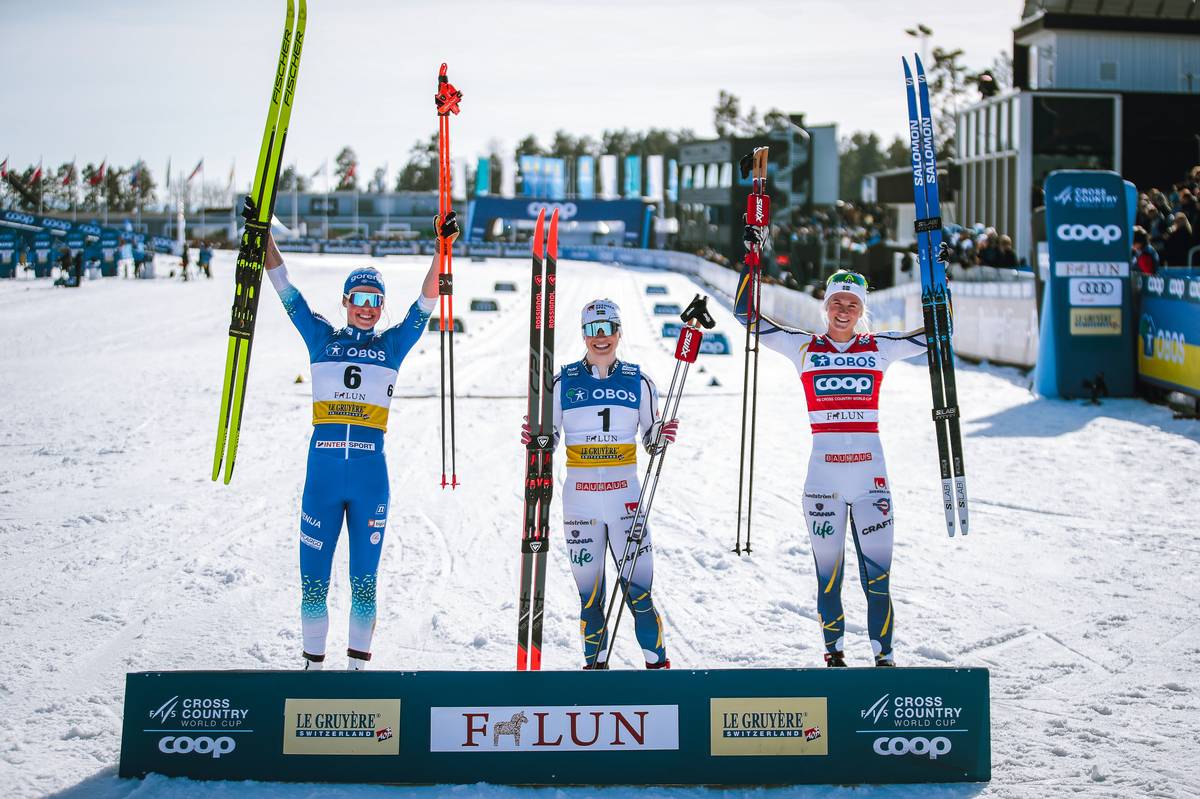
    Moving south after a couple of cold weekends in the North, the World Cup circuit returned to Davos, Switzerland for this weekend’s events. Under cloudy skies, snowfall, and wind, the ladies raced the familiar, two-lap sprint course, accompanied by the cheers of many fans. Temperatures were around 25°F and snow fell steadily throughout the afternoon of racing. 

    Women’s sprint podium: Nadine Faehndrich (SUI), Maja Dahlqvist (SWE), Anamarija Lampic (SLO), (l-r). (Photo: NordicFocus)

    In the morning’s qualifier, Eva Urevc of Slovenia took top honors with a time of 2:43.23. Eventual winner, Maja Dahlqvist of Sweden qualified 6th. Rosie Brennan led the U.S. Women, qualifying in 5th, +3.55 back from Urevc (SLO). Jessie Diggins and Hailey Swirbul also made the rounds with 24th and 25th places respectively in the qualifier.  “With about 15 seconds to start, the song “Footloose” started playing in the stadium,” shared Swirbul in an email after the race, “I got into swing dancing and line dancing this summer and that song just made me so happy!! So that is how I started my qualifier!”

    Brennan earned her first-ever World Cup victory in last year’s Davos skate sprint and was looking to repeat the performance. Choosing the third quarter-final heat, Brennan cruised along at the back of the pack for the first lap before working her way wide, moving to the front along the straightaway entering the second lap, and holding her position at the front to advance to the semi-finals. 

    Jessie Diggins (USA) leads Maja Dahlqvist (SWE) and Lotta Udnes Weng (NOR) in the first lap of quarter-final number two. (Photo: NordicFocus)

    Diggins chose the second quarter-final heat and controlled the pace up front for the first of the two laps. Heading up the long straightaway into the second loop she was overtaken by Dahlqvist (SWE), Yulia Stupak (RUS) and Lotta Udnes Weng (NOR). Despite a hard effort down the finishing straight Diggins finished fourth and did not advance to the semis. 

    Hailey Swirbul (USA) racing the rounds (Photo: NordicFocus).

    Swirbul, who earned her first World Cup points in this event in 2019, raced her first sprint heat of the season, going in the fourth quarter-final.

    “There has been no lack of reminders from both myself and others that Davos has historically been an exciting place for me results-wise,” wrote Swirbul, when asked how she managed expectations heading into the weekend. “I am far from figuring out how to manage expectations and pressure from myself and/or others, but I imagine it’s a continual journey for many of us athletes. I have been doing my best to make small goals that I can strive for personally to help keep the overarching results goals in check.”

    Regarding her first World Cup points in Davos two years ago Swirbul wrote, “I always find it interesting that racing ‘well’ is so relative. For example, when I scored my first World Cup point, I felt SO proud and happy. But once I’ve achieved a result, suddenly anything worse than that is a bit disappointing. I think most athletes probably understand that feeling. I have spent this season trying to keep perspective and focus on those smaller goals for each race.”

    Swirbul finished 5th in the heat to end the day in 24th place.

    “I was really exited to have a shot at the heats today,” she said, “and I learn so much every time I get to try them. I walked away with some things I’d like to try to improve for sure! One of these days it will come together, but I’m willing to be patient.”

    Swirbul also announced yesterday on social media that she was graduating from the University of Alaska Anchorage with a Bachelor of Science in Civil Engineering. When asked about balancing finishing school with the start of the race season Swirbul responded, “What’s really cool about our team is that many of the athletes are actually in school or working remotely on the road right now. I am really impressed with everyone’s ability to balance skiing and school! If I’m being honest, I was not the best at balancing school at the beginning of this season because I had a few big projects and exams due last week, so I’m relieved to be able to dedicate more time and energy on others things now, like racing hopefully!”

    Rosie Brennan (USA) leading the charge in her semi-final heat. (Photo: NordicFocus)

    Moving on to the semi-finals, Brennan was in the first heat. After a relaxed first lap, she employed the same tactic from her quarter-final. She moved from sixth to first position through the lap with a big push through a wide space up the left-hand side of the trail. Dahlqvist (SWE) and Nadine Faehndrich of Switzerland also qualified for the final from this heat, while Emma Ribom (SWE), Anamarija Lampic (SLO) and Tiril Udnes Weng (NOR) qualified from the second semi-final to make the final six. 

    Maja Dahlqvist (SWE) powers towards the line, shadowed by Nadine Faehndrich (SUI). (Photo: NordicFocus)

    For the first 0.75 k lap of the final, the pace was controlled, with Dahlqvist (SWE) and Lampic (SLO) skiing up front. Entering the second lap, Brennan (USA) executed her trusted tactic, moving from last to first for the third time of the day. Out front, Brennan jump skated the final climb, looking like she would pull away.

    As she crested the hill with momentum, she was in a wide stance and caught a tip in the snow. Brennan fell forward to her knees, losing all momentul, as Dahlqvist (SWE), Lampic (SLO) and Faehdrich (SUI) moved around her on either side.

    Faehdrich had the lead heading towards the finish, to the delight of the many Swiss fans lining the course. But Dahlqvist turned on the burners through the finish lanes, overtaking Faehdrich for her third straight victory. 

    Nadine Faehndrich (SUI) celebrates her second place finish on home soil. (Photo: NordicFocus)

    Achieving this milestone, Dahlqvist becomes the third woman to win the opening three sprint events of the World Cup season, after Marit Bjørgen (NOR) in 2004/5 and Petra Majdic (SLO) in 2008/9.

    Maja Dahlqvist (SWE), surprised and happy after her third straight sprint victory (Photo: NordicFocus)

    “It’s so crazy to have three in a row,” said Dahlqvist to FIS after the race. “It was so tough today, this course is harder than you think and with the altitude, [it] makes me want to puke after every race. I’m surprised [by the win].”

    Thus far, the Swedish women have won the last seven World Cup sprint events, three by Linn Svahn and now four by Dahlqvist, Sweden’s longest World Cup winning streak in women’s sprint events. 

    Anamarija Lampic (SLO) congratulates Nadine Faehndrich (SUI), after finishing in 3rd. (Photo: NordicFocus)

    Lampic (SLO) finished in 3rd and Brennan, making a quick recovery from her fall, finished 4th. “What an absolute bitter sweet day,” wrote Brennan after her race. “I am so crushed to have found myself face first in the snow on the last lap after making my move. It was a little tricky snow with some fast patches and some slow patches and I think I just got ahead of myself. It was no fault but my own and is definitely hard to swallow.”

    Brennan added, “I felt great all day and felt strong about my tactics and strength, but it’s sprint racing and anything can happen. Sometimes you’re the windshield and sometimes you’re the bug and today I was the bug. The good news that my fitness is there and my shape is holding up through this very busy period one so I’m doing my best to put that mistake behind me and move forward to tomorrow.”

    Rosie Brennan (USA), finishing fourth after a fall in the final. (Photo: NordicFocus)

    Outside the heats, Julia Kern finished in 41st, +11.62 back from Urevc (SLO), Hannah Halvorsen 52nd +15.32, Sydney Palmer-Leger 53rd +15.75 and Katharine Ogden 64th +19.00. Dahria Beatty and Maya Macisaac-Jones were the only Canadian competitors in the event, and finished 51st, +14.44, and 78th, +27.95, respectively. 

    Here are some post-race comments from U.S. Ski Team Head Coach Matt Whitcomb.

    Sydney Palmer-Leger (USA) racing to 53rd position in the qualifier. (Photo: NordicFocus)

    Results:

    Qualification | Final

  • Norwegian Men Rejoin the Field for Podium Sweep in 15 k Skate

    Norwegian Men Rejoin the Field for Podium Sweep in 15 k Skate

    This World Cup coverage is made possible through the generous support of Marty and Kathy Hall and the A Hall Mark of Excellence Award.  To learn more about A Hall Mark of Excellence Award or to learn how you can support FasterSkier’s coverage please contact info@fasterskier.com.

    After a warm and rainy fall, temperatures dropped just in time for the athletes arrival in Lillehammer, Norway this weekend. The original program for Saturday’s competition was a 30 k skiathlon but low snow conditions forced a last minute change and the race became a 15 k individual start skate. Between last season’s cancelled races due to COVID and this season’s snow shortage, the athletes will have to wait another year to return to the iconic course out of the Birkebeineren Ski Stadium. Instead, the race was held in the former Biathlon stadium where saved snow farming was already in store, creating a 3.6 k loop to be completed four times for the men. In spite of this, the scene at the start line was one of winter as the athletes lined up, jumping out of the start gate to light snow and 18 degrees Fahrenheit. 

    Arnaud Chautemps (FRA) and Hugo Lapalus (FRA), (l-r) after a snowy 15 k skate (Photo: NordicFocus)

    While individual start races can often be about one or two skiers dominating splits from the start, today’s race was initially difficult to discern. For one, with fewer cameras on the course than this spoiled reporter has become accustomed to, the race was harder to follow visually. For another, after a concentration of Norwegian starters in the bib range of 31-42, many of the Russian men did not start for another ten minutes or more, with seeded red-bib wearing Alexander Bolshunov (RUS) starting a full fifteen minutes after the unseeded, and eventual winner, Simen Hegstad Krüger of Norway. As such, a rephrasing of the popular saying “don’t count your chickens until they’ve hatched,” to “don’t count on your position until you’ve crossed the finish line” aptly applies. 

    Simen Hegstad Krüger (NOR) looking strong on his path to victory (Photo: NordicFocus)
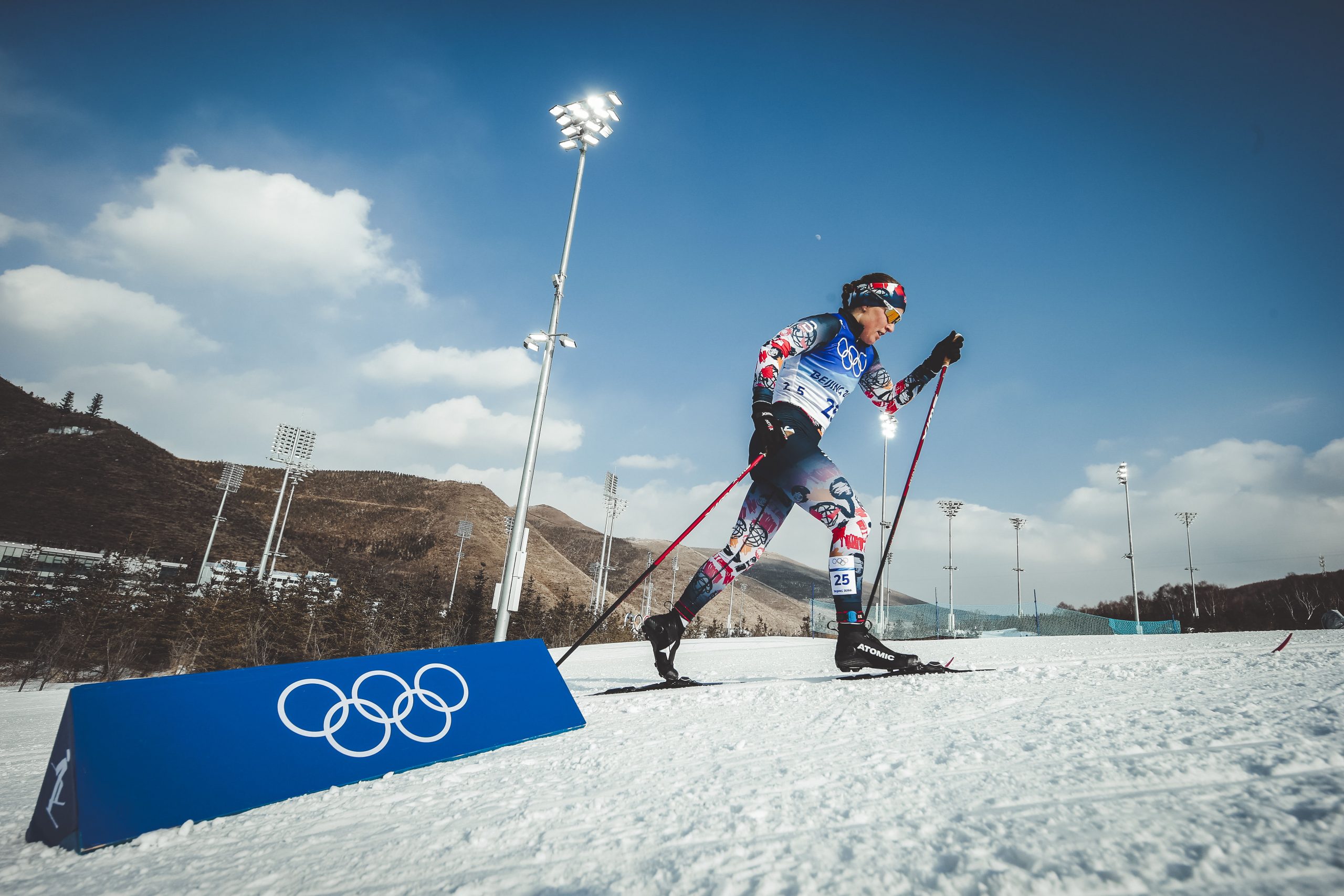
    After the Norwegian men’s absence in the 15 k skate pursuit last weekend in Ruka, they appeared to be re-asserting their depth and strength in their home country, and it was clear through the early splits. But as more Russian’s headed out on the course it seemed that perhaps we would see a repeat podium sweep. At 3.7 k Sergey Ustiugov (RUS) had the fastest time, followed closely by Bolshunov (RUS) with another three of their compatriots in the top 10, while Hans Christer Holund and Johannes Høsflot Klæbo were the sole Norwegians in 5th and 10th respectively. At 6.1 k it was the Czech skier, Michal Novak, who held the lead while Krüger (NOR) had worked his way up, though the Russians still held places four through six, and nine.

    Sergey Ustiugov (RUS) started hot, ultimately finishing outside the top twenty. (Photo: NordicFocus)
    Alexey Chervotkin (RUS) ends up the lone Russian in the top ten, finishing in fourth position. (Photo: NordicFocus)

    However, as the race wore on the Russian’s began to fade quickly while the Norwegian wave rode to the front once more.

    Skiing steadily Krüger (NOR) ticked off the kilometers, followed closely by his teammate Holund. At the 4.6 k mark, Krüger was in fourth, at 7.4 k he had the second fastest split, and by 9.8 k he had taken the lead. When early race leader, Ustiugov (RUS) crossed the finish line +1:08.7 behind the Norwegian for an eventual 24th place finish we saw Krüger flash a little grin to the camera from his place in the leaders chair. The only remaining question was Bolshunov (RUS) who started in bib 70.

    Alexander Bolshunov (RUS) heads towards the finish (Photo: NordicFocus)

    Through 6.1 k Bolshunov was in sixth position, at 7.4 k he was in first though he dropped to fifth at 8.3 k. When he passed 9.8 k in 6th it seemed clear that Krüger would take gold and sure enough, Bolshunov was unable to gain anything over the last 5 k, finishing in 14th, +44.3 seconds back from Krüger.

    “It was such a tough race with Holund [starting] thirty seconds ahead of me,” Krüger told FIS after the race. “We had to give everything we had, I know he’s in good form and I gave everything to be in front of him. It was a good battle.”

    Simen Hegstad Krüger (NOR) slides over the line, clinching his spot in the leader’s chairl. (Photo: NordicFocus)
    Hans Christer Holund (NOR) finishing strong for second place, behind him Sjur Røthe (NOR) finishes 9th. (Photo: NordicFocus)

    Hans Christer Holund held steady for a second place finish, just 1.6 seconds behind his fellow countryman. The dark horse of the day was Martin Løwstrøm Nyenget of Norway, who moved from 10th place at 9.8 k to finish third, his first outright World Cup podium. (Nyenget was third in the Classic Pursuit stage of the 2020 FIS Ski Tour in Östersund and had the fastest time of the day).

    Martin Loewstroem Nyenget (NOR) celebrates his third place podium finish (Photo: NordicFocus)

    Thus it was another podium sweep for the men’s 15 k skate, this time the red, white and blue colors belonging to Norway. Indeed, if there were any doubts about their power as a nation, a quick look at the results would clear things up. With seven of the top ten places and ten of the top twenty, their presence is hard to miss. As Krüger said, “it was a good day for the Norwegian team.”

    Norwegian men sweep the podium: Hans Christer Holund (NOR), Simen Hegstad Krüger (NOR), Martin Løwstrøm Nyenget (NOR), (l-r). (Photo: NordicFocus)

    Leading the North American contingent, Gus Schumacher finished the day in 38th position, +1:39.6 behind Krüger but only about 18 seconds behind the 30th place skier. In a field with more Norwegian starters than a weekend hosted by a different country, this result is significant despite not being inside the FIS points. 

    Gus Schumacher (USA) skiing to 38th place (Photo: NordicFocus)

    Behind him was Antoine Cyr of Canada in 42nd who finished 11th in the classic 15 k in Ruka last weekend. In an interview with FIS before the race, Cyr said, “Ruka is always a hard weekend for us because we come from North America, it’s a long way from home. But, it’s a good course and yeah, I was so happy with the result.” When asked about the different courses for this weekend’s races in Lillehammer Cyr answered, “This weekend is going to be hard, skating is not my strong suit, I prefer classic but, it’s the World Cup, like any other World Cup we’re going to give one-hundred percent”. 

    Antoine Cyr leads the Canadian men for the day (Photo: NordicFocus)

    Following Cyr, the Canadian men finished 56th for Olivier Leveille (+2:28.3), 57th for Russell Kennedy (+2:28.6) and 69th for Graham Ritchie (+3:44.2).

    Zanden McMullen was the second US finisher in 48th place (+2:03.9). He was followed by Hunter Wonders in 63rd (+2:52.3),  David Norris in 64th (+2:54.3), Ben Ogden in 67th (+3:32.2) and Scott Patterson in 70th (+3:35.8). 

    Today marked Patterson’s return to the World Cup following a recent surgery on his right wrist. While cleared by his doctors to race, Patterson still remains compromised and does not yet feel he is on form for World Cup racing. Here is some additional insight he provided via email.

    “My wrist is improving, but is definitely still limiting my racing,” Patterson wrote. “I’m just over 5 weeks out of surgery.  In order to protect the repair, I have been skiing in a brace and raced in that today. While this removes a lot of the stress from my wrist itself, it does modify my technique and make certain elements of skiing considerably more difficult. Today in racing, I felt that with the brace my wrist itself was ok, but the balance of my energy expenditure was thrown off. In racing, I was unable to really utilize my upper body. On a steady grindy course like today, that meant that I was working my legs way harder than necessary for the speed I was skiing. This resulted in the feeling of never aerobically taxing myself while still just skiing tired. I also feel that my recent training has been a lot of threshold and I’m not quite ready for race efforts.

    “I knew coming into today that I was a bit underprepared for racing.  In prioritizing my wrist recovery, I have not done any time trials and was even limited in intervals recently by a cold I caught in the weeks before travel.  Overall, I feel that my fitness is pretty good, but I need a little time to find race form and figure out how to manage my wrist recovery while minimizing limitations.  I am working towards skiing and racing without a brace, but even once I remove the brace it will take some time to regain trust in the strength of my wrist. The bit of skiing I have done without it feels very naked and unprotected.  I also need some time to build back into skiing transitions well and pushing V2 into the hills which were both laid wayside with all my one pole skiing.”
    Scott Patterson races his first World Cup of the season, five weeks post-op from a surgery on his right wrist. A brace can be seen adding bulk under this glove. (Photo: NordicFocus)
    Keeping focus on the long game, Patterson concluded with his approach to Period 1 as he eases his way back into racing.
    “For now I am putting all my energy into wrist recovery and taking the races one by one. Today was not the way I wanted to start, but there are a lot of factors around my wrist holding me back and I’m still feeling on track for goals later in the season.”

    Racing continues tomorrow a 4 x 7.5 k relay to finish out the long weekend in Lillehammer.


    Final Results

    Ben Ogden ticks off laps on his way to 67th in the 15 k skate (Photo: NordicFocus)


  • Johaug Bests Karlsson in Ruka 10k Skate Pursuit: Brennan Closes in 5th, Diggins 11th (Updated)

    Johaug Bests Karlsson in Ruka 10k Skate Pursuit: Brennan Closes in 5th, Diggins 11th (Updated)

    Before the scheduled start of the women’s 10k skate pursuit, temperatures in the stadium measured below the legal threshold of -20C. (Photo: NordicFocus)

    This World Cup coverage is made possible through the generous support of Marty and Kathy Hall and the A Hall Mark of Excellence Award. To learn more about A Hall Mark of Excellence Award or to learn how you can support FasterSkier’s coverage please contact info@fasterskier.com.

    Four hours later than planned, the ladies lined up for the final race of the weekend and the highly anticipated battle between Therese Johaug of Norway and Frida Karlsson of Sweden. Due to the frigid temperatures in Ruka, officials first delayed the race by an hour and then by another three in hopes that the thermometer would read above -20°C (about -4°F), the cutoff temperature for racing. Hats, buffs, and face-tape were a must given the reading of -18.5°C, around 0°F, when the race began. 

    With temperatures hovering around the legal cutoff, Nadine Fähndrich (SUI) models the layering needed to warm up for the 10k skate pursuit. (Photo: NordicFocus)

    The Norwegian men chose not to race in the frigid conditions, raising the question of whether Johaug and the other Norwegian women would take part in the competition. But Johaug had a point to prove and questions to be answered, so the battle was set. 

    With today’s pursuit format, Karlsson (SWE) had a 14-second lead on Johaug out of the start after her victory on Saturday and she capitalized on this advantage with a strong start. Katharina Hennig of Germany started just a second behind Johaug and the order continued in reverse of Saturday’s finishes. Rosie Brennan was the first American off the start line in 6th position, +38.6 seconds back from Karlsson. 

    Frida Karlsson holds onto her lead midway through the 10k freestyle pursuit in Ruka. (Photo: NordicFocus)
    Therese Johaug (NOR) pulls Katharina Hennig (GER) as she pursues the leader in Day 3 of the Ruka mini-tour. (Photo: NordicFocus)

    After the delays, the local start time was 2:45pm, a solid 45 minutes after sunset in the far north. As such, it was under the glow of the course lights that Karlsson passed the first time-check at 1.1k, her lead 15.5 seconds over Johaug. Henning (GER) was quickly swallowed by the chase pack that formed, spearheaded by Ebba Andersson of Sweden. 

    The first time through the stadium, with the first lap complete, Johaug had only gained 0.5 seconds on Karlsson, the gap essentially the same. The next time the two skiers mounted the sprint hill climb into the stadium Johaug had chipped away at that lead, narrowing it to +9.7 seconds. As they headed into the stadium for the penultimate time, the gap was reduced to just a ski length and at the 5k mark, Karlsson was caught. 

    Tongue out, Karlsson fights to keep her lead over Johaug (bib 2) who is within range. (Photo: NordicFocus)
    Therese Johaug reels in Frida Karlsson during the 10k freestyle pursuit in Ruka. (Photo: NordicFocus)

    Forty seconds back, the chase pack had grown, and was moving along steadily. Although Yulia Stupak of Russia, who started in 9th position, +54.7 back withdrew from the race. 

    After gaining a bit of rest drafting behind Karlsson, Johaug turned on the burners and made a clean break, gapping the Swede up the climb into the stadium. From there Karlsson hung tough but the race for first and second place had been settled. At 7.5 k, Karlsson was 4.7 seconds down, at 8.6 k she was 7.3 behind and when Johaug crossed the finish line first in a time of 25:56, Karlsson finished +7.8 seconds behind. 

    “I had really good skis,” said Johaug in a FIS interview after the race. “Yesterday I wasn’t sure how the shape was but today I got the answer.” 

    Heidi Weng skis onto the podium from 10th in the 10k freestyle pursuit in Ruka. (Photo: NordicFocus)

    With numbers one and two decided, it became a race for third as the pace of the chasing pack picked up. Brennan (USA) led at 8.6k, with Andersson (SWE), Heidi Weng (NOR), Krista Parmakoski (FIN) and Henning (GER) hot on her heels. Heading up the final hill that so often decides the race here in Ruka, Weng (NOR) created just enough space to snag bronze, finishing +37.9 seconds behind Johaug. Weng, who started 10th +55.7 seconds, also recorded the fastest time of the day, completing the four laps in a time of 25:37.9.

    When asked how it was to share the podium with her teammate Weng, Johaug said, “Yeah, it’s so nice for Heidi, I’m really happy.”

    The women’s podium on day 3 in Ruka. Johaug bridged the gap to Karlsson to win the 10k skate pursuit. Karlsson was second, followed by Heidi Weng in third. (Photo: NordicFocus)

    Behind Weng, Parmakoski (FIN) and Brennan (USA) lunged together in a photo finish, 4th place ultimately going to Parmakoski, with Brennan finishing as the top American in 5th. “I am very happy to remain in the mix and to know my body is there,” wrote Brennan after the race, “but [I] have some to gain on the mental side. It was a good first weekend for me and really gave me a good starting point.” In regard to the temperatures and delayed start, Brennan said, “We had to be flexible as the race kept getting delayed and finally rescheduled for the afternoon. It’s always hard to warm-up, have to stop, go back home and then start over again and in the dark….I am happy I managed to deal with the punches and make the best of it. I felt really good or as good as one can racing in so many layers, but struggled with my tactics and confidence today.” 

    Down to the final meters, Heidi Weng skis to third with Rosie Brennan on her tails. (Photo: NordicFocus)
    Rosie Brennan pushes across the line on the tails of Heidi Weng in a photo finish for 5th place. (Photo: Nordic Focus)

    She added that she is working with a new wax technician this season which adds a little chaos to the mix but she added, “but I am feeling good about our start! I know we will be dealing with some subpar snow conditions so that will be the next hurdle to tackle next week! I know where I am now and where I need to go to meet my goals later in the season.”

    After Brennan, Jessie Diggins was the next American across the line, finishing 11th, +1:25.7 behind Johaug. Diggins started the day in 18th position and recorded the 9th fastest time of the day. 

    Post-race interview with Jessie Diggins.

    Jessie Diggins advances from 18th to 11th in the 10k freestyle pursuit in Ruka. (Photo: NordicFocus)

    Katherine Stewart-Jones was the first Canadian woman in 21st (+2:44.8). Behind her came a slew of stars and stripes with Hailey Swirbul earning her first World Cup points of the season in 26th (+3:57.4), Katharine Ogden in 30th (+4:18.9), Julia Kern in 31st (+4:23.6), Sophia Laukli 32nd (+4:32.0), Caitlin Patterson 35th (+4:48.7) and Novie McCabe finishing her first weekend of World Cup racing in 37th place (+4:50.6). 

    Also representing Nordiq Canada, Cendrine Browne also landed inside the points with a 28th place finish (+4:00.1).

    “I had a tough starting position so I’m really happy with today’s race,” Browne said in a Nordiq Canada media release. “I had good feelings today and was able to pull myself up into the top-30. My skis were super-fast thanks to the wax techs. This gives me a lot of confidence for the next World Cup.”

    Novie McCabe on course during the 10k skate pursuit in Ruka. (Photo: NordicFocus)

    Frida Karlsson now wears the yellow leader’s bib as the racers depart Ruka. The World Cup heads to Lillehammer Norway next weekend with another three-day lineup including a skate sprint, 10/15 kilometer freestyle and relay.

    Women’s Final Results