Author: Emily Schwing

  • Green Claims Canada’s Final Olympic Biathlon Spot: ‘I Can Take a Deep Breath and Finally Relax’

    Green Claims Canada’s Final Olympic Biathlon Spot: ‘I Can Take a Deep Breath and Finally Relax’

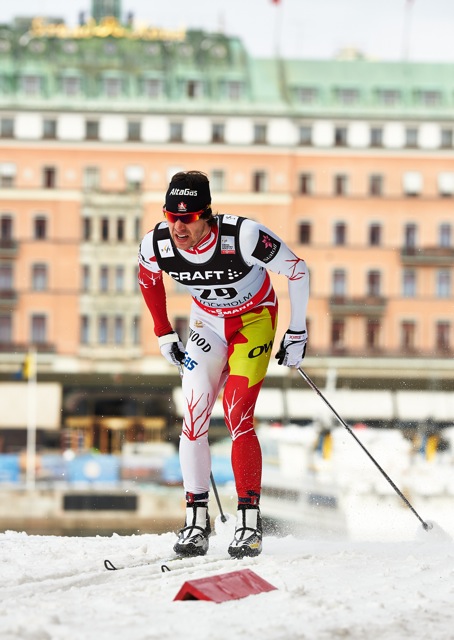
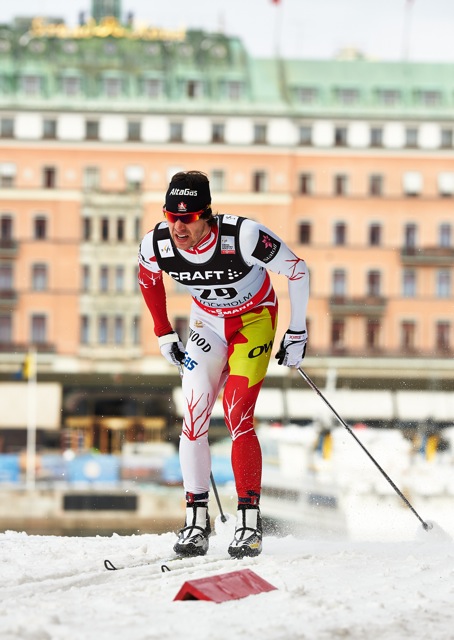
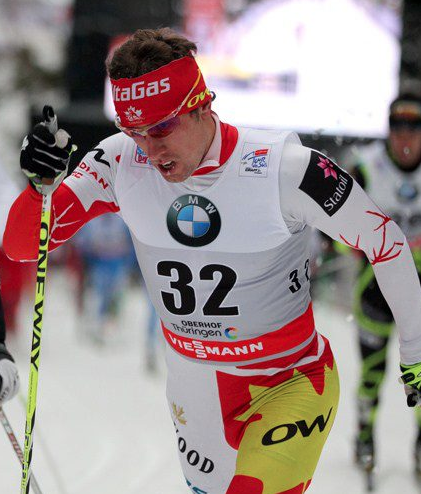
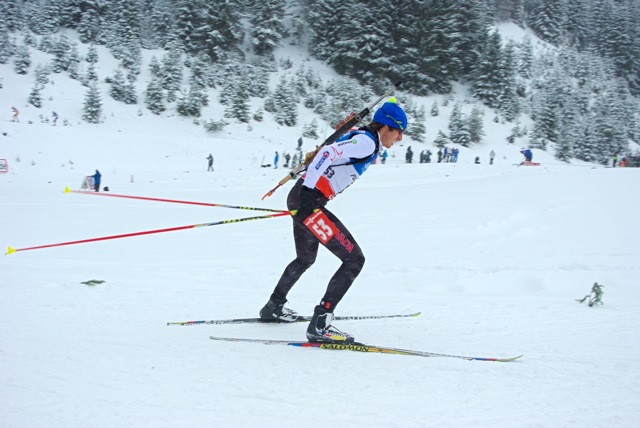
    Canada's Brendan Green racing to 31st in the 10 k sprint at the IBU World Cup in Hochfilzen, Austria, earlier this month.
    Canada’s Brendan Green racing to 31st in the 10 k sprint at the IBU World Cup in Hochfilzen, Austria, earlier this month.

    Last week, Brendan Green claimed the last spot on Canada’s Olympic Biathlon Team last week during during the IBU Cup races in Canmore, Alberta.  The 27-year-old Northwest Territories native missed all of last season due to a back injury.  He’s also the first biathlete from NWT more than 40 years to compete in the Olympic Games. Fasterksier caught up with him to find out how he’s feeling heading ingot he next part of a season that eventually take him to Sochi, Russia.

    FS: What was your reaction when you found you had qualified for the Olympic team on the final day of national trials?

    BG: It’s definitely been a really, really stressful last few weeks and to qualify finally is a huge relief.  It definitely feels like a big weight has been lifted off my shoulders for sure.

    FS: It seems like a lot of athletes who are working to qualify say they’re relieved when it finally happens.  Why do you feel relieved?

    BG: I think the pressure and expectation that comes around it.  I guess for me things really started to kind of ramp up a couple months ago once we got snow and when we were closer to the season starting and once you start racing, everyone is racing for that qualification.  Olympic years always have a bit of a different energy.  It’s pretty high stress, pretty high pressure.  For sure there was [also] excitement, but I can take a deep breath after and finally relax.

    FS: There’s some historic significance to your qualification.  Is it true you’re the first athlete from the Northwest Territories to qualify since the Firth Twins did so in the 1970’s?

    BG: I raced in the Vancouver [Olympics] in 2010, so at that point I was the first northern athlete to qualify in 26 years. The last time the north has had two NWT athletes represented was in the 70’s. The Firth sisters were the last Olympians.

    FS: What’s it like to claim that last spot on Canada’s Olympic team?  Is it hard to compete with your teammates for one final spot?

    BG: it’s definitely a strong group of guys that we have this year on the team and we were all hungry to chase after that last spot.  For myself, it was a bit of a different story.  I missed all of last year due to a back injury and I spent the entire season recovering from a couple spinal surgeries and I was in rehab. I missed out on a whole year of eligible qualification but the year prior to that, I had met the maximum amount of criteria that I could, so to come in to this season, I was two thirds qualified and to seal the deal internationally and have a top finish on the World Cup… it was a little tough because I lost my World Cup eligibility, so I had to start at the bottom on the IBU Cup and then race my way across.  I had some good results there and then after the podium on the IBU Cup, I got one chance on the world Cup to start and I kind of got one chance to meet my international criteria and I finished the race in 31st, one tenth of a second off.  That’s kind of tough to miss out on it by that small of a margin and then the pressure increased because I knew I would have to come home and prepare for trials.  So, yeah.  It was pretty intense the last few weeks. [There were] some highs and lows and that sort of a thing, so to finally seal the deal is a pretty sweet feeling.

    FS: After missing the last season and dealing with your back injury, did you come into this season with a goal to qualify for the Olympics?

    BG: There were a lot of question marks about how things were going.  It was a goal definitely to qualify for the Olympics, but at the same time, not knowing how my back would hold up or anything…  Just prior to my injury, I was having the best season and the best results of my career, so I knew the potential was there but it was just a matter of having to psych myself up and and get an idea of how good of shape I was in. I got glimpses of what kind of shape I was in and I was kind of on my way back and able to compete at the elite level, so I guess it’s fair to say the Olympics was the goal all along.

    FS: Physically, are you feeling like you are where you want to be now that you know you will be competing in Sochi in February?

    BG:  I hope so.  The training this year has gone fairly well.  It was modified a little bit because there’s a few activities I can’t really do, but for the most part, I have done the training I need to do.  We’ve done the VO2 Max tests and the kind of things we do every year and based off those test, I’m performing similar to how I was, maybe even a little bit stronger.  So, I guess I can take confidence away from that.  Early season is always hard to tell.  Historically, I usually have a little bit of a slow start and ramp up as the season goes, so if that’s the case now, it would work out perfectly in Sochi, but it’s a little hard to tell at the moment.  We’ll see how things go over the next few weeks and we’ll have a better idea then.

    FS: How are you feeling about the rest of the season?  Do you have specific expectations for the games in Sochi?

    BG: At the moment, I finally feel like I can relax for a little bit and enjoy the holidays.  Definitely now the focus is on a strong performance in Sochi.  I guess in terms of performance expectations, prior to my injury my top results were a couple of top tens on the World Cups.  I guess if I could match that, I’d be super happy for sure.  It’s hard to say how I will shape up and improve for Sochi, but I’m definitely going in with an expectation of a stellar result and if I could perform to a similar potential that I was racing prior to my injury, that would be a pretty big success for me.

    FS: Last year the World Cup took athletes to Sochi to compete on that course.  Do you feel like that is a disadvantage for you?

    BG: I actually was able to make the trip over there last year and preview the course during the World Cup, I was able to train there for 10 days or so and I helped out with the waxing side of things.  I got an idea of what things are like.  It’s definitely a challenging course, no doubt, but it’s not entirely new.  I know what to expect and over the summer and the fall we’ve been trying to gear the training a little more toward that type of course and we were able to to do course simulation on the treadmill.  I think I have an idea of what I’m in for and it’s definitely challenging for sure, but I think I’ll be as ready for it as I will be.

    FS: You’re dating Rosanna Crawford, who will also be competing in Sochi. The two of you have crowd-sourced your fundraising efforts together to get to Sochi and you might even race on the mixed relay together.  What was her reaction when you finally qualified?

    BG: Yeah, so the fundraising passed just as the season started and that was super successful for us, which was pretty neat. Just the way word spread that was cool.  I think it’s been a stressful week for her watching me race and cheering me on.  It was great to have her support.  She has a pretty outgoing personality, so yeah it was funny, I’d turn a corner or go down a hill and she’d be on the climb.  She was definitely nervous for sure, but I think we’re both relieved and super happy to be able to share the experience together… definitely excited about it for sure.
  • World Cup Regulars, Cook and Nordgren Qualify for Their First Olympics in Sochi

    World Cup Regulars, Cook and Nordgren Qualify for Their First Olympics in Sochi

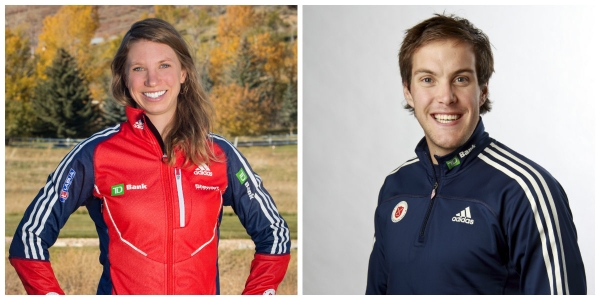
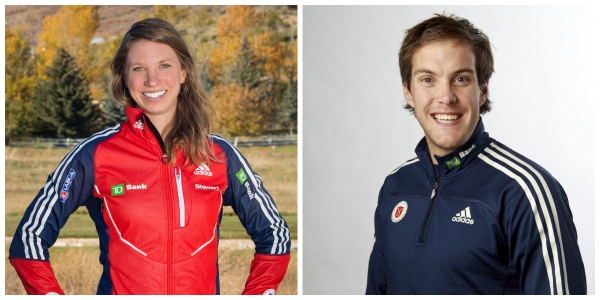
    Annelies Cook and Leif Nordgren qualified for the Olympic team for the First time during the last round of World Cup biathlon in France. (US Biathlon)
    Annelies Cook and Leif Nordgren qualified for the Olympic team for the first time during the last round of World Cup biathlon in France. (US Biathlon)

    Even though the first period of World Cup racing didn’t go quite as they were hoping, two US athletes qualified for the Olympic biathlon team last week: Annelies Cook and Leif Nordgren, both veterans of multiple World Championships trips.

    “I am very excited to see Annelies and Leif qualify for the team,” said Max Cobb, US Biathlon CEO, in a press release.

    It’s the first time either American athlete has qualified for the Olympics, a fact that was also not left out of the press release. With three athletes – Tim Burke, Lowell Bailey, and Susan Dunklee – already pre-qualified based on top-15 results from last season, Cook and Nordgren snagged the next available spots by having the best results from this first period of racing. Cook placed 50th in the 15 k individual in Ostersund, Sweden, while Nordgren was 41st in the sprint at the same venue.

    None of their other teammates could match those finishes. The remaining two women’s and one men’s spot will be decided at IBU Cup raced in January.

    “Qualifying early will take a big burden off their shoulders and now they can focus on executing what they worked hard on during the training season,” said Bernd Eisenbichler, US Biathlon High Performance Director. “Both clearly belong and earned their spots on the team for Sochi.”

    Cook echoed the idea the sentiment that qualifying is a huge relief.

    “Four years ago, I didn’t make the Olympic team and I didn’t get to go to the IBU Cup and try out,” Cook said.  “I was so heartbroken. I sat down in the shower of a hotel room and just cried.”

    But this time around, the 29-year-old Saranac Lake, NY native finally has her chance to compete at the 2014 Winter Olympics in Sochi, Russia. She says she’s excited, but when she first found out, she was overwhelmed with a sense of relief.

    “When you’re waiting qualify for something, it’s stressful,” said Cook, who was hoping to qualify earlier by having either the two top-15s or a top 30 overall World Cup ranking; last year she came close, with finishes of 14th and 18th (twice). “So, at the beginning of the World Cup, when the goal is to be racing in the top 30, I was not at the point. Then you start to worry a little bit. You’re like ‘ok, so how long is this gonna take?’ and it sits in the back of your head.”

    “Once you qualify, it’s a little bit easier to just focus on the task at hand and just race rather than trying to achieve a numerical goal, so now that I’ve qualified, there’s a weight of my shoulders,” she explained. “I can relax a little bit more and focus on taking care of my body. I can fix what’s been going on.”

    Cook has had a rough start to the season, so the freedom to focus on fixes will improve her chances in Sochi.

    “The first couple World Cups, I was battling some tight shins and calves,” she explained. “You can try to treat the problem but the next day you go out and you race again and so it’s really hard to get on top of it.”

    In the last races before Christmas, teams were in France where Cook said she struggled physically.

    “The very last race, my back started to spasm and I was hobbling around like a grandma for two days,” she said with a laugh. “I raced with it and then it got even worse.”

    She said when she learned she had qualified, she wasn’t hit with the rush of excitement she had expected.

    “I found out I made the Olympic team after a really bad race and my back was really hurting me and I was kind of sad because I’ve been troubled by my body the past few World Cups,” she said.

    “It was a really funny experience, because instead of having this elation, I felt kind of sad, which was totally weird,” she admitted. “But then also your teammates, they still have the qualifying process to go through, so it’s harder to feel joyous, because you’re not sharing it with the people that you train with all the time.”

    Nordgren had a similar experience. The 24-year-old from Marine on St. Croix, Minnesota, knew he was close to qualifying.

    “Yeah, so I kind of had a good feeling I was gonna make it based on the way the selection criteria was worded,” he said. “I knew going into the last World Cup races in France that I had a pretty good chance, so I wasn’t completely surprised. I was actually a little bummed to be honest, not that I had made the team but I had kind of crappy races that weekend, so I wasn’t really thinking so much about actually making the team until the flight home and then I started thinking more about it I was pretty relieved and excited.”

    Nordgren said he’s still recovering from an upper respiratory cold he caught in Austria, where he sat out every race except the relay, where the U.S. men finished 11th but closer time-wise to the podium than that result implies (lacking his best speed due to the cold, Nordgren lost a group sprint finish for 8th place).

    “I would say I’m actually still not 100 percent, which is kind of a drag,” he said. “It usually takes me a good two or three weeks to fully get over a cold like I had.”

    He said he plans to spend the next two week or so recovering with family in Minnesota where he will celebrate the holidays, before heading back to Lake Placid for training.

    “I am training pretty much full speed like I would normally, so when you do that it’s gonna take the body a little bit longer to recover,” he said. “The big thing will be the travel back to Europe, because the first World Cup there, that always kind of takes a lot out of you and so [I need] to make sure I take that easy and don’t start up too soon after we get back to Europe. That’ll be a the big thing.”

    But Nordgren doesn’t think illness will affect his entire season.

    “I came into the season feeling really strong and just training with Tim [Burke] and Lowell [Bailey], I was closer to them in training then I had ever been before,” he said of his fellow teammates and veteran Olympians. “So, coming into the first trimester, I was really looking forward to trying to show how much I have improved. Obviously, now I’m look ahead and looking forward to the next trimester and the next part of the season to come.”

    Both Nordgren and Cook have competed on the course in Sochi’s before. Nordgren placed 40th in the sprint last year. Cook placed 18th in the individual and 14th in the sprint race on the World Cup last year. She said it’s a relief to know what to expect from the Olympics in February.

    “It’s a really, really, really hard course with huge long uphills and really scary downhills and altitude,”Cook explained. “A lot of people seem to freak out and I just think our team always does really well when the conditions are tough.”

    She said with four years of training and mental preparation she’s looking forward to Olympics at now that she’s a little older.

    “I’m kind of a later bloomer, this is all happening to me later on in life,” she said. “I think its really important to go and race and try to do your best and see what happens.”

    Neither say they’ve gotten nervous yet about the Olympic Games.

    “But there’s still a lot of time before then, so I’m sure it will come,” said Nordgren.

    As for their teammates, neither says they’ve sought any veteran advice year, but Cook also made mention of Tim Burke and Lowell Bailey.

    “I get to got to the Olympics with two people I grew up with,” she said; growing up in Saranac Lake, New York, she’s been plugged into the Lake Placid scene her whole life. “That’s really special. There’s a lot of people from my town and my high school that are going to be at the Olympics and its really special because we’re all going to be there together.”

  • Just Shy of Podium, Bryan Fletcher, Lodwick Combine for U.S. NoCo’s Best Team Sprint in Fourth

    Just Shy of Podium, Bryan Fletcher, Lodwick Combine for U.S. NoCo’s Best Team Sprint in Fourth

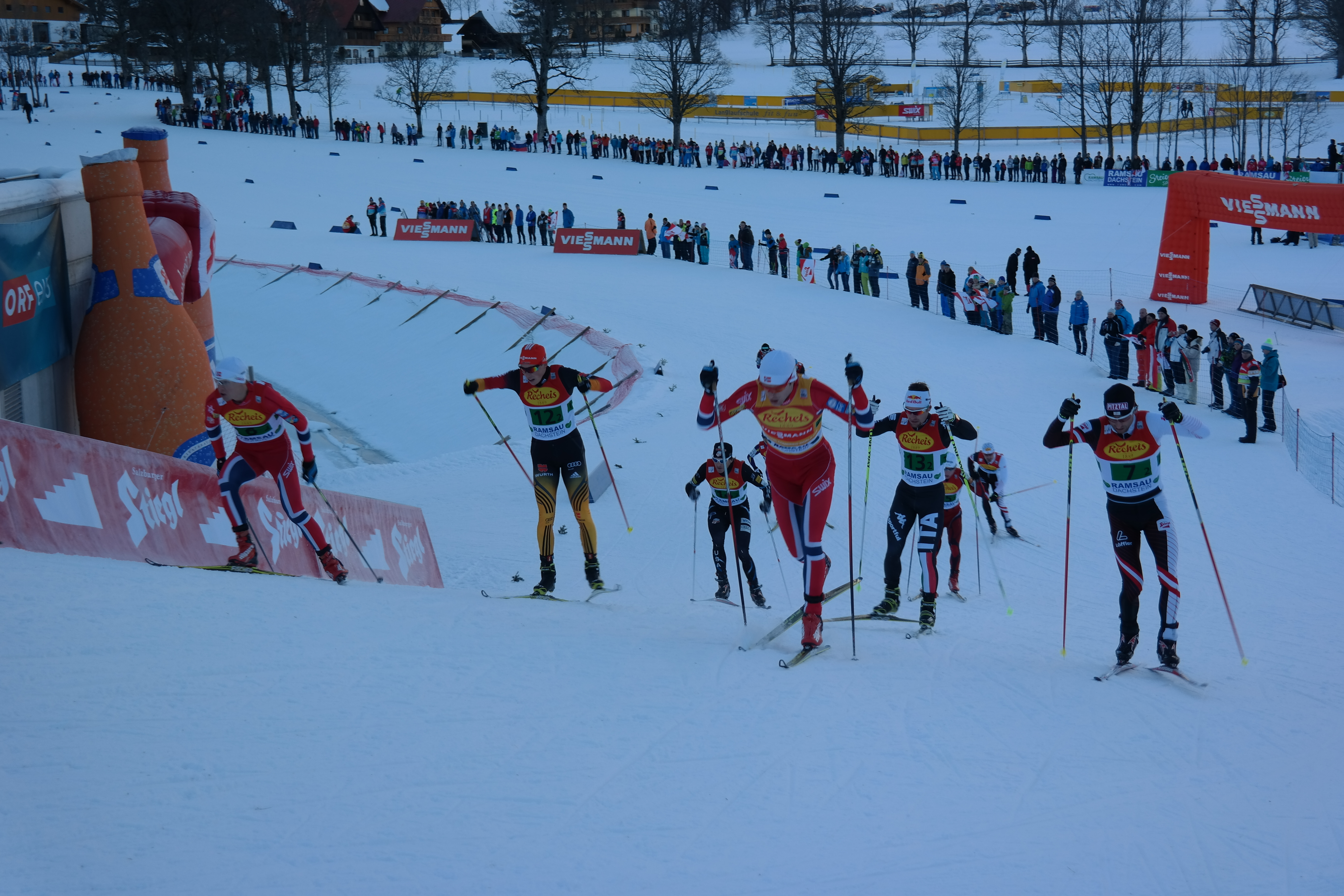
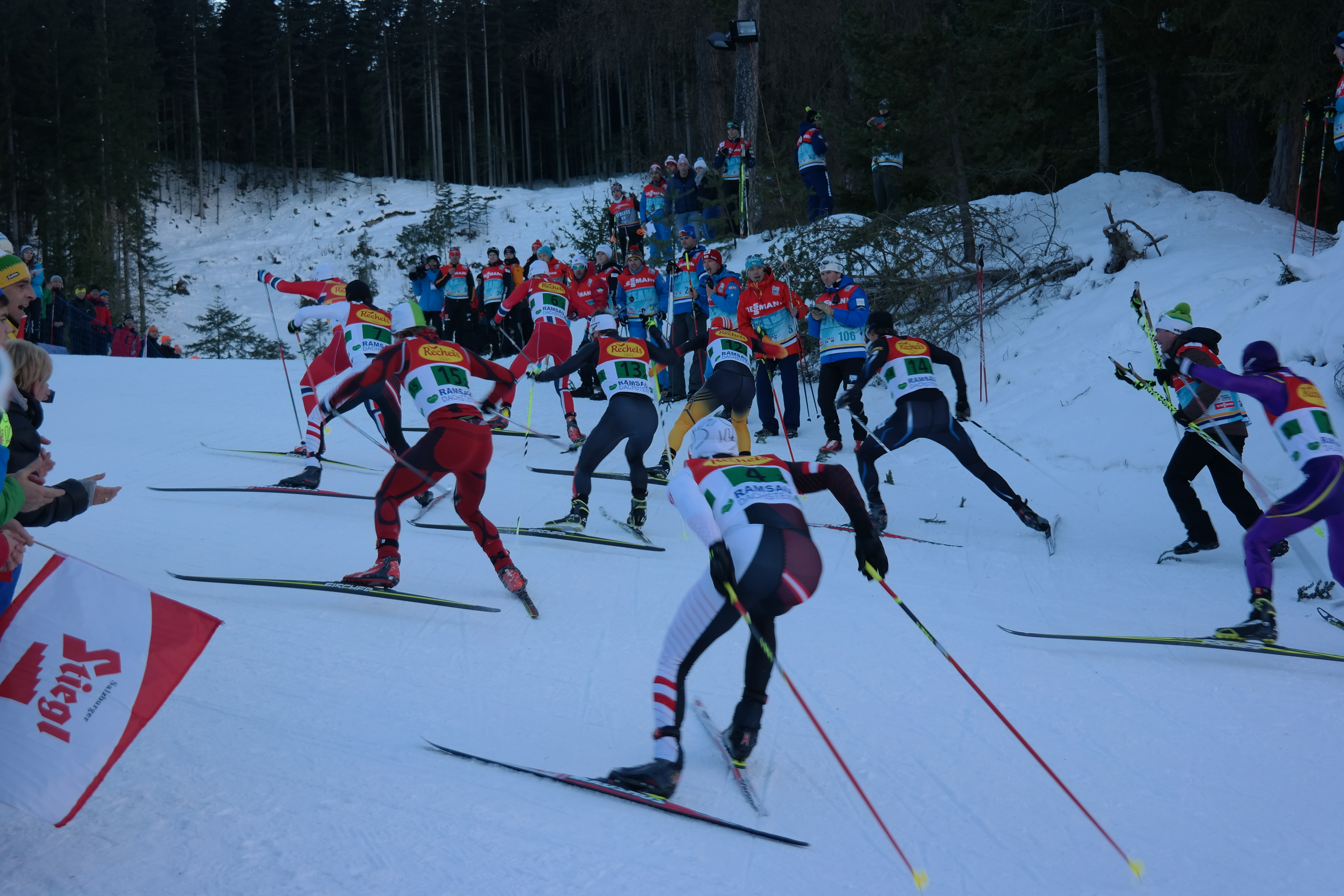
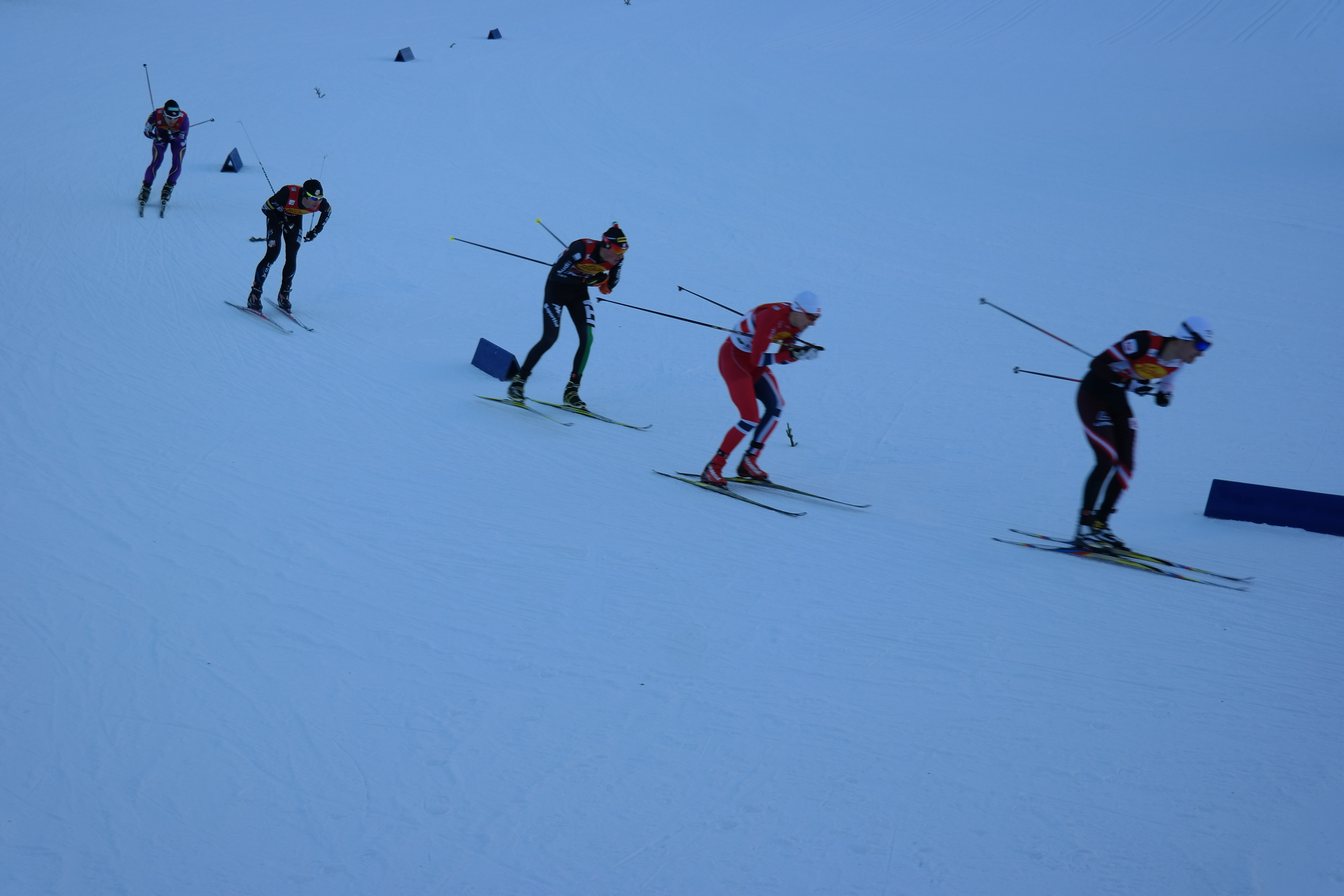
    Norwegians lead the pack in Saturday's Nordic Combined World Cup 2 x 7.5 k in Ramsau am Dachstein, Austria. Norway placed first and second, Italy was third, and the U.S. was just 1.2 seconds off the podium in fourth. (Credit: Tim Hug)
    Norwegians lead the pack in Saturday’s Nordic Combined World Cup 2 x 7.5 k in Ramsau am Dachstein, Austria. Norway placed first and second, Italy was third, and the U.S. was just 1.2 seconds off the podium in fourth. (Photo: Tim Hug)

    Americans Bryan Fletcher and Todd Lodwick narrowly missed the podium in the 2 x 7.5-kilometer sprint in Ramsau am Dachstein, Austria, finishing fourth for U.S. Nordic Combined’s best result in a team sprint.

    A little off in the jumping portion of Saturday’s competition, Fletcher and Lodwick ended up starting 14th of 20 teams, 44 seconds behind the Estonian leaders, Kristian Ilves and Karl-August Tiirmaa.

    While the Estonians clocked the second-slowest race time, getting passed by all but two teams to finish 18th, Fletcher and Lodwick rose to the challenge and notched the fastest-combined time to finish 10 seconds behind the winners, Norway’s Mikko Kokslein and Jørgen Graabak, who rose from 11th to first in 33:59.3. Norway’s Haavard Klemetsen and Magnus Krog took second (+8.2) after jumping to sixth, and Italy’s Samuel Costa and Alessandro Pittin captured third just 1.2 seconds ahead of the Americans.

    According to U.S. Head Coach Dave Jarrett, skiing fast was their plan all along.

    “It was a really tight jumping competition, so we knew after that result, they were in a position to fight for a podium,” he said in a phone interview. “That’s what we’ve been saying all along, that we need to just put ourselves in that position and then we should hopefully be able to take advantage of that.”

    Most teams wouldn’t consider starting 14th ideal, but it was time back that mattered to Fletcher and Lodwick. And fourth place was nothing to scoff about — it was the best U.S. finish in the relatively new event.

    “It’s definitely a solid day,” said Fletcher, who’s notched a World Cup top 10 five other times in the last three years. “We turned some tough jumping into a great cross-country race, so it was a positive performance all around.”

    “We’re really, really proud to put Norway in its place and to know that we are the fastest team out there, whether it’s by a second or ten seconds, it doesn’t matter. We are the fastest team and it shows on the results.” — Todd Lodwick

    According to Jarrett, there were 12 teams bunched together at one point, making the exchanges “pretty interesting.”

    “Some people had more luck than others in the exchange zone,” he said. “Todd and Bryan were smart and they did a good job tagging off and kind of pacing themselves and placing themselves among the lead group. When the last two laps came around, the Norwegians were in a good spot and they got a gap on the field.”

    While jumping hasn’t been a strong point for the Americans in the first World Cups of the season, Fletcher said Saturday was a confidence booster.

    It was a crowded and fast at the front of the pack in the men's Nordic Combined 2 x 7.5 k in Ramsau am Dachstein, Austria. credit Tim Hug
    It was a crowded and fast at the front of the pack in the Nordic Combined World Cup 2 x 7.5 k in Ramsau am Dachstein, Austria. (Photo: Tim Hug)

    “I haven’t had quite my best performances on the jump hill, but I’ve kind of nailed my problems and working to fix them and I thing that’s a positive take away from it,” he said. “Today I had a really good jump in the trial round and then the competition jump was close. It definitely wasn’t what I’m capable of, but it was in the hunt and that’s all we needed.”

    Lodwick added a solid jump to the mix, which Fletcher said brought them closer to the front of the pack. “Overall it wasn’t our best day on the jump hill, but we weren’t out either,” Fletcher said.

    “I didn’t jump horrible,” Lodwick said. “It’s just missing just a little bit and that’s going to come. The more we compete, the better off we get and we’re going to be in really, really top shape.”

    For the 37-year-old Lodwick, it wasn’t his best overall performance in nearly two decades on the World Cup, but he said it was up there with those he’s proud of. Last Sunday in Lillehammer, Norway, he placed 11th for his best result in nearly three years. In the same race, Fletcher placed 10th.

    “I know that we’re on the right track,” he said. “We’re on the verge of just making the season. It’s been a slow [start], but results like that give us a lot of confidence so we’re excited.”

    Last year, the U.S. broke through in a World Cup 4 x 5 k team event in Schonach, Germany, with their first third-place finish. Both Fletcher and Lodwick were on that team with Billy Demong and Taylor Fletcher, and those four went on to notch a historic bronze at 2013 World Championships in Val di Fiemme, Italy. Lodwick also has also helped the team to a few fourth-place results in previous relays.

    A tight-knit race at the Nordic Combined World Cup 2 x 7.5 k team sprint on Saturday in Ramsau, Austria. (Photo: Tim Hug)
    A tight-knit race at the Nordic Combined World Cup 2 x 7.5 k team sprint on Saturday in Ramsau, Austria. (Photo: Tim Hug)

    A World Cup competitor since 1995, Lodwick laughed and said, “I am the oldest guy on the circuit.”

    But his past experiences helped him post one of the fastest individual times in Saturday’s race.

    “I don’t feel [old] in my body or my heart and I went out there and knew that staying in the front pack and positioning and taking corners the right way and pushing people out and not letting people in,” he said. “That’s just what it takes to be aggressive and to be in that pack. Within this packed kind-of race, it definitely takes a little bit of skill and knowledge. I guess I relied on that.”

    Although the team sprint will not be a medal event at the Olympics in February, Lodwick said their cross-country times should come as a warning to the competition they’ll meet at the 2014 Games.

    “We train all summer and to have a result like [this] is humbling,” he said. “We’re really, really proud to put Norway in its place and to know that we are the fastest team out there, whether it’s by a second or ten seconds, it doesn’t matter. We are the fastest team and it shows on the results and we can chock that up for a win.”

    The second U.S. team, with Brett Denney and Taylor Fletcher, placed 15th, 1:36 back from the winners. Taylor clocked the fastest individual time of 16:50.7. Teammate Billy Demong is resting this weekend in anticipation of next week’s Continental Cup in Park City, Utah.

    Had Demong been on skis Saturday, Jarrett said it’s likely the U.S. could have had an even-stronger showing.

    “Bill would have been a really useful addition into one of the teams today and could have been more like the Norwegians or Japanese or Germans that have two teams fighting in that top 12 for sure,” he said.

    He added that there’s still plenty of jumping and racing left in the season before the team heads for Russia.

    “Our sights are set and we’re measured against our results in the [Vancouver] Olympics,” he said of their unprecedented medal haul at the 2010 Games. “USSA has made it no secret that [the 2014] Olympics are what they’re measuring everything against, and our plan is to do well in [Sochi].

    “It’s a tall order because the Olympics only come around once every four years and it’s only one day for that competition and there’s a lot of variables that can take place,” he explained. “But we’re going to continue to work in each competition and just live up to our potential.”

    He said his team is nowhere near its February peak. “It’s always good mentally to have good results every time you do a competition,” he said. “I think these guys are focused and ready to continue competing. We have another individual competition [Sunday], and then two more next weekends and then Olympic tryouts in Park City, and then three more weekends in January. There’s plenty more.”

    Bryan said he was looking forward to what’s to come, especially given the season’s slow start.

    “We know that this time of year can either go one of two ways,” he said. “You can either come into the World Cup season and start off doing great and sometimes you come in with a little bit of a rough start like we had this year.”

    Each week, it’s a matter of building on the previous week, he explained. “These last two weekends especially, we’ve really taken some positive steps forward to show we’re not out of the game. We are here to contend. We just narrowly missed the podium but given the circumstances, we’re pretty happy about the fourth place and I think these narrow misses just make us hungry for more.”

    — Alex Matthews contributed reporting

  • Heavy Snow and a Broken Pole Can’t Keep U.S. Women From Matching Their Best in Lillehammer

    Heavy Snow and a Broken Pole Can’t Keep U.S. Women From Matching Their Best in Lillehammer

    ThE US Women after capturing third in the 4x5 k relay. Photo: Fischer/Nordic Focus
    ThE US Women after capturing third in the 4×5 k relay. Photo: Fischer/Nordic Focus

    Lillehammer’s punishing race course was blanketed in heavy snow Sunday as the US women warmed up for the 4 x 5 k relay. But the weather conditions didn’t dampen the spirits of defending World Champion Kikkan Randall or the rest of the US Women’s team.“

    The weather elements made it a very different day than yesterday,” said Randall, “but its was kind of fun. I like racing in those conditions.”

    The Americans claimed a bronze medal, finishing 1:36.5 behind the Norwegians to close out the second weekend of World Cup racing. The United States tied last year’s best ever 4×5 relay result. It also marked the rare, and possible unheard occasion, of the US women fielding two relay teams.

    Randall went out hard from the gate, creating a small gap early in the race. At 2 k, she had 5 seconds on the competition. She said she hadn’t planned on taking the lead, but after a strong start, she decided to go for it.

    “It’s better to ski my own tempo than try to fit in someone else’s stride. So it was great to get out front and just really control the pace,” said Randall. “Then when Heidi Weng went … I was ready to counter her move. I did everything I could to stay on her heels, and I was able to all the way up.”

    Randall realized she set teammate Sadie Bjornsen up just the way she’d wanted to. “It was good to tag off to Sadie kind of in the pack, knowing we were right there in touch at the front,” Randall said.

    Bjornsen said she knew she could keep up with the Norwegians, and stay ahead of the Finns, the Russians and the Swedes who were all bearing down from behind.

    “[Therese] Johaug (NOR) took off like a crazy lady from the start and then it was fun to chase,” Bjornsen said. “We were trying to make some room behind us.”

    She held back on the first lap until the Finn, Anne Kylloenen, took over at 2 k.

    “That was great because it was somebody to hang on to,” she said. “It was really awesome to have that Finnish girl just to chase down and that’s why I was so stoked where Kikkan put me, because there were people to ski with out there.”

    Bjornsen and Kylloenen skied nearly on top of each other for the next lap, with Russian Alija Iksanova trying, but ultimately failing, to make contact.

    Bjornsen and Kylloenen battled on the long multi-pitch climb as their 5 k leg wound down.

    “[Kylloenen] let me lead at the beginning and then took over and then I actually tried to go take over again, but every time you pulled out in the other track [the snow] was so deep and slow that she would actually drop me when I was trying to pass her,” said Bjornsen. “On days like today, it’s kind of nice to be in the front because it gets to be your stride and it’s tricky out there,” she said. “You kind of want to do your own thing. It’s hard to follow someone else’s stride in such crazy weather.”

    With a blanket of fresh snow, and more falling from above, Bjornsen said the entire field was challenged. “

    It’s so much about how you can work the skis and you certainly can go in slipping all over the place, but you just have to remember to collect yourself and try again because everyone’s out there slipping around some and so you just have to learn to be patient … you just have to collect your mind and know that its’s relay day and just have to keep going,” she said.

    With the Russians and the Swedes still close behind, Bjornsen said she knew she had to stay focused. “I didn’t look back but I was trying to listen to see if anyone was close and at one point, I think there was a four-runner right behind us because the four runners were just out there everywhere and I was like ‘oh no! somebody’s coming up on us,’ but I actually didn’t know that we had broken people a little bit,” she said.

    The Norwegians continued to widen the gap between themselves and the rest of the field as Bjornsen dueled Finland back into the stadium, where teammate, Liz Stephen was waiting to skate the third leg.

    “It was tricky,” said Stephen. But she said she was happy about the fresh powder. “I actually was pretty excited when I saw the snow this morning,” she said. “Just because in general, the snowier and the slower it is, the better for me.”

    Despite a rush of adrenaline after a tag from Bjornsen, Stephen said she just couldn’t find the energy she was looking for. “I was feeling a little bit tired so it didn’t go quite as well as I was hoping on my leg.”

    Stephen took a day off from racing Saturday and she felt good heading into today’s relay. “I was certainly prepared for today. Sometimes your body feels invincible and sometimes you get tired,” she said. But Stephen held close to Finland as the Swedes started gaining from behind. “If I had known how my body was going to feel today, I would have stuck behind Finland for a bit longer,” said Stephen.

    She wasn’t as concerned with Norway’s leading position as she was with Sweden’s Charlotte Kalla, the runner-up in Saturday’s 10 k classic, who was gaining ground. “I knew that they were 30 seconds behind in the beginning and I didn’t want to give her even an idea of trying to catch us, so I [didn’t want to] hang around Finland too long. I was trying to really push the pace … to have Charlotte work harder than maybe she would have liked to work to catch us.”

    While Stephen led most of the second of two 2.5 k loops, Finland’s Kerttu Niskanenan never faltered. Halfway up the long gradual climb, she came by Stephen, and the American was unable to respond.

    Stephen worked hard to minimize the damage, but almost lost it all on the final turn in the stadium.

    “I almost fell,” she said. “I was pretty tired and there was a little bit of a track – parts of the track were a little more skied in than other parts and my left ski just kind of went off into the powder and planted between my legs and I just did a little balancing act, but caught it so it was good,” she said.

    Stephen’s battle with gravity offered some foreshadowing of what was to come for the relay’s final skier, Jesse Diggins.

    “I was really psyched to get out there,” said a positive Diggins. “I love 5 k’s especially in this condition where it’s as hard and deep and snowy and just kind of actually crappy.”

    Diggins said her teammates are at their best when the weather is at its worst. “We’re tough,” she said. “The course was really hard and slow, but you just have to take these quick little steps and just float over the snow and we practiced this kind of skiing. We’ve been on the glacier, some days in Bend are kind of like that where you’re slogging through stuff.”

    Diggins held back from the start, drawing on previous races where she said she blew up too early. “I slowly reeled in Finland… About half way through, I caught up with [Finland’s Krista Lahteenmaki] and we had dropped Norway II and Sweden, so I knew we were in for a medal and it would either be silver or bronze,” she said.

    As Diggins and Lahteenmaki raced over the top of the last climb, past the cameras at the summit and started the descent, Diggins said her energy was good. She was ready for a sprint. “I was like ‘ok, bring it! We can do this, we have this silver medal!’ but then I caught my tip in the powder in the same spot that Liz talked about where suddenly you’re in the track and the the track is good and then suddenly it goes away and you’re in some powder,” she said.

    Diggins’ pole snapped, but she recovered quickly, crossing a bridge and heading down a hill. Near the bottom, Norwegian coach Vidar Lofshus was waiting for Diggins with a replacement pole. “Which was really cool,” said Diggins, “because they didn’t have to do that.” Diggins was able to act fast enough to hold off Sweden and Norway’s second relay team to clinch the bronze. “

    Jessie’s the best,” said teammate Kikkan Randall. “She’s become quite the connoisseur of racing without a pole,” she joked. Diggins agreed. “Apparently this is really my thing right now, to have either a crash, lose a pole or break a pole, or all three today. The nice thing is if something does go weird in Sochi, I feel like I’ve practiced every possible scenario,” laughed Diggins.

    The American’s claimed the bronze medal in 1:00:15.4, to tie their best ever third place finish last November in Gaellivare, Sweden, a quartet that included Diggins, Randall and Stephen. It’s a result Kikkan Randall says the whole team is pleased with. “When we put together four strong legs, we’re right in the hunt and we brought that confidence into today and everybody went out and skied really strong,” she said. “We’re far from being in our peak form right now so to put to ether a solid day here is great and we know we’re just going to keep getting better and better.”

    But the American women are still facing Norwegian domination. “We got a really funny email from a 44 year old guy in Norway who told us we just have to stress out Marit [Bjoergen],” laughed Randall. “He said we just have to get her stressed out on the last leg,” she joked. But Randall says Norway is definitely beatable. “We’re getting close. Our best form is still coming. You’ve got some people that are starting off this year super hot, some people that are building into it so when it comes to Sochi, you just gotta stay close and if we put them under pressure, anything can happen,” she said.

    Second US Women’s Relay Finishes Strong

    It’s not often that United States has had a chance to field two relay teams in a World Cup race, but that was the scenario Sunday in Lillehammer. The second American team clinched a 12th place finish in 1:01:59.4.

    “The start was a little hectic, but I just focused on staying calm,” wrote the relay’s first leg skier, Sophie Caldwell in an email. “There were a couple sections where I managed to find some free track and scoot up a few places and before I knew it, I found myself towards the front of the pack.”

    She said the fresh, heavy snow was challenging. “It was important to maintain contact with people, so I wanted to get into a good position as soon as possible without getting frantic about it.”

    Caldwell found herself within reach of the leaders. She said she decided to pace conservatively to save energy. “I’m not really a power skier, but I was still surprised to find myself hanging onto that lead pack. I kept having to check in with myself to make sure I was actually feeling that good and I wasn’t just getting over excited and about to blow up!” she wrote.

    After a frantic start, the group skied in a long line, making it easy for Caldwell to save up some juice for a push at the end of her leg. “I had made it half way, was still feeling good, and had 2.5 kms to hold on for dear life,” she wrote. “The pace continued to be fairly relaxed out of the stadium and then on the last huge hill, Heidi Weng (NOR) made a move and Kikkan and the Russian went with her. I was focusing on staying stride-for-stride with Ingvild [Flugstad Oestberg (NOR)] and they opened a little gap on us, but we were able to close it back up on the downhill,” she said. Caldwell said she gave everything she had for a fast hand-off to Ida Sargent.

    In an email, Sargent said she was also happy with how Caldwell had set her up. “It was really hard to pass out there and I was trying to ski conservatively from the beginning,” said Sargent.

    She said she should have made a bigger move earlier in her leg of the race. “I got stuck behind Vibeke [Skofterrud (NOR) when the Finnish girl took off and made a break,” Sargent wrote.

    “I wasted a lot of energy on the big climb skiing in the other track and trying to pass, so I was pretty tired by the end but it was fun to be in the mix.  I felt a lot better than yesterday but I think I still have room for improvement,” wrote Sargent, who came into the stadium to hand things off to Holly Brooks.

    Brooks, who has been struggling to find her top form this year, lost ground on the first skate leg, dropping the team from seventh to tenth. She kept within striking distance of several team ahead.

    Rosie Brennan closed out the race for the team. In an email she said the exchange between her and Brooks was flawless. “I was pretty nervous just because in a relay you have three others depending on you putting together a good race, and of course I was excited because relays can be unpredictable,” wrote Brennan. She took off next to Polish skier Agnieszka Szymanczak.

    She said it was nice to ski near someone, but the competition from behind was fierce. “We had some strong skaters chasing us down up the last hill. Russia and France passed us and I tried to go with them, but they were a little stronger and I couldn’t keep pace over the top of the hill,” she wrote. “My legs had quite a bit of fatigue and skating through deep snow has never been a specialty of mine.”

    She said getting dropped was disappointing, but the entire race culminated in what Sophie Caldwell described as “one big pink hug” between both of the American relay teams. “They had to break it up for the podium ceremony,” wrote Caldwell. “I think relays are a very special event because everyone manages to find an extra gear when they’re doing it for their teammates,” she wrote.

    — Alex Matthews Contributed reporting

  • Canadians Strive for Patience as Other Teams Ski for Sochi

    Canadians Strive for Patience as Other Teams Ski for Sochi

    Alex Harvey Stockholm classic sprint (Photo: Fischer/Nordic Focus)
    Alex Harvey racing in Stockholm, Sweden, last season. He was the top North American man in 16th on Saturday in the World Cup 15 k classic individual start in Lillehammer, Norway. (Photo: Fischer/Nordic Focus)

    While athletes from Norway, Sweden and Russia compete against their own teammates for spots on their respective Olympic teams, Canada’s four prequalified men are biding their time and focusing on rest and recovery. That’s according to Canadian Head Coach Justin Wadsworth, who was pleased with Alex Harvey’s 16th-place finish in the men’s World Cup 15 kilometer classic race in Lillehammer, Norway, on Saturday.

    “We skied a good race today. It was a solid effort and pretty good results so that’s going in the right direction,”  Wadsworth said of his men’s team, which placed 16th, 35th, 56th with Harvey, Ivan Babikov, and Devon Kershaw, respectively. Last year’s NorAm winner, Jess Cockney, of the Alberta World Cup Academy and Canadian Senior National Team, placed and 68th, getting closer to the kind of result he needs to prequalify for the 2014 Sochi Games.

    The first Canadian to do so this season, Harvey cracked the top 20 in 35:50.2 minutes, just over 50 seconds behind Norwegian race winner Pål Golberg.

    About 4 1/2 seconds outside the top 30, Babikov placed 35th, 26.6 seconds after Harvey

    “Ivan was close to the points and it was pretty tight,” Wadsworth said. “I think more seconds would have moved him up into 27th or 28th or somewhere in there so that was not a bad effort on his part.”

    Of the 15 who finished faster than Harvey, half were Norwegians, the other half were skiing for either Sweden or Russia. Kazakhstan’s Alexey Poltoranin put himself in the mix in second, 14.2 seconds behind Golberg.

    “You can look at the results for Alex and you take away from people, like the Norwegians and there’s not that many countries ahead of him,” Wadsworth said.

    Both Harvey and Babikov said it was a packed course, three times around the 5 k loop, but Harvey didn’t mind the company or the competition. Fifteen seconds before Harvey started, Russia’s Stanislav Volzhentsev, who ended up 15th, lapped through. Recognizing him as a strong classic skier who placed fourth in the 15 k at 2011 World Championships, Harvey latched on, skiing with him for the rest of Harvey’s first lap and the beginning of his second.

    Harvey spent much of the rest of the race skiing with Finland’s Matti Heikkinen, who picked him up just like he had done with Volzhentsev, on lap two and Lukas Bauer of the Czech Republic on his third lap. Bauer stayed with Harvey and Heikkinen for about two kilometres, then took over and dropped them, Harvey said.

    “I was kind of starting to feel the burn there, so I think for [Bauer] trying to put a burst to drop us kind of killed him a bit because it was early in the race for him,” Harvey said.

    Heikkinen ended up 17th, 3.7 seconds behind Harvey, and Bauer placed 19th, another 1.8 seconds back.

    Despite having a solid race on it, Harvey didn’t exactly prefer the course, known for its steep climbs and high-speed descents. It’s not the downhills Harvey has trouble with, however. His back has been known to bother him with classic climbing.

    “When I first saw it on Thursday, I was pretty intimidated,”  Harvey said. “Even [on Friday], I felt good skiing, but it’s not the type of course that I like personally with so much climbing and no flats at all.”

    “Two years ago in Lahti, I dropped out after the classic portion because there was so much striding and it was kind of jamming my back a bit so today, I tried to stay relaxed and the work we’ve done this summer,” he added. “It’s early in the season to say that, but it looks like it’s paying off with stability and everything and even [afterwards], my back is not tired.”

    Ivan Babikov posted Canada's top result in the 15 k classic in La Clusaz, France, on Saturday in finicky wax conditions.
    Ivan Babikov racing a 15 k classic at the World Cup in La Clusaz, France, last season.

    After pacing it relatively well, Babikov said he felt a little tired toward the end of his race.

    “I checked the times and I lost a bit on the finish on that last lap at the end,” Babikov said. “But I felt like I had good kick and good energy and I was going as hard as I could. Energy-wise, it was good, I’m pretty satisfied.”

    But Babikov said he didn’t recover well after last weekend’s races in Kuusamo, Finland, so he is looking to rest over the next few days.

    “Last week, I felt really good in the [10 k classic],” he said of his 28th-place finish on Nov. 30.  “But then the next day [in the pursuit], I did not feel good at all. My legs were really heavy. I didn’t have time to recover after that so it was kind of surprising. I’m back in the same feeling today, so hopefully I will have more recovery.”

    According to Wadsworth, other teammates will also focus on some quality R & R, including Kershaw, who Wadsworth said is not at the top of his game just yet.

    “I know where Devon’s training has been all year and he’s super fit and he needs some rest to kind of bring it out,” he said.

    In an email, Kershaw wrote that Saturday’s effort was not his strongest, finishing 2:03.7 after the winner.

    “The race today though was another stink-bomb. I am a notoriously slow starter in seasons, but nothing like this (usually),” Kershaw wrote. “That said, I did design and train a certain way, not doing any pre-World Cup races for example before Kuusamo and putting another small 10-day block of moderate altitude in Davos with solid amounts of training load going into the season, so I shouldn’t be too shocked.”

    “Still, I am not used to getting rocked this hard, especially on striding-heavy classic courses,” he added. “I really feel as though it might take me all the way until the Tour to find any mo-jo. I hope I’m wrong, but facts are facts.”

    Devon Kershaw after an interval workout in Klosters, Switzerland, before his training camp with the Norwegian national team in Val Senales, Italy. (Photo: Kristin Størmer Steira/http://www.kristinsteira.no/wordpress/?p=536)
    Devon Kershaw after an interval workout in Klosters, Switzerland, before his training camp with the Norwegian national team in Val Senales, Italy. (Photo: Kristin Størmer Steira)

    He attributed his recent race performances to where he is in his training.

    “I had been feeling quite tired and muscularly loaded from the big block of training I did both in Val Senales and the 10-day training camp in Davos, where I pushed the training as well,” he explained. “I’ve known all along that I wasn’t going to light the world on fire early in the year, but I must say that Kuusamo was a major disappointment.”

    In three races, Kershaw did not crack the top 60 last weekend. On Friday, the day before the first Lillehammer race, he wrote he felt “OK for the first time in weeks. I thought it could translate into some better feelings out on the race course, but it turns out it’s going to take more time to feel somewhat normal.”

    But Wadsworth wasn’t expecting his squad to claim top spots in what is only the second weekend of World Cup racing.

    “Devon started out well the first 5 k. I think he was like two seconds behind Alex and just started feeling not super good,” he said. “I know he’s really frustrated but he did a lot in the last five or six weeks.”

    Wadsworth pointed out that this season also culminates with the Olympics in February, which can be challenging for small teams like Canada’s.

    “You go in every weekend wanting your team to do well,” he said. “For our guys, no one has to qualify for anything so we’re going up against a lot of countries where people are really gunning for their Olympic spots.”

    Wadsworth said he sees the same kind of thing happen every four years.

    “I told the guys three or four weeks ago when we made the plan ‘Look, it’s gonna be hard to come in now when everyone else is really, really going fast,’ but you have to know how these years go and and its pretty vicious to be in that kind of a circle when you’re not in top shape.”

    Wadsworth said there’s still plenty of skiing left this season and thinks Cockney is due for a strong showing.

    “He’s been skiing pretty well; he hasn’t been totally out of his league in these races,” Wadsworth said. “He probably would have won a race in the NorAms in Canada at the pace he was skiing [today] and he looked pretty good so I think he’s getting some hard efforts under his belt now and he’s really going to be gunning for the sprints in Davos, which really suits him well.” he said.

    In an email, Cockney explained he took the past week “pretty easy” in training after a tiring mini tour in Finland, where he placed 94th overall.

    “I was relaxed off the start but I was really ragged skiing my last lap and a half as I was trying to push to hang on to some of the later starters,” Cockney wrote. “I’m not happy with the result but I feel like my body is responding well to the increase in speed and I’m hoping for big things the next two weekends with the sprint races in Switzerland and Italy.”

    Sunday’s Relay

    But there’s still another day of racing left in Lillehammer before teams head to Switzerland.  The Canadians will field a men’s 4 x 7.5 relay on Sunday, with Lenny Valjas skiing the opening classic leg, Harvey racing second, Babikov skating in third, and Kershaw closing with the final skate leg.

    “My real hope is [Valjas has] enough to keep us in the game, within 30 seconds or so of the lead and maybe he’ll surprise us and do even better than that,” Wadsworth said. “He’s been training pretty solid and getting some intensity sessions in.”

    Harvey said the course should be perfect for Babikov: “I think it’s only climbs.”

    And Harvey and Kershaw are switching their traditional relay roles.

    “We think sometimes with the second and third leg, people go really, really hard,” Harvey explained.

    Kershaw admitted some nerves:  “I will anchor for the first time ever and the course has no flats on it at all really, which is my strength in skating, so with how I’ve been feeling and racing, I don’t expect much out of myself.”

    He added that he’s committed to his team and putting “forth the best I can out of myself and then some (because it’s a relay). That’s all I can ask. But I can admit I am intimidated to skate on these hills. They’re not exactly short or gradual,” he wrote.

    Canadian Women

    The Canadian women did not compete in Saturday’s distance races, but Dasha Gaiazova won a FIS Scandic Cup skate sprint in Östersund, Sweden, and Chandra Crawford placed fifth.

    “Fun racing in a chill Swedish Cup, especially when I get a chance to practice winning :)” Gaiazova tweeted.

    — Alex Matthews contributed reporting

  • Bjornsen Surprises in Seventh as American Women Prep for a Strong Sunday Showing in Kuusamo

    It was a second day of excellent racing for up-and-comer Sadie Bjornsen at the Ruka Triple in Kuusamo, Finland. She placed seventh overall in the 5K classic sprint, 29 seconds behind World Cup Leader Justyna Kowalczyk of Poland.

    While Bjornsen is healthy and feeling, said she didn’t not expect to finish where she did.

    “5K classic is certainly my favorite race and Kuusamo has always been a little bit challenging” Bjornsen said.  “I raced here 2 years ago and I really struggled on these super steep hills.”

    Bjornsen has suffered from chronic injury for the last two seasons. But this year, she says she’s finally starting to feel like she’s in race form.

    “The fall has been the first time I’ve been able to do bounding and running in nearly two years, so I think that’s definitely helped with my classic skiing,” she said. “I came into the season with my legs a little bit more fit than usual and last weekend was a good test race and so that definitely helped my confidence.” She called her race result “a nice little treat” for the opening weekend of the World Cup season.

    Behind her, was defending World Champion and teammate Kikkan Randall who finished the race in 15th place.

    Bjornsen said Randall is a constant reminder of what it means to be patient. “Every girl on our team is just done so many incredible results in the past two years and so it’s really nice to join alongside them and feel like I’m making these jumps in performance, and I too can race at a high level. Kikkan has so much experience.”

    Bjornsen says Randall’s silver medal finish on Friday shows just how far experience can take an athlete.  “I had a great qualifier, but I don’t have enough experience yet to do so well in heats and it’s just amazing to watch her and be like ‘ok. that’s where I want to go.’ It’s just like every race is one more experience. It’s hard to feel like I’m not a beginner here,” Bjornsen said of the World Cup. “Every race I’m like ‘Woah, I gained so much experience just from that race.’ I’m sure that’s how everybody on the World Cup feels but it’s exciting to get to come over and spend a whole season – this winter will be the first full season that I will spend over here.”

    But Bjornsen’s strong finish in the 5K may prove she’s no rookie when it comes to strategy. “I got a split at 3K and I think I was maybe 10th at that point and I was at the front of all the fast people,” she said. “So, I was like ‘Oh no, there’s a lot of people coming. Hide!’ “ Bjornsen said that’s when she decided to turn up the heat. “It would have been easy to take a rest on this flat part where you actually had to keep hammering, so that split was awesome to have then,” said Bjornsen. Then I came through with 1K to go and Jesse [Diggins] was standing there like ‘Oh my God! You’re in 6th place, this is incredible!’ so I was like ok, if Jesse is freaking out, this must be a good race.’ “ she said.

    “But I didn’t know it would still stand with everyone behind me. So, at the beginning I was in my own race and at the end I was racing for what I knew was around me.”

    But USST Head Coach Chris Grover didn’t seem to surprised by the result. “She just skiing with great energy and she’s really benefitting from being healthy and being able to train more normally this year,” he said. “This has really allowed her to really demonstrate what her fitness is. It’s really exciting to see her kind of starting to realize her potential.”

    Grover said he was very pleased with how Bjornsen paced the race. “It’s key to pace this course pretty well, just because it’s got such big hills at the end of it, in the second half of it, that if you’ve gone out a little too hard you can really lose a lot of time,” he said. “So, she just paced it really well. She was in the mix from the get-go and right around those women she was skiing with last week in Norway,” Grover said.

    Other American women struggled Saturday. Holly Brooks was frustrated after a lack-luster performance. “I was one of the earlier starters and I did have some decent splits,” she said. “[But] I came down where there’s a pretty technical corner on the course and I skied it really well and I was coming out of it and coming out a of a little bit of a step turn and I don’t know, my ski just caught on the powder or something, but I took my fall quota for the year,” she laughed.

    Brooks made light of her spill, saying it’s good to get it out of the way early in the race season. “Exactly!” she joked. “It was like slow motion but happened really fast and I think as I was falling, I was yelling ‘No!’

    She placed 53rd overall in the race, and wasn’t the only American skier to take a spill. According to USST Head Coach Chris Grover, Diggins also fell, placing 40th overall. While Sadie Bjornsen is feeling confident in her fitness level, Holly Brooks says she still has plenty of work to do. “This year, I feel like it’s taking me a little bit longer to ski into race fitness,” Books explained. “Which is a little frustrating in that this is the year that I plan on racing fewer times, so part of me feels like I don’t have as long. I can’t afford to take too long to get into race fitness because I’m only over here for three World Cup weekends and then I’m planning on going home [to Alaska] for a little bit of a training camp, so I’m hoping to get up to speed here starting tomorrow.”

    With a third day of racing still ahead, Grover says he’s positive the American women will continue to climb in the standings.

    “The 10K skate is traditionally one of the strongest races for our women’s team,” Grover told FasterSkier. “So, I think you’ll see a lot of our women really moving up through that field. I think it’s exciting. We’re gonna finish on a high note,” he said.

    Grover predicts a big move from Liz Stephen. “Liz is going to be coming from pretty far back,” he said, “but she’s gonna have a lot of people to move through for sure. I expect to see her really move up.” Grover had predictions for other women as well. “I think Kikkan could have a huge race tomorrow, so I think the majority of our women are going to be climbing the results,” Grover said.

    He also has high hopes for Diggins and Brooks.

    Brooks said she was looking forward to “forming a USA train on the 10K freestyle course Sunday. “It’s a pretty crazy course. You know, four loops of 2.5k and it’s kind of like a yo-yo, you go up and down, you go up, you come down and it’s gonna be really busy out there,” she said. “I think there are gone be some really good trains of people and I know Diggs is starting just ahead of me and Liz is a little bit behind me and we’re all good skaters.”

    Bjornsen is also looking forward to it.  “Holly was telling me Kikkan and I start 7th and 8th with only 3 seconds apart, so you know, distance skating has been one of my weaker areas,” she admitted. “But I’ve been working on that a lot this summer and fall and I’m looking forward to trying to see if I can make improvements there too. I don’t have expectations. I just want to do better.  It’s going to be fun and also intimidating starting up there, but it will be fun.  I’m really looking forward to it,” she said.

    — Topher Sabot contributed reporting

  • Catching Up with Kikkan Randall’s APU Coach Erik Flora

    The first day of cross country ski racing in this season’s opening World Cup Event has come to a close. Alaska Pacific University’s Kikkan Randall claimed a silver medal in the women’s classic style sprint race in Kuusamo, Finland. Randall said she didn’t expect a podium finish, but APU Coach Erik Flora thinks she was more than prepared. “You know, she’s been able to make a step every year and again it showed in the classic sprint,” Flora said in a phone interview. He’s coached Randall for most of her career. He spoke with Fasterskier’s Emily Schwing about what Randall’s silver medal finish for the rest of her season.

    FasterSkier: This is kind of a big deal given that this is a classic race. Can you talk about what this means for Kikkan and her career thus far?

    Erik Flora: Yeah for sure. Kikkan is every year becoming more of a balanced racer and doing better in the overall. She’s always had good strengths in skate sprinting and over the last few years her distance racing is getting better and same for the classic sprinting. It’s always been a step behind her skating, but not this season. She’s made another jump.

    FS: She told another reporter from Fasterskier that she wasn’t expecting a podium finish. So, did you expect this as a coach?

    EF: Yes, we’re using this year to come in and get ready for the Olympic season and so the approach has been to have more focus out later in the season. So, she’s coming in in a good place and she’s fit. From what I was watching in training in the last month, I could see it was possible, but yeah, it was a good day.

    FS: Kikkan also said this was an excellent boost of confidence for here, just to know that in terms of training she’s on track, so do you feel like how you guys have prepared early on is starting show as the season gets underway?

    EF: Yes absolutely. With her training this year, we’ve focused it more toward the mid-season, so we’re going to use the first few races to kind of race her way into shape – into race fitness -and so far it looks like it’s going well.

    FS: How have you seen her change as an athlete? In her first Olympics, she was 19, now she’s 30. So what’s she doing differently now, to get her where she needs to be, come the games in Sochi?

    EF: The biggest thing I’ve seen is she’s had a good approach in her training. I don’t know so much if anything’s changed so much as it’s been a steady progression. Each step of her training has built off the last one she’s moved off of. It’s been extremely progressive. It’s been a little bit more training or a little more quality training. You see her skills coming together. It’s unique in cross country skiing you have so many different techniques and race distances and you can see she’s just each yeah, been able to build off the last one and get better in the different disciplines.

    FS: Is it too early to start looking at the Olympics and what might happen there.

    EF: A little bit. We use this as a sign of where she’s at and where we go from here and I think it’s a positive sign that she’s in good shape and we haven’t pressed the training yet to be in high race form. I think you could say she’s in a good place at the start of the Olympic season.

    FS: I read an article on NBC’s website and the reporter wrote clearly she’s peaking. Do you think that that’s accurate?

    EF: No. No. Right now she’s not in peak form.

    FS: And in terms of her career? Is she reaching the peak of her career?

    EF: Oh yes! If we’re looking at her career, she’s definitely coming into the peak form in her career. It’s been with the training, it’s been very progressive. She’s at the level now where she can compete head-to-head most weekends, so she’s definitely coming into the peak part of her career.

    FS: She’s got some other American women coming up behind her as well. Sadie Bjornsen and Ida Sargent also had some nice races today. So what’s that like to see?

    EF: Oh it’s fantastic! A few years ago, when I first started working with Kikkan, there’d be one or two ladies on the World Cup circuit for the US. It’s been a hug benefit and a nice addition of a stronger women’s team and more ladies on the world cup from having training partners to other ladies to share time with on the road, it’s been fantastic.

    FS: Tomorrow’s race is the 5km. What are you hoping to see there?

    EF: I think we should have some more good results tomorrow and showing from today and last weekend’s racing, her fitness is coming up for racing so I think it will be good tomorrow.

    FS: Erik, this is a busy time of year for you, isn’t it?

    EF: Yeah, we have two teams out racing right now. We have our group out on the SuperTour, which it sounded like it went great today and we have the group that’s over on the World Cup.

    FS: Are you sleeping at all?

    EF: Not much, not much!

  • Newell Sixth in Beitostølen Sprint; Hamilton Keeps Energy High in 27th

    Newell Sixth in Beitostølen Sprint; Hamilton Keeps Energy High in 27th

    Andy Newell on his way to qualifying in fourth in the 1.4 k skate sprint FIS race in Beitostølen, Norway. (Photo: Noah Hoffmann/noahhoffman.com)
    Andy Newell on his way to qualifying in fourth in the 1.4 k skate sprint FIS race in Beitostølen, Norway. (Photo: Noah Hoffmann/noahhoffman.com)

    In his first skate sprint since August, when Andy Newell mixed it up in New Zealand at the NZ Winter Games, the U.S. Ski Team’s veteran sprinter made it all the way to the final on Sunday in Beitostølen, Norway. Newell ended up sixth in the 1.4-kilometer freestyle sprint, the last FIS race in a three-race series this weekend.

    Fourth in the qualifier, Newell was one of the top guys heading into the final after Norwegians Sondre Turvoll Fossli, Ola Vigen Hattestad and Anders Gløersen. The 20-year-old Fossli went on to win every heat, including his final in 2:33, just a tenth of a second faster than runner-up Finn Hågen Krough, also from Norway.

    A lucky loser in both his quarterfinal and semifinal, Newell finished 4.6 seconds behind Fossli in the final (and 0.2 seconds behind German fifth-place finisher Sebastian Eiesenlauer).

    “I was feeling ready to race leading into [the race], although I hadn’t done a real skate sprint since New Zealand,” Newell wrote in an email. “This course wasn’t too easy because of the wind … but it definitely wasn’t a World Cup course either with less climbing, only taking us about two-and-a-half minutes. So I knew I was going to have to be quick in qualification and aggressive in the heats.”

    He tried to get out front in each of his heats to avoid trouble and “also get some room to punch it on the uphill,” Newell explained.

    “My fitness and speed was feeling good so I think I was able to push a high pace in the heats, but just didn’t have my usual kick at the end,” he added. “This tends to be a recipe for Lucky Loser, which is what happened to me today.”

    A problem for most everyone, Newell said the wind was a factor in the men’s race.

    “We all stayed together up and over the final uphill but my legs were just a little too heavy to challenge in the lanes and the German skier and I duked it out,” he explained. “It’s still early and I want to be skiing my best in January and February … so I’m confident, but also not feeling much pressure.”

    With this coming Friday’s sprint part of the Kuusamo Ruka Triple mini tour, and a “double distance weekend” Dec. 7-8 in Lillehammer, Norway, Newell said the next two weeks will also be about building and “hopefully get me ready to rock once the real sprints start going off.”

    Simi Hamilton racing to 15th in Sunday's 1.4 k freestyle sprint qualifier in Beitostølen, Norway. (Photo: Noah Hoffman/http://noahhoffman.com/beitostolen-sprint-race/)
    Simi Hamilton racing to 15th in Sunday’s 1.4 k freestyle sprint qualifier in Beitostølen, Norway. (Photo: Noah Hoffman/noahhoffman.com)

    Newell’s teammate on the USST and Stratton Mountain School T2 Team (SMST2), Simi Hamilton was also looking forward to moving on after the FIS races in Beitostølen. He qualified in 15th on Sunday and went on to place 27th with a sixth-place finish in his quarterfinal.

    “I decided to make a move around [German] Josef Wenzel on the inside when we were coming around the last 180 turn before the finishing stretch,” Hamilton explained in an email. “I knew [I] could ski the corner better and faster than him, so I decided to go for it and see what happened. Wenzel is an aggressive skier and crashes occur in a lot of heats that he skis. When I was coming thru on his inside, I got nudged into the V boards and possible got my skis stepped on. It went down pretty quick.

    “I broke my pole and lost all my momentum coming into the finishing stretch, but rubbing is racing and I’m using it to fuel the fire for the upcoming World Cup sprints,” he added.

    Hamilton finished last in his heat, more than 19 seconds behind Wenzel, who went on to place eighth overall. Regardless, Sunday’s crash and an unlucky 15 k classic race on Friday didn’t faze Hamilton.

    “My energy felt really good going in to the day,” he wrote Sunday. “It was a good course for me… Pretty short time-wise and some good transition skiing on fast and hard conditions. During the qualifier I focused on skiing powerfully and getting that good skate sprint feeling going.”

    After the race, Hamilton said he did some mock sprint intervals. “I’m using that as a good sign of where I am fitness and speed-wise,” he wrote. “I’m psyched about that feeling, especially after such a frustrating day on Friday when I broke my pole after catching my kick pocket on a sheet of ice and just couldn’t get my body revved up to where I wanted it to be during that race.”

    Three other American men raced on Sunday, but missed qualifying for the heats. Torin Koos (Bridger Ski Foundation) placed 32nd, less than four-tenths of a second out of qualifying. Dakota Blackhorse-von Jess (Bend Endurance Academy) tied for 54th, and Mikey Sinnott (Sun Valley Ski Education Foundation) was 71st.

    “I felt optimistic going into [Sunday’s] race,” Sinnott wrote in an email. “Body was feeling sharp. I had a solid warm up and things seemed ready to go. I tried to ski longer and glide a lot during the race, which I believe I did. I never bogged down and had plenty left for a strong finish, which can be a weakness of mine.”

    Ultimately, Sinnott felt he should have been more aggressive.

    “I still had plenty left in the tank at the finish line,” he wrote. “This week was about relearning to race and assessing fitness, in that regard it was a success. I can have a tough time the first week in Europe, but I didn’t suffer the usual deep fatigue. I didn’t ski fast this week, but it was a low priority to do so. Mostly I wanted to have a test run.”

    “Now, I know where I need to work in the upcoming week,” Sinnott added. He’s planning to race all three races in Kuusamo. “I’m close to where I want to be next week, and I think you’ll see a big change.”

    — Alex Matthews contributed reporting

    ***

  • Randall Times Strike to Win Beitostølen Skate Sprint

    Randall Times Strike to Win Beitostølen Skate Sprint

    Kikkan Randall lived up to the hype on Sunday, winning the U.S. Ski Team's first sprint of the season in Beitostølen, Norway. Randall topped Slovenians Vesna Fabjan (l) in second and Katja Visnar in third in the 1.2 k freestyle FIS sprint after qualifying in seventh and placing second in both her quarterfinal and semifinal. http://www.fis-ski.com/cross-country/news-multimedia/news/article=randall-and-fossli-win-free-technique-sprints-beitostølen.html
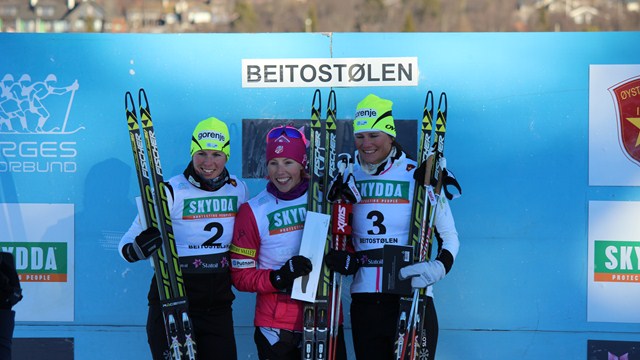
    Kikkan Randall lived up to the hype on Sunday, winning the U.S. Ski Team’s first sprint of the season in Beitostølen, Norway. Randall topped Slovenians Vesna Fabjan (l) in second and Katja Visnar in third in the 1.2 k freestyle FIS sprint after qualifying in seventh and placing second in both her quarterfinal and semifinal. (Photo: FIS Cross Country)

    The U.S. Women’s Nordic Ski Team finished off their weekend opener in Beitostølen, Norway, with a bang on Sunday, as reigning World Cup sprint champion Kikkan Randall claimed a win in the 1.2-kilometer freestyle sprint FIS race.

    Seventh in the qualifier then second in the her quarterfinal and semifinal, Randall won the final in 2:17 minutes, 0.8 seconds ahead of runner-up Vesna Fabjan of Slovenia. Coming in third, Slovenian Katja Visnar followed her teammate by 1 ½ seconds.

    In an email, Randall explained Brun-Lie, who won the qualifier along with her quarterfinal and semifinal (beating Randall by 0.4 seconds in the semi), led out the final, but lost her balance halfway through. According to Randall, that opened up the race. Randall ended up trailing Fabjan until midway up the final climb, then decided to make a move over the top.

    “I thought I might get challenged on the homestretch but the shadows never came,” Randall wrote.

    Following the top three, three Norwegians – Marit Bjørgen, Celine Brun-Lie and Ingvild Østberg – took fourth through sixth respectively, all within less than a second and a half of each other, but more than three seconds behind Randall.

    When it came to Randall’s game plan, the 30-year-old Alaska Pacific University (APU) skier explained it was simple.

    “Pretty much ski hard, play with some different tactics and get a hard workout!” she wrote. “In both the quarter and semis I was always following someone off the final turn and then making sure I was strong on the homestretch to guarantee moving on each time.”

    All she needed to do was make the top two in each heat. Easier said than done, but the world champion did it. On Friday, Randall placed 10th in the 10 k classic race – her first of the season.

    “ I am happy to have two solid races under my belt,” Randall wrote. “This weekend was mostly about waking up the body before the World Cup opener [in Kuusamo, Finland] next week.  It’s a good confidence boost to stack up well against a strong field. But the real tests begin next week!”

    Four other U.S. Ski Team (USST) women advanced to the heats and ended up in the top 20, failing to make the semifinals.

    Ida Sargent (Craftsbury Green Racing Project) tallied 13th – an improvement from finishing 29th in Friday’s 10 k. She qualified in 13th and went on to place third in her quarterfinal, 1.8 seconds behind Norwegian quarterfinal winner Maiken Caspersen Falla (who ended up seventh) and 0.5 seconds behind Mari Eide (who placed 10th).

    “It was a short fast sprint and the qualifier was over before I knew it,” Sargent wrote in an email. “In the quarterfinal I wanted to get out fast but I got pushed outside on the first corner and ended up in 4th going down the downhill. I moved up to second on the uphill where I was feeling strong but I skied the finishing stretch really poorly.”

    In retrospect, Sargent felt she chose the wrong technique.

    “[I] should have been using V2 alternate instead of V2 on the fast snow,” she wrote. “I was just skiing really awkward and bobbled and almost fell and then I lost ground.”

    On the whole, her experience was positive. “I’m just excited to be back racing again and finding improvements with each race,” she wrote.  “It was still really fun to race a heat against lots of really fast ladies. The Norwegian women are so strong and the Slovenians are also skiing really fast so it was great to race them.”

    In the women's freestyle sprint quarterfinals in Beitostølen, Norway, U.S. Ski Team rookie Sophie Caldwell keeps contact with Marit Bjørgen (second from left) and Slovenia's Vesna Fabjan (c), who ended up second overall. Bjørgen ultimately placed fourth in the final, and Caldwell did not advance to the semis, placing 18th overall. (Photo: Noah Hoffman/noahhoffman.com)
    In the women’s freestyle sprint quarterfinals in Beitostølen, Norway, U.S. Ski Team rookie Sophie Caldwell keeps contact with Marit Bjørgen (second from left) and Slovenia’s Vesna Fabjan (c), who ended up second overall. Bjørgen ultimately placed fourth in the final, and Caldwell did not advance to the semis, placing 18th overall. (Photo: Noah Hoffman/noahhoffman.com)

    The rest of the U.S. women came in 17th through 19th, with Jessie Diggins, Sophie Caldwell and Sadie Bjornsen, respectively.

    Fourth in her quarterfinal and just a tenth of a second behind Sargent, Diggins explained in an email it hadn’t been an easy training week leading into Beitostølen, leaving her a little sore and tired before Sunday’s race. But that was part of the plan.

    “It’s a long season ahead!” Diggins wrote. “I was psyched that the two races this weekend went as well as they did, especially since it’s the plan to work into the season.”

    She qualified in eighth, but ran out of room in the quarterfinals, she explained.

    “This sprint was wicked short — like 2:15 in the qualifier,” she wrote. “I like much longer sprints, because it takes me longer to work into it. … I felt better and better in the finishing lanes and was picking up speed, but needed a longer course to do some damage. But it was a great way to get back into the feel of sprinting, get used to the warming up and testing ski process again.”

    Teammate Sophie Caldwell got a little too cold during the prelim and felt a bit stiff in her legs, but was happy to qualify in ninth. From there, she said her quarterfinal was “fun,” going up against top women like Fabjan, Bjørgen, and Norway’s Heidi Weng, who took first through third in the heat, respectively.

    “I didn’t realize I had Marit in my heat until I toed the start line and then I just tried my best to tuck in behind her,” Caldwell wrote. “I had a good start and was able to stay in 2nd for the first half of the race before moving back to 4th. It was exciting to have all five girls qualify, so hopefully that means we’re in a good place!”

    Additionally, she was excited to watch one of her teammates win outright and teammates Andy Newell and Simi Hamilton place sixth and 27th, respectively.

    Bjornsen, who notched fifth in Friday’s 10 k classic, qualified in 14th and went on to place fourth in her quarterfinal. She was 0.8 seconds out of first, with Visnar, Randall and Norway’s Hilde Landheim taking first through third.

    “It was fun to sprint again,” Bjornsen wrote. “… [And] a good warm up for next weekends world cups which I am looking forward to! This weekend was about getting back into the grove of racing. Warm-up, ski selection, nerves, pacing. It was a practice race before it really counts.”

    The last time she started her season in Europe – two years ago – the team didn’t do that, Bjornsen explained.

    “So now I am really looking forward to Finland and a fun season ahead!!” she added.

    — Alex Matthews contributed reporting

    ***

    Results | Brackets

  • Olympic Suits Remain a Mystery for U.S. Nordic

    Olympic Suits Remain a Mystery for U.S. Nordic

    Sophie Caldwell of the U.S. Ski Team (USST) and Stratton Mountain School T2 Team (SMST2) on her way to winning Thursday's qualifier. The USST rookie placed third in the A-final.
    U.S. Ski Team (USST) member Sophie Caldwell races to the fastest qualifying time in the new USST World Cup suit at the Frozen Thunder classic sprint on Oct. 24 in Canmore, Alberta. While the team has yet to unveil it’s Olympic suits, some element of pink is a good guess for the women — and not because it’s girly.

    The United States Olympic Team will wear gear designed by fashion mogul Ralph Lauren for the opening and closing ceremonies of the 2014 Sochi Winter Olympic games.

    What’s more, the uniforms worn during the ceremonies will bear the ‘Made in the USA’ label. That decision is at least partly in response to flak from Congress last year after it was discovered apparel worn by U.S. athletes during the 2012 London Summer Olympic ceremonies was actually made in China.

    The uniforms include heavy blue pea coats with a wide red stripe around the bottom, sweaters with woven reindeer prancing across the front, and heavy black hiking boots complete with fire engine red laces. The entire ensemble looks as if a yacht club and a bunch of alpine climbers got together for a clothing swap.

    But there’s still no word on what U.S. Nordic skiers athletes will wear in competition. The U.S. men’s hockey team released photos of their jerseys last month. Manufactured by Nike, the jerseys are as one might expected: red, white and blue, with USA emblazoned across the front and stars covering the shoulders. It’s unclear where they are being manufactured and they received only lukewarm reviews, with more than one source referring to the detailing as nothing more than “gimmicky crap.”

    According to USA Today, the Canadian men’s hockey players are more than pleased with their jerseys, also made by Nike and complete with the same kind of “gimmicky crap,” plus wing-like maple leaves on the shoulders.

    The entire ensemble looks as if a yacht club and a bunch of alpine climbers got together for a clothing swap.

    But mum is the word on suits for U.S. cross-country skiers and biathletes.

    Andy Newell of the USST on his way to winning Thursday's classic sprint qualifier by 3 seconds over Stratton Mountain School T2 teammate Skyler Davis (not shown). Newell went on to place second in the A-final.
    Andy Newell of the USST clocking the fastest time in the Frozen Thunder classic sprint qualifier on Oct. 24. He went on to place second in his new World Cup suit.

    “I’m not certain if I’m allowed to comment on the Olympic suits and honestly, I haven’t seen them yet,” U.S. Ski Team Olympic hopeful Holly Brooks wrote in an email.

    It’s safe to say the suits are likely to involve spandex.

    “I know they will be a play on what we already have with a ‘patriotic flare.’ Let’s just say that,” she added.

    Margo Christiansen, U.S. Ski and Snowboard Association (USSA) communications director, wrote in an email that “athletes haven’t been issued the Olympic uniforms yet. We need to get through qualifying the team first!”

    While other sports like luge have unveiled their race-day outfits for both the men and women and the U.S. bobsled teams have given at least a sneak peak, those of the nordic skiers remain a mystery.

    “We’re currently working with the manufacturer to get a better understanding of timing,” Christiansen wrote.

    “[That’s] the World Cup uniform. They will receive a totally different suit and design for Sochi.” — Margo Christiansen, USSA communication director on the U.S. Nordic Ski Team’s recently revealed suits

    One thing is for sure: the suits that debuted at the Frozen Thunder Classic last month in Canmore, Alberta, were the U.S. Ski Team’s new World Cup suits. “The girls have pink accents and the guys have blue accents,” Christiansen confirmed.

    There has also been mention of neon orange. Christiansen clarified a few details. “The orange … is in a training jacket for the guys, girls have pink accents in the training jacket. This is all the World Cup uniform,” she explained. “They will receive a totally different suit and design for Sochi.”

    According Brooks, not everyone is keen on the orange. “I like the pink because it’s bright and distinctive, but I like the orange even better because it’s actually one of my favorite colors,” she explained.

    The women’s puffy warm up jackets are pink this year. “We make quite a statement when we’re all wearing our coats traveling in a pack,” she said. “We’ve gotten lots of compliments so far.”

    So what is with women and racing in pink? “It’s distinctive and bright,” Brooks explained.

    Does it makes the team look girly?

    “If nothing else, I think it helps us make the statement that we are girls but we can be fast, work hard and be serious about sport,” she wrote. “I don’t think we need to wear non-girly colors to prove that we’re athletes.” But for now, there is no word on whether the ski team pink will makes its way to the start line for races in Sochi.

  • Salmela and Whitney to Call the Shots as NBC Olympic Commentators

    Salmela and Whitney to Call the Shots as NBC Olympic Commentators

    Chad Salmela and Al Trautwig prepare for a biathlon event in a booth overlooking the stadium during the Vancouver Games in 2010. (Photo: Chad Salmela)
    NBC Olympic commentators Chad Salmela (l) and Al Trautwig prepare for a biathlon event in a booth overlooking the stadium during the 2010 Vancouver Games in Whistler, British Columbia. (Photo: Chad Salmela)

    Olympic commentary is nothing new for Chad Salmela, head coach at the College of Saint Scholastica in Duluth, Minn. In February, he’s headed to Sochi, Russia, where he’ll be one of NBC’s main commentators for the 2014 Winter Games.

    Because the Olympics’ official broadcast network hasn’t given him a production schedule yet, Salmela was unsure which sports he’d be covering. Regardless, the former US Biathlon member and national-team coach is looking forward to working alongside NBC’s long-time legend Al Trautwig.

    “For what NBC is looking for, Al is beyond great,” Salmela says of his colleague. “For the most part, I think he’s brilliant.”

    Salmela, who got his commentary starts as an in-stadium color commentator at the 2002 Olympics, says working with Trautwig sets his mind at ease. He lets Trautwig drive the storytelling when it comes to interpreting races.

    “He’s definitely the most experienced guy I have ever worked with,” Salmela says.

    The 2014 Olympics will be Salmela’s fourth time covering the Games, but he hasn’t always had a seat in the booth at the finish line. Long before NBC tapped him, he was the voice behind a PA system. In 1998, he was asked to announce the US Biathlon Team trials, just a year after he retired from the sport.

    Chad Salmela interviews Ole Einar Bjørndalen after Norway wins relay gold in the mixed zone during the 2010 Olympic Games in Vancouver. (Courtesy photo)
    Chad Salmela (c) interviews Norwegian biathlete Ole Einar Bjørndalen (l) after his men’s relay team won gold at the 2010 Olympics and he became the most successful biathlete in Olympic history with nine career medals. (Courtesy photo)

    “Everyone was like ‘Wow! You’re really good at this,’ he recalls. ” I was just kind of like a hack.”

    Salmela worked the Junior Olympics the next year, “for, like, a few hundred bucks a week,” he says. But word gets around and that’s how he ended up at the Olympics.

    “My reputation as a commentator had kind of grown within the small community of nordic skiing,” he says.

    His big break came in Salt Lake City in 2002, where he commentated biathlon as well as the women’s 30-kilometer cross-country race.

    “I’m genuinely excited when I see the defining moves in an event, and other sports have plenty of people who do the same thing,” Salmela says. “John Madden or Cris Collinsworth is doing it with the NFL right now. One things that [they’re] very adept at is having a very conversational analysis and identifying things that some people might miss in the way a game is unfolding.”

    It helps that Salmela is well-connected, working alongside Emmy award-winning producers and others who have produced sports shows for cable television for years. But he says his connections have only gotten him so far, adding that he has natural skill. And he doesn’t practice out of fear it might get in his way.

    “I feel like my strength is that I have a genuine delivery,” he says. “I’ve always been obviously a talker. I’ve always been very analytical, which is what makes me a strong coach, and I’ve been involved in the sport as an athlete and coach at a very high level and you put all those pieces together and that’s what John Madden had.”

    Salmela was first told he would only call biathlon, but it looks like he may also work the cross country races and nordic combined as well. He commentated all three sports at the 2010 Vancouver Olympics in British Columbia, and in 2006, he worked as a biathlon analyst at the Torino Winter Games.

    This time around, he asked a few friends and contacts to join him in Sochi, including former teammate Stacey Wooley, a 1998 Olympic biathlete.

    “She’s going to be kind of learning to do it on the fly as the back-up color commentator for biathlon,” Salmela says.

    He may be biased, after eight years on the national team and several more coaching and developing biathlon, but he says it’s one of the better sports to call.

    “Biathlon inherently has a lot of pieces to it that are very dramatic on television,” he says. “I would say it’s like golf tournament on speed,” he laughs. “A golf tournament has these very poignant moments that are high pressure, but they’re very slow in coming and it takes four days … If you compress a golf tournament into a half hour, you’ve got biathlon. Everything is intensified.”

    Whitney Onboard

    While Salmela is in the driver’s seat, former U.S. Ski Team member Rob Whitney will work behind the scenes. Whitney describes himself as the “stats guy.”

    “I’m the guy that is the extra ears, watching other screens, sliding them sticky pads with quick facts, sending one-liners to Facebook,” Whitney says of his rookie gig.

    “In preparation mode,” is how Salmela describes the scene just before the start of a biathlon event he called with Al Trautwig for NBC in 2010. (Courtesy photo)
    “In preparation mode,” is how Salmela describes the scene just before the start of a biathlon event, which he commentated for NBC with Al Trautwig in 2010. (Courtesy photo)

    Married to U.S. Ski Team member and Olympic hopeful Holly Brooks, Whitney isn’t worried about being stuck in a booth.

    “I’m going to have the best seat in the house!” he exclaims. “[It’s] like front row seats at the hockey game here.”

    Solely committed to the cross-country races in Sochi, he’s not exactly sure what will happen if his wife is racing. “If it looks like Chad and Al have it under control, maybe I’ll be out there roaming around,” he says.

    Whitney admits he’s nervous when it comes to his position, but even more so, the mystery of Russia has him wondering what exactly might go down.

    “Russia is kind of a mysterious place, I think,” he says, adding that his opinion could stem from his American roots and a continued memory of the Cold War, or maybe just the distance. “It’s really far away.”

    But that seems ironic, coming from an Alaskan native.

    “It’s not like we just be-bop over!” he jokes.  “You know, go to Sarah Palin’s place and see where it is and get in an airplane and fly straight there!”

    But overall, Whitney’s pretty excited, knowing that he’ll look back in a decade or two and think the experience was “rad!”

    “I mean, I could be helping announce history,” he says.  “Kikkan Randall might win a gold medal!”