From the FasterSkier archive — posts syndicated from athletes’ and coaches’ own blogs between 2004 and 2012, kept online as published. Current coverage is at fasterskier.com.
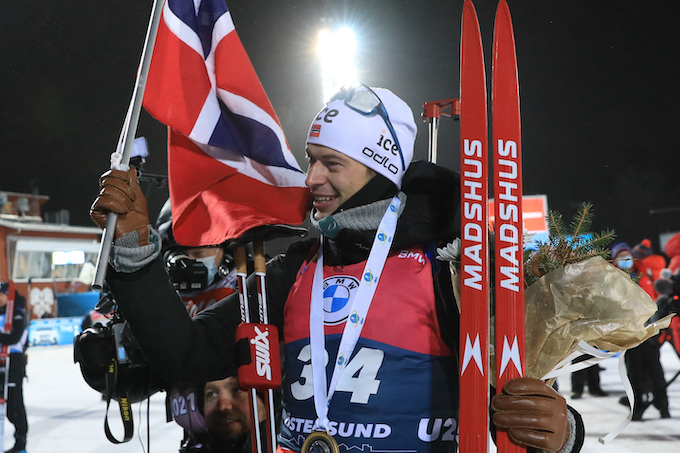
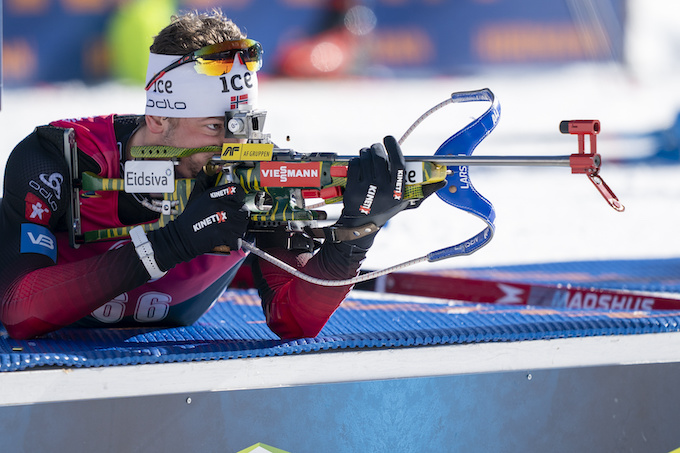
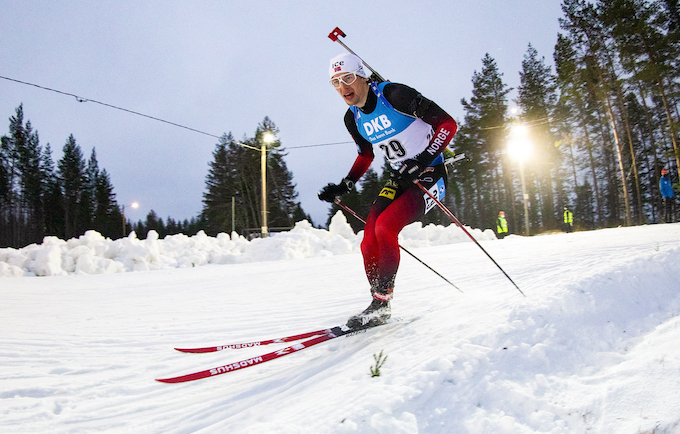
Sturla Holm Laegreid (NOR) – IBU World Cup Biathlon, individual men, Oestersund (SWE). (Photo: NordicFocus)
For Team Madshus the World Cup opener proves to be business as usual, picking up where they left in March.
Sturla Holm Lægreid (NOR) skis like a bullet, shoots clean at the range and goes straight for the podium in the 20-kilometer normal competition at the IBU World Cup opener in Östersund on Saturday.
Additionally on Saturday, Sivert Bakken (NOR), who won the national season opener in Norway two weeks ago, pulls off an impressive sixth place in the World Cup opener.
“Yes, that’s me at the on the far right. First World Cup flowers,” Bakken posts to his Instagram account after the 20-kilometer normal competition.
The 23-year-old followed suit on Sunday, and pulled off a solid eighth place in the 10-kilometer sprint after nailing every target both prone and standing.
The Östersund season opener was only his second World Cup: Bakken raced his first World Cup in Oberhof (GER) last season – in an empty stadium at the peak of the Covid pandemic.
Also, Roman Rees (GER) had a solid race on Saturday. Shooting clean the first and second time at the range and missing only once the third time, he was long in contention for the podium. But despite missing two targets the last time, Rees skied liked a bullet throughout the race and ended up 14th.
The IBU World Cup continues in Östersund (SWE) with sprint, pursuit and relay races for men and women December 2 to 5.
Story continues below
Sivert Bakken pulling into 6th place in the 20km normal competition at the IBU World Cup in Östersund (SWE) on Saturday. )Photo: Nordic Focus)
At the 3-day FIS cross-country World Cup opener in in Ruka (FIN), US National team rookie Ben Ogden shows off speed and potential finishing eighth in the sprint qualifier on Friday. The 21-year-old followed up with a 13th place overall in the sprint.
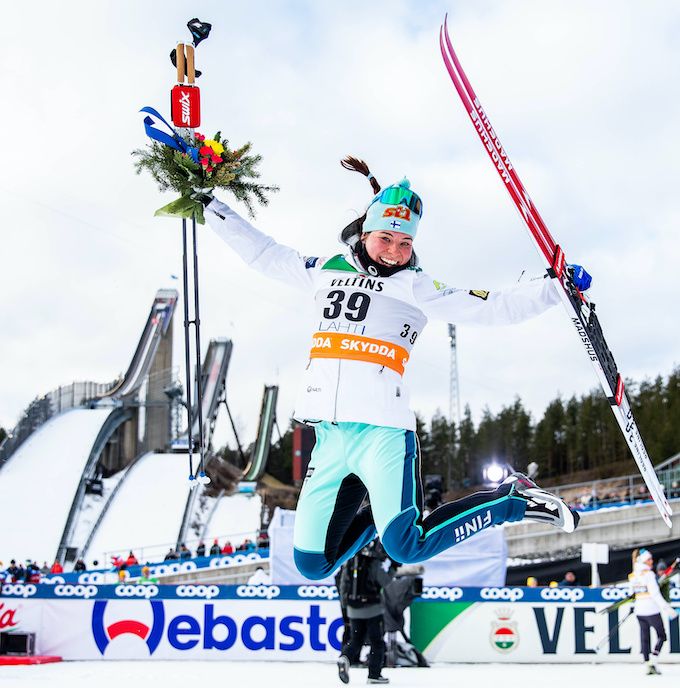
On Saturday, World Cup veteran Krista Pärmäkoski (FIN) pulled into a strong fifth place in the 10-kilometer classic race, setting herself up nicely for the pursuit on home turf Sunday afternoon. While several skiers chose to skip the pursuit, Pärmäkoski braved the frigid temperatures and pulled into fourth place, half a second from the podium. She now sits in third place overall after the World Cup opener.
The FIS World Cup now moves on to Lillehammer (NOR) featuring sprint, 10/15km skate and relays on December 3 to 5.
Ben Ogden (USA) at the FIS World Cup sprint in Ruka (FIN) on Friday. Photo: Nordic Focus
Madshus racers delivered a handsome collection of solid performances in biathlon and cross-country, including two stellar victories.
First, Sivert Bakken (NOR) set the standard both at the range and on the course, winning the biathlon season opener at Sjusjøen (NOR) on Saturday by ten seconds.
“What a way to start the season. It was huge for me to win in front of a huge crowd and with such a strong field,” says Bakken, who is thrilled to be back into racing and excited about the season ahead.
On Sunday, Bakken put in a top-10 finish in the mass start, despite two penalty laps.
As a curious side note: Ski Classics cross-country marathon specialist Astrid Øyre Slind posted the fastest skiing time in the women’s sprint on Saturday. Missing only one target the first time at the range, her nerves messed her up for the second shooting, and Slind ended up in 27th place overall with a total of five missed targets.
“I started shooting in March, and I thought it would be interesting to give biathlon a go before the marathon season starts in December,” Slind says after her first ever biathlon competition.
When Krista Pärmäkoski (FIN) stepped up to the start line for the first time this season on Sunday, she won the 10-kilometer skate race on home turf in Muonio.
“I have been waiting all summer to be able to compete again, over all it was a good and balanced performance,” says Pärmäkoski, after winning by 0.9 seconds in her first race of the season, with a start list worthy of a World Cup.
“It felt hard to get going, and it was hard to know how I was because I didn’t get many splits. But on the second lap, I was told it was really close and that I had to really push it all the way to the finish line.”
The 30-year-old Finn is entering her 14th season at the World Cup level and aiming for her fourth Winter Games in February.
Next weekend, both Norway and Sweden kick off their FIS cross-country seasons, in Beitostølen and Bruksvallarna, respectively, both featuring incredibly strong start lists.
On November 26 to 28, Ruka (FIN) host the FIS World Cup opener, while the biathletes head to Östersund (SWE) for the IBU World Cup opener on November 27 to December 5.
Madshus racers shine at the Martin Fourcade Nordic Festival in Annecy (FRA) this weekend.
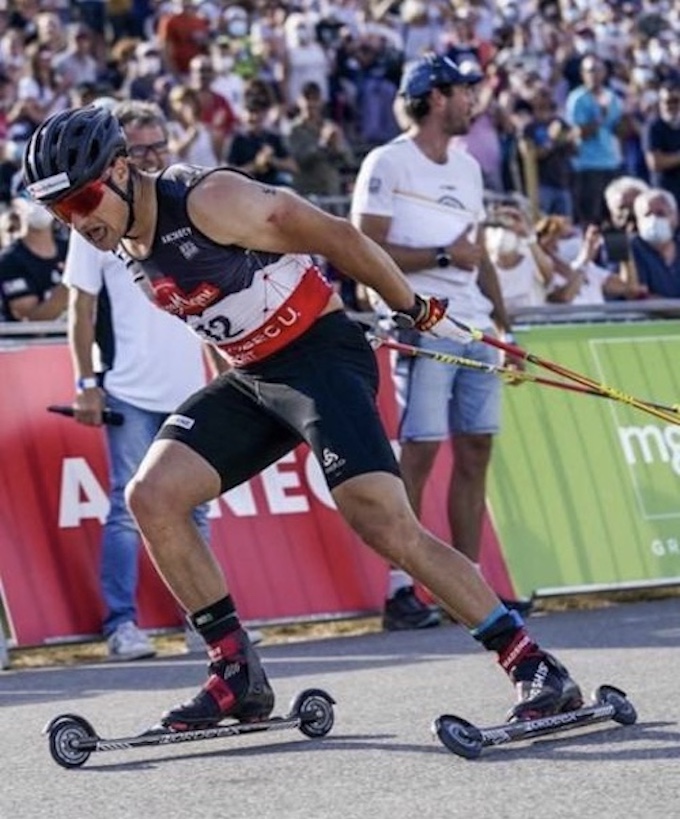
Biathlon prodigy Sturla Holm Lægreid (NOR) won the prestigious biathlon roller ski mass start event on Saturday, sharing the podium with Benedikt Doll (GER) in third place.
For Lægreid, the huge and enthusiastic crowd at the Martin Fourcade Nordic Festival made the experience particularly exciting: The 24-year-old raced his first World Cup event in March 2020, and had his first World Cup season last winter, when all events were held without spectators due to the Covid situation.
“I’ve actually never skied a World Cup event with a live audience, so I don’t know how that would compare, but this was really awesome,” Lægreid said after his first victory of the season.
Additionally, Renaud Jay (FRA) won the cross-country roller ski sprint event on home turf in France.
After the races, all of them checked in with Madshus booth at the Martin Fourcade Nordic Festival expo, chilling with the crowd, showing off the gear for the upcoming season and signing autographs.
Story continues below
Sturla Holm Lægreid enjoyed meeting the fans after his race at the Martin Fourcade Nordic Festival in Annecy (FRA) this weekend. Photo: MadshusSigning autographs at the Martin Fourcade Nordic Festival in Annecy (FRA). Photo: Madshus
Also this weekend, rising Madshus cross-country talent Karoline Simpson-Larsen (NOR) won the Birkebeiner trail half marathon in Lillehammer (NOR), with former world champion and Olympian Kristin Størmer Steira (NOR) in second place.
Double podium: Rising star Karoline Simpson-Larsen (right) won the elite category at the Birkebeiner trail half marathon in Lillehammer on Saturday, while former world champion and Olympian Krsitin Størmer Steira was second. Photo: Inge Scheve/Madshus
Madshus racers take home a handsome bouquet of podiums from Toppidrettsveka, including the overall victory for the weekend, looking promising for the upcoming Olympic season.
The annual summer roller ski festival in northwestern Norway featured four races in three days, and was once again open for international racers.
Toppidrettsveka 2021 opened with a marathon race on Thursday, August 19, where Madshus racers parked the competitors: Astrid Øyre Slind truly set the standard, winning the 55-kilometer double-pole race in Hitra by almost two and a half minutes. Madshus’ rising World Cup talent Hedda Østberg Amundsen claimed second place, and beat Olympic-legend-turned-long-distance-pro Marit Bjørgen by nearly a minute and a half.
In the men’s 55-kilometer double-pole race, Madshus rookie Sivert Wiig clinched second place, ahead of the entire Ski Classics elite and only seven seconds behind marathon pro Max Novak.
Friday, August 20, featured two uphill mass start events midday: a double-pole race and a skate race, both on the same brutal 3-kilometer course from Årvågsfjorden to Brekka in Aure. In the women’s skate race, Madshus rising young team claimed both first and second place with Karoline Simpson-Larsen 15 seconds ahead of Elena Rise Johnsen. In the men’s skate race, Harald Østberg Amundsen finished second and nailed his second podium for the weekend.
Moving on to the sprints on Friday evening, Rise Johnsen was second in the qualifier and won every heat including the final, bagging her second podium for the day.
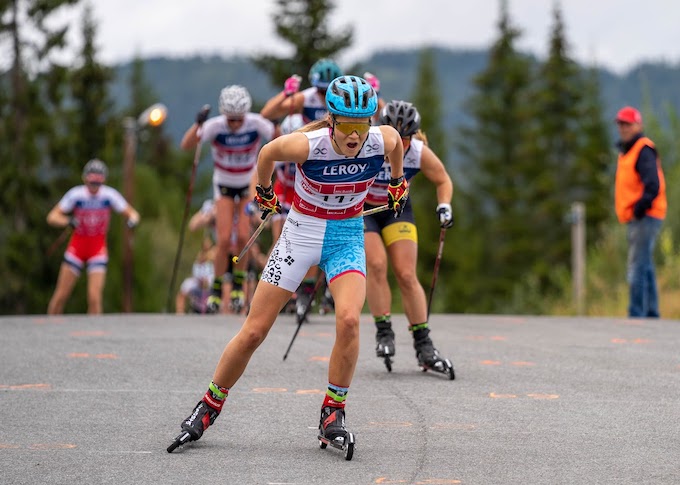
On Saturday, August 21, Rise Johnsen capped her race weekend with another podium, winning the thrilling sprint finish in the 15-kilometer skiathlon at Knyken. With first place in the skiathlon, the 21-year-old also secured the overall victory for the three-day roller ski festival.
Elena Rise Johnsen (NOR) won two of the four events at Toppidrettsveka 2021, earning her the overall victory for the prestigious roller ski festival in northwestern Norway. Photo: Martin Riseth/Toppidrettsveka
Madshus caught up with Lægreid on his training and plans leading up to the 2021-22 season, where the 2022 Olympic Winter Games in China is his obvious overall goal.
Lægreid makes it crystal clear that he doesn’t expect to match the 2021 World Championship loot at the Olympics, and that he doesn’t take any victory for granted. But he does try to improve every day. And while Lægreid swept the podiums nearly every weekend throughout his rookie season with the national team, the ambitious 24-year-old believes he has potential for more.
Story continues below
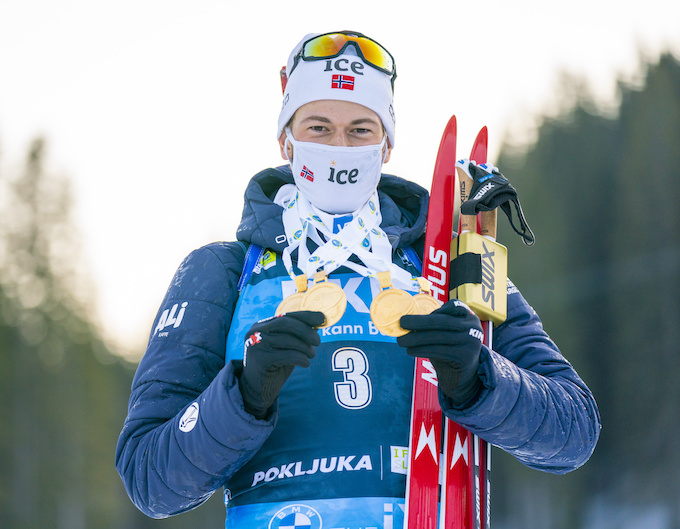
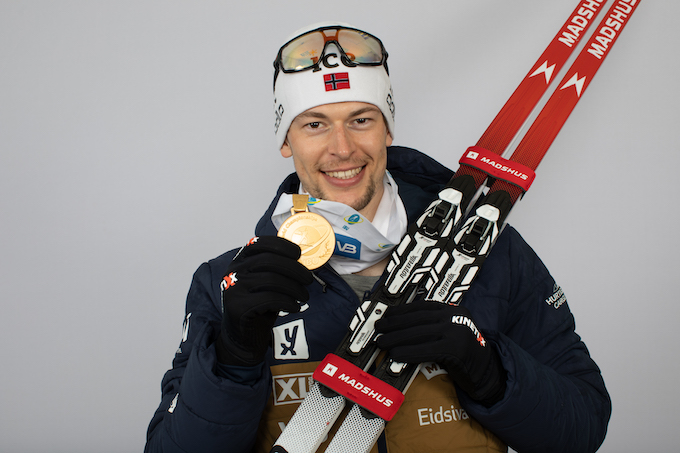
Sturla Holm Laegreid (NOR) took home four gold medals from the 2021 IBU World Championships in Pokljuka (SLO). Photo: Nordic Focus
Is it even possible to top your 2020-21 season?
“I’m still fairly new to the World Cup level, and I can’t expect to do equally well at the Olympics as I did at the IBU World Championships. But I know how well I can perform, I’m constantly striving to improve and progress, and I know what I need to do in order to be as prepared as possible at the Olympics in February,” Lægreid says.
Specifically, what are you working on in order to improve?
“I know that I have potential for improvement in fitness, and you can always get even sharper at the range. But I have to keep in mind where I was even just a year ago.”
How do you go about that in your everyday training effort?
“I always have an overall focus area. Last season, my overall task was to be optimally prepared for every training camp. I would never travel to a national team camp feeling even slightly tired, in order to get the most from each workout and really match myself against the other national team racers. I have carried over that overall focus this season, and won’t do any major changes to my overall training program this year.”
Do you have any specific areas you will pay extra attention to this season?
“I am working really hard to improve my ski technique. With better technique, I can take utilize my VO2 capacity to the max. That will be crucial in order to improve in every area.”
What are the things you do to improve your technique?
“There is a lot of skill and experience in the Norwegian national team. We learn a lot from each other, and this process is particularly useful for me, who is still quite new to the World Cup level,” says Lægreid, pointing out that this is one reason it’s so crucial to be totally ready for each training camp both physically and mentally.
“I learn so much from watching the others on the team. I try to copy what they do and incorporate those elements into my own training program. But I’m also no clone of Tarjei (Boe) or Johannes (Tingnes Boe). I have to do things my way, and adapt the things they do to my body,” says Lægreid, and explains:
“When I see they ski fast, I try to note exactly what they do. I don’t ski 100 percent the same way they ski, but I try to observe what they do and experiment with how I can adapt that to the way I ski.”
For the next generation of Swedish World Cup racers, the upcoming winter is well underway.
Make a note of these names: Edvin Anger, Måns Skoglund, Tilde Bångman, Nils Bergström, and Erik Larsson. These young racers are training hard, aiming high, and will put Sweden on the map.
Anger, Skoglund and Bergström are all part of the Swedish junior national team this season, while Bångman was on the junior national team last year and is now racing with her club team. All of them have already helped themselves to medals at international level, including the FIS Junior Nordic World Championships and the 2020 Youth Olympics.
Larsson, who has posted several top 10 finishes at the IBU Junior World Championships, is a part of Team Autoexperten. The team is a national development team for both junior and senior biathlon racers at the cusp of stepping into the national A team.
“There’s a lot of drive and energy in this team, and we are super excited for the upcoming season,” says John Vikman, brand manager for Madshus Sweden.
Thobias Fredriksson helping racers with ski testing during the recent season kick-off in Torsby (SWE). Photo: Madshus
The fresh-faced crew just finished their first Madshus team camp of the year, which took place in the ski tunnel in Torsby (SWE).
On the agenda: evaluating the past season, setting new goals for next, and dialing in their gear for the upcoming race season with former Olympic gold medalist Thobias Fredriksson, who is now a part of the sales and marketing team for Madshus Sweden.
Harald Østberg Amundsen won the bronze medal in the 15-kilometer skate race at the FIS Nordic World Championships in Oberstdorf (GER) on skis with a cutting-edge new base technology.
Despite a brutal crash on the final lap of the 15-kilometer skate race, the 22-year-old Norwegian national team rookie impressed from the first pole plant and cruised onto the podium in his first ever World Championship at the senior level – on skis with a revolutionary new base technology: The new green transparent bases are developed specifically for the extremely challenging warm, wet and suctiony conditions the racers are dealing with at the Oberstdorf World Championships venue.
“We’ve been working on the transparent green bases for several years, as a part of a bigger project to develop ski constructions and fluor free base technologies that beat traditional skis that use fluorocarbon compounds as additives in the base material. Harald Østberg Amundsen’s medal is proof that we’ve succeeded,” says Svein Ivar Moen, who is one of the lead ski developer at Madshus.
Story continues below
Madshus service rep Sylvain Fanjas Claret working on Harald Østberg Amundsen’s skis prior to the 15km skate race at the 2021 FIS Nordic World Championships in Oberstdorf (GER). Photo: Madshus
“The transparent bases that Harald Østberg Amundsen skied on in the 15-kilometer skate race are attached to a warm condition ski with an entirely new construction compared to traditional warm condition skis,” says Moen, pointing out that the World Championship medal represents a milestone for Norwegian ski manufacturer.
“Madshus has made extremely fast fluor free bases for several years, but the green bases were developed specifically to work with the new ski construction in warm, wet conditions with old, transformed snow where bases with fluorocarbon additives traditionally have tended to glide better than those without fluorocarbons,” he explains.
The 15-kilometer skate race at the 2021 FIS Nordic World Championships in Oberstdorf also marks the first time this ski construction with the green bases is used in a competition. Earlier this season, Norwegian biathlete Sturla Holm Lægreid earned four gold medals on this ski construction at the 2021 IBU World Championships in Slovenia, but his skis do not have the green bases.
Finally, the green color of the new bases is no coincidence.
“The green bases are a part of our commitment to the environment: The future is clean, sustainable and fluor free,” Moen says.
“I can´t believe it´s true”
Almost to the date a year after he won the gold medal in the 30km skate race at the 2020 FIS U23 World Championships, Harald Østberg Amundsen (NOR) earns his first FIS World Championship medal at the senior level. The humble medalist himself was almost in disbelief.
“I can’t believe it’s true,” he said to reporters after the race.
As for the crash, Østberg Amundsen admits that the tumble took a toll. “It must have looked hilarious. I definitely hit my butt pretty hard. I was pretty frustrated, and I was just thinking about getting to the finish and be done.”
But despite losing several seconds in the tumble, Østberg Amundsen won the bronze medal with several seconds to spare down to fourth place.
Former Swedish national ski team director and coach Christer Skog skied Vasaloppet ten times in ten days with his buddy and comedian Måns Möller.
The corona virus forced Vasaloppet to organize this year´s events differently. One of the changes was keeping the Vasaloppet track groomed and open for 23 consecutive days in order to spread out the participants and avoid crowning.
“With the corona situation being what it is, and the Vasaloppet arena open for such a long period, this was a unique opportunity to do something nobody has done before,” Skog says.
Madshus caught up with Skog at the end of the eighth day.
How does it feel to ski 90 kilometers a day, ten days in a row?
“It doesn’t feel good at all, but we’re able to do it. Once you settle into a routine it actually gets easier,” says the 65-year-old former Swedish cross-country national ski team coach.
For Skog and Möller, 46, the routine was getting up and having breakfast at 4:45am. Then they made their way to the start in Sälen and spent the next eight to ten hours on the course to the finish line in Mora. Shower, change, eat and massage, set out clothes and supplies for the next day, then hit the sack and repeat the next day.
“Consistency is the key. We finished the course in about the same amount of time every day, about seven hours, give or take half an hour, says Skog, explaining that holding back is the hardest part.
“You have to keep the intensity low. If you go after this like a race, you won’t make it ten days in a row. You will grind yourself into a pulp in no time,” says the seasoned ski coach, who holds a university degree in overtraining.
Story continues below
Swedish comedian Måns Möller (46) and former Swedish national ski team coach Christer Skog (65) skied Vasaloppet 10 times back-to-back. Here from the start in Sälen. Photo: Submitted
Why did you want to do this?
“The purpose of the exercise is to raise money for the Viggo Foundation, established by Måns Möller. The Viggo Foundation puts on camps and activities for kids with various neurodevelopmental disorders and challenges such as autism, Asperger’s and ADHD, and provides funding and support for clubs, teams and associations that include these kids in their programs.”
What were some of the highlights of the stunt?
“Our skis were amazing. Thanks to Håkan Norrbäck at Madshus and Swedish national team wax coach Urban Nilsson, we had the best skis of anyone on the course in all conditions,” Skogs says with a huge grin, pointing out that they encountered every perceivable kind of conditions from Arctic to nearly tropical.
“In the beginning it was really cold. On the first day, the temperature was -26 C. The second day we had -24 C. When we got up to -18 C, it felt pretty comfortable. Then we had a few days with just perfect winter and stable temperatures from -5 C to -10 C, and toward the end we had rain, wind and suctiony klister conditions,” Skog says.
“But we’ve been really fortunate with the weather. Temperatures are manageable. If there was a blizzard for ten days straight, we would never be able to complete the challenge.”
Story continues below
Måns Möller finishing one of his Vasaloppet days. He and Christer Skog claimed to have the fastest skis on the course every day, regardless of conditions. Photo: Submitted
Harder than any previous challenge Skog explains that skiing Vasaloppet ten times back-to-back is physically much harder than any other challenge he has taken on.
Previously, Skog has biked from California to Florida in 24 days. Another time, he biked from the Ural Mountains to Portugal in 29 days and making it to the Guinness Book of World Records. But according to Skog, skiing Vasaloppet ten times in ten days is much harder than any of his cycling adventures.
“On a bike, you can draft a good portion of the time, which allows to recover during the ride. When you ski you have to do all the work yourself all the time,” Skog explains.
Story continues below
Former Swedish national ski team coach Christer Skog (65) on one of the very cold days of his Vasaloppet 10 times back-to-back expedition. Photo: Submitted
How did the overall project of skiing the course ten times in a row challenge affect the way you approached each individual event?
“You can’t approach this as a race. You really have to keep the intensity down, otherwise you will not make it the next day.”
How did you prepare for the 10-day challenge?
“When we stepped up to the start line in Sälen the first day, we had both skied more than 1500 kilometers this winter. We were equipped for all kinds of conditions, and had a strategy for how to approach the overall project.”
Did you get any physical problems?
“Yes, plenty. After a while, pretty much every part of your body hurts. I had to put tape and second-skin all over my feet every night because of the blisters. But again, you get stronger as you go, and as long as your aches and pains aren’t too serious, you sort of don’t really notice,” Skog says.
What was the biggest challenge – physically and mentally – and what did you expect the biggest challenge to be?
“I was worried we wouldn’t be able to eat enough. We were burning about 11.000 calories a day, but we managed to stay fairly well-fed. The clue is to eat real food. When you ski 90 kilometers day after day, you can’t rely on bars and gels. We stopped for a hot meal three times between the start and the finish, which added an hour and half to our finish times every day, but you can’t focus on the time.”
Will you do it again or recommend it to anyone else?
“The human body is extremely capable of adapting to the challenges presented. So, I think this is attainable for a lot of people given proper training and preparations, as long as the intensity is kept low enough.”
Swedish comedian Måns Möller (46) and former Swedish national ski team coach Christer Skog (65) stopped for hot meals three times each day along the course on their Vasaloppet 10 times back-to-back adventure. Photo: Submitted
From rookie to king of Pokljuka: Sturla Holm Lægreid (NOR) takes home no less than four – FOUR – gold medals from his first ever IBU World Championships at the senior level.
“Four gold medals… that’s just sick. I mean, just listen to it: Four gold medals. Honestly, I secretly dreamt about earning an individual medal,” Lægreid said on Sunday, after winning his fourth World Championships gold medal.
First, Lægreid set Norway up for GOLD when he skied the first leg in the mixed relay on February 10, the first event of the 2021 World Championships in Pokljuka (SLO).
Then, he bagged his first individual GOLD medal when he won the 20-kilometer individual competition on February 17 with a performance that made it look almost easy: The 23-year-old shot clean at the range. Even though the pressure was growing each and every time he entered the range, he nailed every single one of the 20 targets. He was lightning fast on the track, despite arriving at the finish line so cooked that he barely knew where he was.
Story continues below
Sturla Holm Lægreid (NOR) won the 20-kilometer individual competition at the 2021 IBU World Championships in Pokljuka (SLO). Photo: Nordic Focus
On Saturday, February 20, which was also his 24th birthday, Lægreid earned his second relay GOLD medal. Once again, he set Norway up for victory with an impressive first leg. Lægreid tagged off in first place with nearly 25 seconds to the next team.
And finally, on Sunday, February 21, Lægreid capped off his first World Championships with a fourth GOLD medal – his second individual victory in less than a week. With three gold medals already under his belt, Lægreid took charge and dominated the 15-kilometer mass start. He parked his competitors on the course, crushed them at the range, and cruised alone to the finish line.
The secret sauce? Focus.
“I have different methods of meditation. One method is to just pay attention to my breathing, which has helped med train my ability to stay focused. Visualization is another method. That’s where you put yourself in the situation you anticipate will happen, imagine what the different scenarios will be, and imagine handling it,” Lægreid explains.
“This way, I’ve done the race my head like ten times before I step up to the start line, and having gone through it all, I have a good plan and I know exactly what to focus on.”
Story continues below
Sturla Holm Laegreid (NOR), cool as a cucumber at the range. Photo: Nordic Focus
Let us recap the season so far:
In his first year on the national team, and his first full World Cup season, Lægreid has delivered from the start.
In November, he bagged his first World Cup victory, in the 10km sprint at the World Cup opener in Kontiolahti (FIN). Since then, Lægreid has been on the podium in nearly every World Cup event.
At the 2021 IBU World Championships in Pokljuka (SLO), his first at the senior level, Lægreid took home no less than four gold medals: in the mixed relay and the men’s relay, the 20-kilometer individual competition and the mass start.
Icing on the cake:
Lægreid has also won the 2021 IBU distance World Cup, in his very first full World Cup season. However, there are still several races left on the race schedule.
Also at the 2021 IBU World Championships
Vanessa Hinz helped Germany to the silver medal and Anastasiya Merkushyna helped Ukraine to the bronze medal in the women’s relay, while Matvey Eliseev helped the Russian team to third place in the men’s relay.
Madshus racers snagged two gold medals and a bronze in two days to open the 2021 World Championships season.
On the first day of the 2021 IBU biathlon World Championships, national team rookie Sturla Holm Lægreid skied the opening leg for Norway in the mixed relay, delivered a solid race and set the stage for GOLD in the very first eventof the 12-day championship in Pokljuka (SLO). As always, Lægreid was cool as a cucumber at the range and lightning fast on the course, despite extremely challenging conditions in the.
“That was amazing,” the collected 23-year-old said after bagging his first World Championship medal on Wednesday, February 10.
On Friday, Lægreid was seventh in the sprint, moving up to sixth place in the pursuit on Sunday.
There are still two individual races and two relays to come at the 2021 IBU biathlon World Championships, which continue on Tuesday and conclude on Sunday, February 21.
Story continues below
Sturla Holm Lægreid in the 2021 IBU World Championships pursuit on Sunday, February 14. Photo: Nordic Focus
On the podium in two of the three FIS U23 World Championships races
Among the cross-country skiers, Madshus racers snagged four top-10 finishes in the 10-kilometer skate race at the FIS U23 World Championships in Vuokatti (FIN): Hedda Østberg Amundsen (NOR) bagged her first World Championship medal for the season with third place in the brutally cold skate race, while Sophia Laukli (USA) was 5th, Hailey Swirbul (USA) was 8th and Tiril Liverud Knudsen (NOR) was 9th.
“I tried to stay calm and not burn too much fuel on the first lap. I focused on taking advantage of my strength on the flatter and rolling terrain while conserving energy on the steepest hills. That turned out to be crucial for the last laps,” says Østberg Amundsen after her bronze medal race.
Story continues below
On Saturday, Østberg Amundsen capped her U23 World Championship week with a gold medal, anchoring Norway to victory in the mixed relay for the second year in a row.
“The relay was awesome. Everyone on the team did a solid job, and sent me off with a 10-second lead. I’m always a bit nervous when I ski the last leg, but I managed to keep the chasing pack behind me all the way to the finish,” she says, after taking home medals from two of the three World Championship races in Finland.
Additionally, Madshus junior Siri Wigger helped Switzerland to 4th place in the relay at the FIS Junior
World Championships, which also took place in Vuokatti (FIN).
Up next are the 2021 FIS Nordic World Championships. The events will take place in Oberstdorf (GER) on February 22 through March 7.
Hedda Østberg Amundsen at the 2021 U23 World Championships in Vuokatti (FIN). Photo: Daily Skier
The 23-year-old biathlon extends his relationship with Madshus, signing a new long-term contract with the Norwegian brand. The new contract covers both equipment and promotion.
“I’m excited to continue my partnership with Madshus. Most importantly, I’m extremely satisfied with Madshus, both in terms of equipment as well as service and support,” says Sturla Holm Lægreid, who is also looking forward to the new marketing agreement.
“I’m excited to cooperate more extensively on marketing and promotion, and I believe that I can contribute to generate a positive drive around the Madshus brand and products,” Lægreid says.
For Madshus, the new contract is both a vote of confidence and an important part of the brand marketing and promotion plan.
“We are excited to announce that we have just reached an agreement with Sturla Holm Lægreid to continue our relationship. The new contract is a huge vote of confidence. We are proud that Sturla chooses to continue his relationship with Madshus, and we are excited to support him,” says Per Wiik, Global Marketing Director at Madshus.
“We’ve had a great relationship with Sturla over the past years, and we are excited to continue and expand this relationship in the years to come. This season, Sturla has made impressive progress. He is constantly challenging the established elite and repeatedly posting podium finishes at the World Cup level. Obviously, as a part of the contract, Sturla will continue to be a central part of our marketing and promotion strategy,” Wiik says.
Sturla Holm Lægreid made his international breakthrough at the senior elite level last winter. First, he took home the silver medal in the pursuit from the IBU European Championships in February 2020. Then, he posted three top-13 finishes in his first races at the World Cup level the two following weekends. In April, Lægreid was named to the 2020-21 Norwegian National A-Team.
QUICK FACTS: STURLA HOLM LÆGREID Birthdate: February 20, 1997 From: Bærum Residence: Lillehammer Club: Bærum SK Team: Norwegian National Biathlon A-Team Selected merits:
IBU World Cup 2020/21: 7 podiums (including 4 victories)
European Championships 2020 – silver medal (pursuit)
IBU Junior World Championships 2018 – 2 silver medals (normal, relay)
Junior National Championships – 3 gold medals, 2 silver medals
Sturla Holm Laegreid (NOR) added another IBU World Cup podium finish to his resume with 2nd place in the 20km individual competition in Antholz (ITA) on January 22. Photo: Nordic Focus
From personalized wax advice and equipment management to digital performance tracking and workout overview. The new Madshus empower 2 app is a whole new dimension to skiing.
Imagine always having perfect wax, never pondering which skis to pick or wondering which grind a certain pair has. Enter: the free Madshus Empower 2 app, available in the App Store and Google Play now.
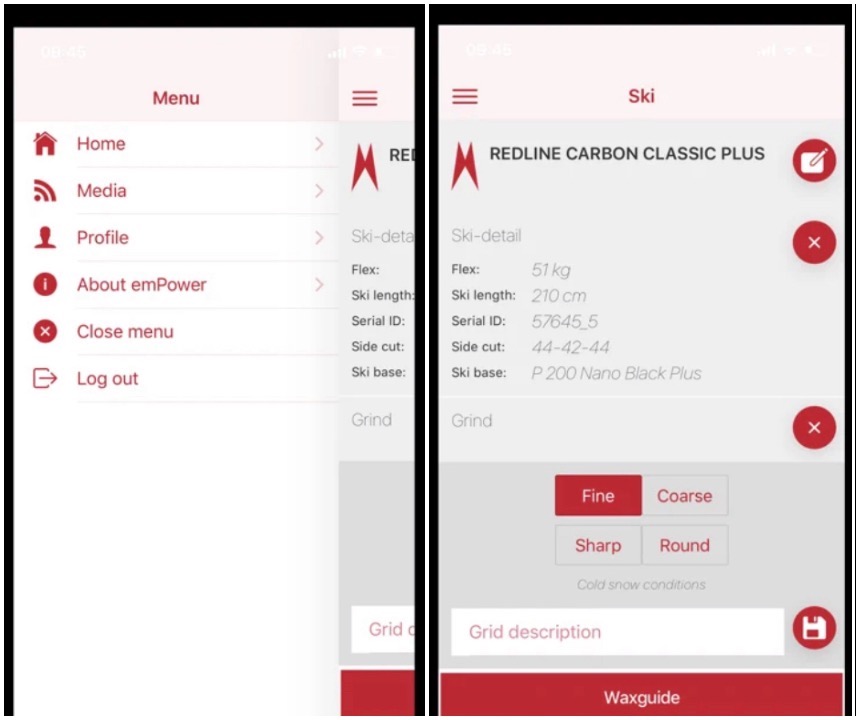
The Madshus Empower 2 app, which is available for free in the App Store and Google Play, lets cross-country skiers customize performance each and every time they head on to the snow with the embedded wax helper.
The app can also help manage their ski quiver, track workouts, and lets users engage with Madshus online.
Check out some of the app’s large variety of functions:
Digital waxing assistant: The app gives Individual advices to determine the optimal length of wax zone according to weather, kind of wax and athlete’s biometrical data. This is useful not only for elite racers, but just as important for recreational skiers and growing juniors – learn how to adjust the wax pocket as they grow and gain skills.
Workout diary: Each activity is stored and automatically linked with weather data. Athletes can also add personal data on skis, wax and performance.
Managing ski quiver: Gives a record on every registered pair of skis (kilometers run, grinds, wax, performance etc.) and helps athletes understand each ski’s character.
Social Media: Connect to YouTube, Twitter and Facebook.
Knowhow: The app links with the Madshus Youtube channel, providing plenty of practical advice with video tutorials for cross-country skiers.
The Madshus empower app works with all of Madshus’ Smartski models. Since the 2014/15 season, all REDLINE, Nanosonic, Hypersonic skis come with an embedded RFID-chip that contain all data about the ski’s properties, such as camber height, flex, pressure points and splay, recommended skier weight and corresponding wax pockets for classic models.
The Madshus empower 2 performance app is available for free on Google Play and in the App Store – download your app now and start optimizing your performance!
Hailey Swirbul (USA) posted her first World Cup podium this weekend, on the same course where she earned her first World Cup points last season.
“WAIT, WHAT!?!? Am I seeing that right?? I came in third?? I just raced my heart out, and my skis were amazing. I am so excited,” the 22-year-old cross-country skier said after her 10-kilometer skate race in Davos (SUI) on Sunday.
For Swirbul, the podium was both a surprise and a milestone.
“A takeaway I wrote down from this weekend: I don’t have to be the strongest or the lightest or the fittest or the smartest or even the happiest to have a great race. But I DO need to focus on what I enjoy about skiing and not worry about doing things perfectly. Easy to get caught up in that mindset so I wrote it down as a lil’ reminder,” Swirbul wrote on her Facebook page on Monday.
Hailey Swirbul (USA) after her first FIS World Cup podium with 3rd place in the 10km skate race in Davos (SUI) on Sunday. Photo: Nordic Focus
Additionally, Madshus biathletes pulled off a successful World Cup weekend in Hochfilzen (AUT). On Sunday, Sturla Holm Lægreid helped Norway to first place in the relay for the second time this season, his third ever World Cup victory. 45 seconds later, Roman Rees and Benedikt Doll could cheer Germany into third place.
On Saturday, World Cup veteran Anaïs Bescond helped France to second place in in the women’s relay where she skied the first leg for her team.
For the record, Lægreid also posted two individual top-10 results in Hochfilzen, coming in ninth in the 10-kilometer sprint on Friday and moving up to sixth place in the 12.5-kilometer pursuit on Saturday.
“Incredibly stable and reliable, and overall a very enjoyable skiing experience”
The new skin ski model Madshus Endurace Intelligrip® was rated the best overall skin skis in a large, comprehensive skin ski test comparing skin ski models for recreational skiers from all the major ski manufacturers.
Madshus Endurace Intelligrip received top honors in a comprehensive test of 2020-21 skin skis. Photo: Madshus.com
Best overall performance and feel
The skis in the test were rated according to performance on several key properties: weight, glide, grip, turning and handling, double-poling, ski feel and price.
“Incredibly stable and reliable, and overall a very enjoyable skiing experience,” was the verdict of the jury.
The Madshus skis were “best in test” on turning and handling and overall ski feel, and were also the lightest of the tested ski models. Additionally, the test panel points out that the Madshus Endurace Intelligrip® skis feel fast in the track, while providing reliable grip – among the best in the test.
Engineered with carefully tuned camber, flex and pressure distribution, the Madshus Endurace Intelligrip skin skis provide an “incredibly stable and reliable, and overall a very enjoyable skiing experience” according to the latest test of 2020-21 skin skis.
Defining the industry standard
The recent “best in test” award for the Madshus Endurace Intelligrip® model is not the first time Madshus Intelligrip skin skis receive the top honors in consumer tests.
Last year, the Madshus Redline Intelligrip® outperformed all the other top racing skin skis in a large test of high-end skin skis.
With this week’s “best in test” for the new Madshus Endurace Intelligrip® , Madshus skin skis defines the industry standard in all the major categories: Race performance, recreation and touring.
The integrated skin is made from 70 percent mohair and 30 percent nylon, creating the perfect balance between reliable grip, excellent glide and durability.
Sturla Holm Lægreid (NOR) crushed his competitors in the IBU biathlon World Cup opener on Saturday and earned his first World Cup victory. On Sunday, turbo junior Helene Fossesholm (NOR) posted the second-fastest time of the day in the 10-kilometer pursuit at the FIS Nordic World Cup opener.
“It hasn’t quite sunk in yet. I never imagined I would win,” Lægreid said after his race, which took place in in Kontiolahti (FIN).
The 23-year-old dominated the 20-kilometer individual competition, shooting clean at the range and dropping his competitors on the course, winning the by nearly 20 seconds.
“First, the coaches said I was even with Tarjei (Bø) and Johannes (Thingnes Bø), and then I was in the lead. It was insane to get those,” Lægreid said.
The IBU season opener was only his fifth World Cup competition. Last winter, Lægreid won the silver medal at the IBU European Championships in Minsk (BLR) on March 1. He was then named to the national team for the World Cup in Nove Mesto (CZE) on March 6 and 8, where he finished 13 and 15. The next week, he was 10 and 11 at the World Cup in Kontionlahti, which were the last World Cup events of the 2019-20 season. In April, Lægreid was named to the Norwegian A-Team.
Sturla Holm Lægreid (NOR) won the IBU world cup opener in Kontiolahti (FIN) om Saturday, his first World Cup victory and his 5th World Cup race so far in his career. Photo: Nordic Focus
Meanwhile, just a few hours north of Kontiolahti, the FIS cross-country World Cup kicked off the 2020-21 season with a three-day mini tour in Ruka (FIN), where turbo junior Helene Marie Fossesholm capped the weekend with her very first top-three World Cup finish.
The 19-year-old posted the second fastest stage time in the 10km pursuit, just eight-tenths of a second shy of first place.
After placing 38th in the sprint on Friday, Fossesholm finished 9th in the 10-kilometer classic race on Saturday. Combined, the two first races left her in 15th place for the pursuit on Sunday, starting nearly a minute and half behind the leader. But pushing relentlessly through the brutal course, she worked her way up to sixth place overall.
“I’m super content with my effort today, and particularly with how I paced myself. I managed to hold back just a little out of the gate, which was key on this course. There is a hard hill in the first kilometer that will cost you if you are too eager at the start, but I skied smart and was able to stay strong the whole way,” Fossesholm says after her race.
“But I have to admit I’m a little annoyed that I was less than a second from having the fastest time of the day,” the ambitious junior adds.
Be warned.
19-year-old Helene Marie Fossesholm (NOR) posted the 2nd-fastest time in the 10-kilometer pursuit that capped off the 3-day mini tour at the FIS World Cup opener in Ruka (FIN) on Sunday. Photo: Nordic Focus
The talented 19-year-old Helene Marie Fossesholm continues her long relationship with Madshus on skis and boots through 2023.
The turbo junior, who was named to the Norwegian A-team after routinely challenging the established World Cup elite for the past two seasons, is looking forward to continue her relationship with the Norwegian ski manufacturer at Biri.
“I’m super satisfied with all the equipment and the outstanding service and support I’ve received from Madshus throughout my career so far,” Fossesholm says, pointing out that Madshus’ emphasis on innovation and product development is an important part of her decision to commit to a long-term contract.
“Madshus is always testing and constantly looking for ways to improve, so I’m confident that I have the best gear,” she says.
For Fossesholm, having the factory at Biri, practically in her back yard, is another major benefit.
“For starters, it’s fun to race on skis that are made in Norway. But it’s also a huge bonus to have the factory so close by. I’ve always had a great relationship with everyone at the Madshus factory, and it feels good to know that should I need anything in the way of gear or support, they are just a half hour from where I live.”
Despite her young age, the 19-year-old already has a long history with Madshus skis.
“My very first cross-country skis were from Madshus. I was the sixth kid racing on those skis, and I loved them to pieces,” Fossesholm recalls.
Important for Madshus on multiple levels
“We are super content that Helene chooses to sign a three-year contract with us. She’s a huge talent with a lot of energy, and she’s the head of our young, ambitious and hungry team of rising stars in Team Madshus. She’s got a solid head and an incredible drive, 100 percent reliable and just a great person all around,” says Per Wiik, global marketing manager at Madshus.
He points out that Fosseshom not only delivers in terms of results and podiums. She is also an important resource for Madshus outside the race track.
“Although Helene is still young, she is actively taking part in testing, and she enjoys testing. She offers constructive feedback on her experiences with the equipment and contributes to the ongoing product development,” Wiik says.
Helene Marie Fossesholm will race on Madshus skis and ski boots through the 2022-23 season. Check out the full line of 2020-21 Redline skis and Redline boots.
Helene Marie Fossesholm was second in the 10km classic race at the FIS season opener at Beitostølen (NOR) on November 21. Photo: Madshus.com
The FIS Season opener at Beitostølen was no less than a performance bonanza for the young and promising Team Madshus.
With two podiums in two days, 19-year-old Helene Marie Fossesholm (above) is already named to the squad for the World Cup opener in Finland on November 27 to 29.
On the men’s side, U23 World Champion Harald Østberg Amundsen crushed the established national team in the 15-kilometer skate race on Sunday and put his name on the draw for one of two remaining spots in the men’s squad. “That podium felt incredibly good. I’ve trained so hard, put in so many hours and now I see that it pays off. I felt like I’ve made some improvements, but now I have proof,” Østberg Amundsen said after his impressive second place Sunday afternoon.
Additionally, several of the Team Madshus racers put in solid applications for the few spots on the World Cup team not reserved for the A Team.
The triple header race weekend opened with classic sprint races on Friday, where Mathilde Myhrvold pulled off an impressive fourth place in the company of some of the best sprinters on the World Cup. Additionally, Hedda Østberg Amundsen was ninth after finishing fifth in the qualifier. Among the men, Sivert Knotten was eight both in the qualifier and the final.
On Saturday, Fossesholm bagged her first podium, pulling in to an impressive second place in her first race for the season. Fellow Team Madshus racers Karoline Simpson-Larsen and Østberg Amundsen followed right behind, placing sixth and seventh, respectively.
On Sunday, Fossesholm posted her second podium finish. The turbo junior was third in the 10-kilometer skate race. Simpson-Larsen posted an impressive fourth place, just eight seconds shy of the podium. Combined with her sixth place in the 10-kilomter classic on Saturday, the 23-year-old put in a strong bid for a ticket to the World Cup opener in Ruka (FIN) next weekend.
The World Cup team will be announced early this week.
Mathilde Myhrvold after her medal in the classic sprint finale at the 2020 Norwegian National Championships. This weekend, she put in several solid performances at the FIS season opener in Beitostølen (NOR). Photo: Geir Olsen
Meet Håkan Nordbäck, head of the Madshus grinding department.
While the geometry, flex, camber and materials that make up the construction of the ski are the most important factors determining the glide and properties of ski, grinds and structures contribute significantly to enhancing the speed of the ski, along with glide wax and topping products.
Now that both the International Ski Federation (FIS) and the International Biathlon Union (IBU) are banning all fluorocarbon-based ski wax and toppings starting with the 2021-22 season, grinds and structures will be even more important.
At Madshus, we have a dedicated staff in charge of our grinding services right in the factory. This allows our grinders to work closely with the engineers and ski testers in order to develop and provide the fastest and most versatile grinds and structures.
Story continues below
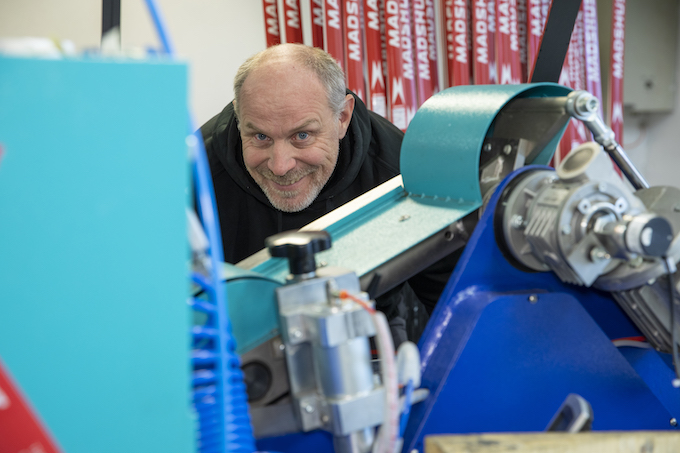
Håkan Nordbäck, head of the grinding department at Madshus. Photo: Stefano Zatta
What are grinds?
At the very basic level, grinds and structures are patterns etched into the ski base with the purpose of creating better glide in different snow conditions. The words grind and structure is often used interchangeably, and can refer to both machine grinds and manually applied structures, but there are distinct differences between the two.
A grind is a pattern ground into the base of the ski with a stone grinding machine, and is performed by a ski service shop (that hopefully has a lot of experience and expertise doing this). The stone grinder etches structure, a specific pattern, into the base of the ski that is designed to provide better glide in specific snow conditions. While a few years ago there were only a few of these machines in the whole country, grinding has become a business for a number of ski shops all over the country that are now offering grinding as service.
Manual structure is applied with a hand tool that either stamps or cuts a pattern into the base. This step is often done after all glide waxing, toppings and other grooming is finished. A stamped manual structure usually disappears after the next hot waxing, while a manual structure that is cut into the base can last longer.
Why grind your skis?
The short version: To speed up your skis.
In wet conditions there is too much water between the base and the snow, and the structure’s job is to drain the water away from the base and thereby reduce the suctioning effect. In these conditions, a coarse structure with a deep pattern will work best.
When it’s cold, there is not enough moisture between the base and the snow. In these conditions, a fine structure without deep groves will contribute to create a thin film of water between the base and the snow, which speeds up the ski.
We caught up with Håkan Nordbäck, head of the Madshus grinding department, to check out all about grinding.
Story continues below
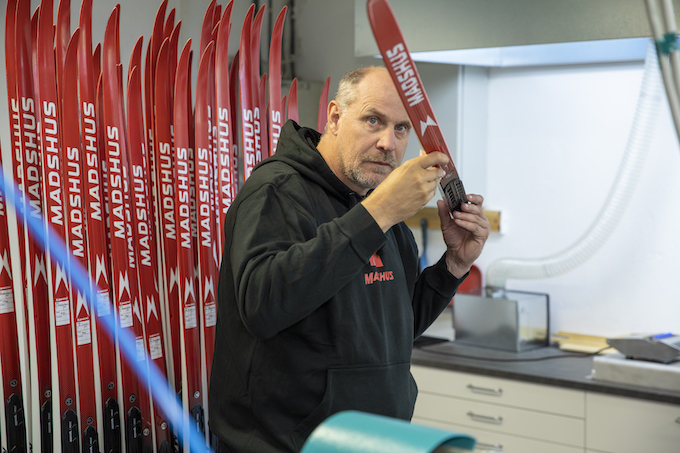
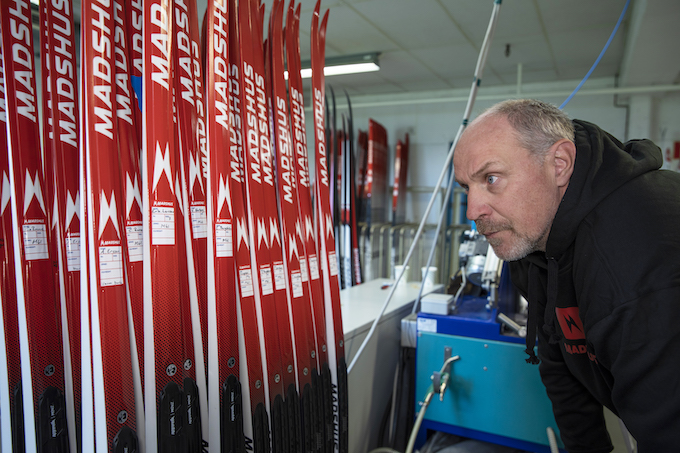
Håkan Nordbäck, head of the grinding department at Madshus, checking out the bases on a pari of freshly ground Redline 3.0 skis. Photo: Stefano Zatta
What’s new in grinds this season?
“Well, for starters, we bought two brand-new grinding machines. That’s really exciting,” Nordbäck says.
In terms of different patterns and structures, the grinding staff is constantly working on and improving the grinds, based on the testing and feedback from both the World Cup skiers and the product developers.
“We are always looking for new patterns to try and ways to tweak the tried and trusted grinds to make them even better. But one difference this year, is that we are simplifying the grind menu,” he says.
So, for the 2020-21 season, there are three main grinds: a fine grind for temperatures below minus 6-7 degrees Celcius, a medium grind for temperatures between minus 6/7 C and 0, and a coarse grind for warmer conditions from freezing and above. These are called M61-f (cold), M61 (medium) and M63 (warm), respectively.
Is there a difference between the grinds for classic and skate skis?
“No. The grinds are the same. But how you apply them differs a bit. Given the same conditions and temperatures, you generally use a slightly coarser grind on classic skis than on skate skis. That’s because the snow acts a little different in the track and outside the track.”
How do you go about that process?
“Developing new grinds is a time-consuming process. We have to test them over time, in different conditions and at a high level, which is where we use the World Cup racers,” Nordbäck says, pointing out that the goal is to find patterns that perform well in a wide range of conditions and temperatures.
“Conditions often change over the course of a race, especially in long events such as the Birkebeiner and Vasaloppet. Changing temperatures and the number of skiers using the course changes the snow structure. The same is true if parts of the course are exposed to sun while others are in the shade, or if it the weather changes between dry and precipitating,” Nordbäck explains.
Finally, the grinds also need to be possible to reproduce with consistent results, and should be fairly durable, so that they can be used for a long time without losing their properties before the ski needs to be reground.
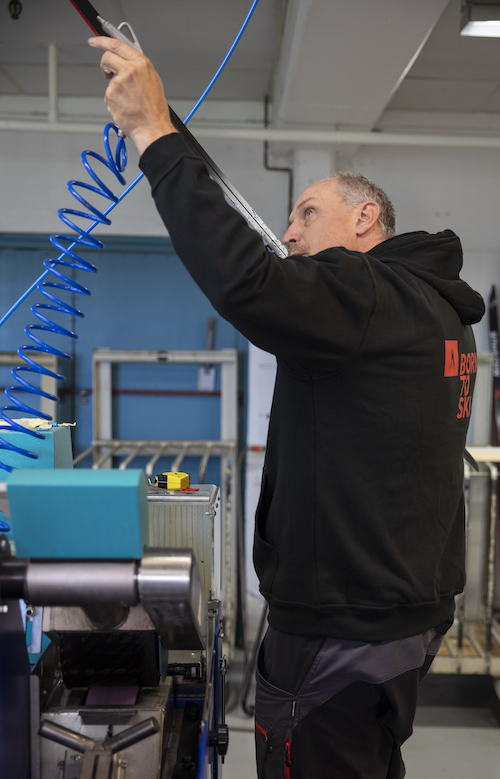
Håkan Nordbäck, head of the grinding department at Madshus, making sure all the skis are correctly labeled before shipping them off to the racers. Photo: Stefano Zatta
Norway’s Harald Østberg Amundsen winning the men’s 20 k skiathlon at 2018 Junior World Championships in Goms, Switzerland. (Photo: JWSC2018.ch)
Madshus caught up with Harald Østberg Amundsen, the man who pulled in no less than four medals out of four opportunities at the FIS U23 World Championships in Germany last winter. The effort also earned him a spot on the Norwegian National team.
These days, Østberg Amundsen is getting ready for the national FIS season opener events at Beitostølen (NOR).
The traditional race weekend takes place on November 20-22. Friday features classic sprint races for both men and women. Saturday there will be 15km classic races for men and 10km classic for women, and on Sunday the weekend concludes with 15km skate races for men and 10km skate for women.
The 22-year-old from Asker is both excited and nervous for the season opener. Its finals time for the national team rookie, who is entering his last season in the U23-category.
For Østberg Amundsen, the overall goal for the season is to race as many World-Cup events as possible. For that reason, the Beitostølen season opener and the following early season events are even more important than previously.
“The season opener at Beitostølen is the first chance to see where you are compared to the elite national team racers, and that’s why these races are so important for everyone who’s aiming for a spot on the World Cup squad,” he explains.
Østberg Amundsen also thinks the Beitostølen races will be even more important than usual this season.
“With the current corona pandemic situation, there will likely be less swapping in and out of the World Cup teams this year. Accordingly, it will be crucial to perform really well at the opener events and the Norway Cup races the following weekend, in order to secure a spot on the World Cup team. So, I’m excited but I’m also definitely a bit nervous this year,” he says.
What have you done differently this fall compared to previously?
“I’ve increased my overall training volume a bit. I’ve trained with a few different people than before, and I’ve had a lot of really good workouts with both the national development team that I’m a part of, and with the A-team. I feel like I’ve picked up a lot from those workouts. I’ve also been more diligent about getting as much out of every single workout I’ve done. Rather than just doing two hours of roller skiing to check it off, I’ve tried to look for new ways to improve even on the workouts that I’ve done alone,” he explains.
How do you take advantage of being part of the national team? “We have done quite a few team workouts and camps where those of us on the development team have been able to train with the A-team racers, and I feel like I gain a lot from those sessions. I have a lot to learn from them about how they solve different situations and terrain, and just how they structure their workouts and training. To be able to train with them on a regular basis and pick up these little things has been really useful,” Østberg Amundsen says.
Has the support and coaching been different this year than previously?
“Yes. I have access to a lot of the national team coaches now, and they’ve given me more feedback on my technique than I’ve had before. I have also taken advantage of having access to the big roller ski mill at the Olympic Development center, we do more video on workouts with the national team than what I’ve done before, and we’ve done more testing in the physiology lab, both on lactic acid threshold and VO2max.”
What difference do you feel that this has had, both physically and mentally?
“Since we’ve done more testing and video, I just have more numbers and objective data on my training and progress this year than I’ve had before. And because we’ve had several workouts with the A-team skiers, I’ve been able to have incredible matching on a regular basis. I know that a lot of them will be faster once the race season rolls around, but I definitely feel like seeing that I can keep up with them on the workouts and time trials has given me a lot of confidence. That is something I will take along to the season opener events at Beitostølen and beyond.”
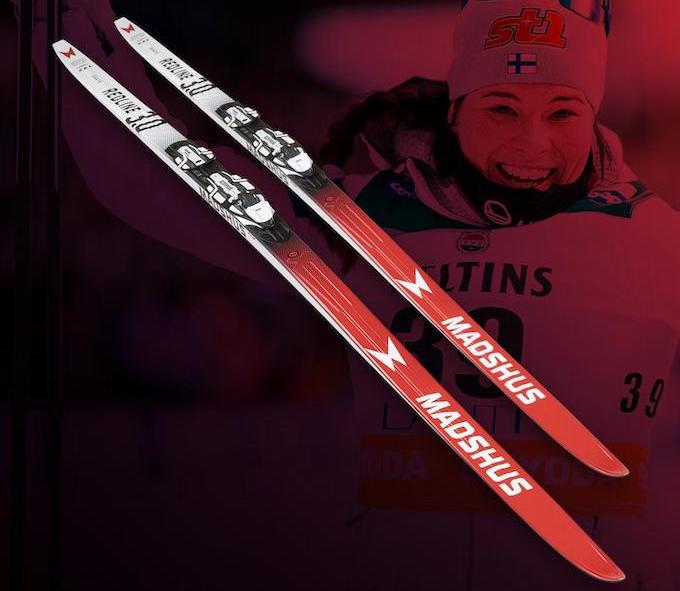
The all new Redline 3.0 skis are hitting the market right now, after three years of intense research and development, testing and collaboration with the top Madshus athletes.
So, what’s the big deal with the new Madshus Redline 3.0? Let’s hear it from four-time Olympic medalist Krista Pärmäkoski. The 29-year-old Finn, who is entering her 13th season on the World Cup level, is aiming for gold again at the 2021 FIS World Championships in Oberstdorf (GER) in February.
You have tested these skis for a while now. In your opinion, what is the biggest differences between the new Redline 3.0 compared to the previous Redline 2.0 models?
“Both the new classic and skating skis have changed a lot from 2.0 to 3.0. But to start with the skate skis, the new Redline 3.0 goes extremely well in uphill terrain, and the tips of the skis feel super light because the flex profile of the ski has changed a bit. The new Redline 3.0 skate skis are also stable to ski and really easy to control. And of course, I like the new design as well!”
Krista Pärmäkoski with the all-new Madshus Redline 3.0 F2 Skate ski.
What kinds of advantages do the Redline 3.0 skis give you, and where do you feel the biggest difference from earlier?
“For classic skis, we have done lot of work and testing in order to find good flex profiles, and during the last season most of my racing skis already had the new profile. In developing the Redline 3.0, we were also careful to keep all the good features from the old skis and then improved them even more. As a result, the new Redline 3.0 classic skis are easier to ski, it is easier to get perfect kick and the grip is more reliable. And finally, they also feel really fast on downhill sections.”