Author: Jason Albert

  • Sophie Caldwell Hamilton Calls it a Career

    Sophie Caldwell Hamilton Calls it a Career

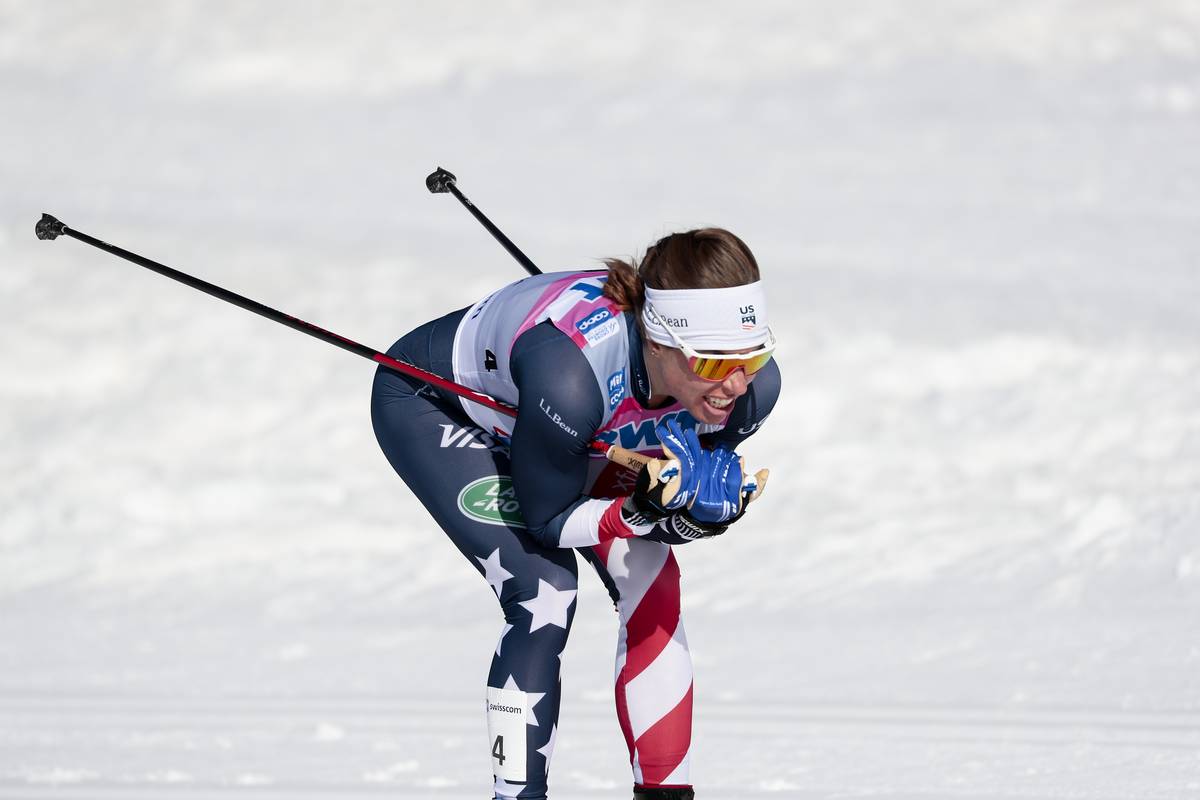
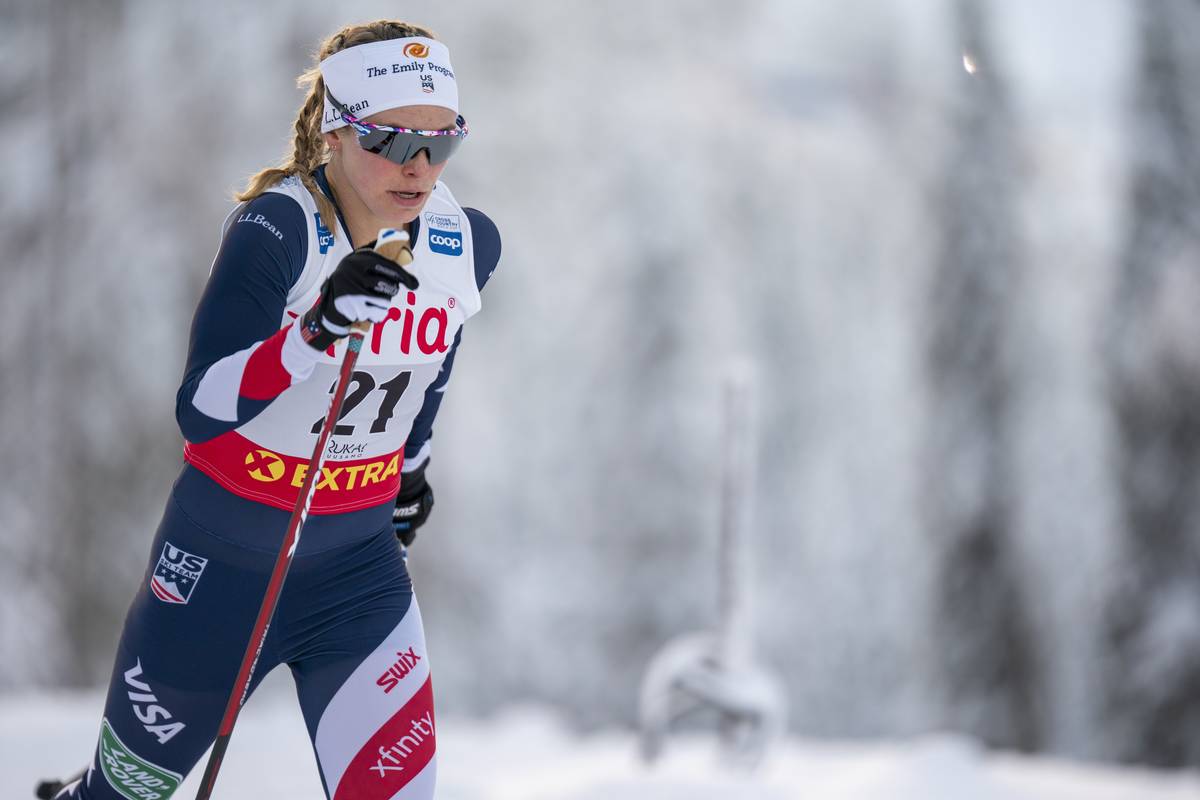
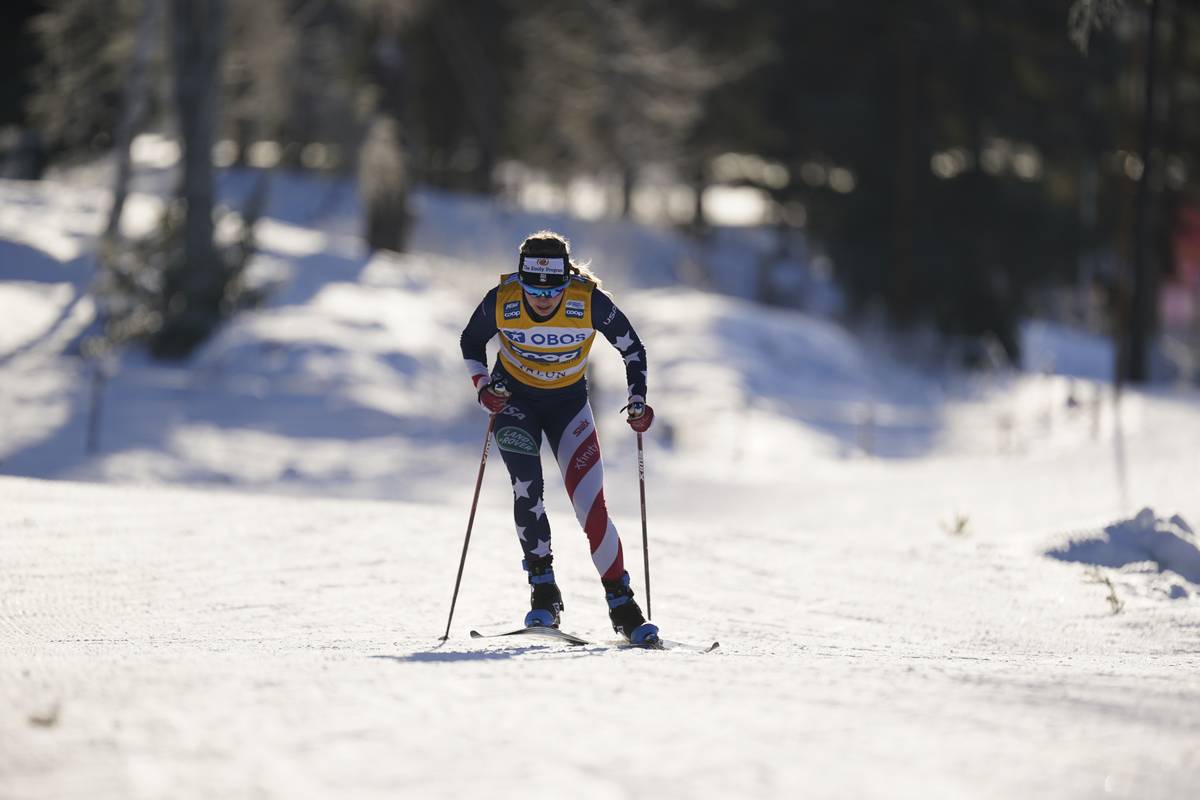
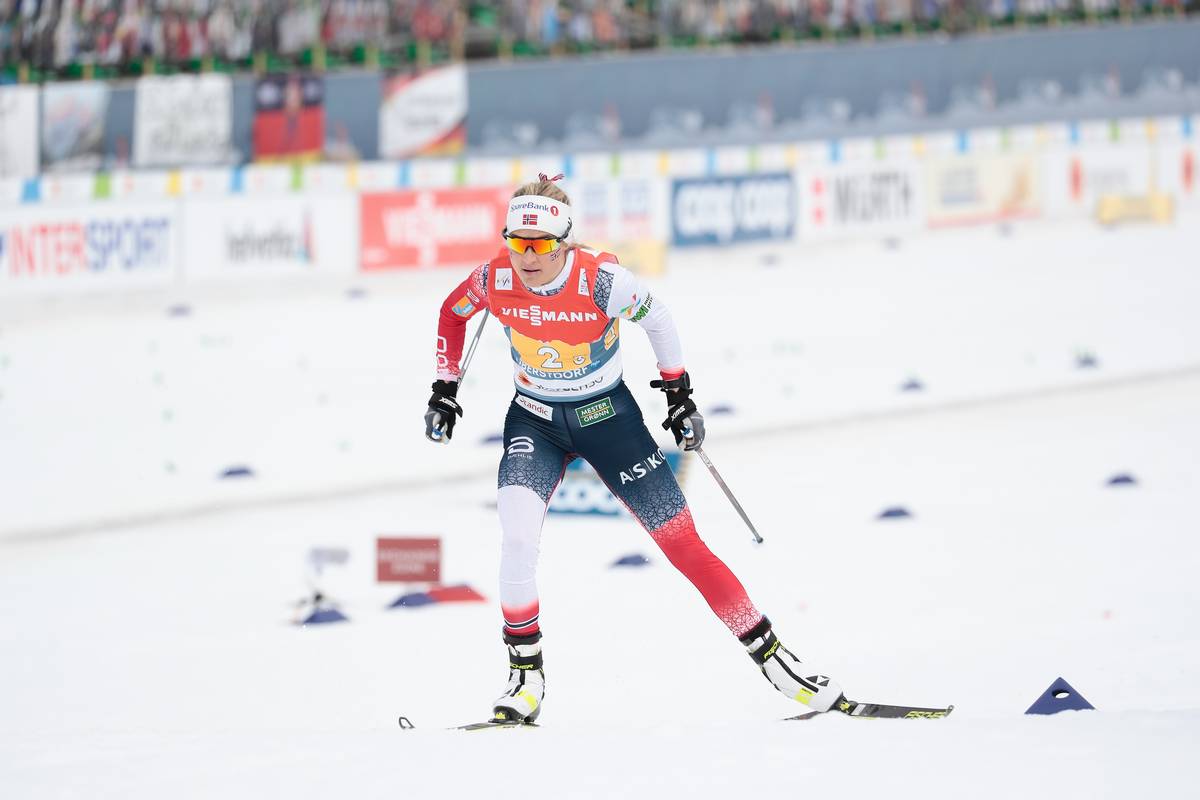
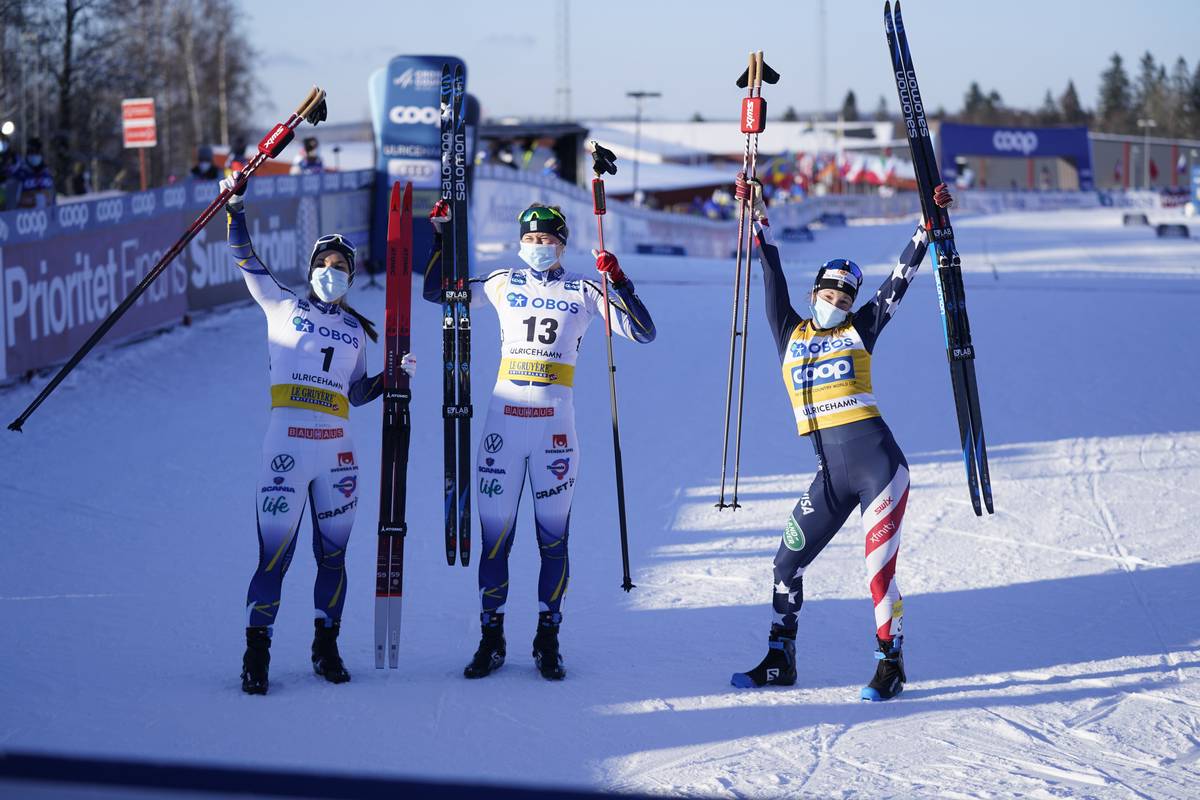
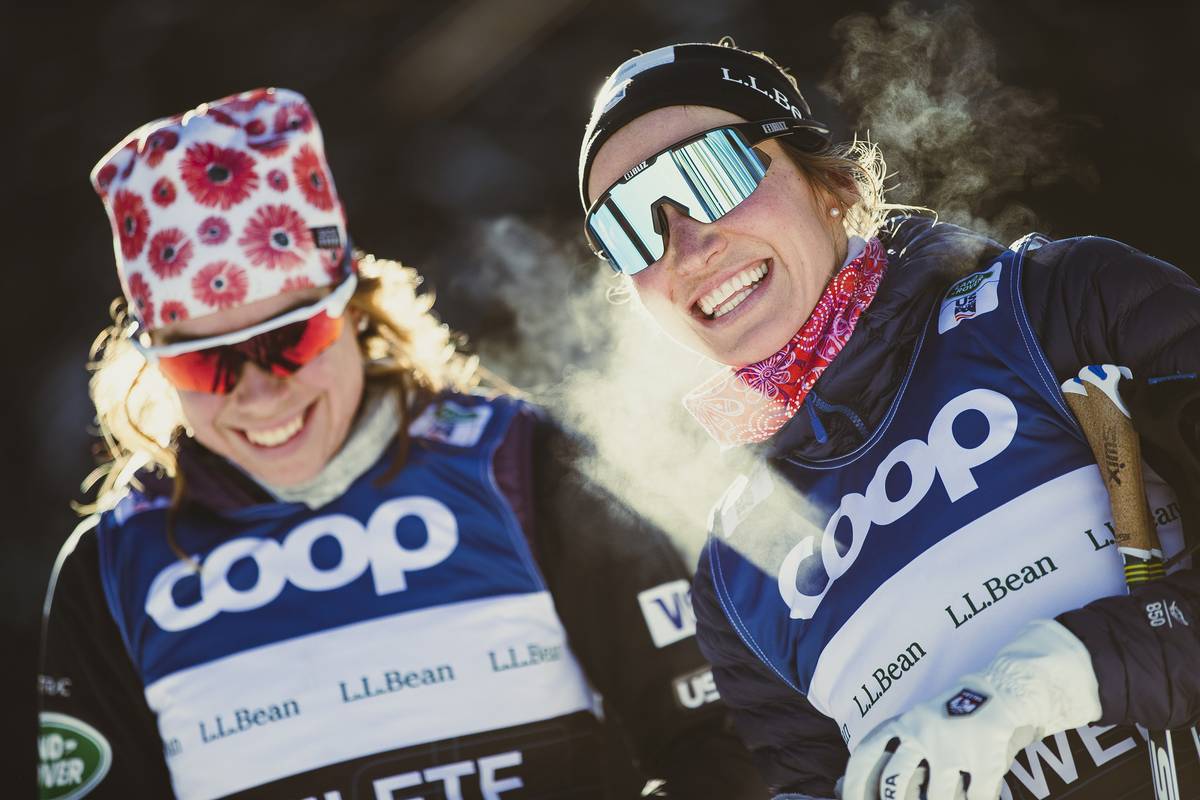
    Sophie Caldwell Hamilton (right) beaming in Toblach, Italy. (Photo: NordicFocus)

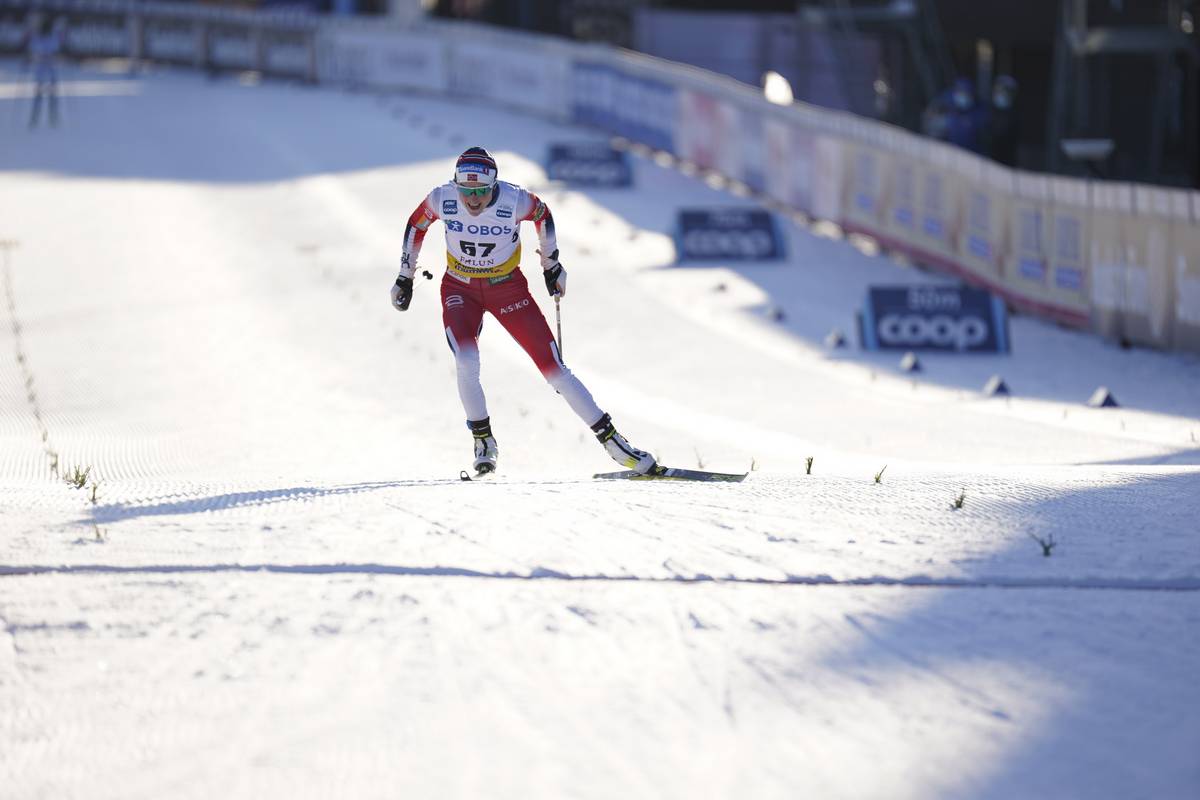
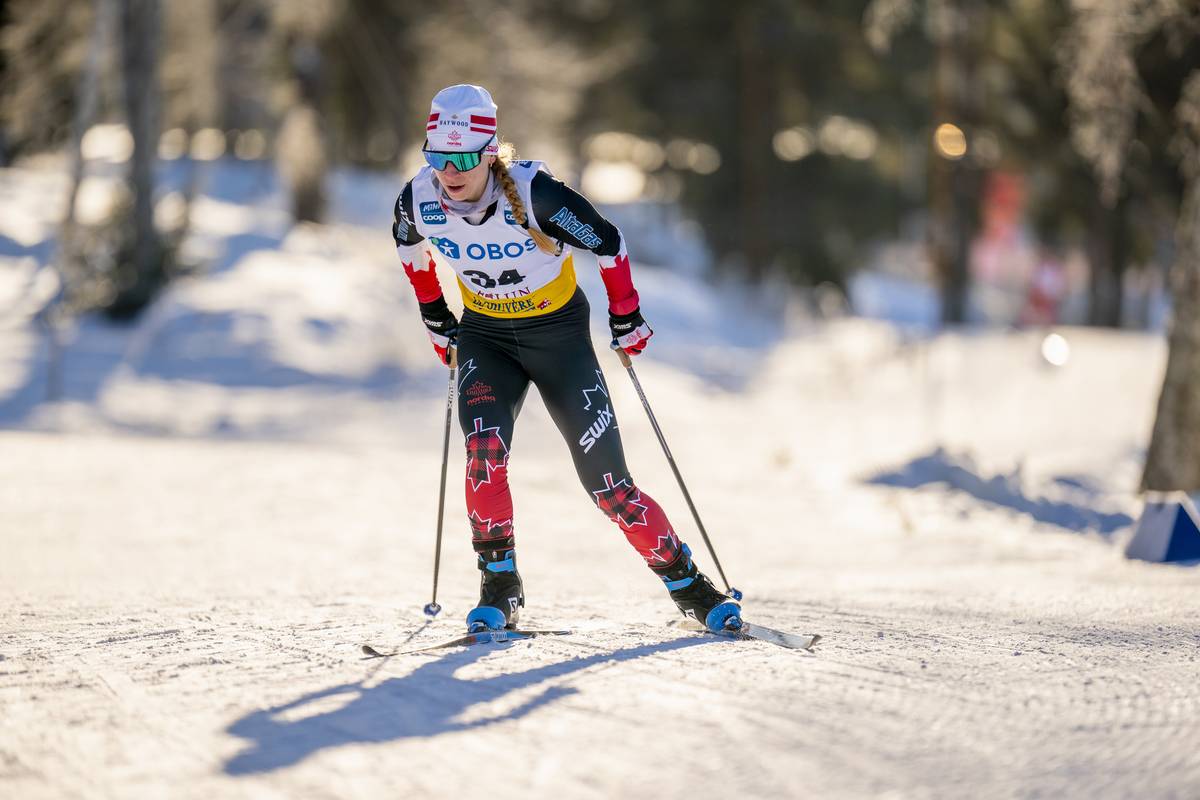
    By the time you read this story, Vermont’s Sophie Caldwell Hamilton will have turned a fresh thirty-one. Her birthday is today, Monday, March 22. Although Caldwell Hamilton began representing the U.S. Ski Team on the World Cup in Québec City in 2012, she is profoundly Green Mountain State. Raised in Peru, Vermont near where she later attended the Stratton Mountain School, we’re pretty certain that, in a metaphorical sense, she bleeds maple syrup. As much as she has been the object of our European cross-country ski racing coverage for nearly a decade, she is a Vermonter. She graduated from New Hampshire’s Dartmouth College, we’ll let that slide, but it’s only a sprint finish few hundred meters across the Connecticut River from Vermont. Post-college, she trained with the SMS Elite team with the likes of Jessie Diggins, and husband Simi Hamilton.

    As we begin this close-out piece regarding Caldwell Hamilton’s retirement, which she announced March 11th as she was quarantined in Engadin, Switzerland, we’ll begin with the race stats. According to the modern FIS database, Caldwell Hamilton is one of five U.S. women to have won a World Cup race. Alison Kiesel (formerly Owen-Spencer) won the inaugural women’s World Cup event in December 1978 at Mount Telemark in Wisconsin. Kikkan Randall broke her ground by initially winning in 2007. Caldwell Hamilton first won in 2016, to be followed by Diggins that same year. Rosie Brennan posted her first World Cup victory this season. That, when considering the women’s team has headlined the U.S.’s cross-country media coverage for a decade, is rarefied ground.
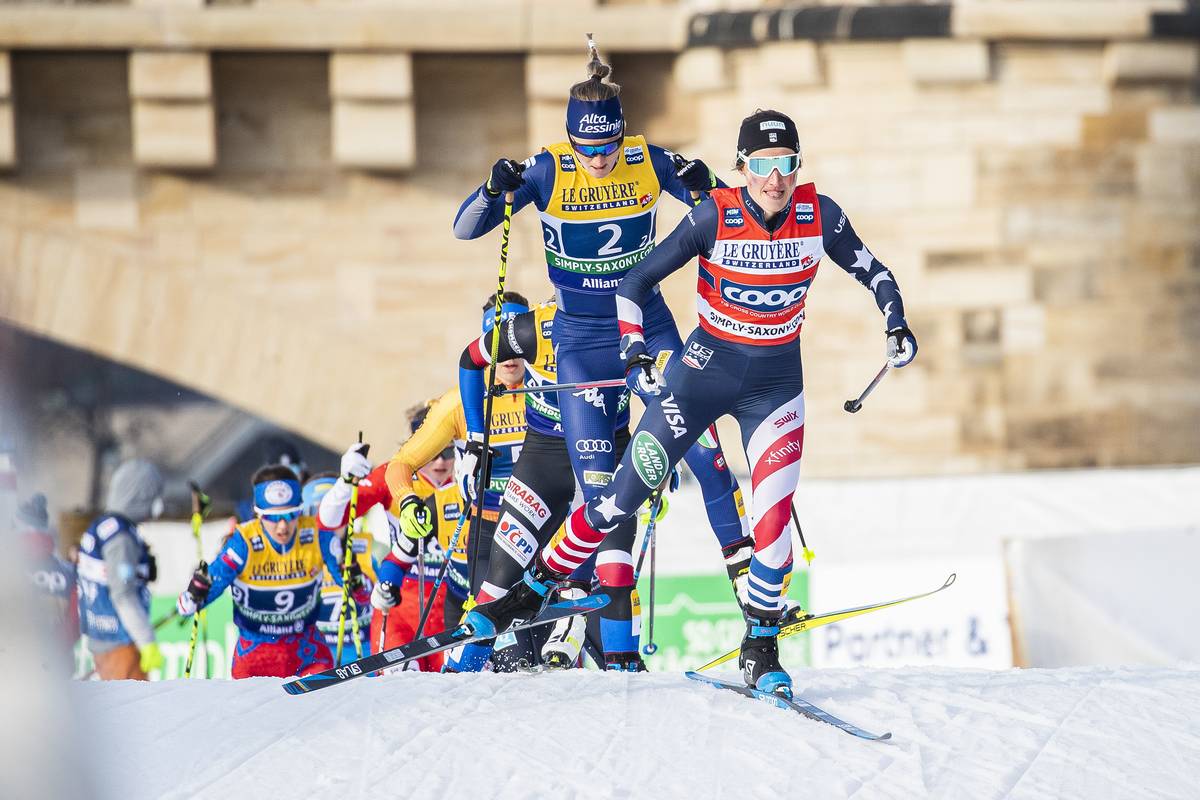
     

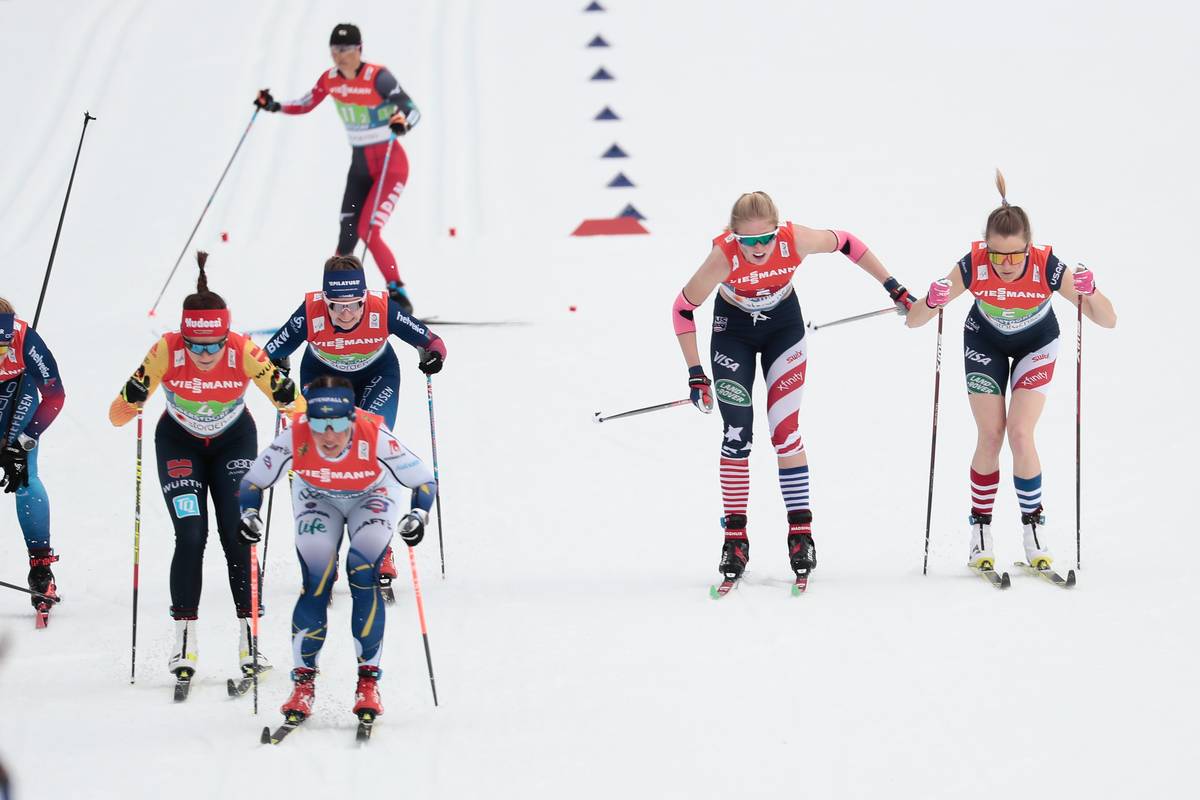
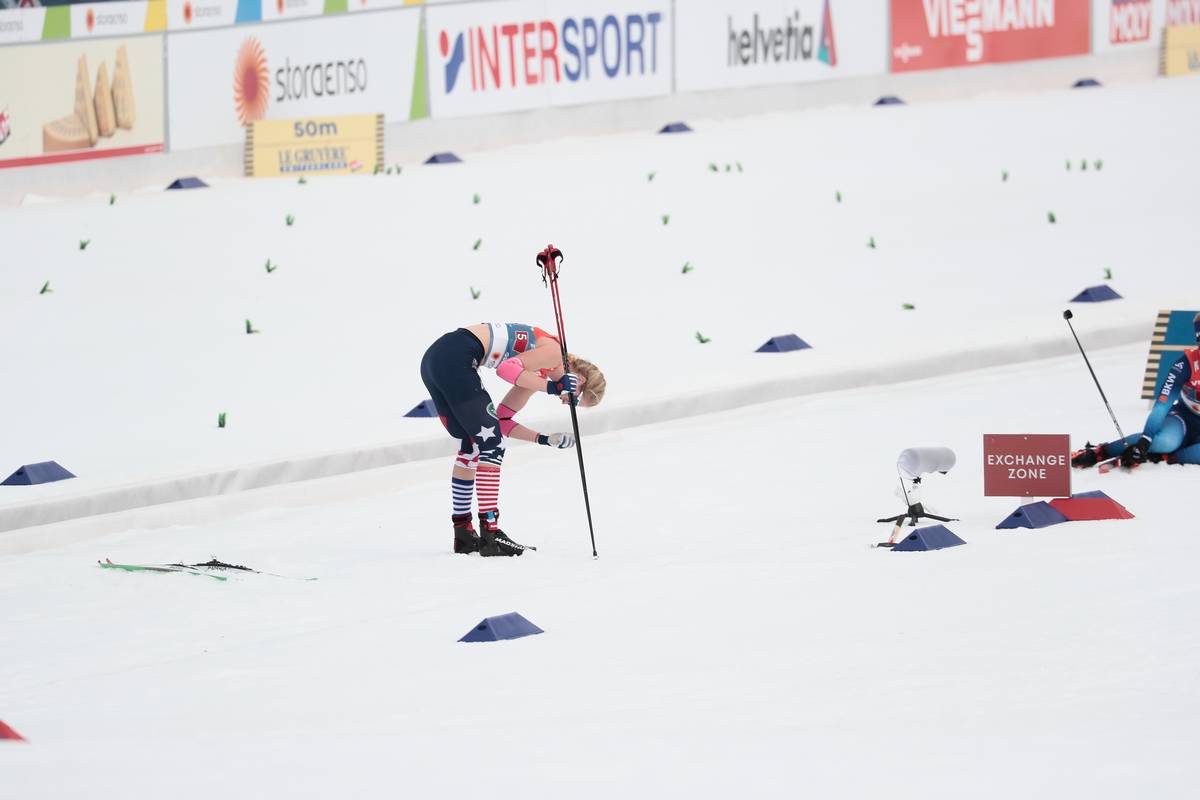
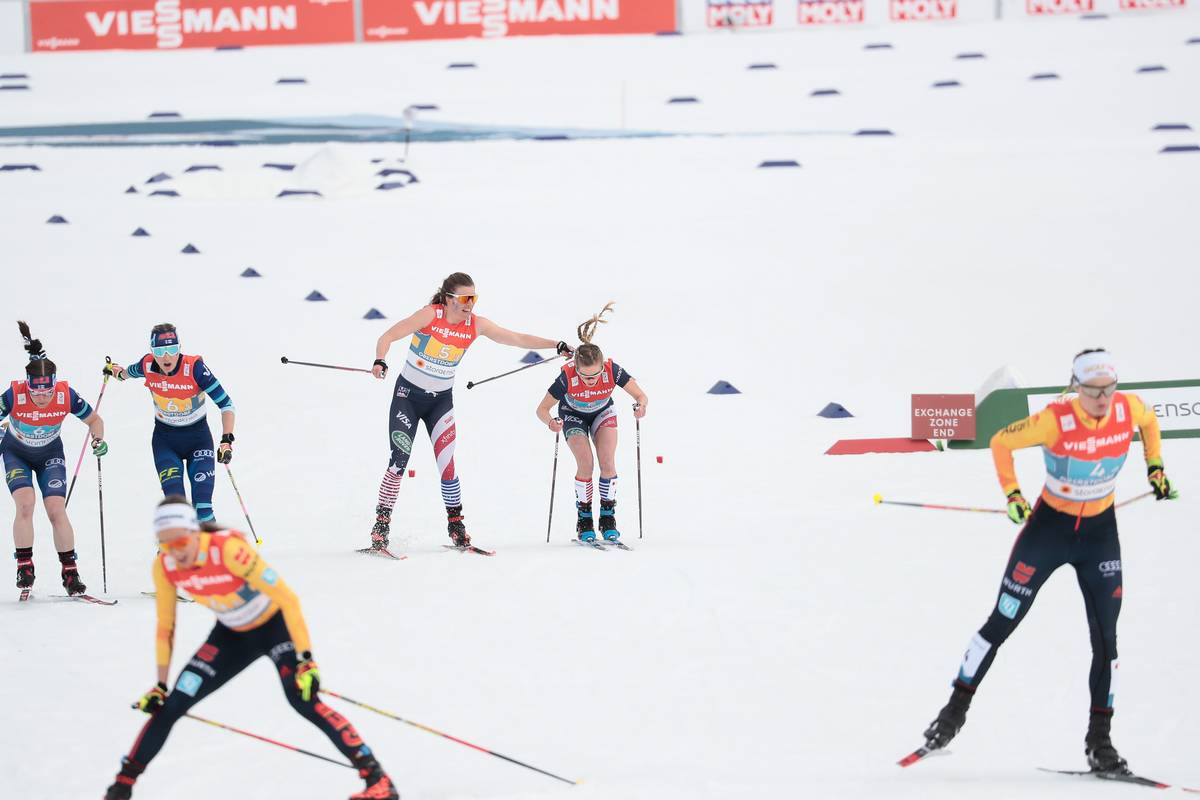
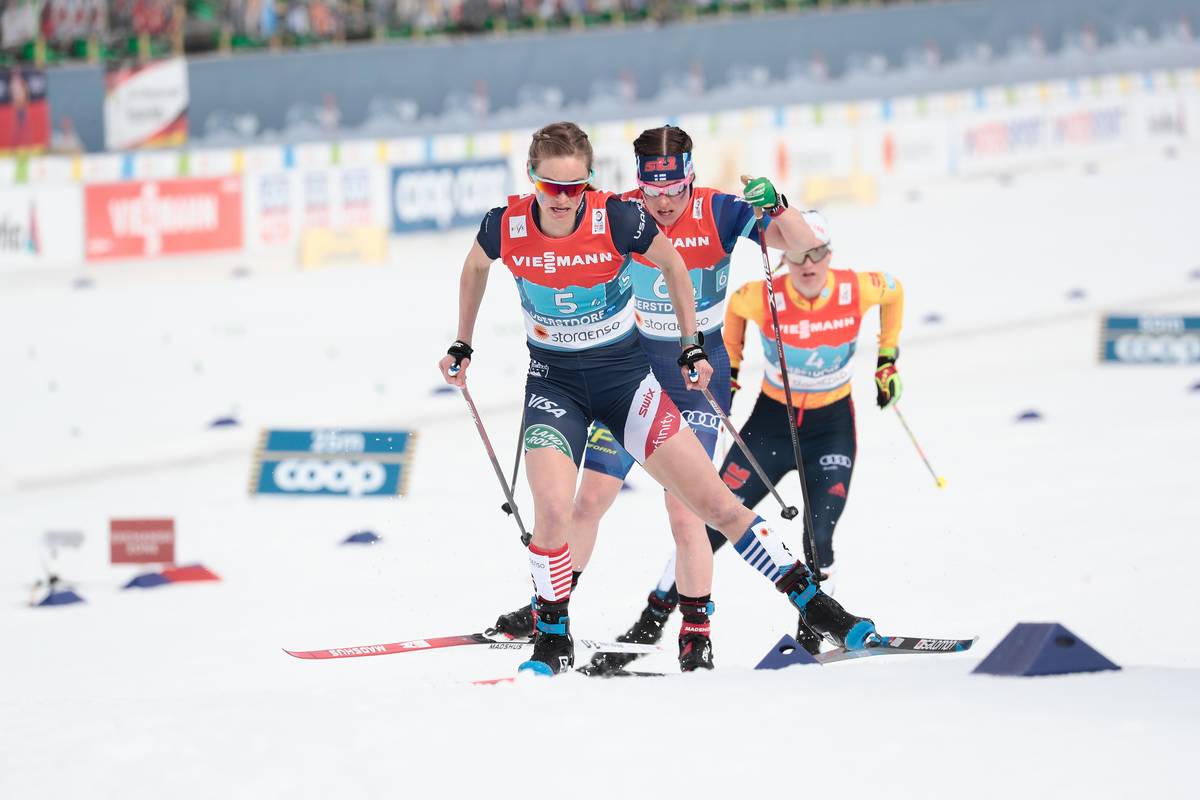
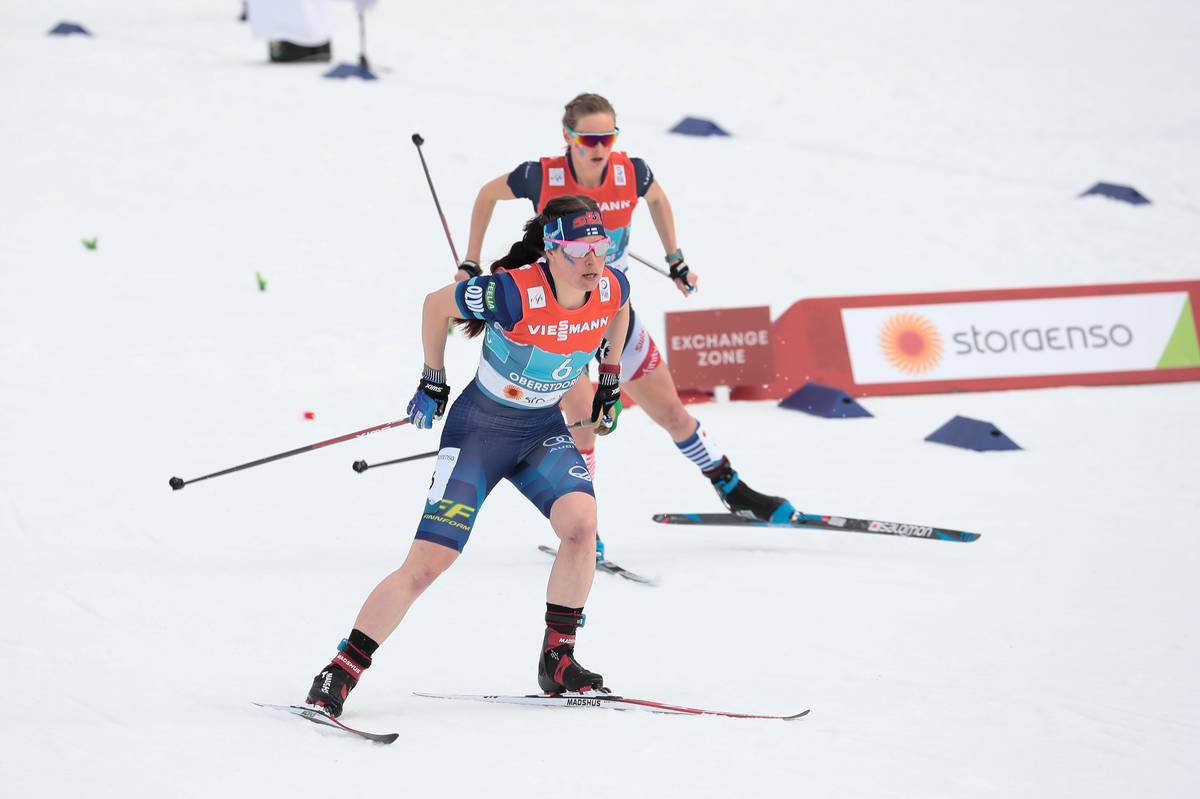
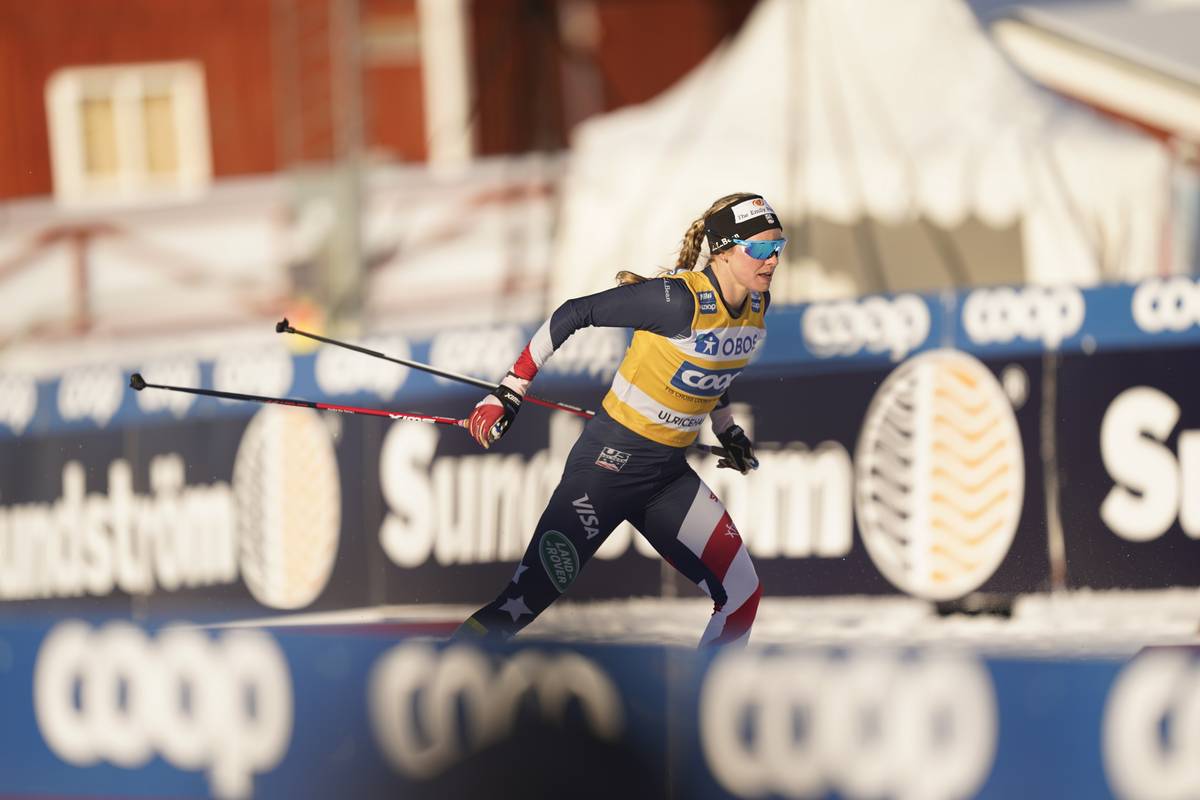
    Caldwell Hamilton during the 2021 Dresden, Germany team sprint. (Photo: NordicFocus)


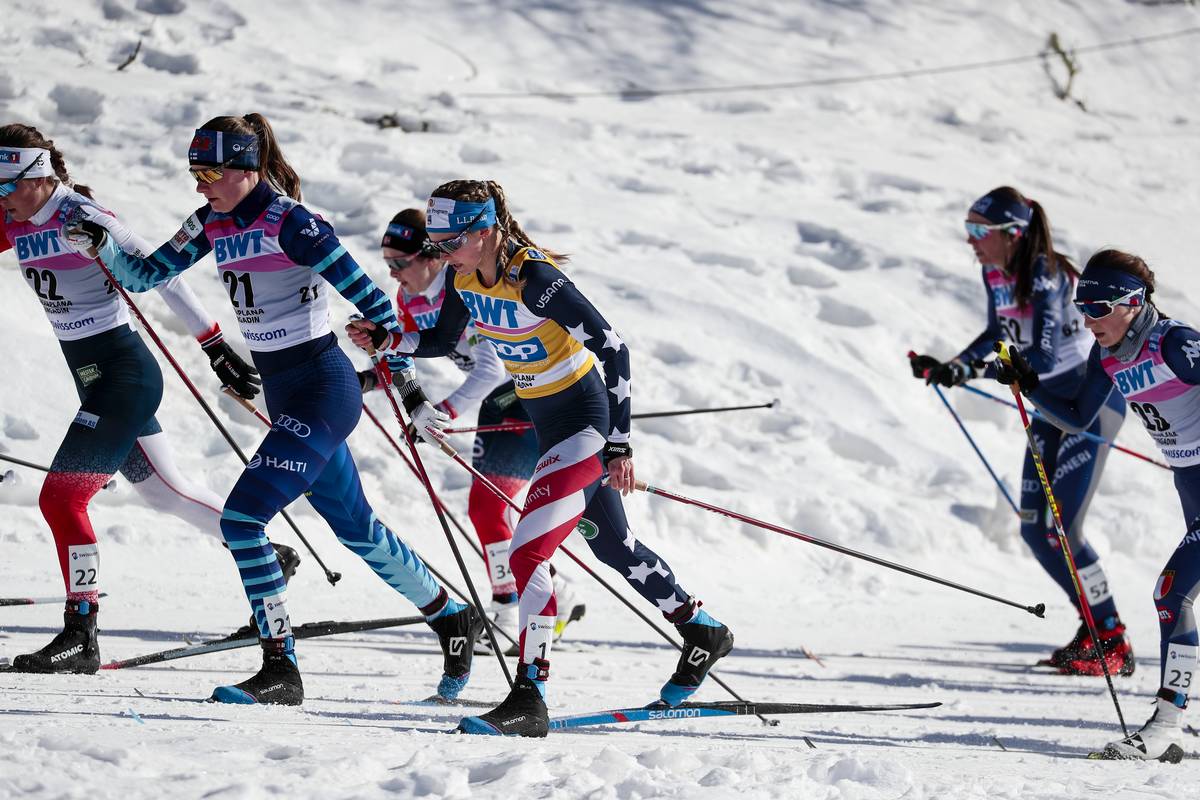
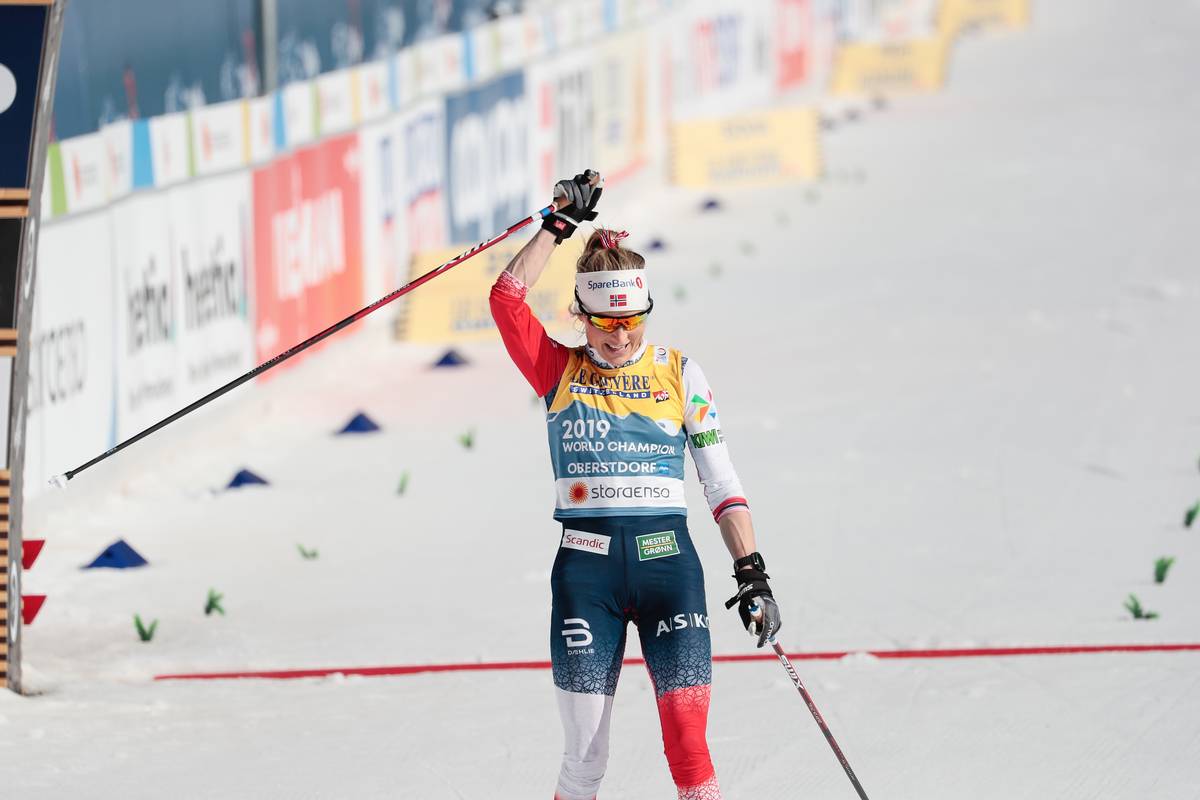
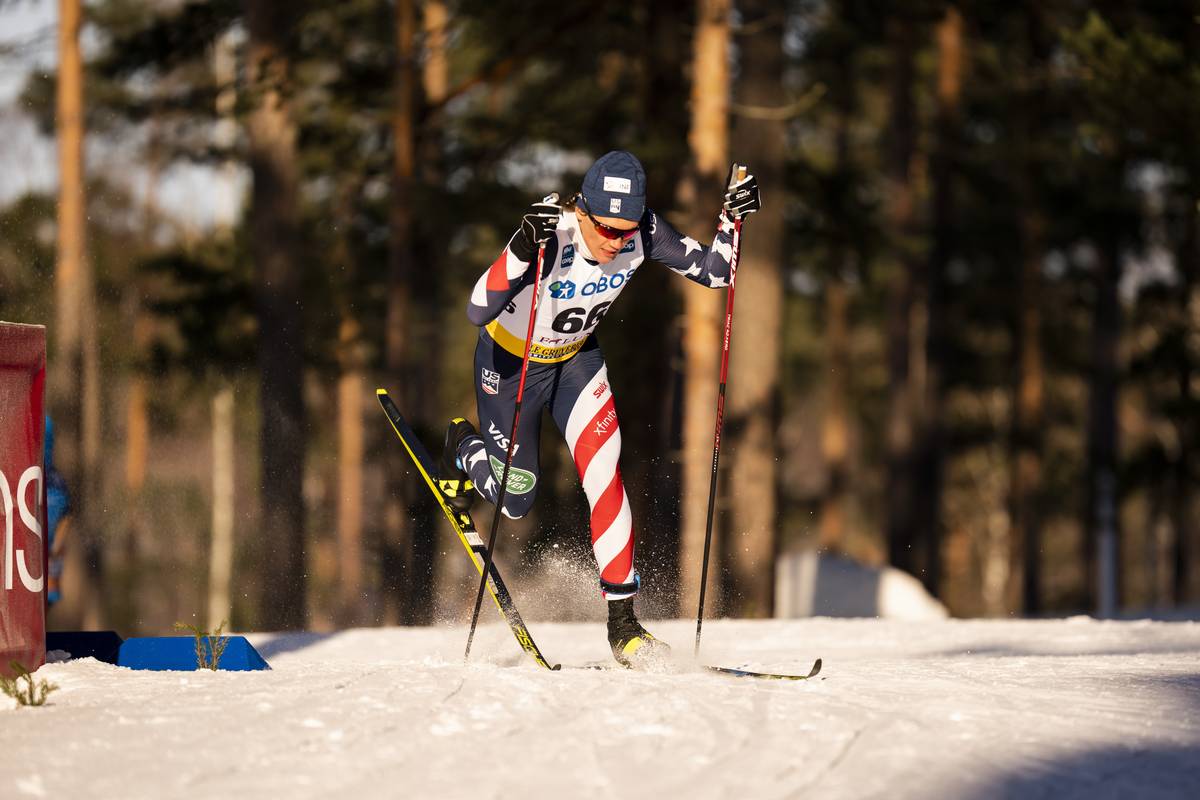
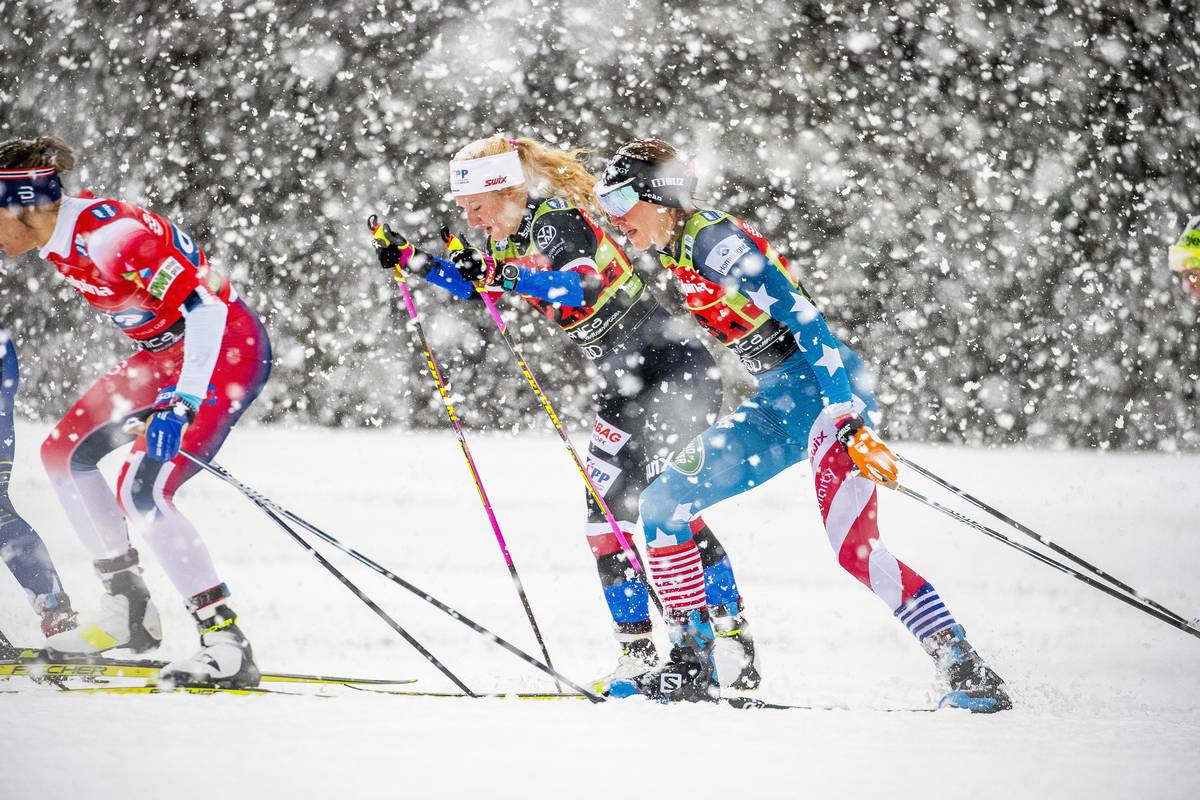
    Caldwell Hamilton racing Planica, Slovenia, 2019. (Photo: NordicFocus)


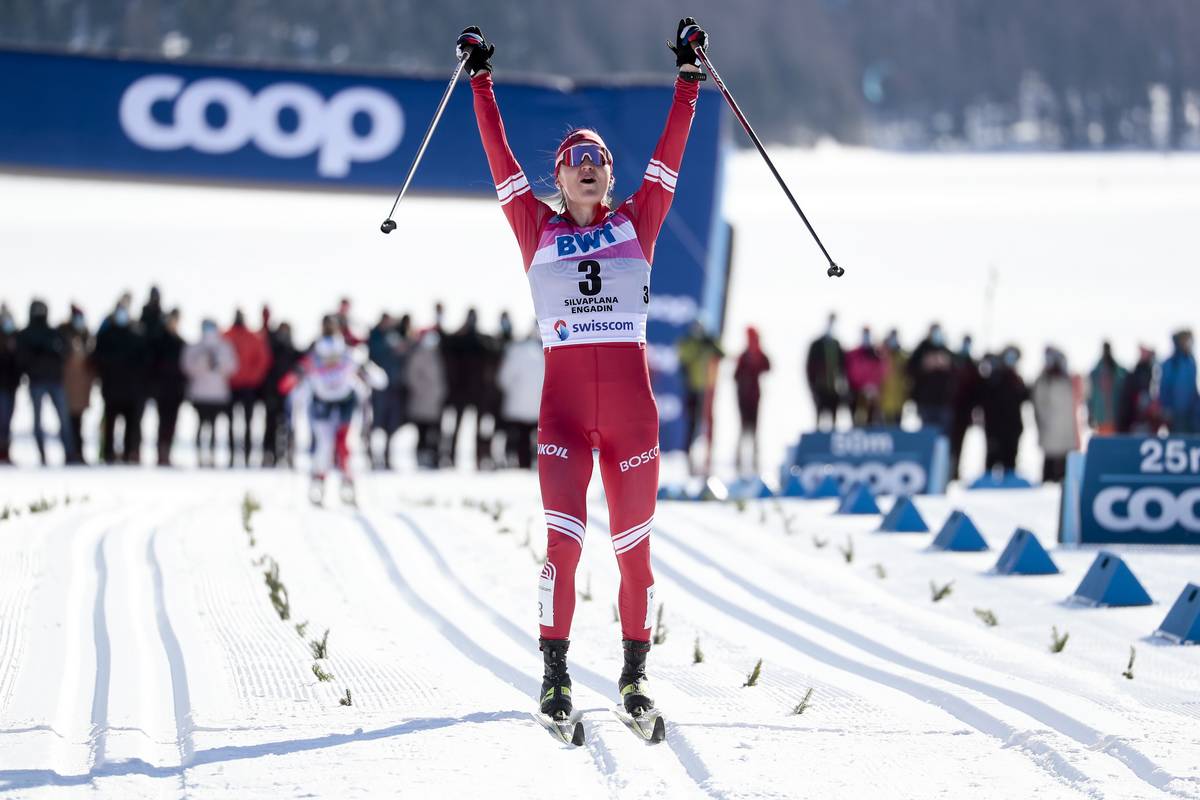
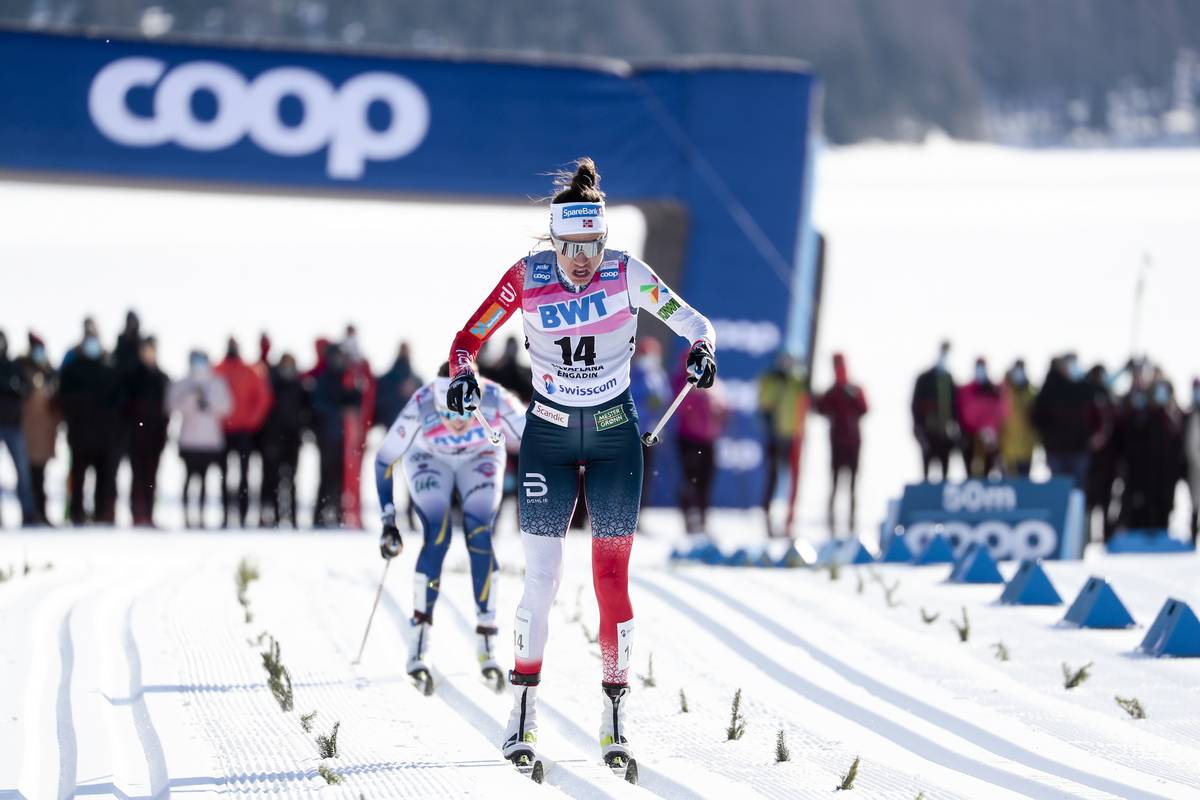
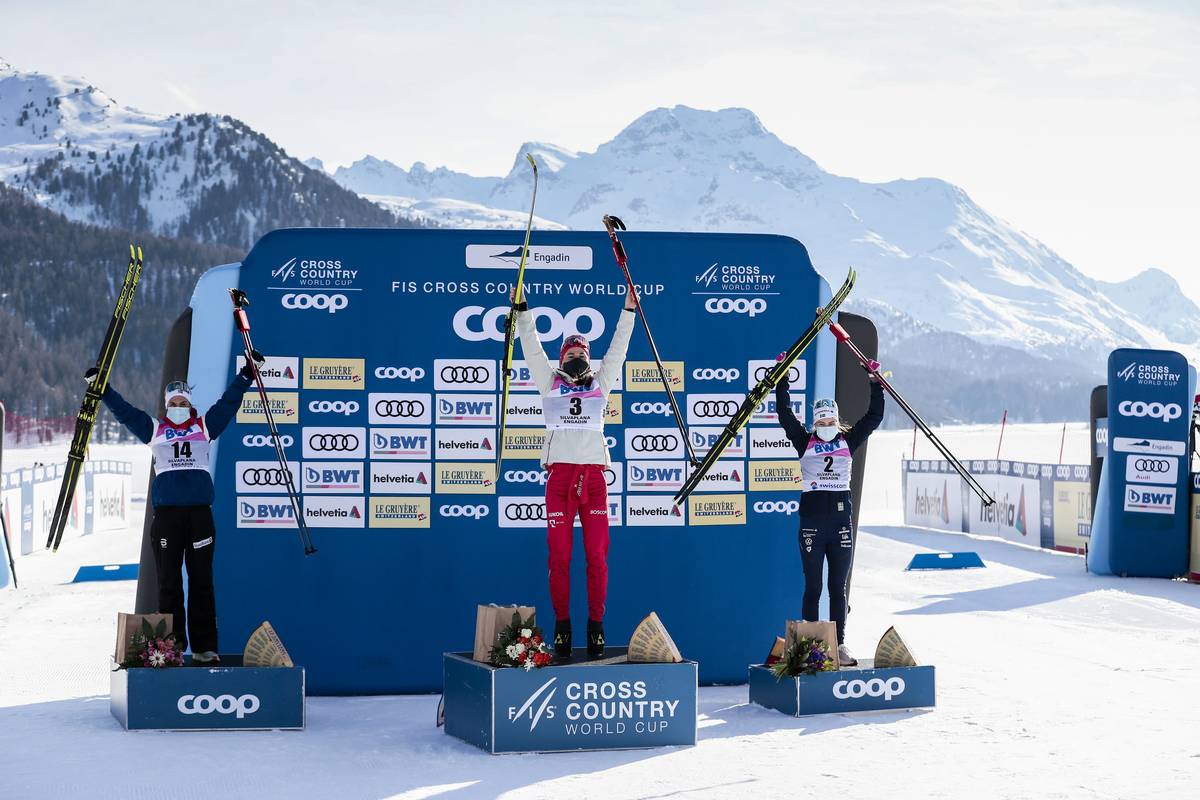
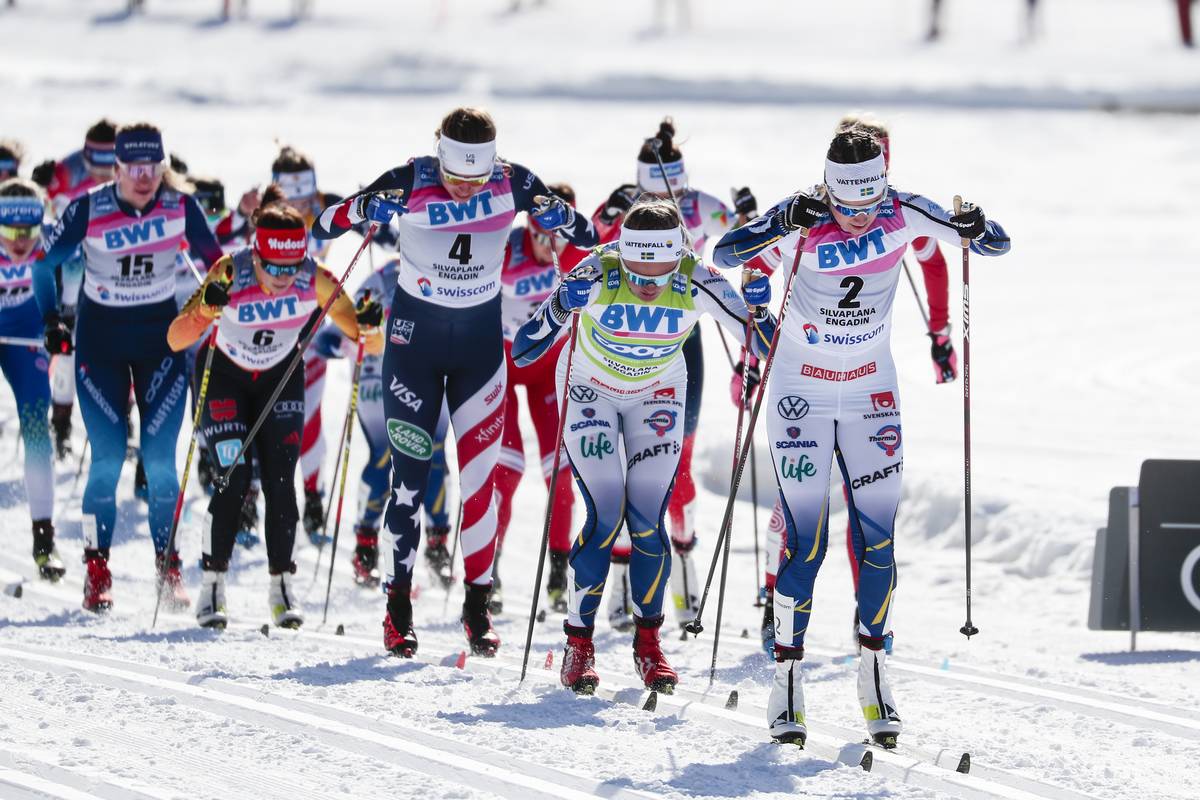
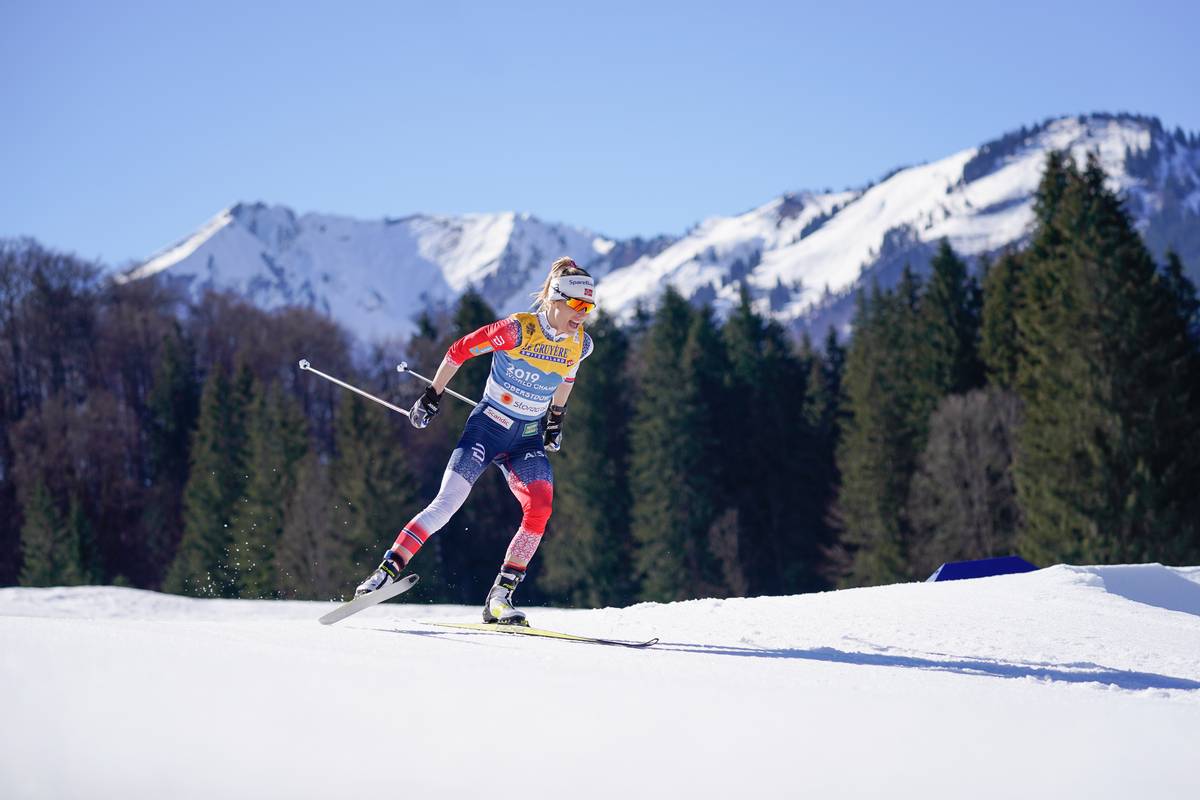
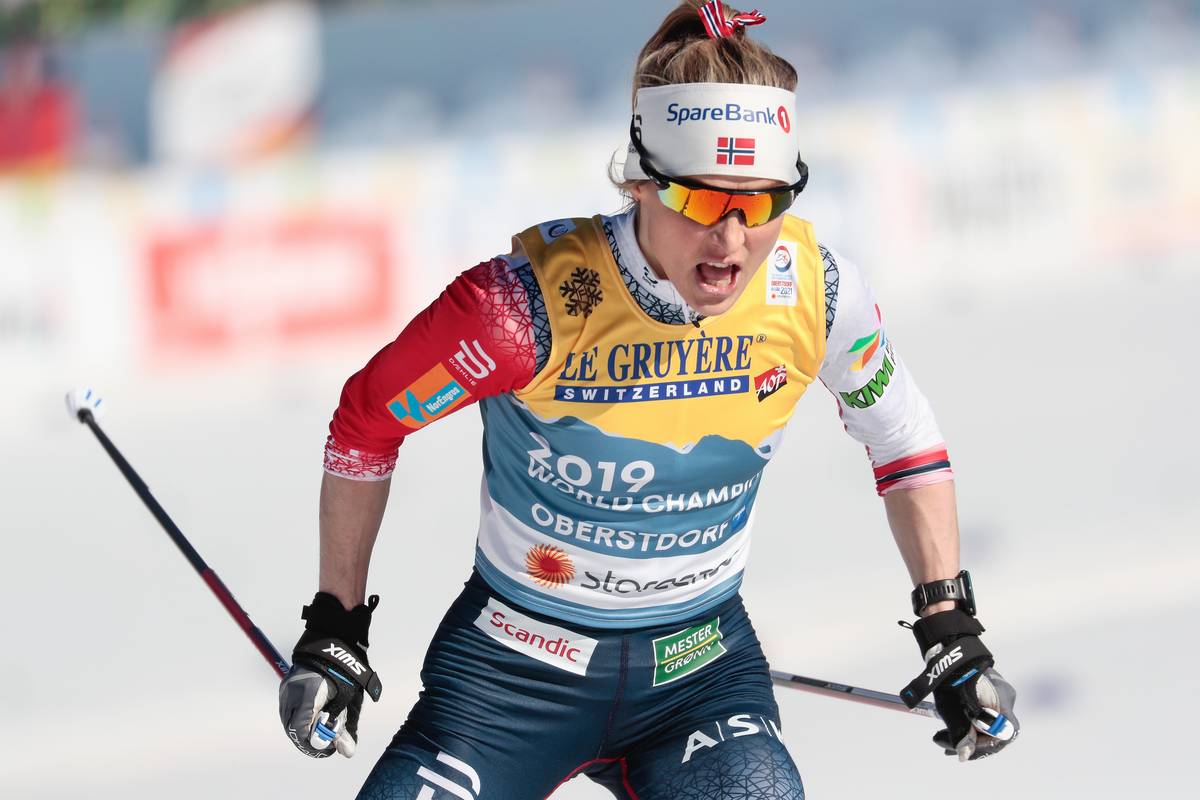
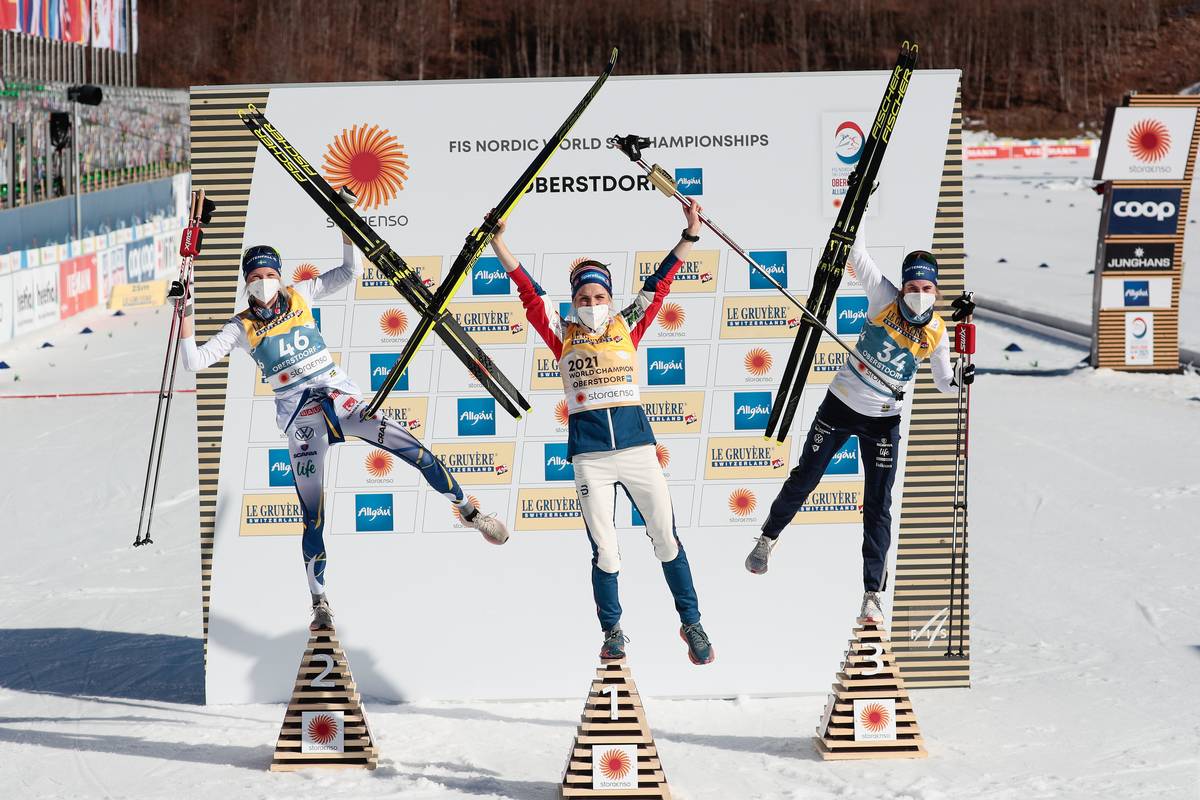
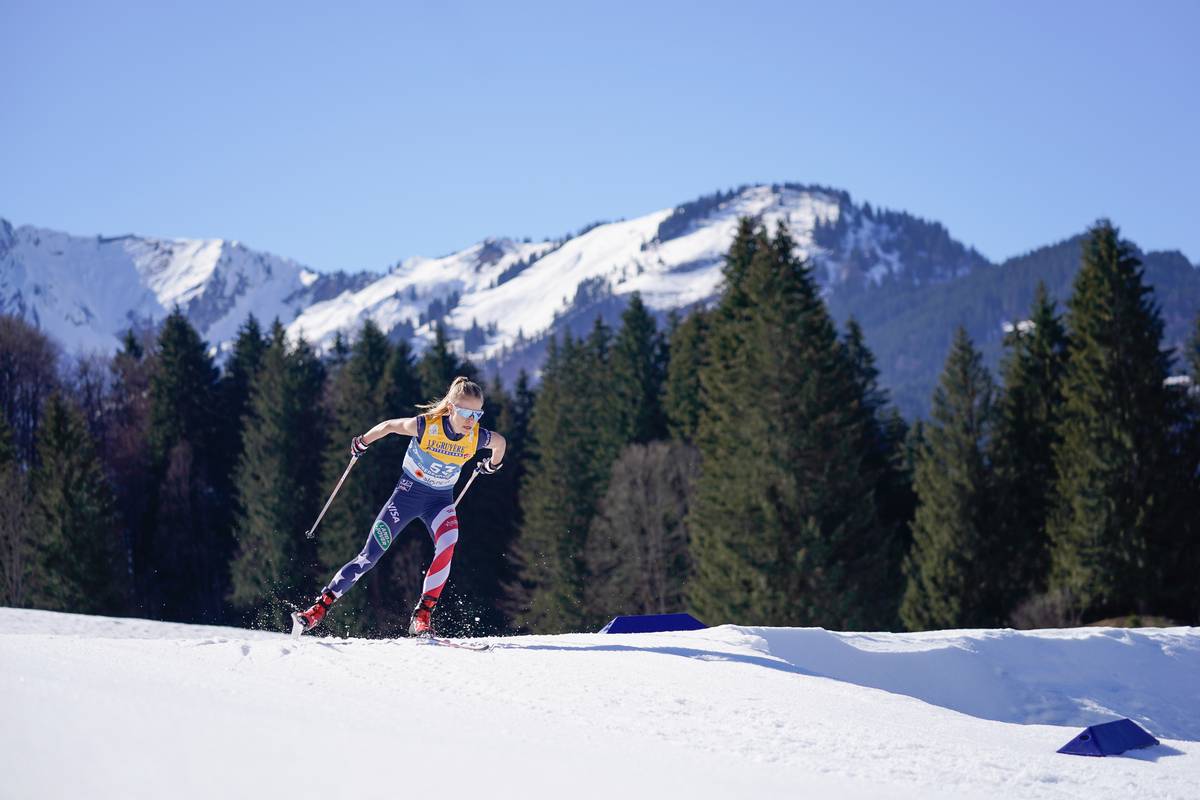
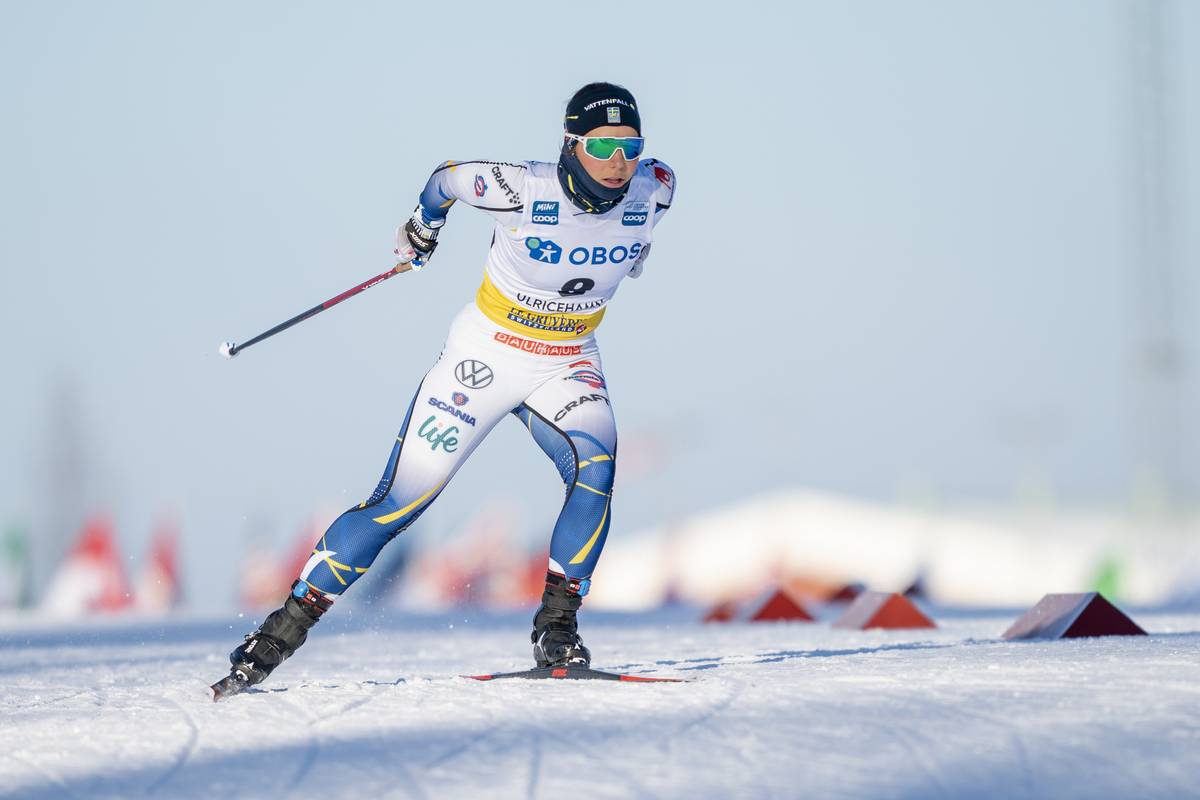
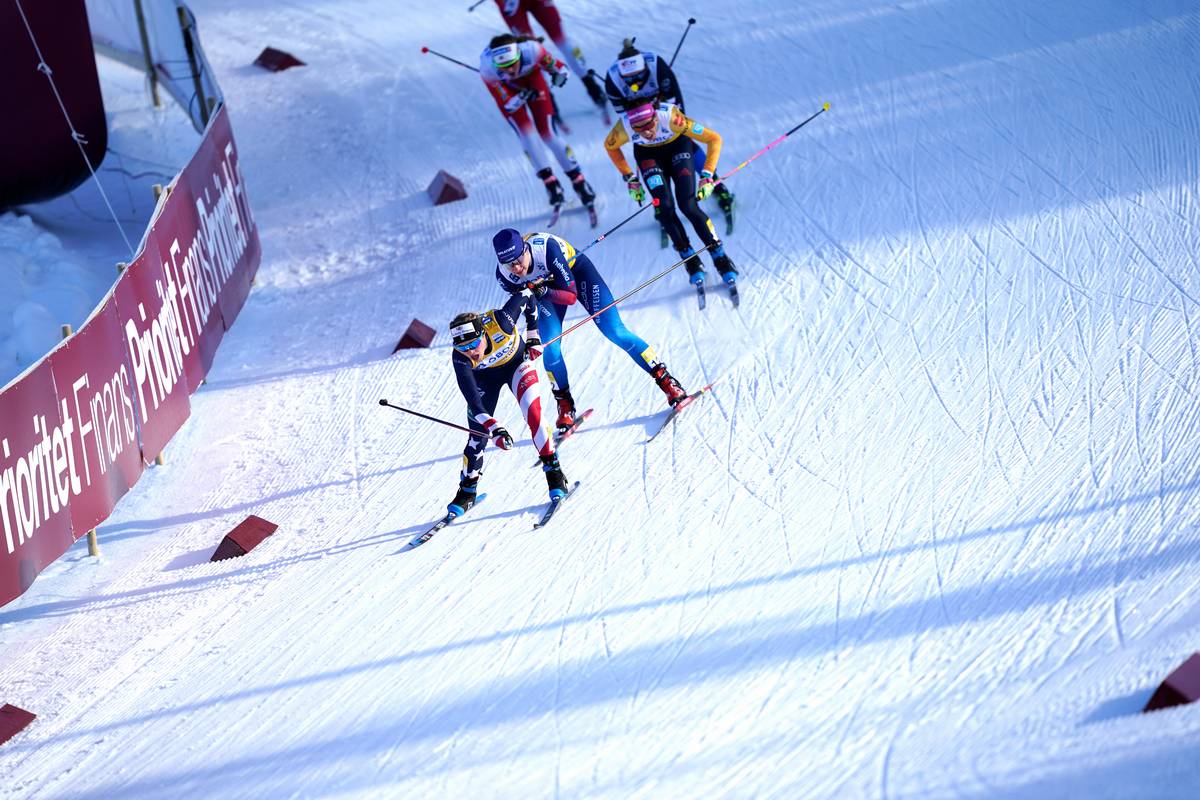
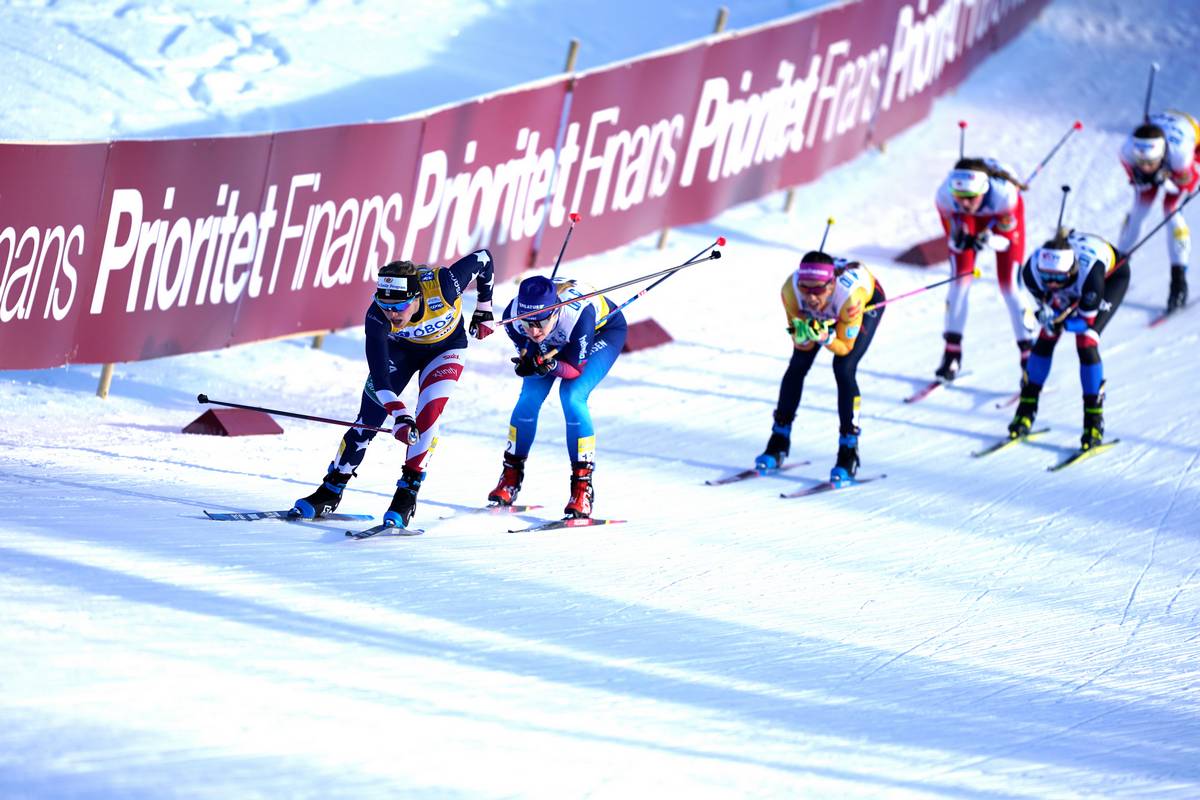
    Caldwell Hamilton won two World Cup sprints, one in Davos the other in Oberstdorf. Over her World Cup career, during which she was a feared sprinter, she advanced to 16 sprint finals for four fourth places, and 10 podiums. She notched five second-place finishes, three third-place finishes, and the two aforementioned wins.

    At the 2014 Olympics she placed sixth in the skate sprint, and eighth in the 2018 Olympic classic sprint. Her top result at the World Championships was sixth place in the 2017 Lahti, Finland skate sprint.
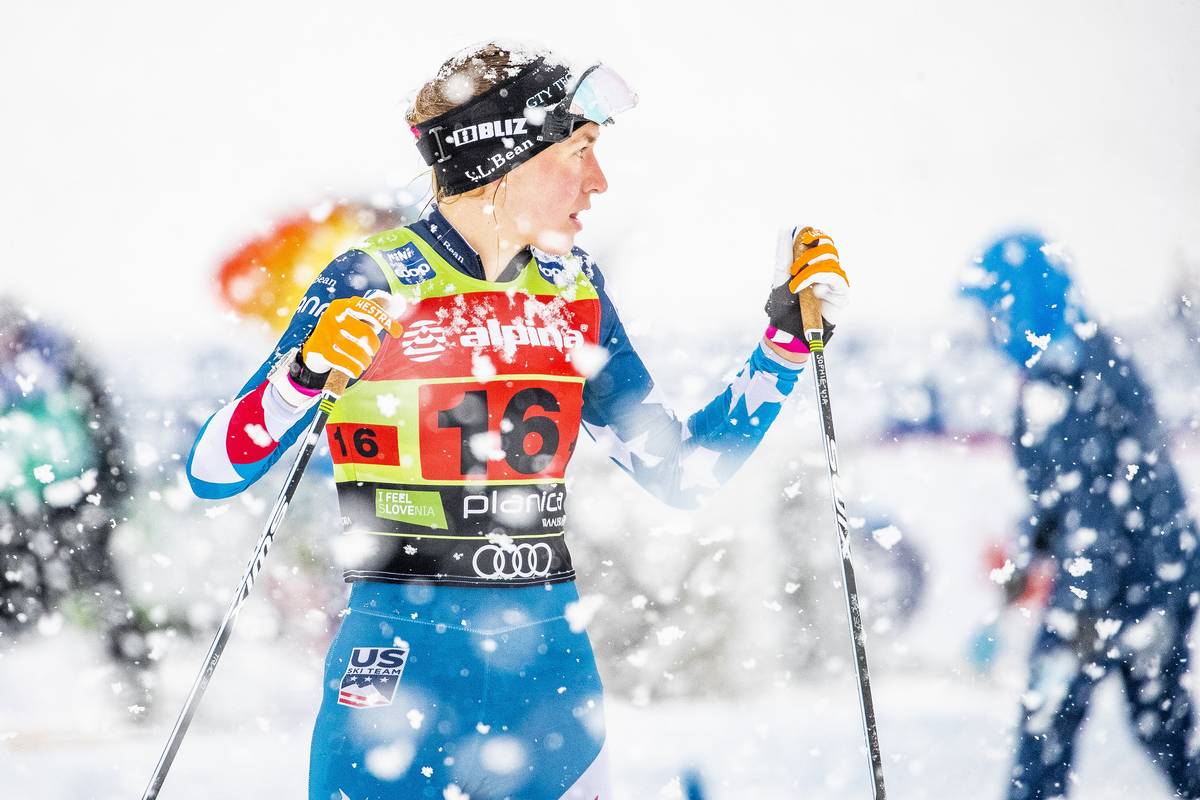
     

    Sophie Caldwell Hamilton in Planica, Slovenia, 2019. (Photo: NordicFocus)


    From a consistency standpoint, Caldwell Hamilton shined. In 2014 she was ranked eighth overall in the sprint standings. That was followed by a 20th, seventh, eleventh, third, fourth, sixth, and tenth this season considering her career World Cup sprint rankings.

    Compartmentalizing her as a sprinter isn’t totally accurate either. This is the World Cup after all. She ranked in the top-30 in the distance standings five times. In 2018 when she was third overall in the sprint cup, she was 19th in distance.

    She was also part of a 2016 second place 4 x 5-kilometer relay team with Sadie Maubet Bjornsen, Liz Stephen, and Diggins. That result was repeated with a Caldwell Hamilton, Maubet Bjornsen, Brennan, and Diggins quartet in 2019. Caldwell Hamilton placed third twice in the team sprint, both times paired with Ida Sargent, in 2017, and 2018, respectively.

    Her technique, wholly refined, was smooth, the angles perfect, and at times, crushingly powerful. She raced sprints with smarts, knowing her capacity was not her ace card. But damn, could she toe at the line. A mix of old-school Nuryev in its grace and the “pow” of Ali.
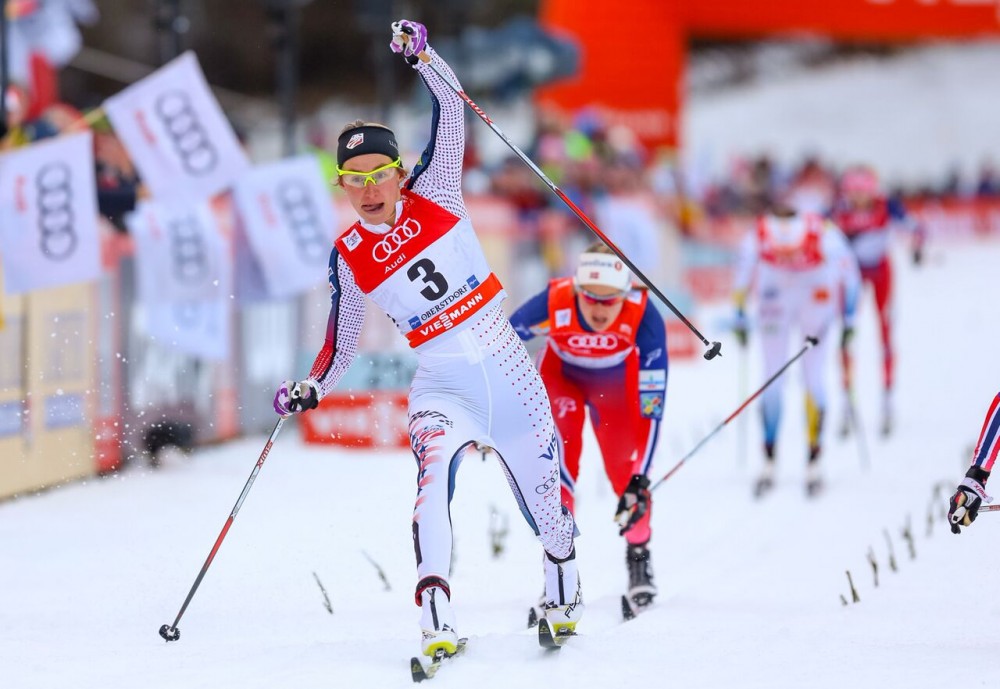
     

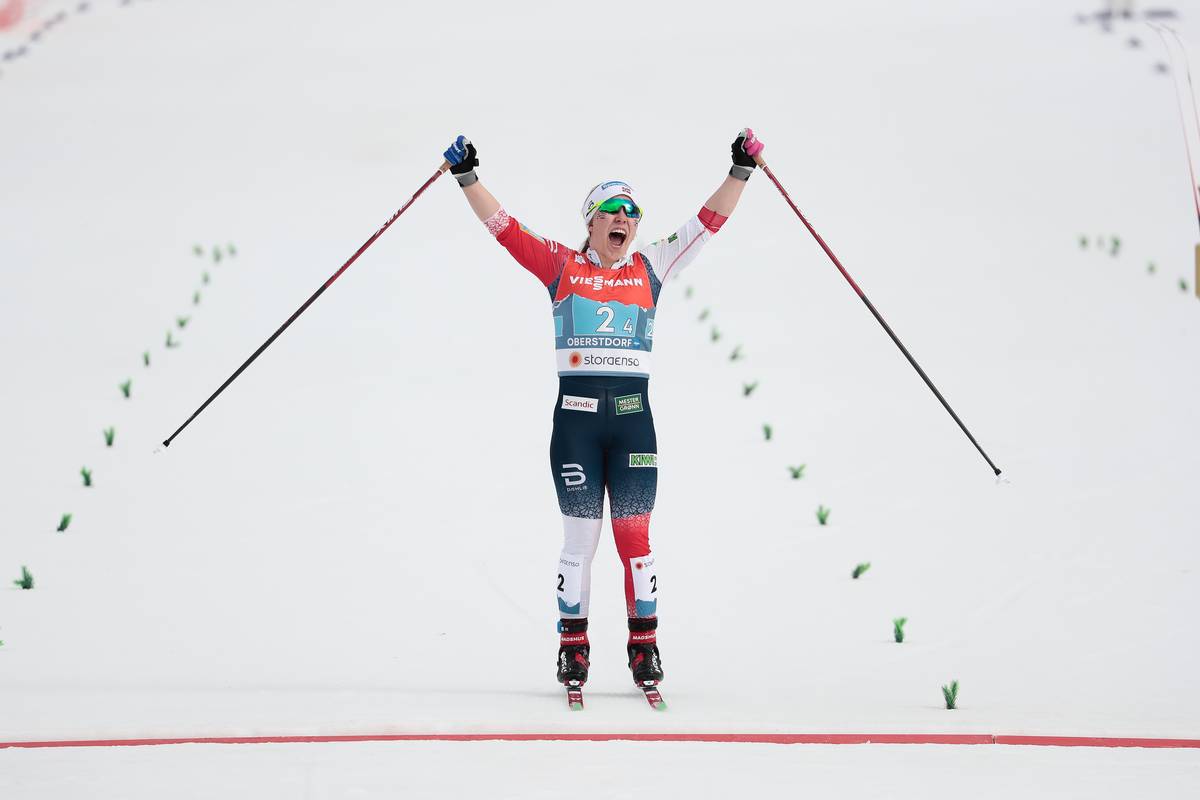
    Sophie Caldwell Hamilton lunges to edge Norway’s Heidi Weng (not shown) for the win at the 2016 Tour de Ski in Oberstdorf, Germany. (Photo: Marcel Hilger)


    We’ve condensed Caldwell Hamilton’s results for roughly 400 words. A much smaller part of this written whole. That is, perhaps, on-point. Although historic in the annals of American cross-country skiing, Caldwell Hamilton’s human qualities, foremost among them, empathy and compassion, may, be her lasting legacy. As much as physical exertion can reveal the core of a person, Caldwell Hamilton’s energy exuded while skiing was revealing. “Serene,” was a word writer Bill McKibben used on several occasions on our podcast recently to describe Caldwell Hamilton as she sped past either in a local Vermont race or the World Cup.

    Her coach at Dartmouth, Cami Thompson Graves, added that Caldwell Hamilton led by example and has inspired. “Sophie has always been a pro when it comes to racing, when she puts on the bib, she knows how to race hard, although she is one of the most graceful skiers I have ever seen so she makes it look easy! I am so glad that she decided to make skiing her career for a while,” wrote Thompson Graves. “How cool is it to see that friendly, young woman who grew up racing in Vermont and New England, who trained locally and helped out at numerous camps in the off season go out there and fiercely compete for World Cup medals. I know she has inspired many, many young women to follow in her footsteps.”

    ***

    I’m going to take a moment to allow longtime U.S. Ski Team and personal coach to Caldwell Hamilton, Matt Whitcomb, fill in some gaps for us with this Q & A:

    FasterSkier: Nugget of wisdom that you have learned and now apply in coaching/life from Caldwell Hamilton?

    Matt Whitcomb: Just because someone says they are okay, and seems like they are okay, doesn’t mean they are okay. Ask again, later.

    FS: Most difficult aspect about Caldwell Hamilton in terms of priming her for peak racing, and how did you navigate that issue?

    MW: This year notwithstanding for Sophie, she’s been easy to peak for championships. The main difficulty with her is maintaining muscle mass when we can’t find good gyms. She needs two good strength workouts per week or she will lack adequate power. Fortunately, she also puts on muscle mass responsively.

    FS: Easiest part of coaching Sophie?

    MW: For me, the most important skill a coach can have is the ability to connect with others. Simi and Sophie are great friends, so that connection—that two-way flow of concern—makes coaching them easy. A hard part of coaching is not knowing the unspoken stresses of an athlete. This stuff needs to be tackled first before any training can take.

    FS: Non-competition personality trait that made the “team” more of a team?

    MW: Sophie makes everyone a better person. Who is the best human I know? I’m not being dramatic; it’s Sophie Caldwell.

    FS: Sophie describes her side of the room as a hurricane. How might this trait manifest as an xc skier?

    MW: The one whose clothes singe on the lamps, and carpet the floors, and whose passport gets lost in the couch cushions, and who might race a semi-final at World Championships on Jessie Diggins’ poles even though they are five centimeters shorter, and who… okay I’ll stop… well, she just needs to be fit and happy on race day. She’s better at adapting in the moment.

    FS: Proudest moment as Sophie’s coach?

    MW: I don’t hang my hat on results, so nothing really jumps out there. That they raced into their 30’s is my proudest accomplishment for them. Many good athletes in the U.S. quit in their early 20’s before they had a chance to bloom. I’m also feeling proud of the way they handled their quarantine during their intended last World Cup races, which should’ve been a week-long celebration of their ski careers. (As I write, they successfully boarded and are on a plane home.)

    FS: I know Sophie and Simi, who is also retiring, consider you a close friend. How did you balance that when coaching her? How did that enrich the experience?

    MW: I don’t subscribe to the you-can’t-be-friends-with-athletes rule when it’s adults coaching adults, but that only works if you can maintain your ability to get tough from time-to-time. We’ve been through some hard personal times together, and it hasn’t always been just me supporting them. I ski coach because I like to ski, and because I like to connect with people. Sophie and Simi are two of the people I credit for me still loving my job after so many years.

    FS: Sophie’s lasting legacy when it comes to team culture?

    MW: For Sophie, everyone—except those who lack empathy—are good enough for her. It doesn’t matter who you are; Sophie Caldwell will ski with you, or sit with you at lunch. She will not judge you, and her departure will expose us. We’ll need that role filled in, and I have a couple of safe guesses on who it will be.

    ***
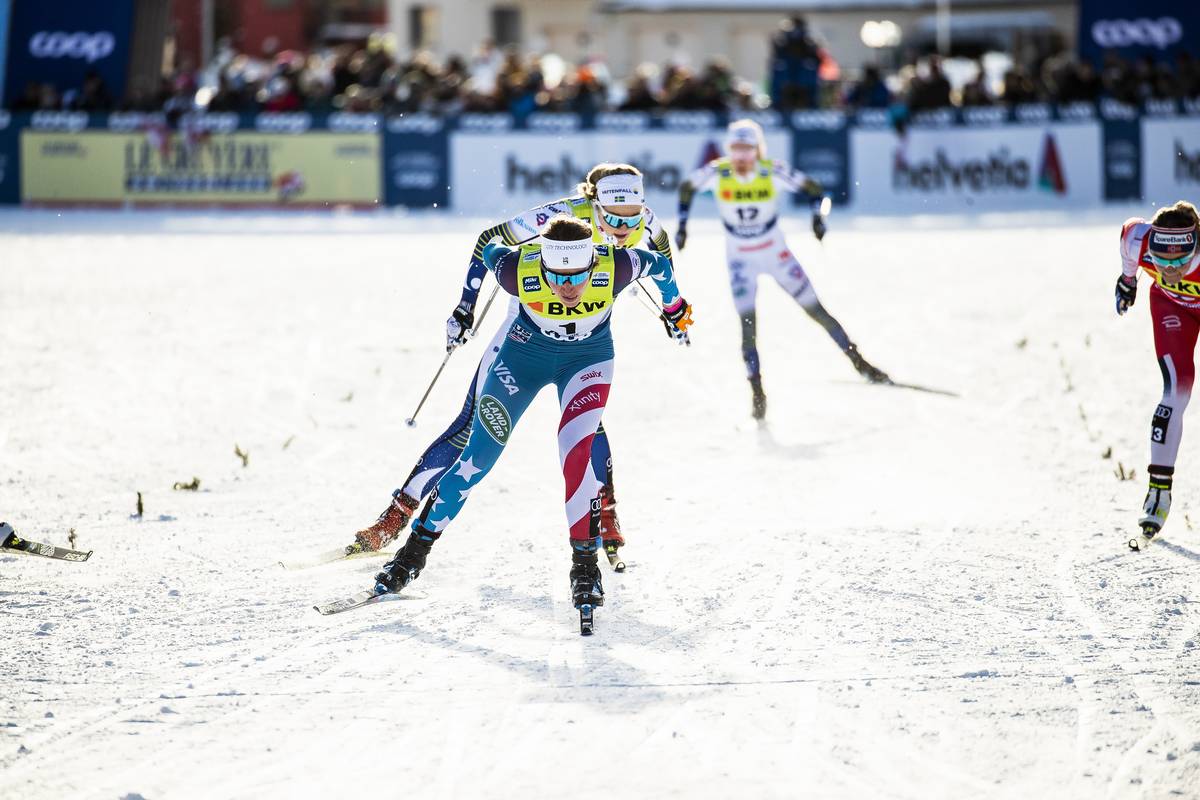
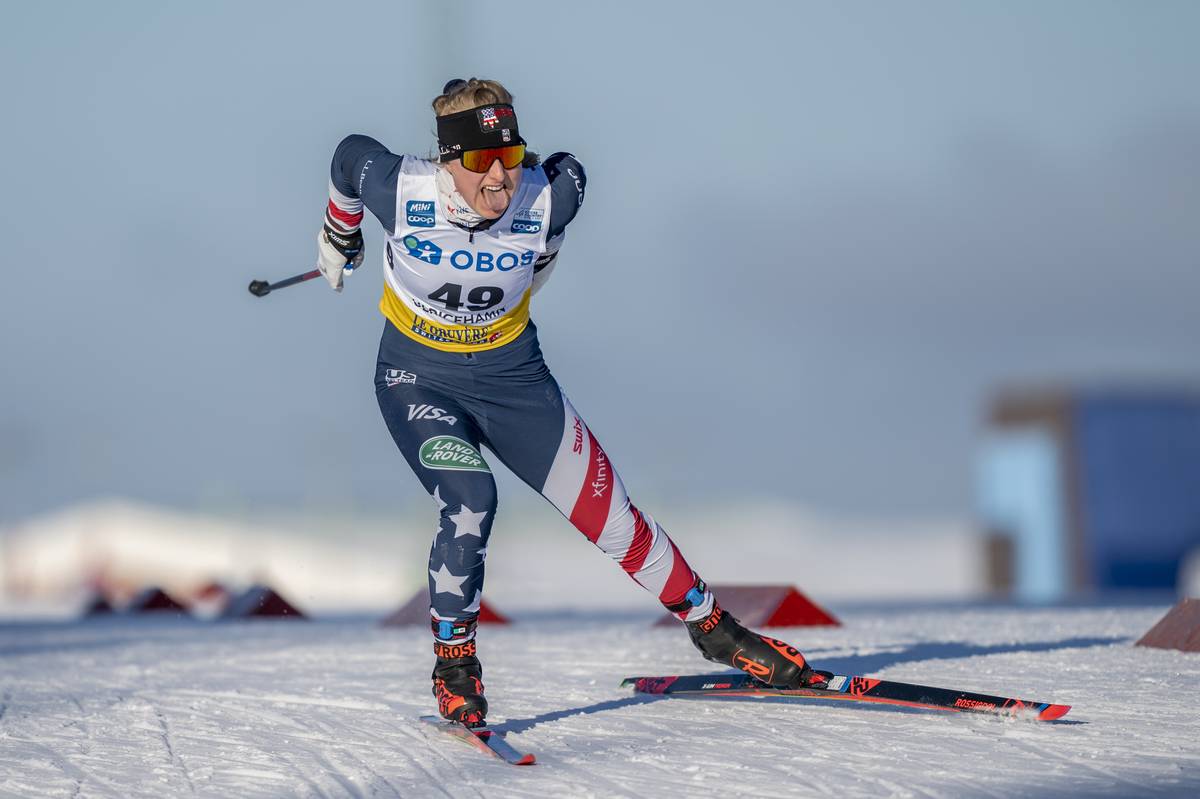
    In her element. Sophie Caldwell Hamilton in the 2019 Davos, Switzerland skate sprint. (Photo: NordicFocus)


    Devon Kershaw, a former Canadian skier who knows Caldwell Hamilton from the World Cup, commented in a recent podcast that Caldwell Hamilton had a rare type of leadership skill set. “The leadership qualities of Sophie that might not shine through to those who are not so close to the project, she has this quiet confidence that I have not seen by many athletes in my career,” said Kershaw. “Not only that, she is incredibly kind, she is incredibly caring, she doesn’t take up a lot of space, which you might think, ‘Is that good or is that not good?’ But when you think about it, you are traveling the world for months on end, having someone so kind, so caring, who doesn’t take a lot of real estate, but when she talks, when she says something, everyone listens.”

    There is also the real person, non-ski racer side to Caldwell Hamilton. A little FasterSkier mining reveals these nuggets from Caldwell Hamilton: “I was bald until I was 2!”; “I grew up with two Dalmatians named Daisy and Douglas. They were around my age, so I thought I was a dog for the first couple of years of my life.”
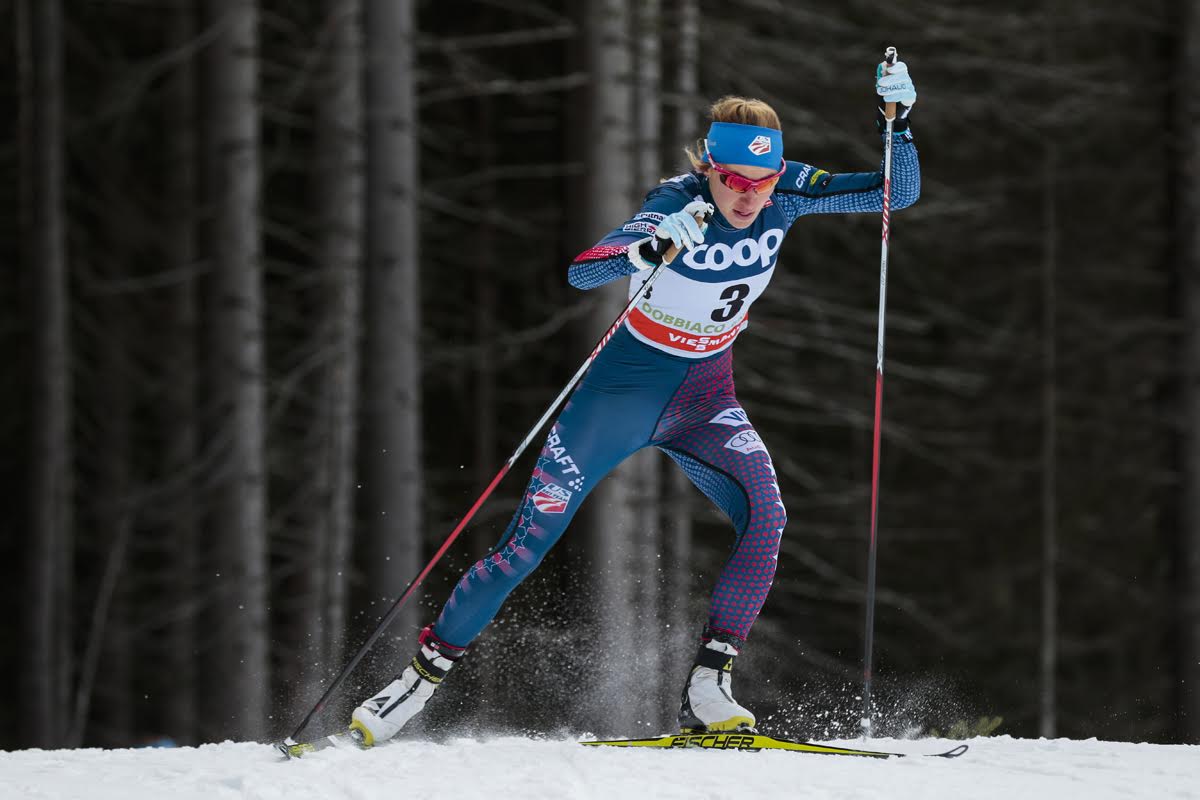
     

    Sophie Caldwell Hamilton racing in Toblach, Italy in 2015. (Photo: NordicFocus)


    First on skis at 10 months old, her confidence on dicey downhills and hunting podiums is masked by an endearing self-effacing quality. “I was probably the last person who woke up this morning and thought this would happen,” Caldwell Hamilton told FIS in a post-race interview after her first World Cup win in 2016. “I’m thrilled.”

    Thrills, by definition, are fleeting. We’ll explore more about that with Caldwell Hamilton in the interview that follows. We conducted this lightly edited interview with Caldwell Hamilton last week as she was concluding her mandatory 10-day quarantine in Switzerland after testing positive for Covid-19 one day, and negative the next. Either way, the Swiss keep it tight. Despite several negative tests and no symptoms, Caldwell Hamilton missed the final weekend of World Cup racing. She has subsequently returned to Vermont.

    ***
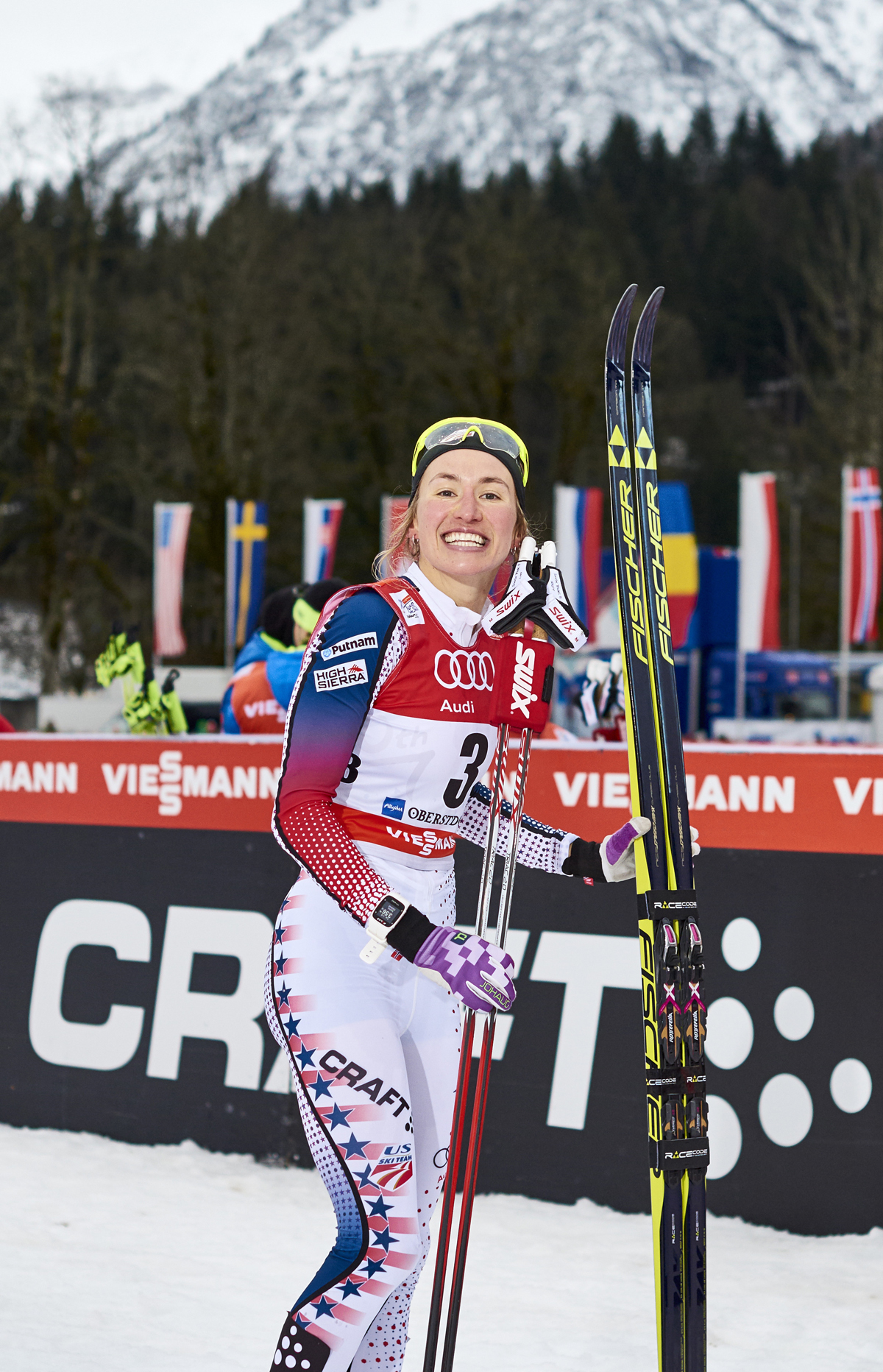
    Sophie Caldwell Hamilton after her first World Cup win. (Photo: NordicFocus)

    FasterSkier: You’ve been high in the sprint standings throughout your career. You were someone fighting for top-fives and podiums. Holistically, how would you categorize yourself as a sprinter?

    Sophie Caldwell Hamilton: I guess the consistency of the sprint standings does kind of go hand in hand with how I like to approach each season. I wanted to have that consistency of being confident that I could make the finals on any given sprint day just helped. Rather than focusing on a podium at a specific race, or win a medal here, I think for me, it was if I can get in a groove of consistently making the final, I know I’d have the confidence to get some podiums. For me, that was kind of a nice way to approach the season, and I think I felt like I was in a good place and confident when I could have that consistency — which I maybe did not have so much of this year. But I think results build on each other out of that consistency.

    I’ve known for a long time that I don’t have the biggest capacity. For me, I think when I approach sprints, I always tried to see myself as technically and tactically one of the best sprinters in the world because I knew I didn’t have the biggest motor. So my style is never to go out and lead from the beginning. I always try to be the smartest racer I could and that was something I was proud of. I think it’s important for younger skiers coming up to know that just because they don’t have the biggest engine or the most hours trained, you can find other ways that you can be the best.

    FasterSkier: You can see it in some at an early age, a real deep instinct to “win,” I mean some call it the “killer instinct”. You know, win, win, win and that is all that matters. You’re obviously competitive – you are a professional ski racer. But, can you describe your competitive drive? When I speak to you and watch you, what I do not see manifesting are any of the negative attributes we might associate with being a competitive person.

    SCH: That’s a topic that I’ve spent a lot of time thinking about especially later in my career. Sometimes I do wonder if I’m competitive enough to be doing this. I think you do have to have some sort of base level of competitiveness to pursue professional sport, or maybe even sport in general. But, I think as I’ve gotten older, it’s been harder and harder for me to find that competitive drive. I don’t think you have to be the most competitive person in the world to be successful. That said, it can be hard sometimes because I think especially as I’ve gotten older, I’ve watched some of these young girls coming out, not necessarily Americans, but, you know, the Swedish girls maybe for example. They want more than anything to win. And that’s hard to compete with. I think mentally that’s been a little tough for me because I’m kinda like, well, that’s certainly not how I feel now, and I don’t know if I was ever like that, even when I was 20 years old.

    I guess my level of competitiveness has definitely been something that I’ve put a lot of thought into. I don’t think it’s necessary, but sometimes it can be hard to compete with. Again, just as an example on the Swedish team, it’s like my gosh, that level of competition just to get a sprint start is incredible.


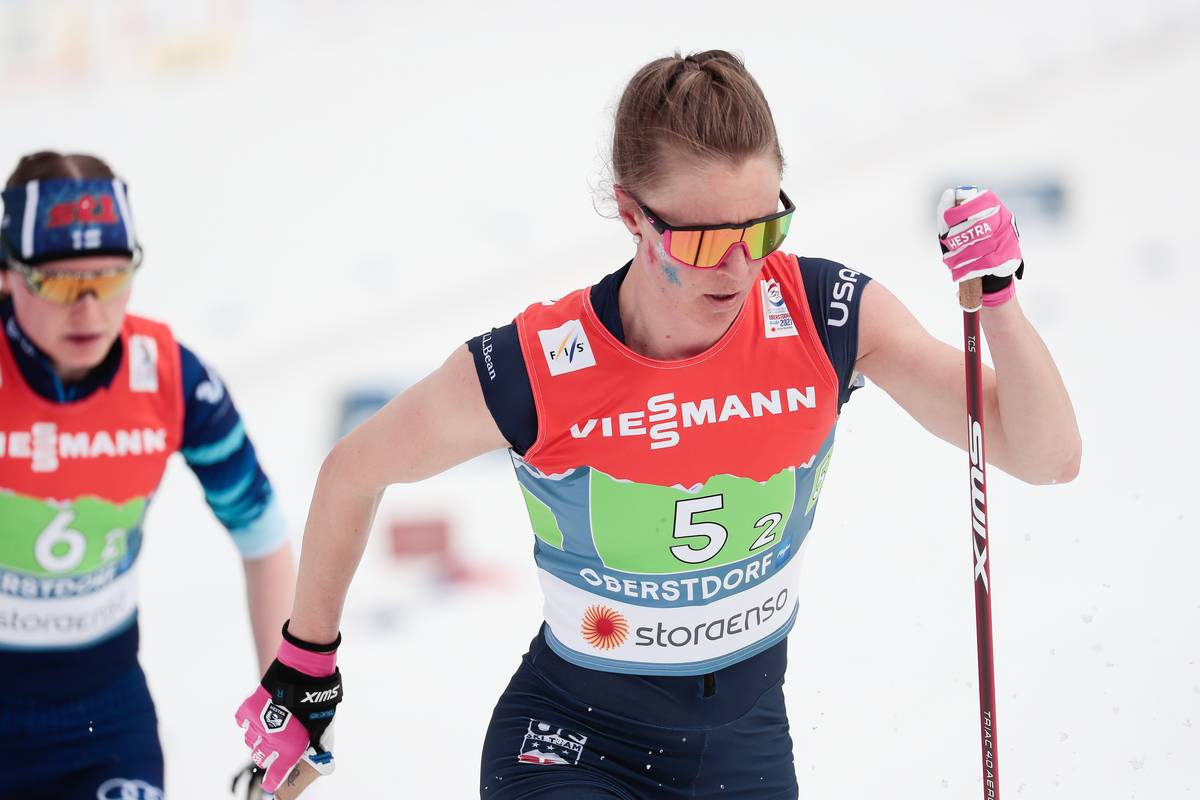
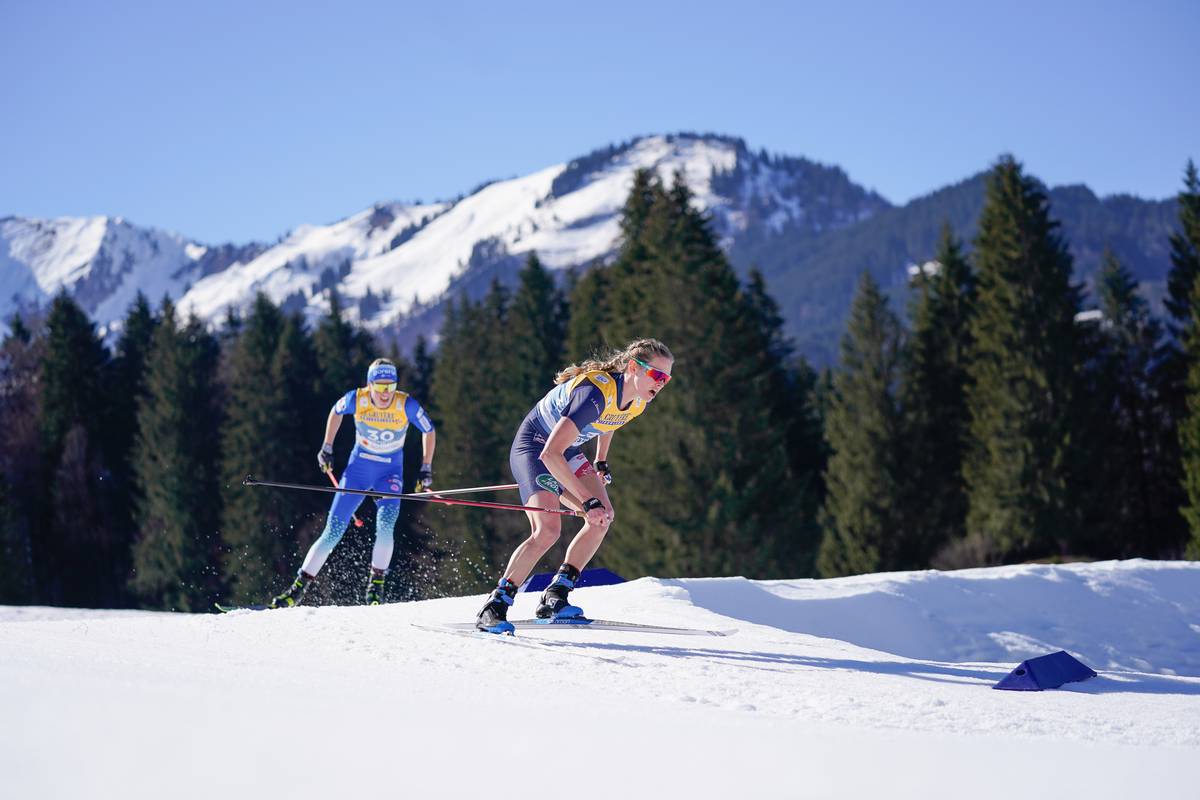
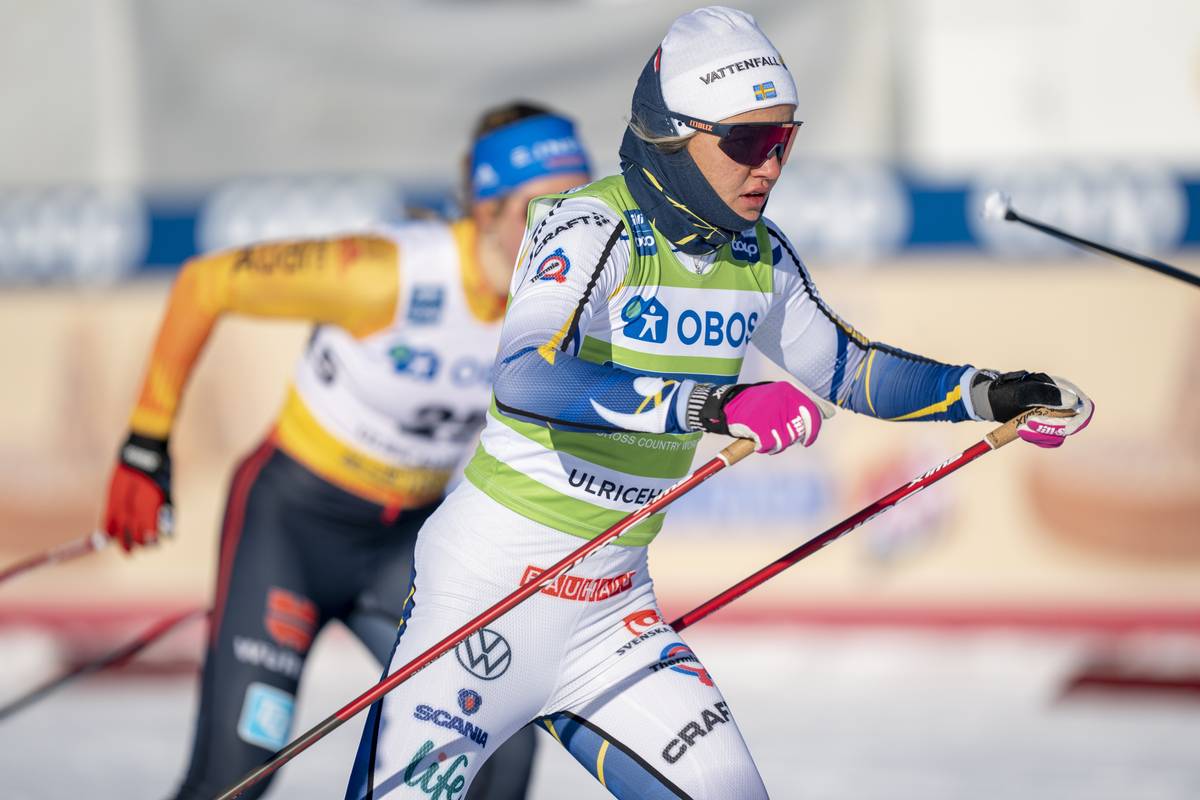
    Jonna Sundling (SWE), Sophie Caldwell Hamilton, and Katerina Janatova racing in Planica, Slovenia. (Photo: NordicFocus)

    FasterSkier: How has your perception of the World Cup evolved?

    SCH: Well, you know, I think the level of competition is always rising, which is really cool. It’s crazy to watch how the sport is changing. I obviously have done sprints, but I think if you go back and you watch a sprint from 2012 or 2014, you have someone like Kikkan who’s just absolutely dominating. She is so much stronger and so much better than anyone else in the sprint.

    It seems like now, you don’t see so much of that. I know Klæbo can show up on the men’s side. And Linn Svahn can be dominant, but it’s not like people go out and they drop the field in the first 20 seconds. I think everyone’s level has risen so much. Everyone is fit. Everyone is strong. So you have to ski to the finish and be strong and ski the smartest. So I think that’s a pretty cool thing to see, just to watch the level rise. Of course, since I’ve been doing it non-stop for the last eight years, I don’t really notice that until I go back and I watch a race from a long time ago or think about what sprints used to be like for me when I first got it on the World Cup.

    FasterSkier: You’re choosing to step away before an Olympics. You’ve been to several Olympics, and I understand it’s not like you need that feather in your cap to validate who you are. But you’re stepping away, you know with say 11 months to go before the Olympics. Was that planned all along, or just sort of organic and you simply don’t have the energy to deal with the uptick in demands during an Olympic year?

    SCH: I mean we never knew this was going to be the year we retired. I think for a while we took it a year at a time. But, yeah, I think a lot of people have been surprised that we’re retiring right before the Olympics. I guess the way I see it is that I’ve been before and so I don’t feel like I need to go to the Olympics just to go to the Olympics. And, if I went to the Olympics, I would want to be in a place where I could be competitive and ski at my best. I think I’m at the point where I’m too mentally tired to put in the work for another year. I would rather see someone who has never been, like one of the young girls, to be able to go and have that experience that I had at my first Olympics rather than go to my third Olympics just to have gone to my third Olympics.

    The Olympics are an incredible experience. My first Olympics in Sochi will always be one of my favorite experiences. You know, as far as competition goes, World Cups aren’t any less competitive, or they’re more competitive. So, yeah, I feel like the weight of the Olympics isn’t as big for me anymore, especially if I feel like I’m not in a place where I can prepare myself to be performing at that level.

    I think for every person, no matter what they do, there’s always an evolution as you age. You’re aware of what’s happening around you and you simply age out of things, and sports is an obvious one because it favors the young.
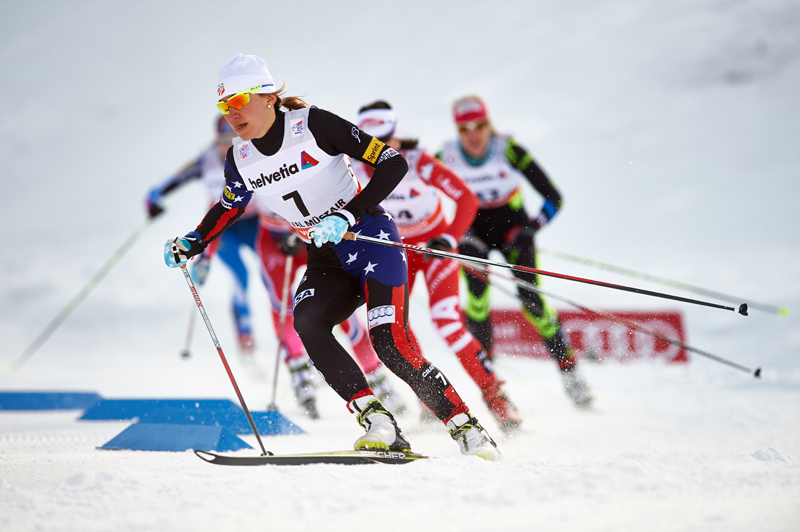
     

    Sophie Caldwell Hamilton shows her cornering skills in Val Mustair, Switzerland, 2015. (Photo: Nordic Focus)


    FasterSkier: For you, on a high power women’s team, what has it been like for you in terms of being part of the core, the center, and slowly moving to the side as other women have stepped up?

    SCH: This might have to do with that question. Part of the reason we also want to be done now is I think we want to stop while we still love the sport and finding some success, because I think it always feels good, rather than the sport become stale or having everyone else be like, ‘Oh, they’re still skiing’.

    But, yeah, back to the other question. It’s been interesting because when I first came on to the World Cup, at 22 or 23 years old, everything was new and exciting. You don’t have any expectations and in a way that’s really nice to not put any pressure on yourself or have any expectations. You can just enjoy it and screw up every once in a while. But learning from your mistakes, I think, in a way, becomes harder and harder the more results you get because your expectations grow.

    That said, it’s been really cool watching those young girls come up. I forget sometimes how much younger they are, eight years younger or something, which is about the time when I was coming on the World Cup and I feel like they’ve already accomplished so much compared to what I had at that age.

    Sometimes I find myself wanting to guide them and give them advice, and I think I have and it’s been helpful. But they also have to figure it out on their own as we did. And like I said before, I was young with expectations and having some good results at that age but I was also screwing up and doing some things that didn’t work early.

    I was having a conversation with Julia [Kern] the other day just about the inconsistency at that young age. I remember my first few years on the World Cup, I felt like I had a good year then an off-year. I remember thinking like, ‘Oh my god, I think it’s just how it’s gonna go it’s gonna be up and down and up and down.’

    I figured it out. That’s what you’re doing when you’re young, you’re trying things and sometimes it works and sometimes it doesn’t. And when it doesn’t you change something for the next year and after a few years of doing that, I think you kind of figure out what works for you. But so many of those girls are still at the age where they haven’t figured it out, which I think is really cool, and they probably will have some inconsistency in their careers early on. But they’ll get to a point where they’ll figure it out. When you look at my training or Jesse’s training, it is not rocket science. I figured out what worked for me and I changed it a tiny bit each year, but I’m not going to go try something crazy different at this point because I’ve found a pretty good routine.
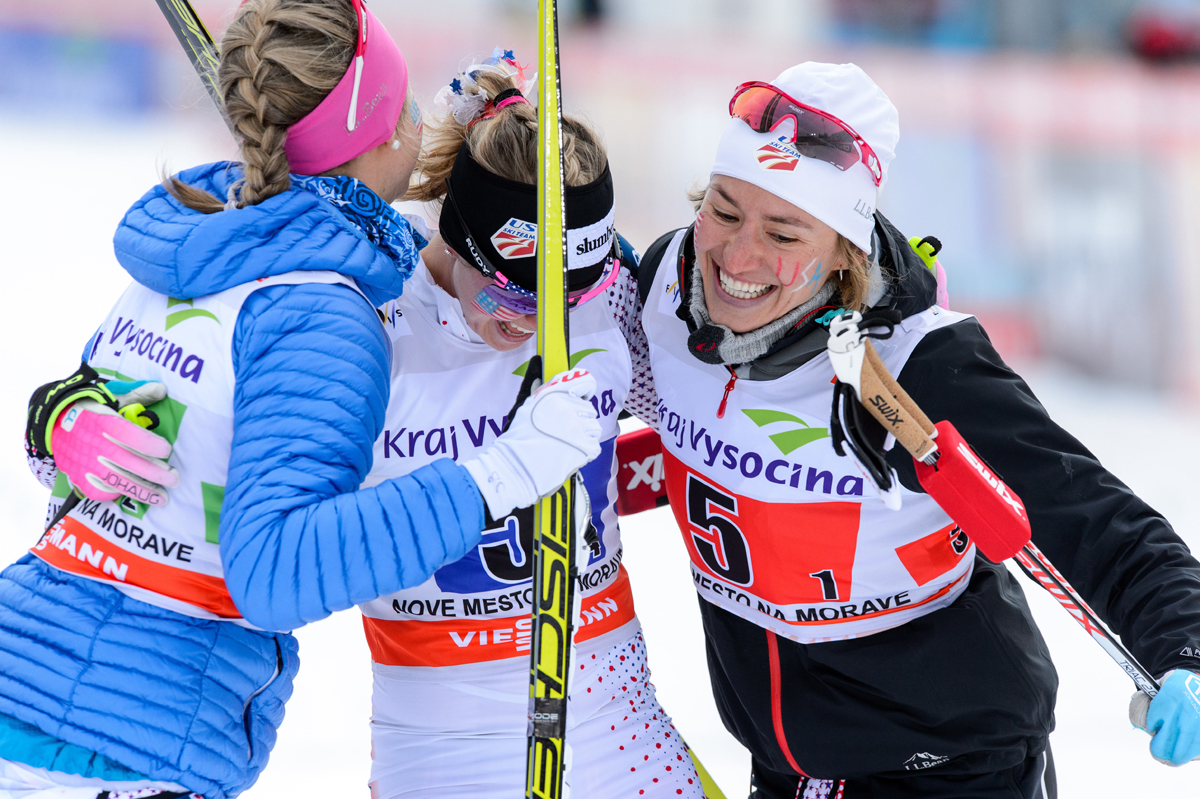
     

    Jessie Diggins (c) celebrates with teammates Sadie Bjornsen (l), Sophie Caldwell Hamilton (r) and Liz Stephen (not shown) after anchoring the U.S. women’s 4 x 5 k relay to a second place in the 2016 Nove Mesto World Cup in the Czech Republic. (Photo: NordicFocus)


    FasterSkier: The softball retirement question. What are you most proud of?

    SCH: I mean I guess I touched on this a little bit before, but I think I’m proud of my consistency as one of the top sprinters, and just showing that there are different ways to be successful. Sometimes people think a specific win is what you should be most proud of. Or that you go out there and put your head down and work harder than everyone else. But I think I found a different way to do it. And like I said, relying on technique and tactics and being a smart skier is something I’m proud of.

    FasterSkier: What are you most proud of when it comes to your legacy on a positive team culture?

    SCH: Well it’s interesting. I have had this conversation about the importance of safe spaces or feeling like you’re in a safe space and not judged when you’re on the road for a whole season. I think it’s really important to have one or two people that make you feel that way. Maybe it’s you who is the safe person or you provide a safe space. I think, for me, it’s always been very fulfilling and been a goal of mine to be that for other people, and I think, in general, I’ve been able to do that — particularly with the younger girls, I hope.

    I’m not someone who is very loud or says much at team meetings or in public. I hate public speaking. But I do love connecting with people one on one. So yeah, the relationships, the connections I’ve been able to make and the relationships that I’ve had that are more in a one-on-one setting. I feel I have been very valuable and meaningful and I hope that I’ve been able to be kind of a safe person for people.
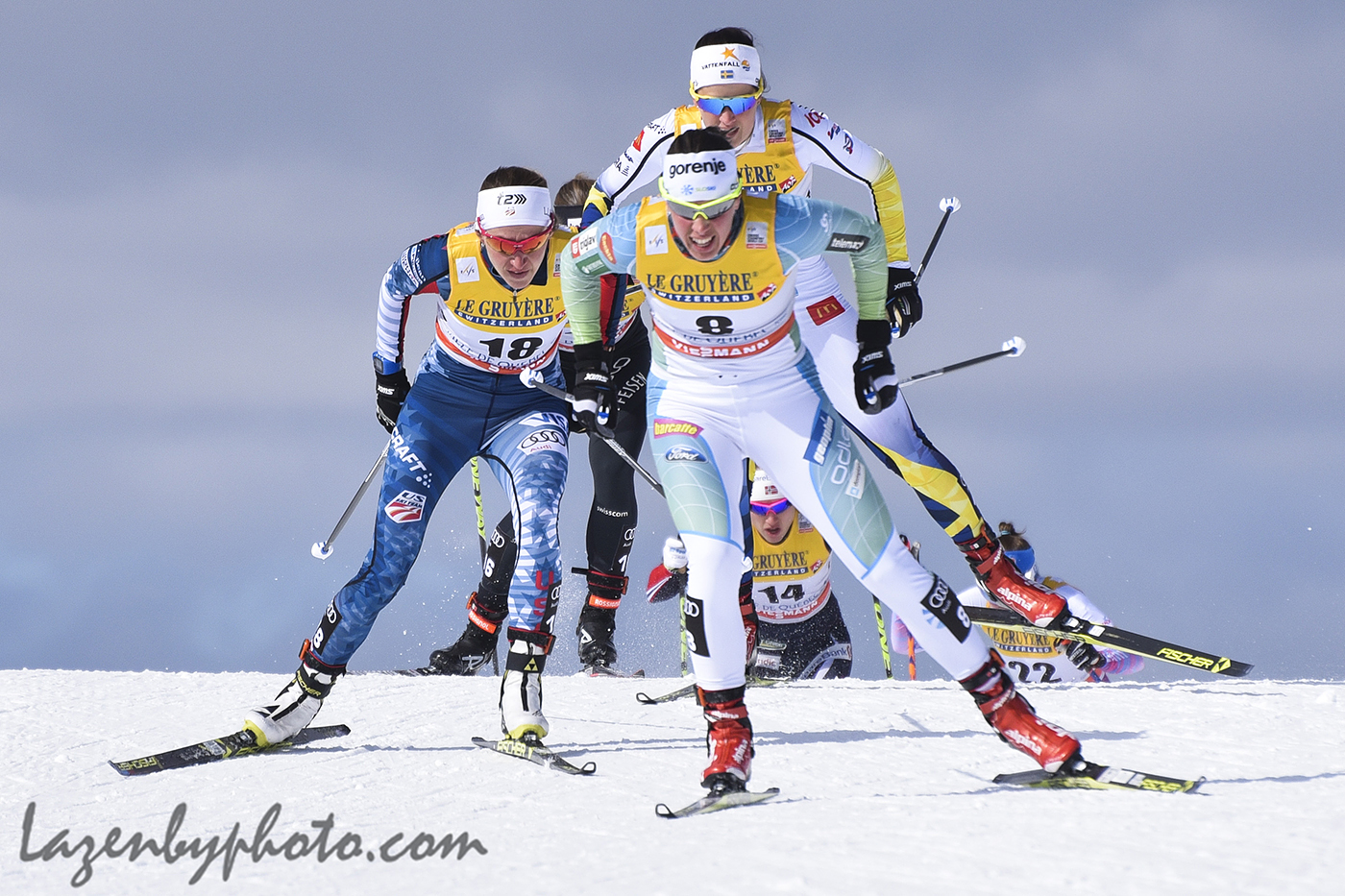
     

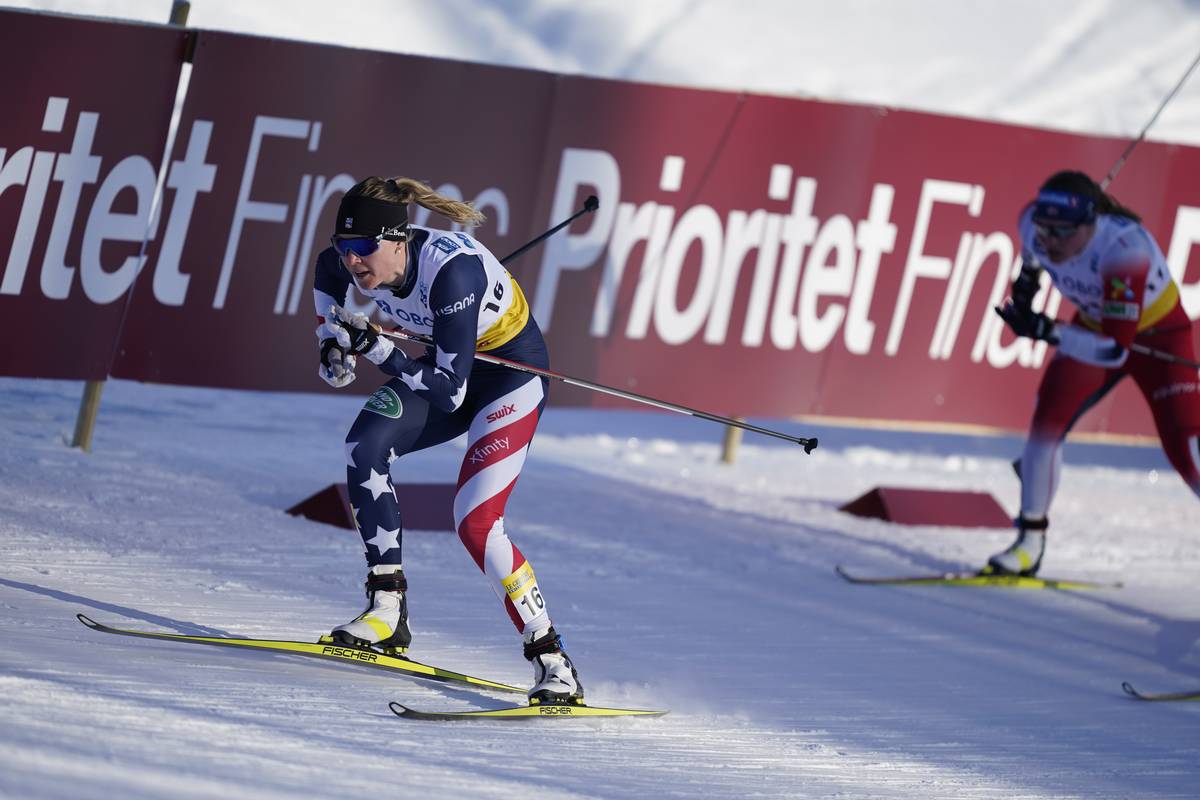
    Sophie Caldwell Hamilton (bib 18) sprinting at the 2017 World Cup Finals in Québec City. (Photo: John Lazenby/Lazenbyphoto.com)


    FasterSkier: How do you frame this sport, as you begin thinking about having a family of your own, when you think about competition and when you think about it as just a way to engage with nature? Those are two very different experiences. And I mean let’s face it, you have had a competitive experience that very few people can relate to.

    SCH: We hope that we can start a family someday and I think that’s something we’re both looking forward to at some point. Navigating that relationship with sports, with our kids, will be interesting because I think, I mean I’ve probably said this before to you, but I think for me, the reason that I ski raced for as long as I did was that my parents were very good about how they exposed me to the sport without putting much pressure on me to be a ski racer.

    I think the greatest thing about sports when you’re young is that it can be this social thing you do with your friends. And I think it’s so important to try a bunch of different sports. I definitely plan on introducing my kids to cross-country skiing but I hope they’ll try a bunch of different things whether they pursue cross-country skiing or not. That’s totally up to them. But, I do plan to introduce them to it at a young age and hopefully, it’s something that their friends do too and they can enjoy it that way and then decide where they want to take it. But I’m sure it’s easy to say, I’m not going to put any pressure on them now and maybe as a parent, or when you become a parent, it becomes more difficult. But I think my parents did a very good job. So I would plan to model it off whatever they did, and hopefully, my dad can give me some advice on that.

    FasterSkier: I know you lost your mom not so long ago and I know you were close. I also know you’re not a very public person. But I’m curious how that experience may have informed you about keeping things in perspective when it comes to sport?

    SCH: I’ve always tried to look at skiing as just one part of the bigger picture. Skiing has never been my life, it’s something I do in my life. I’ve always tried to be a real person before I’ve been a skier. And I think when my mom got sick and when I lost her, that definitely put it all into perspective even more. It was a no-brainer to fly home that winter and to spend the next year at home with her. There’s nothing I would change about those last ten months I had with her from when she was diagnosed to when she passed away.

    It was interesting because she passed away not this last fall, but the November before. And so, I went on the World Cup about a week after she passed away and I didn’t know what it was going to be like. In hindsight, I think I was probably a little numb all that winter. I had my fair share of sad moments and Simi was usually the only one to see.

    But in general, I was a pretty happy person. I remember looking back and realizing I didn’t cry about a single result that year — not that I was a huge results-crier before. But sometimes you get a disappointing result and you’re tired and your emotions take over and you shed a tear. But I think that whole experience just put it into perspective for me. You’re allowed to care about skiing for sure, I hope people care about it. But in the grand scheme of things, it’s just a ski race and there are so many more important things in life.

    I was still able to have a really great season that year, and my preparation going into that season was absolutely not ideal and it was a huge emotional roller coaster. But, I spent her last year doing exactly what I wanted to do and what I needed to do. In that sense, I think I was and am in a place where I have no regrets even though it was, obviously, a very sad time.

    For me, it highlighted the importance of relationships, even more. And so, yeah, you know I’ve had, I have a very strong support system between my Simi and my family and my best friends and Matt and I can’t imagine having gone through any of this without them but I think it’s also made me kind of try to find connections in these last two years on the road with the younger skiers and, yeah, when it’s become harder and harder to be purely focused on results I think it’s been nice to, to know that what really matters is, those relationships that I’ve made.

    I think it’s worth acknowledging again that one of the main reasons I’ve been able to do all this is because Simi has been a safe space for me, particularly the last couple of years. While I enjoy being able to be strong for others, I think the reason I can do that is that I don’t always have to be strong for him.

    Matt has also been an instrumental part of both of our ski careers and lives. I know we both consider him one of our closest friends, which at times probably made it harder for him to coach us, but he is a very special person to both of us who has been much more than a coach.

    Lastly, I just want to acknowledge the importance of my family in my ski career and coping with the loss of my mom. My dad has the most incredible outlook on life of anyone I’ve ever met and he made sure we spent the time we had with my mom with no regrets, which mostly just meant being together, and that allowed us to be grateful more than devastated. I used to talk to my mom on the phone every day, but now I talk to one (but usually two) of my dad, sister, brother or cousin every day and I can’t imagine going through something like that without them.
     

    Sophie Caldwell Hamilton racing this season in Davos, Switzerland. (Photo: NordicFocus)
  • NRK and Expressen Report Fluoro Testing Device Flawed

    NRK and Expressen Report Fluoro Testing Device Flawed

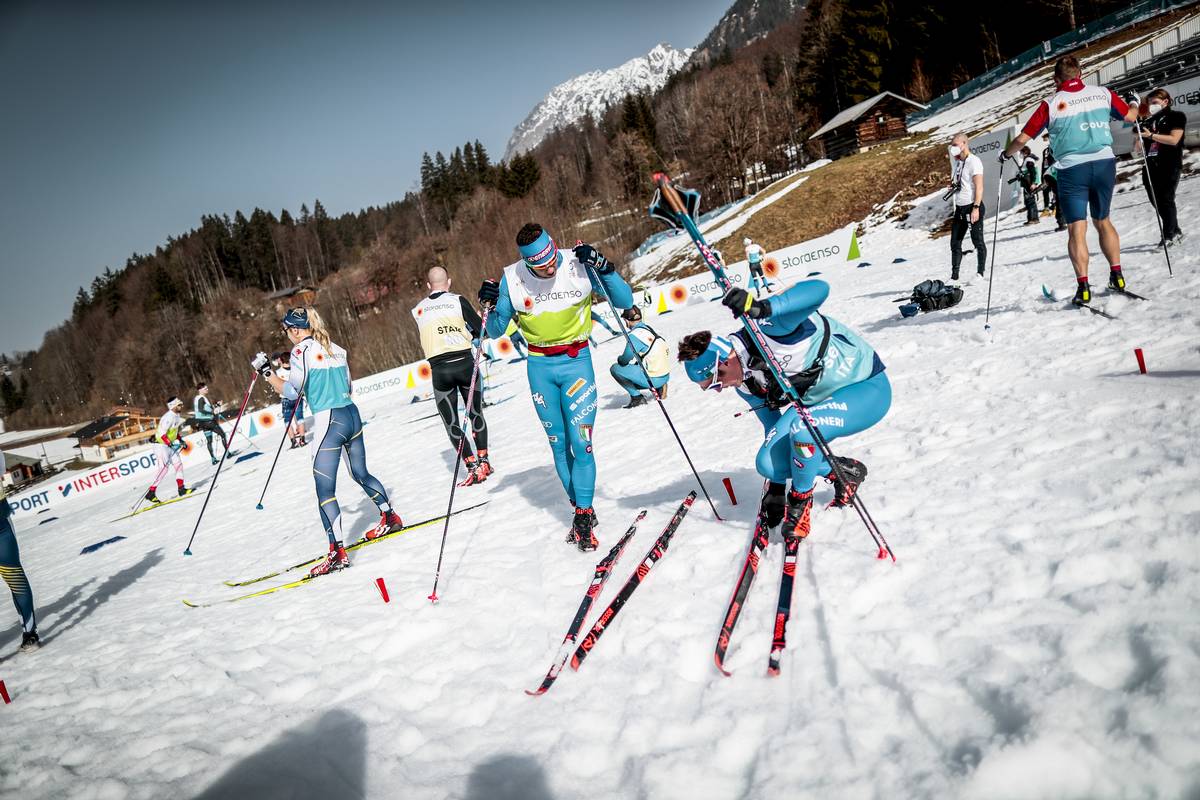
    Picking skis: that’s part of the speed equation. Italy tests skis at the 2021 World Championships. (Photo: NordicFocus)
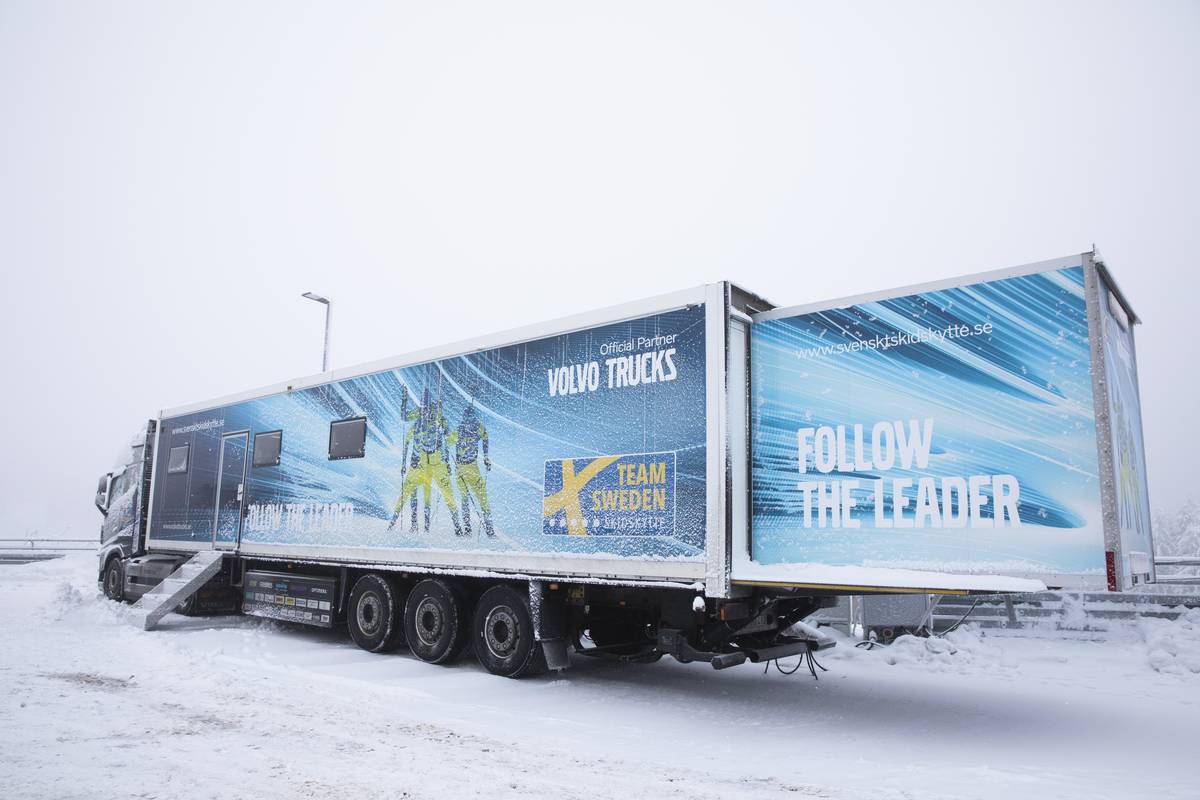
    But what happens in the wax bus matters too: Sweden’s biathlon wax bus flexes. (Photo: NordicFocus)

    Over the past few years, FasterSkier has reported on per-fluorinated waxes, powders, liquids, and pastes. Entities like the Environmental Protection Agency (EPA) and Europe’s equivalent, the European Environment Agency, are phasing out eight-chain fluorocarbons. We know, after diving into the scientific literature, the evidence suggests these compounds are not good for your health, and they persist in the environment as they do not readily breakdown into inert substances.

    We also know that skiers love fluoros. Per-fluoros simply make skis faster, especially when the snow is near its melting point and/or dirty. If you have been reading this site for maybe a year, you are probably aware of the speed benefits per-fluors bestow, and their environmental and health costs.

    As the world turns, so too do the vagaries of regulating per-fluorinated ski speed products. In November 2019, the International Ski Federation (FIS) announced a discipline-wide ban on fluoro waxes for the 2020-2021 season.

    That ban was later delayed until 2021-2022. The reason for the delay, given in October 2020 just a month before the start of the cross-country World Cup, was that the apparatus for testing ski bases for fluoros was flawed.

    (Not to confuse things further, but it is worth mentioning, races solely sanctioned by U.S. Ski & Snowboard this season were fluoro-free. FIS-sanctioned races permitted fluoros.)

    With the end of the cross-country World Cup last weekend in Engadin, Switzerland, comes renewed debate in Europe about the proposed fluoro ban and the efficacy of testing ski bases tainted with per-fluoros. Two news outlets, NRK in Norway, and Expressen in Sweden are reporting that the ban for 2021-2022 is in jeopardy.

    In the translated Expressen article, Sweden’s head of ski service, Petter Myhlback said this about a World Cup weekend in Falun, Sweden last January during which the fluoro-detector was tested in the field: “Yes, we did test measurements then – and it was quite messy. … We felt no security in those measurements. It was results that just swung up and down. Criss-cross.”

    Myhlback continued, “We had skis that were completely non-fluorinated, and some that were highly fluorinated. But … some of those who were highly fluorinated got the green light – and some of the non-fluorinated on the contrary.”

    In the article, Expressen quotes FIS cross-country competition director Pierre Mignerey as saying the FIS Council will need to make a decision and it is his understanding that, “there is a desire to wait until after the Olympics.” They also quote Mignerey as stating, “No. What we saw in Falun clearly showed that it is not good enough,” when asked about the efficacy of the testing device.

    The NRK article quotes Norway’s head of ski service, Stein Olav Snesrud, as also noting flaws in the testing device. NRK writes that Snesrud handed over eight pairs of skis in what was a blind test in Falun.

    According to the translated article, which has been lightly edited for clarity, the following combinations of Norwegian skis were tested:

    • A series of a total of 16 skis, eight pairs, on which fluoride powder was applied many times.
    • Some of these skis were also washed, they put on fluoride cleaner and later put on fluorine-free wax both two, four, and six times. They used fluorine-free spray sliders. In total, there were eight different lubrication options.

    Snesrud goes on to say that he received the results from the Falun tests. “I have to say that they are far away,” said Snesrud in the translation. “Based on the tests they did in Falun, they are nowhere near having a working device.”

    The NRK article indicates the results were off. “Five of the skis that came back and marked ‘no fluoride’ are skis that have only been given one layer of glider over the fluorine powder,” Snesrud said. “On two skis in the same pair, which have received the same treatment, they have found fluoride on one ski and nothing on the other. Then there are four out of 16 skis with no clear answer. There is far too much variation in those answers.”

    Snesrud also claimed that some fluoro-free skis handed over for testing were dinged as positive for fluoros.

    Another chapter in the saga of flouros will certainly be written soon.

  • That’s a Wrap as Krüger Wins 50 k in Engadin; Schumacher 20th

    That’s a Wrap as Krüger Wins 50 k in Engadin; Schumacher 20th

    In the rear view mirror, but not too close: Norway’s Simen Hegstad Krüger takes the win on Sunday to close out the season. (Photo: NordicFocus)

    This World Cup coverage is made possible through the generous support of Marty and Kathy Hall and their A Hall Mark of Excellence Award. To learn more about A Hall Mark of Excellence Award or to learn how you can support FasterSkier’s coverage please contact info@fasterskier.com.

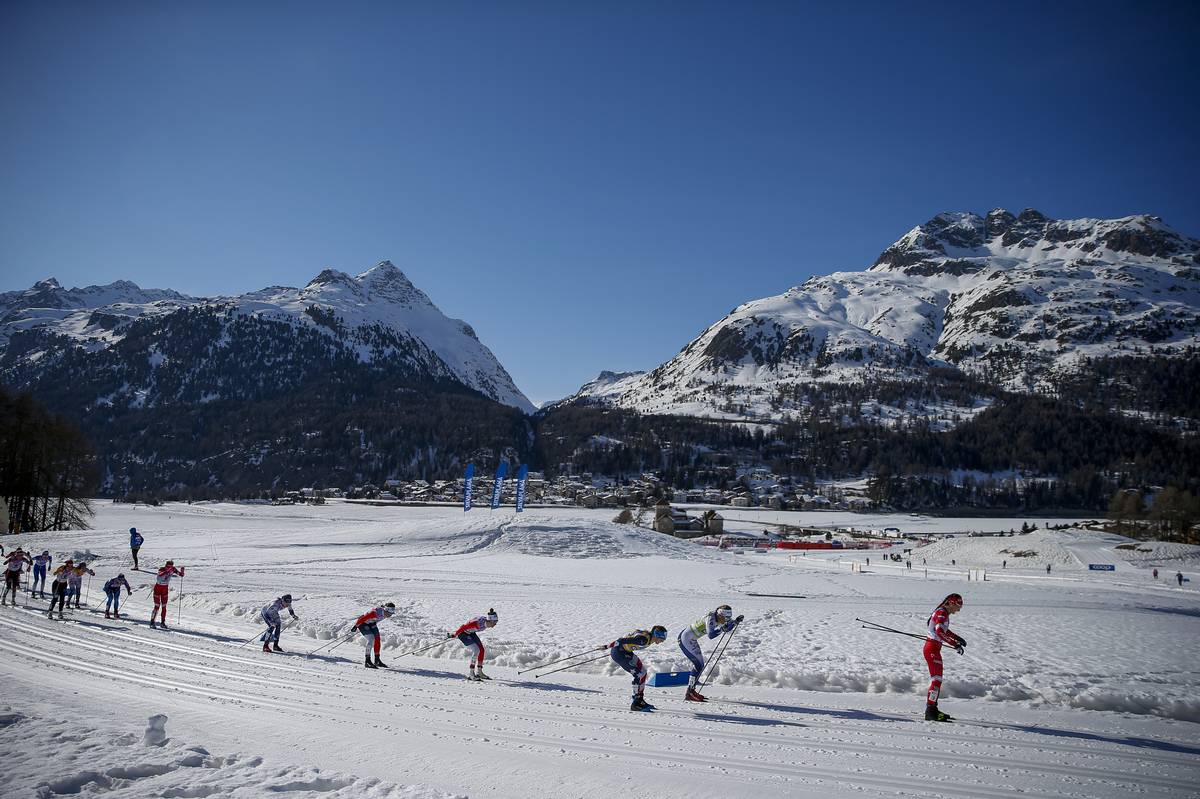
    Low pressure moved in. The Alp’s wind kicked up, a coating of snow fell, and a sinuous 50 kilometer skate pursuit for the men closed out the World Cup season. With the race schedule shuffled around, the final weekend was moved from Norway to Engadin, Switzerland. Sunday’s pursuit, based on finishing times in Saturday’s mass start classic, was a point to point affair that served as a more than two-hour stream of alpine wonder sure to please any local travel board keen on boosting tourism once travel restrictions lift.

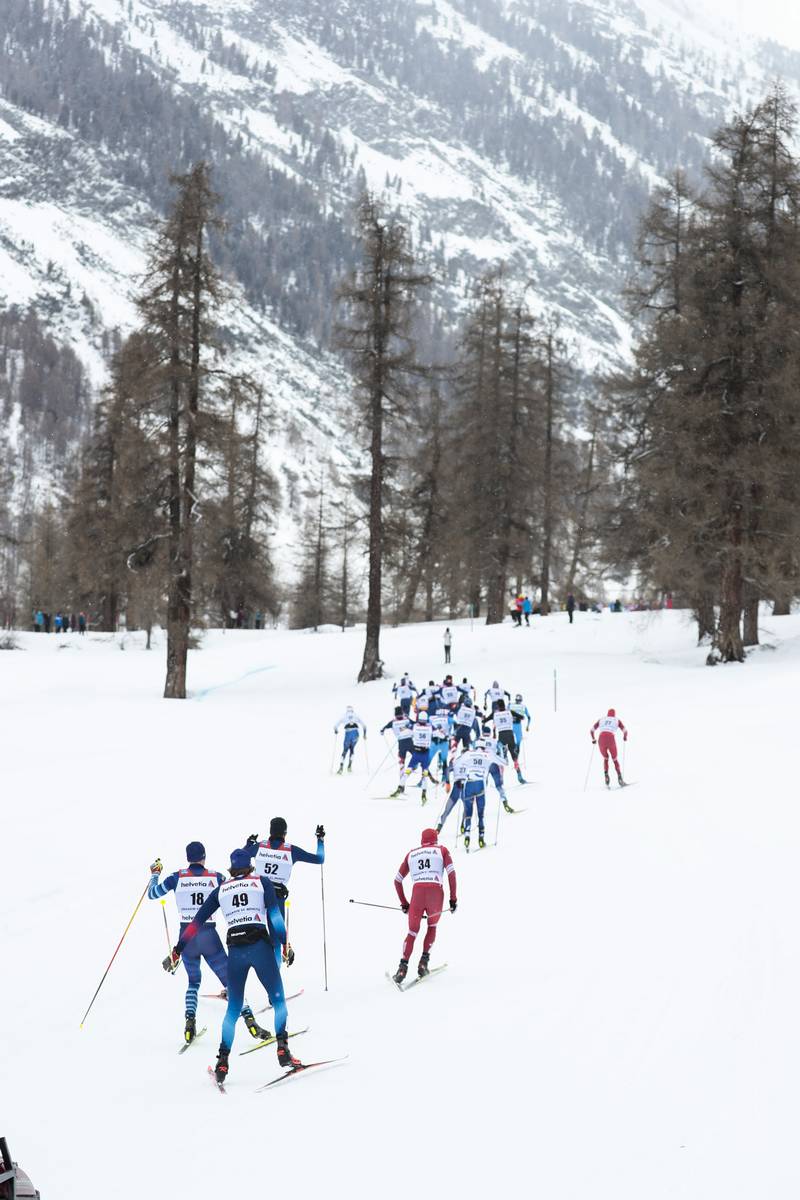
    From a tactical standpoint, with headwinds and crosswinds taxing skiers, the 82 starters found safety in numbers for much of the race. Tucked in the pack, as if in a school of fish, skiers could garner a bit more protection from the surrounding environment. 

    Alexander Bolshunov taking over the pacing duties. (Photo: NordicFocus)

    Yesterday’s 15 k mass start classic winner, Russia’s Alexander Bolshunov, was sent off first Sunday with an 18 second gap on second starter, Norway’s Johannes Høsflot Klæbo. With an elite field beginning shortly after Klæbo, Bolshunov was no tactical fool. Keeping the chasers at bay was never going to be his winning hand. He was absorbed by a pack of 14 chasers roughly five minutes into the race. Soon enough, a massive pack of skiers snaked through the Engadin valley.

    With a season’s worth of racing in their engines, the showdown for this 50 k skate pursuit, which played out like a mass start event, came down to the known quantities of endurance horse power. At the sharp end of the race at 40 kilometers was Russia’s Alexey Chervotkin coming through 13 seconds ahead of a pack loaded with thoroughbred chasers. Pål Golberg, Daniel Stock, Martin Løwstrøm Nyenget, Hans Christer Holund, Simen Hegstad Krüger, Harald Østberg Amundsen, and Klæbo, all of Norway, along with the likes of Bolshunov, were a group of skiers among the top-20 grouped 13 to 20 seconds behind Chervotkin. 

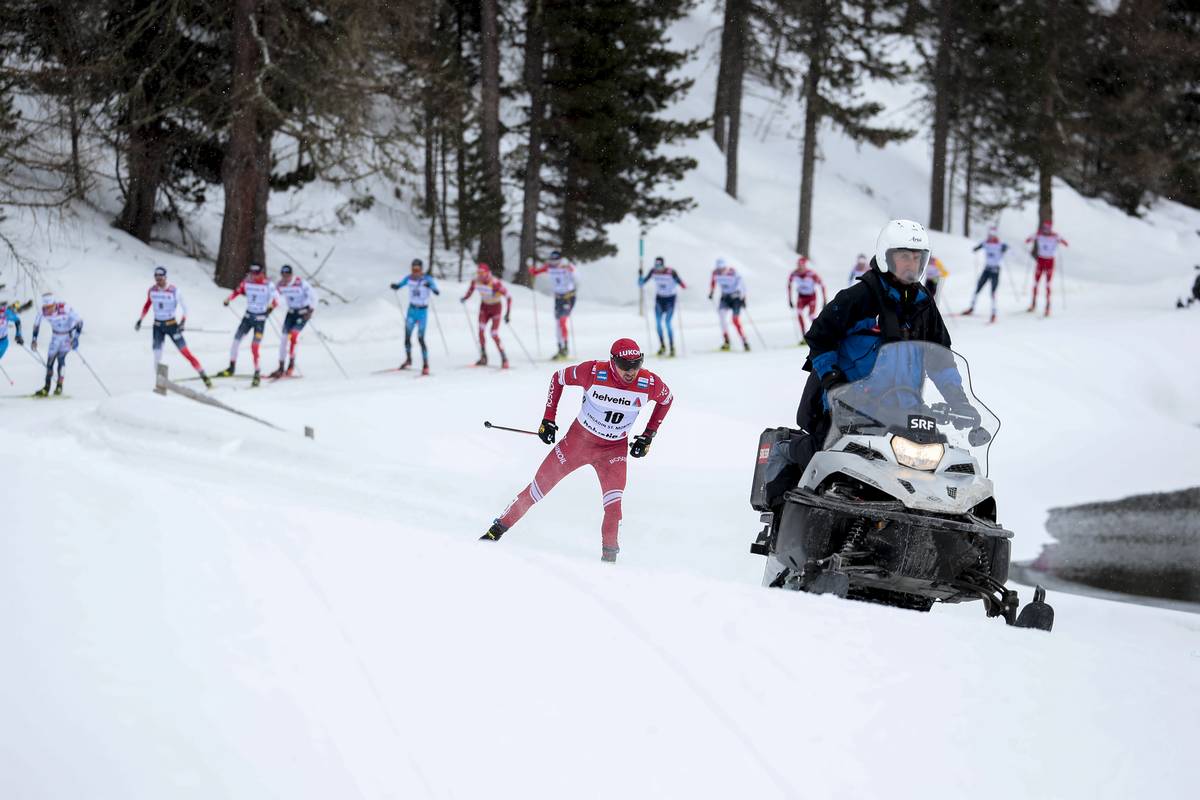
    If you’re Chervotkin, why not take a run at the solo off the front win? Wearing bib 10, Chervotkin had ample camera time up front. But lurking in the foreshortened distance, were the hungry chasers. With the field split into two distinct chase groups behind him, Chervotkin was an ample carrot. With an assortment of pacers leading, most notably Krüger doing the labor up front, Chervotkin was caught and swallowed with 4.68 ks remaining in the race. 

    Alexey Chervotkin (RUS) doing his best to maintain the gap, he skied much of the race out front but was caught with less than 5k remaining. (Photo: NordicFocus)

    In the closing kilometers, a group of twenty skiers were the front group, and skiing near the tail end was twenty-year-old Gus Schumacher of the U.S.

    After two-hours of racing the tempo quickened with the smell of podium in the air. Bolshunov, yellow-bibbed as the World Cup overall leader (and winner), pulled the front of the echelon. Bolshunov drilled the pace, stringing out the skiers into a single file line of hurt, with Schumacher pushing to maintain contact. 

    A train of skiers in Engadin. (Photo: NordicFocus)

    Those elite skiers all seemed shattered as the final incline, about 1.8 k before the finish, crept up off the valley floor. Holund moved past Bolshunov, with Jens Burman of Sweden, and Krüger able to velcro onto his effort. Bolshunov hung on for a moment, but his line to the threesome was cut. He dropped off as Burman hop skated away with 1.55 k remaining.

    Simen Hegstad Krüger with the 50 k win in Engadin. (Photo: NordicFocus)

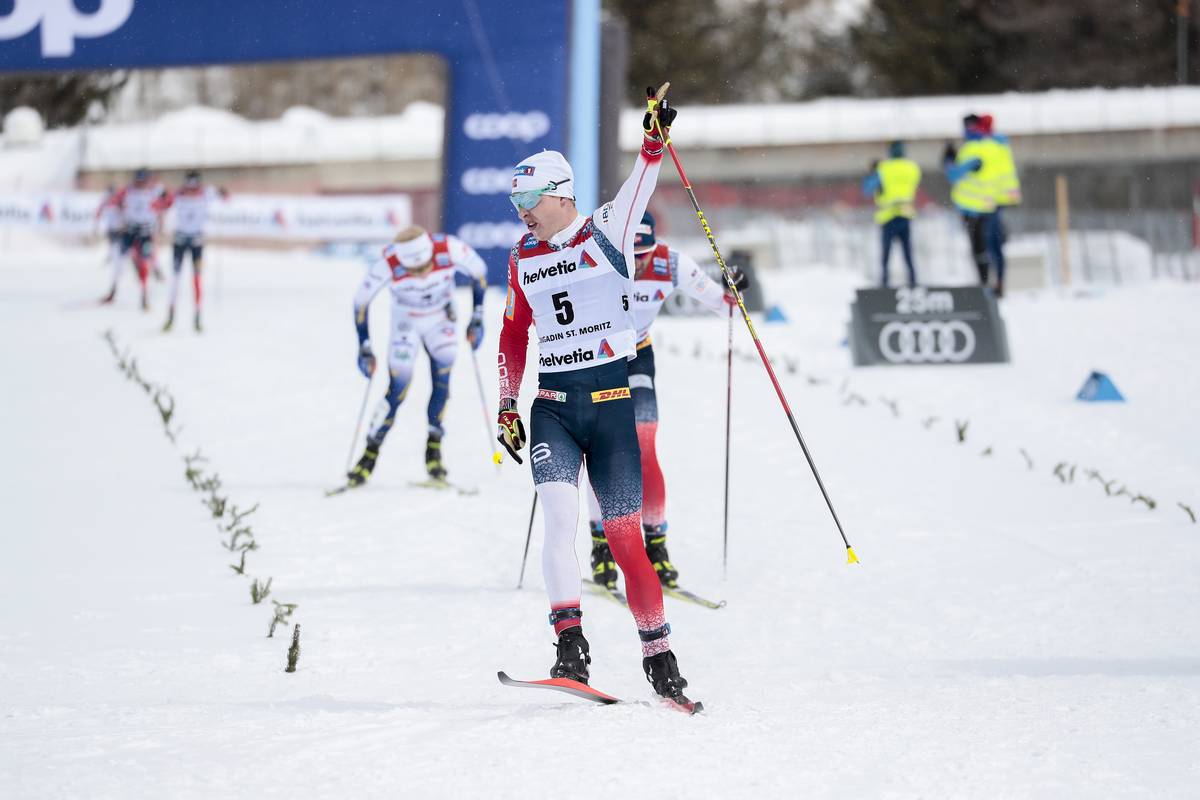
    Krüger took the win in 2:10:41.4, with Holund second (+1.2) and Burman third (+3.0). Klæbo and Golberg gapped up to Bolshunov and passed him in the closing k. Klæbo was fourth (+13.0), Golberg fifth (+14.7) and Bolshunov sixth (+17.7). 

    “This was such a tough race,” Krüger told FIS after the race. “It felt a little bit like the Tour de France and I really had to stay focused and work hard to remain in a good position for the final stretch. I am really happy this worked out and I can finish off this season with a victory.”

    This was Krüger’s fifth individual World Cup win. He’s also the 2018 Olympic gold medalist in the skiathlon. He is on form. At the recently concluded 2021 World Championships, he won silver in the 15 k skate and 30 k skiathlon, while securing bronze in the 50 k mass start classic. 

    The men’s podium from Sunday’s World Cup finale: Hans Christer Holund (NOR) second, Simen Hegstad Krueger (NOR) first, and Jens Burman (SWE) third, (l-r). (Photo: NordicFocus)

    The Americans were well represented in the top-30. Schumacher placed 20th (+1:23) while racing the sixth fastest time on the day. 

    “It felt good! So nice to end on a positive note,” Schumacher noted after the race. “ It makes it way easier to keep my confidence from mid winter. Worked hard with the US boys at the beginning to catch the main pack, and then skied easy in that big group until about half and then was basically covering attacks for the rest of the race. Time to go home!”

    Gus Schumacher raced the sixth fastest time of day. (Photo: NordicFocus)


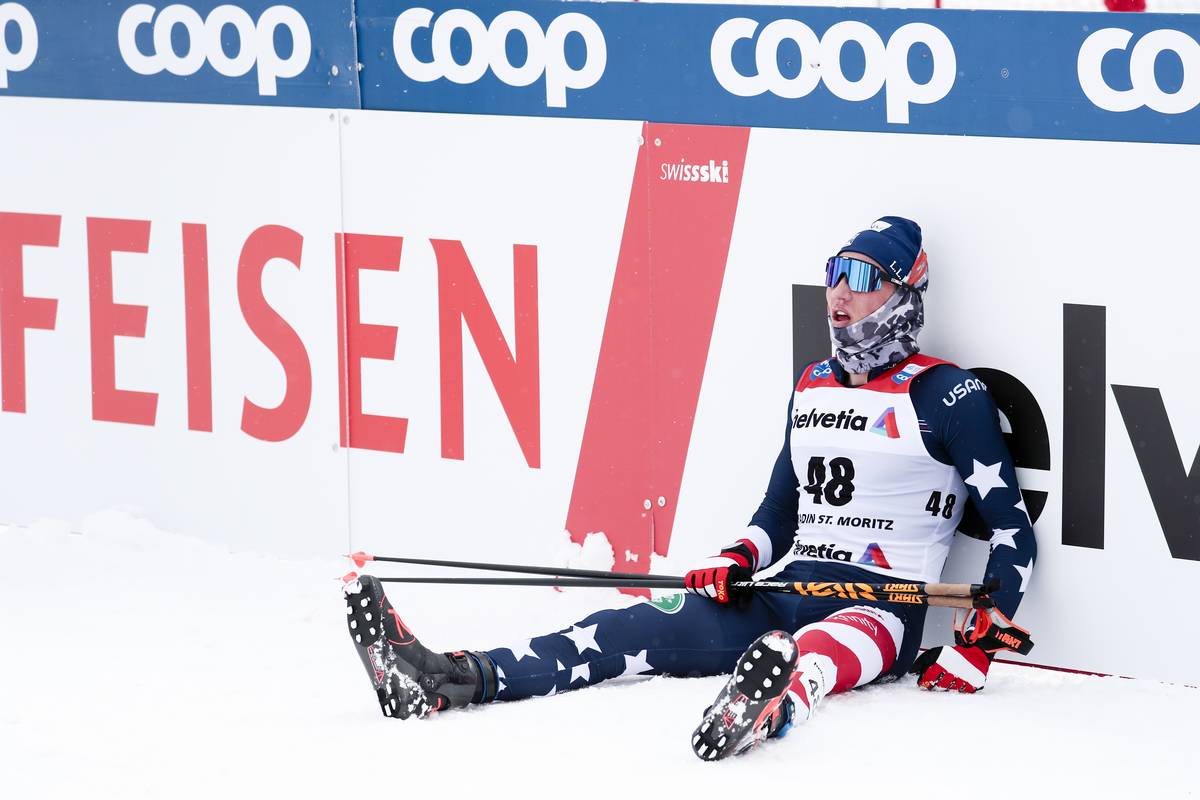
    A spent Gus Schumacher after the 50 k. The U.S. skier placed 20th. (Photo: NordicFocus)

    Scott Patterson finished in 25th (+1:46.7), with David Norris 26th (+1:59.1). Outside the top-30 for the U.S. were Ben Ogden in 47th (+5:23.5), Hunter Wonders in 53rd (+6:02.1), Kevin Bolger 67th (+14:20.3), and Johnny Hagenbuch 69th (+14:25.2). 

    Scott Patterson of the U.S., finishing in 25th. (Photo: NordicFocus)


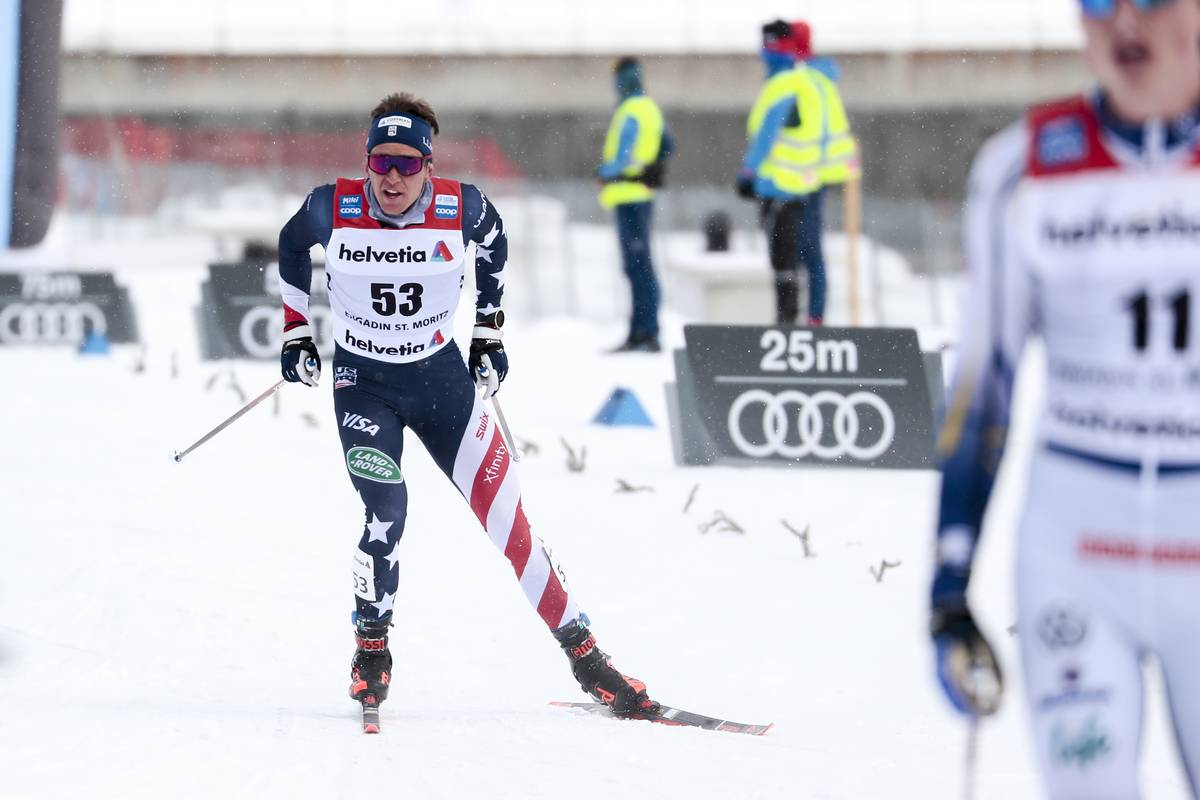
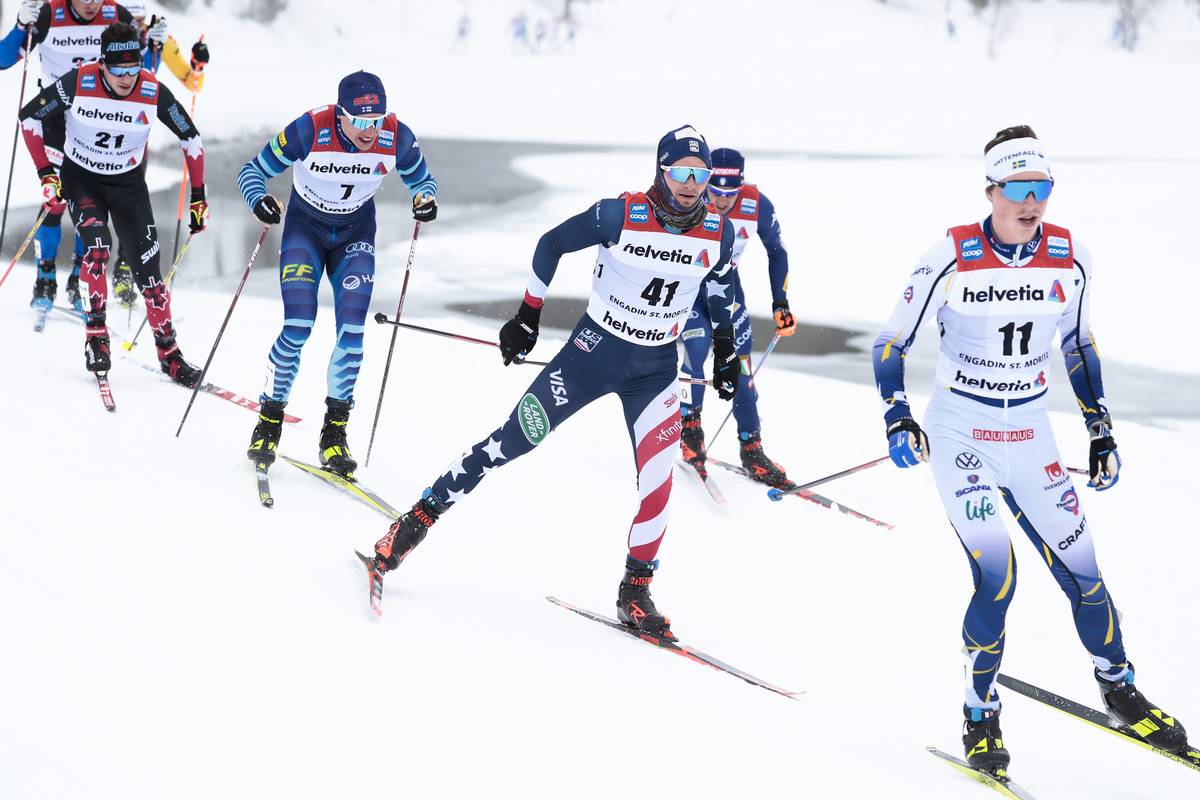
    David Norris (bib 41) for the U.S. paced to 26th overall. (Photo: NordicFocus)

    Antoine Cyr was the top Canadian in 29th (+2:14.7). He was followed by Russell Kennedy in 33rd (+3:02.2), Rémi Drolet in 57th (+7:28.6), and Graham Ritchie 68th (+14:21.4).

    14.03.2021, Engadin, Switzerland (SUI):
    Antoine Cyr for Canada ends the weekend in 29th. (Photo: NordicFocus)

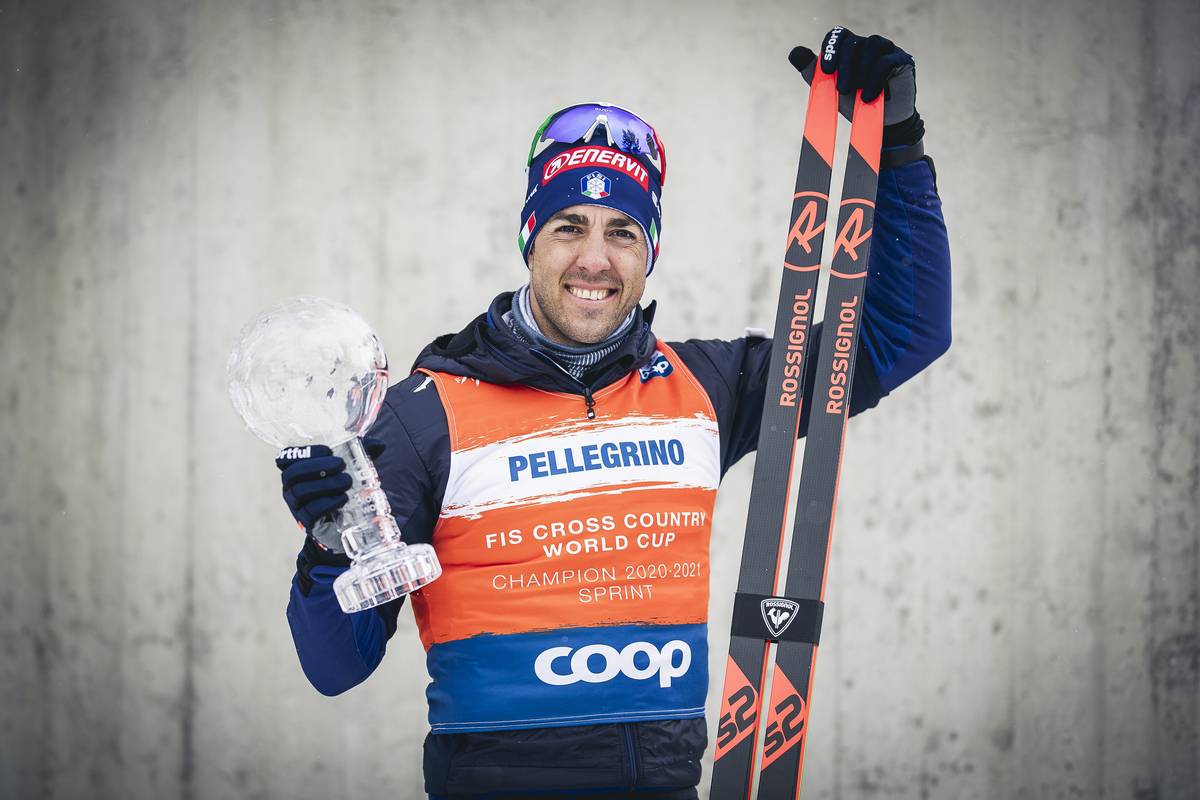
    And that folks, is the season wrap-up for the World Cup. The overall crystal globe, overwhelmingly, goes to Bolshunov. He also wins the distance globe. Italy’s Federico Pellegrino takes the overall sprint title. 

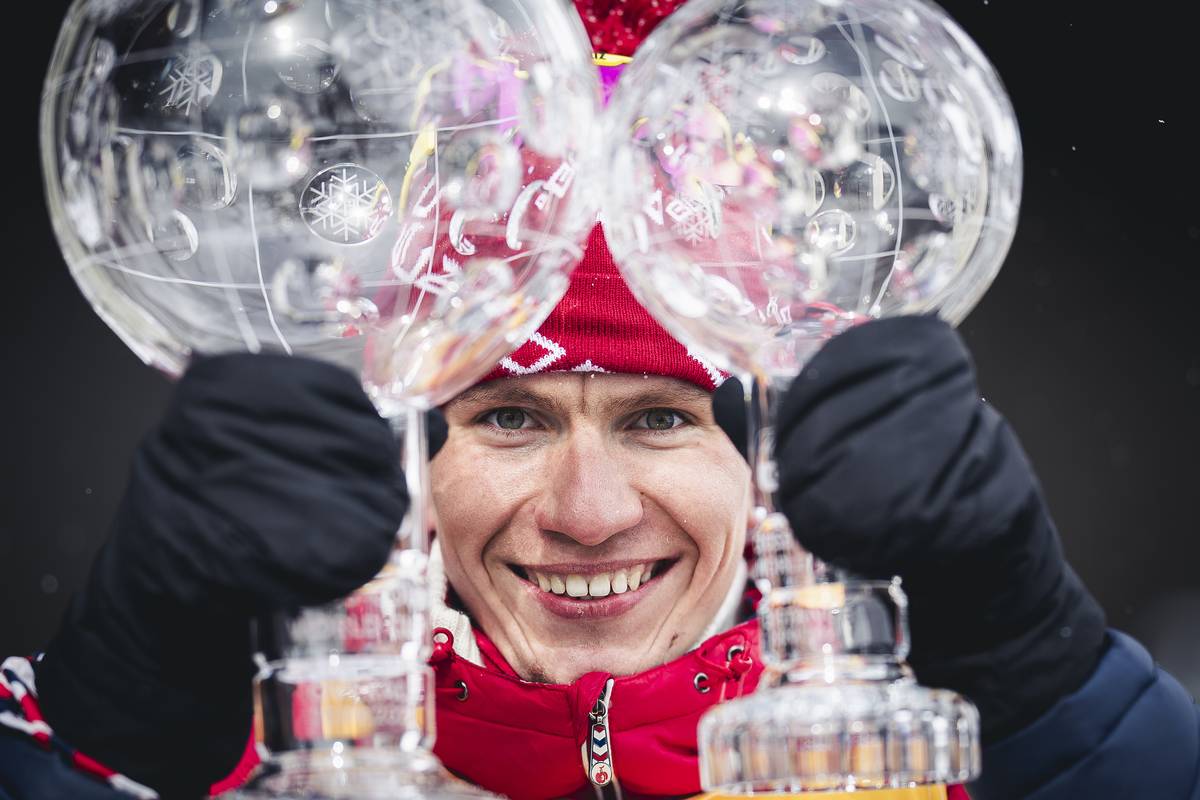
    Russia’s Alexander Bolshunov wins the overall and distance globes. (Photo: NordicFocus)


    Federico Pellegrino (ITA) wins the overall sprint globe. (Photo: NordicFocus)

    50 k Results | Time of Day | Overall World Cup | Distance World Cup | Sprint World Cup

  • Russia’s Stupak Wins Engadin 10 k Mass Start Classic; Diggins Fifth, Swirbul 12th, Brennan 14th

    Russia’s Stupak Wins Engadin 10 k Mass Start Classic; Diggins Fifth, Swirbul 12th, Brennan 14th

    Mountains and speedy skiers were the spectacles for Saturday’s 10 k mass start classic. (Photo: NordicFocus)

    The story line from today’s near-to-the-end chapter of this World Cup season will not include the words high-tempo. News came from FIS earlier that Therese Johaug, winner of all the individual distance medals at the 2021 World Championships, was sitting out the weekend due to an inflamed wrist. Add to the injury list Sweden’s Frida Karlsson, who is recovering from an injury sustained in the World Championship 30 k classic. For her part, Karlsson placed second to Johaug in the three individual distance races in Oberstdorf. Those two preeminent skiers would be watching from home.    

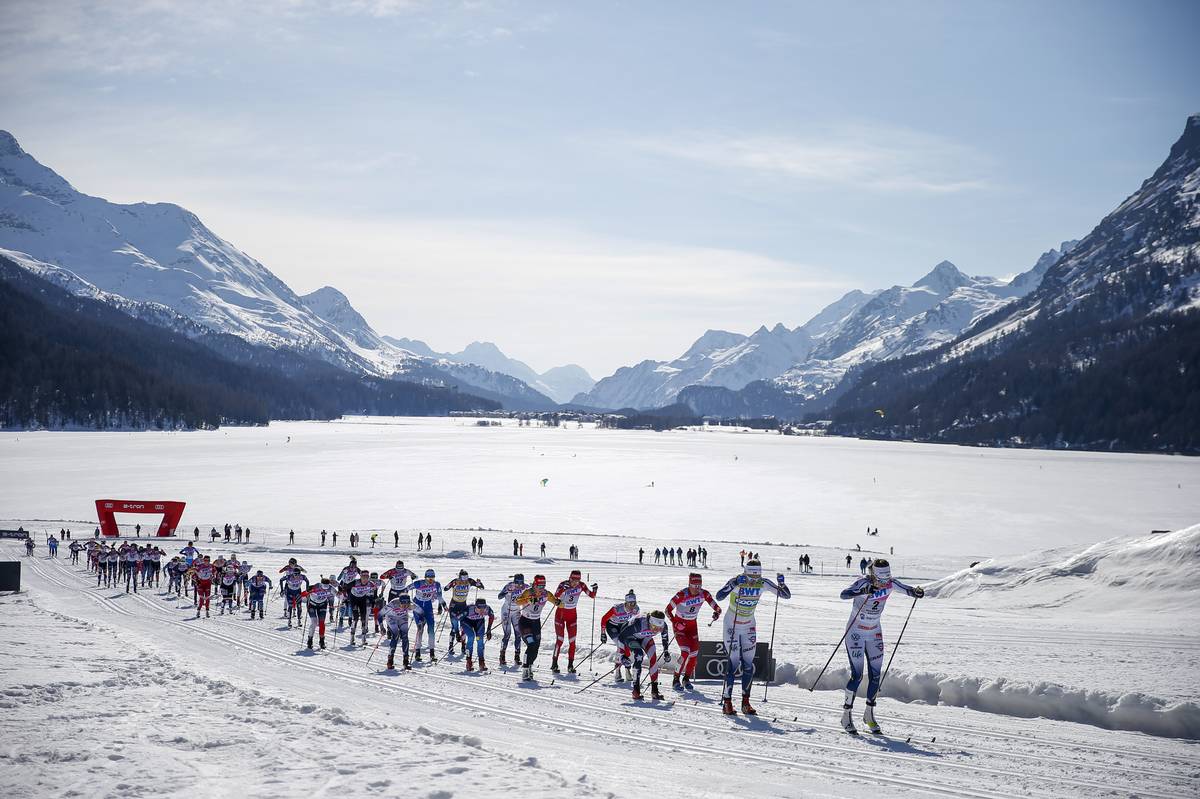
    So there you have it, with the usual lock for the win out, the prospects for the podium’s top spot, or a step up on to the podium for  for the field became a few percentage points better. With the weekend’s racing moved from Oslo to Engadin, Switzerland due to COVID related Norwegian travel restrictions, premier cross-country racing immersed itself in a Swiss mountain dreamscape. The  3.3 k course primarily flowed out in the open valley, with long climbs inserted that edged up along the side of the valley.  

    Jessie Diggins, wearing the yellow bib as the overall World Cup leader, skis in the pack early in Saturday’s race. (Photo: NordicFocus)

    Diggins, who earlier this season secured the overall World Cup crystal globe, the first North American woman to do so, and the first North American since Bill Koch in 1982. With the overall wrapped up, this final weekend of distance racing would finalize the position for the still-up-for-grabs distance globe. Coming into the day, Diggins led that category too by a 62 point margin over Andersson in second, and 108 points ahead of Stupak and Brennan, tied for third, 108 points behind. 

    Early on, during the first of three laps on a course sculpted along the valley sides for the climbs and descents and returning to the floor for the double poling terrain, Sweden’s Ebba Andersson was the primary pace agitator. She strung out the field as she sent it up front. Coming through the lap area at 3.3 k, Andersson pulled teammate Linn Svahn, Diggins, Norway’s Heidi Weng for the top-four past the time check in close contact. American Rosie Brennan was 15th, 7.2 seconds off the pace. 

    Ebba Andersson, leading the pack. She animated the race early to break apart the stream of skiers. (Photo: NordicFocus)


    With third on the day, Andersson sits in second place in the distance points standings. (Photo: NordicFocus)

    By the time the second lap concluded, a distinct front group had formed including Andersson, Yulia Stupak of Russia, Weng, and Diggins. With the pedal down on the third lap, Diggins began to fall off the pace while the trio upfront became the likely podium. With 1.5 k remaining, Diggins 7.9 seconds behind. 

    Stupak stamped her authority on this race on the final climb. Striding, running, poling, she crested the climb with about ten meters back to Weng and still more ground to Andersson. Stupak won in 25:13.3 minutes, with Weng second (+7.1), and Andersson third (+8.5). This was the fourth World Cup win for Stupak.

    Yulia Stupak of Russia wins on Saturday for her fourth career World Cup victory. (Photo: NordicFocus)


    Norway’s Heidi Weng poles for second place Saturday with Sweden’s Ebba Andersson trailing behind for in third. (Photo: NordicFocus)


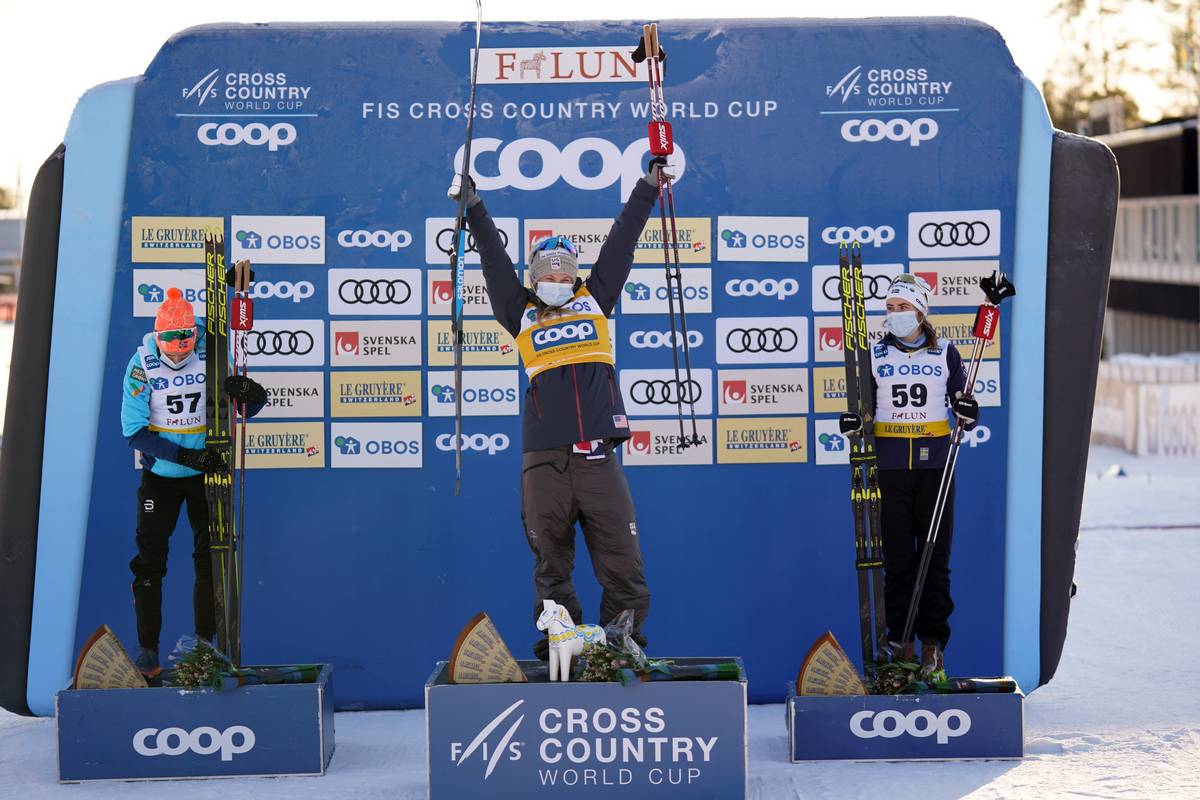
    The podium from Saturday’s 10 k mass start classic in Engadin, Switzerland:
    Heidi Weng (NOR) second, Yulia Stupak (RUS) first, and Ebba Andersson (SWE), (l-r). (Photo: NordicFocus)

    Germany’s Laura Gimmler (27) caught and passed Diggins to place fourth (+16.4), with Diggins coming through in fifth (+20.7). According to FIS, this is Gimmler’s best career distance result and her first top-10 outside of a sprint.

    “That was a fun day, and really exciting to see a new venue!,” wrote Diggins. “I’ve been really enjoying and appreciating the beauty of the Engadin Valley, and although I am SO excited to be going home to my fiance soon, I was proud of the energy and fight I brought to this weekend! I was proud of how we all worked together as a team to get through a long and challenging season, and I’m very excited to rip down the valley tomorrow and work as hard as I can one last time!”


    Jessie Diggins placing fifth on Saturday. Before the race, she already secured the World Cup overall and leads the distance standings heading into Sunday’s season ending race. (Photo: NordicFocus)

    Hailey Swirbul placed 12th (+49.1) for a near best career result. She placed third in this season’s 10 k skate in Davos and had a seventh fastest time of day on the way to 13th in Val Müstair’s 10 k skate pursuit during the Tour de Ski.

    “My best classic result to date,” Swirbul emailed. “That was exciting! First, I’d give a huge shout out to the waxing staff for coming through with bomber skis today. That really gave me a platform to have a good day! I enjoyed being back at altitude again, and on another Swiss-field course… those have tended to serve me well. It was a good day to start a bit more gradually and really work into the race for me. Once you cross the red line on an altitude, gradual course like this one, I find it difficult to come back, so I really tried to make sure that didn’t happen. Overall, I’m proud of our team and really looking forward to giving it one last go in the 30k tomorrow!”

    Hailey Swirbul for the U.S. skied to 12th on the day. (Photo: NordicFocus)

    Brennan, trying to remain in the hunt for a top-three in the distance cup, placed 14th (+58.0). Her efforts on Saturday were stymied early. She began strong, racing near the front end of the starters. Near the 2.5 k mark, she was involved in tight-pack racing and broke a pole.

    Brennan, in bib 4, close to the up-front action on Saturday. Coming into Sunday’s racing, she is fourth on the distance points list. (Photo: NordicFocus)

    “We are racing our last weekend of World Cups in the Engadin Valley in Switzerland which is a new location for the World Cup,” Brennan emailed. “That brings a lot of excitement and learning as we are all doing this race for the first time. We are at altitude and I consider that one of my strengths so I was really looking forward to this weekend. I felt really good off the line today, but unfortunately got my pole kicked and broken about 2.5km into the race. It was a bad place to break a pole and it took me awhile to get my spare pole so I lost the lead pack at that time. I did what I could to climb my way back, but did not have enough in me. I am really heartbroken that I couldn’t find another gear to fight back because I had great skis and had a lot riding on this weekend for the Overall World Cup. Tomorrow we start based on our finish today so it was a really bad day to not finish strong, but I will give it all I have tomorrow and do what I can finish the season strong.”

    Rosie Brennan for the U.S. in true grit fashion racing to 14th overall on Saturday. (Photo: NordicFocus)

    Also for the U.S., and outside the points, were Katharine Ogden in 33rd (+1:45.8), Sophia Laukli in 46th (+2:10.8), and Julia Kern 47th (+2:27.7).

    Canada’s Dahria Beatty posted her best result of the season in 23rd (+1:15.9). Outside her racing at the recently concluded World Championships, this is Beatty’s sixth World Cup race of the year.

    “I’m really happy. It has been a tough season for me so far, but just really happy to have this race today before the end of the season,” said Beatty to Nordiq Canada after the race. “I started with bib 58 so I had a lot of moving up to do. I watched the men’s race, and how Antoine skied having started in a similar position. I just tried to stay relaxed, ski as smooth as I could and not lose contact with the pack.”

    “I knew I had the ability to have a strong distance race,” added Beatty. “It has been a weird season. I had the best training season ever and my body felt amazing, but when I got to Europe in January my body felt off and I wasn’t skiing how I normally feel which was frustrating.

    “It took until the World Championships to feel better. I have been trending in the right direction and finishing 34th in the 30km on an extremely hard course put me in a good mindset for today’s race. The combination of people not liking altitude and I do, great skis and feeling good – it all came together today.”

    Canada’s Katherine Stewart-Jones was 44th (+2:04.9), and Cendrine Browne 49th (+2:30.2). 

    Dahria Beatty, shown here during World Championships last week in Oberstdorf, Germany. (Photo: NordicFocus)

    Tomorrow’s racing is a 30 k skate pursuit. Stupak will lead off that race. As far as the distance crystal globe is concerned, the standings tightened slightly. During Saturday’s race, bonus sprint points were on offer. The top racers on the day, gobbled those valuable points up, knowing the final distance standings would be close. 

    Diggins still leads after accruing 51 points with 603 points. Andersson is second, 43 points back, Stupak third, 44 points back, and Brennan falling off to fourth 141 points behind Diggins. 

    The 30 k racing should be visually epic as the race organizers have laid out a stunning point to point course up the Engadin valley. 

    Results | Distance Standings

  • A Historic Season For Diggins: World Cup Overall Champion

    A Historic Season For Diggins: World Cup Overall Champion

    Jessie Diggins during the Ruka, Finland classic sprint – the start to her 2020-2021 World Cup campaign. (Photo: NordicFocus)

    This World Cup coverage is made possible through the generous support of Marty and Kathy Hall and their A Hall Mark of Excellence Award. To learn more about A Hall Mark of Excellence Award or to learn how you can support FasterSkier’s coverage please contact info@fasterskier.com.

    This is a story that might make Jessie Diggins cringe. We’re here to render her efforts to the singularity of cross-country ski results. (A quick nod – her default is to defer to her team, and to only reluctantly ruminate on herself.)

    Last month, with the conclusion of racing in Ulricehamn, Sweden, and the subsequent canceling of World Cup races in Nové Město, Oslo, and Lillehammer (although the Oslo weekend was replaced with two distances races in Engadin, Switzerland), American Jessie Diggins had locked up the overall World Cup. She’s the first American woman to win the overall crystal globe. Back in 1982, Bill Koch became the first American to win the overall.

    Diggins’ season has been dreamy. She won the Tour de Ski. She barely missed out on two medals at the 2021 World Championships when she placed fourth in the 10 k skate and the 4 x 5 relay (but oh so close). Diggins stood on eight podiums this season before Engadin and bested one of the world’s greatest ever distance skiers, Norway’s Therese Johaug, in Falun, Sweden’s 10 k skate, the first time an athlete has raced faster than Johaug in the format since 2016.

    This is as good a time as any to address the elephant in the room: the dearth of Norwegian starts on the World Cup due to the pandemic. Norway pulled from World Cup competition after the opening weekend, only to rejoin the circuit on January 23rd in Lahti, Finland. Compounding Norway’s decision, Finland pulled skiers post-Ruka (the opening weekend) until the Tour de Ski, as did Sweden. But, you race against those who show up.

    Diggins showed up. And she showed up during this funk of a dryland season having not been on snow until arriving in Europe in November.

    Her Ruka, Finland races, the start to the World Cup season, ended with a 15th overall (fifth fastest time of day in the pursuit) in the three-race series. On to Davos, Switzerland, where she placed 13th and then 7th on the weekend. In Dresden, Germany, she placed fourth in the sprint. The points began to accumulate. After Dresden, Diggins was 8th overall in the overall World Cup standings with 191 points, whereas her teammate Rosie Brennan led with 377 points.

    If you’ve followed Diggins’ career, you’ll know she warms into the season. She often finds better form in the Tour de Ski. There she opened with a third-place sprint. She followed up with a third, first, first, third, ninth, and 10th, then second on the final mass start climb. She won the Tour, a first for a North American, with Russian Yulia Stupak second, and Sweden’s Ebba Andersson third.

    Jessie Diggins becomes the first North American skier to win the Tour de Ski in its 15-year history. (Photo: NordicFocus)


    Diggins during the Tour de Ski’s classic pursuit in Val di Fiemme, Italy. Diggins won the Tour, adding to her collection of points towards the World Cup overall. (Photo: NordicFocus)

    With her flurry of points scored during the Tour, Diggins came away as the yellow-bib-wearing overall World Cup leader with 932 points to Stupak’s 802 in second.

    With a short rest, Diggins returned to racing in Lahti, as did the Norwegians. She placed fifth in the skiathlon. In that race, in which Therese Johaug won in her usual dominating fashion, Diggins missed silver by two seconds.

    In Falun, Diggins made it very real with her 10 k skate win over Johaug. She then placed 7th and 8th, respectively, to close out the Falun stop. In Ulricehamn, in what turned out to be the final racing before World Championships in this Covid-19-truncated season, she placed fourth again in a sprint.

    Racing is no riddle for Diggins. In other words, when she enters a sprint, she’s no one-dimensional distance skier angling for sprint points. She can win. The same goes for distance events. With race cancellations this season, the schedule skewed more heavily towards skate races – a format Diggins has historically excelled in. However, the term overall means just that, skate and classic, sprint and distance. Diggins, known foremost as a skate skier, included two podiums in classic this season, both third places and both during the Tour de Ski. She also earned four other top-10s in classic. Her bread and butter remains skating. According to FIS, Diggins had a single skate race out of the top-10 this season, a 13th in the Davos skate sprint. Of the rest, the worst was a 7th place in the Davos 10 k skate. All the others were top-fives, including five podiums: a third place, a second place, and two wins all during the Tour de Ski, and her win in Falun.

    On the sprint points list, Diggins is fourth overall. On the distance list, she’s first with 552 points, to Andersson’s 490 in second (both Stupak and Brennan have 444 points in a tie for third). Statistically, although Diggins has secured the overall, the distance globe is still up for grabs with two distance races this weekend.

    Back in 2018, Diggins was second in the overall World Cup, and third on the distance list, her best final rankings to date. Ingvild Flugstad Østberg of Norway won the overall that season.

    Jessie Diggins locked in for the win: Falun, Sweden 10 k skate. (Photo: NordicFocus)
    The women’s 10 k skate podium from Falun, Sweden: Therese Johaug (NOR) second, Jessie Diggins (USA) first, and Ebba Andersson (SWE) third, (l-r). (Photo: NordicFocus)

    The barrier-breaking continues for Diggins. Living out of a few duffles, on the road from November until the end of March, she also juggled a minefield of Covid protocols during this time. The added stress of a pandemic and the reality that North Americans cannot simply head home for a week of rest between races, adds context to a season peppered with deep-nasal swab Covid-19 testing.

    “It’s really exciting because I feel like this is something we have really worked towards as a team, and something we have been building a lot of momentum towards for many many years,” said Diggins during a streamed press conference organized by FIS earlier this week. “I think the first thing I feel is a lot of gratitude because this is something that you cannot achieve alone.”

    She went on to thank the cadre of wax techs, coaches, sponsors, teammates, and supporters who have been part of her success.

    “To be able to do anything in the same sentence as Bill Koch is really cool; I have been looking up to him for a very long time,” Diggins said of her legacy now being linked with some of America’s most accomplished skiers. “Also, of course, looking up to Kikkan with her sprint globe wins, so it is really cool to be the first to do something and have the opportunity to say yes this is totally possible.”

    Diggins crossing the finish for fourth overall during the 2021 World Championship 10 k skate. (Photo: NordicFocus)
  • Case Closed: Klæbo Asks Norwegian Ski Federation to Rescind Appeal After his DQ in the Championship 50 k

    Case Closed: Klæbo Asks Norwegian Ski Federation to Rescind Appeal After his DQ in the Championship 50 k

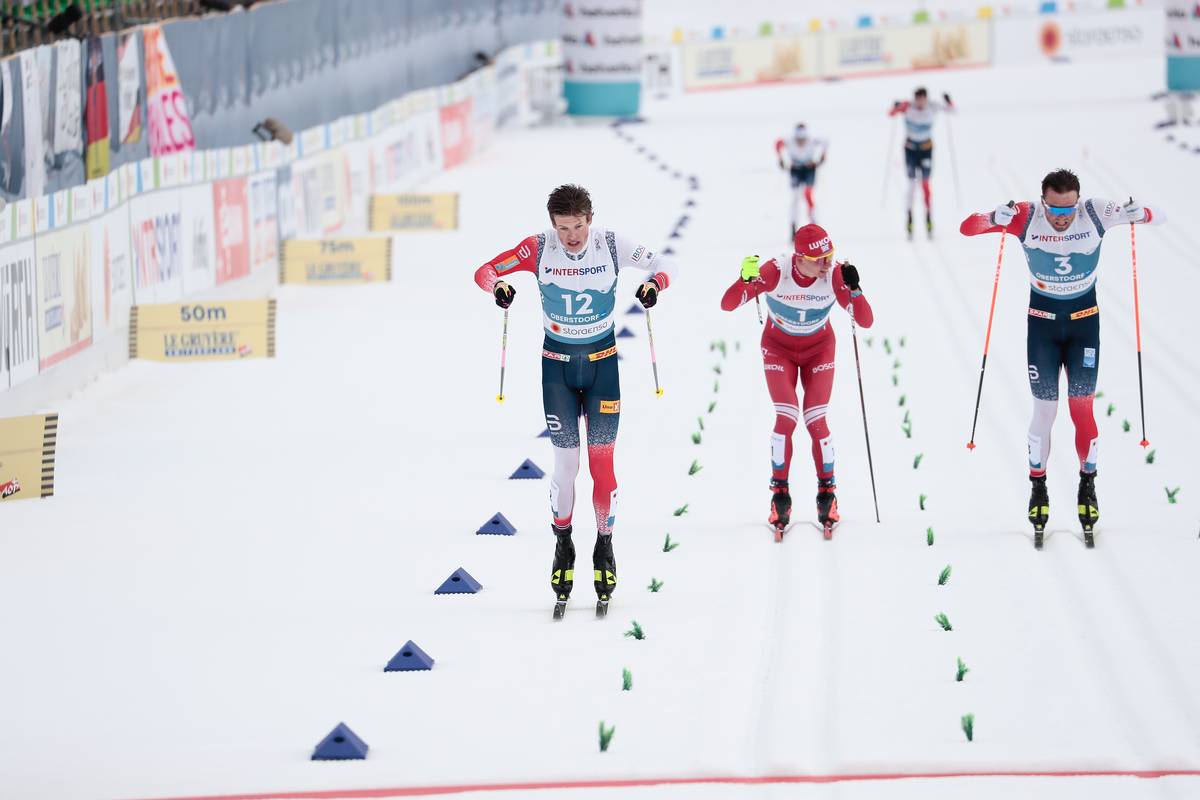
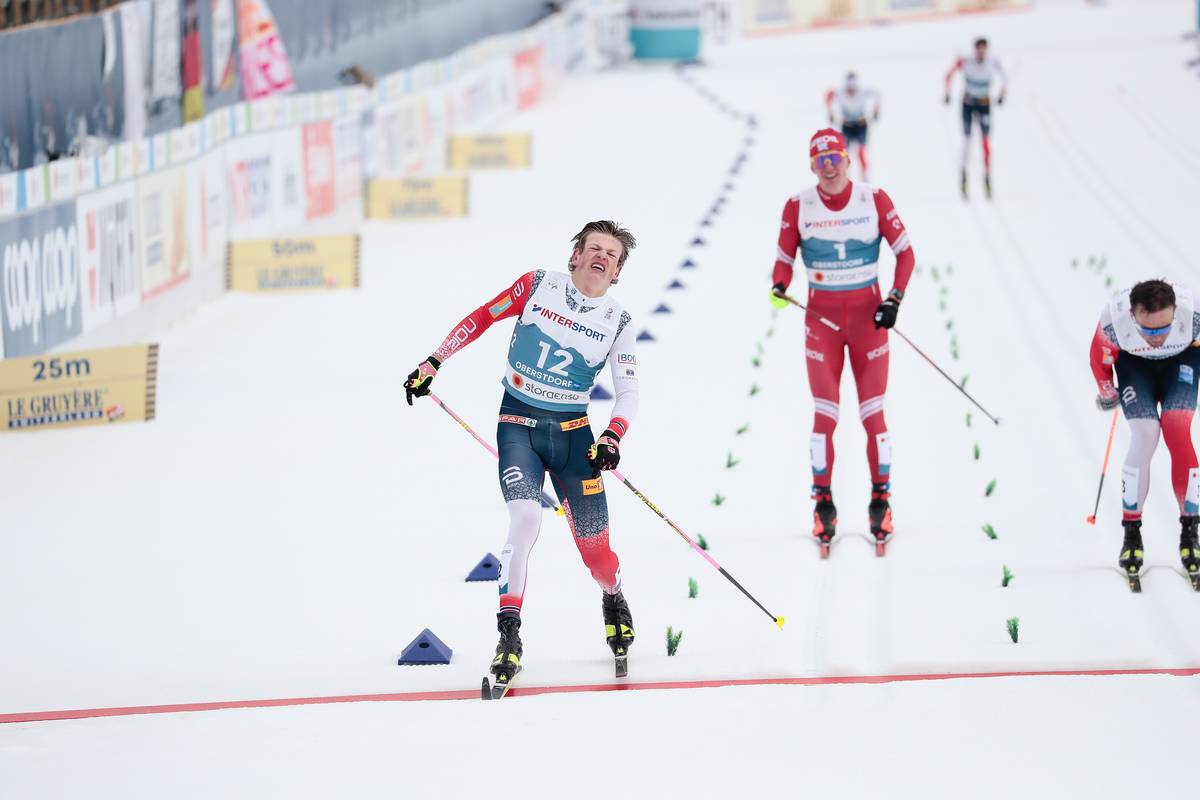
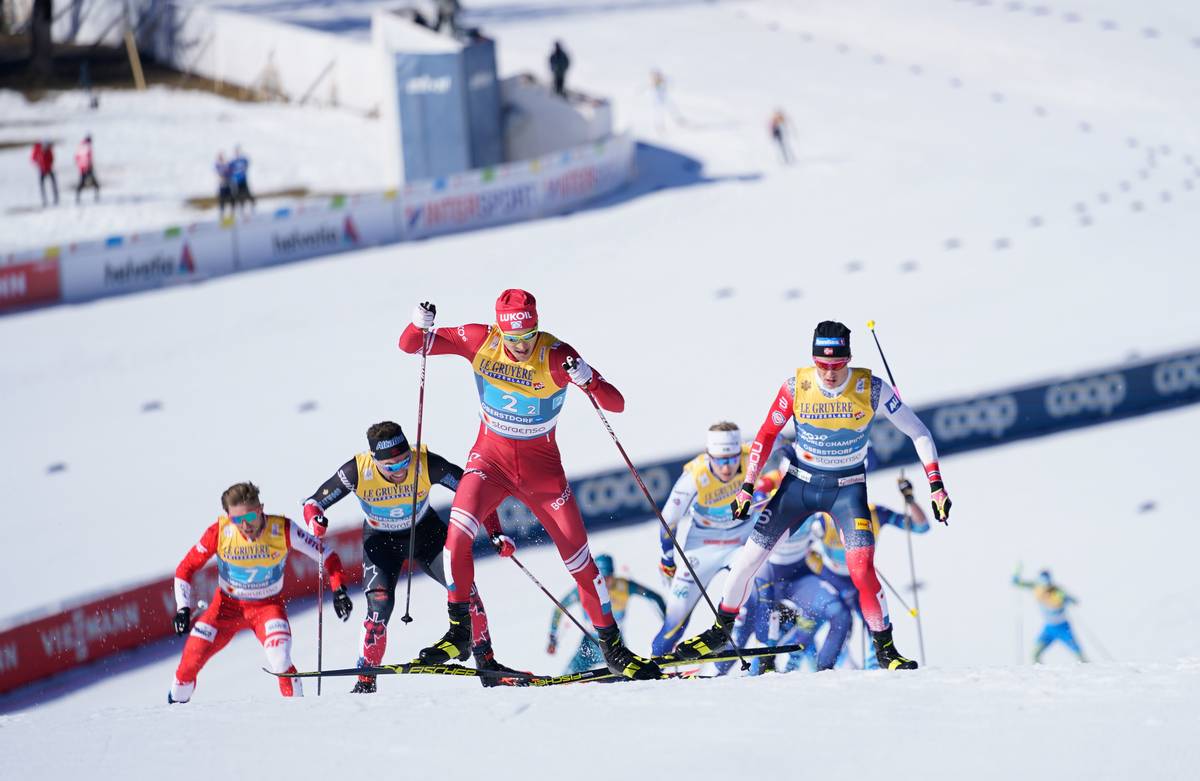
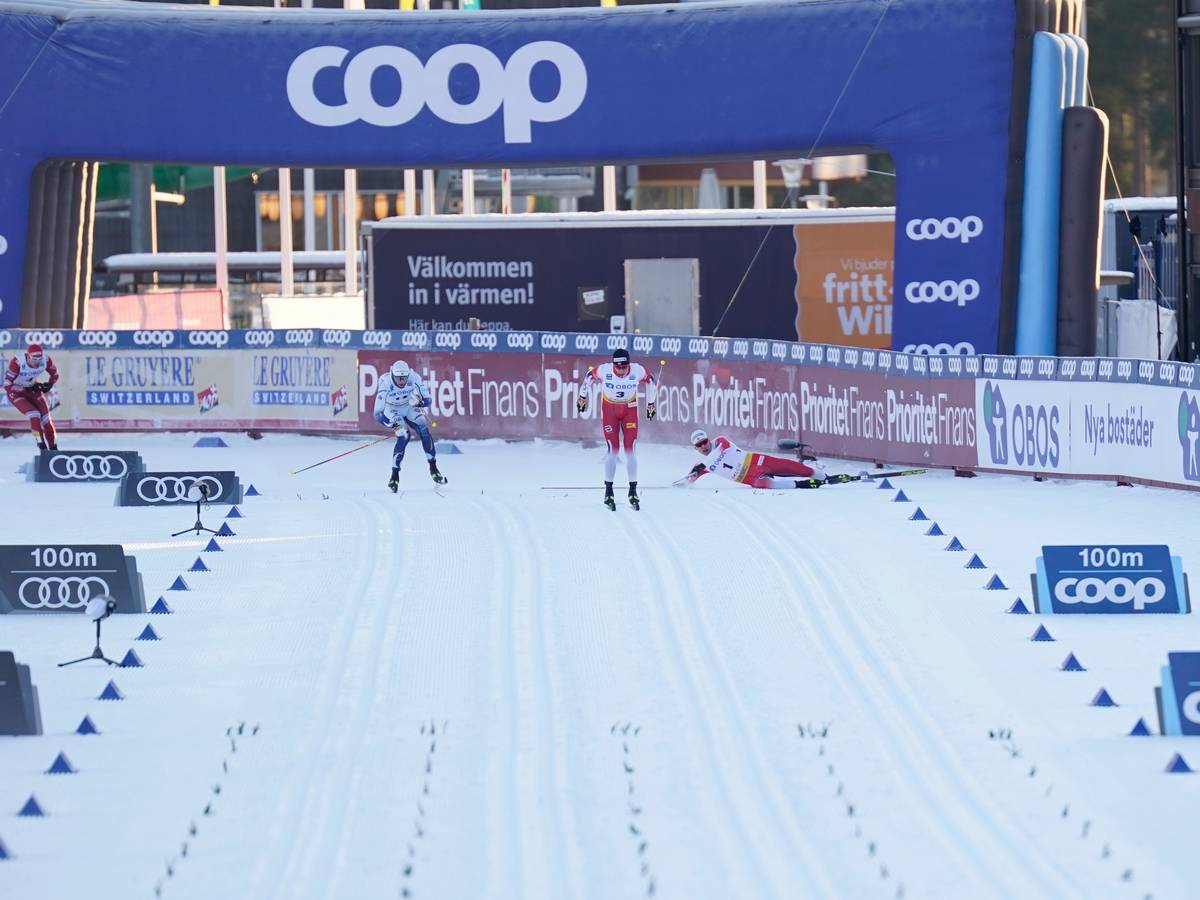
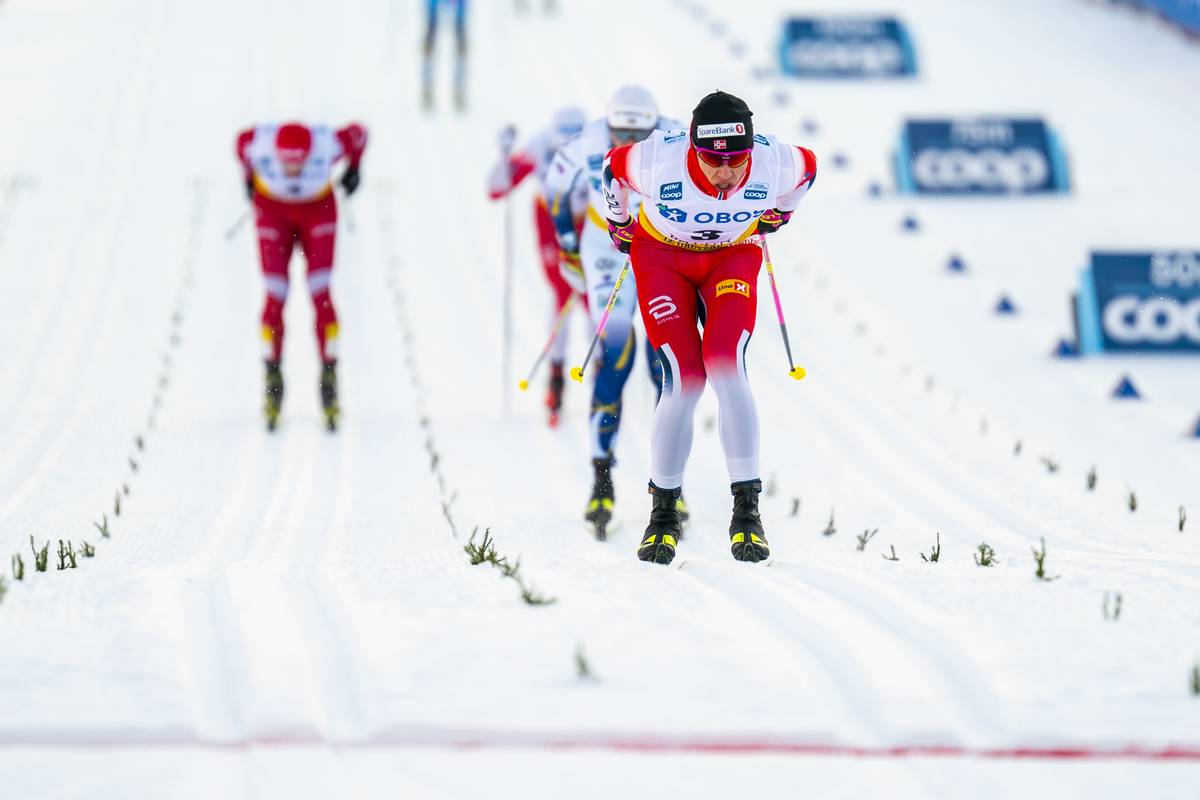
    The closing stages of Sunday’s 50 k classic mass start. Klaebo was eventually DQ’d for obstructing Alexander Bolshunov (bib 1). Norway’s Emil Iversen was declared the winner (left to right). (Photo: NordicFocus)

    “Go back and watch the video,” is something I have heard and done maybe 100 times collectively since the men’s 50 k mass start classic concluded with a winner then a DQ, then another winner on Sunday as the 2021 World Championships slammed the door on competition.

    To say it was a bizarre scene would be an understatement as Norway’s Johannes Høsflot Klæbo and Russia’s Alexander Bolshunov rocketed into and around a sweeping left-hand curve and into the final straight in Oberstdorf. Here’s what I wrote to describe the scene on Sunday:  

    “No matter how you look at it, pro-Russia, pro-Norway, pro-fun racing, Bolshnov went wide to close the door on Klæbo, and the Norwegian sprinter nearly lost his balance dodging V-boards, ski tips, and Bolshunov’s physical presence. During the brush-up, with no crowd noise, you can hear Bolshunov’s pole crack with the bottom half falling to the ground after he stuck it between his legs.

    “As Klæbo and Bolshunov re-centered, both now with barely enough room to push the pedals down, the drag race ensued with, as one might guess, Klæbo winning and Bolshunov, with one effective pole, losing ground. It looked like this: Klæbo as the 2021 championship sprint champ and 50 k classic champion in 2:10:52.2. Iversen, for his part, closed in down the straight and passed Bolshunov for second place (+0.7), with the Russian crossing third (+1.4) while slamming his now-dysfunctional pole to the snow.”

    After watching the race, watching slo-mo on the rewindable live-feed, and listening in on Devon Kershaw and Alex Harvey discussing the details of the rumble in Oberstdorf, the case seemed maybe a few degrees clearer in terms of who had the right of way. If you are looking for a 3000-word treatise on the FIS rules and how obstruction in and near the finishing lanes has been interpreted, this is not it. We hope to have something for you next week. For now, social media appears to be a rife environment for opinions and speculation.

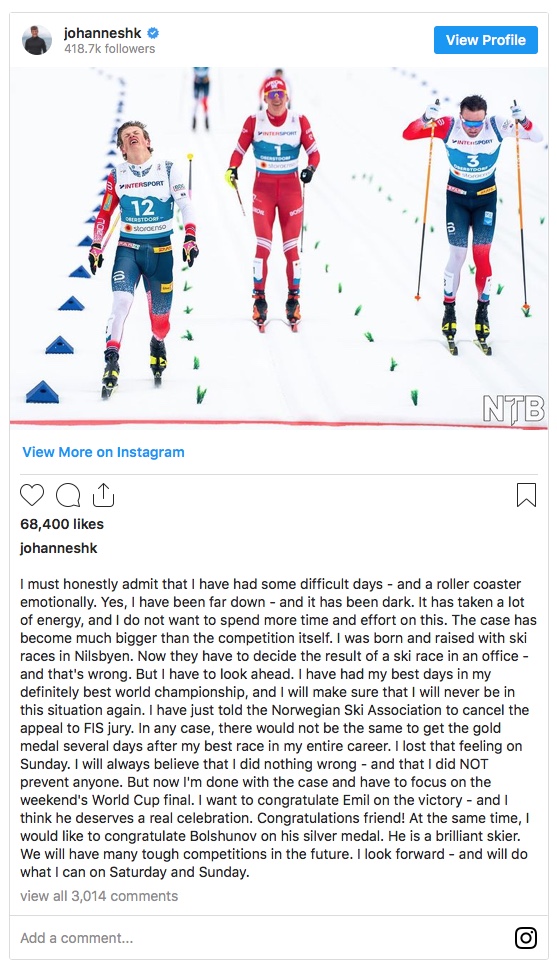
    After the race, when Klæbo had been disqualified, the Norwegian Ski Federation (NSF) intimated they would appeal the race jury’s decision to DQ Klæbo for obstructing Bolshunnov. That appeal came from the NSF, reportedly, on Tuesday. On Wednesday, with a post on Instagram, Klæbo informed the public he asked the NSF to rescind the appeal. The NSF is bowing to the skier’s wishes.

    Klæbo wrote:

    I must honestly admit that I have had some difficult days – and a roller coaster emotionally. Yes, I have been far down – and it has been dark. It has taken a lot of energy, and I do not want to spend more time and effort on this. The case has become much bigger than the competition itself. I was born and raised with ski races in Nilsbyen. Now they have to decide the result of a ski race in an office – and that’s wrong. But I have to look ahead. I have had my best days in my definitely best world championship, and I will make sure that I will never be in this situation again. I have just told the Norwegian Ski Association to cancel the appeal to FIS jury. In any case, there would not be the same to get the gold medal several days after my best race in my entire career. I lost that feeling on Sunday. I will always believe that I did nothing wrong – and that I did NOT prevent anyone. But now I’m done with the case and have to focus on the weekend’s World Cup final. I want to congratulate Emil on the victory – and I think he deserves a real celebration. Congratulations friend! At the same time, I would like to congratulate Bolshunov on his silver medal. He is a brilliant skier. We will have many tough competitions in the future. I look forward – and will do what I can on Saturday and Sunday. 

    Emil Iversen remains the 50 k champion, Bolshunov the silver medalist, and Norway’s Simen Hegstad Krüger the bronze medalist. At these championships, Klæbo won the individual sprint, the team sprint with Erik Valnes, anchored Norway’s win in the 4 x 10 k relay, and placed fourth in the 30 k skiathlon.   

    For fans, this latest episode between two historic figures in cross-country skiing adds plenty of drama for the weekend’s closing distance races in Engadin, Switzerland – a 15 k mass start classic and 50 k skate pursuit. 


  • A Mega-Classic 50 k to Close out the Championships: A Klæbo DQ in the Final Straight Reshuffles the Podium

    A Mega-Classic 50 k to Close out the Championships: A Klæbo DQ in the Final Straight Reshuffles the Podium

    Saturday’s new snow did not linger long, and spring conditions returned to Oberstdorf for the men’s 50 k classic. (Photo: NordicFocus)

    This World Championship coverage is made possible through the generous support of Marty and Kathy Hall and their A Hall Mark of Excellence Award. To learn more about A Hall Mark of Excellence Award or to learn how you can support FasterSkier’s coverage please contact info@fasterskier.com. 

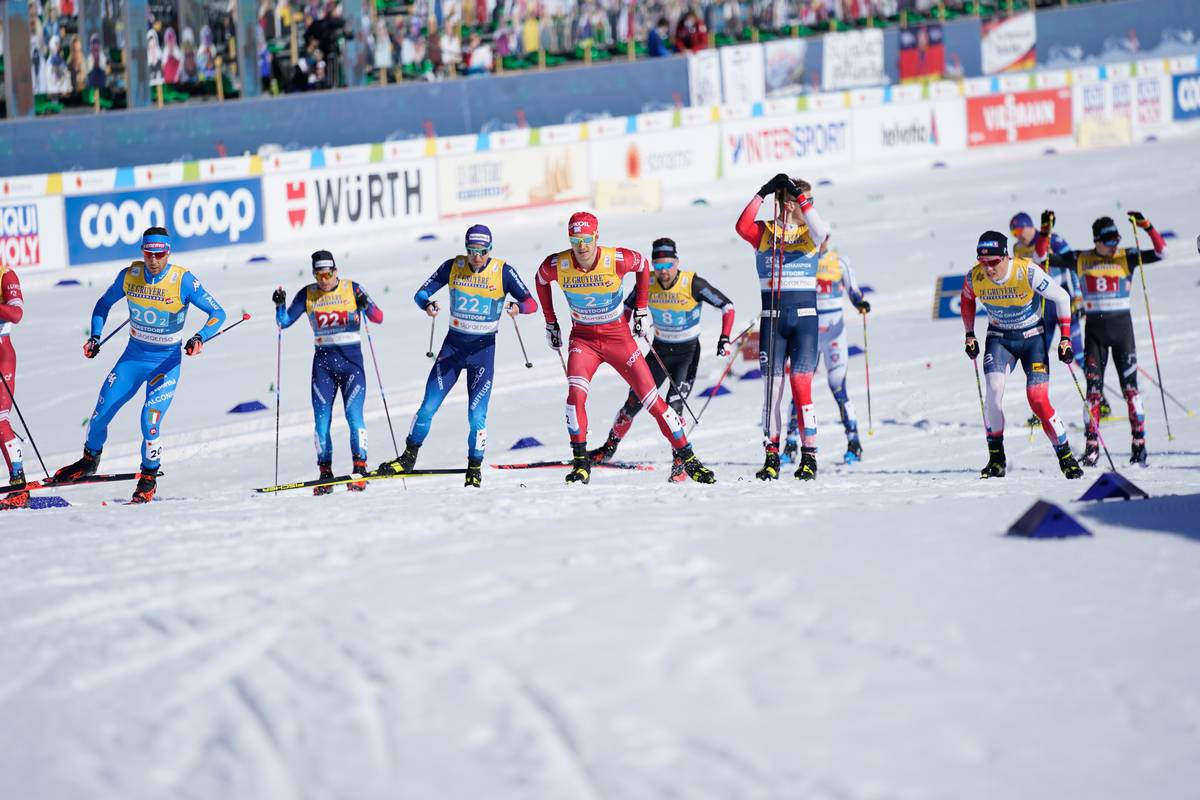
    It was under overcast skies that the men made their final preparations before the start of Sunday’s mass start 50 k classic, the final event of the 2021 World Championships in Oberstdorf, Germany. They would be skiing eight laps of a 6.25 k loop in temperatures of 40 degrees. With the crack of the starting gun, 57 athletes were underway, with hours of racing ahead of them.
    As the championships began to wind down, the sharp end of the race began to wind it up. In the early kilometers the accordion effect from so many bodies jostling with pacing and positions causes a few mishaps, like a fall on the same hill where Heidi Weng, Ebba Andersson, and Frida Karlsson slid yesterday. The first-lap tumble took out Norway’s Simen Hegstad Krüger, Lauri Lepisto of Finland, and Jason Rüesch of Switzerland.

    Watch the poles and skis – close quarter racing during the 50 k classic. (Photo: NordicFocus)


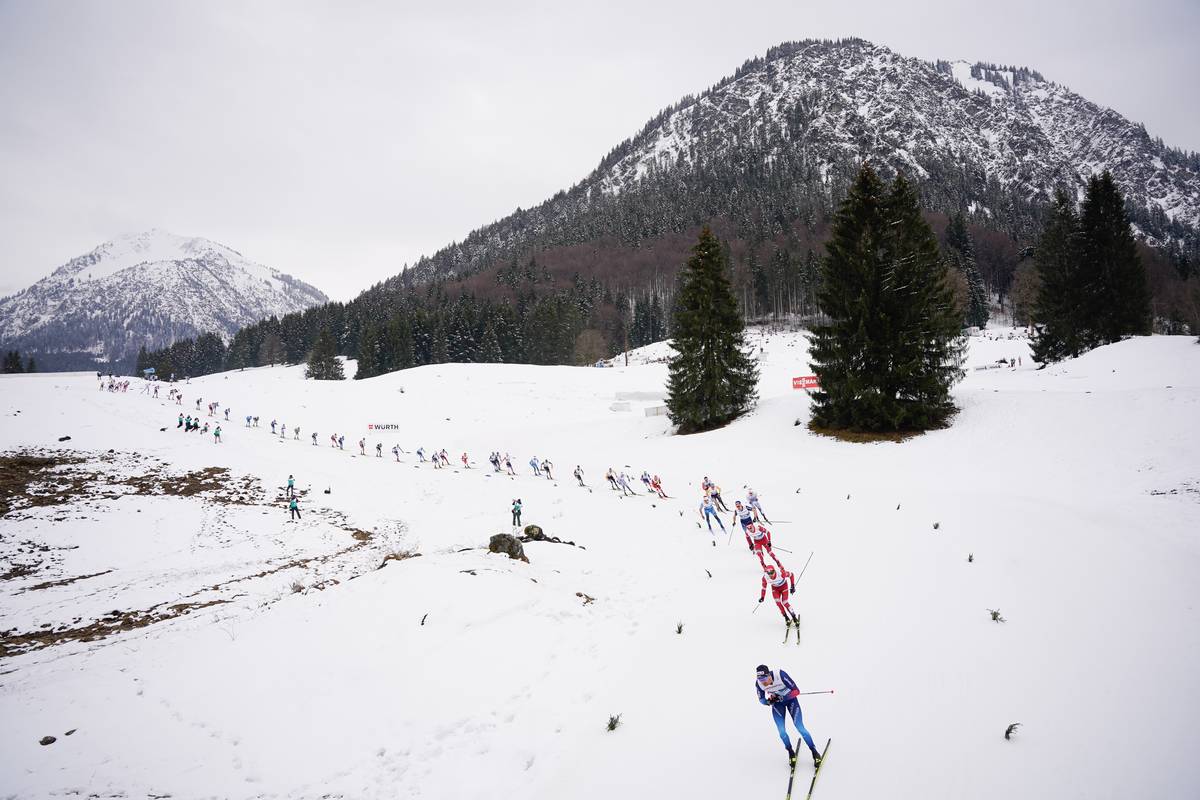
    The long snake that was the men’s field early in the 50 k classic. (Photo: NordicFocus)

    But such small insertions of mayhem are common in what was close-quarter racing. Through 16.5 k, maybe a small grimace from classic crusher Iivo Niskanen upfront revealed a smidge of hurt. Otherwise, 41 skiers came through within 13.2 seconds. The point: this race had yet to blow apart. To keep the accounting tidy, by then Krüger, Lepisto, and Rüesch were all comfortably back in the morass of skiers.

    At 20.5 k, Russia’s Alexander Bolshunov, wearing bib 1 and puple-mirrored shades, moved towards the front. As the winner of the last World Cup 50 k, the Holmenkollen 50 k classic last March, this was an apt position for a skier seeking his second career individual championship win. He won the 30k skiathlon in Oberstdorf.

    Alexander Bolshunov (RSF) navigates the final corners heading into the stadium. (Photo: NordicFocus)

    An hour in, Norway’s Hans Christer Holund and Iivo Niskanen shared calm words through the checkpoint – perhaps a nod to when and where the race would become a more earnest affair.

    Through the stadium for another hill-climbing lap at 25 k proved to be the point of no return as Bolshunov and Niskanen moved towards the front and some more than mild duress began to break apart the field. The names already mentioned, along with Dario Cologna (SUI), Emil Iversen (NOR), and Johannes Høsflot Klæbo (NOR), skied near the front.

    Johannes Høsflot Klæbo (NOR) looks to his right, receiving info from a coach mid-race. (Photo: NordicFocus)

    Keeping the accounting straight, the main pack still included 30 skiers, separated by 8.4 seconds at 27.9 k.

    By 31 k, counting the skiers up front became markedly easier. Twelve skiers raced through within 10.5 seconds, a distinct pack forming: from Bolshunov in the lead to Ireland’s Thomas Westgård Maloney in 12th. A few kilometers later, skiers latched on to the front pack from behind, including American Scott Patterson and Brit Andrew Musgrave in 15th and 16th. All five of Norway’s skiers were bunched together as were three of Russia’s.

    Andrew Musgrave (GBR) finds a tuck. Musgrave finished 8th. (Photo: NordicFocus)
    Iivo Niskanen (FIN) charging down the corners on the descent towards the stadium. (Photo: NordicFocus)

    One Finn, Niskanen, pulled the trigger around 35 k. The skier is known to have gone out on solo missions. In 2018, at the Olympics, he rolled away alone late in the race to win gold, with Bolshunov through 18.7 seconds later in second. In close contact on Sunday were Jens Burman and Klæbo, with Musgrave, Goldberg, Iversen, and Scott Patterson within 18.9 seconds. For all practical purposes, this race had busted apart into different pieces scattered across the course.

    At 1:48, roughly 40 k into this affair, Iversen snuck a few looks behind here and there and sensed the final chapter was being written. Bolshunov was dangling off the lead group of six skiers that included Iversen, Holund, Klæbo, Burman, Bolshunov, and Niskanen.

    Emil Iversen (NOR) took on much of the work in the later stages of the race and came away with a gold medal. (Photo: NordicFocus)

    And as if on cue, as the racing became increasingly spicier upfront around the two-hour mark, storm clouds shrouded Oberstdorf’s peaks, and light precipitation began to fall. Working from behind, and connecting to that front group with their own spiciness were Musgrave and Krüger, who closed down a 41-second gap at 43.8 k (1:54:25.4) to connect with the leaders.

    Atop the final go-around up the Burgstall climb, notorious at these championships for breaking apart the skate races, four Norwegians (Holund, Iversen, Krüger, and Klæbo) and Bolshunov remained. Coursing through the upper plateau before the descent towards the stadium, Bolshunov upped the tempo, perhaps mindful of his tactical mistakes late in the men’s 4 x 10 k relay when Klæbo out-ran him on the final hill before the finish straight.

    Emil Iversen (NOR), and Johannes Høsflot Klæbo (NOR) (l-r), animating the 50 k. (Photo: NordicFocus)
    Johannes Høsflot Klæbo and Emil Iversen round a corner. (Photo: NordicFocus)

    That final hill was again a showdown – yet, Bolshunov led the run with Klæbo on his tails. Iversen scurried slightly behind and was positioned solidly for third.

    All hyperbole aside, Klæbo is the game’s best finisher… maybe ever. Klæbo’s dream finish almost wasn’t.

    Swooping around the left-hander into the straight, it was Bolshunov in the lead and going wide up against the edge of the right-hand V-boards. (Reminiscent of Lahti where Finland’s Joni Mäki of Finland and Bolshnov nearly tied up near the 4 x 7.5 k relay finish? Maybe. Tune into the post-race podcast.)

    No matter how you look at it, pro-Russia, pro-Norway, pro-fun racing, Bolshnov went wide to close the door on Klæbo, and the Norwegian sprinter nearly lost his balance dodging V-boards, ski tips, and Bolshunov’s physical presence. During the brush-up, with no crowd noise, you can hear Bolshunov’s pole crack with the bottom half falling to the ground after he stuck it between his legs.

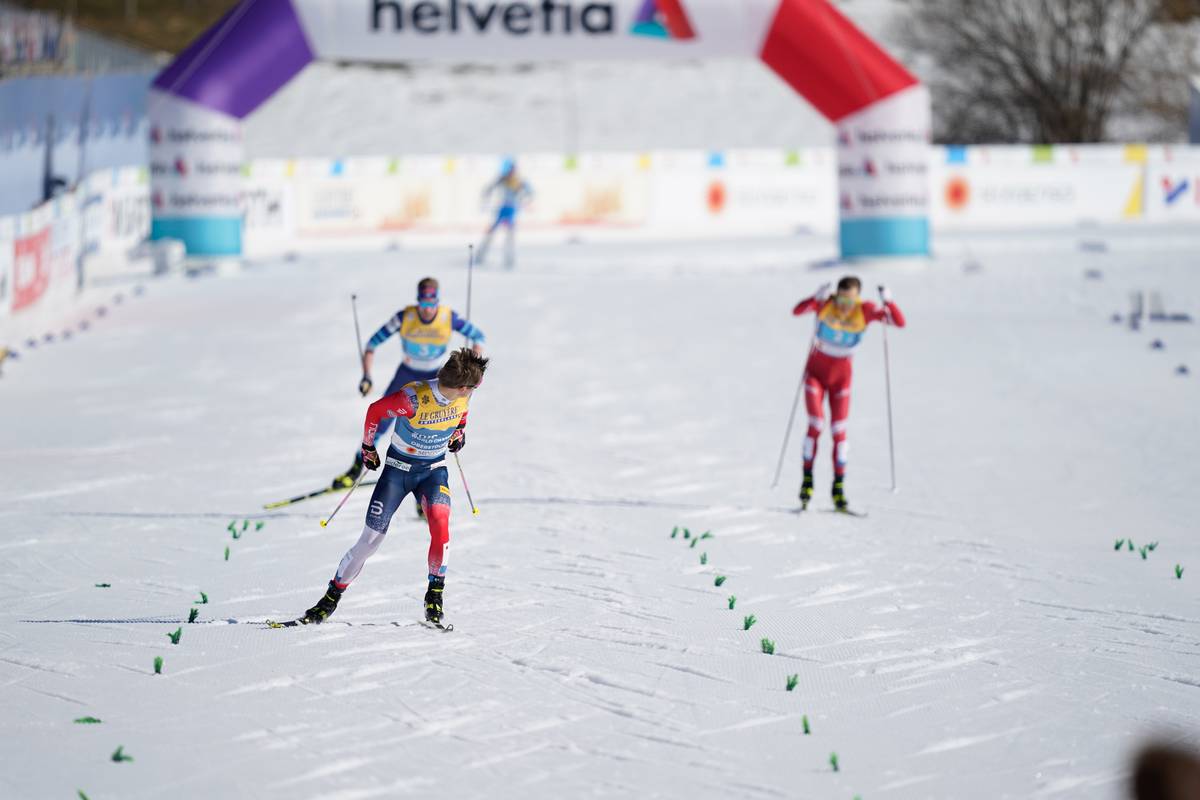
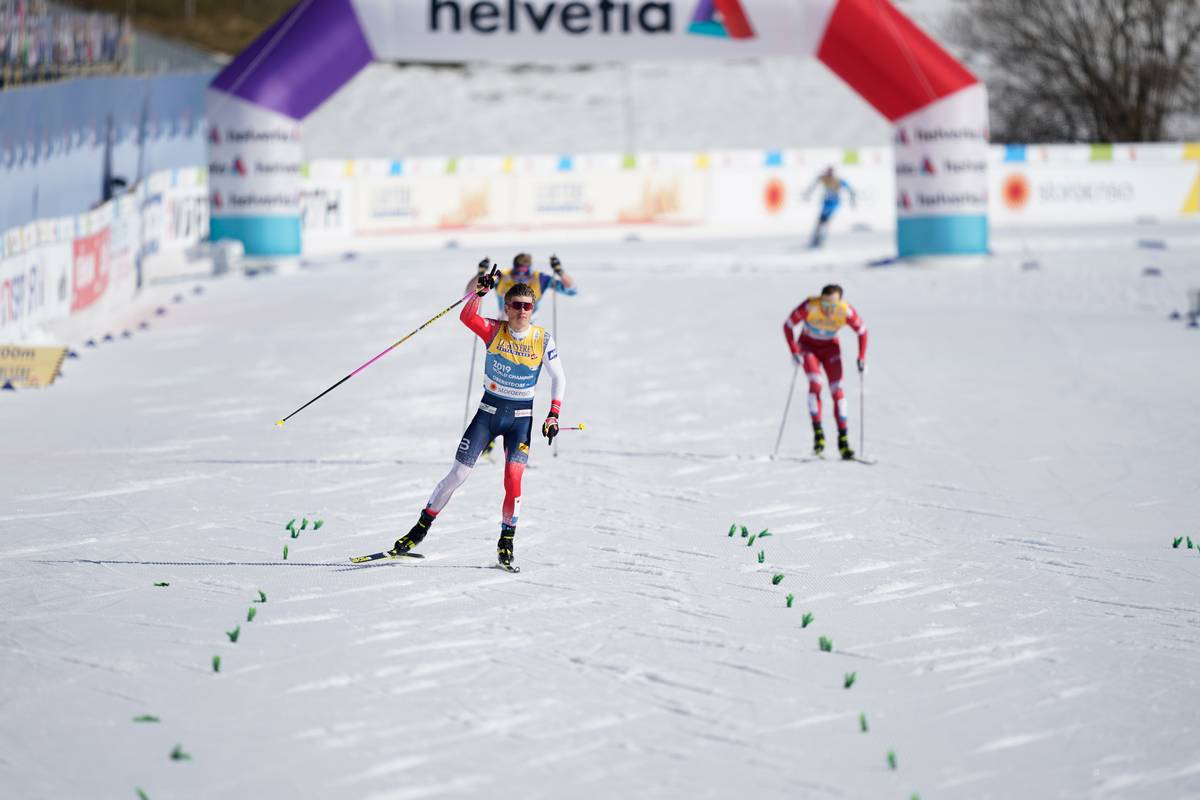
    As Klæbo and Bolshunov re-centered, both now with barely enough room to push the pedals down, the drag race ensued with, as one might guess, Klæbo winning and Bolshunov, with one effective pole, losing ground. It looked like this: Klæbo as the 2021 championship sprint champ and 50 k classic champion in 2:10:52.2. Iversen, for his part, closed in down the straight and passed Bolshunov for second place (+0.7), with the Russian crossing third (+1.4) while slamming his now-dysfunctional pole to the snow.

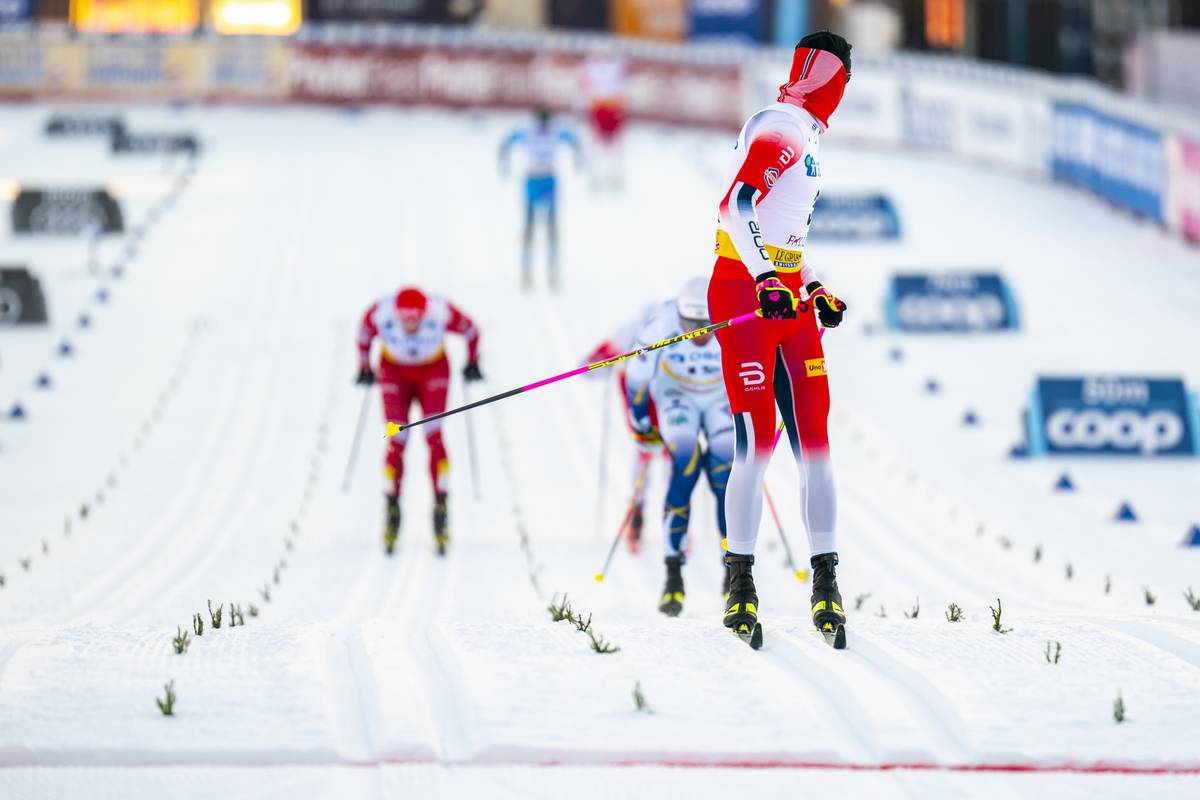
    The closing stages of Sunday’s 50 k classic mass start. Klæbo (NOR), Bolshunov (RSF) and Iversen (NOR) (left to right). (Photo: NordicFocus)
    Johannes Høsflot Klæbo lunges for the line. (Photo: NordicFocus)
    Disgruntled and disappointed, Alexander Bolshunov (RSF), after 50 k of effort. (Photo: NordicFocus)

    STOP THE PRESS.

    In the meantime, still, twenty minutes after the race, the race jury discussed the final moments of the race. In the jury room, on a live feed, were Russia’s Markus Cramer, a longtime head coach, a Norwegian official, and Klæbo arguing his case. Later on, within the post-race compound, Bolshunov, alone and masked, awaited the decisions, as did Klæbo and Iversen.

    Thirty minutes later and Klæbo was called back towards the jury room. Rule ICR 343.10 – Disqualified – Obstruction, came into play as Klæbo was disqualified.

    The disappointed look of Klæbo after being informed of his DQ. (Photo: NordicFocus)


    Followed by the press – a dejected Klæbo. (Photo: NordicFocus)

    The official podium became Iversen for the win in 2:10:52.9, Bolshunov second (+0.7), and Krüger third (+ 8.2). Norwegian broadcaster NRK is reporting that the Norwegian Ski Federation may file an appeal of the race jury’s decision to disqualify Klæbo; it has 48 hours in which to do so.

    A fitting podium shot for a hotly debated final 100 meters. The men’s 50 k podium: Alexander Bolshunov (RSF) second, Emil Iversen (NOR) first, and Simen Hegstad Krüger (NOR) third. (Photo: NordicFocus)
    Eyes downward for Bolshunov during a moment on the podium. (Photo: NordicFocus)

    For the Americans, two skiers paced into the top-20. Scott Patterson skied a steady and headstrong race to place 10th (+1:24.7). Patterson skied to 11th in the 2018 Olympic 50 k classic. With dogged skiing and persistently moving up, Patterson’s effort completes a solid championships that saw him place 14th in the skiathlon.

    “It was good, it was an interesting race, a lot of the early laps felt pretty chill, a lot of maneuvering around, people skiing on each other and then kind of lap four people accelerated,” Patterson told the U.S. Ski Team (USST) after the race. “Lap five, I went in and changed skis and that really all of a sudden strung us out. I mean I put in a pretty strong surge after that to try and get back on the leaders and paid for it in the end but I’m pretty happy. I wish I could have gotten a few more but I was hurting that last lap, up the big hill. It was a good race, I’m pretty psyched with it.”

    Scott Patterson racing to 10th overall for the U.S. (Photo: NordicFocus)
    Scott Patterson (USA) closing the race. (Photo: NordicFocus)

    Asked about his thoughts on the week, the Anchorage skier was already looking ahead for more. “I mean overall I was really shooting for a top ten, I was one place off today but I mean I’m fit, I’m feeling pretty good,” Patterson said before the official results were announced and he was bumped up to 10th overall. “ I think I can pull out top-tens and if you’re in the top-ten it’s not that much to get a little further up so I’m looking forward to a few more races for this season and then see what we can do for next year and build into the Olympics.”

    David Norris was the next U.S finisher in 16th. Norris, who grew up in Fairbanks but is now based in Anchorage, returned to the racing fold to notch his lifetime best championship result. He placed 17th in last week’s skiathlon, and 20th in the mass start skate at the 2019 Seefeld World Championships.

    “It felt good, I’m just a little disappointed that when we transitioned, I lost the lead pack and the slow transition and my skis were sticky for maybe 3 k or so,” said Norris to the USST. “But once they skied in, my second pair was actually quite good. I think I definitely picked off some spots in the last 10 k but that gap was already formed so it’s a little disappointing to know I could have been fighting for a top-ten and instead I got stuck with a top-20 battle.”

    David Norris skied to 16th overall in the men’s 50 k classic. (Photo: NordicFocus)

    Late last year, Norris recovered from Covid-19 and a modified training and race schedule to ultimately be named to the U.S. championships team.

    “Earlier in the year I didn’t think I’d race this winter so I’m grateful to be here and happy that I’m in good shape and yeah I really can’t complain, I just have big goals,” added Norris. “I’ll be hard on myself a little bit but overall I’m stoked.”

    Gus Schumacher, in his first senior championship and first ever 50 k at any level, ended his day in 29th. “There were definitely some times when I started to flood a little bit and I was like, ‘oh boy there’s five more laps’,” said Schumacher to the USST. “I had some good guidance in that it’s such a long race you have some ebbs and flows and I finished feeling solid, I mean completed it. I mean I’m glad I made it, fun first 50 k.”

    Gus Schumacher of the U.S., pacing to 29th overall. (Photo: NordicFocus)

    In a race in which the twenty-year-old, also from Anchorage, lost a pole basket at 8 k, he came away from Oberstdorf all the wiser. “This year has been a really big learning year,” said Schumacher to the USST. “A lot of it is patience, a lot of it is just kind of seeing how everyone does it and you know I would have loved to do better this week. But you know, this morning I was happy, I released a little pressure from myself and I came into the day just ready to absorb it and focus on the future and how to be in the top in a year. I mean a lot can happen and I feel good about myself and where I’m at.”

    Russell Kennedy (CAN) and Hunter Wonders (USA), also from Anchorage, charging through the early laps of Sunday’s 50 k. (Photo: NordicFocus)

    The trio of Canadian skiers also left a mark within or near the top-30. Antoine Cyr (22) was 27th, Russell Kennedy 28th, and Rémi Drolet (20) 31st. Phillippe Boucher began the race but did not finish. Forty-eight skiers finished the race.


    07.03.2021, Oberstdorf, Germany (GER):<br /> Antoine Cyr (CAN) - FIS nordic world ski championships cross-country, 50km men, Oberstdorf (GER). www.nordicfocus.com. © Modica/NordicFocus. Every downloaded picture is fee-liable.
    Antoine Cyr was the top Canadian in 27th. (Photo: NordicFocus)


    Rémi Drolet and Russell Kennedy for Canada. (Photo: NordicFocus)

    We’ll have more race coverage later on today from The Devon Kershaw Show Podcast with 2017 World Championships 50 k champion Alex Harvey.

    Final 50 k Results

  • The Devon Kershaw Show: 2021 World Championship 4 x 5 k Relay – A Nail Biter for Bronze

    The Devon Kershaw Show: 2021 World Championship 4 x 5 k Relay – A Nail Biter for Bronze

    The facts are this: with Johaug in the 4 x 5 k relay mix Norway remains a force late in the race when the skate legs ensue. Today in Oberstdorf, Johaug took over the race and made it a relative yawner up-front. The real action was for third place where the U.S. and Finland threw down.

    Johaug cruising during the 4 x 5 k. (Photo: NordicFocus)

    Over 20 k of racing came down to the final straight when Krista Pärmäkoski and Jessie Diggins drag raced. Pärmäkoski crossed first securing third for Finland, while the U.S. settled for fourth. In this episode: 45 minutes of all you can take 4 x 5 k relay.

    Down to the wire: Krista Parmakoski (FIN), Jessie Diggins (USA), (l-r). (Photo: NordicFocus)

    Thanks for listening.


  • Norway Leaves No Doubt in 4 x 5 k Championship Relay Win; Finland and U.S. Down to the Wire with Finland Taking Bronze.

    Norway Leaves No Doubt in 4 x 5 k Championship Relay Win; Finland and U.S. Down to the Wire with Finland Taking Bronze.

    15 teams beginning the 4 x 5 k relay at the 2021 World Championships. (Photo: NordicFocus)

    This World Championship coverage is made possible through the generous support of Marty and Kathy Hall and their A Hall Mark of Excellence Award. To learn more about A Hall Mark of Excellence Award or to learn how you can support FasterSkier’s coverage please contact info@fasterskier.com.

    Tension built, tension released, as the build-up to the women’s 4 x 5-kilometer relay at the World Championships began under a partly cloudy sky, light breeze, and what we’ve come to expect, warm temperatures at 54 degrees Fahrenheit. Modified race suits aside, the scramble leg ensued with a narrative none predicted.

    With 15 teams beginning, and a handful realistically in the medal hunt, the scramble leg, for all practical purposes, did scramble the narrative.

    Sweden won a nailbiter 4 x 5k relay at the 2019 World Championships. And with a team loaded with Jonna Sunding, Charlotte Kalla, Ebba Andersson, and Frida Karlsson, they at least, in the Monday-morning-quarterback discourse, seemed a medal contender if not a gold medal lock. Sundling, however, with slick kick, fell off the pace set by Tiril Udnes of Norway and Kirpichenko of Russia. She came through the 5 k mark to tag Kalla 12.5 seconds back of the Czech Republic in first, then Norway, RSF, and Canada’s mega-scramble performance by Katherine Stewart-Jones.

    Charlotte Kala of Sweden raced the second leg for Sweden. The team lost ground on the scramble leg and were out of podium contention early on. (Photo: NordicFocus)

    Focusing on Sweden here seems on point as they eliminated themselves from contention early on. Kalla, the storied Olympic and World’s champion, fell off the pace something hard on the second leg and landed with a thud. Be it poor ski speed or off-the-mark fitness on the day, the sand through the hourglass flowed freely in terms of Sweden’s time back. Kalla handed Andersson, bronze medalist on Tuesday’s 10 k skate, a whopping 1:39 deficit.

    Sweden out. Andersson and then Karlsson took the team in for a sixth-place finish, 2:00.0 off the winning time of Norway’s 53:43.2 mark. Swedish news outlet Exprssen quoted the Swedish wax tech chief as claiming they had missed the wax for the classic portion of the race.

    Kalla tagging off to Ebba Andersson: leg two to leg three. (Photo: NordicFocus)

    In a relay where first place was a foregone conclusion mid-way into the third leg, we might as well jump to the win. Therese Johaug was tagged with a 2.6 second lead over Russia’s Tatiana Sorina. For their part, Yulia Stupak kept Russia in the hunt as did a coy leg by Heidi Weng, as the Norwegian pulled in front of Russia near the conclusion of her leg with a burst of fast-paced climbing.

    Norway’s Therese Johaug dominated the third leg to ensure a Norway win. (Photo: NordicFocus)

    Around the 12 k mark, Johaug pulled away with her iconic turnover. The race for gold over barring a catastrophic fall. Johaug tagged U23 skier Helene Marie Fossesholm with a 19.8-second gap to Natalia Nepryaeva for Russia. Nepryaeva held on for silver, stopping the clock 26.6 back.

    Norway wins the 4 x 5 k relay with Helene Marie Fossesholm anchoring. (Photo: NordicFocus)

    This left the bronze medal up for grabs until the final meters.

    Rewinding to the second leg, Swirbul for the U.S. kept it close until roughly 3 k, when she faded from the leaders. She tagged Maubet Bjornsen off, 14.5-second back in ninth place. Maubet Bjornsen kept it calm and held those in front within sight. Skiing with poise and patience, Maubet Bjornsen was 11 second out of third at 7.5 k. Not a kilometer later she had latched onto the Czech Republic’s Petra Novakova in third.

    At the 10 k tag, when the skate legs began, Maubet Bjornsen, Germany, and Switzerland were grouped about 27 seconds behind Norway, while Finland came through in sixth, five-seconds after the American.

    Hailey Swirbul tagging Maubet Bjornsen. (Photo: NordicFocus)


    Maubet Bjornsen pain-caving on leg two of the 4 x 5 k relay. (Photo: NordicFocus)


    Swirbul recovers after the grind of a scramble leg. (Photo: NordicFocus)

    Brennan charged. She led Germany’s Pia Fink through the 12.5 k checkpoint in third. Finland’s timeless Riitta-Liisa Roponen was fifth, nine seconds behind the American-German pairing. Tagging off for the final leg, Germany, Finland, and the U.S. tagged off third, fourth, and fifth, respectively, with no significant time gaps between them.


    Rosie Brennan racing leg three for the U.S. (Photo: NordicFocus)
    Brennan tagging Diggins and Ropenan tagging Pärmäkoski for the anchor leg drama about to unfold. (Photo: NordicFocus)

    Victoria Carl for Germany, Krista Pärmäkoski for Finland, and Jessie Diggins for the U.S. began a 5 k hunt for bronze. Like Brennan before her, Diggins took over the pacing, with Pärmäkoski and Carl close behind. Not until late in the leg did Carl fall off Diggins’ pace.

    For readers of FasterSkier, Diggins is well known. Yet if Pärmäkoski was off your radar, we’re here to fill you in. At the 2018 Olympics, she won two individual bronze medals; one in the skiathlon, the other in the 10 k skate. She won silver in Korea too in the 30 k mass start. She has won five World Cups, all, however, in classic technique. Since 2011 she has 27 World Cup podiums.

    Diggins driving the pace followed by Pärmäkoski and Carl. (Photo: NordicFocus)

    By her standards, the thirty-year-old Pärmäkoski has had an off-year. She has no individual podiums, yet she did finish fifth overall in the Tour de Ski. She’s been consistent, by all measures, but missing her podium gears. She finished 13th overall in this week’s championship 10 k skate when Diggins just missed a medal when she placed fourth. Diggins bested the Finn’s time in that race by 52 seconds.

    Again, on paper, Diggins takes this leg and the Americans in for their first championship 4 x 5 k relay hardware.

    This is why they race. To see how it all unfolds. With Carl shaken off, it was Diggins and Pärmäkoski bronze medal hunting. Diggins’ tactic was full-steam ahead, leading Pärmäkoski until the closing few hundred meters. Pärmäkoski, sat tight, only showing her presence a few times on the American’s periphery.

    Finland’s Krista Pärmäkoski on a late-race move to pull ahead of Diggins. (Photo: NordicFocus)

    Up the final leg-quivering climb a final time, Diggins came over a second ahead of Pärmäkoski and at 51:37 into the race Diggins briefly glanced back. Pärmäkoski was still there.

    On the plateau above the climb, you could hear U.S. Ski team Head Coach screaming encouragement. Diggins continued to lead, both skiers noticeably fatigued from the effort ascending to the course high point.

    Working and tucking down the sinuous and technical downhill, the two skiers mirrored one another. In a furious pace heading into the final short climb before the stadium, Pärmäkoski revealed herself directly to the side of Diggins. Pärmäkoski carried her speed and passed Diggins and led up the final buckling climb. Pärmäkoski descended first and entered the final straight with a four-meter gap. Pärmäkoski V2ed, Diggins pushed with a few free skate pulses and tried to eke out more speed as she too V2ed to the line.

    Met by her Finnish squad, Pärmäkoski closed out for bronze (+46.2) with the U.S. in fourth (+47.0).


    Down to the wire: Krista Pärmäkoski  and Jessie Diggins (l-r). (Photo: NordicFocus)
    With the advantage down the straight, Pärmäkoski closes in for third, while Diggins takes fourth. (Photo: NordicFocus)


    Pärmäkoski and pure emotion crossing the line. (Photo: NordicFocus)
    No more to give: Jessie Diggins after crossing the finish line in the 4 x 5 k relay. (Photo: NordicFocus)

    The racing, if anything, was great. Down to the wire, it went, just falling on the favorable side for Finland in the medal count. If fans want solid racing regardless of the outcome, they got it. With the heavy task of shouldering U.S. hopes in the relay, Swirbul kept them in it, Maubet Bjornsen, Brennan, and Diggins sparked dreams of biting down on the elusive medal.

    It was Swirbul’s first opportunity to be a part of a championship relay team at the senior level. “I was really proud I’m so proud to be part of it I don’t, it’s a weird feeling because we’re expected to feel sad with getting fourth place but I feel really proud of this team,” she told the U.S. Ski Team after the race.

    For Maubet Bjornsen, in what is likely her final season of World Cup racing, she spoke of an unrivaled legacy in U.S. women’s 4 x 5 k relay’s that has come ever so close to the championship podium.
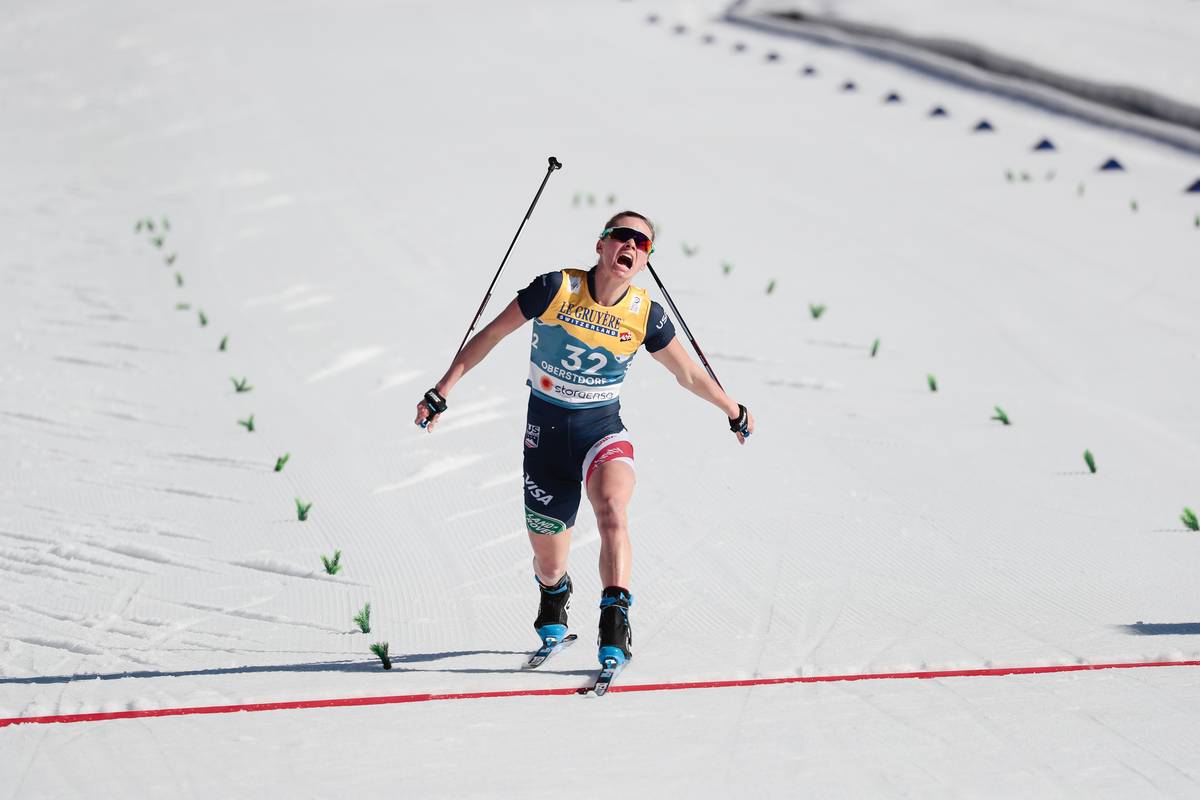
    Maubet Bjornsen, pictured second here, during the women’s 4 x 5 k relay. (Photo: NordicFocus)

    “For sure that the relays are the highlights of why I am still ski racing and I think it’s so cool to see everybody just give every bit that they can,” Maubet Bjornsen said to the USST. “Of course we’re shooting for medal and for about six championships in a row we know that it’s possible, if we get all the ducks lined up. “But you know, part of the game is getting those ducks lined up. And that’s how you keep coming back and fighting. For sure we are fit enough and if we get all those ducks running, man we’re coming for the world.”

    At one point this season, Brennan wore the yellow bib as the overall leader of the World Cup. She adds another level of depth to a loaded U.S. team. “The relay is the race we have all been looking forward to and had some big goals around that event,” Brennan wrote in an email. “It was another hot day with really soft conditions. This is a team of gritty girls and a team that likes to lay it all out there. We skied that way today and tried our best to play our cards right. It is certainly bittersweet to be so close to that podium and not get there, but when everyone skis with that much grit, there isn’t much else you can do. I am personally a bit disappointed with my leg. I believe I am capable of a bit more than I showed today. It was surprisingly hard to get away from people with a significant draft in effect. My best card was to grind away from the others, so that’s what I did and I am disappointed I couldn’t have been more effective. This is the closest we have been to the goal of a podium and for that I am proud. I know if we keep showing up and trying, we will find our way there.”
    All in: Diggins. (Photo: NordicFocus)

    Diggins remains the face and spirit of a squad continually knocking on the podium door after four legs of relaying racing. In her post race comments, she explained race strategy is hardwired.

    “I played the only part I had and I knew I had to ski like twice as hard as the girls that were with us,” said Diggins to the USST. “I did my absolute damnedest to drop them in the only place that I thought we could. I’m really proud of that…, Yeah it’s heartbreaking to come that close to a medal and know that fitness wise, we are so there. And I think that’s what’s really encouraging about this because that’s the only part that we can really control is coming into World Championships, knowing that our fitness is there, our minds are there, our tactics are there, and most importantly that we’re gritty enough.

    “And we definitely are. So I think, for me, when you look at things we can control is how we skied that race. I’m so proud of it. That was an absolute championship performance from every single member of this team and not just from the people who were racing but people who weren’t racing. It’s heartbreaking to come that close and know that we’re there but also that’s, that’s part of the sport.”

    The U.S women have placed fourth in World Championship relays in 2013, 2015, 2017, and 2021. If the U.S.’s white whale remains the relay medal, it’s a big ocean out there. Tactics and fitness profiles will be analyzed. But, roughly 12 months from now when the Beijing Olympics go down, the relay socks will be pulled up and 4 x 5 k relay medal dreams will begin anew. Today, Finland gets the well-deserved podium spot.

    Results

    The women’s 4 x 5 k relay podium: Russia second, Norway first, and Finland third (l-r). (Photo: NordicFocus)
  • It’s a Tempo-Fest – Johaug Captures 10 k Skate at Worlds; Diggins Fourth

    It’s a Tempo-Fest – Johaug Captures 10 k Skate at Worlds; Diggins Fourth

    Therese Johaug (NOR) dominating the 10 k skate competition. (Photo: NordicFocus)

    This World Championship coverage is made possible through the generous support of Marty and Kathy Hall and their A Hall Mark of Excellence Award. To learn more about A Hall Mark of Excellence Award or to learn how you can support FasterSkier’s coverage please contact info@fasterskier.com.

    The high pressure continued at the 2021 World Championships on Tuesday in more ways than one. Oberstdorf, Germany’s temps hovered around 50 degrees Fahrenheit for the start of the women’s 10-kilometer individual freestyle, and a rarefied number of skiers poised to step on the podium. The pressure cooker that is the individual start, with skiers setting off at 30-second intervals was on display from the first earnest pole plants out of the start.

    Coined the “Tempo-Fest” by some who see a Therese Johaug sweep of the distance events as a foregone conclusion – this appeared to be true considering the early splits. The former two-time winner of the 10 k, (2013 in skate, and 2019 classic), the Norwegian’s medal case was already being prepared at the 1.5 k split. She cranked through 3.0 seconds faster than Sweden’s Frida Karlsson and 6.3 seconds ahead of the third-fastest split from the U.S. skier Rosie Brennan. Sweden’s Ebba Andersson notched the fourth-fastest split (+6.8), and American Jessie Diggins, the only skier to best Johaug in this discipline since 2016, was fifth through the split (+7.1).

    Sweden’s Karlsson locking in for second overall. (Photo: NordicFocus)


    Ebba Andersson of Sweden in her quest for a medal during the 10 k skate. (Photo: NordicFocus)


    Jessie Diggins during her fourth-place run in the 10 k skate at the 2021 World Championships. (Photo: NordicFocus)

    The justification of noting such early splits with a full 8.5 k of racing to go is this: any time back to Johaug is historically time lost – never to be gained back. That was the case on Tuesday when Johaug had 8.6 seconds over the second-fastest skier, Karlsson, at 5 k – the race midpoint – and 19.8 seconds and 21.3 seconds over Andersson and Diggins, respectively.

    Norway’ Johaug on her way to her second win in these 2021 World Championships. (Photo: NordicFocus)

    With the open mind thinking that anything can happen but with the caveat that Johaug is a one-of-a-kind skier – this race appeared to be signed, sealed, and delivered to Johaug by 6.8 k, when she led by 18.1 seconds over Karlsson in second.

    Johaug won amidst a crowd-less and sunbaked stadium in 23:09.8 to capture her 12th World Championship medal and her second in Oberstdorf after she won the 15 k skiathlon on Saturday. Adding to the accolades, Johaug becomes the first woman to win the 10 k at successive World Champs since Katerina Neumannová of the Czech Republic in 2005 and 2007.

    Johaug made it two 10 k crowns in a row: she won the 10 k classic at the 2019 World to add to her win on Tuesday. (Photo: NordicFocus)

    “I think I had the day of my season this year,” Johaug told FIS. “I felt incredibly strong and fresh and really have to give thanks to my amazing team of waxers. They are out day and night to test and find the best option for the race. This victory is really dedicated to all of my team and I am really happy to repeat my title”.

    For the 21-year-old Karlsson, she captured silver finishing +54.2 seconds back. In 2019, Karlsson also placed second to Johaug in the World Championship 10 k classic. Her teammate Andersson was third (+1:06.9) on Tuesday. Johaug’s win by nearly a minute is peerless when examining the margin of victory in World Championship or Olympics 10 ks back to 2000. (Information listed below compiled by Erik Nilsson.)

    2019 Seefeld WC , Johaug +12

    2018 PyeongChang Olympics , Haga +20

    2017 Lahti WC, Bjørgen +41

    2015 Falun WC , Kalla +41 (Norway missed skis)

    2014 Sochi Olympics , Kowalczyk +18

    2013 Val di Fiemme WC, Johaug +10

    2011 Oslo WC, Bjørgen +4

    2010 Vancouver Olympics, Kalla +6

    2009 Liberec WC, Saarinen +4

    2007 Sapporo WC, Neumanova +26

    2006 Turin Olympics, Smigun, +21

    2005 Oberstdorf WC , Neumanova +1

    2003 Val di Fiemme WC , Skari, +21

    2002 Salt Lake Olympics, Skari, +4

    2001 Lahti WC, Skari, +12


    The 10 k skate podium: Frida Karlsson (SWE) second, Therese Johaug (NOR) first, and and Ebba Andersson (SWE) third (l-r). (Photo: NordicFocus)

    Diggins, who raced in a scissor-modified race suit to create shorts and short sleeves, placed fourth (+1:04.0) in what was tight racing. She and Andersson remained in close virtual contact when considering splits – with the Swede slightly ahead after the 5 k mark. Of the leaders in the final standings, Diggins was the earliest starter in bib 32. Johaug began in bib 40, Karlsson in bib 46, Andersson in bib 34, and Russia’s Tatiana Sorina (racing under the banner RSF due to a CAS ruling) who finished fifth (+1:13.8), in bib 44. Charlotte Kalla, the storied champion from Sweden was sixth (+1:09.4).

    Jessie Diggins (USA) crouched for the descent, followed by Anamarija Lampic (SLO). (Photo: Nordic Focus)

    “It’s no secret that I really struggle, these are not my temperatures, I’m more of a Minnesota winter athlete,” Diggins said after the race to the U.S. Ski team when asked about high temperatures. “But for me, I was really proud of our heat mitigation strategies. I’ve been working really hard on trying to acclimate to the heat, I was hydrating like crazy, cut the legs cut the arms off the suit, spritzed my suit with cold water, packed a bunch of snow into my sports bra before the start, and had coaches throwing water on me multiple times and I still got hot. But all that said, that is all I can control. I went out there and, you know, my goal for today was to just be the person who gives, the most. I’ve been visualizing this course for weeks. I practiced in my mind how I wanted to ski it. I went out there and I just skied so hard, and I’m so proud of that because that’s the only thing you can control.”

    Diggins crossing the finish for fourth overall. (Photo: NordicFocus)

    The U.S., which has never medaled at a championship in the women’s 4 x 5 k relay, should be positioned for a solid day on Thursday when that competition goes down. “Just excited for that relay,” said Diggins when asked if she had anything to add.

    Unequivocally the skis and the form were solid across the board for the U.S. Beyond Diggins’ near-podium, all four U.S. skiers finished in the top-25. Sadie Maubet Bjornsen, who remained off the WorldCup until recently, raced to 11th (+1:47.8).

    Sadie Maubet Bjornsen racing to 11th on the World Championship 10 k skate. (Photo: NordicFocus)
    In only her sixth international race this season, Maubet Bjornsen paced to 11th on Tuesday. (Photo: NordicFocus)

    “I do feel like I skied with like just no fear out there, and whenever that happens, I’m proud of it,” said Maubet Bjornsen to the USST. “A number is what it is at the end of the day, but I am, I’m really stoked about the fearless energy I went with on those insane hills with. I think you can hear me breathing from literally a kilometer away.

    “A number is hardly a measure of today’s effort. I am more of a power skier. So the mountains like that can sometimes break me to pieces and I feel like I just went after them, pretending they were flat and they beat me up no doubt but I feel like I give him a run for their money.”

    Rosie Brennan during Tuesday’s 10 k skate. (Photo: NordicFocus)

    Rosie Brennan, who barnstormed the World Cup during Period I and charged at the Tour de Ski, finished in 17th (+2:03.3).

    “It was tough, I feel pretty crushed, to be honest,” said Brennan to the USST. “I started really well and things were going fine and then I don’t know, slowly just the wheels came off and I didn’t have the body or the brain that I had hoped for. And so it was kind of like a brutal battle to the end.”

    Brennan had the fifth-fastest split (+13.2) at 2.5 k, and the seventh fastest at 7k (+33.1). By 7.9 k she lost more time to the leaders, coming through in 12th (+1:38.0).

    Asked if perhaps she had started too fast, Brennan said, “I mean it’s hard to say, of course, it looks that way on the splits but I also believe that I’m capable of skiing 10 k at that level. And I think I’ve shown that this season so I think, on a good day I could have held it. And I felt I had to try. So I did plan to go out, you know, relatively hard. And maybe it was just like a little much for the heat or just the body that I have right now but solid five K so hopefully I can turn it around for the 5 k in the relay.”

    Sophia Laukli of the U.S. placed 25th in the 10 k skate. (Photo NordicFocus)

    Also for the U.S., Sophia Laukli (20), skied to 23rd (+2:23.0).

    “I definitely thought it was gonna be slushier than it was,” Laukli said to the USST post-race. “But in the past few days skiing here in the shady areas have been super different than like what’s in the sun. But today was pretty consistent so that was a nice surprise I guess.”

    In her first World Championships, Laukli now has two top-30 results – she placed 25th in Saturday’s skiathlon. This is her first season racing World Cups with a top result of 33rd on the Lahti, Finland skiathlon in late January.

    Cendrine Browne was the top Canada finisher in 27th. (Photo: NordicFocus)

    Canada’s Cendrine Browne, who began in bib 3, notched 27th (+2:32.5) for Canada’s best result.

    “I am happy with today’s race. I was aiming for top-20 and was so close – just 12 seconds off,” said Browne to Nordiq Canada. “I just died on the second lap so I know that in a better day top-20 is definitely something I can achieve.”

    According to Nordiq Canada, this is Browne’s seventh top-30 at the World Cup level. “I just died on the second lap so I know that in a better day top-20 is definitely something I can achieve. Overall, I couldn’t ask for a better season. Being this consistent in every race is a dream come true, and I’m proud of how I’m performing even though I had a concussion in September and contacted COVID in November.”

    Dahria Beatty was 44th (+3:16.2), and Laura LeClair 57th (+4:52.1)

    Results

  • Norway Speeds Ahead for Men’s Team Sprint Gold, Canada’s Cyr and Ritchie 7th Overall

    Norway Speeds Ahead for Men’s Team Sprint Gold, Canada’s Cyr and Ritchie 7th Overall

    Greeting teammate Erik Valnes at the finish, Johannes Høsflot Klæbo helps Norway to gold in the team sprint. As Klæbo’s bib makes apparent – this makes it back-to-back team sprint titles. (Photo: NordicFocus)

    This World Championship coverage is made possible through the generous support of Marty and Kathy Hall and their A Hall Mark of Excellence Award. To learn more about A Hall Mark of Excellence Award or to learn how you can support FasterSkier’s coverage please contact info@fasterskier.com.

    The firepower was evident on the start line. Norway, Russia, France, Italy, and six other teams paired for the team sprint Sunday at the 2021 Oberstdorf, Germany World Championships. Revving at the start for Norway were Erik Valnes and Johannes Høsflot Klæbo, with Alexander Bolshunov and Gleb Retivykh for Russia. Two teams in a freestyle team sprint with a seemingly endless list of scores to settle.

    With the third day of racing dawning at these championships, Klæbo comes in with a gold medal in Thursday’s classic sprint while Valnes earned silver. Bolshunov satisfied his itch for individual gold with a technical-strike win in yesterday’s 30-kilometer skiathlon. Although only twenty-four-years-old, the win was the first individual championship title for Bolshunov.

    With a wide-angle view of the blue sky and mountainscape, the setting was dreamy if not trending on too warm for the start of the team sprint. At this level of racing with F1 engine fine-tuning and horsepower – the initial pacing and gamesmanship wasn’t exactly horse and buggyesque, but certainly not close to redline speed. The real jazz in this team sprint, which amounted to a total of 7.2 k of skate sprinting with each athlete racing three laps total,  came around the 6:40 mark.

    Erik Valnes (NOR), Alexander Bolshunov (RSF), (l-r) during the chess match portion of the World Championship team sprint. (Photo: NordicFocus)

    Bolshunov and Valnes were rolling for their respective teams. Up the course’s decisive hill, Bolshunov hop-skated and V1’d to separate himself from Valnes, Francesco de Fabiana of Italy, France’s Lucas Chanavat, and Ristomatti Hakola of Finland. The shake-up from Bolshunov was enough to have what appeared to be everlasting relevance in this narrative. It turns out, the move almost stuck.

    Gleb Retivykh (RSF), Johannes Høsflot Klæbo (NOR), (l-r) cresting a hill during the men’s team sprint final. (Photo: NordicFocus)

    Retivykh, one of the planet’s best skate sprinters, pulsed away with a two-second lead at the third exchange over Norway. Italy (+2.5), France (+2.8), and Finland (+3.2) were close behind. As far as prescient strategies go, the burst of speed from Bolshunov and cushion of time gifted his partner seemed a lucid move on many levels. It kept the Russians out of traffic. And it kept hope alive for a Russian gold when the stars, and in fact, the entire universe was aligned in this truth: No skier besides maybe his partner, Valnes, currently door-slams a final climb and descent into a finishing straight like Klæbo.

    There were more pulses of speed from Bolshunov on his final turn of the screw during his final lap. Camera angles and stopwatches aside, the Russians appeared ready to bite down on real gold rather than see their efforts stymied on the final lap in an effort for fool’s gold. Retivyk took a 4.3-second lead at 6 k into the last 1.2 k to finish the race. Klæbo had his target ahead in Retivyk, with Joni Mäki skating off 5.1 seconds back. France and Italy, at that point and time, barring a spill upfront, were no longer podium threats at +9.9 and +10.0 seconds behind, respectively.

    The tag zone chaos. (Photo: NordicFocus)

    At 13:00 into the race, on that last lap, Retivyk V2d 15 meters ahead of Klæbo and Mäki. At the base of the first rolling climb, with no evident uptick in effort, Klæbo (with Mäki in his draft) began to close in. On the long glide-out, Klæbo’s slick skinny skis did the work: Norway and Finland were locked onto Russia at 13:40.

    At 14:08, despite the race officially not run its course, was over. Klæbo moved around Retivyk and put on a technical and profound display of high-turnover uphill precision. Around the left 180-degree corner atop the hill, Klæbo had 20 meters on Retivyk and Mäki.

    Down the straight, with what looked like 40 and maybe 50 meters of real estate between himself and second and third place, Klæbo let up, soaked in the stoke, and won for Norway in 15:01.74. Finland was second (+1.68), and Russia third (+2.09).

    Looking back at his chasers, Johannes Høsflot Klæbo skis the final meters toward gold in the team sprint. (Photo: NordicFocus)


    With room to relax and take it in, Johannes Høsflot Klæbo anchors Norway’s gold medal team sprint. (Photo: NordicFocus)

    “It means so much to me, yah, to be World Champions,” Valnes told FIS after the race. “It is an amazing feeling and it is amazing to be a team with Johannes. I am really happy, I have been nervous for this day.”

    For Klæbo, this makes it back-to-back World Championship team sprint gold medals. He won in 2019 in Seefeld, Austria’s classic team sprint with Emil Iversen. The duo outpaced Bolshunov and Retivyk in that race too, when Russia placed second overall.

    “It is amazing,” Klæbo told FIS. “I think it was also a tough semifinal today with really hard conditions and it was really high speed and then the sun started burning a little bit and the conditions got a little bit heavier so it was perfect for us. I felt really strong today and Valnes did a very good job there so it was an amazing feeling. Like I said, to be World Champions together is the best feeling.”

    Klæbo is also the 2018 Olympic team sprint champion with Martin Johnsrud Sundby.


    The men’s team sprint podium in Oberstdorf: Norway took home the victory ahead of Finland and Russia. (Photo: NordicFocus)

    Canada was the lone North American team represented in the men’s final. Antoine Cyr and Graham Ritchie placed fourth in semifinal A, which was won by Norway in a tight finish – the top four teams were within 0.61 seconds. (Due to the warm weather in Oberstdorf, race officials changed the ruling yesterday to allow the top four teams in each semifinal to advance plus the two additional fastest teams overall. Before the rule change, the top two teams from each semi, and the next six fastest teams by time, considering both semis, were slated to advance.)

    In the final, Canada, fueled by the two twenty-two-year-old skiers, crossed the line in a photo finish with Sweden to place seventh, 0.4 seconds behind Sweden and 17.06 seconds off Norway’s winning time.

    “This race is good for both of us,” said Cyr to Nordiq Canada. “Graham has proven he is a good distance skier and is a wicked sprinter. I also enjoy being in the heats sprinting like today, so it is a good mix for us.”

    Antoine Cyr (CAN), Jovian Hediger (SUI), Lucas Chanavat (FRA), (l-r) doing the men’s first team sprint semi-final. (Photo: NordicFocus)

    “This is eye opening and very cool for us to have Canada right there in the mix,” said Ritchie, to Nordiq Canada. “It hasn’t sunk in yet really, but we have the confidence and thought we could do it. It is pretty cool.”

    Graham Ritchie (CAN), locking on to Johannes Høsflot Klæbo (NOR), (l-r). (Photo: NordicFocus)

    For the U.S., on a team representing two generations of cross-country skiing, Simi Hamilton and Gus Schumacher were eliminated in semi-final B and placed 14th overall. In their semi, Schumacher appeared to ski away on the fourth tag a fraction before being tagged by Hamilton. He snow-plowed as he sensed Hamilton had not reached him before the end of the tag zone. As he checked speed, Switzerland’s Jovian Hediger crashed into Schumacher. Schumacher righted himself and circled back to Hamilton for the tag.

    The U.S. skied to seventh in that semi, 15.56 seconds off the pace of Italy’s winning time. This was Schumacher’s first World Championship appearance and by most accounts, the last team sprint for the veteran Hamilton.

    Gus Schumacher (USA) racing in semi-final B of the men’s team sprint on Sunday. (Photo: NordicFocus)

    Reflecting on the race, the twenty-year-old Schumacher noted that championships racing on the senior level was a growth opportunity. “I think we can chill out a little bit more in the sort of clustery-spots and rely more on good skiing,” Schumacher told the U.S. Ski Team after the race. “I think I was a little bit unsure of how good the skiing needed to be and put a lot of pressure on the tactics and the bumper-car aspect of it. But, I mean, we skied pretty well. But there was a bobble that cost it all.”

    Asked what he would take away from the experience, Schumacher was matter-of-fact about the experience and moving forward. “I think just the way I approach most races and just be more relaxed and looking to enjoy it and whatever happens, happens, is a good approach to these races too even if they are not necessarily conducive to chill skiing.”

    “It was amazing,” Schumacher added about teaming up with Hamilton. “I felt a lot of pressure because it is his last World Champs and his last team sprint. We knew that we had a lot of potential. I was really proud to have this start and give him my all. I think I did my best, but I made a mistake.”


    Simi Hamilton (USA) racing in Sunday’s second semi during the team spring semis. (Photo: NordicFocus)

    For his part, as Hamilton ruminated on the day, he was clear about honoring the big picture of team culture and putting the day’s events in perspective. Below are Hamilton’s comments as told to the U.S. Ski Team’s Tom Horrocks:

    It is one of those days where going into it felt awesome. We were psyched, our training has been amazing not just Gus and I, the whole men’s team we are clicking in a way that I don’t think I have ever seen this men’s team click before.

    All that contributes to just feeling really prepared and psyched for a race like this. And, we did everything we could, you know it is a team sprinting is, I would put sprinting in general, in its own category when it comes to chaos and things that can go wrong and things that can happen. Team sprinting has its own category in that level of chaos.

    Especially championship events like this where there is in the men’s semis there are up to 20 teams or something like that. It is always chaos and you see really changing conditions, so the tag zone is getting slower, a corner is getting sloppier, and it just, yeah it was one of those things we mistimed our tag, it wasn’t Gus’s fault because the tag zone had been much faster, even the previous leg…so you get into this mindset of going when you think you should be going, but it is hard to adapt to the change, for how much slower it is.

    I think he just went a little early, and we missed that tag at the very end of the zone, the jury is always going to see that, that you are going to miss the tag, so we decided that we wanted to just stop and get back in the zone and tag, that’s is when things kind of really took a turn for the worse.

    But, it doesn’t change all that stuff leading up to today. You know, this probably being my last team sprint and last sprint effort ever, obviously I wanted to ski with Gus in the final and possibly win that elusive medal at World Champs. But you, know, I have been thinking about it for the last hour skiing out with Gus and it is like it is just as important for me to feel like what I did today to get onto this team and be able to race with Gus, that is going to contribute to him winning medals in the future with this group of guys coming up. To me, that is just as important as me potentially winning a medal. I am still so grateful and humbled to be a part of this team and be able to race with Gus and train with Gus and all the other guys, and so it doesn’t change how I felt about the day at all. We are both fit. We are still hungry and fortunately, I think we get a few more racing opportunities coming up this week so we are going to make the most of that and enjoy the sunshine.”

    Dense pacsk skiing during the men’s second semifinal in Oberstdorf. (Photo: NordicFocus)

    – Harald Zimmer contributed reporting


    Results: Semi-Final A | Semi-Final B | Finals

  • FIS Statement on Bolshunov’s Actions in Lahti

    FIS Statement on Bolshunov’s Actions in Lahti

    The International Ski Federation released a statement this morning regarding Alexander Bolshunov’s disqualification in the Lahti, Finland 4 x 7.5 k relay for “unsportsmanlike conduct”.


    Alexander Bolshunov of Russia tackling Joni Mäki of Finland moments after both skiers crossed the finish line. (Photo: NordicFocus)

    This linked article written earlier this month considers the pathway to sanctions in cases like a physical altercation at a FIS race. Below is the FIS statement in its entirety.

    *Decision of Ethics and Compliance Commissioner on Alexander Bolshunov*

    The FIS Council assigned an Independent Ethics and Compliance Commissioner to further investigate the case at the end of the Cross Country Relay at the Lahti Games involving Alexander Bolshunov (RUS) and Joni Mäki (FIN).

    After reviewing all the facts, the Commissioner determined that Alexander Bolshunov will have a probationary period lasting through the next five FIS Events (FIS World Cup and FIS World Championships only).

    If there is no further unsportsmanlike conduct involving the athlete at the next five events, no further action will be taken. However, if there is an incident, the athlete will be suspended for two consecutive World Cup Cross-Country events, with additional sanctions possible, depending on the nature of the infraction.

  • Nordiq Canada Names 2021 World Championship Team (Press Release)

    Nordiq Canada Names 2021 World Championship Team (Press Release)

    Katherine Stewart-Jones (CAN) and Cendrine Browne (right) at the finish of the 15 k skiathlon in Lahti, Finland. (Photo: NordicFocus) – FIS world cup cross-country, skiathlon women, Lahti (FIN). www.nordicfocus.com. © Vianney THIBAUT/NordicFocus. Every downloaded picture is fee-liable.

    Press Release


    CANMORE, Alta.—Nordiq Canada has named 10 athletes who will wear the nation’s colours at the 2021 FIS World Nordic Ski Championships in Oberstdorf, Germany, February 23 – March 7.

    Earning their coveted spots based on results achieved at the 2020-21 World Cup races, five women and five men will bring the maple leaf to the start line in all races throughout the two-week Nordic festival.

     “Not having competitions in Canada this season to properly evaluate athlete performance, we developed an objective criteria for our World Cup trip, and subsequently the World Championships, in consultation with the High Performance Committee with a focus on managing risks associated with the ongoing pandemic,” said Kate Boyd, high performance director, Nordiq Canada. “Travelling and competing during these times has not been easy, however, each of our national team athletes have shown their resilience and adaptability through this adversity. They have stepped up and delivered. We look forward to now shifting our focus to performing on the biggest stage of the year at the World Championships.”

    Five Canadians, who have celebrated multiple career-best performances as a team since returning to the World Cup circuit, will toe the line in women’s racing. Katherine Stewart-Jones (Chelsea, Que.), who is coming off an impressive 17th-place finish in Falun, Sweden, leads the Canadian charge. The 25-year-old will be joined by Maya MacIsaac-Jones (Athabasca, Alta.) and Cendrine Browne (Saint-Jérôme, Que.) who have both also stormed into the top-30 this year. MacIsaac-Jones sprinted to 18th place in Ulricehamn, Sweden, while Browne has two, top-30 finishes including a career-best 23rd place result. Olympian, Dahria Beatty (Whitehorse), will be looking for a breakthrough of her own at the premiere event on the Nordic calendar this season. Laura Leclair (Quebec City) will make her World Championship debut at the elite level.

    Canada will also field a team of five male athletes who have been living, training and competing in a controlled bubble while following robust protocols since traveling to Europe in early January.

    The lone Olympian Russell Kennedy (Canmore, Alta.), who has skied into the top-30 twice himself this season, will be counted on to lead the young and determined group of men making their first trip to the elite World Championships. Graham Ritchie (Parry Sound, Ont.), Rémi Drolet (Rossland, B.C.), and Antoine Cyr (Gatineau, Que.) – who are all fresh off representing Canada at the Under23 World Championships last week in Finland – will now head to Germany to test themselves against the world’s best. Philippe Boucher (Levis, Que.) rounds out the men’s squad.

    “This is a dynamic group of athletes focused on delivering results when it counts the most,” added Boyd. “Being a younger team, the World Championships are a key measuring stick in their continued progression. These athletes have all worked hard to achieve this honour of representing Canada, and I know they will make the country proud.”

    It is the third time Oberstdorf has hosted the FIS World Nordic Ski Championships. The last time the world’s best gathered in the German ski town in 2005, Sara Renner made history while sprinting to Canada’s first-ever World Championship medal when she won the bronze. The triumph helped open the doors for 15 years of sustained medal-winning success by a new generation of Canadian cross-country skiers.

    Devon Kershaw and Alex Harvey picked up the torch from Renner and two-time Olympic medallist, Beckie Scott, when they shocked the world by winning the team sprint race at the 2011 event. Harvey skied his way to the World Championship podium four more times in individual races throughout his illustrious career, claiming one more gold (2017 Lahti – 50km skate); one silver (2015 Falun – sprint); two bronze (2015 Falun – 30km skiathlon, 2013 Val di Fiemme – sprint).

    Nordiq Canada is the governing body of para-nordic and cross-country skiing in Canada, which is the nation’s optimal sport and recreational activity with more than one million Canadians participating annually. Its 60,000 members include athletes, coaches, officials and skiers of all ages and abilities. With the support of its valued corporate partners – Haywood Securities Inc., AltaGas, Swix and Lanctôt Sports– along with the Government of Canada, Canadian Olympic Committee, Canadian Paralympic Committee, Own the Podium and B2Ten, Nordiq Canada develops Olympic, Paralympic and World champions. For more information on Nordiq Canada, please visit us at www.nordiqcanada.ca.


    *****

    FOR FURTHER INFORMATION:

    Chris Dornan

    Nordiq Canada

    T: 403-620-8731


  • Fine Tuning with Katherine Stewart-Jones and Erik Bråten: A Two Way Street

    Fine Tuning with Katherine Stewart-Jones and Erik Bråten: A Two Way Street


    Katherine Stewart-Jones racing in Ulricehamn, Sweden. (Photo: NordicFocus)

    Canada’s Katherine Stewart-Jones landed on the World Cup this season beginning in January – and late January at that. The Canadian National Team remained off the race circuit until then due to a variety of issues related to the pandemic. Domestically, Canada took a hard stance on running races. When Stewart-Jones and her teammates raced in Lahti on January 23, their only “race” experience since the end of last season were head-to-head efforts within a respective athlete’s bubble or comparable, yet solo effort, time trials.

    Talk about being thrown into the shark tank.

    Before this season, Stewart-Jones’ lone top-30 on the World Cup was a 29th overall place in the Ski Tour 2020 which she achieved by placing 29th on the Ski Tour’s final stage, a 15-kilometer classic pursuit.

    Last year, Stewart-Jones was not initially named to the National Team – she was named to the team at a later date after she appealed the decision. With the cancelation of the North American World Cups in March 2020, it was perhaps a missed opportunity for the skier to highlight her fitness close to home – which for the time being is Canmore, Alberta.

    Since joining the World Cup in 2021, Stewart-Jones has contested five individual races. She has earned points (a top-30) in three of those five events. There was a 24th in her first race this season, a World Cup no less, in the 15 k skiathlon in Lahti. She placed 17th – a career-best – in Falun, Sweden’s 10 k classic mass start, and 30th in Falun’s classic sprint (she qualified in 29th).

    As Stewart-Jones stated in the interview that follows, she has always been thought of as a motor. She could fly along the course despite what some would consider less than ideal technique. As she refined that motor, she suffered a serious concussion in 2017 – but she stuck with the goal of becoming her best self on the racecourse.

    Canada’s National Team coach Erik Bråten. (Photo: Nordiq Canada)

    A year after her concussion, Norway’s Erik Bråten arrived to help coach the National Team. Now in his third season as National Team coach, the athletes collaborating with him have been able to realize some of their goals. One main goal for Stewart-Jones, refined technique.

    Devon Kershaw, a keen-eyed observer of the sport, brought it to our attention in his podcast. He noticed subtle changes in Stewart-Jones’ skiing that warranted a conversation with the skier and coach. We spoke to them on a joint call on February 4, to discuss their two-way-street athlete-coach relationship.

    But let’s be clear, I want to underline that Katherine’s progress is her own doing. I for sure think that my input set up the framework for a beneficial process, but this is mostly all her. She has taken cues, tried everything I have given her, come back with feedback on what worked and what did not. Like Devon said in the podcast a few days ago, without the athlete a coach is just a weird person yelling at the ski track and treadmill – Erik Bråten


    Below are video clips provided by Stewart-Jones to cross-reference technique modifications in double poling, offset (V1), and one skate (V2). 


    Double poling


    Offset (V1)

    One skate (V2)


    ***


    This interview has been edited slightly for clarity.


    FasterSkier: The Canadians came over for the World Cup this season beginning after the Tour de Ski. Considering the pandemic, what were some of the challenges preparing for the World Cup this season? But also, what maybe were some upsides? Let’s face it, you folks have hit the ground running with several notable results. So maybe there is a big upside to the late arrival.

    Katherine Stewart-Jones: It is difficult when you haven’t raced people for such a long time. I mean I’ve raced teammates but that’s different. It was difficult to miss the early-season World Cups during Period I. But at the same time, we had what we had. I think it was a good opportunity to put in extra training hours and take advantage of that so we were prepared for January when we were racing on the circuit.

    I’ve found that for me if I’m racing consistently throughout December, it’s harder to put in training and build up that volume. And also, as an upside, I spent a lot of time on snow here in Canada. We had snow at the end of October here in Canmore. So, that was good too and I felt lucky especially looking at some places in the U.S. that had zero snow and some racers weren’t on-snow until they were racing World Cups. So, at least we had that on our side.

    As far as the World Cups, I think it’s more of a mental thing going into those races blindly- it’s scary because I’m pacing off my teammates during some training sessions and we are all trusting that we are fast enough. I’m just trusting the process and going for it.

    Katherine Stewart-Jones during the 10 k skate in Falun, Sweden. (Photo: NordicFocus)

    FasterSkier: Are you someone that from afar is glued to the results from each weekend and you are finding a way to watch those races? Or are you simply flipping through social media and observing and recognizing how things are/were looking without the Finns and the Norwegians and Swedes… how much attention are you paying to it and how fast people are racing?

    KSJ: I love watching the World Cup, so I pretty much wake up every morning they are held, and before looking at the results, I’ll watch it on YouTube. I’ll take screenshots of the videos and then compare their technique to my own.

    FasterSkier: Erik, you are from Norway, a pressure cooker when it comes to cross-country skiing. Now you are in a slightly different scene in Canada and establishing your own team culture. What were your thoughts about the positive sides to not being on the World Cup for the initial periods of racing, realizing now since arriving in Europe, that maybe this is playing out okay?

    Erik Bråten: It is tricky because there is a delicate balance between what is safe, what is smart, and what is ethically right and all these perspectives in top sports when it comes to competing this year and thinking there is a chance to race out there we should grab it. It is an ever-evolving kind of process to be a part of and you can even find yourself conflicted all day. I think it is quite energy-consuming for everyone involved. I think a good thing for athletes and certainly myself, I am not the one making the decisions in the end, even though I have my voice in there, is that you can be disappointed but you have to roll with whatever is decided.

    It comes to a place where I think the best athletes are quite good at adapting. They might be super disappointed or angry, or happy or whatever for a very short amount of time, but they adapt quite fast. A bad day or two and they are like, ‘OK this is what I have this is what I can work with, let’s make a plan.’

    We had good skiing from early on, like Katherine said, for her living in Canmore like me, we had good skiing from the 19th of October. And we were able to go with our plan. I think everyone else had to adapt to not going over to Europe, thinking about test results possibly being bad over there, travel over to Europe, certain hotels not working out, food issues.

    We have been able to go through with our planned training on snow continuously for months. We rarely do that. So I think our base that has been built is a strength that hopefully … well it has already shown and should show even more in the weeks to come. But I think of course as Katherine said, the obvious downfall is that you need to race fast.

    That is why I think some of the team, including Katherine and a couple of others, are extremely impressive because I was expecting it to take two weeks before really seeing what they are capable of. They just jumped straight into good results. So that is super fun.

    Canada’s Katherine Stewart-Jones skiing to a 28th overall in the 30 k skate at the 2019 World Championships. (Photo: John Lazenby/lazenbyphoto.com)

    FasterSkier: Specifically in terms of Katherine’s skiing, some folks keen on analyzing the sport are commenting on her improved technique. Erik, this is your third season with the team. When you first observed Katherine’s skiing what were you seeing and what did you think some of the biggest challenges would be in terms of improving her technique?

    EB: It was a process where I came into the first season, it was winter, that is the correct point, I first came meeting a big part of the team back then on a race day. It was straight into race season. Even after I had a full winter here and could observe, I had nothing to do with the training process that first winter. And I just tried to be as a good a coach as possible on the scene without having too much depth when it came to the process leading up to it.

    I observed Katherine for the first winter, before I actually started a full season with her. And Katherine was fit, she was relatively strong, she was hard-working, She had all these things and that doesn’t mean she was good enough on all these things, but one thing that I thought was a limiting factor in her performance was technique.

    I thought she wasn’t getting her entire amount of potential energy out on the course and into speed. She was leaking energy as I like to say and it was not going in the right direction.

    That was something ,when I started coaching her personally after half a year, the Spring of 2019, we sat down and I explained my perspective on what she could do to take the next step results wise.

    For me it was several things, the baseline started with Katherine’s posture which was not ideal in my opinion, there was a bit of an arch and a couple of other things and we took it back to the basics. I took her off the skis as she could not really handle the movements I was asking her to do. And so until she was able to do that without skis, I think, it is unfair to put her on skinny skis at 30 k an hour and ask her to do it.

    So we took it all the way back and connected with a great physio in Calgary. I was present at about one-third of the sessions because it was an interesting process for me as well. The physio also asked me about what kind of movements do I want to see in Katherine. We had a great system set up and she began to move differently. Her body was much more in control and she could do the movements without skis, then we were ready for me to bring my eye and knowledge to her movements on skis.

    Again, it is unfair to ask her to not arch on skis if she is arching when she is standing on two legs and fully balanced. That is not going to happen when she is exhausted on one leg at a time on skinny skis.

    FasterSkier: Katherine, what was your perception about what you needed to work on?

    KSJ: I’ve always been the girl with the engine and not really the best technique. So, I think that it’s been something that’s been difficult for me and difficult in every sport I’ve done. I’m not the best soccer player, my ball-handling skills were never any good – I just have a hard time with that type of thing.

    And I’ve worked with coaches in the past but it’s been really hard for me to make any improvement because, like I said, I’m missing those basic movement patterns and it’s years and years of bad habits that have built up.

    So if someone tells me to do something technique-wise, I can’t even do it because I don’t even know how to do it when I’m not on my skis. It’s been really difficult for me to change anything about my skiing.

    So since I’ve been working with Erik, he made it clear that it was possible to change. That was already huge — just having someone that dedicated to getting me better and more efficient. That’s why we went through the process and technique modifications for me to be more efficient. We started to work with a physio in Calgary and she’s incredible to work with and she completely changed my view on how movement works. Even just my day to day posture because I’m someone who has an arched back, generally. So, learning how to adjust my whole hip action was something that I needed to learn.

    I began a series of exercises every single day and it was actually to the point where I stopped going to the gym that entire year I worked on this — I didn’t go to the gym at all that season. My focus was completely on becoming strong in a different way.

    Katherine Stewart-Jones (CAN) during Stage 2 of the Ski Tour 2020. She was 29th overall in the si stage event. (Photo: NordicFocus)

    FasterSkier: You are 25 years old, and the brain becomes less “plastic” as we age. I mean it becomes more difficult to hard-wire new movements, new ways of using our body. Altering ski technique can be hard, especially for people who are already fast enough to be on the World Cup. Can you elaborate a bit more on how your were able to make those changes?

    KSJ: I think that I got lucky by watching the video with my physio. She totally understood how to communicate, and how to best express to me how to change my movement patterns. And so much of it was her telling me to try this or try that as she motivated me to change my patterns. And if something didn’t click, then she found a new way to explain it.

    It was also giving me physio exercises that I’ve repeated every single day until it stuck in my brain. It wasn’t easy and I think I get that. It probably does become harder to change body patterns when you get older, but at the same time, if you have the right resources and you’re also committed to continuing to find the right thing that works, then it’s totally possible.

    As Erik said, he went to appointments and was able to communicate with my physio and talk about what he wanted to see on skis, we could look at video past and present and work from there. He could articulate what he wanted to be seeing. That benefitted me on the treadmill.

    FasterSkier: One thing Devon Kershaw notices is your stronger double poling power and timing. Erik, What are you noticing about Katherine’s technique that is manifesting in the increased ski speed we are all seeing?

    EB: When your back is slightly arched you are leaking power out there somewhere versus if your back and your core can resist the force going through your body and then we hope it will go into the ski and into the ground.

    One of the things that is important to realize is that Katherine made 55% of the technique gains while I have been around, what I mean is that she made these gains last season, she had it already. But, we had done it in a very controlled format. We had done it without any strength, just movement patterns. And we had not tried to make these modifications when she was super fatigued.

    But she had it already last season. We have had an entire year to just tweak small things. This is the first season where we have had time as she already skis 85% then 90% then 95% of what she really needs to do technically and can train with that over time. We eventually incorporated those technique changes when she has done speeds, skied in zone 5, zone 4, three hours, short duration, with or without poles, just poles, different terrain, everything.

    And just establishing and having that base layer there for an entire year, I think that is what is coming out right now.

    If you look at Katherine at least in her best races last year, it is not that hard to see she had made gains – but maybe it was still too fresh to shine through in the way we are seeing right now. And there is probably a bit more of her pulling back to old patterns last season when she was very fatigued towards the end of races.

    So I think the biggest thing for her, that she is really establishing, is that now she knows her sustainable race pace while using her “rested” ideal technique. She can hold it almost when she is basically dying at the end of a race as well. That is a huge thing in technique.

    People do a lot of technique fully rested – which is important, that is where you learn how to move, you can train as much as you want there. But if your technique collapses after 1 k in a 10 k, it doesn’t really matter how great you are in zone 1 or zone 2 or even zone 3.

    Her double poling has been a huge focus because she felt that was where she was losing the most time. Even with her technique not being ideal back in the day, she still had the capacity to compensate. But in flatter terrain she could not keep up even it looked like she was almost sprinting.

    She just did not have the tools or the speed and we were working a lot on that. We believed that she was strong enough and powerful enough and she could eventually find that timing and tempo where she does not have to be super fast all the time. Now we see that sometimes just putting in just big powerful pushes with the poles has been a huge piece for her to find that breakthrough in her double poling.

    Katherine Stewart-Jones during the 2021 skiathlon in Lahti, Finland. (Photo: NordicFocus)

    FasterSkier: Okay, Katherine, are you noticing all this when you are out skiing? Like in the moment, you are feeling that you are truly more powerful and technically sound?

    KSJ: Yeah definitely. Last season, especially when I was classic racing and on the hills, I would have no problem keeping up. Well, not no problem, but I felt like that was not where I was losing time. But then, even when I was in a group, drafting on the flats, I felt like those were times when I could never keep up. And now I feel like I can relax so much more on those sections and that allows me to have a lot more energy for the climb.

    If we look at something and a piece looks off, I might say, ‘oh well I’ve watched this video and it looks like maybe I could have my hands a little wider’ and I could try it and then he’ll be like, ‘how did that feel, better or worse?’

    Then we can look at the video and see if it, in fact, looks better. It’s all about feedback from each other and that’s what really makes you better because I feel like so many people have told me in the past things like, ‘okay get your hips forward’. For me, that just doesn’t work because I can throw my hips forward and have no connection. It just doesn’t make my body any faster.

    One thing I want to mention is that this is has been a two-way street. If, for some reason, you are in a situation with no back and forth communication, you are probably not going to get better. It is a lot about the athlete giving feedback to the coach. If we look at a video and we can both see what is wrong and talk about it, then it is all about figuring out how to fix it. And communicating and the way you express how you want to see changes is really important. And also, Erik has really encouraged me to go and try different things.

    EB: We are in this project together. It is not a project where it is me telling her what ideal technique is and she trying to do what I am trying to tell her to do. It is very much a two-way street in communication and Katherine telling me this doesn’t work, I don’t understand that – I think this is extremely key. We have plenty of single pieces in this where Katherine might have been the leading person and I am just confirming or having input. And other things, I give a bit more guidance. This is a two-way street. She has been testing things out and we have been focusing on how does it feel and not what it looks like.

    Let’s use the example of someone who needs to flex their ankle more. Well, ok that is what needs to happen, a bigger angle or lower angle in your ankle. But maybe for Katherine that feels like she needs to have a really aggressive knee drive. If your knee goes forward, then the ankle angle will also change. But it doesn’t feel like that for her, maybe it feels like something is driven from the knee for her. You have to approach it the same way she said her physio approached it – if you want to see some changes in her hips or something and I try to correct that with different feedback, in the knee, for example, and nothing happens, then we scratch that. Maybe we can think about her shoulders being in this position, trying different angles, try a different way of communicating. If it doesn’t change with that feedback, it is not the athlete’s fault. You gave the wrong feedback to that athlete.

    But let’s be clear, I want to underline that Katherine’s progress is her own doing. I for sure think that my input set up the framework for a beneficial process, but this is mostly all her. She has taken cues, tried everything I have given her, she has come back with feedback on what worked and what did not. Like Devon said in the podcast a few days ago, without the athlete a coach is just a weird person yelling at the ski track and treadmill. So super flattered by all the kind words Devon said, that was the reason this interview came to life. But everyone should know that Katherine is the reason for her own success and I am super lucky to be coaching her.


    Linn Svahn During the 2021 qualification in Val Müstair, Switzerland. Both Stewart-Jones and Bråten used Svahn as an exemplar of good technique. (Photo: NordicFocus)

    FasterSkier: Name one athlete who exemplifies a powerful and efficient technique?

    KSJ: Linn Svahn

    EB: I agree, Linn Svahn.


  • FS Gear Reviews: The Norrøna Lyngen Gore-Tex Jacket

    FS Gear Reviews: The Norrøna Lyngen Gore-Tex Jacket

    The skier on the left test driving the Noronna Lyngen Gore-Tex jacket in blustery and boilerplate conditions. Perhaps one Gore-Tex jacket to rule them all? Three-months in…durable, breathable, and a gem when ski touring and crossing over to nordic skiing in soak-through precip. (Photo: Noah Hoffman)

    Residing in “dry” climates the past two decades — I’ve eschewed heavy-duty Gore-Tex products. Even after spending considerable time in high alpine snowstorms, and mid-summer rain, I’ve functioned perfectly fine. My only go-to rule for inclement weather gear is this – if the weather looks anything other than high-pressure and bluebird – no down. I’ve kept it basic when the sky spits precip. I rely on synthetic insulation topped with a feather-light windbreaker. (Essentially a highly tailored piece of rip-stop nylon.)

    The reality of the situation is this: it still gets wet and dreary in the high desert. And places like Bend, Oregon have more than their share of wet days. Places like Mount Bachelor and Meissner Nordic sit nearly on the crest of the transition zone from wet Westside Cascades to drier Eastside. The gigs up. Believe half the hype, it’s not always sunny in places like Bend. With a busy life of work and kids, I ski during finite windows of time. I expect to ski in the rain or on wet-snow days that soak gear.

    In my quest for self-improvement, twenty years since I illogically swore off  Gore-Tex, I decided to try again.

    I looked around for a dual-purpose lightweight and weatherproof jacket. One suitable for snowy ski tours and breathable enough to wear cross-country skiing when it rains, drizzles, or “sno-rains”.

    Gore-Tex, it turns out, comes in many iterations. I was directed towards Gore-Tex Active 2 fabric, a more breathable version of the fabled three-layer fabric. Of the scores of options out there, Norrøna, a Norway-based designer of technical outerwear had an option.

    Norrøna Lyngen Gore-Tex jacket. (Photo: Courtesy Norrøna)

    The Norrøna lyngen Gore-Tex jacket appeared to check all the boxes. We’ll get to this in a bit, but the jacket is a highly engineered garment, designed for high output activities in inclement weather. Originally crafted for ski-touring, the lyngen seemed dialed for rain-soaked cross-country skiing too.

    Since we are talking high-output, let’s get right to the jacket’s “breathable” attributes. The torso (front and back) are constructed from Gore-Tex Active 2, the most breathable of the Gore-Tex line of fabrics. With a RET (Resistance to Evaporative Heat Transfer) rating of 4, the lyngen sits in the sweet spot (0-6) in terms of breathability ratings. In contrast, the war-horse of Gore-Tex fabrics, Gore-Tex Pro, boasts a RET of 9. The lower the RET value, the more breathable.

    The skier on the right in the Norrøna Lyngen Gore-Tex jacket. The red fabric under the backpack straps and on the arms where trees like to snag is heavier duty Gore-Tex C-Knit fabric. The jacket’s blue panels (front and back torso) are constructed from more breathable Gore-Tex Active 2 fabric. (Photo: Noah Hoffman)
    A close up view of the reinforced fabric on the shoulders and outer surface of the sleeves. (Photo: Courtesy Norrøna)

    The top of the arms and shoulders feature Gore-Tex C fabric, a slightly less breathable (RET 6) but more durable construction on the jacket’s high-wear surfaces.

    Some outdoorsy folks are bothered by the audible “crinkly” sound made by fabrics like GoreTex Pro. The fabric on the lyngen, for what it’s worth, does not “crinkle”. Your silent sport endeavor will not be compromised by a sound similar to rummaging through a bag of chips. And next to skin, the fabric feels like durable cotton.

    The lyngen offers two more features maximizing breathability by shedding heat during exercise. First, generous pit zips extend from the elbow to the lower torso. The pit zips are two-way, meaning you can unzip from both the elbow and the torso to fine-tune the venting.

    Generous two-way pit zips with the jacket worn over a down vest.

    I love pit zips but understand they are not for everyone. My main ski touring partner claims if a jacket features pit zips to shed heat, then it is poorly designed. He owns, by last count, two Gore-Tex jackets, two alpine oriented soft-shells, and two lightweight coated nylon shells. In other words, a jacket quiver.

    Pit zips, in my opinion, broaden a jacket’s functionality. In the case of the lyngen, they do exactly that. Zip them up when you need/want weatherproofing and heat retention and presto, you’re sealed up. Feeling like the temps are rising while skiing uphill or gently striding an incline, the opened pit zips work wonders. They dump heat. And they dump it fast.

    So far, the engineering of the lyngen, beyond the generous length of the pit zips, is quotidian for a lightweight and high end alpine oriented Gore-Tex piece. Taped Gore-Tex seams, weatherproof zippers, a helmet friendly hood, and a simple drawcord for the waist are timeless finishes.

    Things get interesting when it comes to the main front zipper. Running along the length of the front are two zipper options — one is the normal zipper entombing you from the elements. The other zipper, running an inch or so to the right, offers another option to dump heat. When that zipper is used, running from below your chin to your waist is a mesh vent resembling a length of high-tech and robust mosquito netting.


    The non-vented front zipper option engaged.
    The vented front zipper option engaged.

    Out of the box, the full-length mesh seems gimmicky. The ground truth reveals an innovative means to enhance breathability and provide a dose of cool air when descending or when the wind kicks up. Unless it’s 20 degrees Fahrenheit or lower, I use the mesh front-zip option when ski touring or cross-country skiing. The feature adds a bit more complexity to the jacket, yet its functionality reigns.

    Another aspect of the lyngen initially seemed over-engineered. Each sleeve has what is called a hand gaiter – a  lightweight piece of Gore-Tex sealing the elements out of the sleeve. We know gaiters around boots in winter can keep snow from infiltrating boot liners. Similarly, the hand gaiter is designed to keep nasty weather, think water, from entering the sleeve. The gaiters are optional. You can simply push your hand through the sleeve and pop your hand out like any other jacket. Or, you can slot your thumb through a small hole and engage the hand gaiter.

    Ski-touring, my hand gaiters are engaged. Again, proving my judgmental folly, it turns out the hand gaiters are elegantly engineered and another layer of protection and warmth when ski touring or pulling skins off at transitions.

    The sleeves, generous in length, also include velcro closures.

    The lyngen’s hand gaiter. An innovative and unobtrusive means of increasing weatherproofing.

    If you want to hammer intervals skiing in the rain while wearing the lyngen, even with pit zips open, you’ll heat up. No Gore-Tex jacket has solved that heat dump conundrum. But if you want simply ski in the rain, level 1-2, with the occasional speed burst, you’ll be dry and comfortable.

    I tend to run cold, but I do embrace the ethos of starting cold when exercising in the winter. Burning calories cross-country skiing or skiing uphill will warm you fast. Wearing a light poly-pro t-shirt and Patagonia R1 hoody under the lyngen can be overkill if you are pushing the tempo. Cross-country skiing in the rain with temps hovering near 32 degrees, the lyngen over a light poly-pro shirt rings the bell.

    The lyngen is light, at approximately 320 grams or ¾ of a pound, for a full-featured alpine worthy Gore-Tex jacket. If you want something light yet weatherproof and breathable with a minimal weight penalty, the lyngen meets weight weeny scrutiny.

    For comparison, the Patagonia Triolet Gore-Tex jacket, featuring Gore-Tex’s basic 3-ply membrane weighs 550 g (19.4 oz). The Patagonia Pluma, which uses Gore-Tex Pro fabric, weighs 414 g (14.6 oz).

    The Norrøna Lyngen Gore-Tex Jacket will protect you from the elements – rain, snow, pummeling wind – not fumaroles lurking on a volcano. (Photo: Noah Hoffman)

    The lyngen features two generous and weatherproof exterior chest pockets and an internal pocket roomy enough for keys and a phone.

    The real downside to this piece is getting over the sticker shock. No matter how you look at it, the lyngen is pricey. It retails for $599.00. The price will certainly make one second guess the need for high-end Gore-Tex garments. I tend to keep outdoor pieces I like for years. Duct-tape, Tenacious Tape, dental floss and a needle are your best friends when it comes to technical clothing and longevity. I’ve now banged around in the lyngen for three months. The long-term worthiness appears to be there as it remains a hardened mountain piece. The return on investment for your cash, dry under layers and a stable core temperature might be worth your Kroners. It’s windproof, weatherproof, and breathable at moderate levels of exertion.

    Norrøna calls the sizing of the lyngen a “technical fit”. At 5’10” and 155 pounds, the fit is athletic. But it is roomy enough to layer insulation underneath. On cold-cold days, a thin base layer, a hoody like the R-1, and even a trim fit puffy all fit under the medium size lyngen with no reduced mobility. The cut, like the engineering, seems perfect.

    Maybe you already spent $$$$ on diversifying the ski quiver last season. Maybe you seek that jack of all trades Gore-Tex beauty that you’re more than likely to wear during your more adventure-oriented endeavors. So far, the lyngen has proven a quiver of one technical hard shell. And, if you are keen on cross-country skiing when you are guaranteed to get wet, the lyngen is a no brainer.

  • Oskar Svensson Toes First in Ulricehamn; Canada’s Graham Ritchie 17th

    Oskar Svensson Toes First in Ulricehamn; Canada’s Graham Ritchie 17th

    The day in Ulricehamn, Sweden (SWE) featured tight racing: Gleb Retivykh (RUS), Thomas Helland Larsen (NOR), Logan Hanneman (USA), Graham Ritchie (CAN), (l-r) (Photo: NordicFocus)

    It was a sprint skier’s delight for nearly three-minutes on the 1.6-kilometer loop in Ulricehamn, Sweden on Saturday. In the uptick towards the hets on this working skier’s course an unusual name, as far as results go, topped the leaderboard after qualification.

    Finland’s Joni Mæki (26) was the fastest qualifier in 2:58.41. Before the last few weeks, Mæki had flown under our radar until he and Bolshunov captured cross-country headlines a few weeks back in Lahti. Before his notoriety, and before this weekend, Mæki had a single individual World Cup top-10, the seventh-best time in the 2020 Ruka 15 k pursuit.

    Let’s just say his ability to stay with Russia’s Alexander Bolshunov on the final leg of the 4 x 7..5 k relay in Lahti may have opened his eyes. He was quick in qualification today.

    The day’s fastest qualifier, Finland’s Joni Mæk. (Photo: NordicFocus)

    Absent from the scene as he and his Norwegian A-Team mates prep for Worlds was Norwegian speedster Johannes Høsflot Klæbo. In fact, and we’ll note this in more detail later, no Norwegians advanced to the finals. (Which reminds us to explain that as we come closer to the start of the World Championships later this month, many of the cross-country skiers likely to medal there will take time away from the World Cup to dial in their World’s fitness.)

    Graham Ritchie of Canada qualified in 9th. (Photo: NordicFocus)

    Otherwise, many of the usual suspects were in the skate sprint mix. However, the most notable qualifier from North America was Canada’s Graham Ritchie (22) in 9th (+4:06). According to FIS, this was the U-23 skier’s ninth World Cup start.

    The Americans qualified three men for the heats. In order they were Simi Hamilton in 23rd (+6.95), Logan Hanneman 25th (+7.53), and Kevin Bolger 24th (+7.46).

    We’ll get right to it – it was a frustrating day for the Americans. None advanced out of the quarterfinals with both Bolger and Hamilton stymied by incidents that scrubbed speed and took them out of the mix.

    Simeon Hamilton (USA) during the quarterfinals on his way to 28th place. (Photo: NordicFocus)

    Hamilton contested the first heat with some speedy company in the likes of Frenchman Lucas Chanavat, the day’s third-fastest qualifier, Russian Sergey Ustiugov, the fourth-fastest qualifier, and Michal Novak of the Czech Republic, sixth fastest.

    Taking it out hot is Ustiugov’s bread and butter. And in this heat, he was able to keep it hot as he won in 2:56.45. Hamilton was in the mix coming around the final corner into the finish straight.

    At 2:30, Ustiugov pulled upfront, with Chanavat and then Hamilton glued in second and third, respectively. Sweden’s Oskar Svensson, a name of note recently in sprinting, shimmied into a barely open window and moved in front of Hamilton. This is, after all, rock’em sock’em sprinting. And Hamilton let off the gas a smidge as Svensson steamrolled in. Around the downhill corner, Hamilton defied the Gs forcing a skier wide, and quick-stepped inside of Svensson, when he stumbled. With the lost speed, Hamilton’s opportunity was gone. He placed sixth in the heat to finish 28th. This was the fastest of the five quarterfinals and both lucky losers advanced from the heat.

    Sergey Ustiugov (RUS) dictated the pace during each of his heats, he finished the day in 6th place. (Photo: NordicFocus)

    Another bitter pill was swallowed by Bolger in the fourth heat. He too was in the mix late  until he tangled with Italy’s Michael Hellweger at the 2:05 mark. Bolger was spun around, his chance for advancing snuffed out. Norway’s Finn Hågen Krogh pushed ahead and won the heat. Bolger finished in fifth to place 23rd overall.

    Kevin Bolger (USA) at the start of the quarterfinal, he would finish the day in 23rd place. (Photo: NordcFocus)

    In between, Hanneman and Ritchie raced in the second heat. Ritchie held strong for much of the race, yet lost vital ground in the finish to place fourth (+0.53) and 17th overall for a career-best.

    “I’m definitely proud of that qualifier. Not only was it a personal best but it was great to have that Canadian flag in the top-10 on the results sheet,” said Ritchie.

    “I’m pretty excited with the performance today,” Ritchie told Nordiq Canada. “My skis were incredibly fast thanks to the wax techs. It was so much fun to race my first World Cup heats.

    “I found myself close to the back quickly in the heat. I tried to pass people the entire way, but it just wasn’t working out,” added Ritchie. “I was able to get a good kick at the end and move up a couple of spots in the finishing stretch.”

    Graham Ritchie (bib 9) posted the 9th fastest time in the qualification and ended his day 17th overall. (Photo: NordicFocus)

    Hanneman, who hails from Fairbanks, Alaska and trains with APU in Anchorage, finished sixth in the heat and 29th overall.

    JC Schoonmaker, a young American skier of note, finished 35th, while Peter Holmes was 68th. U.S. skier Gus Schumacher is in Oberstdorf, Germany preparing for U-23 Worlds.

    Post-race interview with U.S. Head Coach Matt Whitcomb


    Logan Hanneman working the course in Ulricehamn, Sweden. (Photo: NordicFocus)

    For Canada, Russell Kennedy finished 44th, Pierre Grall-Johnson 51st, and Antoine Cyr 60th.

    In the first semi, Ustiugov gunned again. At 30 seconds he moved to the front. He positioned himself well, yet the group remained tight on this tough-to-pass-on-course. France’s Richard Jouve won, with Ustiugov in second, and the two lucky losers, Russia’s Gleb Retivykh third, and Chanavat fourth.

    Italy’s Federico Pellegrino won the second semi, with Svensson second by only 0.3 seconds.

    Attention Chanavat, this Pellegrino requesting a flyby… Negative Pelligrino, the lane is full. (Photo: NordcFocus)

    In the men’s final, there was no guessing the contents of the first chapter: Ustiugov flexed first. In the next to last chapter, the Russian folded, as he faded on fumes to place sixth, 6:06 seconds off the winning time. The five remaining skiers were tight-pack skiing for much of the race. Only Chanavat was taxed too much from the endurance sprint racing. Around the corner, and into the straight, it looked like any of the four contending skiers could take the win: Jouve, Pellegrino (one of the best historic skate sprint closers), Retivykh, or Svensson.

    Oskar Svensson (SWE), Richard Jouve (FRA), Federico Pellegrino (ITA), Lucas Chanavat (FRA), (l-r) during the men’s final in Ulricehamn. (Photo: NordicFocus)
    Oskar Svensson (SWE), and Gleb Retivykh (RUS), (l-r) closing down on a tight finish. (Photo: NordicFocus)

    The advantage went to Sweden’s Svensson as he toed the line first in 2:55.34 – which was the day’s fastest time for a heat; quarter or semi. Retivykh placed second, Pellegrino third, Jouve fourth, and Chanavat fifth.

    Svensson (25) has had a breakout season. Until this year, he had never podiumed in an individual race on the World Cup. This season, he has won the classic sprint in Val di Fiemme, Italy, and placed second last weekend in Falun (both were classic sprints).

    Gleb Retivykh (RUS), Oskar Svensson (SWE), and Federico Pellegrino (ITA) take the freestyle sprint podium in Ulricehamn, Sweden. (Photo: NordcFocus)

    Racing continues tomorrow with a team sprint.

    Men’s Sprint Results 

  • Dahlqvist Wins Ulricehamn’s Skate Sprint: Diggins Third, Scooping up More Points Towards the World Cup Overall

    Dahlqvist Wins Ulricehamn’s Skate Sprint: Diggins Third, Scooping up More Points Towards the World Cup Overall

    Jessie Diggins (USA) looks for position during the start of the women’s final. (Photo: NordcFocus)

    The day was cloudless and cold in Ulricehamn, Sweden for the women’s 1.6-kilometer freestyle sprint. As has come to be expected of the Swedish women, they were clutch from the beginning on this course which favored sprint endurance, as the race time times pushed near the 3:30 mark for many. To put this into context, December’s skate sprint in Davos, won by American Rosie Brennan, had the fastest qualifying time, also from Brennan, of 2:40.03.

    Sweden’s Johanna Hagström (22) who trains in Ulricehamn was the fastest qualifier completing the 1.6 k course in 3:23.80. Hanna Falk, who is returning from a long recovery from a back injury was second (+1.12). Falk missed the entire 2019-2020 season. Jessie Diggins of the U.S. Ski Team was the top North American qualifier in third (+2.02).

    Johanna Hagström of Sweden during the skate sprint qualifier in Ulricehamn Sweden. Hagström was the fastest qualifier. (Photo: Nordic Focus)

    Also qualifying for the U.S. were Sadie Bjornsen in 16th (+6.83), and Hannah Halvorsen 22nd (+8.12). Canada’s lone qualifier was Maya MacIsaac-Jones in 24th (+8.36).

    Diggins, who leads the World Cup overall, raced the second heat and shot to the front early. Leading wire to wire, she pressed every inch of the course, winning in 3:25.18, in what was the fastest quarter-final by three seconds.

    In the first semi, Diggins was matched up against Swedes Maja Dahlqvist, Jonna Sundling, and Falk. Thirty seconds into the race, Diggins was in a familiar spot — working from the front. This time around, this was no wire to wire act for Diggins. She was shadowed early by Swiss skier Nadine Faehndrich, and later on by the Swedes. Roughly 2:25 into the race, Diggins led into a right-hand corner. Sundling skated the double poled for a smidge of sunlight on the inside, then tripped up and fell. Diggins was slowed momentarily by the scrub of speed as she brushed Sundling and nearly fell. Diggins, however, remained on her feet. Sundling righted herself after a moment on the ground, caught the pack of skiers, and by the final straight was steamrolling for a place in the finals. Dahlqvist won the semi in 3:21.39, with Sundling amazingly slotting into second (+0.44), with Falk and Diggins third and fourth, respectively. Both advanced to the finals as Lucky Losers.

    Jessie Diggins racing her quarterfinal in Ulricehamn, Sweden. (Photo: NordicFocus)
    Jessie Diggins strategized to race in the front during her quarterfinal and semi in Ulricehamn, Sweden. (Photo: NordcFocus)

    The women’s final was loaded with four Swedes: Dahlqvist, Hagström, Sundling, and Falk, along with Eva Urvec of Slovenia, and Diggins. The narrative was spicy from the start. Sundling appeared to catch an edge moments after the start lanes opened up. She spun around, snapped a pole, as the five other skiers advanced unimpeded. (She soon received a new pole and was able to latch back onto the group later in the race.)

    Diggins’ tactics were more reserved. She did not work the course from the front but was positioned near the back as the race advanced. At 2:00 minutes, Dahlqvist led the line of skiers – who were tightly ordered in a line. There were no breakaways – only close-quarter sprinting as the skiers entered the finish straight. Diggins came in with considerable finish speed as did the three Swedes flanking around her.

    Dahlqvist won the race to the line in 3:20.59, Hagström was second (+.30), Diggins third (+0.39), Falk fourth ().72). Urevc came in fifth (+1.13), and Sundling, who never truly recovered from two falls in as many sprints, was sixth (+1.74).

    Maja Dahlqvist (bib 13) and Johanna Hagström, both of Sweden power down the homestretch. (Photo: NordcFocus)

    At 26, this was Dahlqvist’s first career individual World Cup win. She has five team sprints wins on the World Cup. For Hagström, this was her second consecutive weekend as the top qualifier. Last weekend in Falun, a classic sprint, she qualified first. This was Hagström’s second World Cup podium, she placed third in the Cogne, Italy skate sprint in 2019. In Falun, last weekend, she was just off the podium placing fourth overall.

    Johanna Hagström  (SWE), Maja Dahlqvist (SWE) and Jessie Diggins (USA) celebrate being on the podium in Ulricehamn, Sweden. (Photo: NordcFocus)

    Saturday marked the 10th career World Cup sprint podium for Diggins – her seventh in skate technique. The 60 points she earned Saturday, placed her in control in terms of the World Cup overall. She leads Russia’s Yulia Stupak, who has not contested the last two races, by 303 points. Rosie Brennan (also not in attendance in Ulricehamn) is third overall, trailing Diggins by 355 points.

    Jessie Diggins wearing the yellow bib in Ulricehamn, Sweden as the leader of the World Cup overall. (Photo: NordicFocus)

    With the World Cup overall in her sights, Diggins, in a post-race interview said she is strategizing towards winning, but also maximizing her efforts when it comes to securing valuable points for the overall.

    Post-race interview with Jessie Diggins.

    “If you were in the front, even if you had a poor finishing lane, you were almost guaranteeing you were going to move on because it is just so hard for people to get around you,” Diggins said about her race day tactics. Advancing in Ulricehamn was as much a calculus of chasing a podium as it was placing her in contention for overall points.

    “I am and I think that is something I have learned is that it is OK to state, that you have a really big audacious goal, and it is OK to want to go after it,” said Diggins when asked if she was outright seeking the overall Crystal Globe. “In the last couple of weeks I got together with the coaches, and I was like alright we are going after this, we are going to do this as my season goal.”

    Sweden’s Linn Svahn here in Ulricehamn. Svahn fell in her quarterfinal and placed 26th overall. (Photo: NordicFocus)

    One name missing from the semis and finals was Linn Svahn of Sweden. She has come to embody Sweden’s dominance in women’s sprinting.

    In a quarterfinal to watch featuring Svahn and Hagström, Hagström took control of the pacing with the five others in her draft. While tightly packed near the 2:08 mark, Svahn, who was skiing in third behind Magni Smedaas of Norway, lost her footing and fell. Svahn eventually crossed the line in sixth to place 26th overall.


    Sadie Maubet Bjornsen (USA) during her quarterfinal and on her way to 15th place on the day. (Photo: NordcFocus)

    Maubet Bjornsen raced in the third quarterfinal where she placed third and did not advance. She was 15th overall in her third World Cup race of the season.

    U.S. skier Hannah Halvorsen earned her second career WorldCup points. She raced in the first quarterfinal where she placed fifth after snapping a pole early in the heat.

    “I collided with the German Victoria Carl heading out of the start as we both fought to get in a good position as the trail narrowed,” Halvorsen explained. “Her ski hit my pole and it snapped right away. Fortunately, I was able to free skate and hang on to the back of the group until I could get a spare.”

    She matched a career-best 23rd overall, she was 23rd earlier this season in Dresden, Germany’s skate sprint.

    Hannah Halvorsen (USA) does her best Air Jordan impersonation during qualification where she posted the 22nd fastest time. (Photo: NordcFocus)
    In her quarterfinal, Hannah Halvorsen snapped a pole early, to finish 23rd overall. (Photo: NordcFocus)

    Also in the first quarterfinal was Canada’s MacIsaac-Jones (25) who placed fourth. MacIssac-Jones earned a career-high mark 18th overall place – her third time in the World Cup points.

    “I’m very happy with the day,” MacIsaac-Jones emailed. “This was a very tactical course, so I stayed relaxed and worked to establish a good position without wasting too much energy off the start. I messed up in the last few hundred meters which is frustrating, but in general, it felt great to be in the mix and fighting to win.

    “The momentum on our women’s team just keeps building – we’ve worked hard to support each other these past few years, and I think the increased level we are consistently showing on the World Cup reflects that. Being in this environment where we are all setting ambitious goals for ourselves and pushing each other to improve helped me turn it around after last weekend.”

    Jonna Sundling (SWE), Victoria Carl (GER), Greta Laurent (ITA), Maya Macisaac-Jones (CAN), (l-r) racing in Ulricehamn, Sweden. (Photo: NordicFocus)

    Canada’s Dahria Beatty was just outside the points ending her day in 32nd, with teammate Cendrine Browne 37th, Katherine Stewart-Jone 42nd, and Laura Leclair 44th. Fifty-seven skiers began the qualifier.

    For the remaining Americans, Julia Kern finished in 38th, Sophie Caldwell-Hamilton 40th, and Alayna Sonnesyn 43rd.

    Post-race interview with With Matt Whitcomb discussing the women’s and men’s racing.

    Women’s Sprint Results | World Cup Overall

  • Post-Falun News Round-Up

    Post-Falun News Round-Up

    A dense field of men’s skiers during Saturday’s 15 k mass start classic in Falun, Sweden. The event was marred by several serious crashes. (Photo: NordicFocus)

    Crash and Burn in Falun: 

    News from around the scene has some World Cup skiers on the mend after Saturday’s mass start races in Falun, Sweden. A few notes from the men’s and women’s 10 k and 15 k mass start classic race: there were numerous crashes, some serious.


    According to an Instagram post from British skier Andrew Young, he crashed on the fourth lap of the men’s race. “I slid into and through (!) the wooden advertising banners and hit a wooden post on the other side.” On Twitter, Young posted data from his day racing that illustrated he hit the wooden post at 42.7 km/h (25 mph). 

    The initial fear was that Young had fractured his femur. X-rays ruled out a bone-break, yet he has experienced pain and swelling in his left leg. He aims to begin training at the end of this week.

    Andrew Young seen here racing in last Friday’s 15 k skate in Falun, Sweden. The British athlete suffered a nasty crash in Saturday’s was start race. (Photo: NordicFocus)

    This carnage, along with the numerous spills suffered from other athletes, prompted discussion about course safety in Falun. Some called for “netting” to catch athletes sliding of course in precarious situations much like we have grown accustomed to in high-stakes alpine skiing speed events. Devon Kershaw, in a podcast for FasterSkier, explained that the mass start course used in Falun was simply too easy, and allowed for congested skiing. In other words, no terrain feature, like a bury ling climb, could separate skiers. Skiers trailing near the back of the pack could catch up on the downhills where the crashes occurred. 

    An earlier version of this story reported Kerttu Niskanen of Finland had broken a bone during a crash on Saturday. Although she did suffer the injury, it was not caused by a crash. 


    Hannah Halvorsen racing in the 2020 Dresden, Germany sprints, where she earned her first World Cup points. (Photo: NordicFocus)

    Resilience: 

    In better news concerning athletes who have suffered a catastrophic injury and returned with a fury, U.S. Ski Team athlete Hannah Halvorsen was featured in a solid podcast interview on the “We Are Superman” podcast. It’s a good listen for anyone looking for some inspiration regarding resilience. FasterSkier has covered Halvorsen’s return to skiing as well as featured a first-person narrative of her struggle with body image.

    You can find the podcast episode here.


    WADA-RUSADA: 

    On Tuesday, the World Anti-Doping Authority (WADA) released a press release stating they would not be appealing the December decision from the Court of Arbitration for Sport (CAS) relating to its case against RUSADA, the Russian Anti-Doping Agency. In that December decision, CAS reduced Russia’s ban from international competition from four to two years. Much buzz surrounded the weakness of the CAS ruling

    Tuesday’s statement from WADA recognized they were unlikely to be successful in appealing the ruling to the Swiss Federal Tribunal. 

    “WADA was disappointed that the CAS Panel, based on its own assessment of proportionality, decided not to impose all the consequences that WADA sought (and not for the full four-year period),” claimed WADA in the press release. “However, the grounds of appeal to the Swiss Federal Tribunal are limited to procedural matters such as jurisdiction, the composition of the Panel and the right to be heard. The Swiss Federal Tribunal does not conduct a review of the merits and would therefore not interfere with the Panel’s assessment of the proportionality of the consequences. As a result, and following unanimous advice from in-house and external legal counsels, WADA strongly believes an appeal would have served no useful purpose and decided to refrain from doing so.”


  • Klæbo Strides for the Falun Sprint Win; Schoonmaker 18th

    Klæbo Strides for the Falun Sprint Win; Schoonmaker 18th

    The men’s classic sprint podium in Falun, Sweden : Oskar Svensson (SWE) second, Johannes Høsflot Klæbo (NOR) first, and Håvard Solås Taugbøl (NOR) third, (l-r). (Photo: NordcFocus)

    This World Cup coverage is made possible through the generous support of Marty and Kathy Hall and their A Hall Mark of Excellence Award. To learn more about A Hall Mark of Excellence Award or to learn how you can support FasterSkier’s coverage please contact info@fasterskier.com. 

    Squeaky snow, firm tracks and a fanless Falun was the backdrop for the men’s 1.4-kilometer classic sprint in Falun, Sweden on Sunday. The racing capped a three day series on the championship courses that hosted an individual start skate Friday and a mass start classic Saturday. 

    The qualifier and heats revealed the nature of the men’s sprint field – indeed a more challenging mix of skiers with Norway present. The Falun stop represents the second World Cup weekend since early December in which Norway arrived with a slate of skiers. We’ll get to this, but one-third of the 12 spots in the semis were earned by Norwegians.

    Erik Valnes won the qualifier in 2:46.83 with pre-race favorite Johannes Høsflot Klæbo third (+2.23). And as if risen from the pandemic ashes after suffering a tough go with Covid-19, Russia’s Sergey Ustiugov, in his first weekend of racing this season, qualified fourth (+2.49). 

    JC Schoonmaker (20) of the U.S. was the lone North American to advance into the heats after qualifying in 11th (+5:06). Schoonmaker placed 18th overall for his third World Cup top-20. His best result remains 14th place in the skate sprint in Dresden, Germany, earlier this season.

    Marcus Grate (SWE), Haavard Solaas Taugboel (NOR), James Clinton Schoonmaker (USA), (l-r) during the quarterfinals. (Photo: NordicFocus)

    Schoonmaker began the fourth heat and skied near the front a minute into the race. His prospects to advance began to fade slightly nearing the two minute mark as he slotted into fourth place cresting a punchy climb. The Tahoe, California native finished fourth (+0.88) as Finland’s Lauri Vuorinen won the heat in 2:52.36.

    Anton Persson (SWE), James Clinton Schoonmaker (USA), Håvard Solås Taugbøl (NOR), (l-r) during the Falun, Sweden classic sprint quarter-finals. (Photo: NordicFocus)

    “In my heat I wanted to try and stay relaxed and make sure I wasn’t leading on the last downhill into the stadium,” Schoonmaker explained. “I felt like I was exactly where I wanted to be on the second climb but ended up getting a little crowded in over the top and from there I was just barely too far back to move on. I feel like I’m skiing with more confidence in these world cup heats but I just need to gain more experience in the packs in order to break into those semis.”

    Schoonmaker will be part of a loaded American team headed to World Juniors/U-23s beginning in Vuokatti, Finand on February 6th. “I feel really good heading into U-23s,” said Schoonmaker. “I think I’m skiing well and I know I have the speed that is needed to ski at a high level. The U-23 field is super competitive so I can’t wait to mix it up with those guys in Vuokatti and keep the momentum rolling.”

    A trio of Americans just missed out on qualifying in Falun. (Their qualifying place also represents each athlete’s standing in the overall.) They were Kevin Bolger in 31st (+9.74), Luke Jager, in his first career World Cup start, 32nd (+9.79), and Logan Hanneman 33rd (+9.83). Also for the U.S., Simi Hamilton qualified 37th (+10.57), and Hunter Wonders 68th (+17.20). 

    Just missing the heats in 31st, Kevin Bolger racing in Falun. (Photo: NordicFocus)


    Luke Jager in his first career World Cup start, qualified in 32nd. (Photo: NordicFocus)


    Logan Hanneman qualified in 33rd. (Photo: NordicFocus)

    Antoine Cyr was the top Canadian, finishing in 49th. He was followed by Russell Kennedy in 51st, Pierre Grall-Johnson 54th, and Graham Ritchie 62nd. 

    The Sharp End

    On a course requiring mandatory sprint-speed and power-bursts, endurance, and drafting, the sharp end racing tactics in the men’s first semifinal lulled well into the race. Atop the course’s final serious climb, none of the skiers opted to lead into the sinuous descent back towards the stadium. That is until Oskar Svensson of Sweden took the opportunity and skedaddled over the top leading Valnes, Federico Pellegrino of Italy, Gleb Retivykh of Russia, and Klæbo into the s-turn’s maw. This was a similar tactic the Swede used to his advantage taking the overall win in Val di Fiemme earlier in the season.   

    Sweden’s Oskar Svensson (bib 12), during the Falun, Sweden classic sprint. (Photo: NordicFocus)

    As he does, Klæbo outpaced Svennson down the straight winning the first semi while Svensson placed second. 

    The second semi’s reveal was loud and clear at 1:00. Ustiugov powered up the first and longest of the climbs, gained roughly 10 meters on the five chasers, and never relented the lead. In fact, rather than cede ground, he looked to have a 15 to 20 meter lead gliding into the finish straight. He won in 2:51.06, 2.01 seconds ahead of second place Lucas Chanavat of France. 

    High hips and extended: Russia’s Sergey Ustiugov charging in Falun. (Photo: NordicFocus)

    Contesting the final were, Klæbo, Svensson, Ustiugov, Chanvat, Valnes, and Norway’s Håvard Solås Taugbøl. 

    Ustiugov led out with pedal-down gusto to dictate this final’s narrative. The tactic, with a savvy crew of skier’s along for the ride, did not pay podium dividends for the Russian. Although dominating his semi, Ustiugov, who last won a World Cup sprint in December 2017, could not sustain his seminfinal’s moxy. 

    He was first around the 1:10 mark cresting over the longest climb, but the five skiers shadowing Ustiugov in the final were able to sit in his draft. Svensson shot around the Russian to lead into the second major climb. Svensson ran up the outside track, while Ustiugov ran up the inside. And Klæbo simply Klæboed. Again the Russian propelled himself into first up over the final climb. However, the group did not hesitate to determine who led into the downhill as Ustiugov was already zipping away in a tuck. Klæbo, Svensson, and Valnes all descended behind the Russian by a few meters.  

    Down through the S-turns and a sliver before the final roller, Klæbo, Svensson, and Valnes overtook Ustiugov. Klæbo slotted into the finish straight first, with Valnes tight behind. Yet as Valnes, taking the corner hot, tried to quick-step around, he lost his footing and slid out. Klæbo took the win 2:48.22, Svensson placed second (+1:45) and Taugbøl third (+2.80). 

    Sliding out of the tracks and off the podium, Erik Valnes of Norway had his hopes dashed in the Falun, Sweden classic sprint. (Photo: NordicFocus)

    “It was a very hard race out there, but I was really glad when Ustiugov was heating up the pace, really high there,” Klæbo told FIS after the race. “My goal was to be second before the last downhill and in the quarterfinals, semi, I was number five,  so I thought I would try to be in a better position. Yah, it worked quite good.”

    Johannes Høsflot Klæbo poling towards the finish line in Falun. (Photo: NordicFocus)


    Johannes Høsflot Klæbo with a glance behind to see the damage done. (Photo: NordicFocus)

    According to Klæbo, he will not race again on the World Cup before this year’s World Championships in late February. 

    “This will be my last weekend before the World Championships so I am really glad I had the opportunity to go all the way to the final and have these four heats and everything,” he said. “It was a really nice to do it before the World Championships but Ustiugv was really strong and I am glad to see him back again.”

    The day marked the 25th career World Cup sprint win for Klæbo, 11 of which are in classic technique. This is Klæbo’s first World Cup sprint appearance since the opening weekend in Ruka, Finland, also a classic race, in which he placed second to Valnes. 

    This was the third World Cup podium for Taugbøl and the second for Svensson. Rounding out the top-six, Ustiugov placed fourth (+2.97), Chanavat fifth (+11.18), and Valnes, who slowly strode down the straight after righting himself, sixth. 

    World Cup racing continues with an all-sprint weekend in Ulricehamn, Sweden. Saturday features a skate sprint, Sunday a skate team sprint. 

    Men’s Sprint Results

  • Locked In: Jessie Diggins Wins Falun 10k Skate

    Locked In: Jessie Diggins Wins Falun 10k Skate

    The women’s 10 k skate podium from Falun, Sweden: Therese Johaug (NOR) second, Jessie Diggins (USA) first, and Ebba Andersson (SWE) third, (l-r). (Photo: NordicFocus)

    Leave no doubt to your imaginations, Jessie Diggins, in-form and yellow-bibbed as the World Cup leader, stamped her authority on the 2021 season with gusto in Falun, Sweden. She won the 10-kilometer individual skate on Friday in 23:35.9.

    This was Diggins’s eighth individual win on the World Cup — all have been in skate.

    With the sun hanging on the horizon and unable to warm the air above squeaky-snow-cold, this was a key opportunity to shine for Diggins. One would assume, and perhaps not incorrectly, that this would be another Therese Johaug win. The Norwegian star has been a near, if not certain lock, for distance wins in recent years.

    At 4.4 k, Diggins and Joahug, who began in bib 57, while Diggins started 31st, were in a virtual tie: Johaug came through the time check pipping Diggins by 0.5 seconds.

    Yet 2.3 kilometers later, Diggins flexed, building an 8-second lead over Johaug. That flex was intermittent as Johaug, as she does, roared back and clawed those eight seconds back to lead by 0.1 seconds at the 7.7-kilometer mark.

    Jessie Diggins locked in for the win: Falun, Sweden 10 k skate. (Photo: NordicFocus)

    Talk about tension builders as Diggins sat in the leader’s chair, knowing that the preeminent women’s skier of this generation was hunting yet again for a win. With 0.9 kilometers to go, Johaug led by 1.1 seconds over Diggins. The high tempo, the palmarès, the legacy, all that remains in place for Johaug. But on this day, she faded by two strokes of the second hand to place second (+2.1) behind Diggins. As U.S. Head Coach Matt Whitcomb noted in a post-race interview, with such a small lead at the top of the course (the apex of the “big Morderbakken”), he felt confident, although not certain, in the win for Diggins.

    Falun has been kind to Diggins. She won a silver medal here in the 2015 10 k skate World Championships race. Also in Falun, she placed third in the same event in 2019.

    “Wow, it’s really crazy, I cannot really believe it,” Diggins told FIS after the race. “I think if I had to design the perfect course for me this would be it. It was cold. I had amazing skis, the downhills were so fun they were so crazy, and the uphills are so hard, I was just thinking it was like a video game for me.”


    Therese Johaug (NOR) skating down the final straight in Falun. (Photo: NordicFocus)
    Therese Johaug of Norway toeing the line in the 10 k skate: Falun, Sweden. (Photo: Nordic Focus)

    Second place remains an atypical position for Johaug. The stats speak for themselves.

    • Johaug has won 66 World Cup distance races, a record.
    • Since the 2018/2019 season, Joahug has won 29 of the 33 distance races she has contested.
    • Of the last 16 skate distance races she has entered on the World Cup, Johaug had won them all, a streak extending back to March 2016.

    Sweden’s home squad was represented by Ebba Andersson on the podium, in third, 14.6 off Diggins’s time.


    Ebba Andersson of Sweden racing to third on the day. (Photo: NordicFocus)

    The U.S. had two other skiers in the top-10: Rosie Brennan finished eighth (+59.1), and Sadie Maubet Bjornsen 10th (+1:01.5). This was Maubet Bjornsen’s first World Cup race of the season as she had decided to focus on training and school during the early part of the World Cup schedule.

    “We skied a very confusing 10k course that had us on three different loops so being aware was very important,” emailed Brennan. “We also saw transformed, man-made, and fast snow for the first time this season. Despite the very cold temperatures, the snow was fast and the course had some tricky downhills to navigate as a result. I love individual start races so I wanted to start hard and see what my body had in it as we move further away from the Tour de Ski. My body felt better than last week so things are coming along and on track for being in top shape for the World Championships. I am pleased with my effort today and for holding a steady pace throughout the race.”

    Rosie Brennan for the U.S. remains in top shape as she placed 8th on Friday. (Photo: NordicFocus)
    In her return to World Cup racing, Sadie Maubet Bjornsen skied to 10th in the Falun, Sweden 10 K skate. (Photo: NordicFocus)

    Beyond the three skiers in the top-10 for the U.S., Sophia Laukli placed 41st (+2:18.4), Caitlin Patterson 42nd (+2:19.5), Katharine Ogden 48th (+2:33.1), Julia Kern 55th (+2:50.7), and Alayna Sonnesyn 58th (+2:52.2).

    Post-Race Interview with U.S. Head Coach Matt Whitcomb.

    Canada entered four skiers in the race, with Cendrine Browne placing in the points for the second consecutive weekend. Browne placed 23rd (+1:44.4). This was Browne’s career-best individual World Cup result.

    Cendrine Browne of Canada placed 23rd on Friday, a career-best World Cup result for the Canadian. (Photo: NordicFocus).

    “Today I knew my legs weren’t 100%,” Browne emailed. “But as my coach Louis says, sometimes you can have bad legs and still have a good race. I also knew there would be a lot of one skating in the course; my specialty. So I focussed on that, putting a lot of energy into the flats and gradual sections. And it paid off! I’ve always loved this course because of all the one skate sections! My first top 30 was here 3 years ago.

    “In today’s race, I pretty much skied alone during the whole race. Stupak, who was starting behind me, caught me on the Murderbaken when there was approximately 1km left to the race. I stuck with her and I’m glad I did because that last hill was very difficult.”

    Also for Canada, Katherine Stewart-Jones placed 36th (+2:11.2), Dahria Beatty 59th (+2:52.3), and Laura LeClair 66th (+3:26.2).

    Results: Women’s 10 k Skate