From the FasterSkier archive — posts syndicated from athletes’ and coaches’ own blogs between 2004 and 2012, kept online as published. Current coverage is at fasterskier.com.
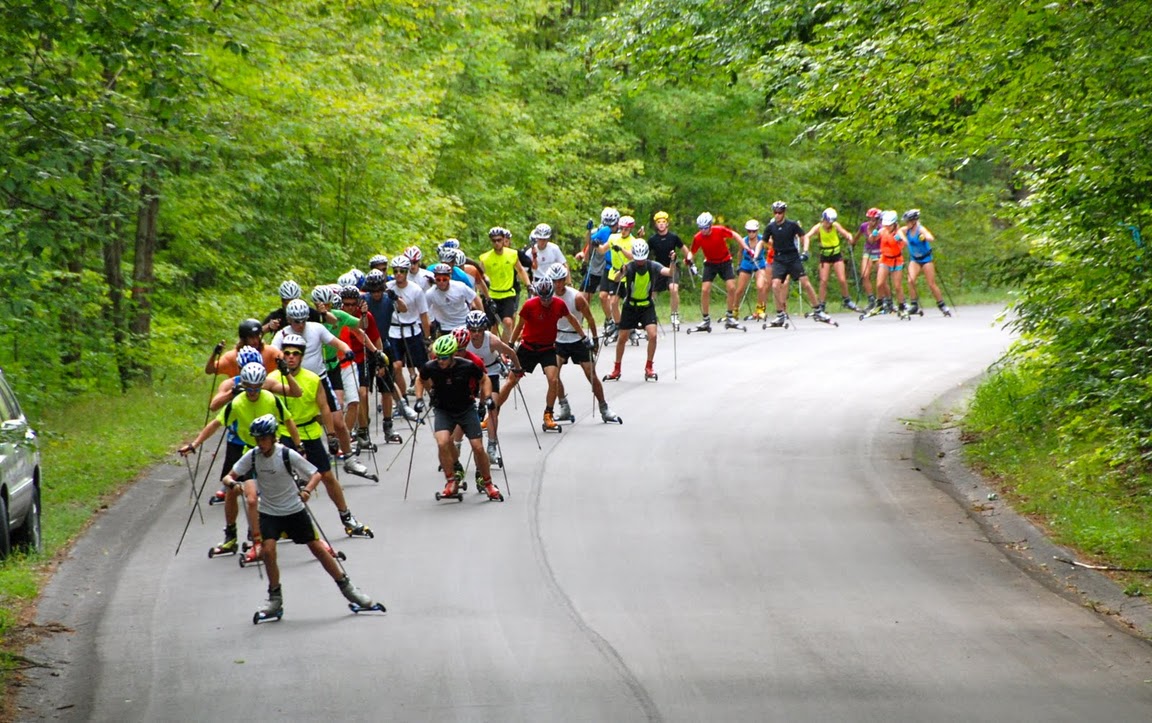
Group roller ski at Hardwood Ski & Bike (Photo: Graeme Longford)
Returning to training after a spring hiatus means laying out a plan for the upcoming training season. In making such a plan, there are a couple of questions that will help to define how the season should go:
– Early season dryland training: what should early season training prioritize? And how much of a “break” do you advise taking after the ski season concluded?
– Early season roller skiing: how early is too early? What really are the benefits of roller skiing, and why is the advice typically to utilize this training tool more toward the end of the dryland than at the beginning?
Often coaches are asked what the weeks and months post racing season should look like. The answer varies from coach to coach but there are some trends that are commonly prescribed. A lot of this variety stems from the wide range of climates and geography that support cross-country skiing in North America. For those climates with snow that hangs on after the races conclude for the year it’s best to keep skiing. At the elite level year-round access to snow has been shown to be a huge advantage. The use of glaciers and ski tunnels show this investment is important to many nations that excel in cross-country skiing. After racing wraps up transition to base training on snow, with fun, technique work and ski play.
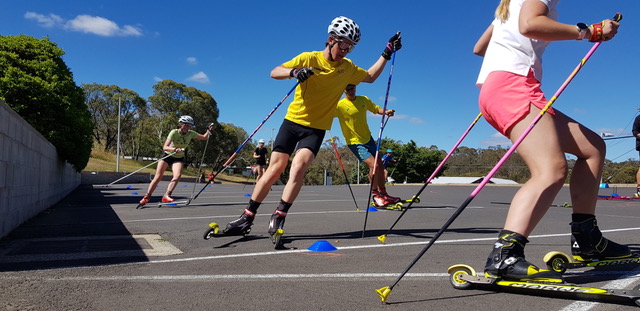
Dryland training in Canberra, ACT.
Those of us who are not fortunate to often have late season skiing should plan to take four to six weeks of off/unstructured training. This unloading period helps athletes process the ski season, catch up on other aspects of their life put on hold during the racing season and have the mental break needed after a stressful competitive season. This unloading period also allows the body to adapt and recover from the stress of racing. Especially when a season includes a spring championship.
During this unstructured period, I recommend athletes take the first half off. This would create a two-to-three-week period without any training. This time allows the body to catch up on rest and process all the stressors both physical and mental that were present during the racing season. The second half of this block is unstructured. During this time the athletes train as they feel without a structured plan. Often the focus of this period is strength combined with low intensity aerobic training.
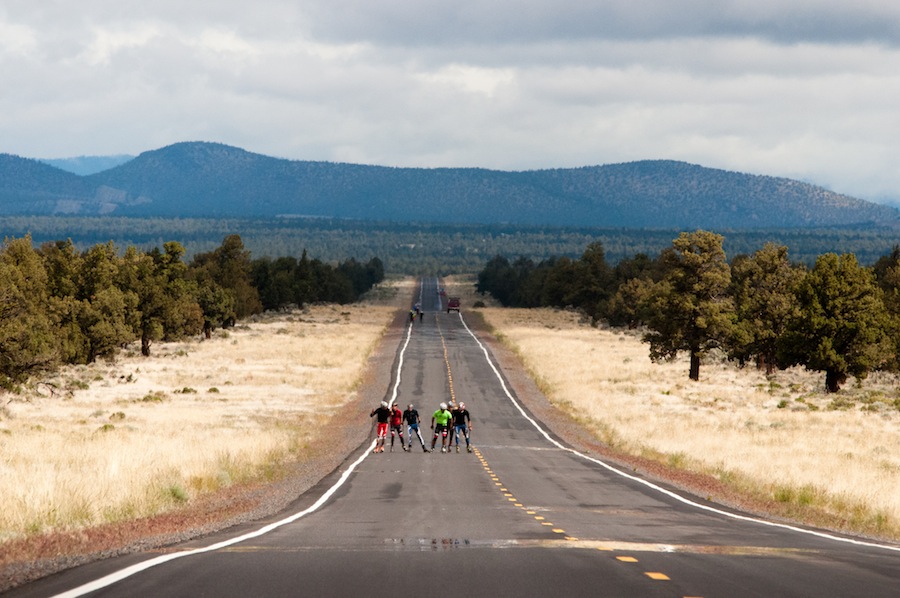
Rollerskiing in June near Bend, Oregon. (Photo: Dakota Blackhorse-von Jess)
As the training season begins to ramp up a common question is when should one start roller skiing and how often should this be used in their training. Elite athletes will begin roller skiing in May when the training season often kicks off. This is dependent on a variety of factors but to maintain the specificity needed for elite performances most skiers will begin roller skiing right away. The volume of roller skiing will increase over the course of the summer and become a primary training modality by the fall. Master and developing skiers can delay roller skiing until the late summer or fall in order to prioritize other sports or activities creating a more varied training year. This will minimize burnout and help bring variety to the training over the summer.
Prior to the arrival of summer, it’s important to set goals for summer training. These should build off of the progress made in the previous season, limiters that have been identified, and the goals for the following season. Deciding what your priorities are will guide the training and help keep you focused. During summer, it is easy to get sidetracked by fun fitness adventures. Rarely do these derail one’s training, but it’s important to keep your actions moving towards your goals. Summer training should be purposeful and productive combined with a little fun.
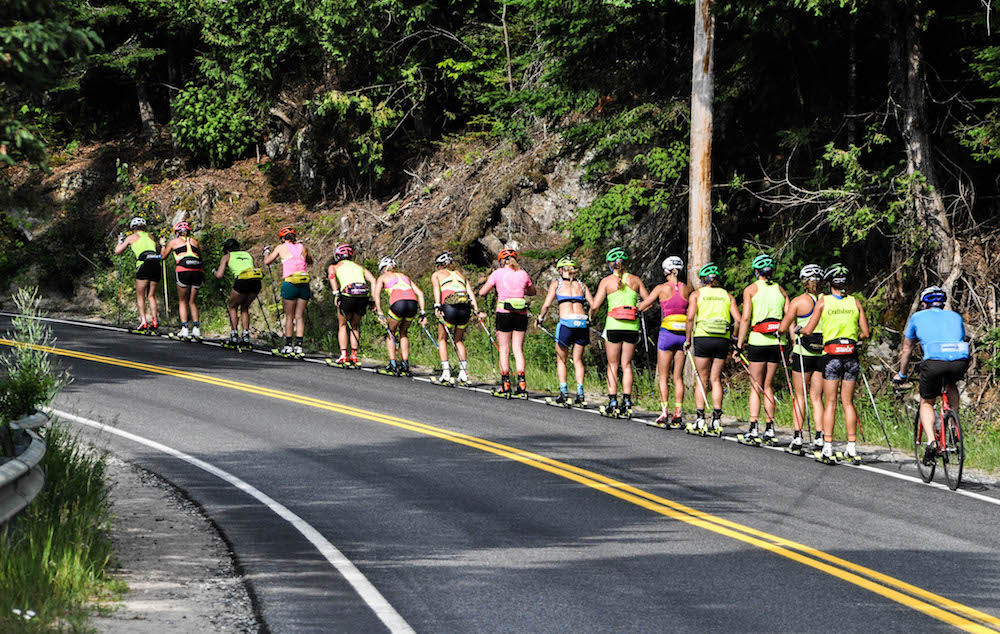
Rollerskiing at the Stifel U.S. Ski Team women’s camp, N.Y. (Photo: Matt Whitcomb)
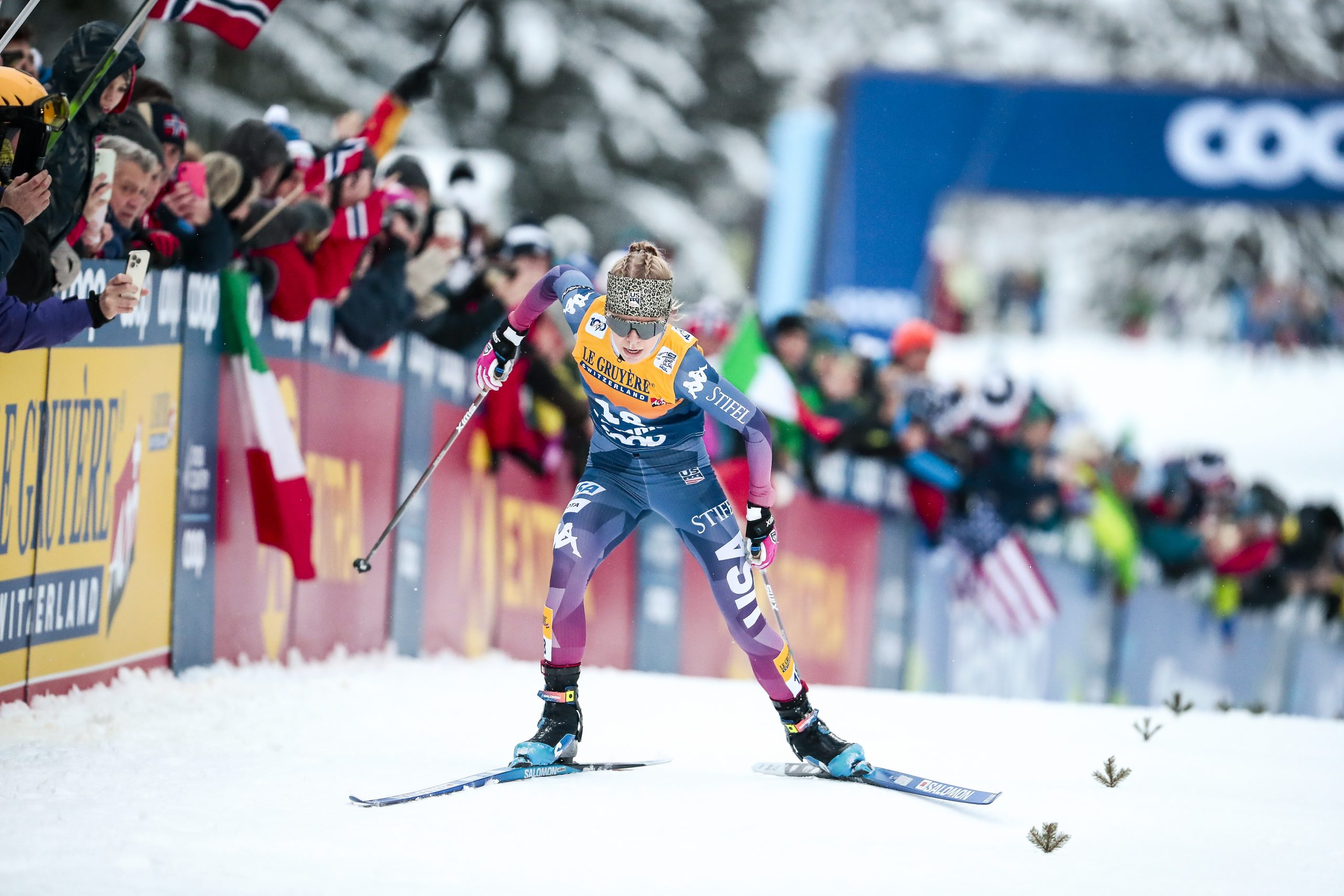
One of the rising stars on Team Aker Daehlie, Sophia Laukli (USA) stormed to victory in Val di Fiemme, Italy on the final climb of the Tour de Ski. (Photo: Modica/NordicFocus)
Sophia Laukli’s dominant win in the final stage of the Tour de Ski catapulted her into the spotlight. She has been racing fast for a while, but this result was on another level from her past performances. As the world gets to know her better, it’s interesting to look at the training philosophy of her club, Aker Daehlie. Training is sometimes secretive, but Aker Daehlie puts their training philosophy online for all to see. This transparency is great to see; there’s little complete information about what teams are doing for training. They often talk about a workout they love or a great coach but rarely an overall philosophy for their program.
In a world being shaped by Tick Tock, it’s easy to get small pieces of information. We see a video of someone doing something that is most likely part of their training, but we perceive it to be an integral part and that becomes something we base our training around. The more of these little pieces we put together, the further away from real sport science we get. Aker Daehlie’s success is probably based on many things, but one of them is that in their training philosophy they sight many well-respected sport science publications and books. By using this science as their foundation, they can bring in some pieces of pop culture training if they wish to try to improve on their results, but they don’t stray from their core principals because they are rooted in the science. I would guess that this science is really the foundation of their success.
Briton, Andrew Musgrave (GBR)—seen here competing in the World Cup Skiathlon in Trondheim, Norway—is one of the high-profile international athletes benefitting from the training and coaching available to members of Team Aker Daehlie. (Photo: Modica/NordicFocus
One thing that resonated with me in their philosophy was that training a certain number of hours doesn’t deliver the best performances. Skiers rely on training based on hours because we can’t reliably compare performances. Some runners and cyclists do this with miles, but it is not as universal as it is in skiing. There are great examples of this in history, for example Roger Bannister. Nobody cares that he only trained 30 minutes over his lunch break, he ran a sub four minute mile. There is some conjecture that he would have been better if he had more time to train. But maybe 30 minutes a day was the perfect amount of training for him. It allowed him to achieve his goal, so it was extremely successful.
Training hours and the culture of more is better is hard to break. To be clear, the philosophy stated by Aker Deahlie is not that more is bad. The team’s philosophy does hold that more for the sake of more is not necessary: more for the sake of speed is the desired outcome. As a coach I have grouped my athletes by the number of hours they plan to train this year. It seems like a logical place to start as a ski coach; however, the culture and training for coaches is based on more is better. Runners often talk about junk miles, but the idea of junk hours does not seem to be used by cross country skiers or coaches. The Aker Daehlie training philosophy simply reminds us that more for the sake of more is not useful.
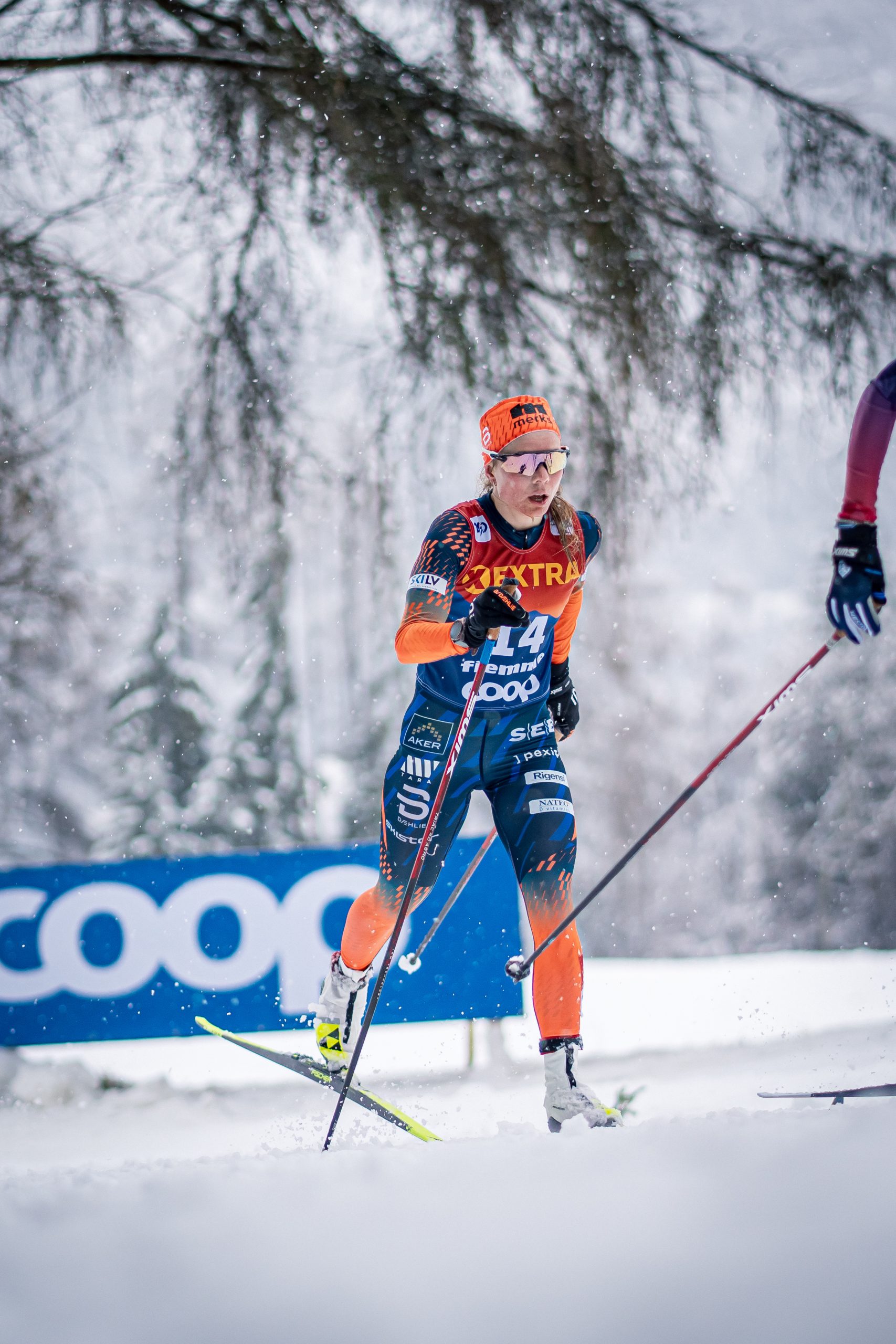
Patricija Eiduka (LAT)—Team Aker Daehlie—competes in the Tour de Ski Classic Mass Start in Val di Fiemme, Italy. (Photo: Barbieri/NordicFocus)
It’s easy to lose sight of the goal: ski as fast as possible. Strides have been made with tools like the SkiErg to simulate skiing and create metrics. The CCC Strength test is also a useful proxy metric, but these tests are not skiing. We often use roller skis as a substitute for skiing, and roller ski time trials can have times associated with them but those are also impacted by temperature, rain and traffic. Running can be a good measure of an individual’s motor, but again it’s not skiing; it doesn’t correlate perfectly for all athletes.
Keeping the eye on the prize is hard without good metrics, but it’s important to make sure all the work being done is for the purpose of skiing faster.
Diet is an important aspect of performance in all sports, while Nutrition is a field plagued with poor—or even false—information. The crossroads of the two is where many athletes find themselves, especially since questionable information (in the field of nutrition) is often presented as “research,” but is just as likely to be marketing-speak masquerading as facts. There’s a lot of money in the supplement industry; an industry that is is loosely regulated, at best. Sports supplements run the gamut from pre-workout mixes used by weightlifters and bodybuilders to sports drinks that are found in every convenience store. This becomes even more muddied when companies like Gatorade actually have some of the best sports science research programs in the world focused on sports nutrition.
In my role as a coach, clients often ask me questions about diet and food. I’m not a dietician, so I often refer them to someone more qualified than me to answer such questions. Even so, I’ve looked into food/diet topics quite a bit to identify resources for those clients who don’t want to take the step of working with a dietician. I also teach Human Nutrition and Exercise Metabolism and Nutrition at the University of Minnesota, Duluth. Through these experiences I have found a philosophy on nutrition as a coach. It’s this: eat a well-balanced diet of real foods with as little processing as possible.
Carbohydrates, Proteins, and Micronutrients
A well-balanced diet includes a mixture of carbohydrates, proteins, and fats, the ratio among these depending upon the individual and their training phase. Nutrition, like training, should be periodized so that it can match the needs of the day’s training.
Generally speaking, endurance athletes need lots of carbohydrates. There is a big push for protein in so many products, but carbohydrates are the backbone of an endurance athlete’s diet.
Protein is important—and necessary for recovery and rebuilding after training degrades bodily structures—but carbohydrates are what fuel endurance performance.
Micronutrients are vitamins and minerals. These also need to be included in the diet. For the most part they are not an issue since most foods contain at least some level of micronutrients. Two that are most often an issue can be too much salt (found in processed foods) and iron deficiencies. If you are feeling inexplicably fatigued for more than a week, it’s a good idea to check your iron levels: specifically, serum ferratin.
Vegetarianism
The dietary needs of any athlete also bring into focus the challenges of following a dietary discipline that does not readily include one, or more, of the proscribed dietary elements (carbohydrate, protein, micronutrient). When looking at specific styles of eating, we often think of those who eat meat and those who don’t. It is often far more nuanced that this, but the vegetarian diet comes under scrutiny far more often that any other. For athletes, it really is a question of how much protein they need, and where does that protein come from? Below are examples some of the different vegetarian diets:
Pescatarian: excludes all meat except fish from their diet. May include eggs and dairy products.
Lacto-ovo-vegetarian: includes eggs and dairy products.
Ovo-vegetarian: includes eggs but not dairy products.
Lacto-vegetarian: includes milk or diary products but not eggs or animal foods.
Vegetarian: avoids all flesh foods; may or may not consume eggs or dairy products.
Vegan: Excludes all animal products including eggs and dairy. May also exclude honey.
Those who choose not to eat meat are often asked how they get enough protein. Meat is strongly associated with protein intake since meat products are complete proteins. This means that they have all the essential amino acids required by the human body. Very few non-meat sources of protein are complete proteins. The “superfood” quinoa is a complete protein, part of the reasons for this designation. Vegetables, legumes and grains not being complete proteins only means that one has to be intentional about finding complimentary proteins. An excellent example of this is the rice-and-bean combination. When consumed together, rice and beans provide all the essential amino acids. Other combinations that provide all the essential amino acids (without meat) include brown rice, green peas and corn; peanut butter, whole wheat bread, and raw veggies; hummus with whole wheat bread.
Collegiate cross-country skier, ultra runner, and vegetarian Chris Rubesch commented on the situation: “As a vegetarian athlete, I have to take more care with my diet to ensure I am getting complete nutrition coverage,” he said. “It’s not difficult to be a vegetarian endurance athlete, but it takes intentionality. Just like my coach and I ensure each workout has a purpose and is meeting a need, I make sure each meal is meeting all my nutritional needs.”
Eating with purpose is an important idea. Be intentional, and think of your nutrition as the fuel it is. We put high performance gasoline in good engines, athletes should do the same.
Jessie Diggins (USA) diligently puts in her time in the gym. The right exercises and the right applications result in stronger, faster skiers. (Photo: FasterSkier)
Cross country ski trails—and the grooming strategies that prepare those trails for race events—have changed dramatically in recent seasons, especially since artificial snow became commonplace at Nordic venues. Commensurately, skiing speeds have increased, and so has the reliance on upper body power for propulsion. This has been most visible in classic skiing where technique zones are put in place down to the junior level to ensure that striding remains part of the sport. These changes in course preparation have led to skiers relying on power in the double pole over efficiency in striding. The resulting increase in speed is what many skiers are seeking; often, they incorporate strength training in search of that extra bit of speed.
“Strength training” is a term that I don’t love as a coach and physiologist. I use the term, myself, but it is vague and hard to define. According to Oxford Languages (via Google), “strength” is the quality or state of being physically strong (the ability to move/lift a weight, or resist a force). When skiers think of what is often termed “strength training,” we usually imagine some form of resistance training designed to augment and improve our aerobic and anaerobic performances. The question that should be of interest to skiers, then, is what sort of strength/resistance training is most likely to benefit our skiing?
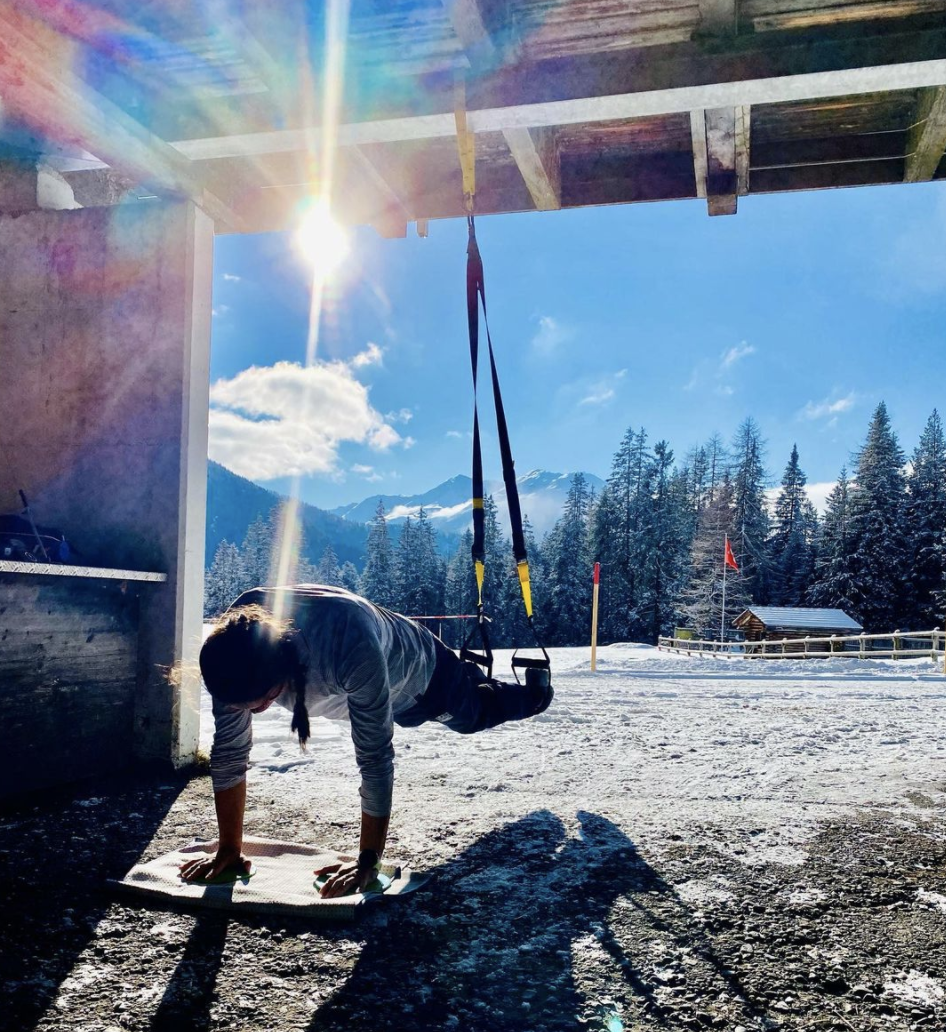
Julia Kern (USA) employs in-season strength work between on-snow training sessions, Davos Switzerland. (Photo: Julia Kern)
Resistance training—the term that better describes these workouts—is often thought of (by skiers) as time in the weight room or circuits in the park. These workouts can affect a variety of changes in one’s physiology. They can increase muscle mass through hypertrophy, increase load on bones, and strengthen connective tissue. Neuromuscular developments can also happen that allow the skier to recruit more motor units and—in doing so—recruit more muscle to that movement.
These changes can have a variety of impacts on a cross country skier. More strength often translates into more power that can be put into the pole or ski, generating more speed. These changes also help protect the body from injury by increasing muscle mass resulting in better protection of the joints. Most often the focus of any training is on increasing ski speed. Recruiting more motor units is one of the main emphases of such training. By using motions similar to skiing, an athlete can transfer these newly strengthened pathways into their skiing motions. An example of this is the squat, the loading of the leg is very similar to the kick in either skating or classic skiing.
“Strength is fundamental to maximizing ski performance,” remarked Team Birkie Head Coach, Chad Salmela. “In a similarly-perceived sport like distance running, one might be able to progress quite a lot simply by running more. Performance in skiing, by comparison, requires a trained core and general strength accumulation to practice the fundamentals of the ski techniques, and then needs specific development beyond that. So, from the very basics, training to ski faster fundamentally requires fairly advanced muscular strength, whether organized into a weight lifting or gym routine, or simply growing up that way…I think periodizing strength development in the off-season, and strength maintenance during the racing season, especially for higher level athletes, is a pretty big part of performance coaching for skiers. There are a lot of effective ways to build and maintain muscular strength. How that fits into developing other critical training priorities is one of the primary foundations of good coaching.”
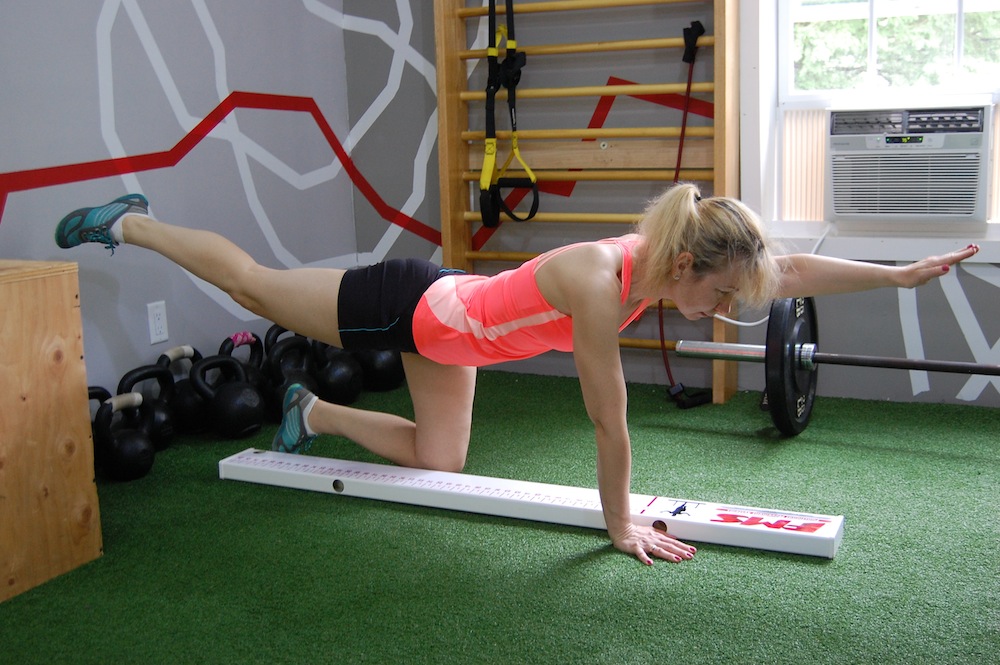
Core training and stability exercises have become a fundamental part of most ski-specific strength training programs. (Photo: FasterSkier)
When incorporating strength training into one’s workout schedules, there are a variety of options. One is to create dedicated spaces and times for strength training. This is the routine typically employed by those who have access to these spaces. Another option is using body weight and/or creative solutions (like backpacks filled with rocks) to create resistance training in a park or back yard. With minimal equipment, skiers can achieve many of the same effects as those found in a weight room. Combining strength work with an endurance/interval factor (as in a timed circuit) is a nice way to develop general fitness, but the key to developing greater strength is to isolate those strength movements, and perform them when not under aerobic stress. In other words, there is no exercise or workout that is the solution for everything. With either of these strength training strategies, I like to design workouts focusing on three upper body exercises, three lower body exercise and three core exercises per training session. When choosing exercises, focus on those that incorporate multiple joints. This engages more muscles and lessens the number of movements needed to get a full body workout. One major difference that most endurance athletes employ in their strength training is training the whole body every time they do a resistance training session. Many weightlifters and body builders will alternate leg days and arm days to make daily resistance training more effective. Since resistance training for cross country skiers is often done 2-3x a week (with a day or more of rest in between sessions) it is effective to train the whole body each session.
When discussed by endurance athletes, resistance training is often thought of with the single goal of “getting stronger.” When executed well, it can achieve a variety of outcomes depending on how it’s implemented. This training can be used to achieve four outcomes:
Increased power
Strength
Hypertrophy
Muscular endurance.
To affect these outcomes, it’s helpful to know ones one rep max (the maximum amount of resistance you can lift in a single repetition for that exercise).
In order to clearly understand our two workout examples (see below), it’s important to consider what a few of those terms mean:
SETS: the number of times you go through that exercise’s repetitions.
REPETITIONS: the number of times you move your body or the weight, while MAX indicates that you can’t accomplish even one more repetition. If the plan prescribes 12RM this means that you should select a weight heavy enough that you can’t accomplish the 13th repetition. If you can do more than the proscribed number of repetitions, then add weight for the next set.
STRENGTH: Load greater than 85 %1RM, repetitions, less than or equal to six.
POWER: loads of 80% 1RM, repetitions of two to five with multiple sets.
HYPERTROPHY: Loads of 67-85% 1RM/ 6-12 repetitions.
MUSCULAR ENDURANCE: loads less than or equal to 67 %1RM and greater than 12 repetitions.
Source: Haff, G., and Triplett, N. (2016). Essentials of Strength and Conditioning (4th ed.). National Strength and Conditioning Association
The different set schemes for strength, power, hypertrophy and muscular endurance lead to some outcomes that are desirable for endurance athlete and some that are not desirable. Notably the hypertrophy set schemes are often avoided to limit the increases in mass that one has to carry on the ski trail. Exceptions to this are moving through it to condition someone to be able to use the power loads. Often training will periodize muscular endurance blocks and power blocks to compliment the other training goals throughout the year. Other priorities for cross country skiers include stability while gliding on one ski. Professional skiers often post on social media impressive pictures or videos that illustrate this prowess. As a developing skier becomes more proficient at many of the strength exercises, adding a balance component can be beneficial to their skiing. One example of this would be to stand on a Bosu ball while doing medicine ball throw downs or adding the Bosu ball to the body weight squats.
There are good examples of these exercises on YouTube as well as in this guide.
Sample Weight Room Workout
3 sets, 14 RM, 2 minute between sets, 3 minutes between sets.
Lat Pull Down
Squats or Leg Press
Dips
Lunges
Seated Row
Single Leg Romanian Deadlift
Front Plank
Dead Bug
Bird Dogs
Sample Circuit Strength Workout
3 rounds, 30-40 seconds on, 30-20 seconds off, 5 minute rest between rounds.
Push Ups
Lunges
Crunches
Chair Dips
Body Weight squats
High Plank with Shoulder Tap
Medicine Ball Throw Downs
Step ups or Box Jumps (picnic table bench or stair)
The last races of the season are already past. In that last month of ski racing, World Cup finals happened for Para Nordic at Soldier Hollow, the Holmenkollen 50k made history for offering the first women’s 50km race and Spring Series capped off the elite domestic racing here in the states. But those high-profile events were not the only ones being staged: this year, my friend Phil sent out a notice for a race on his trails on April 8th. Racing in April—especially in Minnesota—was something to embrace. Not only was the date novel, but the opportunity to race at a buddy’s farm on narrow single track with a post-race chili feed and hot tubbing was something not to be missed.
Official results: Racing at Phil’s Farm. (Photo: Jason Kask)
It’s a lot of work to put on a race, and small races like this are becoming increasingly scarce. Without bringing in large revenues from crowds of racers, it quickly becomes a labor of love. We were not going to miss the opportunity!
My wife and I loaded up our two-year-old daughter into the mini van and drove over to Phil and Kelly’s. I didn’t have time ski the course beforehand, so I was pleased when the pre-race meeting went over the course. The competitors (all 12 of us) were told it was really fast. So fast, that before the race one participant went to the shed to find the slowest pair of skis available. There were two bare spots under trees and one corner where it was suggested that we go as slow as possible at the top of the hill because it was really fast and there was not enough room to snowplow. Another warning was that the course loops back on itself so if you are going to run into another competitor the person going slower should get out of the way (it was a downhill in one direction). This all added to the excitement of a late-season ski. Nobody had any kick, two people went on skate gear and everyone had a great time.
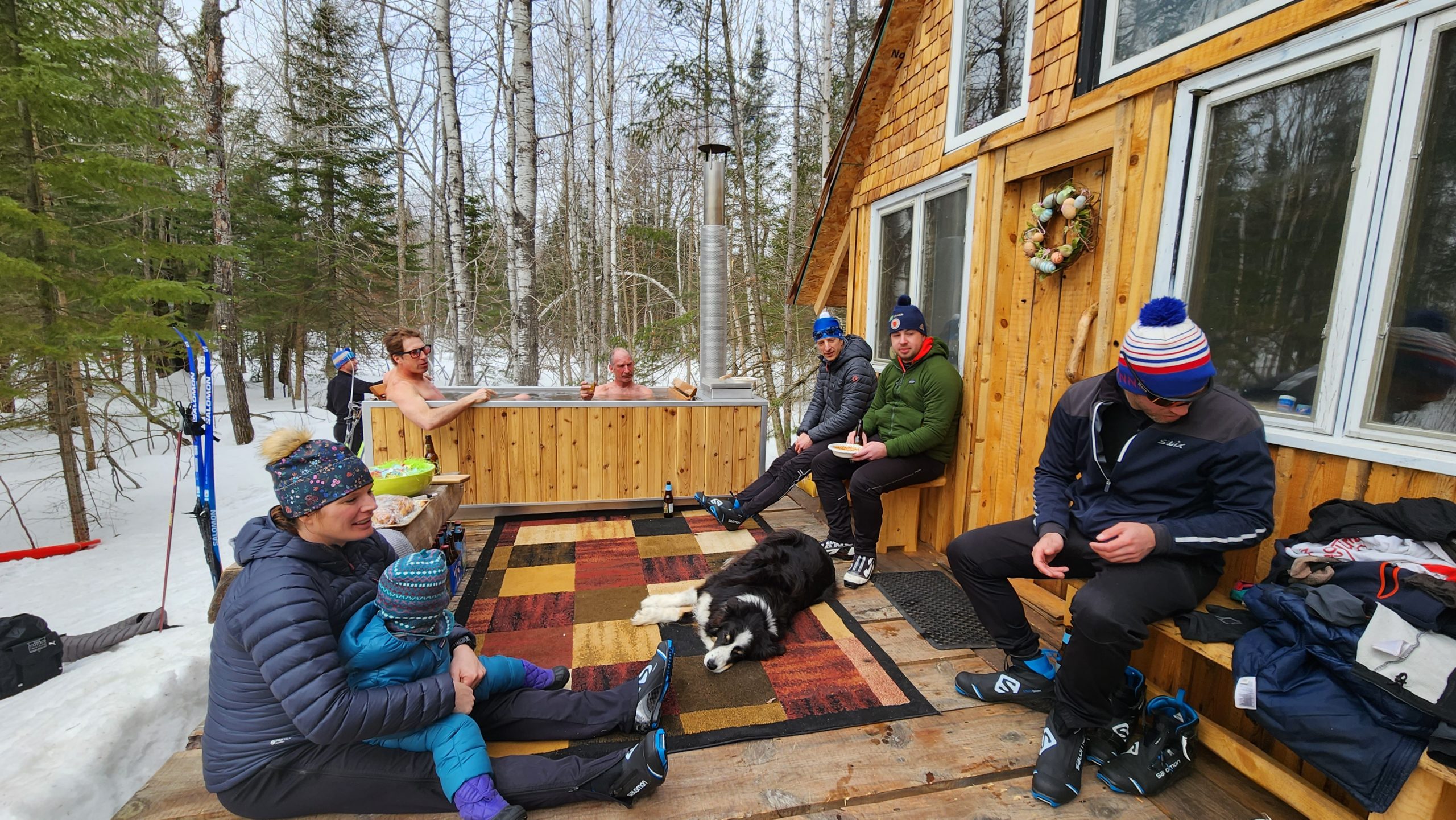
Perfect end to a great season: post-race relaxation, camaraderie, and storytelling on the deck and in the hot tub at Phil’s Farm. This is what April in Minnesota should be. (Photo: Jason Kask)
I’d spent the entire winter offering wax support on the Para World Cup scene, and advising clients who were worried about the Birkie: Phil’s Farm represented a race of an entirely different sort. There were no timing chips, no fencing, no V-board to follow, no waivers to sign. Just instructions that if you get out of the track you are probably going the wrong way. Race results were written in Sharpie on a damp legal pad. This simplicity was refreshing. Everyone finished and we had a brief awards ceremony before skiing back out to a cabin for chili and hot tubbing. It was a perfect end to a great ski season.
What a ski race is has changed dramatically over the years. My parents told stories of side-stepping whole courses before skiing in a track; now, we expect artificial snow with Piston Bully grooming. It’s easy to see why “perfection” has become the standard: I love a deep perfect track and corduroyed skate lane as much as the next skier, but there is a cost to this perfection. That cost is the impending demise of the little ski race, and that’s a sad thing. Sad, because ski racing is more than giant marathons, more than JNQs on homologated courses, more than SuperTours and the World Cups. Skiers can still love events that are staged without sponsor banners or television coverage; winters can still be loved and enjoyed with just a small group of like-minded, adventurous souls; and hand-timing can still deliver results quickly and accurately. These little races often support clubs or trails that need our support in order to continue maintaining the soul of cross-country skiing. So, if you hear of a little race happening, show up and make it a little bit bigger.
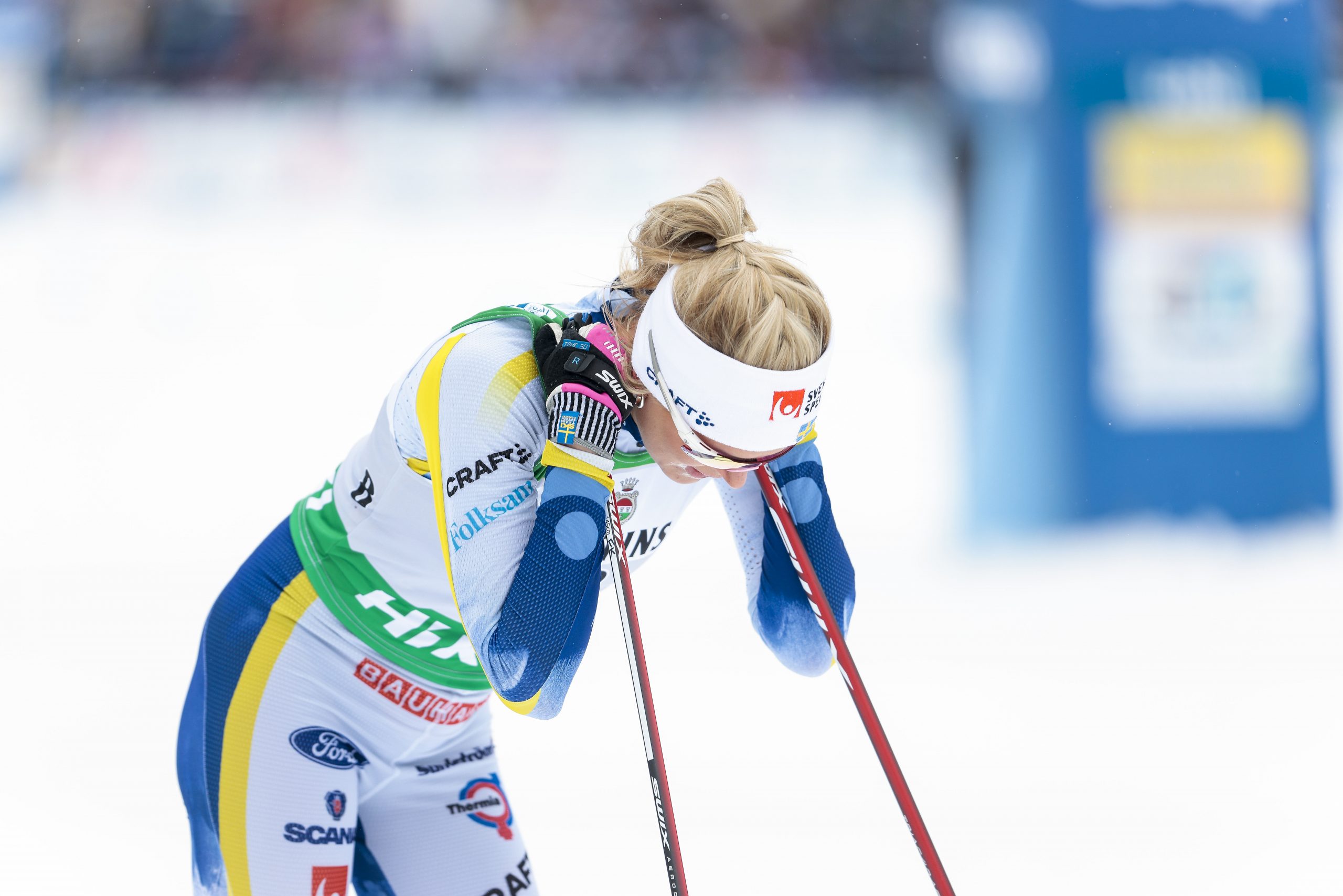
Perennial World Cup contender, Frida Karlsson (SWE), found her 2023 season repeatedly interrupted by illness. (Photo: Modica/NordicFocus)
Illness can deal a fatal blow to an athlete’s season at any level. The new points system in the 2023 World Cup showed how missing a race can impact the points standings and seems to promote participation, the pros and cons of which are debated elsewhere. Points and other pressures create immense pressure on athletes to race: for some, their career is on the line, for others prestige, years of hard work, or real or imagined pressure from coaches, parents or peers or themselves impact the decision to race. These pressures lead to wishful thinking that the illness will be mild or won’t develop into something that impacts training or racing. Athletes are taught to be positive: it’s a cornerstone of sport psychology and is extremely beneficial when used to improve self-esteem, and minimize self-doubt. However, when it comes to illness, it often creates a scenario that puts athletes in a position to minimize and try to hide their illness in the name of positive thinking.
“There has long been a culture of hiding illness (pretending that you don’t have a sore throat or a runny nose or a cough, and going about our day as if nothing is wrong). Although mild symptoms may not need to drastically impact our exercise plans, I am hopeful that society will continue to evolve to change social practice. Regardless of whether we’re dealing with covid or any other infection, if I have a sore throat or runny nose or cough, I will minimize close contact with other people. I will skip the handshake. I will wear a mask when around other people. These recommendations are not rocket science. but society has rarely been good at putting them into practice consistently. And out of respect to ourselves and to others, we can do a better job at reducing the spread of infection.” Jesse Coenen, MD.
Early in the 2022-2023 World Cup season, Johannes Hoesflot Klaebo (NOR) worried that his absence from certain races (due to illness) would ruin his chances of contending for the Overall World Cup Crystal Globe. (Photo: Modica/NordicFocus)
During the beginning of the COVID-19 pandemic, infection-prevention strategies were at the forefront of everyone’s mind. Many of these strategies were not new: among athletes and teams, strategies designed to minimize infection—like hand hygiene and distancing—were commonplace even before the pandemic. The use of masking was new to most Americans. This strategy has been shown to be effective and continues to be used by those trying to do their utmost to stay healthy.
In a recent discussion with Jesse Coenen, MD a physician with the U.S. Cross Country Ski Team he discussed the importance of infection prevention. Obviously, skiers attempt to avoid infection as much as possible, especially because most of the infections that are impacting racing and training are virus and are difficult or impossible to treat. The use of vaccination, hand hygiene, strategic isolation and masking are the best avenues to limit exposure and illness, and the team employs each of these strategies. Still, it’s impossible to entirely eliminate risk of acquiring infection if any time is spent in public, and it can be frustrating knowing that not everyone else is as diligent about infection prevention.
Each infection can vary in duration from 1-2 days to 1-2 weeks. The severity of the infection can also vary from mild, usually associated with congestion and sore throats to severe with fever, muscle aches and myocarditis. With the risk of severe symptoms and weeks of recovery preventive measures are all the more important.
When an athlete is ill, the questions of what should I do for training is one of the first asked. Minimizing the interruption the illness causes to quality training days is the priority. Training with an illness and going through the motions is not helping an athlete improve and often makes that illness linger or become more severe. The old adage if it’s above the neck you can train and if it’s below the neck you should rest hold pretty true. Fevers are the main exception to this “rule”. Most often it is best to recover fully before resuming training as not to cause the infection’s symptoms to drag on. This advice is often challenging for many athletes to follow because it feels unproductive to take time off.
When training is the right plan programming light endurance training, preferably outside to support physical and mental well-being. Activities such as very easy cross-country skiing or walking are excellent ways to achieve this. Often these sessions will last between 10 and 30 minutes. Low intensity strength work such as light yoga or core strengthening exercises can also be programmed until symptoms subside.
Since there are not many effective ways to treat and train through illness, prevention remains the best tool for protecting an athlete’s ability to train and compete. The focus on hand hygiene, vaccination, masking, and strategic isolation when ill are the best ways to remain healthy and able to race.