From the FasterSkier archive — posts syndicated from athletes’ and coaches’ own blogs between 2004 and 2012, kept online as published. Current coverage is at fasterskier.com.

Author: Kaitlyn Patterson

  • Canadian Biathlete Zina Kocher Closes Out 15-Year Career

    Canadian Biathlete Zina Kocher Closes Out 15-Year Career

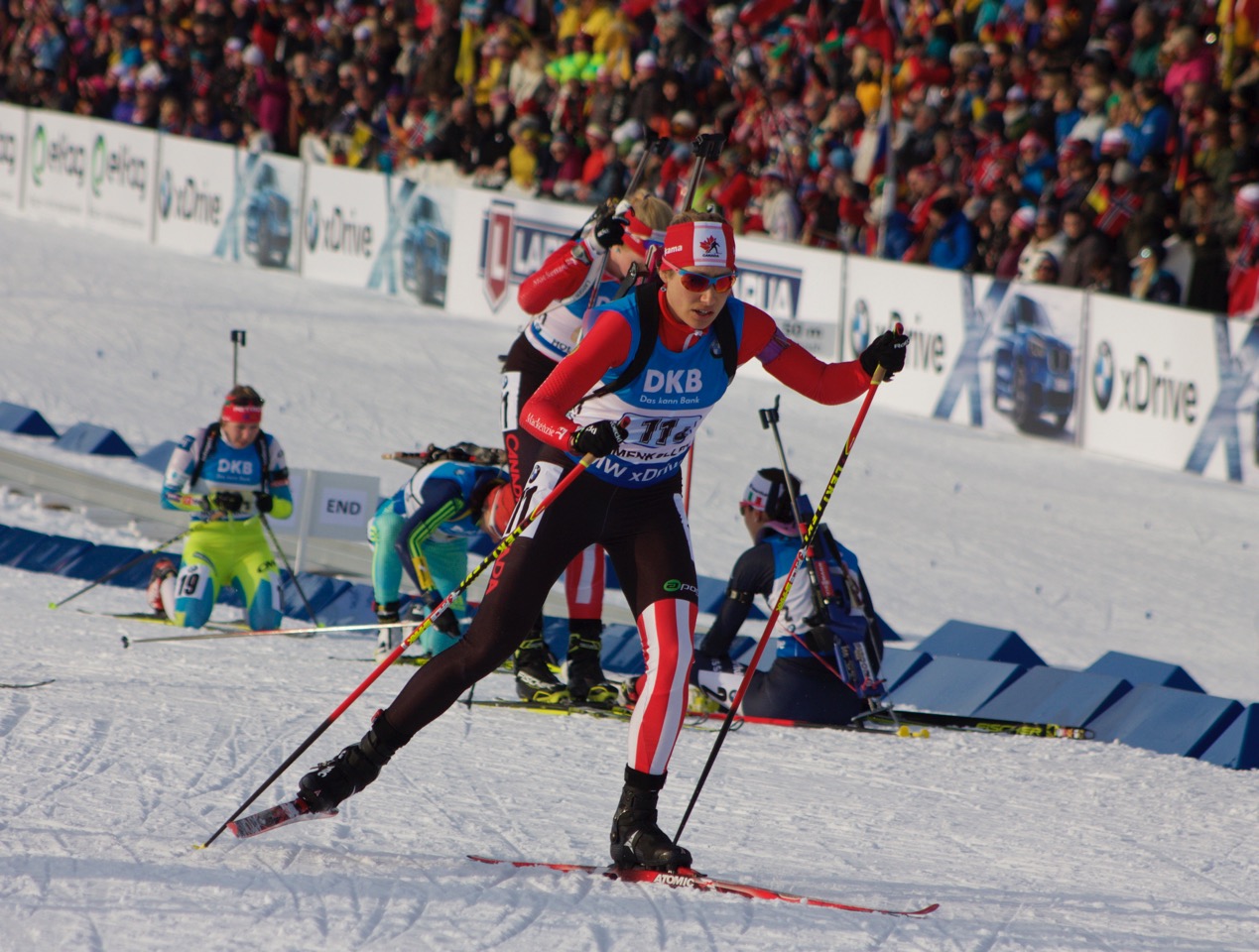
    Canada's Zina Kocher receiving the tag from teammate Sarah Beaudry (behind) in the final exchange of the women's 4 x 6 k relay at 2016 IBU World Championships in Oslo, Norway. Tagged in ninth, Kocher went on to finish 15th for Canada. (Photo: JoJo Baldus)
    Zina Kocher racing in the women’s 4 x 6 relay at 2016 IBU World Championships in Oslo, Norway. Tagged in ninth, Kocher went on to anchor Canada to 15th. (Photo: JoJo Baldus)

    Fifteen years is a solid run at anything, let alone the fickle sport of biathlon which features more ups and downs than your favorite roller coaster.

    With the closure of the 2016 season, Canadian biathlete Zina Kocher will end her career after fifteen years as a professional biathlete competing in three Olympics and 12 World Championships.

    “Saying good bye is actually quite emotional,” Kocher said in an interview in Oslo, Norway, in early March after 2016 World Championships. “I hadn’t quite thought about it as much, but it kind of started to hit me in Canmore [for the World Cups] and I’ve had to continue to deal with it this week. Saying goodbye to all the refs, I’m like ‘Why am I crying about this?’ I think it’s just, I have been here for a long time and it has been a part of my life for so many years.”

    A cross-country skier from the age of seven, Kocher made the transition to biathlon at the age of 15 after becoming intrigued by the sport when the Winter Olympics came to Calgary in 1998. Biathlon became integral to her life in 2000 when she graduated from high school and moved from Red Deer, Alberta, to Canmore to train full time with the Rocky Mountain Racers.

    Kocher competed at the 2001 World Junior Championships, posting top-20 finishes in all three competitions to earn her first World Cup start later that season. Kocher soon became a staple on the international biathlon circuit, missing only one World Championship event between 2003 and 2016.

    Zina Kocher racing at the Vancouver Olympics in 2010.
    Zina Kocher racing at the Vancouver Olympics in 2010.

    “It’s a big family with the many teammates and staff I’ve had, and it was an awesome family to be a part of,” she wrote in an email after World Championships. “There’s so many people to say thank you to, who helped shape me as an athlete and person. I’m so grateful that skiing and biathlon became such a great part of my life.”

    Despite her long career, there was one thing that Kocher had never done: competed in a World Cup in her adopted hometown of Canmore. Between that and the much-anticipated 2016 World Championships in Oslo, it gave her concrete goals and a reason to stay in the sport when she easily could have retired along with teammates Jean Philippe Le Guellec and Megan Imrie after the 2014 Olympics.

    “I could have retired in Sochi, but for some reason I felt like I wanted to try again,” Kocher said. “Last year did not work out at all, but I really wanted to race in Canmore and race at home after so many years of not having that chance, and then come to Oslo… It is a great place to finish. The number of spectators here- yesterday was crazy. It is an incredible atmosphere to take in right before retiring.”

    The sport of biathlon lends itself to rollercoaster seasons and careers and Kocher had her share of both highs and lows. She found success early in her career, claiming a bronze medal in the 15 k individual event at the opening World Cups of the 2006-2007 season in Östersund, Sweden. At the time, this result marked the first international biathlon medal by a Canadian in over a decade, and no other woman has since replicated her feat (On the men’s side, Jean Philippe Le Guellec won a World Cup in 2012 and Nathan Smith won one in 2015).

    Although the podium would stand as her highest World Cup finish of her career, she accumulated many top-ten finishes and was a member of the Canadian 4 x 6 k relay team that brushed the World Cup podium in 2013, finishing fourth with Megan Imrie, Rosanna Crawford and Megan Tandy.

    At the Sochi Olympics in 2014, Kocher was a member of the 4 x 6 k relay tam that notched the best ever Canadian Olympic result in the event, taking eighth. She also posted a Canadian-best 25th place in the 10 k pursuit.  Kocher considered capping off her career after this successful Olympic Games but a part of her told her to go back.

    Women's 7.5 k sprint at the IBU World Cup in Canmore, Alberta. (Photo: Daniel S. Guay)
    Zina Kocher racing in the women’s 7.5 k sprint at the IBU World Cup in February in Canmore, Alberta. (Photo: Daniel S. Guay)

    “I think that is a struggle that finally in your 30’s you start to realize, if you are not at this place and making it viable, you have to think about moving on,” she admitted.

    Her decision to continue racing was not immediately rewarded as the 2014-2015 season was the first year in her career she did not make a World Championship team.

    Despite the disappointment, with the 2015/2016 schedule including World Cup races in Canmore, Kocher decided to give it one more go.

    With few strong results from the previous season to earn her automatic qualification for this year’s World Cup circuit, Kocher knew that if she wanted to compete in Canmore and at World Championships in Oslo she had to perform well early in the season.

    She posted strong early season results, notching a 27th place in the sprint in Östersund in December. But in the next race she slipped to in the 51st in the pursuit after missing seven shots, and never returned to the top 30 this season.

    “I had a really good time in December, that was probably performance wise my best month. I knew I had to do well in the beginning and I almost achieved the goal of the high performance group to go to the second World Cup and instead I went to the IBU Cup where I actually relaxed a bit and had a fun time with the young team.”

    Kocher returned to World Cup racing in January for the fourth race and completed the remainder of the season on the circuit. However, her results did not meet expectations as her highest placing fell just out of the points in 42nd in Presque Isle, Maine. In the highly anticipated Canmore sprint she placed 56th, followed by 54th in the individual start at Worlds.

    “Disappointing,” she said to describe World Championships. “One of my goals was to be here and part of the team, but I was definitely aiming for a bit higher finishes than what happened. It was a bit disastrous in the relay. It wasn’t exactly the note I wanted to end on, but that is the way it is.”

    Speaking of the relay: the “gut wrenching nerves” were something she won’t miss once she’s retired, Kocher added.

    Despite her personal performance disappointments, Kocher was thrilled to see the team succeed. The North American World Cups and the World Championships were high points for Canadian biathlon with the Canadian men’s relay taking third in Oslo and sixth place for the mixed relay in Canmore.  
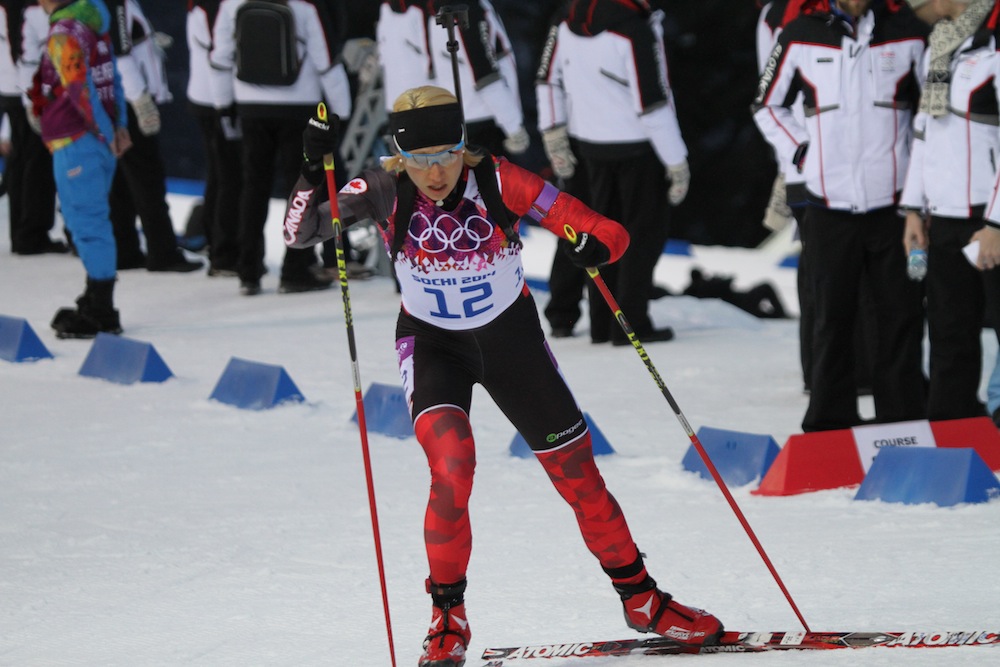
    Canada's Zina Kocher finished 32nd in the 2014 Olympic 7.5 k sprint in Sochi, Russia. After a top World Cup performance of 48th this year, she won back her Sport Canada funding support through an illness provision, but was left off the national team roster.
    Canada’s Zina Kocher racing to 32nd in the 2014 Olympic 7.5 k sprint in Sochi, Russia. 

    “It has been a long time in the making,” Kocher said. “There have been a lot of races that we have been very close but just have not made that breakthrough. To see that finally come together for the men, that was really astounding.”

    Although the results were not what she was hoping for, the Canmore races were rewarding: she got to experience what she had been hoping for for so long, to race at home.

    “The highlight was racing at home in Canmore, results aside, that was awesome and to see the town was so proud to host it,” Kocher said.

    After the World Cup season, Kocher took advantage of her final races at Canadian National Championship to end on a better note. She secured second behind Audrey Vaillancourt in the 15 k mass start.

    Being on the circuit so long, Kocher has had a unique perspective watching both the sport of biathlon as well as the Canadian team evolve.

    “Overall (the team) is definitely stronger and we have a bit more depth,” she explained. “The athletes who have been here the longest stuck with it. Whereas when I was on the podium [in 2006], athletes were retiring early. I just happened to have good results early.  I think that is great to see, to see growth and see athletes sticking to it.”

    Despite the rollercoaster results of the past several seasons, Kocher felt that time helped her to make the transition from biathlon to the next stage of her life.

    “Part of what I needed to do after Sochi was, there was a huge part of me that didn’t know what I wanted to do,” she said. “So I used these past two years to get a better understanding of what I want for my next life and different options I could pursue. That helped me a lot in transition even if the races didn’t go so well.”

    In the midst of the raw emotions of leaving a sport that has been part of life for so long, Kocher is also looking forward to being able to reprioritize her life after closing the door on biathlon. Reconnecting with friends and family, helping with her brother’s urban farm and beginning work as a doula are all on in her plans. Kocher and her boyfriend plan to stay in Canmore close to family as he finishes his mountain guide certification.

    Biathlon in North America has made significant strides over Kocher’s career, which is also makes it harder to leave.

    “It is sad to move on,” she said. “I think I have seen the growth in the sport. And there is a huge part of me that even wants to continue because you see the growth and you want to be part of it, but at some point you have to call it quits.”

    — Chelsea Little contributed reporting
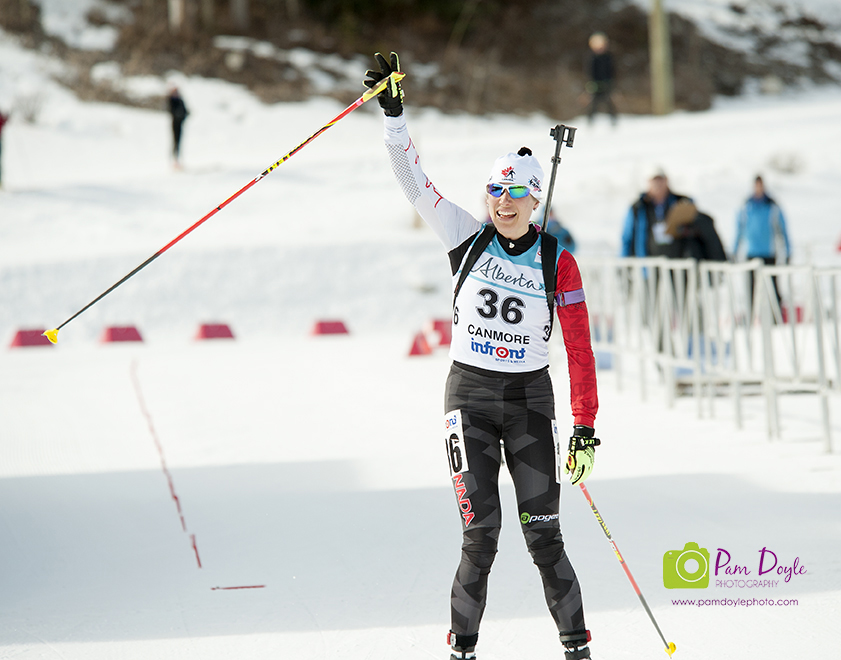
    Zina Kocher waves to the home crowd after placing second in an IBU Cup sprint two seasons ago in Canmore, Alberta. (Photo: Pam Doyle)
    Zina Kocher waves to the home crowd after placing second in an IBU Cup sprint two seasons ago in Canmore, Alberta. (Photo: Pam Doyle)
  • After Demolishing 30 k Classic, Diggins ‘Pretty Crushed’ at Season’s End

    After Demolishing 30 k Classic, Diggins ‘Pretty Crushed’ at Season’s End

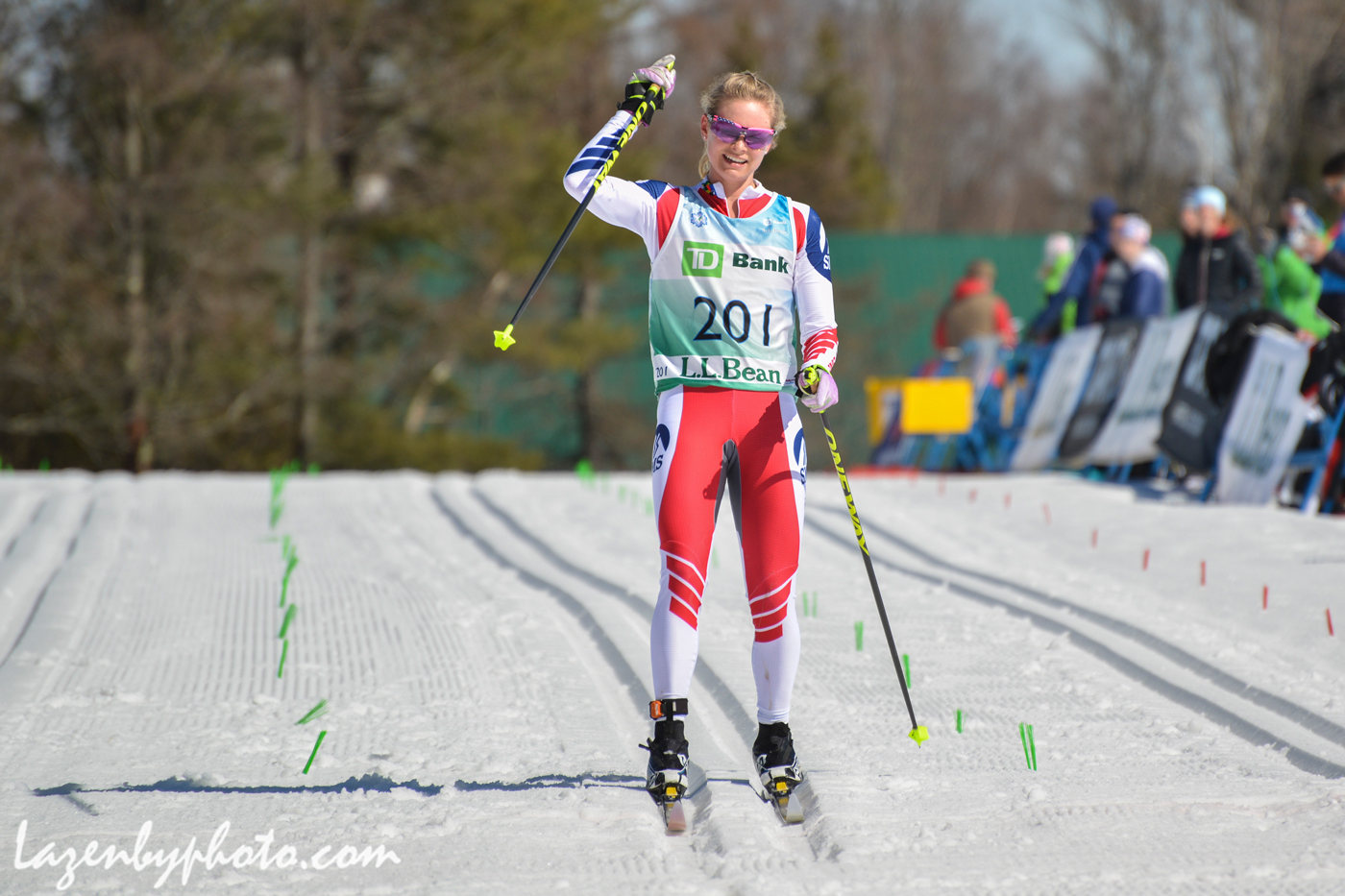
    Jessie Diggins (Stratton Mountain School T2 Team/U.S. Ski Team) celebrates a 1:03-minute victory in the women's 30 k classic at U.S. Distance Nationals on Saturday in Craftsbury, Vt. (Photo: John Lazenby/Lazenbyphoto.com)
    Jessie Diggins (Stratton Mountain School T2 Team/U.S. Ski Team) celebrates a 1:03-minute victory in the women’s 30 k classic at U.S. Distance Nationals on Saturday in Craftsbury, Vt. (Photo: John Lazenby/Lazenbyphoto.com)

    U.S. Ski Team Women’s Coach Matt Whitcomb may have foreshadowed the season in November, saying Jessie Diggins was “just getting started” after dominating the U.S. team’s opening weekend of European racing in Gällivare, Sweden.

    True to Whitcomb’s prediction, the 24-year-old Diggins, of the U.S. Ski Team (USST) and Stratton Mountain School (SMS) T2 Team, maintained momentum through 32 World Cup starts, including two eight-stage Tours. Then, finishing out the season in the U.S., she won both individual races at SuperTour Finals earlier this week and topped it off with a national title in the 30-kilometer classic mass start on Saturday in Craftsbury, Vt.

    And she did so by winning by more than a minute.

    Diggins didn’t waste any time setting her preferred pace on Saturday, breaking away from the 43-woman pack on the first of nine loops around the Craftsbury Outdoor Center’s entirely manmade trails. Despite a severe lack of natural snow in the East this winter, Craftsbury created and stockpiled enough artificial snow to lay out a roughly 3.5 k loop for this week of racing.

    Starting in the stadium at the highest point of the course, the loop wove down to the low point and began climbing again for more than a kilometer back to the stadium. Prime sprint bonuses for the women’s race were at the 3 k mark on the course, about halfway up the long climb, on laps three and six.

    Diggins claimed both $125 bonuses without anyone anywhere near her.*

    With about a 15-second gap on the first lap, she extended her lead to 30 seconds by lap two then 45 seconds by lap three.

    In an in-person post-race interview, Diggins explained she tried to “get as many laps in before the break before it turned to slush,” she said of the conditions, with direct sunlight softening exposed sections of the course as temperatures rose above 40 degrees late Saturday morning. “After the first lap, I was like, ‘OK, I’m going to do this on my own.’ ”

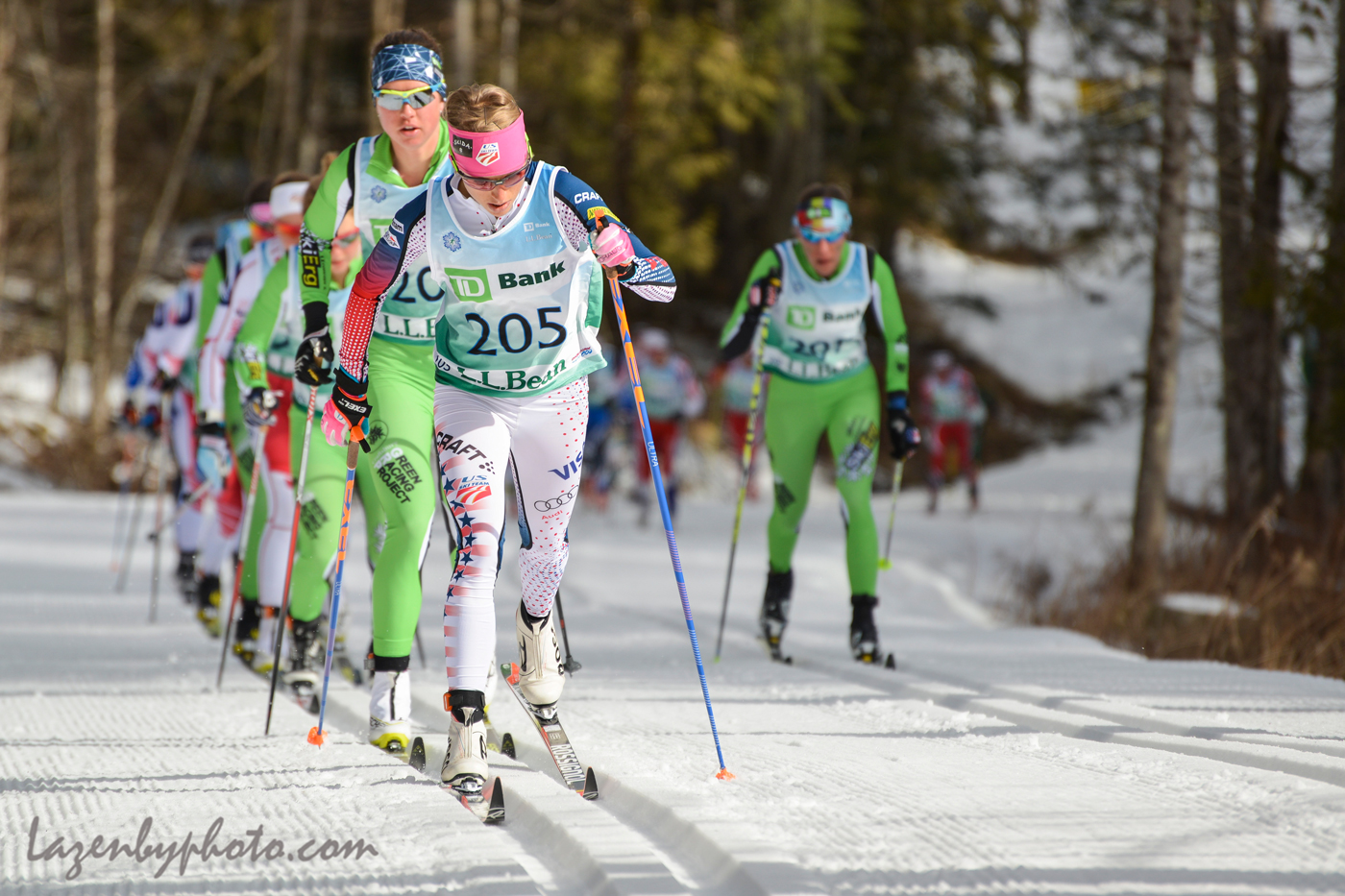
    Jessie Diggins leading with a slight gap on the first of nine laps in the women's 30 k classic mass start on Saturday at U.S. Distance Nationals in Craftsbury, Vt. (Photo: John Lazenby/Lazenbyphoto.com)
    Jessie Diggins (201) leading with a slight gap on Liz Stephen and the rest of the chase pack on the first of nine laps in the women’s 30 k classic mass start on Saturday at U.S. Distance Nationals in Craftsbury, Vt. (Photo: John Lazenby/Lazenbyphoto.com)

    Although 30 kilometers is a long distance to ski alone, Diggins used the solo racing to her advantage.

    “The way the downhills are, I really like skiing by myself because the best line goes from one side of the track to the other,” she said. “So when I’m by myself I don’t have to worry about getting in anyone else’s way.”

    In addition, the multiple-lap course meant she wasn’t completely alone.

    “It was kind of cool because as I was lapping through I got to ski with some junior girls and that was really motivating,” she recalled.

    Diggins continued to increase the gap while skiing uncontested, and posted the fastest laps on all but the last two laps (where her lap times ranked third and fifth, respectively). By the eighth of nine laps, she was about 1:27 ahead of her USST teammate Ida Sargent, who was leading the chase pack in second. One lap later, Diggins finished first in 1:29:59.4, more than a minute and 3 seconds clear of second place.

    “This was kind of like a dream ending, especially in a classic 30 k, which was never my strongest race,” Diggins said.

    Previously, Diggins had raced about half a dozen 30 k classic races in her career. She didn’t finish two of them, but in her first-ever 30 k, a classic mass start at 2011 Spring Series in Sun Valley, Idaho,  Diggins placed third. Saturday marked her best result in the 30 k classic distance since.

    Although it was the ideal end to an impressive several months, including five World Cup podiums and an overall eighth-place finish in the 2015/2016 World Cup, the biggest motivator for Diggins was putting a period on the season.

    The start of the women's 30 k classic mass start at U.S. Distance Nationals in Craftsbury, Vt., with Jessie Diggins out front in bib 201. (Photo: John Lazenby/Lazenbyphoto.com)
    The start of the women’s 30 k classic mass start at U.S. Distance Nationals in Craftsbury, Vt., with Jessie Diggins out front in bib 201. (Photo: John Lazenby/Lazenbyphoto.com)

    “I’m pretty ready to be done,” she said. “It was a great season and I am really happy with it, but it was also really mentally taxing because of the number of the races I did. I didn’t skip any World Cup races and I would do it again because it is a great opportunity to get some great races in, but now I’m pretty crushed.”

    Behind Diggins, the race for the podium came down to three USST members over the final lap. The chase pack was whittled down lap by lap, largely due to Ida Sargent and Liz Stephen’s repeated surges.

    About 10 racers remained together in pursuit of Diggins on lap three, but that group split in two on lap four, with Kaitlynn Miller — Sargent’s teammate on the Craftsbury Green Racing Project (CGRP) — leading the six-woman chase, and another three hanging slightly behind in a second group.

    By the seventh lap, Sargent led the chase up the long ascent back to the stadium, 1:25 behind Diggins, with Stephen and another CGRP teammate Caitlin Patterson right there with her. Miller hung a few seconds off the back and kept them within reach for the next lap. By lap nine, however, she was out of contention and finished fifth, 1:41 behind Diggins and 26.3 seconds out of fourth place.

    Ahead of her, Sargent threw an attack on the final climb that neither Patterson nor Stephen were able to match. She entered the stadium alone to secure second, 1:03.4 behind Diggins.

    “I was seeded 35th because I’ve struggled with my distance results this year on the World Cup for a variety of reasons so I had a lot of moving up to do out of the start,” Sargent wrote in an email. “I was surprised how quickly I was able to get to the front again, but by the time I made it up there Jessie had already gapped the pack … so I settled in the pack.

    “By the end of the eighth lap I realized I wasn’t going to lose those girls so I decided to just take it easy and wait for a sprint,” she added. “But then when we got to the bottom of the downhill I could feel like I was starting to pull away so I went for it at the bottom of the long climb or about 1.5km out. I’ve been skiing at Craftsbury since I was a little kid so I’ve been up that hill more times than I could begin to count so I knew what to expect. I felt great today and we had awesome skis. It has been so fun to finish out the season on my home course.”

    Ida Sargent (Craftsbury Green Racing Project/CGRP) racing to second in the women's 30 k classic mass start on Saturday at U.S. Distance Nationals in Craftsbury, Vt. (Photo: John Lazenby/Lazenbyphoto.com)
    Ida Sargent (Craftsbury Green Racing Project/CGRP) racing to second in the women’s 30 k classic mass start on Saturday at U.S. Distance Nationals in Craftsbury, Vt. (Photo: John Lazenby/Lazenbyphoto.com)

    Sargent finished 7.9 seconds ahead of Patterson, who took third, and Stephen finished 3.4 seconds later in fourth.

    “Ida and Liz were really strong on the climbs and I was inspired by their tempo and just tried to match them,” Patterson recalled in a post-race interview.

    “Ida deserved that second place in every sense,” Stephen said afterward. “She skied such a strong race, I’m really impressed.”

    Although Stephen had gained a small gap on Patterson when she chased Sargent up the last climb, it left her dangling tantalizingly close to Patterson with not much left in the tank. Patterson seized the opportunity and reeled Stephen in and they crested the final rise to a field before the stadium together. There, Patterson gained some ground, keeping Stephen at bay behind her in the last few hundred meters to the finish.

    “I gave it all on the hill and didn’t save any for the end,” Stephen recalled. “I’m glad I didn’t have to do it [all nine laps] alone today. It was nice to ski with some ladies I don’t ski with very much.”

    For both Stephen and Patterson, it was a solid culmination to the season after battling illness in the last month. Patterson made a last-minute decision to skip the Ski Tour Canada because of illness.

    “It has been a really good season overall, but to have that low point of not being able to race at all was really interesting, but I just had to channel my focus to training for Spring Series,” Patterson said.

    While she came out a little too hot earlier in the week and reflected she might have burnt out early in the 10 k freestyle race, where she placed seventh, Patterson was pleased to end the season with the overall SuperTour win. That will ensure she starts next season on the World Cup as the Continental Cup leader.

    Liz Stephen (U.S. Ski Team) leads Caitlin Patterson (Craftsbury Green Racing Project) and the rest of the chase pack, including Kaitlynn Miller (r), during the women's 30 k classic mass start at U.S. Distance Nationals on Saturday in Craftsbury, Vt. (Photo: John Lazenby/Lazenbyphoto.com)
    Liz Stephen (U.S. Ski Team) leads Caitlin Patterson (Craftsbury Green Racing Project) and the rest of the chase pack, including Kaitlynn Miller (r), during the women’s 30 k classic mass start at U.S. Distance Nationals on Saturday in Craftsbury, Vt. (Photo: John Lazenby/Lazenbyphoto.com)

    Stephen withdrew from the Ski Tour Canada after the Stage 4 classic sprint in Canmore, Alberta, and traveled home early to recover. Overall, she considered Saturday a positive end to a roller-coaster season.

    “I’ve had some struggles this year enjoying all of it,” she said. “It was nice to end it on a beautiful day and with a race I was proud of.”

    As the curtains close on the 2015/2016 season, the athletes are looking forward to some much-needed rest, recovery and time at home for the skiers who have spent the last four months away racing on the World Cup.

    *In addition to a total of $250 in sprint bonuses (awarded by a local sponsor, FairPoint), Diggins earned an additional $1,200 (awarded by USSA) for winning Saturday’s national 30 k. In comparison, the winners of each of the SuperTour individual races earlier this week (10/15 k freestyle and classic sprint) each banked $750.

    Results

    — Alex Kochon contributed reporting

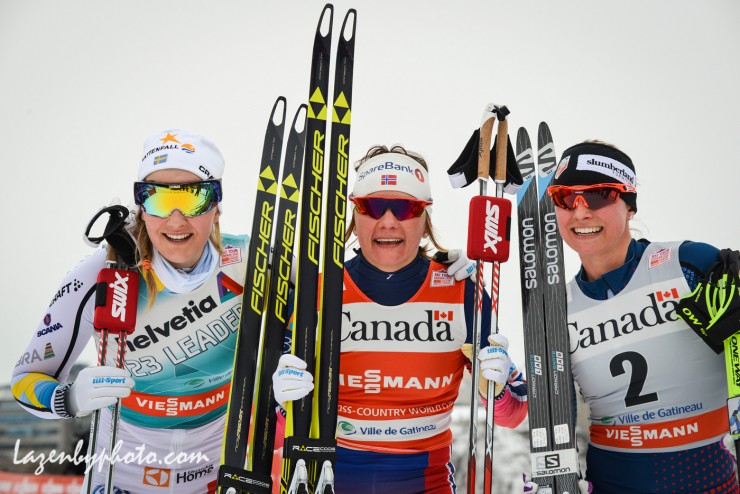
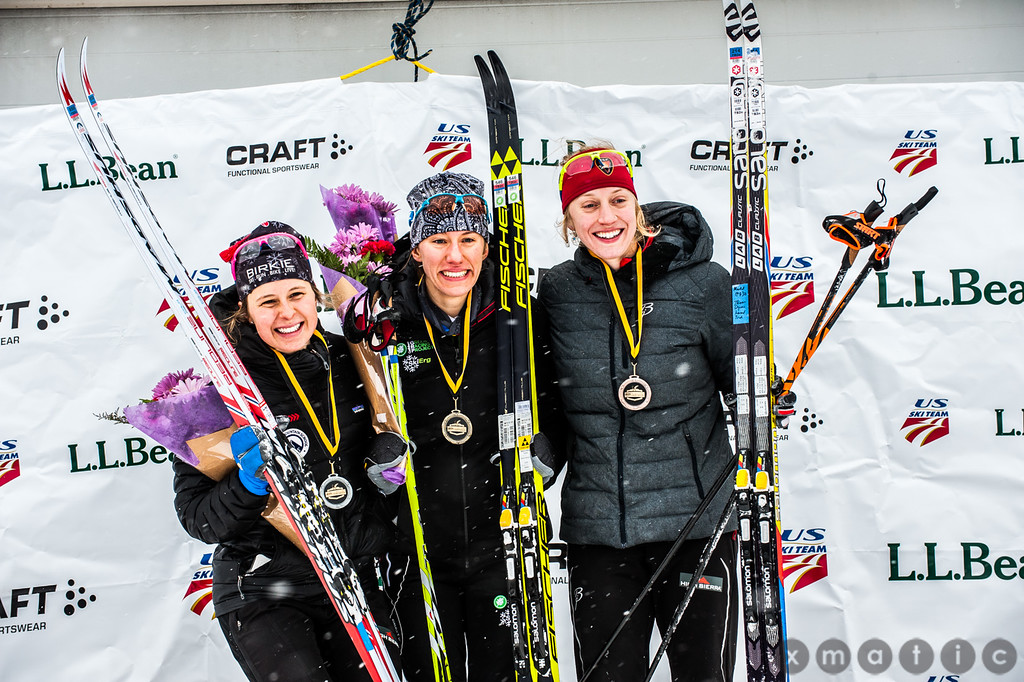
    The women's 30 k classic podium at 2016 U.S. Distance Nationals, with winner Jessie Diggins (c), of the SMST2 Team, and Craftsbury's Ida Sargent (l) and Caitlin Patterson (r) in second and third, respectively. (Photo: John Lazenby/Lazenbyphoto.com)
    The women’s 30 k classic podium at 2016 U.S. Distance Nationals, with winner Jessie Diggins (c), of the SMST2 Team, and Craftsbury’s Ida Sargent (l) and Caitlin Patterson (r) in second and third, respectively. Prize money went to the top three. (Photo: John Lazenby/Lazenbyphoto.com)
  • Faces Painted, APU Mixed Relay Gets Down to Business with Third-Straight Win

    Faces Painted, APU Mixed Relay Gets Down to Business with Third-Straight Win

    In three editions of the SuperTour Finals, the mixed relay has been the season-ending staple. On Thursday, the two-time defending champions in the 4 x 5-kilometer coed event, Alaska Pacific University (APU) made it a three-peat with a 33.3-second win. Say that three times fast.

    They did so with Erik Bjornsen skiing the opening classic leg, followed by Rosie Brennan as the female classic skier, then Scott Patterson skiing the first freestyle leg, and finally Chelsea Holmes anchoring the final freestyle leg. Put those four together and what do you get? A dominating APU performance from start to finish.

    With Bjornsen racing the scramble leg, APU took control from the start and never relented. While he opted to stride, two of his biggest rivals double poled on skate skis — Simi Hamilton, of the Stratton Mountain School (SMS) T2 Team, and Noah Hoffman, of “Vailbury Green,” which included two men from the Vail Ski & Snowboard Club (SSCV) and two women from the Craftsbury Green Racing Project (CGRP).

    Taking advantage of the striding advantage, Bjornsen gained a gap on the hill and never looked back throughout his two laps on the 2.4 k course.

    At the first exchange, Bjornsen clocked in at 11:26.9, 14.7 seconds up on the chasers, led by Ben Saxton of SMS T2^2. Meanwhile, Hoffman tagged in eighth, 25.5 seconds back, and Hamilton came through in 15th of 31 teams, nearly a minute behind Bjornsen.

    Following up on Bjornsen’s lead, Brennan had the task of staying away despite dangling within reach of the field.

    “I just tried to think about keeping the pressure high and getting out of sight,” Brennan said in a post-race phone interview. “I just had to put my head down and not think about it too much.”

    In the second leg, Brennan only ceded 1.9 seconds to Ida Sargent, who took Vailbury Green from eighth to second by the second handoff, posting the fastest female second-leg split in 13:21.6. APU was still clear of the field by 23.4 seconds at the second handoff, but the race for the podium was far from settled.

    Another hybrid club team, with two University of Colorado-Boulder (CU) men and Craftsbury women — “The Green Buffaloes” — handed off 5.2 seconds behind Vailbury Green and just 0.7 seconds head of SMS T2^2.

    In the third leg, APU continued pushing as Scott Patterson blazed the fastest leg in 11:06.09, increasing the gap to 35.6 seconds. CU’s Mads Strøm, coming off back-t0-back NCAA titles, brought the Green Buffaloes up to second at the third exchange, 34.4 seconds behind APU, but was still shadowed by Tad Elliott of Vailbury Green, 1.2 seconds back.

    Although it appeared that APU had the win secured, Jessie Diggins was skiing the anchor leg for SMST2’s first team and is known as a clutch closer on the World Cup stage. Although SMST2 remained outside the top five for the first three legs, the final outcome was far from decided. Meanwhile, three strong races from APU set up Holmes for a strong anchor leg.

    “I was just focused on skiing good 5 k to give us a little playing room with Jessie and make sure we had it under control and take some pressure off Chelsea,” Patterson explained on the phone.

    2016 SuperTour Finals
    Mixed Relay Top 10:


    1. APU 1
    2. Vailbury Green
    3. SMST2
    4. The Green Buffaloes
    5. APU 2
    6. Northern Michigan University
    7. SMS T2^2
    8. APU 3
    9. University of New Mexico
    10. Sun Valley SEF

    With nearly 35 seconds between her and the Green Buffaloes and Vailbury Green, Holmes raced uncontested to secure the win for APU 1 in 48:57.9. Meanwhile, Caitlin Patterson of Vailbury Green overtook their rivals, the Green Buffaloes to claim second, 33.3 seconds behind APU 1.

    True to form, Diggins blasted the anchor leg to bring SMST2 from sixth and 1:23 minutes back to third place at the finish (+51.9), besting the Green Buffaloes in fourth by 28.6 seconds.

    “It was about having four good races on the same day, using our strengths, and having good skis,” Holmes said on the phone.

    In addition to the strength of the winning team, APU showed the depth of its program with three teams in the top 10. APU 2, with Reese Hanneman, Becca Rorabaugh, David Norris, and Jessica Yeaton, placed fifth, and APU 3, with Lex Treinen, Lauren Fritz, Eric Packer, and Rosie Frankowski, was eighth.

    The laid-back atmosphere of Spring Series and non-traditional nature of the mixed relay is conducive to teams adding some lightheartedness to the day — in the form of team names, constumes or otherwise. Although APU kept it simple with its team name, there might have been some magic in the face paint.

    Racing will conclude Saturday with the U.S. Distance Nationals 30 and 50 k classic mass starts.

    — Gabby Naranja and Alex Kochon contributed reporting

    Results

    More photos via Lazenbyphoto.com

  • With Bjornsen at the Helm, APU Sweeps SuperTour Finals Classic Sprint

    With Bjornsen at the Helm, APU Sweeps SuperTour Finals Classic Sprint

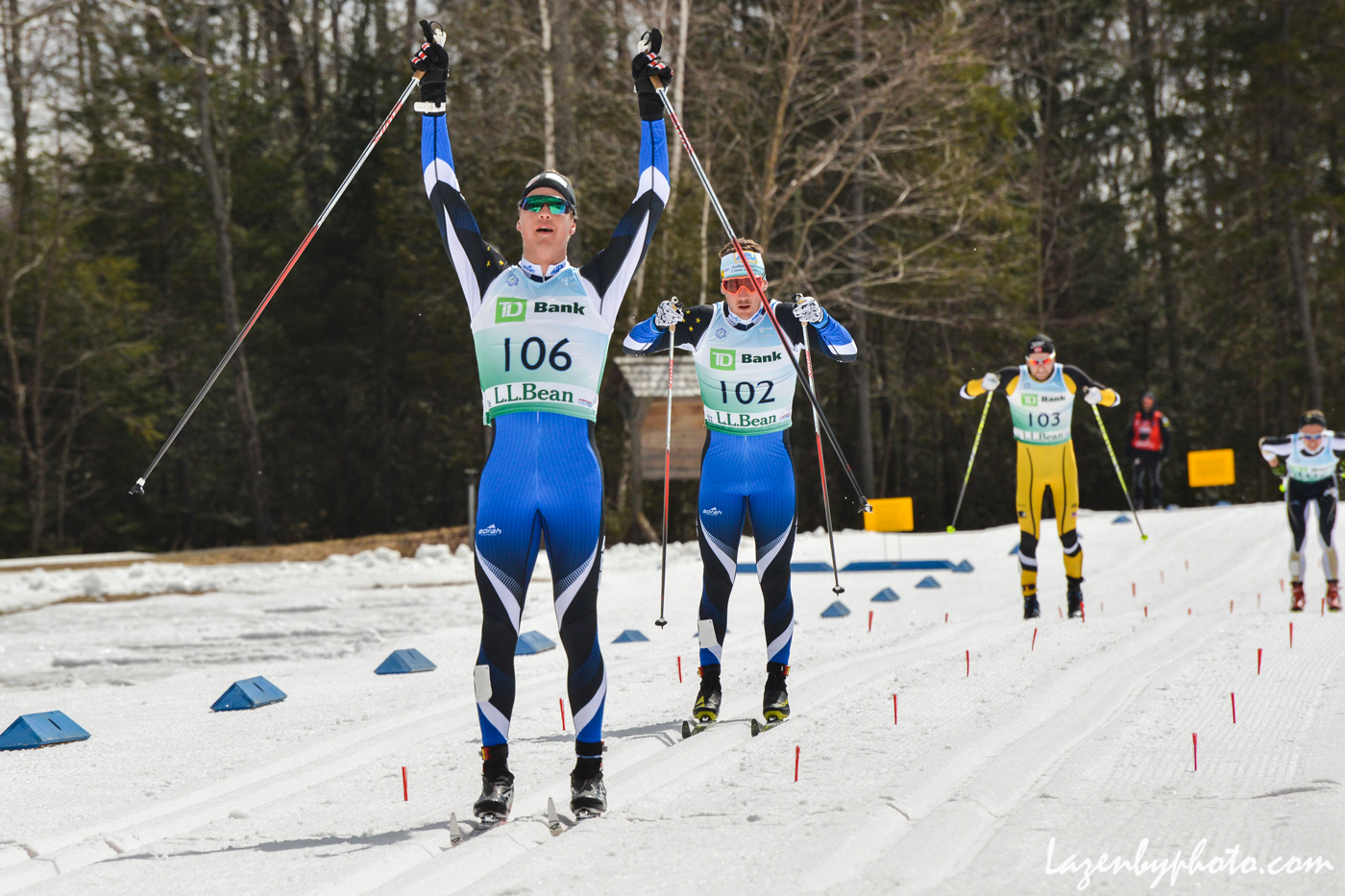
    Erik Bjornsen (106) celebrates his classic sprint victory on Tuesday at SuperTour Finals in Craftsbury, Vt., after holding off APU teammate Reese Hanneman by 1.28 seconds. Logan Hanneman completed the APU podium sweep in third, 4.35 seconds back. (Photo: John Lazenby/lazenbyphoto.com)
    Erik Bjornsen (106) celebrates his classic sprint victory on Tuesday at SuperTour Finals in Craftsbury, Vt., after holding off APU teammate Reese Hanneman (102) by 1.28 seconds. Logan Hanneman (not shown) completed the APU podium sweep in third, 4.35 seconds back, while Michigan Tech’s Didrik Elset (in yellow) missed the podium by 0.34 seconds in fourth. (Photo: John Lazenby/Lazenbyphoto.com)

    Earlier this year at U.S. nationals, Alaska Pacific University (APU) narrowly missed a podium sweep in the classic sprint in Houghton, Mich., taking first, second and fourth in the men’s final. But on Tuesday in Craftsbury, Vt., in the 1.5-kilometer classic sprint at SuperTour Finals, the APU men pulled it off, putting four men in the final and sweeping the top three.

    The APU contingent consisted of Eric Packer (the defending national champion in the classic sprint), Reese Hanneman (the SuperTour sprint leader for Period I who spent the rest of the season on the World Cup in Europe), his younger brother Logan Hanneman (the fastest qualifier of the day in 3:07.24), and Erik Bjornsen (who recently returning to the U.S. after racing a full season on the World Cup circuit).

    They were joined by two Norwegians competing as collegians in exchange programs: Didrik Elset, 22, of Michigan Tech University and Petter Reistad, 21, of the University of Colorado-Boulder (CU). Elset broke up the APU sweep at nationals, placing third in the classic sprint. Reistad helped CU to a runner-up team finish at NCAA Skiing Championships, double poling to ninth in the 20 k classic mass start.

    On Tuesday, the two Norwegians, Elset and Reistad decided to double pole the qualifier as well as the heats, making it all the way to the final. The rest of the field opted to stride the heats. On a wide track with five classic tracks covering most of the course, racers were pleased with a fair-and-minimally tactical course.

    In the final, Reistad blasted out of the gate and Reese Hanneman tucked in just behind. Heading up the decisive climb on the course, Reese jumped into his own track and surged ahead of Reistad. Bjornsen covered the move and the two gapped the field as they headed toward the slight incline into the finish. Hanneman tucked behind Bjornsen to be sheltered from the headwind and matched his pace, but couldn’t overtake him. Bjornsen secured the win in 3:02.4, beating Reese by 1.28 seconds.

    After gaining on Elset and Reistad on the climb, Logan Hanneman overtook the double polers in the final stretch to notch third (+4.35), just 0.34 seconds ahead of Elset in fourth. Fatigued from double poling with little rest between heats, Reistad faded to fifth (+7.31).

    Notably missing from the podium, current SuperTour leader Packer placed sixth (+50.95) after a crash in the final.

    “I fell on the big downhill in the final, and ended up sliding off course into the dirt and leaves,” wrote Packer in a post-race email. “There was no contact or anything — I just caught an edge and went down. It was a bummer for sure but I am looking forward to the next two races, and defending my Supertour lead in the 50 k.”

    Bjornsen Pushes Through

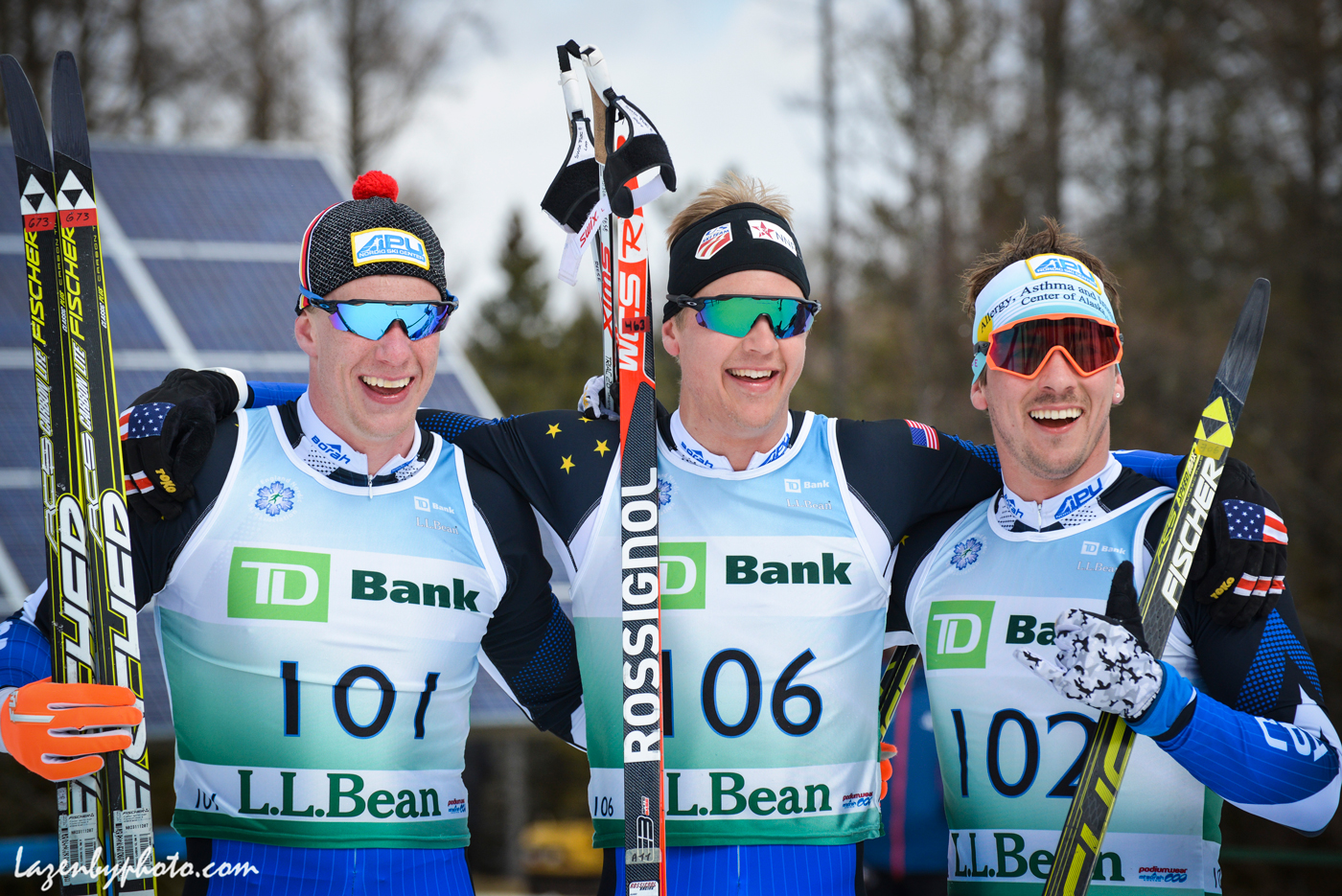
    The APU men swept the classic sprint podium at SuperTour Finals on Tuesday in Craftsbury, Vt. Erik Bjornsen (c) led the team in first, ahead of brothers Reese (r) and Logan Hanneman (l) in second and third, respectively. (photo credit: John Lazenby/lazenbyphoto.com)
    The APU men swept the classic sprint podium at SuperTour Finals on Tuesday in Craftsbury, Vt. Erik Bjornsen (c) led the team in first, ahead of brothers Reese (r) and Logan Hanneman (l) in second and third, respectively. (photo credit: John Lazenby/Lazenbyphoto.com)

    Although Bjornsen was considered a favorite heading into the race, he was pleasantly surprised with the victory.

    “It was not exactly what I was expecting, I was happy to have enough in the final to take the win,” Bjornsen, 24, said in a post-race phone interview. “I am not feeling great right now, it is not my best shape, but I’m trying to race through it and enjoy the racing in the U.S.”

    After posting the sixth-fastest time in the qualifier, about 2.98 seconds behind Logan, Bjornsen progressively gained momentum, winning both his quarterfinal and semifinal.

    “The legs especially are not responding, just kinda feeling dead,” he described. “I felt pretty good in the heats today. I tried to ski behind people and make my move in the last 60 seconds or so and I think it worked and helped me conserve energy for the final.”

    Reese in second overall was also pleased after feeling beat up after the season-ending World Cups in Canada.

    “It was good. I was just so dead after Ski Tour Canada and I didn’t really know what to expect,” he said on the phone. “I pretty much just felt dead for a week after Canmore and then I had a really, really bad race hack for a long time so I didn’t race [on Monday]. I felt pretty good, the skiing was really nice, they did an awesome job with the course.”

    Although fatigue resonates through all the racers, Reese highlighted that at this point of the season, it is a mental challenge more than anything.

    “Being really tired is kind of a given at this point in the year. … We are all just all a bunch of tired people racing each other,” he said. “It doesn’t necessarily mean that you can’t do well, I think it is important to learn to race when tired because it is not indicative of the result, it’s just mentally hard to get fired up.”

    Although little glory is generally given to sprint-qualifier winners, prize money for the fastest qualifier in Craftsbury placed a bit of incentive for the morning prelim. With that in mind, Logan set an intermediate goal for the day: winning the qualifier. The decision to stride instead of double pole paid off as he claimed the top qualifier in 3:07.24, just 0.71 seconds faster than his brother Reese.

    Logan Hanneman (APU) racing to a 0.71-second qualifying win in the men's classic sprint on Tuesday at SuperTour Finals in Craftsbury, Vt. (Photo: John Lazenby/Lazenbyphoto.com)
    Logan Hanneman (APU) racing to a 0.71-second qualifying win in the men’s classic sprint on Tuesday at SuperTour Finals in Craftsbury, Vt. (Photo: John Lazenby/Lazenbyphoto.com)

    Logan went on to win the first quarterfinal, then advanced as a lucky loser in the semifinal after placing third behind Bjornsen and Reistad, respectively.

    “I went out and in typical Logan fashion, slow out of the start,” Logan said on the phone after.” I was fifth pretty much the whole way until the stadium and I caught and passed the two double polers on that last stretch.”

    Completing the podium sweep was part of his motivation heading down the homestretch.

    “That was cool,” he said. “That was one of my incentives for catching those people. And we had four in the top six. Packer took a little detour off course in the final, which wasn’t quite the fastest detour.”

    Packer echoed the significance of the strong APU showing. “It was really cool to see my teammates sweep the podium today…,” he said. “I think it reflects the training we do in Alaska.  We’re all pushing in training, and that’s starting to show through in the results.”

    Despite missing the podium by 0.34 seconds, Elset in fourth said he has enjoyed racing and training in the U.S. with Michigan Tech and credits coach Joe Haggenmiller and the team with his success.

    “I chose skate skis. It worked pretty well, especially for the quarterfinal and the semifinal but in the final, the APU guys were going too fast for me up the climb and I was getting tired so it was rough,” Elset said. “I was hoping to be on the podium today but being able to ski with these guys who are so fast and be competitive is fun and it gives me a lot of confidence that I am doing something right.”

    Results: Qualifier | Final results | Brackets

  • The Last ‘Hurrah’, Diggins Wins 10 k Skate by Half a Minute; Bjornsen Headed Home

    The Last ‘Hurrah’, Diggins Wins 10 k Skate by Half a Minute; Bjornsen Headed Home

    Jessie Diggins of the Stratton Mountain School (SMS) T2 Team and U.S. Ski Team (USST) powers through the women's 10 k freestyle en route to a victory on the first day of racing at SuperTour Finals in Craftsbury, Vt. (Photo: John Lazenby/Lazenbyphoto.com)
    Jessie Diggins of the Stratton Mountain School (SMS) T2 Team and U.S. Ski Team (USST) powers through the women’s 10 k freestyle en route to a victory on the first day of racing at SuperTour Finals in Craftsbury, Vt. (Photo: John Lazenby/Lazenbyphoto.com)

    It had been 116 days since the season started with the November World Cup and SuperTour races and just nine days since the conclusion of the Ski Tour Canada. Needless to say, it has been a long season.

    U.S. SuperTour Finals, held this week in Craftsbury, Vt., is a unique season-ending series. The senior men’s and women’s fields are a conglomerate of domestic racers (which compete all winter on the SuperTour circuit), collegiate racers (some of which are fresh off NCAA Championships), and the U.S. Ski Team (with several members returning from nearly four months abroad on the World Cup circuit). Also known as Spring Series, the U.S. finals give World Cup racers the opportunity to reconnect with their programs and race alongside their club teammates.

    Consistent with the snow struggles all season across the U.S. and Europe this season, Monday’s individual start races were held on a manmade 3.4-kilometer loop in Craftsbury. However, athletes commended the challenging course organizers and volunteers laid out.

    In the women’s 10 k freestyle, U.S. Ski Team (USST) member Jessie Diggins, racing for the Stratton Mountain School T2 Team, started third and quickly posted the fastest splits to cross the finish line first in a time of 24:26.9.

    Jessie Diggins (Stratton Mountain School T2 Team/U.S. Ski Team) celebrates her win in the women's 10 k freestyle on the first day of U.S. SuperTour Finals on Monday in Craftsbury, Vt. (Photo: John Lazenby/Lanzenbyphoto.com)
    Jessie Diggins (Stratton Mountain School T2 Team/U.S. Ski Team) celebrates her win in the women’s 10 k freestyle on the first day of U.S. SuperTour Finals on Monday in Craftsbury, Vt. (Photo: John Lazenby/Lanzenbyphoto.com)

    That time held up throughout the day and when the final results were posted, only two racers managed to keep Diggins within 36 seconds of them: USST teammate Sadie Bjornsen and Riitta-Liisa Roponen of Finland, respectively.

    Bjornsen, of Alaska Pacific University (APU) bested Roponen, a 37-year-old Finnish A-team member, by just 0.2 seconds for second place, clocking 36.2 seconds behind Diggins. Due to nagging injuries and sickness, this will be Bjornsen’s only race this week.

    “Today was a challenging and fun grand finale,” Bjornsen wrote in an email. “I am still pretty sick and managed to get a little overuse shoulder injury at the end of the tour. So I have decided to pull the plug and head back home tomorrow. When you are so exhausted, it becomes a bit dangerous to race when you are sick.”

    Although SuperTours are usually devoid of overseas national-team racers, Finland and Italy were represented in Craftsbury on Monday.

    “Riitta-Liisa and Virginia [De Martin Topranin, of Italy] are here racing to have fun and see the U.S. while getting some racing in,” Diggins explained in an email. “I think it’s so great to have an international field here at Spring Series.”

    Roponen last race at the Worldloppet at home in Lahti, Finland, which she won. Her best individual World Cup result this season was fifth at the Lahti World Cup 15 k skiathlon. Topranin, 28, placed 11th on Monday, more than two minutes back. She is coming off a 22nd-place overall finish in the Ski Tour Canada (STC) and a top individual result of seventh in a 10 k classic mass-start stage at the Tour de Ski.

    Diggins finished fifth overall in the STC and has broke through with five World Cup podiums this season, including a win in the 5 k freestyle at the Tour de Ski.

    Finland's Riitta-Liisa Roponen racing to third in the women's 10 k freestyle on Monday at SuperTour Finals in Craftsbury, Vt. (Photo: John Lazenby/lazenbyphotos.com)
    Finland’s Riitta-Liisa Roponen racing to third in the women’s 10 k freestyle on Monday at SuperTour Finals in Craftsbury, Vt. (Photo: John Lazenby/lazenbyphotos.com)

    “In all honesty, racing again after the tour was tough!” Diggins wrote. “The World Cup season took quite a lot out of me, but after a total rest week with my boyfriend in Boston I’m happy and healthy again and excited for one last ‘hurrah’ to close out the season.”

    About 50 seconds off the podium and nearly 1 1/2 minutes behind Diggins, fourth through seventh place all finished within 7.5 seconds of one another. Chelsea Holmes (APU) led them in fourth (+1:25.4), followed closely by Liz Stephen (Burke Mountain Academy/USST) in fifth (+1:26.5), Ida Sargent of the Craftsbury Green Racing Project (CGRP) and USST in sixth (+1:27.8) and Caitlin Patterson (CGRP) in seventh (+1:32.9).

    Overall, echoes of fatigue resounded among the racers.

    “I feel pretty beat up and tired, but I think I am one of many who have that feeling,” Holmes wrote in an email. “When you race it doesn’t really matter how you feel, you just do your best.”

    Coming off of a fifth- and an eighth-place finish at NCAA Championships, Emilie Cedervaern of the University of New Mexico was the top collegiate skier in 10th (+2:07.2).

    Ahead of her, two women who represented the U.S. at the STC, Annie Hart (SMST2) placed eighth (+1:45.0) and Rosie Brennan (APU/USST) was ninth (+1:56.1).

    Racing continues Tuesday with the men’s and women’s 1.5 k classic sprints. Heats begin at 11:30 a.m. Eastern time.

    “It was so nice to be racing in the U.S. again and to see everyone!” Diggins wrote. “That’s why I come to spring series — it’s all about the awesome people that I never get to see enough!”

    Results

    — Alex Kochon contributed

    Jessie Diggins (c) of the Stratton Mountain School T2 Team and U.S. Ski Team topped the podium in the women's 10 k freestyle individual start on Monday, the first day of racing at U.S. SuperTour Finals in Craftsbury, Vt. Sadie Bjornsen (second from left) of APU/USST placed second and Finland's Riitta-Liisa Roponen (second from r) placed third. Chelsea Holmes (not pictured) was fourth, Liz Stephen (l) fifth and Ida Sargent (r) sixth. (Photo: John Lazenby/Lanzenbyphoto.com)
    Jessie Diggins (c) of the Stratton Mountain School T2 Team and U.S. Ski Team topped the podium in the women’s 10 k freestyle individual start on Monday, the first day of racing at U.S. SuperTour Finals in Craftsbury, Vt. Sadie Bjornsen (second from left) of APU/USST placed second and Finland’s Riitta-Liisa Roponen (second from r) placed third. Chelsea Holmes (not pictured) was fourth, Liz Stephen (l) fifth and Ida Sargent (r) sixth. (Photo: John Lazenby/Lanzenbyphoto.com)
  • From College to Pro and Back Again, Pokorny Primed for NCAA Championships

    Annie Pokorny racing to 33rd in the 10 k classic at the 2014 U23 World Championships in Val di Fiemme, Italy. (Photo: flyingpointroad.com/NNF)
    Annie Pokorny racing to 33rd in the 10 k classic at the 2014 U23 World Championships in Val di Fiemme, Italy. (Photo: Flyingpointroad.com/NNF)

    This week, the top collegiate cross-country skiers in the U.S. converged in Steamboat Springs, Colo., to wrap up the season at the NCAA Skiing Championships, which begin Thursday with the 5/10-kilometer freestyle individual starts and wrap up Saturday with the 15/20 k classic mass starts. One Middlebury skier has the unique opportunity to be reimmersed in the collegiate circuit after a glimpse at post-collegiate skiing and will race for the NCAA podium with a different appreciation for collegiate competition.

    Annie Pokorny, 23, returned to the collegiate racing circuit this season after a two-year hiatus while training and racing with the Stratton Mountain School T2 Team. Although this is a rare progression, it was a path that has allowed her a different depth of experience in the sport.

    Skiing for Middlebury College, Pokorny had a breakthrough season in 2013 as a sophomore where she netted two top-10 finishes at U.S. nationals in Midway, Utah, and finished in the top 30 twice at U23 World Championships in Liberec, Czech Republic. The season reflected a huge improvement over the previous year where she finished 47th in the 10 k freestyle at U.S. nationals.

    Although most collegiate skiers who continue onto the professional level exhaust their eligibility before moving on, Pokorny wanted take the sport to the next level sooner rather than later. In the spring of 2013, the Spokane, Wash., native made the difficult-but-measured decision to join the SMST2 team based out of Stratton, Vt. Pokorny was excited to be a part of the culture of success SMST2 built and join World Cup-level skiers such as Jessie Diggins and Sophie Caldwell. She also knew the opportunity might not present itself in another two years after she graduated and wanted to capitalize on her momentum by training and racing full time.

    Annie Pokorny  (SMST2) at the top of the coach's climb for the SuperTour 1.3 k  classic race course in Sun Valley, Idaho.
    Annie Pokorny (SMST2) at the top of the coach’s climb during a training day before the December 2015 SuperTour in Sun Valley, Idaho.

    While training and racing with SMST2, Pokorny continued to take classes at Middlebury and balanced coursework with an international race schedule. She would take the fall semester off when training volume was high and take classes full time in the spring.

    “The logistics have certainly been complicated, coordinating with professors to miss multiple weeks or months of class by Skyping into lectures (an idea inspired by Sadie Bjornsen), writing additional essays and navigating the black hole that is European village internet,” Pokorny wrote in an email. “However, I got to take advantage of the international racing available to me; finding balance never felt like a sacrifice.”

    While Pokorny has posted solid results the past two seasons with SMST2, another breakthrough season proved elusive. With both her skiing and academic goals in mind, Pokorny made another pivitol decision — to return to college racing.

    “I decided to return to college racing because it gave me the chance to have six weeks of consistent, competitive, comped racing while also allowing me the structure to take a full course load and graduate in the spring,” she explained.

    However, the process of returning to collegiate racing required more than just agreement from her coaches. Because collegiate cross-country skiing is an NCAA sport, athletes must abide by the NCAA amateurism rules and in the eyes of the NCAA, Pokorny was considered a professional athlete while skiing for SMST2.

    However, since Pokorny could prove she never made money from racing at SMST2, she was eligible to return to the collegiate circuit after being reinstated as a Middlebury athlete as a senior with junior eligibility. To ensure everything was in order before she put on a Middlebury suit, Pokorny sat out the first two carnival races.

    The SMS T2 team at the 2014 100 k Ski-A-Thon. From left to right: Annie Pokorny, Annie Hart, Jessie Diggins, Andy Newell, Erika Flowers, Ben Saxton, Paddy Caldwell, Sophie Caldwell, and Simi Hamilton. (Photo: SMST2 Blog)
    Annie Pokorny (l) with several Stratton Mountain School (SMS) T2 teammates in 2014. (Photo: SMST2 Blog)

    Although it was a process, Pokorny said she felt supported in her decision from Middlebury, SMST2 and the ski community.

    “Patrick O’Brien and Sverre Caldwell at SMST2 showed an immense amount of support for me returning to collegiate racing, which I’m glad I had before starting the process of returning,” she wrote. “When we knew I had eligibility, the Middlebury program communicated that to the rest of the Eastern Intercollegiate Ski Association (EISA) circuit and I received nothing but support from every coach and competitor.”

    Pokorny describes her transition back as “nearly seamless.” In addition to being welcomed back to the team and collegiate racing, being on campus and attending lectures eliminated the stress of remote coursework.

    She has also returned as a force on the EISA circuit, winning the 5 k classic pursuit at the Williams Carnival, the 5 k freestyle at Middlebury Carnival, taking second in the 10 k classic at University of Vermont Carnival and earning a berth to NCAA Championships.

    “On the skiing side, I think one of the valuable lessons of skiing internationally is that it teaches you a certain flexibility and ability to navigate with new waxing, coaching and racing situations, so everything leading up to the races felt completely normal to me,” she wrote. “The Midd coaches, Andrew Johnson and Patty Ross, have worked to make sure that I felt supported on training and race days while the entire Midd team embraced my return like I was coming home.”

    The transition also illuminated the unique and constructive culture of collegiate racing and how it can pave the way for international racing.

    “I suppose one way my perspective has changed is that as an older, more experienced racer, I can appreciate the details that make racing NCAA a standout experience,” she explained. “In addition to the team culture and glitter and pride in representing your school, I can better see how what we learn on this circuit can transfer to international racing. The practice in mass starts, for one, and scoring points for and representing something greater than yourself, for another, are two things that will contribute to my racing after I graduate.”

    Although it is easy to think that skier development is a linear process, this is rarely, if ever, the case. Pokorny’s grounded thoughts on her journey illustrate this phenomenon. There are lessons that can be taken from every race, from every experience despite if an athlete is aware and open to growth.

    “I never considered returning to college racing a step back, but rather a step sideways, onto another incredibly competitive circuit that would contribute to my growth as a skier,” she wrote.  “In the past three seasons, I have had some incredible experiences and feel that I have grown as a skier in so many different ways. I would never choose a different path, circuitous as it was.”

  • High Winds and Montreal’s Chaotic Mass Start: Johaug Survives and Thrives for Stage 2 Win

    High Winds and Montreal’s Chaotic Mass Start: Johaug Survives and Thrives for Stage 2 Win

    The start of the women's 10.5 k classic mass start at Stage 2 of the Ski Tour Canada on Wednesday in Montreal, Quebec, with (from left to right, front row) Norway's Ingvild Flugstad Østberg (4), American Jessie Diggins (2), Norway's Maiken Caspersen Falla (red leader's bib), and Sweden's Stina Nilsson leading the pack out. (Photo: John Lazenby/Lazenbyphoto.com)
    The start of the women’s 10.5 k classic mass start at Stage 2 of the Ski Tour Canada on Wednesday in Montreal, Quebec, with (from left to right, front row) Norway’s Ingvild Flugstad Østberg (4), American Jessie Diggins (2), Norway’s Maiken Caspersen Falla (red leader’s bib), and Sweden’s Stina Nilsson leading the pack out. (Photo: John Lazenby/Lazenbyphoto.com)

    If any World Cup athletes forgot that cross-country skiing is a winter sport, they received a stark reminder on Wednesday in Montreal, Quebec, for the second day of the Ski Tour Canada.

    While this season has been characterized by ribbons of manmade snow across a brown landscape and unseasonably warm temperatures, the plunge back to frigid conditions and fresh snow during the classic mass start at Stage 2 of the Tour brought back the balaclavas.

    Therese Johaug leads fellow Norwegian Astrid Uhrenholdt Jacobsen early in the women's 10.5 k classic mass start while another Norwegian, Heidi Weng chases in third. (Photo: John Lazenby/Lazenbyphoto.com)
    Therese Johaug leads fellow Norwegian Astrid Uhrenholdt Jacobsen early in the women’s 10.5 k classic mass start while another Norwegian, Heidi Weng chases in third. (Photo: John Lazenby/Lazenbyphoto.com)

    At race time, temperatures hovered around 16 degrees Fahrenheit, but a brutal 20 to 30 mile-per-hour winds made it downright frigid. In addition to the wind, a steady snowfall made for a soft course in the unique race venue at Parc du Mont-Royal. Dating back to 1879, it is the oldest skiing site in Canada located in the midst Quebec’s largest city of Montreal.

    The course was windy and narrow with several areas likely to cause bottlenecks in a mass start event with a large (72-woman) field. This factor made start position and staying out of trouble big factors in staying in the hunt.

    Racers were issued bib numbers based on their overall Tour standings from Tuesday’s sprint, giving Diggins a front-row start while overall World Cup leader Therese Johaug started four rows back in bib 27 — a spot she is not accustomed to.

    Johaug’s start position spared the field the relentless pace she usually pushes from the gun. At the 1 kilometer mark, the field remained bunched on the narrow course with Sweden’s Charlotte Kalla and Norwegians Heidi Weng and Maiken Caspersen Falla leading the charge. Americans Jessie Diggins and Sadie Bjornsen asserted themselves near the front, maintaining position in the top 10.

    “I was a little bit nervous before the start today because my start position was not where I was used to,” Johaug said in a post-race press conference. “It was really tough in the beginning there because there was so many girls and it was crazy behind there so I have to focus on myself and take it step by step.”

    Within two kilometers, Johaug had found her niche at the front as the field began to string out. But Norwegian teammates Astrid Uhrenholdt Jacobsen and Weng were not going to let her go without a fight as they attempted to match Johaug’s pace. By the 3.5 k checkpoint, Jacobsen and Johaug had established a 20-second gap on the field while Weng dangled eight seconds behind the two.

    However, Johaug’s pace was relentless and Jacobsen soon conceded to reconvene with Weng by the 5.5 k mark, 27 seconds behind Johaug. Despite being dropped by Johaug, the pair maintained a 30-second gap on the rest of the field. Meanwhile, a chase group of 15, including Diggins and Bjornsen, fought for the only skied-in tracks as the snow accumulated.

    Norway's Therese Johaug celebrates her one-minute victory in the women's 10.5 k classic mass start at Stage 2 of the Ski Tour Canada. The win put her first in the Tour standings, 26.8 seconds ahead of teammate Heidi Weng. (Photo: John Lazenby/Lazenbyphoto.com)
    Norway’s Therese Johaug celebrates her one-minute victory in the women’s 10.5 k classic mass start at Stage 2 of the Ski Tour Canada. The win put her first in the Tour standings, 26.8 seconds ahead of teammate Heidi Weng. (Photo: John Lazenby/Lazenbyphoto.com)

    Johaug showed no mercy during the second half of the three-lap race as she continued to extend her lead. She posted a time of 30:05.6 over 10.5 k to win by a full minute over Weng. In the final kilometers, Weng distanced herself from Jacobsen to secure second, 1:00.3 behind Johaug and 9.5 seconds ahead of Jacobsen in third.

    “When I [decided to] go, I hoped that me and Astrid can take some seconds to Therese, but Astrid was very tired,” Weng recalled in the press conference. “I thought that, ‘OK I can go and maybe she hang on,’ but I got some seconds.”

    Still, after finishing a minute behind Johaug, Weng trails her by 26 seconds in the Tour standings — a big gap to overcome with four of the six remaining stages being distance races.

    “I was very good yesterday,” Weng said of the sprint, where she placed fourth. “But when you lose one minute and Therese gets all of the bonus seconds … I must be better in the distance and train more.”

    Johaug’s dominant win puts her in the overall lead in the Tour, back in bib 1. She holds a 26.8 second lead over Weng and 1:10.8 over Jacobsen in third heading into Friday’s freestyle sprint in Quebec City.

    “I’m really happy that I did not think that I should be in front in just 200 meters, but I used the first kilometer to go up in front,” Johaug said. “My skis today were so good and the shape is also really good at the moment. I can just push the whole way and I know that I must also push all the way because I need all the seconds I can get in front of the Tour.”

    Finishing 30 to 40 seconds after Jacobsen, the remainder of the top-10 positions were determined in a congested push to the finish with Falla taking advantage of her sprinting prowess to secure fourth, 1:42 behind Johaug and 32.2 seconds off the podium. Just 0.8 seconds behind Falla, Poland’s Justyna Kowalczyk placed fifth and Norway’s Ingvild Flugstad Østberg finished another 0.2 seconds back in sixth.

    Double poling toward the finish near the back of the five-woman chase pack, Diggins essentially ran out of room without any place to move around the racers ahead of her, as the group double poled in side-by-side rows to the finish. She finished eighth (+1:43.5), two-hundredths of a second behind Finland’s Kerttu Niskanen in seventh and just 1.5 seconds behind Falla.

    The U.S. Ski Team's leading women in Wednesday's 10.5 k classic mass start, Jessie Diggins (front) and Sadie Bjornsen (behind) on their way to placing eighth and 16th, respectively, in the second stage of the Ski Tour Canada. (Photo: Flyingpointroad.com/NNF)
    The U.S. Ski Team’s leading women in Wednesday’s 10.5 k classic mass start, Jessie Diggins (front) and Sadie Bjornsen (behind) on their way to placing eighth and 16th, respectively, in the second stage of the Ski Tour Canada. (Photo: Flyingpointroad.com/NNF)

    Diggins’ finish put her fifth in the overall Tour after claiming third in the freestyle sprint on Tuesday. She sits just 9.5 seconds behind Falla in fourth and 1:23.7 behind Johaug in the overall standings.

    “That was a very different race than we have had in a long time,” said Diggins in an in-person interview after Wednesday’s race. “The wind gusts were incredible. It became pretty tactical because really only one of the tracks was skied in so if you found yourself outside of it you were working twice as hard. So that in itself was a bit part of the race.”

    Eighth place stood as her second-best classic result in a World Cup since finishing fifth in last month’s 5 k classic in Falun, Sweden.

    “I was really pleased with it,” Diggins said of Wednesday’s race. “A couple years ago I never could have done that on a day like today with super-tricky kick. It took finesse on those gradual uphills to try make your skis work. It was hard out there for everyone but I think I had great skis.”

    Despite holding position in the top 10 for the first two of three laps, Bjornsen lost contact with the larger chase group to finish 16th (+2:04.2).

    “The first couple of laps were good, and then I started sort of stressing and slipping a lot and fell back a ways,” Bjornsen said afterward. “But I was definitely happy with how it felt the first couple laps.”

    Americans Liz Stephen and Rosie Brennan also scored World Cup points in the top 30, placing 22nd (+2:44.3) and 28th (+3:05.8), respectively.

    “It was good, a decent place to be, I think, at this point of the Tour,” Brennan said after tying her season best (she placed 28th in a World Cup 10 k freestyle in January in Nove Mesto, Czech Republic). “The Tour is long; it’s about every day, not one day, but I am always psyched to be in the points.”

    Poland's Justyna Kowalczyk (r) leads two Norwegians, Ingvild Flugstad Østberg and Maiken Caspersen Falla, and Americans Jessie Diggins (third from left) and Sadie Bjornsen (l) during a blustery 10.5 k classic mass start at Stage 2 of the Ski Tour Canada in Montreal, Quebec. (Photo: Flyingpointroad.com/NNF)
    Poland’s Justyna Kowalczyk (r) leads two Norwegians, Ingvild Flugstad Østberg and Maiken Caspersen Falla, and Americans Jessie Diggins (third from left) and Sadie Bjornsen (l) during a blustery 10.5 k classic mass start at Stage 2 of the Ski Tour Canada in Montreal, Quebec. (Photo: Flyingpointroad.com/NNF)

    For racers starting farther back in the field, the mass start on the narrow course posed a significant challenge to navigate.

    “Because we knew there were going to be some bottlenecks, we talked to all the women about trying to get a pretty fast start and move up a few places to get in front of some of the bottlenecks,” U.S. Ski Team Head Coach Chris Grover explained in a post-race phone interview.

    In theory, it was a great strategy, but certainly easier said than done. One of the woman most successful at pulling this off was Stephen, who started in bib 59 and successfully navigated the chaos of the mass start  to move into the top 25 in the first half of the race. Over the last few kilometer, she picked off a few more places to finish 22nd.

    “I was lucky to avoid all the crashes that happened in the first lap,” Stephen said in a phone interview. “The start was crazy and the course was really fun once it was more spread out, but it was a really tough course to have a mass start on because of the steep ups and downs and narrow track with the snowy conditions. I am happy with my race today as I was feeling strong the whole time and was able to push my head and my body.”

    Also competing for the U.S. was Chelsea Holmes (APU) 38th, Kaitlynn Miller (CGRP) 39th, Ida Sargent (CGRP/USST) 40th, Sophie Caldwell (SMST2/USST) 42nd, Caitlin Gregg (Team Gregg/USST) 47th, Jennie Bender (BSF) 51st, Katherine Ogden (SMS/USST) 59th, and Annie Hart (SMST2) 61st.

    While many of the U.S. women were able to stay out of trouble, there were a number of crashes on the congested course. Both Sargent and Hart fell victim to race-altering crashes.

    Sargent broke a ski after crashing into Sweden’s Hanna Falk, who fell in front of her. But she was able to finish the race after quickly receiving a new ski from a coach and went on to finish 40th.

    “Ida was really bummed because she saw this as an opportunity to have a really good classic distance race,” Grover said. “It is ironic because Falk is who crashed in front of her yesterday in the sprint. She did a great job of clawing back place by place.”

    Hart’s race was also thwarted when she became tangled in a pileup at the start.

    “It was pretty crazy, about 500 meters in there was a gigantic pileup that I had the liberty of being on the bottom of,” Hart said in an in-person interview. “I’ve never quite been underneath ten girls. That felt a little bit frustrating, but after that I just tried not to panic and just tried to pick people off. So, it was an experience.“

    Emily Nishikawa of the Canadian Senior Development Team was also involved in the same crash, but recovered to lead the Canadian women in 45th place (+4:39.7).

    “I fell off the trail, I had my skis tangled up in the fence and I hit the fence pretty hard,” Nishikawa said afterward. “I was the very last person leaving that corner so I had to make up a lot of ground, but I think after that I skied well.”

    Canadian coach Justin Wadsworth commended Nishikawa’s recovery following the incident.

    “She probably lost about 45 seconds or a minute just trying to get onto the trail again,” he said. “I was trying to even help her and it was a real mess. I think she skied a very good race, especially regaining her composure.”

    She was followed by Canadians Cendrine Browne (CNEPH/CNST) 48th, Katherine Stewart-Jones (NDC Thunder Bay) 52nd, Olivia Bouffard-Nesbitt (CNST) 53rd, Andrea Dupont (RMR) 57th, Annika Hicks (Canmore Nordic) 60th, Jennifer Jackson (NDC Thunder Bay) 63rd, Alannah MacLean (NDC Thunder Bay) 64th, Dahria Beatty (AWCA/CNST) 65th, Maya Macisaac-Jones (RMR) 67th, Sophie Carrier-Laforte (CNEPH) 68th, and Marie Corriveau (CNEPH/National Junior Team) 72nd.

    With a large, young contingent of Canadians racing, the Tour is the unique opportunity to race on the highest level in their home country.

    “I think today was an experience for the best racers in the world, who have been racing many years on the World Cup,” Wadsworth said.”So for the younger athletes, it was a real eye opener. It was very hard conditions, with the wind and the snow and the course. Most of them seem to have pretty good attitudes about it, so hopefully they get some good learning out of it.”

    Results | Tour standings (through Stage 2)

    — Gerry Furseth, François Léger Dionne, Jason Albert, Harald Zimmer, and Alex Kochon contributed 

    Therese Johaug celebrates her decisive victory in the second stage of the Ski Tour Canada, the 10.5 k classic mass start on Wednesday in Montreal, Quebec. (Photo: Flyingpointroad.com/NNF)
    Therese Johaug celebrates her decisive victory in the second stage of the Ski Tour Canada, the 10.5 k classic mass start on Wednesday in Montreal, Quebec. (Photo: Flyingpointroad.com/NNF)
  • Diggins Dives into STC with Skate Sprint Podium; MacIsaac-Jones Breaks Through

    Diggins Dives into STC with Skate Sprint Podium; MacIsaac-Jones Breaks Through

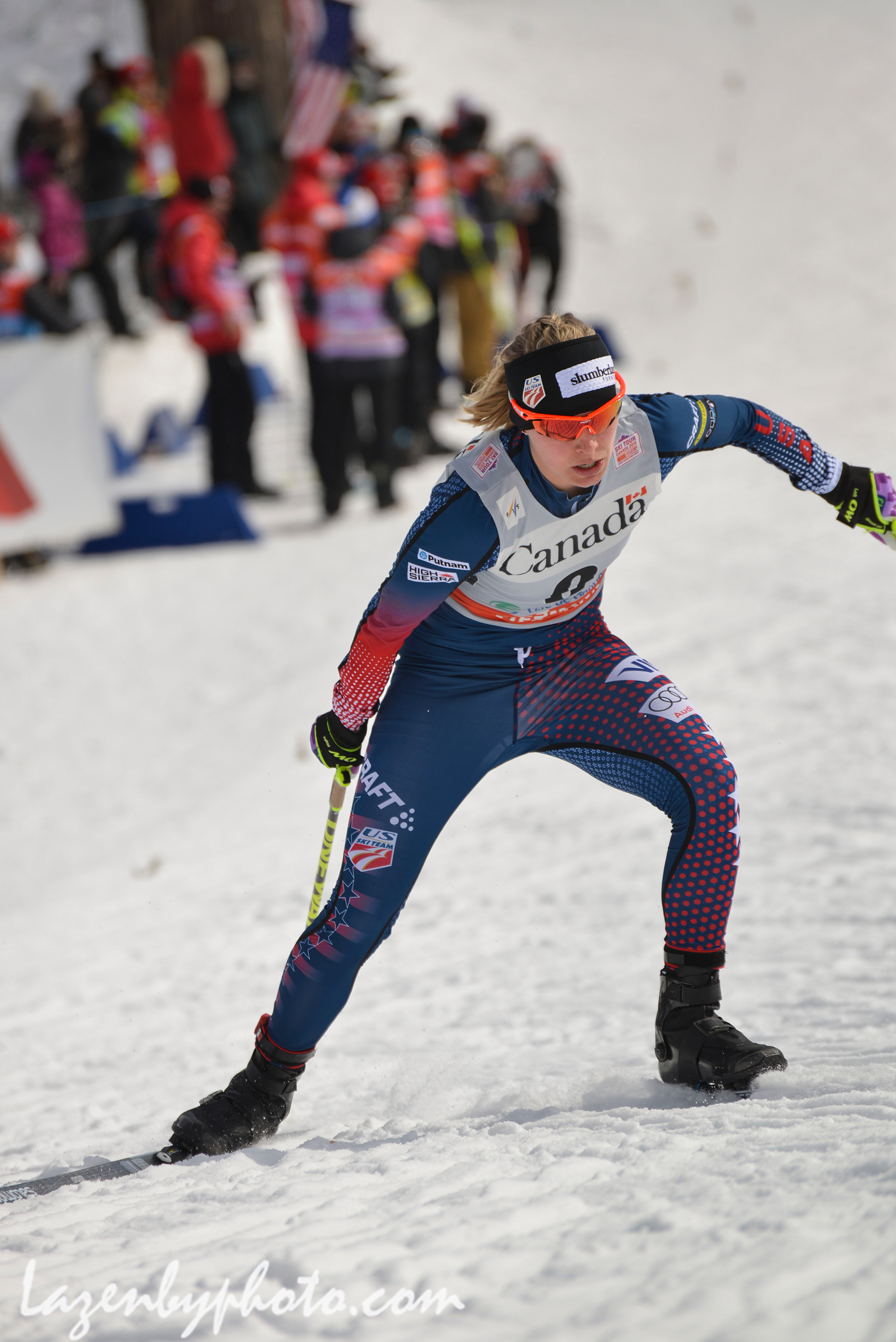
    Jessie Diggins (U.S. Ski Team) leading Norway's Maiken Caspersen Falla during their semifinal in the 1.7 k freestyle sprint at the Ski Tour Canada in Gatineau, Quebec. Falla went on to win the heat and Diggins finished second to advance to the final, where they placed first and third, respectively. (Photo: John Lazenby/Lazenbyphoto.com)
    Jessie Diggins (U.S. Ski Team) leads Norway’s Maiken Caspersen Falla, Germany’s Sandra Ringwald, Sweden’s Ida Ingemarsdotter (5), and Norway’s Ingvild Flugstad Østberg during their semifinal in the 1.7 k freestyle sprint at the Ski Tour Canada in Gatineau, Quebec. Falla went on to win the heat and Diggins finished second to advance to the final, where they placed first and third, respectively. (Photo: John Lazenby/Lazenbyphoto.com)

    Jessie Diggins toed the line of the women’s 1.7-kilometer freestyle sprint final Tuesday in Gatineau, Quebec, for the opening day of Ski Tour Canada, filled with the familiar faces of World Cup sprint powerhouses. However, this time, the matchup was held on the other side of the Atlantic on her home turf.

    With the rare opportunity to compete in World Cup races in North America, Diggins, of the U.S. Ski Team and Stratton Mountain School (SMS) T2 Team, meant business and she got down to it from the start.

    Diggins kicked off the day with the second-fastest qualifying time, 2.09 seconds behind Sweden’s Hannah Falk of Sweden, who topped the qualifier in 3:32.76. Then heat after heat, Diggins moved through the field with ease, although the multiple crashes throughout the women’s heats proved it was anything but easy.

    Jessie Diggins (U.S. Ski Team) racing to second in the women's 1.7 k freestyle sprint qualifier at Stage 1 of the Ski Tour Canada in Gatineau, Quebec. (Photo: John Lazenby/Lazenbyphoto.com)
    Jessie Diggins (U.S. Ski Team) racing to second in the women’s 1.7 k freestyle sprint qualifier at Stage 1 of the Ski Tour Canada in Gatineau, Quebec. She went on to place third in the final. (Photo: John Lazenby/Lazenbyphoto.com)

    “For me this race is all about trying to find the window because it is a really hard course to pass on. I was always thinking about where I could go,” Diggins explained in a post-race interview.

    Racing in the first quarterfinal, Diggins took command of the heat just before the two-minute mark and never relented. After taking the lead, she held off a charging Ingvild Flugstad Østberg of Norway in the final straightaway to win the heat by 0.45 seconds in 3:32.93.

    In the first semifinal she faced a field that looked like a World Cup final, including Norway’s Maiken Caspersen Falla and Østberg as well as Sweden’s Ida Ingemarsdotter.

    Early in the heat, Diggins hung in fifth in a compact field. The curving course made passing difficult and it looked like it might turn into a six-way sprint on the homestretch. However, Diggins found the window she had been waiting for and seized it, powering into the lead.

    She established a gap in the final several hundred meters, but eased up as she knew she had secured a spot in the final and crossed the line barely behind Falla, who won the heat in 3:33.86. Diggins automatically advanced in second just 0.02 seconds back. Both Ingemarsdotter in third (+0.47) and Østberg in fourth (+0.8) advanced as lucky losers out of that semifinal.

    Diggins was two-for-two in pulling off well-executed races, but the real test was yet to come. The final included all of the usual World Cup sprinting suspects: three Norwegians — Falla, Østberg and Heidi Weng — and Sweden’s Ingemarsdotter and Stina Nilsson.

    Notably, the top qualifier, Falk did not advance out of her quarterfinals as she collided with Ida Sargent of the U.S., taking them both out of contention. The second semifinal was plagued with falls as Sweden’s Charlotte Kalla crashed just after the start and another scuffle occurred between Finland’s Krista Parmakoski and Germany’s Hanna Kolb, compromising all three women’s chances at advancing to the semifinals.

    In the final, the 22-year-old Nilsson led out of the gate while Diggins shadowed her and the pack remained tight behind them. Diggin’s ideal positioning didn’t last, as Falla and Østberg slipped in behind Nilsson, shuffling Diggins back.

    Falla took control on the final hill and gapped the field on the final stretch. Heading into the homestretch, Nilsson chased in second, but Diggins was charging hard on the outside lane and gaining ground. Although it looked like Diggins might be able to pull off silver, an icy patch nearly shot Diggins’ skis out from underneath her. A quick hop saved her from a fall but cost her the fraction of a second she needed to catch Nilsson.

    “I was just really happy I caught my bobble and didn’t lose more than one place,” Diggins said. “I am really proud of my effort and I am very happy.”

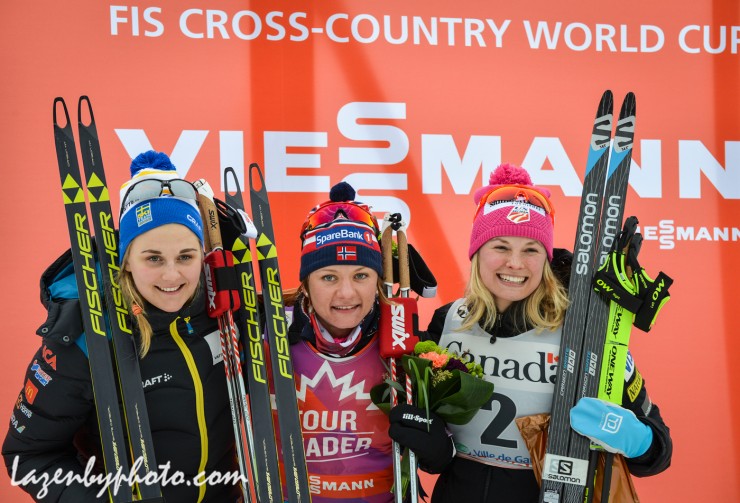
    Falla won in 3:34.0, Nilsson took second place, 0.73 seconds later, and Diggins finished third, 0.87 seconds behind Falla and 0.14 out of second.

    Diggins’ third place was her second-consecutive sprint podium after achieving silver in Lahti, Finland, a week and a half ago. U.S. teammate Simi Hamilton also reached the a podium in third, marking the first time an American male and female have finished on a World Cup podium on the same day, according to USSA.

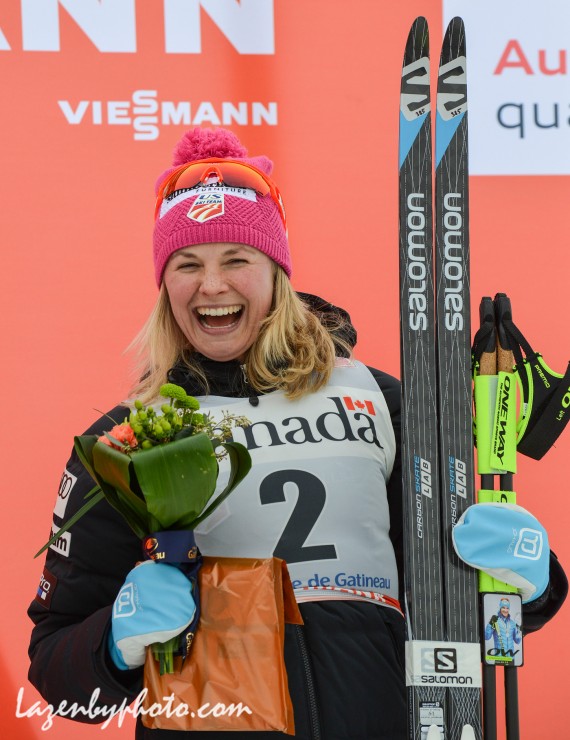
    Jessie Diggins (U.S. Ski Team) holds an American flag high and acknowledges spectators after placing third in the women's 1.7 k freestyle sprint at the first stage of Ski Tour Canada in Gatineau, Quebec. (Photo: John Lazenby/Lazenbyphoto.com)
    Jessie Diggins (U.S. Ski Team) holds an American flag high and acknowledges spectators after placing third in the women’s 1.7 k freestyle sprint at the first stage of Ski Tour Canada in Gatineau, Quebec. (Photo: John Lazenby/Lazenbyphoto.com)

    A dual citizen of Canada, Diggins explained she was feeling the love in Gatineau.

    “I heard someone yell, ‘Marry me!’ right when there’s a silence [during the final],” she recalled with a laugh. “And there was this big pause, like, ‘Well, answer the guy!’ But in all seriousness, it was great. I could hear my parents out there, and it was really cool to see so many American flags and Canadian flags.

    “For me, it really does feel like home ground because so much of my family is Canadian,” Diggins added. “Anywhere in North America that I’m racing I’m just so pumped.”

    Rounding out the final, Weng crossed the line in fourth (+1.20), followed by Østberg in fifth (+1.30) and Ingemarsdotter in sixth (+1.60).

    With her win, Falla extends her lead in the Sprint World Cup by 67 points over Østberg and takes the lead in the Ski Tour Canada (STC) standings after Day 1. Diggins is listed as second overall, 5 seconds back, and Nilsson third (+7.0).

    “I knew it was important to be in front on the last climb,” Falla said in the post-race press conference. “So before the last climb I tried to get the lead, and I succeeded with that. Then I was in first around the last corner, and my possibilities were strong. I feel my shape is really good right now.”

    U.S. Ski Team Head Coach Chris Grover commented on Diggins and Hamilton in a USSA press release.

    “Jessie and Simi were incredible all day, starting with both of them qualifying in second,” Grover said. “The race course was curvy and tight making passing really challenging. Once the heats began, both Jessie and Simi were masterful when it came to making space in which to pass their competitors. They made gaps open for themselves and timed their podium bids perfectly.”

    Canada’s MacIsaac-Jones Breaks Through

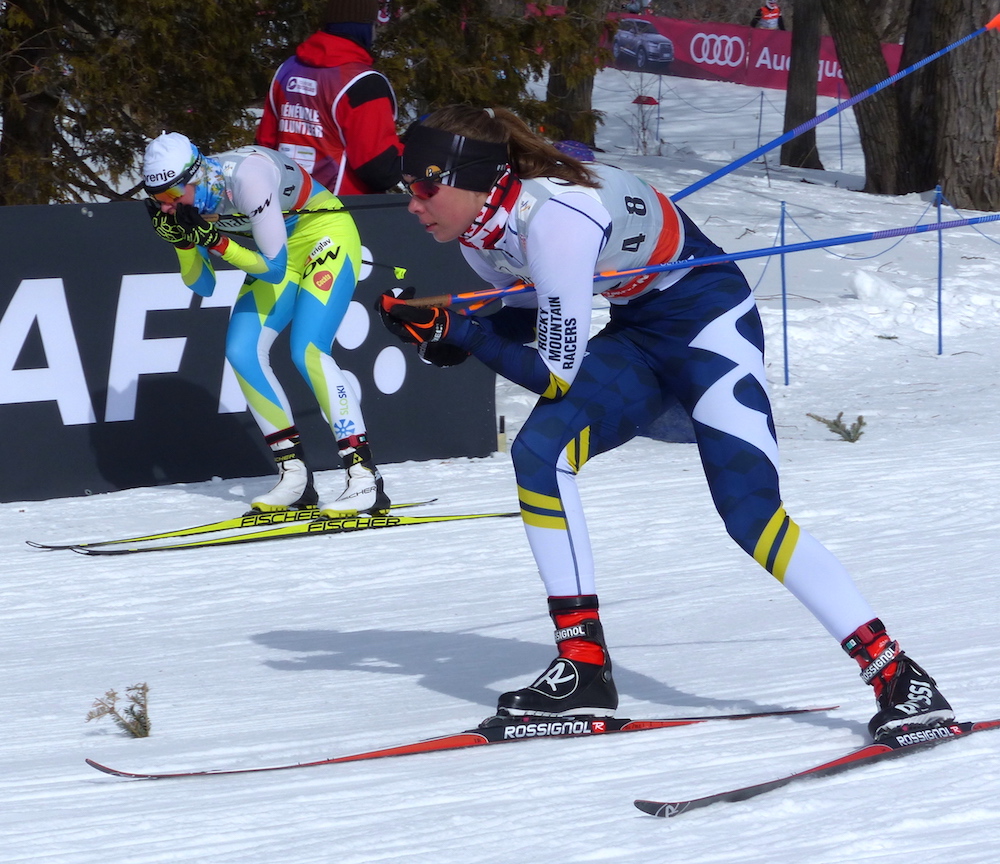
    Canada's Maya MacIsaac-Jones (Rocky Mountain Racers) on her way to 30th in the women's 1.7 k freestyle sprint qualifier at the Ski Tour Canada's opening stage in Gatineau, Quebec. She went on to place 29th for her first World Cup points. (Photo: Peggy Hung)
    Canada’s Maya MacIsaac-Jones (Rocky Mountain Racers) on her way to 30th in the women’s 1.7 k freestyle sprint qualifier at the Ski Tour Canada’s opening stage in Gatineau, Quebec. She went on to place 29th for her first World Cup points. (Photo: Peggy Hung)

    For Canada, one woman reached the heats: 20-year-old Maya MacIsaac-Jones of the Rocky Mountain Racers in Canmore, Alberta.

    Originally from Athabasca, Alberta, MacIsaac-Jones entered the STC as the NorAm sprint leader. Gatineau stood as her eighth World Cup start and first time qualifying for the heats after narrowly missing the top 30 in the freestyle sprint in Planica, Slovenia, where she finished 31st in January.

    On Tuesday, MacIsaac-Jones was on the other side of the cutoff, qualifying in 30th (+12.92). She went on to finish sixth in the first quarterfinal, 3.92 seconds behind Diggins for 29th overall.

    “It really means a lot for me to be in the points today,” MacIsaac-Jones said afterward. “I hope this will help inspire the other Canadian skiers on the tour with me and I hope this shows we are capable of being in the mix.”

    After achieving her goal of scoring World Cup points, the young sprint specialist is now setting her sights on racing close to home in Canmore.

    “I am hoping to be able to stay in the Tour until the Canmore stages,” MacIsaac-Jones said. “That will be pretty tough with a couple distance races coming up, but that is my goal.”

    Sadie Bjornsen (U.S. Ski Team) racing to eighth in the women's 1.7 k freestyle sprint qualifier at Stage 1 of the Ski Tour Canada in Gatineau, Quebec. She went on to place 17th overall. (Photo: Peggy Hung)
    Sadie Bjornsen (U.S. Ski Team) racing to eighth in the women’s 1.7 k freestyle sprint qualifier at Stage 1 of the Ski Tour Canada in Gatineau, Quebec. She went on to place 17th overall. (Photo: Peggy Hung)

    The American women once again showed their depth, qualifying four in the top 30. Sadie Bjornsen posted the eighth-fastest qualifying time (+5.80), Sophie Caldwell qualified in 26th (+12.45) and Ida Sargent reached the heats in 28th (+12.87). However, bad luck in the quarterfinals kept these three Americans from moving on with Diggins.

    In quarterfinal 2, Caldwell was positioned in third heading into the final section of the course, but became tangled with another skier. This sent her spiraling out of control, but she was able to stay on her feet in an impressive recovery. However, the mishap put her out of contention when she finished sixth and 17 seconds behind Falla as the winner of that heat. Overall, Caldwell placed 28th.

    “It’s part of ski racing; I just got stepped on and kind of spun in a 180 and by the time I turned around, it was a little too late,” Caldwell said. “It was a bummer to end that way today, but luckily there are two more sprints to come.”

    In quarterfinal 3, Sargent crashed with Falk and did not advance, finishing fifth in the heat, 18 seconds behind Germany’s Sandra Ringwald as the winner, while Falk was relegated to last.

    “On the first steeper downhill on the first lap, coming off the climb, Hanna Falk went left. I was coming up on the left side of people, trying to go wide and use my momentum to go around,” Sargent explained. “She went wide and cut in front of me so then I went super-wide and then I went back and tried to go inside, and she cut back inside. … The third time [we went back and forth] our skis clipped and I went down. I got up as quickly as I could and tried to keep hammering because I was like, ‘Who knows? It’s a sprint race. Somebody else could go down,’ or whatever, but it didn’t happen. … I guess she got relegated for that, which is good, but it doesn’t change my race.”

    Overall, Sargent ended up 24th for her second-best skate sprint result of the season.

    “I know it’s not the U.S., but there’s people out on course everywhere,” Sargent said of the STC atmosphere. “I couldn’t stop smiling when I was skiing around because I knew so many friends and family out there and supporters. The North American ski community is stronger than ever right now. It’s gonna be a fun tour.”

    Bjornsen also competed in quarterfinal 3, finishing fourth in the heat, 0.88 seconds behind Ringwald, who won with the second-slowest time of the five quarterfinals. That put Bjornsen in 17th overall.

    “I wasn’t able to put in the moves that I wanted to, so it wasn’t what I was hoping for,” Bjornsen said. “But it’s a long tour and Day 1, it’s a great way to start.”

    The U.S. and Canada were also represented by several other skiers, which finished outside the top 30. Skiing for the U.S., Rosie Brennan (Alaska Pacific University/USST) placed 38th, Annie Hart (SMST2) was 46th, Liz Stephen (USST) 59th, Kaitlynn Miller (Craftsbury Green Racing Project) 61st, Katherine Ogden (SMS/USST) 62nd, Chelsea Holmes (APU) 65th, Jennie Bender (Bridger Ski Foundation) 70th.

    Competing for Canada, Dahria Beatty (Alberta World Cup Academy/CNST) finished 45th, Olivia Bouffard-Nesbitt (CNST) was 49th, Cendrine Browne (Pierre-Harvey National Training Centre/CNST) 55th, Andrea Dupont (RMR) 56th, Jenn Jackson (NDC Thunder Bay) 58th, Alannah Maclean (NDC Thunder Bay) 63rd, Sophie Carrier-Laforte (CNEPH) 64th, Emily Nishikawa (CNST) 66th, Marie Corriveau (CNEPH/National Junior Team) 67th, Katherine Stewart-Jones (NDC Thunder Bay) 68th and Annika Hicks (Canmore) 71st.

    Final results | Qualifier | Tour standings (through Stage 1)

    —  Gerry Furseth, Alex Slobodian, Alex Kochon, François Léger Dionne, and Harald Zimmer contributed

  • Johaug Wins 14th World Cup; Diggins Fourth in Gutsy Falun 10 k Skate

    Johaug Wins 14th World Cup; Diggins Fourth in Gutsy Falun 10 k Skate


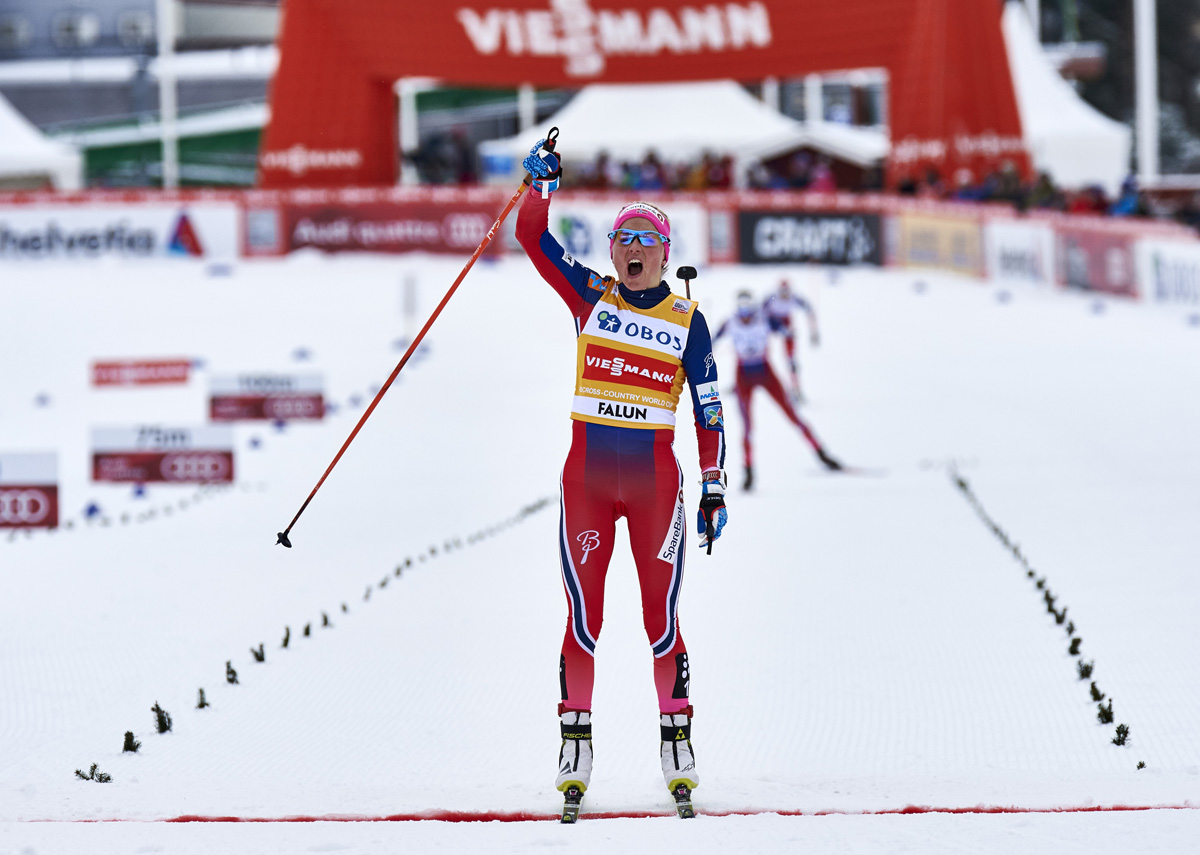
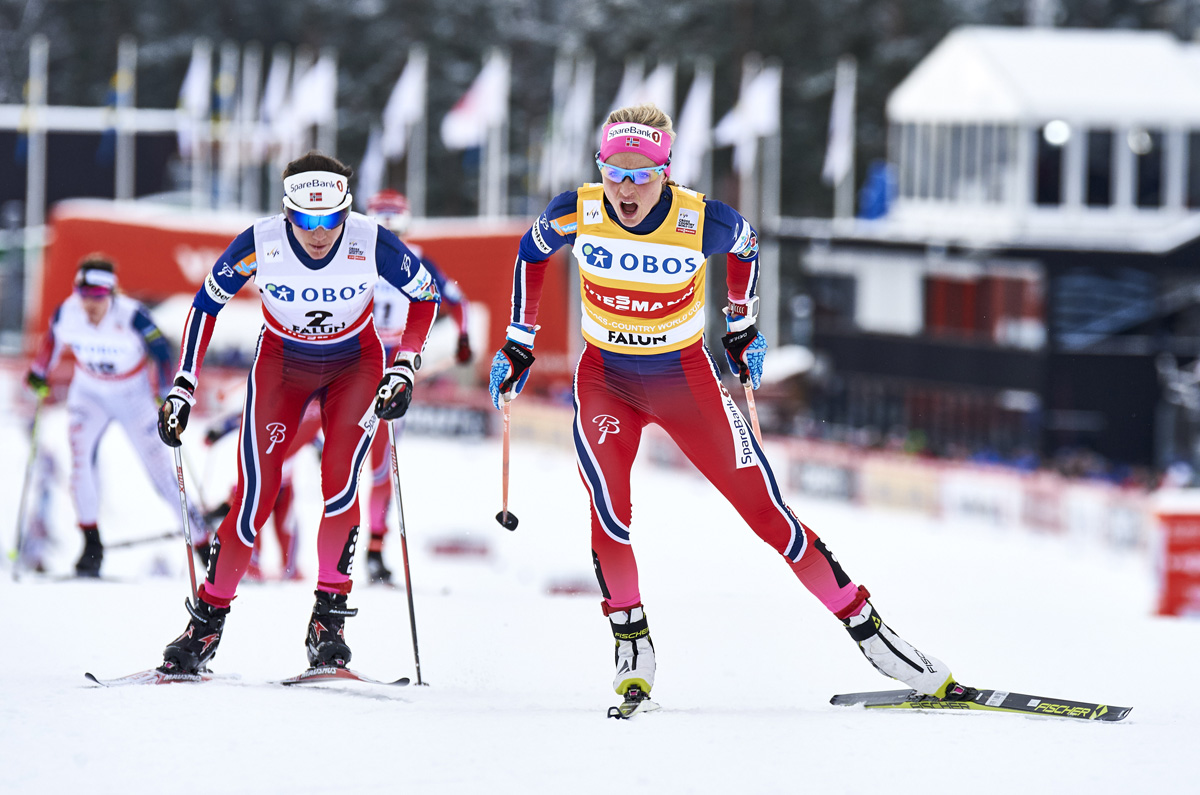
    Norway's Therese Johaug celebrates her 14th World Cup victory in the 10 k freestyle mass start on Sunday in Falun, Sweden. Johaug led her teammates Heidi Weng and Astrid  Uhrenholdt Jacobsen in a Norwegian podium sweep and American Jessie Diggins placed fourth. (Photo: Fischer/NordicFocus)
    Norway’s Therese Johaug celebrates her 14th World Cup victory in the 10 k freestyle mass start on Sunday in Falun, Sweden. Johaug led her teammates Heidi Weng and Astrid Uhrenholdt Jacobsen in a Norwegian podium sweep and American Jessie Diggins placed fourth. (Photo: Fischer/NordicFocus)

    Note: This article has been updated to include comments from Liz Stephen and Caitlin Patterson.

    Therese Johaug dared anyone to match her as she drove a punishing pace from the gun of the 10-kilometer freestyle mass start on Sunday in Falun, Sweden. But five other women, including American Jessie Diggins, took her up on the challenge and the race was on.

    The fast pace from the gun strung out the 72 women in the field quickly and within minutes, a lead group of six was formed. Johaug was shadowed by her Norwegian teammates Heidi Weng, Ingvild Flugstad Østberg , and Astrid Uhrenholdt Jacobsen as well as Diggins and Sweden’s Charlotte Kalla as they ascended the infamous Mörderbacken climb in the first two kilometers of the race.

    There was no trading of leads as Johaug churned away with her characteristic high tempo in the front. By 3.2 k, Johaug, Weng and Østberg had a five-second gap on Jacobsen and Diggins. Kalla fell back to the chase group, ceding the potential to repeat on the podium after she won the 10 k freestyle at Falun World Championships last year.

    However, a day after notching fifth in the 5 k classic, Diggins was not going to let the Norwegian trio ski away without a fight. She took advantage of her strengths on the gliding sections of the rolling terrain the second half of the 5-kilometer lap. She overtook a fading Østberg and caught Jacobsen who tucked in behind her. She continued to hammer, bridging to Johaug and Weng.

    Coming through the stadium after the first lap at 5 k, Diggins was just 3.6 seconds from the lead pair. However, when Jacobsen took her turn leading, she shifted gears to a pace Diggins couldn’t match. In pursuit of her teammates up the trail, Jacobsen put 11.2 seconds on Diggins in 1.7 k.

    In contrast to Johaug’s usual untouchable domination, Weng shadowed her stride for stride for over half of the race. However, at 6.7 k, the second time up Mörderbacken, Johaug delivered an attack that Weng could not match.

    Therese Johaug (r) leads Norwegian teammate Heidi Weng during the women's 10 k freestyle mass start at the World Cup in Falun, Sweden. The duo went on to place first and second, respectively. (Photo: Fischer/NordicFocus)
    Therese Johaug (r) leads Norwegian teammate Heidi Weng during the women’s 10 k freestyle mass start at the World Cup in Falun, Sweden. The duo went on to place first and second, respectively, while American Jessie Diggins (back left) placed fourth. (Photo: Fischer/NordicFocus)

    Johaug entered the stadium clear of Weng, winning in 23:28.0 for her 14th World Cup win matching Norwegian Bente Skari’s record for the most wins in a season. Weng secured second place, 8.8 seconds back, and Jacobsen placed third (+13.9).

    Meanwhile, Diggins skied alone in fourth place trying to hold off a charging chase pack. She made it to the line just four seconds ahead of the chase pack to secure fourth (+29.0). Norway’s Maria Rydqvist and Ragnhild Haga led the group behind her into the finish in fifth (+33.3) and sixth (+34.0), respectively.

    Despite skiing in the lead pack early, the early pace took its toll and Østberg faded to ninth (+35.0).

    After the race, Johaug explained she pulled off her race plan perfectly, although Weng held on longer than she anticipated.

    “My goal was to go my own race, and go hard and smoothly from the start,”Johaug told NRK, according to a translation. “I would ‘punch’ to the last part of the hill, and it finally succeeded … I was a little nervous, for Heidi hung so well.” 

    According to Weng, Johaug “started like it was a sprint so there weren’t many of us from the beginning,” she told FIS. “I tried to stay with her as long as I could but my legs started to get stiff and I just focused on my technique to make sure that I still got to the finish in second place.”

    Jacobsen described her battle with Diggins as mostly amicable. “We actually had some cooperation on the first lap. I have never really had that before,” she told FIS. “She told me that she would take the lead on the big downhill and then we start to catch Ingvild in the stadium and Jessie went by her quickly. I hesitated and Jessie got away, but I was able to catch her on the Mörderbacken and I pushed again on the final climb to stay ahead of her.”

    Fewer than 10 seconds behind the chase group, American Liz Stephen finished 14th (+43.7), and 26-year-old Caitlin Patterson, of the Craftsbury Green Racing Project, placed 25th (+1:14.6) for her World Cup points in 11 starts.

    Diggins ‘Going for Broke’

    One year after Diggins and Caitlin Gregg claimed their historic podium finishes at the Falun World Championships, Diggins had her sights set high for the 10 k freestyle event.

    “My strategy for the day was — I had a good race yesterday, I know I am in good shape — I am just going to go for broke and see what happens,” she said on the phone afterward.

    Jessie Diggins charges to the finish of the World Cup 10 k freestyle mass start on Sunday in Falun, Sweden. Diggins held off a closing chase pack to secure fourth place. (Photo: Fischer/NordicFocus)
    Jessie Diggins charges to the finish of the World Cup 10 k freestyle mass start on Sunday in Falun, Sweden. Diggins held off a closing chase pack to secure fourth place. (Photo: Salomon/NordicFocus)

    “I knew it was a little bit risky, but I was trying to hang with that lead group as long as I could,” Diggins said.

    As long as she could turned into more than half the race as she trailed Johaug by just 3.6 seconds at 5 k.

    “In a mass start, I’ve never been in this position before, it was so exciting,” Diggins said.

    Although she was in contention for a podium at 5 k, she soon realized the effort wasn’t sustainable and decided to cut her losses.

    “I was totally pegged, I was going as hard as I possibly could,” she recalled. “I thought I could try to hold on to Therese and Heidi but then I might blow up and lose twenty spots, but if I can race smart I could for sure get top five.”

    Keeping her position meant holding off a charging chase pack of 15 skiers who were able to draft each other. Despite this advantage, Diggins was confident she could hold them.

    “I wasn’t too concerned because the last couple kilometers are my strength and I usually close down a race hard,” she said. “I felt like I would be able to hold it, but still it was still motivating and I knew I just couldn’t make a mistake.”

    U.S. Women’s Coach Matt Whitcomb commended Diggins’ gutsy racing.

    “She gave herself a chance to win today, she believed that she could, and she did everything she could and fell just shy,” he said on the phone “But this is the kind of approach to racing that we just love to see — aggressive and full of the belief that she could make it happen.”

    For Diggins, Falun remains one of her favorite places to race. “I’m so happy — I love racing here, the crowds are great, the atmosphere is fun, and I had wonderful skis,” she said.

    In a World Cup schedule with few mass starts, Falun was the first freestyle mass start of the season so far.  Although Diggins still considers individual starts to be her favorite format because it is just “you, your mind and the course,” she considers mass starts a fun change and a great learning opportunity.

    “In some ways, it was more fun to ski it with other people because you can see where the leaders are and you can see where they are putting time on you,” she said. “It is a really good way to learn about your style of racing and how that fits into the field.” 

    Stephen Navigates Mass Start for Season Best

    Although there are advantages to the immediate feedback in mass starts, they can also pose challenges for skiers starting farther in the back in the field. The congestion on the course presents frustrating, but surmountable challenges for skiers like Stephen.

    Starting in the middle of the field in bib 23, Stephen had to navigate the field on a narrow course and look for openings. However, when the field opened up, Stephen delivered as she moved from 21st place at 5 k to finish in 14th for her best World Cup result this season.  

    “It is really good to see Liz looking like herself again,” Whitcomb said.  “I think had today been an interval start race, you would have seen a really impressive result out of Liz. She struggled a bit with a later start, getting swallowed up, the course is a little bit narrow and she spent a lot of time waiting for an opening.”

    “Today was a really good feeling to leave Europe on and take home with me to prepare for Canada. I had the best energy I have felt all year today,” Stephen said in a USSA press release.

    Patterson in the points

    Another highlight for the Americans included Patterson’s 25th place, her first World Cup top 30 and best result since placing 36th in the Holmenkollen 30 k classic mass start last weekend.

    “We are really excited for that,” Whitcomb said. “In many ways, that is one of the real successes of the day when you see a new athlete score her first World Cup points. It’s not even one point, it is a handful of them with a really solid 25th place.”

    Patterson’s aggressive start paid off as she was able to establish a position in the top 20 within the first three kilometers. “My game plan was to start fast and aggressively, always on the offensive to move up rather than getting shuffled back, cling onto packs or other skiers whenever possible, and ski efficiently but not afraid to push hard,” explained Patterson.

    “I was actually astonished to find that the pace up the Morderbakken the first time seemed within reason, I could hold with people, and actually even still see Johaug way up ahead, which was exciting!” Patterson said.

    The depth of the U.S. women’s field has been illustrated this year as Patterson was the seventh women this year to score points in a distance race. This is a testament to the progress of the U.S. women’s cross country skiing and bodes well for the future.

    As Patterson shared, “I think now that I’m over here in Europe, it helps that I have trained with Ida, and with other USST women at fall camps, and to have seen that my fitness is close to theirs in training sessions, to help me convince myself that if I can ski with them, and they can ski with the best in the world, then maybe I can ski with the best in the world too.”

    Rosie Brennan and Ida Sargent also represented the U.S., taking 48th (+2:05.4) and 67th (+3:26.3), respectively.

    Emily Nishikawa of Canada skis to 39th place in the Falun mass start skate event (Photo credit: Fischer/NordicFocus)
    Canada’s Emily Nishikawa racing to 39th in the 10 k freestyle mass start at Sunday’s World Cup in Falun, Sweden.(Photo: Fischer/NordicFocus)

    Canadian Emily Nishikawa was 14 seconds out of the points in 39th (+1:34.9) and Andrea Dupont (Rocky Mountain Racers) placed 69th (+3:46.5). 

    “The pack with the top 30 was just over 10 seconds ahead of me on the last lap, so it was a little frustrating that I didn’t have a little bit more in me to push and bridge up to that group,” Nishikawa wrote in an email. “Overall, it was much better than yesterday [in the 5 k classic], and I’m looking forward to going home to recharge before the Ski tour Canada where I hope to have my best races of the season.”

  • ‘I’m back!’ Kriukov Wins Stockholm Classic Sprint; Harvey Seventh

    ‘I’m back!’ Kriukov Wins Stockholm Classic Sprint; Harvey Seventh

    Russia's Nikita Kriukov (27) celebrates his victory across the line during the men's classic sprint final at the World Cup in Stockholm, Sweden. Norway's Ola Vigen Hattestad (2) placed second and Petter Northug (l) was third. (Photo: Fischer/NordicFocus)
    Russia’s Nikita Kriukov (27) celebrates his victory across the line during the men’s classic sprint final at the World Cup in Stockholm. Norway’s Ola Vigen Hattestad (2) placed second and Petter Northug (l) was third. (Photo: Fischer/NordicFocus)

    A day of double-pole domination and some unlucky mishaps on a sloppy and warm course made for an interesting lineup in the men’s 1.2-kilometer classic sprint final in Stockholm.

    At the start of the men’s classic sprint final at the Royal Palace, there were only was only two interruptions of the imposing red lineup of Norwegians: Frenchman Baptiste Gros and Russian Nikita Kriukov, the only two who could try to prevent a Norwegian sweep. This would be a tall order against Norway’s Petter Northug, Finn Hågen Krogh, Ola Vigen Hattestad, and Sondre Turvoll Fossli.

    Although changes were made to the course to include another hill and encourage striding, it did not deter all of the men’s field from double poling the course. The decision to gut it out on skate skis proved to be rewarded through the heats amid deteriorating conditions as a large portion of the top 30 in the heats, including the final, were composed of racers who opted to double pole. Only one finalist, Fossli, chose to race on kick wax.

    The Stockholm city classic sprint men's podium on Thursday: with Russian winner Nikita Kriukov (c), Norway's Ola Vigen Hattestad (l) in second and Petter Northug (r) in third. (Photo: Fischer/NordicFocus)
    The Stockholm city classic sprint men’s podium on Thursday: with Russian winner Nikita Kriukov (c), Norway’s Ola Vigen Hattestad (l) in second and Petter Northug (r) in third. (Photo: Fischer/NordicFocus)

    As the only strider, Fossli led the field up the first climb on the one-lap course. The field strung out, and Fossli continued to lead through the descent and the hairpin turn at the bottom. However, the pack swallowed Fossli on the flats and gentle descent that followed, and he faded to sixth.

    Heading into the final straightaway, Hattestad took control, but Northug and Kriukov were closing. In the final 100 meters, Kruikov threw a crushing surge that neither could match. He passed both Northug and Hattestad in the final meters and established enough of a gap to celebrate across the line.

    “I’m back!” Kriukov exclaimed at the finish.

    With his first World Cup victory since December 2013 in Asiago, Italy, Kruikov had indeed returned.  The 30-year-old Russian classic-sprint specialist had previously recorded a season-best 10th at the classic sprint in November in Kuusamo, Finland.

    In Thursday’s qualifier, he narrowly made the top-3o cutoff in 27th, 7.4 seconds behind qualifying winner and fellow Russian, Alexander Panzhinskiy. But there’s a reason Kriukov had five previous World Cup victories and an Olympic gold medal in classic sprints.

    In the heats, Kriukov automatically advanced to the semifinal after placing second in his quarterfinal, 0.2 seconds behind Fossli. He was the last lucky loser to advance from the first semifinal, after placing fourth behind Fossli, Hattestad, and Northug, respectively.

    In the final, he outlasted Hattestad in second place by 0.69 seconds. Heading toward the finish, Hattestad thought he could hold him off.

    “When I got halfway up the hill, and did not hear anyone who challenged me, so I thought actually I had it,” Hattestad told NRK, according to a translation. “But then stiffened I bit and then came Nikita in an insane speed.”

    “It feels good to be back on the podium again and this time in first,” Kriukov told FIS afterward. “I have skied well here before and I am happy to do it again in the soft snow today.”

    The other lucky loser from the first semifinal, Northug followed up his classic-sprint win from last week in Drammen, Norway, with another podium in third, 1.16 seconds behind Kriukov. After the race, Northug was uncharacteristically complimentary.

    “What he [Kriukov] did at the end today, was totally awesome,” Northug told NRK.

    Kriukov was the highlight for an otherwise rough day for the Russian team. Panzhinskiy posted the top qualifying time by 0.55 seconds over Hattestad in second, but broke a pole in his semifinal and did not advance. Sergey Ustiugov crashed hard in his quarterfinal after posting the third-fastest qualifier, 2.28 seconds behind Panzhinskiy. Hitting the homestretch, Ustiugov appeared to cross his skis when jumping into a track, but nobody else was involved in the crash.

    Harvey Narrowly Misses Final; Hamilton and Newell in the Heats

    Canada's Alex Harvey racing to 20th in the qualifier at Thursday's World Cup classic sprint in Stockholm. Harvey made it to the semifinals, where he placed third in his heat for seventh overall. (Photo: Fischer/NordicFocus)
    Canada’s Alex Harvey racing to 20th in the qualifier at Thursday’s World Cup classic sprint in Stockholm. Harvey made it to the semifinals, where he placed third in his heat for seventh overall. (Photo: Fischer/NordicFocus)

    As Canadian Alex Harvey charged to the line of the second semifinal, the potential of advancing to the final hung tantalizingly close. Harvey was third entering the homestretch, within reach of Gros and Krogh, but the pair pulled away along with Harvey’s shot at automatically advancing.

    Harvey lunged for the line in third, finishing 1.11 seconds behind Gros in first and 1.08 after Krogh in second, but the second semifinal was nearly four seconds slower than the first. Gros’s winning time of 2:47.82 was slower than both the lucky loser times of Northug in third (2:45.01) and Kriukov in fourth (2:45.03) from the first semifinal.

    Harvey’s finish placed him seventh in the overall standings for his best sprint result this season.

    “Sprinting hasn’t been going super for me this year,” Harvey wrote in an email after Thursday’s race. “Today was the first day I made the semis, but still, every time I put a bib on, I’m racing for the podium.”

    “Alex skied really well through all the rounds and looked really strong, especially his straightup double pole,” said Canadian head coach Justin Wadsworth said on the phone.

    Harvey chose to double pole through the rounds and it paid off as he put together three strong races and narrowly missed qualifying for the final.

    “I felt good today, but nothing special,” he wrote. “My lungs are still not 100% recovered from the 50km [last Saturday at Holmenkollen].  I did feel like my double pole was holding up well.”

    Harvey was the lone Canadian who reached the heats, qualifying in 20th (+6.72). Americans Simi Hamilton and Andy Newell advanced to the quarterfinals as well, qualifying in 21st (+6.79) and 26th (+7.40), respectively.

    Harvey and Hamilton both raced in the fifth quarterfinal — Hamilton striding and Harvey double poling.

    Simi Hamilton (U.S. Ski Team) racing to 21st in the classic-sprint qualifier at the World Cup in Stockholm on Thursday. He went on to place 22nd overall after finishing fifth in his quarterfinal. (Photo: Fischer/NordicFocus)
    Simi Hamilton (U.S. Ski Team) racing to 21st in the classic-sprint qualifier at the World Cup in Stockholm on Thursday. He went on to place 22nd overall after finishing fifth in his quarterfinal. (Photo: Fischer/NordicFocus)

    Although he considered double poling the course, Hamilton chose the technique that he felt fit his strengths.

    “When it is not obvious that double poling is going to be faster than everything else, I lean towards striding,” Hamilton said on the phone afterward. “I had a really good race last week in Drammen on klister skis when about half the field was double poling so that gave me confidence.”

    Hamilton’s plan for Stockholm was to power up the last hill to put himself in contention to advance. However, he ran out of time to close gaps that had opened on the flats and gradual descent.

    “I tried to make something happen in that last 200m, my kick was really good and I still felt really good energy wise but I just ran out of room and couldn’t close the gap,” Hamilton explained.

    Ahead of Hamilton, Sweden’s Oskar Svensson won the quarterfinal by 0.78 seconds over Harvey in second, as both advanced to the semifinal. Hamilton placed fifth, 2.21 seconds after Svensson, and also behind Finland’s Matias Strandvall in third and Norway’s Even Northug (one of Petter’s younger brothers) in fourth. Overall, Hamilton finished 22nd on the day.

    Andy Newell (U.S. Ski Team) racing to 26th in the classic-sprint qualifier at the World Cup in Stockholm on Thursday. He went on to place 23rd overall after finishing fifth in his quarterfinal. (Photo: Fischer/NordicFocus)
    Andy Newell (U.S. Ski Team) racing to 26th in the classic-sprint qualifier at the World Cup in Stockholm on Thursday. He went on to place 23rd overall after finishing fifth in his quarterfinal. (Photo: Fischer/NordicFocus)

    Newell found himself in a stacked first quarterfinal, which included eventual finalists Fossli, Kriukov and Gros. Although both Ustiugov and Finland’s Toni Ketelä advanced to the semifinals as lucky losers from that quarterfinal, Newell finished a distant fifth after making a last-minute decision regarding technique.

    “In the quarterfinals I was prepared to double pole the heat but switched to kick wax right before the start since it was looking like I would have a majority of striders to go up against,” Newell wrote in an email.  “Who knows if it was the right call, but for whatever reason my Klister was dragging a bit on the flats which was frustrating.”

    While Newell was far enough behind Ustiugov to avoid his trip-up before the finish and ski around him into fifth (+9.44), it wasn’t enough to advance and he placed 23rd overall.

    Canada’s second skier, Len Valjas also chose kick wax and ended up 45th in the qualifier, 10.72 seconds out of first and 2.83 seconds out of the top 30.

    Reese Hanneman and Erik Bjornsen also competed for the U.S., finishing 66th (+17.64) and 69th (+18.87), respectively.

    Results | Qualifier

    — Alex Kochon contributed reporting

    Len Valjas striding to 45th in the qualifier at the Stockholm World Cup classic sprint on Thursday. (Photo: Fischer/NordicFocus)
    Len Valjas striding to 45th in the qualifier at the Stockholm World Cup classic sprint on Thursday. (Photo: Fischer/NordicFocus)
  • Wednesday Workout: Mid-Season Speed with Annika Taylor

    Wednesday Workout: Mid-Season Speed with Annika Taylor


    Former UNH skier Annika Taylor (r) during an interview with FasterSkier at the SuperTour in Craftsbury, Vt., last year.
    Former UNH skier Annika Taylor (r) during an interview with FasterSkier at the 2015 SuperTour in Craftsbury, Vt., last year.

    With the demanding race schedules of World Cup athletes, mid-season workouts have to be effective without adding too much training stress.

    Roy Young, the British Nordic Head Coach, developed a sprint workout that utilizes short intervals on varying terrain to focus on specific techniques during each effort.

    Young has guided the British team to some of the country’s best World Cup results yet, including his son Andrew Young’s historic bronze in the freestyle sprint in Toblach, Italy, earlier this season.

    Annika Taylor, a member of the British National team and Sugar Bowl Academy Elite Team, is skiing her first season under Roy Young and especially enjoys this speed workout. After graduating from the University of New Hampshire as an All-American last spring, this season is Taylor’s first on the World Cup.

    Annika Taylor (Great Britain) competed in the first three stages of the Tour de Ski In Lenzerheide, Switzerland.
    Annika Taylor (Great Britain) competing at the Tour de Ski In Lenzerheide, Switzerland.

    “The workout focuses both on the neuromuscular (limb speed) required in sprinting and improving anaerobic capacity,” describes Taylor.

    “I enjoy it because it is an efficient workout and that sprint improvement results after just a few focused sessions,” she added. “The most challenging part is keeping correct, efficient form and maintaining the same speed in the second set as was done in the first set.”

    Taylor outlined an example of a freestyle workout that utilizes varying terrain to focus on transitions, V1, and V2 alternate.

    The shortest intervals (20 seconds) are to be skied on a flat section of trail utilizing V1 to accelerate before transitioning to V2.

    Next, the 30-second intervals are done on slightly downhill terrain into a slight uphill, with a focus on long V2 alternate strokes.

    Finally, the focus of the 45-second intervals is changing V1 tempo in the transition from a gradual into steep uphill.

    Taylor has also been working with exercise physiologist Kurt Rumley, from SportScotland Institute of Sport to develop a complete warmup for interval workouts and races which is described below.

    Warmup: 

    20 minutes easy Level 1 warmup, focusing on smooth, strong movements

    Work into 4 minutes of Level 2, then easy ski for a four minutes.

    Work into 3 minutes of Level 3 (10-15 kilometer race pace), then easy ski for 3 minutes.

    Finally, work into full-on sprint race speed with 3 x 30-second efforts, with a few minutes rest in between each effort.

    Speed Workout:

    3 x 20-second, 2 x 30-second, 1 x 45-second efforts (with techniques as detailed above) followed by 10 minutes of easy skiing before repeating the progression for the second set.

    Between each speed effort, take enough rest to get back to your starting point and for your heart rate to return to Level 1.

    Cool down:

    Finish with 20-30 minutes of easy skiing and foam rolling/stretching.

  • Bjornsen Leads Three Americans in Top 25 at Soggy Holmenkollen 30 k

    Bjornsen Leads Three Americans in Top 25 at Soggy Holmenkollen 30 k

    Americans Sadie Bjornsen (r) and Jessie Diggins (l) during the Holmenkollen 30 k classic on Sunday near Oslo, Norway. (Photo: Fischer/NordicFocus)
    Americans Sadie Bjornsen (r, in white) and Jessie Diggins (behind, in white) during the Holmenkollen 30 k classic on Sunday near Oslo, Norway. (Photo: Fischer/NordicFocus)

    If a 30-kilometer classic mass start on a brutal course wasn’t challenging enough for the U.S. women’s team, which specializes in shorter-distance skate races, the fog and rain made for an even tougher day at the Holmenkollen stadium in Oslo, Norway.

    Temperatures hovered around 5 degrees Celsius (41 Fahrenheit) throughout the day and a thick fog enveloped the racers and spectators. Intermittent rain fell through the race on yet another klister day.

    “It was just thick, thick fog with maybe 75 feet of visibility. You are completely socked in and soaked,” coach Matt Whitcomb said in a post-race phone interview.

    Norway’s Therese Johaug dominated the race, winning in 1:24:55 for her first Holmenkollen 30 k classic title. Her winning margin of 3:46.5 was the largest in the race history for the women. Norwegian Ingvild Flugstad Østberg continued to prove she is a threat in both sprints and distance races, taking second place, 29.5 seconds ahead of Finland’s Anne Kyllönen.

    Early in the women's 30 k classic mass start, Sadie Bjornsen (14) in the mix with Norway's Ingvild Flugstad Østberg (3), Heidi Weng (front, in red), and Sweden's Charlotte Kalla (r) on Sunday at Holmenkollen in Oslo, Norway. (Photo: Fischer/NordicFocus)
    Early in the women’s 30 k classic mass start, Sadie Bjornsen (14) in the mix with Norway’s Ingvild Flugstad Østberg (3), Heidi Weng (front, in red), and Sweden’s Charlotte Kalla (r) on Sunday at Holmenkollen in Oslo, Norway. (Photo: Fischer/NordicFocus)

    Three American women cracked the top 25 and finished within 1.6 seconds of one another. Sadie Bjornsen led them in 22nd (+7:44.5), closely followed by Liz Stephen in 23rd (+7:45.4) and Jessie Diggins in 25th (+7:46.1).

    Rosie Brennan and Caitlin Patterson also represented the U.S., finishing 33rd (+11:43.7) and 36th (+12:09.1) respectively.

    Canadian Emily Nishikawa placed 39th (+12:41.1) for her best Holmenkollen result in the last two years at the race.

    Reminiscent of Martin Johnsrud Sundby’s aggressive start in Saturday’s 50 k, Johaug pushed early and established an 8.6-second lead just 1.8 k into the race. She widened the gap throughout the race with her characteristic-and-unrelenting quick tempo.
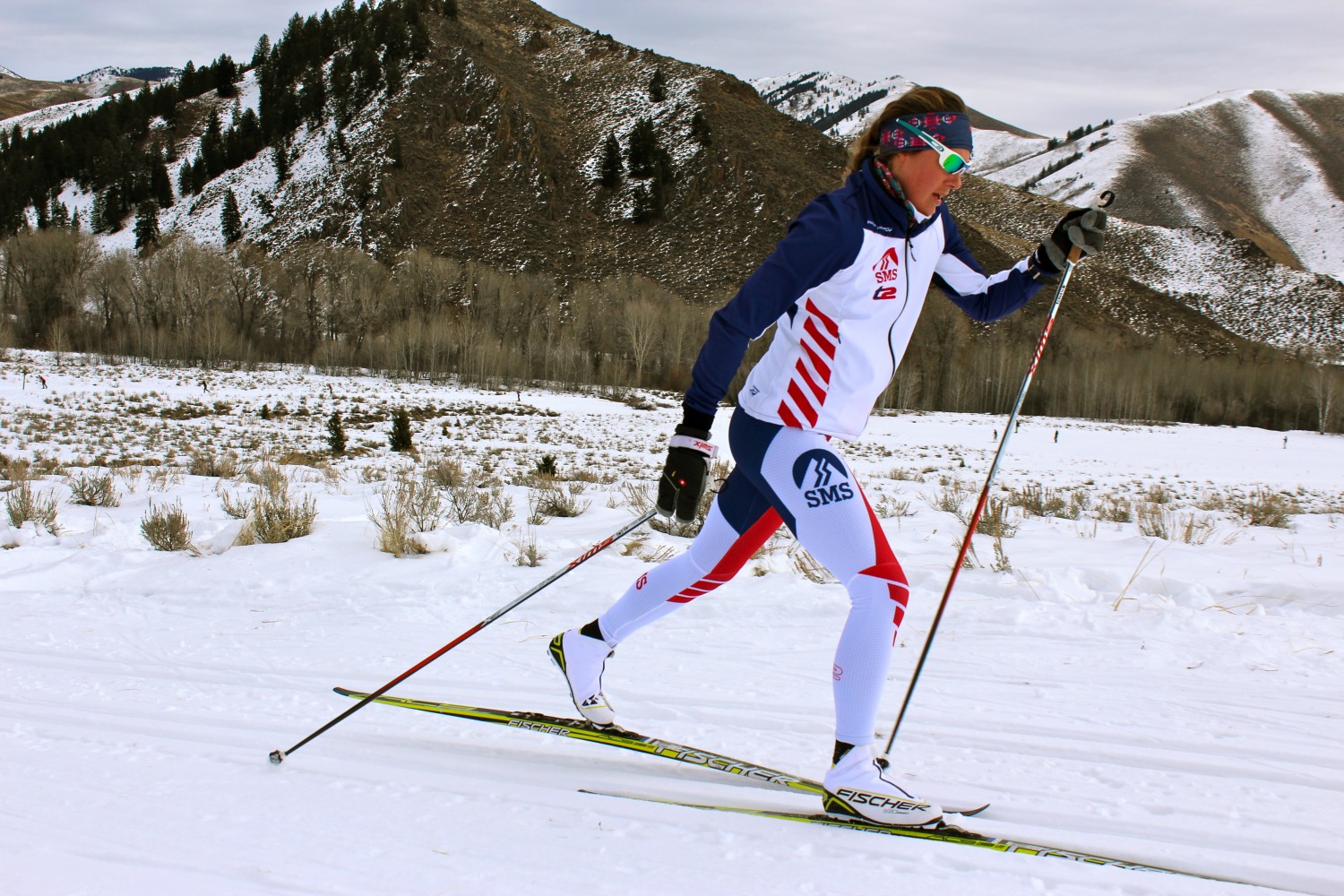
    The women’s race started with a 5 k loop before continuing on for three laps of the same 8.3 k loop used in the men’s race. The first loop contained some of the steepest climbs in the course and the women had the challenge of navigating them while still in a large pack.
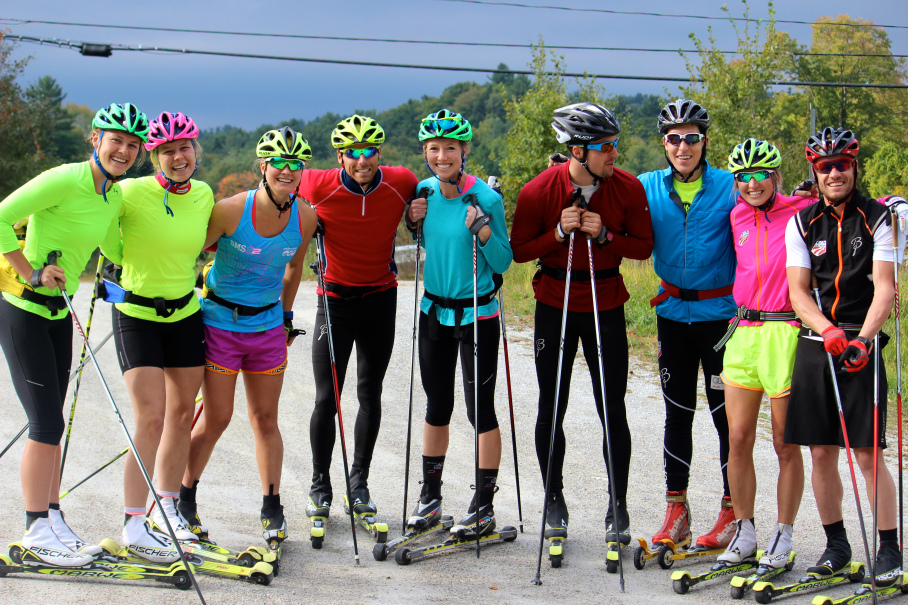
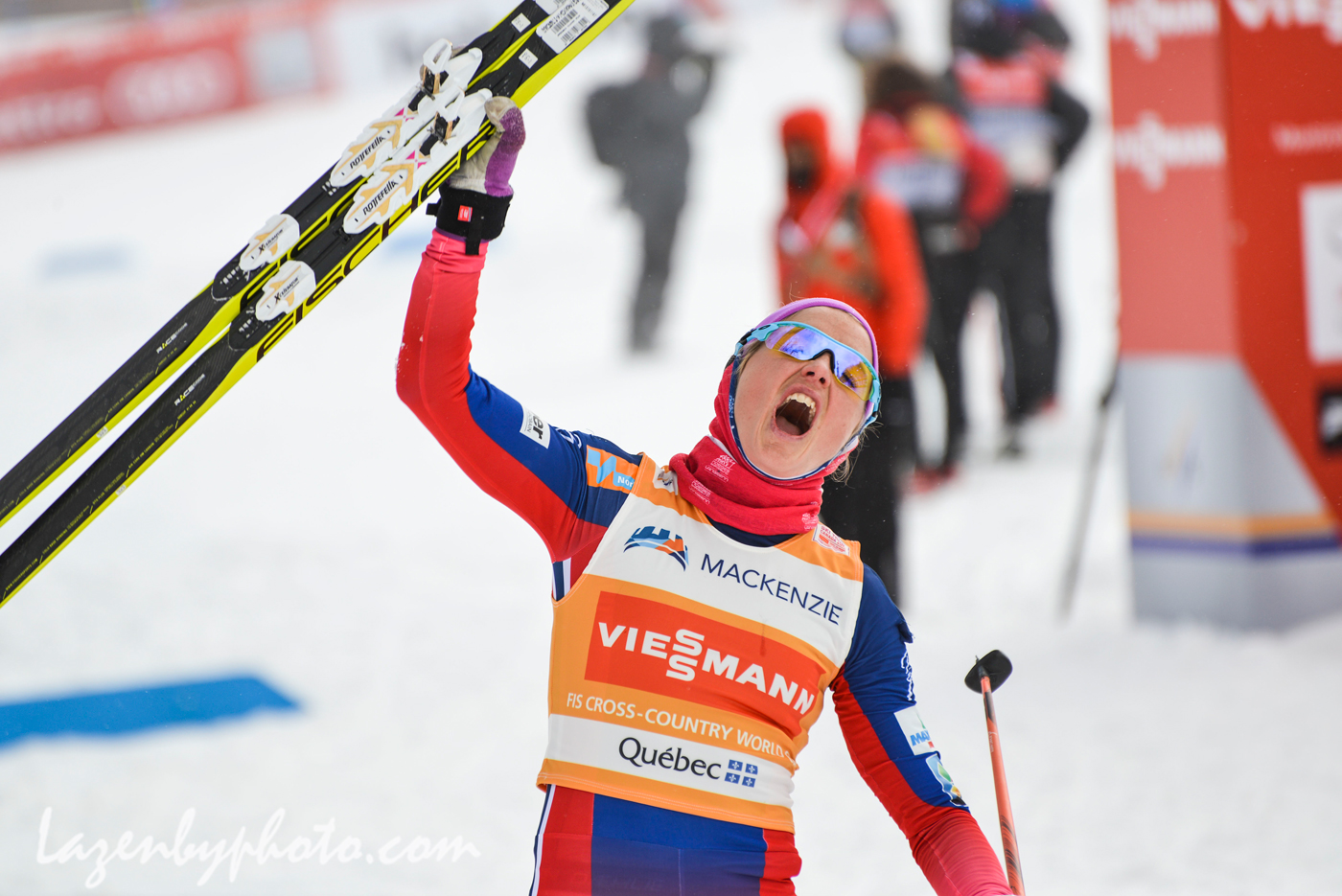
    Bjornsen asserted herself near the front of the large chase pack in the first five kilometers. Diggins also established herself in the top 20 with Brennan not far behind in 26th at the five kilometer mark.

    Despite the strong start, over the next five kilometers Bjornsen, Diggins and Brennan were shuffled back as the field strung out, morphing from a pack to solo skiers and small groups.
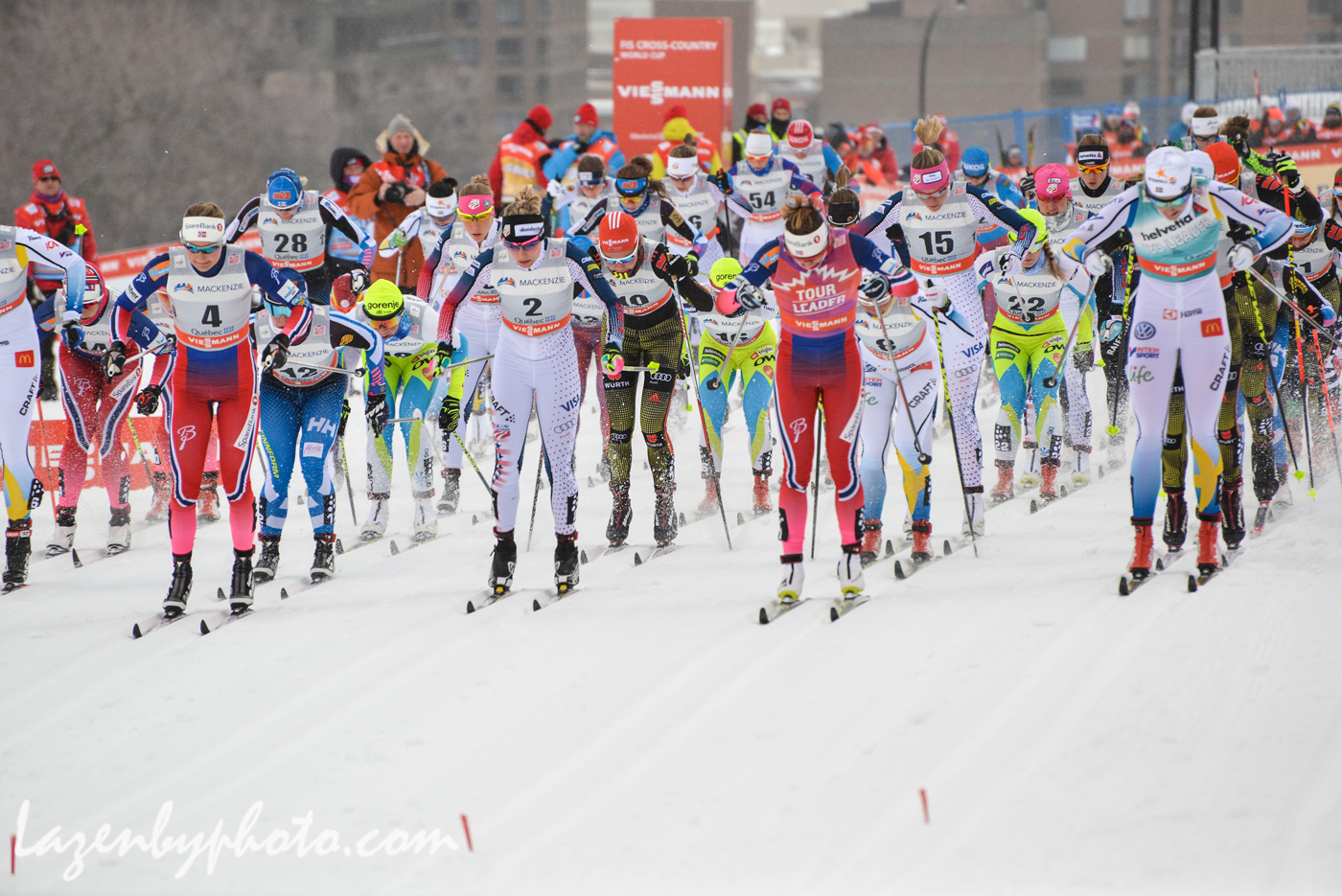
    The dense fog isolated racers from one another, making it difficult to judge gaps and placement in the field — for better or for worse.

    Sadie Bjornsen (14) leading a chase pack with Italy's Virginia de Martin Topranin (r) and Jessie Diggins (l) just behind. (Photo: Fischer/NordicFocus)
    Sadie Bjornsen (14) leading a chase pack with Italy’s Virginia de Martin Topranin (r) and Jessie Diggins (l) just behind. (Photo: Fischer/NordicFocus)

    “At some point it would have been nice to have the motivation of knowing that there were people within reach ahead, but it was probably also good at other places that I couldn’t see,” Patterson wrote in an email.

    Since each 8 k lap climbed over the first three kilometers before a long descent, there was significant movement through the field depending on skis and the racers’ strengths.

    “Sadie and Jess had very good kicking skis, but they were not gliding the fastest,” Whitcomb said. “We saw a lot of that in the field — a lot of women slipping and falling back on the climbs and those with slower skis and falling back on the descent.”

    Diggins and Bjornsen lost time on the descent and fell out of contact with the chase group of 11 to 15 skiers.

    By 10 k, Bjornsen and Diggins were skiing in a tight group of four racers, at 25th and 28th places respectively. Brennan slipped to 33rd, which she maintained for the remainder of the race.

    Bjornsen and Diggins’ pack grew to seven racers by the 15.5 k mark, including teammate Stephens who had fought her way through the field after a beneficial ski switch.

    “Her first pair of skis were slower and her second pair were really good. We were really hoping for good feelings out there for Liz and she felt great,” Whitcomb said.

    At 18 k, Stephen picked up the pace and grabbed places each kilometer putting 11.7 seconds on the group and moving to 21st place within two kilometers. She continued to grab places, managing to reach 18th place by 28.5 k.

    In the final kilometer, Bjornsen and several other skiers in the group managed to reel in Stephen, finishing in a tight group with only 15 seconds between 17th and 25th place.

    “It was fun to share the majority of the kilometers with Jessie as we pushed each other along, and then chase Liz some there at the end,” Bjornsen wrote in an email.

    “Today was one of the more challenging Holmenkollen’s both mentally and physically, but regardless, I still managed to truly enjoy the atmosphere out there while I was racing,” she wrote. “Conditions were challenging the entire race, and our team fought hard to stay in the mix.”

    Stephen reflected on her race as “a step in the right direction,” in a U.S. Ski Team press release.

    “I have been trying to manage a fatigued body this season and so the last 10 days that we spent training in Sjusjoen, Norway were all about recovery for me,” she said. “I trained slow, worked on some technique and rested more than I wanted to with perfect winter conditions right out the door each day.

    “But each day I felt a little better and so today’s feelings were of a body that is much more recovered, has much more energy and spunk in it and I loved the foggy, wet conditions we had today,” she added. “I was mentally ready to charge again and my body responded positively to each push.”

    Canada's Emily Nishikawa (in red) racing to 39th for her best Holmenkollen 30 k result in the last two years (after placing 50th last year) in Oslo, Norway. (Photo: Fischer/NordicFocus)
    Canada’s Emily Nishikawa (in red) racing to 39th for her best Holmenkollen 30 k result in the last two years (after placing 50th last year) in Oslo, Norway. (Photo: Fischer/NordicFocus)

    Although the U.S. women put together respectable results on a very challenging day, “We just didn’t hit it out of the park,” Whitcomb said. “We had athletes who had one or two or three great laps but we didn’t have anyone who was able to put together four great laps. So that is why we saw somewhat muted results today.

    “We were excited about Caitlin Patterson getting over here for her first big distance race. Finishing 36th is nothing to dismiss for sure,” he added. “We are happy she is feeling good and excited to see what she can do.”

    Patterson had to transition abruptly to World Cup level competition and terrain after competing on the domestic SuperTour circuit just last week.

    “While in the U.S. someone often drives the pace a little at the beginning of a race to break up the field, it’s nothing like the pace in the World Cup with Johaug leading,” Patterson wrote. “I’m notoriously on the slow side for starting, and even though I knew it was going to begin fast today, it caught me off guard.

    “I was frantic at the start, didn’t find the smooth and powerful style of striding that has served me well in other races this year, until well into the race,” she added.

    Although she didn’t realize it due to the dense fog, Patterson went through the 2.7 k time check 47th out of 49 starters. However, she was able to find her rhythm and adjust to the demanding terrain and move up to finish 36th.

    “The terrain is undoubtedly bigger, steeper, harder than basically anywhere I’ve skied in the U.S. In a classic race this means I have to push my limits, a long steep striding hill that we’d rarely be faced with in the US is very strideable but you have to figure out how to do it,” she wrote.

    At the end of the day, Patterson remained positive. “We all have our weaknesses, and you really have to be at the top of your personal race game to have a chance to compete against the best in the world, and I’m as motivated as ever to keep making little steps whenever I can to get there,” she wrote.

    World Cup racing resumes with classic sprints Thursday in Stockholm, Sweden, followed by weekend distance races in Falun, Sweden.

    Results | World Cup Overall Results

  • Falla Sets Record with Third Consecutive Drammen Win; Three U.S. Women In Heats 

    Falla Sets Record with Third Consecutive Drammen Win; Three U.S. Women In Heats 

    Maiken Caspersen Falla (NOR) takes another sprint victory in Drammen (NOR).  (photo: Fischer/NordicFocus.com)
    Maiken Caspersen Falla (NOR) takes another sprint victory in Drammen (NOR). (photo: Fischer/NordicFocus.com)

    Much to the delight of the Norwegian crowd gathered in the center of Drammen, a port city outside of Oslo, their sprint stars Ingvild Flugstad Østberg and Maiken Caspersen Falla battled Sweden’s Stina Nilsson to the line for the win of Wednesday’s World Cup classic sprint final.

    Falla returned to the top, taking her third consecutive Drammen sprint title – a first for either men or women – while Nilsson was relegated to last in the heat for obstructing Finland’s Krista Parmakoski.

    “It’s quite a long time from the prologue to the final,” Falla told Norway’s TV2. “This was a good thing for me today. I felt nothing good in the prologue. I’ll be honest. But when I got to the finals, I felt raw and good.”

    The Drammen sprints held in the city center promise an exciting course and atmosphere every year. The 1.2 kilometer course includes a straightaway to the first climb followed by a long gradual descent that leads into a high speed hairpin turn. The finish line sits atop a short and steep pitch that follows a long homestretch in front of a passionate Norwegian crowd. The luckiest can watch the races unfold from their windows and balconies.

    With the sun shining and temperatures hovering just around freezing, Østberg charged to the front from the gun as she had in both her quarterfinal and semifinal. She established a gap in the first several hundred meters that she held through the course and entered the finishing straightaway in the lead.

    However, Falla and Nilsson were charging hard just behind her. Falla’s surge on the final pitch to the finish was enough to overtake Østberg by 0.81 seconds for the win.

    It was a thrilling return to racing for Falla, who battled illness in January and finished 45th in the freestyle sprint qualifier at Planica, Slovenia, two weeks ago.

    Maiken Caspersen Falla (NOR) celebrates her win in Drammen (NOR).  (photo: Fischer/NordicFocus.com)
    Maiken Caspersen Falla (NOR) celebrates her win in Drammen (NOR). (photo: Fischer/NordicFocus.com)

    “I’m just glad to be back because I have been sick a lot,”Falla told Norwegian broadcaster NRK. “The shape is unfortunately not top notch, but I want to be there so I pretend I’m in good shape.”

    Just behind Falla, Østberg held off Nilsson to take second. The three completed their parade and podium photos before the ruling was released that Nilsson had been disqualified for obstruction of Parmakoski on the final stretch.

    Although Sweden protested the call, the jury stood firm on the decision. The disqualification allowed Natalia Matveeva of Russia the final podium placing.

    Nilsson was disappointed but remained grounded after the call.

    “It’s their decision,” Nilsson told Expressen. “I do not speculate on something like that. It is difficult for me to comment, I go alone, I have not seen the race.”

    After Nilsson was placed last in the final for the infringement, Parmakoski and Weng placed fourth (+4.28) and fifth (+8.69) respectively.

    Despite the penalty, Nilsson finished sixth and retains the Sprint Cup lead over Østberg and Falla.

    “I was not sure even today, but it worked well,” Falla, who is third in the standings, told Norwegian news service VG. “34 points is a lot smaller than it was when I woke up today. Then there is still hope. It’s the one I’ve wanted all season. Now I’ve seen so many ski races on TV this winter that I will go a little myself.”

    Three American Women Qualify for Quarterfinals

    After the qualifier, it looked to be a strong day for the U.S. women, who put three in the top 11.

    Jessie Diggins posted the seventh fastest time, 6.91 seconds behind Østberg’s mark of 2:52.8. Today marked her third time qualifying for the heats in a World Cup classic sprint and her best-ever placing in a classic sprint qualifier. Two teammates were not far behind: Sadie Bjornsen qualified in 10th (+7.45) and Sophie Caldwell in 11th (+7.60).

    Americans Ida Sargent and Jennie Bender also competed, taking 47th and 53rd respectively, but did not advance into the heats.

    Skiing in the second quarterfinal, Diggins faced a fast heat with four of the top ten qualifiers. Finland’s Parmakoski and Russia’s Matveeva – both of whom eventually ended up in the final – controlled the heat from the start, with the rest of the field in pursuit. Diggins lost contact with the leaders cresting the biggest climb with a couple of unfortunately timed slips.

    “I made some technique errors in my quarterfinal and slipped a few too many times near the top of the course, letting a gap form between myself and the leaders,” Diggins wrote in an email. “I caught back up at the end but by then I had run out of track!”

    With a strong finishing surge, Diggins claimed third, 1.59 seconds behind Parmakoski’s winning time of 2:58.71. Diggins had no chance of advancing as a lucky loser as her heat was slow and third and fourth place from the first quarterfinal topped her time.

    “Overall I’m really satisfied with my race and my shape,” she wrote. “And to finish right behind the girls in my quarter who ended up third and fourth overall is never a bad spot to be in!”

    Although Caldwell has chosen the first or second quarterfinal in each race so far this season, she decided to try something different and selected the third heat. With not as many top seeds as the first two heats, placing in the top two was crucial – advancing as a lucky loser seemed unlikely.

    Caldwell slipped into the lead just before the long descent, passing Kathrine Harsem from Norway.

    “I definitely didn’t intend on leading down the hill, but I had good skis and took the first corner well, so I sucked Harsem up pretty quickly on the downhill,” Caldwell explained in an email. “I don’t know if it was an advantage or a disadvantage to be leading the downhill, but I think it was a good way to stay out of trouble and come into that last corner in a good position.”

    Caldwell entered the final straightaway in the mix but ended up fourth in a tight finish, just 0.51 seconds behind Harsem, who won the heat.

    “She ended up getting swallowed up a bit,” U.S. Ski Team Women’s Coach Matt Whitcomb said of Caldwell’s race. “She is so good on the downhills that she tends to catch people regardless of whether or not her skis are fast. The difference was she didn’t have the gas in the finishing stretch today.”

    Sadie Bjornsen (USA) racing in Drammen (NOR) on Wednesday.  (photo: Fischer/NordicFocus.com)
    Sadie Bjornsen (USA) racing in Drammen (NOR) on Wednesday. (photo: Fischer/NordicFocus.com)

    Caldwell still saw positives, however.

    “In years past, I haven’t even been close to qualifying in Drammen, so to qualify in 11th today was a huge step in the right direction for me,” she wrote. “I still think classic sprinting on gradual terrain is probably my weakness in sprinting and there’s still a lot of room for improvement, but I was really happy to have made such a big gain in this sprint this year.”

    In the fourth quarterfinal, Bjornsen found herself in a heat with several of the favorites including Falla and Ida Ingemarsdotter of Sweden.

    “I ended up in a pretty stacked heat, with some girls that qualified low, but were obviously really good skiers, but I tried to look forward without intimidation,” Bjornsen wrote in an email. “Things were going well until the final drag into the finish when I went on the wide track, which was super icy, and a big slip over the bump cost me a few meters on those three girls… and I wasn’t able to catch back up.”

    Bjornsen finished third (+3.26) behind Falla who won the heat and, like her teammates, she missed moving on as a lucky loser.

    Despite the lack of any “flashy” results, coach Matt Whitcomb was happy with a solid day of results.

    “We were in the mix but for all three women, not in the mix enough,” he noted. “The heats that we finished third or fourth were not fast enough to be lucky losers. The highlight of the day was qualifying four in the top 12 [including Simi Hamilton in the men’s race], and Jessie has continued to keep things rolling. It doesn’t matter who you are or what the race is, top 10 qualification is really fast. So we are psyched for that.”

    World Cup racing is back this weekend for the men’s 50 k at Holmenkollen in Oslo on Saturday and the women’s 30 k on Sunday.

    Results: qualifier – final

    -Chelsea Little contributed reporting.

    Ingvild Flugstad Oestberg (NOR), Maiken Caspersen Falla (NOR), Natalia Matveeva (RUS), (l-r), claim the podium in Drammen (NOR).   (Photo: Fischer/NordicFocus.com)
    Ingvild Flugstad Oestberg (NOR), Maiken Caspersen Falla (NOR), Natalia Matveeva (RUS), (l-r), claim the podium in Drammen (NOR). (Photo: Fischer/NordicFocus.com)
  • Wednesday Workout: Ski Fartleks With Strava

    Wednesday Workout: Ski Fartleks With Strava

    The author's training grounds include the VASA Pathway, part of the TART Trails in Traverse City, Mich.
    The author’s training grounds include the VASA Pathway, part of the TART Trails in Traverse City, Mich.

    Workouts have the potential to turn into meticulous recipes with specific, prescribed amounts of each component combined in a specific order. There is definitely a time and a place for this type of training, but many skiers can benefit from less regimented workouts.

    Informal fartlek workouts can be enjoyable and translate well to racing. “Fartlek” is a Swedish word for speed play, and is a way of blending interval work with continuous skiing.

    Variable terrain and conditions naturally dictate effort while skiing and it can be hard to follow specific intensities and durations unless ideal loops are available.

    However, the variability of the trails can be used to set up efforts of varying duration and intensity. Surging hills, hammering certain sections of a trail and throwing accelerations can all be pieces of an interval workout strung together with easy skiing.  The unpredictable pattern of the efforts and challenge the skier in a similar way to racing.

    One tool that can make fartleks workouts more fun and easier to quantify is Strava. Strava is an activity tracking website and mobile app most well known in the cycling world. It allows athletes to upload workouts to the site from a GPS watch to a profile. The site can record and quantify daily and weekly training, but can also compile data of specific segments of a ski.

    Strava segments are specific sections of a GPS file that users can designate as a segment. They can include any distance or grade but are often climbs. The software creates a leaderboard of the best times of any Strava users who have skied over the segment. It will also keep track of the times for each occasion you ski over a section.

    The benefit of using it in a fartlek-type workout is you can compare your times on certain hills or sections for all the times you’ve ever skied it without having to time yourself. The leaderboard be a bit of motivation for the competitively driven. It is possible to make private segments to use primarily as a comparison against yourself.

    Unlike Strava cycling segments, ski segments cannot be searched for, but they will be visible on your activity when you ski over them.

    The Workout: Ski Fartleks

    Warmup: 30 minutes of Level 1 (L1) skiing with some accelerations during the second half

    Workout: 40-60 minutes of fartlek skiing:

    The total amount of high-intensity skiing can vary depending on the intended training stress for the day. I generally aim for about 20 minutes of Level 4 skiing. Efforts are optimally kept short (1-6 minutes) so the intensity can be kept high. The intensity drops between efforts while continuing L1-L2 skiing.

    Cool down: 20-30 minutes of L1 skiing

  • Norris Makes It a Double; Phinney and Patterson Take Wins at Lake Placid SuperTour

    Norris Makes It a Double; Phinney and Patterson Take Wins at Lake Placid SuperTour

    SuperTour action resumed this past weekend at the Lake Placid SuperTour/Eastern Cup and the podiums were shared by this season’s regulars as well as some new faces.

    The 1.4-kilometer freestyle sprints were held Saturday in Lake Placid, N.Y., at the Olympic Ski Jumping Complex rather than the cross-country trails at Mount Van Hoevenberg, where they were originally scheduled, due to low snow. Sunday’s classic mass start was changed to an interval start as it was held on a 2.5 k lap with more than 200 skiers. The jump site, the home training venue for US Biathlon’s national team members during the offseason, made for a hilly race course with great snow conditions.

    Day 1: Skate Sprint

    The freestyle sprints belonged to the dark horses as Middlebury senior Kelsey Phinney and David Norris of Alaska Pacific University (APU) both captured the first SuperTour victories of their careers.

    In contrast to the long finishing grind to the finish of the sprint at U.S. nationals in Houghton, Mich., the previous stop on the domestic circuit earlier in January, the Lake Placid course had a relatively short home stretch. A fast descent with a sharp turn led into the finish, making positioning on the downhill crucial as there was a significant advantage to drafting.

    Phinney Beats the Pros

    The women’s final included several names who have been regulars on domestic podiums all season including Caitlin Patterson (Craftsbury Green Racing Project), Anne Hart (Stratton Mountain School T2 Team), Chelsea Holmes (APU), Becca Rorabaugh (APU), Jessica Yeaton (APU), and Phinney, the lone collegiate athlete. In contrast to the heats, where the leaders could often create enough of a gap on the hill to be clear of the field after the descent, the final was a game of tactics.

    Jessica Yeaton (APU) leads up the hill during the SuperTour women's freestyle sprint final on Saturday, Jan. 30, at the Olympic Ski Jumping Complex in Lake Placid, N.Y.  (Photo: Alex Howe)
    Jessica Yeaton (APU) leads up the hill during the SuperTour women’s freestyle sprint final on Saturday, Jan. 30, at the Olympic Ski Jumping Complex in Lake Placid, N.Y. (Photo: Alex Howe)

    Although the pace in the final started out relaxed, Yeaton was the first to push the pace on the climbing section and Patterson, Hart and Holmes were shuffled to the back. Concerned that the pack would separate, Holmes made a move on the final climb and crested the top of the final hill in the lead.

    Phinney slipped behind Holmes, allowing her to take advantage of the draft down the final hill and slingshot into the lead on the home stretch. Patterson followed Phinney through the inside line into second and was able to hold off the field but unable to overtake her for the win.

    “My main focus in the final was to be in second or third going into the last downhill and to get the inside track around the final corner coming until the finishing straight,” Phinney, 21, wrote in an email. “I took the lead around the final corner and I felt confident in my ability to hold that lead to the line.”

    In securing her first SuperTour win (and podium), Phinney held off Patterson by 0.45 seconds in the final straightaway. A hard-charging Hart fell short of catching the pair and placed third (+1.7). Yeaton followed just off the podium in fourth (+2.14).

    Middlebury senior Kelsey Phinney (c) takes her first SuperTour win at the Lake Placid freestyle sprint on Jan. 30, followed by Craftsbury's Caitlin Patterson (l) in second and Stratton's Anne Hart (r) in third. (Photo: Heidi and Bob Underwood)
    Middlebury senior Kelsey Phinney (c) takes her first SuperTour win at the Lake Placid freestyle sprint on Jan. 30, followed by Craftsbury’s Caitlin Patterson (l) in second and Stratton’s Anne Hart (r) in third. (Photo: Heidi and Bob Underwood)

    For Phinney, the win was redemption after a rough freestyle sprint at nationals, where she finished 31st — missing qualifying for the heats by one place.

    “I had placed some high expectations on the skate sprint and ended up having a tough day — just narrowly missing the heats after feeling pretty off in the qualifier,” Phinney reflected.

    However, a couple of weekends of collegiate racing brought confidence and racing form, and Phinney put it to good use.

    “I skied across the line into the arms of my teammate Annie Pokorny, who was waiting for us in the finishing area. That was such an amazing feeling!” she wrote.

    Although Patterson had hoped to drive the pace up the hill, a bad start left her boxed in. Patterson stayed calm and patient and her opportunity arose on the final descent.

    “I would have liked to have gotten off to a faster start and been in more control of the heat, but throughout the final I had both bad luck and good luck in positioning, and overall it turned out pretty well at the end,” Patterson wrote in an email.

    Hart also had to recover from suboptimal positioning and was forced to the far outside on the final turn.

    “I had a great last 100 meters with some nice maneuvering, but didn’t give myself the chance to battle for first — ran out of real estate at the end!” Hart wrote.

    Although Holmes was able to use the downhill to her advantage to win her semifinal, she found herself at a disadvantage in the final leading down the last hill.  The pack took advantage of her draft to set up the final sprint, and Holmes ended up fifth (+2.96).

    “I felt like I was able to dig deeper than I have in awhile, which was really great. Moving through the heats it was definitely pretty hard but more than anything it was an important reminder to how tactics play a role in sprinting,” Holmes wrote.

    Norris Nabs a Win

    David Norris (l) lunges at the line to beat APU teammate Eric Packer (r) in the men's freestyle sprint at the SuperTour in Lake Placid, N.Y. (Photo: Heidi and Bob Underwood)
    David Norris (l) lunges at the line to beat APU teammate Eric Packer (r) in the men’s freestyle sprint at the SuperTour in Lake Placid, N.Y. (Photo: Heidi and Bob Underwood)

    In the men’s freestyle sprint, Norris cruised through the heats, winning both his quarterfinal and semifinal before topping the final in 3:18.9 minutes, 2.16 seconds ahead of APU teammate Eric Packer. Less than a second later, Akeo Maifeld-Carucci of the Bridger Ski Foundation took third (+3.0).

    A third APU skier in the final, Tyler Kornfield fell on the downhill and had to settle for sixth. Brian Gregg (Team Gregg) took fourth (+5.17) followed by Canadian Alexis Turgeon (Skinouk) in fifth (+5.57).

    The men’s heats again reflected the importance of the descent into the finish in the overall placings.

    “I focused on skiing relaxed to the top of the course, which put me in last place at the top of the hill every heat. From the top I was able to use the draft to pass guys and work my way to the front for the final corner into the last 50 meters or so,” the 25-year-old Norris explained in an email. “By the time the final 100m sprint happened the speed was so high that it was tough to make or lose much ground to the competitors. I led into the finish every heat of the day and was able to hold it each time — thankfully!”

    Packer also hoped to pull off the same strategy, but lost time when he narrowly avoided Kornfield, who had crashed hard in front of him on the descent.

    “After that I no-pole skated as hard as I could to catch back on to the group,” Packer wrote in an email. “I really pushed hard over the top of the hill, and passed the group on the outside with 200m to go.  At the same time, Dave passed the group on the inside, and he was first around the corner into the final stretch.  I was closing on him in the finish lanes, but he beat me to the line.”

    “David has an amazing no-pole skate, and that was just what you needed today,” Packer added. “I’m super happy to see David performing where he should, and he skied the race perfectly.”

    For Maifeld-Carucci, a Harvard graduate in his first professional season, the day was a learning experience that he was able to immediately put into action.

    “I just went into every round trying to focus on how I could ski better than the qualifier or the previous round,” he wrote in an email. “I learned a lot skiing in such strong competition all day. I tried to use some of that knowledge right away in the next heat but will keep thinking about it and finding takeaways for my next sprint race which will be at U23s.”

    Despite placing fourth in his semifinal, Maifeld-Carucci earned a shot at his first SuperTour sprint final, advancing as a lucky loser along with Gregg.

    Maifeld-Carucci just missed qualifying in two U.S. nationals sprints at the last two years, placing 31st in the 2015 freestyle sprint and 2016 classic sprint. However, he made it to the heats in the freestyle sprint at nationals this year, placing 15th overall.

    “It was fun to see the depth of the field and see that even the lower qualifiers can be competitive in the finals,” he wrote. “It is also a nice reminder to see that even if you are fourth in your heat every fraction of a second matters and pushing hard to the line can be enough to get you through. Overall it was a very fun and exciting day.”

    Day 2: 10 k Classic Individual Starts

    The men's 10 k classic podium at the Lake Placid SuperTour on Sunday, with David Norris (APU) on top for the second-straight day, Kris Freeman (l) in second followed by Lex Treinen (r). (Photo: Heidi and Bob Underwood)
    The men’s 10 k classic podium at the Lake Placid SuperTour on Sunday, with David Norris (APU) on top for the second-straight day, Kris Freeman (l) in second followed by Lex Treinen (r). (Photo: Heidi and Bob Underwood)

    Sunday’s classic individual start consisted of four laps of a 2.5 k course for a total of 10 k for both the men’s and women’s races. The course consisted of several of the jump hills strung together in the beginning, followed by the descent winding back into the stadium.

    With temperatures in the low 40s, the course conditions were variable, but most certainly requiring klister. With the challenging climbs of the jump area, going without kick wax was a disadvantage.

    Norris Repeats

    A day after winning his first SuperTour race in the freestyle sprint, Norris charged to the classic-distance race victory in 28:26, 45 seconds ahead of Kris Freeman (Team Freebird). The second APU skier on the podium, Lex Treinen placed third (+0.58).

    The multiple-lap course made for interesting dynamics with many skiers on the course at a time.

    “It was fun conditions because skis slowed after the first lap so some of the second seed skiers had the chance to draft off of the leaders, and we had the opportunity to ski with them,” Treinen wrote in an email.

    Treinen posted the fastest split after the first lap, but by the second lap, Norris had a 14-second lead that he only increased over the final two laps.

    “I burned up the nerves on the first lap and had the fastest split going into the first lap, something I have probably never ever done,” Treinen wrote.

    David Norris (APU) giving his all across the line to win the 10 k classic individual start at the Lake Placid SuperTour on Sunday. (Photo: Heidi and Bob Underwood)
    David Norris (APU) giving his all across the line to win the 10 k classic individual start at the Lake Placid SuperTour on Sunday. (Photo: Heidi and Bob Underwood)

    Freeman explained in an email that he’s been feeling healthy for about three weeks.

    “My overall energy felt much better than at any other time this season,” he explained.

    His game plan for the 10 k wasn’t anything out of the ordinary: “Go out at a sustainable pace and try to speed up in the last lap,” Freeman wrote. “I think a mass start would have been very interesting and more fun but changing the race to a time trial was the right call give the width of the trail.”

    After having never before won a SuperTour, Norris picked up back-to-back victories in Lake Placid.

    “After Nationals I had a good chunk of time in Anchorage, which allowed me to get some quality rest and some really good mid-season training in,” Norris explained.

    “I went pretty thin on the wax knowing that the course had a lot of double pole and tucking time each lap,” he added. “I’ve been trying to teach myself to race on faster classic skis with less kick and that has caused me to suffer in the last few kilometers of a few races, but today I was able to maintain my technique and keep finding kick.”

    Similar to Norris, Treinen is seeing the results of consistent training and racing.

    “I felt good going into Houghton, but I also didn’t have that much racing under my belt for the season, and I tend to start out the seasons slow and build throughout,” Treinen wrote. “It was fun to get some true East Coast klister skiing after having all of first races in cold, hard conditions.”

    Freeman noted, “I had very accessible kick and pretty good glide.”

    Same Ol’, Same Ol’

    The women’s race was the epitome of consistency as the podium was identical to the same at nationals this year: the 10 k classic in Houghton.

    Patterson, 26, continued to assert her dominance of the distance races (after winning both distance races at nationals) by winning by a full minute on Sunday in 31:45.

    Her Craftsbury teammate, Kaitlynn Miller placed second (+1:00) and Holmes finished third (+1:19).

    “Although it also was a somewhat variable and difficult day for snow conditions, so it was important to keep the technique together and stay smooth,” Patterson wrote. “I know I did a good job today of skiing through terrain changes and transitions, and I suspect that’s where I may have gained some time over competitors.”

    Miller also attributed her success to good skis and adapting to the conditions.

    “The conditions varied a fair amount over the 2.5k loop with flagpole hill becoming a bit slushy while other parts of the course remained slightly glazed,” she described. “I started right as Annie Hart was lapping through so she definitely helped push me along. Also, I was the last starter in the A-seed so was able to get some informative splits from my coaches out on course.”

    Hart finished just off the podium in fourth (+1:29).

    This weekend was Holmes’ first races in the U.S. after returning from Europe where she competed at the World Cup in Planica, Slovenia, and Nove Mesto, Czech Republic. Holmes placed 37th in the Nove Mesto 10 k freestyle in her international World Cup debut.

    “I wish I had had more time on the World Cup as I really felt like I learned a lot in both the race experiences I had,” Holmes wrote. “Maybe it wasn’t ideal to do the back and forth so quickly like that — I was sick when I went over but other than that I’ve managed to stay healthy.”

    This weekend marks the end of SuperTour Period 2. Period 3 will begin next weekend, Feb 5-6, at Trapp Family Lodge in Stowe, Vt.

    Complete results

  • Norwegian Men Hold Off Russia in Nove Mesto Relay; U.S. and Canada Land in Top 10

    Norwegian Men Hold Off Russia in Nove Mesto Relay; U.S. and Canada Land in Top 10

    The Norwegian men secured another relay win by 6 seconds over Russia on Sunday at the World Cup in Nove Mesto, Czech Republic. Finn Hågen Krogh (l) anchored the victory, with teammates (from left to right) Martin Johnsrud Sundby, Sjur Røthe, and Mathias Rundgreen. (Photo: Fischer/NordicFocus)
    The Norwegian men secured another relay win by 6 seconds over Russia on Sunday at the World Cup in Nove Mesto, Czech Republic. Finn Hågen Krogh (l) anchored the victory, with teammates (from left to right) Martin Johnsrud Sundby, Sjur Røthe, and Mathias Rundgreen. (Photo: Fischer/NordicFocus)

    As Martin Johnsrud Sundby of Norway double poled away from the men’s field during the second leg of the Sunday’s 4 x 7.5 kilometer World Cup relay in Nove Mesto, Czech Republic, it looked like the men could rival the Norwegian women team’s 42-second winning margin. However, the Russians weren’t about to let them off without a fight.

    The race consisted of two classic legs followed by two freestyle legs with each technique utilizing a different course. With only one steep hill on the classic course, many of the second-leg classic skiers chose to double pole, including Sundby.

    At the end of the first leg, his teammate on Norway’s first team, Sjur Røthe came into the initial exchange in fourth, 1.3 seconds after Evgeniy Belov — who established a first-leg lead for Russia —  and just behind Kazakhstan’s Alexey Poltoranin and Italy’s Dietmar Nöckler, respectively.

    Røthe handed off to Sundby, and the Overall and Distance World Cup leader immediately got to work shattering the field, demonstrating his double poling strength and establishing a 28-second lead over Russia I. Meanwhile, Russia’s Alexander Legkov chased alone, putting 25 seconds between himself and the chase group of Italy, Germany and France.

    The Norwegian and Russian first teams maintained their wide margins throughout the third leg, but the chase group grew to seven. After receiving the tag in sixth and seventh, respectively, Noah Hoffman of the U.S. and Canada’s Len Valjas closed the gap to fifth within the first 2.5 kilometers of their skate leg. Fifteen seconds back at the third exchange, they caught the German-Italian-French chase pack by the 2.5 k timing point, and were suddenly in contention for third. Switzerland and Norway II also joined the group by the third exchange.

    Meanwhile, just 2.5 k into the third leg, 20-year-old Alexey Chervotkin of Russia remained 27 seconds ahead in second, yet 39 seconds behind Norway’s 25-year-old Mathias Rundgreen in first. By the final exchange, Chervotkin had gained on Rundgreen slightly, leaving anchor Sergey Ustiugov 30 seconds down.

    Germany, Italy and France had broken away slightly from the larger group — putting three seconds between them and Norway II in sixth. At the tag, third through ninth were all around a minute out of the lead, with Canada in seventh (+1:01.8) and the U.S. in eighth (+1:02.2).

    Norway's Finn Hågen Krogh  waves to spectators as he secures the win for his team in the 4 x 7.5 k relay at the World Cup in Nove Mesto, Czech Republic. Russia's Sergey Ustiugov finished 6 seconds back in second. (Photo: Fischer/NordicFocus)
    Norway’s Finn Hågen Krogh waves to spectators as he secures the win for his team in the 4 x 7.5 k relay at the World Cup in Nove Mesto, Czech Republic. Russia’s Sergey Ustiugov finished 6 seconds back in second. (Photo: Fischer/NordicFocus)

    Finn Hågen Krogh stepped up as Norway I’s anchor, with Petter Northug skipping the weekend to focus on the Ski Tour Canada. With 30 seconds on Russia and 57 seconds to third, it appeared the gold and silver were set. However, at every time check, the margin between Norway and Russia dwindled until it appeared Ustiugov just might pull off the upset. Despite posting the fastest split by more than 12 seconds, Ustiugov ran out of real estate, finishing just six seconds after Krogh, who sealed the win for Norway in 1:08:29.

    Krogh celebrated across the line, and in a post-race interview with Altaposten, he said he was relieved.

    “When I woke up this morning, I was tired… so I felt the pressure,” Krogh said. “With those guys, I know that nothing less than a win is good enough.”

    “The plan was to keep a steady a pace in the first lap and then speed up,” Ustiugov told FIS. “I gave everything I had and tried to close the gap on Finn, but it was too much. Nevertheless, second place feels great.”

    Meanwhile, seven teams engaged in a tight battle for third. The U.S. and Canada lost contact over the last 3 k and five teams entered the stadium together for the sprint finish. Italy’s Federico Pellegrino again demonstrated his sprinting prowess to take third (+54.3), edging Germany’s Thomas Bing in fourth and Norway II’s Anders Gløersen in fifth — both of which finished exactly 0.3 seconds later.   Switzerland placed sixth (+58.5) and France was close behind in seventh (+59.4).

    Simi Hamilton anchored the U.S. to eighth (+1:13.6) followed closely by Canada’s U23+ Development Team skier Knute Johnsgaard in ninth (+1:15.1).

    North Americans Stick Together for Top 10

    The two North American teams went through each exchange within one place of each other, eventually finishing within 1.5 seconds apart. Canada’s ninth place marked its second-best men’s relay finish in a World Cup, according to Cross Country Canada.

    Simi Hamilton (USA) racing to 18th in the men's 1.2 k freestyle sprint qualifier at the World Cup in Planica, Slovenia. He went on to place 18th overall. (Photo: Fischer/NordicFocus)
    Simi Hamilton (shown here at last weekend’s freestyle sprint in Planica, Slovenia) anchored the U.S. men to eighth in Sunday’s World Cup relay in Nove Mesto, Czech Republic. (Photo: Fischer/NordicFocus)

    “The Canadian team skied really well today so that is cool to see,” Hamilton said in a phone interview after the race. “It always great to battle with anyone out there, but when it is a fellow North American, it makes it even more fun.”

    Scott Patterson (Alaska Pacific University) started first for the U.S. in his first World Cup relay on his first World Cup weekend. Patterson kept the Americans in contention, tagging off in 12th and 24.8 seconds back, while managing the challenges of the mass-start lead-off leg.

    “On the third lap, the leading teams lead a charge up the steepest hill,” Patterson explained in an email. “Due to my position, I could only watch it happen as the path forward was blocked … I tried for the rest of the race to close a bit, but usually found that I had some company either blocking my way or pulling me along.”

    Patterson handed off to Erik Bjornsen, who picked off six places with the fifth-fastest second leg to lift the U.S. to sixth. Meanwhile, Canada’s Graeme Killick came through the first exchange 1.2 seconds after Patterson and tagged Devon Kershaw in 13th. Kershaw then skied the fourth-fastest second leg to improve to seventh.

    “We like how Killick races mass starts, and he is the future of the men’s distance skiers, so we thought it was right to put him first,” explained Canadian coach Chris Jeffries, head coach of the Alberta World Cup Academy who has been assisting the team in Europe.

    With the field fragmented between France in sixth to Finland in 11th, Bjorsen and Kershaw of Canada the opportunity work their way up.

    “I wanted to ski smooth and relaxed that first lap — knowing that people would be eager to chase back to that next group ahead,” Kershaw wrote in an email. “We were splintered a bit with smaller groups of people around so I was able to just pick off guys as I went.”

    Len Valjas (Canadian World Cup Team) racing to 31st for the third time this season in a World Cup freestyle sprint. He was 0.05 seconds outside of the top 30 needed to make the heats in Saturday's sprint in Planica, Slovenia. (Photo: Fischer/NordicFocus)
    Len Valjas skied the third-fastest third leg on Sunday at the men’s World Cup 4 x 7.5 k relay in Nove Mesto, Czech Republic. In doing so, he maintained Canada’s positioning in seventh, and the team ended up ninth overall for its second-best result ever Here he’s shown racing last weekend’s freestyle sprint in Planica, Slovenia. (Photo: Fischer/NordicFocus)

    Handing off to the third leg, the U.S. and Canada had moved up to sixth and seventh, respectively, just 15 seconds out of third. After the exchange, Hoffman and Valjas quickly bridged the gap to France, Italy, and Germany.

    “I felt great out there, Noah helped pull me up to the third place group, he was skiing so well. I cant take any credit for catching that group, he was the one leading that charge,” Valjas explained in an email.

    Both North American skiers posted freestyle splits that ranked in the top-10 overall. Valjas skied the third-fastest third leg; Hoffman’s was fourth fastest. Considering Valjas’s recent travel schedule, it was a surprising result. “I flew in late the night before just to race the relay. I felt surprisingly good considering I had been either in a car or plane, or airport for 14 hours that day,” he wrote.

    Coming into the final exchange, Valjas and Hoffman were in the mix of seven teams vying for the final podium placing.

    “Scott, Erik, and Noah skied really great legs and got me in a really good spot, we were in contact with the big group behind the Norwegians and Russians so they did an amazing job keeping us in there,” Hamilton said.

    In the final leg, the North American anchors Hamilton and Johnsgaard received the tag in the midst of the chase pack and would ski the duration of the race together.

    Hamilton was able to maintain contact with the group despite a broken pole the first lap of three laps. He quickly received a replacement from the French team, but had to swap it out again before finding one with a suitable length.

    “It was actually in a really lucky place because it was mostly downhill back to the stadium so I don’t think I lost too much time or energy in that debacle,” Hamilton said.

    The pair lost contact with the chase group about 4 k in, but kept the deficit within 20 seconds. Hamilton surged up the final hill to overtake Johnsgaard for eighth.

    “Our men’s team is definitely improving and we are learning a lot each time we do it and it definitely keeps us hungry, especially me, to work harder at the distance races so I can be able to ski 7.5 k fast but efficient and be able to put in a really good sprint at the end,” Hamilton said.

    “The pack containing three through nine and Simi, we really believe that when we can figure out the distance skiing just one or two steps further, that he’ll be able to conserve for more of the race and then attack when it counts,” U.S. coach Matt Whitcomb said. “Today would have been a race that would have been the perfect scenario for that. We’re not quite there yet; he was able to stay within just seconds of that sprint for the finish.”

    Jeffries echoed Whitcomb’s optimism: “All four men skied great today. Individually, they all had really strong days, and that is a nice to have. Obviously as a nation, we want to be better than 9th, but we were right there until the end and we had a shot at a podium. The boys and staff were all really happy, big smiles are always nice on the World Cup where you can have some tough days.”

    “It was a really fun 7.5km blast session and nice to see the whole team ski really well,” Kershaw wrote. “Just one of those days where ski racing is a real treat. Loved it.”

    Results

  • From Truckee to the UK: Annika Taylor on Racing World Cups for Great Britain

    From Truckee to the UK: Annika Taylor on Racing World Cups for Great Britain

    Annika Taylor, formerly of UNH, on her way to winning the women's 5 k at the 2013 Snowshoe Thompson Classic at the Auburn Ski Club in Truckee, Calif. (Photo: Mark Nadell/macbethgraphics.com)
    Annika Taylor, formerly of UNH, on her way to winning the women’s 5 k at the 2013 Snowshoe Thompson Classic at the Auburn Ski Club in Truckee, Calif. (Photo: Mark Nadell/macbethgraphics.com)

    Although much of the focus of World Cup racing is on the stars from powerhouse skiing countries, the World Cup fields are filled with skiers who are working towards goals that don’t necessarily entail a podium. Racing on the World Cup is not always about the pursuit of medals but the experience itself.

    For Annika Taylor, the World Cup experience hasn’t quite sunk in yet. Just six months after graduating from University of New Hampshire (UNH), Taylor, 22, found herself on the starting line of her first World Cup race in Kuusamo, Finland, in late November as the sole female representative of Great Britain.
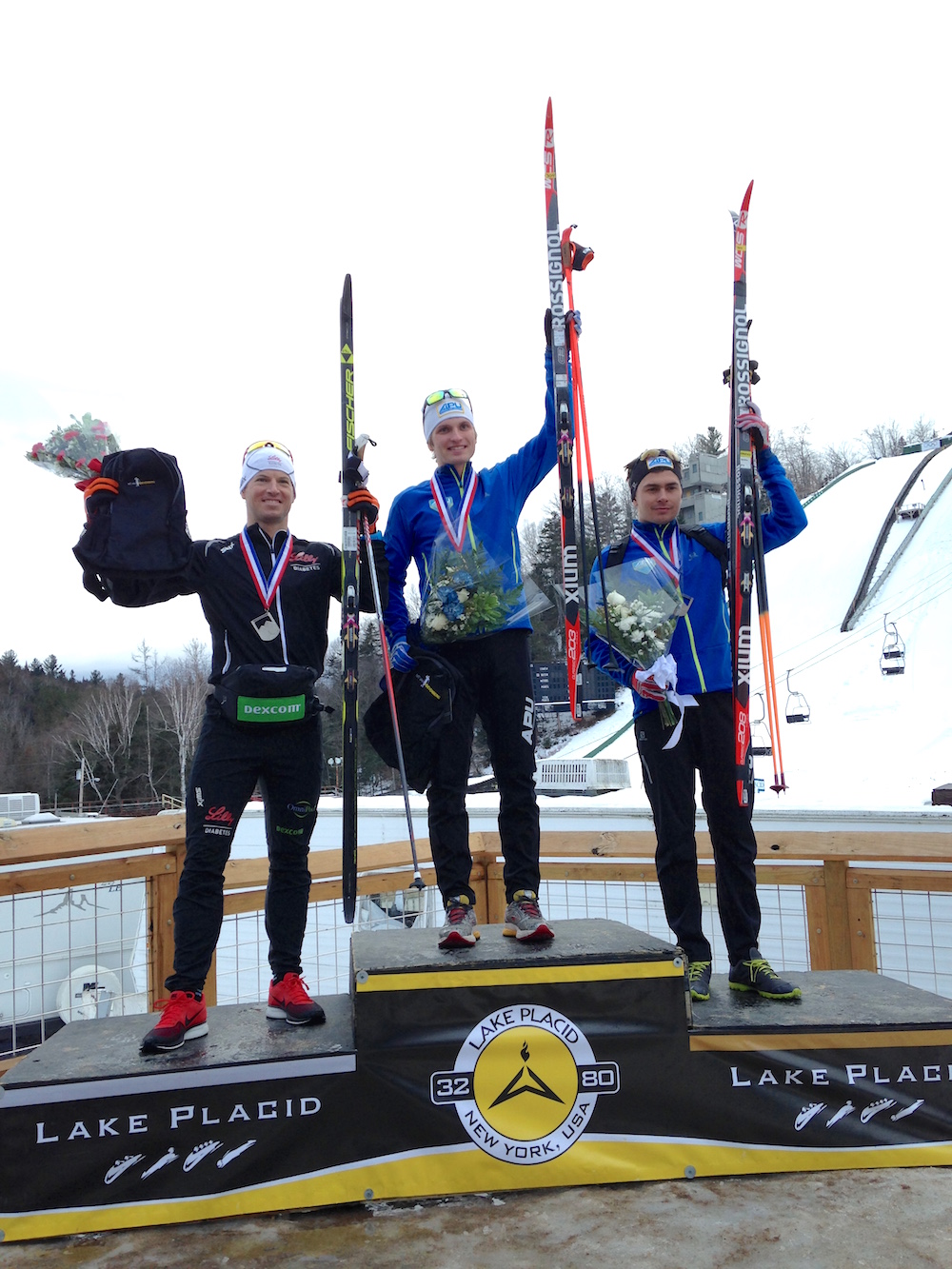
    A native of Truckee, Calif., Taylor holds dual British citizenship as her father is originally from the United Kingdom (her family now lives in Truckee). As a junior, she skied for California’s Auburn Ski Club and the Far West Ski Association, winning three California State Championships and notching three top-10 finishes at Junior Nationals. Taylor continued her ski career at UNH in Durham, N.H., under the guidance of head coach Cory Schwartz.

    Annika’s first taste of international racing came in 2014 when she raced with the British national team at U23 World Championships in Val di Fiemme, Italy. Although she had inklings of future opportunities to race for Great Britain at that time, she realized she would need to continue to see improvement to make competing post-collegiately worthwhile.
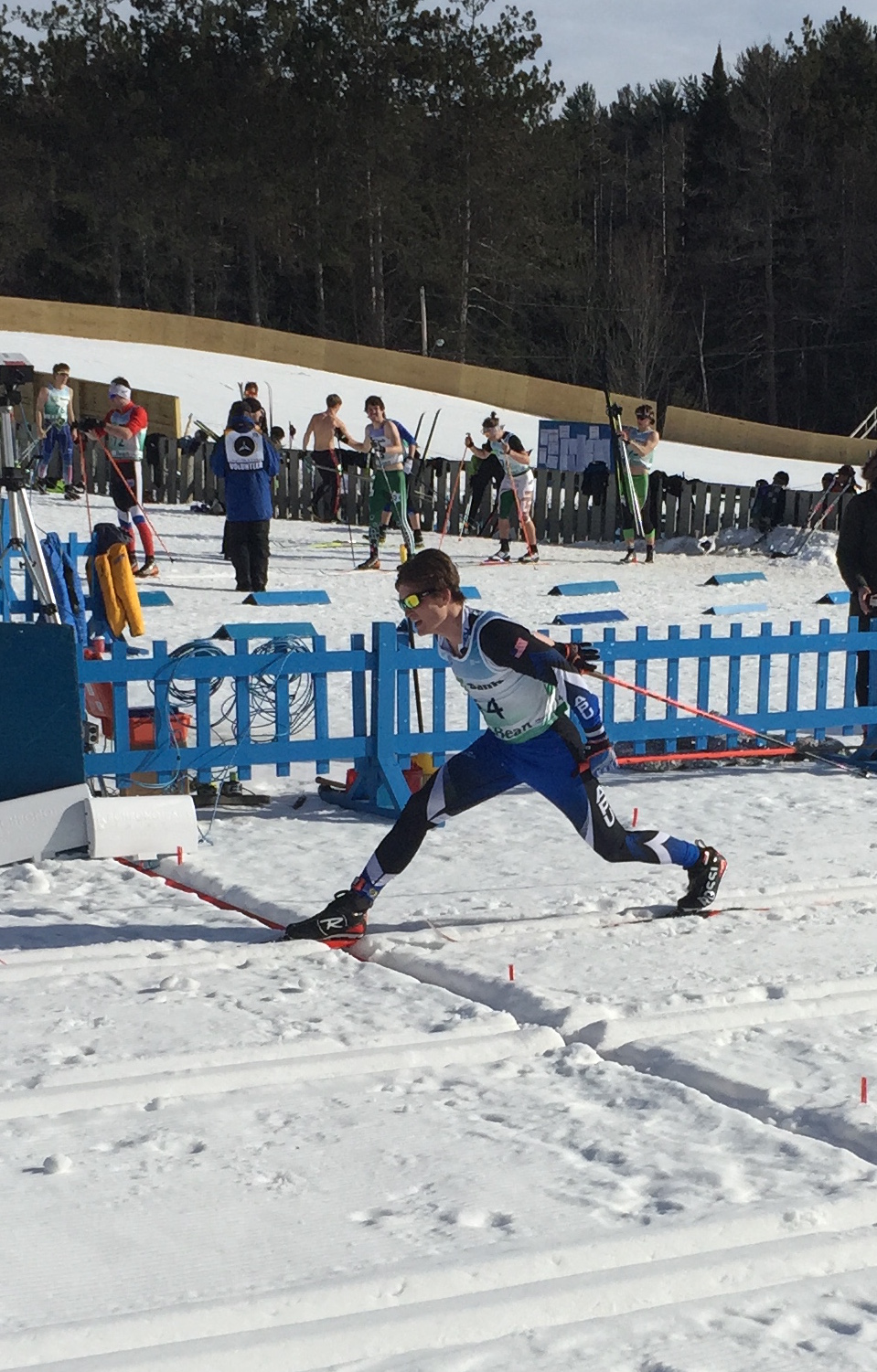
    These gains were realized in a breakthrough season her senior year, highlighted by a seventh-place finish in the 15 k classic at 2015 NCAA Skiing Championships. Earlier last season, she placed ninth in the 20 k classic mass start at U.S. nationals.

    Upon graduating in the spring of 2015, Taylor was armed with both a chemistry degree, and the opportunity to continue skiing for Great Britain. Racing for the British team would mean more international competition and the chance to compete with the best skiers in the world on the World Cup — an opportunity she couldn’t pass up.
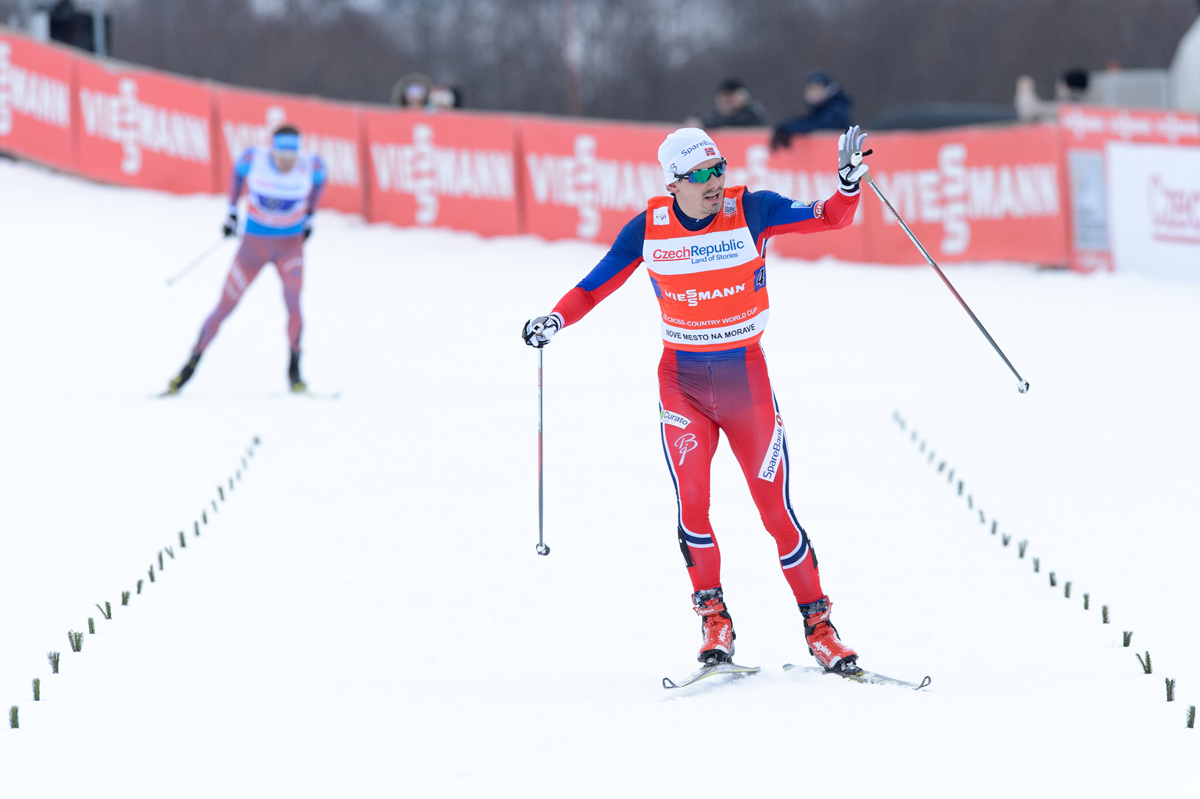
    In May, Taylor joined the newly established Sugar Bowl Academy Elite Team based out of the Truckee/Tahoe region. The 2015/2016 season is the team’s debut as it aims to fill the gap left by the recently dissolved Far West Elite team and provide financial support, coaching, and training opportunities to its athletes.

    After a summer training with the Sugar Bowl Elite Team as well as the British team in Scotland, Taylor started her first World Cup season in November with British Cross Country Head Coach Roy Young. Britain’s other female skiers opted not to race in Period 1 of the World Cup, leaving Taylor as the sole woman on the team. She joined a men’s contingent on the circuit, including recent World Cup bronze medalist Andrew Young.

    FasterSkier caught up with Taylor about her World Cup experience over the holiday break. She spent the holidays training in Davos, Switzerland, sharing an apartment with U.S. Ski Team member Caitlin Gregg. The two met several summers ago, as Gregg visits Truckee in the summer to train at altitude and visit family.

    After the holiday break, Taylor raced the first three stages of the Tour de Ski in Lenzerheide, Switzerland, before traveling to Östersund, Sweden, to compete in Scandinavian Cup races.

    Annika Taylor racing for Great Britain in the World Cup freestyle sprint qualifier in Toblach, Italy. She placed 54th. (Courtesy photo)
    Annika Taylor racing for Great Britain in the World Cup freestyle sprint qualifier in Toblach, Italy. She placed 54th. (Courtesy photo)

    FasterSkier: What is your favorite World Cup venue so far?

    Annika Taylor: I really enjoyed Toblach [Italy]. They have a two-lap sprint course and I like V2 technique and I felt like it played to my strengths. And it was beautifully sunny so that always helps.

    FS: What do you consider your best races so far on the World Cup?

    AT: My best race was my first race: the classic sprint in Kuusamo [where she placed 50th in the qualifier]. It was best result so far and the whole experience came to fruition at that moment, too, so I’ll never forget that day. For everything to come together in the first race, I was really pleased with that.

    The other races I was most pleased with were the opening races in Beitostølen, Norway. That’s where the Norwegian team started their season as well so it was World Cup caliber racing just with fewer countries. That was my very first taste of racing the best in the world so I was definitely a little star-struck that weekend.

    FS: Do you prefer the sprints or the distance races?

    AT: I would say distance has become my cup of tea. When I was a junior I was more of a sprinter but being at university for four years, I didn’t train much for sprinting. If I have a bit more sprint training in the next couple years I think I’ll really grow to enjoy it. Right now I do like distance racing a bit more. You can push yourself longer and harder and there is more time for tactical fixes. I like having that opportunity to turn things around.

    FS: How is the intimidation factor racing the best skiers in the world?

    AT: There’s definitely intimidation, but there’s also more a respect and awe for them. I am also just excited to be racing because I don’t have much pressure to perform this year. Obviously I want to ski fast, but I have to adjust to so many factors that I don’t have the energy to be nervous because I have to focus my energy on skiing the best I can technically, tactically, and physically in every race. But at the same time, there’s that moment that you think, “Woah, we are on the World Cup circuit, this is crazy.”

    Annika Taylor (Great Britain) competed in the first three stages of the Tour de Ski In Lenzerheide, Switzerland.
    Annika Taylor (Great Britain) competed in the first three stages of the Tour de Ski In Lenzerheide, Switzerland.

    FS: What was your favorite part of the Tour de Ski?

    AT: My favorite part of the TDS has to have been the atmosphere and just the general excitement from both the fans and the athletes! You could sense the nervous energy bouncing around the wax cabins, and then going out to warm up on the race track with 12,000 fans (equipped with flags and cow bells) on the sprint day, with the sun shining down was a feeling I’ll never forget! Throughout the weekend fans and athletes enjoyed food vendors, opening ceremonies, performances from bands and dancers, and free swag. Cross-country skiing can feel a bit like an under-appreciated sport at times, but this was the polar opposite!

    FS: What was the biggest difference racing the Scandinavian Cup races vs World Cup races?

    AT: The Scandinavian cup races in Östersund were quite different from the World Cup races mainly in the sheer amount of racers competing in the Scandinavian cup (and the blisteringly cold -20 C temperatures compared with the mild temps felt at the World Cup venues recently). The level of competition is impressive in the Scandinavian cups as well, with the race leaders most likely fit enough to achieve a top-10 in a World Cup race.

    FS: What race did you enjoy the most since the holiday break?

    AT: I was quite pleased with how I skied the 10k freestyle race in Östersund! [She placed 21st.] Being back at low altitude made racing just that little bit “peppier,” and it was encouraging to be back in a field where I can be more competitive and “catch a ride” mid-race with the ladies racing around me.

    FS: What are your goals for the season?

    AT: My main goal this season is to race well at U23 Worlds because that’s where I can be the most competitive. But there are always goals week to week, even weeks I don’t have races I will focus on skiing technically well during each workout so that when my technique comes under pressure in a race, the foundation has been laid and I can ski technically well. I always have result based goals but this year is hard not really knowing what is going to happen competing against the best in the world. I can’t really measure success against them just yet.

    At the Toblach 10 k classic Heidi Weng of Norway started behind me (in the interval starts) so my goal was to catch a ride with her when she passed me and match her technique, tempo and pace. The Norwegians know how to ski efficiently, ski fast and charge. That’s what I’m trying to learn this year is to find that extra level of intensity in a race necessary to do well at the World Cup level.

    FS: Have you been enjoying the lifestyle?

    AT: I wasn’t sure how I’d do because I chose not to go home for Christmas and I believe it will be a total of five and a half months on the road. I’m learning to be fine wherever I’m at with whomever I’m with, but also not feed into the ups and downs that go along with being an elite athlete. I’m actually addicted to the lifestyle because every weekend is a new experience. I’ve really enjoyed meeting new people and it has motivated me to learn bits of different languages.

    FS: What is your schedule for the remainder of the season?

    AT: Following the Scandinavian Cup, I will head to Ramsau, Austria to train for a few weeks. My next World Cup race in Lahti because Worlds will be there next year and I can get a feel for the course and the area. After that U23 Worlds in Rasnov, Romania then the day after fly out to Canadian Tour. Then I will race the Spring Series in Craftsbury, Vermont and finally home.

  • Sargent and Caldwell Fifth for U.S. in Planica Team Sprint; Newell and Hamilton DQed

    Sargent and Caldwell Fifth for U.S. in Planica Team Sprint; Newell and Hamilton DQed

    The start of the women's freestyle team sprint final, with (from left to right) American Ida Sargent, Slovenia Vesna Fabjan, Sweden's Ida Ingemarsdotter, Norway's Heidi Weng, Germany's Sandra Ringwald, Slovenia's Nika Razinger, Germany's Laura Gimmler, Sweden's Jonna Sundling, and Norway's Mari Eide at the World Cup in Planica, Slovenia. (Photo: Fischer/NordicFocus)
    The start of the women’s freestyle team sprint final, with (from left to right) American Ida Sargent, Slovenia Vesna Fabjan, Sweden’s Ida Ingemarsdotter, Norway’s Heidi Weng, Germany’s Sandra Ringwald, Slovenia’s Nika Razinger, Germany’s Laura Gimmler, Sweden’s Jonna Sundling, and Norway’s Mari Eide at the World Cup in Planica, Slovenia. (Photo: Fischer/NordicFocus)

    The team sprint is a unique beast that World Cup racers only get one or two shots in a season to tame. Despite strong skiing, the U.S. men’s and women’s team came up just short of being in podium contention in the 6 x 1.2-kilometer freestyle team sprint at Sunday’s World Cup in Planica, Slovenia.

    The format of the team sprint competition features two-skier teams who each race alternating legs of a sprint course. Each skier completes three legs and they must make contact with their teammate in the exchange zone between each leg. The Planica team sprints were held on the same fast, twisty and technically-challenging 1.2 k course as Saturday’s freestyle sprint.

    The format poses unique challenges for athletes as well as logistical challenge for the staff. For the athletes racing three separate legs, it is a challenge of measuring energy output to be ready for the decisive moves in the last lap. The technicians have their own race in between heats to work on skis.

    American Sophie Caldwell (c) and Sweden's Stina Nilsson (r) trail Germany's Hanna Kolb during the women's freestyle team sprint final at the World Cup in Planica, Slovenia. (Photo: Fischer/NordicFocus)
    American Sophie Caldwell (c) and Sweden’s Stina Nilsson (r) trail Germany’s Hanna Kolb during the women’s freestyle team sprint final at the World Cup in Planica, Slovenia. (Photo: Fischer/NordicFocus)

    “One of the challenges is we don’t get a chance to race this event very often,” head coach Chris Grover said on the phone after Sunday’s race, in which two of three U.S. teams qualified for the final. “We are doing the only team sprint out of 37 starts [this season], so it is a very rare format.

    “It is really fun for the athletes and the staff. It is so logistically intense in terms of ski prep,” he added. “It is a race to get the skis off the athletes’ feet, freshened up, and back on their feet.”

    Grover noted the course was shorter than typically used in team sprints (it took the men about 2 1/2 minutes and the women 2:45 to round each time on Sunday.

    “Because of that short window, it makes for an extremely hectic time for the techs,” he said. “But our techs did an awesome job and we had great skis.”

    The U.S. entered one women’s team (with most of its athletes taking the weekend off following the Tour de Ski); Ida Sargent and Sophie Caldwell teamed up to take fifth in the final, 20.57 seconds behind Sweden I, with Stina Nilsson and Ida Ingemarsdotter, who won the event in 16:14.08. Norway I (Heidi Weng/Astrid Uhrenholdt Jacobsen) placed second (+3:51) and Germany I (Sandra Ringwald/Hanna Kolb) took third (+8.84).

    Ida Sargent (U.S. Ski Team) teamed up with Sophie Caldwell (not shown) to place fifth in the 6 x 1.2 k freestyle team sprint at the World Cup in Planica, Slovenia. (Photo: Madshus/NordicFocus)
    Ida Sargent (U.S. Ski Team) teamed up with Sophie Caldwell (not shown) to place fifth in the 6 x 1.2 k freestyle team sprint at the World Cup in Planica, Slovenia. (Photo: Madshus/NordicFocus)

    Sargent and Caldwell delivered a well-executed semifinal to automatically advance in second place behind Sweden I, the eventual winners. In the team sprint racing, the top two teams advance in both semifinals, in addition to six lucky loser qualifiers.

    “Ida learned from yesterday how to pace the course and made a great move at the end of her last leg and tagged off in first,” Grover said of the semifinal. “Sophie brought it in easily in second to advance.”

    In the final, the field broke apart during the third leg when Weng began pushing the pace. Sweden and Germany responded, but Sargent lost time on the leaders. By the final handoff, the U.S. had slipped several places to sixth, 13 seconds behind the leaders.

    At the final handoff, Sargent tagged Caldwell in sixth, 13 seconds behind the leaders, for the finishing charge. Caldwell was able to catch Norway II and hold off Germany II to secure fifth place, 20.57 seconds behind the Swedish winners.

    “Those top women’s teams just skied away. They [Sargent and Caldwell] actually skied great all day and did tactically what they wanted to do,” Grover said.

    “It ties my best-ever team sprint result and is my best ever with Sophie so it was a good day,” Sargent said on the phone. “The course was really hard with lots of climbing and fast technical downhills so there wasn’t much recovery and it was important to balance pushing the pace and conserving energy for later rounds.”

    Newell and Hamilton Miss the Tag

    Andy Newell (in white) rounds a corner with Germany's Thomas Bing (l), Italy's Dietmar Noeckler (r) during the World Cup men's freestyle team sprint final in Planica, Slovenia.
    Andy Newell (in white) rounds a corner with Germany’s Thomas Bing (l), Italy’s Dietmar Noeckler (r) during the World Cup men’s freestyle team sprint final in Planica, Slovenia.

    The men’s team of Andy Newell and Simi Hamilton made it to the final after advancing in fourth out of the first semifinal (behind the second teams for France, Russia and Norway, respectively). In the final, the Americans initially finished eighth, but were disqualified for missing a tag in the exchange zone.

    The men’s field remained tight throughout the final, making the exchange zone both challenging and game-changing.

    The U.S. men’s team ran into trouble when Hamilton entered a chaotic tag zone after his first leg for the second exchange.

    “It was basically unavoidable since the Norwegian, who was tagged right before I reached out to tag Andy, cut to the left and skied right between Andy and I, essentially creating a barrier,” Hamilton said on the phone. “We were tagging towards the end of the zone, so we didn’t have room to stop to ensure we made contact, even though both of us stretched as best we could.”

    They emerged out of second exchange in eighth, 2 seconds behind Norway II in the lead. One lap later, by the third exchange, they were 3.22 seconds back in ninth.

    Unsure whether the jury would rule an infraction, Newell and Hamilton continued to race. They finished eighth, less than six seconds off the podium. Italy I took the win with Dietmar Nöckler and Federico Pellegrino in 14:44.82, and France swept the remaining podium spots in second (+1.79) and third (+2.41), with Renaud Jay/Baptiste Gros and Valentin Chauvin/Richard Jouve, respectively. The first teams for Germany, Norway and Russia ended up fourth, fifth and sixth, respectively, and the top eight teams at the end of the day — not counting the Americans — all finished within nine seconds of one another.

    (From right to left) Italy's Dietmar Nöckler leads Norway II's Ola Vigen Hattestad, American Andy Newell, and Norway I's Anders Gløersen and a Russian in the men's freestyle team sprint final at the World Cup in Planica, Slovenia. (Photo: Fischer/NordicFocus)
    (From right to left) Italy’s Dietmar Nöckler leads Norway II’s Ola Vigen Hattestad, American Andy Newell, and Norway I’s Anders Gløersen and a Russian in the men’s freestyle team sprint final at the World Cup in Planica, Slovenia. (Photo: Fischer/NordicFocus)

    “It was disappointing for sure, but it was a good call by the jury,” Grover said. “Andy and Simi have done a lot of team sprints together and tags are such a critical part of the team sprint. Andy and Simi are usually some of the very best at maintaining speed and having really good tags in chaotic situations, but today they just missed it.”

    Reflecting on their semifinal, in which they advanced as lucky losers, Newell was pleased with how he balanced his energy.

    “I was able to stay up near the front with Norway, stay out of trouble, and put down a hard third lap tagging Simi in second,” Newell said on the phone. “In the final I don’t think we found the same rhythm, at least I hard a harder time feeling the line of hard versus too hard. We got bounced around a bit in the back and our tags weren’t as smooth as in the semi. It’s easy to waste energy even just trying to pick off a few places can take it out of you each lap when you are coming from the back.”

    Considering the circumstances, Hamilton was content with the day.

    “I felt good today, and my speed and shape are rebounding after getting sick during the Tour de Ski,” he said.

    “Team sprinting is one of the hardest race formats we have, but it super fun,” Hamilton added. “It combines the best of sprinting and distance racing I think, and I hope we see more of it, or events similar to it, in the future.”

    This was the first and only team sprint on the World Cup calendar this season.

    (Story continues below)

    (From left to right) Italy's Federico Pellegrino, American Simi Hamilton, Germany's Sebastian Eisenlauer, Russia's Alexey Petukhov, and Dusan Kozisek of the Czech Republic during the men's freestyle team sprint final at the World Cup in Planica, Slovenia. (Photo: Fischer/NordicFocus)
    (From left to right) Italy’s Federico Pellegrino, American Simi Hamilton, Germany’s Sebastian Eisenlauer, Russia’s Alexey Petukhov, and Dusan Kozisek of the Czech Republic during the men’s freestyle team sprint final at the World Cup in Planica, Slovenia. (Photo: Fischer/NordicFocus)

    Also competing for the U.S. was the second men’s team of Dakota Blackhorse-von Jess and Reese Hanneman. They finished 12th in the same semifinal as Newell and Hamilton, 51.08 seconds behind France II (Chauvin and Jouve) as the winner of that heat. Blackhorse-von Jess and Hanneman did not advance and ended up 23rd overall.

    “For Dakota and I, it was just a chance to get right in the big pack of the fastest guys in the world and see what we could do,” Hanneman wrote in an email. “No amount of preparation could really prepare you for the chaos that happens at breakneck speed out there.”

    “I think they were both left wanting more,” Grover said. “They are going to need some time in Europe to get get acclimated some good training and racing and hopefully come into their top form.”

    The weekend following the Tour de Ski can be rough on teams and the U.S. team is feeling the effects.

    “It was a little bit of a flat weekend overall for us,” Grover observed. “We are certainly feeling the effects of post-Tour de Ski fatigue, both physical and mental, and we have a bit of illness going around the team so all of these things added up to take our edge off a bit, but I think we’ll be back by next weekend.”

    ‘Good save Canada!’

    Four Canadian teams raced Sunday, but none advanced out of the semifinals. Canada’s second women’s team, with Cendrine Browne and Emily Nishikawa, placed eighth in the second women’s semifinal, 55.64 seconds behind Sweden I as the winners of that heat, for 15th overall.

    Emily Nishikawa teamed up with Cendrine Browne (not shown) to represent Canada II in the women's World Cup freestyle team sprint on Sunday in Planica, Slovenia. They placed eighth in the semifinal for 15th overall. (Photo: Fischer/NordicFocus)
    Emily Nishikawa (above) teamed up with Cendrine Browne (not shown) to represent Canada II in the women’s World Cup freestyle team sprint on Sunday in Planica, Slovenia. They placed eighth in the semifinal for 15th overall. (Photo: Fischer/NordicFocus)

    In that same semi, Canada I, with Maya MacIsaac-Jones and Dahria Beatty, finished 10th (+1:06.39) for 19th overall.

    “I focussed on staying with the pack as long as possible,” Browne, Canada II’s first starter, recalled in an email. “I managed to stay with them on the first lap but on my second lap, we were already a couple seconds back.

    “The down hills are pretty sketchy … I almost fell today but catched myself at the last second!” she added. “The jury even told me: Good save Canada!”

    “The women fought hard, but it will take some more racing at that level to get used to the speed,” Alberta World Cup Academy head coach Chris Jeffries, who’s leading the Canadian team in Slovenia, said in a Cross Country Canada press release. “These World Cups are definitely focused on development, and hopefully they will take some really good lessons to their training in preparation for the Ski Tour Canada races in March and the coming years.”

    Both Canadian men’s teams squared off in the second semifinal, with Knute Johnsgaard and Len Valjas placing ninth for Canada I (+13.23) for 16th overall, and Jess Cockney and Andy Shields finishing 12th for Canada II (+23.85) for 22nd overall.

    Results: 

    Women: Semifinals | Final

    Men: Semifinals | Final

  • Miller Owns Classic Sprint on Final Day of U.S. Nationals

    Miller Owns Classic Sprint on Final Day of U.S. Nationals


    Miller of CGRP (bib 101) outsprints Hart (bib 109) for the win in the final of the classic sprints (photo: Christopher Schmidt)
    Miller of CGRP (bib 101) out sprints Hart (bib 109) for the win in the final of the classic sprints (photo: Christopher Schmidt)

    HOUGHTON, Mich. — Kaitlynn Miller took charge of every heat she raced in during the women’s 1.5-kilometer classic sprint on Saturday, and in doing so, earned her first national title in the final race of 2016 U.S. Cross Country Championships.

    Miller, of the Craftsbury Green Racing Project, started the day with the fastest qualifying time of 4:19.42 minutes, 3.5 seconds faster than teammate Liz Guiney in second. The 24-year-old Miller went on to win her quarterfinal and semifinal en route to a commanding victory in the final over Anne Hart of the Stratton Mountain School (SMS) T2 Team and Jennie Bender (Bridger Ski Foundation), respectively.

    Earlier this week in the freestyle sprint at nationals, Bender had edged Hart for the win, Craftsbury’s Caitlin Patterson placed third, and Miller finished 0.7 seconds off the podium in fourth. Not all was lost: Miller had finished second to Patterson in the 10 k classic the day before for her first-ever podium at nationals.

    But on Saturday, the 24-year-old Miller seized the opportunity to stand one step higher on the podium, made possible by a no-nonsense strategy.

    The classic sprint was held on the same 1.5 k course as the freestyle sprint on Monday, featuring a descent at the start, followed by a punchy climb and descent and then a long uphill grind to the finish.

    Miller’s strategy was to take it out hard so she could lead and have more control of her race.

    “I really like to be able to pick my line on the downhills and choose my track on the way up,” she explained after the final. “It keeps me away from some of the mayhem.”

    Her aggressive approach was rewarded as she won both her quarterfinal and semifinal, first by 0.17 seconds ahead of Patterson and then by 1.09 seconds over Bender.

    Six women line up for the start of the classic sprint final on the final day of racing at U.S. Nationals in Houghton
    Six women line up for the start of the classic sprint final on the final day of racing at U.S. Nationals in Houghton (photo: Christopher Schmidt)

    “I figured if it worked in the quarterfinal and the semifinal, I would do it in the final,” Miller said.

    Again in the final, Miller took it out hard from the line while Hart tucked in behind her. Together they gapped the field, making it a two-woman race for the title.

    “I knew Kaitlynn Miller was having a really great day so my tactic was to get right on her and hopefully pull it off in the end,” Hart, 23, said.

    Behind them, Bender, Patterson, Becca Rorabaugh of Alaska Pacific University (APU), and Natalia Naryskina of Central Cross Country (CXC) jostled for the remaining places.

    Bender found herself in last heading down the first hill after picking a slow track off the start.

    “I actually got gapped a bit down that first hill and had to work a bit harder to catch up, but I charged the last hill to get into third,” she explained.

    Bender’s surge wasn’t quite enough to catch Miller and Hart, and she finished third, 4.19 seconds off Miller’s winning time of 4:16.53.

    As the two race leaders sprinted up into the stadium and into the finishing straight, it was all Miller.

    “We came to the finishing straightaway together and I swung out to try and pass her, but I just didn’t have it today,” Hart said. Miller held her off by 1.24 seconds for the win.

    For Hart, it was her second runner-up performance in as many sprints this week.

    “I really wanted to win, but if you would have told me a year ago that I would have been disappointed with second, I wouldn’t know what you were talking about,” she said. “It’s a great, competitive group of women and U.S. skiing is really taking off, especially on the women’s side, so any day you can be second is a good day.”

    Following a freestyle sprint title on Monday, Bender achieved her second podium of the week in third.

    “I am always hoping one of these years I’ll get a double-win in the sprints, but considering my classic sprinting has been touch and go, I’m happy with third,” Bender said. She has won two U.S. nationals skate sprints (2016 and 2014) as well as a classic sprint (2013) in her career.

    Miller (CGRP) takes her first national title in the classic sprints. Hart (SMST2) and Bender (BSF) added to their sprint podium count at U.S. Nationals taking second and third respectively (photo: Christopher Schmidt)
    Miller (CGRP) takes her first national title in the classic sprints. Hart (SMST2) and Bender (BSF) added to their sprint podium count at U.S. Nationals taking second and third respectively (photo: Christopher Schmidt)

    Patterson had to recover from some tactical missteps when she found herself boxed out after a slow start and lost momentum when she was forced wide on the icy and washed-out downhill corner.

    “At that point I had a free track in front of me, but not so much momentum or energy,” Patterson recalled. “I tucked behind Jennie and almost covered that move, but she had a little more energy than me coming into the final stretch.”

    Patterson placed fourth, 2.28 seconds short of her fourth podium in four races this week after winning both distance races (the 10 k classic individual start and 20 k freestyle mass start).

    Rorabaugh finished nearly 10 seconds after Patterson in fifth (+16.25). Like Patterson, she also said she made some sub-optimal tactical decisions in the final, which kept her from fighting for a podium.

    “The course is more tricky when it is not as slow as last year,” Rorabaugh explained, referring to the heavy snowfall that made last year’s classic sprint at nationals in Houghton feel like an endurance race. “This year you need to make decisions about when to kick and when to double pole.

    “In all honesty, I think people skied really well in the final,” she added. “People made good moves in the right places and I was just on my heels a bit.”

    Naryskina followed in sixth (+29.94) after advancing to the final based on time, as a two-time “lucky loser” out of both her semifinal and quarterfinal.

    Bender also attested to the strength of the field. “The other two girls [Miller and Hart] were striding really well,” she said. “I’m happy to be on the podium. It was a fight out there for sure.”

    Craftsbury teammates Kaitlynn Miller (r) and Caitlin Patterson (111) lead CXC's Natalia Naryshkina in their classic-sprint quarterfinal on Saturday at U.S. nationals in Houghton, MIch. Miller edged Patterson by 0.17 seconds to win the heat and went on to win the final for her first national title.
    Craftsbury teammates Kaitlynn Miller (r) and Caitlin Patterson (111) lead CXC’s Natalia Naryshkina in their classic-sprint quarterfinal on Saturday at U.S. nationals in Houghton, MIch. Miller edged Patterson by 0.17 seconds to win the heat and went on to win the final for her first national title.

    Patterson was thrilled for her teammate. “I could see her up ahead on the finishing straightaway ahead of Anne and even though I was suffering and trying to maybe catch third, I was so excited for her,” she recalled.

    For Miller, this was the pinnacle of a week of personal bests.

    “I am really excited. I was surprised, but I was looking forward to this race and I just went out there and gave it all I had,” she said. “I carried my momentum from my qualifier, through the heats and to the final.”

    Miller’s results at 2016 nationals have elevated her to second in the overall SuperTour standings behind Patterson. As the overall leader, Patterson plans to race Period 3 of the World Cup and will depart for Europe in late January.

    Period 2 SuperTour action will resume January 30-31 in Lake Placid, N.Y.

    Complete results | Finals

  • Elliott’s Still Got It, Wins Fourth National Title in 30 k Freestyle

    Elliott’s Still Got It, Wins Fourth National Title in 30 k Freestyle

    The men start the 30 k freestyle mass start at U.S. Nationals in Houghton, Mich.
    The men start the 30 k freestyle mass start at U.S. Nationals in Houghton, Mich.

    Note: This article has been updated to reflect that Tad Elliott has won four national distance races, including the 50 k skate in 2010 in Fort Kent, Maine.

    HOUGHTON, Mich. — Although Tad Elliott’s name may have been missing from the top of U.S. results recently, at the 2016 U.S. Cross Country Ski Championships on Thursday, the former U.S. Ski Team member showed he’s still got it.

    Elliott, 27, a longtime racer with Ski and Snowboard Club Vail (SSCV), made a move in the last three kilometers that went unanswered in the men’s 30 k freestyle mass start, and he entered the stadium with a comfortable berth over Brian Gregg (Team Gregg), winning by 9.6 seconds in 1:20:31.6.

    Gregg held off a strong finish by Michael Somppi of Canada’s National Development Centre-Thunder Bay to secure second place, 3.7 seconds ahead of Somppi in fourth.

    Over the last two years, Elliott has battled illness, forcing him to take nine months off from training, and endured multiple hospital stays due to complications of Epstein-Barr. Since then, Elliott struggled to attain the same level of results he had grown accustomed to prior — as one of the most promising distance skiers on U.S. Ski Team from 2011 to 2013. However, his upward trajectory began last season when he finished 14th at the American Birkebeiner ski marathon and 11th in the 50 k freestyle mass start at U.S. Distance Nationals in Sun Valley.

    Tad Elliott cruises to his fourth-career national title in the 30 k freestyle mass start at U.S. Nationals in Houghton, Mich.
    Tad Elliott cruises to his fourth-career national title in the 30 k freestyle mass start at U.S. Nationals in Houghton, Mich.

    He competed in both SuperTour weekends this year, finishing 25th in the 15 k skate in West Yellowstone, Mont., and 15th in the 15 k classic in Sun Valley, Idaho, allowing him to enter this weekend flying somewhat under the radar.

    “Before this week I knew I was in my best form for a long time, but could only dream of a podium,” Elliott said after Thursday’s win — his fourth national title following victories in 2010, 2011 and 2012 at nationals in Maine: first in the 50 k skate in Fort Kent, then in the 30 k skate and 15 k skate in Rumford.

    This year’s 30 k skate mass start consisted of three laps around the 10 k course on the Michigan Tech Trails. About an inch of new snow had fallen overnight and racers awoke to a foggy and warm morning. Temperatures hovered around 30 degrees at race time when 91 men lined up for the event.

    Since start positions are based on recent International Ski Federation (FIS) points, Elliott started in bib 140 and had to fight through the field to reach the front on the first lap. Elliott and the rest of the podium contenders stayed out of trouble out of the start, avoiding broken poles and navigating the high-speed hairpin turn two kilometer into the race.

    Canadian Kevin Sandau (Alberta World Cup Academy) made the first decisive move at the end of the first lap just before 10 k. Scott Patterson of Alaska Pacific University (APU) answered Sandau’s attack, and the two gapped the field by 50 to 60 meters.

    Meanwhile, Gregg was concerned with the strength of Patterson and Sandau together up the trail.

    “I was nervous we wouldn’t be able to bring those guys back so I put pretty big surge in to bring them back,” Gregg said. “Unfortunately I brought six to eight skiers along with me. I was hoping it would be a bit smaller than that.”

    Sandau’s move ended up establishing the the lead group. “Everyone was hurting and that was for sure the hardest part of the race for me and I think a lot of people today,” Somppi explained. “Once we regrouped and got into our 10-, 11-person pack then it was a lot easier and more chill. I just hung out in the group and waited for the finish.”

    The resulting group of 11 consisted of Elliott, Gregg, Somppi, Sandau, Adam Martin and Jake Brown of Northern Michigan University (NMU), Patterson, Matt Liebsch (Gear West), Kyle Bratrud (CXC) and Kris Freeman (Freebird) .

    NMU had the strongest team presence in the lead pack in Martin, who had placed third in the 15 k classic earlier this week, and Jake Brown.

    “It was awesome to ski with Jake, who I’ve been training with all fall,” Martin said. “Jake led the pace for a good part of the second lap and it was pretty sweet to ski behind him. It just felt like an L3 workout at practice this fall.”

    Patterson was another consistent presence at the front of the lead pack.

    “I led a lot of the race, but my skis weren’t quite in the game today,” Patterson said. “I think I was one of the strongest in the field, but a little off on skis and that makes it a bit harder.”

    The lead group stayed intact until Elliott made his statement.

    “It was pretty steady until about three ‘k’ to the finish when Tad Elliott made a strong move and Brian kinda latched onto him,” Patterson described.

    Gregg (Team Gregg) leads Elliot (SSVC) during the 30 k freestyle mass start at U.S. Nationals in Houghton, Mich. Elliott went on to win the race and Gregg took second.
    Gregg (Team Gregg) leads Elliot (SSVC) during the 30 k freestyle mass start at U.S. Nationals in Houghton, Mich. Elliott went on to win the race and Gregg took second.

    Elliott’s move wasn’t completely premeditated, but it proved crucial.

    “It was not planned before the race or during,” the eventual winner said. “I knew I had to drop Gregg for a chance to win. He is the best closer out there. My plan was to wait until 400 meters, but the opportunity was there and I felt amazing.”

    With Gregg unable to match him, Elliott celebrated across the line.

    “Tad was looking really strong. We’ve been teammates and friends for a long time so it is great to see him back on top,” said Gregg, who was Elliott’s former teammate on Central Cross Country (CXC).

    After the race Elliott was thankful more than anything.

    “I’m pretty thankful for my support team. It’s been a while since I’ve been at the front of a race and went through kind of a lot the past two years so I was really excited,” he said.

    “My twin brother waxed my skis they were probably the best in the field,” Elliott added. “[I’ve had] Vail support me for a long time as well as Caldwell Sport who was helped me come back from my illness. This is a really big one for me and it feels like a huge team win.”

    Somppi was happy for a podium while feeling less than optimal.

    “I came here hoping to win but I’m feeling a bit worn out,” he said. “I raced Period 1 of the World Cup and I sick from coming back from Europe. It was a short ten days at home with some sickness and then come down here so it’s been tough racing.”

    Adam Martin (l) leads Patterson (r) and NMU teammate Brown during Thursday's 30 k freestyle mass start at U.S. Nationals in Houghton, Mich.
    Adam Martin (l) leads Patterson (r) and NMU teammate Brown during Thursday’s 30 k freestyle mass start at U.S. Nationals in Houghton, Mich.

    Since Somppi is Canadian, Martin made the American podium in third and was ecstatic about his race.

    “In the past I’ve been much stronger in classic races so to get fourth today that was a huge surprise and I’m really satisfied with that,” Martin said.

    Gregg was happy for Elliott’s success as well as his own performance.

    “Today was really fun, felt like my skis were one of the best in the field,” he said. “I was trying to stay in the front group and conserve energy.”

    As for the rest of the season, Gregg is looking to regain the overall SuperTour lead as he returns to the domestic circuit. Patterson will leave the domestic circuit this month as he earned World Cup starts as the Period 1 SuperTour leader.

    Last season’s overall NorAm champion, Somppi will return to the Canadian circuit and race the next NorAm in his hometown of Thunder Bay, Ontario, a qualifying race for the Canadian World Cups in March.

    As for Elliott: “We haven’t really talked about it yet,” his coach, Eric Pepper, said. “We had to see how this went first, but he will primarily focus the Birkie.

    “Tad’s dealt with a lot the past couple years and to come back and win a race, and win it like that, it was just awesome,” Pepper continued.

    Results