Author: Linnaea Kershaw

  • Pro Workout: Goldsack Weighs In

    Pro Workout: Goldsack Weighs In

    Drew Goldsack may be a recent addition to the Alberta World Cup Academy but he’s not stranger to hard training. After 8 years on the Canadian National Team, Goldsack joined the Alberta World Cup Academy, a recently instated Canadian Training Centre and he’s enjoying every minute of it. Being on the AWCA has reunited him with former National Ski Team coach Mike Cavaliere and former teammate Chris Jeffries. “Working with The Alberta World Cup Academy this year has been a great change of pace for me and has brought a new source of energy and enthusiasm to my training for the coming season,” said Goldsack of his new team.

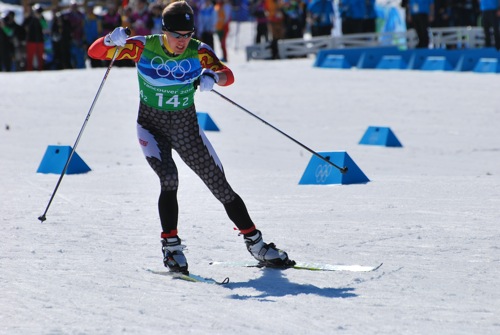
    Drew Goldsack racing in the 2010 Vancouver Olympic Games.

    As a sprinter, Goldsack enjoys a good hard session in the gym. “Strength is important for any skier, especially for sprinters,” said Goldsack. He likes them because he finds it easy to see improvements and a good way to test his absolute limits. He was introduced to power lifting by NST strength coach Matt Jordan and is currently working with his AWCA strength coach Rob Sofer, as well as head coach Mike Cavaliere. Right now, Goldsack and the AWCA are in a power phase of their strength sessions.

    The workout typically starts with a short run including some agility and balance work, followed by 15-20 minutes of dynamic stretching, light core strength and jumps/hops.

    When doing a hard session in the gym, Goldsack does a warm-up set of each exercise with 30% of the weight he’ll be lifting. He does 3 sets of 4-8 reps, lifting max weight. The focus is on the speed of movement for the concentric, or explosive contracting phase of the muscles and the transition between the concentric and eccentric, or decelerating motions.

    Goldsack’s program includes exercises such Olympic lifts, barbell snatches and barbell split snatches. “These exercises require a lot of technique to be effective and are a great leg, core and arm workout if done properly,” said Goldsack.

    These are followed up by squats, chin-ups, bench press, push ups and seated rowing.

    These workouts will develop speed and power. They link upper and lower body strength so explosive power can be delivered efficiently through the arms and legs. For skiing, this means better speed, more power on uphills and allows the skier the ability to accelerate quickly.

    Goldsack does these types of power sessions twice a week late in the summer and through the fall with adjustments depending on volume and intensity of his otherworkouts for the week. Each workout focuses on either upper or lower body, but usually both are used.

    He’ll be focusing on the skate sprint at the World Championships and trying to get back into regular starts on the World Cup.

    “I’m taking things year by year now but my main goal is to get back to a level of racing even higher than where I was at before my injury,” said Goldsack.

  • Get An Egg-cellent Start To The Day

    Get An Egg-cellent Start To The Day

    If I know it’s going to be a big day, I make sure I have a solid breakfast. People always say that it’s the most important meal of the day and that’s true. When you wake up in the morning, you probably haven’t eaten in at least 8 hours. Your glucose stores will be depleted, which are the main energy source of the body. A lot of people tell me, “I’m not hungry,” or “I don’t have time for breakfast,” but it’s one of those things you should probably be making time for, especially if you’re training.

    Some consequences of skipped breakfast are short attention span, lack of alertness, longer reaction time, decreased productivity, low blood sugar, even a short temper. This is one of my favorites and one of my dad’s go-to breakfasts.

    Broccoli and Bean Omelet

    Ingredients:

    – One whole egg + one egg white – I used whole eggs and keep the second yolk for something else but you can also use egg whites that come in cartons

    – Cheese – I used part-skim mozzarella but use the cheese of your choice

    – Veggies or other add-ins of your choice – I did broccoli and black beans but you can put in anything from carrots to zucchini to peppers or tofu

    Directions:

    1. In a pan over medium heat, crack eggs and scramble.
    2. Add in veggies, beans and cheese
    3. Cook thoroughly – you can either flip it and keep it omelet-style or break it up for more of a scrambled eggs looking breakfast
    4. Enjoy. I toasted up some bread for a little bit of a carb addition and sliced up an apple to round out my breakfast.

    Eggs – Nature’s Little Protein Powerfoods

    – Eggs contain iron, which is very important, especially for female athletes. It carries oxygen to the cells.

    – They also one of few foods that naturally contain Vitamin D, which strengthens bones and teeth. It might also help protect against certain cancers and auto-immune diseases.

    – Eggs are high in selenium, which is an antioxidant to prevent the breakdown of body tissue.

    – One egg provides half your daily requirement of choline, an essential nutrient that plays a role in brain function and development.

    They are also protein powerhouses. They provide all nine essential amino acids that the body cannot make on its own. Amino acids are the building blocks of all protein and help in the development of muscle.

  • Kocher Back in the Saddle Post-Olympics

    Kocher Back in the Saddle Post-Olympics

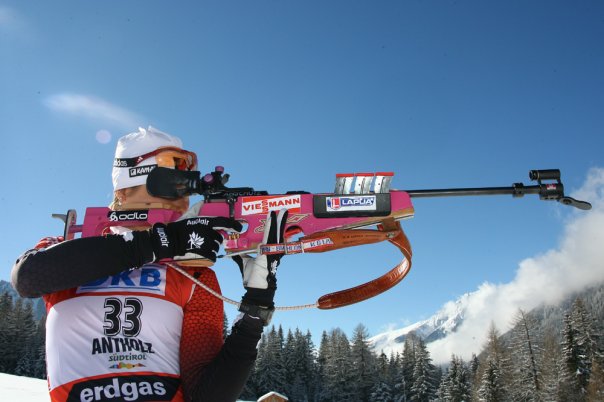
    Zina Kocher focuses as she lines up a shot in the range. Photo: Christian Manzoni

    Despite a post-Olympic emotional rollercoaster, Canadian biathlete Zina Kocher has a bright outlook on the future.

    The Olympics for Kocher were both “awesome and terrible.” Her objective was to podium at the 2010 Games, but Kocher fell far short of her goal with a 65th position in the 7.5 k sprint, and 72nd in the 15 k individual.

    She praised the facilities, the support she received, and the volunteers at the Games, as well as family and friends for making the Olympics an amazing memory. “I had so much fantastic support from family, friends, all my sponsors and organizations…that made this experience possible for me. I have definitely never felt such a strong amount of joy and pride of Canadians as experienced during these Games,” she said.

    The Vancouver Olympics marked the second set of Games that the 27-year old Red Deer, Alberta native has attended. She also raced in 2006 in Torino, with her top finish a 28th in the 15 k individual race, and a 17th place in the team relay.

    Kocher, Canada’s strongest female biathlete, left Vancouver feeling disappointed with her performance, which made her life a bit of a roller coaster. “There is so much emotion and stress, and you don’t even realize it until after it’s all over,” she said. “But that’s life.”

    Zina Kocher racing a sprint distance biathlon World Cup in Sweden. Photo: Christian Manzoni

    Post-Olympics, the team had the Canadian National Championships the following week, after which Kocher flew out to Europe to race in Finland, Norway and Russia for three weeks to finish the World Cup season.

    Afterwards, with time to finally rest and relax, Kocher travelled to Paris and Berlin for a break. “[It was a] short vacation, but a lot of fun to catch up with old friends. Then I needed to come home and actually spend quality personal time, instead of Skype time, with my boyfriend!”

    Returning to training in May is tough for any athlete, especially when coming off an Olympic year. The 27-year-old felt physically ready to jump back into the grind, but it took awhile for all her Olympic emotions to subside. “You set new goals and focus your energy on a plan to achieve them.”

    Training has included lots of roller skiing. In May and June, the team was able to get in some skiing up at Sunshine Meadows near Banff, AB, and next week they head up to the Haig Glacier for “some more altitude and ski action.”

    Like many of the Canadian National Ski Team members, Kocher participated in a triathlon this summer, participating in a sprint distance in Canmore, placing fifth overall and first in her age category. She also did an Olympic-distance in Invermere, B.C., coming second in her age category. “Although the Olympic distance felt long and grueling, I loved it and am now definitely addicted!”

    According to Kocher, this spring has been pretty low-key for camps. There was a four-day bike/roller ski camp in the Kootenays, B.C. in June, and the team will also make two short trips to the Haig Glacier.

    Kocher’s goals for this upcoming year are to make it onto a World Cup podium once again, but her primary focus will be the World Championships in Russia, where she’s hoping for a top-10 finish. Is this a warm-up for the 2014 Games? “Yes, I’m definitely aiming for Sochi. I have some unfinished business!”

  • Recipe of the Week: Risotto with Mushrooms, Red Peppers, and Spinach

    Recipe of the Week: Risotto with Mushrooms, Red Peppers, and Spinach

    Been out of the game for the past few weeks with an illness that kept me from trying out and eating tasty recipes but here it is. We’re back with a delish recipe involving, rice, cheese and spinach… my favourite!

    Risotto with Mushrooms, Red Peppers, and Spinach

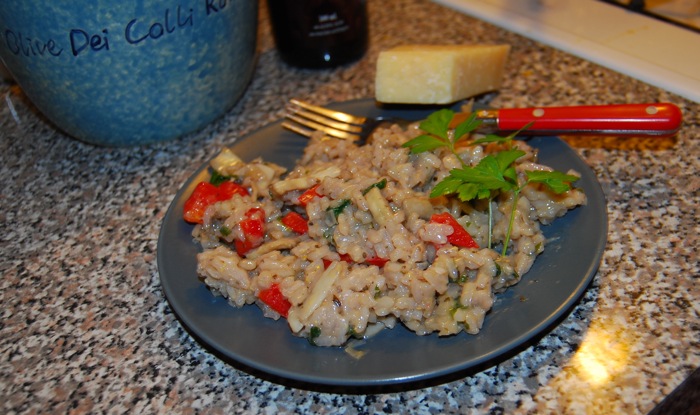
    Just like Old Country KD but doesn't glow in the dark and has more nutritional value. Photo: Linnaea Kershaw

    Ingredients:

    – 1 cup Arborio rice

    – 3 cups chicken stock

    – 1/2 onion or three shallots, chopped

    – 3 cloves of garlic, chopped finely

    – 1/2 a red pepper, chopped into chunks

    – 1/2 cup mushrooms, chopped

    – 1 cup of spinach

    – Handful of parsley, chopped roughly

    – 1 TBSP butter

    – 1 TBSP of olive oil

    – 1 cup of good wine

    – 1 tsp salt

    – 1/4 cup of parmesan

    Directions:

    1. Heat three cups of chicken stock.

    2. In a separate pot, gently sauté garlic, onions, butter and olive oil. Add mushrooms, and spinach.

    3. Turn up heat under garlic/onion mix to medium/high and throw in rice.

    4. Stir continuously until rice is semi-translucent around the edges.

    5. Add wine and salt, stirring constantly until wine is almost all evaporated.

    6. Add stock to mixture, half a cup at a time, stirring continuously. Wait until almost all absorbed before adding more.

    7. Simmer gently so the rice doesn’t cook too fast.

    8. With a cup left, taste rice to see if it’s close to being done. You may not need to use all stock. Add pepper and parsley.

    9. Remove from heat when almost cooked. Add parmesan and half tablespoon of butter. Cover and let sit for a minute or two to set.

    10. Garnish with parsley and serve.

    The Merits of Spinach

    – high in folate, which preliminary studies show that it may reduce heart disease and prevent stroke.

    – rich source of iron. According to the USDA, 180 g of boiled spinach contains 6.43 mg of iron, whereas 170 g of ground beef contains 4.42 mg.

    – although it is a rich source of calcium, the body is only able to absorb about five percent of the calcium present in spinach, whereas it is able to absorb about 50 percent from broccoli.  Calcium, as we all know, helps build strong, healthy bones. Women especially need high levels of calcium as they are at a higher risk of osteoporosis.

    – contains vitamin K, which helps with blood coagulation and bone metabolism.

    – high in lutein, which is an antioxidant that protects against macular degeneration in the eyes. It also keeps them safe from oxidative stress. Oxidative stress is involved with many diseases including Parkinson’s, Alzeimer’s and chronic fatigue syndrome.

    – spinach also has anti-inflammatory nutrients, which help with arthritis.

  • Elliott Wins U-23 Title While Pulling Double Duty

    Elliott Wins U-23 Title While Pulling Double Duty

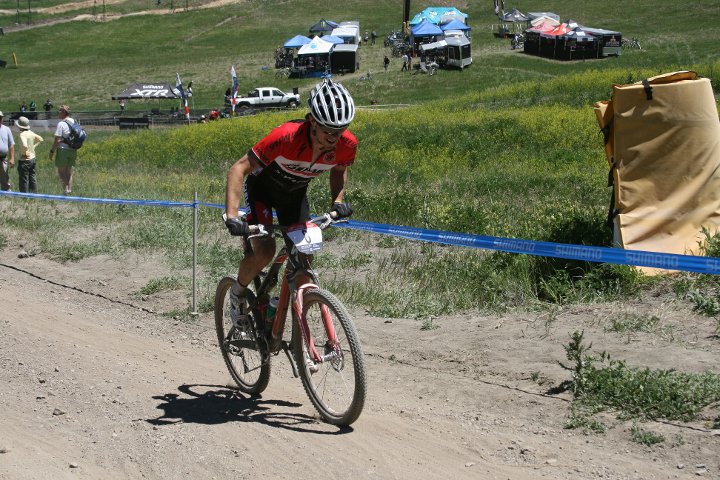
    Tad Elliott powers up a hill during US Mountain Biking Nationals in Granby, Colorado

    Tad Elliott’s busy schedule didn’t stopped him from picking up an U-23 title this July at the U.S. Mountain Bike Nationals in Granby, Colorado. “It went really well. My goal was to win but it was still a surprise. Everyone else was so strong,” said the 22-year old.

    After winning the U-23 title, he also raced the short track race in the Elite Men category. In the middle of the race, he was in 6th place and got a little excited for a top-5 podium finish. A little overeager, he blew up and ended up being pulled for part of the race by a teammate and finished the race with a still-impressive 8th place.

    Despite a few pre-nationals races not going so well, Elliott felt confident going into the Championships. Usually racing every weekend, he was able to take some time off to come back to Colorado and get in some solid training.

    He was also the U-23 champion two years ago. A bad crash and broken shoulder blade last summer kept him from racing nationals, but didn’t keep him down. “I was back on the stationary bike ten days later so it wasn’t that bad.”

    From here, Elliott moves on to Mountain Bike World Championships, which are going to be held in Mont Ste. Anne, Quebec. He doesn’t know how he’ll do there but maintains a positive attitude by “hoping for the best.” After that, he’ll jump right into ski training.

    This is the norm for the Durado, Colorado native. Racing for pro teams in both cross country skiing (CXC) and mountain biking (Sho-Air-Specialized), Elliott travels for racing eight months of the year and is usually doing local races when not on the road.

    This spring there was overlap between his ski racing and mountain biking but he believes this makes him a better competitor. “I’m really fit coming off the ski season so I can jump right into biking.”

    He spent a month in Europe racing Swiss Cups and Power Cups, which he thought went really well. Compared to ski racing, Elliott finds the Euopean circuit crazier.  “Mass start races where there are 240 starters on the line. It rains all the time, making it slippery on hard courses. You have Euros yelling at you, pushing and punching… it’s a lot bigger scene over there because this is a party for these guys.” The 5-mile cycling courses can hold up to 30,000 fans and the energy is encouraging to the racers.

    He finds that skiing and mountain biking compliment each other and that as a junior, athletes should be experiencing as many different sports as they can. “I don’t have to do as much rollerskiing in the summer and don’t have to ride in the cold and the wet in the winter so it keeps things fresh and fun.”

    He does feel a push to decide between the two from a lot of different people but not his number one supporters – friends and family. “Where we grew up, we always did both.”

    His twin brother, Evan, is also a mountain biker, mostly doing downhill racing, and is more involved with their local junior development program.

    Elliott would like to keep doing both sports for as long as he can. “I’m having a blast. I’ve met really great people and have made really good friends so I want to keep doing it and keep it fun.”

    Currently Elliott is not at school but if he were to go back for courses, he’d like to study chemistry.

    Tad Elliott (U23 National Team / Sho-Air) smiling after a tough race to take the win for the U23 MEN XC National Championship Race.

    This year marks his last year in the U-23 category in both mountain biking and skiing. “It was nice to race just your own category but we all have to grow up sometime,” he said with a laugh. Judging from the results Elliott is posting, he will likely have no problem moving up to race against the elites.

  • Jewett Joins CCC Board of Directors, Hopes to Help Athletes

    Rhonda Jewett was recently appointed to the Cross Country Canada Board of Directors and hopes that she will be able to help shape  the future of Canada’s athletes. As a former racer, she realized how many hours were put into the Canadian ski racing program by volunteers and staff alike.

    “Now that I’m done ski racing, I feel that I have the time to give back so that younger skiers can have even more opportunities than I did,” she said in an interview.

    Being an athlete certainly has helped Jewett bring a unique set of skills to the table. Her insider experience with the technical aspects of the organization such as racing, coaching and officiating will make her a valuable asset to the board.  Her position includes representing CCC’s membership and offering direction that will be in its best interest.

    She believes athletes have a very strong personal and emotional tie to the sport and it’s far too draining for them to become involved in the underlying politics that govern their ski career. “Now that I don’t have a personal interest in the decisions made by CCC, I feel that I can apply my experiences as a ski racer to not only address issues that face ski racers but also assist in directing CCC towards an environment that will promote success at all levels of xc development in Canada,” she said.

    In terms of changes within the CCC board, she’s hoping to see more transparency in the decision making processes. She doesn’t believe there is any reason to do things ‘under the table’ or for there to be delays in informing CCC’s membership of decisions being made. She also wants to see better communication between CCC’s levels.

    Jewett is also looking to create equal opportunity for the ski racer memberships, including equal opportunities for women and men, National Team and independent racers, and ‘sprinters’ or ‘distance racers,’ whether for selections for teams, races, and training opportunities.

    CCC has a history of not having many women in leadership roles and Jewett hopes that by having three women on the board of directors, more women will become involved in the organization, especially in decision-making positions. “I think that it is crucial that women be involved in the decision making processes of the organization, especially when the decisions concern female racers and coaches,” she said.

    For the upcoming year, she hopes to have a woman directly involved in the high performance committee’s decisions. “I believe that this will foster equal representation and opportunities for both female and male athletes,” she said.

    Jewett is in the first year of a two year term on the CCC Board of Directors.

  • Jeff Whiting Retires From CCC; Will Continue Work With Paralympic Athletes

    Jeff Whiting Retires From CCC; Will Continue Work With Paralympic Athletes

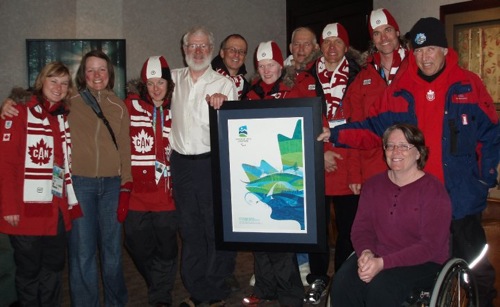
    Presentation by Para-Nordic Development Squad athletes to Jeff Whiting (center, white shirt) on his retirement from CCC.

    At this year’s Cross Country Canada (CCC) annual meeting held in Corner Brook, NF, Jeff Whiting received an award for the years of hard work and dedication he’s put into Para-Nordic skiing as both a volunteer and and staff member. Earlier this month, CCC announced his retirement from the position of Western Para-Nordic Development Coordinator.

    “Jeff’s athlete-centered approach, dedication, knowledge and experience of the Para-Nordic sport will always be remembered and will still continue to serve the community,” said CCC in a press release from early June.

    Whiting started working with paranordic athletes when he was recruited by Saski Skiing for Disabled in Saskatchewan to teach first aid to guides in 1986. Since then, he’s aided many an athlete in realizing their dreams.

    He coached his first skier, Joe Harrison, in 1989. Harrison, an above-the-knee amputee, competed in two Paralympics: the 1992 Albertville Games and the 1994 Lillehammer Games. He had top finishes of 5th place in both.

    The 2010 Vancouver Paralympics were the third Games that Whiting has attended. He was a ski patroller for the 1988 Olympics and the Nordic Team Manager at the 2002 Salt Lake Games. The 2010 Games had the highest-ever number of Canadian athletes competing, as well as the highest medal count, thanks to the time and dedication that all staff have put in, including Whiting.

    “I’m proud to have been part of a group of coaches to have helped so many athletes get to the highest level of competition,” he said in an interview.

    One of the highlights of his career was when Colette Bourgonje, a sit skier and one of his athletes, obtained her first–and Canada’s first–medal at the 1996 International Paralympic Committee World Championships in Sunne, Sweden.

    Those that worked with Whiting had nothing but positive things to say.

    “Jeff has always been willing to share the immense knowledge and experience he has amassed as a pioneer in the sport of Para-Nordic skiing,” wrote Gary Fohr of the Cross Country Ontario Para Nordic Committee in a retirement letter.

    “The greatest lesson I’ve learned from Jeff is that even though cross-country skiing is an individual, not team sport, if we work together, we all will be better athletes individually,” said Courtney Knight, one of Whiting’s athletes who competed in the 2010 Paralympics.

    In addition to coaching, Whiting was instrumental in the development of results monitoring equipment in Para-Nordic athletes, as well as Para-Nordic equipment development in Saskatchewan at the sport’s early stages of development. He was, and still is, involved in research, design and development of nordic sleds in the province.

    Despite retirement from CCC, Whiting will be keeping himself busy. He’ll continue to coach a club in Saskatoon, SK, as well as officiating and facilitating coaching courses in the province. He’ll be Para-Nordic Assistant Coach for Saskatchewan at the 2011 Canada Winter Games, as well as putting his name in to be an official for the 2011 Nationals in Canmore.

  • Renner Retires To The Real World

    Renner Retires To The Real World

    Renner in one of her final races at the 2010 Vancouver Olympics. Photo: Linnaea Kershaw

    Sara Renner is getting a crash course in normal living. Since announcing her retirement from skiing after her final race—the 30 k race at the Olympics, she’s jumped into the “real life of motherhood and work” with both feet.

    “It’s really eye-opening the amount of stuff you do in a day when you don’t ski [train],” she said. “It’s so busy!”

    Renner is now balancing motherhood with a new position—she and her husband, Thomas Grandi, have opened The Paintbox, a boutique lodge in downtown Canmore. It has five suites and sleeps 13 to 20 people. “We hire all cross country skiers or former cross country skiers, so it feels more like a family.”

    In addition to the excitement of a new business, the Renner-Grandi clan is looking forward to another new arrival in January—Renner is pregnant with their second child and is due in January. They already have a daughter, Aria. “I heard the heartbeat yesterday [June 29], which made it real and exciting for me.”

    Despite the business of transitioning from skiing to real life, Renner admits she was ready for the switch. “It’s so great to leave something with so many good memories. I’m sure it’ll be harder in November when all the ski stuff starts up, but I’m really happy.”

    The family took a month-long road trip down to Utah to canoe the Green River and are looking forward to a summer of exploring the Canadian Rockies–rather than previous summers filled with training camps.

  • Run In The Off Season And You’ll Fly In The Ski Season

    Run In The Off Season And You’ll Fly In The Ski Season

    Running, especially races, can provide a great speed or interval workout for skiers sick of rollerskiing. Photo: Mark Dewan

    Tired of going out for a rollerski in the rain only to come back with soaked boots that need to sit for a day and a half trying to dry, stuffed with newspaper? Tired of rollerskiing in the hot sun? Tired of rollerskiing already, period? Running may be the answer, according to Dick Moss of Sudbury, Ontario. He’s been a coach for 29 years, working primarily with runners, but he has seen the occasional Olympian sneak into his workout. His athletes have also competed in other sports such as basketball, hockey, soccer and cross-country skiing.

    He believes cross training is very important to any athlete because of the benefits to general fitness. “That improved athleticism ultimately gives the physical, mental and coordination base to become better,” said Moss.

    According to Moss, running is probably the best activity to use as cross training for skiing, behind roller skiing. “Running in an outdoor setting, especially if there are uphills and downhills [is great for skiing].” The cardiovascular output and dealing with changing terrain is similar, and the benefits that running offers are almost unbeatable.

    Many of the physiological requirements for skiers can be met through running. It has been established to help athletes improve their VO2 Max—the volume of oxygen the body can consume while exercising at its maximum capacity—which is a key component of fitness for any elite athlete. Skiers have been known to hold the highest VO2 max records in the world–Bjorn Daehlie holds the record for the highest at 96 ml/kg/min, achieved out of season, while Lance Armstrong was measured at a mere 88 ml/kg/min. Running also helps to improve a skier’s lactate threshold, balance and specific muscle endurance, which are other key ingredients to attaining an elite level.

    There are some disadvantages to running, of course. It’s a higher impact activity compared to skiing, so there is more risk of suffering overuse injuries like shin splits and muscle fatigue. To avoid this, don’t overdo running, and make sure to change your shoes every 300 to 500 miles (500 to 800 kms). Also, though running has a similar motion to classic skiing, it does not engage the arms nearly as much. There are also added hidden dangers to running. “You’re more likely to get chased by a dog,” joked Moss. “But all in all, I’d think it’s an effective cross training method.”

    XC Ottawa alum Ed McCarthy agreed that running is ideal for cross training for skiing, but made a distinction between road and trail running. “Road running, though good for building base or easy recovery, is not terribly specific. Trail running, on the other hand, is one of the most ski-specific dryland workouts you can do in every sense except for the strict technical motion.”

    According to McCarthy, the effort and heart rate profile of a typical trail run will follow that of a ski race: sharp spikes during climbs, sustained tempo on flats and a bit of recovery on the downhills. “The mental discipline to keep pace over the tops of hills and to push the downhills is similar to that I use in ski racing,” he said.

    McCarthy’s coaches always put a strong emphasis on running during the dryland season. “I think it’s no coincidence that many strong skiers are strong runners. The fitness level required for both is the same,” he said.

    Running is also a great recovery workout and social activity. Taking an easy run with a friend is the perfect way to do active recovery and catch up on the latest skier gossip. Photo: Dick Moss

    Moss shared a good workout for skiers to use for cross training from the former University of Wisconsin running coach, Peter Tegen. Try it out if you are tired of rollerskiing, if it’s raining out, or if you don’t have enough time to jump in the car and get out to where there’s good pavement.

    “Dynos” are a form of controlled fartlek, or speed change, training. They focus on continuous running, even if the rest times are just a survival shuffle pace. The workout begins with a longer, aerobic interval around a 5 k race pace,  which gradually becomes shorter and faster and ultimately ends in a series of short sprints. These sprints develop speed under stress and simulate the finishing kick in a race. They improve both the aerobic and anaerobic systems, the ability to surge and kick and stimulate the fast-twitch fibers that a skier like Northug, which his huge finish, must use. This workout can also be adapted in many ways to emphasize aerobic, anaerobic, or finishing kick abilities. If you run the recovery sections at a faster speed—almost lactate threshold pace—you’ll develop the ability to flush lactate out of your system more efficiently.

    1. 15 mins easy warmup run
    2. 1 x 5 mins (3 min slower pace to recover)
    3. 1 x 4 mins (3 mins slower pace)
    4. 1 x 3 mins (3 mins slower pace)
    5. 1 x 2 mins (2 mins slower pace)
    6. 1 mins (2 mins slower pace)
    7. 2 x 30 sec (60 sec slower pace between)
    8. 4 x 15 secs (30 secs slower pace between each)
    9. 15 mins warmdown.
  • Harvey Gets Back On The Bike For One More Race

    Alex Harvey’s training schedule is already busy, but he’s still taking some time out to squeeze in the 2010 Canadian National Mountain Biking Championships in Canmore in mid-July.

    “It’s a good opportunity since I’m already here,” he said in a phone interview. “It’ll be a really hard workout for me.”

    Harvey was a very promising mountain bike racer in the junior category, but when the time came to move up to senior, he had to make a decision—mountain biking or cross country skiing. “There’s a big step between racing as a junior and racing as a senior in mountain biking. I had to choose and I went with skiing.” Judging by the results he’s posted since then, it’s pretty safe to say he made a good choice–although his father, Pierre, made a successful career as a road cyclist and cross-country skier, competing in both the Summer and and Winter Olympic Games in 1984.

    If Alex does well at Nationals, he might get a chance to race at the Mountain Bike World Championships, being held in Harvey’s backyard at Mont-St.-Anne in Quebec in early September. But he’s not treating this as a comeback to mountain biking–he’s unsure as to how he will do at Nationals, or whether he’ll even be able to go to the Worlds. Training camps and travel may keep him away from eastern Canada.

    Though Harvey’s competitive spirit will probably make an appearance, he’ll be treating the race like a workout. His training leading up to Nationals has not been mountain biking-specific–though he has put in more road riding hours this year than in previous ones. Harvey bought a new bike three weeks ago, but hasn’t spent more than “a few hours on it” since then. He’s anticipating more pain than he’s used to when climbing onto the bike. “I’m not as fast as I used to be, so it’s probably going to be really hard.”

    He admitted he does miss the sport, but not as much as he thought he would. “It’s more fun when you’re racing well,” he said with a laugh.

    Alex Harvey competing at World’s in Livingo, Italy in 2005. Whether he will be repeating that magic mid-July is yet to be seen. Photo: Canadian Cyclist
  • The Pen May Be Mightier Than The Pole

    The Pen May Be Mightier Than The Pole

    Dave Nighbor, left, has a bit of design fun at the Vancouver 2010 Games with friend, Matt Jeffries.

    This article is the first in a series that will look at the post-athletic careers of former elite cross-country skiers, coaches, and others involved in the sport.

    Dave Nighbor is out of the ski racing game, and has moved onto bigger and brandier things. After he finished up his ski career as a full-time Canadian National Team athlete, Nighbor packed up and moved himself to Calgary. There, he uses another talent, graphic design, to shift into the next chapter of his life.

    It’s been a smooth and natural transition for the 25-year old, he said. “I feel good about my decision [of retiring from skiing]. I did all the things I wanted to do with it. There are no lingering feelings,” Nighbor said in a phone interview. Now, he exercises to keep himself in shape, and is concentrating on his future in advertising.

    Nighbor’s company, 9 Lives Graphic Designs, lives in the offices of one of his biggest clients, threesixtythree, a sponsorship and branding company–and he is their “go-to guy” for outsourced design work. He also takes on independent contracts and has done posters for events such as Share the Road and the XTerra Canadian National Championships.

    Nighbor’s ultimate goal is to move into corporate branding or advertizing. “What I enjoy the most and what I have a knack for is the idea of advertizing and getting people’s attention through design. I could see myself doing that,” he said.

    Whether or not he’s going to go back to school for design is up in the air. “Everything’s undecided right now. It depends on where work and school may take me,” he said.

    To see Nighbor’s work, go to http://9lives-design.com/

    Nighbor's company, 9 Lives Design, combines his love for art and graphic design with his business-savy skills. Design: Dave Nighbor
  • Callaghan Valley Athlete Stuck in Funding Limbo-UPDATED

    Callaghan Valley Athlete Stuck in Funding Limbo-UPDATED

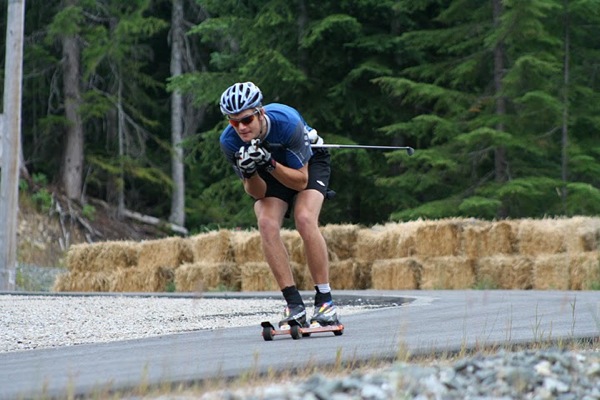
    Cheskey during a rollerski training session. Photo: Lee Churchill

    Canada now has three Training Centres spread out across the country—Quebec, Thunder Bay, and Whistler. The Callaghan Valley Training Centre (CVTC) is still in its infancy—after four years, it’s still trying to get its legs under it and prove itself. Despite having the perfect training site, an Olympic venue, and ideal conditions for athletes to develop into top-tier athletes, the Centre has been dogged with bad luck—three coaches in four years, a complete athlete turnover after just two years, and now uncertainty for some of its athletes to even get on based on funding issues.

    Camille Cheskey is one of those athletes. Born in Waterloo, Ontario, Cheskey was one of many Canadian junior athletes with the “What now?” question when he graduated from high school. While Canada has a university Nordic skiing circuit, aspiring athletes are encouraged to forgo school to focus solely on skiing. When given the choice, Cheskey chose the Callaghan Training Centre over Thunder Bay’s National Team Development Centre because the mountains and a chance to train on the Olympic trails day in and day out was too good to pass up. Like, many training centre athletes, his goals include the 2014 Olympic Winter Games in Sochi.

    Despite proving himself on the Ontario Cup provincial circuit, Cheskey had a disappointing first year with CVTC. Adjusting to life on the west coast, a new coach and racing at a higher level has left the 20-year old feeling like he has something to prove.

    Now he’s hoping to join up with the CVTC for a second year but is still waiting for the Centre to decide whether or not they’ll take him. The Centre has seven athletes at the moment, and is waiting to hear back from funding to see if they can add him to the team.

    Despite the indecisiveness, Cheskey is staying positive.

    “It’s a feeling of frustration,” said Cheskey in an interview. “But it’s out of my hands so the only thing I can do is try as hard as I can to focus and keep motivated when everything else seems to be working against me.”

    Fortunately, his training has not suffered from this slight setback, instead it seems to be keeping him motivated and inspired to continue. “I’m leaps and bounds ahead of where I was last year at the same time. I’m living and working in Whistler where the training possibilities are extraordinary.”

    Cheskey is self-coaching at the moment as he waits to hear back from CVTC. He’s using training varieties, techniques and ideas from last year’s coach, Lee Churchill, to keep things exciting and fresh. After that, he’ll either be joining his teammates at the training centre or will be looking for outside help.

    “Savio at the Nordic Shop [in Whistler] has been one of the key people in helping me with planning and mental support to figure out my dilemma,” he said.

    In case things don’t work out quite the way he hopes, Cheskey’s got plans in place. He has work lined up for the summer and winter—he works at The Core, a rock climbing gym in Whistler, as well as the Nordic Shop—as well as training plans.

    “I have a good friend from Sweden who’s planning to come back to Whistler and train so he’ll likely be my main training partner.”

    The real thing keeping Cheskey west? “I just can’t get over the mountains,” he said with a big grin.

    Update: Since the publication of this story, Cheskey has received word from CVTC that they are unable to take him on this year. When contacted about it, he said that it was actually a relief to know. “I can at least get on with training and life now,” he said.

  • Recipe of the Week: Blueberry Crisp

    Recipe of the Week: Blueberry Crisp

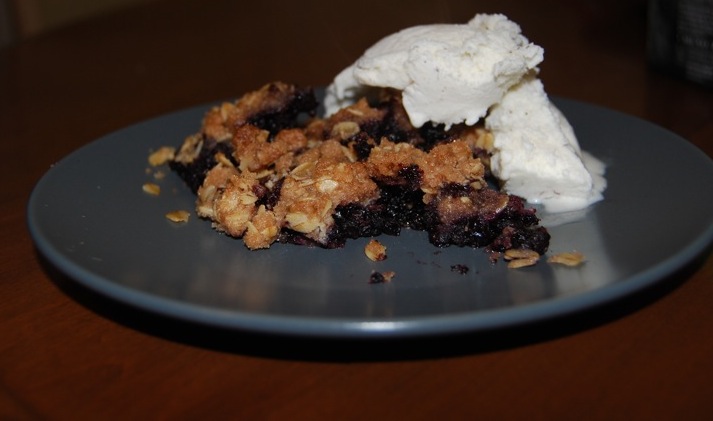
    When summer hits, one of my favourite things to do is stock up on in-season fruits, especially blueberries! Here’s a simple but sweet recipe for blueberry crisp, one of my top-5 favorite desserts. It has a nice combination of carbs, fats and antioxidants. If you want to pack a bit more nutrition punch, you can add other fruits in as well, such as peaches or other berries. As a topping, you can add ice cream or yogurt.

    Blueberry Crisp

    Ingredients:

    – 3/4 cup of white flour (you can try mixing in a bit of whole wheat, though it makes for a different texture)

    – 1/2 cup of sugar

    – 1/2 cup of butter at room temperature

    – 1 cup of oats

    – 1/2 cup chopped walnuts

    – 4 cups of blueberries (I used frozen because they’re easier to get, but you can also use fresh)

    Directions:

    1. Preheat oven to 350 degrees.
    2. In a bowl, mix the flour, cinnamon and sugar.
    3. Slice butter into the mix and blend until the mixture is crumbly. Get right in there with your hands! Just make sure you’ve washed them before!
    4. Add oats and nuts.
    5. Take out roughly 1/4 of the mixture and mix in a separate bowl with the blueberries.
    6. Put blueberry mixture into a buttered baking dish.
    7. Top with the rest of the crumble mixture.
    8. Bake for about 40 minutes or until the top is browning. If you used frozen berries, you might have to cook it a bit longer to get the same consistency.
    9. Maw down. It can be eaten hot or cold but I prefer hot with vanilla ice cream.

    Blueberries – Antioxidant Powerhouses

    – Blueberries are ranked among the highest source of antioxidants, which minimize the amount of free radicals in the body. Free radicals are unstable molecules in the body linked to the development of a number of diseases, including cancer, cardiovascular disease and other age-related conditions such as Alzheimer’s.

    – They’re a good source of dietary fiber, which helps keep cholesterol in check, contributes to a healthy heart, and aids in digestion.

    – They’re an excellent source of manganese, which plays a role in the development of bones and in the metabolism of protein, carbs and fat.

  • Cross Training: Rowing

    Cross Training: Rowing

    During the summer months, it can be hard to stay focused and keep your muscles snappy when all you seem to do is rollerskiing, rollerskiing and more rollerskiing. Cross training is important in order to avoid burnout or injury–especially for juniors or masters looking to mix it up during the off-season.

    In a new series to FasterSkier, we’re going to take a look at some of the ways skiers keep themselves and their bodies sane by use of cross training. Some of the workouts are as familiar as a pre-breakfast run, while others may be as exotic as Cirque de Soleil.

    Craig Pond, coach of the UBC Women’s rowing team, strongly believes in the diversity of sport as a means of teaching athletes to live an active lifestyle–instead of merely participating in a specific sport.

    “It’s important, when you are a developing athlete, to have a broad range of sports. Just rowing and rowing and rowing is boring, and it’s the same with skiing. It tends to lose some of its excitement,” Pond said. “Try to keep variation so you’re not just hammering away at the same thing.”

    For athletes who have been brought up in the ski arena, the sport can lose some of its shine by the time they hit the senior level. Rowing can help in keeping things fresh and new, with a little time off from the specific–but not from athletics.

    Pond started out as a cross country skier in Belleville, Ontario, but was convinced to try rowing in high school. He went on to become first an elite rower, then, after injury, a coach.

    “Both sports require most muscle groups in your body. Both are leverage sports that require force from your entire body,” said Pond.

    Rowing can also help build strong muscles. Photo: Thomas Auer

    Rowing and skiing are similar in that they both require the use of the body’s major muscle groups. A rowing stroke has both a drive and a recovery phase, not unlike skiing and both start with the bigger muscles in the body and end with the smaller ones. They’re also similar in they both have diversity in their races—sprints, mid-distance and long distances.

    Andrea Bundon is a part of University of British Columbia’s (UBC’s) women’s team. She trains with them during the spring, summer and fall, then switches over to skiing for the winter to race.

    She was also a guide for one of Canada’s blind skiers, Courtney Knight, in the Vancouver 2010 Paralympic Games this past winter. She finds that rowing gives her a mental break while still maintaining her fitness.

    “When I hit the snow again, I feel refreshed and ready for the ski season,” said Bundon.

    Here’s a sample workout from UBC’s playbook. If it’s too rainy and awful outside to rollerski, erg (or rowing) machines can usually be found at a gym to get a great interval session in. It can also be modified to become a longer interval. Pond thinks it’s a good workout because it keeps the structure of a race.

    The Five -Thou-Five Workout

    1. Do a good warm up. Either a 30 minute run or ride, or do a 30 minute rowing warm up so your muscles are ready to go.
    2. Start with a 500-meter interval, which simulates of the beginning of a race. Make it a strong, steady burst.
    3. Take an active break, light rowing or a couple minutes on the bike. It should be at least the same amount of time as your interval.
    4. Hold a threshold pace for a thousand meters. This simulates the middle of a race. You should hold a strong pace with a consistent heart rate.
    5. Take an active break.
    6. Final 500-meter sprint to the finish line. This simulates the final sprint in a race and should be all out.
    7. Cool down.
    Rowing is a way to work at a team or solo. Above, the UBC women's lightweight four races on the Fraser River, B.C. Photo: Emmett Tuyp
  • Recipe of the Week: Paprika-Coriander Crusted Salmon with Avocado-Mango Salsa

    Ski news is all well and good and satisfies the ski nerd in us all but since food tends to eventually take up an unbelievable amount of any conversation athlete have, why not incorporate that into the site? So, starting now is a new series with a new recipe every week. You can try them, adapt them, review them, whatever.

    We’re also going to run nutritional stats with whatever we cook up so that you know something about what kind of fuel you’re putting into your body to help with those hard workouts.

    Finally, if you have or come up with a recipe you really love, send it my way: linnaea@fasterskier.com. Be sure to include pictures if you can! At the end of each month, we’ll showcase the most delicious looking stuff and there might even be a prize for best recipe.

    And now, without further ado, this week’s recipe:

    Paprika-Coriander Crusted Salmon with Avocado-Mango Salsa

    The story behind it:

    So, I moved into a new place March and was pleasantly surprised to get a gas stove in the deal. The coolest thing with a gas stove, other than it heating up beautifully fast, is the broiler in the bottom where my pots usually live. It totally saved my, well, bacon, when our barbeque ran out of propane on long weekend. Burgers in minutes! Tastes just like charcoal! Haha

    Anyway, ran across this recipe in a local paper. I love love love salmon and am always looking for new ways to cook it. Enjoy!

    Ingredients:

    2 1/2 tsp paprika

    2 tsp ground coriander

    3/4 tsp salt

    4 salmon filets

    1 large mango, peeled and cut into chunks

    1 avocado, peeled and cut into chunks

    1 cup canned chickpeas, rinsed and drained

    1/3 cup chopped cilantro

    1 tsp grated lemon zest

    2 tbsp fresh lemon juice

    2 tsp olive oil

    6 cups of mixed greens, shredded to bite-sized pieces

    Directions:

    1. In a bowl, stir paprika, coriander, and salt.
    2. Take out 2 tsp and sprinkle over salmon, rubbing into the fish.
    3. Put salmon on broiler pan, skin side down. Broil for 5-7 minutes.
    4. Add remaining ingredients to the rest of spice mixture and toss to combine.
    5. Serve salmon and salsa on bed of greens.

    Serves: 4

    Nutritional Stats on Salmon:

    – Salmon is high in protein and omega-3 fatty acids. These acids are essential to the body yet the body does not produce them. They must be obtained from food. Wild-caught cold water fish, like salmon, have a higher percentage of omega-3 than warm water fish.

    – Four ounces of salmon has 100 percent of your daily vitamin D intake. Vitamin D is in charge of keeping bones strong and healthy.

    – Four ounces also contains over half the amount of your daily need of niacin, selenium, and B12.

    – Niacin helps with lowering bad cholesterol and bumping up good cholesterol.

    – Selenium works with your thyroid glands, which controls metabolism, the creation of proteins as well as how sensitive the body is to other hormones.

    – B12 plays a key role in the normal functioning of the brain and nervous system.

    – Salmon has also been linked in studies to help prevent skin cancer, protection against heart disease, sunburns, childhood asthma, Alzheimer’s and age-related cognitive diseases, control blood pressure and reduce depression.

  • Greene and Howe Win The 34th U.S. Bank Pole, Pedal, and Paddle

    Greene and Howe Win The 34th U.S. Bank Pole, Pedal, and Paddle

    On May 15, competitors stood at the start line of the The 34th U.S. Bank Pole, Pedal, and Paddle in Bend, Oregon. After a cold and wet spring, the weather cooperated with 76 degrees and an overcast sky.

    The race started at Mt. Bachelor, with a moderate Grand Slalom alpine run, followed by a five mile cross country skate race, a 23 mile road ride down into the town of Bend, OR, a 5 mile trail run by the river, a mile and a half paddle, and finished with a half mile sprint.

    The MBSEF fundraiser event brought in 985 entries with 3,005 racers competing as teams, pairs and individuals. According to Race Director, Molly Kelley, 50 per cent of participants come from out of town.

    “It was the largest we’d ever seen,” Molly Kelley, Race Director, who, before she was involved with the race, used to leave town because it would fill with people coming in to compete and to watch.

    This year’s winner, and five-time champion, was Marshall Greene. He found it to be exciting but also a relief because he worried about XC Oregon teammate, Andrew Boone. “I was racing scared,” Greene admitted.

    Greene accidentally flipped his boat while getting in at the paddle transition, something that could have cost him the race. “It was time for a snap decision,” he said. “Take it back to shore to dump or race with a bit of extra weight.”

    He decided to race with the extra weight and won.

    His favourite part though, was the support of spectators, “Having won before, lots of people have learned my name and having them all cheer for me by name was pretty awesome.”

    Boone switched up his training this past winter, from base miles on the bike to skiing and racing as an associate for XC Oregon. “I was amazed at how quickly I was able to train at a high level on the bike [after finishing the ski season].”

    Boone expected to make a move in the cycling leg – his primary sport – but had flat legs after the ski and couldn’t get his heart rate up. He ended up second, three seconds behind Greene. However, it didn’t keep him from enjoying the experience. “I love the crowds and the enthusiasm the whole town of Bend has during the event. It seems like everyone in town all of a sudden has a kayak on the roof of their car.”

    On the women’s side, Stephanie Howe was the overall winner of the elite women.

    “My goal this year was to podium – I had no idea I was going to win. It didn’t actually hit me that I could win until I was finishing the kayak leg of the race.”

    She was fourth going into the running leg, three minutes behind eventual second place, Sarah Max. “I was hammering pretty hard but it felt good. The run to the finish was awesome – I was smiling the whole time.”

    Max had issues of her own, tipping her boat twice during the paddle leg. “Going around the first buoy, the wind, my exhaustion and the pressure got the best of me and I went over… I almost caught Stephanie going into the second buoy but tipped again.”

    When asked whether they’ll race again next year, the competitors were of mixed feelings.

    “Going into the race, I had made up my mind to not race as an individual next year because it really does consume a lot of time,” said Max, “[but] I’m not sure how I feel about being the reigning champion of the Pole, Pedal, Paddle, Swim, Paddle, Swim, Paddle.”

    Boone, who raced the PPP as a kid, plans to make it an annual tradition as long as he continues to live “in this great town.”

    XC Oregon's Brayton Osgood, Marshall Greene and Andrew Boone.