From the FasterSkier archive — posts syndicated from athletes’ and coaches’ own blogs between 2004 and 2012, kept online as published. Current coverage is at fasterskier.com.
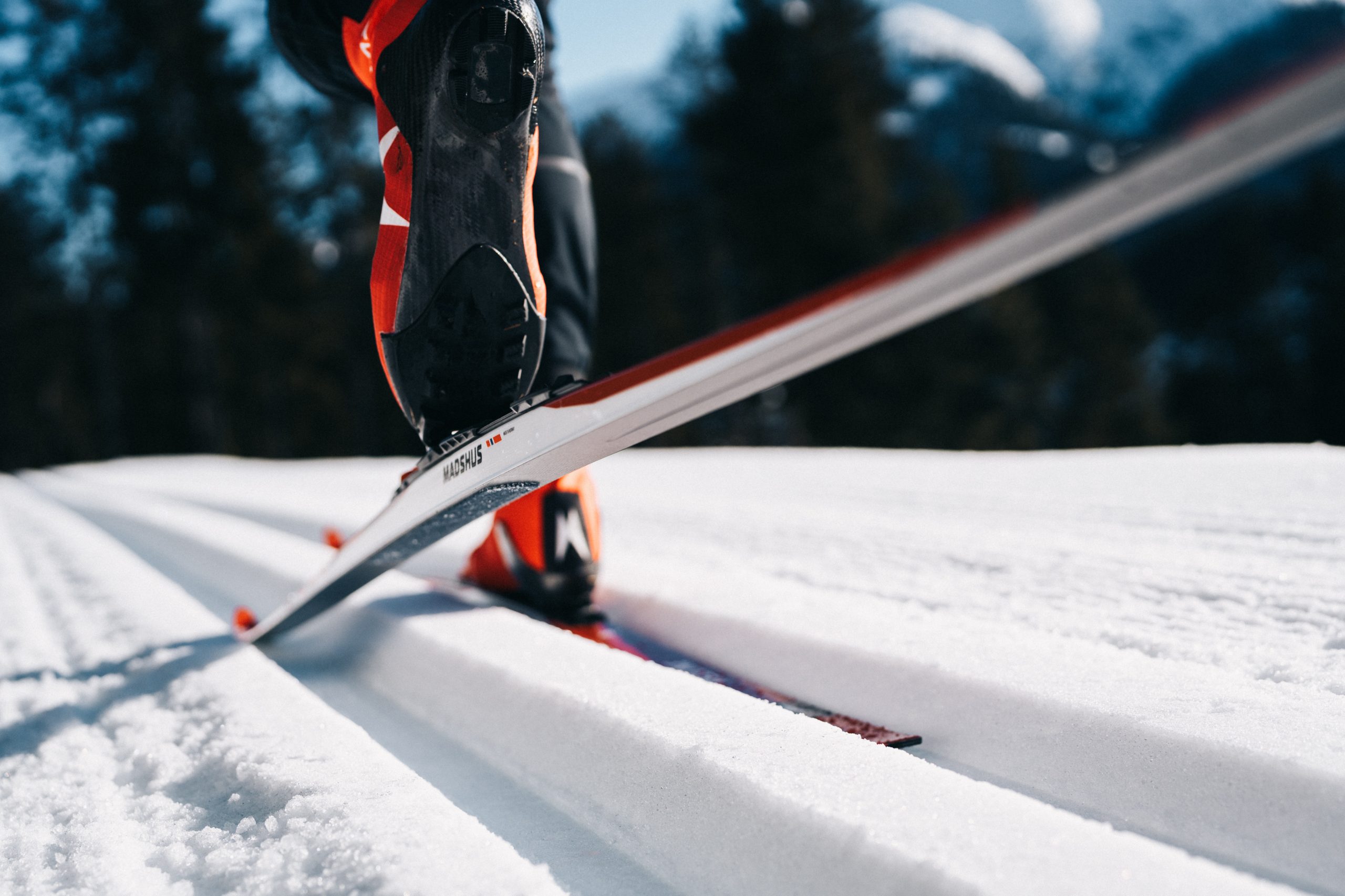
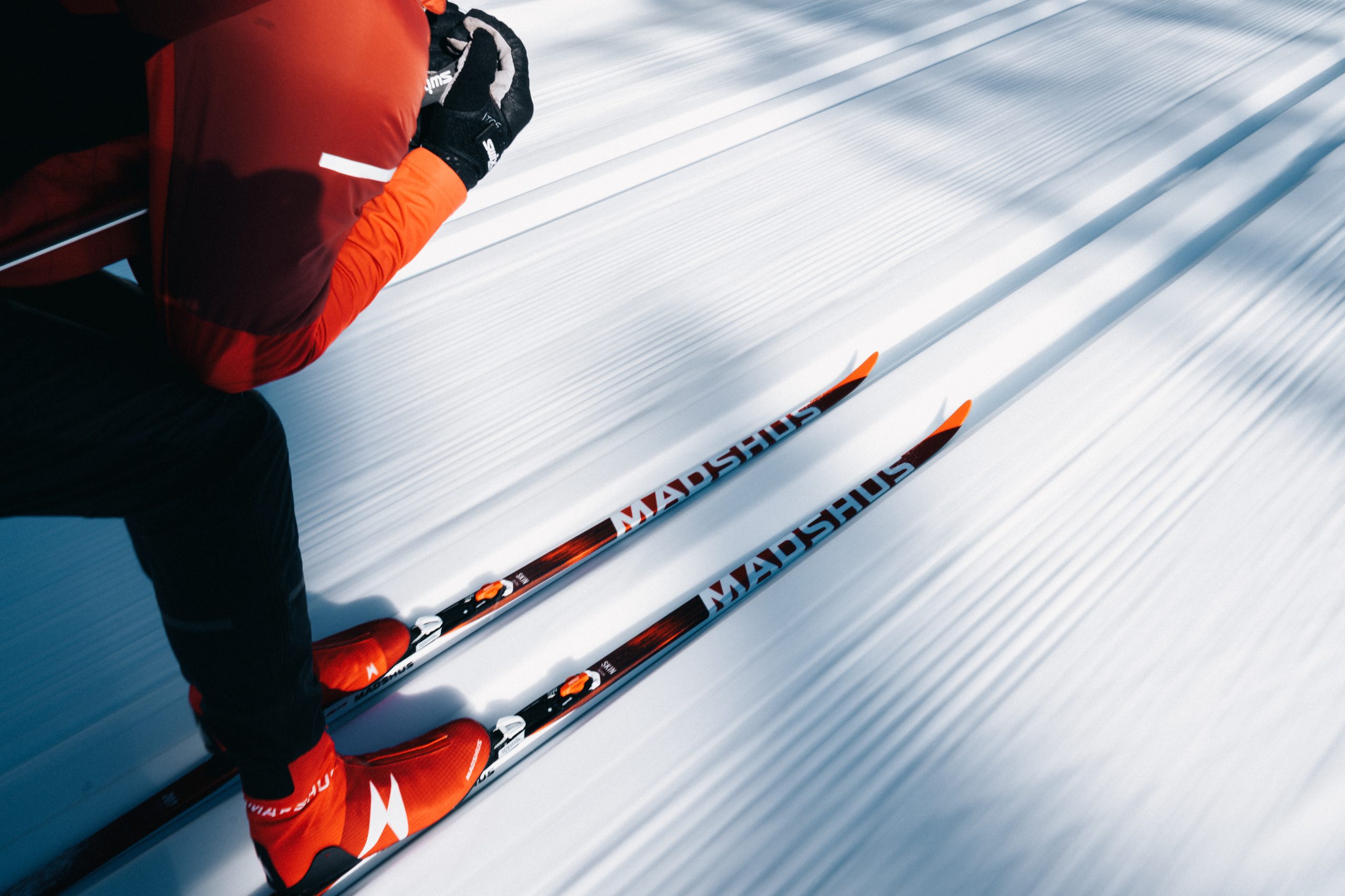
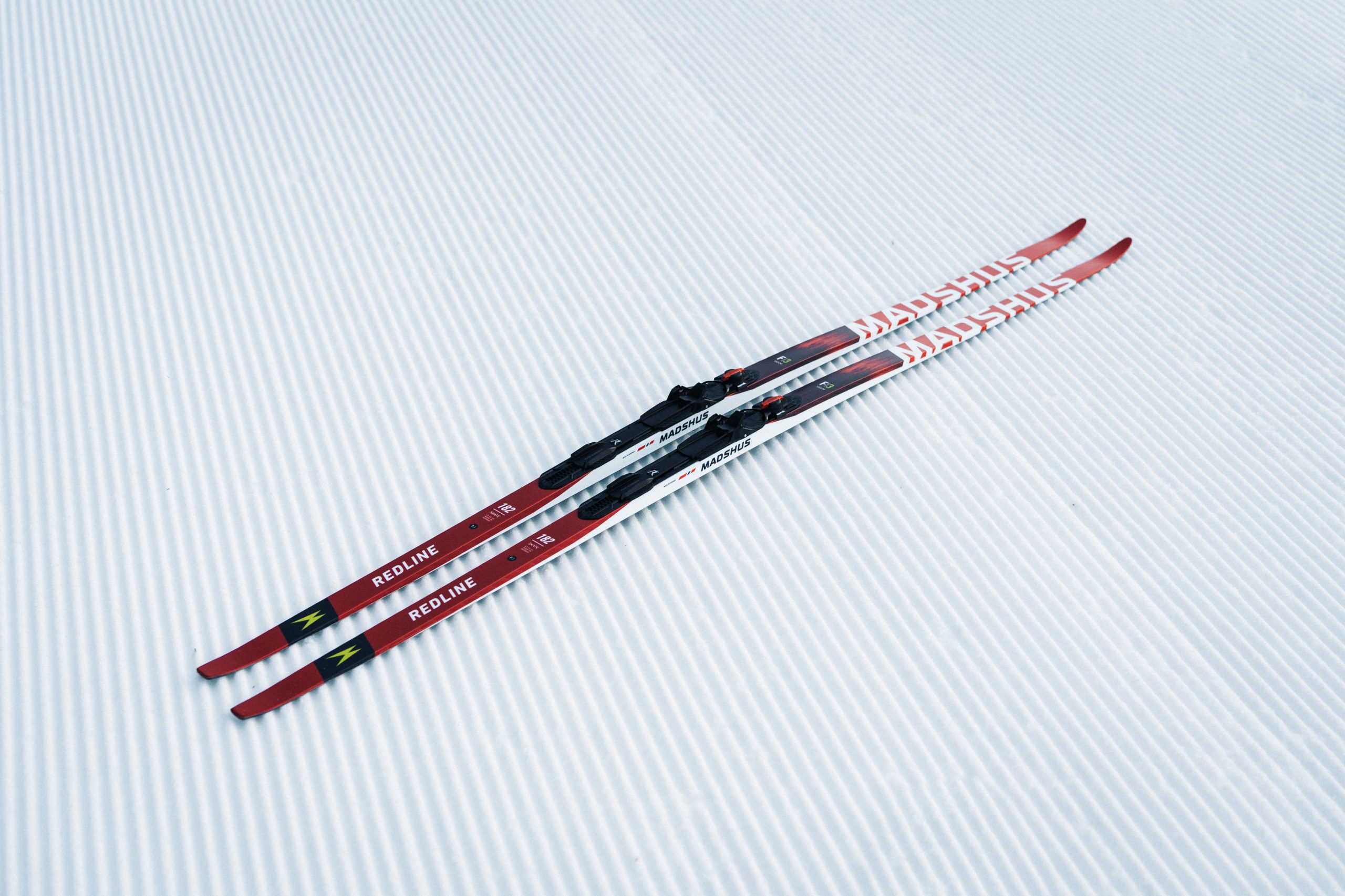
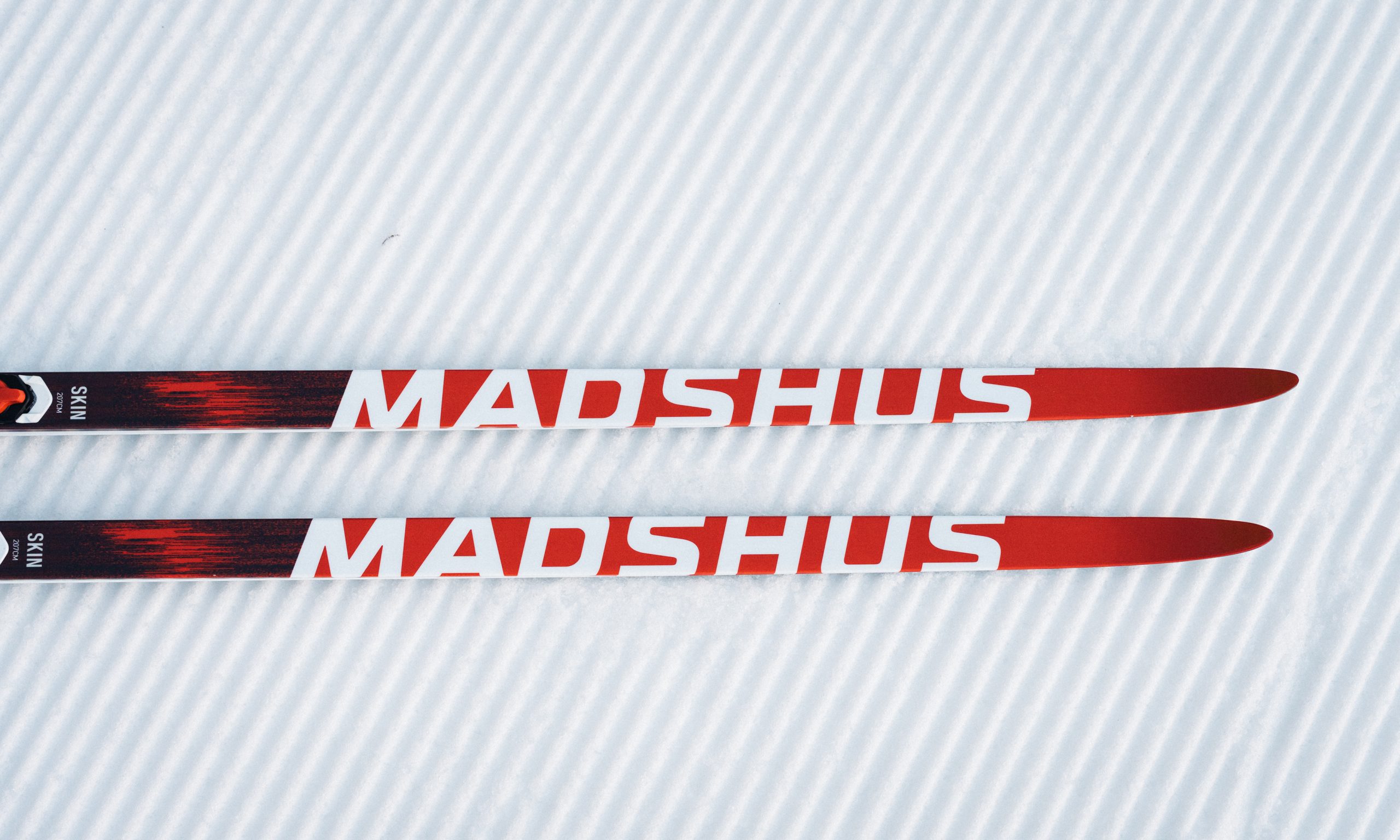
Madshus is pleased to introduce the innovation breakthrough of the all-new-for-2024 Redline collection. Redline is Madshus’ Race Engineered Development designed and built in Norway and tested by the world’s best for the next generation of racing. The all-new Redline collection has been on display during the 2024 season by the world’s best athletes with countless podiums on the World Cup, the IBU World Championships and beyond. Madshus Redline skis and boots are set to launch globally in Fall 2024.
Over four years and thousands of hours of field testing has resulted in the latest generation of our pinnacle Madshus Redline product collection. We carefully considered the needs of skiers to craft a light, responsive ski built to meet the demands of the world’s fastest athletes. Our passion for craftsmanship and racing performance has always been at the forefront of our brand and we are looking forward to passing this on to every skier, everywhere.
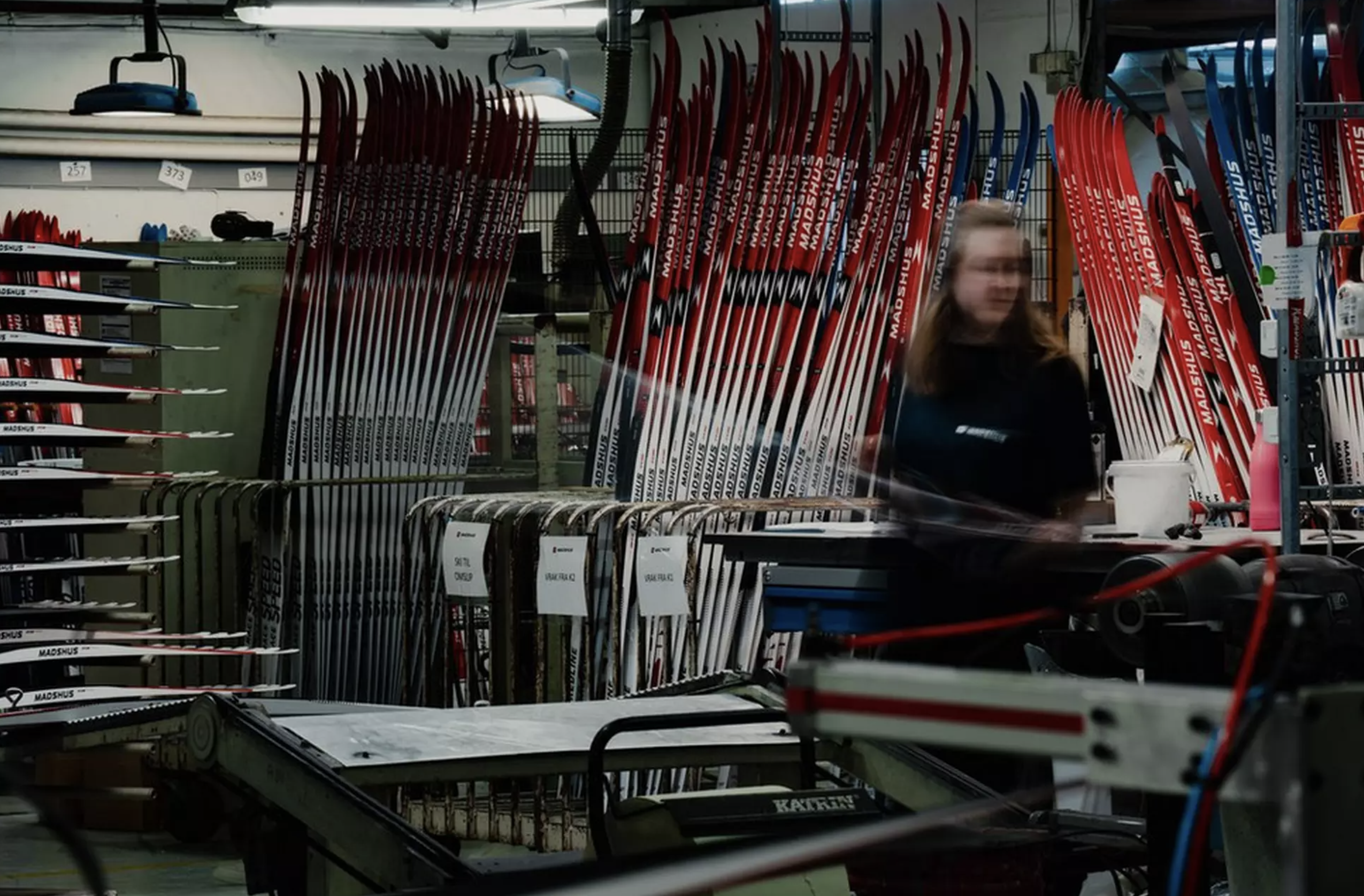
Founded in Norway in 1906, Madshus relies on 118 years of experience developing the most innovative products in the market. At the core of the brand is a racing-led focus from Department 19, at the heart of the Madshus factory, where great innovations are born. Our attention to detail, and vastly experienced team building the skis in Norway, has allowed for constant innovation and the use of the highest quality materials.
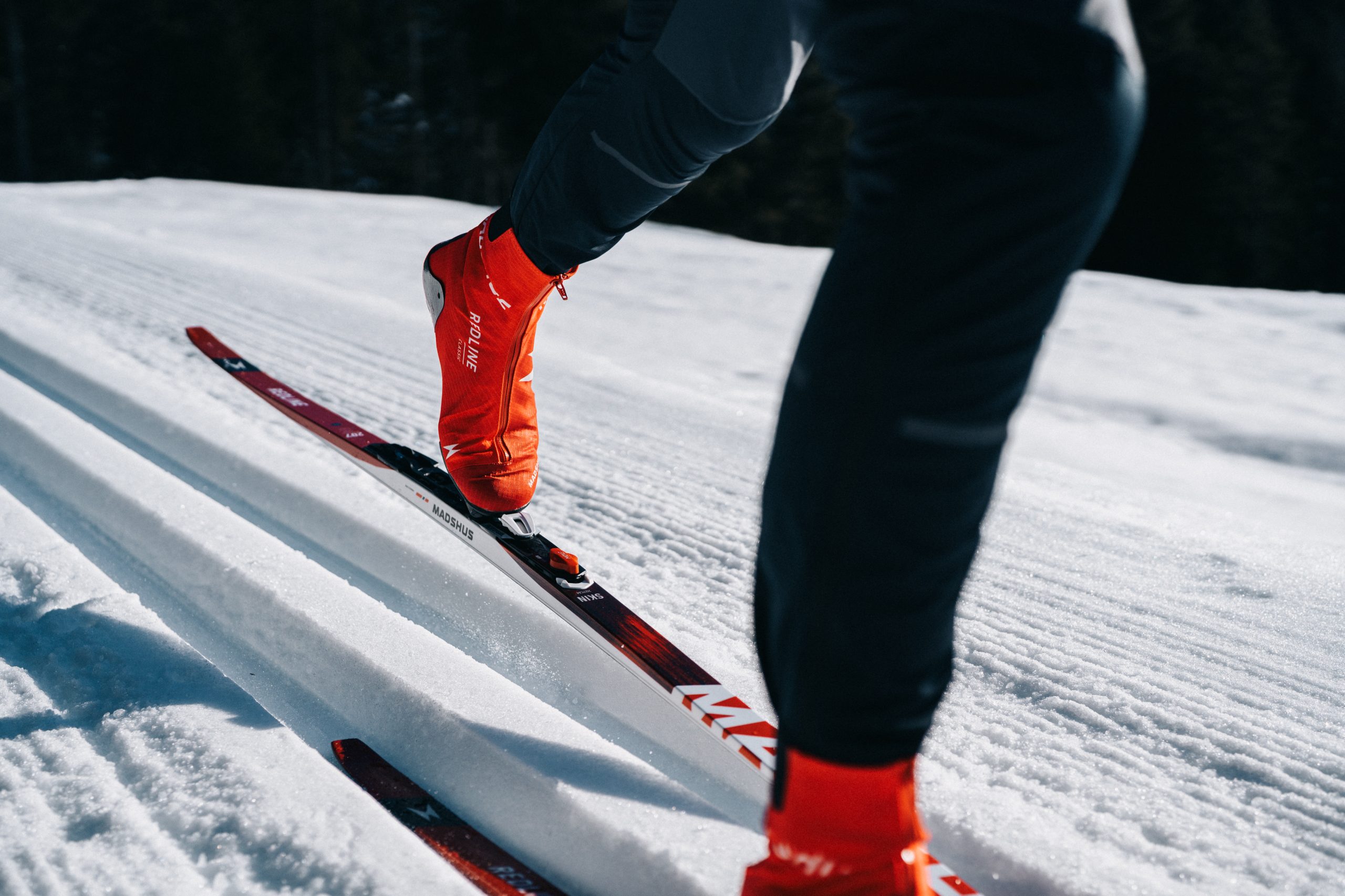
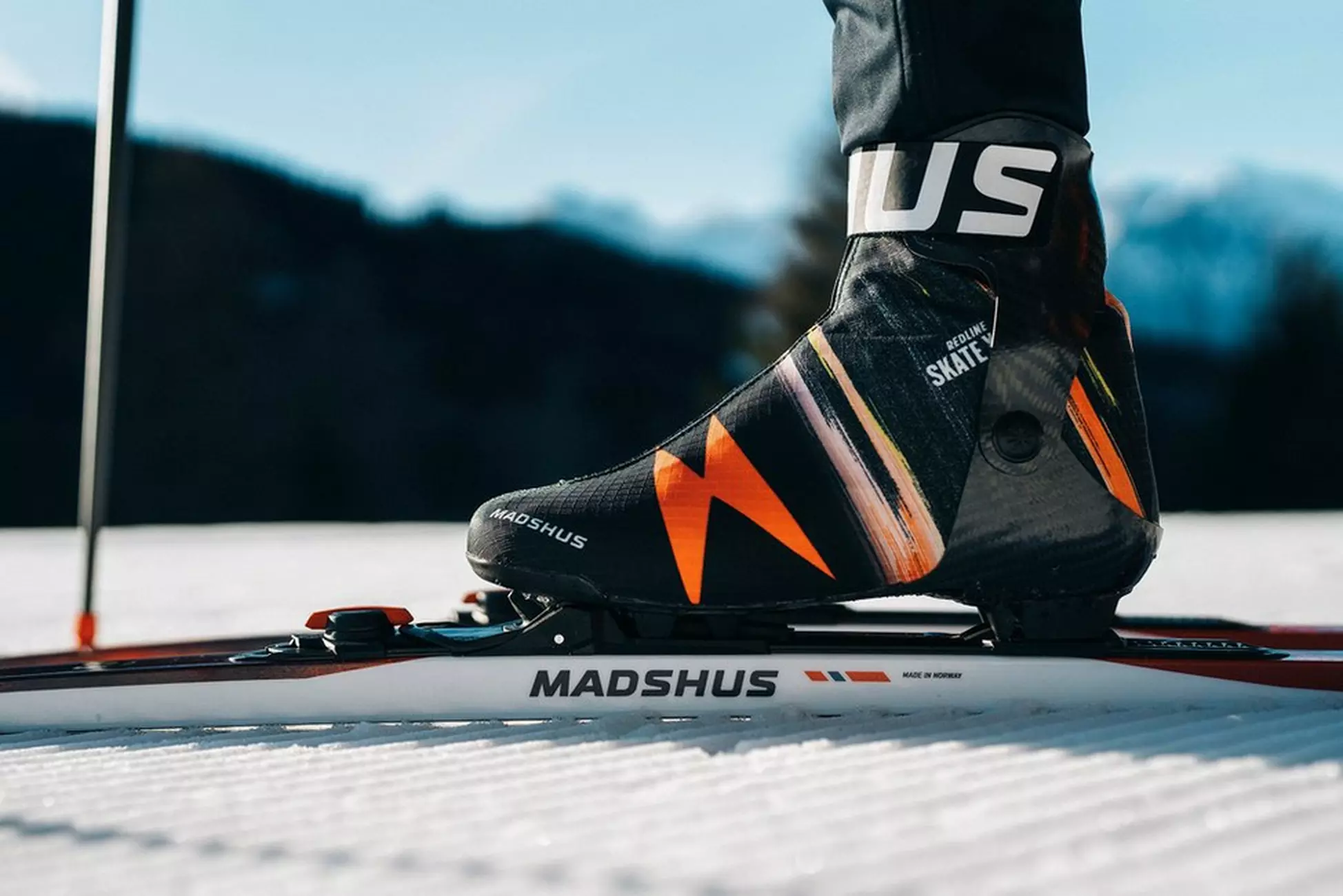
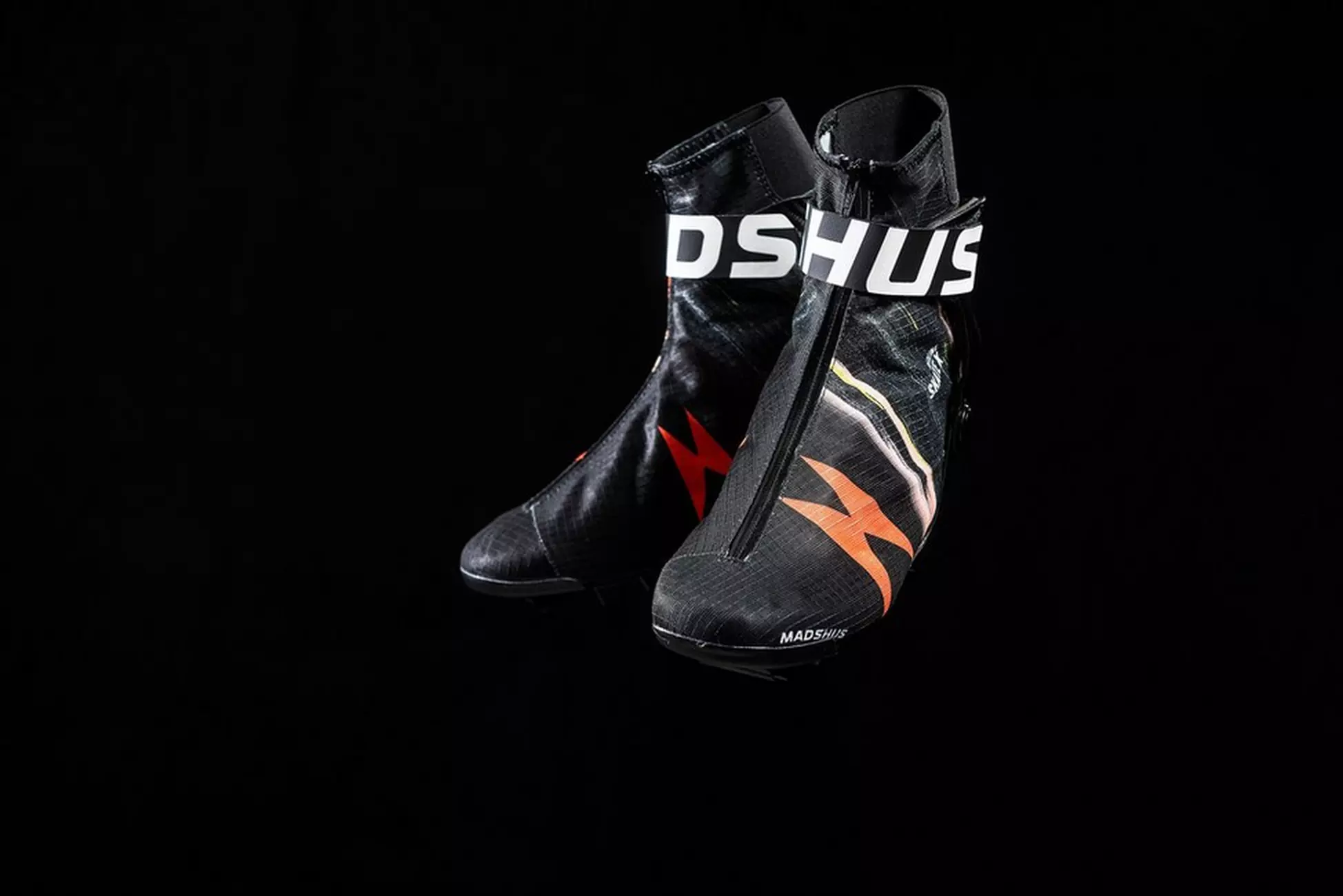
Additionally, Madshus Redline boots are experiencing an innovation revolution of their own. Designed and developed in Italy at the Elevate Outdoor Collective Footwear Center of Excellence, the entire Redline boot collection has been re-imagined with fit, stability, power, control and material advancement in mind. Featuring new technological updates like the RED Carbon Chassis, the Madshus Carbon Cuff and the Madshus Race Wrap 2.0 Innerboot, the result is a boot collection designed for improved performance with Redline skis.
“We are beyond proud to announce the latest generation of Redline which has been meticulously designed and race proven. Our relentless pursuit of excellence and dedication to products crafted by athletes, for athletes is at the heart of what we do every day at Madshus,” states Bryan Cook, Madshus Global Brand Director. “We look forward to adding to our podium count at the highest level of the sport as well as inspiring every skier to find their own limits,” adds Cook.
About Madshus
Founded in Norway in 1906, Madshus is the world’s first ski brand and has been innovating cross-country skiing ever since. Madshus combines advanced technology, craftsmanship and innovation centered around the state-of-the-art Madshus factory in Biri, Norway to produce the fastest and most reliable cross- country skis in the world. Madshus stands strong as an important performative brand in the Elevate Outdoor Collective portfolio of the world’s leading winter sports brands.
INTRODUCING SKATEX – THE BEGINNING OF A SKI REVOLUTION
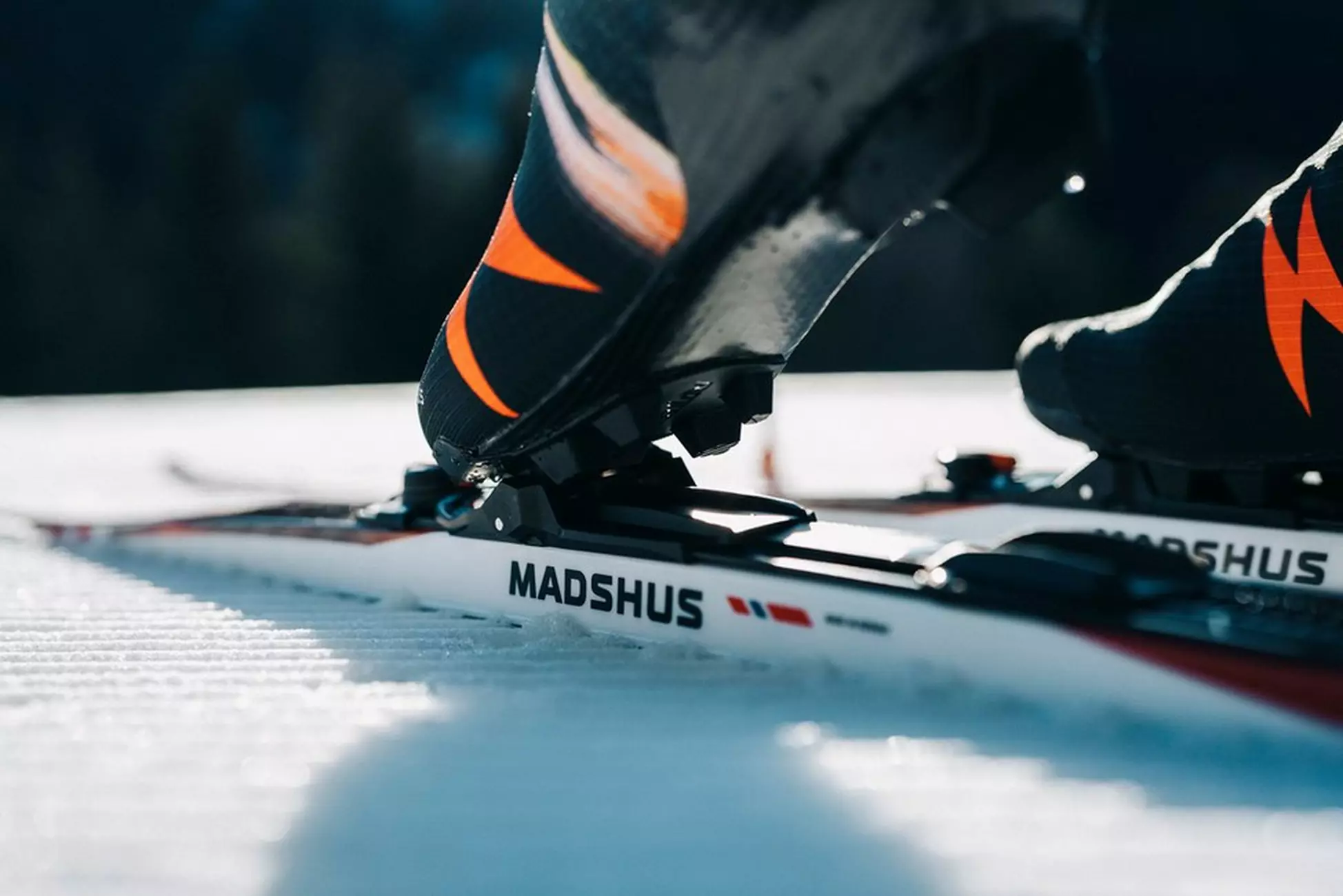
Madshus and Rottefella are pleased to announce, after many years of development, the introduction of a revolutionary new system designed specifically for skating, SkateX. The two iconic Norwegian cross-country brands joined forces on the project to innovate the sport to new levels. The Redline Skate X boot and Rottefella SkateX binding system is set to launch globally in Fall 2024.
The innovation of SkateX is revealed as a completely new binding and boot system and the first ever designed for skating. Where the SkateX innovates is with a new connection point between the binding and boot moved further under the foot. When the boots are attached this way, more energy is transferred through the leg and foot into the snow. The result of this new connection is improved skating through a more powerful and stable stride.
The SkateX system has been subject to rigorous field testing and technical validation. Madshus and Rottefella have conducted tests on the system in collaboration with elite athletes, teams and institutions. In particular, Ove Sollie and the Norwegian School of Sport Sciences (NIH) have tested the SkateX system. Sollie confirms that SkateX can lead to significantly increased speed in a wide variety of conditions.
Founded in Norway in 1906, Madshus relies on 118 years of experience developing the most innovative products in the market. This time working in conjunction with Rottefella, our fellow Norwegian partner, has been a true testament to teamwork and dedication. The work both brands, across multiple teams, have put in to bring this innovation to the market is an example of putting our heritage, collective knowledge and passion into a product.
“As the original cross-country ski brand since 1906, we are dedicated to building the most innovative and functional products for every cross-country skier”, says Bryan Cook, Madshus Global Brand Director. “This collaboration with Rottefella on the SkateX system is yet another example of our desire to continually push the boundaries of what is possible,” adds Cook.
About Madshus
Founded in Norway in 1906, Madshus is the world’s first ski brand and has been innovating cross-country skiing ever since. Madshus combines advanced technology, craftsmanship and innovation centered around the state-of-the-art Madshus factory in Biri, Norway to produce the fastest and most reliable cross-country skis in the world. Madshus stands strong as an important performative brand in the Elevate Outdoor Collective portfolio of the world’s leading winter sports brands.
Madshus USA is excited to announce the hiring of Jason Hettenbaugh as the new US Sales Manager. Jason will work towards aligning sales strategies and initiatives within the overarching brand goals and product focus. He will work closely with the rest of the Madshus team to support the brand and its dealers throughout the country.
Jason has accumulated an immense amount of knowledge and experience at the highest level of the sport through his racing, coaching and industry career. Jason has been with the brand for over 15 years as a regional sales representative and has a great understanding of the market.
“Jason is the perfect fit to support our brand goals here in the U.S.,” said Bryan Cook, Madshus’ Global Brand Director. “His familiarity with the market strengthens our team and shows our dedication to growing the brand, and sport, here in the US.”
“I am very excited for the opportunity to work with the entire Madshus team in this new role. Madshus continues to push the limits of production and performance as the only dedicated cross- country brand can. I look forward to building on the tradition the brand has created since 1906 in the years to come,” added Hettenbaugh.
ABOUT MADSHUS
INNOVATING CROSS-COUNTRY SINCE 1906 Madshus has been innovating cross-country skiing since 1906. When we combine advanced technology, craftsmanship, and innovations with over 100 years of experience, the result is unique and market leading cross-country skiing equipment. With ambition and guts, we drive the evolution of the sport and are passionate about inspiring cross-country skiing memories across the globe. Every Madshus product contains the very DNA of cross-country skiing.
At Madshus we strive to share our passion to inspire and enable every skier to excel in their performance and everyday skiing experiences. The Madshus skier should experience our passion through our love for the Madshus brand, the whole sport of cross-country skiing, and in our endless drive to continuously develop the fastest and most reliable skis on the market.
Only in his third season at the senior World Cup level, Ben Ogden (USA) recently posted one of the best results for an American male in a distance race. At the 2023 Tour de Ski stage race, the 22-year-old from Vermont was sixth in the 10-kilometer classic event in Oberstdorf (GER) and the top U23-skier. Additionally, Ogden has also been in the semifinal at the World Cup four times so far this season.
Madshus caught up with the talented American cross-country skier on his ambitions for the upcoming 2023 World Championships in Planica (SLO), the keys to his rapid success and his passions outside of skiing. Oh, and his mustache.
Before we even get into your skiing, racing, goals and passions: is there a story behind the mustache? “Not really. But I had it at the 2021 World Championships in Oberstdorf, Germany. I was totally a rookie, and the older skiers in the team like Simi Hamilton and those guys thought the mustache was so funny. I don’t think it looks good, but it goes with my personality. I’m kind of a goofy guy,” Ogden says, adding that the mustache is here to stay.
“People kind of expect me to have a mustache now. And Klæbo has none, so I guess that’s one thing I have that he doesn’t. He always looks so polished. I can’t compete with that.”
Having parked the mustache issue, we moved on to business: Skiing, racing, goals and passions.
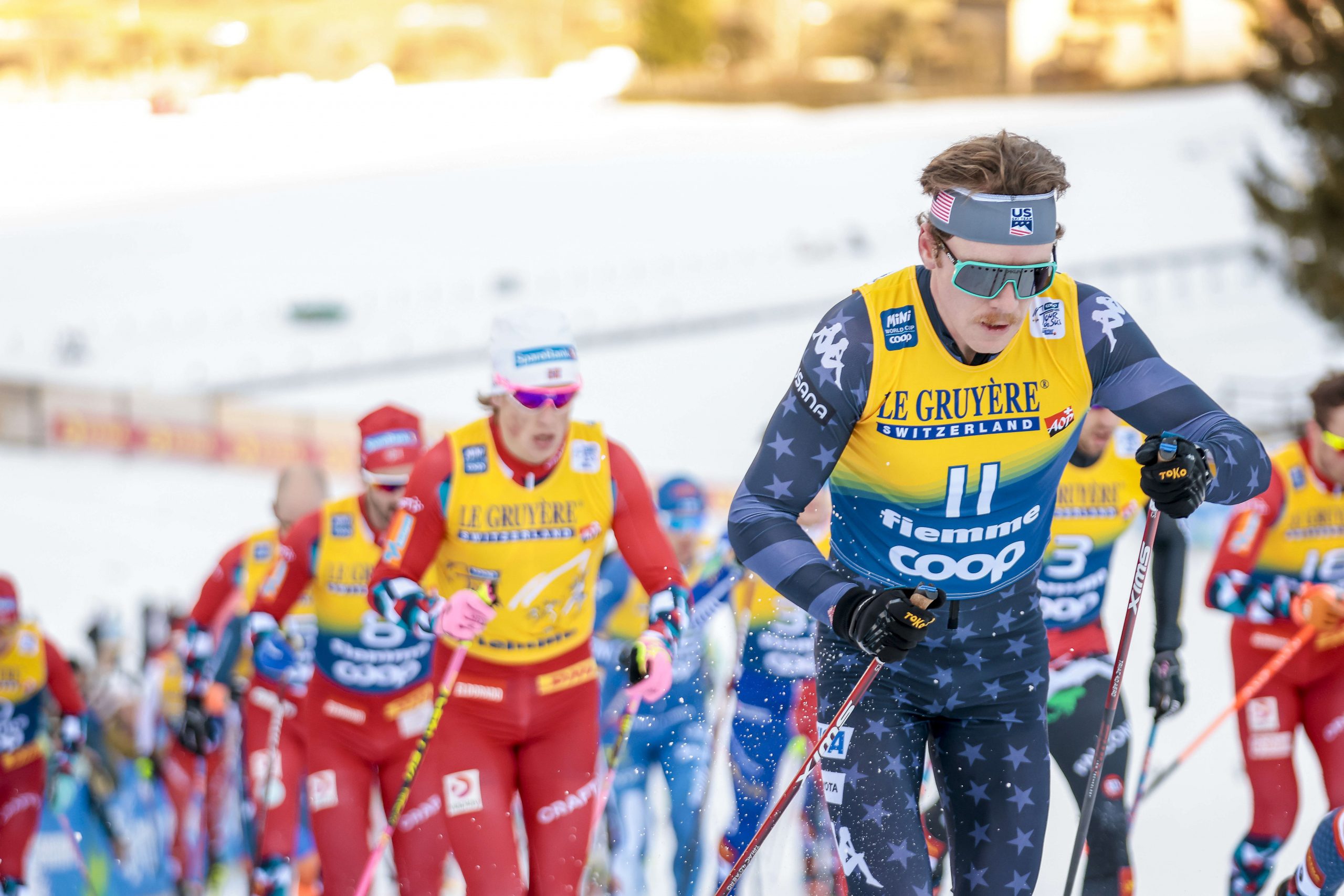
Ben Ogden (USA) at the Tour de Ski in Val di Fiemme, Italy. (Photo: NordicFocus)
You’ve made some significant improvements this season. How have you done that? “I think there are several reasons for that. One is just more time at the World Cup level. Another reason is that I’ve gained a better understanding of what I need to have good races and success. And I’ve also done some changes to my training over the summer and fall.When you improve in all these areas and see improvement in performance, you also gain confidence. And confidence is huge in racing.”
In regards to training,Ogden points outa fews pecific areas he has focused on coming into this season, which he believes are keys to his massive jump in performance: Fitness and technique.
“You need to be extremely fit to succeed in sprint races. So, I’ve pushed my interval sessions quite a bit. Now I do 60 to 70 minutes of intensity more often than before, when I used to do 40 to 50 minutes. Increasing the intervals helps develop the ability to ski technically well with more fatigue,” Ogden says.
Another big improvement is getting a better grip on his equipment.
“Last year, I had a lot of new skis but I didn’t know enough about each pair. This season I have spent a lot of time testing and I get a lot of support from Madshus in that area. It’s a huge benefit. Now I always have great skis every time,” says Ogden, explaining that testing is both an art and a science.
Leading up to the current season, he’s been hard at work at learning both the art and the science, understanding the technology and the specific properties of the different pairs.
“It used to be that testing skis before races was pretty intimidating to me. The wax technicians sent me out with like five pairs of skis, and expected me to come back to them with a lot of information. But I didn’t really know what to look for. Now I do, and that makes a huge difference,” Ogden says.
Are there any areas you are working on right now? “For sure. But mental toughness is a huge one. The best skiers out there, those who are constantly winning and on the podium, are truly unsatisfied if they don’t win. That attitude makes a huge difference,” says Ogden, and continues:
“For me, sometimes if I make it to a semifinal and I’ve skied as hard as I could, there is a little voice in the back of my head that’s saying ‘Hey, if you don’t make it any further, you’ve still had a good day.’ But at the World Cup, you can’t allow yourself to be satisfied like that if you want to win.”
On luck: Good luck and bad luck is not coincidence While luck is certainly a factor in racing,Ogden believes that most times what looks like luck, really isn’t.
“The guys who always are on the podium just don’t seem to get caught up in crashes and pole breaks and mishaps. I don’t think that’s just luck. They have this ability to just always claim the best position.And when you get the position you want, you are a lot less likely to get into break poles and crash.That’s something you gain from experience. So every time I do a race, no matter how I finish, that’s another experience, and something I can learn from,” Ogden explains.
With all the improvements you’ve made, what are your expectations for the 2023 World Championships in Planica? “I haven’t set any specific goals, but I have my eyes on the classic sprint. I would like to get to the final. I’ve been close a few times before this season, so I want to put together everything I’ve learned and make my first classic sprint final. If I do well, I hope I get selected for the team sprint too.”
Is there a chance you will make it to the podium in Planica? “I’ve surprised myself before, but I think making it to the final is more realistic.”
The 2023 World Championships in Planica (SLO) take place from February 21 to March 5.
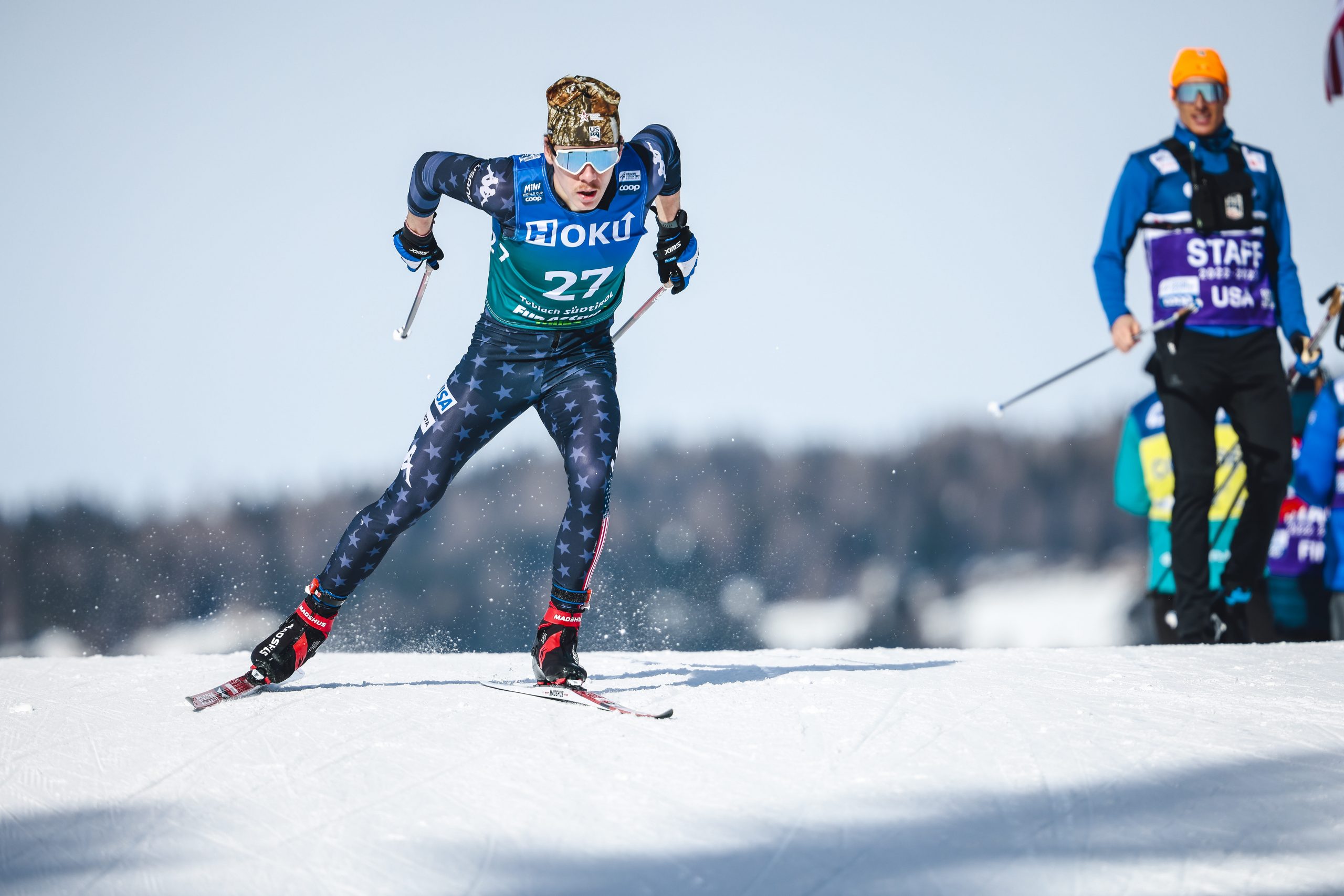
Ben Ogden (USA) racing the World Cup in Toblach, Italy. (Photo: NordicFocus)
Racing to get a break from racing That same positive attitude also helps Ogden stay motivated and fired up about racing on the World Cup circuit, week after week.It’s also why he loves coming home periodically to get a break from it.
“Racing at home and doing local events is just pure fun.It’s where I get to see my friends again, catch up and do theIt charges me way more than it drains me, and I get back on the World Cup with lots of good energy,” says Ogden.
Now in his last year of collegiate racing eligibility, Ogden hopes to come back to the United States in March to defend his national titles and help his school win the 2023 NCAA team title.
Ben Ogden (USA) going for it during an individual sprint race in Les Rousses, France. (Photo: NordicFocus)
The BBQ-truck
Another reason why Ogden enjoyed coming home to race after the Tour de Ski, was the opportunity to show off one of his last projects: His barbecue-pickup truck.
“Last summer, my friends and I found this old wreck in that belonged to my dad. So, we pulled it out of the woods and got it on the road again. It was a lot of work and long nights in my dad’s shop. When we were working on it, we also found this big propane tank, and decided we wanted to use it to turn the bed of the truck into a rolling barbecue,” Ogden says, explaining that it was well worth the effort and labor.
“When I was home racing the regional NCAA races in January, a race series that we call the Carnivals, we brought out the truck and barbecued steaks, pork, spare ribs, burgers and shish kebabs at the events. And we got quite the turnout of spectators. It was awesome.”
Do you have any other hobbies, besides skiing, racing and restoring old trucks? “Oh yeah. Lots. But I really like welding. In the summer I like to make little skier figures out of scrap metal that’s laying around. I really enjoy that.”
Ben Ogden (USA) during training at the Tour de Ski in Val di Fiemme. (Photo: NordicFocus)
Editor’s note: FasterSkier is fortunate to have the partnership support of Madshus.
The answer: the lightest, most advanced performance equipment to fuel your ambitions.
At Madshus, we firmly believe in trickle-down technology, because everyone should be able to enjoy the pinnacle of engineering, material science, research and development regardless of what their dreams are.
Madshus engineers are constantly working on innovative solutions and experimenting with new constructions, materials and methods to build the lightest, fastest skis and gear for all conditions. Working closely with the best athletes in the world, they design, develop, test and retest every product and never settle for compromises.
Curious about how Madshus engineers are working and how research and development is happening?
Just like World Cup racers who are chasing the tiniest margins and trying to shave split seconds off their times, everyday skiers depend on the reliable performance, lightweight construction and the best materials.
That’s why our engineers take the best features from our medal-winning World Cup skis and boots, adjust and optimize them to address the specific needs of everyday racers. World-Cup proven, but slightly adapted to better suit the needs of performance-oriented skiers and racers at various levels.
Because everyone should be able to enjoy the pinnacle of engineering, whether you are chasing Olympic medals or local bragging rights.
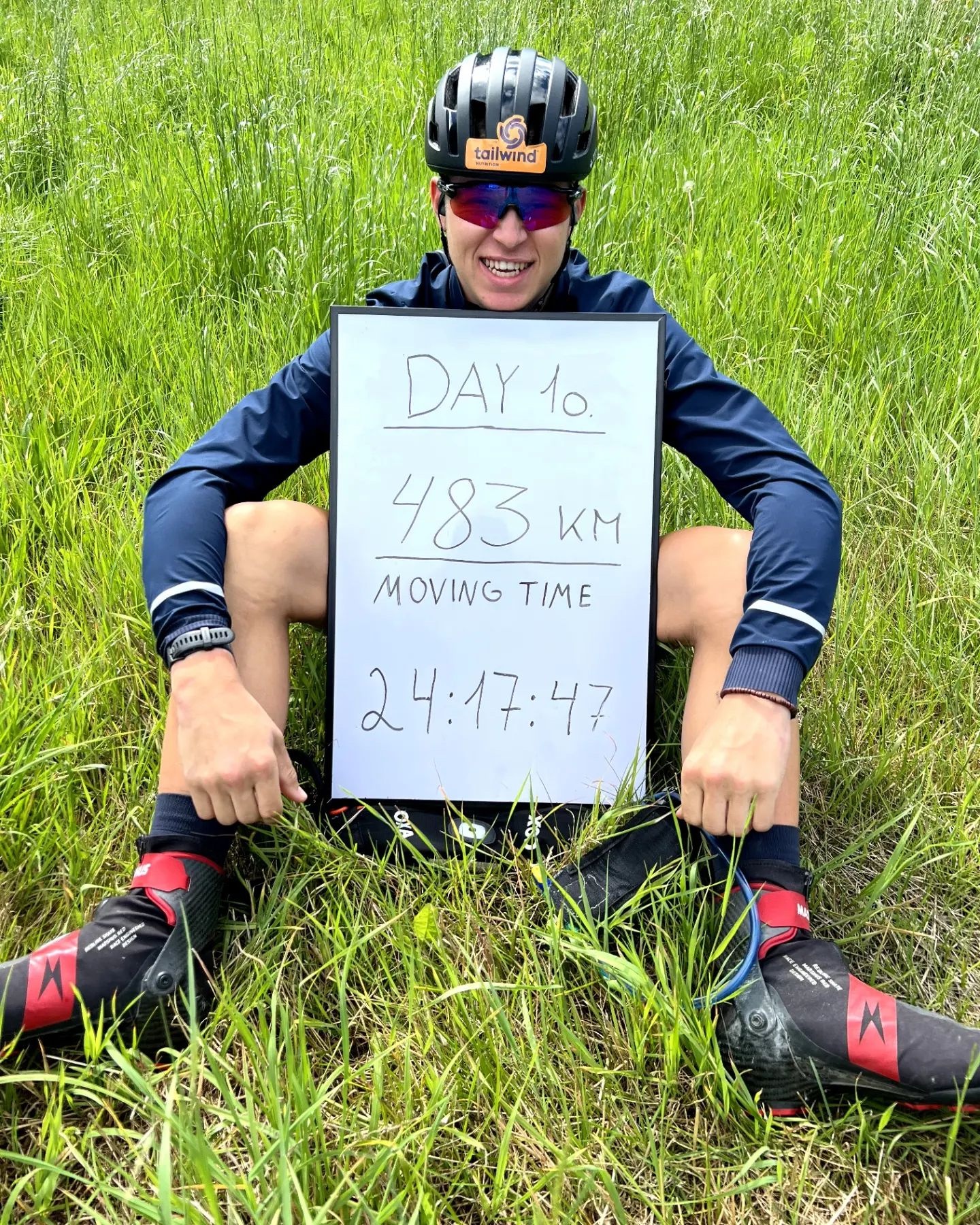
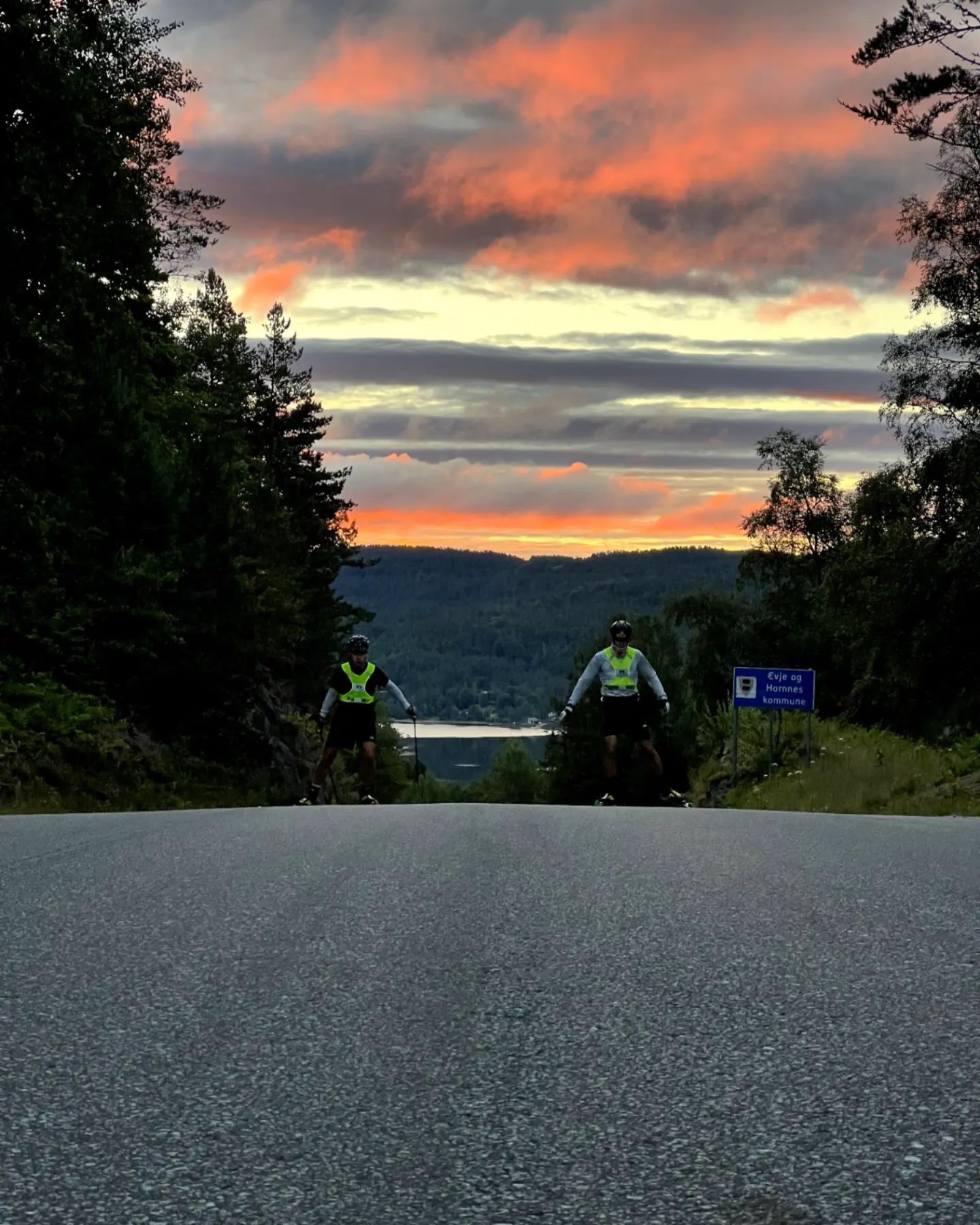
Madshus athlete Kevin Ramsfjell polished off the 2,600 kilometers from Nordkapp to Lindesnes in amazing 10 days and 10 hours.
Kevin Ramsfjell literally demolished the previous world record for roller skiing Norway lengthwise, which was 21 days. The 22-year-old Norwegian did it in 10 days and 10 hours: 2,600 kilometers and more than 30,000 meters elevation gain. And he didn’t even have a single blister or injury.
“I’m so impressed with my equipment. I was using the same boots the entire way, no problems. I didn’t have any blisters or hotspots on my feet, which I consider quite amazing,” Ramsfjell says.
Crushed his own target Cruising into Lindesnes after 10 days and 10 hours, Ramsfjell didn’t just break the previous record by a landslide, he also crushed his own target.
When Ramsfjell set out to beat the record for roller skiing Norway lengthwise from Nordkapp to Lindesnes on July 16, he wanted to cut the existing record of 21 days to 13 days. The original plan was to cover 200 kilometers per day, at an average speed of 20km/h.
But halfway through the 2,600-kilometer endeavor, Ramsfjell decided to cut the already ambitious 13-day target down to 11 days. At that point, he had logged significantly longer distances each day so far, despite rain and headwinds every day of the journey.
On the last leg, Ramsfjell put in 483 kilometers in less than 24 hours.
“I wasn’t really that tired, but the last 50 kilometers felt really long. I was so close but not quite there, I had a lot of head wind, and I just felt like I wasn’t moving at all,” Ramsfjell says after crossing the finish line on Tuesday, July 26.
Madshus caught up with Ramsfjell right after he finished the last stage.
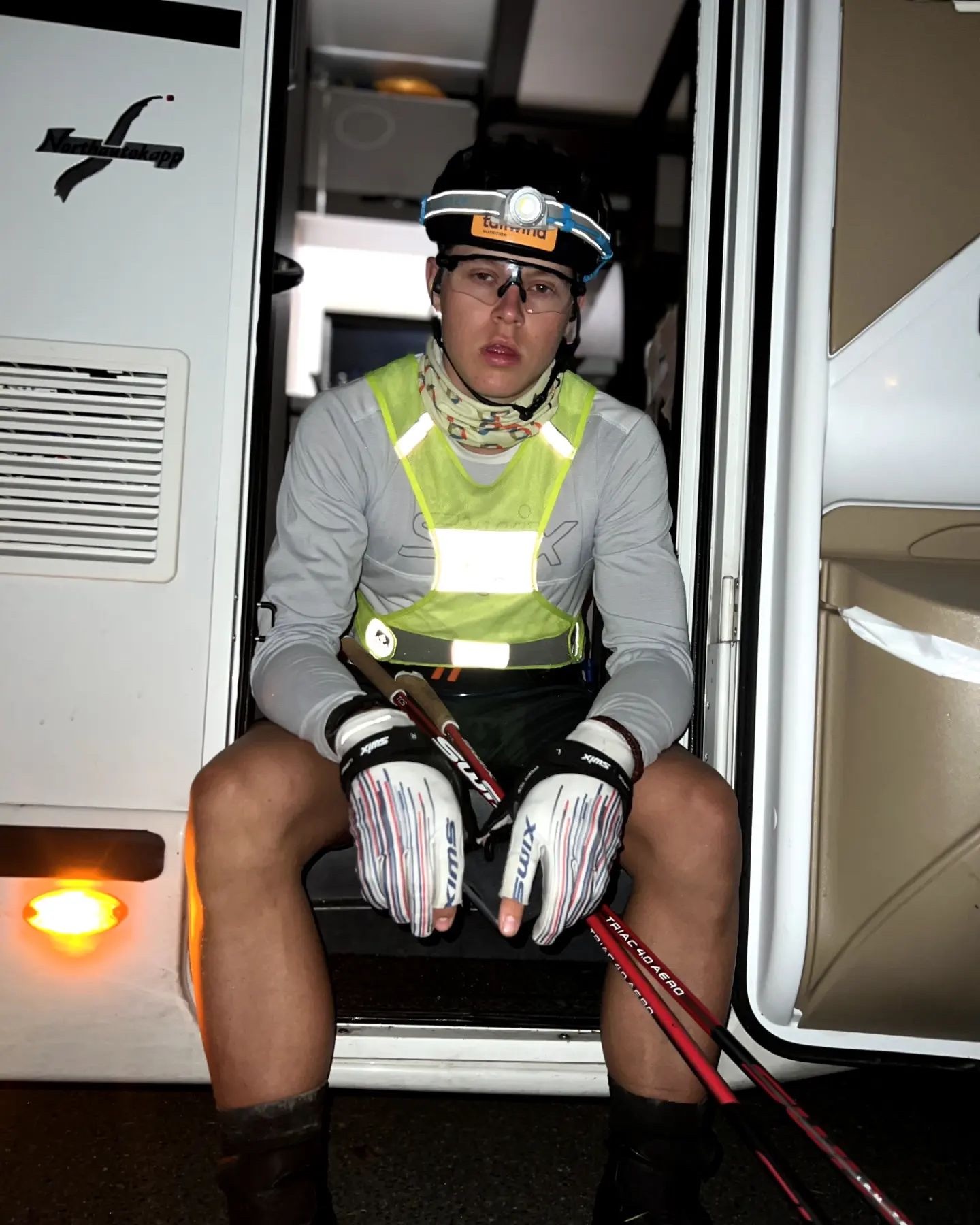
On most of the days, you rollerskied plus/minus 250 kilometers. What was it like to do 483 kilometers in one stage? “It wasn’t that bad. I felt fine, I didn’t have any blisters or pain anywhere. I was mostly just really sleepy, especially during the darkest part of the night. Then it was cold too. But I used the cold to stay awake. Instead of putting on more clothes, I used the discomfort of being chilled to stay awake. And once the daylight came back, everything was fine and I wasn’t tired anymore.”
What do you consider the highlight of the journey?
“Above all, I am proud of managing to pull off such a long stage on the last day. I could have played it safe, stuck to the plan, divided the last distance into two chunks and still made my 11-day target. But I know I would have regretted not having tried to make it in one stage.”
What was the key to pulling off this jaw-dropping record? “I had lined up everything specifically with rollerskiing the distance as fast as possible in mind. I had my dad driving behind me in a campervan the whole way, all the gear and logistics figured out ahead of the journey, as well as an ambitious overall plan for the distance in order to set the new record. Plus, I have a really solid training base from years and years of rollerskiing, so even if I never did any superlong rollerski workouts before this trip, I was physically well prepared.”
Is there anything you would do different if you were to do it again? “I don’t think I would have scheduled the project for the middle of the summer vacation. There was so much traffic. Even though I tried to cover most of my distance during the night, there were several days where I actually had to stop sooner than I would have liked to because there were so many cars on the road.”
What is your next project now? “To change my clothes and get an ice cream.”
FACTS: Roller skiing Norway north to south 2022
Who: Kevin Brekken Ramsfjell (22)
What: Set a new record for roller skiing Norway lengthwise
Elite skiers generally put in from 80 to more than 100 hours of training per month from June through September, in order to build a solid endurance base for the ski season and every mile matters.
However, logging big hours for weeks on end makes it even more crucial to pay keen attention to the balance between easy distance and intensity, as well as variety to keep things fresh and prevent injury and overtraining.
So exactly what does this look like?Madshus cross-country skier KarolineSimpson-Larsen, whowas just named to the Norwegian national team for the 2022/23 season, explains how she designs her summer training plan and the distribution between distance workouts, strength sessions and other activities.
“I love summer and dryland. This is when winter starts, and when I really get to put in the big hours,”Simpson-Larsensays.
For her, that usually amounts to around 90 hours per month in July, August and September. Accordingly, the bulk of these hours are easy distance, long workouts that provide the endurance base for the race season. “I do A LOT of easy distance in the summer, and I try to mix up the workouts by doing different kinds of activities, so I vary between roller skiing both skate and classic, running and even occasionally totally different activities to keep things fresh” she says.
And while volume and easy distance is the theme for the summer, Simpson-Larsen also includes intensity sessions on a regular base. But just like the workouts themselves, the intervals are longer in the summer.
“This time of the year, I tend to do longer intervals but not as hard. I generally stay at or below threshold in the summer, and make sure I don’t bury myself completely with the hard workouts. I know that other skiers like to go harder than I do even in the summer, but I like to save the shorter, harder intervals for closer to the season,” Simpson-Larsen explains.
Finally, we asked the promising 25-year old to share her favorite dryland workout.
Among all these fun options, what is your favorite dry land workout?“I love running in the mountains. So, a 3-hour easy distance run up above tree line on a sunny summer day is probably my absolute favorite workout.”
Why do you like it?“These long runs energize me. I love being outside in nature and just enjoy the scenery, and at the same time get a great workout. And I love the convenience of running. You just put on your running shoes and go.”
What are the specific training effects?“Long, easy over-distance sessions are great for building that general endurance base that you need for the race season. The key is to go easy. So, if I get to sections that are really steep or particularly gnarly, I switch to hiking in order to keep the heart rate and effort down. These kinds of workouts teach your body to be able to go for a long time, but over time, I also feel like they even contribute to increase your overall capacity and your ability to go harder on intervals and in races.”
How often do you do it?“In the summer, I usually do 3-hour workouts at least twice a week.”
Are there waysto vary the workout?“Yes, tons of options. Obviously, you can run a different route, choose different kinds of surfaces, like soft trails, mountain trails, gravel or dirt roads. Or you can choose flatter or steeper terrains, rolling terrain or summit bids. Or you can switch up the running with roller skiing.”
Now, go get those hills and be ready to cruise even farther, faster and with more ease when the snow flies!
They say it ain’t over till it’s over, and for the Madshus racers that was true in a couple of different ways this weekend. Check out the late-season action.
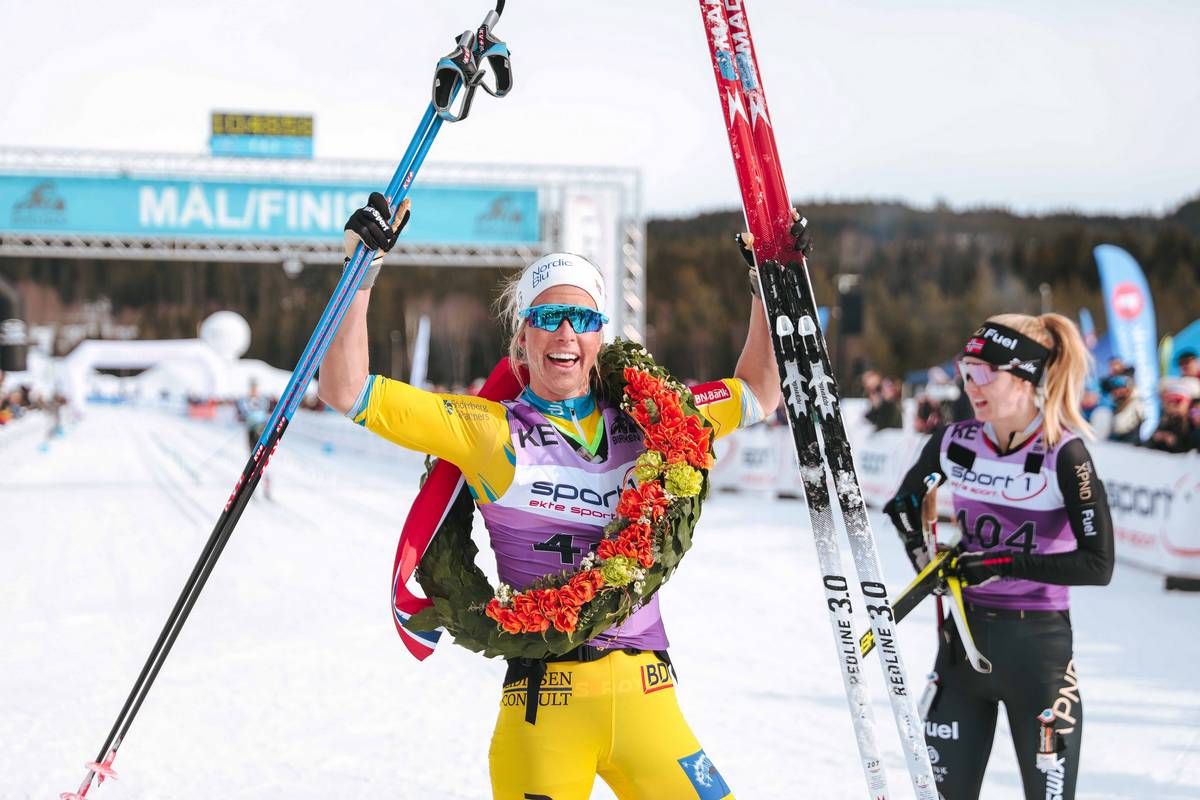
Starting off with the Ski Classics long-distance series, Astrid Øyre Slind posted her second impressive victory in a row. The 33-year-old Norwegian fought tooth and nail to the finish line in Birkebeinerrennet, beating two-time Olympian Therese Johaug by a second in a thrilling sprint finish – and writing history in the process.
Øyre Slind became the first female to win the brutal 54-kilometer race from Rena to Lillehammer on double-pole skis, climbing two substantial mountains entirely without kick wax.
Madshus biathletes wrapped up the 2022IBU biathlon World Cup with three days of racing in Holmenkollen (NOR).
On a roll since the Olympics, both Sturla Holm Lægreid and Sivert Bakken fed off the massive home crowd support. They pulled off nearly half a dozen of podiums, including a maiden World Cup victory, and a crystal ball for the overall mass start season in three days.
On Friday, Lægreid started off the weekend with a victory in the sprint on Friday. German veteran Benedikt Doll hauled into fourth place, and rising star Sivert Bakken (NOR) rounds out the top 15 on the first day of the World Cup final.
On Saturday, Lægreid posted his second podium in two days. Despite missing once on the second prone shooting and twice on his last stop at the range, the 25-year-old was oh-so-close to another victory in the pursuit. Lightning fast on the course, Lægreid finished third. Bakken was seventh and Doll ninth.
On Sunday, Lægreid is second in the mass start, losing the sprint finish by half a second to Bakken in the final World Cup event of the season.
For Bakken, Sunday’s victory was his first ever at the World Cup level.
“That was crazy. It was such a hard fight with Sturla and I was so tired. But I thought I would beat him in a sprint, so when I was still right on his tails coming in to the last hill, I decided I just had to give it a try,” Bakken says after his victory.
The 23-year-old, who represents the Norwegian development team, also snagged the overall mass start World Cup.
Lægreid is certainly no sore loser. Lægreid wins the overall U25 World Cup and moves up to second place in the overall World Cup.
“I know that Sivert beats me if it comes down to a sprint finish. We both know that. He’s done it a hundred times before,” Lægreid says and continues:
“I am super content with my second place. I moved up to second place in the overall World Cup and I win the overall U25 World Cup, and I get to do it in Holmenkollen with my family in the stands. This was the first time ever they got to see me live in a World Cup, this was amazing.”
Additionally, Madshus veteran Anaïs Bescond (FRA) announced her retirement from World Cup-level racing during the World Cup final in Holmenkollen. After 13 years of racing on the IBU World Cup, the 33-year-old has 13 World Cup podiums, three Olympic medals, including one gold (2018), and eight World Championship medals on her resume.
Sturla Holm Laegreid (NOR) – IBU World Cup Biathlon, cups, Oslo (NOR). (Photo: NordicFocus)Sivert Guttorm Bakken (NOR) – IBU World Cup Biathlon, cups, Oslo (NOR). (Photo: NordicFocus)
While new skin skis are factory-ready to be enjoyed right out of the box, three simple steps will help maintain the perfect kick and rocket glide on your skin skis: prep, clean and glide.
And none of this is rocket science or time consuming.
Curious about different types of skin skis and how skin skis work? Let’s go skin deep
With a lineup of no less than 13 different skin ski models, there’s a Madshus skin ski perfectly suited for every dream, whether you’re aiming for the World Cup or the mountain tops.
Prepping
Treating the skins with a skin-ski specific product to prevent the skins from icing up and globbing, and also helps improve overall glide in certain conditions.
The skin prepping products resemble the liquid glide products that have been available for years, and the effect of these would be similar. However, keep in mind that skins require products without harsh solvents to prevent damaging the glue that keeps the skin attached to the base. So, if in doubt, a skin-specific prepping product is always a safe option.
Skin ski prepping products are available both as liquids/spray-on bottles and as pretreated wipes. Simply spray on or wipe on, let sit for a couple of minutes to dry, and you’re set to go.
When should you prep your skins? Prep the skins as needed, but using a prepping product is particularly useful in wet conditions, to help prevent the skin from soaking. And if you feel that the skis don’t glide as well as they used to, applying a prepping product to the skins can help speed up the skis.
Cleaning
The skins on your Madshus skin skis are made to be dirt-resistant and durable, and generally last for several hundred kilometers. But cleaning your skis when needed will help maintain both grip and glide.
When should you clean your skins? If you see obvious dirt or debris that has collected in the fabric, use a skin ski-specific cleaning product. These products are specifically formulated to efficiently clean the skins without hurting the adhesives that fix the skins to the base.
You generally don’t need to clean your skins after each time you ski, but if they look dirty or feel draggy, cleaning the skins will improve the glide.
Cleaning is particularly relevant if you’ve skied on warm and wet or icy tracks where a lot of people would use klister, because your skins can pick up some of that dirt. Just check your skin after your ski and see if it’s needed.
If you see areas of the skin that seem duller than the surrounding skin, or the texture appears flattened, that is often a sign that you should clean the skin.
Cleaning is a simple operation. Be sure to use skin ski-specific cleaners, for the same reason as with the prepping products: the skin-specific products don’t have any harsh solvents that can damage the skin or dissolve the glue.
Traditional base cleaner contains pretty strong solvents, which can cause the skins to detach from the base.
Skin ski-specific cleaners are available both as spray-on/liquids and in pretreated wipes.
Glide waxing
Just like traditional cross-country skis, skin skis benefit from glide waxing the glide zones. This is done exactly the same way you would waxable skis, using either a traditional glide wax applied with a wax iron or a liquid glide product.
When should you glide wax your skin skis? As a rule of thumb, it’s always nice to start the season with freshly waxed skis. Then rewax as needed.
With typical use in typical conditions, reapply glide wax after using your skis five to seven times with typical use in typical conditions. However, certain snow conditions put more wear on the wax. If you notice the bases of your skis are looking gray or worn in the glide zones, they’ll benefit from glide waxing.
If using liquid glide wax, just follow the instructions on the bottle. Generally, shake it, spray it on or wipe it on with the sponge tip applicator, wait a few minutes, polish/wipe the bases and you’re ready.
If using traditional glide wax and a wax iron, just make sure to cover the skin while applying the glide wax, scraping and brushing, in order to avoid spilling glide wax onto the skin, and protect the skin from scraped wax and wax dust from brushing.
Covering the skin with a protective tape strip is a simple way to protect the skin while you work on the glide zones. Then just peel off the tape when you’re done and you’re good to go. Most Nordic ski retailers carry such cover tape.
The 21-year-old Norwegian crushed her competitors by nearly 1.5 minutes in the 10-kilometer classic race at the World Para Snow Sports Championships in Lillehammer on Thursday, January 13. Vilde Nilsen is back on the course on Tuesday, January 18, for the 15-kilometer skate event, and again in the sprint race on Saturday, January 22. The World Para Snow Sports Championships conclude with cross-country relays on Sunday, January 23.
At the IBU Biathlon World Cup in Rupholding, Germany, seasoned veteran Benedikt Doll (GER) opened the show on home turf with second place in the 10km sprint on Thursday. Then, on Saturday, Doll and fellow Madshus racer Roman Rees are instrumental in putting Germany on the podium in the relay.
Additionally, Anna Magnusson anchors Sweden to second place in the women’s relay in Rupholding on Friday, while Anaïs Bescond (FRA) pulls off a solid pursuit that lands her just outside the podium on Sunday.
In the long-distance series Ski Classics, Astrid Øyre Slind (NOR) opens 2022 with two podium finishes in two days: First, she hauled in to third place and several hill-climb points in the 62-kilometer Pustertaler Ski Marathon in Italy on January 8. Then, she capped off her weekend with second place in the brutal 32-km uphill race Prato Piazza Mountain Challenge on January 9.
The FIS cross-country World Cup in Les Rousses, France, on January 14 to 16 was cancelled due to the pandemic situation and the increase of Covid infections in Europe. The same is the case for the cross-country World Cup in Planica, Slovenia, on January 21 to 23.
Accordingly, Tour de Ski, was the last cross-country World Cup so far this season. The brutal stage race started in Lenzerheide, Switzerland, on December 28, and concluded with the traditional hill climb on Alpe Cermis in Val di Fiemme, Italy, on January 4.
Several Madshus racers posted strong results both on individual stages and in the overall classification. These are a few of the highlights from the 2022 Tour de Ski:
Among the women, Mathilde Myhrvold (NOR) was second in the sprint race on the opening day in Lenzerheide. This was her first-ever World Cup podium, and the performance also unlocked some milestone opportunities for the 23-year-old later this season. Sophia Laukli (USA) was fifth in the infamous final hill climb on Alpe Cermis, just ahead of veteran World Cup racer Krista Pärmäkoski (FIN). Pärmäkoski was fourth overall in the grueling stage race.
On the men’s side, Harald Østberg Amundsen (NOR) was ninth overall in his first-ever Tour de Ski, after posting several top-10 finishes throughout the race week. Lucas Bögl (GER) was fourth on the final climb, missing the podium by just 10 seconds.
Madshus USA is excited to announce the hiring of Lina Hultin as the new Race and Service Manager. Lina will work towards finding, developing, and retaining the most talented and influential Nordic athletes in every age category. She will also work closely with the rest of the Madshus team to develop, and execute, a club and coach program that supports the brand and its dealers throughout the country.
Lina has accumulated an immense amount of knowledge, experience, and passion at the highest level of the sport throughout her racing, coaching, and academic career. Lina has a Master’s degree in Exercise and Nutrition Sciences from Montana State University and a Bachelor’s degree in Sports and Physical Education from Nord University. She has a great understanding of the demands and needs of an elite skier through her research and coaching experience over the past ten years.
“Lina is the perfect fit for supporting our goals as a brand here in the U.S.,” said Bryan Cook, Madshus USA Sales and Marketing Manager. “Her familiarity with the brand from her time racing in Sweden, Norway, and the U.S., as well as her coaching track record, will only strengthen our team. Bringing Lina onto the team continues to show that we are dedicated to becoming the number one brand in racing. The attention to detail required by our racers plays a significant role in developing all of our products.”
“I am very excited to join the Madshus team where I will be focused on providing the absolute best service and support to our racers and partners,” added Hultin.
Seniors – US Ski Team member, World Cup skier, World Championships member, or Super Tour Top-5 overall season ranking
U23s – Top-10 at NCAA Championships, or U23 World Championships Team Member
U20/U18/U16s – World Junior Championships Team Member
Madshus Select Team
Seniors – Top 20 on the USSA Overall Points List or Super Tour Top-10 overall season ranking
U23s – Qualify for NCAA Championships or Top-25 at the USSA National Championships
U20/U18/U16s – Top-15 Individual Result at USSA Junior National Championships or Top-30 at the USSA National Championships
Madshus Development Team
Seniors – Top 30 on the USSA Overall Points List
U23s – Top 20 Regional NCAA Ranking or Top-35 at the USSA National Championships
U20/U18/U16s – Top-20 Individual Result at USSA Junior National Championships. *Due to this season’s limitations, regional results and rankings will be considered
Coach Support, Team Evenings, and Test Skis are also available.
“Versatile, all-round skis for training and recreational skiing account for the largest volume of skin ski sales. Accordingly, we have put a lot of effort into this category of skis, so winning this large, comprehensive test of skin skis in this segment is super nice,” says Tor Erik Schjellerud at Madshus.
The skin ski test was performed by UTE Magasinet, one of Norway’s biggest outdoor magazines, on March 19, 2021.
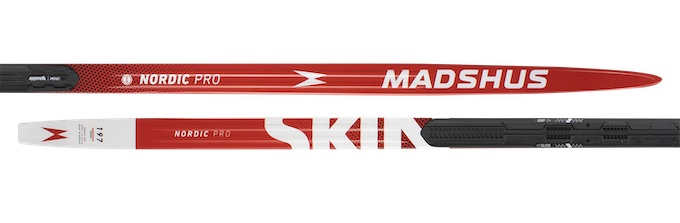
Madshus Nordic Pro Skin. Photo: Madshus
Best overall ski
Madshus Nordic Pro Skin was rated best in test in overall ski feel, for working in a wide range og temperatures and snow conditions, and for being just as suitable for workouts and training as for touring and recreational skiing. Here is why: A moderate side cut makes the ski easy to turn and maneuver in various kinds of terrain, while a new fiber layup construction provides excellent glide without compromising grip.
“Madshus Nordic Pro Skin is a versatile ski that ski feels great for both training and recreational skiing. This ski is clearly the best in test,” says former Norwegian National Team coach Geir Endre Rogn, who was one of the lead testers in the recent UTE-test.
In the comprehensive UTE Magasinet-test, the testers considered all the skis over time and in conditions varying from cold and dry to wet and warm, new snow, falling snow and old, transformed snow.
“Nordic Pro Skin was good at everything. It is a stable ski with reliable grip, yet it still has enough camber to provide great glide when your weight is distributed evenly on both skis, and doesn’t have much of a drag when double-poling. Additionally, Nordic Pro works great in both cold and dry as well as warm and wet conditions,” Rogn explains.
Optimized layup, skin profile and skin positioning
Most skin ski skiers are looking for reliable grip when striding without compromising glide, and a ski that has a good overall feel. The 2020-21 Nordic Pro Skin has been upgraded from previous models to address exactly these areas.
“We are constantly working to improve and develop our skis to make them as easy to ski as possible without compromising glide, in addition to working well in a wide range of conditions,” Schjellerud says.
Accordingly, Madshus has optimized the fiber layup in the Nordic Pro Skin ski construction, adjusted the profile and positioning of the skin in order to build a skin ski that feels as much as possible like a traditional waxable ski. “The upgrades and improvements we have made with the fiber layup has resulted in a ski that closes somewhat easier to deliver reliable grip and a solid ski feel, but at the same time provides enough of a lift for uncompromised glide when the weight is distributed evenly on both skis,” Schjellerud explains.
Madshus is now rewared for the effort with yet another “best in test” rating.
Madshus Nordic Pro Skin has a 47mm – 44mm – 46mm side cut for easy turning and maneuvering. The skin is made from 70 percent mohair and 30 percent nylon, which delivers an extremely durable skin that provides reliable grip and excellent glide in a wide range of conditions.
In the first serious competitions since the corona pandemic shut down the World Cup in early March, Madshus racers post no less than six podiums at the Blink summer ski festival in Sandnes (NOR) between the cross-country, biathlon and marathon events at the annual 4-day race weekend.
Turbo junior Helene Marie Fossesholm signed off her first competition as a part of the Norwegian elite national team with two podiums in three days. First, the 19-year-old powerpack was third in the brutal 7.5-kilometer hill climb race Lysebotn Opp on Thursday, where Fossesholm also reduced the gap to Therese Johaug in first place by more than 50 percent compared to last year. Then, Fossesholm was second in the 10-kilometer classic race on Saturday.
Additionally, Karoline Simpson-Larsen was fourth in the Thursday hill climb, less than 10 seconds from the podium.
Story continues below
Helene Marie Fossesholm was twice on the podium in three days at the Blink Summer Ski Festival. Photo: Madshus
U23-World Champion Harald Østberg Amundsen was eighth in Lysebotn Opp on Thursday, two seconds behind fellow Madshus racer Vebjørn Turtveit, and tenth in the 15-kilometer classic race on Saturday.
Vebjørn Turtveit after the mass start at the 15-kilometer classic event at the Blink Summer Ski Festival. Photo: Axelar
Mathilde Myhrvold, who was named to the Norwegian national development team this season, was second in the sprint race on Friday and sixth in the 10-kilometer classic race on Saturday.
Madshus biathletes also pulled off two podiums in two days. On Friday, Vebjørn Sørum was third in the biathlon supersprint. Sivert Bakken was sixth in the same competition and Sturla Holm Lægreid 11th, while Jørgen Krogsæter made it to final in the one-on-one shooting competition.
On Saturday, the Juni Arnekleiv was third in the women’s mass start with Åsne Skrede in sixth and Jenny Enodd in tenth place, while Vebjørn Sørum was ninth in the men’s mass start.
Finally, Madshus marathon racers cap off the Blink festival with winning the marathon roller ski race Blink Classic by a solid margin. Astrid Øyre Slind (in the photo at the top of this article) pulled Team Koteng into first place with four and a half minutes to spare in to the next team in the 12-hour relay.
Madshus is proud to announce Finnish World Cup skier Lauri Lepistö to Team Madshus for the upcoming season.
The 23-year-old Finn first entered the World Cup in 2016 at the World Cup opener in Ruka (FIN). Lepistö earned his first World Cup points in Otepää (EST) in January 2019 and had his first full World Cup season last year, where he posted two top-30 results, both in the classic sprint event.
“We are excited to welcome Lauri Lepistö to Team Madshus. He represents a brand-new generation of Finnish skiers, and he shows a lot of potential for the future,” says Sylvain Fanjas-Claret, who is one of the Madshus World Cup managers, noting that Lepistö is a nice fit for the Madshus men’s World Cup team.
“Lauri is quite versatile, but he excels particularly in the classic sprint. So, with Lauri, Madshus now has a very strong lineup for all the World Cup events: Lauri in the classic sprint, Renaud Jay (FRA) in the skate sprint, Alexander Bessmertnykh (RUS) in the classic distance races and Lucas Bögl (GER) in the skate distance races,” Fanjas-Claret says.
LAURI LEPISTÖ
Born: September 19, 1996 From: Finland Specialty: Sprint, distance Selected merits: Finnish national relay champion (2018)
Bronze medal in the 10km classic event at the 2016 Junior World Championships
Four top-30 World Cup finishes (2019, 2020)
Numerous top-10 finishes in various FIS events
A young dude from the US revolutionized how an old, traditional Norwegian ski manufacturer is going about their business: building skis.
The now 24-year-old from Rochester, New York came to Madshus in the late summer of 2018, with an engineering degree from Harvard University and a huge passion for skiing. He is now one of the lead ski developers at Madshus.
As a Harvard graduate, you probably had a lot of job options and opportunities. Why did you come to Madshus?
“For me, the goal with my degree was learning different ways to learn and problem-solving methods, figuring out what the main challenge or challenges are, and find ways to overcome them. This has translated really well into my job here,” says Green, explaining that for him, working at Madshus is like living out a dream.
“I had been racing cross-country skiing for a decade, so racing is what I understand the best. But since this is the first time I’m not training to race and compete, I can ski just for fun as well, so I’ve tried all types of skis, and explored the different kinds of skiing from touring and backcountry to randonee,” Green says.
What is the huge difference between Redline 3.0 vs earlier Redline models? Updates and upgrades happen all the time, but how big is this difference?
“It’s hard to say whether this is an evolution or a revolution. In one way, the Redline 3.0 is an optimization. We have kept the same geometries and forms from the Redline 2.0, which makes the 3.0 an evolution. But changed the materials and the cambers, so everything inside is different, which makes the 3.0 more of a revolution. Even how approached what to change is different,” Green explains.
How did you develop this?
“Specific improvement is an ongoing process. Research and development happen continuously with racing. We started this leading up to the 2019 World Championships in Seefeld (AUT). As we got closer to the championship races, we tested more, and we believed the skis were very good. Because they were clearly so much better, the pressure was building to give the 3.0 skis to the athletes as we approached the championships.”
Note: These were the skis that earned Hans Christer Holund (NOR) the gold medal in the 50-kilometer skate, after dropping the field with 30 kilometers to go.
What are some of the specific changes in the 3.0 models?
“We have changed the construction and the materials to make it easier to produce perfect skis with the correct carrying capacity for their intended use. For instance, we have adjusted the camber shape and added more carbon. So, the skis are all stiffer, but still have that reliable kick for classic. They are faster overall, they work better in more conditions, and they work better for a wider range of people.”
Story continues below
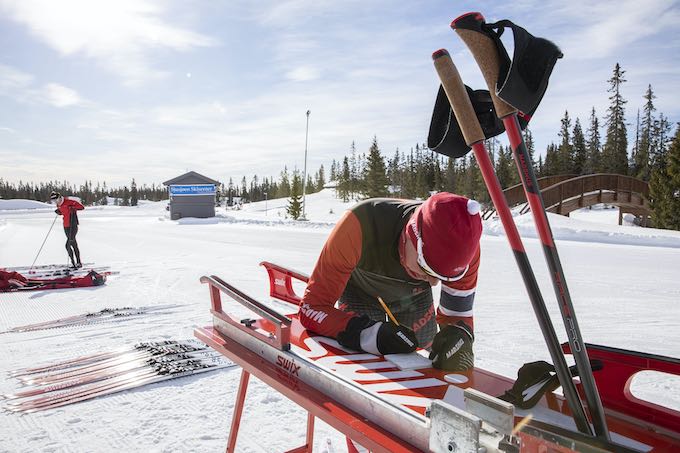
Testing Madshus Redline 3.0 skis at Sjusjøen (NOR) this spring. Photo: Stefano Zatta/Madshus
Where did the idea come from?
“Modern skiing is more powerful and aggressive than when many of the established parameters and measuring methods for ski engineering were developed. The old way to measure skis was by using flex numbers, which were given in kilograms. These flex numbers reflect how much force it takes to completely flatten the ski. Then you would pick the ski using this flex number, generally by taking the skier’s body weight and adding 10 to 20 kilos, to allow for the force being applied to the ski when pushing off, in order to flatten the ski and optimize the glide,” Green says.
He explains that with the Redline 3.0, they wanted to start over in a fundamental way.
“We wanted to engineer a ski that not only performs better and better matches how cross-country skiing has progressed, but also develop a system that makes it easier to pick the right skis. If you look at skate skiing at the World Cup level today, the athletes are pushing into the ski, rather than side to side the way they did in the early days of skate skiing. The current way of skiing requires skis that are more dynamic, more elastic and provides a better return of the energy that is pushed into the ski, and a way of picking the skis that reflect these properties in a more meaningful way than the flex numbers from the 1980s. So, with the 3.0 models, we use the camber height at the balance point of the ski at full and half weight, which is a better measure of how dynamic the ski is.”
Story continues below
Svein Ivar Moen, the head of the Madshus ski testing department at Sjusjøen (NOR) this spring. Photo: Stefano Zatta/ Madshus
Once you had the idea of what you wanted to achieve, how did you approach the task?
“We generally start with a lot of internal testing, with our engineers and test crew.”
How do you involve the athletes in product development?
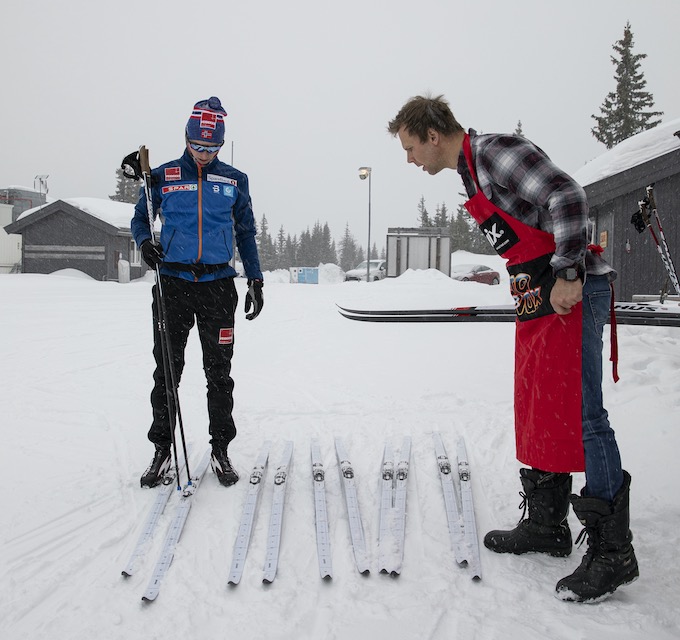
“It varies from athlete to athlete. Some are more eager to try new things, while others are happier working with what they have and are familiar with. But we often have them test skis when they are doing intervals. Say they do an interval session with 8 x 3-minute intervals at race speed. Then we would provide six pairs of skis, and they would bring two pairs of their own skis, and ski each interval with a different pair. At the end of the session, we use the times collected from each interval to compare how they perform at high speed,” Green says.
He points out that for other tests, they rely on verbal feedback to support the numbers.
“For certain things, like camber, we rely more on qualitative feedback. This also often involves skiing intervals at race pace but then providing a rating for different characteristics such as stability, glide feeling, and so on. This is where it is important to have a tester or athlete who can clearly articulate what they’re feeling, and who is also able to play around with small adjustments in technique to get the most out of the prototype they’re currently testing.”
What are the most valuable contributions from the athletes?
“Having access to several athletes provides us with different kinds of input. They emphasize different aspects of the ski’s properties and word their feedback differently. That said, the athletes are very different in how they communicate their feedback. For instance, saying that these skis are good, is not helpful. Were they good today? Or were they good compared to the rest of your skis? In what way were they good? Other athletes are great at articulating how the skis feel, whether the acceleration underfoot felt good, bad or different, and how they support their effort.
Story continues below
Head of the Madshus ski testing department Svein Ivar Moen collecting feedback from Madshus racer Vebjørn Turtveit in April. Photo: Stefano Zatta
Impressed and humble
Although Green started cross-country skiing when he was 12, skied for his high school team and all four years at Harvard, he is impressed that an old, traditional Norwegian ski manufacturer had the courage and trust to completely reconsider how to go about their business: building skis. At the advice from a young American engineer who did his senior project on building a carbon fiber guitar neck.
Connor Green skiing with Thomas Alsgaard (left) at Sjusjøen (NOR) this spring. Photo: Stefano Zatta/ Madshus
“Systemic racism and social injustice are real. The brutalities that have sparked the Black Lives Matter movement are just recent reminders that we can never take these civil rights for granted.
At Madshus, we are committed to social justice and equal opportunities for all, through a supportive and inclusive environment for everyone, regardless of race, background and orientation. This is a guiding principle in every part of our operation – from the production line to the World Cup tracks.”
Meet Renaud Jay, the French sprint specialist, who posted World Cup podiums nearly back-to-back this winter.
Renaud Jay made his definite international breakthrough in January, when he posted his first World Cup victory, winning the team sprint in Dresden (GER). In February, Jay was third in the individual sprint in Åre (SWE), which was also the first event of the brand-new World Cup Ski Tour.
We caught up with the ambitious 28-year-old cross-country skier from Rhone-Alps region in France.
RENAUD JAY
Born: August 12, 1991 From: St Martin de Belleville, France Specialty: Sprint Selected merits:
* 3 World Cup podiums: 1st place team sprint (Dresden, Germany, January 12, 2020), 3rd place individual sprint (Åre, Sweden, February 18, 2020) and 2nd place team sprint (Planica, Slovenia, January 17, 2016)
* Competed at the 2014 Winter Olympics in Sochi (RUS), where he was 14th in the sprint
* Competed at the 2017 and 2019 FIS Nordic World Championships in Lahti (FIN) and Seefeld (AUT)
What are your overall season goals for the 2020-21season? “The 2021 World Championships in Oberstdorf (GER) is my overall goal for the upcoming season. The sprint there will be my first classic competition at the championship level. But, of course, after getting a taste of the World Cup podium last season, I want more of that. Finally, I want to improve my ranking in the overall sprint World Cup. And who knows what else might turn up!”
What are your biggest strengths as a skier?
“I think my biggest strengths are my determination and my perseverance to work hard to reach my goals. With more experience as a skier, I feel that I’m getting better at managing and taking advantage of my strengths during the races, which is definitely a plus!”
What are your top performances so far?
“My biggest performances are my three World Cup podiums this winter, including one team sprint victory and my first individual podium. But I’ll never forget my 14th place in 2014 Sochi Olympics, as that was my first Olympic experience.”
Do you only compete in sprints/focus on sprints or do you race distance events as well? “For sure my specialty is the sprint, but I try hard to improve in distance races as well. And my work has paid off: Last season, I was 19th in the 15-kilometer in Davos, which was my first top-30 distance race at the World Cup.”
Why did you choose to switch to Madshus?
“The most important reason for switching to Madshus is the good feeling that I had with the skis, especially in skating. I also like the idea of working with Sylvain (Fanjas-Claret) at the rest of the crew at the Madshus factory to develop a new work relationship to find the best material to reach my goals and
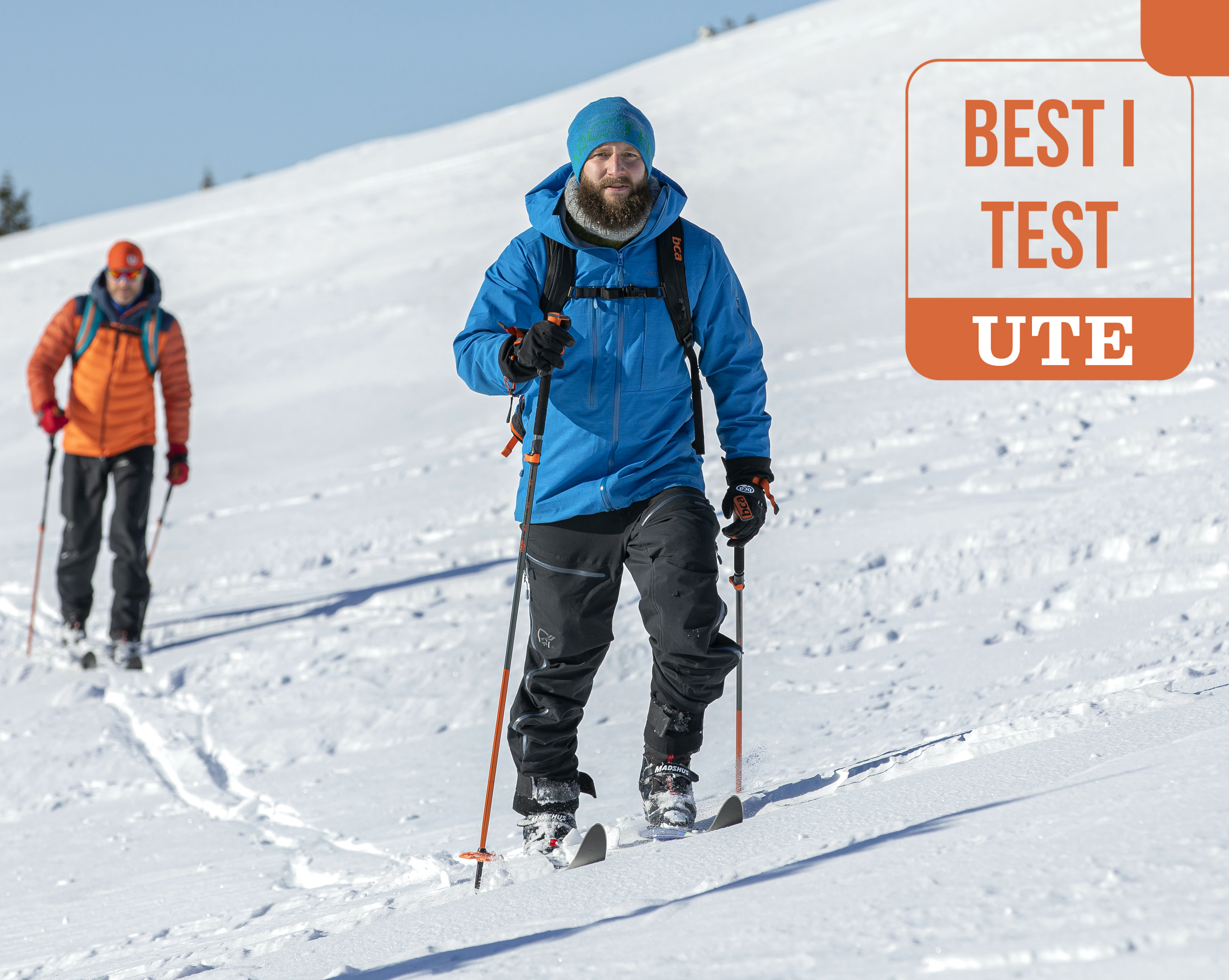
Norwegian outdoor magazine UTE Magasinet, recently announced Madshus Fjelltech Intelligrip®skin skis the test winners in a large test of backcountry skin skis.
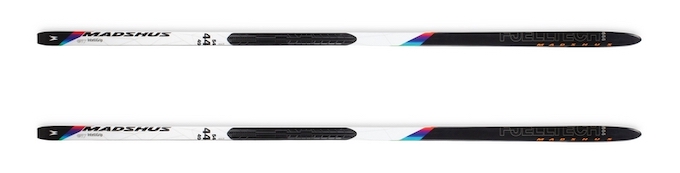
Test winner: Madshus Fjelltech M44 Intelligrip® (Score: Best in Test)
The perfect ski for those looking for a fast, lively and responsive steel-edged ski that fits all kinds of trails, easy to ski both on uphill and downhill terrain.
“The lively flex makes the Fjelltech M44 fun to ski on. Madshus strikes the perfect balance between a fast, lively, responsive and fun ski with both great glide and reliable grip, and a stable ski with secure maneuverability in all conditions. The ski with the highest camber, the lightest ski in the test – and clearly the best in test overall!”
Story continues below
Madshus Fjelltech M44 Intelligrip®
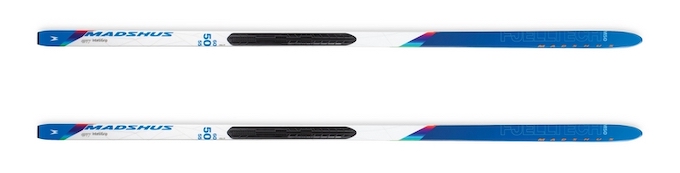
Runner up: Madshus Fjelltech M50 Intelligrip® (Score 9/10)
“It’s rare for one and the same ski to achieve top test scores on properties that frequently are mutually exclusive, such as reliability, maneuverability, carrying capacity and speed. Bravo Madshus!”
The test rated the skis on four essential properties: Speed/glide – responsiveness and ability to return the energy when kicking, glide in soft and firm conditions and perceived weight in use. Grip – how secure and reliable the grip is, and how steep of an incline you can climb before you start slipping. Turning and maneuvering – this is most pronounced in soft and hilly terrain, which is weighted heavier in the test than firmer, icier conditions where the skis were performing more evenly. Carrying capacity – whether the skis break through or carry the skier in loose snow conditions and softening crust.
UTE Magasinet’s test crew tip: To avoid drag and uneven glide, we moved the bindings on all the test skis 3 cm back from the center position. This improved the glide without significantly affecting the grip.
Every crisis offers an opportunity for improvement and progress. Madshus has taken advantage of the longer offseason in racing due to the global corona pandemic this spring to work even harder on research and development.
“All the hard work our product engineers, test crews and race techs put in now, will result in even faster skis and better equipment for Team Madshus racers when the season kicks off in the fall,” says Per Wiik, Global Marketing Director at Madshus.
Madshus is currently in the process of launching the all new top racing series Redline 3.0, featuring both skate and classic models. These have been successfully tested at the World Cup and elite level this winter, and will be available for retail in the fall.
“This spring, we have focused specifically on the Redline 3.0 models, as well as testing several new bases and fine-tuning constructions and geometries for specific snow conditions,” Wiik says.
Story continues below
Svein Ivar Moen, the head of the Madshus ski testing department, during a testing session at Sjusjøen (NOR) in April. Photo: Stefano Zatta
How do you work on product development when the factory is shut down?
“Although the factory had to close for a while due to the corona pandemic, our R&D crew has been working full time. And because all the races at the end of the season were cancelled, the guys from the racing crew have been available to participate more intensely in the testing and product development processes. Accordingly, we have been able to prioritize this area even harder this very unusual spring,” Wiik says.
Testing, testing, testing
This week, the factory crew is finishing up the first on-snow test period of the spring. These tests were completed at the Madshus test center at Sjusjøen (NOR), literally a hop and a skip from the factory in Biri.
Story continues below
There is still a lot of winter to be had in Sjusjøen (NOR) in April. Svein Ivar Moen, the head of the Madshus ski testing department, working on details for next season’s Reline 3.0. Photo: Stefano Zatta
All the data collected, notes and input will be analyzed in the coming weeks, before embarking on the next on-snow testing period. For these tests, which start in the end May or beginning of June, the crew will travel to the summer ski resort at Sognefjellet (NOR). Hopefully, by then most of the national and European travel restrictions have been lifted. While all national team camps have been cancelled this side the summer, many of the athletes are still planning to train at Sognefjellet independently and in smaller groups, which will allow Madshus engineers and test crew to work more closely with the Team Madshus racers.
When the summer skiing at Sognefjellet is over, Madshus will continue with further on-snow testing in the ski tunnel.
Head of the Madshus ski testing department Svein Ivar Moen collecting feedback from Madshus racer Vebjørn Turtveit during a testing session at Sjusjøen in April. Photo: Stefano Zatta
Golden season
Among the season highlights are the numerous Madshus U23 and junior racers who had just finished some of the most successful world championships in years.
Just prior to the onset of the corona crisis, these up and coming cross-country skiers took home more than a dozen medals from the FIS Nordic U23 and Junior World Championships in Oberwiesenthal (GER) the first week of March, while the junior biathletes won a handsome collection of medals at the IBU Youth and Junior World Championships right before that.
However, the success started long before the world championships. In January, Madshus juniors won seven medals at the IOC Youth Olympics in Lausanne (SUI).
Turbo junior Helene Marie Fossesholm (NOR) went straight for the senior podium at the FIS season opener in Beitostølen in November. She continued her podium party throughout the season, posting victories and podium finishes in almost every race and championship event she entered, both at the junior and senior level. Last week, the 18-year-old was rewarded with being named to the Norwegian national A-team, even though she’s still a junior.
“With all due respect for the ongoing global crisis, we have a lot of exciting projects in the pipeline both in product development and supporting our talented athletes,” Wiik says.
Helene Fossesholm at the FIS Season Opener in Beitostølen (NOR) in November. Photo: Fjellfanten