From the FasterSkier archive — posts syndicated from athletes’ and coaches’ own blogs between 2004 and 2012, kept online as published. Current coverage is at fasterskier.com.

Author: Mark Vosburgh

  • Small Montana Town Working to Create a Big Nordic Ski Vision

    Small Montana Town Working to Create a Big Nordic Ski Vision

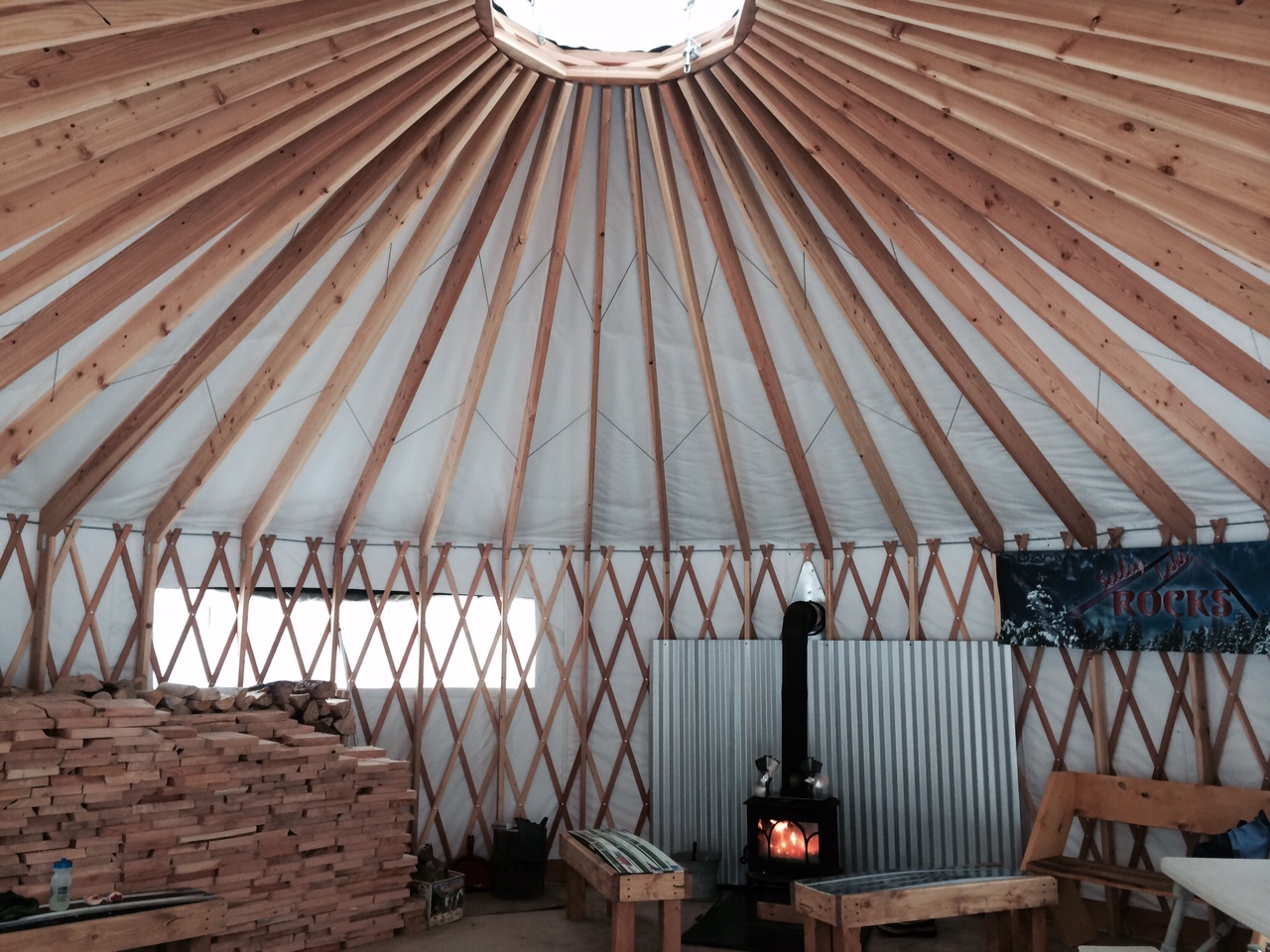
    Inside the Seeley Lake ROCKS new warming yurt in Seeley Lake, Mont.
    Inside the Seeley Lake ROCKS new warming yurt in Seeley Lake, Mont.

    SEELEY LAKE, Mont. — Inspired by the birth of the Maine Winter Sports Center, a group of Seeley Lake (population 1,659) residents formed the Seeley Lake Regional Outdoor Center for Kinetic Sports (ROCKS).

    That was in 2010.

    In the spring of 2015, ROCKS will file an application for a Special Use Permit with the United States Forest Service (USFS) to build a new Seeley Lake nordic-ski venue, which is “intentionally being designed to international race-ready specs, fully homologated, with both the skier and spectator in mind,” according to ROCKS President Chris Lorentz.
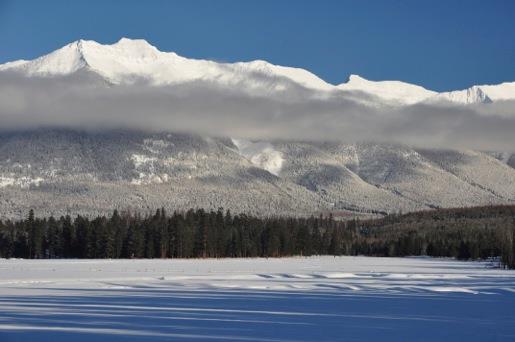
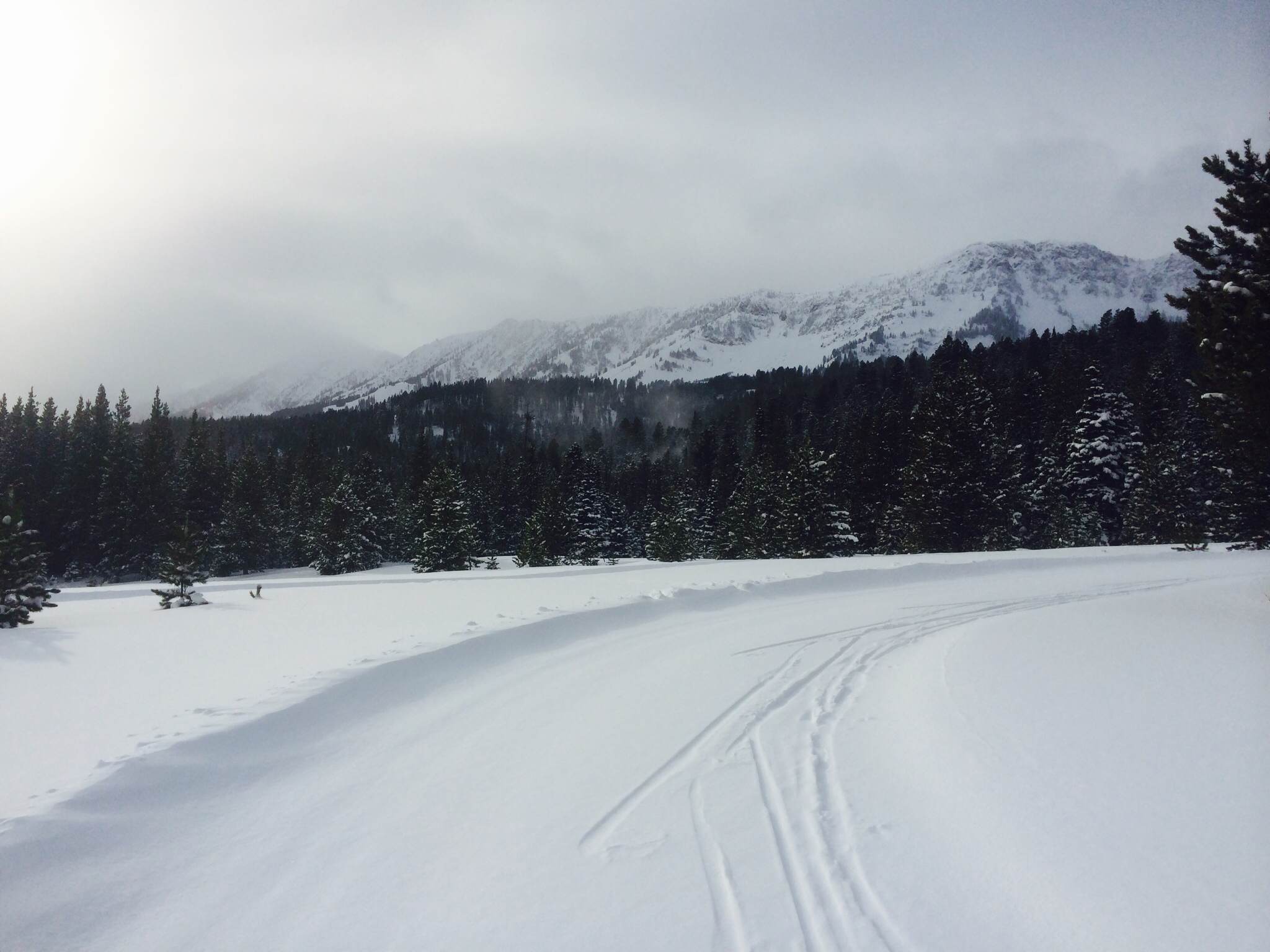
    Swan Range forms the backdrop for the Seeley Lake ski trails. (Photo: Seeley Lake Nordic)
    Swan Range forms the backdrop for the Seeley Lake ski trails. (Photo: Seeley Lake Nordic)

    Lorentz said the Forest Service will review the permit application, perform an environmental analysis (including a mandatory 90 day public input period) and provide a decision by October 1, 2016.

    “We believe the (process) will result in a positive decision notice,”  Lorenz said.

    ROCKS hired John Morton, owner of Morton Trails, to provide both a feasibility study (2011) and course design (2012) for the new Seeley Lake venue. According to a report issued by Morton Trails to the USFS, Morton states that efforts have “resulted in a workable concept for what offers to be a nationally, and even internationally, recognized cross country skiing venue … suitable for hosting Continental Cup races such as US Junior Olympics, US Nationals, North American races [i.e. Super Tour], as well as regional races where participants can be awarded FIS points for international ranking.”

    Morton’s design would meet specifications for D-category homologation, making Seeley Lake one of six venues certified to this level in the United States. A D-certification allows a venue to host all events, including mass-start freestyle races. The only event requiring a designation beyond a D category is the skiathlon, which requires two separate courses (used concurrently).  Soldier Hollow in Midway, Utah, is the only course in the US which currently has this designation.

    To provide Seeley Lake with an advantage in bidding for major events and training camps, and to keep the door open for a possible World Cup event bid, Morton designed the course to “comply to a World Cup standard – which will make this venue truly representative of courses hosting the most elite competitions.”  The most recent FIS Homologation Manual would have allowed for certification with a 25-meter climb; however, Morton chose to exceed this standard and comply with the World Cup’s 30-meter requirement.
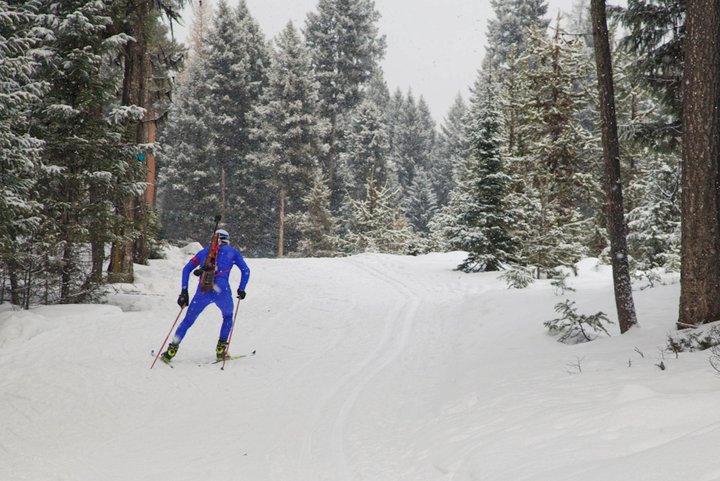
    In January, Seeley Lake hosted its 8th annual biathlon, with 115 racers participating in three events. (Photo: Seeley Lake Nordic)
    In January, Seeley Lake hosted its 8th annual biathlon, with 115 racers participating in three events. (Photo: Seeley Lake Nordic)

    Morton’s design includes a 15-point biathlon range and identifies a location for a 30-point range (meeting the IBU World Cup requirements) that could be installed with some additional construction. The course design for the five-kilometer loop is “spectator friendly” allowing  spectators to view competitors five to seven total times, or 10 to 14 times for a 10 k race.

    While USFS permit approval, new venue construction, and hosting of events at the new venue are years in the future, Seeley Lake, is not waiting for course completion to continue taking steps forward.  Recent ROCKS activities have clearly energized the town which has a long standing nordic ski racing tradition.

    The town’s existing nordic ski trails at Seeley Creek have seen an upsurge in use following the installation of a new yurt (installed by Seeley Lake ROCKS) at the trailhead.

    “The yurt is way more popular than we expected,” Lynn Carey of the Seeley Lake Nordic Ski Club said. “Our metal ranger now takes in more money than any other ranger in the state.”
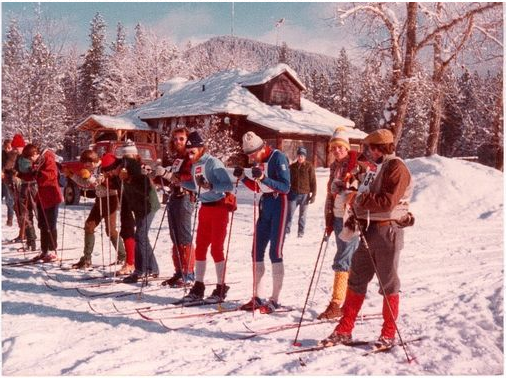
    Seeley Lake, Montana, has a long history of ski racing.  This is a photo of the start 1983 OSCR race. (Courtesy Seeley Lake Pathfinder)
    Seeley Lake, Montana, has a long history of ski racing. This is a photo of the start 1983 OSCR race. (Courtesy Seeley Lake Pathfinder)

    ROCKS founder Karen Pratt notes, “The idea is that you need a culture shift to bring in an elite race [to Seeley Lake] and get enough interest in town to support it.  An international race is a lot of work!”

    The ROCKS plan seems to be working.

    “There has already been a big culture shift in Seeley,” Pratt said. The Seeley school system started a ski program where any student above the 3rd grade can access free skis, transportation and ski instruction. Twenty students have caught the ski bug and joined the school’s newly formed nordic ski racing team.

    According to Pratt, many local parents are learning to ski as a result of the new youth programs.  She is convinced that the increased activity is improving community health.  “It’s not a good thing when the people in Seeley don’t get out of the house in the winter,” she said.
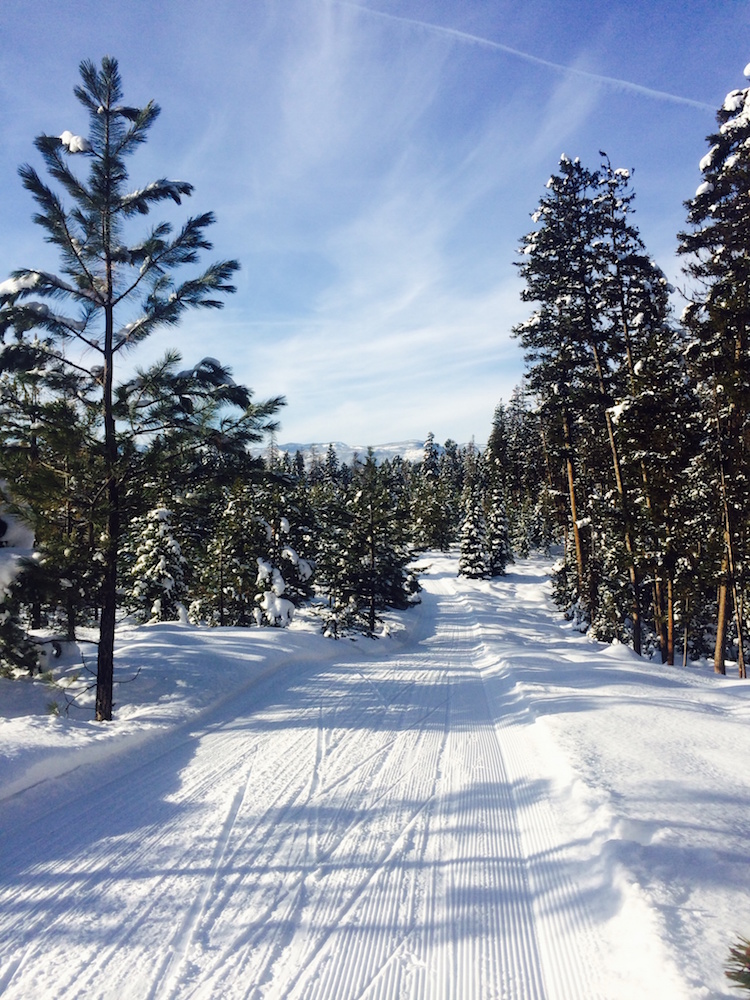
    Seeley Lake's existing ski trails at Seeley Creek. (Photo: Mark Vosburgh)
    Seeley Lake’s existing ski trails at Seeley Creek. (Photo: Mark Vosburgh)

    Grooming the 23-kilometer Seeley Creek trail system is now conducted daily, and several trails that had been abandoned or rarely groomed have been re-opened.  The rolling trail system, designed by Olympian Jon Elliott, is seeing a resurgence in use and the trails are receiving rave reviews from regional skiers.  The eighth-annual Seeley Lake biathlon had 115 entrants this year, nearly double last year’s count, according to race director Cheri Thompson.

    Once the new trails at Fawn Creek are open, ROCKS organizers hope that overnight visits and resulting economic benefits to Seeley Lake will increase with skiers spending two days in the  Seeley Lake area in order to ski both trail networks.

    Pratt credits generous donations from the late Peter Hale and his estate for supporting the Seeley Lake ski program with skis, waxing supplies and equipment. Hale’s connection to Seeley and his passion for skiing is in part responsible for at least one concrete example of increased economic activity sought by ROCKS.
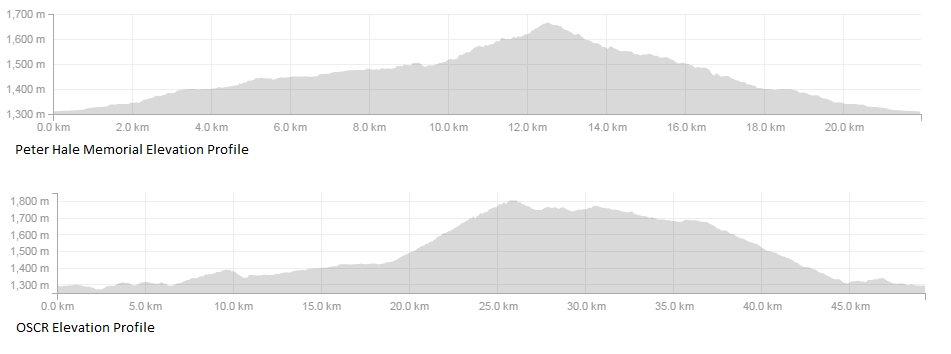
    Elevation profiles for Seeley Lake's signature nordic ski races, the Peter Hale Memorial and OSCR.
    Elevation profiles for Seeley Lake’s signature nordic ski races, the Peter Hale Memorial and OSCR.

    In 2012, Mike and Cathy Kahnle opened Seeley’s first bike-and-ski shop, Rocky Mountain Adventure Gear. Describing how he came to a decision to start the business, Mike said, “ROCKS was happening … Peter Hale contacted me prior to putting this business together and just filled my ear… It was pretty evident his love for skiing was overwhelming.

    “Peter basically talked me into running Madshus skis in a shop that didn’t exist,” he continued. “You couldn’t have a conversation with him without feeling better about yourself and life in general.”

    A passionate endurance athlete, Kahnle was also attracted to Seeley by its reputation for challenging endurance events like the Over Seeley’s Creeks and Ridges (OSCR, pronounced “Oscar”) 50 k ski race.

    Describing the race, Kahnle said, “No matter what level athlete you are, you are going to have the opportunity to push yourself to find the limits of what you’ve got.” Referring to the nearly 800 meters of elevation gain in OSCR, he added, “If you want an easy race, go somewhere flat because we are not going to have it for you here.”

    Carey, OSCR race director since 1991, agreed: “OSCR [founded in 1981] is a damn-tough race. It always has been, and we are proud of it … really it’s an adventure more than a race.”
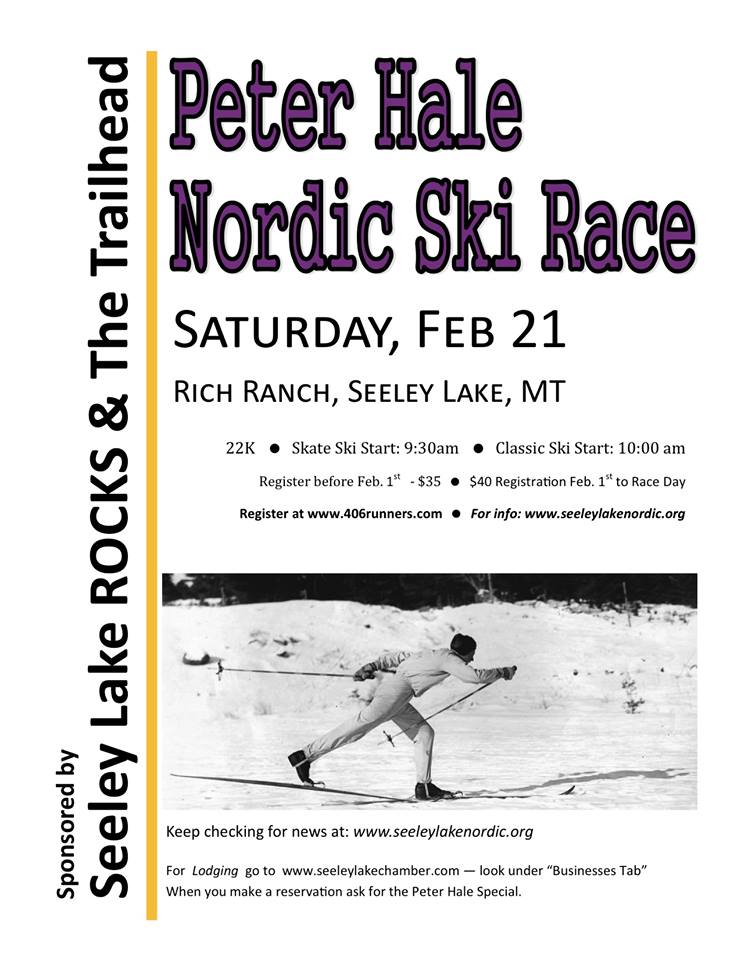
    Peter Hale 2015 Race Poster
    The second Peter Hale Nordic Ski Race will be held Saturday, Feb. 21, in Seeley Lake, Mont.

    ROCKS will hold the Second Annual Peter Hale Memorial 22 k Ski Race on February 21, 2015.  With an elevation gain of nearly 400 meters, the race is not easy.  In honor of Hale’s love of classic skiing, both classic and freestyle races are offered.  Inaugural race feedback (in spite of frigid temperatures) was positive with about half of the participants choosing the classic event.  Pratt anticipates that the race entry will need to be capped after this year’s event due to capacity limitation of the venue.

    With momentum building in Seeley Lake, the ROCKS vision for a national and international caliber ski venue is moving forward.  “The focus is on the new course right now because it has to be,” Pratt said.

    While not everyone in Seeley Lake is optimistic about the outcome of the ROCKS effort, Pratt stated, “If we did have a venue that brought in a week’s worth of high-end racers, it would mean us [in Seeley Lake] having a larger number of people who would have a larger vision about what is possible.”
  • Common Training Mistakes: Exposed at West Yellowstone!

    Common Training Mistakes: Exposed at West Yellowstone!

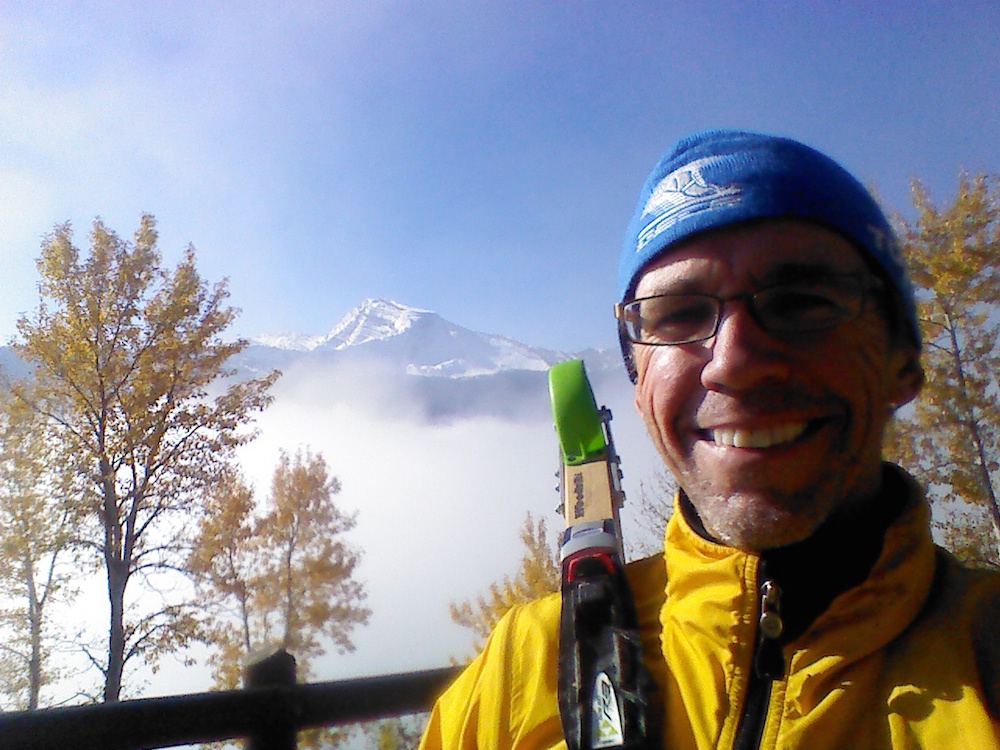
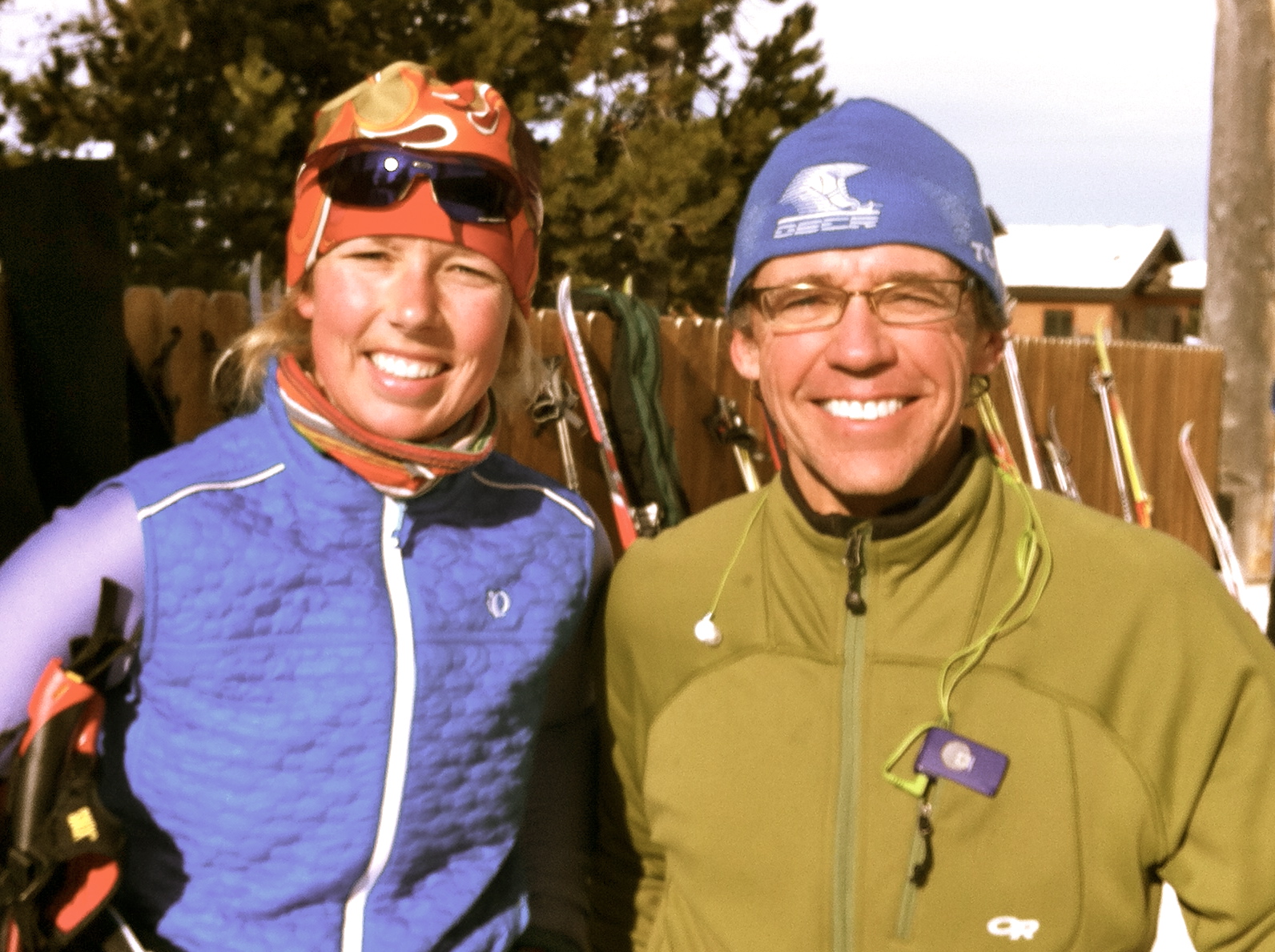
    From left to right: Alex Matthews, Managing Editor, and Mark Vosburgh, Para Nordic Contributor, in West Yellowstone, Mont.  "Let the races begin!"
    FasterSkier contributor Mark Vosburgh (r) with editor Alex Kochon last Thanksgiving 2013 in West Yellowstone, Mont.
    I have been following the Central Ski Association’s CXC Academy training program since last January, so when I traveled to the Yellowstone Ski Festival this Thanksgiving, I was eager to see how my preparations would translate to skiing on snow.In my enthusiasm, I skied long and hard from day one, eagerly testing my limits.  As with past years at West, I was utterly exhausted at the end of each day and pretty much toast by the end of the week.  Additionally, I believed my high-intensity early season training would be the winning formula for improving my racing results this season.
    Early season skiing at the 2014 West Yellowstone Ski Festival as pictured on Nov. 24. (Photo: Lander Karath)
    Early season skiing at the 2014 West Yellowstone Ski Festival as pictured on Nov. 24. (Photo: Lander Karath)

    Then, on my last night at the festival, I attended Scott Johnston’s lecture: Capacity Training vs. Utilization Training; making an informed decision. As I listened, my confidence in my training approach was shaken.

    Johnston, coach of the Methow Olympic Development Program, climber and former U.S. Ski Team member, said that he has seen many athletes whose training habits result in a phenomena called Aerobic Deficiency Syndrome (ADS). With ADS, athletes are forced to rely on inefficient high-intensity anaerobic energy pathways for even slow paced workouts.

    In the lecture, Johnson looked out at the conference room full of fit, dedicated skiers and said he guessed that many, and possibly most of the attendees fit into this category.

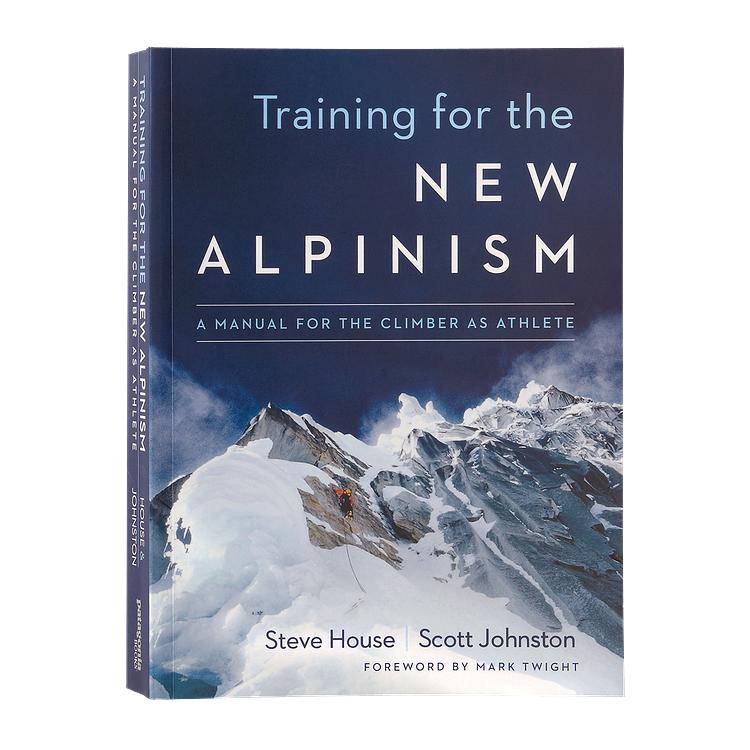
    Intrigued, I followed up the lecture by reading Johnston’s book,“Training for the New Alpinism: a Manual for the Climber as Athlete,” co-authored with mountaineer Steve House.  In the book, Johnston goes into detail on the importance of proper aerobic training.Starting with the familiar concept of training zones, Johnston points out that the vast bulk of training, for athletes at all levels, should be done in Zone 1 (below the aerobic threshold).  He states, “The better developed the aerobic base, the faster you can move for extended periods.”

    “The better developed the aerobic base, the faster you can move for extended periods.” — Scott Johnston, Methow Olympic Development Program head coach

    He points out that even world-class endurance (defined as efforts lasting around two minutes or longer) athletes, including 800-meter runners, excel by developing a huge aerobic base before adding the high-intensity work needed to peak for competition.
    "Training for the New Alpinism: a Manual for the Climber as Athlete" by Scott Johnston and Steve House
    “Training for the New Alpinism: a Manual for the Climber as Athlete” by Scott Johnston and Steve House
    Johnston goes on to explain the mistake that I (and apparently many others) make.  For many of us, our Zone 1 workouts are mistakenly performed at intensities too high to give us the aerobic system benefits that are intended.”Harder is not better when it comes to development of your aerobic threshold,” he stresses.Johnston says that part of the problem is that Zone 1 aerobic training may feel too easy and too slow to be beneficial, a problem that worsens as we do more and more high-intensity training.   Without physiological testing to identify our aerobic threshold, we are left with a variety of methods including perceived exertion to heart-rate monitoring to gauge our intensity. In the real world, many of us overestimate the effort required to effectively train our aerobic energy systems.  As a result, our aerobic capacity can actually decrease.

    The symptoms of improperly training our aerobic base include not being able to ski without breathing hard, and prematurely tapping into our high-powered, but short-lived anaerobic energy reserves.Johnston points out that “long slow distance” aerobic training is better described as “long easy distance” training.  As our aerobic base develops, we should be able to ski faster and faster on our long distance days while not losing the feeling of “easy” effort.

    Scott Johnston (r) with Olympian Torin Koos in 2010. (Courtesy photo)
    Scott Johnston (r) with Olympian Torin Koos in 2010. (Courtesy photo)

    Another symptom of improper aerobic training was what I experienced at West Yellowstone.  Since I trained too hard on my long easy days and warm-ups, I was simply too tired to effectively train during my harder Zone 3, 4 and 5 workouts.  My exhaustion at the end of the week should have been a red flag my training was unsustainable, given my inadequately developed aerobic energy system.

    In his lecture and in his book, Johnston provides a prescription and practical methods to avoid Aerobic Deficiency Syndrome. If you are unable to get a laboratory test to find your aerobic threshold heart rate, Johnston recommends starting to exercise slowly while breathing through your nose only.

    “As you increase intensity/speed, note the point at which this nose breathing becomes noisy and labored,” he notes.  This is the upper limit of Zone 1 (your aerobic threshold).

    Brian Gregg (Team Gregg/Madshus) racing to second in the SuperTour 15 k freestyle in late November in West Yellowstone, Mont. (Photo: Toko)
    Brian Gregg (Team Gregg/Madshus) racing to second in the SuperTour 15 k freestyle in late November in West Yellowstone, Mont. (Photo: Toko)

    In his lecture, Johnston described coaching 2014 U.S. Olympian Brian Gregg and prescribing months of long distance aerobic base training at an effort where Gregg would breathe only through his nose.  At first, Gregg found it very challenging to stay at this low intensity, and joked that he felt like training with “a bag over his head” because he was embarrassed that he was running so slowly.

    With time, Gregg’s aerobic capacity increased to the point where he could easily click off mile after mile at a faster pace while maintaining Johnston’s nose-breathing limit. Johnston credits Gregg’s improved aerobic capacity as setting the stage for Gregg’s eventual selection to the 2014 U.S. Olympic team.

    My experience with the nose-breathing method mirrors Johnston’s description in the book: “For some of you this (Zone 1) will be the hardest zone to train in.  You may find that you can barely jog or can only hike uphill very slowly … before you must begin mouth breathing … and your heart-rate climbs … right through Zone 2 and into Zone 3.”

    In my experiment with the CXC Academy training plan, I realize that I should have paid more attention to the information on training zones.  While the information is provided in the plan, I skimmed over it.  It took me hearing Johnson’s lecture and reading his book to jar me into recognizing my two major (but common) training mistakes.  Johnson summarized these mistakes in an Outside Online interview:

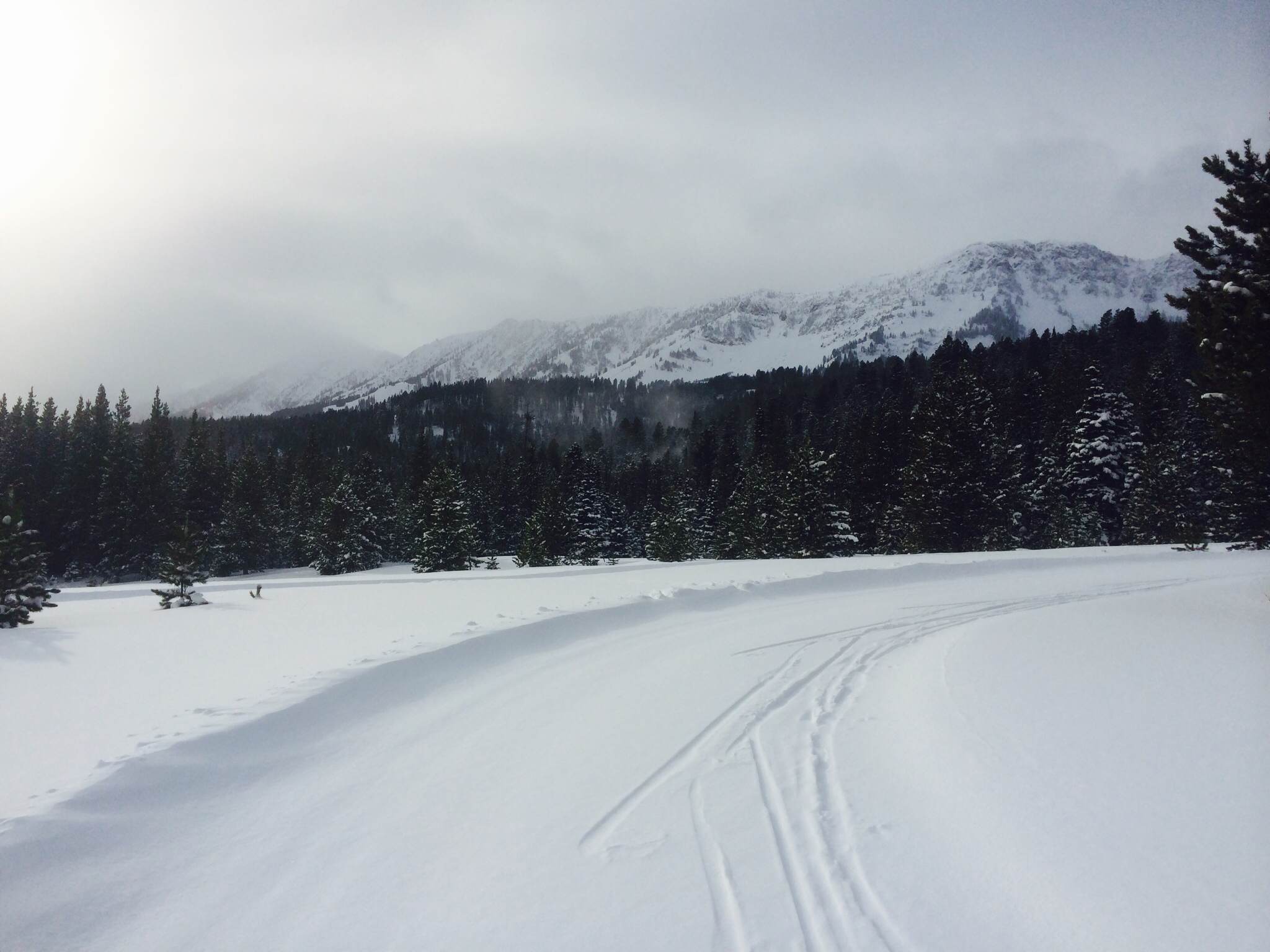
    Fresh tracks this winter at Bohart ranch near Bozeman, Mont. (Photo: Mark Vosburgh)
    Fresh tracks this winter at Bohart ranch near Bozeman, Mont. (Photo: Mark Vosburgh)

    “Most people, regardless of sport, train basic aerobic endurance too hard or fast. This happens for two primary reasons. The first is that this intensity level ‘feels like training’ because it feels moderately hard. Secondly, many people are time-limited in their training and imagine that they can make up for the duration of training by increasing the intensity.”

    So now, armed with good information, I’m back on track with my training plan.  I credit the CXC Academy training plan for a steep change improvements in my ski specific strength and ski technique.

    Now, I’m looking forward to improving my aerobic capacity.  On my CXC Academy prescribed Zone 1 over-distance days at Montana’s Bohart Ranch and Seeley Lake trails, I’ll be skiing easy, breathing through my nose, and avoiding the temptation to put a bag over my head!


  • Rollerskiing for the Rest of Us? A Beginner’s Guide

    Rollerskiing for the Rest of Us? A Beginner’s Guide

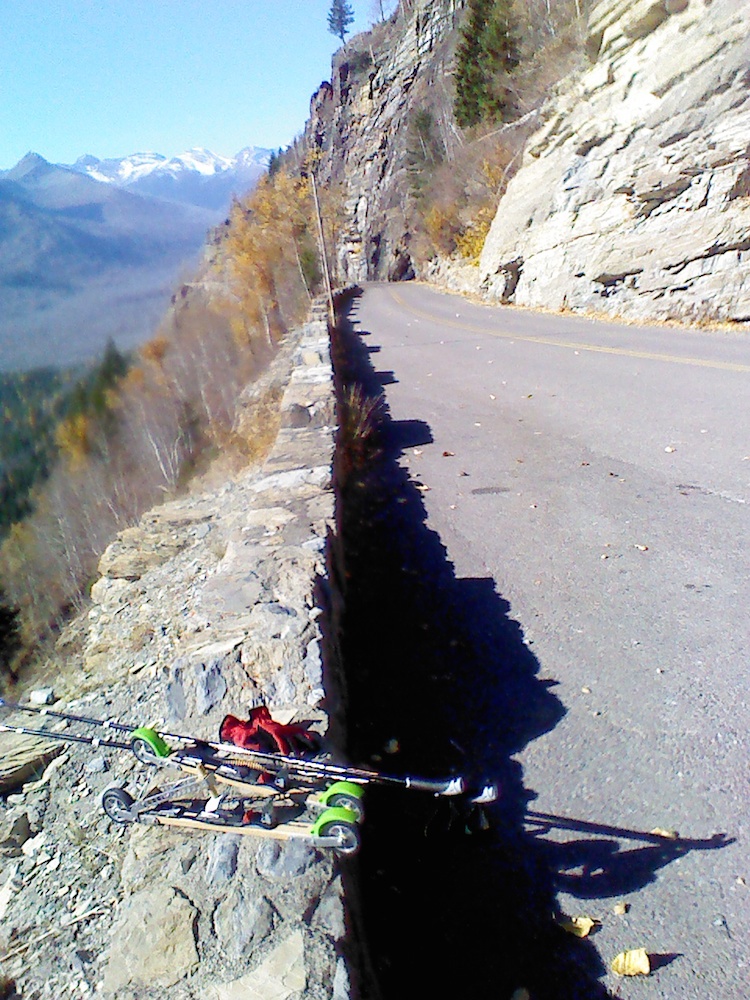
    Author Mark Vosburgh and his rollerskis in Glacier National Park, Mont.
    Author Mark Vosburgh and his rollerskis in Glacier National Park, Mont.

    Editor’s Note: This article appeared last November on MakeitMissoula.com and was written by FasterSkier’s Para Nordic Contributor Mark Vosburgh. 

    Elite nordic racers and Olympic hopefuls train on rollerskis during the offseason to prepare for their transition to snow.  Are they right for us mortals who are recreational skiers or occasional citizen racers? Last year, this author decided to find out.

    Oh the places you'll see (i.e. Glacier National Park in Montana)
    Oh the places you’ll see (i.e. Glacier National Park in Montana)

    What are they? 

    Rollerskis are basically skis with wheels that are designed to simulate classic and skate styles of nordic skiing.   They are mounted with ski bindings and so you “roll”  in your regular ski boots.

    Most have aluminum shafts but I bought a pair of skate skis made of wood from a company called Woodski. My skis had a trial period of 30 days which was good, because I really wasn’t sure if they would work out for me.

    What about poles?

    Regular ski poles are fine but you’ll need to buy some hardened steel ski tips ($15) without a basket and install them.   I bought a spare set of carbon fiber poles for $65 that I reserve for dryland training.  You’ll also need a diamond file to keep your tips sharp so they “stick” in the pavement.

    Woodski President Peter Breu was very helpful in answering my questions and setting me up with gear.  He has some great videos on his website about how to file ski tips etc.

    antabuse

    Where to rollerski?

    This was my main concern.  Could I find enough places to ski?  This has taken some creativity and exploration but I’ve discovered that while smoother pavement is better, my skis can handle a bit roughness and bits of small gravel.   I’ve skied in subdivisions, on frontage roads, paved country roads, paved forest roads,  bike paths and just recently, the Going to the Sun Road in Glacier National Park.

    I look for low traffic areas (the Going-to-The-Sun Road in Glacier National Park was closed to cars when I went), and I wear bright yellow shirt or jackets.  I’ve been treated really well by cars and I’m sure the high visibility clothes are the key.

    How do you stop?

    My skis came with a simple break [sic brake] system that vastly expands the places I’m willing to ski.  It takes practice to learn how to use them and learn their limits.  

    What’s the final verdict?

    I love these things!  Its amazing how well they simulate skiing on snow.  I’ve had some blissful days “skiing” in beautiful locations this summer and fall.  I have no doubt I’ll be WAY ahead of the curve come ski season.

    Any caveats?

    Oh yeah.  Falling on pavement REALLY hurts.  I still have memories of painful fall when I but borrowed a friend’s skisfew years ago.

    There is a learning curve.  I’ve XC skied for years and it took me about a month of roller skiing to feel comfortable.  I started very slowly with full knee, elbow pads, helmet and gloves on flat terrain and built gradually.

    World-class athletes have had career ending injuries and a friend of mine suffered a broken wrist on them.   Roller skis deserve respect!

    Final word.

    I’ve found rollerskis to be a great ski training tool, which I expected.   There’s really no better way to train up all those balance stabilizer, arm, back, core and leg muscles you use when nordic skiing.

  • Fear Not the Training Plan: CXC Academy Explained

    Fear Not the Training Plan: CXC Academy Explained

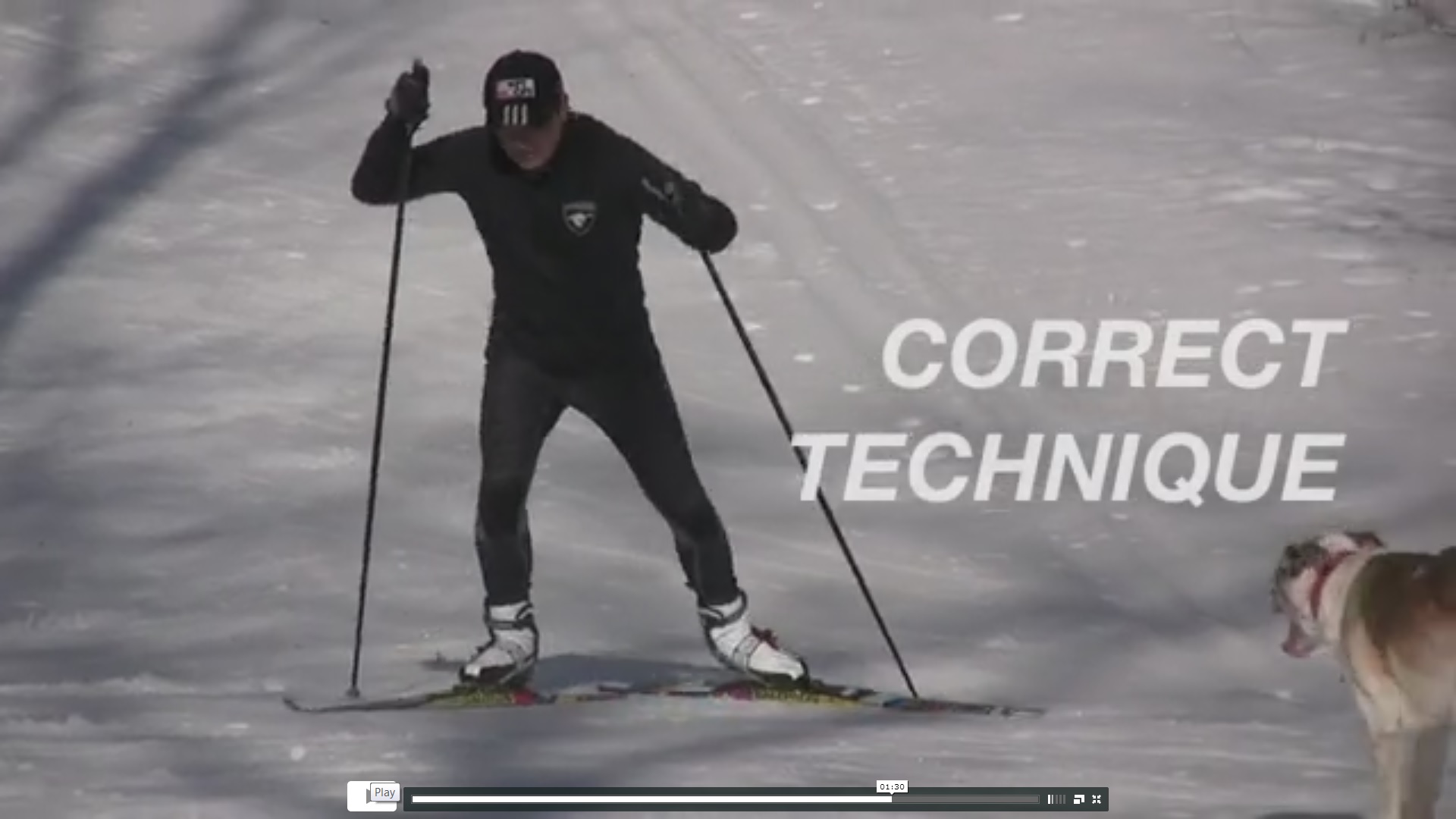
    Yuriy Gusev, Executive and Athletic Director of the Central Cross Country (CXC) Ski Association, demonstrating proper V1 technique in a CXC Academy video.
    Yuriy Gusev, Central Cross Country (CXC) executive and athletic director, demonstrating proper V1 technique in a CXC Academy video.

    You read FasterSkier so it’s probably a safe bet that you would like to, well … ski faster!

    And so if, as you recover from the recently concluded race season, you are already thinking about how to improve your race times next year, Yuriy Gusev has a plan for you. A training plan that is.

    Intrigued by the CXC Academy, I called up Gusev, executive and athletic director of the Central Cross Country (CXC) Ski Association.  The Academy is described on the CXC website  as “an online subscription service that provides professional training plans for cross country skiers of all ages and skill levels.”

    Gusev explained that was Academy was started in 2007 by himself and former CXC elite coach Bryan Fish (now the U.S. Ski Team development coach) as a way to share the state of the art ski training expertise that Gusev and Fish compiled while developing the CXC elite program.

    “Bryan and myself made a lot of connections with sports professionals in strength and conditioning and sports science and medicine,”  Gusev said.  “We started brainstorming what can it [the Academy] be and who can it serve.”

    CXC Academy promotional material with a good summary of its offerings.
    CXC Academy promotional material summing up its offerings

    In its early stages, the Academy was envisioned as at tool to share information for training elite athletes.  While the Academy still contains an elite-level plan (plans similar to those used by CXC elite-team alumni Brian and Caitlin Gregg, Matt Liebsch, and Jessie Diggins), the program quickly expanded to include novice, intermediate and elite level format.

    “Initially we thought it would work just for coaches, but it has developed pretty quickly that it can be used by anyone all over the world,” Gusev said.

    So how was the elite plan modified for intermediate and even novice skiers? “We had a lot of discussions after the first year … what we did is simple, really,” Gusev explained. “We minimized number of workouts per week and number of hours and that mostly takes care of different levels. For example, somebody who trains 260 hours per year who just wants to ski the Birkie … [they don’t] need to do two Level 4 workouts a week.  They might just need to go at Level 3 just above their comfortable pace for an hour and half once a week.”

    I explained to Gusev my difficulty in researching how to train for two 50-kilometer citizen races (the Seeley Lake, Montana OSCR and West Yellowstone Rendezvous) last winter.  My research left me overwhelmed about how I should incorporate various training elements such as intervals, strength training (I decided strength must be important after watching Kikkan Randall do pullups with weights strapped to her waist) and my first-ever pair of rollerskis, into my race preparation.

    While chatting with Gusev, I discovered I wasn’t the only one lacking a training plan. “Believe it or not, we just had a coaches conference in November with about 50 coaches, both club and high school coaches, and I asked pretty straight forward question: How many of you give your athletes a day-by-day training plan?” Gusev recalled. “And probably two or three hands went up.”

    He went on to explain CXC’s philosophy regarding training plans.  “What we believe in our organization is that any structured plan is better than no plan,” he said. “We have athletes on that plan. We have heard from high school coaches to masters skiers to senior level athletes that they have had the best seasons ever … and they still continue to improve season after season.”

    Gusev added that the Academy is for everyone from those training for marathons or short-distance races, from a high-school skier to someone who’s qualified for nationals.

    “Any structured plan is better than no plan.” — Yuriy Gusev, CXC Executive Director

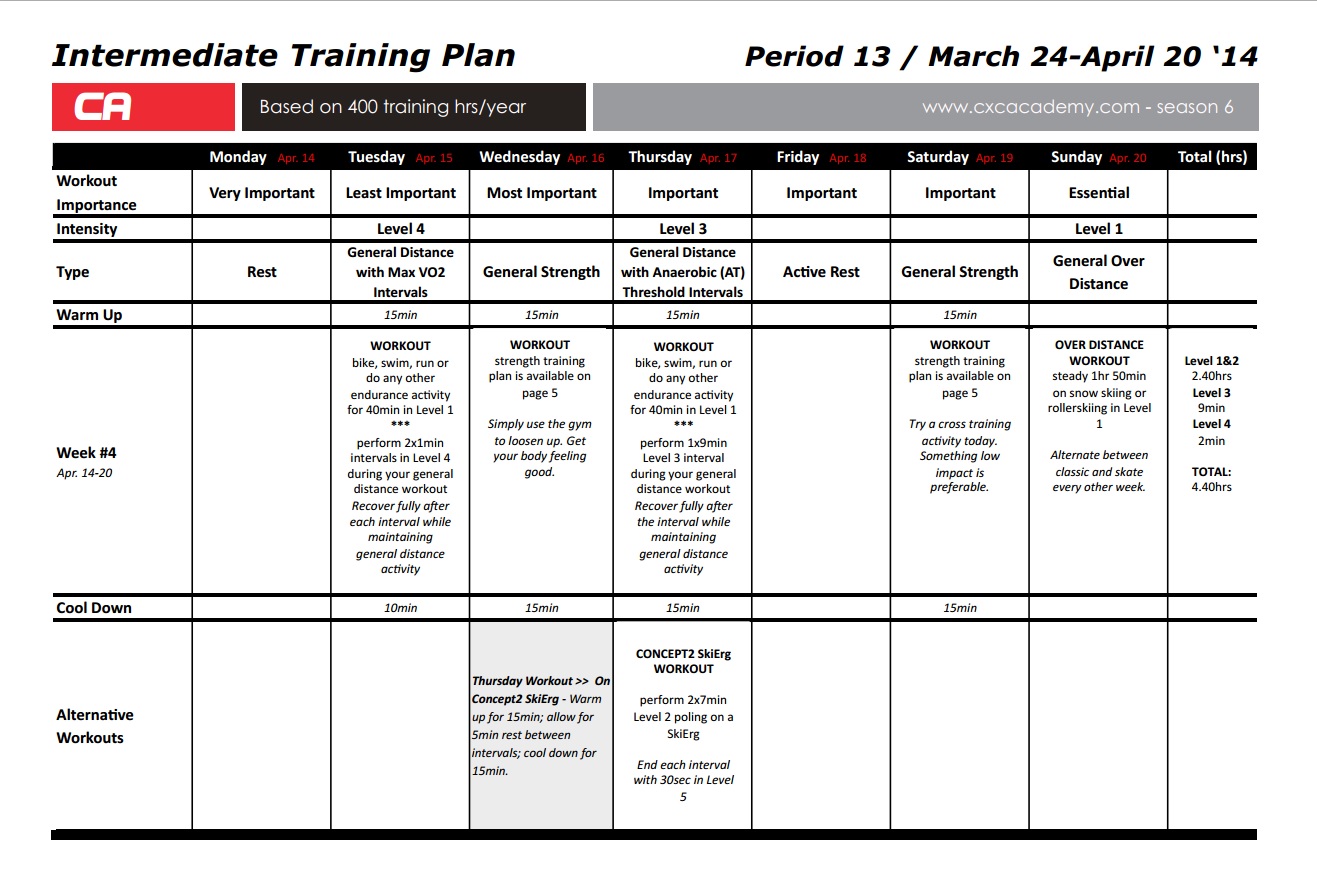
    Sample CXC Academy training plan layout.
    Sample CXC Academy training plan layout

    I told Gusev that most of my resistance to training plans was what I perceived as their inherent rigidity. I have friends who love nothing more than to see their training laid out before them on a neat, orderly grid with a little box in the corner to check when the workout has been completed.  I am not one of these people.

    To me working out is essentially goofing off, an escape from demands of work and life.  I live in Missoula, Mont., if the weather and my work schedule allows for a short mountain-bike ride on the same day when the training plan calls for strength workout in the gym, I’ll dump the plan in a heart beat.

    I asked Gusev about how his training plan can work for people with busy lives.

    “From the user side, what we’ve heard is that some people follow it like a bible, literally day by day, and some people try to adapt it to work and family and other things,” he said.  “What we suggest to people is that this is a road map … you know, its just getting those pieces done some time during the week. That’s what’s really important and everyone has a different way of how to structure the week around training.”

    Cost of CXC Academy:
    – 5-day trial: free
    – 1 month: $14.95
    – 1 year: $119.40

    Regarding alternate training activities, Gusev said, “That’s the perfect situation, if someone can do other activities, whether you are an elite athlete or you want to be a wave Birkie skier … you just do those workouts by bike or kayak or by foot or the swimming pool but you follow the plan to build your training. Obviously, the more specific you can be the better it is.  Some people might choose to rollerski once a week, and some may choose to not rollerski until September or October … so everyone is different.  Even at the elite level there is no single formula out there that will make you fast.”

    I discovered the Academy midway through my ski season and signed up for my free one-week introductory membership. My next race was the Peter Hale Memorial, a 22 k race with over 1,000 feet of climbing so I watched an Academy video on V1 technique.  In the video, Gusev demonstrated the importance using both legs equally regardless of which side you are poling on.  I focused on that single tip during my entire race.  I told Gusev that I finished ahead of two racers who had beaten me [quite easily] in a race two weeks earlier.  It was the first time I had ever finished ahead of one of them!

    I asked Gusev if my focus on his tip could have made the difference for my improvement.  “It could be, easily,” he replied. “We have a lot of people email us literally a week before the Birkie, and they say, ‘I didn’t train at all — I just want to make it through.’   You’d be amazed at how many people there are like that, and you know, there’s no magic wand to make them better, but there’s some things you can tell them, some basic tips just like what you talked about with V1.

    “I’ve heard from a lot of people that we’ve given advice and they said it was magical,” he added.

    CXC Academy video library.
    CXC Academy video library

    CXC Academy has a video library which Gusev said sets them apart, providing both technical advice and a visual demonstration of how it should be done.

    “What we learn with a technical sport like cross-country skiing that the most important part for people to understand is what they should be doing …  and how the technical elements [of skiing] make them more efficient and faster,” he said. “I haven’t seen anything else out there that gives that advice.”

    The Academy video offerings are extensive and include sections on strength training, on-snow skiing for both skate and classic, rollerskiing, dryland training, waxing and equipment.  The videos are tightly integrated with the training plans.   For example, the intermediate training plan for April calls for one day of general strength training per week.   A video demonstrating all recommended exercises is linked to the plan.  On a recovery day during the race season the plan might recommend that you get some wax into your ski bases and a link to a waxing technique video is provided.

    The CXC Academy offers a free five-day trial period.  A one-month subscription is $14.95 and one-year subscription costs $119.40.

    “Those paying members … help us pay the cost of servers, the cost of hosting videos. There is cost in everything,” Gusev said.   “We we give complementary memberships to Paralympic team members and high level para-athletes.  Those paying memberships allows us to have this resource, and without them we couldn’t help those Paralympic athletes and organizations like National Nordic Foundation.”

    Gusev said the Academy’s support of the U.S. Paralympics Nordic program wasn’t planned, but there was a need.

    “We were at Park City at the National Ability Center ski camps and they had development athletes from all over the country … and they didn’t have one centralized place for getting a plan,” he explained. “For some of them, if you have an adult who has never done any athletic training in the past, now with a disability trying to do a competitive sport, for them a training plan is like, they don’t even know from what side they need to look at it.”

    Since I’m just getting started following the intermediate training plan, I asked Gusev what I can expect next ski season.

    “You will go faster when you want to go faster and it will be a lot more enjoyable to go faster,” he responded. “I don’t race any more, I don’t have time …  but I enjoy when I go ski and I can go up a good hill at a good pace and enjoy it.  I can go ski for three hours if I want to.

    “Really, what [the Academy] does is builds all components of training, from anaerobic to aerobic and speed and endurance, so it gets to the point where you can do anything you want to,” he added.

    I told Gusev that I race mainly to provide goals to get me out exercising and skiing. While I love skiing, I don’t consider myself to be a racer. I asked if his training plan is appropriate for someone like me.

  • Masters Wins Second Medal of Paralympics, Bronze on Final Day in Sochi

    Masters Wins Second Medal of Paralympics, Bronze on Final Day in Sochi

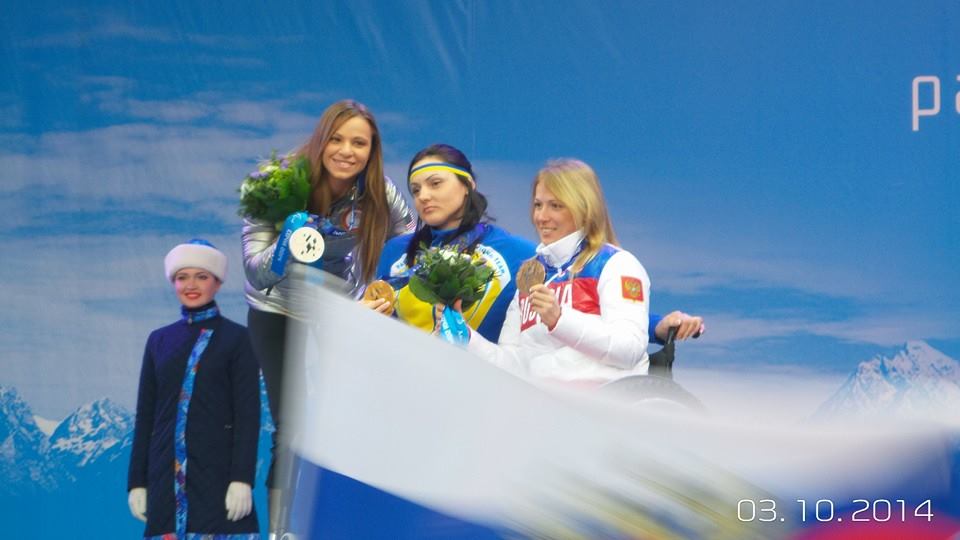
    Oksana Masters with her bronze medal following the women's 5 k sit-ski race.  (Photo Kevin Bittenbender U.S. Paralympics Nordic)
    Oksana Masters with her bronze medal following the women’s 5 k sit-ski race, the last day of the Sochi Paralympics. (Photo Kevin Bittenbender: U.S. Paralympics Nordic)

    (U.S. Paralympics press release)

    KRASNAYA POLYANA, Russia – The U.S. Paralympic Nordic skiing team closed out the 2014 Paralympic Winter Games in Sochi in exciting fashion today as Oksana Masters (Louisville, Ky.) won bronze in the women’s 5-kilometer sit ski cross-country race at the Laura Cross-Country Ski and Biathlon Stadium.

    Oksana Masters on the course of the women's 5 k race. (Photo Greg Rawlings U.S. Paralympics)
    Oksana Masters on the course of the women’s 5 k race. (Photo: Greg Rawlings/U.S. Paralympics Nordic)

    Masters finished the race in 17:04.8 just behind Germany’s Andrea Eskau who won with a time of 16:08.6 and Ukraine’s Lyudmyla Pavlenko who was second with a time of 16:27.0.

    It was the second medal for Masters and the third overall for the American squad. Masters won a silver medal in the 12km cross-country race earlier in the Games.

    Today’s performance was the perfect end to the Games for Masters.

    “I am in complete shock and amazement,” said Masters. “It has been an amazing first Paralympic Winter Games.”

    The race featured 23 competitors so it was difficult to know exactly where the racers stood until the finish. This made the race particularly challenging for the competitors.

    “It just goes to show that when you are out here in the middle of a race and you work hard enough and put your heart into it that you’re going to make anything you want happen,” noted Masters. “I sure as heck was fighting for every square inch of this course, so I am so lucky.”

    The race also featured Tatyana McFadden (Clarksville, Md.), the only other American to medal in Nordic skiing at the Games. McFadden also raced well, finishing in seventh place with a time of 17:27.8.

    For McFadden, who finished in the top 10 of each of her races here in Sochi, it was a fitting end to a great Games.

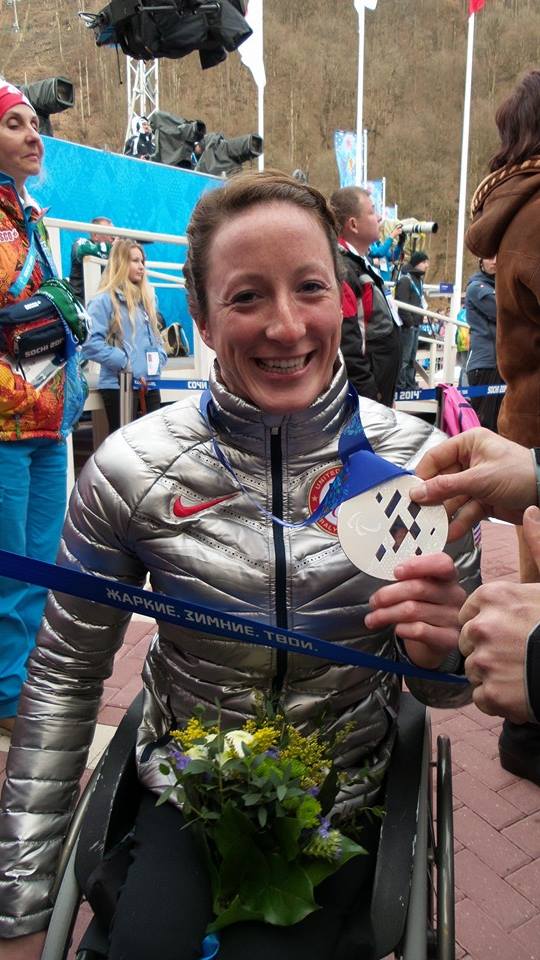
    Tatyana McFadden with her sprint silver medal  (Photo BethAnn Chamberlain  U.S. Paralympics Nordic)
    Tatyana McFadden with her sprint silver medal from earlier in the week. (Photo: BethAnn Chamberlain/U.S. Paralympics Nordic)

    “It’s been a great experience and a great ride. I did really well my first Paralympic Winter Games, it’s been quite an experience,” said McFadden.

    Today was a very busy day for the American squad as the team had 14 of its 16 athletes in competition today.

    In the first race of the day Marine Corps veteran Omar Bermejo (Grand Rapids, Mich.) and John Oman (Barron, Wis.) finished up their first Paralympic Winter Games by finishing 29th and 32nd, respectively, in the 10km free standing cross-country race.

    The American team also had two competitors in the second event of the day, the men’s 10km visually impaired cross-country race. Jake Adicoff (Sun Valley, Idaho) and his guide Reid Pletcher (Ketchum, Idaho) finished seventh with a time of 25:43.0. Navy veteran Kevin Burton (Boulder, Colo.) and his guide David Chamberlain (Wilton, Maine) finished in 15th place with a time of 28:25.8.

    In the final race of the day, the men’s 10km sit cross-country race, six Americans competed.

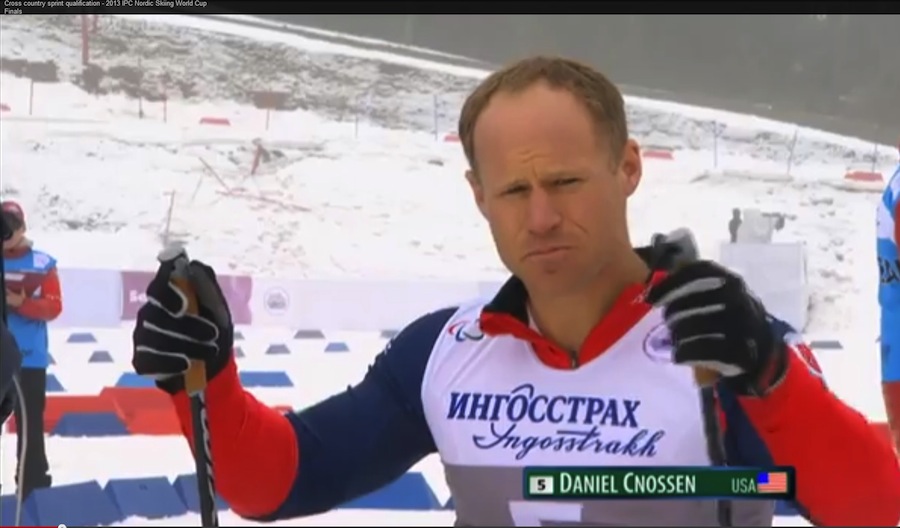
    Army veteran Andy Soule (San Antonio, Texas) once again was the top finisher for the U.S. placing ninth overall with a time of 32:56.1. He was followed closely by Lt Cmdr Dan Cnossen (Topeka, Kan.) who was 10th with a time of 33:02.0. Aaron Pike (Park Rapids, Minn.) was 14th with a time of 34:00.0. Retired Airman Sean Halsted (Spokane, Wash.) finished 16th and Army veteran Jeremy Wagner (Nanakuli, Hawaii) and Marine Corps veteran Travis Dodson (Deming, N.M.) were 22nd and 23rd, respectively.

    Today’s events wrapped up a very successful Paralympic Winter Games for the U.S. Nordic skiing team. After sending six athletes to the Vancouver Winter Paralympics in 2010 and winning one medal, the program made huge strides in these Games. The team was comprised of 16 athletes, including eight current or former military members and the team won three medals.

    On the women’s side, both Masters (Louisville, Ky.) and McFadden (Clarksville, Md.) found success in their first Winter Paralympic Games after already establishing themselves as elite level athletes in summer sports and shortly after taking up the sport of Nordic skiing.

    Masters, who won a bronze medal in the 2012 London Paralympics in rowing, struck first for Team USA in Sochi. A day after finishing fourth in the 6km sitting biathlon and narrowly missing the podium, Masters executed a nearly flawless race in the 12km cross-country race to claim second place with a time of 39:16.0. Masters’ silver medal was the first U.S. women’s Paralympic medal in cross-country skiing in 20 years.

    Fellow sit skier McFadden, who, like Masters, has only been competing in Nordic skiing for a year, continually displayed her athleticism throughout the Games.  On March 12, McFadden broke through, winning a silver medal in the 1km cross country sprint in a time of 2:45.7, just 0.1 behind Norway’s Mariann Marthinsen who won gold in what was the most exciting race of the Games. For McFadden it marked the11th Paralympic medal of her career but her first ever Paralympic Winter Games medal. McFadden also has 10 Paralympic medals in track & field.

    The men were led by Soule throughout these Games, who consistently found himself near the top of the leaderboard in every event he competed in. Soule recorded top five finishes in all but one of the six events he competed in in Sochi. In biathlon, Soule raced incredibly well and backed it up on the shooting range by going a perfect 50-for-50 across three races.

    Results

    Andy Soule before the start of the men's 10 K.
    Andy Soule before the start of the men’s 10 K. (Photo Greg Rawlings U.S. Paralympics Nordic
  • McFadden Takes Silver in Sochi Sprint, Dream Comes True; Masters One Second from Bronze

    McFadden Takes Silver in Sochi Sprint, Dream Comes True; Masters One Second from Bronze

    Silver Medalist Tatyana McFadden (L) and gold medalist Mariann Marthinsen following the women's 1 k sprint race.
    U.S. silver medalist Tatyana McFadden (l) and Norway’s gold medalist Mariann Marthinsen after the women’s 1 k sprint race. (Photo: Greg Rawlings/U.S. Paralympics Nordic)
    In a phone interview from Sochi just before the opening of 2014 Paralympic Winter Games, Tatyana McFadden told FasterSkier,  “The sprint is my favorite, I love to sprint in track and I love to sprint on skis.”

    On Wednesday, the marathon-racing queen’s love of sprinting transformed to silver.

    In the women’s 1-kilometer sit-ski sprint final at the Laura Cross Country Center in Krasnaya Polyana, Russia, McFadden finished second overall, just one-tenth of a second behind Norway’s gold-medal winer Mariann Marthinsen.

    Second out of the start behind Germany’s Andrea Eskau, McFadden surged to first when Eskau fell. The American Winter Paralympics rookie led the race until the finish line where she was edged out by Marthinsen.
    “I could not go easy, I needed to go hard from the start,” McFadden told the U.S. Olympic Committee. “I knew that they were coming and I could feel them down my neck.”
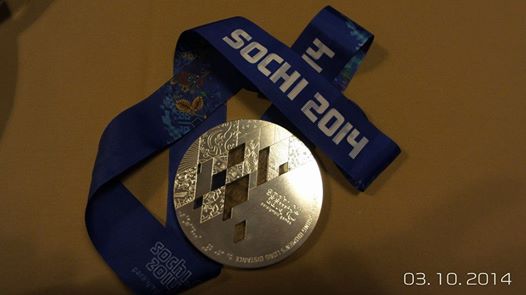
    American Oksana Masters (second from l) with her silver medal from the first sit-ski competition of the 2014 Sochi Paralympics. In her second race on Wednesday, she earned bronze to become the most successful female nordic skier in U.S. Paralympic history. (Photo U.S. Paralympics Nordic)
    American Oksana Masters (second from l) with her silver medal from the 12 k sit-ski competition, the first of the 2014 Sochi Paralympics. In her second race on Wednesday, the 1 k sprint, she placed fourth, one second away from bronze. (Photo: U.S. Paralympics Nordic)

    McFadden’s teammate, who also picked up the sport last season, Oksana Masters finished fourth, one second away from bronze.

    Masters was in third until the final straightaway, where Russia’s Marta Zaynullia passed her for bronze.  Eskau was disqualified  due to an illegal lane change.

    McFadden, 24, of Clarksville, Md., became the second U.S. women to win a Paralympic medal in cross county skiing in last 20 years. The first was Masters, who won bronze in the women’s 12 k distance race on Sunday.

    After picking up skiing just over a year ago, McFadden advanced to the finals on Wednesday by placing fourth in the qualifier and second to Marthinsen in the semifinal. Masters was third in the qualifier round and second in her semi.

    At age 6, McFadden was adopted from St. Petersburg, Russia, by American Deborah McFadden. Her birth mother, whom Tatyana recently met, has been in attendance at the Games to watch her compete.

    Oksana Masters' silver  medal in the 12 k distance event at the 2014 Sochi Paralympics. (Photo: U.S. Paralympics Nordic)
    Oksana Masters’ silver medal in the 12 k distance event at the 2014 Sochi Paralympics. (Photo: U.S. Paralympics Nordic)

    McFadden told FasterSkier before the Games that having both her moms there with her in Sochi “has definitely been a dream of mine … Just having my whole family in the stands is going to be a huge fulfillment so I’m going to take that energy and put it into my skiing.”

    Describing McFadden’s rise from a skiing newcomer to Winter Paralympic medalist, U.S. Paralympics Nordic High Performance Director John Farra wrote in an email, “It was definitely a like cramming for a final exam … like fitting in 4 years of college education into one semester, but we started with an athlete with RAW physical talent, power and strength and willingness to work.”

    McFadden is a 10-time world champion and three-time Paralympic gold medalist in track racing. She’s competed at three Summer Paralympics and became the first person to win all four major marathons (Boston, London, Chicago, and New York) in a single season. In the 12 k distance event on Saturday, she placed fifth in her first Winter Paralympics race.

    “It was definitely a like cramming for a final exam … but we started with an athlete with RAW physical talent, power and strength and willingness to work.” — U.S. High Performance Director John Farra on Tatyana McFadden

    “We kept her on snow as much as possible from the start of the season until Sochi … and today it all came together for her,” Farra explained.

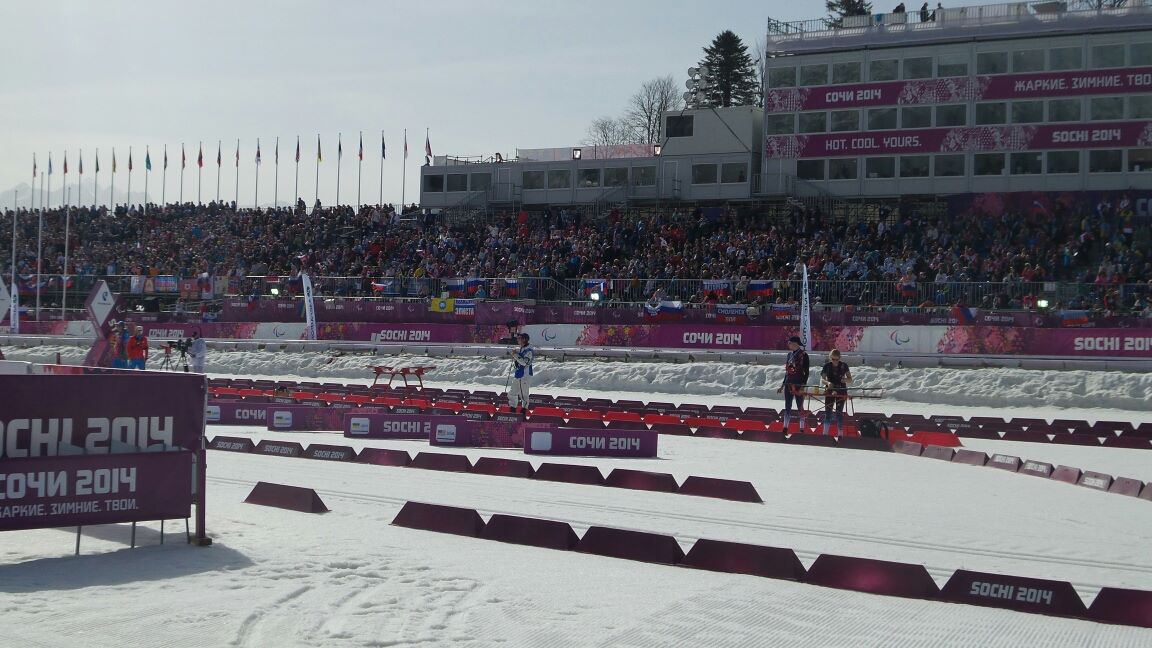
    A packed cross country stadium at the 2014 Winter Paralympic Games sprint races.
    A packed cross country stadium at the 2014 Winter Paralympic Games sprint races. (Photo U.S. Paralympics Nordic)

    In the men’s sprint final Andy Soule placed fifth and Dan Cnossen took sixth. Sochi roommates, Soule and Cnossen were 6.4 and 8.3 seconds back from bronze, respectively.

    “My performances here have been very good for me, every race has been one of the very best of my career,” wrote Soule, who won bronze in biathlon at the 2010 Paralympics.

    Soule’s best race, the distance biathlon, will be held Friday March 14th.   “I feel very confident about the final biathlon event.  The long distance biathlon is a very good event for me.” Soule noted.

    Cnossen, a newcomer to the  Paralympic Games,  described his races in an e-mail, ” [In the semi final] I came around that first sharp right turn wide … then drafted off two Russians and came in third.  In the final, I stumbled at the start … and was never able to reel in the other competitors.”


    U.S. Paralympics silver medalist Tatyana McFadden with her first medal of the Winter Games in Sochi, Russia, on Wednesday after placing second in the 1 k sit-ski sprint. (Photo: John Farra/U.S. Paralympics Nordic)
    U.S. Paralympics silver medalist Tatyana McFadden with her first medal of the Winter Games in Sochi, Russia, on Wednesday after placing second in the 1 k sit-ski sprint. (Photo: John Farra/U.S. Paralympics Nordic)
  • Masters Notches First-Ever U.S. Cross-Country Silver at Paralympics, Teammates in the Hunt

    Masters Notches First-Ever U.S. Cross-Country Silver at Paralympics, Teammates in the Hunt

    Oksana Masters racing for silver medal in the women's 12 K race at the 2014 Winter Paralympic Games in Sochi.
    U.S. Winter Paralympics rookie Oksana Masters on her way to a silver medal in the women’s 12 k sit-ski race at the 2014 Paralympic Games in Sochi, Russia. (Photo: U.S. Paralympics Nordic Program)

    Oksana Masters won silver in the women’s sit-ski 12-kilometer cross-country race on Sunday, the second day of competition at the 2014 Paralympics in Sochi, Russia.

    The medal ends a 20-year-medal drought for U.S. women’s Paralympic cross-country skiing. According to a U.S. Paralympics press release, Michelle Drolet last claimed a medal for the U.S. in cross-country, taking bronze in the women’s visually impaired 5 k freestyle at the 1994 Lillehammer Paralympics. No woman has ever won silver — until Masters, a 24-year-old Ukrainian-born American Paralympic rower (originally) from Louisville, Kentucky. At the 2012 London Summer Paralympics, she earned the first U.S. medal in trunk-and-arms mixed double scull.

    In a press release, Masters credited her rowing background for her early success in skiing after picking up the snow sport last season.

    “I really have to thank my training from rowing because it prepared me well for skiing,” she said. “I am so happy right now.”

    Masters narrowly missed the podium on Saturday in her first Paralympic competition, placing fourth in the women’s 6 k biathlon race.

    “[Today was] a fabulous day for us again!” said U.S. Paralympics Nordic High Performance Director John Farra.

    Wheelchair racing champion Tatyana McFadden, in her Winter Paralympic debut, placed fifth in Sunday’s sit-ski race. Her previous best at this distance was ninth at the International Paralympic Committee (IPC) World Cup in Oberstdorf, Germany, earlier this season.

    In an interview with FasterSkier before the race McFadden said she found the 12 k distance to be the hardest. “It takes takes more technique and technique plays in where you put your power in the snow,” she said. “I’m still learning and different snow conditions and the conditions are constantly changing.”

    McFadden had difficulty with cornering in her distance race, falling three times.  On her Facebook page, McFadden wrote, “Came in 5th place for my first winter games race in the 12k. Not too bad for falling 3x…need to get better at the turns. Exhausted but happy.”

    Farra said McFadden’s technique was especially smooth on Sunday.  “Great technique on the trails today,” he said. “A few crashes, but she is learning everyday …  great day for her!”

    Andy Soule following his fifth place finish in the men's 15 K 12  race at  2014 Winter Paralympic Games in Sochi.
    Andy Soule following his fifth place finish in the men’s 15 K 12 race at 2014 Winter Paralympic Games in Sochi. (Photo U.S. Paralympics Nordic Program)

    In the men’s 15 k distance race, Andy Soule placed fifth and Sean Halsted finished ninth for the U.S.

    Soule narrowly missed the podium in Saturday’s biathlon race, also placing fourth.

    “Andy is a pro,” Farra said. “He knew what he needed to do … he has stuck with his plan and seems to be on his best form … maybe ever.

    “It appears that some of our athletes are hitting their stride — peaking if you will — at the right moment, and that was always the plan,” he added. “I am happy to see it.  Hoping we will see a few of the others hitting theirs before we leave Sochi.”

  • Canadian Paralympic Preview: McKeever, Bourgonje, Arendz Lead the Way to Sochi

    Canadian Paralympic Preview: McKeever, Bourgonje, Arendz Lead the Way to Sochi

    Brian McKeever (r) with guide Erik Carleton celebrating gold at the 2011 World Championships. (Photo: IPC)
    Brian McKeever (r) with guide Erik Carleton celebrating gold at the 2011 World Championships. (Photo: IPC)

    In Vancouver 2010, the Canadian Paralympic team placed third in the overall medal count with 19, behind Russia, which racked up 38, and Germany, with 24.

    Canada has set a goal of being in the top three again this year overall at the Winter Paralympic Games held March 7 to 16 in Sochi, Russia, according to an Own the Podium press release.

    Canada’s recently announced 14-athlete Paralympic nordic team has the horsepower and experience to do their part in bringing home medals.

    Sochi, RUSSIA - Mar 4 2014 -  Colette Bourgonje from Canada's Nordic team arrives prior to the 2014 Paralympics in Sochi, Russia.  (Photo: Matthew Murnaghan/Canadian Paralympic Committee)
    Colette Bourgonje from Canada’s Nordic team arrives prior to the 2014 Paralympics in Sochi, Russia. (Photo: Matthew Murnaghan/Canadian Paralympic Committee)

    The team will be led by 10-time Paralympic medallist Brian McKeever along with his guides Erik Carleton and Graham Nishikawa, and eight-time Paralympic medallist Colette Bourgonje. Her silver at the 2010 Games was Canada’s first medal at home.

    McKeever, who races in the visually impaired category, will be appearing in his fourth Paralympic Games including Salt Lake City 2002, Turin 2006 and Vancouver four years ago.

    The triple-gold medallist from 2010 tweeted on Tuesday: “Woke up with a virus yesterday. Timing couldn’t be much worse. Not the ideal prep for the #Paralympics. It’s been a bumpy #RoadToSochi.”

    In 2010, McKeever, 34, was named to both Canada’s Paralympic and Olympic teams. In the Olympics, he qualified to compete in the men’s 50-kilometre cross-country race; however, Canada’s coach decided to replace him with a skier who did well in earlier race at the Games.

    Bourgonje, 52, is one of Canada’s most recognized Paralympians, having participated in all six Paralympic Winter Games in addition to wheelchair racing at three Summer Paralympics. She is the reigning world champion in the sit-skiing distance race and she captured a silver and bronze medal at the 2010 Paralympics.

    In an interview with Canada.com, Bourgonje said, “My goals for Sochi are to be in the top five.”

    Biathlete Mark Arendz, 24, is a multiple International Paralympic Committee (IPC) World Cup medallist and is first overall in this season’s World Cup standings. He will be competing for his first Paralympic medals in the standing division in his second Winter Paralympics.

    Last season, Arendz won the overall IPC World Cup Biathlon title, and won a gold and two bronze medals at IPC World Championships, and won a gold, two silvers and four bronzes throughout the World Cup season.

    Canadian World Cup Veteran Mark Arenz in the Standing Division Sprint at Canmore. (Photo Courtesy Pam Doyle)
    Canadian World Cup veteran Mark Arenz in the standing sprint at the IPC World Cup in December in Canmore, Alberta. (Photo: Pam Doyle)
  • Sochi Paralympics Preview: U.S. Medal Chances and More

    Sochi Paralympics Preview: U.S. Medal Chances and More

    Returning 2010 Paralympic bronze medalist Andy Soule racing at the 2014 US national championships. (Photo Victor Henderson)
    Returning 2010 Paralympic bronze medalist Andy Soule racing at the 2014 US national championships. (Photo Victor Henderson)

    At the 2014 Winter Paralympics from March 7 to 16 in Sochi, Russia, nordic skiing and biathlon will account for more that half of the available medals.

    How will the United States fare in the medal chase?

    Downplaying expectations in an interview with FasterSkier, John Farra, the high-performance director of U.S. Paralympics Nordic, didn’t rule out a surprise or two from his team.

    “While we are not expected to win any medals … we are spending a lot of time and effort to find that extra half percent or 1 percent that gets [our athletes] into the top three to steal a medal from the Russians or the Ukrainians.”

    The Russians, in particular, have been dominant in World Cup sit-ski competitions this season. In December in Canmore, Alberta, both the Russian and U.S. teams showed up in full force to prepare for Sochi.

    The Russians won most of the medals available and swept several podiums, while the U.S. men missed out on the podium.

    “They [the Russians] really came to ready to race,” Farra said.

    Sights on Biathlon

    For the men’s team, biathlon looks to be a place where the U.S. program has an opportunity for success. At the Vancouver 2010 Winter Games, Army veteran Andy Soule earned the United States’ first-ever Olympic or Paralympic medal in biathlon, finishing third.

    Soule returns to this year’s team and told FasterSkier, “I’m probably better on the longer races, the biathlon long course (15 Kilometer) is my best race, not because of the skiing, but because the shooting penalty is considerably larger for that event.”

    Regarding the technical aspect of biathlon, Soule said, “I’m definitely working on a being more aggressive. I’ve been a decent shooter for some time and I’m working on cutting down on my range times.”

    U.S. Paralympics Biathlon coach Rob Rosser said the team has a good chance to score an upset in biathlon.

    “In cross-country skiing, it can takes years to develop and significantly change your level of fitness,” Rosser said. “That’s why biathlon is so interesting as a sport, so many things can happen with the shooting that the outcomes are much less predictable.”
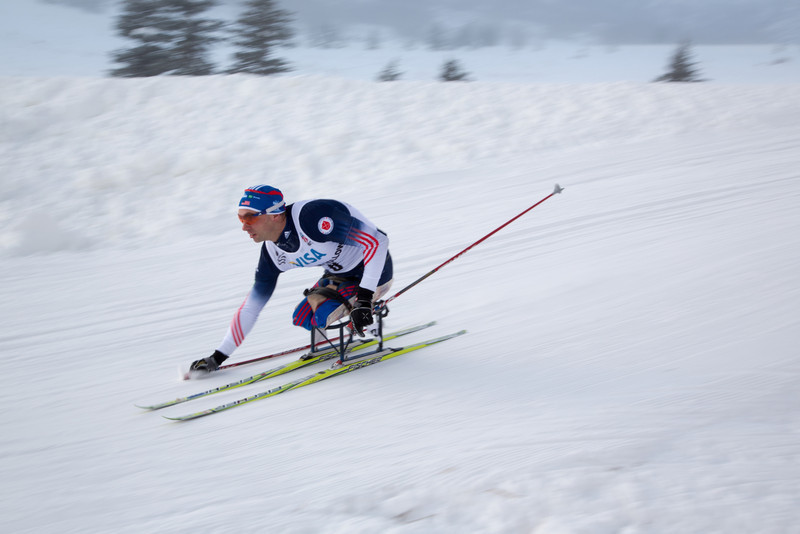
    Dan Cnossen racing at the 2013 IPC World Cup in Canmore, Canada, in December. (Photo: Pam Doyle)
    Dan Cnossen racing at the 2013 IPC World Cup in Canmore, Canada, in December. (Photo: Pam Doyle)

    A leading member of the team after just a few seasons in the sport, Lt. Dan Cnossen edged Soule at U.S. nationals in January, beating Soule by 2.8 seconds in the 7.5 k race, after Soule missed a shot on his final round in the range.

    Cnossen will be competing at his first Paralympics this month.

    “He trains unbelievably professionally,” Farra said. “He really puts everything into it.”

    This year Cnossen has focused on upping his game in biathlon.

    “I’ve made some changes in my training for the biathlon,” Cnossen said at the beginning of the season. “I had some troubles with my rifle that we’ve ironed out, so I think you’ll see some improved hit rates.”

    At nationals, the sit-ski sprint lived up to it’s reputation where anything can happen. A relative newcomer, Jeremy Wagner became a national champion with his first national title, topping 2010 Paralympian Sean Halsted.

    U.S. Women’s Prospects

    The U.S. women’s team makes up four of the 18 athletes on the team, but they have delivered the most impressive results and generated the most media buzz this Olympic year.

    Oksana Masters is the top U.S. contender for a medal based on her World Cup results this season.

    Oksana Masters racing in the IPC World Cup Canmore sprint race. (Photo: Pam Doyle)
    Oksana Masters racing in the IPC World Cup Canmore sprint race. (Photo: Pam Doyle)

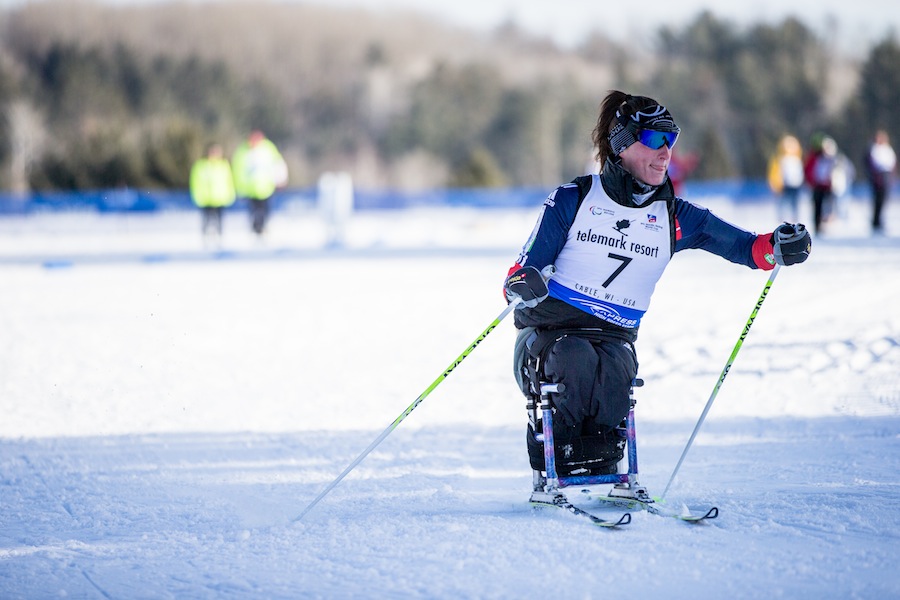
    Masters won bronze medals in the 12 k in Oberstdorf, Germany, as well as the 5 k in Canmore. She narrowly missed the podium in the sprints at Canmore due to an “unlucky tangle” with another skier.

    Recruited to skiing based on her background as a bronze-medal winning Paralympic rower, Masters has shown remarkable adeptness at learning a sport she first tried two years ago.

    “She’s fearless, so she ended up crashing a lot early on because she just wanted to go fast,” Farra explained. “She didn’t know how to control the [sit-ski] to be able to turn it left or right to avoid the tree, and often times she’d connect with the tree or crash and break a pole.”
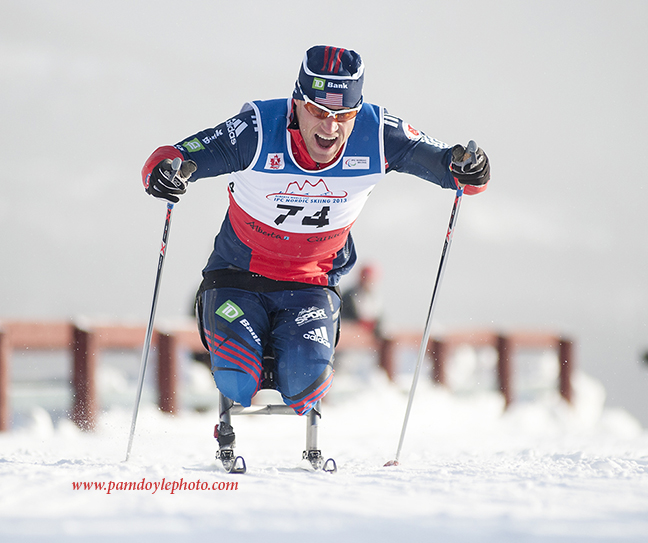
    He laughed.

    “She was a bit of a … well, you know, it was pretty funny actually in some ways. As long as she wasn’t getting hurt it was fun to watch.”

    In an email to FasterSkier, Masters cited her inexperience with skiing and her surprise at her success. About her Canmore medal, she said, “I knew that just about every other woman skier out there had years of experience on me and I am still a newbie. I went into the the race with the mind set of I’m not going to be top 5 but I wanted to try my darn hardest to make it in the top 10.”

    As for her first World Cup podium: “I didn’t know instantly that I got third. I was shocked and thought it was a mistake at first.”

    So is she getting more comfortable and does she believe she can compete with the best in the world? Farra thought so.

    “I think it is fair to say she is starting to believe it, yes. She is so competitive and really was pumped to get on the podium in Oberstdorf. She has really refined her technique to a very smooth, powerful and efficient motion. … She will get there.”
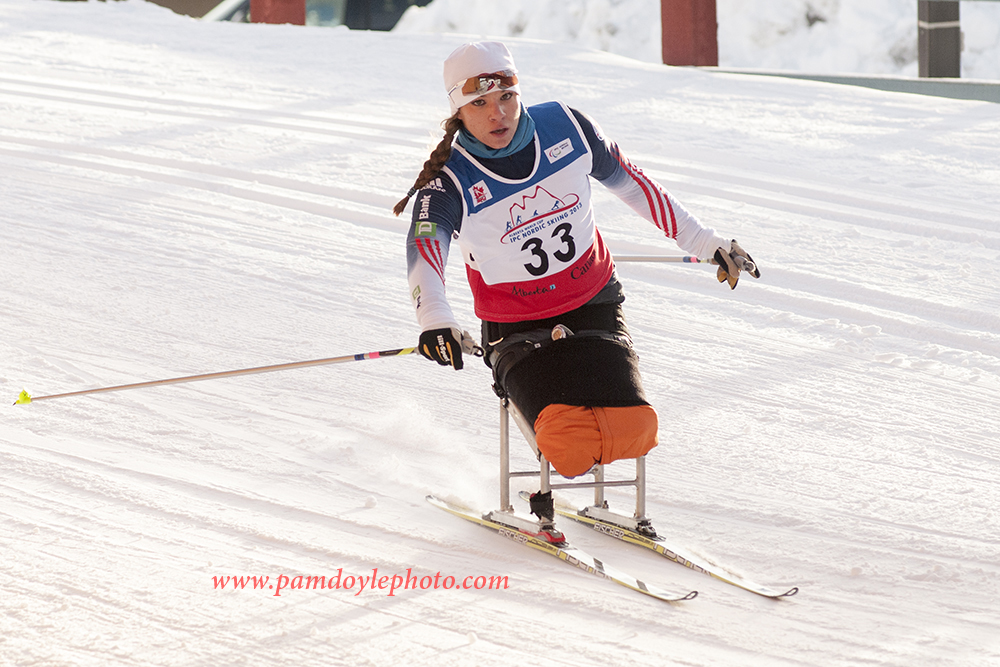
    Masters has garnered national media attention since her appearance in the 2012 London Paralympic Games. Her life story as a Ukrainian orphan adopted by her U.S. mother has been featured in various media forms, including Sports Illustrated and Southwest Airlines’ in-flight magazine.

    She was named one of the “11 hottest paralympic athletes” by MSN “Now.” She was named one of ten U.S. athletes to watch by The Guardian.
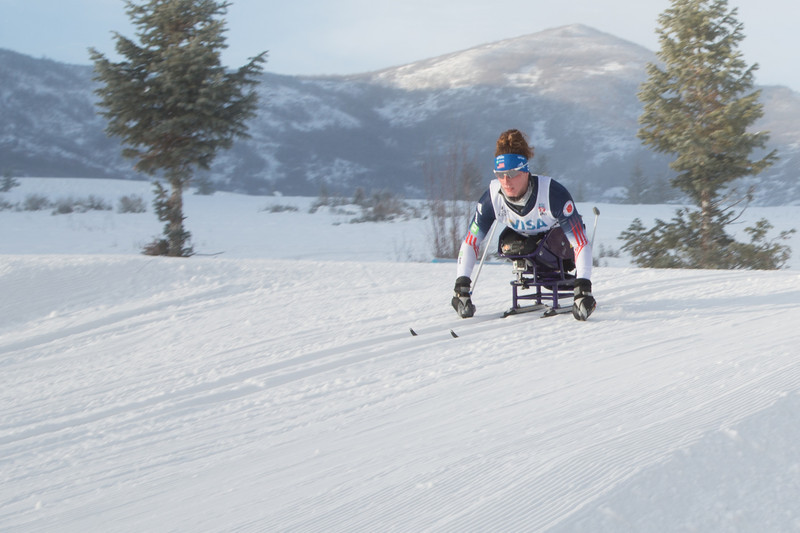
    Apple featured her in a video, “Making a difference: one app at a time”, where she demonstrated how she uses an iOS app to control her prosthetic legs and put on high heeled shoes.

    Perhaps most famously, Masters posed nude for ESPN’s 2012 “Bodies We Want” issue.

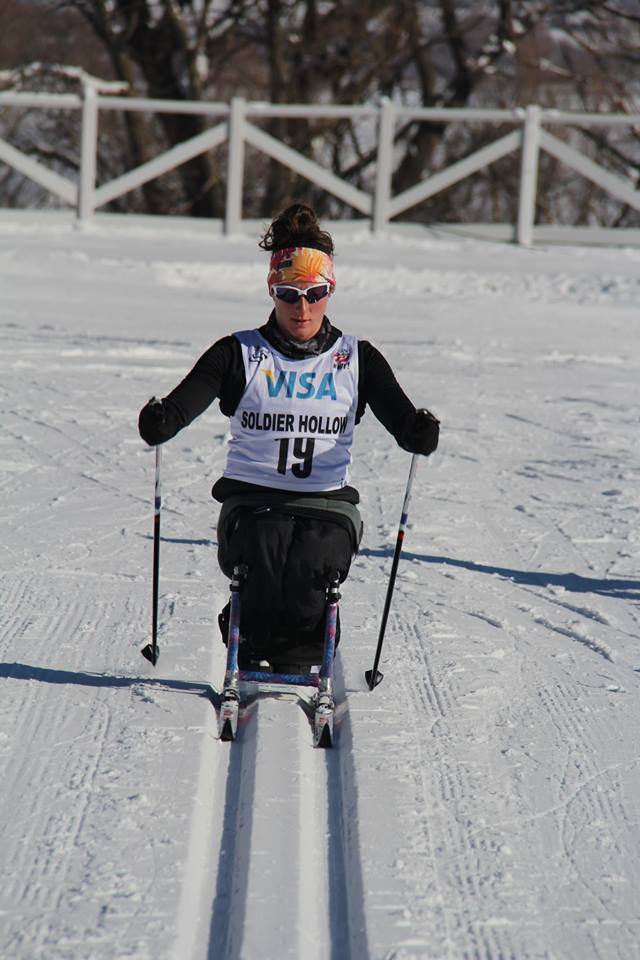
    Tatyana McFadden racing at US nationals Soldier Hollow. (Photo: Victor Henderson)
    Tatyana McFadden racing at US nationals Soldier Hollow. (Photo: Victor Henderson)

    As the U.S. heads for Sochi, world-class wheelchair racing champion and summer Paralympic cross-over athlete, Tatyana McFadden is another woman to watch. McFadden and Kikkan Randall were featured together in BP television ads during NBC’s coverage of the Winter Olympic Games.

    Apart from her celebrity status as the most decorated U.S. athlete going to Sochi, McFadden is candid about her newness to skiing.

    “For track, since I’ve been to other races and other Paralympics … I know what to expect between events and the transitions and about getting on the bus and off the bus and into the venue and what its going to feel like,” McFadden said. “For Sochi, I don’t know any of that. I have no idea because everything is so new for me.”

    McFadden’s ski results have steadily improved as she gains experience. She has cracked the top 10 three times in IPC world cup competition this season, finishing ninth in the 12 k and tenth in the sprint at Oberstdorf. She placed seventh in the sprint at Canmore, narrowly missing the six-woman final round.

    McFadden and her London 2012 Paralympic teammate Jessica Long are both Russian orphans who were adopted and brought to the United States by American families. Both have been outspoken against Russia president Vladimir Putin’s 2012 law banning adoption of Russian children by U.S. citizens.

    McFadden said she was excited to return to Russia for the Sochi Paralympics.

    “It’s part of my culture, it’s part of who I am, and that will never be apart from me,” she said. “But I’m going to be going and competing for the United States of America.”

  • In Third Season, Cnossen Aims to Lead U.S. Paralympics Nordic, Starting in Canmore

    In Third Season, Cnossen Aims to Lead U.S. Paralympics Nordic, Starting in Canmore

    Lt. Dan Cnossen (U.S. Paralympics) racing to 11th in Tuesday's sit-ski sprint at the IPC World Cup in Canmore, Alberta. (Photo: Pam Doyle)
    Lt. Dan Cnossen (U.S. Paralympics) racing to 11th in Tuesday’s sit-ski sprint at the IPC World Cup in Canmore, Alberta. (Photo: Pam Doyle)

    One of the most successful men on the U.S. Paralympics Nordic Team last season,  Lt. Dan Cnossen cut right to the chase when asked about his training this summer and fall.

    “I think we’re going to find out real quick when I go up against the Russians,” Cnossen responded in a phone interview before the first International Paralympic Committee (IPC) World Cup in Canmore, Alberta, from Dec. 9 to 17.

    According to U.S. Paralympics High Performance Director John Farra, Cnossen, originally from Topeka, Kansas, is relatively new to the sport.  He joined the team after the 2010 Winter Paralympics, and in the three years since he’s been living and training in Winter Park, Colo., Cnossen has risen to lead the U.S. men’s sit-ski team.

    Dan Cnossen (Navy) goes out hard from the start of the 15 k sit ski at U.S. Adaptive Championships in Soldier Hollow on Saturday.
    Lt. Dan Cnossen (Navy) racking up one of three national titles at U.S. Adaptive Championships last season in Midway, Utah.

    “He trains unbelievably professionally,” Farra said. “He really puts everything into it.”

    A Navy SEAL who lost both his legs in an Afghanistan explosion in 2009, the first day he was promoted to lieutenant, Cnossen, 33, has full use of his core.

    “He is a ‘V’ cut, super-strong … looking guy,” Farra said.

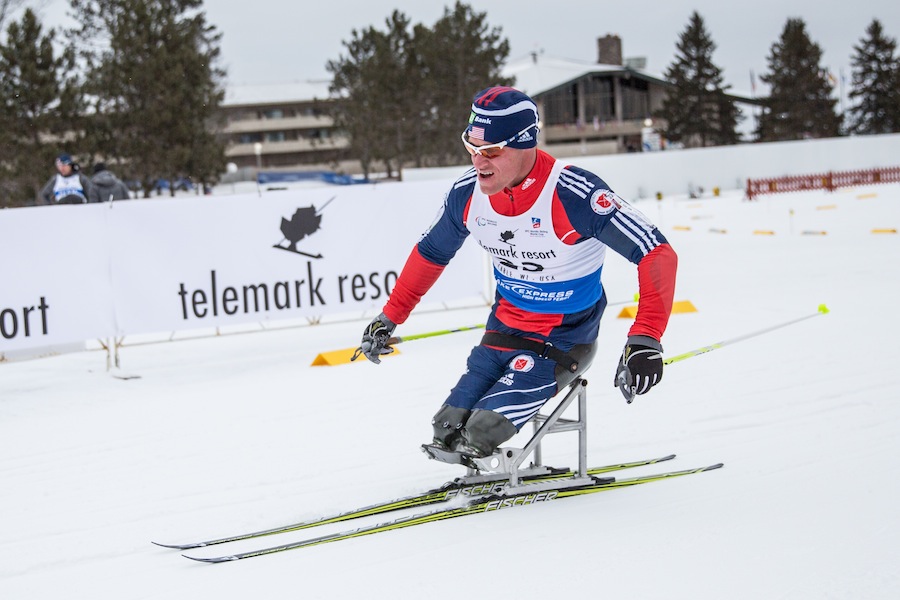
    Last year, Cnossen excelled on the domestic and international scene, notching podiums at U.S. nationals and the IPC World Cup in Cable, Wis.

    This summer, he ventured down to Argentina to train and race the 21-kilometer Marchablanca and 42 k Ushuaia Loppet. “That trip really reinvigorated my training,” Cnossen said.

    Skiing on snow is important to Cnossen, because he describes his mountain board (a sit skier’s equivalent to rollerskis) as a “strength machine.”

    “It’s very hard to work my cardio on it because it doesn’t roll very fast,” he said.

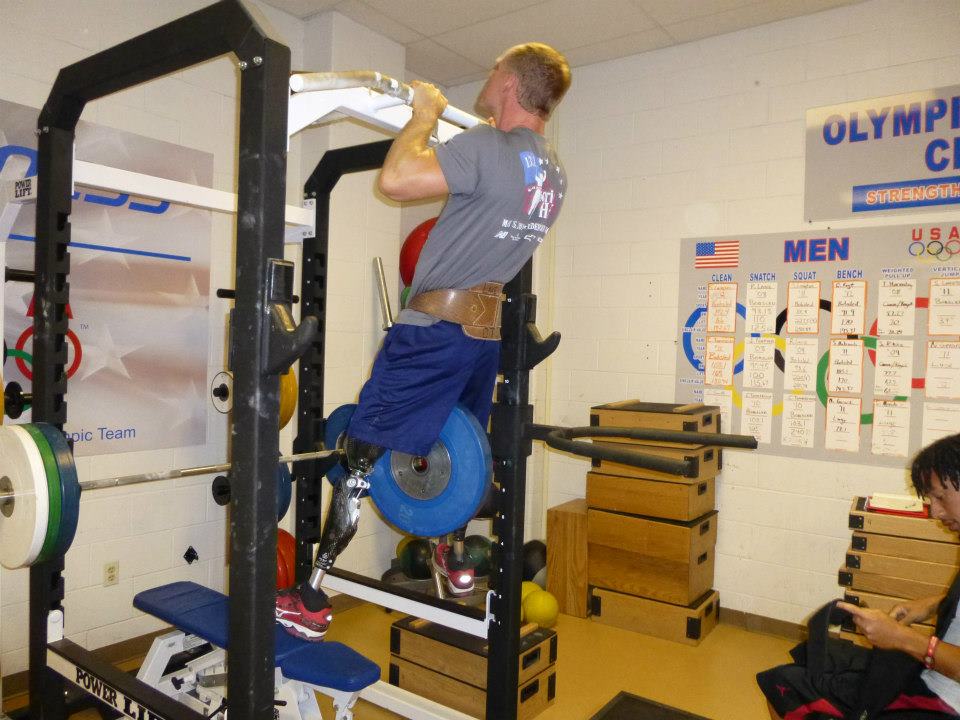
    Lt. Dan Cnossen of the U.S. Paralympics Nordic National Team doing loaded pull-ups during a strength session at the Lake Placid Olympic Training Center. (Photo: www.facebook.com/USParalympicsNordic)
    Lt. Cnossen of the U.S. Paralympics Nordic National Team doing loaded pull-ups during a strength session at the Lake Placid Olympic Training Center two summers ago. (Photo: U.S. Paralympics Nordic/Facebook)

    Using prosthetic legs, Cnossen has devised other ways to raise his heart rate.

    “You do what you can, and for me, I was a big runner before my injury,” he said. “I’m very lucky that I can do it, and I’m really lucky that I can walk too. ”

    He mostly runs 5- and 10-k races, which helps with his nordic training.

    “Plus, running gives me a chance to rest my shoulders,” he said.

    Cnossen is testing in a new custom sit ski this year, a lighter model that he hopes will help him ski faster.

    “It’s a really important part of the sport; you have to be comfortable, you have to be well secured … not only for power transfer, but for ski control,” he said. “I found a group of engineers who were willing to work with me and they’ve done a great job.”

    Summing up his thoughts about the season ahead, Cnossen said he was confident in his skiing abilities.

    “I’m hoping I’m a little better tactician,” he said. “I know I’m stronger physically this year and I have better equipment so it will be exciting to see how I end up on the results list.”

    Lt. Dan Cnossen at the start of a sprint qualifier at a 2013 test event in Sochi, Russia.
    Lt. Dan Cnossen at the start of a sprint qualifier at a 2013 test event in Sochi, Russia.

    In terms of tactics, he said he needs to work on sprinting.

    “I try to be a sponge,” he said. “Since this is only my third year, every time I go to a World Cup I try to watch the Russians and the athletes from other countries.  I watch what lines they take.  Are they in the track are they out of the track? Their rhythm of double poling, the nuances of ski handling. I hope it pays off.”

    Also a biathlete who’s tweaked his training, Cnossen predicts improvement there as well.

    “I think you’ll see some improved hit rates,” he said. “I knew the first couple of years, even if I shot perfectly I wouldn’t ski fast enough, no where near it. First and foremost, I thought the strength and conditioning would take the longest to develop.  I have a background in shooting and I can tweak that in a relatively short amount of time compared to how long it would take do develop the strength to conditioning to be fast enough to keep up with the top guys.”

    So far, he’s notched ninth place in the 10 k at Canmore, leading the U.S. men. On Tuesday, he placed 11th in the sprint behind teammates Sean Halsted and Andy Soule in eighth and ninth, respectively.

    Lt. Dan Cnossen (U.S. Paralympics) tallied multiple podiums at the IPC World Cup in Cable, Wis., in January. (Photo: James Netz)
    Lt. Dan Cnossen (U.S. Paralympics) tallied multiple podiums at the IPC World Cup in Cable, Wis., in January. (Photo: James Netz)

    ***

    What: IPC World Cup at the Canmore Nordic Centre in Canmore, Alberta

    Schedule:
 

    IPC Cross Country World Cup

    • December 9 10:00am Men’s 10km/Women’s 5km Skate
    • December 10 11:00am Sprint Classic (Heats start at 12:00)
    • 
December 12 10:00am Men’s 20km/Women’s 15km Classic

    IPC Biathlon World Cup

    • 
December 14 10:00 Biathlon Sprint
    • December 15 10:00 Biathlon Middle Distance
    • December 17 10:00 Biathlon Long Distance
  • World-Class Wheelchair Racer, McFadden Sets Sights on Sochi

    World-Class Wheelchair Racer, McFadden Sets Sights on Sochi

    Tatyana McFadden competes at the 2013 IPC World Cup in Cable, Wis.(Photo: James Netz)
    Tatyana McFadden competing at one of her first international cross-country ski races at the 2013 IPC World Cup in Cable, Wis.(Photo: James Netz)

    Tatyana McFadden is coming off an impressive couple of years.

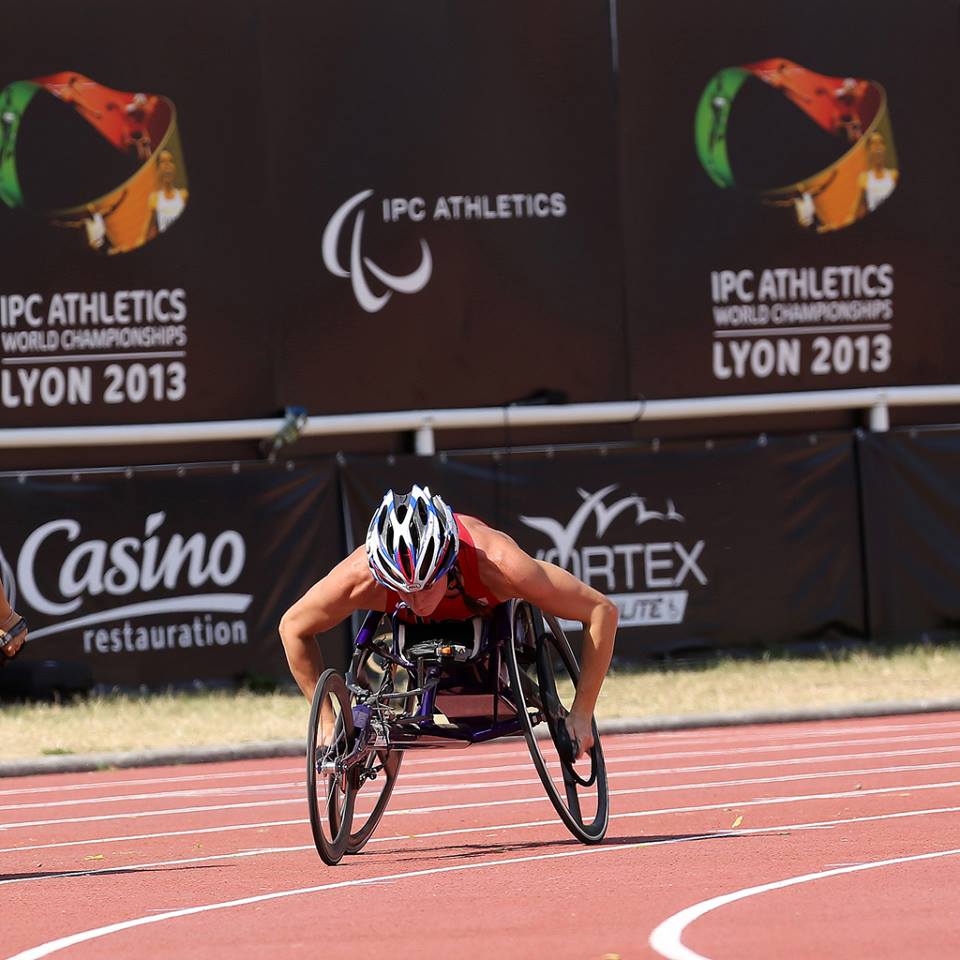
    Winning the New York City Marathon last month, the 24-year-old University of Illinois student became the first person to win the Chicago, Boston, London and New York City marathons – the elusive Grand Slam – in a single year.  In July, McFadden became the first athlete to win six gold medals at the International Paralympic Committee (IPC) Athletics World Championships in Lyon, France.  No stranger to elite competition, the three-time Paralympian holds 10 medals in wheelchair racing, three of them gold from the 2012 London Paralympic Games.

    Tatyana McFadden as 2012 National Adaptive Ski Championships, Soldier Hollow.
    Tatyana McFadden at the 2013 U.S. Adaptive National Championships at Soldier Hollow in Midway, Utah, where McFadden won the sit-ski sprint. (Courtesy photo)

    Now with her track and marathon seasons over for the year and with the 2014 Winter Paralympics in Sochi, Russia, on the horizon, McFadden is days away from beginning her second season as a nordic skier at the IPC World Cup in Canmore, Alberta, starting Dec. 9.

    John Farra, the U.S. Paralympics Nordic high-performance director, tells the story of how McFadden came to his sport.

    “About a year and a half ago I got a text message at midnight from the [U.S. Paralympics] alpine director [Kevin Jardine] saying, ‘Hey, I’m at the ESPYs and Tatyana McFadden wants to be a nordic skier!’ ” Farra said.

    According to the Chicago Tribune, Jardine reportedly told her, “Are you kidding me? No one wants to do nordic. Do you know how hard that is?”

    “I guess you don’t understand anything about me,” McFadden replied.

    “She contacted me and said ‘How can I get into the skiing thing?’ ” Farra explained. “So she comes to the national championships and won the sprint race and was very competitive in the others.  I said, ‘You should come to the World Cup in Cable, Wisconsin. There may be time for you to make the Paralympic Games.’ So she did and she made the national team in just one race.  She’s just so frickin’ strong.”

    In a phone interview last week, McFadden described her busy upcoming month, which starts this week in Canmore.

    “I’ll be there a few days before and I’ll do a competition, then I literally fly back [to Illinois], take a final, graduate, move out, then I head home for Christmas,” she said.

    Majoring in human development and family studies, she will give the graduation speech to her class.

    Born in St. Petersburg, Russia, with spina bifida, a birth defect that paralyzed her from the waist down, McFadden spent her first six years in an orphanage walking on her hands. A disabilities commissioner for the US Health Department, Deborah McFadden visited the orphanage and adopted Tatyana before raising her in Baltimore. Since then, Tatyana has been an activist on several fronts, advocating against a 2012 Russian law prohibiting Americans from adopting Russian children. She was also behind the Maryland Athletics Equity for Students with Disabilities Act, which was passed in 2010.

    Tatyana McFadden racing at the 2013  IPC World Cup in Lyon where she won six gold medals.
    McFadden racing at the 2013 IPC Athletics World Championships in Lyon, France, where she won an unprecedented six gold medals. (Courtesy photo)

    For now, she’s focused on getting back to Russia, this time as a Winter Paralympian. To manage the transition from wheelchair racing to skiing, McFadden said she’s been spending a lot of time in the gym on the SkiErg and doing interval training.

    One of her biggest challenges has been learning how to handle the cold. McFadden experienced some issues with frostbite while training, but her enthusiasm toward the sport has made up for the hardships. Nicknamed “The Beast,” it’s no surprise when McFadden says, “I love to train really hard.”

    She is also excited to get on snow in her new sit-ski.  At last season’s U.S. Adaptive Ski Championships at Soldier Hollow in Midway, Utah, McFadden won the sit-ski sprint in a borrowed, ill-fitting sled.

    “[The ski] was too big for me,” she said. “I’m a size 10 1/2 and I was riding in a size 14; it was way too big. I was sitting too high which really threw off my balance. I didn’t have control going down the hill too well and I really wanted to be shorter.”

    Her new sit ski is designed to put her in a more-forward position, similar to her racing wheelchair. McFadden said it feels “a lot more natural and transitions well from wheelchair racing. … [It’s] literally just the bucket and it’s an absolutely beautiful, beautiful bucket. It’s extremely light and it’s purple, my favorite color.  I’m really excited to take it out again.”

    Starting in Canmore, McFadden will have plenty of opportunity to get used to her new setup. At the end of the month, she’ll head to Utah for her second nordic nationals in early January, once again at Soldier Hollow. Then she’ll head to Germany for the IPC World Cup in Oberstdorf from Jan. 16-19, and after that, Winter Park, Colo., for more altitude training.

    Tatayan McFadden shows off her new sit ski in a promotional photo from her sponsor BP.   https://www.facebook.com/BPTeamUSA
    Tatayan McFadden shows off her new sit ski in a promotional photo from her sponsor BP. (Photo: BP Team USA/Facebook)

    “As soon as I graduate I’ll be on snow all the way up to Sochi,” McFadden said.

    According to Farra, working with her on snow will the give the U.S. Paralympics Nordic coaches a chance to help her improve her technique.

    “She’s so strong and unbelievably fit,” Farra said. “So she’s got the most important part of being a nordic skier down, and you can’t fake that.”

    McFadden has no illusions about the challenges ahead of her. “I am really new to skiing,” she said. “My goals are, first of all, to make the team and head over.  Then I’ll take it event by event. My goal [in Sochi] is to make the finals.”

    As for her podium potential, Farra said,  “We really don’t know. She’s fired up about it. She’ll have a day or two to train in Canmore before the races and she’ll spend the rest of the winter skiing with us trying to get ready for Sochi to see what she can do there.”

    While Farra can’t predict McFadden’s performance in her new sport, he knows what kind of attention she can bring to the developing sport.

    “When the Games are on, you are going to see Kikkan Randall skiing in a BP commercial and you’re going to see Tatyana McFadden skiing in a sit-ski on these commercials that are run all the time throughout the winter,” he said. In partnership with the U.S. Olympic Committee, NBC has committed to 50 hours of coverage for the 2014 Paralympics.

    Thinking about her first Winter Paralympics, McFadden isn’t sure what to expect.

    Tatayan McFadden shows off her new sit ski in a promotional photo from her sponsor BP.   https://www.facebook.com/BPTeamUSA
    Tatayan McFadden shows off her new sit ski in a promotional photo from her sponsor BP. (Photo: BP Team USA/Facebook)

    “For track, since I’ve been to other races and other Paralympics… I know what to expect between events and the transitions and about getting on the bus and off the bus and into the venue and what its going to feel like,” she said. “For Sochi, I don’t know any of that. I have no idea because everything is so new for me. I have to just be relaxed and go with the transitions and then when it comes time for me to put my skis on the snow, I have to remember everything I’ve learned … and ski as fast as I can and hopefully make people proud.”

    Among the new experiences awaiting McFadden is biathlon racing. Due to a relatively small pool of athletes, adaptive skiers are encouraged to compete in both nordic and biathlon races. Brand new to skiing at nationals last year, she didn’t race biathlon. “I told John [Farra] that I wanted to focus on skiing,” McFadden said.

    However, she did get introduced to the sport and practiced a bit on the shooting range. Despite some archery experience, McFadden said she never shot a gun before trying biathlon last January.

    “It’s going to be a lot of fun,” she said. “I’ll shoot the targets as best I can, and if I miss them all, I know what it feels like to do a lot of laps. In track, doing [laps] is just a normal day for me. I’m not really too concerned about it. What is really different about biathlon is that I’m not used to stopping in a race. I’m used to going hard from start to finish and not having to slow down and take a deep breath and try to hit the targets.”

    When asked what it will mean to her to return to Russia, she said she’s “really excited.”

    “It’s part of my culture, it’s part of who I am, and that will never be apart from me,” she added. “But I’m going to be going and competing for the United States of America.”

    Comparing her two “home” nations, she says the Russians are behind the times when it comes to accepting people with disabilities.

    “[In the U.S.], you can get jobs and you can live a normal life,” she said. “That’s not really the case for Russia. Some places are not accessible, in America places have to be accessible. Just seeing athletes come in and seeing how strong the athletes are and seeing them compete. I think its going to be really good for them.”

    Requist, a first-time contender at nationals, won the women’s 5 k in 25:13.9. Tatyana McFadden repeated her second-place performance from Saturday, finishing just 20.7 seconds behind on Sunday. Kristy Vaughn (U.S. Paralympics Development Team) was third (+2:34.4).
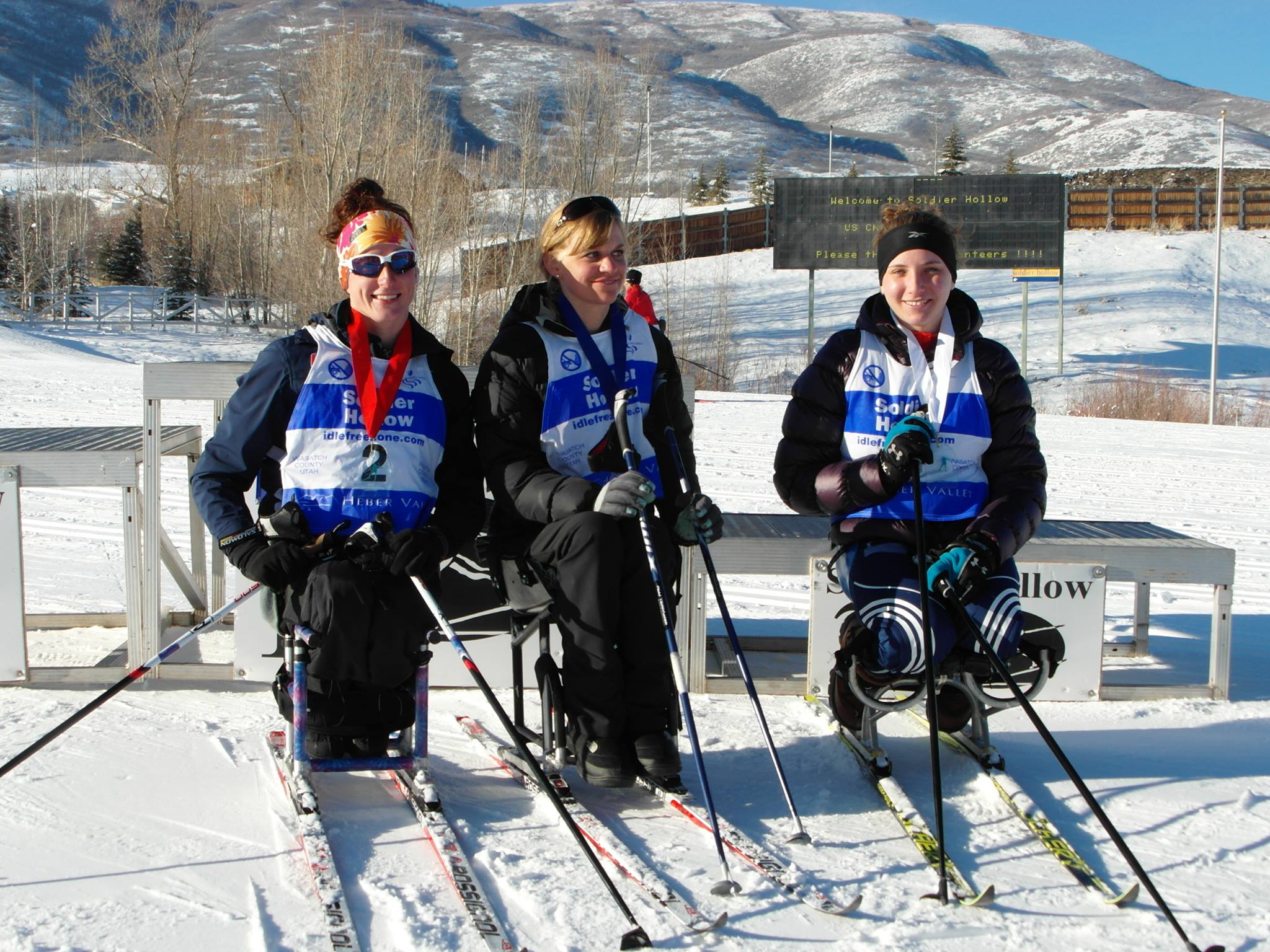
    Now a U.S. Paralympics National Team member, Tatyana McFadden (l) after placing second in the women’s 5 k at 2013 U.S. Adaptive Championships last January. Beth Requist (c) won it in 25:13.9, and Kristy Vaughn (U.S. Paralympics Development Team) was third (+2:34.4).
  • Johansson Surprises in Yellowstone SuperTour Sprint; Hanneman Outlunges Scott for Second

    Johansson Surprises in Yellowstone SuperTour Sprint; Hanneman Outlunges Scott for Second

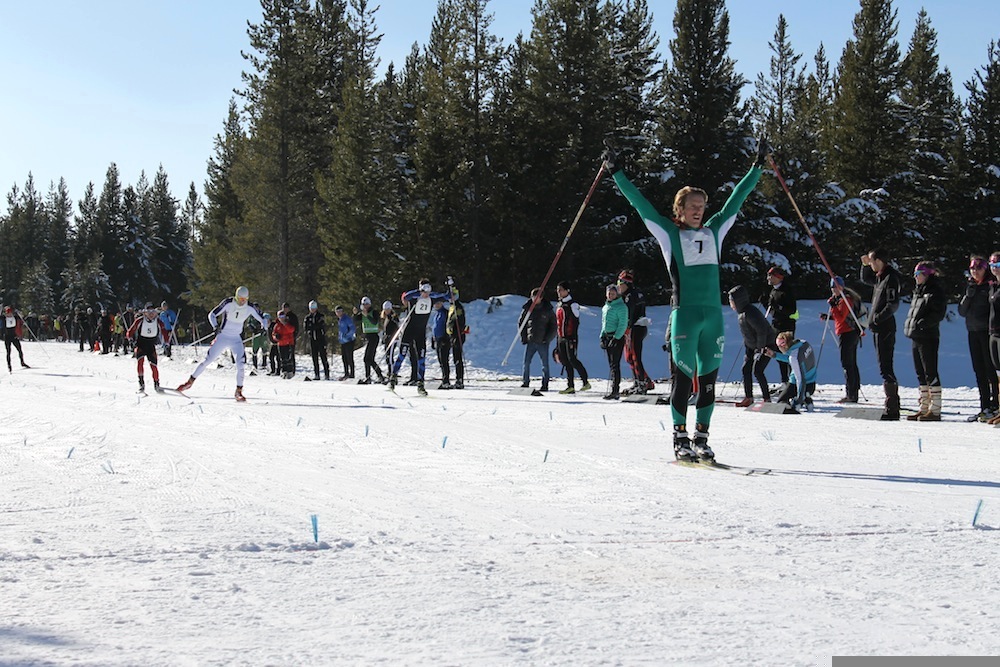
    Emil Johansson of Sweden's IK Jarl Rättvik celebrates his decisive victory in the West Yellowstone SuperTour 1.3-kilometer skate sprint on Friday. The seventh-fastest qualifier, Johansson went on to beat qualifying winner Ryan Scott  of SSCV/TeamHomeGrown (in white) and Reese Hanneman of APU, second from r. Hanneman outlunged Scott for second.
    Emil Johansson of Sweden’s IK Jarl Rättvik celebrates a decisive victory in Friday’s West Yellowstone SuperTour 1.3-kilometer skate sprint at the Rendezvous Ski Trails. The seventh-fastest qualifier, Johansson went on to beat qualifying winner Ryan Scott of SSCV/TeamHomeGrown (in white) and Reese Hanneman of APU (second from r). Hanneman outlunged Scott for second.

    WEST YELLOWSTONE, Mont. — A lot of people might not know who Emil Johansson is. To SuperTour spectators and most of the 200-plus racers (between the men’s and the women’s races) on Friday, he was an unknown: a Swede racing in the green suit of his home club IK Jarl Rättvik. An exchange student at the University of Colorado in Boulder, he’s not part of the nordic team there. It was hard to know what he was capable of.

    A SuperTour staple, Ryan Scott (Ski and Snowboard Club Vail/Team HomeGrown) won Friday’s qualifier and a quarterfinal in the 1.3-kilometer freestyle sprint, yet didn’t know half the men he was racing once he got to the final. Last year’s West Yellowstone skate prologue winner, Scott quickly learned who Johansson was.

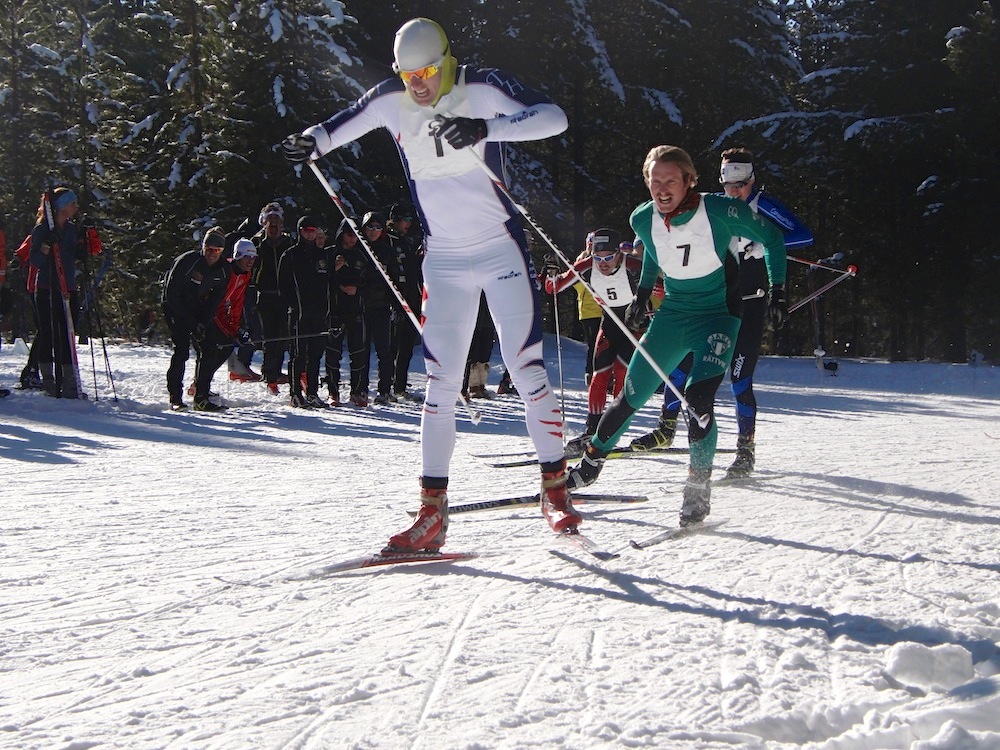
    Ryan Scott (SSCV/Team HomeGrown) leads Swede Emil Johansson (7) and Reese Hanneman (APU) in the semifinal of Friday's 1.3 k skate sprint at the SuperTour opener in West Yellowstone, Mont. All three finished less than a tenth of a second together to advance to the finals.
    Ryan Scott (SSCV/Team HomeGrown) leads Swede Emil Johansson (7) and Reese Hanneman (APU) in the semifinal of Friday’s 1.3 k skate sprint at the SuperTour opener in West Yellowstone, Mont. All three finished less than a tenth of a second of one another to advance to the finals.

    He had just advanced from the semifinal with a three-way photo finish for first with Johansson and Reese Hanneman, of Alaska Pacific University (APU). All three were in the final, along with Pierre Guedon (University of Denver), Sam Naney (Methow Olympic Development), and Dmitriy Ozerskiy (CXC).

    Johansson turned on the jets at the opportune time — on the last of two climbs on the short course — to win the SuperTour-opening sprint in 2:28.90. He hadn’t been the fastest throughout the day, ranking seventh in the qualifier (+5.17 off Scott’s time of 2:27.14), and winning the slowest quarterfinal in 2:30. But Johansson knew the game and beat Hanneman in second (+1.7), Scott in third (+1.8). Guedon, Naney and Ozerskiy finished separately in fourth through sixth, respectively.

    “Both the quarterfinal and semifinal was really close, but the final was pretty easy,” Johansson said. “Actually, it was the easiest round. Ryan was in the lead and I think he was kind of tired. I just got in his draft all the time and my plan was to push it hard on the last uphill. I thought someone should keep up with me, but they didn’t. I was pretty tired the last 200 meters, but I made it.”

    Johansson had enough time to look around before finishing, throwing with his arms into the air while cruising across the line. He pulled an upset on both Hanneman and Scott, whom he had gapped on the hill. Unable to respond, they lunged for second, which Hanneman took by 0.1 second. The two rolled across the line together, untangled themselves and showed  respect for each other after.

    “He was clean coming up behind and I never had any real contact with him,” Scott said of Hanneman, after leading the final up to the one-and-only hill, but failing to respond to Johansson’s attack on it. “I was loosing speed. I was trying to keep my tempo up; I know Reese had good cadence coming into that [finishing] stretch and a lot of power.”

    Craftsbury's Pat O'Brien (second from l) and Pierre Guedon of the University of Denver (l) crashed just meters before the finish line in Friday's SuperTour 1.3 k skate sprint semifinal in West Yellowstone, Mont.
    Craftsbury’s Pat O’Brien (second from l) and Pierre Guedon of DU (l) crashed just meters before the finish line in Friday’s SuperTour 1.3 k skate sprint semifinal in West Yellowstone, Mont. CXC’s Dmitriy Ozerskiy (r) won the semi to advance to the final, along with Sam Naney of MOD (third from l).

    Unlike some the men in Friday’s heats, Scott made it through the rounds without falling victim to roughhousing “minus my poles being stepped on a couple times.” Others, like Pat O’Brien (Craftsbury Green Racing Project) and Noe Bellet (University of Utah), weren’t so lucky. The two crashed about a few meters before the finish of their semifinal when O’Brien tried to avoid tripping up with another skier on his left. He moved to the right, stepping into Bellet, and the two fell out of the running.

    Hanneman, who qualified in 21st, lunged at the finish of every round, finishing 0.5 seconds behind Scott in the quarterfinal. Not too thrilled with his qualifier, Hanneman made a point to push it in the heats and ended up with his career best in a SuperTour skate sprint.

    “I’ve been really focusing on my skating this summer so this is a great way to affirm to myself that I’ve hopefully made some progress,” he said.

    As for the course, Hanneman said it was “really fast”  with many tight corners in the middle section that made it “one of the most physical courses as far as contact between the skiers.” About 200 meters into the final, all six men converged on a single line, and Hanneman was caught in the middle. He said he double poled until there was room to move again, at which point he was in “dead last.”

    “Halfway through … I worked really hard to accelerate out of a couple of those corners and take some really aggressive far-outside and far-inside lines and pass some people,” Hanneman said. He got behind Scott and failed to latch onto Johansson on the uphill.

    “That’s where most people were [making a move] in the heats,” Scott said. “I think everyone was ramping up and expecting it, but people were just unable to answer that surge. It was a decisive move and impressive victory.”

    A student from Sweden’s Uppsala University currently on exchange at CU, Johansson was a big fan of the sprint course at the Rendezvous Ski Trails. “It’s a good course; I love it,” he said. “And on a day like this I love it even more.”

    For the two-day SuperTour series, the first of the season, Johansson said he was staying the CU nordic team. “When I came here I knew there was a ski team so I’ve been training with them sometimes,” he said. “Now I’m living with them this week, but I’m competing for my home club in Sweden.”

    Ryan Scott (SSCV/Team HomeGrown) pushes hard to win Friday's 1.3 k skate sprint qualifier by 0.62 seconds over teammate Sylvan Ellefson (not shown).
    Ryan Scott (SSCV/Team HomeGrown) pushes hard to win Friday’s 1.3 k skate sprint qualifier by 0.62 seconds over teammate Sylvan Ellefson (not shown).

    For Scott, third was short of his goal, but he’d take it.

    “Obviously my goal for today was to win the prologue and to win overall,” he said. “To be that close is tough, but I think it sets me up well for the weekends [ahead].” SuperTour leaders, including the top male and female sprinters, through the next weekend of racing in Bozeman, Mont., can earn World Cup starts in January.

    Scott was off to a solid start after winning the qualifier by 0.62 seconds ahead of teammate Sylvan Ellefson. According to Scott, Ellefson said he was “boxed out” in the quarterfinal, losing some finishing speed and placing third in the heat, 0.1 seconds behind Alex Schulz (CGRP) and Bellet, respectively. 

    According to U.S. Ski Team and APU member Erik Bjornsen, something similar happened to him. After qualifying in 16th, Bjornsen placed fourth in his quarterfinal, 0.5 seconds back from winner Ozerskiy, and did not advance to the semis. After leaving “a little too much in the tank” for the qualifier, Bjornsen made a move up to third on the final hill, but wasn’t in good enough position coming into the flat finishing stretch.

    “I tried to go right and [Guedon] kind of closed me off,” Bjornsen said. “That’s the way sprinting goes.”

    “It’s hard to say I feel good after posting that result; but honestly I didn’t feel that bad,” he added. “Everyone seems to be in really good shape which is awesome for the U.S. team. I’ll definitely go into the next races shooting for that podium!”

    Friday morning, Bjornsen woke up to discover his older sister and fellow USST member, Sadie, placed third in the classic sprint qualifier at the opening World Cup in Kuusamo, Finland. She ended up 26th on the day.

    “I was so excited for her,” Erik said. “I can tell she is in great shape and she has more to show. It’s been so fun to watch her train this past summer. She finally seems to be injury free and she deserves to have great results after all the hard work she has put in the last few years.”

    Results: Sprint brackets | Complete

    APU's Reese Hanneman (r) outlunges Ryan Scott of SSCV/Team HomeGrown for second place in Friday's West Yellowstone SuperTour 1.3 k skate sprint.
    APU’s Reese Hanneman (r) outlunges Ryan Scott of SSCV/Team HomeGrown for second place in Friday’s West Yellowstone SuperTour 1.3 k skate sprint.
  • Yellowstone Ski Festival: A Place for Reunions

    Yellowstone Ski Festival: A Place for Reunions

    Visually impaired skier Nancy Stevens and her guide Tony Neaves race in the 1998 Nangano Paralympics. They are reunited at West Yellowstone this week.
    Visually impaired skier Nancy Stevens (l) and her guide Tony Neaves race in the 1998 Nagano Paralympics. They are reunited in West Yellowstone, Mont., this week.

    Note: The following has been corrected to reflect that Caitlin Gregg approached Nancy Stevens this week. 

    WEST YELLOWSTONE, Mont. — When Nancy Stevens moved to Summit County, Colo., 21 years ago, her guide dog kept bringing her to the door of the same shop. Blind since birth, Stevens, 52, finally went inside and discovered that the door entered a bike-store owned by Tony Neaves. Her dog knew something. Nancy needed some work done on her tandem bike, and she needed a strong able-bodied person to ride it with her. It turned out the Neaves could do both.

    Stevens and Neaves at one of their many races leading up to Nagano. (Courtesy photo)
    Stevens and Neaves at one of their many races leading up to Nagano. (Courtesy photo)

    “Tony was great because he would call me and say ‘Hey, I’m free this evening do you want to go for a bike ride?’ ” Stevens said. “It was so nice because I didn’t have to coordinate it.”

    Thus began a relationship that would continue into 1993 when Stevens came to West Yellowstone with Neaves as her guide to try out for the Lillehammer Paralympic Games. “We didn’t know what we were doing yet, and we didn’t quite make it that year,” Neaves said.

    For the next four years, the duo raced in the U.S., Sweden and Norway, and by 1998 they had built their racing communication skills to the point where the duo went to Lake Placid where they won gold to qualify for the Winter Paralympics in Nagano, Japan.

    They describe the moment as the race of a lifetime, where 4,000 people crowded around a 5-kilometer loop yelling Nancy’s name. It was so loud, she had trouble hearing Neaves’ commands on their electronic communications system.

    Fast-forward to May 2013, when several U.S. Paralympics Biathlon coaches approached Stevens. Fifteen years after their last race, Neaves received an “out-of-the-blue” call from Stevens, announcing that she was coming out of “retirement” to compete in biathlon in West Yellowstone. By the way, would Tony be her guide?  Neaves, who now lives in Montana’s Bitterroot Valley and operates the Como Ski Trails, three miles west of Darby, agreed, and the racers competed in the adaptive biathlon sprint in West Yellowstone on Wednesday.

    The only woman in her class, Stevens won the 6 k race in 36:14 with 4-for-10 shooting. Disappointed with her first round, in which she missed four out of five, Stevens was pleased with hit three targets on the second stage. Overall, she was glad to be back.

    The reunited Paralympic pair, Nancy Stevens and Tony Neaves at the finish line of the adaptive biathlon race at the 2013 West Yellowstone Festival on Wednesday.
    The reunited Paralympic pair, Nancy Stevens and Tony Neaves at the finish line of the adaptive biathlon race at the 2013 West Yellowstone Festival on Wednesday.

    On her first day in West this week, Stevens and Neaves were in the warming hut when 2010 Olympian Caitlin Gregg walked in.  Another reunion was about to happen.

    “Hey, weren’t you at Lake Placid in 1998 and aren’t you Nancy Stevens?” asked Gregg, who is racing in West Yellowstone this week.  Gregg reminded Stevens that they had met in Lake Placid when Gregg (formerly Compton) was a 16 -year-old junior. Gregg said she would never forget Stevens, the Paralympian, taking the time talk to her give her encouragement to go for her Olympic dream.

    “Really, that makes me feel so good that I could make that difference to her,” Stevens said.

    Stevens hopes to compete at U.S. nationals in Soldier Hollow in January for a spot on the U.S. Paralympics team, but since she and Neaves live so far apart, she is having difficulty finding strong skiers willing to guide her in training.

    “The key for blind skiers is finding a guide,” she said. “I can always find recreational skiers to ski with, but finding a guide to train with is the only thing holding me back right now.”

    Interested skiers are encouraged to contact their local ski areas or adaptive sports programs to volunteer to be a guide for skiing or other outdoor sports.

    A goal achieved, Paralympians Neaves and Stevens 2nd row 4th and 5th from right. (Courtesy photo)
    A goal achieved: Paralympians Neaves and Stevens (second row, fourth and fifth from right). (Courtesy photo)
    A perk of being Paralympians, Nancy Stevens and Tony Neaves Meet President Bill Clinton
    A perk of being Paralympians, Nancy Stevens and Tony Neaves meet then-President Bill Clinton. (Courtesy photo)
  • U.S. Paralympics Outlook: Farra’s Vision of a World-Leading Team

    U.S. Paralympics Outlook: Farra’s Vision of a World-Leading Team

    John Farra, high-performance director of the U.S. Paralympics Nordic Program, helps one of his athletes at last year's IPC World Cup in Cable, Wis. (Photo: James Netz)
    John Farra, high-performance director of the U.S. Paralympics Nordic Program, helps one of his athletes at last year’s IPC World Cup in Cable, Wis. (Photo: U.S. Paralympics/James Netz)

    At the 2010 Winter Paralympic Games in Vancouver, B.C., the U.S. finished fifth in the overall medal count. A dominant performance by the U.S. alpine team resulted 11 medals, three of them gold.

    Meanwhile, the U.S. Olympic nordic team, including biathlon, consisted of just six athletes and a handful of coaches and support staff. Albeit small, the team was not without success. Andy Soule, an Afghanistan war veteran and double above-the-knee amputee, made history by becoming the first American to medal in biathlon in either Paralympic or Olympic competition.

    At the 2014 Paralympics in Sochi, Russia, nordic skiing and biathlon will account more that half of the available medals.  To improve overall team results, the U.S. Olympic Committee realized that the U.S. needed more focus on these sports.

    In 2011, John Farra, an Olympic cross-country skier and then-U.S. Ski and Snowboard Association (USSA) nordic director, was the man selected as the first high-performance director of the U.S. Paralympics Nordic Program. Today, he leads a team of coaches and staff responsible for building a world-class program.

    U.S. Paralympics national-team member Dan Cnossen at the 2013 IPC World Cup in Cable, Wis. (Photo: James Netz)
    U.S. Paralympics national-team member Dan Cnossen at the 2013 IPC World Cup in Cable, Wis. (Photo: U.S Paralympics/James Netz)

    In a recent phone interview, Farra cited growth in the sport as evidence that the U.S. is on its way to that goal.  At the Sochi Paralympics in March, Farra will field a team of 19 athletes, four coaches and 13 support staff. The Russians will max out at the allotted team size of 30 athletes, a goal that Farra has set for his team size for 2018 Winter Games in Pyeongchang, South Korea.

    Assessing the team’s prospects for Sochi, Farra said, “On the men’s side, we have three guys who, on any given day, can be somewhere in the top six in the world.”

    In a test event in Sochi last March, Dan Cnossen,  Soule and Sean Halsted finished fourth, fifth and sixth, respectively. One of the newest and most promising men on the national team, Farra described Cnossen as “a really tough guy who trains unbelievably professionally and really puts everything towards it.”

    “While we are not expected to win any medals, when we are that close we are spending a lot of time and effort to find that extra half percent or 1 percent,” Farra said. “That gets them into the top three to steal a medal from the Russians or the Ukrainians.”

    On the women’s side, Farra saw potential when he spoke with Tatyana McFadden a year and a half ago. A world-class wheelchair racer with nine gold medals between several Paralympics and World Championships, McFadden expressed interest in competitive nordic skiing. On Nov. 3, the 24-year-old University of Illinois student completed an unprecedented marathon “Grand Slam,” winning the Boston, Chicago, London, and New York road marathons in a single year.

    U.S. National Team:

    • Dan Cnossen (Sit ski; Navy)
    • Sean Halsted (Sit ski; ret., Air Force)
    • Andy Soule (Sit ski; ret., Army)
    • Jeremy Wagner (Sit ski; ret., Army reserves)
    • Aaron Pike (Sit ski,;Univ. of Illinois Champaign)
    • Tatyana McFadden (Sit ski; Civ, Univ. of Illinois Champaign)

    Development Team (Emerging & Military)

    • Eric Frazier (Sit ski; ret., Marines, Team Semper Fi)
    • Travis Dodson (Sit ski – ret., Marines, Univ. of Illinois Champaign)
    • Augusto Perez (Sit ski)
    • Kevin Burton (Visually impaired; ret., Navy)
    • Omar Bermejo (Standing; ret., Marines)
    • Jake Adicoff (Visually impaired)
    • Oksana Masters (Sit ski)
    • Beth Requist (Sit ski)

    A multiple ESPY Award (ESPN) nominee, McFadden’s celebrity status is steadily rising, and she was twice featured on the NBC Nightly News for her New York City win. Her sponsor, British Petroleum featured her in its TV promotional spots, and in other positive news, NBC announced it will provide a landmark 100 hours of television coverage for the Winter Paralympics.

    “Next year when the Games are on you’ll be seeing national TV spots featuring Tatyana McFadden sit skiing and Olympian Kikkan Randall skiing,” Farra said.

    Adding to McFadden’s media appeal is her storyline of returning to Russia to where she was born with spina bifida, a birth defect in which bones fails to form properly around the spinal cord. Abandoned in a Russian orphanage, she was adopted by Deborah McFadden and brought to the U.S. at age 6.  Since 2012, Tatyana has actively advocated against a Russian law that prevents Americans from adopting Russian children.

    “We hope she continues to have a good experience [with skiing] and that will drive some interest to our sport,” Farra said. “She has more fans than we’ll ever have, but our job is to not let it become a distraction and to prepare her with the technical skills to get around the course.  She’s a good gal and it’s really fun to have her on the team.”

    On McFadden’s chances for a medal in Sochi, Farra said, “Who knows? She is super strong and unbelievably fit. She has the most important part of nordic skiing down which is the fitness, and that’s impossible to fake. Technical skills will be an issue for her because her racing wheelchair doesn’t slide around corners and have the potential of going off the course and crashing into trees.  It would be a huge challenge for anyone to go from newbie to Paralympic athlete in such a short period of time.”

    McFadden first demonstrated her potential by winning the sprint race at last year’s U.S. Adaptive Cross Country Championships at Soldier Hollow last year in a borrowed and somewhat ill-fitting sit ski. After, Farra contacted a Japanese company that makes sit skis designed to accommodate McFadden’s more forward-leaning position in wheelchair racing.

    “As soon as she slipped in there, and I mean slipped in there because it’s a tight fit, she got this big smile on her face,” he said.  “We’ll see how it works out because her first race in it will be at the IPC [International Paralympic Committee] World Cup races in Canmore in December.”

    Wheelchair-racing superstar Tatyana McFadden at her first IPC World Cup races in Cable, Wis., last season.  (Photo: U.S. Paralympics/James Netz)
    Wheelchair-racing superstar Tatyana McFadden at her first IPC World Cup races in Cable, Wis., last season. (Photo: U.S. Paralympics/James Netz)

    In addition to finalizing the team at World Cup and National Championship races this season, Farra’s strategy is to use these races to get his staff ready for Sochi.

    “We plan to bring a large team and the entire Sochi staff to Canmore [in December] because we’ve had a huge transition from being a country that shows up with only a few athletes,” he said of the early season World Cups.  “We need to make sure we protect the chances of our top athletes to steal a medal and give the appropriate level of service to those developing athletes who are experiencing their first Paralympics. We’re looking forward to getting all those things dialed in.”

    Nationals are held alongside the able-bodied U.S. Cross Country Championships at Soldier Hollow in January, followed by World Cup races in Oberstdorf, Germany.

    In October, national-team coach James Upham accompanied four sit-skiers – Cnossen, Soule, Halsted, and Oksana Masters – at a U.S. Paralympics Nordic camp in Oberhof, Germany. It was the team’s first training camp in the ski tunnel there.

    According to Farra, they’ll take six or seven athletes to Oberstdorf for the World Cup races from January 16-19.

    “We’re going to bring a small elite group … who we feel need to be there to dial in their chances of winning medals in Sochi,” Farra said.  “After Germany the team will hole up in Winter Park Colorado which will be good in terms of an altitude strategy.  After that, we’ll head to Italy a week before the games and stay at a beautiful five-star resort on the top of a mountain with ski in ski out and a biathlon range, to relax a bit and get used to the time change before flying to Sochi.

    “And that’s it,” he added. “We’ll be there and then we’ll be back here in March after we win a bunch of medals.  Then we’ll come home and hang them up and enjoy them!”

    ***

    About the Author:

    FasterSkier’s Para-Nordic contributor, Mark Vosburgh lives in Missoula, Mont., where he works as a Wildfire Scientist for the US Forest Service.  In addition to being a chemical engineer, Mark is a cross -country and backcountry skier, bluegrass musician, and biker. He’s also a freelance writer for numerous publications, including 48 Degrees North and MakeitMissoula.com.