From the FasterSkier archive — posts syndicated from athletes’ and coaches’ own blogs between 2004 and 2012, kept online as published. Current coverage is at fasterskier.com.

Author: Matthew A. Tornow, PhD and Mark P. Muñiz, PhD

  • Our Greenland Moment? Adaptations and Impacts of Virtual Racing: Part III

    Our Greenland Moment? Adaptations and Impacts of Virtual Racing: Part III

    February is here, and Nordic skiers in the Upper Midwest are at a teetering point. Many of us are remaining cautiously optimistic that all we need is “one good snow” to salvage our ski season. The Canadian Birkie, American Vasa, Finlandia, and Vasaloppet USA have already cancelled their races. Many skiers are starting to wonder how races like the Birkie will look this year. What a stark contrast from last year’s record setting snowfall throughout much of the Upper Midwest and this year’s record set in Alaska! The records we’ve set this year are not ones Nordic skiers are excited about. Globally, 2023 was the warmest year in recorded history and we’re enduring extreme conditions locally. December saw lots of rain instead of snow in central Minnesota with high temperatures breaking 50° F. High school Nordic races were canceled every week throughout Minnesota as students roller skied and ran to maintain fitness. In January, the Seeley Hills Classic had to be moved to the Birkie trailhead to use manufactured snow under reduced distance. The Loppet Foundation was unable to generate enough man-made snow to sell ski passes and was forced to make an urgent call for donations. The “First Chance Race” at Mora, MN turned into 10 laps on a 1km loop as warm temperatures limited the Vasaloppet USA’s snow making capability.

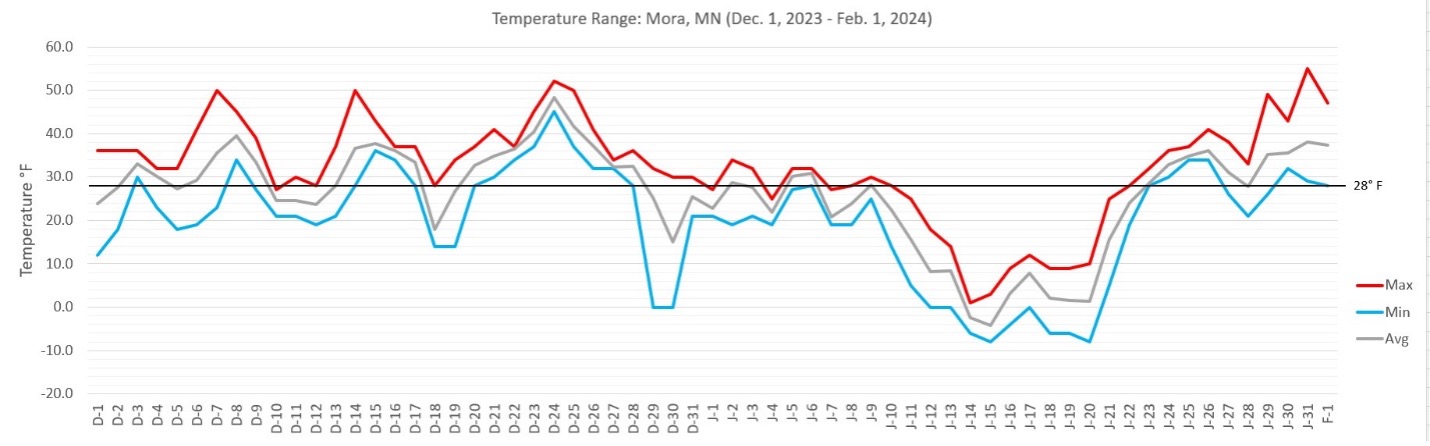
    Figure 1. Temperature Range for Dec. 1, 2023 – Feb. 1, 2024 at Mora, MN – Home of Vasaloppet USA

    Climate change is wreaking havoc on the ski season. By mid-January, social media discussions about the 2024 Birkie started to ask whether or not it might be wise to have a virtual option, as we did in 2021. As crazy as that may sound, the virtual Nordic ski race is a growing fixture of our sport. While many venues such as the Vasaloppet USA Nordic Center, Theodore Wirth Park, and the American Birkebeiner Ski Foundation (ABSF) have worked as hard as possible to make snow for their major races, climate change data illustrate how this is becoming a greater challenge. For example, at least 14 days in December had low temperatures that were too warm for making snow in Mora, MN (assuming ~28° F is required) and the few cold snaps that did come were followed by days with highs that hit 50° F. Mid-January saw consistently cold temperatures that allowed snow making to proceed for multiple days on end, but a record setting warm spell at the end of the month cancelled out much of those efforts (Figure 1). The Vasaloppet USA Nordic Center in Mora, MN is not the only place in the Upper Midwest struggling with how to maintain our Nordic ski traditions in the face of climate change.

    Even after the recent record setting 2022-2023 winter of central Minnesota, virtual ski racing and events are now fixtures on the Nordic landscape. For example, the Lander Nordic Ski Association in Wyoming offers a 9-week Nordic Virtual Challenge for the current winter. USA Nordic has been offering Virtual Nationals since 2018 for U14 and younger athletes. The Noquemanon in Michigan’s UP offered a virtual option for the 2024 race. And Mecca Trails in Mercer, WI offered both in-person and virtual options for their 2023 Winterfest and only a virtual option in 2024 after they had to cancel the in-person event. These examples highlight different kinds of virtual options, ranging from single-day competitions, to multiweek events, to better-than-nothing alternatives when snow doesn’t come. While it may seem like virtual races are a second-best that pale in comparison to in-person races with all the atmosphere and excitement we’ve come to love, they may become a common alternative to race cancellations as we adapt to the effects of climate change.

    Figure 2. Virtual Activities based on People’s Attitudes about the Impacts of Virtual Racing
    What do people think?

    In 2021, we surveyed 1300 cross-country skiers throughout the United States and abroad and shared the results of how skiers defined their culture and community (Article 1 link) and whether or not skiers actually liked virtual racing (Article 2 link). In this article we tackle the question of how virtual racing impacts our shared culture and community in light of climate change. At least 1200 respondents to our survey provided their opinions on whether or not virtual racing enhanced their engagement with cross-country culture and community. Of these respondents, about 40% said it did enhance engagement, about 30% said it did not, and the remainder were unsure. Interestingly, the ways in which skiers participate in other online or virtual activities was almost identical between the groups. They use online virtual platforms to face time with friends and family, post to social media, and do virtual races and maintain fitness on apps like Zwift, Rouvy and Peloton (Figure 2). There is a very strong similarity in how everyone engages with social media and virtual activities; however, there seems to be a real split in what these activities mean to each respondent group. This may be structured by a larger sense of how people view “online communities” or the ability for us to use social media to actively participate in culture. Unexpectedly, the results are counter-intuitive in that more of the oldest generation (70-79) feels that virtual racing enhances culture and community while the youngest generation (18-29) feels the opposite (Figure 3). Who would’ve thunk it?

    Figure 3. Age Distribution for Attitudes about Virtual Racing

    For the 30% of respondents that do not feel like virtual events enhance engagement with
    Nordic skiing culture and community, almost half of them objected to the lack of interpersonal engagement with other racers. These respondents felt that culture and community grow through the authentic shared experience of an in-person race, not from solo workouts (i.e., solo virtual race). These respondents also felt the excitement and atmosphere of racing on the actual course is an important element to building shared culture and community. On the other hand, the 40% who felt virtual options did build culture and community, emphasized that sharing results with others online and in person was meaningful. For these folks, the virtual event is about a lot more than doing a race on a single day. They recognized how engaging in the organization, planning, and volunteering needed to put on events actually grows Nordic ski community. Many of these folks valued the fact that virtual events provide a basic opportunity to engage in ski culture even if removed from the traditional venues. When ski clubs organized virtual events, and friends and family had an opportunity to ski together, many virtual racers felt very engaged in our culture and community. Finally, 7% of the respondents noted all of the positive comments they received from others about their race bibs and signage posted at local venues that hosted virtual events. This increased visibility serves to spread the culture and community of the home organization into far flung communities hosting virtual satellite events.

    Skiscape

    With each of the major reasons why virtual events don’t enhance community and culture, there is an alternative perspective that sees how they do – with one exception. There was no counter point to the objection that virtual events do not use “the real course” and lack the “atmosphere” of the in-person, live event. People develop communities by engaging in specific outdoor activities with defined rules, norms, and etiquette. When these shared activities occur in the same space, cultural landscapes are constructed. This results when shared meanings are associated with specific physical and natural elements that convert a neutral “space” into a meaningful “place.” For example, 51 weeks out of the year, downtown Hayward, WI or Mora, MN are collections of nice shops, restaurants, and businesses to visit. But, when the Birkebeiner and Vasaloppet races occur, these downtown spaces become cultural landscapes where the cross-country community practices our culture. More than just a downtown celebration, our cultural landscapes are unique because they also include the experience of the race course.

    Figure 4.  American Birkebeiner 2018 Skiscape Video at Heckler’s Hill (https://trailgenius.com/trail-genius-map/american-birkebeiner-2018).

    An important element of building community is the camaraderie developed among a group that participates in a physically demanding activity under challenging environmental conditions. Following the event, skiers talk about the race and create stories of what occurred based on their personal lived experience of the same day at the same place. One outcome is that sections of race courses or trails take on names and develop reputations with specific attributes (e.g., Steep Beast, The Wall, Heckler’s Hill, Bowling Alley, Roger’s Ridge). For marathon ski races, the unique landscape and environmental conditions of the day play crucial roles in the physical experience and shared meaning. The fact that the physical activity and shared experience must occur on a substrate of snow that has been specifically groomed, and sometimes produced, for the very purpose of holding the race, results in a special kind of cultural landscape that we have dubbed a “skiscape.” The skiscape is a unique type of cultural landscape that results from the ephemeral combination of natural environment, season of the year, climate and weather patterns, human behavior, and cultural meaning. A fantastic example of capturing a skiscape on video was done by the ABSF for the 2018 American Birkebeiner that can be viewed and experienced virtually online (Figure 4). The unique atmosphere generated at a skiscape cannot be reproduced by a virtual event. When climate change negatively impacts a skiscape, members of the associated community will need to adapt. One way that we have adapted is through virtual races.

    On-Ramps and Impacts

    In 2021, many race organizations offered virtual racing alternatives for their major events in response to the social distancing requirements of the pandemic. The winter of 2023-2024 is the first time we are faced with using virtual racing as a direct response to climate change. When dealing with a major health crisis, many in the cross-country ski community embraced virtual options as a way to participate and stay connected to our sport. Facing the current climate crisis, will we make a similar choice?

    Based on data provided by the ABSF for the pandemic-stricken 2021 race season, 50% of the skiers racing the Birkie, Korte, and Prince Haakon chose to do a virtual option. This was clearly affected by the pandemic restrictions. What is really important to consider, and may be applicable to a non-pandemic year, is that 7% (490) of the total number of racers for all three ABSF events (7,097 total registrants) used the virtual option as an ‘on-ramp’ to try a new race. Of the 2,419 total virtual Birkie skiers, 9% (214) were first-timers; 20% (189) of the virtual Kortelopet skiers were first-timers; and, 87 (57%) of the 152 virtual skiers of the Prince Haakon were first-timers. A random sample of first-time Birkie skiers who chose the virtual option indicates about 35% used the opportunity to increase their distance from doing the 29 km Korte in 2020 to the longer Birkie in 2021. The remainder of virtual first-time Birkie skiers had not completed an ABSF race in 2020. This is significant because it illustrates how virtual events can increase participation of new skiers to the sport and provide an opportunity for current skiers to try longer distances.

    Now we are in 2024 and facing a rapidly changing climate. Ski race organizers are grappling with environmental responsibility at multiple scales. The International Ski and Snowboard Federation (FIS), that governs professional World Tour cross-country ski racing, signed the Sports for Climate Action Framework to generate broader climate awareness and global action through winter sports with a plan to achieve net-zero emissions by 2040 (International Ski and Snowboard Federation 2021). The nonprofit U.S. organization Protect Our Winters (POW) motivates snow sport enthusiasts to lobby state and federal governments to enact climate- positive legislation. POW recognizes that meaningful cultural change within the U.S. is required to make the long-term structural changes necessary to limit global warming (Protect Our Winters 2022). And this is a concern in the Upper Midwest as well. After securing corporate sponsorship from Enbridge Energy that operates oil and gas pipelines from Canada to the U.S., the ABSF abruptly ended the partnership due to environmental objections by its members and the larger cross-country ski community (Star Tribune 2021).

    Greenland Moment?

    Snow-making has been pushed to its limit in the Upper Midwest. After two weeks of warm temperatures that prevented artificial snow making and no natural precipitation, the Vasaloppet USA was forced to cancel its hallmark race. The Loppet Foundation is working tirelessly to make and preserve enough snow at Theodore Wirth Park to host an FIS World Cup race in downtown Minneapolis. The ABSF is producing as much snow as they possibly can while rapidly approaching the deadline for making a final decision on their race formats. All of this effort costs money, consumes water, and has an environmental impact. Meanwhile, discussions on social media have begun to debate the pros and cons of using virtual options as an adaptive strategy to warm winters. Those in favor of using a virtual option for races during the current low/no snow winter question the expense and logic of leaving regions with lots of snow to travel long distances only to ski in poor conditions. The carbon footprint of this kind of travel also comes into question. Those opposing virtual options point out the huge economic impact that could be suffered by local host communities if the racers stayed home. The shared community, camaraderie and festival that occurs around the in-person race is also absent with a virtual format. Many skiers also feel that it’s important to show up and support the organization that is hosting the event because of all the hard work and planning it requires.

    In our first article, we discussed the image of Vikings in our modern-day conception of cross- country ski culture. The reason why Viking settlements in Greenland disappeared during the Medieval period is relevant to how we think about adapting and preserving our Nordic ski culture today. While the phenomenon was complex, two key factors were climate change and cultural traditions. In short, the warmer period that allowed the Vikings to settle Greenland turned cold as the Earth entered the Little Ice Age. This significantly impacted their ability to maintain farms modeled on a European tradition. At the same time, Viking settlers maintained long standing cultural traditions that followed economic trends established in Iceland and greater Scandinavia. While native Thule and Inuit peoples adapted to the colder climate and thrived in Greenland, the Viking descendants were locked into a way of life that eventually forced them to leave or die. Are cross-country skiers experiencing a “Greenland moment”? In the fourth and final article in this series, we will address what race organizers can do to grow culture and community in the midst of increasingly unpredictable winter ski seasons. We will look at how far people are willing to go for a race, alternative models for hallmark races, and whether we can maintain our friluftsliv lifestyle.

  • Racing to Save a Ski Season . . . Adaptations and Impacts of Virtual Racing: Part II

    Racing to Save a Ski Season . . . Adaptations and Impacts of Virtual Racing: Part II

    Some times, the races couldn’t be held. Other times, not everyone could get to the races. Such was the case for Nordic skiing during the pandemic. If such limitations occur again in the future, will virtual racing become a viable alternative? (Photo: Tornow/Muniz, American Birkebeiner)

    White-knuckled, we caravanned down I-94 from St. Cloud to Minneapolis in the midst of a bomb cyclone of wind, snow, and ice. Braving the conditions, we crawled toward our destination: the 2021, hybrid City of Lakes Loppet at Theodore Wirth Park. Due to the COVID-19 pandemic—and a hearty desire to stay healthy for the remainder of the ski season—we decided to drive separately. Now, we were inching our way to a late start for our Thursday morning staggered start times of 9:00 and 9:02. There was no way we’d make it on time.

    As race directors presented various solutions for completing their races during the winter of 2020-2021, many Nordic skiers were scrambling to salvage a season that had been fractured by a global pandemic. Previously, we had gathered en masse at venues in Minneapolis, Hayward, Calumet and numerous other host towns for days of socializing, racing, and celebrating.  Now we found ourselves with virtual starts at different times and venues scattered across North America. Armed with smart watches, cell phones, or (in some cases) witnesses willing to testify to distance and time, cross-country skiers raced their way to another successful event completion. As we all uploaded our times and compared our performances, we were left wondering about the legitimacy of these “virtual” races: were we really racing? Against whom? These questions got us thinking whether these virtual race formats—including skiing different venues, at different times, or even substituting an activity other than skiing—are viable long-term solutions to hosting Nordic ski events in the face of climate change, where winters are getting warmer and the ski season is getting shorter with less predictable snowfall.

    To address these issues, we developed a survey to gather the insights of Nordic skiers across North America. With the help of the American Birkebeiner Ski Foundation, the Loppet Foundation, and Stearns and Wright County Parks, we received feedback from over 1,300 participants. In our first article, we addressed the question of how we self-identify as cross-country skiers and how this relates to culture, diversity, and opportunity in our sport. In part two, we focus on skiers’ perceptions of virtual ski events, our likes and dislikes, and whether these are legitimate forms of racing. To address these questions, we evaluated a subset of our survey participants: the 829 cross-country skiers who completed at least one virtual ski event during the 2020-2021 ski season. Thus, while our survey results aren’t necessarily a reflection of the entire Nordic ski community, they do represent the voices of skiers who experienced firsthand the pros and cons of virtual racing.

    Racing? Virtual?

    As we try to better understand how our cross-country ski community responded to the COVID-19 race schedule—and what it means as we move into a world of less predictable winters—two terms become particularly important: “virtual” and “racing.” Although we may all have a general idea about what these terms mean, neither is particularly straightforward as we look at the myriad opinions regarding the “virtual race” schedule of the 2020-2021 race season. For our own purposes, as skiers who practice anthropology, the two terms vary in how they are defined. Although countless articles have been published on the philosophy of racing and what constitutes a race, the term “racing” in our study is one that we left to our survey participants to define. This means that we are not going to provide a definition of “race” or “racing,” at least not yet. Instead, we teased the meaning of cross-country ski racing from the responses that our Nordic ski community provided in the survey. Thus, “racing” is defined internally, by the skiers. We own it.

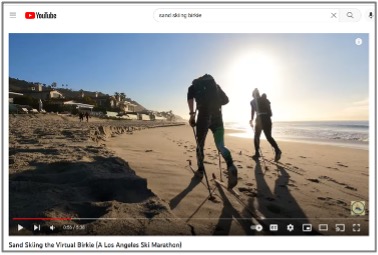
    Figure 1: Virtual Birkie skiers sand skiing on a Los Angeles area beach. (Photo/Video: youtube.com)

    On the other hand, the term “virtual” is one that was defined for all of us, at least as it applied to the COVID race season of 2020-2021. And the definition of “virtual” might have strayed a bit from what we normally think of as “virtual.” For the most part, the virtual options presented to us for completing our annual ski marathons didn’t involve pulling out the VR headsets or hopping onto the treadmill or trainer for a Zwift or Rouvy session—though in some cases, it might have. Instead, virtual options included such things as actually skiing on snow, but in a different location than the original race, or skiing at the official race venue but on a different day than the traditional start. For some races, such as the American Birkebeiner, other activities such as running, cycling, swimming, rowing, or roller skiing could be substituted for skiing on snow (Figure 1).  Regardless of activity choice, substrate, and location, distance and time were measured using a GPS watch or app, or the testimony of a witness who could verify time and distance. We got to choose how we completed our events given a range of “virtual” options that were made available to us.  Although COVID is not currently the threat it was two years ago, at least some event organizers are still offering virtual options this winter.  The virtual option could turn out to stick around longer than many of us anticipated.

    Do we dislike virtual events?

    As we perused our survey results, we were struck by the wide range of responses, both positive and negative, that skiers had with the various alternative cross-country ski formats subsumed under the term “virtual.” We noticed that, given the opportunity to discuss both their likes and dislikes of virtual racing, positive responses (n=864) outnumbered negative responses (n=613) by over 30%. A look at these results allows us to get a handle on how we, as a community, define racing as well as our attitudes about whether virtual cross-country ski events can be considered legitimate races. We’ll begin our discussion with the dislikes that virtual skiers expressed about the events they participated in.

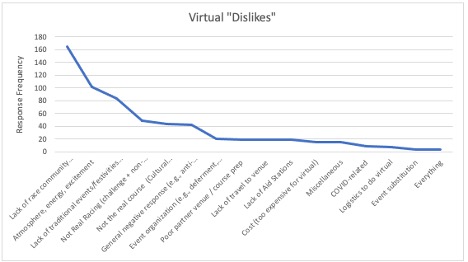
    Figure 2: Patterns of things virtual skiers disliked about virtual cross-country ski races.

    Figure 2 summarizes the 613 individual, negative responses that virtual ski participants provided. Overwhelmingly (> 55%) the dislikes about virtual cross-country ski events focused on the lack of social interactions, energy, and festivals that surround typical Nordic ski races. The single, most common dislike (n=165) that skiers expressed was that they missed the community and camaraderie that surrounds these events. This was followed by the lack of atmosphere, energy, and excitement (n=101), and lack of traditional events and festivities, including things like gear expos, after-parties, and “Main Street” finishes. Following these first three dislikes, we see a drop in responses.

    Coming in at number 4 in the list of dislikes, with 9% (n=49), was the critique that virtual events, in one way or another, are not real racing. Although only 17 of the 629 dislikes explicitly stated that virtual events used during the COVID-19 pandemic did not constitute real racing, we identified several additional responses that are closely related to this category. These additional “not real racing” responses do two things: 1) they provide valid critiques of virtual events; 2) they identify important elements of a ski race that allow us to tease out the definition. Fifteen respondents argued that virtual events lack competition. Additional critiques include non-comparable times (n=10), no official, mass start time (n=4), and that virtual event participants ski on different courses in different places (n=3). This mix of responses highlights some key elements that define a cross-country ski race: a competition between skiers where times are legitimately comparable because of a scheduled start time on a designated course using official timing.

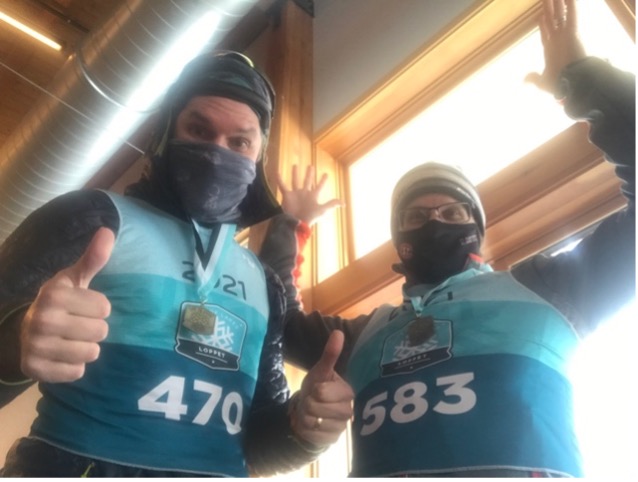
    Figure 3: The authors, Matt Tornow (left) and Mark Muñiz, celebrate their completion of the hybrid City of Lakes Loppet.

    So, when we (M&M; Figure 3) were slipping down I-94 to ski the hybrid City of Lakes Loppet, would we be racing? Technically, we missed our start times, so that criterion might be compromised. However, we were still allowed to race, and we certainly skied within the open window for the event. When we got to the start on Wirth Lake, it was empty except for a volunteer starter who explained the course, and particularly the finish, where we were instructed to do two laps around the stadium. We were competing with the clock, but also with other skiers that we might have seen on the course. We also compared our finishing times with those who completed the event at different times and on different days. Whether or not we skied the same course is a sticking point. By the time we got to the final 10k around the stadium, the conditions had degraded to the point where drifting snow and downed course markers had made identifying the intended course impossible. Tornow’s two laps differed slightly from each other, as evidently he missed a turn at some point. Muñiz did the same lap twice to finish his race. This resulted in different distances: 30.5k for Tornow and nearly 34k for Muñiz. While the official race distance was recorded as a 30k, other racers recorded different distances too. Maps posted to Strava show that Olympians Caitlin and Brian Gregg each skied 31.2k to complete their hybrid Loppets. While some differences in distance are almost certainly the result of different recording devices (e.g., watches, phones) and related apps, it’s also evident that Tornow, Muñiz, and the Greggs all skied slightly different courses for the same race. Without analyzing the maps of all participants in the 2021 hybrid City of Lakes Loppet, we really don’t know how our times compared with the other racers. Similar concerns might arise from skiing the same course at different times. Our late start on Thursday morning resulted in more accumulated snowfall on the course and more drifting. We’re not making excuses, but those who skied the race earlier in the week or the following day would have had very different (better) conditions.  Apply this complexity to events that allowed skiers to use entirely different courses (e.g., Virtual Birkebeiner and Virtual Vasaloppet) and we can quickly see that the race criteria of legitimately comparable times and distances are easily violated for virtual events.

    Rounding out the top five dislikes, skiers did not like the fact that they were not skiing on the real course. This is a sentiment that, like the top three responses, relate to the social aspects of the event by focusing on the traditional place and cultural landscape where cross-country ski events occur. These top five responses (72%; n=443) all focus on the social meaning of the event, whether it be interpersonal relationships, competition between ski racers, or interaction with a traditional, cultural landscape.

    Rather than focusing on the cultural meanings associated with cross-country ski events, the remaining 28% of dislikes shift the focus of critique to the mechanics of virtual racing. The sixth most common dislike was a general, “virtual stinks” kind of response. While not explaining why they disliked virtual events, these 42 responses express a general dissatisfaction with the substitution of virtual events for traditional, in-person, mass-start races.

    There is a sharp drop in the number of responses following the “virtual stinks” critique. Twenty virtual skiers were dissatisfied with the organization of their virtual events. These dislikes ranged from a lack of communication and dissatisfaction with virtual interaction to the inability to defer their registrations to future, in-person events. There was a three-way tie for the eighth most common dislike between: dissatisfaction with partner venues and course prep; the lack of aid stations; and a desire to travel to the host town for the event. Rounding out the dislikes were the high cost of virtual events (n=15), a general dissatisfaction with the situation surrounding COVID-19 (n=9), figuring out logistics (n=8), and event substitution (n=4). There were also fifteen “miscellaneous” responses that included things like not winning a raffle, missing foreign culture, and lack of motivation.

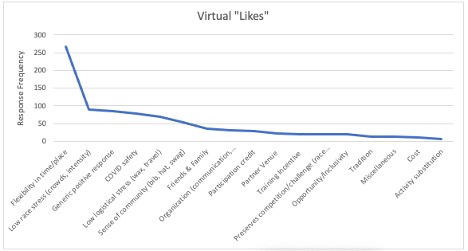
    Figure 4: Patterns of things virtual skiers liked about virtual ski races.
    What was there to like, then?

    With all of the negative feedback, we’re left wondering if there was anything we actually liked about these virtual events. It turns out, that there was a lot to like, and skiers had about 30% more good things to say about their virtual races than bad things. Figure 4 shows that about a third of survey participants (n=266) said that they liked the flexibility that virtual ski options provided regarding when and where the event could be completed. For virtual events offered during the pandemic, skiers could choose their own venue and could complete their races at any time. This was clearly a bonus to many skiers. The next most common like (n=89) was the lowered race stress that comes from virtual events. Although many skiers disliked the fact that virtual racing wasn’t real racing, a greater number of skiers indicated that they liked the lower stress, less-crowded trails, and lower intensity of virtual race formats. Following a general “virtual is great” response and an appreciation for COVID safety (which came in third and fourth, respectively), the lower logistical stress afforded by not having to travel, figure out wax, and get to the starting line on time rounded out the top five. Thus, three of the top five likes of virtual racing were related to the fact that the virtual events were fundamentally different than typical races and were generally less stressful.

    Although the top three dislikes of virtual events revolved around missing the sense of community that big cross-country ski events provide, not all virtual racers saw it this way. The sixth most common thing that skiers liked about virtual events was the sense of community that they created.  The sense of community resulted from seeing others skiing their virtual events in their race bibs or displaying the swag that comes with participation in hallmark ski events. For many racers, wearing Birkie swag publicly associates them with finishing one of the toughest ski marathons in North America.  Whether or not they finished the race on the course in Wisconsin or on a local trail in some other state is a secondary talking point.  Others also appreciated the opportunity to ski with friends and family who had different abilities (7th ranked). Thus, virtual options provided a real sense of community, albeit different from that found with traditional mass gatherings.

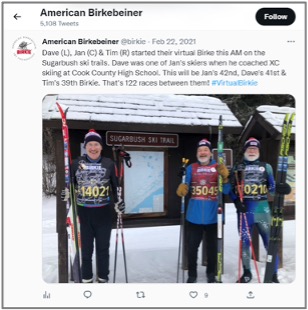
    Figure 5: Skiing virtually during the COVID-19 pandemic allowed many skiers, such as these long-time Birkie skiers, the chance to maintain tradition and share their experiences with others through social media.

    There were a number of skiers who were happy that, during the middle of the COVID pandemic, races were held at all, and many of these folks (n=31) gave ‘shout-outs’ to the organizers who pulled these virtual events together, maintained communications, and provided platforms for reporting results. In addition to praising the race organizers, 23 skiers also gave kudos to partner venues, who provided certified, groomed courses to use specifically in completing the virtual Birkie. Squeezed between organizer and partner venue shout-outs, the ninth most common like about virtual racing was getting credit for participating. This sentiment ties into the fourteenth ranked like (n=14): preserving tradition. For many skiers, participating in these events is steeped in tradition, and the chance to participate in a COVID-safe, socially distanced format provided skiers the opportunity to keep the tradition alive (Figure 5).

    Although very few positive responses explicitly called their virtual events “races,” the racing sentiment is expressed in some of them. Twenty-one skiers liked that the virtual options available to them provided impetus to continue their race training. An equal number of skiers liked that virtual events preserved the challenge and competition of a race experience. Thus, while about 9% of virtual participants thought of virtual racing as “not real racing,” 5% liked the racing aspects of virtual events.

    Just as virtual events provided skiers the opportunity to ski with friends and family with different abilities, they also provided opportunities for skiers to take part in events that they might not otherwise have been able to participate in. Our data indicate that about 10% of our total number of respondents (127/1300) had never completed a sanctioned, Nordic ski event prior to the COVID-19 pandemic. Of these 127 skiers, 42 (33%) indicated that they took part in a race during the 2020-21 season and 34 of them chose a virtual option. Whether the virtual option provided impetus for these first-time cross-country ski racers to participate in these events is unclear. What is clear is that 20 skiers indicated that they liked the opportunity to participate that the virtual options provided. Thus, for these 20 skiers at least, virtual races provided the opportunity to participate in ways that otherwise might not exist.

    Aside from cost and a number of miscellaneous responses such as adjusted, shorter distances, or positive memories associated with a chosen alternative venue, the likes are rounded out by those who appreciated the opportunity to substitute an activity other than skiing to complete their event. This was a big bonus to skiers who found themselves on a snowless landscape during the COVID-19 pandemic.

    Our questionaires revealed that gathering at the venue and socializing as cross-country ski athletes is perhaps an important part of race participation. How well will virtual races be able to fill that fundamental need?
    So where does this leave us?

    If we look at the sheer numbers of likes versus dislikes, it’s clear that virtual skiers had more good things to say about virtual events than bad. Does this mean that virtual skiers liked their respective events? Maybe. There were certainly things to like about the opportunities provided to “race” under the social distancing guidelines of COVID-19. Simply the fact that we could ski at all was enough to make many skiers happy. Add to that the flexibility, inclusivity, low stress, and opportunities to socialize and compete, and the virtual response to COVID seems like a success. Of course, the lack of community, excitement, and celebration seemed to weigh heavily on virtual ski participants.  While many skiers liked the lack of stressors and logistics that come with virtual racing, many of those same skiers disliked the fact that these virtual events weren’t “real races.” So, what is it about a “real race” that is so appealing and motivates us?  It’s something more than just legitimately comparable times because of standard starts on a designated course using official timing.  Real races require honest head-to-head competition between us as we strive to do our best, that pushes us to be even better than we could ever be on our own.  If virtual races cannot provide this, then they fall short for many people.

    Holding our ski events virtually during a time when hosting mass gatherings was neither practical nor safe was probably the best solution. As Ben Popp, Executive Director of the American Birkebeiner Ski Foundation, said “while it isn’t as good as an in-person event… it was still something that you planned around, talked about and went and did.  It kept you engaged in a larger community and working towards a goal.” But, as winters become more irregular, with warmer temperatures and less predictable snowfall, is this format something that skiers would accept on a more regular basis? What would a transition to virtual ski events do to our sense of community? To our desire to compete? These are questions that we’ll address next, as we explore the impact of virtual events on the Nordic ski community and culture and consider the ways that event organizers can maintain or even grow participation in our sport in light of climate change.


    Mark P. Muñiz, PhD, is a Minnesota transplant who grew up in Florida, but enjoys a cold snowy winter over a hot humid summer any time. His cross-country ski adventures have included loppet races and volunteer coaching for the Minnesota Youth Ski League. In the warm season he loves cycling and is still a little wary of jumping on rollerskis. He currently teaches as a Professor in the Dept. of Anthropology at St. Cloud State University, MN.


    Matt A. Tornow, PhD, is a Professor of Anthropology at St. Cloud State University in Minnesota. His research interests focus on primate adaptation and behavior, including that of humans. As a native of central Illinois, he spent much of his youth and early adulthood driving north to seek out the snow. Now he spends his winters skiing the local trails and doing a little racing. When there’s no snow on the ground, you can find Matt running through the woods somewhere.

  • We’re All Vikings . . . Adaptations and Impacts of Virtual Racing: Part I

    We’re All Vikings . . . Adaptations and Impacts of Virtual Racing: Part I

    Wherever cross country skiers come from, whatever our heritage, whatever our native culture, most of us seem to identify as Vikings in the end. Lifetime souvenir: finisher’s belt buckle from American Birkebeiner, 1981. (Photo: FasterSkier)

    The message from the event organizer was devastating . . . we’d been waiting years to cheer on World Cup skiers in person. Jessie Diggins had worked her magic to get the Sprint Finals onto American soil—and here in Minneapolis no less! But COVID was spreading misery across the globe and our race was cancelled: the Sprint World Cup Finals would not occur. $300 in tickets gone in an email. No swag or alternative compensation ever did arrive. Devastating . . .

    As the world recoiled from COVID—as World Cup teams and FIS were making ever-evolving decisions on how best to handle the pandemic—event organizers and citizen racers across the Midwestern US were also scrambling to figure out how to salvage what they could from the 2020-21 winter. Having already registered for multiple loppet events, we were now faced with having to choose between bailing on the events to avoid the COVID risk, or race them in some weird new format. Beyond the normal array of choices regarding classic or freestyle, clothing, food, hydration, and myriad wax options, we now had to decide what “virtual format” to use.

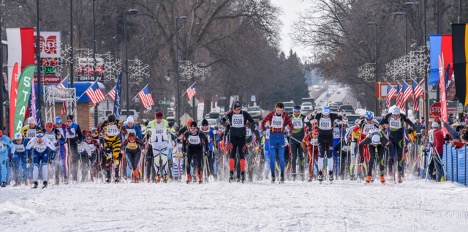
    The Covid Pandemic meant the end of mass start citizen racing. In its absence, numerous events turned to Virtual Racing formats. (Photo: Fischer/Nordic Focus)
    Virtual Racing

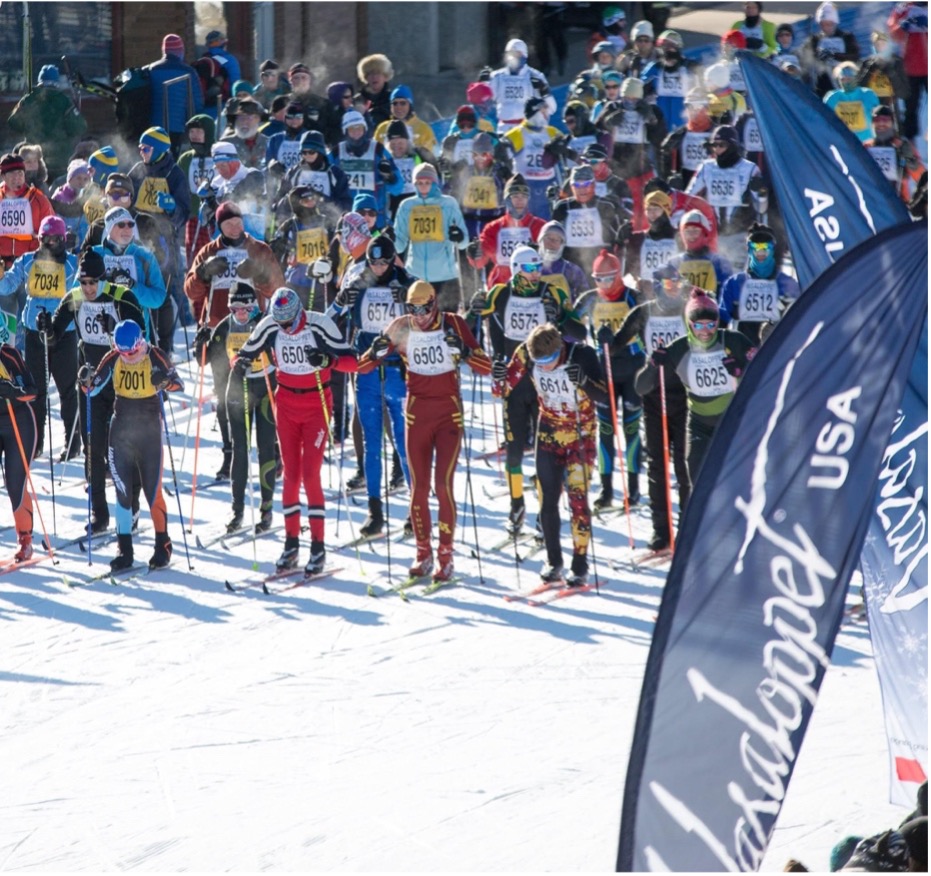
    The 2021 Vasaloppet in Mora, MN allowed racers to all ski on the same day but used staggered starts with individual timing to avoid congregating in a large crowd. The City of Lakes Loppet in Minneapolis allowed virtual racers to ski on the official course, but scheduled individual start times over multiple days. The American Birkebeiner in Wisconsin was the most liberal with its definition of “virtual racing” and offered wide-ranging options that included skiing at official partner venues around the country, skiing at local non-partnered trails, and even doing other non-ski activities (run, bike, swim, etc.). These all counted as participating in the 2021 virtual Birkie. We signed up for all three of these races and did the Vasaloppet and City of Lakes Loppet in person on the official courses, but completed the virtual Birkie by skiing on our local trails. It was interesting.

    While virtual racing seemed like a stop-gap measure to salvage the 2021 season, it got us thinking. The recent explosion in popularity of virtual online racing and the steady rise of e-sports demonstrates how the modern definition of sport and fair competition is changing. The temporary virtual ski solution to the pandemic may become more permanent in light of climate change that is making winters shorter and warmer. In 2015, Vasaloppet USA required competitors to do laps on a frozen lake because there was not enough snow on the trail. In 2017, the American Birkebeiner couldn’t be held due to a lack of snow. As climate change grows worse, FIS has managed to maintain the World Cup season at venues throughout Europe by creating ribbons of artificial snow on fields of brown and green. Premier races in Minnesota and Wisconsin have started making snow too; however, temperature trends suggest that even making artificial snow may be a challenge in the coming years. Will virtual events become standard alternatives to cancellations if we can’t even ski on artificial snow?

    Surveys, Questions, and Culture

    As cross-country skiers who happen to be anthropologists, we decided to conduct some research. The leadership at the American Birkebeiner Ski Foundation recognized the significance of the questions we were asking and agreed to partner with us on the project. They graciously promoted the survey and shared the link with cross-country skiers across North America in order to find out what they thought about virtual racing and a whole lot more. We were also fortunately supported by the Loppet Foundation.

    1300 amazing skiers took the time to complete our survey and informed us about:

    1) How cross-country skiers define their culture and community, and what this indicates about diversity within our sport;

    2) Whether or not people actually like virtual events and if they consider them legitimate forms of racing;

    3) How virtual races might impact our sense of culture and community; and,

    4) What event organizers can do to maintain and grow our community in light of the negative impacts of climate change on winter. This article is the first in a four-part series that will share the results of what we learned. So what did we learn?

    XC Ski Community?

    Nearly 100 percent of the people who took the survey feel like they are part of some kind of ski community, but who are these people and who do they include in their group? Do they act like me? Would they buy me a beer at the pub? Almost all of us (97%) include friends and family in our definition of cross-country ski community, and about two-thirds of us also include people who ski at the same places and events that we do. We think of these folks as an “event community.” Just over half of the respondents expanded their community network to include their ski clubs and other organizations, and a full 50% join us by including all free-heel skiers in our broad understanding of Nordic ski community. As academics and master skiers (who would like to become faster skiers!), we were curious to know how we compared to the survey demographics. About two-thirds of the survey participants are between 40 and 69 years old, and surprisingly only 7% are under 29 years old.  While the majority self-identify as male or masculine, a third are female or feminine. A fraction of one percent identify as non-binary gender, which is underrepresented in Nordic skiing compared to the US average. More than 9 out of 10 have a college education and over half hold graduate degrees. Almost 40% earn a six-figure salary while only about 14% earn less than $50k, which highlights the perception that cross-country skiing is an expensive sport. As anthropologists, we also wanted to know how cross-country skiers defined their race and ethnicity and 986 respondents typed in a wide range of answers. Fewer than 2% reported a racial description that did not include some form of “white” or “Caucasian.” A total of 7 skiers identified as Hispanic/Latino, 6 as Asian, 3 as African-American, and only 2 as American Indian. These numbers are not representative of the US population percentages and highlight the lack of diversity in our sport, suggesting the need to make our sport more open and accessible to underrepresented groups.

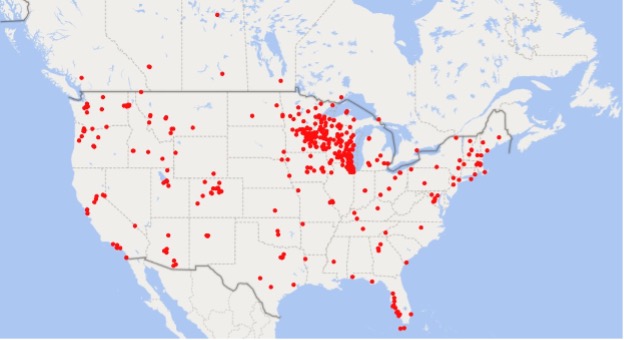
    Figure 1.  Approximate geographic distribution of survey participants in the contiguous US and Canada.

    With a basic understanding of who took the survey—and who is included in their ski communities—we then asked how they draw the geographic boundary around their self-perceived community. Based on cell tower locations used by 1188 people to access our online survey, they represent 47 US states, five Canadian provinces, and regions of Norway and England. As Figure 1 shows, the Upper Midwest appears to be the center of the North American cross-country universe! While this is likely a result of the ABSF distributing the survey to their virtual skiers who often look towards Hayward, WI when they draw their maps, as Minnesotans we’re happily biased in seeing the Midwest as skiing Valhalla. Thus, there’s probably a correlation between the need to travel from large urban Midwestern cities to ski the Birkie and the 43% of respondents that defined their community as “regional.” What we didn’t expect was the low proportion of people (8%) who thought of their community on a national scale, compared with those who think internationally (20%). There might be a couple of reasons for this. International coverage of World Cup and Olympic races creates a large-scale perspective for many skiers that naturally subsumes a more restricted national-scale perspective. Additionally, lack of easily accessible video coverage and live commentary of national ski events (e.g., NCAA, US Super Tour) hinders a fan’s ability to engage at a national level.

    Community, Culture, and Engagement

    With geographic boundaries drawn and scales of community in mind, we then wanted to know if people who call themselves “cross-country skiers” actually ski.  It may seem like a funny question, but one never knows. When there’s snow on the ground, the overwhelming majority (82%) of cross-country skiers engage in the sport at least twice a week. While everyone considers themselves a cross-country skier during the winter, 62% of the respondents think this way year round. Do these “year-rounders”, actually practice what they preach? By and large they do. A little over a third ski more than three times per week, and this is what we might expect. What we didn’t expect to find out is that almost 4% of “year-rounders” actually skied less than once per week. Do as they say, not as they do! This is interesting because on the surface it highlights an apparent contradiction between self-identity and behavior. One might expect that those who identify as year-round skiers would ski more than average, not less. But digging a little deeper into our data we see that most of the year-rounders who don’t ski that often are probably training in the off season for those one or two big races during the winter. In terms of engaging in the culture, these folks are as much cross-country skiers as those who log hundreds of kilometers on the snow every winter. How can this be possible?

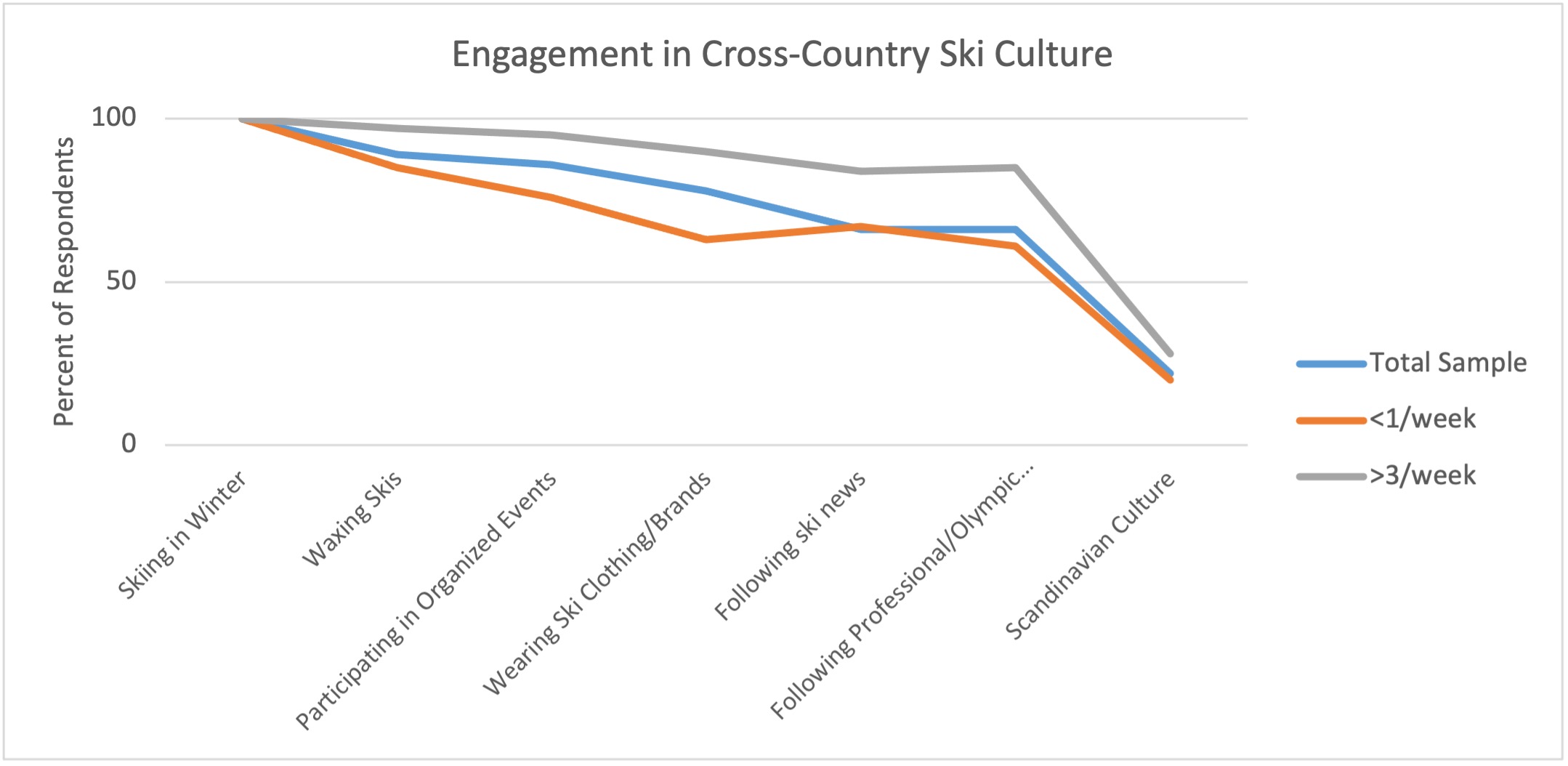
    Figure 2. Patterns in how people engage with cross-country ski culture.

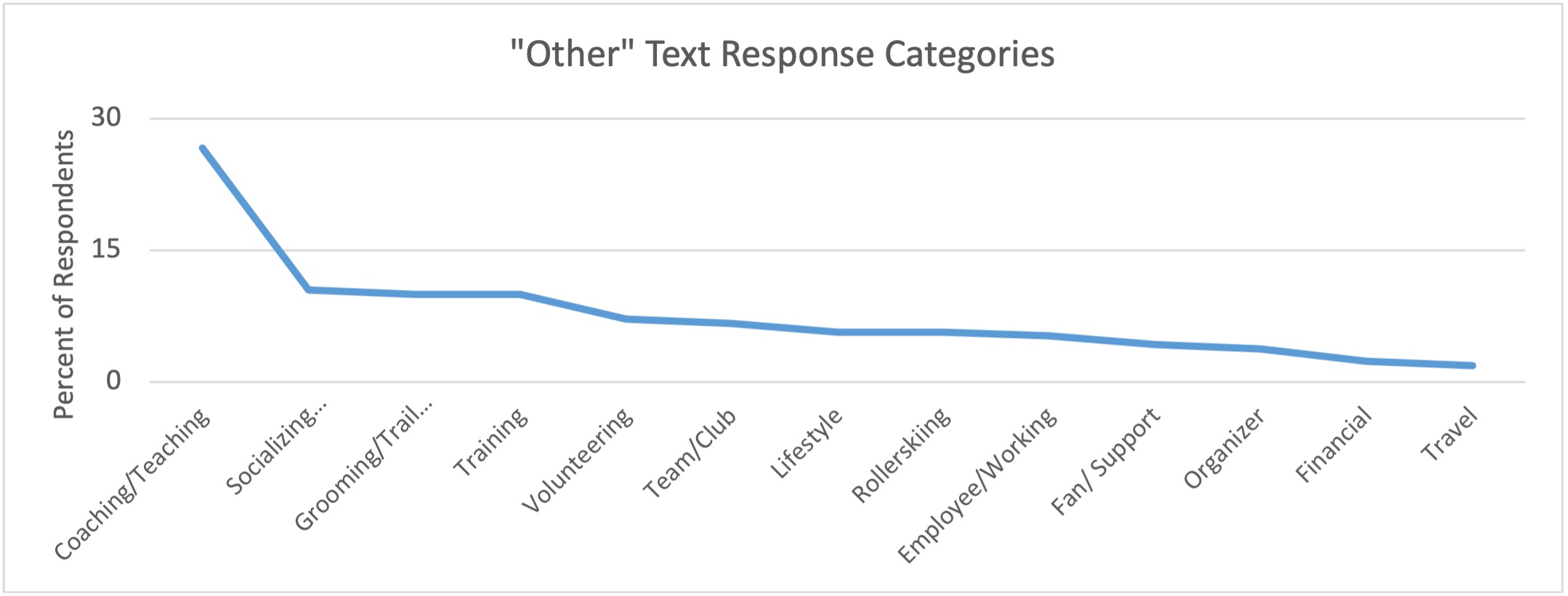
    Survey respondents chose between seven different ways in which they engage in cross-country ski culture, and also wrote their own answers. The pattern of responses between the year-rounders who ski all the time and those who hardly ski at all are statistically indistinguishable (Figure 2). And this pattern even holds across the entire sample of 1300. Essentially everyone told us they ski in the winter. Somewhat surprisingly, 89% replied that they also wax their own skis. Think of all those burned finger tips and ruined carpets! What was not a surprise is that participating in organized ski events came in third. Project Runway fans will be happy to know that a full three-quarters of the respondents style out in their favorite ski-brand clothing to signal their cultural membership. Tied for fifth, 66% follow professional races and skiers, and read ski news through online or print media. Almost 200 people typed in other ways they engage in the culture that were not on our list. The most frequent response was coaching/teaching, but socializing with friends and family, grooming/trail maintenance, and training were also common responses (Figure 3). Physical behaviors, material culture, economic investment, active information seeking, and coaching/teaching are all common pathways to engage in cross-country ski culture.

    Figure 3. Range of write-in responses for how people engage with cross-country ski culture.

    So when does cross-country skiing become part of something larger? To answer this question we go back to the final category of engagement in Figure 2: “As part of Scandinavian culture.” We recognize that the term “Nordic” traditionally includes Finland, in addition to the Scandinavian countries of Norway, Sweden, Denmark, Iceland, and the Faroe Islands (that share an Old Norse language stock). We asked the question about engagement using the term “Scandinavian culture” instead of “Nordic culture” so that survey respondents could think about cross-country skiing as a standalone sport, rather than an embedded cultural act. We hoped to avoid persuading respondents that “Nordic skiing” meant they were automatically participating in “Nordic culture.” A total of 280 respondents (21.5%) told us that they engage in cross-country ski culture as part of a larger engagement with Scandinavian culture.

    When people cross-country ski as a way to engage with Scandinavian culture (and more broadly Nordic culture), skiing becomes the journey rather than the destination. The cultural concept of friluftsliv is the perfect example of a life well-lived through regular engagement with nature and using cross-country skiing as a means to that end. The FIS Cross-Country Homologation Manual (FIS 2021) demonstrates how cultural practices and perspectives that historically originated in the Nordic nations are at the heart of our sport. The manual establishes standards and guidelines for ensuring race courses adhere to principles of safe and fair competition, but just as importantly, “to maintain the original ‘soul of the sport’.” In the sections titled “Preserving Cross Country Heritage” and “Environmental Aspects,” the manual references the early history of skiing and societal expectations for the relationship between cross-country skiers and nature. Nordic cultural heritage is thoroughly embedded in the ideals, iconography, and language used to describe our sport.

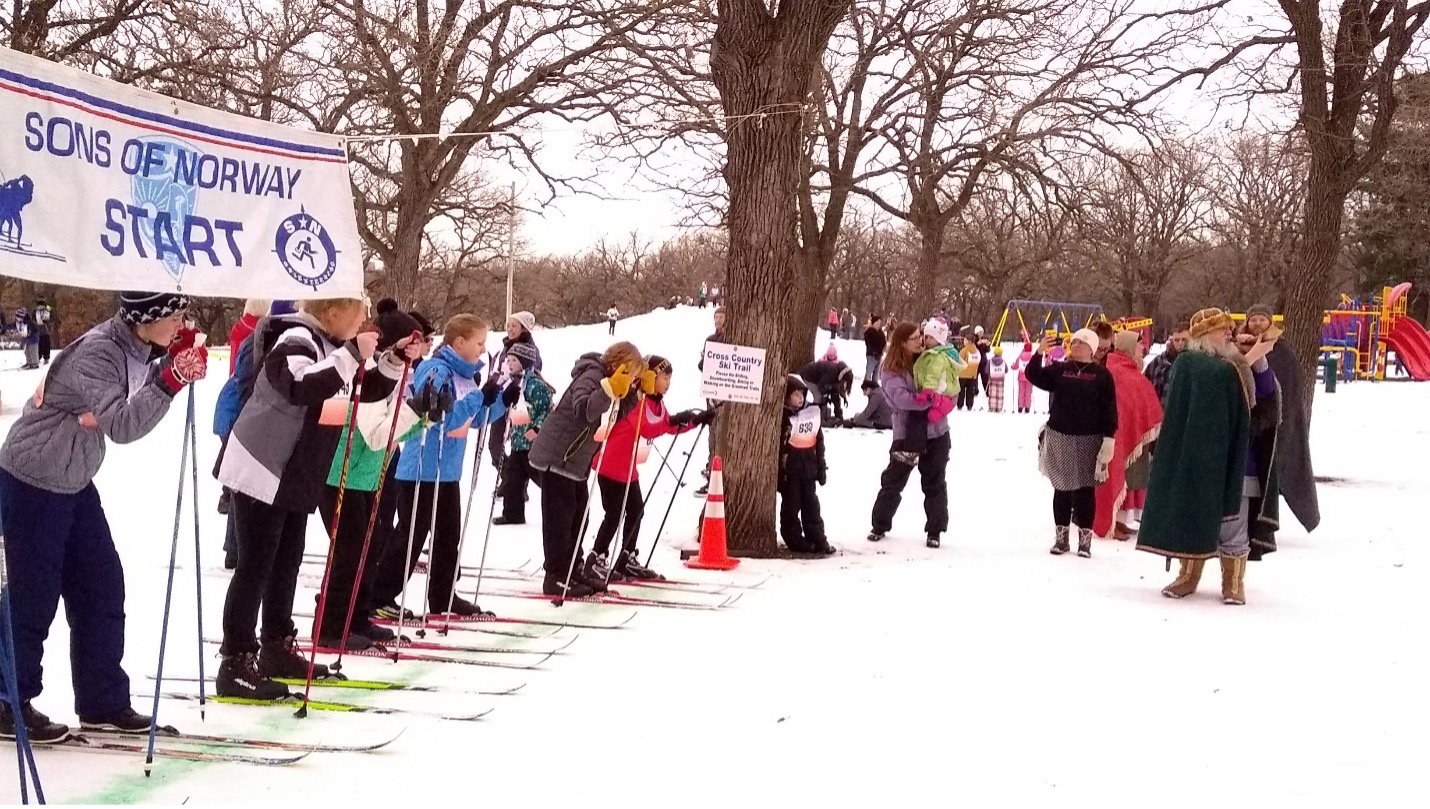
    Figure 4. A Viking re-enactor blows the horn to start the annual Barneloppet kids race, sponsored by the Sons of Norway and the Minnesota Youth Ski League, St. Cloud, MN.

    Many North American skiers attend iconic events with cultural and symbolic associations focused on the Viking image (e.g., American Birkebeiner, Vasaloppet USA, SISU Ski Fest, City of Lakes Loppet), and this is especially evident in Minnesota (Figure 4). For those whose immigrant family histories include Nordic ancestors, cross-country skiing may indeed be part of their cultural heritage. But for many others, it is not. Regarding ethnicity, only 46 of the survey respondents (3.5%) clearly identified as Scandinavian. Many respondents described their ethnicity as “European” or “northern European” that might include Scandinavian countries so this result is considered a minimum. Of these 46 respondents, 74% indicated they cross-country ski “as part of Scandinavian culture.” This strong correlation is expected given the important role of skiing in Nordic countries and reinforces the direct association captured in the very name of the sport. Just as importantly, a quarter of these respondents didn’t see a necessary connection between Scandinavian ethnicity and the act of cross-country skiing. Of particular interest, some folks identified their ethnicity as not Scandinavian (e.g., Taiwanese, Asian-Pacific Islander, Czechoslovakian, Lithuanian, German, Dutch, Polish, Swiss, Scottish), while also indicating that they ski as a way to engage with Scandinavian culture. This demonstrates how people can use sport to intentionally cross cultural boundaries.

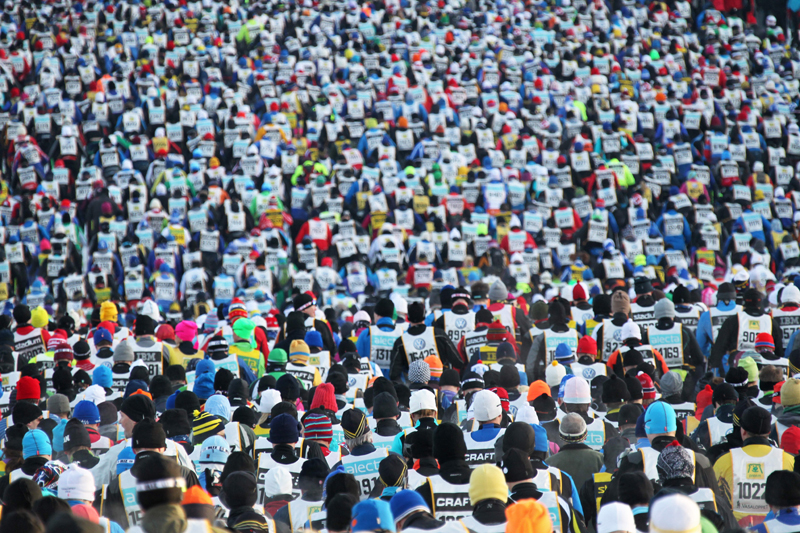
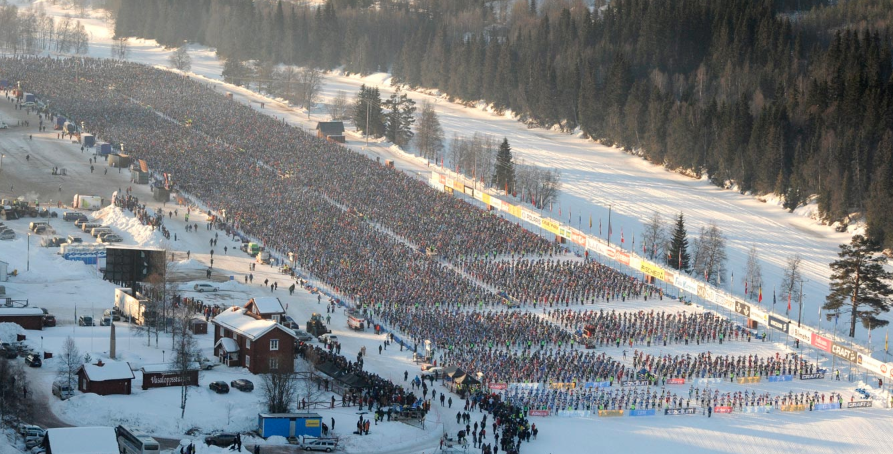
    12,500 racers participated in the 90-kilometer classic race at the Vasaloppet in Mora, Sweden in 2019. (Photo: vasaloppet.se)

    The relationship between race, ethnicity, and cross-country skiing is complex. While ethnic Scandinavians strongly associate cross-country skiing with their culture, so too will other folks who are not Scandinavian. Notably, more than three-quarters of the respondents (regardless of racial identity) didn’t emphasize a connection with Scandinavian culture at all. In North America, we may want to give some careful consideration to the ways in which we promote the sport to new members. Modern Viking iconography and associated cultural ideals may appeal to some cross-country skiers and event organizers because of a shared cultural background. Events that have built part of their public image on Scandinavian heritage do not necessarily need to change; however, promoting other positive aspects such as a healthy lifestyle, getting outside in winter, and building a bond with nature may appeal to a wider audience and could be important factors for promoting diversity and growth of the sport for everyone. The fun and excitement of competitive endurance racing is another big attractor for many people, and we will address the impacts of changing climate and virtual formats on this in subsequent articles.

    We have learned that there are definite cross-country ski communities, and that skiers engage in the culture in very recognizable ways. In general, we mostly like to ski a couple of times a week with friends and family, and regularly attend organized ski events at a regional scale. We’re gearheads who enjoy geeking out on wax and ski technology, and we communicate our love for the culture through the clothes we wear. We’re also apparently older, well-educated, cis-gendered white people, but these demographics may be biased towards folks who skied the American Birkebeiner. Even if biased, this sample of skiers is very relevant to this research because they have an important contribution to make when examining the potential impacts of virtual ski events. Cultures evolve and adapt. Climate change is forcing the Nordic ski community to deal with warmer and shorter winters. What happens to our culture and community if virtual racing becomes part of our adaptation to the near-term future? We explore this question next by looking at the pros and cons of virtual racing through the eyes of those who lived through it.


    Mark P. Muñiz, PhD is a Minnesota transplant who grew up in Florida, but enjoys a cold snowy winter over a hot humid summer any time.  His cross-country ski adventures have included loppet races and volunteer coaching for the Minnesota Youth Ski League.  In the warm season he loves cycling and is still a little wary of jumping on rollerskis.  He currently teaches as a Professor in the Dept. of Anthropology at St. Cloud State University, MN.

    Matthew A. Tornow, PhD is a Professor of Anthropology at St. Cloud State University in Minnesota.  His research interests focus on primate adaptation and behavior, including that of humans. As a native of central Illinois, he spent much of his youth and early adulthood driving north to seek out the snow. Now he spends his winters skiing the local trails and doing a little racing. When there’s no snow on the ground, you can find Matt running through the woods somewhere.