From the FasterSkier archive — posts syndicated from athletes’ and coaches’ own blogs between 2004 and 2012, kept online as published. Current coverage is at fasterskier.com.

Author: Pasha Kahn

  • Alpine Nations Contest FIS Election in CAS in Ongoing Power Struggle

    Alpine Nations Contest FIS Election in CAS in Ongoing Power Struggle

    On Monday, June 20th, the Ski Associations of Austria, Switzerland, Germany, and Croatia made good on threats issued after the FIS Congress in May, and filed an appeal to the Court of Arbitration for Sport (CAS) contesting the voting procedure that elected the unchallenged FIS President Johan Eliasch.

    The four nations argue that it was unlawful to deny them the option of voting no to Eliasch, and that the election procedure violated FIS statutes and Swiss law. 

    Unable to vote no, the dissenting delegates decided to either walk out of the election in protest or abstain from voting altogether. Members of the appealing ski associations have suggested that Eliasch would not have received a majority of the votes cast if an option to vote no had been offered. Had that happened, the appealing nations may have been successful at installing a new candidate. 

    Instead, Eliasch received 100% of the votes cast, leading his opponents to characterize the proceedings as, in the words of the German delegate, a “farce.” Nevertheless, Eliasch received 70 of a possible 117 votes—a clear 59% majority, and a five vote increase from last year. 

    For FIS, an appeal of voting procedure technicalities is unprecedented: as a rule, FIS presidential elections have been uncontested and decided by acclaim. In response FIS released a statement saying the allegations, “are entirely without merit or substance.”

    Eliasch was reportedly told in advance about the appeal during a meeting in Innsbruck with the Austrian Ski Association. “He took it very professionally and said he needed it too, otherwise [the allegations] would resonate throughout his term,” according to Chrisitan Scherer, the head of Austrian skiing. 
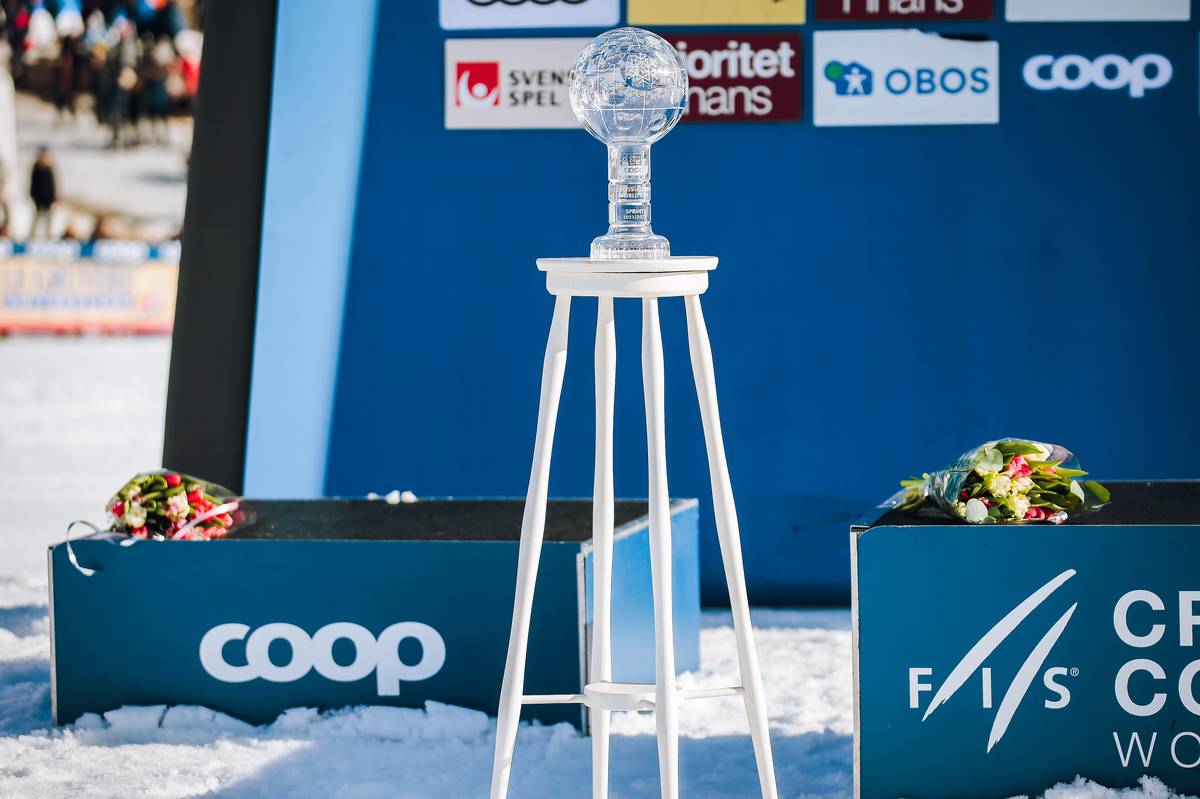
    The women’s sprint crystal globe awaits its recipient at 2021-22 FIS World Cup Finals in Falun, SWE. (Photo: NordicFocus)

    While the CAS case will examine legal minutiae, it is best seen as the latest contest in a power struggle between a bloc of dominant ski nations and FIS President Eliasch, whose agenda to rapidly centralize media rights under FIS and shake up the World Cup calendar has threatened their hegemony. 

    “If you think about the bloc here [in FIS], it’s the French, Germans, Swiss, Austrians, Norwegians, Swedes, and Finns,” said Dexter Paine, the U.S.’s former FIS Vice President and Councilor who was voted off the council over his support of centralization. 

    What the bloc hopes to achieve from the CAS appeal is unclear, though it seems unlikely to overturn the result of the election. The aim may be to stall Eliasch’s agenda as the case will take months to resolve, or to wound him politically and bring him to the bargaining table in a weaker position. It may also be that the four appealing nations are determined to find a way to overturn the election and install their preferred candidate: Urs Lehmann, the head of Swiss Ski.

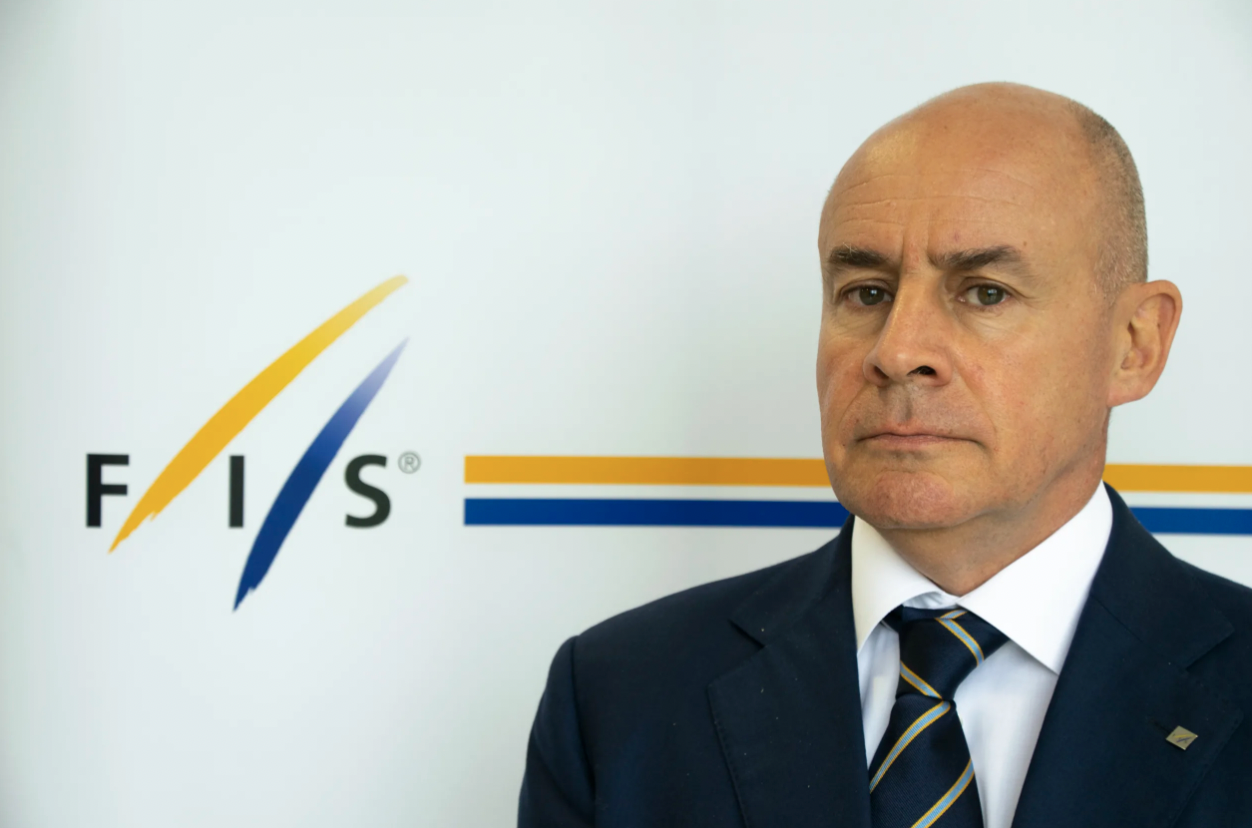
    Eliasch’s election in 2021 interrupted the Swiss reign at FIS, with just two Swiss men— Marc Holder and Gian Franco Kasper—leading the Federation for the previous 70 years. Lehmann, who called the FIS election a “muppet show”, appears to be an opposition candidate that will preserve the bloc’s established order.
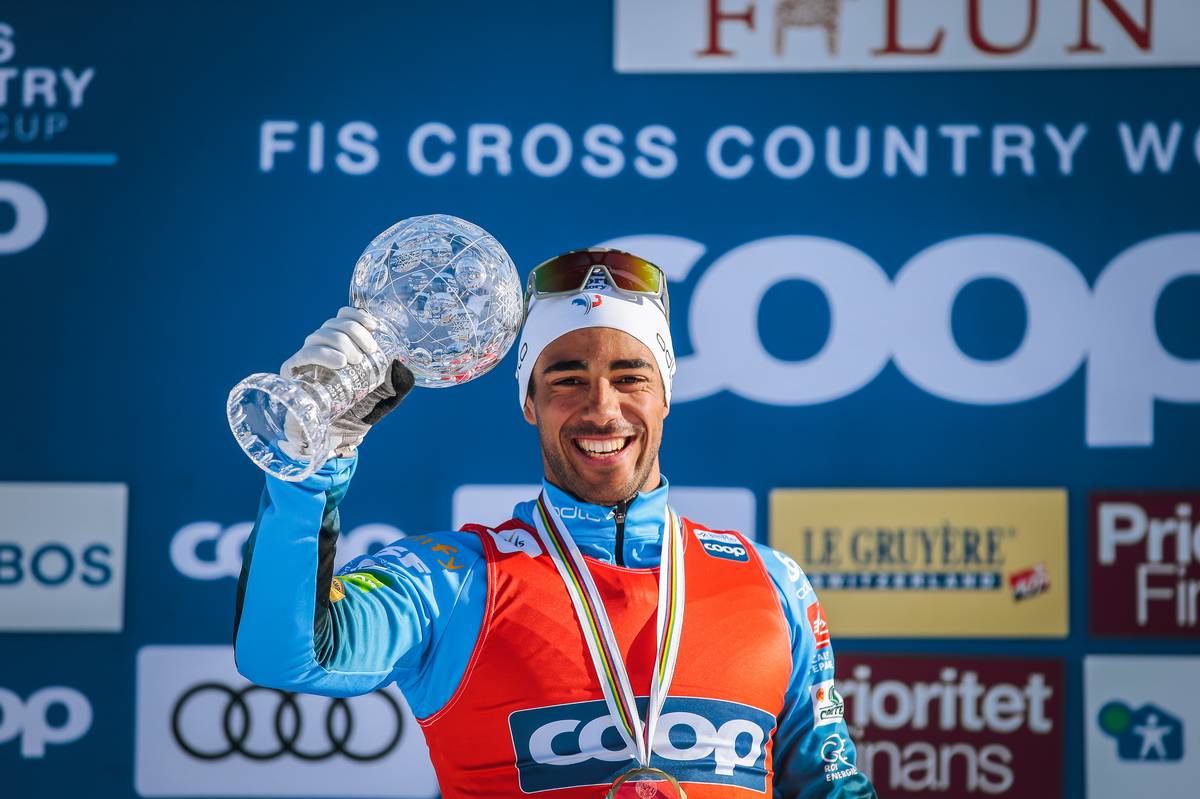
    France’s Richard Jouve earns the 2021-22 FIS sprint crystal globe. (Photo: NordicFocus)

    Both Paine and Eliasch spoke to FasterSkier earlier this month to discuss the issues facing FIS as it attempts to centralize the media rights, expand the reach of the World Cup, and attract a larger audience in North America. 

    Eliasch’s bid to modernize FIS in the near term will now be hampered by Paine’s absence from the council, an assertive bloc, and entanglements at every corner with the sport media company Infront.

    While there has been general disagreement between the bloc and Eliasch over centralization, one development in particular has alarmed the bloc as well as Infront: A judgment won in Swiss court that found FIS to be the rightful owner of World Cup races and not, as was previously understood, the hosting National Ski Association. 

    With this ruling in hand, Eliasch has suggested that the contracts with Infront could be broken—a move that would take centralization from the theoretical realm, where it has support from the bloc, to the immediate, where it does not. 

    Much of Infront’s contracts for FIS events extend to at least the 2025/26 season, with Swiss Ski signing a deal that lasts until 2027/28. 

    Urs Lehmann, the head of Swiss Ski, opposes the notion of breaking contracts. “That’s not possible,” he said to Tages Anzeiger. “Infront hasn’t done anything wrong, on the contrary, it’s a big partner of the FIS when it comes to world championships.”

    For his part, Lehmann said centralization would require a long time frame, presumably after 2028, and could be done only after proving that Ski Associations would receive at least the same amount of money. 

    Eliasch has said that FIS has ample funds to give “cast-iron guarantees” to match Ski Association’s deals with Infront, saying, “We can back it up any day of the week.”

    FIS’s financial assets at the end of 2020 amounted to around $146 million, suggesting that if the Federation is prepared to dip into their reserves, it has the ability to support Ski Associations through the transition. 

    Infront’s VP of Strategic Communications, Jörg Polzer, outlined the risks for FIS of moving away from the current arrangement in an interview in Ski Racing, suggesting that the new proposal “would represent a de facto expropriation of the National Ski Associations.”

    Polzer also felt that the outcome would be a “plethora of legal claims and lawsuits for many years to come,” the result of which could mean that fans might not be able to access “FIS World Cup coverage as conveniently and widely as it is the case today.”

    Centralization under FIS threatens to disrupt both Infront’s profits and its valued portfolio of winter sports which encompasses all seven winter Olympic sport federations. It is likely to respond to broken contracts by both halting payments and pursuing damages from National Ski Associations.

    Eliasch reassured members in a letter to the FIS council stating, “The FIS will award all national ski federations compensation for all claims by Infront.”
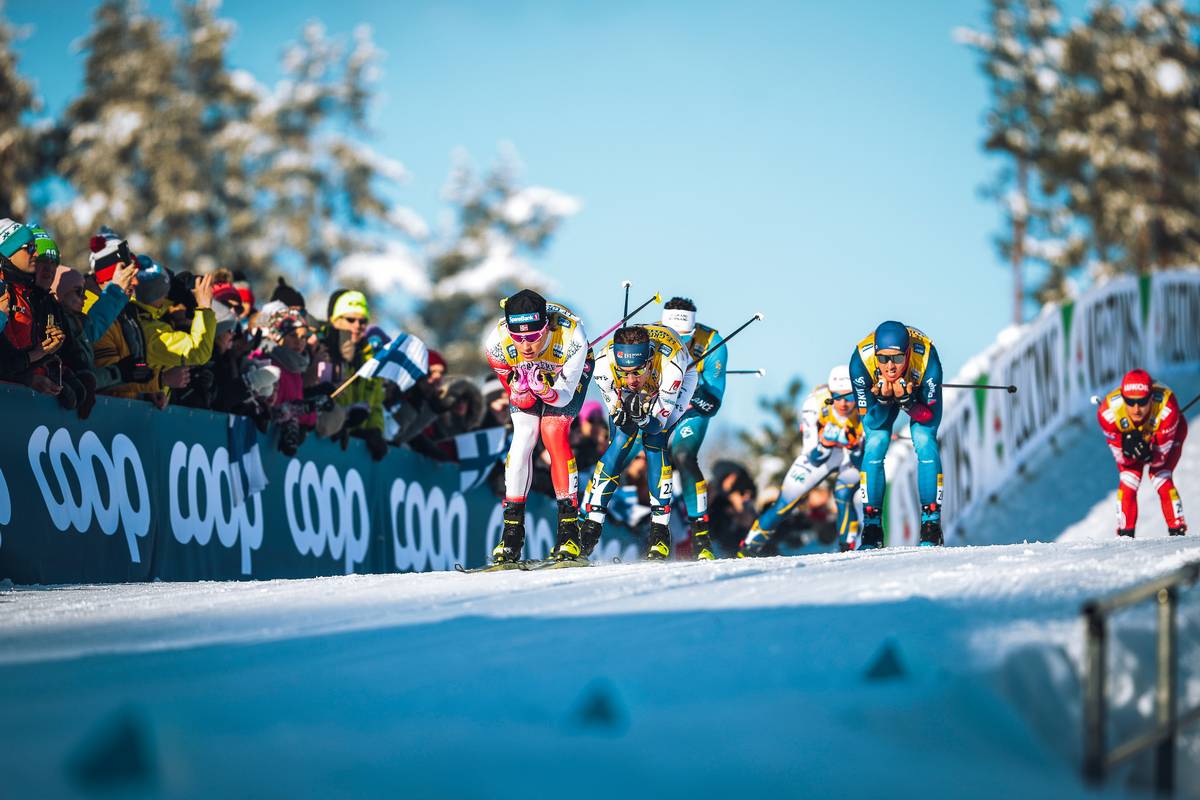
    Johannes Høsflot Klæbo leads his heat during his final sprint of the 2021-22 season in Lahti, FIN. (Photo: NordicFocus)

    The plan to centralize FIS, known as the Concorde Agreement, is supported by US Ski & Snowboard, who believe the proposal would help modernize the sport and increase funding for everyone. 

    Paine said that “Johan [Eliasch] has been really explicit about the fact that he would envision that revenues related to media would increase under the new model. In fact, he’s talking about potentially up to a 25% increase in revenues.” 

    Still, the bloc has opposed the centralization of media rights, with Austria’s Scherer saying, “you can’t just take them (media rights) away from us, as an organizer you also bear the risk.” Scherer’s position is that hosting events should come with a risk/reward incentive. Considering that the opposing nations host many events, including the highest profile ones, the rewards are significant. 

    The Ski Associations of the bloc also oppose the “expropriation” of ownership that centralization presents. Scherer argued that it could only be done on a voluntary basis—an option that would defeat the purpose of centralization, but preserve the bloc’s influence over skiing.

    Facing resistance, Eliasch decided to table the Concorde Agreement to allow for a period of consultations with members. “We decided not to bring [the Agreement] forward to Congress, because it needed more work,” Paine said.

    Some representatives have complained about poor communication between Eliasch and National Ski Associations with regards to his plans for centralization.

    Paine agreed that improvements are needed in this area, saying, “FIS needs to do a much better job articulating why this would be good for everyone in the sport, and how they would make sure that those countries aren’t any worse off than they were before.” 

    Though Paine added that, “Johan has been very explicit about the fact that he is going to seek the advisement of the [FIS] Counsel, and all members, on all the items regarding centralization rights.”

    Entanglements with Infront

    Another challenge for FIS will be breaking free from Infront. The company has become enmeshed in the fabric of FIS, from the television production of races, to long term contracting of rights, to negotiating sponsorships, to even building the FIS app and website.  

    FIS will also have to overcome its own independent marketing agency, FIS Marketing AG, which was created in 2009 to acquire and sell the sponsorship rights to FIS World Cup events. 

    FIS Marketing AG (FISMAG) is majority owned by FIS (51%), with 24.5% owned by Infront, and the final 24.5% owned by Tridem Sports. The venture is led by Christian Pirzer—the CEO of Tridem Sports, a two man marketing firm started by Pirzer in 2008 and based in Freienbach, Switzerland. 

    “Part of Johan’s platform, and I think most candidates’ platform, was to bring all of that in house,” said Paine. “I think people didn’t fully understand why 49% of our marketing organization was owned by a third party.” 

    Infront’s role in the venture has been principally to acquire sponsors, billing €855,000 for its services to FIS Marketing AG, according to an SEC filing in 2018. For its part, FIS recorded its 2018 income from partnerships at 676,000 Swiss francs—around €577,000 at the time. 

    “Most entities own 100% of their sponsorship revenues, and I think it’s unusual that FIS wouldn’t,” Paine said. Questions have been asked about whether this arrangement is in the best interests of FIS. “We don’t [even] have a title sponsor for Snowboard. That just always astounded me.”

    Eliasch intends to end the venture, writing in a letter to the FIS Council, “We have terminated all agreements related to FISMAG so we have removed this obstacle to realizing our sponsorship potential.” To date the firm has not been closed, and Swiss courts are reportedly handling the injunctions necessary to stop it from continuing.

    According to German paper Bild, Pirzer is suing Eliasch to defend himself against allegations that he has been involved in fraud. Pirzer said simply, “I have filed a criminal complaint against Johan Eliasch for defamation.” 
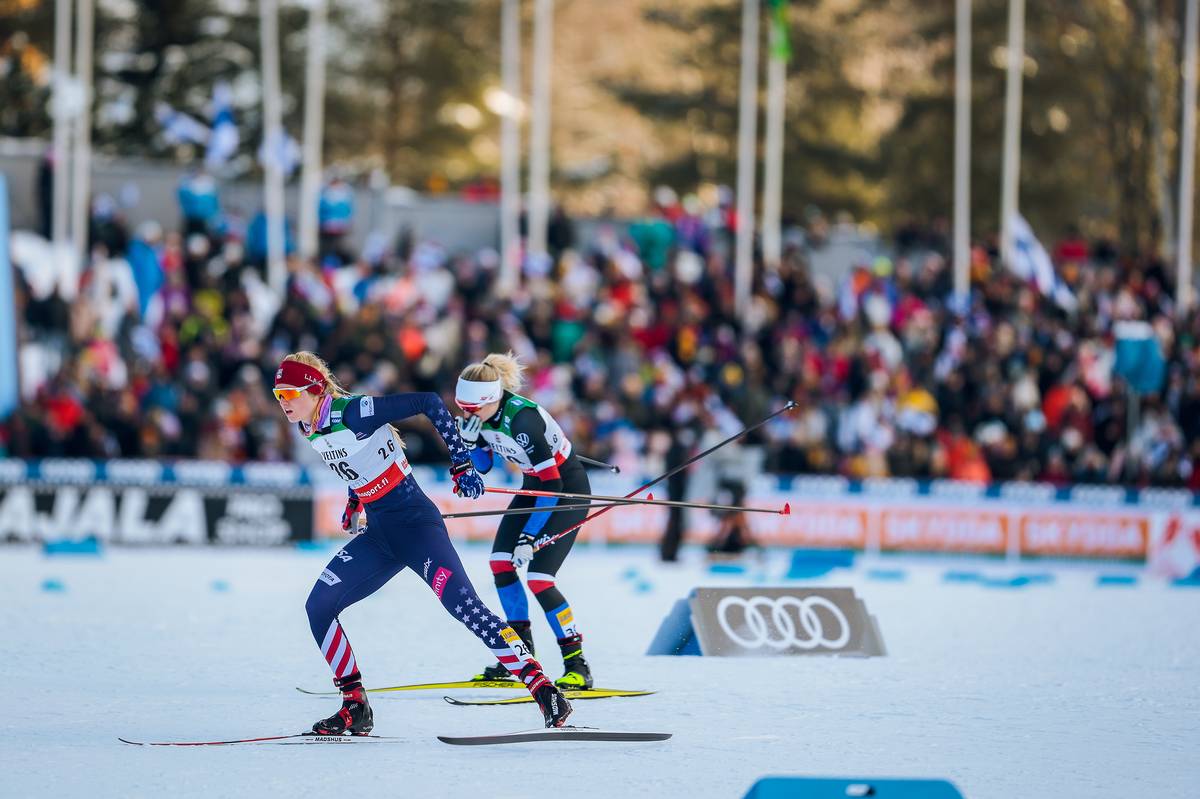
    Hailey Swirbul powers through the quarterfinal during a skate sprint in Lahti, FIN in March 2022. (Photo: NordicFocus)

    Infront Sport and Media is based in Zug, Switzerland, and is led by Phillipe Blatter—nephew of former FIFA president Sepp Blatter who presided over the governing body of soccer from 1998 to 2015 when he stepped down after a massive corruption investigation roiled the organization and put him under investigation for fraud. 

    After Phillipe Blatter was appointed Infront CEO in 2005, the company won comprehensive distribution rights to the FIFA World Cup until 2022. Infront released a statement in 2015 squashing “unwarranted assumptions” of nepotism with regard to its FIFA contracts. 

    While Infront remains a respected titan of its field, the company has been dogged by investigations over the improper sale of media rights in Italy’s Serie A soccer league, advertising in the German Football Association, and antitrust activities. The company’s 2019 prospectus stated possible investment risks included negative publicity “prompted by actual or alleged criminal activities, such as money laundering, tax evasion or bribery.”

    In 2015, Chinese conglomerate Wanda Group purchased a controlling stake in Infront for $1.2 billion. The Group was a key player in China’s drive to create 300 million Chinese skiers, building, among other things, the world’s largest indoor ski area in Harbin. Wanda Group acquired Infront six months prior to the IOC vote on hosting the 2022 Winter Olympics, and the addition of the Swiss company was seen as a boost to Beijing’s successful bid. 
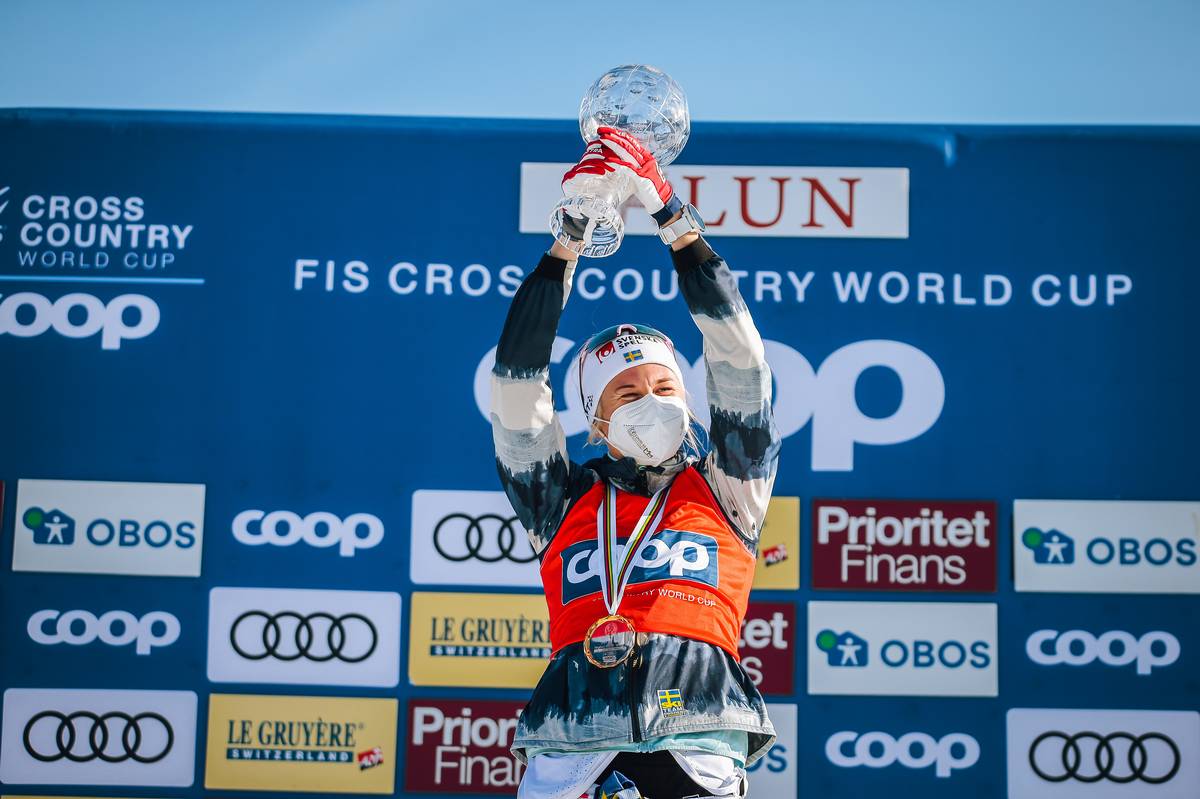
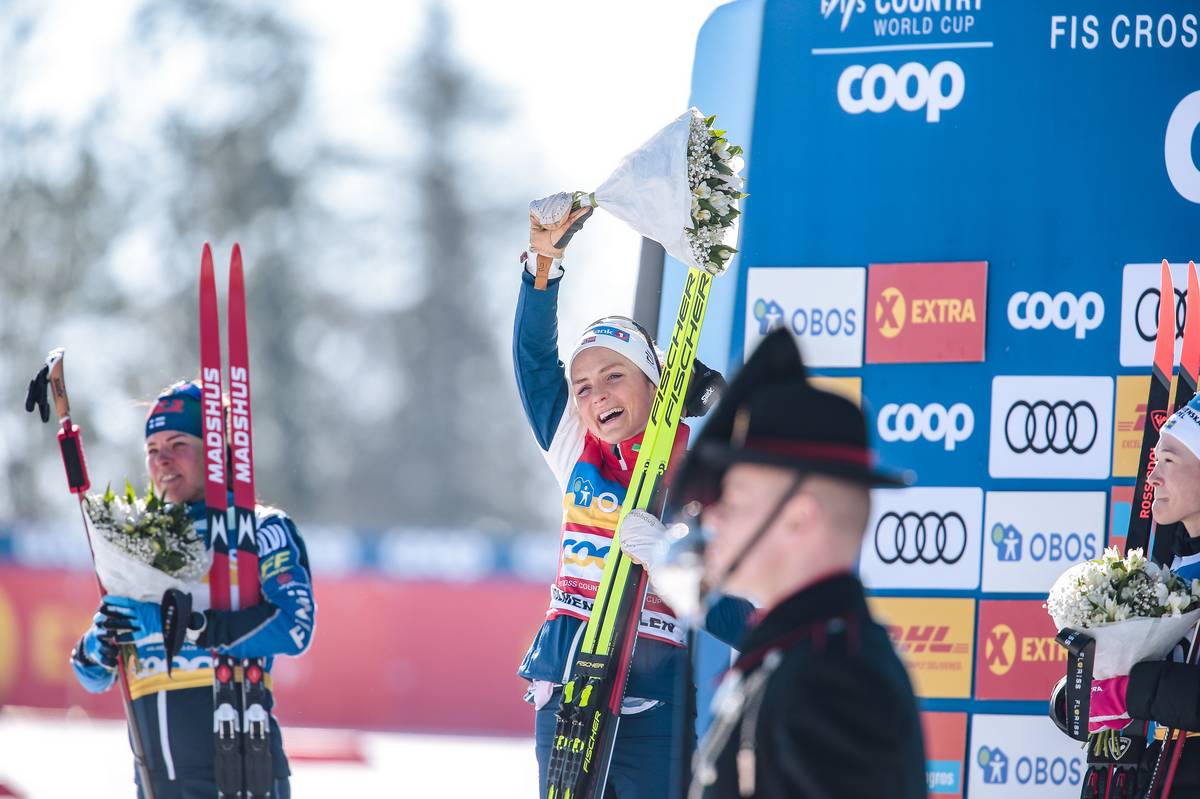
    Sweden’s Maja Dahlqvist hoists her crystal globe after a season that included winning the opening four World Cup sprints, and collecting an Olympic silver medal in both the individual freestyle sprint and the classic team sprint. (Photo: NordicFocus)

    Should Eliasch prove successful at centralizing the rights, it is still likely that Infront would remain involved with FIS, considering its primacy in its field and the fact that other centralized sports such as biathlon and F1 both contract with Infront. 

    Paine said that he’s “been an advocate for Johan sitting down with Infront. I think there has to be some negotiation with all the parties involved, if this is going to come to a successful conclusion.”

    Eliasch met with Infront in May, and was scheduled to meet again in June. “I’ve been a big advocate for those conversations taking place,” Paine said. “I was the loudest advocate, quite frankly, on the Council for making sure that Johan was in dialogue with Infront.”


    A Push for More Racing in the United States

    Paine and Eliasch also drew ire from some nations over their push for more World Cup racing in the United States, aimed at attracting a larger American audience.

    The seasonal stops on the World Cup have grown so indelible that there’s been little room left for visits to new venues. “The calendar from one year to the next has looked very similar,” said Paine. “There were very few changes.”

    The arguably stagnate routine has kept World Cup racing of all disciplines overwhelmingly in the Alps region and in the Nordic countries, and moves to change this has frustrated some nations. “It’s about planning security,” argued Walter Reusser, the Alpine Director at Swiss Ski. 

    Eliasch argued that the prescribed calendar has hindered the growth of the sport, particularly in the U.S. “I know [FasterSkier is] focused on cross-country, but alpine is a good example,” said Eliasch. “NorAm races, which are the second tier, are much more famous than the FIS World Cup races in the U.S. That tells you that something is really off. And when do we come to the U.S.? At the wrong time [November] when there is little interest in ski racing. So we have changed that, at least for alpine, so that we come back in March. We go to Aspen and Palisades Tahoe, as it’s called now. And here we hope we get proper viewership, and we can build much more time and engagement with American viewers.” 

    Though American alpine skiers have gained widespread fame, as a television audience the U.S. does not make the top ten for alpine, ranking somewhere below the likes of Slovenia.

    “Johan has said whether it’s cross-country, or alpine, we need to have more events outside of Central Europe and Scandinavia,” said Paine. “And those countries, once again, are the countries with the most events. If we’re going to hold events in North America or in Asia, they have to come from somewhere.”

    The addition of men’s alpine racing in Aspen and Palisades Tahoe next winter comes at the expense of Norwegian venue Kvitfjell. Erik Røste, the outgoing head of Norwegian skiing responded, “The Norwegian Ski Association will do everything we can to ensure that both women and men can run the World Cup in Norway in the years to come. As a large and dominant alpine nation, this is important.”

    Iivo Niskanen (FIN) takes the distance title for the 2021-22 FIS World Cup season. (Photo: NordicFocus)

    Paine dissauged fears that the Cross-Country World Cup races tentatively scheduled for Minneapolis, MN and Cable, WI in 2024 would be in jeopardy without his seat on the Council. “I don’t believe there’s any issues,” Paine said. “That cross-country calendar seems to be pretty widely supported. Chris [Grover], has done a really nice job in building relationships.

    “Look, there’s going to be a lot of turnover in cross-country as Erik Røste is going to be done in June and there is going to be a new head of the Norwegian Ski Federation, as well as all the issues with races in Russia given the conflict in Ukraine. My sense is that we’re in good shape for the 2024 races, particularly since everyone was ready to go with the Minneapolis races when the pandemic led to its cancellation.

    This is good news for American fans waiting since 2001 for the Cross-Country World Cup to return on home snow. For Paine, long an advocate for more racing on our shores, the bolstered American World Cup calendar is a job well done. 

  • U.S. Ski & Snowboard’s Dexter Paine and FIS President Eliasch Weigh In on Controversial Ski Congress

    U.S. Ski & Snowboard’s Dexter Paine and FIS President Eliasch Weigh In on Controversial Ski Congress

    Elections at FIS Congresses are normally not the scene of political intrigues, particularly when there is only one candidate for President. Yet, in a surprise twist, a bloc of powerful ski nations walked out on FIS President Johan Eliasch’s uncontested election and voted out Dexter Paine, the U.S. Ski & Snowboard representative, as well as a FIS Vice President and Councilor.

    Prior to the vote for President on May 26th in Milan, Italy, Croatia’s representative Vedran Pavlek insisted that the procedure be changed to allow a yes, no, or abstaining vote. Denied by FIS Legal Counsel, the delegates of Switzerland, Austria, Germany, Croatia and Scandinavia walked out. In all, only 70 of the 117 available votes were cast—just over the 63 minimum needed to reelect Eliasch. 

    U.S. Ski & Snowboard representative Dexter Paine was ousted from the FIS Council after a vote during late May Congress sessions. (Photo: U.S. Ski & Snowboard)

    The vote for FIS council followed, and Dexter Paine, who has served on the council since 2014, found himself in third lowest position—an abrupt turn of events for US skiing’s representative.

    “It was a real surprise,” Dexter Paine said on a call with FasterSkier. “A year ago, I was elected with the second largest number of votes. I think it was more of a protest vote against Johan [Eliasch], because, ultimately, he was the only name on the President’s ballot.” 

    “One of the things that I find disappointing,” Paine said, “is that I wish people were more direct and more open on the council and within that community, rather than being political.”

    Austria’s representative, Christian Scherer, seemed to sum up the underhanded attitude in an interview with Kleine Zeitung, saying, “We don’t want to say whether we voted for [Paine] or not. What I can say is that we always had excellent connections with the United States.”

    Paine explained that he received close to the same number of votes (74) as Eliasch and said, “I assume all the countries that walked out voted against me.” 

    President Johan Eliasch said that Paine’s presence on the council “will be missed,” adding, “He’s really been one of the people before I came in that was very strongly driving change for the better. His contribution has been invaluable over the years.”

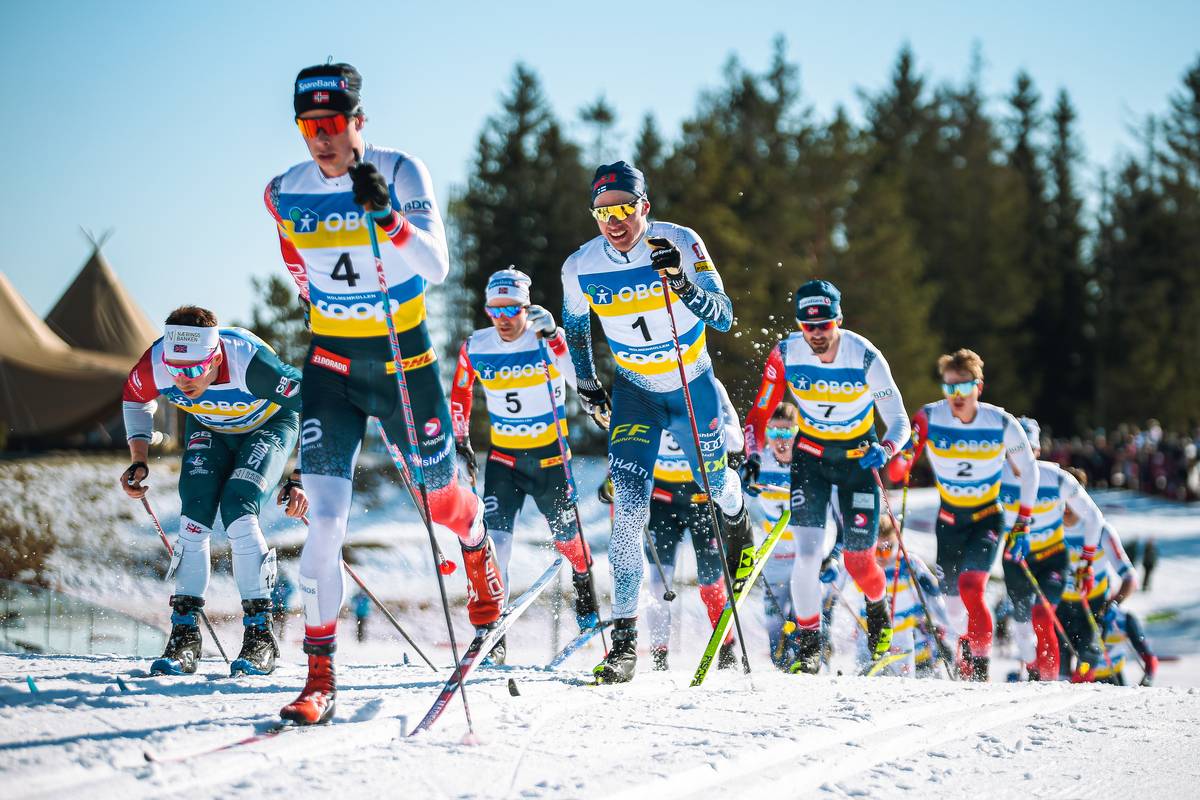
    The lead men kick and glide as a large group early in the 2022 50 k classic at Holmenkollen in Oslo, Norway. (Photo: NordicFocus)

    Paine had long advocated for modernization efforts within FIS—a position that led him to wholeheartedly endorse Eliasch’s progressive platform. Together, they rode a victorious crest during last year’s FIS elections. 

    Their decisive electoral wins in 2021 were interpreted as a mandate for change, and the two men pushed for Eliasch’s positions, key among them, the centralization of media rights that would help fund an overhaul of how FIS presents its sports and funds its athletes. 

    Just one year in, the representatives of large ski nations have seemed to sour on their enthusiasm for disrupting the status quo, with those that walked out of the Congress and voted out Paine decrying the election as undemocratic. 

    “An election is called that because one has a choice,” said Urs Lehmann, the head of Swiss Ski. “But that didn’t exist, that goes against our understanding of the law.” The Swiss, according to Lehmann, are considering legal action to invalidate the election.

    FIS statutes stipulated that candidates who wished to run for President needed to register by March 31st. When none did, Eliasch, who was voted in last year in a competitive election, was left as the lone candidate.

    “Anyone could have run against [Eliasch] 60 days ago,” said Paine. “So, if the folks who objected to the ballot were so focused on a democratic process, they should have run someone 60 days ago. Clearly, they didn’t think that they could run someone and have them win.”

    Johan Eliash was elected president of FIS Council in June 2021. (Photo: FIS-Ski.com)

    Lehmann insisted that the discord with Eliasch only began to occur after March 31, when, according to Tages Anzeiger, Eliasch presented “his sometimes hair-raising plans” to National Ski Associations. “The whole thing has only escalated in the last few weeks,” said Lehmann, adding, “the time for a serious candidacy was simply too short.” 

    Paine sees Lehmann’s motivations differently. “I think Urs Lehmann, who’s the head of Swiss Ski, desperately would like to be the President of this organization,” said Paine. “He lost last year and he could have filed his name and run this year, if he chose to.” Better that, Paine thought, than to “create a disruptive event at the Congress.”

    The discontent directed at Eliasch and Paine over the electoral process seems disingenuous. The former FIS President, the late Gian Franco Kasper, ran unopposed throughout the course of his 23 year Presidency—and had much more to do with a plan to centralize media rights under FIS.

    “I’ve been a pretty vocal advocate for centralization of media rights,” Paine said. “Every successful sports organization out there, Formula One [F1], NFL, Premier League, all have centralized rights.” 

    Paine’s position has been backed by U.S. Ski & Snowboard President and CEO Sophie Goldschmidt, who wrote that she is “pro-centralization.” The rights, she said “are valuable, and centralization can offer a significant revenue increase for countries across the board. This is a proven strategy across many successful sports globally, and by building the right structure, all of the national governing bodies under FIS can benefit.”

    Under the current long-standing structure, National Ski Associations (NSAs) presumed ownership of the media rights to FIS events hosted in their countries. Nearly all nations sold the totality of these rights to Infront Sports and Media who in turn brokered deals with broadcasters around the world to air these events.

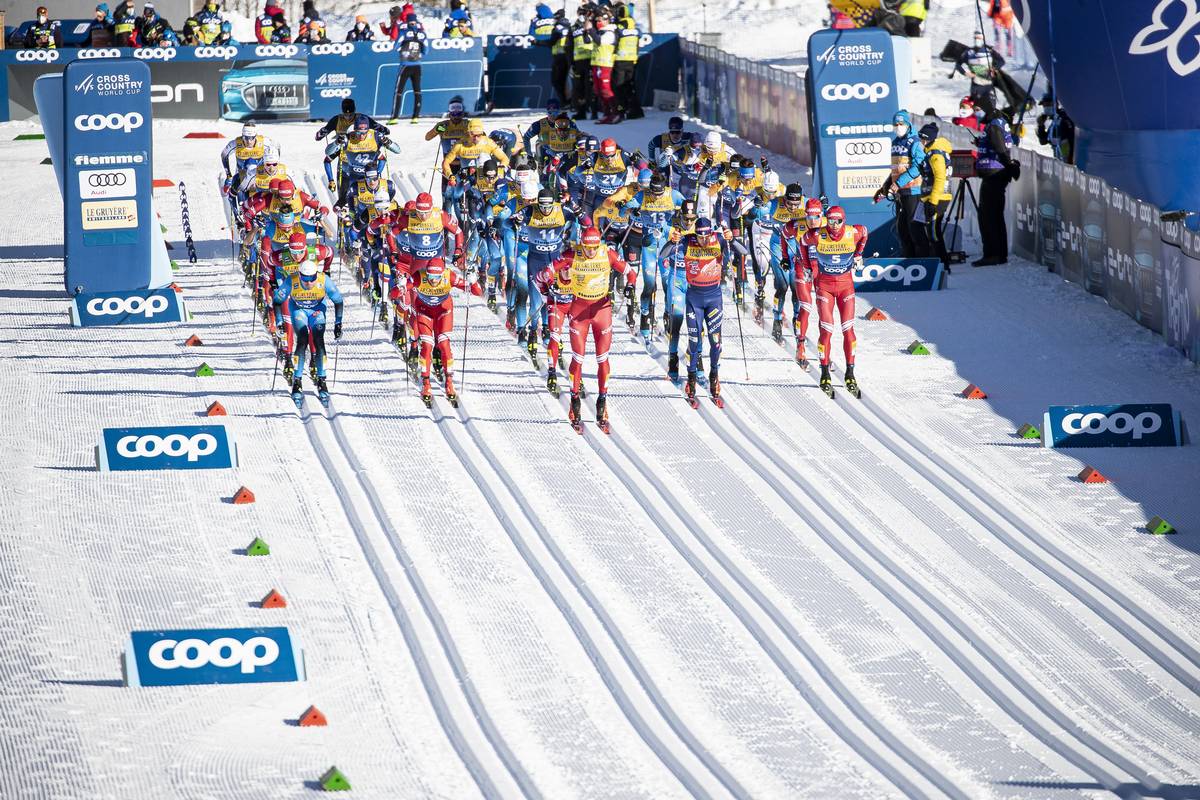
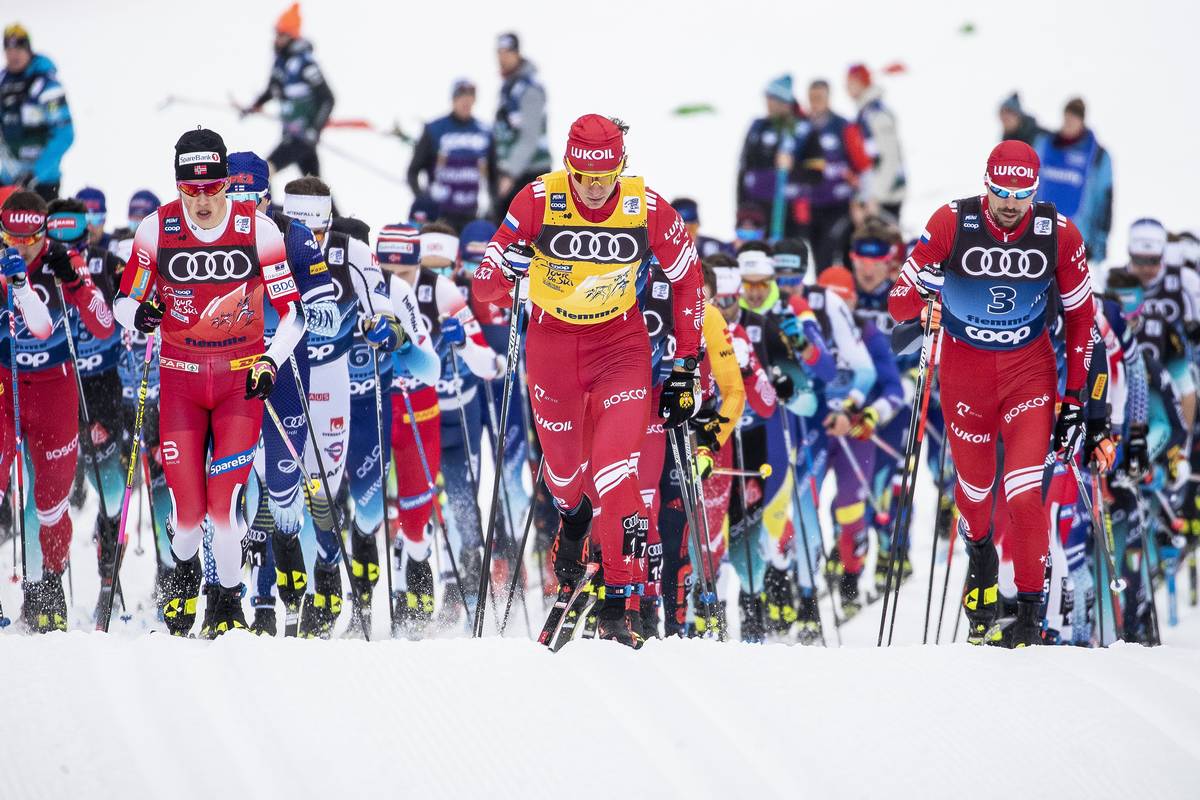
    Sophia Laukli (right) skis in the pack during a mass start skate race in Val di Fiemme, ITA, the final stop in the 2021-22 FIS Tour de Ski. (Photo: NordicFocus)

    Eliasch and Paine advocated a different approach—a proposal called the FIS Concorde Agreement, in which FIS would own or distribute the rights previously controlled by the NSAs and sell them, much as Infront has done. 
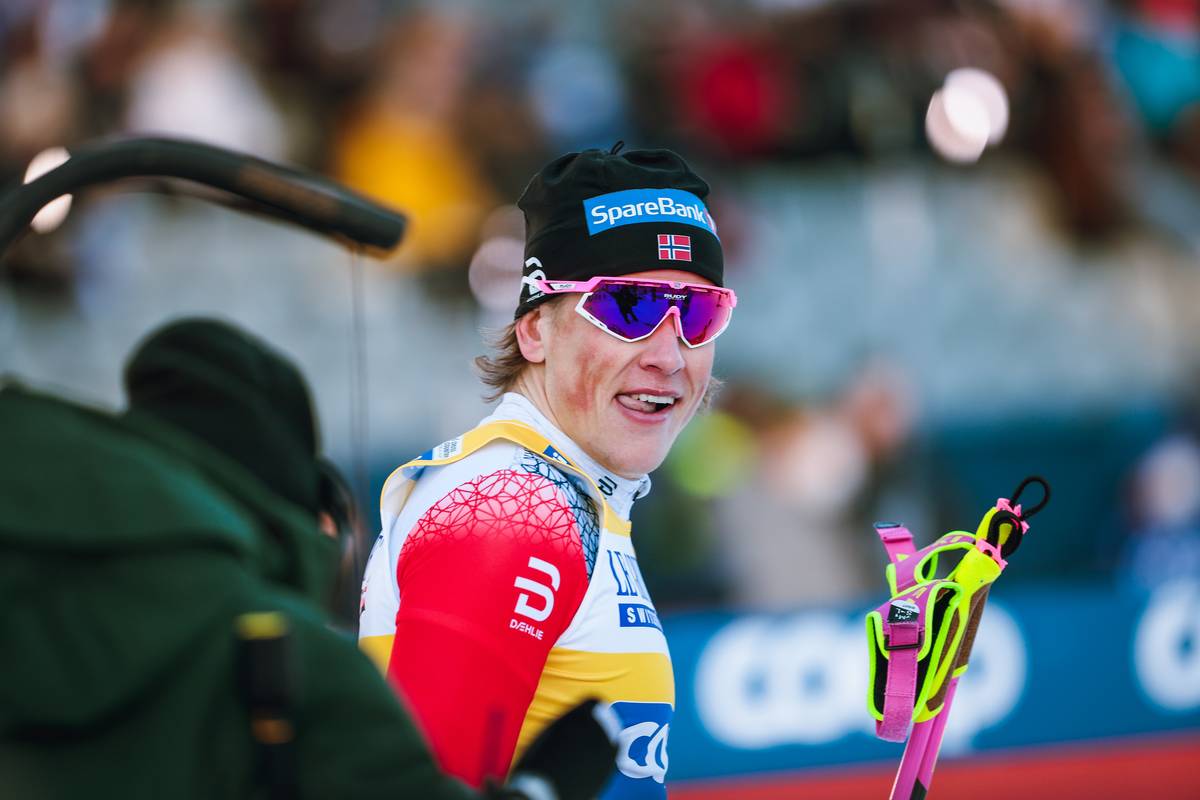
    The potential windfall of income to FIS by retaking control of the media rights would be substantial. “The estimate is that Infront makes somewhere between 40 and 50 million euros on their ski contracts,” said Paine. “If you could instead allocate that increased income to increase prize money for athletes, increase distributions for our members, I think those would all be really good things. We can also do things like give digital rights to athletes.” 

    Currently, an athlete is unable to post videos of themselves racing due to copyright infringement. Paine suggested that if FIS owned the distribution rights, an athlete such as Jessie Diggins would have been able to post footage of her Tour de Ski win. 

    “Today, athletes don’t have that opportunity,” Paine said, “but if we were to control those rights, we could do that to really help our athletes, not just to generate more revenue, but increase our appeal globally.”

    According to Hannah Kearney, an athlete representative on the FIS council, “This is something that would benefit athletes, so I believe they support the centralization.” However, Kearney wrote that “athletes from different countries definitely have unique perspectives on the issue which makes it hard to make a broad claim about how all athletes feel.” 

    The proceeds would also fund the improvement of viewers’ experience. “I think cross country is a great product,” said Eliasch, “but we can make the television production more attractive, so what you see on television is more exciting. That applies across the board. I mean, we’re talking about using drone technology, telemetrics packages, more cameras, stuff like Formula One does. We need a series like ‘Drive to Survive’ like F1.”

    Netflix’s Drive to Survive takes viewers inside the inner workings of F1 and has helped boost interest in the motorsport. The show has been touted by Eliasch as an example of what would be possible if FIS had centralized rights. Asked if he could envision a similar series on cross country skiing, he said, “Yeah, definitely.”

    While Eliasch has promoted the model of F1, Paine has looked to biathlon, which he said was “a perfect example—they’ve been wildly successful. The new biathlon leadership has done a great job with their television contracts, with sponsorship, and really grown revenues and distributions very nicely for athlete prize money.”

    “It is the model we should be looking at,” Paine said chuckling. “I’ll be really direct about that.”

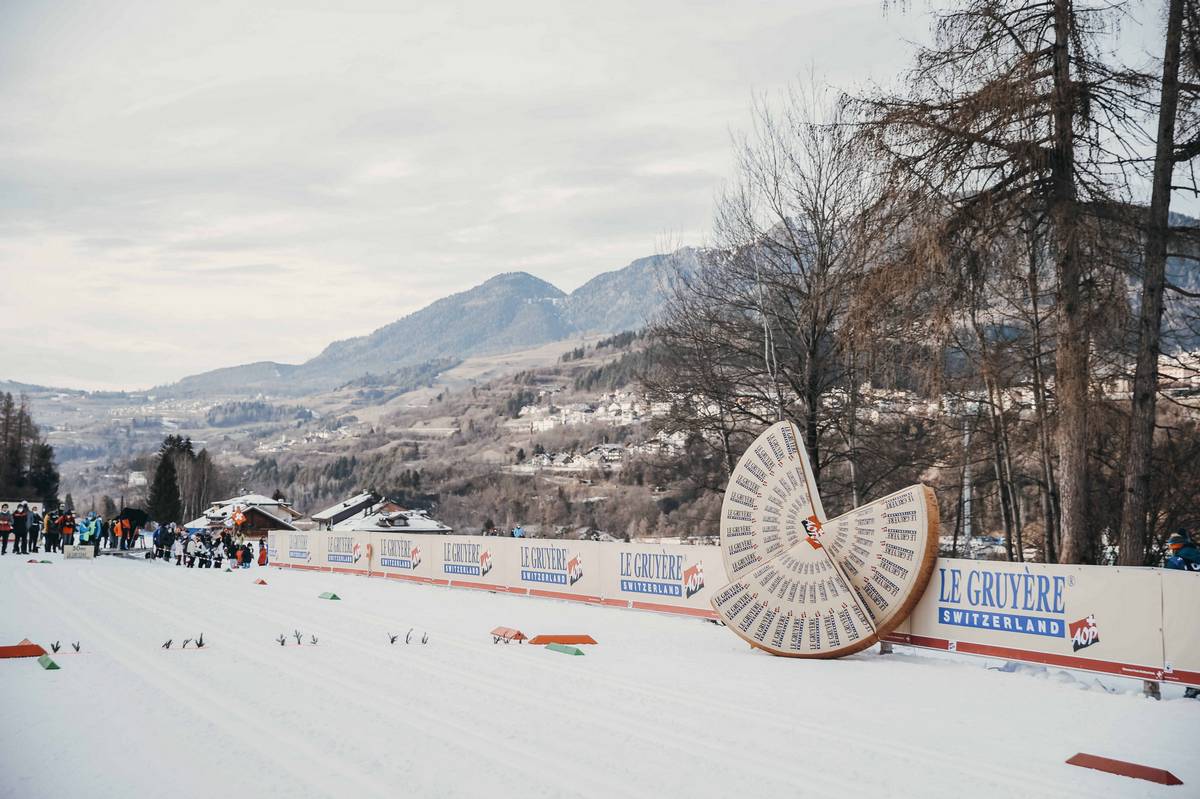
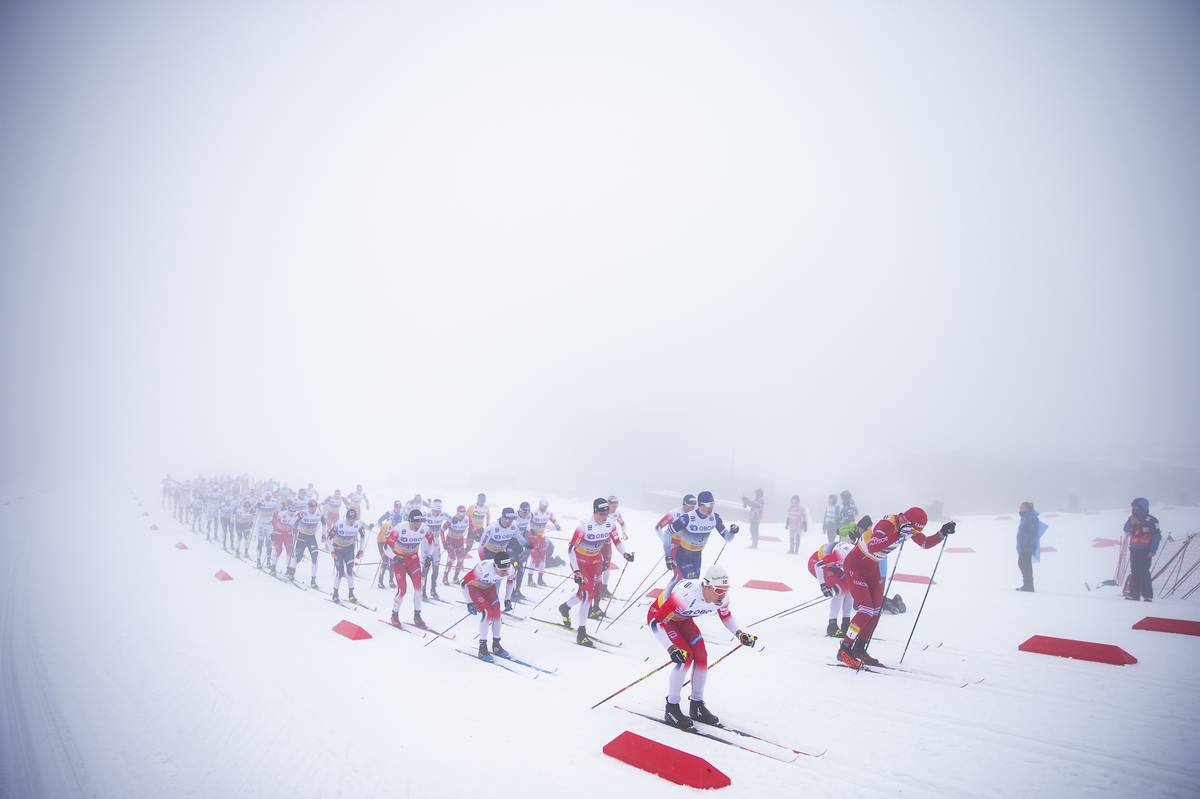
    The course in Val di Fiemme, ITA is prepped and ready for the men’s mass start during the 2021-22 FIS Tour de Ski. (Photo: NordicFocus)

    The basic concept is that FIS, by reinvesting the profits from the rights, would be able to improve both the media product and the competitive field by supporting coaches and athletes from underfunded nations. The more attractive media product and broader competition would draw in more viewers, and in turn, more profits. 

    In theory, the Concorde Agreement would raise all National Ski Associations, through a profit sharing initiative between FIS and the event hosts, and by distributing proceeds to all NSAs.

    Clearly, that is not the view of the big players in the ski world, who have viewed the rapid moves by Eliasch to remove Infront as a threat to their bottom line.  

    Paine explained that the largest TV revenue contracts go to Austria and Switzerland, with Germany and Norway likely close behind. “So I think their very simple calculus is,” Paine said, “they have the most downside—not what is best for the athletes and the sport.” 

    “If you’re Austria, you make €25 or €30 million a year from your TV contract,” said Paine. “That’s how you fund your athletes, and you don’t want to end up with €15 million. Now, Johan [Eliasch] would say that €25 [million] will, in fact, be €30, or €35 [million]—under a new contract [with] centralized rights. But he needs to make sure that people get comfortable with that and understand the math which seems compelling.”

    The FIS President recognized the hesitancy of large ski nations, saying, “For the dominant alpine nations, this is a big change. But it is essential if we want to move forward, because today we don’t have a digital media platform. We don’t have any content. The app and the website are [both] done by the same company—which control FIS’s media and broadcast rights.” 

    For FIS, the problem of Infront as a middleman goes beyond recapturing profits and platforms—the Swiss based media company has made deals that run counter to the interests of both FIS and the NSAs.

    “They’ve been very clever,” Eliasch said of Infront. “They have done the centralization of FIS’s media and broadcast rights—what FIS should have done twenty years ago.”

    “Historically,” said Eliasch of the existing business model, “the FIS World Cup rights have been sold outright, mostly at below fair market value with very onerous terms contributing to a loss of viewership.” 

    “A good example is Scandinavia,” continued Eliasch. “FIS World Cup rights were sold to a marketing agency who in turn sold them to a web based streaming platform for more than double what they paid.”

    Eliasch noted that while “this model proves exceptionally profitable for the marketing agency, the strategy behind the sale is problematic to our future. The streaming channel is a specialty channel with small viewership compared to mainstream broadcasters. Consequently, less people are able to access the product and viewership is down a staggering 40% in Norway and Sweden which is disastrous for our sport.” 

    Norway’s Therese Johaug stands atop her final podium at Holmenkollen, her home course in Oslo, in March 2022. (Photo: NordicFocus)

    The streaming service that Eliasch was referring to is NENT, now rebranded as Viaplay, whose purchase of the rights has taken skiing events off public TV, to various degrees, in Norway, Sweden, and Finland, and put them behind a paywall—an unpopular move that has suppressed viewership in a key market for cross country skiing. 

    In all, the sport has lost 27% of its total audience this season, with Norway losing close to half in just two years. With Scandinavia hemorrhaging viewers, the Viaplay deal could have hardly come at a worse time: the sport is poised to lose a further third of its audience in Russia should it remain banned. All things being equal, this possibility would see cross country skiing’s viewership crater to just a third of what it was a decade ago. 

    While the windfall to Infront from brokering the rights to Viaplay is purportedly worth more than €10 million a year and extends until the 2024/25 season, the sponsorship value lost in the past year—more than €22 million—suggests that the deal only made sense to the third party selling the rights.

    “Future deals will be based on previous audience metrics,” said Eliasch. “Any decline in viewership is a decline in value.”

    For Ski Associations there was little recourse to prevent the Viaplay deal, explained Eliasch. “The current agency rights agreements are so restrictive they prevent an NSA the ability to approve or reject distribution channels, which today is a ‘standard’ right of the IP rights holder.” 

    The FIS President felt that the Viaplay deal demonstrated what happens “if you do an agreement with a complete buyout.”

    By buyout, Eliasch was referring to the policy of selling the totality of the media rights, rather than, say, granting a “license for a live showing and then you [get] the rights back.”

    Eliasch felt a more typical approach would be a commission based contract that grants a “license for a live showing and then you [get] the rights back.”

    “That’s how it [normally] works,” said Eliasch, adding, “If you have a middleman involved, he gets a 15% commission. You get a minimum guarantee, you have controls over the distribution channels. That’s kind of how the business works today. An outright sale to an agent is not how the business is done.”

    When asked how Infront had gained so much influence over FIS, Eliasch replied:

    “I can’t…I can’t begin to explain that. I can only say these agreements make the Versailles Treaty look like a good treaty. But again,” added Eliasch, “we can only blame ourselves. And that is what we have to change.”

    “We must evolve,” he said. “It is essential if we want to move forward. We’re not in control of our own destiny.”

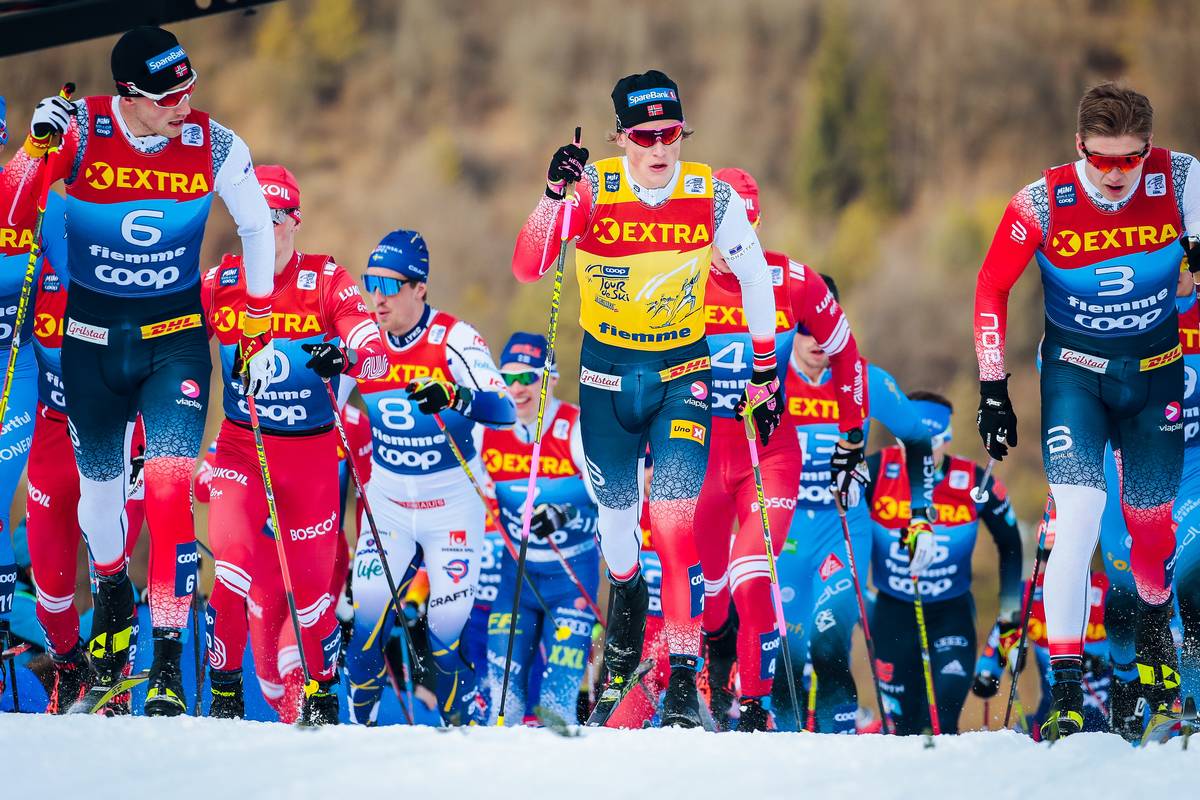
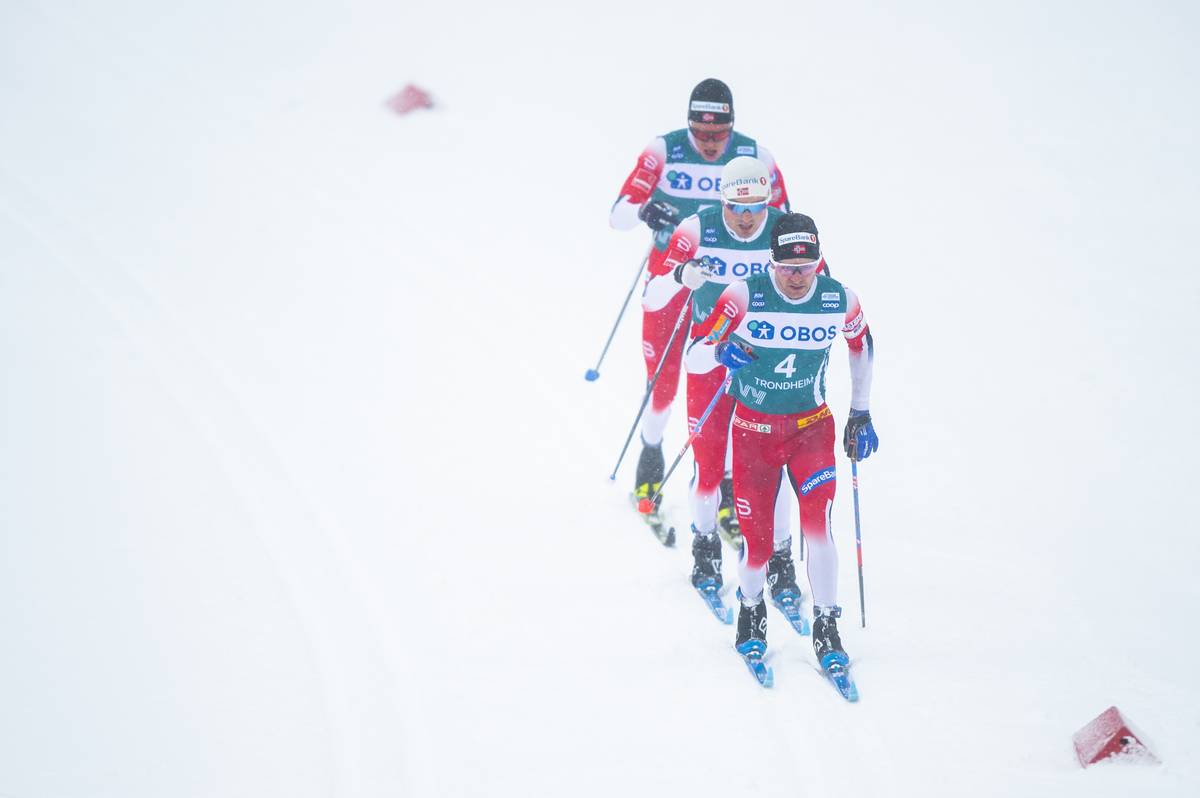
    Norway with the lead during a 15 k mass start classic in Val di Fiemme, ITA in January 2022. From left to right, Even Northug, tour leader Johannes Høsflot Klæbo, and Erik Valnes. (Photo: NordicFocus)

    Eliasch has been clear in his vision for the future of FIS, saying, “We are an FIS for all members, not just for the chosen few—we are for all disciplines, all over the world. I want to strengthen our commercial activities. I want to make sure we’re fit for purpose. I want us to expand our reach, and make us more attractive to young people.”

    Paine remained steadfast in his views despite running afoul of entrenched interests at FIS, saying, “I wouldn’t do anything differently in terms of the positions we advocate for, or what we think is best for the athletes in the sport. I’m very much a person that does what I say I’m going to do.” 

    The election loss was bittersweet for Paine, as he felt that much of his agenda set out in the last couple of years had been accomplished: “We were very focused on electing women to the council,” said Paine, “So we had put through the statute change that required three women [to be elected] and actually four women were elected, which I think is great for the organization.”

    He listed other goals attained at this spring’s Congress such as the culmination of a ten year effort to officially change the name of FIS to include Snowboard, as well as the (likely) integration of Para sports under the FIS umbrella at the end of June. 

    “On the alpine side, we doubled the number of World Cup races we have in the US, including a block in March, which is terrific. We were able to get through many of the things we’ve worked really hard on, that I think will have a really positive impact on athletes,” said Paine, adding, “So that’s exciting.”

    Paine’s presence on the council will be missed by many. “I sincerely appreciate Dexter’s sense of humor and his willingness to stand up for what he believes is right,” Kearney wrote. “Dexter was an energetic, outspoken, and thoughtful Council member. He advocated for the athletes and was a wonderful mentor to me.” 

    U.S. Ski & Snowboard President and CEO Sophie Goldschmidt wrote that “Dexter has been an incredible advocate for modernization and making the FIS more democratic throughout his time on the FIS council.” She added that his work to get smaller nations and women represented on the council “will help bring a global and more inclusive perspective to the FIS.”

    While the US continues to have a vote on the council through athlete representative Hannah Kearney, her role is somewhat different from that of Paine’s. Selected by the fourteen athlete representatives, she wrote that her role is to “represent the interest of the athletes, whereas elected council members balance the interests of all stakeholders across the FIS family.” 

    “I am really sad that we (the US) don’t have an elected voice,” Paine said. “Forget whether it’s me or someone else, I just think it is important to have a voice.” 

    “The good news is,” said Paine, “Johan continues to call a lot. So, I think we continue to have the ear of the presidency.”

    Goldschmidt noted that the US is still well represented in FIS committees and that the “[U.S. Ski & Snowboard] has some great relationships with other countries and members of FIS,” including, “new elects Deidra Dionne from Canada, Magdalena Kast of Argentina, and Fiona Stevens of New Zealand.”

    “While we’re disappointed that Dexter was not reelected,” wrote Goldschmidt, she pointed out that Paine still retains influence at FIS. After his electoral loss, he was voted in as an Ex Officio Honorary Member, a title that lacks voting rights but will, according Goldschmidt, allow Paine to “participate in council meetings and encourage U.S. Ski & Snowboard-backed changes.”

    “Hopefully,” Paine reflected on his eight year career on the FIS council, “it ultimately has been a real benefit to the athletes at FIS.”

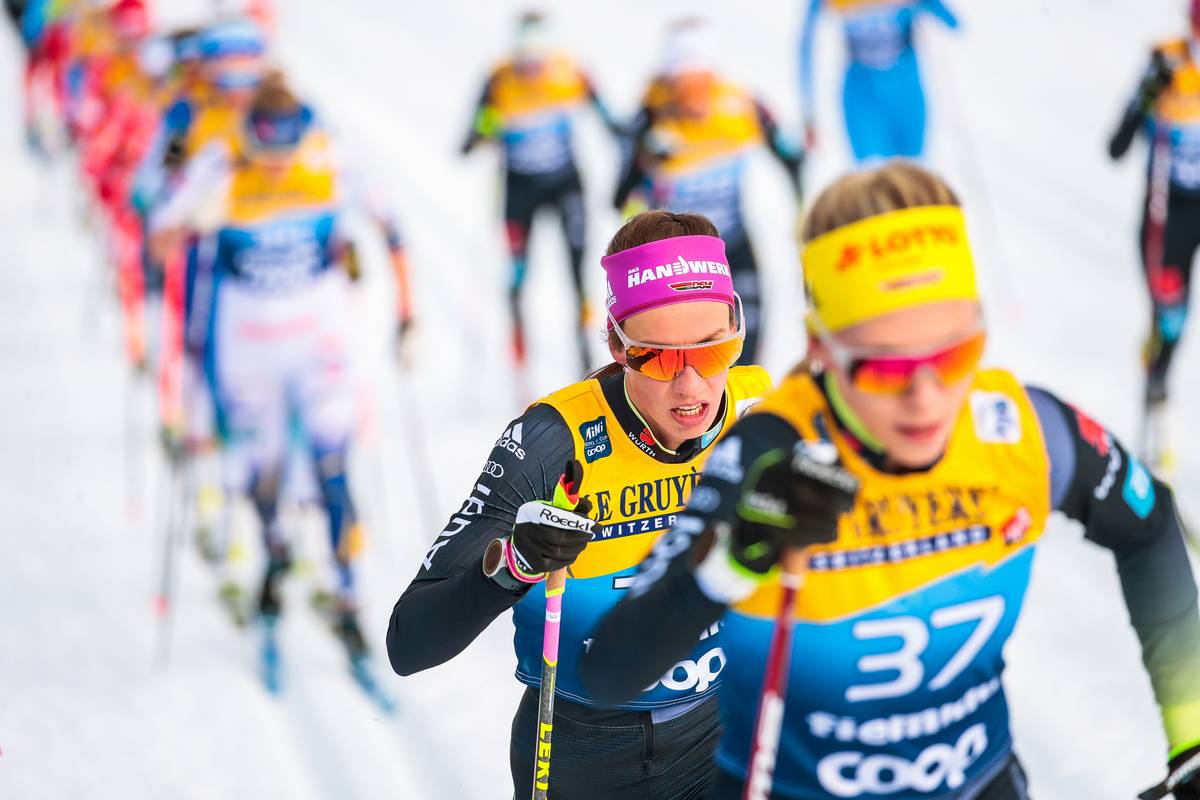
    Germany’s Sofie Krehl in course during a 10 k mass start classic in Val di Fiemme, ITA in January 2022. (Photo: NordicFocus)
  • Cross-Country Skiing Mulls a Long Term Future Without Russia (Part 3)

    Cross-Country Skiing Mulls a Long Term Future Without Russia (Part 3)

    Click here to read part 1 and part 2 of this series, which takes a look at international news surrounding the Russian athlete ban through the spring. For how these bans have impacted a broader cross-section of the sporting world and analysis of the complex questions surrounding whether Russian athletes should be able to compete, check out this recent Sports Illustrated article by Michael Rosenberg.

    Historically, athlete bans meant to pressure a government have not been short. South Africa was banned by the IOC over its racial apartheid policies for 27 years from 1964 until 1991. In 1992 the U.N. sanctioned Serbia and Montenegro over the shelling of Sarajevo and urged their athletes to be banned from international competition. The IOC took up the ban, but reversed course and allowed Serbian athletes to compete under a neutral flag at the 1992 Olympics. 

    Stepanova has pointed out this example on her Instagram page as a precedent that should be followed, though it should be pointed out that Serbia was absent at the 1994 Lillehammer Games. All told, the Serbian state was largely exiled from international sport from 1992 – 1995. 

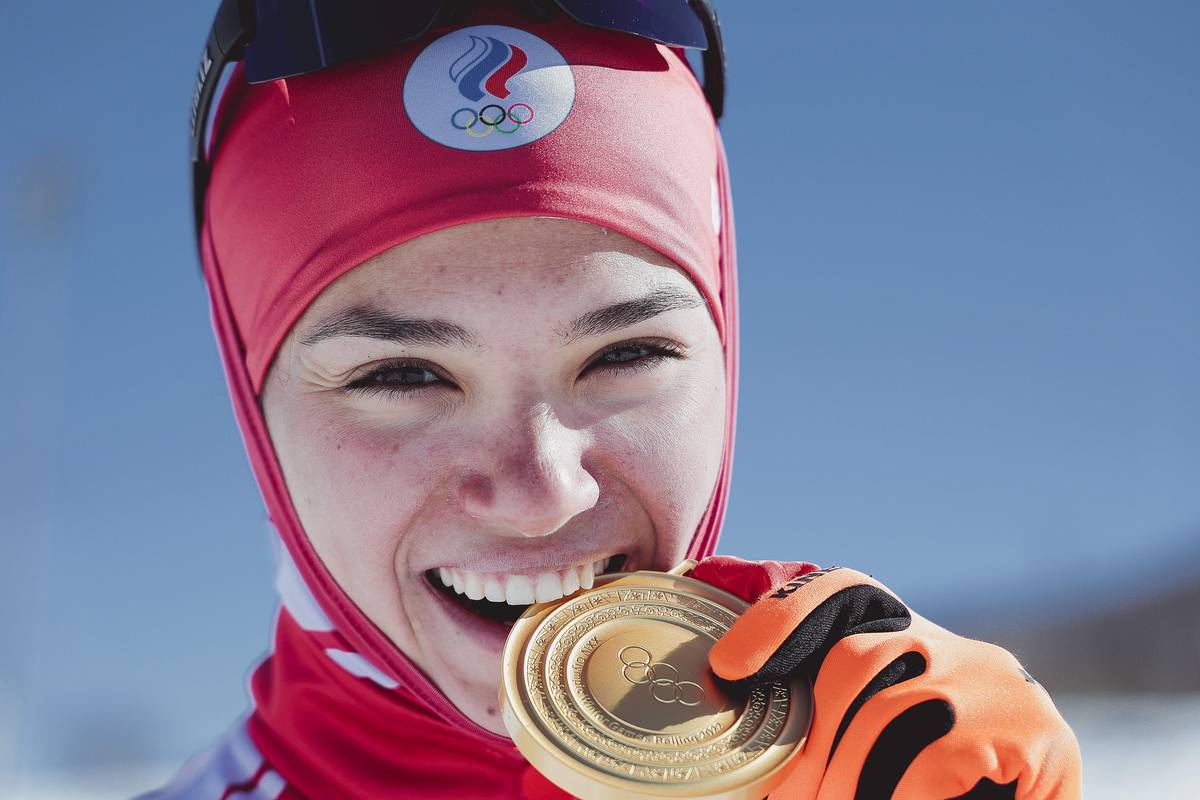
    Veronika Stepanova flexes with her Olympic relay gold medal during the 2022 Games in Zhangjiakou, CHN. (Photo: NordicFocus)

    Stepanova’s request to compete under a neutral flag rings a little hollow: the Russian ski team is already a little over two years into its four year WADA ban for state sponsored doping that requires it to compete under a neutral flag at championships. 

    A similar neutrality option was offered as a solution to the Russian national soccer team which was due to face Poland in a playoff match for qualification at the FIFA World Cup. Poland rejected the idea saying, “We are not interested in playing this game of appearances.” The Polish refusal to play Russia under any terms helped to force the IOC’s swift decision to recommend banning Russia from all sports. 

    “If doping wounds were quite successfully treated by time, then here the situation is different,” wrote an anonymous Russian blogger. “In fact, government policy has come into direct and insurmountable conflict with the ability to participate in the global sports movement. And now it seems that all this will last for years, if not decades.”

    ***

    Even if Russia were to return to the World Cup next season, it’s unclear that they would be able to operate at the same level as in the past, which has helped to fuel what US Ski Team Coach Matt Whitcomb refers to as a  “waxing arms race” on the World Cup circuit.

    According to Team Manager Elena Vyalbe, funding the Russian ski machine has been a challenge. She reported that the team’s budget in 2020 amounted to around 50 million rubles, roughly $600,000 at the time. According to Markus Cramer, who coached for Russia until this spring, the cost of supporting an athlete over the course of a year is more than $150,000—a figure that calls into question Vyalbe’s statement about the team’s budget.

    However, the Russian funding structure is murky, with much additional regional support to athletes provided by local extraction industries. Vyalbe complained in 2020 that sponsorships were scarce, saying, “No matter how well [Bolshunov] performed last year, we did not have a single new sponsor. God forbid that the current ones do not go away.” 

    In an April 5th interview with Championat, Vyalbe clarified the sources of the team’s funding: “We get most of the funds from the Ministry of Sports, the [Russian Olympic Committee] gives money for some things,” and that sponsorship amounted to “not even tears, but some kind of snot. We have a small budget.”

    The team’s primary sponsorship has come from Lukoil Oil Company since 1997. Whether or not Lukoil will be able to continue to fund Russian skiing remains to be seen. The company reported its highest annual profit in seven years at the same time that its shares plummeted on the London Stock Exchange after the invasion, losing 91% of their value before trading was halted March 3rd. 

    Though the ruble has recovered from its post invasion plummet, inflation in Russia is likely to reach at least 16% this year. That, coupled with uncertainty over the team’s competition status and the dismal prospects for the Russian economy, which is predicted by the IMF to contract 8.5% this year, has the potential to squeeze the team’s budget.

    Individual athletes also find themselves in a difficult position. Brav, the parent company of Swix and Toko, was quick to cancel sponsorship agreements with Russian  athletes, as did Kinetixx gloves. Expressen reported that Swedish ski company SkiGO was maintaining their partnership with Bolshunov, though SkiGO boss Christer Majbäck denied this, saying, “We don’t have any cooperation at all, it’s absolutely impossible. You don’t even have to ask me or SkiGO what we think about the war.”

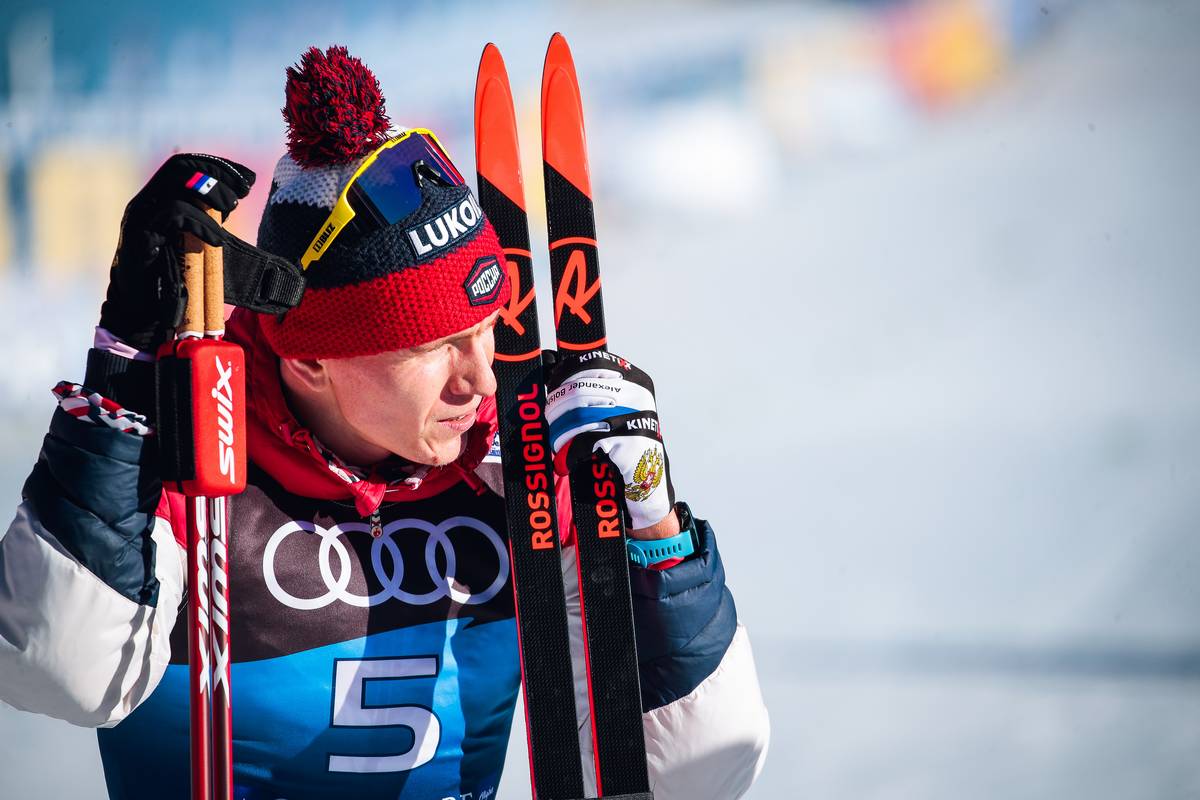
    Alexander Bolshunov observes trailside during the 2021-2022 Tour de Ski in Oberstdorf, Germany. (Photo: NordicFocus)

    Rossignol was standing by Bolshunov until an Instagram photo proved to be too much: not long after Russia was banned, Bolshunov visited a museum and posed for a photo in an old-timey Soviet race suit, captioning the photo “USSR 1980” —which happened to be the year that Soviet Union invaded Afghanistan, though it may also have been a  reference to the 1980 boycott of the Moscow Olympics. In any case, Rossignol demanded Bolshunov remove the photo, which he did, but by the following day Rossignol said it was no longer supporting Russian athletes and removed them from its website. 

    Bolshunov could keep his skis, Rossignol said, but no new skis would be sent to Russia. 

    Similarly Fischer removed Russian athletes from its site. Fischer Communications Director Franz Fottinger wrote in an email, “All our contracts with athletes are based on their participation in World Cup races. If racers are excluded from the World Cup, there is no more basis to fulfill the contract.” 

    ***

    The Russian athletes have not exactly lost their ski partnerships, rather they are suspended until their return to the international circuit. Nevertheless, this has provoked a strong reaction in Russia, with calls to revamp ski production in the country.

    The only significant ski production facility in Russia is the STC factory in Balabovo, around 100 km southwest of Moscow. It employs 350 workers making mostly recreational and kids skis. Whether the factory can be retooled to the demands of making race stock skis is questionable.

    Alexander Pechersky, the head of service for the Russian ski team said that “No matter how optimistic I am, I understand that the process is not fast and it can take at least 4 to 6 years to produce skis of an acceptable competitive level.”

    Pechersky continued, “Miracles do not happen, but I want to try … I still look at this idea with optimism, it is very interesting to deal with it. If things move forward, then the Russian sports market can get a model that, for relatively little money, will cover the needs of at least youth sports.”

    The Russian Olympic Committee takes gold in the men’s 4 x 10 k relay in Zhangjiakou. (Photo: NordicFocus)

    Despite the public separation between sponsors and Russian athletes, some critical items are still quietly being made available to the team, according to Viktor Golovin, the deputy head of ski service for the Russian national team. “I will not name the companies, Golovin said, “but the Russian team at the start of the summer season is provided with new rollers in full, despite all the restrictions.

    The conflict in Ukraine also threatens to continue to squeeze the international supply of skis. Europe’s largest ski factory is located in Mukachevo, Ukraine and has traditionally produced some 800,000 pairs of cross country skis annually, primarily for Fischer. After a fire destroyed the facility in October of 2020, the factory remained offline for all of 2021 and was rebuilt into a state of the art ski production center. Just as final certification for the factory arrived in early February, the war broke out. 

    The factory’s director, Andriy Ryabich, wrote on his Facebook page on February 26th that “The work of the Fisher-Mukachevo enterprise has been suspended and the majority of the people went to the army in different directions and will defend our city, region and all [of] Ukraine.” 

    With much of the ski factories workforce at war during the critical spring months of ski production, ski shortages could once again factor in next season.

    ***

    For their part, the Russian Ski Federation has ordered the team to prepare with the expectation that they will compete on the World Cup, though their draft schedule indicates the team is planning to stay in Russia through next spring. 

    Curiously, in the face of unprecedented challenges the national team has expanded–to a historically large 46 skier strong team, divided into five training groups. 

    The team was dealt a blow with the departure of Markus Cramer this spring. He will join the Italian national team, though he will continue to coach Ustiugov from afar. 

    Former Russian ski coach Markus Cramer joins the Italian National Team for the 2022-23 season. (Photo: Nat Herz / ADN)

    Cramer’s tenure was instrumental in revamping the team’s training methods. Of the five training groups, three are closely tied to his methodologies. Two groups are led by Cramer protégés Egor Sorin and Petr Sedov, and a third by Sorin’s former assistant—Andrey Nutrikhin.

    The group led by Yuri Borodavko—who subscribes to a more Soviet era training philosophy and who was once suspended for doping activities—will add big names such as Yulia Stupak and Ivan Yakimushkin to an already impressive roster that includes Bolshunov and Neprayeva. Unmoved by the political climate, Borodavko’s group will begin the training year on May 15th with a controversial camp in Russian occupied Crimea.

    Yulia Stupak (RUS) races a freestyle sprint qualifier in Lahti, FIN in February 2022. (Photo: NordicFocus)

    A Russian return to the World Cup is complicated by the unusually acidic edge the team has brought to the circuit, with acrimony spilling over into social media trolling and confrontations on the ski course.

    Russian sport media has reacted strongly to the FIS ban by portraying the decision as a Norwegian power move and athletes such as Johannes Høsflot Klæbo who have supported the ban have been subjected to vitriol from Russian officials. Even before the invasion, Russian media has, in the post Sochi era, covered skiing in an increasingly strident and conspiratorial manner, dominated by a narrative of sporting victimhood and Russophobia. 

    Should Russia remain banned next season, or even longer, their absence may help FIS enact one of the most challenging maneuvers they have undertaken—the transition to fluoro-free racing, which FIS has now committed to enforcing next season. 

    Chris Grover downplayed the idea that Russia’s absence will make the transition easier, writing, “It doesn’t matter so much which nations are present at a given World Cup weekend. We need a testing system that all of the athletes, coaches, technicians and fans can trust.” 

    Fears of an imperfect test for fluoros have been punctuated with not so subtle hints of suspicion aimed at the Russian team. Golovin addressed these concerns, saying, “The Finns told us directly that the Russians are closed, no one knows what they do with skis. I suggested that they come to our wax truck and have a look…Come and see, and there is no need to make unfounded accusations.” 

    Nevertheless, Russia’s absence may lessen unstated distrust on the circuit, and perhaps improve cooperation and tolerance as the ban is enforced.

    To that end, it may be a mistake for FIS to end the ban before next season regardless of whether or not the war in Ukraine ends in the interim. All of the justifications for the ban are likely to continue into next season: security threats to Russian athletes, the Kremlin’s use of skiers for pro-war propaganda, and the inability of Ukrainian skiers engaged in the country’s defense to prepare for next season. Finally, there has been no attempt at reconciliation by Russian skiing toward the wider ski world, with intransigent blaming of Norway for the present situation. In short, Russian skiing has rejected the rest of the ski world and has found itself in the cold. 

    Alexander Bolshunov takes Olympic gold in the men’s mass start 30 k, shortened from 50 k due to temperatures and extreme wind. (Photo: NordicFocus)

    As Ulvang pointed out, skiing cannot be separated from society. 

    “It’s very important that we split [distinctions] between the sanction against a nation and the sanction against the Putin regime,” Ulvang told FasterSkier reporter Nat Herz in March. “I hope I’m still friends with the athletes and that we’re able to split between a reaction against the regime. It’s nothing personal. In the big picture we are all repping our nations and our regimes. We need legitimacy from society to exist. We need public money [for] our training facilities and to make tracks and courses and we need support.” 

  • Cross-Country Skiing Mulls a Long Term Future Without Russia (Part 2)

    Cross-Country Skiing Mulls a Long Term Future Without Russia (Part 2)

    Click here to read part 1 of this series, which takes a look at international news surrounding the Russian athlete ban through the spring. For how these bans have impacted a broader cross-section of the sporting world and analysis of the complex questions surrounding whether Russian athletes should be able to compete, check out this recent Sports Illustrated article by Michael Rosenberg.


    Concerns over both fair play and propaganda have been tied to the necessity of the ban on Russian athletes. Yet ultimately the reason given by FIS for the ban was to “ensure the safety and security of all athletes”. This wording removed any political connotations, and was criticized for its weak stance that failed to condemn the war in Ukraine. 

    Natalia Nepryaeva slides for the heat win during a sprint stage of the 2021-2022 Tour de Ski in Oberstdorf, GER. (Photo: NordicFocus)

    Still, there were real concerns over the safety of the Russian athletes at European races. On March 1st, due to threats, the organizer of the World Junior Championships for jumping moved the Russian contingent out of their hotel in downtown Zakopane, Poland with the aid of 200 police officers. In Norway, Neprayeva reported being threatened in the team’s hotel in Oslo, and the Norwegian Ski Association was flooded with messages insinuating that if the Russian athletes started a race they would not finish.

    “[The] FIS followed the IOC decision and based [the ban] on security,” Ulvang said in a call in March with FasterSkier reporter Nat Herz. “This has also become a legal case because Russia has taken this to CAS [The Court of Arbitration for Sport].”

    While the FIS cited athlete security for the ban, the Federation took their cue from the IOC which recommended banning Russia due to the violation of the Olympic truce. This historical agreement, presented at the UN prior to the start of the Games, calls for the “cessation of hostilities” surrounding the Games, incorporating the Olympic values of sportsmanship and unity “with a view to protecting, as far as possible, the interests of the athletes and sport in general, and to harness the power of sport to promote peace, dialogue and reconciliation more broadly.” 

    Russia’s invasion of Ukraine on February 24th, 2022 violated the agreement, co-sponsored by the Russian Olympic Federation, to abide by the truce from February 4th through March 20th, surrounding both the Olympic and Paralympic Games in China.

    “We will see,” continued Ulvang, “whether this is within the overall statutes of sport or FIS actually, because our rules are not made for such special things. This is a very, very special circumstance. I have spoken to many lawyers who think this is an interesting question.”

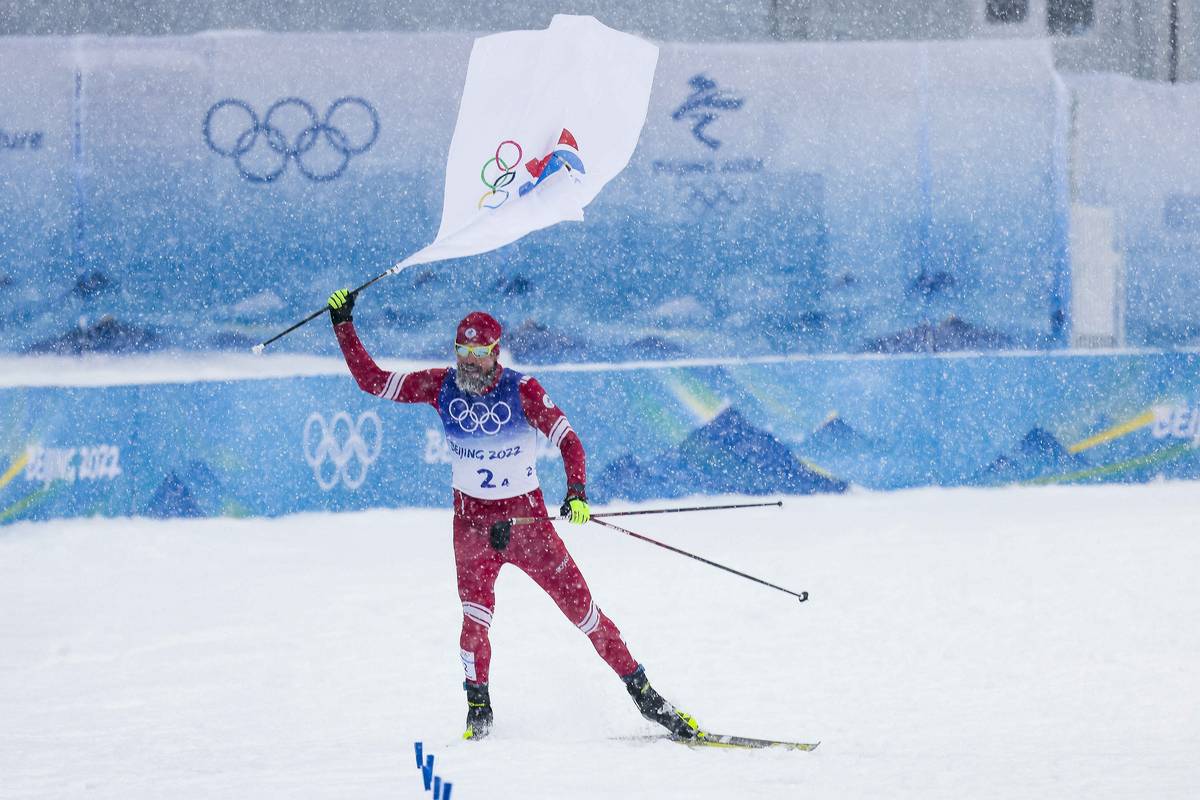
    Waving the flag for the Russian Olympic Committee, Sergey Ustiugov brings home a win in the men’s 4 x 10 k Olympic relay. (Photo: NordicFocus)

    Russia has pursued aggressive appeals of bans in a variety of sports, though with exception of Luge, largely without success. On May 21st, Vyalbe conceded that after consultations with lawyers, the Russian Ski Federation would not appeal the ban in CAS, saying, “We won’t win.”

    An anonymous Russian blogger examined the legal considerations of banning Russia, and found that while the IOC had operated outside of its normal boundaries to call for a blanket ban, it had done so out of the special circumstances. Previously, it was the UN that called for athletic exclusions, such as that of Serbia during the siege of Sarajevo.

    In this case, with Russia being a permanent member of the UN Security Council, any resolution could be unilaterally vetoed by the country, so in turn the burden fell to the 

    IOC to take an action that was theoretically beyond its scope—though roughly in keeping with previous cases.  

    For Russia, there is no easy recourse for dealing with sporting sanctions. Unlike economic ones, they do not inflict mutual pain and any victories achieved in the sport courts could easily be undermined by canceled visas or boycotts. 

    Yet a sustained ban on Russian athletes is likely to reshape skiing in a number of ways, beginning with the sport’s media position. Russia now comprises the largest audience for cross country skiing, averaging 1.5 million per World Cup race and accounting for at least a third of the sport’s total audience. 

    After Russia was banned this spring, Match!TV—a large Russian public broadcaster— pulled coverage of all international ski races and redirected its energies toward covering domestic competitions where it is likely to remain focused until Russian athletes return to the World Cup. 

    Compounding the difficulties of that loss will be the continued transfer of ski racing from public TV in Norway, Sweden, and Finland to streaming service Viaplay, which charges a hefty subscription fee—as much as €40/month in Finland. 

    Traditionally, public broadcasts in the Nordic countries accounted for half of skiing’s total audience. In 2020/21 that share fell to a third, in part because of Covid restrictions that kept their teams at home. Norway especially tuned out, with a 55% reduction in viewers, and numbers in Sweden, Finland, and Germany also declined. 

    Offsetting this loss has been Russia, whose star skiers have propelled coverage of the World Cup from subscription channels to public TV in their country, boosting domestic viewership in 2020/21 by 600%.

    The men’s 4 x 10 k Olympic relay podium: the Russian Olympic Committee (ROC) came out on top ahead of Norway in second and France in third. (Photo: NordicFocus)

    While last season’s viewership numbers have not yet been published by FIS, during Period 1 of the World Cup last season, VG found that the races shown on Viaplay averaged far fewer viewers than would be typical for an NRK broadcast. 

    Should broadcasting continue to sustain a loss of 40% of its audience in the Nordic countries while also losing the majority of Russian viewers, the sport may find itself in crisis, as sponsors balk at paying for low return advertising. Still, it may be too soon to write Viaplay off completely—the service recorded more than a million Swedish viewers tuning in to the World Cup weekend in Lillehammer. 

    As a whole, FIS cross country skiing has struggled to hold its audience, and losses in some regions have been more than offset by the recent tide of Russian viewers.

    While Russian viewership is huge, most sponsors of the FIS World Cup are not particularly oriented toward Russia. Coop—the title sponsor of the Cross Country World Cup—is a Norwegian grocery chain. Coop early on sided with the Norwegian Ski Association in calling for the exclusion of Russian skiers. Many other sponsors have no business in Russia, and some, like Audi, have halted operations there. 

    Despite the €29 million that Russian viewership is estimated to be worth to sponsors, the audience may hold little allure, perhaps because of the average Russian’s low purchasing power. In 2021 the average Russian made around 40,000 rubles annually, or about $6,400. Now, with many western businesses pulling out of Russia, there is even less value placed on reaching Russian fans. 

    The women’s overall podium of the 2021-2022 Tour de Ski: Natalia Nepryaeva (RUS) was the overall champion ahead of Ebba Andersson (SWE) in second and Heidi Weng (NOR) in third. (Photo: NordicFocus)

    For sponsors, the Russian exclusion may ultimately be beneficial. Germany, and Central Europe in general, are a core market for skiing—a market which has been drying up in an era of poor performances by the region’s skiers. 

    With the German women winning gold at the Olympics and the retirement of the dominant force in distance racing, Norway’s Therese Johaug, the opportunities for success of sidelined countries could become plentiful on the women’s side with the additional absence of Russia.

    On the men’s side of skiing, though Norway remains poised to dominate, a potential lack of a Russian team would create significant podium opportunities for up-and-coming American, Canadian, French, German, and Czech athletes. In recent seasons the rivalry between Norway and Russia has consumed almost three quarters of the World Cup podiums. The long term absence of Russia could allow the podium of men’s skiing to once again take on a broader flavor. 

    Chris Grover, U.S. Ski & Snowboard Cross Country Program Director, clarified that a continued ban on Russian athletes wouldn’t change the quota system, writing, “We’ll have the same number of athletes starting each race. Obviously, Russia has a lot of the top performers, so there will be more opportunities for many other nations to secure podiums, gather World Cup prize money and points, and improve Red Group standing.”

    Julia Kern leads the way in the first leg of the 4 x 5 k mixed relay in Falun, SWE in Mar. 2022. (Photo: NordicFocus)

    All told, the changes that skiing will endure if Russia remains banned through next season may not be as dire as Russian sporting officials have suggested. 

    “The tired rhetoric that world sport will not be able to fully develop without Russia does not seem to inspire the speakers themselves anymore,” wrote the anonymous blogger. “It is no coincidence that you can already hear talk about alternative tournaments, leagues, and other ways of self-reliant development.” 

    The alternative for Russian skiing is to try to create its own circuit among friendly nations. To date, Russian skiing has only managed to solidify a sporting partnership with Belarus, via a cooperative agreement signed in May.

    Stay tuned for Part 3, which considers historic athlete bans, and barriers the Russian program face to keep their program operating in the interim.

  • Cross-Country Skiing Mulls a Long Term Future Without Russia (Part 1)

    Cross-Country Skiing Mulls a Long Term Future Without Russia (Part 1)

    Alexander Bolshunov takes fifth in his final World Cup race of the 2021/2022 season, a 15 k classic in Lahti, FIN. (Photo: NordicFocus)

    With Russian athletes banned from all FIS competitions, and no end in sight for the war in Ukraine, there is a growing belief that Russian skiers are unlikely to rejoin the World Cup next season. 

    Some commentators have gone further, proclaiming that we have seen the last of Bolshunov, Neprayeva, and the rest of the Russian team on the international stage. The pessimism is rooted in the history of similar bans—which tend to be long lived—and the uncertainty over what circumstances would allow for the Russians to rejoin. 

    Will the ban end when Ukrainian athletes can return fully to competition? That may not be possible until long after the end of the conflict. Perhaps a negotiated peace settlement? That possibility could still create discontent with athletes such as Bolshunov being used to fuel propaganda at home. Does the ban require the Putin regime to end? That could be a distant future. 

    “I expect that this situation will last as long as the conflict is unsolved,” said Vegard  Ulvang, the outgoing chairman of the FIS Cross Country Committee, “but that’s of course up to the FIS Council or IOC.” 

    Ulvang was outspoken in calling for the Russian exclusion from the Norwegian hosted World Cup events this spring. Ulvang said in a call, “We have a fairness rule in FIS that there should be equal opportunities. When one nation cannot compete because they have to go home to defend their country, and the attacking country is racing, that’s not nice.”

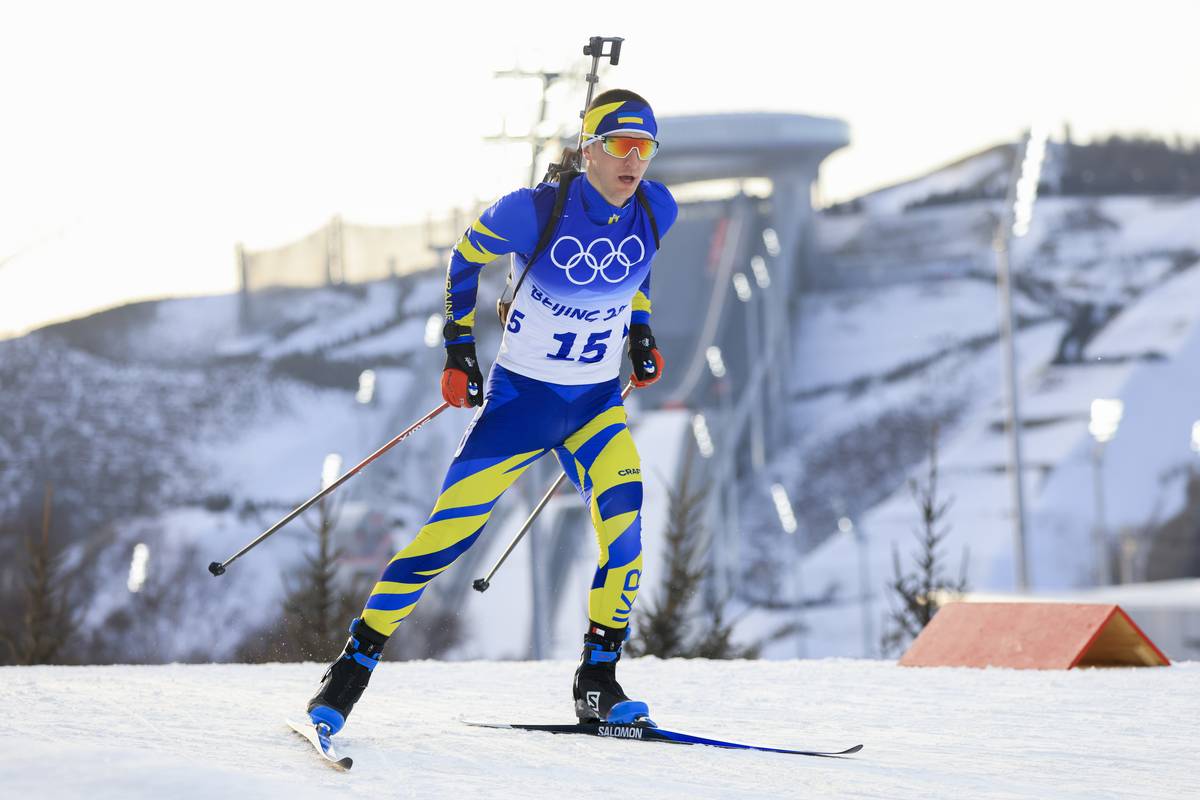
    Ukrainian biathlete Dmytro Pidruchnyi competes in an Olympic sprint during the 2022 Games, shortly before being called into military service to protect his country amidst Russian invasion. (Photo: NordicFocus)

    Ulvang’s point is underscored by the Ukrainian athletes now fighting on the front lines, with many called up just days after returning from the Beijing Olympics. Among the Olympians taking up arms was Dmytro Pidruchnyi, a biathlete who has won gold in the World Championships. The danger faced by the athletes defending their country was made clear early on in the conflict with the tragic loss of nineteen year old biathlete Yevhen Malyshev, who was killed defending Kharkiv on February 26th. 

    Another explanation for the ban was that it would help send a message to everyday Russians and deprive the state of a propaganda tool. 

    The charge that athletes were being used for propaganda purposes was confirmed during Russian President Vladimir Putin’s March 16th pro-war rally in Moscow. The event, titled “For a World Without Nazism” was MC’d by longtime biathlon TV commentator Dmitry Guberniev. Stars of the Beijing Olympics—including Alexander Bolshunov—were trotted out in front of the (reportedly) 100,000 strong audience in the Luzhniki stadium. 

    Questions remain about whether the athletes attended of their own accord, and there has been speculation about whether Bolshunov’s decision not to wear a letter Z pin on the stage—a pro-war symbol—reflected an ambivalent attitude to the conflict now raging near his home. 

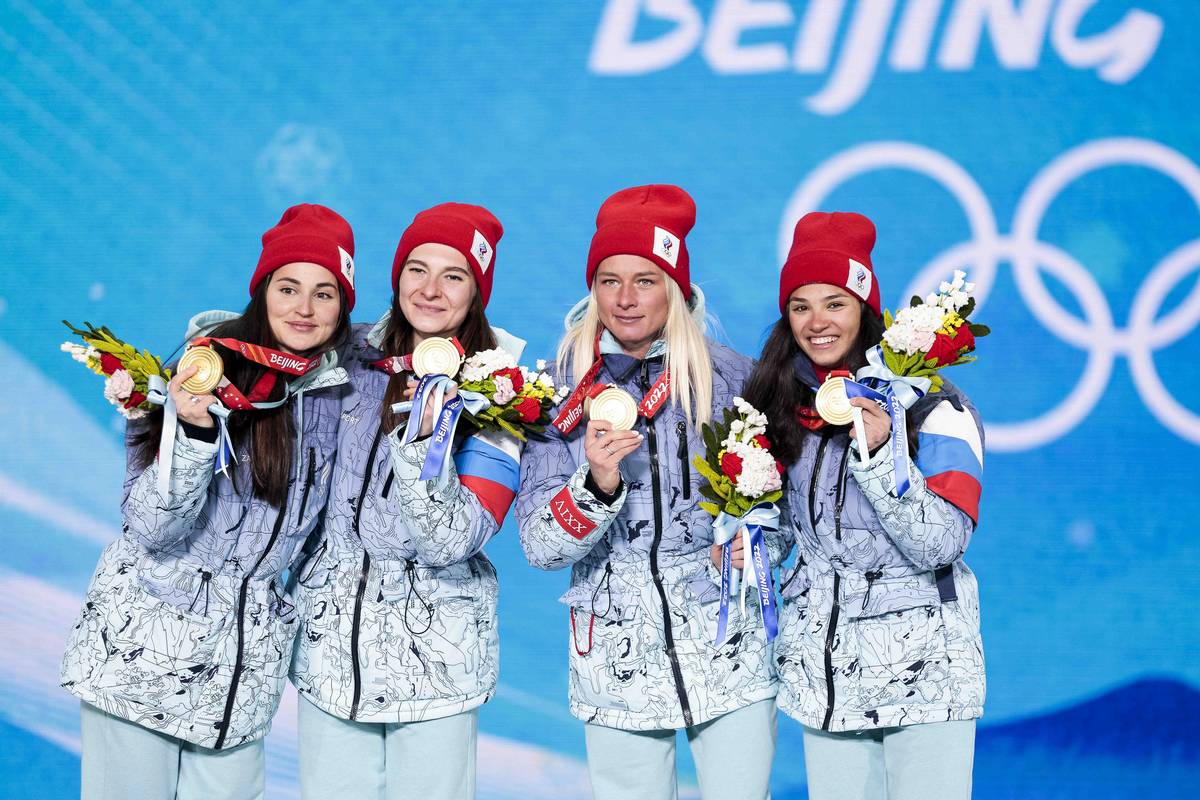
    The women representing the Russian Olympic Committee strike gold in the 4 x 5 k relay. From left to right, Yulia Stupak, Natalia Nepryaeva, Tatiana Sorina, and Veronika Stepanova. (Photo: NordicFocus)

    On April 26th, a host of Olympic heroes were called to receive state awards by Vladimir Putin in a ceremony that required the athletes to quarantine prior to the visit. Putin congratulated the skiers, saying “First of all, I would like to note the long-awaited victories in the relay race…We have not had a simultaneous victory of both the women’s and men’s teams for exactly half a century. This is a big result.”

    A few notable Russian stars missed the Kremlin occasion: Bolshunov for dental surgery, Neprayeva because she arrived to quarantine sick, and Ustiugov because his wife had recently given birth. 

    Bolshunov’s absence at the event stirred further speculation that he had intentionally scheduled the surgery to avoid the ceremony, and with it the possibility of a personal ban set against him by FIS, much as FINA – the International Swimming Federation – did by banning Yevgeny Rylov for nine months after he stood next to Bolshunov at the March 16th rally.

    Elena Vyalbe, who heads the Russian Ski Federation, manages the national team, and sits on the FIS council, dismissed this speculation, saying, “Who wrote that Alexander [Bolshunov] refused? I already spoke about this…He was scheduled for surgery on the 24th [of April].”

    However, during the Olympics Bolshunov made it clear he dreaded the idea of the quarantine required to meet Putin, saying, “If they put me in jail forcibly, I’ll run away in two hours. I can’t just take it and throw 10-14 days out of my life. It’s unrealistic.”

    During the Kremlin ceremony, Putin singled out the missing Bolshunov for special praise: “I note that Alexander Bolshunov has collected a solid collection of awards in Beijing,” Putin said. “Everyone knows this well. He has three gold, silver and bronze medals. And the absolutely well-deserved symbolic title of king of skis.”

    Alexander Bolshunov displays four of the five Olympic medals he collected in Beijing, bringing his career total to nine medals earned over two Olympic Games. (Photo: NordicFocus)

    The political significance of the event, which was delayed due to the war in Ukraine, was not lost on anyone. Veronika Stepanova, the upcoming ski star from Kamchatka seized the moment to make a splash.

    Addressing Putin and the Kremlin audience, Stepanova said, “I am the same age as the century—I was born in January, 2001. Before my very eyes, Russia has again become strong, proud, and successful. Not everyone in the world likes it. It is obvious. But we are on the right track. And we will definitely win, as we won at the Olympics.”

    The overt statement of support from Stepanova far exceeded expectations of decorum that called for perfunctory public speaking at most. That Stepanova would jeopardize a burgeoning ski career for a soundbite even shocked Russian commentators who speculated that the 21 year old was positioning herself for a transition to politics. For her part, Stepanova responded saying, “Negative consequences for my international career? They don’t scare [me].”

    Far from distancing herself from the comments, Stepanova has brashly doubled down, saying, “Was I nervous when I spoke at the meeting with Putin? You have to believe in what you say. The presence of the president does not confuse or frighten, on the contrary, it energizes. You feel tremendous confidence next to him, you feel a special energy.”

    Stepanova’s words have reverberated as she has gained a following in the west: outgoing and fluent in English, as well as adept at social media, many fans as well as fellow competitors felt they could relate easily to her. 

    Helene Marie Fossesholm of Norway was one such skier that enjoyed a friendly rapport with Stepanova off the ski trails. In the wake of her Kremlin speech, Fossesholm told NRK she was uncertain of how the friendship would continue, saying, “I can not answer that until I have experienced it. But it is clear that it will not be forgotten, at all.”

    Flooded with foreign media requests to explain herself, Stepanova responded via her Instagram page, writing “I have an answer to [Western journalists]: Did you expect anything else from me? Just because I smile, speak a little English and am almost always ready for some nonsense, does that make me ‘another type of Russian?’ The peak of naivety!”

    21-year-old Veronika Stepanova anchored the Russian gold medal winning women’s 4 x 5 k Olympic relay team during the 2022 Beijing Winter Games. (Photo: NordicFocus)

    Vyalbe has been among Stepanova’s detractors this spring, criticizing her by saying that she may be suffering from “star disease” and that “now she is not an athlete, but a patriotic blogger.” For the head of Russian skiing, Stepanova has become irksome. “My senior leaders ask me questions about her,” Vyalbe told Championat, “and I feel ashamed and unpleasant.”

    For her part, Vyalbe faced pressure in her bid to remain on the FIS council, after the Ski Federations of Poland, Finland, and Sweden moved to bar her from running for reelection at the FIS Congress on May 26th. FIS, however, allowed Vyalbe’s candidacy.

    In allowing Vyalbe to run, FIS may have looked at the difficulties endured by the International Luge Federation (FIL). In early March FIL had voted to ban Russia in much the same manner as FIS, though Luge went a step further—voting in favor of expelling elected officials from Russia. 

    In April, Russia won their appeal in the FIL’s own Court of Arbitration, and saw the ban removed on the grounds that they were—according to the Russian Luge Federation—”dictated solely by political motives and had no legal grounds for adoption”.

    For FIS, the Luge ruling was likely a reminder that barring Vyalbe from running could run afoul of their own laws against politically motivated rulings. 

    Apart from from the symbolism of being Russia’s representative to FIS, Vyalbe had escalated tensions in the ski world by laying the blame for the ban squarely on the shoulders of Norway’s FIS representatives—Erik Røste, the head of the Norwegian Ski Federation and FIS councilor, and Vegard Ulvang, the outgoing chairman of the FIS cross country skiing committee. 

    In response, Røste said, “Norway will not vote for Russia because of the terrible things happening in Ukraine.”

    The Vyalbe election saga has proven to be a tender subject for Russian commentators. When Swedish skier Markus Grate commented that “There is no possibility that Vyalbe will remain on the council,” biathlon TV commentator Guberniev declared that if Grate was suggesting that Vyalbe be excluded on the basis of her nationality, then “he is a Nazi, these are the words of a Nazi.”

    Marcus Grate (SWE) races a freestyle sprint qualifier in in February 2022 in Lahti. (Photo: NordicFocus)

    In any case, Vyalbe lost the election on May 26th at the FIS Congress—finishing last. “In this situation, it was expected,” Vyalbe said. “There was a letter from the Ukrainian Federation, which says that everything should be politicized.” 

    With Vyalbe out of the FIS council, Russian skiing will likely recede further into seclusion. 

    Stay tuned for parts 2 and 3 of this series, which will be released over the next week. 

  • With eroding control, FIS bans Russia and Belarus in belated reaction to threatened protest-cancellation of World Cup events in Norway and Sweden

    With eroding control, FIS bans Russia and Belarus in belated reaction to threatened protest-cancellation of World Cup events in Norway and Sweden

    Today the International Ski Federation (FIS) banned all Russian and Belarusian athletes and officials from taking part in any remaining FIS competitions. The press release stated, “The FIS Council decided unanimously in line with the IOC recommendation, that with immediate effect, no Russian or Belarusian athlete shall participate in any FIS competition at any level through the end of the 2021-2022 season.”

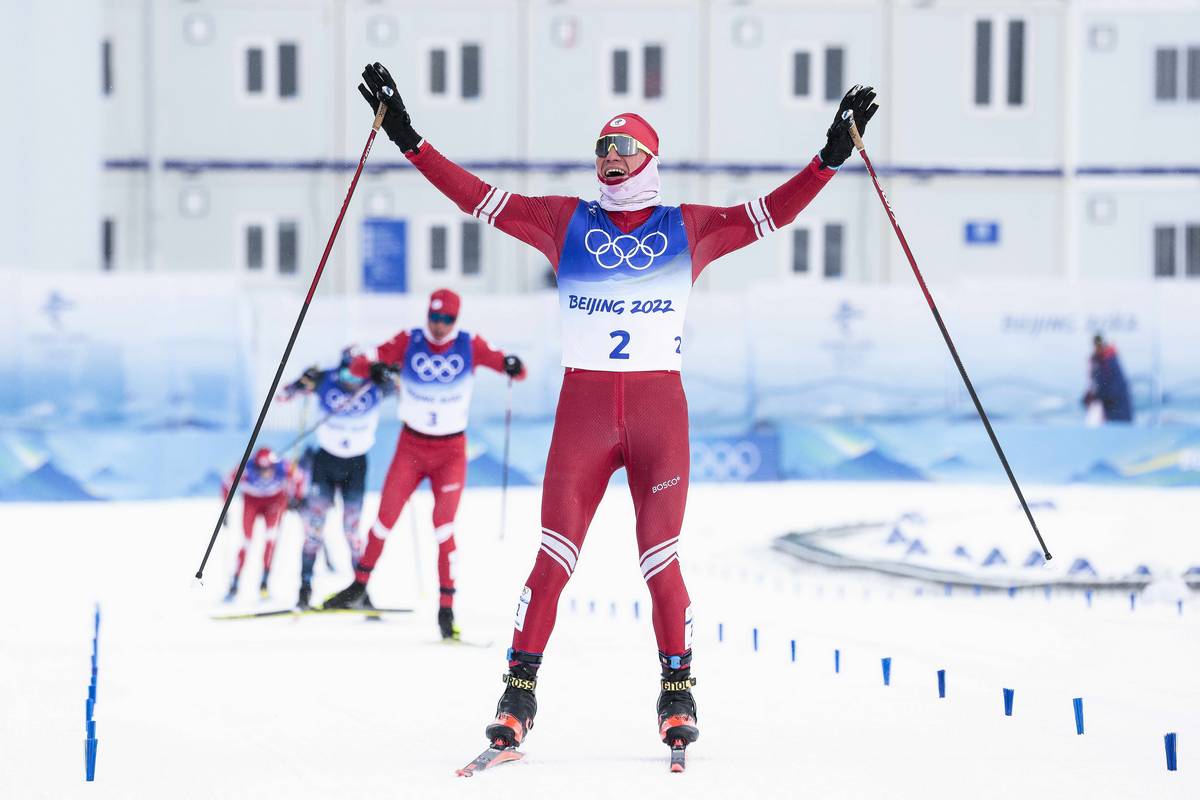
    The Russian team celebrates a dominant performance at the men’s 4 x 10 k relay during the 2022 Olympic Winter Games. (Photo: NordicFocus)

    The belated decision came after a power struggle between the Norwegian Ski Association and FIS, roiling the ski world and casting doubt upon the remainder of the World Cup season. 

    On Saturday, February 26th the board of the Norwegian Ski Association decided in a special meeting to uninvite Russian and Belarusian athletes from its upcoming World Cup races in Drammen and Holmenkollen. The position of the Ski Association was clear: “We do not want their participation.” 

    However, the Norwegian Ski Association and the event organizers lacked the authority to bar athletes, and FIS stood by their position of allowing all athletes to compete, telling NRK “The FIS board has been clear in its approach to Russian athletes in all FIS competitions… national federations and local organizers should not exclude athletes on the grounds of gender, race, nationality or sexual orientation.”

    On Monday, February 28 the Russian cross country ski team arrived in Oslo despite their lack of welcome and were met by Norwegian reporters at the Gardermoen airport. The athletes declined to speak, but Bolshunov’s coach, Yuri Borodavko did. “Well, it’s a terrible situation,” Borodavko told NRK. “War is always terrible. No one has ever wanted a war, not even us. Thank God there are sensible people with common sense, who do not give in to the panic that is now spreading throughout the world, and it is the leaders of FIS.”

    Russia’s Natalia Nepryaeva steps onto the podium following a second place finish in the 10 k classic in Lahti. (Photo: NordicFocus)

    On Monday the Ski Associations for Norway, Sweden, and Finland wrote to FIS to ask for the exclusion of Russian athletes. Later in the day, the International Olympic Committee (IOC) revised their advice and requested the exclusion of Russian and Belarusian athletes.

    “[The Ski Associations] letter was somewhat surprising to us,” said FIS Secretary General Michel Vion.

    FIS, seemingly unable to move in tandem with events, made no response, and Vegard Ulvang pushed the Norwegian Ski Association to carry through with the refusal to host Russian athletes, saying, “It is a decision that FIS should have made. When they do not take it, it is we [Norway], who own the event, who must take it. If FIS disagrees with the decision, they can take the World Cup from us, it is a risk we should take. Then we will also force FIS to take active action.”

    With no word from FIS, the Norwegian Ski Association hosted a series of crisis meetings on Monday night and early Tuesday morning, during which the organization decided to override FIS and ban all Russian and Belarussian athletes from competing, regardless of the consequences of the action. 

    “We had hoped that FIS would come to that decision on behalf of the entire ski sport,” said Norwegian Ski Association President Erik Røste, “But now the Ski Association can not wait any longer.”

    FIS Secretary General Vion dismissed the position of the Norwegians saying, “We received some emails, with inquiries that were not reality-oriented. The Norwegian Ski Association does not have the authority to cancel anything or to exclude athletes. They express a wish that there will be no Russian athletes, but it was just a wish.”

    The Russian ski team, training in Holmenkollen on Tuesday morning confirmed that they would leave Norway and not participate in the World Cup. “Let our rivals compete,” Borodavko told VG. “Let’s just say they are not our friends and not comrades.” 

    With the decision effectively already taken, FIS seized the moment at noon Central European time on Tuesday and banned the Russian and Belarusian athletes and officials. “I am very happy that FIS ended up in that position,” said Røste, adding, “It has taken too long, it could have come earlier.”

    Belarussian athlete Hanna Karaliova races the freestyle sprint qualifier last weekend in Lahti, FIN. (Photo: NordicFocus)

    The FIS decision narrowly averted the likely cancellation of the remaining World Cup races and the flight of sponsors. 

    Geirr Kihle, the event organizer of the Drammen city sprints this Thursday had urged fans to come to the event in the blue and yellow of the Ukrainian colors. He said he hoped the public’s reception to the Russian athletes would be, “to put it a little simply, sour.”

    On Tuesday morning, Drammen said they would withdraw from hosting the race if the Russian athletes were not banned. 

    Pressure on FIS also came from Coop—the title sponsor of the World Cup. “We have given FIS clear guidelines for what we believe,” said Takle Friis, the Director of Communications for Coop to VG. “They must respond immediately. In sympathy and solidarity with Ukraine, we can not accept that the Russian team will go to the World Cup.”

    Coop will adopt the Ukrainian colors for their logo on race bibs, and are working to change trailside billboards at Holmenkollen to promote donations to the Red Cross. 

    Sponsorship deals for Russian athletes also began to evaporate. Brav, the parent company of Swix and Toko announced on Monday that effective immediately, it will end all business in Russia and sever ties with Russian athletes. 

    The conflict between the sporting associations and FIS is yet another note in a habit of day-too-late decision making by the governing body of world skiing. Following the Russian invasion of Ukraine, the US ski team along with Norway, Sweden, and Finland all declared that they would not send teams to the scheduled World Cup Finals in Tyumen, Russia. After a day of urging FIS to act, the following day FIS canceled all remaining events in Russia. By then, it was already a moot point—no one was going. 

    Johannes Høsflot Klæbo enjoys a victory in Lahti’s freestyle sprint. (Photo: NordicFocus)

    Johannes Klæbo has been perhaps the most outspoken athlete on the issue. On Monday, he told VG “I think it is both cowardly and weak that FIS does not make the decision to deny Russia participation in Norway and in the World Cup. FIS should have done as Ski Classics [did] – and said no to Russia.”

    The Visma Ski Classics, a rival circuit to that of FIS World Cup, moved swiftly on Monday to remove Russian skiers from the Vasaloppet and the season long competition. 

    The FIS decision came too late for some quarters: Ӧstersund announced that there was no longer sufficient time to get a budget and sponsorship ready to host the World Cup Finals. 

    A day earlier, the municipality of Ӧstersund, which owns the ski trails, declared that they would bar the use of the ski trails for the event if FIS did not ban Russian athletes. 

    The World Cup will now likely end a week earlier than scheduled in Falun, Sweden on March 13th. 

    The late decision from FIS stoked grumbles that the federation may be overly beholden to Russian interests. As Drammen race organizer Geirr Kihle put it about sport federations in general, “Those who are called the ‘high lords’ have a hard time deciding. It is very common for Russians to sit on the boards. They are involved in deciding and will probably almost veto if they do not get what they want.”

    Norwegian newspaper Dagbladet also questioned the interests of new FIS President Johan Eliasch, the Swedish-British billionaire and former CEO of the ski company HEAD. Dagbladet challenged Eliasch’s record of supporting Russian tennis star, and HEAD athlete Maria Maria Sharapova, after tested positive in 2016 for banned substance Meldonium. Eliasch at the time said “Has WADA something against Russia? I believe they do.”

    The assertion that FIS is biased towards Russia was refuted by Secretary General Vion who replied to the NRK question, “Of course not! How can you say that?” He pointed out that Elena Valbe, the head of Russian skiing, is the only Russian to sit on the 19 member council. 

    Nevertheless, the situation is far from resolved. NRK ​​commentator Jan Petter Saltvedt rejected the phrasing that FIS used to ban the athletes which focused on athlete safety and in his words, lacked “the essential thing, namely the condemnation of Russia’s invasion.”

    “The whole reasoning is untrustworthy and deficient,” argued Saltvedt. “Many questions remain about what kind of power struggle this has been and what FIS leaders really think about this.”

    The cautious wording from FIS likely has much to do with an expected appeal by the Russians in the Court of Arbitration for Sport (CAS). 

    Russian biathlete Alexander Loginov competes in the men’s individual competition during the 2022 Beijing Olympic Winter Games. (Photo: NordicFocus)

    When the International Biathlon Union decided on Saturday to require Russian athletes to compete under a neutral flag, their team promptly withdrew from the World Cup, stating, “We are furious at these illegal actions of the IBU and will defend the rights of our athletes and the rights of the RBU as a member of the International Federation.”

    The case is expected to end up in CAS, and there is a likelihood that the same will occur in cross country skiing. 

    The Russian team will leave Norway on Wednesday, reported Borodavko to NRK. “When you start to mix politics into the picture,” Borodavko said, “there is something we can not accept, so therefore we go back.” With no flights between Europe and Russia, their journey home will likely route them through Turkey. 

    The manner in which FIS came to the decision will likely deal a blow to its credibility, managing in a single stroke to alienate both its Scandinavian and Russian partners. FIS has struggled to rise to the challenge that this season has presented, with previous misses being the COVID related cancellations of World Cup races in France and Slovenia, an impromptu shortening of the men’s Olympic 50 k, and a belated cancelation of the World Cup Finals in Russia. 

    “Things take time,” Klæbo said on Friday, adding, “But I certainly think we do not have to wait until the longest every single time.” 

    Jens Burman of Sweden may have summed it best to Aftenbladet on Tuesday morning before FIS’s announcement. “In principle, everyone has excluded them, but not FIS. You are almost a little ashamed.”

    Sweden’s Jens Burman races the 15 k skate during a December 2021 World Cup in Davos, SUI. (Photo: NordicFocus)
  • On the eve of the men’s 50 k, Russia may invade Ukraine near Bolshunov’s home

    On the eve of the men’s 50 k, Russia may invade Ukraine near Bolshunov’s home

    Alexander Bolshunov helps the ROC to a gold medal in the 4 x 10 k relay during the 2022 Olympic Winter Games. (Photo: NordicFocus)

    Alexander Bolshunov, the Russian skier who is the odds on favorite to win Saturday’s 50-kilometer freestyle marathon at the Beijing Olympics, may have more on his mind than a momentous ski race: A potential Russian invasion of Ukraine will likely pass near to his childhood home in the rural village of Podyvot’e, in Russia’s Bryansk region. 

    Bolshunov grew up in Podyvot’e where his father taught him to ski on a pair of green wooden Malyshokas on trails he built by hand in the fields and forests near their home. “I don’t remember my childhood without skis,” Bolshunov has said in an interview. 

    When Bolshunov was a kid he could travel by ski or otherwise into Ukraine, whose border is only a couple of kilometers from town. That changed in 2014 when Russian forces and Russian backed separatists invaded the Crimea and Donbas regions of Ukraine. Since 2018, Russian men between the ages of sixteen and sixty are banned from entering Ukraine. 

    Now, with tensions rising as the Russian military surrounds Ukraine, some analysts have pointed to a potential invasion route of Ukraine that would take Russian forces close to Bolshunov’s family home. 

    The Center for Strategic & International Studies has suggested that the northern invasion route may include “a 200-mile thrust through Troebortnoe, Russia…into Kiev.”

    A major arterial highway runs through Troebortnoe. On the Russian side of the border it is called the M3 and leads to Moscow. On the Ukrainian side it is the M2 and runs close to Kiev. A Russian invasion would likely need that highway to move forces quickly toward the Ukrainian capital. 

    The border crossing at Troebortnoe is only about 14 miles from Podyvot’e, separated by fields and a forest that stretches near to the doorstep of Bolshunov’s family home. “Just 500 meters from the house begins a large forest,” said Bolshunov, “Where there are those [loops] that I always run when I go there – 10 k, 15 k.”

    The Olympic gold medal relay team: Alexey Chervotkin, Alexander Bolshunov, Denis Spitsov, and Sergey Ustiugov (l-r) (Photo: NordicFocus)

    For Bolshunov, this landscape of birch and pine represents the natural idyllics of his youth. “I love to go to the forest picking mushrooms, [and] also fishing if I have enough time.” Bolshunov said in an interview with FIS. 

    “Childhood memories of the village—strawberries, for which we often went,” recounted Bolshunov. “Sometimes, 10 liters were collected. Another [were] blueberries—it took six hours to collect a bucket of 5-6 liters. Everything grew near our house.”

    For the older residents of Podyvot’e, the forest also carries somber memories: A quiet memorial remembers the 182 villagers that were massacred by the Nazis as they hid in the forest. 

    Whether conflict will arise again in the area remains to be seen. Should Russian President Vladimir Putin decide to invade this weekend, it would mark the second time he has done so in conjunction with the men’s Olympic 50 k race. 

    Alexander Bolshunov (ROC) celebrates a gold medal performance as his teammate, Sergey Ustiugov, races the final meters of the 4 x 10 k relay. (Photo: NordicFocus)

    In 2014, the night before the final cross country race at the Sochi Olympics—the men’s 50k—Putin held an all night meeting at the Kremlin with his security and defense leaders to discuss the annexation of Crimea. 

    “We finished about seven in the morning.” Putin told a Russian TV documentary as reported by the BBC. “When we were parting, I told all my colleagues, ‘We are forced to begin the work to bring Crimea back into Russia’.”

    Four hours later, the men’s 50 k race kicked off in Sochi and the Russian men notoriously swept the event. Putin would fly back in time for the closing ceremonies where the three skiers received their medals before a packed stadium. 

    The correlation between the Olympics and Russian military adventures is quite direct. At the Sochi Olympics, the Russian medal haul helped boost Putin’s public approval numbers to record highs, and in his all night war room meeting that February, Putin carefully considered secret polling that showed favor to the annexation issue. 

    In the Netflix documentary Icarus, former RUSADA head Grigory Rodchenkov who helped to orchestrate the 2014 Russian state sponsored doping program, said of the post Olympic invasion of Crimea, “I felt my personal guilt for such [an] event. [If] Russia had [won] less medals, Putin would not be [so] aggressive.”

    Alexander Bolshunov (ROC) celebrates victory in the 30 k skiathlon, the first event of the 2022 Olympic Winter Games. (Photo: NordicFocus)

    In terms of medal count, the Russian Olympic Committee (ROC) heads into the final weekend in second place. Their medal haul has been bolstered by the cross country ski team which has won a third of all ROC medals. Of those, four have involved Alexander Bolshunov, who at 25 years old has already become the winningest cross country skier in Russian history. He has won a medal in every Olympic race he has entered and is poised to deliver again in the men’s 50 k on Saturday. For his success, he has been nominated by the State Duma to carry the ROC flag at the closing ceremonies. 

    For Bolshunov’s father in Podyvot’e, the results of his son have meant more than any economic advantage that his career has provided, and Bolshunov Sr. still prepares his ski trails in the hope that his son might make an unscheduled return. “Neighbors think I’m crazy,” Bolshunov Sr. has said. “But my son has such results. This is worth living for. Money is not manna from heaven, I never needed it.” 

    Bolshunov Sr. has no plans to leave Podyvot’e. “You can’t kick me out of there with a stick,” Bolshunov’s father said in 2018. “As we lived, so we live. We don’t get into politics. Ukraine is nearby, but no one seems to be coming to us from there. Everything is fine.” 

    Through no fault of Bolshunov’s own, a possible gold medal in the Olympic 50k could help burgeon feelings of confident nationalism in Russia and put his hometown on the frontlines of what could be the largest European war this century. When it comes to the men’s Olympic 50k race, the stakes are often much greater than gold.

  • The Chinese Ski Team’s Path to Beijing (Part 3)

    The Chinese Ski Team’s Path to Beijing (Part 3)

    This is the final installment of a three-part series on the development of the Chinese ski program. Click here to read part 1 and part 2.

    Part 3: Olympic Hopes and Misgivings in Norway

    For the Chinese cross country ski team, the 2022 Beijing Olympics opened with a blaze when Dinigeer Yilamujiang was selected to co-light the Olympic flame. It was an enormous honor for the twenty year old cross country skier from Altai, China with Uyghur roots. Yet her ethnic background overshadowed the moment, and, like so many aspects of the Chinese cross country skiing project, the ceremony meshed sporting aspirations with political theater.

    China’s Dinigeer Yilamujiang (CHN) races the freestyle sprint qualifier during the 2022 Olympic Winter Games in Zhangjiakou. (Photo: NordicFocus)

    Dinigeer, known as Dini on the ski circuit, is a rising star on the Chinese ski team. She is one of the few of the team’s new generation that grew up with skiing, and her father had hopes of becoming a great skier himself, and later became a coach. 

    Dini’s father Mulaji Yilamujiang, never expected her to become a professional athlete. That began to change when at age twelve, Dinigeer competed in a regional race and a competitive chord was struck. “She wanted to win the race like a professional athlete and get on the podium,” Mulaji recounted to Chinese news outlet Xinhua.

    It was hardly surprising then that when Kristian Bjune Sveen took the job as coach of the Swix China team in 2017, he picked fifteen year old Dini. 

    Since then, her success has by any measure been extraordinary: At the 2020 and 2021 Junior World Championships, Dinigeer proved that she was among the best in her age group, finishing 5th and 6th respectively in the 5k distance. 

    Chinese cross country skier Dinigeer Yilamujiang (bib 17) races a December, 2020 team sprint in Dresden, Germany. (Photo: NordicFocus)

    Together with her teammate Bayani Jialin—who had no prior skiing experience before joining Sveen’s team—the two have skied together on the World Cup to top ten team sprint finishes and top thirty in individual sprints. 

    “Going from being an untrained person to being able to beat half the Norwegian national team and become a top 30 in a sport you [didn’t] know existed,” Sveen told NRK, “it is objectively completely insane!”

    Liu Rongshen is another twenty year old Chinese skier that has impressed early in the Games. Originally a runner from Yunnan, he was “one of the athletes that came to Meråker [in] March 2019,” wrote Tor-Arne Hetland to FasterSkier. Liu finished 38th in the men’s skiathlon, some 16 seconds ahead of Johannes Klæbo. “Pretty [impressive] that he never had been on skis before he came to Norway,” Hetland wrote, adding, “Maybe in the sprint China can have athletes in the semi-finals.”

    Hetland’s prediction nearly came true when Wang Qiang—China’s best sprinter and medal hope—qualified in 5th in the men’s sprint and appeared to have advanced out of his quarterfinal heat only to be ruled out due to obstructing another skier. 

    In biathlon, the women are led by Meng Fanqi—one of the best sharpshooters on the circuit—as well as Chu Yuanmeng and Zhang Yan. All three are top class on the range, and with a home snow advantage, and fast skis provided by Norway, a relay medal remains a tangible, if distant, prospect. 

    Although some juniors such as Dinigeer Yilamujiang spent the last few winters in Norway, much of the Chinese cross country team has been based in China since the start of the pandemic. 

    To compensate for the lack of international racing for their homebound skiers, Russian second tier racers were hired to come to China for extended periods and enliven national races and ski with Chinese athletes. 

    Wang Qiang (CHN) takes an early lead in the men’s team sprint semifinal during the 2022 Olympic Winter Games. (Photo: NordicFocus)

    To the Chinese skiers advantage was sole access to the Olympic courses in Zhangjiakou ahead of the Games, although their coach Bernhard Rønning dismissed this assertion to Dagbladet, saying that while they had trained and competed in the area “not so much in the Olympic tracks.”

    Still, the team was not without excellent training opportunities, with ready access to altitude, year round skiing in the Beishan tunnel, and “the best equipment,” according to Max Volkov, coach of the Chinese distance team.

    Volkov, the former assistant coach to Alexander Bolshunov, joined a talented coaching staff in China, including his compatriot and former Olympic champion Nikita Kriukov, who trained their sprint team. 

    Magnus Frodahl worked with the Nordic combined team, and former Norwegian World Champion Terje Langli ran the Chinese cross country teams wax service, and trained in two apprentices, Li Xin & Wang Yihan. 

    Rounding out the core foreign coaches for the cross country team were Ole-Marius Bach, Bernhard Rønning, and Kristian Bjune Sveen.


    Bjørndalen

    The highest profile coaches to sign on to the Chinese Olympic project were Ole Einar Bjørndalen and his wife, former Belorussian biathlete Darya Domracheva. The two joined in 2019. 

    After the pandemic interrupted their debut season with the team, Bjørndalen rejoined his squad in China during the summer of 2020.  

    There, even for a legendary biathlete, the work was anything but glamorous. That summer, Bjørndalen worked daily from six in the morning to eleven at night. Each time he entered China he had to undergo a 17 day quarantine. Always the athlete, Bjørndalen ran 20 k a day inside his hotel room, running the length of the room around one thousand times. 

    The biathlon team spent the 2020/21 season training in China inside of an intense bubble. “There is no question of anyone coming in,” Bjørndalen told NRK, “And if you are going out on an errand in Beijing, it is straight into the corona quarantine.”

    Chinese biathlete Ding Yuhuan (bib 18) takes aim during the women’s relay in Zhangjiakou. (Photo: NordicFocus)

    That winter, Chinese President Xi Jingping visited the team. “I think he liked biathlon,” Bjørndalen said in the article.

    According to NRK, Xi’s visit to the Biathlon camp underscored the expectations to deliver results. “We have set ourselves the goal of winning a medal in the relay,” Bjørndalen explained, adding, “It’s a pretty horrible goal, but anything is possible.”

    The work of the famous duo has been apparent on the IBU World Cup, which China returned to this winter. US Biathlete Clare Egan said, “They’ve really done an incredible job bringing the athletes up. It’s funny because Daria [Domracheva] has a very unique and beautiful, graceful ski style and now all of the Chinese women, half the time I think they’re Daria when they go by me, they all ski exactly like her.”

    The shooting prowess of the Chinese biathletes is exceptional according to Egan. “They’re incredible, incredible precision shooters. I have to imagine that their team hit percentages are at least as high, if not higher, than any of the other teams.”

    “The reason they’re not winning medals is because they’re not quite there with the ski speed,” Egan said, “Even though they’ve really improved a lot.”

    When Bjørndalen took the job he ensured his athletes would have competitive skis by signing a deal with the Norwegian biathlon team to wax their skis through to the Olympics. 

     Tobias Dahl Fenre, the head waxer for the Norwegian biathlon team, said of the wax deal, “We do not share the expertise. It will be in Norway. We employ Norwegian waxers in the Norwegian system.”  

    The deal, worth an undisclosed sum, allowed the Norwegian biathlon team to hire four more techs, bringing their service team size to fifteen. 

    Egan said the results of the wax partnership were clear on the IBU World Cup. “It’s cool to see them have a chance on skis because previously when they were waxing their own skis, they just didn’t have that background to be internationally competitive. Now sometimes they’re passing us on the downhill.” 

    Cheng Fangming (CHN), races the men’s relay during the 2022 Olympic Winter Games. (Photo: NordicFocus)

    While the work of Bjørndalen, Domracheva, and Sveen have impressed, for the foreign coaches working in China, the experience varied. 

    For Kristian Bjune Sveen, who took the job with Swix China when he was twenty five years old, the experience had been positive, if exhausting. “I work around the clock, every day, and have almost no privacy,” he told NRK. Nevertheless he said it was “an insanely exciting job. It is a coach’s dream to be able to design a plan that you want.”

    Sveen felt that he would not find another opportunity to influence a whole skiing culture in the way that he could in China, and fretted that the next job wouldn’t match the significance of his present work. “It’s almost like I’m not sure if I want to be a coach again after this,” Sveen said. “These are athletes I think can be the best in the world.”

    Others had more jaundiced views of coaching in China. When Anita Moen’s athlete’s were recalled abruptly in December 2019, the pandemic prevented her from rejoining her team until the following August. 

    “By then, five months had passed without me having been a coach for them,” Moen recounted. “That was when I noticed the change. The basic work we had done, and on which we made such great progress, was destroyed.”

    Moen’s athletes had returned to a Chinese sport system marked by authoritarian control. The result had a big effect on her. 

    “I knew these athletes very well,” she said. “I did not need to talk to them. I could see it in their eyes…The joy I had seen was gone.” Moen found the experience troubling, and decided to end her involvement.

    A non disclosure agreement had prevented her, (as well as many other coaches) from discussing the team’s work. Through these legal tools, much of what the Chinese team has been up to in the last year and half has remained opaque.


    Soul Searching

    As the Games crept closer, so did criticism of China’s human rights record. In Norway, the agreement to help the Chinese skiing programs became a contentious topic, with anxiety over whether the work of some one hundred coaches, techs, and physios was done in the service of expanding the sport, or rather a massive nation branding campaign to distract from China’s human rights abuses. 

    Had Norway, the home of the Nobel Prize and defender of human rights, sacrificed its moral center for a trade agreement masked by a feel-good ski coaching story? 

    That was the argument made by John Peder Egenæs, the head of Amnesty Norway, who suggested to NRK that China’s 2019 hiring of Bjørndalen—the most popular athlete in Norway—as the head coach of their biathlon team was part of a “big political game.” 

    Egenæs believed that the Olympics were being used to “launder a deplorable human rights record,” and feared that Bjørndalen would be used as an “ambassador for [Norway] to forget the negative sides of China.”

    China’s Jincai Shang (bib 20) leads the men’s semifinal of the classic team sprint in Zhangjiakou. (Photo: NordicFocus)

    Bjørndalen disagreed with the criticism, and told NRK, “I do not feel any political game in what I do. I focus on the skiers I have and do not have any dialogue about any propaganda with any leader.”

    Sports commentator Andreas Selliaas fretted about the whole agreement, saying to Aftenposten, “I do not think Norwegian sports really know what they are involved in. This is not about skiing, but about nation building and domestic politics in China.”

    Questions began to be raised about why the Sports Confederation was not consulted prior to the 2017 agreement. “The sport was thrown in like a meat bone to the Chinese,” was the assessment of Gudmund Skjeldal, a former Norwegian national team skier. 

    Tom Tvedt, the former President of the Norwegian Sports Confederation believed that the agreement had overstepped the historic divide between Sport and State, saying, “In this area, the independent, free sports movement was abused.”

    In an op-ed to Aftenposten, a group of PhD students at the Norwegian Sports Academy wrote, “Perhaps the point is not whether we, a tiny country, can influence the gigantic China. There is something called losing one’s soul. There is something more important than Olympic gold medals. It’s something more important than salmon, even.”

    The authors pointed to the history of Norwegian sports resisting oppression, and ski jumping hero Birgir Ruud, who refused to organize competitions during the Nazi Occupation and was imprisoned.  

    “So one might like to ask:” The authors wrote rhetorically, “[Why didn’t] Norwegian sports protest against being forced to cooperate with such a totalitarian power as China?”

    The answer, they suggested, had much to do with funding. 

    Others asserted that Nordic skiing needed China to survive in the future. In a story in Aftenposen, Rønning said, “If you bring China with you, you have almost saved the sport of cross-country skiing.”

    Tvedt disagreed. “It’s really a disaster. Both for sports and Norwegian democracy.” 

    Skjeldal and others have called for the Norwegian Parliament to investigate the matter. That the calls of alarm came at the doorstep of the Olympic Games may be telling. 

    Li Xin (CHN) follows Dahria Beatty (CAN) during the classic team sprint semifinal. (Photo: NordicFocus)

    While Norway wrestled with the ethics of their nearly completed sports agreement, the Chinese cross country ski team faced controversies over the diversity of the team’s athletes that include ethnic Uyghur, Kazakh, and Tibetan skiers. 

    The diverse team has been celebrated by Chinese State Media and questioned abroad. As a Uyghur athlete, Dinigeer Yuliamujiang is the prime example. She gained international fame overnight by lighting the Olympic torch—but not as a skier. Instead she has been viewed symbolically as Beijing’s defiant and brazen counter to charges of an ongoing Uyghur genocide. 

    Dini’s teammate, Bayani Jialin, is an ethnic Kazakh, and Chen Zhendui (whose Tibetan name is Tsering Damdul), made history by being one of the first Tibetans to compete for China at the Winter Olympics. He too was caught in the furor of the Tibetan exile communities’ protest against the Games over human rights abuses and an Olympic inspired crackdown in Tibet.

    The push and pull of dueling narratives has put the young and unseasoned skiers in an impossible position as they seek to make good on the far fetched expectations of medaling on home snow. 

    Chunxue Chi (bib 16) skis the scramble leg of the women’s 4 x 5 k relay for China. (Photo: NordicFocus)

    The Chinese skiing project is something of a looking glass, with those involved seeing in it what they wish to see. For Moen, who had grown close to the athletes under her care, the project represented a lost opportunity.

    “Imagine if we could have the Chinese athletes here in Norway most of the time, in all these years,” she pondered. “Then I think the whole project could have been very, very exciting. Because they had such extreme progress that they could [have] continue[d]. There could have been results that would have been sensational.”

    Whether or not Chinese athletes in the Nordic disciplines manage to medal remains to be seen. The Games will mark the culmination of an expansive and unprecedented experiment in cross country skiing. 

    Historians of the future may well parse out the significance that a few hundred novice Chinese skiers and their Norwegian coaches had on the course of geopolitics. For now, all we can do is watch them race. 


  • The Chinese Ski Team’s Path to Beijing (Part 2)

    The Chinese Ski Team’s Path to Beijing (Part 2)

    You can find the introduction to this three-part series on the development of the Chinese ski program here.

    Creating a Generation of Skiers

    China, pursuing Olympic medals on home snow, signed deals in 2018 to train Chinese skiers in Norway and Finland. The first hurdle would be filling these programs with potential skiers.

    To that end, a talent building program was initiated and young professional athletes in the second tier of rowing, kayaking, and running were assessed. Favorable candidates were given the opportunity to switch to cross country skiing, and with it a chance at making the 2022 Beijing Olympics. 

    The search was also on for hidden talents, and the public was invited to join the pool of athletes being considered for intensive training as cross country skiers. 

    When Kristian Bjune Sveen arrived in Xinjiang Province in 2017 he thought he was going to an interview. Instead, he found 100 candidates lined up to be tested for the Swix China team he was hired to create. Next it was onto schools, where Sveen would find his diamonds in the rough. 

    Also traveling to China to find skiers was Tor-Arne Hetland, coach of the Meråker contingent, who was invited to Beijing in the fall of 2018 to identify future skiers. He told the South China Morning Post that he was asked to seek out “athletes that could run well and had strong physical endurance.” 

    Zhang Yuanyuan was one such athlete. The eighteen year old kayaker from Sichuan Province had never seen snow and yet was selected to move to Norway to train for biathlon. 

    Rongsheng Liu (CHN) races the freestyle sprint qualifier during the 2022 Beijing Olympic Winter Games. (Photo: NordicFocus)

    Throughout the Chinese endurance world, promising athletes were funneled into skiing. One such athlete was Yeersen Shiwohen. An ultrarunner, he won a 168k marathon and  impressed a businessman who introduced him to the local sports management. Despite having never skied before, and believing that it was “impossible” to ski uphill, Shiwohen was soon on his way to Finland to become part of China’s skiing generation. 

    The new skiers were enticed with more than Olympic glory, they were also offered competitive salaries. Veikko Halonen, the CEO of Vuokatti Sport said to Yle, “With that money, the whole family will probably live in their home country. Motivation is high, even though they do not know when they will be able to visit home.”

    Shiwohen was one of 134 Chinese athletes sent in 2018 to Vuokatti to learn skiing. Of them, only twenty had ever skied before. Many were from subtropical Shanghai. The government officials in charge of identifying talents back in China had only a loose understanding of the qualities they should be looking for, and believing that upper body strength was paramount, leaned heavily on selecting rowers. 

    From the start, the Chinese project in Vuokatti—called “Zero to Hero”—was enormously ambitious. One of China’s primary snow sports coaches, Glenn Lindholm of Finland, recounted to Swiss news outlet Tages-Anzeiger that in the beginning, “It was difficult for them to just stand on cross-country skis.”

    In Norway, apart from the Trondheim group, the situation was much the same. “The first time I saw them on rollerskis, I thought ‘this is not possible,’ Anita Moen told NRK of the early days at the Trysil camp.

    “I was skeptical, scared,” said Moen in the report. “They struggled to control the speed. There were abrasions on the legs and arms even though we used protective equipment.”

    In Vuokatti, coaches chafed at the insistence of Chinese officials that the skiers be outfitted with the finest equipment on the market, which only made their work harder. “Only the best is good enough for the project,” Lindholm said. “Money doesn’t matter.” 


    The Philip Boit Connection

    The Chinese skiing project recalled an earlier effort in the mid-90s by Nike to introduce elite Kenyan runners to cross country skiing prior to the 1998 Nagano Olympics. 

    At its core, the idea was little more than a marketing gimmick dreamed up by Nike executives in Portland, Oregon as a means to help promote their venture into winter wear. As Mark Bossardet, then Nike’s Director of Global Athletics put it to the New York Times, “We were sitting around the office one day and we said, ‘What if we took Kenyan runners and transferred their skills to cross country skiing?’”

    Philip Boit at the time was trying to make it in the ultra competitive Kenyan running scene and believing that “cross country” must have something to do with running, he signed up. 

    Before long, he was on a plane to Finland with a compatriot. Boit did not consider his task to be a marketing ploy, and he took his ski training seriously. He would end up spending the next two years there training for Nagano, supported by Nike. 

    Ultimately, the Nike project was an experiment: If you take a talented Kenyan runner and give him a coach and two years in Finland to learn skiing, what will happen?

    The result proved that two years was not enough. In the 10 k classic at Nagano, Boit finished last, some twenty minutes behind Bjørn Dælhe. Though Boit was a talented runner—he could run 1,500m in 3:46.5—that prowess proved not to be a predictor of success. As Bossardet conceded, “As it turned out, the most important aspect is technique.”


    The Study

    Unlike the anecdotal knowledge from the Nike experiment, the large and well funded Team China project in Meråker offered a unique opportunity for research: that of talent transfer from other sports to nordic skiing. The study was conducted by the Norwegian Institute of Science and technology (NTNU), and researchers included Øyvind Sandbakk and Rune Talsnes. It was the first systematic and scientific study of talent transfer ever written about, in any sport. 

    The researchers followed the journey of 24 Chinese athletes aged between 17 and 21 years old that had been selected from a pool of middle distance runners, rowers, and kayakers.

    After a few months of introductory ski lessons, the athletes were subjected to a battery of tests in the beginning, middle, and end of a six month period of time. VO2max, double poling power, and rollerskiing efficiency on a treadmill, were among the many tests used to assess the athletes. 

    The end result was clear: the runners improved far more than the rowers, and the men improved more than the women. 

    Chunxue Chi (CHN) races a February, 2020 World Cup 10 k classic in Lahti, FIN. (Photo: NordicFocus)

    The runners did best, it was surmised, because they adapted more easily to the endurance training and were injured less often. While the physiology tests told a clear story of improving strength, capacity, and efficiency, they obscured the point of the whole endeavor: how fast they could ski. 

    In an email to FasterSkier, Talsnes confirmed the validity of using specific markers to assess the progress of the new skiers as athletes, writing, “I would say most of the performance and physiological indices that were assessed in the monitoring of these athletes are valid indicators of [cross country] skiing performance. In fact, we have recently published a study on the validity of such tests in a group of Norwegian junior/senior [cross country] skiers.”

    Because the study was conducted over the winter months, Talsnes wrote that a rollerskiing time trial was not possible, and that a ski event would have been subject to shifting conditions. 

    The study also assessed the coaches’ perspectives. With their names removed for anonymity, the researchers managed to gather some interesting insights. 

    There was general consensus among the coaches that those who were self motivated did best. The Chinese athletes did improve remarkably, both in Meråker and elsewhere. 

    In Trysil, Anita Moen was impressed with the results, telling NRK “I did not think it would be possible to get [the athletes] to learn the technique. And that they should ski fast already for the winter. It was such a short time. But there I was wrong.” 

    China’s Jincai Shang races the freestyle sprint qualifier during the 2022 Beijing Olympic Winter Games. (Photo: NordicFocus)

    Yet as much as the athletes improved, they were still not at a level to compete on the biggest stage. As a coach said in the NTNU study , “Many of them have physical capacities better than their Norwegian peers in cross country skiing, without this reflecting… in a competition. It’s the ski feeling, how to go on skis. They still miss this feeling.” 

    To the researchers, the coaches expressed their skepticism that the project would bear fruit. “…regarding talent transfer and [nordic] skiing, it’s something I wouldn’t recommend.”

    They also felt that their efforts were hampered by expectations of speedy results, a lack of control over selecting athletes, and uncertainty over how long the program would last. 

    “This was a short time period with [cross country] ski-specific training,” Talsnes wrote,  “and although the most responding athletes had large development in sport-specific performance, there is a long way to a World Cup and Olympic level. However, I think it might work with the right potential [athletes] and a sufficient time perspective.”

    Although there were questions about whether the athletes would be ready by Beijing, results have ultimately proved a degree of success for the Meråker program. “Interestingly,” wrote Talsnes, “the best Chinese athlete during [the] skiathlon for men in the Olympics was a part of this project. He [Liu Rongsheng] first started skiing in February 2019 and is a previous runner. He became 38th and actually beat Klæbo which I think is a bit funny…”

    ***

    In Vuokatti, the athletes came with an entourage of Chinese staff: fifteen coaches, along with translators and government minders. The contingent was so large that a “Chinese village” was created, replete with a restaurant. 

    Occasionally, there were culture clashes, though the misunderstandings were mainly between the Norwegian and Finnish coaches and Chinese officials. 

    Tor-Arne Hetland outlined an episode of discord between himself and Chinese officials when he vetoed a requested 10k time trial to compare his athletes with those in China for placement on the elite team. “It was nonsense!” Hetland told the South China Morning Post. “The snow would have been different from place to place, and they would be [skiing] on completely different tracks.”

    A larger controversy at the Meråker public library overshadowed coaching disagreements, and brought the fragility of ski diplomacy to the fore. 

    Meråker is a small municipality with a population of just over 1000 residents in the Trøndeleg region east of Trondheim. To ease the stay of the around 40 Chinese athletes, the library had a shipment of books in Mandarin sent from the Oslo public library system. 

    Included in the titles sent were a few on subjects that were banned in China, including one on the Falun Gong — an outlawed Chinese religious movement. Chinese officials with the team repeatedly insisted that the books be removed. Anne Marken, the librarian in Meråker told Andresseavisen “They have said that if any of the Chinese skiers are taken with these books, they are afraid that they risk a labor camp or prison in China.”

    Marken refused. The matter made headlines in Norway and helped to reignite the public debate over whether Norway was complicit in human rights abuses in China. Beyond the squabble over a few forbidden books in Meråker was the larger shadow that the salmon-for-skiing agreement had cast. 

    Chinese biathloete Yuanmeng Chu follows Canada’s Emma Lunder (CAN) during the women’s sprint competition on February 11th. (Photo: NordicFocus)

    The philosophical differences between Norwegian and Finnish coaches and those of China stemmed in part from China’s contrasting sporting model that was built in the image of the Soviet system and has retained much of its flavor—a focus on authoritarian, sport specific development that begins at an early age. 

    Much like the Russian ski team, which is separated into four separate training groups, the Chinese Ski Team was equally diffused. Confusingly, there were two separate entities competing with each other to create skiers. The Winter Sports Group had the Chinese Ski Association under its umbrella, and oversaw some of the more elite programs. Competing with the Chinese Ski Association was Team China, which was unrelated other than that its funding also came from the State. 

    To further muddy the waters, Taiwan and Hong Kong have their own ski associations, and teams. Both compete as separate nations in the Olympics despite being, by varying degrees, part of the same country.

    It was Team China that signed most of the contracts to train new skiers. The result was that hundreds of skiers, ranging from barely able to ski, to competing on the World Cup, were all somewhat on the national team. 

    “I do not know how many teams the Chinese have called ‘national team’,” said Bernhard Rønning who ran the Trondheim based group. He clarified to Aftenposten, “We are the ones… going to the World Cup.”

    Chinese sporting officials did not take an entirely hands off approach when their athletes were abroad. At the end of every week, Lindholm was required to send a report back to Beijing outlining the progress of the skiers. As a result, much focus was placed on physiological tests.  “We could work more efficiently if we were only allowed to,” said Lindholm. 

  • The Chinese Ski Team’s Path to Beijing (Part 1)

    The Chinese Ski Team’s Path to Beijing (Part 1)

    China’s Degen Chen races the men’s 30-kilometer skiathlon which opened the 2022 Beijing Olympic Winter Games. (Photo: NordicFocus)

    Salmon for Skiing

    Over the last four years China has undertaken perhaps the grandest experiment in cross country skiing history: can hundreds of athletes cherry picked from other sports and given seemingly unlimited resources be turned into Olympic medalists in nordic events? 

    Chinese athletes have never medaled in any of the nordic disciplines, and their teams head into the Olympics as the darkest of dark horses. Success, in the form of medals, is key to their aims of climbing up the medal table and becoming the protagonists of their own winter Games. 

    The Chinese nordic programs have aimed to rapidly become competitive with the best in the world. The urgency of the task was made clear at the 2018 PyeongChang Olympics where China finished fourteenth in the medal count, capturing a single gold medal, and just nine in total. 

    Despite this history, not everyone is dismissive of their chances. 

    “I said four years ago that I predict these guys will medal in Beijing,” said US biathlete Clare Egan in a call, “because I know that medals are important to China and that they basically will put any resources possible into making things happen like that. So nothing would surprise me.”

    Even so, Egan conceded that, “It’s going to be hard for them, because they aren’t fast enough.”

    The project of building a culture of skiing in China began in 2015 when Beijing was awarded the 2022 Winter Games. The government spurred into action: it would make 120 million of its citizens into recreational skiers by building 800 new ski areas, among them the world’s largest indoor center in Harbin that cost $4.5 billion.

    Cross country skiing also benefited from the investment rush, with an 1.3 k indoor ski tunnel built in Beishan, a joint Finnish-China project that cost $148 million. Another cross country ski tunnel is planned to be placed inside an unused coal mine shaft on the outskirts of Beijing. Liu Bo, a former ski coach, told Reuters in 2018 that he was investing $318 million in the project. 

    Bo explained in the interview that the goal for Chinese skiing, aimed at the Olympics, was clear: “China spends big money setting up the stage, and the performers are all foreigners,” said Bo. “President Xi will not allow this to happen. We have to be the leading actor in 2022.”

    Xin Li (CHN) races a freestyle sprint qualifier in Konnerud, NOR in March, 2020. (Photo: NordicFocus)

    While the ski resort boom was mainly aimed at creating a ski culture in China, taking on a starring role in Beijing meant that expertise would be needed from abroad. For guidance, officials looked to the top of the medal table: Norway.

    Initially, it was impossible for China to work with Norway. When the Olympics were awarded to Beijing in 2015 the two countries were still embroiled in a diplomatic crisis that had severed official contact between the nations and frozen trade negotiations. The rupture occurred in 2010 when the Nobel Peace Prize was awarded in Oslo to Li Xiaobo, a Chinese human rights activist who was then imprisoned in China. At the Nobel ceremony, Xiaobo was evocatively symbolized by an empty chair on the stage. 

    In response, China all but severed diplomatic ties with Norway, despite the government’s lack of control over the Nobel committee. Two months later China halted the importation of fresh Norwegian salmon – a significant industry – over what was generally regarded as a politically motivated concern over a fish-borne virus. 

    The ban, as well as other restrictions, are believed to have cost Norway between $780 million to $1.3 billion between 2010 and 2017. At the time of the contentious Nobel ceremony, Norway had enjoyed a virtual monopoly over the Chinese salmon market, and the country’s fisheries had to watch as Chinese demand for salmon increased by thirty percent, while their share plummeted by two thirds. 

    Years of cautious steps by the Norwegian government followed, including its first ever refusal to meet with the Dalai Lama during his 2014 visit to Norway. Norway’s socialist left party leader Audun Lysbakken criticized this move in The Guardian, saying, “We can’t be dictated to by China in the sense of exchanging human rights for salmon.”

    That fall, Oslo – the favorite for the 2022 Games – dropped out, paving the way for Beijing to win the bid the following summer. With the Games in hand, the calculus changed, and the rift with Norway became an awkward obstacle to their objectives. 

    A subtle indication of rapprochement came in an unusual way: Gerhard Heiberg, a Norwegian businessman headed the IOC’s Marketing Commission, and was offered a meeting on a 2016 trip to Beijing with the Chinese Minister of Sport, Gou Zhongwen. 

    The minister marveled at Norway’s success in skiing, Heiberg recounted to NRK, “He said that those at the top in China had agreed that they would like an agreement with Norway on a sports collaboration. And from the Chinese side, there was a desire to use Norwegian leaders, coaches, universities and so on who worked with winter sports.”

    Heiberg recognized the moment. “I saw that here we have a fantastic opportunity to approach China.” Not wanting to waste the favorable winds, Heiberg left the meeting and “went straight to [Ambassador] Svein Sæther. And he lit positively on all the plugs.”

    With some quiet maneuvering, relations thawed, and Norway and China signed a bilateral agreement to resume diplomatic relations in December 2016. The agreement conceded that Norway would not challenge China on its “core interests and major concerns”​​ — a diplomatic term for avoiding involvement in sensitive issues, including human rights. 

    Dinigeer Yilamujiang (CHN) races a 10 k freestyle in Falun, Sweden in January, 2021. (Photo: NordicFocus)

    That winter the Norwegian Ski Association was asked to help look for coaches to work in China and offered salaries of 1.1 million kroner (equivalent to $120,000) per year. China also wanted to send its athletes to Norway, but to do so, it would need to put to rest their feud. 

    In April 2017, Norwegian Prime Minister Erna Solberg visited Beijing, officially ending the freeze. Solberg reestablished the relationship in part by signing an agreement with China to support their sporting endeavors, particularly in nordic sports, through to the Beijing Olympics. The agreement would provide China with Norwegian ski coaches, training opportunities, as well as sporting development and snow making expertise. In return, Norway received the opportunity to optimize “Norwegian preparations for the Olympics.”

    This deft piece of ski diplomacy helped to seal a seafood trade agreement with China the following month that planned to see Norway export $1.4 billion worth of salmon alone to China by 2025. The long awaited reentry to the Chinese market had arrived, and if there were any lingering questions about human rights, Per Sandberg, Norway’s Minister of Fisheries wasn’t having it. He told Aftenposten that “Norway addresses human rights in very many contexts… this time it’s fish.”

    Ski diplomacy started with Stolberg’s agreement with China, and was reaffirmed the following year when King Harald visited China, signifying the complete normalization of relations while taking in a rollerskiing race at Beijing’s Olympic Park. 

    Despite the apparent connection between the sporting pact and the trade deals, the Norwegian Prime Minister denied the two items were related. In any case, the agreement caught the Norwegian Sports Confederation by surprise. Oddvar Jenssen, the former VP of the organization, said in an interview with Aftenposten that the decision “…came terribly fast, and a lot was in place before we knew anything. When the agreement came up, we had no choice.”

    Misgivings aside, for Norwegian ski coaches, wax techs, and sport scientists, the Chinese agreement would turn into a major employment opportunity, with around 40 coaches and techs working for Chinese training groups, and around 60 more occasionally hired for short stints. No longer were the job opportunities going to be contingent on moving to China, the athletes would now be coming to Norway.  


    Arrival in Norway

    The sporting agreement between Norway and China took on new force after China’s dismal performance in the 2018 Olympics. Afterward, the Chinese Ministry of Sport went looking for coaching help abroad. Many nations vied for contracts, but Norway was the first stop for Gou Zhongwen.

    In May of 2018, Zhongwen met with Johannes Klæbo on his tour of Trøndelag – the region that has won more Olympic medals than any other – and solidified the agreement to bring athletes to Norway. 

    In July, ten of China’s core World Cup athletes arrived in Trondheim, Norway to begin training for the World Cup with former Montana State University skier Bernhard Rønning. 

    It was the prelude to an influx of more than 200 young Chinese athletes to Norway in the late summer and fall of 2018. 

    In addition to the Trondheim group, another was set up in Meråker, under the leadership of former Canadian National Team Coach Tor-Arne Hetland. In Lillehammer a group was led by Kristen Størmer Steira (wife of FasterSkier podcaster Devon Kershaw) and finally one in Trysil led by the mother/daughter combo of Anita Moen and Karoline Moen Guidon. 

    Anita Moen’s experience illustrates the slapdash nature of the project. In mid July of 2018 she was on vacationing on a beach when her phone rang. It was an offer to coach Chinese skiers until the 2022 Games. 

    “It was only two weeks until they were to arrive,” Moen told NRK “… I did not quite know who was coming, but I was told they had never skied before, never seen snow.”

    Jincai Shang (CHN) races a classic sprint qualifier in Trondheim, NOR during Ski Tour 2020. (Photo: NordicFocus)

    While China mobilized to send loads of athletes to Norway, their plans didn’t stop there. After Minister Zhongwen left Norway, he flew with his entourage directly to Finland. Waiting for him at the airport was Veiko Hallonen, the CEO of the Vuokatti Sports College. 

    Vuokatti offered excellent training opportunities: a long winter, a ski tunnel, knowledgeable coaches, and sophisticated technology that impressed the officials. Perhaps Zhongwen was also mindful of the warmer diplomatic climes in Finland. Ni Huizong, the Director of the Winter Sports Administrative Center told Yle, “Relations between Finland and China have a long and warm history.”

    Chinese athletes had been training in Vuokatti since 2016, but the agreement established a permanent Chinese presence at the Vuokatti center and increased the total number of athletes that would stay in Finland. 

    The head cross country coach in Vuokatti at that time was Glenn Lindholm, who met with the Chinese delegation and was asked directly whether four years were enough to turn novices into Olympic champions. Lindholm’s response was neither yes nor no. 

    Lindholm must have understood the unlikely prospect of delivering medals by the next Olympics. Still, the project may have seemed crazy enough to work. Vuokatti was about to get more than 130 hand picked Chinese athletes, an almost unlimited pot of money to work with, and just under four years to produce a medalist. 

    It was audacious, and too bold to resist. As Lindholm and others would learn, realism, a pandemic, and decisions made in the halls of power of Beijing would frustrate their plans. 

    To be continued in Part 2.

  • The Enigma of Zhangjiakou and the Kuyangshu Nordic Center

    The Enigma of Zhangjiakou and the Kuyangshu Nordic Center

    A scene from the biathlon stadium in Zhangjiakou. (Photo: Federico Fontana, US Biathlon)

    The ski trails at the Zhangjiakou Olympic venue – completed during the pandemic – will be seen with fresh eyes for most athletes and service staff as they arrive ahead of the 2022 Games. For service teams that often prepare years in advance of an Olympics, the uncertainty surrounding Zhangjiakou, from its weather to its snow, is a new phenomena. What is certain is that climatically, there is the potential for some very interesting conditions. 

    Clare Egan of the US Biathlon Team said, “we know it’s going to be really cold and really windy, and pretty bad conditions generally for biathlon, but we’re gonna make the best of it, I guess.”

    Ole Einar Bjørndalen, Head Coach of the Chinese Biathlon Team who spent all of last winter with the team in China, told NRK that it was a struggle to manage training during weeks of thirty below temperatures. Then, in March and April, three sandstorms blew through, filling the sky all the way to Beijing with a thick ocre haze of desert particulate. 

    Meteorologically, Zhangjiakou is not situated in an enviable position. The ski trails are nestled in an open valley within a high arid plateau. This mountain range is the first barrier in the path of Siberian winds that blow out of the Lake Baikal Basin—one of the coldest areas on earth—and across the Mongolian Steppe and the desert of Inner Mongolia. If the winds are strong enough, they pick up sand and grit and deposit their cargo along the way. 

    A sandstorm, should one occur, would be a dramatic twist at the Olympics. Anders Högberg, coach of the Swedish men’s national team, has experienced sand snow while racing in China. “I have, in Inner Mongolia, skied when sand colored the snow yellow,” Högberg said in an interview with the Swedish publication Aftonbladet. “…If there is a sandstorm in the middle of a competition, it will probably be canceled or moved forward, but I can imagine that [there] will still be a mixture of sand in the snow.”

    Former Danish skier Troels Hein Bünger raced in China during his career and described the snow as being so dry “that you cannot make an honest snowball. If sand is added, the quality of the substrate will only get worse.”

    Bünger said the effect was the same as rubbing sandpaper across the skis. He believed that the Games have the potential to be “the slowest Olympics in recent times,” comparable only to races in the wooden ski era. 

    While dirty snow will certainly be a concern among service crews, plans are in place to tackle the problem, built on experience from previous sandy championships such as PyeongChang 2018 and Oberstdorf 2021. 

    Jessie Diggins and her coach and wax tech Jason Cork snap a photo in front of the Olympic rings after a first intensity session at the Olympic venue in Zhangjiakou. (Photo: Instagram @jessiediggins)

    US Ski Team Coach Jason Cork said in an email that the team is not “especially worried about the ‘sand’ at the venue. We’ve gotten reports that it’s similar to PyeongChang – snow which is dirty with fine particulate, rather than large grains. We’ll deal with it the same way we deal with dirty snow all over the world: Good cleaning of the skis after they’ve been used, and a lot of testing to identify waxes and structures which repel the contamination as much as possible.”

    Staff on the Finnish ski team went a step further during their reconnaissance trip in late December. The Finns took snow samples to be melted and carried home for analysis. “I don’t know how much it will ultimately benefit, but everything possible needs to be done,” Logistics Manager Matti Haavisto said to Yle. “We want to know what particles are in the snow, what kind of contaminants. The snow is dirtier here than in Europe.”

    Tobias Dahl Fenre, head of ski service for the Norwegian Biathlon team, suggested to NRK that the procedure at the Beijing Olympics for his team would be much the same as in PyeongChang: Daily grinding of skis. 

    For nations without a grinder on site, this could pose a problem. 

    One way to address the problem is to send over a vast quantity of skis. This is the method embraced by the Norwegian alpine team, according to NRK. Due to the labor of grinding and tuning alpine skis, they have opted to send as many as 70 pairs per athlete, a number Norwegian skier Aleksander Aamodt Kilde calls “completely crazy.”

    While Zhangjiakou may be known for biting cold snaps, brisk sand laden winds, and almost no natural snowfall, that is not always the rule. Conditions may also be ideal, with sunny warm days and cold nights. In an interview with a Finnish news outlet, Teemu Lemmettylä, a biomechanist who visited the site in December on behalf of the Finnish Ski Association, described perfect conditions: overnight temperatures fell to 14 Fahrenheit and warmed in the day to around freezing. 

    In any case, to the service teams’ advantage is the likelihood the snow will be entirely artificial. Zhangjiakou receives only a few centimeters of natural snow per winter, meaning the trails will have a uniformity not always seen at other sites where natural and artificial snow meld. The consistency of the snow has allowed Norway to look for solutions at home. 

    Scott Patterson trains on the Olympic courses after arriving in Zhangjiakou. (Photo: Instagram @scottgpatterson)

    This poses an odd conundrum for wax teams, as the ‘unthinkable scenario is not necessarily a sandstorm, but natural snowfall,’ as Norwegian Cross County Director Espen Bjervig put it to Aftonbladet.

    Bjervig also outlined his most dire service concern at the Olympics: “What we fear most is that there is some natural snow and that it can blow sand into the track. We have no experience [with] that. It’s new.”

    Yet all is not easy with snow making at Zhangjiakou either. Reuters interviewed Jacques Fournier, a Swiss snowmaker working at the cross country venue. “The main challenge is to make the snow as wet as possible in the drier local conditions to keep it on the track,” Fournier said, along with controlling “the evaporation during the snow production and [making] sure to store it in the track as compactly as possible.” 

    Snow that is made too dry will either disappear, or fail to bond together, and allow the winds to blow it away. The solution is wet, sticky snow that is heavily compacted by grooming to withstand the winds. 

    As a result, snowmaking in the local conditions requires more water than usual. The ground must be soaked first to freeze the ground, and much water is lost to both evaporation and winds. 

    The reliance on snowmaking at the 2022 Olympics, which is essentially being held in a cold desert, has been criticized from an environmental standpoint. Staging the Games will reportedly require estimates of between 49 and 528 million gallons of water over the various venues. If the later estimate is accurate, it would be enough water to blow snow on a twenty foot wide trail for more than 4,000 kilometers — a use of water resources that has been questioned considering that the region relies in part on water pipelines and desalination plants to supply its needs.

    For athletes, the altitude of Zhangjiakou has been a priority for preparations over the last two years. The trails are at an elevation between 5,419 feet to 5,643 feet. The venue is strikingly similar in design and setting to Soldier Hollow in Utah, and designed by the same person: John Aalberg. In terms of elevation, Soldier Hollow trails average 100 feet higher than Zhangjiakou. 

    In an email to FasterSkier, John Aalberg noted the resemblance of the two venues: “Of all the [Olympic] courses in the last 24 years (since I have been involved in Games courses), the 2022 courses are most similar to the Soldier Hollow courses. Perhaps this is because I designed/co-designed both of them, but the terrain, elevation, and climate are also quite similar. Both courses are very spectator friendly, have ‘skiable’ uphills (good for diagonal striding), etc.”

    If anything, Aalberg improved upon the course design of Soldier Hollow, writing, “I was able to design an even better finish for these 2022 courses, with both a long uphill (similar to Hermod’s Hill), an exciting downhill right above the stadium, and a small uphill coming into the stadium (the high speed coming into the Soldier Hollow stadium is not optimal).”

    Aalberg also listed the features that he thought made the upcoming Olympic venue unique: “a ‘velodrome’ downhill corner coming back down towards the stadium leading up to the final 500 meters,” as well as wide and “fair” uphills, a “quite easy sprint course” that is the same for both men and women, and the “tens of thousands of trees planted adjacent to the courses.”

    Scott Patterson trains on the Olympic courses after arriving in Zhangjiakou. (Photo: Instagram @scottgpatterson)

    For ski service crews, mundane issues may be the most pressing. In an interview with ABC News in Norway, Fenre, the head of Norway’s biathlon team, said “snow conditions are definitely what worries me the least. I am most concerned about logistics and that we get wax and equipment through customs. If we are in China at the right time with the right equipment, I am very happy.”

    To that end, Finland sent a grinder and wax supplies to China in October, and teams have acknowledged that a resupply during the Games may not be possible.

    In December many teams, including US Biathlon, sent service staff to investigate the venue in China for the first time. Prior to that, the only information available to athletes was a video taken by the team that installed the biathlon targets last winter. The snowmobile video “circulated quite a bit,” said Clare Egan. “Between that and the course map and profile map you can get an idea.”

    In Finland, preparations went further. The Vuokatti Ski Team built a virtual race track with expertise from local universities. Katri Lylynperä skied the virtual track so many times she told Yle that she “already knows the track…”

    Information on the course has arrived in the US Biathlon camp after the team’s wax techs traveled to China the week after Christmas and “took a [ton] of pictures and video,” Egan said. 

    That course intel was shared with the US Ski Team, according to Jason Cork, who wrote, “We’ve spent a lot of time looking at the course homologation maps to help identify training courses that come close to the climbs we’ll see there.” 

    Weather conditions are also on the mind of US Ski Team coaches. “Of course, we’re watching the weather reports and forecasts a lot,” wrote Cork. “We’re going into the venue with about as much information as every other team (barring the Chinese), so I don’t think we’re at any disadvantage.” 

    Federico Fontana, the head of race service for the US Biathlon Team described the biathlon trail in an email to FasterSkier from the Olympic venue. “The course is technical, and challenging, we don’t really have long and extremely steep climbs, but a lot of transition and false flat parts.” Fontana added, “In my opinion a very crucial part of the course is the part behind the range before the fast downhill [heading to] the final 200m or range entrance.” It is there, Fontana thought, that many races will be decided. 

    A scene from the biathlon stadium in Zhangjiakou. (Photo: Federico Fontana, US Biathlon)

    Wind will be a key factor in biathlon, “not just for shooting but for skiing as well,” wrote Fontana, who described a consistent wind blowing through the valley. In the first half of the course biathletes will enjoy a tailwind, but when they turn back to the stadium and range there will be a strong headwind. 

    “In December when [we were] here testing skis we “had every day [a] strong wind,” wrote Fontana, adding, “and it‘s a very cold wind! Skiing alone back to the stadium can be a problem. It’s a very challenging course, not for everyone.”

    While many teams placed a premium on an early reconnaissance of the Zhangjiakou, Stein Olav Snesrud, head of Norway’s cross country service team told ABC News in Norway that he doubted the early tests would be very relevant to the conditions the athletes will experience in February. “What we have learned is that a lot happens… throughout January,” he said. “It has been shown… that the conditions you test long before a championship are not necessarily the ones that apply when the Olympics are held. There was a big difference [in conditions] before the Olympics in [PyeongChang]… and then it was completely different [at] the Olympics.”

    Whatever the conditions occur at the Zhangjiakou venue over the course of the Olympic Games, surprises are likely to await. 


  • The Nationally Shared Workout: A Look at the U.S. Pace Project

    The Nationally Shared Workout: A Look at the U.S. Pace Project

    Last year, in an effort to create a standardized workout that could be easily replicated and repeated, national team coaches presented the concept of the “U.S. Pace Project.” The concept is straightforward: a shift away from time-based intervals to distance-based, centered around repeated laps of a 5-kilometer course.

    This familiar distance is key. In a call in July, Matt Whitcomb, U.S. Ski Team Head Coach, and one of the creators of the project explained that: “5k is essentially the building block of just about every race we ever do. It’s a very tangible distance that everybody knows right from childhood.” 

    Jessie Diggins races the Keys to the Castle Rollerski Race in Lake Placid. (Photo: Matt Whitcomb)

    Whitcomb continued that while the session itself is not revolutionary, it has provided a shared pathway for clubs to explore pacing during intensity sessions. Usually athletes will complete three rounds of the same 5k course, and repeat the workout intermittently throughout the training season to track overall progress or fine-tune pacing strategy. Given the ease of implementation, clubs of all levels nationwide can adopt the concept.

    “Clubs are encouraged to find a 5 kilometer stretch of rolling road, something that can replicate race terrain as best and as safely as they can,” Whitcomb explained. “If it’s on a rollerski track, that’s even better.” 

    As the training year progresses, so does the nature of the Pace Project. “This is a workout that is meant to build in intensity throughout the year, but also in creativity,” Whitcomb stated. 

    Creativity, in this context, is an ongoing experiment with pacing, fueling, technique, and effort, followed by a discussion of individual outcomes amongst the group. Essentially, the U.S. Pace Project  is a personal study for athletes to find their own fastest and most efficient approach to racing. 

    Ian Torchia races NENSA’s Trapp Invitational Rollerski race in November, 2021. (Photo: George Forbes/SMS)

    Another motive behind the project, according to Whitcomb, is to promote the sharing of insights between athletes and coaches nation-wide as they incorporate and discuss the takeaways from the Pace Project format. He explained that time-based intervals offer less concrete information to learn from, as there is more room for variation in training venue and conditions.

    “[The sport] is challenged with regards to metrics,” Whitcomb said. “So this is meant to catalyze more objective feedback and learning.” 

    As many national team members train in Stratton, VT in the summer, SMS T2 head coach Pat O’Brien provided a look into his experience facilitating the workout with his athletes and his current takeaways.  

    “If you give the athletes a set distance workout, they are going to learn how to manage their energy over that distance,” O’Brien said, citing supporting research by Norwegian based Sports Science Professor Steven Seiler. 

    “The whole point,” O’Brien continued, “is in a training type environment, go out and play around with different [approaches]. It might not all work. It might fail. But it’s better to learn those lessons in a training environment than in a race.” 

    Ben Ogden (bib 13) races the Keys to the Castle Rollerski Race in Lake Placid. (Photo: Matt Whitcomb)

    While a nationally shared workout is new, the project itself grew out of conversations with previous American athletes who incorporated similar workouts as a fitness benchmark. 

    “I think the most notable one is Kris Freeman,” O’Brien explained. “He was truly one of the best in the world at the 15k distance. He would do a repeated workout of 3x5k, and he knew if he could sustain three repeats on [a particular] 5k stretch of road, he was in good shape.”

    O’Brien said that inspiration had also come from one of his mentors, Sverre Caldwell, former Nordic Director at SMS. 

    “Back in the early 2000s, the Stratton program had a string of successes with high schoolers going on to these great sprint results when sprinting had just started coming out,” he said. “What was interesting talking to [Caldwell] was they didn’t go out seeking to pace sprints. He wanted to make his athletes stronger and tougher, so he devised a double pole test.”

    The test involved double poling up a specific hill, which happened to take high schoolers like Andy Newell about three minutes. “It was not intentional, but they got good at figuring out how to go up that hill as best they could for about three minutes, which happened to be about how long a sprint was. They didn’t go out with the intention of being great sprinters, but if you give the athletes a set distance workout, they are going to learn how to manage their energy over [that distance].” 

    These ideas have fused into the Pace Project. Still in its infancy, it remains an elastic concept meant to help American skiing in a number of ways. Part nationally shared workout, part personal experimentation project, part data gathering opportunity, there are many objectives at play. 

    “The pacing project is an idea where if we subject ourselves to all these different stimuli, we can be more flexible,” O’Brien said. “The point is, we’re always going between environments, and we’re always trying to get athletes better at finding what their red line is, so to speak.”

    Bill Harmeyer and Ian Torchia lead the charge during a fall training session. (Photo: George Forbes/SMS)

    O’Brien explained that coaches had been seeking a way to reap the benefits of racing without the physiological toll they require. 

    “How can we construct workouts that challenge you in a similar way to what you experience in a race without the same cost?” he asked rhetorically.

    The Pace Project seems to be filling this gap, by offering athletes a chance to experiment with novel pacing strategies outside of a race environment. 

    “I don’t care if someone goes into it too hard and blows up,” said O’Brien. “We’re not looking for an objective time, It’s about how athletes pace themselves.”

    O’Brien stressed that the key to the pace project lies in athletes figuring out what works best for them, both in what technique they use on specific sections of the course, and for overall pacing. 

    “Every athlete has a style,” he said, “a way they want to move. [It’s] not ‘you should do this because it works for you.’ I think that’s how we unlock our athletes’ best potential.” 

    The Pace Project has received favorable reviews from athletes and coaches beyond the SMS T2 team. The SVSEF Gold team in Sun Valley, Idaho use their 1.2k rollerski trail for pace sessions according to Head Coach Chris Mallory. 

    “This workout basically brings a little more focus to threshold workouts,” wrote Mallory in an email. “Athletes can play around with different pacing strategies, whether it’s starting more conservatively, using different techniques, or skiing different parts of terrain harder or easier to see what works best for them… It’s nice to have something that’s repeatable, where you can measure progress.” 

    Strava users who follow some of the top domestic skiers may have seen some of them completing these workouts, like this example of Gus Schumacher’s October iteration. Schumacher explained in an email the role the workout has played in his summer training this season: 

    “[The Pace Project] is a cool format because it allows for a lot of different strategies, similar to racing. Usually in the earlier summer we’ll use it as a way to get L3 while lapping a track with similar features to a race course. Later however, like at our camp in Park City, it was fun to use it as almost a race simulation.”

    Gus Schumacher completes a 4 x 5k pace project session during a fall training camp in Soldier Hollow. (Photo: Strava)

    Schumacher described one of his sessions in October: “I started the first 2 minutes hard like I would in a mass start,” he wrote. “After that I eased back to a sustainable pace, then in the last one I finished hard. This made it feel a lot like a race without the same cost (because of 3 minute rest between each interval). Breaking it up into segments also allows us to change our strategy more from lap to lap, which can help with testing new pacing strategies, especially at altitude.”

    Reflecting on the outcomes for coaches, Whitcomb said that he was pleased with how the Pace Project sessions had increased the conversations between athletes. 

    “What we’ve observed is that there’s more interesting discussion before and after these sessions, than there is for just your standard threshold interval workouts.” 

    Over the summer, Whitcomb stopped by Stratton during a SMS T2 pace session and remarked on the depth, variety, and value of the subsequent conversations.

    “Of the ten athletes that were there that day, there were ten different approaches to this workout, because Bill Harmeyer is setting his sights on one specific goal on that day, and Jessie Diggins on perhaps another goal, and everybody’s learning and discussing and crowdsourcing ideas effectively.” 

    Alayna Sonnesyn pushes the pace in a fall training session. (Photo: George Forbes/SMS)

    While the value of the project lies in its idiosyncratic freedom, the aim is competitiveness. 

    “Hopefully,” Sun Valley’s Mallory suggested, “it helps our nation to continue to make progress in distance racing.”

  • A Data Driven  Search for What Matters in Skiing: An Interview with Gus Kaeding

    A Data Driven Search for What Matters in Skiing: An Interview with Gus Kaeding

    How many medals will the U.S. Ski Team win in the future? What, really, is perfect ski technique? Gus Kaeding — the one man team behind the US Ski Team’s analytics department — aims to provide data-driven answers to these questions. From his office in the Center of Excellence in Park City, Utah, he delves into the data that may help illuminate a path to success for both individual athletes and the greater cross country ski collective in the U.S. 

    The man behind U.S. Ski and Snowboard data analytics, Gus Kaeding. (Photo: Sarah Brunson/U.S. Ski & Snowboard)

    Kaeding, whose background as both a nordic ski athlete and coach led him to his current role with U.S. Ski and Snowboard, discussed his current and future projects with FasterSkier over the summer. Talking with him, it became clear that many assumptions about the sport remain unproven, and in his perspective, “we actually understand very little of what happens in between the start gun and the finish tape.” 

    Through data analysis and some exciting new technologies, Kaeding has a plan to gain a deeper understanding of the fundamentals of ski performance. This interview has been edited for clarity and length.

    FasterSkier: I’ve read a little bit about what you’re up to with the analytics department, but I’m not totally up to speed. 

    Gus Kaeding: Yeah, I don’t think anyone really is.

    FS: What sort of projects are you working on?

    GK: If you watched the Bend camp, a number of coaches and athletes are now using Archinisis bibs. They basically look like a sports bra with a GPS unit in the back. I tested these last winter, and you’ll see a lot of the Scandinavian countries using them or something similar.

    The Archinisis bibs can not only give you the GPS [data], but they can also tell you what technique you’re using. If you’re skating, it tells you your time in V1 versus V2, versus V2 alternate—to a pretty good percent of accuracy. The coolest thing is you can compare [the metrics] to each other, and also to yourself, meaning if you set a rollerski loop, and do it multiple times, you’re able to see an overlay of previous performances and where you’re gaining or losing time, and it’s really visualized nicely. You can do the same with multiple athletes, and then compare athletes and say: “you were three seconds slower than another athlete over the top of this hill. And as a result, you were five seconds slower at the bottom of the hill,” which are insights that we didn’t really have a lens into before. 

    Italian biathlite Lisa Vittozzi trains with a Archinisis bib. (Photo: Instagram @archinisis)

    That’s still in the test mode—we’ve got six of them. We had the option of rolling it out to the whole team and taking a big financial risk, but we chose to start small, and see where there’s value. Part of the risk when you roll out something like that is: who’s managing the project? Do they have the bandwidth to do it?

    Someone like Jason Cork is super excited about things like that, and then if it ends up adding value, we’ll probably roll it out further next year, to a larger squad, and have a few bibs we can rotate through. 

    We may also have a few set courses around the country, so that when people come in, they can say, “I want to do a time trial against previous performances”, and afterward they can really look granularly where they’ve had success or need to improve a bit. 


    FS: What other ideas are you working on?

    GK: The second one that I’m really excited about but didn’t get funded this year, is a ski treadmill at the Center of Excellence here in Park City. The problem is, the cross country team does not come here very often. One of the weaknesses, frankly, as a team is just general technique compared to the other nations—I don’t think that’s a secret. So we’ve been looking for a way to improve that for a few years now. 

    What we proposed was installing a 3D motion capture system around our ski treadmill, to get a better quantitative idea of what is good technique. What are the markers we should be looking for? And what are the markers we should be ignoring? That project did not get funded, but it got positive reviews. So I think in the future, there is hopefully a good chance [of getting it]. 

    The idea would be to have the athletes come in once a year and do a movement assessment while on roller skis. From that, we would be able to break down multiple speeds, techniques, and inclines. Then we would look at where our techniques are similar across our athletes and where they are dissimilar. Where do we think they’re improving and where do they need some work? 

    Scenes from the 2021 Park City Training camp: from left to right, Kevin Bolger, JC Schoonmaker, and Simon Zink during a rollerski intensity session. (Photo: Simi Hamilton / Instagram @isaschoon)

    I would build into that proposal getting someone who’s really got some stronger chops as a biomechanist. A lot of other countries have multiple people on staff who have PhDs in skate technique, so it’s like, “Yeah, no kidding, they have better technique”.  So we need to do a little bit better job there. This is a project that has yet to come to fruition, but I think is going to be promising in the next 12 months.


    FS: I believe Sweden’s been a leader in adopting 3D motion capture technology.  

    GK: Sweden with HD [Hans Christer Holmberg] and Norway with Oyvend [Sandbaak], do a lot of research in this area. Fortunately for us, they make a lot of it public, so we don’t have to start from scratch. We can play catch up for a little while until we feel like we’re in a place where we’re able to start to innovate ahead of the other countries. We’re still a few years from that, for sure.


    FS: Tell me about your research into sleep?

    GK: We’ve been looking for ways to quantify recovery and sleep. Finally, a couple of years ago, we decided to take the Oura ring as our primary recovery tool. So that’s been a project for the past two years.

    We could look back at athletes who had Covid and their Oura data previous to that. Fortunately, we didn’t have a large sample set of people. Were the results conclusive on anything? No, probably not, but I will say the main similarity between everyone was that three days prior to showing Covid symptoms, their [sleep] temperatures just went bonkers. Whether high or low, it was all over the place. The deviation from the standard variation was nuts. So I think, for anyone out there that has a Whoop or an Oura, anytime your temperature goes one way or the other, watch out.

    The latest version of the Oura Ring sleep and recovery tracker. (Photo: ouraring.com)

    FS: What is the main goal of collecting this sleep data?

    GK: It gives you some indication of how stressed out you are. It’s helped us add another lens to evaluate athlete load and upcoming performance.


    FS: What are the challenges to gathering the kind of data you would like to work with?

    GK: One of the major problems is, when the coaches are at races, they are busy—really busy, and you really can’t ask them to do anything more. You know, “go collect this data, collect that data”. And if you do, it better be able to return immediate, impactful results.

    I think if we’re looking at the model that works in other sports, like soccer and basketball, you really need to have someone traveling with each team who’s just in charge of collecting and analyzing data. We’re just not at that point, as a sport, or as a program yet. Certainly one of the aims, probably in the next quadrennial, is putting a research/data person with each team: cross country, alpine, snowboard, just to gather data, analyze, and then innovate. That is in our long term planning. Until then, we are just not going to be able to even collect the data necessary to do any type of really interesting analysis. Because it does take having someone there, and that being their sole priority.


    FS: That makes sense. It brings me to my other question of what sort of data do you wish you could gather? 

    GK: We do a lot of video analysis, but we don’t do a great job of storing that video. To me, it would be really helpful to have a video library of Jessie Diggins’ V1 technique through the years, to overlay year after year, and look where improvements have been made and then look at results on sections of trails. Have these V1 technique changes correlated to actual faster split times on V1 sections? 

    FS: Are you able to get enough video from World Cup races to effectively analyze those questions? 

    GK: We use the video for, say, qualitative analysis. I think the future is in computer vision and pose estimation [technologies] that would be able to look at technique just from the FIS feeds available now. They’re just starting to hit the sport level, in terms of price and scale. Those are technologies we’ve all got our eye on, and a lot of other sports do too. The NBA has started to dabble in it, but [the cost] is in the millions of dollars and the math is also hugely complicated. That’s the future, but it’s still a ways off for us.


    FS: How do you envision data helping the program as a whole?

    GK: We know, essentially, what results athletes need to get at each level. But we don’t do a good enough job of helping athletes figure out what is important to get those results. 

    The big goal of this next year, for every sport, is going to be to formulate a list with the coaches on what are really the most important factors to creating a good skier, and then figuring out ways to measure each of those. 

    Is it fitness? Is it power in the gym? Is it technique? Is it sports psychology? There’s so much on tap there. We need to do a little bit better job of delineating how important each is, and then being able to help the community and lead them a bit, showing what’s important at what age.

    I think we do a pretty good job of that, but it would be nice to say: if you want to be one of the best skiers in the world, you should be achieving these results and here’s how to do it. We haven’t quite gotten there yet. 

    Scenes from the 2021 Park City Training camp: Jessie Diggins strides it out. (Photo: Simi Hamilton / Instagram @jessiediggins)

    FS: That seems like a large project. 

    GK: Yeah. The goal over time would be to have all of [the categories] with objective measures. That’s another area ahead of us: innovative ways of measuring all those elements of a skier’s development and what the opportunities are to get better.

    One of the things we’re working on is a sensor project that allows you to look at all these different metrics that we haven’t really gotten before, in order to understand what goes into an alpine turn. The technology is 100% applicable to cross country skiing as well, and now we can understand a bit more of what goes into the push phase. 

    Whether it’s cross country, or alpine, we actually understand very little of what happens in between the start gun and the finish tape besides time, pace, and heart rate. So it’ll be good to start to understand that with some more physical markers. So that’s where we’re at. The whole thing comes back to what matters. 


    FS: You mentioned that you can predict, to some degree of accuracy, future medals for the US Ski Team. How do you quantify that?

    GK: We can break it down to: “we need this many athletes, at this level, to expect a medal in five years”, which is cool. I did a pretty quick analysis the other day — it was kind of back of the napkin math, but I figured out that with the implementation of the bigger development team that we started in 2018, and by really putting more of an emphasis there, we can expect another medal. [This is] simply from that team being established, and the level that it’s brought not only those junior skiers, but the rest of the skiers around them.

    Once you start to get into expected medals, and expected performances, then you can do a better job of evaluating how well you’ve done as a staff, as a coach, and as an athlete. That’s something we’re a little bit lacking right now. Not that all those [calculations] are going to be correct, but you can continue to improve those over time. So far, they’ve played out pretty well.

    The U20 World Juniors 4 x 5 k relay first place team from the U.S, (l-r) Luke Jager, Ben Ogden, Johnny Hagenbuch, and Gus Schumacher. (Photo: JWSC2019 / Mikaela Takala)

    FS: You have a few interns this summer that are nordic athletes, what are they working on?

    GK: One of our interns is Annabel Hagen, who is currently at Harvard on the cross country ski team. She is working on a project that is near and dear to my heart. She is looking at a spike in USSA membership in 2012, and how it correlated to 2015/2016. Are we seeing a greater influx on the national team if we had 30% more participation at the 13 year old level in 2012? We break that down by numbers, but also by region, by state, and by club. We’re really looking at doing a better job with our demographics, and looking at where our athletes are coming from. 

    There’s also Jackie Garso, who’s a training biathlete right now and is a recent graduate from St. Lawrence College. She’s working primarily with our women’s alpine team, looking at our force plate data. Another is current US Ski Team athlete Sophia Laukli. She’s at Middlebury College and is a math major like myself. She’s been looking at alpine skiing when you start a World Cup at the back. She’s trying to figure out when it is beneficial [for an athlete] to go down a level into the Europa cup, and try to score their best points in order to get back to the World Cup with a better start spot. 


    FS: Gus, thanks for speaking with FasterSkier. Is there anything you’d like to add?

    GK: We have a really smart community and a really innovative community, so if there are people out there who want to help or are interested in one subject or another, I am definitely willing to utilize their expertise.


    If you’re interested in getting involved with the analytics department at the US Ski Team, you can reach Gus Kaeding by email at:  gus.kaeding@usskiandsnowboard.org

  • Escalating Cost of World Cup Ski Service Creates “Immense Pressure”

    Escalating Cost of World Cup Ski Service Creates “Immense Pressure”

    Testing the Fischer fleet in Davos. (Photo: NoridcFocus)

    The cost of providing World Cup athletes with competitive skis is mounting at an alarming rate for teams without deep pockets. 

    This spring, coaches of US National Team athletes and staff from the Center of Excellence in Park City huddled around zoom for their annual meeting, called “Moving USA Skiing Forward.” Among the topics discussed were plans for the US Ski Team to keep pace with what Head Coach Matt Whitcomb calls the “waxing arms race.”

    While high end ski service has never been cheap, costs have ballooned, in part due to the growing adoption of on-site grinding programs by well-funded national teams. The desire for teams to have grinding programs is expected to intensify should the  fluorocarbon ban take effect in the 2022/23 season. 

    Cross Country Program Manager Chris Grover. (Photo: US Ski & Snowboard)

    “A lot of technicians think it’s going to exacerbate some of the problems, because most people view the C8 fluorocarbons as being a great equalizer,” said Cross Country Program Manager Chris Grover. “There’s so many products that are so good… that they end up being quite similar in terms of ski speed.”


    Because of the equalizing effect of fluoros, teams looking to gain a competitive edge have increasingly turned to ski selection, grinds, hand structures, and above all, testing. Grover said the challenge was to keep up with nations that can “take brand new skis and put a specific grind on them during the championships, and have the massive manpower needed to do the incredible amount of testing to figure out how every hand structure that they’re testing interacts with every one of the grinds that they’re testing, and doing all that before they even test an athlete’s fleet of skis, or apply those enhanced structures to the ski.”

    As a result, Grover said that, “most nations are now spending much more on World Cup ski service than they do on their development budgets, or even their camp budgets.” A 2019 survey by FIS found that big ski nations spent 33% of their annual budget on ski service, compared to 15% for training costs. Dagbladet reported that of the costs teams pay at the World Cup itself, more than half goes towards race service. 

    When fluoros are phased out, Grover said it would, “put more pressure on the grinding and hand structure side of things, which is a place to spend a lot more money: a lot more R&D money, more testing money, more application and on the ground winter logistical money.”

    Grover affirmed that “easily” a third of the US Ski Team budget has already been going toward ski service. He listed expenses such as paying wax techs, including their salary, lodging, and travel, as well as the cost of moving the wax truck around Europe. Add to that ski testing camps and purchasing wax. According to Grover, these costs are “putting immense pressure on all the teams.” 

    The USST wax truck, new in 2017, fully deployed. (Photo: Matt Whitcomb)

    To catch up to the likes of Norway and Sweden, the US Ski Team has made large investments. In 2017 the team purchased a $600,000 wax truck. This season nine nations will haul their own waxing rigs around the World Cup circuit: Sweden, Norway, Finland, Russia, Germany, Switzerland, France, Canada, and the United States. 

    Where wax trucks were once the cutting edge, grinding is now at the forefront of elite ski service at championship events. “As many as five teams bring grinders to championships,” said Whitcomb. “In a championship that is very wet…[that can] be a huge benefit.” 

    With the past two World Championships being held in summer-like slush—conditions that allow grinding programs to shine—a US Ski Team grinding program has become more appealing. Currently, most US skiers use factory grinds which vary from company to company. As a result, it can be difficult, especially in very warm conditions, to find a hand structure that works over a variety of grinds. 

    The advantage to having an in-house grinding program is less venue specific, in the opinion of Zach Caldwell, ski-grinding guru and owner of Caldwell Sport, and has more to do with “overall control of the process.”

    Zach Caldwell with a pair of Madshus skis.

    Still, Caldwell said in a call with FasterSkier that he believed a team grinding program would be “putting the cart before the horse.” Caldwell outlined the challenges to starting a grinding program: “You can get a very competitive grinder for seventy thousand to a couple of hundred thousand dollars. [The real cost would be] at least one dedicated person who is really going to learn the trade.” 

    Added to that would be two to four testers to “run skis as often as you can get them out on the snow, around the world, to as many different venues as you can. A good structure needs to work in a lot of different places…this is where the factories come in — they’re testing all the time.”

    As it stands, Caldwell said that the US Ski Team has a “very underfunded service department. They don’t have a single 12 month employee…I think there’s so many areas to do super beneficial work by just adding one, maybe two or three full time employees.” 

    To get a grinding program up and running would require paying “full time employees, every year, and figuring that it’s going to take several years to make any advantages — and that’s only if you have people good enough to be close to the best in the world doing it. It’s just a tough way to make a small advantage,” said Caldwell. “Just adding a championship grinding operation to what they’re already doing doesn’t make sense.” 

    Testing the Salomon fleet in Davos. (Photo: NordicFocus)

    The US Ski Team has been pursuing other initiatives to bridge the gap to leading wax nations. Gus Kaeding, who runs the analytics department for the US Ski Team, created a system to track weather conditions and skis used at World Cup events. 

    “Let’s take a place we go every year like Ruka, [Finland],” said Kaeding. “ [Previously] we just had the weather written down in notebooks somewhere. Now, every morning when the coaches arrive, they are able to attribute what skis they’re using to their athlete, all in a centralized system. We can look and see which skis performed and which didn’t, and what the weather conditions were.”

    Kaeding felt that the old school method of logging conditions, waxes, and skis in notebooks was a “competitive disadvantage.” He pointed to the weather tracking system that Norway developed beginning in 2009, complete with their own weather stations at World Cup venues.

    “They can tell you the weather conditions in Ruka from the last decade and a half and what happened down to the millisecond each day,” Kaeding said, adding, “They’re a decade ahead of us. In terms of information, there’s basically no way we can catch up to that, which is a bit frustrating.”

    Nevertheless, Kaeding is optimistic that a couple of developments may help the team in the future. One is that a future fluoro ban may make much of other teams’ waxing databases less relevant. The second is the Beijing Olympic venue, which, apart from the Chinese ski team, has not been accessible to any of the teams. 

    This lack of access to the Chinese venue has hampered plans by Norway to conduct research and testing in advance. Normally, the Norwegian Gliding Project—a partnership between the Norwegian cross country, combined, and biathlon teams—conducts ski testing at an Olympic venue beginning four years in advance. In the lead up to the 2018 Games, the project spent 14.7 million NOK, equivalent to about $1.7 million USD. With the Beijing Olympic venue closed, the level of research a nation like Norway can have in its back pocket is severely limited. 

    “Frankly, when we go to a place, such as the Beijing Olympics — a venue no one’s ever been to — it gives us an advantage,” Kaeding said. “Because they don’t have 10 years of data on this place… It brings everyone to a more level playing field.”

    Kaeding is among those who believe that a FIS ruling on limitations is the path to a fairer sport. “All the teams are dedicating such a high portion of our budgets just to improve the last 1% [of ski speed],” said Kaeding. “Which is a little ridiculous… I’m almost of the mind that we need to push harder on FIS to put something in place, and put more energy into doing that, because it’s going to benefit us if we can get on a more level playing field, and a lot of the other countries as well. Creating a more equal playing field should only help the overall health of the sport.” 

    Andy Newell (right) with U.S. Ski Team wax tech Patrick Moore (left). (Photo: John Lazenby/lazenbyphoto.com)

    Whitcomb explained that the US Ski Team is “supporting measures by FIS to try and cut back on this to make it more affordable.” Over the years, many ideas to equalize the sport have been floated, and a few have been implemented with little effect. 

    “The takeaway,” said Grover, “is that there’s been all kinds of workarounds, and the bigger nations have actually figured out a way to continue to do what they’re doing.” 

    In 2015, FIS attempted to limit the size of service teams by capping the number of technicians a nation could bring to an event at 22. Norway found a workaround by partnering with Great Britain and thereby increasing their quota to 35. That has been a boon for British skiers, while increasing pressure on smaller nations to find a patron state. Ireland now partners with Sweden, and Australia has partnered with the U.S. 

    Caldwell felt that quotas on race technicians wouldn’t get to the heart of the issue, saying, “the resources that big teams bring to bear are often offsite and in the background. So just limiting on site accreditations doesn’t level the playing field. As long as Norway can show up and take 200 pairs of skis from the factory to test for [Therese Johaug] and take just six and send them to the World Cup for further testing—good luck.” 

    In 2019 measures were introduced to FIS to prevent teams from traveling with grinding machines or testing at championship venues years in advance. As of yet, the measures have not been passed.

    Grover has a seat on the FIS working group within the Cross Country Committee that will discuss ideas for rule changes. He wrote FasterSkier that “currently there are no formal proposals in front of the FIS Cross Country Committee for this season. The working group is discussing possible measures for debate and implementation in the Spring of 2022.”

    Among the measures he said the group will discuss are: “banning grinders from venues, limiting cooperation between nations, limiting the size of service teams (i.e. staff reductions), limiting access to testing tracks/race courses, [and] homogenized waxing by neutral parties.”

    Lenzerheide, Switzerland World Cup, Sweden’s
    Ebba Andersson tests her Fischer fleet. (Photo: Nordic Focus)

    “The challenge,” Grover wrote, “is that no measure alone is comprehensive and there are always workarounds. It will be interesting to see where the discussion goes and if there are any meaningful steps we can take as a community.” 

    Caldwell believes that if the goal of measures is to limit spending, they should target that issue head on. “You have to find an economic instrument to limit the costs, like a budget cap,” he said. “I don’t know how you regulate it, but you have to start there.” He added that: “The Norwegians are out there with a basically unlimited budget just looking for creative ways that add value that they can spend their money on. They’re setting a bar that’s difficult for smaller teams. They just are.” 

    These issues are not contained to the World Cup. The fluoro free future, already in place in different regions and circuits, is changing the priorities of teams and clubs domestically. Caldwell believes that when teams are no longer focused on fluoros they will, “make room in their schedule and budget to focus on other things.” 

    The cost of these new priorities — ski selection, grinding, hand structure, and the intensive testing that comes with each — will easily make up, and likely increase, the cost of competitive ski service domestically. Caldwell pointed to the fluoro free (EISA) collegiate circuit, saying, “College budgets aren’t changing — they’re going to spend the money.”  

    “It always comes down to resources,” said Caldwell. “To be competitive you’re going to spend what you can spend.” 

    For more debate on this topic, listen to this episode of the Devon Kershaw show. 

  • Resilient and Focused: Julia Kern Looks Ahead

    Resilient and Focused: Julia Kern Looks Ahead

    Julia Kern racing during the 2019-2020 season in Dresden, Germany. (Photo: NordicFocus)

    Julia Kern finds herself heading into an Olympic season as one of the veterans for the US women’s cross country ski team. At the age of twenty-three, she’s ready to take on the leadership role left by the retirements of long-time team members Sadie Maubet Bjornsen and Sophie Caldwell Hamilton. After a lackluster season — by her own lofty standards — she has shaken off the disappointment, along with a hamstring injury she picked up last fall, to have one of the best summers of training in her career. 

    Kern spoke to FasterSkier in late July about where she’s been, how things are going, her philosophy for dealing with adversity, and her new role on the US women’s team. 

    “So far, the summer has been really good,” said Kern, who completed her degree at Dartmouth this spring with a major in Economics and a minor in Human Centered Design. After graduation and the US Ski Team camp in Bend, Oregon, she rejoined her SMS T2 teammates in Stratton, Vermont. 

    “We’ve had a really solid group training together most days. And it’s been really fun to work with such an incredible team and group every day.”

    Kern has put a special emphasis on improving her double poling this season after working on it on snow in Bend this spring . “We had a few really productive double pole technique sessions there,” Kern said. “I’ve taken what we started doing on snow and have tried to apply it in every training session. The more reps you do, the easier it is to feel that progress. I do feel like my double pole has been better now than in the past, and I want to continue that into the season.”

    Matt Whitcomb, Head Coach of the US Ski Team said that “she’s skiing with the best double poling technique that I’ve ever seen her ski with.”

    Julia Kern pushes through a set of classic intervals with her SMST2 teammates. (Photo: Instagram @juliakernski)

    Kern has also made an adjustment to her strength training, saying, “I’ve changed my strength approach a little bit this year. It’s more of a physical therapy, injury prevention approach.” 

    Kern has been bothered by an injury she picked up last fall. “I don’t know exactly what I did, but I kind of strained my hamstring in November doing some sprints, right before heading over to Europe,” Kern said. “So I’ve been dealing with that. Since it was unfortunate timing right before the season, I couldn’t really heal it up; I just managed it all winter. I kind of had constant pain skiing last year. So this spring, I focused a lot on rehabilitating the injury, working with doctors and PTs, and just have been really consistent with PT to get back to being pain free.”

    “Any injuries are concerning of course,” said Whitcomb. “But it seems to be under control. It’s nothing that’s going to prevent her from being successful.”

    “For the last three weeks, I have had a pain free stretch for the first time since November,” Kern said. “Now, in the last few days, I’ve started to feel it. Progress is never linear, you take two steps forward, one step back. I would say it’s something that I don’t have to consider in my training anymore, which is really awesome.”

    Kern didn’t think that the injury played into last season, which results-wise didn’t go the way she had wished. “I wouldn’t say that was the reason for not having the season I’d hoped for,” she said. “I think I’ve dealt with injuries a lot in the past.”

    The hamstring injury did, however, prevent certain types of training. “It limited my ability to do sprint training, especially classic striding and speeds,” Kern said. “I had to be really careful with my reps. I couldn’t do any plyometrics. So I think in that sense, it changed my training a little bit, but I don’t think it affected in the grand scheme my whole entire season. I don’t think it played that huge of a role.”

    Julia Kern locks eyes on the finish as wins her semi-final heat of the 1.2-kilometer freestyle sprint in Planica, Slovenia. (Photo: NordicFocus)

    Whitcomb praised her resiliency and leadership during a challenging season. 

    “Julia is coming off a season that was disappointing for her,” Whitcomb said. “But even on a disappointing season, an athlete like Julia can still qualify in the top place for sprinters and get 25th in a distance race…so it’s not like it was a disaster. One thing that I find very important to point out with Julia is that with this last season being a huge disappointment for her, you would assume that would be reflected in her general spirit, day to day. When that happens it’s usually almost as if poor days lead to more days when [an athlete doesn’t] perform because it becomes very difficult emotionally to stay focused on how to right the ship. With Julia, I don’t know that I’ve ever seen somebody believe so consistently throughout the season that things are going to turn around. I think that is why currently she’s having one of the best prep seasons that she’s had in a while. It’s because of patience and belief that she’s been able to do that. A lot of athletes put together a bad season and it takes them another season to recover from it because they just can’t turn things around. And Julia just never got stuck in the mud that way.” 

    Kern also reflected on her handling of the season, and what she’ll take away from it as she moves forward through her career. 

    “I would say it was a big learning year for me,” said Kern. “Progress isn’t linear from season to season either. I think it was a very challenging year—I never really found my rhythm, never really raced the way I thought I could, and was a bit confused and baffled for a while. But I think I learned a lot with COVID. It just changed what we normally do in ways that weren’t even intentional. It was an accidental learning year, we didn’t travel for training camps and training was really, really consistent. As a result, I never had really big weeks followed by easy weeks. I just had really consistent weeks, and I learned that maybe that isn’t the best way for my body to train.

    “I’ve always seen this with injuries, where you have certain situations that force a change in how you normally train or behave. Either you learn from it and say, ‘oh, that worked really well and was unexpected,’ or you learn from it say, ‘okay, that’s not what works well. So, how can I figure out what does work?’ I think that’s important for the learning process. When things change, you have to react and then look back and say, ‘okay, was this a positive thing or negative thing’? And, ‘what can I take away from it?’”

    Luckily for Kern, she is familiar with seasons that did not go as expected, and can put this into perspective as still being a valuable part of her overall athletic career. 

    “I have had seasons where things come around pretty late. I thought, ‘Oh, it’ll come around, it’ll come around,’ and it never did, which was a really hard reality. I never really had races like I wanted. But at the same time, I think it was really cool, because it gave me an opportunity to see how I can contribute to the team in other ways.”

    Despite her own struggle, Kern looked outward and found ways to help her team. 

    “One of my big goals this last year was: how can I be a good teammate, even when my performances are far from what I want them to be? It’s easy to be upbeat, and be a good teammate, when you’re on top of the world and things are going well. But it’s really hard to not be a Debbie Downer when you’re just having a tough season and you don’t know why. Especially with COVID [protocols], we were so isolated in our rooms. We couldn’t even do the natural social things that make being on the road really fun. I just took it as an opportunity. How can I learn from this? How can I learn to deal with disappointment and bad races and still be a good teammate? 

    “At the World Championships I ended up racing for three minutes—total. And I was like, ‘Well, I’m here, how can I contribute to the team?’ and that meant helping with glide outs with the wax techs on certain races. It was incredibly rewarding to contribute to the team in a different way and help people succeed, collectively. I think I reframed it in a way of ‘okay, even if I’m not performing my best, I’m still growing as an athlete and learning, and I’m also still contributing to this team even if right now my performances aren’t where I want them to be.’”

    These actions were visible to her coaches; Whitcomb praised Kern’s selfless role on the team. 

    “Julia is an incredible leader. We operate a team where we don’t name captains, we don’t like to have one men’s team leader and one women’s team leader. We really like, and request, and encourage everyone to lead in some way. And Julia is just so creative when it comes to the ways in which she leads, and she’s so bought into the idea of building something where everyone is connected and working together. She’s really a productive athlete, not just for herself, but for her teammates. It’s really, really a coach’s dream to get somebody like this.”

    The women’s skate sprint podium from 2019 SuperTour finals (l-r): Ida Sargent (CGRP) in third, Sadie Bjornsen (APU) first, and Julia Kern (SMS T2) second. (Photo: Reese Brown).

    With team veterans Sadie Bjornsen-Maubet and Sophie Caldwell announcing their retirement from the team this spring, there is a changing of the guard on the women’s national team and Kern is ready to act as a leader for the new generation.

    “It’s crazy to think I went from being the youngest athlete to now being one of the more experienced older athletes on the team,” said Kern. “It’s definitely a transition. But I think it’s also exciting to see the next group of young girls and guys coming up, and I remember when Hailey Swirbul, Katharine Ogden, Hannah Halvorsen, and I were that group when we first joined the team. I just hope to follow in the footsteps of what Sadie and Sophie were able to do for me, and Kikkan [Randall], and Liz [Stephen], and Ida [Sargent did for them]. I mean, they all wanted to share all of their experiences, so that when I came around, I didn’t have to relearn all these tips and tricks about venues or being on the road. I hope I can be that resource to the athletes coming up now, so that they don’t have to have that learning curve. I had the luxury of the older girls teaching me and sharing those experiences, so that when you join the World Cup, you’re not figuring things out, you’re ready to succeed right when you come over.”

    Kern commented that the transition of the team as it ushers in a new era will be “interesting”. Considering the ages of the women starting in Period 1 for the first time during the upcoming season, Sophia Laukli will be 21-years-old, Novie McCabe 20, and Sydney Palmer-Leger 19. 

    “I think that with young people, there comes a different energy, which is really exciting, and a little bit of freshness. When I joined the team, everyone was a seasoned World Cup athlete, so it was very much the same for them every year. Now, there’s going to be a lot more transition of people coming and going. A lot of people will be going to World Cups for the first time, and it’s always exciting to have that. Our team is just pretty open to sharing their experience. There’s a lot to be learned from the younger athletes and older athletes. But yeah, I’m curious to see how the dynamic is. The Bend camp this year was super fun. Everyone’s really engaged with having conversations about the team and beyond. A lot of people are passionate about doing big things collectively.”

    Kern is looking ahead to the Olympic season, focused on her individual goals in sprinting and the success of the team as a whole. “I want to be one of the top sprinters and see if I can consistently start making semifinals and finals,” said Kern. “The sprint’s definitely a big goal of mine, and, of course, to be named to the Olympic team, qualify for the Olympic team, and then give it my best at the Olympics if I get to race. 

    “I’m a huge fan of the team sprint and relay, so if I get named to the Olympic team, fighting for a spot on that team would be an absolute privilege and honor. That’s a big goal of mine that’s motivating, and what’s cool about that too is I train with Jesse [Diggins], Katharine [Ogden], Alayna [Sonnesyn] and Lina [Sutro], and so collectively, I feel like whether we’re training for individual spots or for team results, it’s all one and the same. I think having those team and individual goals is super motivating.”

    With an excellent spring and summer of training, Kern is on track. 

    “I think things are going really well for her right now,” said Whitcomb. “She’s happy and focused and executing some great workouts.” 

    “I’m just excited for more,” Kern said. “More training camps to come, and excitement for the winter.” 

    An ecstatic Julia Kern celebrates her first World Cup podium performance with her coaches after the 1.2-kilometer freestyle sprint in Planica, Slovenia. (Photo: NordicFocus)
  • The Supply-Side of Skis During the Upcoming Season

    The Supply-Side of Skis During the Upcoming Season

    Biathete Tiril Eckhoff (NOR) hands over the skis to Gerhard Urain, Nordic Race Director for Fischer. (Photo: NordicFocus)

    Will there be enough skis this season? That’s the question every ski shop and many consumers are asking. With demand predicted to remain high this winter, and some unique challenges faced by ski producers, ski scarcity may remain a reality.

    “I imagine if demand stays high we will see some significant shortages this season,” said Nathan Shultz, owner of Boulder Nordic Sport.

    The problem, from a supply-side, started with the pandemic. People thought that the demand would be low and the most popular would be home-based activities like online games from Casinosters. “In the beginning, everyone freaked out and thought that no one was going to buy anything,” said Schulz. “Factories had to adapt to that expectation and then everything started going gangbusters, and demand escalated at a pace we haven’t seen. So on top of supply disruptions, there was a huge demand, everything sold out, and then the fire happened.”

    In October 2020, a massive fire tore through the ski production line of Fischer’s factory in Mukachevo, Ukraine, requiring much of the production floor to be rebuilt. Most of the skis for the 20-21 season, however, had already been produced and were awaiting shipment in a separate facility.

    Fischer—the world’s largest ski manufacturer—produced around sixty percent of its skis across all disciplines at the Ukrainian site, which handled ski production for several other brands as well. In all, it has been reported that a quarter of the world’s skis came out of the Mukachevo factory.

    “Globally the loss of that factory is a big hit, and not only for Fischer but the brands that they manufacture for,” said Zach Caldwell of Caldwell Sport. Like many large ski factories, the Ukrainian factory produced cross country and alpine skis for a number of brands including Rossignol, Alpina, Scott, and Dynafit. 

    Jeff Courter, the Nordic Manager for Rossignol said the Fischer factory fire was, “shorting the worldwide ski supply because the factory made skis for a lot of different brands. When you think about finding a home for all those skis, not only for our brand, but for Fischer and anyone else they made skis for, that’s a lot of skis you have to find factories for. So that’s putting a lot of pressure on all the other ski factories as well.” (Rossignol’s high-end race skis are manufactured at their production facilities in Spain and France.)

    “Without Covid, we might have been able to absorb [the Fischer factory loss]…but with Covid—impossible. So this is why all the big brands need to shut down for business early.” Said Robert Lazzaroni, the Regional Commercial Manager of Salomon, referring to the earlier than the normal deadline for retailers to order skis.

    In a normal year, ski shops order equipment for the following season in the late spring and reorder products as demand requires. “Normally if we need something specific we call and get something,” said Schulz. “We do a lot of small juniors orders, because it’s so hard to know what juniors are going to need…we call Fischer if we need something.”

    This year, the flexibility to order small batches on the fly has dissolved. “We’ve been told, ‘don’t expect any reorder capability,’” Schulz said. According to some ski reps, many retailers are left with little ski stock heading into the 2022 season and will have to rely on their preseason order made in March to get them through the winter.

    “I believe the shops did learn the lesson last year with the crazy demand for our product,” said Lazzaroni. “And I think the shops did go a little bit heavier on the preseason versus the reorder.”

    In recent years, with the retirement of Canada’s Alex Harvey, U.S. skier Jessie Diggins has become the face of the France based ski brand. (Photo: NordicFocus)

    What was already a perfect storm of increased demand and faltering supply chains as the pandemic ensued, was only compounded by the Ukraine fire. Factories able to upscale their ski production worked at full capacity to meet the preseason order requirements.

    Courter said that the Rossignol factories had been, “really maxing out on what it can make, and not only make, but ship in a timely manner. These production ceilings we have rarely, if ever, been bumped into until now—so it’s been a learning experience.”

    Ski production has seasonal constraints as retailers need to receive products during their selling window, most of which happens between October and January. “We could keep making skis and boots all year,” said Courter, “but it’s not going to do the retailers any good if we send them a bunch of stuff in March.”

    Fischer compensated for the production loss in part by transferring some of its Ukrainian ski makers to its factory in Ried, Austria allowing production there to ramp up, with the factory running additional shifts.

    Steve Reeder, Fischer’s Nordic Sales Manager in the U.S., said that under the circumstances, Fischer was handling the demand well. ”Can we absolutely get as many as we want? No,” Reeder said, “but we’ll have more product out there this season than we did last season.”

    Fischer’s high-end products are mainly produced in Austria and were unaffected by the fire. “The two factories have been separated on the nordic side by their core technologies,” said Reeder. “Ried [Austria] has specialized in Air Core, and the Ukraine is kind of a complete tree to ski facility. Everything other than our entry-level price point is Air Core, so it’s coming out of Ried.” Reeder continued, “For the FasterSkier audience there’s actually minimal impact from the fire. We’re still making the majority of our race ski product in Ried, Austria. So the supply concerns are focused more on the touring category which has been compounded by the impact that Covid has had on outdoor recreation sales, and the fact that the increase in business we’ve seen in the States is happening globally.”

    A fleet of Fischer race bred Speedmax. According to Fischer, production of the high-end race ski will not be affected by the Ukraine factory fire. (Photo: NordicFocus)

    The supply-side strain is most acute on the recreational and backcountry ski category that sold so well last winter, according to ski reps and shops that spoke to FasterSkier. “Touring and backcountry is where, not only us, but a lot of the other brands will not have the availability, unfortunately,” Courter said.

    “Already last year the supply [for touring] was very short, and this year we are facing known shortages,” Caldwell said. “I know we’ve been promised that our preseason orders would be filled, but on reorders we’re anticipating having zero availability.”

    For high-end race skis, the situation is calmer, though demand for racing equipment has rebounded. “Even in the performance and race categories the demand is really high, which is great considering that last year was troubling to get races off the ground,” said Courter. With factories working at full tilt to produce orders, manufacturers are unable to produce an excess of high-end models. “With top-end race skis, we’re anticipating getting what we ordered,” Caldwell said, “but also anticipating some short supply as we get closer to winter.”

    Apart from skis, there are ramifications for other nordic products due to the topsy turvy global supply chain.

    “The wax folks I’ve talked to have acknowledged that material costs have gone up and their margins have gotten really lean. I wouldn’t be surprised to see costs go up at some point,” said Caldwell. “I bet some companies might introduce them already this year, but a lot of companies are stuck with what they’ve promised, so it might be something to recoup from in the future—but that’s a price thing. The absolute chemical that goes into it is pretty small, it’s not a big industry.”

    Another question Caldwell has considered is whether ski poles will be affected by global pressures. “Who knows, maybe poles will be difficult with a ton of Asian carbon manufacturing,” said Caldwell who clarified that he was, “totally speculating.” He added that, “Pretty much every pole out there is made in Asia, and that Asian supply chain…I just don’t know at what point that becomes an issue. Because of the cross over into other industries, the ski pole factories aren’t always ski pole factories, so that introduces a level of vulnerability and knock-on effect from other supply chain issues and excess orders.”

    While burgeoning demand, reduced stockpiles, and the loss of the largest ski factory have strained the industry, it is in a relatively better position than that of other outdoor sport manufacturers, notably the bike industry.

    “I think everyone recognizes that the bike supply chain is really screwed up,” said Caldwell. “With skis, it’s a limited range of raw materials and according to the companies I’ve spoken with, they’re not seeing shortages in raw materials. So in terms of assembling the products, it’s not so much a problem, the problem is on the demand side and on the capacity of factories to produce the skis. The nice thing about skis is they make a finished product in one factory.”

    The ski brands that spoke to FasterSkier were confident in their ability to deliver on their preseason orders, and to varying degrees, believe they may be able to offer reorders on high-end race skis. Shop owners, however, expressed some concern that orders would be delivered in full.

    French World Cup athletes hover over the Rossignol goods. (Photo: NordicFocus)

    In any case, possible ski shortages this upcoming winter will likely be decided by the size of retailers’ preseason orders and, most of all, snowfall. “Our sport is dependent on snow on the ground, so assuming that some of our markets like New England and the Midwest—if they get early snow, then there’ll be a point somewhere in the year that shops could get a little lean on in-stock product,” said Courter.

    Lazzaroni put it succinctly, “If, and it’s always an if, we have a decent early winter, the industry will lack product. I do believe what we saw last winter will continue into this winter and there will be a crazy high demand for nordic product,” said Lazzaroni. “The question is, has our retailer network been optimistic enough, and crazy enough with their preseason order to cover future needs from the consumer? I don’t think so, to be honest.”

    For skiers looking for new boards this winter, the message was clear: buy early. “People would be advised to get their names on orders early,” said Caldwell, “because I would be unsurprised to see some brands fall short

    A U.S. ski technician holds different skis in the warm up area on the IBU World Cup. in Kontiolahti, Finland. (Photo: NordicFocus)
  • After 23 Years at the FIS Helm, Gian Franco Kasper Leaves a Mixed Legacy

    After 23 Years at the FIS Helm, Gian Franco Kasper Leaves a Mixed Legacy

    Gian Franco Kasper, President of FIS for the past 23 years stepped down earlier this month. Under his leadership, FIS grew to be the preeminent winter Olympic sport federation. Yet despite its growth, Kasper resisted most efforts to reform and modernize FIS, and he left the organization much as he found it. 

     In 1975, FIS President Marc Holder needed a hand at FIS and brought in the then 29-year-old Kasper—who up to that point had worked as a reporter and representative of Swiss tourism—to serve as the FIS Secretary General. Holder would become his mentor and when he retired from the presidency in 1998 after 47 years at the helm, Kasper began his tenure as president in what was an uncontested transfer of power. 

    Gian Franco Kasper stepped down as the President of the International Ski Federation last month after 23 years in the position. (Photo: Fis-Ski.com)

    Kasper was already a creature of FIS, he spoke five languages and was suited to a winter life, claiming to be uncomfortable in temperatures above 54 degrees Fahrenheit. 

     “The guy is super smart and very dedicated to FIS” said Dexter Paine, former U.S. Ski & Snowboard chairman and current FIS Vice President and councilor. “He was dedicated 24 hours a day, 365 days a year to the sport for 40 years. There’s no one I know who has the kind of encyclopedic knowledge around the sport that he did. If you wanted to know who won the cross country world championships in 1993, he could tell you—it was extraordinary.”

    Kasper became most known to the public for making politically incorrect comments and chain-smoking. The two habits often went hand in hand as reporters could count on unfettered access to Kasper while he smoked somewhere quiet. He is said to have devised his own elaborate—and illegal—method of smoking undetected in airplane bathrooms. 

    His sarcastic and unfiltered speaking style did him no favors on the written page. Paine said, “You were never quite sure what was going to come out of his mouth, he was always brutally honest and at times politically incorrect. The press only picked up certain things, but he wasn’t a guy who was different privately than he was publicly…did he say many things that you thought, ‘I can’t believe he said that?’ the answer is absolutely.”

    Kasper was criticized a number of times for comments and points of view, and rarely missed an opportunity to say something controversial. He opposed the introduction of women’s ski jumping, declaring in 2005 that the sport “seems not to be appropriate for ladies from a medical point of view.” In 2016, Kasper said in response to the Russian systemic doping in Sochi, “We need to stop pretending sport is clean, it’s a noble principle, but in practice? It’s entertainment. It’s drama.” After Russia was threatened with a total exclusion from the Olympics, Kasper compared the sanction to the holocaust. 

    In February 2019, the Swiss paper Tages-Anzeiger visited Kasper in his FIS office overlooking Lake Thun in the charming Swiss city of Oberhofen, and described the scene: “Downstairs at the reception the smoke was already in the nose, upstairs in the study the boss smoked one Marlboro red after the other during the conversation, until only his contours could be seen.”

    The red pin identifies FIS HQ near the shores of Lake Thun and sporting an Alpen backdrop. (Screenshot: Google Maps)

    René Hauri, a journalist for Tages-Anzeiger who held the interview with Kasper told FasterSkier in an email, “Gian Franco Kasper is an extremely interesting and entertaining conversation partner. It never gets boring with him.”

    In that 2019 interview, Kasper held forth, sardonically doubting climate change and mocking environmental concerns over building ski resorts. When asked if he was concerned about hosting events in countries with poor human rights records, he responded with stark honesty: “The fact is that it is easier for us in dictatorships. From a business point of view, I say: I only want to go into dictatorships, I don’t want to argue with environmentalists.” 

    The interview caused an uproar when it was picked up and relayed beyond the readership of Tages-Anzeiger, which seemed to catch Kasper off guard, further reinforcing the idea that he had become out of touch with the wider world. 

    “The statements he made in the interview,” wrote Hauri, “…did not come as a surprise to me, he had already expressed himself in our newspaper in a similar form, especially with regard to climate change.” Indeed, Kasper had long been vocally doubtful of climate change, a position that he best summed up to Ski Racing in 2004 when he said, “Basically, I just don’t want to believe in global warming, that’s clear.”

    If Kasper’s comments had only created a modest stir in the past, his interview with Tages-Anzeiger proved to be a bombshell. Hauri explained what set this interview apart: “In 2019 it caused an international uproar because Greta Thunberg was just becoming famous and the World Ski Championships in Åre was coming up. So the timing was one of the deciding factors. Kasper’s problem is that he says a lot of things ironically, flippantly, that he talks like that – and this then seems very hard on paper.” 

    Climate change nonprofit Protect Our Winters called for him to resign, tweeting that he was a “climate denying dinosaur.” Kasper apologized and said that “…these comments were not meant to be taken literally…”

    POW cut to the chase with this terse Tweet regarding Kasper’s 2019 comments about climate chamge. (Photo: Twitter @ProtectWinters screenshot.

    After the 2019 interview, Kasper faced a new level of scrutiny and pressure to reform FIS. He confided that spring that he didn’t want to be a ‘lame duck’ as he navigated his final term in office. In November 2019 he reached a conclusion and declared he would stand down from the presidency two years into his term at the 2020 Congress. When the pandemic canceled the 2020 Congress, he stayed on for a final year.

    —

    Early in his tenure Kasper promised change. Speaking to the New York Times in 2001, he told the paper, “I think our federation has to be modernized.” It was a promise that was slow to be realized, and Kasper sought incremental changes.“We don’t have to see ourselves as big doers and so on,” said Kasper, “we are officials who just see that our sport works.” 

    Still, Kasper did manage to expand the role of FIS sports at the Olympics. Kikkan Randall wrote FasterSkier in an email that Kasper had, “helped the organization retain good awareness and respect in the snow sports world. He was well connected within the greater International Federation world and the IOC.” As a member of the International Olympic Committee, Kasper deftly used his contacts and position to expand FIS by adding 23 medal events, largely by embracing snowboarding and freestyle events, with the two disciplines adding 16 medal events between them. Under his leadership FIS has become the preeminent winter sports federation. The FIS portfolio of sports includes alpine, cross-country, ski jumping, nordic combined, freestyle & freeski, and snowboard.  

    Under Kasper’s tenure, alpine skiing experienced a growth phase. Here, a U.S. Ski Team alpine skier races at the Cortina, Italy 2021 FIS World Championships. (Photo Credit: Ryan Mooney – U.S. Ski Team)


    A U.S. Ski Team athlete finding air at the Snowboard Slopestyle Finals of the
    2021 Land Rover U.S. Grand Prix – Aspen, CO. (Photo: @ussnowboardteam)

    While the sports under the FIS umbrella grew rapidly, the organization’s structure remained largely unchanged under Kasper. The Neue Zürcher Zeitung described FIS as a “sedate club,” and suggested that there were inherent political reasons for the status quo, namely, that it concentrated power in the hands of Kasper. “We are a small association, the board consists of people who are not too involved,” Kasper said, adding, “That is also pleasant for me.” Kasper told the paper he could not remember ever failing to get a proposal passed. 

    Kasper held sway in part through a council that met just twice a year and remained largely, though not wholly, aloof and disinterested. Leadership on many levels ultimately fell to Kasper, so much so that when World Cup race organizers ran into problems, they went directly to Kasper for assistance. “I’m a Vice President of FIS,” said Paine, “that and five dollars buys you a cup of coffee at Starbucks—there was one guy who ran the organization. He led the organization in a very typical sort of old fashion IF [International Federation]  way,” said Paine, “It was very hierarchical, but we weren’t the only IF run that way.”

    Kasper was cautious about turning ski events into a commercial spectacle. In 2001, he said, “There is a certain balancing act between putting on a show and what I would almost call prostitution.” The idea, and phrase, would become a recurring theme for Kasper. Wary of marketing, FIS mostly offloaded the task to a separate entity in 2009— FIS Marketing AG—a concoction between FIS and two competing marketing firms. In total, it employs 8 people. Kasper shrugged off criticism of its laconic strategy, saying,  “We are still a sports association and not a commercial company.”

    “Kasper is an old-school functionary who primarily wanted to preserve the old,” Hauri wrote. “He has rejected numerous reforms. The FIS could certainly have grown significantly more, but Kasper always resisted too much marketing.”

    Structurally, the organization did little to develop under Kasper, even as the sport grew rapidly. Dexter Paine introduced a package of reform proposals that included more frequent board meetings, term limits, increased transparency and a restructured role for the president. “We introduced the reforms in 2014, 2016, 2018 and 2020,” said Paine, “so at multiple congresses.” Unfortunately, the reforms were never adopted under Kasper. 

    Instead, Kasper favored a system that allowed initiatives to work their way slowly through committees and Kasper deftly maneuvered to ensure reforms he resisted were put to rest. The Neue Zürcher Zeitung reported that Kasper directed the FIS board to send the reforms that Paine introduced to the good governance working group, headed by Janez Kocijančič, (who passed away in 2o2o) and who was then a Vice President of FIS and a counselor since 1981. Under Kocijančič’s review, Kasper could be assured that the reforms would fester and eventually be forgotten. 

    In the later years of Kaspers’ incumbency, the ignored reform measures piled up and the backlog of inaction frustrated many ski nations. “IFs tend toward inertia and not toward action,” said Paine. “I would describe my experience on the council as being frustrating. It was an organization that really didn’t want to change but now is our opportunity for change and we’re really very much looking forward to being part of building a more modern FIS under Johan Eliasch’s leadership.”

    Though Kasper never faced a contested election, he did have a political foe in Peter Schröcksnadel—the President of the Austrian Ski Federation. Frustrated with FIS, in 2009 Schröcksnadel openly rebelled with the formation of a breakaway entity—the Continental Association—which was joined by Urs Lehmann, the president of Swiss Ski, and runner up in the 2021 FIS election. In the end, the breakaway organization never materialized as a viable alternative to FIS. Through some method, Kasper found a way to tame his rival. “In the beginning he [Schröcksnadel] was against everything, on principle, the votes ended 16:1,” Kasper recounted in 2018. “But I was able to control him.” 

    As Hauri put it to FasterSkier, “Kasper understood perfectly how to keep calm in the FIS. He could also hold out until a storm or criticism had passed.”

    Part of this method of control was through the FIS voting system. Each full member ski association receives between one and three votes depending on its size as a ski nation. 73 associations have voting rights, of which a good number have only rudimentary ski programs. Associations such as Mexico, South Africa, and Hong Kong each receive a vote. In that way, voting power within FIS remains in the hands of small ski associations, many of them from places without much snow. The 18 large ski nations comprise a 43 percent share of the votes, insufficient to maintain a base of power on their own. “He must have watched the small nations well,” wrote Hauri, “which helped him for the support. In the whole 23 years, there has never been an opponent.”

    Kasper managed to keep FIS free from corruption scandals that have plagued other sport federations. “I have to say he’s an incredibly moral and ethical guy,” said Paine. “FIS never had many of the issues that biathlon had where ultimately the transition occurred because they threw out the President, so that really speaks to Gian Franco being a really honest, straightforward guy.”

    A 2019 report by Play the Game on sports governance found that FIS received an overall score of 74%. FIS scored highest on transparency and societal responsibility, and lowest on democratic processes, and the report placed the organization amongst the best run federations. By comparison, scandal-plagued biathlon ranked low on the list, with an overall score of 39%. (Since that time, the International Biathlon Union has implemented massive reforms including the formation of the independent Biathlon Integrity Unit.)  


    —


    At the most recent FIS Congress, delegates elected Johan Eliasch, the billionaire CEO of ski company HEAD. He won 54% of the vote. 

    “We were big fans and big supporters of Johan and are very happy that he was elected the next President,” said Paine. Eliasch’s campaign was also supported by others from the U.S., notably Secretary John Kerry, the current Climate Envoy for the Biden administration. 

    Kikkan Randall wrote FasterSkier that she thought Kasper’s “perspective was a little conservative and ‘old school’ at times, and while we are grateful for his leadership over the years, it was time for FIS to get some fresh new thinking.”

     With Eliasch as FIS President, there is now a receptive audience for the reforms that Paine has called for over the past eight years. “We’ve been very outspoken,” said Paine, “that we need a lot more transparency around financials and executive compensation. We are advocates for using the significant cash reserves for increasing prize money for athletes, and to put more money into athlete safety. It’s just very important that we become more athlete centric with a focus on increasing prize money, safety, and youth development.” 

    Paine continued, “While Gian Franco certainly had his shortcomings and  said many things that we did not endorse, it’s important to thank him for working at FIS for 40 plus years; he really gave his heart and soul to the organization.”

    Due to a medical event, Kasper was not able to attend his final FIS congress. 

    “We didn’t get a chance to say thank you at the Congress, and whether you agree with his views or don’t agree with him, I think it’s really important that we all say thanks for what he has done for the sport. Not everything we wanted got done, but during that time the number of ski and snowboard events at the Olympics has increased significantly. Today we represent 52% of the winter Olympic medals, the dominant winter sports federation, and he had a big part in creating that success. Despite our frustration, I hope what’s not lost is our thanks to a guy who gave his life to the sport and FIS.”

    In 2019 Kasper was asked how his career will be remembered, and he reminisced in his typically blunt fashion, “I may have managed more than anything else, but one thing is certain: I kept this pig heap together.”


  • FIS Poised to Elect a New Leader After 23 Years 

    FIS Poised to Elect a New Leader After 23 Years 


    FIS President Gian Franco Kasper (c) during a press conference at the 2017 Nordic World Ski Championships. Sarah Lewis (l), at the time served as Secretary General of FIS.

    Gian-Franco Kasper, the President of FIS for the past 23 years, will step down after a new candidate is elected at the FIS virtual FIS Congress on Friday, June 4th. The new President will be only the fifth person to hold that role since the inception of FIS in 1924. The elections come at an inflection point within the organization as it looks to navigate the ski sports under its governance into a new, post-pandemic era. Four candidates are vying to replace Kasper as the leader of world skiing.

    Here is a brief look at each candidate and where they may take the organization in the future.


    Mats Årjes

    Titles: Swedish Olympic Committee President, and FIS Vice President. 

    Mats Årjes (Photo: Fis-Ski.com)

    Billed as the safe pair of hands to modernize FIS, Mats Årjes is Kasper’s preferred successor at FIS. He brings experience from a decade with FIS and 17 years as the CEO of SkiStar, which operates Scandinavia’s largest resorts. Årjes’ agenda is to review FIS practices, bring together stakeholders, promote ski sports more widely, and establish environmental standards for FIS events. As the mainstream candidate to take over FIS, Årjes has put forward a cautious, middle-of-the-road agenda that can be described as a gentle transition to a reformed FIS.

    Opposition: Årjes has stated that if elected he will continue in his role as President of the Swedish Olympic Committee, and will hold dual presidencies. Whether or not Årjes will be distracted by his Olympic Committee duties and the potential for conflicts of interest remain a concern. As Kasper’s favored successor, he will need to win over delegates who are looking for change to come from outside of FIS.

    Pet Campaign Promise: Environmental standards 


    Urs Lehmann

     Title: Swiss Ski President

    Urs Lehmann. (Photo: urs-lehmann.ch)

    Lehmann is running on the promise of replicating his leadership successes at Swiss Ski, both organizationally and financially, at FIS. Lehmann believes that FIS must be run more like a company, and suggests that the organization’s structure is outdated, telling SkiRacing.com that, “it has become dusty over the years.” In response, he proposes streamlining its product in the fashion of the IBU. “Things have been done in bits and pieces, but there is no clear system.” 

    He also promotes changing the tenor of its governance, telling Inside the Games, “FIS has to take the lead” when it comes to big issues such as the environment, human rights, and inclusivity. “What about transparency? What about gender diversity? People are talking about this, but there is no clear set of values and ethics,” Lehmann lamented to SkiRacing. Lehmann told Inside the Games that his solution was simple: “FIS has to take a clear position on all these big issues.”

    Lehmann points to a possible source of future income from gaming. “The key word for me is E-gaming”, he has said, and points to FIFA—a popular soccer game—that helped keep the governing body of soccer fiscally afloat during the pandemic.

    He advocates bringing a more muscular approach to FIS leadership in all respects: He wants more World Cup events to take place outside of Europe, a more efficient FIS that takes a strong stand on issues, and a more developed financial model for the sport. In short, Lehmann promises that FIS, under his presidency, will lead.

    Opposition: If elected, Lehmann will be the third consecutive Swiss man to head the organization that has been run by Swiss men since 1951. The sentiment of those advocating for change suggests it is time for the 70-year reign of Swiss men at FIS to end. Lehmann has challenged this opposition by saying, “It’s not about nationality, change, or the color of your skin…It’s about the best person available in the world to take the role.”

    Pet Project: E-gaming

    You can learn more about Lehmann’s candidacy at this link.


    Johan Eliasch

    Titles: CEO of HEAD

    Johan Eliasch (Photo: johaneliasch.com)

    Eliasch, the billionaire CEO of ski company HEAD, and dual Swedish-British citizen is campaigning as the outsider and radical change agent in this election. His manifesto is expansive and he calls for, among other things, rethinking how ski events are produced. Viewer-friendly production that includes night races, interactive experiences, and content streaming are all part of his plan. He would like to take the FIS racing package in the direction of the PGA or Formula 1.

    He sees a wider frame of view for FIS that engages smaller nations. Speaking to Skiracing he said, “We need to create level playing fields across the board when it comes to training opportunities, access, coaching development and move away from just alpine in Central Europe.”

    When it comes to governance, Eliasch proposes a more active and transparent organization. He is in favor of term limits for the President and an advisory board of experts and specialized committees. “That is important so that people, our sponsors and stakeholders see we are an organization that is robust, transparent, gender diverse, diverse, open-minded and we’re going to make things happen,” 

    Eliasch calls for sweeping change to shepherd FIS into the 21st century, and argues that his success in the ski industry is the sort of outsider know-how the organization has been lacking. 

    Opposition: Eliasch summed up the reasons to vote against him best in his statement to delegates reported by Skiracing: “I have a vision and I can execute that vision. If you don’t want change, then I’m not your candidate. If you do want change, then I’m your choice.” The comfort of the status quo may prove difficult for some delegates to overcome.

    Pet Project: Interactive content  

    You can learn more about Eliasch’s candidacy at this link.


    Sarah Lewis

    Titles: Former Secretary General of FIS

    Sarah Lewis. (Photo: sarah-lewis.com / Tom Trachsel)

    Sarah Lewis has developed a manifesto she calls the “FIS piste map” for the future of the organization. The piste map is a part of her three-pillar strategy that will also offer national associations financial help in recovering from losses during the pandemic and reformed governance at FIS. 

    She is championing the possibilities of bringing in private equity investments to support World Cup skiing, and eyeing new revenue models including virtual reality, suggesting to Skiracing, “Wouldn’t you love to be in the eyes of that skier as she’s dropping into Cortina?” She points to expanding snowsports in new markets, with China as a key opportunity.

    Opposition: Paradoxically Lewis is considered to be both the outsider and the status quo candidate. From 2000 – 2020 Lewis served as FIS Secretary General before being suddenly terminated from the position “based on a total lack of confidence”, according to a short-lived FIS statement.

    FIS has provided no further information on the matter, but Dagbladet reported that her ouster had to do with a deteriorating relationship between Lewis and Kasper and other FIS officials that came to a head over poor work performance due to the amount of time Lewis was spending campaigning for president. Lewis, on a call with the AP, said she was shocked by her dismissal, saying, “I was probably blindsided that there were politics going on behind the scenes.” The decision to remove her from her post by the FIS Council has been reported by SVT and Nettavissen as being 15-1.

     Lewis has been nominated by the Belgian Ski Federation after her home federation of Great Britain opted to nominate Eliasch. The Washington Times reported that she was positioning herself as the global candidate with support from Russia, China, and South Korea. Whatever truth lies behind her dismissal from FIS, a Lewis presidency is likely to be divisive within the organization. 

    Pet Project: Pandemic recovery funds for National Federations 

    You can learn more about Lewis’s candidacy at this link.


  • Exploring Alexander Bolshunov: The Emergence – Part 1

    Exploring Alexander Bolshunov: The Emergence – Part 1

    Bolshunov strikes again in the 2020 15/15-kilometer skiathlon in Oberstdorf, Germany. (Photo: NordicFocus)


    This is the first part of a three-part series on Russia’s Alexander Bolshunov. You can find part two here. 


    At 24 years old, Alexander Alexandrovich Bolshunov has become arguably the best men’s skier in the world. He has already secured this season’s World Cup title, to go along with his 2020 Overall Crystal Globe. He has a handful of Olympic and World Championship medals—all silver. At the Oberstdorf World Championships, his least favorite venue in the world, he aims to correct that and beat his Norwegian rivals in open competition. Elena Välbe, the head of Russian skiing, has said that a gold medal at the World Championships is his greatest dream.

    It’s a goal Bolshunov has chosen not to state publicly. Something of an enigma, Bolshunov avoids interviews and keeps his dreams mostly to himself. His competitors have compared him to a machine, his detractors to a deranged hooligan. He’s been called the most hated man in cross-country skiing. To Russian ski fans he’s a virtuous hero: quiet, hard-working, humble, and serious – a patriotic poster boy. Retired Russian skier Alexander Legkov has compared his discipline to that of a monk. Then there is the lighter side of Bolshunov. Markus Cramer, a coach for Russia, says that privately he is quite funny. His fiancé sees a kind and gentle person. Bolshunov, for his part, describes himself as a soft simpleton.

    “Why do I need cross-country skiing?” Bolshunov has said according to a translation. “First, I love this sport. Secondly, there are unrealized goals. Thirdly, there is a person whom I want to overtake.”

    Stage 6 of the 2021 Tour de Ski: starting as it finished with Russia’s Alexander Bolshunov in front. (Photo: NordicFocus)


    The Early Years

    On New Year’s Day 1996, Bolshunov was born in the small town of Podyvot’ye. Little more than a collection of houses surrounded by fields and forests, Podyvot’ye lies just a few kilometers east of the Ukrainian border.

    His father farmed and ran a sawmill out of their barn; his mother worked in forestry. Alexander, who is generally called by the diminutive Sasha or Sanya, became accustomed to the physical labor of both field and mill. He still enjoys the work when he goes home. “It does good to my head,” he says. For fun, he hunted mushrooms, fished, and skied.

    Skiing began as a fun family activity for the Bolshunovs, but Sasha quickly became hyper-competitive. “My dad began to train me, after which we decided to run a competition, where I won and I had a great desire to become the best and achieve great goals,” He recounted on his Instagram. A week later he was slower in his time trial. “I was very upset, to tears…for me at that moment there was no difference that the skis were worse and the weather was completely different. And after such moments, you understand that the main task is to beat, overcome yourself, become better than yesterday.”

    Pin marking Bolshunov’s hometown, Podyvot’ye, in Russia. (Google Maps Screenshot)

    His father started to coach the young Bolshunov to be a competitor, using his tractor to cut his own ski trails and bringing him to local races. By Bolshunov Sr.’s account, that was one of his goals for Sasha’s life: to make him a great skier. 

    His father had, in his own time, tried to make it as a successful skier but was unable to reach a level of acclaim. He used his knowledge to create a training regimen that was anything but mellow. After school, Sasha would work on the farm or in the mill. His “real workout” was often not until eight or nine at night, when the work was done.
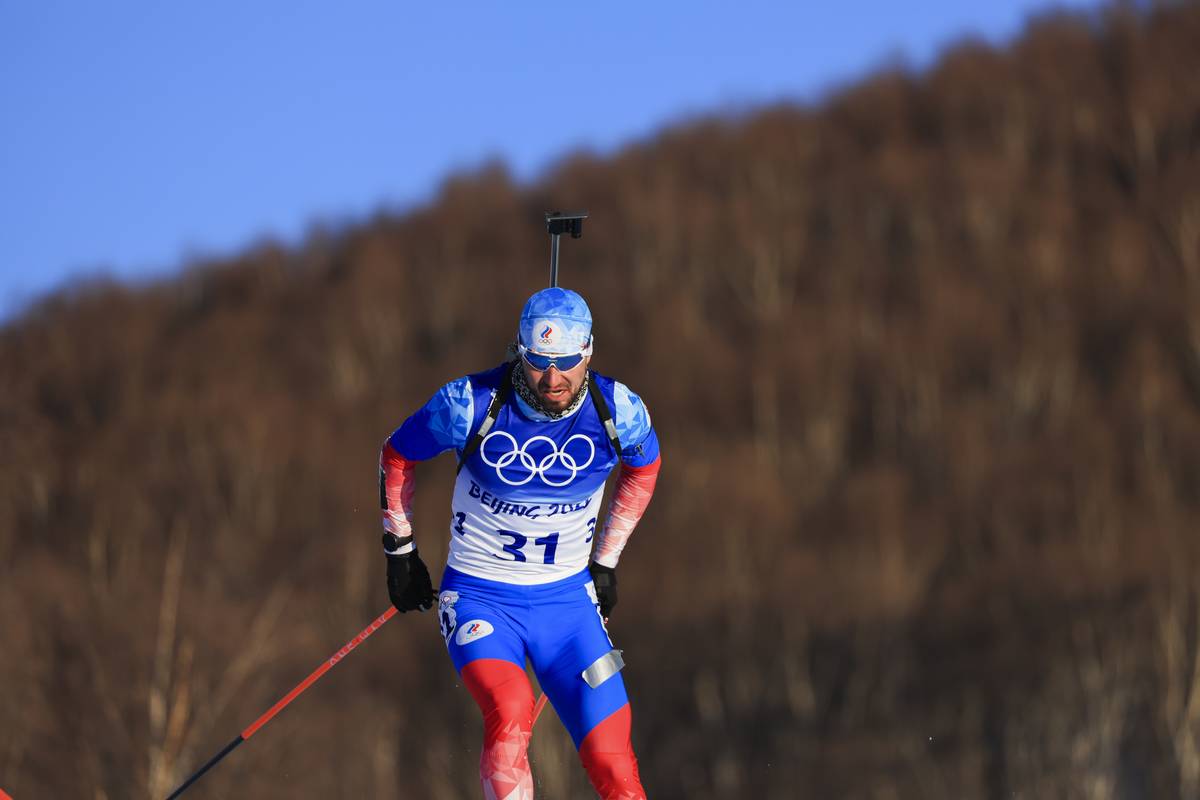
    He would ski daily on the homemade trail outside their home with his father, usually classic skiing and avoiding the nearby Ukrainian border where it was illegal to ski. In the summer, Bolshunov’s father would store snow in the family barn and haul it out for a short-lived ski

    According to Bolshunov, he has never fully adjusted to life outside Podyvot’ye, describing himself as a country boy at heart. “I can’t stand city life,” he has said. “It takes all my strength.” Adding, “I just want to be home.”

    Eventually, his father realized his son would need more than his hand-cut trails in the fields of Podyvot’ye to become a world-class skier, and Bolshunov would have to leave his village to get an education, either on skis or otherwise.

    In ninth grade, Bolshunov had to make a pivotal choice about his future: to pursue the life of a ski racer or an education for a professional career. For Bolshunov, the choice was already made. Ever since he had learned that the 2014 Olympics would be held in Sochi, he dreamed of representing Russia on home snow. Although Bolshunov would be just seventeen years old during the Sochi Games, he judged it was enough time to get to an Olympic level.

    In 2011, shortly after Bolshunov had turned fourteen, his parents enrolled him in the ski academy in Bryansk, a city of more than 400,000 that lies 165 kilometers to the north of Bolshunov’s village. There he would work with esteemed coach Nikolai Nekhritov, the first-team coach of the academy.

    “By that time he was already quite good on skis,” recalled Nekhritov. “He was just a child, but he ran under the first [junior] category.”

    Small for his age, Bolshunov took time to develop and lagged behind his peers at the Bryansk academy in terms of results. His races were decent but not exceptional. Still, Bolshunov was competing as a junior, against skiers three or four years older. 

    He competed in his first FIS race in November 2012 at an Eastern Europe Cup 10km race held in Vershina Tyoi, 200 kilometers north of Mongolia. He was 15 years old and finished in 188th place. A month later he raced in juniors and finished 107th. In that race, he competed against his current teammate Alexei Chervotkin, who was 16 at the time. Chervotkin beat Bolshunov by more than two and a half minutes. 

    Nevertheless, Nekhritov, his coach, maintained faith in his ability to perform in the future and looked after his long-term development. His father also continued to play an active role in coaching Bolshunov during his time in Bryansk.

    By the following December of 2013, 16-year-old Bolshunov was finally seeing some progress. He finished 14th at a mid-December Juniors sprint race in Syktyvkar.

    Two weeks later he turned seventeen and the results began to flow. That March he won the skiathlon event at the Russian National Junior Championship, outsprinting Chervotkin and Ivan Yakimushkin. It was a breakout event for Bolshunov, who won the pivotal race in a pair of borrowed boots. On the back of that notable performance, he was named to the Russian Junior Team and awarded an honorary Master of Sport.

    The hard work Bolshunov had put in at the Bryansk academy paid off. As Nikita Kriukov, the famed former Russian sprinter, later recounted in an interview about Russian youth development: “Sasha Bolshunov never won a single extra medal in juniors. But thanks to his perseverance and certain abilities, which were created in him by the first coaches … A lot, as far as I know, was put into him by Nekhitrov, his Bryansk coach. The parents, of course, had a hand. All this has been transformed, and the person is now virtually invincible.”

    The following winter Bolshunov was invited to compete for Russia at World Juniors in Almaty, Kazakhstan. His lone event was the classic sprint. He qualified in 4th but finished 11th. Johannes Høsflot Klæbo was third. It was their first encounter.

    Around this time a new face soon arrived in Bolshunov’s training group: Anna Zherebyateva. They met at the medical examination before Anna’s first training camp, and Bolshunov was unusually chatty. He began to look after her in her first three training camps and though Anna didn’t think much of it at the time, he was interested. When she became sick during a camp in Belarus, Bolshunov took the chance to act. “On his day off he came to me with a huge sack of fruit,” recalled Zherebyateva. “One fruit I remember very well – watermelon. At that moment, oddly enough, I realized.” Things took off after that. “After I recovered, and even during the time when I was sick, we began to communicate and so everything started spinning.” They have been together ever since, and rarely apart, with national team groups spending 250 days a year together between races and camps. Last summer Bolshunov proposed.

    In the winter of 2015/16, Bolshunov was a regular on the podium of Russian Junior races and competed at all the events at World Juniors in Rasnov, Romania. While he took silver with the Russian relay team, Bolshunov’s best individual race was 8th in the 15km freestyle. The star of World Juniors that year was Klæbo who won three gold medals. He even pipped Bolshunov in the 15km, finishing just three-tenths of a second in front of him. Klæbo’s stardom began in Rasnov, while Bolshunov was still trying to catch up to Spitsov and Yakimushkin.

    In 2016 it was time for a change for the nineteen-year-old Bolshunov. He left Bryansk and signed a contract with the Tyumen region team, while also being a member of the junior national team.

    The oil city of Tyumen in Central Russia was an apt move for Bolshunov. Skiing for a well-funded region is important, as the regions themselves pay the majority of a skier’s expenses and salary. Elena Välbe, current President of the Russian Cross Country Ski Association and Manager of the National Team, described the funding structure: “All overseas fees were fully funded by the regions. We pay…when necessary, but the athletes are completely on the shoulders of the regions. This is the situation…The federation’s own funds would be enough for a maximum of one training camp in the off-season.”

    In addition, skiers often take positions in the police or military as another method of funding, similar to the path that many skiers take in Central Europe. Bolshunov joined the National Guard, in the Ural District, where he now holds the rank of lieutenant.

    Tyumen was a logical choice for an ambitious skier. There was generous regional funding supported by the oil wealth and a new skiing complex, called the Pearl of Siberia, built to be a world-class venue to rival anything that Western Europe could offer. 

    Bolshunov’s entry into the national team coincided with the return of Yuri Borodavko to coaching. Borodavko, a long time national team coach for Russia, had been suspended for two years by Välbe in 2010 after his skier Evgeny Dementiev tested positive for EPO at the 2009 Tour de Ski.

    The formerly banned coach was now nominally charged with the U23s, which included a promising group of young skiers, such as Bolshunov, Denis Spitsov, and Natalia Neprayeva.

    Borodavko’s old-school training philosophy suited Bolshunov, who thrived in the environment. “Personally, in my work, I try not to deviate from the methodology that bore fruit back in Soviet times,” Borodavko said in an interview. “There are, of course, some adjustments due to the fact that a lot of time has passed since then, but the overall picture is the same.” 

    Borodavko’s group is known for their demanding regimen—the hardest of the four Russian national groups. Still, there may be an element of myth-making at work. Bolshunov has said that Borodavko’s reputation as a tyrannical coach doesn’t match reality. He considers him to be a typical ski coach.

    Bolshunov’s training is a matter of speculation. He has been cagey about the issue and prefers not to discuss details. 

    By all accounts he trains a lot; 5 hour morning sessions are not out of the ordinary. Last spring he skied 135km in a single, continuous 6.5-hour session. “Here are all the conditions, everything that only his soul desires,” said Borodavko. 

    Legkov, who averaged around 12,000km a year in his training, has said that Bolshunov does twice as much as he did when he trained with Borodavko. Of course, this is an exaggeration, but it remains a distinct possibility that Bolshunov trains more hours than anyone else on the World Cup.

    Legkov has commented on Bolshunov’s uniqueness, “like Usain Bolt, Phelps, [or] Bjørndalen.” He mused about his preternatural focus on racing. “He has his whole life there, there is nothing else,” Legkov said. “Just like a horse with blinders on its eyes, which only goes forward, because it does not have the ability to look around.” 

    Bolshunov described his own philosophy: “Training must bring suffering. This is a workout to achieve results. And if for pleasure – it’s not for us, it’s not for the national team. But you also need to force yourself in moderation. If you go through [with it] every day, then you will not live to see winter.”

    For some of Borodavko’s skiers, the training was too much for their bodies to tolerate. For others, like Bolshunov, it was about to work wonders.

    Johannes Høsflot Klæbo (l) passing fellow Norwegian World Cup Team member Martin Johnsrud Sundby (10) for the win in the 2017 15 k freestyle pursuit at the Ruka Triple mini-tour in Kuusamo, Finland. Russia’s Alexander Bolshunov (2) was 1 second back in third place for his first World Cup podium. (Photo: NordicFocus)

    A Career Begins

    In the winter of 2017, Bolshunov dominated Russian FIS races and came to the U23 World Championships in Soldier Hollow, Utah ready to win. There he captured two golds and a silver medal, matching Klæbo’s haul the previous winter. Yet what really caught public attention was the way the skiathlon ended. Bolshunov, and his teammates Chervotkin and Spitsov, finding themselves to be the only podium contenders, decided to cross the finish line arm in arm.

    The race jury, after much review, ultimately declared Bolshunov the winner. Borodavko was not impressed. Asked later if he wanted to spank Spitsov, he said, “And not only him! All three…what they performed at the finish was a circus. Until now, if I start scolding them, I start like this: ‘Well clowns…’” 

    The young skiers looked ahead to the Olympic games the following year, but uncertainty and infighting reigned that winter after the McLaren report, outlining the systematic doping in Russian sport, was released in December 2016. With it came the provisional suspensions of six Russian skiers, including the well-known Alexander Legkov and Maxim Vylegzhanin. 

    That was the climate leading into PyeongChang, an Olympic games Russia was initially barred from attending. When it was announced certain Russian skiers would be allowed to compete, but without the Russian flag and national anthem, Bolshunov buried his head in his hands and questioned whether it was even worth competing at all. Intensely patriotic, Bolshunov has said he takes his personal motto from Putin’s slogan “No one in front”, meaning no one in front of Russia. 

    Bolshunov had only four career starts at the highest senior level as he headed into the Olympic season. At the 2017 Lahti World Championships, he notched his best result—8th.

    Bolshunov’s first World Cup podium – the 2017 Ruka overall.
    Martin Johnsrud Sundby (NOR) second, Johannes Hoesflot Klaebo (NOR) first, and Alexander Bolshunov (RUS) third. , (l-r) (Photo: Fischer/Nordic Focus)

    In the 2017/18 season before the Games, he stood on the World Cup podium four times, each instance finishing third. He placed 6th at the Tour de Ski. The PyeongChang Olympics would be another turning point in his career: he took home three silver medals and a bronze. 

    His Olympic performance was big news in Russia and made all the more significant for the recent tribulations to the country’s sporting stature. When Bolshunov arrived back in Russia he received a hero’s welcome and was mobbed at the airport. His mother, who had been too nervous to watch the races on TV, pushed through the throng to hug him. 

     There was now a Russian rival to Klæbo’s ascendancy as the king of cross-country, and with it, an air of mutual wariness between the Norwegian and Russian camps emerged. 

  • Exploring Alexander Bolshunov: A Rivalry is Born – Part 2

    Exploring Alexander Bolshunov: A Rivalry is Born – Part 2

    Russia’s Alexander Bolshunov leads five Norwegians in the men’s 2018 classic sprint final at the World Cup in Drammen, Norway: (from l to r) Eriik Brandsdal, Johannes Høsflot Klæbo (yellow bib), Sindre Bjørnestad Skar (10), Kasper Stadaas (16), and Emil Iversen. (Photo: Fischer/Nordic Focus)

    This is the second part of a three-part series on Russia’s Alexander Bolshunov. You can find part three here. 


    During the season of 2018/19, there was fierce competition for the overall World Cup between Johannes Høsflot Klæbo and Alexander Bolshunov, who surprised the Norwegians by proving to be a versatile and resilient competitor.

    Sergey Ustiugov was initially seen to be the main threat to Klæbo’s World Cup campaign, haunting him in the Tour de Ski until the penultimate race of the Tour in Val di Fiemme, Italy. It was a bad day for Ustiugov, and his teammates made it worse, with Bolshunov leading the effort to drop Ustiugov. The race cost Ustiugov more than 40 seconds to Klæbo, doubling the Norwegian’s lead. 

    Hans Christer Holund couldn’t believe what he was seeing, saying, “They’re as stupid as bread…I just had to laugh inside myself, even though I was tired.” Nossum, the Norwegian distance coach, also delighted in thanking the Russians for the victory on Instagram. 

    Markus Cramer, a coach for Russia, tepidly defended Bolshunov’s greedy maneuver. “We have another runner, Bolshunov, who can fight for the overall winner. He wanted to take his chance. This is normal.” 

    When Bolshunov was asked another time if he would work together with Ustiugov in a race he responded, “Through the race, we can help each other, but Sergey and I are rivals. We are friends, but not close friends.”

    Ustiugov was in Cramer’s group, Bolshunov in Borodavko’s—there was no special alliance. Bolshunov wanted to try and win the race, and he didn’t especially care if it cost Ustiugov the Tour. 

    After the final climb up Alpe Cermis, Klæbo was the winner. Ustiugov was second, just 16 seconds behind. Bolshunov would finish fifth in the Tour, and third in the race that spoiled Ustiugov’s chance.

    Alexander Bolshunov (RUS), Johannes Hoesflot Klaebo (NOR), Sergey Ustiugov (RUS), (l-r) early during Stage 5 of the 2019/2020 TdS in Val di Fiemme, Italy. (Photo: NordicFocus)

    As the season progressed, the Norwegians continued to taunt the Russians as a hapless bunch, too concerned with fighting each other for places on the team to mount a genuine threat. Nevertheless, as the season progressed, the point spread between Klæbo and Bolshunov grew tighter. 

    An altercation between Ustiugov and Klæbo in the World Championship sprint race in Seefeld would add bad blood to the rivalry. Klæbo cut Ustiugov off on a corner, riding over his skis. Ustiugov responded by slapping Klæbo on the face. The jury disqualified Ustiugov for unsportsmanlike conduct while Klæbo’s interference went unpunished. For the Russians, it was further evidence substantiating their claims that the rulebook applied to only one team. 

    A couple of weeks later, in the Holmenkollen 50-kilometer race, Bolshunov, who was skiing just ahead of Emil Iversen, stopped abruptly just before the intermediate sprint, thwarting Iversen’s chances to collect points. Bolshunov received a warning for unsporting conduct, and the move marked a new era of hostile racing between the countries. Bolshunov ultimately won the marathon, awarding him an awkward audience with the King of Norway and the leader’s bib going into the season finale in Québec. 

    The start of the 2020 Holmenkollen 50k. (Photo: NordicFocus)

    The mistrust between Norway and Russia showed in Québec. The Norwegian team declared they would be helping Klæbo in any way they could. “That is the only thing we talk about,” said Sindre Skar, a Klæbo teammate. Cramer expressed his hope the Norwegians would compete fairly in Québec. “I’m sure they will try to help Klæbo,” he said, “but I hope they do it in a fair way.” 

    Skar denied that any unfair tactic was in the playbook; “we do not do that,” he said. Still, the Norwegians did take a somewhat cynical approach to end Bolshunov’s sprint day. Norwegian sprint coach Arild Monsen confirmed he directed Golberg and Iversen to join the first quarterfinal with Klæbo, Pellegrino, and Bolshunov, turning the first round heat into a stacked field worthy of a final. The aim was to see if they could knock Bolshunov out early and thereby maximize Klæbo’s point tally over the Russian. 

    Ultimately, the strategy didn’t work and the two contenders ended their day prematurely—a sacrifice the two Norwegians were willing to make. Skar clarified that there was nothing untoward about this, “no one goes to destroy [him], we go to beat him, we do not go to step on [his] pole. We do not do that.”

    Russia’s Alexander Bolshunov leads the front group of skiers in the mens’ 15 k mass start classic in Québec City. (Photo: John Lazenby/lazenbyphoto.com)

    With only 24 points separating the pair going into the final two races, the relationship between Bolshunov and Klæbo was more frosty than friendly. Bolshunov recounted a slight he perceived from Klæbo at the World Cup finals that year in Québec City. “When we were leaving the ski stadium in Québec, the organizers provided one bus for everyone,” recalled Bolshunov. “The bus was full, the only free place was next to me – but Johannes passed it by, went further back to look, did not find anything. Then another Norwegian did the same. I’m like ‘whatever, if you prefer to be standing in the bus rather than sitting next to me that’s your call!’”

    Alexander Legkov had a more diplomatic explanation, “If Sasha spoke English calmly, they would sit with him.” He surmised the Norwegians found it too awkward to sit next to their rival without being able to share words.

    Klæbo, with the entire Norwegian men’s team working for him, secured the crystal globe in Québec. It was a tough loss for Bolshunov, who had been the leader just a week before in Oslo.

    The Norwegian team tactics were a sore spot in the Russian camp. They considered the use of cycling strategies unfair in what they felt should be an all-out competition. “We do not have a club sport, but an individual one,” commented former Russian skier Evgeny Dementiev. “At the World Cup, there are slightly different concepts and values.” 

    Johannes Høsflot Klæbo of Norway stringing out the 2019 men’s sprint final in Québec City. (Photo: John Lazenby/lazenbyphoto.com)

    The inability of the Russians to respond with their own teamwork ceded a distinct advantage to the Norwegians in sprints and mass start races. It exposed a weakness in the Russian system that couldn’t easily be corrected. Part of it came down to team culture, but the separation of the national team into four groups that rarely overlap meant there was little incentive, or direction, to sacrifice for a member of another group. 

    The team itself is oversized, some 39 strong in 2021, meaning that a majority of its athletes do not start any given World Cup race. Few of the skiers can afford a poor result if they want to stay on the circuit.

    Legkov has called for a revision of the Russian playbook saying, “I want the team to act according to the principle ‘It doesn’t matter who, as long as they’re Russian!’” Dementiev has said that the national team coaches hold the power to change their approach to racing. “If the coaching staff sets the task, then no one will engage in selfishness…But they have to make the decision themselves, the coaching staff and the guys. Everything is in their hands.”

    The 2019/20 Season: Contentions

    In the spring of 2019, Bolshunov felt it was time for another change. He left the Tyumen region team and signed a new, more lucrative four-year deal with the Arkhangelsk region, which had secured a new patron in the form of a lumber conglomerate. Bolshunov, Zherebyateva, and Neprayeva would be new additions to the team. 

    Bolshunov’s rise the previous season was seen as a serious threat to the hegemony of Norwegian dominance. Bolshunov started strong, winning the Tour de Ski and celebrating on the podium over a miserable looking Klæbo. Later that winter, Klæbo broke his finger, mis-landing a punch on a boxing bag. Once Klæbo returned to the Scandinavian Tour in February, the tension returned. Bolshunov himself was not entirely convinced by the broken finger story saying, “I understood that this was strange information. Either it’s true or not.”

    Klæbo and team, 2020 Scandinavian Tour. (Photo: NordicFocus)

    Klæbo needed a victory at the Scandinavian Tour to turn around a point deficit and work towards regaining the yellow bib in the later stages of the World Cup calendar. Bolshunov took control of the Tour early but felt the Norwegians were stooping to new lows to thwart his campaign after Simen Hegstad Krüger fell awkwardly in front of Bolshunov in the sprint semifinal, robbing him of precious points. Bolshunov felt the move was intentional, to take him out of the race.

    “Apparently, the Norwegian national team is going to fight me unfairly. After today’s race I am very angry with the Norwegian team. I’m just angry! The more they do this, the more they will anger me and the stronger I will have to become. He apologized? Well done, but this is not enough. You have to fight honestly.” 

    Borodavko backed up his athlete, saying, “Indeed, the Norwegian simply brazenly tried to oust him and provoke a fall, so this prevented him from fighting for higher places. How much was done from the Norwegian on purpose, it is very difficult to say. But it was clear that he openly and deliberately went to the collision.” 

    Russian ski fans were incensed and took to Instagram to vent their fury at Krüger and called on Välbe to respond. Välbe told them: “It’s a pity that you think that we are not protesting. We serve [protests], but out of ten maximum one is in our favor. What do you propose to do?”

    The next day was a distance race and Bolshunov easily won despite breaking a pole. Spitsov supplied him with his own, a possible sign the Russians were beginning to work together toward mutual success. “…Spitsov sacrificed a stick when I broke mine. This is so cool,” said Bolshunov.

    Nevertheless he dispelled the notion that the Russians were starting to work together in races, “We will not be able to do this, there is no such approach in the team.”

    But this race too was not without its detractors. Iversen, a provocateur of Bolshunov in general, declared that he must have paid off the snowmobile driver who was taking video of the race. Iversen alleged Bolshunov had unfairly skied alongside the snowmobile to use it as a draft from the fierce crosswinds.
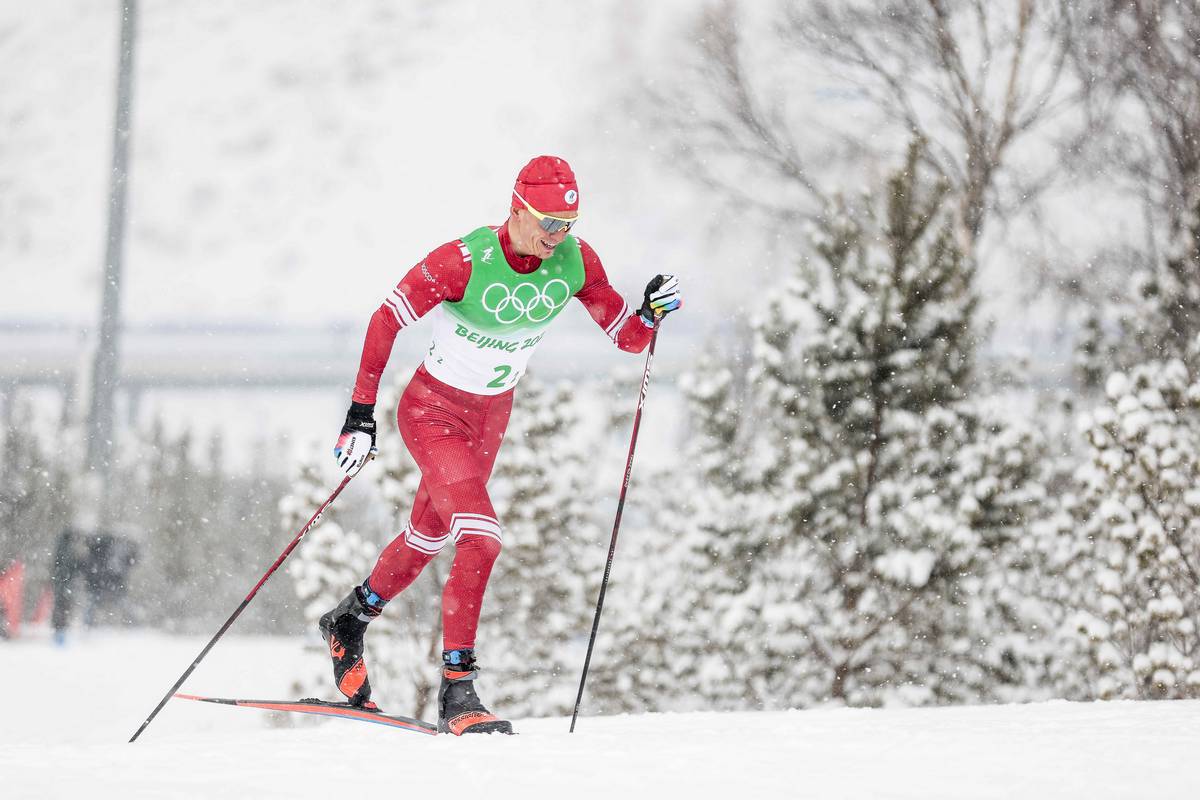
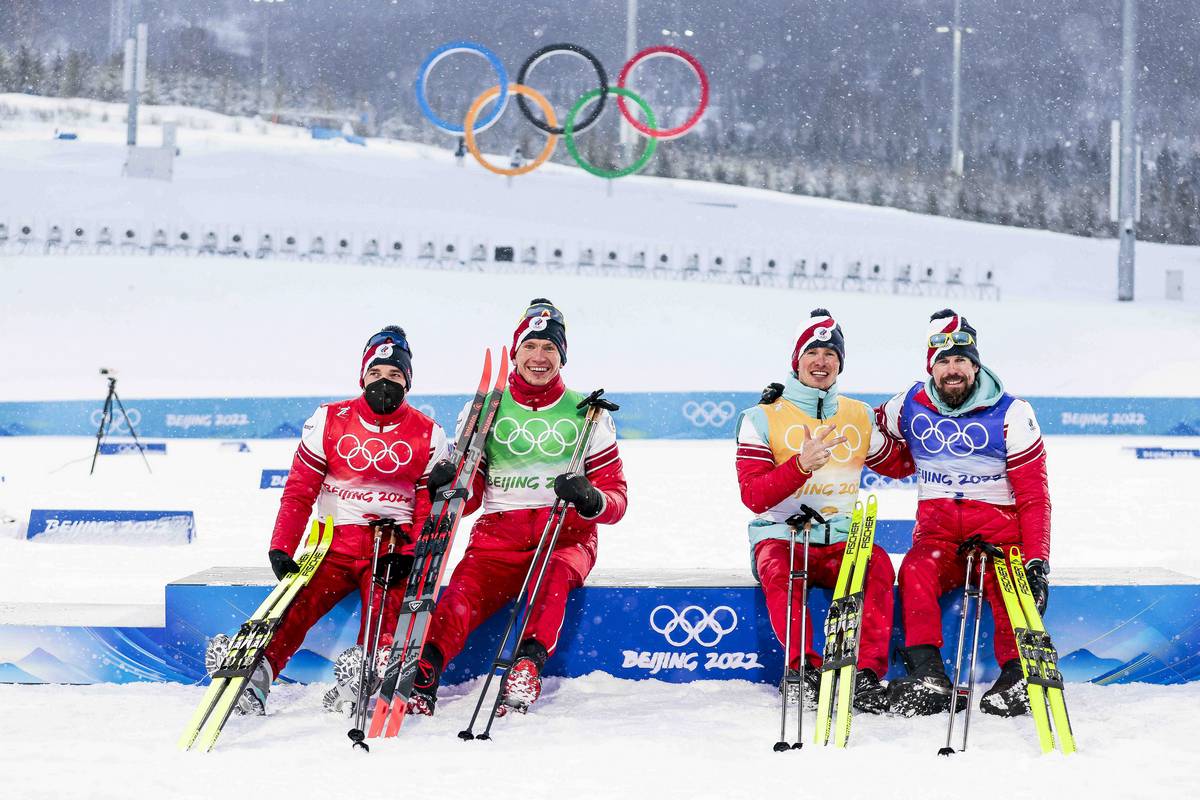
    Likely Iversen meant this as a clap back for Bolshunov rousing the Russian fans’ ire against Krüger after his fall in the sprint race.

    Alexander Bolshunov of Russia — the hunted on Stage 6. (Photo: NordicFocus)
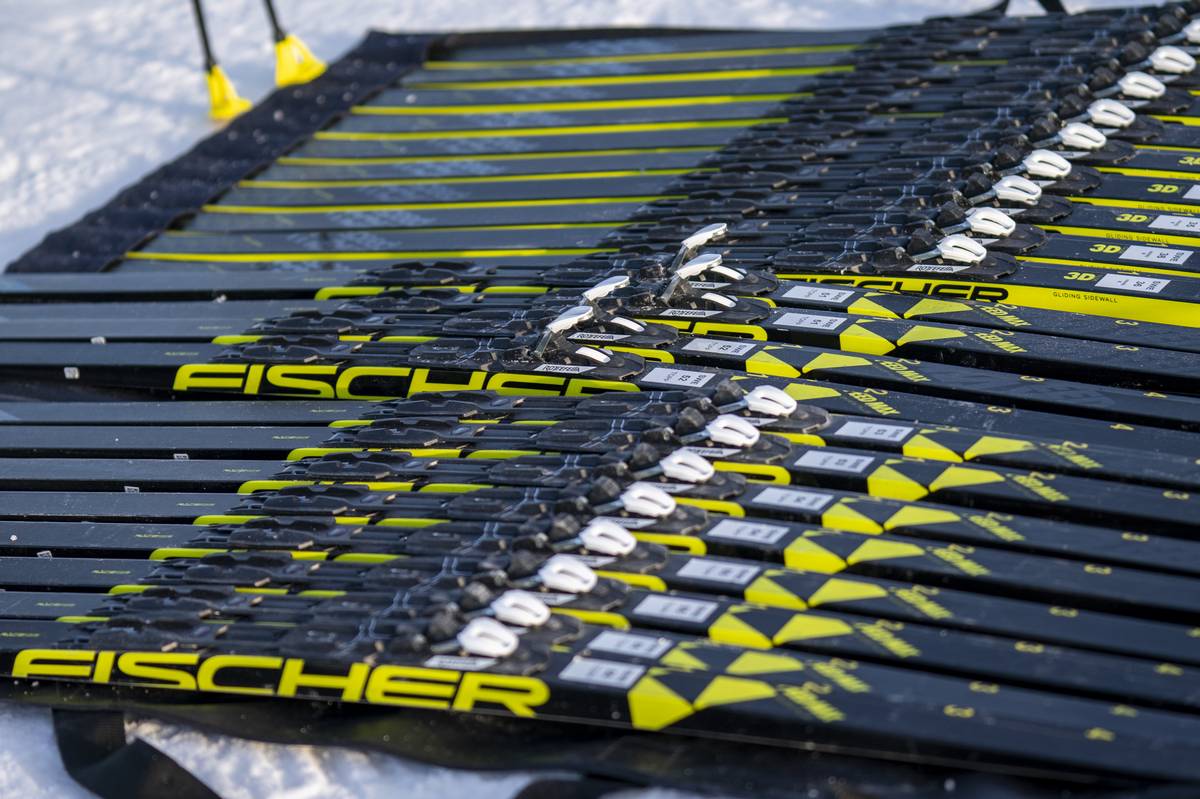
    With Bolshunov holding a solid lead going into the final race of the tour in Trondheim, disaster struck when the Russian team made the decision to go with klister. The Norwegians, with their own meteorologist on staff tracking the changeable weather over the Granåsen ski stadium, switched to rub skis just before the start. 

    When Pål Golberg, the winner of the day, saw Bolshunov on the start line with klister skis, he knew his race was over. Bolshunov said that he too had realized he had the wrong skis but had no time to correct the issue.

    “They were very happy when they were overtaking me. I saw their beaming smiles, especially from Iversen,” recounted Bolshunov about his unfortunate race that saw him lose the Scandinavian Tour. Afterwards he threw his skis and ripped his leader bib off his body as camera crews followed him. He described his meltdown as a performance for Norwegian TV station NRK.

    Välbe didn’t see any harm in Bolshunov’s finish line display. “It is not necessary for a person to keep emotions in himself at such moments…Emotions must be thrown out. I was taught to yell in the forest, and I did it after all the failures.”

    Sjur Røthe leading out: State 6 Ski Tour 2020. (Photo: NordicFocus)

    There was a note of bitterness in Bolshunov’s final assessment of the Ski Tour. “I was not surprised that the Norwegian skiers tried to actively…use command tactics against me. In Norway, tactics always come first.”

    When the final showdown of the 2020 World Cup season in Canada and the U.S. was cancelled due to the emerging pandemic, Bolshunov—the points leader at the time—was crowned the overall World Cup champion. Still, the victory felt incomplete to him. “One might say that there were no first emotions,” he said about hearing the news that he had prematurely won the title, the first Russian man to do so in the post-Soviet era. “I wanted to bring this business to the end and stand together on a pedestal with my rivals, stand above Klæbo and Røthe.”

    There was another perceived slight when only Sjur Røthe reached out to congratulate him via text message. Klæbo, whom Bolshunov had so looked forward to standing over in Canmore, was silent. “I think Klæbo, Sasha’s main rival, was just very upset.” Thought Välbe, “He is an easily vulnerable person, he could not find the strength to congratulate Sasha.” 

    Bolshunov’s plan for the crystal globe was simple, “I’ll take the globe home and hide it, put it in a quiet and peaceful place.”

    The Oslo 50 k classic podium: 08.03.2020, Oslo, Norway: Simen Hegstad Krüger (NOR) second, Alexander Bolshunov (RUS) first, and Emil Iversen (NOR) third, (l-r).

    The prized globe took a long time to reach Russia, a delay owed to the pandemic. One morning that spring while Bolshunov was at home in Podyvot’ye he awoke to find that his father, impatient with the delay, had built and painted a wooden approximation of the globe for him. 

    His achievement that season would see him invited on a popular late-night talk show and nominated as Russian athlete of the year.

    Despite the accolades, the interrupted season left him unsatisfied. The next season would surely bring a new chance to revisit his rivalry. There were loftier goals for Bolshunov, who reminded everyone, “I’m not the king yet.”