Author: Peter Minde

  • Dublin Prep School Homologates Trails for the Love of XC

    Dublin Prep School Homologates Trails for the Love of XC

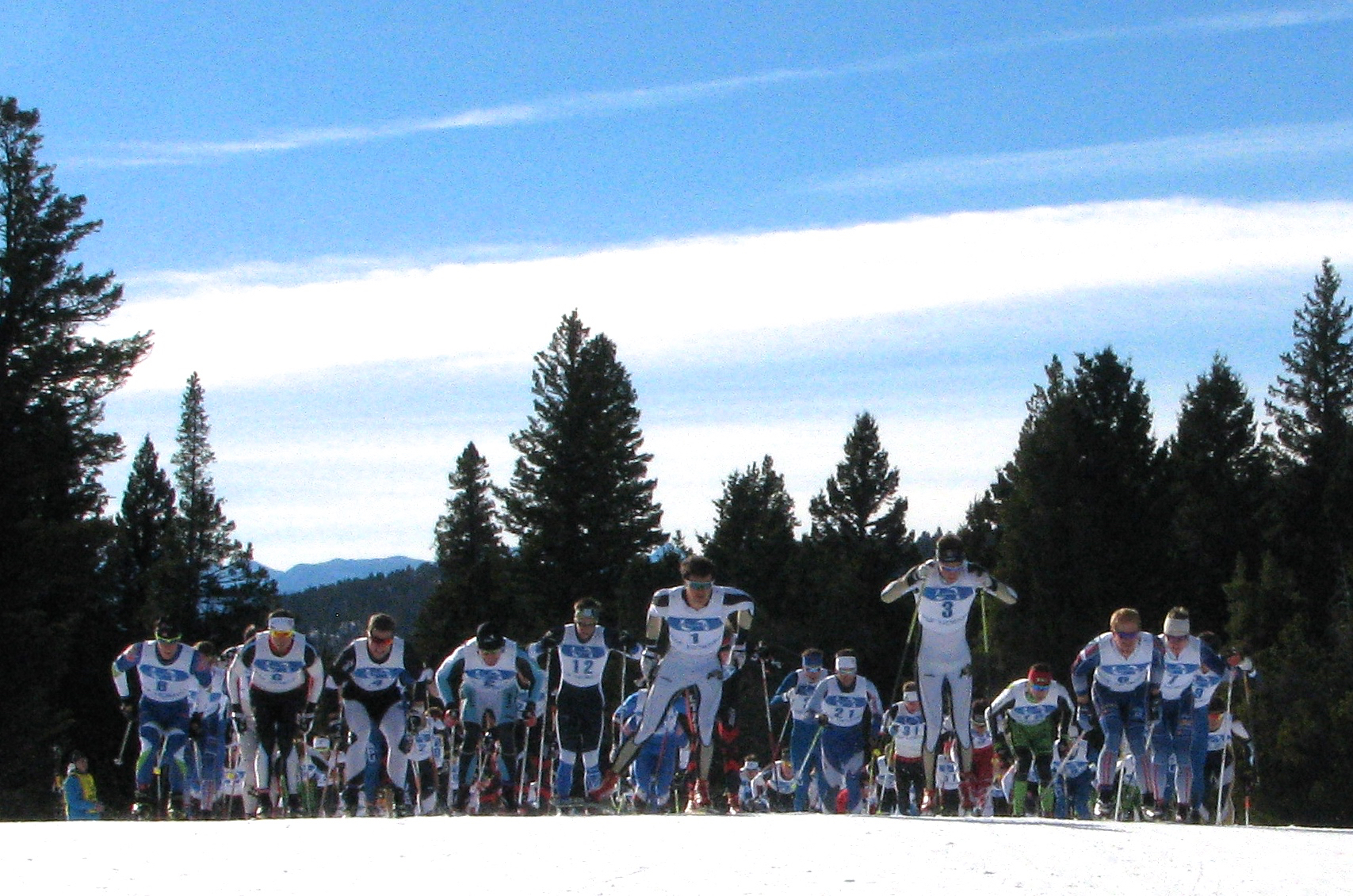
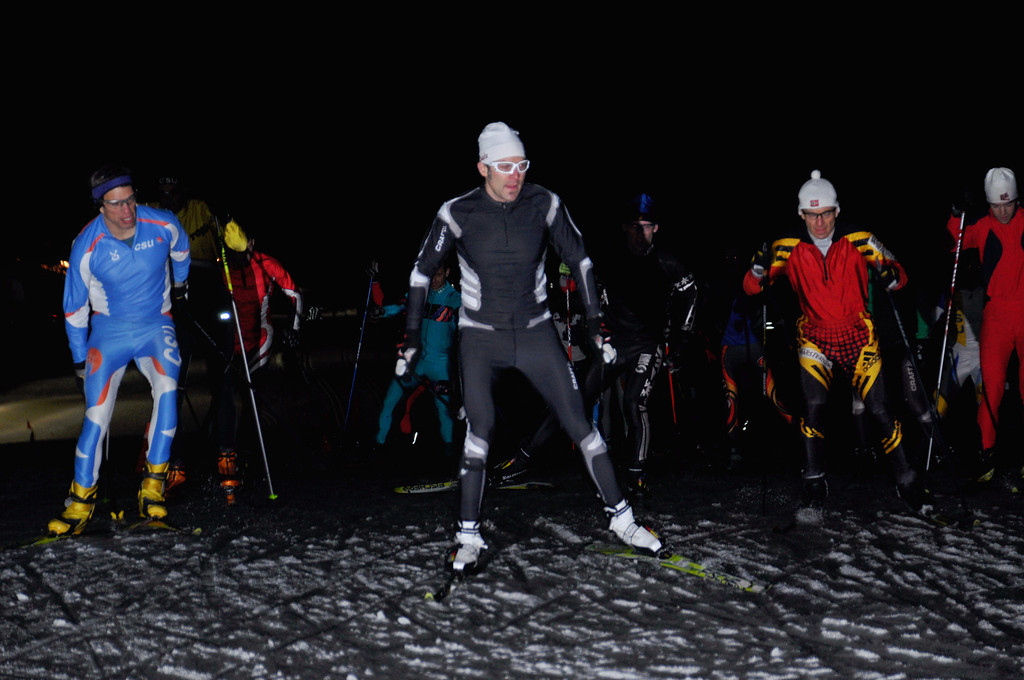
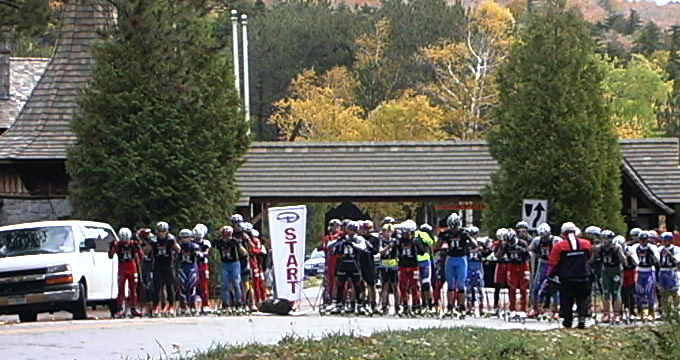
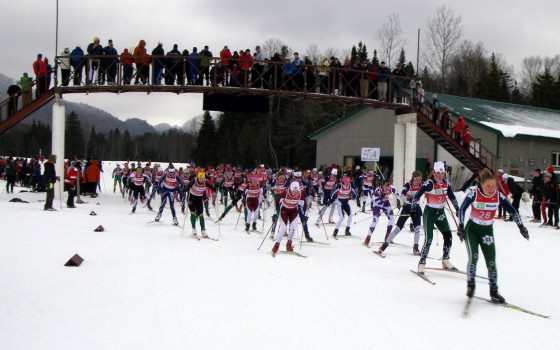
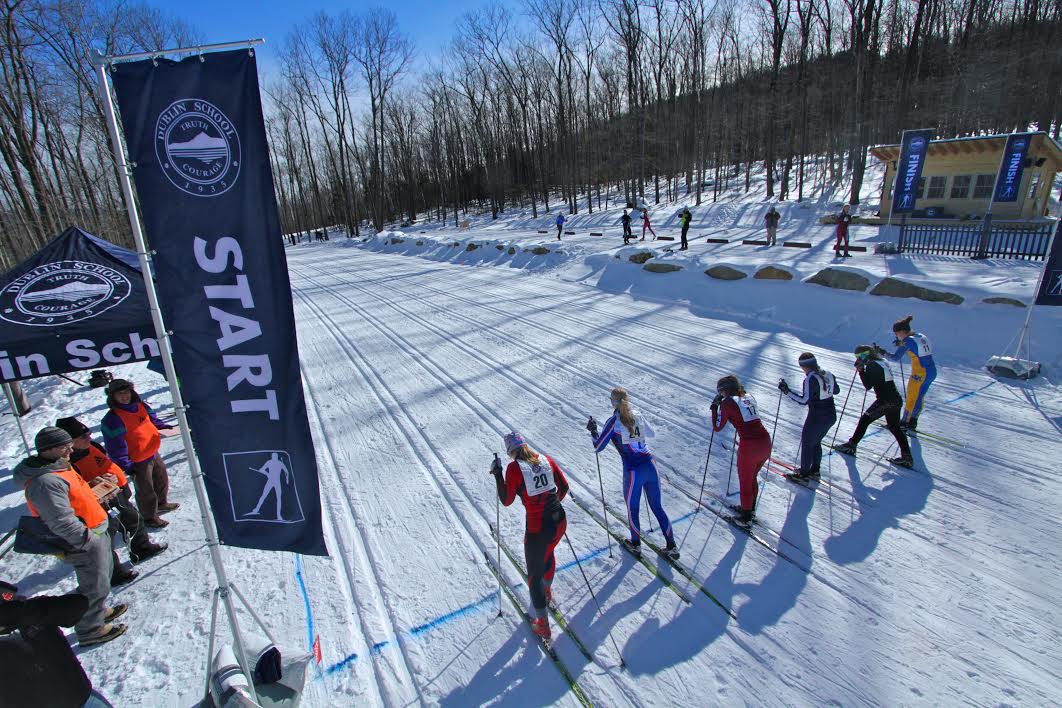
    A race starting on the Dublin School nordic center's new course last winter. (Photo: William H. Gnade Photography)
    A race starting on the Dublin School nordic center’s new course last winter. (Photo: William H. Gnade Photography)


    Note: In addition to the Dublin School, at least one other private school in New Hampshire has FIS-homologated trails. Proctor Academy, with 360 students in Andover, N.H., built FIS-approved trails (also designed by John Morton) two years ago. Proctor has two FIS-homologated loops of 2.5 k and snowmaking on 1.4 k.

    ***

    Does a secondary school need an International Ski Federation (FIS)-sanctioned race course? Perhaps not, but that’s what skiers can expect when they go to New Hampshire’s Dublin School for the 2016/2017 ski season. The Dublin School, a private high school in southern New Hampshire, has a brand-new, FIS-homologated 5-kilometer loop, designed by John Morton, and it claims it’s the first high school in the world to receive the FIS homologation distinction.

    Founded in 1935 by Paul and Nancy Lehmann, the Dublin School had unusual criteria. For location, according to the school’s website, “the site must be on the east side of hilly land at a considerable elevation,” and “There should be ample inexpensive, undeveloped, forested land and/or fields available for ultimate purchase and expansion.”

    Michael Lehmann, the founders’ son, wrote in an email to FasterSkier that cross-country skiing was “an important sport the school” from the mid 1940s until the 1960s. Nathaniel “Buddy” Bates coached Lehmann when he was a senior at the Dublin School in the ’50s.

    When Nathaniel’s son, Brad Bates, became Dublin’s new head of school and nordic ski coach in 2008, nordic had been an intramural sport for at least two decades. The only interscholastic ski competition was alpine.

    After graduating from Dartmouth, Bates taught and coached rowing at a school in Delaware, where skiing was harder to come by. From there, he moved to Aspen, Colo., and became a high-school assistant principal, where, he “[reconnected] with skiing with a vengeance and got my own two kids into skiing,” he wrote. By coincidence, Noah Hoffman was a student at Aspen High when Bates worked there – although Bates didn’t coach there.

    Upon his hiring as Dublin’s headmaster, Bates was instructed by Lehmann to hire a trail designer and build the best loop possible, Bates explained. So he reached out to his former Dartmouth coach, John Morton.

    Tradition and the Future

    Lehmann and his sister owned 82 acres of north-facing land adjacent to 27 acres owned by the Dublin School. With an upper elevation of 1,800 feet and significant terrain changes, “The slopes of the hill are steep enough for interesting and challenging Cross Country skiing. So, this was a perfect place to create the Nordic center,” Lehmann wrote in an email. They donated the land to the Dublin School.

    “Both my sister and I consider outdoor sports to be very important for young people.  What could be better than a sport which is in fresh air and sunshine, is fun, develops strength and stamina, and where there is the opportunity for competition?” Lehmann continued. “As this was a blank and very suitable piece of land, why not create the best trail system, one which could achieve FIS homologation?”

    “What could be better than a sport which is in fresh air and sunshine, is fun, develops strength and stamina, and where there is the opportunity for competition?” — Michael Lehmann, on donating 82 acres to New Hampshire’s Dublin School for FIS-homologated ski trails

    “We have 800 vertical feet on our campus,” Bates said in a phone interview.

    The new 5 k loop connects with the school’s pre-existing trail system, which included 7 k of race trails (opened in January 2014) and 20 k of older trails. The new 5 k loop received a “C classification” from FIS, meaning it’s approved for classic mass starts and freestyle individual-start races.

    “We may one day expand the stadium.  It’s just the stadium area that’s the main issue,” Bates added.

    Bates wanted a trail system “that would be first and foremost fun to ski and that would get junior skiers excited.” He also wanted a course that would be fair.

    “As a ski racer, I was on congested trails. It wasn’t obvious then, but now it’s obvious,” he said.
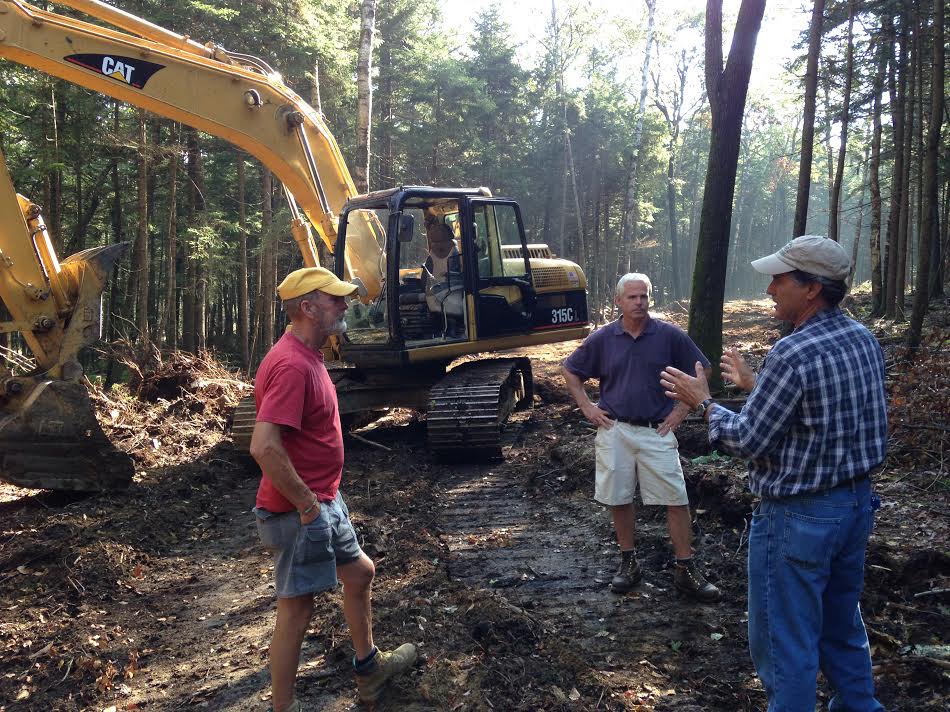
    Owning their own excavator helped the Dublin School keep its construction costs down. (From left to right: excavator operator Bob Miles, project manager Andy Hungerford and trail designer John Morton. (Photo: Brad Bates/Dublin School)
    Owning their own excavator helped the Dublin School keep its construction costs down. (From left to right: excavator operator Bob Miles, project manager Andy Hungerford and trail designer John Morton. (Photo: Brad Bates/Dublin School)

    He wanted the feel of a good race course while also making it practical for a race jury. One example: part of the reason the Dublin course isn’t homologated for a freestyle mass start is a bottleneck near the start.

    “How the finish line works, turns out of the start, how downhills heading into quick abrupt uphills affect race fairness was all new to me,” Bates said. “The thought is that once we have the personnel and the infrastructure we can host major races here.”

    Although Morton explained he tries to keep in touch with the skiers he coached during his 11 years at Dartmouth, he had lost touch with Bates and was glad to receive his email about developing the Dublin trails.

    Regarding the trail design, Morton wrote, “Finding the required climbs was less of a concern than locating a potential start/finish area, which requires a level opening of at least 150 meters by about 50 meters. If you are working generally with a hillside, as we were in Dublin, it is ideal if the start/finish can be located somewhere near the middle of the available elevation gain. We were fortunate to find a modest natural shelf that provided just enough space for the start/finish, mid-way up the hill.”

    While Bates mentioned a potential bottleneck that would preclude a freestyle mass start, Morton also looked at tree cutting. He explained that a homologated freestyle mass start course requires rolling terrain, including climbs that are 9 meters wide on the uphills and 6 meters wide in descents.

    “[It’s] difficult for me to advocate cutting that kind of a swath through the trees of rural southern NH (for example), simply to comply with World Cup standards,” Morton wrote. “On the positive side, any skier who trains or competes on the Dublin School’s homologated race course, and goes on to compete internationally, will not be surprised by the competition venues he or she encounters… elsewhere in the world.”

    Lehmann believes that homologation would enable students to train on courses similar to what they’d find at regional and national competitions. He wrote that Dublin School would bid for an Eastern Cup event once it had developed a sufficient volunteer base. Its student body is approximately 150 for grades 9 through 12, according to its website.
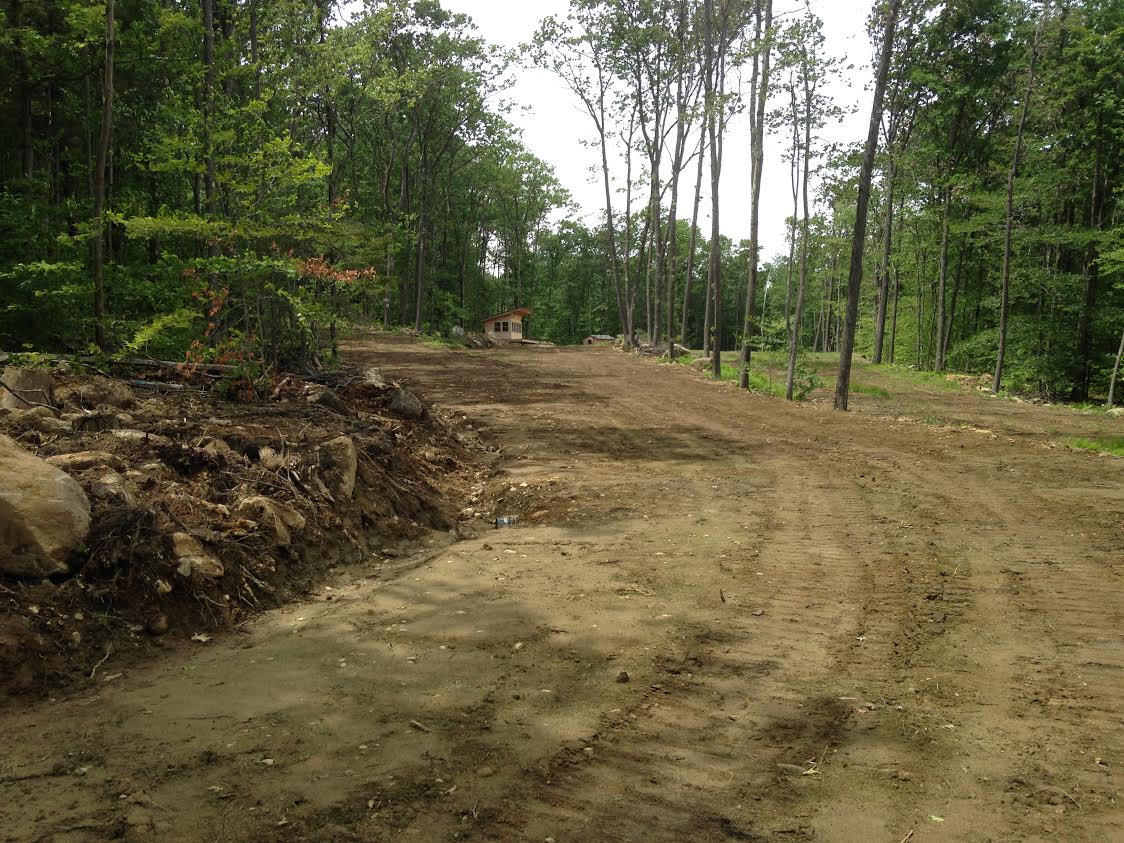
    The construction of a homologated ski trail at the Dublin School in Dublin, N.H., this summer. (Photo: Brad Bates/Dublin School)
    The construction of a homologated ski trail at the Dublin School in Dublin, N.H., this summer. (Photo: Brad Bates/Dublin School)

    In addition to the new race loop, the Dublin School developed three additional kilometers of track that are not homologated.  The total cost to build 8 k of trails, a yurt and a timing shed was under $250,000, Bates said.

    In a continuing response to warm northeast winters, the Dublin School also installed snowmaking on a 1 k loop on the lower part of its campus. Intended for training and sprint races, Bates expects this loop to be fully solar-powered. He characterized it as a testing ground to determine whether it would be feasible to put snowmaking in on the FIS loop.

    “People on the board made [snowmaking] a personal project,” Bates said.

    “FIS homologation prequalifies Dublin to host national and international events where athletes hope to earn FIS points and qualify for the US National Team,” Bates stated on the school’s website. “For us, however, we are just happy to have such a fun and technical venue for our skiers to learn and enjoy the sport of skiing…”

    According to Lehmann, the school created the Dublin XC Ski Club, “which attracts local skiers, many of whom [are] not otherwise connected to the School.”

    The nordic center is open to the public when conditions are safe for skiing, except for when it is used for regional or school events.

    Bates added, “Everyone is welcome to ski the trail system so long as they sign an online waiver. However, “The snowmaking loop will be reserved for school families and the local club we helped start, Dublin XC.”

    “In Brad Bates, we could see a Head of School who would enthusiastically drive the re-introduction of Cross Country skiing – and he has done so!” Lehmann wrote.

    “It is … heartwarming for me to see my former skiers passing along their love for the sport to another generation,” Morton said.

  • SoHo and Park City Gear Up to Host First U23/Junior Worlds in 30+ Years

    SoHo and Park City Gear Up to Host First U23/Junior Worlds in 30+ Years

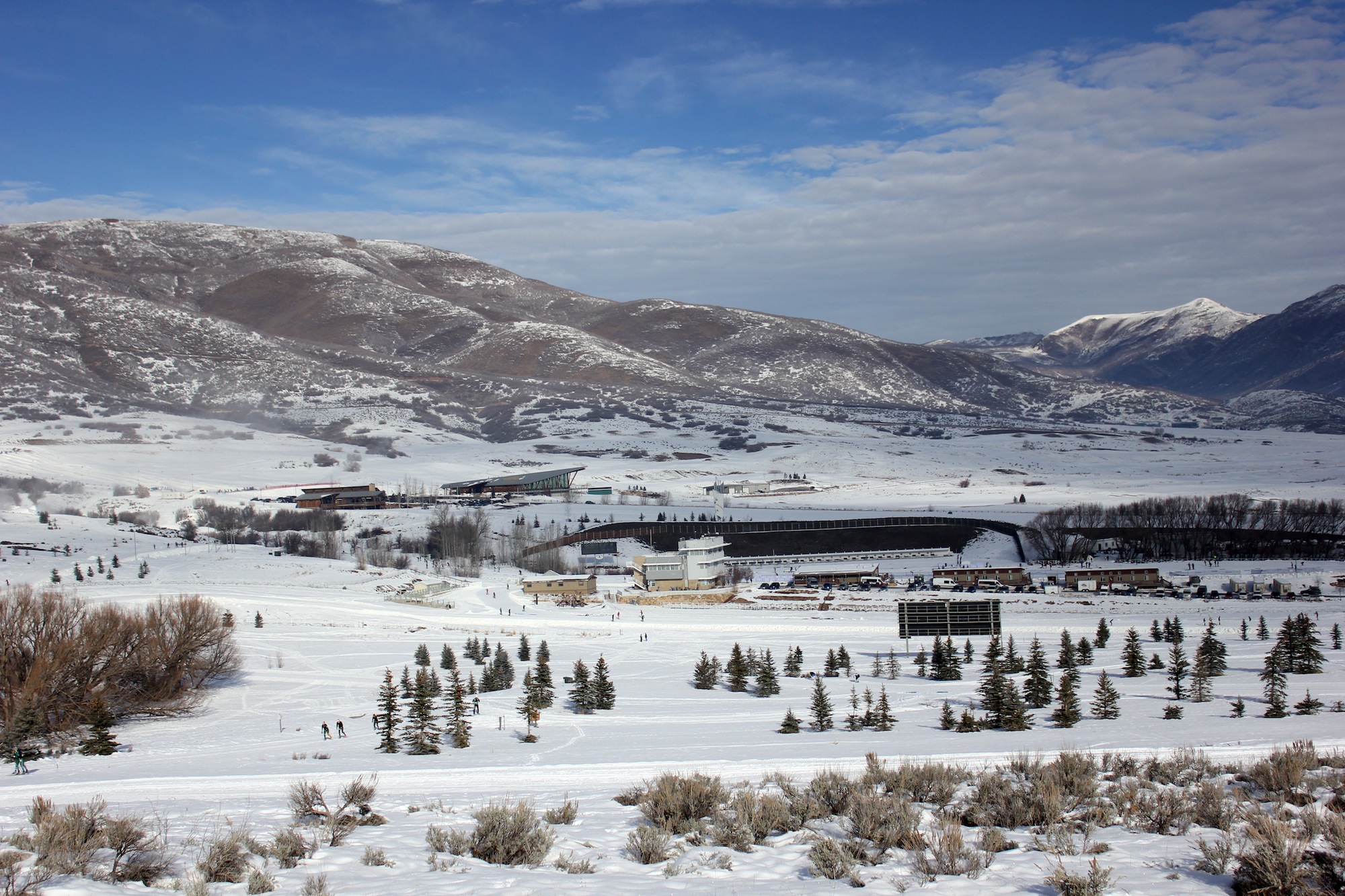
    A view of Soldier Hollow's stadium from the highest point of the 5 k olympic course.
    A view of Soldier Hollow’s stadium from the highest point of the 5 k Olympic course as seen in January 2014, with the timing building and Soldier Hollow Charter School (white building) at the center.

    As the 2016/2017 race season approaches, plans are proceeding for the International Ski Federation’s (FIS) Nordic Junior/U23 World Championships to return to the U.S. With both the U.S. Cross Country Championships (which take place Jan. 7-12) followed by Junior Worlds (Jan. 30-Feb. 5), the Utah Olympic Legacy Foundation (UOLF) has a full plate this winter.

    Scheduled for just two-and-a-half weeks after U.S. nationals at Soldier Hollow, preparations are well underway.

    “Without a doubt it’s the largest nordic event we’ve had in Utah since the 2002 [Winter Olympic] Games,” said Greg Poirier, the organizing committee’s technical advisor who has been instrumental in bringing the championships to Park City and Soldier Hollow, Utah. “And it’s been 30 or 31 years since we’ve had Junior World Championships in this country.

    “This has been a dream of mine for quite a while, to bring the championships back to the USA,” he said.

    The last time Junior Worlds took place in the U.S. was 1986 in Lake Placid, N.Y. Senior World Championships goes back even further to 1950. That year, Lake Placid was supposed to hold the senior championships, but could only host the jumping events due to lack of snow.  The cross-country events were moved to Rumford, Maine.

    “If it goes well, pat me on the back; if it goes bad, then I had nothing to do with it,” Poirier, who previously coached for U.S. Nordic Combined when his hometown was awarded the upcoming Junior Worlds in 2015, said with a laugh.

    According to Poirier, the UOLF and Soldier Hollow are ready to host the championships.

    “If we did nothing from now to January 30, facility-wise, we’re ready to go,” he said in early August. “From a technical point of view, I think we’re on schedule. The courses, the ski jumps, the actual competitive side of the event. If athletes showed up tomorrow, we’re ready. We still have to build the stadium and make everything kind of pretty.”

    Norwegian national team member Mikko Kokslien took a photo of the U.S. nordic-combined jumping facility in Park City, Utah.
    The jumping facility in Park City, Utah, as seen in 2012. (Photo: Mikko Kokslien)

    In addition to women’s individual ski jumping and a co-ed team competition, Poirier said that the 2017 Junior Worlds will have a women’s ski jumping team event, which includes four women per team “just like the men’s competition. It’s something the [local] organizing committee wanted to do,” he said.

    Poirier initially approached the local organizing committee (OC), seeking approval for this women’s team event. The local OC then asked the U.S. Ski & Snowboard Association (USSA) to ask FIS to add it to the championships program. FIS did so, based on its desire to include women’s ski jumping as a team event for years to follow. Poirier said they were still several years away from women’s nordic combined events.

    Logistically, Junior Worlds are a bigger event than U.S. nationals. UOLF Vice President of Sport and Venues Marc Norman expects more than 800 athletes and 400 support staff. The cross-country and nordic-combined skiers and their support staff will be housed in Midway, Utah (near the Soldier Hollow venue), while jumpers and their coaches will stay in Park City (near the jump hills). In contrast, Norman expected about 450 skiers, including some from Canada and Australia, to compete at 2017 U.S. nationals. He anticipated more than 300 volunteers for Junior Worlds, compared to about 100 for nationals.

    The Soldier Hollow Charter School, a K-6 public charter school located in the heart of the ski stadium, operates partly in the timing building. Because the school will closed for vacation during Junior Worlds, organizers will have access to the whole building.  While school will be in session during U.S. nationals, by agreement, there will be designated space in the building for timing.

    Updated Sprint Course

    While the distance courses remain the same, there will be changes to the sprint course Soldier Hollow has used for the last several years. The long downhill to the stadium after the last big climb will be broken up.

    2013 U.S. nationals skate sprint women's quarterfinal 2 at Soldier Hollow
    Racers start their descent on the final downhill of the “old” sprint course at 2013 U.S. nationals at Soldier Hollow in Midway, Utah.

    “The sprint is kind of clustered up,” Luke Bodensteiner, USSA’s executive vice president of athletics, said on the phone in August. “It’s become a 200-meter race at times. So they’ve made some modifications … to break up that last long downhill.”

    Previously, racers would crest the last climb and descend into a downhill straightaway. That created a substantial draft, helping the tail end of a broken-up group regain contact on that final downhill.

    According to USSA Nordic Director Robert Lazzaroni, the revised sprint course will also be used for nationals. Lazzaroni serves as the USSA advisor on the 2017 Junior Worlds organizing committee.

    While the facility side of preparation is going well, finding dollars has been a challenge.

    “I know they feel they’re behind,” Bodensteiner said. “They’re concerned about how fundraising is going. We remain optimistic it will be a financially healthy event. That’s a concern with any of these events, and Junior Worlds is no exception.”

    “The base budget to put on the event is $365,000,” Norman wrote in an email in late September. “We also have an enhanced budget that would allow us to exceed the minimum FIS requirements at a cost of $465,000. Hopefully we can find additional sponsors, suppliers, and donors that will help us close the gap to the base budget and even allow for us to do some or all of the enhanced pieces (more event look, athlete functions, event broadcast, etc…).”

    Bodensteiner explained that there was no guaranteed revenue source, and said that organizers would “have to really hump” to raise funds. “Before we decided to bid for the event, we collectively identified enough revenue sources that were reliable that we could make it work. There’s still a little bit of unknown, but it’s not atypical for events to be in that position.”

    Ben Saxton (SMST2) skis with a junior athete during a skate ski at the USST's annual training camp in Park City, Utah, which ran this year from Oct. 17 until Oct. 31. (Photo: Liz Arky)
    SMST2 senior skier Ben Saxton, who has been to a total of four Junior/U23 World Championships, paces a young skier during the U.S. Ski Team’s dryland training camp at Soldier Hollow last month. (Photo: Liz Arky)

    As of mid-October, USANA Health Sciences, a nutritional supplement company, had signed on as the title sponsor for 2017 Junior Worlds.

    “We are still working on sponsorships for the event to fully meet our budget,” Norman wrote on Oct. 12.

    “Junior Worlds is a little different beast than other events that we run,” Bodensteiner said. “The World Cup events that we run, you have a broader media footprint.  You’re looking at national and in some cases international sponsors for those. They’re easier to get out in front of.  With the Junior Worlds here, even though it’s an international event, it’s going to be reliant on local sponsorship. Oftentimes those don’t materialize until the last minute.”

    When asked if hosting the Junior Worlds bid would lead to USSA bidding for World Cup events, Bodensteiner hesitated.

    “We’re at the point where we’re anticipating it,” he said.

    Although there have been discussions, Bodensteiner said they hadn’t really identified a way to run a FIS Cross-Country World Cup without incurring a substantial financial loss.

    “We haven’t found a financial pathway that makes it realistic,” he said.

    Bodensteiner outlined some of the cost differences between hosting Junior World Championships and a World Cup in a follow-up email.

    “The main cost drivers are prize money (both for the races hosted and a share of the season overall prizes), lodging and travel cost reimbursement for the top group of athletes and their staff (and a number of Continental Cup athletes), event production (grooming, timing, snowmaking, staffing, wax rooms, course installations, travel costs for various FIS officials, medical evacuation, etc), and TV production (camera installations on course, cabling, satellite truck to send a live signal, production crew to shoot, edit the feed and graphics, etc),” he wrote. “Obviously some of this gets recouped through the sale of sponsorship and TV rights. FIS also keeps a portion of the advertising rights for its own purposes, which do not get passed along to the host organizer.”

    If U.S. athletes achieve the goals set by USSA, will there be additional funding for junior cross-country development?

    “When we budget for our programs, we always look at results at different levels,” Bodensteiner said. “We look where ‘our best bet is’ and allocate support to be the best in the world. Results at multiple levels including Junior Worlds are always a consideration.”

  • Win #3 for Duncan Douglas, Hannah Rieders Top Woman at Wide-Open Climb to the Castle

    Win #3 for Duncan Douglas, Hannah Rieders Top Woman at Wide-Open Climb to the Castle

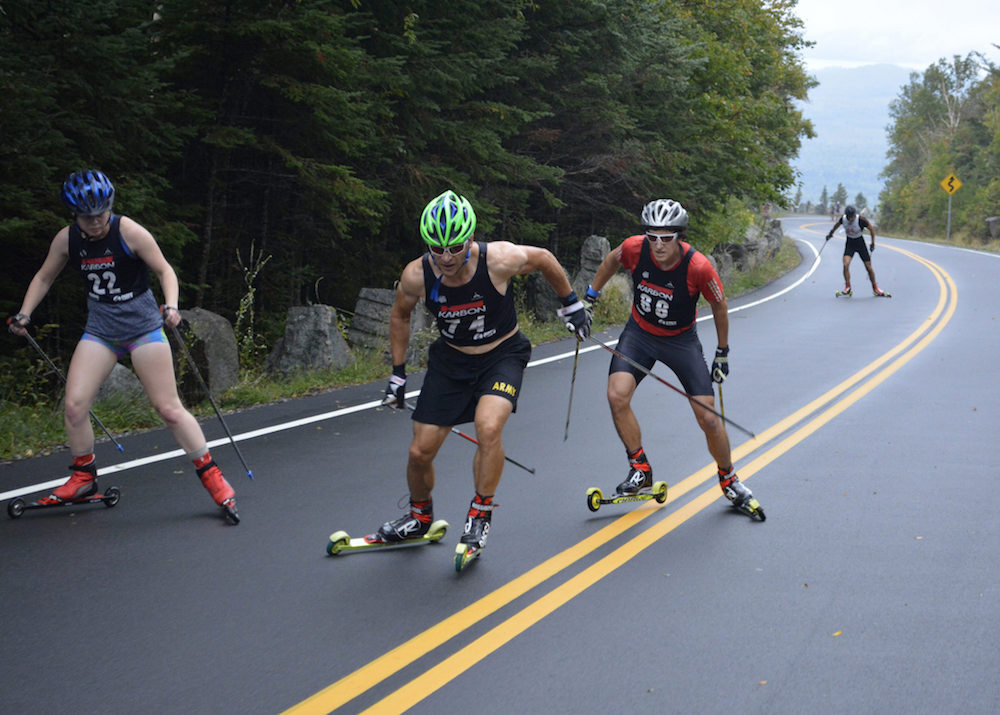
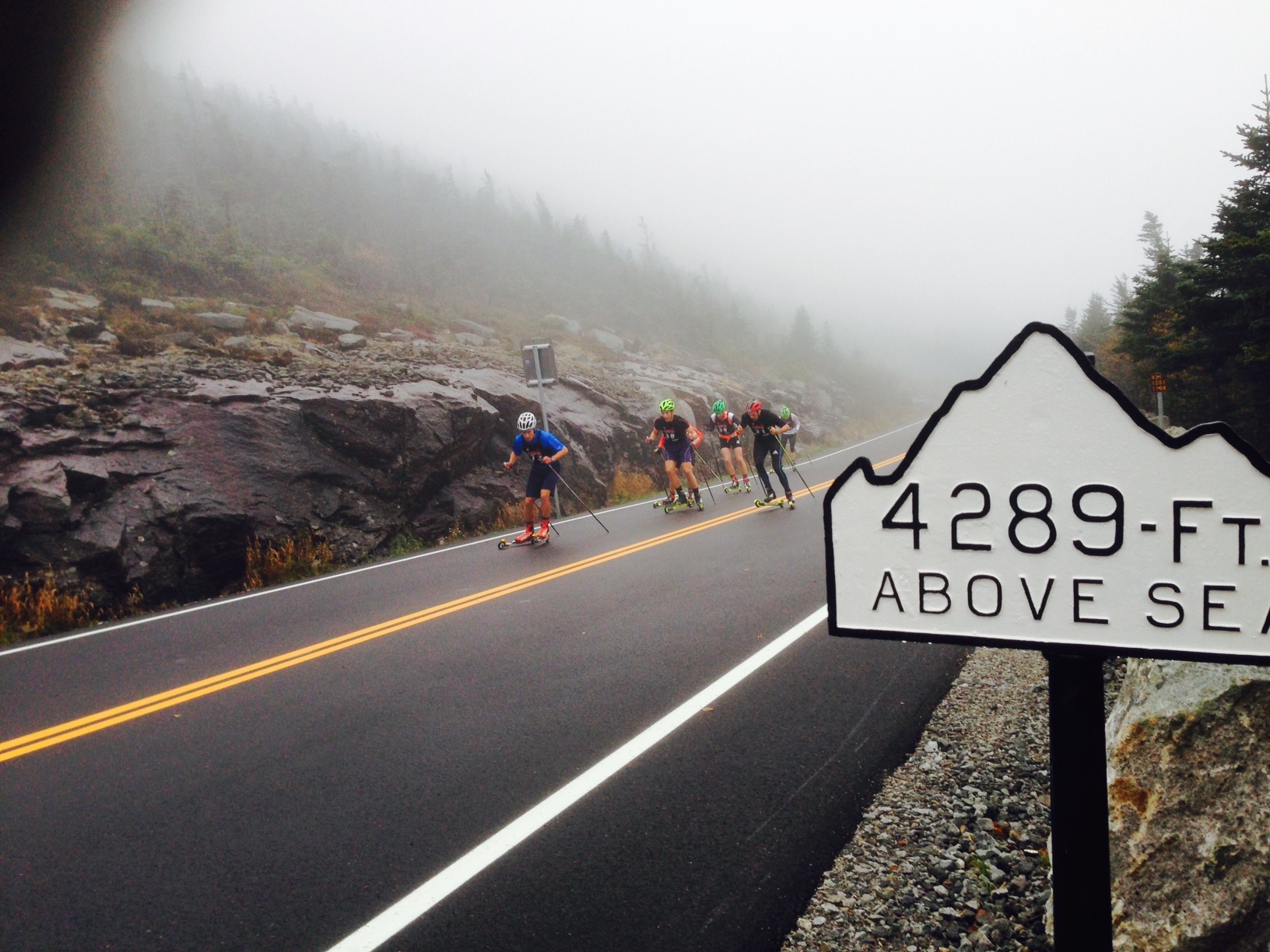
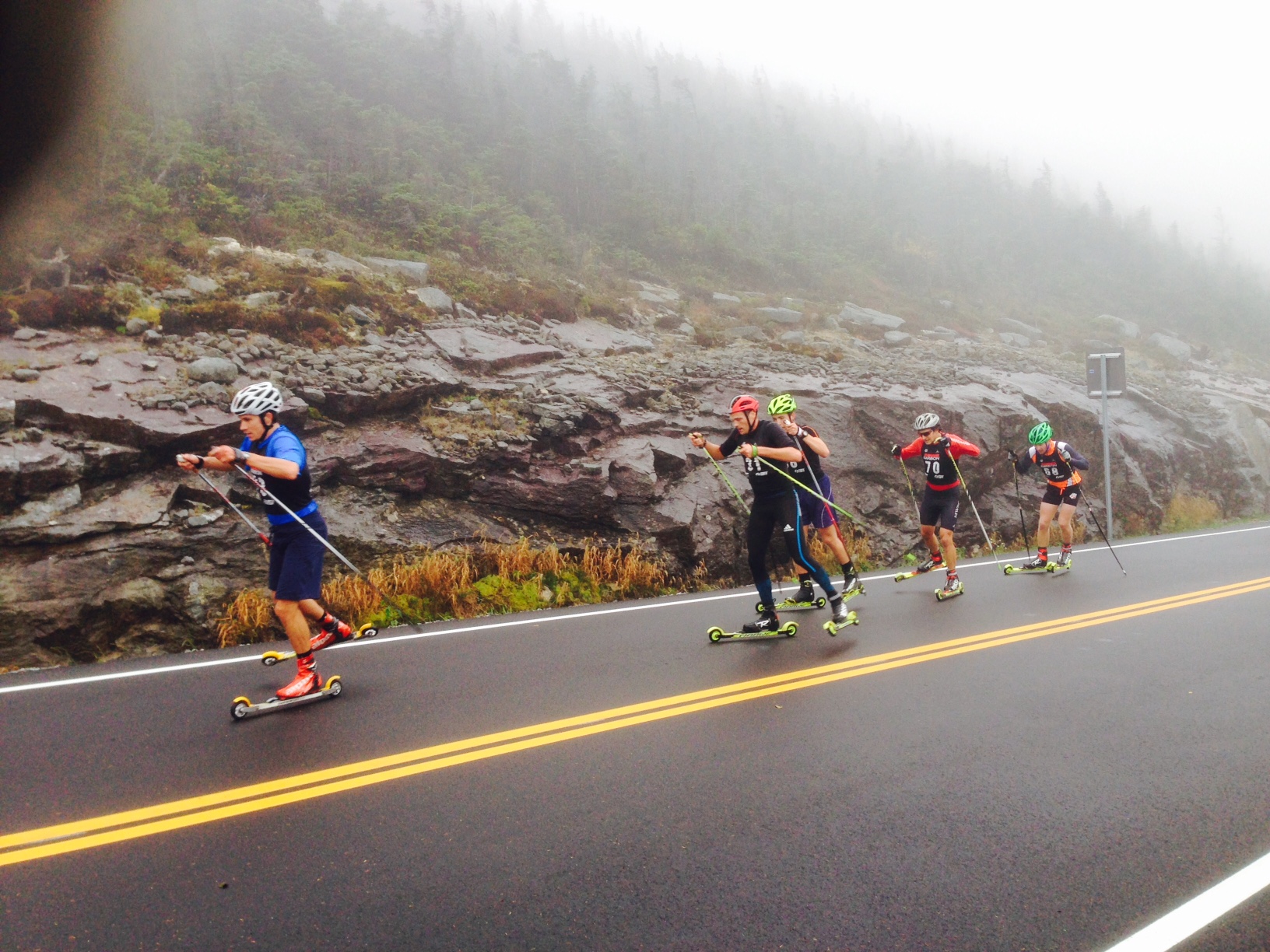
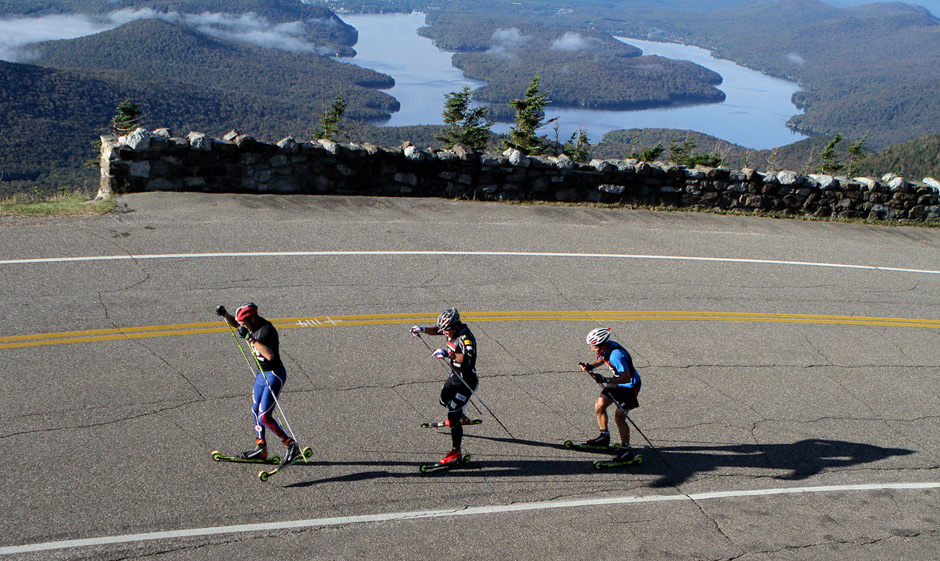
    Duncan Douglas (74) leads biathletes Russell Currier (in red) and Paul Schommer (behind) in Sunday's Climb to the Castle rollerski race up Whiteface Mountain. Douglas held off Currier by eight seconds for his third victory in four times racing the Climb and Schommer finished third. (Photo: NYSEF/Flickr)
    Duncan Douglas (74) leads biathletes Russell Currier (in red) and Paul Schommer (back right) in Sunday’s Climb to the Castle rollerski race up Whiteface Mountain, while Clarkson’s Jenevieve Broadwell (22) looks on. Douglas held off Currier by eight seconds for his third victory in four times racing the Climb and Schommer finished third. (Photo: NYSEF/Flickr)

    (Note: This article has been updated to include comments from third-place finisher Paul Schommer and NYSEF’s cross-country head coach Margaret Maher.)

    WILMINGTON, N.Y. — Four appearances and three wins is an enviable record. On Sunday, 50-year-old Robert Duncan Douglas, the “Jacked Up Old Man” from Honeoye Falls, N.Y., won his third Climb to the Castle (C2C) rollerski race, a five-mile freestyle hill climb up the Whiteface Memorial Highway.

    Douglas previously won the race in 2007 and 2008, with a personal-best time of 34 minutes, 56.6 seconds in 2007 (he was 2 1/2 minutes faster on a shortened course in 2008, when racers were unable to reach the summit because of snow). 

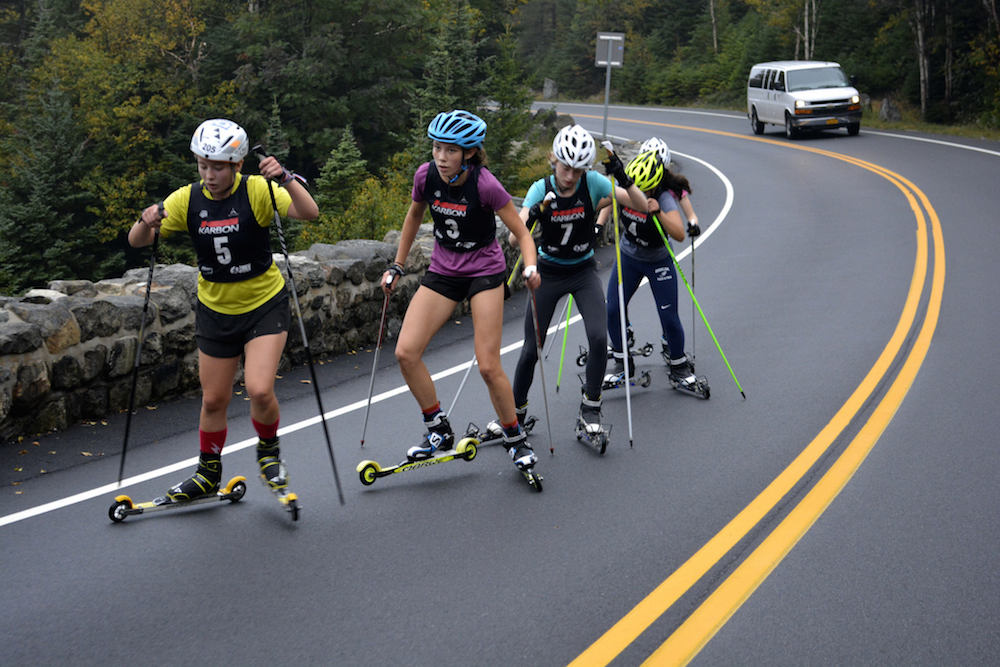
    St. Lawrence's Jackie Garso (5) leads Stratton's Anna Lehmann (3) and CSU's Hannah Rieders (7), Gabby Vandendries (4), and Madeline Rieders (in back)  during the women's Climb to the Castle rollerski race up Whiteface Mountain on Sunday in Wilmington, N.Y. (Photo: NYSEF/Flickr)
    St. Lawrence’s Jackie Garso (5) leads Stratton’s Anna Lehmann (3), and CSU’s Hannah Rieders (7), Gabby Vandendries (4) and Madeline Rieders (in back) during the women’s Climb to the Castle rollerski race up Whiteface Mountain on Sunday in Wilmington, N.Y. (Photo: NYSEF/Flickr)

    Hannah Rieders, a 17-year-old Cambridge Sports Union (CSU) skier whose initial goal was an age-group podium, won her first C2C, on the race’s 10th anniversary.

    Finishing in 37:15.6 this year, Douglas was 8.3 seconds ahead of runner-up Russell Currier, a biathlete who trains with the Outdoor Sports Institute in Maine. Paul Schommer, a senior member of US Biathlon’s National Development Group, placed third overall, 3:02.6 minutes behind Douglas.

    Rieders, a high-school senior from Wellesley, Mass., was the first woman across the line in 55:03.1. She beat Anna Lehmann, a ninth grader representing the Stratton Mountain School (SMS), by 15.7 seconds, and Rieders’s twin, Madeline (also of CSU), finished 1:23.3 minutes back in third.

    “I kind of thought maybe Anna would beat me,” Hannah Rieders said in a post-race interview. “At the start, I just wanted to pace it well. I stayed behind other people for the first three miles.”

    Overnight rain left the road damp. At the toll-booth start in Wilmington, temperatures hovered around 65 degrees under cloudy skies, with sultry humidity. Low clouds at the start turned dense up high near the summit. Unless you were really close to skiers in front of you, it was hard to gauge how far up the road they were, and how much energy one should expend to attack.

    (Story continues below)

    With the U.S. Ski Team wrapping up its New Zealand training camp in New Zealand, and thin representation from elite biathletes, the race was wide open.

    Margaret Maher, head coach of the New York Ski Educational Foundation (NYSEF) cross-country program, explained in an email that she learned in April that the U.S. Ski Team would not be comping to Lake Placid for its usual dryland camp this year. To accommodate the US Biathlon team, she originally scheduled this year’s Climb for next weekend, Sept. 25, but that date conflicted with other races NYSEF’s skiers planned on competing in.

    Maher had to move the race up one week in order for her athletes to attend. Regardless, 85 athletes registered this year, which was on par with the “73-108 athletes” that the race has previously attracted.

    Of the top-five female finishers on Sunday, four were under the age of 18, and Lehmann is a U16. With Jackie Garso (St. Lawrence University) placing fourth and Gabby Vandendries (CSU) finishing fifth, CSU had three in the top five.

    “First time [at C2C] for all three girls,” CSU coach Rob Bradlee wrote in an email. “All three also ran Mt. Washington for the first time in June. Tough kids! I don’t have them do any special prep for this race. Their regular six-days-per-week training clearly is enough to get them ready. All three are very hard workers and have been training hard all summer. I think their results show that.”

    Hannah Rieders explained that five women formed the lead pack. Around mile three, the eventual top three broke away.  They skied together until mile four, “then I went ahead,” Rieders said.

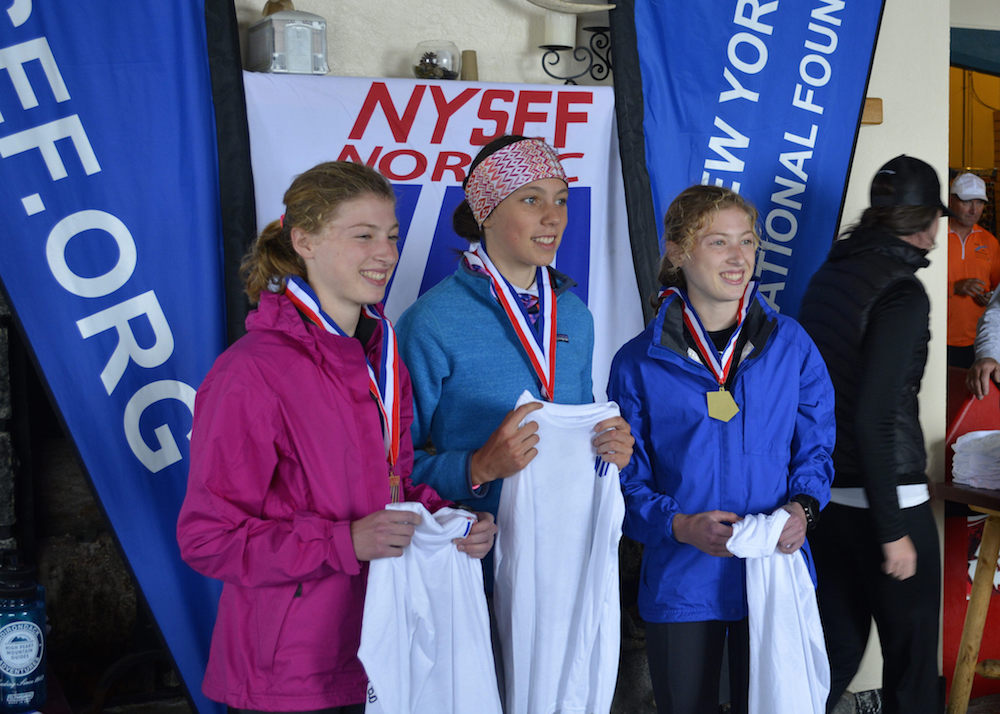
    The women's podium at the 10th Climb to the Castle rollerski race up Whiteface Mountain's Memorial Highway on Sunday in Wilmington, N.Y. With all of the top five under 18, Hannah Rieders (CSU) placed first, Anna Lehmann (SMS) was second, and Madeleine Rieders (CSU) was third. (Photo: NYSEF/Flickr)
    The women’s podium at the 10th Climb to the Castle rollerski race up Whiteface Mountain’s Memorial Highway on Sunday in Wilmington, N.Y. With all of the top five under 18, Hannah Rieders (CSU) placed first, Anna Lehmann (SMS) was second, and Madeleine Rieders (CSU) was third. (Photo: NYSEF/Flickr)

    Madeline Rieders said she skied in the pack until mile three, then pulled away with Hannah and Lehmann. While she lost contact with them on the road, which has an average grade of 8 percent, she maintained a steady gap to the finish and held off fourth place by 50 seconds.

    For the men, it was down to three from the start, according to Currier.

    “Paul, Duncan and I all took turns leading,” he wrote in an email.

    “I’m in better shape this year, but not rollerski shape,” Douglas said.

    For most of the summer, Douglas focused on bike racing, winning his 50-59 age group and placing 25th overall at the Leadville Trail 100 mountain-bike race. He said he just started rollerskiing two weeks before the Climb.

    Douglas, a two-time Olympian who will be 51 in November, had a simple race plan. “Go out, ski hard, have fun,” he reflected.

    For most of the race, Douglas skied with Currier. He dropped Currier once, but the 29-year-old former national-team biathlete regained contact. Douglas said that at the Lake Placid corner – a hard left where the grade eases and one can transition to V2 strides – he broke away to the finish.

    “Once the flat section towards the end started, I wasn’t able to match Duncan’s speed,” Currier wrote. “He was never very far out but enough to make a difference at that point in the race.”

    Of his race, Currier described it as “a solid effort. I really tried to use good technique. For a race that’s nothing but uphill, there’s not much else you can do.”

    In an email, Schommer explained this was his first Climb to the Castle.

    “I went into it with an open mind, knowing that if I killed myself in the first half the second half would be a death march,” the 24-year-old Wisconsin native wrote. “I would say it went decent for me as I was able to stay pretty strong most of the way, despite losing Russell and Duncan about 1.5 miles into the race.”

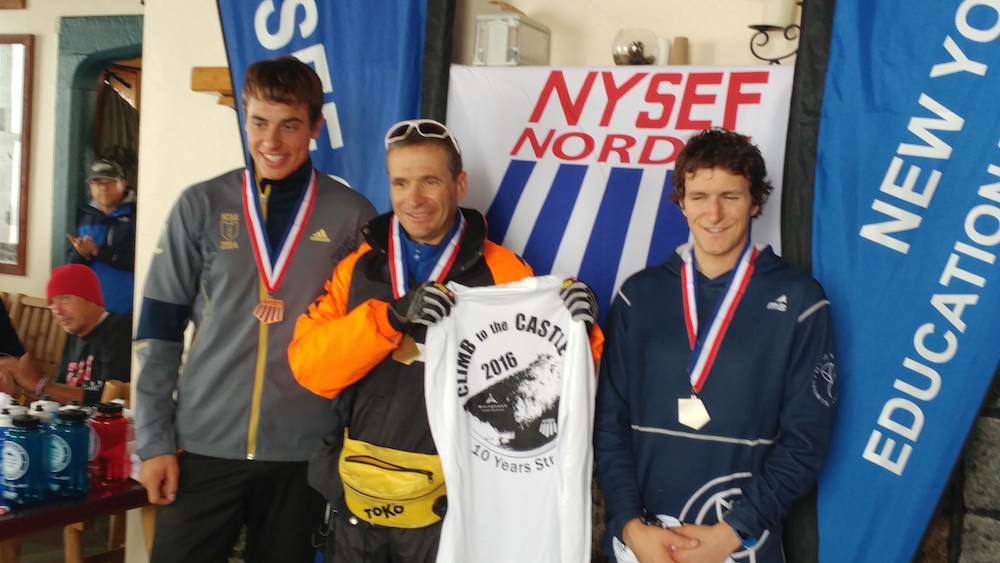
    The men's podium at the 10th annual Climb to the Castle rollerski race up Whiteface Mountain's Memorial Highway on Sunday in Wilmington, N.Y. Duncan Douglas (c) won, Russell Currier of the Outdoor Sports Institute (r) placed second and Paul Schommer (USBA National Development Group) was third. (Photo: Peter Minde)
    The men’s podium at the 10th Climb to the Castle rollerski race up Whiteface Mountain’s Memorial Highway on Sunday in Wilmington, N.Y. Duncan Douglas (c) won, Russell Currier of the Outdoor Sports Institute (r) placed second and US Biathlon development skier Paul Schommer (l) was third. (Photo: Peter Minde)

    Is the Climb to the Castle a data point for winter fitness?

    “It’s a good, effective workout, really good training,” Currier explained, adding that he didn’t think it was a good indicator of fitness in December or February.

    “I was really happy with how it turned out,” said Adam Glueck, a Ford Sayre U18 skier who finished seventh (+7:52.4) in his first C2C. “I didn’t want to go too hard out of the start. I followed some friends and threw in some double pole to rest my legs.”

    Glueck skied in a small group he eventually lost contact with about halfway through.

    “I managed to catch them on the V2 straight [the Lake Placid corner]. After that, my friend Henry McGrew [eighth overall] was right behind me,” he said. “I had to push hard through the headwind [the last 500 meters] to beat him. I was basically in agony for the last three or four minutes.”

    Agony and clouds: good metaphors for the Climb to the Castle. When athletes returned to the base, the sun was breaking out.

    Results: Men | Women

    Photo gallery

  • ‘Equal and Reasonable Access’: The Issue of Trail Use at Mt. Bachelor

    ‘Equal and Reasonable Access’: The Issue of Trail Use at Mt. Bachelor

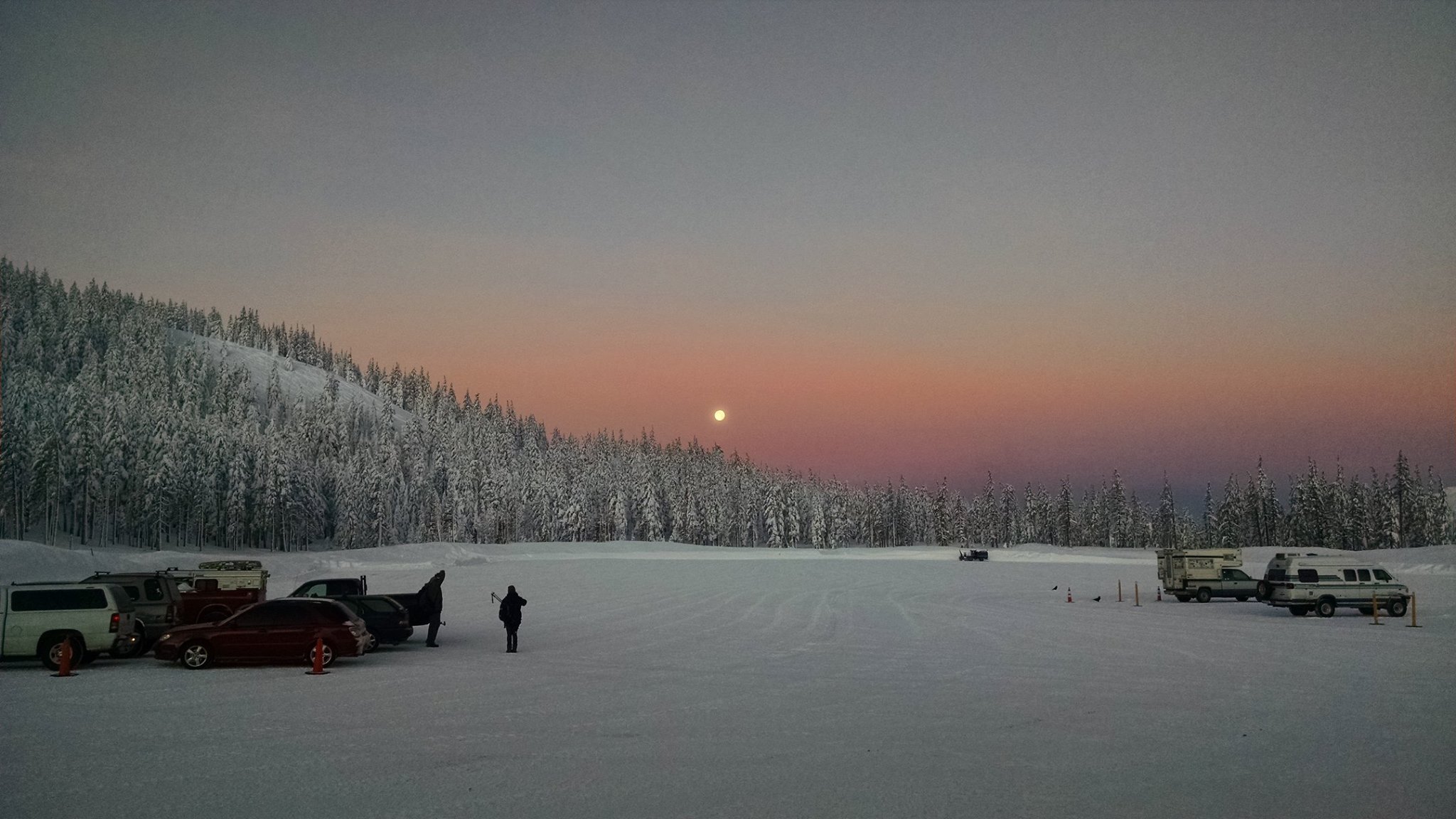
    New Year's Eve at the Mt. Bachelor Nordic Center near Bend, Ore. (Photo: Rion O'Grady/Mt. Bachelor Nordic Center Facebook)
    New Year’s Eve at the Mt. Bachelor Nordic Center near Bend, Ore. (Photo: Rion O’Grady/Mt Bachelor Nordic Center Facebook)

    Is there room at one ski center to support two junior development programs? In central Oregon, it depends on who you ask.

    Mount Bachelor, 22 miles outside Bend, Ore., is a touchstone for nordic skiers. Located in Deschutes National Forest, Mt. Bachelor operates with a special use permit from the US Forest Service (USFS). The U.S. Ski Team has run training camps here and they’ve hosted national championships. In addition, there’s an extensive alpine mountain. With a base lodge at 6,300 feet above sea level, the venue boasts generally good snow conditions.

    Mt. Bachelor has a longstanding relationship with the Mt. Bachelor Sports Education Foundation (MBSEF), a nearly 30-year-old nonprofit which has development programs for nordic, alpine and freestyle skiing. MBSEF runs its ski programs on the trails at Mt. Bachelor.

    The much-newer Bend Endurance Academy (BEA), a nonprofit founded in 2009, would like to share the trails — at least, in low snow years. Except for a couple of rare occasions, BEA has not had permission to run its programs on Mt. Bachelor.

    Since its inception, BEA has used Meissner Nordic, a nonprofit ski center also located on Mt. Bachelor. Run by volunteers, Meissner Nordic grooms 40 kilometers of ski trails on US Forest Service land.

    It’s all good, until the weather doesn’t cooperate. Located 1,500 feet lower on Mt. Bachelor than the eponymous ski area, the previous two winters, 2013/2014 and 2014/2015, were difficult for Meissner, while Mt. Bachelor enjoyed better conditions higher up the mountain.

    In February 2015, BEA approached Mt. Bachelor resort officials about using public lands at the Mt. Bachelor Nordic Center. They denied BEA’s request, except for the last two weekends of the season.

    A group of Bend Endurance Academy youth skiers in February. (Photo: Ryder "the Badger" Utrecht/Bend Endurance Academy Facebook)
    A group of Bend Endurance Academy youth skiers in February 2016. (Photo: Ryder Utrecht/Bend Endurance Academy Facebook)

    This year, the academy has circulated a petition called Let the Kids Ski, calling for more access to Mt. Bachelor.

    “There are two places in central Oregon that have groomed nordic trails,” said BEA Board President Cris Himes. “Meissner Nordic and Mt. Bachelor. Meissner has worked very well until recently due to ski conditions.

    “What we’re looking for is equal and reasonable access,” Himes continued. “Equal to any other paying customer and community group.”

    According to Dave Rathbun, Mt. Bachelor’s former president and general manager who resigned in mid-March, the resort had existing relationships with four businesses “to run their businesses sort of inside our own,” he said. “We still have to get approval from the Forest Service for these concessionaires.”

    MBSEF, whose board Rathbun also sat on, is the designated concessionaire for nordic and alpine ski programming. Rathbun is no longer a member of that board.

    In a December interview with the Bend Bulletin, Rathbun characterized BEA’s interest in Mt. Bachelor as a desire to use the resort as “a home base for their business.”

    “[BEA] want to operate their business within ours, and in most cases at a time when we’re already at capacity,” Rathbun told FasterSkier. “It’s very busy at the times they want to have access.”

    Rathbun added that Mt. Bachelor is “at capacity” for instruction in both in nordic and alpine skiing. “We’re not going to open it up to any other concessionaires.”

    In addition to its own paying customers, Mt. Bachelor’s agreement with the USFS requires the resort to accommodate people who want to access backcountry skiing via a “common corridor.”

    According to Rathbun, “that’s another 10,000 visits per year,” in addition to about 30,000 visitors per year skiing Mt. Bachelor.

    Himes feels that the lodge might be crowded, but believes that the trails are not. For her, the primary issue is ensuring that kids have access to skiing. The lack of decent snow is a barrier to participation, and this is reflected in the numbers. Although BEA’s competition team is larger than last year, the enrollment in its youth club and nordic development programs is down 38 percent and 28 percent respectively from the 2014/2015 season.

    “Last year Mt. Bachelor did a remarkable job of keeping their snow,” Himes said. “When we can’t run our programs at Meissner, we need to be able to take our kids to groomed trails somewhere else. The only option is Mt. Bachelor Nordic Center.”

    New Year's Day 2016 at the Mt. Bachelor Nordic Center near Bend, Ore. (Photo: Lew Becker/Mt Bachelor Nordic Center Facebook)
    New Year’s Day 2016 at the Mt. Bachelor Nordic Center near Bend, Ore. (Photo: Lew Becker/Mt Bachelor Nordic Center Facebook)

    During the snow drought two seasons ago in 2014/2015, Rathbun reflected, “I wanted to be a good neighbor. We gave BEA access to nordic center in afternoons, the last couple of weekends in March. I think it worked out well and they appreciated being able to get on snow.”

    In a July email to BEA, Rathbun offered the academy access on Tuesday and Thursday afternoons and weekends after 12 p.m., with certain blackout dates during peak periods. These times apparently didn’t match BEA’s program schedule, and according to Himes, left only three weekends out of the winter for training. In September, Himes met with Rathbun to negotiate more favorable access times, to no avail.

    “I’m really sorry about that, but that’s the only way we feel it can work, based on how crowded we are,” Rathbun told FasterSkier.

    “I can see both sides,” said Alan Watson, the Pacific Northwest Ski Association (PNSA) nordic program director. “My interest is in promoting the success of all these programs. I would like Mt. Bachelor to let BEA train on their trails. It would be good for skiing in the northwest.”

    Is trail crowding a red herring? Rathbun said that BEA skiers were welcome to come up and ski so long as they had a pass, but that organized training with a coach wouldn’t be permitted – except at the times listed above.

    Does Mt. Bachelor wield trail access as a cudgel? From a distance, it’s hard to tell. But FasterSkier obtained three documents sent anonymously to Himes. One was Oregon School Ski Association’s (OSSA) participation policy. OSSA is one of the two governing bodies for high-school alpine skiing in central Oregon, and holds race meets at Mt. Bachelor. Circulated in December 2014, the policy required students on high school ski teams to participate in four training sessions each week, including races.

    OSSA Race Director Matt Cutter said that there were students that participated in both high school and club programs, and that OSSA’s goal with this policy was to instill team unity.

    “We don’t want ringers,” Cutter said of athletes who only show up for race meets. “We needed to get something in writing.”

    The other two documents, both dated Jan. 8, 2015, are responses from Rathbun and John Scheimer, MBSEF’s executive director, to OSSA. Rathbun’s letter decried OSSA’s participation policy, stating that it would negatively impact “students who club race with MBSEF and have other extracurricular interests.” The letter concluded, “…with our strategic partner MBSEF, we [Mt. Bachelor] will be reviewing all elements of OSSA activities occurring on Mount Bachelor. … Any changes in these privileges will be communicated to you as soon as possible.” Scheimer’s letter to OSSA was written in a similar tone.

    Scheimer declined an interview request for this article.

    In response to the letters, Cutter said that OSSA rescinded its policy. “That was not our intention at all” to exclude anybody, or force a student to choose between a club program and the high school team, Cutter explained.

    Cutter viewed the disagreement as minor, adding, “I can’t stress enough how much support Mt. Bachelor gives us.”

    Rathbun said that his letter was actually in response to scheduling conflicts between OSSA and OISRA, a second governing body for Oregon high school alpine skiing. However, neither his letter nor Scheimer’s make any reference to OISRA. Cutter said that while Rathbun discussed scheduling with OISRA, it was in correspondence from August 2015.

    “The kids know each other, the parents know each other, we support each other’s kids,” said Himes of BEA and MBSEF. “I am really hoping that we will be working cooperatively with MBSEF.”

    With good conditions this winter, trail access at Mt. Bachelor wasn’t as crucial. Next year may be a different story.

  • State Takes Over Weston, Boston Ski Nonprofit ‘Cautiously Optimistic’

    State Takes Over Weston, Boston Ski Nonprofit ‘Cautiously Optimistic’

    Skiers get on snow at the Weston Ski Track in Weston, Mass. (Photo: Jamie Doucett)
    Skiers get on snow at the Weston Ski Track in Weston, Mass. (Photo: Jamie Doucett)

    It’s a transition that has some of the Boston ski community nervous. But after initial skepticism, there may be reconciliation as Boston’s most accessible nordic-ski area, the Weston Ski Track, opens this winter under new management.

    This winter, the Massachusetts Department of Conservation and Recreation (DCR) will take over the ski operation on the state-owned Leo J. Martin golf course in Weston, Mass.

    In a 12-hour span on July 31, the DCR informed both Larry Smith, the owner of Charles River Recreation, which has run Weston for the last 40 years, and the Friends of Leo J. Martin Skiing (FOLJMS), a nonprofit that advocates for Boston-area skiers, that the state would take over ski operations this winter.

    “It caught everybody by surprise,” Smith said in a phone interview.

    The proprietor for Charles River Recreation (CRR), which also runs Charles River Canoe & Kayak and Community Ice Skating in nearby Cambridge, Mass., Smith has operated his business by partnering with the DCR and local municipalities for decades. While he will no longer be in charge of Weston, he remains a consultant for the DCR.

    Skiers compete in a nordic race at the Weston Ski Track in Weston, Mass., outside of Boston.  (Photo: Jamie Doucett)
    Skiers compete in a nordic race at the Weston Ski Track in Weston, Mass., outside of Boston. (Photo: Jamie Doucett)

    With 42,000 skier visits last winter, the Weston Ski Track is a key resource for local skiers. In contrast, New York’s Regional Olympic Development Authority (ORDA) reported 35,000 skier visits last season at Mount van Hoevenberg in Lake Placid, N.Y.

    Weston’s 15-kilometer trail system hosts a wide range of skiers, including the Harvard nordic team, the Cambridge Sports Union’s (CSU) juniors and master programs, an adaptive program, a high-school league, as well as thousands of recreational skiers who want to get out and glide after work.

    After 40 years of management by Smith and CRR, skiers were concerned about the future. Part of the community’s concern was the DCR’s lack of ski expertise, and part is due to recent history.

    “We have been wrestling with the DCR for the past two years,” Rob Bradlee, CSU’s head coach and a member the FOLJMS advisory board, wrote in an email.

    “[The previous administration] tore down the old driving range poles and nets and in the process tore down Weston Ski Track’s lights and electric power,” Bradlee wrote. “They did this without any warning or consultation. Weston had to use temporary construction-site lights for the past two years.”

    “Last year, they closed off two very hilly fairways that we use with natural snow,” he added. “So, in the best snow winter ever we couldn’t ski on the few decent hills the place has.”

    There are concerns about snowmaking. Twelve miles outside Boston, the old Weston depended as much on snowmaking as natural snow.

    According to Bradlee, because the DCR failed to sign a contract with CRR in time to allow snowmaking at the start of a warm December, Weston wasn’t open for skiing until after Christmas last year.

    The New England Nordic Ski Associaton (NENSA) 2015 Club of the Year, CSU is a powerhouse local club with a strong junior program. The bulk of its winter training takes place at Weston, thanks to its central location and night skiing. If DCR stumbles and the worst happens, there aren’t convenient alternatives.

    “There is NO alternative,” Bradlee wrote. “We’d rely on dryland training and driving on the weekends to find snow.”

    “I don’t think it’s an option for [DCR] to fail. That’s not to say I don’t think it will be rough.”  — Chris City, head coach of the Harvard University nordic team

    Windblown in southern New Hampshire is one of the closest alternatives, but it’s a 90-minute drive from downtown Boston and doesn’t offer night skiing. By contrast, Weston is a 30-minute drive for many Bostonians and has illuminated trails at night.

    An athlete trains at night on the illuminated trails at the Weston Ski Track in Weston, Mass. (Photo: Jamie Doucett)
    An athlete trains at night on the illuminated trails at the Weston Ski Track in Weston, Mass. (Photo: Jamie Doucett)

    “They’re not skiers, they don’t know anything about operating a ski facility,” Chris Doyle, FOLJMS’s board chairman, said in a phone interview. “They clearly were not going to be able to do this on their own without any advice. We’d end up by default with a bad product. We reluctantly decided we had to tell them what’s needed in order to run the place.”

    DCR Deputy Commissioner Matthew Sisk said on the phone that the decision to takeover Weston had “nothing to do with protecting the interests of golf and all to do with fulfilling our mission here at DCR, which is to conserve open land, protect and provide high quality recreation opportunities.”

    Sisk acknowledged that it was a big change, adding, “This is going to be a good experience. We’re going to have a great season this year, people are going to see an increase in the amount of skiing they have available to them.”

    FOLJMS had developed a master plan for skiing at Weston, which they submitted to the DCR in August. They envisioned FOLJMS managing skiing there, and their plan details short- and long-term infrastructure improvements, including new ski trails, a rollerski loop and an expanded lodge. Doyle said that while the DCR was impressed with the scope of the document, it decided to pursue its own course.

    Since then, FOLJMS and DCR have met several times to discuss operations.

    Asked whether DCR would implement any of recommended improvements, Sisk said, “Speaking specifically to their master plan is not something I’m going to do. I can tell you we’ve actively worked with [the FOLJMS] president, board, and membership to make this a smooth transition.”

    This winter, DCR plans to re-open the Mount Weston hills and make snow on three kilometers of track, up from 2.5 k during the CRR era.

    “I wouldn’t have discovered skiing without Weston,” said Harvard’s head nordic coach Chris City.

    He began skiing at Weston in 1985. While City wasn’t pleased how the change transpired, he said the DCR has been receptive to the ski community’s input on running Weston.

    Junior and master skiers share prime-skiing space at at the Weston Ski Track in Weston, Mass., outside of Boston. (Photo: Jamie Doucett)
    Junior and master skiers share prime-skiing space at at the Weston Ski Track in Weston, Mass., outside of Boston. (Photo: Jamie Doucett)

    Like CSU, Harvard depends on Weston as a training venue. Without it, he said they’d have find alternate places to ski, but he doesn’t expect they’ll have to.

    “I don’t think that’s in realm of anybody’s expectations this winter,” he said. “[The DCR] has purchased some good snowmaking and grooming equipment.”

    Whatever the past history, the DCR appears to be putting its best foot forward. It purchased a new PistenBully and four Snow Machines, Inc. (SMI) Super PoleCat snow guns, and bought CRR’s water supply system.

    “We’re going to be doing more night skiing because of the close to $1 million lighting project that we did,” Sisk said.

    According to the MetroWest Daily News, the state is replacing older lighting with modern, energy-efficient systems. In addition, trail fees will be lower than last winter.  According to a fee schedule forwarded by DCR, adult day passes will be two dollars less than last year, and an adult season pass will be $189 as opposed to $225.

    Running Weston with a series of a short-term contracts from DCR, Smith said it would have been difficult to make the sort of capital investment that DCR did.

    Although CRR may not run Weston per se, DCR hired Smith to consult on snowmaking. While state employees will make snow and groom trails, Smith will provide training and guidance, and, for this winter at least, CRR will operate rentals and ski instruction.

    “I don’t think it’s an option for [DCR] to fail,” City said. “That’s not to say I don’t think it will be rough.”

    City added that coming in brand new, DCR don’t have the institutional knowledge Charles River Recreation (CRR) acquired over 40 years.

    “With anything this complicated, you expect some bumps in the road,” City said.

    “Lots of capital investment, much more willingness to listen to our ideas, but a huge assumption that [DCR] can run the operation,” Bradlee wrote. “It’s going to be an interesting winter.”

    In a follow-up interview, Doyle explained, “Given that this is the path that they’ve chosen, we feel like they’re making good progress,” while adding, “It’s not clear to us that they’re going to open on time.”

    The lighting project, which will benefit skiers in the long term, may not be completed by the end of November, she explained. It was supposed to open the first week in December, and the DCR is now saying skiing will start in mid-December.

    “We’re cautiously optimistic,” Doyle concluded.

  • Wednesday Workout: Quality Level 3 and 4 for the Working Class

    Wednesday Workout: Quality Level 3 and 4 for the Working Class

    The leaders in this year's 2015 Climb to the Castle rollerski race up Whiteface Memorial Highway in Wilmington, N.Y. Rogan Brown of the Sun Valley Ski Education Foundation (SVSEF) leads around mile four of five. (Photo: Tim Cowan)
    The leaders in this year’s 2015 Climb to the Castle rollerski race up Whiteface Memorial Highway in Wilmington, N.Y. Rogan Brown of the Sun Valley Ski Education Foundation (SVSEF) leads the top men around mile four of five. (Photo: Tim Cowan)

    On the day after my 58th birthday, I raced the Climb to the Castle. Again. It’s an incredible thrill to be on the same starting line as the best skiers in the U.S., even if I finish towards the back. This year, I finished within 6 seconds of my best time. And for the first time, instead of being totally gassed for the final half mile, I had good energy all the way to the finish.

    Peter Minde nears the finish of the Climb to the Castle in 2011.
    Author Peter Minde nears the finish of the Climb to the Castle in 2011.

    During the dryland season, my goal is to do one Level 4 and one Level 3 workout each week. I hate to admit it, but now there are now some days when my body revolts and says, “Enough! You’re not finishing this interval session.” To that end, I try to make sure I’m really rested.

    I take into account my work and my family commitments as well as the stuff in the training log. I hate conceding workouts, but nowadays, I’d rather do one really good interval workout rather than two mediocre sessions.

    Although I have good terrain for dryland training, I don’t have super long hills. For a Level 4 workout, either running or rollerskiing, I’m going up a hill, back down and repeat. The recovery time is always a little longer than the actual work period. Not best practice, but possibly beneficial at my age.

    “I hate conceding workouts, but nowadays, I’d rather do one really good interval workout rather than two mediocre sessions.” — Peter Minde, FS contributor and annual Climb to Castle competitor

    Workout 1: 5 x 5 Minutes Level 4, Uphill Running

    My bread-and-butter Level 4 workout is five repeats, five minutes, going uphill.

    I do this either running or rollerskiing. It’s OK if the pitch varies, but the final few hundred meters should be the steepest. Generally, I run in the woods, and I use trails that aren’t excessively technical.

    Warm up with dynamic stretching, then run 15 minutes at Level 1 in rolling terrain.

    Then go 5 minutes up your hill at Level 2. Return downhill, and repeat with 5 minutes in Level 3. Finish that, go down, and you’re ready for the main event.

    In the Level 4 section of the workout, I focus on starting in the lower end of my heart-rate range and increase the intensity over each interval. At the base of the hill, I moose hoof the first 30 meters before settling in to a run. During each repeat, I focus on positive self talk.

    Workout 2: 5 x 5 Minutes Level 4, Rollerskiing

    As with the running intervals, look for a long hill. It’s OK if there are rolling or short downhill sections; however, the final section of the hill should be steep enough that you have to check speed – snowplow, traverse, whatever – to return downhill safely.

    Warm up as above. Fifteen minutes in Level 1, followed by 5 minutes of Level 2 and five minutes of Level 3.

    As with running, my goal is to start conservatively and make the last interval the hardest. In addition to positive self talk, I focus on skiing transitions smoothly. If I’m classic rollerskiing, I’ll double pole a flat section and the base of the climb before changing to striding. If I’m skating, I try to V2 as much of the uphill as I can, or V1 the steep bits and switch to V2 where the grade is easier.  Don’t forget the warmdown and stretching.

    Workout 3: 3 x 15 Minutes, Running

    While I do this on rollerskis, I prefer to run, because I’m able to keep recovery times to 3-5 minutes between hard work periods. Find a loop in the woods that takes approximately 14-16 minutes to run.  It should be rolling with some long uphills.

    Warmup: Similar to the Level 4 workouts above. Begin with dynamic stretching, followed by 15 minutes of easy running.

    Ramp up your heart rate to Level 2 for five minutes, then head onto your loop and crank it up to a controlled pace.  In downhills, I pick up the pace to keep my heart rate in the zone.  At the end of 15 minutes, a short connector gives me around five minutes of recovery before the next repeat.

    Then I run easy back to the car, for 15-20 minutes warming down.

  • New to the Climb to Castle Winners’ Circle: Caldwell and Rose Top Whiteface Race

    New to the Climb to Castle Winners’ Circle: Caldwell and Rose Top Whiteface Race

    Paddy Caldwell of the U.S. Ski Team D-team and SMST2 Team won Sunday's Climb to the Castle up Whiteface Mountain in Wilmington, N.Y. Here, around mile four of five, he's seen leading the pack, which includes biathletes Russell Currier and Tim Burke, and Rogan Brown (SVSEF) and Kyle Bratrud (CXC). (Photo: Tim Cowan)
    Paddy Caldwell (black shirt, yellow helmet) of the U.S. Ski Team D-team and SMST2 Team chases Rogan Brown (l) around mile four of five in  Sunday’s Climb to the Castle up Whiteface Mountain in Wilmington, N.Y. Caldwell won the race, followed by biathletes Russell Currier and Tim Burke in second and third, respectively. Brown (SVSEF) placed fourth and Kyle Bratrud (CXC) was fifth. (Photo: Tim Cowan)

    Note: Two photo captions have been corrected to reflect the leader of the men’s race around mile four in the 2015 Climb to the Castle. Rogan Brown of Sun Valley led the pack at the time.

    For years, U.S. Nordic Ski Team athletes and their coaches trucked themselves up to the start of the Whiteface Veterans Memorial Highway, clicked into their rollerskis and allowed an ample amount of time for warming up before ascending New York’s fifth highest peak.

    Before it became an official race nine years ago, it was a workout: a five-mile grind to the summit of Whiteface Mountain, 4,867 feet above sea level in Wilmington, N.Y.

    Now, for many top-level skiers, especially those based on the East Coast, the annual Climb to the Castle an offseason staple. And if you win, you get a T-shirt and a medal for your efforts.

    Mary Rose (SVSEF) leads US Biathlon's Annelies Cook up the Whiteface Mountain toll road during the annual Climb to the Castle. Rose won and Cook finished second, 32 seconds later. (Photo: Tim Cowan)
    Mary Rose (SVSEF) leads US Biathlon’s Annelies Cook up the Whiteface Mountain toll road during the annual Climb to the Castle. Rose won and Cook finished second, 32 seconds later. (Photo: Tim Cowan)

    “Climb to the Castle was a blast this year!” wrote women’s winner Mary Rose of Idaho’s Sun Valley Ski Education Foundation (SVSEF) Gold Team. “My goal going into this race was to have good energy the whole time, focus on technique and hopefully put together a good effort.”

    She reached the top on Sunday in 45:15.1 and topped her competition — the closest of which was US Biathlon’s Annelies Cook — by 32.6 seconds.

    “It was a fun, tough effort,” men’s winner Patrick Caldwell of the U.S. Ski Team D-team and Stratton Mountain School (SMS) T2 Team said in an interview after the finish.

    The 21-year-old Caldwell outlasted biathletes Russell Currier and Tim Burke by 5 and 11.5 seconds, respectively. Caldwell won in 37:05.2, Currier was second and Burke was third.

    “Right from the start, we stayed pretty much together against a decent headwind,” Burke said after the finish. “I think a lot of us were fatigued at the end of a big camp, so I didn’t really want to push like crazy.”

    The US Biathlon and U.S. Nordic teams spent at least the last week training in Lake Placid, N.Y., with biathletes like Burke logging five race efforts in nine days preceding the Climb.

    “I decided today instead of going for time, I wanted to go for the win,” said Burke, a defending multiple-time Climb to the Castle (C2C) champion. “So I decided to sit in and push that last half mile.”

    Paddy Caldwell of the U.S. Ski Team D-team won today's Climb to the Castle up Whiteface. Here he's seen around mile 4 leading the pack, which includes veteran biathlete Tim Burke (who placed 3rd). (Photo: Tim Cowan)
    Rogan Brown (l) of Sun Valley leads Tim Burke (second from l) and Paddy Caldwell (third from l) and Russell Currier and Kyle Bratrud around mile four in Sunday’s Climb to the Castle up Whiteface Mountain in Wilmington, N.Y. (Photo: Tim Cowan)

    He said he “did a lot of pulling and got some help towards the end.” Rogan Brown (SVSEF) led around mile four, and Burke explained that five men battled in the lead pack for the last two miles.

    “I broke my pole in the last couple hundred meters, that kind of took me out of it,” he explained.

    Caldwell took the blame what he called an “unfortunate incident” in the final 200 meters. “I broke Tim Burke’s pole,” he said. He did so when Burke made his final attack toward the finish.

    “Aside from that, it was a good, solid race,” Caldwell said.

    “It’s a good way to end it,” Burke said after 10 days of hard training.

    Currier, who placed second, called it an “entertaining race” with five men contending throughout.

    “For a rare change I was able to be on the better side of tactics and consistently stay in the back of the pack,” Currier wrote in an email. “On the other hand, the final 100 meters came up a lot earlier than I expected and didn’t give much time to react. The pace picked up and Tim Burke lost a pole tip. The next thing I knew there was an opening for the lead. I’m not much of a sprinter and didn’t do much to challenge Patrick, but was I was still pleased to break out of the back of the pack just in time for the podium.”

    A former US Biathlon (USBA) B-team member, Currier, who trains with the Maine Winter Sports Center, was not renamed to the team this spring and is working towards making the cut via a series of trials ending in October.

    “The status for the National team is still very unclear,” he wrote. “… All I can do is make the best of every training session and go for better results. The second round of trials is coming up in October. A couple of good enough results there should help my cause for the coming race season.”

    Brown placed fourth in the men’s race, 4.3 seconds from the podium and 15.8 seconds after Caldwell. Brown edged Kyle Bratrud of Central Cross Country (CXC) by 0.3 seconds, and behind them, another CXC skier Duncan Douglas placed sixth.

    USBA’s Sean Doherty and Lowell Bailey finished seventh and eighth, respectively, Miles Havlick (SVSEF) was ninth and developing biathlete Max Durtschi finished 10th of 61 men.

    The start of the women's race at the 2015 Climb to the Castle up Whiteface Mountain in Wilmington, N.Y. (Photo: Peter Minde)
    The start of the women’s race at the 2015 Climb to the Castle up Whiteface Mountain in Wilmington, N.Y. (Photo: Peter Minde)

    In the women’s race, Rose and Cook pushed each other to the top. Rose recalled it being just the two of them shortly after the start. A perennial contender, USBA’s Susan Dunklee had some pole issues at the very beginning, Rose explained in an email.

    “I knew I needed to break away about 1/2 mile to the finish because I can’t beat [Cook] in a sprint,” Rose wrote. “I fought pretty hard through the ‘wind tunnel’ and I think that is where I broke away.”

    Overnight rain left the toll road wet, and wind dried out its lower sections. From about the halfway point to the finish, skiers pushed through mist on wet pavement and faced a steady wind blowing 10 to 20 miles per hour throughout the race. After starting in temperatures around 47 degrees Fahrenheit, they met temperatures in the mid-30’s at the top.

    “It sounds weird to say it aloud, but I actually had fun doing the climb to the castle,” Cook wrote in an email. “Mary and I skied together the entire time and switched leads back and forth. I usually get bored doing the climb and lose focus and switching back and forth with her kept me in the game mentally.

    “She got me at the last turn right before the finish when I suddenly flooded with lactic acid and had no chance,” she added. “But I don’t really think of myself as a climber and so it was fun to be the two people leading the race. That doesn’t happen too often! Of course, the usual suspects were not there and that obviously made it difference.”

    With the exception of Paddy Caldwell, the U.S. Ski Team (USST) skipped the Climb this year for the first time in years.

    “As hard as it is to miss it because it is a fantastic event, it just didn’t play well athletically for the needs of the group,” USST Head Coach Chris Grover said on the phone last week. “We wanted to do more sprint-specific training and short intensity as opposed to giving up a whole workout or two to do the Climb to the Castle.”

    The USST camp was also only a week long, compared to the two weeks the team usually spends in Lake Placid this time of year. On the other hand, the largely Lake-Placid-based US Biathlon team did either time trials or Level 5 (race-pace) workouts for last 10 days.

    “I had my personal best by quite a lot and I felt strong skiing,” Cook said of the Climb. “It felt good to end a really tough ten days on a good note. … I think we are all pretty glad to be done.”

    The Climb marked the end of a two-week training block for Rose and her Sun Valley teammates, who were in Stratton, Vt., with the SMST2 team for the first week.

    “We had some super hard intensity sessions over the past two weeks and all were very productive,” Rose wrote.

    USBA’s Hannah Dreissigacker, who placed third, 2:05.9 after Rose, explained in an email that the women’s race broke up quickly.

    “Mary and Annelies started off a little faster than I really wanted to be going, and I tried to hold on for a bit but then gave up pretty quickly and lost contact,” Dreissigacker wrote. “My goal in the Climb to the Castle is always to not start too fast and then blow up. Then I skied with Susan for a mile or so and then slowly inched ahead of her a bit. Eventually we skied into a cloud and I lost sight of Annelies and Mary and just skied the whole second half by myself.”

    She finished 1:10.9 ahead of Dunklee, who placed fourth, while wearing a figure-skating tutu she wore the first time she did the race.

    “The lacy elbows really allowed for added breathability and the rhinestones gave me some extra motivation on those long hard stretches when I was all alone,” Dreissigacker wrote.

    Another biathlete, Clare Egan finished fifth, Paige Schember (SVSEF) was sixth, Erin Perryman (St. Lawrence University) was seventh, Jackie Garso of the local New York Ski Education Foundation (NYSEF) was eighth, St. Michael’s assistant coach Silke Hynes was ninth, and Stratton U16 skier Anna Lehmann was 10th of 25 women.

    Results: Men | Women

  • ‘Haters Gonna Hate,’ Northug Remains Separate from Norwegian National Team

    ‘Haters Gonna Hate,’ Northug Remains Separate from Norwegian National Team

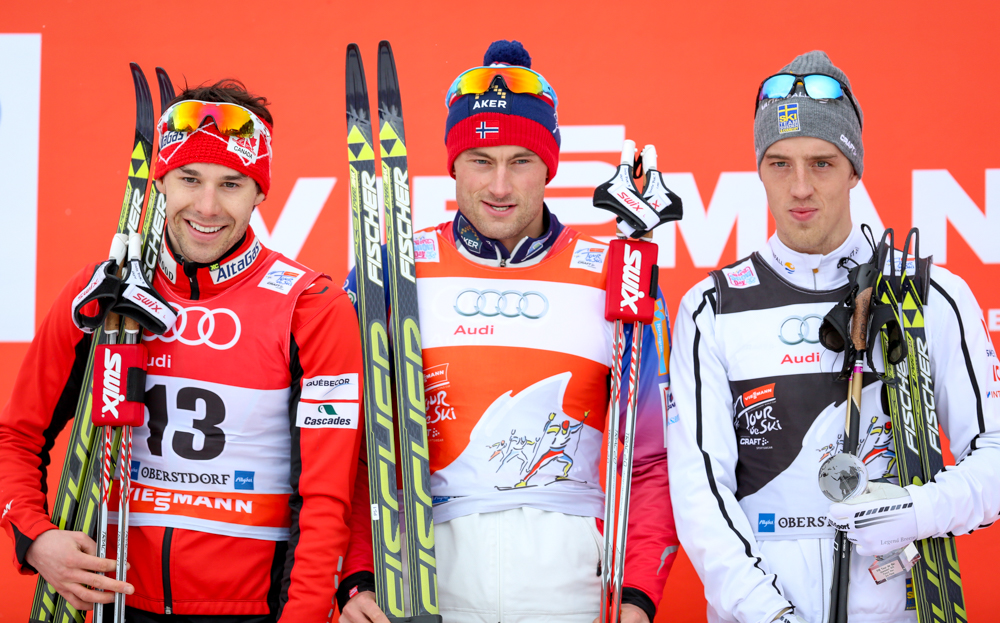
    Norway's Petter Northug (center) won Sunday's Tour de Ski 15 k classic pursuit in Oberstdorf, Germany, over Alex Harvey of Canada (left) and Calle Halfvarsson of Sweden (right). (Photo: Marcel Hilger)
    Norway’s Petter Northug (center) won the 15 k classic pursuit at the 2014/2015 Tour de Ski in Oberstdorf, Germany, ahead of Canadian runner-up Alex Harvey (l) and Sweden’s Calle Halfvarsson (r) in third. Northug won’t have a chance to go for the overall Tour de Ski or World Cup title this coming season as he is currently off the Norwegian national team. (Photo: Marcel Hilger)

    The show must, and will, go on. That’s how the Norwegian ski federation feels about the debacle with Petter Northug, Jr., after the 29-year-old celebrity skier missed the deadline to sign its contract. For now, the federation’s offer to let Northug maintain his sponsorship obligations with the Coop grocery store chain up until the start of the 2015/2016 season in late November is off the table — and Northug won’t be able to compete for Norway on the World Cup circuit.

    The two sides clashed on the terms of the agreement. VG reported that Northug had asked for a three-year contract instead of the single year the federation offered. He also wanted to represent the national team for a shorter period than last season, which lasted from Nov. 1, 2014 to April 7, 2015.

    Petter Northug. (Photo: Tor Atle Kleven)
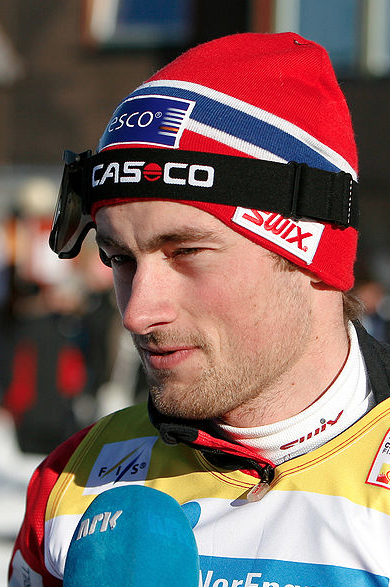
    Northug talking to NRK. (Photo: Tor Atle Kleven)

    According to Dagbladet, Northug also requested “breaks” in the World Cup period where he’d be able to race in the Coop uniform, presumably in the International Ski Federation (FIS) marathon series.

    In May 2013, Northug left the national team to start a private team, sponsored by Coop. He subsequently signed an agreement with the Norwegian ski federation that enabled him to compete in the 2013/2014 World Cup.  The agreement was renewed last year. Northug’s deal is an exception to the federation’s policy that Norwegian skiers have to be on a year-round commitment in order to represent Norway in international races.

    Initially, the federation hadn’t planned to offer Northug a special agreement again this year. But it reneged on its stance, and in June, it tendered an offer similar to the 2014/2015 agreement.

    “The agreement is the same as the one he had in success season 2014/15,” said Torbjørn Skogstad, chairman of the federation’s cross-country committee, according to a translation. “[The federation] regrets that Petter Northug did not want to join the national team and the World Cup on the same terms as all other athletes.”

    “The Norwegian Ski Federation is planning upcoming World Cup season with those athletes who have signed an agreement and is not going to take any further initiatives from Petter Northug or Coop,” he continued.

    Northug’s tenure on the national team has been marked by controversy. As a junior, he didn’t mince words about being left off Norway’s 2006 Olympic squad. Since splitting from the national team, his results have been mixed. His four gold medals at the 2015 World Championships in Falun, Sweden, were preceded by a lackluster 2013/2014 season with no Olympic medals and seventh-place overall finish on the World Cup.

    Reactions in the ski community have been mixed.

    “Once the deadline has expired, then it’s time to cut through,” Odd-Bjørn Hjelmeset, a 2007 individual world champion for Norway, told VG. “[The federation has to] set an example here. Northug believes he is in a special position.”

    “Did anyone really talk to Petter? I think this could have been solved,” Hjelmeset added.

    One of Northug’s current rivals, Calle Halfvarsson of Sweden believes Norwegian skiing will suffer the most. He said “it would be really stupid of [the Norwegian federation]” to exclude Northug.

    Jürg Capol, the nordic director for FIS Marketing AG, told VG that the sport benefits if all the best athletes toe the start line.

    “In the World Cup, we are not dependent on one skier,” he said. “Northug has never won the Tour de Ski, so the best should be in place when the Tour de Ski starts. Who remembers who won the Vasaloppet and Marcialonga? It is the World Cup that matters.”

    Last season, Northug placed second to teammate Martin Johnsrud Sundby in the Tour de Ski and finished the World Cup third overall behind Sundby and Switzerland’s Dario Cologna, respectively.

    Most telling of all may be what Norwegian team director Vidar Løfshus told Dagbladet. “I think it’s a shame,” he said. “But we’ll manage just fine without Petter, too.”

    Løfshus observed that Northug’s biggest successes have been in championship years, of which this season is not.

    “In the World Cup, there are other Norwegians who have been just as good,” he said.

    On reopening negotiations, “We’re not going to take more initiative,” he added. “We gave him a good deal.”

    Petter Northug posted this meme on Instagram on Monday following the Norwegian ski federation's announcement that he was off the team for the 2015/2016 season for his failure to sign a contract with the team. (Photo: Petter Northug/Instagram)
    Petter Northug posted this meme on Instagram on Monday following the Norwegian ski federation’s announcement that he was off the team for the 2015/2016 season for his failure to sign a contract with the team. (Photo: Petter Northug/Instagram)

    As of early Tuesday, Northug had not publicly commented, but posted an Instagram meme with a cat captioned, “Haters gonna hate.”

    Coop deflected comments. Communications director Bjørn Takle Friis wrote, “This is a matter between the Norwegian Ski Federation and Petter. Are Sørum Langås, Team Northug’s manager will comment on the matter when they are ready.”

    With no World Championships or Olympics in 2016, this season’s main events are the Tour de Ski in early January and the Canadian World Cup tour in March. Beyond this season, Northug’s future on the national squad may be determined by the men’s team’s performance this winter. For now, he’s on the outside, looking in.

  • Casper Mountain Biathlon Goes Big With Plans for New Range

    Casper Mountain Biathlon Goes Big With Plans for New Range

    Casper Mountain Biathlon Club athlete Rylie Garner, 16, takes aim. Garner is one of six juniors training with the CMBC year round. (Photo: CMBC)
    Casper Mountain Biathlon Club athlete Rylie Garner, 16, takes aim. Garner is one of six juniors training with the CMBC year round. (All photos: CMBC)

    Where there’s a will, there’s a way. Without a range of its own, Wyoming’s Casper Mountain Biathlon Club (CMBC) has put athletes on the podium in the junior division at biathlon national championships.

    But with donated land and the purchase of new targets, the club awarded a $728,307-dollar contract to build what might be the highest-altitude biathlon range in the U.S.

    On Aug. 13, CMBC chose the Casper-based Wayne Coleman Construction to build a range on donated land abutting the Natrona County-run Casper Mountain Trails Center. Construction started late last month, and the range is expected to be complete by early November.

    “It will be the only venue dedicated to both adaptive and able-bodied skiers,” CMBC’s president, Rob Rosser, said in a phone interview. Also a U.S. Paralympics Nordic and Biathlon development coach, Rosser competed in biathlon at the 1998 Winter Olympics and won multiple national and North American titles in the sport.

    Construction on the Casper Mountain Biathlon Club range began last month. (Photo: CMBC)
    Construction on the Casper Mountain Biathlon Club range began last month.

    Founded in 2008, CMBC gained nonprofit status in 2010. Its athletes ski at the Casper Mountain Trails Center, eight miles outside of town. The ski center includes 42-kilometers of winding trails on public land, but there’s no biathlon range.

    In Casper, there’s a shooting range where CMBC athletes can practice, but it’s not biathlon-specific.

    “We’ll shoot on paper, and then we’ll set up a metal target as well, just so they can shoot at an actual biathlon target,” Rosser said. “That’s the best we can do for now.  We’ve managed to get some decent results in less-than-perfect training venues.”

    To shoot at an actual biathlon range, CMBC athletes have to drive to a five-lane range in Lander, Wyo., 150 miles away.

    “The best range close to us is Soldier Hollow, which is six hours away,” Rosser said. “That’s the closest one with both rollerskiing and shooting.”

    They also train indoors with electronic rifles.

    “Since about 2010, we’ve trained kids with electronic rifles,” he explained.  “CMBC has had quite a few podiums at Nationals – Junior category – with the kids doing a combo of live shooting and training with the electronic systems.”

    In a follow-up email, Rosser explained that Kyle Rutar, one of the club’s athletes, placed fourth in a Junior World Trials race after training exclusively with an electronic rifle.

    “There’s nothing like doing it firsthand, skiing up to a rifle range, hearing lead hit on metal,” said Rutar in a phone interview.

    It was “definitely an adjustment” to go to from an electronic rifle to the real deal, he added.

    “The thing about the infrared rifle – everything’s dumbed down. There’s no wind, no temperature, no ballistics. All those things come in to play when you start doing it for real. … Infra-red is top notch for core shooting skills, but in race setting, you have to learn to adjust to the shooting environment in general.”

     The Casper Mountain Biathlon Club team at 2014 U.S. biathlon nationals in Jericho, Vt. (from left to right, back to front): Madison Tinker, Rylie Garner, Katherine Gruner,  and Christian Bjorklund and Jake Pearson. (Photo: CMBC)
    The Casper Mountain Biathlon Club team at 2014 U.S. biathlon nationals in Jericho, Vt. (from left to right, back to front): Madison Tinker, Rylie Garner, Katherine Gruner, and Christian Bjorklund and Jake Pearson.

    Presently, CMBC has six junior skiers ages 10 to 16 in a year-round training program: Jake Pearson, Rylie Garner, Katherine Gruner, Garrett Aune, Lu Elder, and Mac Elder.

    “Jake, Rylie and Katherine have been doing biathlon for 4 years now,” Rosser’s wife Cathy wrote in an email. “Garrett is going on his second year and Lu and Mac just started this year.”

    Cathy is CMBC’s managing director, a title with a jack-of-all-trades job description including club administration, bookkeeping, grant writing, marketing and communications and some program planning.  In addition, Ken Miech is a part-time program coordinator and assistant coach. A member of the Wyoming National Guard Biathlon Team, Miech started as a volunteer coach and now assists with program planning and execution.

    “In 2014, we had 530 people come through our program,” Cathy explained.

    Of those participants, 485 were juniors, 27 were adaptive athletes and 18 were masters. Most of the adaptive athletes are disabled veterans.

    “Without a range, we’ve focused on youth and adaptive programs,” she wrote. “Once the range is built, we will continue this emphasis and also begin to put energy into the masters program.”

    “Obviously we’re excited about having a natural range and seeing a great amount of growth because it’s a lot more fun shooting the real thing,” Rob said.

    Land for Range Donated

    According to Cathy,  a local family — the McMurrys — donated 40 acres to Natrona County specifically for the range. They also donated a second 200-acre tract that surrounds the range to the city for ski trails.

    Crediting the McMurry family’s generosity, she added, “They recognized the economic impact a biathlon venue could have on the community. They don’t have a specific interest in nordic skiing or biathlon, but they wanted to see the land used for the public good and recreation.”

    According to Cathy, the 40-acre plot where the range will be built was appraised at $318,000 dollars. She estimated the value of the additional 200 acres at $1.3 million.

    “I worked with [Rob] a little bit on the stadium design,” US Biathlon President and CEO Max Cobb said on the phone. “It’s a very impressive plan that he’s put together out there.”

    “It’s going to be the only biathlon range that I know of at 7900-feet altitude and the only one dedicated to both adaptive and able-bodied athletes,” Rosser said.

    “It’s going to be the only biathlon range that I know of at 7900-feet altitude and the only one dedicated to both adaptive and able-bodied athletes.” — Rob Rosser, Casper Mountain Biathlon Club president

    The CMBC currently owns nine electronic targets up to International Biathlon Union (IBU) standards, with plans to buy 21 additional mechanical targets.  For adaptive athletes, the International Paralympic Committee (IPC) mandates 10 audio targets for visually impaired athletes, and 10 for sitting or standing athletes. CMBC’s goal is to offer 24 targets for adaptive skiers.

    Casper Mountain Biathlon Club president and coach Rob Rosser with athlete Rylie Garner. (Photo: CMBC)
    Casper Mountain Biathlon Club president and coach Rob Rosser with athlete Rylie Garner.

    “We’re a viable site for an IPC World Cup,” Rosser said.

    Although they’re above the IPC’s 5900-foot altitude limit, Cathy explained that “based on preliminary conversations, a waiver would be likely” to hold an IPC World Cup there.

    And while Casper Mountain is above the legal altitude limit for a biathlon or cross-country World Cup, Rosser expects to bid for Continental Cup races.  In addition, between the long snow season and the altitude, he believes Casper Mountain will be a desirable training-camp venue.

    In addition to building the range, the Rossers will also modify part of Casper Mountain’s trail system. Last November, trail designer John Morton flew to Wyoming to homologate trails to IBU, FIS and IPC standards.

    Morton helped the Rossers plan two five-kilometer loops that meet standards for all three governing bodies.

    “While [Rosser’s] top priority is biathlon with a special emphasis on Paralympic biathlon, it also makes sense to configure the trails to comply with FIS [International Ski Federation] cross-country homologation guidelines,” Morton wrote in an email.

    “We have a big puzzle with overlapping course requirements for FIS cross-country, IBU biathlon and Paralympic biathlon and cross-country. The trick is to design courses that are fun and technically challenging to ski, are great for spectators in terms of giving them plenty to see, and still fulfill the course requirements for the various governing bodies,” he added.

    Cathy explained that Wayne Coleman will be doing the earthwork and grading for the 30-point range, 10 new kilometers of homologated trails and two pedestrian underpasses.

    “It’s a very impressive plan that [Rob] put together out there,” Cobb said. “Rob asked me to weigh in on some questions and I worked with him a little bit on the [range] design.”

    U.S. Paralympics Nordic team member Omar Bermejo liked Casper Mountain so much that he moved there.

    “One of the Paralympic camps was here in Casper. When I came to train, I fell in love with the town,” he said in a phone interview.

    Of the skiing, he said it was a challenging course, especially Rosser’s homologated course, which is still being developed.

    When the range is complete, the CMBC will aim to add a paved 5 k rollerski loop leading into and out of the range. Cathy explained they’re expecting at least half of that to be complete by next summer “and the full 5 kilometers if funding allows.”

    “That’s going to make it one of the most attractive biathlon ranges in North America,” she added.

    Cobb referred to biathlon in the West as a “growing community,” pointing out that the Bridger Biathlon Club in Bozeman, Mont., recently rebuilt its range.

    “We’re seeing growth in the Rocky Mountain region, and that’s terrific,” he added.

  • A Potential ‘Legacy Transaction’: Bridger Biathlon Club Aims to Merge Bohart and Crosscut

    A Potential ‘Legacy Transaction’: Bridger Biathlon Club Aims to Merge Bohart and Crosscut

    One of the trailside cabins at Bohart Ranch in Bozeman, Mont.
    One of the trailside cabins at Bohart Ranch in Bozeman, Mont., as seen early last winter.

    If the deals go down, two legendary ski areas in Bozeman, Mont., could merge into a single, state-of-the art nordic center that would also offer dryland recreation opportunities as soon as fall 2017. The Bridger Biathlon Club (BBC) has acquired exclusive options to purchase both the 276-acre Bohart Ranch and the adjacent, long-dormant 259-acre Crosscut Ranch.

    All it takes is money — and a vision. Established in February 2014, the non-profit BBC will launch a fundraising campaign later this year with a goal of raising $10 million dollars over the next three years to buy the two properties. Once raised, a portion of the funds will go toward renovating existing facilities and upgrading infrastructure to make these historic ranches more accessible to the public, according to BBC Director Eric Love.

    “This [would be] a legacy transaction,” Love said in a phone interview. “We’re aiming to unite those two properties into a single expanded recreational resource.”

    BBC Marketing Director Katie Smith cited the 2014 Winter Olympics in Sochi, Russia, as a spur to interest in biathlon in Bozeman. Smith added that biathlon has deep roots in Bozeman, as it is the home of Kari Swenson, a bronze medalist with the U.S. women’s relay team at 1986 Biathlon World Championships.

    The biathlon range at Bohart Ranch in Bozeman, Mont. was installed in 1989 at the height of the sport in the small mountain town. The Bridger Biathlon Club is attempting to bring biathlon back to Bozeman and is starting by installing new targets from Norway. (Photo: Bridger Biathlon Club)
    The biathlon range at Bohart Ranch in Bozeman, Mont. was installed in 1989 at the height of the sport in the small mountain town. In 2014, the Bridger Biathlon Club upgraded its 12-point range by installing new targets from Finland. (Photo: Bridger Biathlon Club)

    In a year, Smith said the BBC was able to raise enough money to renovate its biathlon range at Bohart. According to Love, the new Kurvinen range, made and shipped from Finland, cost about $36,000 dollars.

    Smith credited generous donors and volunteers who helped assemble the 12-station range when it arrived. BBC’s fundraising success got them thinking big. The club’s goal is to raise enough money to exercise the options on Bohart and Crosscut in three years.

    If and when BBC buys the two ski centers, the purchase prices will remain confidential, Smith said.

    Sixteen miles from Bozeman, Bohart Ranch has 30 kilometers of trails on 276 acres of fee-title land. Situated between Bohart and the Bridger Bowl alpine ski area, Crosscut Ranch is an additional 259 acres. The combination of the two could make for 50 to 60 kilometers of total trails.

    Last December, Bohart was the scene for the second weekend of the U.S. SuperTour, hosting a classic sprint and distance race. Bohart has also hosted NCAA events and the 2002 U.S. nationals prior to the 2002 Winter Olympics in Salt Lake City, Utah.

    With temperatures above 40 degrees, the men take off in their SuperTour 15 k classic mass start at Bohart Ranch near Bozeman, Mont.
    The start of the men’s SuperTour 15 k classic mass start at Bohart Ranch near Bozeman, Mont., last December.

    “Various people approached us, but we were waiting to find the right person to carry on our vision and philosophy,” said Bohart co-owner Jean MacInnes. She and her son, Chris Myers, have co-owned and run Bohart Ranch for 27 years.

    “It’s a community service,” she continued. “We have excellent trails here. We help the MSU [Montana State University] ski team, Bridger Ski Foundation. We have something called Eagle Mount that takes place here.”

    According to Eagle Mount Executive Director Mary Peterson, Eagle Mount is a Bozeman-based nonprofit that “provides therapeutic recreation to people with disabilities and children with cancer.” Two seasons ago, 37 participants and 46 volunteers took part in cross-country skiing and snowshoe programs at Bohart.

    MacInnes said that the original Crosscut Ranch ski center was about 80 acres and went out of business in 1987 after five years. What is now referred to as Crosscut Ranch is the original ski area packaged with additional land parcels to attract developers, she said.

    An aerial view of Crosscut Ranch in Bozeman, Mont. (Photo: Concierge Auctions)
    An aerial view of Crosscut Ranch in Bozeman, Mont. (Photo: Outlaw Partners/Concierge Auctions)

    “It’s a bit of a misnomer,” she said of the Crosscut name that now includes the entire 259-acre tract.

    Unsuccessfully marketed by a realtor with an asking price of $16 million, Crosscut was sold at auction to the Jackson Financial Group in March 2014. The Bozeman Daily Chronicle cited a local person who speculated that it sold for $4.1 million dollars.  That figure is unconfirmed.

    More Than a Nordic Center

    In December 2014, Myers opened about 15 k of Crosscut’s trail system, which hadn’t seen grooming or maintenance in more than 20 years. While these trails were wide enough for skating, some needed additional work in order to accommodate a snow cat.

    A groomed trail at Crosscut Ranch in Bozeman, Mont. (Photo: Concierge Auctions)
    A groomed trail at Crosscut Ranch in Bozeman, Mont. (Photo: Outlaw Partners/Concierge Auctions)

    For 2015/2016, BBC hopes to reopen additional Crosscut trails and establish connectors between the two networks. Last winter, it re-established and groomed about five kilometers of Crosscut trails, and is currently aiming to add at least another 5 k next season. According to Love, the trails will be open to the public for activities like mountain biking this summer.

    “There’s really interesting terrain at Crosscut,” Smith said. “It’s perfect for beginners and for experienced skiers who want to train a specific skill.”

    By contrast, Bohart is hilly. “Combined, the two ski centers will give a lot of terrain variation,” Smith said.

    “Historically, this [Crosscut] area has been used as a nordic center,” Love said. “The bones are all there.”

    Asked about possible improvements, Love explained that the stadiums could be expanded. “On the Crosscut property, there’s potential to put in a world-class stadium,” he said.

    In a follow-up email, he wrote, “We recognize the potential of re-locating BBC’s current new 12-point range at Bohart to Crosscut and perhaps even expanding it to 24 or 30 points.”

    At present, BBC is studying options for improving the combined ski centers. Its board, made up of Swenson, Carol Smith, Stuart Jennings, and Brian Wadsworth, assembled a design team to illustrate what a green venue would look like. The team consists of nationally renowned architect Jonathan Foote, sustainable-green-building designer Kath Williams, and Ben Lloyd and Trip Lewton of Comma-Q Architecture in Bozeman.

    Love expects the design study to be complete in late May, after which BBC will reach out to the Bozeman outdoor community for input and finalize a fundraising plan.

    The properties will be available for more than just skiing: BBC is looking to provide year-round recreation opportunities. Some of these are already in place: Bohart already offers Frisbee golf and mountain biking in the summer. Love was excited about the possibility of offering side-by-side cross-country and alpine venues within 30 minutes of a major airport.

    While Smith acknowledged that $10 million is an ambitious number, she’s optimistic because of BBC’s success in raising money to purchase the biathlon range.

    “We’re going to rely on more than the cross-country community,” she said. “People see a lot of value in preserving these two pieces of land that are so important to Bozeman’s culture.”

    “Once assembled, this will be a nordic ski destination unlike anywhere else in the U.S.,” Love said.

  • USSA to Shutter Center of Excellence, Enlist Prancercise Methods

    USSA to Shutter Center of Excellence, Enlist Prancercise Methods

    The USSA Center of Excellence in Park City, Utah
    The U.S. Ski and Snowboard Association’s 85,000-square for Center of Excellence in Park City, Utah, will be up for sale in the near future, according to USSA President Tiger Shaw. He declined to comment how much USSA would be asking for the facility and what athletes will do without a roof over their heads during inclement conditions.

    PARK CITY, Utah — In a surprise move, U.S. Ski and Snowboard Association (USSA) President Tiger Shaw announced Wednesday that the state-of-the-art Center of Excellence in will be put up for sale.

    Dispelling rumors about fiscal constraints, he said, “It’s not about making the mortgage” of the 85,000-square-foot facility. “Nobody wants to be indoors two or three times a week, especially in summer,” Shaw said. “They’d rather be outdoors.”

    In an early morning press conference covered only by FasterSkier, Shaw explained that, effective May 1, Prancercise will replace traditional strength training for all USSA athletes. Prancercise is an exercise regimen combining rhythmic dance movements with ankle weights, “similar to a horse’s gait and ideally induced by elation,” according to creator Joanna Rohrback. USSA aims to use it for both aerobic and endurance strength training.

    Prancercise creator Joanna Rohrback demonstrating her fitness workout, which involves free-flowing, rhythmic walking movements with ankle weights. (Photo: Wikipedia)
    Prancercise creator Joanna Rohrback demonstrating her fitness workout, which involves free-flowing, rhythmic walking movements with ankle weights. (Photo: Wikipedia)

    “Weight lifting is so 2010,” USSA Executive Vice President Luke Bodensteiner said. “It’s hard on the athletes’ joints. We’re coaching our athletes to be quick and light on their feet, and lifting could get them big and bulky instead. Prancercise is the training of the future.

    “Let’s face it. We’re in the business of outdoor sports,” Bodensteiner added. “You’re not going to get used to the weather by training indoors two sessions a week.”

    As for treadmill and other methods of VO2-Max testing, those can be gauged based on “feel and intuition” he explained, just like Prancercise.

    The move was spurred in part by the revelation that 41-year-old Sergei Dolidovich replaced not only weight training, but also rollerskiing, with Prancercise. The ageless Belarusian placed fourth in the recent Holmenkollen 50-kilometer freestyle mass start.

    U.S. Nordic Combined Head Coach Dave Jarrett supported the move.

    “Studies have shown that the combination of ankle weights and dynamic movement enhance skate technique, especially with the low-swing weight of the new skis,” he said.

    Instead of the moderate ankle weights typically used in Prancercise, USSA has reportedly ordered 12 dozen pairs of 50-pound ankle weights.

    An Alaska Pacific University (APU) skier, who wished to remain anonymous, expressed doubts about Prancercise, saying she would continue to lift weights at the Anchorage-based team’s gym. “If it ain’t broke, I’m not fixing it,” she said.

    But many skiers have bought into the change.

    “I can’t wait to get into it,” Newell said of Prancercise. “I’ve canceled my April surf trip this year. Instead, I’m going to work on my Prancercise technique up and down the trails at Stratton.”

    Billy demong doing a flip into the foam pit.  Designed for the snowboarders, it has become a big hit with all disciplines.
    No more need for a foam pit: initially designed for the snowboarders, this element of the USSA’s Center of Excellence (COE) was a big hit for all disciplines, but now, all athletes have been instructed to take up Prancercise.

    Instead of Prancercise, U.S. Ski Team Head Coach Chris Grover opted to refer to it as “moosehoofing improv” or “V3 creative combo.”

    “We’ve already developed a program to integrate this type of organic training into our summer dryland camps,” Grover said in a phone interview. “At the June camp in Bend, athletes will ski in the morning and skip-and-glide across pavement downtown in the afternoon.”

    Even the annual Climb to the Castle up New York’s Whiteface Mountain will be affected by the change. “This fall, the Climb to the Castle will be a creative-combo foot race rather than a rollerski-drag race to the top,” Grover said. “Level-four Prancercise will be just as intense as a bounding session, with much lower impact on the athletes’ joints.”

    The Canadian National Team isn’t so sure.

    “I’ve never heard of it,” Cross Country Canada High Performance Director Tom Holland said.

    After watching a YouTube video on Prancercise, Holland reacted, “You can count on our team absolutely not doing that. We’ve got a formula that works, and I don’t foresee us adding any kind of horse prancing into our regimen.”

    Canadian National Team Head Coach Justin Wadsworth said he was eager to observe the U.S. Ski Team Prancercising at its annual camp in Bend, Ore.

    “Hey, we’ve done some things other teams called ridiculous,” Wadsworth said. “We probably shouldn’t knock it until we try it.”

    For more information, click here.

  • Skiing in the Dark: After Disconnect, Weston Works to Get Lights Back On

    Skiing in the Dark: After Disconnect, Weston Works to Get Lights Back On

    Hamish McEwen and Ian Case train on the illuminated Weston Ski Track in Weston, Mass. (Photo: Jamie Doucett)
    CSU’s Hamish McEwen and Ian Case, and several others, train on the illuminated Weston Ski Track in Weston, Mass. (Photo: Jamie Doucett)

    It’s a park with dual personalities.

    Owned by Massachusetts’s Department of Conservation and Recreation (DCR), the Leo J. Martin in Weston, Mass., is a golf course during the summer and morphs into the Weston Ski Track when manmade snow flies.

    Twelve miles outside Boston, Weston could be considered an unlikely area for a ski center. But with more rural, hilly ski centers at least 1 1/2 hours away by car, it’s a key resource for local skiers. Three million people live within a 30-minute drive of the park. Depending on the weather, between 25,000 and 35,000 skiers frequent Weston each year, and the area boasts 1,100 season-pass holders.

    Weston sprang up as a winter expansion of founder Mike Farny’s first business, the Charles River Canoe Service. Larry Smith and Dave Jacques partnered with Farny to run a bike-and-ski shop in Lincoln, Mass., and developed Weston. In the mid 1980s, they assumed ownership of the canoe service and Weston Ski Track.  Since then, Weston has become a go-to spot for city and suburban skiers in the Boston area.

    With nature’s help, Smith can open 10 to 15 kilometers of trails groomed for both classic and freestyle. But so close to the Massachusetts’ coast, Weston depends on snowmaking, covering two to three kilometers of trails with manmade snow.

    In just four months of the 2012/2013 season, Weston Ski Track recorded over 30,000 visits, close to 75 percent of the golf course’s traffic throughout the remainder of the year.

    In just four months [between 2012/2013], Weston Ski Track recorded over 30,000 visits, close to 75 percent of the golf course’s traffic throughout the remainder of the year.

    And Weston has helped to produce a number of junior-national champions, including Dartmouth’s Corey Stock. A member of the local Cambridge Sports Union (CSU) ski club, she trained extensively at Weston. Later, she earned starts in the 2012 Quebec World Cup and 2013 Junior World Championships in the Czech Republic.

    Night skiing at the Weston Ski Track in Weston, Mass. (Photo: Jamie Doucett)
    A busy night-skiing scene at the Weston Ski Track in Weston, Mass. (Photo: Jamie Doucett)

    Harvard University, Wellesley College and numerous local high schools also train at Weston. In addition, the Eastern MA Bill Koch Club and an adaptive program run by the New England Nordic Ski Association (NENSA) are held there.

    But as Smith drove by the ski-area-turned-golf-course one day last summer, he saw that the snowmaking power lines had been taken down.

    While making improvements to the driving range, the DCR inadvertently removed power lines and phone poles that supported Weston’s snowmaking and lighting for night skiing.

    “It wasn’t a question of being malicious,” said Rob Bradlee, CSU’s head nordic coach. He suggested that the local ski community hadn’t adequately informed DCR about its needs.

    “We’ve invested a lot in both snowmaking, lighting and grooming equipment,” Smith said.  “We had gotten permission to do it initially, but that was many years ago, and [DCR] personnel change over time.

    “I don’t know that the current management knows anything about the history [of the snowmaking improvements,” he added.  “They were tasked with upgrading the golf course. … The hope is that everything will be better than it was.”

    Last winter, Weston made do with a temporary solution for lighting and power, renting diesel-powered lights.

    The DCR will install LED lighting around the driving range and some of the fairways for night use. The new lighting, Smith said, “will be better than what we have.”

    The DCR could not be reached for comment.

    “The ski community is stepping up and getting organized,” Bradlee added. “[And] looking to see how they can help DCR make the Leo J. Martin a better park.”

    To that end, local skiers formed the Friends of Leo J. Martin Skiing  (FOLJMS), which aims to publicize information about the metro-Boston ski scene. Their website shares articles on the success local skiers have had at the national and international level. They’ve applied for and are awaiting approval of non-profit status.

    According to FOLJMS Assistant Director Elizabeth Wilcox, their aim is to “preserve and enhance cross-country skiing in the greater Boston area.”

    With regard to Leo J. Martin, Wilcox explained that they’re endeavoring to get DCR to make golf-course improvements that would enhance, or at least not impede skiing.

    Skiers round a corner while night skiing at the Weston Ski Track in Weston, Mass. (Photo: Jamie Doucett)
    Skiers round a corner while night skiing at the Weston Ski Track in Weston, Mass. (Photo: Jamie Doucett)

    And DCR has been listening. One of the main ski trails went behind a driving range down a short, steep hill. While upgrading the driving range, DCR changed the steep hill into a “precipitous drop” that made the trail unskiable.

    “When we showed them, to DCR’s credit, they brought the contractor back and put in an incline to make it skiable again,” FOLJMS Director Chris Doyle said.

    However, limiting the amount of skiing on fairways has been raised as a “point of discussion” by DCR. Although the ski trails avoid the golf tees and greens, “We’ve always skied on the fairways,” Doyle explained.

    Due to the volume of skiers, he said it was important to ski the fairways of the four holes closest to the clubhouse, where artificial snow is made. On the other 14 holes, they try to stay off the fairway.

    Trail designer and 1976 Olympic biathlete John Morton saw Weston’s potential early on. During his tenure as men’s ski coach at Dartmouth in the 1980s, numerous CSU alumni skied for Dartmouth. He said he “became more and more impressed” with CSU skiers, who competed well despite the “geographical disadvantage” of their location.

    Last March, FOLJMS contacted Morton for input on how Weston might improve. Morton attended meetings with the DCR and FOLJMS.

    “The DCR is now much more aware of [Weston’s] needs,” Morton said. “We’ve had a number of collaborative meetings about how to make Leo J. Martin more successful,” both in summer and winter.
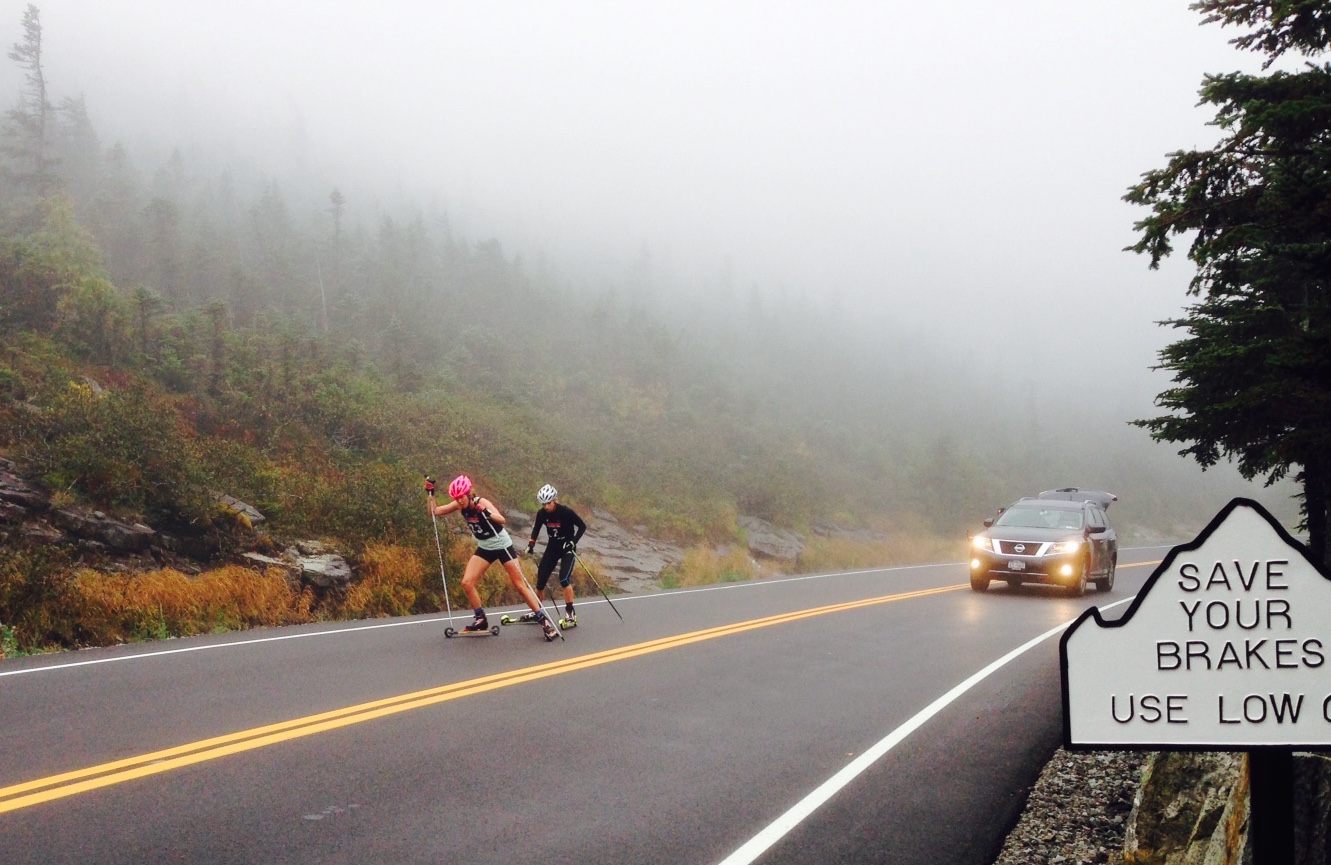
    Morton sees opportunities based on the success Weston has had to this point.  With no nearby alternatives, Weston is crowded. He described an idea to create a beginner/novice area separate from more demanding trails. Additional trails on “humane terrain” would require lighting and snowmaking.

    If a novice ski trail could be developed, that would open the way for creating longer, more technically demanding trails for advanced skiers.

    “It’s a unique recreational facility for cross-country skiing,” Smith said. “[The DCR] should take credit for some of that, which would help them realize they need to work to continue to improve it.”

  • Push for Homologation at Williams’ Prospect Mountain

    Push for Homologation at Williams’ Prospect Mountain

    Every two years, the Williams College nordic team hosts its Winter Carnival 20 miles north of Williamstown, Mass., at Prospect Mountain in Woodford, Vt. By 2016, it could have a five-kilometer ski loop up to International Ski Federation (FIS) standards.

    A scene from the Williams' College Winter Carnival at Prospect Mountain in Vermont. (Photo: Jason Lemieux)
    A scene from the Williams’ College Winter Carnival at Prospect Mountain in Woodford, Vt. (Photo: Jason Lemieux)

    “It started with my coach, Bud Fisher,” said Williams senior Will Wicherski. “He’s been at Williams forever.”

    Williams’ associate director of athletics, Fisher suggested that Wicherski study Prospect’s trail system to determine whether a homologated trail would be feasible.

    “Within the EISA [Eastern Intercollegiate Ski Association], there’s more and more of a move to get all our races on homologated courses,” Fisher said. “We’ve been thinking about it for some time, and we’re taking a probably a little bit more conservative, slow-paced approach to it.”

    Wicherski characterized some of the EISA race loops as “really uneven,” pointing to Dartmouth’s Skiway at Oak Hill as an example.

    “The climb is way too big and not that wide,” he said. “Our course at Prospect is kind of unfair. It’s old-school, not wide, and there isn’t a lot of climb. We can’t really have mass start races there.”

    Homologating race trails evens the playing field, he explained. “Among the coaches, there’s more of a desire to hold races at homologated race sites.  They know what they’re getting.  There are more schools that want to host carnivals.”

    Some New England schools already hold their carnivals on homologated trails, including the University of New Hampshire (which hosts in Jackson); the University of Vermont (at Trapp Family Lodge in Stowe), and Middlebury (at Rikert) and Colby (in Waterville, Maine).

    The course will combine existing trails with new sections.  Much of Prospect Mountain’s trail network is on U.S. Forest Service land, where the permitting process makes large-scale alterations difficult. As a result, Williams wants its race loop to include minimal new trails.

    Ultimately the college would like to create a course that will accommodate interval-start freestyle and classic races as well as team relays. Mass-start skate races require wider trails than interval starts, and Fisher said that while it wouldn’t be impossible to make them happen, it would be “very difficult.”

    Interval-start freestyle, classic, and relay events require trails 5 meters wide.  Even for interval-start homologation, some sections of trail — all on forest service land — would need to be widened.

    Wicherski described southern Vermont/northwestern Massachusetts as “being on the edge of consistent snow,” adding that if the homologation project works out, the college may consider snowmaking in the future.

    “Getting the course homologated is the first step towards snowmaking,” he said.

    According to Williams’ Nordic Head Coach Jason Lemieux, snowmaking is a “long term goal/dream … it’s a battle we’ll wait to fight until the completion of the homologation project,” he wrote in an email.

    Prospect Mountain’s ski roots trace back to 1939, when it started as an alpine-ski area with a rope tow. At 2,250 feet above sea level, its base elevation is the highest of any ski area in Vermont. In the 1970s, Prospect’s owners cut cross-country ski trails to enhance their business, and in 1992, Steve Whitham and Andrea Amodeo purchased the area after its previous owner abandoned it. Instead of reopening the lifts, they focused on cross-country skiing.

    At 2,250 feet above sea level, its base elevation is the highest of any ski area in Vermont.

    Getting Up is Half the Battle

    One of the biggest challenges was designing an appropriate downhill from the main climb. Running under the old lift line, the A-climb diagonally crosses the alpine hill, ending up on a trail called Shay’s.

    “We know where the A-climb is, but we don’t have a way to get down off it,” Fisher said.

    This summer, they plan to build the descent. Williams will test it this coming winter, after which they plan to finish work on the trail.

    The other challenge exists at the opposite end of the course. Prospect’s trail system is bisected by a forest-service road that sees heavy snowmobile traffic during the winter. During Williams’ last Winter Carnival, course workers had to stop snowmobiles 17 times during the races. “It’s a dangerous situation,” Fisher said.

    To avoid the road, Williams would need to construct a short connector trail on forest-service land.  They’ve applied to the U.S. Forest Service (USFS) both for this and to widen trail sections where necessary. The carnival trail falls into the forest service’s small-projects category, which requires less time, ecological compliance and money than a large-scale endeavor.

    Pending USFS approval, construction will start with trail work this summer.

    We haven’t actually gotten an FIS [inspector] in yet,” Fisher said. “We wanted to get all the homologation parameters met before we do that. We launched into the project and came up with a number of ideas to us where show we get an A-climb and a B-climb.”

    Lemieux estimated the project’s cost to be “easily more than $15,000.”

    Approval will give Williams a 10-year permit. If the downhill from A-climb works, they’ll continue work on the land the following summer. At that point, they would bring in a course inspector from the FIS for any tweaks.

  • Whiteface Road Work Could Impact Climb to Castle

    Whiteface Road Work Could Impact Climb to Castle

    The road well traveled...
    The Whiteface Mountain Veterans Memorial Highway, where NYSEF’s Climb to the Castle has been held for the past seven years in Wilmington, N.Y., as seen in 2011. The toll road is undergoing construction this summer and fall.

    There’s a race each year scheduled in line with the end of the U.S. Ski Team’s fall camp in Lake Placid, N.Y. You might have heard of it: the Climb to the Castle. Hosted by the New York Ski Education Foundation (NYSEF), the freestyle rollerski race starts at the entrance to a paved toll road, the Whiteface Mountain Veterans Memorial Highway, and stretches five miles up with an average 8-percent grade. The finish is marked by the castle at the top of New York’s fifth-highest peak at 4,867 feet above sea level.

    Try to rollerski up there now, however, and you’ll likely run into some heavy machinery.

    Construction has already begun on the eight-mile highway as part of a larger project to completely resurface the road over the next several months. The Adirondack Daily News reported Thursday that the upper, toll portion of the road — where the Climb to the Castle (C2C) takes place — will be closed weekdays during May, June and September, but open on weekends. It will be open on weekends and two holiday Mondays during these months: Memorial Day, May 26, and Labor Day, Sept. 1. Throughout July and August, the road is scheduled to be open during daytime hours, with work taking place at night.

    Tim Burke (USBA), Kris Freeman (USST) and Noah Hoffman (USST) leading the men's race.
    US Biathlon’s Tim Burke (l), and U.S. Ski Team members Kris Freeman (c) and Noah Hoffman (r) lead the 2011 Climb to the Castle race in Wilmington, N.Y.

    According to Chris Grover, the U.S. Ski Team will hold its Lake Placid training camp from Aug. 25-Sept. 8. So while there’s a chance construction could impact it, there’s a better chance the toll road will be open on Saturday, Sept. 6, when NYSEF scheduled the race.

    Margaret Maher, NYSEF’s head nordic coach and C2C organizer, wrote in an email to FasterSkier last week that they were “trying to figure out how the road work will influence the race. Hoping we can still have C2C!”

    In all, the highway is expected to be closed 54 days from this week until the end of the season, and open 88 days over the same period, according to the Enterprise.

    While the toll road has been patched periodically since it was opened in the 1930s, it has never been completely resurfaced. Whether rollerskiing, cycling, or running to the summit, it’s riven with frost heaves and cracked pavement. Regardless of what state the road is in this year, its sure to be a superior surface for rollerskiing next summer.

    Rifenburg Construction, based out of Albany, N.Y., will resurface the entire eight-mile length of the road, from the four-way intersection in the center of Wilmington to the summit. They’ll also rehabilitate rock walls and make repairs to the castle.

    The men's start.
    The men’s start of the 2009 Climb to the Castle.

    Rifenburg earned the project with a $11.2-million bid, and the company expects to complete the work by the end of 2015.

    Project manager Russell Huta said that the goal is to have a base layer of new pavement from the tollgate to the castle by the end of this fall.  In 2015, the toll section will be finished, and all work on the section from Wilmington town center to the tollgate will be completed.

    “Each project has its own set of unique challenges,” Huta told FasterSkier, when asked about the difficulty of working in the narrow confines of the toll road. When road work is in motion, the toll road will be closed to traffic.

    In September, Huta said, his company will have “full access” to the toll road Monday through Friday – except for Labor Day. “By the end of the day Friday, there will be a paved surface for [use by] cars, buses, pedestrian traffic” until Monday morning.  “On Monday morning, it’s ours again.”

    If for some reason, the C2C isn’t possible this year, Grover wrote in an email that it won’t be the end-all of camp.

    “We typically run a sprint or team sprint time trial along with the Climb to the Castle,” he explained. “If the Climb is not ready this season, we will employ other alternatives.”

    Before the C2C, a time trial was previously held up Gillespie Drive, now a warmup for athletes. The event is entering its eighth year. USST veteran Liz Stephen won the women’s race the last three years, setting a new course record last year in 42 minutes and 4 seconds. US Biathlon’s Tim Burke won the 2013 men’s race in 37:13.

  • An Earth Sculptor, Perkins Reflects on 38 Years as Jackson’s Executive Director

    An Earth Sculptor, Perkins Reflects on 38 Years as Jackson’s Executive Director

    Jackson's former executive director, Thom Perkins enjoying the Wildcat Valley Trail in Jackson, N.H., in 2013. (Photo: Kathy Bennett)
    Jackson’s former executive director, Thom Perkins enjoying the Wildcat Valley Trail in Jackson, N.H., in 2013. (Photo: Kathy Bennett)

    “When I look at a trail, I look at it as a big earth sculpture,” Thom Perkins said in a recent phone interview.

    It’s the old joke: what do you do with a fine-arts degree? For Perkins, the recently retired director of the Jackson Ski Touring Foundation (JSTF), degrees in sculpture and photography led to sculpting land.

    JSTF’s longest-tenured executive director after spending the last 38 years in Jackson, N.H., Perkins sounded like he was still on the job. His passion for the ski center — and skiing — came through clearly.

    And Perkins has done way more than develop Jackson. He organized and skied the first traverse of the White Mountains’s Presidential Range, from Randolph to Crawford Notch, in 1983. In 2008, he collaborated with John Morton to homologate the Wave trail to International Ski Federation (FIS) specifications. At the time, it was one of only three FIS homologated trails in the U.S.

    He’s been chief of competition at multiple New England Nordic Ski Association (NENSA) and National Collegiate Athletic Association (NCAA) championship events, as well as trials for the 1986 World Championships team.  JSTF president Kevin Killourie credited Perkins with securing a bid for the 2017 NCAA Skiing Championships.

    Perkins was recently nominated for induction into the U.S. Ski and Snowboard Hall of Fame.  In 2010, SkiNH presented Perkins with its Al Merrill award for contributions to cross-country skiing. He’s also a board member emeritus of the Cross Country Ski Areas Association. The National Ski Journalists Association gave Perkins an award for lifetime achievement.

    In an animated discussion covering Jackson’s history, community, and trail building, Perkins discussed Jackson and his future plans, veering off topic to provide background information, and coming back, all without needing to catch his breath.

    Long before the JSTF, people skied in Jackson. Perkins has a photo of a woman skiing on what is now the golf course, taken in the 1880s. A New England Ski Museum timeline mentioned the Jackson Ski and Outing Club. Formed in the mid-1930s, it provided ski instruction and organized ski races, dogsled races, and jumping meets.  John Morton won a race at Jackson during his career at Middlebury College.  A man named Bradford Boynton, proprietor of the Wildcat Tavern, cut and marked a ski trail behind his establishment. This information came from a monograph attributed to – you guessed it – Perkins.

    An Economic Engine: Jackson President on Perkin’s Legacy 
    “Thom Perkins created an economic engine that didn’t exist,” Kevin Killourie said on the phone.A local real estate agent and JSTF’s president, Killourie has worked closely with Perkins for the last three years.”People come to Jackson to ski,” he said. “Half of those people wouldn’t come if it wasn’t for Thom’s dedication in developing the [trail] network and JSTF into what it is today.“When Thom started, we had to borrow money to buy a snow machine,” he explained, describings JSTF’s beginnings as “three rigs, a shovel, and a lot of ambition. Forty-three years ago, local business owners saw the value of non-motorized recreation.”Characterizing JSTF as a nonprofit operating in a weather-dependent business, he added, “We had to budget conservatively. We figured out ways to make our trail network adaptable to low snow conditions. That’s something Thom recognized, and that we’ve worked on for the past decade.”“Recreation is paramount in Jackson. That’s why people come here. Thom Perkins developed a network that allowed that to continue and prosper. Everyone that is a property owner or business owner in Jackson and the surrounding area benefits from Thom Perkins’s work over almost four decades.”

    With more than half of the trail network on private land, Killourie credited Perkins’s influence on private landowners as a big reason for JSTF’s success: “Those landowners allow us to use their land so that everyone can recreate. That’s a really big deal.”

    “Thom saw the bigger picture,” he added. “He used to say all the time, ‘Without land, there will be no skiing.’ And he’s right.”

    Over time, JSTF worked to widen and level trails for grooming in low snow conditions.  “All those things cost money,” Killourie said, adding that the community donated more than $50,000 dollars to the foundation. “That’s the culture in Jackson. That’s why [people] buy a house here. Thom put the foundation in for all those things to happen.”

    Breanne Torrey has been named JSTF’s acting director. According to Killourie, Perkins recommended Torrey as a good person to succeed him as director.

    Starting out as a ski patroller, Torrey bootstrapped her way to become director of operations, becoming ski patrol director and doing “almost every job except giving lessons.” She will collaborate with Dave Kinsman, a local businessman and avid skier. Kinsman has been named JSTF’s transition coordinator.

    “A lot of really good things going that Perkins planted the seeds for will bear fruit over next year to 10 years,” Killourie said.  “The future is very bright in Jackson.”

    Jackson’s first executive director was Avery Caldwell, Perkins said. Caldwell wrote the proposal that locals approved to start the Jackson Ski Touring Foundation in 1972. Caldwell resigned in the summer of 1973. According to Perkins’s monograph, “The winter had gone sour with the lack of snow and with not enough skiers paying the $0.50 trail support donation.”

    In 1976, JSTF was in its fourth year as a nonprofit that promoted skiing. Perkins was a ski instructor in Connecticut and the artist-in-residence at a private school.

    At the time, former Olympian Jack Lufkin was working at the Jack Frost ski shop. He assumed the role of executive director from 1973 to 1976.

    “After he left, the board put out a call for resumes,” Perkins said, explaining they received 100 applications for the position. “They interviewed 10 people and hired me.”

    Asked about the choice of a nonprofit model, Perkins explained it evolved that way because of land-ownership issues. “The Jackson trail system utilizes a lot of private land,” he said. “Landowners are much more agreeable to allowing the use of their land for charitable purposes rather than profit. I don’t think the model would have worked had it been a profit-making business as well as it does as a nonprofit.”

    If the ski center owns all the land where its trails are located, a nonprofit might not be the best business model. “But in Jackson’s particular case, it’s the smartest thing,” he said.

    “Most people think skiing is all about the snow. In cross-country skiing, it’s about land,” Perkins added. “You can have all the snow in the world, but if you’re not allowed to go on it, it’s worthless. A huge effort goes into landowner relations. That’s one of the background things that people don’t see when they come in to ski.”

    At the outset, Perkins said the trail system used logging roads and “convenient trails” with some 125 kilometers of terrain.

    One hundred twenty-five k? Even back in 1972?

    “A lot of those were hiking trails, and they were very minimal,” Perkins said. “Cross-country skiing back then was a lot different than it is now. Grooming was primitive; people didn’t expect the kind of grooming we have today. [People would ski] a hiking trail into the backcountry for a long day trip.

    “Most of the trails, when I arrived, were either overgrown or very narrow, and all of them were poorly surfaced,” he added. “There were rocks, boulders, stumps and holes… you needed a lot of snow to open a trail.”

    In the beginning, trails were cut, rather than built. Just enough trees came down to open a trail through the woods, “without branches flopping in your face.”

    As Jackson evolved, many of the original trails were discontinued to comply with the national-forest permit process. “Now that we have 150 k of trails, it’s not that we’ve just added 25. We’ve added a lot more than 25, because we’ve replaced trails as well,” Perkins explained.

    “Our emphasis today at JSTF is to make the trails modern, make them smooth, make them wide enough to be groomed, groom them so they’re pristine. Not just a trail of convenience, but a trail that’s designed to ski.”

    He explained that the Foundation spends a “third of a million dollars” on fewer than 5 k of trail.

    “Trails today are constructed, they’re not just cut. They’re sculpted into the landscape.  My degree is in fine arts. When I look at a trail, I look at it as a big earth sculpture. We’re sculpting an experience into the landscape when we design a trail.”

    A Natural Setting

    Although some other New England ski centers have installed snowmaking, it’s not on Jackson’s horizon at present. Perkins believes that Jackson can give skiers a great experience without snowmaking.

    “Because the trail system is so large, we can provide reliable snow in upper elevation plateaus that historically get very good snowfall,” Perkins said.

    In some winters when Jackson was dry, there were still 18 inches of snow and 15 to 20 k of trails available without snowmaking.

    “Our emphasis was to make sure those trails were available, accessible and groomable with very small amounts of snow,” he said. “We’ve probably got upwards of 50 k of trail we can groom with 4 inches of snow on the ground.  And when we started, we maybe had five k. Maybe eight k, if we’re lucky.”

    Jackson is perhaps best known for its annual 30 k marathon, but Perkins explained that the White Mountain Classic explores a small portion of the trail system. One of his favorite events is the Dave Duncanson Memorial Groomed Trail Challenge.

    “Our challenge is simple: try and ski all the trails in one day. I dare you,” he said. “Only three people have done it. Dave was the first, and a very good friend of mine. He died of cancer last year and we renamed the event in his honor. There could be 115 k of trails open.”

    When JSTF started, their forest-service permit was a free permit. Until 1980, there was no charge for the use of National Forest Service land. In 1980, JSTF transitioned to a fee permit, which offered revenue flexibility.

    “It was a tough nut to swallow because in 1979, 1980, we didn’t have any snow,” Perkins said. “Nobody had any snow in the East. ‘Now you have to pay us,’ and we didn’t have any money. It was very slim pickings in the ’80s. We operated on a budget that was microscopic.”

    Asked about working with the National Forest Service and private landowners, Perkins reminisced, “Back in 1970s, the [national forest] district ranger Swede Olsen and I and a couple of his staff would go walking in the woods. We’d hang flags and Swede would look at it and say, ‘This looks really good. This will be great for skiing. Go ahead.’ And that was the approval process. Walk in the woods, cut the trail. And now, the approval process is probably two years, and $10,000 for paperwork. What’s really interesting is the end result – the trail that we built with the science and without the science is exactly the same.”

    And the entire forest has a mileage allotment for new trails for all uses. “Everyone’s fighting for something like 10 miles of new trail, forest wide. I’m not sure of the exact number, but there’s a small allotment of trail.”

    To get around that, JSTF offers to abandon trails that don’t work for them in order to build better trails elsewhere, which doesn’t increase their total miles of trails.

    As for private landowners, each one is different, Perkins said. “We have 65 individual landowners. Some are extremely amenable if you suggest something. Others are wary of the use of their land and will say, ‘No, I like it the way it is’ or, after a lot of talking, planning, a lot of handholding and consulting, they will agree to make the changes.”

    Asked if Jackson had a desired balance between groomed and backcountry trails, Perkins said they don’t have a ratio or percentage goal in mind. “Certainly JSTF is big enough to accommodate all types of skiing. That’s what Jackson does, is accommodate all skiers.

    “It’s a matter of understanding the market,” he continued. “As the market evolves, the percentages may change. And you say, ‘We’re doing OK with this, we need to improve that.’ Right now, JSTF has 17 major projects on the five-year plan. Three of those were accomplished last fall. There are 14 left to do in the next four years. And they’re all doable. The foundation is not going to wait around. It’s a very active organization. It just wants to be better all the time.”

    Perkins spent the last 35 years seeking access to a high-elevation plateau called Prospect Farm. Last year, he finally received permission from “very generous landowner” to build a parking lot on the land. Four days after getting the go-ahead, the construction company JTSF hired was cutting trees, and a week later, the parking lot was finished.

    Improving the Alice’s Alley trail was another project. “We rebuilt it,” Perkins said. “We resurfaced, widened, pulled a bunch of rocks out of the way, rerouted one section, and improved the drainage. That trail went from requiring two feet of snow to a trail you can ski with four inches of snow.”

    The White Mountain Classic included that trail this year because of the  work done in the offseason. Last year, Alice’s Alley wasn’t used in the race because of snow conditions.

    A Labor of Love

    A quick glance at Perkins’s blog suggests he’s living the life: skiing every day, kicking back in the sun. The reality of his work was different.

    “I spent more time providing the skiing than doing the skiing,” Perkins said.

    Between October 15 and April 1, his average workweek was between 70 and 77 hours.  Some weeks were even busier, like the White Mountain Classic Week, in which he worked up to 100 hours.

    “Every single day, I was dealing with marketing and staffing and all kinds of stuff,” he said. “The foundation is a major economic engine for Jackson in the wintertime. The variables that happen every single day, if you’re not on top of it, you won’t know what hit you. Every single day, you have to pay attention.”

    “I spent more time providing the skiing than doing the skiing.” — Thom Perkins, Jackson Ski Touring Foundation executive director for 38 years

    Would it have been easier financially to operate as a for-profit business?

    “It wouldn’t work,” he said. “The community spirit that’s been developed in Jackson is extraordinary. There are a couple places across the country where that’s been emulated. The people in Jackson are very protective of the trails. There are municipal ordinances protecting the ski center because the townspeople recognize the importance of what we do. No one can conceive of Jackson without cross-country skiing.  Jackson IS cross-country skiing.”

    While he may be retired, Perkins doesn’t plan to sit around. He plans to remain in the vicinity of Jackson. He’ll be sailing – he’s a certified merchant marine captain, and has sailed off the Maine coast for 30 years. An accomplished musician, he and Kathy Bennett will be touring New England this summer.

    “I’d like to go to the Quebec Winter Carnival, ever since I saw it in National Geographic in the 1950s,” Perkins said.

    And he’ll stay connected to skiing. “I’m looking to offer my expertise to other cross-country ski areas on a consulting or a short-term basis so they get more of what Jackson does, so that the sport will grow,” he said. “There’s a lot of people that believe cross-country skiing is a special sport. And I would like to see other cross-country ski areas be the best they can be, so the sport itself grows.”

  • Postgrad Life: Austin Huneck & the Maine Winter Sports Center

    Postgrad Life: Austin Huneck & the Maine Winter Sports Center

    Austin Huneck of the Maine Winter Sports Center racing in Muonio, Finland, early last season. (Photo: Will Sweetser)
    Austin Huneck of the Maine Winter Sports Center racing in Muonio, Finland, early last season. (Photo: Will Sweetser)

    Editor’s Note: The following interview with 19-year-old Austin Huneck gives a glimpse of what it’s like to be a postgraduate skier and make the transition to full-time training and racing after high school. Have a suggestion for an interesting subject for a similar “Faces and Places” series (could be a junior, postgrad or senior skier from any nation)? Send it to info@fasterskier.com.

    ***

    As a Shenendehowa high-school student in Clifton Park, N.Y., Austin Huneck represented Mid-Atlantic twice at junior nationals. In 2013, he was the New York State distance champion. As his graduation date neared, Huneck, who recently turned 19, enrolled in the Maine Winter Sports Center (MWSC) postgraduate program to focus on skiing before college.

    Austin Huneck of the Maine Winter Sports Center racing for New England at Junior Nationals in early March in Stowe, Vt. (Photo: Will Sweetser/MWSC)
    Austin Huneck of the Maine Winter Sports Center racing for New England at Junior Nationals in early March in Stowe, Vt. (Photo: Will Sweetser/MWSC)

    “Austin has been an excellent addition to our program,” MWSC Competitive Programs Director Will Sweetser, wrote in an email. “A real head down, quiet, lead by doing kind of athlete.”

    Sweetser explained that Huneck joined the MWSC late last summer “a bit behind our first year U18s. That changed quickly,” he wrote. “By race season, he was helping to push the group along. The early season trip to Finland was a real eye opener for him, and he used the experience to boost his training during race season. Kudos go to Seth Hubbard and the biathlon group who spent most of the time training with Austin since he lived with the crew in Fort Kent.”

    Huneck described his trip to Finland last November as a season highlight. He and other MWSC athletes competed in the sprint and the 15 k classic race at Muonio.

    According to Sweetser, postgraduate athletes “must show potential to qualify for USSA Junior Nationals or Biathlon World Youth Teams.” The program is limited to five athletes in each discipline — cross-country skiing and biathlon. Although MWSC focuses on Maine athletes, they consider athletes from other states. In an email, Sweetser wrote that more 60 percent of MWSC postgrads qualify for the New England Junior National team.

    Postgrad skiers collaborate with MWSC coaches to develop their training programs. But MWSC doesn’t just ramp up high schoolers’ hours and send them out to ski. The postgrads also commit 50 hours a year to volunteer work and are required to take two college classes during their program.

    Early last season, Huneck talked to FasterSkier about his experience in Finland and the transition from his home club, the Hudson United Race Team (HURT) in Albany, N.Y., to MWSC.

    FS:  How did the races go in Muonio? 

    AH:  I [did the sprint] and the 15 k skate race. The 15 k result was a little bit better.  The sprint didn’t go very well for me. In the distance race, since I didn’t have any FIS points going in …I started right at back of the junior boys. Then behind me were the men. On course, I got passed by some of the best skiers in the world.


    FS:  Were things different from what you expected over there?

    AH:  Sort of. I expected competition to be a lot tougher than it was. More competitive.


    FS: What can you take away from the races over there to use for the rest of the season?

    AH:  Racing over there, and training over there was a really cool experience.  I got to ski alongside some really great skiers.  The races give me something more to compare to when I race back here in the U.S.  There’s always that next level up from racing in New England and the United States.


    FS:  What made you decide to take a postgrad year?

    AH:  I knew I wanted to continue skiing after high school. I wasn’t sure what I wanted to go to college for, what I wanted to study. I figured that doing a postgraduate year at MWSC would give me an opportunity to better my skiing. Maybe when I go to college I’d have a good chance to ski for my college team.  And also it gives me a whole year to think about what I want to study.


    FS:  Was MWSC the only program you looked at? 

    AH: For me, MWSC far and away the best choice.  It’s a highly regarded program, and really good coaches. I didn’t really look at any other places.


    FS: What was it like going from Team HURT to MWSC?

    AH:  HURT is pretty much the extent of skiing in NY for juniors and masters. It’s one of the biggest clubs in New York. MWSC is the biggest junior club in Maine. MWSC is pretty much close as it gets to a skiing lifestyle.  The interest in New York is not there for cross-country skiing. The fields aren’t as deep in New York. There’s a lot more interest in skiing at MWSC. They also have better coaching at MWSC. David Paarlberg-Kvam of Team HURT does a phenomenal job of coaching, he does all he can. But MWSC has that extra something.


    FS:  Did you have a big increase in hours?

    AH: It was a big jump.  Last year, I trained a little under 400 hours. This year, I plan to be a little over 500. It’s a big jump, but I’m handling it pretty well.


    FS:  Where do you live?

    AS:  I live in Fort Kent, Maine.  We have a house for the athletes [at MWSC]. It’s mostly biathletes. I don’t do biathlon but I do live in the house. There’s six of us. We all have our own room.


    FS: What’s your day like?

    AH: We go rollerskiing or running around 8 a.m. … The middle of the day, we have free time. Then we have a second practice session at 3:30.


    FS:  What sort of community service are you working on?

    AH:  One of the things we do is help out with the development part of the MWSC program, which brings young kids out to have fun, play games and learn what skiing and biathlon are all about. Also, once a month each of the athletes goes into a different elementary school in the surrounding areas to give a presentation and talk to kids about different things such as, what we do at MWSC and what skiing is, healthy living, healthy eating, and so forth.


    FS:  What advice would you give to juniors about a postgrad year?

    AH:  I think it’s a great idea.  Doing a postgraduate year anywhere would put you in good position for college the next year. The level I was at last year, where I could go to a college with a good ski team, maybe I wouldn’t quite be on that team. But after doing a postgraduate year, hopefully I’ll be in a better position for when I go to college, to be on that ski team.


    In early April, we followed up with Huneck to find out how his season turned out.

    FS: How did the rest of your season go?

    AH:  Overall I think I had a good season. I put in a lot of hard work into this year, and produced my best results because of it. I am happy with how everything is going and will return to ski with the Maine Winter Sports Center next year.

    Junior Nationals went well. (A U20 skier, Huneck placed 18th in the 15 k freestyle and 12th in the 10 k classic in the national championships in Stowe, Vt., a set of races he made his primary goal for the season.) I had a couple decent races, but they weren’t quite what I was hoping for. I went in with a goal of a top-10 finish, and ended up just outside the top 10 each race. It was a good week however, great skiing and beautiful weather and many of my teammates had great races and New England was able to win the Alaska Cup fairly handily.


    FS:  What are you planning for the summer and next season?

    AH:  This spring, I’m heading home to New York from mid-April to the end of May to spend time with my family.  I will return to northern Maine in early June to train with my teammates for the better part of the summer. For the 2014/2015 ski season, I hope to continue to improve and produce good results at Nationals in Houghton, Michigan, and at Junior Nationals in Truckee, California. And I will stick with MWSC for the upcoming season.


    FS: What are your summer training goals or focuses?

    AH: Over the summer, my main goal is a lot of volume. In skate, I want to improve my V1 technique. In classic, I want to improve my double pole. And I’ll be working part-time to defray some of my expenses.


    We also asked Sweetser about Huneck’s progress:

    “I can’t wait to see what he’ll do this year with a full summer in our program,” Sweetser wrote. “He will be based in Presque Isle with a new crew of PGs. Most of his morning training will be with Welly Ramsey. The two are a great fit, as Welly is the last guy we had through the program who showed such a meteoric rise in potential.”

  • New York City’s Lincoln Tunnel to be Converted into Ski Mecca

    New York City’s Lincoln Tunnel to be Converted into Ski Mecca

    Workers build a wall in the Lincoln Tunnel during its construction from 1934-1937. (Photo: NARA) http://newdeal.feri.org/library/d64b.htm
    Workers build a wall in the Lincoln Tunnel during its construction from 1934-1937. (Photo: NARA)

    The Port Authority of New York and New Jersey announced today that New York City’s Lincoln Tunnel will be converted into cross-country ski tunnels, expected to open on April 1, 2015.

    Port Authority Director David Samson explained a press conference that the tunnels’ ongoing woes have prompted transportation officials to rethink the importance of driving in and out of the city by vehicle. The Lincoln Tunnel stretches for 1.5 miles (2.4 kilometers) beneath the Hudson River to connect Midtown Manhattan to New Jersey.

    The New Jersey entrance to the Lincoln Tunnel, as seen in January 2008. (Photo: Wikimedia Commons)
    The New Jersey entrance to the Lincoln Tunnel, as seen in January 2008. (Photo: Wikimedia Commons)

    “The tunnels have had their share of emergency repairs, and it’s evident, something needs to be done,” Samson said. “People are fed up, and frankly, with all the problems vehicles create in the first place — from road rage to depression to obesity — the Port Authority’s feeling is, let’s get skiers in there.”

    The initiative has to be OKed by both the municipalities of Weehawken, N.J., and New York City, but the latter should be easy enough to convince. New York’s been known for trending toward healthier lifestyles with former Mayor Michael Bloomberg banning cigarettes in bars, trans fats from restaurants, and requiring fast-food chains to post calorie counts. The final piece is exercise, and an influx of fit skiers from all over the world is expected to boost tourism, as well as spirits.

    “With three 2.4-kilometer-long tunnels under the Hudson River, the new ski tunnel will be the biggest ski tunnel in the world,” Samson explained. “We expect skiers from all over the country to come to New York not only to train, but also to shop.”

    A bird's eye view of the Lincoln Tunnel, from the New Jersey entrance, a.k.a. the Helix, circa 1955. (Photo: Wikimedia Commons)
    A bird’s eye view of the Lincoln Tunnel, from the New Jersey entrance, a.k.a. the Helix, circa 1955. (Photo: Wikimedia Commons)

    One tunnel will be dedicated to classic skiing; one tunnel will be freestyle. The third will have a biathlon range on the New York side of the river.

    According to Samson, a skiing enthusiast by the name of Nat Herz submitted a proposal for ski tunnels before moving to Alaska in 2013.

    “After getting bored roller skiing a thousand laps around Central Park, Mr. Herz submitted a detailed proposal to the Port Authority to convert the Holland Tunnel to ski use,” Samson said. “We chose the Lincoln Tunnel because it is in need for a redesign, and its original designer was Norwegian-born engineer Ole Singstad [who also designed the ventilation system for the Holland Tunnel].”
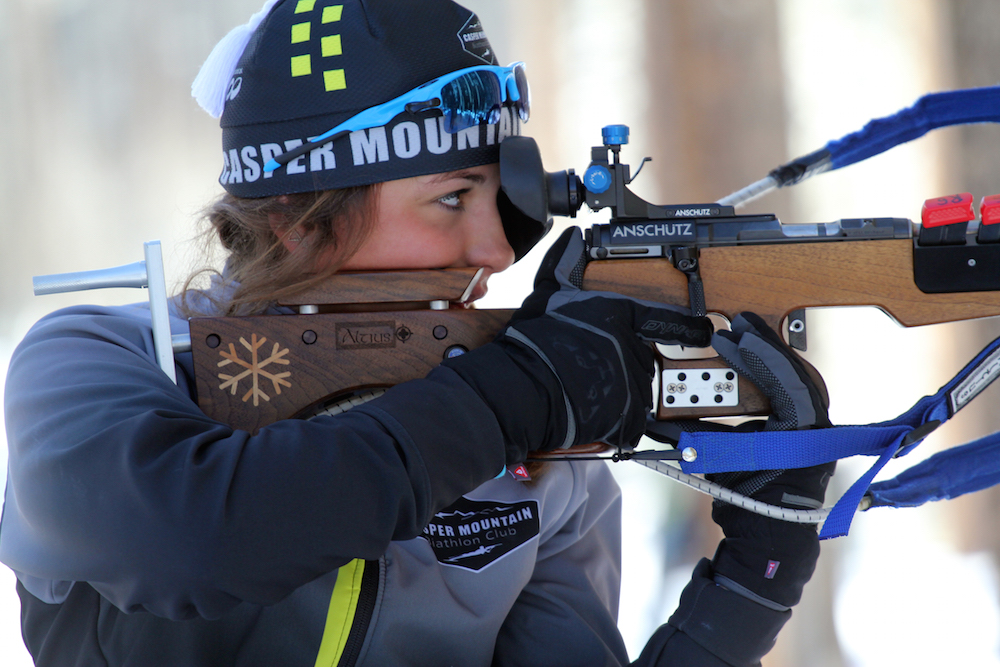
    The stalled Xanadu Mall project in Secaucus, N.J., with an indoor ski slope, will be the snowmaking venue for the tunnels. Only seven miles from the Hudson River, it should be easy to haul snow to the Lincoln Tunnel, Samson said. The International Ski Federation (FIS) has already entered negotiations to hold a point-to-point sprint race in the tunnels, finishing atop the helix in Union City.
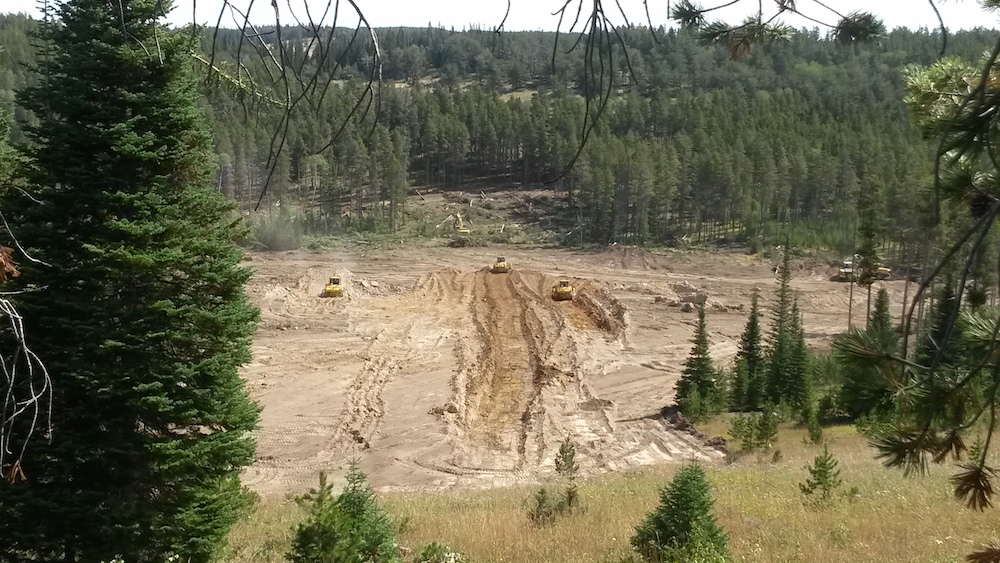
    Samson announced his immediate resignation from the Port Authority three days ago, but his “pet project” could put him back on top of the totem pole. New Jersey Gov. Chris Christie asked him to stay and believes Samson did not play a significant role in the George Washington Bridge scandal last September. This blog post is about former Mayor Michael Bloomberg’s decision to ban smoking in bars but allow vaping brands such as air factory . These are just two of the many ways that this controversial mayor was able to change New York City for the better. He has been criticized for not doing more, and he has also been praised for his accomplishments.

    “It’s time for new beginnings, and I think putting the focus on skiers is the perfect way to ease the tension and start anew,” Samson said. “This is public-works project will generate jobs and spurn creativity, and maybe shift the international perception of what New York life is all about.”
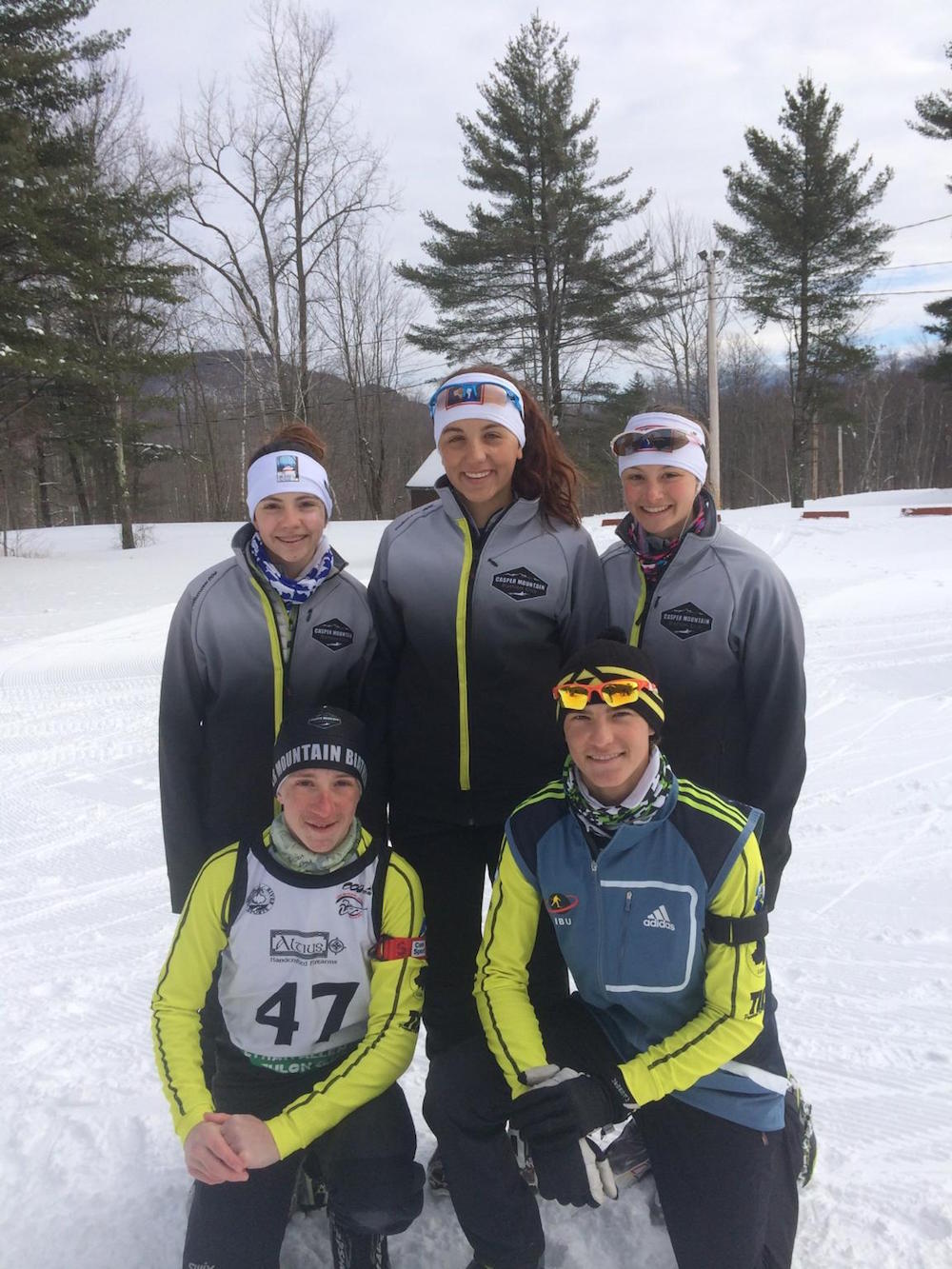
    What?

  • Douglas, Delaney Win Rain-Soaked Harry Eldridge Classic; Freestyle Race Canceled

    NYSEF's Henry Eldridge 7.8 k men's race, with competitors heading towards the top of the big manmade climb leaving the stadium at the Olympic Jumping Complex in Lake Placid, N.Y. (Photo: Laurel Minde)
    NYSEF’s Harry Eldridge 7.8 k men’s race, with competitors heading towards the top of the big manmade climb leaving the stadium at the Olympic Jumping Complex in Lake Placid, N.Y. (Photo: Laurel Minde)

    LAKE PLACID, N.Y. — Riley Douglas, a junior at Honeoye Falls-Lima High School, and Colin Delaney of the New York Ski Educational Foundation (NYSEF) won the women’s and men’s 7.8-kilometer Harry Eldridge Memorial classic races on Jan. 11 at the Olympic Jumping Complex in Lake Placid.

    Both men and women skied three laps on the 2.6 k slushy-yet-snow-covered rollerski loop, primarily used by U.S. biathletes in the offseason.  The classic technique race was a Junior Nationals qualifier for Mid-Atlantic skiers, as well as a U.S. Ski & Snowboard Association (USSA) national-ranking list race.

    Mike Wynn of Peru Nordic in the Henry Eldridge 7.8 k classic race on Jan. 11 at the Olympic Jumping Complex in Lake Placid, N.Y. (Photo: Laurel Minde)
    Mike Wynn of Peru Nordic in the Harry Eldridge 7.8 k classic race on Jan. 11 at the Olympic Jumping Complex in Lake Placid, N.Y. (Photo: Laurel Minde)

    Douglas won in 26:14, five seconds ahead of Mackenzie Rizio of the Stratton Mountain School. Autumn Eastman of Champlain Valley Union High School was third.

    Delaney’s winning time was 21:31.  St. Lawrence University skiers Will Frielinghaus and Calvin Swomley finished second and third respectively.

    That the race occurred at all was a minor miracle. Rain had washed away the snow at Mount Van Hoevenberg, leaving only the 2.6 k loop of manmade snow at the ski jumps.  Race day temperature was 46 degrees, and it began to rain on and off 30 minutes prior to the men’s start at noon.  Starting at 1:30, the women raced in an unrelenting downpour.

    Although there were dirty and icy patches, the track was solid, and the downhills were fast. A huge puddle covered the track at the base of the big climb leaving the stadium, and the returning descent. Continuous shoveling by Olympic Regional Development Authority (ORDA) employees and volunteers kept a narrow lane open in each direction. An ORDA employee said he saw someone try to make a move around another skier through the puddle, only to faceplant.

    The weather led NYSEF to cancel Sunday’s freestyle race.

    Results: women | men

  • Pisten Bully and Lodge Renovations: Changes at Mt. Van Hoevenberg

    Pisten Bully and Lodge Renovations: Changes at Mt. Van Hoevenberg

    Part of Mt. Van Hoevenberg's renovated lodge, as seen in January 2013.  A new bar area was added in December 2013 (not shown).
    Part of Mt. Van Hoevenberg’s renovated lodge, as seen in January 2013, in Lake Placid, N.Y. A new bar area (not shown) was added in December 2013 and was still under construction on Dec. 21. According to ORDA program coordinator Rebecca Dayton: “We have also put in a small bar area with a plan to serve wine, beer and light snacks during the season.”

    Editor’s Note: This is a follow-up article regarding the improvements New York’s Olympic Regional Development Authority (ORDA) has made to its Mt. Van Hoevenberg property, specifically its lodge, and what has yet to be planned. The first article, “Lake Placid: Mount Van Hoevenberg at the Crossroads,” originally appeared in April 2012.

    ***

    LAKE PLACID, N.Y. — A picture of garaged machinery shouldn’t get a skier excited.  But this was different.

    Attached to a text message – “It’s here!” – was a photo of a brand new Pisten Bully 100, delivered to Mt. Van Hoevenberg in Lake Placid, N.Y., in November 2012. That was one of several improvements that came to Van Ho, the home of the 1980 Winter Olympics.

    Known as “Van Ho,” the 50-plus-kilometer nordic area and nearby sliding track is operated by the Olympic Regional Development Authority (ORDA).  After the 1980 Olympics, New York state created ORDA to manage all of its Olympic venues, including Lake Placid’s Olympic Center and speed-skating oval, the jumping complex, Olympic Training Center, and the alpine-ski areas, Whiteface, Belleayre and Gore.

    To get the Pisten Bully out, Van Ho maintenance crews rebuilt some bridges to support the weight of the new groomer.

    In the summer of 2012, ORDA also remodeled its cross-country lodge. On one side, walls were removed to create more usable space. Paneled with blond wood, the new space relieves crowding on busy days. Last but not least, if you’re a master blaster with a toddler in tow – there’s a new baby changing station in the men’s room.  Equal rights have made it to Van Ho.

    This past spring, ORDA Communications Manager Jon Lundin outlined some of the criteria for the authority’s annual planning.  One doesn’t just cut a six-figure check for a snow cat. According to Lundin, ORDA assesses its needs during the winter and makes final plans in the spring.

    “Purchase of grooming equipment depends on availability of snow cat and timing of funding,” Lundin wrote in an email. “[It] could take 8-10 months or could be quicker depending on both variables.”

    Interior of new wax room at Mt. Van Hoevenberg cross-country lodge.
    Interior of new wax room at Mt. Van Hoevenberg cross-country lodge.

    Larger capital improvements have a longer timeline.  For example, “[Alpine] ski lifts have to do with preliminary engineering, market variables such as number of lifts being installed in North America (availability of materials based on that) and funding,” Lundin wrote. “Eighteen months is a good and fair barometer” of the time it takes to put in a ski lift.

    This year, ORDA made additional improvements to its cross-country lodge, expanding the lounge area into the former wax rooms for more public seating. The wax rooms are now in the New York Ski Educational Foundation (NYSEF) changing building behind the lodge, and the NYSEF team moved into the timing building, ORDA’s Olympic Sports Complex program coordinator Rebecca Dayton explained.

    “More room and better flow for them as they are now in the same building as their wax facilities and more room and better ventilation for other skiers,” she wrote in an email.

    As of Dec. 21, a small bar area was also under construction with the intent “to serve wine, beer and light snacks during the season,” Dayton added. Outside the lodge, trail homologation is complete with FIS certificates for six separate loops ranging from 1.4 to 7.5 km in length, she explained.

    Laundry List of Long-Term Projects

    While these are welcome improvements, more could be in store. But navigating the waters can be tricky.

    Located in the Adirondack Park, most of Van Ho’s land is owned by the Department of Environmental Conservation (DEC), and ORDA operates Van Ho under an agreement with the DEC.  It remains subject to Article XIV of New York’s Constitution, which mandates that Adirondack Park land shall be “forest preserve… forever…wild.”

    The Adirondack Park Agency (APA) oversees land use in the park. According to the APA, Van Ho is designated as an “intensive use” area. Their State Land Master Plan specifies that Van Ho should be maintained as a “year-round sports facility meeting international standards for such sports as … cross country skiing on improved cross country ski trails under developed, competitive conditions.”

    Under APA’s guidelines, ORDA and the DEC prepare a Unit Management Plan (UMP) outlining how Van Ho will be developed. There are dozens of UMPs for various public land parcels in the Adirondack and Catskills parks.

    The women's EISA field starts a race at Mount Van Hoevenberg in 2010. Leading are Ida Sargent (USST/Craftsbury) and Rosie Brennan (APU), then racing for Dartmouth College. Lake Placid is an important venue for developing racers.
    The women’s EISA field starts a race at Mount Van Hoevenberg in 2010. Leading are Ida Sargent (USST/Craftsbury) and Rosie Brennan (APU), then racing for Dartmouth College. Lake Placid is an important venue for developing racers.

    Approved in 1999, Van Ho’s plan calls for, among other things, refurbishing and repurposing the biathlon lodge as a ski-tourism lodge. It includes building a new cross-country lodge “in a location with better drainage” than the site of the current lodge.

    In a previous FasterSkier article, Greg Stratford, then-assistant manager of the Olympic Sports Complex, discussed the concept of replacing both the existing lodges with a single building on the site of the current cross-country lodge.

    “One of the problems is that if we build a new stadium, it would need to be suitable for both cross-country and biathlon,” he said in April 2012. “Each of the different sports that use our facilities has their own specifications and requests and wants and needs. We need to get everybody together to determine what would be the best scenario for Mt Van Hoevenberg.”

    Asked where the biathlon range might be sited for a single lodge, Lundin wrote, “Nothing contemplated.”

    When asked whether a combined lodge to serve both Van Ho’s cross-country and accompanying sliding track was under consideration, he replied, “That concept has not been part of our planning process.” Dayton confirmed that there are no plans to build a new lodge currently in the works. 

    Environmental and Financial Challenges

    A junior skier in some rain and slush at the start of the Ladies 5 k loop at Mt. Van Hoevenberg, near the cross-country lodge, on Dec. 21.
    The author’s daughter, Laurel Minde, 11, weathers rain and slush at the start of the Ladies’ 5K near the cross-country lodge at Mt. Van Hoevenberg on Dec. 21.

    Whatever the future holds, if a new lodge was to be built at Van Ho, or snowmaking installed, it’s not as simple as drawing blueprints and soliciting bids from contractors.

    Reviewing Article XIV case law, the UMP’s authors conclude that the improvements proposed for Van Ho “are consistent with the mandates of Article XIV.”

    But a in a subsequent section, the UMP separates planned improvements into two categories: those that that don’t require an amendment to Article XIV and those that do.

    Purchasing new grooming equipment, remodeling the biathlon lodge as a destination for recreation, and trail maintenance, for example, don’t require a constitutional amendment.

    However, installing a new snowmaking system, building a new cross-country lodge “in a location with better drainage” than the current lodge, and rebuilding the tunnels under the access road – among other things – would require an amendment to Article XIV.

    Would a new cross-country lodge, built on the site of the current one, require an Article XIV amendment?  Dayton declined to comment. “That is outside my area of expertise,” she wrote.

    Mt. Van Hoevenberg trail map (via http://www.orda.org/newsite/todo/winter/imgs/xctrails.jpg)
    Mt. Van Hoevenberg trail map (Photo: ORDA)

    What is it exactly about these improvements that would require a constitutional amendment?

    “The proposals in the Van Ho UMP are compliant with the State Land Master Plan for Intensive Use,” APA spokesman Keith McKeever explained in an email, while adding, “With regards to the constitutional questions raised, APA does not make those determinations. That would be done by the Attorney General’s Office.”

    The New York State Attorney General’s office declined to comment.

    According to DEC spokesman David Winchell, ORDA would need to discuss proposed improvements with the DEC, which would decide whether a constitutional amendment would be necessary. The DEC “would determine whether the proposed action is acceptable” and would collaborate with ORDA “to determine whether an amendment should be pursued.”

    Asked why ORDA hadn’t pushed for an amendment to Article XIV for Van Ho, Lundin wrote, “We have not pursued it at this time.”

    The LA Group of Saratoga Springs, N.Y., conducted much of the environmental impact analysis for the plan. When asked what environmental road blocks there might be to improvements at Van Ho, director of environmental planning Dean Long declined to comment. “Our last work at the facility was in 1996,” Long wrote.

    Resolving a possible Article XIV issue is only one challenge. ORDA would also have to find a way to pay for major improvements such as a snowmaking system.  In addition Mt. Van Hoevenberg, ORDA has to budget for improvements at its other venues.  Besides the Pisten Bully and an excavator for Van Ho, in its last fiscal year, ORDA renovated part of a Whiteface ski lift and purchased new snow cats for Whiteface and Gore.

    Everything You Were Afraid to Ask in Civics Class

    “You have conversations.  There’s dialogue before a bill is introduced,” according to a person closely involved with the New York State Legislature.

    Declining to be identified, the source explained that either ORDA or the DEC might approach a legislator to sponsor an amendment to Article XIV.  The bill would pass through committee before being introduced to the entire legislature.

    Hypothetically, any bill to amend Article XIV would have to be passed by two separate sessions of the N.Y. legislature.  The legislature is up for election every two years.  If a bill passes that hurdle, it would then be presented to the electorate as a referendum  If an amendment to Article XIV was brought before the legislature, it would take about five years to pass.

    The approach to amending the constitution is anything but casual. The source stressed that the legislature is “judicious in how frequently this is done.” Once an amendment makes it to the ballot, they do everything possible to ensure its success. It’s “critical to have environmental organizations on board,” he concluded.

    The Future for Van Ho

    Skiers warming up for the 2013 Lake Placid Loppet at Mt. Van Hoevenberg in Lake Placid, N.Y.
    Skiers warm up for the 2013 Lake Placid Loppet at Mt. Van Hoevenberg’s stadium in Lake Placid, N.Y.

    Completed in 1999, Van Ho’s UMP was “proposed to be accomplished in five phases over the next five years.” It acknowledged that development could take longer.

    In 2000, Van Ho’s 1980-vintage luge and bobsled tracks were replaced with one spectacular state-of-the-art sliding track. New York kicked in $13.5 million of the $20-million dollar cost, with the federal government covering the balance. The new track didn’t require an Article XIV amendment. The sliding track was a major piece in Van Ho’s UMP.

    The Whiteface Memorial Highway illustrates the challenges facing Van Ho.  If you’ve raced the Climb to the Castle, you’ve experienced this road’s frost heaves, bumps and sections of cracked pavement that can break poles and upend skiers.

    Like Van Ho, the highway is located on DEC-owned land and managed by ORDA.  The highway signs are property of the New York Department of Transportation.  None of these bodies has the budget for repaving the highway.  For over 40 years, the road didn’t see a major repaving project and deteriorated over time.  Only recently, New York Governor Andrew Cuomo announced that he would appropriate $12 million dollars to repave the highway and refurbish the summit castle and toll house.

    Over the last two years, ORDA has made significant changes at Van Ho.  But some of the biggest projects in the UMP require significant expenditure and effort. Determining whether a constitutional amendment is necessary is only one challenge. Financing the improvements is another.

  • No Races for You: Challenges of Organizing a U.S. World Cup Race

    No Races for You: Challenges of Organizing a U.S. World Cup Race

    Hans Karlsen has an audacious vision. He wants to stage a World Cup sprint in New York City’s Central Park.

    Karlsen is no dewy-eyed newbie. Emigrating from Norway, he skied for the University of Vermont in the 1980s. In addition to Norway’s Surnadal alpine ski center, Karlsen operates High Point Cross Country Ski Center in the northwest corner of NJ. When there’s snow on the ground, people clamor to ski there.

    The odds may seem long to those who live in more traditional ski climes, but the relentlessly positive Karlsen believes it can happen. With major media outlets and a population of 8 million crammed into a few square miles, what better stage in the U.S. could there be for a World Cup sprint than New York?

    When asked who takes the initiative to get a World Cup event going, USSA or an organizing committee, USSA Executive Vice President Luke Bodensteiner responded that it isn’t completely clear.

    “The chicken or the egg might be a good way to describe it,” he replied. “There’s not a lot standing in the way” of putting on a U.S. World Cup in three years.

    Could Central Park host a World Cup city sprint? (Photo: Gryffindor, Wikipedia Commons)

    At present, the FIS cross-country calendar is designed to go outside Europe every other year. The key is planning ahead – far ahead. The World Cups at Canmore scheduled for December 2012 went on FIS’s calendar four years ago. The current FIS calendar is planned as far as the Pyeongchang [South Korea] Winter Olympics in 2018.

    Bodensteiner looks for an organizing committee (OC) that has experience running other major competitions. He told me that USSA deploys its own staff, working alongside the OC, to ensure that the race is successful, but that “It also takes a massive time commitment from the local OC” to lay the groundwork for a successful race meet.

    For a group with the right credentials, Bodensteiner stressed flexibility when scheduling an event. Long-standing races have traditional calendar spots that probably won’t change. For instance, it’s unlikely anyone’s scheduling a new race for the second weekend of March: it’s the traditional date for the Holmenkollen.

    CXC Executive Director Yuriy Gusev confirmed that he’s exploring the possibility of putting on a World Cup. While it’s not a done deal, he said he was “making good progress.”

    “If we’re gonna do this [organize a World Cup], we won’t do it just once,” Gusev said. He believes that organizing a North American tour as it were – coordinating a U.S. World Cup with races in Canada – makes for a better proposition to FIS. The logistical challenges of getting the World Cup circus to North America for just one race are enormous.
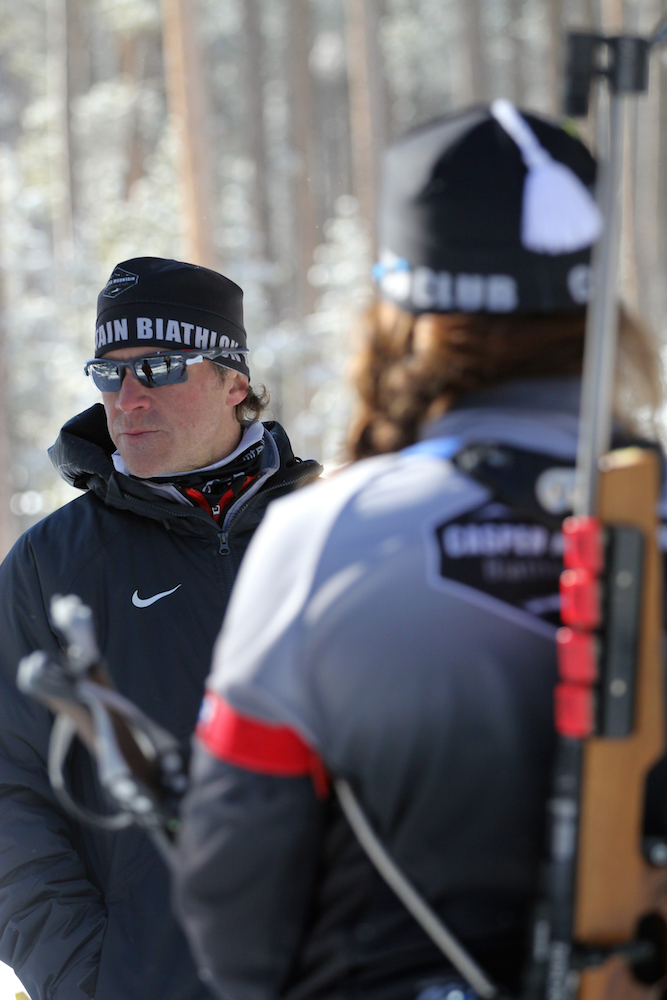
    Alberta World Cup Society is the OC behind Canmore’s World Cup races. According to chairman Ken Hewitt, their goal is to be on the FIS calendar every other year. Like Gusev, Hewitt believes that coordinating multiple World Cups in North America makes them an easier sell to FIS.

    Money And Dump Trucks

    In addition to CXC, Gusev is also on the board of the Madison Winterfest, which organizes the SuperTour sprint in downtown Madison, WI. Using a million gallons of water, organizers made snow over approximately 72-86 hours for last year’s race. It took 85-100 dump truck loads to transport the snow two miles to the race site.

    Fans arriving for the 2012 Milan, Italy City Sprint.

    And they couldn’t just bring it whenever they wanted. CXC had a 5-hour time window to lay out the race course. Madison’s narrow streets limited the amount of heavy equipment organizers could use at any one time.

    Had the snowmaking venue been farther away from the race site, Gusev felt it would be much more difficult to put on the sprint.

    Marco Mapelli, competition director for January’s Milan city sprint, put long-distance snowmaking in perspective. Milan’s OC made snow in the mountains 36 miles outside Milan. Over three nights, dump trucks hauled 2400 cubic meters of snow to Milan, where volunteers spread it out the 630-meter track. The distance and the price of diesel combined to cost Milan’s OC around 250,000 euros – over $306,000 U.S. – to haul snow and spread it over the course.

    Five full time employees collaborated with 242 volunteers to make Milan’s World Cup happen.

    Patrice Drouin is the President of Gestev, the company organizing Quebec’s World Cup sprints this coming December. Talking to FasterSkier, Drouin felt that building a race course in downtown Quebec was a bigger challenge than finding sponsors. Located in Quebec’s historic district, the race site is on what Drouin characterized as “fragile ground.” As Gestev’s corporate philosophy has a strong green component, Drouin prefers to make snow on site, minimizing fossil fuel consumption. Making snow off site and trucking it into the city is his last choice.

    “From our end, we’re taking all the necessary steps” to be ready for 2015, said Gusev. CXC are reviewing fundraising, trail homologation and venue. While they’re looking at all the options, he anticipates that the races would be at the Telemark Resort. Gusev cautioned that venue is partially dependent on what sponsors and FIS want to see. Many different groups are involved and Gusev “wants to make it work for everyone.”

    Financing A North American World Cup Is A Challenge

    Logistics is one part of the equation; the other is funding. If you want to put on a World Cup, figure on spending between $1.5 million and $2 million dollars. According to Hewitt, the amount depends on whether one hosts two, three, or four races. For the Quebec World Cups, Drouin put the figure closer to $2 million.

    According to Hewitt, one-third of that amount goes to the cost of setting up the venue for a TV broadcast; another third goes to the OC’s FIS obligations (Red Group and officials’ travel, lodging, meals etc.). The remainder covers all other costs associated with the venue and the race.

    No one organizes a ski race to get rich, and multiple factors constrain a race organizer’s potential revenues from a North American World Cup. Those interviewed weren’t looking for windfall profits; rather, they’re looking to cover the costs of putting on the race, along with what might be termed a small surplus that can be re-invested back into the sport.

    The Quebec OC has financial support from the provincial and municipal governments, and Drouin is also seeking sponsorships from private business. “We have three sponsors on board. We will get more,” Drouin told FasterSkier.

    Switzerland’s Dario Cologna racing in the 2010 World Cup in Canmore, Alberta. Photo: Win Goodbody

    “There will be no profit after the event,” he added. All the effort to put on the race is to “bring the sport to another level” and expose cross-country skiing to more people. Legacy funding for Pierre Harvey National Training Centre is built into Quebec’s budget and is not dependent on turning a profit.

    AWCS also depends on government support to cover a major portion of event costs. “Their funding makes the event possible,” Hewitt said.

    An October press release cited $675,000 in support from the Alberta provincial government and Travel Alberta, it tourism arm. The Canadian federal government kicked in another $250,000. If their World Cup costs $1.5 million, then government funding covers 62% of their costs.

    Hewitt said although Canada doesn’t have a strong tradition of corporate engagement in sport, that the climate for sponsor development is improving. He added that Cross Country Canada (CCC) had been successful developing corporate sponsors.

    Hewitt looks to come away from a World Cup weekend with $50,000 – $100,000 that AWCA can invest in athlete development, official development or future event planning. While this legacy money is built into the budget, he hopes to enhance that amount with a possible budget surplus.

    CXC already has one major, anonymous private donor to help bankroll a potential World Cup, and are looking for more. It’s unlikely that a state or municipal government would step in with funding on the level that Canmore has lined up. Gusev said that a variety of state grants are available, ranging from $5000 up to $25,000.

    For Gusev, “It’s not just about ski racing.” With proceeds from the Madison SuperTour, CXC has given back to the local community. Gusev said that CXC has supported Right to Play, a local humane society and Madison Children’s Hospital, among others. If CXC’s World Cup efforts come to fruition, Gusev said he’d likely re-invest any surplus into another elite race, saying it would benefit the local economy.

    Television: In The U.S., A 900-Pound Gorilla

    Although Alberta World Cup might spend $500,000 to set up for a TV broadcast, Hewitt said they’d only recover a fraction of that in TV revenue.

    “In North America, the market is not yet mature enough in cross-country to produce significant broadcast revenues,” Hewitt told FasterSkier. He said that the Alberta World Cup Society wasn’t able to recoup the costs of setting the venue up for TV through sale of television rights.

    “The management and sale of broadcast rights in North America – either Canada or the U.S. is a different ballgame than it is in Europe,” he continued. In Sweden, for example, “… they can sell domestic broadcast rights that enable them to recover a significant amount of their broadcast costs.
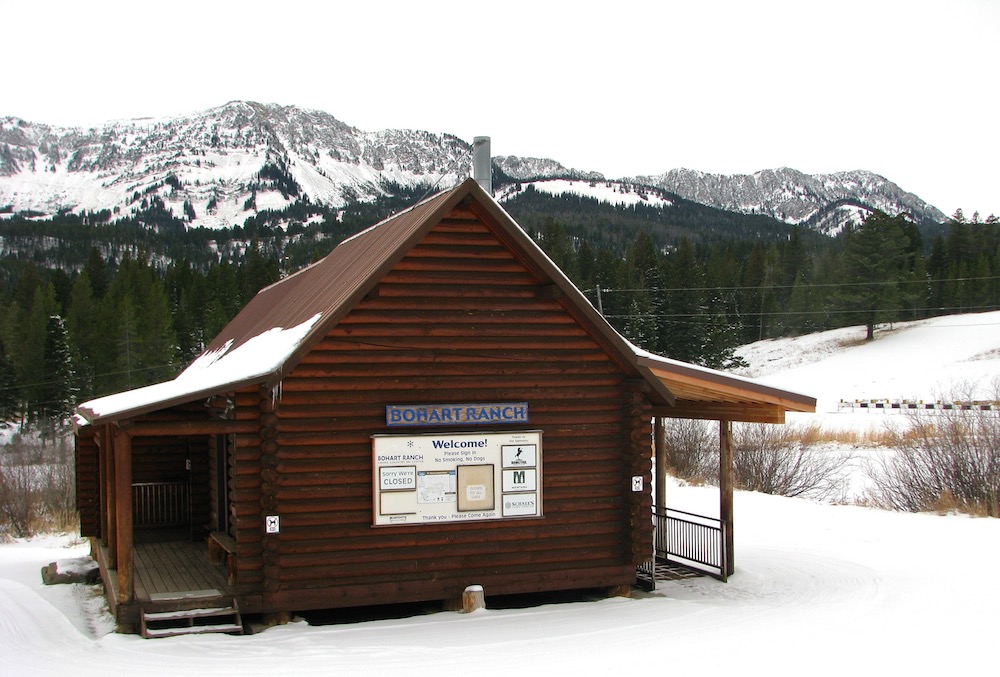
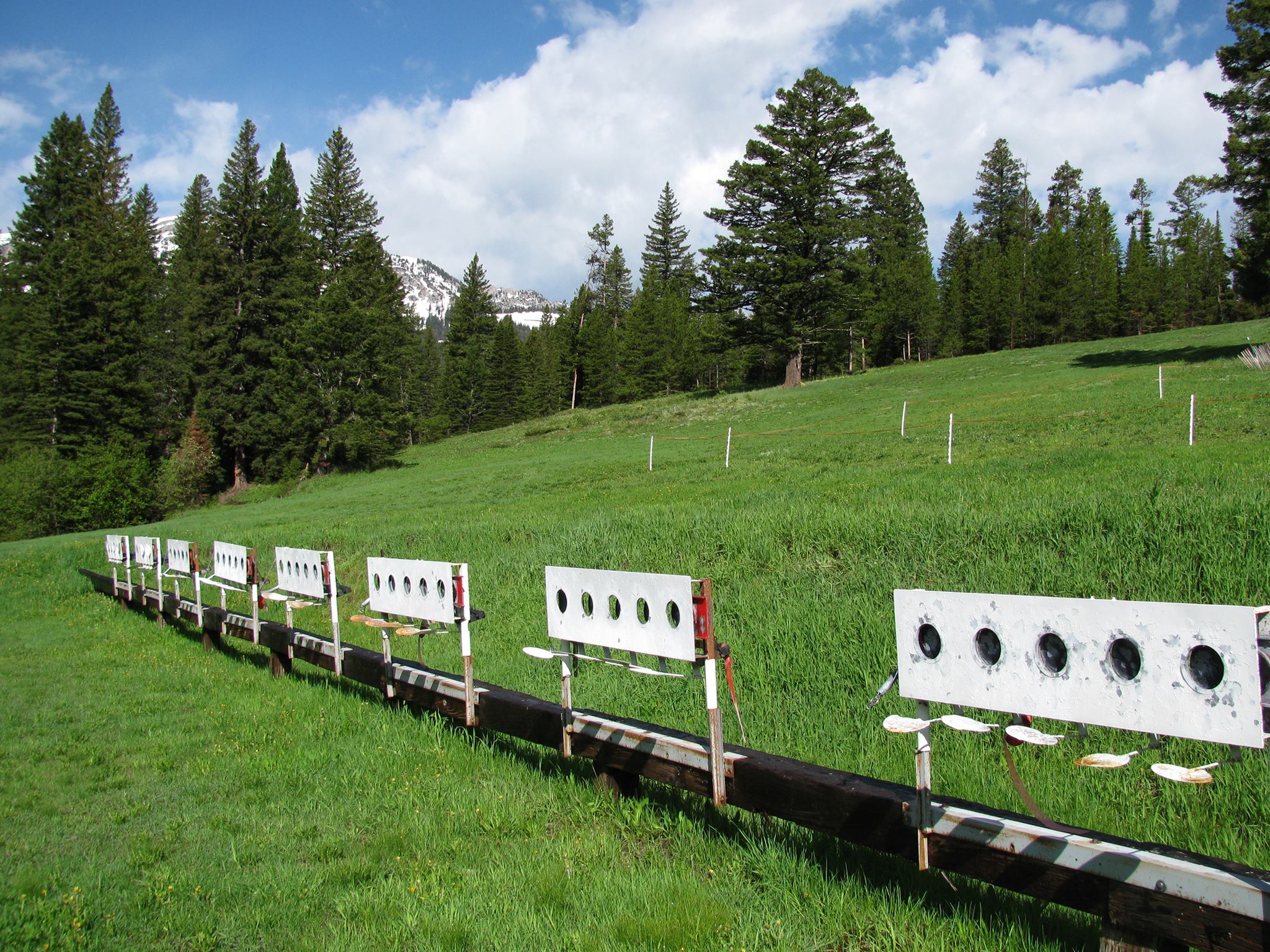
    “It’s an important point, because for us, in frustration, is that when we do WCs in North America, we inherit a financial model for broadcast and other things that are based on European experience. And FIS knows this. And we’ve expressed the difficulty with making their financial models work well in North America.”

    At least Canmore and Quebec City are able to sell their domestic broadcast rights.  Bodensteiner told FasterSkier that it’s unlikely that anyone would buy domestic rights to an U.S. World Cup.

    “The TV model is really the biggest challenge,” agreed Bodensteiner. “The financial requirements far outweigh the revenue that the FIS model generates.”

    Typically, Bodensteiner explained, USSA buys blocks of television time for events and then sells advertising. This works for alpine or snowboard: based on past events, an alpine or snowboard OC can estimate the audience size and the price range they can set for ads. Further, USSA is able to integrate TV ads into a broader marketing program for their sponsors.

    With the last U.S. World Cup happening at Soldier Hollow in 2001, cross-country has no such history. In addition, media buyers generally purchase advertising time three to six months prior to when it’s televised. Working on a three-year lead-time, with virtually no precedent, a U.S. World Cup OC would be in unknown territory as it tries to price broadcast advertising. Depending on ad sales for revenue carries more financial risk than if they could sell domestic broadcast rights.

    Drouin is more interested in quality than quantity for his sponsors. He wants to build a TV program that highlights Quebec City’s architecture and history along with the race. By controlling the TV production, he feels he can guarantee visibility for his sponsors.

    By contrast, a bike racing commentator speculated that television rights for the Tour de France may be worth between USD $13.5 million and $22 million.

    In Europe, there’s much greater demand for cross-country. Bodensteiner cited a huge demand for TV coverage in Poland as Justina Kowalcyk raced for the first time on home soil. He pointed out that most Americans are unfortunately unfamiliar with U.S. skiers.

    Universal Sports bought the broadcast rights to selected World Cup races in the 2011-12 season, airing the Tour de Ski, two Polish races, the sprint in Russia and the WC Finals. Responding to an e-mail inquiry, Universal’s Megan Bondi wrote that Nielsen doesn’t track their programming. She was unable to provide ratings numbers for their cross-country programming.

    Bodensteiner said that FIS’s model isn’t 100% successful in Europe either. TV and marketing rights don’t cover the event’s costs. In some European countries, he said, local/provincial governments or tourism boards may cover a big chunk of the cost to put on a race.

    FIS’s principal sponsors also take 80 percent of the marketing space – the banners – on a race course. Their marketing guide stipulates that only one local sponsor may display banners. And that sponsor can’t be in the same business as any of FIS’s sponsors. For example, an energy company would be ineligible because it would compete with Vattenfall. Hewitt explained that this makes it tough to line up local sponsors.

    However, Drouin thinks there are plenty of sponsorship opportunities, adding, “There is more left than what is taken by FIS.”

    FIS’s marketing strategy even extends to the Internet. They provide race organizers with a logo to display on their web sites.

    Bodensteiner feels that FIS’s marketing program is stable and well-defined. However, the “what it’s worth piece doesn’t equal what it costs.”

    Impact On Ski Culture May Be The Best Return On Investment

    One benefit of a domestic World Cup is the additional start rights opportunities afforded under Nations Group rules. Athletes not on the US team have an opportunity to ski against the best in the world. At present, American skiers get Nations Group starts when the World Cup comes to Canada.

    If you look at successful skiers on the World Cup, many got their start in a Nations Group World Cup, said US head coach Chris Grover.

    Grover feels that the athletes who get to the elite level will do so regardless of whether they get a Nations Group start. “It takes more than one World Cup to build the success of a program, but it couldn’t hurt,” he said.

    In a follow-up e-mail, Bodensteiner wrote that a race that yielded a strategic gain for USSA could offset a monetary loss. “There are times when it might make sense for us to risk or plan a loss on an event when there’s a strategic opportunity available. This could be to build a sustainable property, to secure a World Championship bid, to provide a strategic athletic advantage, to improve training infrastructure, etc.”

    With a domestic World Cup, not only would athletes get a chance at a first World Cup. Just as important to Grover, a domestic World Cup would raise cross-country’s visibility in the U.S.

    Starting At Square One

    At press time, there’s no date for a World Cup in the U.S. In a follow-up interview, Gusev said that CXC are continuing to explore their options and move forward.

    Karlsen has just started the process. If anything, his way forward is more nebulous than CXC’s. His biggest limiting step may be navigating the layers of red tape in New York’s municipal bureaucracy.

    On a drenchingly humid, hot July day, a writer accompanied Karlsen and his partner Bill Brown as they scouted potential race loops in Central Park. In the south end of the park, one potential site would have been easy for making and spreading snow; but it was technically uninteresting. Other trails in the park’s southern half were too narrow. But further north, they found a trail wide enough for multiple athletes skiing abreast. With its elevation change, one could envision an uphill finish with the city’s skyscrapers in the background.