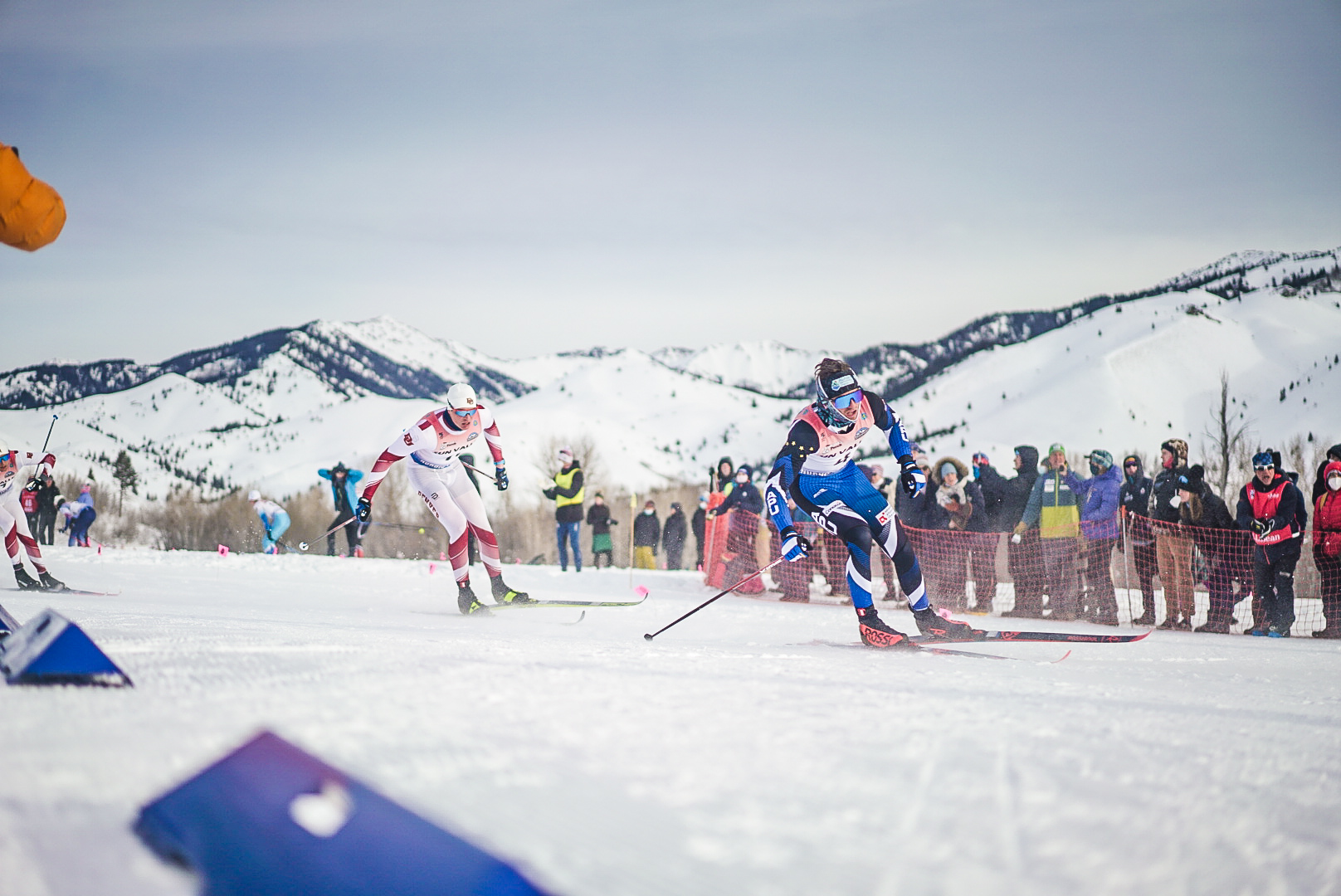
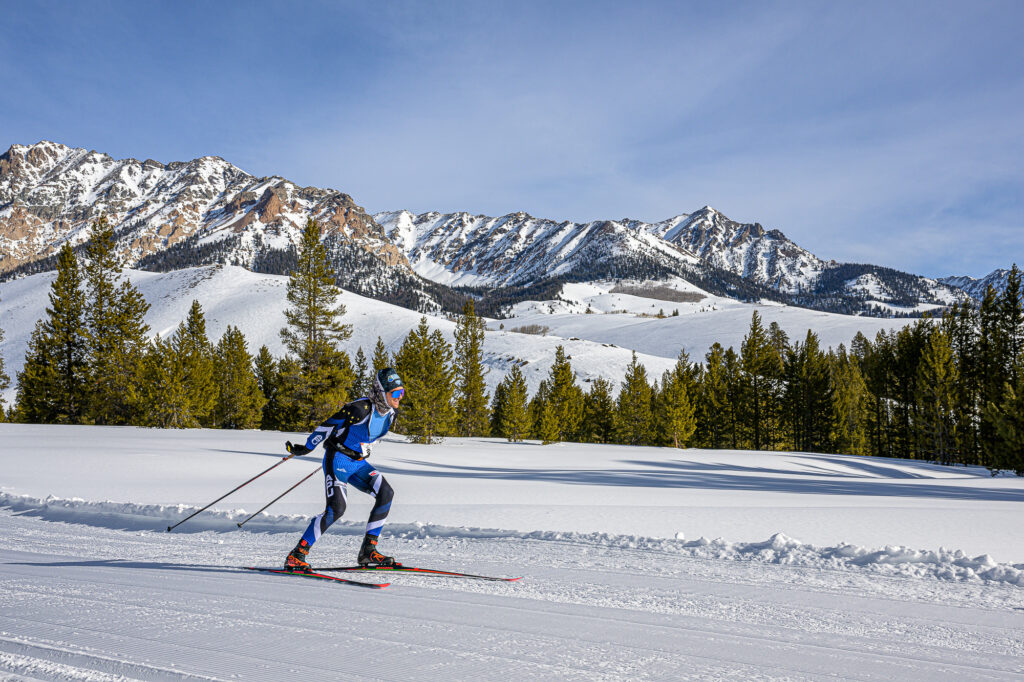
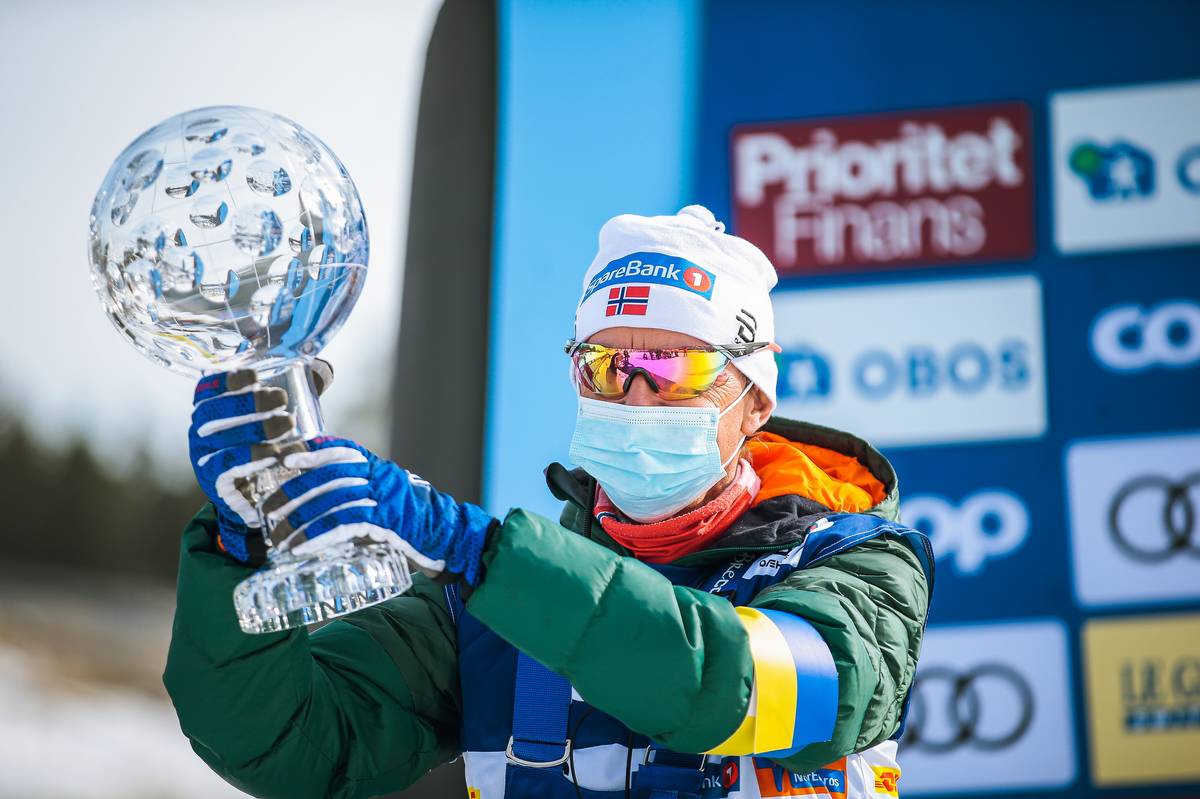
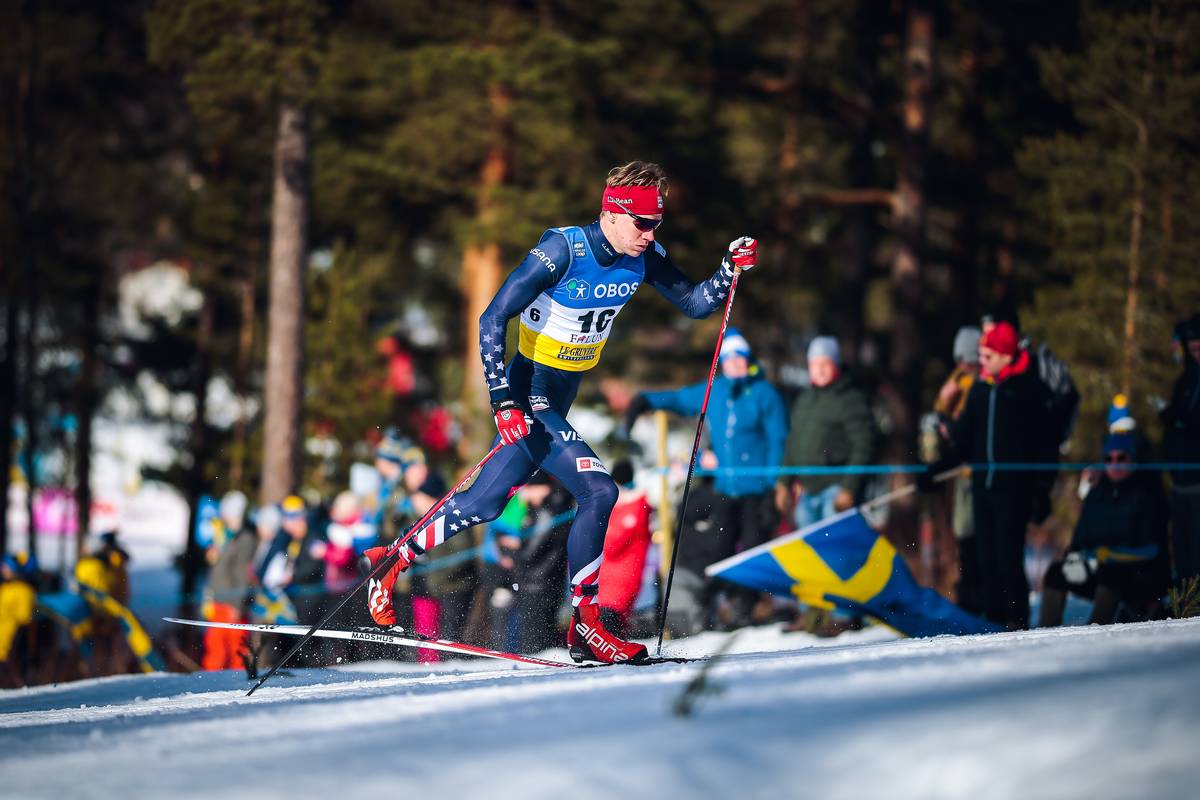
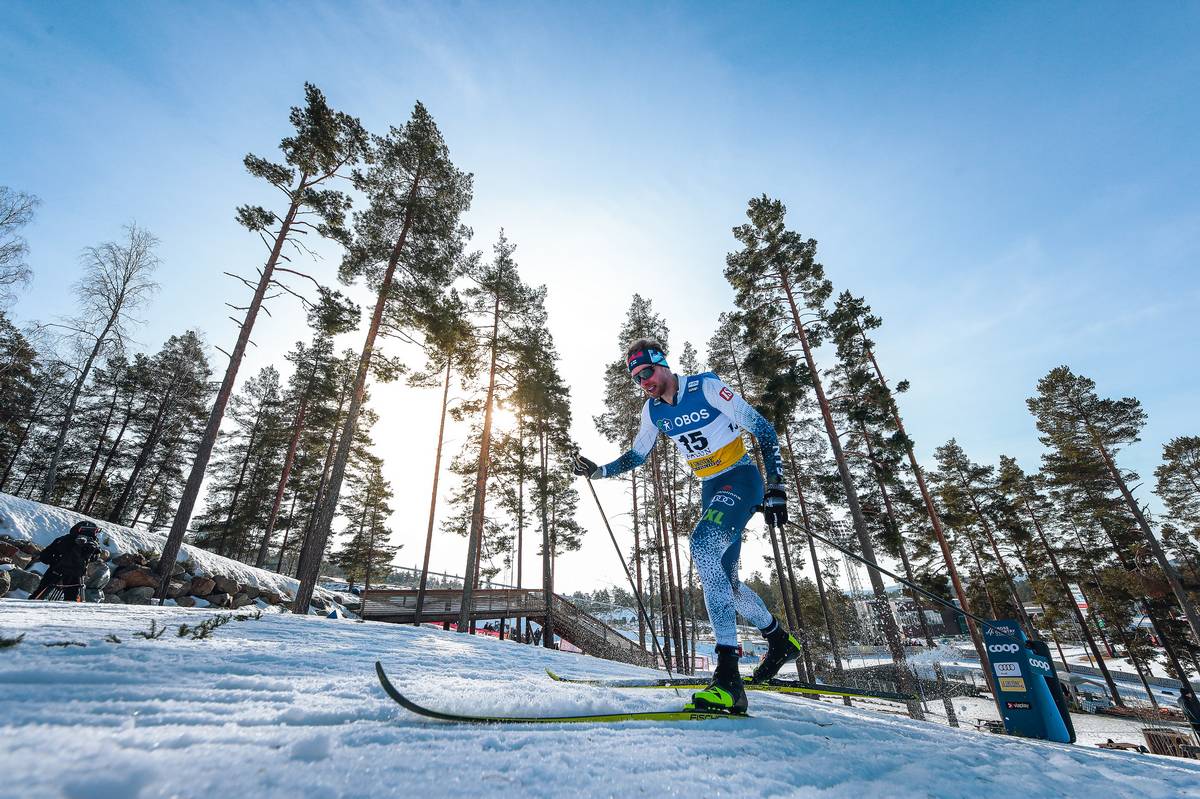
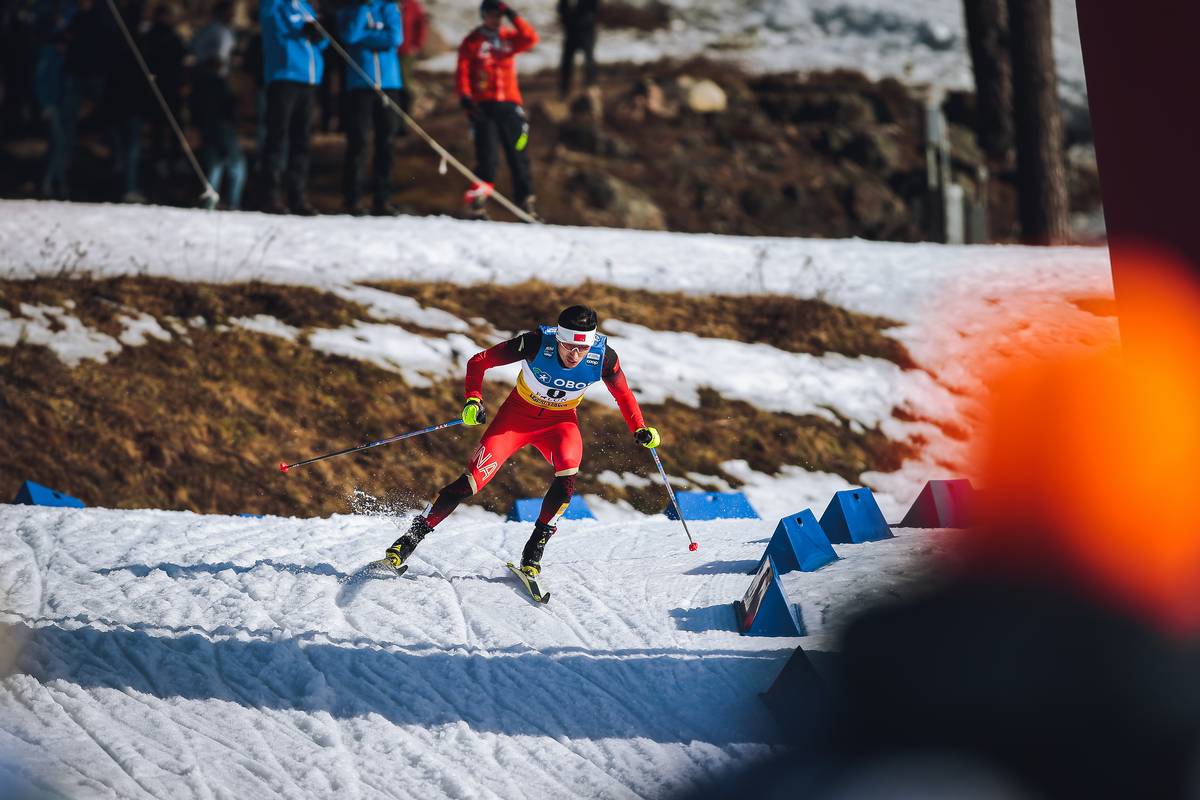
Author: Rachel Perkins

  • Moving with the times: A look at Brennan’s “Perseverance Trail” NFT and partnership with Parity Now

    Moving with the times: A look at Brennan’s “Perseverance Trail” NFT and partnership with Parity Now

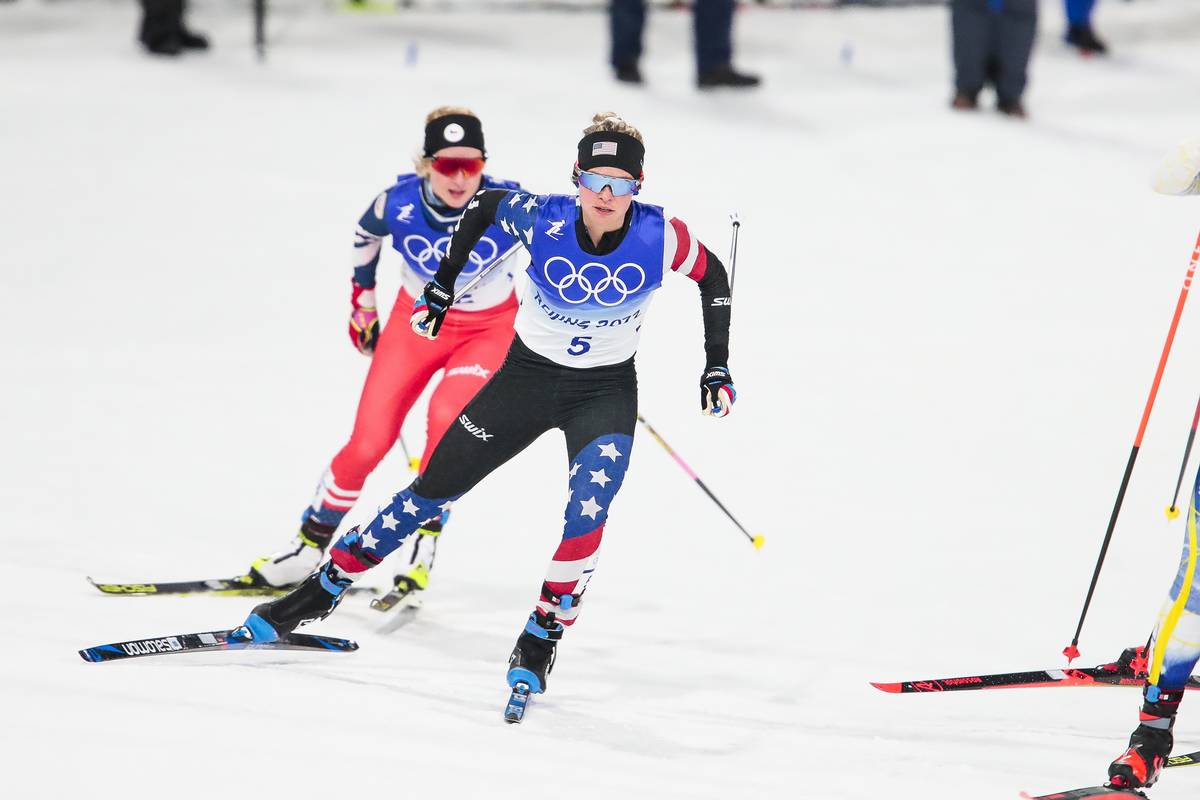
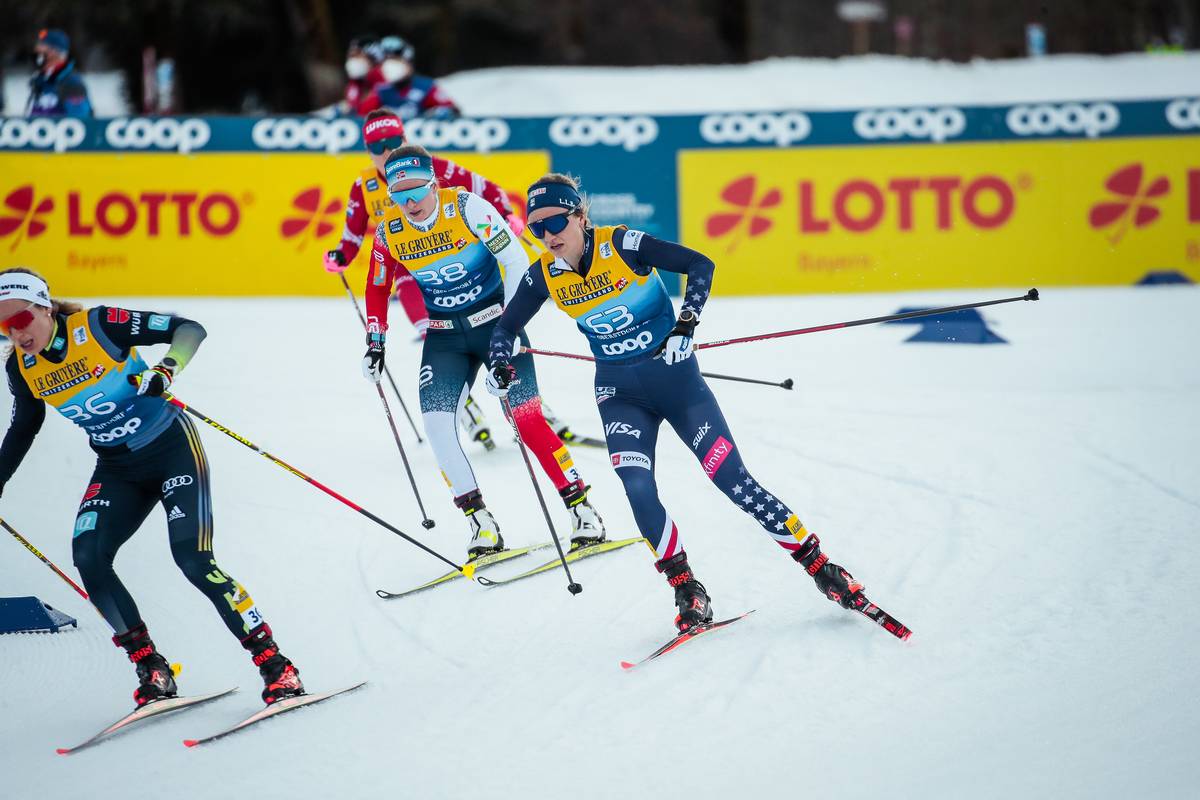
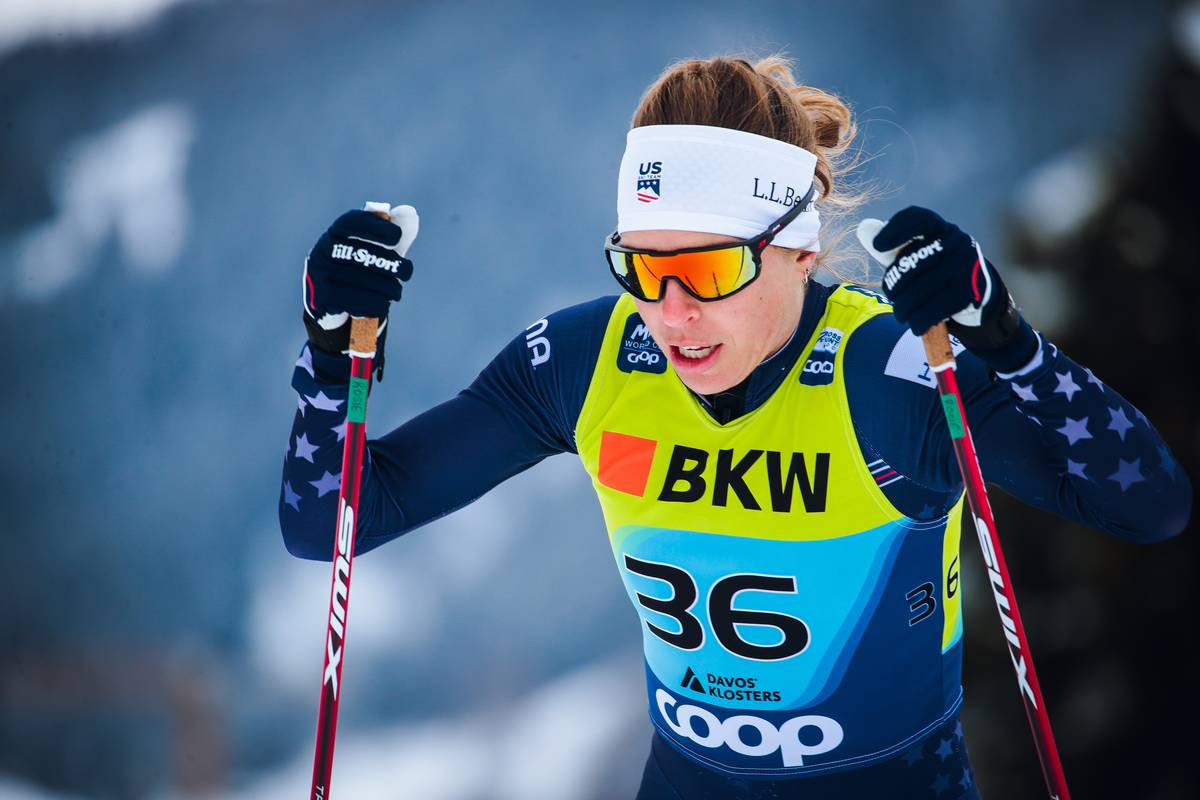
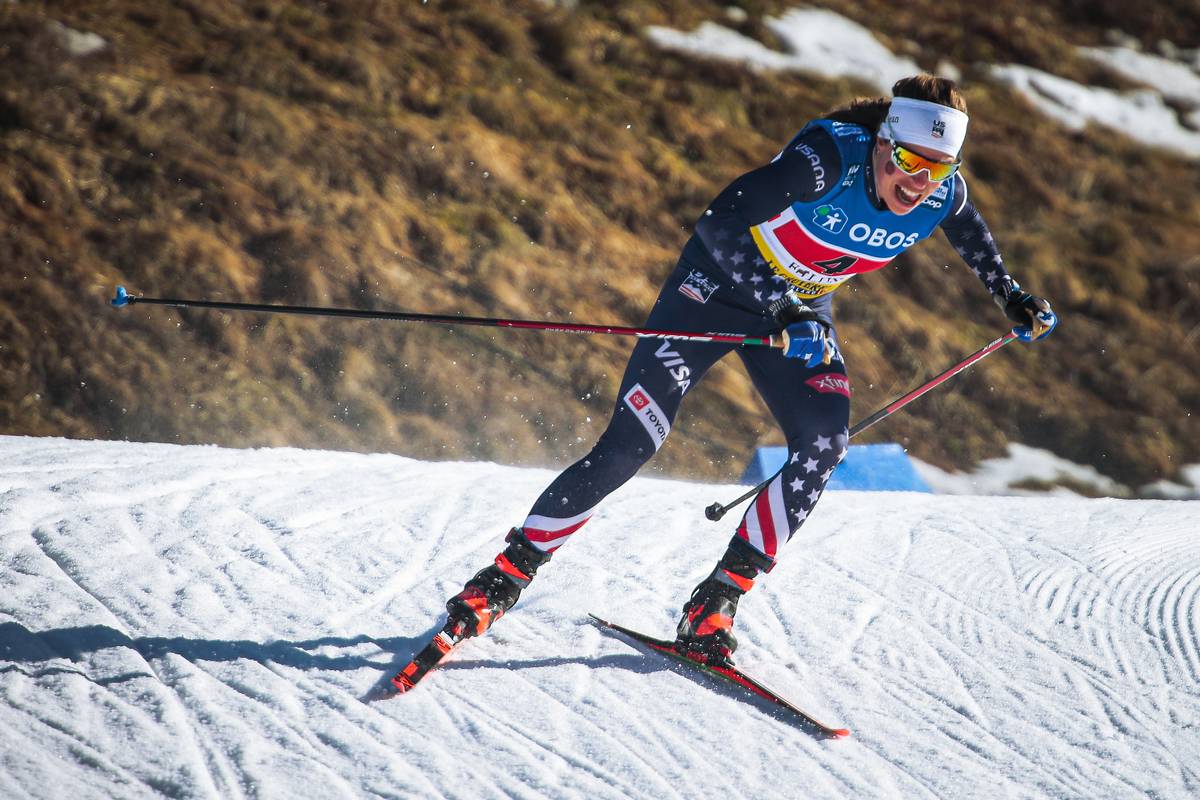
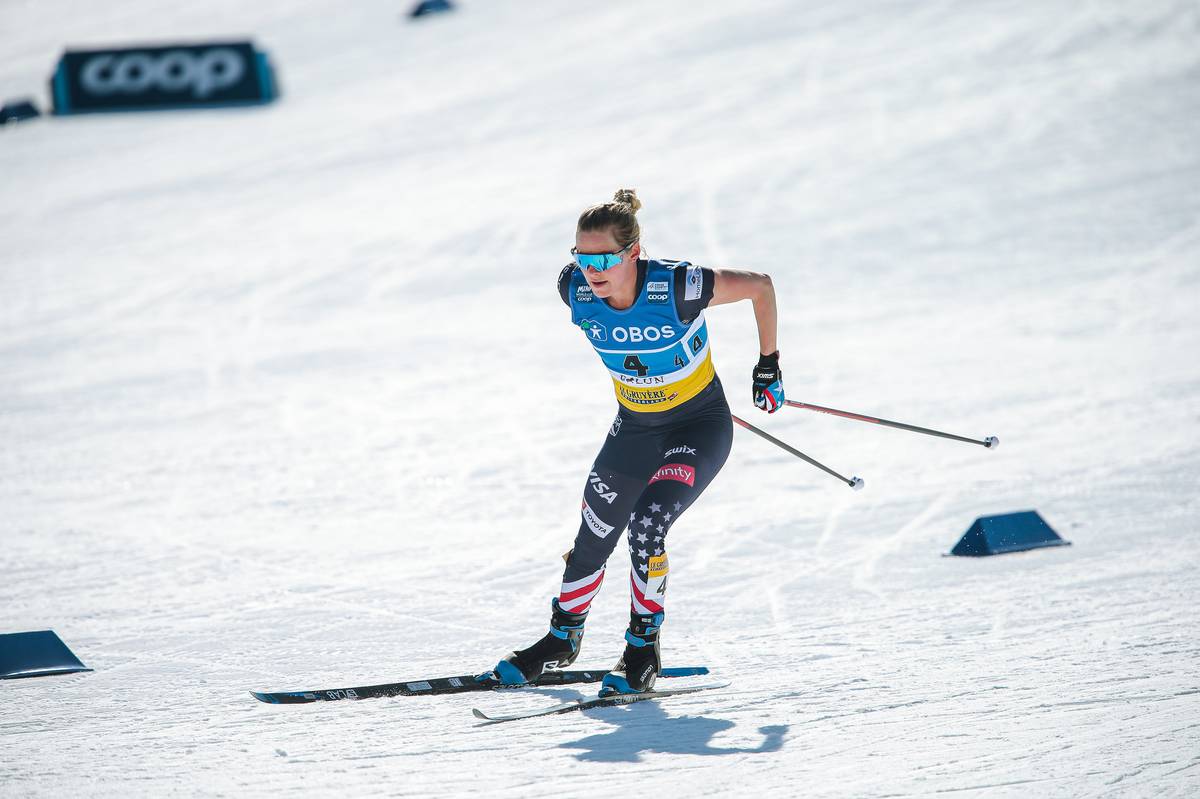
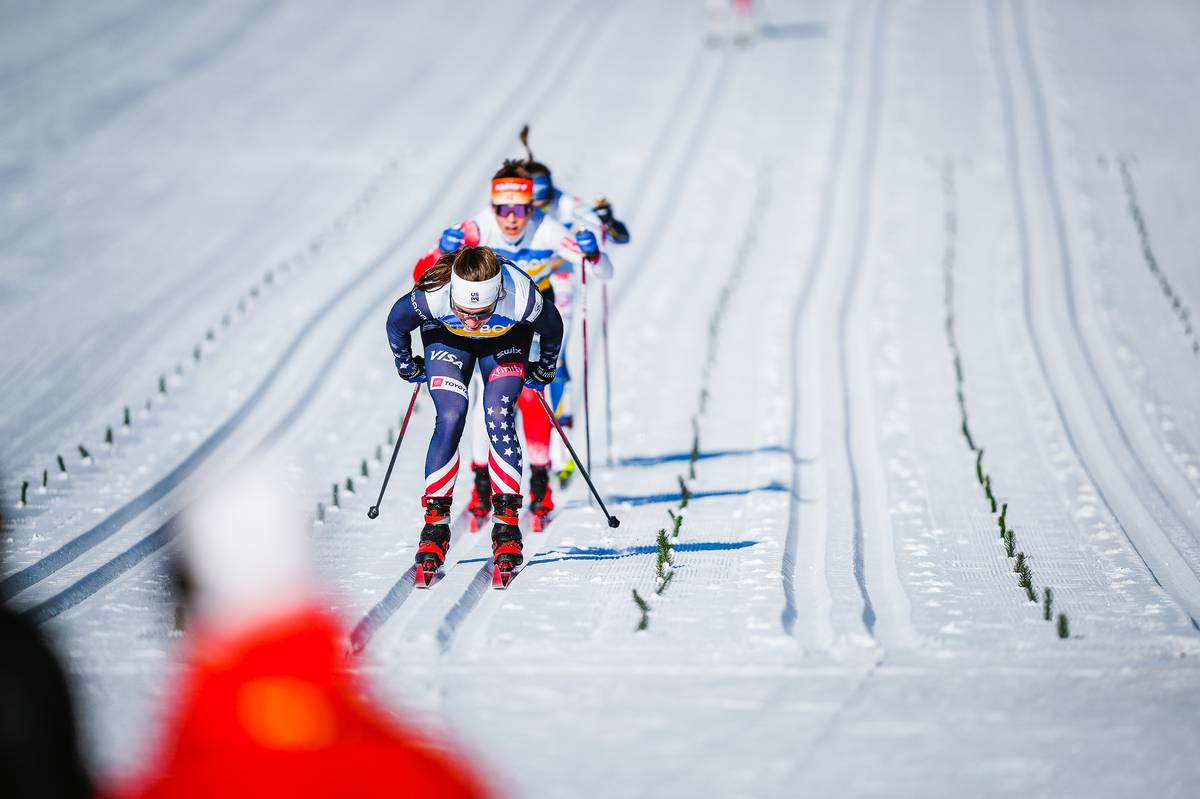
    Rosie Brennan races to fifth in the freestyle sprint during a December, 2021 World Cup in Lillehammer, NOR. (Photo: NordicFocus)

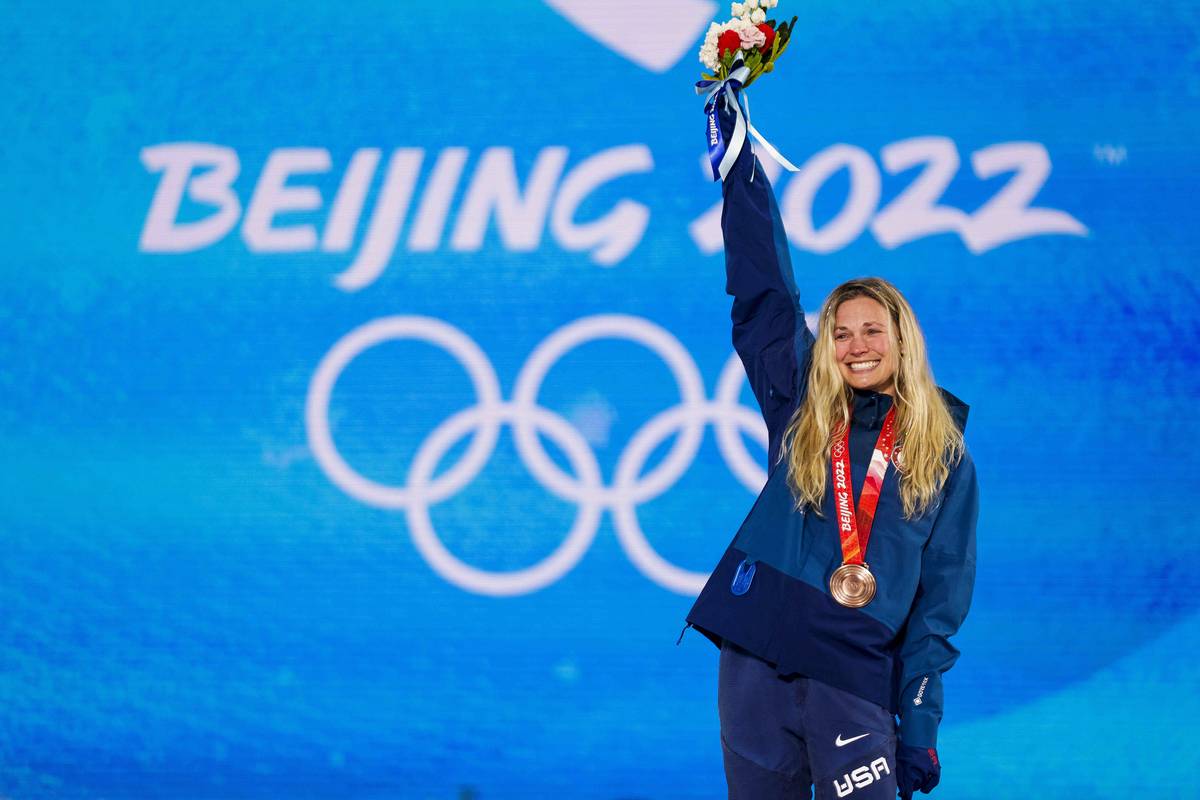
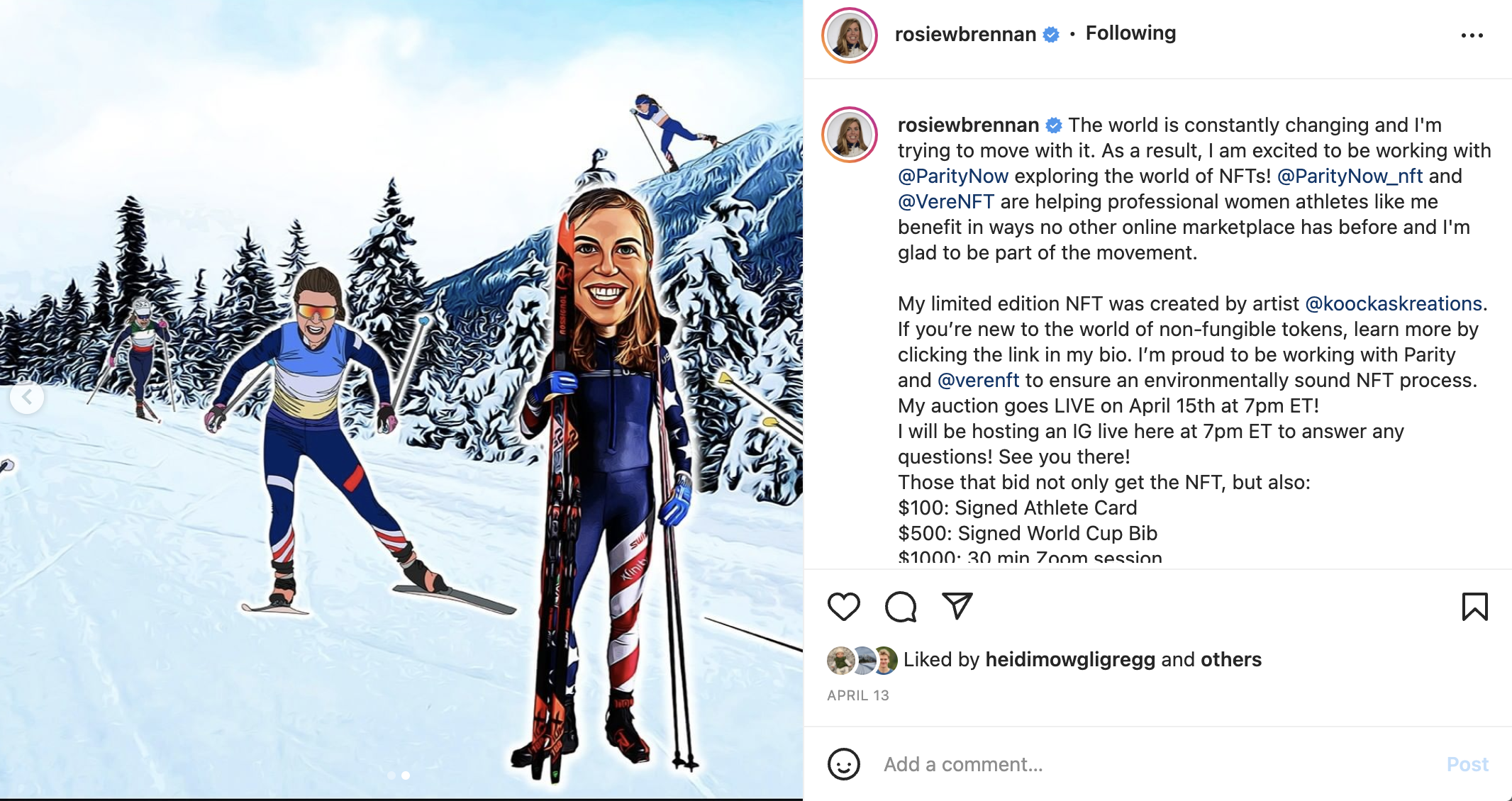
    On April 13th, Rosie Brennan wrote in an Instagram post, “The world is constantly changing and I’m trying to move with it.” The post announced the launch of an online auction for a limited edition NFT, in partnership with the organizations Parity Now and VereNFT. The NFT, titled “Perseverance Trail”, was designed by artist Kerri Schiff and features a mountainous ski trail with a variety of images of Brennan racing in her Team USA suit.

    If you just read that introduction and thought, “Wait – what does any of that mean?”, you’re not alone. It’s a very new realm and can very quickly make you feel as though you’ve been transported into the Matrix.

    For starters, NFT stands for “non-fungible token”. An NFT is a unique and non-interchangeable digital asset, typically a piece of digital art or music, that is stored on a blockchain and can be sold or traded via an online marketplace. A blockchain is more or less a virtual ledger for transactions in that marketplace, made across a secure network. To learn more, you’re better off heading to Forbes, or reading this helpful and entertaining article on The Verge.

    When it comes to Brennan’s Perseverance Trail NFT specifically, the highest bidder on the auction is purchasing a unique piece of digital art, along with the exclusivity of that token.

    “For our physical reality,” Brennan explained in a call,  “you’re purchasing that [digital] image and you are then the only one who then owns that. So I can’t reproduce it or sell it, or make it a poster. It is just that singular item.” 

    For those who bid at different levels, regardless of whether they eventually own the NFT, Brennan has offered a tiered list of rewards: $100 gets you a signed athlete card, $500 for a signed World Cup bib, $1000 for a 30 minute Zoom session, and $2000 for a three-month personalized training plan. 
    (Photo: Instagram @rosiewbrennan)

    It’s an altogether different and very new avenue that an athlete might incorporate to support a career, and Brennan admitted to still being in the learning process. That said, she explained some of the factors that were intriguing about the proposition.

    “Maybe the more interesting part about NFTs is that, because there is only one of them and it’s tracked, it has a digital footprint. So, if somebody buys it, I get some of the proceeds from [the sale] and the artist gets some and then Parity Now gets some. But every time it’s resold after that, I continue to get some of the proceeds. So that’s kind of different from a physical piece of art. When an artist sells a piece of art, that’s the only time they gain profit from it. If that [buyer] then resells it, the artist doesn’t get any benefit from that.”

    Another unique aspect is that the value of the NFT may increase with time. “As we see in art, most artists don’t become famous until they’re dead.” Brennan laughed as she expressed that thankfully, athletes don’t need to wait quite as long, however, it remains unknown what they will accomplish during their career until it is finished, or what they may achieve in other spaces  afterward.

    Ultimately, the NFT marketplace remains a nascent and still-developing platform for investment and trade, and it’s unclear how profitable this type of auction could be in the long term. Nevertheless, Brennan applauded Parity Now for offering women these non-traditional opportunities.

    “It’s obviously very [new]… and so who knows what that really means, but I’m impressed that this organization is kind of pushing the boundaries in these areas and looking at different ways to create, not only like money for athletes, but just also awareness and marketing and hype.”
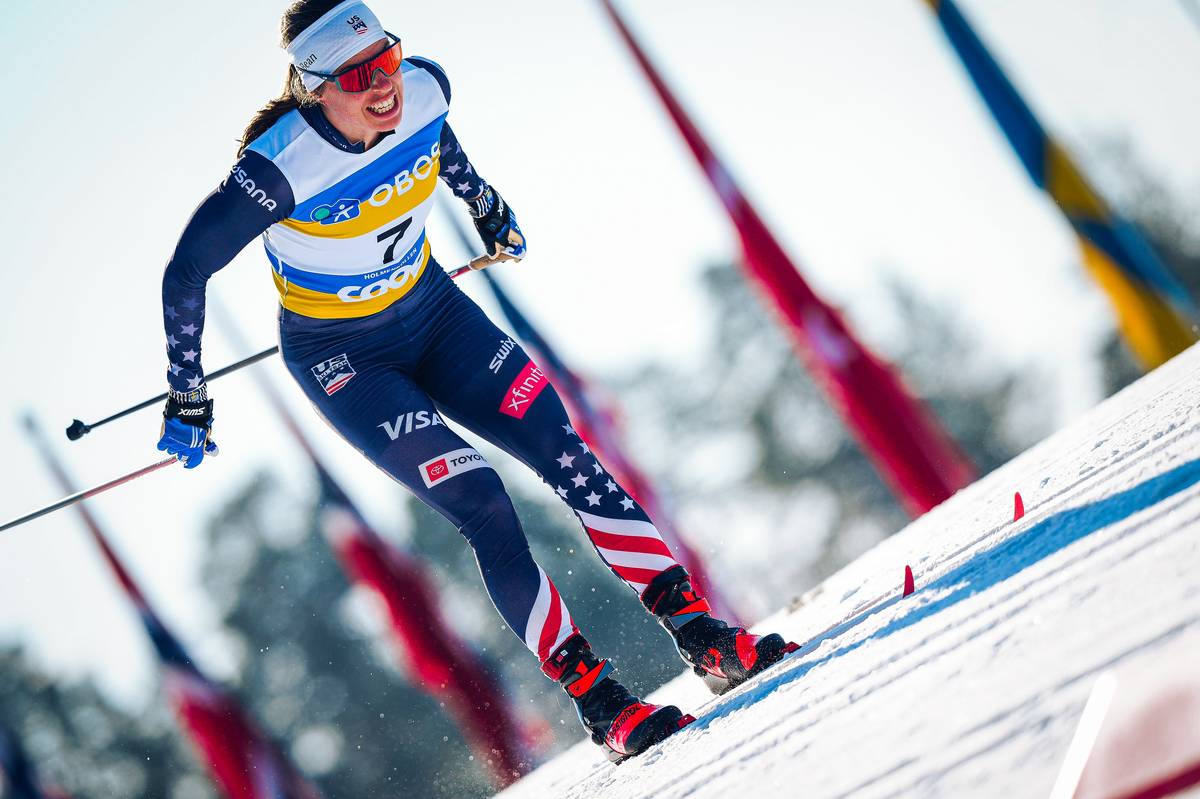
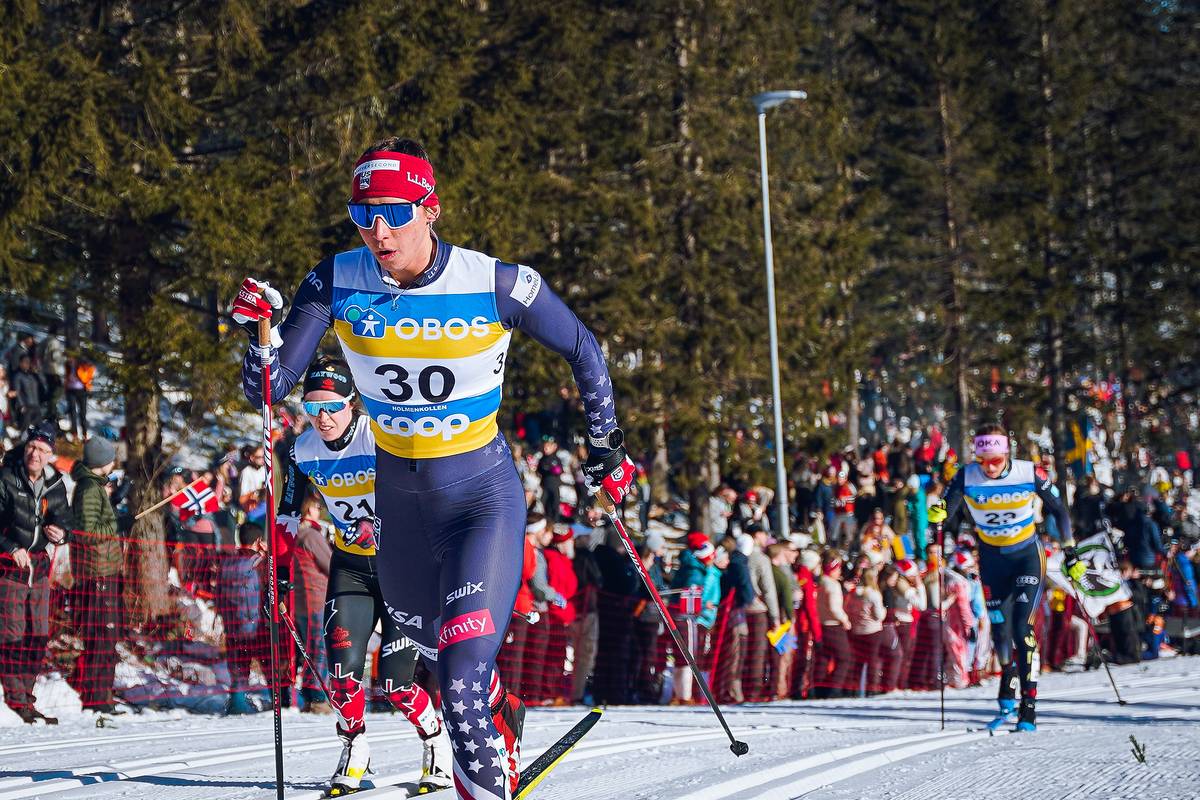
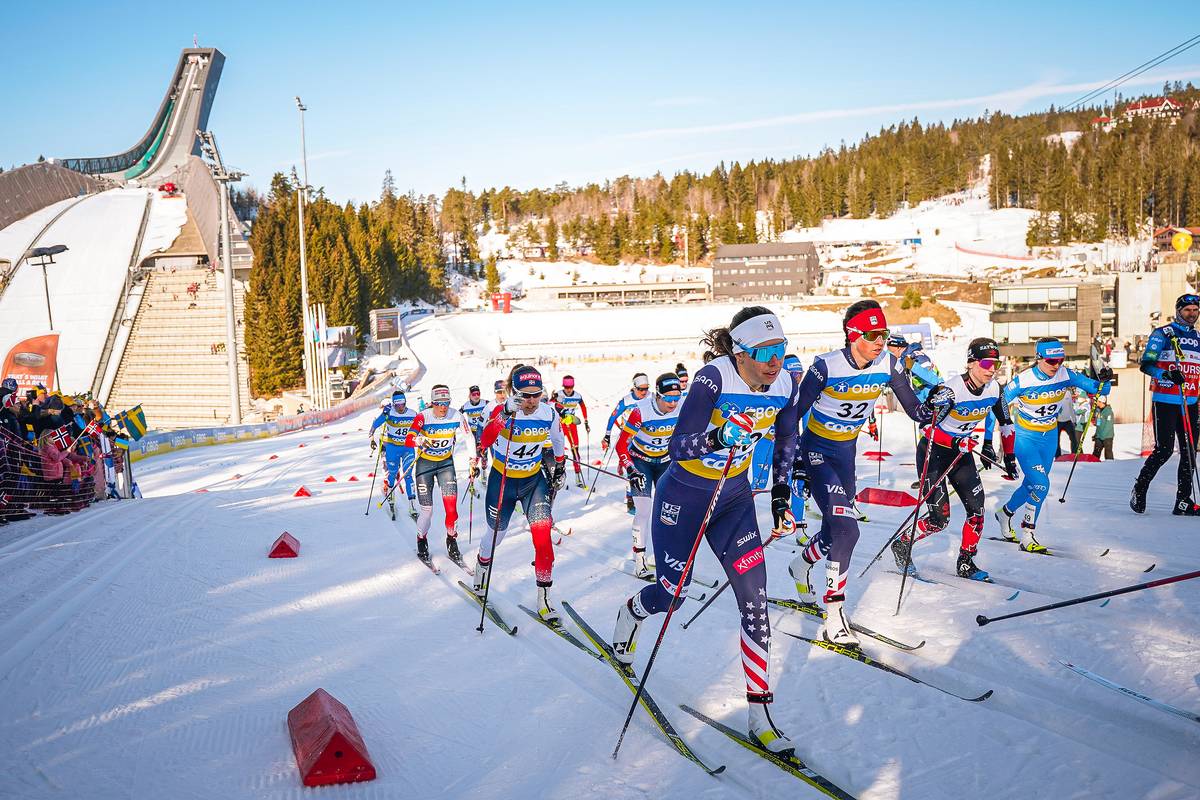
    Rosie Brennan skis to 7th during the 30k classic at Holmenkollen in March, 2022. (Photo: NordicFocus)

    Taking a step back to how this came about, we’ll rewind to the 2018 Olympics in PyeongChang, when Brennan found herself frequently riding the bus to and from the athlete village with American bobsledder Lauren Gibbs, who she described as “super outgoing and very friendly” and seemed to, coincidentally, be on a very similar schedule to the cross country ski team. After earning an Olympic silver medal in 2018 and a World Championship gold in 2020, Gibbs retired and became a spokesperson for Parity Now, an organization which advocates for equal pay, media representation, and opportunities for professional women athletes. Parity’s community of athletes includes more than 165 Olympians and Paralympians across more than 40 sports, all working together to “[propel] professional women athletes forward.”

    When initially approached about the NFT opportunity, Brennan put the idea on hold. However, after seeing other women athletes on the marketplace and learning more about the process, she decided to give it a go.

    From there, Brennan worked through a lengthy questionnaire to identify the aspects of her career and self that were most meaningful, to guide the artist in creating the design. Brennan also provided a wide variety of images of herself skiing to ensure the sport would be well-represented. She was then allowed to provide feedback throughout the process, until landing on a finalized piece of digital art

    “It was cool to see an artistic interpretation of the values that I felt [were] meaningful in my ski career,” she said.
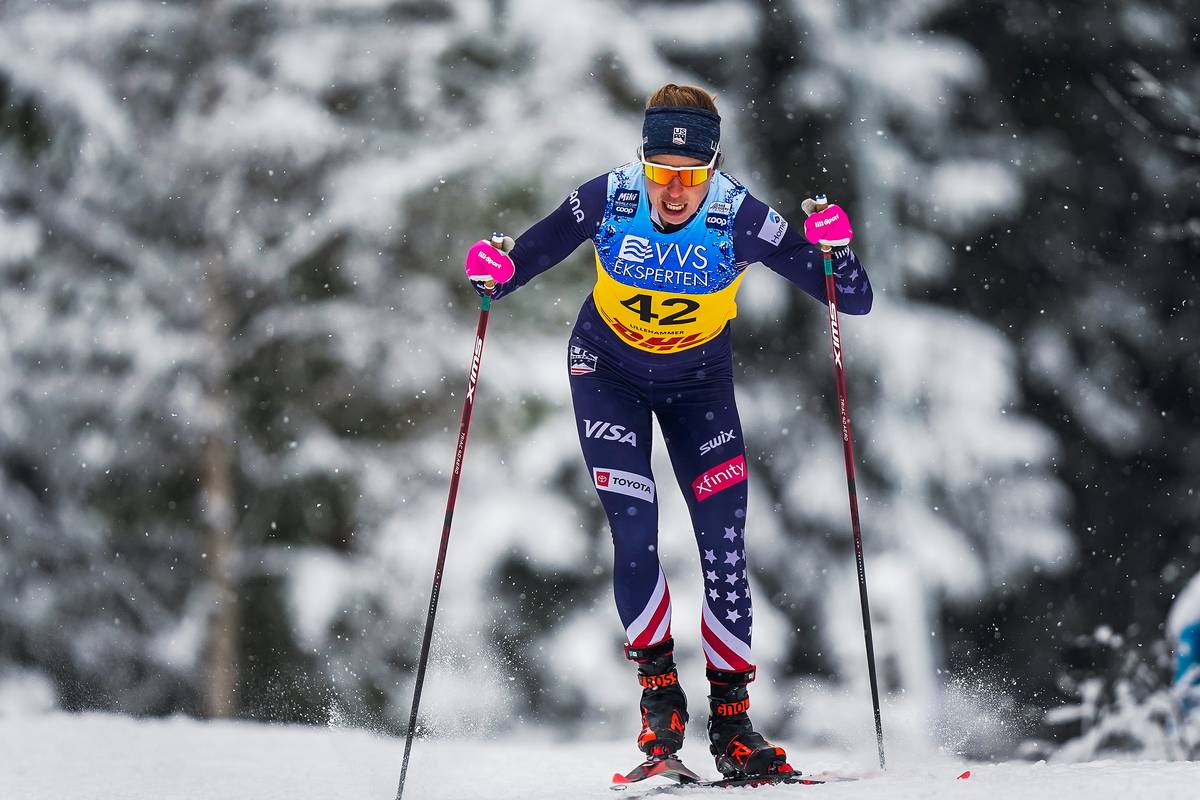
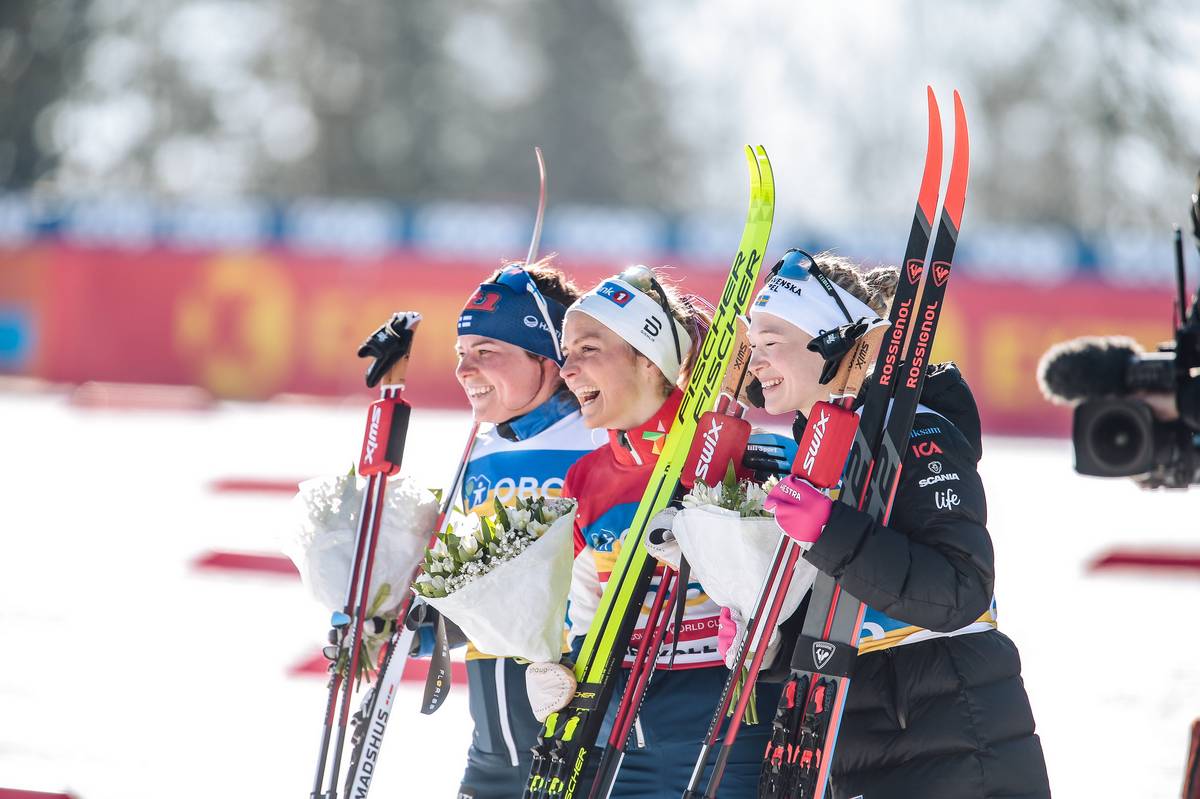
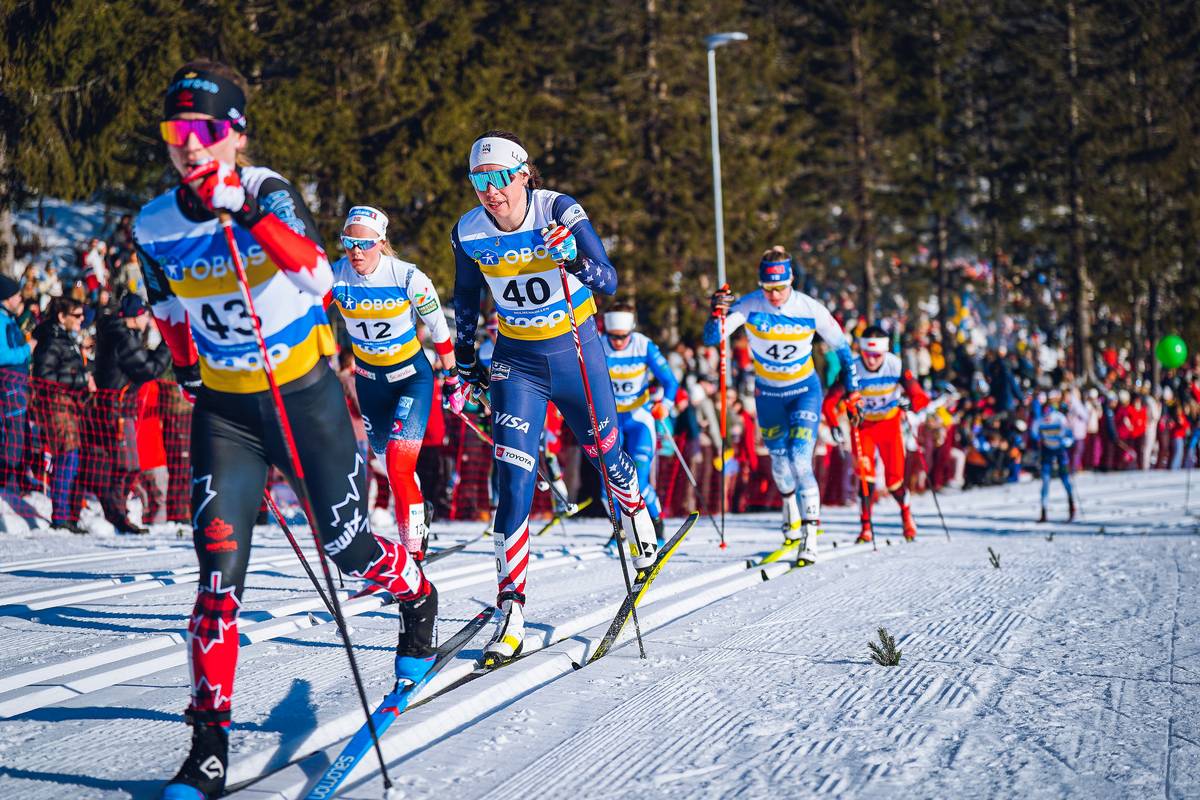
    Rosie Brennan races to third in the 10 k skate in Lillehammer, NOR in December, 2021. (Photo: NordicFocus)

    With athletes from all sports competing in the NFT marketplace, Brennan said she “really wanted to highlight what makes cross-country, in my opinion, different from other sports. And for me, one of those things is the fact that we’re doing all the events and all the techniques.” 

    In the image, both skate and classic techniques are featured, along with a couple of fast tucks, in and out of the tracks. Brennan also wanted to feature the variation in terrain, in contrast to a more controlled environment like a running track, along with the natural beauty and challenge of a cross-country ski trail.

    “I wanted that natural environment highlighted, which is the part I really like about mine — I think [the artist] did a great job making some really cool-looking mountains… And then to me, [Perseverance Trail] is such a great metaphor for life. Particularly my own [journey] in cross-country skiing that has just been so up and down, and maybe required a little more perseverance than others. And just using that analogy – that no two trails are the same. I don’t think anyone’s path in sports is the same either.

    “And then, this fine balance of being present in the moment on a trail, but also having that adaptability and flexibility to deal with what the trail brings on any given day. Changing elements, changing snow, changing weather, and skis – all these [variables] that cross-country requires, and that are such an important aspect of life, really.”  

    As for working with Parity Now more broadly, Brennan does aspire to partner with the group beyond this NFT project. She explained that she has already benefited from some of the webinars Parity offers to women athletes to equip them with the variety of business skills they might need to successfully support their career and ensure they’re well set up for life after sport. Brennan also explained that Parity can help connect athletes with other companies for work in social media and advertising campaigns, which she’d like to participate in down the road.

    “It’s just neat to see different groups trying to tackle women’s equality from different angles,” she concluded. “And I think this business angle is actually a very important one. Lauren’s a real go-getter, and so I’m sure that there’s more good things to come from it.”

    Parity Now cites research that estimates that, of the $66 billion global sports sponsorship market, only 0.4% goes to women. “You read that right,” Parity Now said. “For every dollar spent on sports sponsorship, women receive just half a cent.” 

    Rosie Brennan skis onto the podium with a third place finish in the 10 k skate in Lillehammer, NOR. (Photo: NordicFocus)

    As fans of cross-country skiing in the US, it might be easy to lose sight of this pervasive inequality faced by women in sport. We see Jessie Diggins’ face on magazine covers before the Olympics, equal opportunity for prize money on the World Cup, and a whole team of women ready to pop a Top-10 or podium on any given weekend. In fact, the results achieved by American women over the last decade-and-a-half have made it easy to forget that the U.S. Ski Team had dropped funding for the women’s program prior to 2006 — though we now have two books, World Class and Trail to Gold, to remind us of this journey.

    Speaking to her experience in becoming one of the top women in the US program, Brennan said, “I feel very lucky to be an American woman skier. I think we have had a lot of really great opportunities. To be honest, I think in the last decade or so we’ve honestly overshadowed the boys and, if anything, they usually get the raw end of the deal. So that’s maybe been a unique perspective that we’ve had as women cross-country skiers, and something I definitely try not to take for granted. And it is interesting traveling on the World Cup, you do notice cultural differences and how countries treat men and women differently. And not all is good and not all as bad, it’s definitely different.

    “From an international perspective, like on the World Cup, navigating that is challenging — figuring out what actually is equality and what that means to different people and different cultures, and how we implement that into the bigger scope of the world is definitely challenging.”

    Brennan added that she felt Americans are “a little more progressive on that end”, which makes her proud to represent the U.S. Ski Team. She did point out that there is one very obvious source of inequality present at most levels of the sport: how far men and women race.

    “That’s maybe the most glaring aspect in which men and women are not equal [in cross country skiing]. I’m definitely a proponent for equal distance and it sounds like, honestly, everyone’s moving in that direction. I actually think that change is coming faster than we all anticipated.”
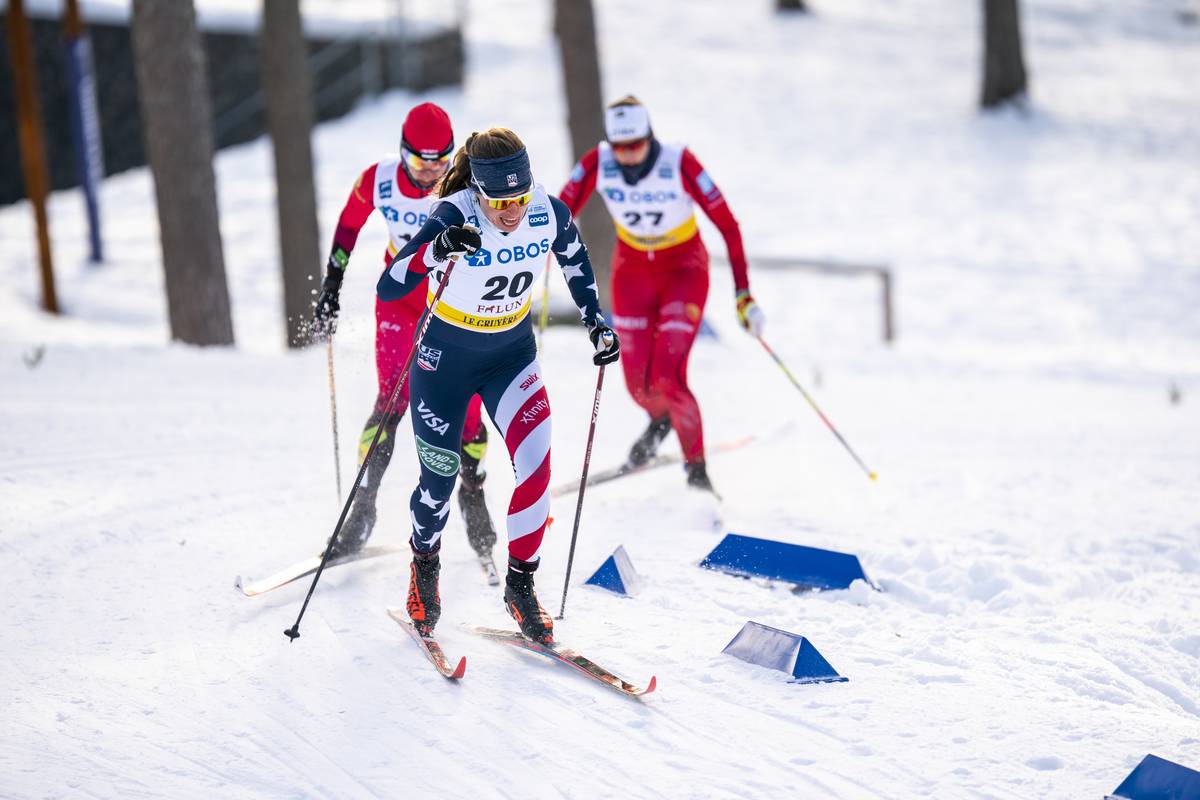
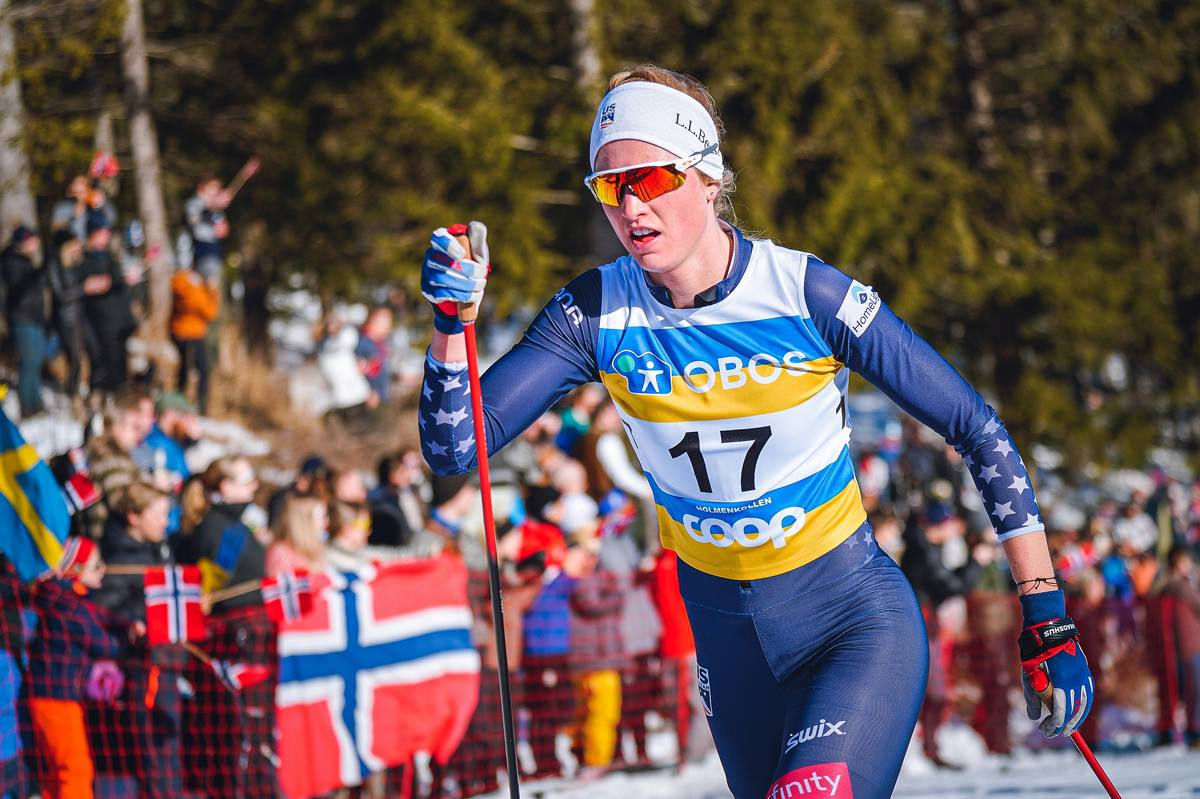
    Rosie Brennan races a January, 2021 World Cup classic sprint in Falun, SWE. (Photo: NordicFocus)

    Brennan serves as an elected athlete representative on the U.S. Ski & Snowboard cross-country sport committee and shared that equal distance will be a “big topic” at the upcoming annual congress. She also indicated that this is the case at the International Ski Federation level. “It’ll be interesting to see how that unfolds in the next month or so. But I definitely think it’s coming.”

    Circling back to the NFT and what all of this means in the broader context of her career, Brennan concluded with both uncertainty and optimism. 

    “I don’t know if it will become such a big thing that people are wanting to gamble on a young athlete in hopes that they make it big and their NFT becomes worth millions or something,” she said with a laugh. “I don’t know if that’s what the future holds or not. But I definitely think it’s a cool way to bring awareness and promote women’s sports and take part in an interesting project.”

  • Nordic Nation: Jessie Diggins — Eating Disorder Awareness, Media, and Why What to Say Matters

    Nordic Nation: Jessie Diggins — Eating Disorder Awareness, Media, and Why What to Say Matters

    It’s likely that today’s guest needs no introduction. Over the last decade, she has steadily worked to become the most decorated American cross country skier in history. As she gained more recognition beyond the niche of cross country skiing, she began to use her platform to become an advocate for causes she felt passionately about, opening up about her own experience struggling with an eating disorder and working hard at recovery through the Emily Program, and also becoming an athlete ambassador for Protect Our Winters (POW) to advocate for policy changes to combat climate change.  

    Jessie Diggins takes Olympic bronze in the individual freestyle sprint in Zhangjiakou. (Photo: NordicFocus)

    Heading into the Olympics in February, Jessie Diggins received more media attention than ever before, landing on the cover of Sports Illustrated and having her profile featured on major news outlets like the New York Times. There was an entire category for her career highlights on the Olympic cross country ski tab on NBC’s Peacock streaming platform. 

    From all of the coverage focused on Diggins surrounding the Games, one comment in particular received attention and push back from the athlete community. The line in a February 8th story in the NY Times suggested that Diggins looked “like a sprite in her racing suit,” comparing her body to her competitors’ who had “massive shoulders and thighs.” It was seen as inaccurate, inappropriate, and potentially harmful to those reading it. 

    To discuss the topic of body comments in sports journalism and why they might be harmful in the broader scope of athlete mental health, the Nordic Nation podcast recently hosted a discussion among the panel of Rosie Brennan, Corrine Malcolm, Brian Metzler, and Nat Herz, who span the breadth of athlete and media representative. Following the conversation, FasterSkier received feedback that the topic had already been given enough attention, and it remained clear that there was not unanimous understanding of why commenting on athletes’ bodies was deemed problematic. 

    Seeking to add clarity to this side of the story, along with her own perspective as someone who has experienced an eating disorder and since become an advocate for awareness and support in that realm, Diggins reached out to FasterSkier asking to add her voice to the conversation.

    To be clear, neither Diggins nor FasterSkier aims to “cancel” NY Times author Matthew Futterman, nor to attack the NY Times for running the comment. The purpose of this discussion was to consider how a comment on an athlete’s body might be triggering to a reader who is primed to fall into the eating disorder trap, and how writers, parents, coaches, and teachers can be mindful of the impact and importance of what they say. 

    Jessie Diggins races through the heats during the Olympic freestyle sprint in Zhangjiakou, China. (Photo: NordicFocus)

    Diggins also reflects on the 2021/2022 race season and what was an historic string of Olympic appearances. She discusses the success of the US Ski Team as a whole, in particular, the younger generation of athletes like Novie McCabe, Sophia Laukli, Ben Ogden, JC Schoonmaker, and Gus Schumacher, who have transitioned onto the World Cup over the last two seasons and earned spots on the 2022 Olympic Team.  

    Thanks for listening. 

    Additional Resources and Related Reading & Listening:

    WithAll Foundation and the What to Say Campaign. As discussed in the episode, Diggins and Gus Schumacher participated in a live discussion with this organization on March 31st titled “What America’s Top Athletes Know About Health & Performance”, which can be viewed here.

    The Emily Program: A leader in eating disorder treatment and outreach, and partner of Diggins’

    Nordic Nation Podcast: A Discussion on the Media’s Portrayal of Endurance Athletes with Rosie Brennan, Corrine Malcolm, Brian Metzler, and Nat Herz

    Nordic Nation Podcast: Relative Energy Deficiency in Sport (RED-S) and the Climate in High Performance Skiing

    Brave Enough by Jessie Diggins (Reviewed on FS here, with more on her recovery and advocacy here.)

    FasterSkier also shared two OpEd pieces surrounding this topic, one from our own contributor Ben Theyerl and a second from reader Ivy Spiegel Ostrom, highlighting individual responses to the NY Times comment and underlying issues of body comments in the media, along with another separate OpEd by Rachel Bachman Perkins on the prevalence of eating disorders and disordered eating in sport. 

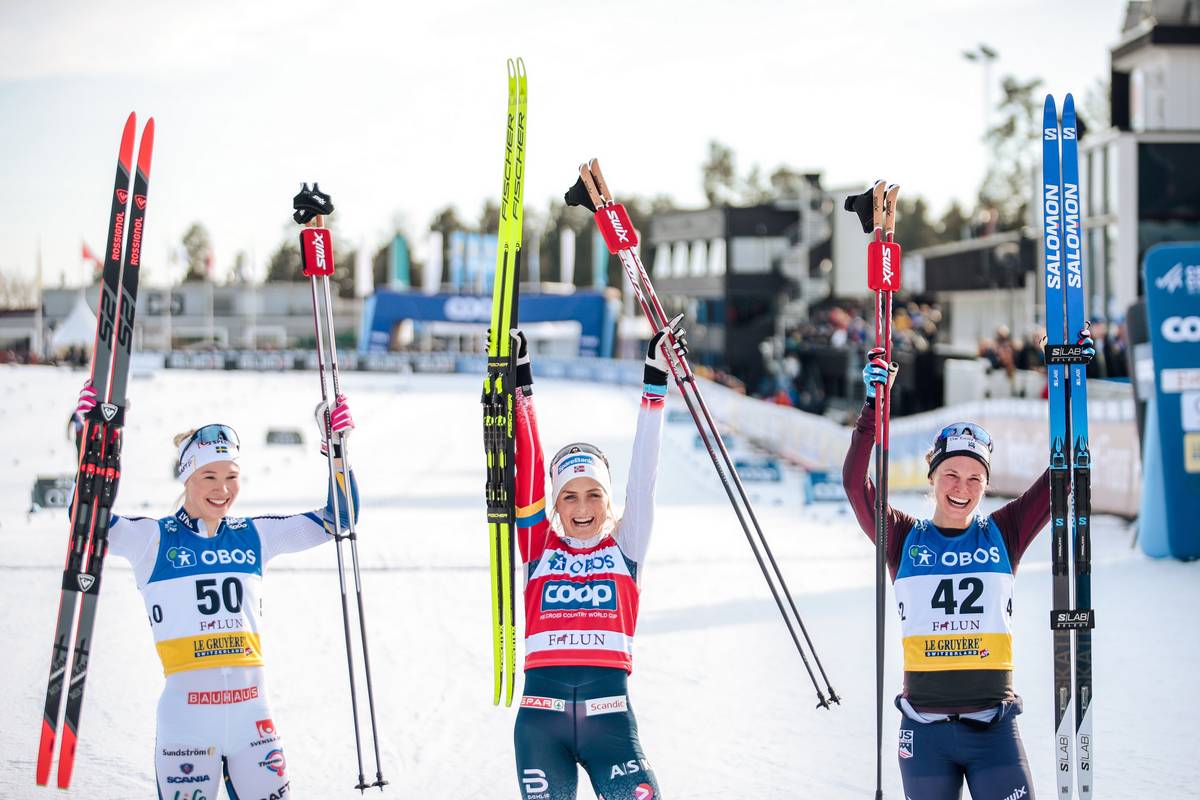
    Jessie Diggins races onto the podium in the 10 k free during the 2021/2022 World Cup Finals in Falun, Sweden. Norway’s Therese Johaug took the win, with Sweden’s Jonna Sundling in second. (Photo: NordicFocus)
  • Cross Country With a Twist: NordicX Event Lights Up Anchorage 

    Cross Country With a Twist: NordicX Event Lights Up Anchorage 

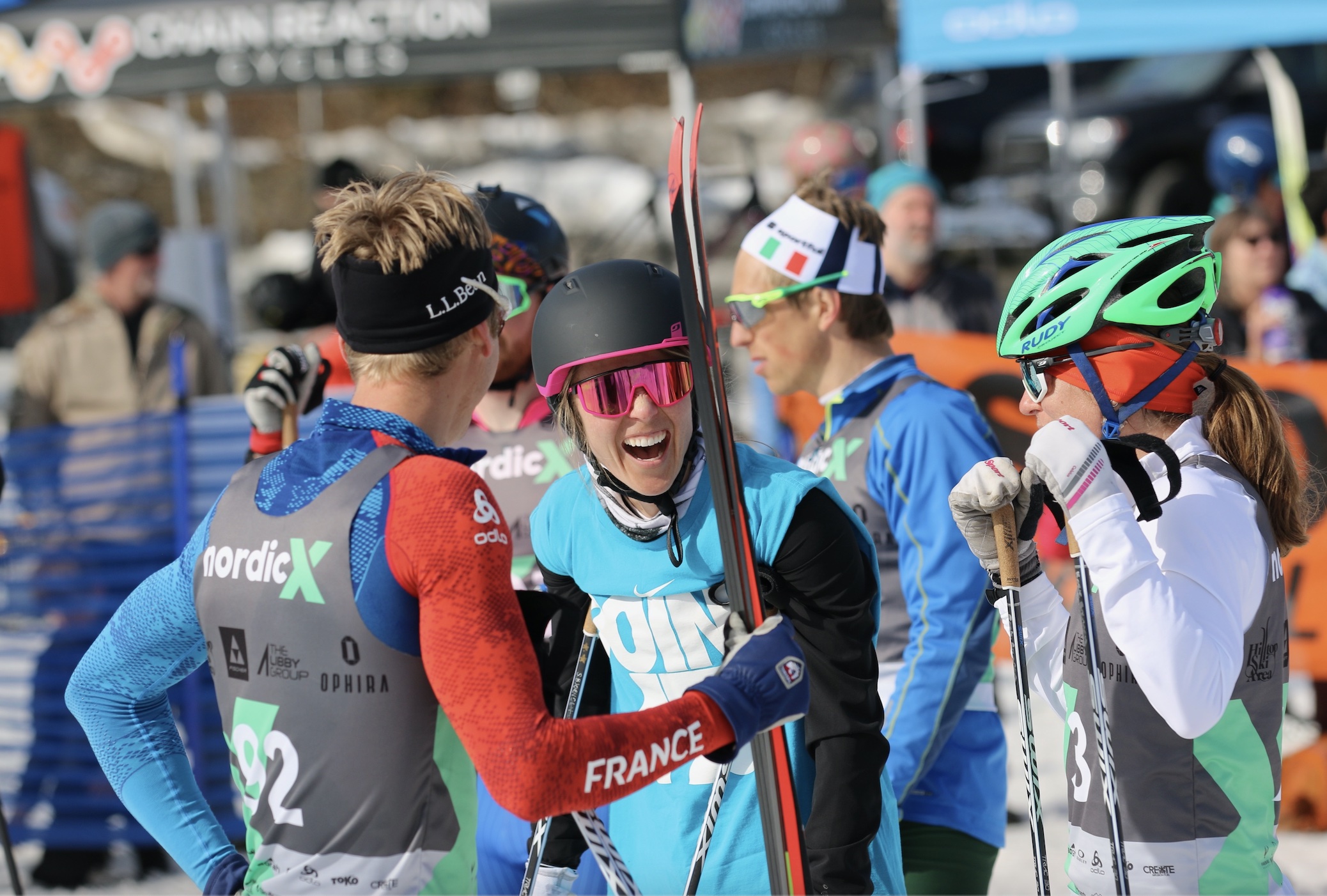
    Erik Bjornsen, Sadie Bjornsen Maubet, and Rosie Brennan enjoy a very different race atmosphere at NordicX. (Photo: Eric Maurer / NordicX)

    What comes to mind when you think of a cross country ski race? Depending on your location and how you choose to interact with the sport, there are likely a variety of answers to the question, but it’s likely that there are some common themes. 

    “Cross country events are pretty much all the same when you boil them down, you know?” said retired US Ski Team member and 2018 Olympian Reese Hanneman. “It’s a test of endurance and speed over a set course, and it’s timed, and you’re usually out there in the woods alone. And I mean, that’s what cross country [racing] always will be, but I always felt like there was room for more.”

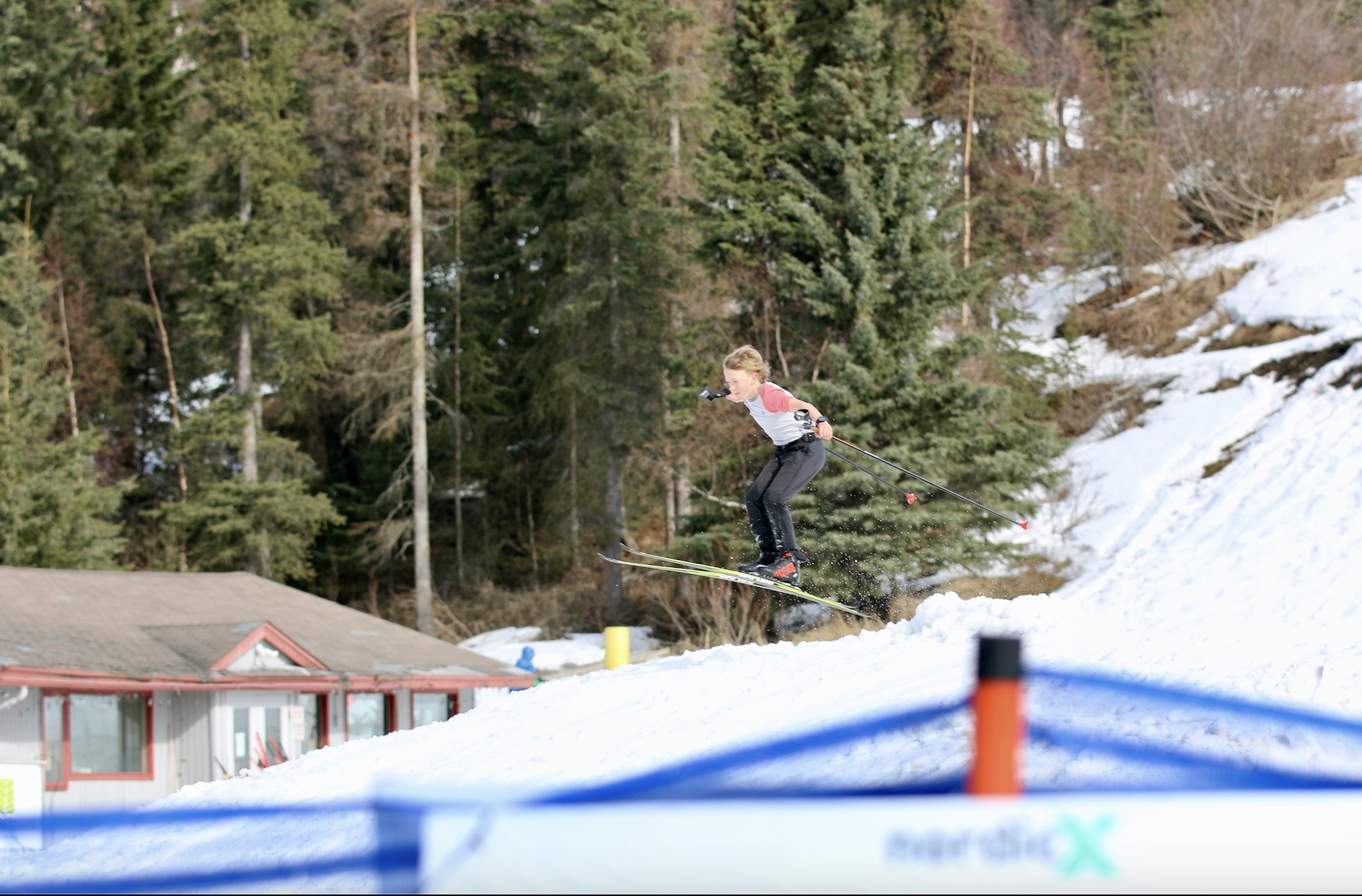
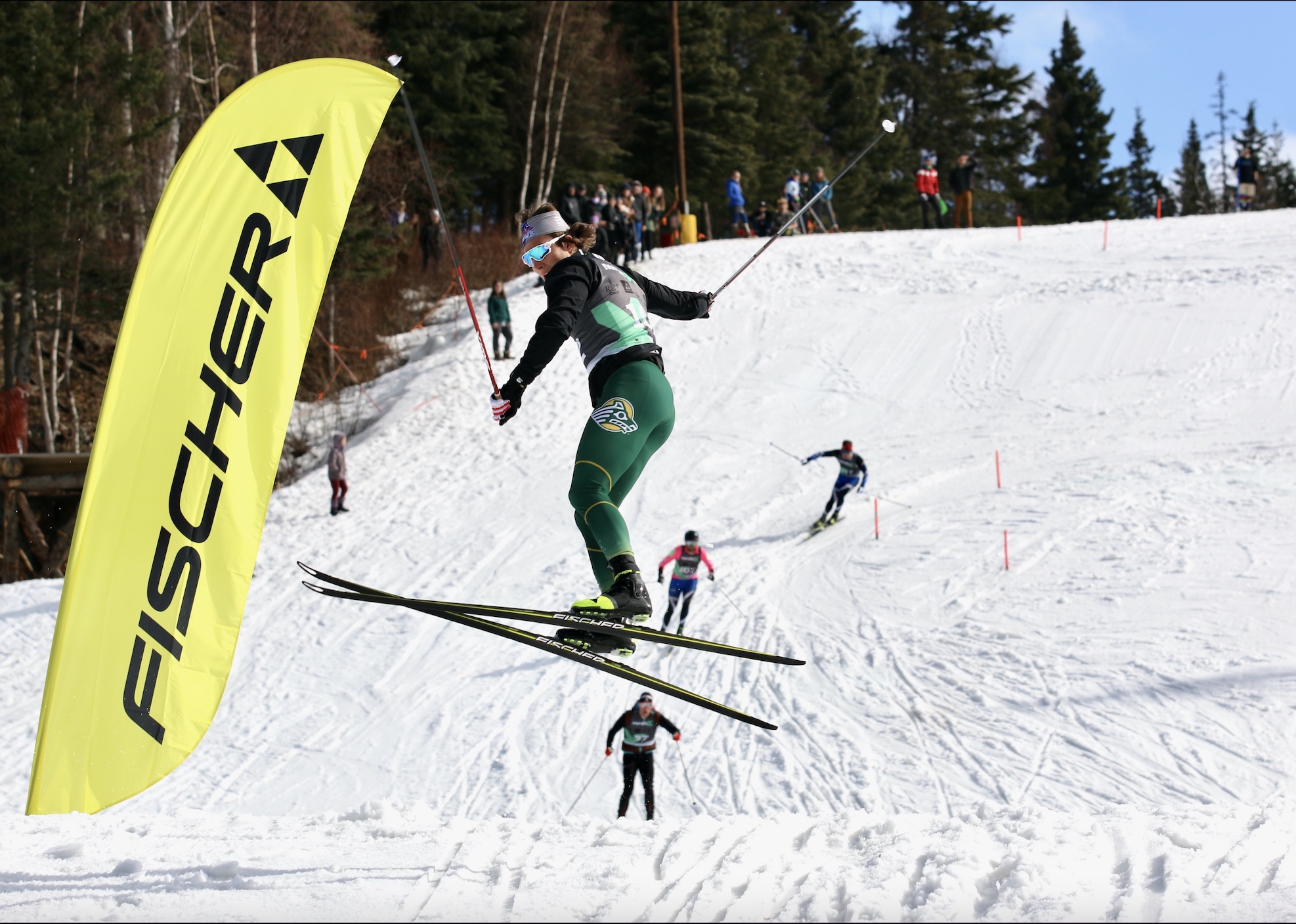
    In what he described as “living out [his] 10 year old dream”, Hanneman set out to break this mold. His dream came to fruition on April 2nd in his home of Anchorage, Alaska, as cross country skiers from the junior level to recent Olympians careened down the slopes at Hilltop Ski Area, rounding tight turns, skating uphill, and catching air – with some not-so-graceful landings – off of jumps before finishing amidst a festival atmosphere at the base. The event was NordicX, an untimed, head-to-head “nordic-cross” event where style points on the final kicker into the finish might earn you a lucky loser spot in the next round. 

    “I knew that there was a lot of appetite for [an event like] that because every time I coach kids, which has been quite a bit over my career, I see that same energy and excitement for hitting jumps and sessioning little whoopty-dos or tabletops. And basically, there’s no cross country event that caters to that.” 
    One of many kids enjoying the features on course and in the Kiddie Cross terrain park at NordicX. (Photo: Eric Maurer / NordicX)

    While Hanneman wanted a non-traditional event, he was not looking to eliminate the character or skills of cross country skiing altogether. He pulled from his experience competing in the 2016 Red Bull Nordix event at Lake Louise in Alberta, where he raced against other top international skiers including Norway’s Petter Northug and his US Ski Teammate Andy Newell.  

    “It was so fun and it was so crazy and scary and fast. And I was like, ‘Man, I need to bring this to Alaska.’”

    In creating his own event, he said he wanted to navigate the “delicate balance of new, exciting, and extreme, but also staying true to cross country skiing. It’s one thing to build a little booter next to the xc ski trail and ski ’round and ’round hitting it with your friends, and it’s another to try and package that experience into a full-on event that offers excitement for all ranges of skills and ages.”
    JC Schoonmaker does a 360 into the finish at NordicX. (Photo: Eric Maurer / NordicX)

    “I knew it needed the right venue,” Hanneman continued. “I wanted something ‘net downhill’ because otherwise I felt like it would be too similar to other xc races, a loop with the same start and finish meant that in order to have a huge downhill you would need a huge uphill. But I also wanted it to be ‘cross country’, so that it truly rewarded good cross country skiers, and so that cross country skis were truly the best tools for the job.” 
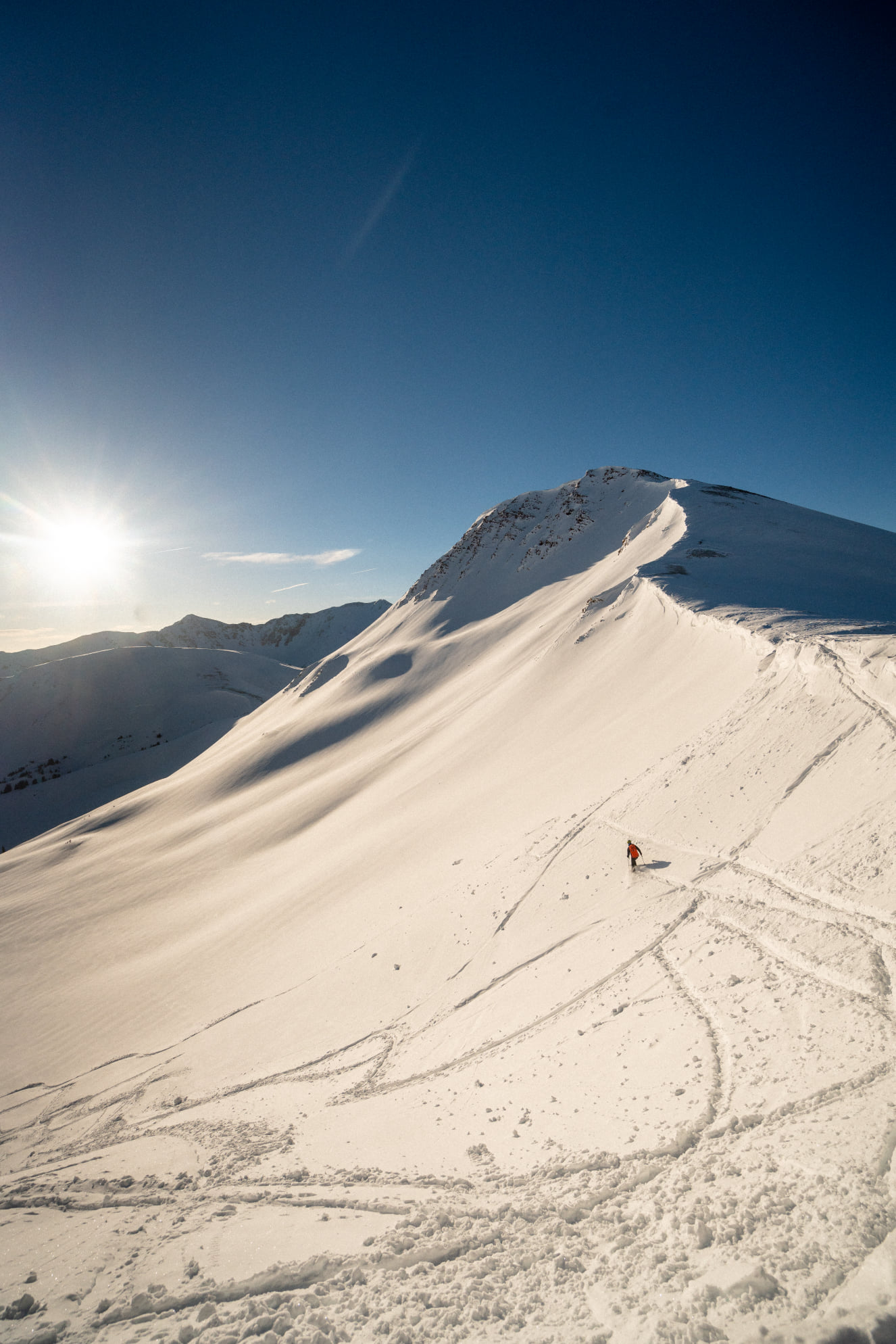
    As the course and conditions hinged on both the weather and Hilltop’s grooming, an official course map was never set. To ensure the event catered to skiers beyond the nucleus of elite skiers based in Anchorage, an A-, B-, and C-Line was established on each of the features, making air-time not requisite and allowing athletes to select a route that felt safe, at the expense of simply forgoing the fastest line, which might pay off in the end if it kept the racer upright with equipment intact. 

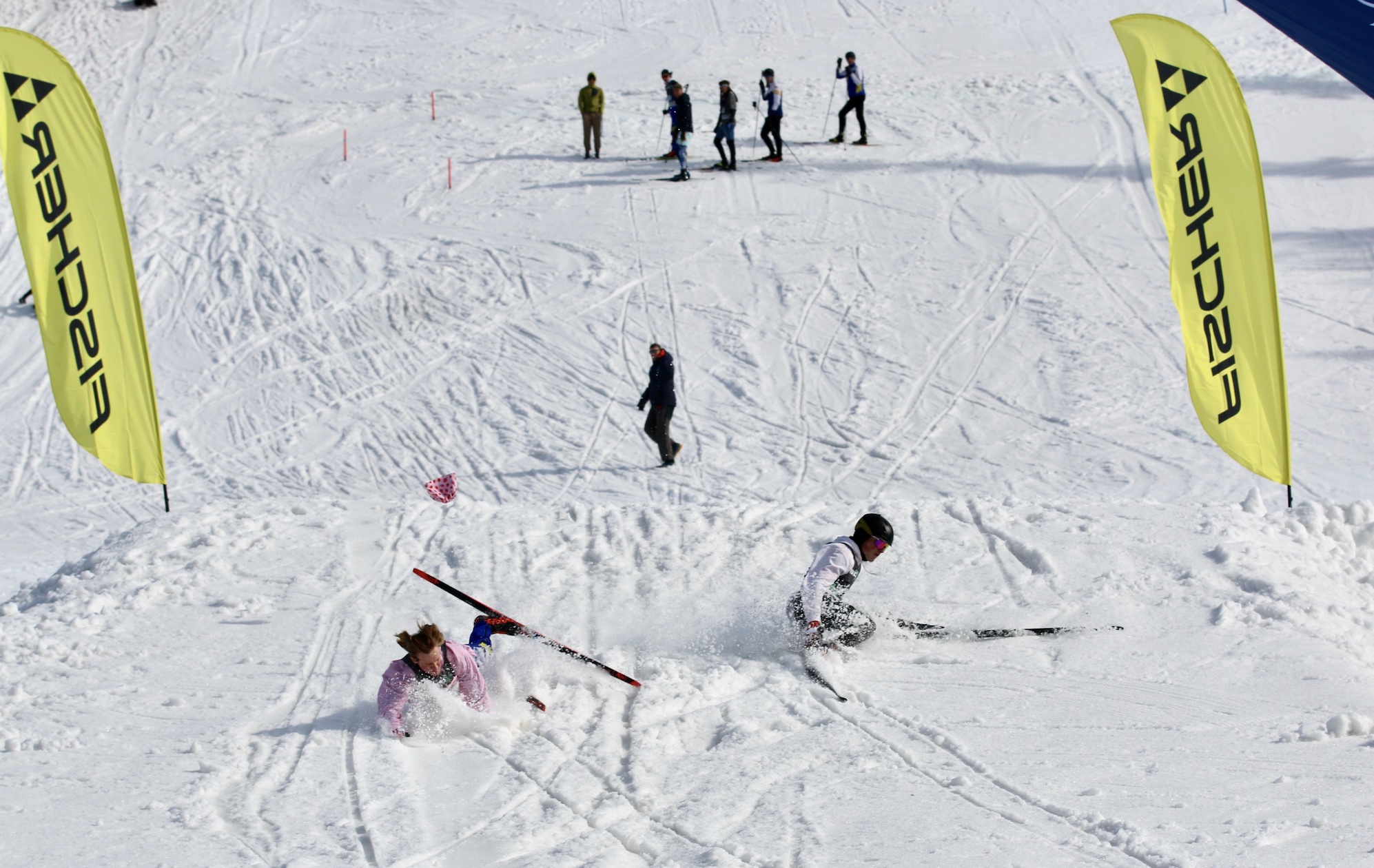
    Holding to the spirited theme of the event, Hanneman described it as “a freestyle event in both feel and in practice,” meaning there were no official course maps, no timing, and plenty of subjectivity in the results. Get sendy and try to 360 off the final kicker into the finish only to crash and stall out before the line? Style points – you just became the lucky loser and can move on. Flooded legs from the uphill sprint section cause you to catch an edge off the drop and yard sale? The crowd loved it – lucky loser spot for you also. 

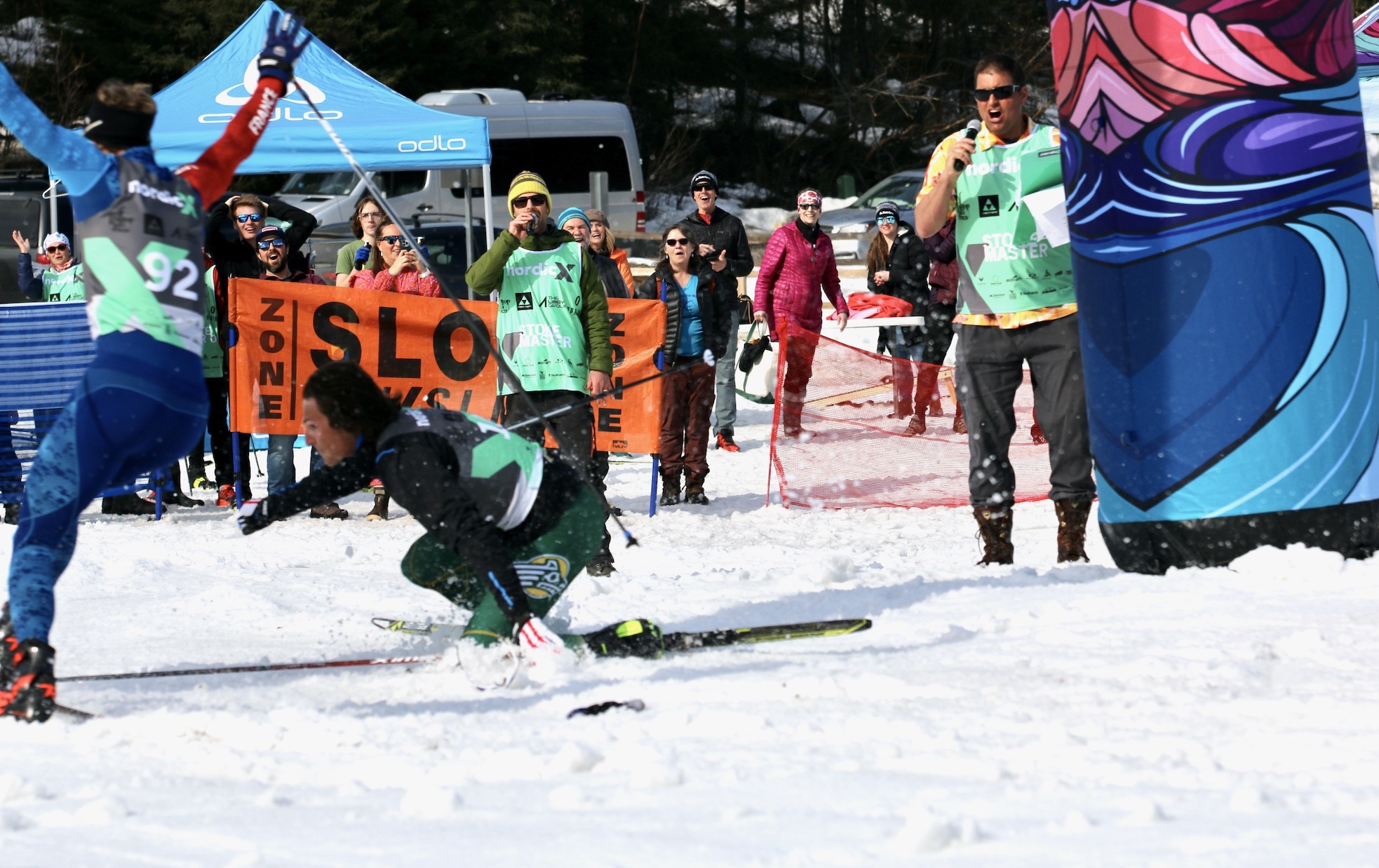
    Not everyone stuck the landing at the finish of NordicX… (Photo: Eric Maurer / NordicX)

    No official prologue seeded athletes; after a few hours where skiers could preview the course, the event simply kicked off with heats of six in the quarterfinal, splitting the 100 athletes between open and junior men’s and women’s categories. Among the field were six Olympians: alphabetically, Erik Bjornsen, Rosie Brennan, Hannah Halvorsen, Logan Hanneman, Sadie Bjornsen Maubet, and JC Schoonmaker, most of whom ended up on the podium at the end of the day. Next year, Hanneman hopes to include additional categories for parents, masters skiers, etc. 

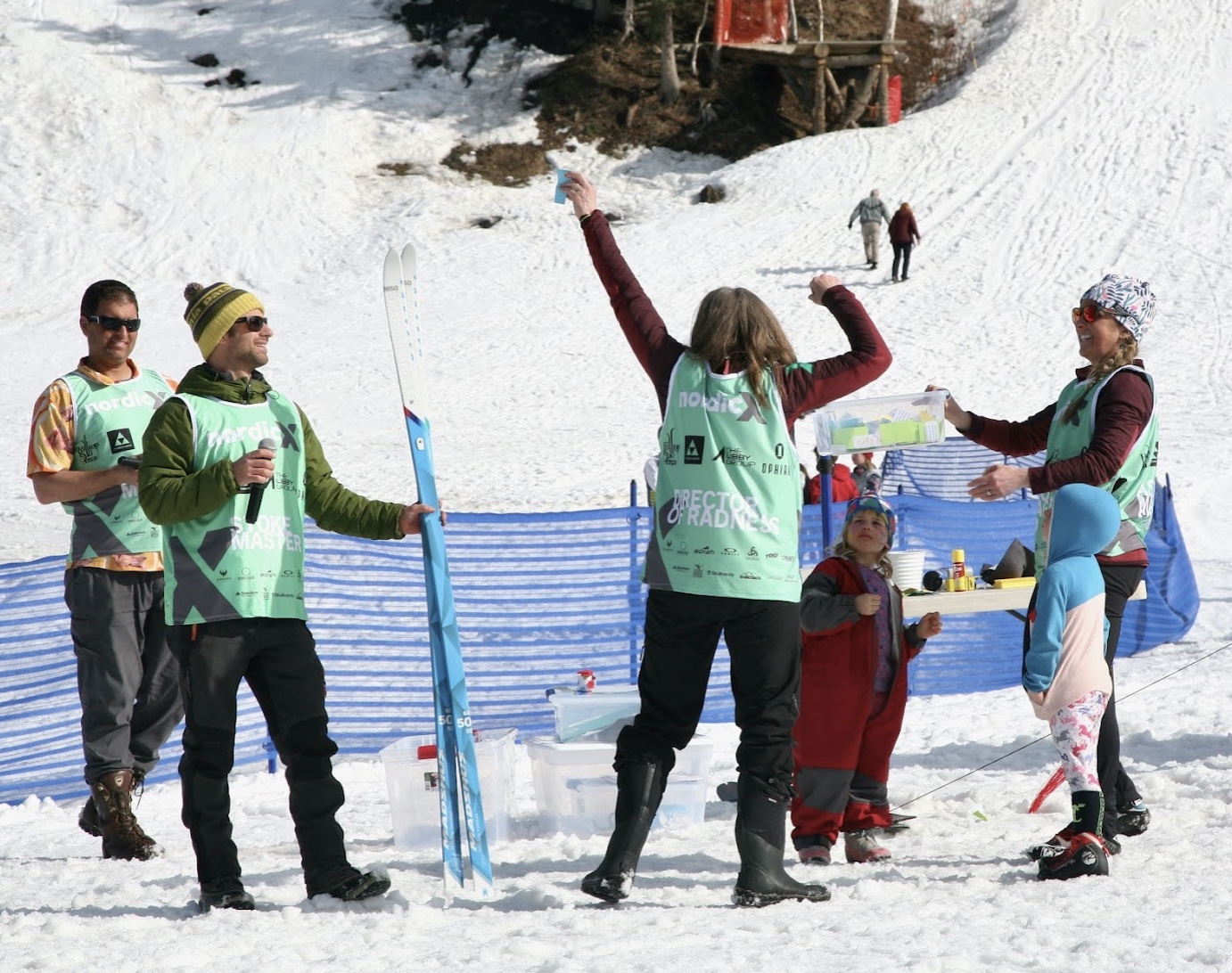
    For those who weren’t up for racing or couldn’t quite match the on-ski agility of Maubet or Schoonmaker, a continuous stream of raffles offered plenty of alternative opportunities to win. A DJ fed the energy at the base, while emcees Rob Whitney and Lee Bolling kept the momentum alive between heats, announcing the winners of numerous prizes from sponsor companies like Odlo, Fischer, Oakley, Skull Candy, Toko, and more.  

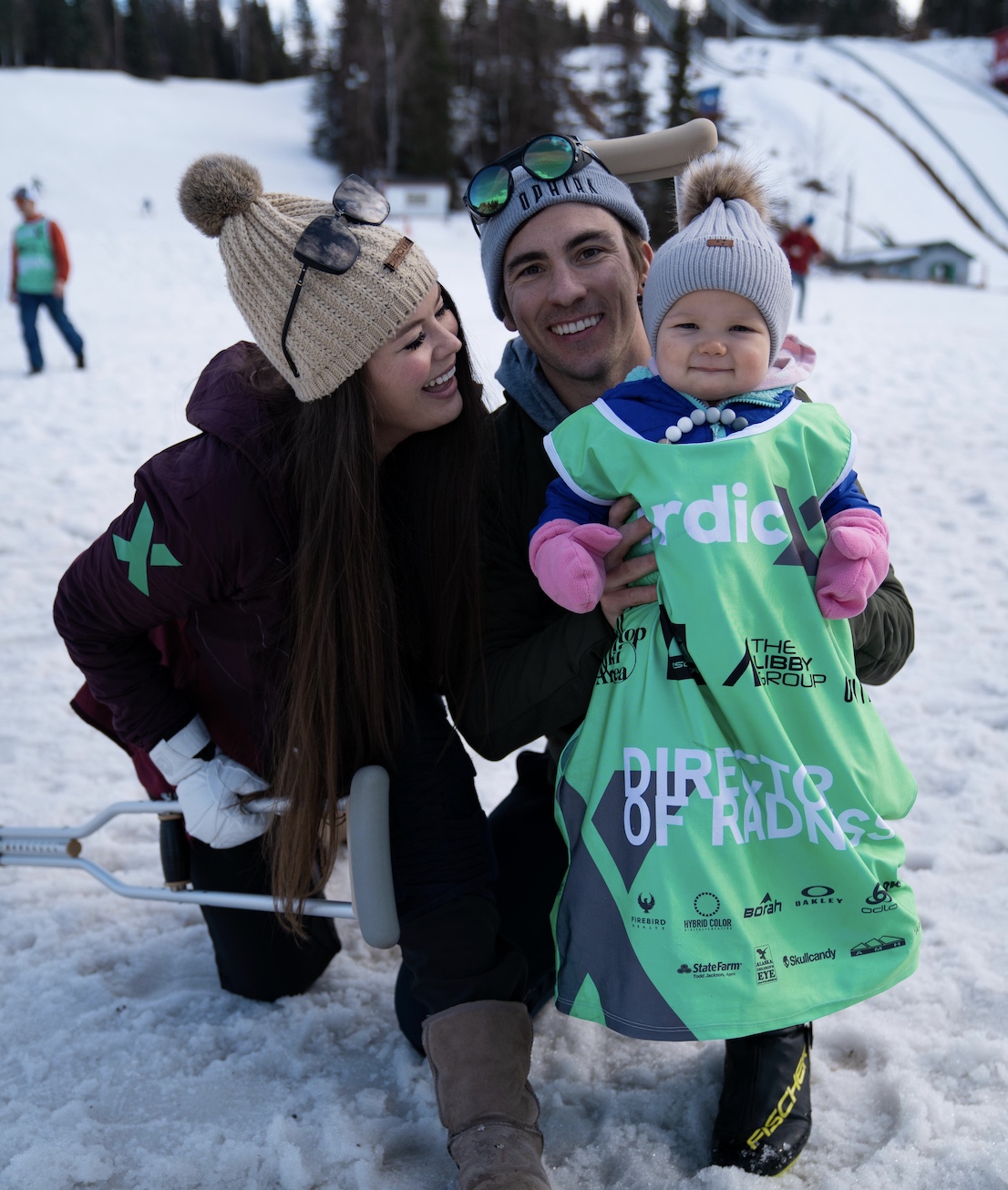
    Emcees, director of radness, associate director of send: keeping the energy high at the base with continuous prize drawings. (Photo: Eric Maurer / NordicX)
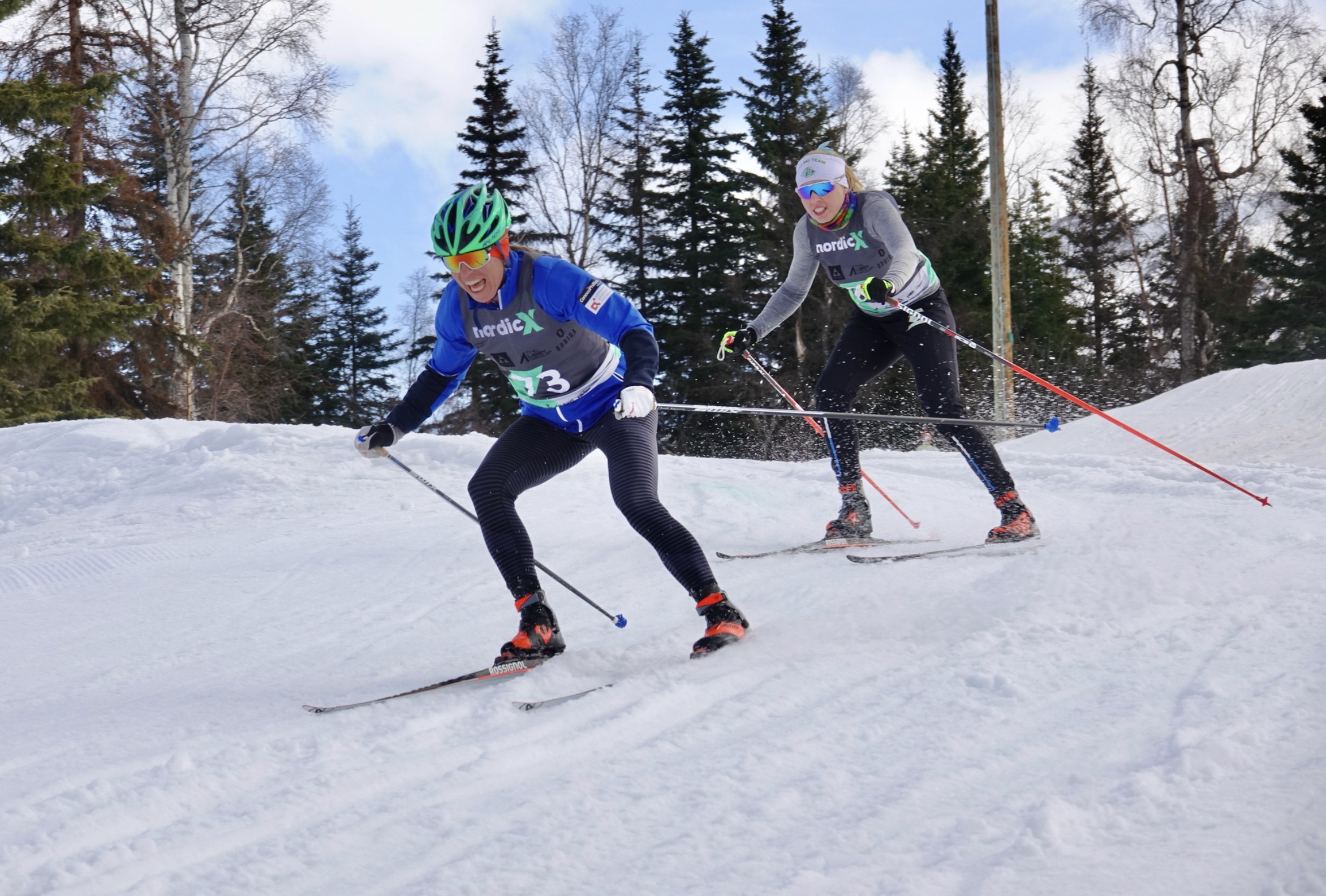
    Rosie Brennan charges around a tight turn as she races through the heats at NordicX. (Photo: Russell Hood / NordicX)

    Though these factors added to the festival atmosphere at the base, spectating alone was plenty exciting. In particular, the finish of the senior men’s final was one to watch. 

    “You couldn’t have scripted a better finish,” Hanneman laughed. “You had JC Schoonmaker, who’s one of the fastest sprinters in the world right now, and Erik Bjornsen, who was just on fire all day back from retirement. [They were] just completely sending it and just flying through this final steep slalom section, and Erik is trying to catch JC, and JC is trying to hold him off. They go to the finish, over this big table top, and everyone’s holding their breath. JC goes off it and does this massive spread-eagle.” 

    But he didn’t stick the landing. Landing a little too far in the backseat, Schoonmaker’s skis washed out from underneath him, leaving him sliding across the snow toward the inflated archway that marked the finish. He stalled out just before reaching the line.

    “Erik is coming at Mach 50, about to beat him to the line. JC has to roll over and, like, flops [his skis] over the line.”

    Erik Bjornsen sticks the landing, but JC Schoonmaker flops over the line first for the win.a (Photo: Eric Maurer / NordicX)

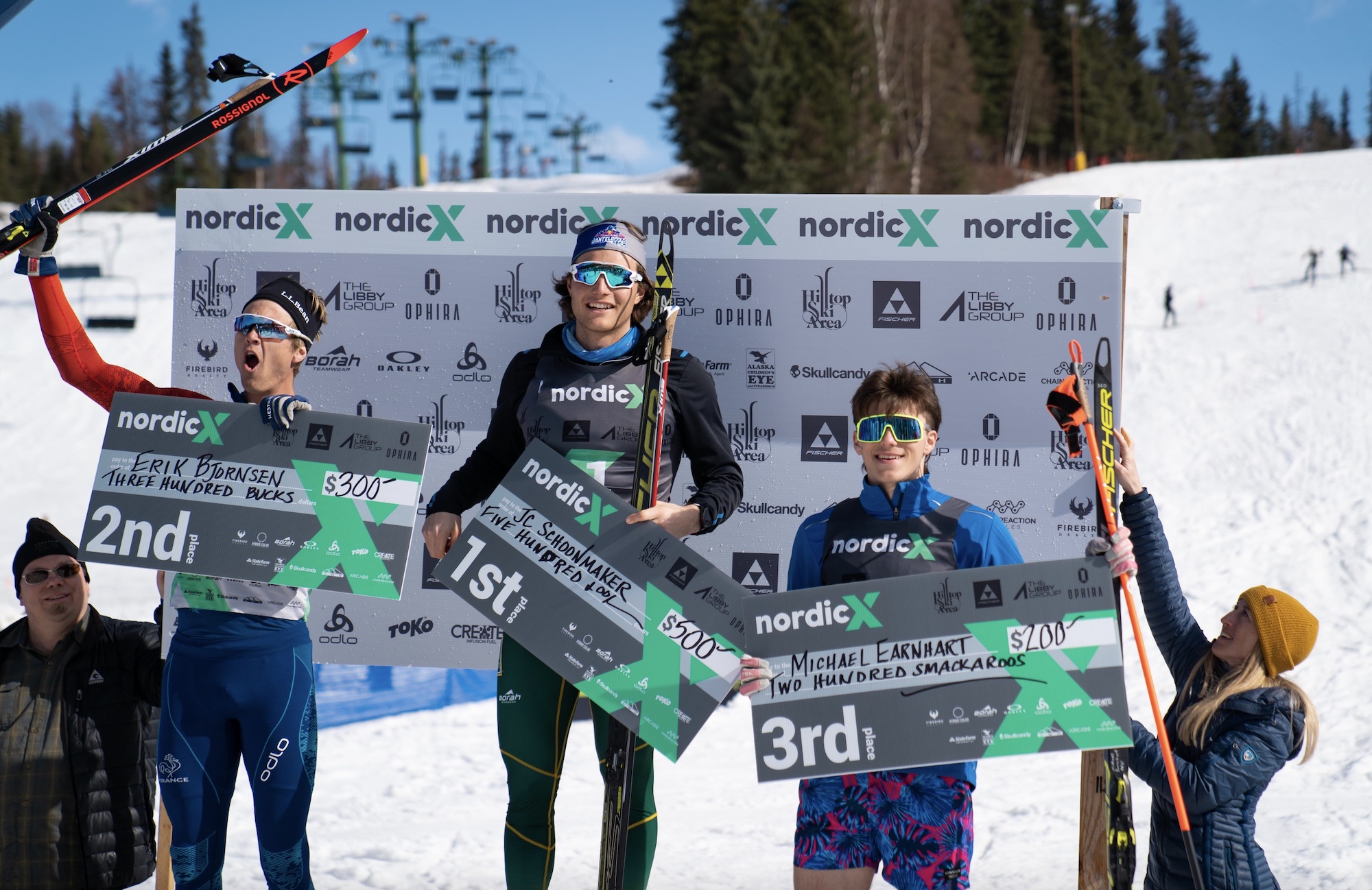
    From a photo finish, Schoonmaker was awarded the victory, with Bjornsen narrowly taking second. U20 APU athlete Michael Earnhart skied to third, taking the final podium step.

    “NordicX was one of the most fun races I’ve participated in,” wrote Schoonmaker after the event. “It took me back to middle school building jumps with my friends and seeing how far we push the skinny ski boundaries. Everyone who took part in putting the race on did a great job and with the spectators who came out, it really just had a good vibe to it. Everyone was having a great time and I’d definitely like to do it again. My highlight was watching some of the younger skiers before the race who were hitting the last jump doing 360’s and backflips and seeing how pumped up they were to be there.”

    The men’s NordicX podium: JC Schoonmaker came out on top in a dramatic photo finish with Erik Bjornsen, while Michael Earnhart took third. (Photo: Ophira Group / NordicX)

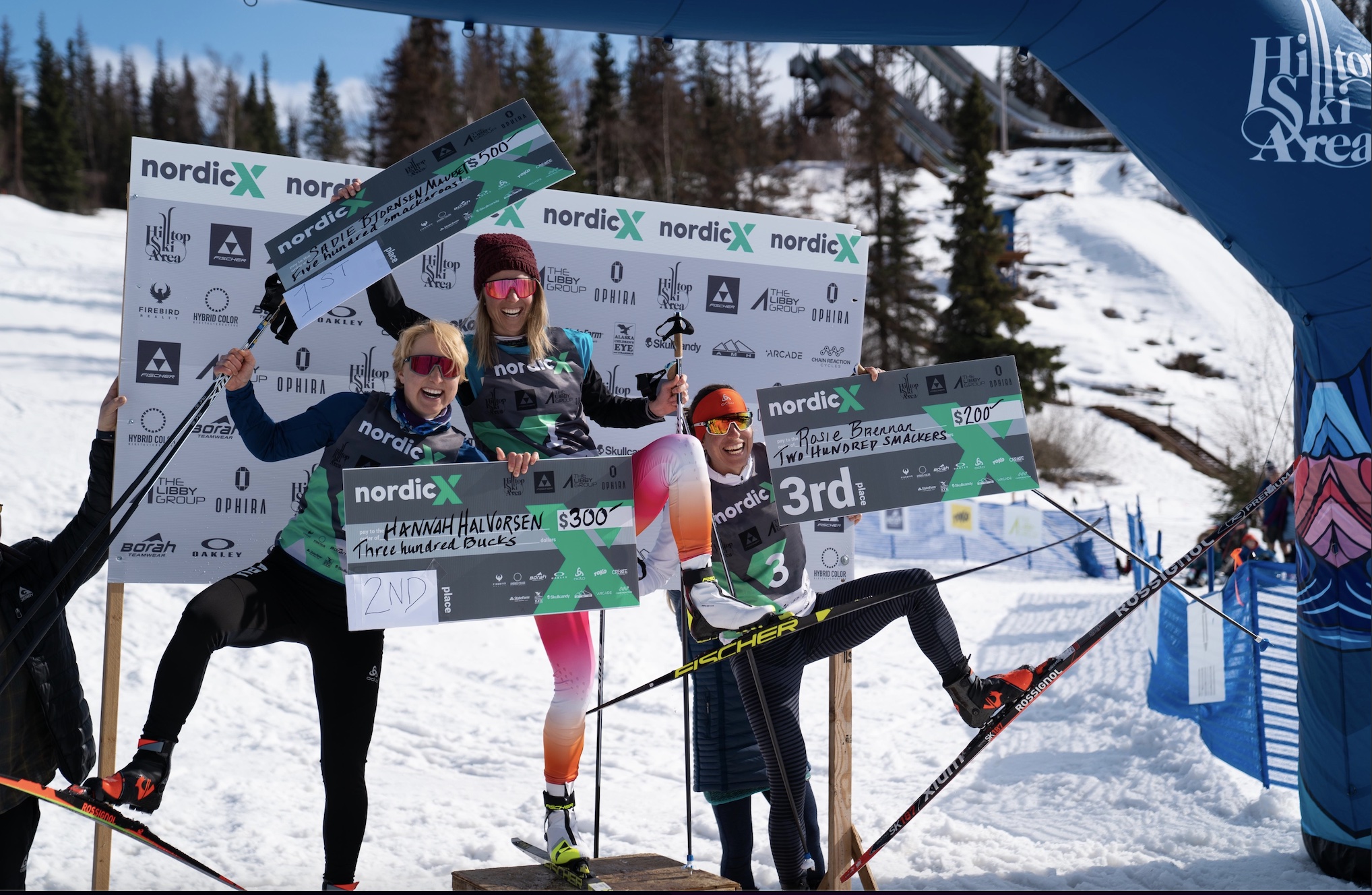
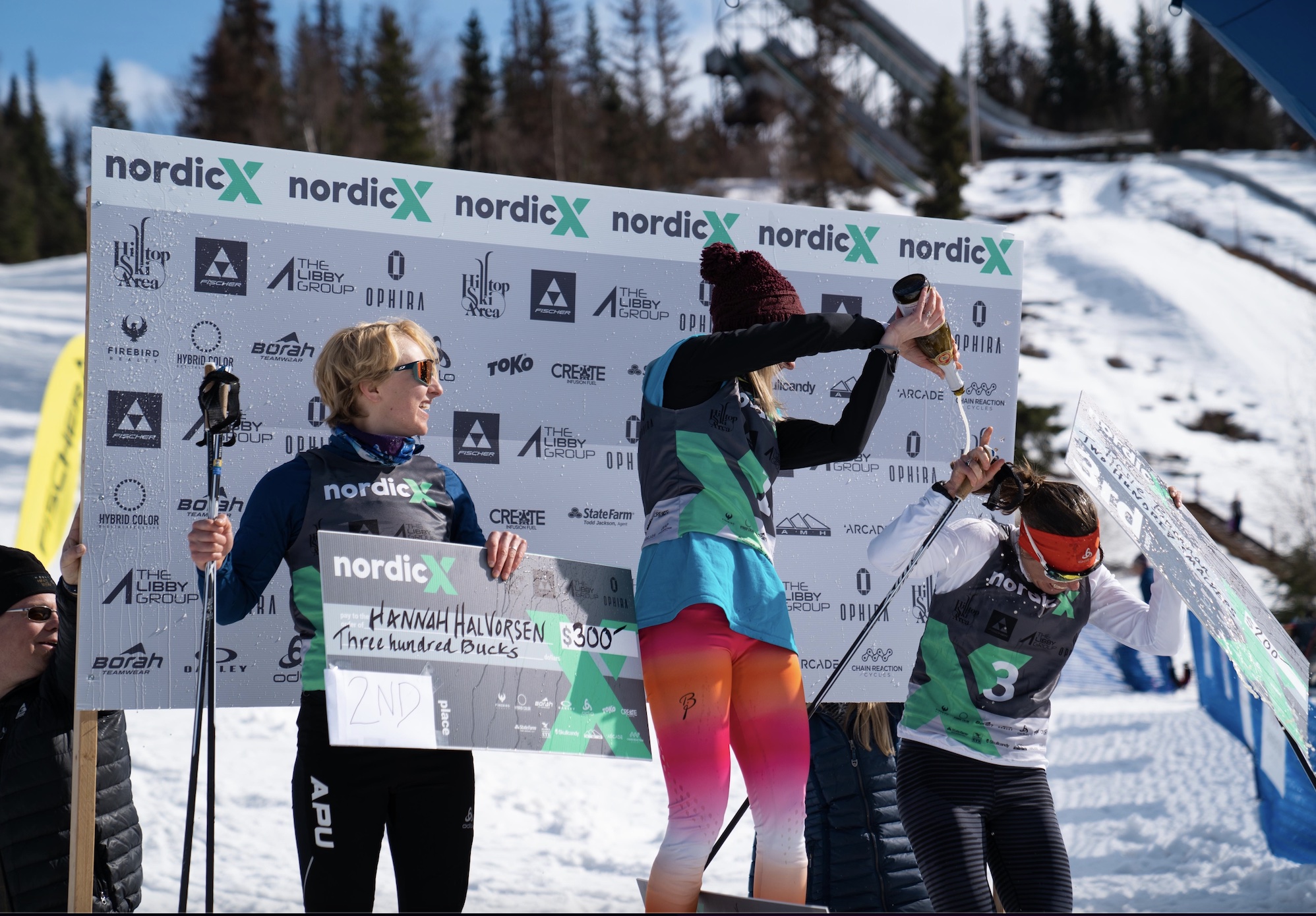
    In the senior women’s senior division, it was a current and former APU athlete sweep, with Sadie Bjornsen Maubet taking the win ahead of Hannah Halvorsen in second and Rosie Brennan in third. 

    “Nordic X was a super fun event, with a fun new twist to nordic skiing, and nordic ski spectating,” wrote Bjornsen Maubet. “Reese did an amazing job of dreaming up this super fun and social way to share our sport with our community… I relied on my thirty years of spending most of my days on nordic skis to attempt to gracefully make it down the little jump park. Though incredibly inspired by all the young kids catching tons of air, and throwing font and back flips, I figured I better save those moves for another life. The day was full of tons of laughs, cheers, and excitement. It felt special to put a bib on beside my previous teammates, and participate in the fun. 

    “I look forward to watching this spectator friendly event grow in the Anchorage Community. I think my husband had the most fun of us all, as he showed up with his chainsaw without the blade, some flares, and wearing a hat that said  ‘Make the Bjornsen’s Great Again’. He was the cheering squad of the day, representing his French blood and the famous French Team Valoche cheering squad.” 

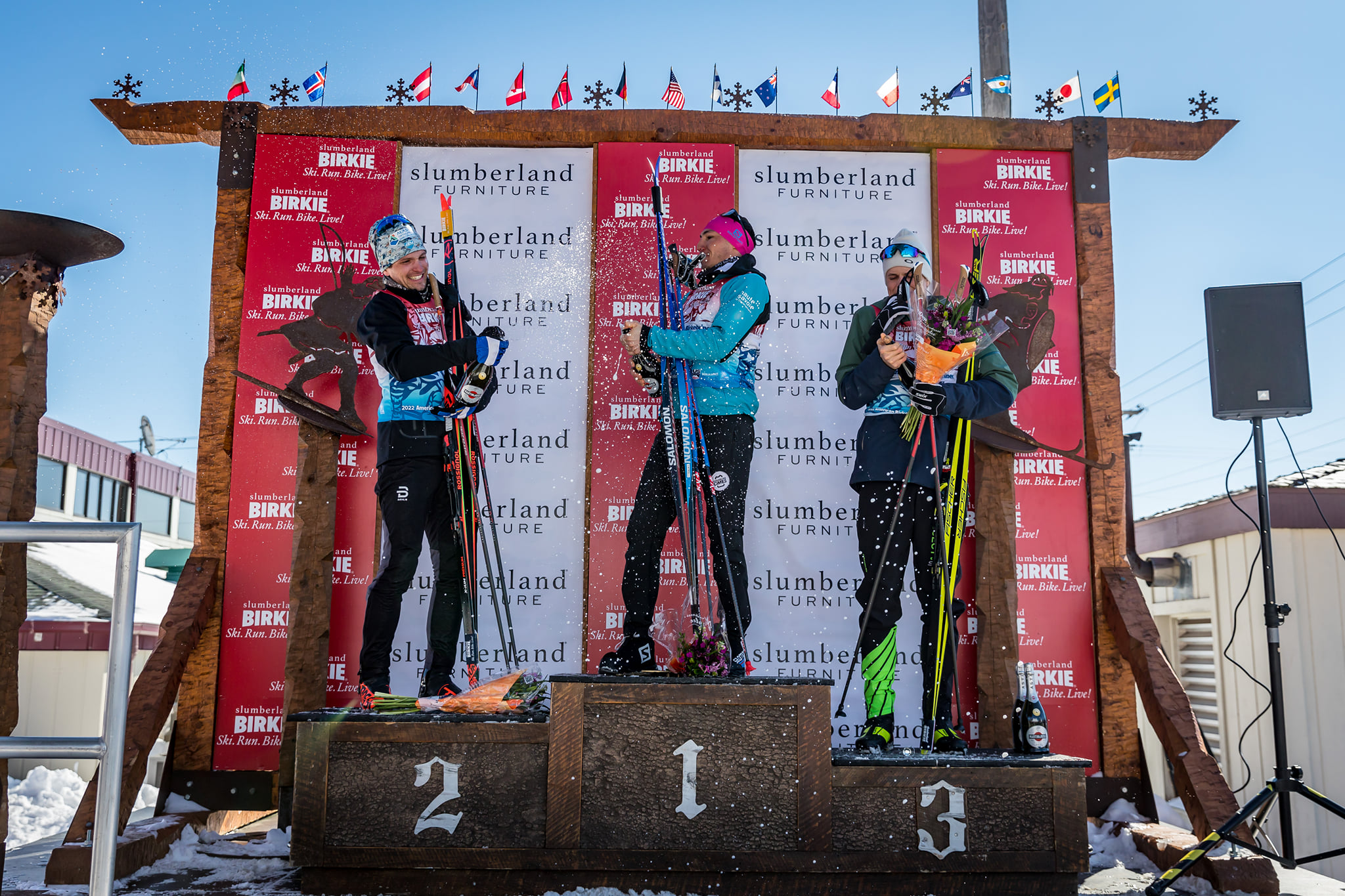
    The women’s podium at NordicX: Sadie Bjornsen Maubet took the top spot ahead of Hannah Halvorsen and Rosie Brennan. (Photo: Ophira Group / NordicX)
    When you can’t spray, pour. Winner Sadie Bjornsen Maubet shares a champagne celebration with third place Rosie Brennan. (Photo: Ophira Group / NordicX)

    For Hanneman, there were also a number of smaller highlights he’s enjoyed looking back on. While marking the course with food coloring, he loved watching skiers riding the lift to the top of the course on their skinny skis, and seeing athletes from 13-year-olds to veteran racers sessioning the course to dial in their lines and strategize. During the heats, he watched a number of young athletes gain confidence, and perhaps some additional skills, after working through initial trepidation surrounding the new race experience. 

    “There were some juniors who you could see at the start of the day were pretty intimidated by the last part of the course, which was really steep and had some sharp slalom turns,” Hanneman explained. “It was definitely challenging their skill level. And by the end of the day, like they were coming through and just ripping, and they were having so much fun and you could tell they had gotten a lot better just in a couple hours.”

    One of many kids enjoying the features on course and in the Kiddie Cross terrain park at NordicX. (Photo: Eric Maurer / NordicX)

    For those 12 and under and too young to compete on the full course, there was a “Kiddie Cross” course, which included banked turns, tabletops, a rhythm section, and a number of other terrain park features for kids to play on and session.

    “The parents love it, right? Because the parents are just sitting there in the sun, watching their little kids just love cross country skiing.” 

    He commented that he had friends who had been trying to sell their child on cross country skiing but felt like it was a hard sell compared to downhill skiing. “They were like, ‘Oh, man, I’ve been trying to get her out on their cross country skis all year and they don’t want to go,’ and they brought him to this event and their kids were like on their on their cross country skis just doing laps up the hill 1000 times so they could go back and hit the jumps again. So for me, that right there is like the essence of this event.”
    A pair of NordicX racers ride the chairlift with their skinny skis. (Photo: Andre Horton / NordicX)

    In reflecting on the event and its impact on the local cross country ski community, Hanneman felt it addeda shot of energy… I mean, there’s so many cool races out there, but this is just a little bit different. And I think it gets people excited.”
    While the biggest air and most impressive skill was seen from the elite racers, Hanneman kept coming back to the youth participating in the event, highlighting that it really was his boyhood dream to see an event like this in Alaska. 

    “Something like this would have probably excited me for a whole year like knowing that it was coming. And I think the more people that we get excited about cross country skiing the better, because I think it can be a really fun sport, but, let’s be honest, sometimes it has this perception of being kind of slow and boring, and hard.”

    He described it as the type of event that could nudge skiers with that perception to give it a try, opening their eyes to what’s possible and how fun the sport can be. While there are perhaps other locations in the US that might be a candidate to host, Hanneman also explained why Anchorage is an ideal location for NordicX.

    Spectators catch the NordicX action from the base of the Hilltop Ski Area in Anchorage. (Photo: Eric Maurer / NordicX)

    “We have a huge ski market here, massive participation in high school skiing, and obviously a ridiculous number of elite-level racers here.” 

    On all accounts, the first year of NordicX was a success, which begs the question: what are the plans for next year? 

    “So many people came up and were like, ‘I can’t wait for next year.’ And I’m like, ‘Oh, man, I don’t know.’ I haven’t necessarily committed, you know? This was a crazy undertaking.”

    Since retiring from professional ski racing, Hanneman has been investing his time and energy in starting and serving as CEO for the PR agency, Ophira Group. He and his wife also welcomed a baby girl in March, 2021, and he’s remodeling their family home. He expressed that pulling off the inaugural event was already “pushing the limits” of what he should take on.

    Balancing CEO and family life with NordicX planning, Reese Hanneman hosts the xc ski event of his childhood dreams. (Photo: Ophira Group / NordicX)

    “I do want to say thank you to the team that we put together which includes Lauri Bassett (exec. administrator at Cross Country AK) and Rob Whitney, and the people at Hilltop, because without them, this absolutely would not have happened.”

    As for next year, “people are too excited about it for it to not happen again.” And he wants to see it happen for a second year. To pull it off, he anticipates putting together a larger team to more evenly distribute the workload, “just so that we can all maintain a healthy NordicX-life balance.”

  • Letters to My Younger Self: Murray Banks on Embracing Opportunity and Living Life to the Fullest

    Letters to My Younger Self: Murray Banks on Embracing Opportunity and Living Life to the Fullest

    Editor’s note: This is the third essay in our series, “Letters to my younger self.” Lauren Fleshman provided the modern locus classicus for this genre, while John Wood and Adam Verrier kick-started the series on FasterSkier. 

    When the private school at which my husband teaches offered him a sabbatical for the 2020-21 school year, we quickly began to fantasize about the ski town(s) in which we’d spend the following winter. A February 2020 trip to the Alley Loop Marathon had me captivated by the tiny high-altitude town of Crested Butte, which, despite being roughly 40 miles from our home in Carbondale as the crow flies, is over four hours by car in the winter, over 2,000’ higher in elevation, and has a truly magical community surrounding its nordic center. It’s pure paradise for cross country skiing.

    We lucked into a rental on Craigslist in mid-February, only a few weeks before the pandemic descended on the US and made such rentals (and prices) impossible to find as a mass exodus from cities began for those who were suddenly able to work from anywhere in the world. We also lucked into jobs at the Crested Butte Nordic Center, myself coaching in the masters programs and instructing private lessons, and my husband coaching the youth programs. 

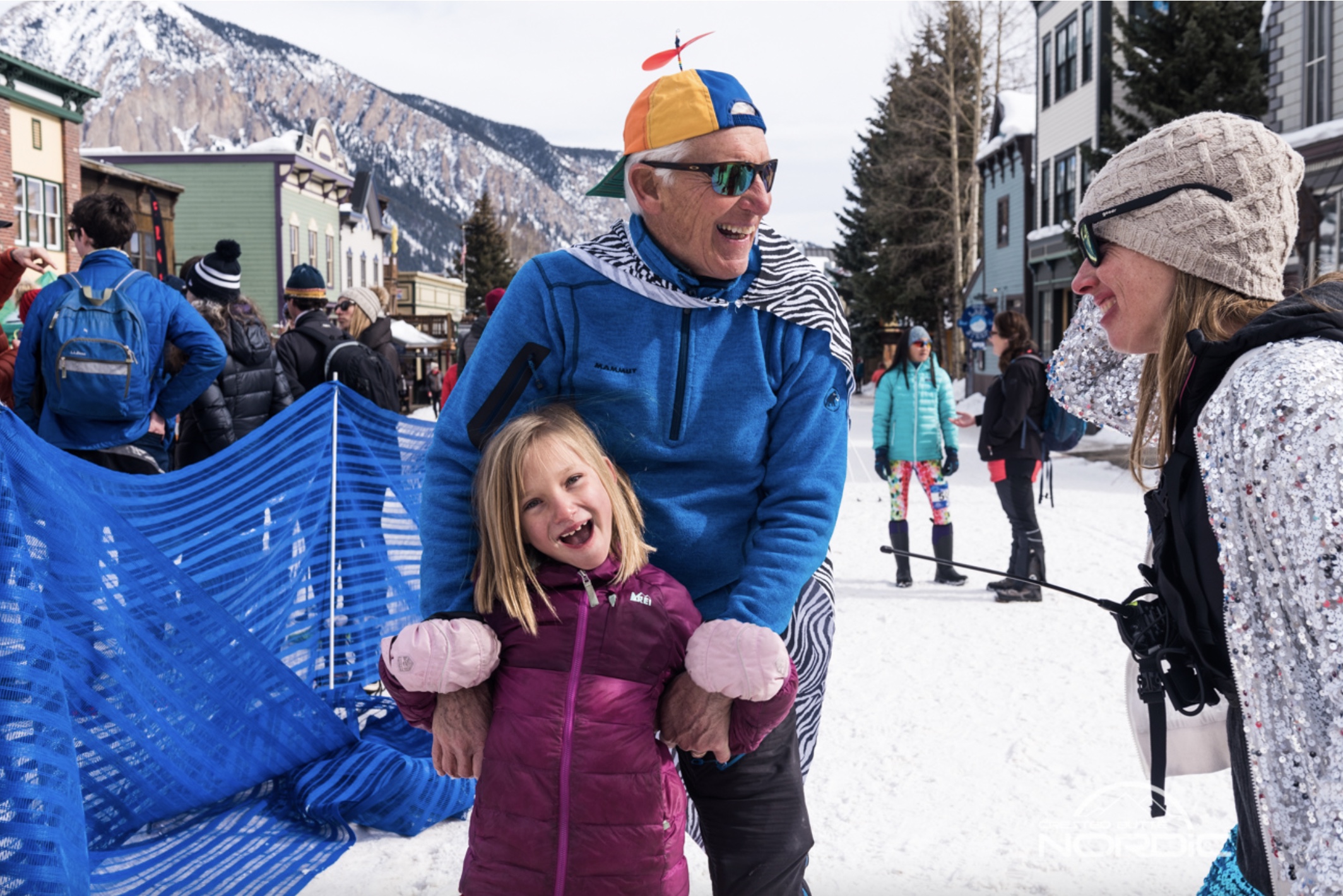
    It was in the masters performance group that I had the chance to work alongside Murray Banks, whose reputation as a one-of-a-kind, enthusiastic, high-energy coach with a keen eye for technique preceded him. 

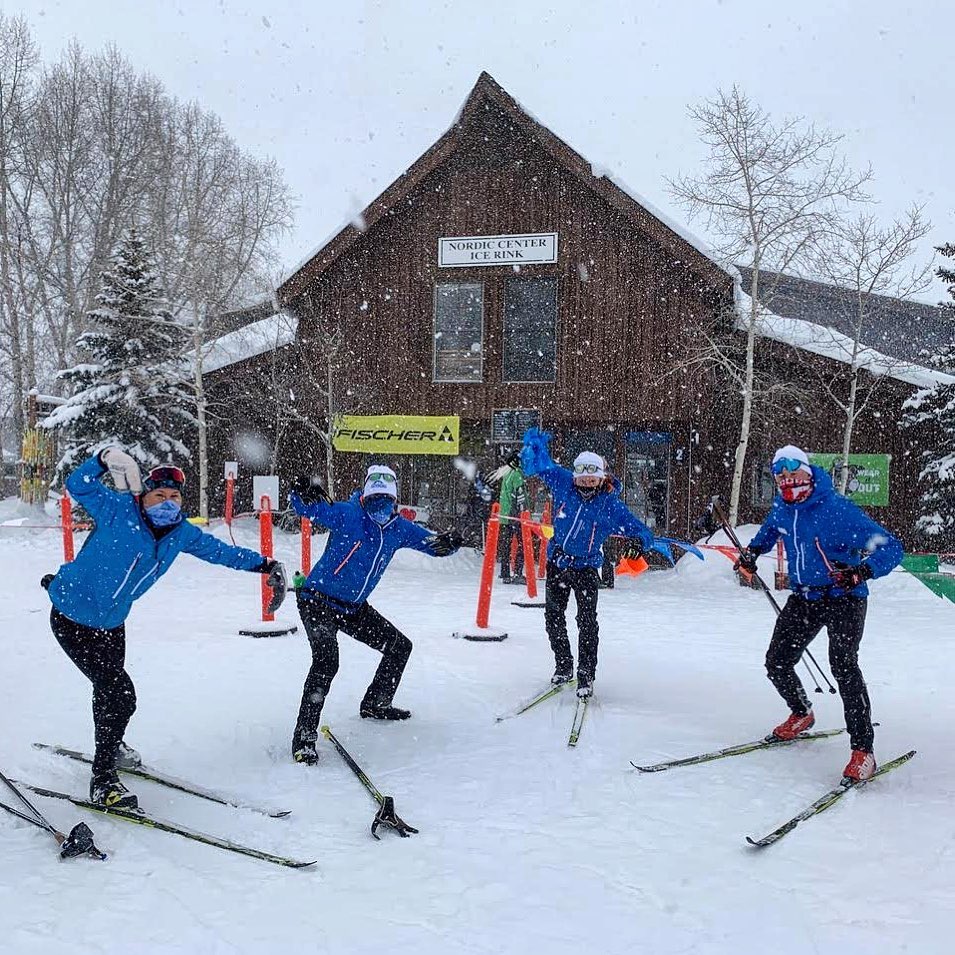
    The masked-up smurfs behind the 2020-2021 masters performance group in Crested Butte, CO. From left to right, Rachel Bachman Perkins, Murray Banks, Cam Smith, Woody Martineau.

    Coaching with Murray was an unforgettable experience. His energy and positivity are the right kind of infectious – the type that makes you want to be a better version of yourself, overall. The kind that leaves you wanting to ski better, try harder, be kinder, and recognize that attitude is everything, even when life throws you some massive curveballs. 

    You’d never know that Murray was fighting cancer. Even on the days where most would throw in the towel, Murray would slip into his ski boots and make his way to practice. On days he wasn’t feeling well, he’d ski more slowly and keep the distance traveled to a minimum, but that didn’t prevent him from showing up with an ever-present grin, ready to encourage the group of skiers through technique cues and an interval session. 

    Though we only worked together for a few months, his impact was lasting. It is my pleasure to share the following letter Murray penned to his younger self. 

    March, 2015

    Hey Murray,

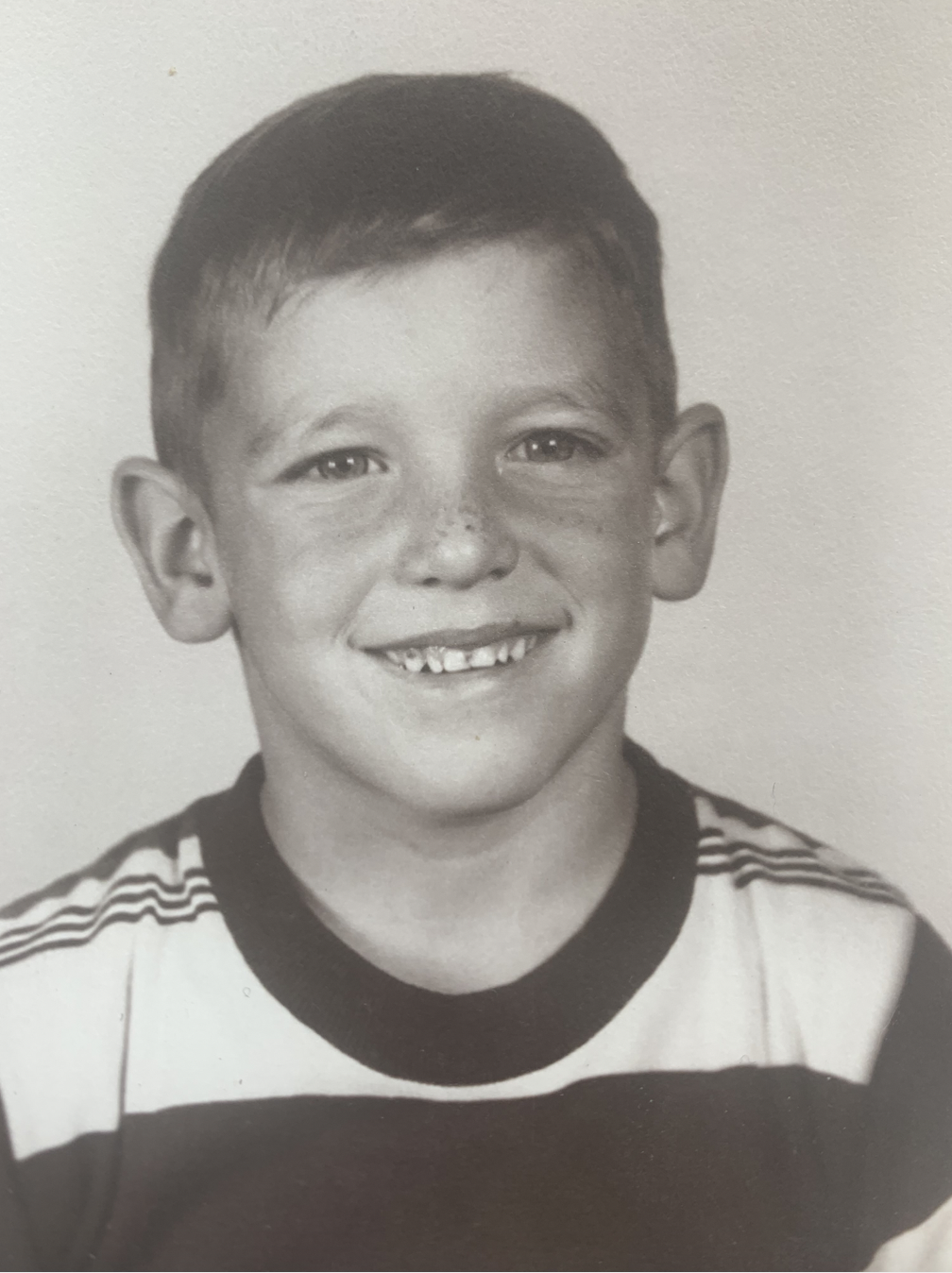
    Wow, you look so young! Oh yeah, you’re only 6. Have you got freckles? I don’t remember having freckles. Anyway, this is a bit unusual but a friend here in 2015 asked if I’d write you a letter with a few observations and perhaps a tip or two. Have a seat, this will be long as there has been a lot of water under the bridge over the past 68 years. I’m surprised you are reading this, you’re usually out in the neighborhood playing endless tag games with your friends. Did you have a hockey rink in the yard this past winter? Oops, gotta run, headed out to ski with my/your granddaughter Winter who is actually 6 just like you!

    A young Murray Banks. (Courtesy photo)

    March 2022

    Sorry about that, I started this 7 years ago but got busy. That’s probably good though as you will have a better handle on some of the insights I’ll be sharing with you now that you are 13. OK, here in 2022 you are 75 years old. Hard to believe that you will be as old as your great gramma is now.

    As you are learning, yours is an athletic family and we play almost every sport imaginable. And when we’re not playing an official sport, we are riding our bikes, competing in a tenacious whiffle ball game or playing capture the Flag ’til way after dark. Playing sports is our family thing and you are doing them all… baseball, basketball, football and hockey. It is a perfect childhood so I hate to do tell you this, but you will hold your own in sports until high school, then everyone else will grow and you won’t. Hey, it’s ok, you were born in late October and everyone is way older than you. 

    First, the bad news: you aren’t going to continue to be a star baseball player like you are now. And you aren’t going to make it in basketball either. And the football coach will say to you “Banks, you’re a tough kid but I can only use you when it’s 3rd down and 3 miles to go. You should run cross country.” I don’t think you even know what cross country is! 

    But, here’s the good news: you’re going to love running and you will become quite good at it in a few years. One more thing, don’t fret about maturing late… when you are in your 40’s and racing triathlons, you’ll go to your 25th class reunion, look around and wonder who all those old people are. Triathlon, bet you don’t even know what that sport is. It’s a cool sport that involves three events you already love and will be invented when you are in your 30’s, more about that later.

    Murray Banks joins the cross country team at Cortland State in Upstate New York. (Courtesy photo)

    In a few years, you will have to decide on a college — well, if you put a bit more focus on your school work, you will. You will get lucky and choose a school and major that you love and be on championship teams with great guys and coaches. One day while walking to class, a professor with national prominence for his teaching and coaching, will stop you and say, “Ya know Banks, you’re tougher than hell and someday all your training and determination will pay off big time. Keep up the good work.” 

    That interaction may only last 60 seconds but the eventual benefit will last 60 years. This is important, pay careful attention to older, wiser people you admire and respect. 

    They see things you can’t possibly see at your youthful, exuberant age. They have perspective that will benefit you in ways you can’t imagine now. Oh, and one more thing about college… you’re going to meet a very special girl on your track team. She’s a sprinter, she’s smart and she’s really attractive. If you don’t mess this up, she will become your lifelong love and training buddy.

    With a bachelors degree in hand, you will embark on a teaching and coaching career that will earn you several honors and great satisfaction… slow down and soak it all in. Now this will be hard to fathom, but getting cut from baseball, basketball and football will come in very handy in a few years. As a high school running coach, you will seek out athletes who were rejected from other sports and turn them into championship caliber runners. The energy and imagination that often got you in trouble in school, will produce unique results in your teaching, coaching and racing career — hard to imagine isn’t it? Your struggles academically won’t last, just remember what Einstein said, “Imagination is more important than intelligence.”

    “When you coach kids, you lose 40 years off your chronological age.” – Murray Banks (Photo: Xavier Fane / Crested Butte Nordic)

    Now, back to that girl you will meet in college… she is a sprinter and you are a distance runner, that’s how she catches you, you just weren’t fast enough! But, she will become quite an accomplished endurance athlete and the two of you will enjoy years of racing all over the world. And it will be in two sports you aren’t even aware of now: triathlon and cross country skiing. And, as a bonus, when you marry her you will get an island! Yup, your teaching careers will enable you to spend summers on the family island and you can swim, bike & run a lot and become quite proficient at that triathlon sport. Actually, so proficient that you will both race in the world championship and people will pay you to do it. Really, honest, not kidding, this will be your job for a few years, you lucky guy! 

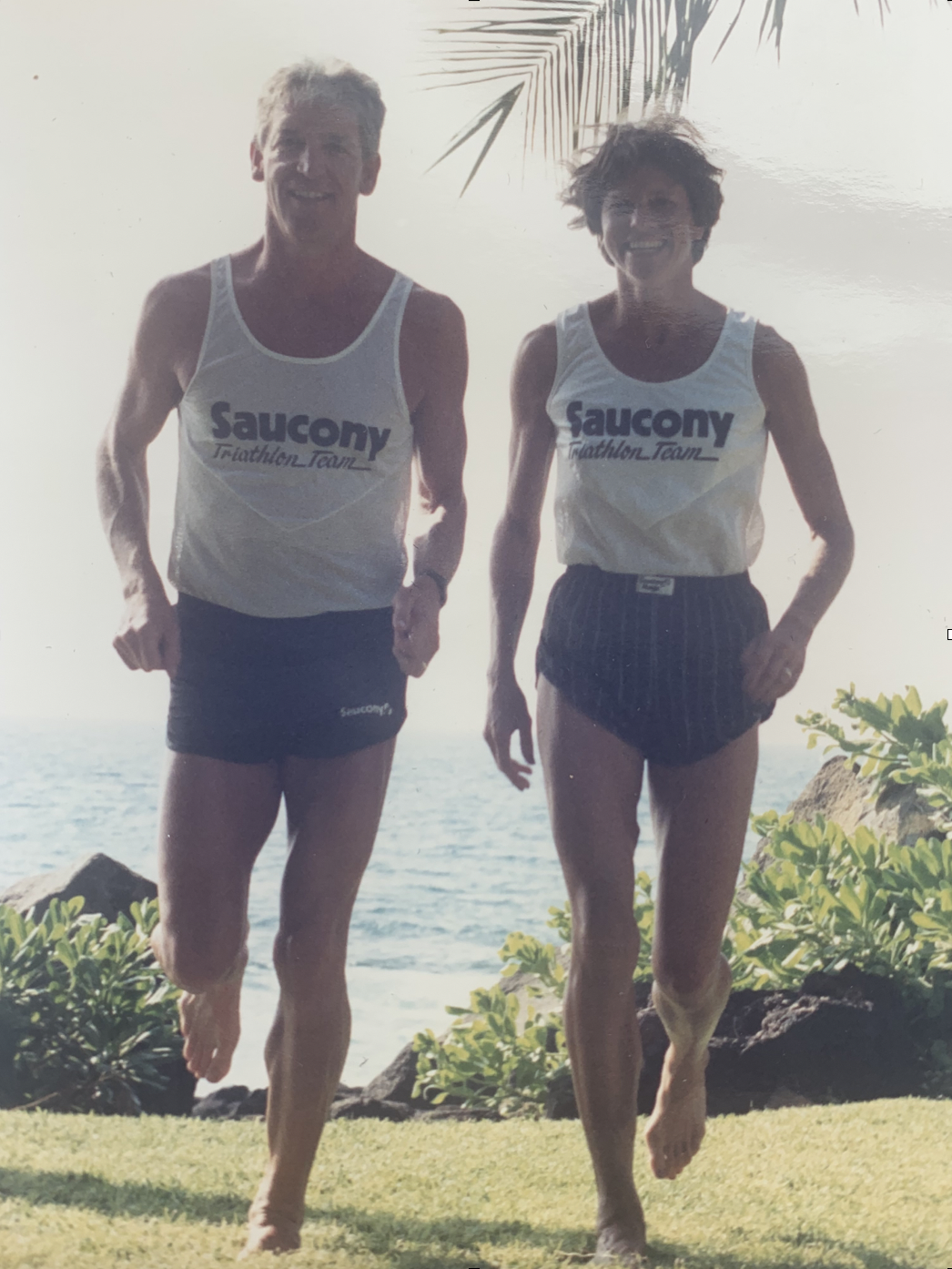
    Murray Banks and his wife prepare for Ironman Hawaii, 1988. (Courtesy photo)

    Although you will absolutely love teaching, you will have an opportunity to take time off to be a full time athlete. And your 8th grade teacher Mrs Bentley, who will say to you “You’ll never make anything of yourself just playing sports, Mr Banks!” Well, turns out she was wrong, but probably best if you don’t say anything to her. 

    Instead, you will create a niche as a speaker and corporate trainer that provides the time to train and race nearly full time. It’s an occupation that resembles training and racing in every way… you prepare thoroughly for long periods of time; you need to be focused and goal oriented; you work intensely hard for short periods of time, followed by longer periods of recovery; and, when it’s time to race or deliver a presentation, you really need to be on your game, there is no room for mediocrity. Any time your work, recreation and passions intersect, you have the best of all worlds and so many good things arise. So, younger Murray, keep all options in your life open, there is no predicting what opportunities will present themselves.

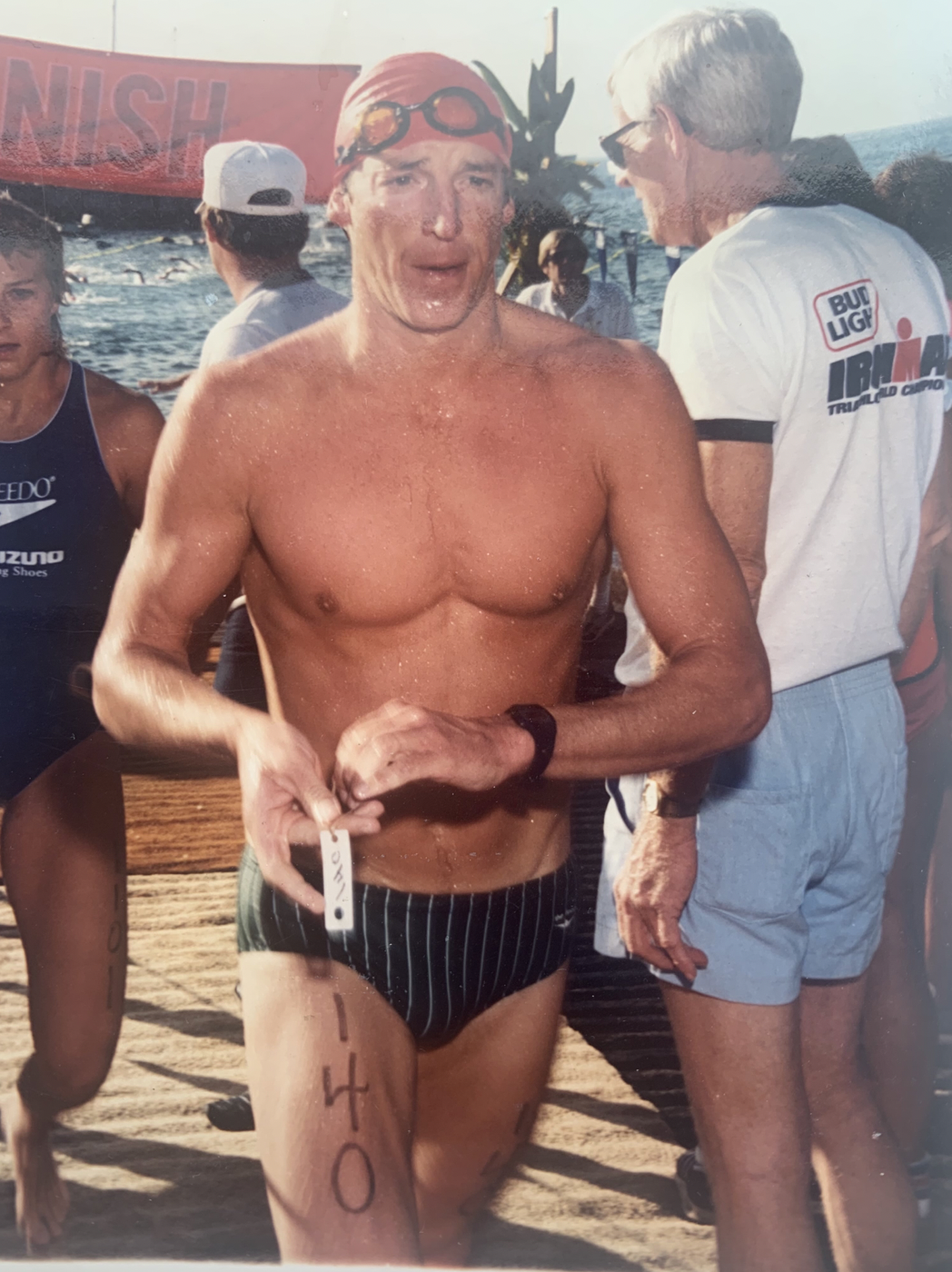
    Ironman Hawaii, 1983. (Courtesy photo)

    But, I digress. Training for triathlons during long, cold Vermont winters was a challenge so you know what comes next? Cross country skiing. 

    For several years, skiing will just be winter fitness for triathlons but eventually, skiing will became your favorite family activity. You and Janie will eventually have two rambunctious boys who love to play outside day and night, just like you! They will play all the usual sports but will eventually get into ski racing and soon you will be going to races to cheer for them rather than the other way around. 

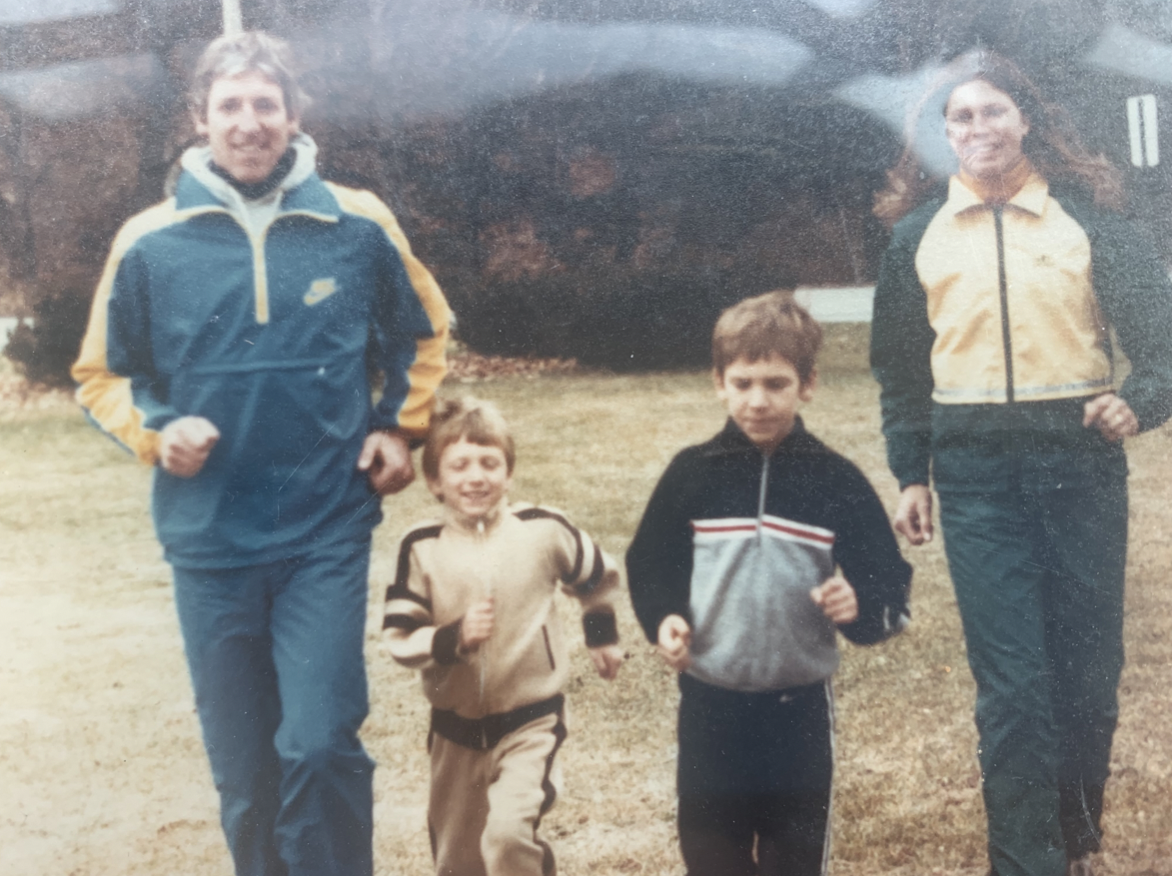
    Team Banks at a community fun run in Vermont. (Courtesy photo)

    So finally, cross country skiing… get this, skiing downhill is way more fun than running down hill! And, while triathlon training can be tedious, arduous and exhausting, skiing is generally fun and challenging. So, you will retire from triathlons and spend most of your athletic energy training for and racing in cross country skiing and have the opportunity to race in cool places like Norway, Austria and Italy.

    Masters World Championship, Asiago, Italy, 2014

    You and that sprinter girl will both win gold medals at various masters world championships and you will meet people from those countries that will become lifelong friends. And, you will find that folks in their 50’s and 60’s who continue to ski race are really an energetic and positive group of people to hang out with.

    And those boys you and the sprinter girl so enjoyed skiing with when they were kids…they took that joy for snow and mountains and parlayed it into careers as international mountain guides. And the best part? You will get to ski big peaks all over the world with them, which it sure beats playing basketball and baseball!

    Troll Peninsula, Iceland, 2017. (Courtesy photo)

    This all sounds a little too good to be true doesn’t it? Well, as you have probably guessed, it is. At the very pinnacle of your personal, athletic and professional success, life will throw you a curveball… cancer. 

    Now, at your young age, you may not understand what cancer is, so I’ll break it down a bit for you. Cancer is an insidious disease that eats at you over time and saps the energy and strength that have been hallmarks of your life. In your case, you will endure surgeries, radiation treatments and a bevy of drugs that will end your racing career. You will need every ounce of patience, optimism and tenacity that you’ve spent a lifetime developing through sports. 

    It will be the greatest test of endurance that you have experienced in your lifetime. But, there is an interesting cancer/ski racing analogy, bear with me on this. Imagine, you are in a 50km classic ski marathon, with temps at freezing and a damp, cold wind that makes the track indiscernible and waxing impossible.

    The track is poorly marked and you are never 100% sure if you are on course. There are no kilometer signs and the route is ambiguous. Your kick wax has failed you – one minute you are slipping and the next your are walking on snow stilts. You pass spectators and ask “is this the way?” and they respond “not sure, just keep going.” You ask others “how far to the finish?” and they respond “not sure, just keep going.” The blowing snow and poor markings obscure any semblance of direction and you press on not knowing which trail to take.

    Yup, living with an aggressive cancer is very much like a tough ski marathon… you know you have to keep going, but you have no idea how long and you can only hope the ones giving directions know the best path forward.

    2020 Covid Cancer Climb with buddies at the summit of 12,300’ Cottonwood Pass, CO. (Courtesy photo)

    But, my younger self, you are well prepared. All those years of endurance training and racing are paying off now as mental toughness, dealing with pressure, staying focused and learning to exceed your perceived limitations will carry you far longer than you might expect. Those teammates and coaches you loved will support and encourage you, just like they did decades ago. And, no matter how exhausted and frail you may feel, you will find strength and joy in doing what you’ve always done… getting outside in the sunshine to ski and bike with your friends.

    At your age here in 1959, sport is a competition that you prepare for and do your best at. You are in the moment and not thinking of the lifelong benefits. But looking back, you will see that training, competition and pushing yourself was the best possible preparation for a lifetime of great joy, professional success and personal satisfaction. But most importantly, it will give you the ability to withstand discomfort, uncertainty and challenges you did not sign up for. 

    As an endurance athlete, you developed a unique life skill set that you can cash in when you need it most; and here in 2022, you are reaping those benefits.

    Murray Banks and “the sprinter girl”, his lovely life partner, Janie. (Courtesy photo)
  • Nordic Nation: A Backcountry Ski Race on Skinny Skis – Simi Hamilton and Ben Koons Take Second at the 2022 Montane Grand Traverse

    Nordic Nation: A Backcountry Ski Race on Skinny Skis – Simi Hamilton and Ben Koons Take Second at the 2022 Montane Grand Traverse

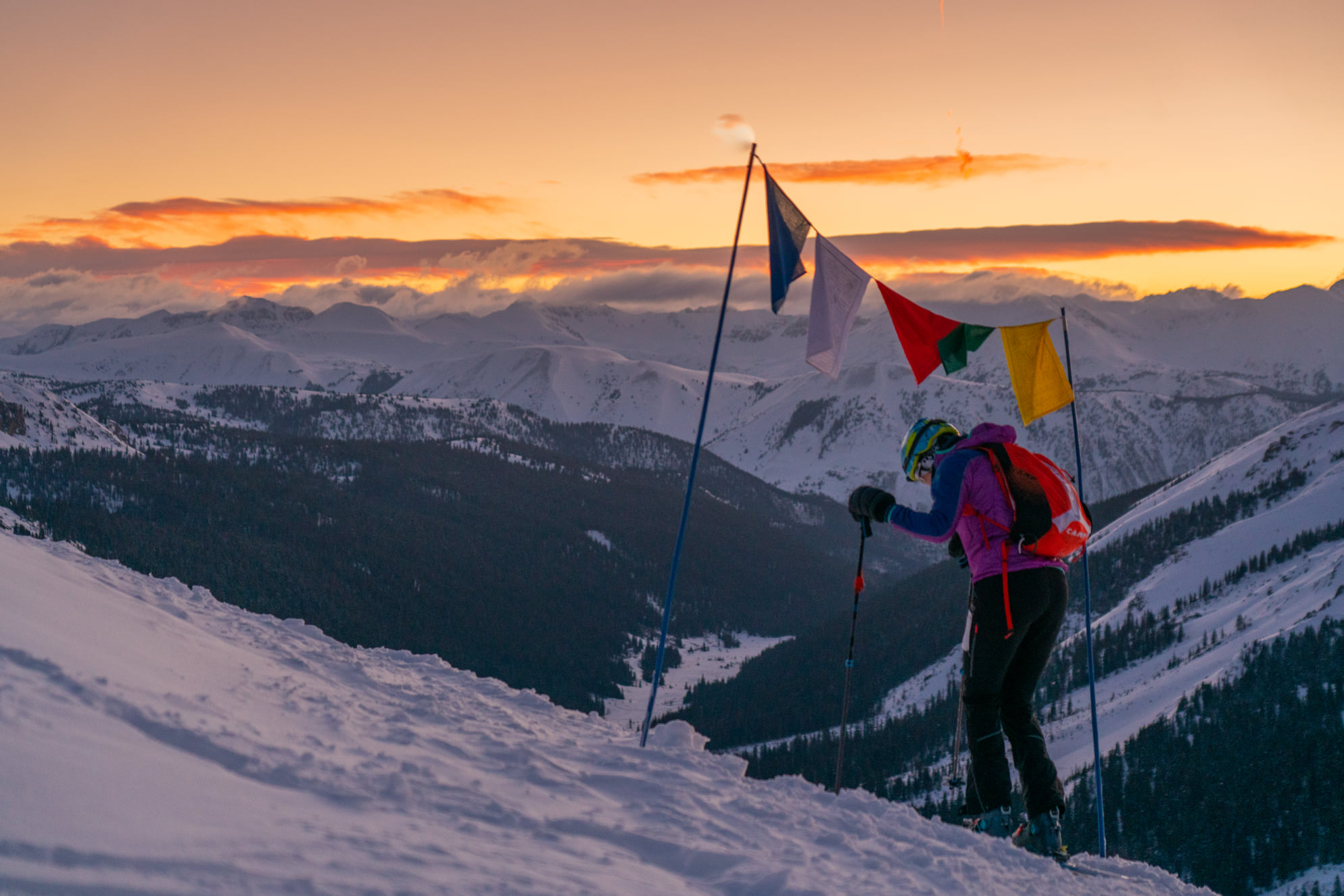
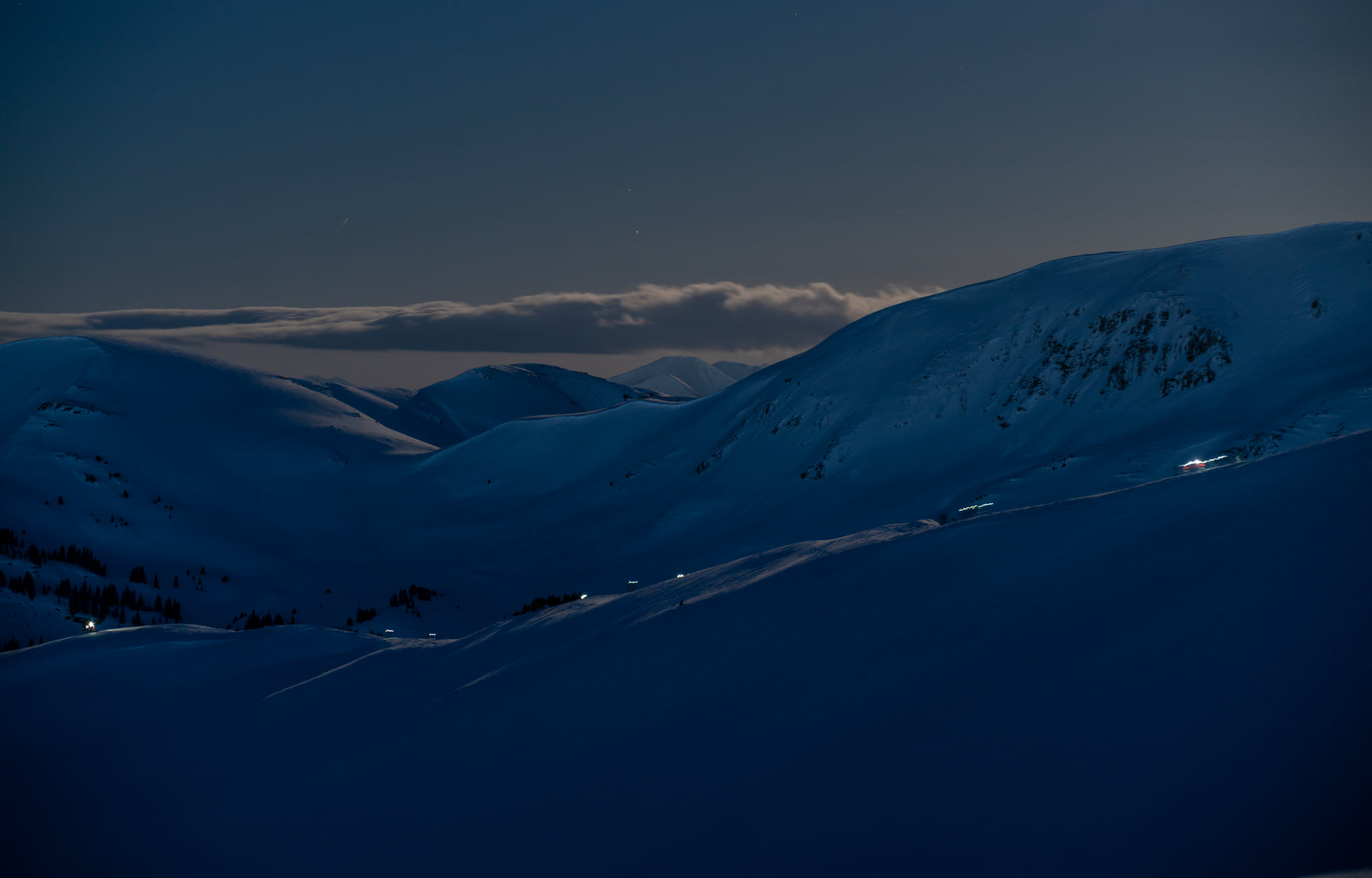
    The 2021 Grand Traverse saw a magical full moon under clear skies and mild temperatures. (Photo: Jesse Levine / Crested Butte Nordic)

    Tucked deep into snowy valleys, the tiny iconic Colorado mountain towns of Aspen and Crested Butte are separated by a mere 40 miles by foot, but roughly 200 miles by car in the winter. Separating the two is the expanse of the rugged Elk Mountain range, which features six of Colorado’s 14’ers, peaks that reach above 14,000’. 

    Now meccas of outdoor recreation, the two towns were historically established as profitable coal and silver mining sites, following the forced removal of the native Ute residents in the late 1800’s. In those days, communication between towns during the winter relied on the fortitude and alpine savvy of mail carriers, who skied back and forth between towns through burly terrain across a notoriously unstable snowpack. 

    A 2021 Grand Traverse racer descends off of Star Pass at sunrise. (Photo: Jesse Levine / Crested Butte Nordic)

    In 1998, this historic route was revived as a backcountry ski race called the “Grand Traverse”, which begins at the base of the Mt. Crested Butte ski resort and travels north over two 12,000-plus foot passes, with roughly 8,000 feet of elevation gain spread over the roughly 40 mile route. The inaugural winners (athletes must race in pairs), racing on metal edged cross country skis, were Aspen’s Travis Moore and Pierre Wille, local legends, and accomplished cross country skiers and alpinists. Moore, who taught at Aspen High School for more than 20 years and continues to coach the cross country ski program, eventually became the coach of a young Aspen resident, Simi Hamilton. 

    For many living in the Roaring Fork or Gunnison river valleys, the Grand Traverse (GT) is a storied annual pilgrimage, respected for the unique and burly nature of the route and its local lore as a rite of passage for endurance enthusiasts. Adding to the mystique, the race begins at midnight, allowing racers to cross the highest avalanche risk sections while snow is presumably frozen, firm, and at its most stable. The avalanche safety arsenal of beacon, shovel, and probe are part of a long list of items athletes must carry for safety, along with extra layers, an emergency shelter, and other items that reflect how deep into the backcountry the route leads and what it might take to survive a night out in the elements should something go awry. 

    A 2021 Grand Traverse racer receives instructions for the descent off of Star Pass from the safety dispatch stationed there. (Photo: Jesse Levine / Crested Butte Nordic)
    A racer descends off of Star Pass during the 2021 Grand Traverse ski race. (Photo: Jesse Levine / Crested Butte Nordic)

    With the rapid advancements in ski mountaineering technology, few still commit to cross country skis for the GT – SkiMo race skis with AT bindings or lightweight backcountry or telemark gear are more stable and typically handle better descending off the passes. But this year, the team of “Yeah, but we can skate” showed skinny skis aren’t yet an antiquated option for success at the GT, particularly if you’ve got the skills of two Olympians who have continued to foster their love for mountain adventures on boards less than 43 mm underfoot. 

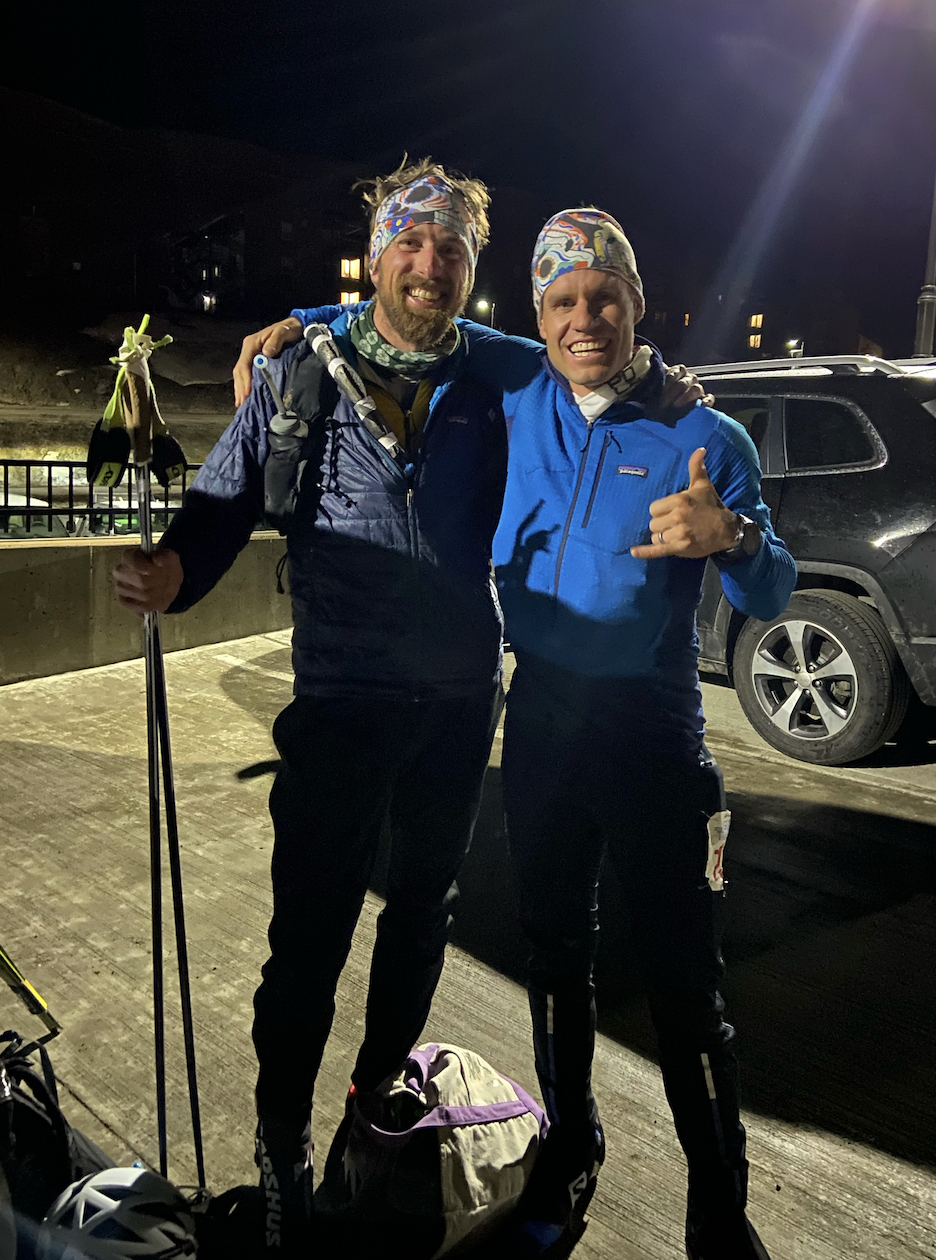
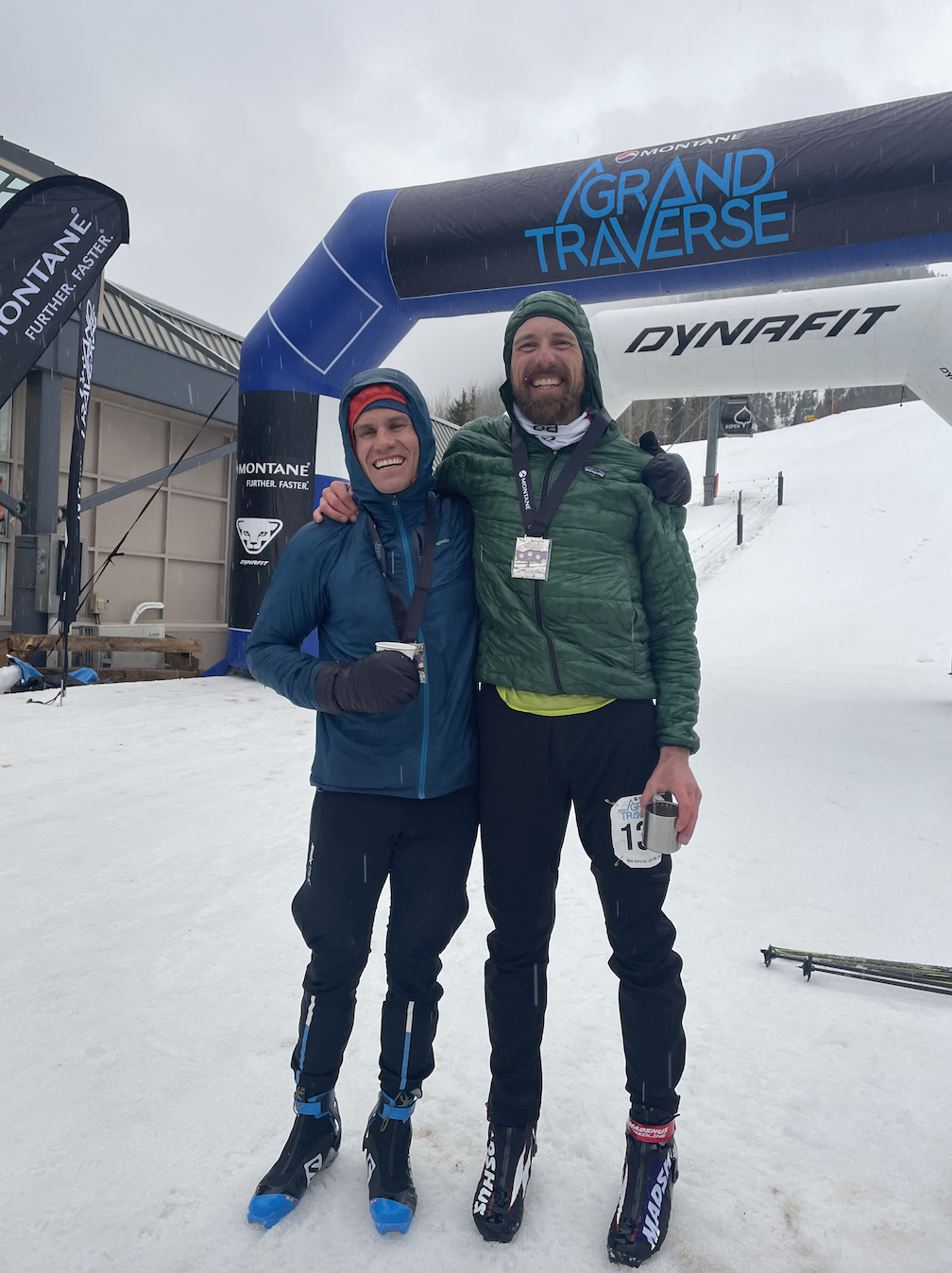
    The duo was Simi Hamilton and Ben Koons, who lined up on Fischer skate skis. After a fast start skating out of Crested Butte, the team leapfrogged with eventual winners and top SkiMo athletes Cam Smith and John Gaston, who eventually broke away as conditions favored wider skis and metal edges. Smith and Gaston made it to Aspen in 6:13:15.4, just over 36 minutes ahead of Hamilton and Koons. (Results here)   

    Before and after: still smiling. (Photos: Sophie Caldwell Hamilton)

    Though Hamilton won the GT running race in early September, 2021, it was his first crack at the storied winter event. For Koons, it was his sixth crack at chasing the ideal crust cruising conditions that might allow a strong skater with some backcountry experience under their belt to smash the course record and take the win on skinny skis. The two have shared a number of big adventure days in the mountains on ski, foot, and bike, often with a third friend, Linden Mallory, who grew up in Aspen with Hamilton and raced on the Dartmouth ski team with Koons, and later became one of his GT partners

    While last year boasted perhaps the most ideal conditions, with athletes racing on firm and stable snow under a full moon in mild temperatures with minimal wind, this year, mother nature had a few twists up her sleeve. The week leading into the race saw a little bit of everything springtime in the mountains has to offer: warm sunny days, heavy wet snow, rain, wind, and plenty of freeze-thaw cycles. Consequently, this was shown in the snowpack, leaving Hamilton and Koons with far less skateable conditions, lots of breakable crust, some “spicy” downhills. Nevertheless, with only one broken pole, they were still smiling at the finish, and seemingly aren’t ready to accept defeat just yet. 

    A train of headlamps climbs Star Pass during the 2021 Grand Traverse. (Photo: Jesse Levine / Crested Butte Nordic)

    For more with Hamilton and Koons, you can head to the Grand Traverse Instagram account, where the duo was interviewed pre and post-race, along with a video capture of their finish, in the rain, at the base of Aspen Mountain. For those interested in testing their mettle in next year’s Grand Traverse ski, registration opens at midnight on December 1st and spots fill very quickly. For those looking to explore the route in the summer, there is also a Grand Traverse run and bike race happening Labor Day Weekend. The events are among the primary fundraisers for the Crested Butte Nordic Center.

  • “It’s a Good Time to be an American Ski Racer”: A Look Inside the OPA Cup Finals Trip to Sappada, ITA

    “It’s a Good Time to be an American Ski Racer”: A Look Inside the OPA Cup Finals Trip to Sappada, ITA

    While World Cup Finals were underway in mid-March in Falun, Sweden, a second contingent of top American skiers was lining up roughly 2,000 kilometers south to race in the OPA Cup Finals in Sappada, Italy. Located along the northern edge of Italy near the Austrian border, the small town is nestled among the spectacular, jagged massifs of the Italian Dolomites, roughly an hour’s drive east of Toblach, which typically hosts the final stages of the Tour de Ski. The team spent the week prior to competition training in Toblach, which features similarly spectacular views, along with the benefits of the delicious food and drink one might expect when traveling in Italy. 

    For those unfamiliar with the OPA Cup, it is an international race series featuring predominantly European athletes racing just below the World Cup level. The US Ski & Snowboard development program typically facilitates a trip to OPA Cup Finals to provide athletes who may not have earned World Cup starts the opportunity to experience high level competition overseas. Qualification is based on national rankings, beginning with those racing on the World Cup, and proceeding through the top domestic racers, depending on declines. Often, there is overlap between the teams for the FIS Junior/U23 World Ski Championship teams and the OPA Cup teams, which may conveniently allow some athletes to prolong their stay in Europe and attend both events. 

    “Generally the trip is geared toward athletes that are a bit older, who either have had World Cup starts or on track for that,” explained US Ski Team Development Team coach Greta Anderson.

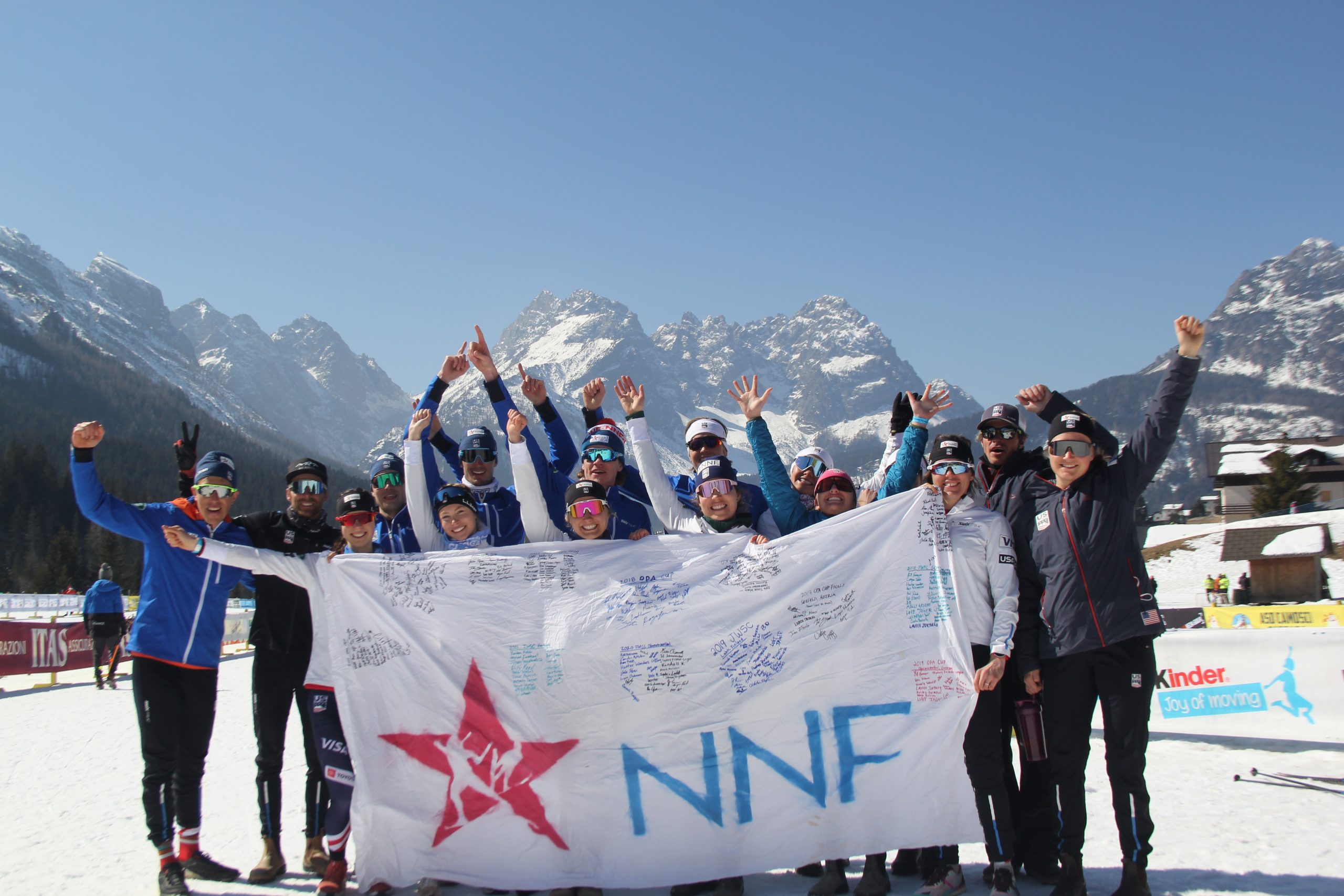
    The American OPA Cup Finals team celebrates fast races and bluebird days in Sappada, Italy. (Photo: Bryan Fish/NNF)

    Identifying it on its list of “Pillar Projects”, the National Nordic Foundation (NNF) helps subsidize the cost of the trip for the qualified athletes. The trip can accommodate up to 16 skiers, who are generally kept to an approximately even male to female ratio through the qualification criteria. This year, due to conflicting schedules and a number of declines, thirteen athletes attended, with nine women and four men. 

    In alphabetical order, the senior men included: Braden Becker (CGRP), Logan Diekmann (BSF Pro), Finn O’Connell (BSF Pro), Karl Schultz (SVSEF). Senior women included: Mariah Bredal (BSF Pro), Margie Freed (CGRP), Alex Lawson (CGRP), Hannah Rudd (BSF Pro), Becca Rorabaugh (APU), Lina Sutro (SMS T2), and Alayna Sonnesyn (SMS T2). 

    This year, two U20 athletes headed from World Juniors in Lygna, NOR to Italy along with D-Team coaches Anderson and Bryan Fish: Kate Oldham (Aspen Valley Ski Club) and Annie McColgan (UVM). 

    “It’s pretty cool that we have more racers that are racing professionally or post collegiately than, I think, ever in the US, and they have more clubs and places to choose from,” said Anderson. “There were several athletes that, especially because racing was shut down on the East Coast last year and I happened to be in Alaska and wasn’t wasn’t traveling very much before I took this job, it was kind of the first time I’ve gotten to work with them, or the first time I’ve gotten to work with them in three or four years. So it was really cool to get to know Alayna Sonnesyn a little better and Lina Sutro a little better, and Margie Freed and Alex Lawson, who I’ve seen race many times, but it was the first time I’ve gotten to really work with them and get to know them. The same with Braden Becker and Karl Schultz… So it was a pleasure on the trip to get to work with some new athletes that have come through different development systems and are excited about and ready to make that next step. And this racing circuit is a really good opportunity for that.”

    Anderson took the lead with organizing the trip and supporting athletes, working alongside US Ski & Snowboard Cross Country Sport Development Manager and long-time OPA Finals trip lead coach Bryan Fish. The wax support staff included BSF Pro Team head coach Andy Newell, former APU athlete and current staff member Peter Kling, and Jackson Hole comp team coach Jon Filardo. 

    US Ski & Snowboard Cross Country D-Team head coach Greta Anderson supports athletes during the Sun Valley SuperTour races in January. (Photo: Tobias Albrigtsen / @untraceableg)

    Anderson identified the OPA Finals trip as a key development opportunity for a number of reasons: though perhaps lower pressure than World Cup, it’s a professional race circuit with small but competitively dense fields, athletes race aggressively and tactically in a style younger athletes who have not yet raced at this level may not have experienced, and it offers the opportunity for an athlete to dial in some of the small but significant factors details that support success adapting to a new and different environment following long international travel.

    “Bryan’s been doing [the OPA Cup Finals] trip for a long time,” Anderson said. “So Peter Kling, who was on a coaching staff, and Becca Rorabaugh, they were like, ‘I’m pretty sure that we were on Bryan’s first ever OPA Cup trip.’ And it used to be that we started at the bottom of the results sheet and started looking upward for names. And right now we’re starting at the top and we don’t have to look very far down.”

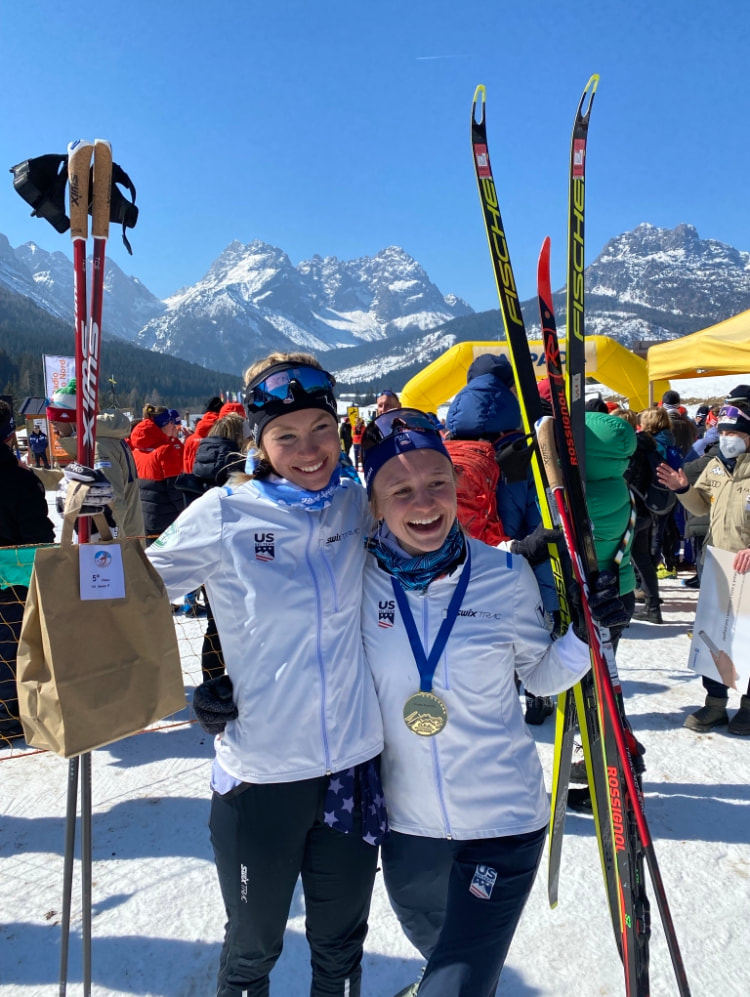
    In two days of racing, the US had seven top-10 finishes, with another set of athletes finishing well-within the top-20. Highlighting the US team was SMS T2’s Sonnesyn, who took third in the 10 k classic on Saturday the 12th, and won the 10 k skate the following day. 

    Alayna Sonnesyn (SMS T2) takes the win in the 10 k skate at Opa Cup Finals in Sappada, ITA, with Mariah Bredal (BSF Pro) finishing just behind in fifth. (Photo courtesy of Alayna Sonnesyn)

    “It’s pretty special,” Anderson said of the performances in Sappada. “It’s awesome to get to see that. For Alayna to start a race and say like, ‘What’s my plan to try to win this?’ It’s not just, ‘Hey, we’re here to participate and learn,’ but ‘Hey, we’re here to participate and learn but also we’re going to try to win.’ And I think, with that comes — not only from staff but from racers — this level of professionalism. Okay, we’re going to select skis. We’re going to make sure we’re organized and in a good place. Where can we be? Where can we do feeds? How can we set you up to have the success you need to have? 

    “It just feels like a really good time to be an American ski racer.”

    After winning two of the first five SuperTour races this season, and finishing on the podium in each of the others, Sonnesyn was offered starts at the Tour de Ski, where she hoped she could achieve strong enough international results to qualify for the Olympic Team. But these goals did not come to fruition; Sonnesyn struggled to find the same race sensations while on the World Cup and tap into the fitness she knew was still there, which was reflected in results below her expectations. She shared her disappointment openly on her blog and social media, providing a relatable and important example to her followers that the pro-skier journey is not immune to bumps in the road. 

    “My experience on the World Cup this year – it was quite demoralizing, to be honest,” said Sonnesyn in a call from the airport as she was on her way to SuperTour Finals in Whistler. “And then, after the Tour de Ski, I got COVID. And it just really put a damper on the whole winter for me. And I started questioning like, ‘Okay, am I fit? And I like, can I race? Well, like, what have I been training for? This is really bad timing with COVID, too.’ So I was just pretty down. But then I was able to have really great SuperTour races, back in January and February, and then to be able to race internationally again in Italy. It wasn’t a World Cup, but it was still very high level of racing. So to have it go so well kind of reaffirmed to me that I belong on the international stage. And I definitely needed that, a little bit, just to give myself more confidence moving forward and motivation as well. So I’m really excited about the races and how they went and what I did to prepare for them and kind of my mental attitude around them, too.”

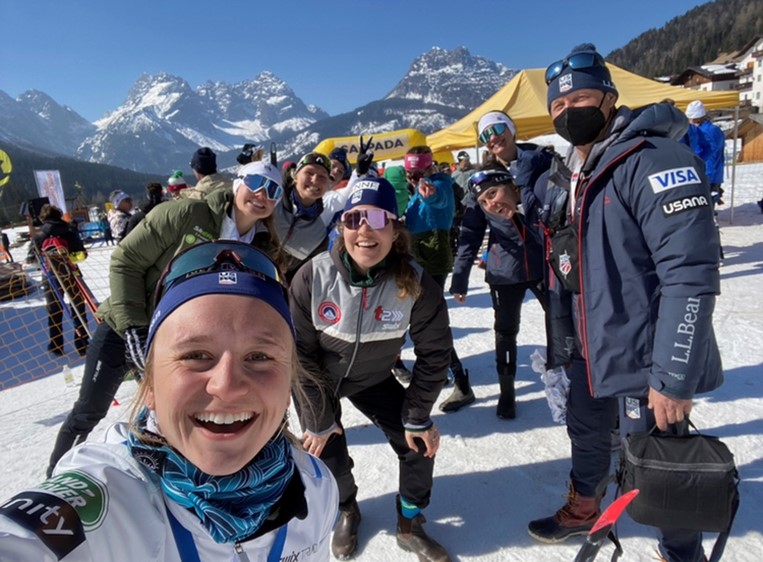
    A selfie in Sappada: the American team prepares for race day at Opa Cup Finals. (Photo: Alayna Sonnesyn)

    As she reflected on the trip and her experiences racing internationally over the last few seasons, Sonnesyn echoed Anderson’s sentiments about the progression of the American team at the event.

    “Compared to my first OPA Cup trip, which was in 2018, I think there were maybe two or three top 10 performances. And they were exciting, but for the most part, it was kind of like, ‘We’re just here to get the experience. We’re not really sure what we’re doing.’ And I think that the way the US is developing right now, the way that new courses are being built in Cable or Duluth, or wherever it is – they are preparing us better for racing internationally. And I think that was shown in the results that we had in Sappada. And it was just so exciting during that 10 k skate on Sunday to cross the finish line in first, and then turn around and see a ton of my other US teammates come in right behind me. That’s not something that was happening four years ago. So I think we are really developing and that is a huge thanks to so many different people and so many reasons, but it’s exciting to see.”

    Sonnesyn also spoke to the importance these international opportunities have provided her specifically, speaking from the perspective of what she dubbed a “bubble athlete” who has oscillated between World Cup and domestic racing over the last four seasons. She got her first World Cup starts in Quebec in March, 2019, and has been offered starts beginning in Period 2 each season since. Though this is a key stepping stone in the process toward consistent World Cup racing, she expressed that bubble athletes can have a challenging time planning seasons in advance and need to be prepared to adapt quickly to more frequent overseas travel.

    “I think that every single experience that an athlete has going and racing internationally, and traveling, and competing at that higher level, it all adds up to be super beneficial and a great learning experience. For example, I have gotten really great at overcoming jet lag, which the first couple of international trips I went on, I had no idea how to handle. I tried my best to do what I could, but it’s hard. And also to know what little things you want from home, like after being in Europe for four or five weeks, what do you really want from the US? 

    “And then also, how do you work in a new environment? A lot of times, if you’re going over to the World Cup, sometimes you’re provided a wax tech or sometimes not, or you have to bring your own, but you have to be willing to work with whoever you get.” 

    Sonnesyn explained that on the Sappada trip, she had worked with each of the techs before, but on her first trip in 2018, it was her first experience working with those wax staff members. Given the importance of ski choice and wax, working together effectively is imperative to an athlete’s success, but it requires dialogue and practice. 

    “Being ready to communicate effectively with the staff, what do you need? How do you want your skis prepared? What do you need from a hotel? All those things seem like such small little details, but they really add up with the more experiences you have.”

    Alayna Sonnesyn races in Oberstdorf, Germany during the 2021/22 Tour de Ski. (Photo: NordicFocus)

    She also spoke to the differences in the style of racing between the US and her international experiences, and how a trip like Sappada better athletes for what they might encounter should they be offered a World Cup start down the line. 

    “When it comes to racing: the courses in Europe are very challenging and very technical. Downhills, uphills, flats – whatever it is, there’s a lot of it, and you have to be ready to go for it. And then the competitors are fierce. They know how to be aggressive in a race, and you have to know how to hold your own. So it just helps to have that experience to understand how you approach the race. How aggressive are you going to be? How are you going to pace the race? How are you going to handle others around you?”

    With the highest levels of competition for our sport happening across the pond, it is easy to understand why opportunities like the OPA Cup trip provide an essential bridge for developing athletes. But it is not simply the facilitation of this trip that has led to marked improvement for the American team.

    “I think we’re open to change right now,” Anderson said as she reflected on her key takeaways from the experience in Italy and her first season coaching the D-Team. “I think the US, in a year with COVID, and lots of challenges logistically and politically in the world, we handle those changes better than almost any other country does. And I think that’s really shown here.” 

    Alex Lawson skates to 7th in the 10 k skate during OPA Cup Finals in Sappada, ITA. (Photo: Bryan Fish / NNF)

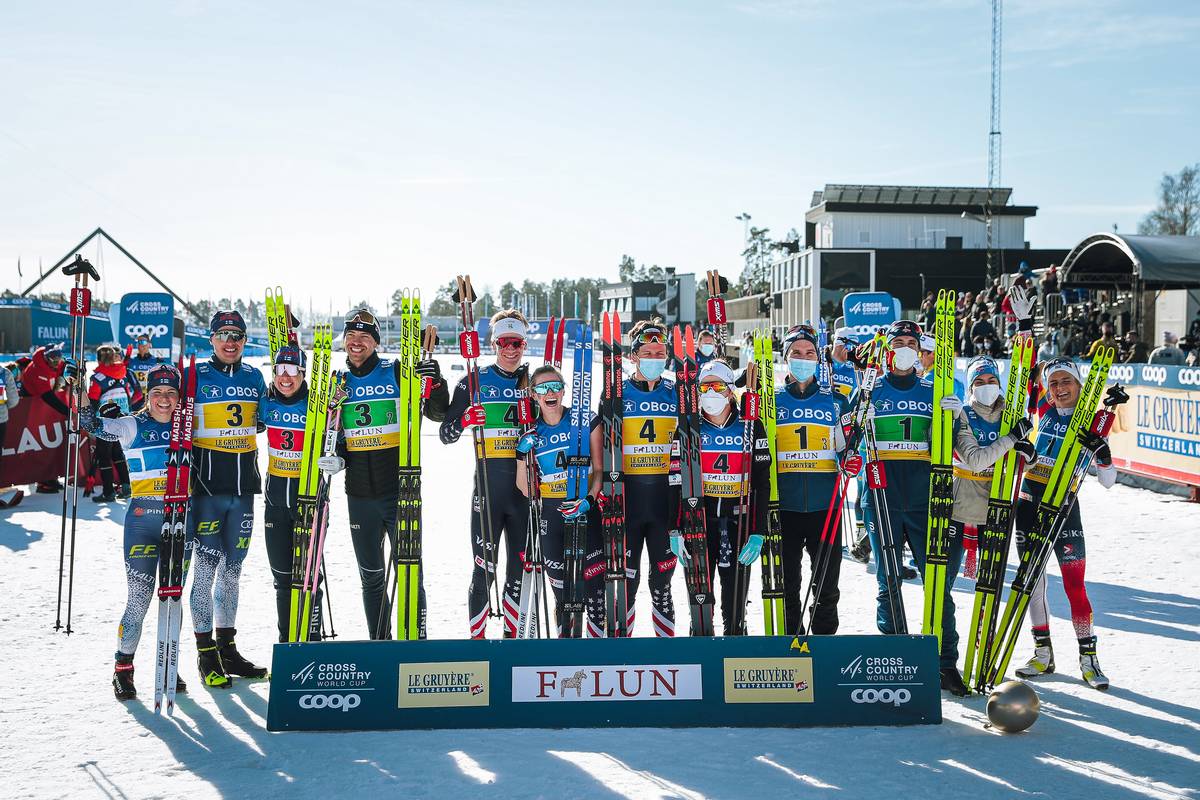
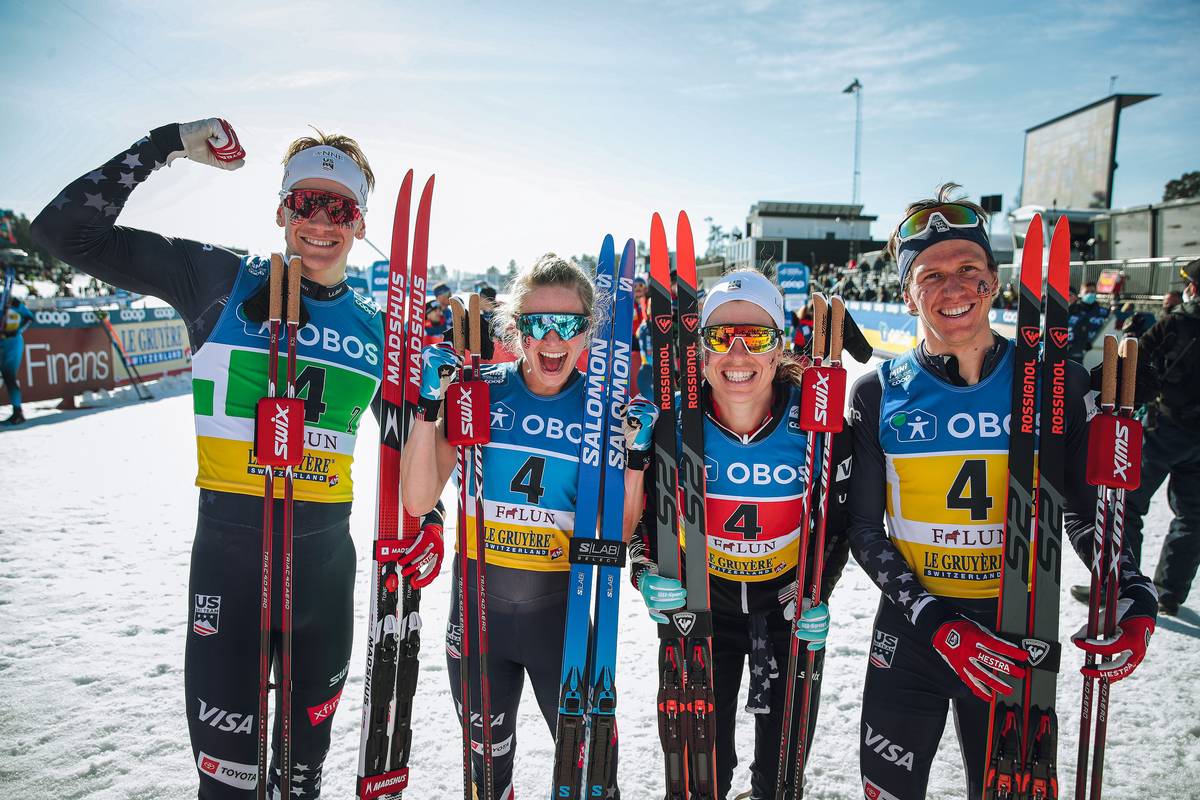
    While the OPA Cup crew was putting together a very solid day in the 10/15 k skate, the team of Rosie Brennan, Zak Ketterson, Scott Patterson, and Jessie Diggins had taken the win in the thrilling 4 x 5 k mixed relay in Falun. As the team in Sappada mingled near the finish to support the final racers as they skied through, Anderson said that a Swiss national team coach walked over and showed them the World Cup result on the phone. 

    Layered on top of the broader success at the OPA Cup Finals, Anderson expressed that this opened her athletes’ eyes to what might be possible for them in the years to come also. In particular, the Falun results of Zak Ketterson, a newcomer to the World Cup who ended his debut season with a 15th place finish in the 15 k skate and a mixed relay win.

    “[The guys racing at OPA Cup] are like, ‘Oh, man, I beat Zak sometimes’, or ‘I’m right with him’, ‘I trained with him in college.’ The level of confidence that brings… ‘Maybe maybe I can do that too.’”

    Moreover, Anderson expressed that this relay gold medal speaks to the equity of skiing in the US. “That we have good female athletes, and we have good male athletes, and we have a good balance of the two, and teams that are mutually supportive of each other,” she said. “Not every country has that.” 

    Boiling down the experience and her feelings as the season wraps up, Anderson concluded, “I have nothing but good things to say about our athletes right now. I’m really impressed with them. They handle the change better than anyone, and I think as a staff and from an organizational perspective, we’re trying to keep up, remove barriers, make sure they’re supported. And we’re open to trying new things, and it seems that we’re excelling in places where we’re willing to experiment and get our feet wet.”

    Kate Oldham (AVSC) races the 10k classic during Opa Cup Finals in Sappada, ITA. (Photo: Bryan Fish / NNF)

    Providing additional insights from the perspective of an OPA Cup Finals first-timer, FasterSkier also heard from U20 athlete Kate Oldham, who trains with the Aspen Valley Ski & Snowboard Club (AVSC) and competes for Middlebury College. Oldham took 11th place in both the 10 k classic and skate in the junior women’s category. 

    “Sappada was incredible,” Oldham wrote. “In congruence with the pre-camp in Toblach, the OPA Cup trip was unforgettable… My favorite ski to-date was on a long ski over the pass from Cortina to Toblach, stopping midway for trail side pastries and cappuccinos! Being with a group of older athletes was a valuable change from the World Junior trip because each team member brought new energy and experience to the group. Between that and the gelato shop next door to our hotel, the trip couldn’t have gotten much better!  

    “One of the things I think are most valuable about training and racing camps is the exposure to coaches and athletes outside one’s home team. For years I have been seeking out opportunities to attend regional and national camps that would bring new perspectives, training groups, and social dynamics to push me and help me adapt my own training method while making friends from schools and clubs all over the country. This winter I was lucky enough to have both my club coach and a group of skilled and passionate wax technicians/trip leaders selected from all around the US to lead the trips to Junior World Championships and OPA Cup finals. I know that over the six years I’ve been skiing competitively I have developed the competence to independently navigate high-level skiing events, but having techs to guide me through the process at the international level was extremely helpful, particularly when one of them I had worked closely with for those six years of training and racing.

    “With new coaches come new perspectives. Another set of eyes, a different experience, or a new phrase can be all it takes for the pieces of new advice to click into place. Or maybe a coach has a different perspective on the bigger picture of skiing that resonates with you unlike the philosophy you previously knew… which of the infinitely wide range of mindsets in ski racing works best for you? Which one reminds you why you love ski racing? Which one helps you stay motivated through the hardest parts of the season when the last thing you want to do is get out the door for training? Which one eases the heartbreak of coming so close to a goal but falling short despite your hardest effort? Without a doubt, cross country skiing is a delicate balance of internal and external factors, but having great teammates and coaches like the ones I got to know and work with in Europe this winter is certainly a key ingredient to the recipe for success in the lifelong pursuit of excellence on the race course and off.” 

    Full Results for OPA Cup Finals

  • The mountainFLOW Eco Wax team takes on the Birkie: Part 2

    The mountainFLOW Eco Wax team takes on the Birkie: Part 2

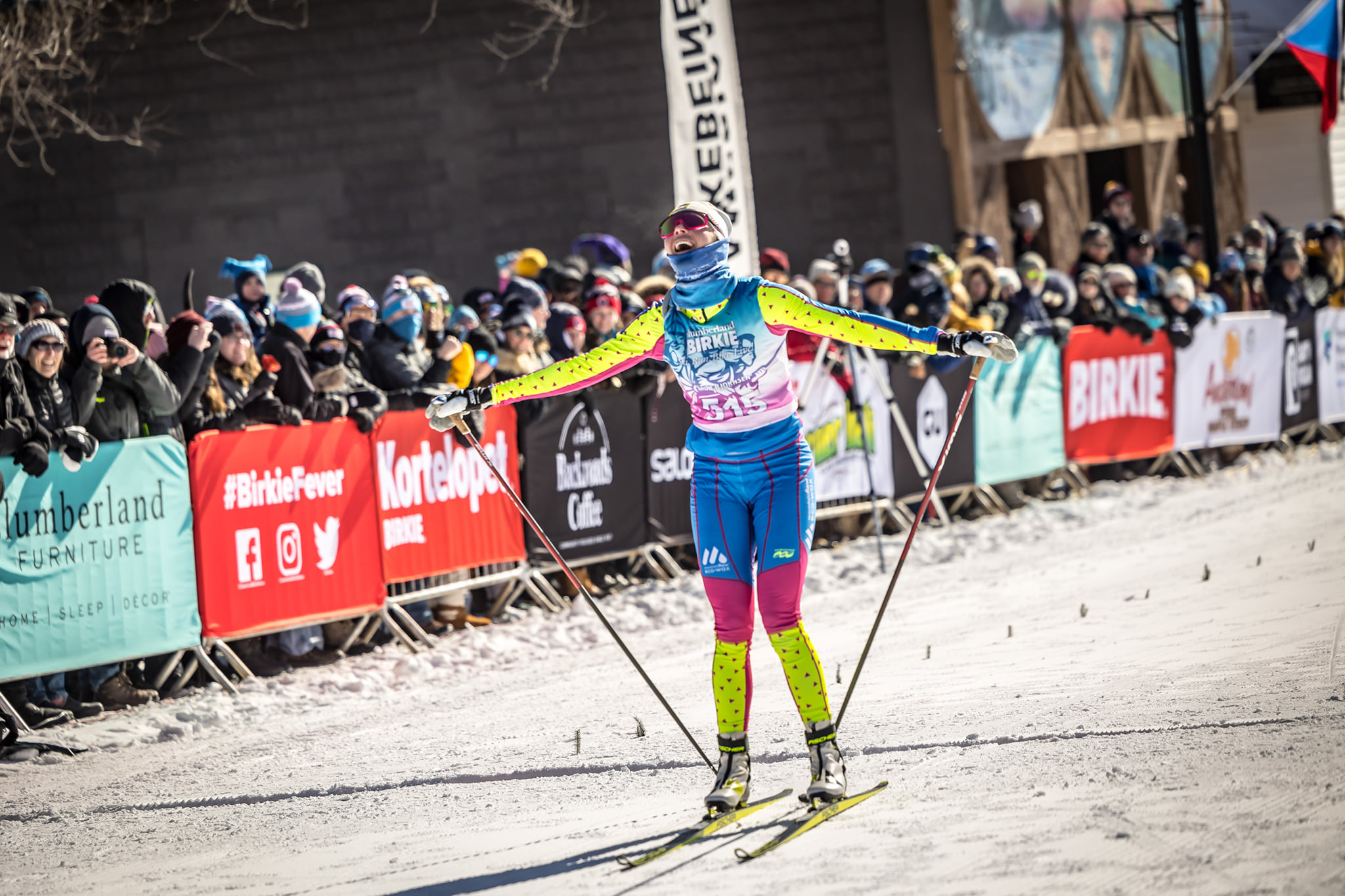
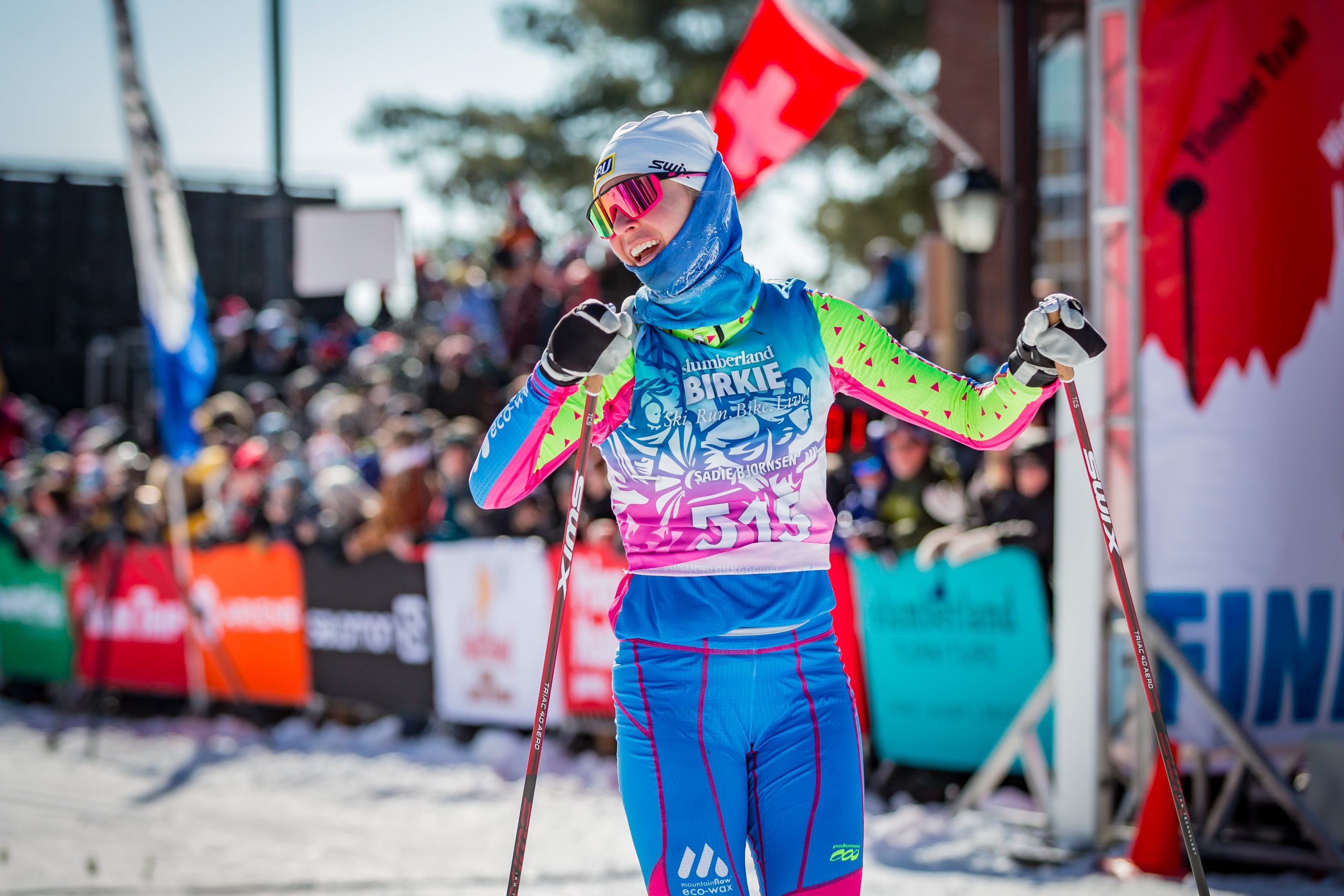
    Sadie Maubet Bjornsen takes fifth at the 2022 American Birkie. (Photo: ©2022 American Birkebeiner Ski Foundation)

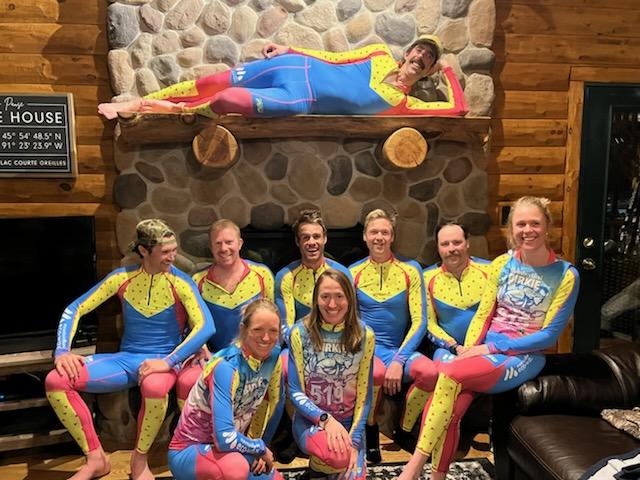
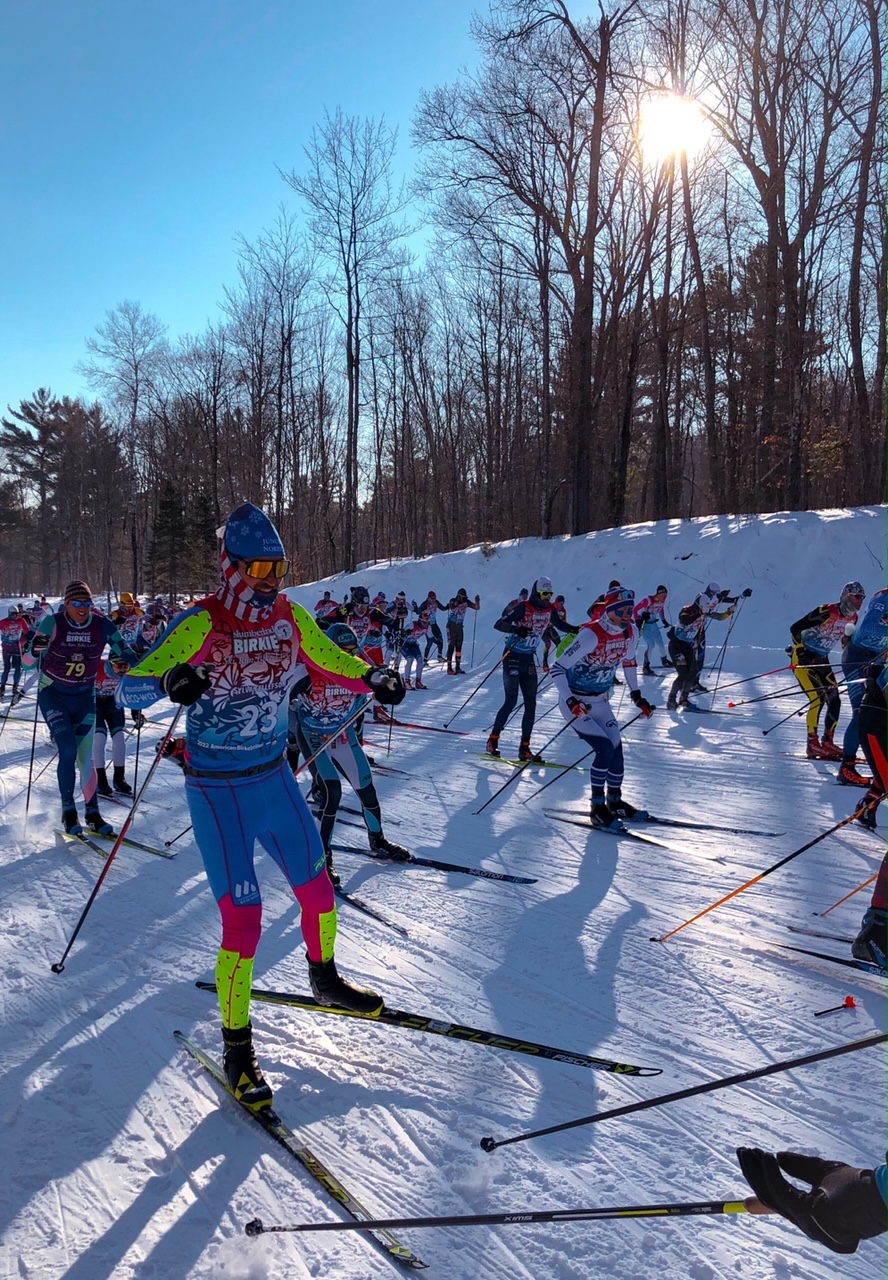
    Just over a month ago, the American cross country ski community descended upon the small town of Hayward, Wisconsin. Skies were clear, the snow was cold and firm, and lycra was everywhere. But one set of race suits stood out, both because of the noteworthy athletes wearing them and for their bold neon colors. It was the MountainFLOW Eco Wax race team of Simi and Sophie Hamilton, Sylvan Ellefson, Sadie Maubet Bjornsen, Erik Bjornsen, Matt Gelso, and Liz Stephen. 

    While most reading FasterSkier will recognize these names without introduction, this is a “band” of retirees who have each, at minimum, raced on the World Cup. Five are Olympians, and one has a collection of top-10 results in World Championship and Olympic sprint results. In short, they’re good skiers who also happen to be good friends. 

    Racing the Birkie wasn’t about stacking a fast team; leading into the event, mountainFLOW founder Peter Arlein said it would be “super fun, and maybe not super serious.” As the photos suggest, a lot of fun was had, but some fast racing – on skis waxed with mountainFLOW products – happened too.

    The mountainFLOW eco wax team was “all business” at the Birkie. (Courtesy photo)

    “A trip down memory lane,” wrote Erik Bjornsen after the race. “Super fun to get a crew together and pretend to be athletes again. We are all at different fitness levels, one thing in common though: far from our best. It was fun to try and forget that for a weekend, and go live the athlete lifestyle. It’s been a busy winter in the retail industry, so it was nice to have a little break from work and hang out with friends. No beers were consumed… nothing but business at the mountainFlow house.”

    (Side note: they may have been spotted at the Moccasin Bar post race.)

    Erik Bjornsen crosses the line in 9th at the 2022 American Birkie. (Photo: ©2022 American Birkebeiner Ski Foundation)

    As he alluded, there was a range of fitness levels and race objectives, but the prominent theme seemed to be that becoming some of the best American cross country skiers of their generation correlates strongly with good technique and a high level of residual fitness.

    Taking the top result was Sadie Maubet-Bjornsen, who finished fifth in the women’s race, just over two minutes behind winner Alayna Sonnesyn. Erik Bjornsen was the top male racer in 9th (+2:59.05), with Simi Hamilton finishing roughly four minutes behind in 16th. The remaining skiers finished in pairs, with Sylvan Ellefson crossing with Matt Gelso in 121st in the men’s division, and Sophie Hamilton finishing alongside Liz Stephen in 123rd and 124th.

    “It was amazing to get the band back together!” wrote Maubet-Bjornsen. “My husband’s family is from Hayward, so after visiting them this summer, we were already committed to doing the Birkie simply to be considered valid members of the Berrard family. When Simi mentioned he was forming a fun team with some of my favorite previous teammates, I was all in. Having jumped full force into this new life, preparing for a 50k couldn’t have been more different than it would have looked in the past. My new way of exercising is waking up at 5:30AM, and hitting the ski trails from my doorstep from 6-7AM. 

    Sadie Maubet Bjornsen takes fifth at the 2022 American Birkie. (Photo: ©2022 American Birkebeiner Ski Foundation)

    “Two weeks [before the race], I called in Rosie Brennan to give me some last minute interval workouts to train my brain to accept physical pain again. Four interval sessions later, I showed up and joined the dance. It was pretty fun to ski with the girls, and just witness the gift of fitness that comes out of all those years of hard work. As the top ladies skied away about 35 k in, I no longer could fake the fitness anymore, but still enjoyed every second of skiing it home.”

    Adding to the message that more so than lingering fitness, these athletes have maintained a love of the sport and the friendships made through their time immersed in it, Maubet-Bjornsen continued, “I look forward to many more years ahead of joining various classic American races throughout the country that I never had the chance to participate in [while racing on the World Cup]. I feel lucky that my ‘band’ and family that I created in the past ten years is just as excited to jump into a 50 k race, despite the fact we are no longer the pro athletes we were before.” 

    Sylvan Ellefson in the wild, wearing his neon mountainFLOW race suit. (Courtesy photo)

    “For me, cross country ski racing transcends so much more than competition,” wrote Ellefson post-race. “I’ve formed my family and life around the experiences I’ve had and the friends I’ve made along the way. To me the Birkebeiner is an event that encapsulates this cross country ski culture in the US. The people racing at the Birkebeiner are truly the backbone of the ski community and I think for them to see former World Cup and Olympic level skiers helps affirm that in the US, this sport is one giant family.” 

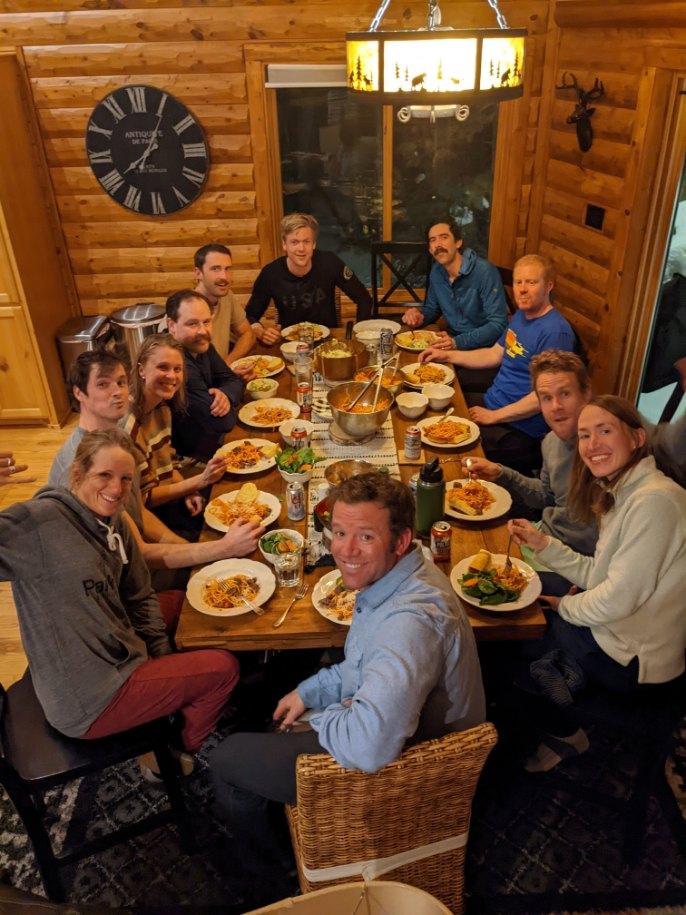
    The mountainFLOW Eco Wax team carboloads for the Birkie. (Courtesy photo)

    Commenting on the mountainFLOW products and ethos, Ellefson added, “Our waxes were fantastic and I’ve loved using something other than what we’ve been accustomed to using for so long. I’ve tested a couple out now and they truly are not just a great wax, but also a great brand. Getting to spend time with Peter and Brian showed me the culture mountainFlow is trying to create in a space in the industry that is much needed.” 

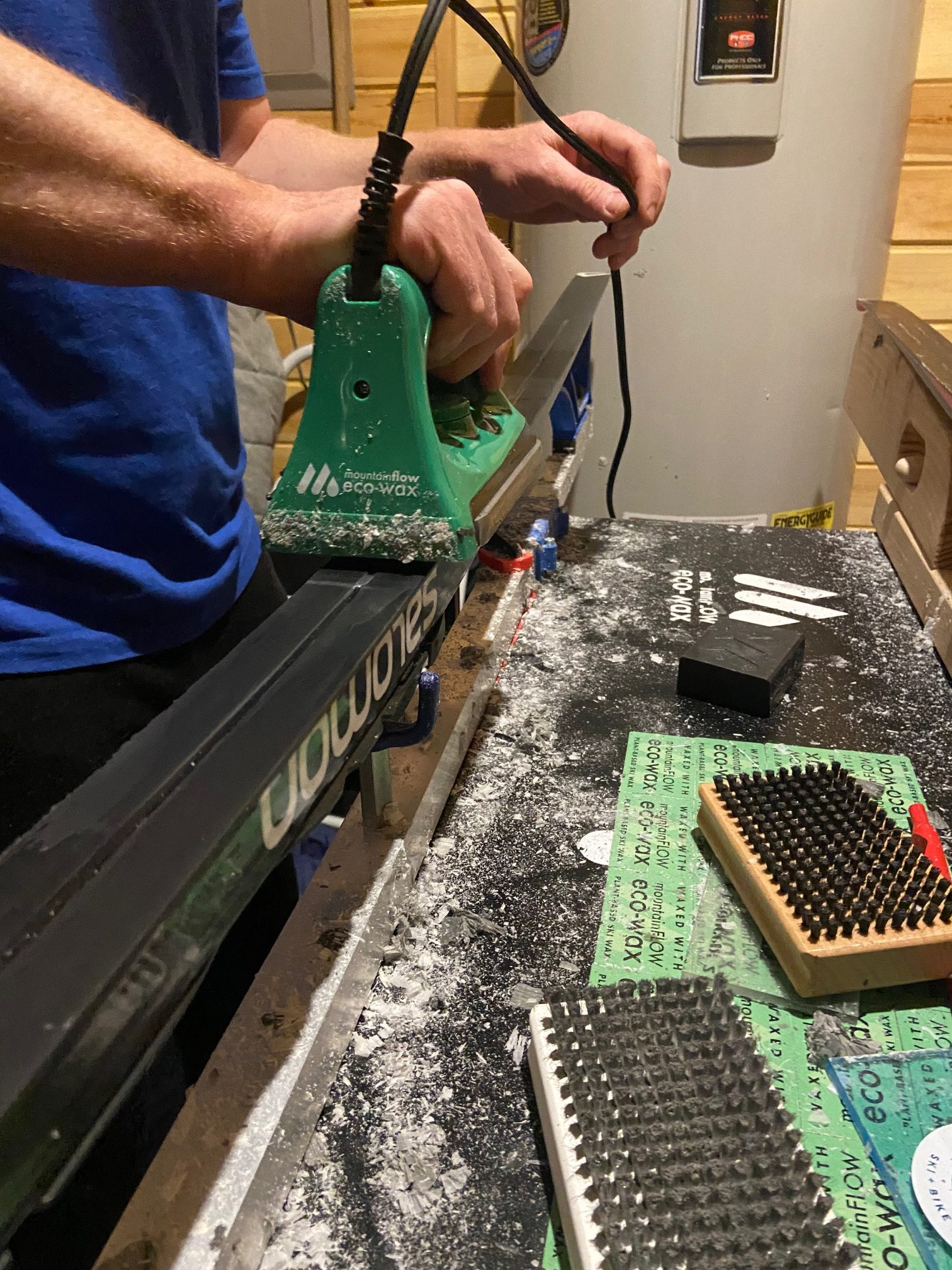
    Matt Gelso prepares his skis with mountainFLOW cold wax at the 2022 American Birkie. (Courtesy photo)

    More to come, as the coach of non-affiliated French athlete Celine Chopard-Lallier, who took sixth in the women’s race, shares his review of mountainFLOW products, on which Chopard-Lallier also raced at the Birkie. Note that this content is not sponsored by mountainFLOW. 

  • Nordic Nation: A Discussion on the Media’s Portrayal of Endurance Athletes with Rosie Brennan, Corrine Malcolm, Brian Metzler, and Nat Herz

    Nordic Nation: A Discussion on the Media’s Portrayal of Endurance Athletes with Rosie Brennan, Corrine Malcolm, Brian Metzler, and Nat Herz

    Though the FasterSkier team would select other highlights from the 2022 Beijing Olympic Games, one of the most read articles we produced featured the responses of members of the ski community to a story published on February 8th by the New York Times, which included the following quote:

    “In a sport that has so many women with massive shoulders and thighs, Diggins looks like a sprite in her racing suit, and it’s not clear exactly where she gets her power. But the power is there, as she flies up hills, and comes off climactic turns with a burst. On the downhills, she tucks low and cuts through the air.”

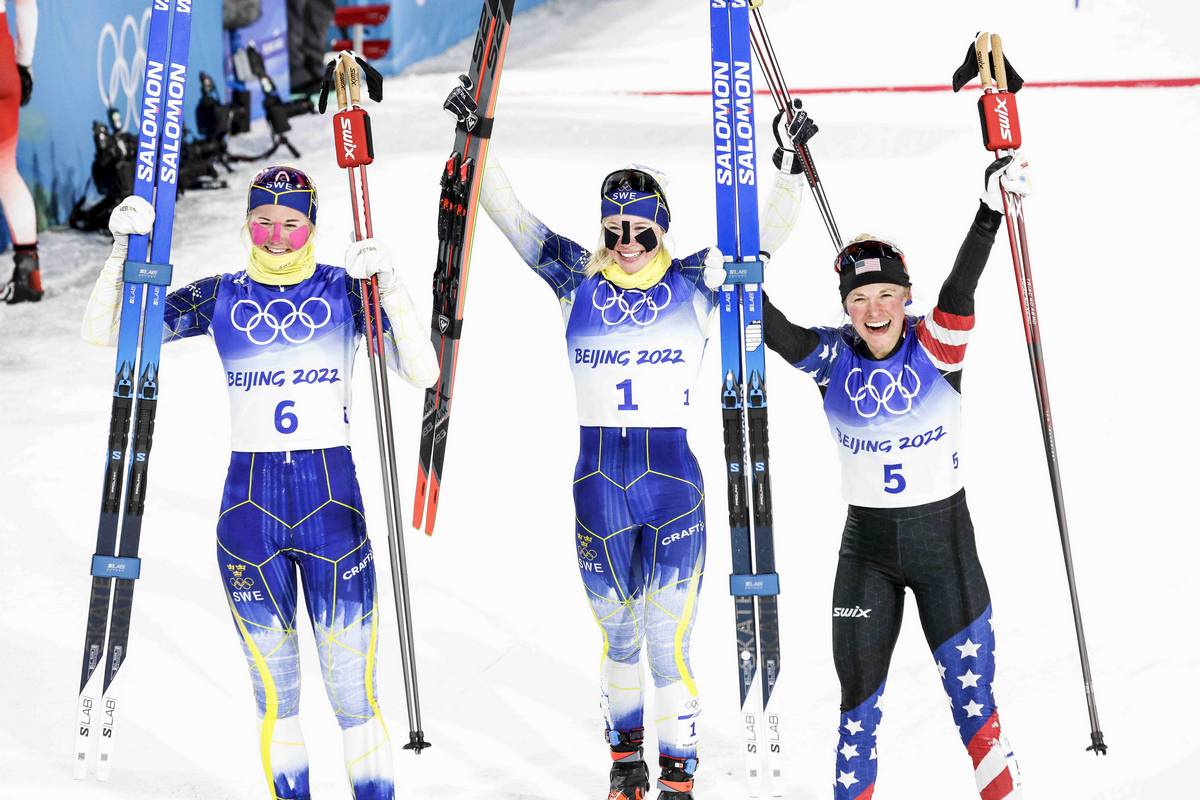
    The women’s Olympic 1.5-kilometer freestyle podium: Sweden’s Jonna Sundling took gold ahead of teammate Maja Dahlqvist and American Jessie Diggins. (Photo: NordicFocus)

    Following the initial backlash sparked by the quote has prompted a number of insightful conversations – and questions – on how athletes, men and women, are portrayed by the media, whether there is room for descriptions or comparisons of athletes’ bodies to narrate a scene for a reader, and how the landscape of sports media has shifted with time.

    For this discussion, FasterSkier brought together a panel that spans both the athlete and media perspective on the issue.

    Perhaps needing the least introduction for this audience, the first voice you’ll hear belongs to Rosie Brennan. In addition to her role as one of the top American cross country skiers for more than a decade, Brennan is also an advocate for the organization Voice in Sport which provides mentorship for developing female athletes across all sports. And she was a member of the women’s Olympic skate sprint final in Zhangjiakou, taking fourth place just behind Diggins, the race which sparked the discussion in the first place.

    Putting together another highlight weekend in Davos, Rosie Brennan skis to 4th in the 10k individual start skate. (Photo: NordicFocus)

    The second belongs to professional trail and ultra runner Corrine Malcolm, whose first go at professional endurance sport was in biathlon, from which she retired in 2014 after experiencing overtraining syndrome, likely coupled by relative energy deficiency in sport (RED-S). Alongside her athletic career, Malcolm has become a coach for other endurance athletes, while also becoming an advocate for women in sport, and has also engaged with this topic from the media side of the coin while calling some of the top ultra running events worldwide, including the Western States Endurance Run in California and the Ultra Trail du Mont Blanc (UTMB) which begins and ends in Chamonix, France. She’s also the co-host of an engaging podcast called Trail Society, which dissects challenging topics in the trail and ultra-running space.

    Biathlete turned professional trail and ultra runner Corrine Malcolm discusses body comments in the media on the Nordic Nation podcast. (Courtesy photo)

    We’ve also got Brian Metzler, an award-winning veteran journalist and author in the endurance space who currently writes for a number of publications including Outside, Competitor, Women’s Running, Triathlete, and Trail Runner magazines. Writing with perspective from his own athletic career, Metzler is Colorado Running Hall of Fame inductee (2015) who adventures on foot, ski, and sometimes alongside a burro, throughout the high country of Colorado. 

    Long-time sports journalist and author Brian Metzler joins FasterSkier’s panel to discuss body comments in the media. (Photo: brianmetzler.com)

    Lastly, you’ll hear a cameo from our own Nat Herz, on lunch break from his “real job” as a full-time reporter for the Anchorage Daily News. Having written for FasterSkier from 2009 through 2015 before making a return this year as our 2022 Olympic Correspondent and co-host of the Devon Kershaw Show, Herz shares insights from his time covering cross country skiing paired with those from behind a very different desk.

    Some of the talking points discussed include: 

    • Initial responses to the NY Times story
    • A writer’s responsibility to be informed on the sport being covered, in addition to the physical and/or mental health challenges that may be pervasive in that setting
    • Differences between American and European media, and shifts in focus, norms, or trends in sports media
    • Differences, or lack thereof, of covering athletes of different genders

    Thanks for listening, and to this episode’s sponsor, the Craftsbury Outdoor Center

    Please note that the Craftsbury Green Racing Project Ski and Biathlon teams and U23 summer programs are currently accepting applications for the upcoming training year, which will close on April 10th. Click here for more information.

    Jessie Diggins (USA) and Rosie Brennan find their position in the early moments of the women’s freestyle sprint final. (Photo: NordicFocus)
  • Nordic Pulse Uses GPS Tracking to Improve and Accelerate Communication Between Groomers and Skiers

    Nordic Pulse Uses GPS Tracking to Improve and Accelerate Communication Between Groomers and Skiers

    Now that we’ve got your attention with fresh wintery tracks and crisp corduroy, read on to learn more about a new GPS-based live groom reporting tool to automate and streamline communication between groomers and skiers.

    If there’s a generalization that can be made about cross country skiers, it might be that we like to “know before [we] go.” As the ski season waxes and wanes, or mid-season storms roll through, we relentlessly check the weather forecast and our local grooming report as we fantasize hungrily about the fresh corduroy or classic tracks we hope to enjoy that day.

    But we can’t always know before we go. Timely grooming reporting asks those cultivating the trails to go a step further after a middle-of-the-night shift, when sitting at a computer to update the website in a timely manner might be less appealing than crawling into a warm bed or sipping a hot cup of coffee. This creates friction between the hard-working groomers and skiers who are chomping at the bit and weighing the potential disappointment of making the drive to the ski area without knowing what to expect.

    Luckily for both parties, there’s a new system growing which allows faster and more efficient communication, Nordic Pulse

    Former Canadian national team member Julien Locke has been working as a web-developer for several years to support his ski career. Locke raced regularly on the World Cup from 2017 to 2019, before sustaining a severe concussion, which removed him from training and competition. His career best result arrived in Dresden, Germany where he popped a 15th place finish in the freestyle sprint in 2018. Though he still trains as a professional skier, subsequent health issues have prevented him from returning to his former performance level, but the fire still burns, and he aspires to make it back to the World Cup.

    Roughly six years ago, one of Locke’s projects was a website overhaul for Sovereign Lake in Vernon, BC, including integrating a better method for sharing grooming information with skiers.

    “Their grooming team was quite frustrated with not having a slick system for them to use to update the report, and their skiers were feeling like they didn’t have enough information,” Locke explained in a call. “So we made a little web based system and it worked okay, but it really opened my eyes to a real need that Sovereign Lake had, and other ski areas that I was working with also had, to promote the groomers perspective and skiers perspective. And it really inspired me to start thinking, ‘How can we make this better?’ And it took quite a few years for this project to really get going. It wasn’t until a year and half ago that I started developing it full time.” 

    During the interim, Locke continued to work with Sovereign Lake and other ski clubs, all the while listening to the interests, needs, and frustrations of groomers, skiers, and club organizers. Eventually, this evolved into the development and launch of Nordic Pulse, a GPS-based live grooming system that allows for simple, efficient, and automated communication on grooming operations for ski areas of all sizes and capacities. 

    “The goal in the beginning was to make it easier for groomers and ski areas to share what they’re doing, their trail conditions and their grooming reports. And then for skiers to have a central platform so that in November when you don’t know where to go skiing, or mid season when you have two different options of places near you, you can easily and conveniently see what conditions will be like.”

    Nordic Pulse founder Julien Locke trains on the Haig Glacier. (Photo: Russell Kennedy)

    In particular, a need Locke identified and aimed to solve was creating efficiency for the grooming team.

    “Oftentimes, they start grooming at midnight, and are grooming until the early, early hours in the morning. They finish their shift, and you know, they’ve been up all night, they’re tired, and the last thing that they want to do is go fiddle around with the website or call somebody to tell them an elaborate description of where they went.”

    Locke looked to automate the reporting process and make it seamless. 

    “Our solution is using GPS, so the groomers click ‘start’ when they start recording and they click ‘stop’ and when they’re done, and then, in that time, all the grooming reports are done automatically. So it really saves them quite a bit of time every day at the end of their shift not having to report or go through the trails list and try to remember what was groomed at what time.” 

    Acknowledging that it is common for a groomer to only hit part of a particular trail within a route, the traditional system of listing off what was completed can fall short. With Nordic Pulse, a color-coded map shows specifically what was groomed each day, including options to differentiate between skate and classic if track has not been reset on all trails that day. If needed, groomers can also select from a materials list to indicate what machinery was used, from snowmobile to PistonBully, depending on what the ski area has available. Additional notes can be added as needed. 

    “Being able to get the grooming information onto a map so that the skiers have a really quick visual of what’s been done, I think, was a real need from the people I had talked to. I know from the feedback we’ve gotten, people really appreciate being able to see visually what’s been done.”

    When a new ski area comes on board, Nordic Pulse handles the mapping to create a pre-set base on which the system will run. While the app is running in the groomer’s pocket, GPS data points are collected every 20 to 30 meters, keeping precision high even for trails with frequent intersections or overlapping segments. This data is synced to the Nordic Pulse server and processed by its algorithm to determine which trails on the predetermined map were completed, with time stamps.

    No cell service at your local trails, or perhaps your groomers don’t want to burn cell data? No problem. 

    A simple app allows groomers to track their work with GPS, which is pushed to a map so skiers can see what and when grooming took place. (Photo: nordic-pulse.com)

    Groomers can run the app without having cell reception or consuming data. The GPS information will be stored locally on the device until the phone enters WiFi, then the groomer would only need to click sync to push the data to the NordicPulse server. Time stamps will be preserved to accurately reflect the work that was done, should there be delays.

    Locke added that some of the earliest users of the system were ski areas based in the Kananaskis Provincial Park near Canmore, Alberta, well outside the reach of cell reception.

    In terms of the cost of adopting Nordic Pulse, pricing is adjusted on a sliding scale system depending on the number of kilometers groomed by the ski area, the number of skiers, and the amount of GPS data that needs to be processed with daily grooming. Clubs are billed annually and prices currently range between $600 and $2000 per year. 

    Having grown up in the small town of Nelson, BC, it was important to Locke to keep the costs reasonable. 

    “When I started developing Nordic Pulse, I was looking at options. One strategy I could have taken was creating an enterprise level product for just large ski areas who have the budget to afford that. But I grew up in a really small club, and I really wanted Nordic Pulse to be accessible to everybody. So we’ve done our best to really keep the cost as affordable as we can by having a sliding scale.” 

    For ski areas with limited budgets, Nordic Pulse offers a “community edition” with no yearly fee. 

    A color-coded trail list and map with time stamps indicates which trails have been groomed, with room for additional notes as necessary. (Photo: nordic-pulse.com)

    Rather than using GPS to track grooming and automatically update the live-grooming maps and trail reports, the community edition uses the in-app trail editor to manually update the maps or trail lists instead. While Nordic Pulse “would love to be able to offer the community edition completely free”, there is a small one-time setup fee to cover their costs in getting the  but there’s no yearly costs after that.

    Year one has gone “incredibly well”, surpassing Lockes original goals and expectations. 

    “I started developing this year and a half ago and I was optimistic we’d get maybe a dozen clubs on board in the first year. I really thought we’d start small and grow. And then, we started doing a beta testing phase, and all of the sudden, clubs were reaching out every day, it seemed. And by the time we officially launched, I think we had over almost 20 areas on board, and then by the end of the year, we had 35, and now we have around 80 ski areas total after year one. So it’s growing really fast, which has really been exciting for us. And also, I think, really great for skiers because the more ski areas that are on board, the more useful the information is for skiers, as in, skiers can go to any area and be able to check the reports on the same platform.”

    The goal for next year: “Just keep growing.”

    “We’re always looking are excited to have new ski areas come on, and are looking to grow more in the States and more in Canada, and potentially elsewhere in the world as well.”

    Currently, the app is only designed for us by groomers, while skiers check either the Nordic Pulse site or an embedded applet on their local trail system’s website directly. The website is mobile optimized, but Locke said that a skier specific app is in the works to improve the user’s experience, and should be on line by next season. 

    “I’m really motivated to make the system as interesting as possible for everybody, and as useful as possible, and just continually roll out new features for both skiers and also groomers.”

    So far, the feedback Nordic Pulse has received from clubs who have integrated the system this year has been “incredibly positive,” improving the experience for a growing population across all abilities within the cross country ski community. 

    “I think in the last few years, especially with the numbers of skiers increasing from COVID, a lot of ski areas have been feeling the need to have better ways to report their grooming and show that information. And a lot of ski areas come to us saying, ‘Hey, we’ve been thinking of doing something like this, but on our own, we can’t afford it because it’s expensive to build a system like this.’ And  they really appreciate being able to use our service and tap into all those features. Already this year, we’ve had over 160,000 skiers using our platform and almost a million views, so it’s growing really fast and it’s meant a lot to me. It’s been very rewarding, and humbling to be able to make a difference in the ski world.”

    What are users saying about Nordic Pulse?

    According to Nordic Pulse, Ethan Meginnes of the Black Jack Ski Club in Rossland, BC, the system is a “game changer” for its members. 

    “As a groomer and avid skier, I am relieved to be able to relay and receive reliable information. Nordic Pulse is easy to use with multiple platforms,” Meginees said. “I would love to see every cross country ski center ultimately utilize this app.”

    Methow Valley resident and regular trail user Alex Hall called the system “exceptionally good.” 

    “I love the live grooming report,” he wrote to FasterSkier. “Though I find that I question its accuracy at times… There do seem to be occasional misalignments, but the thing I love about the live timing is it will show you instantly, completely and comprehensively where the cats are and what they’ve done, and it’s all on a picture, so it’s really handy. It’s definitely my favored system because it’s really quick and gives that overview. It updates automatically, it’s live, it’s got color graphics. Every now and then, there is something goofy about the live map. It’s definitely [an improvement from the last system].” 

    The Methow Valley Trails receive a fresh groom in January, mapped with Nordic Pulse. (Photo: nordic-pulse.com)
  • Martin and Kern Stride to the Top on Day Two in Whistler

    Martin and Kern Stride to the Top on Day Two in Whistler

    Carrying the momentum from the first day of racing into a second distance event, athletes lined up once more at the Whistler Olympic Park for a 10 / 15-kilometer interval start classic. Over 130 men and 90 women participated in the open categories, representing clubs across Canada and the United States. 

    Adding a springtime layer of complexity to remind us that we are officially past the equinox, temperatures in Whistler hovered above freezing while a mix of precipitation fell off and on throughout the day. Webcams of the venue showed the spectacular mountain backdrop hidden amongst dense clouds and conifers still laden with the week’s snow.

    It’s a humidity-temperature combo that makes classic waxing tricky. Consequently, many athlete chose to use “hairies”, which are known as “rub skis” in Canada, essentially foregoing kick wax and opting instead for a sandpapered kick zone. For those with strong striding technique, this achieves grip without as significant a risk of icing issues, as klisters can be known create in such conditions. 

    Top Canadian U20 racer Xavier McKeever (Foothills Nordic), who was 13th overall today, explained how this changes the game for those who haven’t had the experience: “You have to be a bit more careful with your kicks and a bit more gentle, because they can slip out really easily. That was the biggest focus for me [today], just to try and ski technically well.”

    Craftsbury’s Adam Martin takes the 15 k classic win in Whistler. (Photo: Doug Stephen / VR 45 Photography)

    Following 10 k sitting and standing events contested by Nordiq Canada’s Para Nordic athletes, the open men’s category headed out for the three 5 k loops. In a close race for the top podium spot, Craftsbury’s Adam Martin took the win with a time of 40:29.3. Martin was chased by today’s Canadian National Champion, Antoine Cyr (Skinouk) who hunted his times from 19 bibs behind.  

    Though Cyr led through the first 10 k, a strong closing lap from Martin moved the American to the lead in the splits, with Cyr skiing the third fastest final lap to take second (+1.3). Canmore’s Russell Kennedy was third overall (+13.1) for the second spot on the Canadian podium, while fellow Canmore athlete Sam Hendry, who now trains with the University of Utah, was third for Canada in fifth overall (+48.0). Both Cyr and Kennedy had also raced onto the podium in yesterday’s 10 k free

    “I felt really good today,” Martin wrote to FasterSkier after the race. “Particularly in the second half, I started to figure out how to best race this course and these conditions, and I found a good place mentally to push. I’m really happy with the outcome – that was a dream to win.”

    The men’s 15 k classic podium in Whistler: Adam Martin (CGRP) took the win ahead of Antoine Cyr (Skinouk), and Russell Kennedy (Canmore Nordic). (Photo: Joern Rohde / Nordiq Canada)

    A successful season of SuperTour racing has Martin ranked at the top of the rankings, and earned him starts in post-Olympic World Cup events. After taking third at the American Birkie, Martin headed to Norway to race the 50 k classic at Holmenkollen, where he finished 26th. The following weekend, he skied to 44th in the 15 k free in Falun, Sweden. A week later, Martin is back with his Craftsbury team and standing atop the US SuperTour podium. 

    “It’s nice to return from the World Cup and still feel in good shape. After two 50 k’s, and travel, and a season that I’m really happy with, everything is a bonus at this point. I think it’s great that we are able to combine with Canada for these races. There are a lot of guys at a similar level, so it makes for some tight, fun racing.”

    A 23-year-old Quebec native, Cyr’s best results have been in classic this season, namely an 11th place finish in the opening World Cup 15 k classic in Ruka, Finland, and racing with Graham Ritchie to put the Canadian team in fifth during the Olympic classic team sprint in Zhangjiakou. After the team sprint, he was praised by both his teammate and coach Erik Bråten, along with armchair quarterback Devon Kershaw, for his classic technique.

    “Classic is always good for me and is a race I love,” Cyr said of today’s 15 k in a post-race interview with Nordiq Canada. “It was tough conditions this morning, and a good skier normally comes out on top in hard conditions. I was able to ski well, focus on the race, and came second overall, which is a little bittersweet because it was a really tight battle in the end. But it was really fun, the track is amazing. It’s an Olympic standard track, so it’s just really good.”

    Antoine Cyr races for the Canadian National Title in the 15 k classic in Whistler. (Photo: Nordiq Canada / Nathaniel Mah)

    In his second lap, Cyr had caught yesterday’s winner, Rémi Drolet (Team Black Jack), whom Cyr credited in supporting his strong result today.

    “When I saw was closing the gap on him on the first lap, I decided to go a little harder than I planned to catch up with him. [I then tried] to relax behind him for a lap or half of a lap.. In the end, I was missing a little bit on the last lap. I think that that helped for sure, skiing with someone strong like Rémi.”

    Finally, Cyr spoke to the importance of an international field featuring all age groups coming together this week, particularly on the heels of a two-year hiatus due to pandemic restrictions.

    “It is so good for the young kids — us older guys, we’ve been racing on the World Cup, but like the juvenile and junior, they almost have no races in Canada. To have a big event like this is just amazing and we’ve been looking at the younger guys’ results for an hour yesterday, seeing who’s in good form, and who’s coming up, and you are the next guys to be like taking over. So for them, it is awesome, and for us too, racing with the US is always — it should always be like this.”

    Joining Martin for the SuperTour podium, BSF Pro Team athlete Finn O’Connell was 7th overall (+1:06.4) and second American, with University of Utah’s Luke Jager half a second behind in 8th overall (+1:06.9).

    Julia Kern strides for the win in tricky conditions during the 10 k classic in Whistler. (Photo: Doug Stephen / VR 45 Photography)

    In the women’s 10 k, SMS T2’s Julia Kern skied a strong second lap to take the win in her second consecutive day on the podium, stopping the clock at 29:54.3. Her club and national teammate, Jessie Diggins, took the second step finishing +18.3 back, while University of Utah’s Sophia Laukli skied to third (+1:03.2).

    Looking at tough conditions, Kern explained she raced by trial and error today, exploring which techniques were most efficient on different sections.

    “I kind of had an open mindset going in today,” she told Nordiq Canada after the race. “I knew that the tracks might be a little bit punchy or washed out in sections, and so I was double pulling wide or double polling narrow or just like power striding on the flats if it was getting too punchy out there. So just trying it all.”

    She continued that she was looking to “have fun, send it from the start, and see if I could hold that pace the whole time,” which she ultimately proved able to do. It’s the time of year where the hay is in the barn training-wise, and athletes have had a long season, leaving them in varying states heading into the last hurrah. On whether she was looking to just have fun at these races, or whether it was a serious quest for the podium, Kern said “both”.

    “I think the end of the season is always really fun. It’s so cool to have this many athletes here. And I’ve been feeling really good the last few weeks and so enjoying racing when it does feel good and when I’m able to push really hard. We’re all really tired at the end of the season, but also, when the body’s in form you might as well take advantage of it and send it on the course.” 

    The women’s 10 k classic podium on day 2 in Whistler: Julia Kern (SMS T2) took the win ahead of Jessie Diggins (SMS T2) and Sophia Laukli (Univ. of Utah). (Photo: Joern Rohde / Nordiq Canada)

    Winning back-to-back Canadian National titles, Katherine Stewart-Jones (Nakkertok Nordique) was again on top for the Canucks, finishing sixth overall (+1:17.5). Finishing in the same order as yesterday, Dahria Beatty (Whitehorse Ski Club) was second for Canada in eighth overall (+1:55.0), while Cendrine Browne (Fondeurs-Laurentides) rounded out the podium in ninth overall (+2:14.5). 

    “I went out really hard knowing that that’s what I had to do if I wanted to make the podium,” Stewart-Jones said of her race. “I had a good first lap, and I definitely slowed down a lot on the first part of the second lap. I was just tired and was having a hard time staying in the zone and keeping the rhythm, but I was able to pull it together a bit for the second half of the second lap. So I was really happy with that. And I was happy with how hard I pushed. I just didn’t have it quite in me today, and sometimes that happens.”

    On the importance of focusing on her technique on this type of course with sub-optimal conditions, she continued, “It’s really important, especially on the climbs. The grip isn’t always perfect in these conditions, so you really have to make sure to stay on top of your skis. If you get tired and you start leaning forward, then it makes it even harder to kick… And then on the flatter sections, it was a bit awkward, and you had to expect that. Either you’re striding awkwardly or you’re doing a kick double pool, but your poles are sinking. You have to just really focus on committing to whatever you decide to do and not like trying to switch too much between.”

    Speaking to already standing atop two podiums, Stewart-Jones responded with pride, while also acknowledging that the overall win would be sweeter.

    “Oh, it’s definitely nice to be winning the national championship title… because we’re racing against the Americans, I obviously care about the overall too, so maybe it feels a little less exciting, but for sure, I’m proud of that.”

    Katherine Stewart-Jones (Nakkertok Nordique) takes back-to-back national titles in the women’s 10 k classic in Whistler. (Photo: Doug Stephen / VR 45 Photography)

    In order to get closer to the overall podium, she said he would focus on resting as much as possible and maintaining the head space to perform her best. “It’s been a long season and I haven’t raced this much in a long time. I think everyone’s pretty tired. But also just being able to also be mentally strong [over the next races]. And yeah, you never know what’s gonna happen.”

    Racing continues Wednesday with individual classic sprints, which will be live-streamed by the Black Tusk Nordic Events Society. If you’re looking for additional video updates, follow along on the Nordiq Canada and Black Tusk Instagram pages. 

    Full Results

  • From Athlete to Technical Delegate: A Q & A with Kelsey Phinney

    From Athlete to Technical Delegate: A Q & A with Kelsey Phinney

    When reaching out to Sun Valley’s Annie Pokorny to learn more about her decision to become a technical delegate and her experience so far, it was also on the radar that Pokorny’s friend and former teammate Kelsey Phinney was also engaged in the process. As it turned out, Pokorny had been a leading influence in Phinney’s decision to become a TD herself. 

    Like Pokorny, Phinney is a 2016 graduate of Middlebury College, before continuing with her ski career, first with the SVSEF Gold Team and then the SMS T2 team until 2020. The 2019-2019 season was perhaps her peak year from a performance perspective; spending ample time in Europe racing World Cups, Phinney popped a top-20 during a skate sprint in Lahti, after having taken third at U.S. Nationals a month prior, behind Julia Kern and Hannah Halvorsen. At the end of the season, a crash during Spring Series left Phinney with a torn labrum in her shoulder, for which she underwent surgery later that year and rehabbed, before eventually stepping away from professional skiing. 

    Phinney is currently in her final semester of graduate school where she’d pursuing a Master’s Degree in Health Systems, Management, and Policy through the Colorado School of Public Health. She now lives in her hometown of Boulder, CO with her partner, fellow retired SMS T2 skier Kyle Bratrud

    Kelsey Phinney and friend Annie Pokorny snap a picture at a 2019 SuperTour in Sun Valley, where Pokorny was working as a technical delegate and Phinney was assisting SMS T2 coach Pat O’Brien with waxing while rehabbing from shoulder surgery. (Courtesy photo)

    FasterSkier (FS): When did you begin the process of becoming certified as a TD? What was your experience like with the certification process? Were you able to “fast-track” given your experience as an athlete and has your experience as a high level racer been an asset?

    Kelsey Phinney (KP): I began the process of becoming a TD this past fall after a conversation with Annie Pokorny about ways to stay involved with the sport. My experience as a former racer has certainly been an asset. While I have learned much more about the specific rules than I knew when I was racing, I hope my ability to bring a racer’s perspective to decisions – like where to start and end turning zones in a classic race –  helps make races safer and more fair.

    FS: You mentioned Annie helped get you involved. Can you say more about what those conversations were like? What/who were some of the other factors/people that motivated you to become a TD? 

    KP: The primary reason I looked into becoming a TD was to give back to the sport within my current time constraints as a full-time graduate student. There is also a shortage of TDs in Colorado, which motivated me to follow through with the training and certification process following my conversation with Annie. 

    Since I’m currently living in Boulder, the races hosted in Colorado are all within driving distance for me. This year, I was the assistant TD at a junior race in Aspen the weekend after my fall semester wrapped up, as well as at a college race in Steamboat a couple of weeks ago.

    FS: There is an overall need for TDs in the U.S., and while there are some noteworthy female TDs who have or will be jury members at the World Cup, World Championship, and Olympic level, there are few women in the role domestically. We ran an article about the need for TDs in 2017 and at the time, there were only 10 women listed in the U.S. Is this something that you considered prior to becoming a TD? 

    KP: To be honest, I didn’t think much about the lack of female representation of officials when I decided to work towards becoming a TD, but I do think representation matters and it is important to have diverse voices and perspectives included in the decision-making process. I’m happy to contribute to increased representation of women among the officials domestically. I think my racing experience and age are other important qualities I bring to the table.

    Kelsey Phinney and Al Pokorny (father of Annie) work as technical delegates at the RMISA Regionals race in Steamboat Springs, CO. (Courtesy photo)
  • David Norris: Missing out on 2022 Olympic Team selection, “making the best of it”, and what’s to come.

    David Norris: Missing out on 2022 Olympic Team selection, “making the best of it”, and what’s to come.

    David Norris skis to 34th in 15 k classic pursuit in Östersund, Sweden in February, 2020. (Photo: NordicFocus)

    It’s hard not to root for David Norris. 

    Often affectionately described by Devon Kershaw as a “grinder”, the humble 31-year-old Fairbanks, AK native has been an eternal underdog, despite consistently performing among the best American distance racers of his generation on the World Cup. Highlighting his career, Norris has finished in the top-20 three times during his appearances in the 2019 and 2021 World Championships. His best result arrived in last year’s Championships in Oberstdorf, Germany, where he placed 16th in the 50 k classic and 17th in the 30 k skiathlon

    Although Norris has been routinely been offered World Cup starts over the last five seasons, he has consistently hovered in the liminal space just behind the cutoff when it comes to selection to the U.S. Ski Team, whose age based-criteria becomes tougher to achieve over time. Given his birth year of 1990, Norris needs to be ranked in the top-40 in the world according to his FIS points from the previous season to be named as a B-Team athlete. In 2020, the margin by which he came up short was incomprehensibly small; a mere 0.88 FIS points, equivalent to eleven seconds in a single race during the season, left Norris ranked 43rd in the distance standings in March of that year.

    Without financial support from the US Ski Team, Norris forged on, relying solely on his personal sponsors.

    Read more on age-based criteria here, or take a deep dive into FIS points and Norris’ circumstances here

    Then, as the 2020/21 World Cup season loomed the following November, Norris contracted COVID-19. At the time, there was little information available on how elite athletes should return to training and competition following a coronavirus infection and what the risks of an expedited return might be. While more is available currently, the message has not changed: use caution and take it slow. 

    Consequently, Norris sat out Period 1 and the Tour de Ski, making his World Cup return in late January 2021, finishing 32nd in his first race back – a 30 k skiathlon in Lahti, Finland, roughly one month shy of the Oberstdorf World Championships. Despite two top-20 finishes in Oberstdorf, where he was also the second American, behind only his APU teammate Scott Patterson, Norris was again left off the US Ski Team in the spring of 2021. The decision inspired one of his competitors, Craftbury’s Ben Lustgarten, to pen an OpEd to campaign for Norris’s ex post facto discretionary nomination to the team. 

    David Norris fist bumps a competitor after finishing 17th in the 30 k skiathlon during the 2021 World Championships in Obsertdorf, Germany. (Photo: NordicFocus)

    Heading into the 2021/22 season, Norris had a goal of making the Olympic Team, but he knew that, once again, the odds were not likely to be in his favor. The US had just five guaranteed quota spots for Beijing, with a likely sixth on the table.

    If you’ve found your way to this story, you likely know how Norris fared.

    After a solid summer of training, Norris started upon his usual trajectory of sub-optimal early season races, which generally progress to peak race results in February and early March. In November, Norris was 37th in the 15 k freestyle pursuit in Ruka, Finland, skiing the 27th-fastest time of day, but he never cracked the top-30 to score World Cup points in Period 1. Heading back to the States to race in the U.S. Cross Country Ski Championships in Soldier Hollow in January, his results began to trend upward. Though he’s always excelled in distance, he took 7th in the freestyle sprint, after qualifying second. Then, two days later, he was second in the 30 k mass start skate, 11 seconds behind winner Scott Patterson. 

    Twelve days later, in the final race weekend before the Olympic qualification period ended on January 16th, Norris won a 15 k individual start classic at the Lake Creek Nordic Center in Ketchum, ID.

    David Norris leads the way through a corner on his way to a win in the SuperTour 15k mass start classic in Sun Valley. (Photo: Tobias Albrigtsen / @untraceableg)

    On January 20th, U.S. Ski & Snowboard announced the 2022 Olympic Cross Country Team, and Norris’ name was not on the list.

    This background is not intended to imply Norris should have made the 2022 Olympic Team. Rather, the intent is to highlight his candidacy to frame an interview on Friday, February 25th, the day before the 2022 American Birkie, in which Norris discussed the experience of falling short of his Olympic goal, how he “made the best of it”, and what his next steps are as he begins to shift his focus away from the World Cup.

    Returning to the team announcement, Norris explained that although he was disappointed, not being selected was not a surprise given the selection process that had been outlined. He shared that “there was no dialogue at all” with US Ski Team coaches leading into the announcement, but that it also had never felt “closed”, either. 

    Following his second place finish in the 30 k skate in SoHo, Norris had written to FasterSkier “Every season I ski much stronger in February and March, so I’m sure good form is on the horizon, but that doesn’t help me achieve my goals when I need to be skiing well right now. All I can do now is focus on the 15 k classic coming up and then rest and prepare for the next races.”

    As he acknowledged, an emphasis was placed on strong early-season results, which he did not post, and he had not expected that his historic championship results would be factored into decision making. That said, as a distance skier, looking at a Games which would be held at altitude on challenging courses that would “basically reward people who are very fit”, it was difficult to recognize he’d never have the opportunity to put his strengths on display.

    “It was tough,” Norris said simply. “Seeing that the criteria kind of rewarded 15 k races, when two out of four individual races [at the Olympics] were 30 and 50 k for the men. And yeah, I was aware of it all, but it kind of sunk in just during the Olympics and watching.” 

    Of the six men who met the outlined objective criteria and were named to the Olympic team, four were primarily sprinters: JC Schoonmaker, Kevin Bolger, Ben Ogden, and Luke Jager. However, each started in either the 15 k classic or the 4 x 10 k relay, in addition to the two distance racers, Patterson and Gus Schumacher. 

    “But I still cheered my heart out for the guys who made it,” Norris added emphatically. “I don’t hold anything against the guys who are nominated. All congratulations to them — no personal difference against those guys. Everyone who went is a good friend, and I’m stoked for them.”

    APU teammates Scott Patterson (left) and David Norris (right) head to the start of the men’s 30k mass start freestyle at the 2022 U.S. Cross Country Championships in Soldier Hollow, UT. (Photo: Tobias Albrigtsen / @untraceableg)

    When weather shortened the men’s 50 k skate to a 30 k, Norris watched his APU teammate Patterson race to 8th place, an historic result for the American men, second only to Bill Koch who earned an Olympic silver medal and a 6th-place finish in Innsbruck, AUT in 1976. As mentioned previously, roughly six weeks prior, Norris had finished 11 seconds behind Patterson in a 30 k mass start skate at a similar elevation in SoHo. Though four start spots were available for each nation in the Olympic 30 k, Patterson was the only American in the race that day. 

    Never one to say “woe is me”, Norris chose not speak directly to the experience of watching that race. Instead, he recognized that he was not the only strong and fit American distance skier who did not make it to Zhangjiakou. 

    “There were such limited spots for the men’s quota that, no matter what happened, good skiers were gonna get left behind. But yeah, just given that three out of four individual races are distance, and the relay’s distance, it was kind of a bummer to see them not give any priority or emphasis to distance where we could have accumulated probably the best results. I think the 30 k (skate) at Nationals and 15 k (classic) at Lake Creek in Sun Valley, kind of showed where the fitness stacked up in the U.S. field. And I think mass starts are one of those places where you can’t really hide your form — you see how fit people are. And yeah, Scott and I are really similar and we train together, and I think it just kind of came down to –

    I trained for chasing a goal of a top 10 at the Olympics, and it was far harder to make the team than to actually probably reach that goal… But it’s just limited spots and tough how it came down.”

    David Norris wins the 15 k mass start classic in Sun Valley, ahead of his APU teammates, Hunter Wonders and Scott Patterson. (Photo: Tobias Albrigtsen / @untraceableg)

    Norris is not the first person to be left off an Olympic team who was perhaps qualified and deserving of a spot. Every four years, FasterSkier reports on those just behind the cutoff, which often sparks impassioned responses from fans supporting athletes on both sides of the bubble. 

    For Norris, this means outreach and support from a number of athletes who had been in the same situation and could share perspective from a place further removed from the moment. 

    “People have been super encouraging. One of the guys who made it based on the criteria but wasn’t taken four years ago reached out and said, ‘Use this as your secret weapon — you chase goals and come up short. And that’s kind of the way it works out more often than not, and you learn a lot from from that.’ Based on some of the encouragement from people in similar spots, it was really reassuring to hear their words and realize that the last four years or the last eight years pursuing a goal, it wasn’t a waste just based on a single selection. 

    And maybe there’s been moments where I have to kind of lie to myself that that’s the case, but I genuinely believe it. I don’t regret going for the Olympics, and then coming up short on my goal, it’s all been a positive experience for me.”

    Champagne spraying on the 2022 men’s American Birkebeiner podium, where David Norris (left) was edged out by France’s Gerard Agnellet in a boot slide at the finish. (Photo: ©2022 American Birkebeiner Ski Foundation)

    In the post-Olympic 50 turned 28 k episode of the Devon Kershaw Show, guest Kris Freeman, who spent years at the top of American men’s distance skiing, was critical of the American program’s lack of support of men’s distance skiing. Freeman pointed out that Patterson was the “only guy of his generation that got any U.S. Ski Team support.” He then added, “in the last six years, it’s been like, ‘Well, we got [Gus] Schumacher and Luke [Jager], let’s just wait till they come up.’”

    Though perhaps in a less outspoken and direct manner, Norris affirmed Freeman’s sentiments, acknowledging the challenge many of this country’s top distance racers have faced in funding the career longevity often required to reach peak potential as an endurance athlete. 

    “I couldn’t do it without my personal supporters because there’s nothing coming from the national team. And there is definitely that sense of, like, Scott’s in the system. They’re hanging on to him, and he’s producing awesome results. But then, yeah, I think Freeman’s words are pretty accurate, I guess.” 

    Norris pointed to the U.S. Ski & Snowboard mission as a root of the challenge. The header on the cross country team page states: “We’re built around one common goal—provide the right resources for athletes who are inspired to be the Best in the World.” Though he was seen as one of the best in the US, his trajectory was arguably not one that was likely to produce Olympic or World Championships medals, a focal point of U.S. Ski Team selection criteria.

    The introduction to these criteria reads: “The U.S. Ski Team will select only the most qualified athletes with the greatest possibilities for winning medals in future World Championship and Olympic Winter Games competitions. Selection criteria will stress performance in the Olympic Winter Games, World Cup and the U23/World Junior Championships in the 2021-22 season. Selection criteria will also stress progress toward individual performance markers, set forth by the U.S. Ski Team coaches, which point toward international success.”

    David Norris cracks the top-20 with a 17th place finish in the 2021 World Championship 15k/15k skiathlon in Oberstdorf, Germany. (Photo: NordicFocus)

    The statement perhaps clarifies the philosophy that has kept Norris from meeting objective criteria for the team. Though he has been an asset to the distance program, and was likely to post some of the top American distance results during the Games, his potential to earn future medals was lower than a younger budding athlete with strong World Juniors results, like Schumacher or Jager. While this could be sensible from a long-term investment perspective, it may also push some of the top distance athletes out of the sport at young ages, typically thought to be prior to when one reaches his or her physical peak for endurance racing.

    One might look at Rosie Brennan who at 33 years old, and after having been left off the U.S. Ski Team on two separate occasions, is coming off a second season as a regular podium threat, with a growing list of top-10 results and a string of performances in Zhangjiakou that, though just shy of a medal, were collectively among the all-time top-three Olympic performances by an American cross country skier. Without Diggins’ results in PyeongChang and Beijing, they’d be the best. 

    Or, on the other side of the coin, Kyle Bratrud had won four National Championship titles between 2015 and 2020, and placed 31st at the 2019 World Championships, popping a World Cup top-30 a weekend later, but he retired at 26, in part because US Ski Team support seemed unlikely and the costs associated with starving for the World Cup didn’t check out in the cost-benefit analysis.

    Read and listen to more on Bratrud’s take on development pathways, support and age-based criteria, and retirement here

    “It’s kind of brutal, over the last four years, to have had the best [American distance] result [in the 50 k at] World Champs in Seefeld, and two top-20s at World Champs last year. Half the men’s team was discretioned [onto the US Ski Team] last year, and to not get any support through those years…” 

    Norris started and stopped a few times, carefully weighing how much he wanted to say to the small tightly-knit ski community, before laughing that he was beginning to ramble. He then continued, “I think the Olympics kind of showed that… I feel like people are wondering what happened with some of the results, but I think you could have predicted that by looking at their course profile and the altitude and how people performed in similar settings. And it seems like it’s really good to invest in the young guys but also to give support to the older guys and have us produce good results helps pave the way as well. And it seems like that aspect is getting severely neglected. And if Scott were to quit next year, then there’s a huge gap to fill.” 

    David Norris on course during a 2022 SuperTour race weekend in Sun Valley, ID. (Photo: Tobias Albrigtsen / @untraceableg)

    After competing in the SuperTour races in Sun Valley with his APU teammates, Norris found himself in limbo. He recognized he was highly unlikely to be named to the Olympic team, but had not received information or been contacted by US Ski Team coaches to confirm that this was the case. 

    “Before the nominations were announced, we [essentially] knew the team [that was] going based on COVID protocols.” 

    APU teammates Patterson and Brennan both raced in Sun Valley, along with Scott’s older sister Caitlin Patterson, who trains and races with the Craftsbury Green Racing Project and was also named to the Olympic team. Brennan returned to her childhood home in Park City, while the Pattersons headed to Bozeman, MT to create a lockdown bubble with their parents.

    Seeing the writing seemingly on the wall, Norris also headed to Bozeman, where his partner Jess Yeaton’s parents currently reside. Both Norris and Yeaton graduated from Montana State University in Bozeman, and he calls the area his “favorite training grounds.” With ideal conditions and nice weather, Norris cleared his head while logging hours on trail. 

    “Since I didn’t have the Olympics to focus on or peak for, I just took advantage of the good skiing there and was skiing like four to five hours a day, just enjoying being in the sun and, kind of, having the like stress and the weight off my shoulders of the Olympics. It was kind of cool, because I think I skied so much, I just realized that I ski because I love it not because of one single goal or because I’m trying to prove anything to anyone or, you know, make one person proud. It was good, just to ski and enjoy it.”

    Norris looked at the calendar and saw that he could hop into both the Boulder Mountain Tour in Sun Valley and a 30 k classic at Crosscut in Bozeman. And though he thought he might have “overcooked” himself logging all those hours in Bozeman, Norris won both races.

    The past few weeks skiing with friends assures me that I love skiing and all the people involved in it… and that’s why I do it,” Norris wrote in a post-race Instagram post

    David Norris and his partner Jessica Yeaton prepare for the American Birkie after Yeaton returned from competing for Australia at the 2022 Beijing Olympic Winter Games. (Photo: Instagram @grandmasternorris)

    “I think he’s having a really good time, actually,” Norris’ partner Yeaton told FasterSkier in an interview in Zhangjiakou during the Games. “Going around and racing all these races, and he’s just been reconnecting with people. I truly do think he is enjoying it… I think it’s definitely been a big bummer for him, but he’s also — he’s the best at making a good situation out of anything. He’s just not a negative person by nature. He’s out there racing all these races, having fun… there’s definitely something good that’s come out of the spring for him, for sure.” 

    As the time of the call was within 24 hours of the Birkie start, it was yet to be seen that Norris, the 2016 Birkie champion, would this year take second in a thrilling showdown on Main Street in Hayward, WI, losing to Gérard Agnellet of France in a boot slide at the finish. Norris had scaled back on the self-indulgent distance skis in Bozeman, foreshadowing what would come with the following explanation.

    “After the [Boulder Mountain Tour], I kind of shut it down and kind of found enjoyment in being a little lazier. And I think that should give me some fresher legs for the Birkie, I hope.”

    A week after the Birkie, Norris and Yeaton took home a matching set of wins, and massive chocolate Easter bunnies, at the Tour of Anchorage.

    David Norris and his partner Jessica Yeaton, both APU athletes, won the 2022 Tour of Anchorage. (Photo: Instagram @jjyeaton)

    His next steps remain in flux.

    “Since there’s not really a spot for a 20th to 10th place skier — like, [US Ski & Snowboard] doesn’t want that on their team, it seems — I’m kind of not that incentivized at all to spend time on World Cup and keep fronting a bill from the U.S. Ski Team.” 

    With this shift in focus, Norris remains open-minded, explaining that his ski racing plans next winter somewhat hinge upon where Yeaton finds a physical therapy job once she finishes her clinical rotations to complete a doctoral program through University of New Mexico. The two will be stationed in Colorado and Utah through the fall, which may set Norris up for opportunities to compete in trail running races that have not previously fit into his ski preparation plan. 

    Norris has a track record of strong finishes in Alaska mountain running races. Amidst three wins, he holds the course record at the infamous Fourth of July Mt. Marathon race in Seward, beating a time posted by the seemingly superhuman alpinist phenom Kílian Jornet of Spain, and has won the Cirque Series race at the Alyeska ski resort along with a smattering of other regional trail running events.

    “I’ve never wanted to spend money on running because I’ve always just put any money I’ve earned and sponsorship dollars towards skiing. And you know, there’s plenty of races in Alaska, so I didn’t need to travel, but now I’ll be at altitude in Colorado and Utah. There’s so many races to jump into.” 

    Should they end up spending next winter in a location that allows for quality ski training, Norris anticipates that he’ll continue to race, but the focus will be different. 

    “I think our lifestyles are such that we would be training a ton, just because that’s what we enjoy doing. And then I would 100% keep jumping into races. But my goals are definitely changing… So probably do less [international racing] and just enjoy ski racing and do it more locally.”

    David Norris on his way to winning the 2022 Boulder Mountain Tour in Sun Valley, ID. (Photo: Nils Ribi Photography / Boulder Mountain Tour)
  • With Diggins as Anchor, USA I Comes Out On Top in Falun’s Mixed Relay

    With Diggins as Anchor, USA I Comes Out On Top in Falun’s Mixed Relay

    Julia Kern and US Ski Team head coach Matt Whitcomb watch the 4 x 5 k relay from the stadium. (Photo: NordicFocus)

    This World Cup coverage is made possible through the generous support of Marty and Kathy Hall and the A Hall Mark of Excellence Award.  To learn more about A Hall Mark of Excellence Award or to learn how you can support FasterSkier’s coverage pleasecontact info@fasterskier.com.

    While it was perhaps not the final event originally planned for the season, today’s 4 x 5-kilometer freestyle mixed relay in Falun, Sweden shaped up to be quite a way to go out. Particularly for Team USA, who broke away in the final lap to take the win in 42:01.8. 

    With Rosie Brennan scrambling to tag Zak Ketterson for the second leg, Scott Patterson skating third, and Jessie Diggins anchor, it was a team composed of four skiers who had all raced into the top-15 in yesterday’s 10/15 k skate, three within the top-eight. Perhaps the only team more loaded was Norway 1, which featured Heidi Weng, Hans Christer Holund, Didrik Tønseth, and Therese Johaug, all of whom placed in the top-five yesterday, including both of the day’s winners in the final two relay spots. Also a force, Finland I consisted of three Olympic medalists, one of whom is the 2022 men’s World Cup distance champion with the lineup: Kerttu Niskanen, Perttu Hyvarinen, Iivo Niskanen, and Krista Pärmäkoski. 

    Each nation was allowed two teams, allowing the US to start a second lineup of Julia Kern, Logan Hanneman, Adam Martin, and Caitlin Patterson. Canada raced one team, which included Katherine Stewart-Jones, Antoine Cyr, Philippe Boucher, and Jasmine Drolet, racing in that order. 

    Stars and stripes at the front, as Julia Kern scrambles for USA II in Falun’s mixed relay. (Photo: NordicFocus)

    New to the World Cup, the mixed relay is modeled after the biathlon competition format, which debuted in 2005. It had originally been slotted onto the calendar for the Canmore World Cup events in March 2020, which were canceled as COVID-19 began to spread around the globe. It had been tested on the tracks in Falun during the 2021 Swedish senior national championships, with local club leader Johan Eriksson saying afterward, “Team cohesion was strengthened when ladies and gentlemen fought against the same goal line. At the same time, the entertainment was great with reversals in the result lists and tactical moves in team line-ups.”

    The entertainment value was certainly high today, particularly for American ski fans. Racing a distance now only seen in relays, it would be a painful blend of sprinting and distance. And the Americans would be lucky to have a woman anchoring the team who has previously been described as the “Queen of the 5 k skate”. 

    Rosie Brennan scrambles for USA I during the inaugural World Cup 4 x 5 k mixed relay in Falun. (Photo: NordicFocus)

    As expected, the pace was high from the start, as the Star Wars theme blared through the stadium loud-speakers. Up for the task at hand, Brennan went toe-to-toe with the other women at the front through two 2.5 k laps. Later describing the event as “fast and furious”, Brennan kept USA I within the lead group, Kern duking it out on USA II  alongside through the first lap.

    “I think our goal today was to stay out of trouble and stay in the pack, and then let Diggy do her thing that she does best,” Rosie told FIS post-race with a laugh. “And that worked out really well.”

    Brennan handed off to Ketterson at the first exchange, in line with Germany I, Norway I, and Sweden I, Finland I just behind. 

    Though new to the World Cup this season, Team Birkie’s Ketterson has consistently shown his range. Domestically, he won three SuperTour sprints, and stood on the podium in four distance races, one of which was also a win. He chiseled away at the World Cup puzzle, finishing just outside the top-30 during the Tour de Ski, and returning following the Olympic break to place 41st in Lahti’s distance classic race and at the 50 k classic at Holmenkollen. Smashing a 15th place finish in yesterday’s 15 k free, Falun has been a breakthrough weekend.

    Though 5 k is not a distance men traditionally race on the World Cup, Ketterson emailed post-race that the event felt familiar and reminiscent of his early days in the sport. 

    I am a huge fan of the 5 k race distance as I spent four years in Minnesota high school races doing that distance multiple times a week in the winter. Today brought me back to those days! It was super chaotic pack skiing but I felt really strong the whole time and did my best to keep up with the leaders. Honestly, when Jessie is your anchor, you don’t really have to worry too much about the rest!”

    Zak Ketterson tags Scott Patterson during the 4 x 5 k mixed relay in Falun. (Photo: NordicFocus)

    On lightning fast tracks with matching skis, Ketterson skied smoothly within the large lead group, keeping USA I within contact of the leaders, while Sjur Røthe tried to crack open pack for Norway II. Tagging Patterson roughly four seconds back, USA I sat in 10th, alongside Canada, at the second exchange. USA II tagged in 14th, +34 seconds back. 

    Still a large and dense group of front runners, Patterson worked at the back of the lead group to minimize further time losses, keeping his team within reach of the podium. With both Norwegian teams at the front in the second lap, Patterson whittled down the American’s time back, tagging Diggins 2.2 seconds behind the leaders to “do her thing” over two 2.5 k laps. Canada had lost contact with the front group, sitting in 11th (+17.9), while USA II tagged following a gap in 15th (+1:14.5). 

    “My goal was to hang on with the pack early and get in the groove, then try to match accelerations later,” Patterson wrote after the race. “I knew I wasn’t going to be the one with super accelerations but could sprint the whole way. During the race I was thinking ‘Just hold on’, so Jessie could work her magic relay anchoring skills. There were a few moments where some gaps formed but I barely managed to cling on.”

    Scott Patterson races the third leg for USA I in Falun. (Photo: NordicFocus)
    Scott Patterson makes the final tag to Jessie Diggins during the 4 x 5 k mixed relay in Falun. (Photo: NordicFocus)

    Diggins quickly got to work. Halfway through the first lap, it was Diggins marking Johaug at the front, with Krista Pärmäkoski for Finland I and Victoria Carl for Germany I tucked into their wake. Recall that Carl had anchored the German relay team for an Olympic silver medal in Zhangjiakou just a few weeks ago.

    Skis ripping on the downhill, Diggins moved to the front to lap through the stadium 1.4 seconds ahead of Finland I and Norway I, Frida Karlsson for Sweden I challenging Germany’s Carl just behind. 

    Jessie Diggins brings USA 1 through the stadium in the lead after her first lap. (Photo: NordicFocus)

    Diggins worked patiently up the climb, once more tucking behind the rapid fire tempo of Johaug on the uphill, and tucking calmly into the draft of the Norwegian and Finn heading into the descent. Diggins hit the second climb hard as the three women hop-skated up and over. Among the best descenders on the World Cup, Diggins skis were only fueling the fire, allowing her to maintain her lead in the rolling last kilometer and into the stadium which erupted with noise from the packed sidelines. 

    Rounding the final bend with a clear shot to victory, Diggins took a few tuck skate pushes before powering in V2 across the line with a fist pump and loud cheer, and maybe an expletive, before collapsing onto all fours surrounded by her ecstatic teammates.

    Nerves run high as the American team waits for Jessie Diggins at the finish of the 4 x 5 k mixed relay in Falun. (Photo: NordicFocus)
    USA I celebrates victory as Jessie Diggins crosses the finish of the 4 x 5 k mixed relay. (Photo: NordicFocus)

    Outsprinting the World Cup distance champion, Pärmäkoski edged out Johaug to bring Finland I to the line in second (+3.8), leaving Norway I just 0.5 seconds behind in third. Having strung out over the last lap, Sweden I took fourth (+9.1), with Germany I fifth following another gap (+16.2).

    A packed podium for the 4 x 5 k mixed relay in Falun. USA I took the win ahead of Finland I and Norway I. (Photo: NordicFocus)

    Describing the experience of winning the mixed relay on the final day of World Cup racing, Diggins told FIS with a laugh, “[It] feels like champagne getting sprayed on you.”

    Surrounded by her teammates, she continued, “That was so, so fun. We really pulled together as a team. We live together as a team for four months on the road, so it’s pretty cool to get to end the season racing for each other. I’m so proud of these guys, so I was feeling pretty inspired.”

    Jessie Diggins helps USA I to the mixed relay win in Falun. (Photo: NordicFocus)

    Later sharing her strategy in a post-race audio clip as the remainder of the team packed their bags to begin travel home tomorrow, Diggins discussed her strategy as anchor, adding how the rockets under her feet allowed the race to unfold somewhat differently than she anticipated.

    “I knew that those downhill working corners were one of my strengths, so I knew that if I got to the top of that big sprint climb first, then I could ski all the other downhills how I want and have a good shot at setting up a finishing sprint. As it turned out, we had such great skis that I didn’t need that finishing sprint, but it was so fun to go ski that as hard as I could. Again, I’m just so proud of the team. It was so special and fun to share that with everyone, and I can’t think of a more perfect way to end a really awesome year.”

    Full post-race audio clip from Jessie Diggins:

    USA I ends the season on top in the 4 x 5 k relay. From left to right, Zak Ketterson, Jessie Diggins, Rosie Brennan, and Scott Patterson. (Photo: NordicFocus)

    “What a way to close out the World Cup season!!!!!” Brennan emphasized in an email. “After Scott and Zak had great days yesterday, I felt that we definitely had a chance, but I was not expecting a victory like that! It was fast and tactical racing out there and in the scramble leg, I wanted to stay near the front of the pack and stay out of trouble. I found myself further back in the pack than I wanted on the 2nd lap, but also knew a fall or broken pole would cost us so I tried to be patient, calm and tag off in the pack. Zak, Scott and I had the same strategy and Scott made a great move to get ahead of a split in the pack to tag Jessie in a great place. Jessie skied an insane leg and I feel lucky to have her as a teammate!” 

    Echoing her sentiments to conclude his post-race email from the road, Patterson added, “It’s really cool to win the last World Cup and especially awesome to be part of the team. The mixed gender event was extra special as the guys were finally able to tap into the relay energy the women have cultivated over many years.”

    Canada’s anchor Jasmine Drolet receives a tag from Philippe Boucher during Falun’s mixed relay. (Photo: NordicFocus)
    Adam Martin tags his Craftsbury teammate Caitlin Patterson, who raced the anchor leg for USA II. (Photo: NordicFocus)

    Losing contact over the third and fourth legs, consequently racing alone, Canada ended the day in 12th (+1:45.2), while USA II pushed alongside Finland II through its final lap. Edged out in the final sprint, Katri Lylynpera (FIN) snuck her boot over the line ahead of Caitlin Patterson’s, leaving USA II in 14th (+2:10.9). 

    Celebrations fed by cheering crowds, energy was high throughout the stadium. Regardless of finish order, acts of camaraderie and sportsmanship could be seen and heard as cameras meandered through the groups of athletes waiting for their relay teammates. We could hear a Frenchman congratulate Norway’s Tønseth on ending his season with an individual win, Ketterson and Kern anxiously trying to predict what might happen in the American’s final legs, along with a host of supportive cheers as teammates and coaches egged on the racers.

    Awaiting the Swiss anchor Laurien Van der Graaff was a princess tiara, teammates in golden unicorn horns, and a large banner that read “Danke Laurien”, in celebration of her retirement. The 34-year-old has long been a presence on the World Cup, collecting a slew of podiums and a World Championship team sprint silver medal along the way.  

    The Swiss program celebrates the retirement of Laurien Van der Graaff at the finish of the 4 x 5 k mixed relay in Falun. (Photo: NordicFocus)

    With revelry and thrill in the air, only the mixed team sprint remained on deck as the 2021/22 World Cup season drew to a close in Falun. The American program did not enter the team sprint competition, and will next compete as a team at the Whistler Olympic Park in British Columbia March 20th – 27th. The event will serve as both the Canadian National Championship and SuperTour Finals.

    Results

  • North American Men End on High Note in Falun 15 k Free; Patterson 7th, Léveillé 9th, Ketterson 15th

    North American Men End on High Note in Falun 15 k Free; Patterson 7th, Léveillé 9th, Ketterson 15th

    This World Cup coverage is made possible through the generous support of Marty and Kathy Hall and the A Hall Mark of Excellence Award.  To learn more about A Hall Mark of Excellence Award or to learn how you can support FasterSkier’s coverage please contact info@fasterskier.com.

    Following the men’s Olympic 50-turned-28.6 k in Zhangjiakou, long-time American distance champion Kris Freeman and Devon Kershaw called Scott Patterson an “Olympic Specialist”, commenting on how Patterson had found many of his top results at either World Ski Championships or during the Olympics in PyeongChang and Zhangjiakou. 

    His top championship results are this: 8th in the 30 k free in Beijing, 11th in the 15/15 k skiathlon; 14th in the skiathon and 10th in the 50 k classic during the 2021 World Ski Championships in Oberstdorf, Germany; 21st in the skiathlon in the skiathlon during the 2019 World Champs in Seefeld, Austria; 18th in the skiathlon, 21st in the 15k skate and 11th in the 50 k classic during the 2018 Olympics in PyeongChang.  

    Until today, Patterson had raced into the Top-20 on the World Cup five times individually, with his best result – and only other individual Top-10 – arriving in 2017 in the 30 k skiathlon during a pre-Olympic World Cup in PyeongChang. This event saw just 31 finishers, and a scan of the results sheet shows only a small number of names that frequent this site. 

    Scott Patterson races to 7th place during the 15 k individual start skate in Falun. (Photo: NordicFocus)

    But here in Falun, Sweden, Patterson popped a 7th place finish in the 15-kilometer individual start skate, finishing 42 seconds behind winner Didrik Tønseth (NOR) as the first non-Scandinavian athlete on the tails of five Norwegians plus Calle Halfvarsson of Sweden. 

    Roughly another 40 seconds back, Team Birkie’s Zak Ketterson was rolling too. In a steady effort that saw him inside the Top-20 throughout the day, he not only his first World Cup points, but finished 15th, +1:20.8 on Tønseth. 

    In short, Patterson and Ketterson shaped the final men’s distance race of the season into a high note for the U.S. And both men did it as early-starters, before the seeded group.

    Zak Ketterson (bib 8) leads Logan Hanneman during the 15 k individual start skate in Falun. (Photo: NordicFocus)

    Diving into the race, a winning strategy looked to be a conservative first of four laps on the championship-caliber course in Falun. While the top-three established themselves early, the eventual winner, Tønseth, did not make his charge for the win until the final lap. 23-year-old Harald Østberg Amundsen (NOR) was on top at the first lap, followed by Halfvarsson of Sweden, and then Tønseth. At the half, it was Halfvarsson on top, with Amundsen and Tønseth just under four seconds back. Then, Tønseth slowly turned the dial upward. 

    With one lap to go, Tønseth had five seconds on the Swede, and ten on his young countryman. With just over 2 k to go, this lead had grown to +13.3 seconds, of which he ceded very little through the finish. Tønseth stopped the clock at a ripping 31:57.6, knocking down the time of Halfvarsson who had started eleven bibs earlier. The Swede kept the second spot on the podium (+9.0), while Amundsen, who faded in the second half, kept pace from the back-half of the seeded group to finish third (+20.4). 

    Sweden’s Calle Halfvarsson sets the mark at the finish of the 15 k skate in Falun, while Scott Patterson races the final meters in the background. (Photo: NordicFocus)
    Norway’s Didrik Tønseth wins the 15 k individual start skate in Falun. (Photo: NordicFocus)

    Today marked Tønseth’s second consecutive podium, after taking 3rd at Holmenkollen last weekend, and his career first World Cup victory in freestyle. It had been a nearly three year stretch since his previous World Cup podium, which took place in Québec City in March, 2019.

    “I’m happy to end it like this,” Tønseth told FIS after the race. “This year has been pretty good, to finish it off with victories – I’m really happy with that. Considering the last two seasons before this one have been tough, and it was not working, but this one has been better and better, and I ended  up at the top, so I’m really happy.”

    Norway’s Didrik Tønseth wins the 15 k individual start skate in Falun. (Photo: NordicFocus)

    On his season highlights, Tønseth continued, “For me, the most important is that my body works and I can train it. I can train hard, and things respond, and I’m happy to go ski fast.”

    Asked his feelings on sharing the podium with teammate Amundsen, Tønseth said, “He is a rookie, but he showed last year, he is a good cross country skier. I’m happy for him to be on the podium and I’m happy to beat him as well.”

    Falun’s 15 k skate podium: Didrik Tønseth (NOR) took the win ahead of Calle Halfvarsson (SWE) and Harald Østberg Amundsen (NOR). (Photo: NordicFocus)

    Expanding on the conservative start – though the eventual podium athletes would simply reshuffle themselves throughout the race, the remainder of the top-10 saw some changes, like France’s Clement Parisse falling from fourth place at the halfway mark to 8th at the finish, and two Finns, Remi Lindholm and Iivo Niskanen, dropping from fifth and seventh at the first lap to 14th and tenth at the finish. 

    Meanwhile, the seemingly more patient starters, like Martin Løwstrøm Nyenget, who won last weekend’s 50 k classic at Holmenkollen, were climbing the rankings at time checks. Nyenget was in eighth at the half, before ascending to fifth at the finish (+23.6), just behind his teammate Hans Christer Holund, who took fourth (+21.2).

    Both Patterson and Ketterson exemplified this tactic also, knocking off three spots each between the halfway mark and the finish. Propagating a banner day for North America, Canada’s Olivier Léveillé was also steadily climbing the ranks, moving up from 16th at 7.5k to finish 9th (+48.9). Léveillé’s teammate Antoine Cyr had skied up from 37th at the half to finish 25th (+1:42.3), while fellow Canadian Phillippe Boucher took 29th (+1:45.0) as the third member of his team inside the top-30.

    Canada’s Antoine Cyr skis to 25th in Falun’s 15 k free. (Photo: NordicFocus)

    While Patterson was 15th in Falun last year, and has aforementioned strong results on championship courses like this one, Patterson said in a post-race call that the venue has actually been a challenge for him through his career. Though it’s a championship course, it lacks the high altitude factor of Zhangjiakou, where Patterson thrived, and has just one major climb, the signature “Morderbakken” which rises 65 vertical meters over the course of roughly 0.6 k. Gaining from his experiences racing on this course, Patterson shared what he’s done to solve the puzzle.

    “A lot of my approach today was trying to find some of the same feelings as last year, which was a lot of pushing hard, working through all the transitions. There’s a lot of time out there — beyond Morderbakken, there’s a lot of twisting down hills and gradual flats where it’s easy to lose time. But if you’re on form and thinking about it all the time, it’s a good place to gain time.”

    Scott Patterson takes 7th place in the 15 k individual start skate in Falun. (Photo: NordicFocus)

    Patterson also shared that he was unsure how his form would be today, as he was carrying fatigue from his performance at the Holmenkollen, which he identified as below his expectations. 

    “I started questioning my fitness. So it was nice to turn that around today with a good race and actually remind myself that I can ski well again and also appreciate a good distance skate race.”

    Overall, the season has been one of high highs and low lows for the 30-year-old. A late-fall broken wrist inhibited his ability to capitalize on the fitness he built over the summer, along with his early-season results, which would be critical for making the 2022 Olympic team. Patterson discussed the turning point of his season, which will end on a high note. 

    “[I hit a] big turning point going into nationals, where I had a lot of pressure, but I felt like I was actually starting to find my form and race well. So that was one big point, just coming into nationals and actually pulling out those results to make the Olympic team. But also, just going into the Olympics, I I had a really good training block in Bozeman. I was staying with my parents instead of going over to Livigno, like a lot of the US Olympic team. And I think that was really productive for me getting some altitude training, but also just keeping the stress low, which really helped going into the Olympics.”

    Here’s the full interview with Patterson, including non-race season highlights and how a trivia night in Lahti helped bring the North American contingent closer together, making today’s results even more exciting for Patterson to be part of.

    Adam Martin pushes to the line at the finish of the men’s 15 k individual start skate in Falun. (Photo: NordicFocus)
    Canada’s Xavier McKeever down the home stretch in the men’s 15 k free in Falun. (Photo: NordicFocus)

    Outside the Top-30 for the U.S., Crafttsbury’s Adam Martin skied to 44th (+2:20.9), while Logan Hanneman finished 52nd (+2:58.4), and Peter Holmes took 68th (+4:20.0). For Canada, Thomas Stephen was 61st (+3:32.2), while Xavier McKeever was 62nd (+3:36.9). 

    Post-race interview with Matt Whitcomb:

    With World Cup individual racing now complete for the 2021/22 season, awards for both the overall and distance champions were handed out today in Falun. 

    Though he was 10th today, Finland’s Iivo Niskanen ended his season with 493 points, overtaking previous leader Alexander Bolshunov (RUS) to win the distance standings. Bolshunov remained in second, trailing by 75 points. After a remarkable Olympic run, Bolshunov missed the final two distance races on the World Cup following FIS’ ban of Russian and Belarusian athletes on March 1st. Also unable to compete in the final two World Cup distance events after contracting COVID-19, Johannes Høsflot Klæbo finished third, at an 80 point deficit.

    Finland’s Iivo Niskanen is the 2022 World Cup distance champion. (Photo: NordicFocus)

    With Niskanen still the only podium member present to accept his awards, this leaderboard was reshuffled for the overall standings. Having won the 2021/22 Tour de Ski and consistently proved his range beyond the sprint course, Klæbo ran away with the overall World Cup victory to finish with 1375 points. He’s had some cake, but receiving the crystal globe will have to wait for the time being. 

    Bolshunov held his ground in second place, 497 points back, while Niskanen took third in the overall standings, 631 points behind Klæbo. 

    A Norwegian coach accepts the overall World Cup crystal globe on behalf of winner Johannes Høsflot Klæbo. (Photo: NordicFocus)

    You can expect more analysis on the seasons of these World Cup champions, but first, we’ve got one final day of World Cup racing on deck. The final day of racing in Falun will feature a mixed-gender 4 x 5 k relay in the morning, followed by a mixed team sprint in the afternoon. 

    Results

    World Cup: Overall | Distance


  • Jouve takes back-to-back classic sprint wins, earning France the 2022 World Cup sprint globe; Ritchie leads for North America with Top-20

    Jouve takes back-to-back classic sprint wins, earning France the 2022 World Cup sprint globe; Ritchie leads for North America with Top-20

    This World Cup coverage is made possible through the generous support of Marty and Kathy Hall and the A Hall Mark of Excellence Award.  To learn more about A Hall Mark of Excellence Award or to learn how you can support FasterSkier’s coverage please contact info@fasterskier.com.

    It’s the last hurrah, folks! The World Cup Finals kicked off in Falun, Sweden today with a classic sprint. While the season has been a wild ride for many reasons – spills and thrills in the Tour de Ski, COVID-cancellations, Olympic Games, geopolitical nightmares – Falun evidenced that spring is on it’s way and it’s time for the World Cup crews to head home take a break, and begin anew.

    Contrasting the dim light and long shadows of far-north Ruka, Finland at the opposite bookend of the season, the sprints in Falun were raced under bright sun, with temperatures well-above freezing, bare ground and green grass emerging from beside ski tracks.  

    Zak Ketterson leads the U.S. in 39th during the classic sprint qualification round in Falun, SWE. (Photo: NordicFocus)

    The American men, particularly in sprint, headed into the Falun weekend at a significant disadvantage. Kevin Bolger announced on Instagram Thursday that he had tested positive for COVID, while Ben Ogden, JC Schoonmaker, and Luke Jager – the remainder of the four sprint men who competed during the 2022 Olympics in Zhangjiakou – are currently competing at the NCAA championships in Soldier Hollow, UT. The sprint field as a whole has been weakened; Russian athletes were banned from competition on March 1st, while Norway’s top-six sprinters, including sprint and overall World Cup leader Johannes Høsflot Klæbo, each tested positive for COVID following the World Cup race weekend in Lahti, Finland. With no Russian’s and the top-Norwegians out, the men’s field had been cracked wide open.  

    Finland’s Joni Mæki posts the fastest time in the classic sprint qualifier in Falun, SWE. (Photo: NordicFocus)

    Finland’s Joni Mæki took the top spot in qualification, setting the mark at 2:51.58. Sivert Wiig of Norway took second in the qualifier (+0.69), with Sweden’s Calle Halfvarsson in third (+1.41). Three nations represented in the top-three.

    Though new-to-FasterSkier names made the top-30, the early heats featured little surprise. Building momentum from a podium day in Drammen last week, France sent three of its top men to the semifinals: Lucas Chanavat and Richard Jouve, who had been third and first, respectively in Drammen, plus Jules Chappaz. Long-time sprint force Federico Pellegrino of Italy also moved through with an automatic spot, joining the day’s top-three qualifiers in the next round.

    What did shake up the quarters was some trouble for the two Chinese athletes in the field. Shang Jincai, who had qualified in 25th, had a false start in heat three. Jincai looked as though he had been trying to keep himself so primed for forward momentum at the start beep, that he lost his balance, kicking a foot forward to catch himself well-before the beep and thus triggering the start. After a discussion with a jury member, while Pellegrino shook his head and raised his hands nearby, looking impatient, Jincai received a yellow card and was disqualified. 

    After stumbling on a climb and losing ground, Wang Qiang (CNH) races to 18th in the classic sprint quarterfinal in Falun, SWE. (Photo: NordicFocus)

    In the next heat, Wang Qiang, who qualified in 9th and took second in Drammen, fell when hopping out of the track to run uphill, roughly two minutes into the heat. Qiang had been in the lead, though the pack remained tight. After a few missteps, he was back to his feet, chasing as real estate ran out, while Lars Agnar Hjelmeset (NOR) and Calle Halfvarsson (SWE) took the reins at the front to go 1-2 in the heat. Qiang raced his way back to fourth, just over a second back, but it was not enough for a lucky loser spot.  

    Richard Jouve (FRA) takes control through the rounds in Falun. (Photo: NordicFocus)

    In the semis, France’s Jouve took control of the fast first heat, beginning a surge just under-two minutes in as the men ran up the steep climb and banked left to head back toward the stadium. Around the last corner, Jouve still held the lead with Mæki (FIN) just off his shoulder. Jouve pulled ahead in the double pole sprint through the lanes, while Mæki, Wiig (NOR), and Chanavat (FRA) raced each other and the clock down the final meters. At the line, it was Norway-France-Finland, spread by 0.38 seconds, fifth and sixth less than a second behind also. Each of the top-four finishers advanced into the final round.

    The second heat was significantly less smooth, though times did not reflect the chaos and were only marginally slower than the first. As the course broke down, it looked to be continually harder to keep klister free and stay upright. Heading into the final downhill in strong position to take the heat, France’s Jules Chappaz looked as if his klister snagged some loose granules of snow; as he pushed off the outside ski to stay in the curve, the ski looked unable to slide and he crashed into the abrasive corn. 

    The remaining athletes in the head narrowly dodged Chappaz, allowing Hjelmeset and Pellegrino to take the lead and eventually win the heat. Sweden’s Halfvarsson also went down earlier in the heat, looking to have similarly iced up while running up the first climb, leaving him off the back after the subsequent downhill.

    After leading into the final downhill, a dejected Jules Chappaz (FRA) recovers from a crash to finish his semifinal. (Photo: NordicFocus)

    Once again, Jouve took control of the final early, with Pellegrino marking. Mæki stayed wide on the first climb looking for better snow, but came over the top and into the curve behind the top three. Jouve, still calling the shots, led into the downhill, but he could not create any significant gaps there; Wiig, Pellegrino, Chanavat and Mæki quickly accordioned onto the backs of his ski tails.

    Looking confident and composed despite being unable to break away, Jouve remained at the front heading into the final curve. Once in the lanes, Jouve began to pull ahead a final time, creating a gap of several meters to Mæki and Chanavat, who were evenly matched in the double pole sprint. 

    Richard Jouve (bib 10) leads the men’s classic sprint final to the finish in Falun, while four athletes vie for the remaining two podium positions. (Photo: NordicFocus)

    Emptying his lungs with a triumphant cry, Jouve coasted over the line for the win in 3:03.62, while Mæki and Chanavat threw their boots forward in a photo finish for the second and third podium spots roughly half a second behind. From the slow-mo, it was Mæki with the better lunge, nipping Chanavat by 0.03.

    Just behind Wiig crossed fourth (+1.41), with Pellegrino fifth (+2.06), followed by a gap to Hjelmeset in sixth (+13.18).

    Richard Jouve (FRA) lets out a victory cry as he takes the classic sprint win in Falun. (Photo: NordicFocus)
    The men’s classic sprint podium in Falun, Sweden: Richard Jouve (FRA) took the win ahead of Joni Mæki (FIN) and Lucas Chanavat (FRA). (Photo: NordicFocus)

    “I’m very proud,” Jouve told FIS after the race. “Off myself, my team. It’s amazing.” 

    With the win today, Jouve also took the lead in the sprint World Cup standings, advancing by just six points ahead of Johannes Høsflot Klæbo (NOR). The season saw Jouve land on four World Cup podiums, finish seventh in the freestyle sprint during the Olympics, and then earn his career first World Cup win in Drammen’s classic sprint last Thursday.

    “It’s amazing,” said an emotional Jouve, seemingly in happy disbelief. “The season was very great for me, to win at the end of the season is already a dream, but to grab [the globe], it’s big. Fantastic.”

    With a win in the final sprint stage, Richard Jouve becomes the 2022 World Cup sprint champion, hoisting his crystal globe. (Photo: NordicFocus)
    French teammates Richard Jouve (left) and Lucas Chanavat (right) end their season in first and third, respectively, in the World Cup sprint standings. (Photo: NordicFocus)

    A quick review of the final standings: With 568 points, Jouve is the 2022 sprint World Cup champion, with Klæbo second (-6) and Chanavat third (-107). Italy’s Pellegrino was fourth (-238), with Norway’s Håvard Solås Taugbøl fifth (-244). 

    The US had three starters for today’s final sprint stage. Zak Ketterson led the way for the American team in 39th (+9.92), followed by Logan Hanneman in 47th (+10.79), and Peter Holmes 54th (+13.38). 

    Listen to post-race interview with U.S. Ski Team Head Coach Matt Whitcomb here.

    Logan Hanneman skis to 46th in qualification in Falun. (Photo: NordicFocus)
    Graham Ritchie leads the way for North America, finishing 20th in Falun’s individual classic sprint. (Photo: NordicFocus)

    Racing for Canada, Graham Ritchie was the sole North American to break into the heats after qualifying in 28th (+8.11). Racing in the third quarterfinal heat, Ritchie crossed fourth, roughly three seconds behind Chanavat and Pellegrino, the heat winners. The effort landed him in 20th overall once final rounds were decided. 

    Missing the top-30 by just 0.27 seconds, Antoine Cyr was next for Canada in 31st (+8.76), with Xavier McKeever next in 44th (+10.54), followed by Rémi Drolet in 57th (+14.59). 

    Antoine Cyr just misses the mark in qualification, finishing 31st. (Photo: NordicFocus)

    Racing in Falun continues tomorrow with a 15 k individual start skate.

    Results:

    Qualification | Final | World Cup Sprint Standings


  • From Athlete to Technical Delegate: An Interview with Annie Pokorny

    From Athlete to Technical Delegate: An Interview with Annie Pokorny

    Today, March 8th, is International Women’s Day, which celebrates “the social, economic, cultural, and political achievements of women.” Simultaneously, International Women’s Day is a call to action, recognizing the disparity and challenges women face for a variety of reasons in different realms of society, and seeking change.

    While the American women’s team has put together an ever-growing highlight reel on the race course, cross country skiing, like most sports, remains male dominated when it comes to leadership, coaching, and technical roles.

    That is not to say women are eternally trapped under a glass ceiling in the sport. Organizations like the Women Ski Coaches Association have already taken significant strides forward in connecting, empowering, and supporting women in leadership roles nationwide. Simultaneously, U.S. Ski & Snowboard has created working groups to discuss ways to develop and promote women, included presentations from Dr. Nicole LaVoi of the Tucker Center for Research on Women & Girls in Sport into annual meetings, and more recently supported developing coach Kristen Bourne through an opportunity to shadow, coach, and tech at the World Cup level.

    Today, we are excited to share an interview with retired athlete Annie Pokorny, who has recently transitioned into the role of technical delegate (TD). At the 2022 U.S. Cross Country Championships in Soldier Hollow, Pokorny worked alongside long-time TD Lin Hinderman as the first ever all-female TD/TDA (assistant technical delegate) team in the event’s history.

    A Sun Valley, ID native, Pokorny raced professionally until 2017, after graduating from Middlebury College and training with the SMS T2 and SVSEF Gold Team programs. After retirement, Pokorny returned home to the Sun Valley area, where she works full time in addition to her contributions to the ski community as a TD.

    Retired racer Annie Pokorny transitions to TD, working as assistant technical delegate at this year’s US Cross Country Championships. (Courtesy photo)

    FasterSkier (FS): When did you begin the process of becoming certified as a TD? What was your experience like with the certification process? Were you able to “fast-track” given your experience as an athlete and has your experience as a high level racer been an asset?

    Annie Pokorny (AP): This is my fourth season as a TD. I attended my first TD training at West Yellowstone in 2018, where I earned my level 1 certification by attending seminars on rules and procedures and passing an exam. Level one means that you can work as an assistant in any US Ski and Snowboard  or FIS sanctioned race. After working a certain amount of races under evaluation by your TD, you can be promoted to a level 2 TD, which means that you can be the head TD at US Ski and Snowboard sanctioned races and be an assistant at FIS sanctioned races. In order to earn your level 3, you have to work a certain number of races as assistant under evaluation of the head TD and attend the regional FIS conference where you are evaluated by FIS TDs in the U.S. and Canada and graded on a set of qualifiers to become a FIS TD. (See Assessment Part B here.)

    I say all this to illustrate that there is quite the process to becoming a TD! This process usually takes about six years to become a level 3 TD. I earned my level three in the fall, and was fast tracked through the process by getting the opportunity to work twice as many races every year than are required. Not all candidates are (or want to be) fast tracked, but US Ski and Snowboard gave me the support and opportunity to get to the higher levels and pull on my experience as a racer while it was still fresh. Through the experience I have really enjoyed opportunities to be mentored by long-time TDs, and to add my voice and experience as a racer to the decision making process on the jury.

    FS: Your dad is also a TD and has been involved in TD education over the years. Did his position/experience influence your decision to become a TD also? What/who were some of the other factors/people that motivated you to become a TD?

    AP: My dad is the ultimate TD! He got into it while I was in high school as a way to stay involved while I was racing. When I decided to leave full-time racing, he was whispering in my ear that I should consider being a TD. I wasn’t ready for it right out of the gate, I needed some space from the sport to decide how I wanted to participate in the future. It wasn’t until I was on a bus in St. Louis with a client from work who is involved in skiing on the Alpine side. We were talking about skiing and he asked how I was giving back to the sport that raised me. Without thinking I said I was going to be a TD. I guess that kind of sealed the deal. 


    FS: Has there been anything about the role, or a situation that you’ve faced, that surprised or challenged you?

    AP:There have been plenty of challenges in becoming a TD, most of which were fun challenges. First, there are so many rules, far more than I had an appreciation for when I was racing. There are plenty of athletes that know the rules (shoutout to you, Tyler Kornfield) I just wasn’t one of them. When I first started, I had the benefit of racing to know generally how things should be, but had to study the International Competition Rules (ICR) to support the organizing committee (OC) on the finer details. For example, do you know how many meters should be between each track into a finishing lane of a mass start classic race? I do!

    The next thing that surprised me was how much work goes into putting on a ski race. Whether it’s a regional Junior National Qualifier or a national-level race, hundreds of hours go into grooming, preparation, planning, regrooming, replanning (especially in the era of COVID), training on new ICRs, coordination and fundraising – almost all of which is on a volunteer basis. My teammates, coaches, and I were always courteous and said thank you to volunteers, but it wasn’t until I was on the other side that I understood how much heart goes into every race day. The racers aren’t the only passionate ones out there, which is pretty cool. 

    The most challenging thing is making tough decisions when the answer isn’t clear. There’s a bad side to everyone feeling so passionate about the sport, too, because sometimes the decisions the Jury makes when trying to be fair feel personal to athletes (or their support systems). Even worse is making the wrong call, which I’ve done. Like all things, you have to own up to your mistakes and learn from them. The thing about being a TD is that if you do your job perfectly, and make all of the right calls, the race participants shouldn’t even know you’re there. If you make a mistake, folks get pretty fired up, pretty fast. I know what that’s like. I had a handful of reprimands as an athlete (the most severe of which was delivered to me by my dad), but it never gets easy to deliver bad news.

    Annie Pokorny works the start at a Pacific Northwest Skiing Association (PNSA) JNQ in Spokane, WA. (Courtesy photo)

    FS: There is an overall need for TDs in the U.S., and while there are some noteworthy female TDs who have or will be jury members at the World Cup, World Championship, and Olympic level, there are few women in the role domestically. We ran an article about the need for TDs in 2017 and at the time, there were only 10 women listed in the U.S. Is this something that you considered prior to becoming a TD? How do you see yourself contributing to the increased presence of women in leadership roles in our sport domestically?

    AP: My decision to become a TD mostly had to do with wanting to make use of a decade of racing experience – the idea that I would increase representation for women in leadership positions in the sport was just an added bonus. There is certainly an intentionality across the sport to increase representation, whether through the work of the Women Ski Coaches Association or the working groups within U.S. Ski & Snowboard. FIS and U.S. Ski & Snowboard are both increasing opportunities for different voices in leadership and I’ve been a beneficiary of that. I feel lucky to have felt support from all angles. I’ve heard some horror stories of what it feels like to be a woman TD in Europe, and have always felt respected in my roles here in the States. I attribute that respect in part to my racing background and, more hopefully, to a changing culture.

    At the end of the day, representation matters most if you do a really good job. I’ve benefited from the mentorship of several TDs, men and women, and want to be a contributor to the sport. Being part of the the first all-female TD leadership team at U.S. Nationals came with a little bit of pressure, but we were supported by a fantastic jury and OC to put on world class racing. It never comes without its challenges, but I’m proud of every race I’ve gotten to work.


    FS: What was it like being back at U.S. Nationals, this time in the role of TD versus athlete?

    AP: Being back at Nationals was two parts inspiring, one part heartbreaking, especially in an Olympic year. An important part of being a good TD is putting yourself into the shoes of the racers and support teams to build a safe and fair event. In addition to knowing the rules and having an analytical mind, you also have to empathize with the people actually doing the thing! I think I take that empathy to the next level on race day. I know what it’s like to have the race of your life, and I also know what it’s like to merely be trying to get to the finish line. I’m watching these athletes very closely all day, and I absorb all of the different emotions, good and bad, as they pass by. 

    Annie Pokorny and Lin Hinderman were the first all-female TD/TDA team at the 2022 US Cross Country Championships in Soldier Hollow, UT. (Courtesy photo)

    FS: Are there any specific goals you’d like to achieve or future roles you’d like to play that are connected to this role?

    AP: I’m grateful for this year’s opportunity to work at U.S. Nationals, and would like to continue to improve and grow to work on the national level in Canada and abroad. Any way I can support the growth of the sport in U.S. will work for me, whether getting to be on a OC for a larger race, or having the opportunity to be on the jury. But my most important future role will be continuing to participate in smaller, local races. Without quality racing at the local and regional level, we don’t create high level athletes that compete on the world level.


    FS: In your post-ski racing career, how has your relationship to the sport shifted? I.e., have you always wanted to stay engaged in cross country skiing and contribute to the ski community, or has there been an ebb and flow in the involvement you’d wanted to have?

    Remaining involved in skiing has been important for me at this time in my life.

    Leaving skiing is hard. It can be really hard to figure out where skiing fits into your life after you stop putting on race bibs. It took time for me to figure out who I was without skiing, let the wounds from racing heal, let the good memories begin to flourish, and decide that I wanted to rejoin the community. I quit racing earlier than planned in order to preserve my relationship with the sport. I knew I would be involved for life but I just didn’t know exactly how.

    For me, the first year out of racing was about finding my balance and health. After a while I realized that although I liked being a casual weekend skier, I really missed being around racing. The problem was that coaching or racing wasn’t the right path for me. Being a TD has been the perfect opportunity for me to continue to learn in the sport and contribute. I’ve had the benefit of getting to step back into the high energy world of racing. I get to enjoy the music, sunshine, and excitement of race day, but without the lung burn. 

    Annie Pokorny (far left) trains with her SMS T2 teammates in 2014. (Photo: SMST2 Blog)
  • A full-circle moment, Johaug wins the 30 k classic at Holmenkollen, exactly 11 years after her first individual World Championship gold; Brennan leads the US in 7th

    A full-circle moment, Johaug wins the 30 k classic at Holmenkollen, exactly 11 years after her first individual World Championship gold; Brennan leads the US in 7th

    Crowds line the storied tracks at Holmenkollen during the women’s 30 k classic. (Photo: NordicFocus)

    This World Cup coverage is made possible through the generous support of Marty and Kathy Hall and the A Hall Mark of Excellence Award.  To learn more about A Hall Mark of Excellence Award or to learn how you can support FasterSkier’s coverage please contact info@fasterskier.com.


    Terese Johaug wins her first individual World Championship gold medal in the 30 k mass start skate in Oslo, NOR. (Photo: FS Archives)

    Eleven years ago to the day, racing the 30-kilometer mass start skate, a 22-year-old Therese Johaug won her first individual World Championship gold medal in a breakout performance at Holmenkollen near her home in Oslo, NOR. In doing so, she had broken apart a field of women considered legends of the sport on an equally legendary course known for long grinding climbs that require superior fitness and technique. Johaug won by nearly 45 seconds over one of the greatest cross country skiers of all time, her teammate Marit Bjørgen, and was 1:34 ahead of the Polish champion Justyna Kowalczyk. 

    “It was hard for me. It’s hard to see her go in front, and the gap [grow] bigger and bigger,” said Bjørgen that day. Then at the peak of her career, Bjørgen had gone four-for-four that week with gold medals in each of the previous World Championship races in Oslo, and the upset was a shock to those following along. “But I’m very happy for Therese. She is a young girl, and a girl for the future—and for Norway.”

    Little did cross country ski fans know just how storied the athlete’s career would be.

    Therese Johaug races in front of a home crowd during the 30 k classic at Holmenkollen. (Photo: NordicFocus)

    Today, under clear skies that allowed for views of the city skyline and Oslofjord, Norwegian flags flying, and fans returning to the crowded stadium and partying in the woods, she did it again, as one of her final performances after more than a decade as the top female distance skiers of all time. 

    And what’s more, Johaug won today’s 30 k classic in the same dominant fashion that she did eleven years ago, and has done many time since, stopping the clock at 1:19:22.8.

    Though the final results show just 19.4 seconds as her winning margin, this only tells part of the story. By 10 k, Johaug held a margin of over 23 seconds, which she steadily grew over the subsequent laps. At 25 k, she led by nearly a minute and a half.

    Therese Johaug waves Norwegian flags as she skis the final meters of 30 k classic at Holmenkollen. (Photo: NordicFocus)

    As she entered the stadium, Johaug was greeted by coaches and techs who handed her a flag for each hand, which she carried through the finish, waving, and stopping to take in the erupting cheers from the crowds. 

    Laughing behind tears as the rest of the field began to trickle across the line, Johaug was hoisted onto shoulders, waving her flags for a loud Norwegian crowd who had supported and applauded her through fifteen years of racing on the World Cup. 

    “It’s a lot of emotion now,” Johaug said at the finish. “I start here in 2011 with my first individual victory, and today is my last race here. It was sun and blue sky, the same as  in 2011, and there were a lot of people around the track cheering for me. I’m so happy now, but also so sad that this is the end of my career.”

    Therese Johaug was emotional at the finish of today’s 30 k classic at Holmenkollen, the venue where she won her first individual World Championship gold in the 30 k skate eleven years prior. (Photo: NordicFocus)
    Norway’s legendary Therese Johaug wins the 30 k mass start classic, exactly 11 years after her first individual World Championship gold medal was won on the same tracks. (Photo: NordicFocus)

    While she indicated during the Olympics that she would not compete another four years, it was not until yesterday that she officially announced that this would be her final race at Holmenkollen. 

    “In many ways, it feels as if the [story] ends when on Saturday, March 5, 2022, I stand on the starting line for another 30 k in Holmenkollen. I really do not want the journey to end, but it is a time for everything,” she wrote to NRK. “In light of this, I look forward to a final fight at home with the flag on my chest, and I am grateful for everything the sport has given me.”

    Therese Johaug is showered with champagne after winning the 30 k classic at Holmenkollen following her retirement announcement. (Photo: NordicFocus)
    Therese Johaug celebrates her final race race at Holmenkollen, winning the 30 k classic exactly eleven years after taking her first individual World Championship gold on these tracks. (Photo: NordicFocus)

    As Queen’s “We are the Champions” blared through the stadium, Johaug stepped off the podium only to be soaked by champagne sprayed by a flock of teammates wearing shirts spelling her name, with “takk” – thank you – written with a heart at the end of the row. It was a joyous celebration fitting for the moment, and perhaps also a refreshing distraction from the times at large.

    “There are a lot of strong moments, but I am moved when so many people come here and see my last race. I must thank the Norwegian people who stand here today,” Johaug later said to NRK.

    While you can certainly expect a more in-depth look at her storied career on FasterSkier, for now, we’ll echo the crowds in congratulating Therese Johaug, and we look forward to following along for the next chapters.

    Therese Johaug celebrates her final race race at Holmenkollen, winning the 30 k classic exactly eleven years after taking her first individual World Championship gold on these tracks. (Photo: NordicFocus)
    Krista Pärmäkoski (FIN) and Jonna Sundling (SWE) lift champion Therese Johaug (NOR) for a podium shot at the finish of the 30 k classic in Oslo. (Photo: NordicFocus)

    Behind the celebration, the lineup of women in today’s top-10 was remarkably similar to the Olympic 10 k interval start classic, with a few name swaps, and of course, a few noteworthy athletes missing – namely, Natalia Nepryaeva and Tatiana Sorina of Russia, and Jessie Diggins, who had been fourth, seventh, and eighth, respectively. 

    The volume of the ringing cowbells swelled as Finland’s Krista Pärmäkoski skied through the stadium on her own for second place, after pulling away from the first chase pack with 5 k to go and maintaining a healthy 10-15 second gap through the finish. Coming back on form after a few rocky seasons, Pärmäkoski had been third in the 10 k classic in Zhangjiakou, behind her teammate Kerttu Niskanen, who was fourth today (+33.8). 

    Finland’s Krista Pärmäkoski takes second in the 30 k mass start classic at Holmenkollen in Oslo, NOR. (Photo: NordicFocus)
    The women’s 30 k classic podium at Holmenkollen: Therese Johaug (NOR) took the win ahead of Krista Pärmäkoski (FIN) and Jonna Sundling (SWE). (Photo: NordicFocus)

    Between the Finns, Sweden’s Jonna Sundling reaffirmed her talents across all distances, taking the third spot on the podium (+32.3) just two days after being second in Drammen’s classic sprint. Matching her fifth place result in the Olympic 10 k, Germany’s Katharina Hennig followed Niskanen to the line (+34.7) with Therese Stadlober, who was ninth at the Games, crossing after a gap in sixth (+46.7). 

    Leading the next chase group, and the American team, was Rosie Brennan in seventh (+1:12.3), bringing Norway’s Marte Skaanes and Sweden’s Ebba Andersson to the line just behind her for eighth (+1:13.1) and ninth (+1:13.8), respectively.  

    Rosie Brennan leads Norway’s Marte Skaanes and Sweden’s Ebba Andersson to the line. (Photo: NordicFocus)

    “Today was huge for me,” Brennan wrote in a post-race email. “I have struggled here my entire career, and [though] it’s been a few years since I’ve raced here and I have improved a lot in the last few years, I still felt I lacked a lot of confidence and excitement coming here [today]. It’s also been a really stressful week for a variety of reasons, so I showed up today with an immense amount of anxiety that I needed to get a hold of before the race started. 

    “I am really proud of giving myself another chance to put together a good race here and to have managed the stress and anxiety well enough to do so. I wasn’t feeling in a place to shoot for the moon so I tried to start a bit a conservative the first 5 k and then reevaluate. I had a great ride with Ebba and really had an enjoyable time skiing out there today. The last lap, we had the chance to pick off a few from the lead pack and so I started to ramp things up to see what was possible. I felt strong on the last climb and felt I had a good shot at the sprint finish so I went on the last little bump before the [last 100 meters]. It felt great to finish strong and to put together a really solid race today.” 

    Rosie Brennan skis to seventh in the 30 k classic at Holmenkollen. (Photo: NordicFocus)

    Following her classic sprint race in Drammen Thursday, Brennan joked post-race that she had lost out on yet-another boot slide. Today, the final sprint was hers. It was perhaps, also worth American fans celebrating that today that she won amongst her chase group, just under two weeks after a brave and gritty performance in the Olympic 30 k skate where she had pulled the chase group for much of the race, wearing herself out to break the wind, only to be dropped in the final 600 meters as Niskanen pulled away for a bronze medal. However, Brennan said she is not connecting any dots between the two.

    “This race was nothing like Zhangjakou, really hard to even compare the two. 30 k’s are always an adventure and I am really happy to have put together two strong ones, in each technique.” 

    Rosie Brennan skis to seventh in the 30 k classic at Holmenkollen. (Photo: NordicFocus)

    Commenting on how she is feeling, mentally and physically, with one final race weekend to go, Brennan concluded, “I am really bummed that the [World Cup] Finals were canceled. I haven’t raced a ton this season because of the earlier cancellations and while it has been a very high density block since the Olympics started, I am still feeling strong and wanted to see what I could do. But it will be really fun to end the season with the mixed relay event as that is a new one for us!” 

    Julia Kern was next for the US in 23rd (+3:37.2), followed by Hailey Swirbul in 26th (+3:57.8), and Caitlin Patterson – six days after taking second at the American Birkie – in 30th (+4:11.5). 

    Julia Kern skis to 23rd in the 30 k classic at Holmenkollen in Oslo, NOR. (Photo: NordicFocus)
    Hailey Swirbul skis to 26th in the 30 k classic at Holmenkollen in Oslo, NOR. (Photo: NordicFocus)

    In a post-race call, head coach Matt Whitcomb shared that Kern’s result was perhaps especially noteworthy as she has been struggling throughout the season with nausea during distance races, making it difficult for her to keep down fluids taken in prior to the race, let alone receive feeds during. Whitcomb also explained that Diggins sat out today’s race as she was feeling lingering fatigue from the long, and successful, season of racing. He affirmed that she is healthy and will be ready to race for the final World Cup weekend in Falun, beginning next Friday. Listen to the full call with Whitcomb below.

    Outside the top-30 for the US, Katharine Ogden was 37th (+5:54.1), followed by Rosie Frankowski, who has consistently landed on SuperTour podiums throughout the season, in 46th (+8:12.2). 

    Katharine Ogden (left) and Caitlin Patterson (right, bib 32) take to the course at the start of the women’s 30 k classic at Holmenkollen. (Photo: NordicFocus)
    Canada’s Cendrine Browne (bib 43) leads Katharine Ogden (bib 40) during the 30 k mass start classic at Holmenkollen. (Photo: NordicFocus)

    Racing for Canada, Katherine Stewart-Jones led the way in 22nd (+3:25.0), with Cendrine Browne also inside the top-30 in 25th (+3:53.7). After a successful World Junior Championship in Lygna, NOR, Jasmine Drolet finished 42nd today (+6:53.2), with Olivia Bouffard-Nesbitt closing out the Canadian racers in 48th (+10:19.8). 

    Results

  • Nordic Nation: Inside the booth with Chad Salmela and Kikkan Randall, NBC’s Olympic cross country ski analysts

    Nordic Nation: Inside the booth with Chad Salmela and Kikkan Randall, NBC’s Olympic cross country ski analysts

    In this episode, we’ve got Chad Salmela and Kikkan Randall on to discuss the experience of calling the 2022 Beijing Olympic Winter Games, live from a booth in Stamford, CT. The duo worked as cross country analysts, alongside long-time NBC play-by-play announcer Steve Schlanger. While Chad is a veteran in the role, this was Kikkan’s first Olympics inside the booth.

    Kikkan Randall snaps a selfie with Chad Salmela and the NBC production crew during the 2022 Olympic Winter Games. (Courtesy photo)

    During the call, Kikkan and Chad field a variety of questions on their experience – everything from staying fresh while calling races in the middle of the night for two weeks straight, to maintaining professional composure while watching your former teammates and long-time friends win Olympic medals – or come up short – and even, why are you suddenly pronouncing the Norwegian distance champion’s name “You-haug”? 

    Full of insights and laughs, this conversation was a treat, and it’s clear that both Chad and Kikkan are deeply invested in growing and serving the cross country ski community in the US.

    Thanks for listening, and thanks to this week’s podcast sponsors Boulder Nordic Sport and New Moon Ski & Bike

    Kikkan Randall and Chad Salmela discuss their experience as NBC’s cross country ski analysts during the 2022 Beijing Olympic Winter Games. (Courtesy photo)
  • Update: Falun, SWE to absorb World Cup Finals Mar 11 – 13th

    Update: Falun, SWE to absorb World Cup Finals Mar 11 – 13th

    After officially canceling the World Cup Finals scheduled for Tyumen, Russia on February 25th the International Ski Federation (FIS) announced in a brief press release today (see below) that no replacement venue has been found, and thus the upcoming three-day race weekend in Falun, Sweden will instead absorb the event, ending the season one week prematurely. 

    No schedule changes have been made to the event in Falun, leaving a classic sprint, a 10/15-kilometer skate, and two new mixed gender events, a relay and a team sprint, left to conclude the 2021/22 race season.

    The cancellation of the final weekend of World Cup racing solidifies Johannes Høsflot Klæbo (NOR) as the 2021/22 World Cup overall winner. (Photo: NordicFocus)

    In terms of overall athlete rankings, these mixed events are not World Cup point scoring opportunities. This means a maximum of 300 World Cup points remain on the table following this weekend’s races at the Holmenkollen, assuming the point-schedule planned for the World Cup Finals is applied to the race weekend in Falun: 50 points each for the individual sprint and distance races, plus a maximum of 200 bonus points for the overall winner of the weekend. It has not yet been made clear how the mixed relay and team sprint will factor into determining the overall winner of this year’s World Cup Finals for men and women. 

    As such, Johannes Høsflot Klæbo (NOR) will win the men’s overall World Cup given his margin of greater than 400 points to the next competitor. In the women’s standings, Natalia Nepryaeva (RUS) currently stands 252 points ahead of Jessie Diggins, and 285 points ahead of Ebba Andersson (SWE). As the Russian team has been banned from remaining competitions, Nepryaeva has no further opportunities to increase her point totals, instead waiting for the outcome of the remaining World Cup events to decide her fate. 

    Sweden’s Maja Dahlqvist leads the sprint standings by 155 points over Anamarija Lampic (SLO), while Klæbo leads the men’s standings by 95 points over Richard Jouve of France. While these standings will not change given there is one event remaining worth just 50 points, the distance standings are less certain. 

    Heading into the 30/50 k races at the Holmenkollen in Oslo, NOR, this weekend, Therese Johaug leads the women’s distance standings by 17 points ahead of Frida Karlsson and 107 points to Andersson, both of Sweden. Alexander Bolshunov (RUS) leads the men’s distance standings by 5 points ahead of Klæbo, who may not compete again this season as he recently tested positive for COVID. Next is Iivo Niskanen of Finland, a favorite for this weekend’s 50 k classic, sitting 84 points back.

    Natalia Nepryaeva celebrates her win of the 2021/22 Tour de Ski, helping land her atop the overall World Cup standings. (Photo: NordicFocus)

    World Cup racing resumes tomorrow with the women’s 30 k classic, followed by the men’s 50 k classic on Sunday. Stay tuned for FasterSkier’s coverage of these races.

    World Cup Standings as of Friday March 4th

    Overall: Men | Women

    Sprint: Men | Women

    Distance: Men | Women 

    (Press Release) FIS Cross-Country World Cup finals to take place in Falun (SWE)

    FIS Cross-Country together with various National Ski Federations evaluated a possible replacement of the cancelled World Cup event of Tyumen (RUS). Despite big efforts and interest of various National Ski Federations, no replacement for the World Cup final events was found.

    This means that the scheduled World Cup event in Falun (SWE) from 11th to 13th March 2022 will be the final events of the FIS Cross-Country season 2021/22. The schedule will not be adjusted and follow the originally planned competition formats.

    Click here for the Falun World Cup weekend schedule.


  • Entire Norwegian sprint team tests positive for COVID following Lahti World Cup

    Entire Norwegian sprint team tests positive for COVID following Lahti World Cup

    Corresponding with a social media post from Johannes Høsflot Klæbo, the Norwegian news outlet NRK reported yesterday that each of the men’s national team sprinters who competed in Lahti last weekend has tested positive for COVID-19. Head sprint coach Arild Monsen told NRK that Håvard Solås Taugbøl was the first to test positive on Monday, followed by Erik Valnes, Pål Golberg, Sindre Bjørnestad Skar and Johannes Høsflot Klæbo on Tuesday. According to Trondheim regional newspaper Adresseavisen, the final Norwegian sprinter who raced in Lahti, Even Northug, has also been affected

    Johannes Høsflot Klæbo (NOR) takes the win in Lahti’s freestyle sprint ahead of Lucas Chanavat (FRA) and Sindre Bjørnestad Skar (NOR). (Photo: NordicFocus)

    “It must have occurred in and around the stay in Lahti,” Monsen explained to NRK. “Håvard was the one who noticed symptoms on Monday. The others have little or no symptoms.”

    Given the proximity to the upcoming sprint races in Drammen, Norway, Monsen indicated that these men would not be attending the competitions. 

    “What happens after that, we just have to look at. It’s boiling in many fields in the world now. This is smaller than other things, even though it is [disappointing] for those they concern,” Monsen continued.

    At this time, no other athletes from the Norwegian program who attended the competitions in Lahti have tested positive. While the transmission link between the sprinters is clear, some athletes participated in both sprint and distance races, including Klæbo, who won the freestyle sprint and took second in the 15 k classic

    The men’s 15 k classic podium in Lahti: Iivo Niskanen (FIN) took the win in his signature event, ahead of Johannes Høsflot Klæbo (NOR) and William Poromaa (SWE). (Photo: NordicFocus)

    Team doctor Øystein Andersen indicated to NRK that the original source of the outbreak remains unknown.

    “It’s hard to say [how this began],” Andersen said. “Everyone came from their own bubbles before this race, after they returned home from the Olympics. We must now first map out whether there are more [positive cases] and conduct infection tracking, so that we avoid more infection.”

    As the World Cup Finals slated for March 18-20th currently remain listed as “canceled” on the FIS calendar, it is unclear whether these athletes will be able to compete on the World Cup again this season.

    Klæbo told NRK that “most indications are that the season is over,” however, the loss of competition would not significantly impact his season outcome. Klæbo currently leads the World Cup overall standings by nearly 500 points over Russia’s Alexander Bolshunov, who is also unable to compete as FIS banned athletes from Russia and Belarus from competition for the remainder of the season. The next closest athlete to Klæbo is Finland’s Iivo Niskanen, who sits nearly 800 points back with limited scoring opportunities remaining. As the Falun World Cups feature a mixed relay and team sprint, this leaves two sprints and two distance races, worth 100 World Cup points each, currently confirmed on the FIS calendar

    If World Cup Finals are held at an alternate venue, athletes could score a maximum of 50 points per day, with the opportunity for up to 200 bonus points should they win the three-day mini-tour.

    This still leaves fewer than 800 points on the table, and as such, it looks like Klæbo will win the overall World Cup regardless of whether he competes again this season. 

    Klæbo also leads the World Cup sprint standings with a 210 point lead over Richard Jouve, and is 237 points of third-ranked Lucas Chanavat, both of France. Classic sprint events are scheduled for Drammen on Thursday, followed by another classic sprint in Falun on Friday, March 11th. If World Cup Finals take place, there will be a third sprint opportunity there, raced freestyle. This leaves 200 points available without the World Cup finals, and 250 including them.  

    Compared to all the other things going on in the world at the moment, this is just a bagatelle,” Klæbo wrote in his announcement on Instagram

    Norway’s Pål Golberg tested positive for COVID following the weekend of World Cup racing in Lahti. (Photo: NordicFocus)

    “There is nothing to do but take it easy,” Pål Golberg said to NRK. “It’s [disappointing] that it’s coming now, but we can be very happy that we managed to avoid more infection in the camp before the Olympics when people became infected in Seiser Alm.”

    On what is next, Golberg continued, “If I do not develop symptoms, it may be relevant to go to Falun next weekend. And then there are many [domestic]  races over the late winter. Then we will see if it is worth it.”