Author: Rosalie Lipfert

  • Interview: Checking in With Birkie Winner Caitlin Gregg

    Interview: Checking in With Birkie Winner Caitlin Gregg

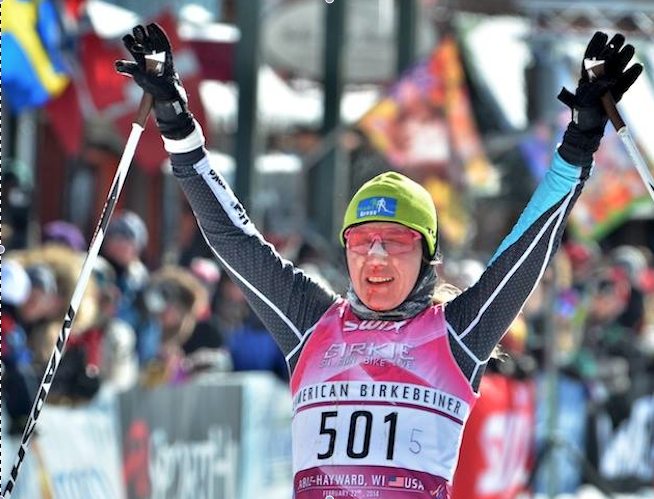
    Caitlin Gregg, winner of the 2014 Birkie. Photo: American Birkebeiner Foundation
    Caitlin Gregg, winner of the 2014 Birkie. Photo: American Birkebeiner Foundation

    Caitlin Gregg channeled the training and fitness she had accumulated for a potential Olympic start into her 3rd Birkie win and is now back in Europe racing on the World Cup. FasterSkier checked in with the Birkie Champion her training after her first World Cup weekend on this European trip.

    FasterSkier: Last weekend you won the Birkie by over a minute. How did you feel in the cold, slow conditions? How was the day for you overall?

    Caitlin Gregg: I am really psyched to have “nailed” my training over the past few months. I was hoping to peak for an event on the 22nd of February, and wanting the event to be the 30K Skate at the Olympics, but also realized I could capitalize on my fitness and trajectory for the Birkie when I wasn’t named to the 2014 Olympic Team. I have been writing my own training this year, but it has been heavily influenced by the training I did when I was with the Biathlon Development Team and James Upham. He taught me how to peak for major events and I have used his suggestions many, many times with a lot of success, including the 2010 Olympics and the past 4 American Birkebeiner Races.

    FS: What’s been most difficult aspect of your training and racing these past few weeks?

    CG: The hardest part was maintaining some volume while still racing every weekend on the World Cup and Super Tour. I put in a lot of hours and kilometers while out in Craftsbury, Vermont and I was thrilled with my Super Tour results that weekend. Leading up to the Birkie, I cut my training a ton and felt great for the event. I love long skate races and I had been doing a lot of Skate Sprints and 5K’s so I was pumped to get another opportunity to ski a long one.

    FS: Did this Birkie stand out in any particular way, and if so, how?
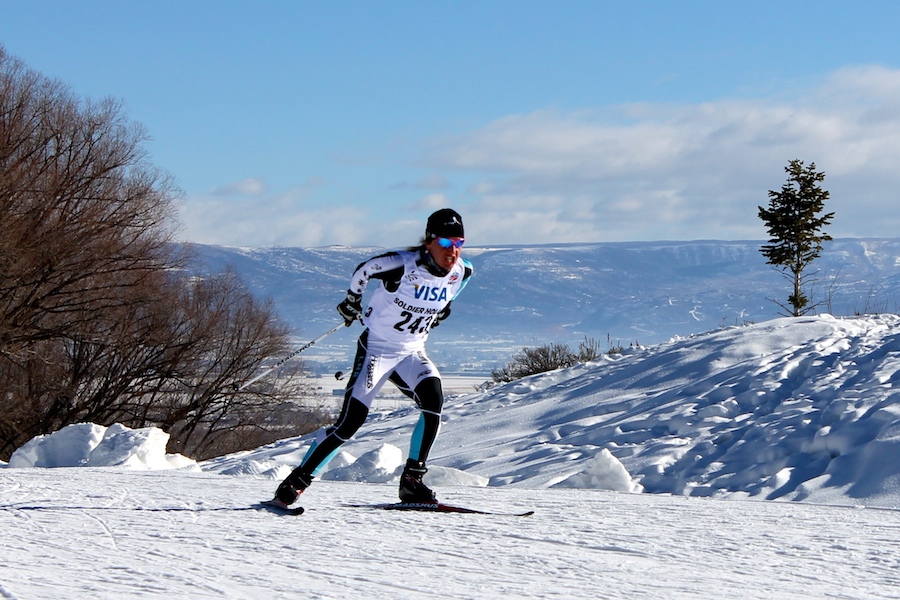
    Caitlin Gregg (Team Gregg/Madshus), 1st
    Gregg racing at U.S. Nationals early this season.

    CG: The 2014 Birkie was the hardest one I have ever done. The combination of cold wind and slow snow made the race almost 20 minutes longer despite my higher level of fitness. I always have a few game plans in mind before the race, but so much can happen during the event and it’s almost impossible to know what to do until the race unfolds on race day. When the lead pack of Elite Men came through I had about 5 seconds to make a decision to go with them or let them ski away. I am glad I could think quickly enough and had the energy to chase after them and try to hang on. The last few kilometers of the race were extremely difficult. I don’t think I have ever been so cold and tired in my entire racing career. I cannot believe that Matt Liebsch caught me when he did and that I could tuck in behind him. He certainly could have dusted me, but he let me draft off him across Lake Hayward. He is an incredible athlete and an even more incredible person!

    FS: Fast forwarding to this past weekend, how was Saturday’s freestyle World Cup sprint in Lahti for you?

    CG: I certainly have my work cut out for me! I was able to recover well in the U.S. for a few days before flying over here to Finland (which was not the plan originally but actually was a blessing in disguise). I have been adjusting well and the energy and excitement of the team over here is certainly helpful and motivating to get up to everyday! The real challenge has been shifting gears from a long slow hilly 50K to a fast flat 1K on the World Cup. The snow here is fast and sugary and it is a little cumbersome to feel super stable on your feet. My race yesterday was ok—I found it hard to feel powerful and be able to push myself past my 50K pace from last weekend.

    FS: How was it being at the races with Kikkan’s win and Sophie’s third place finish?

    CG: It’s been a really fun season here in Europe when so much history is being made! Watching Kikkan and Sophie yesterday was incredible and I have the feeling there will be some more amazing results to come in the last couple of weeks over here!

    FS: And how did Sunday’s World Cup 10k skate race go for you?

    CG: I actually felt really good, especially for the first 5K, which was fun! The snow and conditions were a bit tricky but I felt like I am making a good turn-around from the Birkie and travel.

    FS: Lastly, how has it been training without your husband (who is also your training partner) these last few weeks? Has that been a difficult adjustment, or has it gone over pretty smoothly?

    CG: Training without my husband has been super lonely. Not that we ski together all the time, but we are certainly around each a lot between training sessions. The best part about his trip to the Olympics was a phone that had a U.S. plan, so I could call him and he could call me anytime! I feel so lucky to have my husband traveling and racing with me so often, that a few weeks a year is manageable. We are very excited about meeting up again in Alaska for the Super Tour Finals.
     

  • North Americans Gain Experience in World Cup Sprint

    Saturday’s 1.5-kilometer freestyle World Cup sprint in Lahti, Finland produced some record-breaking results: for the first time ever, two Americans shared the podium, with Kikkan Randall taking over the winning spot once again, and Sophie Caldwell placing an impressive 3rd—her first World Cup podium yet.

    The races, which took place on tricky conditions—U.S.A.’s Reese Hanneman describes the course as “basically a couple-inch layer of ground up ice on top of more… ice,” also produced some not-so-flashy results with lesser-known stories behind them. Here are a few of the tales, told by Canadian and U.S. skiers, some of whom partook in their first ever World Cup race.

    Reese Hanneman (APU), 11th
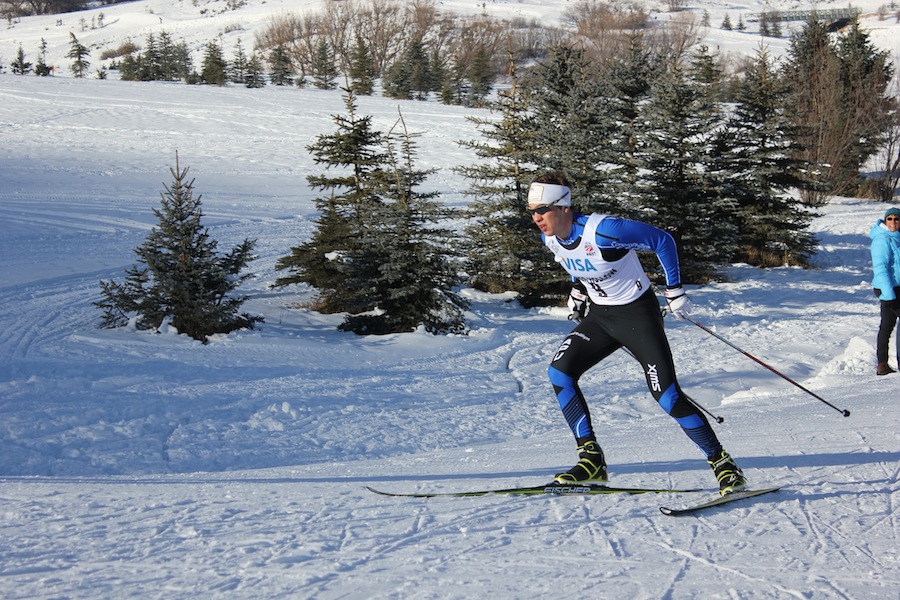
    Reese Hanneman (APU) racing at U.S. Nationals

    On the American side, Reese Hanneman wrote to FasterSkier that this was his 6th World Cup race, but all of the others have been in Canada as a Nations Group skier. This was his shot in Europe and as a Continental Cup leader.

    For Hanneman, the course and conditions stood out. “It was fast but also soft and tricky to negotiate well. I had a little bit of a hard time really kicking well when all the sugar would move out from under the ski. But other than that, I felt pretty good and went hard. The course was pretty mild, one long gradual uphill and then mostly rolling downhill with a couple of steep little kickers.”

    Hanneman says he can learn from watching the top male skiers who “were using a lot of power but really quickly, to push where it was hard underneath them.” He admits that he didn’t have quite high enough turn over today, but that is something to work on.

    Hanneman, an Alaska native, has been preparing for this block of World Cup racing by training in his home state for a few weeks and then racing the U.S. SuperTours. As seems to be the case with this winter sport that requires much travel and stress on the body, Hanneman, too, came down with some sickness and hasn’t raced in about a month. He thinks that, all things considered, today’s race went okay. “I am definitely looking forward to some classic sprinting in Drammen and Falun, as well as Holmenkollen next week. I hear that should be epic!”

    Another American rookie, Jennie Bender, raced her first World Cup Saturday. She writes that the response to this fact “seems to be of a surprise to some,” which she has taken as a compliment.

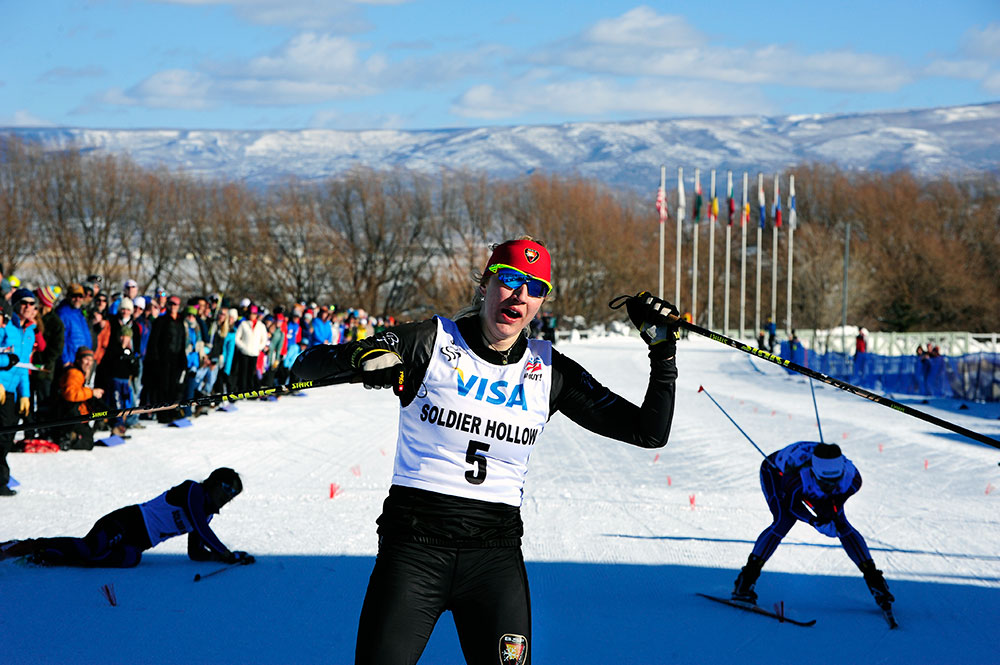
    Jennie Bender (BSF) celebrates her victory in the freestyle sprint. (Photo: Tom Kelly/USSA)
    Jennie Bender (BSF) celebrates her victory in the U.S. National Championship freestyle sprint. (Photo: Tom Kelly/USSA)

    Bender writes that racing at the World Cup level “is a big step” she has been wanting to take, and “hopes to be racing here more often.”

    For Bender, these international races did not feel too foreign thanks to a sense of comfort she gained from recognizing others at the race scene. “Although the World Cup is new to me,” she writes, “the faces here are not. They are people I have raced with in high school, college, and around in the U.S.”

    She goes on to mention several friendly contacts, including Al Serrano, an ex-UVM ski team coach who is now a TD at World Cups and provided a familiar face at the start line, and Jeff Ellis, Kikkan Randall’s husband who works for FIS, who Bender explained, “already saved [her] twice from rookie mistakes,” and Jessie Diggins, with whom Bender shared many laughs over some old CXC pictures and memories.

    Bender concludes that, “the team here, both women and men, is definitely the most united I have ever seen. It’s a good vibe.” She contends that at the elite level, this sport tends to attract high-strung personalities, “so getting a group with this type of personality into a flow of positivity, compassion, and professionalism while being able to chill out, can be hard to do. This team has that, and are still building as they realize how powerful its effects are. One effect, is watching how the women have brought excitement towards relays and sprinting. Everyone is excited for everyone. Despite being typically an individual sport, that’s huge.”

    Bender secured her World cup starts by being the SuperTour sprint leader. She writes that the SuperTours and World Cups “are for sure, two different worlds, that depend on each other. The SuperTour athletes are the ones who eventually create the World Cup team, and the World Cup athletes must set the bar for how Nordic is viewed and raced.”

    Bender hopes that in the near future, it will be easier for these two seemingly distant worlds “to come together.” She believes that the collaboration between skiing tiers “has so much value for educational and developmental purpose for nordic in the U.S.”

    Bender made a point of wanting to thank her home team Bridger Ski Foundation (BSF), National Nordic Foundation (NNF), and those who have contributed to either foundation, for helping to support covering the costs of her trip to compete in these races.

    In conclusion, Bender writes that “the past two summers have been frustrating with mishaps to work around, and I am really looking forward to getting in a full year of training. I hope to finish this season strong and keep going for a few more years and see where I am then.”

    When asked how he would describe his day, Canada’s Michael Somppi who placed 85th wrote in an email to FasterSkier, “Today was a short sprint with no big climbs so it was important to carry your speed really well. I’m more of a distance guy and can do all right on a longer, tougher sprint course, so today wasn’t so much my forte, but it was a good warm-up for tomorrow’s 15km.”

    How did this rookie secure himself a World Cup start? He was part of Cross Country Canada’s B-Tour trip before this World Cup and had the opportunity to race in some Scandinavian Cup events. He mentioned that he unfortunately came down with some stomach issues throughout the Scandinavian races but is happy to be healthy now and is looking forward to racing Sunday’s 15km World Cup skate race.

    Canada’s Andrea Dupont, who finished 59th Saturday, echoed Somppi. She also qualified for the World Cup races this weekend thanks to her results in the Scando Cups as well as races in Lativia and Estonia. Like Somppi, Dupont  suffered from illness recently and today was her first race  in a couple weeks. She writes, “It was great to have the opportunity to start another World Cup today. On days like today, it’s important to learn lots and take that experience into the next races.”

    Raphaël Couturier, also from Canada, just came off racing in Estonia and Latvia as well, where his results secured him a World Cup start bib for the weekend. Couturier writes, “I bounced back well from a slow start to the season and I now seem to be racing up to my potential, which feels good. Today’s sprint was all right, but here if you have an ‘all right’ race it for sure shows in the results. The course was super soft and pretty fast so you’ve got to be flawless to make the cut.”

    Couturier finished 82nd in the 94-man field.

    Several skiers mentioned how difficult the day’s conditions were in affecting their race results. Lahti has faced a poor snow year so the surface was manmade and lacked moisture to help hold it together. Canada’s Alysson Marshall, who placed 46th, writes of the conditions, “It was an interesting sprint today. The snow was really soft and sugary on the climbs, which made the course more of a challenge.”

    Heidi Widmer of the Alberta World Cup Academy and Canadian Senior Development Team, en route to a victory in the 2014 Canadian Olympic Trials skate sprint. (Photo: Angus Cockney)
    Heidi Widmer of the Alberta World Cup Academy and Canadian Senior Development Team, en route to a victory in the 2014 Canadian Olympic Trials skate sprint. (Photo: Angus Cockney)

    Canada’s Heidi Widmer, who finished 47th, mentioned the long travel day between Sochi and Lahti, saying that at least everyone was in the same situation. Widmer writes that her “race didn’t go exceptionally”—she had a few mistakes in the technical sections of the course—“but was happy with how [she] skied the longer climb.” She noted that the World Cup circuit is a very talented field, and Scandinavia’s fleet is particularly impressive. Widmer finished the day feeling inspired by teammate Alex Harvey’s steadily strong results, and by Randall and Caldwell’s podium finishes. She has enjoyed her stay at the local hotel where skiers from several countries are also making their home base for the weekend. She will take part in Sunday’s 10km skate race and then moves on to Canadian Nationals.

    Cendrine Browne, also of Canada, and new to the World Cup circuit, wrote of Saturday’s race, “Today was an awesome experience for sure, but I still have a lot of work to do to be able to be competitive at this level. The girls today were so fast. It felt great to be a part of this race and to compete against the best athletes in the world.”

    Browne mentioned that, surprisingly, she wasn’t nervous before her race. She “just wanted to give the best out there and try to have the best race even if the conditions were very difficult.”

    “But tomorrow is a new day!” she added. Browne, who finished 71st in the  race, concluded that 10km skate races are her strength so she’s looking forward to Sunday. And “again, racing to get more experience.”

    “I’m pretty proud of myself. I didn’t think I would make it to a World Cup this season! So it feels very great to be here in Finland,” she concluded.