From the FasterSkier archive — posts syndicated from athletes’ and coaches’ own blogs between 2004 and 2012, kept online as published. Current coverage is at fasterskier.com.
This interview series is made possible on FasterSkier through the generous support of Marty and Kathy Hall and their A Hall Mark of Excellence Award. To learn more about A Hall Mark of Excellence Award or to learn how you can support FasterSkier’s coverage please contact info@fasterskier.com.
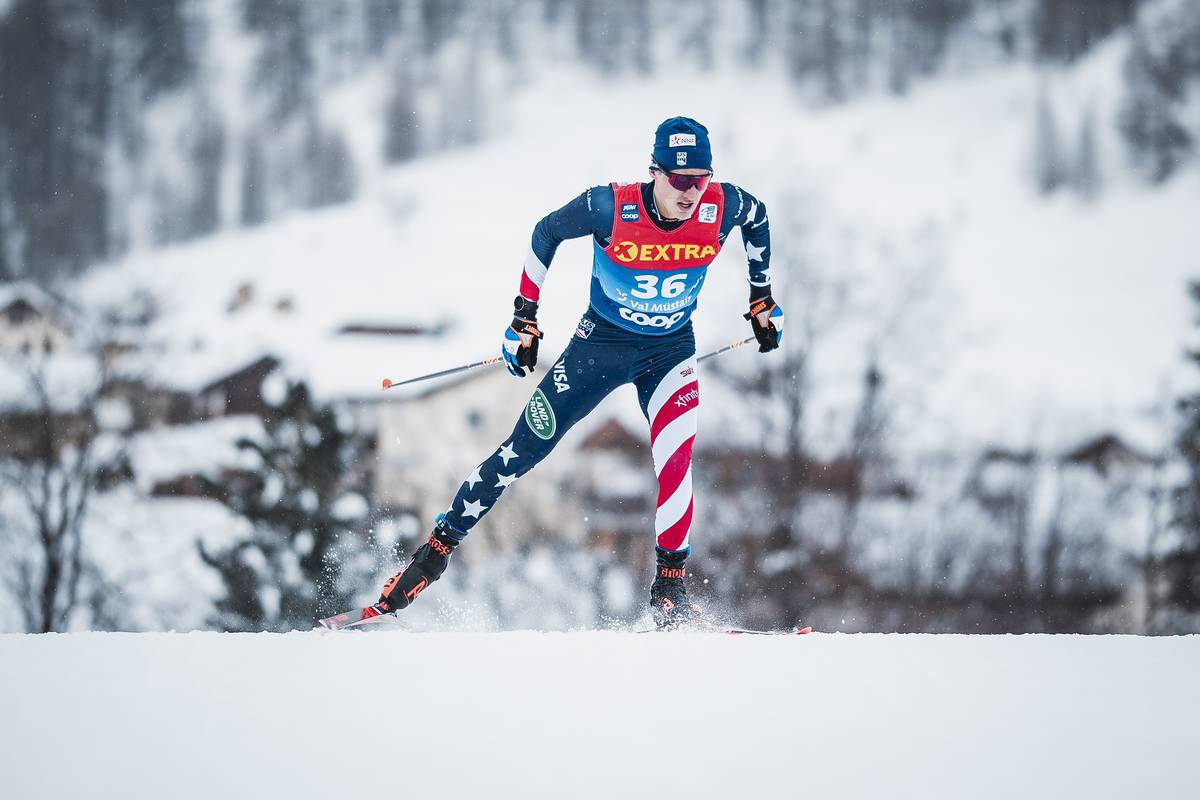
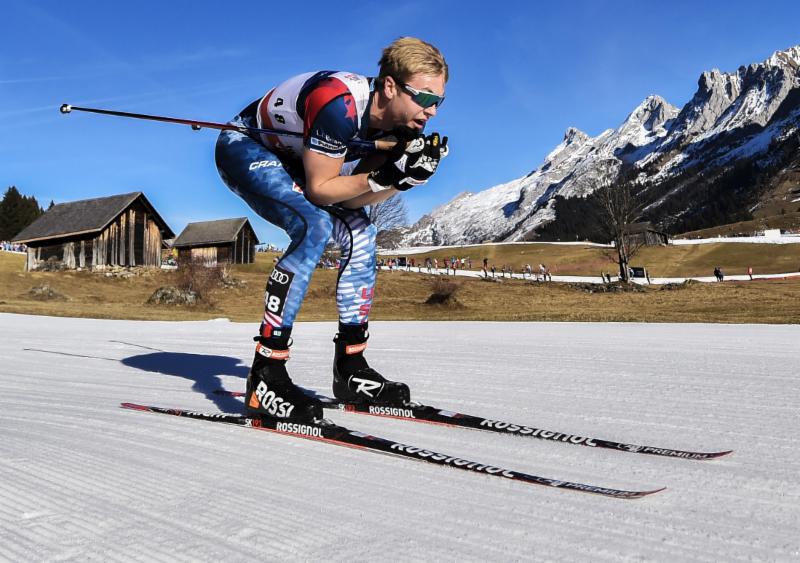
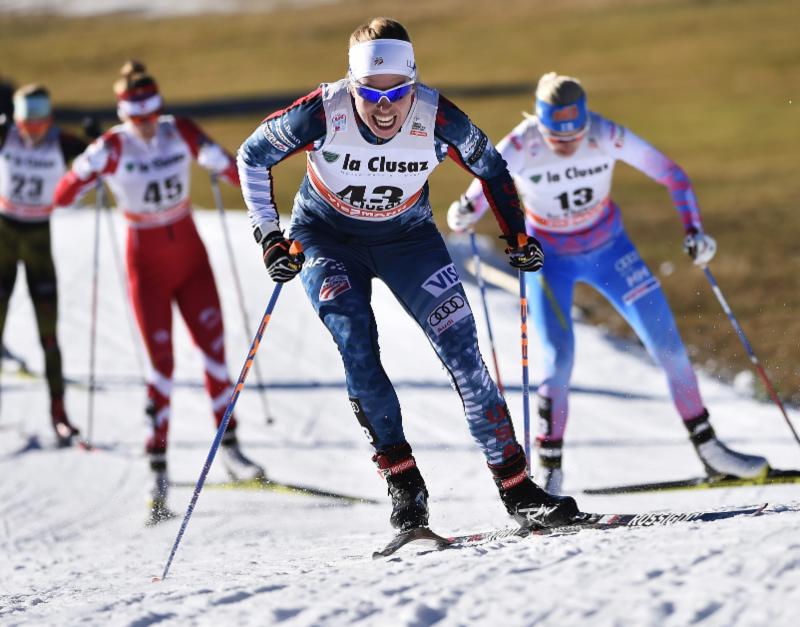
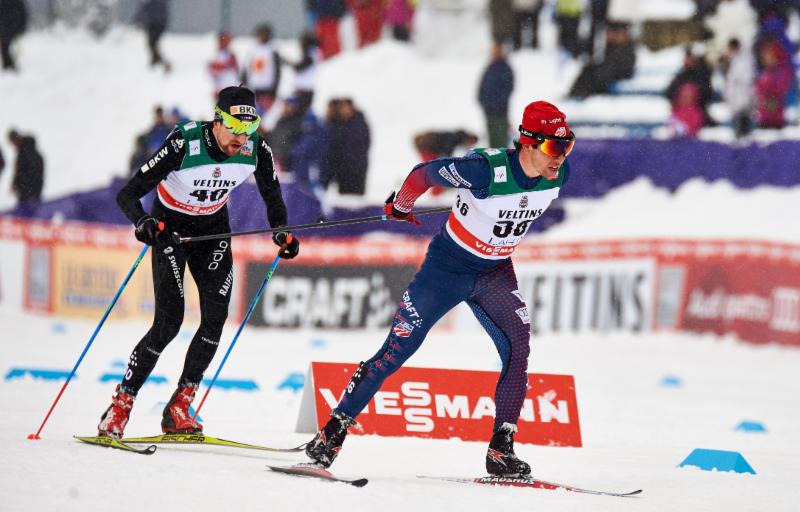
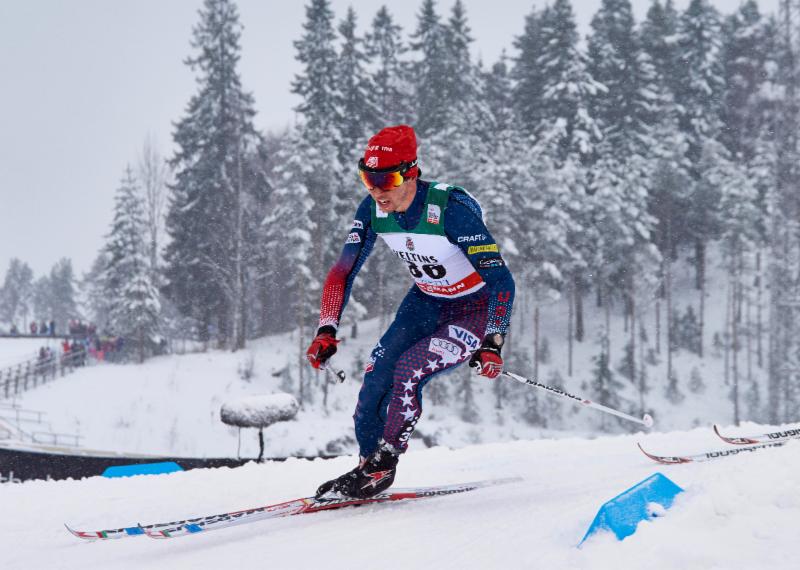
Gus Schumacher during the skate sprint qualification in Davos, Switzerland. (Photo: Nordic Focus)
Gus Schumacher is the defending World Junior Nordic Ski Champion, U.S. National Skate Sprint Champion, and currently 2nd world-ranked under 23 skier. I did a series of 3 interviews with him earlier this year to sort of introduce him and give people a chance to get to know him. This interview is to simply catch up and get his thoughts on the recently finished Tour de Ski where he had some outstanding races. We spoke a lot about what he was learning and working on which was really interesting.
This interview series is made possible on FasterSkier through the generous support of Marty and Kathy Hall and their A Hall Mark of Excellence Award. To learn more about A Hall Mark of Excellence Award or to learn how you can support FasterSkier’s coverage please contact info@fasterskier.com.
David Norris has 10 top 30 World Cup, World Championship, and Olympic individual finishes. He is also the 2016 American Birkebeiner Champion. He has been one of our top 2 distance men for the past 4 years anyway.
David got Covid-19 in November. This interview is to see how David is recovering, what protocol he followed, to hear any recommendations he might have, and to check in with him before the Lahti, Finland World Cups which will be held this weekend.
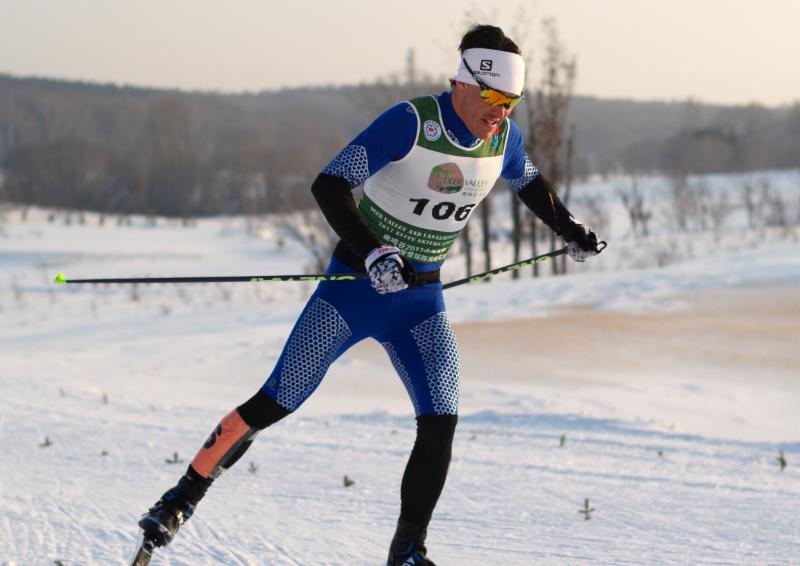
Nick Hendrickson racing at the Tour of China earlier this winter.
Testing and Choosing Race Skis at the Boulder Mountain Tour 2017
On a typical day in the Wood River Valley, you can pretty much bet on sunny days, cold nights, firm new snow and amazing grooming. But so far, this hasn’t been a typical year in Ketchum. Last week it didn’t seem to stop snowing, with about 20 inches accumulating on Friday and Saturday, it made for some interesting ski testing, and racing!
Testing
Whatever skis you may have in your bag, make sure the skis you test are all zeroed (same wax and prep on all). Test skis the day before race day on conditions that you think will mimic race conditions (as best as possible). The BMT is unique because the start and finish could be very different conditions, choose a spot to test skis that is going to give you an idea of what the snow will be up high at the start, and down at the finish. You can always test at multiple locations if you’re really keen, just be careful to not overthink things. This brings us to probably the most important part of ski testing, choosing which ski to race on.
If you have a good quiver of skis, chances are you’ll have two pairs of skis that feel similar on testing day. This is when you go with your gut feeling. If you’re thinking that one ski feels better than the other, but just a little bit…choose the better ski! In the end, if your skis are really so similar, it will not make or break your race. Take the skis that feel slightly better and wax those up for race day. Another option is to race wax both pairs and test them the morning of the race on the course when you know what the weather and grooming is looking like on the race course. Whatever ski you end up choosing, be committed to that ski!
Nick Hendrickson, 2016 Boulder Mountain Tour Champion
This is an excellent article written for SBX racers, but should be read by anyone who wants to improve at anything and have a positive experience
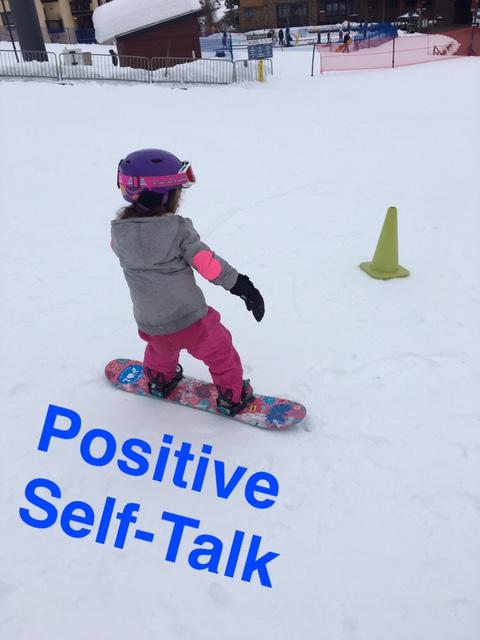
Self-Talk By Cody Brown Head SBX Coach SSWSC
One of the most important yet often overlooked aspects of mental game and success in athletics is, “Self-Talk.” In this eblast we will review the key concepts and the role self-talk plays in athletic performance.
With every new athlete that enters my program one of the first things we actively eliminate is negative self-talk. I often hear negative self-talk in response to feedback that is being provided to athletes. It usually sounds something like, “I am just not good at that technique” or “I just can’t do that.” The first thing that I do when I hear this kind of negativity is cut the athlete off to stop the negative self-talk. Then reframe the statement and try it again. The new statement would sound something like, “I am improving that technique,” or “that is something that I am working on getting better at.” If an athlete is verbally condemning their performance, it is almost a guarantee they are mentally doing it as well.
The underlying principle behind self-talk and its effect on athletic performance is simple. Your sub-conscious mind is indifferent to results and is essentially programed by your conscious mind. One of the first psychologists to explain this notion was Maxwell Maltz in his book ‘Psycho-Cybernetics’ . For example, if you persistently say (verbally or mentally), “I am not good at pumping transitions” that is exactly what your sub-conscious mind is going to produce. If you reinforce to your sub-conscious mind positive statements such as “I am working on getting better at pumping transitions,” you will, over time produce that desired result. A rule of thumb if you find yourself negatively criticizing yourself is, in order to eliminate one negative thought, you need to mentally or verbally say a reframed positive statement four times. One technique many athletes use is a “power statement”. If they catch themselves being negatively critical of their performance mid-run, they can force out the negativity by mentally saying the power statement of their choice four times immediately after. This statement can be as simple as “my technique is excellent” or “I ride with power and finesse.”
This also applies to outside influences as well. I make a conscious effort to speak to my athletes the same way I want them to speak to themselves. For instance, if an athlete is speed checking or slowing down before a jump, I will resist the temptation to say “don’t speed check!” But rather tell the athlete to “eliminate the speed check” or “after the first feature point it straight into the jump.” It is subtle but effective.
To sum up self-talk in three simple steps:
Listen: Pay attention to what you are saying to yourself.
Reframe: If negative, reframe the statement to be positive.
Reinforce: Repeat the positive reframed statement.
Achieving your goals is a process, so be nice to yourself and enjoy the journey.
USA Nordic signs strategic partnership with Toko
Park City, January 15, 2017
“USA Nordic is very pleased to announce that we will be working with Toko as our exclusive glove supplier for the Nordic Combined Team’s cross country racing for the 2017 season,” said Bill Demong, Executive Director of USA Nordic. “Toko has a long, distinguished history as one of the premiere Nordic brands and we are very excited to be working with their committed team.”
Toko US Brand Manager Ian Harvey commented, “Bryan Fletcher lives in Heber, Utah close to me and I have been impressed with him and his other teammates’ professionalism and commitment. It is my pleasure to support them.”
“Switching to Toko was a fantastic opportunity,” stated Taylor Fletcher, one of the top athletes on the USA Nordic Combined team. “The gloves have a great warmth to weight ratio. Due to their European sizing, the size increments are smaller such that we can achieve a perfect fit. I appreciate the personal touch that Ian has given the gloves as well as to our team”.
USA Nordic is the parent organization for USA Nordic Combined and USA Ski Jumping and is based in Park City, Utah. To stay connected with all of the USA Nordic Combined athletes, please visit www.usanordic.org and subscribe to our newsletter!
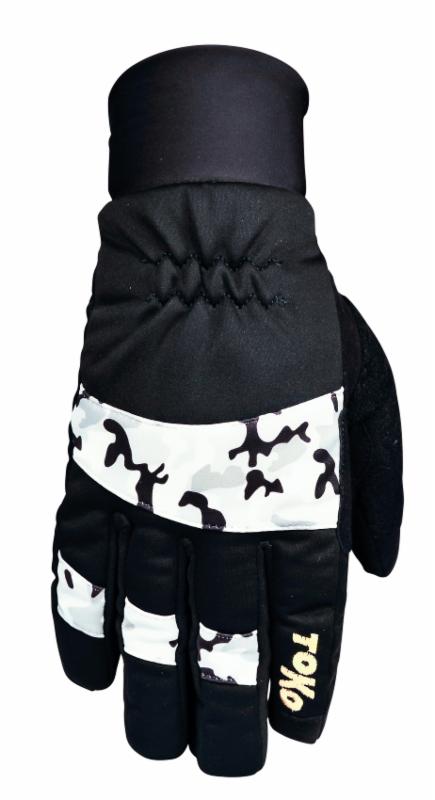
USA Nordic’s Bryan Fletcher, a top Nordic Combined skier wearing Toko profi gloves in Winter Warrior color
We spent the week before the race testing in an inch or two of fresh snow and our ski results were consistent with the published Toko tip of using a slightly stiffer ski with a finer grind. We again found success with the same HF Blue/Red mix as in the sprint. JetStream Red 2.0 was a great powder choice since it has such an incredible range, although we both felt that our skis were fastest the final 15km. We top coated with a block roto corked in as well as liquid.
Testing up at Galena Lodge on Friday conditions were new soft snow with temperatures in the mid twenties, just a couple degrees cooler than were forecast for race day of the Boulder Mountain Tour. We found Toko LF Red running better than black waxes for a base layer, and HF Red also running very well. So that’s what we ran for base layers. The Red has a great broad range, and mixing yellow and AX134 in wasn’t helping. We received around another foot of wet snow overnight which made for one of the most challenging BMT’s ever! We powdered the skis morning of, with many of our athletes opting for White/Clear base skis. Toko Red Helix 2.0 won our top coat test which made for an easy last step after adding a broken structure.
— Chris Mallory
Sun Valley Gold Team Coach
Why did we recommend avoiding soft skis in the Boulder Mountain Tour although the conditions were soft?
When new snow is soft and dry, soft skis are generally very good. However when the new snow is wet and soft, there are other considerations to take into account. In soft new wet snow, two major considerations are flotation and moisture management.
In new soft snow, when a person pushes off (skating), it is common for the skis to sink into the snow creating a braking effect and a huge energy loss. Using a stiffer ski (or at least avoiding a soft ski) minimizes this issue because it provides a stronger and wider platform that is less likely to sink and result in energy and speed loss.
Unless new snow has a strong glaze or a strong moisture film on top, it is very sensitive to structure (especially in the mountain west). We have had this snow all winter and have gained a lot of experience with it. In addition to by using structure, moisture can also be managed by using a very hydrophobic wax (HF, JetStream, and HelX) and also a stiffer ski which reduces contact of the base on the snow. For this reason in these conditions, a ski with more camber was advantageous.
I saw many people doing glide outs next to one another while tucking. In this deep loose new snow, this is not an effective way of comparing skis because the stiffer ski will almost certainly be much better when the camber is being worked (while skiing and pushing off). A softer ski would probably have been close in its gliding properties, but overall would have been poor comparatively.
Cold temperatures made it important to have the bases hard. We used Toko LF blue and XCold powder for our base layer covered with JetStream Blue 2.0 block. The XCold powder made a big difference in our testing.
Freestyle Sprint:
Fresh falling wet snow, Red 2.0 Powder won our test and put Caitlin on the podium.
— Report from Brian Gregg
(By the way, congratulations to Caitlin Gregg for qualifying to represent the US at the World Championships!)
Caitlin Gregg on her way to her 8th US Cross Country Nationals victory
US Nationals Wax Report
The first races of the week, 10/15km skate distance races, brought us temperatures in the single digits and a 5km loop with some man-made and some natural snow. Many waxes were fast in the man-made so we made sure to test in the natural snow section to make sure nothing was a liability. Toko Blue 2.0 powder tested well for us, and for a topping we found JetStream Blue 2.0 block fleeced together with a cold liquid to be very fast, especially at speed.
The classic sprints on Day 2 was one of those days it seemed like snow conditions were changing every 20min. We had snow and rain swapping back and forth all day and athletes skiing hardwax, zeros, double poling, and by the end, klister skiing. We found Zeros to be very fast in the rounds, but it seemed like the guys with klister were able to run the hills a bit better. We had Toko JetStream Blue block mixed with JetStream Red block testing well for glide early in the morning on fresh snow in the mid 20’s, and by the end of the day we were on warm liquids.
For the 20/30km Classic mass starts we lucked out a little bit and had pretty stable klister skiing conditions all day on a man-made 3.7k loop. We powdered our skis with a Toko JetStream Red/Yellow mix, which felt really good, and by mid day we were adding Toko Helix Yellow as conditions got above freezing.
In the final race of the week, a skate sprint qualifier, a warm snow storm rolled in about an hour before the race, really slowing trail conditions down. The forecast called for this so we left off the black underlayer and based with Toko HF Red. The JetStream Red/Yellow powder mix again felt really good, but with such a short race, we opted for a block/liquid combo instead. Cole, Jack and Kelsey all skied well, getting themselves on the U23 Team!
— Chris Mallory, Sun Valley Gold Team Coach
(Congratulations to Cole Morgan for being named to the US World Championships team as well as World U23s!)
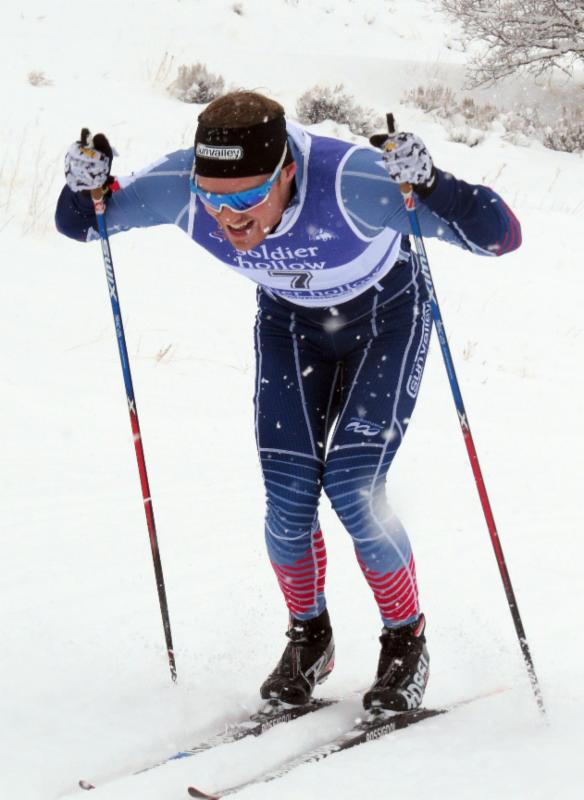
Cole Morgan on his way to qualifying for the US World Championship teams in U23 at Soldier Hollow, UT as well as Senior Elite in Lahti, Finland.
Wax Report from Eastern Cup Races in Waterville, ME
Saturday, Freestyle Sprint:
Conditions went from warm all week to single-digit temps the night before the race. The snow was icy and fast with a marginal amount of dirtiness. A skier in our group who attends Colby had been sending me photos all week showing some rocky and dirty snow but the organizers did a great job and things were very clean and beautiful on race day!
All skate skis were prepped with a very hard graphite underlayer from another brand and then received Toko HF Blue as the paraffin layer.
This combination was fast right out of the gate, and sped up even more significantly with a layer of HelX Blue for the qualifier. The skis also received a quick hand-corking of a block on just the tails of the skis which we felt improved top speed. I stuck to “cold” hand applications of everything due to the short nature of the race and because I was concerned that changing the already-fast nature of the graphite/HF Blue paraffin layer with too much heat from an iron or rotocork could slow things down in the cold snow.
Our skis were running well and we had a male and female Junior advancing to the Open heats which was great. We also had 3 more skiers in Junior heats so a long day was in store. Skis were a huge factor here, as stiff boards could really help a racer stay confident, balanced, and powerful on the fast icy snow.
With the help of some new matched test skis (thanks Rossignol and Skirack!) we were able to retest a lot going into the heats, but despite slightly warming temps the moisture content and consistency of the snow remained similar. The course ended with a fast downhill and long flat portion so we really went for top-speed and just hand-corked a layer of the morning’s block on all skis. We liked a 1mm structure that was half of a cross-hatch pattern (“Screw Left”). I applied the structure after the block was corked in, but before it was brushed out, to slightly dull the structure. Skiers advancing to further heats had a quick layer of block re-applied and brushed.
Skis were great and we had several breakthrough performances which really got momentum swinging for the next day!
Sunday, Classic Mass Start:
Very similar conditions with a frigid night and slightly warming daytime temps. Cold klisters were the name of the game, and durability was key. The night before all skis received a klister binder and an application of HelX Blue or HelX Red depending on start time. We knew from the day prior that the HelX would run well, and with almost 20 skiers to get klistered up on race day we wanted to make sure we had adequate time once things got rolling. Toko HF Blue was the paraffin on all skis.
We tested both blue and purple klisters from various brands in the morning, and Toko Blue klister was doing well although we ended up on a blue klister from one brand mixed together with a purple klister from another brand. Even as the sun warmed the spectators and coaches, the snow remained cold and this was the combination we stayed on from the first race at 9:30AM to the final race at 12:45PM.
Kick was fantastic and several more skiers had breakthrough performances! There were a few skiers who mentioned a little dragging, and if that was the case the skis received a dusting of Jetstream Blue Powder over the front of the kick zone.
Things really got going in the action of the day and I am disappointed that I neglected to test structure or even apply a structure that would’ve been a safe call like the Toko Blue Structurite the night before, or the pattern that had worked well the previous day. I think we generally do a good job with structure so this was a big mis-step on my part.
Waterville is a long drive for us, but the great atmosphere an strong results made for a very memorable weekend for MNC.
Different application methods run differently in different types of snow. For example, generally cold applications such as rotocorking or hand corking are fastest in colder powder snow and hot applications such as applying with a hot iron are best in wet and transformed snow.
We tested the same wax using many different application methods in a wide variety of conditions throughout a winter and found that the following application method was fastest or 2nd fastest in all conditions. We also tested durability and dirt resistance and this was as good as any other application method. So, this is our “default” recommended application method for applying JetStream. We recommend you get familiar with it and use it for best results.
The “really cold” part of the Winter is just arriving
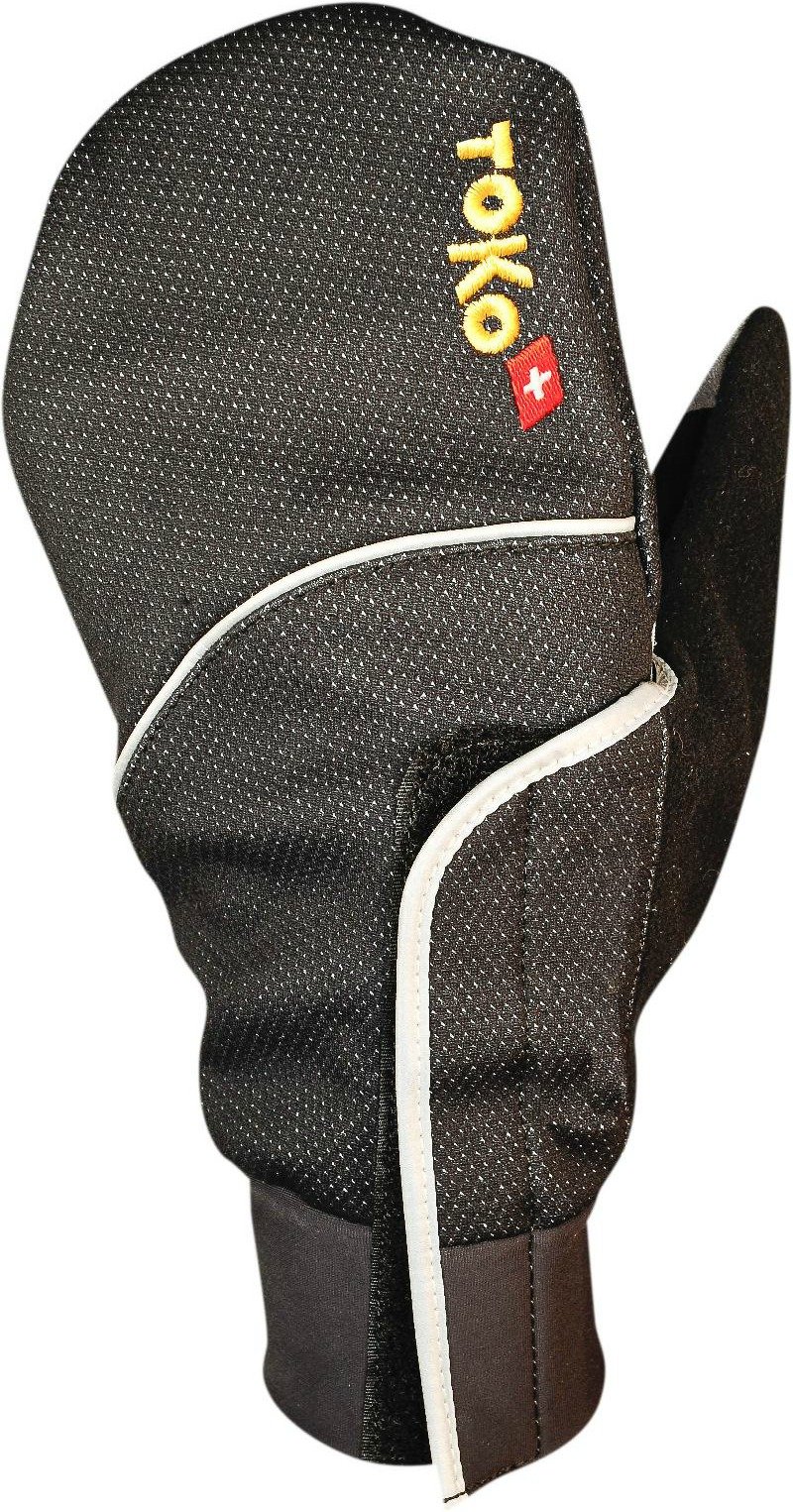
In case cold hands an area of concern for you, consider the Toko Racing Overmitts. You WILL NOT get cold hands with these overmitts. If you get really cold hands, wear them over your Thermo Plus gloves or if you are a really hard case, Arctic Gloves, and be warm. (Most can wear in super cold conditions over Classic gloves and be very warm). They are a bit cumbersome to get in and out of (they go over the pole strap, so you have less material getting constricted under the strap), but once you are in, you will have warm hands.
How to prepare new or freshly stoneground Nordic or Alpine skis and snowboards
This time of year many people have either new equipment or have just stoneground their skis or snowboards from last year. Here is how to get those bases running fast.
1. Wipe the bases down, brush them out well with a copper or steel brush, and wipe the bases down again. New ski bases can be dirty and also post stonegrinding, the ski bases have debris and emulsion fluid on them.
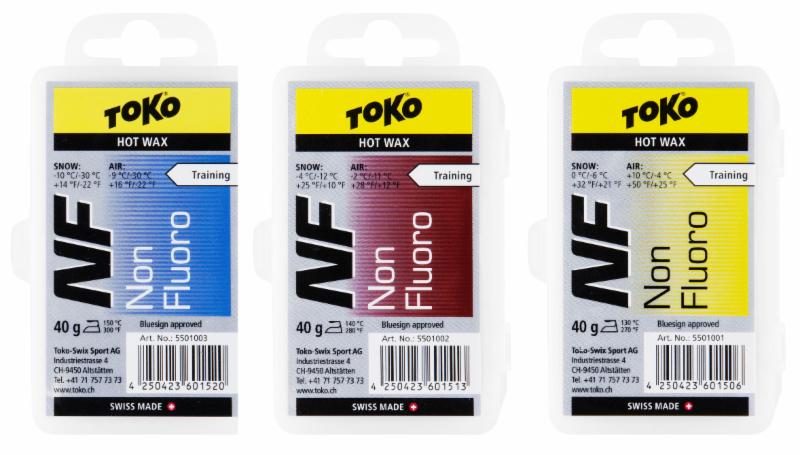
2. Wax the bases a few times with a very soft wax such as Toko Hot Box and Cleaning Wax or if you don’t have that Toko NF Yellow. The softest waxes will penetrate the deepest which is very important for new or freshly ground bases. The idea of this step is to get wax into the base deep. The wax can be scraped and brushed out well (steel or copper) between applications or just reheated. If I notice that the wax doesn’t seem to be going into the base very well, I scrape and brush well to encourage more wax absorption. If the wax is going in well, I just reheat.
3. Wax the bases a few times with a hard wax such as Toko NF Blue or LF Blue (LF Blue is harder than NF Blue). Once the soft wax is in the base deeper than the hard wax would have gone, you need to harden the base up. The soft wax “holds the space” for the hard wax to enter deeper than if the soft wax hadn’t been there. For sure scrape and brush well between applications of the hard Blue wax as this is a key step in reconditioning the base surface as well.
4. Ski or snowboard a lot while rewaxing every time afterward. The bases will only make so much progress without being skied on between waxings. This will get them how you want them quickly. If you have a few skis and want to get them running, ski on each pair for 30 minutes or so and switch them out and then rewax alll of them before doing the same the next day. This is the most important step in making your newly ground skis or new skis and snowboards fast – spending time on them and then rewaxing.
With metal edges of course, there are other considerations. Please see this video for information on evaluating edges and base flatness of new skis:
Evaluating new skis and snowboards
Additionally, here are some recommended bevels depending on the type of skis and what you will be using them for. (Best is to check with the manufacturer).
For the SuperTour Races in West Yellowstone this year we had great packed powder conditions. The snow seemed to have a bit more moisture in it than in other years, and with slightly milder overnight temperatures we stuck to the Red waxes by in large. For both race days we played it safe mixing HF Blue and HF Red 1:1 for a base layer. For powder we ran Toko JetStream Red 2.0, which ran 1st or 2nd in testing all weekend. On sprint day we ran a cold block in the morning and once the snow had a cold glaze to it, we added a cold liquid with block which helped at high speed. Gelso had great skis and was able to race from the front of the pack all day. For the distance classic race we were racing in heavy snow storm and temp’s around 20 degrees, so we kept it simple with JetStream Red 2.0 block over the JetStream Red 2.0 powder and focused our energy on kick.
The next weekend we made our way up to Silver Star for the SuperTours in Canada. It was super cold all week training, but again great conditions, and luckily it got up into the upper single digits come race days. The Toko brand ran super well in Canada as it always does in the cold. The snow was cold enough where mixing Toko X-Cold Powder in with LF Blue for a base layer helped harden the skis. From there it was Toko HF Blue, Jet Blue 2.0 Powder, and Jet Blue 2.0 Block. Some of our guys were doubling poling the CL Sprint all day so glide was important. As the tracks got skied in throughout the day we again found success mixing Toko Blue Helix with the JetStream Blue block. By the Sprint finals and second race on the distance day we switched to Red Helixmixed with the JetStream Blue block.
– Chris Mallory, Head Coach Sun Valley Elite Team
Eastern Cup Race Report
A really productive and fun first weekend of racing at Craftsbury. A little bit of everything when it came to snow and weather!
Day 1: Classic Interval Start
Cold temps overnight on a manmade base, but a lot of fresh new snow the day of the race. For kick wax we were on a very thin Toko Green Base binder ironed in. We ended up on kick wax from another brand.
Our paraffin layer was HF blue for earlier races, with a 2:1 mix of HF Bue:HF Redfor later races. We tested a fair amount of topcoats and Jetstream Blue Bloc 2.0was arguably the most reliable and consistent performer all day so that went onto all skis rotocorked. Later starters had a slightly warmer block from another brand mixed in with the Jetstream. For structure we ended up with just the linear Toko Blue Structurite pattern on the tail of all skis for the Open Women’s and Open Men’s Races.
Day 2: Freestyle Pursuit
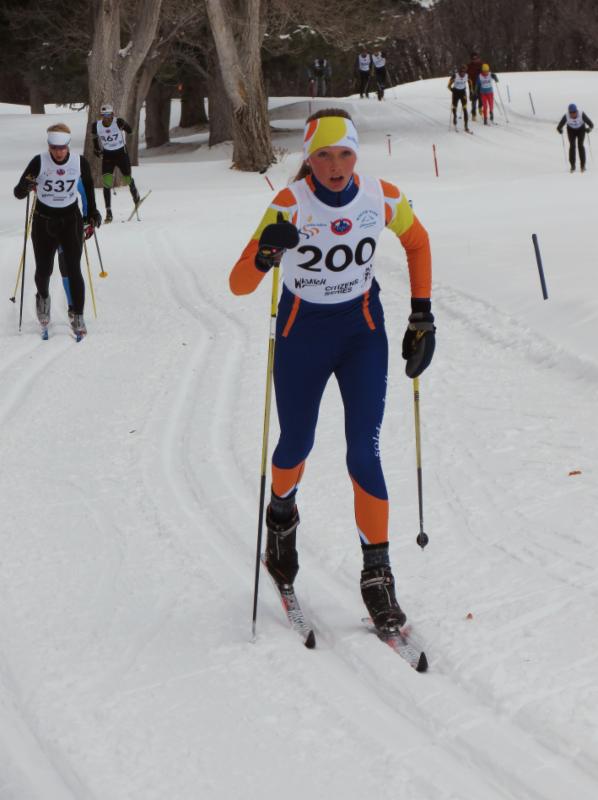
Will Solow (Mansfield Nordic Club) racing in an Eastern Cup race at Craftsbury. (Photo: Gary Solow)
It rained overnight with temps above freezing, but the course held up very well and remained stable and mostly firm albeit saturated.
We saw a lot of this last year and I was really happy to have plenty of the right Toko products on-hand. From early-season temps to Junior Nationals last year, the Toko warm fluoros just seemed to be incredibly reliable and fast.
All skis had a base of HF Red. A quick test in the morning showed that HF Yellow was not significantly better or worse, and so we stuck with the HF Red and focused on testing topcoats, application methods, and structure.
We felt there was a pretty significant difference between powder and blocks and focused on using blocks to best effect. Our final call was Jetstream Yellowrotocorked, then brushed, with another quick hand-corked layer over that. After a final brushing, skis received Helx Red liquid on the first part of ski, with Helx Yellow on the rear.
Early structure winner was a Swix tool that provided a left-angled and non-aggressive pattern, although at a somewhat large 1.5mm. As the course got more skied-in and churned up the tails of the skis received the combo of right- and left-angled patterns to form the crosshatch or “fishnet” pattern.
Our skate skis seemed to be performing really well and with large packs of skiers it was easy to evaluate speed and glide. Reports from the racers were very good!
– Adam Terko, Mansfield Nordic Club Head Coach
Here are a few action shots of US Toko Athletes at the most recent World Cup races in La Clusaz, France. (All photos: Nordic Focus)
Erik BjornsenRosie BrennanErik Bjornsen in the field
How to have fast skis ALL THE TIME and in EVERY CONDITION
I love my job. The contact that I have with people in the ski community is pretty much always positive and enjoyable. We have great waxes and other products so of course generally interaction, feedback, and my motivation are very positive. However sometimes at events or otherwise, I have people approaching me trying to get me to guarantee super fast skis if they use a certain wax. A fairly rare thing is also that a person didn’t have the fast skis that they were hoping for. It is important to take a step back and take an overview so you all have the proper perspective on what makes a fast ski on any particular day.
The 3 main factors to having fast skis are ski flex and design, structure, and wax. You could throw base material in there too, but most people have what they have, so that is more of a World Cup level topic. (Note that many skis have different base material that matches the type of conditions that they were designed to ski in, so this is addressed in the ski selection process. Example: Rossignol S3 or C3 have a “wet” clear base material to match the flex and structure that the skis come with).
Far and away, the most important factor in having fast skis are the skis themselves. Given a particular condition, the skis need to match the condition in terms of their flex and design as well as match the skier (weight and ability).
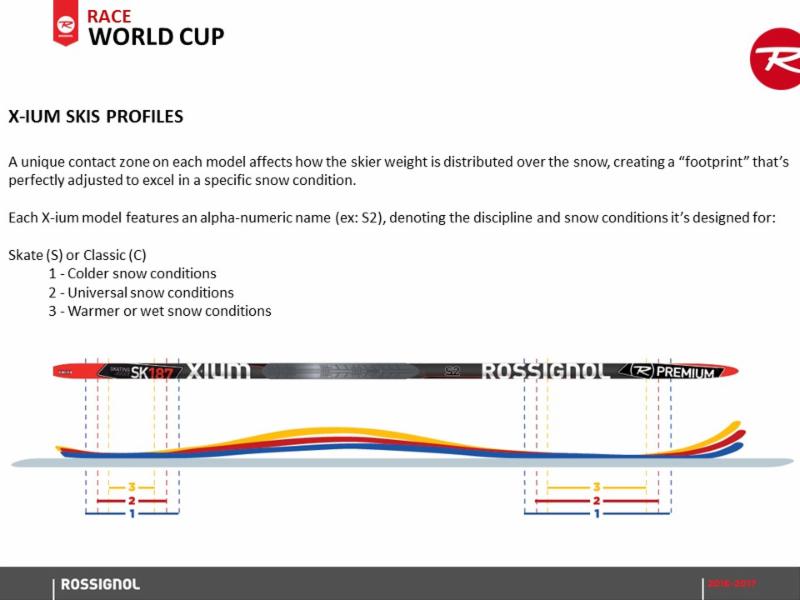
Let me use Rossignol as an example because I am very familiar with them and confident in them. Below is a quick chart explaining the flex/design of the top Rossignol skating skis, the Xium Premium S1, S2, and S3 skis. In each of these skis, the camber height is different as is the contact area of the skis to the snow if the skis are fitted properly. (The concepts are identical for Skate and Classic skis).
If snow is cold, dry, and slow snow, a fast ski will generally have a low camber and a relatively long area of contact in the tip and tail sections. Assuming the structure and wax are “cold”, the skis should be good assuming they are fitted correctly. If the skis have a high camber and a short area of contact in cold, dry, and slow snow, the wax and structure can still slow the skis down further, but the skis will not be very good regardless of how optimal the other two factors are.
It is the same in wet snow. Clearly, having a low camber and more contact between the ski base and the snow will result in more suction and more opportunity to pick up dirt creating more friction and more suction. Minimizing the contact results in much faster skis for the short term and especially after some kms are skied. The disadvantage of using a lower cambered ski with longer contact area can not be overcome with “wet” structure and wax to the point that the skis are really good. This is especially the case in dirtier snow where the addition of a deeper structure to compensate for the increased suction (surface tension) created by having a longer contact area will only result in more dirt attaching itself to the ski base which makes the ski slow due to the added friction of having dirt on the base as well as the increased suction because the structure is filling up with dirt and the previously hydrophobic base material is covered with dirt and no longer hydrophobic.
In past years with different ski designs, many people including myself liked to err on the soft side, especially in the west where we get a lot of cold dry and slow snow. The current ski designs such as Rossignol need to be fitted properly and I personally lean toward the stiff side to ensure that the skis can function as intended.
Bottom line is that in order to have fast skis in all conditions, the skis need to be the right flex and design for the conditions and they need to fit the skier such that the contact area matches the intent of the ski design. If you put a 200 pound guy on a ski designed for a skier of 160 pounds, there will be an increase in contact area. Also, the more aggressively a skier skis, the more care needs to be taken to ensure that the skis are stiff enough to accommodate being suspended on the right length contact zones.
Looking at the chart above, you can see the different colors of the S1, S2, and S3 patterns. They match up with the Toko colors which makes sense because normally when you use one of those skis, you’d be waxing it with the color associated in the chart.
Structure is often the next most important factor, especially in the two extreme conditions which are cold, dry, slow snow and wet snow. In cold dry fast snow that is for example transformed, a more aggressive structure can be used with success. This is why I keep mentioning “slow”. A base finish that is not a “cold” grind (very smooth) will not run fast in cold, dry, and slow snow regardless of the flex of the ski and what wax is chosen. In very wet snow, a “cold” grind will not run fast even if the ski and wax are optimal.
All 3 factors in having fast skis need to be considered. Satisfying any one or even two factors will generally not yield fast skis if the third factor is in conflict with the conditions. Most times, the factor that is most in opposition to the conditions determines the speed of the skis, not the ones that are in agreement with it.
So, my recommendation is to consider skis from a macro level starting with ski selection (should not be too soft!), then structure, and then finally wax. It is not as complicated as it sounds if you are a passionate ski racer (ie, you are willing to invest financially as well as in physical preparation). Have an S1 ski with a fine structure that you generally will wax with Toko Blue waxes (need to wax with a softer wax periodically for the health of the base). Have an S2 ski with a universal or cold universal structure that you will more commonly wax with Toko Red waxes. And lastly have a pair of S3 skis with a warm grind on them that you will mostly wax with Toko Yellow waxes. This way you already have skis optimally suited for each general condition that have a structure that matches the condition where you would use them. Then finally wax is the “icing on the cake” and will then be able to really make the skis fast.
A ski racer could show up with all 3 of these skis prepared as described with no knowledge whatsoever of the conditions and basically always have good skis. With forecasting, it is possible to eliminate one or even two of the conditions associated with S1, S2, and S3 which makes it even easier and more convenient to have great skis. OK, now you know! Good luck and see you around!
Photo from Women’s Sprint Final at the Davos World Cup (Credit: Jacques Mignerey)
Silver Star SuperTour Report
Cold fresh snow racing continued with the Super Tour/ Nor Am at Sovereign Lakes Nordic Center in British Columbia. We raced on a cold hard paraffin with Toko JetStream Red 2.0 powder. It was a bit surprising that the Red 2.0 tested and performed so well considering the single digit temperatures. The range of the JetStream 2.0 Toko powders is fantastic. We covered the powder with Blue 2.0 Helix.
The races were solid, but off the mark of where we really wanted to be. We are in the Methow Valley to train in prep for Nationals. We are feeling good and our preparation has us still ready to be on at Nationals.
Checking pole height
Caitlin Gregg fighting through the powder on a cold day at Sovereign Lake.
Brian Gregg looking for more speed at Sovereign Lake.
Great to have cold fresh snow in West Yellowstone. We had all of our skis zeroed with Toko NF Blue so that we could pick the best ski for the day. We also had our matched test fleet to test wax each day. HF Red/Blue 1:1 mix won our paraffin test on Friday and we ran on it all weekend. Toko Blue 2.0 powder won the powder test on Friday. We tested again on Saturday and Sunday and another powder ran better so we went with that. We ran Toko 2.0 red block for the sprints, both the qualifier and the heats. Our skis were amazing and we were happy with our qualifiers, but a bit disappointed with our tactics in the rounds. On Sunday we ran the same glide and kicked on a thin Toko green binder, with a hard wax cover on skis with a high easy closing camber.
We are settled in to our accommodations in Silver Star and are excited for the 10/15 km Freestyle next weekend. A bit of a slow start to the season for us, but this weekend and US Nationals are a major focus in our goal to making the World Championships.
Nordic Race Wax Tips
With quite a few events this weekend, we wanted to call your attention to the new location of Toko Race Wax Tips! They are at the NEW TokoUS.com. The specific link is here. You can drill down on a specific region too of course.
How to Wax Backcountry Skins
With all of the snow falling recently and plenty more on the way, people might be heading into the mountains for some backcountry skiing. Here is a quick video on how to best wax backcountry skins by Toko Tech Team member Erich Wilbrecht. See entire video library here.
Some Images from the Cross Country World Cup Races thus far All images from Nordic Focus
Liz Stephen (U.S. Ski Team) racing at the Lillehammer World Cup last month. (Photo: Toko/NordicFocus)
Ida Sargent racing earlier this season at the World Cup in Lillehammer, Norway. (Photo: Toko/NordicFocus)
Ida Sargent (Photo: Toko/NordicFocus)
Noah Hoffman racing last December in Davos, Switzerland. He is the recipient of a discretionary spot on the World Cup. (Photo: Toko/NordicFocus)
Eric Packer (Photo: Toko/NordicFocus)
Caitlin Patterson (Photo: Toko/NordicFocus)
Sophie Caldwell (Photo: Toko/NordicFocus)
Simi Hamilton (Photo: Toko/NordicFocus)
Rosie Brennan during a classic race this season (Photo: Toko/NordicFocus)
Toko Designer
Elite ski racer Mary Rose introduces the designer color in the Toko drink belt, buff, and race hat.
Online Toko Retailers
This is a list of Toko dealers that have online shopping capability and a decent selection of Toko products.
Another great option is to order from TokoUS.com where every product, option, and color is in stock. We use a system that gives dealers in the same region as you the option to claim orders if they have the product in stock. This way you can see and order every Toko product but at the same time support local dealers. All orders over $50 yield free shipping until Christmas!
Wax Clinic
Ian Harvey will be giving a General Wax Clinic for Nordic skiers at the Aspen Cross Country Center on Monday December 5 at 5:30 pm. For a schedule of other Nordic wax clinics throughout the country, click here. Monitor this because we are adding clinics every week.
How to Wash Down Items
Do you have a down jacket or sleeping bag this is now dirty and you are afraid to wash it? Use Toko ECO Down Wash! This video gives a brief explanation. One bottle of Toko ECO Down Wash yields 7-10 washes depending on how hard the water is and how big the load is.
Introducing an inexpensive workbench with good options – for Alpine, Snowboard, or Nordic
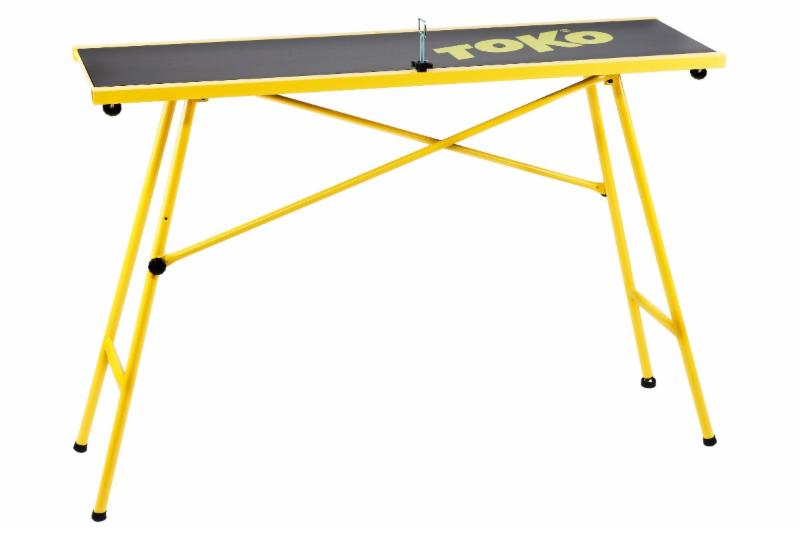
Toko Workbench Small
The Toko Workbench Small is a multifunctional lightweight stable wax table with 4 non slip rubber feet. Its height is adjustable between 87cm, 85cm, or 75cm to accommodate waxers of all ages and heights. The work area (surface) is 120cm x 35cm and it weighs 11kg. MSRP just $164.
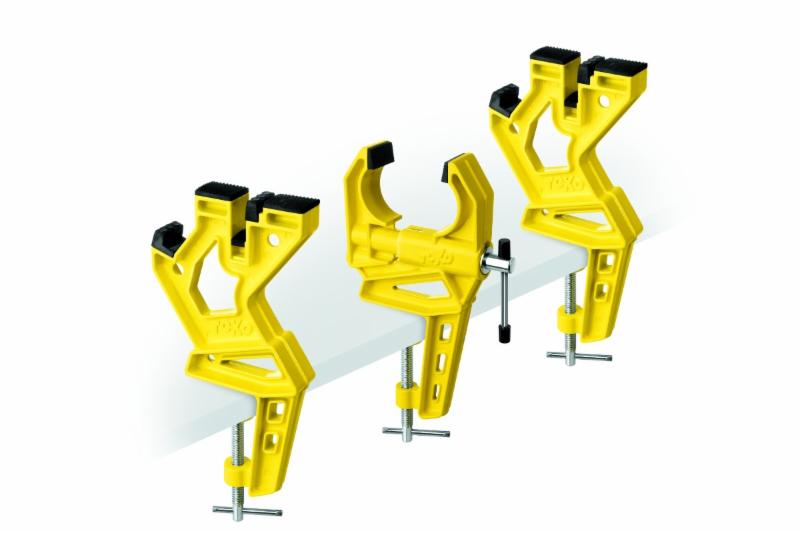
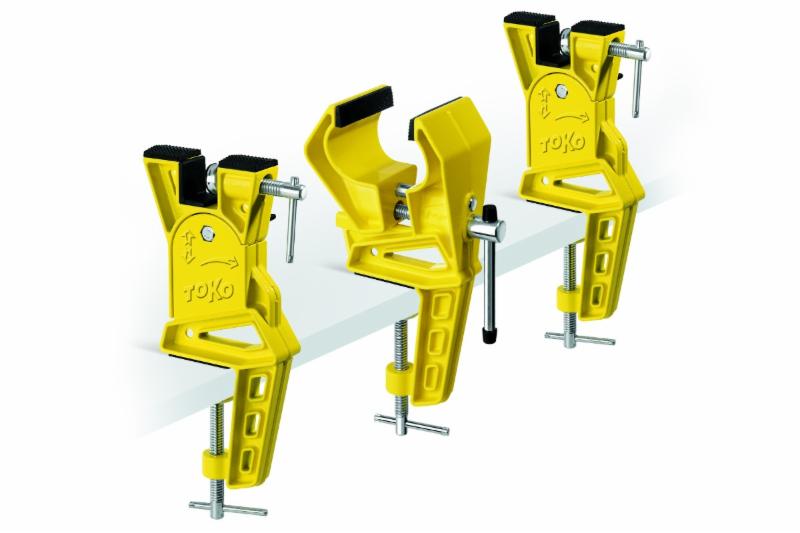
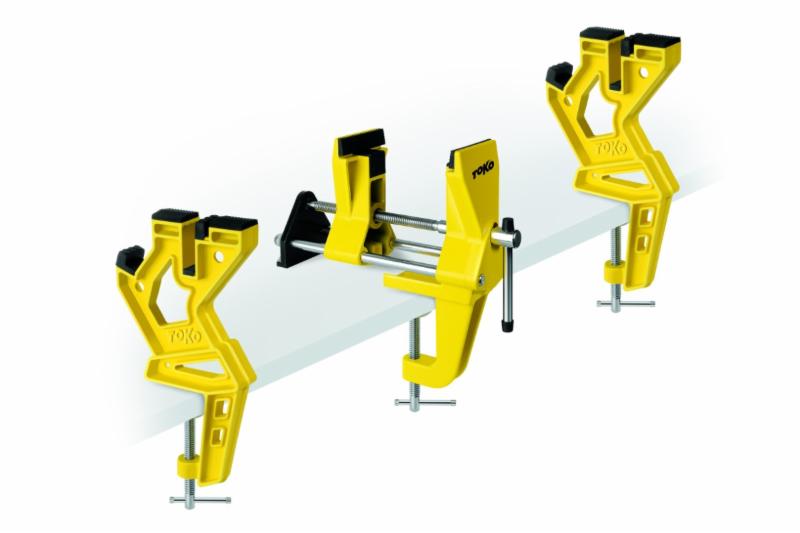
For Alpine waxing and tuning, there are 3 good vise options to use with this bench.
They are:
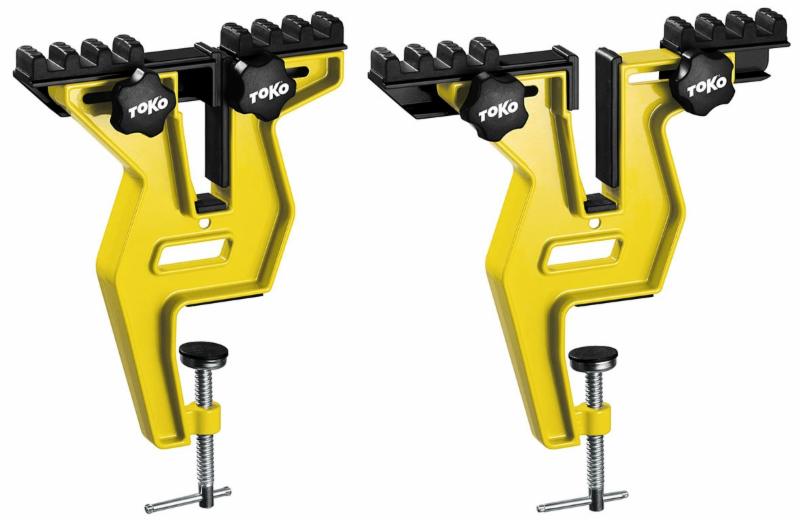
Ski Vise Race: The least expensive quality 3 part vise on the market. End pieces allow working on the skis at a 90 degree angle for waxing and tuning or at a 60 degree angle for working edges. Middle clamp opens to 90mm and can be fixed to bindings or binding plates to accommodate wider skis. Comes with 2 ski brake holders. MSRP $160.
Ski Vise World Cup: This is our top level vise for working on metal edged skis. The end pieces are adjustable for height and also accommodate tuning and waxing at either 60 or 90 degrees. The middle clamp is wider allowing for a longer contact area yielding more stability. The jaws open to 100mm and can be clamped to binding plates or bindings to accommodate wider skis. Comes with 2 ski brake holders. $MSRP 210.
Ski Vise Freeride: For securing very wide freeride and freestyle type skis. The end pieces are similar to the Ski Vise Race enabling waxing and tuning at 60 or 90 degrees. The middle clamp has a wide contact area and opens to a massive 155mm. MSRP $250.
For Snowboard, we recommend using the Board Grip 2.0.
Board Grip 2.0: This adjustable snowboard vise can be made wider (making it smaller is convenient for storage purposes so it fits in a box easier) for increased stability. The antislip rubber surface keeps snowboards stable for waxing, scraping, and brushing. Snowboards can also be inserted and clamped in the middle for tuning edges at 90 degrees. MSRP $130.
For Nordic skiing, we have two good options:
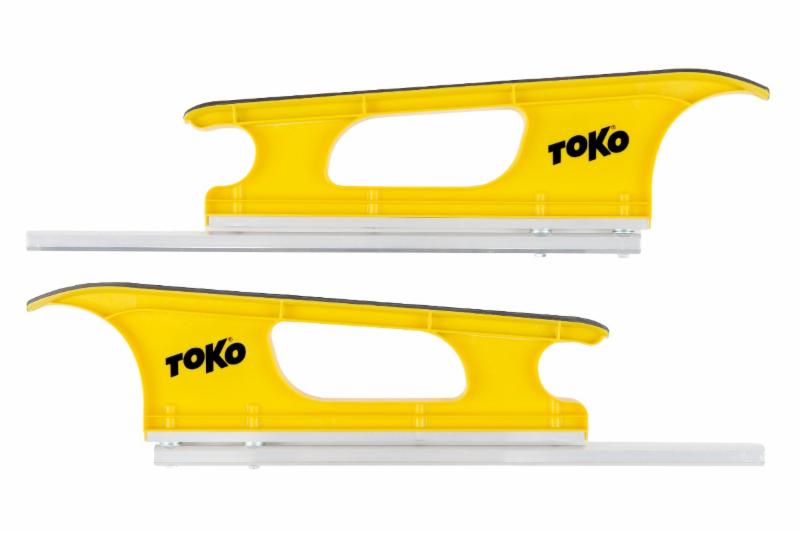
XC Profile Set for Workbench Small: These plastic profiles fit the workbench small only. They include the middle binding clamp piece (not pictured). These profiles are suitable for both classic and skating length skis (170-210cm) and weigh just 1.4kg. MSRP $130.
Ski Vise Nordic: Simple very compact fixation device for Nordic skis (both skating and classic). Very adjustable to fix all lengths including kids length skis. Ideal for traveling, for waxing “on-site”, and for at home. MSRP $126.
Not all Toko products can be found at Toko retailers. Here is a hyperlink to the Toko pages of some of our online dealers. Additionally, every Toko product can be found at TokoUS.com. Orders placed at TokoUS.com will probably be filled by our dealers who have opportunity to claim and fill the order if they have everything in stock.
1. Innovation. There is a long list of Toko innovations such as the first fluorinated glide wax, first pure fluoro in block form, first to use Molybdenum which then everyone switched to (now we use something else: Diamond Like Carbon), first dedicated ski waxing iron, first “thermo bag”, first copper brush which is pretty universally recognized as the best general purpose brush out there, and many more. In short, we have been THE innovators of the wax and tool industry for many years.
2. Simplicity. We have fewer waxes. Why mix red and blue and call it purple? They are easy for people to mix themselves if necessary. To buy into the Toko line costs less (fewer waxes). The more simple line makes it far easier to learn the line and the nuances that make a big difference (When to mix XCold Powder with HF Blue or when and how to layer Nordic binder with straight grip wax). It is the same with kick wax and klister. Toko waxes are also designed to be broad ranged and always in there compared to other brands who have some products that are great, but in a very specific range. If something changes (sun comes up, hit some shade, it starts snowing, etc, you’re screwed). Toko offers 3 glide wax hardnesses (colors) in NF, LF, and HF plus a black wax. We have 4 kick waxes plus a binder and 3 klisters plus a binder.
3. No compromise/performance. Our waxes regularly win Olympic, World Cup, and National championships. In testing, we are the best regularly and always in there.
4. Service. On the TokoUS.com website, there is a well organized menu of “how-to” videos consisting of concise videos that cover the why and the how. These videos cover 9 different categories such as Alpine race waxing, Alpine recreational tuning, Nordic recreational waxing, tuning for Freestyle, and so on. If a person has a tuning question, he just needs email info@TokoUS.com and either I will answer the question or if the question is regional in nature, I will forward it to one of our 25 member technical team. For Nordic, there is no other company that does Nordic race wax tips like Toko which is surely why the other brands always wait for the Toko wax tips to come out before sending theirs out. We have a team of 25 technicians who are expert. Most have been doing Toko wax tips in their region for 15+ years and really know the weather tendencies and local weather phenomenons that occur. This is where our wax tips come from: local experienced experts who are right there and have been for many years. There is no other brand that provides service like Toko does in the US.
If you wear base layers, you will be glad you watched this short video. Learn about my favorite product, any brand, any purpose: Functional Sportswear Care, a treatment to reactivate and improve Base Layer performance leaving you dry and the right temperature. The difference is huge and you’ll really appreciate this stuff!
Video Footage fromRecent USST Time Trials at Soldier Hollow
USST Toko Athlete Sam Morse on What Makes a Champion
At just 20 years old, Morse’s maturity separates him from his peers. And, he’s so very kind. He is one of the most genuine humans this planet has to offer. The future is bright for this one, so make sure to follow him as he moves up the ranks on the Team. We asked Morse our three questions on what he believes makes a champion.
U.S. SKI TEAM: In your words, what makes a champion?
SAM MORSE: A champion wins with passion and loses with grace, and pours their heart, soul and everything they’ve got into a sport.
U.S. SKI TEAM: Do you remember the first time you felt like a champion?
SM: The first time I felt like a champion was racing in Maine, winning the Maine Alpine Racing Association season championship title as a J5. I thought, “Maybe I can really make something out of this whole ski racing thing.” It felt satisfying and propelling.
U.S. SKI TEAM: What is the biggest piece of advice you have for aspiring kids who want to be sitting where you are today?
SM: Give it all you’ve got and find enjoyment in striving for your own goals, rather than for the affirmation of others. Also, the best advice I’ve ever received was, “No one thing will make you the greatest, it is the sum of the parts that make a masterpiece.”
Fun Facts:
“Moose” is Morse’s childhood nickname, as there are more moose than people where he lives and they’re big, burly animals that are gentle yet very powerful.
If he could be one inanimate object, he’d be water, because “you get to travel the globe, change physical states and always keep moving.”
Go-to travel items are a deck of cards and a good book.
His best friend on the team is fellow east-coaster Drew Duffy (Warren, VT), whom he grew up with racing in the Junior Olympics.
Morse is a HUGE Boston Red Sox fan, and his non-skiing role model is Jason Varitek, catcher for Boston Red Sox through early-mid 2000s because he’s a man of faith and always worked hard day in and day out.
Morse is involved with the Winter Special Olympics held at Sugarloaf each January, is a Sugarloaf Area Christian Ministry active church member and a rostered speaker for Camps Farthest Out (CFO) a Christian family camp organization.
Annie Hart: What is a Winter Warrior. Introducing the Toko Winter Warrior collection.
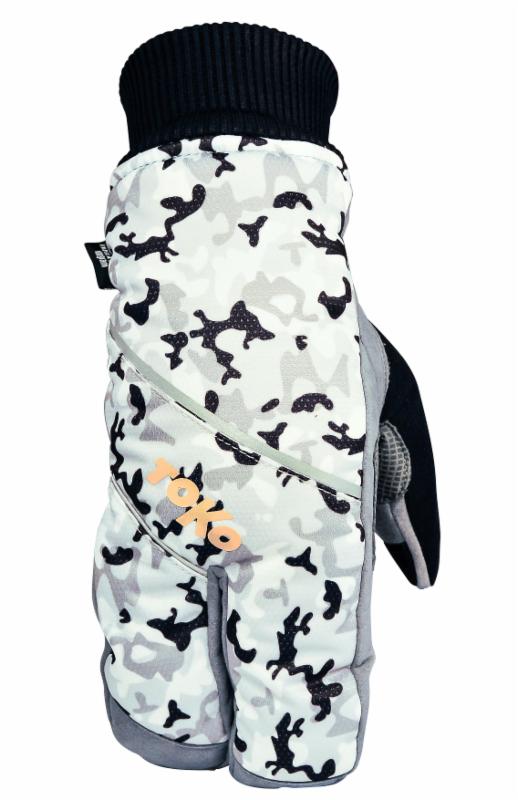
Arctic Split Mitt – for extreme cold weather
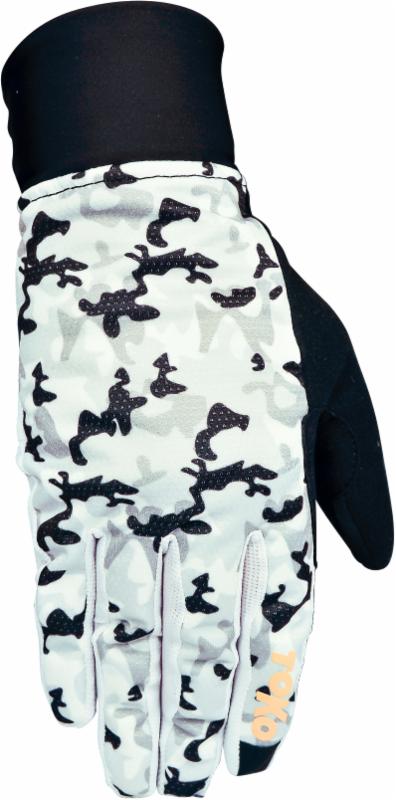
Profi – lightweight race
Thermo Plus – cold weather glove
Thermo Plus Biathlon
Thermo Plus Biathlon is the same as the Thermo Plus except it has reinforced seams around a serrated line on the shooting finger in case an athlete wants to cut the shooting finger to allow for a better feel on the trigger. The reinforced seams will prevent the cut from getting bigger and bigger.
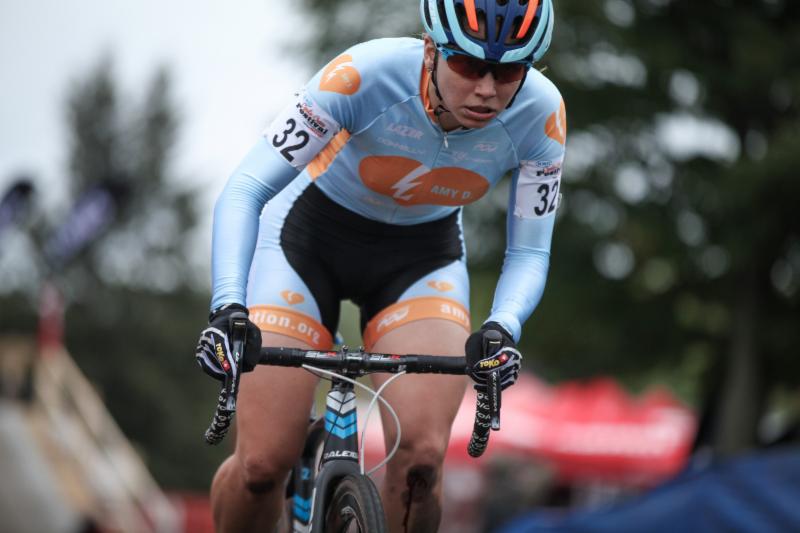
Toko glove sponsored elite Cyclocross Rider Becca Fahringer has had a great season so far both domestically and in Belgium in the Super Prestige Cups. Not only is she really fast, but she also writes an entertaining and witty blog. Follow her at gofahr.com
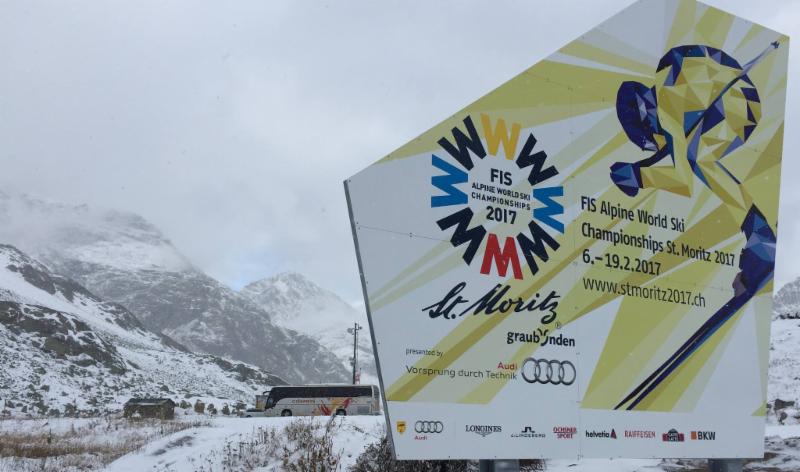
There is snow on the valley floor in St Moritz, site of the Alpine World Championships this winter. For those that are as excited about these events as we are, it’s cool to see!
Why it is important to use a quality detergent on specialty outdoor apparel? This video explains the difference between ECO Textile Wash and supermarket detergents. Find ECO Textile Wash at TokoUS.com and other Toko dealers. (See dealer links at TokoUS.com)
Reese Hanneman = Winter Warrior. Are you?
It is almost winter, most of the peaks are white, the mornings are crisp, we are pumped to be on snow! Here’s a video that will get your adrenaline pumping and will motivate you to get out when the weather is not so inviting. What is a Winter Warrior?
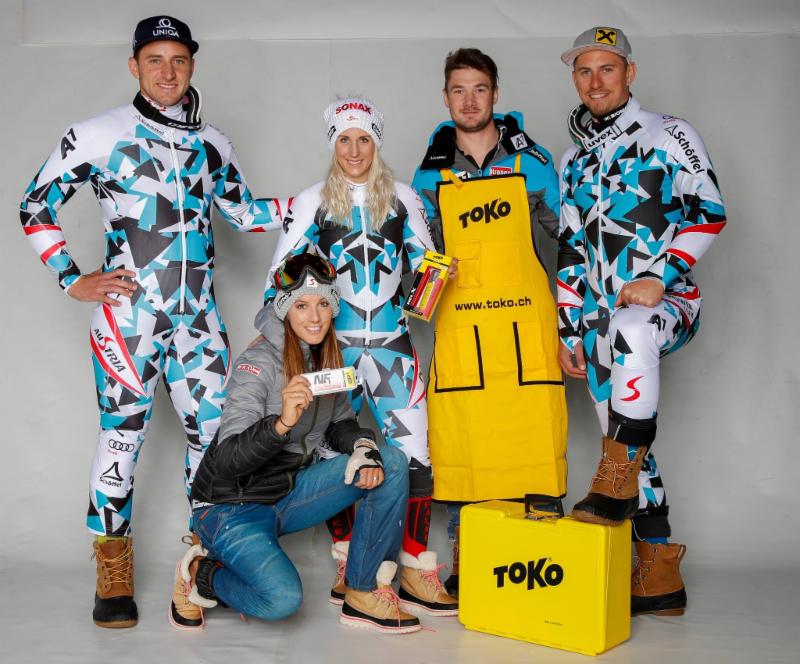
Ski Austria and Toko are ready for winter!
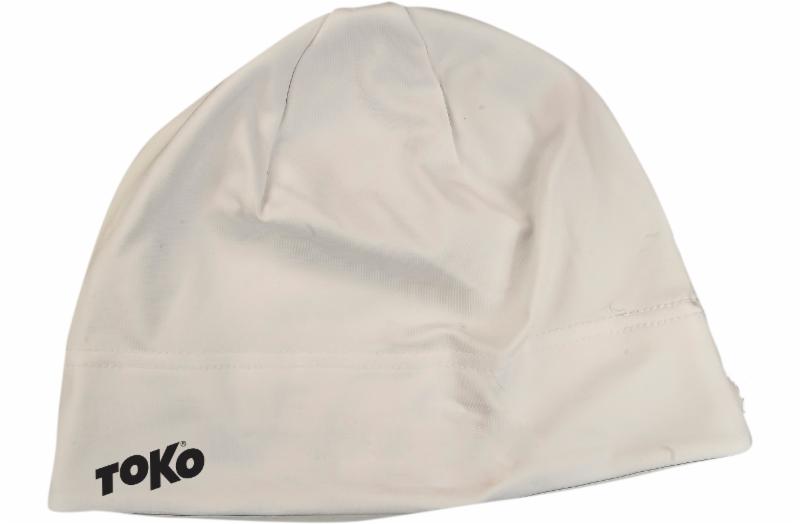
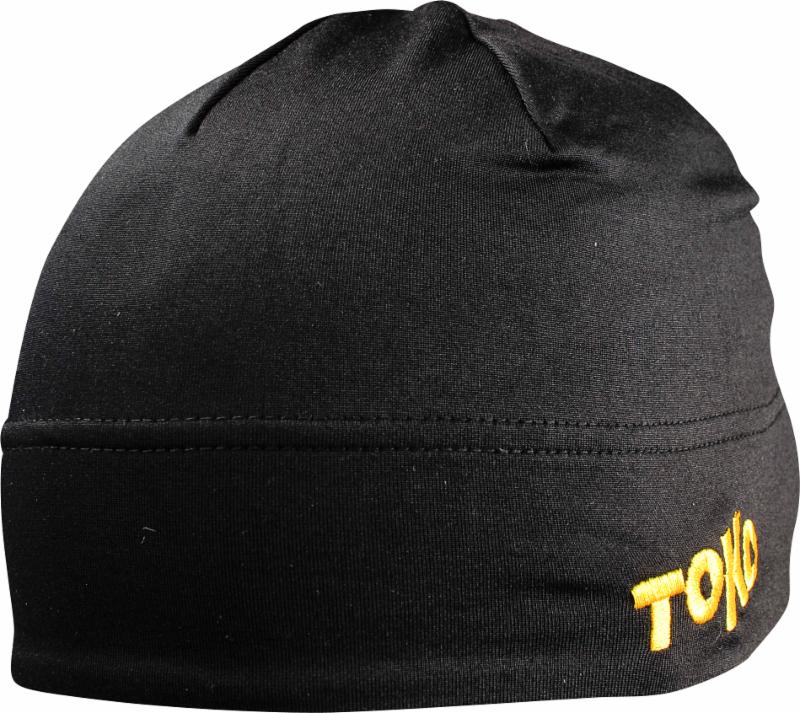
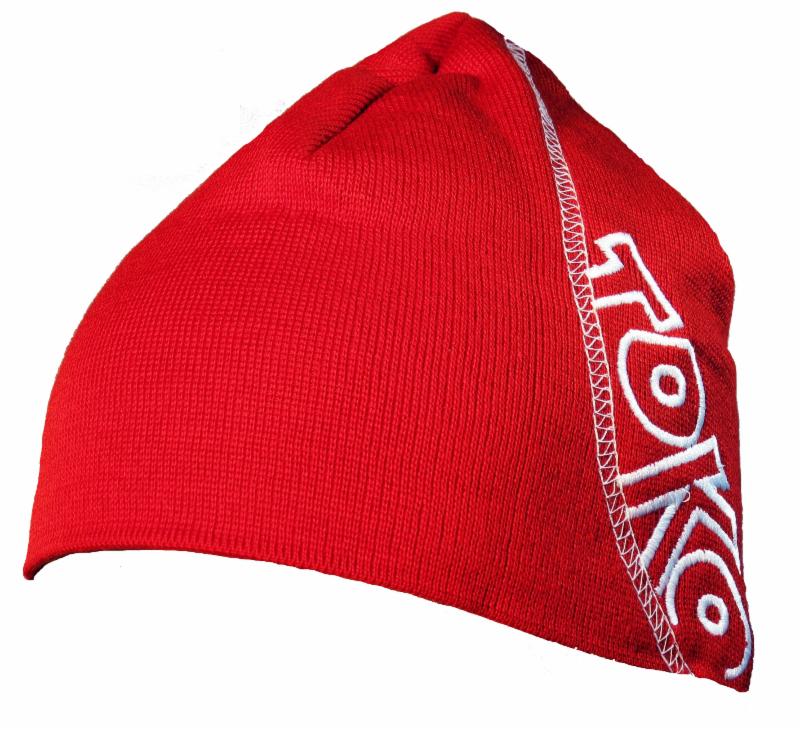
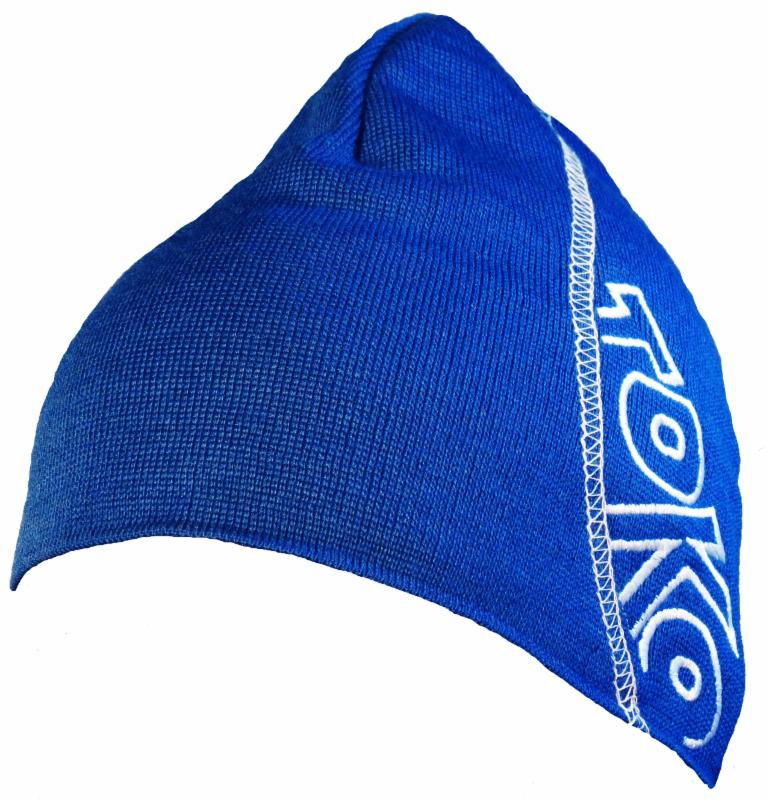
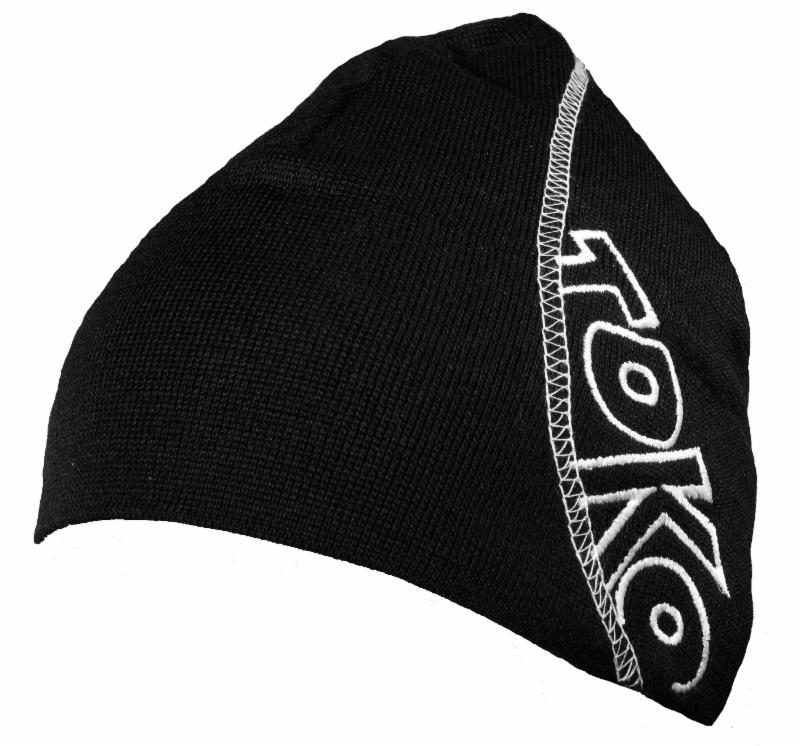
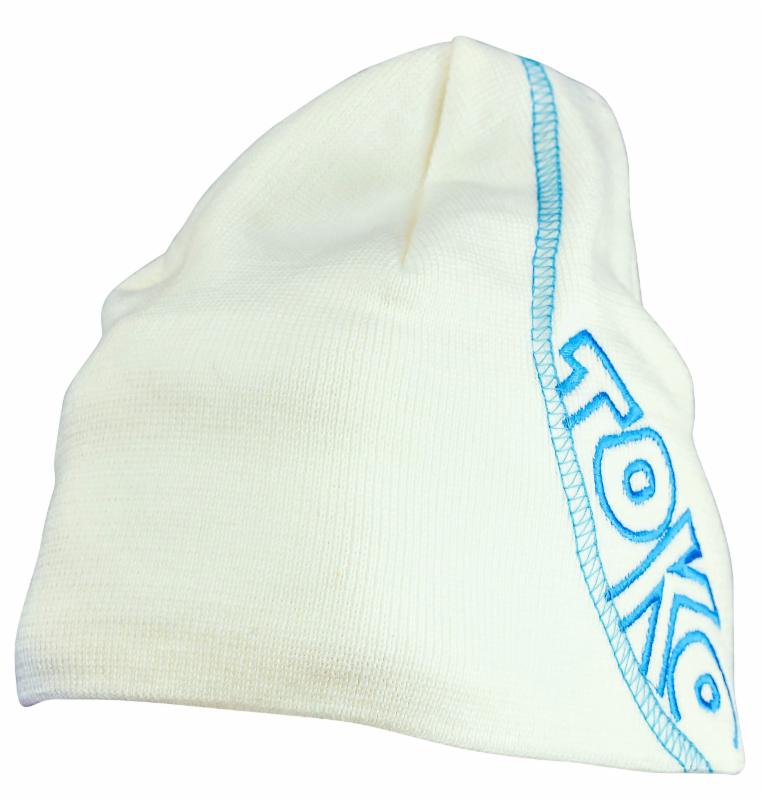
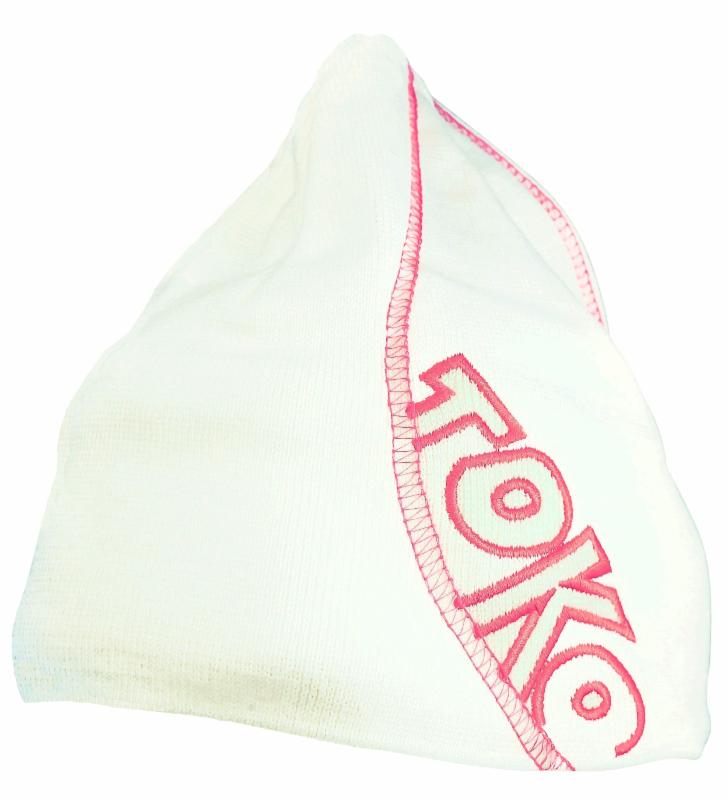
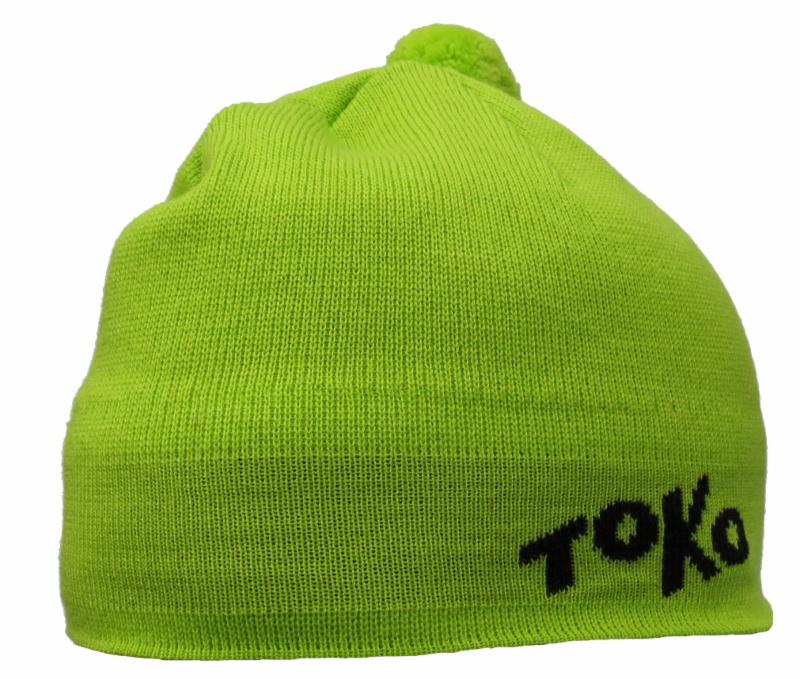
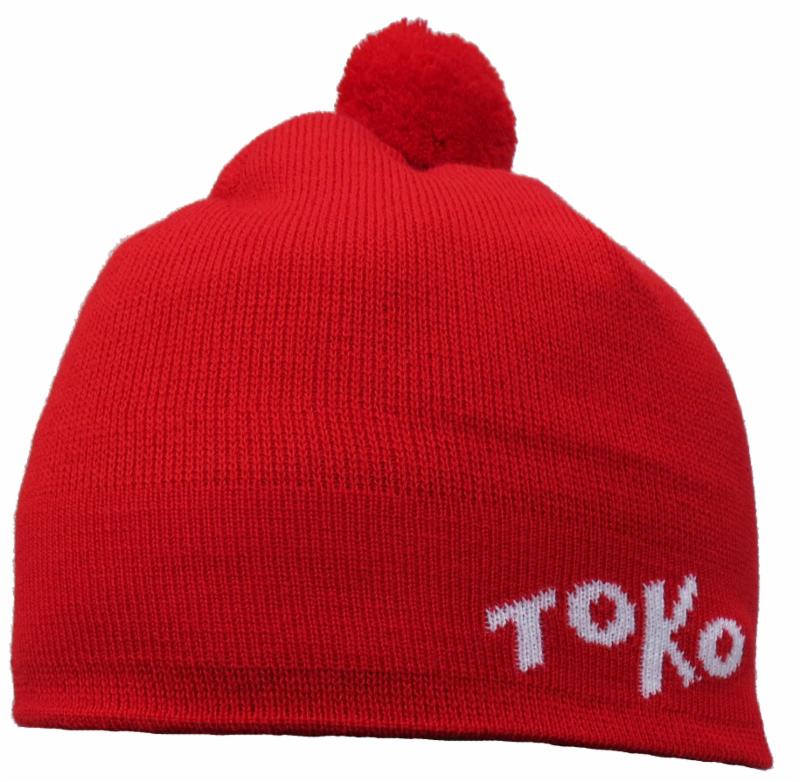
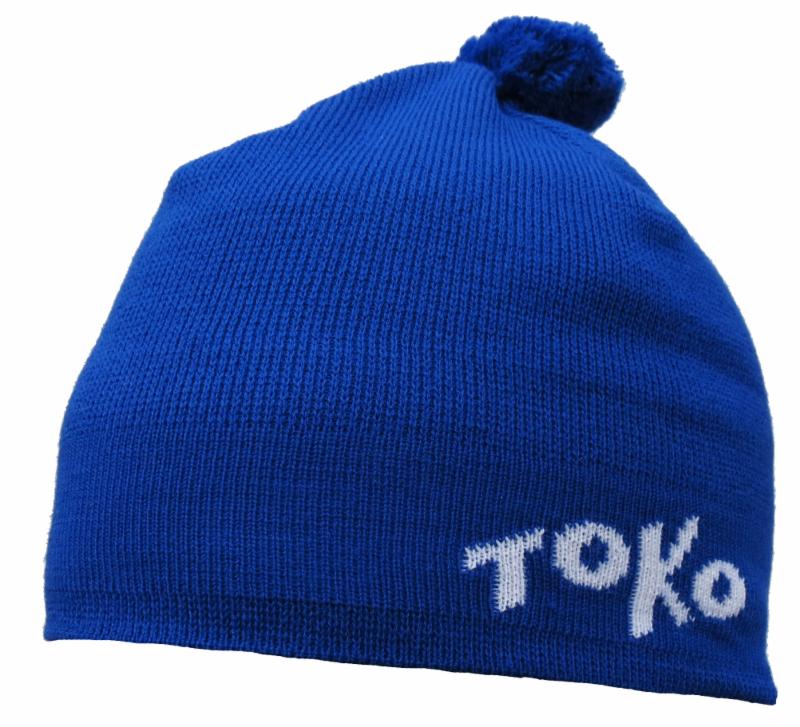
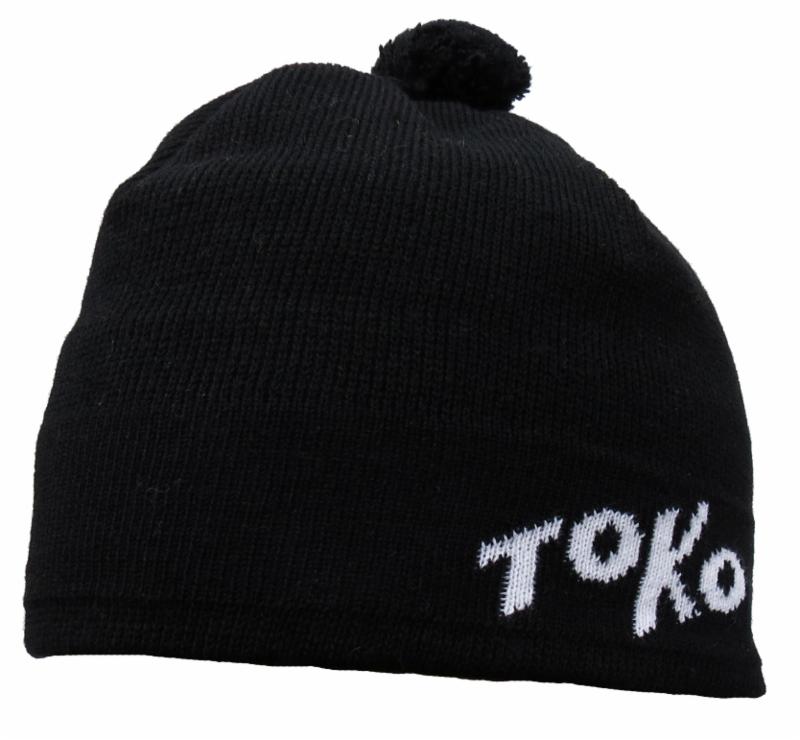
Toko Team Hats
The idea behind Toko Team hats is to offer hats for event organizers and teams or clubs to use our hats as their official hats at a very low price. Here are the options:
We offer you the Toko Team hat for just $9! The front of this hat has been left blank for you to screen or embroider at your local embroidery shop (this is for your to organize).
The lycra hat is at a crazy price of just $11. You can’t miss! Has a microfleece liner. The front of this hat is also blank.
The Sina hat is our most popular hat currently in general (not team sales). It is medium weight. The front of this hat is mostly blank (see Toko logo).
One thing that we have noticed is that people have been trying to find Toko products and haven’t been able to easily find them. This especially concerns products such as TF90 Paste Wax, some tuning tools, spray klisters, Toko gloves in various models and colors (such as the new Winter Warrior), start duffels, Care Line products such as Down Wash, etc.
For this reason, we are especially excited to be able to say that every product in every variation is now easily available at TokoUS.com. We have also made a number of brand new short how-to videos that should be a great resource to you!
Of course we have a great many valued dealers who we will continue to support. We work with Quivers which is an order fulfillment system that will enable us to offer orders to our local dealers if they have the product in stock.
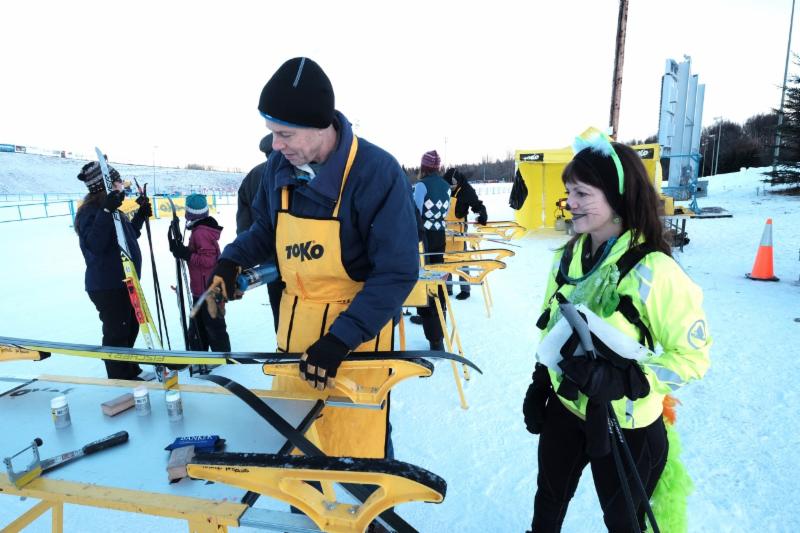
Introducing the Alaska Ski for Women, a fundraiser to help stop the cycle of domestic abuse against women and children and also a really fun outing! Toko has supported this important event for the past 17 years.
Alaska Ski for Women – an important event
The colorful Alaska Ski for Women (ASFW) is North America’s largest women-only cross-country ski event. This is a great event where women of all ages and abilities come out to Nordic ski approximately 2.4 miles (4K), many in colorful costumes, while raising funds for local non-profit organizations that help stop the cycle of domestic abuse against women and children. This is not only a fun event, it’s also a fundraising event! Through the generous donations of ASFW participants, and the hard work of the all volunteer committee, the race has been able to make an impact in the community by contributing over $1,000,000 to groups that actively work to improve
women’s lives. A special focus is ending the cycle of violence against women and their families and to help women in crisis find positive solutions to a healthier life.
Held every year since 1997 the Anchorage event originally had nothing to do with the Super Bowl and started as a way to get more women out skiing together. That it was set on the same day as the football game was a coincidence -it was the only Sunday left with no race scheduled when the initial reservations were made. Since then, organizers kept the race on the day of the Super Bowl because it offered a great reason for women to have fun and raise money on a winter day when people are in a celebratory mood already.
The primary purpose of this event is to get women out and take away their excuses. It certainly is a nice date and the event gets done in time to watch the Super Bowl. Race Director, Tamra Kornfield said 500 women signed up for the event this year, a slight drop from last year’s numbers but the goal is to get more women interested in the sport as well as supporting a good cause. While it’s not yet known exactly how much money was raised this year, Kornfeld said last year the group raised about $50,000 in donations. Teams dressed in costumes including a Chinese dragon, hot air balloons, a lion, a gorilla, devil’s club and public school busses. A team dressed as “Google Maps” claimed victory in the costume contest. Olympic cross country skier Kikkan Randall was one of the costume contest judges. Randall said that the trail was well-maintained with manmade snow despite the lack of natural snow. Were it not for the snow making equipment at Kincaid Park the last two season, the Ski for Women might well have been a walk as it was in 2005 when there was no snow on the ground.
I have been a wax volunteer for the ASFW since the inaugural event in 1996. Initially a group of volunteers took over the Kincaid Park wax bunker and provided skate and kick wax services. TOKO started providing wax for the event in 1999 when I first came on board as a member of the TOKO Tech Team. The bunker was being renovated in 2001 for the World Special Olympics held in Anchorage and was unavailable for use for the Ski for Women. That year, myself and Mark Strabel set up our tables and tents in the stadium near the start and provided kick wax service to participants. Being near the start and seeing the costumes and the joy of the participants gave good reason to continue with kick wax service outside in the stadium. Glide wax service is also provided through rub-ons and paste. The following year TOKO became the proud and exclusive wax product sponsor of the Ski for Women and has been ever since.
In the 20 years I have been associated with this event there have been many volunteers who have stood outside and waxed skis. Some come for a year and others keep coming back. Each volunteer gets a TOKO hat and an apron. It is understood that regardless of the weather preceding the event or the forecast the day before, the morning of the ASFW will be cold and windy. These past few years I have been fortunate that a reliable core of volunteers has been available to wax. Chet Fehrmann, Ira Edwards, Eric Schwalber, Jay Holton and Matt Claman.
Toko is proud to support the Alaska Ski for Women and will continue to support it. Thank you to the organizers and the other supporters who make it possible.
– Patrick McGownd, Toko Tech Team Member since 1999
Bauer Wins the Pepsi Challenge
Hayward’s 3 time olympian John Bauer won last weekend’s Pepsi Challenge race. Here’s what he ended up waxing with:
I went with Toko HF Black then HF Red/ Yellow 50:50. I thought there was pretty good structure in the skis already so I did not re-rill. I did the red and yellow Structurite tool before adding JetStream Red and I put on a coat of the Red Helix. Perhaps I should have had more structure in…but there really wasn’t much one could do with the new snow that wasn’t much tilled when the sun hit it.
I think it was a good effort. I skied relaxed and in the pack until I led out after 3k. Skied the Silver with a few pushes over the hills and then was alone at the 11k point on in. There were a few lurchy spots on the downhills and the skis were noisy on the sun-drenched hills. Congratulations to John on his overall win despite being 47 years old!
Wax Report from JNQ Spokane, WA
We had our last JNQ event last weekend in Spokane, and I took 10 athletes to compete in the mass start classic and individual start skate events.
Conditions were slated to be challenging: with warm temperatures and no recent snow it was transformed but somewhat sloppy. The classic race had a possibility of new snow which I was hoping to avoid! Given the high moisture and rapidly rising temps during the day we went with LF Yellow and LF black mixed for both days as a glide base layer. Then I tested JS Red and JS Yellow blocks and found some mixed results: the JS Red ran well in the more frozen snow, but even without the temperatures rising, as the tracks (classic) or platform (skate) got more skied and transformed further the Yellow came into play. I opted for yellow on both days given where our athletes were starting in the order, and also used the yellow structurite. Next I want to play around with some linear 1mm rill to accompany the structure sometimes, as I think that would help further channel the transformed snow’s moisture down the ski – thoughts?
For kick in Saturday’s race, I first tested a green drywax vs. klister binder. Both skied comparably fast but out of fear of wear (lots of snowplowing, sharp corners) I went with the klister figuring it would increase tenacity. I covered the green binder first with Red, and tested that against a Red/Yellow mix. The Red was solid for most of the day’s races; it held well for kick and glide without getting slick as the tracks further glazed. However the later starters were the U14 classes and I wasn’t confident they’d be able to make it work (a few had issues in their warmup). I also wanted to keep the speed of the Red, so I just dabbed in some yellow. This small amount did the trick to add a bit more kick under the foot without sacrificing glide.
– Sam Naney, Head Coach Momentum Northwest
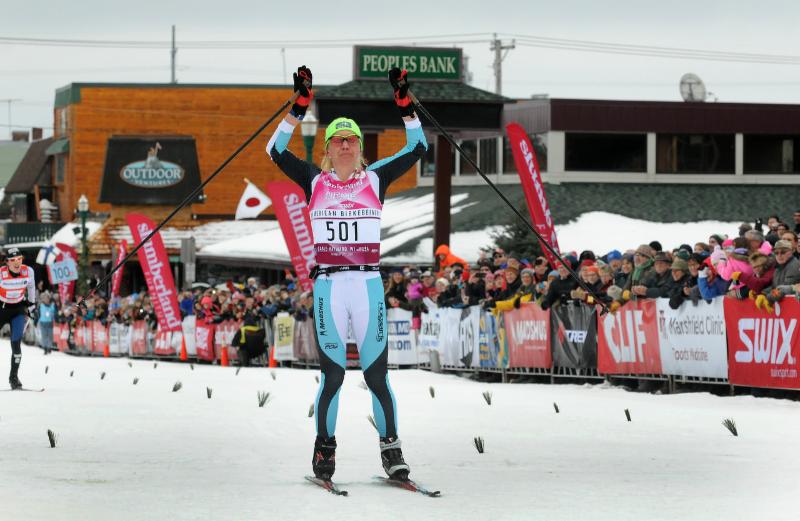
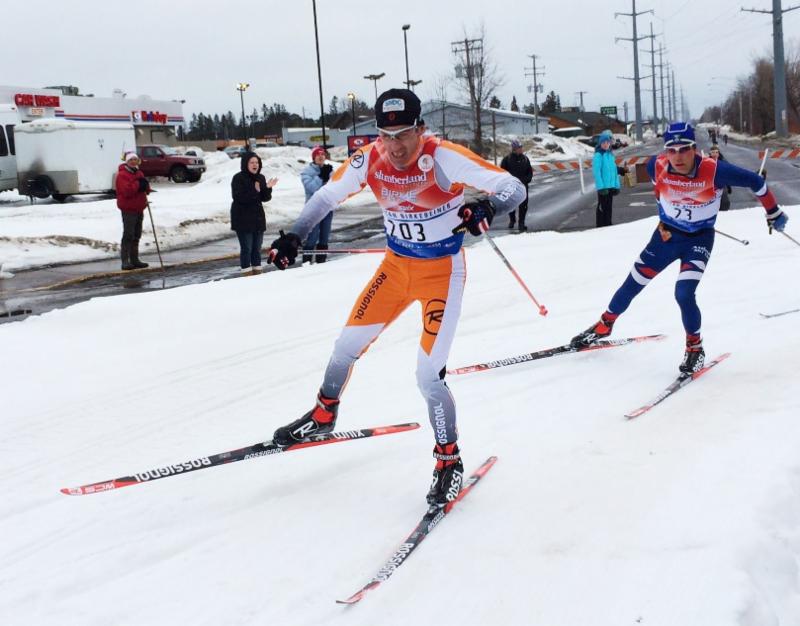
David Norris winning the American Birkebeiner (photo Paul Walsh) Caitlin Gregg wining the American Birkebeiner for a record 4th time! (Photo USSA)
American Birkebeiner CXC Wax Report
The American Birkebeiner is truly the “Super Bowl of Skiing” and the 2016 American Birkebeiner Ski Foundation (ABSF) schedule of events did not disappoint the 12,000 skiers who flocked to Hayward, Wisconsin to enjoy the festivities and trails of the North Country. The crazy weather was a different story; it caused a bit of stress for skiers, coaches, and wax technicians, including the Central Cross Country Skiing (CXC) wax team of Karmen Whitham, Marty Donegan, and Bruce Manske.
The glide wax was the easy part of Birkie waxing. We cleaned the ski bases with Toko LF Blue (-30 to -10 C); although the LF Blue is a hard wax, it aids in harden the base of a ski, and makes them run faster in transformed snow conditions; and, fluorine tribloc acts as a bonding agent for Top Finish products. Next, we applied a two layer of a 1:1 mixture of Toko HF Hot Wax Black and Toko HF Hot Wax Yellow (-6 to 0 C). The Black is very similar to the temperature Toko HF Hot Wax Red (-12 to -4 C), except the Black contains DLC additive for maximum dirt repellency. The Birkie groomers did an awesome job of preparing the course, but due to the thin snow cover and rainy weather, the course had a fair mount of dirty snow. Therefore, it was important to apply a double layer of wax. Toko HF Hot Wax Yellow has selected because of the high-fluorine content and its very durable, which aids in repelling water and dirt, and makes for fast skis.
The CXC wax team top coated each ski with JetStream Bloc 2.0 Yellow. The JetStream was cranyoned on across each ski and then melted with a fiberlene-covered iron. A very thin second coat of JetStream was then crayoned on the skis. This layer we rubbed into the ski with a dedicated cork; followed by lightly brushing with a soft nylon brush and polishing with a Toko Thermopad. The JetStream improved the speed and glide of the skis due to its high abrasion-resistant design.
The kick wax was challenging for most coaches and wax technicians due to the weather conditions, which included precipitation throughout the day, along with a glazing track, thousands of skiers, and the marathon distance factor. The CXC waxing crew, lead by Karmen Whitman, decided to use a combination of Toko Klisters. Nordic Base Klister Green was applied to the skis as a foundation layer; this was followed by a 1:1 mixture of Nordic Klister Yellow, designed for moist snow, and Nordic Klister Red, which has a wide range and is designed for transformed snow; Red is often used as a universal application.
We tested covering the Klister with several different hard waxes, including Toko X-Cold; the hard wax cover had limited success, and we decided to primarily remain with the Toko Yellow and Red Klister combination. In a few cases, we added an additional layer of the Yellow/Red for additional kick, along with extended the Klister zones. Another test, with limited success, included adding a layer of a universal Silver Klister. Yes, the freeze and thaw conditions of the trail, and the changing conditions between coarse and transformed moist to wet fine grained snow created a variety of challenges.
At the end of the day, The CXC Marathon Team, the CXC Masters Team, and the CXC coaching staff were very pleased with the performance of Toko wax and the results at the 2016 American Birkebeiner: Alice Flanders led the CXC women’s team in 10th in the 52k freestyle Birkie and Hillary Patzer finished 44nd. In the 55k classic Birkie, Nicolette Reker led the CXC women with a 20th place finish. Abbie Drach won the women’s Korterloppet in a time of 1:06:25.3. Duncan Douglas led the CXC men’s team finishing 31st in the 52k freestyle Birkie (as a 50year old!), with Cory Ellertson following close behind in 37th, while Chris Pappathopoulos finished 42nd. In the 55k classic, Nick Power just missed the top of the podium finishing second overall, with Andy Brown following close behind in fourth.
Bruce Manske Central Cross Country Ski Association CXC Development Coach
Birkie Wax Report
This year I was the only one of the Sugar Bowl to do the Birkie. Here are a couple strategies I used to have competitive skis while waxing for myself. The first thing I did was to apply my LF Moly layer at home before flying. This meant one less layer of waxing to do on Friday night. One great thing about the Birkie is the huge amount of testing and recommendations made public for the race. On Friday, I focused on getting a nice easy ski, with some pickups, to get ready for the race as well as eating a lot of food. After reading through the wax reports Friday afternoon, I wax my two wettest pairs of skis with Toko HF Yellow and Toko Jetstream Yellow Powder 2.0. I also applied a fairly aggressive structure pattern. The morning of the race I tested the two pairs of skis I waxed the night before. Once I picked the faster one I sprayed it down with Yellow Helix 2.0 and was ready to go. Toko makes wax recommendations for a ton of races you can find here. If you are traveling without a wax tech, there is a lot to be said for using wax recommendations, keeping the number of race morning wax decisions reasonable, and making sure you are physiologically ready to go.
– Spencer Eusden, Sugar Bowl Elite Team
47 Year Old John Bauer finishing 30th (and winning age group of course) in the American Birkebeiner
John skied on Toko LF Black then followed by Toko HF Black which he then covered with JetStream Yellow block (ironed with fiberlene), and finally covered with HelX 2.0 Yellow. John also pressed in a Toko linear structure followed by the Toko Red and Blue Structurite bits. Congratulations John! (Photo: Chris Young)
Race report from Vuokatti, Finland Masters World Championships
Almost 1000 athletes representing 24 countries have recently concluded their competitions. Team USA concluded their “Global Warming in Finland” experience returning with 16 medals for the United States. 10 of those medals were won on Toko HF Yellow topped with Jet Stream Yellow!
Day 1 of the competition was held on 80% manmade moist snow on a course averaging 20cm in depth with temps hovering at -9C for the classic event. Toko Red dry wax kicking on HF Blue / Jet Stream Blue worked very well for all, producing a Gold Medal for Trina Hosmer and a Silver for Bob Gray. Top 10 finishes were also recorded on Toko HF Blue for Carolyn Tiernan, Inge Scheve, Kent Murdoch, David Ford, and Louise Wholey who substituted Jet Stream Red and most likely other Toko solutions that have not yet been confirmed.
Temperatures rose for the remaining events, becoming Zeros and klister type conditions for the remaining 6 races. All but the final Freestyle events were conducted with rain/snow falling at -1C to +3C just before and often during the races. Structure and massive fluoros became the weapons. The tracks were so thin, grey and brown on day 3, most classic skiers elected to go on Zeros for the 10K. Trina Hosmer was golden, Bob Gray was Silver and Abett Icks was Bronze on Toko HF Yellow/ Jet Stream Yellow. Most Toko skiers used the Red Structurite tool even though there was a fear of dirt because tracks and changing lanes were so sucky.
The 4X5K relays had the benefit of some additional wet snow improving the dirt element somewhat. Many USA athletes had their highest placing of the week. One team in 5th, 3 teams in 4th, and a bronze for Katie Meyer, Donna Difolco, Carolyn Tiernan and Trina Hosmer. Toko HF Yellow/ Jet Stream Yellow were on the final 2 legs for certain for that team.
The final distance races became easier calls on wax and ski selection. The classic event was all won on klister with the prior 4-day’s selection of all yellow combinations for glide. The skate event finally cooled down to -2C allowing the HF Red/Yellow covered with Jet Stream Red to make the podium. Two confirmed uses with a substitution of AX 134 with the Toko HF choice of the day produced great high-end speed of noteworthiness. Kent Murdoch and I were able to be in the top 3 at 500 Meters in all races that we used AX134. I came out of the worst start lanes in all 3 races to a top 5 position at the base of the first climb, thereby avoiding the cluster.
Best finishes of the week were recorded with a 5th for Inge Scheve, 6th for Kent Murdoch, Bronze for Katie Meyer, Silver for Milan Baic, 5th for Donna Difolco, 5th for Nancy Bauer, 8th for David Ford, 4th for Carolyn Tiernan, Gold for Trina Hosmer, 5th for Abett Icks, Silver for Bob Gray and a Bronze for Carol Devoe. A confirmed 9 of those skiers had a Toko HF and Jet Stream layer. Great week for Toko gliding! Substantial testing produced solid waxing recommendations throughout the week.
– Dave Ford, Toko Tech Team
Noah Hoffman battling it out at the Lahti World Cup last weekend
Report from Owl Creek Chase
Variable conditions for this years Owl Creek Chase 21k Classic. Sunny daily highs in the mid 40s and lows in the teens made for transformed snow but tilling brought fresh snow back for sections of the course. I prepped for glide with Toko HF Blue/HF Red mix at 1:1. I powdered with JetStream Red 2.0, with a sprinkling of Yellow 2.0 on the tails. I used a Toko Green base kick wax and Blue klister binder ironed in. I covered with a mix of Toko green base and another brand’s blue (under the foot). Skis were super fast, although I could have used a bit more klister for additional kick on the steep climbs and south facing slopes. – Brian Gregg
David Norris winning the American Birkebeiner (photo Paul Walsh)Caitlin Gregg wining the American Birkebeiner for a record 4th time! (Photo USSA)
American Birkebeiner
CXC Wax Report
The American Birkebeiner is truly the “Super Bowl of Skiing” and the 2016 American Birkebeiner Ski Foundation (ABSF) schedule of events did not disappoint the 12,000 skiers who flocked to Hayward, Wisconsin to enjoy the festivities and trails of the North Country. The crazy weather was a different story; it caused a bit of stress for skiers, coaches, and wax technicians, including the Central Cross Country Skiing (CXC) wax team of Karmen Whitham, Marty Donegan, and Bruce Manske.
The glide wax was the easy part of Birkie waxing. We cleaned the ski bases with Toko LF Blue (-30 to -10 C); although the LF Blue is a hard wax, it aids in harden the base of a ski, and makes them run faster in transformed snow conditions; and, fluorine tribloc acts as a bonding agent for Top Finish products. Next, we applied a two layer of a 1:1 mixture of Toko HF Hot Wax Black and Toko HF Hot Wax Yellow (-6 to 0 C). The Black is very similar to the temperature Toko HF Hot Wax Red (-12 to -4 C), except the Black contains DLC additive for maximum dirt repellency. The Birkie groomers did an awesome job of preparing the course, but due to the thin snow cover and rainy weather, the course had a fair mount of dirty snow. Therefore, it was important to apply a double layer of wax. Toko HF Hot Wax Yellow has selected because of the high-fluorine content and its very durable, which aids in repelling water and dirt, and makes for fast skis.
The CXC wax team top coated each ski with JetStream Bloc 2.0 Yellow. The JetStream was cranyoned on across each ski and then melted with a fiberlene-covered iron. A very thin second coat of JetStream was then crayoned on the skis. This layer we rubbed into the ski with a dedicated cork; followed by lightly brushing with a soft nylon brush and polishing with a Toko Thermopad. The JetStream improved the speed and glide of the skis due to its high abrasion-resistant design.
The kick wax was challenging for most coaches and wax technicians due to the weather conditions, which included precipitation throughout the day, along with a glazing track, thousands of skiers, and the marathon distance factor. The CXC waxing crew, lead by Karmen Whitman, decided to use a combination of Toko Klisters. Nordic Base Klister Green was applied to the skis as a foundation layer; this was followed by a 1:1 mixture of Nordic Klister Yellow, designed for moist snow, and Nordic Klister Red, which has a wide range and is designed for transformed snow; Red is often used as a universal application.
We tested covering the Klister with several different hard waxes, including Toko X-Cold; the hard wax cover had limited success, and we decided to primarily remain with the Toko Yellow and Red Klister combination. In a few cases, we added an additional layer of the Yellow/Red for additional kick, along with extended the Klister zones. Another test, with limited success, included adding a layer of a universal Silver Klister. Yes, the freeze and thaw conditions of the trail, and the changing conditions between coarse and transformed moist to wet fine grained snow created a variety of challenges.
At the end of the day, The CXC Marathon Team, the CXC Masters Team, and the CXC coaching staff were very pleased with the performance of Toko wax and the results at the 2016 American Birkebeiner:
Alice Flanders led the CXC women’s team in 10th in the 52k freestyle Birkie and Hillary Patzer finished 44nd. In the 55k classic Birkie, Nicolette Reker led the CXC women with a 20th place finish. Abbie Drach won the women’s Korterloppet in a time of 1:06:25.3. Duncan Douglas led the CXC men’s team finishing 31st in the 52k freestyle Birkie (as a 50year old!), with Cory Ellertson following close behind in 37th, while Chris Pappathopoulos finished 42nd. In the 55k classic, Nick Power just missed the top of the podium finishing second overall, with Andy Brown following close behind in fourth.
Bruce Manske
Central Cross Country Ski Association
CXC Development Coach
Birkie Wax Report
This year I was the only one of the Sugar Bowl to do the Birkie. Here are a couple strategies I used to have competitive skis while waxing for myself. The first thing I did was to apply my LF Moly layer at home before flying. This meant one less layer of waxing to do on Friday night. One great thing about the Birkie is the huge amount of testing and recommendations made public for the race. On Friday, I focused on getting a nice easy ski, with some pickups, to get ready for the race as well as eating a lot of food. After reading through the wax reports Friday afternoon, I wax my two wettest pairs of skis with Toko HF Yellow and Toko Jetstream Yellow Powder 2.0. I also applied a fairly aggressive structure pattern. The morning of the race I tested the two pairs of skis I waxed the night before. Once I picked the faster one I sprayed it down with Yellow Helix 2.0 and was ready to go. Toko makes wax recommendations for a ton of races you can find here. If you are traveling without a wax tech, there is a lot to be said for using wax recommendations, keeping the number of race morning wax decisions reasonable, and making sure you are physiologically ready to go.
– Spencer Eusden, Sugar Bowl Elite Team
47 Year Old John Bauer finishing 30th (and winning age group of course) in the American Birkebeiner
47 Year Old John Bauer finishing 30th (and winning age group of course) in the American Birkebeiner
John skied on Toko LF Black then followed by Toko HF Black which he then covered with JetStream Yellow block (ironed with fiberlene), and finally covered with HelX 2.0 Yellow. John also pressed in a Toko linear structure followed by the Toko Red and Blue Structurite bits. Congratulations John! (Photo: Chris Young)
Race report from Vuokatti, Finland Masters World Championships
Almost 1000 athletes representing 24 countries have recently concluded their competitions. Team USA concluded their “Global Warming in Finland” experience returning with 16 medals for the United States. 10 of those medals were won on Toko HF Yellow topped with Jet Stream Yellow!
Day 1 of the competition was held on 80% manmade moist snow on a course averaging 20cm in depth with temps hovering at -9C for the classic event. Toko Red dry wax kicking on HF Blue / Jet Stream Blue worked very well for all, producing a Gold Medal for Trina Hosmer and a Silver for Bob Gray. Top 10 finishes were also recorded on Toko HF Blue for Carolyn Tiernan, Inge Scheve, Kent Murdoch, David Ford, and Louise Wholey who substituted Jet Stream Red and most likely other Toko solutions that have not yet been confirmed.
Temperatures rose for the remaining events, becoming Zeros and klister type conditions for the remaining 6 races. All but the final Freestyle events were conducted with rain/snow falling at -1C to +3C just before and often during the races. Structure and massive fluoros became the weapons. The tracks were so thin, grey and brown on day 3, most classic skiers elected to go on Zeros for the 10K. Trina Hosmer was golden, Bob Gray was Silver and Abett Icks was Bronze on Toko HF Yellow/ Jet Stream Yellow. Most Toko skiers used the Red Structurite tool even though there was a fear of dirt because tracks and changing lanes were so sucky.
The 4X5K relays had the benefit of some additional wet snow improving the dirt element somewhat. Many USA athletes had their highest placing of the week. One team in 5th, 3 teams in 4th, and a bronze for Katie Meyer, Donna Difolco, Carolyn Tiernan and Trina Hosmer. Toko HF Yellow/ Jet Stream Yellow were on the final 2 legs for certain for that team.
The final distance races became easier calls on wax and ski selection. The classic event was all won on klister with the prior 4-day’s selection of all yellow combinations for glide. The skate event finally cooled down to -2C allowing the HF Red/Yellow covered with Jet Stream Red to make the podium. Two confirmed uses with a substitution of AX 134 with the Toko HF choice of the day produced great high-end speed of noteworthiness. Kent Murdoch and I were able to be in the top 3 at 500 Meters in all races that we used AX134. I came out of the worst start lanes in all 3 races to a top 5 position at the base of the first climb, thereby avoiding the cluster.
Best finishes of the week were recorded with a 5th for Inge Scheve, 6th for Kent Murdoch, Bronze for Katie Meyer, Silver for Milan Baic, 5th for Donna Difolco, 5th for Nancy Bauer, 8thfor David Ford, 4th for Carolyn Tiernan, Gold for Trina Hosmer, 5th for Abett Icks, Silver for Bob Gray and a Bronze for Carol Devoe. A confirmed 9 of those skiers had a Toko HF and Jet Stream layer. Great week for Toko gliding! Substantial testing produced solid waxing recommendations throughout the week.
– Dave Ford, Toko Tech Team
Noah Hoffman battling it out at the Lahti World Cup last weekend
Report from Owl Creek Chase
Variable conditions for this years Owl Creek Chase 21k Classic. Sunny daily highs in the mid 40s and lows in the teens made for transformed snow but tilling brought fresh snow back for sections of the course. I prepped for glide with Toko HF Blue/HF Red mix at 1:1. I powdered with JetStream Red 2.0, with a sprinkling of Yellow 2.0 on the tails. I used a Toko Green base kick wax and Blue klister binder ironed in. I covered with a mix of Toko green base and another brand’s blue (under the foot). Skis were super fast, although I could have used a bit more klister for additional kick on the steep climbs and south facing slopes.
All winter 2015/16 race wax recommendations can be viewed at this link. If necessary, you can also find updates here. Sometimes we get information on a race later than Thursday morning, so we can not include it in this email (some Sunday races for example). In such a case, it will be posted on the web at the link below.
Note that if a person didn’t want to use HF products, LF or NF waxes can be directly substituted for HF. All of our colors have the same general snow temperature ranges. That said, HF Blue has a superb range.
Have a great weekend,
Your Toko Service Team
Click on the links below to see the Toko American Birkebeiner Wax Tip
A Few Images from the Stockholm and Falun World Cups
Erik BjornsenJennie BenderReese HannemanIda SargentScott PattersonRosie BrennanNoah HoffmanErik BjornsenErik Bjornsen
American Birkebeiner Toko Plans
Come check out Toko’s new expanded booth at the Birkie expo. We will have all the waxes, tools, bags, gloves, etc that you might need as well as wax tips and a team of Toko Tech Team members to answer any questions you might have.
Note: This year and in the future, Ian Harvey will not be at the New Moon shop Thursday and Friday, but at the expo. See you there!
CXC Team Mora Vasaloppet Wax Report
Mora Vasaloppet
Downtown, Mora, MN
Saturday, February 13
Forecast:
Overnight low temperature was -17 F, with high winds. Start temperature was -6 F, no wind, clear and sunny
Course Conditions:
Union Street and the lakes were in great shape: firm and fast. The Mora Nordic Center Trails were covered with man-made snow. The interior trails had a thin cover and was very icy
CXC Team:
Two women skied the 48K Skate Race: Natalia Naryshkina (1st); Hilary Patzer (3rd)
Four men skied the 48K Skate Race: Andrew Brown (2nd), Chri Pappathopoulos(3rd),Cory Ellertson (4th), and Nicholas Power (6th)
Ski Preparation and Glide Wax:
Due to the below zero F temperatures, the man-made snow, and the thin and icy conditions of the course, it was important to harden the bases of the skis. I fist cleaned the bases with two coats for Toko HF Hot Wax Black; I followed this with two coats of Toko HF Hot Wax Blue, which has proven to be very durable for cold and aggressive snow conditions. Because of abrasive nature most of the course, I added a third coat of Toko HF Hot Wax Blue and sprinkled Toko X-cold Powder into the warm wax, and blend the Blue and the X-cold together. After scraping and brushing thoroughly, I finished the skis by crayoning Toko JetStream Blue on the base, ironing with a hot iron (320F) with a layer of fiberlene under the iron; I cranyoned a second layer of JetStream Blue on the base while it was still warm and then corked the base smooth with a hand cork. After the skis cooled, I brushed them with a soft nylon polishing brush and polish with a Toko Thermopad.
Results:
The Mora Vasaloppet was the fourth race of the CXC Marathon Cup Series; following the race, both the CXC Team athletes and coaching staff were happy with their skis and their results. Next on the schedule is the American Birkebeiner.
Bruce Manske, CXC Development Coach
CXC Team City of the Lakes Loppet Wax Report
Once again, this past weekends marathon cup races were blessed with last minute snow. Unlike last year, the City of Lakes Loppet was able to utilize full 42k course. Although some parts of course were thin, organizers and volunteers worked hard to put on a great event. For racing, the CXC Team took part in 3 events over the course of the weekend: Friday night sprints, Saturday Classic Marathon, and Sunday Skate Marathon. Those three events were combined to crown Minnetour Champions.
Friday Skate Sprints:
Conditions: We found a mixture of new and farmed transformed snow at the sprint event that took place at the Calhoun Park Village. Course utilized the final bit of trail that would be used for the marathons the next days marathons. An out and back 800m course with a short climb with 180 degree turn at top kept things pretty close in heats. Temperature was around 28 degrees during races.
Glide:
Base Layer: HF Black
Race Paraffin: HF Red
Top Coat: JS Red 2.0 block
Saturday Classic Marathon:
Conditions: Course was a mix of primarily new snow with a little bit of old transformed snow worked into it. Temperatures remained steady in upper twenties but snow still behaved a little colder with new snow. Some dirt in thin spots as well as wind blown snow ice on lakes.
Base Layer: HF Black
Race Paraffin: HF Red
Powder: Jetstream Red 2.0
Structure: Blue Structure on tails
Binder: Toko Green x 1 layer ironed, 1 layer corked on top
Kick: Toko Red x 5 tapered layers, Yellow kicker covered with Red if more kick was needed
Sunday Skate Marathon:
Conditions: Temperatures for Sunday’s skate marathon were between 34 and 40 degrees with periods of sun. Snow conditions were fairly variable over the course from glazed and wet newer snow to icy wind blown. Again, skis picking up dirt was a key factor in choosing wax.
Base Layer: HF Black
Race Paraffin: HF Red – Colder than race temperature but harder wax kept dirt from being picked up.
Powder: Jetstream Red/Yellow mix 1:1
Top Coat: Jetstream Moly Block
CXC Team
Results (Women):
1st Place Minnetour – Natalia Naryshkina (4th title in a row); 1st Sprint,1st Classic, 2nd Skate
2nd Place Minnetour – Alice Flanders; 3rd Sprint, 4th Classic, 1st Skate
CXC Team Results (Men)
1st Place Minnetour – Chris Pappathopoulos; 1st Classic, 2nd Skate
2nd Place Minnetour- Nicholas Power, 2nd Classic, 4th Skate
Kyle Bratrud – 3rd Sprint, 3rd Classic
Andy Brown – 5th Skate
Sun Valley SEF Toko Wax Report
Craftsbury, VT.
10k Skate Individual Start February 6, 2016
Conditions: Hard packed man made corduroy with temps overnight around 17 degrees. Track set up well. Saturday AM the snow remained cold despite temps warming up into the mid 30s. Overcast skies all day. Course held up pretty well for the men except for some corners that were scraped to ice and the one steep climb on the course that turned to sugar.
Toko Wax Used: Toko HF Blue Hardening Underlayer. Toko HF Red. Topcoat: 2.0 Red Block AM.
10k Cl Individual Start February 7, 2016
Conditions: Temps dipped just below freezing overnight. Tracks were groomed early though so they set up quite well. Tracks began to break down during the girls race and became sugar. Tough to kick and finesse was needed to go fast. High temps topped out at 36 degrees F. Some girls and most guys used the double pole technique.
Toko Wax Used: Toko HF Blue Hardening Underlayer. Toko HF Red. Jetstream Red 2.0 Powder. Toko Red 2.0 Block AM.
Eastern SuperTour Wax Report
Both of these venues featured a large amount of man-made snow, which tends to have sharper snow crystals that stay sharp longer than natural snow. Because of this, when we have races on man-made snow we like to add Toko’s Cold Powder into what we test. During these races, we were able to pick up speed of a few of our paraffin layers by hardening them with Cold Powder. Two of our favorite combinations with Cold Powder were an under layer of LF Black and Cold Powder as well as Toko HF Blue and HF Red mixed 1:1 with Cold Powder added before ironing it all in.
Lake Placid Skate Sprint
We used a base layer of Toko LF Black with Cold Powder mixed in to help harden up our ski bases. Coming from California we had been using a lot of red and yellow wax. For an HF layer we used Toko HF Blue and Red mixed 1:1. The forecasted snow came in a bit colder than we were expecting the night before the race. We liked the speed the Toko 2.0 Blue Bloc gave us during the qualifier. As the day moved on the Red Toko 2.0 Bloc came into play for in the heats.
Lake Placid Classic Distance
With a huge number of skiers racing and warming up on a small lap we planned on the tracks warming throughout the day. For the women’s race we used Toko HF Red for a paraffin layer and mixed some HF Yellow into HF Red for the men. We liked the speed the 2.0 Bloc gave us and used the same bloc as our base layers in men’s and women’s races. As the day moved on and the tracks got wetter the 2.0 Helix was running quite well.
Craftsbury Skate Distance
We liked the same base layer of LF Black and cold powder to harden bases as we did in Lake Placid. We found that adding cold powder to the mix helped harden the bases and continued to speed up skis in the man-made snow. For HF base layers we mixed Toko Red and Blue 1:1 and then added cold powder. We mixed the Toko Jetstream Red and Blue powder to great success for a pure fluoro layer.
Craftsbury Classic Distance
We kept the wax the same as the day before in the women’s race, but went with straight Toko Red for an HF layer for the men as the tracks warmed up a bit through the day. We liked the Toko Red 2.0 bloc as a topcoat. By the time most of the men were racing much of the track had become quite icy and we found that the Toko 2.0 Red Helix was working quite nicely. The 2.0 Helix is great to work with because it is so quick to apply, which makes for faster glide testing and more time to focus on kick.
-Spencer Eusden, Sugarbowl Elite Team
Report from Craftsbury Supertour Races
Craftsbury Super Tour Weekend:
Thanks to the wonderful staff and volunteers at the Craftsbury Outdoor Center we were able to have a very competitive weekend of racing in otherwise marginal conditions. Warm weather after the previous Super Tour in Placid meant we had a bunch of manmade snow is a state of extreme transformation. Thursday we were greeted with a nice lake at the bottom of the lower stadium and some serious slush. Manmade snow is quite impressive though, it does a great job draining moisture and becomes stable and quite fast with transformation and re-freezing. Just as a test I threw out skis with Jetstream Yellow Powder and Helix Yellow spray that felt SOOO good thursday afternoon Don’t let anyone tell you slush skiing can’t be fun, just make sure you have an appropriate amount of floros! Both jet yellow powder and helix spray run great with an abundance of moisture in the snow!
By the pre-race day on friday we were faced with fast and loose granular snowpack with most of the moisture from before having drained out or been locked up as temperatures dropped down. Before the race weekend I teamed up with Caldwell Sport to run a number of parrafin tests through paired glide outs on their test skis. I like something that provides a very clear measure of runout speed as well a feel testing during climbing. We testing a number of parrafins from several different brands Friday into the the late evening trying to figure out how drier dirty granular snow would react. In general really cold and really warm parrafins were off the mark. Once clear winner for glide outs was a bit of a hodge podge collection of HF Red, the old Toko Moly and AX 134. This kind of sounds like a crazy mix of different things but like a good klister job it has a bunch of different components working together. HF Red is the base for the parrafin. It is such a safe bet. If it doesn’t win a test, its never far off. The Moly in the mix seemed to like running in the dirty older manmade and the AX 134 always does a great job improving top end speed, especially in the presence of some moisture or glaze (think a classic track with some traffic).
Our ultimate race parrafin ended up being from a different brand. It was a single parrafin intended for dirty transformed snow that provided slightly better slipperiness in climbing over the HF Red/AX-134/Moly combo. Both had equal glide out but I opted to go for an easier application and to focus on topcoats and structure. But again what I like about Toko is how flexible the line can be to suit the snow conditions or course profile. In general I work within the 3 color ranges (Blue, Red, Yellow) and use DLC to either harden and improve climbing and durability or use AX-134 to improve runout and top end speed (think Soldier Hollow Sprint Course). Figure out what sort of under layer (Graphite, Moly or some neutral LF) seems to be running an go from there! If you figure out what the snow seems to want, you can get really close by using the different options to tweak the skis.
Topcoats and structure
After having some good success with roto-fleecing a “slurry” of powder and liquids together at Lake Placid we again decided to test this application method. Having a number of different test pilots on staff we were able to run a full 10 km durability test before both race race starts. The powder/liquid combo ran better throughout the test than burnt in powder alone. Again, when a parrafin seems to be running really well, it seems like torching it with a 180 degree iron to improve “durability” with a powder can be counter productive. With a roto-flece the base of the ski is cool to the touch preserving the beneficial properties of the parrafin while still getting the top end speed of the of the floro powder/liquid.
Structure for both days was a relatively coarse broken hand structure with a light pass with a crossing structure on the tails. In the transformed granular manmade this combo seemed to improve the runout with very little liability climbing.
Overall it was a very solid skate race with Anne Hart taking her first Super Tour win and Erika Flowers rounding out the podium in 3rd place! Congrats ladies!
The following day temperatures and conditions reminded stable. I stuck with our under layer, parrafin and topcoat and really concentrated on nailing down kick. Conditions again were very loose granular snow without enough moisture to freeze conditions hard. Think sugar on snow. We ran a pretty neutral base klister with a warm drywax combo over the top. The klister under layer provided enough of a cushion to soften the kick job on variable snowpack without compromising speed. Again another solid day with a 1st, 2nd, and 6th position in the women’s race. It seemed that ski choice was one of the most important factors as athletes wanted enough camber to keep the wax from dragging but an easy enough finish to lock up kick on variable tracks.
Many men double poled the course with great success. We tried to focus on the best service possible and the result appeared to very solid kick and glide for the few that decided to kick, and fast skate skis for those that double poled. Again, taking the time to dial in ski selection, and the application of the wax was the most important thing for delivering good skis on the weekend.
– Pat OBrien, SMS T2 Head Coach
Mansfield Nordic Club report from Eastern Cup/SuperTour from Craftsbury, VT
More awful winter weather in Vermont, and another move to Craftsbury. That group of groomers, organizers, snow-farmers, skiers, volunteers and leaders have done so much for skiing in New England…what an amazing place!
Saturday’s skate races were on fast corn. It had gotten cold overnight and was supposed to warm to mid-30s during the day. I don’t think it got that warm, and the snow stayed surprisingly dry for all the races.
Toko Tech Team member/MNC member Dave Boucher lives right down the road from me, and earlier in the week he had given me a bag of some old Jetstream Moly Powder. Given the forecast for warming temps and very old, dirty snow, I figured “why not?” and applied it to all the skis. Underlayers were LF BLue followed by HF Blue or HF Blue/Red mix depending on start time, all mixed with a bit of LF Grey.
On race morning the powders were brushed out and I tested blocks, unsurprisingly finding the Blue block best for early racers. Helx Blue felt great in the transformed corn snow and went on over that. The early racers had the Blue Structurite tool down the second half of the ski.
Temps warmed a bit and I figured the snow might start releasing some moisture with all the traffic on the huge open men’s/women’s field. Still, the Blue block was running fast ahead of other options like Jetstream Red block and another company’s block. I took that as a hint and tried yet another block,, a very cold fluoro block which gave the Blue a run for its money. The unique snow conditions definitely kept things interesting and I was glad to take the opportunity to see success from some non-traditional options!
Earlier starters in the open races went on that other block, but by the later men’s starters (approaching 2pm at this point) I bumped it up to a mix of the Blue/Red block, still with Helx Blue spray. The Blue Structurite went over all skis. I raced myself on this combo and I can attest it was great!
The classic races were held in similar conditions. The tracks were icy in the morning with new snow falling, but the colder temps kept it from being a panic situation. All skis had HF Red/LF Grey mixed, and to keep glide simple and focus on kick we rotocorked in Jetstream Red block to all. A goal of mine is to organize testing in such a way that we can start to test glide more on classic days, but that will have to be a plan for the next race!
All skis had a Toko green base klister binder, and another brand’s klister was used for earlier starters (covered with a hardwax from another brand as well). In the afternoon, it was all about the sugar. The conditions were so soft that it seemed kicking was more a matter of having a good cushion rather than a specific wax.
All skis for later racers received some old Toko Multiviola klister dripped in and re-ironed into the Base klister, which really seemed to make kick that much more accessible. Another brand’s klister was used as a final layer but I think nearly any warm klister would have been fine, and most of the kick was coming from the reliable green/multiviola combo underneath.
Photo attached is Aidan Burt racing in the classic event!
– Adam Terko, Head coach Mansfield Nordic Club
Some Awesome Photos from Last Week
A skier climbing through one of the many towns dotting the Marcialonga course in the Dolomites of Northern Italy
Elite skiers starting the MarcialongaThe Holmenkollen World Cup races are as much a cultural celebration as they are a ski race
Holmenkollen World Cup FansToko Race Service station at the Marcialonga Ski MarathonThe day before the Holmenkollen/Oslo 50k Classic Mass Start races in Norway. Oslo can be see beneath the stadium in the distanceNorth American fans excited for the return of the Biathlon World Cup seen here in Canmore, AlbertaPart of the Drammen World Cup Sprints in Drammen Norway was a childrens race/festivalMore from the childrens race/festival in Drammen, Norway at the World Cup
Report from Boulder Mountain Tour
Boulder Mountain Tour 34k skate, Saturday Feb 6. Starting at Galena and finishing down closer to Ketchum. Over the couple days of skiing before the race, we had noticed a significant inversion, where temperatures were much colder down near the finish than they were at the start. There was also some variability between shaded and sunny sections on the course; Ian reported finding wetter mealy snow in the trees, and drier finer snow in open areas where more snow had accumulated and blown into the trail. On race day, weather was sunny, with air temps at Galena start time a little above freezing. Snow remained fairly cold though. As we descended during the race, we saw temps drop into the high teens closer to the finish. For paraffin, I used two layers of Toko HF Blue, then a powder that I selected from test results the day before. Toko 2.0 Blue powder did well in my test, winning in the colder sections on course, but falling back in the warmer areas. I chose a different powder that was more consistent over the variable conditions. I again used the the Toko Blue linear structurite structure, on Ian’s strong recommendation, and topped it with Toko 2.0 Blue block, handcorked, which seemed very good at high speed when I tested it against a handful of other things in the morning. Skis were overall good, Caitlin said that they were a bit slower at the start where it was warmer, but then sped up throughout the race as the course descended into colder areas. And she won!
– Tom Jorgenson, Technician Team Gregg
Caitlin Gregg ready to rock, leading the race (and saying hello), and then winning the Boulder Mountain Tour.
Ian Harvey and Barry Makarewicz testing at the Boulder Mountain Tour in preparation for making a recommendation and then later to confirm and reconfirm
Boulder Mountain Tour Report
Snow was funky going into the Boulder Mountain Tour. Testing on Thursday and Friday showed pretty cold dry snow in the meadows (which is most of the course) and wetter snow in the trees that “skied wet”. After playing around a lot, we figured out that it was best to wax for the meadows (cold and dry) and then try to make the skis faster in the trees which are more of an issue in the first 10k of the race. A softer “cold ski” ran poorly in the trees compared to a more all around ski (Rossignol S2 for example). Also, we found that the best structure in the cold dry meadows was a “cold” grind, but that finish was a liability in the trees. The structures that we found ran best in the trees were quite slow in the meadows. Easily the best middle ground that we found was using the Structurite Blue bit over a cold grind. This sped things up greatly in the trees, but did not slow the skis at all in the meadows.
We have provided wax service at the Boulder Mountain Tour for 17 years which is saying something as Toko pioneered race wax tips in the US. The experience that we have gained at the Boulder is very important to you the skier. Air temperatures and forecasts would have lead one with less experience to far warmer waxes, but experience has shown us that at the Boulder Mountain Tour the snow falls “cold” and generally at the “sharp end of the race” (the last 15kms) the snow is always colder too. We stuck with our colder recommendation which would have been good even in warmer temperatures and were happy to find colder more arid snow than forecasted.
The wax tip was LF Black, HF Blue, JetStream Blue (applied in the way that we recommended which would have yielded the fastest skis). Structurite Blue bit needed to be applied as well over a cold grind.
We did not recommend AX134 or XCold powder mixed with HF Blue because they did not test as well and for race day we did not anticipate them being as good as straight Blue. Also, HelX Blue tested worse all week than a properly applied JetStream Blue (ironed on with a fiberlene sheet under the iron which yielded the best skis) even when applied over the JetStream Blue, so we did not recommend it.
Toko Tech Team member Barry Makarewicz Racing the Boulder Mountain Tour
Long time friends – Caitlin Gregg and Ian Harvey. Also, Toko US has sponsored Caitlin Gregg since the 2001 season. It’s a great relationship!
Applying Toko Tribloc HF Blue and XCold Powder Mix
This mix is recommended quite regularly this time of year and it is important that it is applied correctly. If you apply the HF Blue, flatten it out with the iron, and then shake the XCold Powder on top and heat it in, the XCold will stay on top and the end effect will be basically an application of HF Blue. Watch this video for a refresher on how to apply the HF Blue/XCold Powder
mix!
Field Report from Eastern Cup #2 from Mansfield Nordic Club
The second NENSA Eastern Cup of the season was held at Quarry Road in Waterville, ME. The first day featured 5/10km interval start freestyle races, while the second featured 5/10km classic mass starts.
The freestyle races took place on a 1.5km loop of manmade snow that had received a nice coating of natural snow a few days prior to the event. Temps were in the mid-20s but humidity was very high and you could feel the moisture in the cloudy air. All skate skis were prepped with LF Blue followed by HF Red.
Precipitation began early in the day: snow/hail that was somewhat icy and still kept the track fast. Despite the colder air temperatures I went warmer with the topcoats and found Jetstream Red and Yellow blocks running very fast. A quick test of the Helx liquids showed the blocks were the better option (quite clearly, in my opinion). The U16 racers had Jetstream Yellow block rotocorked in, with a light half-screw structure added. Our team results were strong and the feedback on skis was positive.
As the day progressed, the snow really started to pile up. What had been an icy hail turned into dry fluffy snow with much less moisture. On a hunch I waxed up a test ski with straight Jetstream Red Powder and found it to be phenomenal, beating the Yellow block from earlier in the day hands down. The conditions were definitely changing! For our open racers, both men and women, Jetstream Red powder burned in via iron and was the only topcoat. The reports were very good! I’m not sure how many others went this route but I was glad I did…it was certainly helpful to have parents volunteering to huddle around the wax bench to keep the wind and snow at bay while I applied and ironed in the powder!
All in all, the snowstorm that took place during the races on Saturday dropped about 6 inches of snow, allowing the organizers to set three tracks on a 3.5k loop for Sunday’s classic races. The temps dropped lower than forecast (low teens) overnight, while the air dried up further, setting up some amazing conditions!
All classic skis were glide waxed with HF Blue and received a binder of Toko Base Green ironed in Saturday night. In the morning another brand’s kick wax was used for the U16 racers, while Jetstream Blue block was rotocorked in for glide, along with a pass of the Blue Structurite tool on the tails of each ski.
As the temps warmed and the sun rose higher, we moved into warmer kick. The older racers were on various combinations of Toko Yellow and Red hardwax: Yellow covered with Red for some, and straight Yellow for others. With that simple but effective combination it was easy to tailor the kick to each racer’s needs without things getting hectic or unorganized. This allowed everyone to be really happy with their skis, a big relief on a mass start classic day! Jetstream Red was used as a topcoat for the later racers, while I kept the Blue Structurite tool for the tails.
Attached is a photo of MNC athlete Will Solow (taken by his father Gary) racing the mass start classic and rocking some Toko Profi gloves. Looking forward to the next races!
-Adam Terko, head coach MNC
SMS T2 US Nationals Wax Report
Classic Individual
Warming temps, glazing tracks, new snow.
I went pretty simple on glide for the classic race, waxing with HF Blue cut with AX134 for the guys in the AM, and a mix of HF Blue, AX134 and HF yellow for the ladies who were racing second. The traffic from all of the competitors was releasing a pretty decent amount of moisture and I wanted to soften the relatively colder HF blue paraffin for the later races. I found that I was not liking the way straight HF red was running early that week in testing so ended up on a mixed paraffin. AX134 tends to run really well at high speed or any place there is some free moisture or the track is glazed. I ended up using a different powder that I preferred in the higher moisture snow over either Jetstream red or yellow powder. Topcoat was Jetstream Red block. Safe and effective, tested well in the AM. Helix sprays felt good feel testing but weren’t drastically improving runout. I ran a pretty simple hand structure on the tails of the skis to deal with moisture in the track.
For kick, I did not go ahead and race wax with Toko kick waxes. Their red and yellow hard waxes can run really well in the warmer range, the yellow being a great last wax to try before switching away from dry wax. Although I have had a lot of success with them, I stuck to a different brand that gave m e a few different options for both speed and kick. I ran a warmer wax over a light tacky binder to form my kicking layer and ran a colder wax over top for a shell.
Skate Sprint:
I ran a pretty similar glide combo to the classic distance day for the skate sprint. The only difference was the temperature was a bit colder so I pulled the warmer paraffin out of the mix. I found that both floro blocks and certain liquids were improving the top end speed on top of powders so I burnt powder early in the day for durability. I intended to have the floro powder down as an insurance policy for the rounds and didn’t want to rework the skis too much. In testing the day before I felt that Helix 2.0 spray was once again improving the slippery feel of the ski climbing but some other liquids had higher top end speed which I really wanted to get athletes to the front of the race for the rounds. Again, I went with a pretty moderate hand structure to keep the skate skis from being too aggressive and bitey on the climb back into the stadium. Skis seemed very competitive on the day with Anne Hart finishing a career best 2nd place in the skate sprint.
Skate Mass Start:
Warmer temps greeted us for the skate mass start race. I pushed people out on warmer softer skate skis, especially for the women’s race at 1:30 PM. I figured that given the humidity in the snow and the amount of traffic, we would see a pretty hard glaze develop. Athletes wanted enough structure (especially hand structure) to deal with this moisture while still having a stiff enough ski to deal with variable track conditions. I ran a pretty warm buildup for both the guys and girls skis with HF Red, warm powder, block and liquid. I found again that certain liquids delivered better characteristics than just blocks. I buried Helix 2.0 spray under the block on a few skis and corked together for climbing freeness and topped with another brands liquid that was gliding out really well and is always a very safe bet for warmer temperatures. I ran a full length light crossing structure on the skate skis with a heavier linear structure on the tail to help with the glaze but still climb well. It seemed that this pretty straightforward approach to prioritizing hand structure and topcoat testing the morning of worked well with 3 athletes in the top 5 for the women’s 20k race.
Classic Sprint:
Warm temperatures in the 30s cooling off to low 20s by the end of the round.
I threw on paraffin without too much testing. I figured that I can always change the topcoats and dealing with kick would be more the priority. HF Red was a safe bet because it runs pretty well in a wide range of temperatures and conditions. I did burn a powder (the same powder from a different brand) that I had been running all week. It was very safe and seemed to improve speed with topcoats over it. For whatever the reason (pretty moist snow would be my guess) the Jetsteam powders were not clear test winners. I kept putting them on snow and could not get them to beat some other product out there. I find they usually prefer some more transformed snow, or much drier snow than the new moist lake effect snow we had. I ran the same topcoat build from the skate sprint.
Again for kick wax I started with a pretty warm dry wax and shell and cleaned it off after the qualifier and the semi and kept stepping down to a colder option from the same hard waxes I used on the classic day. Structure was a light crossing structure on the tails only.
Overall I felt we had decent skis on the week. I used Toko products where I knew they were safe and effective. When I could find something running better, I used it, but my familiarity with the waxing line and knowing that they wouldn’t be a liability allowed me to get skis waxed and focus my energy on testing and chasing more unknown variables.
Pat O’Brien, Head Coach SMS T2
U.S.S.A. Nationals Wax Report
We were fortunate to have had Sugar Bowl assistant coach Christina Mishica, who grew up in Hancock and raced for Michigan Tech. Her hometown knowledge was especially valuable when picking skis and waxing. The early part of the week was characterized by conditions that favored colder grinds and underlayers. Despite the cold air temps, the snow was relatively fast, especially with glazing classic tracks and during the skate heats. Throughout the week, we liked the new Toko 2.0 Jetstream Red powder.
Classic Individual: For base layer, we liked an under layer of Toko X-Cold powder, with our race paraffin a mix of HF Blue and HF AX134. The Blue provided good durability for the 10/15 km distances, while the AX134 helped the high end speed. That was key in a course where maintaining speed is crucial. For powder, the 2.0 Red Powder was consistently at the top of our test. The final layer was 2.0 Red Helix. With glazing tracks the Helix provided the best high-end speed. Blue and Red kickers with a klister/hardwax mixed binder provided good options for kick and speed.
Skate Mass Start: With slightly warmer temps for this race day, we opted for a paraffin layer of HF Red. We kept the X-Cold powder in as an underlay; happy with the breaking speed it gave us. For topcoats, based on our success with 2.0 red through the week, this was our natural starting point. We had 2.0 Red Powder ironed in with a layer of 2.0 Red Block ironed in over the top. Ironing in the block gave us better durability than rotofleecing.
Skate Sprint: Once again, Jetstream 2.0 Red Powder was a winner on the sprint day. We tried similar wax to the day before, and found that blocks were running better than any liquids. JetStream 2.0 Red Block was a clear winner in glide outs as well as on feel. Even as the day progressed, conditions remained consistent and our skis were good. We did rotofleece the block as opposed to corking it in.
– Spencer Eusden, Sugar Bowl Elite Team
Annie Hart Videos from Classic and Skate Sprints at US Nationals
Temperatures plummeted from +25F friday to -8 F on race morning. I knew going in to the race that finding speed would be the greatest challenge. Caitlin and I have had fantastic results with Toko on the Birkie Trail over the years and went with one of our favorite combinations. I hardened my base with a layer of LF Blue and Cold Powder before putting on my final race layer of HF Blue and Cold Powder. I opted not to go with a flouro bloc with the temperature being so cold with the high forecasted as -2F. I sanded my kick zone aggressively and ironed in a green base binder, making it pretty thick under the foot and tapering out the edge, ending about an inch short of my normal kick zone. I kicked on Toko Blue hard wax covered with one layer of flourinated Swix XF30. My skis were rockets and I had great kick the entire race. Thankfully I dressed warmly and enjoyed some fantastic classic skiing. This same combination proved fantastic the next day in even colder temperatures for the Birkie Tour.
– Brian Gregg
(Congratulations to Brian on his win)
Brian Gregg at the Seeley Hills Classic (Photo credit: Once in a Blue Moon Studio- Kelly Randolph)
The Seeley Hills Classic winners Natalia Naryshkina and Brian Gregg with race director Dennis Kruse
Wax Report from Seeley Hills Classic
Glide:
Applied Toko LF Blue — scraped warm
Applied Toko LF Blue — cooled, scraped, brushed Apply Toko HF Blue — scraped warm Applied 2nd coat of Toko HF Blue, sprinkled in Toko Cold Powder, cooled, scraped, brushed Crayoned on Blue JetStream Ironed the JetStream with a sheet of fiberlene to protect the base Cooled and Brushed Brushed again, and then polished bases with a Toko pad
Kick:
Ironed in a thin coat Toko Base Green in kick zone (just to the Hard wax marking, not the Powder marking) Let cool, then cork smooth Five thin layers of Toko X-Cold kick wax — cork smooth each layer (just to the Hard wax marking, not the Powder marking) Two thin layers of Toko Blue kick wax — cork smooth each layer Two thin layers of Toko X-Cold kick wax — cork smooth each layer
I went pretty simple on glide for the classic race, waxing with HF Blue cut with AX134 for the guys in the AM, and a mix of HF Blue, AX134 and HF yellow for the ladies who were racing second. The traffic from all of the competitors was releasing a pretty decent amount of moisture and I wanted to soften the relatively colder HF blue paraffin for the later races. I found that I was not liking the way straight HF red was running early that week in testing so ended up on a mixed paraffin. AX134 tends to run really well at high speed or any place there is some free moisture or the track is glazed. I ended up using a different powder that I preferred in the higher moisture snow over either Jetstream red or yellow powder. Topcoat was Jetstream Red block. Safe and effective, tested well in the AM. Helix sprays felt good feel testing but weren’t drastically improving runout. I ran a pretty simple hand structure on the tails of the skis to deal with moisture in the track.
For kick, I did not go ahead and race wax with Toko kick waxes. Their red and yellow hard waxes can run really well in the warmer range, the yellow being a great last wax to try before switching away from dry wax. Although I have had a lot of success with them, I stuck to a different brand that gave m e a few different options for both speed and kick. I ran a warmer wax over a light tacky binder to form my kicking layer and ran a colder wax over top for a shell.
Skate Sprint:
I ran a pretty similar glide combo to the classic distance day for the skate sprint. The only difference was the temperature was a bit colder so I pulled the warmer paraffin out of the mix. I found that both floro blocks and certain liquids were improving the top end speed on top of powders so I burnt powder early in the day for durability. I intended to have the floro powder down as an insurance policy for the rounds and didn’t want to rework the skis too much. In testing the day before I felt that Helix 2.0 spray was once again improving the slippery feel of the ski climbing but some other liquids had higher top end speed which I really wanted to get athletes to the front of the race for the rounds. Again, I went with a pretty moderate hand structure to keep the skate skis from being too aggressive and bitey on the climb back into the stadium. Skis seemed very competitive on the day with Anne Hart finishing a career best 2nd place in the skate sprint.
Skate Mass Start:
Warmer temps greeted us for the skate mass start race. I pushed people out on warmer softer skate skis, especially for the women’s race at 1:30 PM. I figured that given the humidity in the snow and the amount of traffic, we would see a pretty hard glaze develop. Athletes wanted enough structure (especially hand structure) to deal with this moisture while still having a stiff enough ski to deal with variable track conditions. I ran a pretty warm buildup for both the guys and girls skis with HF Red, warm powder, block and liquid. I found again that certain liquids delivered better characteristics than just blocks. I buried Helix 2.0 spray under the block on a few skis and corked together for climbing freeness and topped with another brands liquid that was gliding out really well and is always a very safe bet for warmer temperatures. I ran a full length light crossing structure on the skate skis with a heavier linear structure on the tail to help with the glaze but still climb well. It seemed that this pretty straightforward approach to prioritizing hand structure and topcoat testing the morning of worked well with 3 athletes in the top 5 for the women’s 20k race.
Classic Sprint:
Warm temperatures in the 30s cooling off to low 20s by the end of the round.
I threw on paraffin without too much testing. I figured that I can always change the topcoats and dealing with kick would be more the priority. HF Red was a safe bet because it runs pretty well in a wide range of temperatures and conditions. I did burn a powder (the same powder from a different brand) that I had been running all week. It was very safe and seemed to improve speed with topcoats over it. For whatever the reason (pretty moist snow would be my guess) the Jetsteam powders were not clear test winners. I kept putting them on snow and could not get them to beat some other product out there. I find they usually prefer some more transformed snow, or much drier snow than the new moist lake effect snow we had. I ran the same topcoat build from the skate sprint.
Again for kick wax I started with a pretty warm dry wax and shell and cleaned it off after the qualifier and the semi and kept stepping down to a colder option from the same hard waxes I used on the classic day. Structure was a light crossing structure on the tails only.
Overall I felt we had decent skis on the week. I used Toko products where I knew they were safe and effective. When I could find something running better, I used it, but my familiarity with the waxing line and knowing that they wouldn’t be a liability allowed me to get skis waxed and focus my energy on testing and chasing more unknown variables.
Pat O’Brien, Head Coach SMS T2
U.S.S.A. Nationals Wax Report
We were fortunate to have had Sugar Bowl assistant coach Christina Mishica, who grew up in Hancock and raced for Michigan Tech. Her hometown knowledge was especially valuable when picking skis and waxing. The early part of the week was characterized by conditions that favored colder grinds and underlayers. Despite the cold air temps, the snow was relatively fast, especially with glazing classic tracks and during the skate heats. Throughout the week, we liked the new Toko 2.0 Jetstream Red powder.
Classic Individual: For base layer, we liked an under layer of Toko X-Cold powder, with our race paraffin a mix of HF Blue and HF AX134. The Blue provided good durability for the 10/15 km distances, while the AX134 helped the high end speed. That was key in a course where maintaining speed is crucial. For powder, the 2.0 Red Powder was consistently at the top of our test. The final layer was 2.0 Red Helix. With glazing tracks the Helix provided the best high-end speed. Blue and Red kickers with a klister/hardwax mixed binder provided good options for kick and speed.
Skate Mass Start: With slightly warmer temps for this race day, we opted for a paraffin layer of HF Red. We kept the X-Cold powder in as an underlay; happy with the breaking speed it gave us. For topcoats, based on our success with 2.0 red through the week, this was our natural starting point. We had 2.0 Red Powder ironed in with a layer of 2.0 Red Block ironed in over the top. Ironing in the block gave us better durability than rotofleecing.
Skate Sprint: Once again, Jetstream 2.0 Red Powder was a winner on the sprint day. We tried similar wax to the day before, and found that blocks were running better than any liquids. JetStream 2.0 Red Block was a clear winner in glide outs as well as on feel. Even as the day progressed, conditions remained consistent and our skis were good. We did rotofleece the block as opposed to corking it in.
– Spencer Eusden, Sugar Bowl Elite Team
Annie Hart Videos from Classic and Skate Sprints at US Nationals
Temperatures plummeted from +25F friday to -8 F on race morning. I knew going in to the race that finding speed would be the greatest challenge. Caitlin and I have had fantastic results with Toko on the Birkie Trail over the years and went with one of our favorite combinations. I hardened my base with a layer of LF Blue and Cold Powder before putting on my final race layer of HF Blue and Cold Powder. I opted not to go with a flouro bloc with the temperature being so cold with the high forecasted as -2F. I sanded my kick zone aggressively and ironed in a green base binder, making it pretty thick under the foot and tapering out the edge, ending about an inch short of my normal kick zone. I kicked on Toko Blue hard wax covered with one layer of flourinated Swix XF30. My skis were rockets and I had great kick the entire race. Thankfully I dressed warmly and enjoyed some fantastic classic skiing. This same combination proved fantastic the next day in even colder temperatures for the Birkie Tour.
– Brian Gregg
(Congratulations to Brian on his win)
Brian Gregg at the Seeley Hills Classic (Photo credit: Once in a Blue Moon Studio- Kelly Randolph )The Seeley Hills Classic winners Natalia Naryshkina and Brian Gregg with race director Dennis Kruse
Wax Report from Seeley Hills Classic
Glide: Applied Toko LF Blue — scraped warm Applied Toko LF Blue — cooled, scraped, brushed Apply Toko HF Blue — scraped warm Applied 2nd coat of Toko HF Blue, sprinkled in Toko Cold Powder, cooled, scraped, brushed Crayoned on Blue JetStream Ironed the JetStream with a sheet of fiberlene to protect the base Cooled and Brushed Brushed again, and then polished bases with a Toko pad
Kick: Ironed in a thin coat Toko Base Green in kick zone (just to the Hard wax marking, not the Powder marking) Let cool, then cork smooth Five thin layers of Toko X-Cold kick wax — cork smooth each layer (just to the Hard wax marking, not the Powder marking) Two thin layers of Toko Blue kick wax — cork smooth each layer Two thin layers of Toko X-Cold kick wax — cork smooth each layer
Congratulations to Natalia Naryshkina on her win
– Bruce Manske, CXC Development Coach
Reports from Junior Olympic Qualifiers
BEND JNQ – Wax Report
CLASSIC RACE: Conditions were slated to be cold and clear for the first day of racing, an individual start classic race. We base-waxed with Toko LF blue, a no-brainer given how versatile and wide-ranging that wax is. On race day I tested a few different blocks but given how cold it was I didn’t find huge differences between block vs. no block and so opted to focus my attention on finding a fast kick wax in the cold snow. I tried Toko X-Cold straight, Toko Blue straight, and compared them to a few other brands’ cold waxes. After some different combos I found that two layers of Toko BLUE covered with a layer of X-Cold for speed did the trick; it was faster than straight blue and provided the softness underneath for good kick.
SKATE RACE: It was a bit warmer and fresh snow was falling for the skate day. We stuck with Toko LF Blue for base paraffin but I jumped right on testing blocks and liquids when we arrived, along with structure. I was joint-waxing with Jordan Buetow of BEA and he had some Finite tools to use for structure, so we tested those against the Toko red structure tool, run only from the heel to the tail. The Finites ran a bit faster so we went with that; both the Toko and Finite were faster than no structure and I think had he not had the Finite we would’ve definitely chosen the red structurite over any other choices.
Block choice was between a wax he thought was best and Toko JS Blue and JS Red. I thought Blue would be the ticket but it was slower than his wax. But then putting Red against his wax I felt it was faster, especially on initial acceleration; once they were up to speed it was pretty equivalent. Jeff Hashimoto of Ellensburg concurred with me and they went with JS Red block, as well.
We had two podium finishes in the U14 race and several top-12s in the U16 and up categories – a sure sign that our skiers are getting more competent with their technique and fitness and able to compete with the experienced teams.
Kongsbergers Gunnar Hagen 7.5km:
This past weekend was the KSC Gunnar Hagen, a 30km and 7.5km classic race. Dave Ford was up there as the Toko rep so he and I set up our tables in the middle of the stadium and acted as the Wax Knowledge Stations for the day. He had tested early; the temps had gone from 26F in the middle of the night, up to 32F and then back down to 23F by race time. As such there was some transformation in the snow. He and I immediately thought of Base green thick ‘n short application, and tried it with success. He called it as the top pick, but when I tested straight Toko Yellow I found that to be quite good as well. Another brand’s wax was also running but I was nervous about its speed on the back sections of the course; it didn’t seem as free as the Yellow. My athletes all went on Yellow and felt the kick was great without icing. I ended up converting a lot of the masters skiers from their choices of klister or similar gook over to an application of Toko Yellow and they all reported great skis. Once again, I was pleased at how wide a range that wax has without suffering speed.
– Sam Naney, Head Coach Momentum Northwest
Wax report from Wasatch Citizen Series 10k Classic at Mountain Dell, just outside of Salt Lake City, UT 16 January
Recently, there had been a lot of 32f and snowing type weather, so I was curious to see what the weather was going to bring for this race.
Upon arrival, snow termperature was 18f and air was 20f. I was the first skier on the course and found that the well groomed tracks had completely filled in with new fallen windblown snow. Windblown snow is generally very dry and “grabby”. I tested various kick waxes (also joined by my fellow Toko Tech Team members) and we found that a few layers of Toko Nordic Grip Red covered by a thin layer of Blue was best. Noteworthy was that as the track got skied in, the platform for skiing on was not very flat (due to all of the new snow not having been skied in perfectly flat – it resembled more of an old style track that was simply skied in). Additionally the snow was breaking on itself (shearing). So, the kick wax was sticking to the top layer of snow in the track, but the snow under the top layer wasn’t sticking to that snow resulting in less sure kick. So, in general, the snow was a bit grabby, especially in the more shaded sections, and the kick was not very sure due to the nature of the track (despite the excellent grooming by the volunteer Tuna crew – thanks!). If a person were to try for perfect kick, the only result would be a sacrifice in glide since the kick was not bomber due to the nature of the snow in the tracks.
As the air temperature rose to 28f and the snow to 24f, we settled on a race kick wax recommendation of straight Toko Nordic Grip Red put on as thinly as possible with a bit more underfoot. For glide, we went with our recommendation which was LF Black, HF Red, and an application of JetStream Red (block/fiberlene application method). As it turns out, the addition of HelX 2.0 Red was also excellent. It was nice to see that after all the dialing it in and testing, this turned out to be the exact wax recommendation made two days before the event by TTT member Barry Makarewicz. Nice job Barry!
Thanks to the Tuna crew and Mountain Dell Groomers for a great day!