Author: Vince Rosetta

  • As Birkie Outgrows Its Britches, New Developments for America’s Biggest Ski Race

    As Birkie Outgrows Its Britches, New Developments for America’s Biggest Ski Race

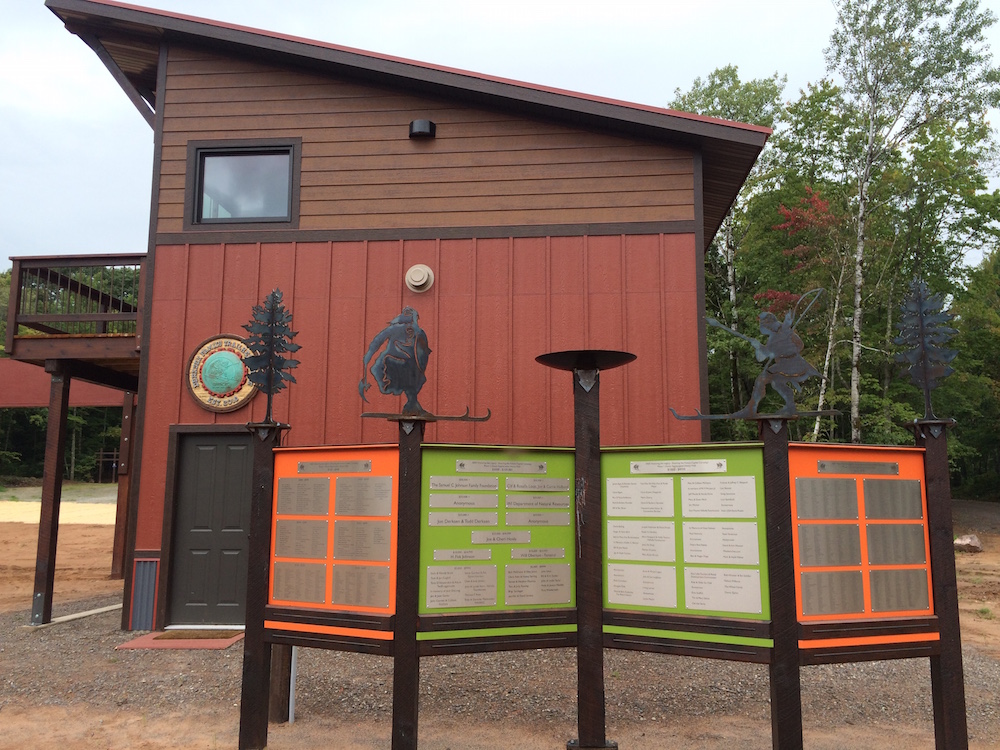
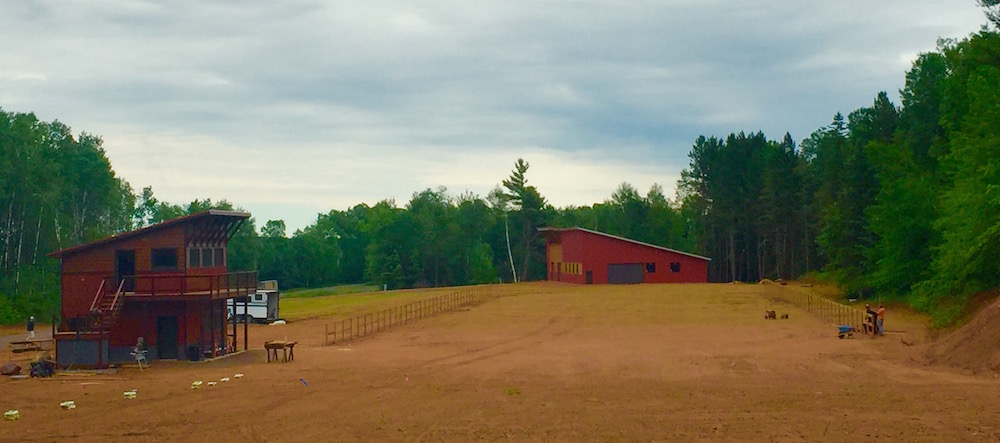
    During the construction of the new permanent start and American Birkebeiner Trailhead in Cable, Wis. (Photo: ABSF)
    A look at the new permanent start and American Birkebeiner Trailhead during construction this summer in Cable, Wis. (Photo: ABSF)

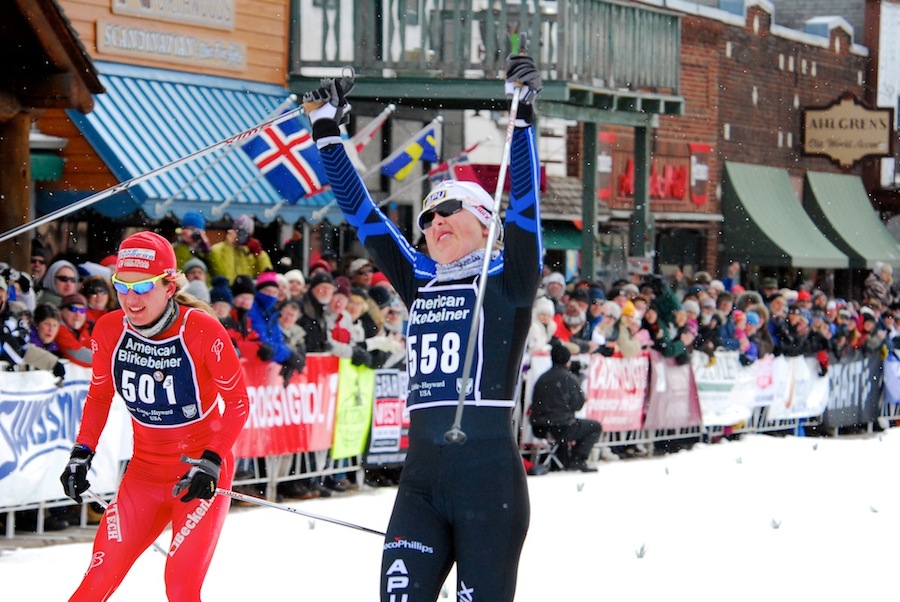
    It has been an exciting 2016 for the American Birkebeiner Ski Foundation (ABSF). After a successful completion of the Phase 1 fundraising program in 2015, the ABSF secured a land purchase that will give North America’s largest ski race, known as the Birkie, a permanent start area for events.

    The Phase 1 campaign also supported the construction of a warming shelter at the new start, which is open year-round, several aid-station buildings along the trail, which can be used throughout the year, and also the construction of brand-new Birkie offices and the Tony Wise Museum in Hayward, Wis.

    Just like in previous years, the ABSF has been busy in the offseason, making improvements to the American Birkebeiner (including the 50-kilometer skate and 55 k classic marathons, set for Feb. 25, 2017) and its trail system.

    In mid-December, FasterSkier checked in with Ben Popp, ABSF executive director, on the phone to discuss some of these changes and what future Birkie participants can expect.

    ***

    FasterSkier: First off, congratulations on the new start-line purchase and trailhead. That seemed to be a goal the Birkie had for years. Can you tell us why that was such an important piece of the Phase 1 fundraising campaign?
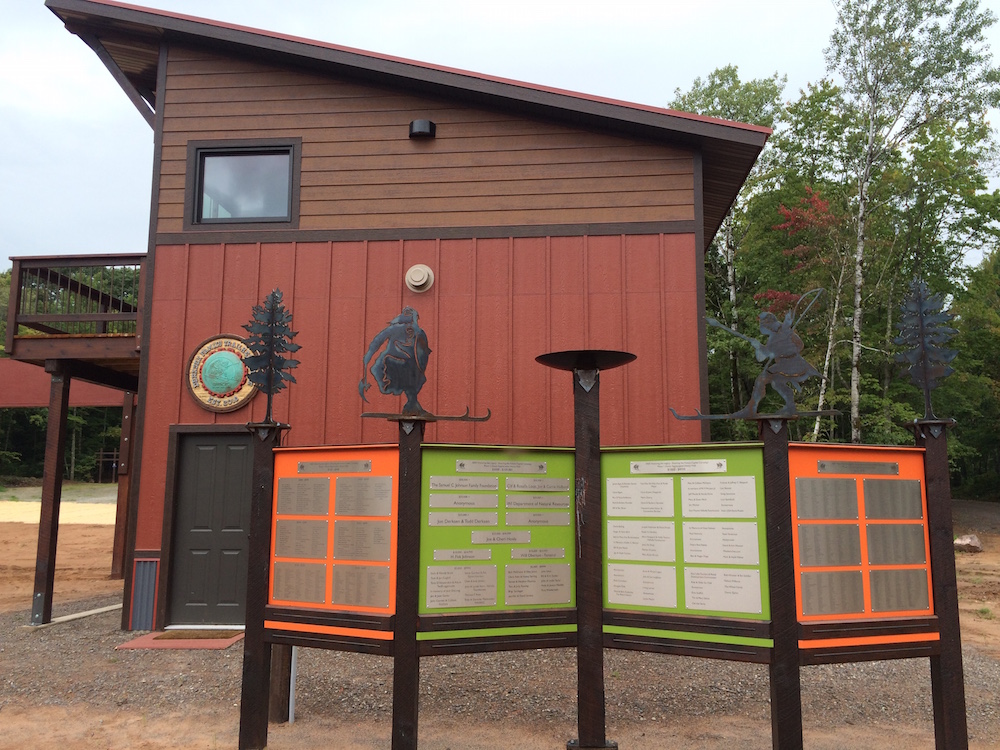
    The Derksen Family Trailhead Warming Shelter at the new American Birkebeiner Trailhead. (Photo: ABSF)
    The Derksen Family Trailhead Warming Shelter at the new American Birkebeiner Trailhead. (Photo: ABSF)

    Ben Popp: We are really excited for this new trailhead. We recently had the first event there, a youth biathlon camp and it was great to see the potential this new trailhead will bring. I skied up from Boedecker and when I got to the new trailhead, I had a warm place to change, people were hanging out, there were nice new bathrooms for people to use. Upstairs, the kids were meeting and getting lessons before they headed out to the trail.

    You finally see that when you have facilities like this it brings in other people as well as the skiers. There was a woman inside reading a book while her husband was out skiing longer. It’s that whole concept that I am excited to see at the start line. It is something that can be used for events other than the Birkie. It is going to be the start for a JNQ [Junior National qualifier] meet, the Wisconsin state championship and the newly announced race that the Hayward high school nordic team is putting on this winter.

    Phase 1 fundraising raised $715,000 dollars from more than 1,400 donors. They will all get to reap the benefits and be able to enjoy a first-class facility and help build the nordic community.

    During the week between Christmas and New Years, we will have the big building heated and have concessions inside to support the 300-400 high school kids who are up here to ski. Before they huddled up into buses and hung around Double OO. Now they will have a warm building to hang around at, wax skis and get something to eat.

    FS: Now that Phase 1 is complete, what does Phase 2 entail? How is the fundraising coming along?

    BP: It has been a very busy fundraising season for us. The Birkie staff has been all over promoting the Foundation and the new development phases. The feverish pace has picked up for sure. We’ve been out a lot, as far as Traverse City and everything in between. It is important to work with USSA [the U.S. Ski & Snowboard Association], The Loppet, and Endurance United to strengthen the nordic-ski message in this area. People expect us the be a leader in this movement because we are looked on to be the innovators and spokesperson for this community. The community is small but extremely passionate, and we as a group need to capitalize on this if we want the sport to grow. Our message is to support us, but in doing so you are supporting the community and the whole nordic industry. Having spokespeople like Kikkan [Randall and Jessie [Diggins] out there winning and supporting the USSA, it is, in turn, helping us grow.

    Phase 1 was the land purchase and trailhead. With that accomplished, we moved into Phase 2 and that focuses on improving the trail. The question always comes up about snowmaking and we finally have an opportunity to pursue this with power and water at the new start line.

    We are starting to explore the possibility of storing snow during the summer like they do in Canada and in Europe. Some of our staff just got back from Europe where they met with a bunch of people from the FIS [International Ski Federation] and World Cup venues to talk about this very topic.

    Between the skiers and the bike riders, we estimate that there are over 100,000 people using the trail all year long. That leads to a lot of erosion concerns and Phase 2 addresses these concerns. If we can improve the way the trail drains and stop erosion we could easily ski on just two inches of snow.
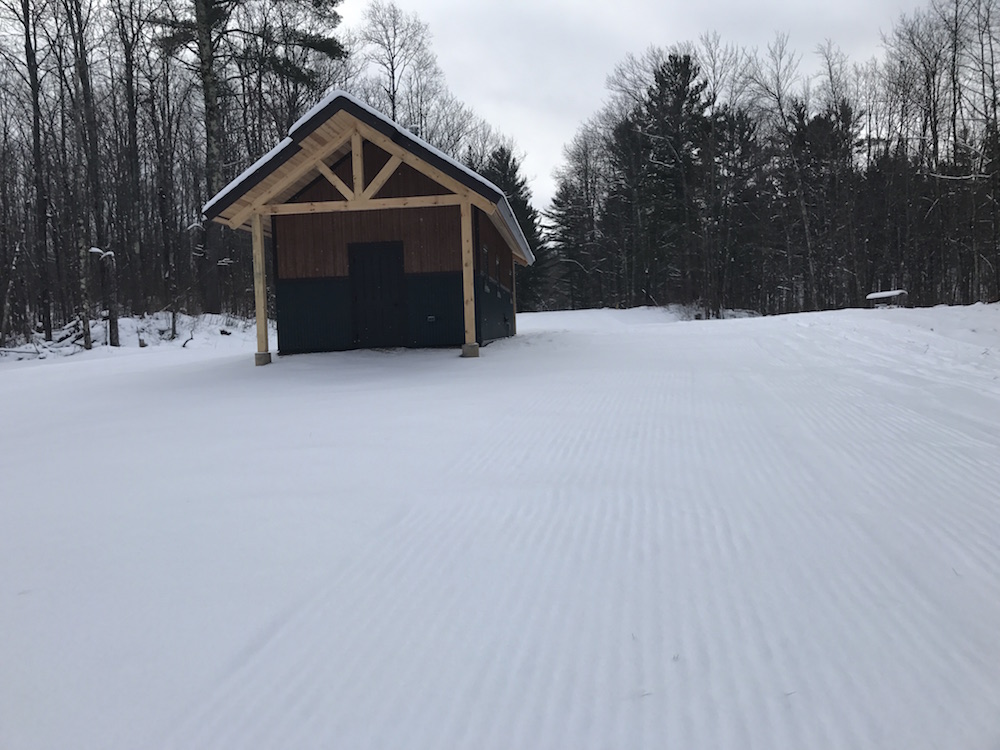
    The Timber Trail warming shelter. (Photo: ABSF)
    The Timber Trail warming shelter on the Birkie Trail. (Photo: ABSF)

    Another part of Phase 2 is the aid stations. Every aid station is now going to have heated buildings with water that are open year-round. The idea is that it’s a building that is open to the public year-round for water and shelter. For the 30 events that use the trail, they will provide a place to store race-day equipment and everything that gets used for the events.
    Other parts to Phase 2 include extending the classic trail south of Double OO. It’s not a full second trail but there are some places we can separate the skate and classic trail past Double OO.

    Other items include putting an underpass under [Route] 77 for skiers and bikers. We are working in conjunction with the Wisconsin DOT and using some grant money to find a way to not to have to block that road during our race and other races that use that intersection.
    We are also working on replacing some of our older pieces of equipment. Our oldest PistenBully is 17 years old, so with upwards of 100 k of trail, these machines really take a beating.

    We are looking to get wider PistenBullys to accommodate the width of the course better. Right now it takes us three passes to groom the trail. Wider PistenBullys will reduce that to only two passes. Fewer passes mean faster and more importantly, better grooming.

    We want to wrap up Phase 2 around December 2017. The fundraising goal for Phase 2 is right around $1.6 million dollars which is twice as high as Phase 1 was. We raised about 35 percent now and are close to $600,000 raised to this point. We are getting there and are excited about the response.

    FS: Recently the Birkie Trail got two very prestigious awards, being named the best cross-country ski trail in the U.S. as voted by USA TODAY’s 10 Best Readers’ Choice travel award contest and, in conjunction with the Hayward Lakes Visitors and Convention Bureau, earned a 2016 Champions of Economic Impact award. What do these two awards mean to the American Birkebeiner Ski Foundation, the towns of Hayward and Cable, and also for the trail itself?

    BP: We have the trail but also the community support to host the nordic community. The town’s “all-in” mentality of letting the Birkie Foundation take care of the trail, we (the community or Hayward and Cable) will take care of the people who are here to ski and make sure they have a great time outside of skiing. That was a huge part of us getting these two awards. The future is very exciting for us and the community. Being so close to the Twin Cities and their enormous nordic community makes us very lucky because we can be the destination that some of these other great cities and resorts have become. The area has turn into a four-season, all-year-round destination spot.

    In terms of what the Birkie means to the cities of Cable and Hayward financially was shown in a recent 2013 University of Wisconsin economic study that estimated the silent sports lifestyle in Hayward and Cable brings in close to $22 million dollars to the community. That is a huge number for a town of 3,000 people. That includes visitors coming up to ski, bike, ride ATVs, hunting, and fishing, etc. It also includes people renting hotel rooms and buying second homes here. That goes back to my point of the towns embracing this lifestyle because bars and restaurants realize that there are other things people want to do up here once they are done skiing.

    All the construction in Phase 1 and Phase 2 has been from local contractors in the Cable/Hayward area. Again, building that sense of community that helped us get these awards.

    FS: How did the decision to separate the 29 k Kortelopet race from the Birkie come about? Was it due to logistical problems and too much traffic, or something else?

    BP: Obviously, the biggest change is moving the Korte, America’s second largest ski race, to Friday. We started thinking about doing this about two years ago. The question is why? We knew two years ago that this race wasn’t the race experience we wanted to give participants. They missed out on the opportunity to see the crowds that lined Main Street and cross the finish line there. Starting at the airfield [jn Cable] and ending close to there just wasn’t the event experience we wanted. The current setup worked but didn’t give the experience we were proud of. People told us time and time again that they wanted to be a part of the atmosphere at Main Street, and not just be an afterthought of the Birkie.

    The biggest factor that prompted the move other that the atmosphere was demographics. The majority of the Korte participants are women and 40 percent are under the age of 23. Basically, its kids and women and those are two demographics that are vital to us and ones that we needed to get excited about the race. The concept was that if we can give these two groups and event experience that was as good as or better than the Birkie and then get them to get more kids and women involved in the events then it is a huge win for us. We were willing to take on the risk, extra costs and manpower to accomplish this because we felt it was important to get these two demographics excited about skiing.

    FS: With the Korte starting at OO, what changes did you have to make to that area to be able to hold that many racers at once, compared to previous years where the field was pretty thin by the time they got to OO?

    BP: We did a lot of work at Double OO for the new Korte start and for the Birkie. We will eventually have a new building there as a result of Phase 2, which will really help support or races as well as the mountain bike races in the summer.

    Since the Korte start is almost as big as the Birkie start we did a lot of work widening parts of the trail that leads from the start to “Picnic Table Hill”. The start line for the Korte will be on the south side of Double OO. If you skied from the current Double OO cabin and went left down the hill to that flat area, you will be right at the new start line. We widened that area by two acres and also added a walking path for spectators. They will walk from the building over the bump and through the nostalgic arches which is pretty cool because that part of the trail won’t be used for the Birkie anymore. (Basically, once you cross Double OO, Birkie racers in previous years went right up the hill, in 2017, we will cross the street and turn left.) Everyone will funnel through the new Korte start on Saturday since all the aid stations and infrastructure will be there from Friday’s race.

    We reworked that corner so it isn’t off-camber anymore and also worked on the descending hill into the Korte start area. Once the skiers cross the road both races will join at that point. in past years, the classic race didn’t join the skate race until Picnic Table Hill. Now they join once everyone crosses Double OO. The course is now 70-feet wide as it goes up the hill to the top of Picnic Table Hill.

    We also worked on the righthand turn from the Picnic Table Hill descent. That has always been a nasty hill so now it just flows straight instead of turning to the right. That should help with the flow of the race and support the large group of Korte skiers that will be coming down that hill.

    After all these course changes, the Birkie is just a bit shy of 51 k. Last year the race was a bit longer because of the added 2 k section at Fish Hatchery. This year, we are taking that section out for the skate race so it puts the skate race close to 50.5 k and the classic race is just shy of 55 k, sitting at 54.6 k.

    In the future, the classic race might get a bit shorter as we continue to work that trail south of Gravel Pit. There are a few places that we can put in a new classic trail as we go south but for now, the distances are staying very close to the advertised 50 k and 55 k distances.

    FS: What changes are being made to the expo and race weekend this year in order to support the racers who are entered in the Korte race?

    BP: Basically, everything is staying the same. The whole event weekend ends up just being four hours longer. The events on Thursday are just starting a little bit earlier. In the past, we started all the events around noon. This year we are starting at 8 a.m. Overall, the events are spread out a little more.

    We are turning downtown into a big festival over the race weekend. We are going to have live bands, food vendors and family events to help improve the excitement of the race and to support the spectators there waiting for their loved ones to finish.

    The expo will stay the same for this year. Feedback from most of the vendors we talked to said that the current setup is the extent of what they can handle in terms of manpower, product and race-weekend support. It will be interesting to see. After the race, we will ask for feedback and change things up and adjust things that happened or didn’t work. For now, we just ask everyone to go into it like they normally would and let us know your thoughts and feeling after the race.
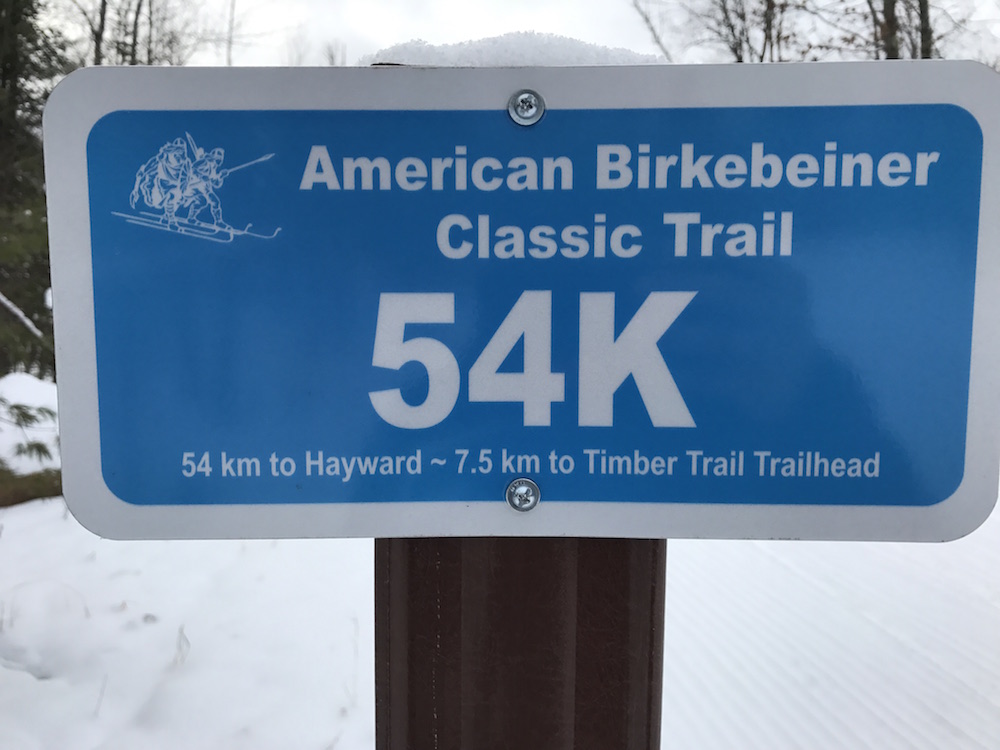
    One of the Birkie's new kilometer markers on the classic trail. (Photo: ABSF)
    One of the Birkie’s new kilometer markers on the classic trail. (Photo: ABSF)

    FS: On a recent trail run, I noticed the new trail markers. What was the 15 k mark is now 37 k to Hayward mark?

    BP: All the signage on the trail has been redone this year. It now counts down to Hayward instead of counting up just like the race. Also, every sign is unique because they are now directional. The staff at Apple Awards designed the signs to tell you how may kilometers to Hayward, Firetower, Boedecker, Double OO etc. The classic trail signs will be blue and the skate trail signs will be red. It gets interesting when the two courses meet at Double OO because the race distance will be different. This just reflects the extra length for the classic race.

    FS: After last year’s warm weather and the warm lake conditions, have you considered reworking the finish to avoid the lake?

    BP: Downtown is critical for the race. We have to get into Hayward to finish the race. We have looked at a few worst-case scenarios if Lake Hayward is deemed unskiable. The alternative routes we looked at involving a few different turnoffs onto the snowmobile/ATV trail then go around the backside of New Moon into town.

    If we have snow to work with and the lake ice isn’t safe, then it is possible because we will have snow to move around and can activate the other backup plans we have talked about. If it is a warm year with no snow and no ice, then it becomes a little more challenging.
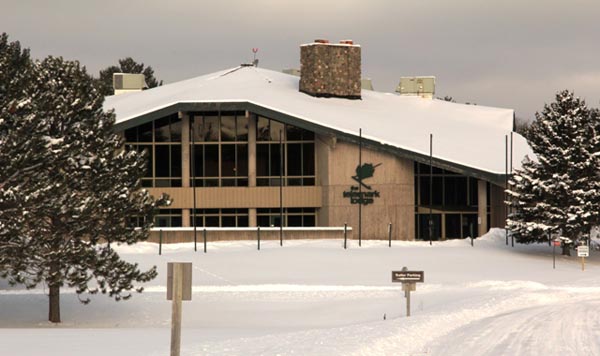
    Telemark Resort (Photo: Tom Held)
    Telemark Resort (Photo: Tom Held)

    FS: Visitors and guests to the old Telemark Resort will remember the hall of fame wall covered with past Birkie winners. Now with the opening of the new Tony Wise Museum of the American Birkebeiner, the hall of fame has an official home. What did it mean to the history of the race to get the hall of fame and museum established in a permanent location?

    BP: The museum provides the tradition and inspiration that the Birkie is all about. Having Kikkan here last year and Jessie being a Birkie Ambassador this year is great. They provide the inspiration and role models for kids and adults.

    The Birkie is all about tradition. With Telemark closing, we were going to lose a lot of that tradition with the Hall of Fame and other aspects of the race potential being lost forever. We were approached by an extremely qualified woman lives in Cable and worked for the Smithsonian and she wanted to take on the museum project. She helped raise the money to build the museum and to relocate the Birkie offices all under one roof.

    The museum far surpassed all expectations we had for it. Having so much history and tradition in one building is incredible. We have a lot of hands-on interactive displays, personal stories, and history of Tony Wise and his family. The is so much potential for the museum to grow in the future. We still have a storage room of archived pieces that was donated to us by the Lewis family from Telemark that we haven’t even begun to look at yet. It will be fun to see how the museum evolves in the future.

    It is great to see how many people have come from states that have never heard of the Birkie, who might be in town for vacation or visiting family, and see their reaction as the walk around the museum experiencing the Birkie history for the first time.
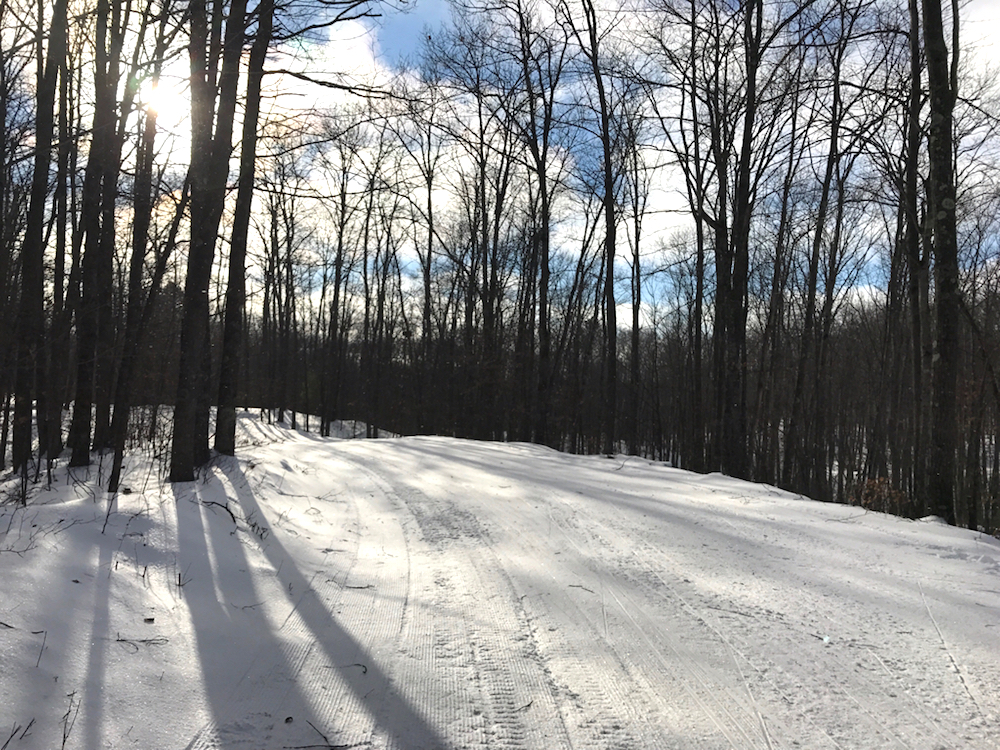
    The Birkie trail as seen this past weekend between Cable and Hayward, Wis. (Photo: Vince Rosetta)
    The Birkie trail as seen this past weekend between Cable and Hayward, Wis. The entire trail is covered, with less than a five-inch base, according to a groomer on Saturday, Dec. 31. (Photo: Vince Rosetta)

    ***

    Author’s note: The Birkie Foundation has been working hard to give fans, spectators and racers the best experience possible for this years race weekend. If you are interested in supporting the American Birkebeiner Ski Foundation all the information can be found on its website.

  • Bjørgen Saves Her Last Attack to Win the Holmenkollen

    Bjørgen Saves Her Last Attack to Win the Holmenkollen

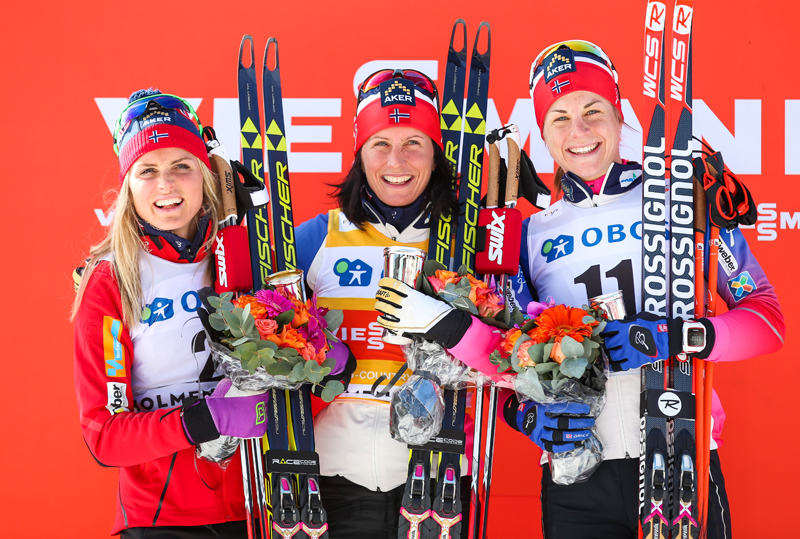
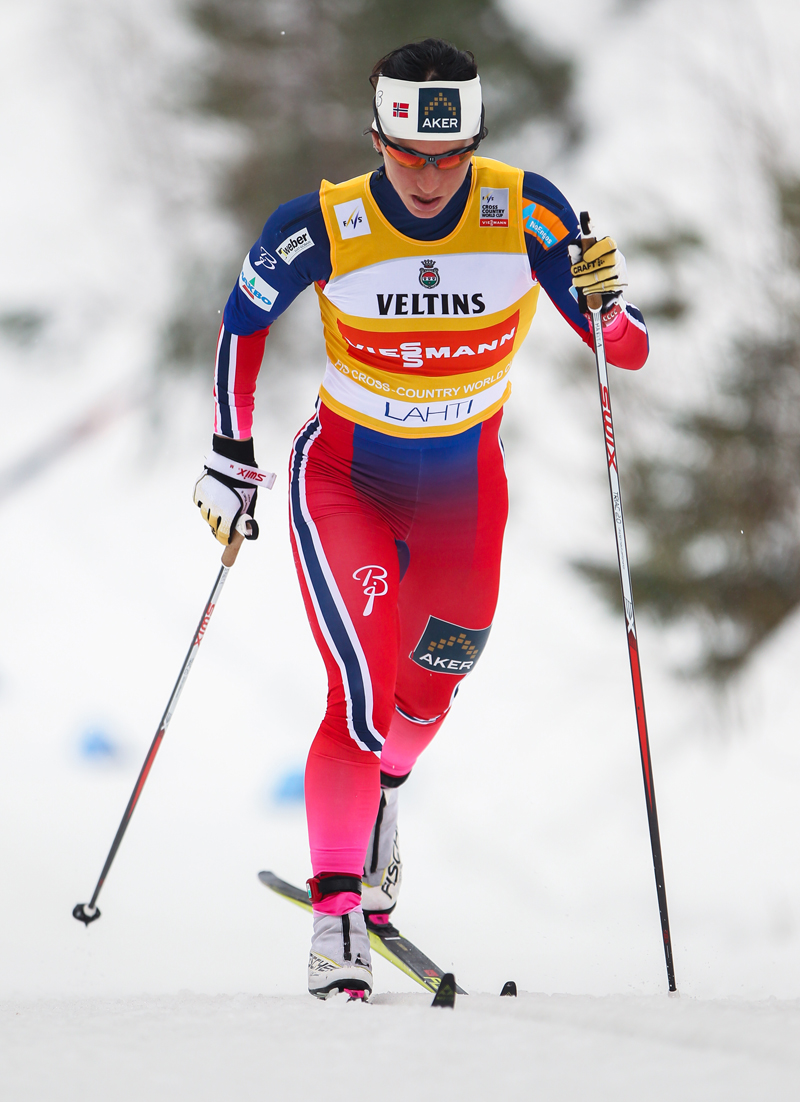
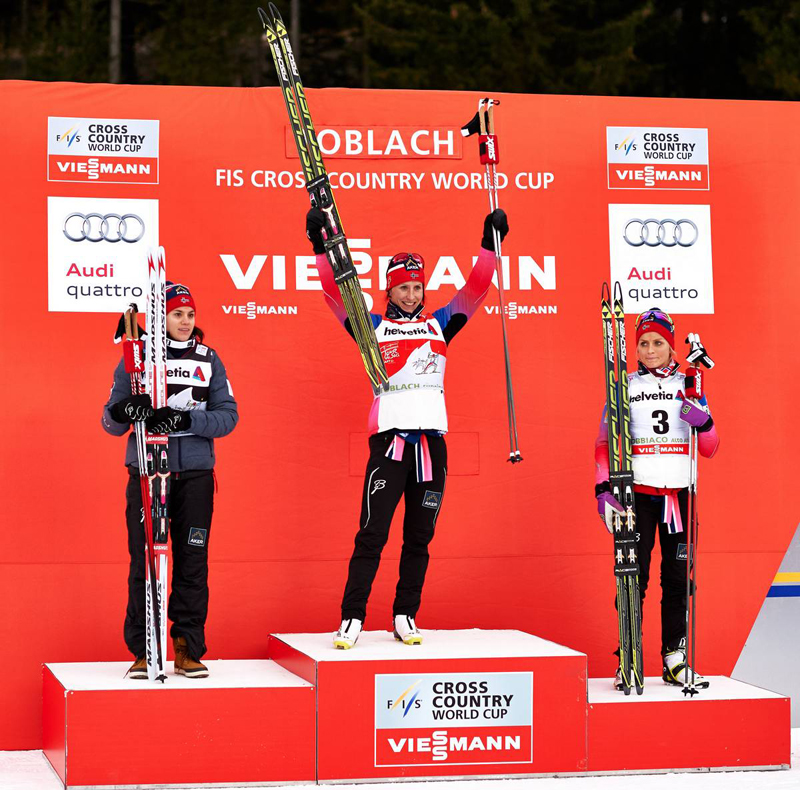
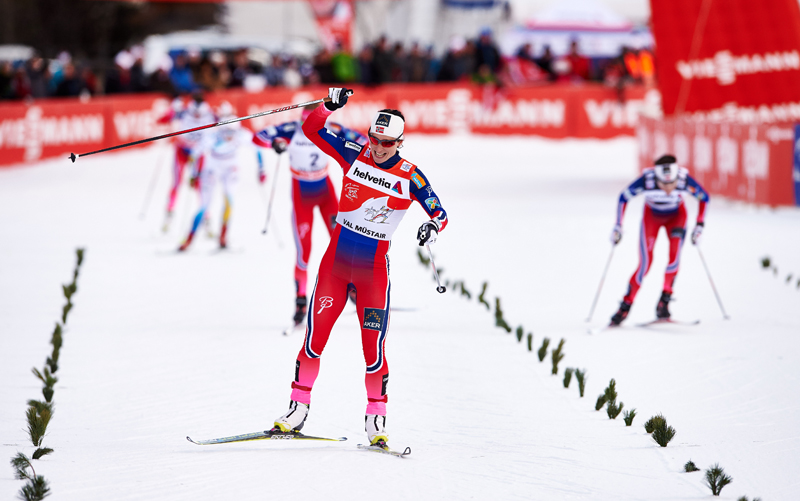
    Marit Bjørgen (center) won her fifth Holmenkollen 30 k title on Sunday, besting Norwegian teammates Therese Johaug and Astrid Jacobsen. (Photo: Fischer/NordicFocus)
    Marit Bjørgen (center) won her fifth Holmenkollen 30 k title on Sunday, besting Norwegian teammates Therese Johaug and Astrid Jacobsen. (Photo: Fischer/NordicFocus)

    For 29 kilometers, Norway’s Therese Johaug looked like the dominant skier in Sunday’s Holmenkollen World Cup in Oslo, Norway.

    Unfortunately for Johaug, it was a 30 k race and Norwegian team mate Marit Bjørgen proved once again why she is the world’s best, saving one last attack to skate past Johaug to take the victory.

    Bjørgen had all but wrapped up the World Cup distance title for the season; she led Johaug by 101 points going into the 30 k. With a win counting for 100 points, Bjørgen mainly just had to finish the race and even if Johaug won she would still add the distance crystal globe to the sprint and overall titles, which she had already secured.

    The pair set a tough pace from early on, with a pack of just ten women able to keep up.

    And there was, of course, the small issue of bonus sprints. Four times over the course of the 30 k, bonus time checks awarded points to the first ten skiers across the line, with 15 points for the first skier and one for the tenth. If Johaug had any chance to pass Bjørgen in the distance competition she needed to get every sprint point on course and more importantly win.

    Naturally, Johaug made sure she was the first skier across the line every time. That netted her 60 points, but Bjørgen was always close behind like a shadow, taking 44 points of her own and neutralizing Johaug’s gain.

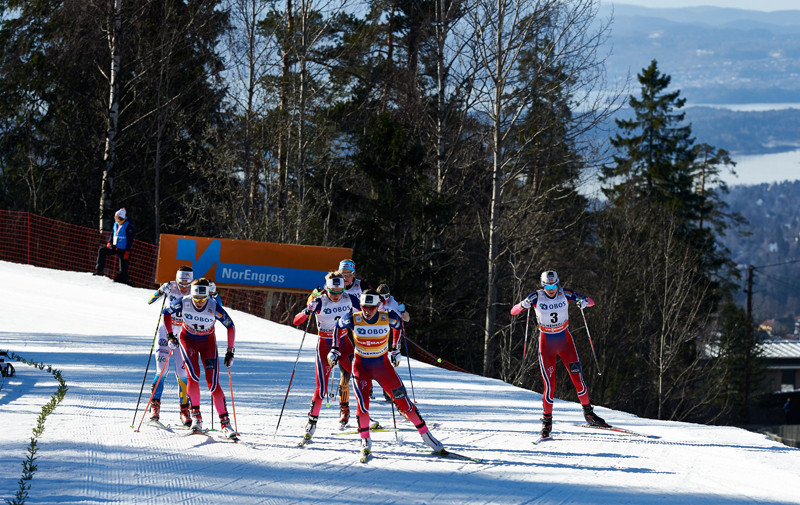
    Marit Bjørgen pushing the pace early on at Holmenkollen. (photo: Fischer/NordicFocus.com)
    Marit Bjørgen pushing the pace early on at Holmenkollen. (photo: Fischer/NordicFocus.com)

    But the quest for bonus seconds, while it didn’t shake Bjørgen, did get to some of the other racers. The first real breakaway appeared at the 8 k mark when Johaug, Bjørgen and Sweden’s Charlotte Kalla found themselves with a slight advantage over Norway’s Astrid Uhrenholdt Jacobsen, who had been skiing with them in a pack of four.

    The gap was compounded when Jacobsen fell. From then on, her chance to ski with the lead trio was gone. She skied for almost the next 20 kilometers entirely alone.

    “I lost feeling in one leg, and did not know quite where I put the skis,” she told Norwegian broadcaster NRK of the crash. “It may be that it was just my boot that was not quite right or something. It is hard to say.”

    Kalla, sensing that Bjørgen and Johaug had greater strength, skied with the pair as long as she could, sometimes even leading the pack.

    The Norwegians tried to trick her at one point. The women were allowed to switch their skis once during the race, and although none of the leaders ever did, at the first possible exchange point Bjørgen and Johaug let Kalla go first and hoped that she would ski into the exchange, at which point they would skate off without her.

    Kalla almost fell for it, but wised up and avoided the exchange lane, which would cost at least 15 seconds, at the last possible moment.

    We had planned that we would not change skis, but we figured we would let Charlotte go first and see what she did,” Johaug told the Swedish press. “So we saw that she almost was going in to switch, but then she turned around to see what we did, and then just continued without changing. Marit and I looked at each other and we smiled.”

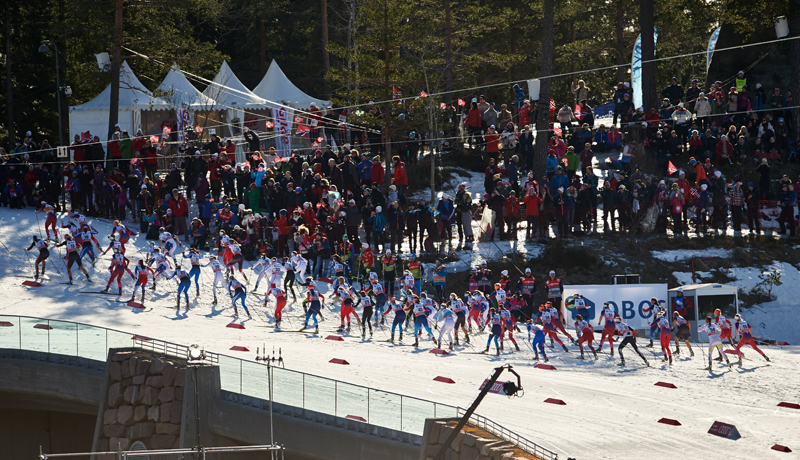
    The course was lined with spectators and filled with noise. (Photo: Fischer/NordicFocus.com)
    The course was lined with spectators and filled with noise. (Photo: Fischer/NordicFocus.com)

    They didn’t really need a trick anyway. By the 18 kilometer mark, Bjørgen and Johaug were all alone out front after their fast pace had dropped Kalla. The two Norwegians tried and tried to wear each other down: Johaug attacking on the climbs, Bjørgen matching her pace stride for stride. Sometimes Bjørgen would move into the lead, but neither one could shake the other.

    Meanwhile, Kalla was bleeding time after working hard to keep up with the duo for the first half of the race. But Jacobsen was maintaining about the same pace as the leaders – after dropping to 45 seconds back, she held the gap steady. That meant that she gained and gained on Kalla until she had the Swede in her sights. In the stadium with just three kilometers to go, Jacobsen caught her and skied past. The pair made their way together towards the finish.

    The races for both first place and third place were closing fast, so an attack seemed inevitable. It finally happened at the 29 k mark. Heading up the Hellnerbacken climb before the stadium, Johaug and Bjørgen simultaneously upped the pace – but Bjørgen’s attack was stronger, and as she pulled past her teammate Johaug couldn’t respond. Within a few strides Bjørgen was clear of Johaug, and she soon put an incredible 10 second gap on one of the best climbers in the world. The winner was set.

    Taking bows as she crossed the line, Bjørgen wrapped up her fifth Holmenkollen win finishing in 1:14:10, Johaug second 11.6 seconds behind.  With her win today Bjørgen became the first female athlete to win consecutive Holmenkollen titles.

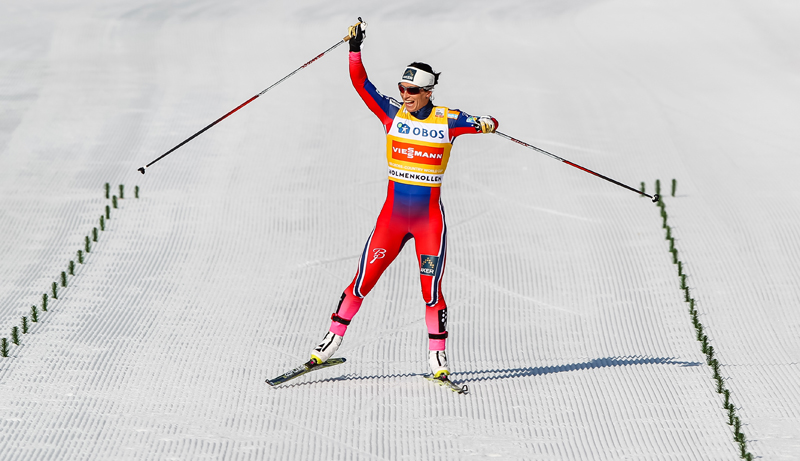
    Bjørgen enjoyed celebrating her last victory of the season - and potentially of her World Cup career? (Photo: Fischer/NordicFocus.com)
    Bjørgen enjoyed celebrating her last victory of the season – and potentially of her World Cup career? (Photo: Fischer/NordicFocus.com)

    “I knew that I had a strong finish and relied on that,” Bjørgen told FIS. “But after 30 k you never know. It is great to end the season with the victory. I am tired now but I am motivated to continue. I’ll see in the spring.”

    Johaug was gracious in her defeat.

    “It was impressive to see Bjørgen going up the last hill,” she told NRK. “It is inspiring to see Marit scramble there. I have so much to learn from her and what she does. I’m happy with my race. It was absolutely amazing to race at Holmenkollen.”

    While fans were focused on the stadium and Bjørgen’s victory, Jacobsen dropped Kalla and skied to a clean third place, 44.5 seconds back, to round out the all Norwegian podium.

    “Despite the fall I had a great race and I was able to to take 20 seconds on Charlotte Kalla in the last lap,” Jacobsen told NRK.

    It marked a great comeback by the 28-year-old, who sat out the first half of the season with an injury. Her first World Cup of the season didn’t come until late January, but it was a win – not to mention her first one since 2008. The Rybinsk, Russia, races are acknowledged to be less competitive, as many top athletes don’t care to take the long travel to reach the frigid venue, but Jacobsen made clear that she was no joke by winning silver in the skiathlon at World Championships and now making the podium at arguably skiing’s most vaunted World Cup.

    This shows at least that I do not give up,” she told NRK.It was great for me to get on the podium, especially since I grew up here [in Oslo].”

    Heidi Weng won a photo finish against Norwegian teammate Ragnhild Haga for fourth place. Liz Stephen was the top American skier, placing ninth. Stay tuned for a full report on the U.S. women.

    While Bjørgen proved decisively that not only did she deserve that World Cup distance title, but that she was the best skier of the season, she is still unsure of whether she will compete another year. At age 34, each additional year is a major undertaking.

    It is not quite right to think of it now,” she told the news service VG.I have to train 900 hours next year and I cannot think about that now. I have to get my energy back and then think about what to do going forward.”

    Although Johaug would likely profit in terms of wins, money, and sponsorship should Bjørgen retire, that’s not something she wants to see happen.

    I support her whatever she decides,” Johaug told VG. But I hope that she will continue. She is a wonderful best friend and teammate. She has given me an incredible amount of confidence and self-esteem, and because she has done that I have become the cross-country skier I am. Without trying to match her, I would not be standing here today, either.”
    Complete Results

  • Røthe Outlunges Cologna to Take Holmenkollen Crown for the Home Team

    Røthe Outlunges Cologna to Take Holmenkollen Crown for the Home Team

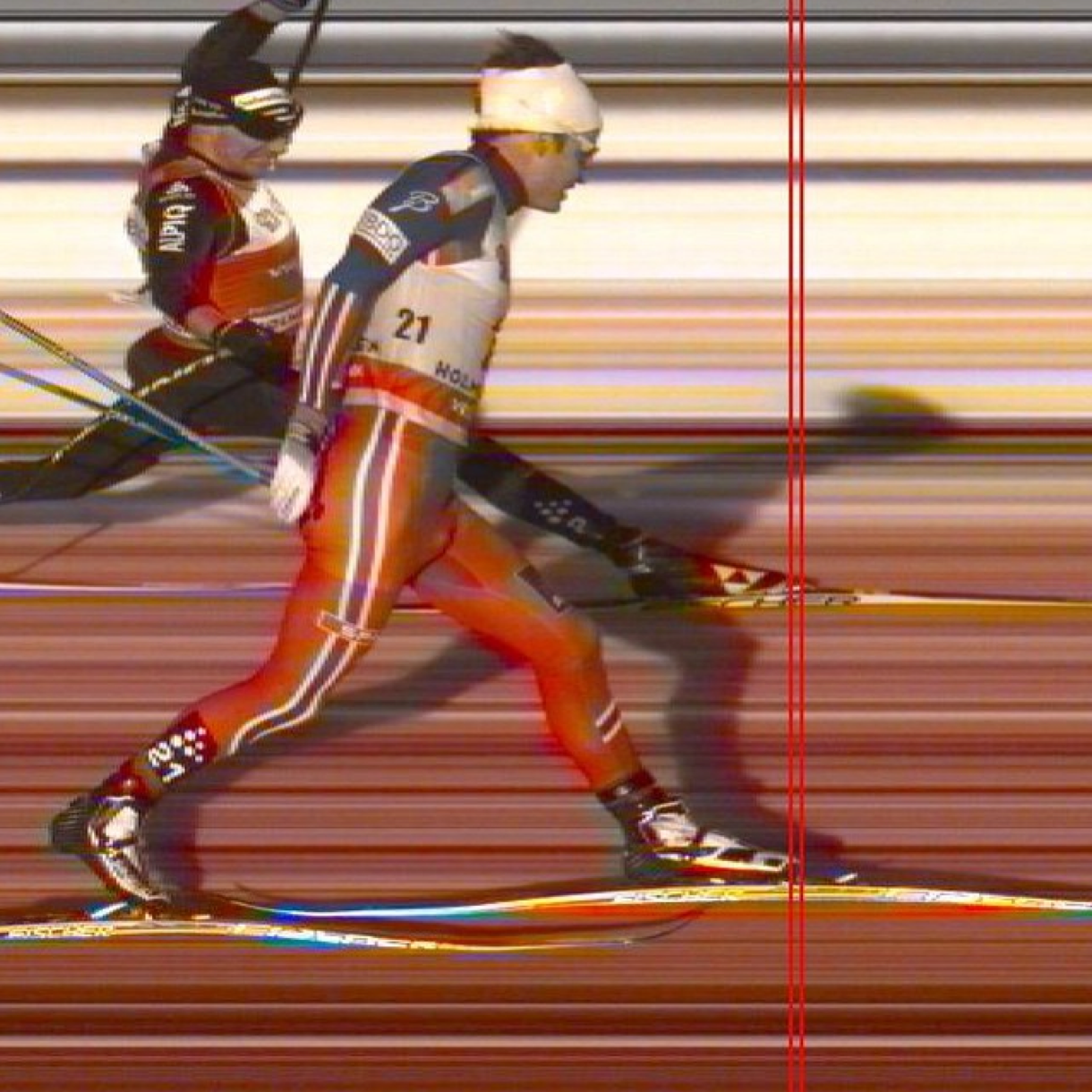
    Sjur Røthe (foreground) narrowly beat Switzerland's Dario Cologna at the finish of the 50 k skate mass start in Oslo, Norway, on Saturday, to take the season's last victory for the Norwegians. (Photo: FIS Cross Country/Instagram)
    Sjur Røthe (foreground) narrowly beat Switzerland’s Dario Cologna at the finish of the 50 k skate mass start in Oslo, Norway, on Saturday, to take the season’s last men’s race for the Norwegians. (Photo: FIS Cross Country/Instagram)

    After racing 50 kilometers in Saturday’s Holmenkollen mass start in Oslo, Norway, the winning margin for Norway’s Sjur Røthe was merely the length of a toe over Switzerland’s Dario Cologna.

    The Holmenkollen has been the season ending race since its first running in 1902, although it has recently been followed by World Cup finals in Sweden. Crowds in the thousands lined the course, out to enjoy a sunny Norwegian spring afternoon. As always, some of the spectators – most of whom were Norwegians – had camped out the night before to ensure a good vantage point for the race. Smoke from their campfires drifted out over the course.
    They were not disappointed: Røthe took the win in 1:54:44, and teammate Martin Johnsud Sundby finished third and also took home the season-long World Cup title. Six more Norwegians finished in the top 20.

    I’ve seen how [Petter Northug] and others have won it here, and how the finishes have been here in recent years,” Røthe told Norwegian news service VG. “Along with that, I noticed that there was ice on the outer edge in last turn. I knew I had a great options if I put myself there. But then I had to come there first, and not have someone on the inside of me. It was perfect and just as I had dreamed.”

    Although the warm sun was great for spectating, it made the snow that very soft, which slowed the pace of the race. While it might have appeared pedestrian, the pace was quite high as skiers worked their boards through the slush, which alternated with salted, icy portions of the course and sections in the shade which were much faster.

    “It was a hard pace from the beginning with Sundby pushing for the first two laps,” Canada’s Alex Harvey, who was near the lead in the first 15 or so kilometers, told FasterSkier. “Anytime a 50 k is below two hours, when it’s kind of slushy conditions like it was today, it means that the pace was faster in the beginning.”

    While leading, Sundby was constantly marked by Cologna, Petter Northug of Norway, and a pack of other skiers. Several breakaway attempts were countered. France appeared to have fast skis, and Jean Marc Gaillard and Robin Duvillard each led for several kilometers. Duvillard’s gap was a result of ski changes: at 33 k, almost the entire lead group decided to get new skis. But Duvillard and Norway’s Anders Gløerssen did not, and they took their ten-second lead and turned it into a breakaway which lasted six kilometers.

    The upstarts were always brought back to the pack, though. And as the kilometers ticked on, that pack shrunk in size. From 37 men it winnowed to 25, then 20, then 15. By the 40 kilometer mark, one big name was missing from the potential winning group: Northug, who won the 50 k at World Championships two weeks ago.

    The Norwegian was at that point sitting in 27th place, 2:40 back from the leaders. After dropping from the main group, he decided to treat the race as a workout and finished eight minutes back by the end.

    I’ve been tired after the World Championships,” Northug told Norwegian news service VG.It costs to go all the distances. I may have had a mental lapse.You fall in a way, after having had such a good World Championships.”

    At the 44.6 k mark, Norway’s Hans Christer Holund attempted to break away as the group hit a descent. Realizing it, Cologna matched the turn of pace and the two opened up a two-second lead. The rest of the pack were forced to respond or see the potential winners ski away.

    Most couldn’t respond, but Sundby, Røthe and 41-year-old Sergei Dolidovich from Belarus bridged the gap and the lead pack became five. After another kilometer or more, Marcus Hellner of Sweden managed to weave his way through the shattered remains of the pack and sprint furiously up to the leaders: now they were six.

    He arrived just in time for the Hellnerbacken, a short, steep hill leading into the Holmenkollen which is now named after him due to his victory in the sprint at 2011 World Championships. On that very same hill, Hellner had destroyed Northug and the rest of the competition to ski to a gold medal. In the 50 k, he shot up into the lead group and into third place.

    The remaining few hundred meters featured jostling, lead changes, and an ever-increasing pace. On paper, Cologna and Hellner were probably the best bets to win, based on their usual finishing speed; but Sundby, too, has qualified for sprint heats this season, and in Røthe’s only sprint start this season he qualified ninth in the Lillehammer World Cup.

    So up the final hill behind the biathlon range they went, and then over the top. As they descended into the stadium it looked like Hellner might be able to use the draft to slingshot into a medal position. But whether because of slower skis or tired legs, he faded, and Røthe led to the finish. Cologna sprinted furiously. His body never drew even with Røthe’s, but as the two got to the finish line, he threw his foot forward in a desperate attempt at a win.

    It was impossible to tell who crossed the line first. Both men raising their arms in victory. After the jury convened and looked at the photo, it was determined that Røthe crossed first, the margin of victory was literally the length of a toe. Cologna was given the same time as Røthe and Sundby was third, half a second behind.

    “I don’t think the photo finish gets any closer than this one,” Cologna told FIS.

    Røthe had known that Cologna would be coming for the win, but he was confident he could hang on.

    I always trust my sprint,” Røthe told NRK.If I’m first entering the finish, I have a chance. If I have to pass people, it is worse.”

    For Røthe, it was the first World Cup win ever – and on Norway’s biggest stage.

    “It’s is a dream for me,” he told FIS. “This is a very emotional moment. I can’t believe I have won this race. It has been a very difficult season for me but I have been training for this race for the past few weeks and it’s incredible that this happened. The crowds for so loud cheering me along with my teammates.”

    Røthe has had back problems all season, and raced only lightly. His teammates were astounded that he could come back and win the Holmenkollen.

    “I am so happy for Sjur,” Sundby said. “It has been a tough couple of months for him, so to see him win here today is just great.”

    That he has trouble, it is impressive that he comes back and takes his first World Cup victory here in Holmenkollen and on a 50 k,” Northug told NRK.It’s the World Cup race you most want to win, so it is impressive.”

    Although he missed out on the win, Cologna victory secured his third World Cup distance globe.

    “For sure I wanted to win but I am also very happy to win the Distance Overall crystal globe,” Cologna told FIS. “After two Olympic gold medals last year I expected more this season but it doesn’t always go as planned. But to win the distance globe and be second in the Overall standings I must still be happy with my season.”

    He also skied into the history books: Cologna became the first man to ever win the Distance crystal globe three times; he also won in the 2010/11 and in 2011/12 seasons.

    Dolidovich finished fourth, one-upping his fifth-place result from the 50 k in Sochi at the Olympics last season, and Hellner placed fifth.

    The women’s season wraps up on the same course on Sunday with the Holmenkollen 30 k freestyle race.

    –Vince Rosetta and Chelsea Little contributed reporting.

    Complete Results

  • Brandsdal Rolls to Drammen Classic-Sprint Win, But Krogh Takes Overall Sprint Globe

    Brandsdal Rolls to Drammen Classic-Sprint Win, But Krogh Takes Overall Sprint Globe

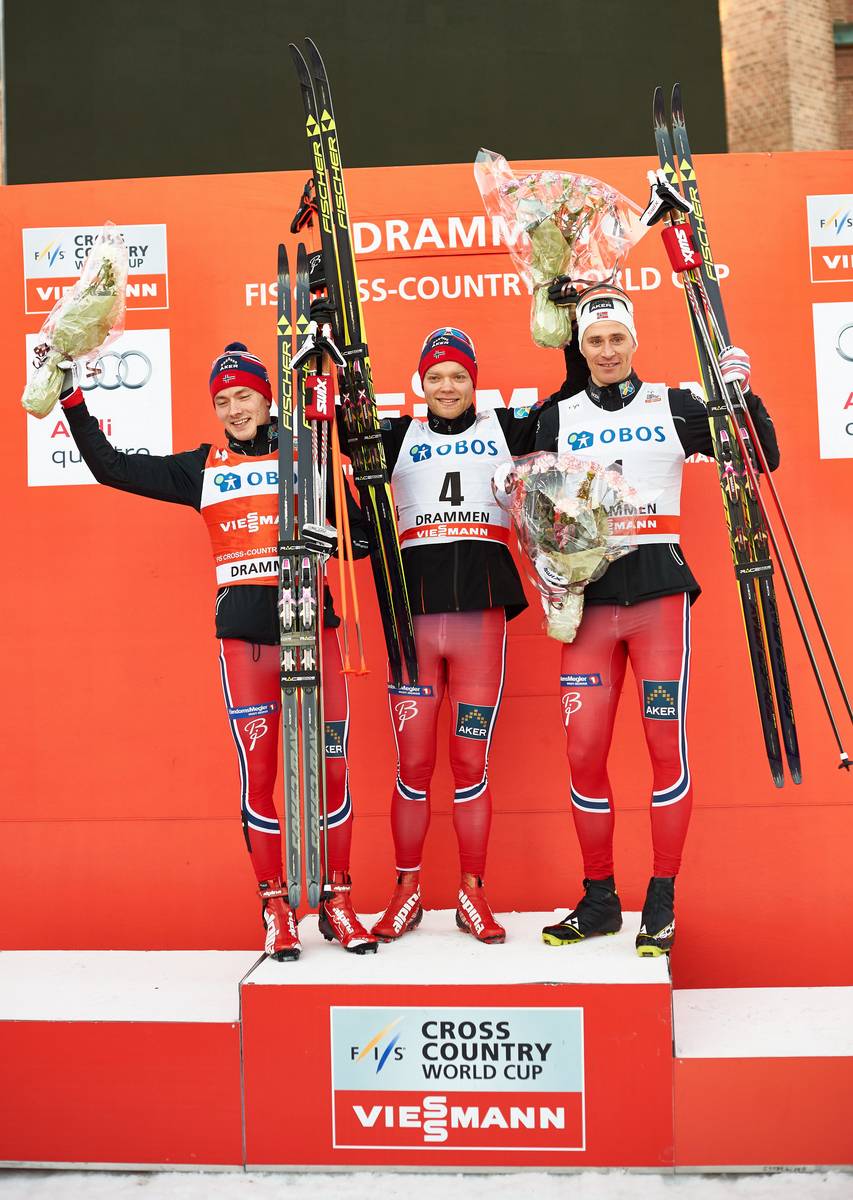
    The all-Norwegian men's classic sprint podium in the last World Cup sprint of the season on Wednesday in Drammen, Norway: (from left to right) runner-up Finn Hågen Krogh, winner Eirik Brandsdal, and Ola Vigen Hattestad in third.  (Photo: Fischer/NordicFocus)
    The all-Norwegian men’s classic sprint podium in the last World Cup sprint of the season on Wednesday in Drammen, Norway: (from left to right) runner-up Finn Hågen Krogh, winner Eirik Brandsdal, and Ola Vigen Hattestad in third.
    (Photo: Fischer/NordicFocus)

    Wednesday’s 1.3-kilometer classic sprint in Drammen, Norway, was essentially two races in one: the race for the win and the race for the overall Sprint World Cup.

    Drammen marked the final World Cup sprint this season. Going into the race, Norway’s Finn Hågen Krogh led the Sprint World Cup with 399 points, 33 points ahead of Italy’s Federico Pellegrino and 57 points ahead of fellow Norwegian Eirik Brandsdal.

    All three men were still mathematically eligible to win the overall title. Brandsdal won last weekend’s freestyle sprint in Lahti and neither Krogh nor Pellegrino had ever qualified for the final in Drammen. Pellegrino had only qualified for one World Cup classic-sprint final in his career.

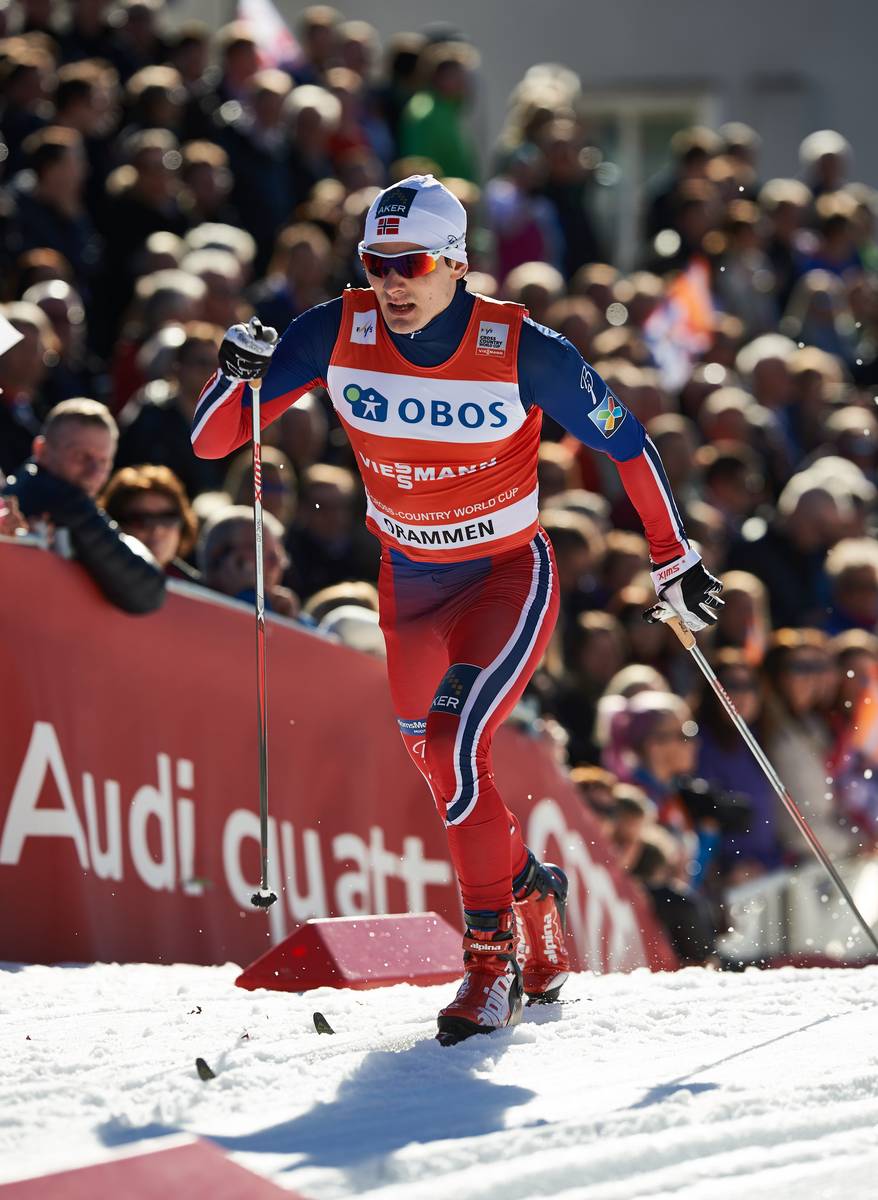
    Eirik Brandsdal racing to the victory in the men's 1.3 k classic sprint in Drammen, Norway. While he won the race, he took second overall in the Sprint World Cup to teammate  Finn Hågen Krogh. (Photo: Fischer/NordicFocus)
    Eirik Brandsdal racing to the victory in the men’s 1.3 k classic sprint in Drammen, Norway. While he won the race, he took second overall in the Sprint World Cup to teammate Finn Hågen Krogh. (Photo: Fischer/NordicFocus)

    Over the course of the qualification round, the snow at Drammen turned very soft with temperatures around 50 degrees Fahrenheit. Earlier in the morning, organizers hauled in two truckloads of snow to slow the rate of thawing on the course. Several skiers opted to use skate skis and take their chances double poling instead of making decisions regarding classic skis and what to use for kick.

    As the first quarterfinal heats got underway, it appeared that Norwegian Petter Northug’s decision to use skate skis over classic might be the way to go. He had very fast skis and only lost to Brandsdal in a photo finish. Brandsdal took the quarterfinal win in 2:37.55, and both advanced to the semifinals.

    One-third of the race for the Sprint World Cup was decided after the first quarterfinal. Pellegrino finished fifth, 2 seconds behind Brandsdal, ending his chance of winning his first ever overall sprint title.

    Last year’s Drammen and overall Sprint World Cup champion, Ola Vigen Hattestad of Norway was a decisive winner in heat two. He qualified in 2:35.91, and teammate Timo Andre Bakken advanced as well, 1.71 behind.

    Krogh kept his title hopes alive when he and Russia’s Anton Gafarov advanced out of the third quarterfinal. Krogh won it in 2:38.34, and Gafarov was 0.21 seconds behind in second.

    Also advancing to the semifinals were Russia’s Sergey Ustiugov and three more Norwegians: Sondre Turvoli Fossili, Pål Golberg and Fredrik Riseth. American Andy Newell qualified as well.

    It was an all-Norwegian lineup for the first semifinal. Still on skate skis, Northug jumped out to a fast start and lead up the first climb, but in the slushy conditions, he fell behind quickly and never came back into contention. Brandsdal dominated the race, crossing the line first at 2:36.3, ahead of Hattestad in second.

    Fossli and Ustiugov advanced from the second semifinal, as did Russia’s Nikita Kriukov in third. Fossil’s winning time was 2:35.41, Ustiugov finished 0.39 seconds back, and Kriukov was 0.61 seconds back in third. Kriukov and Krogh advanced as lucky losers.

    The finals were set, with two Russians Ustiugov and Kriukov, and four Norwegians: Brandsdal, Fossli, Hattestad, and Krogh. With his spot in the finals, the sprint title was wrapped up by Krogh before the final started. His margin over Brandsdal was too big of a deficit for Brandsdal to overcome even if he won.

    Norway's Finn Hågen Krogh placed second in Wedneday's classic sprint in Drammen, Norway, to secure his first Sprint World Cup Crystal Globe. (Photo: Fischer/NordicFocus)
    Norway’s Finn Hågen Krogh placed second in Wedneday’s classic sprint in Drammen, Norway, to secure his first Sprint World Cup Crystal Globe. (Photo: Fischer/NordicFocus)

    At the start, Ustiugov led up the first climb and started to pull away from the pack. The group started to string out with Ustiugov leading to the second hill then an unforced error took out the two Russians at the same time.

    Ustiugov on skate skis tried to herringbone up the second hill in the middle lane. Since he had no grip he tried to cut the corner short by going to the inside. He wasn’t aware that Kriukov was there and both men collided and lost momentum. Kriukov was later relegated to last in the heat.

    With this happening at the back of the pack, the Norwegian train with Hattestad up front rocketed down the hill towards the finish. On the last turn, Brandsdal ultimately made the winning move, gliding past Hattestad and into the lead. He crossed the line first at 2:38.18. Krogh followed Brandsdal past Hattestad as well and finished second, 0.56 seconds later. Hattestad held onto third to complete the all-Norwegian podium.

    “The World Championships in Falun did not go as I had planned. I wanted to end the season strong,” Brandsdal told FIS after the race. “I did everything I could to fight for the crystal globe for the sprint.”

    While he didn’t get it, Brandsdal did win his sixth World Cup race.

    Krogh used his disappointment from not being named to Norway’s World Championships sprint team as motivation.

    “I have little to put a finger on what has been bad this season. Everything has gone according to plan,” Krogh told NRK, according to a translation. “This has been a bright season.”

    This Sprint Crystal Globe was Krogh’s first. He won it by 57 points over Brandsdal and 103 points over Pellegrino. Hattestad won it last season, ahead of Brandsdal in second, and Brandsdal was third in the sprint overall in 2011/2012.

    Results

  • Falla Wins Season’s Last Sprint In Drammen, But Bjørgen Clinches Sprint Title

    Falla Wins Season’s Last Sprint In Drammen, But Bjørgen Clinches Sprint Title

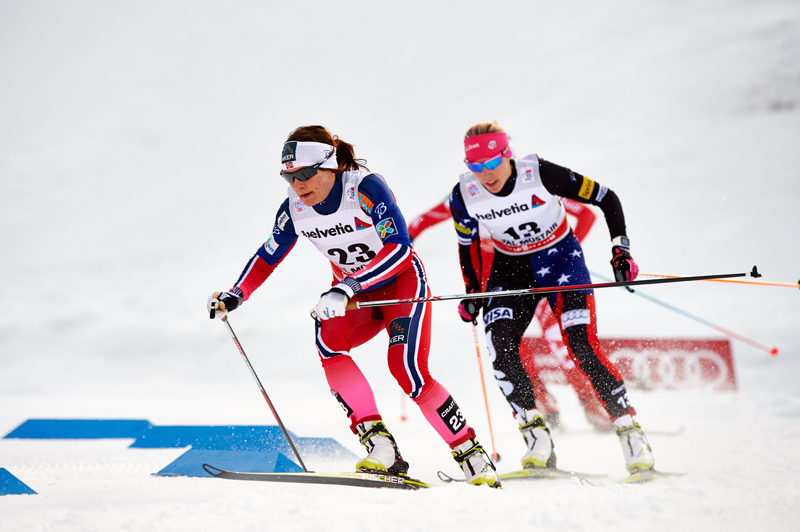
    Maiken Caspersen Falla (NOR, left) leading a quarterfinal heat in Val Mustair, Switzerland, earlier this season. On Wednesday, Falla picked up the final sprint win of the season. (Photo: Fischer/Nordic Focus)
    Maiken Caspersen Falla (NOR, left) leading a quarterfinal heat in Val Mustair, Switzerland, earlier this season. On Wednesday, Falla picked up the final sprint win of the season. (Photo: Fischer/Nordic Focus)

    The final sprint of the 2014-2015 FIS World Cup season was held on Wednesday in Drammen, Norway.  There were two races in one: a race for the win in Drammen, and the second a race for the season’s overall sprint title.

    Heading into the day, a trio of Norwegian skiers were on top of the Sprint Cup leader board. Marit Bjørgen had the lead with 550 points, ahead of Ingvild Flugstad Østberg with 510 points and Maiken Caspersen Falla with 412 points.

    Østberg needed to win Drammen to take the title; Bjørgen needed to finish in 4th place or better.

    Bjørgen was the favorite to win her second crystal globe of the season, already securing the overall World Cup title, but Østberg and Falla weren’t ready to give their more veteran teammate the Drammen win without a fight.

    “It will be hard to beat Marit but I will give everything I have and give her a struggle,” Østberg said to NRK before the race. “Whoever is best is best. If the winner is Marit then it is very much deserved.”

    Before the race, Bjørgen commented with her signature brand of diplomacy, but also a bit of nationalism.

    “40 points is not much,” she told NRK. “It will be a tough challenge and the fight is still warm. The main thing is that whoever wins is Norwegian.”

    Coming out of the prologue Østberg was the fastest qualifier at 3:01.25, with Katja Visnar of Slovenia second (+1.18) and Bjørgen third (+2.40).

    But in the end, Falla proved that it isn’t how you qualify but rather how you finish the race that matters most. That started in the quarterfinals, where Falla fell early in her heat and teammate Astrid Uhrenholdt Jacobsen took the win. Falla came back to finish second, +0.29. In a packed heat, Østberg was third, +0.49, and also advanced along with Aino-Kaisa Saarinen of Finland as lucky losers.

    Meanwhile, Bjørgen easily won the third quarterfinal heat gliding away from teammate Heidi Weng, who also advanced.

    Other quarterfinal qualifiers were Sweden’s Stina Nilsson, Visnar, Norwegian teammates Kathrine Rolsted Harsem and Kari Vikhagen Gjeitnes, Sweden’s Hanna Falk, and Finland’s Anne Kyllönen.

    Again in the semifinals, things didn’t go perfectly for Falla. Østberg showed increased speed and aggression compared to her quarterfinal heat, leading from start to finish. Weng finished second, 1.42 behind, and Falla finished third, lucky to advance on time. Bjørgen and Nilsson skied together for their entire semifinal, and qualified together for the final.

    Showdown in the Finals

    At the start, Bjørgen was struggling and seemed to be fighting herself as much as the other competitors. She was boxed in between Nilsson and Weng and fought to get position into the track. When Nilsson switched lanes she hit Bjørgen’s skis, causing her to stumble, and as a result the star was in sixth place before the first climb.

    If there’s anyone who can come back from such a start on the women’s circuit, it’s Bjørgen. She had to take an outside line in order to get better snow, but was able to work her way to the front to join Falla, Weng and Østberg. As the group of Norwegians descended, Bjørgen was in front for the first time all race.

    As the race headed to the finish line Falla stepped out to the left, Bjørgen to the right and it was apparent right away Falla had the faster skis. The two were side by side but Falla double-poled her way past Bjørgen, who was striding and losing ground. Weng caught and eventually passed Bjørgen as well, but the group crossed the finish line within seconds of each other; Falla first, 3:01.37, Weng second (+0.72) and Bjørgen third (+1.51).

    “I have to say Drammen is my favorite course,” a happy Falla told FIS. “The crowd was amazing and the atmosphere was thrilling.”

    Østberg was fourth 2.49 behind and as a result, second to Bjørgen in the Sprint Cup race.

    “I was not sure I could win the sprint crystal globe,” Bjørgen told FIS after the race. “It’s been nine years since I won it last time. I am 34 and I was not sure if I can win it again. I knew I would have the fight with Ingvild.”

    Problems With New Heat Selection System

    Before her heat even started, Falla had a tougher time selecting her heat than she had hoped. A new system of athlete seeding was started last week in Lahti, Finland, and implemented again in Drammen, in which the athletes in reverse order from their qualification standings got to pick their heat placements. Falla qualified seventh but was not at the podium in time when it was her turn to choose her heat. As a result her heat placement was decided by the race jury.

    According to NRK, race director Pierre Mignerey said that Falla was given a verbal message that the elections would start five minutes after the last runner was finished as well as a written notice that it would start 13.25.”

    Falla claimed that she was there at the right time but her pick was already decided. Since she missed her time, she was given the time as if she was the 30th fastest qualifier. Eventually she left the podium in tears to prepare for her heat.

    “I was angry and really sorry for heat location,” Falla told NRK. “They thought I came late, but I disagree. It is unfair to treat us that way. Every day, almost every hour, I work to succeed at races like this. And then they [FIS] find new rules.”

    Mignerey admitted to NRK that FIS had to evaluate whether to continue with the system, as there were also problems in Lahti.

    Three Globes for Bjørgen?

    With her third place finish today Bjørgen clinched the fifth Sprint Cup crystal globe of her career. The last time she won the sprint globe was in the 2005/06 season. In the end she had 610 points to Østberg’s 560 points and Falla’s 512 points.

    Bjørgen has a chance to get the third and final globe of the season on Sunday. The 30 k Holmenkollen mass start race will be the final race for the season and the distance competition. In the distance competition Bjørgen is first with 818 points followed by teammate Therese Johaug with 717 points and Weng with 621 points.

    -Chelsea Little contributed reporting.

    Results

  • Norway’s Marit Bjørgen Doubles Up in Lahti, Caps Weekend with 10 k Win

    Norway’s Marit Bjørgen Doubles Up in Lahti, Caps Weekend with 10 k Win

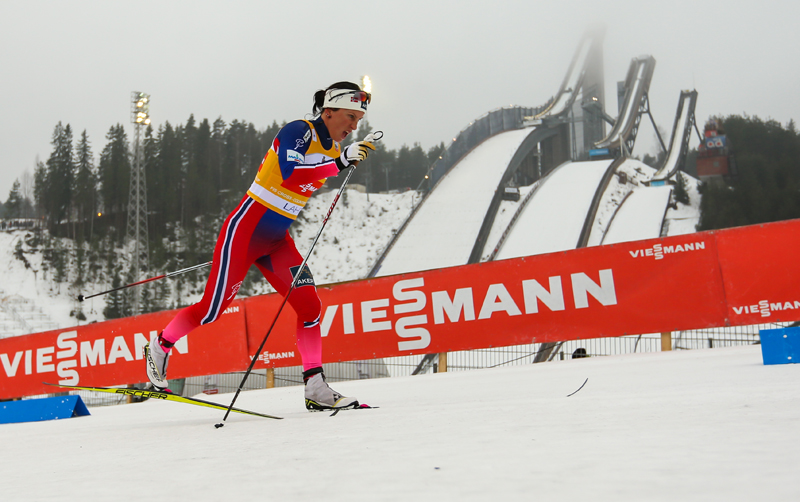
    Norway's Marit Bjørgen striding to a 17-second win on March 8 in the final classic distance race of the season, the women's 10 k classic at the World Cup in Lahti, Finland. (Photo: Fischer/NordicFocus)
    Norway’s Marit Bjørgen striding to a 17-second win on March 8 in the final classic distance race of the season, the women’s 10 k classic at the World Cup in Lahti, Finland. (Photo: Fischer/NordicFocus)

    Showing no signs of fatigue from Saturday’s sprint victory, Norway’s Marit Bjørgen outlasted the field again to win for the second time this weekend. Sunday’s 10-kilometer classic individual start in Lahti, Finland, was decided at the second time check as Bjørgen proved once again why she is called, “Magic Marit.”

    The Lahti course featured several significant hills that the women face twice as the course was a two-loop setup. The weather in Finland was relatively warm, leading race organizers to salt the hills in order to break up ice that was formed overnight. That making waxing difficult because the snow was warm and wet, and as the race went on, it’s structure deteriorated quickly.

    Norway's Marit Bjørgen striding to a 17-second win on March 8 in the final classic distance race of the season, the women's 10 k classic at the World Cup in Lahti, Finland. (Photo: Fischer/NordicFocus)
    Norway’s Marit Bjørgen striding to a 17-second win on March 8 in the final classic distance race of the season, the women’s 10 k classic at the World Cup in Lahti, Finland. (Photo: Fischer/NordicFocus)

    As a result of her dominating season so far, Bjørgen had already wrapped up the overall World Cup title, but told FIS after Sunday’s race that she had one goal this season.

    “My goal is to take all three crystal globes this season,” she said, referring to the overall title, as well as the sprint and distance crowns.

    Her toughest challenge for the distance title comes from her two Norwegian teammates Therese Johaug and Heidi Weng. With two races remaining, Bjørgen leads the overall distance rankings by 718 points, 42 points ahead of Johaug. Heidi Weng is another 131 points back in third.

    Out of the gate, Johaug showed that she wasn’t about to concede the distance title to Bjørgen. At 3.4 k, Johaug had the fastest time of all the skiers crossing at 3:31.6. Bjørgen was second fastest at that mark, just 0.8 seconds back. Early on, the woman they were all chasing was Sweden’s Charlotte Kalla.

    Of the favorites, Kalla had a slight advantage going out sooner than everyone else. The course wasn’t as worn as it was when the rest of the competitors started, giving her fresher, faster snow. By 6.2 k, Kalla had the fastest overall time in 16:21.0. That held up until Weng and the rest of the Norwegian train crossed.

    The fastest skiers at that point mirrored the current distance-competition standings. Weng bested Kalla’s time by 2.9 seconds, and that held until Johaug came through 6.3 seconds faster. The race was essentially over as soon as Bjørgen blasted through 18.3 seconds faster than Johaug.

    “I had perfect skis today,” Bjørgen said after the race. “I felt powerful from the beginning. After 5 k, I was in the lead by 5 seconds, and I thought the race is going my way.”

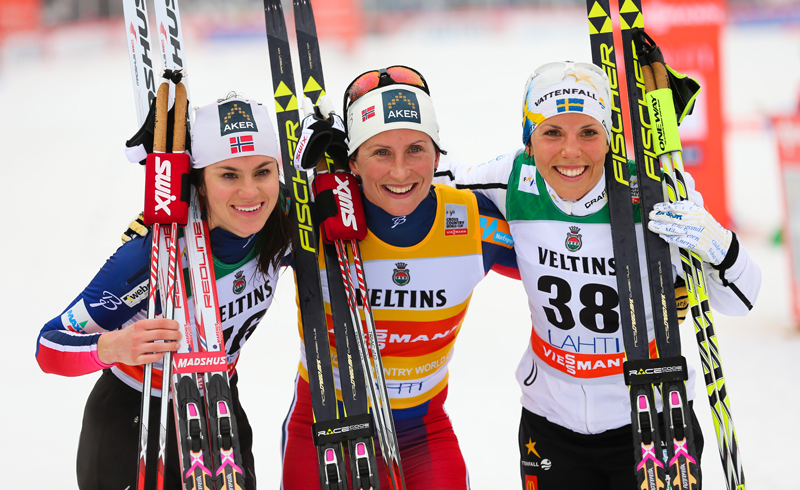
    The women's 10 k classic podium at Sunday's World Cup in Lahti, Finland, with Norwegian Marit Bjørgen (c), runner-up Heidi Weng (l) and Sweden's Charlotte Kalla (r) in third. (Photo: Fischer/NordicFocus)
    The women’s 10 k classic podium at Sunday’s World Cup in Lahti, Finland, with Norwegian Marit Bjørgen (c), runner-up Heidi Weng (l) and Sweden’s Charlotte Kalla (r) in third. (Photo: Fischer/NordicFocus)

    As Bjørgen took hold of first place, the race for the other two podium spots remained heated. Kalla crossed the finish line in 25:53.1 and held that position until Weng crossed the line eight seconds faster. The advantage Kalla had by starting early also hurt her toward the end of the race, as she was essentially a target for the other skiers.

    “I tried to open hard and keep pushing all the way,” she told reporters. “Most of the best athletes were behind me so it was not easy to get the information.”

    Weng remained in the leader’s chair until Bjørgen crossed the line shortly afterwards, 17.3 seconds faster with a wining time of 25:27.8.

    “It is amazing for me to be back on the podium,” Weng said after placing second. “The World Championships did not go as I hoped and it is great to be back. I was so happy in the finish. Lahti is a great place for me.”

    Unable to capitalize on her fast start, Johaug finished fifth (+32.7) behind Norwegian teammate Astrid Uhrenholdt Jacobsen in fourth (+32.6). Bjørgen extended her lead in the Distance World Cup with 818 points, while Johaug is 101 points back in second and Weng is another 90 points back in third. If Bjørgen, Johaug and Weng keep their positions, it will be the first time since the Distance World Cup was introduced in the 1996/1997 season that one nation swept the top three.

    The women (and men) return to action on Wednesday in Drammen, Norway, for the last sprint race of the season.

    Results

  • Norway’s Brandsdal Wins Crash-Filled Lahti Skate Sprint, Newell Eighth for U.S.

    Norway’s Brandsdal Wins Crash-Filled Lahti Skate Sprint, Newell Eighth for U.S.

    FIS world cup cross-country, individual sprint, Lahti (FIN)
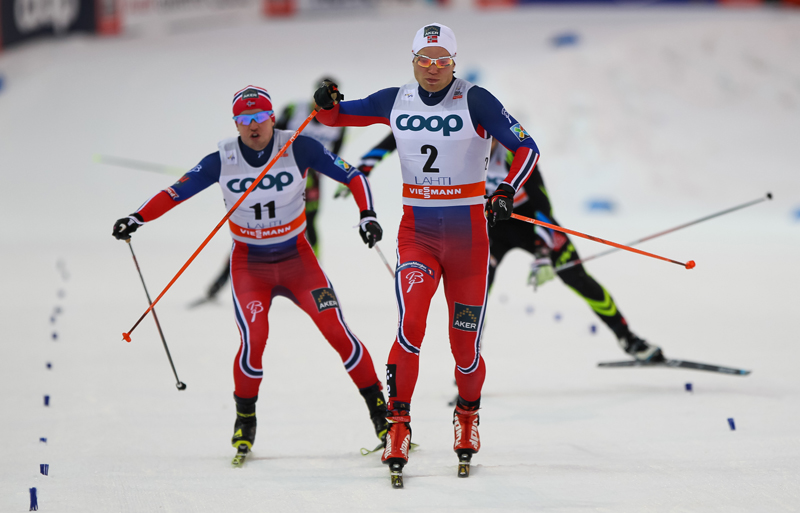
    Norway’s Erik Brandsdal (2) celebrates the win as he crosses the line first, ahead of fellow Norwegian Sindre Bjørnestad Skar (11) in the World Cup freestyle sprint final on Saturday in Lahti, Finland. (Photo: Fischer/Nordic Focus)

    One week after World Championships ended in Falun, Sweden, there wasn’t much time for rest for those headed into this weekend’s World Cup in Lahti, Finland. All the big names entered in the 1.5-kilometer freestyle sprint trying to get valuable International Ski Federation (FIS) points as the season winds down.

    Heading into Saturday’s sprint, Norway’s Finn Hågen Krogh was leading the overall Sprint World Cup with 398 points, ahead of Federico Pellegrino from Italy who had 356 points and Alexey Petukhov from Russia with 284 points. However, none of the top-three point leaders was a factor Saturday, opening the door for Norway’s Eirik Brandsdal, sitting in fourth, to gain valuable points and move up in the season-long sprint competition.

    The 1.5 k course in Lahti was very technical compared to the courses the competitors have faced this season. It was a mixture of hills and tricky turns that took their toll on some big-name competitors. Norway seemed to fare the worse, as Martin Johnsrud Sundby, Ola Vigen Hattestad, Sondre Turvoll Fossli, and Petter Northug all fell during Saturday’s sprint. Northug had a moment he probably would like to forget, falling flat on his face at the start of his semifinal heat.

    Norway’s Petter Northug (r) doesn’t even get out of the gate during his semifinal heat in the World Cup freestyle sprint on Saturday in Lahti, Finland. (photo: Fischer/Nordic Focus)

    Krogh was relegated during his semifinal for a rules violation and thus didn’t advance to the final.

    Throughout the rounds, Brandsdal was very consistent in his strategy, getting out in front and staying out of trouble.

    “I knew there were some issues with soft snow on the course and I wanted to be in front of the heat and I managed to control my heats,” he told FIS.

    After Sweden’s Johan Edin won the qualifier in 2:41.14, Brandsdal qualified second, 0.19 seconds back, and Krogh posted the third-fastest time (+1.44). Andy Newell was the lone North American to make the heats, qualifying in 13th (+3.02). Fellow U.S. Ski Team member Simi Hamilton missed advancing in 33rd, 0.32 seconds out of 30th. Also racing in the stars and stripes, Dakota Blackhorse-von Jess placed 55th in the qualifier and Erik Bjornsen was 57th.

    Among the Canadians, Lenny Valjas finished 48th, Alex Harvey placed 63rd, Jess Cockney was 68th, and Micheal Somppi 74th.

    Northug qualified in 10th and went on to win the first quarterfinal in 2:42.22, ahead of Finland’s Martti Jylhä in second (+0.42). The second quarterfinal featured Norway’s Sindre Bjørnestad Skar, who won in 2:40.71, and Brandsdal (+0.15) advancing. Newell topped the third quarterfinal in 2:39.80, ahead of Norway’s Håvard Solås Taugbøl (+0.12). France’s Richard Jouve won the fourth quarterfinal in 2:42.27, over Norway’s Anders Gløersen (+0.40), and another Frenchman, Baptiste Gros won the fifth quarterfinal in 2:40.35, while Edin advanced in second (+0.48). The lucky losers were Norway’s Mathias Rundgreen and France’s Renaud Jay.

    Brandsdal went on to win his semifinal in 2:42.88, and Skar finished 0.18 seconds back in second.  Jouve topped the second semifinal in 2:41.90, edging Taugbøl in a photo finish, while Jay and Gros in third (+0.22) and fourth (+0.14) made the final as well as lucky losers from that heat.

    Newell Makes Semis for Season Best

    Andy Newell (U.S. Ski Team) racing to 10th in the men's 1.4 k classic sprint qualifier on Thursday, the first official day of 2015 World Championships in Falun, Sweden. He went on to place fourth in his quarterfinal for 17th overall. (Photo: FlyingPointRoad)
    Andy Newell (U.S. Ski Team) racing to 10th in the men’s 1.4 k classic sprint qualifier at 2015 World Championships in Falun, Sweden. He went on to place fourth in his quarterfinal for 17th overall. (Photo: FlyingPointRoad)

    Newell narrowly missed advancing to the finals, finishing fourth in the first semifinal, 0.46 seconds behind Brandsdal and 0.12 seconds after Rundgreen, who was third. He ended the day in eighth overall for his best result of the season.

    “I’m finally feel like myself again sprinting so I’m excited for that,” Newell told USSA. “I really felt like I belonged in the final today, and it’s a good feeling to be back at that level.”

    It was the first time Newell had made the semifinals this season after posting a previous best of 12th in the World Cup classic sprint on Feb. 14 in Östersund, Sweden. There, he placed third in his quarterfinal to miss the semifinals by one place.

    Earlier in the day, Newell had qualified in 13th. He wrote in an email to FasterSkier that the fast course made qualifiers especially fun.

    “There are always a ton of skiers here at these World Cups so it can be a competitive field to qualify in,” he wrote.

    In terms of strategy on Saturday, Newell said he noticed several skiers were “sitting back and trying to attack the last half of the race.

    “That became my strategy and it worked out perfectly in the quarters and I was able to come in to the lead in the stadium and win the heat,” he explained. “I tried to do the same thing in the semis, but the pack was just a little too tight and wasn’t able to slighshot into the top two in the stadium.”

    “I’m happy with eighth but really felt good enough for the podium,” he wrote. “But most of all I’m stoked to be feeling much better at the end of the season than I did in the beginning.

    A Norway-France Final Showdown

    The final featured three Norwegians; Brandsdal, Skar and Taugbøl matched up against three Frenchmen: Jouve, Gros and Jay.

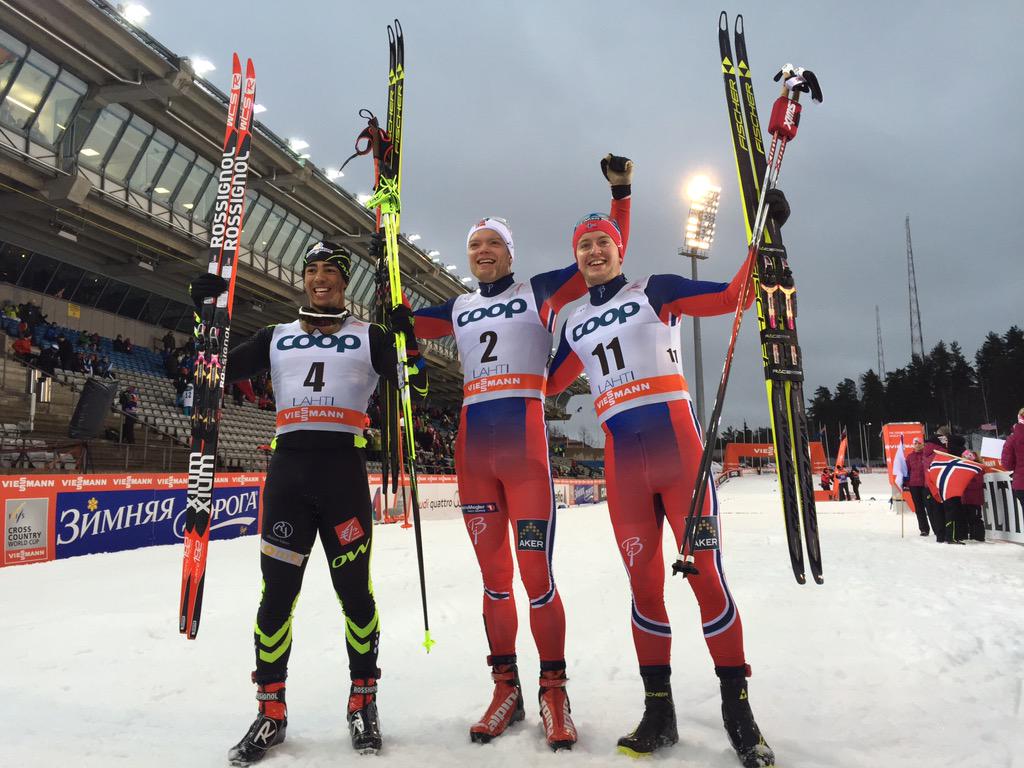
    Norway's Eirik Brandsdal (c) won Saturday's 1.5 k freestyle sprint at the World Cup in Lahti, Finland, ahead Norway's Sindre Bjørnestad Skar (r) and France's Richard Jouve (l), both of which achieved their first-ever World Cup podiums. (Photo: FIS Cross Country/Twitter)
    Norway’s Eirik Brandsdal (c) won Saturday’s 1.5 k freestyle sprint at the World Cup in Lahti, Finland, ahead Norway’s Sindre Bjørnestad Skar (r) and France’s Richard Jouve (l), both of which achieved their first-ever World Cup podiums. (Photo: FIS Cross Country/Twitter)

    Out of this unique final matchup, featuring three Norwegians and three Frenchmen, Brandsdal had the most experience, after recording a podium in Davos, Switzerland, and winning the World Cup opener in Kuusamo, Finland, at the start of this season.

    At the start, Brandsdal double poled his way into the lead and never lost it. He was followed closely behind by Skar, who was also racing for a personal-best finish. As the race unfolded, it was shaping up to be an all-Norwegian podium. With the three Norwegians skiing together, Skar and Taugbøl worked for Brandsdal to keep the French off the podium. The wall was finally broken about 200 meters from the finish when Jouve was able to glide past Taugbøl and into the top three.

    Brandsdal crossed the line first to win in 2.42.75, Skar was 0.21 seconds back in second, and Jouve finished 0.52 seconds behind in third. These were personal-best finishes for Skar and Jouve.

    “My goal today was to make it to the finals for the first time in my career,” Skar told reporters. “To finish on the podium in second place is pretty cool. I skied behind Eirik in the quarterfinal and semifinal. I managed to stay out of trouble also in the final.”

    A relative newcomer, Jouve, 20, has only competed in two other World Cups, both classic sprints, where he finished 49th in Otepää and 19th in Östersund earlier this season.

    “It was a very good day for me. I am very happy for third place,” Jouve told FIS. “It was my third World Cup appearance in my career and I did not expect this to happen. I am very proud to be on the podium. I felt very good in the qualification.”

    As a result of his win on Saturday and the 100 FIS points that go along with it, Brandsdal has moved into third overall in the Sprint World Cup. Krogh still leads with 399 points, Pellegrino is 33 points behind in second and Brandsdal 57 points back in third.

    There is only one sprint race left this season, a classic sprint on Wednesday in Drammen, Norway.

    Notes:

    There was a change to how the athletes were ranked for their qualification heats. FIS tested a new system this week and plans on doing it in next week’s classic sprint as well, in which qualified athletes choose their own quarterfinal matchups. The athletes ranked in the first top 11 positions after qualifying select their heat matchups first in reverse order, meaning the 11th-fastest qualifier selects first and the top qualifier selects their position last of that group. The athletes in 12th through 30th select the remaining quarterfinal positions in numerical order.

    Results

  • 2015 American Birkebeiner Preview: Bridges, Brooks and More

    2015 American Birkebeiner Preview: Bridges, Brooks and More

    Holly Brooks winning the 2012 American Birkebeiner, four-tenths of a second ahead of Caitlin Gregg (l), for her first Birkie title. (Photo: Darlene Prois/American Birkebeiner) http://fasterskier.com/article/brooks-outsprints-gregg-for-birkie-victory/
    Holly Brooks winning the 2012 American Birkebeiner, four-tenths of a second ahead of Caitlin Gregg (l), for her first Birkie title. (Photo: Darlene Prois/ABSF)

    Each year, leading up to the third week in February upward of 11,000 people get sick. It isn’t a sickness that would cause a widespread panic, but rather one thousands of Midwesterners actually looked forward to each year, and it’s called Birkie fever.

    The 42nd running of the American Birkebeiner takes place Saturday, starting in Cable, Wis., and ending some 30 miles (or 50-plus kilometers) south in Hayward, Wis. The race filled up in November, with all 10,500 allotted entries accounted for before the first of the year. In total, 10,517 skiers from 18 countries were registered for the three Saturday races, almost 7,000 of them are entered in the 51 k skate race. That’s a big change from 1973, the first time the Birkie was held. Back then, there were 34 men and one woman as race participants.

    The race course has gone through several changes since 1973, from the direction skiers raced to the length of the race. This year’s race has a few changes that will add a some interesting twists. For one, the race is longer. The classic race is now 55 k and the skate race now 51 k. The extra distance was due to a relocation of the final aid station and the extension of the finish line, pushing it farther down Main Street.

    The International Bridge was a fixture in the Birkie before. - Photo: American Birkebeiner Foundation
    The International Bridge was a fixture in the Birkie before. (Photo: ABSF)

    The biggest change that has garnered some of the most attention is the new bridge the American Birkebeiner Ski Foundation (ABSF) finished assembling on Wednesday over Highway 63, a kilometer from the finish.

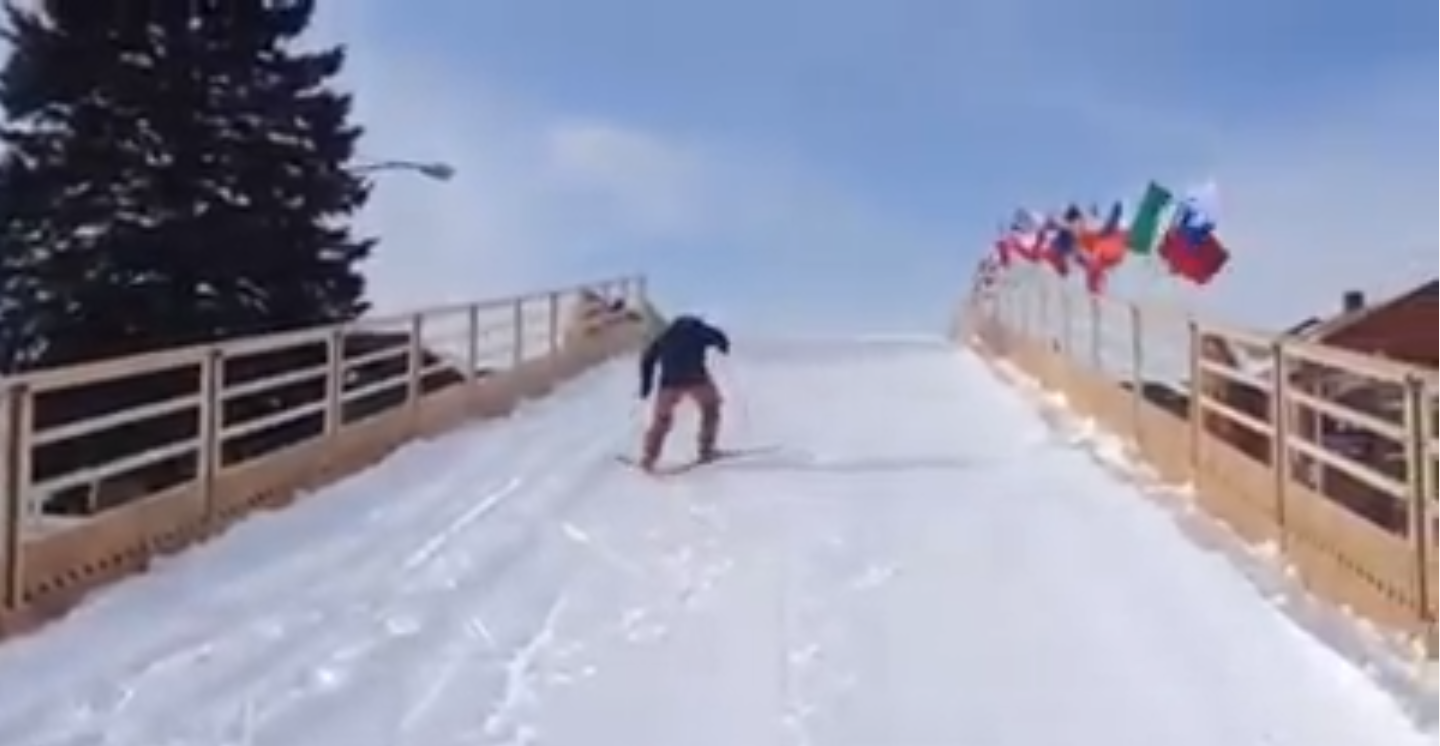
    The International Bridge adds no length to the race, but it does add a 17-vertical-foot hill before the finish. Previously, once skiers were five kilometers from the finish, it was a flat ski to Main Street. The new manmade hill adds a 10-percent climb to legs that already have some 50 kilometers of climbs in them.

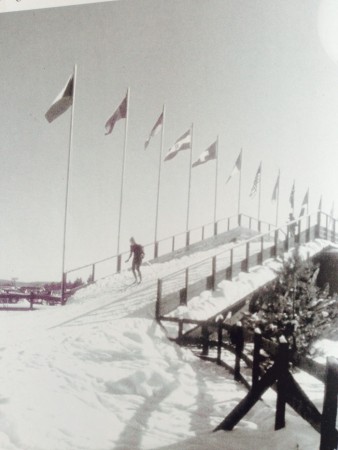
    This isn’t the first time the International Bridge has been a fixture on the Birke course. In the late ’70s and early ’80s when the race finished at the Telemark Resort in Cable, the bridge was the last hill skiers needed to climb before they finished. The temporary bridge is 100-feet long and spans 30 feet over the highway.

    The bridge was needed to eliminate the traffic congestion problems the race brought during the weekend. Funding for the ramp and other changes is a part of phase one of the ABSF’s multiple-year fundraising program.

    The new International Bridge before the finish of the American Birkebeiner in Hayward, Wis. (Photo: American Birkebeiner Ski Foundation Facebook)
    Testing the new International Bridge near the finish of the American Birkebeiner in Hayward, Wis. (Photo: American Birkebeiner Ski Foundation Facebook video)

    Birkie Draws FIS Marathon Cup Contenders 

    The past two years, the Birkie has been a part of the FIS Marathon Cup, a season-long international competition that crowns a winner with the highest points after a series of races of 42 k or farther. This means it attracts some of the world’s best long-distance racers and this year’s women’s field is a reflection of that. In the elite wave, the top four women in the FIS Marathon Cup are entered: Tatjana Mannima of Estonia, American Holly Brooks, Aurelie Dabudyk of France, and Antonella Confortola of Italy. Confortola finished second in last year’s Birkie.

    Brooks was leading the FIS Marathon Cup, but skipped last week’s stop at the Tartu Marathon in Estonia to head to Hayward to prepare for the Birkie.

    “I’m really excited for this year’s Birkie,” Brooks wrote in an online message this week. “It’s been a couple of years since I’ve been here and it’s great to be back — both at the Birkie and on ‘home soil!’

    “I’ve been bouncing from country to country racing marathons and I decided last fall that I would spend two weeks here in Hayward,” she explained. “I have great friends that I’m staying with and it feels fabulous to be in a house [rather than a hotel].”

    The new podium awaits for the winner of this years race - Photo: American Birkebeiner Foundation
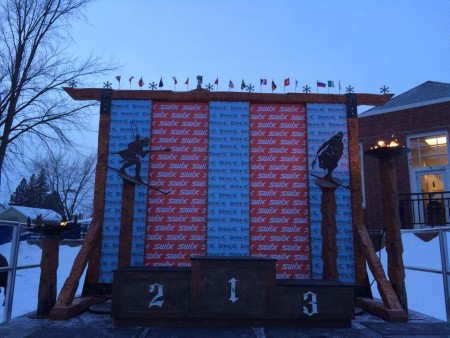
    The new podium awaits for the winner of this year’s race. (Photo: ABSF)

    Coming into the race, Brooks ranks second in the overall FIS Marathon Cup standings, just seven points behind Mannima. Brooks won the Birkie in 2012 and knows the course well.

    “I‘ve seen the whole thing start to finish… both at distance pace and race pace. That’s more than I can say for some of the courses I’ve raced this winter!” Brooks wrote. “Not sure how much of a true advantage it gives me but it puts my mind at ease a bit. I know where people including myself have made moves.”

    Two year ago at the Birkie, Mannima lost a photo finish and placed second to three-time Birkie champion Caitlin Gregg, who is currently in Sweden representing the U.S. at the FIS Nordic World Ski Championships in Falun. American Caitlin Patterson (Craftsbury Green Racing Project) finished third in 2013 and seventh last year, and could prove to be a threat in this year’s elite race.

    In an email on Wednesday, Patterson wrote that she was looking forward to skiing part of the Birkie trail on Thursday, refreshing her memory “of some of its notable features, and seeing the new bridge and finish line if possible.

    “My preparations have been going well — mostly I’ve been focused on recovering after recent Craftsbury Supertours, building up my energy, and actually keeping my training skis pretty short and easy,” she explained. “At this point in the season I have to trust the endurance and fitness I’ve built up during the past year, and mostly just stay sharp and excited for the race, which I most certainly am!”

    In terms of her goals and expectations for Saturday’s race, Patterson felt anything was possible.

    “The past two years of racing the Birkie have taught me that it’s a race in which you have to test your limits but where you never quite know what will happen, where you must always be thinking quickly and ready to react throughout all 50+k,” she wrote. “I believe that I’m in very good shape, so my goals are to trust my fitness, ski with confidence and enjoyment of the sport… and to make it onto the podium!”

    “I’ve seen the whole thing start to finish … I know where people including myself have made moves.” — Holly Brooks on her Birkie advantage

    The men’s field is also competitive. Most of the FIS Marathon leaders didn’t race last weekend’s Tartu Marathon to fly to the U.S. to prepare for the Birkie. Overall FIS Marathon Cup leader Petr Novak of the Czech Republic is racing along with France’s Benoît Chauvet, who sits in second place, only 85 points behind Novak. Second-and-third place finishers from last year’s Birkie, Simone Paredi and Sergio Bonaldi of Italy, are also listed to start. Bonaldi won the Birkie in 2013.

    SSCV's Tad Elliott (119) and Craftsbury's Andrew Dougherty (131) Men's 30 k classic mass start at U.S. Cross Country Championships in Houghton, Mich. (Photo: Christopher Schmidt)
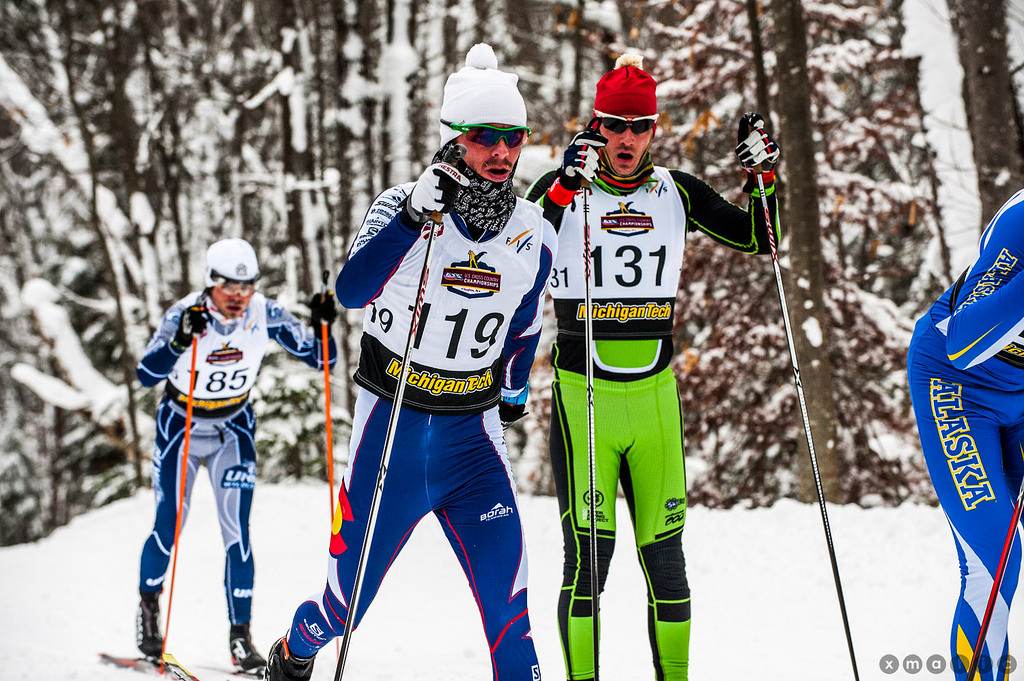
    Tad Elliott (119) racing in the men’s 30 k classic mass start at U.S. Cross Country Championships in January in Houghton, Mich. (Photo: Christopher Schmidt)

    For the U.S., Birkie winners Tad Elliott (Ski & Snowboard Club Vail Elite) and Matt Liebsch (XC United/Team Strong Heart) will be racing, along with 2014 U.S. Olympian Brian Gregg. Elliott won in 2012 and Liebsch took first in 2009.

    This trio has had a pretty intense history in the Birkie. When Elliott won in 2012, Liebsch placed second and Gregg took third. The difference between first and third was only 14.8 seconds.

    In a phone interview, Liebsch mentioned how team tactics played a part in previous Birkies, but that would not be the case this year.

    “In the past, you would have these teams come over with five or six guys and it would essentially be like a cycle race,” Liebsch said. “The fast sprinters would just sit in the back while his teammates did all the work up front setting the pace and sending guys off the front to disrupt the flow of the race. This year is a little different because there aren’t the multiple-person teams.”

    Liebsch added that the style of racing here is different than at European marathons.

    The 2011 American Birkebeiner men's podium (from left to right): with France's Benoit Chauvet in second, Norway's Tore Martin Gundersen in first and Russia's Andrey Tyuterev in third. (Photo: Andy Caniff/Swix Sport USA)
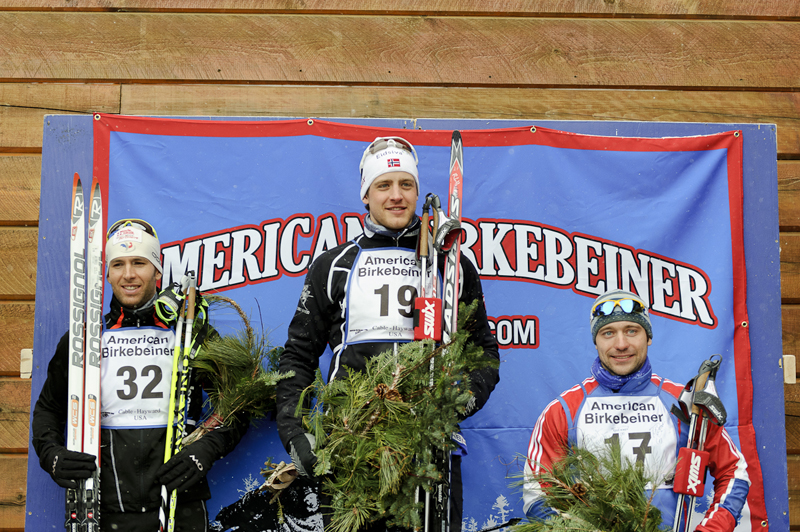
    The 2011 American Birkebeiner men’s podium (from left to right): with France’s Benoit Chauvet in second, Norway’s Tore Martin Gundersen in first and Russia’s Andrey Tyuterev in third. (Photo: Andy Caniff/Swix Sport USA)

    “In Europe, the pace is extremely fast due to the fact that teams have ten or eleven guys,” he said. “Here in the United States, the pace is slower and many of the Europeans don’t like that pace so they would send guys off the front if the pace got to slow.

    “Most of the European guys are here to get FIS points to improve their standings for the overall FIS Marathon Cup title,” he added.

    Chauvet is currently second in the overall FIS Marathon Cup and has the biggest team entered in the Birkie with four total teammates, while the overall leader, Novak will race solo.

    “The strategy for most of the European guys will be to stay up front, in the top eight, get points and then head back to Europe,” Liebsch said. “This could really help out the fast American guys like Tad, Brian, me and Lex [Treinen] because the pace won’t be crazy fast like most European races can be.”

    In an email, Treinen predicted that U.S. guys would have a good showing: “Matt looks like he’s in good shape and he and [Brian] Gregg would love to take home a Midwest victory here,” he wrote. ” … I have been training specifically for the Birkebeiner for at least two weeks and I even did some intervals recently, so I feel like I am in better shape than ever before.”

    Elliott has spent some time in the Midwest and won last month’s Seeley Classic race that was held on the Birkie course.

    “I am excited to race the Birkie,” Elliott wrote in an email. “It will be three years since I last raced here! I am looking forward to a great event. I have had some health issues again sneak in this last month, but I have a few tricks up my sleeve. My twin brother is also my wax tech coming with me from Colorado. Hoping [he] can keep me in the race this year!”

    The biggest factor going in the weekend is the weather. There was a concern of a lack of snow but over the last few weeks the area has gotten enough snow to make the course set up nicely for the race. The wind and cold temperatures are an immediate concern. On Tuesday, organizers canceled Thursday’s elite sprints because of the predicted well-below-zero temperatures at the scheduled start time. Early predictions show Saturday morning’s temperatures to be around 4-degrees Fahrenheit.

    The Birkie can been viewed live on Saturday, starting at 8 a.m. Central time, via the race organizer’s live stream (http://new.livestream.com/xcountrylive/birkie). Follow athletes via the Birkie’s live athlete tracker and check FasterSkier for a post-race recap.

    Elite start lists: Women | Men

  • Russia’s Vylegzhanin Uses Teamwork, Fast Skis to Win Rybinsk 30 k

    Russia’s Vylegzhanin Uses Teamwork, Fast Skis to Win Rybinsk 30 k

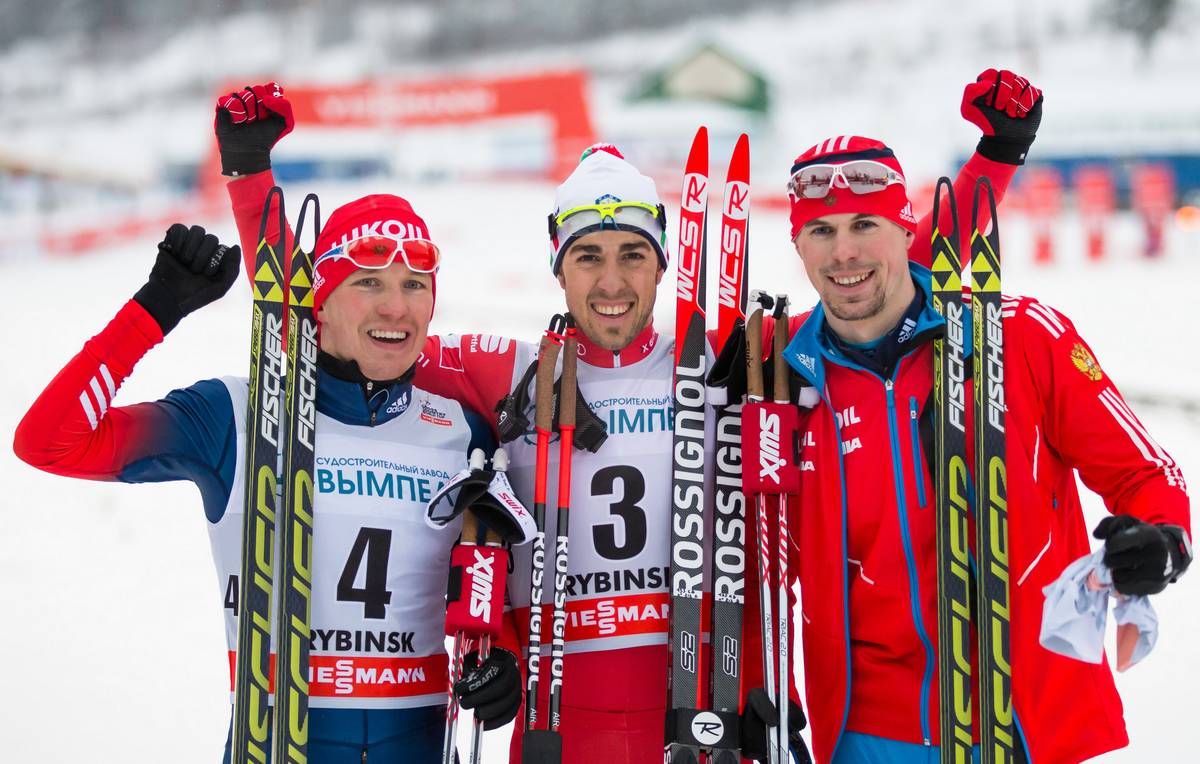
    The men's 30 k skiathlon podium (from l-r):Dario Cologna (SUI) in second, Maxim Vylegzhanin (RUS) in first, and Matti Heikkinen (FIN) in third. (Photo: Fischer/Nordic Focus)
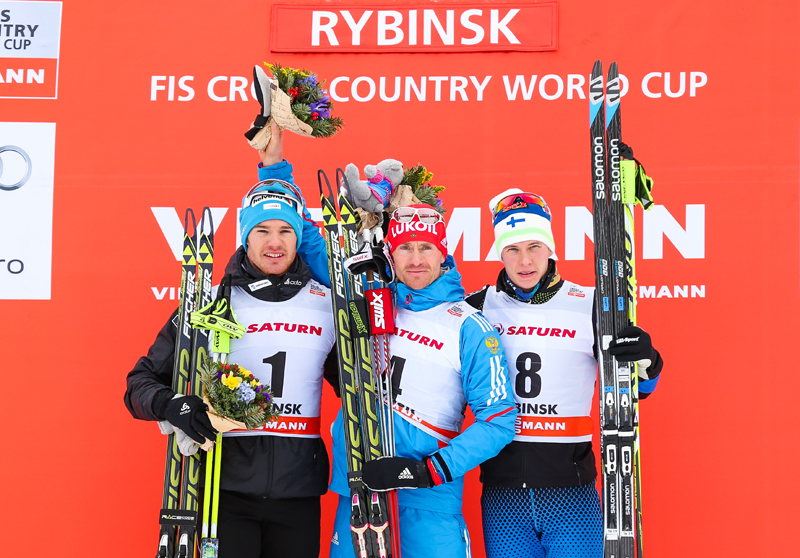
    The men’s 30 k skiathlon podium (from l-r):Dario Cologna (SUI) in second, Maxim Vylegzhanin (RUS) in first, and Matti Heikkinen (FIN) in third. (Photo: Fischer/Nordic Focus)

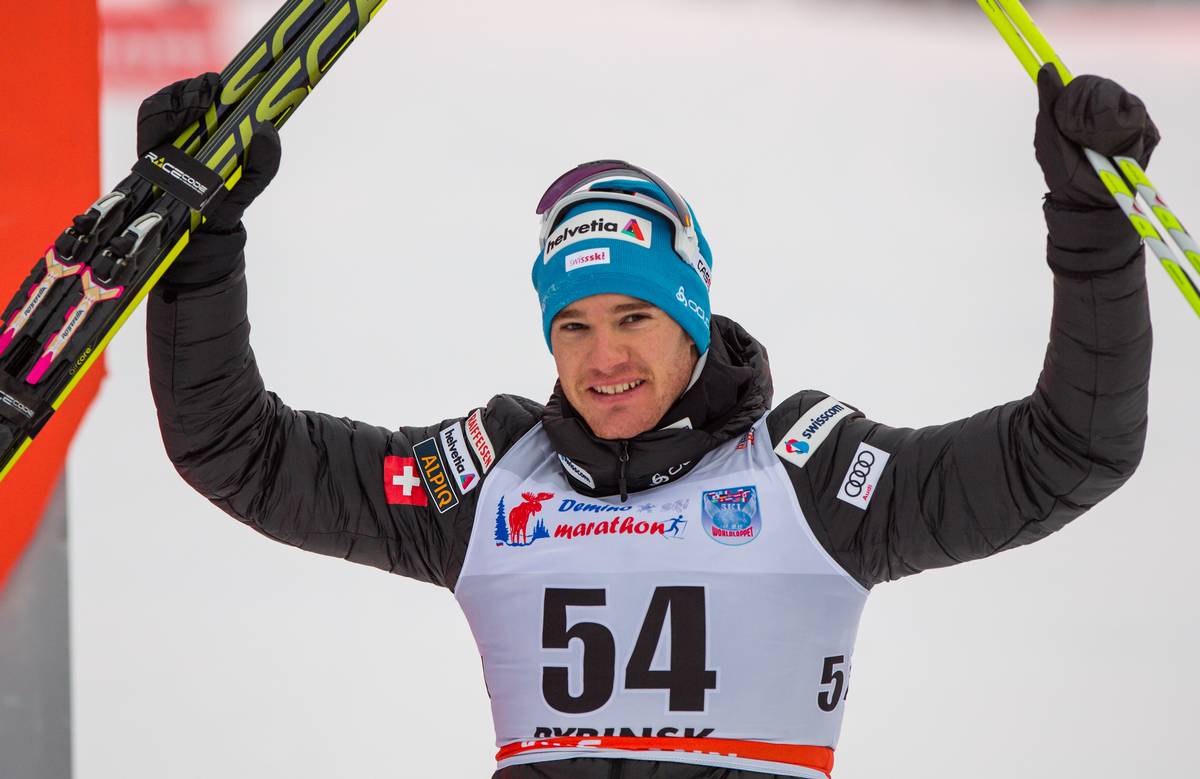
    Although it isn’t an event that is common on the World Cup race circuit, the skiathlon one race Switzerland’s Dario Cologna has excelled in over the years.

    The last World Cup skiathlon was held at the 2013 pre-World Cup in Sochi, Russia, and used as a leadup to the upcoming Olympics. Before Sunday, Cologna had won the last four international skiathlon events he participated in, including the skiathlon at the 2014 Sochi Games, making him the favorite to win the men’s World Cup 30-kilometer skiathlon in Rybinsk, Russia.

    The 28 year old had also won more races in Russia than he had in any other country: two World Cups (including Saturday’s 15 k skate) and two 2014 Olympic events (the skiathlon and 15 k classic).

    The only problems were that this was a new year and he was up against a strong Russian team (among others) motivated to win on Russian soil. That was about all Russian national-team member Maxim Vylegzhanin needed in terms of headspace to outpace Cologna by 2.7 seconds on Sunday.

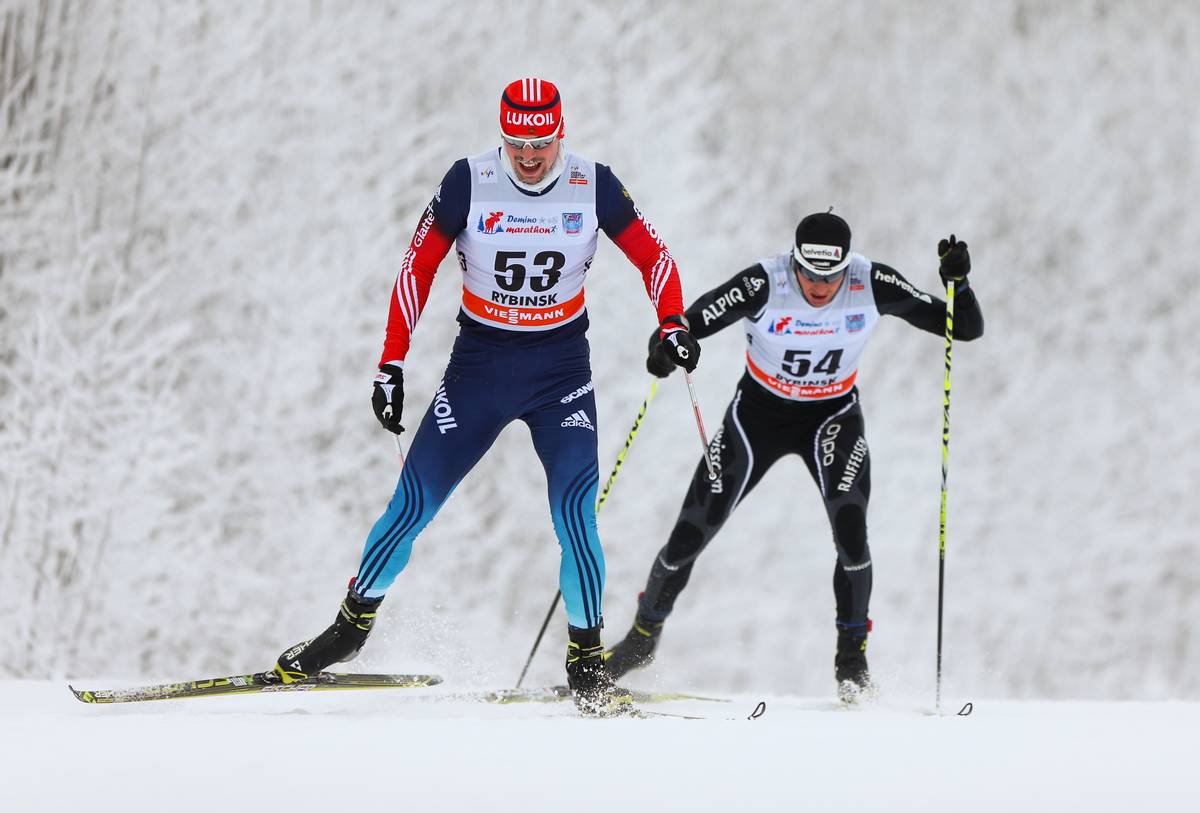
    The two athletes would became very familiar with the Rybinsk course by the end of the 12-lap race. After six 2.5-k loops of classic, they went head to head for another six loops of skating on a different 2.5 k course. Both courses included several climbs that could separate the pack or prove to be the perfect place for an attack. It was a relatively warm day with falling snow so nailing the wax for the classic portion was tricky.

    Early on, the race outcome appeared to be more in the hands of the wax techs than the skiers. Many athletes crashed and slipped during the first 15 k classic leg. The pace was extremely fast, which led several missteps. Cologna had an early scare in the first part of the race when he and Canadian Alex Harvey collided and both men fell. Cologna recovered, but Harvey ended up crashing three times in the classic portion. Several other skiers slipped up in the warm conditions as well.

    For the most part, the pack stayed together for the majority of the first half of the race. The lead rotated several times between Cologna, Vylegzhanin and several others, with every attempted attack countered and nobody distancing themselves from the front group. At one point, Vylegzhanin’s teammate Alexander Bessmertnykh and France’s Jean-Marc Gaillard attempted a half-hearted attacked that strung out the field, but their lead was quickly absorbed once the rest of the pack hit the downhill.

    The start of the men's 30 k skiathlon in Rybinsk, Russia. (Photo: Fischer/Nordic Focus)
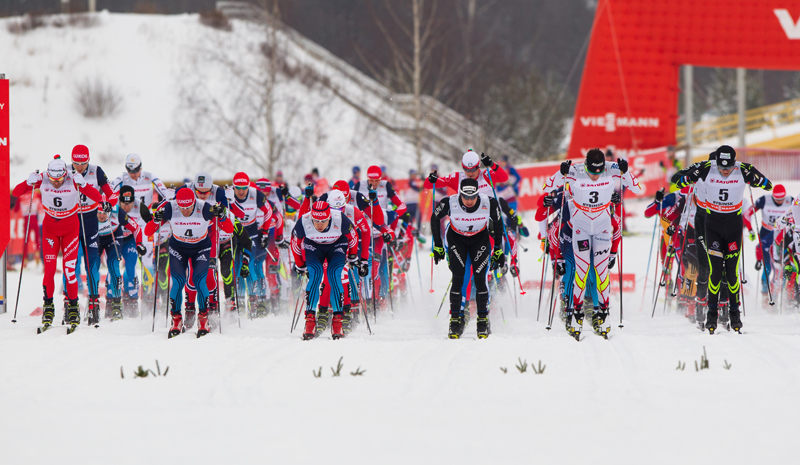
    The start of the men’s 30 k skiathlon in Rybinsk, Russia. (Photo: Fischer/Nordic Focus)

    Heading into the transition,  a trio of Russians led the group into the corral. Stanislav Volzhentsev, Dmitriy Japarov and Evgeniy Belov arrived first in 43:14.5, followed closely by the rest of the group. The first one out onto the skate course was Russian Sergey Turyshev, who quickly set the lead pace while Japarov headed out 0.6 seconds behind, just ahead of some 20 others, including Harvey in 13th.

    Once the skate skis were on, the Russian skis appeared to be the fastest of the field. At one point, Russia’s Alexey Vitsenko launched an attack on the downhill and opened a sizable gap, skiing away from the chase pack. Which Russian would ultimately win or podium was unclear, but it was evident their skis were going to help them get there.

    Cologna noticed the difference.

    “The start of the race was very quick but in the skate it was not so fast; I realized that my skis were maybe not as fast as the Russians’,” he told FIS afterward. “So I knew that I needed to attack before the finish to make the group smaller.”

    Cologna’s attack came at the 25.9 k mark when he raced up the hill crossing the timing mat at 1:12:19. Vitsenko marked him closely and joined Cologna as he headed down the hill. Leading the chase group was Finland’s Matti Heikkinen, Gaillard and Vylegzhanin, who were flanked by Russians Alexander Leskov and Eugeniy Dementiev.

    The Russian teamwork ended up keeping Cologna in check and Vylegzhanin close to the front. Heikkinen skied a strong skate leg and found himself in prime position toward the closing segments of the race.

    Realizing his time to shake the pack was slipping away, Cologna gave one last push on the final climb. Vylegzhanin and Heikkinen anticipated his move and quickly latched on. This attack separated the three from the rest of the field and set up the battle for the podium spots.

    “I pushed very hard at the end, but Maxim and Dario were too strong for me,” Heikkinen told FIS.

    The change of pace left Heikkinen hanging behind the two leaders.

    As Vylegzhanin and Cologna approached the finish line, the switchback design of the finish gave Vylegzhanin time to overtake Cologna and cross it first in 1:21:54.8 for his first victory in a year since winning the 15 k classic mass start in Szklarska Poreba, Poland.

    “This is my first podium and win this season and it’s nice that it came in Russia,” Vylegzhanin told FIS. “The spectators are so great here. I had very good skis today and I am happy to the strongest at the finish. Thank you to the spectators, the organizers and of course my team for the great skis today. Russian skis like Russian snow!”

    Cologna finished 2.7 seconds back in second, and Heikkinen rounded out the podium in third, 6.2 seconds after Vylegzhanin.

    Although some the stronger skiers opted out of the Rybinsk World Cup weekend to prepare for the upcoming World Championships in Falun, Sweden, Heikkinen was pleased with his result.

    “Sure, some of the best weren’t here, but a race is a race and I focus on Falun so this is a was a great step,” he said.

    Russia put six in the top eight (sweeping fourth through eighth), with Volzhentsev in fourth, Chernousov in fifth, Konstantin Glavatskikh in sixth, Legkov in seventh, and Turyshev in eighth. Harvey placed ninth.

    As a result of his second-place finish, Cologna moved up into second place in Overall World Cup standings, 333 points behind Norwegian leader Martin Johnsrud Sundby, who did not race in Rybinsk.

    “I was hoping for another win here today … but I am happy with second place,” Cologna said. “It was a good weekend for me and I can see where my shape is.”

    Sunday marked the last World Cup race before a two-week break as athletes prepare for the World Championships, which start on Feb. 18. A World Cup will be held in Östersund, Sweden, the weekend before, Feb. 14-15.

    Results

  • Pellegrino Wins in Rybinsk, Sets Consecutive Sprint Record

    Pellegrino Wins in Rybinsk, Sets Consecutive Sprint Record

    Men's 1.3 k freestyle sprint podium in Rybinsk, Russia (from l-r): Andrey Parfenov (RUS) third, Federico Pellegrino (ITA) first, and Sergey Ustiugov (RUS) second. (Photo: Fischer/Nordic Focus)
    Men’s 1.3 k freestyle sprint podium in Rybinsk, Russia (from l-r): Andrey Parfenov (RUS) third, Federico Pellegrino (ITA) first, and Sergey Ustiugov (RUS) second. (Photo: Fischer/Nordic Focus)

    Italy’s Federico Pellegrino skied himself into the history books after his victory in Saturdays 1.3 k freestyle sprint in Rybinsk, Russia. Pellegrino became the first athlete to win three consecutive freestyle sprint World Cups. His first two victories came this year in a Davos World Cup and in Val Mustair as part of the Tour de Ski.

    “This is just amazing for me. I can’t believe I have won again. Before Davos I had never won a World Cup and now to have won three in a row is just unbelievable,” Pellegrino told FIS reports after the race.

    To win his third straight viceroy, Pellegrino had to beat a strong Russian team full of sprinters. One such skier, Sergey Ustiugov clocked the fastest qualifier heading into the heat races qualifying in a time of 2:41.10. Teammate Alexey Petukhov was second fastest, 3.55 seconds behind and Pellegrino was third, 3.87 seconds back.

    Pellegrino had the fastest quarterfinal with a time of 2:39.39, proving he was the skier to beat in the heats. When it came to the semifinal, however, he changed his tactic. Pellegrino skied a very conservative 2:42.69 to win his heat and to advance to the finals. In comparison, Ustiugov’s semifinal time was 2:37.73.

    If the Russians wanted to stop Pellegrino, it was a perfect setup for them in the finals. Four of the six spots were filled with Russian teammates – Ustiugov, Andrey Parfenov, Nikita Kriukov, and Petukhov. Rounding out the other spots were Pellegrino and Norway’s Emil Iversen.

    At the start it was obvious Russia wasn’t going to let him win easily. The four Russians marked Pellegrino the moment the gates opened. Ustiugov took the early lead followed by Pellegrino, Parfenov, and Kriukov. The pace was fast but didn’t separate the field.

    Spurred by the home crowd at the base of the course’s major climb, Ustiugov put in a strong attack. However, Pellegrino and the other Russians were right there to counter it, with Pellegrino demonstrating that he had the energy to match Ustiugov’s speed.

    As the skiers progressed over the hill, Ustiugov was still leading and Pellegrino tucked in behind him. The group headed into the stadium and Pellegrino stepped out to get onto faster snow. This propelled him right past Ustiugov and into the lead. Parfenov followed Pellegrino, but was quickly dropped when Ustiugov reacted to Pellegrino, who was now in front.

    Into the closing meters Pellegrino’s power and speed took over. He easily out-sprinted Ustiugov and Parfenov to win his third consecutive sprint win. He crossed the line at 2:34.99, besting Ustiugov by 0.69 seconds and Parfenov third by 0.77 seconds.

    Pellegrino was very happy when he talked to FIS reporters, and said he hoped to turn these wins into a financial deal.

    “I feel so strong right now,” he said. “Hopefully with this success I can now find a sponsor for the front of my racing hat! Thank you to Russia for the great hospitality, the friendly people and for cheering for me today. I could hear it.”

    After two podium spots in two races in Rybinsk, Ustiugov showed the home crowd that he still had energy left and was looking forward to Sunday.

    “I am happy to be back on the podium again today. I feel that my shape is quite high right now and I hope to be on the podium again tomorrow in the skiathlon,” he said to FIS.

    Parfenov’s third place finish was his first ever podium, and achieving it at home was an added bonus.

    “This is my first podium ever. It’s great to have my first podium be here in Russia. The fans were great and competing here makes it possible for my family to be here. That is really special,” he said to FIS.

    Rounding out the final spots in the final were Kriukov (+2.61), Petukhov (+3.00) and Iversen (+4.60).

    Results

  • Cologna Denies Russians a Sweep With Victory in Rybinsk

    Cologna Denies Russians a Sweep With Victory in Rybinsk

    Dario Cologna of Switzerland celebrates his win in Friday's 10 k freestyle in Rybinsk, Russia (Photo: Fischer/Nordic Focus)
    Dario Cologna of Switzerland celebrates his win in Friday’s 10 k freestyle in Rybinsk, Russia (Photo: Fischer/Nordic Focus)

    Dario Cologna likes Russia and it’s probably starting to get on Russian nerves. Prior to Friday, of his nine World Cup and Olympic individual starts in the country he was victorious in three, denying the national team favorites a chance at victory in front of a home crowd. However, all the victories were in Sochi, with two from the Olympic skiathlon and the 15km classic, and other from a 2013 World Cup skiathlon.

    “I like racing in Russia. I have good memories from Sochi last winter. It’s a nice country to come to and compete. The courses are well prepared and the people are great,” Cologna commented to FIS reporters.

    The trend continued Friday with another win for Cologna in the Rybinsk World Cup 15 k freestyle interval start, where he skied to a 16.3 second win over Russian Evgeniv Belov with a time of 36.53.4. In third was fellow Russian Sergey Ustiugov, who finished 28.8 seconds back. Alexander Legkov also of Russia placed fourth, 35.8 seconds behind Cologna.

    While Friday’s race denied them the top spot, the course in Rybinsk has been very kind to its countrymen in the past. Russian athletes have won four of the seven distance races held at home in Rybinsk in the World Cup. Ilia Chernousov, Artem Zhmurko, Maxim Vylegzhanin and Legkov each have one win here.

    Sergey Ustiugov of Russia leads Dario Cologna of Switzerland in Friday's 15 k freestyle in Rybinsk, Russia. Ustiugov finished third while Cologna won. (Photo: Fischer/Nordic Focus)
    Sergey Ustiugov of Russia leads Dario Cologna of Switzerland in Friday’s 15 k freestyle in Rybinsk, Russia. Ustiugov finished third while Cologna won. (Photo: Fischer/Nordic Focus)

    Friday’s three loop, 5km course featured several significant climbs with little opportunity to recover. The highest point on the course was a 22% grade at the 8.9 k timing mark. Couple the hills with the cold weather and freshly fallen snow and the course became that much more difficult.

    Once all the top seeded skiers started, it was apparent the race was going to come down to four athletes – Cologna and Russian teammates Ustiugov, Belov, and Legkov. The latter of the four started near the front of the pack and set a blistering pace that the remaining three barely bested over the first kilometers.

    As a higher seeded athlete, Cologna had the advantage of being the last skier to start. In front of him were Ustiugov and Belov. While Ustiugov was the fastest skier through all the early course time checks, Cologna clocked even better times as he chased the Russian.

    At the 6.9 k split, Ustiugov began to feel the the consequences of his fast start. With the largest climb yet to come, Ustiugov slowed. Cologna eventually caught him, and the two worked to chip away at the distance between them and Belov.

    Men's 15 k podium, from l-r Evgeniy Belov of Russia, second, Dario Cologna of Switzerland, first, and Sergey Ustiugov of Russia, third
    Men’s 15 k podium, from l-r Evgeniy Belov of Russia, second, Dario Cologna of Switzerland, first, and Sergey Ustiugov of Russia, third

    Belov started his race more conservatively but increased his speed through the later parts of the course. His finish time of 37:09.7 was the fastest as he crossed the line, but there were still two skiers left on course. Given the splits, it seemed as if Cologna was all but guaranteed a podium. The only question was which spot would it be.

    “I caught Sergey and I knew that if I just stayed close to him we would have a fast finish. I know he is a great sprinter,” Cologna said in a post-race interview with FIS.

    The question was answered as the Swiss skier crossed the line. Cologna beat Belov’s time by 16.3 seconds, crossing the line in 36.53.4 to take his first 15 km skate World Cup win ever despite being Olympic champion in the event in Vancouver 2010.

    Although Belov was denied the win, he was excited to earn his third individual World Cup podium.

    “I am happy with my result today. It was great to win in Russia. I feel very strong after the Tour de Ski and I like racing in the minus temperatures. I know there courses very well so this is a great result,” he said to FIS.

    With his third place podium – his first World Cup distance podium – Ustiugov said he was happy but still focused on the rest of the weekend’s races.

    “This is a great finish for me. It was very difficult and when Dario caught me I knew that if I could push very hard there was a chance for a podium. This is my first podium in a distance competition on the World Cup. I have only been in the sprint before. I am looking forward to tomorrow’s sprint competition,” he said to FIS.

    Focus now switches to Saturday’s race, a 1.3 k freestyle sprint.

    Results

  • T-1 Day ‘Til IPC World Championships in Cable; U.S. Team Raring to Go

    T-1 Day ‘Til IPC World Championships in Cable; U.S. Team Raring to Go

    (L-R) Dan Cnossen, Omar Bermejo and Oksana Masters are three members of the U.S. team who will be competing at the IPC Nordic Skiing World Championships in Cable, Wisconsin. (Photo: U.S. Paralympics)
    From left to right: Dan Cnossen, Omar Bermejo and Oksana Masters are three members of the U.S. team who will be competing at the IPC Nordic Skiing World Championships in Cable, Wis., with races starting on Saturday. (Photo: U.S. Paralympics)

    Note: This article has been updated to include the most recent information on the 2015 IPC Nordic Skiing World Championships according to an IPC Nordic Skiing press release.

    This past fall, FasterSkier spoke with Yuriy Gusev, head of the Cable 2015 organizing committee and executive director of Central Cross Country (CXC), about the ongoing preparations to host the upcoming International Paralympic Committee (IPC) Nordic Skiing World Championships in Cable, Wis. It seemed like a long ways off at the time, and now it’s here: being held for the third time in the U.S., for the first time in a decade.

    With Cable and the Telemark primed for the event, which includes 135 athletes from 15 countries from Jan. 23-Feb. 1, we had an opportunity to check in with U.S. Paralympics Nordic High Performance Coach Eileen Carey to see how the U.S. team was preparing. The U.S. roster was announced Jan. 9 and includes nine returners (out of 16) from last year’s Paralympics team at the Sochi Winter Games. All but one of them are sit skiers; Omar Bermejo is the lone standing athlete.

    U.S. 2015 IPC Nordic World Championships Team:

    Men

    – Omar Bermejo (Marine Corps/Grand Rapids, Mich.)
    – Lt. Cmdr. Dan Cnossen (Navy/Topeka, Kan.)
    – Sean Halsted (Air Force/Rathdrum, Wash.)
    – Augusto Perez (East Syracuse, N.Y.)
    – Aaron Pike (Park Rapids, Minn.)
    – Bryan Price (Army/Belton, Mo.)
    – Andy Soule (Army/Pearland, Texas)

    Women

    – Oksana Masters (Louisville, Ky.)
    – Tatyana McFadden (Clarksville, Md.)

    The two members of the women’s team found repeated success in Sochi, with Oksana Masters and Tatyana McFadden taking home three combined medals.

    Masters became the first female U.S. cross-country skier to win a Paralympic medal in 20 years at the Games, initially earning silver in the 12-kilometer sitting event. She also won bronze in the 5 k cross-country. This season, Masters racked up three medals at the World Cup opener in Finland, winning gold in the 1 k cross-country sprint, and silver in the biathlon 6 k as well as the 5 k cross-country.

    In Sochi, McFadden notched silver in the women’s 1 k cross-country sprint, and in the time since, she has continued her domination of the road-marathon circuit. After the ski season ended, McFadden won four world-caliber marathons in Boston, London, Chicago and New York City. It was the second-straight year that McFadden achieved the marathon grand slam in wheelchair racing.

    U.S. Paralympics Nordic skier Oksana Masters (r} talks to coach Eileen Carey before her first time on a treadmill on Sept. 16 at the Olympic Training Center on Sept. 16 in Lake Placid, N.Y.
    U.S. Paralympics Nordic skier Oksana Masters (r) talks to coach Eileen Carey before her first time on a treadmill on Sept. 16 at the Olympic Training Center on Sept. 16 in Lake Placid, N.Y.

    Masters and McFadden missed U.S. nationals because of injury and ilnees, respectively.

    “Earlier in the season, Masters had a minor back injury and McFadden had the flu and were forced to miss the last World Cup event and the US Nationals,” Carey explained. “Both are back healthy and will be in the field in Cable.”

    On the men’s side, Andy Soule leads a strong men’s team heading into World Championships. A veteran sit skier, Soule is a bronze Paralympic medalist from the 2010 Games in Vancouver, British Columbia, where he shot an unprecedented perfect 50-for-50 in all three biathlon races. In Sochi, Soule finished in the top five in every event he competed in and placed fourth twice (in the 7.5 k biathlon and 15 k biathlon).

    He split the number of U.S. sit-ski titles won at this year’s nationals with teammate Lt. Dan Cnossen (both men won two races at Soldier Hollow in Midway, Utah). Cnossen won the men’s sitting short and sprint cross-country races, while he finished as the runner-up to Soule in the long distance cross-country and biathlon sprint races.

    Lt. Dan Cnossen negotiates the final turn on the course 100 meters from the finish en route to his sprint-final victory at 2015 U.S. Paralympics Nordic Nationals at Soldier Hollow in Midway, Utah. (Photo: U.S. Paralympics Nordic Program)
    Lt. Dan Cnossen negotiates the final turn 100 meters from the finish en route to his sprint-final victory at 2015 U.S. Paralympics Nordic Nationals at Soldier Hollow in Midway, Utah. (Photo: U.S. Paralympics Nordic Program)

    FasterSkier: How has the season gone so far?

    Eileen Carey: We had a strong opening to our season at the December World Cup races in Finland with a small group of athletes. We followed that with a great U.S. Nationals that brought together our top athletes with developing skiers and biathletes. Those two events showed both the high performance capacity and development focus of our program, both of which are critical to our long-term success.

    FS: What is the atmosphere of the team leading to these World Championships on U.S. soil?

    EC: Our athletes are becoming students of skiing and biathlon and driving the process of what and how they want to learn. This has created a great atmosphere for our whole program and has energized both athletes and staff. We are excited to take that energy to an event like World Champs, especially being at home. The Cable organizing committee has always been so welcoming and excited to have us and that gives us a great boost as a team.

    FS: What are your goals and expectations for this years team?

    EC: Our team philosophy is based on the concept that athletes are their own best coaches. Their training and racing has been focused on the idea that there are no “right” ways to do anything. As a result, this season they have gotten really creative and analytical about figuring out what works for them and exploring many different solutions. Our intentions are that bi-products of this exploration are improvements in skill, self-awareness as an athlete, and eventually performance. Our goals and expectations as a program are that our athletes will keep pushing those boundaries and continuing to think of different and perhaps better ways to train and race. Through this continual evolution, I think great performances will follow.

    FS: What are your thoughts on this years course? How does this course compare to 2013?

    EC: The courses in Cable will be a combination of courses we have skied there in the past, and some new features that will improve the experience for the athletes. We have spent some workouts focused on some of the terrain and technical features we will see there, so I think everyone is excited to be on the snow in Cable and test out what we have been working on.

    FS: What events will the team participate in?

    EC: We will have athletes competing each race day, with most competing in a combination of biathlon and cross-country races. Eight of our 9 athletes are sit skiers.  Omar Bermejo is our only standing skier to make the team and this will be the first time this season that we will all be together, so we are looking forward to being a full team.

    “We have a great team of athletes who have taken a very professional approach to training and building upon last season, ”Carey said in a U.S. Paralympics press release. “We are thrilled to get another chance to test out some of our training and racing strategies, ultimately focused on improving in each race. Having the opportunity to do that on home snow is a great bonus for us.”

    IPC Nordic Skiing World Championships Schedule of Events

    The opening ceremony will kick off Friday, Jan. 23 and the championships run through Feb. 1. 

    All seven days of the championships, which includes 38 events between cross-country and biathlon, will be streamed live at Cable2015.com and USParalympics.org from Jan. 24 to Feb. 1.

    Saturday, Jan. 24
    Biathlon Sprint – Penalty Loop
    Sitting: Men 7.5km (3 x 2.5 km) / Women 6.0 km (3 x 2.0 km)
    Standing: Men 7.5km (3 x 2.5 km) / Women 6.0 km (3 x 2.0 km)
    Visually Impaired: Men 7.5km (3 x 2.5 km) / Women 6.0 km (3 x 2.0 km)

    Sunday, Jan. 25
    Cross Country Long – Free
    Sitting: Men 15 km (5 x 3.0 km) / Women 12 km (4 x 3.0 km)
    Standing: Men 20 km (5 x 4.0 km) / Women 15 km (5 x 3.0 km)
    Visually Impaired: Men 20 km (5 x 4.0 km) / Women 15 km (5 x 3.0 km)

    Tuesday, Jan. 27
    Biathlon Middle Distance – Penalty Loop
    Sitting: Men 12.5 km (5 x 2.5 km) / Women 10 km (5 x 2.0 km)
    Standing: Men 12.5 km (5 x 2.5 km) / Women 10 km (5 x 2.0 km)
    Visually Impaired: Men 12.5 km (5 x 2.5 km) / Women 10 km (5 x 2.0 km)

    Wednesday, Jan. 28
    Cross Country Sprint – Classic
    Sitting: Men/Women 0.8 km
    Standing: Men/Women 1.2 km
    Visually Impaired: Men/Women 1.2 km

    Friday, Jan. 30
    Biathlon Individual Distance
    Sitting: Men 15 km (5 x 3.0 km) / Women 12.5 km (5 x 2.5 km)
    Standing: Men 15 km (5 x 3.0 km) / Women 12.5 km (5 x 2.5 km)
    Visually Impaired: Men 15 km (5 x 3.0 km) / Women 12.5 km (5 x 2.5 km)

    Saturday, Jan. 31
    Cross Country Relay – CL/Free/CL/Free
    Open: 10 km (4 x 2.5 km)
    Mixed: 10 km (4 x 2.5 km)

    Sunday, Feb. 1
    Cross Country Middle Distance – Classic
    Sitting: Men 10 km (4 x 2.5 km) / Women 5 km (2 x 2.5 km)
    Standing: Men 10 km (4 x 2.5 km) / Women 5 km (2 x 2.5 km)
    Visually Impaired: Men 10 km (4 x 2.5 km) / Women 5 km (2 x 2.5 km)

    For updates throughout IPC World Championships, follow FasterSkier’s Para Nordic blog.

  • Ustiugov Powers Russia to Otepää Team-Sprint Win; Canadian Men Eighth

    Ustiugov Powers Russia to Otepää Team-Sprint Win; Canadian Men Eighth

    Alexey Petukhov (r) tags Sergey Ustiugov during  the men's 6 x 1.5 k freestyle team sprint final on Sunday in Otepää, Estonia. The two went on to win by 0.4 seconds over Norway. (Photo: Fischer/NordicFocus)
    Russia’s Alexey Petukhov (r) tags Sergey Ustiugov during the men’s 6 x 1.5 k freestyle team sprint final on Sunday in Otepää, Estonia. The two went on to win by 0.4 seconds over Norway. (Photo: Fischer/NordicFocus)

    If the preceding women’s team sprint proved anything on Sunday it was that Norway could be beaten. Russia’s Sergey Ustiugov had all the motivation he needed after breaking a pole in the individual classic-sprint semifinal the day before at the World Cup in Otepää, Estonia.

    Sunday’s 1.5-kilometer course was the same course the used for the individual men’s classic race. It included two steep climbs that would be good places to attack if teams were looking to gain separation from the pack.

    Ten teams advanced from the semifinals to the 6 x 1.5 k freestyle team sprint final: Noway I (Anders Gløersen/Finn Hågen Krogh), Norway II (Ola Vigen Hattestad/Pål Golberg), Russia I (Alexey Petukhov/Sergey Ustiugov), Russia II (Andrey Parfenov/Nikolay Morilov), Italy (Dieter Nöckeler/Federico Pellegrino), Switzerland II (Roman Schaad/Gianluca Cologna), Canada (Jess Cockney/Lenny Valjas), Finland I (Matias Strandvall/Risomatti Hakola), Poland (Maciej Kreczmer/Maciej Strega), and Estonia I- (Raido Rankel/Peeter Kummel).

    Cockney and Valjas make the exchange after completion of a lap - www.nordicfocus.com. © Laiho/NordicFocus.
    Canada’s Jess Cockney (r) tags and Lenny Valjas during the men’s 6 x 1.5 k freestyle team sprint final on Sunday in Otepää, Estonia. (Photo: Fischer/NordicFocus)

    At the start of the final, the first two laps went out at a relatively leisurely pace. There weren’t any real attacks; any attempts were quickly countered and a pack reformed.

    The lead rotated between Russia’s Petukhov, Norway’s Gløersen, and Switzerland’s Schaad. At times, Poland’s Kreczmer was up front driving the pack, but Russia and Norway were always close behind. Canada’s Jess Cockney was near the back, but still in contact with the entire group.

    On the third lap before the third exchange, Petukhov and Gløersen continued to lead the pack. Norway’s second team was close, with Hattestad sitting in third position. Midway through the second downhill, Petukhov picked up the pace and attempted a small attack off the front. Gløersen was able to respond and bridge up to the Russian, and two other teams caught up by the exchange.

    There, at the halfway point, Gløersen tagged Krogh 0.3 seconds ahead of Norway II, and Russia was 0.6 seconds back in third. Russia’s second team was another 0.1 seconds behind in fourth, and Switzerland trailed by 1.2 seconds.

    As the laps went by, it took the top skiers less time to complete them. Eventually a team was going to make an attack and it all depended on who could counter and when. The attack finally happened on the fifth lap. Petukhov initiated it and Gløersen immediately responded to match his pace. The attack opened up a sizable lead heading into the final exchange. Russia came through 0.6 seconds ahead in first, Norway was second, and Russia II as the next-closest team was 7.2 seconds back in third.

    Sunday's podium in the men's World Cup 6 x 1.5 k team sprint: (from left to right) Norway I's Finn Hågen Krogh and Anders Gløersen in second, Russia I's Sergey Ustiugov and Alexey Petukhov in first, and Italy's Dietmar Nöckeler and Federico Pellegrino in third. (Photo: Fischer/NordicFocus)
    The Otepää World Cup men’s 6 x 1.5 k team sprint podium: (from left to right) Norway I’s Finn Hågen Krogh and Anders Gløersen in second, Russia I’s Sergey Ustiugov and Alexey Petukhov in first, and Italy’s Dietmar Nöckeler and Federico Pellegrino in third. (Photo: Fischer/NordicFocus)

    As Russia and Norway skated away and battled for first and second place, the fight for third place was just as intense. Italy, Switzerland, Russia and Norway’s second team were all in position for the final podium spot. Italy had the biggest deficit to regain, coming through the exchange 12.2 seconds back in sixth.

    After a clean exchange to start the final lap, Ustiugov and Krogh still remained squarely in the lead. Ustiugov had fresher legs as a result of crashing out of Saturday’s semifinal; Krogh reached the classic-sprint final and placed fifth.

    The pair skied together, each taking a turn leading. At the start of the last climb, Ustiugov attacked and it proved to be the winning move. His surge created enough separation from Krogh to build a gap he carried to the finish line. Ustiugov took the win for Russia in 19:39.1, and Krogh finished 0.4 seconds later in second.

    Russia's Sergey Ustiugov (in blue) works to hold off Norway's Finn Hågen Krogh (in red, behind) in the final meters of the men's freestyle team sprint, while Russia's Alexey Petukhov welcomes his teammate and the win.
    Russia’s Sergey Ustiugov (in blue) works to hold off Norway’s Finn Hågen Krogh (in red, behind) in the final meters of the men’s freestyle team sprint, while Russia’s Alexey Petukhov welcomes his teammate and the win in Otepää, Estonia.

    Italy’s Pellegrino skated a strong last lap to close down almost a 12-second deficit at the start of the lap to outsprint Norway II, Russia II and Switzerland II for third place, 12.9 seconds after Ustiugov.

    “It feels amazing to win in Otepää,” Petukhov told FIS after the race. “We like it here very much. The atmosphere was great both in the stadium and at the track. Sergey was very strong today. We were a great team.”

    Pellegrino also was extremely happy after rising from sixth to third on the final lap. “It’s fantastic to be back on the podium,” he said. “It is incredible to share the podium with Dietmar. It is great for the Italian Cross-Country Skiing”

    Cockney, Valjas Take Eighth

    A tight group of competitors round the final curving descent into the stadium during the World Cup freestyle team sprint in Otepää, Estonia. (Photo: Fischer/NordicFocus)
    A tight group of competitors, including Canada (back left), round the final curving descent into the stadium during the World Cup freestyle team sprint in Otepää, Estonia. (Photo: Fischer/NordicFocus)

    Canada finished eighth place, 22.8 seconds behind Russia. It was the first time Cockney and Valjas have raced together in a team sprint in Europe. They previously teamed up for a 10th-place finish at a World Cup in Quebec City two years ago. That was the last time Valjas made the final in a team sprint.

    On Sunday, they qualified with the third-fastest time in the first semifinal to earn a spot in the final. Six teams from that heat advanced to the 10-team final.

    “I was definitely eager to forget about yesterday’s race, and put up a good result this morning,” Cockney said in a Cross Country Canada press release, referring to his 61st place in the classic sprint. Valjas also missed qualifying in 45th on Saturday.

    “Personally I felt like I skied calmly and made good decisions tactically to help us – especially in the semifinal,” Cockney added.

    In the final, Cockney attempted to get closer to the leaders early on the first hill, but was stuck in seventh before the second climb. Regardless, he was within 1.8 seconds of the leaders at the first exchange, tagging Valjas in eighth.

    Valjas maintained the time back on the second leg but slipped one position, handing off to Cockney in ninth and 1.9 seconds out of first. At that point, all 10 teams were within two seconds of the lead.

    The Canadians found themselves in 10th at the third exchange, 3.9 seconds back, and had fallen nearly 10 seconds off the pace on the fourth lap.

    Cockney skied them up to eighth on his final time around, 16 seconds out of first, and Valjas held their position to the finish with the fourth-fastest anchor leg, crossing the line 22.8 behind Ustiugov.

    Neither Cockney nor Valjas could be reached by email for comment.

    — Alex Kochon contributed reporting

    Results

  • Østberg Carries the Torch for Norway with First Classic Sprint Win in Otepää

    Østberg Carries the Torch for Norway with First Classic Sprint Win in Otepää

    (Photo: Fischer/NordicFocus)
    A very happy Otepää podium, with Norway’s Ingvild Flugstad Østberg (c) in first, Swden’s Stina Nilsson (l) in second, and Norway’s Celine Brun-Lie in third. (Photo: Fischer/NordicFocus)

    With many of the top women using this weekend to recover from last week’s Tour de Ski competition, Saturday’s World Cup stage in Otepää, Estonia, was not short on fast, up-and-coming talent.

    The 1.2-kilometer classic course featured a flat start then into a tough 30-meter climb to the top of the only hill on the women’s course, then right back downhill to a tricky 180-degree turn. After the turn, the course still continued downhill to the finish line. Placing on the downhills was extremely important because as the races went on, the snow really started to get soft and tracks started to wash away. This made choosing the right wax extremely important. Too much wax and there would be no glide on the downhill, not enough wax and it was hard to get up the hill.

    The first of five quarterfinal heats featured Norway’s Ingvild Flugstad Østberg, the fastest qualifier in 2:52.93, Sweden’s Ida Ingemarsdotter, Kathrine Rolsted Harsem of Norway, Natalia Matveeva of Russia, Germany’s Denise Hermann, and Russia’s Elena Soboleva.

    Østberg showed that she didn’t lose any energy in the qualification round, taking the lead from the start and easily skiing away from the group to win her heat, crossing the line in 2:55.72. Ingemarsdotter was second (+1.62).

    The second quarterfinal heat featured Norway’s Celine Brun-Lie, Hanna Falk of Sweden, Slovenia’s Katja Visnar and Alenka Cebasek, Switzerland’s Laurien Van Der Graaff, and Germany’s Victoria Carl .

    Just like her teammate Østberg did in her heat, Brun-Lie took a very aggressive start into the hill and separated herself from the chase group. Falk was able to stay with her the entire time, but when qualification was certain, slowly eased up towards the finish to save energy. Brun-Lie won the heat in 2:58.32, and Falk took second (+0.86).

    The third heat featured German teammates Hanna Kolb and Sandra Ringwald, Jennie Öberg of Sweden, Anamarija Lampic of Slovenia, Mona-Lisa Malvalehto of Finland and Yulia Romanova of Russia.

    At the start, Malvalehto lead the group up the climb followed closely by Öberg. Leading into the downhill, Malvalehto was easily passed by Öberg and Lampic who were just waiting for an opportunity. The pair proceeded to separate themselves from the group and battle it out together for the win. It was a photo finish at the line between Öberg and Lampic. Öberg got the win crossing first in 3:00.77, and Lampic was 0.02 seconds behind in second.

    Quarterfinal 4 featured the second-fastest qualifier and overall U23 leader Stina Nilsson of Sweden, Maiken Caspersen Falla of Norway, Justyna Kowalczyk of Poland, Evgenia Shapovalova of Russia, Anne Kyllönen of Finland, and Lucia Anger of Germany.

    At the gun, Nilsson took command at the start and led the group up the climb followed by Falla. As the pack continued up the hill, Falla took an opportunity to pass Nilsson when a gap opened up. That was all she needed to win the heat in 2:56.05. Nilsson made a late pass and challenged Falla at the finish, but let up when second place was secured, crossing at 0.08 seconds back in second. Kowalczyk placed fourth, 2.22 second behind Falla and after Shapovalova in third, and did not advance to the semifinals.

    The fifth-and-final quarterfinal heat featured a pair of Swedish teammates, Magdalena Pajala and Evelina Settlin, American Sadie Bjornsen, Kari Vikhagen Gjeitnes from Norway, Anastasia Dotsenko from Russia and Krista Parmakoski from Finland.

    Bjornsen started fast but wasn’t able to get any separation at the start and was quickly caught by the chase group. Heading into the first climb, the group was still together but Bjornsen was slowly dropping back, but still remained close to the leaders. Settlin fell just after the 180 turn and really broke the pack into two fields. Gjeitnes, Pajala and Bjornsen were in the lead group. Gjeitnes was able to double pole away, 0.31 seconds ahead of Pajala in 3:02.6. Pajala edged Bjornsen in a photo finish, after Bjornsen closed quickly in the last five meters.

    The lucky losers were Harsem and Shapovalova. As the races went on, the times were getting slower as a result of the soft snow forcing many to change skis and wax. Heading into the first semifinal the question was: how much did the track soften up after the men’s quarterfinal heats?

    It was a duel between Sweden and Norway for the first semifinal; three from each country were in the field with  Østberg, Brun-Lie and Harsem from Norway, and Ingemarsdotter, Öberg and Falk from Sweden.

    At the start, all three Norwegians jumped out front and lead the group up the hill and then never looked back, easily separating themselves from the Swedish chase group. Crossing the line first out of the Norwegian trio was Østberg who showed she is the one to beat. Her time was 3:10.45; Brun-Lie was 1.75 behind in second.

    The second semifinal featured Nilsson, Falla, Shapovalova, Pajala, Gjeitnes and Lampic. Nilsson and Falla were determined to get to the final and challenge Østberg. The pair separated themselves at the start and easily skied away from the other skiers. Falla’s skis were really fast, pulling away on the final downhill to the finish. Nilsson challenged for first but when she realized she was easily going to qualify eased up and crossed second behind Falla. Falla crossed in 3:08.74, and Nilsson 1.40 seconds back in second.

    Best seat in the house to watch Saturday's classic race (Photo: Fischer/NordicFocus)
    Best seat in the house to watch Saturday’s classic race (Photo: Fischer/NordicFocus)

    The second semifinal was a lot faster than the first, resulting in Shapovalova and Pajala earning lucky loser positions.

    To add more drama to the softening track, as the men were winding up their semifinal heats, the snow really started to fall. This caused many to change skis.

    “Before the final I had to make the decision if I go on zero skis or klister. I chose the second option,” Østberg told FIS afterward.

    Nilsson also told FIS after that she changed skis as well before the final, which gave her both good grip and good glide.

    The final was set, with three Norwegians (Falla, Brun-Lie and Østberg), two Swedes (Pajala and Nilsson), and Russia’s Shapovalova.

    The start was pretty even with Nilsson taking up the pace followed closely by Falla. Heading to the hill, Østberg passed her teammate Falla and closed the gap to Nilsson. As the climb continued, Østberg made her move and passed Falla at the summit. Falla then passed Nilsson making it a Norwegian in first and second. As the trio descended down to the finish, Nilsson was able to pass Falla, but lost a lot of energy in the process, letting Østberg pull away to win in 3:20.18. Nilsson finished in second (+0.60) and Brun-Lie took third (+2.29).

    Afterwards Østberg told FIS that the skis were the key to her win, which was her first-ever in a World Cup classic sprint, her second victory of the season and her fourth podium of the season.

    “The whole day I had perfect skis,” she said. “I felt good that nobody could keep up with me in the last 100 meters.”

    This now raises an interesting question: can Østberg beat her teammate Marit Bjørgen?

    “I’ve done it before and I can do it again. One must at least have faith that one can beat her,”said Østberg told NRK.

    The World Championship were definitely on all of the Norwegians’ minds after the race. Brun-Lie told FIS, “I have never been on the podium in the classic sprint. Today’s result is very important for the qualification for the World Championships.”

    As a result of her win, Østberg passes teammate Bjørgen in the Sprint World Cup standings to take first place. She has 385 points, and Bjørgen is 35 points behind with four sprints left. Bjørgen still leads the Overall World Cup by more than 400 points over teammate Therese Johaug. Neither Bjørgen, Johaug nor Heidi Weng raced on Saturday.

    Sunday’s race is a freestyle team sprint competition.

    Results

    Ingvild Flugstad Oestberg (NOR) takes the win.  (photo: Fischer/Nordic Focus)
    Ingvild Flugstad Oestberg (NOR) takes the win. (photo: Fischer/Nordic Focus)
  • Sundby King of the Hill and Tour de Ski Again

    Sundby King of the Hill and Tour de Ski Again

    Elated Sundby crosses the line to wrap up his second consecutive Tour de Ski title - Photo: NewsPower.it
    An elated Martin Johnsrud Sundby of Norway crosses the finish line at the top of Alpe Cermis to wrap up his second consecutive Tour de Ski title on Sunday in Val di Fiemme, Italy.  (Photo: (Photo: Val di Fiemme/www.fiemmeworldcup.com)

    After nine days of racing, the Tour de Ski came down to four people who had a chance to win the overall title: Norway’s Petter Northug and Martin Johnsrud Sundby, Calle Halfvarsson of Sweden and Evgeniy Belov of Russia. The four top places were only separated by 45 seconds. Whoever climbed the Alpe Cermis the fastest out of this group would win.

    Sunday’s seventh stage of the Tour de Ski featured a 9-kilometer ascent of one of the most famous mountains in cross-country skiing: Alpe Cermis in Val di Fiemme, Italy. From the start, it is a 1.8 k lap back through the stadium then to the Alpe. Leading to the base is a relatively small downhill before the climb begins. From the bottom to the top is 425 meters of elevation gain, giving skiers a total climb of 495 meters (1,624 feet). Scattered throughout the climb is a 26.5-percent grade, a 24-percent grade and finally, a 28-percent grade before the finish.

    Since he was leading the Tour, Northug had the disadvantage of being the rabbit for everyone to pace off at the start. With a three-second lead over Sundby, he had to face the mental aspect of holding off the chasers and potentially getting caught. Second was Sundby followed by Halfvarsson and Belov, who started third (+27) and fourth (+35) behind Northug, respectively.

    Interestingly enough, at the start, Sundby let Northug stay away. At 1.8 k, Northug still had a three-second lead over Sundby after pushing the pace on the flat section, trying to gain as much advantage as he could before the climb. Sundby was within striking distance, but opted to sit back for the perfect time to make a move. That opportunity came around 6.2 k.

    Sundby quietly slipped outside and around Northug to take the lead. This was very similar to the move Sundby made during this stage last year. The only difference was that Sundby attacked about 200 meters into the final climb, and on Sunday, he attacked on the flatter downhill section.

    Sundby’s plan now was to ever so slightly ramp up the pace and see if Northug could hang on. Between the two, Sundby was more of a lightweight, giving him that advantage as they prepared to climb.

    As the situation for first and second started to play out, the battle for third and fourth was just as intense. At the same 6.2 k mark, Halfvarsson and Belov were side by side, neither one getting ahead of the other. If an attack was made here, would they be able to bridge up to the Sundby/Northug battle just 46.9 seconds ahead of them? If they could work together and not fight each other, there could be an opportunity to catch the Sundby and Northug up front.

    The attack at the 6.2 mark was ultimately the winning move for Sundby and it was apparent as soon as he passed Northug. Sundby opened up a seven-to-eight-meter gap and did so using the V2 technique. Behind him was a struggling Northug trying to keep pace using a labored V1 climb technique. He was slowing down, and Sundby was skating away.

    At the 7.1 k timing section, Sundby’s lead was growing quickly. He came through in 15:38, and Northug was 13.2 seconds behind — a time that Halfvarsson and Belov would soon be getting from their respective coaches. Halfvarsson led them through, 42.6 seconds back, as Belov trailed by 0.8 seconds. The pair was within 30 seconds of Northug, but more importantly, they were chipping away at Sundby as well.

    At 8.1 k, the 29-percent-grade section and hardest part of the climb, Sundby looked back several times, realizing that Northug wasn’t going to be able to catch him. He came through 33.4 seconds ahead of Northug and 50 seconds ahead of  Halfvarsson and Belov, who were now within 17 seconds of second place. But making up that ground to Northug in 900 meters wouldn’t be easy.

    The men's 2015 Tour de Ski overall podium following Sunday's 9 k freestyle pursuit: with winner Martin Johnsrud Sundby (c) of Norway, runner-up Petter Northug (l) of Norway, and Russia's Evgeniy Belov in third. (Photo: Val di Fiemme/www.fiemmeworldcup.com)
    The men’s 2015 Tour de Ski overall podium following Sunday’s 9 k freestyle pursuit: with winner Martin Johnsrud Sundby (c) of Norway, runner-up Petter Northug (l) of Norway, and Russia’s Evgeniy Belov in third. (Photo: Val di Fiemme/www.fiemmeworldcup.com)

    At the final time check before the finish at 8.5 k, Sundby all but wrapped up his second-consecutive Tour de Ski title with a 35.2-second margin to Northug.

    Skiing behind Halfvarsson most of the race, Belov finally passed the Swede to move into third and came through the checkpoint ten seconds behind Northug. Halfvarsson in fourth slipped to 12 seconds behind Belov.

    All that was left for Sundby to do was finish and secure another coveted Tour title in his second time racing the multi-stage series. Exhausted, Sundby crossed the line, uncontested, in 29:27.4. Sundby now joins Switzerland’s Dario Cologna as the only male skier to win consecutive Tour titles.

    “This is much, much bigger for me to win this year than last year,” Sundby told NRK after Sunday’s race, according to a translation. “Last year was not quite as strong competition. This year I had the pressure on me.”

    With first place taken, the race came down to a battle for second. With time splits on Belov behind him, Northug upped the pace ever so slightly. This move gave him all the advantage he needed, finishing second, 34.5 seconds after Sundby and 16.6 seconds ahead of Belov in third. Halfvarsson held onto fourth place, 1:04.2 behind the winner and more than a minute ahead of Cologna in fifth (+2:06.6).

    Northug has finished second in this stage four times and made the overall Tour podium six times.

    “I am very happy to be second in the Tour,” Northug told FIS after the race. “Me and Martin were very working well together before the start of the climb. Martin sped up on the hill. I could not follow him but I found a good rhythm and I am happy to be second.”

    Commenting on his strategy, Northug told NRK, “I tried to go fast into climb along with Martin. My plan was to find my own rhythm. I tried to go on a lighter gear, so I had a faster gear to go on, because I figured that Calle and Belov were coming fast from behind.”

    Commenting on his own race strategy, Sundby told FIS, “Today feels just amazing. I did not have the best start today. I did not feel good at the beginning. Petter was pushing hard after the start and I did not know if I could follow him. I am so happy and relieved to win. Mentally it was the biggest challenge ever.”

    In an interview with Eurosport, Sundby said that he was “extremely tired after yesterday’s race and was thankful to recover afterwards. The last hill was never racking but I’m so happy to come in first, too.”

    An elated Belov told FIS, “It is my biggest achievement of my career. It feels great to be third in the Tour de Ski. At the beginning of the climb Calle tried to attack but I could follow him. Later on I saw it was harder and harder for him to keep the pace and I decided to attack. When I saw that gap got bigger on Calle I started to believe I could finish in third place.”

    The fastest man of the day was Italy’s Roland Clara, who completed the climb in 29:13.0, just 2.1 seconds ahead of France’s Maurice Manificat in second.

    As a result of his stage win and overall Tour de Ski title, Sundby claimed first position in the race for the season-long overall World Cup title. His 1189 total points is 340 points ahead of second place Northug. Siting in third place is Halfvarsson with 809 points.

  • Bjørgen Solos to Yet Another Tour Victory in Toblach Pursuit

    Bjørgen Solos to Yet Another Tour Victory in Toblach Pursuit

    Marit Bjoergen (NOR) unchallenged in yet another Tour de Ski stage.  (photo: Fischer / Nordic Focus)
    Marit Bjoergen (NOR) unchallenged in yet another Tour de Ski stage. (photo: Fischer / Nordic Focus)

    The only thing that can stop Norway’s Marit Bjørgen from winning her first ever Tour de Ski title is herself.

    Entering Thursday’s fifth stage, a 5 k skate pursuit, in Toblach, Italy, Bjørgen had a 1.34.3 advantage over teammates Heidi Weng and a 2.16 lead over defending Tour de Ski champion Therese Johaug. If either Weng or Johaug wanted a chance to catch Bjørgen, the oppurtunities were winding down and they needed to catch her today. Being a pursuit start, Weng and Johaug would have the advantage of being able to see Bjørgen in front of them and could use that to their advantage to chip away at her lead. They just had to catch her.

    Therese Johaug (NOR) doing her best to chase down some time.  (photo: Fischer / Nordic Focus)
    Therese Johaug (NOR)
    doing her best to chase down some time. (photo: Fischer / Nordic Focus)

    Unfortunately for them, Bjørgen didnt feel like playing rabbit for on Thurssday.

    Today’s course was the exact same course as yesterday’s classic race. Given that fact, there was a lot of oppurtunity to make up time on the descent leading back to the start/finish area. Alternatively, you could really distance yourself from the pack with an effort on the uphill then attack the downhill to take advantage of the fast snow conditions.

    Right at the start, Bjørgen used that plan. She attacked the climb and pushed over the top to gain even more advantage on the downhill. Since it was a looped course this strategy would help her increase her time advantage at all checkpoints. In fact, she had the fastest split at every timing section on the course.

    At the 2.4 k timing mark it was apparent that Bjørgen wasn’t going to be caught. Her time was 4:34, second place Weng was 1:41 slower, Johaug +2.19. Bjoergen was able to ski the whole race by herself and was never challenged. She earned every time bonus on course as well as earning bonus points for the fastest overall time. At the end, Bjoergen’s winning time was 36:37.9

    Marit Bjoergen (NOR) celebrates another 2015 Tour de Ski stage win.  (photo: Fischer / Nordic Focus)
    Marit Bjoergen (NOR) celebrates another 2015 Tour de Ski stage win. (photo: Fischer / Nordic Focus)

    With first place in Thursday’s race decided, focus switched to the battle for second place between Weng and Johaug. Just like Bjørgen, they were never challenged and skied solo the entire time. Weng had the faster skis on this day, Johaug never threatened her teammate for second place.

    Weng crossed the line +1:58.8, Johaug +2:51. Sweden’s Emma Wiken was fourth at+4:20 and Norwegian Ragnhild Haga came in with a strong fifth place, +4:23. Wiken began the day in fifth position but moved up to fourth in the overall standings by overtaking Justyna Kowalczyk of Poland who was +4:46.

    As a result of her fifth consecutive Tour de Ski stage win in this years competition, Bjørgen’s lead for the overall title has grown. She now has a 2:03.8 advantage over Weng and a 3:01 advantage over Johaug.

    NRK asked Bjørgen if the race for the overall title was secured, “I am only looking for the next hill” she replied. “There are still two races left. But it feels really good. It is good to have a day off tomorrow.”

    In her post race interview Weng told FIS reporters that “I felt stiff in the first lap and I was little bit slower. Then I got better with my technique and I could take some seconds on Therese. I need to rest a lot before the final stages in Val di Fiemme.”

    Johaug isn’t ready to give up the fight for second place quite yet. She told FIS reporters “I think it was a good race but I could not find the right pace. I am looking forward to going to Val di Fiemme. I am still motivated to fight for the second place on the top of Alpe Cermis. Nothing is decided yet. There are still two competitions remaining.”

    The Tour travels to Val di Fiemme, Italy for the final two stages this weekend. Tomorrow is a rest day.

    Complete results | Overall Tour de Ski standings

    Heidi Weng (NOR), Marit Bjoergen (NOR) and Therese Johaug (NOR), (l-r) stand atop the Cortina-Toblach (ITA) Tour de Ski stage podium. (photo: Fischer / Nordic Focus)
    Heidi Weng (NOR), Marit Bjoergen (NOR) and Therese Johaug (NOR), (l-r) stand atop the Cortina-Toblach (ITA) Tour de Ski stage podium. (photo: Fischer / Nordic Focus)
  • Poltoranin Double Poles to First Win of Season in Tour 10 k Classic

    Poltoranin Double Poles to First Win of Season in Tour 10 k Classic

    Evgeniy Belov (RUS), Alexey Poltoranin (KAZ), Martin Johnsrud Sundby (NOR), (l-r) share the top stop of the podium in Wednesday's Tour de Ski stage in Toblach, Italy.  (photo: Fischer/Nordic Focus)
    The men’s 10 k classic podium at the fourth stage of the Tour de Ski on Wednesday in Toblach, Italy: (from left to right) Russia’s Evgeniy Belov in second, Kazakstan’s Alexey Poltoranin in first, and Norway’s Martin Johnsrud Sundby in third. (Photo: Fischer/Nordic Focus)

    Alexey Poltoranin of Kazakhstan proved that once in a while you just need to muscle your way to first place. He opted to use skate skis and double poled his way to the victory during Wednesday’s 10-kilometer classic race, the fourth stage of the Tour de Ski in Toblach, Italy.

    The men’s two-lap course featured gradual two-kilometer climb out of the start, followed by a rolling but overall downhill descent to the finish. The relative grade of the course led several of the top men to use skate skis and double pole the entire course as an opportunity to gain a lot of time on the downhills and recover in time to go back up the climb.

    Alexey Poltoranin (KAZ) racing for the Tour de Ski in Cortina-Toblach (ITA) (photo: Fischer/NordicFocus)
    Alexey Poltoranin of Kazakhstan racing to the Tour win in Stage 4: the 10 k classic individual start on Wednesday in Toblach, Italy. (Photo: Fischer/NordicFocus)

    Heading into the fourth stage, Tour leader Petter Northug of Norway held a 25.1-second lead over teammate Martin Johnsrud Sundby and Sweden’s Calle Halfvarsson was 27 seconds back in third overall. Russia’s Evgeniy Belov stood in fourth (+38.7), Canada’s Alex Harvey was fifth (+54.2) and Switzerland’s Dario Cologna was 1:03 back in sixth. Poltoranin was 1:04.3 behind Northug in seventh.

    Northug has had success in this discipline in the past. His nine victories are the most podiums in classic Tour stages since the Tour de Ski started nine years ago.

    Poltoranin has also seen his share of classic victories, winning three of the last five classic stages of the Tour, including individual starts and mass starts.

    At 2.1 k on Wednesday, Northug, who decided to stick with classic instead of skate skis, crossed the checkpoint 16.2 seconds behind Russia’s Alexander Bessmertnykh in first. Several men ahead of Northug were faster on skate skis, including Sweden’s Daniel Richardsson, who topped Bessmertnykh’s 1.7 k time by 4.5 seconds in first at the earlier checkpoint.

    Richardsson clocked the fastest time through the finish in 23.12.2, holding his own there until Poltoranin, also on skate skis, bumped him to second by 20.4 seconds with a new time to beat of. 22:51.8.

    Meanwhile, Cologna, Belov, Sundby, Northug and Halfvarsson tried to match his time while striding.

    When Poltoranin claimed the lead at the finish, it was obvious where he made most of his time up: the descent to the finish. At the last timing split at 7.1 k, Poltoranin ranked seventh-fastest through all 70 finishers, 10.6 behind Belov in first. The Russian had risen from seventh at the first 1.7 k checkpoint to third at 5 k, behind Halfvarsson and Poltoranin, respectively, then first with slightly less than 3 k to go.

    With Poltoranin in the leader’s spot, attention shifted to the remaining skiers still out on course. Belov was the only real threat to upset Poltoranin, but when he crossed the line 0.5 behind, the victory seemed all but wrapped up for Poltoranin.

    One by one, the remaining contenders crossed the line unable to beat Poltoranin’s time: Cologna was 14.3 seconds off the mark, Sundby was 4.2 seconds short, Halfvarsson came up 9.4 seconds shy, and Northug — the last starter — finally finished 22.8 seconds behind in seventh.

    Norway's Martin Johnsrud Sundby racing to third in Wednesday's 10 k classic, the fourth stage of the Tour de Ski in Toblach, Italy. (Photo: Fischer/Nordic Focus)
    Norway’s Martin Johnsrud Sundby racing to third in Wednesday’s 10 k classic, the fourth stage of the Tour de Ski in Toblach, Italy. (Photo: Fischer/Nordic Focus)

    As it shook out, Belov was closest for second in the 10 k, Sundby notched his second-straight podium in third, ahead of Halfvarsson and Cologna in fourth and fifth, respectively. Richardsson ended up sixth, and Northug placed seventh to retain his overall Tour lead by just 1.5 seconds over Sundby heading into Thursday’s 25 k freestyle pursuit in Toblach.

    And while Sundby was most concerned on his overall Tour finish, which will be determined at the final climb on Sunday, he said that shouldn’t take anything away from someone like Poltoranin, who was gunning for the stage win and put himself in fifth overall behind Belov and Halfvarsson, respectively.

    “I was completely tired after yesterday,” Sundby told FIS. “I have full respect to Alexey [Poltoranin] for his achievement.”

    For Poltoranin, the decision to go with skate skis was the right one. He was the only one in the top 10 in the overall standings that didn’t use classic skis. In the end, the gamble paid off with his first World Cup stage win of the season and an improvement by two places in the overall Tour standings with three stages to go.

    “To double pole the whole competition was a new experience for me,” he said. “I had great skis, they were very fast. I decided to go on skate skis only 10 minutes before the start.”

    As a result of Sundby’s third-place finish and the five bonus points that went with it, he narrowed the margin to Northug to 1.5 seconds, which should make for a tight 25 k pursuit on the same course on Thursday.

    When asked about his chances to win the overall Tour title, Northug told NRK reporters that the only way that can happen is if, “The snow in Alps Cermis must melt.”

    For Stage 5, Northug will start 2 seconds ahead of Sundby, and Belov will head out 7 seconds back in third. Halfvarsson starts with a 14-second deficit in fourth, followed by Poltoranin (+27.0), Cologna (+55) and Harvey (+1:08), in fifth through seventh, respectively.

    Results | Tour de Ski standings

  • Bjørgen Continues Her Tour de Ski Dominance with Sprint Win

    Bjørgen Continues Her Tour de Ski Dominance with Sprint Win

    Marit Bjoergen (NOR) celebrates another victory in the 2015 Tour de Ski, crossing the finish line in Val Mustair, Switzerland.  (photo: Fischer/Nordic Focus)
    Norway’s Marit Bjørgen celebrates another victory in the 2015 Tour de Ski, crossing the finish line in Val Mustair, Switzerland. (Photo: Fischer/Nordic Focus)

    Norway’s Marit Bjørgen proved once again that she is the hands down favorite to with this year’s Tour de Ski competition by setting the fastest qualifying time in Tuesdays 1.4 k course and continuing that pace all the way to the final.

    Stage 3 in Val Müstair, Switzerland featured a two lap course with a climb at the start topping out at a 20 percent grade and several sweeping turns that were getting icy as the qualification round finished up. Early in qualification the inside lines were the ideal setup to capitalize on the icy conditions and fast snow.

    The quarterfinals started with the fastest qualifier Bjørgen flying out of the gate fast, getting the inside line on the first turn and quickly pulling away from the rest of the field. Her only issue in the race was a pole plant that ended up between her skis causing her to stumble and lose balance. She recovered and didn’t miss a beat up the hill. Evgenia Shapovalova from Russia was the second qualifier out of heat one, +3.09 behind winner Bjørgen’s time of 3.38.78.

    Heat two featured Bjørgen’s closest competitor for the overall Tour de Ski title, Norwegian teammate Therese Johaug. If Johaug, +1:06.8 behind entering today’s race, had any chance to defend her Tour de Ski title from last year she had to advance to keep pace with Bjørgen and earn valuable points.

    At the start it seemed Johaug would advance easily attacking early and taking the lead to the first climb. Sophie Caldwell from the United States and Italy’s Gia Vuerich thought otherwise. The duo out sprinted Johaug at the finish to advance to the next round. Johaug went from first to third in a matter of seconds making her Tour de Ski title defense more challenging. Caldwell took the heat with a time of 3:42.25, only +0.05 ahead of Vuerich in a photo finish.

    “I am very disappointed now,” Johaug told NRK reporters after her race. “I had hoped for semifinals. Then everything would have looked different, it’s very big difference in the quarterfinals and semifinals in the end.”

    In the third quarterfinal heat the United States’ Jessie Diggins got out to an early lead but faded and was passed by Swiss crowd favorite Laurien Van Der Graaff and Sweden’s Stina Nilsson. The pair was able to pull away on the downhill and have their own sprint to the finish resulting in another photo finish. Nilsson first, (3.40.71) and Van Der Graaff was second, +0.05 behind.

    Norway’s Ingvild Flugstad Østberg highlighted the fourth heat. At the start, Østberg easily pulled away from everybody in her heat and continued the pace all the way to the finish. It was an interesting tactic because she didn’t let up until the very end, expending a lot of energy in the process. Her time of 3:39.58 was +3.16 faster than her teammate and second place finisher Ragnhild Haga.

    The fifth and final heat featured Norway’s Heidi Weng who was determined to challenge Bjørgen for the stage win today. She was able to really push the pace at the start and set the fastest quarterfinal heat time at 3:36.35. Teammate Maiken Caspersen Falla was +1.26 behind. As a result of the lightening pace, American Kikkan Randall was able to secure the lucky loser and advance to the semi-final round. Hanna Kolb from heat three was the other lucky loser advancing.

    The first semifinal began with Bjørgen taking the same strategy as she did in the quarters, get out front fast and stay out of trouble. The pace was slightly slower than her first race letting the chase group of Nilsson and Caldwell stay within striking distance. Bjørgen made sure they didn’t get to close attacking on the climb of the second lap and pulling away for the win. Caldwell wasn’t able to keep up with Nilsson and dropped back to finish in third. Bjørgen crossed the line in 3:39.04 with Nilsson +0.77 behind.

    As expected in the second semifinal heat, Østberg took a commanding lead at the start and skated away from the rest of the field. The chase group of Weng, Falla, Van Der Graaff and Randall tried to match the pace but weren’t able to keep up with the charging Oestberg. Randall was the first to lose touch and fall off. Seeing an opportunity, Weng was able to break off from the group and take second place, +0.40 behind Østberg time of 3:35.84.

    As a result of the speed of the second semifinal, Falla and Van Der Graaff were the lucky losers advancing to the finals. They finished third and fourth in the heat!

    Norway's Ingvild Flugstad Oestberg (NOR), Marit Bjoergen (NOR), Heidi Weng (NOR), (l-r) sweep the podium in Val Mustair, Switzerland.  (photo: Fischer/Nordic Focus)
    From left to right, Norway’s Ingvild Flugstad Østberg in third, Marit Bjørgen in first and Heidi Weng in second sweep the podium in Val Mustair, Switzerland.
    (Photo: Fischer/Nordic Focus)

    The finals were set with four Norwegians, Bjørgen, Østberg, Weng and Falla. Nilsson from Sweden and Van Der Graaff from Switzerland rounded out the six women field.

    At the start, it was Østberg taking the early fast lead followed by the other Norwegians. Bjørgen opted to stay back in third position and watch her younger teammates set the early pace. The four easily pulled away from the remaining skiers, Graaff and Nilsson. Unfortunately Stina Nilsson broke a pole early in the race and missed all opportunity to join the lead pack as they skated away.

    After a lap of sitting back and watching, Bjørgen used her experience to pick the ideal line through the bunch and attacked on the second climb and within seconds distanced herself from Weng and Oestberg who had no response. Bjørgen descended with a huge lead and crossed the line for her third win in as many stages in this year’s Tour de Ski and opened up a +1.11.2 lead over second place Heidi Weng.

    The race for second and third was very close; Weng was able to hold of Østberg for second and a charging Nilsson who recovered nicely from her broken pole took fourth. With Falla and Van Der Graaff rounding things off in fifth and sixth, respectively. This was Weng’s third consecutive podium in this year’s Tour de Ski competition.

    “It’s really fun to ski when your body is feeling so good. My skis were great, the guys did an awesome job on them today again, and my legs were fast. When you have good skis and good legs, you go fast,” remarked Bjørgen to Norwegian TV reporters after the race.

    This win gave Bjørgen a sizeable lead for the overall Tour de Ski title, but she isn’t celebrating yet.

    “We have four more races to go,” she told NRK. “We are not even halfway through the Tour, and I have to make it to Val di Fiemme,” adding that “I have two minutes to spare to Johaug, and I’m thankful for that. It’s 10k classic next, but this time, the two of them don’t get the benefit of working together to catch me.”

    Her teammate might think that she should be – Johaug seemed to think the Tour was a lock at this point.

    “I don’t stand a chance at the overall anymore,” Johaug said to NRK reporters. “Marit beat me by 10 seconds in the qualifier, and I’m too far behind now. The overall title is pretty much determined. But there are still more podiums to fight for. Now I need to get ready for the race tomorrow and prepare to do my best.”

    “From the prologue I had a good feeling,” remarked Bjørgen to FIS reporters afterwards. “My goal was to make it to the final to gain some seconds on Therese and Heidi. In the final I managed to build a gap on the big hill. I think I am in a good position before the Tour de Ski stages in Italy.”

    Bjørgen now leads the Tour overall by +1.11.2 over Weng in second and +2.00.7 over Johaug in third.

    Wednesday’s Stage 4 features a women’s 5 k classic individual start and men’s 10 k in Toblach, Italy.

    — Inge Scheve contributed reporting

  • Bjørgen Holds Off Whippersnapper Nilsson to Sweep Davos Weekend

    Bjørgen Holds Off Whippersnapper Nilsson to Sweep Davos Weekend

    The women's World Cup 1.3 k freestyle sprint podium on Sunday in Davos, Switzerland: Norwegian winner Marit Bjørgen (c), Swedish runner-up Stina Nilsson (l) and Norway's Ingvild Flugstad Østberg in third. (Photo: FIS Cross Country/Twitter)
    The women’s World Cup 1.3 k freestyle sprint podium on Sunday in Davos, Switzerland: Norwegian winner Marit Bjørgen (c), Swedish runner-up Stina Nilsson (l) and Norway’s Ingvild Flugstad Østberg in third. (Photo: FIS Cross Country/Twitter)

    How much did Marit Bjørgen have left and could anybody beat her?

    Coming off her incredible 10-kilometer display on Saturday, the 34-year-old Norwegian was a huge favorite to win Sunday’s 1.3 k freestyle sprint in Davos, Switzerland. Last week, the first go-around in Davos, the Norwegians dominated the freestyle sprint, completing yet another podium sweep.

    Ingvild Flugstad Østberg won that race and she was out to prove again that her result last week wasn’t because Bjørgen had an off day. However’ Sunday’s course was different from a week ago, with a two-lap, 650-meter course featuring two big climbs and a combination of manmade and natural snow.

    There was a lot of ice on the turns leading to some interesting technical downhill turns. In a pre-race interview on Eurosport, American Kikkan Randall said, “The final turn coming into the finish line will cause some spills.” In qualification, there were several of those to reiterate her point.

    The first of five quarterfinal races featured Bjørgen — the fastest qualifier in 2:37.59 — Germany’s Denise Herrmann, Italy’s Gaia Vuerich, Sweden’s Linn Soemskar, and Finland’s Anne Kyllönen and Krista Parmakoski.

    Bjørgen took a very aggressive outside line out of the start and double poled her way to the front of the pack headed into the first crest. On the following descent, she was able to pull away, taking Vuerich with her. At the start of the second lap, Herrmann was able to overtake Vuerich, who lost her pace heading to the uphill. The battle for second place let Bjørgen pull away easily taking the quarterfinal win in 2:36.62. Hermann was second, +1.90 behind Bjørgen

    The second quarterfinal featured Norway’s Maiken Caspersen Falla, Sweden’s Maja Dahlqvist, Slovenia’s Katja Visnar, Germany’s Sandra Ringwald, Russia’s Natalia Matveeva, and American Jessie Diggins.

    At the start, Matveeva dove for the inside line heading into the first climb, but an attack from Falla got the Norwegian out of trouble and up to the front of the pack, followed closely by Visnar, who kept pace with Falla. The pack followed behind but was quickly losing ground heading into the last climb.

    On the downhill, the gap between first and second extended, but sitting in third was Dahlqvist who saw an opportunity to catch a slowing Visnar at the finish. Dahlqvist outsprinted the Slovenian in a photo finish for second, one second behind Falla, who won the heat in 2:38.69.

    The third quarterfinal featured three Swedes — Stina Nilsson, Hanna Falk and Ida Ingemarsdotter — two Germans, Hanna Kolb and Lucia Anger, and Finland’s Riikka Sarasoja.

    Nilsson pushed the pace when the gun sounded followed closely by her Swedish teammates heading up the first climb. On the descent, the icy righthand turn put Kolb in a spot of bother, opening the door for the three Swedish teammates to gather back in front and lead the pack up the second climb. The second descent gave Nilsson and opportunity to open a bit of a gap from Falk her teammate.The Swedish pair crossed the line in first and second, with Nilsson winning in 2:39.71, and Falk finishing 0.15 seconds behind to automatically advance.

    The fourth quarterfinal featured Randall and Ida Sargent of the U.S., Switzerland’s Laurien Van Der Graaff, Slovenia’s Vesna Fabian, Norway’s Heidi Weng, and Germany’s Claudia Nystad Germany.

    Van Der Graaf took the lead up the first hill followed closely by an in-form Randall. The downhill turn didn’t separate the field like in previous races, and heading back into the second climb it was a six person pack, still led by Van Der Graaff. A podium favorite, Weng was losing pace stuck in fourth headed into the downhill. Van Der Graaff was able to hold everybody else off to win the heat in 2:38.29, followed by Randall, who was nearly caught off guard at the finish by a charging Fabian but was able to sneak by for second (+0.28).

    The fifth quarterfinal featured Østberg, Sweden’s Charlotte Kalla, American Sophie Caldwell, Finland’s Kerttu Niskanen, and Slovenia’s Alenka Cebasek and Nika Razinger.

    Just like her start from last week, Østberg took a very quick approach to the start and led the group up the hill in first position, while Caldwell followed closely. The two hammered the first 400 meters and built a sizable gap, with Kalla chasing them down in third. On the second climb, Caldwell started to fade as a result of her effort in the first part of the race. Kalla passed her and joined Østberg, finishing just 0.28 seconds behind her. Østberg clocked the fastest quarterfinal time by more than a second in 2:35.05.

    The two lucky losers making it into the semifinals were Fabian from heat 3 and Caldwell from heat 5.

    The first semifinal featured a lineup that could give favorite Bjørgen her biggest challenge all day. Nilsson, Falla, Fabian, Herrmann and Dahlqvist all lined up alongside of Bjørgen.

    The race started off with Bjørgen not taking her usual fast start, possibly waiting to see how it unfolded. As a result, she was fourth up the first climb. In front of her were Herrmann, Falla and Nilsson.

    Bjørgen was just waiting for her chance, and an opportunity presented itself on the downhill when Falla stumbled on the icy turn into the finish. This gave Bjørgen room to move into third up the last climb. On the descent, her ski prep essentially got her in perfect position to take the inside line going into the last turn.

    With no effort, Bjørgen was able to glide right past Nilsson and attack the corner. After the turn, Bjørgen, Falla and Nilsson were essentially tied heading toward the finish. Falla was in the lead but lost steam and passed by Nilsson a few meters from the finish. Bjørgen closed the last five meters hard and ended up passing Falla in a photo finish. Nilsson’s won the semi in 2:38.96, Bjørgen was 0.15 back in second, and Falla missed advancing just one-hundredth of a second back in third.

    The second semifinal featured Østberg, Kalla, Falk, Van Der Graaff, Randall and Caldwell.

    As expected, Østberg took a very fast start, surging to the front and out of trouble up the first hill, with Van Der Graaff close behind. Heading into the first turn, Randall lost her footing and took a fall, eliminating her from a shot at advancing to the final.

    The leaders attacked heading into the second climb, and Kalla found an opportunity to attack Østberg on the downhill and eventually passed her when Østberg let up a bit into the corner. Kalla was able to hold her off to the finish, winning in 2:36.7. Østberg was second, 0.64 seconds behind, and Randall finished fifth, almost 12 seconds out, to end up ninth overall.

    The two lucky losers came from the second semifinal as a result of pace Østberg set. Falk and Van Der Graaf advanced.

    This set up an incredibly fast final with two Norwegians — Bjørgen and Østberg — and three Swedes — Nilsson, Kalla and Falk — and Van Der Graaf. The question was, how much energy did Bjørgen have left?

    Just like her previous heat, Bjørgen initially sat back without losing site of Nilsson, who took the lead to the first hill. Bjørgen took a wider line and positioned herself next to Østberg. The pair led up the hill and stayed together down the backside and into the first turn.

    At the end of the first lap, Bjørgen outpaced Østberg and lead up the hill. Nilsson was third up the hill, but Østberg lost all of her energy trying to match the pace Bjørgen set up it. Nilsson passed the second Norwegian before they got to the top.

    Bjørgen knew Østberg was suffering, and attacked, taking Nilsson with her. The 21-year-old Swede tried to match Bjørgen’s pace, but simply couldn’t. Bjørgen easily skated away and across the finish line for yet another World Cup win in 2:35.86. Nilsson placed second, 0.55 seconds later, and rounding out the podium was Østberg, 1.12 back in third.

    Kalla finished fourth (+2.31), Falk followed in fifth (+5.3) and Van Der Graaff was 12 seconds back in sixth.

    In her post-race interview Bjørgen said she “didn’t feel so good in my semifinal so it was a surprise to feel so strong in the final. I am happy to win both races this weekend and I am looking forward to the Christmas holiday and to prepare for the Tour de Ski. “

    This was also Nilsson’s first-ever skate podium and third individual podium, which she “was so excited about.”

    “I executed my tactics as I planned,” Nilsson said. “I wanted to attack on the last climb. I wanted to be closer to Marit but she was too fast. “

    Heading into the holiday break Bjørgen in the overall World Cup lead has a 321 point advantage over her teammate Therese Johaug, who did not race on Sunday.

  • Bjørgen Stays Vigil on an Icy Davos Course for 1st Distance Win of Season

    Bjørgen Stays Vigil on an Icy Davos Course for 1st Distance Win of Season

    Marit Bjørgen celebrates her first World Cup distance win of the season on Saturday after taking the 10 k skate by 19.9 seconds in Davos, Switzerland. (Photo: Fischer/NordicFocus)
    Norway’s Marit Bjørgen celebrates her first World Cup distance win of the season on Saturday after taking the 10 k skate by 19.9 seconds in Davos, Switzerland. (Photo: Fischer/NordicFocus)

    Heading into the women’s 10-kilometer freestyle individual start on Friday in Davos, Switzerland, one stat stuck out over the rest. Marit Bjørgen of Norway has not been beaten in a World Cup 10 k skate since Davos in December 
2009, when she placed fourth. Since then, Bjørgen had won all five of the World Cup 10 k skate 
races she started.

    In total, Bjørgen had racked up seven of those 10 k freestyle wins, and with a win on Saturday, she would tie former Czech Republic skier Katerina Neumannova with eight wins, according to a FIS press release. Besides them, no other competitor has more than three 10 k skate wins.

    But Bjørgen hadn’t won a World Cup distance race yet this season; her teammate Therese Johaug had.

    Depending on how the usual showdown shook out, Bjørgen or Johaug could lead the Norwegian women’s team to the longest winning streak in women’s World Cup history. Before Saturday, the Norwegian women had won nine straight World Cup races, not including stages (between Bjørgen, Therese Johaug and Ingvild Flugstad Østberg so far this season). A 10th-consecutive win would beat the Russian record, set during the nearly a decade ago between February and November 1995.

    To top that off, Norway could add to its 14-race winning streak, including World Cup stages.

    Johaug won the last 10 k skate held in Davos in February 2013 — which Bjørgen did not start. On Saturday, Johaug was seeking her sixth-straight distance win, in which she would equal the records of Norway’s Bente Skari (January-February 2003) and Italy’s Manuela Di Centa (February-March 1996). Bjørgen has yet to string together more than five consecutive wins.

    Whether any of these women were aware or cared much about these stats was besides the point — on Saturday morning, Bjørgen and Johaug were out for a duel.

    Because of the less-than-average snow in Europe, this event was originally scheduled to be held in La Clusaz, France, but was canceled then rescheduled last week for Davos. The majority of the course was a mixture of natural and manmade snow leading to an icy surface, which benefited the earlier starters.

    “It was icy, so one could easily lose their skis from under them,” Bjørgen told NRK, according to a translation. “It was better to [ski] safe than to risk anything.”

    As usual, Bjørgen in the overall World Cup leader’s bib, started last with the advantage of chasing down Johaug, who started a minute ahead of her. Judging Johaug’s start out of the gate, she looked primed to give Bjørgen a run, posting the fastest time at 2 k through 53 starters.

    However, once Bjørgen blew through that checkpoint, she was 0.8 seconds faster.

    “[My race] flowed very well. I managed to hit well and got the power down in skis,” Bjørgen said.

    The women's World Cup 10 k freestyle podium on Saturday in Davos, Switzerland: Norwegian winner Marit Bjørgen (c), German runner-up Nicole Fessel (l) and Norway's Heidi Weng in third. (Photo: Fischer/NordicFocus)
    The women’s World Cup 10 k freestyle podium on Saturday in Davos, Switzerland: Norwegian winner Marit Bjørgen (c), German runner-up Nicole Fessel (l) and Norway’s Heidi Weng in third. (Photo: Fischer/NordicFocus)

    A surprise early leader, Germany’s Nicole Fessel, who started 25th, was 4.3 seconds faster than Johaug at the halfway point. Fessel bumped fellow German Claudia Nystad out of the leader’s chair after finishing 18.4 seconds faster than her, and Fessel would stay there until Bjørgen crossed the finish.

    “I had perfect skis. It was a great today,” Fessel said. “The plan was to start fast and keep the pace high. I grew up in the mountains so I am quite good in downhills.”

    She left three fast Norwegians, who started behind her, with a time to beat. Heidi Weng, Ragnhild Haga and Johaug all tried, but each of them would eventually end up short. The closest to Fessel, Weng came within 6.2 seconds of her at 7.8 k and finished 6.8 seconds behind her in second.

    Bjørgen, who was fastest through each of the checkpoints, including a whopping 22.5 seconds over Fessel at 7.8 k, bumped them both down on the podium when she finished in 24:57.7 — 19.9 seconds faster than Fessel.

    Johaug was 31.1 seconds off Bjørgen’s pace at 7.8 k, and at times, she appeared uncharacteristically cautious on her skis (including on an icy righthand downhill corner before a climb). At the finish, she was 20 seconds behind Fessel in fifth, and moved down one spot to sixth after Bjørgen crossed the line.

    “It was very icy and I was consistently top of my skis,” Johaug told NRK. “I could not stand well enough on the skis.”

    Alternatively, Bjørgen flew all over the course, up until the finish when she seemed to ease up in an effort to seal her victory without incident. There, she secured her sixth-straight 10 k skate win, and Fessel recorded her third World Cup podium in second. Weng took third, 26.7 seconds behind Bjørgen.

    “I think today was my best skating competition,” Weng said. “I tried during the whole summer to improve my skating technique. I was skiing safe in the downhills. I was focused to finish on the podium. My plan was to start slower after the start and speed up in the second lap.”

    Johaug ended up sixth (+39.9) after Haga in fourth (+35.4) and Nystad in fifth (+38.3). With two Germans in the top five, Fessel said their team result was promising.

    “Finally we get salary for the good workout,” she told NRK. “We train so much and have had so many setbacks. We are not a cross-[country skiing] nation like Norway, and it is good to get to this. It gives us motivation.”

    Norway has now won 10 of the last World Cup women’s events (not including Tour stages) since American Kikkan Randall won the freestyle sprint in Lahti last March.

    “I had a very good feeling,” Bjørgen said. “The downhills were not so easy and I had to be careful not to lose the victory. I am very happy for the first distance World Cup victory this season.”

    Results | with splits