From the FasterSkier archive — posts syndicated from athletes’ and coaches’ own blogs between 2004 and 2012, kept online as published. Current coverage is at fasterskier.com.
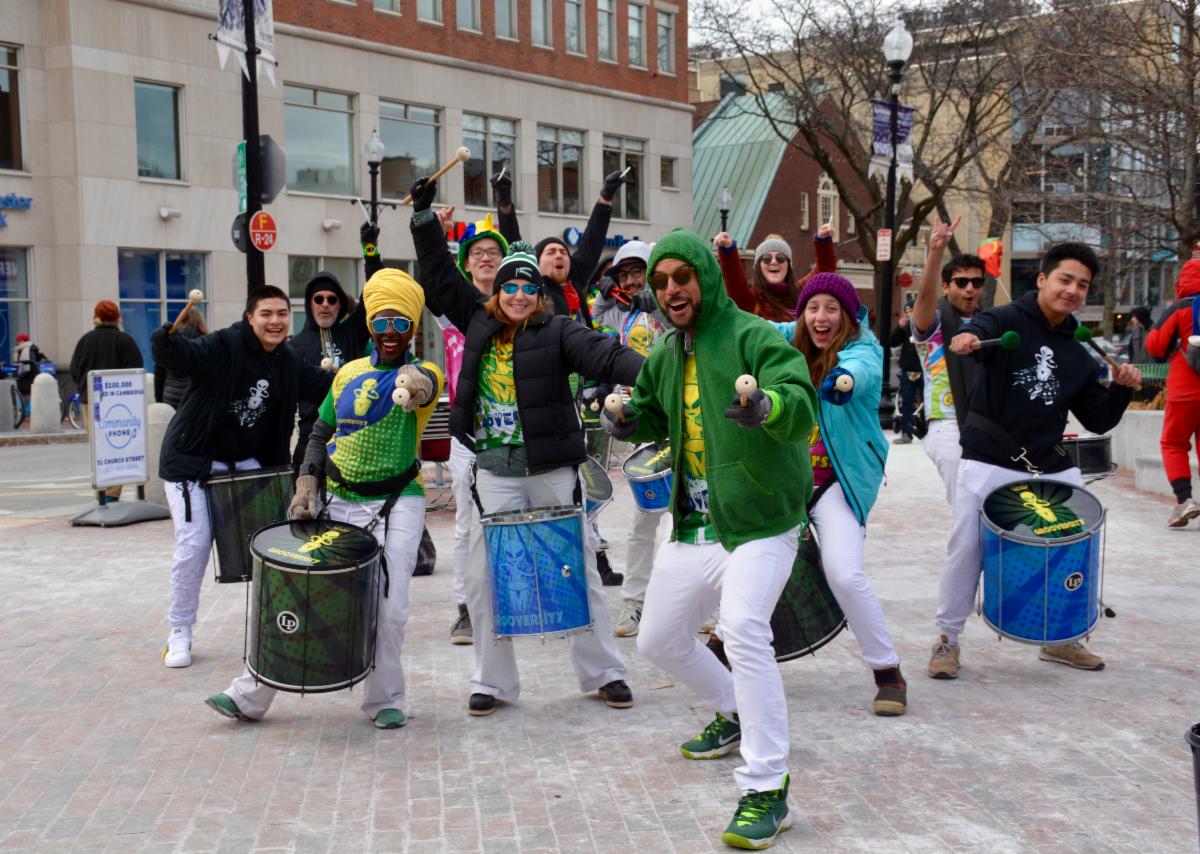
Harvard celebrates winter at their annual Winter Carnival. For more than a century, New England colleges have celebrated the long, cold weeks of winter with the staging of carnivals on campuses around the region.
The colleges of New England cannot escape the dark, cold weeks of winter. Long ago, they decided to celebrate it, and the tradition of collegiate Winter Carnivals stretches back more than a century. Carnivals are a time-tested celebration of the winter season, the arrival of winter snow, and the activities that the season allows: sledding, ski jumping, Alpine races, Nordic events, ice sculpting, bonfires on the quad, and the tradition of campus-wide snowball fights. Over the years, carnivals have also evolved into a weekend of hi-level ski competition among New England colleges. That tradition continues this weekend at the Harvard Carnival (with Nordic events staged at Craftsbury, Vermont).
Cross country skiing is a sport enjoyed at the junior level by skiers in clubs, school teams, and ski academies. But what comes after high school for talented and driven high school skiers? For many, the answer is college skiing. In collegiate ski programs from Fairbanks, Alaska to the coast of Maine, NCAA Division 1 skiing is a wonderful development asset for American skiing. In 2020, the Stifel U.S. Ski Team wrote that “[We value] the collegiate circuit for providing high-level competition, increased domestic density, and an enduring pathway for athletes to continue to develop their skills in the sport of ski racing.”
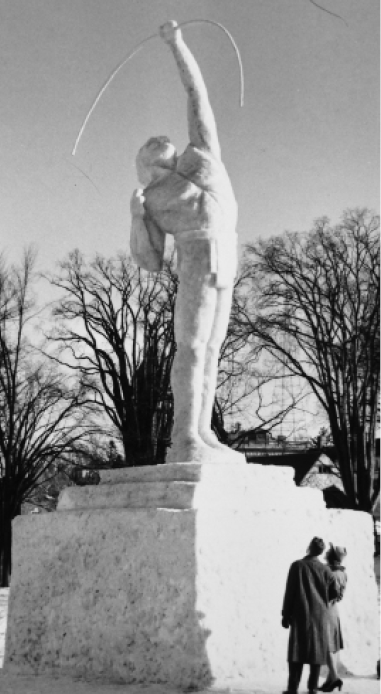
Snow sculpture at a mid-20th century Dartmouth Winter Carnival.
The Eastern Intercollegiate Ski Association (EISA) is composed of eleven colleges—Bowdoin College, Bates College, Colby College, Dartmouth College, Harvard University, University of New Hampshire, Williams College, Middlebury College, University of Vermont, Saint Michael’s College, and Saint Lawrence University—competing with each other over six Carnival weekends with the ultimate goal of sending skiers to the NCAA championships. While two of those twelve races in 2024 are sprint races, the NCAA championship has traditionally consisted of two distance races, and is hosted by a different college at a different venue each year. This year’s NCAA championships will be staged in Steamboat Springs, Colorado, and hosted by the University of Colorado.
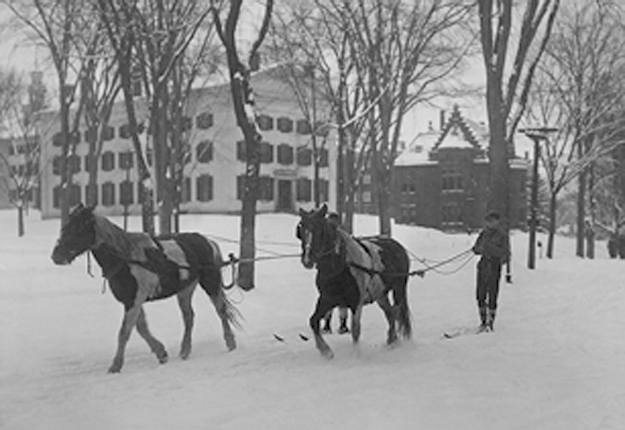
Early Winter Carnivals involved numerous ski events including skijoring, here seen taking place on campus at Dartmouth. In 2024, Carnival ski events will include distance races for Nordic skiers, and slalom and giant slalom for Alpine racers.
Winter Carnival on ESPN+
On Friday, February 2 (10am ET), cross country events from the Harvard carnival can be live streamed on ESPN+ using this link. Only this first day of racing (15 k Classic Mass Start) is available for streaming. All other results—and live timing—for EISA races can be found on Bullitt Timing.
College skiing became FIS sanctioned in the mid 1990’s, and has since become a competitive circuit where future international stars hone their skills against stiff competition. The EISA carnival circuit has been highlighted by names like Ben Ogden, Rosie Brennan, Sophie Caldwell, Julia Kern, and many more. Now in the middle of the 2023/2024 season, the EISA circuit travels to the Craftsbury Outdoor Center in Craftsbury, Vermont for the Harvard Carnival on February 2-3. Up until this point in the season, Dartmouth has been the dominant force on the carnival circuit, posting impressive results and an as-yet undefeated season from Stifel US Ski Team athlete (and Dartmouth student), John Steel Hagenbuch. FasterSkier intends to provide recaps for the final four Winter Carnivals of the season (Harvard, Dartmouth, Williams, and Middlebury). Stay tuned for results that are likely to include future stars of American skiing.
An inhaler of the sort commonly used to administer asthma medications in aerosol form. Are these found in far too many pockets at youth ski races around the country? (Photo: FasterSkier)
Cross country skiing is an aerobic sport: the amount of oxygen entering our lungs is one of the factors directly affecting our performance. It seems to make sense: more oxygen in, more fuel provided to the muscles, greater levels of performance in endurance events. On the other hand, some athletes suffer from external factors limiting the amount of oxygen they can utilize to give energy to their muscles. One such factor is asthma, a condition of the lungs and air passages that can result in wheezing, chest tightness, coughing, and the partial or total restriction of airways. The most common remedy for this condition is the use of a bronchodilating drug administered via an inhaler (a device that quickly delivers aerosol versions of certain asthma drugs). Such bronchodilators create more space in the airway and lungs for oxygen to flow, thus giving an athlete more access to energy-giving oxygen. It’s a great thing for individuals who need it, an instant relief, maybe even a life-saver. The dilemma begins when medical diagnoses allow (or encourage) use of those drugs by athletes who may not need them. A few things are troubling in that scenario:
Bronchodilating drugs can be legitimately acquired and used by competitors—even if those drugs may be performance-enhancing—through Therapeutic Use Exemption (TUE). Such an exemption (one recognized by all sport governing bodies under FIS and the IOC) entitles athletes to obtain and utilize drugs designed to level the playing field for those particular athletes who suffer from asthma (even exercise-induced asthma). Athletes who qualify for such exemptions are allowed to use medications that will alleviate their asthma symptoms. Typically thought of as “rescue medications”—those that alleviate asthma symptoms once an asthma attack has begun—drugs like albuterol, ventolin, and salbutomol are typically used by athletes before the event that could be likely to cause the athletic stress, and the associated asthmatic response. Seemingly, the idea is to prevent an asthma attack before such an attack can begin. Critics of that strategy are left to wonder what level of performance enhancement takes place in those instances where the athlete might not have suffered from the asthma on that day?
Asthma diagnoses are notoriously light on testing and data—Many athletes do suffer from at least some form of exercise-induced asthma, though the diagnosis of those ailments is too often made through the answering of simple questions rather than through physiological testing. The primary question in such diagnostic interviews seems to be, “Do you ever cough after races or challenging efforts?” If the answer is yes, then you get a prescription . . . and a TUE. Whether you ever suffer an asthmatic episode again, you’ll always have that inhaler in your pocket . . . and you’ll always be entitled to take a puff of that bronchodilating medication before every race and every workout.
There is virtually no monitoring of the use-amounts among young competitors—purportedly, kids are given guidelines to follow in the self-administration of these drugs; in reality, those same kids are left to administer these drugs to themselves in an unmonitored environment, and using mechanisms (inhalers) that are not engineered to monitor or limit their continued application. Ironically, much of this self-administration appears based less on “how athletes feel” and more on “how it makes them feel.” Many young athletes report feeling a pleasing rush after administering these drugs with an inhaler. Feeling such a rush before a race has got to make a young athlete feel good. It may even be a performance enhancer. Far worse, it may also be dangerous for the athlete huffing on the inhaler.
There is virtually no testing of young athletes even at national level competitions—If these drugs are in any way performance-enhancing, then young athletes are cheating (whether they know it, or not).
There is virtually no governing-body-generated messaging (nor coaching-education efforts) to inform young skiers of what it is they might be doing. Using these drugs could be very bad for young skiers, but no one tells them so. It may also be very bad for American skiing—kids in the habit of huffing inhalers before races (never with disciplinary consequences) are likely to continue doing the same when they arrive on the international scene. One positive drug test that results from too-great amounts of otherwise banned substances (despite the TUE the athlete may carry in their pocket) and their careers will take a dramatic turn.
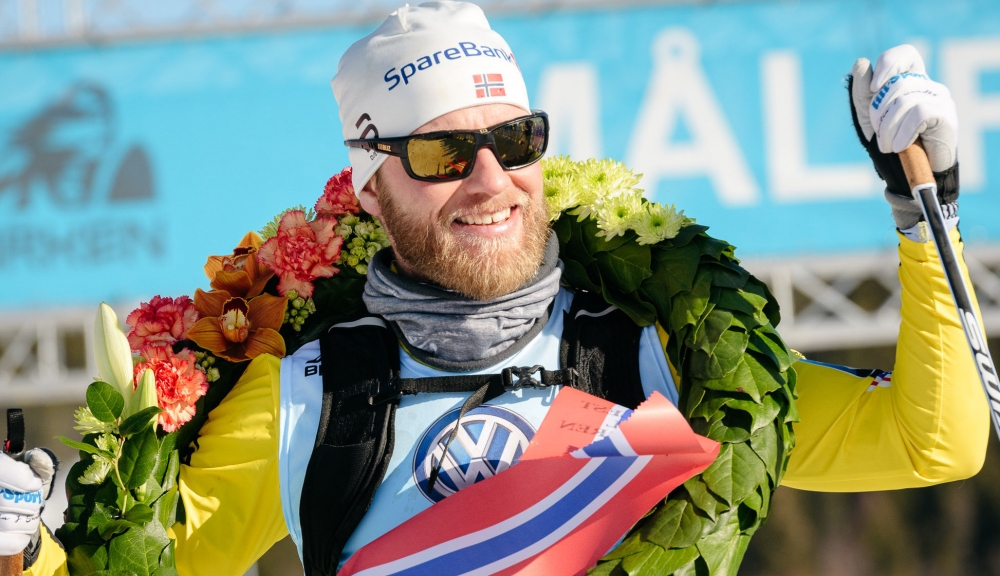
Stripped of his 2014-2015 World Cup Overall and Tour de Ski titles, Norway’s Martin Johnsrud Sundby became the face of the asthma-inhaler issue. (Photo: Ski Classics)
Norway: Team Asthma
While inhalers are a standard medical device regularly prescribed for conditions as simple as a cough or chest tightness, there has been a dark history of endurance athletes abusing inhaler-delivered drugs to gain an aerobic advantage over their competitors. In 2018, the Norwegian national team conducted a study of their own usage of inhaler medicine that culminated in a 191 page report. This study was conducted in response to former Norwegian ski star Martin Johnsrud Sundby’s documented inhaler overuse (punished by suspension from competition, and the loss of his World Cup and Tour de Ski titles). Writing for Reuters, Philip O’Connor authored an article titled, Norway’s Cross Country Olympic Success Clouded by Asthma Drug Ethics. “The report found no evidence of wrongdoing in the Norwegian team,” wrote O’Connor. “But it did concede the use of asthma medicines to treat temporary symptoms represented an ethical dilemma.” This ethical dilemma remains alive today in both domestic and international competitive cross country skiing. At current high-level events, any observant spectator can witness a serious usage of inhalers amongst athletes before competition. Many high-level skiers use inhalers before efforts, begging questions of whether inhalers should be used as preventative tools or as an emergency solution for an asthma condition. The World Anti-Doping Agency (WADA) has strict rules in place for inhaler usage based on the notion that inhalers do offer a real aerobic advantage in endurance sports. WADA’s World Anti-Doping Code is the basis for all performance enhancing drug regulation including the use of the inhalers. A 2019 article titled, Anti-doping Policy, Therapeutic Use Exemption and Medication Use in Athletes with Asthma: A Narrative Review and Critical Appraisal of Current Regulations, Hayden Allen, Susan H. Backhouse, James H. Hull, and Oliver J., explained the issue further: “Currently, athletes competing at the elite level are thus typically required to provide objective evidence of asthma before a therapeutic use exemption (TUE) may be granted to permit use of an otherwise prohibited substance or medication dose.” The article also provided further information on specific inhaler drug amounts. “The current prohibited list states that athletes are permitted to administer inhaled salbutamol (in divided doses not exceeding 1600 µg in 24 h and 800 µg in 12 h), formoterol (≤ 54 µg in 24 h) and salmeterol (≤ 200 µg in 24 h) [12] without a TUE).”
These regularly-tested limits of inhaler usage are upheld at the elite international level, but what about the domestic level?
Unmonitored Uses and/or Abuses
The elite level of cross country skiing is regulated by the World Anti-Doping Agency (WADA), but what stops collegiate athletes, junior competitors, and other athletic hopefuls from abusing inhalers to gain an advantage? Among junior and collegiate skiers, the presence and use of inhalers is ubiquitous. Often, that inhaler is in the possession of those who have received a prescription for the medicines in question (and possibly registered their use via a TUE). Nearly as often, inhalers are in the possession of those who have simply borrowed from someone with a legitimate reason to self-administer those drugs. As a collegiate ski competitor, the opportunity to use such drugs and devices has been offered to me numerous times. It just doesn’t feel right. It feels a little bit like a drug deal, but one involving substances and tools that are so commonly observed and used that no one would think twice about it (and no governing body is testing for it). I understand the idea of athletes using something before a race that will make them feel better, that may even make them race better—especially when that “something” is a tool that is used almost universally. Everyone uses an inhaler, whether those inhalers have been diagnostically recommended, or not. And the insistence of so many that the drugs in question do not affect athletic performance (despite how unlikely that seems) is the thing that seems to make it “okay” for everyone to use it. Even so, I think our ski community should rethink—or at least comprehensively discuss—the issue.
Norway seems to be at the forefront of such discussions, even as their comments seem directed toward the effects of such medications on those already suffering from asthma rather than those many athletes who do not have asthma, but who continue to partake of such medication.
“It is common practice in Norway to occasionally use asthma medicine in major ailments in the respiratory system … even where the diagnosis of asthma is not specific,” Per Medboe Thorsby, head of the medical committee for Anti-Doping Norway, told Reuters. “If one uses asthma medicines in the doses recommended for this illness and within the terms of the WADA doping list, we do not believe that there are any special benefits as a result of such use,” Anti-Doping Norway’s Thorsby said. “On the contrary, we believe that practitioners with documented asthma who do not get proper treatment will be at a major disadvantage.”
But what of those athletes utilizing inhaled medications in amounts exceeding (sometimes far exceeding) recommended dosages? Whether they have asthma or not, it seems to remain undetermined as to whether those athletes are deriving a performance benefit. Perhaps even more darkly, the degree to which those athletes may be affecting their own health apparently remains undetermined, as well.
Skiers on the coast of Maine . . . waiting for snow. (Photo: Wyatt Teaford/Bates College Skiing)
Marsha Diane Arnold authored a delightful children’s book: Waiting for Snow. Lovingly illustrated by Renata Liwska, Waiting for Snow tells the story of Badger who is impatient for winter’s arrival. When we were kids, we waited impatiently for everything: for Christmas, for birthdays, for dessert, for recess, and for the first snowy day of winter. In the adulthood of Nordic skiing, the first snowy day is still the source of immense anticipation. Patience, Badger . . .
Badger cannot wait one more minute for it to snow. When his friend Hedgehog explains that everything comes in its time, Badger is as unconvinced and impatient as ever.
While Alaska and the Western regions of the USA get their first taste of on-snow skiing, New England’s skiers—high schools, clubs, and college ski teams of the East coast—still wait eagerly for their first signs of winter. In recent years, the nordic skiers of New England and New York have experienced an ever-lengthening rollerski season that often lasts all the way until Christmas and the New Year. It’s reflective of a changing climate that has not been hospitable to the patrons of our sport, and there is little information to suggest that this pattern of dwindling snow will change anytime soon.
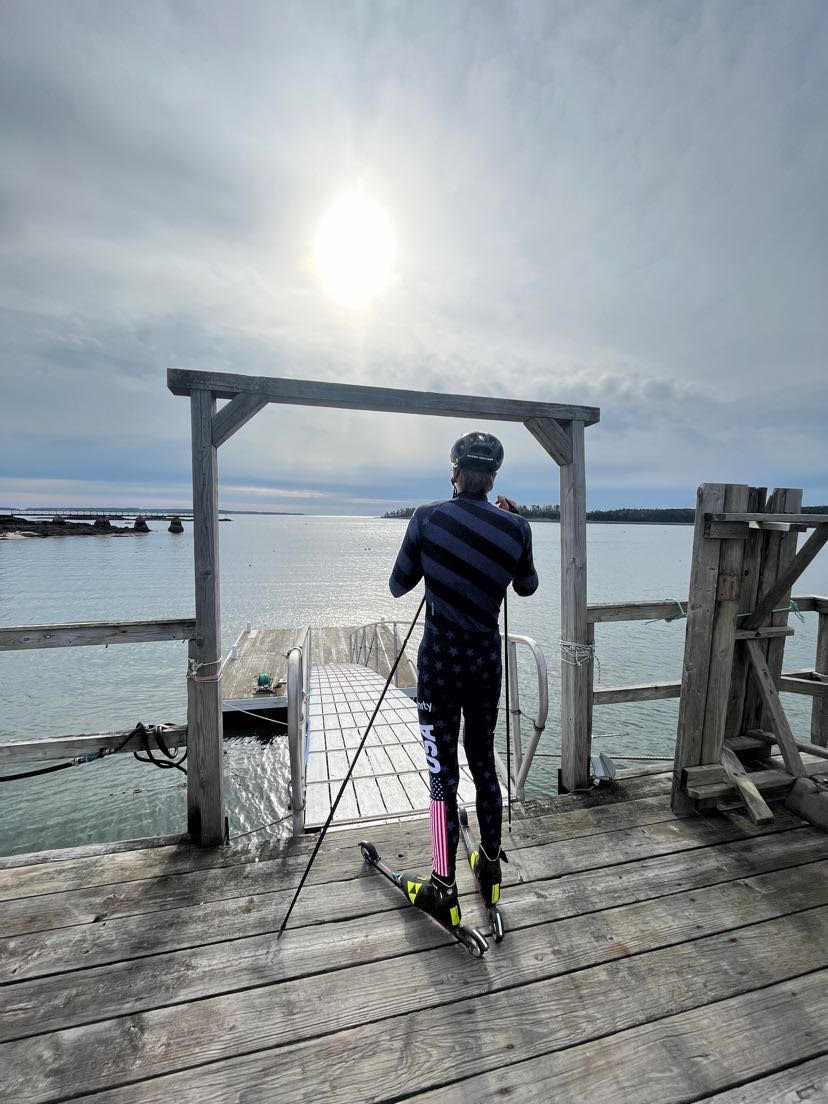
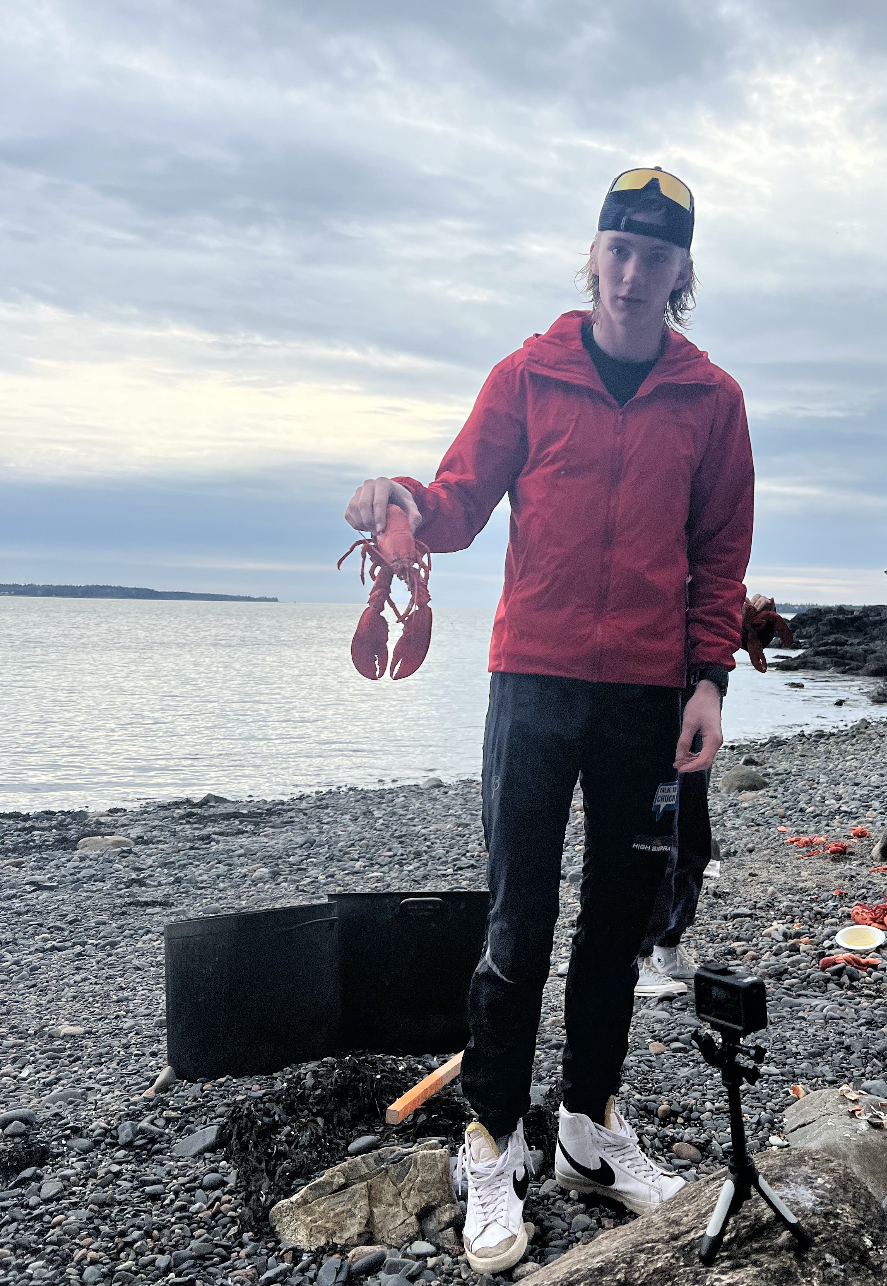
While students at the University of Alaska Anchorage and the University of Alaska Fairbanks enjoy their first on-snow interval sessions, skiers from Bates College (Lewiston, Maine) were about as far away from snow as they could possibly be this weekend: Acadia National Park, on the coast of Maine. This training camp with the Bates ski team was designed to be a productive weekend of high-quality training in one of the most beautiful places in the East, but it reminded many team members of the serious inequality present in the ski world when it comes to time on snow. While many athletes are honing their skills on snow in the West and in Alaska, their Eastern counterparts are still relegated to the same training that they have been doing since the spring months. Many Bates College student-athletes found it somewhat comical to be prepping for the ski season by traveling to the Atlantic coast, but there is simply no snow to be found in the region. Skiers in New England are being presented with fewer and fewer winter venue options for training and racing, as only a select few ski centers in the East have the good fortune of being able to produce artificial snow. Athletes at Bates College, Middlebury College, and other institutions are slated to travel to Lake Placid, New York in just a week to find a small ribbon of artificial snow prepared to give racers in the East their first chance to ditch the rollerskis; still, the lack of cold weather in the region this November has called that snowmaking effort into question. With the U.S. National Championships rapidly approaching, most teams in the East will travel to Soldier Hollow, Utah lacking on-snow practice hours. But that has become an unfortunate and consistent reality for the skiers of New England and New York.
Skiers wait impatiently for the snow to fall . . . with grateful acknowledgments to the author, Marsha Diane Arnold; and to the illustrator, Renata Liwska.
Children’s books so often get it right: the story, the script, the images, the philosophy . . . and it’s always good for New England skiers to receive some patience-perspective here in the late autumn. Of course, this isn’t the first season that patience has been a necessary virtue. Cold places get snow: Alaska, Scandinavia, the Upper Midwest. High places get snow: the Rockies, the Alps, the Dolomites. New England, on the other hand, gets storms. There’s no gentle nightly snowfall in Vermont or New Hampshire or Maine: when those places get snow, it comes in the form of Nor’easters—heavy snow-making juggernauts swirling in off the Gulf of Maine. In winter, those storms are typically spaced 3-4 weeks apart: Thanksgiving, Christmas, Presidents’ Weekend, Spring Break . . . New England ski areas rely on those storm cycles. And when those storms bring snow, they bring FEET of snow. So when storms fail to arrive on schedule—or when the ambient temperature creates rain instead of snow—then any hope of skiing will be forced to wait a few more weeks. Patience, Badger . . .
Badger’s friends have a few tricks up their sleeve to try to get the snow’s attention and distract their pal in the meantime. In the end, Badger sees there’s no trick—only waiting—until at last, it’s time.
Bates College skiers on the beach . . . winter still seems far, far away. (Photo: Wyatt Teaford/Bates College Skiing)