Category: Bios

Bios of athletes, coaches and other individuals involved with the sport of Nordic skiing.
  • Weng-ology 101

    Weng-ology 101

    Just the other day, a guy walked into a local cross-country ski area where a women’s World Cup race broadcast was streaming. Another patron asked him who he thought would win? He didn’t know what the race was or who the favorite was. But without so much as the bat of an eye, he replied, “Weng”—The odds were in his favor.

    Weng family members involved in World Cup skiing are a combination of cousins, sisters, twins: for those who follow cross-country racing, watching a women’s event may seem something like a Norwegian twist on the old Abbott and Costello baseball gag about “Who’s on First?” (if you haven’t seen this classic comedy routine, check it out. It’s held up remarkably well) with Bud Abbott’s made-up names all replaced with “Weng.”

    Americans are accustomed to family names in sports. Baseball has many: the Perrys (Gaylord and Jim), and the Ripkens (Cal and Billy) are two of the more notable. Then there’s the Williams sisters in tennis, and the Staal brothers in hockey.  But the closest American sports fans could come to the Weng dynasty would be if Cooper Manning strutted onto the football field and began slinging touchdowns like his brothers Peyton and Eli.

    There is sibling dominance in other Nordic events. Biathlon has the Boe brothers and the Oeberg sisters. But none of them add up to the mathematical triumvirate like the Wengs.
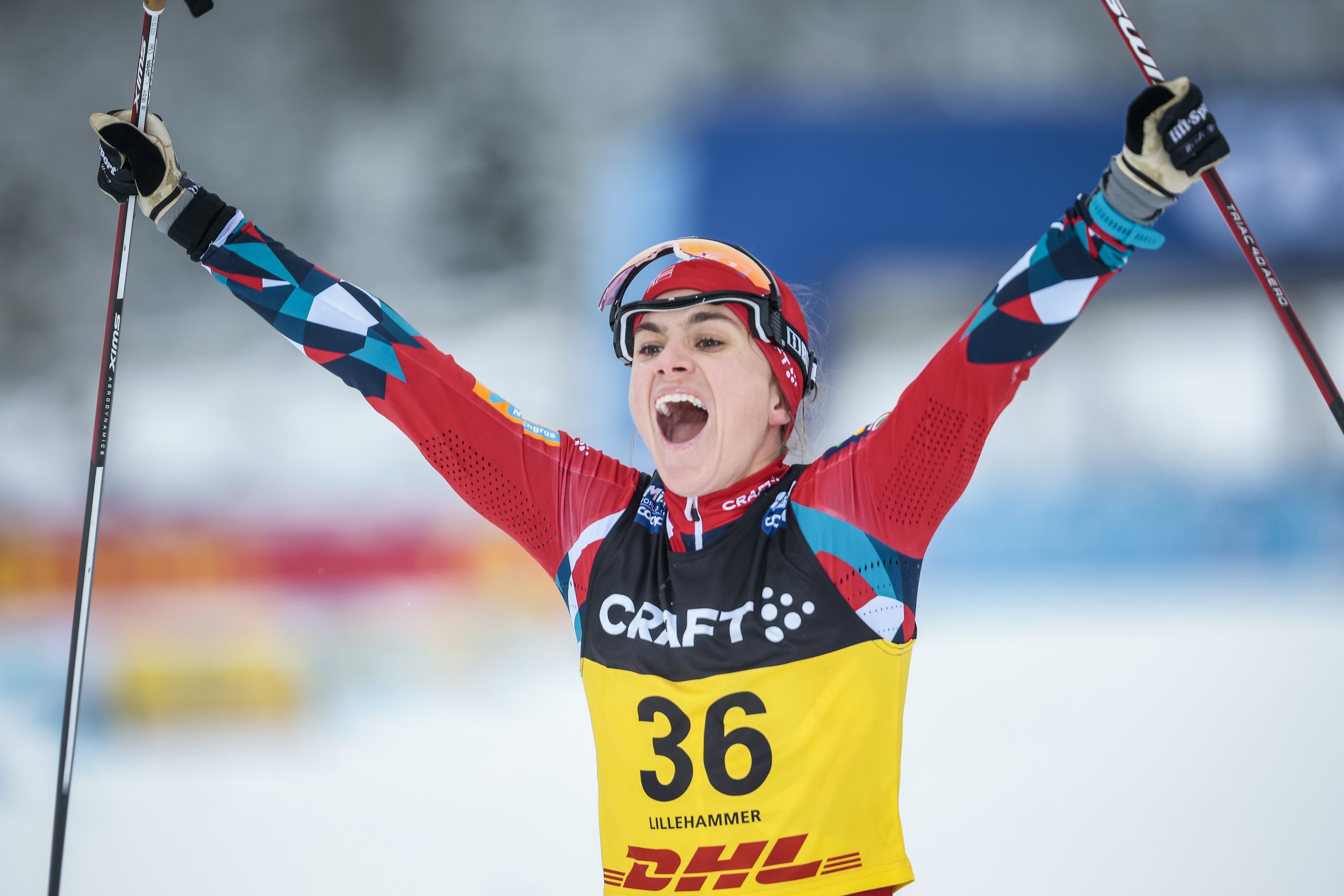
    Heidi Weng in Lillehammer celebrating one of her 104 podium finishes. (Photo: NordicFocus)

    Part of the Weng confusion is due to nomenclature—sometimes, the Weng’s full names are abbreviated by using first initials only; sometimes the first two initials; other times, the entire name is used. T. Weng is the same as T.U. Weng, which are both ways of identifying Tiril Udnes Weng. These differing templates can vary from race to race, making it seem as though there are new Wengs popping up out of the woodwork every weekend.

    The confusion is also magnified by percentages and the Wengs’ proficiency. For instance, in the Lillehammer women’s 10-kilometer freestyle, 58 skiers lined up for the start. Three of them, or roughly 5 percent of the field were Wengs.

    In most North American sports, the number of participants is large enough so that a few duplicate names don’t present much confusion.  Siblings and relatives simply don’t compete against each other often enough to make things as muddled.  But in Lillehammer, three Wengs finished within 20 seconds of each other; close enough to give fits to even the stoutest of play-by-play announcers.

    The ubiquitous presence of Wengs can be daunting to sort out. I’ll try and prevent this from becoming something like Bubba’s recitation of how many ways there are to make shrimp in Forest Gump.  So, here’s a primer on knowing your Wengs:
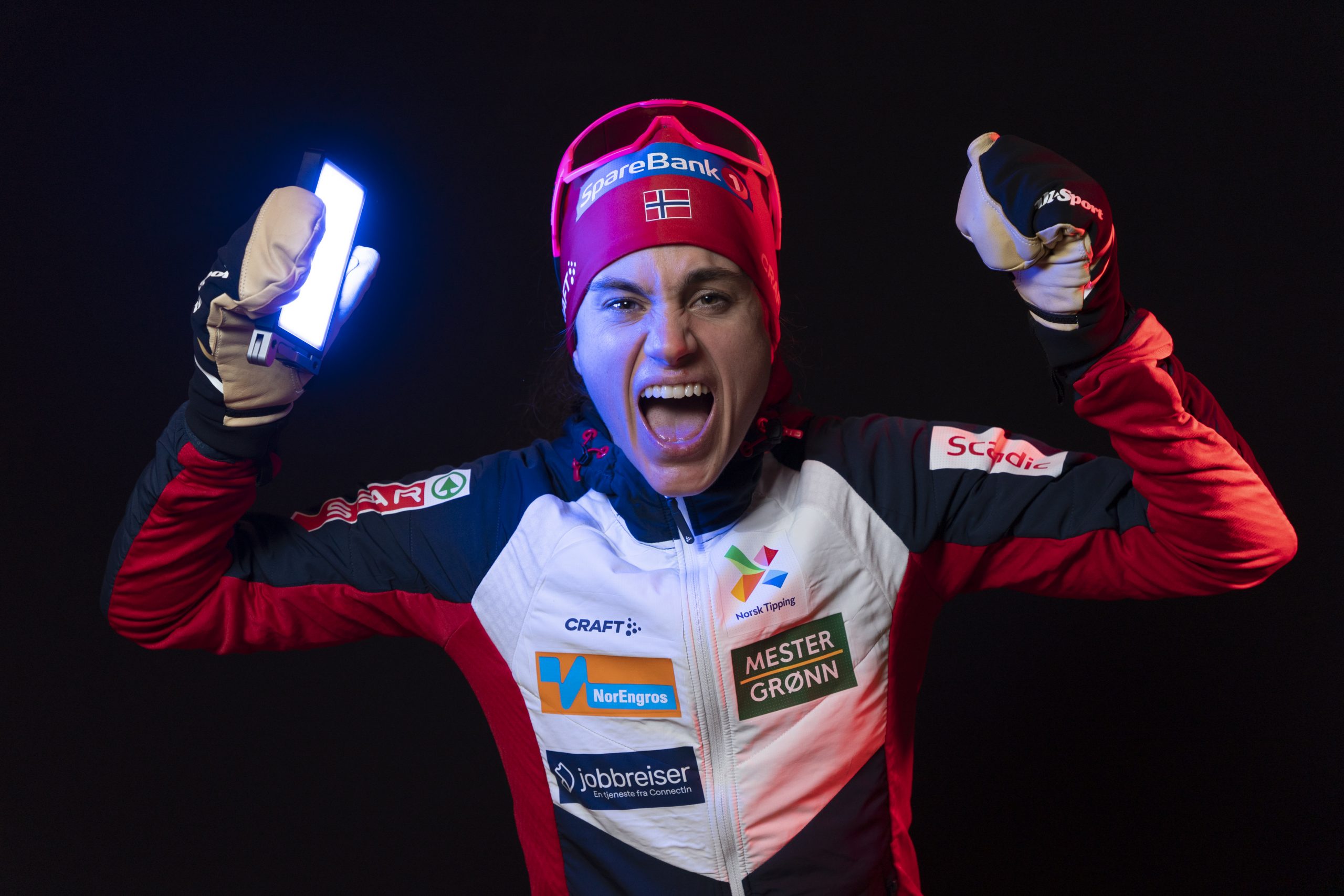
    Heidi getting her game face on.  (Photo: NordicFocus)
    Heidi

    To the North American audience, the best known of the Wengs is Heidi. At 31 years of age, she has won an Olympic medal, multiple World Championship medals, and World Cup Crystal Globes. Heidi has a mind numbing 260 World Cup starts and she’s stood on the World Cup podium a whopping 104 times going back to 2009.  No, that’s not a misprint—104 podiums!  That’s more World Cup podiums than most of her competitors have races.  She is currently ranked 15th in the overall World Cup standings.

    Over the course of her career, Heid has shown remarkable consistency; however, the numbers clearly show that distance is her forte. Over the last five years she’s won only a handful of sprint points.

    Heidi’s ski career was nurtured by her grandmother when the young Weng began skiing as a 3-year-old. Heidi is multi-talented, having also won the 2010 Norwegian trail running championship.

    Heidi’s sister Merete also competed in cross country for Norway, finishing 29th in the 2013 national championships in the 30-kilometer classic. Fortunately, for those who have difficulty keeping the Weng’s identity straight, Merete does not compete at the World Cup level.
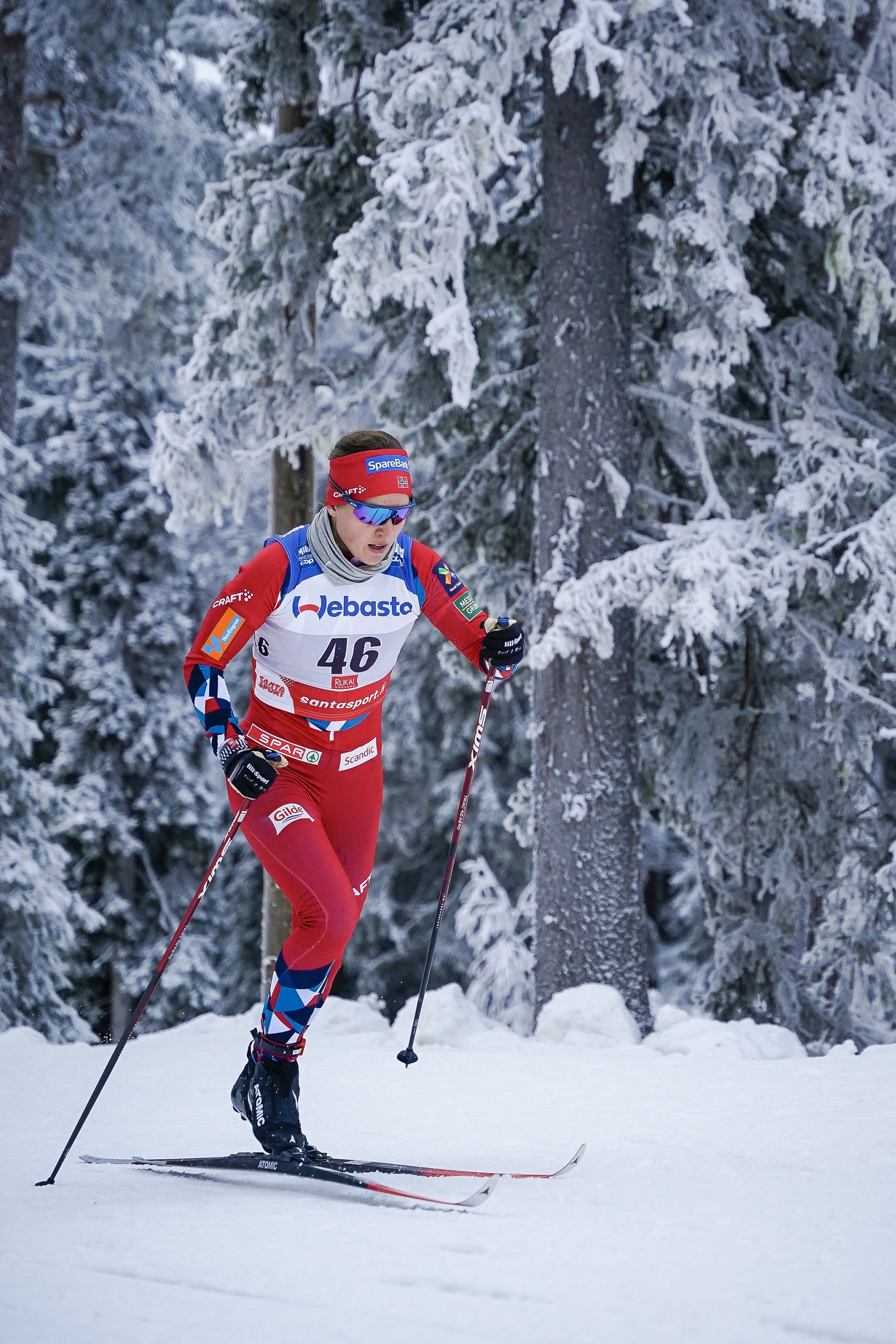
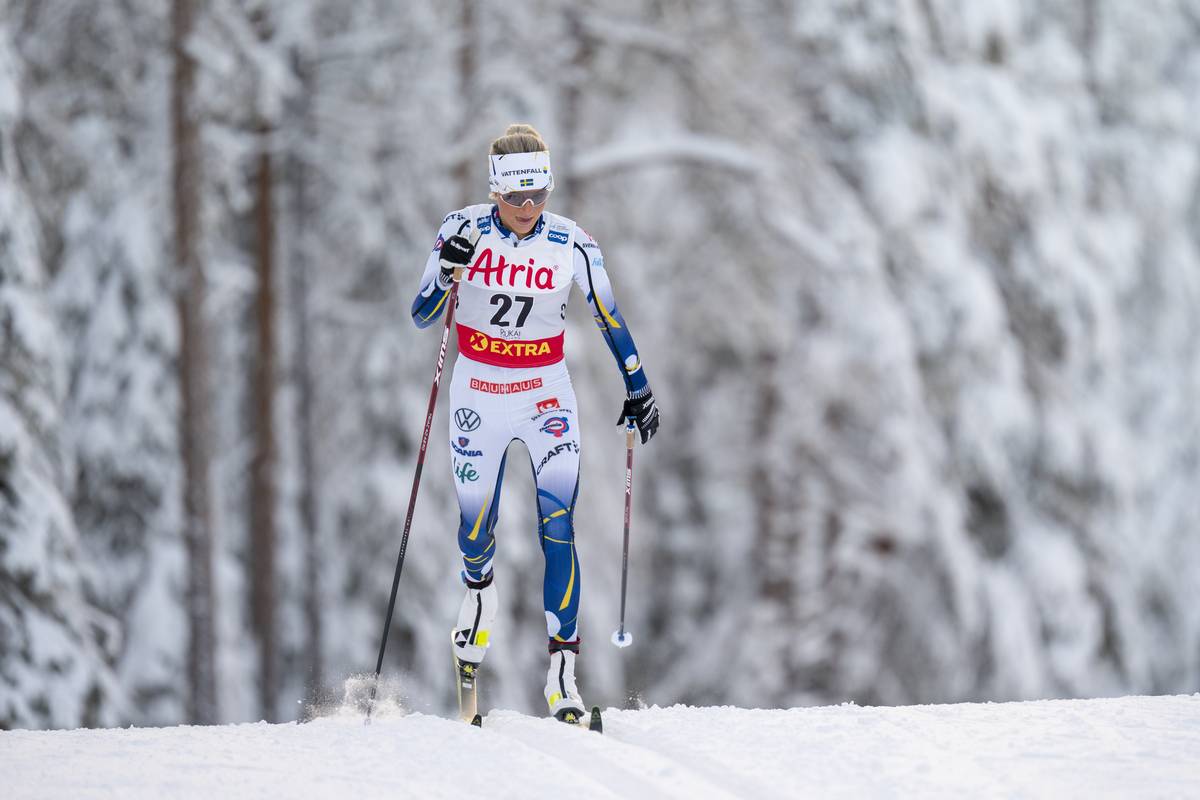
    Tiril Udnes Weng—a.k.a T. Weng, a.k.a T.U. Weng, a.k.a Tiril Weng—competing in Ruka, Finland. (Photo: NordicFocus)
    Tiril

    Next is Tiril Udnes Weng, Heidi’s cousin. Tiril is 26 years old and has raced the World Cup since 2015. She has 98 World cup starts with five podium performances, and she has won World Championship gold. Tiril has been on a tear lately, with four of her podium finishes coming this year leading to her current domination of the World Cup rankings. She is currently in first place in the overall World Cup points, second in distance, and first in sprint. She is proving to be quite the all-around skier showing excellent performance balance between sprint and distance events. Last year she finished 16th overall, so she has made a remarkable performance jump.

    Tiril showing the Wengs are always up for a good fight on skis. (Photo: NordicFocus)
    Lotta

    Then there is Lotta Udnes Weng who is Tiril’s twin sister. That would also make her 26 years old and also Heidi’s cousin. Her first World Cup race also came in 2015. She’s already amassed 81 World Cup starts, earning one World Cup podium. Lotta is currently 11th in the overall cup standings having moved up from 28th last year. Like her twin, she also shows good balance between distance and sprint events.
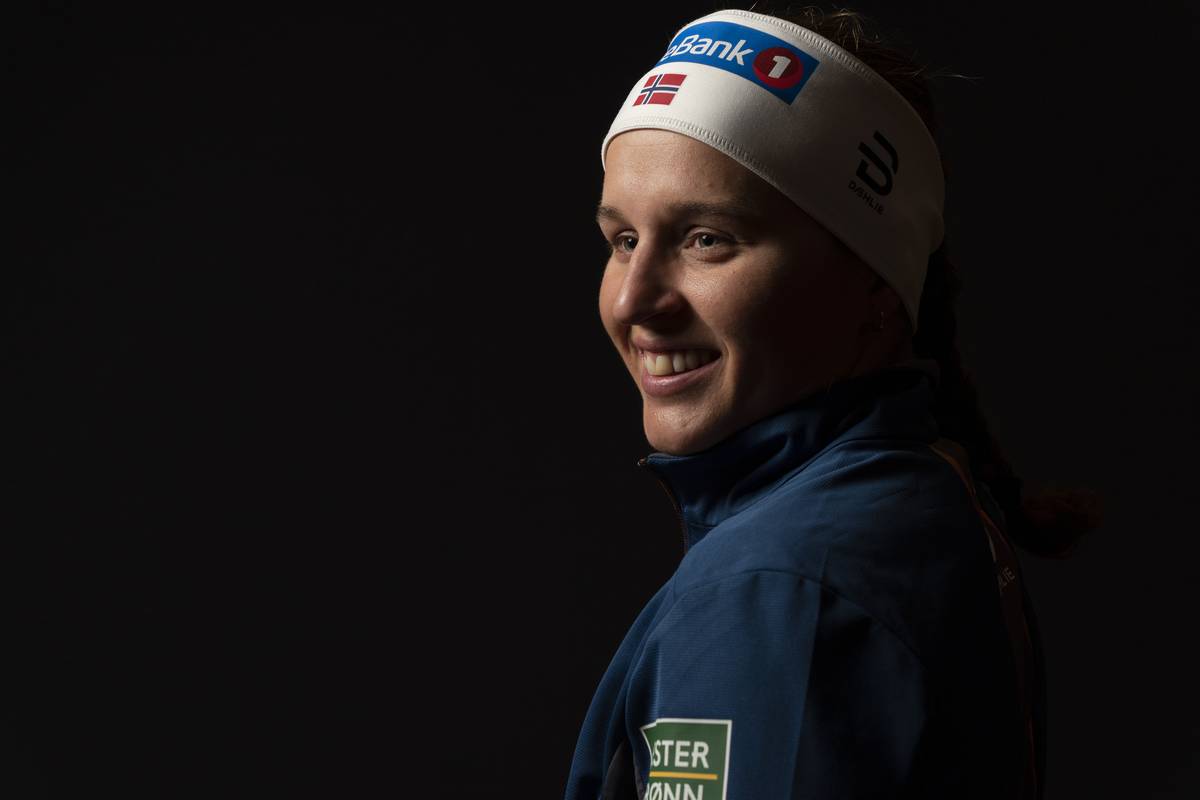
    Lott Udnes Weng completes the current Weng trio. (Photo: NordicFocus)

    Given the Weng’s strength across all events, it’s a real possibility that this winter could present an all Weng podium. Though, as of now, bookmakers don’t appear to have set odds on that particular outcome.

    So that’s the cheat sheet on knowing your Wengs. Think you now have the Weng lineup straightened out? Sorry to break the news to you, but lurking in the wings is Tora Roenneberg Weng, a17-year-old junior whose star is on the rise. If she makes it to the national team, then the possibility of an all-Weng relay team will exist. Wait for her to join the World Cup tour:  then the real confusion could start.
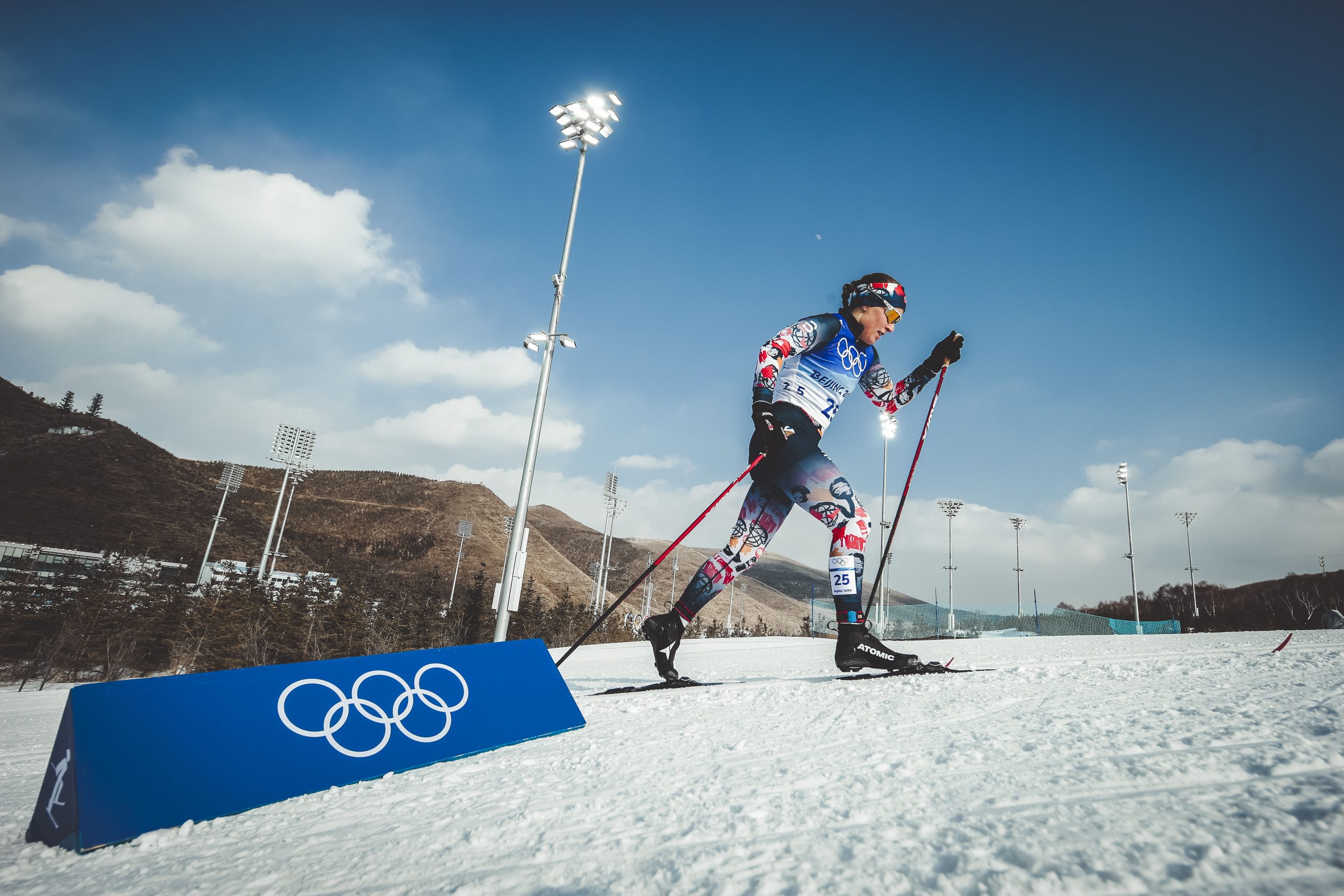
    Lotta Udnes Weng at the Beijing Olympics. The Wengs are ready for an all-Weng podium: are you? (Photo: NordicFocus)
  • William Poromaa – Sweden’s Young Talent: By Paolo Romanò

    William Poromaa – Sweden’s Young Talent: By Paolo Romanò

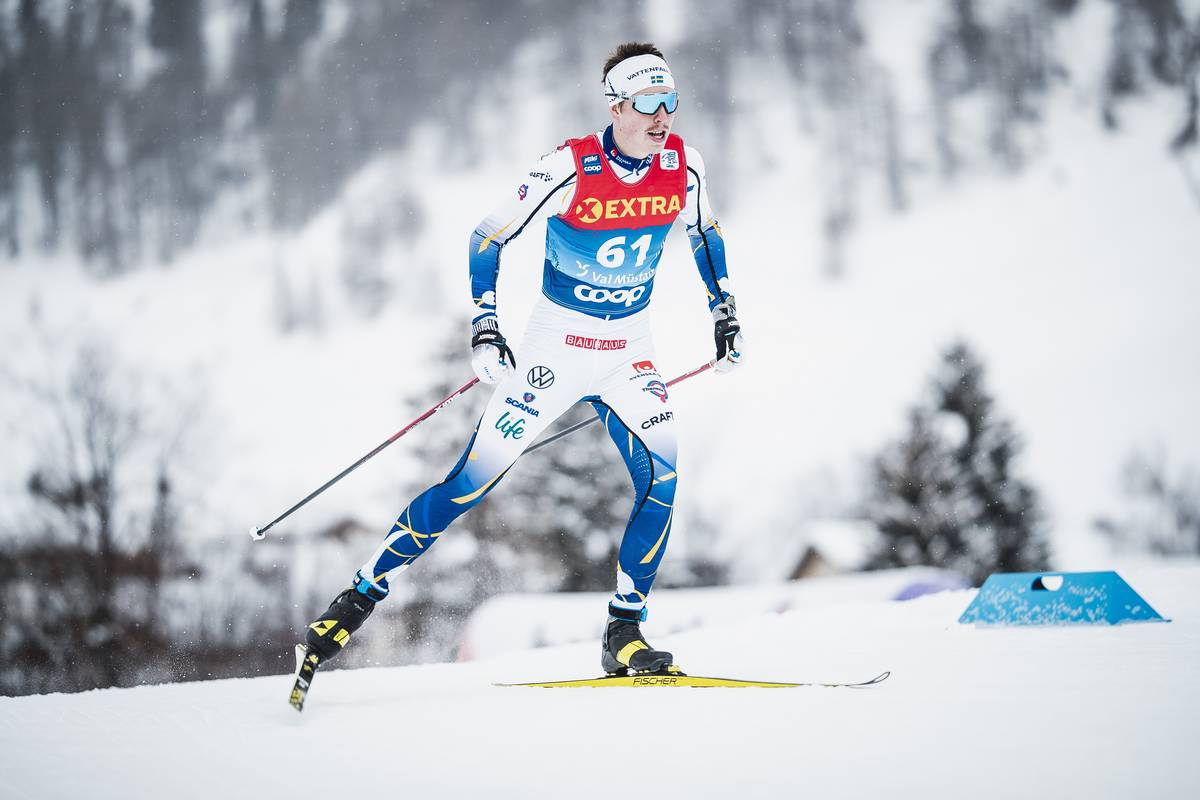
    Sweden’s William Poromaa Racing in Val Mustair, Switzerland during the 2021 Tour de Ski. (Photo: NordicFocus)

    This story first appeared in www.fondoitalia.it and has been edited for English.


    On an international level, cross-country ski fans outside of Sweden only got to know the name of William Poromaa during the women’s 10km classic technique in Seefeld World Championships. That February 26, 2019, he was talked about not for a sporting achievement but as Frida Karlsson’s boyfriend.

    Karlsson, once she crossed the finish line, placed herself in the leader chair after having amazed the world, clocking the fastest intermediate times until the eventual winner, Therese Johaug, started twenty minutes after the young Swedish skier.

    Frida Karlsson racing to second overall in the 2020 Ruka 10 k classic. (Photo: NordicFocus)

    During that anxious lapse of time, Karlsson remained in contact via a video call with Poromaa who was communicating to her live results from their home in Sollefteå and sending her encouragement as the sensational silver medal became more and more realistic. Their video connection ended with the kisses sent by William before Karlsson had to go to the medal ceremony.

    Soon enough, it was discovered that Poromaa, in his own right, was a potential Swedish star for the men’s team, not “only” Karlsson’s companion.

    At that time Poromaa had won two gold medals at Swedish junior nationals and had already been selected for the first time for the Junior World Championships in Lahti. There, in the 30 k classic race he placed ninth place at the young age of eighteen.

    But about the couple, who had become acquainted when they attended the renowned Sollefteå ski-gymnasium, all the chatter of the media and the public was always directed towards the new young star of the Swedish women’s national team, Karlsson. The buzz, when it came to the couple, revolved around Karlsson and her palmers. That began to change this November when Poromaa placed second and first, respectively in the Swedish national opening races in Bruksvallarna. In that fantastic weekend, cross-country skiing discovered that the mustachioed cross-country skier, not yet twenty, was much more than just Karlsson’s sidekick.

    In the aftermath of those opening weekend races in which Poromaa left behind more successful and older teammates, some Swedish newspapers were already wondering if Poromaa was the boy who could rebalance the gap in popularity and successes that the Swedish men’s cross-country has ceded to a young and medal-haul worthy women’s team.

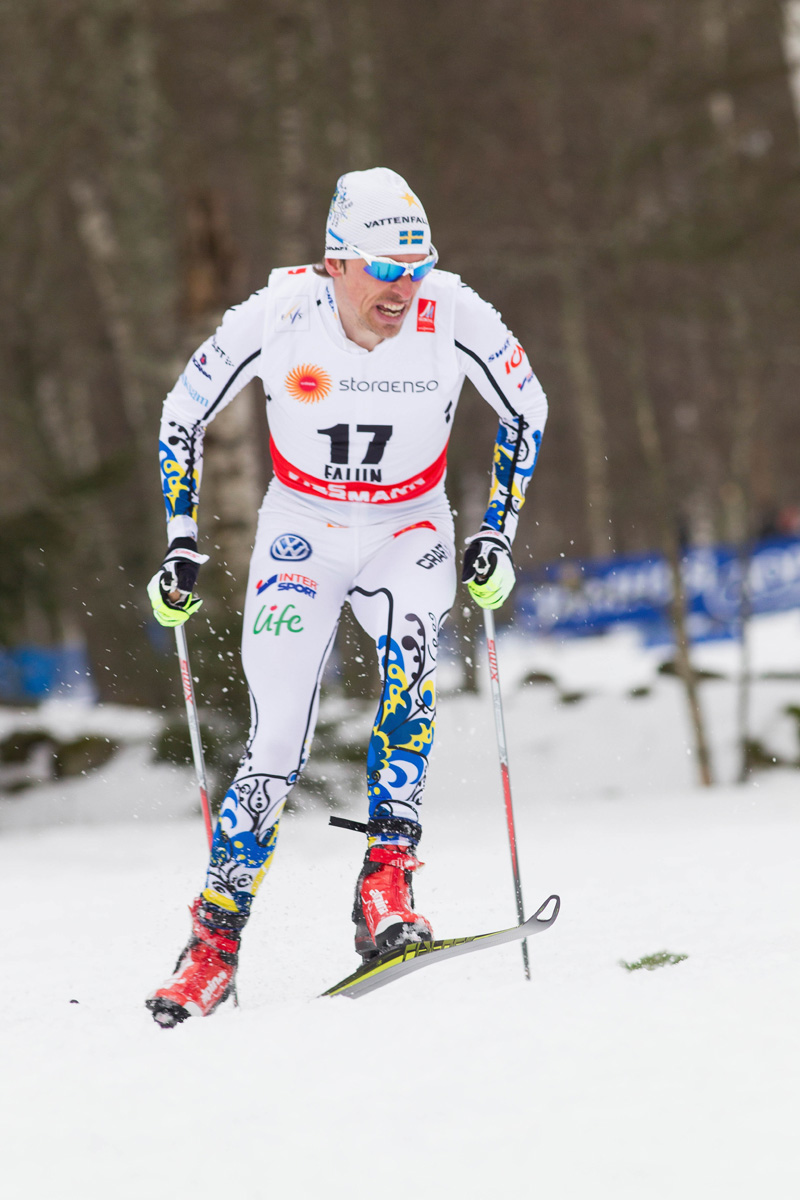
    Johan Olsson of Sweden during the 2015 World Championships in Falun, Sweden. he won the 15 k skate in Falun. (Photo: NordicFocus)

    Historically Swedish cross-country skiing had relied on the men’s team to enrich Sweden’s medal count during the various Olympic or World Championships. During the last century, the Swedish men’s in cross-country has produced champions from Sixten Jernberg to Gunde Svan, through Sven-Åke Lundgren, and then from Thomas Wassberg to Torgny Mogren. After this long mythical era, Sweden continued to produce excellent cross-country skiers such as Per Elofsson, Mathias Fredriksson, Johan Olsson, and more recently, Marcus Hellner. Among the women, all the course of that storied period for men, only Toini Gustafsson and Marie-Helene Westin were able, in two different periods, to score individual success for Sweden. Yet, the dominance of males skiers in Sweden began to fade fifteen years ago when Charlotte Kalla entered the international limelight. Following Kalla were Stina Nilsson, Ebba Andersson, Karlsson, and sprint sensation Linn Svahn.

    The hope of the Swedish people for a new male star appears to rest on Poromaa’s shoulders. The Poromaa name is, however, not new to the Swedish ski scene. The younger Poromaa’s father, Larry, placed fifth in the 1986 Holmenkollen 50km – a career-best for the father. Once he retired from competition, he was twice in charge of the Swedish waxing team, an activity interspersed with his transfer to the U.S. wax tech team before signing on with Estonian skier Kristina Smigun.

    Poromaa’s mother Anette Fanqvist won a bronze medal at the 1995 Thunder Bay World Championships with the Swedish relay team.

    In 2016, after focusing on both hockey and skiing, Poromaa enrolled at the Sollefteå ki-gymnasium to focus solely on skiing.

    William Poromaa (SWE) racing is this year’s Tour de Ski. (Photo: NordicFocus)

    The following year he won his first junior national title in Kalix in the 10 k classic. He followed that with a few more national junior titles, and in 2018 he obtained the national selection for the Junior World Championships in Lahti, finishing ninth in the 30km classic style competition. Poromaa placed ninth again the following year in the the Oberwiesenthal, Germany Junior Worlds in the same distance, this time in skate.

    After concluding his junior career this past March, Poromaa joined the Bauhaus Team (Swedish XC B team) where he began to collaborate with coach Lars Ljung.

    The 34-years-old Ljung explains what Poromaa began to work on early this summer.

    “My mission is to take him to a higher level with a constant commitment every day, every month, and in every training season, analyzing every session and every data to make him more motivated and involved every day. But given his young age, he is not the one who trains the most in our group, but he always trains hard and often close to the threshold. With him at least one day a week we do long sessions in which he can go up to 60-70km. During the summer preparation, our purpose with him was to improve his double poling in classic and increase his strength in the upper body, also focusing on his skiing technique. Wille is a rather tall guy and in the past his arm position during the push was too low and too close to the torso, thus limiting his thrust step after step. Our work focused mainly on his technique by widening and raising the range of his thrust to have more power to impress with the poles.”

    With his win in Bruksvallarna’s 15 k skate, in which he kept behind his compatriots of A-Team at bay, Poromaa conquered the front pages of the Swedish newspapers as well as the call-up for the World Cup in Ruka-Finland. In Ruka, he missed out on qualifying for the sprint, but placed 15th in the 15 k classic, and 17th in the following day’s pursuit.

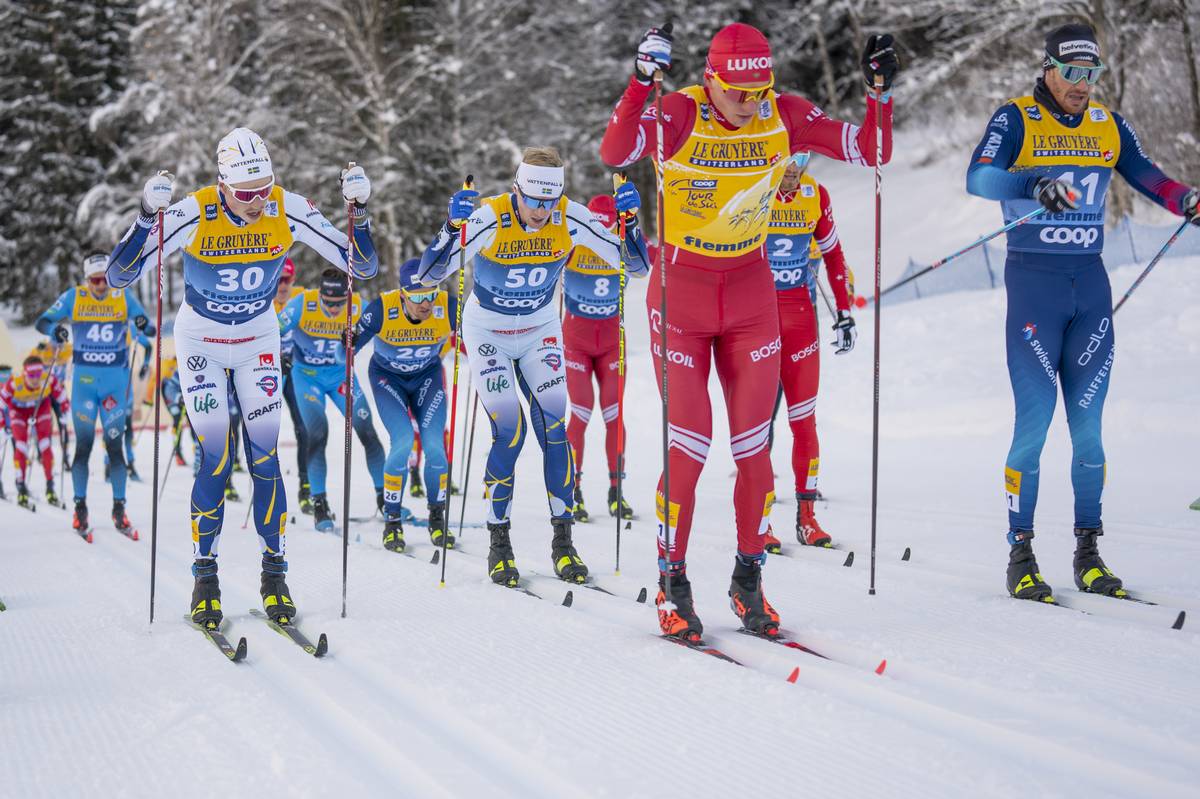
    Poromaa (bib 30) striding alongside the 2021 Tour de Ski winner, Russia’s Alexander Bolshunov. (Photo: NordicFocus)

    Poromaa turned 20 late this past December. His coach, Ljung describes his tactics and presence as mature. “Even his style in skiing is very mature, he keeps up well,” said Ljung. “Wille immediately starts at a good pace, which he maintains with remarkable consistency, but also manages to finish the distance races by further increasing his pace, this is synonymous with great intelligence in managing his race and understanding his feelings. He is not the fastest skier, but he has great endurance and a great engine. Outside of the races he is a normal guy and he is always calm, he has a good approach to competitions, cross-country skiing is important for William but it is not everything for him and this is good for managing things well.”

    The Tour de Ski which finished this past weekend, saw Poromaa place 23rd overall after contesting eight stages. During the Tour, Sweden captured its first men’s World Cup win in five years when Oskar Svensson won the Stage 7 sprint. At 25-years-old, Svensson is no newcomer to the scene. He holds promise. And Poromaa, for his part, has answered the call for more Swedish men to challenge for the top-10 and World Cup podiums. Too early to call it a resurrection for the Swedish men? Perhaps. Yet Poromaa looks to play a part in balancing the equation when it comes to accolades for the Swedish women’s team.

    Francesco De Fabiani (ITA), Federico Pellegrino (ITA), and William Poromaa (SWE), (l-r) during the 2021 TdS pursuit in Toblach, Italy. (Photo: FasterSkier)
  • Miles for the Cause

    Miles for the Cause

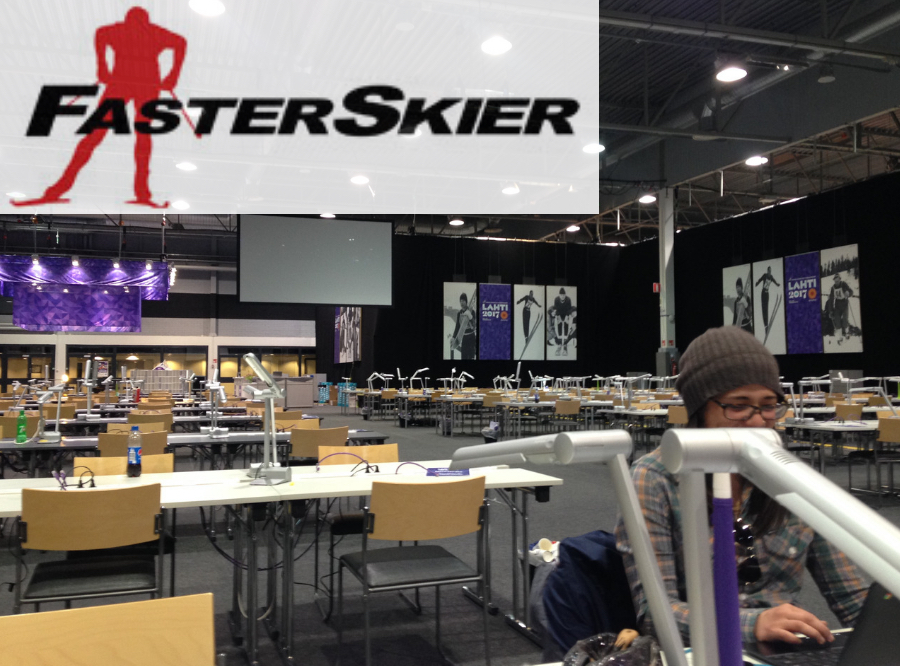
    FS reporter Gabby Naranja closing down the media center at the 2017 World Championships in Lahti, Finland.

    Help us get to World Championships in Seefeld, Austria! We’re committed to bringing you unrivaled coverage of the 2019 FIS World Championships, but we need your help. We are seeking a couple of avid readers/kind souls to donate their airline miles to purchase a roundtrip plane ticket and send an intrepid reporter to the center of  the nordic racing universe this February. Please share with friends and email us at info@fasterskier.com if interested.

    Thanks.

  • Chelsea Little

    Chelsea Little

    Chelsea Little

    Editor-At-Large

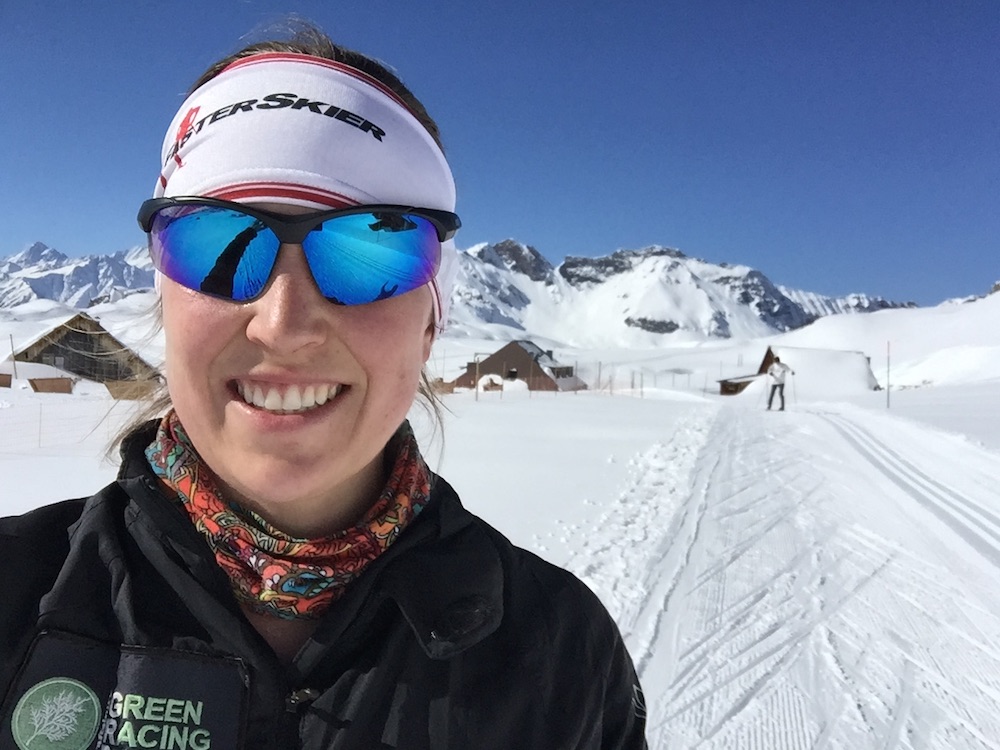
    Chelsea Little began skiing with the Ford Sayre ski club in Hanover, NH, her sophomore year of high school as a way to stay in shape between cross-country and spring track. What began as fun soon turned into her primary athletic passion: after walking onto the team at Dartmouth College, she skied her way onto varsity, collected a few Carnival top-10’s, and if she were faster they’d say “the rest is history.” After college she continued to race at a high level as one of the original members of the Craftsbury Green Racing Project and has raced in Alaska, the Rockies, the Midwest, the Northeast, Canada, Norway, and Finland.

    Chelsea earned her journalistic chops as a weekly columnist with the White River Junction, VT-based Valley News. She joined FasterSkier in 2010 as the site’s first biathlon reporter. While continuing to focus on biathlon, Chelsea has also become an expert in sport governance and anti-doping. As the staff member with a science degree, she’s also especially interested in the science of sport. Chelsea currently lives in Zurich, Switzerland, where she is working on her PhD in aquatic ecology and eating way, way too much chocolate.

  • Jason Albert

    Jason Albert

    Jason Albert

    Here’s a little blasphemy. Jason’s favorite pair of skis aren’t his white-base Rossis. Or the creaky pair of two-decade-old Atomic classic skis he’s done the Elk Mountain Grand Traverse on a few times. No doubt it’s the 160 cm pair of featherweight ski-mo skis that have opened up big and fast and sometimes scary days in the mountains.

    Clearly, since Jason writes about nordic skiing, it’s a passion. But all the kilometers logged, trying to get faster on the gerbil wheel, he claims it’s so he feels better on those few days a year he can climb a peak and ski off the summit. Beyond the work and family, that’s what makes him tick.

    Just having completed his 48th trip around the sun, Jason could spend hours trying to make one or two sentences in an otherwise banal story on, say, the wax of the day, truly sing.

    As a FasterSkier stalwart, he’s supported by a much-smarter partner whom he followed to Madagascar for a year while she watched Lemurs and he watched their two-and-a-half-year-old son Aidan. (He’s now 13 years old.) There’s a 9-year-old named Aamion (sounds like Damion with no D and a double A) in the mix as well.

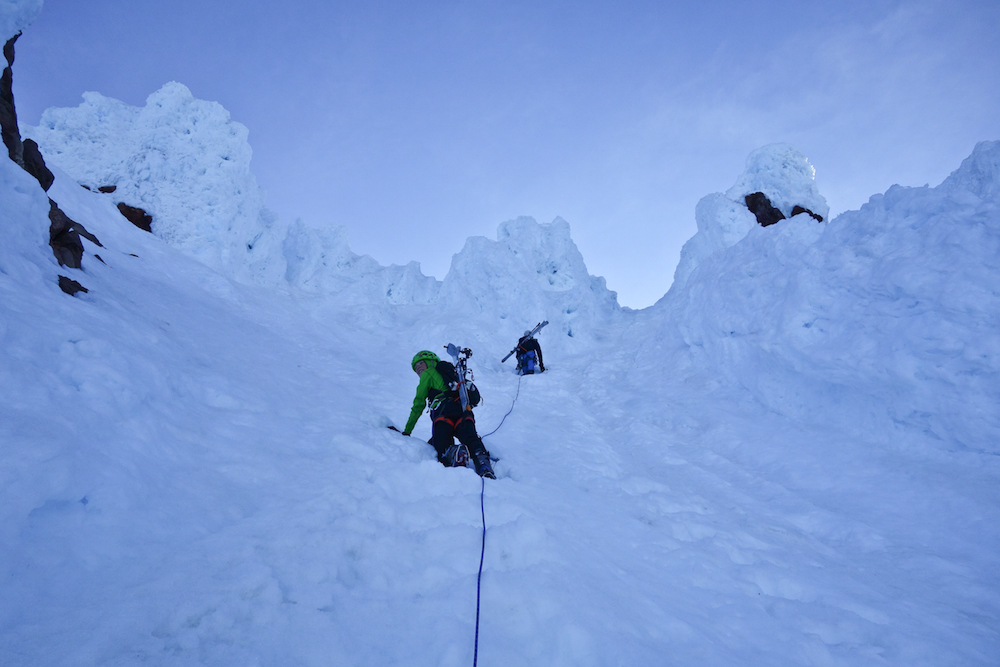
    Jason’s best day in the last twelve months, besides helping start the ‘Nordic Nation’ podcast, of course, was climbing and skiing Oregon’s Mt. Hood with his oldest child.

    Jason Albert and his older son climbing and skiing Oregon’s Mt. Hood.

  • Gabby Naranja

    Gabby Naranja

    Gabby Naranja

    Gabby Naranja considers herself a true Mainer, having grown up in the northern most part of the state playing hockey and roofing houses with her five brothers. She graduated from Bates College where she ran cross country, track, and nordic skied. She is excited about the present opportunity to work with FasterSkier and relishes the adventures yet to come.

  • Gerry Furseth

    Gerry Furseth

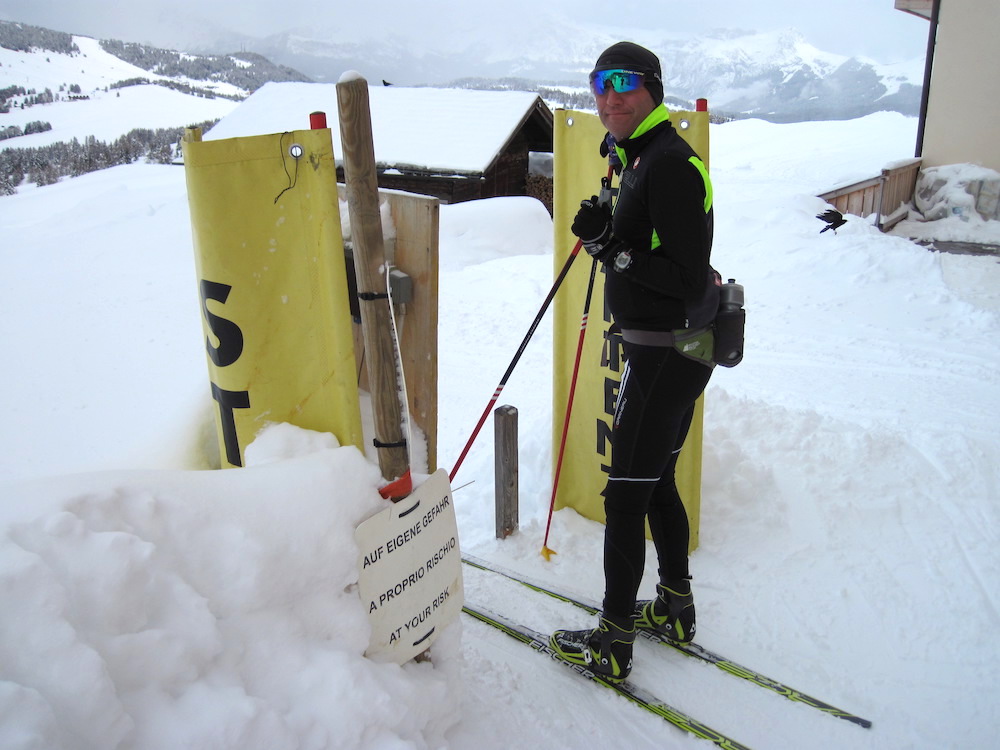
    Andy Newell would! Gerry Furseth on the slalom course behind the Hotel Panorama in Seiser Alm, Italy.
    Andy Newell would! Gerry Furseth on the slalom course behind the Hotel Panorama in Seiser Alm, Italy.

    A fanatical cross-country skier, Gerry prefers the outdoors to his day job.  If there isn’t any snow at Sovereign Lake, he can be found running and biking at Kal Park. Past lives include a magazine column on sailboat racing, timing ski races from the Olympics to the Boxing Day Open, and being an also-ran in most sports.

  • Gavin Kentch

    Gavin Kentch
    Alaskan Contributor (Anchorage Bureau Chief)
     
    Gavin Kentch is a lifelong Alaskan. He learned to ski while skiing into the family log cabin in the Alaska wilderness at age three. He received more formal instruction in the Anchorage Junior Nordic League youth ski program soon after. After a two-decade break he resumed formal ski training with the Alaska Pacific University Masters Team, and learned that there is a reason why real skiers have coaches.
    Gavin founded the school newspaper, The Ellipsis, at his public high school. He earned a B.A. in Classics from Reed College, where he was copy editor of The Quest, and a J.D. from Michigan Law School, where he was an editor of the Michigan Law Review.
    Gavin will ski on literally anything, and is locally renowned in Anchorage for posting trail reports following unlikely skis in godawful conditions. He has raced broadly, with results ranging from DFL in an RMISA mass start in his mid-30s to multiple victories in the prestigious Race to the Outhouse #2. Upon meeting Gavin for the first time, Ben Husaby exclaimed, “You can write more words about cross-country skiing than anyone I’ve ever met.”
    Gavin enjoys the company of two amazing daughters, Bridget and Audrey, and one exceptionally patient wife, Julie. He previously worked as an attorney in solo practice, with a focus on indigent criminal defense, before leaving the field of law to be a full-time stay-at-home dad. He has a cat named Marit.
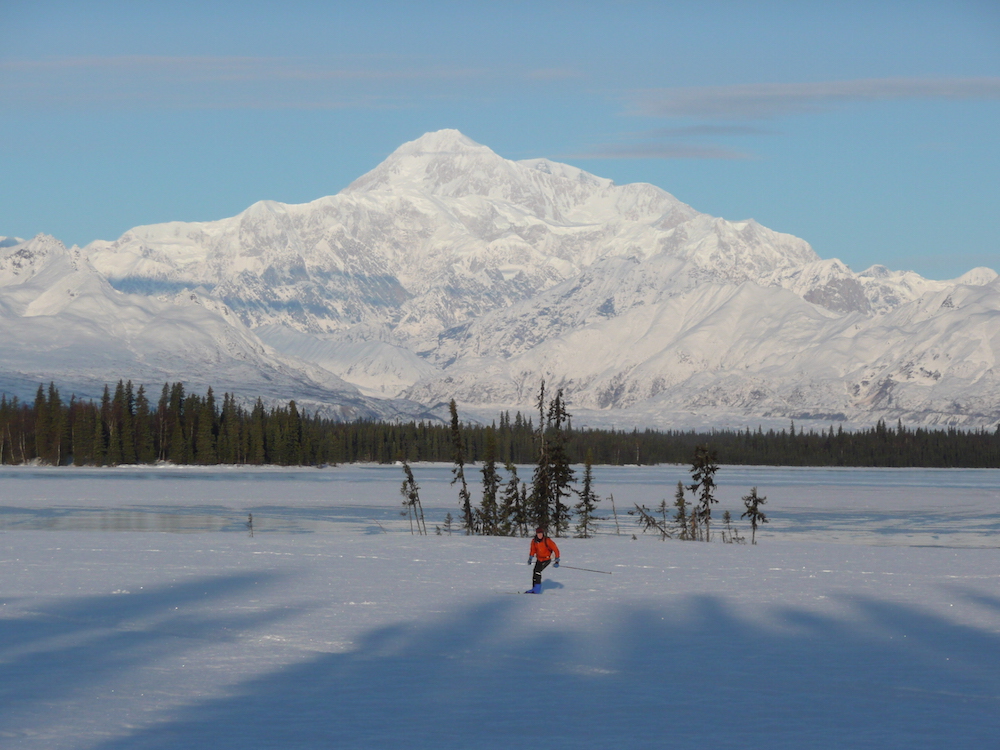
    Gavin Kentch on a Denali ski
  • Peter Minde

    Peter Minde

    Peter Minde

    My first encounter with skiing was when friends took me to an alpine ski area, where I was nearly decapitated getting off the lift, and pretty much fell all the way downhill to the lodge. By comparison, cross-country skiing was more fun… although I learned the hard way that one can fall while going uphill.

    I began contributing to FasterSkier during a period when I stayed home with our daughter, because I wanted to give back to the ski community.

    After I earned my bachelor’s degree in history, a mentor suggested that I “spend time in the real world” before going to graduate school. That led to 27 years in the wine business. Three years ago, I leveraged my athletic experience with scientific knowledge to become a personal trainer. I specialize in functional strength and corrective exercise; and I’ve helped people lose weight too. Whether skiing, trail running, or cycling, there’s an adventure out your back door: you don’t always have to drive for it.

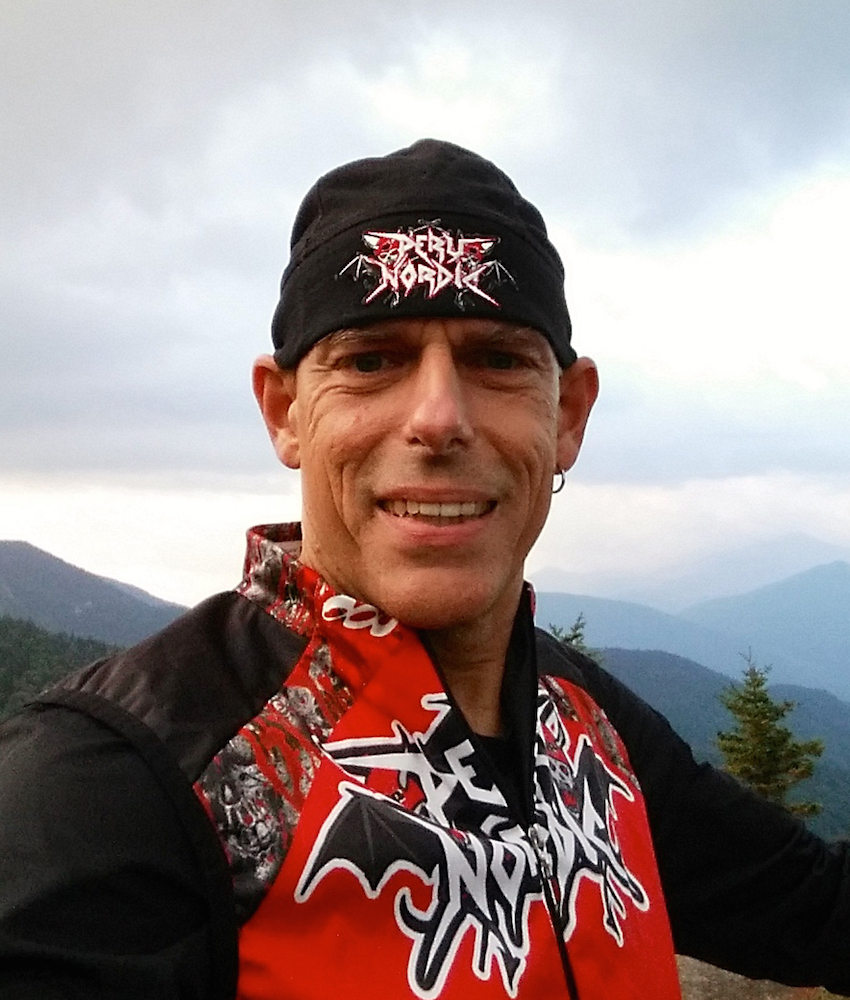
    From the wilds of north NJ, I ski for Peru Nordic. On Twitter @PeteMinde or at www.oxygenfedsport.com.

  • Harald Zimmer

    Harald Zimmer

    European Contributor, Biathlon Correspondent, proficient in German, Austrian, Swiss-German, English, French

  • Ian Tovell

    Ian Tovell

    Ian Tovell

    Ian Tovell began skiing when he went to a practice with his friend to see what it was all about, and after that the rest is history as they say. Ian skied throughout middle school and high school where he raced at a high level at Vermont Academy. He attended University of Vermont where he decided to “hang up the skis” and pursue his other passion, cross-country running. After an injury sidelined him from running, he picked up triathlon and has been racing triathlon across the country for the last eight years. After graduation, Ian found his love of skiing again, and now races the American Birkiebeiner every year.

  • Jake Ellis

    Jake Ellis

    Jake Ellis

    Jake Ellis hails from the North Woods of Michigan’s Lower Peninsula, from the same community that hosts the North American Vasa, and the Iceman Cometh Challenge. Skiing, cycling, running, and working as a forester keeps him outside enjoying nature’s bounty enough to make most others jealous! When not skiing this winter, you can assume he’s nerding out talking about waxing techniques, giant robots, and Star Wars. Jake hopes to look as good as Thomas Alsgaard does when he reaches 44 years old.

  • Jon ‘Fast Big Dog’ Schafer

    Jon ‘Fast Big Dog’ Schafer

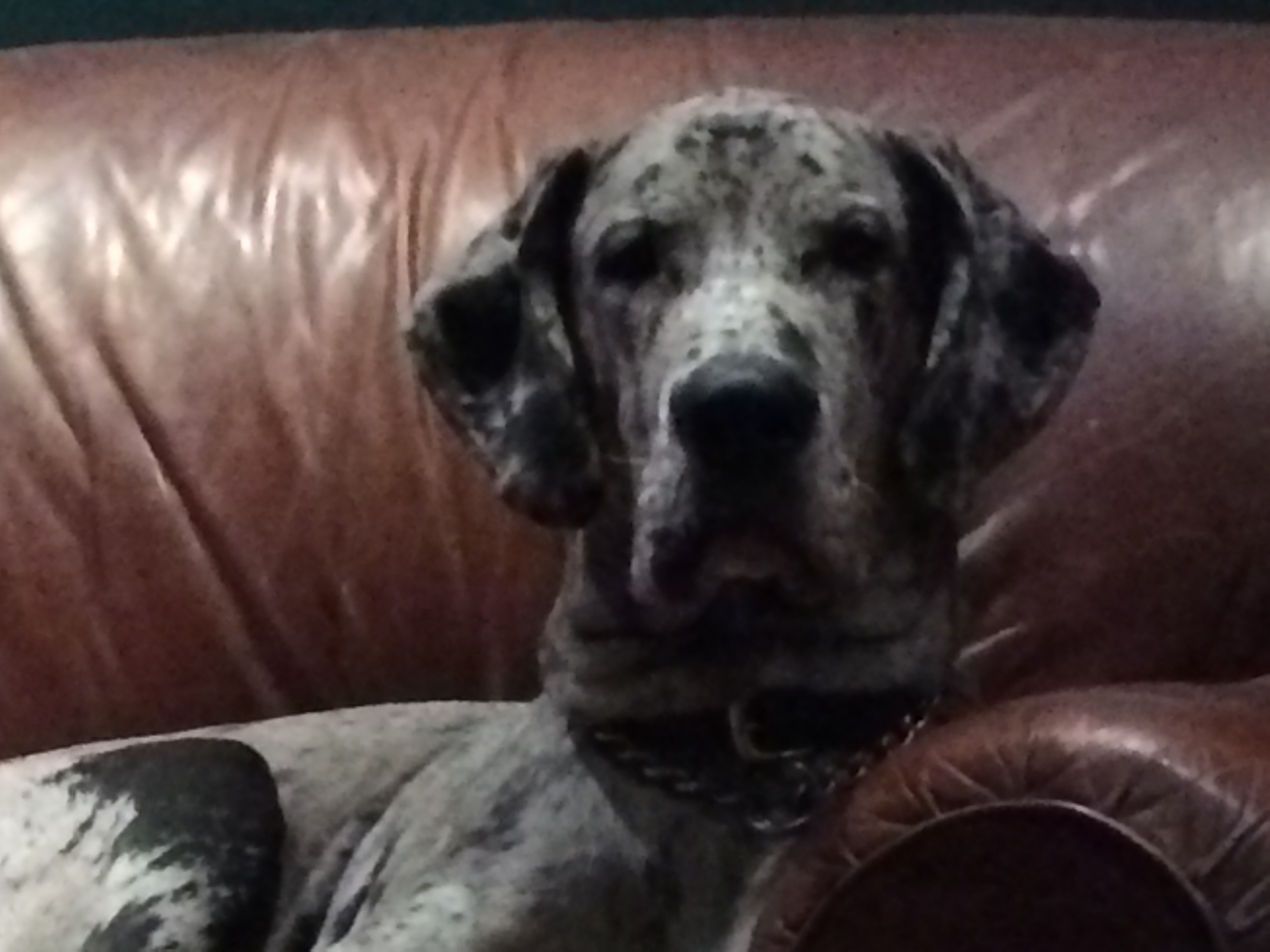
    Fast Big Dog's dog,.

    Fast Big Dog is a paradoxically gregarious yet reclusive, self-absorbed mystic and world traveler. In addition to his calling to right the wrongs in the ski fashion and gear world, he also brings his style, wit and devilish charm to the Steamboat Springs Winter Sports Club as the Nordic High Performance Director and Worldwide Director of Morale and Awesomeness. Savor his articles while you can, as his Great Dane puppy may burn down his house at any moment, possibly making this his last transmission.

  • Brian McKeever

    Brian McKeever will make history at the 2010 Olympic Games by becoming the first winter sport athlete to compete at both the Olympic and Paralympic Games. McKeever suffers from Stargardt’s disease, a degenerative vision condition that leaves the 30-year-old Canadian with only the use of his peripheral vision. A four-time gold medalist at the 2002 and 2006 Paralympic Games, McKeever, younger brother to Robin McKeever (1998 Canadian Olympic Team), was diagnosed with Stargardt’s disease at the age of 19, but continued to compete with the aid of an on course guide, often his brother. In Vancouver however, McKeever will rely upon careful course inspection, the ability to make out blurry shapes in front of him and, ideally, the opportunity to ski behind other athletes to maneuver through the Whistler course.

    McKeever earned his spot on the Olympic Team based largely on his first place finish in the 50K classic race at the Olympic Trials. “I want to go in as prepared as I can, be in the best shape of my life and have the best race I can,” said McKeever in late January article in the Vancouver Sun. “If I do that, then it doesn’t matter what place I come. I believe that on my best day I’m as competitive as any of our best guys. Time will tell, but there’s a great belief within our team that we’re going to have a breakthrough from somebody.”

    McKeever has seven World Cup starts in his career, as well as a 21st place finish in the 15K freestyle race at the 2007 World Championships and five podium results at the Canadian National Championships.

  • Madeleine Williams

    A year ago at the 2009 World Cup in Whistler, Madeleine Williams had her best World Cup finish on the Olympic race course in the 15K pursuit. In a race that saw seven of her Canadian teammates place in the top 30, Williams took 22nd place. Now the 26-year-old athlete from Edmonton will try to replicate a similar result this season on those same trails at the Olympic Games.

    Williams opened her 2009-2010 season in West Yellowstone with a win in the 5K classic race, in addition to a third and a fifth in the 10K freestyle and classic sprint, respectively. She continued to ski well into December where she placed second in the classic sprint and first in the 30K classic in Canmore to earn a place on the Olympic team.

    Williams, who competes for the Alberta World Cup Academy, was dropped from the National Team in 2007 after her results didn’t measure up, but strong results at the Olympic Games could help her find a place on the team in the future. “My best results will come from the 10 km and the 30 km,” Williams told the Edmonton Journal, “but it’s the Olympics, you never know. I’m really gunning for a top-20 placing. It’s within reach, but it’s a big challenge.”

    Madeleine Williams (Alberta World Cup Academy) - 3rd
    Madeleine Williams
  • Brent McMurtry

    Brent McMurtry, 23, notched his best World Cup result just one week before the Olympic Games with a 19th place finish in the classic sprint in Canmore. After placing a distant 66th the previous day in the 15K freestyle race, McMurtry qualified 25th in the classic sprint and skied through the heats well enough to move up to 19th place.

    “It was a very encouraging day and weekend for me,” McMurtry said on his website following the Canmore World Cups. “I was able to fight back from a disappointing 15km skate race to have a solid sprint, and was able to perform pretty well in the sprint feeling as though I was missing my top gear. I am super excited for another opportunity coming up in Vancouver!”

    McMurtry clinched a spot on the Canadian Olympic Team, on the strength of his second and ninth place finishes in the two classic sprint events at the Olympic Trials. The Calgary, Alberta native, who has twelve World Cup starts, followed up on his strong sprinting results with a first place finish in the 30K pursuit in Valcartier in his first race of 2010.

    McMurtry got his first international World Cup experience in January of this year when he competed in the World Cups in Estonia and Rybinsk, where he placed 40th in the 15K classic in Estonia and 29th in the freestyle sprint in Russia.

  • Stefan Kuhn

    In his first Olympics, Stefan Kuhn looks to build upon his already successful career, highlighted by his outstanding sprint results. At the Olympic Trials in December, Kuhn impressed with a first place finish in the classic sprint in Canmore, which should come as no surprise given his strong World Cup sprint results. Kuhn’s top World Cup result – a 15th place finish – came in 2008 in Kuusamo in the classic sprint. In 2010, Kuhn has amassed two more top-30 races in the World Cup classic sprint races in Estonia (29th) and, most recently, in Canmore (22nd).

    Kuhn, who lives and trains in Canmore, followed an unusual path to Vancouver. After finding success as a junior racer, Kuhn put his Olympic dreams on hold to become a professional chef. For three years, Kuhn worked in the restaurant industry in Edmonton. Eventually, his Olympic dreams got the best of his culinary career.

    “I always had a dream of going to the Olympics,” Kuhn told the Calgary Herald. “I enjoyed cooking, but something was missing.” Kuhn returned to racing and steadily improved his results to find a spot on the Canadian Olympic Team.

    Kuhn adds twenty-five World Cup races, two World Championship starts, six Canadian National Championship medals and two podium finishes at the US National Championships to his resume.

    Stefan Kuhn - 7th.
    Stefan Kuhn
  • Gordon Jewett

    Veteran racer Gordon Jewett races in his first Olympics in Vancouver. Back injuries plagued Jewett for much of his early years of senior level racing, but perseverance paid off and Jewett found himself poised to qualify for his first Olympic Games after racing to his first national title in 2009 in the 50K freestyle race in March.

    Jewett placed fourth and was the top Canadian at the 15K freestyle race in Sovereign Lake in December at the Olympic Trials and continued the make the case for his inclusion on the Canadian Olympic Team with a first place finish at the Bozeman, MT Super Tour in the 10K freestyle race. When the Canadian team was reallocated four additional spots, Jewett was named. Most recently, Jewett took 32nd place in the 15K freestyle race at the World Cup in Canmore in late January.

    Gordon Jewett (Alberta World Cup Academy) - 4th
    Gordon Jewett
  • Drew Goldsack

    Drew Goldsack

    Drew Goldsack torso photo Devon Kershaw small
    Drew Goldsack (photo: Devon Kershaw)

    Four years ago in Torino, Drew Goldsack impressed with a 31st place finish in the freestyle sprint at the Games. 2007 brought a sixth place finish in the team sprint at the World Championships in Sapporo with Olympic teammate Devon Kershaw. In front of the home crowd in Canmore in 2008, Goldsack skied to a 12th place finish in the freestyle sprint, his best result in a World Cup. The 2009 season ended with a complicated surgery needed to remedy a strange bout of tendonitis that flared up in Goldsack’s left foot. Just nine months post-surgery, the 28-year-old Goldsack has recovered nicely and secured himself a spot in Vancouver on the strength of his sprinting results at the Olympic Trials.

    Goldsack skied to first and second place finishes in each of the classic sprint races in the Canadian Olympic Trials, adding another podium finish in the 30K Pursuit in Valcartier. “My road to the trials was a tough one and certainly not ideal or as planned,” Goldsack remarked in his blog, “but thanks to the outstanding support of those around me I was able to persevere and perform when it really counted.” Most recently, Goldsack tacked on two more podium finishes at the Methow Valley SuperTour in Winthrop, WA in January, taking second in the freestyle sprint and third in the 15K classic race.

    Drew Goldsack (Canadian National Team) - 8th