Skip to content
FasterSkier

Visit FasterSkier.com →

From the FasterSkier archive — posts syndicated from athletes’ and coaches’ own blogs between 2004 and 2012, kept online as published. Current coverage is at fasterskier.com.

Category: Community

  • First Tracks and Timeless Traditions: Inside the West Yellowstone Ski Festival & Clinics

    First Tracks and Timeless Traditions: Inside the West Yellowstone Ski Festival & Clinics

    When the first real snow falls in West Yellowstone, everything changes. The sound of car tires gives way to the swish of skis; coffee shops fill with cold hands and red cheeks; and this small Montana town of 1,100 becomes the epicenter of cross-country skiing in North America.

    A Small Town With a Big Nordic Heart

    Each Thanksgiving week, thousands of skiers descend on West Yellowstone for the Yellowstone Fall Ski Festival—an event that blends early-season training, clinics, races, and old-fashioned camaraderie. The teaching arm of the festival, officially called the Yellowstone Fall Ski Clinic, has become legendary in its own right.

    “The festival has always been about community,” says Jack Hart, who is the co-director with Todd Eastman, and has been part of the event for more than three decades. “We’re a small town, but for this week, we become the center of the Nordic world. It’s a celebration of skiing in its purest form.”

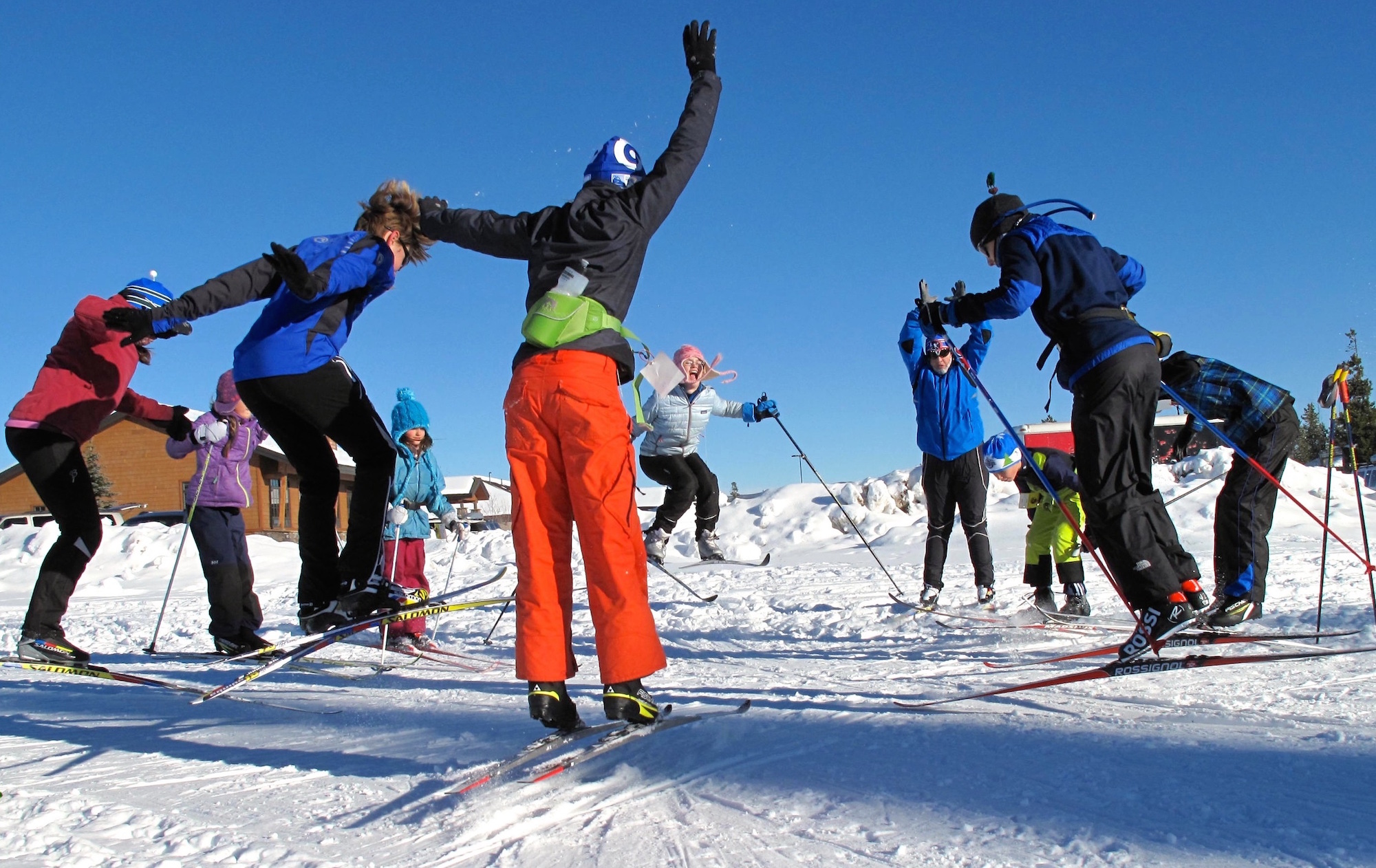
    Bridger Ski Foundation out for a first ski in West Yellowstone back in 2015. (Photo: Courtesy Bernie Nelson)

    From Coaching Coaches to Coaching Everyone

    The roots of the festival trace back to 1979, when the U.S. Ski Team established a coaching development program in West Yellowstone. Hart remembers it well.

    “Before it became an official, commercial event,” he explains, “the U.S. Ski Team brought in coaches. They said, ‘We have a coaching program. We want to develop people like yourself who want to take their level higher. Come to West Yellowstone in November and we’ll train you to be a U.S. Ski Team coach.’ That’s really how this whole event started.”

    As more coaches came west, the program began to evolve. “Torbjorn Karlsen, Drew Barney, and Dick Hunt—those are the three names that co-founded the event,” Hart says. “They realized we could turn this into something commercial and teach more people how to ski. We’ve got early snow, we’ve got the trails—why not invite everyone?”

    By the early 1990s, that idea had taken hold. The first snow of the season, combined with West Yellowstone’s unique geography, made it a magnet for teams and individuals alike. “At its peak about twelve years ago,” Hart says, “we had over 5,000 day passes sold during the week. That’s how many people were here. These days we’ll sell 2,500 to 3,000 if we get a lot of snow—but it’s still the biggest kickoff to winter anywhere.”

    Building Better Skiers — and a Stronger Community

    The Yellowstone Fall Ski Clinic runs alongside the festival under the same umbrella. It offers structured instruction for everyone from teenagers to masters racers, with one-, two-, three-, and five-day options beginning the Tuesday before Thanksgiving.

    “We take kids down to high school age,” Hart says. “We’ll have around one hundred people in actual instruction this year, and then another couple thousand here training with their own coaches—high-school programs, club teams, that sort of thing.”

    The diversity of ability levels is part of the event’s charm. “We have literally people who have not been on skis before,” Hart says, “and we also have the five-day, full-time training type of skier. The idea is to enhance, improve, and enjoy skiing in this environment—with this community.”

    The entrance to the Rendezvous Trail System in West Yellowstone, Montana. (Photo: Courtesey Photo)

    Each clinic begins with a quick on-snow evaluation. “We ask for a self-assessment on the registration form, but that can be different from where people really are,” Hart laughs. “The first fifteen or twenty minutes on snow, we do an evaluation and adjust the groups right there. We want everyone with others of similar ability so they can maximize their time and get more enjoyment out of it.”

    The formula works. The Rendezvous Trail System becomes a living classroom—groups working on technique, coaches calling out cues, laughter echoing through the lodgepole pines. “The idea,” Hart says simply, “is to enjoy, to improve, and to learn—and obviously have a bunch of fun while you’re doing it.”

    Philosophy in Motion: Teaching, Balance, and Joy

    Behind the logistics of the clinic—the sign-ups, scheduling, and staffing—stands Eastman, whose background in both coaching and teaching shapes how the clinics operate.

    “My contention,” he says, “is that all the coaches needed to do more ski teaching, and all the teachers needed to learn about coaching. The sweet spot is the combination of the two.”

    That balance defines the Yellowstone approach. Eastman and Hart have assembled a team of approximately a dozen instructors who rotate throughout the week, exposing participants to a range of learning styles. “We’re not following PSIA or USSA scripts,” Eastman explains. “Most of our instructors have been skiing forever and teaching for years. It’s a mix of styles and personalities.”

    The offerings reflect this flexibility: a five-day skate and classic clinic, a three-day version, two-day tune-ups, and popular one-day technique intensives for both skate and classic skiing. “The one-day stuff fills up really well,” Eastman says. “It’s at the end of the week—Thursday through Saturday—so people already in town can still jump in.”

    Last year’s clinics drew 82 participants, supported by a staff of 12 instructors, a healthy ratio that ensures personalized attention. “Our ideal number is around a hundred,” Eastman notes. “We want everyone to leave feeling like they were seen and supported.”

    Just as important as the structure, however, is the tone. “This isn’t about grinding or chasing a podium,” Eastman says. “We’re careful not to overwhelm people, especially early in the season. A lot of folks haven’t been on the snow yet. We want to be delicate with feedback, help them rediscover how it feels to glide again.”

    That sentiment pervades the entire week. “Everybody at some point has a sensation—they go, ‘What was that? That felt good. I want more of that,” he says. “You may not find it for years, but it’s that moment that keeps you coming back.”

    Eastman laughs at the sport’s reputation for being physically demanding. “Cross-country skiing gets this bad rap: ‘Oh, it’s the hardest cardiovascular sport in the world.’ Yeah, gee, that’s exactly what I want to sign up for on my vacation! We want people to see the joy in it—the beauty, the community, the stress relief, the meditation in motion. It’s the best way to deal with winter.”

    The sense of inclusivity is central. “We have everyone from high schoolers to eighty-year-olds,” he says. “And if someone needs more challenge or less, we just move them. Our job is to make sure every skier finds their place.”

    For Eastman, success is simple. “When a hundred people swear they’re going to tell all their friends how much fun they had—that’s when we know we did it right.”

    Free Heel and Wheel: The Beating Heart of the Festival

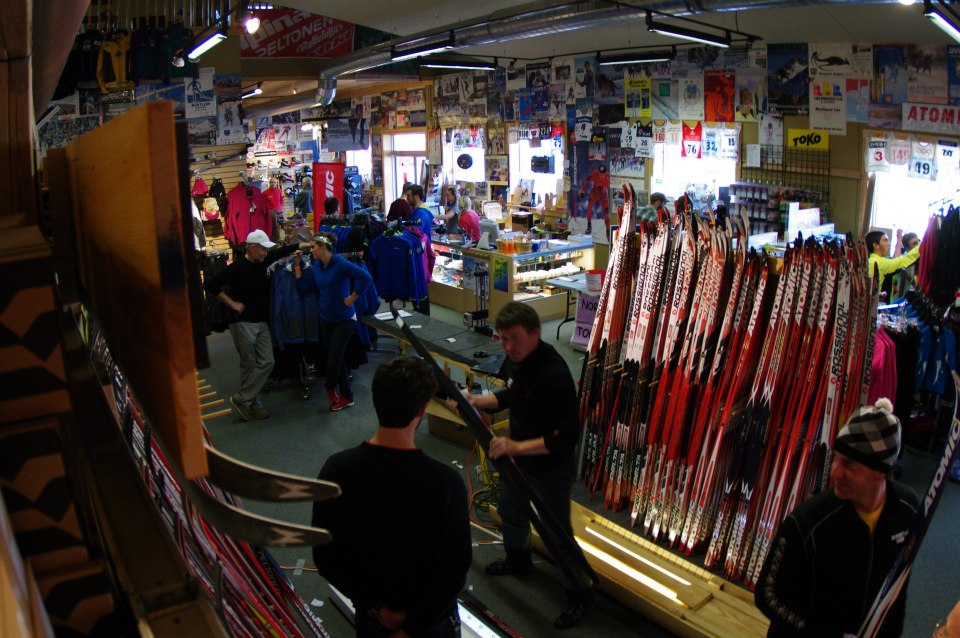
    For many participants, the festival’s unofficial headquarters is Free Heel and Wheel, the beloved ski and bike shop owned by Jack’s wife, Kelly Hart, and Melissa Alder.

    “Every kid hangs out there,” Hart says. “They have hot chocolate, buy a new ski hat, talk skiing—it’s where everything happens. That little store is kind of the center of communication because people have been going there for thirty years.”

    Part café, part gear shop, and part social hub, Free Heel and Wheel embodies the spirit of West Yellowstone. During festival week, it hosts evening events, wax clinics, and impromptu meetups that stretch late into the night.

    “It’s just part of the experience,” Hart says. “Besides the Holiday Inn, which is where everything is based, it’s the other center of the place. A lot of the kids meet there, sit at the coffee bar, talk skiing, and talk about whatever teenagers talk about.”

    The shop is also the birthplace of one of West Yellowstone’s most famous legends—the “snow-dance” story. Years ago, when November warmth threatened to derail the event, the Free Heel and Wheel crew improvised. “They all got on bikes in bikinis, with skis on the back, and rode around town,” Hart laughs. “They lit the skis on fire as part of the dance, and that night we got nine inches of snow. It’s one of those legends that’s become part of the lore around here.”

    Lots of Après-ski fun to be had. (Photo: Courtesy Photo)

    Exploring Beyond the Trails

    While the festival’s focus is skiing, Hart emphasizes that West Yellowstone offers plenty beyond the tracks.

    “If you were that customer saying, ‘Jack, what else can I do? I’m only skiing three days, but I’m here for five,’ there’s a lot,” he says. “The clinic has speakers and films—wax clinics, athlete talks, people like John Bauer speaking about his career and the park.”

    Just outside town lies the west entrance to Yellowstone National Park, which remains open to non-motorized travel in late November. “You can either tour in, or, depending on conditions, you can skate on the groomed road,” Hart says. “It’s a big tradition for a lot of higher-end athletes to ski all the way to Old Faithful. That’s 30 miles in and 30 miles out. We call it the 100 K day.”

    In the 1980s, before skate skiing, that tradition was even tougher. “We used to classic ski into Old Faithful and back on Thanksgiving Day,” Hart remembers. “You could eat like crazy that night—you were starving.”

    Other attractions keep visitors busy: the Grizzly & Wolf Discovery Center, open 365 days a year (“If you want to be as close as your computer to a wolf, you can do that there,” Hart says); an IMAX theater; the Museum of the Yellowstone; and Big Sky Resort, just 40 miles north.

    “Our restaurants stay open for this event,” Hart notes. “The bars are open. The town comes alive. If you’re coming all the way to West Yellowstone, skiing our trails and seeing Yellowstone National Park in its winter beauty should hold your interest for at least three or four days.”

    A Safe Adventure

    Early-season skiing in bear country sometimes raises eyebrows among first-time visitors, but Hart reassures them that precautions are simple and effective.

    “We always recommend traveling with bear spray,” he says. “Most bears are in hibernation by then, but it’s not unusual this time of year to see one that’s not. Ski in a group, carry bear spray—Free Heel and Wheel rents it, and the Chamber has them too—and follow park guidelines. We’ve never had an incident with an animal on the Rendezvous Trail system in 34 years.”

    Snow, Weather, and the “Snow Dance” Factor

    Reliable early snow has always been West Yellowstone’s calling card, but Hart admits that every year brings a little suspense. “We’ve had snow and we’ve been skiing on the plateau already,” he said in early November, “but it’s been wet—low 40s and even rain up to 7,000 feet. The good news is it’s supposed to snow today, tomorrow, Sunday, and part of Monday. Temperatures are dropping to the teens at night, and starting the week before camp, it’s supposed to snow steadily.”

    If conditions in town fall short, organizers simply shift to the South Plateau Road, about six miles outside town, which reliably holds snow. “We’ve always been able to adjust,” Hart says. “If we don’t get snow until Wednesday, fine—we’ll ski Wednesday or go up on Tuesday. The key is being flexible. And if all else fails, we might call on the Free Heel and Wheel girls for another snow dance.”
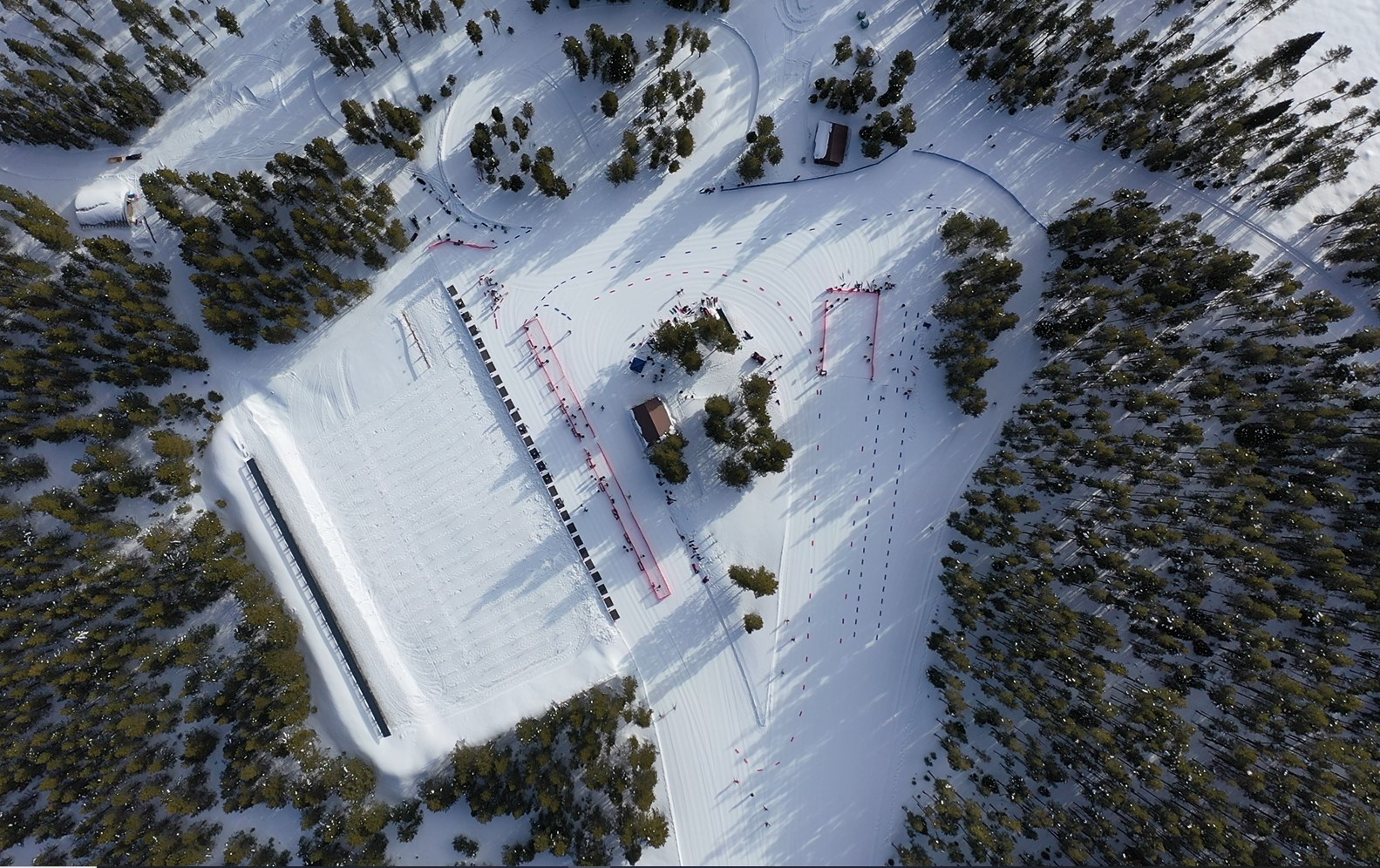
    Aerial view of the stadium and biathlon range at the Rendezvous Ski Trails in West Yellowstone. (Photo: WYSEF courtesy photo)

    Try Something New—Free Biathlon

    One of the most distinctive parts of the week is the chance to try biathlon—no experience required.

    “The biathlon events we have during the week are free,” Hart says. “If you’ve never shot a gun, it doesn’t matter. Some of our highest participation numbers come from the ‘never-ever’ biathlon event. You spend half a day being taught how to shoot, and then that afternoon there’s a race for all those people who’ve never raced before.”

    The facility is first-rate: a 26-station range that includes a Paralympic setup. “You can feel what it’s like to actually do a biathlon race,” Hart says proudly. “It’s one of the nicest ranges in the western United States.”

    Thanksgiving, Nordic-Style

    Thanksgiving is the centerpiece of the week—a mix of tradition, family, and fitness.

    “Thirty years ago, you couldn’t even get a turkey in town,” Hart recalls. “Now we have two grocery stores that carry everything, from turkeys to cranberries. We’ve got six hotels open, and you can make your own dinner if you rent a VRBO. There’s plenty of food available.”

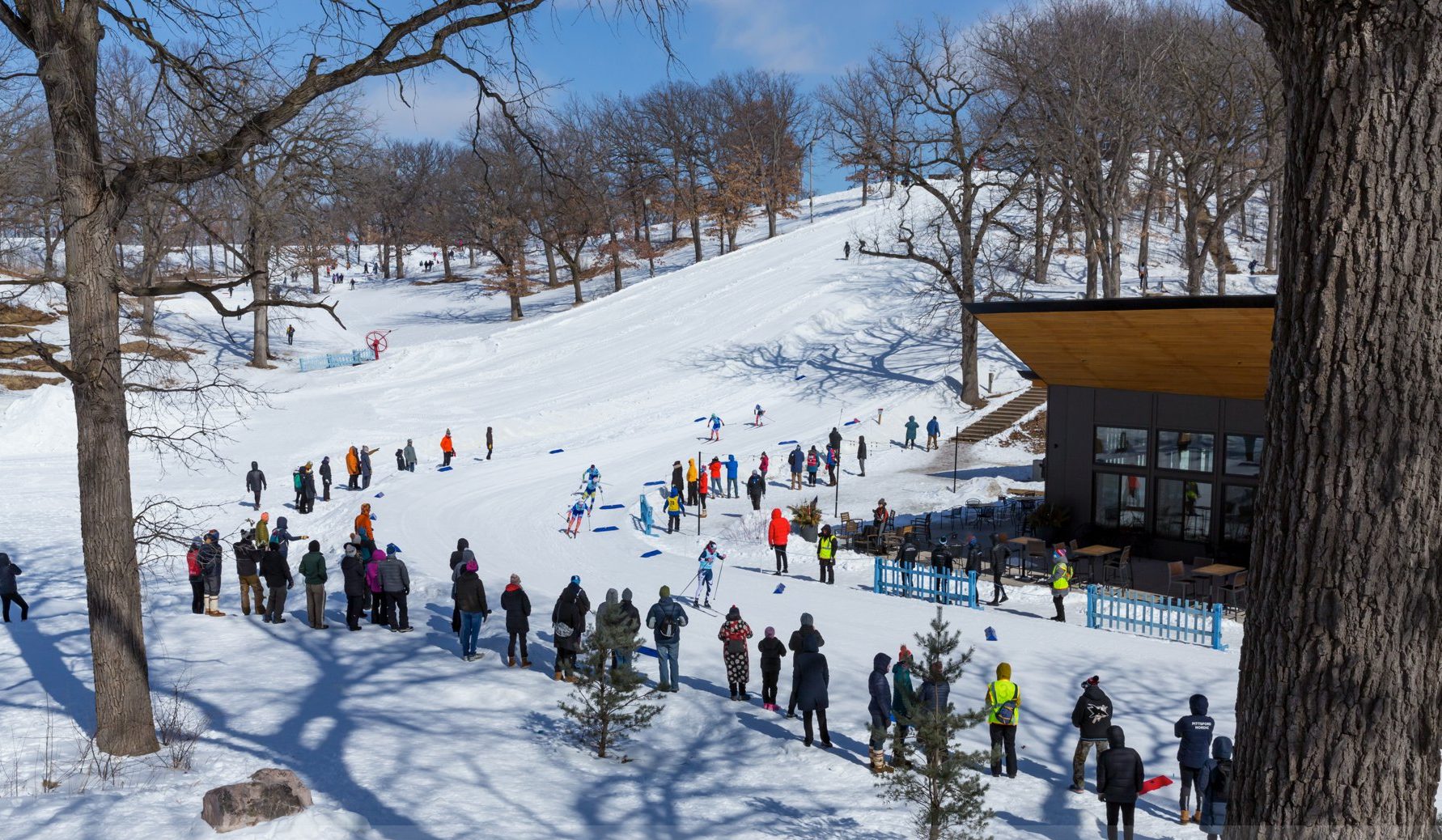
    The scene on the trails that morning captures what the festival has become: families pulling children in pulks, elite athletes finishing intervals, and clusters of friends laughing as snow falls softly around them. “Thanksgiving Day is a big tradition for a lot of people,” Hart says. “They come out with their family, ski for an hour, have a big Thanksgiving dinner, ski Friday and Saturday, and head home Sunday. You’ll watch races, watch biathlon, see some of the best people in the world on snow—it’s a great time to be here.”
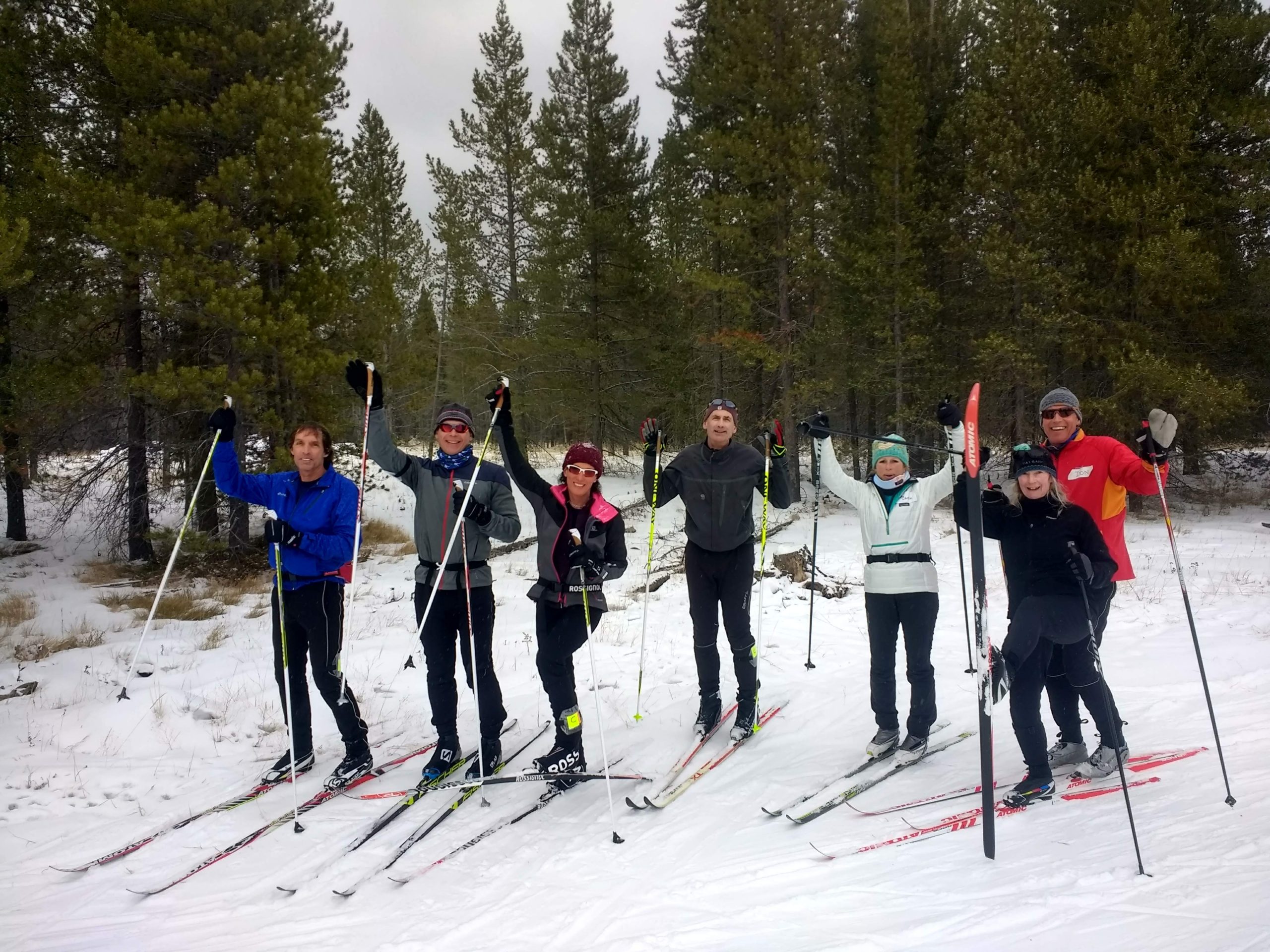
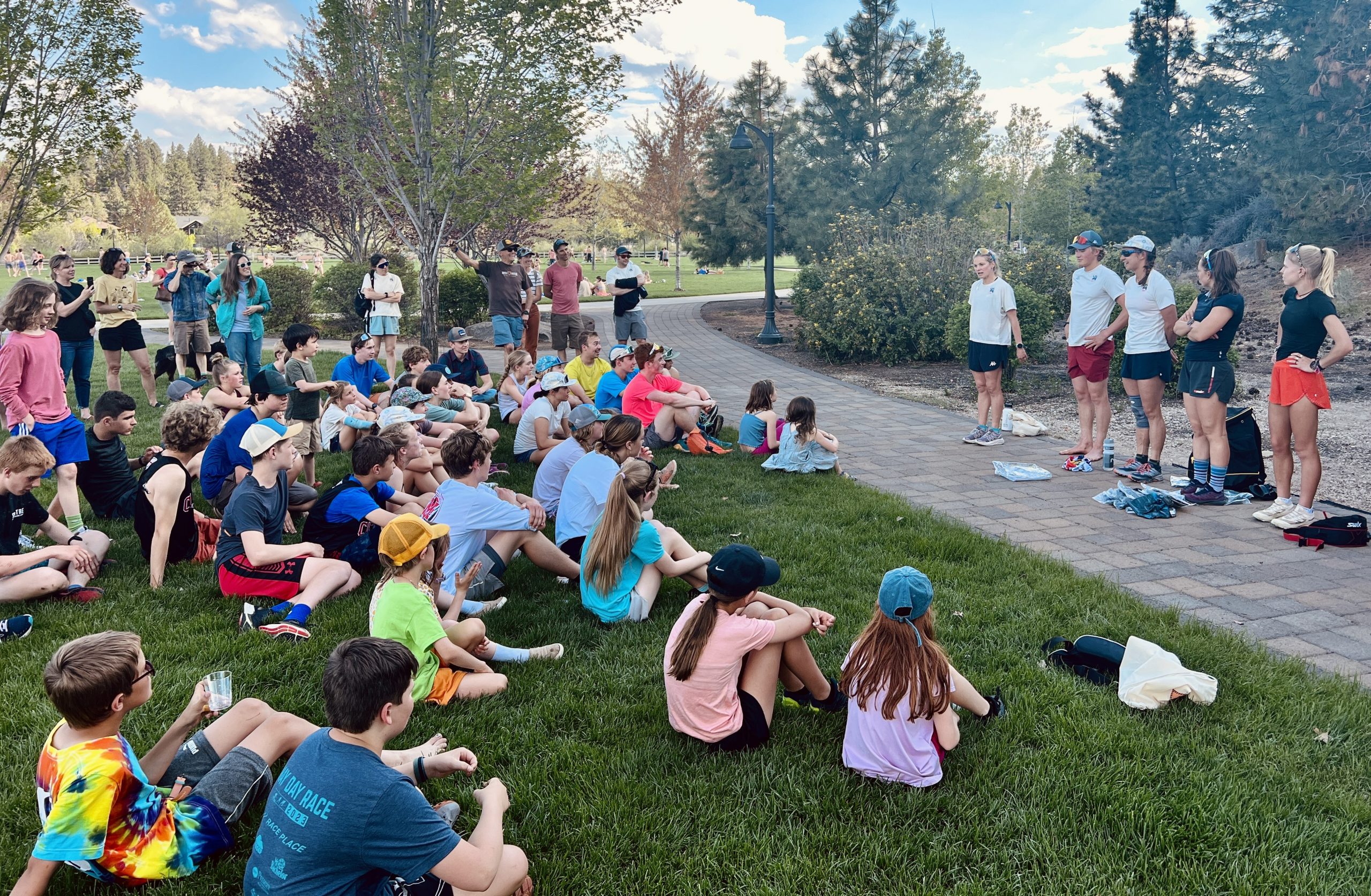
    The West Yellowstone Ski Festival and Clinics is a gathering place for our community to celebrate the start of the new season. (Photo: Courtesy Photo)

    The Spirit of the Festival

    For Hart, who has worked at this event for the last 30 years, the reward is seeing the joy it brings. “We’re proud of what we’ve built,” he says. “It’s a massive effort for a small community, but when you see 3,000 people skiing, smiling, and reconnecting after a long summer—that’s everything.”

    As the first flakes settle over town and the hum of wax being corked onto skis fills the air, West Yellowstone once again takes its place as the spiritual home of early-season Nordic skiing.

    Amidst the pines and geysers, every November offers a fresh reminder: the ski season doesn’t begin with a race—it begins with a community.
    November 7, 2025
  • Is SafeSport—and U.S. Ski and Snowboard’s MAAPP Protocol—Actually Working?

    Is SafeSport—and U.S. Ski and Snowboard’s MAAPP Protocol—Actually Working?

    This article was made possible through the generous support of our voluntary subscribers.  If you would like to see more articles like this one, please support FasterSkier with a voluntary subscription.  

    Junior Nationals competitors race past the Loppet Foundation Adventure Center in Minneapolis in 2022. Events that require traveling with teams and clubs represent unique opportunities for young skiers, while also posing unique dilemmas for athletes and the organizations seeking to protect them. (Photo: David J Owen Photography)

    In March of this year, an alpine coach from a Colorado based ski club—a club that encompasses all U.S. Ski & Snowboard (USSS) disciplines—was reported for abusing a nine-year-old child during a post-season training camp in Taos, New Mexico. The club promptly reported the coach to the U.S. Center for SafeSport. He was suspended and has since been permanently banned from sport.

    It is important to shine light on the issue of athlete abuse and the requirements put in place by The Center for SafeSport and the Minor Athlete Abuse Protection Policies (MAAPP) adopted by national governing bodies (NGBs). In a 2018 Congressional hearing, Senator Dianne Feinstein noted that, “Only 1 in 10 instances of child sexual abuse are ever reported to authorities.” Child USA (a leading child protection advocacy group) reports that 60–80% of abuse in youth-serving organizations, including sports, is never reported. SafeSport has stated that reporting often occurs years after the abuse, especially in cases involving minors who do not feel safe speaking out at the time. There’s also significant underreporting by organizations, particularly when abuse doesn’t involve clear criminal conduct but violates policies like MAAPP, which are supposed to be monitored by the NGBs.

    Given these facts, any official count of abuse reports is almost certainly a vast underestimation. So, when abuse does come to light, especially in clubs or organizations that lack MAAPP compliance, it should trigger scrutiny not just of the individual, but of the systemic failure that allowed it to happen.

    As horrific as this abuse is, it also forces us to confront a larger systemic failure. The criminal justice system and SafeSport can hold perpetrators accountable, but they alone cannot address the deeper, ongoing crisis of abuse in youth sports. While predators are often banned or criminally prosecuted, the organizations that failed to implement and enforce appropriate policies typically walk away after issuing the same generic statement: “We are cooperating with SafeSport and law enforcement, and we are reviewing and refining our policies.”

    Let’s be clear: SafeSport was not created to police the NGBs and their clubs. Its role is to investigate and adjudicate claims, to provide education and certification of coaches, and to protect athletes from all forms of abuse: sexual, physical, emotional, as well as bullying, harassment, and hazing. While SafeSport has made progress in providing education and establishing prevention policies such as the Minor Athlete Abuse Prevention Policies (MAAPP), its system has serious shortcomings: investigations are slow, enforcement inconsistent, and many cases are closed administratively without resolution. Most concerning is the burden it places on individual victims filing complaints, often at great emotional and personal cost.

    That said, US Ski and Snowboards MAAPP policies do establish critical protection. They outline strict requirements for coach/athlete interactions, electronic communications, travel, and overnight lodging. For example, all one-on-one interactions with minor athletes must be observable and interruptible, and coaches are prohibited from sharing hotel rooms or residences with minor athletes.

    In this case, according to press reports, those safeguards were not upheld. Two male coaches accompanied the athletes to Taos. One was housed with the girls, the other with the boys. That alone violates USSS MAAPP lodging and supervision policies. Reports allege the coach made the travel and lodging arrangements sharing cabins with minors, drinking alcohol during the trip, and leaving the athletes unsupervised. These are not policy “gray areas.”  These are direct violations of SafeSport and USSS MAAPP protocols.

    What Are the Actual MAAPP Requirements?

    U.S. Ski & Snowboard’s Obligations:

    • Ensure that all member clubs adopt and implement MAAPP in full.
    • Require annual, written acknowledgement of MAAPP from coaches, parents, athletes, and adult participants.
    • Track and document training for adult participants, parents, and athletes.
    • Provide consent forms and quick-reference summaries.
    • Certify that clubs adhere to MAAPP and concussion policies.

    Club-Level Responsibilities:

    • Provide MAAPP training to all constituents, board members, staff, parents, athletes, and volunteers.
    • Offer age-appropriate athlete training using U.S. Center for SafeSport resources, with parental consent.
    • Certify compliance with MAAPP and maintain required documentation.

    It is unclear whether USSS exercised any oversight over this Colorado club, or any club in the country. Based on statements from the Executive Director, it appears the club did not have these policies in place prior to the incident. This fits a troubling pattern we see across several abuse cases, including a number of recent high-profile cases involving USA Biathlon; while the abuser is sanctioned or prosecuted, the organizations that failed to implement oversight escapes responsibility entirely. SafeSport does not automatically investigate institutional failure; that burden falls on victims to file a second complaint, an exhausting, re-traumatizing process. As a result, systemic failures often go unreported and unpunished.

    In the case of the Colorado club cited in this article, while the coach who allegedly abused the child was reported to SafeSport, there is no evidence that the club reported the failure of the second coach to comply with MAAPP, as is required. All coaches certified by USSS are obligated to know and understand all SafeSport guidelines, and to act on them accordingly. That failures to comply with MAAPP on the part of the second coach was not reported by the club represents a clear failure of oversight (which is the club’s responsibility).

    The larger question we need to ask in every case is this: Were the sanctioning organization’s MAAPP policies fully in place and enforced? Was there meaningful oversight of coaches? In this case, the answer appears to be no.

    Following the incident, the club released a damage-control statement, with this quote from the Executive Director appearing in multiple news outlets:

    “We are currently vetting our policies through child safety advocacy groups and operating under these practices in the interim: The minimum age for team travel is 12 years old; two adults per accommodation are required; at least one adult of each athlete’s gender must be represented; a special form must be completed by all participants if there are exceptions to the above policies.”

    This is revealing. These policies are not new. They have been required by MAAPP for years. To suggest that they’re being implemented “in the interim” is, in effect, an admission that they were not in place before the abuse occurred.

    This raises the fundamental issue: Where is the USSS’s oversight of its clubs?

    Let’s not forget that MAAPP rules are specific and unequivocal:

    • No room sharing between adult coaches and minor athletes.
    • Observable and interruptible interactions at all times.
    • Two adults present for any room checks or supervisory interactions.
    • Billeting rules that require background checks, written consent, and oversight.
    • Coach-athlete meetings, even with health providers, must follow strict protocols.

    Based on both the reports and the club’s own statements, these policies were not followed. And yet, there is no indication that USSS is holding the club accountable. The Executive Director was even quoted as saying to parents he “didn’t know why nine-year-olds were at a post-season training camp,” despite excellent snow conditions on their home mountain, another red flag regarding institutional oversight.

    What Needs to Change?
    1. Every time a coach or staff member is reported to SafeSport, there must also be an institutional review. Was MAAPP fully implemented? Were policies followed? If not, the club should be investigated as well.
    2. USSS must actively monitor its member clubs for compliance. If clubs are negligent, there must be public accountability and appropriate sanctions, not just quietly “reviewing policies.”
    3. Mandatory reporting laws must be enforced. Too often, abuse is ignored or minimized to protect organizational reputations and resources. That must end.

    The abuse of a child is always a tragedy. But so, too, is a system that allows preventable abuse to occur through complacency, poor oversight, or disregard for established safeguards. It’s time to stop pretending that issuing a press release counts as accountability. If SafeSport and MAAPP are going to work, they must be enforced, not just in policy, but in practice.


    August 3, 2025
  • US Ski and Snowboard Level 100 Mandate—A Closer Look

    US Ski and Snowboard Level 100 Mandate—A Closer Look

    This article was made possible through the generous support of our voluntary subscribers.  If you would like to see more articles like this one, please support FasterSkier with a voluntary subscription.  

    Training camp for U.S. ski team members also includes time devoted to the next generation of skiers. (Photo: Julia Kern)

    U.S. Ski & Snowboard (USSS) has mandated that to be eligible to attend USSS events, all member coaches must be Level 100 Certified. According to USSS, the goal of the Level 100 Cross Country Ski Coach Education is to provide new and developing coaches with the foundational knowledge, skills, and tools necessary to effectively coach athletes at all levels, particularly youth and junior skiers, in a way that is developmentally appropriate, safe, and aligned with long-term athlete development principles.

    That’s a noble goal. But from where I sit, the actual certification pathway is unclear, especially for new or volunteer coaches. When you log into the USSS membership portal, it’s not at all obvious how a first-time coach, particularly someone volunteering at a grassroots program, can realistically become L100 certified before the start of the competition season. That’s a concern.

    I have spoken to a couple of members of USSS Cross Country Sport Committee, and they have shared with me that they felt that this mandated education—and the cost of that education—was not the best educational path, but that the staff was driving the process and the committee had no option to oppose it.  If this is in fact the case, I would suggest this is more than a misguided approach and begins to look like a money grab.

    While I understand that some view mandatory education as a positive step, I worry about the impact this will have on small programs that rely on parent volunteers or seasonal coaches. For those of us worried about the ever-increasing cost of the sport,  having volunteer or part time coaches may be part of the solution. We risk excluding people simply because they can’t afford—or don’t have time±to meet these requirements. These are often people who are critical to running youth programs, not paid staff with the budget and support of a large club.

    We should also take a hard look at how this education is being delivered. Reading a manual, taking a test, and skating around a parking lot for a few hours isn’t my idea of effective coach development. Education is about exchanging ideas, sharing experiences, and evolving our understanding, not memorizing content and ticking boxes.

    Personally, I’m in regular contact with coaches, athletes, and scientists in endurance sports. I read current sports science literature, engage in ongoing dialogue, and actively share what I’ve learned over decades in this sport. I’ve always found that the most meaningful education happens through open discussion and debate, not a pre-scripted manual and exam.

    Camps, group workouts, and group activities are the cornerstone of cross-country skiing training programs. USSS has mandated coaching certification in the hope of standardizing the systems and philosophies through which those activities are conducted. But questions remain as to whether or not that policy will have the desired effect?(Photo: SMS/T2, Lina Sutro)

    I do believe there’s value in developing a shared language around technique and training. One of the biggest challenges in coaching is making sure we’re talking about the same things when we use terms like “threshold” or “training zones” or whatever! But having common terminology doesn’t necessarily mean information is being exchanged. Does Level 100 certification truly promote that kind of exchange?

    I’ve said this before,  I know more about the training philosophies and athlete development systems of other countries than I do about what’s happening in U.S. Ski & Snowboard programs and the clubs that are producing the top athletes. Other nations openly share, publish, and discuss what they’re doing. That kind of transparency is deeply educational. So why aren’t we doing the same here? Wouldn’t that kind of openness be a more effective educational tool than a mandatory certification?

    Which brings up another point: If you go to the USSS website right now, there’s almost no detailed information available about the 2025–26 ski season requirements, everything I see is for the 24-25 season. Nor can I find a clear curriculum of what you’re expected to pay for and complete. We’re being asked to invest time and money into something that isn’t clearly defined. If education adds real value to coaches, people will gladly pay for it: you don’t need to mandate it.

    I’ve been a member of USSA—now USSS—for more than 50 years. I’ve paid the dues, year after year. And frankly, the return on that investment hasn’t been much. Until now, there’s been no formal education required of coaches. Many coaches were effectively grandfathered in based on their history with divisional or national programs, which made sense. To now require coaches who may have been coaching for 10-20-30 years to all of a sudden have to take Level 100 Certification seems odd to me.

    To be honest I am not a USSS Certified Coach and the cost of it will likely preclude me from pursuing it, as whatever income I derive from ski coaching goes out the door in expenses. I think I have learned a few things over the years and I am unsure how a Level 100 Certification will benefit me and I am sure others feel that same way. But without the certification there seems to be no way to participate in the races.

    But now that education is being mandated, we need to ask: Who is designing this curriculum? Are our top coaches involved in developing educational material? Is it based on the best science, real-world experience, and sound pedagogy? Will USSS be able to revise and update the curriculum as coaching knowledge continues to evolve?

    Let’s not forget the cost. When you add up the membership, the Sport Education Academy subscription, First Aid/CPR, the technique clinic, and travel, it’s more than $500. For a coach working at a well-funded club, that might not be a problem. The employer pays for it, and the coach has time and support to complete it. But for volunteer coaches, especially those working at the grassroots level, that’s a big ask. Are we really saying that if you’re not a full-time, paid coach, you’re not welcome at USSS junior events?

    And finally, how will any of this be enforced? Sure, coach bibs are handed out to people who have completed SafeSport and passed background checks. But at least here in the Rocky Mountain region, enforcement has been inconsistent at best. So, if USSS is going to mandate this certification, will they enforce it?

    In the end, I support education. I always have. But I believe education should be meaningful, accessible, and collaborative, not compulsory, expensive, and prescriptive. We need to be careful not to confuse credentialing with learning.

    July 17, 2025
  • The NNF Drive for 25 Goes Live Today

    The NNF Drive for 25 Goes Live Today


    The National Nordic Foundation’s (NNF) Drive for 25 (D25) goes live today through December 3, Giving Tuesday.  NNF’s goal is 1,000 individual donations totaling over $100,000.

    It’s an exciting week for skiers and supporters across the country. Some are busy finding their first fresh tracks of the season, some are enjoying hours and hours out on the trails, and all are looking forward to the return of the FIS World Cup and the US Ski Team this Friday in Ruka, Finland.

    Alex Lawson skates to 7th in the 10 k skate during OPA Cup Finals in Sappada, ITA. (Photo: Bryan Fish / NNF)

    With the D25, the US skiing community leads itself in a grassroots effort towards a successful season and a bright future. Take it from those who spend their winter representing our country at the sport’s highest level.  US Ski Team athletes  Gus Schumacher, Julia Kern, and more are on board to help raise money through the Drive for 25.

    Donate to the D25 HERE


    Become an Ambassador!

    The best way to support is to create a fundraising (ambassador) page and spread the word!

    There is still time to become a Drive for 25 Ambassador! By making an ambassador page, you help amplify giving to power the future of US Skiing.

    Head to our Become an Ambassador page, make your own fundraising page, and start telling your friends about the D25!

    Full D25 Information HERE

    Become an Ambassador Page HERE

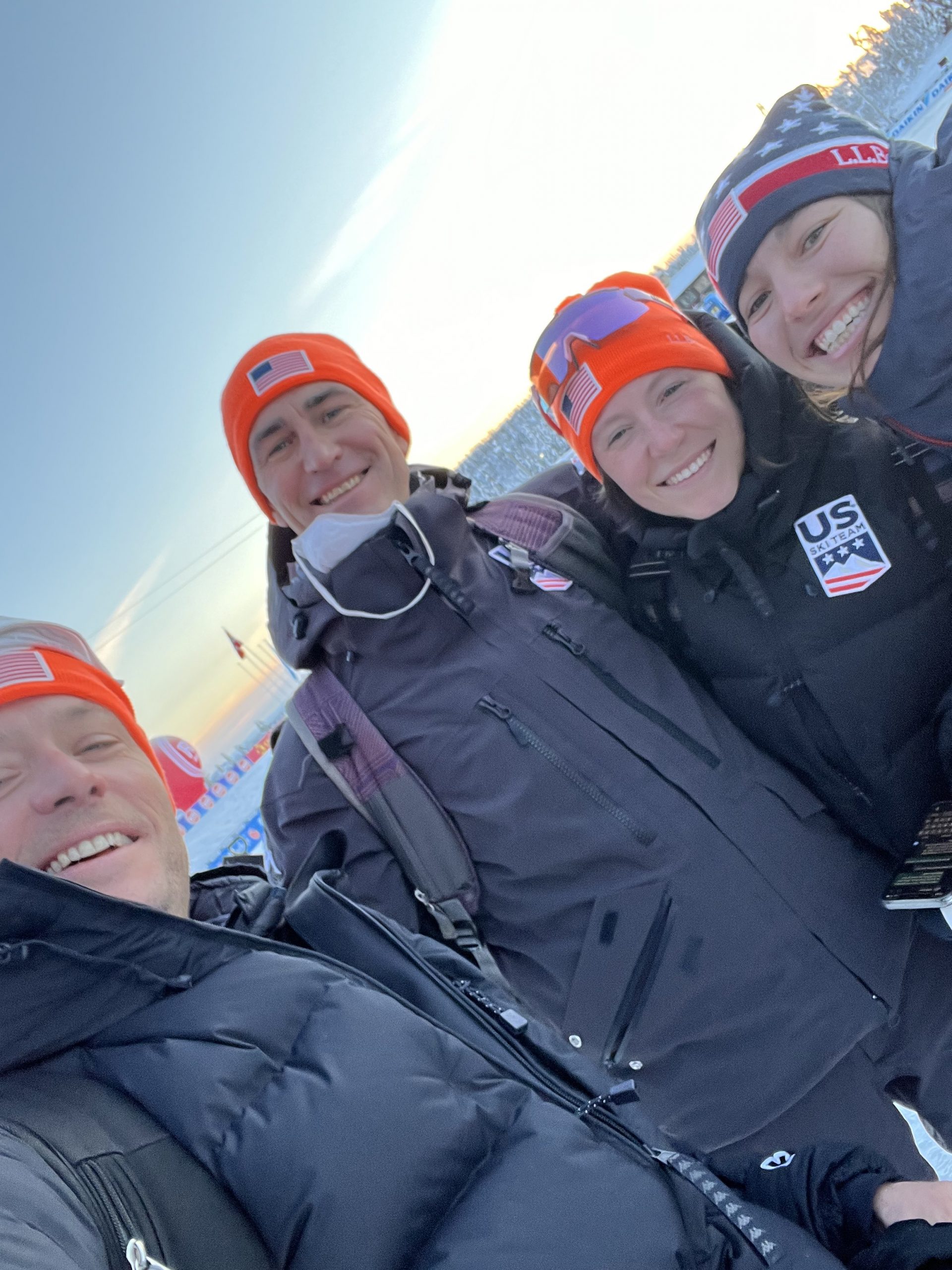
    Annika Martell (R) alongside US Ski Team coaching staff in Beitostolen, Norway, last December. Martell was part of NNF’s inaugural Trail to Gold Fellowship class. (Photo: Courtesy Image/Matt Whitcomb)
    November 25, 2024
  • 2024 West Yellowstone Ski Festival & Clinics

    2024 West Yellowstone Ski Festival & Clinics

    Bridger Ski Foundation out for a first ski in West Yellowstone back in 2015. (Photo: Courtesy Bernie Nelson)

    Hello XC Skiers!

    Join us for the 2024 West Yellowstone Ski Festival and Clinics.

    Fall season is around the corner which means the West Yellowstone Ski Festival and Clinics will be here before you know it. This year’s festival takes place November 26th – November 30th, 2024 with clinics starting on Tuesday November 26th. Check out schedule details here.

    West Yellowstone Ski Festival and Clinics are excited and proud to announce that Todd Eastman had joined Jack Hart as Co-Director of the Camp! Todd has over 30 years of teaching and racing around the world! He most recently was the Madshus Director of Racing and head ski tech at West Hill Bike and Ski Shop in southern VT.

    Jumpstart your ski season. (Photo: WYSEF).

    Jump Start Your Ski Season

    You’ll log more time ‘on snow’ than any other place you’d be during this week.

    Exceptional Coaches

    Come and join our professional coaching staff who will help you get the most out of the 2024-2025 ski season. We’ll provide a solid understanding of technique and give you the tools and drills to gain strength and efficiency, and to propel your skiing to the next level.

    Aerial view of the stadium at the Rendezvous Ski Trails in West Yellowstone. (Photo: WYSEF courtesy photo)

    Rendezvous Trails and Grooming

    Historically speaking, the West Yellowstone Rendezvous trail system has some of the best early-season snow in the country and is groomed by a team of top groomers in the industry. While we can’t control the weather, we’re hoping the snow falls early and often this season. Get an early view of the trails!

    Something for Everyone

    The Grizzly & Wolf Discovery Center is open every day, giving you the rare opportunity to safely view grizzly bears, wolves (bonus: the bears don’t hibernate, so they’re visible year-round) and playful river otters. For a break from the outdoors, catch a Hollywood hit or the breathtaking nature documentary, “Yellowstone,” on the aptly named Yellowstone Giant Screen theater at a whopping six stories tall (bonus: at night a Hollywood featured film is available). Check out other activities to do around West Yellowstone.

    Fun, Inspiring, Welcoming

    The feedback we hear most each year is that the festival and clinics are fun, inspiring and welcoming.  For XC ski enthusiasts, it’s the place to be.

    Register here today for West Yellowstone Ski Clinics.


    See you in November!


    Jack and Todd


    October 28, 2024
  • Where the Winter Won’t End

    Where the Winter Won’t End

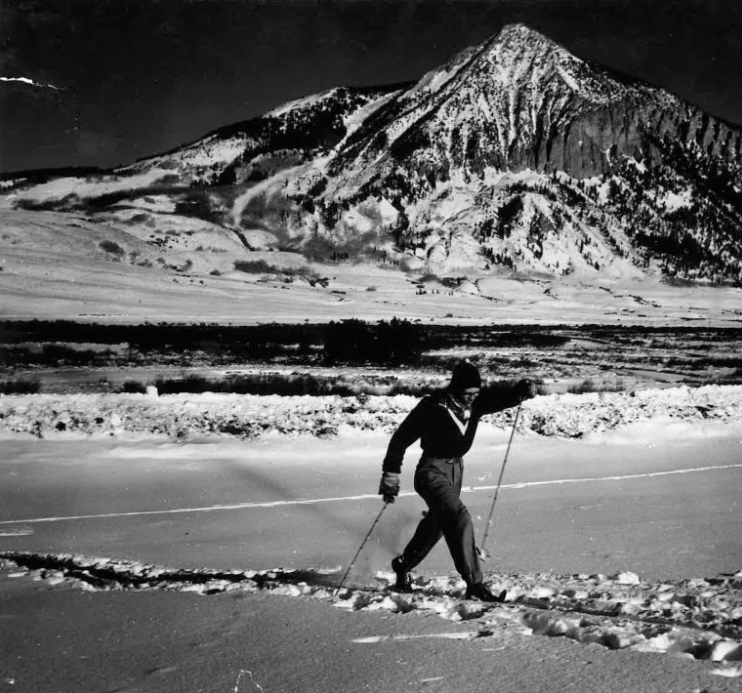
    A skier forges a trail on “the Bench” in Crested Butte, CO. Formerly home of a coal mine, the strip of land now plays host to Crested Butte Nordic’s ski trails. (Photo: Crested Butte Mountain Heritage Museum)

    Parallax is an effect where the objects in the background of an image appear to move more slowly than the objects in the foreground. In animation, it’s traditionally been used to add depth to an otherwise two-dimensional world. With the background moving slowly, the faster movement in the foreground implies that time is moving. In effect, parallax is a way of adding time into one’s understanding of a place.

    I reckon that the essential experience of being in the mountains is based in parallax. The mountains are the only environment where if you only ever experienced them, you would have a complete understanding of where humans are set in the universe. Ancient fissures in the Earth stretch the scales of time beyond you, and when put up right against them, you get a sense that we’re all in a small moment in an infinitesimal smaller place in time. When you attune yourself to parallax, you attune yourself to time not as an instant, but as a fluid, playful thing.

    I’ve been especially experiencing a parallax effect lately while looking at old pictures of the mountain town of Crested Butte, Colorado. Crested Butte is set in the platonic ideal of a parallax setting, wholly occupying the lowest point of a glacial valley 9,000 feet up in the central Rocky Mountains. It’s also neatly framed by Mt. Crested Butte, a 12,168 ft laccolith just East of the valley, which is Seussian in its whimsical, perfect jaggedness. In the foreground of that mountain, all the great tropes of western history have been captured. There’s volumes of old sepia photographs with people, looking out from bonnets and stetsons, all distinctly of a time. In the background though, that perfectly pointed mountain. The creases on its sides are the same as the vivid shadows you see when you walk outside your front door today. Always there, always looming. The sensation at the heart of viewing photographs like this is at once humbling and connective. The first thought is that you’re among the essential history of a place that has always been transitory, where everyone is always just passing through. The other is that between you and the Utes and the miners, there is the essential experience of a moment in time where you learn that lesson looking up at that rocky old mountain.

    All of which has got me thinking about another photograph. My stint in the long chorus of Crested Butte has been as a ski coach and a writer. As such, the last couple of years have allowed me to fully indulge a pet interest in ski history. And in that capacity, there’s a photograph that keeps finding its way to my eyes, both literal and in my mind.

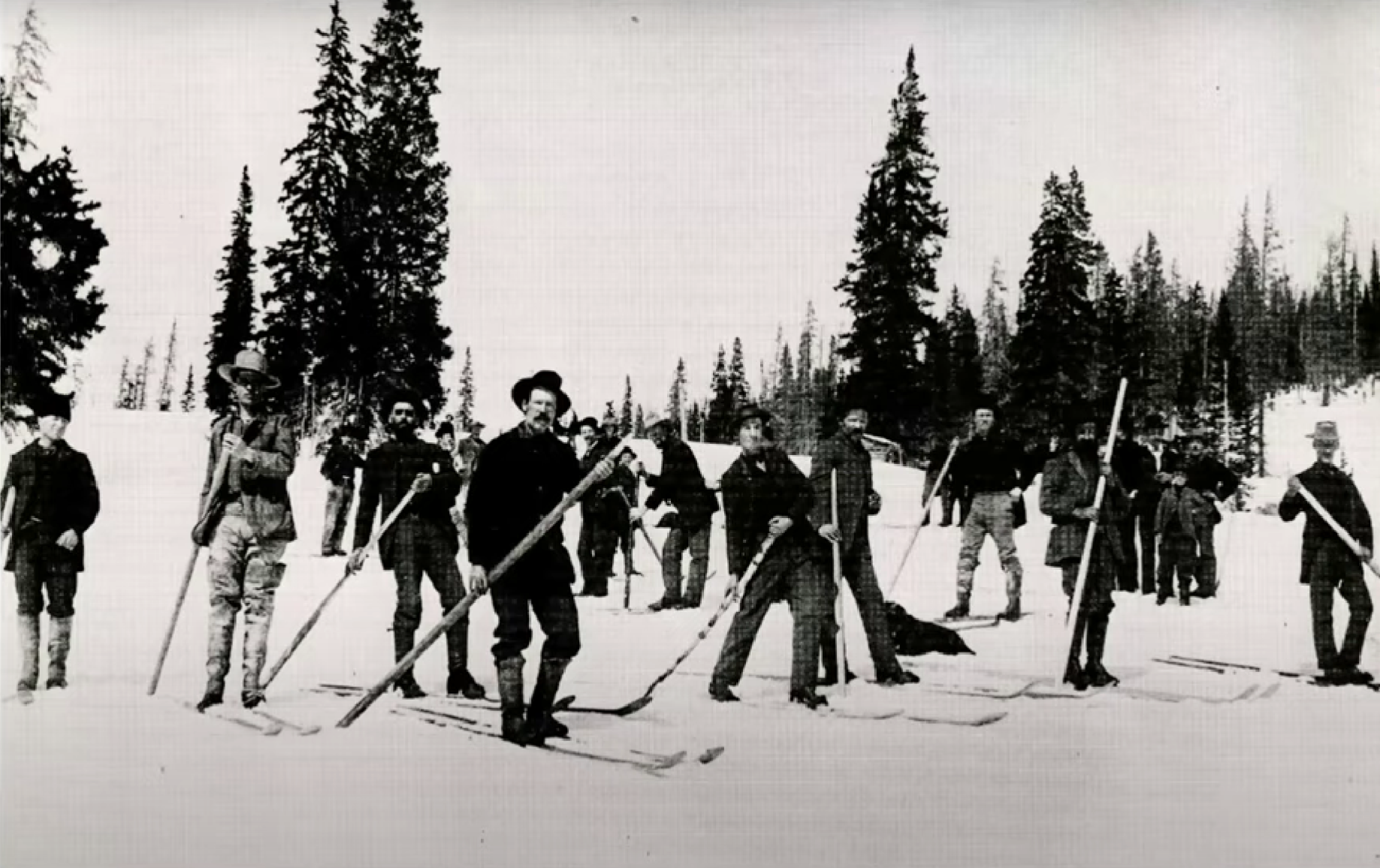
    The Irwin, Colorado snowshoe club in its 1880s boom days, fronted by local mail carrier and folk hero Al Johnson. (Photo: Crested Butte Mountain Heritage Museum)

    Here. There’s a group of men, stetson’s affixed, looking out and postured. Too long skis, and too long wooden poles accompany them, which produces a kind of defiant effect. They share the kind of pose every skier takes on to this day about to head out onto the trail. A nod that skiing is an unnatural way to get around a frozen world, but that we’ve figured out the trick, and it’s made weathering the winter a lot more fun.

    Through some serendipity, I’ve learned a lot about the men in this photo over the past few years. It was taken in the early 1880s and is often denoted as the first ski club on record in United States history, formed at the gold mining boom camp of Irwin, Colorado, five miles West of present-day Crested Butte and sitting at 10,500ft, during its haughty gold rush days. In most sources, there’s a quick addendum to point out that it was actually the “Irwin snowshoe club,: which was the contemporary description for skiing, and that the single wooden pole each man carries was representative of how the sport was practiced then.

    The most in-depth sources also identify the front and center man as Al Johnson. In the history of Crested Butte, Johnson holds a kind of Paul Bunyan status among the ski bums. By which I mean he’s a much-lauded folk character (with his own folk song) intentionally stretched in the proportion of his size and abilities to represent an ideal of what being committed to a life centered around skiing looked like in a semi-imagined past. He took whatever work could get him out on skis, which, in the 19th century, was carrying mail to all the mining camps in the Elk Mountains. He was always up for a race. And he was a devout Telemarker – heel free, mind free – before a term even existed. Arch-coolness. For it, he got a Telemark race now in its fiftieth year named after him (and won frequently by FasterSkier fan Pat O’Neil, shoutout).

    All of which color the black and white photo, but don’t necessarily change your initial impressions. In nearly all settings it’s displayed, this is a photo meant to temper the impression that this is where North American skiing came from. And likewise, alongside images of lycra-clad US Ski Team suits, carbon poles and skinny skis, it points to where skiing went from Irwin. The parallax does its job. The background is all old, black and white, and here we are today, with skiing in vivid color.

    The other impact of parallax though, is to imbue connectedness. And so, I’ve been thinking about ol’ Al Johnson a whole lot lately as the winter melted away in the high country, retreating from the valley floor in Crested Butte up to where it never seems to go away, twelve miles west on Kebler Pass in the isolated pocket of alpine meadows where the Irwin snowshoe club used to ply its trade. Here, in a couple of wetlands and along some alpine lake shorelines there’s still skiing well into June, and along with an eager group of Crested Butte’s best up and comers, skiing towards a common recognition that the old show-shoers and we do today – it’s always a wonder to ski, and by some miracle, a sublime experience to never have to leave it as the winter retreats. When through time and circumstance you find yourself in Irwin, you can’t help but ski. It was true for the miners, and it’s true for me today.

    The bare facts of why are up to immutable geography, one-part outsized precipitation, and one-part thermal inclination. Creste Butte sits at 9,000 feet, gathering an average of 236 inches of snow per year. Go up 1,500 feet though, and the snowfall grows exponentially. The remnants of Irwin collect closer to an average of 600 inches of snow each winter. The evidence for why most residents of Irwin packed up the town and quite literally dragged their buildings down to Crested Butte lies right there. The inordinate amounts of snow get a prolonged life too due to the Gunnison River Valley’s central place in Colorado, making it one of the most prone places in the state to cold air pooling (this process is why Gunnison, elevation 7,000ft, is colder during the dead of winter than Crested Butte, elevation, 9,000 feet) the effect happens to some effect up in the smaller valley that the old Irwin mining camp existed in, elevation 10,500 feet, collecting the supercold air off of the 12,000-13,000ft Ruby Range that towers above the valley.

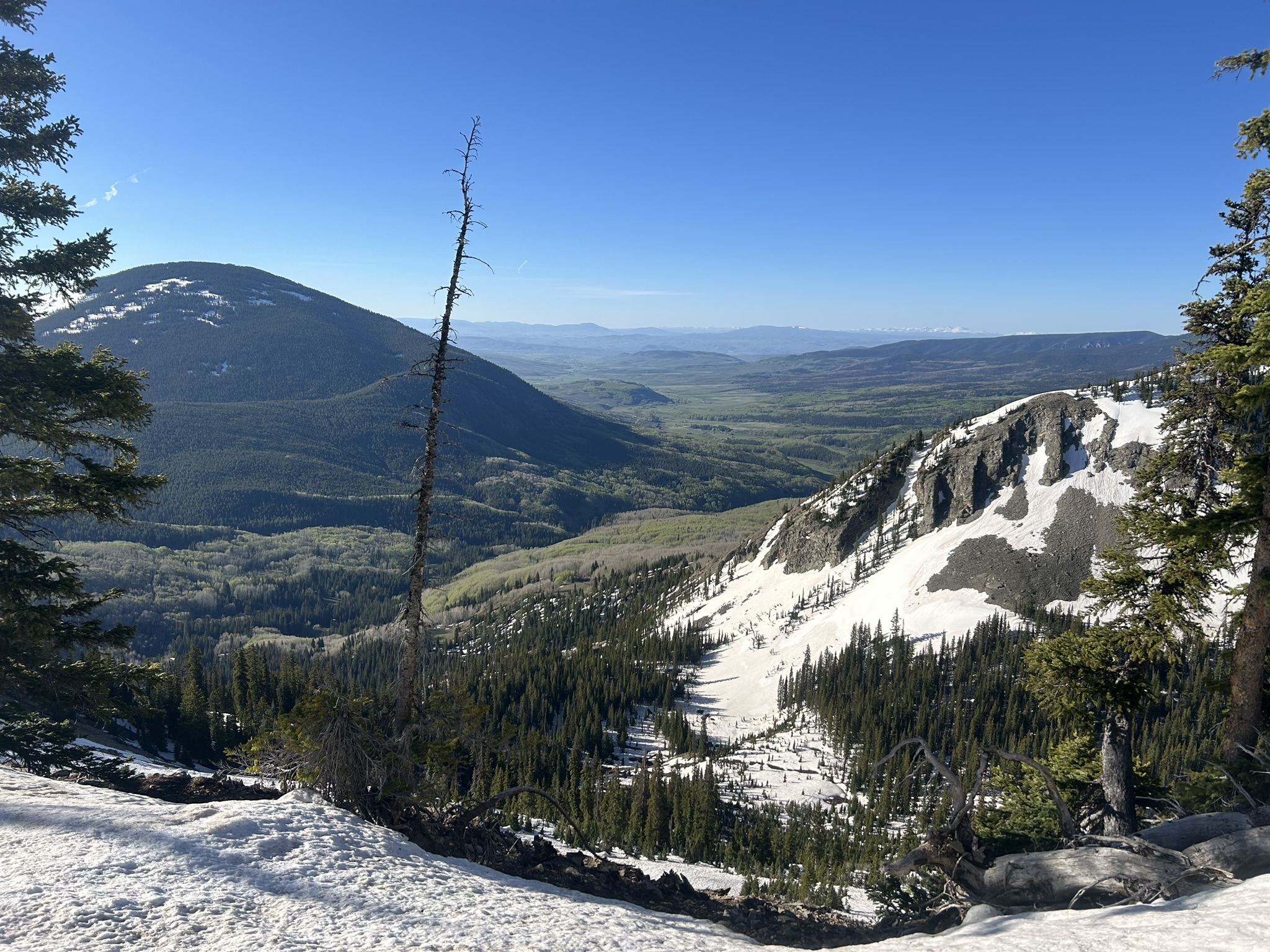
    Looking south over the Gunnison country from an overlook in Irwin, Colorado this month, with the San Juan Mountains in the distance. (Photo: Courtesy Image/Ben THeyerl)

    To understand the results of Irwin’s positioning just-so in the universe though, is best left on cosmic terms. When I first found the relatively flat patches of sun-cupped snow ready not just for metal-edged backcountry set-ups, but for skinny skis, in my first spring in Crested Butte, I felt as if I’d stumbled upon some epiphanic geography. A born Midwesterner, skiing was the province of a specific slice of the year, which only heightened all the appreciation that it brought you. To ski was to turn the evolutionary perception of winter on its head. Suddenly the cold was welcome. Likewise, it connected you in a very specific way to very specific people. There are still folks I’ve known my entire life in my hometown of Eau Claire, Wisconsin, good folks, that I hardly recognize without a buff and a beanie on their head, and there’s a hinted appeal of sociality that comes exclusively with the seasons. The whispers I did get that snow could exist past March were comprehensible. Bend, Oregon and California lied along continental meeting points where the moisture of an ocean was due to meet with the mountains. When I came across Irwin though, it felt as if I was let in on a secret. Just up the road, literally, there was a place where some complex set of factors had conspired to mean that the winter, skiing, and what skiing brought in the way of metaphysical relief never seemed to go away. Since then, every ski in May or June has glowed with a little more sentimentality, and letting others in on the secret has stretched the poignant feeling of joy incurred by sharing a great ski with others well into the year.

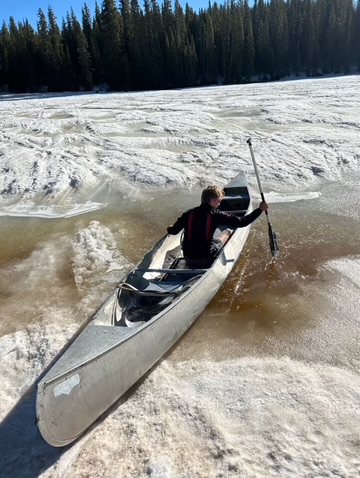
    In short, it’s been a dream. One that I know that’s happened by that quintessential rule of the mountains, by parallax. Up at Irwin, time’s been loosed from the sockets that bolt us together. The winter is there in the summer. At the precipice of its cliffs looking South over the Gunnison country, you can literally see all seasons as once. Green stretches over the horizon, with snow under your feet. For their part, the kids growing up on skis in Crested Butte have started to fully embrace, and appreciate, the singular experience they get out of their backyard. A recent report from one of their skis was that they’d found an abandoned canoe on the shores of one of the isolated alpine lakes accessible easily only in the winter, and decided to try and makeshift a combination workout by taking to a still melting out lake.

    Finn Veit, Crested Butte Nordic Ski Team member, looks to make a recent ski a dual-sport, dual-season adventure with a maiden voyage on Lilly Lake. (Photo: Courtesy Image/Sawyer Ezzell)

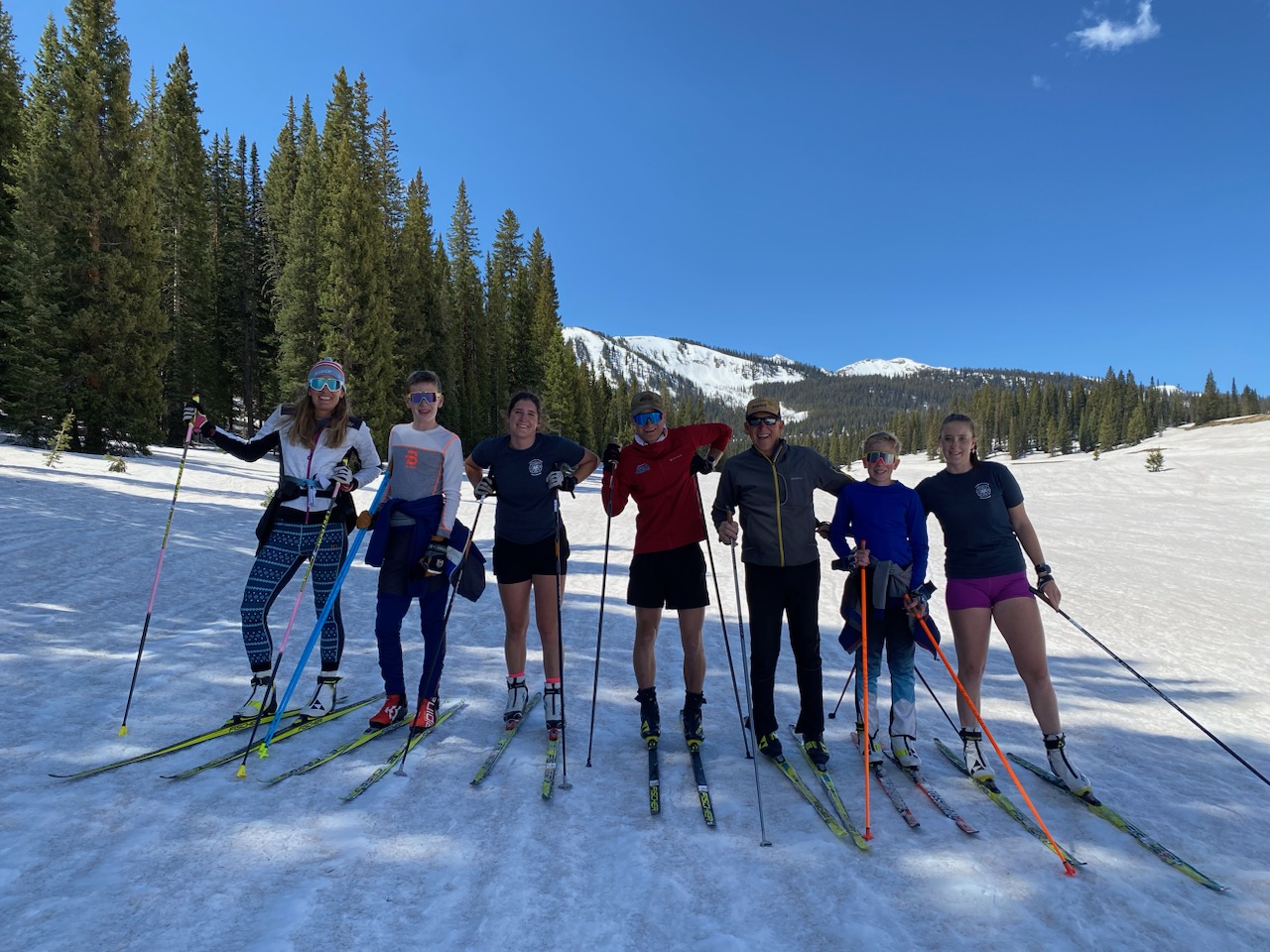
    This spring, the quintessential Irwin summer ski for myself happened over Memorial Day weekend. A cadre of Crested Buttians and I headed up the little road west of town early, before the sun that had started to bring summer to the Rockies bore down in full force. Our ages stretched literally from 8 to (nearly) 80. There was the full Larson family, with Mom and Dad Drew and Noelle accompanied by Benaiah (13), Gabe (11), and Simi (8), our lead middle school Devo Team Coach Murray Banks, and a couple of his Assistants, alumni of Crested Butte Nordic Team, the O’Neil twins, Katie and Piper. Our objective was to split off into two groups. The O’Neil girls and myself set out with Benaiah and Gabe to see if we could make it to one of the stunning overlooks that follow a ridge East-to-West, and from which on a clear day the San Juan Mountains loom large across the whole of the Gunnison country. Murray and Simi, oldest and youngest in the group, meanwhile, were set to make the “fun for ages 8 to 80” moniker a literal thing for skiing on the valley floor. A couple hours of stumbles, breaks through the crust, moments where you would swear the skiing was as good as mid-winter, and a lot of views, and we were satisfied. Not just with the that ski, but with what the ski represented. Up there, where the winter never ends, we could see that the connective tissue it brings between those that practice the sport all winter long don’t have too either. Between that group, there had been a lot of kilometers skiing in a lot of places. For an instance, we skied a few more. And with the mountains there as a backdrop, full parallax in effect, the bounds of time between us, stretching back to all of those that had come to Irwin, and Crested Butte, and found that same joy in skiing, looked ready to enter a timeline more akin to those that govern the mountains. Timeless, sublime, glowing with a towering beauty too.

    A Memorial Day ski for all, featuring Crested Buttians the Larsons, Noelle, Benaiah and Gabe, the O’Neils, Katie and Piper, Murray Banks, and the author. (Photo: Courtesy Image/Drew Larson)
    June 24, 2024
  • The Birkie Dedicates New Mt. Telemark, George Hovland Trail

    The Birkie Dedicates New Mt. Telemark, George Hovland Trail

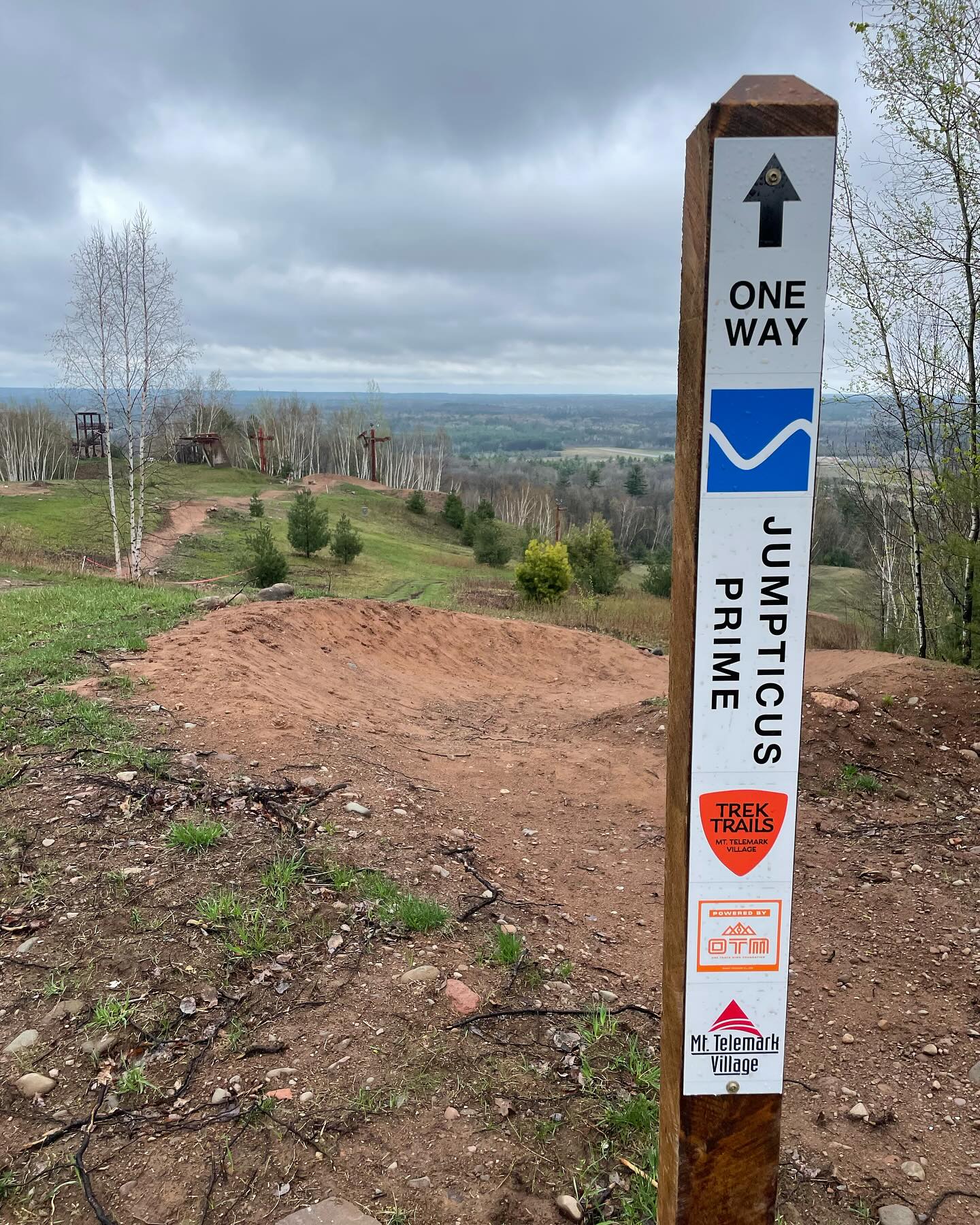
    Atop one of the new Trek trails at Mt. Telemark, with the old lift towers from Telemark-past still visible. (Photo: American Birkebeiner Ski Foundation)

    For the American Birkebeiner Ski Foundation (the Birkie) it’s been a long time coming.

    The dedication ceremony held Saturday for the new projects that encompass the Mt. Telemark Village, the former site of the legendary Telemark Lodge, have been in the works for five years. All together, Mt. Telemark Village is “the biggest thing the American Birkebeiner has ever done.” Its $10.2 million dollar capital campaign, though, doesn’t capture what, for skiing, might just might be priceless. Up in the woods outside of Cable, Wisconsin, the Birkie has been busy figuring out how to commemorate a little glacial knoll that’s played an outsized role in the history of skiing while making it a vital place for more of that history to happen.

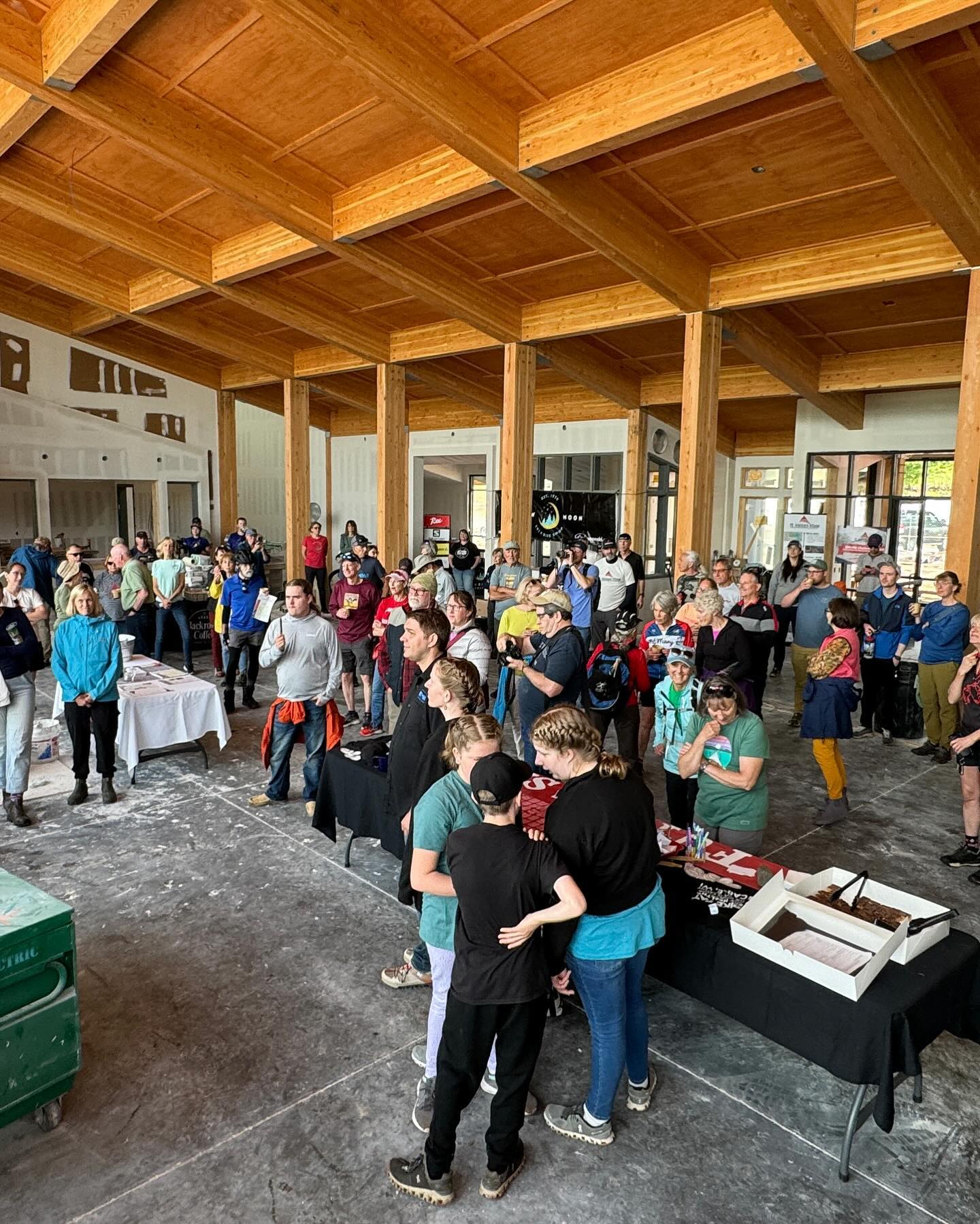
    Inside the new Mt. Telemark Community Center, the Birkie community celebrates the dedication of new ski and bike trails. (Photo: American Birkebeiner Ski Foundation)

    The dedication ceremony on Saturday featured two main draws that illustrate that delicate balance at the heart of Mt. Telemark Village. The first was the official dedication of the paved rollerski loop to George Hovland, a name linked to the deep past of skiing in North America. The second was the opening of a new mountain bike trail system sponsored by Wisconsin-based bicycle manufacturer, Trek, building on another of Telemark’s legacies as a key site in the development of the sport of mountain biking. In addition, the on-going, glass-plated construction of a new base lodge promised the realization of a vision that’s been in the works for the Birkie and Telemark the past five years.

    Telemark and Tony Wise

    Mt. Telemark Village, itself, is a re-birth of a long-lived Midwestern legend. Telemark was set up in 1947 by local entrepreneur Tony Wise. The downhill ski area made all it could of its ~300 ft of vertical descent set upon a glacial erratic. Wise, an ebullient character, seemed to derive inspiration from that terrain, making Telemark a cultural erratic, a place for Governors, Musicians, and Packers (the biggest celebrities on offer in Wisconsin) set in rural northern Wisconsin. He did so unrelentingly, building the giant 200-room Telemark Lodge that was too big for its own good. In the glory days, Telemark was a flame whose influence burned over thousands of miles of Northland. After bankruptcy in the 1980s, the embers of Telemark continued to glow primarily in the American Birkebeiner, Wise’s cross-country ski race from Telemark to Hayward that became the largest in North America.

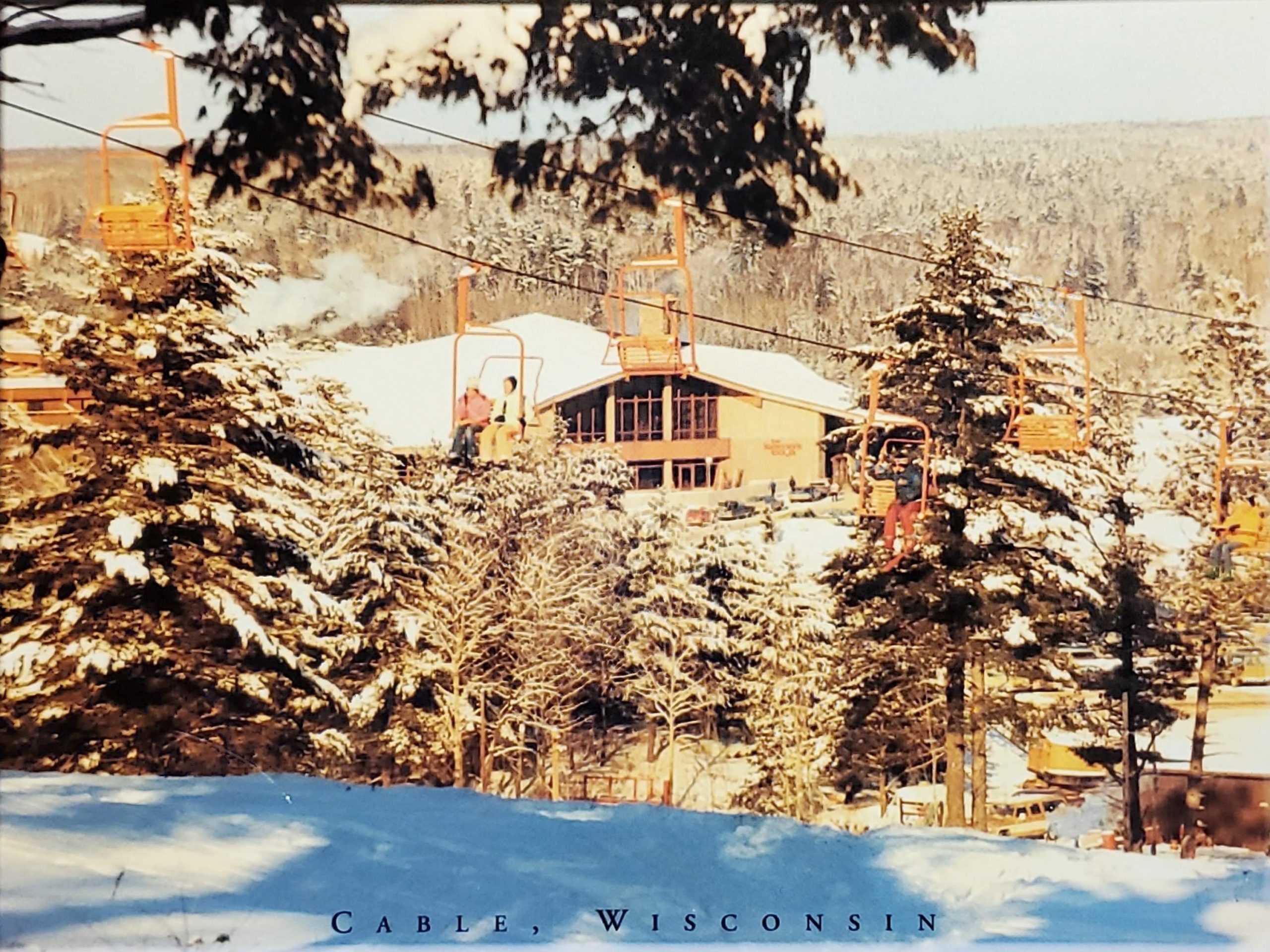
    The Telemark Lodge as pictured from the top of Mt. Telemark in Cable, Wisconsin on a 1970s postcard. (Photo: Telemark Education Foundation).

    The Birkie was Telemark’s first foray into cross-country skiing, but the race’s momentum in the 1970s led to the resort playing an outsized role in the development of modern cross-country skiing in the United States, and beyond. The first World Cup race ever was held on a trail system laid out in 1978 by American skiing pioneers John Caldwell, coach Marty Hall, and Olympic medalist Bill Koch.

    The legacy of Telemark limped along on its own legend for years following Tony Wise’s bankruptcy and surrender of the property in the 1980s. Numerous owners passed through. Central Cross Country Skiing (CXC) briefly made it a home for its Elite Team in the early 2010s, before Telemark closed for good in 2014. The Lodge sat abandoned for years.

    In 2020, the Birkie started to piece together a new vision for the property: Mt. Telemark Village. The Lodge was demolished in 2021, the vision that has played out since is the Birkie’s community-oriented project to honor the whirlwind of history that emanated from the little patch of Wisconsin woods, and make it a site to take a central role, again.

    George Hovland at the American Birkiebeiner in 1982. (Photo: Sawyer County Record Archive)
    George Hovland Trail

    Saturday’s dedication ceremony celebrated the success of the new Birkie venue linked by a number of trails to Telemark.  It also linked the new venue to a giant of Midwestern skiing: George Hovland.

    George Hovland’s name looms large in his hometown of Duluth, Minnesota, where the 1952 Olympian had a hand in founding nearly all present-day fixtures of Zenith City’s ski scene including Spirit Mountain, Snowflake Nordic Center, and the North Shore In-line marathon.

    Hovland’s legacy as a ski pioneer in the wider-Midwest is being celebrated by the Birkie in dedicating its 5 k training loop. A friend of Tony Wise, Hovland competed in every Birkie from 1974 to 2012. In the years prior to his passing in 2021, Hovland was the vital link to a deep, essential past of Midwestern skiing. Hovland took to the sport of skiing as a boy in the 1940s when jumping was nordic’s premier discipline and Chester Bowl in Duluth was still populated by the Scandinavian immigrants who brought the sport to America. He skied his last kilometers after Minnesotan Jessie Diggins and Kikkan Randall combined to earn the first Olympic gold in US skiing history. The George Hovland Trail will play an active role in developing Midwestern ski racers this summer, with CXC hosting its Developmental Camps, and Team Birkie looking to utilize the resource.

    “George was such an amazing man and an influence on our sport,” said Ben Popp, American Birkebeiner Ski Foundation Executive Director. “George loved training and this will forever be a medium to get people training and faster!”

    Trek Trails Lay New Lines Down Mt. Telemark

    Before snow fills the George Hovland Trail next winter, there will be plenty of treads on trails of another type: biking.

    Telemark was the site of some early movement in the sport of mountain biking. As the sport first advanced beyond riding klunkers in the West in the early 1980s, one of the first flat-land homes it found was the Birkie trail at Telemark. The Chequamegon Fat Tire Festival, one of the oldest extant mountain bike races in the country, was dreamed up in 1983 with the proposition, “What if we did a bike race on the American Birkebeiner trail?”

    While the Chequamegon was based out of the nearby Lakewoods Resort for most of its formative years, a trail system was quickly developed on the Telemark property, and eventually linked via the CAMBA trail system. For years, the Telemark portion of the CAMBA system stood out as a kind of staid testament to those early days of mountain biking as a sport. The trails cut through the woods between logging roads. In the days before slack frame geometry, 29 inch wheels, and full suspension made riding downhill more joy than hazard, the singletrack was laid out to get from point A to B more so than to get from feature to feature.

    In more recent years, Mt. Telemark itself started to look ripe for the new-look crop of mountain bike trails that were being built around the Midwest at places like Spirit Mountain Duluth, MN, or Copper Harbor, MI.

    When the Birkie took over the property in 2020, those in the Wisconsin biking community took notice. That included Trek, based in southern Wisconsin, which was willing to provide funding for the development of a trail system that utilized the whole of Mt. Telemark’s terrain and set it up to be a central host for mountain biking in the same way that Telemark had long served for skiing.

    An additional grant from nonprofit group One Track Mind set the Trek Trails at Telemark in motion. Now in development, 16 additional miles of trail will eventually play host to training and racing for cross-country, enduro, and downhill racers alike.

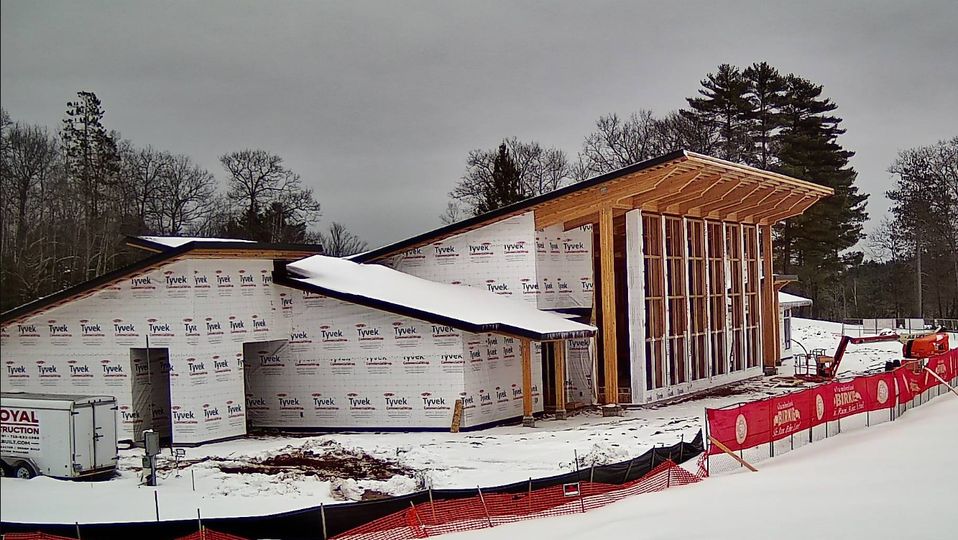
    The new Mt. Telemark Village Base Camp under construction last winter. (Photo: American Birkebeiner Ski Foundation)
    Mt. Telemark Village Gets a Base Camp

    What’s next? A successor for the old Telemark Lodge. While the Birkie gathered its community together on Saturday, the site of a new building under construction where the legendary lodge once stood seemed an apt harbinger.

    The “Base Camp” Community Center still looks erratic against the fields and forests that surround it. But in terms of decadence, Telemark seems to have a matured sense of stature. The three-floor fireplace that once greeted visitors in the lobby of the old Lodge isn’t making a comeback. Emeril Legassi is unlikely to be in this version of Telemark’s kitchen (he was, in fact, in the old one).

    This new community center doesn’t include the giant concrete walls that are still visible on site from the old Lodge, but it seems to impart that this version of Telemark, after a half-decade of dreaming, is starting to be set. 

    June 3, 2024
  • Our Greenland Moment? Adaptations and Impacts of Virtual Racing: Part III

    Our Greenland Moment? Adaptations and Impacts of Virtual Racing: Part III

    February is here, and Nordic skiers in the Upper Midwest are at a teetering point. Many of us are remaining cautiously optimistic that all we need is “one good snow” to salvage our ski season. The Canadian Birkie, American Vasa, Finlandia, and Vasaloppet USA have already cancelled their races. Many skiers are starting to wonder how races like the Birkie will look this year. What a stark contrast from last year’s record setting snowfall throughout much of the Upper Midwest and this year’s record set in Alaska! The records we’ve set this year are not ones Nordic skiers are excited about. Globally, 2023 was the warmest year in recorded history and we’re enduring extreme conditions locally. December saw lots of rain instead of snow in central Minnesota with high temperatures breaking 50° F. High school Nordic races were canceled every week throughout Minnesota as students roller skied and ran to maintain fitness. In January, the Seeley Hills Classic had to be moved to the Birkie trailhead to use manufactured snow under reduced distance. The Loppet Foundation was unable to generate enough man-made snow to sell ski passes and was forced to make an urgent call for donations. The “First Chance Race” at Mora, MN turned into 10 laps on a 1km loop as warm temperatures limited the Vasaloppet USA’s snow making capability.

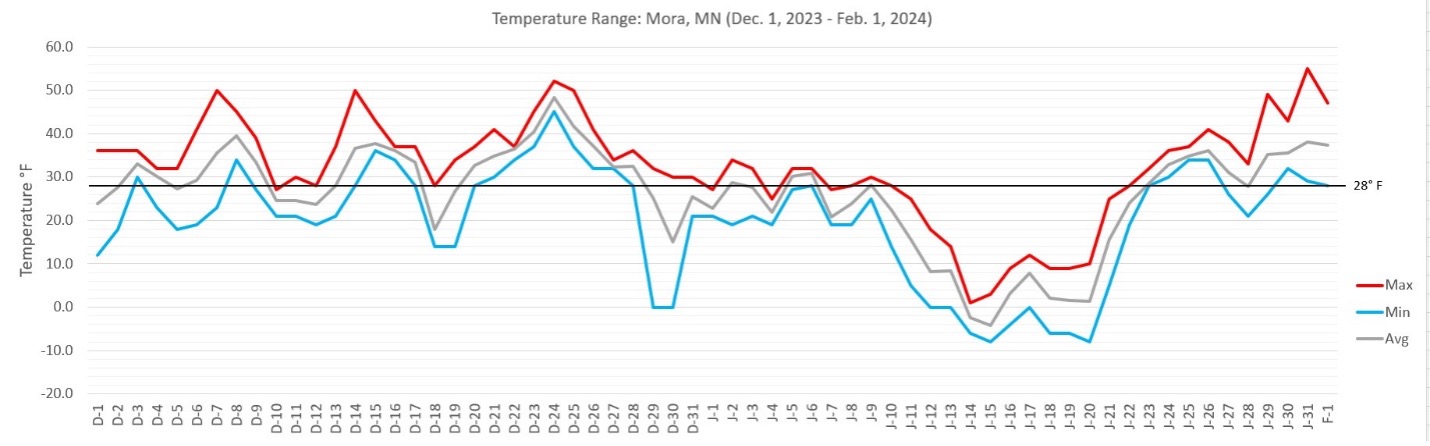
    Figure 1. Temperature Range for Dec. 1, 2023 – Feb. 1, 2024 at Mora, MN – Home of Vasaloppet USA

    Climate change is wreaking havoc on the ski season. By mid-January, social media discussions about the 2024 Birkie started to ask whether or not it might be wise to have a virtual option, as we did in 2021. As crazy as that may sound, the virtual Nordic ski race is a growing fixture of our sport. While many venues such as the Vasaloppet USA Nordic Center, Theodore Wirth Park, and the American Birkebeiner Ski Foundation (ABSF) have worked as hard as possible to make snow for their major races, climate change data illustrate how this is becoming a greater challenge. For example, at least 14 days in December had low temperatures that were too warm for making snow in Mora, MN (assuming ~28° F is required) and the few cold snaps that did come were followed by days with highs that hit 50° F. Mid-January saw consistently cold temperatures that allowed snow making to proceed for multiple days on end, but a record setting warm spell at the end of the month cancelled out much of those efforts (Figure 1). The Vasaloppet USA Nordic Center in Mora, MN is not the only place in the Upper Midwest struggling with how to maintain our Nordic ski traditions in the face of climate change.

    Even after the recent record setting 2022-2023 winter of central Minnesota, virtual ski racing and events are now fixtures on the Nordic landscape. For example, the Lander Nordic Ski Association in Wyoming offers a 9-week Nordic Virtual Challenge for the current winter. USA Nordic has been offering Virtual Nationals since 2018 for U14 and younger athletes. The Noquemanon in Michigan’s UP offered a virtual option for the 2024 race. And Mecca Trails in Mercer, WI offered both in-person and virtual options for their 2023 Winterfest and only a virtual option in 2024 after they had to cancel the in-person event. These examples highlight different kinds of virtual options, ranging from single-day competitions, to multiweek events, to better-than-nothing alternatives when snow doesn’t come. While it may seem like virtual races are a second-best that pale in comparison to in-person races with all the atmosphere and excitement we’ve come to love, they may become a common alternative to race cancellations as we adapt to the effects of climate change.

    Figure 2. Virtual Activities based on People’s Attitudes about the Impacts of Virtual Racing
    What do people think?

    In 2021, we surveyed 1300 cross-country skiers throughout the United States and abroad and shared the results of how skiers defined their culture and community (Article 1 link) and whether or not skiers actually liked virtual racing (Article 2 link). In this article we tackle the question of how virtual racing impacts our shared culture and community in light of climate change. At least 1200 respondents to our survey provided their opinions on whether or not virtual racing enhanced their engagement with cross-country culture and community. Of these respondents, about 40% said it did enhance engagement, about 30% said it did not, and the remainder were unsure. Interestingly, the ways in which skiers participate in other online or virtual activities was almost identical between the groups. They use online virtual platforms to face time with friends and family, post to social media, and do virtual races and maintain fitness on apps like Zwift, Rouvy and Peloton (Figure 2). There is a very strong similarity in how everyone engages with social media and virtual activities; however, there seems to be a real split in what these activities mean to each respondent group. This may be structured by a larger sense of how people view “online communities” or the ability for us to use social media to actively participate in culture. Unexpectedly, the results are counter-intuitive in that more of the oldest generation (70-79) feels that virtual racing enhances culture and community while the youngest generation (18-29) feels the opposite (Figure 3). Who would’ve thunk it?

    Figure 3. Age Distribution for Attitudes about Virtual Racing

    For the 30% of respondents that do not feel like virtual events enhance engagement with
    Nordic skiing culture and community, almost half of them objected to the lack of interpersonal engagement with other racers. These respondents felt that culture and community grow through the authentic shared experience of an in-person race, not from solo workouts (i.e., solo virtual race). These respondents also felt the excitement and atmosphere of racing on the actual course is an important element to building shared culture and community. On the other hand, the 40% who felt virtual options did build culture and community, emphasized that sharing results with others online and in person was meaningful. For these folks, the virtual event is about a lot more than doing a race on a single day. They recognized how engaging in the organization, planning, and volunteering needed to put on events actually grows Nordic ski community. Many of these folks valued the fact that virtual events provide a basic opportunity to engage in ski culture even if removed from the traditional venues. When ski clubs organized virtual events, and friends and family had an opportunity to ski together, many virtual racers felt very engaged in our culture and community. Finally, 7% of the respondents noted all of the positive comments they received from others about their race bibs and signage posted at local venues that hosted virtual events. This increased visibility serves to spread the culture and community of the home organization into far flung communities hosting virtual satellite events.
    Skiscape

    With each of the major reasons why virtual events don’t enhance community and culture, there is an alternative perspective that sees how they do – with one exception. There was no counter point to the objection that virtual events do not use “the real course” and lack the “atmosphere” of the in-person, live event. People develop communities by engaging in specific outdoor activities with defined rules, norms, and etiquette. When these shared activities occur in the same space, cultural landscapes are constructed. This results when shared meanings are associated with specific physical and natural elements that convert a neutral “space” into a meaningful “place.” For example, 51 weeks out of the year, downtown Hayward, WI or Mora, MN are collections of nice shops, restaurants, and businesses to visit. But, when the Birkebeiner and Vasaloppet races occur, these downtown spaces become cultural landscapes where the cross-country community practices our culture. More than just a downtown celebration, our cultural landscapes are unique because they also include the experience of the race course.

    Figure 4.  American Birkebeiner 2018 Skiscape Video at Heckler’s Hill (https://trailgenius.com/trail-genius-map/american-birkebeiner-2018).

    An important element of building community is the camaraderie developed among a group that participates in a physically demanding activity under challenging environmental conditions. Following the event, skiers talk about the race and create stories of what occurred based on their personal lived experience of the same day at the same place. One outcome is that sections of race courses or trails take on names and develop reputations with specific attributes (e.g., Steep Beast, The Wall, Heckler’s Hill, Bowling Alley, Roger’s Ridge). For marathon ski races, the unique landscape and environmental conditions of the day play crucial roles in the physical experience and shared meaning. The fact that the physical activity and shared experience must occur on a substrate of snow that has been specifically groomed, and sometimes produced, for the very purpose of holding the race, results in a special kind of cultural landscape that we have dubbed a “skiscape.” The skiscape is a unique type of cultural landscape that results from the ephemeral combination of natural environment, season of the year, climate and weather patterns, human behavior, and cultural meaning. A fantastic example of capturing a skiscape on video was done by the ABSF for the 2018 American Birkebeiner that can be viewed and experienced virtually online (Figure 4). The unique atmosphere generated at a skiscape cannot be reproduced by a virtual event. When climate change negatively impacts a skiscape, members of the associated community will need to adapt. One way that we have adapted is through virtual races.

    On-Ramps and Impacts

    In 2021, many race organizations offered virtual racing alternatives for their major events in response to the social distancing requirements of the pandemic. The winter of 2023-2024 is the first time we are faced with using virtual racing as a direct response to climate change. When dealing with a major health crisis, many in the cross-country ski community embraced virtual options as a way to participate and stay connected to our sport. Facing the current climate crisis, will we make a similar choice?

    Based on data provided by the ABSF for the pandemic-stricken 2021 race season, 50% of the skiers racing the Birkie, Korte, and Prince Haakon chose to do a virtual option. This was clearly affected by the pandemic restrictions. What is really important to consider, and may be applicable to a non-pandemic year, is that 7% (490) of the total number of racers for all three ABSF events (7,097 total registrants) used the virtual option as an ‘on-ramp’ to try a new race. Of the 2,419 total virtual Birkie skiers, 9% (214) were first-timers; 20% (189) of the virtual Kortelopet skiers were first-timers; and, 87 (57%) of the 152 virtual skiers of the Prince Haakon were first-timers. A random sample of first-time Birkie skiers who chose the virtual option indicates about 35% used the opportunity to increase their distance from doing the 29 km Korte in 2020 to the longer Birkie in 2021. The remainder of virtual first-time Birkie skiers had not completed an ABSF race in 2020. This is significant because it illustrates how virtual events can increase participation of new skiers to the sport and provide an opportunity for current skiers to try longer distances.

    Now we are in 2024 and facing a rapidly changing climate. Ski race organizers are grappling with environmental responsibility at multiple scales. The International Ski and Snowboard Federation (FIS), that governs professional World Tour cross-country ski racing, signed the Sports for Climate Action Framework to generate broader climate awareness and global action through winter sports with a plan to achieve net-zero emissions by 2040 (International Ski and Snowboard Federation 2021). The nonprofit U.S. organization Protect Our Winters (POW) motivates snow sport enthusiasts to lobby state and federal governments to enact climate- positive legislation. POW recognizes that meaningful cultural change within the U.S. is required to make the long-term structural changes necessary to limit global warming (Protect Our Winters 2022). And this is a concern in the Upper Midwest as well. After securing corporate sponsorship from Enbridge Energy that operates oil and gas pipelines from Canada to the U.S., the ABSF abruptly ended the partnership due to environmental objections by its members and the larger cross-country ski community (Star Tribune 2021).

    Greenland Moment?

    Snow-making has been pushed to its limit in the Upper Midwest. After two weeks of warm temperatures that prevented artificial snow making and no natural precipitation, the Vasaloppet USA was forced to cancel its hallmark race. The Loppet Foundation is working tirelessly to make and preserve enough snow at Theodore Wirth Park to host an FIS World Cup race in downtown Minneapolis. The ABSF is producing as much snow as they possibly can while rapidly approaching the deadline for making a final decision on their race formats. All of this effort costs money, consumes water, and has an environmental impact. Meanwhile, discussions on social media have begun to debate the pros and cons of using virtual options as an adaptive strategy to warm winters. Those in favor of using a virtual option for races during the current low/no snow winter question the expense and logic of leaving regions with lots of snow to travel long distances only to ski in poor conditions. The carbon footprint of this kind of travel also comes into question. Those opposing virtual options point out the huge economic impact that could be suffered by local host communities if the racers stayed home. The shared community, camaraderie and festival that occurs around the in-person race is also absent with a virtual format. Many skiers also feel that it’s important to show up and support the organization that is hosting the event because of all the hard work and planning it requires.

    In our first article, we discussed the image of Vikings in our modern-day conception of cross- country ski culture. The reason why Viking settlements in Greenland disappeared during the Medieval period is relevant to how we think about adapting and preserving our Nordic ski culture today. While the phenomenon was complex, two key factors were climate change and cultural traditions. In short, the warmer period that allowed the Vikings to settle Greenland turned cold as the Earth entered the Little Ice Age. This significantly impacted their ability to maintain farms modeled on a European tradition. At the same time, Viking settlers maintained long standing cultural traditions that followed economic trends established in Iceland and greater Scandinavia. While native Thule and Inuit peoples adapted to the colder climate and thrived in Greenland, the Viking descendants were locked into a way of life that eventually forced them to leave or die. Are cross-country skiers experiencing a “Greenland moment”? In the fourth and final article in this series, we will address what race organizers can do to grow culture and community in the midst of increasingly unpredictable winter ski seasons. We will look at how far people are willing to go for a race, alternative models for hallmark races, and whether we can maintain our friluftsliv lifestyle.

    February 27, 2024
  • The American Birkebeiner at 50

    The American Birkebeiner at 50


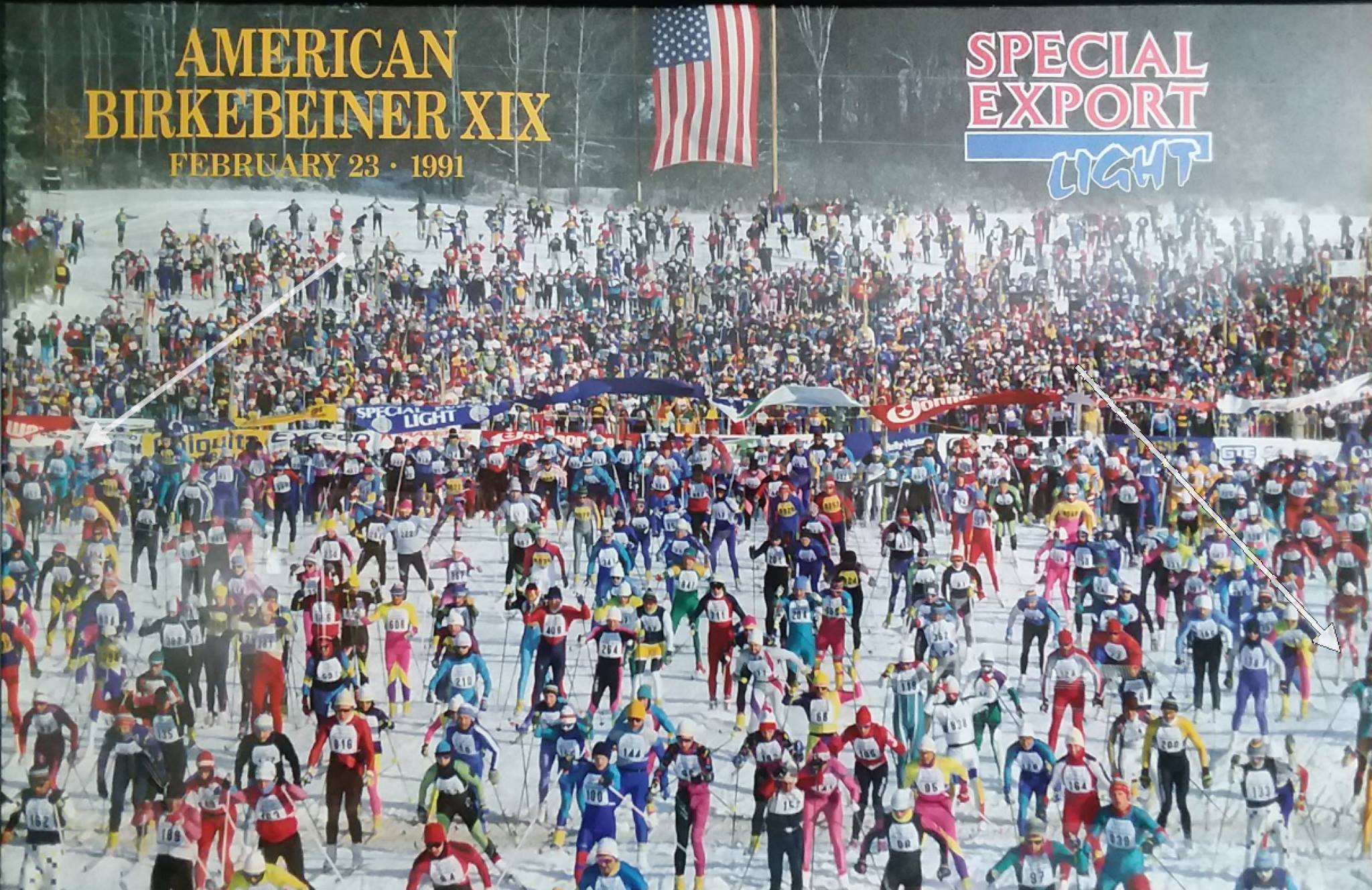
    The official American Birkebeiner poster from 1991, when the race started in “Rosie’s Field,” located near the present-Fish Hatchery trailhead outside of Hayward, Wisconsin. (Photo: American Birkebeiner Ski Foundation)

    “You’re skiing along, and you look up at the green of the pines and look down and see golden tamarack needles peeking out of the Wisconsin snow, and you find yourself gliding along thinking, ‘my gosh, how lucky can one guy get…and Go Packers too!” – Grandpa Theyerl, Wisconsinite, Birchlegger.

    The American Birkebeiner turns 50 years old this weekend. And although it didn’t ask for it, I’m doing some reflection on its behalf.

    At 26 years old, I’ve only been around for half of the history of the “Birkie.” I was born and raised in Wisconsin. Never knew it without the Birkie. I was also born into a family whose name has appeared in the Birch Scroll for 45 of the Birkie’s 50 years. Somewhere out there amongst those forested knolls, the Birkie became intwined in my family tree. The quintessential American ski race, and my quintessential family experience.

    And why not? The yearly ritual spending a day skiing 50 kilometers from Cable to Hayward has thrown muskie-sized ripples into our lives every other day of the year. Slowly, year-over-year, it’s plotted the course of my family’s collective life over generations. And though the magnitude may vary, the experience is typical. The Birkie is all about the ties that bind: a physical exercise with ontological overtones.

    There are two kinds of dreams: aspirational and retrospective—the Birkie has been both. The aspirational dream is when you look into the future and decide what you want to see there. That was Birkie dream of Tony Wise, the ebullient Northwoods businessman who planned to give his hometown an economic engine, and a way to spin a mythology out of snow, pines, and skinny skis.

    The other type of the dream is the one you find in retrospect; the momentary circumstances and connections that point towards something that feels like home. That’s been my Birkie dream. I’ve had a lot of great skis in my life, but the best great skis have all been on the Birkie trail. I’ve had a lot of good fortune in my life—making a living in this sport, growing up among the Northwoods of Wisconsin, my parents meeting and starting a family—but so much of that luck began with my Grandpa signing up for the American Birkebeiner 45 years ago.

    Tony Wise, the “brains, brawn, inspiration, energy source, and grand imagination” behind Telemark Lodge, and the Founder of the American Birkebeiner. (Photo: Telemark Educational Foundation).
    Tony Wise, Telemark, and the Birkie Idea

    The Wisconsin Northwoods are a vast region. Endless pines, countless lakes, and the frigid omnipresence of Lake Superior. They beckon every human soul to dream outstretched dreams. The lucky few that are comfortable dancing in their low, endless expanses earn a typically understated moniker, a character.

    Tony Wise was a character. “The brains, brawn, inspiration, energy source, and grand imagination behind [Telemark], a bulky excitable fellow who talks with the chattering speed of a machine gun and apparently thinks the same way,” as a profile on Wise in Ski Magazine put it in 1977.

    Wise built his Telemark Resort while living in the same Hayward tar-paper shack in which he’d lived his entire life. His 1995 obituary in the Star Trib (The Minneapolis Star Tribune) concluded that Wise “built Telemark from a dream, and it did what he said it would do. It brought life and vibrancy and entertainment stars and international athletes and development to what had been a depressed area of Wisconsin.” At the same time, the lede on the same article also declared “Wise’s bank account showed $0.00 when he died Thursday.” Tony Wise, in life, emptied the tank.

    He was a born during the lean years after the Wisconsin timber boom went bust. Went off to war as young man, a tank commander during World War II. During the waning days of the War, he was introduced to Alpine skiing in the Bavarian Alps, and decided he’d bring it all back home.

    Wise founded Telemark Ski Resort in Cable, Wisconsin on a 300-foot vertical run with a nothing more than a surplus Jeep engine. The resort rounded out the fishing-summer-hunting tourism economy underfoot in the Northwoods after the War, providing year-round tourism dollars and jobs to an entire community.
    The Telemark Lodge as pictured from the top of Mt. Telemark in Cable, Wisconsin on a 1970s postcard. (Photo: Telemark Education Foundation).

    Things hummed along for some thirty years, before Wise could see the writing on the wall. He had just built his Telemark Lodge in 1973, but could also see the limitations of what he was working with in Wisconsin for Downhill skiing. Airfare to the American West—where old mining towns had took on second lives as ski resorts by simply putting up a lift on the nearest mountain with a 3,000 foot run—was beginning to become feasible for the middle-class. Wise started to look to other options.

    The dense thickets of the Northwoods mask an endlessly undulating set of kettles and moraines, left from the last retreat of the Wisconsin glaciation 10,000 years ago. A cross-country ski race would help bring people in on the secret; in 1973, Wise stitched together a path of snowmobile trails, old logging cuts, and hunting footpaths from the Lumberjack Bowl in Hayward to the base area of the Telemark Lodge in Hayward: 55 kilometers. For a name, he leaned into the Norwegian heritage present in the area—and his own myth making at “Telemark”—taking the legendary story of the Birkebeiners from the Norwegians, and dubbing his event the American Birkebeiner.

    The first running of the American Birkebeiner took place on February 24, 1973. 57 racers competing across two events. Thirty-four men and one woman, Jacque Lindskoog, completed the entire 50 kilometer course. Eric Ersson, a Swedish skier Wise had enlisted to add to the Scandinavian heritage aspect (he was doing this a lot in the early years), beat out the legendary Swedish-American ski coach Sven Wiik. Another nineteen competitors completed a half-distance course that was won by Hayward local Carol Duffy. Starting in the mid-way outpost of Seeley, this proto-event would become the Korteloppet, the Birkie’s half-distance cousin.

    The Sawyer County Record’s report on the very first American Birkebeiner in 1973. (Photo: Sawyer County Record Archive).

    Humble beginnings, but the architecture for what the Birkie is today was all there in its inaugural year. The point-to-point course through the county forests of both Sawyer County and Bayfield County. The name. The perfectly perched late February date making the Birkie the last true gasp of winter before hopes of spring could start to bubble forth.

    The People’s Race

    The most important aspect of Wise’s first Birkie was that it cut a wide swatch through cross-country skiing. In 1973, it didn’t take many people to represent the whole of the American ski community. In truth, the sport was probably in its lowest moment of the last century in the United States. The grand wooden ski jumps (the more popular form of nordic skiing at the time) which had been the preferred form of Midwestern after-church Sunday entertainment before the Minnesota Vikings started playing football were starting to rot and be torn down. From Chester Bowl in Duluth to Theodore Wirth Park in Minneapolis. Numbers in the Minnesota High School Ski League, long the greatest holder of young ski talent in the country, were diminishing. American skiing was three years away from its competitive high-water mark for the next 50 years with Bill Koch’s 1976 Olympic medal at the Innsbruck games. But Koch came from a separate, more-focused, tradition of cross-country skiing that had taken shape in the prep schools and liberal art colleges of New England. The more populist tradition of nordic skiing in America—having started out among the Scandinavian diaspora with miners, farmers, and lumberjacks—was already fading out.
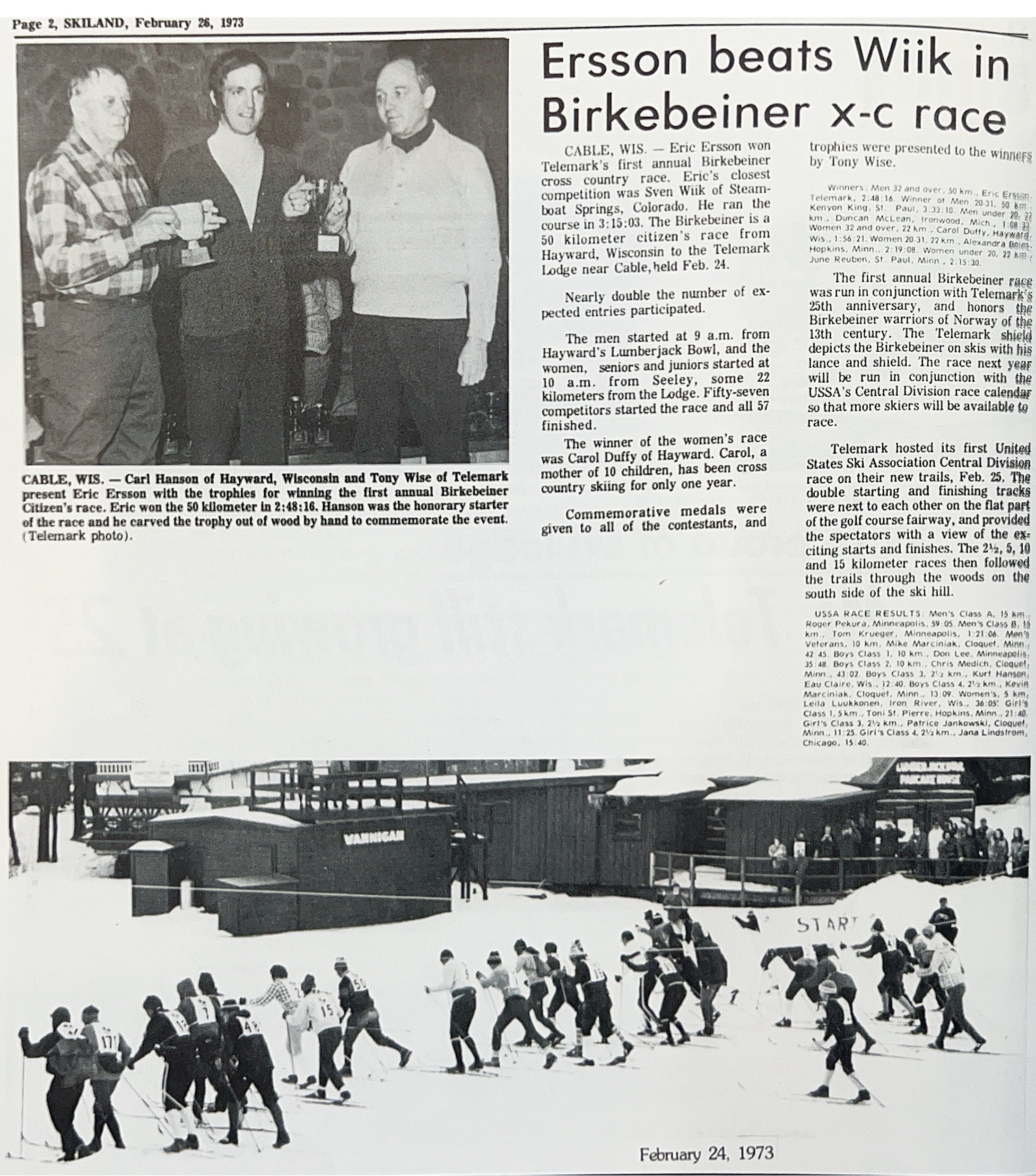
    American Birkebeiner VIII in 1981, when the race began by cresting the top of Mt. Telemark. (Photo: American Birkebeiner Ski Foundation)

    The group that started that first Birkie—the now-famous red-bib-wearing “Founders”—turned around the popular participation in cross-country skiing. The ski community which exists today is the ski community they kindled back in the Lumberjack Bowl. The Birkie revolution was a quiet one, and one inspired by even more humble actors. Most were local Wisconsinites and Minnesotans who had found their way to cross-country skiing by accident or by heritage.

    There was Ernie St. Germaine, a local Wisconsin schoolteacher and tribal chief for the Lac du Flambeau band of the Ojibwe, that as of writing is the only person to have completed every edition of the American Birkebeiner. St. Germaine ought to—and I believe would prefer to—always have his childhood Dave Langraff accompany him in his telling of how they did the first event on a whim, and then saw it change their lives for good. For his part, Dave Langraff was as radiant a skier as you’d ever find out on a trail. He was another teacher, operating out of the “Jump Rope Capital of the World,” of Bloomer, Wisconsin. My few memories of him are all exuded joy, and all on skis. There’s an unadulterated patch of Birkie fever found on the Hickory Ridge trails Langraff helped cut outside Bloomer, where there’s “more lakes than kilometers to ski!” Every sharp jutting corner and fast-running downhill re-asserts a love that resonates down the years.

    Other founders include John Kotar, who hung up the skis a decade ago and since has helped shepherd the Birkie into a new era of growth as a member of its Board of Directors. There was also Karl Andresen, a Geography Professor in my hometown of Eau Claire, Wisconsin who founded the Eau Claire Ski Striders. In my youth, he played a kind of Midwestern Falstaff for all that was good about the sport of nordic skiing, regaling us with tales of this Birkie race and the little features of it that had taken on their own mythos: the Power Lines, the Fire Tower, “Double-OO.”

    These “Founders” glowed with a quiet, unassuming fire through the Midwestern ski community. Close in their tracks would be others who got in on the action as quick as they could. Through Minnesota Youth Ski League clubs and high school teams they’d coach and give back to sport which had sent them out into the great Wisconsin woods. Most of us who learned to ski in the Midwest in the last 50 years have someone who did the Birkie to thank for setting us down on tracks. Through a child’s eye, the accolade of “Birkie” skier was everything. In my mind’s eye now, I recognize the little gleam in our local ski coaches eyes when they’d talk about the race that had sparked their own love for the sport. With the Birkie spirit coursing through the community, we were all operating from a level plane.
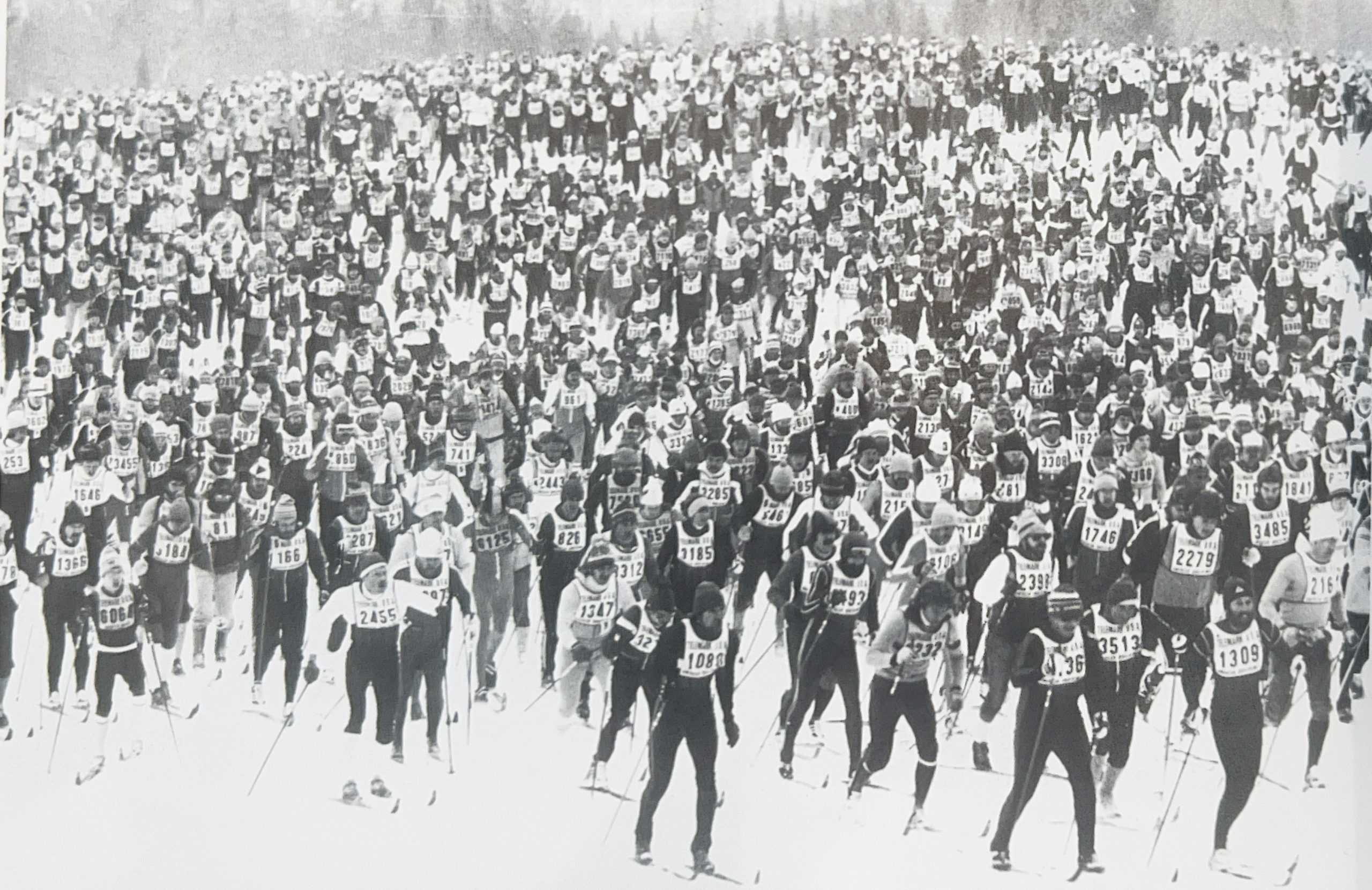
    The author’s father celebrates after a warm Birkie finish sometime in the late 1980s. (Photo: Courtesy Image/Ted Theyerl)
    A Family Tale

    The Birkie has remained true to its intention: adventure, first and foremost. Growing from 57 racers, the legions number in the hundreds of thousands on participants who have discovered qualities within themselves by venturing out there on skis. Things caught on quick. By the fourth Birkie in 1977—the one my Grandfather first hopped in—the Birkie field had grown from 57 to 2,000 racers.

    Twenty years in, the American Birkebeiner Ski Foundation (ABSF), noticed that there was a unique staying power to the Birkie. Through the massive changes in a human life that come about over decades, A growing group was had been back year-after-year. The observation resulted in the establishment of the Birchleggers club. Membership requirement: twenty Birkie’s completed. Reward: a famous Purple bib (then gold, after 30 Birkies, then red, after 35).

    The Birchleggers now number in the hundreds. Within their ranks, there are just as many Birkie stories, and many of them key in on one particular metaphysical quality. Though the Birkie race course has remained a relative constant for them, the lived experiences they bring to the race each year, and the experiences lived during the race each year, continue to offer something close to constant discovery.
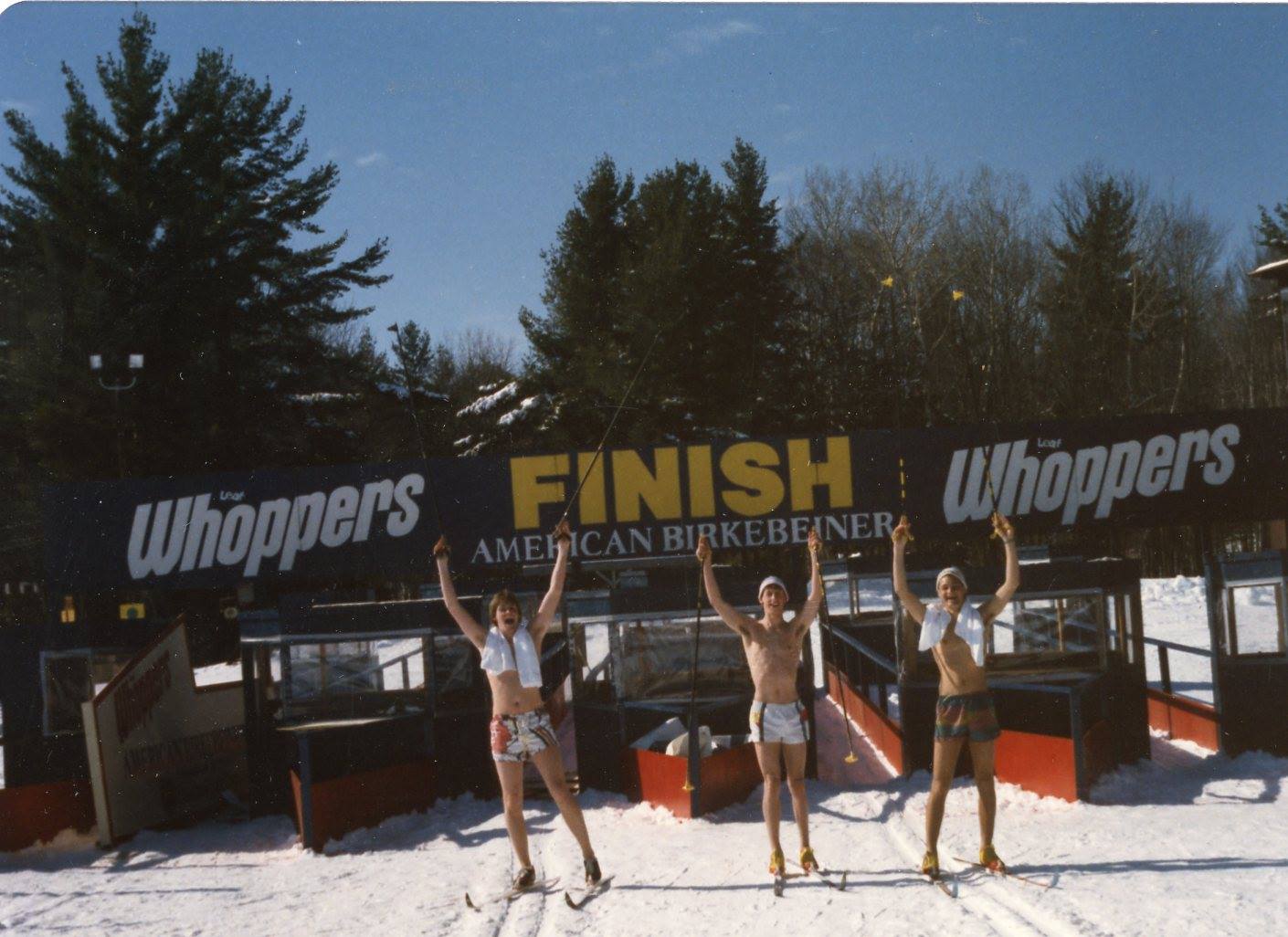
    My father—Ted Theyerl—who is 34 Birkies in at the time of this writing, signed up for his first Birkie as soon as he turned 18 in 1986. He earned an elite wave placement based off placing second in the Korteloppet the previous year. He completed the race that year skating, but still had kick wax underfoot because “no one could believe you could climb without it!” From there, through college, and well into his days as the fittest coach on my little league baseball roster, he’d consistently place in the top two-hundred, earning a bid in the Birkie’s elite wave the next year.

    One year in the early 1990s, he was out early-season training near his home in Milwaukee, Wisconsin, fell, and fractured his leg. In need of rehabilitation to keep his Birkie total on track, he turned to a Physical Therapist name Denise. They hit it off, got married, and here I am, their son, recounting the story.

    The author (l) and his family (L-R), mom Denise, brother Christian, and dad, Ted, on an early 2000s excursion to the Telemark Lodge, site of the former Birkie finish line. (Photo: Courtesy Image/Ted Theyerl)

    When Dad finally left the elite wave, it was in another crash. In 2010, my mother and I were mingling in the crowd at Angler’s Pub after my first Korteloppet, when the wave of Birchlegger elite wave finishers that my Dad usually finished with started to filter into the scene telling us he had taken a hard fall. Dad had separated his shoulder near the unofficial half-way point at County “OO” in Seeley.” He stopped off at the aid station, discarded a broken pole, took up a sling, and proceeded to skate towards Hayward. “I remember thinking, well, this will be different,” he recounted. “I don’t have to sprint across the Lake now!”

    Eventually, we found him wandering on Main St. in Hayward among the thousands of people he’d smiled, greeted, and had conversations with throughout his long, slow, one-pole skate to Hayward. He remembers that as one of his most enjoyable Cable-Hayward treks, where the kilometers lay long and thick with connections to other skiers behind him. Dad eventually slipped out of the elite wave permanently, and then took up skiing with my brother, or sister, as they started to forge their own Birkie journeys.

    Admittedly, I haven’t pulled my weight in the family Birkie legacy, having spent most of my adult life far-flung from the Northwoods of Wisconsin and with only two American Birkebeiner finishers to my name. There’s irony in that: because of the Birkie, I’m now in a spot where I can’t do the Birkie, and will be spending this year’s Birkie Saturday at a wax bench in Colorado coaching the Crested Butte Nordic Team. It’s a circumstance I count as a blessing, not unlike the example of my aunt, Tracey Cote (nee Theyerl), who left the Birkie twenty-six years ago to take up the helm of the Colby College Ski Team. She’s been spending the last weekend in February on the collegiate carnival circuit ever since. Time and distance haven’t diminished my love of a race that has directed where I’ve gone and who I’ve known in life.

    Gathering Around for Winter Vespers

    I can still evoke the feeling I had during my first Korteloppet when I turned the corner three kilometers into the race. I saw the Power Lines stretching out before me, laden with zig-zagging masses of skiers and supporters. I felt like I’d arrived at a familiar haunt. I’d spent the first 13 years of my life envisioning what that moment would be like. In reaching it, I reached that rare state where you truly can appreciate the miracle of every lived moment. I’ve been in a coasting of sorts ever since that moment.

    The other instance I hold onto from that first experience was one of inheritance. During that first Korte, I was biding my time in the line up one of the first big hills when a man wearing one of the red “Spirit of 35” Birkie bibs pulled up next to me, and shouted, “Ben!” I looked over, and got an introduction, “I’m Jim O’Connell, your Grandpa and I used to be out here together,” and in an instant, the Birkie Trail seemed to stretch before me to a different, looser, sense of time construed not around some linear march through life, but instead by the connections you make in it.

    I choose to believe there’s a reason there have been so-many repeat Birkie winners. There must be a logic behind why Caitlin Gregg, Matt Liebsch, David Norris, Alayna Sonneysn and those others who come back to compete for the top step of the Birkie podium every year. I choose to believe it’s probably along the same lines as those who are pulling over to breathe in the pines, and thank the volunteers, and make their way to Hayward from Wave 8, and 9 and 10.

    The real power of the Birkie is in repeating the ritual. Every February, a whole sport heads to one neck of the woods. Popping through old sawmill towns, gaining that first view of the Namekogan river on the drive to Hayward, the bridge welcoming you into Birkie-land which has always read “SPOONER BLOWS” in your rearview mirror. The “Viking Warriors” in full regalia still make their way to Hayward. The Sawmill Saloon in Seeley with its Birkie Bash, and seeing snowmobilers and Birkie champions, alike, gain equal purchase over a fish fry and a good ol’ can of Leinie’s O.’

    Through the many seasons of our lives, the Birkie has become communion: a gathering around for each winter’s vespers. In skiing that fifty kilometers, we’re reminded that the winter can be warm. It can make you shed a few layers. The harsh cold is no match for the warmth that human souls, pointed together in the same direction, can provide. And that, burning brightly, is the source of “Birkie Fever.”

    The Birkie: a dream dreamed, a dream realized, and a dream that skis on.

    The author’s father, Ted Theyerl, and aunt Tracey Cote (nee Theyerl) prepping for their first trip to the American Birkebeiner in winter 1977. (Photo: Courtesy Image/Ted Theyerl)
    February 22, 2024
  • Youth Olympic Games Recap

    Youth Olympic Games Recap

    Tabor Greenberg (USA) proudly draped in the stars and stripes on a podium day during the 2023 season. At the 2024 Youth Olympic Games, Greenberg skied to the bronze medal in the Men’s Freestyle Sprints. (Photo: Courtesy Image)

    The Youth Olympic Games are an Olympic-style competition (both summer and winter) staged for athletes between the ages of 15-18. In the winter of 2024, Gangwon Korea hosted over 1,800 young athletes in this celebration of sport, sportsmanship, and fellowship. Start young athletes early on all three, and the world is likely to be a better place.

    The Youth Olympics is also a chance for young stars of the future to step on to the international stage for the very first time. For cross country skiers, the competitions offered a freestyle sprint, a mixed relay, and 7.5 k Classic Individual Start events. While FasterSkier was unable to have reporters on the ground in Korea (and our usually-accessed international photographic agencies were not present at the events), we followed the results with great anticipation and curiosity. Event results and overall results are linked in the results listed below.
    Men’s Freestyle Sprint
    Gold Federico Pozzi (ITA)
    Silver Jakob Elias Moch
    Bronze Tabor Greenberg
    Americans: Tabor Greenberg 3rd, Landon Wyatt 25th, Ben Barbier 26th

    Canadians: Cedric Martel 11th

    Women’s Freestyle Sprint
    Gold Elsa Taenglander (SWE)
    Silver Kajsa Johansson (SWE)
    Bronze Nelli-Lotta Karppelin (FIN)

    Americans: Neve Girard 17th, Rose Horning 18th, Sydney Drevlow 26th.

    Canadians: Aramintha Bradford 9th, Leanne Gartner 29th.


    Men’s 7.5 k Classic
    Gold Jakob Elias Moch
    Silver Jonas Mueller
    Bronze Quentin Lespine
    Americans: Ben Barbier 11th, Tabor Greenberg 12th, Landon Wyatt 18th.
    Canadians: Cedric Martel 19th, Eamon Wilson 21st.
    Neve Gerard (USA)—seen here in action in the 2023 season—skied to an exceptional sixth place finish in the Women’s 7.5 k Classic. (Photo: Courtesy Image)
    Women’s 7.5 k Classic
    Gold Nelli-Lotta Karppelin
    Silver Agathe Margreither
    Bronze Annette Coupat

    Americans: Neve Gerard 6th, Rose Horning 13th, Sydney Drevlow 19th.

    Canadians: Aramintha Bradford 16th, Leanne Gartner 22nd.


    Mixed 5 k Relay
    Gold Germany
    Silver France
    Bronze Switzerland

    Teams from the United States and Canada finished fifth and sixth, respectively.
     

    Youth Olympics Cross Country Skiing Events COMPLETE RESULTS


    February 8, 2024
  • Homecoming

    Homecoming

    Homecoming day for Ben Ogden (USA), who paused in his World Cup campaign for a quick visit to his original club team—West River Nordic—and his old stomping grounds in Southern Vermont. (Photo: George Forbes)
    At the edge of the parking lot at the Wild Wings Ski Touring Center stands a strategically placed, much used, and much loved snow pile. Getting up speed by dropping down the short slope in front of the main building, young skiers catch air off the top of the pile, daring each other to ever-bigger, ever-trickier leaps. They’ve been doing it for years. Ben Ogden, Sophie Caldwell, Simi Hamilton, Katharine Ogden, Bill Koch, Fin Bailey. . . a disproportionate number of America’s recent ski-stars have tested their young courage—and honed their young skills—on this particular snow pile. This neighborhood produces skiers, and the view out windows along the North Road, the Hapgood Pond Road, and through Peru and Landgrove Villages frames the passing of Olympians, World Cup winners, NCAA champions as they run, stride, and roller ski past. This little Southern Vermont valley is home to many American skiers whose names are familiar to ski-fans around the country. And for those globe-trotting skiers, winter homecomings are particularly sweet.

    With a break in the World Cup schedule to allow teams, equipment, and athletes to travel from Europe to North America (for upcoming World Cup events in Canmore, Alberta and Minneapolis, Minnesota), Ben Ogden took the opportunity to return home to Vermont. Part of Ogden’s membership in his team, SMS T2, involves a responsibility to give back to local ski communities, to engage with fans and developing skiers. It’s something Ogden does with ease, so it was more of a treat than a surprise when he arrived to share a practice session with West River Nordic (Ogden’s boyhood club team) on the trails near Stratton Mountain.

    With many of West River’s young skiers sporting false paste-on mustaches (a nod to Ogden’s now-famous affectation) the workout included games, drills, and an unforgettable tour through the snowy woods of southern Vermont. And while a Minnesota World Cup is bound to get the attention of the American ski community, this is how a star can really have an effect on his sport. Ogden, himself, remembers ski stars of the past visiting his own practices at Wild Wings. Now Ogden gives back to these young skiers who follow his every move, who emulate his every technical nuance, and who go home with false mustaches tucked in their pockets as reminders of the day when Ben Ogden’s homecoming brought him back to the valley that raised him.

    Follow the leader in the snowy woods near Stratton Mountain. West River Nordic celebrates Ben Ogden’s recent homecoming. (Photo: George Forbes)
    February 4, 2024
  • Home Team Energy—Head Coach, Matt Whitcomb

    Home Team Energy—Head Coach, Matt Whitcomb

    Head Coach, Matt Whitcomb, was all smiles during a successful Tour de Ski for the Stifel U.S. Ski Team. (Photo: Nordic Focus)

    Watching the Stifel U.S. Ski Team during the first half of the 2023-24 World Cup season has, at points, been a sublime experience. That feeling of overwhelming exhilaration when looking out from the mountain top has been something literal for American athletes on top of podiums—and literal Alpes too—as they’ve traveled week-to-week, race-to-race, across Europe this winter. From Jessie Diggins’ Overall World Cup lead and Tour de Ski win, to career firsts way into her career for Rosie Brennan, and a generation of young American men coming of age as they’ve stormed to their first podiums, sprint finals, and more, there’s been one evident truth: where the Americans have gone this year, they’ve gone together.

    That “team-first” philosophy is a complex idea that may be easier to feel than to understand, but if anyone can come close to providing a definition, it’s Head Coach, Matt Whitcomb. Whitcomb has been a fixture on the World Cup for Team USA for over a decade, and in his current role as Head Coach since 2020. His tenure has seen transformative athletes, but more than that, as he stresses, a transformation in how the US ski community looks at itself. “I don’t think the [performance boost in US Skiing over the last decade] is because of one or two athletes, or one or two club,” Whitcomb said. “I think the difference is that our secret weapon as a nation is that we work together.” He prefers to view things holistically in order to understand the whole of the success he and the team he now leads has had.

    For Whitcomb, the chance to show off the holistic system that powers US skiing is just a month away: the Loppet Cup, Minneapolis’ World Cup, Feb 17-19. This represents not only the first time American World Cup competitors have had a home race in 20 years, but also one massive homecoming for those athletes in front of the American ski-community that supports them everyday. Whitcomb confirmed that the Stifel U.S. Ski Team is really that excited about bringing it all back home. “It feels like we’re hosting our own little Olympics,” he said.”

    FasterSkier caught up with him during his team’s post-Tour retreat in Livigno, Italy. In a Question and Answer session, Whitcomb recapped his feelings on the US Team’s early-season World Cup success, and discussed the ways that the Minneapolis World Cups could provide a springboard for the future of American Skiing. He also delved into his other big role in US Skiing: bolstering the ski community’s sport development as part of the National Nordic Foundation, and the opportunity for American skiing fans to show their support for the organization through a World Cup Fan Bib fundraiser in Minneapolis.

    Stifel U.S. Ski Team head coach, Matt Whitcomb (right), and Julia Kern course-side during the 4 x 5 k mixed relay at the 2021-2022 World Cup Finals in Falun, SWE. (Photo: NordicFocus)

    FasterSkier (FS): What’s the report from the US camp in Italy after the Tour de Ski? How’s the skiing? How’s everyone feeling?

    Matt Whitcomb (MW): Extra Blue. That probably describes it best! We place a high value on building a post Tour de Ski recovery camp option for athletes and staff that includes a lot of living space, mellow trails, and great food cooked by one of our chefs. Most other teams go home and get this naturally, and we know our typical hotel room and buffet is inadequate when it comes to Tour de Ski recovery. We need a mid-season uplift, and this is it. The house we have in Livigno, Italy allows us to live like a family, and experience a lot of the values one would find at home. All this is to say that recovery has gone well, and we’ve resumed training carefully. I should note, too, that as we recover after the Tour, we often try to sneak in a bit of altitude. Livigno is at 6,100ft (1859m). I know it seems like sea-level would be the smarter choice, but we’ve found that this additional commitment to altitude living pays dividends in Period 3 and 4.

    The Season Thus Far

    FS: Success is subjective, but this season has certainly felt like a very successful one for American skiers. From your place in the middle it all, does that ring true?

    MW: If we have 15 athletes on the road and only one of them is winning the Olympics or the Tour de Ski or the World Cup Overall, we are not successful. There is no chance for legacy when only one person succeeds. Look at post-Justyna Kowalczyk Poland; she won it all, and then retired and left a hole that was exactly as large as the sum of her accomplishments. A team is successful when it is no longer defined by its one or two star athletes. We have depth now, and that’s what creates hard-to-stop momentum. That’s why Ben gets his first podium not long after JC’s first podium. Then Gus gets fourth, three days later. The success of many athletes creates a vibe—a wind—and we get swept up in it. Zoom out a bit. How do we get the professional athletes and young kids back home swept up in that vibe? It doesn’t happen if we have a few jerks and prima donnas succeeding on the World Cup. We need our team to consist of tangible, accessible, inspirational role models, who create a powerful draft that the next level can slip into. I think that’s how it works. I think that’s why it’s working.

    FS: A lot of American athletes this season have hit milestones that they’ve had trajectories towards, and worked for, for years – first podiums, first World Cup victories etc…Curious about the means to those ends. What characteristics can you point to that have allowed this Team to reach the results it has this season?

    MW: We can have the best talent in the world come through our team, but if they quit before age 23, like most American skiers do, we’ll never know how good they could’ve been at the World Cup level. We try to create a positive team environment for one reason: we need our athletes and staff to enjoy longer careers. 

    Look at the women’s team of 2012-2018. We strived for a great team environment, and consequently, to name a few, you saw Kikkan [Randall], Holly [Brooks], Liz [Stephen], Ida [Sargent], Sophie [Caldwell-Hamilton] , and Sadie [Bjornsen] all ski into their 30’s, each retiring with World Cup podiums. Jessie [Diggins] and Rosie [Brennan], who are ranked first and third in the world, are in their 30’s. None of this history is written if we don’t build and maintain a great team environment. This will always be my number one focus, and I will say, it’s a very difficult target—especially for Americans—to hit, given how up in each other’s space we are for so many months in a row. Even at our best, this goal will always be a struggle, and it will always be our answer.

    FS: You’ve said in the past that “[nordic skiing] is becoming a team sport.” Are there any particular moments over the past month and a half of racing where that core belief in each other really shone through?

    MW: We made a goal this year as a team: stop taking podiums for granted. This year, you see us storm the podium and take a team photo with the one athlete who actually earned the award. No one of us is as strong as all of us, and that’s what we are celebrating. If you see that photo, that’s the message we are trying to send to you. We are recruiting you.  

    Rosie Brennan (USA) and Stifel U.S. Ski Team Head Coach Matt Whitcomb embrace after Brennan skied to second place in a 10 k Classic race in Ruka, Finland. (Photo: Nordic Focus)
    World Cup Period 3, and the Future of US Skiing

    FS: How are you and the Team feeling now that the North American World Cups are really starting to come into view?

    MW: It feels like we are hosting our own little Olympics. This is our chance for the U.S. ski community to show off what we have built together. It’s our chance to recruit kids to our sport. Look at the recruiting advantage Norway has; in just this World Cup season alone, they get to ski in front of their fans in Trondheim, Drammen, and Oslo, followed next season by World Championships, and several World Cups. Of course their kids grow up wanting to be skiers. We are about to see this benefit to our nation for the first time in a quarter of a century. And yet, we are succeeding anyway. Just imagine; this success we are experiencing now, if we continue to work together as a skiing nation, is just the beginning.

    FS: What are you most looking forward to about having the US ski community in one place?

    MW: We can write about and tout our strength as a nation, but it’s a different thing to looking being able to really feel it. I want to stand along the course and see and hear what 10,000 people—including my family—who surround that race course in support of our team really feels like.

    FS: There’s probably very few Americans that know more about what a World Cup “atmosphere” looks like than you. What kinds of things are you looking forward to seeing brought over from the World Cup circuit to North America for these World Cups?

    MW: Our European competitors are very excited to come race in the United States. They’ve heard it’s going to be huge. These days, the whole world is being affected by the onslaught of indoor culture. Even in Europe, it’s hard to get people outdoors to watch a live cross country event when they can watch it instead on their phones and TV’s. You don’t have to look farther than Trondheim, with a population of over 200,000 people. It’s the hometown of Johannes, and yet the crowds were disappointing. This is what Minneapolis will bring: a culture that doesn’t take the World Cup circuit coming to its doorstep for granted.

    I’m also very excited about a project we have going on with the National Nordic Foundation (NNF)  (note: Whitcomb serves on the NNF Board of Directors) which is to put as many American skier fan bibs on our spectators as is possible. I want to look out at the crowd and see our stars and stripes on hundreds of people, and on others, the smiling faces of our athletes. This is a cool project that was pitched to us by one of our friends, Oumar Cherif, who’s an avid skier in the Minneapolis area and involved with the Loppet Cup. I believe it was a creation by he and his girlfriend, with the idea of celebrating our strength as a nation by uniting us with fan bibs. Oumar reached out to the National Nordic Foundation and pitched the idea, and said he thought it could be a successful fundraiser. I think he was right. We have a variety of designs being produced by local Midwestern companies Borah Teamwear and Podiumwear. They’ve each cut us a great deal, and I think we’re offering a lot of fun and loud options for our fans. 

    The big thing to highlight is that this is a real way to see skier development works in the US. At Minneapolis, any skier that qualifies for a World Cup start, who is not already fully funded by the US Ski Team, is receiving funding. That’s championing competitive equity in our ski community, and it’s possible because of our ski community and what they give to NNF.

    FS: With this being the first World Cup in America in over 20 years, there’s a unique circumstance where a veteran group of American skiers—Jessie Diggins, Rosie Brennan, etc.—will be getting the same experience as a younger group of skiers that grew up watching them race: racing in front of a home crowd for the first time. Having now gotten to observe the sweep of a couple of generations of American skiers building off the successes of the ones before them, what are your thoughts on getting to see that cross-over happen at these North American World Cups?

    MW: That’s a great question. We’ll have Olympic and World Championship medalists—athletes with over 100 World Cup starts—as well as first-time starters on the World Cup, all toeing the line on the same day. I think this shared enthusiasm will be uniting. I can’t wait to see it.

    FS: You spoke briefly about NNF, which you’re involved in as a Board Member. How does that organization play a role in something like the Minneapolis World Cup?

    I have two jobs that fit together a bit like puzzle pieces. As the head coach for the U.S. Ski Team, I get to help coach the top level of racing in the U.S. And it’s well-supported. U.S. Ski & Snowboard fully funds camp and racing expenses for any athlete who qualifies for the A or B teams. But that funding falls away steeply between the B and D team (we have no C team), and that’s where NNF begins its financial support. That support starts with these World Cups, and includes U-23 and World Junior Championships, summer athlete training grants, OPA winter race trips, the U-18 winter race trip, REG and National U-16 camps, SuperTour title sponsor funding, and the Trail to Gold coaching grant program. 

    We disburse nearly $250,000 per year into American skiing, with the goal of reducing the number of developing skiers who leave the sport because of funding stress. We are a fundraising organization that powers the opportunities that lead to World Cup and Olympic excellence for cross country skiers from the United States. Our philosophy is special. We won’t fully-fund a project for an athlete, but will instead team up with that athlete, their family, and their club, to make it affordable.

    FS: So something like the World Cup Fan Bibs is a way to lay a foundation to empower future skiers while the ones that inspire them in the sport are out chasing success today?

    Exactly. These fan bibs should improve our brand recognition for the future, and for now, they will help pay for the NNF’s Pillar Projects. The big hope, however, is that people will see these bibs, or read this interview, and will become an NNF supporter. We need help. Our board works very hard, and our community is responsive to our needs, but we want to expand! For three years, we’ve raised $500,000 per year, and we have aspirations to increase that to $1,000,000, as we work towards endowing our Pillar Projects.  

    FS: With a nod towards the future, what makes you excited about American skiing in the near-term this season, and what makes you excited as you look way beyond it?

    MW: In the near-term, pretty simple: Minneapolis. It really is that exciting for us all to be coming home. I can’t stress the idea of using this opportunity to literally turn the ski world more towards North America. Create the atmosphere that shows everyone that we’re excited—that we’ve always been excited—about World Cup skiing. Buy a fan bib, come cheer, give everything! 

    For Minneapolis to have long-term impact, what must happen is that our next American World Cup venue is inspired to host. We have to have the World Cup come back to the U.S. We need the desire from that next venue to be loud, and urgent. We can’t wait even another five years. Minneapolis again? Great. Lake Placid? Alaska? Soldier Hollow? Central Park? All just great!

    The Stifel U.S. Ski Team celebrates on top of Alpe Cermis earlier this month.  Jessie Diggins took the Tour de Ski Overall, and Sophia Laukli won her first World Cup race. (Photo: Nordic Focus)
    January 23, 2024
  • Want to Ski, Shoot, and Hang Out with Anchorage Olympians? Try Biathlon.

    Want to Ski, Shoot, and Hang Out with Anchorage Olympians? Try Biathlon.

    You miss every shot that you don’t take. (Photo: Courtesy John Farra, U.S. Biathlon Association)
    A tale of how I skied faster than Kikkan Randall for exactly five minutes and 39 seconds until I got tired and she hit more rifle targets than I did.

    Once upon a time, I was a serious, though definitively not successful, cross-country skier. I raced for my college team in Maine, then kept at it afterward and one time finished 17th (I think, I can’t find the results any more) at the Tour of Anchorage, which is just good enough to sound kind of impressive to folks who don’t know much about cross-country skiing and also quite clearly unimpressive enough as a high water mark for my career that it doesn’t feel too immodest to share.

    Then, I developed a heart arrhythmia, atrial fibrillation, that seemed to be associated with intense and extensive exercise, so in 2018, I quit racing and intense interval training, started reading more books and generally began living a more balanced life. (If anyone wants to talk about how developing a serious-if-not-life-threatening medical condition can actually be life-changing in positive, not just negative ways, I am here for it.)

    Anyway, I still try to exercise every day, but I don’t really compete any more. Except when something reallllllllly enticing comes along, like an email I got this week from Rachel Steer.

    Rachel, if you don’t know her, is one of those Professional Anchorage People Who Just So Happened To Also Compete At The Olympics Back In The Day. (Seriously, you can’t walk into an engineering firm here without tripping over them.)

    Rachel was once an international caliber biathlete, racing at two different Olympics, in 2002 and 2006. Today, we’re both members of a little group that meets on a weekly basis for interval training — I don’t really go any more, I just read the planning emails — and on Wednesday, she sent out a message about a “low-key local biathlon race” on Sunday.

    “I’ve convinced Kikkan to do it with me,” Rachel said. “I know there’s a few of you on this list who are former biathletes (or who would like to give it a try). THIS IS YOUR CHANCE!”

    If you live under a rock, or outside of Alaska, “Kikkan” is Kikkan Randall, another one of those PAPWJSHTACATOBITDs (Professional Anchorage People Who Just So Happened To Also Compete At The Olympics Back In The Day). She also owns a gold medal from the 2018 games in South Korea.

    The idea of jumping into a race with Rachel and Kikkan, involving skis and guns, even though I hadn’t trained for it, sounded pretty fun. So I said yes.

    A quick primer on biathlon: It alternates laps of a cross-country ski course with shooting at targets, 50 meters away, with .22 rifles. Missing a target, depending on the specific race format, puts you at a disadvantage by either adding a minute to your overall time, or requiring you to ski a short extra “penalty lap” that’s tacked on to the regular course. The beauty of the sport is its balance between fast and slow — the speed and brute force of racing paired with the stillness and fine motor skills of shooting. Think running a mile as fast as you can, then trying to thread a needle.

    A memorial Viking runestone featuring a “possibly Ullr” figure with skis and a bow. (Photo: Berig/Creative Commons license)

    The sport, of course, has its roots in Scandinavia, “where early inhabitants revered the Norse god Ull as both the ski god and the hunting god,” according to Encyclopedia Britannica. Ull’s goddess wife, Skadi, “was also celebrated as a hunter-skier” — making her, apparently, the first in a long line of badass female biathletes — and the “combined skills of skiing and marksmanship were first developed by the region’s militaries,” Britannica says. The first recorded competition was in 1767.

    TL;DR, it’s Viking shit. Except the sport has evolved: Athletes now race with carbon fiber rifles on their backs, star in Swedish reality television series and perform in front of thousands of (often drunk) spectators and for millions of European fans watching on TV.

    What’s not to like?

    So, on Sunday morning, I woke up, pulled out my college racing spandex and drove to Kincaid Park, where I met up with Rachel, Kikkan and a handful of other adults for a rifle safety training with a bevy of friendly, energetic volunteers from the Anchorage Biathlon Club.

    One of the first questions I got, when I arrived: Have you ever done this before? Once, I said, when I was just out of college. No one was wounded, I quipped, which prompted pained smiles from the safety training leaders that actually upon reflection were probably grimaces.

    Biathletes take safety seriously. You can’t shoot until a safety officer opens the range, and there were three obvious safety principles (if I remember them correctly): Don’t point the rifle anywhere except straight up or downrange; don’t load the magazine (a sort of packet of five bullets) into the gun until you’re ready to start shooting; and don’t put your finger on the trigger until you’re pointing your gun at the targets.

    There were only a few people at the race without our own rifles, so the organizers were able to give each of us a loaner. After 10 practice shots and a few warmup laps, I lined up for the race as the last of 30 competitors, who would start one at a time, 15 seconds apart. Kikkan started 45 seconds ahead of me, and I am absolutely not going to lie and tell you that I wasn’t a little bit motivated to see if I could make up any time on an Olympic gold medalist. As I finished my first 1.5-kilometer lap, I spotted her bright racing suit doubling back around a corner and entering the shooting range, and I started counting off seconds; I made it to 41 or 42 before I found myself on the same spot on the course.

    Biathletes shoot at five targets between each lap. I hit my first nine shots in a row before missing my first one — but this comes with some pretty substantial caveats.

    Typically, biathletes have to shoot from two different positions, standing and prone. In prone, they lie down and can prop their elbows on the shooting mat, making for a much more stable and accurate base. But to balance that, they have to hit smaller targets — a diameter of 1.5 inches, compared to 4.5 inches for standing, which means the standing targets are six-and-a-half times larger by surface area. As a beginner, I was shooting at the larger standing targets while prone — and I had the benefit of a stand that I could rest my rifle stock on.

    I was feeling pretty good about myself for hitting nine out of my first 10. But by the time I came in to shoot for a third time, Kikkan had slipped out of sight, and after hitting my first two targets, I noticed a serious problem: fog. Inside my decidedly non-performance, kind-of-nerdy, Eyebuydirect.com glasses.

    I proceeded to miss three shots in a row, then two more in my final turn at shooting.

    My brilliant start, and my hopes of victory, had dashed by poor shooting (not to mention poor fitness). But really, this is the beauty of biathlon: Promising races can vaporize in a manner of seconds. And my final tally, 14 out of 20 shots, was still one better than a recent race by one of my favorite pros, Stina Nilsson of Sweden, who juuuuuust lost out to Kikkan on a gold medal in cross-country skiing at the 2018 Olympics, then switched to biathlon and has not yet achieved the same heights.

    Nonetheless, let the results show what may be my proudest-ever athletic achievement: My first lap of the race was two seconds faster than Kikkan’s. However, she then proceeded to hit every single shot (or almost every single one — accounts differ), outpace me on all the other laps and absolutely obliterate the entire “open” division, winning by nearly three minutes.

    I was chit-chatting with friends after the race when, over a speaker, the awards announcer started yelling my name. (Actually, they yelled for “Nate,” but this is a common enough occurrence.) It turns out I had achieved the impressive result of third place out of eight, behind, of course, Kikkan and Rachel. (Yes, the two women in the field destroyed the six men.) In addition to a podium photo with two Olympians, this result earned me a $1 billion bar of chocolate, and enough of a tale to merit inclusion in a Northern Journal newsletter.

    The first and only time I will share a podium with two Olympians. (Photo: Courtesy John Farra)
    The whole vibe of the day was excellent — most everyone seemed to be relaxed and having a great time on a cool winter day. There are at least a couple more open biathlon races in Anchorage before the end of the year, and I would encourage any bi-curious folks to check them out. Email me here and I’ll put you in touch with the right folks.
    I’m rich.

    This article is the work of Nat Herz (a regular FasterSkier contributor, and Producer of The Devon Kershaw Show), and is re-printed with the permission of Nat Herz and Northern Journal.

    Northern Journal is a reader-supported publication. To receive new posts and support my work, consider becoming a free or paid subscriber.

    December 6, 2023
  • Giving It All Away—The Future of Active Backwoods Retreats (ABR)

    Giving It All Away—The Future of Active Backwoods Retreats (ABR)

    The SISU Ski Fest, now a staple of the midwest race circuit, relies on ABR’s trails for a large part of the course. (Photo: ABR Ski)

    Imagine toiling tirelessly an entire lifetime to build a successful business. Decades pass. You are now in your sixties contemplating some version of retirement. Standard operating procedure in this circumstance is to put your business on the market, see what it will sell for, and sell out to the highest offer. Most of the time, that’s how the game is played. Maximize return on investment.

    However, a different model is being played out at Active Backwoods Retreats (ABR) in Ironwood Michigan. As owners Eric Anderson and Angela Santini contemplate the future they have decided to walk away from the big payday. Instead, Eric and Angela are giving away their business to a foundation they have started to keep it operating as a ski center for future generations to enjoy. Beginning April, 2025 ABR will be operated by the Anderson Bluffs and River Trail Foundation. Its mission is to preserve the trail system for cross-country skiing. Eric will stay on as chief groomer.

    Anderson is widely known for obsessing over grooming. That and lots of snow have helped make ABR the success it is. (Photo: ABR Ski)

    In the midwest, ABR is well known as the go-to destination for great grooming and reliable snow even in low snow years. Beginning in 1995 with 13 kilometers of skiing, ABR now has 100 kilometers of trails, including dedicated single track classic trails, dog trails, and snowshoeing trails. It offers more than just great conditions. Bordered by the Montreal River—the Wisconsin-Michigan border—it also offers beautiful scenery. In addition to snow activities, there’s a great wood fired sauna, overnight rustic cabins, trailside house rentals, and a full service ski shop with ski rental. Its trails are also used extensively for the SISU Ski Fest held every January.

    The single track classic-only trails are a unique ABR feature. It’s a rare treat to have single track groomed to perfection. (Photo: ABR Ski)

    Ironwood averages about 200 inches of snowfall annually. This bounty requires a fleet of machines and, at least at ABR, colorfully nicknamed operators (Eric’s nickname is Pig Heart—a tongue-in-cheek reference to his heart valve replacement surgery). Eric’s grooming reputation precedes him. He is well known for being incredibly meticulous, so much so that for years ABR grooming clinics were a staple for trail operators who wanted to learn the finer points of the art. The detailed daily grooming reports are a testament to his grooming dedication which usually starts pre-dawn.

    The transfer of ownership to a foundation is not some symbolic gesture. ABR consists of about 800 acres of Upper Peninsula land. Eric methodically made land purchases over the years to increase the resort’s size. “I closed on the first parcel in 1991 and just kept buying as they came up for sale,” said Anderson. The property’s sale would yield a big check; a proposition which most people would find impossible to resist. Eric and Angela, however, have a different perspective.

    Eric leads a group of skiers affectionately known as the “Clydesdales.” It’s a term of endearment which recognizes that people enjoy skiing even if they’re not wearing lycra. (Photo: ABR Ski)

    “There’s no choice. If we sold it, we’d get a big pile of money, and then what? Anderson said. “We can sustain ourselves with our other income, but it would be a big slap in the face to our customers if we just sold it and ditched them. It’s what Angela and I have done for the majority of our lives; I would hate to see that destroyed. The foundation seems like the best way to keep it going.” Anderson said it wasn’t a hard decision to give the business away. “Though, sometimes Angela and I will look at each other and say it could have been a lot easier if we had sold it, but that’s not what we wanted.”

    Anderson has had several health challenges; he realizes that he won’t be around forever, and the next operator would benefit from his level of acquired knowledge. All the nuances of knowledge of decades of work have to be formalized and somehow put into a format so that the next managers can know how to run the place. “Now we’re setting up budgets and 10 year plans,” Anderson noted. “Last month we had a three hour workshop with the full board on risk management…documenting the infrastructure isn’t fun work, but it’s necessary and time consuming.”  Prior to transitioning to a foundation, Anderson said that “if I needed a piece of equipment and had the money, I would just go out and buy it.”

    Happy skiers enjoying the perfect corduroy and deep classic tracks. (Photo: ABR Ski)

    A pleasant surprise has been the generosity of donor support for the foundation. “It’s been eye opening,” Anderson said. “At times, a donor will hand me a sealed envelope and walk away. Inside is a thank you note with a large check. I never would have expected that.” According to Anderson most of these donations are from people outside of the local area, which speaks to the following ABR has established.

    The foundation has been seeking a full time manager, which has proven challenging. “I never expected to spend so much time interviewing candidates to run the operation,” said Anderson. The foundation hasn’t made a hire yet and anyone with the qualifications and passion can contact the foundation with their information at andersonfoundationmk@gmail.com.

    Eric and Angela will remain closely tied to ABR. They plan on living at the Hilltop House which is a short walk from the main entrance, though they aren’t sure about adjusting to a hands off position. “I’ll help, but I don’t want to micromanage the new manager.” Additionally, Eric will still be doing the grooming. “My new title will be chief groomer.”

    ABR has grown from humble beginnings of 13 kilometers of skiing to a multi building complex with more than 100 kilometers of trails and more than only skiing. (Photo: ABR Ski)

    It’s hard to imagine walking away from a big payday in exchange for an abstract sense of satisfaction. But Anderson says that “the payoff is that our life’s work will continue after we’re gone.” The allure of money simply isn’t on the table for Eric and Angela. “What would a person do with all that money? Buy some assets that you don’t need? I don’t see any of that being needed. I’m decadent with buying equipment for the business, but I’ve never owned a boat or a jet ski. When I lived in Ann Arbor, you’d see those things with people working their ass off in a job they don’t want, commuting… and they’d get to the weekend and maybe they have time to take their boat out.”

    There’s also a sense of family continuity which has driven the decision. Anderson’s great- grandfather arrived from Finland and homesteaded by the current ski trails. His grandmother also grew up near the trails as did his parents and him. So, it’s also a point of heritage and family history which has motivated the decision. “It’s not part of the mission or the vision,” he said. “But I think my relatives would look back fondly on what we’re doing as well.”

    Anderson says that plans for the trail system is to stay pretty much as is. “There isn’t a plan for any significant changes by the foundation in the first few years.”

    Saying you put your principles first is one thing; proving it by walking away from a financial windfall is quite another. It’s quite the statement being made at ABR.

    Erica Anderson and Angela Santini are putting ABR into a foundation for skiers to enjoy for generations to come. (Photo: ABR Ski)
    October 27, 2023
  • Keeping the Shop Part II: Ahvo Taipale Skis On

    Keeping the Shop Part II: Ahvo Taipale Skis On

    Ahvo Taipale pops champagne at the end of a 45 year career as the owner and operator of Finn Sisu, the Twin Cities’ oldest race-oriented ski shop. (Photo: Finn Sisu)

    Like most Midwestern states, the majority of Minnesota is an unending grid of corn and soy fields. Land isn’t so much land as it is commodity. Inhabiting that landscape tends to be a constant reminder to think in terms of economy. Life, like farming, is a series of inputs and outputs, costs, and benefits. Unlike most Midwestern states, though, things get wilder the farther North you go in Minnesota. Lakes, lots of them, jut in on the back forty. The Earth is filled with ore. The pines displace the corn. The metaphysical effect is that impulses towards wildness and creativity get nourished, not dulled. Across six million people that produces a disproportionate number of that very American archetype: the original. A peculiar list of names. Bob Dylan, Terry Gilliam, Alan Page, Bud Grant, Herb Brooks, Paul Bunyan, Jim Klobuchar, Amy Klobuchar, Paul Wellstone, Paul Westerberg, Judy Garland, Jessie Diggins, and of course, Prince.

    While Prince may be the only individual on the list who is known, universally, by a single name, Minnesota skiers add one more name: Ahvo. After 45 years, Ahvo Taipale is retiring from his role as the owner and operator of Finn Sisu Ski Shop. To most Midwestern skiers, he’s always just been there. But in his telling of the story, even he came in his own time.

    “I first came to this country in 1968 to attend the University of Minnesota as an agriculture exchange student,” said Taipale when FasterSkier caught up to him this month. “I was doing what I always did as a farm boy in Finland: ski racing. I went up to the Duluth Loppet in I’d say 1973 or 1974, and I won the race. I was about to head out back to the Twin Cities when this group of people approached me, and one of them said, ‘you are Finnish, we are from Finland too.’ And they were, it was just that some of them were from the Two Harbors-Finland, Minnesota area, and I thought, well, I’ve accidentally found my way home.”

    The past and future of skiing in Minnesota would merge at that moment. Ahvo would be the bridge between. He caught the tail-end of the Norse diaspora that originally brought cross-country skiing to Minnesota in the late nineteenth century, and then charted a unique future for the sport in America through his passion and savvy as a businessman.

    “There were two parts that led to me starting a shop,” he said. “One was that I didn’t want to be traveling the world, I wanted to settle into a place. The second was that I was racing as much as I could in Minnesota, and through that, was starting to sell skis from Finland to others, because there was no shop that was selling high-quality racing skis in the United States.”

    In 1978, Taipale imported a shop’s worth of racing equipment, and set himself up on University Ave. in the center of the Twin Cities. The shop’s name? Finn Sisu. “[Naming it] was easy,” said Taipale. “Everyone knew me as the Finn. And I was telling them all about Sisu, the untranslatable Finnish value of stoic determination and tenacity of purpose.”

    Ahvo Taipale out on the snow in his capacity as a coach for the University of Minnesota, one of the many other roles he filled beyond shop owner while at Finn Sisu. (Photo: Finn Sisu)

    The name would also cause Ahvo to foster cultural exchange between Finland and the United States, and lead to the other lasting part of his business life: the sauna. A few days after Finn Sisu opened its doors, a customer came in off the street and inquired about that other great Finnish export, the sauna. “They asked, ‘you’re a sauna business?’ and I thought about it for about three seconds and said, ‘Yes, of course!’” said Taipale, “Truth was, I had never built a sauna before.” His upbringing kicked in though, “When you are a farm kid and another way to do business walks right in the door, you figure it out.” Finn Sisu Ski Shop became Finn Sisu Ski and Sauna.

    Over the subsequent forty years. Finn Sisu quickly became the go-to shop for high school teams and citizen racers alike in Minnesota. From the point of purchase at Finn Sisu, new ideas and new communities would start to take hold within Minnesota, and US, skiing. In turn, Ahvo would be there to support them. “I had a very simple policy that we would support any new club that came to me asking for some kind of support,” said Taipale. “If it was as simple as buying a spot on their t-shirt, we would do that. Oh boy, do I have a lot of t-shirts! As a businessman, I knew that was where my customers were coming from, and as a skier, I like more people to ski with.”

    At the same time, Ahvo began to take an active part in developing the places that his customers were skiing, pushing the Twin Cities Metro Government to protect and expand its network of ski trails. “They initially came to me, because I guess I was easy to identify as someone who is passionate about skiing as a shop owner, but I really took to the dream of having the best trail system in the world here in Minneapolis,” said Taipale. “I could see that the Twin Cities were expanding. When I first got here, all the places we think of as ski areas now were relatively on the edge of the city—Battle Creek, Elm Creek, even Theodore Wirth Park—but that was quickly not going to be the case.”

    From the 1980s on, he would lend his support to each new trail system proposal that came up. In the process, another dream of his started to formulate: “I wanted us to have the most snowmaking of any city in the world” said Taipale. As the Twin Cities grew, the ski facilities became world-class. Achieving all his goals as a promoter though, would turn out to span his entire career. “We got to a point where we had four snowmaking loops, which is what Oslo, Norway has. But we didn’t have one in St. Paul, in my neighborhood, until 2022 when Battle Creek opened. So now we have five, more than Oslo, and I skied 127 days last year, almost all, outside of the Birkie Trail and Korkki in Duluth, were at Battle Creek. That was thirty years’ worth of work, but well worth it.”

    More trails were needed to accommodate more races, more clubs, and more skiers. In the late 1980s, Taipale started Vakava racing, which would go on to become the Twin Cities’ largest training group for a number of years and would expand Finn Sisu’s calendar to include wax clinics, ski clinics, and training opportunities with the scores of Minneapolis skiers that would go on to make pro clubs and the US Ski Team. For Ahvo, the business was always on his mind first and foremost in doing so, but he also admitted, that it was “Easy to get carried away with doing more, because why wouldn’t you? Skiing is fun to do, and skiers are good people too!”

    Ahvo Taipale presents during a wax clinic alongside then-CXC Coach and present US Ski Team coach Jason Cork in 2011. (Photo: Finn Sisu)

    Business grew. Wood skis gave way to fiberglass and carbon fiber. Three-pin bindings were replaced by the “new nordic norm” (NNN). Skate skis became the new game in town, then the only game in town, then split with their old-school “classic” counterparts. Ahvo always kept his eye out for the latest and greatest. As he built out training groups that looked to push skiing beyond its traditional wintertime season, Taipale began to import rollerskis, which were still in their early stages of development. “At the time, we were importing these rollerskis that had three wheels, which you don’t see anymore.” On a trip back to Finland though, he came across an engineer that had been tinkering around with rollerski design. “He really focused on making more durable wheels that could support heavier skier and make it actually feel like skiing, and what he came up with was a two-wheel design with a fiberglass shaft, and they looked almost like what you would think of as a skate rollerski today.” They were also, said Ahvo, “very bright, neon yellow.” The engineer had just started a company, Marwe. Taipale was giddy to bring them back to the United States, but there was one problem. “He already had a marketing firm that had drawn up a plan to import them to the United States.” Taipale though, knew the customers that those numbers represented, and knew that the marketing firm hadn’t counted for enough. “Their initial order was something like 30, and I simply said, ‘I will order ten times that right now and be back for another order in a week.’ And I did.” Finn Sisu would outfit the US Ski Team with Marwe skis for years and continues to sell them today.

    By the mid-2000’s, the Twin Cities ski community was exponentially bigger than it had been in the 1970’s. New shops with a racing focus had started to pop up, with Taipale welcoming and supporting them, “competition helps everyone, and even today, the community is underserved.” Finn Sisu was growing likewise. Some of Ahvo’s original customers were bringing in their sons, daughters, grandsons, and granddaughters. Employees who had started working with Taipale as part-time high school workers were now full-time specialists in nordic skiing, and had been at the shop for decades. Finn Sisu needed a new, bigger, home. In 2009, the familiar awning outside their University Ave. location moved north to the Lauderdale neighborhood of St. Paul, and into their present location off Larpenteur Ave.

    A Park Bugle report on Finn Sisu’s location-switch from their longtime University Ave., St. Paul, location to Lauderdale in 2009. (Photo: Park Bugle Archives, www.parkbugle.org)

    There was new space, new products, and a new feel at the new Finn Sisu location, but at its beating heart was the same warm presence of Taipale, now an elder statesman in the US ski community he had steadily kept on track, literally, for three decades. He had furrowed in and formed a community that now distinctly bore a semblance to his principles of hard-work, passion, and yes, sisu. For many skiers, trips to Finn Sisu were as much about the feeling that the experience as they were about the skis you left with. For some, it was a late summer trip to the nearby Como Park zoo before it closed on Labor Day weekend, a sure sign of winter to come. Opening the door with the familiar white beard holding forth with characteristic expression about where the sport of skiing, and skiing technology, and skiers, were going. When FasterSkier recounted a personal memory of a piece of wisdom from Ahvo, “cyclists and runners you can make into skate skiers quick, but learning to stride takes time,” he simply responded, “that is very true.” The skis you picked up always came with a story, even if they were brand new, because Ahvo couldn’t help it. And if there wasn’t a good fit, then you would get trademark honesty and generosity: “You might need to look elsewhere,” he’d say. “And have a great season!”

    Ahvo Taipale during a Vakava training session. (Photo: Finn Sisu)

    Approaching the age of 80, Taipale had begun to start to look at retirement. Pretty early in the process though, a set of principles that had guided him in business for fifty years became the clear priority in moving on from it. “I always have said to myself that I am very lucky to have been very successful in business,” he said. “Money couldn’t be the priority; the customer had to be.” Towards that, Taipale made the decision to sell to those that came from the community that encompassed Finn Sisu, to his employees. “I wanted there to be continuity,” he said. “Our customers who have come to Finn Sisu for fifty years can walk in, and it’s still Finn Sisu.”

    After a few years of putting different coalitions and proposals together, the right deal came along. Novak, Rhode, and Weium would buy the shop from Taipale. Last month, they took Finn Sisu over as the owners and operators, and Ahvo Taipale took on his first new job title in 45 years: retired.

    “To do something for 45 years is a long time,” he said. “All you can hope for is to be steady, and that is what I am most proud about. [Over that time,] I can only remember three bad days. Three days over nearly half-a-century, I will take that. I feel really lucky to have known the ski community and have them have known me. I couldn’t be a successful businessperson if it wasn’t in skiing.” He also acknowledges that along with that steadiness in business, comes a stubbornness in moving out of it: “I will still be around the shop. I will still be skiing over 100 days. I will probably do more, come to think of it.”

    After a career spanning half a century, the continuity is there for Taipale. “I began skiing in Finland because it was the quickest way across the lake to get to school,” he remembered. “And here I am in the Twin Cities, where it’s still the quickest way across the lakes!” Through steady years skiing them, he took on the ingenuity and wildness those lakes fostered across the landscape of Minnesota, spread it to its people, and continues today, beloved by a land he came to as a stranger, and now calls home, the man simply known as Ahvo.

    Ahvo Taipale at the Finn Sisu wax bench. (Photo: Finn Sisu)
    October 15, 2023
  • An Evening with SMS T2: Questions and Answers

    An Evening with SMS T2: Questions and Answers

    This is Part II of an article reporting on the recent appearance of the SMS T2 team at an evening where FasterSkier partnered with The Memory Clinic of Bennington, Vermont. The video posted below features the entirety of a wide-ranging Question & Answer session that involved most of the SMS T2 team, including Julia Kern, Jessie Diggins, and Ben Ogden. It was a treat to be among so many of our skiing heroes, and to hear how they responded to questions from the audience.

    We also want to thank our industry partners Atomic, Alpina and Salomon for providing prizes at the event.

    Be sure to check out Part One, where Julia Kerns talked about how to Strengthen You Mental and Physical Self.


    October 11, 2023
  • An Evening with SMS T2: Strengthen Your Mental and Physical Self with Julia Kern

    An Evening with SMS T2: Strengthen Your Mental and Physical Self with Julia Kern

    The world of professional skiing is big and broad, but each professional team has a community they call “home.” For SMS T2, they are definitely the Home Team in the Nordic community of southern Vermont and western Massachusetts. It’s always fun and inspiring when the team and the community get to come together (as SMS T2 has always been devoted to doing) for events, for conversations, for competitions, and for cameraraderie. FasterSkier recently teamed up with our friends at The Memory Clinic in Bennington, Vermont for an evening with Olympic skier and 2023 World Championship medalist Julia Kern and her SMST2 teammates, including Jessie Diggins and Ben Ogden. Julia was kind enough to serve as the keynote speaker for the evenings festivities:


    FasterSkier would also like to thank our industry partners Atomic, Alpina and Salomon for providing prizes at the event.

    In an article scheduled to follow this one, FasterSkier will also provide video coverage of the entire SMS T2 Team engaged in an open Q&A devoted to the discussion of big dreams, goal setting, nutrition, and mental health. It was a great night to be in southern Vermont, and we’re happy to share it with you. Stay tuned!


    October 10, 2023
  • Keeping the Shop, Part I: Past, Present, and Future at Finn Sisu

    Keeping the Shop, Part I: Past, Present, and Future at Finn Sisu

    Nate Rhode, Tom Novak, and Karen Weium alongside Ahvo Taipale, who sold Finn Sisu to three longtime employees after 45 years in business. (Photo: Finn Sisu)

    Finn Sisu may not have been the first place to sell skis in the Twin Cities, but it was the first “ski shop.”

    Ahvo Taipale, a Finnish immigrant and Agricultural Engineer, had spent a decade competing (and often winning) cross-country ski races across the Midwest before he looked around at the growing number of Twin Cities skiers doing new races like the American Birkebeiner and realized that someone would need to provide all those skis. In 1978, he opened his shop, Finn Sisu. Since then, amid the vibrance and diversity of Minnesota’s largest city, there has always been the option to park in the little nook off Larpenteur Ave. (or University Ave. before 2009), walk under the blue and white cartoon Viking, open the door, and furrow completely into cross-country skiing. At Finn Sisu, you can buy skis. But you can also spend five minutes, or an hour, or a whole afternoon, living amidst all that those thin planks of wood had created. Over the course of 45 years, the place to buy skis—Finn Sisu—became the center of a ski community.

    Last month, Taipale sold Finn Sisu to three long-time employees: Nate Rhode, Tom Novack, and Karen Weium. It was the biggest transaction of Taipale’s career, and couched among the terms and conditions were the intrinsic motivations that keep and grow a ski shop, and how to foster the community. In two parts, we at FasterSkier will investigate just that. First, the plans for Finn Sisu as it goes forward with a new collective ownership. Then, in Part II, the story of Ahvo Taipale, the Finnish farm boy who’s been on skis—and providing others with skis of their own—his entire life.

    The center of ski city: A Twin City’s skier heads into Finn Sisu after an historic storm left nearly two and a half feet of snow on the streets of St. Paul, winter 2012. (Photo: Finn Sisu)
    Part I: “The Keys are for Sale!”

    Ahvo Taipale set the tone with the first addition made to his ski buisness at Finn Sisu. A customer walked into the new shop in the winter of 1978—named after Taipale’s homeland and its national spirit—with a different product in mind. “I was sitting there, and they came in and asked, ‘this is a Finnish shop, yes?’” said Taipale in an interview with FasterSkier. “Well, I am Finnish, yes,” he replied. “You must sell saunas?” was the customer’s next question. Taipale’s boyhood farmer instincts kicked in: “When someone presents you with a way to make money, you take it. So, I figured out how to make a sauna.” Finn Sisu Ski became Finn Sisu Ski and Sauna. That not only led to a Twin City ski community joke a la the Ole and Lena-type—“I went into Finn Sisu the other day and bought a pair of skis, and Ahvo said, ‘Would you like a sauna with that?’”—but became representative of Taipale’s core business philosophy. Over the years, he would amalgamate more than just new product-line items, adding different folks, with different talents, to his ever-growing shop.

    Karen Weium was one of those. The new owner of Finn Sisu was a customer, first, at Taipale’s shop, stretching back through her time on skis, which includes a staggering streak of 35 American Birkebeiners. For Weium, the visit to Finn Sisu was a periodic one over the years as she managed a first career in publishing. “I came in about a decade ago to help Ahvo with some photos,” she said. “From there, little-by-little, started to do more.” When did it cross her mind that she might be on the path to owning the shop? Not until the deal was nearly done.

    That became the case with Weium’s new co-owners, too. Tom Novak is a particular kind of gear-nut, a ski technician’s ski technician who came into the business when wood bases were being prepared with pine tar. He now owns a stone-grinding machine that’s capable of turning out grinds on carbon fiber skis with digital precision. Nate Rhode’s college job was working for Taipale before he walked a similar path to his now-predecessor. To hear Taipale tell it, “Tom went into engineering after college at the University of Minnesota, and then came back to me saying, ‘I like the atmosphere in skiing much better,’ and I replied, ‘well I did too!’”
    Ahvo Taipale and US Ski Team coach Jason Cork host a wax clinic in 2017, one of many events establishing a community around Finn Sisu over the years. (Photo: Finn Sisu)
    The group that now owns Finn Sisu is just the center of an expansive network that includes customers, lesson-goers, Valkava racers, sauna owners, and Birkie skiers (lots of Birkie skiers). In each case, the customer experience was what they got up front, and what formed their most important impression of the Finn Sisu they wanted to be part of, “Ahvo was generous up front, honest, and just came you an immediate sense of his knowledge and passion for the sport,” said Weium. “It made me want to be more a part of it, and I am very lucky that I did that.”

    That was the way of doing business over the years, as Taipale adapted and expanded his practice with the sport he was working to grow in the United States. When the racers started coming, he expanded the types of skis he could sell. When more people looked to get into the sport, he expanded to offering entry-level skis. Rollerskis came, new wax formulas, fiberglass and then carbon fiber skis, NNN bindings, and stone grinds. But with every customer, the philosophy was the same: “Be honest, be truthful, and get them what they need” said Taipale. If that meant fitting and re-fitting skis for hours, he would do it. If that meant occasionally admitting that he didn’t have the best fit, he would send them where they could find it. “The customer won’t remember exactly what they bought,” he said. “But they will remember their experience that went into finding it.” Taipale also was attendant to the race community that his shop had found an impetus in serving, “When I started out, I needed to be at races, because I knew that was where my customers are. I still do that, but there’s a lot more happening now. High school races and junior national qualifiers, and college racing, and I am not anywhere close to being in school anymore!” To serve those racing communities, Taipale sourced expertise elsewhereL: “I always like employing young people who are passionate about the sport,” he said. “Because they know how it is changing and how I need to change my approach to giving customers good service.”

    Much of that dissemination of critical ski business information happened in the same types of settings that customers at Finn Sisu came to expect. “It [was and is] the kind of shop people like to hang around and listen to how we are working with our customers.” In the shop’s main ski fitting area, you can find one employee talking details about ski fit as another holds forth on the kinds of debates skiers like to have, ranging from technical to down right existential: “How about that wax in that temperature?” “Classic or skate?” “How cold is too cold?” Over his half century in the shop, hearing Ahvo hold forth on any and all topics was as big a draw as the shop inventory.

    What Finn Sisu has become is likely to continue. “Ahvo will still be around to be Ahvo, I’m sure,” said Weium. “But what we have from the way he conducted business is a blueprint for creating a shop that people want to be part of.”

    What will that look like? “We’re hoping that it’s not too noticeable,” Weium admitted. “If people have valued our way of doing business, then our main job is to conduct ourselves with those values.” That core focus sets Finn Sisu up to change as the sport changes: “We recognize that things change and change very quickly in the ski business,” said Weium. “A couple of years ago, for example, we pretty much went from having fluorocarbon topcoats in the front display cases, and now they’d sit on the shelf all winter if we had them out. There’s also a lot changes to how we sell skis. The young racers we work with used to all come in to get fleets of skis on their own, and now, we’re doing a whole lot more team fleet orders, which points to a different attitude towards accessing this sport at that level. These types of things are things that we as a shop don’t control, but are essential for us to adapt to quickly.”

    The famous Finn Sisu Viking rocks a pair of Marwe rollerskis. (Photo: Finn Sisu)

    That same adaptability is something that the new owners at Finn Sisu are maintaining when it comes to the parts of the business that extend to community-building and service. “There’s things like the training group we have at one point that was the largest training group in the Twin Cities,” said Weium. “And now, we’re super small compared to the Loppet Foundation, Minneapolis Ski Club, and Endurance United.” In weathering the sometimes-rocky trail that comes when little cultural shifts change the sport the shop is centered around, there’s a kind of paradox that Weium points to for success: “As a business, we’re very focused on doing our best in every interaction with customers,” she said. “But with sponsoring races or programs or events, we have gained a lot of experience knowing that not everything has to be a success. There will be starts and stops, but the important thing is for us to continue to support the ski community, that’s something Ahvo really cared about.”

    Both the old and new owners of Finn Sisu agree that what all the philosophy and community-involvement lead to is a simple pleasure with profound implications. “With us having been here for fifty years, we’re one of the few shops that is lucky enough to have served multiple generations of skiers,” said Weium. “It’s always a cool moment when a parent comes in and says, ‘I bought my skis here when I was in high school and now my kids are getting into the sport.’”

    “I got to see skiers grow up and bring new skiers into the sport with their families,” said Taipale. “How lucky am I to have done that?”

    Finn Sisu in full swing. (Photo: Finn Sisu)

    Continuity, in customers, and in community, is ultimately what proved to be the defining quality of Taipale, and the ski shop that he started forty-five years ago. “[When I started to think about retirement] a couple of years ago, I got an evaluation and went to the business brokers saying that they could put it on the market. I pretty quickly thought about all the skiers that we serve, and kind of panicked that there might be an operator who would shut down the ski side of the business and keep the sauna side open. Pretty quickly after that, the staff got used to me saying ‘keys are here, and they’re for sale!’”It ultimately took a few years, but spearheaded by Nate Rhode, the right combination of Finn Sisu staff and community members were ultimately coming together with a simple mission: keep it going. The deal they reached allowed Taipale to step away into retirement, and for the new collective to immediately take the shop over, rather than financing things in a way that would have essentially changed the business. “I wanted to get it done, but not change it too much,” said Taipale.” So something like giving them the option to buy the building later and lease it [for cheap] so that they would still be in the same neighborhood, especially when we are the only shop on that side of the [Twin] Cities, was very important.”

    As the ski season begins to appear on the horizon, business at Finn Sisu doesn’t look all that different. And that, said Weium, is the sign that things are going well. “There’s definitely some anticipation of how the winter will go,” she said. “But I think if anything, we’re all more thankful to be part of it.” Taipale, meanwhile, is into retirement, having headed back to the country that gifted him his love of skiing, saunas, and of course, sisu. His parting words were a vote of confidence: “I wanted there to be continuity [at Finn Sisu]. And there is now. Customers who have come to Finn Sisu for 50 years can walk in, and it’s still Finn Sisu. I feel very lucky about that.” And the keys to the Twin Cities oldest ski shop? They’re in the hands of Karen Weium, Tom Novak, and Nate Rhode’s. Finn Sisu is not for sale, anymore.

    September 26, 2023
  • Skiers Giving Back: Julia Kern on Physical and Mental Health

    Skiers Giving Back: Julia Kern on Physical and Mental Health

    BENNINGTON, VERMONT – FasterSkier is excited to team up with The Memory Clinic to present an evening with Olympic Athletes Julia Kern, Jessie Diggins, and Ben Ogden to discuss the Integration of Physical and Mental Health. On Monday, September 25, in Bennington, Vermont these SMS T2 team members will be on hand to discuss the importance of goal-setting and maintaining motivation for athletes and non-athletes, alike.

    The evening’s keynote speaker will be World Championship bronze medalist—and SMS T2 team member—Julia Kern, who will discuss lifestyle factors such as diet and exercise, and their role in overall health. Also in attendance will be 2023 FIS U23 champion, Ben Ogden, and Olympic gold medalist, Jessie Diggins, who will be signing copies of her book, Brave Enough (signed copies of which will be presented, free, to the first 50 attendees). The conclusion of the event will also include a Q & A with these SMS T2 team members.

    FasterSkier reached Julia for comment on her personal connection to philosophies of physical and mental health: “I think physical and mental health are equally important,” she said. “And often the recovery and self care aspect is overlooked. I find that getting outside to exercising most days boosts my mental health by being active and spending time outside. Equally as important are finding times to recover my body and mind by spending time with family and friends, and doing the activities that make me happy outside of ski training.”
    Jessie Diggins—the most decorated American cross-country Olympian—will be at The Memory Clinic signing copies of her book, Brave Enough (of which the first 50 event attendees will receive a free signed copy). (Photo: NordicFocus)

    “I got into cross country skiing [as a result of] outreach from Jessie Diggins and other SMS T2 athletes,” Kern commented. “They came to one of my club practices and I vividly remember getting to do a speed against Jessie. Little did I know, 10 years later we would be racing at World Champs together, and go to win a Bronze medal!    I hope outreach events like this one in Bennington will inspire kids and families that they can dream big and be one of the best skiers in the world, or even just fall in the love with the sport and get to experience the amazing cross-country skiing community locally and beyond!”

    The entire staff of The Memory Clinic will be in attendance to answer specific questions from attendees, and to provide an overview of some of the recent achievements in the field of Alzheimer’s disease research, including the FDA-approved medications that are proving effective in slowing the progress of this heart-breaking, degenerative disease.

    Support from FasterSkier and SMS T2 also makes possible numerous ski-related giveaways, and music provided by DJ Break Doctor. This is a FREE event, so come join us at The Memory Clinic (357 Shields Drive, Bennington) for a fun and informative evening with these remarkable athletes!


    September 11, 2023
  • Jessie Diggins to Race American Birkebeiner in 2024

    Jessie Diggins to Race American Birkebeiner in 2024

    Jessie Diggins is the most decorated American cross-country Olympian. In 2024, she’s scheduled to race the World Cup events in Minneapolis, MN and the American Birkebeiner in Hayward, WI.  (Photo: Modica/NordicFocus)

    In 2008 and 2009, a teenage skier from Minnesota won the 23 kilometer Korteloppet race at the Telemark Resort in Cable, WI: that’s how Jessie Diggins got her start. Way back then, she probably imagined that her future would one day include contending for the win in the full-length Birkebeiner race. That was many years, and many kilometers, and many races, and many headlines ago. Now, Jessie Diggins will finally get her chance to line up at the American Birkebeiner.

    Always a crowd favorite, Jessie Diggins (seen here racing the Oslo Mass Start World Cup in 2024) will return to her Midwestern roots when she toes the starting line at the 2024 American Birkebeiner. (Photo: Modica/NordicFocus)

    Recent press releases have announced that Olympic and World Cup Champion, Jessie Diggins (USA), intends to compete in the 2024 American Birkebeiner (which will also be celebrating the 50th running of the race). The scheduling of North American races on the 2023-2024 World Cup circuit creates opportunities for Diggins to contend at the Minneapolis World Cup events on February 17-18, and to stay in the USA long enough to race the American Birkebeiner on February 22, as well.

    Fans of Nordic skiing should pay close attention to whomever wins the 2024 Korteloppet; in the past, that Korteloppet podium has been a good indicator of successes to come . . .

    A teenage Jessie Diggins winning the 2009 Korteloppet in Cable, WI. (File Photo, Sawyer County Record)


    September 5, 2023
1 2 3 … 14
Next Page→

FasterSkier

FasterSkier — All Things Nordic

  • Blog
  • About
  • FAQs
  • Authors
  • Events
  • Shop
  • Patterns
  • Themes

Twenty Twenty-Five

Designed with WordPress