From the FasterSkier archive — posts syndicated from athletes’ and coaches’ own blogs between 2004 and 2012, kept online as published. Current coverage is at fasterskier.com.

Category: IPC

  • FIS is taking over governance of Para Nordic skiing, what does it mean for the sport’s development in the United States?

    FIS is taking over governance of Para Nordic skiing, what does it mean for the sport’s development in the United States?

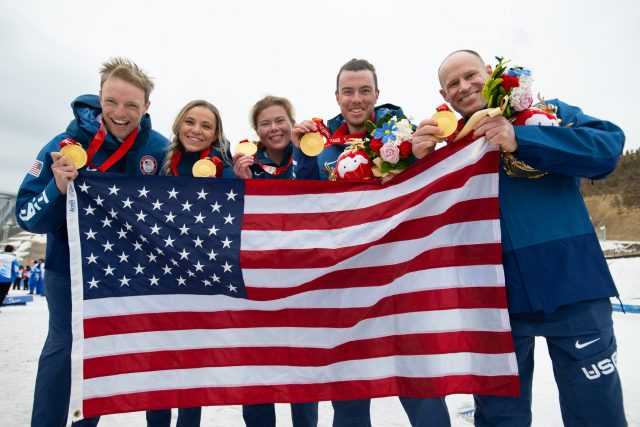
    Team USA’s gold medal-winning team relay at the 2022 Beijing Paralympic Games: (l-r) guide Sam Wood, Oksana Masters, Sydney Peterson, Jake Adicoff, and Dan Cnossen. Last month, the International Paralympic Committee (IPC) transferred Para Nordic sport governance to the FIS. (Photo: Mark Reis / Team USA).

    The International Ski Federation’s (FIS) annual Congress held at the end of May this year was an unusually dramatic affair. Fights over media rights – whether to look at serializing the sport of Nordic skiing into something like Formula 1’s Drive to Survive – sent skiing’s international governing body into a metaphorically different part of the Netflix catalog, less Dive to Survive and more House of Cards, West Wing, or Newsroom. If only Aaron Sorkin could write in Swiss German or French.

    But like even the best political thrillers, the FIS Congress had its filler episode. And in this one, they dispensed with all the power plays and posturing to agree resoundingly on one thing; on May 26st in Milan, 94% of FIS member confederations voted to transfer international governance of para nordic skiing from the International Paralympic Committee (IPC) into the fold of FIS. That, in promise, will allow nordic programs across the globe to integrate para athletes more seamlessly into their national programs, and give para nordic access to FIS resources – events, venues, and yes, even the controversial but undeniably valuable media rights, that nordic skiing can sell to fund sport development.

    It was as close to a watershed moment as there comes in the world of international sport governance. One moment, para nordic was viewed as a separate sport with separate governments, the next it was wholly integrated into the larger nordic skiing world.

    That governmental change is one that came about as the result of two tides in the world of Paralympic sports.

    One is overall growth; since the first winter Paralympic Games were held in Örnsköldsvik, Sweden in 1976, the winter Paralympic movement has grown in participation and competitiveness at the Paralympic games, as well as developed a robust number of para programs in skiing at all levels of development. At Örnsköldsvik 1976, there were 198 athletes from 16 nations at the Para Winter Games. At the Beijing 2022 Games, there were 564 athletes from 46 nations. That’s a stark trajectory of Paralympic sport and its promise to allow every person, with any physical ability, pursue sport at its highest level.
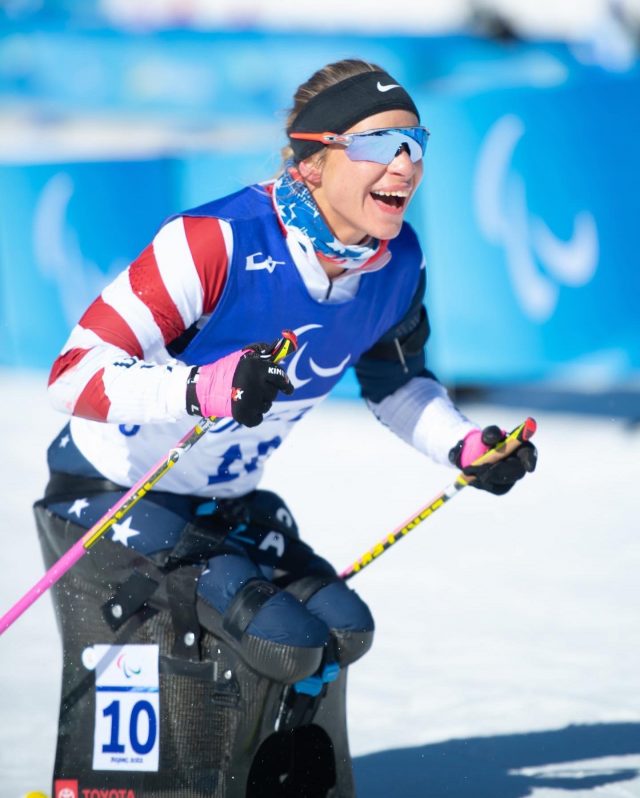
    Oksana Masters at the 2022 Beijing Paralympic Games. Masters won 6 medals in Beijing, including 3 gold medals (2 in individual Biathlon events, 1 as part of USA’s relay team). Between summer and winter Paralympic games, Masters total medal count is 17. (Photo: Mark Reis / Team USA).

    The parallel tide to this has been growth in complexity and size of the organization that up until now has governed all sports involved in the para sport, the International Paralympic Committee (IPC). With that, especially over the past decade, has come complex but necessary debates about resource disparities between para and non-para disciplines, and over whether the IPC should have a bigger governmental presence over the sports it oversees than the comparatively less centralized and more hands-off International Olympic Committee (IOC) that oversees the broader Olympic movement. Last December, those debates culminated in a call for the IPC to adopt a revised constitution. A key provision called for the decentralization of sport governance for 10 sports – including alpine skiing, biathlon, and nordic skiing – to their respective international federations. With alpine skiing, biathlon, and nordic skiing included in this provision, there was a clear imperative directed to both FIS and the International Biathlon Union (IBU) to take up both the issue of adopting the IPC’s proposal to transfer governance, and to further build the two federation’s partnerships so that they included governance of para nordic and para biathlon.

    The timeline for moving out the 10 sports from the IPC to their respective federations targeted a deadline to achieve the goal by the close of the next Paralympic/Olympic cycle – by the 2026 Milan-Cortina games. By acting in 2022, FIS and IBU took action to achieve that goal some four years earlier than was set, indicating that the move was one that was in the works since, or possibly prior to, the IPC’s decision in May.

    U.S. Paralympics nordic skiing director Eileen Carey said in an email to Fasterskier that the move to transfer para nordic to FIS did, “happen faster than I anticipated.” However, Carey points out that this only reaffirms the growth and opportunity that FIS sees in para nordic, “I have been involved with para sports since 2010 and there’s been a shift from being perceived as a burden to manage or not worth the effort to people recognizing the value and importance of para sports. When [ski programs] have incorporated para-athletes into their programming, they have seen an increase in participation, fan base, donors, and sponsors. Para sports are compelling, and more people and organizations are recognizing that as visibility increases.”
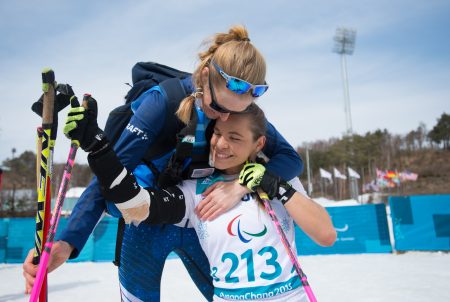
    US Para Nordic Director Eileen Carey embraces Oksana Masters during the 2018 PyeongChang Paralympic games. (Photo: Mark Reis / Team USA).

    On the benefits of FIS taking over the governance of para nordic, Carey says she is, “hopeful about the potential implications of this transition as it relates to the professionalism in our events, athlete promotion and support.” Incorporating para nordic into the FIS World Cup, Continental Cup, and domestic schedules will start to make the final integrative step for para nordic, as Carey puts it, that “we are one sport.”

    FIS looks to North America, and finds a path cut by Para

    There’s also a unique set of implications that FIS taking on para nordic might have for the growth of nordic skiing in North America. Historically, para nordic and para biathlon have had a much larger presence on the North American continent than the FIS’ non-para counterpart. While the FIS Nordic Ski World Championships have only ever been held twice in North America –in Rumford, Maine in 1950 and Thunder Bay, Ontario in 1995 – the IPC Para Nordic Ski World Championships have more regularly visited the continent, including to Jackson, Wyoming in 1990, Fort Kent, Maine in 2005, Cable, Wisconsin in 2015, Prince George, British Columbia in 2019. This year’s Para World Cup finals will be at Soldier Hollow, Utah in March as well. Beyond that, North American venues have had a regular presence on the IPC Para World Cup in a way that they simply have not on the FIS World Cup schedule.

    An integrated para and non-para World Cup has already taken place in partnership between FIS and IPC in Dresden, Germnay in January 2020, which will serve as a model as FIS goes forward into what Carey says, “[will be] a season with a lot of learnings.” As FIS does look to integrate para nordic into that FIS World Cup schedule, it’s almost a certainty that they will be leveraging the experience of organizers who have developed and hosted IPC events in the past.

    Which leads to an interesting proposition for us in North America. The draft schedule for the 2023-2024 FIS World Cup released this spring includes a joint Minneapolis/Cable World Cup to coincide with the American Birkiebeiner’s 50th anniversary (to read more on the American Birkebeiner Ski Foundation’s plans, read our interview with Executive Director Ben Popp). As previously noted, Cable has already hosted IPC World Cups and IPC Para Nordic Ski World Championships in the past decade, meaning that FIS will look to a proven organizing group to make their return to the North American continent a success. That model of partnering with organizers with para nordic event experience could be a beacon as FIS looks to return to the North American continent in 2023 and be key in making North America the site of more World Cups in the future.
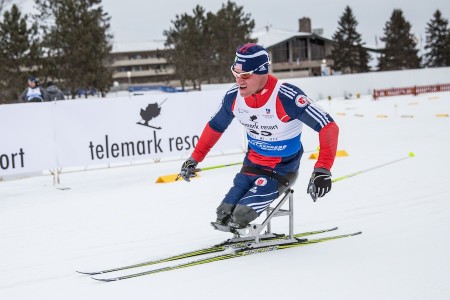
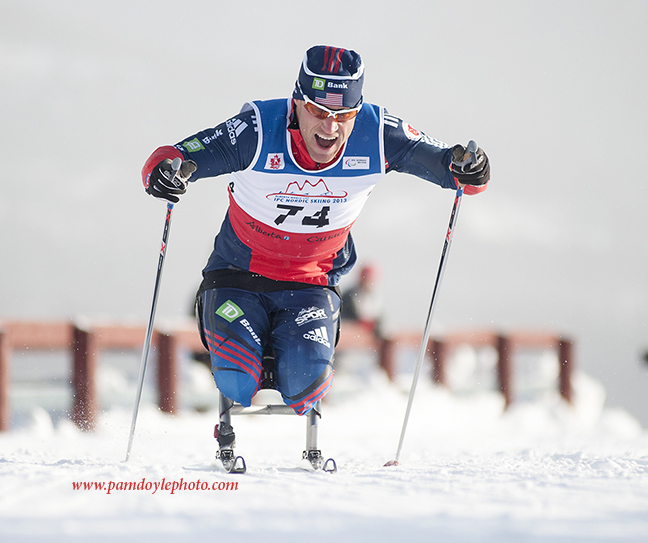
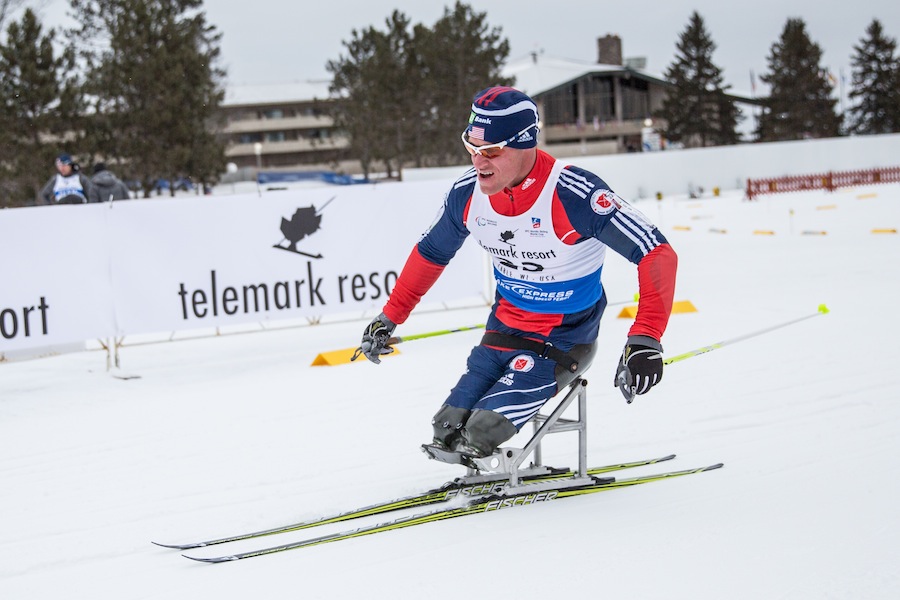
    USA’s Dan Cnossen skis past the old Telemark Lodge in Cable, Wisconsin during a 2013 IPC Para Nordic World Cup. With the FIS looking to return the Nordic World Cup to North America, organizers who gained experience hosting top-level racing through the IPC will be looked to for valuable insights on making events successful in North America. (Photo: James Netz).
    Growth for Para Nordic in the United States and beyond

    U.S. Para Nordic paving the way for the sport would fit with historical developments as well. Carey points out that “In the U.S., we are ahead of the curve in integrating para athletes into clubs and teams and events…Our U.S. Ski & Snowboard and biathlon clubs are the development incubators for para nordic just as they are for the U.S. Ski Team. From the Bill Koch Festival to our National Championships, [these] are the same races sit skiers, one-armed skiers, and visually impaired skiers are doing to develop the sport.” That integration and investment has led to a program that regularly wins Paralympic medals and World Championships. Athletes like Oksana Masters, Dan Cnossen, Kendall Gretsch, and Jake Adicoff have made the U.S. a dominant and world-leading para program, charting a path for U.S. skiing success on a broader scale and reorienting nordic skiing’s examples to what is going on in the U.S. Carey says that the most important hope is that the FIS umbrella will help further “highlight, support, and develop” these athletes, and upcoming athletes like them, as they continue to inspire and send the message that the sport of skiing is for everyone, regardless of their physical abilities.
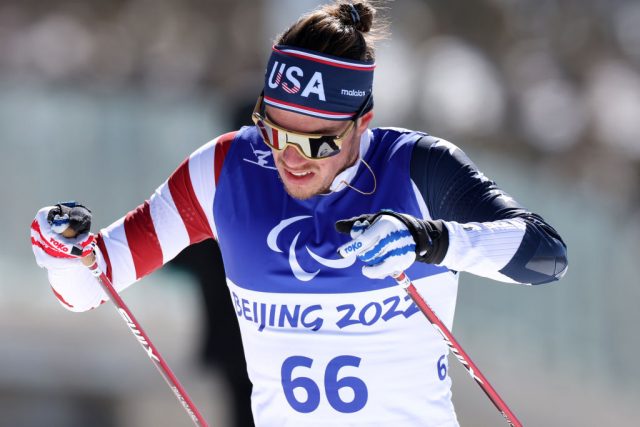
    Team USA’s Jake Adicoff competes at the 2022 Beijing Paralympic Games. Adicoff was part of Team USA’s gold medal winning mixed Team Relay team. (Photo: Mark Reis / Team USA).

    While the intricacies of sport governance can be boring – Carey also noted that the FIS system simply makes things like event insurance and athlete licensing less of a barrier to entry for para skiers – they also underscore important cultural shifts in the world of nordic skiing. One that sees more skiers, from more backgrounds, introduced to a sport where the quiet freedom that moving through a big, big world is one of the more sublime feelings available on Earth. To travel to another part of that metaphorical Netflix category, the political thriller will hopefully in time lead to the carefree beauty of viewing one of those BBC nature documentaries, probably Frozen Planet, for more of us everywhere.
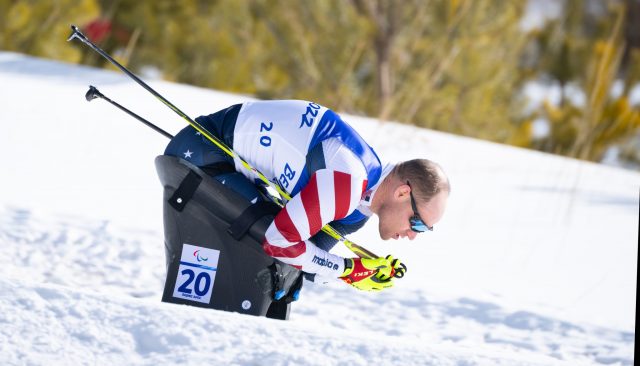
    Dan Cnossen competes at the 2022 Beijing Paralympic Games. Cnossen won 2 gold medals at the 2022 games, and has won 7 Paralympic medals between two games in 2022 and 2018. (Photo: Mark Reis / Team USA).
  • The International Paralympic Committee (IPC) suspends Russian cross-country skier Nadezhda Fedorova (Press Release)

    The International Paralympic Committee (IPC) suspends Russian cross-country skier Nadezhda Fedorova (Press Release)

    Press Release

    The International Paralympic Committee (IPC) has suspended Russian cross-country skier Nadezhda Fedorova for four years for committing an anti-doping violation.

    The PyeongChang 2018 Paralympian returned an adverse analytical finding for oxandrolone metabolites in a urine sample provided on 26 October 2018 in an out of competition test in Novosibirsk, Russia, where the athlete was training.

    This substance is included on the World Anti-Doping Agency (WADA) 2018 Prohibited List under the category S1.1A Anabolic Androgenic Steroids (exogenous).

    As a result of her violation, Fedorova will be ineligible for competition for four years from 8 July 2019 to 7 July 2023. All her results obtained from 26 October 2018 and onwards will be disqualified including forfeiture of any medals, points, records and prizes.

    James Sclater, the IPC’s Anti-Doping Director, said: “This violation is the result of a targeted test conducted by the IPC at a time when the Russian Paralympic Committee was suspended as an IPC member.

    “Throughout Russia’s suspension we continued to test Russian Para athletes who were part of a Registered Testing Pool, a group of top-level athletes in specific Paralympic sports who take part in an out-of-competition testing programme.

    “Fedorova was eligible to compete at PyeongChang 2018 as a Neutral Paralympic Athlete after returning two clear anti-doping tests in the six months prior to the Paralympic Winter Games.  This was a key criterium athletes had to meet to compete at the Games.

    “Following Russia’s reinstatement as an IPC member earlier this year, we are continuing to implement an enhanced testing programme in the country.”

    At PyeongChang 2018, Fedorova competed in six sit-ski biathlon and cross-country skiing events.  Her highest placing was fourth in the 5km cross-country skiing event.

    The IPC would like to remind all athletes the principle of strict liability applies to anti-doping matters and that any athletes who need to take a prohibited substance for medical reasons should seek a Therapeutic Use Exemption.

    Each athlete is strictly liable for the substances found in his or her sample, and that an anti-doping rule violation occurs whenever a prohibited substance (or its metabolites or markers) is found in his or her bodily specimen, whether or not the athlete intentionally or unintentionally used a prohibited substance or was negligent or otherwise at fault.

    As a signatory of the World Anti-Doping Code (WADC), the IPC remains committed to a doping-free sporting environment at all levels. The IPC, together with the International Federations and the National Paralympic Committees, established the IPC Anti-Doping Code to prevent doping in sport for Paralympic athletes, in the spirit of fair play. The IPC Anti-Doping Code is in conformity with the general principles of the WADC.

  • South Korea’s Medal Hope, Eui Hyun Sin Preps for Home Paralympics

    South Korea’s Medal Hope, Eui Hyun Sin Preps for Home Paralympics

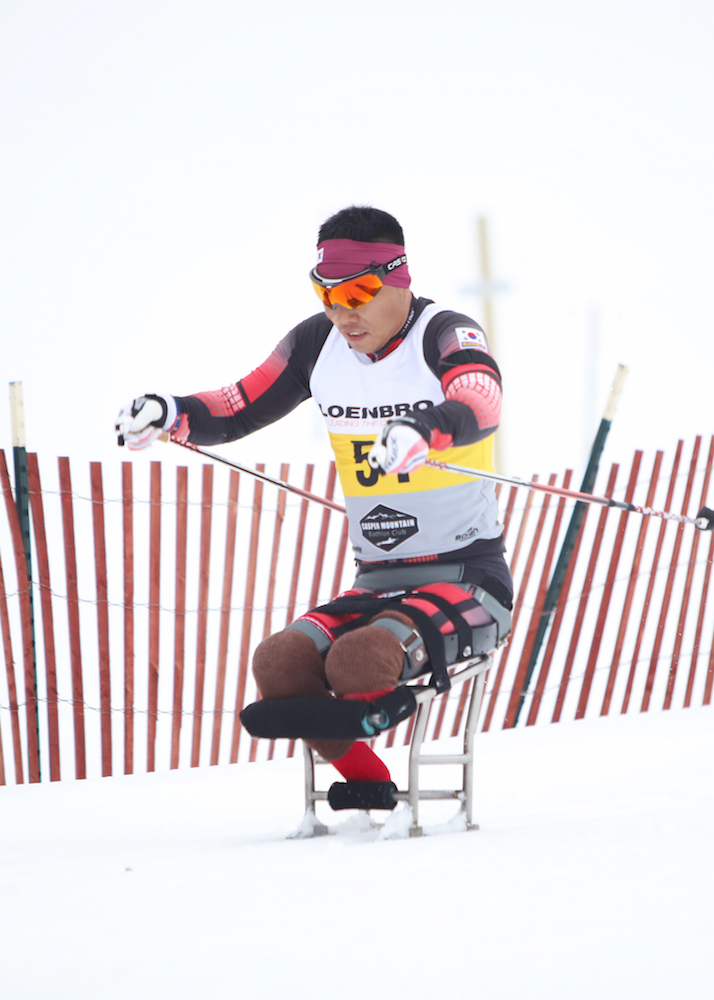
    South Korea’s Eui Hyun Sin won both biathlon races at 2017 U.S. Paralympics nationals and placed third in the cross-country sprint and short-distance races in Casper, Wyo. (Photo: Pearson Photography)

    For a few days at the end of January, a sea of stringed kites fills the skies of many cities in South Korea. The normally crowded streets of downtown Seoul — the country’s capital — empty and become almost devoid of people. Many of the residents are indoors with their families, or en route to the hometowns of relatives, all in order to celebrate Seollal, one of the nation’s greatest Korean holidays.

    Generally spanning a period of three to five days, Seollal is observed by many citizens as a time to feast, be with family, and pay tribute to ancestral figures. Shops and businesses close, and work is waitlisted until after the festivities’ culmination.

    While many enjoyed the extra days of leisure this year, one South Korean skier was itching to get back to work: Paralympian Eui Hyun Sin.

    Born in Gongju, South Korea, Sin became accustomed to the savory meats and spare time that are part of the holiday’s tradition. But now, Seollal — and many of the other Korean holidays he continues to observe — are as much a celebration as they are a symbol of something he must sacrifice: time spent training.

    As many of his competitors maintained a fairly consistent training plan in their preparation for this year’s 2017 World Para Nordic Skiing Championships, which took place Feb. 10-19 in Finsterau, Germany, Sin’s schedule forced him to skip a few training sessions. But that did not prevent him from medaling at the championships.

    Sin, a 37-year-old sit skier who lost both his legs following a car incident, raced to a bronze in the men’s 12.5-kilometer sitting biathlon race and a silver in the men’s 15 k sitting cross-country race in Finsterau (in the LW12 category). In doing so at his first World Championships, he became the most successful in para-nordic skier in South Korea’s history.

    “I was very happy, but I feel regretful at the same time, because I could not train enough because of the Korean holidays,” Sin wrote in an email, according to a team translator. “However, it means so much for me, because it was the first time for the history of Para Nordic ski of Korea.”

    Along with becoming the first South Korean to medal at World Championships, Sin also won three International Paralympic Committee (IPC) World Cup races, two in Ukraine and also in the 15 k cross-country race at home in PyeongChang, South Korea, where the 2018 Winter Olympics and Paralympics will be held.

    Nordic skiing is not the only realm of athletics in which Sin has made his mark. Prior to joining the Korean para-nordic ski team in 2015, he played internationally for the Korean para ice-hockey team and also competed in wheelchair basketball and para cycling at the national level. His involvement in these sports, as well as encouragement from friends, led him to turn to skiing for the past two years.

    “When I was playing Hockey and Cycling constantly, one of my friends suggested me to join the Para nordic ski club,” Sin wrote.

    He struggled with the decision as he had a solid job and needed to provide for his family.

    “However, I thought that I am not that young and it is very special chance to participate in the Paralympics held in my own country. So, I decided to start the nordic ski,” he wrote.

    He made the decision with a home Paralympics weighing heavily on his mind. And as he gears up for PyeongChang next March, he’s one of his nation’s best chances for a medal.

    “The 2016/17 was the season which made me confident for the Paralympic medal,” Sin wrote. “Since there will be Paralympic Games in this season, I want to win the gold medal by training hard.”

    Much of that training so far has taken place abroad. Following the last races of the season in April in Casper, Wyo., the South Korean para-nordic team planned to continue training in the U.S. until May 30.

    Then Sin and the crew will make their way to PyeongChang for the month of June, followed by travel to Finland in July. 

    “This year, we are training with the new head coach Kaspar Wirz who is from Canada,” Sin wrote. “He has much experience and knowledge to teach, so the training is very fun. I am focusing on the skiing positions and shooting for the biathlon.”

    With a full season ahead of him and a full one behind — he finished the 2016/2017 season ranked second in the overall cross-country IPC World Cup rankings — Sin is both excited about the opportunity to represent his country at home and the accomplishments he has already given to Korea.

    “The highlights were the moment I won the gold medals in cross country 7.5 K and 15 K in the World Cup held in Ukraine,” Sin wrote. “The win was a big moment for me.”

  • South Korean Para Team Takes Spring Training to Casper

    South Korean Para Team Takes Spring Training to Casper

    South Korea’s Eui Hyun Sin swept both biathlon races at U.S. Paralympics nationals earlier this month and placed third in the cross-country sprint and short-distance races in Casper, Wyo. The South Korean Para-Nordic team is training in Casper until May 9. (Photo: Pearson Photography)

    Winter closed with a bang at Casper Mountain Biathlon Club (CMBC) in Casper, Wyo., as the nordic center hosted World Para Nordic Skiing NorAm & U.S. Paralympics Nordic Skiing Biathlon Nationals with four races in three days earlier this month.

    “Although the event was small, the competition was quality,” CMBC Managing Director Cathy Rosser wrote in an email.

    On March 31, the day before the first event, athletes trained as a foot of snow fell on an already deep base. Biathlon races took place April 1 and 2, with middle-distance biathlon races on Saturday, 12.5 kilometers for men and 10 k for women, and four shooting stages for each. Men raced on a 2.5 k loop; the women skied a 2 k loop on trails designed by John Morton. The weather warmed to 36 degrees, making for a firm track.

    On Sunday morning, biathletes raced a sprint, 7.5 k for men and 6 k for women, on the courses noted above. That afternoon, 1.2 k cross-country sprint qualifiers and finals were held. Fog descended during the sprint A-final, giving athletes just about 100 meters of visibility.

    On Monday, the three-day series wrapped up with short-distance classic races.

    Oksana Masters of the U.S. and South Korea’s Eui Hyun Sin dominated the biathlon events. On both days, American Andy Soule finished second by narrow margins, according to a CMBC press release. Canada’s Derek Zaplotinsky won the men’s sprint qualifier and final, and on the final day, Soule won the short-distance sitting cross-country race, as did Masters in the women’s sitting division.

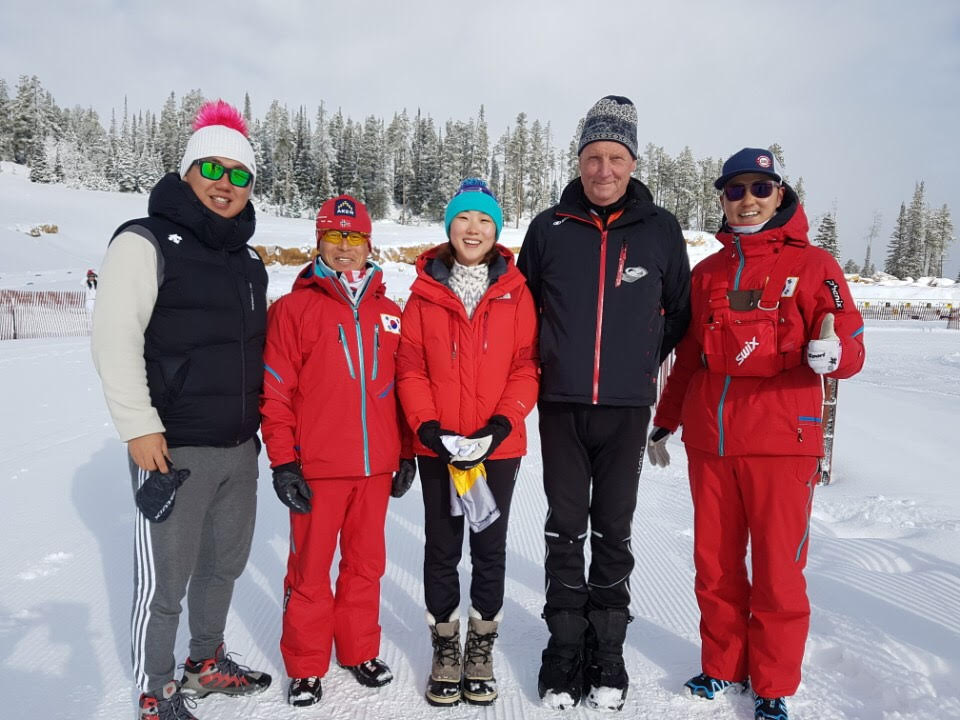
    The South Korean Para-Nordic coaching staff at the Casper Mountain Biathlon Club earlier this month in Casper, Wyo, including (from left to right) trainer Ki Won Yoo, cross-country coach Jong In Choi, team manager Joo Yeon Han, and head coach Kaspar Wirz. (Courtesy photo)

    The South Korean team planned to continue training in Casper through May 9. According to coach Kaspar Wirz, the team’s primary goals are to “work on technique and [accumulate] snow kilometers,” he explained on the phone. “This is more than just doing the races.”

    Canada’s head para-nordic coach from 1996 to 2010, Wirz took the opportunity to coach the Korean Para-Nordic team in the months leading up to the 2018 Olympics in PyeongChang, South Korea. When he started coaching the Korean team in January, he checked out CMBC. His athletes had never trained at high altitude, Wirz explained, and he chose Casper because of its elevation (above 5,000 feet) and reputation for promising spring conditions.

    “We could have gone to Finland to put some kilometers in but decided to come here and I’m very happy.”

    Coming off the IPC World Cup Finals in Sapporo, Japan, the team returned home for a few days before traveling to Wyoming.

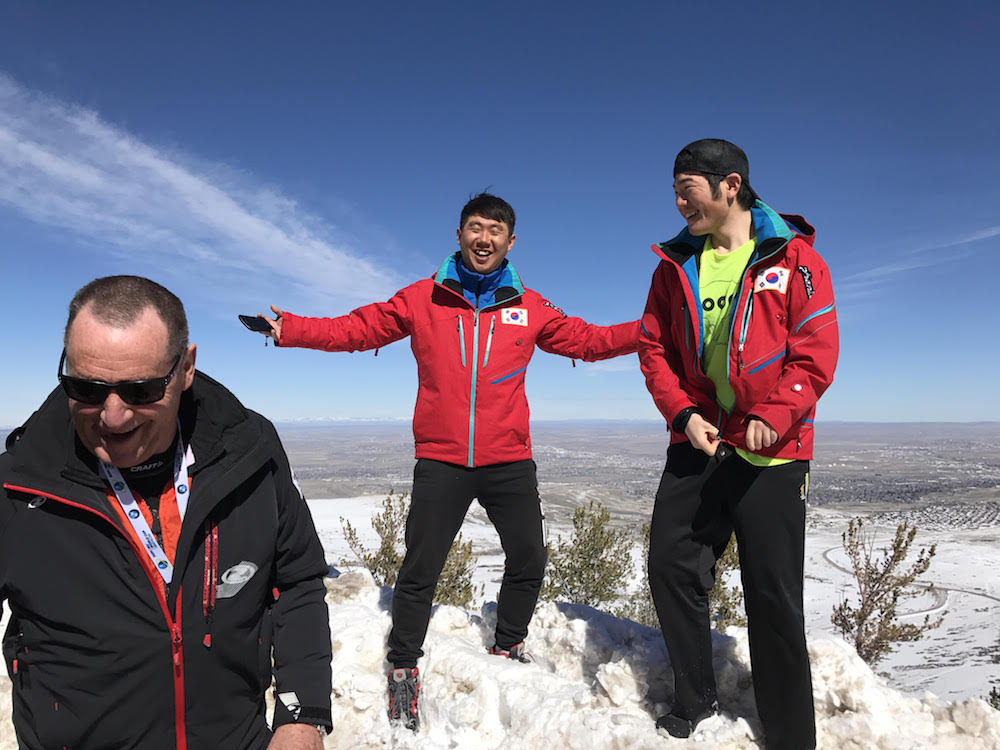
    South Korean Paralympic skiers Ki Won Yoo and Sang Hyun Kwon having some fun after a morning training session in Casper, Wyo., with coach Kaspar Wirz (left). (Courtesy photo)

    “The conditions are excellent,” Wirz said. “The adjustment to the altitude and jet lag are not a big deal. I’m happy I made the move to come here.”

    The training camp caps a successful season for the Korean team, which competed at all five stops on the IPC World Cup circuit. “We went to all the World Cups, we had people on the podium, but if the Russians come back, the deck would be re-shuffled a little bit,” he said, referring to the indefinite suspension of Russian Paralympic athletes from IPC-sanctioned competitions.

    Six weeks makes for a long training camp, but Wirz said his athletes were up for it. The team’s original plan had been to train in Wyoming for two weeks, go home for a break and fly back to Bend, Ore. But that would have meant two additional 13-hour travel days and recovery from jet lag.

    Asked about funding for the overseas camp, Wirz said that in January he met with the secretary general of the Korean National Ski Federation for the Disabled, who was incredibly supportive.

    “So far I don’t have a budget. I just have to request to go somewhere, and they say yes or no,” Wirz explained. “So far, we haven’t had any budget restrictions. There were no questions asked because they want to perform at their home Olympics.”

    Results:

    Day 1: Middle-distance biathlon

    Day 2: Biathlon sprint | XC sprint qualifier | XC sprint final

    Day 3: Short-distance XC

  • FasterSkier’s Para-Nordic Skiers of the Year: Oksana Masters and Brian McKeever

    FasterSkier’s Para-Nordic Skiers of the Year: Oksana Masters and Brian McKeever

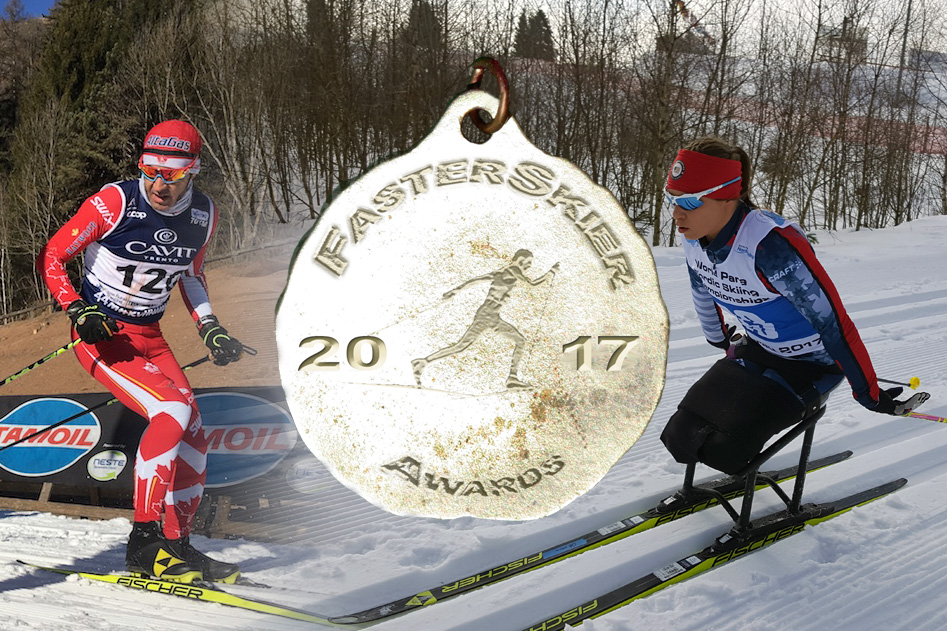
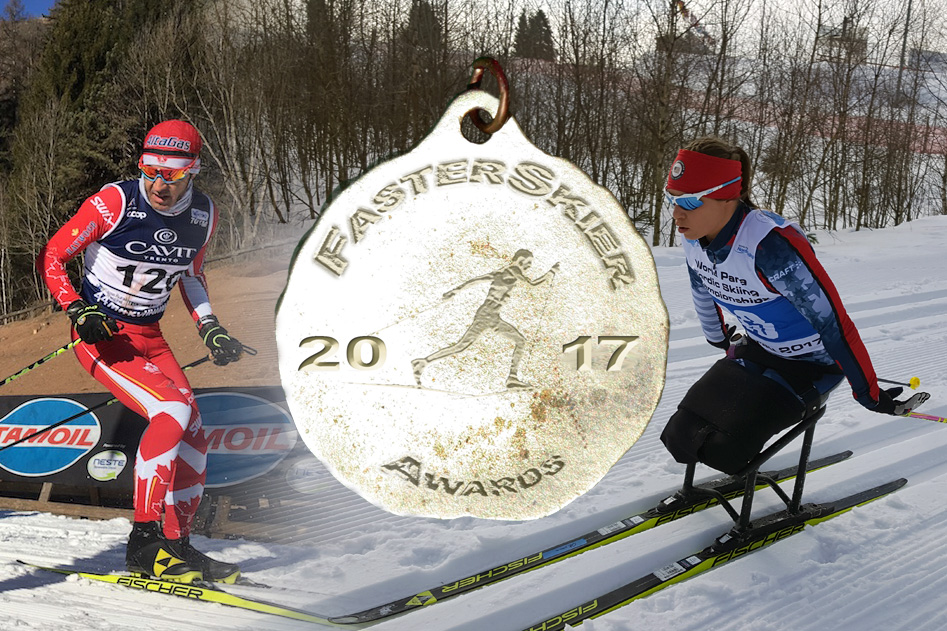
    Canada’s Brian McKeever (Photo: Graham Longford) and American Oksana Masters (Photo: USOC) are FasterSkier’s Para-Nordic Skiers of the Year.

    With the 2016/2017 season officially in the rearview, FasterSkier is excited to unveil its annual award winners for this past winter. Votes stem from the FS staff, scattered across the U.S., Canada, and Europe, and while not scientific, they are intended to reflect a broader sense of the season in review. This set of honors goes to outstanding Para-Nordic skiers on the IPC World Cup circuit. 

    Previous categories: Junior Skiers of the Year | Collegiate Skiers of the Year | Canadian Continental Skiers of the Year | U.S. Continental Skiers of the Year | Nordic Combined Athlete of the Year | Biathletes of the Year

    ***

    Oksana Masters, U.S. Paralympics Nordic 

    Six medals in seven days. Four of them gold. Never before had a U.S. athlete taken home four gold medals from a World Para Nordic Skiing Championships, but U.S. Paralympics Nordic A-team member Oksana Masters changed all that.

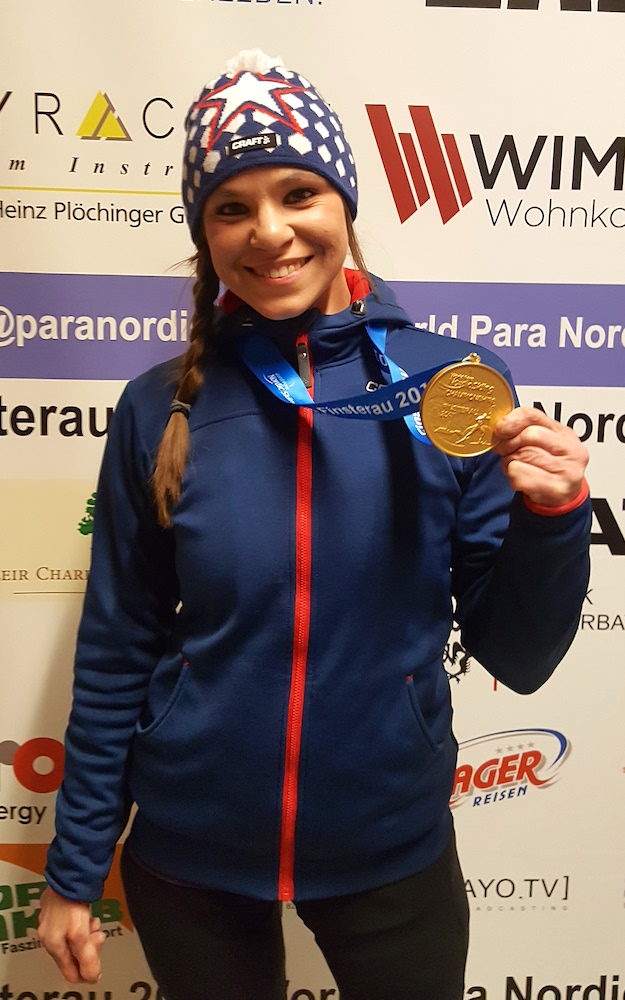
    Oksana Masters (U.S. Paralympics Nordic) after winning her first IPC World Championships gold in the women’s cross-country sitting sprint on Sunday, Feb. 12, in Finsterau, Germany. (Photo: John Farra/US Paralympics Nordic)

    The 27-year-old sit skier racked up six World Championships medals in Finsterau, Germany, including her second-career biathlon win in the women’s 6 k sprint (her first came earlier this season in the first biathlon race of the year).

    “I am completely shocked,” Masters told media outlets after the sprint. “I entered this race with no expectations. I went from not being sure if I was going to be able to race the last two days to winning my first gold medal in biathlon. I’m so excited! I cannot wait to let this all soak in.”

    But Masters didn’t just dominate the world champs scene. After ending last season undefeated in every International Paralympic Committee (IPC) World Cup cross-country race she entered, she almost did it again, winning all but one cross-country race this winter (she placed second in the last cross-country race of the season).

    “I feel like I had a pretty great season, especially coming off training for a complete other sport that uses a complete opposite motion not too long ago,” Masters said, according to a U.S. Paralympics press release, referring to her handcycling training for the 2016 Summer Olympics.

    “I’m really happy with my season and my training,” she added. “I feel extremely hopeful to have to good races in PyeongChang next year.”

    Brian McKeever, Canadian Para-Nordic Skiing

    At 37, Canada’s Brian McKeever is a team veteran and a world leader in para-nordic skiing. In 2010, he became the first athlete in the world to be named to both Olympic and Paralympic teams. In his three Winter Paralympics, he’s accumulated 13 medals, 10 of them gold.

    And this year, after turning his focus to the overseas Ski Classics marathon series, he earned his 18th and 19th IPC World Championships gold, winning both the men’s 10 k and 20 k visually impaired races. Prior to that, he won the season-opening IPC World Cup sprint in Vuokatti, Finland. By the end of the season, he also qualified for and competed in the International Ski Federation (FIS) World Cup Finals in Quebec City, Quebec.

    Brian McKeever jumping in front of Norway's Petter Kaarby just before the final climb. (Photo: Graham Longford)
    Brian McKeever passing Norway’s Petter Kaarby just before the final climb of the 2017 Marciolonga in Italy. He finished 57th overall. (Photo: Graham Longford)

    “I think putting the focus on Ski Classics this year was really interesting. From struggling to hit the top 40 to suddenly to be able to ski with the leaders this year, that was good,” McKeever said after his final race at World Cup Finals.

    “I am learning as well in that, and I see the opportunities there with the older guys that are still at the top and that is highly motivating for a guy that is maybe beyond his peak, at least as far as age goes, but I am still having fun and still learning,” he added. “So that is motivating for me, to continually learn something when I am out racing.”  

    Honorable Mention: Mark Arendz, Canadian Para-Nordic Skiing

    Canada’s Mark Arendz, now 27, also opened his World Championships week with a win for his second world title and first podium at a top-level international race (in a non-Paralympic year) in three years after winning the men’s 12.5 k standing biathlon race. 

    He earned four more world champs medals, including a biathlon sprint gold, a biathlon individual silver, a cross-country bronze, and a relay bronze.

     “It has been an incredible season for me, but most noticeably I have brought my shooting back,” Arendz wrote in an email to FasterSkier. “It is now a strength and no longer holding me back. The other huge take away is I now have the confidence in my ski speed to be competitive in any Cross Country race.”

    “The highlights from the season for me were World Championships and the 10km Classic in Korea,” Arendz continued. “Worlds were fantastic for me. Five medals from six races; the confidence was there and I was in the best shape of the year. I carried that shape into the test event in Korea. For two out of three laps I was having my best classic race ever. After a little stumble I couldn’t regain my focus, but until then I had the confidence that I could win a Classic race. I will grasp that belief into the training season.”

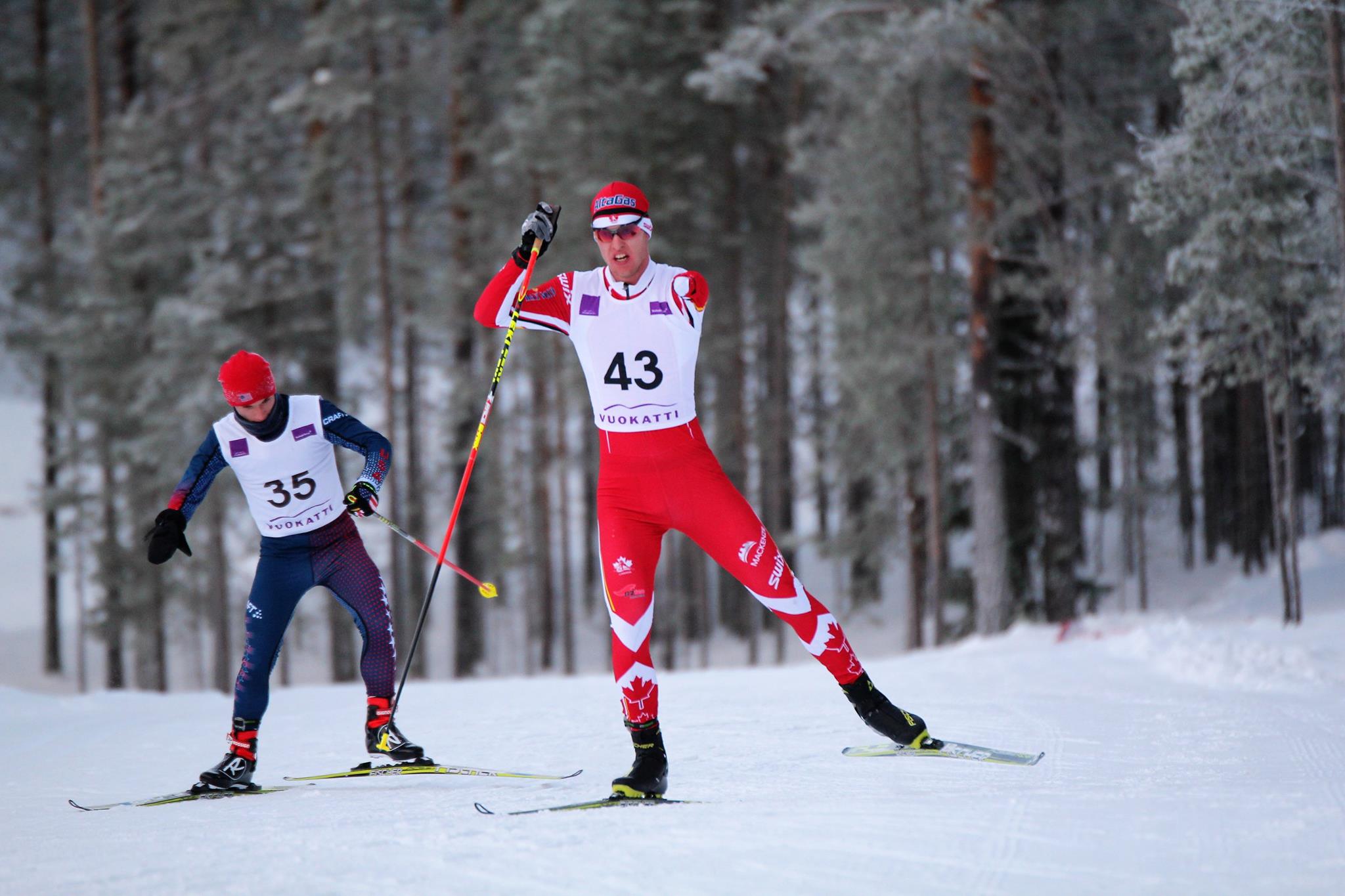
    Mark Arendz (43) of the Canadian Para-Nordic Ski Team racing to silver at the IPC World Cup on Dec. 12, in Vuokatti, Finland. (Photo: Canadian Para-Nordic Skiing/Facebook)
  • T-1 Day ‘Til IPC World Championships in Cable; U.S. Team Raring to Go

    T-1 Day ‘Til IPC World Championships in Cable; U.S. Team Raring to Go

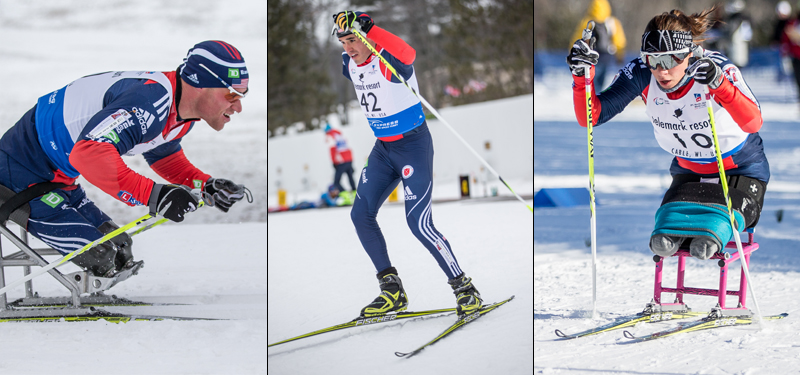
    (L-R) Dan Cnossen, Omar Bermejo and Oksana Masters are three members of the U.S. team who will be competing at the IPC Nordic Skiing World Championships in Cable, Wisconsin. (Photo: U.S. Paralympics)
    From left to right: Dan Cnossen, Omar Bermejo and Oksana Masters are three members of the U.S. team who will be competing at the IPC Nordic Skiing World Championships in Cable, Wis., with races starting on Saturday. (Photo: U.S. Paralympics)

    Note: This article has been updated to include the most recent information on the 2015 IPC Nordic Skiing World Championships according to an IPC Nordic Skiing press release.

    This past fall, FasterSkier spoke with Yuriy Gusev, head of the Cable 2015 organizing committee and executive director of Central Cross Country (CXC), about the ongoing preparations to host the upcoming International Paralympic Committee (IPC) Nordic Skiing World Championships in Cable, Wis. It seemed like a long ways off at the time, and now it’s here: being held for the third time in the U.S., for the first time in a decade.

    With Cable and the Telemark primed for the event, which includes 135 athletes from 15 countries from Jan. 23-Feb. 1, we had an opportunity to check in with U.S. Paralympics Nordic High Performance Coach Eileen Carey to see how the U.S. team was preparing. The U.S. roster was announced Jan. 9 and includes nine returners (out of 16) from last year’s Paralympics team at the Sochi Winter Games. All but one of them are sit skiers; Omar Bermejo is the lone standing athlete.

    U.S. 2015 IPC Nordic World Championships Team:

    Men

    – Omar Bermejo (Marine Corps/Grand Rapids, Mich.)
    – Lt. Cmdr. Dan Cnossen (Navy/Topeka, Kan.)
    – Sean Halsted (Air Force/Rathdrum, Wash.)
    – Augusto Perez (East Syracuse, N.Y.)
    – Aaron Pike (Park Rapids, Minn.)
    – Bryan Price (Army/Belton, Mo.)
    – Andy Soule (Army/Pearland, Texas)

    Women

    – Oksana Masters (Louisville, Ky.)
    – Tatyana McFadden (Clarksville, Md.)

    The two members of the women’s team found repeated success in Sochi, with Oksana Masters and Tatyana McFadden taking home three combined medals.

    Masters became the first female U.S. cross-country skier to win a Paralympic medal in 20 years at the Games, initially earning silver in the 12-kilometer sitting event. She also won bronze in the 5 k cross-country. This season, Masters racked up three medals at the World Cup opener in Finland, winning gold in the 1 k cross-country sprint, and silver in the biathlon 6 k as well as the 5 k cross-country.

    In Sochi, McFadden notched silver in the women’s 1 k cross-country sprint, and in the time since, she has continued her domination of the road-marathon circuit. After the ski season ended, McFadden won four world-caliber marathons in Boston, London, Chicago and New York City. It was the second-straight year that McFadden achieved the marathon grand slam in wheelchair racing.

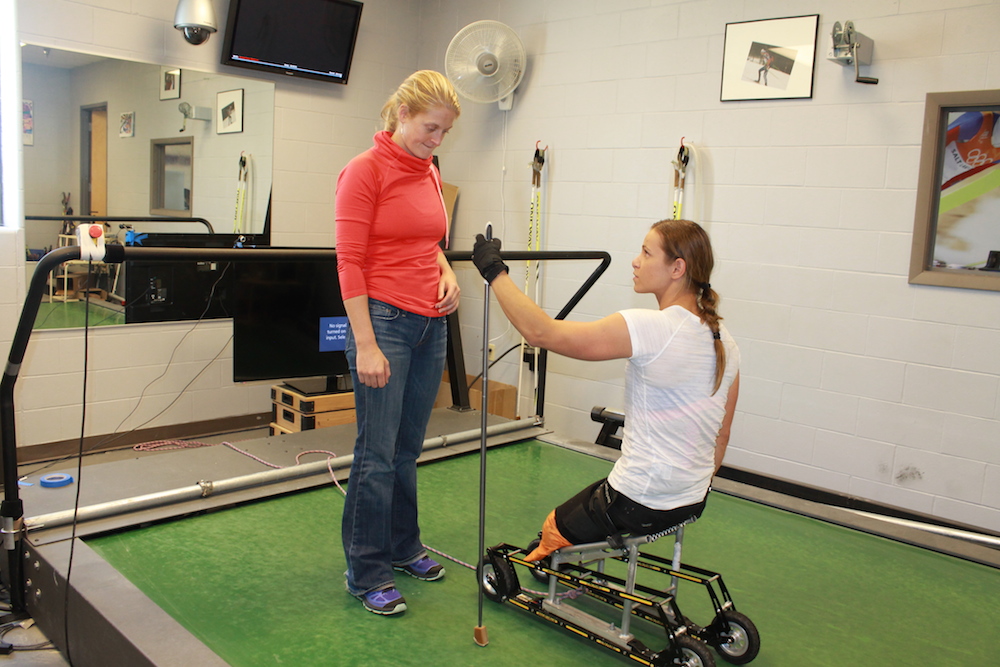
    U.S. Paralympics Nordic skier Oksana Masters (r} talks to coach Eileen Carey before her first time on a treadmill on Sept. 16 at the Olympic Training Center on Sept. 16 in Lake Placid, N.Y.
    U.S. Paralympics Nordic skier Oksana Masters (r) talks to coach Eileen Carey before her first time on a treadmill on Sept. 16 at the Olympic Training Center on Sept. 16 in Lake Placid, N.Y.

    Masters and McFadden missed U.S. nationals because of injury and ilnees, respectively.

    “Earlier in the season, Masters had a minor back injury and McFadden had the flu and were forced to miss the last World Cup event and the US Nationals,” Carey explained. “Both are back healthy and will be in the field in Cable.”

    On the men’s side, Andy Soule leads a strong men’s team heading into World Championships. A veteran sit skier, Soule is a bronze Paralympic medalist from the 2010 Games in Vancouver, British Columbia, where he shot an unprecedented perfect 50-for-50 in all three biathlon races. In Sochi, Soule finished in the top five in every event he competed in and placed fourth twice (in the 7.5 k biathlon and 15 k biathlon).

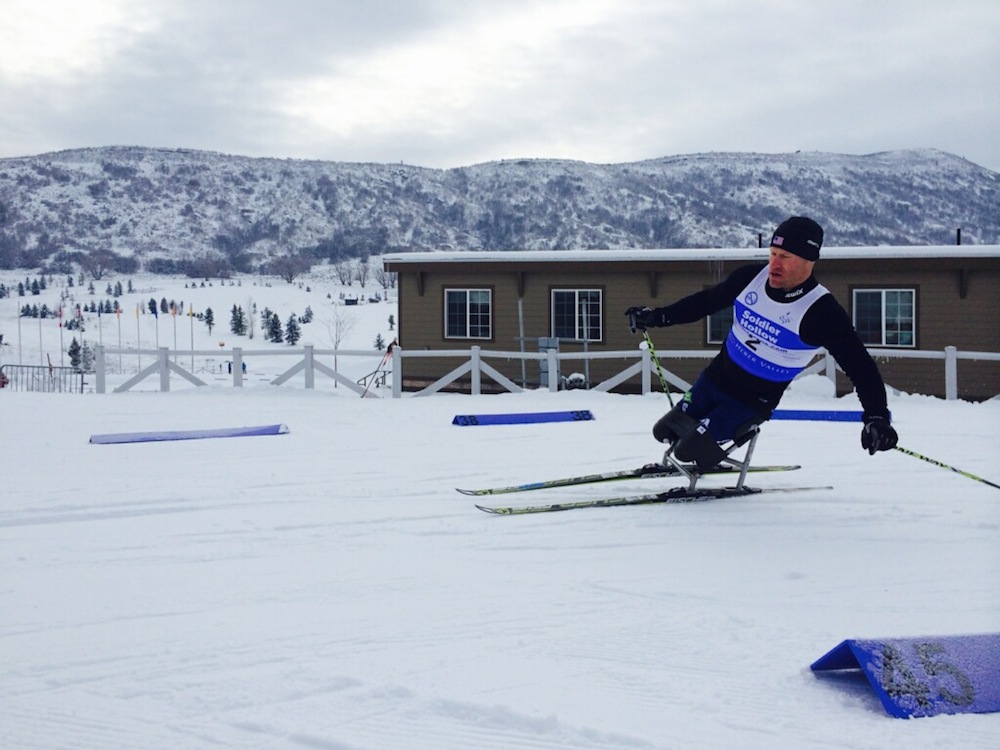
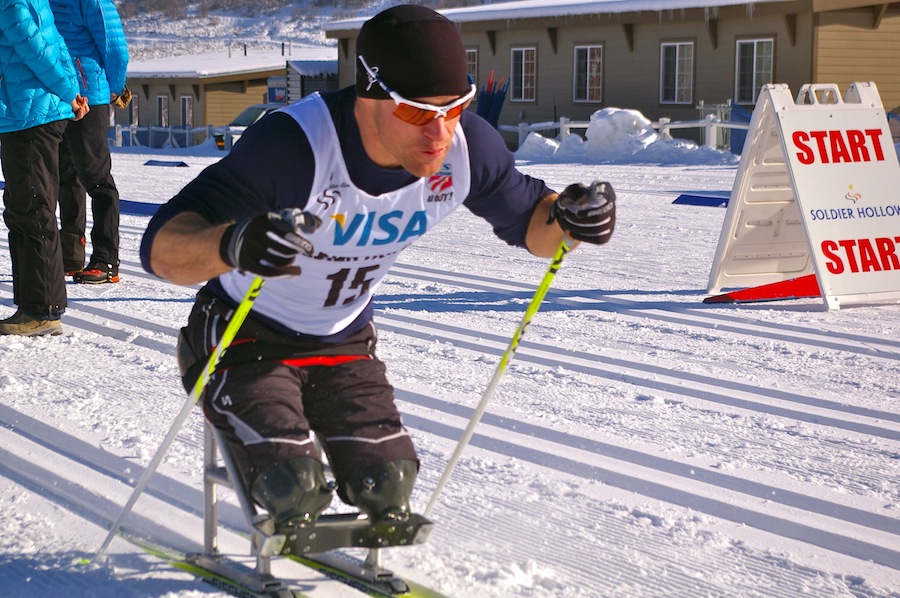
    He split the number of U.S. sit-ski titles won at this year’s nationals with teammate Lt. Dan Cnossen (both men won two races at Soldier Hollow in Midway, Utah). Cnossen won the men’s sitting short and sprint cross-country races, while he finished as the runner-up to Soule in the long distance cross-country and biathlon sprint races.

    Lt. Dan Cnossen negotiates the final turn on the course 100 meters from the finish en route to his sprint-final victory at 2015 U.S. Paralympics Nordic Nationals at Soldier Hollow in Midway, Utah. (Photo: U.S. Paralympics Nordic Program)
    Lt. Dan Cnossen negotiates the final turn 100 meters from the finish en route to his sprint-final victory at 2015 U.S. Paralympics Nordic Nationals at Soldier Hollow in Midway, Utah. (Photo: U.S. Paralympics Nordic Program)

    FasterSkier: How has the season gone so far?

    Eileen Carey: We had a strong opening to our season at the December World Cup races in Finland with a small group of athletes. We followed that with a great U.S. Nationals that brought together our top athletes with developing skiers and biathletes. Those two events showed both the high performance capacity and development focus of our program, both of which are critical to our long-term success.

    FS: What is the atmosphere of the team leading to these World Championships on U.S. soil?

    EC: Our athletes are becoming students of skiing and biathlon and driving the process of what and how they want to learn. This has created a great atmosphere for our whole program and has energized both athletes and staff. We are excited to take that energy to an event like World Champs, especially being at home. The Cable organizing committee has always been so welcoming and excited to have us and that gives us a great boost as a team.

    FS: What are your goals and expectations for this years team?

    EC: Our team philosophy is based on the concept that athletes are their own best coaches. Their training and racing has been focused on the idea that there are no “right” ways to do anything. As a result, this season they have gotten really creative and analytical about figuring out what works for them and exploring many different solutions. Our intentions are that bi-products of this exploration are improvements in skill, self-awareness as an athlete, and eventually performance. Our goals and expectations as a program are that our athletes will keep pushing those boundaries and continuing to think of different and perhaps better ways to train and race. Through this continual evolution, I think great performances will follow.

    FS: What are your thoughts on this years course? How does this course compare to 2013?

    EC: The courses in Cable will be a combination of courses we have skied there in the past, and some new features that will improve the experience for the athletes. We have spent some workouts focused on some of the terrain and technical features we will see there, so I think everyone is excited to be on the snow in Cable and test out what we have been working on.

    FS: What events will the team participate in?

    EC: We will have athletes competing each race day, with most competing in a combination of biathlon and cross-country races. Eight of our 9 athletes are sit skiers.  Omar Bermejo is our only standing skier to make the team and this will be the first time this season that we will all be together, so we are looking forward to being a full team.

    “We have a great team of athletes who have taken a very professional approach to training and building upon last season, ”Carey said in a U.S. Paralympics press release. “We are thrilled to get another chance to test out some of our training and racing strategies, ultimately focused on improving in each race. Having the opportunity to do that on home snow is a great bonus for us.”

    IPC Nordic Skiing World Championships Schedule of Events

    The opening ceremony will kick off Friday, Jan. 23 and the championships run through Feb. 1. 

    All seven days of the championships, which includes 38 events between cross-country and biathlon, will be streamed live at Cable2015.com and USParalympics.org from Jan. 24 to Feb. 1.

    Saturday, Jan. 24
    Biathlon Sprint – Penalty Loop
    Sitting: Men 7.5km (3 x 2.5 km) / Women 6.0 km (3 x 2.0 km)
    Standing: Men 7.5km (3 x 2.5 km) / Women 6.0 km (3 x 2.0 km)
    Visually Impaired: Men 7.5km (3 x 2.5 km) / Women 6.0 km (3 x 2.0 km)

    Sunday, Jan. 25
    Cross Country Long – Free
    Sitting: Men 15 km (5 x 3.0 km) / Women 12 km (4 x 3.0 km)
    Standing: Men 20 km (5 x 4.0 km) / Women 15 km (5 x 3.0 km)
    Visually Impaired: Men 20 km (5 x 4.0 km) / Women 15 km (5 x 3.0 km)

    Tuesday, Jan. 27
    Biathlon Middle Distance – Penalty Loop
    Sitting: Men 12.5 km (5 x 2.5 km) / Women 10 km (5 x 2.0 km)
    Standing: Men 12.5 km (5 x 2.5 km) / Women 10 km (5 x 2.0 km)
    Visually Impaired: Men 12.5 km (5 x 2.5 km) / Women 10 km (5 x 2.0 km)

    Wednesday, Jan. 28
    Cross Country Sprint – Classic
    Sitting: Men/Women 0.8 km
    Standing: Men/Women 1.2 km
    Visually Impaired: Men/Women 1.2 km

    Friday, Jan. 30
    Biathlon Individual Distance
    Sitting: Men 15 km (5 x 3.0 km) / Women 12.5 km (5 x 2.5 km)
    Standing: Men 15 km (5 x 3.0 km) / Women 12.5 km (5 x 2.5 km)
    Visually Impaired: Men 15 km (5 x 3.0 km) / Women 12.5 km (5 x 2.5 km)

    Saturday, Jan. 31
    Cross Country Relay – CL/Free/CL/Free
    Open: 10 km (4 x 2.5 km)
    Mixed: 10 km (4 x 2.5 km)

    Sunday, Feb. 1
    Cross Country Middle Distance – Classic
    Sitting: Men 10 km (4 x 2.5 km) / Women 5 km (2 x 2.5 km)
    Standing: Men 10 km (4 x 2.5 km) / Women 5 km (2 x 2.5 km)
    Visually Impaired: Men 10 km (4 x 2.5 km) / Women 5 km (2 x 2.5 km)

    For updates throughout IPC World Championships, follow FasterSkier’s Para Nordic blog.

  • Wednesday Workout: Reverse Pursuit Sprints with U.S. Paralympics Nordic

    Wednesday Workout: Reverse Pursuit Sprints with U.S. Paralympics Nordic

    U.S. Paralympics Nordic national-team members Andy Soule (B team), Oksana Masters (A team) and Bryan Price (development team) doing some reverse pursuit sprints in the Oberhof ski tunnel in Germany in early October. (Photo: Eileen Carey)
    U.S. Paralympics Nordic national-team members Andy Soule (B team, back), Oksana Masters (A team, center) and Bryan Price (development team, front) doing some reverse pursuit sprints in the Oberhof ski tunnel in Germany in early October. (Photo: Eileen Carey)

    This week’s workout comes from U.S. Paralympics High-Performance Coach and Associate Director Eileen Carey, who traveled to the Oberhof ski tunnel in Germany last month with a few national-team members for an on-snow camp. 

    ***

    This workout is designed to give head-to-head technical and tactical practice to a group of skiers with a wide range of speeds.  This type of workout is important for our program because we often have training sessions with athletes with a wide range of experience levels and/or with different impairments competing against one another.

    The combination of the short duration and reverse pursuit format aims to create head-to-head scenarios in situations that may not exist in more traditional interval or speed sessions. We have had good luck using this workout to combine standing and sit skiers into the same heat so they all get the opportunity to compete even if there might not be anyone else in their Paralympic class.  This could also work well for a youth program, or any workout including athletes with a variety of ski speeds.

    Here’s how it works:

    1. Prep: Set up a short course with some technical elements.  If your athletes have a wide range of ski speeds, a shorter course will help to facilitate more head to head action.  A slalom style course with cones can be really effective and simple if all you have is a small area (think early season!).  We usually shoot for between 75 meters to 300 meters depending on our technical and physiological goals for the workout.
    2. Warm-up: During a 20-30 minute warm-up, athletes ski the course, focusing on technical elements and trying different lines around tricky sections.  The solo practice helps build confidence and learn some of the unique elements of the terrain, conditions and other factors at play.
    3. Solo heats: Have skiers ski the course 1-3 times on their own at a race pace speed.  This is an important progression from the warm-up as additional speed always adds some new elements. The goal at the end of the solo rounds is for athletes to feel confident with the technical elements before adding the head to head component. During the solo heats, I time athletes to get an idea of the general times of each athlete or group of athletes. I usually time them to whatever section of the course I want them to be head to head on.  This helps set up the heat starts.
    4. Pursuit head-to-head heats:  Once athletes are confident on the course, line them up in pursuit format, but with fastest skier at the end. Start athletes one by one in reverse pursuit order depending on how long it will take each of them to get to the sticky section of the course. Repeat head to head heats 5-10 times. Once you get an idea of where challenges are coming up for each athlete, you can manipulate start times to force them to focus on that aspect of their skiing.
    5. Bonus tactical round:  If you want to add an additional tactical element, set up your course as a loop.  Complete the above workout doing one lap around the loop.  Once they are dialed with that, have them do the same format in two laps.  How does this change their tactics on the technical sections?  How might they ski those sections differently on lap 1 and lap 2?  The simple change can force some interesting changes and can be effective in starting a conversation about tactics in general.  This is a great session to video so the conversation can continue after the workout.  Plus, you will capture some great diggers, and who doesn’t love watching those on replay?
    6. Cool down: 20-30 mins

    There are lots of different ways to do this workout and so far all we have tried are both fun and effective.   We recently had a camp at the Tunnel in Oberhof and this was a great technical and tactical workout to maximize the very small area that we had to ourselves. Be inventive and have fun duking it out!

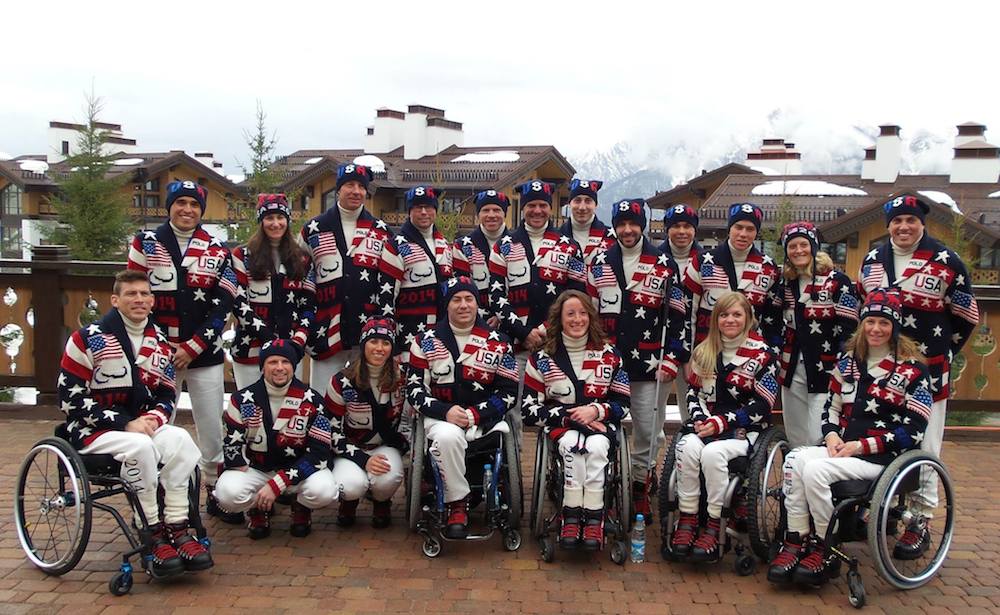
    The 2014 U.S. Paralympics Nordic Team before the Opening Ceremony in Sochi, Russia. (Photo: Eileen Carey)
    The 2014 U.S. Paralympics Nordic Team before the Opening Ceremony in Sochi, Russia. (Photo: Eileen Carey)
  • IPC World Champs Return to U.S., Cable to Host at Telemark

    IPC World Champs Return to U.S., Cable to Host at Telemark

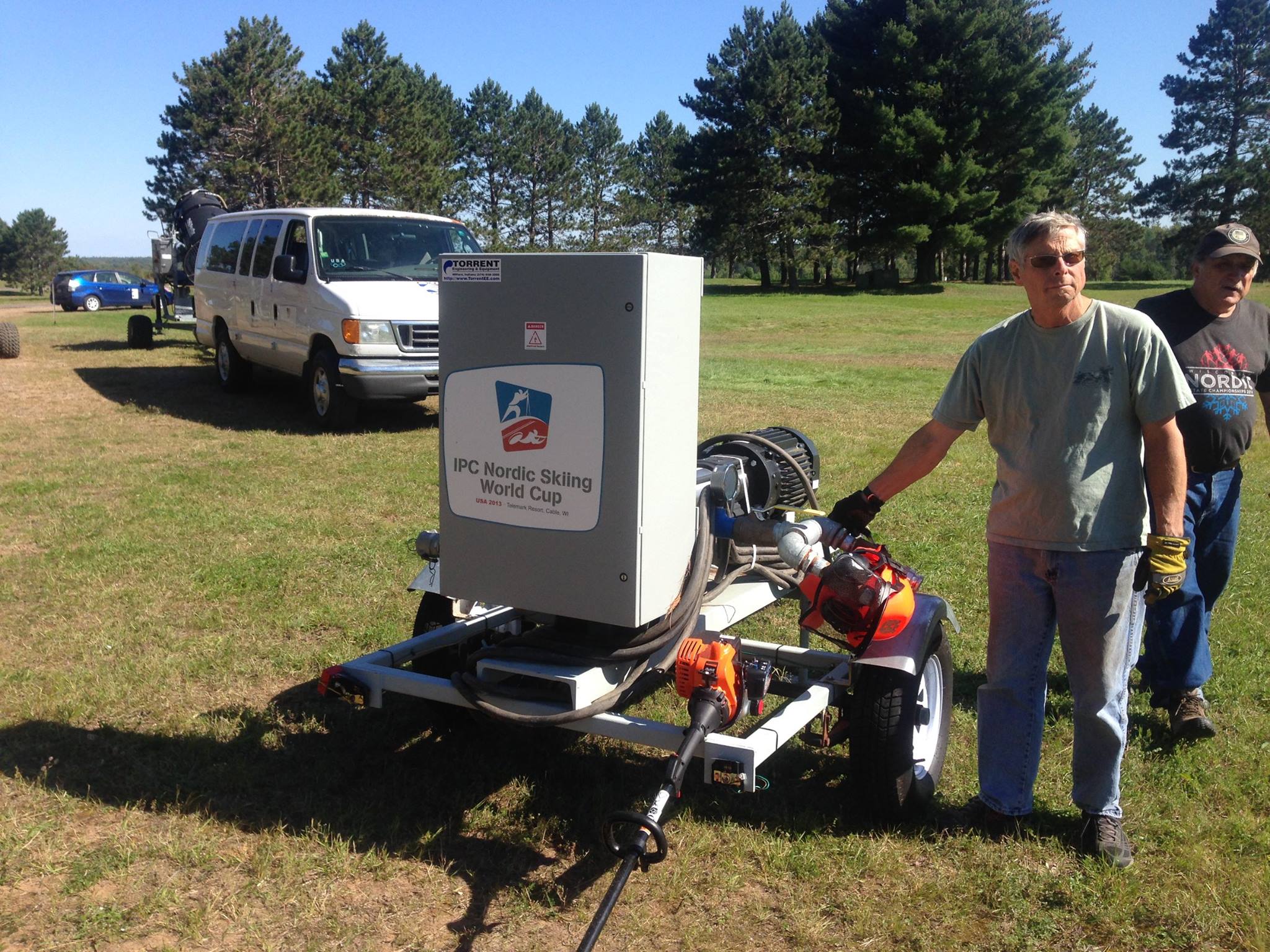
    Testing snowmaking equipment at Telemark trails in mid-September. (Photo: CXC/Facebook)
    Volunteers get ready to test snowmaking equipment at Telemark trails in mid-September in Cable, Wis. The IPC Nordic Skiing World Championships will be held there Jan. 22-Feb. 1, 2015. (Photo: CXC Skiing/Facebook)

    Northern Wisconsin, home of the Lumberjack World Championships and largest ski marathon in North America (a.k.a. the Birkie), is about to play host to the International Paralympic Committee (IPC) Nordic Skiing World Championships in January 2015.

    For the first time in 10 years, IPC World Championships is returning to the U.S. since its last visit in 2005 in Fort Kent, Maine. And it’s coming to Cable, a town with fewer than 900 residents but with a history steeped in skiing since before 1947, when Tony Wise founded Telemark Resort.

    The championships are expected to attract 150 of the world’s most competitive para-nordic athletes from 20 nations slightly less than a year after the Winter Paralympics in Sochi, Russia.

    Central Cross Country (CXC) is heading up the organizing efforts, working with Telemark’s owners to revamp the trails used for the 2012 and 2013 IPC World Cups — two events that drew international attention to Cable.

    “One of the coaches, I can’t remember what country, said we should host world championships because both those world cups were organized so well,” Yuriy Gusev, CXC’s executive director and the Cable 2015 organizing committee chairman, recalled in a phone interview.

    Cable’s World Cup organizers first entertained the idea of hosting World Championships in 2012, then, after their second World Cup in 2013, they submitted an official bid that year.

    When it comes to arranging an event of this caliber — with eight days of races between the opening ceremony on Jan. 22 and closing ceremony Feb. 1 — Gusev said it’ll be completely different from putting on a SuperTour or national championships.

    For instance, in many domestic ski races, fewer than 100 athletes typically participate. While there will be slightly more at IPC World Championships, the level of competition will be significantly higher than even a World Cup, which often attracts development skiers. And teams that don’t usually fly across the pond for non-World Championships events, like Hungary and South Korea, will be in Wisconsin as well.

    With more top-level skiers on course, Gusev said perfecting details — from appropriate hill grades for varying abilities, to the biathlon range — has been critical.

    “It’s a lot more details than anyone would ever imagine,” he said.

    One example: the hill that returns skiers back up to the stadium. As U.S. Paralympics Nordic Program director John Farra explained, it was so steep for sit skiers to ascend, especially those with little to no use of their core muscles, it wasn’t legal. And while it was used in the two previous Cable World Cups, something had to be done before World Championships.

    With help from former CXC head coach Bill Pierce, Gusev led the task of taking some chunks out of the hillside, as well as widening, flattening and cleaning up edges alongside the Telemark trails. That includes a homologated 5-kilometer competition loop and 2 1/2 k sit-ski loops.

    This past spring, Farra and his co-coach, Eileen Carey, an experienced technical delegate, visited Cable to check on the progress and pre-empt some of the questions they knew the IPC would ask during its site visit in June.

    “I’m glad we did it, and I think [Gusev’s] organizers appreciated it,” Farra said. “His new stadium is going to work, and he’s doing some pretty significant trail work … Now [the hill] is an appropriate return to the stadium. He’s done some nice improvements.”

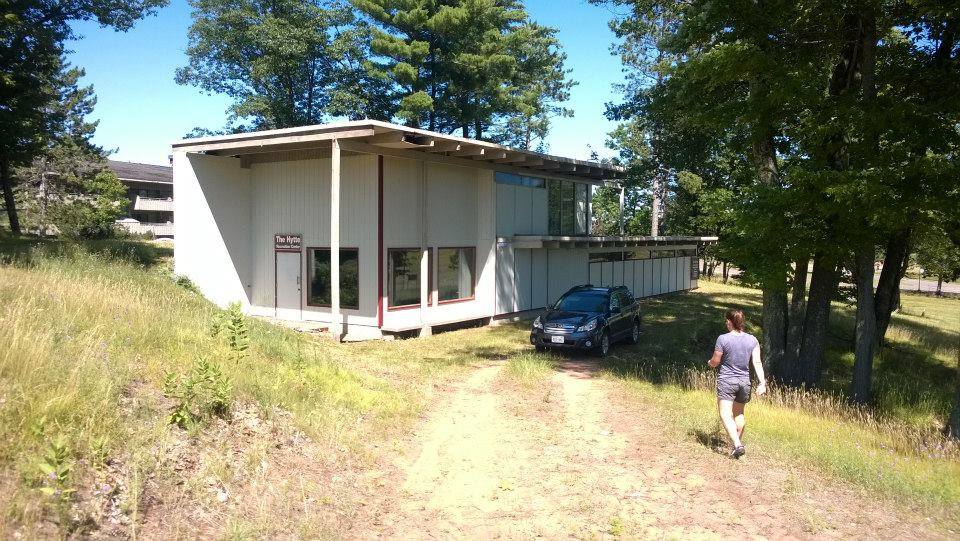
    The Hytte Recreation Center at Telemark Trails is going through makeover to be ready for the 2015 IPC Nordic Skiing World Championships and other events this winter. (Photo: CXC/Facebook)
    The Hytte Recreation Center at Telemark Trails is going through makeover to be ready for the 2015 IPC Nordic Skiing World Championships and other events this winter. (Photo: CXC/Facebook)

    The stadium has been moved slightly to a higher point and is near one of the oldest buildings on the Telemark property, the  three- to four-thousand-square-foot Hytte Recreation Center, which Telemark’s owners agreed to let CXC renovate.

    According to Gusev, CXC updated and repainted it as an events/activity center. The owners also granted them use of the Telemark trail system.

    The lodge itself remains closed, but as Gusev pointed out, “most of the venues anywhere don’t have lodging facilities at the start line.” Rather, Lakewoods Resort a 10-minute drive away will be the official accommodation and site of the closing ceremony.

    “It’s not that easy to find a venue with a trail system and a biathlon range,” Gusev explained. “[We had] two world cups there and all the teams really enjoyed the trails and the layout.”

    The opening ceremony will be held in downtown Cable in an open area between the grocery store and chamber of commerce.

    In terms of spectators, Gusev said it was difficult to predict how many people would come watch the week-and-a-half championships. Regardless, he said his seven-person organizing committee was working hard to generate as much interest as possible in the months leading up to it.

    He’s currently trying to lock down corporate sponsors to provide cash flow for hosting the event. The plan was to initially work with donation partners, then use the assistance of the IPC to attract international sponsors.

    A few months ago, the organizing committee secured a grant from the state department of tourism as well as support from Bayfield County.

    Depending on how fundraising goes, Cable 2015 could cost anywhere from an estimated $500,000 to $750,000 dollars, Gusev explained. While details and budgets will have to be finalized by November, he’s confident they’ll get there.

    “If you look at the Paralympic Games in Sochi, twenty-five countries broadcasted and two billion watched it,” he said. “For the state [of Wisconsin] and the sponsors, it’s a pretty big event to be involved in and the media exposure will be huge.”

    T.V. coverage will be a combination of small-scale broadcast and live streaming on the event website. Initially, Gusev said they considered a wide-reaching broadcast platform, but found the cost to be around $500,000 for a weekend of coverage. Alternatively, the live stream, which can be accessed anywhere online, will cost the organizers about $75,000, with equipment as the main expense, specifically a satellite truck.

    At the same time, that option creates more work.

    “If you have half a million and you have someone come in from New York to come do it, you don’t have to worry about it…,” Gusev said. “It’s actually more complex [to do the live stream].”

    And in terms of snow, that’s partly why Cable got World Championships.

    “In 2013, there was no snow anywhere and the little snow there was got melted by three inches of rain the day before the first official training day,” he said of the IPC World Cup that year. “All the races were on artificial snow so nobody could believe we pulled it off.”

    Part of Gusev’s master plan is putting Telemark on the map as a venue that can hold consistently successful, big events. In 2016, Junior Nationals will be held on the same homologated trails in Cable.

    “The standing course is [a] legitimate, hard, Sochi-like course to throw at the athletes,” Farra said. “[And Telemark has] similarly challenging courses for sit skiers.”

  • U.S. Paralympics Stoked But Not Quite Satisfied: Sights Set on Korea

    U.S. Paralympics Stoked But Not Quite Satisfied: Sights Set on Korea

    Oksana Masters training in Edebäck, Sweden, near the Torsby ski tunnel, where three U.S. Paralympic Nordic skiers trained with two coaches for a week in September. (Photo: U.S. Paralympics Nordic/Facebook) https://www.facebook.com/USParalympicsNordic/photos/pcb.535129713287388/535129139954112/?type=1&theater
    Oksana Masters (r) during a rollerski in Edebäck, Sweden, near the Torsby ski tunnel, where three U.S. Paralympic Nordic skiers trained with two coaches for a week in September. (Photo: U.S. Paralympics Nordic/Facebook)

    The second day of the 2014 Winter Paralympics in Sochi, Russia, Oksana Masters — a bronze-medal rower from Louisville, Ky. — broke the ice and a 20-year barrier for the U.S. Paralympics Nordic Program.

    Twenty-four at the time with just over a year of skiing experience, she captured silver in the 12-kilometer sit-ski cross-country race, becoming the first U.S. woman to win a medal for her team in the last 20 years.

    Three days later, another sit skier and Winter Paralympics rookie, Tatyana McFadden racked up another silver for the U.S. in the 1 k sprint. Then on the final day of the Games, Masters closed the books with a bronze in the 5 k.

    Three medals left U.S. Paralympics High-Performance Director John Farra a lot to be excited about, especially after the team took home one medal from the Paralympics four years earlier in Vancouver, British Columbia. He wasn’t at the helm then, when Andy Soule won bronze and six athletes represented the U.S. at the 2010 Paralympics.

    But less than three years after he started with the program in the summer of 2011, Farra helped it more than double in size. The U.S. brought 16 nordic-and-biathlon skiers to Sochi and grew from five full-time athletes in 2011 to six national-team members (including Masters as its first A-teamer) and nine development-team athletes.

    Tatyana McFadden while training in July for U.S. nationals in her summer sport,  wheelchair racing, of which she's a three-time Paralympic and 10-time World Championship gold medalist in track and field. (Photo: U.S. Paralympics Nordic/Facebook) https://www.facebook.com/ParalympianTatyanaMcFadden/photos/pcb.597862103645740/597861653645785/?type=1&theater
    Tatyana McFadden while training in July for U.S. nationals in her summer sport, wheelchair racing, of which she’s a three-time Paralympic and 10-time World Championship gold medalist in track and field. (Photo: U.S. Paralympics Nordic/Facebook)

    Out of the 16 in Russia, two of them won three medals, yes, but Farra also likes to point out all of their fourth-, fifth- and sixth-place finishes as well.

    “[Those are] maybe a better sign of the health of our program,” he said on the phone from his office in Park City, Utah, last week. “I was prepared for the possibility that we might win [no medals]. I wasn’t worried, but I will say there was some sense of relief, but more importantly, it was just fun.”

    Take Soule, for instance, who finished in the top five of all but one of his six races in Sochi. A biathlete as well as a cross-country sit-skier, the team veteran shot perfectly at the Games — hitting all his targets in three races.

    Then there was Jake Adicoff, an 18-year-old visually impaired skier, who placed sixth in the 20 k distance race in his first Paralympics.

    Those kinds of performances, paired with a few medals (which Farra says they “stole”), better define the strength of their program, he said. And when his bosses in the U.S. Olympic Committee (USOC) Paralympics division decided on his team’s budget for this 2014/2015 season, Farra believed they took that into consideration.

    “Our numbers went up in terms of participants and our performance,” he said, adding that they also increased the size of their full-time staff. “I think we’re in a really good place. … I didn’t get what I requested in terms of my high-performance request, but we’re getting enough to do the job, for sure. We’re getting really supported by the USOC, and we’re earning the support that we get because we’re running a really high-level program.”

    U.S. Paralympics oversees five winter sports: nordic, alpine, snowboarding, sled hockey and wheelchair curling. Every four years, Farra explained that it’s essential for U.S. Paralympics’ summer sports (like cycling, swimming, and track and field) to cut back and support them in the months leading up to the Winter Games. They do so with the understanding that now, two years before the Summer Paralympics in Rio de Janeiro, Brazil, the winter sports will do the same.

    “We’re spending less this year and appropriately so based on that design,” Farra said. “I think that’s fine.”

    He pointed out that more than half of the available medals at the Winter Paralympics come from cross-country or biathlon events.

    “[U.S. Paralympics] needs nordic to be successful,” he said. “Is it pressure? You bet it’s pressure because it doesn’t happen without us, but that’s the whole idea.”

    Last year, his program was allowed to overspend to a certain degree, Farra explained, and the budget he has to work with this season — while down from last season — is still higher than it was three years ago.

    “There were some elite strategies that I identified to my boss that I felt were really important going into Sochi and my boss allowed me to do what I needed to do,” he said.

    That included their Fast Skis program in collaboration with U.S. Biathlon.

    “I honestly feel that we had the fastest skis in Sochi of any team in the Paralympics because of that partnership, because we shared information,” Farra said. “We bought into that process and for two years we tested it. That’s the piece that we have and we’re going to keep that going, but now, what else can we do?”

    “[U.S. Paralympics] needs nordic to be successful. Is it pressure? You bet it’s pressure because it doesn’t happen without us, but that’s the whole idea.” — John Farra, U.S. Paralympics Nordic high-performance director and coach

    Standing in the hallway of the Olympic Training Center during a camp two weeks ago in Lake Placid, N.Y., Farra pointed to a five-year-old, steel-frame sit ski. That need to be three pounds lighter by switching to carbon fiber, and so did the frames of every sit skier on his team, he said. To dial in that equipment perfectly before the 2018 Paralympics in Pyeongchang, South Korea, they’ll likely have to test several versions years before. So they need to start now.

    “Medals are good, but they’re not critical; I think they’re going to be more critical in Pyeongchang,” Farra said of building on his team’s established success.

    He told his bosses this was going to be a process. “[I said], ‘I don’t want to get fired if we don’t win medals in Sochi,” he reflected with a laugh. “They said, no, no, we understand.”

    Rethinking staff structure

    While in Russia, Farra spent some time like he did when he started the job three years ago, asking questions and gathering ideas. He got talking to USA Bobsled and Skeleton and was inspired by the federation’s creativity when it came to reviewing staff. Each year, they surveyed their athletes and employees to get an honest sense of how everyone felt about the team, its structure and staffing, etc., and looked at the results collectively to make changes.

    U.S. Paralympics Nordic director and coach John Farra (l) briefs Oksana Masters before her first-ever time on a treadmill at the Olympic Training Center on Sept. 16 in Lake Placid, N.Y.
    U.S. Paralympics Nordic director and coach John Farra (l) briefs Oksana Masters before her first-ever time on a treadmill at the Olympic Training Center on Sept. 16 in Lake Placid, N.Y. See the video and read more here.
    He jotted the idea down at the breakfast table one morning in Sochi and vowed to try it in the spring. Then he wondered, did his team need a clearly defined director, head coach, assistants and/or development coaches? Or were there other ways to go about assigning responsibilities?

    When he met with the USOC at the end of the season, he asked how other teams under its umbrella structured their respective teams from a staffing perspective.

    “I was really shocked at how many sports did it in a unique way, and it validated my instincts that there’s not just one design,” Farra said.

    In the spring, he went back to USA Bobsled’s idea and created a staff review using SurveyMonkey, a free-online polling tool. He encouraged his athletes and coworkers to participate, not withholding any criticism nor fearing repercussions for sharing their thoughts. He’d be the only one reading the results, and he invited criticism of himself as well.

    “It really drew out some interesting responses where we found some flashes of our brilliance, but we have some flaws in our design,” Farra said.

    The good news was the results were in line with what he had already been thinking.

    Before this spring, Farra was the U.S. Paralympics Nordic’s lone full-timer. Three development coaches, Eileen Carey, BethAnn Chamberlain and Rob Rosser, worked with the team as U.S. Biathlon employees. Head coach James Upham worked as an independent contractor.

    Farra said he sat down with that core crew this spring and shared the overall takeaways from the survey. Mostly he asked if they were willing to be part of a collaborative and different-looking staff structure: with a director/coach, who splits his time between administrative and instructive duties, plus several multifaceted coaches, who work with developing as well as elite athletes.

    “While we need to win medals, we’re more of a development organization,” he said. “We’re still not there in terms of having all kinds of high-performance athletes that we need to care for. … Everybody needs to be a development coach, including a director.”

    He challenged his own job, asking whether the team’s dollars were being wisely spent on a director who mostly sits at a desk. That wasn’t smart, he reasoned, so he needed to get more involved with day-to-day coaching, building sit skis and helping athletes learn to navigate corners. He would do so with Carey, also a high-performance coach, and Chamberlain and Rosser, all of which are now full-time team employees. But they no longer needed a head coach.

    Upham had been a head coach for a long time, Farra pointed out, and if he had wanted to stay, the program would have had to consider if they could afford his pay scale. Salaries and budgets aside, Farra explained that it was more about a coaching style he had to sell his staff, and those that were interested stuck around. Upham left to become an assistant coach at Bates College.

    “It was not a relaxing spring, but I think in the end the people that signed up for being a part of this collaborative coaching style are 100-percent onboard,” Farra said. “… Collaboratively we’re all responsible for our overall success. I’m psyched for James that he found something that’s going to work for him and I think he’d say the same for us.

    “There was really no drama,” he added. “… I definitely can’t afford to hire lots of full-time coaches, but it wasn’t about money, it was more about being able to take the blinders off and sort of say, OK, can we do this in a different way?”

    U.S. Paralympics Nordic held its annual weeklong training camp in Lake Placid, N.Y., earlier this month. Eleven athletes attended, plus five coaches and three to four support staff. (Photo: U.S. Paralympics Nordic/Facebook) https://www.facebook.com/USParalympicsNordic/photos/pcb.539270726206620/539269649540061/?type=1&theater
    U.S. Paralympics Nordic held its annual weeklong training camp in Lake Placid, N.Y., earlier this month. Eleven athletes attended, plus five coaches and three to four support staff. (Photo: U.S. Paralympics Nordic/Facebook)

    Throughout the last several months, Chamberlain, now in her second season with the team, and Rosser have been primarily working with developing athletes — both biathletes and cross-country skiers. While Farra and Carey are mostly responsible for the high-performance athletes (a.k.a. national-team members), the four coaches trade off when it comes to training camps based on their geographic proximity to those venues.

    “It makes no sense to fly BethAnn and Rob to Utah to work with a couple newbies,” Farra said, considering he lives there.

    At the same time, he needed to skip the October national-team camp in Oberhof, Germany, to take care of paperwork and meetings. Carey and Rosser will fly overseas with the team, while Chamberlain works on military and non-military recruiting stateside. The team includes several part-time contractors, including physiologist Jason Kask — brought on to help lead the training-plan process for the next Olympic cycle.

    “We have regular meetings and go over the hundreds of responsibilities that exist with developing a high-performance and a development program,” Farra explained. “You get one chance every four years to build something that’s going to be successful.”

    IPC World Champs in Cable

    This winter, the world-famous host of the American Birkebeiner and back-to-back International Paralympic Committee (IPC) World Cups: Cable, Wis., will host the IPC Nordic Skiing World Championships from Jan. 22-Feb. 1.

    That’s an exciting prospect for U.S. as the home team, with Farra largely crediting its success in the last three years to being able to bring numerous developing athletes to the Cable World Cups in 2012 and 2013.

    At the last World Championships in 2013, the U.S. had four athletes and three coaches in Solleftea, Sweden.

    “It was just so cost prohibitive,” Farra explained. “Every time you bring more athletes you need to bring a lot more staff. We expect [Cable] to be a decent size team, similar to what we saw in Sochi and hopefully some new faces so it’s a really good opportunity.”

    The qualifying standards are still more selective than a World Cup, which will keep the team size around 16 or so, plus a couple guides, he predicted. It’s also cheaper than traveling overseas, but “not an inexpensive proposition,” he explained, when you consider the cost of food and lodging, plus participation fees.

    But would having more athletes compete boost their chances?

    “I’m not worried about medals,” Farra said. “I feel the support from the USOC and U.S. Paralympics. I don’t feel that we need to cash in a bunch of medals in Cable to get support for Pyeongchang. That would be icing on the cake but … we’re not worried about that, we’re worried about doing a great job.”

    ***

  • Masters Wins Second Medal of Paralympics, Bronze on Final Day in Sochi

    Masters Wins Second Medal of Paralympics, Bronze on Final Day in Sochi

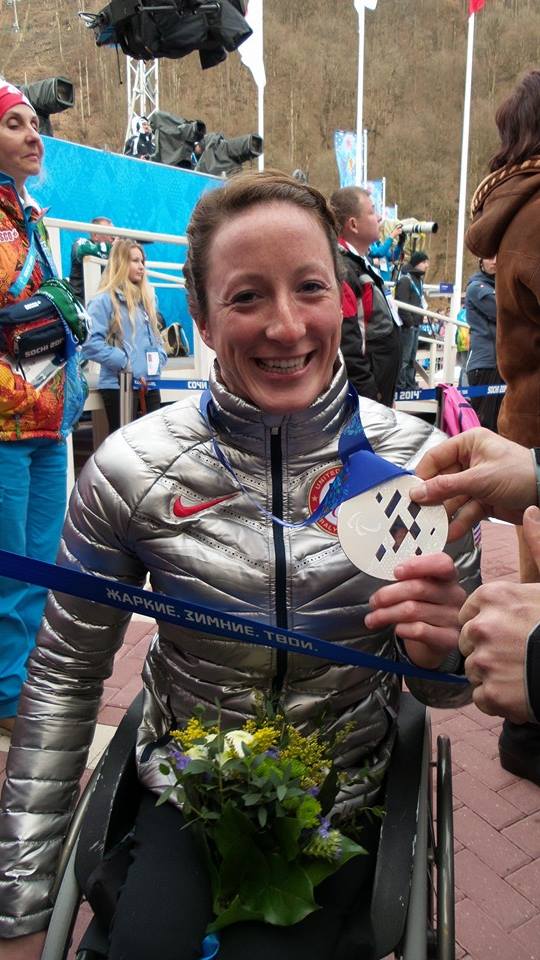
    Oksana Masters with her bronze medal following the women's 5 k sit-ski race.  (Photo Kevin Bittenbender U.S. Paralympics Nordic)
    Oksana Masters with her bronze medal following the women’s 5 k sit-ski race, the last day of the Sochi Paralympics. (Photo Kevin Bittenbender: U.S. Paralympics Nordic)

    (U.S. Paralympics press release)

    KRASNAYA POLYANA, Russia – The U.S. Paralympic Nordic skiing team closed out the 2014 Paralympic Winter Games in Sochi in exciting fashion today as Oksana Masters (Louisville, Ky.) won bronze in the women’s 5-kilometer sit ski cross-country race at the Laura Cross-Country Ski and Biathlon Stadium.

    Oksana Masters on the course of the women's 5 k race. (Photo Greg Rawlings U.S. Paralympics)
    Oksana Masters on the course of the women’s 5 k race. (Photo: Greg Rawlings/U.S. Paralympics Nordic)

    Masters finished the race in 17:04.8 just behind Germany’s Andrea Eskau who won with a time of 16:08.6 and Ukraine’s Lyudmyla Pavlenko who was second with a time of 16:27.0.

    It was the second medal for Masters and the third overall for the American squad. Masters won a silver medal in the 12km cross-country race earlier in the Games.

    Today’s performance was the perfect end to the Games for Masters.

    “I am in complete shock and amazement,” said Masters. “It has been an amazing first Paralympic Winter Games.”

    The race featured 23 competitors so it was difficult to know exactly where the racers stood until the finish. This made the race particularly challenging for the competitors.

    “It just goes to show that when you are out here in the middle of a race and you work hard enough and put your heart into it that you’re going to make anything you want happen,” noted Masters. “I sure as heck was fighting for every square inch of this course, so I am so lucky.”

    The race also featured Tatyana McFadden (Clarksville, Md.), the only other American to medal in Nordic skiing at the Games. McFadden also raced well, finishing in seventh place with a time of 17:27.8.

    For McFadden, who finished in the top 10 of each of her races here in Sochi, it was a fitting end to a great Games.

    Tatyana McFadden with her sprint silver medal  (Photo BethAnn Chamberlain  U.S. Paralympics Nordic)
    Tatyana McFadden with her sprint silver medal from earlier in the week. (Photo: BethAnn Chamberlain/U.S. Paralympics Nordic)

    “It’s been a great experience and a great ride. I did really well my first Paralympic Winter Games, it’s been quite an experience,” said McFadden.

    Today was a very busy day for the American squad as the team had 14 of its 16 athletes in competition today.

    In the first race of the day Marine Corps veteran Omar Bermejo (Grand Rapids, Mich.) and John Oman (Barron, Wis.) finished up their first Paralympic Winter Games by finishing 29th and 32nd, respectively, in the 10km free standing cross-country race.

    The American team also had two competitors in the second event of the day, the men’s 10km visually impaired cross-country race. Jake Adicoff (Sun Valley, Idaho) and his guide Reid Pletcher (Ketchum, Idaho) finished seventh with a time of 25:43.0. Navy veteran Kevin Burton (Boulder, Colo.) and his guide David Chamberlain (Wilton, Maine) finished in 15th place with a time of 28:25.8.

    In the final race of the day, the men’s 10km sit cross-country race, six Americans competed.

    Army veteran Andy Soule (San Antonio, Texas) once again was the top finisher for the U.S. placing ninth overall with a time of 32:56.1. He was followed closely by Lt Cmdr Dan Cnossen (Topeka, Kan.) who was 10th with a time of 33:02.0. Aaron Pike (Park Rapids, Minn.) was 14th with a time of 34:00.0. Retired Airman Sean Halsted (Spokane, Wash.) finished 16th and Army veteran Jeremy Wagner (Nanakuli, Hawaii) and Marine Corps veteran Travis Dodson (Deming, N.M.) were 22nd and 23rd, respectively.

    Today’s events wrapped up a very successful Paralympic Winter Games for the U.S. Nordic skiing team. After sending six athletes to the Vancouver Winter Paralympics in 2010 and winning one medal, the program made huge strides in these Games. The team was comprised of 16 athletes, including eight current or former military members and the team won three medals.

    On the women’s side, both Masters (Louisville, Ky.) and McFadden (Clarksville, Md.) found success in their first Winter Paralympic Games after already establishing themselves as elite level athletes in summer sports and shortly after taking up the sport of Nordic skiing.

    Masters, who won a bronze medal in the 2012 London Paralympics in rowing, struck first for Team USA in Sochi. A day after finishing fourth in the 6km sitting biathlon and narrowly missing the podium, Masters executed a nearly flawless race in the 12km cross-country race to claim second place with a time of 39:16.0. Masters’ silver medal was the first U.S. women’s Paralympic medal in cross-country skiing in 20 years.

    Fellow sit skier McFadden, who, like Masters, has only been competing in Nordic skiing for a year, continually displayed her athleticism throughout the Games.  On March 12, McFadden broke through, winning a silver medal in the 1km cross country sprint in a time of 2:45.7, just 0.1 behind Norway’s Mariann Marthinsen who won gold in what was the most exciting race of the Games. For McFadden it marked the11th Paralympic medal of her career but her first ever Paralympic Winter Games medal. McFadden also has 10 Paralympic medals in track & field.

    The men were led by Soule throughout these Games, who consistently found himself near the top of the leaderboard in every event he competed in. Soule recorded top five finishes in all but one of the six events he competed in in Sochi. In biathlon, Soule raced incredibly well and backed it up on the shooting range by going a perfect 50-for-50 across three races.

    Results

    Andy Soule before the start of the men's 10 K.
    Andy Soule before the start of the men’s 10 K. (Photo Greg Rawlings U.S. Paralympics Nordic
  • Double Gold for Canada on Last Day of Paralympics: Klebel Gets First Medal, McKeever Notches 10th Win

    Double Gold for Canada on Last Day of Paralympics: Klebel Gets First Medal, McKeever Notches 10th Win

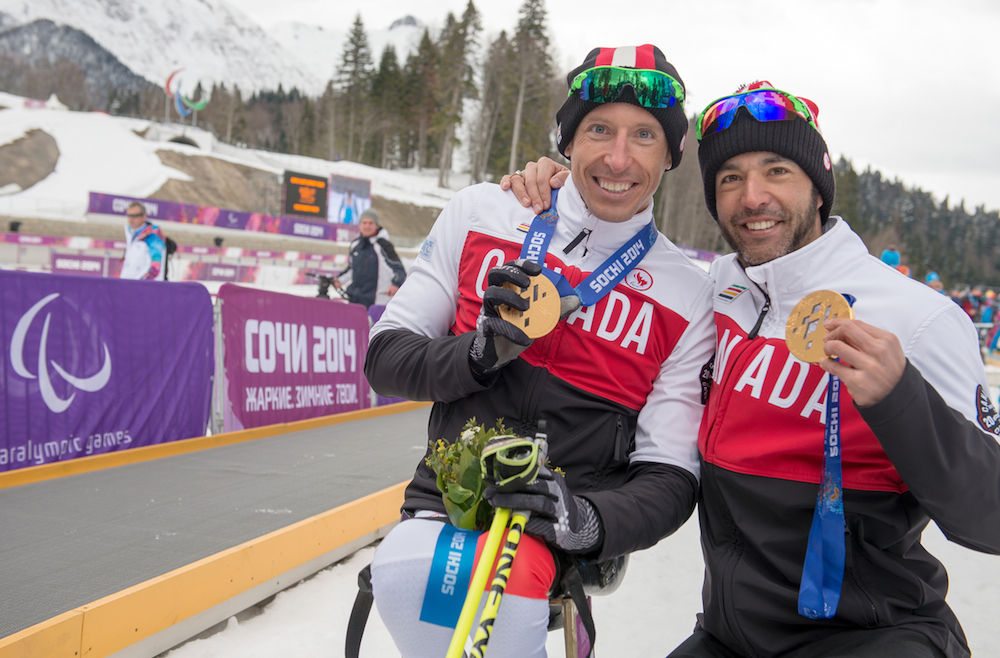
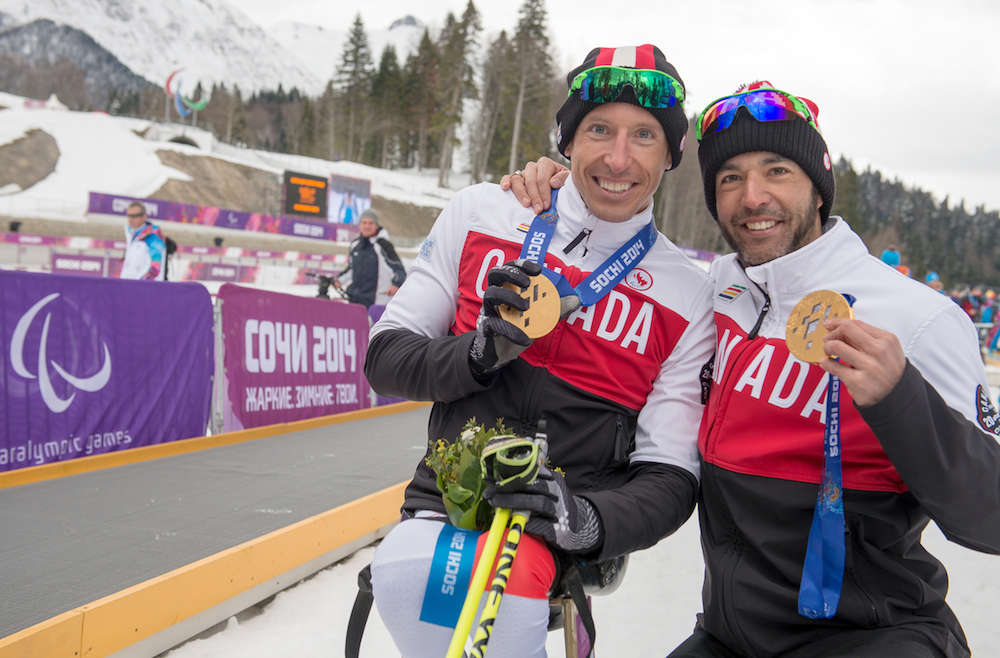
    Chris Klebl with his Men's 10km Sitting gold medal and Brian McKeever with his 15km free Visually Imaired gold medal at the 2014 Paralympic Winter Games in Sochi, Russia. (Photo: Matthew Murnaghan/Canadian Paralympic Committee)
    Chris Klebl (l) with his gold medal from the men’s 10 k sit ski and Brian McKeever (r) with his third gold of the week, which he won in Sunday’s 15 k visually impaired freestyle visually at the 2014 Paralympic Winter Games in Sochi, Russia. (Photo: Matthew Murnaghan/Canadian Paralympic Committee) 

    (CCC press release)

    SOCHI, Russia — Mission accomplished!

    Canada’s Para-Nordic Ski Team wrapped up the 2014 Paralympic Winter Games in thrilling fashion with a double-gold performance in cross-country skiing on Sunday.

    In two of the most challenging classifications, Chris Klebl, of Canmore, Alta., shocked the world to win the men’s 10-kilometre sit-ski race, while Brian McKeever won his third gold medal of the week in the visually impaired category.

    The 42-year-old Klebl put down the performance of the Games when it counted most to win Canada its final gold medal, and secure the country its goal of finishing in the top-three in the overall medal count. Klebl clocked a time of 30 minutes, 52.0 seconds (30:52.0).

    “It feels pretty good for sure,” said Klebl. “I have exceptional skis for wet, sloppy conditions and today we got exactly those conditions. It just feels good. We prepare for this over and over and over again to try and get things to line up, and today it did.”

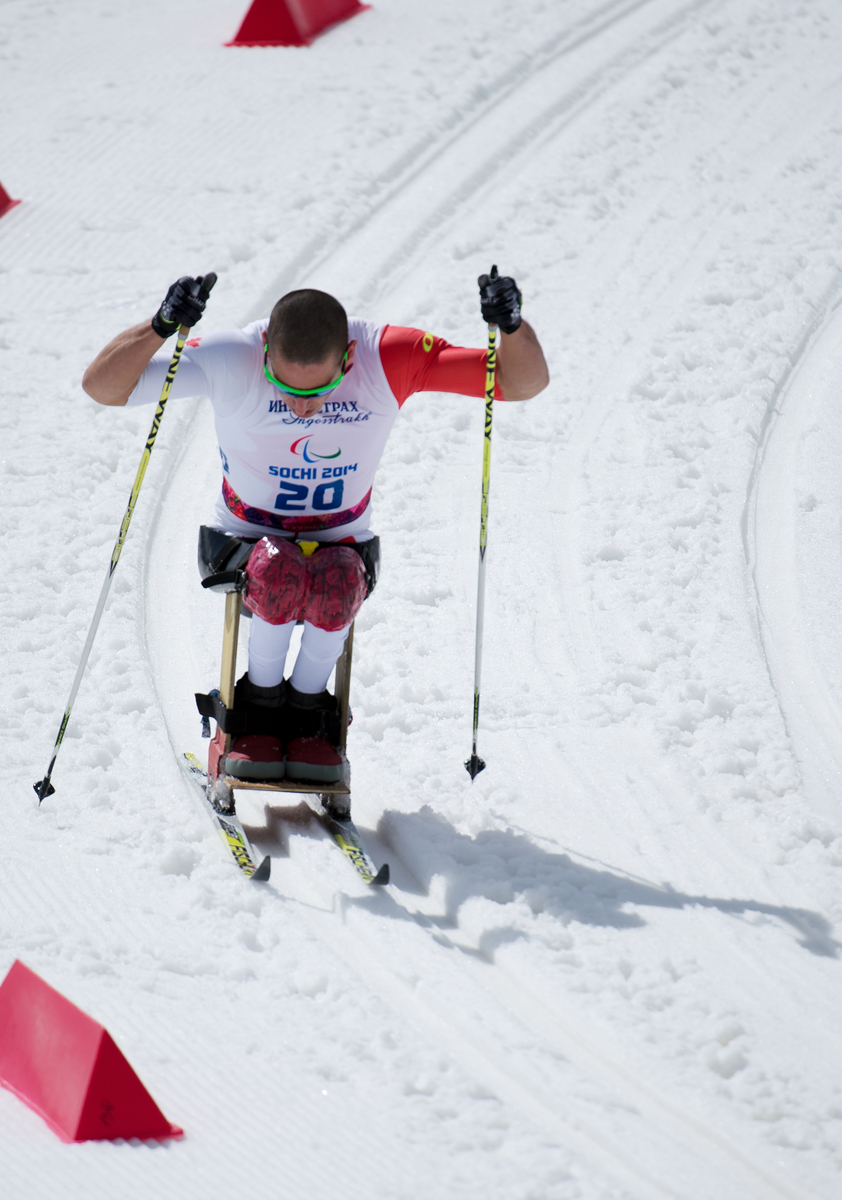
    Canada's Chris Klebl racing to gold in the last race of his third Paralympics on Sunday in the cross-country 10 k sit-ski  at the 2014 Paralympic Winter Games in Sochi, Russia.  (Photo: Matthew Murnaghan/Canadian Paralympic Committee)
    Canada’s Chris Klebl racing to gold in the last race of his third Paralympics on Sunday in the cross-country 10 k sit-ski at the 2014 Paralympic Winter Games in Sochi, Russia. (Photo: Matthew Murnaghan/Canadian Paralympic Committee)

    A three-time Paralympian, Klebl moved to Canmore, Alta. to join the Canucks from the United States following the 2010 Games. He first made history as a member of the Canadian Team in 2011 by winning the World Championships in the sit-ski distance race.

    Klebl, who grew up in Austria where he skied and snowboarded, became paralyzed from the waist down in 1995 in a snowboarding accident.

    Sunday’s victory was particularly important as Canada was in a fight for third spot in the overall Paralympic gold medal count with the Ukraines with the final sit-ski race remaining.

    Klebl held off the Ukraine’s Maksym Yarovyi, who finished second at 31:06.5. Russia’s Grigory Murygin skied to the bronze at 31:18.2.

    “It means a tonne to me to contribute to Canada’s medal count,” said Klebl. “Four years ago I made a major decision to move to Canada, and Cross Country Canada and the Own the Podium program have backed me since. I just wanted to pay them back.”

    While Klebl grabbed Canada’s final gold medal at the 2014 Games, it was Brian McKeever who secured the nation its first. On Sunday the legendary Paralympian was at it again.

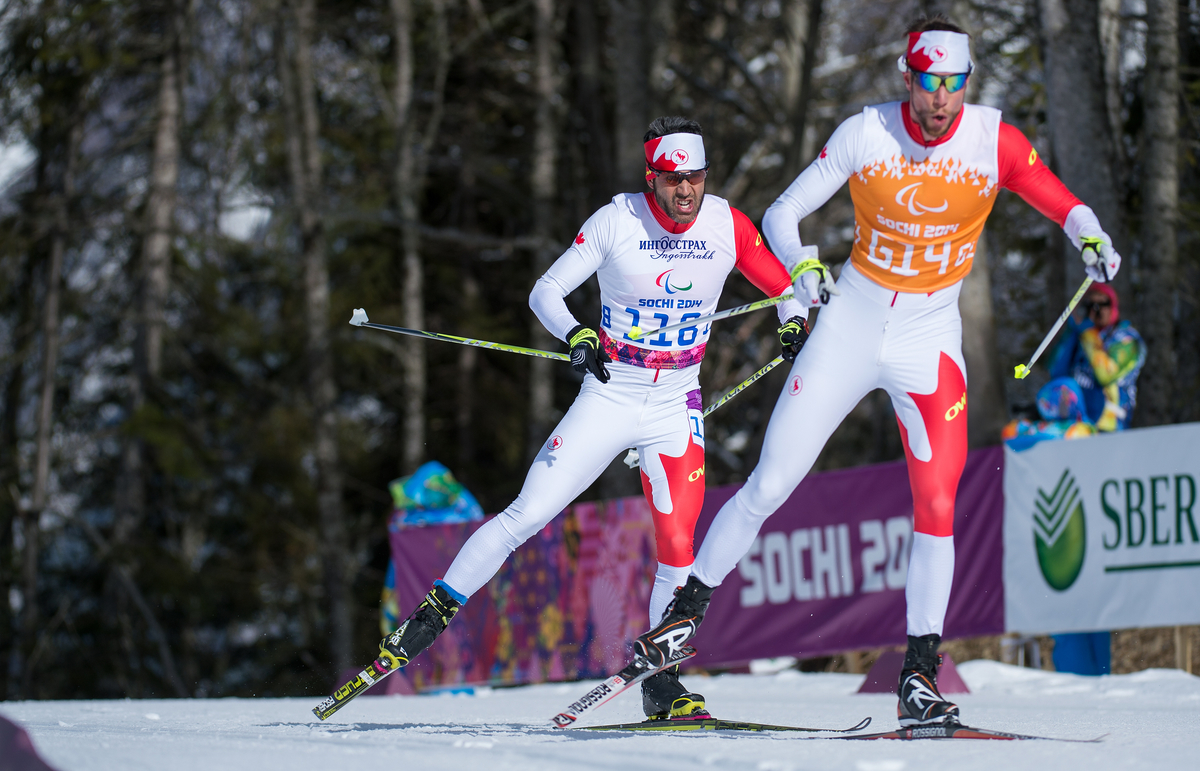
    Battling race fatigue and strong headwinds, the 34-year-old McKeever utilized a two-guide strategy with Erik Carleton and Graham Nishikawa, for the second time this week to gut out an impressive come-from-behind victory. Team McKeever posted a time of 23 minutes, 18.1 seconds in the men’s 10-kilometre skate-ski visually impaired category.

    “That one was tough. It hurt,” said McKeever. “I woke up this morning and didn’t feel great. It was all on the guides again today. They did such a good job with the headwind. I was able to tuck in behind them and save a lot of energy. By the time we got to the last lap there was still a little gas left to get us by today.”

    Outside of sprint racing, it was the smallest margin of victory at a Paralympic Winter Games for McKeever, winning by just eight seconds.

    Russia’s Stanislav Chokhlaev skied to the silver at 23:25.1, while Thomas Clarion, of France, rounded out the podium in third with a time of 24:14.9.

    The Canadians leveraged a two-guide race strategy to pull McKeever to the top of the podium.

    The 36-year-old Carleton, of Canmore, Alta., led the way around the first 6.5-kilometres before coach Robin McKeever called in Graham Nishikawa, of Whitehorse, to pull him into the winner’s circle. McKeever was behind 12 seconds at the five-kilometre mark in the race.

    “Having guided for 10 years I know how incredibly hard it is to do this job in the wind,” said Robin McKeever, head coach, Canadian Para-Nordic Ski Team, who led his brother to 10 Paralympic podiums. “It is like a tow truck pulling a Ferrari out there in the wind.

    “For the guide, it is like doing a one-kilometre sprint race just to stay ahead of Brian. But the problem is you have to keep that pace for nine more kilometres. It is so difficult.”

    “Having guided for 10 years I know how incredibly hard it is to do this job in the wind. It is like a tow truck pulling a Ferrari out there in the wind.” — Robin McKeever, Canadian Para-Nordic Ski Team Head Coach and former guide for his brother, Brian McKeever

    Consummate team players, Carleton and Nishikawa shared the workload and trips to the podium this week to help McKeever accomplish his goal of a golden hat-trick.

    “It is so tough out there and I’m thankful Graham was here to help us out and get the job done,” said Carleton. “I went hard off the start and just tried to hang on.”

    “Brian is just such an incredible athlete so it is very difficult to stay ahead of him,” added Nishikawa. “This whole week has been such an awesome experience. I’ve been so impressed with everything, and of course I’d love to be back again.”

    The victories bring McKeever’s Paralympic gold medal count to 10, making him the only winter Paralympian to reach double digits. He has a total of 13 Paralympic medals.

    “The medals this week were very special,” said McKeever. “The way we did it was such a team effort. Both guides gave me a solid draft all week, which made a huge difference in the conditions. We orchestrated a great team effort and that makes it so special to me.”

    Brian McKeever and his guide Erik Carleton race to McKeever's third gold of the week, and Carleton's second, in Sunday's cross-country 10 k visually impaired freestyle race on the last day of the 2014 Paralympic Winter Games in Sochi, Russia. (Photo: Matthew Murnaghan/Canadian Paralympic Committee)
    Brian McKeever and his guide Erik Carleton race to McKeever’s third gold of the week, and Carleton’s second, in Sunday’s cross-country 10 k visually impaired freestyle race on the last day of the 2014 Paralympic Winter Games in Sochi, Russia. (Photo: Matthew Murnaghan/Canadian Paralympic Committee)

    Other Canadian results on Sunday included: Mark Arendz (Hartsville, P.E.I.) in 11th at 25:16.4; and Louis Fortin (Fredericton, N.B) 36th at 32:58.8 in the men’s 10-kilometre standing race. Brittany Hudak, of Prince Albert, Sask., was 12th at 15:35.0, and Ottawa’s Caroline Bisson 16th at 16:55.2 in the women’s five-kilometre standing category.

    Robbi Weldon (Thuder Bay, Ont,) and her guide Phil Wood (Canmore, Alta.) were seventh at 15:32.5, while Ottawa’s Margarita Gourbonova and her guide of Regina’s Andrea Bundon were eighth at 15:42.2 in the women’s five-kilometre visually impaired race. Saskatoon’s Colette Bourgonje was 13th in women’s five-kilometre sit-skiing at 18:13.0. Yves Bourque, of Becancour, Que., was 24th at 39:11.5, and Quebec City’s Sebastien Fortier was 26th (40:03.4) in the men’s 10-kilometre sit-ski race.

    In addition to McKeever and Klebl’s four golds, Canada’s Para-Nordic squad will leave Sochi with six medals. Mark Arendz also won a silver and one bronze in biathlon racing.

    Results

  • McFadden Takes Silver in Sochi Sprint, Dream Comes True; Masters One Second from Bronze

    McFadden Takes Silver in Sochi Sprint, Dream Comes True; Masters One Second from Bronze

    Silver Medalist Tatyana McFadden (L) and gold medalist Mariann Marthinsen following the women's 1 k sprint race.
    U.S. silver medalist Tatyana McFadden (l) and Norway’s gold medalist Mariann Marthinsen after the women’s 1 k sprint race. (Photo: Greg Rawlings/U.S. Paralympics Nordic)
    In a phone interview from Sochi just before the opening of 2014 Paralympic Winter Games, Tatyana McFadden told FasterSkier,  “The sprint is my favorite, I love to sprint in track and I love to sprint on skis.”

    On Wednesday, the marathon-racing queen’s love of sprinting transformed to silver.

    In the women’s 1-kilometer sit-ski sprint final at the Laura Cross Country Center in Krasnaya Polyana, Russia, McFadden finished second overall, just one-tenth of a second behind Norway’s gold-medal winer Mariann Marthinsen.

    Second out of the start behind Germany’s Andrea Eskau, McFadden surged to first when Eskau fell. The American Winter Paralympics rookie led the race until the finish line where she was edged out by Marthinsen.
    “I could not go easy, I needed to go hard from the start,” McFadden told the U.S. Olympic Committee. “I knew that they were coming and I could feel them down my neck.”
    American Oksana Masters (second from l) with her silver medal from the first sit-ski competition of the 2014 Sochi Paralympics. In her second race on Wednesday, she earned bronze to become the most successful female nordic skier in U.S. Paralympic history. (Photo U.S. Paralympics Nordic)
    American Oksana Masters (second from l) with her silver medal from the 12 k sit-ski competition, the first of the 2014 Sochi Paralympics. In her second race on Wednesday, the 1 k sprint, she placed fourth, one second away from bronze. (Photo: U.S. Paralympics Nordic)

    McFadden’s teammate, who also picked up the sport last season, Oksana Masters finished fourth, one second away from bronze.

    Masters was in third until the final straightaway, where Russia’s Marta Zaynullia passed her for bronze.  Eskau was disqualified  due to an illegal lane change.

    McFadden, 24, of Clarksville, Md., became the second U.S. women to win a Paralympic medal in cross county skiing in last 20 years. The first was Masters, who won bronze in the women’s 12 k distance race on Sunday.

    After picking up skiing just over a year ago, McFadden advanced to the finals on Wednesday by placing fourth in the qualifier and second to Marthinsen in the semifinal. Masters was third in the qualifier round and second in her semi.

    At age 6, McFadden was adopted from St. Petersburg, Russia, by American Deborah McFadden. Her birth mother, whom Tatyana recently met, has been in attendance at the Games to watch her compete.

    Oksana Masters' silver  medal in the 12 k distance event at the 2014 Sochi Paralympics. (Photo: U.S. Paralympics Nordic)
    Oksana Masters’ silver medal in the 12 k distance event at the 2014 Sochi Paralympics. (Photo: U.S. Paralympics Nordic)

    McFadden told FasterSkier before the Games that having both her moms there with her in Sochi “has definitely been a dream of mine … Just having my whole family in the stands is going to be a huge fulfillment so I’m going to take that energy and put it into my skiing.”

    Describing McFadden’s rise from a skiing newcomer to Winter Paralympic medalist, U.S. Paralympics Nordic High Performance Director John Farra wrote in an email, “It was definitely a like cramming for a final exam … like fitting in 4 years of college education into one semester, but we started with an athlete with RAW physical talent, power and strength and willingness to work.”

    McFadden is a 10-time world champion and three-time Paralympic gold medalist in track racing. She’s competed at three Summer Paralympics and became the first person to win all four major marathons (Boston, London, Chicago, and New York) in a single season. In the 12 k distance event on Saturday, she placed fifth in her first Winter Paralympics race.

    “It was definitely a like cramming for a final exam … but we started with an athlete with RAW physical talent, power and strength and willingness to work.” — U.S. High Performance Director John Farra on Tatyana McFadden

    “We kept her on snow as much as possible from the start of the season until Sochi … and today it all came together for her,” Farra explained.

    A packed cross country stadium at the 2014 Winter Paralympic Games sprint races.
    A packed cross country stadium at the 2014 Winter Paralympic Games sprint races. (Photo U.S. Paralympics Nordic)

    In the men’s sprint final Andy Soule placed fifth and Dan Cnossen took sixth. Sochi roommates, Soule and Cnossen were 6.4 and 8.3 seconds back from bronze, respectively.

    “My performances here have been very good for me, every race has been one of the very best of my career,” wrote Soule, who won bronze in biathlon at the 2010 Paralympics.

    Soule’s best race, the distance biathlon, will be held Friday March 14th.   “I feel very confident about the final biathlon event.  The long distance biathlon is a very good event for me.” Soule noted.

    Cnossen, a newcomer to the  Paralympic Games,  described his races in an e-mail, ” [In the semi final] I came around that first sharp right turn wide … then drafted off two Russians and came in third.  In the final, I stumbled at the start … and was never able to reel in the other competitors.”


    U.S. Paralympics silver medalist Tatyana McFadden with her first medal of the Winter Games in Sochi, Russia, on Wednesday after placing second in the 1 k sit-ski sprint. (Photo: John Farra/U.S. Paralympics Nordic)
    U.S. Paralympics silver medalist Tatyana McFadden with her first medal of the Winter Games in Sochi, Russia, on Wednesday after placing second in the 1 k sit-ski sprint. (Photo: John Farra/U.S. Paralympics Nordic)
  • Wasn’t Pretty, But McKeever/Nishikawa Nab Second Gold in Paralympic Sprint

    Wasn’t Pretty, But McKeever/Nishikawa Nab Second Gold in Paralympic Sprint

    Canada's Brian McKeever (l) and his guide Graham Nishikawa win the gold medal in the Men's 1 k visually impaired sprint final at the 2014 Paralympic Winter Games in Sochi, Russia. (Photo: Matthew Murnaghan/Canadian Paralympic Committee)
    Canada’s Brian McKeever (l) and his guide Graham Nishikawa win the gold medal in the Men’s 1 k visually impaired sprint final at the 2014 Paralympic Winter Games in Sochi, Russia. (Photo: Matthew Murnaghan/Canadian Paralympic Committee)

    (CCC press release)

    McKeever rebounds from crash in final to take down world’s best for ninth-career gold medal

    SOCHI, Russia —Brian McKeever is certainly capturing the world’s attention in Sochi, Russia. And it is not just because he skied to his ninth Paralympic gold medal on Wednesday in Sochi, Russia.

    McKeever and guide, Graham Nishikawa, ploughed through the field and more than 30 centimetres of fresh snow to win their second gold medal of the week in spectacular fashion in the visually impaired sprint races at the Paralympic Winter Games.

    Leading all qualifiers in the head-to-head heats with the top-12 athletes, the two Canadians handily advanced to the final where the 12-time Paralympic medallist faced the biggest adversity of his career.

    Stacked against two Russians, and a Swede in the final, the 30-year-old Nishikawa (Whitehorse) appeared to have led McKeever (Canmore, Alta.) through the cluttered pack of guides and athletes into clear trail until the unthinkable happened near the 200-metre mark.

    A Russian skier stepped on McKeever’s pole – sending the 34-year-old airborne and onto his backside – before bouncing back up and hunting the leaders, and his ninth career Paralympic gold medal down.

    “Wow, that was stressful,” sighed McKeever at the finish. “It wouldn’t be right for me to tell you what I said in my head, but once the cuss words were out, the only thing you can do is get back up and race.

    “I thought we were clear, but that is normal and it happens in sprinting when you are all fighting and tight. Everyone is going flat out. It is intense and everyone is at their limit. We are just fortunate it happened in the first 200 metres and not at the end so we had time to catch up.”

    “It wouldn’t be right for me to tell you what I said in my head, but once the cuss words were out, the only thing you can do is get back up and race.” — Brian McKeever, nine-time Paralympic gold medallist

    After taking a deep breath, Nishikawa took control, putting the throttle down and commandeering the Canucks back into contention in the action-packed one-kilometre sprint race.

    Canada's Brian McKeever (l) celebrates his ninth-career Paralympic gold, which he won Wednesday in the 1 k visually impaired sprint with guide Graham Nishikawa in Sochi, Russia. While Nishikawa helped him win his first gold of the week in the 20 k classic with guide Erik Carleton, this was Nishikawa's first Paralympic gold. (Photo: Matthew Murnaghan/Canadian Paralympic Committee)
    Canada’s Brian McKeever (l) celebrates his ninth-career Paralympic gold, which he won Wednesday in the 1 k visually impaired sprint with guide Graham Nishikawa in Sochi, Russia. While Nishikawa helped him win his first gold of the week in the 20 k classic with guide Erik Carleton, this was Nishikawa’s first Paralympic medal. (Photo: Matthew Murnaghan/Canadian Paralympic Committee)

    “When I saw him go down, I immediately panicked and just thought ‘OH NO! Not now,’ ” said Nishikawa. “It wasn’t until we got back up around the Russians and had the Swedes in sight that I felt a huge relief.”

    “What a set of wheels on Graham today. That was impressive,” said McKeever. “The snow was so heavy today. He basically towed me up that hill and got me around the Russian roadblock out there and gave us a chance. It is not how we planned things, but that was a pretty awesome day.”

    Sweden’s Zebastian Modin hung on for the silver medal, while Russia’s Oleg Ponomarev outraced his countryman for the bronze.

    Adding to the dramatics, it was the first time Nishikawa had guided his friend, and training partner, on his own in international competition. After racing together over the last decade in Canada, McKeever recruited Nishikawa into his training group this fall with the goal of bringing two guides to the Paralympics for the first time ever.

    Earlier this week, Nishikawa, who races able-bodied both domestically in Canada and on the World Cup circuit, shared guiding duties with Erik Carleton to lead McKeever to his first gold of the 2014 Games. Recognizing the stress the warm weather, and heavy snow conditions was putting on the guides for the long-distance races, the innovative Canadians leveraged both guides – switching at the midway point. With McKeever dropping into third place, Nishikawa stepped in to blaze a trail to the gold medal step of the podium.

    Carleton’s name was on the start list so he was the only one to receive a gold medal. But on Thursday, Nishikawa will get his due and receive a gold medal of his own.

    “It feels absolutely awesome,” beamed Nishikawa. “I said earlier this is a whole new world for me. I’m so impressed by everything. This whole experience has been amazing and I just wanted to do whatever I could to be here and help Brian. We have been friends for a long time so this is very special.”

    From sunny T-shirt weather, to pouring rain, to dumping heavy snow on Wednesday, Mother Nature is sending the world’s top Para-Nordic wax technicians into a daily frenzy at Laura Stadium.

    “This whole experience has been amazing and I just wanted to do whatever I could to be here and help Brian. We have been friends for a long time so this is very special.” — Graham Nishikawa

    “These conditions are definitely stressful on the wax techs,” said McKeever. “Every day they basically start from ground zero based on the conditions. We had amazing boards today and the guys deserve a lot of credit. We were so fast on the downhills which really got us back into the race today.”

    The victory brings McKeever’s career medal haul to 12 at the Paralympics, including his nine gold. If he can chalk up one more victory this week he will become the first Canadian Winter Paralympian with at least 10 gold medals, and third Paralympian in Canada overall to accomplish the feat.

    A handful of other Canadians also competed in the sprint races. Chris Klebl, of Canmore, Alta., qualified for the men’s sit-skiing heats, but did not advance to the final. Robbi Weldon, of Thunder Bay, Ont., along with her guide Phil Wood, of Canmore, Alta., also had their day come to an end in the semifinals of the women’s visually impaired category, while Paralympic rookie, Brittany Hudak of Prince Albert, Sask., could not advance past the women’s standing semifinals.

    Other Canadians that did not qualify for the heats included:  Ottawa’s Margarita Gorbournova and her Regina-based guide, Andrea Bundon, in the women’s visually impaired race.

    Louis Fortin (Fredericton, N.B) did not qualify in the men’s standing class, Saskatoon’s Colette Bourgonje also competed in women’s sit-skiing, while Quebec City’s Sebastien Fortier, and Yves Bourque (Becancour, Que.) also did not qualify for the men’s sit-skiing heats.

    Following a day off on Thursday, the final biathlon competition of the 2014 Paralympic Winter Games will take place at the Laura Nordic Stadium on Friday.

    Results

  • Silver, then Bronze: Arendz First Canadian to Take Two Biathlon Paralympic Medals

    Silver, then Bronze: Arendz First Canadian to Take Two Biathlon Paralympic Medals

    Canadian biathlete Mark Arendz on the medal stand earlier in the 2014 Paralympics after winning silver in the 7.5 k standing even. He went on to notch bronze in his next competition to become the most successful Canadian biathlete. (Photo Scott Grant/Canadian Paralympic Committee)
    Canadian biathlete Mark Arendz on the medal stand earlier in the 2014 Paralympics after winning silver in the 7.5 k standing even. He went on to notch bronze in his next competition, the 12.5 k race, to become the most successful Canadian biathlete. (Photo Scott Grant/Canadian Paralympic Committee)

    (CCC press release)

    SOCHI, Russia — Canada’s Mark Arendz battled through brutal race conditions to win the bronze medal in the men’s 12.5-kilometre standing category at the Paralympic Winter Games in Sochi, Russia on Tuesday.

    Arendz racing to silver on Saturday in the Paralympic biathlon 7.5 k sprint. (Photo: Matthew Murnaghan/Canadian Paralympic Committee)
    Arendz racing to silver on Saturday in the Paralympic biathlon 7.5 k sprint in Krasnaya Polyana, Russia. (Photo: Matthew Murnaghan/Canadian Paralympic Committee)

    With rain pelting down and dense fog socked into the Laura Nordic Stadium, the 24-year-old took advantage of the weather he grew up with in Hartsville, Prince Edward Island to grab his second medal of the week. Arendz clocked a time of 30:31.0.

    “To get a medal is awesome and that was the goal,” said Arendz. “There were mistakes out there both in shooting and on the course so it was not a perfect race, but anytime you are on the podium I have to be happy because this is strong field.”

    In a race that puts a premium on shooting, the soft-spoken Canuck rattled off 19 of 20 shots in his four rounds on the range. The miss in this third bout of shooting sent Arendz to do one 150-metre penalty loop.

    “The warm up was tough today, and it was hard to see the targets early [because of the fog],” said Arendz. “It was the same conditions for everyone. I wasn’t perfect in shooting so I know there are still mistakes that need to be cleaned up.”

    Arendz was in a dogfight for the gold with two of his closest rivals, Russia’s Azat Karachurin and Norway’s Nils-Erik Ulset. Karachurin also missed just one target en route to winning the gold medal with a time of 29:30.0 (0+0+0+1). Missing two shots in his final stop at the range, Ulset hammered his way around the course on the skinny skis to edge Arendz for the silver medal with a time of 30:24.6.

    “I felt a little tired today, and I just didn’t have quite the snap that I had on the first day,” added Arendz, who had a lightening quick final lap. “The conditions stayed hard so I was able to put down the power I had. Everything is there. I just need to put it all together.”

    Earlier this week, Arendz became the first Canadian ever to win a silver medal in biathlon at the Paralympic Winter Games. Brian McKeever, guided by his brother, Arendz’s coach Robin, were the only other Canadians to win a Para-Biathlon medal when they captured the bronze in 2006.

    “I still haven’t been perfect shooting, and I don’t want to leave Sochi until I do that.” — Arendz, Canada’s most successful Paralympic biathlete

    Canada's rain-soaked Caroline Bisson after placing 11th in the women's 10 k standing biathlon at the Sochi Paralympics. (Photo Scott Grant/Canadian Paralympic Committee)
    Canada’s rain-soaked Caroline Bisson after placing 11th in the women’s 10 k standing biathlon at the Sochi Paralympics. (Photo Scott Grant/Canadian Paralympic Committee)

    The two-medal week now makes Arendz the most successful Canadian biathlete at the Paralympics. Recognizing the bright future ahead of him, four years ago the wide-eyed Canadian walked into his first Paralympic Stadium in 2010. His goal was take in the Paralympic experience. This time around things are different.

    “This time it is strictly business,” said Arendz. “I have had four years of experience and feel that I am strong in all race distances. I want to be on the podium every time. It was not a perfect race today. I still haven’t been perfect shooting, and I don’t want to leave Sochi until I do that.”

    Earlier in the day, Ottawa’s Caroline Bisson suited up in the women’s 10-kilometre standing race. Bisson finished in 11th spot with a time of 39:53.9 (2+0+1+0). Russia’s Alena Kaufman missed just one shot while posting the golden time at 29:57.1 (1+0+0+0).

    The Para-Nordic events continue on Wednesday in Sochi with the men’s and women’s cross-country skiing sprint races. The final biathlon race will take place on Friday.

    Results

  • Arendz First Canadian to Win Biathlon Silver at Paralympics

    Arendz First Canadian to Win Biathlon Silver at Paralympics

    Mark Arendz on his way to a historic first silver for Canada in biathlon at the Sochi Paralympics on Saturday. (Photo: Scott Grant/Canadian Paralympic Committee)
    Mark Arendz on his way to a historic first silver for Canada in biathlon at the Sochi Paralympics on Saturday. (Photo: Scott Grant/Canadian Paralympic Committee)

    (Cross Country Canada press release)

    SOCHI, Russia — Mark Arendz fired his name into the history books on Saturday as the first Canadian ever to win a silver medal in biathlon at the Paralympic Winter Games.

    Days removed from his 24th birthday, the Hartsville, P.E.I. resident came a hair short of winning the gold after clocking the second fastest time at 19:14.0 (1+0) in the men’s 7.5-kilometre standing biathlon competition.

    “It feels absolutely great and a big relief to get on the podium right away,” beamed Arendz in the finish corral. “I fought as hard as I could, and it was such a close race at the end.”

    Close indeed.

    The two-time Paralympian finished just .07 seconds behind the gold medallist from Russia, Vladislav Lekomtcev who clocked-in at 19:13.7 (0+1) after crashing at the finish line. Russia’s Azat Karachurin also missed one shot en route to winning the bronze medal with a time of 19:14.9.

    Arendz was in fourth place at the midway point of the race, but the hard-nosed Islander put the pedal down after shooting clean in his second stop at the range to charge his way onto the podium.

    “The plan today was to shoot clean and I was focused on following that, but I missed that one target just slightly,” said Arendz. “I thought I had it but a twitch of the finger and I just missed it. I wasn’t far off. I told myself to fight hard on that penalty loop to get over the penalty and finish strong.”

    After going perfect in his second round of shooting, Arendz hammered the pace in his third and final trip around the slushy 2.5-kilometre loop to secure his name in the history books.

    “It is so warm and not really winter like conditions so the course was really slowing down out there. The guys in the wax room did a great job on the skis. I will celebrate this one with them.”

    It has been a memorable run for the rising Canadian star since making his Paralympic debut on home snow in 2010. With a room full of medals, he has twice finished second overall on the IPC World Cup biathlon standings, and last year locked up his first overall Word Cup title in the men’s standing category to cap off a season that was highlighted by one gold and two bronze medals at the 2013 World Championships.

    Arendz’s coach, Robin McKeever, guided his brother and 10-time Paralympic medallist, Brian, to Canada’s only other Paralympic medal in biathlon. The brother tandem won a bronze medal in the visually impaired 7.5-kilometre sprint discipline at the 2006 Paralympics in Turin, Italy.

    Two Canadian women also hit the start line for the opening day of biathlon competitions at the 2014 Paralympic Winter Games. Ottawa’s Caroline Bisson placed 14th in the women’s six-kilometre standing category. Bisson went 2+1 on the range to post a time of 27:14.8.

    “I was so excited to race when I woke up this morning. I was thrilled to have the opportunity to get this first one out of the way,” said Bisson of her first-ever Paralympic race. “It was such a thrill to compete today. I pushed as hard as I could to the end. Overall I am satisfied with that.”

    Russia’s Alena Kaufman shot clean en route to posting a winning time of 18:27.2 in the women’s standing class.

    Margarita Gorbounova, also of Ottawa, and her guide, Andrea Bundon of Regina, teamed up to finish seventh in the women’s six-kilometre standing race. Gorbounova, who missed two shots in her first bout of shooting, stopped the clock at 26:17.8.

    Russia’s Mikhalina Lysova took advantage of a perfect day of shooting to go on and win the gold medal with a time of 20:03.2.

    Results

  • In Third Season, Cnossen Aims to Lead U.S. Paralympics Nordic, Starting in Canmore

    In Third Season, Cnossen Aims to Lead U.S. Paralympics Nordic, Starting in Canmore

    Lt. Dan Cnossen (U.S. Paralympics) racing to 11th in Tuesday's sit-ski sprint at the IPC World Cup in Canmore, Alberta. (Photo: Pam Doyle)
    Lt. Dan Cnossen (U.S. Paralympics) racing to 11th in Tuesday’s sit-ski sprint at the IPC World Cup in Canmore, Alberta. (Photo: Pam Doyle)

    One of the most successful men on the U.S. Paralympics Nordic Team last season,  Lt. Dan Cnossen cut right to the chase when asked about his training this summer and fall.

    “I think we’re going to find out real quick when I go up against the Russians,” Cnossen responded in a phone interview before the first International Paralympic Committee (IPC) World Cup in Canmore, Alberta, from Dec. 9 to 17.

    According to U.S. Paralympics High Performance Director John Farra, Cnossen, originally from Topeka, Kansas, is relatively new to the sport.  He joined the team after the 2010 Winter Paralympics, and in the three years since he’s been living and training in Winter Park, Colo., Cnossen has risen to lead the U.S. men’s sit-ski team.

    Dan Cnossen (Navy) goes out hard from the start of the 15 k sit ski at U.S. Adaptive Championships in Soldier Hollow on Saturday.
    Lt. Dan Cnossen (Navy) racking up one of three national titles at U.S. Adaptive Championships last season in Midway, Utah.

    “He trains unbelievably professionally,” Farra said. “He really puts everything into it.”

    A Navy SEAL who lost both his legs in an Afghanistan explosion in 2009, the first day he was promoted to lieutenant, Cnossen, 33, has full use of his core.

    “He is a ‘V’ cut, super-strong … looking guy,” Farra said.

    Last year, Cnossen excelled on the domestic and international scene, notching podiums at U.S. nationals and the IPC World Cup in Cable, Wis.

    This summer, he ventured down to Argentina to train and race the 21-kilometer Marchablanca and 42 k Ushuaia Loppet. “That trip really reinvigorated my training,” Cnossen said.

    Skiing on snow is important to Cnossen, because he describes his mountain board (a sit skier’s equivalent to rollerskis) as a “strength machine.”

    “It’s very hard to work my cardio on it because it doesn’t roll very fast,” he said.

    Lt. Dan Cnossen of the U.S. Paralympics Nordic National Team doing loaded pull-ups during a strength session at the Lake Placid Olympic Training Center. (Photo: www.facebook.com/USParalympicsNordic)
    Lt. Cnossen of the U.S. Paralympics Nordic National Team doing loaded pull-ups during a strength session at the Lake Placid Olympic Training Center two summers ago. (Photo: U.S. Paralympics Nordic/Facebook)

    Using prosthetic legs, Cnossen has devised other ways to raise his heart rate.

    “You do what you can, and for me, I was a big runner before my injury,” he said. “I’m very lucky that I can do it, and I’m really lucky that I can walk too. ”

    He mostly runs 5- and 10-k races, which helps with his nordic training.

    “Plus, running gives me a chance to rest my shoulders,” he said.

    Cnossen is testing in a new custom sit ski this year, a lighter model that he hopes will help him ski faster.

    “It’s a really important part of the sport; you have to be comfortable, you have to be well secured … not only for power transfer, but for ski control,” he said. “I found a group of engineers who were willing to work with me and they’ve done a great job.”

    Summing up his thoughts about the season ahead, Cnossen said he was confident in his skiing abilities.

    “I’m hoping I’m a little better tactician,” he said. “I know I’m stronger physically this year and I have better equipment so it will be exciting to see how I end up on the results list.”

    Lt. Dan Cnossen at the start of a sprint qualifier at a 2013 test event in Sochi, Russia.
    Lt. Dan Cnossen at the start of a sprint qualifier at a 2013 test event in Sochi, Russia.

    In terms of tactics, he said he needs to work on sprinting.

    “I try to be a sponge,” he said. “Since this is only my third year, every time I go to a World Cup I try to watch the Russians and the athletes from other countries.  I watch what lines they take.  Are they in the track are they out of the track? Their rhythm of double poling, the nuances of ski handling. I hope it pays off.”

    Also a biathlete who’s tweaked his training, Cnossen predicts improvement there as well.

    “I think you’ll see some improved hit rates,” he said. “I knew the first couple of years, even if I shot perfectly I wouldn’t ski fast enough, no where near it. First and foremost, I thought the strength and conditioning would take the longest to develop.  I have a background in shooting and I can tweak that in a relatively short amount of time compared to how long it would take do develop the strength to conditioning to be fast enough to keep up with the top guys.”

    So far, he’s notched ninth place in the 10 k at Canmore, leading the U.S. men. On Tuesday, he placed 11th in the sprint behind teammates Sean Halsted and Andy Soule in eighth and ninth, respectively.

    Lt. Dan Cnossen (U.S. Paralympics) tallied multiple podiums at the IPC World Cup in Cable, Wis., in January. (Photo: James Netz)
    Lt. Dan Cnossen (U.S. Paralympics) tallied multiple podiums at the IPC World Cup in Cable, Wis., in January. (Photo: James Netz)

    ***

    What: IPC World Cup at the Canmore Nordic Centre in Canmore, Alberta

    Schedule:
 

    IPC Cross Country World Cup

    • December 9 10:00am Men’s 10km/Women’s 5km Skate
    • December 10 11:00am Sprint Classic (Heats start at 12:00)
    • 
December 12 10:00am Men’s 20km/Women’s 15km Classic

    IPC Biathlon World Cup

    • 
December 14 10:00 Biathlon Sprint
    • December 15 10:00 Biathlon Middle Distance
    • December 17 10:00 Biathlon Long Distance
  • World-Class Wheelchair Racer, McFadden Sets Sights on Sochi

    World-Class Wheelchair Racer, McFadden Sets Sights on Sochi

    Tatyana McFadden competes at the 2013 IPC World Cup in Cable, Wis.(Photo: James Netz)
    Tatyana McFadden competing at one of her first international cross-country ski races at the 2013 IPC World Cup in Cable, Wis.(Photo: James Netz)

    Tatyana McFadden is coming off an impressive couple of years.

    Winning the New York City Marathon last month, the 24-year-old University of Illinois student became the first person to win the Chicago, Boston, London and New York City marathons – the elusive Grand Slam – in a single year.  In July, McFadden became the first athlete to win six gold medals at the International Paralympic Committee (IPC) Athletics World Championships in Lyon, France.  No stranger to elite competition, the three-time Paralympian holds 10 medals in wheelchair racing, three of them gold from the 2012 London Paralympic Games.

    Tatyana McFadden as 2012 National Adaptive Ski Championships, Soldier Hollow.
    Tatyana McFadden at the 2013 U.S. Adaptive National Championships at Soldier Hollow in Midway, Utah, where McFadden won the sit-ski sprint. (Courtesy photo)

    Now with her track and marathon seasons over for the year and with the 2014 Winter Paralympics in Sochi, Russia, on the horizon, McFadden is days away from beginning her second season as a nordic skier at the IPC World Cup in Canmore, Alberta, starting Dec. 9.

    John Farra, the U.S. Paralympics Nordic high-performance director, tells the story of how McFadden came to his sport.

    “About a year and a half ago I got a text message at midnight from the [U.S. Paralympics] alpine director [Kevin Jardine] saying, ‘Hey, I’m at the ESPYs and Tatyana McFadden wants to be a nordic skier!’ ” Farra said.

    According to the Chicago Tribune, Jardine reportedly told her, “Are you kidding me? No one wants to do nordic. Do you know how hard that is?”

    “I guess you don’t understand anything about me,” McFadden replied.

    “She contacted me and said ‘How can I get into the skiing thing?’ ” Farra explained. “So she comes to the national championships and won the sprint race and was very competitive in the others.  I said, ‘You should come to the World Cup in Cable, Wisconsin. There may be time for you to make the Paralympic Games.’ So she did and she made the national team in just one race.  She’s just so frickin’ strong.”

    In a phone interview last week, McFadden described her busy upcoming month, which starts this week in Canmore.

    “I’ll be there a few days before and I’ll do a competition, then I literally fly back [to Illinois], take a final, graduate, move out, then I head home for Christmas,” she said.

    Majoring in human development and family studies, she will give the graduation speech to her class.

    Born in St. Petersburg, Russia, with spina bifida, a birth defect that paralyzed her from the waist down, McFadden spent her first six years in an orphanage walking on her hands. A disabilities commissioner for the US Health Department, Deborah McFadden visited the orphanage and adopted Tatyana before raising her in Baltimore. Since then, Tatyana has been an activist on several fronts, advocating against a 2012 Russian law prohibiting Americans from adopting Russian children. She was also behind the Maryland Athletics Equity for Students with Disabilities Act, which was passed in 2010.

    Tatyana McFadden racing at the 2013  IPC World Cup in Lyon where she won six gold medals.
    McFadden racing at the 2013 IPC Athletics World Championships in Lyon, France, where she won an unprecedented six gold medals. (Courtesy photo)

    For now, she’s focused on getting back to Russia, this time as a Winter Paralympian. To manage the transition from wheelchair racing to skiing, McFadden said she’s been spending a lot of time in the gym on the SkiErg and doing interval training.

    One of her biggest challenges has been learning how to handle the cold. McFadden experienced some issues with frostbite while training, but her enthusiasm toward the sport has made up for the hardships. Nicknamed “The Beast,” it’s no surprise when McFadden says, “I love to train really hard.”

    She is also excited to get on snow in her new sit-ski.  At last season’s U.S. Adaptive Ski Championships at Soldier Hollow in Midway, Utah, McFadden won the sit-ski sprint in a borrowed, ill-fitting sled.

    “[The ski] was too big for me,” she said. “I’m a size 10 1/2 and I was riding in a size 14; it was way too big. I was sitting too high which really threw off my balance. I didn’t have control going down the hill too well and I really wanted to be shorter.”

    Her new sit ski is designed to put her in a more-forward position, similar to her racing wheelchair. McFadden said it feels “a lot more natural and transitions well from wheelchair racing. … [It’s] literally just the bucket and it’s an absolutely beautiful, beautiful bucket. It’s extremely light and it’s purple, my favorite color.  I’m really excited to take it out again.”

    Starting in Canmore, McFadden will have plenty of opportunity to get used to her new setup. At the end of the month, she’ll head to Utah for her second nordic nationals in early January, once again at Soldier Hollow. Then she’ll head to Germany for the IPC World Cup in Oberstdorf from Jan. 16-19, and after that, Winter Park, Colo., for more altitude training.

    Tatayan McFadden shows off her new sit ski in a promotional photo from her sponsor BP.   https://www.facebook.com/BPTeamUSA
    Tatayan McFadden shows off her new sit ski in a promotional photo from her sponsor BP. (Photo: BP Team USA/Facebook)

    “As soon as I graduate I’ll be on snow all the way up to Sochi,” McFadden said.

    According to Farra, working with her on snow will the give the U.S. Paralympics Nordic coaches a chance to help her improve her technique.

    “She’s so strong and unbelievably fit,” Farra said. “So she’s got the most important part of being a nordic skier down, and you can’t fake that.”

    McFadden has no illusions about the challenges ahead of her. “I am really new to skiing,” she said. “My goals are, first of all, to make the team and head over.  Then I’ll take it event by event. My goal [in Sochi] is to make the finals.”

    As for her podium potential, Farra said,  “We really don’t know. She’s fired up about it. She’ll have a day or two to train in Canmore before the races and she’ll spend the rest of the winter skiing with us trying to get ready for Sochi to see what she can do there.”

    While Farra can’t predict McFadden’s performance in her new sport, he knows what kind of attention she can bring to the developing sport.

    “When the Games are on, you are going to see Kikkan Randall skiing in a BP commercial and you’re going to see Tatyana McFadden skiing in a sit-ski on these commercials that are run all the time throughout the winter,” he said. In partnership with the U.S. Olympic Committee, NBC has committed to 50 hours of coverage for the 2014 Paralympics.

    Thinking about her first Winter Paralympics, McFadden isn’t sure what to expect.

    Tatayan McFadden shows off her new sit ski in a promotional photo from her sponsor BP.   https://www.facebook.com/BPTeamUSA
    Tatayan McFadden shows off her new sit ski in a promotional photo from her sponsor BP. (Photo: BP Team USA/Facebook)

    “For track, since I’ve been to other races and other Paralympics… I know what to expect between events and the transitions and about getting on the bus and off the bus and into the venue and what its going to feel like,” she said. “For Sochi, I don’t know any of that. I have no idea because everything is so new for me. I have to just be relaxed and go with the transitions and then when it comes time for me to put my skis on the snow, I have to remember everything I’ve learned … and ski as fast as I can and hopefully make people proud.”

    Among the new experiences awaiting McFadden is biathlon racing. Due to a relatively small pool of athletes, adaptive skiers are encouraged to compete in both nordic and biathlon races. Brand new to skiing at nationals last year, she didn’t race biathlon. “I told John [Farra] that I wanted to focus on skiing,” McFadden said.

    However, she did get introduced to the sport and practiced a bit on the shooting range. Despite some archery experience, McFadden said she never shot a gun before trying biathlon last January.

    “It’s going to be a lot of fun,” she said. “I’ll shoot the targets as best I can, and if I miss them all, I know what it feels like to do a lot of laps. In track, doing [laps] is just a normal day for me. I’m not really too concerned about it. What is really different about biathlon is that I’m not used to stopping in a race. I’m used to going hard from start to finish and not having to slow down and take a deep breath and try to hit the targets.”

    When asked what it will mean to her to return to Russia, she said she’s “really excited.”

    “It’s part of my culture, it’s part of who I am, and that will never be apart from me,” she added. “But I’m going to be going and competing for the United States of America.”

    Comparing her two “home” nations, she says the Russians are behind the times when it comes to accepting people with disabilities.

    “[In the U.S.], you can get jobs and you can live a normal life,” she said. “That’s not really the case for Russia. Some places are not accessible, in America places have to be accessible. Just seeing athletes come in and seeing how strong the athletes are and seeing them compete. I think its going to be really good for them.”

    Requist, a first-time contender at nationals, won the women’s 5 k in 25:13.9. Tatyana McFadden repeated her second-place performance from Saturday, finishing just 20.7 seconds behind on Sunday. Kristy Vaughn (U.S. Paralympics Development Team) was third (+2:34.4).
    Now a U.S. Paralympics National Team member, Tatyana McFadden (l) after placing second in the women’s 5 k at 2013 U.S. Adaptive Championships last January. Beth Requist (c) won it in 25:13.9, and Kristy Vaughn (U.S. Paralympics Development Team) was third (+2:34.4).
  • Yellowstone Ski Festival: A Place for Reunions

    Yellowstone Ski Festival: A Place for Reunions

    Visually impaired skier Nancy Stevens and her guide Tony Neaves race in the 1998 Nangano Paralympics. They are reunited at West Yellowstone this week.
    Visually impaired skier Nancy Stevens (l) and her guide Tony Neaves race in the 1998 Nagano Paralympics. They are reunited in West Yellowstone, Mont., this week.

    Note: The following has been corrected to reflect that Caitlin Gregg approached Nancy Stevens this week. 

    WEST YELLOWSTONE, Mont. — When Nancy Stevens moved to Summit County, Colo., 21 years ago, her guide dog kept bringing her to the door of the same shop. Blind since birth, Stevens, 52, finally went inside and discovered that the door entered a bike-store owned by Tony Neaves. Her dog knew something. Nancy needed some work done on her tandem bike, and she needed a strong able-bodied person to ride it with her. It turned out the Neaves could do both.

    Stevens and Neaves at one of their many races leading up to Nagano. (Courtesy photo)
    Stevens and Neaves at one of their many races leading up to Nagano. (Courtesy photo)

    “Tony was great because he would call me and say ‘Hey, I’m free this evening do you want to go for a bike ride?’ ” Stevens said. “It was so nice because I didn’t have to coordinate it.”

    Thus began a relationship that would continue into 1993 when Stevens came to West Yellowstone with Neaves as her guide to try out for the Lillehammer Paralympic Games. “We didn’t know what we were doing yet, and we didn’t quite make it that year,” Neaves said.

    For the next four years, the duo raced in the U.S., Sweden and Norway, and by 1998 they had built their racing communication skills to the point where the duo went to Lake Placid where they won gold to qualify for the Winter Paralympics in Nagano, Japan.

    They describe the moment as the race of a lifetime, where 4,000 people crowded around a 5-kilometer loop yelling Nancy’s name. It was so loud, she had trouble hearing Neaves’ commands on their electronic communications system.

    Fast-forward to May 2013, when several U.S. Paralympics Biathlon coaches approached Stevens. Fifteen years after their last race, Neaves received an “out-of-the-blue” call from Stevens, announcing that she was coming out of “retirement” to compete in biathlon in West Yellowstone. By the way, would Tony be her guide?  Neaves, who now lives in Montana’s Bitterroot Valley and operates the Como Ski Trails, three miles west of Darby, agreed, and the racers competed in the adaptive biathlon sprint in West Yellowstone on Wednesday.

    The only woman in her class, Stevens won the 6 k race in 36:14 with 4-for-10 shooting. Disappointed with her first round, in which she missed four out of five, Stevens was pleased with hit three targets on the second stage. Overall, she was glad to be back.

    The reunited Paralympic pair, Nancy Stevens and Tony Neaves at the finish line of the adaptive biathlon race at the 2013 West Yellowstone Festival on Wednesday.
    The reunited Paralympic pair, Nancy Stevens and Tony Neaves at the finish line of the adaptive biathlon race at the 2013 West Yellowstone Festival on Wednesday.

    On her first day in West this week, Stevens and Neaves were in the warming hut when 2010 Olympian Caitlin Gregg walked in.  Another reunion was about to happen.

    “Hey, weren’t you at Lake Placid in 1998 and aren’t you Nancy Stevens?” asked Gregg, who is racing in West Yellowstone this week.  Gregg reminded Stevens that they had met in Lake Placid when Gregg (formerly Compton) was a 16 -year-old junior. Gregg said she would never forget Stevens, the Paralympian, taking the time talk to her give her encouragement to go for her Olympic dream.

    “Really, that makes me feel so good that I could make that difference to her,” Stevens said.

    Stevens hopes to compete at U.S. nationals in Soldier Hollow in January for a spot on the U.S. Paralympics team, but since she and Neaves live so far apart, she is having difficulty finding strong skiers willing to guide her in training.

    “The key for blind skiers is finding a guide,” she said. “I can always find recreational skiers to ski with, but finding a guide to train with is the only thing holding me back right now.”

    Interested skiers are encouraged to contact their local ski areas or adaptive sports programs to volunteer to be a guide for skiing or other outdoor sports.

    A goal achieved, Paralympians Neaves and Stevens 2nd row 4th and 5th from right. (Courtesy photo)
    A goal achieved: Paralympians Neaves and Stevens (second row, fourth and fifth from right). (Courtesy photo)
    A perk of being Paralympians, Nancy Stevens and Tony Neaves Meet President Bill Clinton
    A perk of being Paralympians, Nancy Stevens and Tony Neaves meet then-President Bill Clinton. (Courtesy photo)
  • U.S. Paralympics Outlook: Farra’s Vision of a World-Leading Team

    U.S. Paralympics Outlook: Farra’s Vision of a World-Leading Team

    John Farra, high-performance director of the U.S. Paralympics Nordic Program, helps one of his athletes at last year's IPC World Cup in Cable, Wis. (Photo: James Netz)
    John Farra, high-performance director of the U.S. Paralympics Nordic Program, helps one of his athletes at last year’s IPC World Cup in Cable, Wis. (Photo: U.S. Paralympics/James Netz)

    At the 2010 Winter Paralympic Games in Vancouver, B.C., the U.S. finished fifth in the overall medal count. A dominant performance by the U.S. alpine team resulted 11 medals, three of them gold.

    Meanwhile, the U.S. Olympic nordic team, including biathlon, consisted of just six athletes and a handful of coaches and support staff. Albeit small, the team was not without success. Andy Soule, an Afghanistan war veteran and double above-the-knee amputee, made history by becoming the first American to medal in biathlon in either Paralympic or Olympic competition.

    At the 2014 Paralympics in Sochi, Russia, nordic skiing and biathlon will account more that half of the available medals.  To improve overall team results, the U.S. Olympic Committee realized that the U.S. needed more focus on these sports.

    In 2011, John Farra, an Olympic cross-country skier and then-U.S. Ski and Snowboard Association (USSA) nordic director, was the man selected as the first high-performance director of the U.S. Paralympics Nordic Program. Today, he leads a team of coaches and staff responsible for building a world-class program.

    U.S. Paralympics national-team member Dan Cnossen at the 2013 IPC World Cup in Cable, Wis. (Photo: James Netz)
    U.S. Paralympics national-team member Dan Cnossen at the 2013 IPC World Cup in Cable, Wis. (Photo: U.S Paralympics/James Netz)

    In a recent phone interview, Farra cited growth in the sport as evidence that the U.S. is on its way to that goal.  At the Sochi Paralympics in March, Farra will field a team of 19 athletes, four coaches and 13 support staff. The Russians will max out at the allotted team size of 30 athletes, a goal that Farra has set for his team size for 2018 Winter Games in Pyeongchang, South Korea.

    Assessing the team’s prospects for Sochi, Farra said, “On the men’s side, we have three guys who, on any given day, can be somewhere in the top six in the world.”

    In a test event in Sochi last March, Dan Cnossen,  Soule and Sean Halsted finished fourth, fifth and sixth, respectively. One of the newest and most promising men on the national team, Farra described Cnossen as “a really tough guy who trains unbelievably professionally and really puts everything towards it.”

    “While we are not expected to win any medals, when we are that close we are spending a lot of time and effort to find that extra half percent or 1 percent,” Farra said. “That gets them into the top three to steal a medal from the Russians or the Ukrainians.”

    On the women’s side, Farra saw potential when he spoke with Tatyana McFadden a year and a half ago. A world-class wheelchair racer with nine gold medals between several Paralympics and World Championships, McFadden expressed interest in competitive nordic skiing. On Nov. 3, the 24-year-old University of Illinois student completed an unprecedented marathon “Grand Slam,” winning the Boston, Chicago, London, and New York road marathons in a single year.

    U.S. National Team:

    • Dan Cnossen (Sit ski; Navy)
    • Sean Halsted (Sit ski; ret., Air Force)
    • Andy Soule (Sit ski; ret., Army)
    • Jeremy Wagner (Sit ski; ret., Army reserves)
    • Aaron Pike (Sit ski,;Univ. of Illinois Champaign)
    • Tatyana McFadden (Sit ski; Civ, Univ. of Illinois Champaign)

    Development Team (Emerging & Military)

    • Eric Frazier (Sit ski; ret., Marines, Team Semper Fi)
    • Travis Dodson (Sit ski – ret., Marines, Univ. of Illinois Champaign)
    • Augusto Perez (Sit ski)
    • Kevin Burton (Visually impaired; ret., Navy)
    • Omar Bermejo (Standing; ret., Marines)
    • Jake Adicoff (Visually impaired)
    • Oksana Masters (Sit ski)
    • Beth Requist (Sit ski)

    A multiple ESPY Award (ESPN) nominee, McFadden’s celebrity status is steadily rising, and she was twice featured on the NBC Nightly News for her New York City win. Her sponsor, British Petroleum featured her in its TV promotional spots, and in other positive news, NBC announced it will provide a landmark 100 hours of television coverage for the Winter Paralympics.

    “Next year when the Games are on you’ll be seeing national TV spots featuring Tatyana McFadden sit skiing and Olympian Kikkan Randall skiing,” Farra said.

    Adding to McFadden’s media appeal is her storyline of returning to Russia to where she was born with spina bifida, a birth defect in which bones fails to form properly around the spinal cord. Abandoned in a Russian orphanage, she was adopted by Deborah McFadden and brought to the U.S. at age 6.  Since 2012, Tatyana has actively advocated against a Russian law that prevents Americans from adopting Russian children.

    “We hope she continues to have a good experience [with skiing] and that will drive some interest to our sport,” Farra said. “She has more fans than we’ll ever have, but our job is to not let it become a distraction and to prepare her with the technical skills to get around the course.  She’s a good gal and it’s really fun to have her on the team.”

    On McFadden’s chances for a medal in Sochi, Farra said, “Who knows? She is super strong and unbelievably fit. She has the most important part of nordic skiing down which is the fitness, and that’s impossible to fake. Technical skills will be an issue for her because her racing wheelchair doesn’t slide around corners and have the potential of going off the course and crashing into trees.  It would be a huge challenge for anyone to go from newbie to Paralympic athlete in such a short period of time.”

    McFadden first demonstrated her potential by winning the sprint race at last year’s U.S. Adaptive Cross Country Championships at Soldier Hollow last year in a borrowed and somewhat ill-fitting sit ski. After, Farra contacted a Japanese company that makes sit skis designed to accommodate McFadden’s more forward-leaning position in wheelchair racing.

    “As soon as she slipped in there, and I mean slipped in there because it’s a tight fit, she got this big smile on her face,” he said.  “We’ll see how it works out because her first race in it will be at the IPC [International Paralympic Committee] World Cup races in Canmore in December.”

    Wheelchair-racing superstar Tatyana McFadden at her first IPC World Cup races in Cable, Wis., last season.  (Photo: U.S. Paralympics/James Netz)
    Wheelchair-racing superstar Tatyana McFadden at her first IPC World Cup races in Cable, Wis., last season. (Photo: U.S. Paralympics/James Netz)

    In addition to finalizing the team at World Cup and National Championship races this season, Farra’s strategy is to use these races to get his staff ready for Sochi.

    “We plan to bring a large team and the entire Sochi staff to Canmore [in December] because we’ve had a huge transition from being a country that shows up with only a few athletes,” he said of the early season World Cups.  “We need to make sure we protect the chances of our top athletes to steal a medal and give the appropriate level of service to those developing athletes who are experiencing their first Paralympics. We’re looking forward to getting all those things dialed in.”

    Nationals are held alongside the able-bodied U.S. Cross Country Championships at Soldier Hollow in January, followed by World Cup races in Oberstdorf, Germany.

    In October, national-team coach James Upham accompanied four sit-skiers – Cnossen, Soule, Halsted, and Oksana Masters – at a U.S. Paralympics Nordic camp in Oberhof, Germany. It was the team’s first training camp in the ski tunnel there.

    According to Farra, they’ll take six or seven athletes to Oberstdorf for the World Cup races from January 16-19.

    “We’re going to bring a small elite group … who we feel need to be there to dial in their chances of winning medals in Sochi,” Farra said.  “After Germany the team will hole up in Winter Park Colorado which will be good in terms of an altitude strategy.  After that, we’ll head to Italy a week before the games and stay at a beautiful five-star resort on the top of a mountain with ski in ski out and a biathlon range, to relax a bit and get used to the time change before flying to Sochi.

    “And that’s it,” he added. “We’ll be there and then we’ll be back here in March after we win a bunch of medals.  Then we’ll come home and hang them up and enjoy them!”

    ***

    About the Author:

    FasterSkier’s Para-Nordic contributor, Mark Vosburgh lives in Missoula, Mont., where he works as a Wildfire Scientist for the US Forest Service.  In addition to being a chemical engineer, Mark is a cross -country and backcountry skier, bluegrass musician, and biker. He’s also a freelance writer for numerous publications, including 48 Degrees North and MakeitMissoula.com.

  • McKeever, Carleton Capture Gold at IPC World Cup

    A day after flying into Finland, Brian McKeever and Erik Carleton of Canada nabbed gold in the first race of the IPC World Cup finals in Vuokatti on Thursday, the 1.2 k visually impaired sprint.

    On Tuesday, McKeever and Carleton drove straight to the airport after competing in the 15 k freestyle event at the Canadian Ski Championships. Carleton placed second on Monday in the 10 k classic and eighth on Tuesday. McKeever was 15th on Monday.

    According to Cross Country Canada, the two childhood friends won three silver medals and a gold earlier this year.

    “I was a little jet lagged, but we had a good day today,” McKeever said in a press release. “I came here with a good game plan that we executed really well today. Erik skied very tactical. We decided to double-pole the final which paid off because it started dumping snow.”

    McKeever and Carleton qualified second for the head-to-head heats and proceeded to win their quarterfinal and semifinal.

    Thursday’s results

    Complete IPC World Cup results