From the FasterSkier archive — posts syndicated from athletes’ and coaches’ own blogs between 2004 and 2012, kept online as published. Current coverage is at fasterskier.com.
Category: Langrenn
Articles translated or atrributed from Langrenn.com
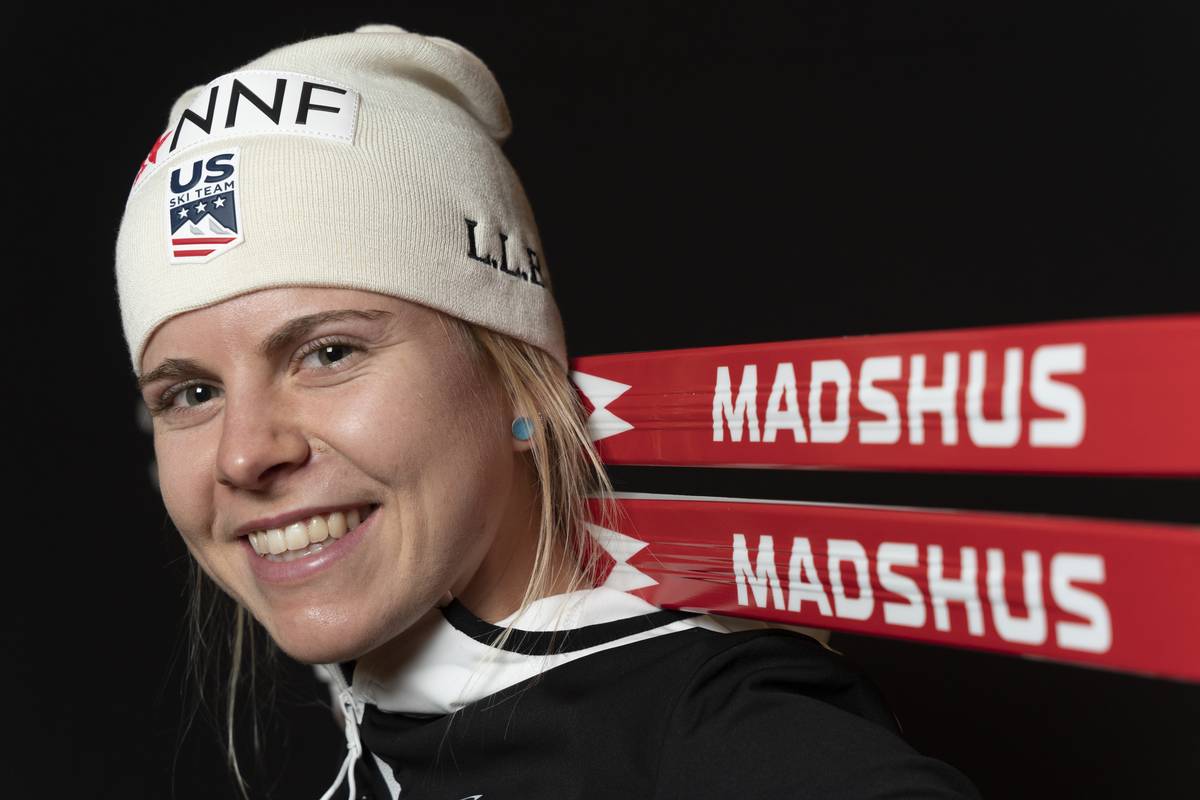
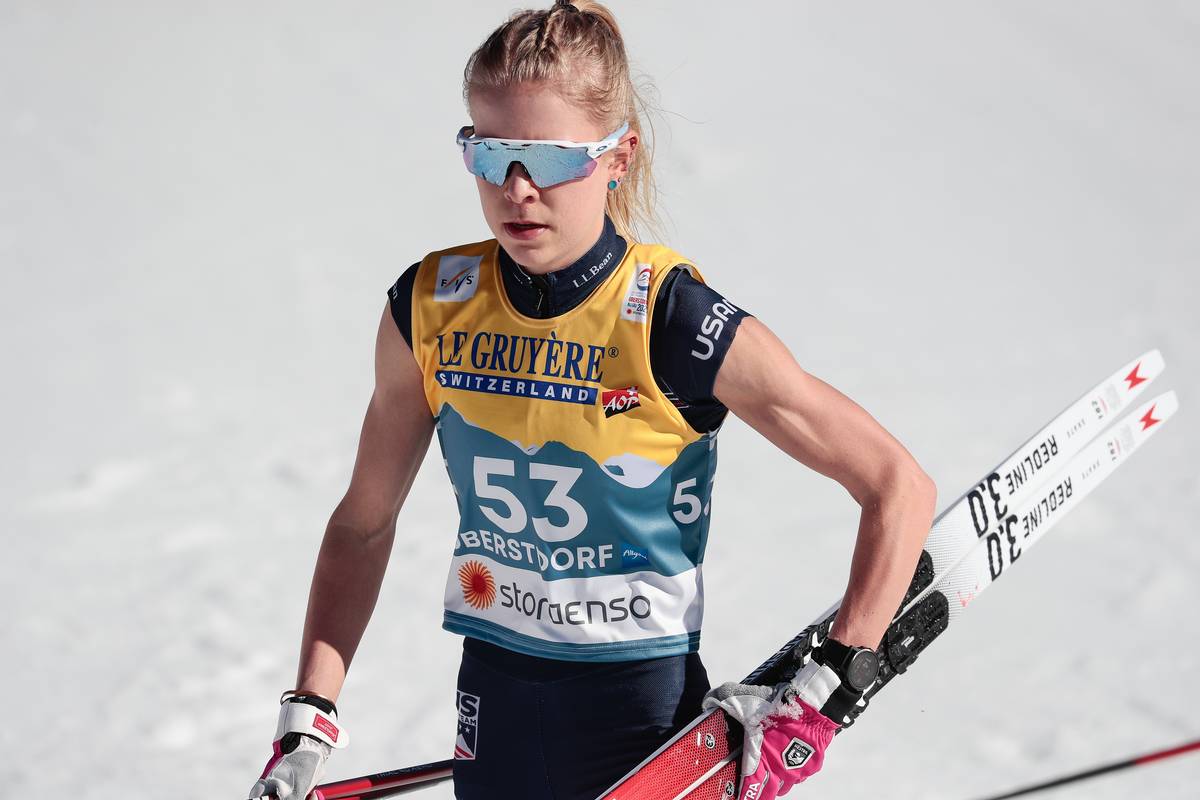
U.S. Ski Team and University of Utah skier Sophia Laukli, who won the Lysebotn Opp Stage of Norway’s Blink Festival on Wednesday, becoming the 2nd American to win the 7.5 k Hill Climb after Liz Stephen in 2014. (Photo: Nordic Focus).
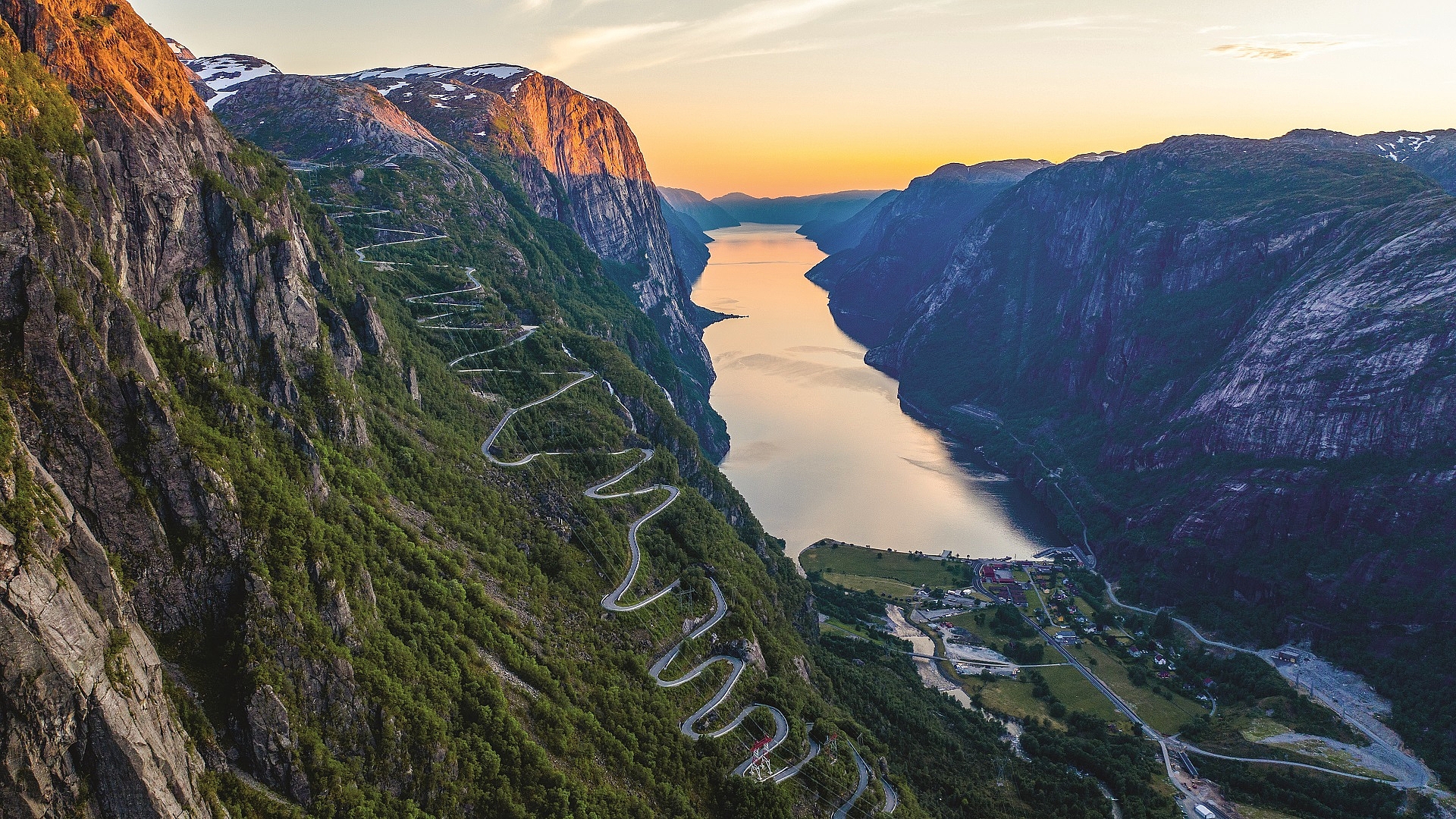
It’s the kind of event that explains Norwegian’s love for cross country skiing – it represents all they want to represent about themselves, and nothing else. In the humid, green summer, some of the world’s best winter athletes come to the coastal town of Sandnes in the country’s south for four days of roller skiing racing – the Blink Festival – in which spectators will pack nearly every inch of town center, mountainside, or arena that the course passes. On the first day, they literally climb up a straight up a fjord – the Lysevegen road, in the Lysebotn Opp, a 7.5 k climb featuring 27 hairpins that stagger when viewed from the air (see below). It’s the essential challenge of the festival. Taking a national obsession and turning it into an event that makes a display of why the country of Norway loves it. It thumbs its nose at the notion of challenge, of not being able to hold onto winter in the summer, and frankly, the limits of what a human should be able to do on skis.
The Lysevegen – 27 hairpins over 7.5 k that brings skiers from the village of Lysebotn to the top of the Fjord surrounding the town (Photo: Bora).
Since its first running in 2006, the Lysebotn Opp has been an indicator of what’s to come not only the next winter, but longer down the road at the World Cup-level of skiing. Therese Johaug, and Charlotte Kalla both bolstered their dominant place in the women’s field over the years. The arrival of the United States Women as top-level contenders was also made apparent when Liz Stephen podiumed in 2012, and then won the climb in 2014.
Stephen’s win in 2014 was remarkable then, and is remarkable now. She was the only American to have taken the marquee event in Norway’s summer rollerski festival. That was until Wednesday, when Sophia Laukli won the Lysebotn Opp and introduced the whole of Norway (a country she’s a dual-citizen of with the United States) to another generation of American women capable of conquering the hardest skiing challenges that can be thrown at them.
The mass start 7.5 km freestyle climb began on the flat roads leading out of the tiny village of Lysebotn. On the start-line, Bib 1 belonged to Heidi Weng, who highlighted a field full of up-and-coming Norwegians and some of Europe’s best pros. Delphine Claudel and Flora Dolci from France were in the field, as was Nadine Fähndrich from Switzerland. Laukli wore bib 11. The course conditions were, as is expected and almost necessary in a fjord in Norway in the summer, rainy.
As the field rolled out, Sophia Laukli initially tucked well within the field, coming away from each split in the field in the leaders group. Those splits came mostly as a result of Heidi Weng (NOR) who controlled the front of the field on the lower part of the climb. Split after split occurred through the field, until a group of about ten skiers was left going into a tunnel about 2 km into the stage. The final break in the leaders occurred in the tunnel, and as the skiers came out of the tunnel on the course, three skiers – Weng, Dolci (FRA), and Laukli – made up the lead group, while Claudel (FRA) led the chase group, with Rahnihild Glørsen Haga (NOR) on her wheels.
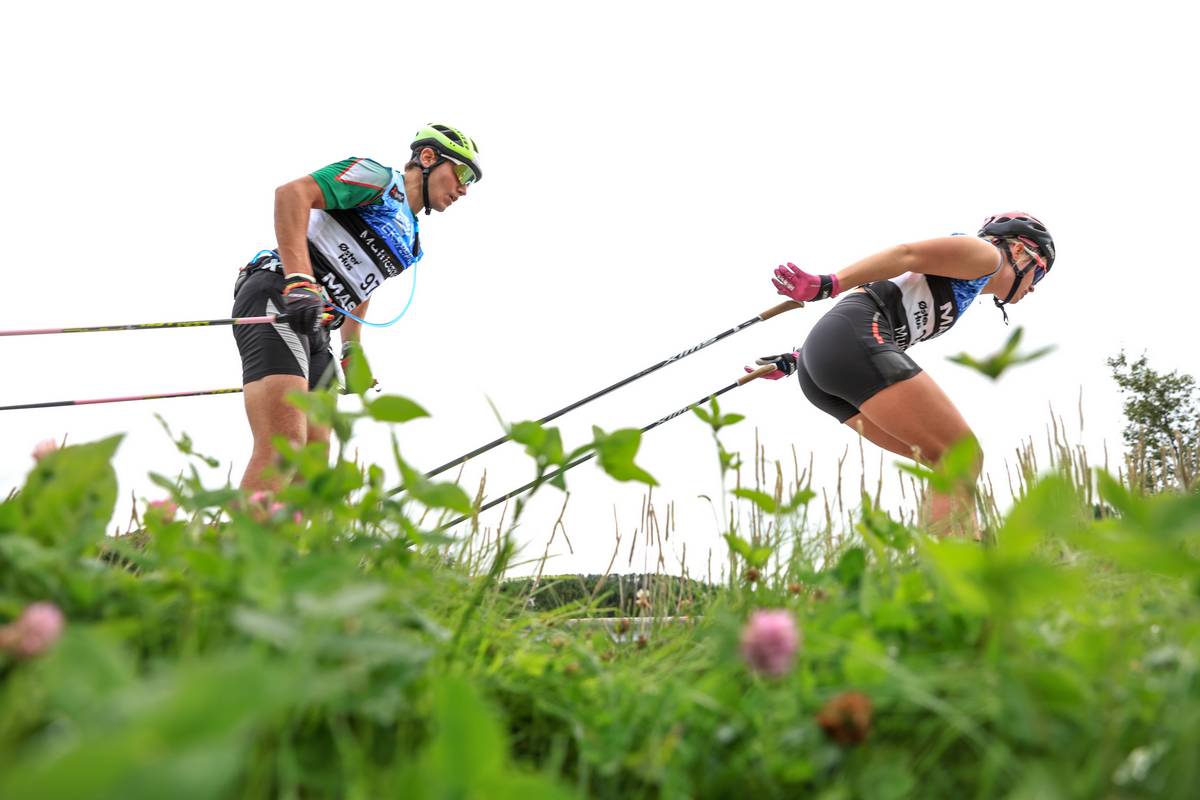
Skiers roll out during Norway’s Blink Festival (Photo: Nordic Focus).
The trio of Weng, Dolci, and Laukli then set into taking turns on the front pace-making. It looked like something out of a Tour de France Mountain Stage broadcast, only that in the sport of skiing, there was more than just reading faces to aid in telling the viewer who was tired. As Dolci started to mix in V1 strokes alongside her upright V2, Laukli kept a steady V2 the entire way up, with powerful pushes holding a high tempo the whole way. The same principle at play in your local 10 k played out on the toughest rollerski climb in the world. Start to V1, and you might just be tired.
Dolci peeled off from doing her turn at the front soon after, which is when Laukli’s high-tempo V2 gained a telling bit of power. It was the moment she seemed to sense that what had been an unknowable challenge – you don’t often climb up fjords in a race setting – might just be her domain. It didn’t take a look or a pause, just a little pick-up.
As they rounded a corner and Laukli moved ahead, Weng matched her stroke-for-stroke. Then in an effort to regain the ability to do the pace-setting before the pace became too much, Weng put a burst in to get ahead of Laukli. It was too late. Laukli had already internalized that rare and thrilling feeling in ski racing where she sensed that she could keep going when others could not.
Slowly, Weng’s tempo-matching came out of sync, and Laukli gained the marginal gains in space that on a mountain pass foreshadow a race breaking apart.
Down the mountain, Claudel had started to show a resurgence and lifted away from the chase group. Cameras panned back to the lead group, and she was suddenly in the shot, gaining slightly on Laukli and Weng.
Around the next hairpin, Weng broke into a V1, and Laukli held steady. It was the decisive moment in the race. There were two skiers together on the climb, and then there was one.
In Lillehammer, Norway Heidi Weng (NOR) prepares for the Visma Ski Classics Birkebeinerrennet (Photo: Nordic Focus)
Claudel brushed past Weng in pursuit of Laukli, but the gap was opening up from the front-end of the race. Laukli looked focused, determined, and kept driving. When she hit the crowd barriers that invariably mark the end of a race in the mountains across Europe, she impossibly picked up the V2 she had kept up for nearly 5 km, never once letting a ski push off without an accompanying pole plant.
Laukli looked to be set to take her determined V2 all the way to the finish line. But then, a couple of hands, a few clutching Norwegian flags, reached out over the barrier as if to say “you’ve won, enjoy it!” Laukli did her best to meet their waiting hands, and then quickly found her wheels crossing a thin white line painted across the top of the pass. One arm raised a pole, and she showed a half-grin, before hunching over and perhaps, realizing the effort she’d just put in had netted her a big win.
Laukli then glanced over her poles and saw Delphine Claudel complete her comeback for 2nd place, +13.0 seconds from Laukli. Weng had joined up with Flora Dolci, and recovered enough to throw down a defiant sprint near the top of the climb and take 3rd place (+50.0 sec).
As Weng crossed the line, Sophia Laukli was now beaming a smile while speaking in Norwegian with NRK – the country’s state broadcasting corporation. Laukli, the dual Norwegian-American citizen, just completed a win where the metaphors are too tempting not to write. From her seaside upbringing in Yarmouth, Maine, Laukli had climbed up a literal climb to the top of that great marker of the Scandinavian landscape and psyche – the fjord. She stood there a champion, for both her countries, and all the world to see.
Sophia Laukli, with a big win at Lysebotn enters another winter as a rising star for the US on the World Cup. (Photo: Nordic Focus)
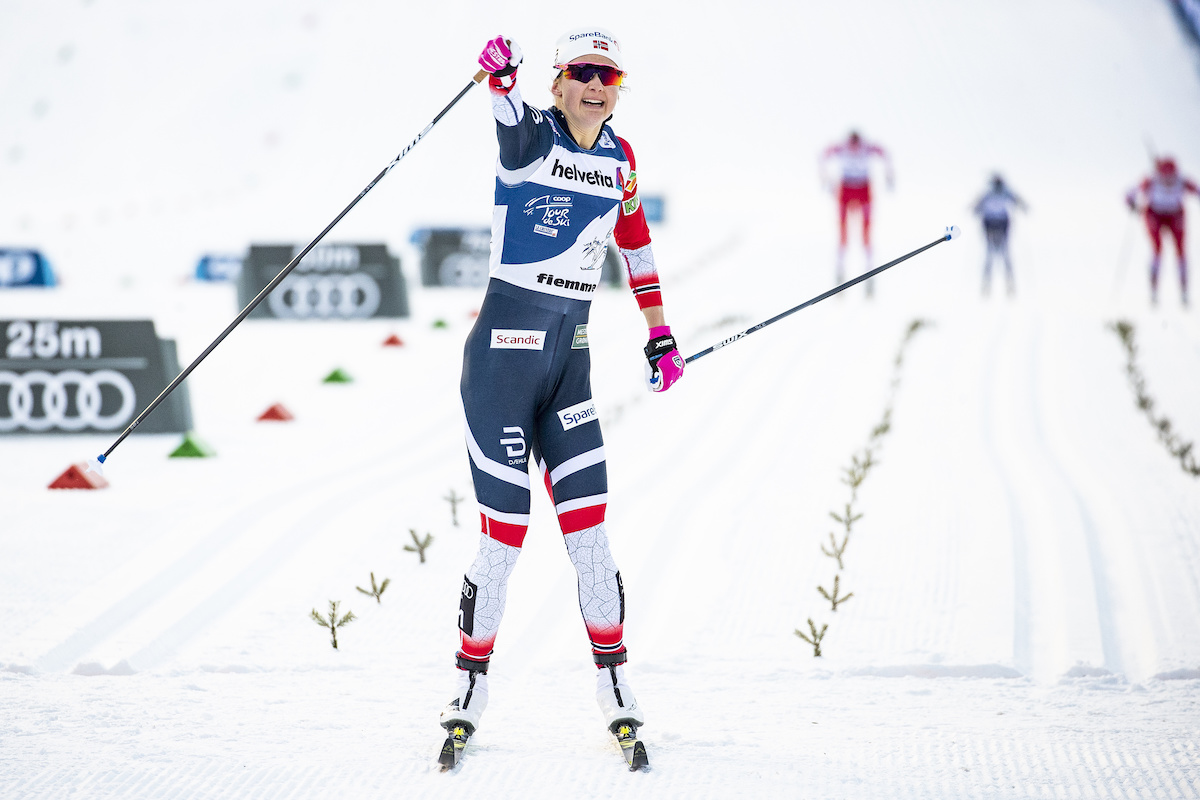
Norway’s Ingvild Flugstad Østberg winning Stage 6 of the Tour de Ski – a 10 k mass start classic race. (Photo: Fischer/Nordic Focus)
With the season-opening national races in Beitostølen, Norway staged to begin a three race stint on Friday, Ingvild Flugstad Østberg announced she will not be competing. Østberg was last season’s overall World Cup winner. She also stated in a press conference that she will miss next week’s World Cup opener in Ruka, Finland.
“I’ve ended up in a situation where I can’t ski.There are health reasons behind this.All the requirements in the health certificate are not met,” said Østberg according to a translated article from Langrenn.com. Langrenn reported Østberg was “healthy and injury-free, but that her body needs rest to recover.” There is speculation in the Norwegian media that Østberg is not meeting certain minimum body-weight requirements for competing.
The twenty-nine-year-old Østberg was one of several pre-season favorites to take the overall World Cup title.
Racing begins tomorrow in Beitostølen with a classic sprint. The U.S. Ski Team is settled in Beitostølen and will use these races as a tune-up prior to the Ruka Triple beginning next Friday. bonus 20bet prvi depozit
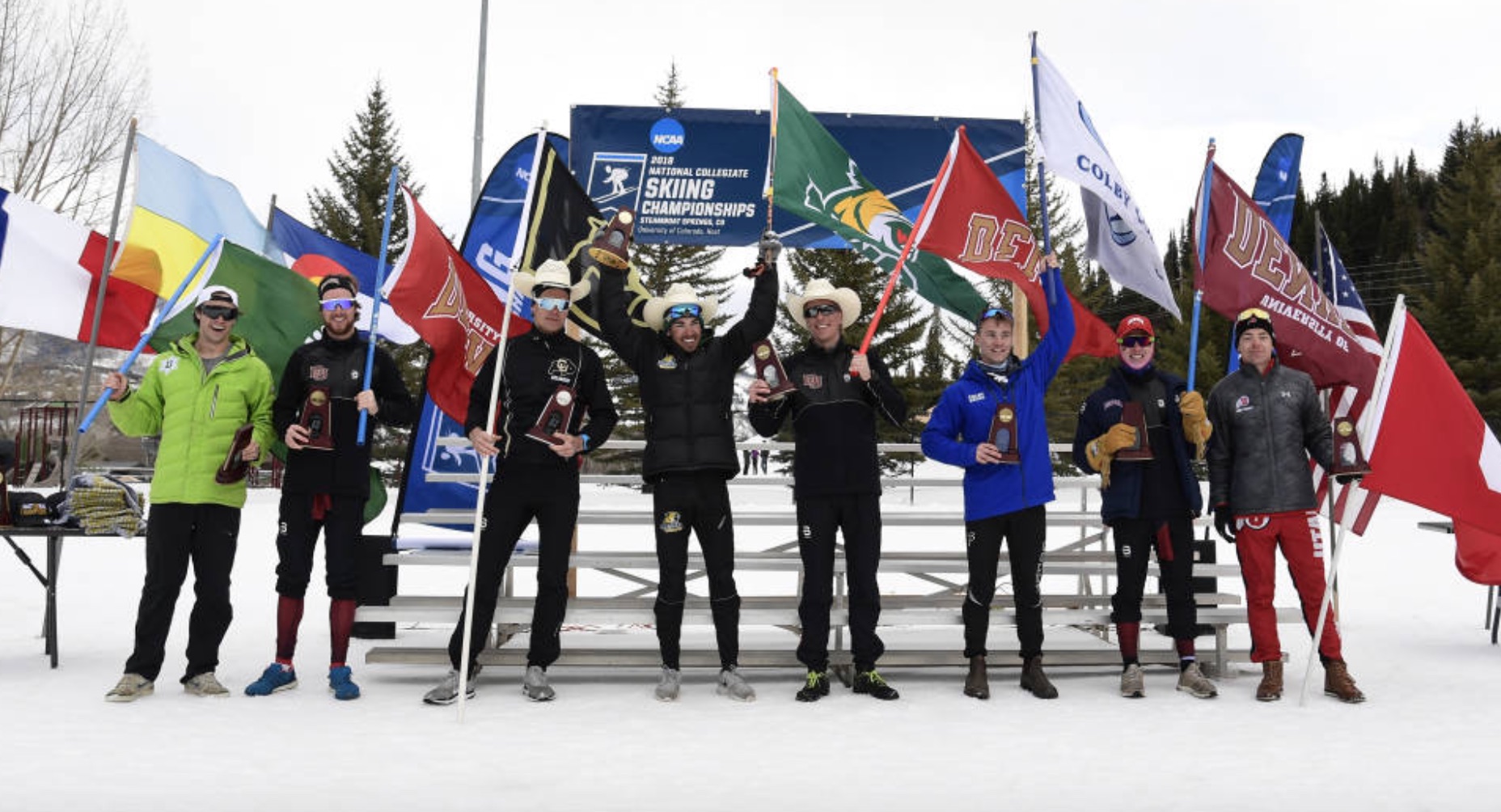
The top finishers in the men’s 20 k freestyle mass start at 2018 NCAA Skiing Championships in Steamboat Springs, Colorado, with Northern Michigan University’s Ian Torchia (c) in first. (Photo: Dartmouth Sports/Clarkson Creative)
NCAA Skiing Championships (Steamboat Springs, Colorado): 15/20 k freestyle mass starts
On the fourth and final day of NCAA Skiing Championships at Howelsen Hill in Steamboat Springs, Katharine Ogden skied to her second-straight national title, Ian Torchia became an NCAA champion and the University of Denver (DU) won its 24th NCAA National Championship.
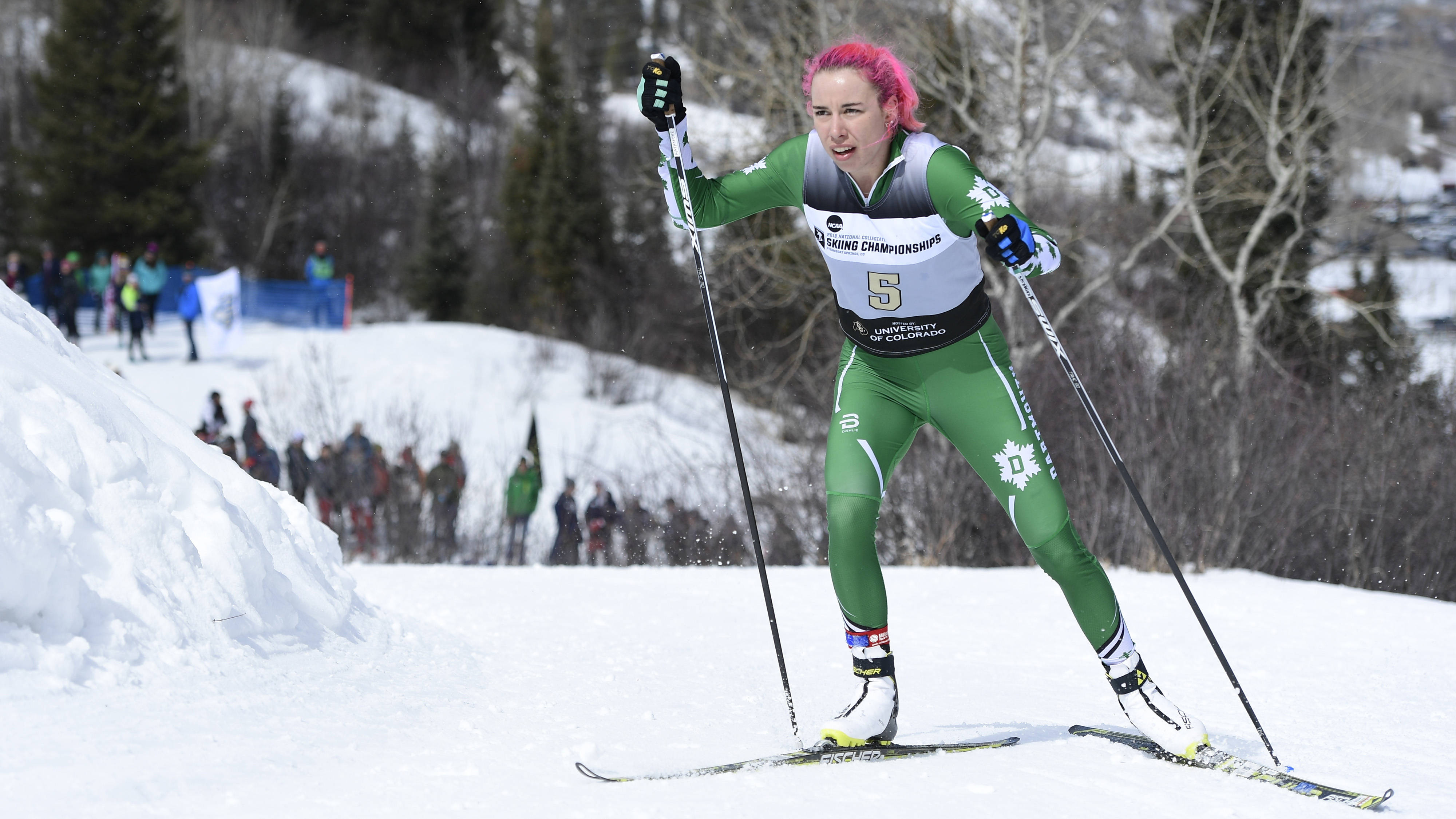
Dartmouth freshman Katharine Ogden racing to her second-straight victory of the 2018 NCAA Skiing Championships in Steamboat Springs, Colorado. She won Saturday’s 15 k freestyle mass start by more than 38 seconds. (Photo: Dartmouth Sports/Clarkson Creative)
Ogden, a Dartmouth College freshman, raced to a 38.4-second victory in the women’s 15-kilometer mass start, finishing in 43:22.0 minutes for her second win in as many races at 2018 NCAA Championships. She won the 5 k classic on Thursday and with her win on Saturday, she became the first Dartmouth skier in 56 years to win two national titles in the same year, according to a Dartmouth press release.
On the second of three laps, Ogden broke away early with close to 10 k to go. According to the press release, she had a “quick fall” near the end of the second lap, but that didn’t derail her as she had time to grab sunglasses from Dartmouth men’s coach Brayton Osgood and a Dartmouth Lone Pine flag before the finish.
At this year’s championships, Ogden’s two titles are accompanied by victories from Dartmouth men’s alpine skiers Brian McLaughlin (who won the giant slalom) and Tanguy Nef (who won the slalom). This marked only the second time that Dartmouth’s Big Green won four individual titles in a single NCAA Championships; that also occurred 61 years ago.
“Katharine absolutely wanted this one, and she really likes to win,” Dartmouth Director of Skiing and Women’s Nordic Head Coach Cami Thompson Graves said in the press release. “She wasn’t about to let a fall slow her down, she has such a great competitive fire. But she also showed her playful side grabbing Brayton’s glasses and smiling all the way to the finish line!”
Hailey Swirbul of the University of Alaska Anchorage placed second and Linn Eriksen (DU) reached the podium in third (+46.3). Denver had three in the top 10 with Jasmi Joensuu in ninth and Taeler McCrerey in 10th. Also landing in the top 10 for All-American honors were Guro Jordheim of the University of Utah in fourth, Emma Tarbath (Montana State University) in fifth, Petra Hyncicova of the University of Colorado Boulder (CU) in sixth, Christina Rolandsen (CU) in seventh, and Lauren Jortberg (Dartmouth) in eighth.
Torchia, an Northern Michigan University (NMU) junior and U.S. Ski Team Development Team member, became the seventh NCAA champion in NMU Wildcats nordic skiing history, according to an NMU press release. Fredrick Schwenke was the Wildcats’ last nordic champion; he won the 2015 NCAA Championships 20 k classic.
Torchia drew bib 1 for Saturday’s 20 k freestyle mass start and crossed the finish line first in 54:21.0, just 2 seconds ahead of CU’s Alvar Alev. Eivind Kvaale (DU) finished just four seconds back in third, and Denver had three in the top seven with Dag Frode Trollebø in fourth and Lars Hannah in seventh. Darmouth’s Cal Deline placed fifth, Zane Fields of Colby College finished sixth, and the 20 k freestyle’s 2017 NCAA champion Martin Bergström (Utah), who also won Thursday’s 10 k classic, placed eighth. CU’s Petter Reistad and Sondre Bollum finished ninth and 10th, respectively.
In the team standings, Denver beat Colorado by 41 points for the overall win with a total of 604 points between the nordic and alpine events at this year’s championships. Dartmouth placed third, 114.5 points behind Colorado, and Utah was another 63 points back in fourth.
According to a DU press release, Denver has won at least one national championship in each of the last five athletic seasons (skiing: 2013/14, 2015/16, 2017/18; hockey: 2016-17; men’s lacrosse 2014/15), joining only Stanford on the list of schools that have done so in the last five seasons. (Oregon, West Virginia, Penn State, Oklahoma, Ohio State and Florida could potentially join that list later this year.)
“It feels incredible,” said DU head coach Andy LeRoy said in the press release. “I am so happy for all of our athletes, they’ve been training all week and all season and to do it in Steamboat in front of our crowd is special.”
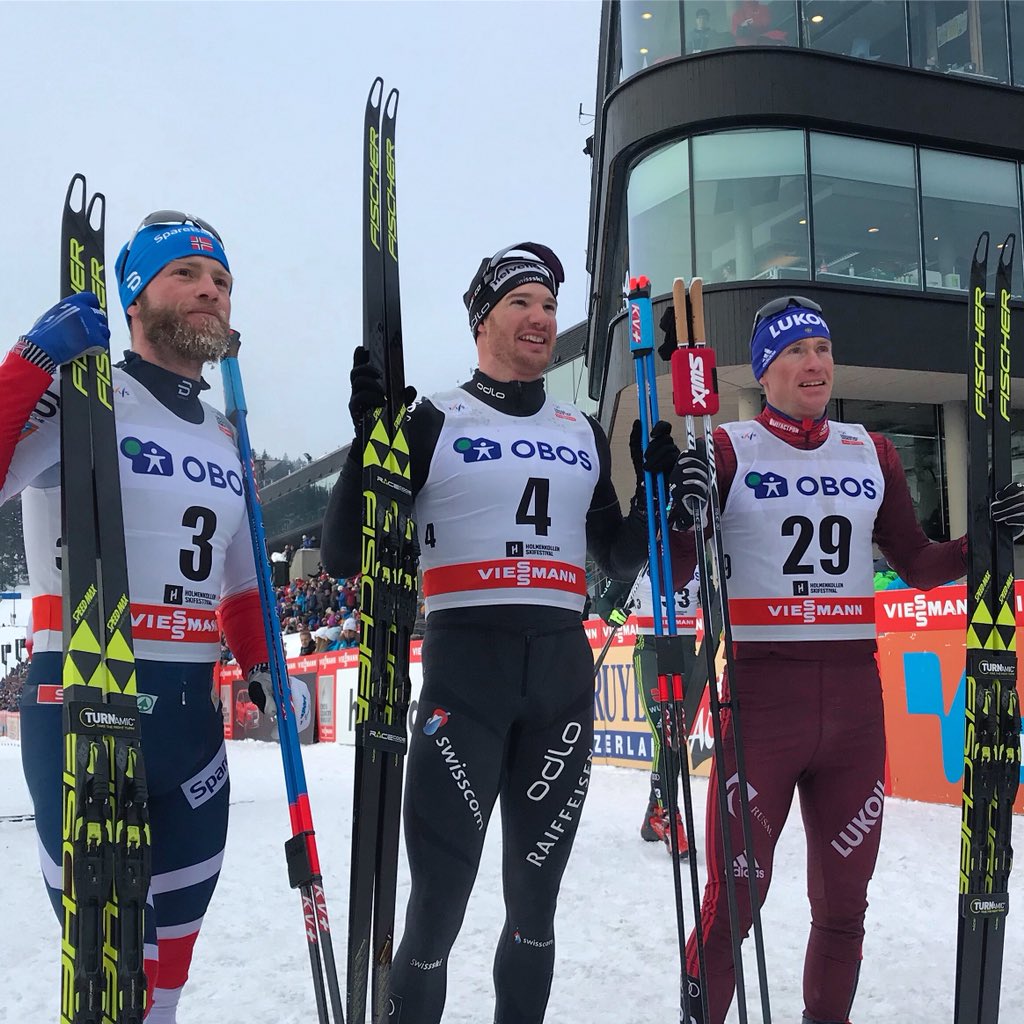
The Holmenkollen men’s 50 k freestyle mass start podium on Saturday at the World Cup in Oslo, Norway, with Switzerland’s Dario Cologna (c) in first, Norway’s Martin Johnsrud Sundby (l) in second, and Russia’s Maxim Vylegzhanin (r) in third. (Photo: FIS Cross Country/Twitter)
FIS Cross Country World Cup (Oslo, Norway): Men’s 50 k freestyle mass start
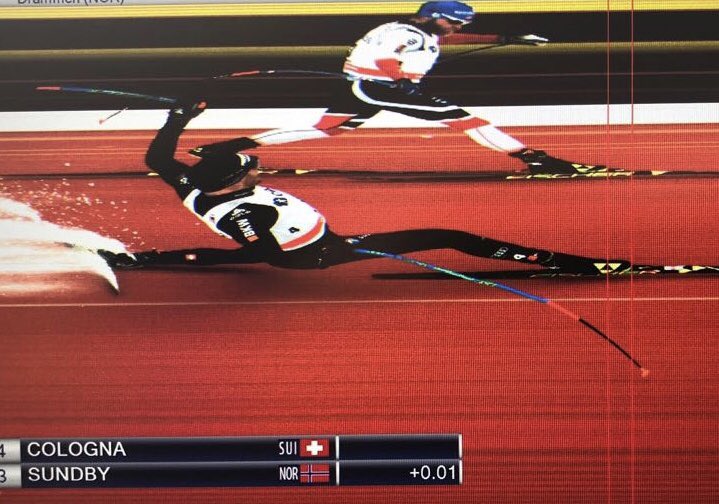
A four-time Olympic champion, Dario Cologna of Switzerland won his first 50-kilometer World Cup race on Saturday, topping the podium in the famous Holmenkollen 50 k freestyle mass start after outlunging Norway’s Martin Johnsrud Sundby (who won the event last year) for the win in 2:01:48.1. Sundby finished one-hundredth of a second behind for second place, ahead of Russia’s Maxim Vylegzhanin, who was 1.1 seconds back in third in his first World Cup race since November of last year.
The photo finish for first between Switzerland’s Dario Cologna (near) and Norway’s Martin Johnsrud Sundby at the Holmenkollen 50 k freestyle mass start on Saturday in Oslo, Norway. Cologna got it by 0.01 seconds. (Photo: FIS Cross Country/Twitter)
Norway’s Sjur Røthe came out on top in a race for fourth (+4.2), ahead of Russia’s Denis Spitsov in fifth (+4.4) and his Norwegian teammate Hans Christer Holund in sixth (+4.5). Great Britain’s Andrew Musgrave followed in seventh (+15.1), Germany’s Florian Notz placed eighth (+25.9) and Canada’s Alex Harvey finished ninth (+32.4), ahead of France’s Robin Duvillard in 10th (+33.5).
Scott Patterson led the U.S. in 16th (+56.3) coming off an 11th place in the 50 k classic mass start at last month’s Olympics, and Canada’s Devon Kershaw finished in the points in 28th (+3:43.6). Just outside the top 30, Canada’s Graeme Killick finished 34th (+4:55.1).
Also for the U.S, David Norris placed 38th (+6:19.7), Paddy Caldwell was 46th (+8:12.3), Noah Hoffman 49th (+10:27.9), Kevin Bolger 52nd (+12:44.2), and Simi Hamilton did not finish.
Canada’s fourth man in the race, Andy Shields finished 47th (+8:13.6).
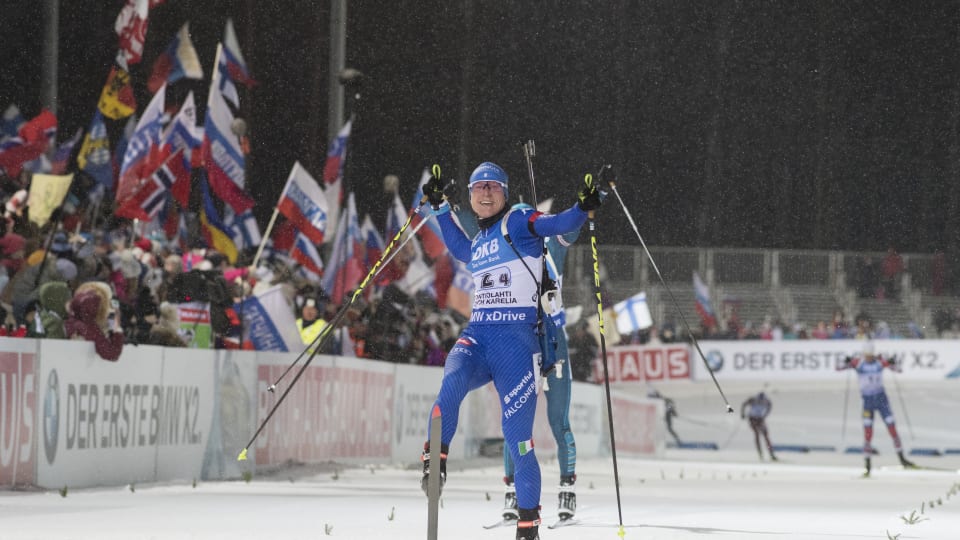
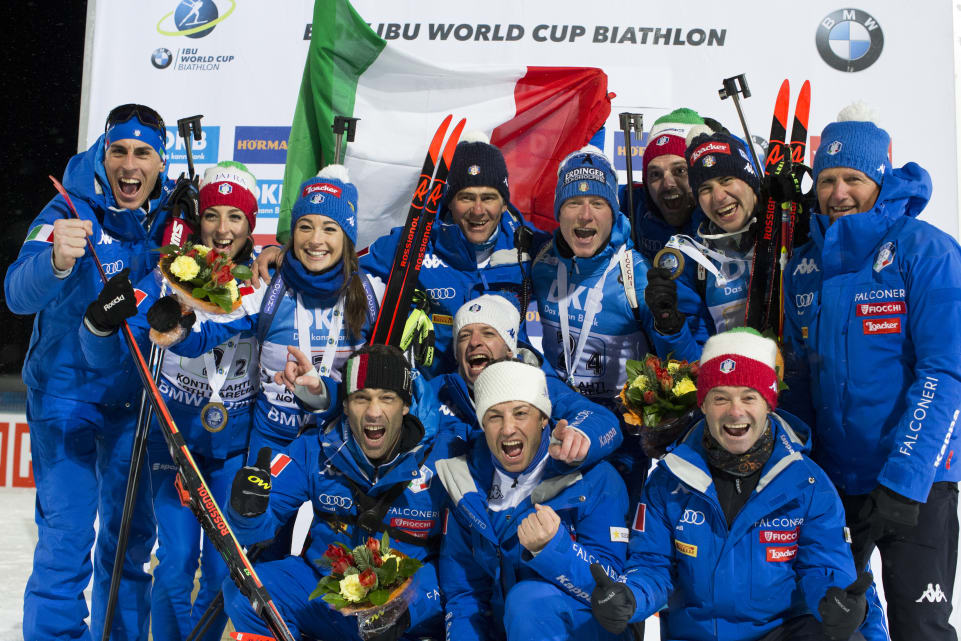
Italy’s Lukas Hofer celebrates his team’s win in Saturday’s mixed relay at the IBU World Cup in Kontiolahti, Finland. (Photo: IBU/Biathlonworld)
IBU World Cup (Kontiolahti, Finland): Single mixed relay & mixed relay
(Note: This rundown has been updated to include comments from Christian Gow and Sean Doherty.)
In the last single mixed relay and mixed relay of the International Biathlon Union (IBU) World Cup season, France and Italy came out on top, with France winning the two-person single mixed relay and Italy taking first in the coed mixed relay.
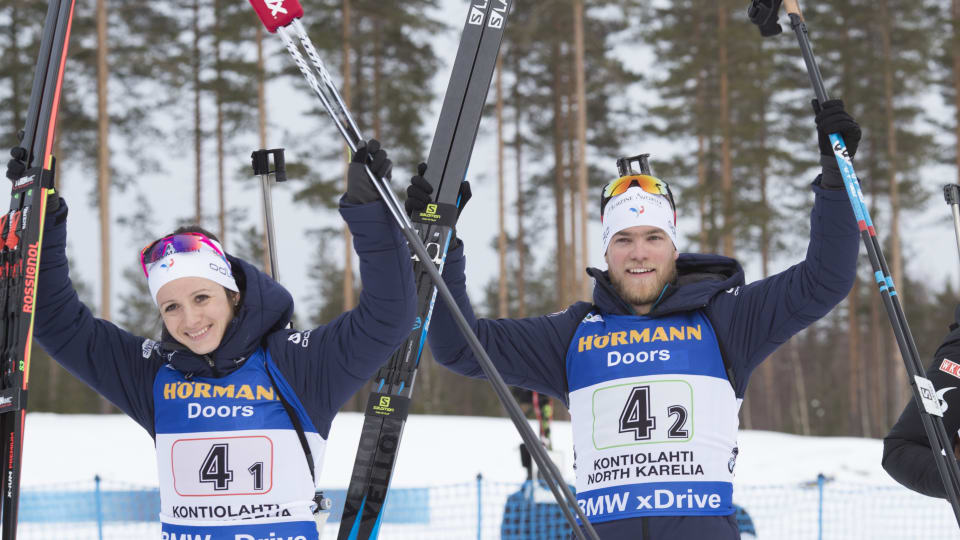
France’s Anaïs Chevalier and Antonin Guigonnat after winning Saturday’s single mixed relay at the IBU World Cup in Kontiolahti, Finland. (Photo: IBU/Biathlonworld)
France’s Anaïs Chevalier and Antonin Guigonnat combined for zero penalties and six spares to finish first in the single mixed relay in 33:29.1 minutes. Guigonnat as the team’s anchor secured the win by just 2.4 seconds over Austria’s Julian Eberhard while Norway’s Johannes Thingnes Bø finished 4.4 seconds back for third.
Chevalier put France in fifth after the first leg, 15.5 seconds behind Ukraine’s Iryna Varvynets in first. Guigonnat used just one spare on his first leg to move them into fourth, 9.2 seconds back while Norway led at the second exchange. On Chevalier’s second leg, she shot clean in both stages to lead through the final exchange, with Ukraine skiing just 6.2 seconds back in second.
On the final leg, Guigonnat used two spares and stayed out of the penalty lap, keeping the team in first through the finish. Eberhard skied the second-fastest course time on that leg to elevate Austria (with Lisa Theresa Hauser) from fourth at the tag to second place at the finish, and Bø skied all the way up from eighth to third place for Norway (with Marte Olsbu) with the fastest course time.
Ukraine’s Artem Tyschenko used just one spare but slipped to fourth with the 11th-ranked course time on that leg, as he finished 10.8 seconds behind Norway.
Behind Russia in fifth and Italy in sixth, Canada placed seventh (+23.8) with Rosanna Crawford and Christian Gow. The duo combined for zero penalties and six spares, and put themselves in third place early in the race. Crawford skied them into third on the first leg, using just two spares and tagging Gow 7.4 seconds out of first.
Gow went on to take the lead after cleaning prone without any spares, and he cleaned standing as well but slipped back to third while Bø took the lead. Gow tagged Crawford in third, 8.9 seconds behind Norway in first.
“I didn’t think too much about being tagged in third,” Gow recalled in an email to FasterSkier. “It was exciting for sure, but I let it fade to the background so that I could focus on my job both on the track and in the range. It was great to leave prone in first place! It was also surprising, but it was a good place to be in.
“My skiing was ok today,” he continued. “It is a really challenging and demanding race format that we don’t get a lot of practice with. I was sick after the Olympic Games and only finally coming around the past couple days. The Sprint race was horrendous for me, so today was much better than that. In the range I just focussed on myself and trusted my shooting. I tried my best not to get caught up in the race going on around me and it worked to my benefit.”
Crawford then slipped to seventh and 21 seconds back with three prone spares, but avoided the penalty lap, and Gow held onto seventh through the finish, using just one spare and skiing the eighth-fastest course time on that leg.
“We are both happy with this result,” Gow wrote. “I think that we are both looking at the 23 second gap to first and thinking that if things had worked out just a bit better we could be there. It can be both exciting and frustrating to be that close to the podium. We know we can do it, it’s just a matter of putting it together on the right day. We are happy with 7th, but hungry for more.”
Susan Dunklee and Lowell Bailey finished 14th for the U.S., 1:13.0 out of first with one penalty and 14 spares. The penalty came on Dunklee’s first leg during her standing stage, after she had cleaned prone without any spares. She tagged Bailey in 14th and he brought them up to 11th, using three spares on that leg, then Dunklee came through the final exchange in 13th after using four spares to clean. Bailey lost one place on the final leg, using four spares but staying out of the penalty lap.
Twenty-six teams competed in the single mixed relay, compared to 23 in the mixed relay that followed.
Team Italia celebrates its win in the IBU World Cup mixed relay on Saturday in Kontiolahti, Finland, with its relay members Dorothea Wierer, Lisa Vittozzi, Dominik Windisch, and Lukas Hofer. (Photo: IBU/Biathlonworld)
In Saturday’s 2 x 6 + 2 x 7.5 k mixed relay, Italy nabbed a 1.5-second victory over Ukraine in 1:15:08.3. Dorothea Wierer, Lisa Vittozzi, Dominik Windisch, and Lukas Hofer — the same Italian team that took bronze in the mixed relay at last month’s Olympics, although in a different order — combined for the win with one penalty and 13 spares.
Ukraine, with Anastasiya Merkushyna, Vita Semerenko, Artem Pryma, and Dmytro Pidruchnyi, had zero penalties and just three spares throughout the whole race. For the second-straight relay on Saturday, Norway placed third (+9.1) with Synnøve Solemdal, Tiril Eckhoff,Henrik L’Abée-Lund, and Tarjei Bø totaling zero penalties and nine spares.
Italy’s lone penalty came in Vittozzi’s second leg, but it didn’t derail the team as it improved from sixth to fifth with Vittozzi, who skied the third-fastest course time on that leg. She tagged Windisch 6.8 seconds out of first, and Windisch, who had anchored the team in the Olympics, took the lead by the final exchange after using two spares to clean. Hofer left the exchange just 3.3 seconds ahead of Norway’s Bø but used just one spare and skied the second-fastest anchor leg to finish first, beating his rivals up Kontiolahti’s infamous climb known as “The Wall”. Ukraine’s Pidruchnyi also shot clean with a single spare and clocked the fastest anchor leg to move his team from fourth to second place. Bø lost one place and finished third after using one spare as well and skiing the third-fastest anchor leg.
Russia followed in fourth, France fifth, Sweden sixth, Germany seventh, Austria eighth, and the U.S. ninth (+2:48.4). The U.S. team, with Clare Egan, Joanne Reid, Tim Burke, and Sean Doherty, had one penalty and 11 spares. Egan cleaned her first prone but had to ski a penalty lap after her standing stage, tagging Reid in 17th, 58.7 seconds out of first.
Reid used three spares on the second leg and moved up to 13th by the second exchange, and Burke used three spares as well to pick off one more place and tag Doherty in 12th. Doherty skied the eighth-fastest anchor leg and used two spares to clean to put the team in ninth at the finish.
“I don’t consider two spares to be anything special, but today it was enough to make up some ground,” Doherty wrote in an email to FasterSkier.”I felt strong skiing, more like myself which is fun even if it’s a little late in the season. We had very good skis which always helps. I have done quite a few laps on this course over the years so the lines and transitions are pretty refined, so that is where I made time on the course.
“I am happy with my leg. I enjoyed my little battle for 9th,” he continued. “I can’t speak too much for the other members of the relay tonight but I think 9th is a solid effort.”
Canada finished 17th (+4:34.9) with Emma Lunder, Julia Ransom, Scott Gow, and Brendan Green combining for one penalty and 13 spares. Lunder put them in 12th at the first exchange and Ransom skied up to 10th, but Scott Gow had a penalty on his standing stage to drop to 16th. Green lost one more place on the last leg despite only requiring two spares.
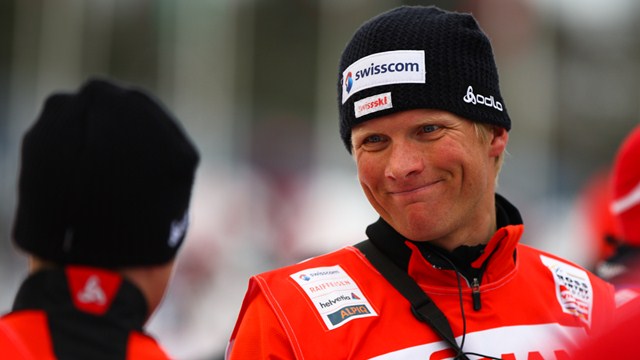
Tor-Arne Hetland, a Norwegian Olympic gold medalist and multiple world champion, will become the Norwegian National Team Coach in the 2015/2016 season after a year as Canada’s World Cup Coach. He has also coached with the German and Swiss National Teams. (Photo: FIS/ NordicFocus)
It was announced Tuesday that Tor-Arne Hetland will not return as the Canadian World Cup Coach in the 2015/2016 season. Don’t think his loss of a job means he’s unemployed, however, as the Norwegian is headed back to his home country to take over the position of National Team Coach.
The Norwegian press reported Wednesday that Hetland will replace Steinar Mundal as Norway’s National Team Coach. He will work closely with Head Coach Trond Nystad throughout the season from his post centered in Trondheim.
According to Nystad, the new appointment is no surprise as the Norwegian staff has considered Hetland a strong candidate for some time. “We have had talks with Tor-Arne awhile considering a replacement for Steinar Mundal. He has accumulated much experience abroad with good results,” Nystad told Langrenn.com.
The 41-year-old is a gold medalist in the 2002 individual sprint at the Salt Lake games. His other accolades include a silver in the 2006 Olympic team sprint and five World Championships medals – three gold, a silver, and a bronze. He retired from racing in 2009 due to a knee injury and asthma.
Hetland jumped into coaching the same year as his retirement with a position on the German team. In 2010 he was named the Swiss sprint coach and remained there until 2014, when both he and his wife, Guri Hetland, ended their contracts with the team. After the departure Hetland ultimately landed in Canada where he was the World Cup Coach for the 2014/2015 season.
According to Hetland, his international coaching experience will provide him the necessary tools to be the Norwegian National Team Coach, a posiiton he doesn’t take lightly. “I think I have gained enough experience internationally to come home to Norway. Now I’m ready for my biggest challenge as a coach,” he said to Langrenn.com.
“I feel privileged to work in Norway with so many great cross country skiers. This I have been looking forward to for many years, and now I get the chance,” he added.
A lot of things were better in the old days. But distance workouts in rubber boots?
“It felt mostly like running on cutting boards, but we didn’t think twice about it!”
These days, running shoes are so lightweight and comfortable that you barely feel them at all. That was not the case back in “the good old days,” or at least until the end of the 1970s. In Norway, people were using rubber boots for distance runs in wetlands as well as for interval workouts on gravel roads.
Lars Erik Eriksen, who was on the Norwegian national team from 1977 to 1985, is one of the rubber boots’ most dedicated fans.
“I used rubber boots in all kinds of terrain. I even ran in them on hot summer days. Back then, running shoes were not particularly good, so rubber boots was a natural and convenient choice for us,” Eriksen says. The merited skier has several international medals on his resume, including Olympic silver from the relay in Lake Placid 1980 and gold medal from the World Championships in Oslo 1982. He also snagged a silver medal and a bronze medal from that event.
Do you think the rubber boots contributed to your performance?
“When we were fit, we didn’t really think a lot about what we were running in, but I do remember we thought the weight of the footwear was an added bonus. It was basically extra training. It was really heavy if we were running in wetlands and stepped in to where the water level reached above the top of the boots and filled them with water,” says Eriksen.
Did you use a specific kind of rubber boots?
“We preferred the ones that were slightly shorter, the green ones with bigger, grippier outsoles. But you should have seen the chunky ones Myrmo (ed. legendary Norwegian cross-country skier) and his friends were using… That was back in the early 1970s. At that time, athletes were using those tall, heavy black ones. You can see them in photos in old training text books. There are pictures of athletes wearing that kind of stuff,” Eriksen says.
How did you feet handle running around in rubber boots?
“Well, it kind of felt like running around with wooden cutting boards under your feet. The shock absorption was non-existent. It was definitely not gentle on knees and hips. But we managed,” says Eriksen.
But then real running shoes came along. Eriksen recalls a blustery fall day when a young boy named Bjoern Daehlie came up to him and wanted to tag along for a run. Eriksen of course sported his usual rubber boots, while the future king of XC skiing ran in modern running shoes.
“I took Bjoern for a real overdistance workout. We did some real soggy wetlands, and it was sleeting as well. But with my rubber boots, my feet stayed dry, while Bjoern was so wet and cold that he even shed a few tears. But he completed the whole workout, I’ll give him credit for that,” Eriksen recalls.
From www.langrenn.com, July 15, 2010 By Ola Jordheim Halvorsen, translation by Inge Scheve
NORWAY: Summer means variety in training methods, activities and intensities. However, almost all of the summer training methods that skiers engage in, carry some risk of injury. Martin Lobben, a chiropractor and manual therapist who works extensively with athletes recognizes some common injuries that plague skiers. ”I’ve treated a fair number of nordic skiers, and come up with a short list of tips that can be useful,” Lobben says to Norwegian web site www.langrenn.com.
These are Lobben’s top 10 tips for skiers:
1. Build up to it
Build your base carefully and take your time preparing your body for what’s in store, both physically and mentally. There are no short cuts: Base is built with a lot of repetitions with low loads, increasing carefully. This drastically reduces the risk of overuse injuries.
2. Heat creams
Use creams and lotions such as IcyHot and Tiger Balm before and during exercise to improve circulation, which also improves your flexibility.
Rollerskiing is good – just don't overdo it…
3. Stretching and flexibility
Always stretch thoroughly to maintain the muscles’ flexibility. Hold each stretch for 30 to 45 seconds. Pay particular attention to the muscles between your shoulder blades, your lower back and glutes.
4. Treatment
Massage and trigger point treatments both prevent injury and reduces the recovery after hard workouts.
5. Variety
Focus on variety! Strength training, endurance training, plyometrics, balance/coordination, stretching and yoga. Don’t overdo roller skiing and double poling. And keep in mind that rest days are as important as training days.
6. When you get injured
RICE: Rest, Ice, Compression, Elevation. Stop the activity immediately, ice the injured body part and apply direct, firm pressure with a bandage. Elevate the injured body part. Keep in mind that pressure is more important than ice. Ice only reduces the pain!
7. Diet
Eat a normal, varied diet based on healthy foods. Feel free to add some extra pasta or rice the day before a hard workout. Healthy fats are important, so eat plenty of fish or take an Omega-3 supplement.
8. Cool down before you finish
Cool down with some easy activity after a hard ski workout, bike ride run or strength session. The cool-down contributes to decrease the blood pressure and helps clear lactic acid and other byproducts from your muscles.
9. Potassium and fluids during long workouts
Hot weather increases your need to replace the minerals and electrolytes lost through sweat. Consider taking a potassium supplement, which helps avoid cramping. Also make sure you drink enough. Aim for 2 to 3 cups (500 to 800 ML) per hour, but don’t wait until you feel thirsty. Sip small amounts of liquid frequently throughout the workout. Experiment with different sports drinks until you find a flavor and formula that works for you. Try different things during practice, stick with what you know works for races.
10. Working equipment
Make sure your equipment works and cover your bases. Always bring first aid kits, enough food and drink to last through the workout/race. Good luck and stay safe!
Did you know…
– Scientific studies show that by training the healthy side of your body, you also train the injured side. How come? When you train the muscles in one leg, the signals are transmitted through the nervous system in your spine and signals are delivered to the injured leg as well as to the healthy leg.
– “Trigger points” are a string in the muscles that develop in an overused muscle that is deprived of oxygen and nutrients. These strings cause muscle fibers to stick together. A chiropractor or manual therapist can treat the trigger points by pushing hard on the string and force the sticking muscle fibers apart.
– 46 percent of athletic injuries occur during competition
– Misalignment in the foot can cause knee pain. Make sure you analyze your gait if your knee(s) hurt.
From Langrenn.com, July 6, 2010 By Ola Jordheim Halvorsen. Translated by Inge Scheve.
Petter Northug Jr. had to cede the top of the podium to Eldar Roenning at the opening event in the 2010 Tour de Troendelag Friday night.
However, Northug hardly seems concerned. “Why? Well, I don’t know. He’s beat me a few times this spring and it’s starting to seem normal. You know, he just got married and he’s climbed a few notches just on that,” Northug said after the race.
And Roenning admits to the online newspaper VG Nett that he enjoys the trophy. “It’s always fun to beat Northug in a sprint. I’ve done that once before this winter, when I beat him during Tour de Ski. He’s a good yard stick,” Roenning said.
Roenning sat out Saturday to charge his batteries for the St Olav’s Lopp next week. Northug on the other hand will race both the ski race at Kirkebyfjellet and the roller ski race in Meraaker.
Results:
Men’s Senior: 1) Eldar Rønning. Skogn. 2) Petter Northug, Strinndheim, 3) John Bjørgård, Strindheim, 4) Niklas Dyrhaug, Team Trondelag, 5) Kent Ove Clausen, Team Trondelag, 6) Daniel Myrmæl Weekend City, Team Trondelag, 7) Alexander Legkov, Russian, 8) Pietro Pills Cottrer, Italy, 9) Petter Skin City, Wind, 10), Magnus Moholt, cod.
Women, Senior: 1) Kristin Gaus, Team Trondelag, 2) Kjersti Bøe, Team Trøndelag, 3) Would Haugan Buhrkall, Leksvik.
Men 19-20 years: 19 Didrik Tønseth, Byåsen, 2) Emil Iversen, Varden, 3) John Saur Kilskare, Strindheim.
Boys 15-16 years: 1) Henry Skarpnord, Brumunddal 5.48, 2) Erling Flat Aker, Hommelvik 6.04, 3) Anders Johan Sandberg, Skogn, 6.07.
Girls 15-16 years: 1) Lotte Lie, Skatval 7.37.
Boys 17-18 years: 1) Erik Simonsen, Mountain Eagle 11.37, 2) Sigve Denstad, Stjørdals Blink-12.00, 3) Martin Pettersen, Malvik 12.06.
Anders Soedergren helping his Swedish team to victory in the men's 4×10 k relay at the 2010 Olympics
Anders Soedergren (SWE) is considered one of the best 50 K racers in the world, and has a first place from the venerable Holmenkollen 50 K on his resume.
However, the Swede won’t have a chance to put his capacity to work on that distance in the upcoming World Cup season. The FIS Congress in Turkey nailed a World Cup schedule with no 50 K events for 2010-2011.
The lack of a World Cup 50 K race has Soedergren frustrated. “XC skiing is well on its way to lose its identity and its character,” Soedergren said to zsport.se.
The 50K during the 2011 World Championships in Holmenkollen will be the only race of that distance this season, and that event is a mass start, which typically have held no advantages for a skier like Soedergren. “There was an opportunity to make the World Championship 50 K an individual start race, but Norway vetoed the suggestion. They have Northug,” Soedergren said to the Swedish national TV station SVT.
Soedergren is not afraid to speak his mind on what he thinks of the recent evolution of FIS-governed XC skiing. “I don’t mind changes, but not all of the changes have been for the better,” he concludes.
Cross-country researcher Hans-Christer Holmberg from Mid Sweden University in Östersund leads the research team gathered in Meråker.
In the border community to Sweden, they will spend the next few days investigating herringbone technique according to the Trondheim newspaper.
“There was research on the diagonal stride in the 70’s and 80’s, but herringbone has never been examined. In addition we will look at diagonal stride, downhill technique and swing technique. We will also look at how athletes transition into the hills.
“Today we have much more advanced technology, so we can look at things that they couldn’t 20 years ago. Among other things, we can analyze how narrow and broad athletes herringbone, the power curves of the participants in both arms and legs, and even if they use more power in the right arm or leg than the left,” said Holmberg to the paper.
The Swede is aware that he has a good ally on the Norwegian side of the border.
“We work closely with Øyvind Sandbakk and NTNU in Trondheim, but in Meråker we also have Barbara Pellegrini from Trento, Italy, and there are researchers from Salzburg in Austria and from Ljubljana in Slovenia for this project. At the same time, it is ideal to have research in Meråker, where there are many good athletes,” he said.
Both future and past stars, including Marthe Kristoffersen and Frode Estil, are among the athletes that will be under scrutiny during the course of the study, and Holmberg has great expectations for the project.
“We know that skiers Fred Berry and Odd-Bjorn Hjelmeset have good herringbone technique. The same with Emil Jönsson, often running up hills, as did Estil. Each of these skiers have a narrow herringbone technique, and the way up is shorter than if the skis are angled more outward. At the same time the performers have a technique and strength to use a straighter V, and there are many factors that come into play. We believe that we can get answers here,” concluded Holmberg.
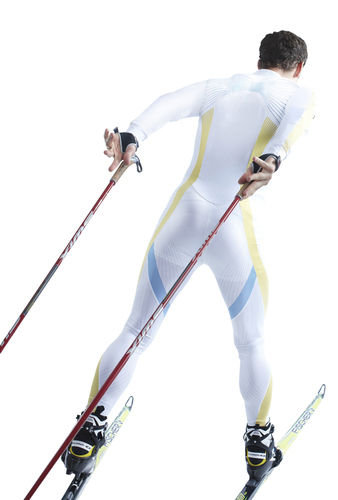
Last week Craft presented the speedsuit that has been under development for the past year in collaboration with the Swedish national team for the Vancouver Olympics. According to experts, the new suit could actually make a big difference.
After years of research, close cooperation with several of the worlds best skiers and engineers, and lots of plain hard work, Craft finally presented their new world class cross country ski racing suit. Specialists on functional training and race apparel have focuses on the 2010 Olympics as the debut stage for the next generation of innovation- a muscle-assisting material using carbon fiber and a unique ergonomical construction branded as Craft’s new Moving Wing Technology™. Swedish national team skiers will be racing in this new suit- and they’re hoping it will take them to the top of the podium on the Canadian trails in February.
The close cooperation with the world’s best skiers is the primary resource behind Crafts new product innovations. Former Tour de Ski winner Charolotte Kalla is one of four skiers who have worked on the research and development team for the new suit. At the National Winter Sports Center in Ostersund, Kalla and her teammates along with Craft product engineers and developers have tested and adjusted the new suit technology for optimal performance in Vancouver.
In Ostersund, the research team has used cameras to study skier’s movement patterns from all possible angles. From these tests, they were able to develop a unique fabric with new stitching and panels and fantastic ergonomics. A shaped 3D construction provides unmatched freedom of movement and comfort despite the suit’s tight and aerodynamic fit. A final innovation detail is the Moving Wing Technology™, designed to give optimal release and pull-back across the back and shoulder muscles.
Craft’s Olympic 2010 racing suit is made of advanced technical material from the Swiss fabric specialist Eschler. Polyester fiber gives optimal moisture transport while polyurethane protects against the natural elements. The material even contains some carbon fiber, which according to studies published by the research institute EMPA in St. Gallen, Switzerland, improves heat regulation- a decisive factor on race day.
Source: langd.se
Translated by Tim Reynolds
Born and raised in Vermont, Tim Reynolds is psyched to be operating out of the Northeast Kingdom of his home state as part of the Craftsbury Green Racing Project. He spent his undergraduate years at Middlebury, where he was an EISA carnival winner and three-time NCAA qualifier and All-East pick. Tim captained the Panthers his senior year, and is looking forward to winters with more skiing and less studying. A convicted Europhile, look for Tim to do all he can to earn races in Europe this season. At Craftsbury he’s working on local food sourcing.
Team Alsgaard unrolled it’s new website so that fans and athletes can follow the team’s training for the Vasaloppet.
Team Alsgaard is made up of Thomas Alsgaard and Anders Myrland. They have opened their training logs so that everyone can see what they are doing every day. Why don’t more of us do this in the US?
The Norwegian Ski Association Signed a new deal with Aker ASA.
(Source: langrenn.com (12/21/2010), Translated by Patrick Stinson)
10.3 Million Dollars to Norwegian Cross Country Skiing
The Norwegian Ski Association signs a new agreement with Aker ASA.
Aker ASA is the main sponsor of the Norwegian Ski Association (Norway’s USSA) for the 2010/2011 season. The financial assistance will be channeled to the Norwegian National team members and their clubs. Overall the cooperative agreement has a financial value in excess of 10.3 million dollars over four years.
“This is enormously good. That this money is going to the parent club is a really good thing. $9,000 is more than our municipal budget,” says Petter Northug.
On Thursday he won the National title for the 15K freestyle.
“The collaboration is ground breaking, and the sponsorship agreement is the largest so far for the sport for cross country skiing. We are proud to have Aker along with the team. Aker stands for innovation and expertise, and is a unique partner in the development of Norwegian cross country skiing. Our common focus is that the National team will be the best option, both in sport and commercially, for Norway’s best cross country athletes,” says sports manager Åge Skinstad of the Norwegian Ski Assosciation.
I doubt many fasterskier.com readers are in the area of Norwegian Nationals, but I would personally love to see this seminar.
Gratis trenerseminar med Ulf Morten Aune under NM.
(Langrenn.com: 19-01-2010, Translated By Patrick Stinson)
During Norwegian National Championships in Stikke The Norwegian Ski Association (Their USSA) will invite everyone to an opened coaching seminar.
Nation Sprint Coach Ulf Morten Aune will ask the question:
“Why has training become so difficult? Or are we just making it difficult?”
The seminar is a collective effort between The Norwegian Ski Association, Nationals in Stokke, and the Coaching Club. It will run for about an hour, and is open to all that are interested.
The seminar is free.
Thursday, January 21, 7:30pm, BCC, Brunstad Conference Center.
This season the regional Team Trøndelag has stood forward and marked itself strong on the national level. They have dominated in the Norway Cup and Scandinavian Cup, and at the same time have also raised racers to the level of representing at the U23 World Championships.
Coach Frode Lillifjell (former APUNSC Junior/Elite Coach) explains the success in their methods to Norwegian newspaper Namdalavisa.
“It’s neither news or anything very special that we are doing. But we have been very faithful to an arrangement that we carved out last spring,” he says.
Lillefjell took over as the coach in charge last spring, and has worked deliberately together with Oddvar Brå since that time.
In the back of his mind he had a clear idea that Norwegian cross country skiers didn’t have enough (aerobic) capacity.
“It wasn’t anything I’d found out. The tests just showed it. Bjørn Dæhlie and company had bigger capacity than many of today’s top racers. The reason is that modern cross country has different requirements than it used to. The tracks have become flatter, and strength training has taken a bigger place in the training program. This has gone out over what I believe to be the basis of all cross country skiers – endurance training. Condition, simply put,” presses Lillefjell.
This week we will get to see if they managed to peak for the year’s climax, and will manage to bring home some medals from Norwegian Nationals.
Plenty of lang skis, few very hard.
Therefore Ole-Marius Bach and Marte Elden have had many workouts where the goal is to improve the aerobic capacity on their program.
“We are very focused on long tours, and a couple of the workouts will be 2.5 to 3.5 hours. In addition, we do have two to three hard workouts for the week, which we target 90 percent of the athlete’s maximum heart rate. This is hard to do, but I believe that if a skier will be able to press his body as necessary in competition, then he must have learned it in training. And if he’s going to do it, he is going to need an aerobic capacity to withstand such training,” is Lillefjell’s philosophy.
For those of you fluent in norsky, there’s just a bit more on the original article @ Namdalavisa, entitled Success with 90’s-era training.
This season the regional Team Trøndelag has stood forward and marked itself strong on the national level. They have dominated in the Norway Cup and Scandinavian Cup, and at the same time have also raised racers to the U23 World Champioships.
Coach Frode Lillifjell (former APUNSC Junior/Elite Coach) explains the success in this way to (Norwegian newspaper) Namdalavisa.
“It’s neither news or anything very special that we are doing. But we have been very faithful to an arrangement that we carved out last spring,” he says.
Lillefjell took over as the coach in charge last spring, and has worked deliberately together with Oddvar Brå since that time.
In the back of his mind he had a clear idea that Norwegian cross country skiers didn’t have enough (aerobic) capacity.
“It wasn’t anything I’d found out. The tests just showed it. Bjørn Dæhlie and company had bigger capacity that many of today’s top racers have. The reason is that modern cross country had different requirements than previously. The tracks have become flatter, and strength training has gained a big place in the training program. This has gone out over what I believe to be the basis of all cross country skiers – endurance training. Condition, simply put,” presses Lillefjell.
This week we will get to see if they managed to peak for the year’s high point and are able to bring home some medals from Norwegian Nationals.
The Norwegian sports manager will count no one out.
(Original Source: langrenn.com, 1-18-2010, Translated by: Patrick Stinson)
After it was discovered that Thomas Alsgaard had registered for Thursday’s 15Km at Norwegian Nationals in Stokke, his name has also been heard in the Olympic context.
Sports Manager Åge Skinstad knows what the former top skier is good for, after seeing him at the National Team’s fall training camps, so he certainly won’t exclude the 38-year-old.
“Thomas is going to do well at Nationals and I will not rule out any of the skiers before the last straw is pulled. Thomas has trained well through the whole season, but hasn’t raced many regular races. It will be exciting to follow him at Nationals, so we’ll see what will happen after that,” says Skinstad til VG Nett.
VG Nett also managed to get a comment straight from the horse’s mouth, but he is not necessarily being very talkative about it.
“I don’t have the time to answer any questions before March,” says Alsgaard to the web site, before he hung up the telephone.
Alsgaard will therefore speak through his performances, and Thursday will be his first opportunity.
Biathlete Lars Berger has also performed well in the cross country track on the World Cup. Today Skinstad takes another big step in inviting him into the Vancouver squad through VG Nett.
“Ask me about lars Berger,” urges Skinstad.
“Will Lars Berger be included in the squad for the Vancouver Olympics?”
“Berger is absolutely appropriate for the relay team. We are dependent on taking a strong team to the Olympics, and he has shown many times that he is a force to be reckoned with in the relays. He will be rated highly,” says Skinstad to the web site.
Roenning winning the classic sprint in the Tour de Ski. He is now a go for Vancouver.
Norway announced that they have named seven more athletes to their Olympic Cross-Country Team, bringing the total to 11.
Celine Brun-Lie, Marthe Kristoffersen, Vibeke Skofterud, Ronny Hafsås, Martin Johnsrud Sundby, Øystein Pettersen and Eldar Rønning all got the nod, and now join Ola Vigen Hattestad, Petter Northug, Marit Bjørgen and Kristin Størmer Steira with tickets to Vancouver.
Norway has a total of 20 spots, but have not taken their full quota in the past.
Top skiers not yet on the team include Therese Johaug, Odd-Bjorn Hjelmeset, John Kristian Dahl and Astrid U. Jacobsen.
Regardless of total quota, each nation is only allowed to start four skiers per race.
Both Rønning and Pettersen did not ski well in the classic sprint yesterday in Otepaa, with neither advancing to the heats. Pettersen fellin the qualification round.
“This was fun, I’m clearly a better mood today than yesterday, to put it mildly” Pettersen told newspaper VG Nett. “I had not dreamed that I would make the Olympic team by being 49th yesterday.”
Despite being longtime veteran of the Norwegian National Team with much international success, Pettersen has not raced in the Olympics.
Rønning skied very well in the Tour de Ski sprints before withdrawing to prepare for Otepaa. But he was just outside the top-30, along with Hjelmeset and Dahl.
Hafsås was surprised to be named to the team at this point, as he was under the impression he had to race the Norwegian National Championship 15km skate on Thursday to cement his place on the Olympic team.
It is likely that Norway will name several other athletes to the team. Hafsås is a biathlete and will most likely only race the relay and the 15km skate. With Pettersen and Hattestad as sprint specialists, that leaves some start spots in the the pursuit and 50km, good news for Dahl and Hjelmeset.
Northug has indicated that he will race all events in the Olympics.
Marit Bjoergen could race in any or all of the events in Vancouver (Photo: Nordic Focus)
On the women’s side, Johaug has not skied well this year, and has yet to show medal-winning form. Jacobsen has been solid, if unspectacular. One major factor will be how many starts Bjorgen and Steira plan on making.
Bjorgen recently stated that she is open to racing all distances, including the sprint.
“It is not appropriate to exclude some distances in advance. I feel I have the potential to do well at all distances. We will take it as it comes,” she said.
The final spots will likely be based on the Norwegian National Championships, to be held this week. At this point strong performances from any of a dozen athletes could secure Olympic spots.
From the perspective of the US, the fewer athletes Norway takes the better as unused quota will be reallocated to nations with a low number.
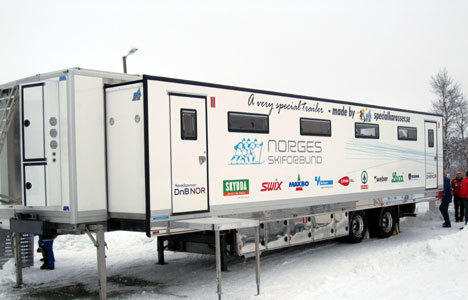
Typical wax cabin used by teams on the World Cup (photo: langrenn.com)
There have been three recent articles on langrenn.com addressing the issues of the health risks taken by wax technicians when using fluorinated wax. The first is about a report published by Norway’s national insitute of occupational health, titled “Chemical exposure and effects on the respiratory system among professional wax technicians“. The second is about comments made by the head of research and development at Swix wax, Lars Karlöf, in response to the study. The third is about a ventilation specialist who has invented a prototype which improves the work environment of a wax technician such that they can wax the skis using any type of wax without needing a mask or other safety equipment.
STAMI Report
A report from the National Institute of Occupational Health (STAMI) was published on Monday.The report concluded that fluorine compounds accumulate in the body and remain in the blood for years. Scientists are uncertain about long-term effects, but recommend that anyone using fluoride powder exercise caution. The powder emits dust and gases both by heating with an iron and brushing.
Professional wax technicians have long been concerned with the work environment of the typical waxing trailer. Norwegian Biathlete Team physician, Baard I. Freberg, is a PhD candidate at STAMI and has been visiting the waxing crew during the project.
“Wax technicians came to me with vague complaints. They felt bad after they had worked with fluoride powder. I felt it was my duty as a doctor to warn them that something could be wrong,” Freberg told Norway’s broadcasting station, NRK.
“We recommend that all technicians use protective gear when they use such a powder. Neither the researchers or others can determine the long-term effects of fluoride compounds. We have shown that the substances are stored in the body. Something more than that we can not say,” adds the team doctor.
Common symptoms among technicians who have been in contact with the powder are vomiting, dizziness, and breathing problems.
47 technicians from nine nations participated in the STAMI study by giving blood and breath samples over a period of two years.
Fluoro wax formula
Head of Development for Swix Wax Sees No Reason To Be Worried
Lars Karlof, head of research and development at Swix, is not surprised at the recent report published by STAMI.
“Work on this report has been going on for several years. . . so I cannot say that this is new information, “ said Karlof.
“What is new is the amount of dust in the waxing cabins and the size of the particles.
Karlof thinks that the focus should be on improving the work environment and that there should be more education in order to make the wax technicians aware of the danger of particulate matter.
On his company’s behalf, Karlof thinks they are doing the things necessary for such awareness. He points out that Swix is already following the rules and guidelines set by authorities and that warnings and safety information is posted on their website.
“I’m not worried about the harmful effects,” said Karlof, “If a user of our products follows the instructions provided on our website I see no reason to be worried.”
Karlof recommends, “If one does not have adequate ventilation in the wax cabin they should have a face mask with two-point extraction (overface mask with a P3AB filter). Otherwise, I can say that in general it helps to have an orderly and neat workplace, and that one should not eat and drink in the waxing area.”
Pete Vordenberg and Trond Nysted double up to brush out a ski – in a well ventilated area
Karlof also does not see a reason from dissuading people from the profession of wax technician.
“If one is interested in waxing skis, I certainly think that one can make the choice to be a professional wax technician. Swix believes that the suppliers and teams must work together to raise awareness of a good working environment in the waxing cabins.”
After Two Years, A Prototype
Tor Aahjem had several years of experience working in the ventilation industry when he first heard, through the media in Norway, that there was a problem with the work environment of a wax technician. Aahjem is from the town of Vesnes, which is in the Møre og Romsdal region of Norway.
He had no expertise in waxing, but he got in contact with people in the skiing and waxing business to learn more about the problem, and heard from them that the solutions available today are just not good enough.
After hearing of the need for improvement in the waxing environment, Aahjem decided to attend the Norwegian National Championships in Trondheim in 2008 to survey the situation himself.
Aahjem would not say how bad he thought the situation was during his visit, instead he used very diplomatic language to say that there could be a much better work situation than the one currently in place.
“With my experience in the ventilation industry I saw that there was an obvious need for improvement,” said Aahjem, “and I was motivated to tackle the challenge.”
After several years of working, Aahjem finally came up with a prototype which he explains will improve the environment for the wax technicians through ventilation so that the technicians, even without a mask or other safety equipment, do not have to worry about the fumes.
The product is not finalized, but Aahjem is hoping it will be on the market by this winter. He does not have a patent yet, so he is keeping the details of his product under wraps while in negotiations with several potential partners.
Before launching his product, Aahjem is keeping the customer in mind. It will not be a cheap product, so will be marketed more toward those who are serious about skiing and who wax multiple pairs of skis on a regular basis. However, Aahjem is also trying to keep it affordable for ordinary people and sports clubs, and says it will not be as high as the 100,000 kroner range (17,000 USD).
The product will provide for a better work environment for those that wax skis because they will not have to sacrifice their health while using the best wax combination possible.
Aahjem says that he cannot guarantee anything yet, but that his product is “a major step in the right direction in terms of the working environment of a wax technician.”
(Source: Langrenn.com, Original Source: NRK, Translation by Patrick Stinson)
Reduced track width of Sjusjøen, Norway at Christmas
“I have long been irritated over the great distance between the ski tracks, because it disrupts good weight transfer and kick. If you were to use a narrower stance this would become completely natural,” says ski enthusiast Eirik Høyem to (Norwegian TV Network) NRK.
Now, he’s actually done something with the case. It’s Christmas up in Sjusjøen, which is known for it’s good snow and good tracks, on Høyem’s initiative they set the tracks 17 centimeters between tracks. It’s five centimeters less than normal. Johannes Haukåssveen, Sjusøen’s trail coordinator, says that the feedback is mixed.
“Some are skeptical and some are positive, but most do not notice that they are narrower. The biggest skeptics are the hardest Birkebeiner skiers. They think that it’s unusual.”
Høyem, the man behind the plan, thinks this can be good for the sport of skiing.
“That which we see on TV today is something I will call ‘neoclassic’. They double pole almost exclusively. When we start to get a smaller track, they will start using the bigger muscle groups like thighs and glutes, and then they will go faster using diagonal than double poling in the gentler hills.”
Over the course of the winter, the same measure will be tested in the Oslo area.
After taking my first ski on the local trails yesterday, I quickly remembered how spoiled Anchoraguans are with free trails at Kincaid Park. But, a quick look at langrenn.com today offers an even better reminder of how it could be. From langrenn.com:Brazilian Jacqueline Mourão trains in a special way for the Olympics in Vancouver. This will be the fourth time participating in the Olympic games for Mourão. The was in Torino for cross country skiing and in Athens and Beijing for mountain biking.Last winter she raced in the 30Km in Liberec and finished in 55th place. Now she’s working towards the next Olympics by doing cross country training on the sand dunes outside Rio De Jeneiro. See the video from her training below.
Odd-Bjørn Hjelmeset will take a couple weeks to recover from several bruised ribs he suffered when colliding with a Swiss wax technician during Sunday’s 15km classic race in Kuusamo. Hjelmeset started the race at a furious pace, leading at the 4km mark. Shortly afterward, in a downhill corner, Hjelmeset ran into the wax technician who was walking on the course.
“I lost at least 20 seconds. Maybe more, “said Hjelmeset, adding that even though he was unlikely to top Northug or Vylegzhanin that day, he could have still had a chance at the podium. Hjelmeset ended the race in 15th place, 24 seconds out of 3rd.
Hjelmeset was so furious after the race that he approached the wax tech and shoved him against a vehicle, prompting the International Ski Federation (FIS) to issue Hjelmeset a written warning. Åge Skinstad, sports chief of the Norwegian Biathlon, compared the warning to the punishment of a yellow card in soccer. Skinstad believes the real punishment should go toward the wax technician who was in violation of race track boundaries.
“There is no doubt about who has the main fault in this situation,” said Skinstad, “We believe that such behavior should also lead to loss of accreditation.”
Fortunately for Hjelmeset, who is a classic specialist, there are few classic races in the next couple weeks, giving him time to heal the injured ribs.