From the FasterSkier archive — posts syndicated from athletes’ and coaches’ own blogs between 2004 and 2012, kept online as published. Current coverage is at fasterskier.com.

Category: Opinion

Articles that express opinions about various topics.
  • Language Matters: The FIS Statement on “Athlete Safety”

    Language Matters: The FIS Statement on “Athlete Safety”

    Annie McColgan is an independent writer contributing to FasterSkier. The opinions in this Op Ed are her own, and do not necessarily reflect the opinions of FasterSkier and its staff.

    By: Annie McColgan

    On September 24, 2025 the FIS released a statement titled, “FIS Council Reinforces Commitment to Athlete Safety,” in which three announcements were made.

    First, the FIS wrote about the importance of establishing clear and consistent safety guidelines, further homologation of training slopes, regulation of safety equipment standards and increased education around safety responsibility.

    They then wrote about a newly approved eligibility policy for women’s competitions.

    The statement read:

    Following a period of thorough consultation with leading experts on the field, FIS presented to the Council a science-based eligibility policy for men’s and women’s competitions.

    The eligibility conditions laid out in the policy are grounded on the presence or absence of the so-called SRY gene, the sex-determining gene present on humans’ Y chromosome.

    Essentially, only SRY-negative competitors may compete in women’s competitions.

    (FIS, 2025)

    The third announcement regarded new prize money awards for competition.

    By including the new SRY gene testing policy under this banner of “athlete safety”, and usage of the word “protect”,  FIS conflates the concern for fair competition with physical danger and threat from transgender athletes. Linking athlete safety with genetic eligibility under the headline of “Athlete Safety” is a potentially harmful conflation. The intent of each topic should be clear and specific.

    In this statement, Eliasch, FIS president says:

    This policy is the cornerstone of our commitment to protect women’s sport, and we are convinced that there is only one fair and transparent way to do that: by relying on science and biological facts.

    (FIS, 2025)

    It is confusing as to why this policy, out of all policies is the ‘cornerstone’ of protecting women’s sports. There are real dangers in women’s sports which require further funding and policy implementation. The FIS could perhaps implement more money and resources into protecting female athletes from disproportionate amounts of coach athlete abuse or injury prevention. They could work with national bodies to promote education regarding long-term health in women’s junior programs to keep young girls in sports. There are real threats to the safety of women and men athletes in snow sports. The SRY gene eligibility testing does not address them; therefore, it shouldn’t be placed under the same category.

    By releasing the policy under the headline of safety, FIS has actually increased the risk to trans athletes. Conversations around transgender policies are some of the most politicized, vitriolic, and polarizing of our time coming with misleading narratives and unimagined consequences. The reality is transgender people are increasingly targets of discrimination, bigotry and violence. A report in 2021 by the non-profit Everytown for Gun Safety, found that murders of transgender people have doubled over the past four years. Care with language and tone has never been more important.

    It is disappointing to me as a FIS athlete, that this conversation surrounding transgender athletes in my sport has been portrayed as a safety issue. By placing this initiative as a safety issue, it inadvertently puts trans athletes and trans people in danger, while also failing to address real issues of athlete safety.

    The United States Ski and Snowboard Association has a great responsibility ahead. The final statement in the section reads: “With the eligibility policy now approved by the Council, FIS will engage with the National Ski Associations and other stakeholders to roll out an implementation plan.”

    It will be up to US Ski and Snowboard to decide how we move forward with this  policy, as well as to decide what language we use to describe it. It will be crucial we use language that promotes fairness but also fosters understanding and inclusion. It will be important we do not demonize or villainize any group of athletes with our language. Decisions that are made will affect skiers of all ages. 75% of USSS memberships are less  than 18 years of age. Monumental legal, ethical and privacy issues are at play.

    How can we expect to have open and important dialogues with our athletic organizations about transgender athletes when the rhetoric we use to describe them is that of fear, rather than curiosity, empathy and fairness? We must learn from the miscues of this FIS press release.

    I hope that USSS will delve deeply into this policy and will consider how it affects ALL of their athletes, as well as the communities at stake. We must have a transparent and open conversations that include athlete stakeholders, committee members and experts.

    It is my hope we can avoid the missteps of the FIS release and treat this topic with careful language, and action in mind.

    If you agree with the words and message of this piece, let US Ski and Snowboard know. Add your name here to sign your support for this letter which will be sent to USSS. Or, email them a link to this article, or leave your own comments. Email kn@kippnelson.com the chairman of the US Ski and Snowboard board of directors to let him know your comments or concerns about the policy language and/or implementation.


  • An Overdue Reckoning

    An Overdue Reckoning

    By: Hannah Smith

    In February, Senator Chuck Grassley (R-IA) launched an investigation into SafeSport’s hiring practices following the arrest of a former SafeSport investigator charged with sexual crimes. While I’m disturbed, given the criticism SafeSport has received since it opened in 2017, I’m not entirely surprised, and I hope that this may signal a long-overdue reckoning not only for the organization, but our athletic community.

    Back in 2017, Senator Grassley proposed the “Protecting Young Victims from Sexual Abuse and Safe Sport Authorization Act” to form SafeSport, and it was supposed to be the ultimate safeguard against abusive behavior in elite and youth U.S. Olympic sports. Athletes were told that SafeSport was charged with the mission to ensure that sport-specific governing bodies, such as USA Gymnastics, could no longer turn a blind eye to coaches and trainers who abused their power, such as Larry Nassar. Since it was founded, SafeSport has struggled to fulfill this critical mandate, often yielding questionable outcomes for the athletes it was meant to protect.

    Following several stories in the Washington Post,  USA Today, and OC Register, the failures of SafeSport gained more public attention in 2023, when 103 affiliates from the National Women’s Soccer League (NWSL) penned an open letter to Congress demanding reform in three key areas. The first being the Center’s arbitrary administrative closures, wherein cases are dismissed without resolution or consequences (64.8% of cases in 2022). The second being the Center’s exclusive jurisdiction over all abuse cases, which prevented well-governed overseeing bodies, such as the NSWL, from having any jurisdiction in light of said administrative closures. And the third being the flawed process that allows Respondents (those identified as being responsible for actions worthy of investigation) to challenge decisions in arbitration even after an investigation concludes.

    The U.S. Center for SafeSport was created by an act of Congress to protect athletes in all Olympic and Paralympic sports. Since its founding, SafeSport’s decisions and actions have regularly been questionable and controversial.

    In response to mounting pressure, SafeSport made some changes in 2024, including appointing a staff member to train employees on trauma-sensitive practices, and a revision of the arbitration proceedings, which now do not allow any witness testimonies, including from the Respondent, themselves. Previously, Respondents had been allowed to bring in new “character witnesses” during arbitration, even if those “witnesses” were unfamiliar with the case. This was irrelevant, and also trauma-insensitive to Claimants (those identified as being targeted/victimized by the actions of Respondents). The 2024 SafeSport Code also expanded the definition of what an “Administrative Closure” could signal from the 2023 Code.

    And while the reforms were important, even the co-chairs of the Congressionally-formed commission which oversaw these revisions admitted: “More needs to be done.” Two anecdotes since these changes were made highlight their insufficiency: a NWSL coach who had been sanctioned to a lifetime ban has since been removed from SafeSport’s database, and a US Bobsledding chiropractor was, in the words of his attorney, “cleared” [by SafeSport] even after reports of abuse were made by an athlete and other clients from the chiropractor’s private practice. In her studies of the NSWL and SafeSport, former Deputy Attorney General, Sally Q. Yates, found that when coaches and trainers with abusive tendencies keep their jobs, the cost is often on athletes’ careers.

    Like all national governing bodies operating under the auspices of the US Olympic and Paralympic Committee, US Ski and Snowboard is a member organization of SafeSport, and operates in accordance with its guidelines.

    Many have said, and I too initially thought, that the main issue with SafeSport is a lack of funding. This is logical—in the words of Sports Illustrated reporter Michael Rosenberg in August of 2024, “An organization with a $20 million budget and 130 employees is not equipped to handle the 9,000 reports it receives per year.” But if Congress wanted to spend more on SafeSport, they already could. In 2023, Congress allocated only $2.5 million to the organization’s budget—a mere half of the $5 million it was approved to contribute. In comparison, the government provides more than half of the U.S. Anti-Doping Agency’s $28.5 million budget. Furthermore, money isn’t the only metric of Congress’s attention: since the beginning of 2023, the “Protection of Women and Girls in Amateur and Olympic Sports Act” (banning trans women from competing in women’s sports), has appeared on the House floor ten calendar days, while in this same time the “Safer Sports for Athletes Act” (reforming SafeSport’s code) appeared once.

    The main issue is that Congress, and our athletics culture at large, is placing insufficient value on the safety and well-being of athletes—especially female athletes, women being twice as likely to experience sexual harassment and assault. Consider that 93% of athletes experience harassment or unwanted contact, yet many are too afraid to report it. Of the perpetrators of sexual violence, 91.4% are male. Within SafeSport’s practices and policies, there is still an  inadequate system of victim support and damaging confidentiality policies that undermine victim’s ability to report abuse. For SafeSport to fulfill its mission to “End Abuse,” a lot more needs to change. Congress should direct its attention to the real, ongoing harm caused by a system that allows predators to operate as investigators, and to a culture that allows this abuse to persist unchallenged.

    Senator Grassley’s motion to investigate SafeSport’s hiring practices is an extremely small step, and one that might be viewed with skepticism given Grassley’s history on issues regarding investigations of alleged abuse. But, it turns attention to many other reforms that SafeSport needs. As an athletic community, we need to bring as much attention to this issue as we possibly can. I advocate writing to Congressmen, but with the expectation that they will only do just so much. The greater, and likely more impactful, actions we can take are in how we treat one another day to day and the standards for participation that we hold within our own organizations.


    Hannah Smith is an independent writer contributing to FasterSkier. The opinions in this Op Ed are her own, and do not necessarily reflect the opinions of FasterSkier and its staff.

    The author, Hannah Smith.


  • Opinion: Get your commentary off our bodies

    Opinion: Get your commentary off our bodies

    The following was submitted by reader Ivy Spiegel Ostrom in response to the New York Times coverage of Jessie Diggins earning an Olympic bronze medal in the individual freestyle sprint. FasterSkier published a story expressing some of the early reactions to the NY Times piece here, along with an opinion piece by our contributor Ben Theyerl here. The viewpoints expressed in this article do not necessarily reflect that of FasterSkier’s staff or sponsors. We fully support open dialogue and encourage those who wish to share their perspective to reach out at info@fasterskier.com.)

    “In a sport that has so many women with massive shoulders and thighs, Diggins looks like a sprite in her racing suit, and it’s not clear exactly where she gets her power. But the power is there, as she flies up hills, and comes off climactic turns with a burst. On the downhills, she tucks low and cuts through the air,” writes Matt Futterman in his February 8th New York Times coverage of Nordic skier Jessie Diggins’s historic bronze medal win at the Beijing Olympic Games.

    A former college teammate of mine sent me a screenshot of this excerpt with an outraged, “We are past commenting on women’s bodies in sports!!” 

    In a response to Futterman, sportswriter Lori Nickels wrote a piece in USA Today documenting such reactions from female athletes and wondering at their intensity, when men’s bodies are so frequently fodder for sports analysis. 

    As a female athlete and a former collegiate nordic skier, I would like to offer an explanation to Nickels and Futterman and anyone else who may be wondering why this seemingly commonplace commentary is such a big deal.

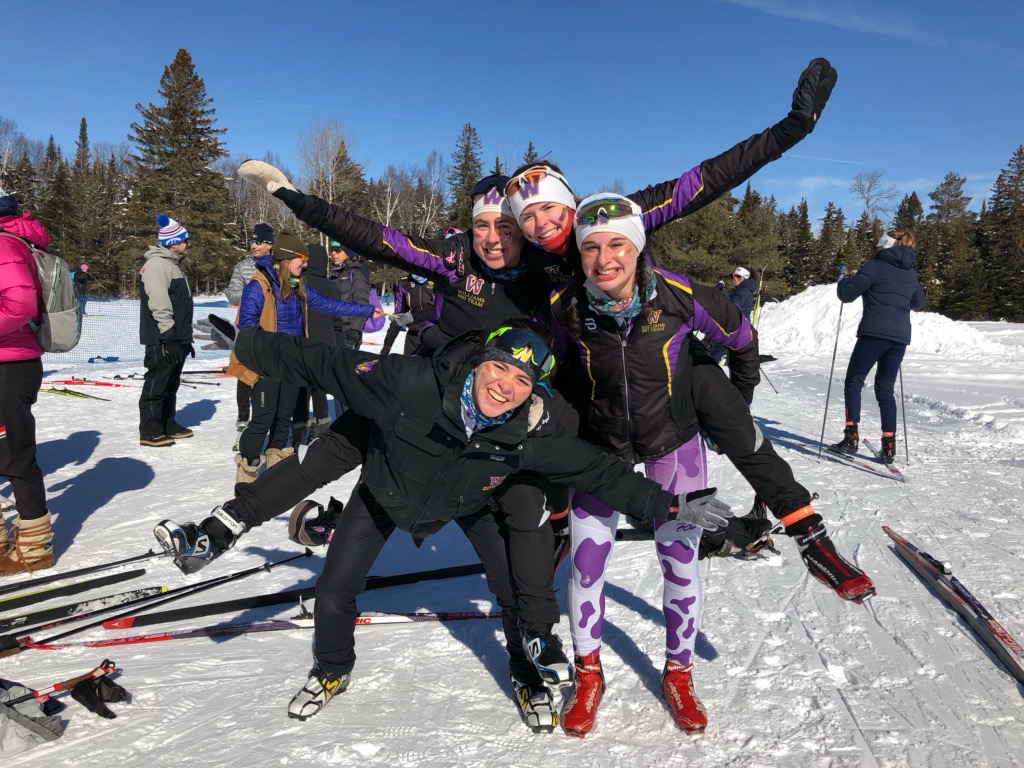
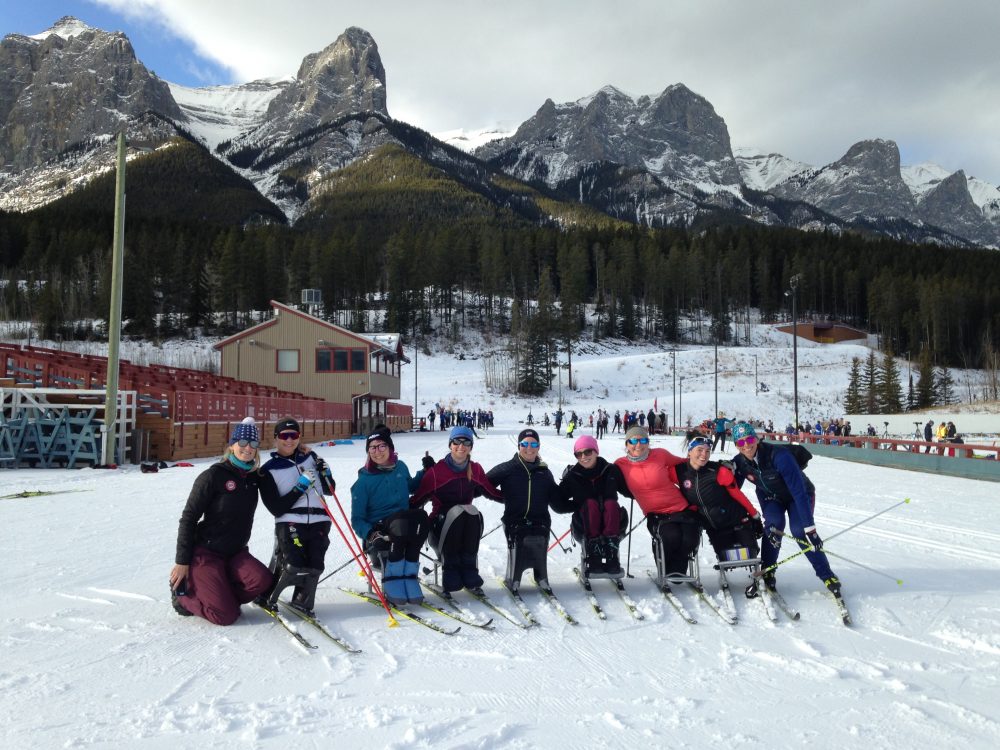
    Ivy Spiegel Ostrom (bottom left), a ’20 graduate of Williams College, pens a response to the NY Times comment that Jessie Diggins looked like a “sprite” relative to her peers. (Courtesy photo)

    Athletics can be an amazing tool for teaching women how to use their bodies effectively and powerfully; knowing how to become healthier, faster, and stronger is information that our society has historically neglected to teach women, to our great detriment. On the other hand, we are simultaneously receiving programming from nearly every direction that smaller is better, that women with muscles are ugly, they look too much like men, that men won’t find our shapes attractive. And in an appearance-oriented society where women seem to be valued especially for their ability to fit into an idealized category, that is no small thing. Growing up, even as they powered activities that brought me joy and self-worth, my pronounced muscles (“massive shoulders and thighs,” if you will) felt like blemishes. Some days they still do. 

    And that is only half of it. Nordic skiing is a sport in which strength to weight ratios play a role, albeit a small one. However, when so many other factors feel out of their control, that single, tiny factor can loom large in the minds of both male and female competitors. I know all of us have fielded comments from performance-obsessed coaches, our own parents, and often other parents concerning our body types, weights, and emphasizing the advantage of a low body mass. This adds up to a complex of emotions and ideas surrounding food. Endurance athletes are particularly susceptible to disordered eating given their tendency towards self-discipline and performance.  

    I am not saying men and male athletes don’t suffer from similar or analogous notions and prejudices – in fact I would love to open that conversation – but they do display a different level of intensity and contain fewer contradictions. Female athletes really sit at the nexus of a particularly overwhelming complex of ideas and judgments surrounding our bodies. And that is even before mentioning the pressures of sex and the constant threat of sexual assault that every woman feels. It makes us unsure who our bodies really belong to. 

    I am lucky that this dissociation with and antipathy towards my body was relatively mild, and never developed into an eating disorder like it has for many. Regardless, years out of adolescence and competitive racing, I am still trying and often failing to inhabit my own body and trust that it is beautiful no matter the form it takes, that it is my own by right, and that I can’t let others decide how I feel about it or what I do with it. And I am finally learning how hard my teammates, role models, and competitors have also had to fight to avoid this disassociation, to preserve the vital relationships to their bodies that is at the heart of their love for athletics. 

    Ironically, Jessie Diggins herself has been one of the fiercest supporters and advocates for those suffering from eating disorders and has been a key player in raising awareness of the issue. In her memoir, Brave Enough, she writes about her struggle to overcome an eating disorder, which threatened her health and prevented her from competing, culminating in outpatient treatment. She is hardly alone in the work. My high school teammate Julia Burnham, also an eating disorder survivor, is the co-creator of a podcast called Bodies in Motion, chronicling the stories of those – especially female athletes like Jessie – who have experienced eating disorders. A clear and consistent take-away from her discussions is that we need to stop commenting on each other’s bodies. No matter how positive or negative, direct or indirect, these comments generate the feeling that how our bodies look is more important than what we do with them or that what we do with them is more important that the relationship we have with them. 

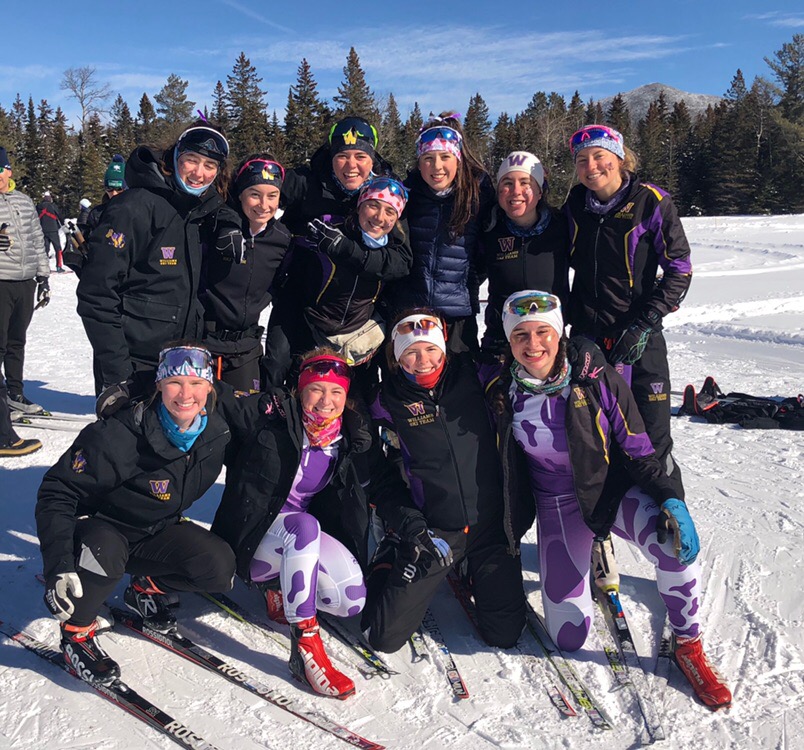
    Ivy Spiegel Ostrom (top row, third from left), a ’20 graduate of Williams College, pens a response to the NY Times comment that Jessie Diggins looked like a “sprite” relative to her peers. (Courtesy photo)

    This is not meant to be an attack on Futterman. His words were poorly chosen, but we have all made similar comments regarding fellow bodies. I know I have, and I regret them all, for I have felt acutely so many times the detrimental effect of such words. Comments like Futterman’s may have sent my ninth grade self into a well of negative feelings about my body and a bout of obsessive eating. It is sensitive terrain, which means we are all responsible for being aware and careful. 

    So to everyone who may be reading this – and I really mean everyone – if you are ever tempted to make a comment about someone’s body, consider keeping it to yourself. Please. 


    About the Author:

    Ivy Spiegel Ostrom grew up skiing in the mountains of Leavenworth, Washington. She went on to ski for Williams College where she majored in English and Environmental Studies. Since graduating in 2020, she has been living in her hometown, indulging in her other favorite sport of rock climbing while learning how to farm and live sustainably.

  • Opinion: “Her! I do the same sport as her!” Jessie Diggins won a Medal, Who She Is Goes Way Beyond That

    Opinion: “Her! I do the same sport as her!” Jessie Diggins won a Medal, Who She Is Goes Way Beyond That

    Diggins’ historic accomplishment was glanced over by the giants of American media, falling back into harmful tropes that are all-too-common regarding women athletes. Reflecting on it re-centered how meaningful her vulnerability in sharing her struggle to overcome an eating disorder was to the skiing community, and was a source of strength for me.

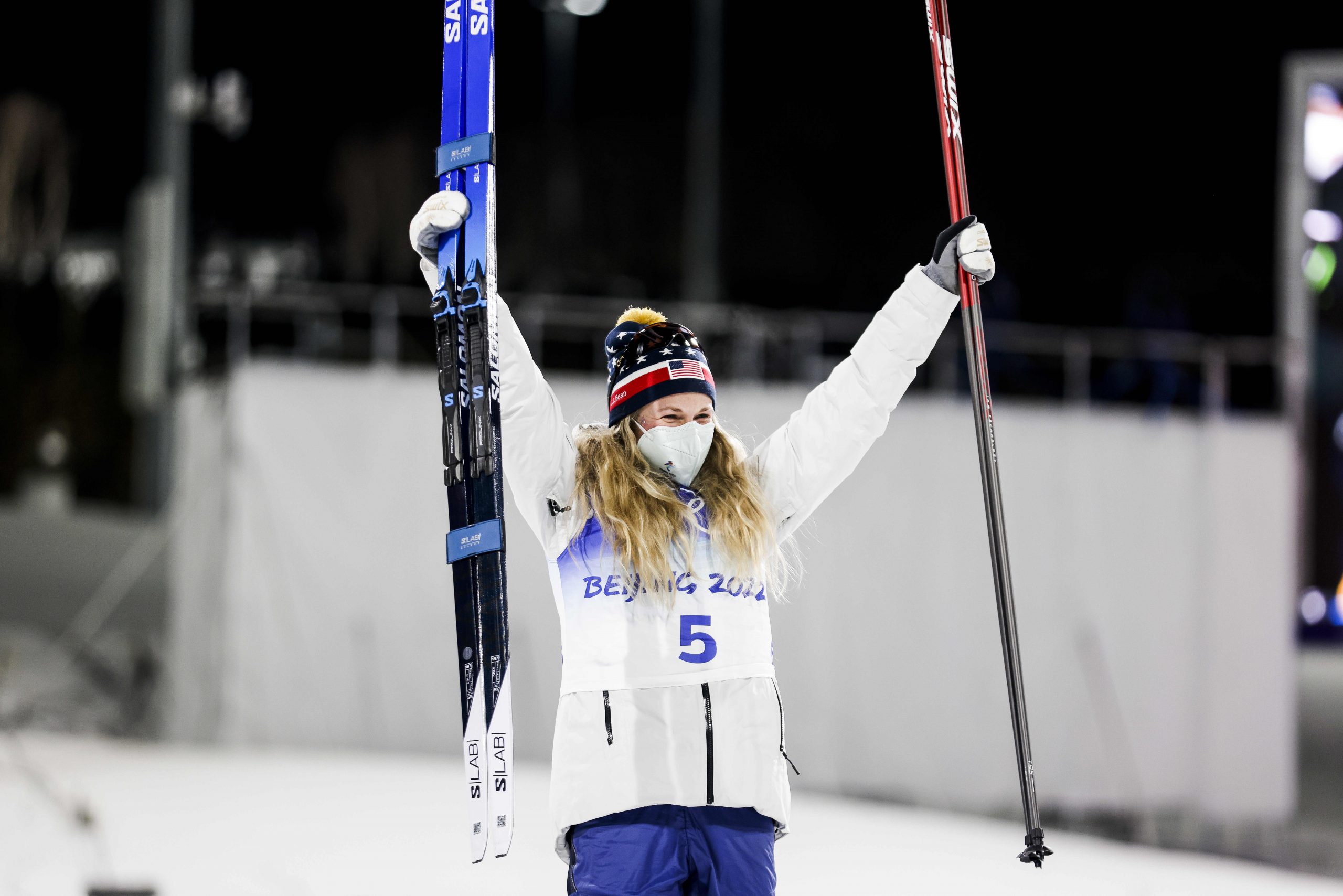
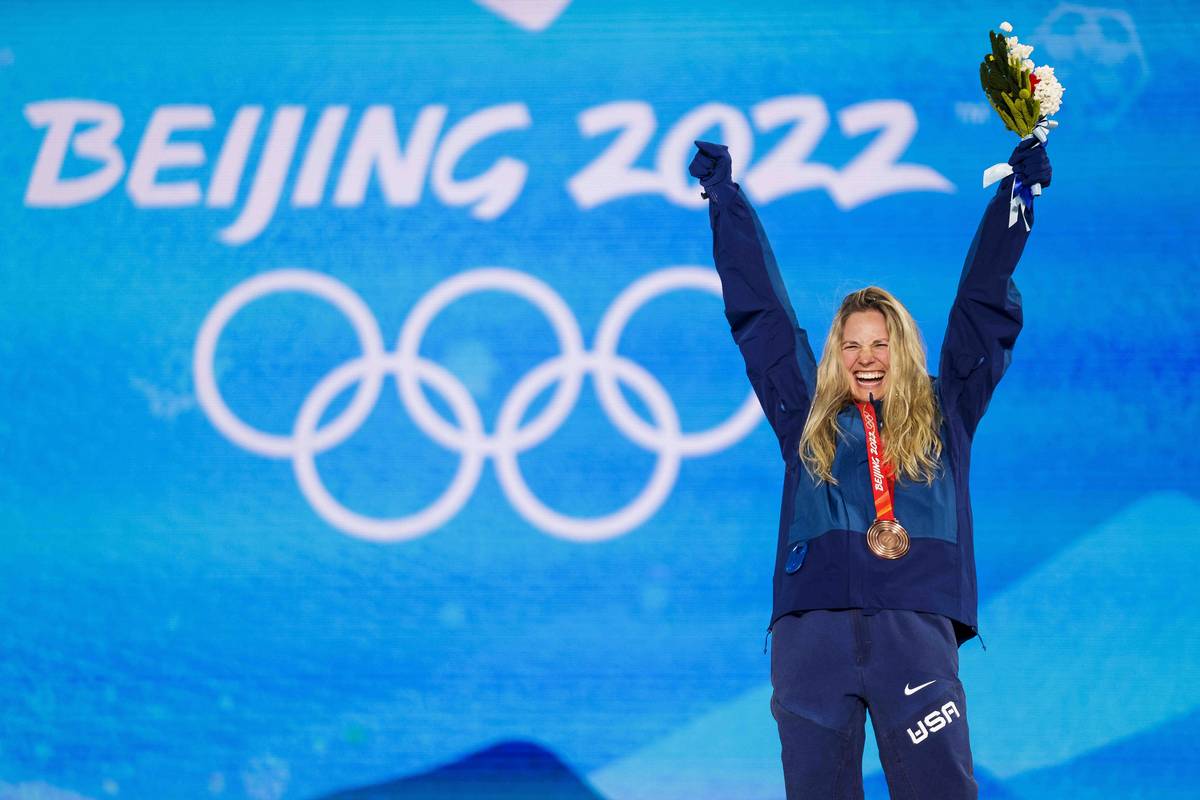
    Jessie Diggins earns a bronze medal in the freestyle sprint, the first individual medal won by a female American cross country skier. (Photo: NordicFocus)

    The Olympic sprint race on Tuesday in Beijing was perhaps one of the most nuanced and complex races in Olympic history. We at FasterSkier wrote nearly 6000 words covering the men’s and women’s races, and even that wasn’t enough to capture the emotions our reporters felt sometime in the early hours that morning; a sublime mixture of national, community, and personal pride as we saw the skier – our skier – Jessie Diggins, continue her journey of inspiration, tenacity, and remarkable humanity as she won the first women’s individual Olympic medal in U.S. cross country skiing history. You could read our entire recap, watch NBC’s coverage, and still have to watch the race to realize that Diggins’ accomplishment is one you have to feel, rather than know. But we did our best to lean in, and describe the race for what it was.

     The New York Times, though, chose a different approach. For reporter Matthew Futterman, the story of what Diggins was – a trailblazer – was what she wasn’t – “a one Olympic wonder.” It read as a misguided Cartesian mediation: “I think, therefore she wasn’t.” Diggins wasn’t just a story from 2018, she wasn’t a distance racer, she wasn’t a classic skier, and she wasn’t a woman who looked like a skier.

     For us in the skiing community, NY Times pieces on our sport, written for the quadrennial American channel surfer, are always going to be disappointing. There’s a certain glee that emerges around the edges of cringe in seeing our lexicon lost, “classical” instead of “classic,” “freestyle” instead of “skate,” and the misinterpretation of sprint strategy as “struggling to keep pace.” If you want skiers writing about skiing, there’s a home for that here at FasterSkier.

    Where there is justifiable room for disappointment is how cross-country skiing, and Jessie Diggins, become translated to larger American society by the largest newspaper in the nation. According to Futterman, this is a sport that’s all about which races will get you endorsement deals and how you look while getting them. But then again, his lack of context in either of these areas just has him coming off as a player in another ballad of a thin man – “Something is happening here and you don’t know what it is, do you, Mr. Futterman?”

    Having Diggins’ bronze medal reduced to her somehow saving her career, as Futterman implies, is incensing in that it suggests this is all sound and fury. The top of the ladder in skiing is an Olympic result and having reporters who don’t understand your sport write about you is your reward. There’s no comment on Diggins’ transformative role in advancing the U.S. ski program from outsiders in the sport to models for success, or her team-facing attitude, camaraderie, and Nordic spirit which has reinvigorated that spirit in the nations it supposedly emanates from. There’s not even the due diligence to look up her FIS athlete profile and see that since 2018, she has been the best all-around female skier on the planet.

    The second point, borne-out in a single sentence paragraph that I will leave inside the contexts of Futterman’s article, goes beyond infuriating. It has the potential, with its scope and platform, to be damaging to those already inside the skiing community. In summary, Futterman struggled to find anything to celebrate about how the race was skied, and so looked at the best skiers in the world and reduced them to the worst baseline tropes surrounding women, athletes, and in particular women athletes.

    That he chose to do so with Diggins, in one of her highest, soaring moments, is an irony where the bite will leave a lasting scar. More than being the face of the skiing community in the United States, Diggins is our collective role model. A woman that everyone from a kid in a Bill Koch League to the 75-year old out on the Birkie trail can point their non-skiing neighbors to and say, “Her! I do the same sport as her!” She has taken every platform she has been offered through her grit and determination and chosen to turn those characteristics towards doing good for this community and for society writ-large.

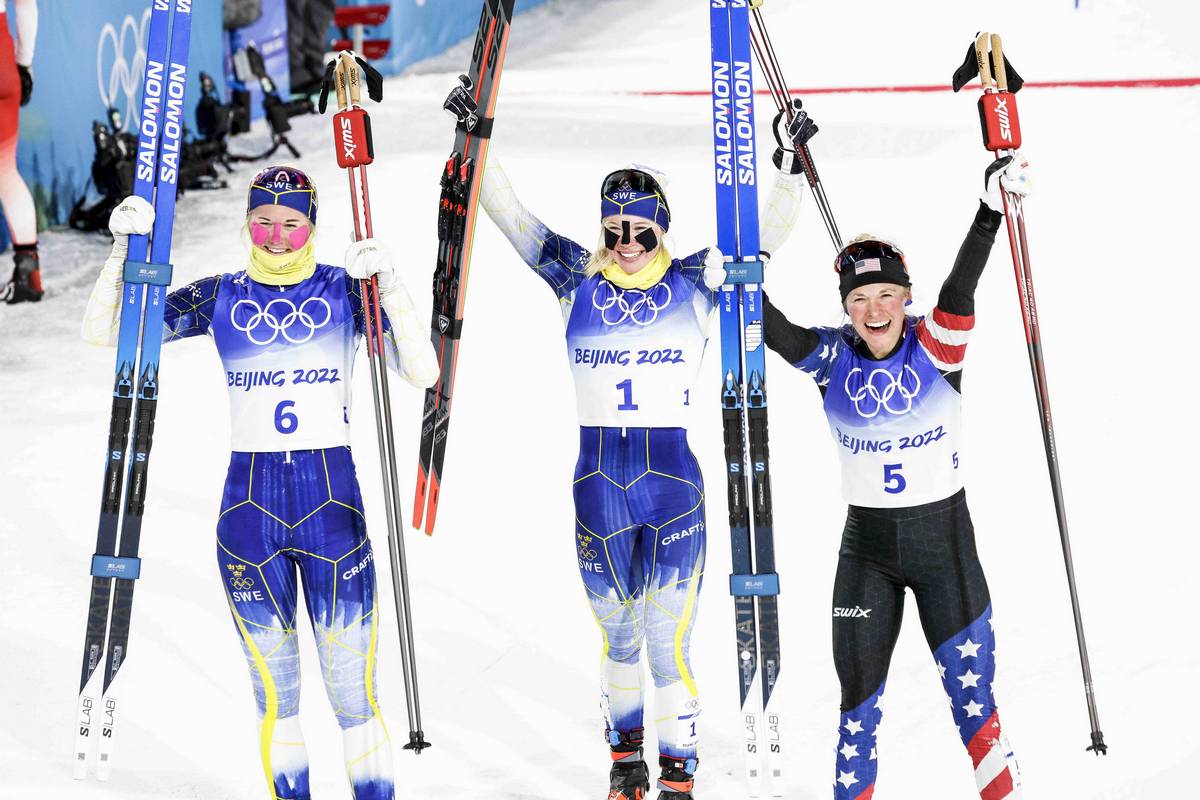
    Diggins standing beside fellow skiers Jonna Sundling (SWE) and Maja Dahlqvist (SWE) after taking bronze in Beijing on Tuesday . Photo: NordicFocus.

    Outside of skiing Diggins has focused her efforts on ensuring that everyone, skier or not, is empowered by the body that they have been given and its abilities. She has spoken out to raise the idea that a healthy relationship with food is something that is cultivated, and that it’s perfectly normal – and important – to ask for help with this relationship’s development.

    Diggins’ efforts inspire everyone, but fill the particular contours of empathy to comfort, aid, and provide real help in the skiing community she comes from.

    Eating disorders in the ski community are, by their ubiquity, almost implied to be an unfortunate part of the culture. We as a community can acknowledge that these disorders happen. From experience though, there is a rare blind spot around acknowledging and checking in on athletes that start to show symptoms. We are quick to launch into a chorus of “are you ok?!” when someone stumbles on the ski trail, but when the slow, grinding effects of not nourishing the body start to show, those “are you ok’s?” all-too-often lose the exclamation point and gain a whisper. 

    I haven’t been involved with a competitive team since I started ski racing where body image and disordered eating have not been an issue among my teammates. It is agonizing to see those that you love and support on the brink of letting food become the all-consuming focus of their psychology in a way that stops them from consuming it.

    During my early high-school career, that teammate was me. 

    I started my high school racing career not touching food at all some days, at my lowest point weighing a mere 90 lbs while measuring 5’ 9’’, and skipping school somedays because getting out of bed meant facing a world where I didn’t have enough body fat to keep my internal temperature up. In my small, cornfed, Midwestern town, skiing had given me a glimpse of an identity that looked beyond all that, so I absorbed anything that told me what a skier looked like. That included skiing and running publications, yes, but that niche interest was overpowered by the deluge of casual comments about looking the part from those larger voices in our culture. Voices like those that come from the New York Times. 

    I did recover. It took hard-work, luck, and above all the grace and support of my parents and aunt (and future coach) Tracey Cote.

    The author, competing at a rollerskiing race at Pineland Farms. (Photo: Steve Fuller / flyingpointroad.com)

    Still today though, get me talking about the struggle to get back to a healthy relationship with food, and if it hits me in the right way, I will cry real tears.

    When Diggins first went public with her struggles, and subsequently released Brave Enough she allowed those tears that formed out of pain to turn to tears of relief.  I could feel for the first time every quiet corner and empty space of the struggle I had gone through, and find solidarity in someone who’s achievements in this sport far surpass mine. She had walked the road of resolving to lock herself up before throwing away the key. She understood that it started with good things – you win races, you have a bright future, and you should be proud. That the disorder looked at you, and all wanted to be, as a parasitic host. It hollowed your mind, then your spirit, and finally your stomach. 

    The scariest part is that it all happens at an essential level. The essence of your biological life – food, and the essence of being human – your connection to other humans, are both cause and cure, and somewhere between you lose yourself.

    Jessie Diggins survived all that. Then she took that strength and will, spread it, and without hesitation, looked to turn around and help those in her own community. If the New York Times would like the answer to where she finds the power to surpass the achievements of any American skier before her, they ought to look at that. Not at the bodies doing the movement, but what they’ve faced and overcome, and most importantly, who’s spirits they’ve lifted. For Jessie Diggins, that’s been skiers everywhere, and for moments, like on Tuesday, people everywhere. Full stop.

    Among them is this one skier. Who chooses to look closer at this sport as a medium through which they can be grateful for what another human is and does; Jessie Diggins.

    Jessie Diggins earns a bronze medal in the freestyle sprint, the first individual medal won by a female American cross country skier. (Photo: NordicFocus)
  • Johan Eliasch, the Newly Elected President of FIS Promises Change

    Johan Eliasch, the Newly Elected President of FIS Promises Change

    Last week after winning 65 of the 119 total votes, Johan Eliasch (59), a dual citizen of Sweden and the United Kingdom, was elected the new President of the International Ski Federation (FIS). Eliasch succeeds Gian-Franco Kasper who has been in the position for 23 years.

    Nominated for the position by GB Snowsport, Eliasch brings a long history of business acumen as the CEO of Head Sport to FIS. Eliasch is credited with leading HEAD Sport into a period of growth and profitability. Eliasch has since resigned from his position at Head.

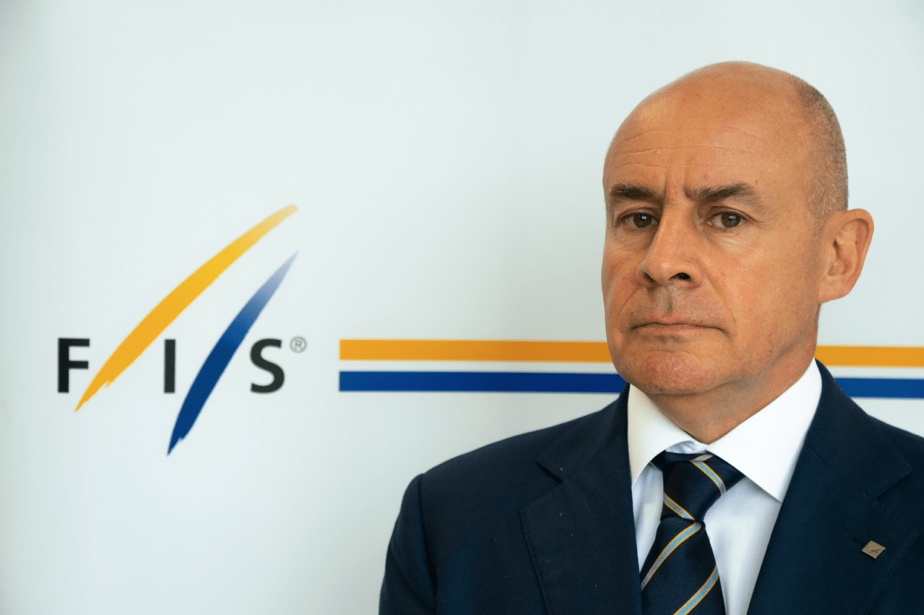
    Johan Eliasch, the newly elected President of FIS. (Photo: FIS-Ski.com)

    In a message posted on the FIS website, Eliasch wrote, “after any election generally there are winners and losers. I don’t see any losers in this election. This was all about FIS starting on a new journey. All candidates saw a bright and growing future, and that collective vision is something I want to build upon during my tenure as President. In thanking those who supported me, I thank also everyone who played their part in making this election one which brought out the best of the FIS family – a passion for snowsport and taking it to the next level.”

    Along with the message from Eliasch, a video highlights his proposed vision for FIS. In the highly produced video, Eliasch likens his mission at FIS to mountain climbing. “To succeed in any great endeavor, as like conquering a mountain, you must be prepared,” Eliasch said.

    Eliasch’s wide-ranging resume should position him for making an impact at FIS. He cites his military service, academic studies, experience with corporate turnarounds and private equity, his work with the British Olympic Association, and attempts to impact climate change policy, as qualifying him to lead the institution. (Eliasch co-founded Cool Earth to curb the deforestation of the rainforest).

    The bread and butter for FIS is alpine racing. And Eliasch, from his tenure at Head, knows that game well. Early on as Head skis rebounded in the marketplace, they hitched a sweet ride as they sponsored several notable alpine skiers. Head often wins or is near the top of the FIS alpine brand rankings. In a room mixing with business leaders and elite alpine athletes, Eliasch can mingle.

    What Eliasch’s messaging appears to recognize is the need to package the FIS product across generations, not simply the demographic still planted in front of the television each weekend.

    “We must grow and appeal to a wider and younger audience to get access to the large and lucrative and growing market out there,” Eliasch says in the video. “But to do this we need a more integrated approach to selling our sponsorship and television rights to give us more leverage to extract better value for everyone.”

    Here in North America, and more specifically thinking about the nordic disciplines, streaming and televised events have become increasingly more difficult to access since the 2018 Olympics. FIS does have an opportunity in cross-country skiing, for example, to experiment with its live feed and generate a more palatable product for a wider audience. FIS, unlike the International Biathlon Union (IBU), sells off its broadcast rights in their respective markets. In the U.S., NBC Sports, or an affiliate like Peacock or the Olympic Channel, traditionally produces the programming on race day. This past season, despite securing those rights, NBC chose to cease televised broadcasts of the cross-country World Cup after the sprints in Dresden, Germany in mid-December.

    Admittedly, this was a funky season for all the stakeholders. However, who would have imagined three seasons out from the Diggins-Randall Olympic gold that fans of the sport in North America would struggle to access highly produced cross-country broadcasts in English.

    Pulling the plug after Dresden left a vacuum for fans here in the U.S. Consider that a massive missed opportunity for FIS as American Jessie Diggins eventually won the overall this past season.

    Without using a VPN, which we are aware many American fans of the sport use, U.S.-based viewers were left with races streamed on Peacock with no commentary. Online, Peacock’s cross-country coverage featured a raw television feed. That type of product might work for those of us covering the sport, or die-hard fans. In terms of growing the sport in the U.S. and expanding its reach during a time when silent outdoor sports are booming, that type of product is a dead end.

    In the video posted on the FIS site, Eliasch seems to speak to these broader possibilities. “I am fully committed to bringing a more diverse, engaging, and entertaining experience for all skiing and snowboarding enthusiasts,” he says. “Finding this balance between the fundamental values of our sport and entertainment can only be accomplished in close cooperation with all of our stakeholders, especially our athletes and sponsors.”

    “I believe in change,” flashes on the video at the 9:00 minute mark. After a lengthy Kasper reign, FIS is possibly positioned to generate an exciting product under Eliasch. FIS, like many sport governing bodies, has been accused of poor leadership and insularity. In his public statements so far, Eliasch hits many of the right notes. Let’s hope it is time for FIS to sing.

  • Supporting Norris Strengthens the Ski Racing Community

    Supporting Norris Strengthens the Ski Racing Community


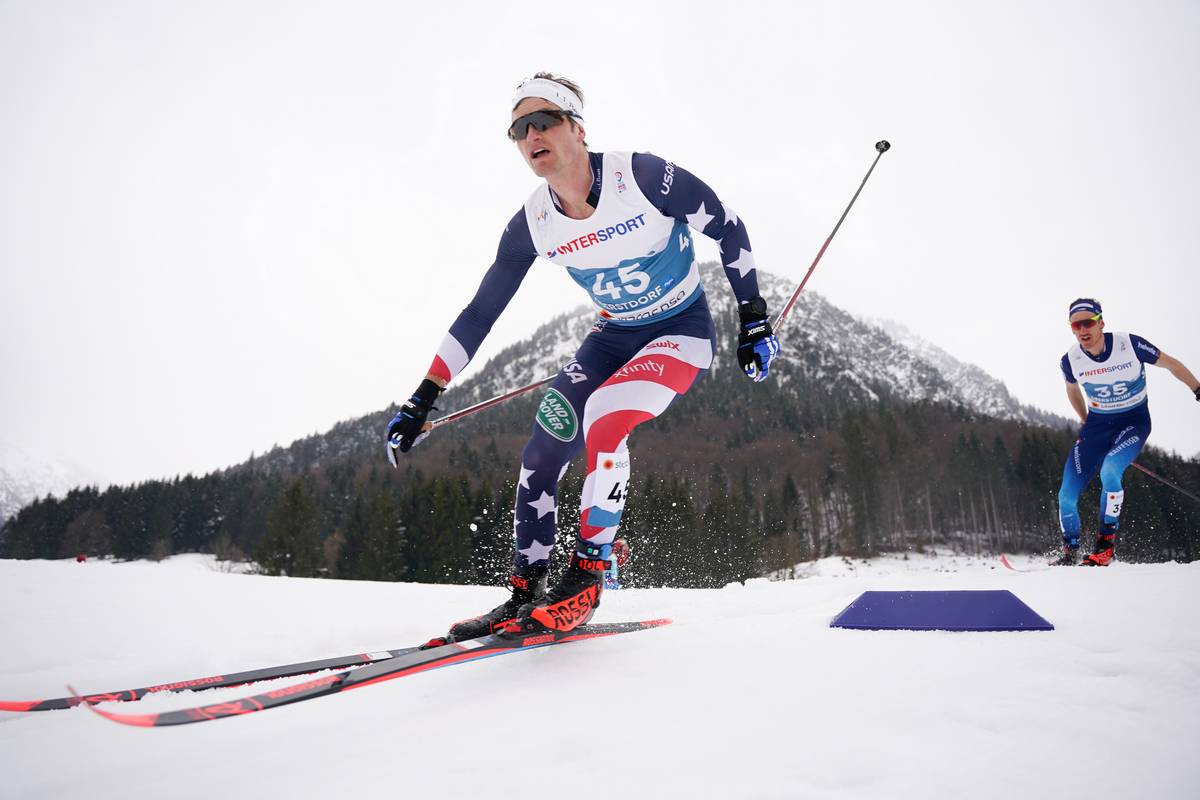
    David Norris skied to 16th overall in the men’s 50 k classic at the 2021 World Championhsips. Norris was not nominated to the U.S. Ski Team. (Photo: NordicFocus)

    I have been racing against David Norris for the past 10 years. We have battled head to head trying to crush each other. The end game was to earn valuable points on the domestic SuperTour circuit to qualify for World Cups. There have been many times we have swapped podium places at U.S. National Championships and U.S. SuperTours. As a one-time peer of David’s, I understand the need for funding and support to compete effectively at the elite level. I am trying to spread awareness and cultivate support among the U.S. cross-country ski community to persuade the U.S. Ski Team that David deserves to be a member for 2021-2022. He needs the support and expertise of the national team to realize the next step in his progression.

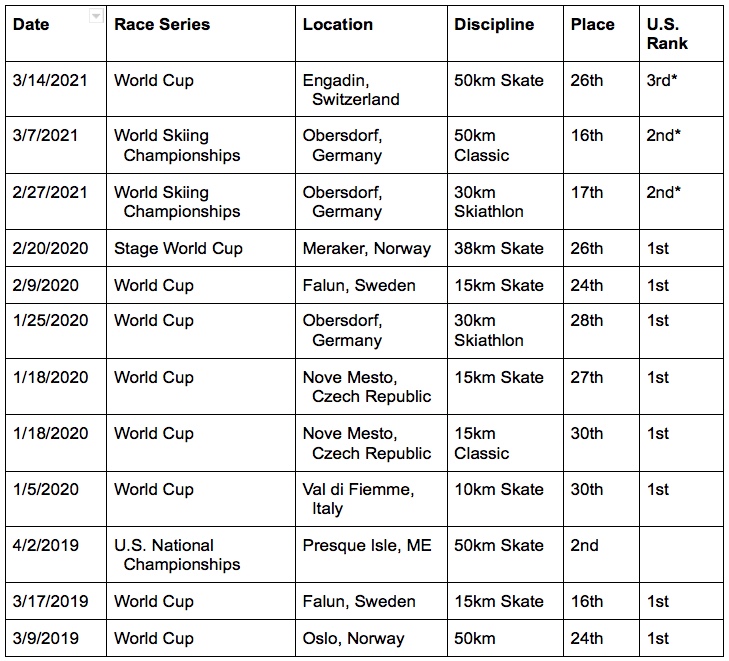
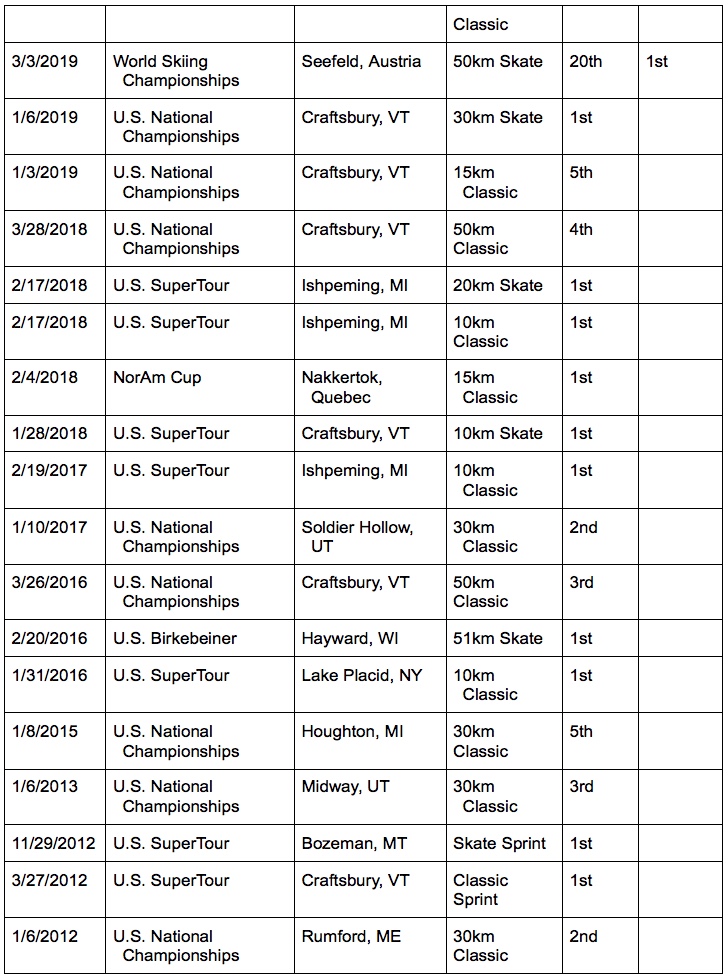
    The team looks incredibly strong. With the clear trend of capturing young and accomplished skiers, the 2021-2022 U.S. team is full of potential. However, many athletes and coaches were surprised when the U.S. Ski Team announcement recently dropped. The team roster lacked a key athlete: David Norris. David has been one of the most consistent and top-performing distance skiers in the United States since 2010. There is data to prove this claim and you can see the results spreadsheet I’ve organized at the end of this piece. 

    I know this is a merciless pursuit. As does David. Let’s get this point out of the way – David is thirty years old. As the U.S. Team’s objective criteria trends, Norris has many tree rings. There’s also this undeniable truth, in addition to his strong domestic consistency, David has been improving on the World Cup since his debut in 2017. He has achieved an astounding 12 top-30 individual World Cup results. In 75% of those races, he ranked as the best U.S. male finisher. In his first FIS World Skiing Championships in Seefeld, Austria in 2019 David placed 20th in the 50km skate; again, crossing the line as the first U.S. athlete. In his second FIS World Skiing Championships in Oberstdorf, Germany in 2021 David placed 17th in the 30km skiathlon and 16th in the 50km classic. With these two recent top-20s, he crossed the line as the second U.S. athlete in both races behind Scott Patterson.

    This is a small sample size, two World Champs. But trends are trends. In Seefeld, he posted a 20th in the 50 k skate. Two years later he improved four places to 16th in the 50 k classic. That’s a 20% improvement in place. It also demonstrates David’s all-around capacity in the dual techniques. It’s the same in the skiathlon — a bump from 36th in Seefeld to 17th in Oberstdorf can only be spun one way: promise, potential, and the ability on a special day to nail a top-10 or better.  

    It would seem clear to any outsider or cross-country ski enthusiast that an athlete consistently achieving top-20 results in World Championships and is the first or second U.S. athlete deserves a spot on the U.S. Ski Team. This puzzles many athletes, coaches, and fans. David did miss the team’s objective criteria. But, what adds to the confusion is that seven of the 21 U.S. Ski Team nominations this year were used with discretion, meaning they did not meet the objective criteria. Why would discretion not be used for the case of David Norris? 

    I am aware that no criteria will ever be “perfect” and there will always be arguments and disagreements for every criteria and selection qualification process. There’s always at least one skier on the wrong side of the equation. I think the U.S. Ski Team selection is strong for 2022. I do have a serious concern, however, and I think we should be asking the question, why are such great criteria missing one of our best athletes? 

    There is a clause in the 2022 U.S. Cross Country Team Nomination Criteria under the Discretionary Selection Policy: “… the staff may consider any factors including… Illness or injury during the selection period.” 

    It is crucial to know and publicize that David Norris suffered from Covid-19 during the fall of 2020. This may come as a surprise to many readers because David is not one to be dramatic or complain about any factors that negatively affect his performance or racing. He quietly recovered and worked into his training as his body allowed. He still went on to earn two top-20 World Championship finishes. 

    To be blunt, he is lucky to be alive. And the fact that he was able to achieve such outstanding results is embarrassingly overlooked and underappreciated. Elite cross-country ski racers have to be extremely cautious of the common cold or the flu, but to take on one of the most severe respiratory diseases in a century should be covered by “illness or injury during the selection period.”

    Due to Covid, David missed his fall World Cup starts. He lost valuable points and arguably the most important part of the season for hard-effort training and obtaining race fitness. He lost chances for more potential top-30 finishes and FIS points, thereby effectively erasing any opportunity to objectively qualify for the U.S. Ski Team. This is exactly what the discretionary clause was designed for: to give an opportunity to athletes who have been affected by factors well outside of their control, yet who still show talent and drive and results to be recognized by the U.S. Ski Team. 

    So then we have the question again: why was he not selected for the U.S. Ski Team? 

    Age comes into the equation as many have noticed. The U.S. Ski Team is developing an impressively talented and young team. While this will play a key role in improving our results as a nation in years to come, we cannot lose sight of the talent and abilities of some current older athletes. David is not an athlete knocking on the doors of top-30 World Cups. He is not the 4th or 5th U.S. skier at World Cups. Two other U.S. distance skiers can do what he does. Both skiers were nominated for the 2022 U.S. Ski Team (Gus and Scott). 

    Qualifying for World Cups as a non-team member and racing as a member of the U.S. Ski Team are starkly different experiences. David has proven that he can compete against the best in the world, and the best distance skiers from the U.S. while being self-supported and coordinating his own wax technicians. (As a non-team member on the World Cup, the responsibility for funding a wax tech falls to David.)

    As background actors, wax technicians are chronically overlooked, but I think they are as important as the athlete to earning strong World Cup results. Having a consistent wax technician who knows the athlete, the ski fleet, European race conditions, grinds, flexes, cambers, and wax is more important than the average viewer realizes. The relationship and knowledge of a wax technician to their athletes’ skis can make or break races. I think we as a country are all curious and excited to see the day that David is a fully supported U.S. Ski Team athlete with a consistent wax technician and without the burden of coordinating sponsorships, funding, and his wax tech needs for upcoming World Cup races. Last season Norris employed four different wax techs between the end of January and mid-March.

    There’s only an upside to Norris’ potential. Imagine his potential if he were fully funded with access to the full arsenal of national team resources. 

    As a fellow distance skier, I can attest to the challenge of going from winning U.S. SuperTour races to trying to crack a top-30 on the World Cup. It is not an easy task. I feel like I came from a sort of “middle generation” of U.S. distance skiers between the legendary Noah Hoffman, Kris Freeman, and Erik Bjornsen and the new guns like GU.S. Schumacher, Luke Jager, Ben Odgen, and Johnny Hagenbuch just to name a few. I count myself proud and lucky to have raced with such talented distance skiers like Kyle Bratrud, Adam Martin, Ian Torchia, Paddy Caldwell, Scott Patterson, David Norris, among many others, all of whom were on and off the World Cup circuit. I obtained the SuperTour leader position for at least one period per year for four years in a row from 2016-2020. 

    I had ample opportunities to prove myself worthy of the U.S. Ski Team. I raced 32 World Cups and two World Championship starts. I was one of many U.S. distance skiers who dreamed of cracking that top-30, earning World Cup points, and making the U.S. Ski Team. It was incredibly hard for all of us to make that break. I cannot stress enough the increase in difficulty for U.S. men from winning a U.S. National Championship or SuperTour to popping a top-30 individual World Cup result. Only two of our generation were able to consistently make that break into the top-30: Scott Patterson and David Norris. Scott was selected to the U.S. Ski Team. David deserves it as well. I know they both belong in Europe representing the U.S. because they are the best we have. 

    I do not feel that the United States has the luxury to not name David Norris to the U.S. Ski Team. We are a small and tightly knit community in a country that does not appreciate nor endorse cross-country skiing as a national sport. It is imperative to support our best skiers especially on the men’s team, not only for achieving top results at the 2022 Winter Olympics but also to develop and establish a strong team for the future.

    Helping keep David in the game benefits a generation of younger skiers. They learn that when you are one of the top three distance skiers in the country, a top-20 skier at World Championships, the national team has your back.   

    The current scenario is a bit of déjà vu for Norris. Last season he missed meeting the team’s objective criteria by 0.88 points. He was not discrentioned to the team for 2021.

    If you would like to learn more about David Norris and his situation, please visit this link to a petition: https://www.change.org/p/U.S.-ski-and-snowboard-nominate-david-norris-to-U.S.-ski-team-2021-2022


    Appendix I: David Norris’ Top Results Since 2010. 

    I limited these results to 1st place at U.S. SuperTours, top 5 results at U.S. National Championships, and top 30 at the World Cup or World Championships.

    (Results pulled from https://www.fis-ski.com/)

    *Results after recovering from Covid-19.


  • A Look at SWIX’s Responsible Waxing Project

    A Look at SWIX’s Responsible Waxing Project

    Biathletes training in Nové Město, Czech Republic. (Photo: NordicFocus)

    Some skiers have tossed them, some have squandered them, some have disposed of them according to specific guidelines for toxins at their local landfill. Some have donated their speed-goods to the U.S. Ski Team as it burns through its supply of high-quality fluoros. Some have simply stored them in a wax cabinet, a symbol of what was. We’re talking fluorinated wax, powders, gels, liquids, and yes, small-batch slurries. U.S. Ski and Snowboard has banned fluoros while the International Ski Federation (FIS) banned them, postponed the ban, and now orbits in a will-they won’t-they quagmire. The move to ban fluoros has gained momentum.

    Several years ago, the U.S. Environmental Protection Agency pursued Swix for several violations of the TSCA, or Toxic Substances Control Act. Swix was fined a substantial monetary sum. It was also tasked, as part of the penalty, to develop a “responsible waxing project” (RWP). 

    According to the EPA’s ruling, SWIX was to address two main issues with its program:

    • Educating the ski racing community about PFAS chemicals (Per- and polyfluoroalkyl substances) in racing waxes and their impact on the environment
    • Promoting the use of wax alternatives with lower environmental impact, including but not limited to racing waxes that are PFAS-free

    Swix fulfilled its obligation. The course is open as part of Swix’s learning center. Access to the course requires registration with an email and password. The RWP takes roughly 30 minutes to complete. 

    Swix does not provide a master class on PFAS chemistry and the adverse environmental effects associated with their use. Think of the RWP as a basic intro-level course discussing how perfluorinated compounds are bad and using non-fluorinated waxes are good. You’ll learn about C8 and C6 compounds and the concept of a “forever chemical”. There’s no discussion of more complex terms like bioaccumulation. This is not a Silent Spring treatment of PFAS, although that was not expected. 

    The course provides simple and sound advice to keep the ski bench area clean and well-ventilated. If you do not have access to a World Cup wax bus and their HVAC systems, the RWP will likely improve your waxing hygiene. In other words, you’ll be encouraged to wax in a well-ventilated area, wear gloves, a long-sleeved shirt, pants, an apron, hat, and HEPA-certified mask when waxing and prepping skis. “The filter should be a minimum of A1P3. Don’t forget that particles can be retained in the air for hours so wear your mask at all times while in a waxing facility,” states one of the slides in the RWP. You’ll be reminded to swap out those waxing clothes as soon as possible before contaminating other spaces — even if working with non-fluorinated products.

    There’s advice on cleaning brushes and choosing an appropriate roto-brush (preferably one with a “suction cover”). The RWP also urges waxers to clean the workspace with a HEPA filter vacuum.

    If you are a family getting into the game, and you’d like to be self-reliant and safe with the waxing, none of this comes cheap. Gone, or at least they should be, are the days of cranking the iron, melting the wax, smoke be damned, and brushing the wax out in a windowless side room.     

    The visuals alone in the RWP provide a simple model for maintaining a cleaner and safer waxing workspace, and how to clean up that space afterward. That is of value.  

    This brings us to the next point which FasterSkier raised with the EPA when discussing the penalty phase for Swix. The online video-intensive platform is an unsubtle piece of Swix branding. Does this provide Swix with a competitive advantage as the ski scene evolves to a fluoro-free future? It certainly cannot hurt. Back in August 2020, FasterSkier asked the EPA how it would ensure the RWP was not a Swix branding opportunity, as this was considered a penalty for an EPA violation. The EPA, at the time, seemed less concerned with the marketing potential, or outsourcing production of the RWP to an independent party, and more focused on the deliverables.

    If you’ve not been following the move to fluoro-free waxing, none of this might matter. The RWP comes off like much of Swix’s video branding: solid information, polished and simple syntax, a whitewashed background highlighted with a catalog’s worth of red Swix product. The only piece of clothing or product that resonated non-Swix, was the presenter’s earthy-green flannel. Even the ground tarp under the wax bench was a Swix-specific tarp. One slide, though, features a block of yellow Toko wax, a brand also owned by Brav, the parent company of both Swix and Toko.

    Beyond the branding and the well presented best practices, there’s some corporate moralizing too. “True competitors ski on skill,” is one verbal plug in the RWP to dissuade users from partaking in the game of speed enhancement through fluoro chemistry. 

    The RWP also mentions that U.S. Ski & Snowboard and Nordiq Canada have banned fluoros. And FIS intends to enforce a ban… maybe next year. It remains true, using fluoros at some races in the U.S., for example, is cheating.

    The RWP also includes this statement in the learning module’s opening video:

    “By complying with these new rules and choosing to ski fluoro-free, we can further protect our precious environment and be sure we are all competing on an even playing field. Conditioning, technique, and mental toughness will set you apart from the competition. So let’s all ski on skill and commit to doing our part to keep our environment safe and clean.”

    Ski racers, coaches, and pretty much anybody who has skied on poor skis knows this: pick the right ski for the conditions, add a gem of a fluoro wax job in warming or dirty snow, and you’ve likely got skis in the mix. 

    Beyond a true competitor’s “skill” and willingness to “ski fluoro-free”, there’s the ski fleet and the ski service to consider. That’s just for starters. There’s also easy access to snow that can set an athlete apart. The  5k to 10k (even more for a ski academy) a year it might take to pay to play. Good coaches matter. Hard work matters. So too does The Sports Gene. 

    I think we are all in agreement with doing our part to be safer. And the Swix RWP is a step in the right direction. But the platitudes on training, technique, and fortitude? The playing field has other variables to consider beyond skill to even it out, even in a fluoro-free world. 

    Wax safely out there. 


  • Out with the Old, In with the New: By Katie Bradish

    Out with the Old, In with the New: By Katie Bradish

    The 55 k crew: Left to right – Jett Longanecker, Vicki Longhini, Renee Nigon, Katie Bradish.

    Training for an endurance sport is the first clue.  Training from a schedule that basically dictates the arrangement of one’s life is an additional data point.  And being a Faster Skier reader? Another strong indicator.  If any of that resonates with you, it’s safe to assume that you are a Type-A personality.

    There are many positive aspects of being this goal-oriented sort of person. These characteristics lead us to create a plan, make a to-do list and touch the top of the peak. Do the thing! Check the box! Us Type A-ers are brave (or stupid) enough to sign up for big, burly events.

    The same qualities that make all this getting-shit-done possible, could perhaps lead a person to be a bit rigid. I have admittedly allowed some severe, maybe borderline-obsessive behaviors to poke their ugly little heads into my training routine. I have a goal and a plan and if the schedule says X, so I’m doing X, rain or shine, hell or high water.

      I ski under the black and yellow banner of Fischer Nordic. For more than a second, I have aimed for the start and finish line of the Norwegian Birkebeiner, a race with a history dating back ton13th century, civil war-ridden Norway. The terrain and elevation gain make this race the most demanding of the Worldloppet Nordic races.

    So, what happens when that goal line shifts?

    Just a couple days before I was set to fly out, this crisply Scandinavian email rolled in:

    The 2020 Birken Ski Festival is cancelled. Due to the spread of the Coronavirus, the Norwegian health authority has decreed the cancellation of all public events.

    I spent two days sluggishly unpacking my carefully planned bags and not training or really moving much at all. I ate an entire loaf of sourdough, then a grip of bagels while trying to unwind travel plans.

    “Hello, you have reached Icelandic Air.  We are not taking calls at this time.”

    Despondency found a foothold. I imagined that my painstakingly cultivated fitness and technique gains would evaporate in a matter of hours.  A fear-fueled autopilot took charge of mission control. I would just bullet point my way into feeling in control.

    • Pull out the trail shoes and sign up for a race – oh, and it should definitely be longer than ever.

    • Open Excel and immediately adjust the training schedule.

    • And be quick about it or my legs, and maybe even my very soul, would atrophy.

    This neurotic mental gear grinding dovetailed with a hot, steaming platter of guilt. I should be ashamed for being so self-concerned about skiing of all things, while the world burned.

    While in the throes of a list-making and baked-goods-horking shame spiral, one of my sportier friends inquired how I was doing.  “Just power-eating bread products and having an existential pity party,” I replied.

    “Don’t you mean carb loading and tapering?” she countered. She had a point…

     A formal event with loudspeakers and race waves doesn’t make distance, elevation, and effort any more real.

    On the day the race was scheduled, three friends masked up and loaded into my truck at 4:30 a.m.  Mount Spokane had closed all lodges and alpine operations, but was still grooming Nordic trails.

    On the two-hour drive, we talked about how the progressing pandemic touched each of our lives.  Vicki was supposed to be in Canmore, British Columbia to watch the FIS World Cup. Renee, a 6th-grade teacher, grappled with how to encourage students and families from afar.  Jett, a Sandpoint Nordic ski racer, wasn’t stoked about his last moments before starting high school being entirely in front of a screen and feared that the club soccer season would not come to fruition. Meanwhile, I tried to wrap my mind around what all this meant for my family’s manufacturing business, which is a substantial employer in our small town. Everyone was trying to be cool, but the palpable unease rode shotgun as we drove along in the dark.

    We pulled into the parking area with just enough light to make out the silhouette of the surrounding ridgelines. Our route was unplanned – we were just hunting kilometers.

    To be festive, we added past American and Norwegian Birkie race bibs to our kits, which resulted in many amused and confused looks from our fellow skiers as the day drew on.

    Vicki rang the ceremonial cowbell, and off we glided out into the dawn, racing only the sun and rapidly softening snow. We chatted when we felt like it, took unrushed pit stops, and breaked for a leisurely lunch back in the parking lot.  No one slurped gels or drank flat cola mixed with coffee.

    Jett, who out-paces the rest of us by a long shot, made a nest in the back of the truck for a mid-ski nap.  The energy around our adventure wasn’t “race energy” – it was more peaceful and maybe kinder.

    Hours into the ski, on a relentless climb, I noticed something was missing. The anxious buzzing in my chest, so constant and crackling, was gone. Only the thump of my heart and the tug of my lungs were left in its place.

    We skied 55K. And then rang the cowbell some more. What was our time? Who cares.

    The continual exertion and the quiet of the mountains flipped an internal switch – a systems reboot that cleared away the mental static.

    The calm and catharsis of that ski are still with me. A sense of gratitude for my friends and this pursuit has nestled sweetly in the place where disquiet and disappointment had been so tightly lodged.  Surely, the angst will return, but I know where the restart button is – it’s way up and out there. Further and higher, depending on how dedicated the training regimen has been.

    I’ve been off the training schedule for a bit. The snowless seasons slipped by without the usual structure.  Tracking spreadsheets were replaced by hikes and bike rides devoid of distance or elevation targets. Runs went unlogged on Strava.

    This year has taught me how to find contentment out of disappointment and peace in the unknown, skills that will certainly be useful in the months to come.  Next year is wholly unmapped. I still bought a 2021 version of my favorite paper planner, but its pages are untouched, without the customary premeditated ambitions etched in ink.  It’s going to be a #2 pencil sort of year.

    When people inevitably ask about my upcoming itinerary of objectives, I just sort of shrug and say “no plans, really… maybe talk some friends into getting on skinny skis for the first time.”


    Katie Bradish skis for the Fischer Team 1924 and is a contributing writer for Faster Skier from Sandpoint, Idaho. Bradish is new to the sport, having just two seasons with skinny skis underfoot. 


  • The not so Lost – Lost Nation Roll

    During the long pandemic slog, there have been times to celebrate small victories. One of those moments was the Lost Nation Roll – a skate rollerski race on October 25 at the Craftsbury Outdoor Center. Over a month ago now, during which Covid-19 restrictions have become more restrictive in Vermont, athletes were able to compete and grasp, even for a few hours, some normalcy.

    Justin Beckwith, the competition director for NENSA and Ollie Burruss, a person with similar responsibilities at Craftsbury, navigated a labyrinth of safety protocols to ensure the show goes on.

    It goes without saying that organized sport right now can seem frivolous. Covering sports even more so. But what the Lost Nation Roll illustrates is that good people can make good things happen. And make them happen safely.

    “We opened it up to 100 spots for the rollerski race,” Beckwith said. “And you know, we’ve had plenty of races that are bigger than that in the past, but it’s on this brand new roller ski loop which was cool. We didn’t fill up the start spots and we didn’t have collegiate skiers outside the one’s residing at Craftsbury, and that’s because of institutional regulations at some schools. But the reality is, each competition is a small victory in itself.”

    Let’s steer away from results for a bit. We’re bombarded enough with them anyhow. The one result that matters is this: it was a win-win for all those involved. That included Jessie Diggins, Julia Kern, Caitlin Patterson, Katharine Ogden, Susan Dunklee, Ben Lustgarten (he’s maybe not done yet), Adam Martin, Ian Torchia, Akeo Maifeld-Carucci, and Ben Saxton to name only a few starters. Sure, we are talking about a cadre of skiers who are Vermont-based. But they showed up, masked up, sent it around a regional training resource on a state of the art rollerski loop and provided some junior skiers a sense that the world is not all doom and gloom and sixty feet apart. (Just six feet.)

    “We’re screening all these folks as well, right as they come in. And so we’re abiding by all the local guidelines,” said Beckwith. “But on top of that, we’re really spending a lot of time having athletes populating forms on-line prior to the race. So if somebody answers a question incorrectly, or has a sniffle, or a slight cough, we can flag that, and we’re seeing really good compliance.”

    As we can see on the international level, the stakes are high for moving from region to region. The IBU World Cup last week reported several positive Covid-19 cases whereas Norway, Finland, and Sweden announced their withdrawal from the remaining December World Cups. No positive cases were reported from the Ruka round of racing, thus far, which included not only cross-country skiing, but ski jumping and nordic combined. As everybody has been expecting for months, more of our time has been spent indoors with the onset of winter. With that, globally, we’ve witnessed a corresponding uptick in cases. 

    Vermont too, despite their hard line safety mandates, and what appears to be good fidelity to mask wearing and social distancing, has experienced their share of Covid-spikes as well. Some are related to youth hockey in the region.

    Like many across the country, Beckwith and Burruss and the scores of volunteers in Craftsbury, make us see what is possible. However, this is not news, the possibility of racing has become more fleeting as the early part of the winter season drifts in. News this week from Canada and the slew of cancelled races up north is all the ground truth we need.  

    “Essentially, Vermont just became a sporting Island,” Beckwith said during our conversation. He was referring to the hot-off-the-press state guidelines detailing youth sports and Covid-19 restrictions. As of October 27, as Beckwith claimed, Vermont became a literal sport island as a preventive measure to curb community spread.   

    The latest guidelines restrict Vermont athletes to competing, practicing, scrimmaging, formally or informally, with only other Vermont athletes within the state. If a Vermont athlete competes or practices out of state – they are looking at a mandatory quarantine when they return. The language is clear: 

    “Any athlete or team leaving the state to participate in a recreational sports practice, scrimmage, pick-up game or competition must complete a quarantine before returning to work or school; visiting any public facility; or participating in any event outside of their home. This quarantine requirement applies regardless of whether the activity is taking place in a quarantine-free county on the state’s most recent cross-state travel map published by the Agency of Commerce and Community Development.”

    We could go on, and maybe we should, and list all the fine folks and all the fine athletes who made the Lost Nation Roll safe and sound.

    It’s the little victories. The Lost Nation Roll may have been the last best race for awhile.     


  • In her words: Anchorage skier Rosie Brennan Grapples with what’s Safe and what isn’t on the World Cup Circuit (Republished with Permission from the ADN)

    In her words: Anchorage skier Rosie Brennan Grapples with what’s Safe and what isn’t on the World Cup Circuit (Republished with Permission from the ADN)

    This past weekend, Rosie Brennan, bib 13, placed fifth overall in the Ruka, Finland World Cup mini-tour. (Photo: NordicFocus)


    This article originally appeared in the Anchorage Daily News and is republished with permission.

    Anchorage resident Rosie Brennan is a World Cup cross-country skier who trains with the Alaska Pacific University nordic team and is a member of the U.S. Ski Team. She’s an athlete representative for US Ski and Snowboard and is currently racing in Europe. She was one of the top racers at last week’s season-opening competitions in Finland.

    We asked her about recent decisions by Norway, Sweden and Finland to skip December’s World Cup races due to COVID-19 risks. Those nations cited discomfort with a lack of social distancing and the failure of plans to create a “bubble” for the three-day race series in Finland.

    Here is Brennan’s response, including her concern that the FIS — the governing body of ski racing — failed to create a competition schedule that considers the health of athletes.

    It’s always a bummer to not have a full field in a World Cup, however, I think everyone needs to do what’s best for them right now so I am understanding of the decision.

    I am, however, disappointed that those countries and some of their athletes that have the loudest voices didn’t express these concerns back in May when FIS holds their congress and works out the details for the season.

    I do not feel that FIS made a schedule that has the teams’ health at the forefront and I don’t feel that they have taken strong leadership in their protocols. I think that if everyone had raised these concerns over the summer, we could have made a schedule that took more precautions and that made everyone feel better about the situation, but now we are in a situation in which everyone is having to make last-minute decisions about what they are comfortable with.

    The situation is frustrating because the big nations like Norway have much less to lose from sitting out an event. Their athletes can still race televised races in Norway and fulfill sponsor obligations, get paid, etc. The smaller nations are dependent on the World Cup to make money so the pressure is so much higher. For the future of the sport, I think it’s important that all the nations work together to understand everyone’s differing situations and come up with schedules, plans, and rules that work for everyone.

    It’s been difficult to navigate because FIS does not have overarching rules regarding COVID. It’s largely dependent on each local organizing committee, so the rules are changing every week. Luckily, US Ski and Snowboard has put an immense amount of effort into educating us and developing protocols for our team so we are following those while we try to navigate the changing rules in every location.

    It’s clear that every team has different protocols, some being more strict than others, so there was definitely a range of behaviors in Ruka. It was an easy venue to stay safe, however, because we were staying in apartments next to the trail. We didn’t need to take any transport and meals were delivered so we didn’t need to go into any public places. This made me feel quite safe as I had more control over who I was around.

    This is obviously not the case everywhere so it will be a dynamic situation as we move along. There were definitely some things I think they could have done better, like creating more space in the start/finish area to allow more distance and more one-way flow of people in and out of that area, but that was our first event so I hope FIS will take those recommendations forward to the future venues and we can continue to improve.

    I made the decision to come (to Europe) for a number of reasons. It’s the only way I make money so I felt financial pressure, I love racing and it’s what makes me feel fulfilled. I was craving the challenge of the World Cup circuit, and my boyfriend received World Cup starts that he has worked really hard for so we felt that going together would be our best option.

    Those reason’s tipped the scale to coming at the last minute, but I have no idea if it was the right decision or not, or if we should be having World Cups or not. I don’t believe anyone knows the answer as we are all experiencing this pandemic for the first time and still don’t have a full grasp of what is safe and what isn’t.

    At this point, I made the big journey to get over here so I am going to stay and continue to race as long as it feels safe enough. There is obviously no such thing as zero risk so it’s all a balancing act and weighing the risks versus rewards daily.

  • Doping, Bias, and Cleaning up Sport

    Doping, Bias, and Cleaning up Sport

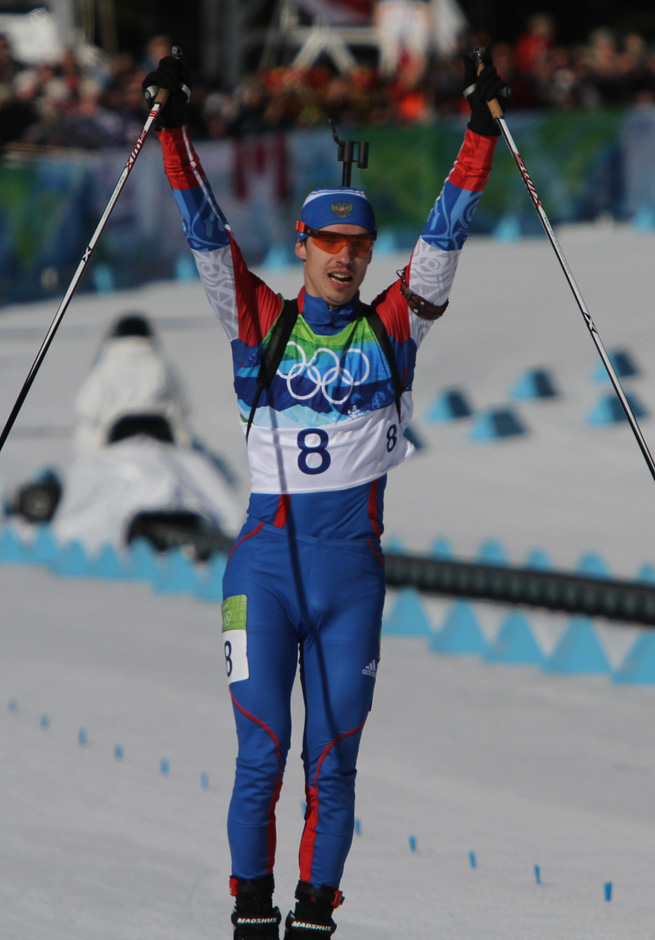
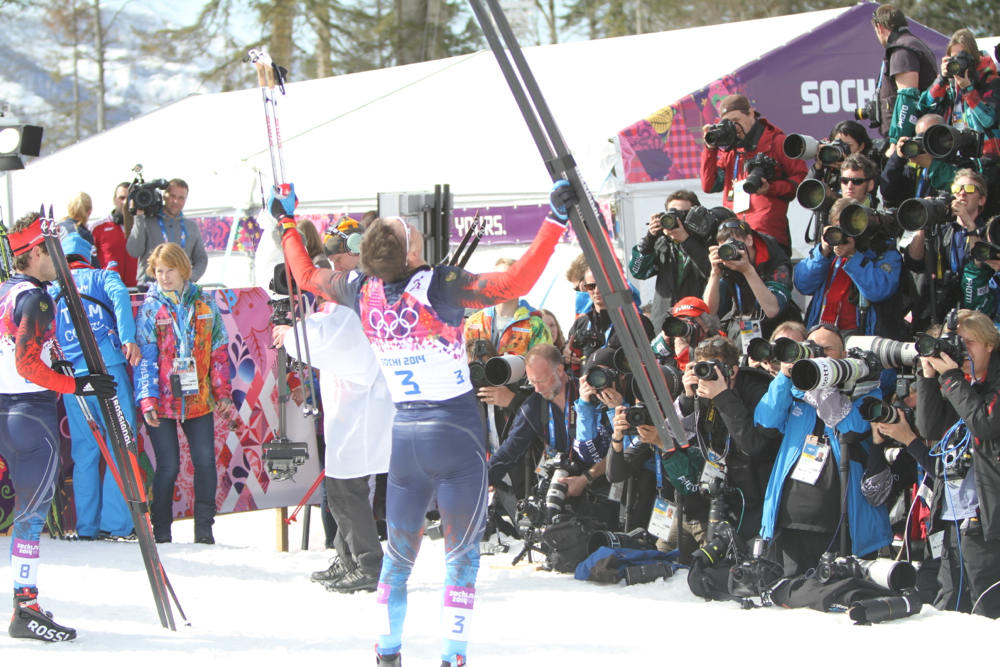
    Sergei Ustyugov of Russia celebrates his victory in the 15 k biathlon mass start in the 2010 Olympics in Vancouver, Russia.

    Covering doping in sports like biathlon and cross-country skiing here in North America can make one feel self-rightous. The U.S. and Canada run clean systems if positive doping tests are the benchmark for suspicion. As far as we can tell, there’s been a single case involving a North American nordic sport athlete. In 1987, an American caused a stir after the 1987 Nordic World Championships in Oberstdorf, Germany. Kerry Lynch, a nordic combined skier, admitted to “bloodpacking”. (A glance into U.S. athletics and cycling, however, tells a different story altogether.)

    Then there’s Russia! Russia! Russia!. Just right there, an appeal to doping angst with the use of an “!”, and a trifecta of “Russia” as if from a far far away time in our recent political history.

    This week the Court for Arbitration for Sport’s anti-doping division ruled former Russian biathlete Evgeny Ustyugov guilty of an anti-doping rule violation. The ruling’s technical underpinnings turned on abnormalities in Ustyugov’s Athlete Biological Passport. He doped and was able to evade detection. His results from January 2010 until the completion of the 2013-2014 season were stripped. These include gold medals won at the 2010 and the 2014 Olympics.

    Six years after the Sochi Games, a decade since Vancouver, the slow churn of justice in sport advances.  

    Since the Sochi Olympic flame smudged out and whistleblowers helped tease apart the deep-state Russian doping enterprise, FasterSkier has covered the case. And just this week I used an image of 2014 50 k freestyle Olympic champion Alexander Legkov as a lead photo for a doping related article. Too cynical a choice for a doping story photo? Maybe. 

    Alexander Legkov after winning the Olympic 50 k in 2014.

    Legkov went through his own doping adjudication twists – he was implicated as an athlete who benefitted from Russia’s systematic doping program. Legkov was eventually cleared in a 2018 CAS decision and his 2014 gold medal was reinstated. At first appearance, the image of Legkov used in the earlier story is similar to others we have seen before: the euphoria of winning gold. But we all know, positive tests or not, CAS decision or not, the haze of Sochi doping evidence provides a “guilt by association” backdrop. That’s a tough bias to suppress. 

    I came across a journal article titled “The Fall of the Queen of Nordic Skiing – A comparative analysis of the Swedish and Norwegian media coverage of the Therese Johaug scandal,” while searching for information on biases while covering doping in sports. Johaug, if you are new to the sport, is Norway’s premier current cross-country World Cup athlete. She failed a 2016 out-of-compeition doping test. 

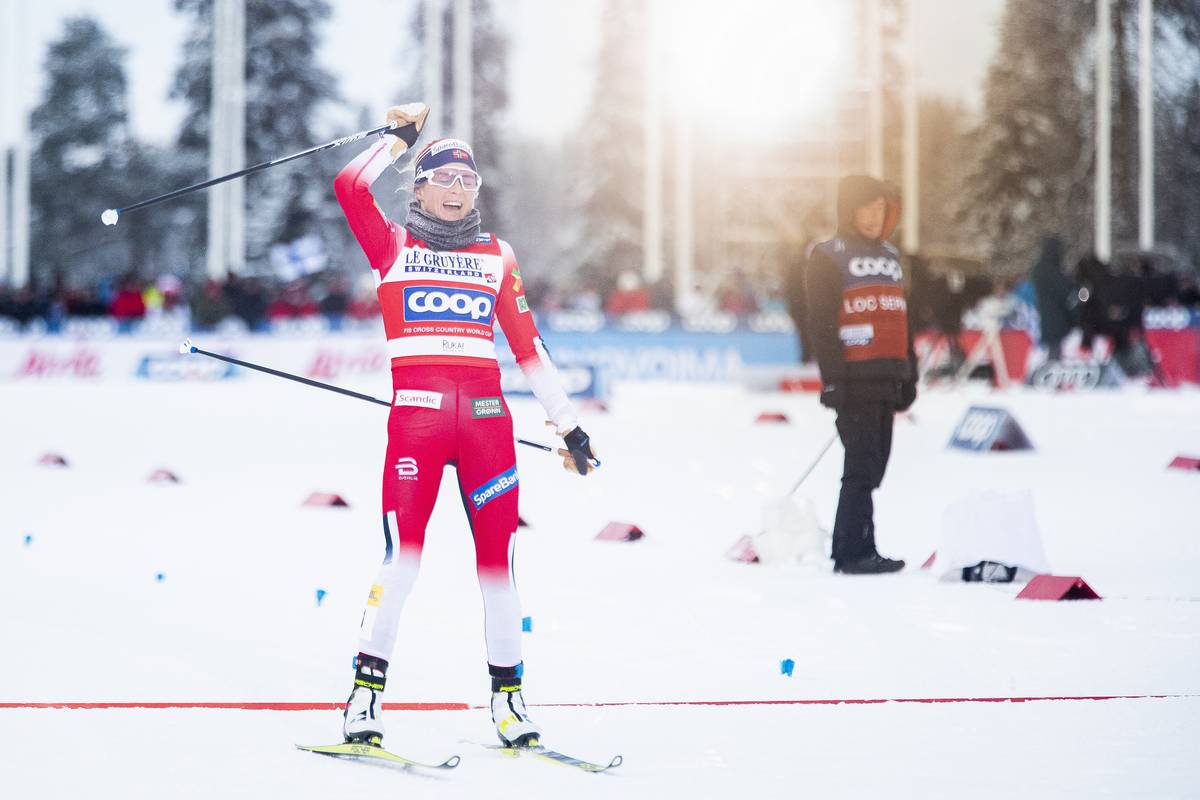
    Therese Johaug winning last season in Ruka, Finland. (Photo: NordicFocus)

    Initially, Johaug was handed a 13-month ban by the Norwegian Ski Federation, which FIS appealed. She was eventually given an 18-month ban by CAS and missed the 2018 Olympics. Back on the scene beginning the fall of 2018, Johaug dominated distance racing. She claimed the 2019 distance World Cup globe and the Overall World Cup in 2020. 

    Right upfront, the authors of the study, Ulrik Wagne and Elsa Kristiansen, use terms like “national identity” and “national performance” to describe how humans often tend to bundle athletic prowess with how they think and feel about their home country. Chants of “U.S.A. -U.S.A.” anyone? Sports and identity commingle. 

    About Norway’s Johaug coverage the study’s authors write, “the media often propagate the claim that the administrative systems both monitoring and helping elite athletes have failed. Accordingly, the responsibility for the failure is transferred from the individual to the governing organisational level.” That’s jargon claiming the system failed Johaug.

    Sweden, a country similar in its affinity for cross-country skiing, took a harder line against both Johaug and Norway. The authors claim, “Swedish discourses seem in favour of strict liability; thus, the issue of guilt can be ascribed to the individual athlete, who accordingly needs to receive a ban, and to Norwegian anti-doping policy, which is not as consistent as one would expect, and therefore requires a thorough investigation.” In other words, the main Swedish narrative was Johaug failed herself and Norway is no beacon of clean sport. (Prior to Johaug’s positive, claims of abusing asthma medication to boost athletic performance rattled Norwegian skiing.) 

    In some ways, the findings reinforce our propensity for tribalism. In this case, the national flag waving kind when international sport is used as a proxy for nation-state status. Norway became an easy foil for Sweden after projecting itself for years as above the temptation to dope. So maybe it’s no surprise that some Norwegian media showed a bias and deflected blame away from Johaug. And similarly, there’s no shock that some Swedish media asserted Johaug and a complicit system were at fault. 

    The analysis of Johaug’s doping coverage reveals that some media outlets were easily wrapped up in the game of asserting the superiority of one Scandinavian state over the other. Soft-power flexed just to the side of the ski tracks.

    Which brings us back to Russia. With the Ustyugov ruling, all we can say is score one for the newly minted Biathlon Integrity Unit. Sport comes clean, eventually.  

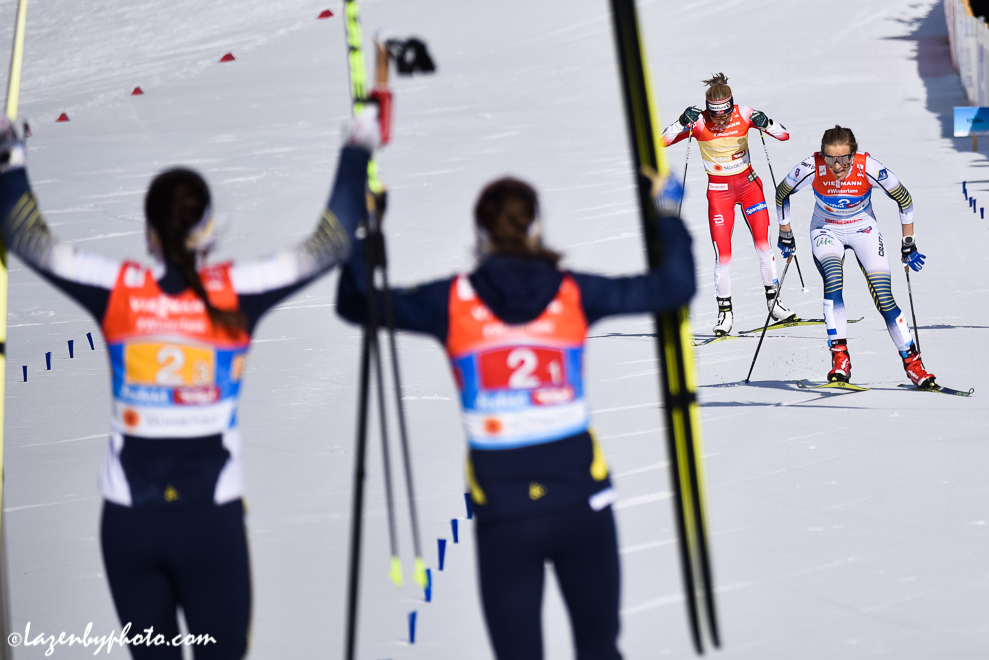
    Holding off Norway’s Therese Johaug is Sweden’d Stina Nilsson during the 2019 World Championship 4 x 5 k relay in Seefeld, Austria. (Photo: John Lazenby/lazenbyphoto.com)

    As for remaining unbiased on the tracks and settling scores, the stakes were high when Norway and Sweden went head-to-head in the 2019 World Championship 4 x 5 k relay. Johaug faded late in the final leg while Swedish speedster Stina Nilsson closed out down the final straight for the win. Nilsson has since switched to biathlon. Johaug continues to crush. The facts are this: all biases aside in Norway and Sweden, it was a lovely race and worth a re-watch.    

  • Why is the US Nordic Skiing Community so White?

    Why is the US Nordic Skiing Community so White?

    Reflections From a White Skier On The Spaces and Places We Ski, And How To Build Inclusivity

    By: Ben Theyerl

    The Start of the American Birkebeiner
    The start of the American Birkebeiner in 2010.

    The typical life story of a competitive nordic skier in the U.S. tends to resemble a character out of a Robert Frost poem. It’s an appropriate metaphor; the Rikert Nordic Center at Middlebury, VT doubles as the quarters of the renowned Bread Loaf School of English during its summer months, where the Bard of New England taught for many years. In America, this sport tends to be filled with people from the quiet corners and empty spaces of our country. From the arcane delight of Vermont’s hamlets, to the mountain outposts strung up and down the West Coast, and the downhome northwoods of Middle America in towns like my hometown of Eau Claire, Wisconsin. All these places color and contain the spirit of those who end up in a sport that receives little fanfare and even less attention in America, sans the two weeks every four years when the Winter Olympics are held. 

    For many, it has always been about finding peace in the silence and sublimity of harsh winters, and sanctity in the god-damn slog. Pumping hearts, clouds of heat, and the dance of drive and focus. It’s a sport for hearty souls that sees to it that those souls become heartier still; teaches you how to handle the struggles of life when it pushes you full bore to the brink. 

    I love it. My teammates love it. Despite having grown up surrounded by the sport, it still feels like a little miracle for me, and for many of my teammates, that I happened to find a sport that so-matched the character and values that the wide-open landscapes of this country offer, and that pursuing it with a full heart, that character became part of my character. 

    If you follow that Robert Frost metaphor I used earlier, eventually you’ll come to those two roads diverging in a yellow-wood. Where that famous assertion of individuality “And I -/ I took the one less travelled by, / and it has made all the difference” comes from. As nordic skiers, I think we’re prone to thinking that our participation in the sport is, in its own right, taking the road less travelled. Skiing is adventure, it’s idiosyncratic — knowing the otherwise useless specifics of waxing, and spending lots of time moving through spaces that otherwise receive little attention. It is easy to think, when you glance over your shoulder back at the forests, mountains, and fields of snow hours into a ski that you are in on a secret that the rest of society is tragically missing out on—and you are. 

    But if there’s anything that this year has proved, it’s that those glances over our shoulders are looking back at a world that’s changed. You can no longer look at my Frost metaphor and not think, why Frost? Implicit in his cool assertion of individuality is that the choice to take the path less travelled is one all-to-often reserved for those of us who look like Frost. We’re white. Many of us are male. Who we look to in forming our metaphors for individuality and freedom is important because it implies who has access to those virtues. 

    Why, for example, when plumbing my literary references for a metaphor didn’t I turn towards Langston Hughes, or James Baldwin, or Roxanne Gay? It’s a set of questions that points me back to an unspoken truth that those of us who travel the less travelled path in the nordic skiing community tend to look utterly homogeneous. This is a road taken disproportionately by those of us who are white. In fact, as I write this just 6% of nordic skiers in the U.S. identify as African American.  

    The demographics of where the places that harbor nordic ski communities are on a map allows this statistic to go unchecked. The trail networks linked to small rural towns and resorts that are historically, and presently, white, shelter us from having to confront and come to terms with our sport’s lack of racial diversity. So do the images of our heritage as a nordic community, and of what it looks like to be an elite nordic athlete. Here, in 2020, it’s apparent that we take the steps to re-examine inclusivity in our community, and understand why we haven’t done better in the past. Like any ski trail system, the road we have been travelling is now, under our societal moment, at another crossroads. We can choose as a community to stay on this sheltered path, or we can take the road less travelled for the nordic community to finally discuss the overwhelming whiteness of our sport and the places that we do it in.

    There is one glaring irony in all of this pontificating on our sport’s ruralness and use of wide-open country spaces. The greatest concentration of skiers in America is currently at the epicenter of our national reckoning with our racial injustice—Minneapolis. The same city that, in the wake of the death of George Floyd, stands as the focal point for worldwide scrutiny of America’s historical racial oppression of Black people is also America’s nordic skiing capital. 

    There’s so much good to say about the ski community in Minneapolis. It’s large. It’s dedicated. It’s generous. 

    But there’s also a failing in that ski community’s racial make-up that parallels the wider-community of Minneapolis which is currently being highlighted by national events. Whereas most of the ski community can say that our sport is overwhelmingly white because of the communities it draws from are white, Minneapolis can’t fall back on that excuse. It’s a large, multi-ethnic, multi-racial city, and yet it’s ski community is still predominantly white. That’s not to discount efforts by that community, through the Loppet Nordic Foundation and others, to try and bring racial diversity to the sport, but it does go to show that in skiing, its not simply a lack of diversity in the broader communities where the sport can take place that’s an issue. This is a problem that goes deeper than demographics.

    In her book Black Faces, White Spaces geographer Carolyn Finney discusses how nature and the environment in America have historically been constructed as a white space. Finney’s work is multi-faceted and should be a priority to read for any outdoorsperson, but here I want to underscore that big main point; it’s constructed. The mountain ranges and forests that we count on each winter to be able to do the sport of nordic skiing didn’t just pass into the hands of land owners, land trusts, or the public government. In considering how most of the spaces we ski in came to be, we have to start with the dispossession and removal of indigenous peoples before you ever think about how a trail system got built and who has access to those trails. 

    To underscore this point, one can look at our community’s largest gathering, 10,000 people every year at the American BirkebeinerAmerican Birkebeiner ski race in Hayward, Wisconsin. The Birkie trail is a special place, hundreds of kilometers of northwoods traversing ancient glacial terrain. The Birkie is a special event, in large part responsible for the vitality of the nordic ski community in the Midwest. My own family would’ve never started in this sport without it. 

    In its present form, the Birkie trail straddles the Lac Courte Orillies tribal reservation, and is built on Ojibwe land. This fact is in the constant peripheral in any trip to ski on the Birkie trail. Most of us choose to keep it in the peripheral, however. We don’t think twice about crossing the Ojibwe names that dot the rivers, trails, and forests – Namekagon, Chequamegon, or Totagatic. I find myself guilty of driving from the cabin I stay in for the Birkie each year to the Mosquito Brook trailhead through the Lac Courte Oreilles reservation, and not giving a second thought to the outsized, neon sign that advertises it as such, placed as the welcome sign to the LCO casino not more than two miles away from the trailhead. The proximity of native land dispossession in Hayward makes it a stark example, but this story is one that is at the origin of every trail system we enjoy and compete on in America.

    Our sport ultimately is connected to that initial dispossession. As skiers, one step we can take towards recognizing our use of indigenous space is no longer keeping that fact in the peripheral in our community gatherings. Acknowledge it. This follows from a movement that’s already underway in native activist and academic circles, which calls for persistently acknowledging that the land we stand on today is indigenous land, as one statement from Northwestern University states:

    It is important to understand the longstanding history that has brought you to reside on the land, and to seek to understand your place within that history. Land acknowledgements do not exist in past tense, or historical context: colonialism is a current ongoing process, and we need to build our mindfulness of our present participation.

    We can make this a regular part of the introductory instructions at our community races. We can make it a part of the dedications that take place when christening new trail systems and facilities. To begin the work of inclusivity, we have to go back to the very origin of exclusion in the spaces we use for our sport.

    The native experience, of course, is different from the experience of Black Americans in our sport, and in the outdoors community more broadly. Land dispossession began the process of colonizing the outdoors as an exclusively white space, but it wasn’t the only step. White colonization of the countryside in America was enforced and reinforced in the policies and narratives that constructed America historically. Finney writes that “land (and more directly land ownership) directly connected to what it means to be an American,” and highlights that the main historical mechanism for this in America was the Homestead Act, signed in 1862, which allowed settlers to own 40-160 acre plots of land for free if they were willing to farm it for five years. 

    Over 160 million acres of land from Ohio to California, Wisconsin to Washington, were settled under this act, and created the “countryside” as we figure it today in our national consciousness. Because of the time of its passage during the Civil War, the initial wave of homestead claims completely excluded Black Americans who were still legally under the horrors of slavery, meaning the claims were almost exclusively made by European immigrants. This, along with the pattern of America’s settlement from East to West, meant that the then newly created Midwestern and Western states formed their still predominant demographic make-up, majority white. 

    Above: the author’s father and Grandfather at Wisconsin’s famed (and sadly discontinued) “Bratski” event in Sheboygan. (Courtesy photo)

    My own ancestors were among these claimants, staking out their place in the hills north of Milwaukee, Wisconsin where a century later their great-great Grandson, my Grandfather Walt, would start a family-wide nordic skiing obsession that now stretches three generations.

    The immigrant patterns of the time meant that the initial wave of claims were made by mostly German and Scandinavian immigrants, for which this polka-dancing, lederhosen-owning author can tell you still colors the cultural identity of states like Wisconsin and Minnesota today. It’s those Scandinavian settlers who predominantly settled in Minnesota that brought cross-country skiing to America initially, and its place as a cultural keystone in the state was firmly secured for the future. We haven’t strayed far from the place that Scandinavian heritage has in the imagination of our community. We name our races Vasaloppet and Birkebeiner, and I’m happy to say that I’ve been overwhelmed with joy at more than one citizen race when the post-race snack table included lefse and not just orange slices. Take that, running. Nordic skiing is just that: nordic. 

    It’s worth asking if that close affinity closes off the community to those that don’t share that heritage though. After all, a lot has happened to shape U.S. skiing culture as distinct from that which exists in Norway or Sweden. This isn’t the whole story of skiing in America, but it does demonstrate the way that settler colonialism is intertwined to where and who skis here. 

    As the Homestead Act extended westward with the frontier, it continued to exclude Black Americans. All told, nearly 1.6 million white families settled and became landowners by Homesteading, while only fewer than 6,000 black families found the same opportunity. The countryside became a white space that took on connotations very different for Black and white Americans. For white Americans, it became individualism realized—a space to build a house and call it home. For Black Americans, however, the countryside was a space that held a collective memory of their exploitation under slavery, and was host to unchecked racist violence against many individuals in the form of lynchings.

    Land ownership also served as the basis on which many white Americans built their wealth and prosperity over the following century and a half, and along with other oppressive economic measures, the exclusion of Black Americans from homesteading helped create the racial wealth gap we inherit today. The relative financial security and disposable income that many white Americans secured in the twentieth century allowed them to spend on the travel, gear, and time required to take part in outdoor recreation. Thus nordic skiing formed a twofold reinforcement of its whiteness: taking place in communities that were almost exclusively white, and requiring a certain amount of wealth that disproportionately was (and still is) possessed by white Americans. 

    Nordic skiing parallels the well-studied history of outdoor recreation in America, beginning with what Wallace Stegner famously called “America’s best idea,” the national parks. I won’t repeat the history of catering the experience of places like Yellowstone to an experience of “wilderness” by removing Native Americans and buffalo hunters while putting down railroad tracks for wealthy eastern, and white, tourists. I will recommend William Cronon’s “The Trouble with Wilderness” and Ken Burns’ “The National Parks” as starting points, and resources concerning the Parks’ current reconciliation with their past to those unfamiliar. The unsanitized story of the National Parks is one that should guide our understanding of outdoor recreation in America as it plays out in landscapes and spaces, and is one that mirrors the way that the nordic skiing community tends to understand itself. 

    As Finney writes in her book, “[the countryside is] a key site of nationalistic sentiment, and implicitly excludes Black people in its discourse.” Those of us who look for refuge in the weekend escape to the trailhead, find community in the racing scene that takes over small-towns and rural spaces throughout the winter, and spend hours paging through outdoor gear catalogues filled with white faces, need to think critically about why we feel comfortable in those spaces. 

    Chances are, it’s because they’ve always been white. And chances are, we’re white too.

    Part of the ethos of participating in this sport is that it allows us to gain access to freedom otherwise not found in life. On skis, we can glide over terrain you can’t on foot. The freedom of skiing is derived from access to some sort of wilderness, and that is a sentiment that is colored white by historical practices that can seem so far and distant, but is intimately intertwined with our experience, even when our minds are occupied with tweaking our V2 technique to shave off seconds or taking downhill corners just right. We may be on the road less travelled, but that road was still paved by the pitfalls and racism of American society.

    Which means we’re back to that Frost metaphor. Which is good, because it represents the crossroads that society, and by extension, our sport, are at with inclusivity. What I’ve discussed here are tepid steps towards the road we have to take as a community. If this story were trail-building, it’s simply tree-flagging – identifying what needs to be cut and cleared before we do the real work forging new paths. But, it’s a necessary step. Survey and think, recognize and learn. 

    Where we go from here is also a task we take up in the tight-knit, collaborative manner that the nordic skiing community has always acted in. We’re building a new trail. At the time of this writing, movement is already underway. A number of organizations, such as the National Brotherhood of Skiers, have been doing work to build inclusivity of Black communities in alpine skiing for years. The Share Winter Foundation provides grants to programs across the country that seek to empower youth to enjoy winter and reduce barriers of access to skiing and snowboarding. Their grantees include a number of big clubs and governing organizations in the nordic community. Our path forward must include programs like this, devoting funds to introducing Black communities to nordic skiing and building trail systems that guarantee low-cost, easy access to all. It’s imperative that these resources meet action from those in the community. For coaches, this means figuring out how to create programs that introduce and retain talented athletes regardless of where they come from or the resources they have. For shops and manufacturers, this means figuring out how you can help those coaches get the necessary equipment to coaches working to make this sport accessible to all athletes, especially Black athletes.

    These ideas are far beyond my scope as a singular member in this community, but I’m confident that the good-spirited souls and minds that have built our sport in this country can develop and implement action towards drawing in people who our community has historically ignored. This new trail system we’re building won’t be complacent with the twists and turns and hills we’ve travelled on our skis in the past. It’ll be new and true to the nordic skiing spirit—trailblazers who take comfort in the challenge of hard-work.

    Ben Theyerl

    Ben Theyerl is a third generation nordic skier from Eau Claire, WI, who recently graduated from Colby College this spring. He is currently working on the campaign trail in Wisconsin for the upcoming election, training for whatever the Birkie looks like this winter, and gearing up to help lead fall training with his home club Chippewa Valley Nordic.


    Resources for Building Inclusivity

    NENSA steps towards making a difference – https://nensa.net/2020/06/11/taking-a-stand-toward-making-a-difference/

    USSA Roundtable on Diversity and Inclusion –  https://www.youtube.com/watch?v=1zLMXTtCaLk

    Letter in reply to Tiger Shaw’s statement on BLM – https://usskiandsnowboard.org/news/open-letter-diversity-our-sport

    A list of conservation resources on Blackness and the Outdoors – https://www.conservationnw.org/resources-for-racial-justice-anti-racism-allyship/

    Carolyn Finney’s Book Black Faces, White Spaces – https://uncpress.org/book/9781469614489/black-faces-white-spaces/

    National Brotherhood of Skiers –

    http://www.nbs.org/

    Warren Miller Entertainment Article Citing Programs working towards inclusivity in winter sports – https://warrenmiller.com/changing-game


  • Time to Listen and Learn

    We are deeply shaken by recent events. We are at a loss, beyond reflecting on how we can be better. Where do we even begin? 

    The ski community is a predominantly homogeneous population – be it the Nordic origins of the sport, the socioeconomic and geographic barriers to entry, or a myriad of other factors. Here at FasterSkier, we have an all-white staff. The World Cup skiers whose accomplishments we highlight are almost exclusively white.

    We do not support acts of racism or violence.

    However, we believe that the act of remaining silent amidst this tumultuous time deems us complicit in proliferating racism. We do not pretend to have the answers. We are here to listen and to learn. To seek out and highlight stories of skiers from diverse backgrounds, to elevate new voices, and to applaud clubs and communities taking action to increase participation and support athletes from low-income families.

    Skiing can be many things. The timing chips, the lycra, and the training have their place for some. But those strict definitions may not open our eyes to how other people experience the sport, or may be excluded from it. We are more than that.

    Help us be better. Whose hidden stories deserve telling? Whose voices can we amplify? What is being done in your ski community to promote inclusivity and diversity? What companies have taken action to support worthy causes? What positive actions have you observed that might empower others to follow?

    Feel free to leave suggestions below or email the staff at info@fasterskier.com.

    Thanks,

    Matt Voisin, Jason Albert, Rachel Perkins, Gerry Furseth, and Gavin Kentch. 

  • A Glance at Some Anti-Doping Numbers in Cross-Country Skiing

    A Glance at Some Anti-Doping Numbers in Cross-Country Skiing

    A year and more has elapsed since a doping scandal rocked the 2019 cross-country World Championships in Austria. Over that time, we have learned a bit more about what transpired at the micro-level. In the broader picture, those covering doping in sport often scour The World Anti-Doping Agency’s (WADA) annual release of a voluminous document titled “Anti-Doping Testing Figures”. The data dump runs hundreds of pages. Looking for figures on the number of tests per sporting discipline, type of test, governing body administering the test, on and on, it’s in there. The WADA report also discloses the number of AAFs (adverse analytical findings which indicate the presence of a banned substance) and ATFs (atypical findings that warrant more testing and follow up.) Useful information if one is trying to glean how pervasive doping might be in a chosen sport and how effective the tests are. 

    If you’ve ever read those reports and you’re convinced athletes dope in nordic sport, then this much is true: very few athletes produce AAFs or ATFs.

    Link to WADA Anti-Doping Testing Figures. 

    2019-2020 FIS Anit-Doping Numbers

    The International Ski Federation (FIS) released its own annual Anti-Doping Testing Figures on April 15, which it called “detailed FIS testing statistics”. To call this detailed is over reach.

    The information does, however, provide the total number of FIS administered tests and disaggregates the numbers into “out-of-competition” and “in-competition” subcatagories for the 2019-2020 season. FIS catalogs the number of urine tests, ESAs (urine and blood tests which test for erythropoiesis-stimulating agents – think red blood cell boosters), blood tests, and specific tests for athlete blood passports (APB). 

    FIS reports a total of 606 in-competition tests this season with 332 of those specific to cross-country skiing (or roughly 55 percent of the total). In-competition tests for cross-country skiing broke down as follows: 170 urine tests, 112 ESAs, one blood test, and 49 blood passport tests. 

    For out-of-competition tests, FIS conducted a total of 2205 tests, with 1278 specific to cross-country (or roughly 58 percent of the total). For cross-country, FIS administered 302 urine tests, 245 ESAs, 151 blood tests, and 580 blood passport tests. 

    FIS accounts for a portion of the overall testing in cross-country skiing. National Anti-Doping Agencies, like USADA, are also responsible for testing athletes both in and out-of-competition.

    Without running through all the numbers, cross-country accounted for the majority of tests within the FIS family of sporting disciplines: cross-country, nordic combined, ski jumping, alpine skiing, freestyle skiing, and snowboard. Although the data released from FIS tells a story, it really is an intro or first chapter at best. There’s no indication of the number of AAFs or ATFs.

    Although it appears that FIS is doing its job, if that means administering tests, then we have no idea if these tests catch dopers. Although the evidence may be lurking out there, it is our understanding that the skiers caught in Seefeld at the 2019 World Championships who had been practicing autologous blood doping – transfusing one’s own blood – never flagged an AAF. And according to FIS reports, some of those same athletes arrested in Seefeld were concurrently using hGh.  

    We are glad for the testing. We just simply want to know if the testing is effective and does its intended job of deterring would-be-dopers. With the figures released in April by FIS, we simply do not know and neither do athletes who race clean. 

    2018 WADA Anti-Doping Testing Figures

    The 2018 Anti-Doping Testing Figures from WADA, the more thorough analysis of testing metrics, reveals the breadth of testing and the paucity of positives — which may be a good sign. Then again, it might not. (2018 is the latest data set publicly available from WADA.)

    In cross-country skiing, a total of 2916 in and out-of-competition urine and blood tests were administered. These tests found a total of seven AAFs. (From Table 2: Total Samples Analyzed in AIOW Sport/Disciplines (Urine and Blood)). 

    In cross-country skiing, 187 total hGh isoform tests were conducted (blood) with a single out-of-competition AAF. (Table 30)

    In cross-country skiing, 272 total hGh biomarker tests were conducted (blood) with no AAFs. (Table 31)

    In 2018, FIS specifically collected 228 hGh biomarker samples – the vast majority of those were collected out of competition — with no AAFs. (Table 19) 

    A total of 1448 Athlete Biological Passport samples were collected for cross-country in 2018. (Table 4). 


    WADA’s Explanation of their hGh tests, quoted from WADA’s Q & A page. 

    HgH Isoform: “WHAT IS THE HGH ISOFORM DIFFERENTIAL IMMUNOASSAYS (THE ‘ISOFORMS APPROACH’)? 

    Since the total levels of hGH secreted into circulation vary naturally, are widely fluctuating over time and may be influenced by several factors not associated with doping, it is practically impossible to develop an anti-doping test based simply on the measurement of increased total hGH concentrations. However, doping with recombinant hGH (recGH) alters the naturally constant proportions between the different isoforms of hGH present in blood of an individual.  The hGH Isoform Differential Immunoassays were developed to detect these changes in the proportions of different hGH isoforms after recombinant recGH injection.”

    HgH Biomarker: “WHAT IS THE HGH BIOMARKERS TEST (THE ‘MARKERS APPROACH)? 

    hGH affects the expression of many different proteins which may serve as biological markers of hGH activity.  These include markers of hGH action in the liver such as IGF-I, as well as markers of hGH action on soft tissue collagen turnover, such as the N-terminal peptide of procollagen type III (P-III-NP). The measurement of these two hGH markers in serum may serve to uncover the manipulation of the hGH/IGF-I axis independently of the doping substance used, be it recGH or other agents used to increase circulating hGH [for example analogs of GH-releasing hormone (GHRH), hGH secretagogues such as GH-releasing peptides (GHRP) or even hGH gene doping]. The detection and quantification of such biomarkers of hGH activity constitute the rationale of the indirect method for detection of doping with hGH, referred to as the ‘markers approach’.”

    If you want to dig deeper into the trove of WADA’s Q and As, here’s the link.


  • Celebrating some Power

    Celebrating some Power

    We’re the first to admit that a focus on results and not the process has major pitfalls. There were many great outcome goals this season, we know these as the results: Frida Karlsson’s reel-in of distance skiing’s white whale — Therese Johaug — comes to mind. This time of year we often ruminate on great performances, and they categorically revolve around results. Top-20s, top-10s, podiums — you get the drift.

    Whether through the camera lens, the keyboard, or the microphone, this much is true: It’s easier to capture podiums and what we consider traditional forms of success than it is disappointment. And by disappointment we mean the institutions hellbent on a formula of medals=success and being left with something less. Or the sad occurrence when an athlete feels they let a community down after a Herculean effort, but were “pack-fill”. How’s that for a dehumanizing term?

    We wanted to reshare a few standout moments that relate to the ski tracks but encompass a broader community. Well-being, self-esteem, a person’s self-worth should not be equated with results. The following highlighted written pieces reflect this ethos.

    First a shout out to Jessie Diggins, who helped pave the way for open and honest discussions about how to treat the self, and more broadly, each athlete, with dignity.

    Piggy backing on the title of Diggins’ book, we wanted to celebrate some others who were brave enough.


    Katharine Ogden

    Katharine Ogden racing in Östersund, Sweden. (Photo: NordicFocus)


    Katharine Ogden wrote a straight-up earnest piece about her struggles with an anxiety disorder. Ogden is a student at Dartmouth College and raced in several World Cup this season including the Tour de Ski.

    Once the WJC races were over, I was exhausted. By the end of January, I was no longer racing or training at all. I declined all of the trips I had planned on doing for the rest of the winter and completely succumbed to my anxiety. I spent weeks barely leaving my bed before I finally got up the combination of courage and desperation that it took to make my first appointment with my psychiatrist, Dr. Stanger. She explained to me that I could learn to manage the feelings of terror I felt, and she gave me a prescription for anxiety medication that almost immediately changed my life. Before meeting Dr. Stanger I didn’t believe that things were going to get better for me. I didn’t think that I would ever be strong enough again to go to college or continue ski racing. — Katharine Ogden


    Hailey Swirbul

    Hailey Swirbul racing in Falun, Sweden. (Photo: NordicFocus)


    Hailey Swirbul wrote a piece called “U23 WORLDS: IN DEFENSE OF SMALL VICTORIES,” for the National Nordic Foundation in which she ruminated on her own struggles and cherished moments. You can read that article here. Swirbul broke through on the World Cup this season and is a member of the U.S. Ski Team.

    2016 was that period for me. My parents found me help for my relationship with food and my body and self. I learned how to treat my own self with the values I wanted to treat others: kindness, dedication, respect. I figured out what I loved about skiing and why I was sure I wanted to keep doing it, and at the base of those reasons was nothing to do with results. I wanted to develop a lifelong love of sport and outdoors, for example. Or learn how to manage relationships with teammates that I might not choose to be my best friends. Or develop relationships with teammates that inevitably would become my best friends. Heck, I’d even consider my First-JNs-Dance-Kiss a reason to continue the sport!!! — Hailey Swirbul


    Kendall Kramer

    Kendall Kramer on the second classic leg of the junior women’s relay at World Juniors. (Photo: Doug Stephen)


    Another gem comes from social media, Instagram to be exact. Kendall Kramer wrote a post after the 2020 World Junior Championships. It’s another stand out performance in terms of putting words down and celebrating the big picture. We are re-posting her full IG post with permission. Kramer hails from Fairbanks, Alaska and is a member of the U.S. Ski Team’s development team. She’s also a keen student, and by her own admission, a regular teenager.

    It’s easy to highlight the “good” and hide the “bad”. For celebration and sharing american pride, I’ll post that my amazing American relay team got 2nd in the junior world championships yesterday. But that’s not what I’m most proud about this season. There was a lot of expectation for me to take my individual 4th place last year and make it into a podium. That was the “logical” step. But I didn’t realize what it was costing me to do that. This year I started dreading training- I would nearly cry when I had to go out the door to do it because I used to go so intensely that one mishap or thing not going as planned in training would make my brain feel like it was on fire from the stress of not doing everything perfect, making being an athlete a chore and not a choice anymore. That high strung brain is what made me so focused and “successful” last year, but it was obviously not sustainable. So, I got 22nd and 24th in my races this year, but I had to take a step back afterwords and realize I am representing the United States of America at the world championships, and be proud of myself for getting out of this very tough summer with a healthier mindset. The number by my name on the results sheet isn’t as low this year but I’m more proud of myself than ever, just as a person. Thank you to all my friends and family who consistently hype me up for just being me and not asking about results, that helps me more than you know💘 #USA — Kendall Kramer


  • Reflecting on the Tour de Ski and How I Got There

    Reflecting on the Tour de Ski and How I Got There

    Katharine Ogden during the 2019-2020 Tour de Ski. (Photo: NordicFocus)

    The author, Katharine Ogden, is a Junior at Dartmouth College. She recently completed the 2019-2020 Tour de Ski. Ogden is a decorated skier. You can read more about her ski career here. 

    By: Katharine Ogden

    01/06/20

    The Tour de Ski is an iconic set of world cup races. It tests athletes in every way and pushes you to your limits physically and emotionally. Seven races over the course of nine days evokes giggles, tears, and often sudden, urgent needs for gelato. In reflecting and trying to figure out what to say about the whole whirlwind I realized that in order to fully express how I feel about this accomplishment I need to provide some backstory. My ski career has taken a few turns over the past few years that made it pretty hard to imagine myself climbing up Alpe Cermis on the final day of the Tour de Ski.

    Just a few years ago, I wasn’t even sure if I would keep ski racing at all.

    In the spring of 2017, I was diagnosed with an anxiety disorder, a conclusion that decidedly changed my life for the better. During the year leading up to my eventual diagnosis I experienced near constant anxiety symptoms that made it hard for me to sleep and even harder to eat enough. These new, extreme feelings of fear and a lack of control also made traveling and racing suddenly very hard for me. I made it through period one of the Super Tour, U.S. Nationals and World Juniors Championships in Park City that year by hiding in my room and only skiing as much as I absolutely had to. I wasn’t eating enough because the anxiety made me constantly nauseous and subsequently I had very little energy.

    Once the WJC races were over, I was exhausted. By the end of January, I was no longer racing or training at all. I declined all of the trips I had planned on doing for the rest of the winter and completely succumbed to my anxiety. I spent weeks barely leaving my bed before I finally got up the combination of courage and desperation that it took to make my first appointment with my psychiatrist, Dr. Stanger. She explained to me that I could learn to manage the feelings of terror I felt, and she gave me a prescription for anxiety medication that almost immediately changed my life. Before meeting Dr. Stanger I didn’t believe that things were going to get better for me. I didn’t think that I would ever be strong enough again to go to college or continue ski racing.

    I have spent the past three years since that winter healing and learning to trust myself again. In skiing for the Dartmouth Ski Team, I was able to relearn to love ski racing and start the process of separating in my mind the concept of traveling and racing from the anxiety that it had induced.

    College skiing is a perfect combination of a fun and laid back scene, while still being competitive. It allowed me to take the time that I needed to heal and learn how to manage my disorder. I was able to take a step back from international competition and simply enjoy skiing and racing on all of the beautiful New England trails where I first learned to love the sport.

    Now, this year, I am feeling more confident and happier than I have in a long time. My only goal for this season was to smile on every start line and so far, I have been accomplishing it. I am learning to trust myself and to be okay with forging my own path through this sport and through life. Finishing the Tour de Ski is something that I am extremely proud of. But, I am so much prouder of the fact that I truly enjoyed the entire experience. I smiled before every race and even during a few of them.

    I am sharing this story in hopes that I can help to de-stigmatize athletes talking about mental health. Finishing the Tour de Ski has been a dream of mine for a long time. It would not have been possible for me to accomplish it without the hard work that I have put into learning to manage my anxiety disorder. 

    From the Editors: if any person reading this needs assistance, please seek help and guidance from a personal physician or other health professional, your school health service, parent/guardian, or trusted coach.

  • Opportunity Knocked: Opportunity Seized

    Opportunity Knocked: Opportunity Seized

    By: Paige Elliott

    The call to action is clear: Nordic skiing needs more women coaches. From the launch of the Women’s Ski Coaching Association to former U.S. Ski Team coach Pete Vordenberg’s editorial on FasterSkier to Dr. Nicole LaVoi’s keynote presentation at U.S. Ski & Snowboard annual National Cross Country Coaches Symposium, gender equality has been at the forefront of recent conversation in the Nordic community.

    USPN coaches Eileen Carey (far left) and BethAnn Chamberlain (far right) with members of the women’s team at a recent training camp in Canmore, Alberta.

    I believe in this mission and therefore want to highlight a program that is doing an exemplary job of developing, advancing, and retaining female coaches, yet has been largely absent from the conversation. That program is U.S. Paralympics Nordic Skiing (USPN).

    When asked why he thought female coaches are so scarce in the Nordic world, John Farra, the former director of USPN, answered, “My theory would be that women are not encouraged as often or aren’t provided as many opportunities to take leadership roles in the Nordic space.”

    This thought is consistent with research conducted by Dr. Nicole LaVoi and the Tucker Center for Research on Girls & Women in Sport at the University of Minnesota. Even without the research, plenty of women coaches can provide anecdotal evidence regarding the frustration of their experiences trying to break into a typically male-dominated field. 

    “How many women have stopped coaching because they don’t feel valued, or are not given opportunities to advance?” said Eileen Carey, current director of USPN. “If more women had better experiences coaching, we’d probably have more women coaches.” 

    This is why I was surprised when USPN invited me to test skis with the glide wax department at the Paralympic Games in PyeongChang, South Korea in 2018. I had been coaching juniors with Durango Nordic Ski Club for five years, but was new to para-Nordic skiing and international level competition. USPN gave me the opportunity to learn. 

    One of the first things I noticed upon arriving in South Korea was that for the first time in my coaching experience, I wasn’t outnumbered by men. Of the 14 coaches and support staff members, seven were men and seven were women. Furthermore, the women, who included powerhouses like Carey, Kristina Trygstad-Saari, and BethAnn Chamberlain, were far from statistical tokens. (Chamberlain was just recognized by the USOPC as the Developmental Coach of the Year.)

    “[John Farra and I] made the decision on how we wanted to build our staff based on who was really competent and who was good in a team environment,” said Carey. “We chose who was best for the job, and that happened to be half women.”

    Oskana Masters focused and in the moment on the range during the 2018 Paralympics in PyeongChang, South Korea. (Photo: U.S. Paralympics/Joe Kusumoto)

    In PyeongChang, USPN won a total of 16 medals, a tremendous increase from the three garnered during the 2014 Paralympics in Sochi, Russia. The 16 medals were comprised of six gold, seven silver, and three bronze and accounted for nearly half of the 36 medals won by Team USA at the Paralympics. Farra credits a large part of this immense success to Carey, who was head coach of the program at the time.

    “What we experienced in Korea was this perfect symphony of human beings coming together with a purpose, without egos,” said Farra. “It was an unbelievable experience to be around so many passionate, powerful people who executed their roles so well. That was orchestrated by Eileen and her style of leadership.” 

    Another key member of the half female coaching staff is Chamberlain, who serves as the emerging athlete coach. She utilizes her trademark enthusiasm and approachability to coordinate with clubs nationwide to identify, recruit, and develop emerging athletes. 

    “BethAnn is ideally suited for this line of work,” said Farra. “Her intensity, her passion, she’s just incredible for wrapping people in and getting them fired up. 

    Chamberlain, who had a 15-year career as a professional biathlete before she started coaching, also offers USPN a fount of technical knowledge regarding all things skiing and shooting.

    “She has an extensive background in biathlon, so when athletes are new, they get a pretty thorough introduction to the sport,” said Gary Colliander, USPN’s biathlon coach. “She’s also very easy to work with, so this develops a great opportunity for other coaches to learn from her as well.”

    When I asked Chamberlain, who also has experience coaching for non-adaptive programs such as Boulder Nordic Junior Racing Team and the Loppet Ski Club, what her favorite aspect of working with USPN is, she referenced the out of the box thinking required to coach adaptive skiing. 

    “The goal is the same as it is in non-adaptive skiing and biathlon, to ski fast and hit targets, but your approach to get there is a little different,” Chamberlain said. “Just because a standing skier skis with two poles, is that really the way someone with one pole should ski? We don’t know all the answers. We don’t know a lot of the answers. So that forces us to be a little more open-minded, to consider other possible ideas and solutions.”

    In fact, throughout my conversations with various individuals associated with USPN, this ability to consistently consider alternatives emerged as the number one hallmark of an effective coach.

    Farra described Carey as, “hands down the best coach that I’ve worked with” specifically because she is, “someone who asks more questions than has answers.”

    “She is always asking why? Why are we doing it this way? Why can’t we do it that way?” said Farra. “And by asking so many questions, she evolved from someone with former racing experience and some touchpoints with coaching to a large driver of the team’s success.” 

    Nick Michaud, a USPN development team coach, cited “the courage to say I don’t know” as one of the most important things he’s learned from both working with Carey and the team.

    “To see someone like Eileen, who has been doing this a long time and is at the top of her game, admit ‘I’m not sure’ when I ask a question, and then for us to go figure it out, is such a cool process,” said Michaud. 

    “Being able to do that helps puts some autonomy on the athletes, it opens the door for a lot more learning, and it makes a more collaborative process. I think the moment you start assuming things or think you know everything, that’s when the growth and development stops.”

    Obviously, inquisitiveness and humility are not qualities specific to gender. I do not think it’s a coincidence, though, that an organization that has grown and improved and succeeded by consistently asking what it can do differently exemplifies equity. 

    Oksana Masters of U.S. Paralympics Nordic is hugged by head coach Eileen Carey after her gold-medal finish in the women’s sitting 5 k cross country race at the 2018 Winter Paralympic Games in PyeongChang, South Korea. (Photo: Mark Reis/U.S. Paralympics)

    At the introductory level, USPN strives to present opportunities for individuals to explore things they might not have otherwise thought possible. As athletes advance, USPN provides a framework for progression through the sport, which includes access to a range of highly-qualified professionals and resources. Assistant coach Trygstad-Saari handles initial communication with athletes, manages the logistics of the program, and in conjunction with Chamberlain, stokes enthusiasm. Michaud keeps a pulse on all groups and serves as a bridge for developing athletes who may be potential medalists. 

    At the elite level, athletes work with head coach Martin Benes and biathlon coach Colliander. They are also connected with a network of specialists within the United States Olympic and Paralympic Committee (USOPC), such as a strength coach, a sports psychologist, and a nutritionist. 

    This is all of course facilitated by Carey, whose staff and athletes can’t say enough good things about her efficiency, expertise, and color-coded spreadsheets. 

    Dan Cnossen on his way to winning the men’s middle distance national title at the Paralympic Nordic Nationals at Craftsbury, Vermont. (Photo: John Lazenby)

    “I’ve been really impressed with the caliber of coaching I’ve had in my eight years with the team,” said Dan Cnossen, an athlete on USPN’s National Team. Cnossen is a former Navy SEAL and a six-time Paralympic medalist. “They really consider and respond to athlete feedback. Tapping into the USOPC’s resources is also adding a lot of depth to the organization. The team is just getting better and better.”

    The more I learn about how USPN develops Paralympic athletes, the more I realize how similar this process is to the way Nordic skiing should be developing female coaches. USPN removes barriers and provides opportunities for a minority population. This is analogous to presenting coaching as a viable career option to women and providing opportunities to pursue it. 

    Furthermore, USPN’s versatile approach and superlative support system allows athletes to not only explore skiing, but excel at it. Similarly, female coaches need professional development opportunities and a network of peers and allies, such as the WSCA, to thrive and advance in a traditionally male-dominated field. 

    What goes into creating successful athletes, coaches, and programs is vast and complex. Female leadership and gender equality may only be one piece of the puzzle, but I do believe it plays a powerful role. U.S. Paralympics Nordic provides a promising example for both the future of women’s ski coaching and promoting overall diversity in the sport.

    As Michaud put it, “Hopefully we’re showing that we can mix up the way things are and be really good at winning medals.” 

  • Op-Ed: A Discussion about PFAS and Skiing

    Op-Ed: A Discussion about PFAS and Skiing

    FasterSkier respects a diversity of opinions when publishing letters to the editor. Feel free to email info@fasterskier.com with your op-ed piece. You can read a FasterSkier article here regarding EPA regulations and a recent Letter to the Editor on the topic here. 


    In comparison to known sources and inputs of PFAS into the environment, cross country ski wax comprises only a miniscule portion. However, in the minds of consumers and the ski community, that portion may be enormously damaging.

    Any discussion of per- and polyfluoroalkyl substances (PFAS), cross country skiing, and the ski wax industry must be a discussion based on stewardship, ethics, and most importantly scientific fact. Fasterskier and its’ journalists and contributors have engaged in a topic that is not only important, but also extremely complex. Due to the proprietary nature of the ski wax industry, the general public is not aware of the chemical makeup of the products they are using, or more recently decrying. I hope that the information presented here will allow for further discussion within the ski community and may help to mitigate some misconceptions. If you find yourself dozing off from boredom, you’re probably not alone. To gain an accurate understanding of the issues, we must lay out the facts, and they are extensive.

    The Chemistry

    As discussed in other articles, PFAS are a family of more than 3,000 man-made fluorinated organic chemicals. These compounds have been produced throughout the 20th century and have been heavily used in nearly every industry. The chair you are sitting on likely has a PFAS stain-resistant treatment. The food you are eating likely utilized a PFAS surface coating on its packaging. The electronic devices on which you are reading this article probably contains PFAS coatings or insulation on some of the electrical components. The vehicle you drive has PFAS treatments on the upholstery, and PFAS was used in the production of many of the interior plastics. Even that rust-proofing that the dealer tricked you into buying, yeah, PFAS. These compounds were found to be so wildly successful at what they do, that they have become integrated into countless aspects of our daily lives. 

     Some examples of PFAS uses (ITRC, 2017):

    •     Textiles & Leather

    o   Factory or consumer-applied coatings to repel water, oil, and stains. This includes protective clothing, outerwear, umbrellas, tents, carpets, and upholstery. For example, brands like Gore-Tex or 3M Scotchguard.  

    •     Paper Products

    o   Surface coatings to repel grease and moisture. Many of these are on food-contact materials such as pizza boxes, fast food wrappers, microwave popcorn bags, 

    baking papers, pet food bags, and myriad other food packaging products.

    •     Metal Plating & Etching

    o   Corrosion prevention, mechanical wear reduction, surfactants, electroplating.

    •     Wire Manufacturing

    o   Coatings and insulation

    •     Industrial Surfactants

    o   The manufacture of plastics, fluoropolymers, and rubber.  Also manufacture of plumbing coatings, composite resins, and flame retardants.

    A number of studies have been conducted on the human exposure pathways to PFAS contaminants. For perfluorooctanoate (PFOA) specifically, one such study found that 66% of our total contribution was attributed to our diet, 24% to tap water, 9% to dust, less than 1% to inhalation, and less than 1% through dermal contact (Tian et al, 2016). These studies often found that our primary exposure pathway was through ingestion of contaminated foods or water. Other exposure pathways, while present, are minor in comparison. Another study found that the concentrations of PFAS in the air were identified in shops selling outdoor clothing, indicating that exposure to outdoor textile products treated with PFAS are a major contributor to indoor air quality (Schlummer et al, 2013).  

    The military was one of the first to use these compounds, and as a result, military installations globally are among the most prevalent sites where PFAS contamination has been observed in soils and groundwater. Similarly, facilities that have used large volumes of fire-retardant foams such as airports and fire-fighting training centers also are prone to be major sources of PFAS contamination (ITRC, 2017).  

    Industrial manufacturing facilities have received a lot of attention as PFAS sources. The 3M facilities in Minnesota in particular have been the source of major litigation. Other U.S. and global manufacturing facilities are uncovering PFAS contamination as more and more sites are investigated.

    As PFAS has been integrated into so many products we use on a daily basis and is a durable, non-degradable compound, it follows suit that it has been identified in increasing concentrations at places where wastes are accumulated, such as wastewater treatment plants and landfills.  Conventional sewage treatment methods have not effectively removed PFAS. Recently in locations where elevated concentrations have been found in waste streams, plants are being modified to efficiently remove these compounds from the environment. 

    Leachate from municipal landfills has been found to be source of PFAS due to the disposal of consumer products with PFAS treatments (ITRC, 2017). However, modern landfills provide significant protections through the use of leachate collection systems that allow for treatment prior to discharge into the environment. Many landfills effectively manage low-level concentrations of PFAS in leachate today.

    The same attributes that make these compounds work well are also the reason they have been identified as problematic in the environment. Carbon-fluorine bonds do not readily degrade.  Hence the reason why PFAS was the listed as a Stockholm Convention Persistent Organic Pollutant (among other national and global efforts) which identified these emerging pollutants as potentially hazardous. The PFAS compounds that received early attention in the environmental and industrial hygiene circles were PFOA and perfluorooctane sulfonate (PFOS). These compounds are considered “Long-chain” PFAS or more commonly referred to as “C8”.  Long-chain PFAS are compounds with eight or more fully fluorinated carbons. These compounds have been identified through numerous studies to be potentially linked to a wide range of adverse health effects. Lots of information is publicly available on the health issues related to PFAS, so I will not spend time on it here.

    Due to concerns regarding potential health and environmental risks, PFOS, PFOA and other long-chain (C8+) compounds are being phased out. By 2008, 3M, the principal worldwide and sole U.S. manufacturer of PFOS, voluntarily ceased production of long-chain PFAS and their precursors. Through the U.S. Environmental Protection Agency (EPA) PFOA Stewardship Program, eight U.S. companies eliminated production of PFOA and it’s precursors by 2015.  However, these compounds are still commonly imported into the U.S. in all industries. While efforts were made to reduce long-chain PFAS in the U.S., PFAS are still manufactured globally. It is believed that increased production of PFOA and related PFAS in China, India, and Russia has now offset the global reduction that occurred from the U.S. phase-out programs (OECD 2015b).

    For the past decade, many manufacturers have been developing replacement technologies, instituting new formulations for their products, including stain and water-proofing coatings, firefighting foams, and clothing. These manufacturers substituted shorter-chain PFAS in lieu of PFOS, PFOA, C8-Fluorotelomer alcohols (C8-FTOH) and other long-chain compounds. These compounds include GenX, C6-FTOH, or PFBS, also known as “C6”. Currently, studies are finding that the replacement short-chain compounds may not be less hazardous than their long-chain predecessors. As awareness grows in both industries and regulatory agencies, future studies will provide additional information for the management and use of these replacement compounds. 

    The Wax

    If you’re still reading this, you’re probably wondering; “So what does this have to do with ski wax?” One of the most frequent questions noted in discussions regarding fluorinated waxes is, “Which waxes contain PFOA (or PFAS, or C8, or ‘the dangerous stuff’)?” The short answer is that all fluorinated waxes contain PFAS, from fluorinated kick waxes, to low-fluoro hydrocarbons (LF wax), high-fluoro hydrocarbons (HF wax), and pure fluoro powder/block/liquid. All of these products contain varying concentrations of fluorinated carbon compounds, primarily fluorotelomer alcohols (FTOH). Different manufacturers (wax companies) and different products use their own proprietary formulations in waxes. Unless you are in the factory or are a chemist working for the company, its unlikely you will ever know the exact recipe of a fluorinated wax. The information provided here is based on personal discussions with industry insiders and manufacturer representatives.

    To backtrack a little, PFAS are industrial-manufactured compounds. The method through which these man-made compounds are synthesized results in a “dirty” product. Meaning that when a manufacturer attempts to produce PFOA, numerous other related, similar compounds will also be produced. The final product will include an array of compounds including PFAS with four to 16 carbons (C4-C16). Similarly, if one were to attempt to produce a C6 compound, they would also generate an array of other compounds including C4-C16.  Manufacturers can work to refine and minimize contamination, but it is challenging, if not impossible, to produce a pure compound. Ski wax companies purchase raw chemical materials from major manufacturers such as Dupont, Mitsubishi Chemical, and many others. The ski industry is not producing PFAS, rather they are purchasing it and using it as a component in their product. Thus, the wax company is dependent on their chemical supplier to ensure they have a pure product.  

    Currently, fluorinated ski waxes contain a mixture of PFAS compounds generally ranging from C4 to C10 including PFOA, FTOH, and others. Similar to other industries, it has been found that the larger the fraction of C8 in a wax, the better the performance. However, since the raw products are never pure, the C8 compounds will include a mixture of C6 and other length carbon-fluorine chains. Generally, wax companies are not intentionally including PFOA as a component in wax, it is an impurity from the chemical manufacturing process.

    So, back to the question of how much PFAS is in a wax. The quantity will vary by brand and type of wax. Naturally, a low-fluoro hydrocarbon will contain less PFAS than a pure fluoro powder. Pure fluoro waxes are often considered “the dangerous stuff”.  Most skiers have seen the acrid cloud of smoke from the wax room or read about the elaborate air control ventilation systems in the World Cup wax trucks. As a result, the associated pure fluoro waxes are seen as a significant health risk. While it will vary by the wax, some currently produced fluoro powders only contain about 0.0005% PFOA (C8). So, one gram of wax is not one gram of PFOA.  It’s actually only 0.000005 grams PFOA. The concentrations in HF or LF waxes would be even less.  

    A Matter of Scale

    While the study regarding the impact of PFAS to the health of World Cup ski technicians was widely circulated and globally recognized (Nilsson et. al., 2013), an evaluation of the impacts of PFAS on the environment as a result of cross country skiing has not been well documented. A 2014 study at Uppsala University by Joakim Mesch investigated the impacts of PFAS on soils and surface waters surrounding the Swedish Vasaloppet trail. The Vasaloppet provides a valuable test area as the thousands of annual participants result in possibly the highest density of skiers using PFAS ski waxes in one area, in short duration.

    The study found that PFAS concentrations in a reference lake (located away from the trail and presumed uncontaminated) ranged from 0.6 nanograms per liter (ng/L) to 2.3 ng/L. In a potentially-contaminated lake near the trail, PFAS concentrations also ranged from 0.6 ng/L to 2.3 ng/L. Water samples collected from snow melt in a small depression on or near the trail were 21.9 ng/L, clearly showing higher PFAS levels concentrated in snowmelt than in a larger water body (Mesch, 2014).  

    Several studies have identified that PFAS can be globally transported through atmospheric deposition (the process by which particles move from the atmosphere to the Earth’s surface), particularly in northern regions. Several studies have been conducted in remote lakes in Canada and Norway. Those studies detected PFAS concentrations at 12 ng/L (in Canada) and 6.0 to 10.0 ng/L (in Norway) in remote lakes well-distant from any human activity (Stock et al., 2007) (Kallenborn et al., 2004). Mesch’s analysis stated that the PFAS concentrations within the lakes near the Vasaloppet trail were within background concentrations. Though higher levels were observed in concentrated snow melt levels decreased once diluted in the environment.  Thus, skiing was not shown to cause a significant impact on water quality. Vestuvių planavimas nuo vizijos iki įgyvendinimo MOOD Weddings

    The Canadian and Norwegian studies have shown that surface water PFAS concentrations in northern regions are detectable as high as 12 ng/L as a result of atmospheric deposition. Mesch’s study found that PFAS concentrations in snowmelt following a major race were 21.9 ng/L.  Comparing these values to both established regulatory limits for PFAS and to known PFAS contaminated sites is essential to understanding the weight that ski wax holds in terms of total global PFAS contamination.

    The EPA issued a Lifetime Health Advisory for PFOS/PFOA (combined or separate) of 70 parts per trillion (70 ng/L) for drinking water (USEPA 2016d). The EPA advisory established a recommended lifetime PFAS exposure limit, meaning a healthy individual consuming the water containing the listed contaminant at or below the prescribed concentration daily throughout their lifetime. This value is advisory only and is not enforceable. The EPA advisory, like all EPA or State criteria is based in peer reviewed science and documented accordingly. Several U.S. States including California, Minnesota, New Jersey, New Hampshire, and New York have set their own, more stringent standards (Minnesota limit is 35 ng/L for PFOA). The snow melt at the Vasaloppet contained PFAS concentrations of 21.9 ng/L. Thus, by the EPA’s published advisory, a healthy individual could conceivably consume the snowmelt from the Vasaloppet trail daily throughout their lifetime without anticipated, correlated adverse health effects. 

    As 3M was the leading global manufacturer of PFAS in previous decades, the subsequent groundwater contamination at and near the production facilities and their waste disposal facilities near Minneapolis/St. Paul Minnesota has garnered significant litigation and attention. Throughout the investigation and cleanup of the sites thousands of public drinking water wells have been sampled and shown to have had detectable concentrations of PFAS. As noted, industrial manufacturing and landfill sites are among the most heavily contaminated for PFAS compounds. 

    The concentrations observed at the 3M sites that resulted in groundwater contamination for homes and caused potential human health risks are many orders of magnitude larger than what has been observed in snow associated with cross country ski waxes. Groundwater monitoring wells at a 3M manufacturing facility in Cottage Grove Minnesota were found to have PFOA concentrations as high as 846,000 ng/L (USDHHS, 2005). Military bases, firefighting training centers, and airports where PFOA-based fire-fighting foams have been utilized frequently were found to have surface or groundwater PFOA contamination with concentrations greater than 1,000 ng/L.  

    While studies have shown that cross country ski wax does result in a detectable concentration of PFAS contamination in the environment, those concentrations have been found to be well below current scientifically-based regulatory levels for safe drinking water in the U.S. In fact, the PFAS concentrations are only slightly higher than concentrations occurring from atmospheric deposition which some believe now constitute a global baseline for these compounds. In comparison to known sources and inputs of PFAS into the environment, cross country ski wax comprises only a miniscule portion. However, in the minds of consumers and the ski community, that portion may be enormously damaging.

    An Industry Like No Other

    While PFAS has found its way into numerous industries and innumerable products, no industry has utilized the name of the compound in the same manner as the ski wax industry. “Fluorocarbons, pure fluoros, fluoro powder”; in the skier’s mind, these words are synonymous with speed and performance, after decades of marketing by wax companies. In the 1990s, you wouldn’t see Gore-Tex advertising raincoats with the word “Fluoro” emblazoned on the label, but a little bottle labeled “CeraF” at the Birkie Expo still has skiers reaching for their wallets. The ski industry latched onto the fluorocarbon as a wonder-chemical both in practice and in marketing.

    As the health and environmental concerns regarding these products gain traction, and environmentally conscious global consumers sway the market forces, the ski industry has been forced to respond. “Fluor Free” is the new catch phrase you’ll see splashed across packaging at your local ski shop. Numerous new brands are popping up to fill a niche they see available in the industry as well, positioning themselves as an environmentally conscious option.  

    Industry giants have not failed to take notice. Wax companies are rebranding their products to eliminate names like low fluoro (LF), high fluoro (HF), “F”, or any references to fluorinated contents at all. While these products most certainly contain PFAS in some concentration, the companies now see what was once an advertising asset as a major liability.  

    Where Do We Go From Here?

    Beginning July 4, 2020, the European Union will regulate the production, transport, and sale of any products containing PFOA or associated precursor compounds under the Registration, Evaluation, Authorization and Restriction of Chemicals (REACH). All products will be required to contain PFOA (C8) concentrations of less than 25 parts per billion.

    This new regulation results in major industry changes for ski wax. The regulatory action functionally eliminates C8-based ski waxes.  After July 4th, 2020, all waxes manufactured or sold in the EU will rely solely on the shorter-chain fluorocarbons (C6). As previously mentioned, raw PFAS chemicals compounds are rarely pure and contain an array of fluorocarbons C4-C16 due to manufacturing processes. Developing an EU compliant wax using “pure” C6 is challenging, though several manufacturers claim to be already selling compliant C6 waxes. 

    The Toxic Substances Control Act (TSCA) has been discussed in good detail in regard to the absence of fluorinated waxes in the U.S. last year. TSCA requires that chemical manufacturers or importers report chemical compounds that are utilized in products. The chemical composition must match or be a functionally similar isomer of a compound that is registered to the TSCA inventory to be legally manufactured or imported in the U.S. Where importers ran into trouble in 2018 was that many of the products they were importing were not being reported to TSCA. That is not to say that those compounds weren’t present on the TSCA inventory. In some cases, it was simply that the importer/manufacturer had not made the effort to identify the appropriate inventory registration. In other instances, it was discovered that no similar compounds had been registered.

    Generally, the C8 chemistry in many ski waxes has been found to have existing registrations in TSCA and can readily be imported. There are some notable exceptions though. Several wax companies have been unable to import fluoro powders, blocks, and liquids. Other manufacturers have encountered similar problems with low fluoro and high fluoro hydrocarbons in solid form.  

    The lack of an existing registration forces wax companies to do one of three things. They can either attempt to register a new TSCA chemical (an expensive and time-consuming legal process), they can pay a relatively high price for a Low Volume Exemption (which would be available to any wax company based on the very low volume of fluoro material used in the entire industry), or they can work to develop a wax that is based on an existing registration. This problem comes to the forefront with the development and use of C6 wax. Far fewer of these compounds have existing TSCA registrations. So, while C6 waxes will be prevalent in Europe in the coming years, it may not be possible to easily import them into the U.S.

    Future studies of C6 and other short-chain PFAS may well find that they too cause adverse risks to human health and the environment. It is not inconceivable that the production of all fluorocarbon ski wax will be ended in Europe through regulation in the coming decade. Market forces and a consumer’s desire for an environmentally-friendly product may further accelerate the timeline.

    A Personal Decision

    The risks to human health and the environment from PFAS compounds are extensive and well documented. It’s doubtful that anyone in the ski industry would argue against the fact that PFAS, and specifically PFOA (C8) has the potential for significant adverse impacts. Where the issue comes into question is what impact the use of PFAS-based ski wax has on those outcomes. The available evidence so far has found that while fluorinated waxes do leave a detectable footprint on the environment, it is not at concentrations that are known to be potentially hazardous. More investigations into PFAS at major cross country ski venues in the U.S. and Europe would be extremely valuable. Industry partnership in studying those impacts would be beneficial as well.

    Until data proves otherwise, it does not appear the risks associated with fluorinated waxes are substantial enough to warrant throwing away your wax, burning your skis, and deciding to start knitting your family’s clothing from hemp. It is entirely probable that you are exposed to higher concentrations of PFAS by driving in your vehicle while wearing treated outdoor clothing on the way to the ski race than you are the entire time in contact with a fluorinated ski wax preparing and handling your skis. Further, it would be impractical for sport governing bodies to implement bans on fluorinated waxes due to health and environmental harm, when the data currently does not support that statement or is ambiguous at best. Competition bans of fluorinated waxes for non-health or environmental reasons in junior races or other events are a separate issue entirely.

    Any decision on the use of fluorinated ski waxes should be personal and based on your own ethical principles. However, those principles should be guided by facts and a scientific understanding of the issue. The question of how to appropriately handle these waxes should be managed practically. Most households contain a variety of cleaning products, fertilizers, or other chemical compounds that are just as, if not more hazardous, than PFAS. So long as precautions are made, we continue to utilize those products with little ill effect. Once again, it’s a matter of scale. In an interview with Scientific American regarding her 2013 study on the health impacts of PFOA on World Cup waxers, Helena Nilsson stated “There is no need to worry too much if one only intends to wax the occasional one pair or two.” 

    If you do choose to use fluorinated ski waxes, ensure that you work in a well-ventilated space, utilize proper respiratory protection (particulate and Volatile Organic Compound filters), wear waxing gloves or other appropriate hand protection, utilize a wax apron, and when done, ensure that you clean your work space and wash your hands. All wax shavings should be sealed in a trash bag and disposed at a permitted community or regional landfill.

    Erik Mundahl is a registered professional environmental engineer in Alaska with experience working at PFAS-related contaminated industrial sites.  For more than a decade he has worked as a wax technician at an elite level, conducted wax testing on behalf of the industry, and worked at the World Championships on a wax industry accreditation.

     Literature Cited

    Interstate Technology and Regulatory Council. (2017).  History and Use of Per- and Polyfluoroalkyl Substances (PFAS).  Fact Sheet.

    Kallenborn, R., Berger, U., and Jarnber, U.   (2004). Perfluorinated alkylated substances (PFAS) in the Nordic environment.  Norden.  AIP 2004:552. Jan 2004. 112 pp.

    Nilsson, H., Karrman, A., Rotander, A., Bavel, B., Lindstrom, G., and Westerber, H.  (2013). Professional ski waxers’ exposure to PFAS and aerosol concentrations in gas phase and different particle size fractions. Environmental Science: Processes & Impacts, Issue 4.

     OECD (Organization for Economic Co-operation and Development).  (2015). Working Towards a Global Emission Inventory of PFASs: Focus on PFCAs – Status Quo and the Way Forward. http://www.oecd.org/chemicalsafety/risk-management/Working%20Towards%20a%20Global%20Emission%20Inventory%20of%20PFASS.pdf

    Schlummer, M., Gruber, L., Fiedler, D., Kizlauskas, M., and Muller, J. (2013).  Detection of fluorotelomer alcohols in indoor environments and their relevance for human exposure.  Environment International; 57-58:42-9.

    Stock, N., Lau, F., Ellis, D., Martin, J., Muir, D., and Mabury, S. (2004). Polyfluorinated telomer alcohols and sulfonamides in the North American troposphere.  Environmental Science and Technology, Vol. 38, n. 4, 991-996.

    Tian Z., Kim S-K., Zhou L., Du P., Luo X., Wu Q., et al. (2016). Impacts of daily intakes on the isometric profiles of perfluoroalkyl substances (PFASs) in human serum.  Environment International; 89-90: 62-70.

    USDHHS (U.S. Department of Health and Human Services). (2005).  Health Consultation 3M Chemolite.  Perfluorochemical releases at the 3M – Cottage Grove Facility.

    USEPA.  (2016). Fact Sheet PFOA and PFOS Drinking Water Health Advisories. https://www.epa.gov/sites/production/files/2016-06/documents/drinkingwaterhealthadvisories_pfoa_pfos_updated_5.31.16.pdf   



  • Ski Wax Questionnaire Results

    Last week we posted a questionnaire asking for your opinions on the use of fluorinated wax. Below are the results of the survey. We selected only a portion of written responses to publish with today’s story. Thanks again for your feedback. 
    As of September 26, we had 160 respondents to our ski wax questionnaire. 

    Here’s a breakdown of how respondents defined themselves as a percentage of overall respondents: 

    Master aged skier: 55%

    Non-master Senior Aged skier: 8.1%

    Club Coach: 18.1%

    High School Coach: 6.9%

    Junior club skier: 5.6%

    Junior non-club skier: 0.6%

    None of the above: 5.6%

    Geographic breakdown of respondents: 

    North America: 93.8%

    Europe: 5.6%

    Norway, Finland, Sweden: 0.6%


    Would you opt into a voluntary fluoro ban (all products) at a major ski marathon? Please explain your answer below.

    • Yes – I think competing on an even playing field is important in order to make sport fair. Races shouldn’t be won by out-waxing opponents, they should be won on fitness, grit, and tactics.
    • No. I don’t believe others would comply.
    • If the governing bodies of skiing asked for fluoros to be banned, I would honor their request.
    • I’d be happy to. I would even support every racer being required (probably on an honor system) of using the exact same kind of was for a given race.
    • There are far more countries & populations conducting much more horrific environmental abuses than if the entire global ski population used HF waxes very day all ski season.
    • yes, with some controls or disincentives for those that would not voluntarily participate and/or cheat.
    • I think that it is a good idea to ban fluoros for under 18 regional events. I think that at the major ski marathon level there would definitely be people who didn’t abide by the rules and it would give them an unfair advantage.
    • I’m just a punter, in no danger of robbing anyone of their podium. If I still have fluoros and can have a better day, why not?
    • Never, I want and need the best and fastest skis possible.
    • Nope. Why would this be necessary? Skis and grinds are more important anyway.
    • I’m a citizen racer. I can’t afford to compete at the price of top-line fluorinated race wax. Bans level the field and are better for the environment.
    • HF waxes are an economic barrier to equal sport. HF waxes don’t improve the sport but instead provide a durable advantage to a sub-group of participants.
    • Going faster is more fun.
    • I hate the poison but feel non-competitive without it.

    Would you opt into a voluntary fluoro ban (all products) at a junior national qualifier/junior nationals? Please explain your answer below.

    • No. I don’t believe others would comply.
    • I think particularly in youth sports, all skiers should race on the same wax to make it fair. As fluoros become more scarce, it is essential that races ban their use to allow those without access to stay in the game.
    • The number of athletes competing is so much smaller and many are waxed by club coaches so it would be plausible that this could be effective. How are the skis being handled? if you leave it up to individual clubs and coaches there will be cheating. If you hand in all the race skis to be done by a select group prior to the race and all skis are finished in the same manner I have no problem with it.
    • JNQ yes but until they stop using fluoro on the World Cup, we need to get experience as a nation with waxing and testing at the junior level.
    • Fluoros actually act as an equalizer for kids/JR athletes who only have one pair of skate skis. Sure, some parents can buy multiple pairs of skis for their kids who race, but some can not. It penalizes the kid who only has one pair of universal skate skis who is racing against a kid who has 3-4 pairs of skate skis with different base material and grinds.
    • Yes. Been doing it for 10+ years for qualifiers. Wanted it for just as long at JNs. If supply becomes limited this is going to make for a very unfair playing field as some programs and divisions have already started to stockpile waxes.
    • When I was a junior skier, it was always an extra boost mentally to know I was skiing on the fastest wax available at junior nationals.
    • Better for health and time use for coaches, and saves money for teams.
    • My team has very few pure fluoro products anyway. It levels the playing field and makes the sport more equitable, lowering the barrier to success for all athletes and clubs.
    • My daughter competes in Norway, and a fluoro ban is already in place for under 16 years old. It is difficult with ski contamination though, e.g. she needs a separate ski bag, separate brushes etc. Clubs share the same problem.
    • Keep it simple and pool wax all of the skis.
    • Ban it or do nothing. Voluntary is meaningless.
    • Absolutely! it saves the kids money on the trip and let’s face it, the wax trailers provided to the divisions are not safely ventilated, and the divisions do not all have the money for a $1200 3M mask.
    • Again “voluntary” and “ban is an oxymoron. It is either one or the other.


    If a fluoro ban was put in place, would you trust that the field was “clean” with regards to fluorinated ski bases? Please explain your answer below.

    • If you leave it up to individual clubs and coaches there will be cheating. If you hand in all the race skis to be done by a select group prior to the race and all skis are finished in the same manner I have no problem with it.
    • I would expect that I was probably the only one racing without some form of fluoro wax.
    • Not sure. After all, I’ve seen people skating in classic races.
    • No, because I would use Fluoros!
    • If there isn’t a simple compliance test, no doubt some people will cheat to win.
    • It depends on the extent of the ban. If the ban was only on blocks and powders, I would trust that skiers could race without those. However, if the ban is on any kind of fluorinated wax (including LF and HF paraffins), there are no guarantee skiers wouldn’t put on a base layer of LF.
    • I would like to trust that the field was “clean”, but I think I would struggle to do so if it were to actually happen. Furthermore, I think that any stellar performance by an athlete would be subject to suspicion, regardless of whether or not they were “clean”, and that this would be unfortunate.
    • I’m sure some would ‘cheat’ but in a few years this would be eliminated. Our local provincial races series have been fluoro free for a 5+ years in the younger age categories and entirely Fluoro free for two years. I am confident that all clubs abide by the rules.
    • Fluoros are banned from USCSA competition.
    • A 20%+ advantage in some snow conditions? Yeah, that’s a big incentive. I can’t imagine it working.
    • I am sure several masters racers with large wax stores would still use them until they were depleted; I would expect races to be clean in several years and primarily clean in the interim.
    • At the World Cup level, I probably wouldn’t trust the field to be clean, because there is a lot at stake, and some people already dope, so I’m sure they’d have no qualms about fluoro doping. However, at the US level, I have a lot more faith in the nordic ski community and I honestly believe that anybody that is seriously competing to win super tours and represent the US at world championships would do so honestly.


    What would deter you from using fluorinated wax products if a race posted a zero-tolerance fluoro policy?

    • Ethics
    • Honesty
    • Nothing
    • Conscience
    • A verifiable test
    • Penalty / Fine / my athletes being kicked out of the competition, logical and appropriate uniform ski prep for all athletes.
    • Much like doping, I have no interest in cheating. I am out there to measure my best honest effort, not to beat other competitors.
    • Test all podium finisher waxes. But what if it moves a skier from 10th to 5th? Do we just test all skis?
    • If I were in remote danger of being competitive, I’d not use them.
    • Would have no problem complying with not using fluoros if requested…but if at these events there are too big of differences between ski speeds, non-complying skiers, then I’d likely stop attending these events…and if was consistent at too many of my regular favorite events then I’d most likely move on to another activity…life is too short to be pushing water uphill if not having fun! 🙂
    • Testing of ski bases.
    • If they could show me definitive evidence that the fluorinated waxes are truly harming the environment. The amount produced and used is so minuscule.


    What deters you from using fluorinated waxes?

    • Environmental damage from making the waxes, plus the risk of damaging bases applying powder.
    • Workload
    • Nothing I like speed.
    • A ban and knowing other people are not using the.
    • Nothing, currently.
    • Expense. I use fluoros for races only, and when I wax for the race I only powder one pair of skis. As a solo skier, it is just too expensive to use powders without discretion.
    • I currently use them to learn how to help my son (U20 Skier) in his pursuit of a career as a skier. As a relatively new skier, it is a big challenge to help him maintain a competitive ski fleet.
    • I wax for Junior ski racers and protocol is low fluoros only. I personally ski on low fluoros. Cost, environment, and rules dictate what I do.


    What would deter you from using fluorinated waxes?

    • Proven health concerns.
    • If the ski world universally adopted a position against it – professional and recreational
    • I think having a way to do random tests of skis would help but still, I don’t want this to turn into a game of doping. I really don’t know what the best solution is but I definitely think that a ban for fluoros under 16 or 18 at most races is needed now. (and I am 15)
    • No further deterrent is needed beyond cost, ethics, and health. A cheap/accurate/effective ski base test would deter further.
    • Rules and the honor system, it’s also a better way to level the playing field in regards to the wax budgets/capabilities of teams.
    • I am deterred. It wouldn’t hurt if US Ski and Snowboard decided to ban fluoros at all US races. A top-down approach would send a clear message and make black sheep of those who might cheat around local/regional rules.
  • Op-Ed: An Unbreakable Bond?


    FasterSkier respects a diversity of opinions when publishing letters to the editor. Feel free to email info@fasterskier.com with your op-ed piece. 

    I appreciate FasterSkier acknowledging the long-overdue PFAS wax problem (PFAS, or per- and polyfluoroalkyl substances, is a catch-all term for thousands of man-made compounds based on carbon-fluorine chemistry). Those who are unaware of the issues surrounding PFAS or did not read FasterSkier’s earlier article on the topic should know why the EPA has stopped the ski wax industry from importing highly-fluorinated ski waxes last winter. 

    By 2010, U.S. manufacturers of PFOA—the most common PFAS used in early stain treatments, Teflon, and still used in ski wax production—had voluntarily reduced production by 95%, and ended all U.S. commercial production by 2015. The U.S. chemical industry did this voluntarily, and if the U.S. chemical industry voluntarily removes a profitable chemical from the market, you know there is something very, very wrong with it (research the 3M settlement in Minnesota for more background). 

    In 2013, after years of study, the European Union deemed PFOA a chemical of very high concern because of its mutagenic, carcinogenic, and reproductive toxic qualities and because it is a persistent, bioaccumulative, toxic (PBT) chemical. PFOA and related chemistries are now considered Persistent Organic Pollutants under the Stockholm Convention, a designation reserved for some of the world’s most hazardous materials. 

    Highly fluorinated waxes are PFOA or other long-chain PFAS.

    Why are PFASs such a problem? Carbon-fluorine bonds are incredibly strong. PFAS compounds made with them do not exist in nature and there is no biological mechanism that we know of for destroying them, according to Rolf Halden, director of the Biodesign Center for Environmental Health Engineering at Arizona State University. Hence, they do not readily break down in the environment, if at all. Every gram of PFAS wax ever put on a ski will still be circulating through the environment long after our great, great, great grandkids are dead.

    PFAS compounds have been found in every human tested in the U.S.; are found in wax techs at high concentrations; they can linger in our bodies for more than six years; and they are carried through umbilical cords. PFOA has been linked to cancer as well as liver, thyroid, reproductive, hormone problems, and more. For a short list of research regarding health and environmental impacts, plus some background, see the Green Science Policy Institute website. 

    Because of the health risks, personal ventilation are now standard practice for many national ski teams. Recreational skiers usually don’t have those resources and instead wax, brush, cork, polish, and track long-chain fluoro dust in their homes, often where children are present. That wax later wears off ski bases directly onto local trails. And for what?…a few minutes in a recreational pursuit?

    PFAS compounds are incredibly chemically stable, so they will not show immediate toxicity like many volatile solvents. The ski industry has been using them for years without observable harm, so aren’t we overreacting? The scientific and legal communities don’t think so. In 2017, Dupont and Chemoirs paid $670 million to settle lawsuits from people harmed by PFOA exposure from factories. 3M paid Minnesota $850 million in 2018. Here is a short list of lawsuits settled or pending as communities realize their drinking water supplies (among other things) have been contaminated by PFOA: NH, VT, NC, MN, NY, NJ. There are many more lawsuits to come.

    What about “low fluoro” waxes that contain short-chain (typically six or fewer carbon-fluorine bonds) chemistries? Those too are persistent and bioaccumulative, and though considered less toxic than their long-chain brethren, they share many of the same characteristics and no one knows the full long-term health and environmental impacts of these chemicals. Long-chain PFAS are often found in short-chain PFAS production.

    This is not just a wax-tech/human problem either. PFAS are extremely complicated and have been found in animals on every continent and impact different species differently. There are even differences in how the same compound impacts males and females of the same species. And there is no practical testing that can predict how the thousands of PFAS compounds on the market will impact all species and sexes across our ecosystem as a whole. The risks of using them for skiing are simply not worth it.

    In the building community, the PFOA problem has been well known for years. Product manufacturers moved away from long-chain PFAS carpet and textile treatments in 2010 (think Scotchgard) and have since moved to short-chain formulas in concentrations of 350 parts per million or less (highly fluorinated long-chain PFAS waxes are sold by the gram). Yet few in the green building community knowingly select PFAS treatments anymore. The Healthy Hospitals Initiative, Kaiser Permanente hospitals, and many architecture firms no longer use products that contain PFAS. San Francisco does not allow them on city carpets, and just last week, Home Depot pledged to stop selling any carpet or rug that contains PFAS compounds. Even Gore-Tex, which was founded on PFAS technology, has pledged to stop using it by 2023. 

    In the ski industry, the issue is likely to become moot in the next few years as the European Union is poised to make PFOA products/highly fluorinated waxes illegal in 2020, and it is likely that short chain C-6 chemistries will follow a few years later. Knowing the extensive information available on PFOA and other PFAS compounds, if these waxes remain available for use, will racing for results now be an ethical choice? When we require an environmentally hazardous substance in order to be competitive, how does that taint our perception—and that of non-skiers—of the outdoor sport we love and that many see as a symbol of health, fitness, and nature? 

    What message does it send to youth if high-fluoro waxes are still allowed at the world cup level? If you want to be competitive, train hard and someday you too will have to use a wax that you know is a health and environmental nightmare. That is not a good reward.

    The ski industry is on the wrong side of history. The PFAS problem is going to be a black eye that stays with us for years. The FIS needs to show leadership and set an example by banning all PFAS waxes from competitions, and skiers need to stop purchasing and using them. Yes, it’s going to be tough being noticeably slower, it will be messy enforcing the ban at races, and I feel for those who have built their lives around these waxes—especially racers, wax techs, and vendors who have been exposed to them or sold them without knowing the risks. But these waxes will be banned soon enough and we need to get to work now to solve a problem that we unwittingly helped create. There is no burying the problem in the snow anymore. We need to take action now or non-skiers and future generations have every right to hold the industry, and skiers, accountable. For an industry already losing skiers to a changing climate and alternative sports, I don’t think we can afford to alienate any more of our youth.

    Brent Ehrlich

    Products and materials specialist

    BuildingGreen