From the FasterSkier archive — posts syndicated from athletes’ and coaches’ own blogs between 2004 and 2012, kept online as published. Current coverage is at fasterskier.com.
Category: Product News
Information about products and equipment used by Nordic skiers.
Heading out for a cross-country ski on a late winter day when the air is still, and the sun is warm is one of life’s true gifts; in fact, if you are reading this, these words probably evoke some memory that is making you smile right now. On the contrary, bundling up to head out on a dark morning in early January when the wind is hollowing so hard you worry any of the large creaking branches above could be the last sound you hear is, at the very least, less fun. Sure, when we do take on those days, we feel like tough gladiators, but oftentimes, these days are paired with discomfort. Now, imagine you have Raynaud’s syndrome.
In case you are unaware, Raynaud’s syndrome, also known as Raynaud’s phenomenon, is a condition that affects blood flow to certain parts of the body, usually the fingers and toes. It occurs when small blood vessels in these areas constrict excessively in response to cold temperatures or stress, reducing blood flow.
I have several close friends with Raynaud’s, and selfishly, it was really impacting our ability to ski together, so I started poking around on the internet for products that would allow them to cross-country ski comfortably when it was less than 20’F. As I sat working at a local coffee shop, like I often do, I even had a random stranger approach me, who had been, a little alarmingly, watching me bounce around the internet, to ask if I had any recommendations for cross-country skiers with Raynaud’s. At that moment, I knew FasterSkier could help the ski community find a solution to an issue that was more significant than I had imagined.
I reached out to several of our wonderful industry partners and friends to see if they would send us products to test, and of course, they generously did so. We tested gloves, mittens, and liners under a variety of conditions and were less concerned with comparing brands than we were with finding the best solution—as you will see.
At the end of the testing, one combination stood out above the rest.
What quickly became clear to our primary tester was that it didn’t matter how much insulation a glove or mitten provided if it was cold enough—even with a chemical heating pack tucked into the glove—their hands would still be painfully cold. The only proper solution had to include battery-powered heat.
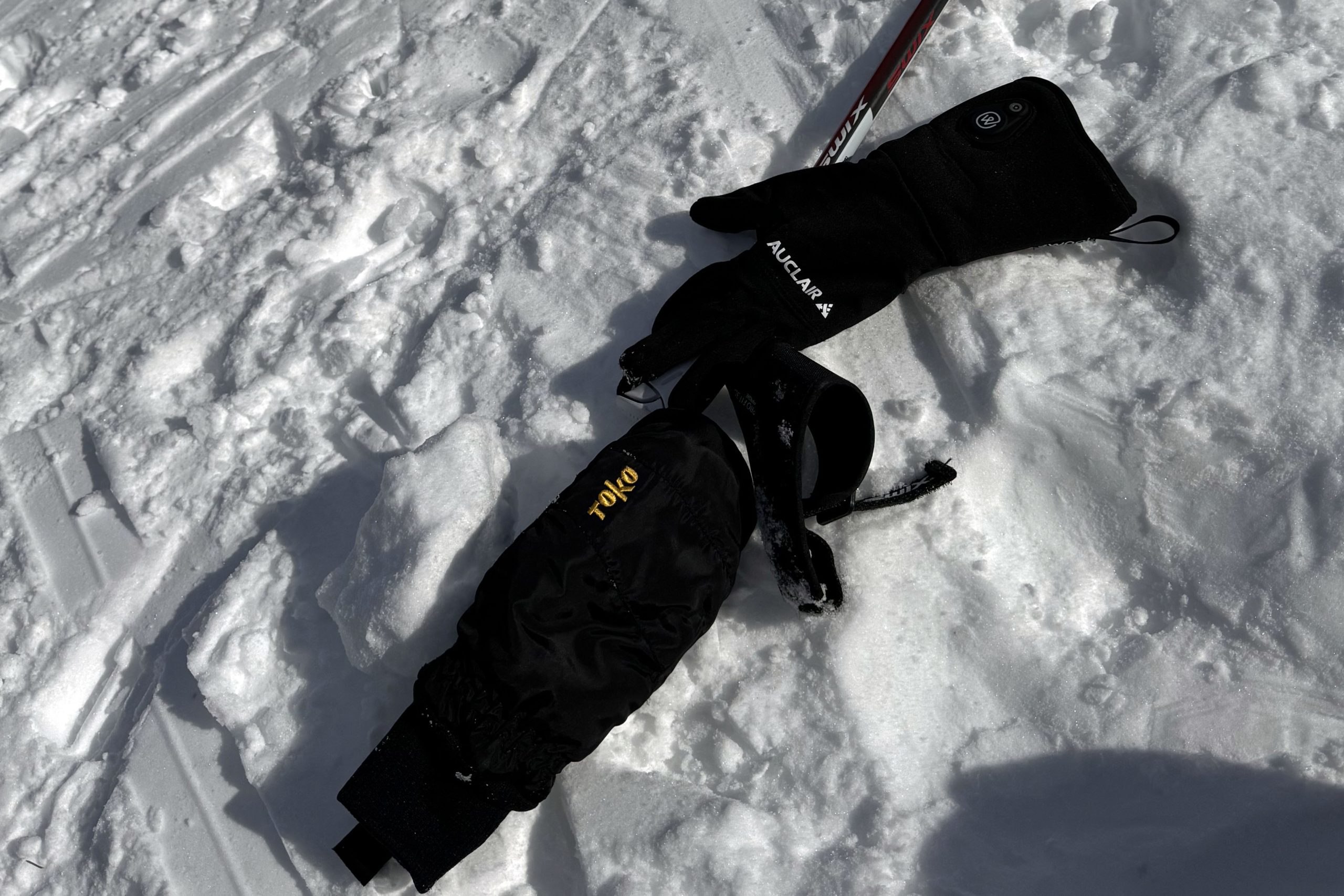
Of all the available options, the Auclair Heated Liners were our top pick. The liners are thin, soft, breathable, and they heat up quickly. They have various temperature settings that are so effective (you rarely even have to use the highest setting). The heating elements extend through each finger, which most gloves don’t have, and are a necessary feature for skiers with Raynaud’s.
The design makes it easy to adjust the temperature while skiing. They are the easiest gloves to charge as they simply click into the charger with a magnet, so you don’t have to take anything apart, and they also have the thinnest battery pack of any we tested. The Auclair Heated Liners maintain warmth and circulation while Nordic skiing, downhill skiing, or standing in the cold spectating.
Overall, they had the best design, fit, comfort, and ease of use of any heated gloves we tested. They provide targeted warmth to each finger, the heat is continuous (not all heated gloves are), and the design helps with blood circulation to the fingers. Their soft and snug fit makes them easy to wear with any glove or mitten over them.
Now that we had a solution for the warmth, we began to hone in on an outer layer to protect against wind, snow, ice, and rain. While it is unlikely a skier with Raynaud’s could use the Toko Toasty Thermo Mitten alone in cold temperatures, they are our top choice over the liners.
Toko gloves have been a favorite of mine for over 30 years, so this didn’t come as a surprise. Toko gloves and mittens are designed for cross-country skiing, so you won’t be trying to squeeze some boxing gloves into your pole straps. In fact, if you are only going to use this combination for cross-country skiing or don’t have Raynaud’s syndrome, you might consider the Toko Polar Race Mitten, as these mittens have extra insulation around the fingers but less on the inside for a better feel on your grip and less on the back of the hand to fit more easily into straps. However, for skiers with Raynuad’s syndrome, warmth is the first priority, so we kept gravitating towards the Toko Toasty Thermo Mitten primarily because of the added nylon exterior that protects against snow, wind, and light rain. They also have a nice thick elastic band that stretches well and stays in place. The Toko Toasty Thermo Mitten was also easy to pull on and off over the Auclair liners, making the pair work perfectly in tandem.
With the Auclair liners retailing at $340 and the Toko mittens retailing at $65, we understand that this bundle is an expensive solution, but hopefully, you won’t waste money trying other products that do not work. There is also the added bonus that you can wear the Toko mittens alone when the weather is warmer – for people with Raynaud’s, that might not be until it is over 40’F or higher, but at some warmer temperatures, it becomes an option which is appealing.
For cross-country skiers with Raynaud’s, this combination of the Auclair Heated Liner and the Toko Toasty Thermo Mitten is the difference between being stuck inside all winter and being able to cross-country ski no matter how cold it is outside… well, at least your hands will be warm.
– – – – – – – – – – – –
*While neither Auclair nor Toko were advertisers of FasterSkier at the time of publishing this article, Auclair would like to offer our readers a special coupon to help keep their hands warm. Unfortunately, the heated line is in such high demand that the discount will not apply to the heated liners, but feel free to try some other Auclair gloves—the WWPB Gigatex Mitts, for one, are beautifully made and also a staff favorite.
A Little More Information About Raynaud’s Syndrome
Symptoms typically include:
Color Changes: Affected areas may turn white or blue in response to cold or stress and may turn red as blood flow returns.
Coldness or Numbness: The fingers or toes may feel cold or numb during an episode.
Tingling or Pain: Some people experience tingling or pain when blood flow returns.
There are two types of Raynaud’s:
Primary Raynaud’s is the more common form and is not usually associated with underlying diseases. Lifestyle changes can often manage individuals with Raynaud’s.
Secondary Raynaud’s (Raynaud’s phenomenon): This form is associated with other medical conditions, such as scleroderma or lupus, and may be more serious.
**Consult with a Doctor** Before engaging in cross-country skiing or any strenuous activities, especially if you have severe Raynaud’s, it’s a good idea to talk with your healthcare provider about personalized strategies and treatments.
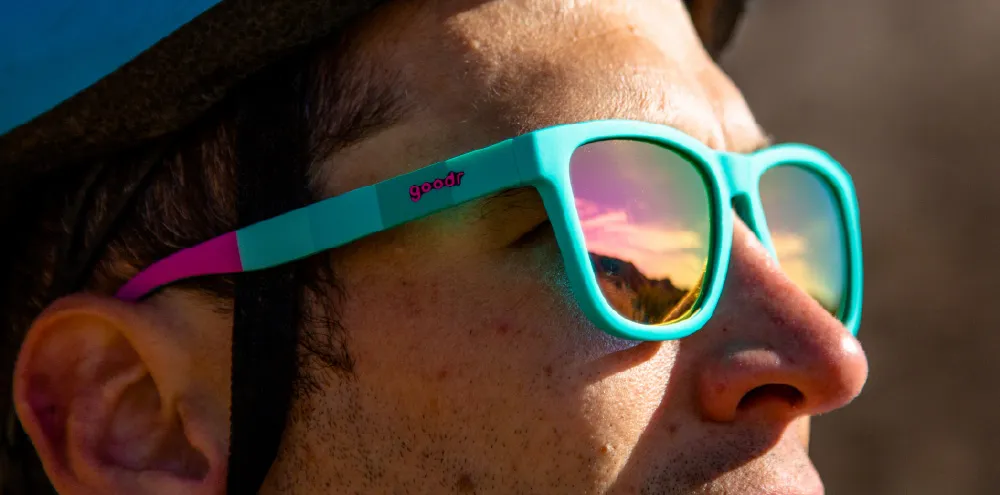
Welcome to the sunny side of sustainability, where eco-consciousness meets eyewear in a vibrant harmony. In a world that’s becoming increasingly aware of its environmental footprint, companies like Goodr are stepping up to redefine the way we view fashion and responsibility. Let’s take a journey through the evolution of sustainable eyewear, exploring Goodr’s refreshing and eco-friendly approach that goes beyond style.
The Birth of Goodr: More Than Just Sunglasses
In the beginning, Goodr was not just about creating stylish sunglasses; it was a response to the excessive waste generated by the eyewear industry. The founders envisioned a brand that not only looked good but did good for the planet. Goodr’s commitment to sustainability is woven into the very fabric of its existence, and this commitment extends far beyond the sleek frames that rest comfortably on your nose.
Materials Matter: A Closer Look at Goodr’s Eco-Friendly Choices
Goodr’s journey towards sustainability is built on mindful material choices. Unlike traditional eyewear brands that often rely on non-recyclable plastics, Goodr has taken a different route. Their frames are crafted from plant-based materials, embracing biodegradability without compromising durability. By opting for materials like recycled ocean plastics, Goodr ensures that each pair of sunglasses contributes to cleaning up our oceans.
In the spirit of transparency, Goodr provides detailed information about the materials used in each product, fostering a sense of trust and accountability. It’s not just about creating sunglasses; it’s about crafting a story that resonates with the environmentally conscious consumer.
Fashion with a Purpose: How Goodr Balances Style and Sustainability
Sustainability doesn’t mean sacrificing style, and Goodr has masterfully blended the two. Their eyewear collections boast a kaleidoscope of colors and designs, ensuring there’s something for every taste. By proving that sustainability and style can coexist, Goodr challenges the notion that eco-friendly products are dull or limited in options.
One shining example of this harmony is found in Goodr’s commitment to snow sports. The https://goodr.com/pages/snow-g not only caters to adventure seekers hitting the slopes but also reflects Goodr’s dedication to creating functional, stylish eyewear for every occasion.
Beyond the Frames: Goodr’s Packaging Revolution
The sustainability journey doesn’t stop with the sunglasses themselves. Goodr recognizes the importance of addressing every aspect of their product’s lifecycle, including packaging. Traditional packaging is often a source of excessive waste, but Goodr has taken steps to minimize its environmental impact.
The packaging is not only minimalistic but also made from recycled materials. It’s a small yet impactful detail that adds to the overall commitment to reducing the carbon footprint of each pair of sunglasses.
Give Back with Goodr: The Awe-Inspiring One-for-One Model
Goodr’s commitment to sustainability goes beyond their products; it extends to their business model. The one-for-one giving program is a heartwarming initiative where for every pair of Goodr sunglasses sold, the company donates a pair of reading glasses to someone in need. This model creates a ripple effect, making every purchase a small act of kindness that reaches far beyond the initial transaction.
This approach not only addresses visual impairments in underserved communities but also adds a layer of purpose to the act of buying sunglasses. It’s a beautiful example of how businesses can create a positive impact on a global scale.
Innovations in Action: Goodr’s Ongoing Research and Development
Sustainability is an ever-evolving journey, and Goodr is committed to staying at the forefront of eco-friendly innovations. Their research and development team continuously explores new materials and technologies to enhance the sustainability of their products. By embracing a mindset of constant improvement, Goodr sets a precedent for the industry, encouraging others to follow suit.
Community Connection: How Goodr Engages Its Audience in Sustainability
A sustainable journey is not a solo endeavor, and Goodr understands the importance of community engagement. Through social media, events, and collaborations, Goodr actively involves its audience in the sustainability conversation. By fostering a sense of community around shared values, Goodr creates a space where sustainability becomes a collective effort rather than an individual choice.
The Future Looks Bright: Goodr’s Vision for Sustainable Eyewear
As we peer into the future, Goodr’s vision for sustainable eyewear shines brightly. The company’s commitment to innovation, transparency, and community engagement positions it as a leader in the eco-friendly eyewear space. With each new collection, Goodr is not just offering sunglasses but an invitation to be part of a movement toward a more sustainable and conscious way of living.
Joining the Goodr Revolution
In the grand tapestry of sustainable living, Goodr has woven a colorful thread that adds vibrancy to the landscape of eco-friendly fashion. From the materials used in their sunglasses to their commitment to giving back, Goodr exemplifies a brand that is not just keeping up with the times but actively shaping a more sustainable future.
So, whether you’re hitting the slopes, strolling through the city, or simply soaking up the sun, consider the impact of your eyewear. Join the Goodr revolution, where style meets sustainability, and each pair of sunglasses tells a story of positive change. The future of eyewear is not just bright; it’s brilliantly sustainable.
Editor’s note: FasterSkier is fortunate to have the sponsorship support of Fast Wax; therefore, we are proud to highlight the innovative spirit that Fast Wax brings to the cross-country skiing marketplace. This article is less an endorsement of one company’s products than it is a recognition of the hard work undertaken by so many companies in the the ski industry.
(Photo: Fast Wax)
Dan Meyer likes to innovate. So naturally, as he became more interested in Nordic skiing, that quality extended to the wax he put on his skis. In 1986 Meyer created the first iteration of Fast Wax, one of the only U.S. made nordic wax brands. Meyer, a chemist with a background in polymer science, continued to develop and grow Fast Wax from his home in Minnesota for the next 32 years.
In 2018, Fast Wax founders Dan and Rosie Meyer sold their operation to the Kirt family. Casey Kirt had spent 25 years working in information technology at a large mortgage company in the Midwest and he was ready for a career change. The sale closed in just ten days and Kirt immediately quit his full time job and started working on Fast Wax.
“I love making stuff,” Kirt said, “and what Dan developed is something special.” For Kirt and his wife Katie, their incentive for buying the company was spurred on by the exciting challenge of modernizing Fast Wax and expanding the brand. The Meyers kept the operation contained to fit within their garage and passed along the wax recipes on 3×5 note cards when they sold the business.
“They weren’t very sophisticated and they didn’t want to be,” Kirt said. “It was really just a part-time hobby business. They enjoyed working with each other, it was fun to see that.” Kirt has invested a lot of time and energy in making the business scalable while maintaining the tradition of family members working together to create wax.
When Kirt’s daughter began college at Montana State University in Bozeman, Casey and Katie Kirt relocated there, bringing the Fast Wax headquarters with them. Now they have a shop in the Belgrade area where wax manufacturing happens in the spring when the temperature is most ideal. The whole family chips in on the wax-making process. “We’ll sit Grandma at the table and she can start putting on labels,” Kirt said.
Kirt has taken advantage of his business’ proximity to the university, working with students and professors there in various ways. They use labs on campus for quality control testing, Kirt collaborated with the mechanical engineering program to make a wax-pouring robot and he is currently talking with faculty about the possibility of developing the first American-made kick wax.
In simplified terms, Kirt explained that the Fast Wax product is made up of different types of waxes blended together to create certain properties for specific hardness or temperature range. “Ski wax is a very inert process,” he said. “We want to make sure all the elements in that wax are melted and mixed.” Ensuring proper mixing and heating is crucial for the wax’s success.
(Photo: Fast Wax)
In 2019, the International Ski Federation announced a ban on all fluorinated ski waxes in FIS competitions. Implementation of the ban has been delayed for the third year running, but Fast Wax is still taking steps to ensure their waxes will comply with the impending ban. Kirt said this was part of the reason the Meyers wanted to sell the company, because they didn’t want to deal with testing a lot of new additives.
When Kirt took ownership of the business, he hired a chemical engineer to start tests and build a catalog of stuff that showed promise. They built a 70-foot-long rain gutter, filled it with snow, waxed skis and measured the time it took for a ski to travel the distance. They’ve now isolated three additives from obscure industries that Kirt says they feel really excited about.
One is a by-product from the agriculture industry that is re-purposed for use in the Fast Wax “everyday consumer” wax. Another is very water repellent and is used in the race wax line. A third is created from super-fine ground up metal that Kirt says creates “crazy durability.”
In coming up with alternative additives Kirt said, “It’s gotta be safe for the environment and safe for the skier, next it’s got to be affordable for the skier.” He said he’s happy the industry has shifted towards using more friendly chemicals.
“This fluorocarbon transition has really reset the playing field for everybody,” Kirt said. “We’re here at the grassroots, having people try our product and convincing themselves that, yeah this is a solid fluorocarbon substitute.”
Casey Kirt pours wax into forms; old-fashioned hand-work to distribute totally new wax technologies. (Photo: Fast Wax)
For Kirt, it all comes down to scalability. His goal is to extend Fast Wax’s reach from coast to coast. “We’re one of the only U.S. Nordic brands,” Kirt said, “We have the capacity to service large customers.” Given the brand’s Midwest origins, Fast Wax is more prevalent there.
The spring after the Kirts purchased Fast Wax from the Meyers, Casey and his wife were in the company van at a boat launch in a tiny town in Wisconsin when a man approached them to say, “I love Fast Wax, I’ve been skiing on it for five years.” Kirt was blown away.
“That’s who I want to be,” he said. “I don’t want to be the big flashy brand that’s got all these high end skiers that we’re paying millions of dollars, I’d rather keep my ski wax prices low and allow casual skiers or people just getting into the sport to have money leftover after buying all the gear to buy some Fast Wax and go have a fun time.”
Looking to the future, Kirt plans to do just that. He wants to keep customer costs low and enable skiers to spend time on the trails or the mountain, not in the wax room. Like Fast Wax’s founder, Dan Meyer, Kirt continues to innovate.
“We’re not just sitting on our haunches now that we found these new replacements for fluorocarbons,” he said. “We continue to investigate and research other materials that may be better for the environment, safer for the skier. We want to continue understanding what the marketplace has to offer and we will present that to customers.”
People often lament the demise of small artisanal crafted goods. The dominance of huge retailers and manufacturers is often viewed as something between a sign of the approaching apocalypse, and proof of various conspiracy theories. In many industries, when you think of the absolute pinnacle of quality and performance, smaller companies often come to mind: Ferrari for cars, Shinola for personal goods, and, (showing my personal bias) Jenny’s for ice cream. As a reaction to huge retailers, there’s been a growing movement to support small businesses, especially family-run businesses.
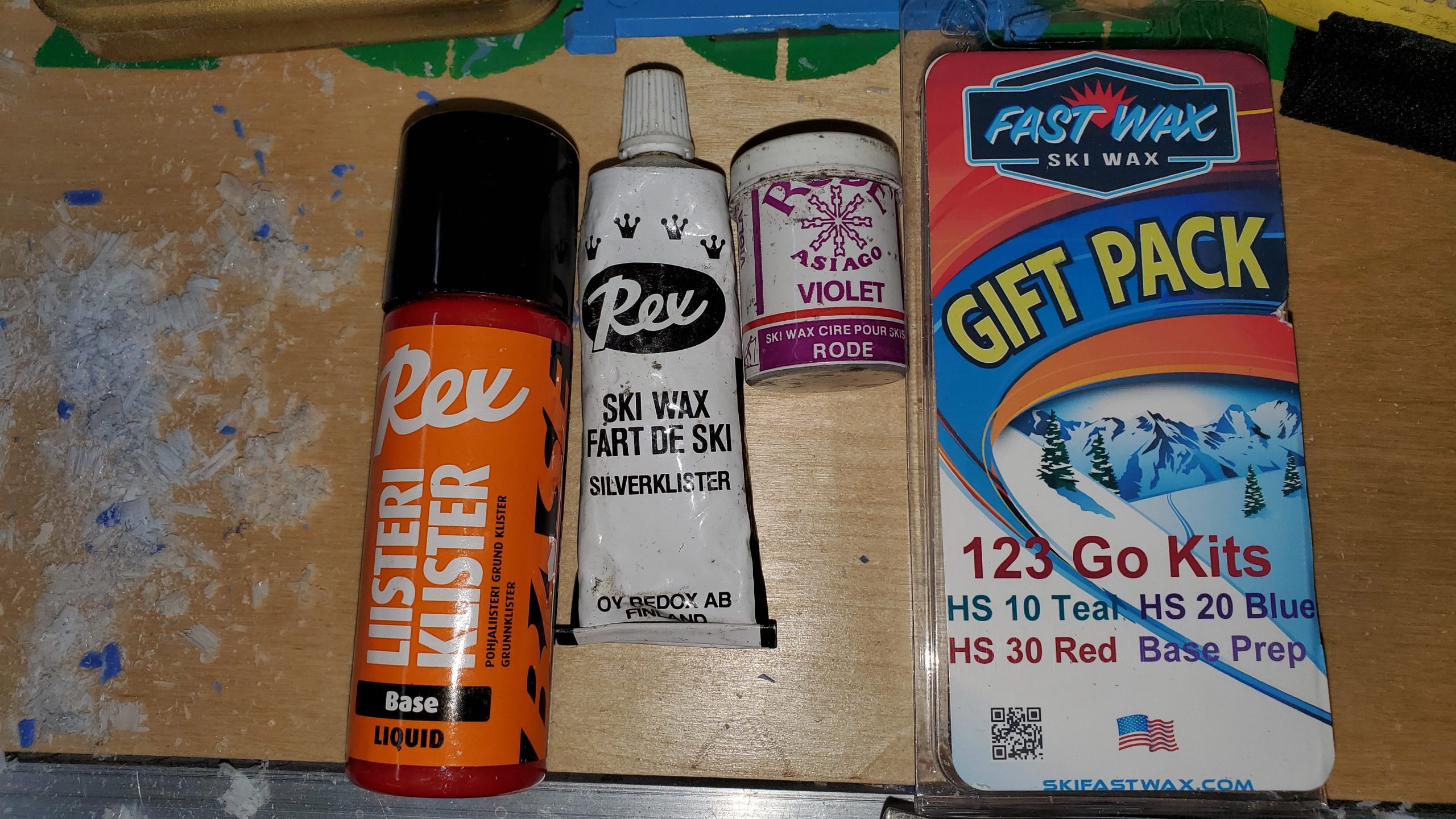
Part of the author’s collection of ski waxes produced by family owned companies (Photo: FasterSkier)
The ski wax market may appear to be dominated by the big two—Toko and Swix—who are owned by a multinational conglomerate. Unequivocally, both of these companies make great waxes, and many skiers are perfectly happy with Swix and Toko; that’s totally fine. But there are great alternatives to the big two, other companies offering a different view of the waxing world and producing products on a different scale. This broader—perhaps more nuanced—wax world is epitomized by small family companies.
The ski wax industry may seem like a David versus Goliath competition, but the owners of family-run wax companies don’t see it that way, feeling that they stack up to—and are as good as, or better than—anyone in the industry.
Ski wax is a product used anywhere that snow falls, so FasterSkier interviewed representatives of family-run ski wax companies from around the world. The three companies interviewed represent diverse geography, but they have two things in common: a passion to make really fast ski wax, and they are run by families. We interviewed representatives from Rode, Rex, and Fast Wax.
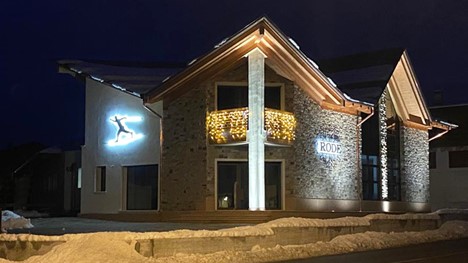
Rode headquarters in all its splendid Italian design. (Photo: Rode Wax)
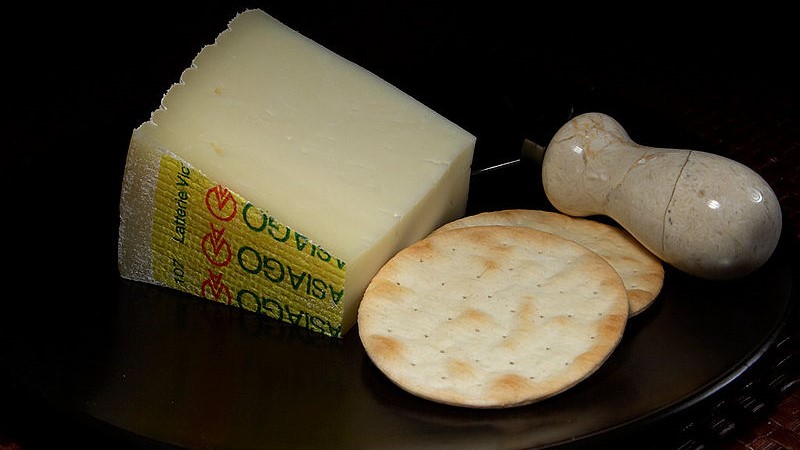
Rode is based in Asiago, Italy. Asiago is the home of the eponymous cheese, but for the ski crowd, the more meaningful association is with Rode ski wax. From Rode, FasterSkier interviewed Simone Carli, grandson of founder Rizzieri Rodeghiro. Rode is run by Rodeghiro’s daughter, Roberta, and the founders’ grandchildren. Rode’s founder won 7 Italian titles and competed in the 1948 Olympics along with being the national team coach. He began making wax in the 1930s, and the name of the company is the founder’s nickname: “Rode.”
Asiago’s second best product. (Photo: Wikimedia Commons)
Across the European continent in Hartola, Finland, resides another family run wax business: Rex ski wax. Rex ski wax CEO, Antti Peltonon was kind enough to chat about wax issues. Antii is the grandson of Toivo Peltonen who started Peltonen ski company in 1945. Toivo Peltonen started making skis after he returned home from World War II. Necessity was the mother of invention for making skis for Peltonen. He had started out making ski wax, but due to post war shortages he couldn’t get the raw material, and switched to making skis. But things came full circle when the Peltonen family purchased Rex wax outright in 2002 and they were back in the wax business. Rex has been run by a member of the Peltonen family since they purchased the company. Rex is owned by Antti and his siblings Leena and Heikki. Antti set the record straight that Rex and Peltonen skis do not share ownership, which is a common misunderstanding in the ski world.
Moving across the ocean to Bozeman, Montana you’ll find Fast Wax. From Fast Wax, we submitted questions to Casey Kirt who manages the day to day company operations. Fast Wax was founded in 1996 by Dan and Rosie Meyer who are retired. The company is now run by Casey Kirt, along with Kirt’s wife and daughter.
Bozeman, home to Montanan State University and Fast Wax, routinely polls as one of the best places to live in North America. Both entities have an interesting intersection. (Photo: Wikimedia Commons)
All three companies are family-run operations. All three were extremely generous to spend time with FasterSkier to discuss their operations, and what it’s like to run a family-owned wax business. Running any family business is a struggle, but running a family run ski wax company presents many unique challenges and interesting stories.
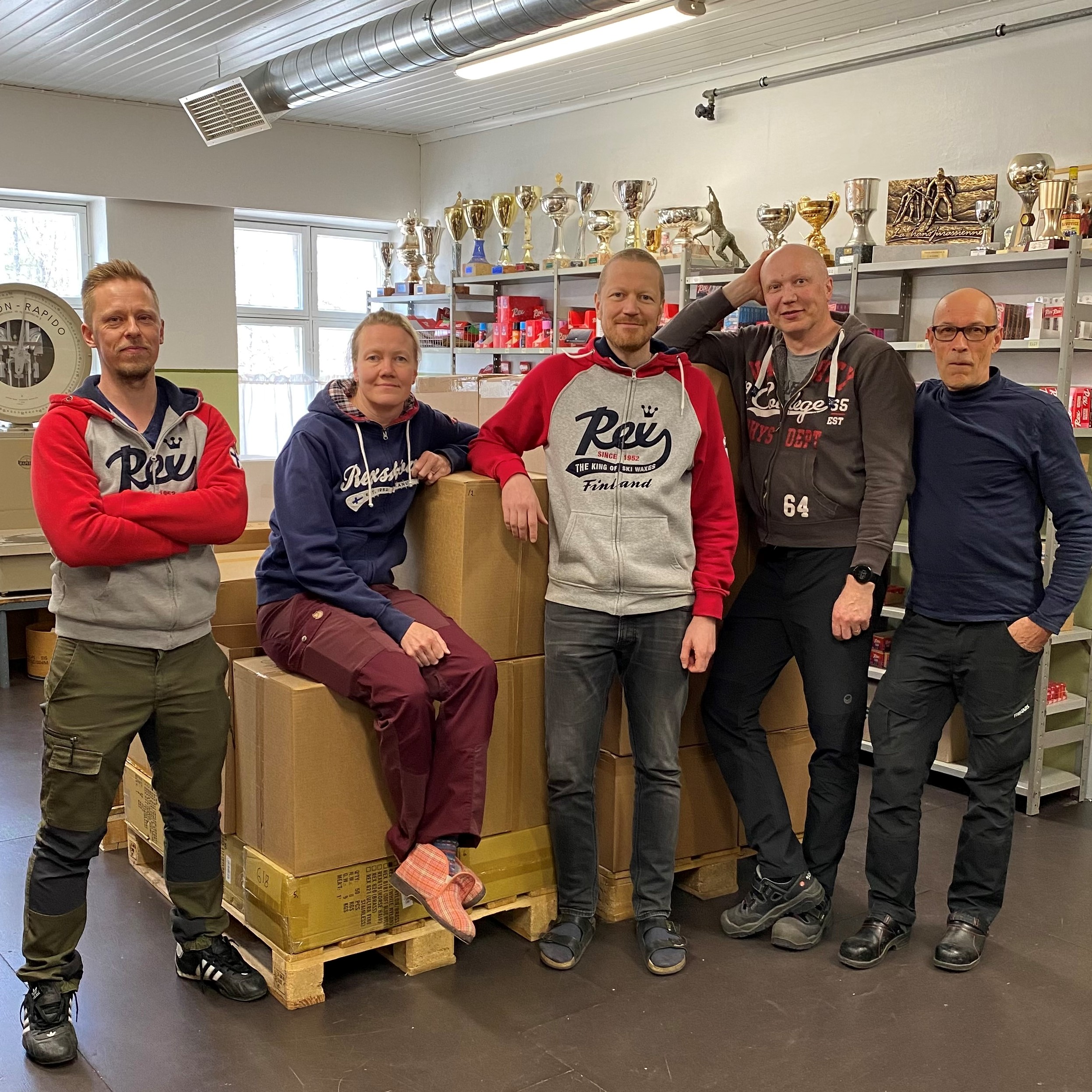
The Peltonen family and Rex staff members. (l-r: Juuso Liukkonen, R&D, Leena Virkki, CFO, Antti Peltonen, CEO, Matti Harjula, Logistics, Juha Vigman, Warehouse) (Photo: Rex Ski Wax)
None of the three companies give even a hint of being an underdog. From their viewpoint, smaller is better. For them, it’s not the size of the dog in the fight; it’s the size of the fight in the dog!
These interviews have been edited for brevity and clarity:
FasterSkier: Do you see yourselves as underdogs battling the big two?
Rex: We don’t really think of the size of the companies we compete against; the products are more important. Like us, most of the well-known ski wax companies have been around for decades and have found their position on the market and have their following. The Finnish market is one of the biggest ski wax markets, and it is dominated by three local ski wax brands Rex, Vauhti, and Start. In the Finnish market, the multinational conglomerate is the underdog, so it depends on where you are looking at. I think many people want to support smaller family businesses though, which is nice. In the end, it boils down to which products perform well and which do not, regardless of the brand. So the key to successfully competing in the market against all companies regardless of their size is to make better products.
Rode: If we look at the global market share, we can see ourselves as a small company fighting against the big ones, but if we look at competitions [racing] only, which is where we put our efforts, we are sure that we are not inferior to big companies. Those who prepare the skis of top athletes can confirm this.
Rizzieri Rodeghiro back in the day, inspecting some of his product. The name Rode wax is the founder’s nickname. (Photo: Rode Wax)
Fast Wax:There is no point going head-to-head; we are blazing a new trail. With the focus moving to an earth friendly perspective. We kill the European brands in carbon footprint. If people truly want to be eco-friendly, then they need to take the entire supply chain into account.
Fast Wax, a member of the family-run ski wax club. (Photo: Fast Wax)
Just like in the classical allusion of David and Goliath, being smaller presents certain advantages. Once again, each company was certain in their ability to deliver things which the larger companies can’t.
FasterSkier: Are you able to use you smaller size to your advantage?
Rode: Certainly, our small size allows us to have a more direct relationship with our customer, whether it is a high-level athlete, a retailer, or others. This allows us to look closely at their needs and understand the issues right away and act quickly to find the best solution, both regarding the products and the services we offer. This process, in multinational companies, is much slower.
Original Rode wax from the founder’s era, circa 1972 (Photo: Rode Wax Archives)
Rex: As a small company, we can bring new products onto the market quickly, and our “Racing Service” collection has been a good example of that. On the racing side of the business, it’s an advantage when the main chemist is also doing testing and talking and having a couple of beers with the team servicemen. But in general, our hierarchy is low, and we work as a team with our engineer, sales guys, and production, and can plan and sort out things easily and quickly.
Rex’s factory in Hartola, Finland. (Photo: Rex Ski Wax)
Fast Wax: Yes we can create, package, and distribute new products in months.
The idea of chemist and service technician discussing wax performance over beers is the kind of low-key idyllic image that many people think of when they imagine small high-quality manufacturers. It is also a completely different type of corporate culture than one would expect to find in larger competitors. But do these appealing aspects present restrictions when it comes to developing new products?
Each company has unique methods to develop new products. They go beyond their own company’s walls and consult with outside resources to develop new compounds. Each does it a little differently, but they are resourceful in finding ways to get results.
FasterSkier: What does your Research and Development (R & D) look like?
REX: I think of our R&D department as a network that consists of our employees, our key suppliers, and our R&D partners, which are mostly national, XC, and Biathlon teams we work with. It’s an international network where each one is an expert in their area. It’s not like we are bookish chemists that work in our hermetic chamber and then come out with something. There is lots of cumulated knowledge and a vast catalog of raw materials in our company after making ski waxes continuously for 70 years, but we are always actively looking for new compounds and implementing them into our products. Testing on snow in all kinds of conditions is really important.
Waxing has changed just a bit since Rex’s founding. (Photo: Rex Ski Wax Archives)
Rode: Part of the products that are developed are designed by us according to our own studies, while others come from the collaboration with our chemical suppliers, who help us in finding the right solutions. From the tests in laboratory, we are able to study certain characteristics of the products, but then we always have to do practical tests on snow, which do not always confirm what we see in laboratory. For this you need experience, it is also thanks to this that we manage to keep up with bigger companies.
The Rode family, into its third generation of wax production. (l-r: Carlo, Roberta, Rizzieri’s daughter, Simone, and Stefania) (Photo: Rode Wax)
Fast Wax: I utilize chemical engineering students from Montana State University looking for real world experience. We work on a few topics then their research notes get handed down to the next guy. We take known products and alter them to generate a test wax. We then use bench tools to evaluate the result; melt-point, hardness, side contact angle, then move on to usage testing. Does it go onto the ski well, does the product dry out or become unusable due to mishandling? Simultaneously we are going into the back country and using this on skis while documenting the snow and metrological conditions.
FasterSkier: Do you look to other industries to see what new compounds are available?
Fast Wax: The friction challenges that skiers face is not exclusive to them. There are many industries that we follow to see what the hot new additive is.
Rode: We try to keep up to date with what is being studied and used in other industries to see if there is something that can be useful to us. The chemical industry does not produce anything specifically for waxes because the volume of raw material that is used in our field is small. All the compounds used in ski waxes are mainly made and used in other fields. The first fluorocarbons used in waxes were actually made to improve the smoothness of boats on water.
Would klister lovers still be fans if this was the way it was still delivered? (Photo: Rode Wax Archives)
Rex: Compared to other industries, the ski wax industry is small, and many of the raw materials are “borrowed” from somewhere else. But we also have some ingredients that have been designed specifically for us. Fluoros were developed for other industries long before they were used in ski waxes, and the ski wax industry has always been a minor user of those compounds.
Rex’s CEO takes a hand’s-on approach to testing wax. (Photo: Rex Ski Wax).
Innovation is difficult. Innovation imposed from the outside is even more difficult. In the last several years wax companies have faced the additional challenge of complying with government and federation imposed changes to their products. Regardless of whether these changes are viewed as important environmental protections or overreaching window dressing, they have created real challenges for the way wax companies do business.
FasterSkier: From the point of view of the wax industry, is the move away from fluoros a good thing?
Rex: In general, moving away from fluoros and all possible non-sustainable compounds is a good thing. It is also good for the wax industry. The governing bodies in our sport don’t make it easy though! It would be way easier to just deal with the EU’s REACH and USA’s EPA regulations. The politics around the fluoro ban are hurting the sport more than they are helping the environment and safety. Fluorinated substances will eventually be banned by the EU and EPA anyway, and we are OK with that. Why make it more difficult especially when there is no reliable, easy, and economical way to make sure everyone is obeying the rules.
Fast Wax: If you had $450,000 of raw fluoros sitting in your warehouse I would say that would hurt. What do you do with that now? Now you [also] have to pay to dispose [of them]?
Rode: It’s still a question mark since there’s not an effective control system to prevent the use of fluorine. Without controls, you cannot ban the use of something that gives performance benefits. Of course, in certain markets it is banned from sale, but in most of the world the new generation fluorinated waxes can be sold without problems. We must always consider that most of the production of fluorinated compounds is done for other industries, and the wax industry represents a low percentage.
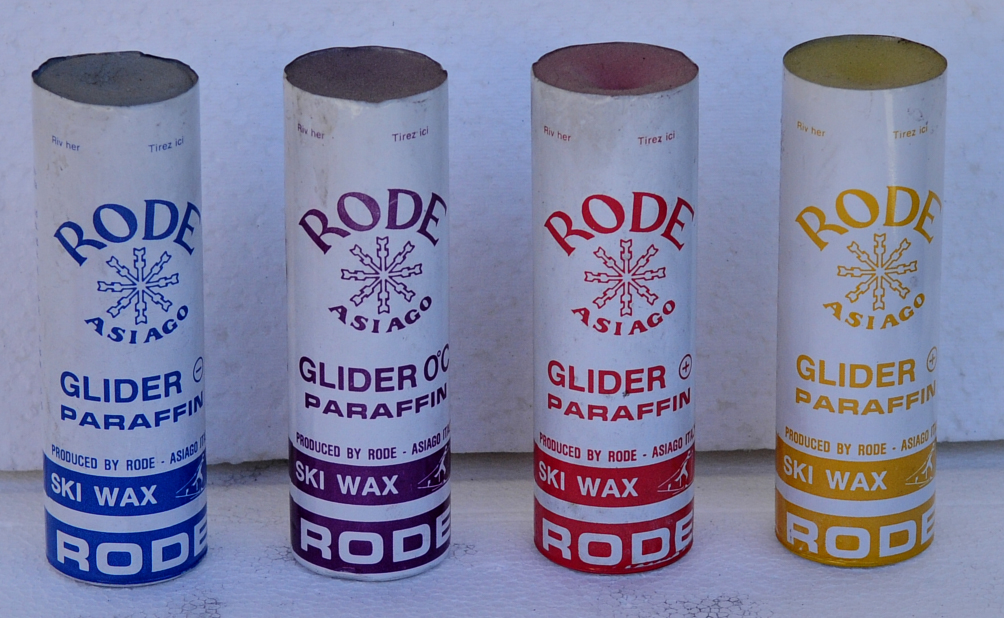
No concerns about Fluoros with these vintage Rode products. (Photo: Rode Wax Archives)
FasterSkier: Has it been harder for small companies to adapt to this change and how did you go about making the change?
Rode: We believe that the uncertainty related to the use of fluorine has brought us advantages. Our company was not well known for glide waxes even if we’ve had good products for a few years now. We have always been known for kick waxes. The fact that everyone is now looking for the best fluor-free products has meant that our glide products have also been tried, and many people have seen that they are worth it. Moreover, in the past few years we kept trying and working on fluorine when other companies eliminated it or stopped researching. We’re happy we did it because we had very good results, especially in world cup races, where our products are being used more and more.We are still putting most of our efforts into finding alternatives to fluorinated products, either by trying completely different solutions from what we’ve seen so far, or by modifying non-fluorinated products we were already working with.
Rex: Fluorinated waxes used to rely only on fluoros to make them fast, but the latest generation of waxes also
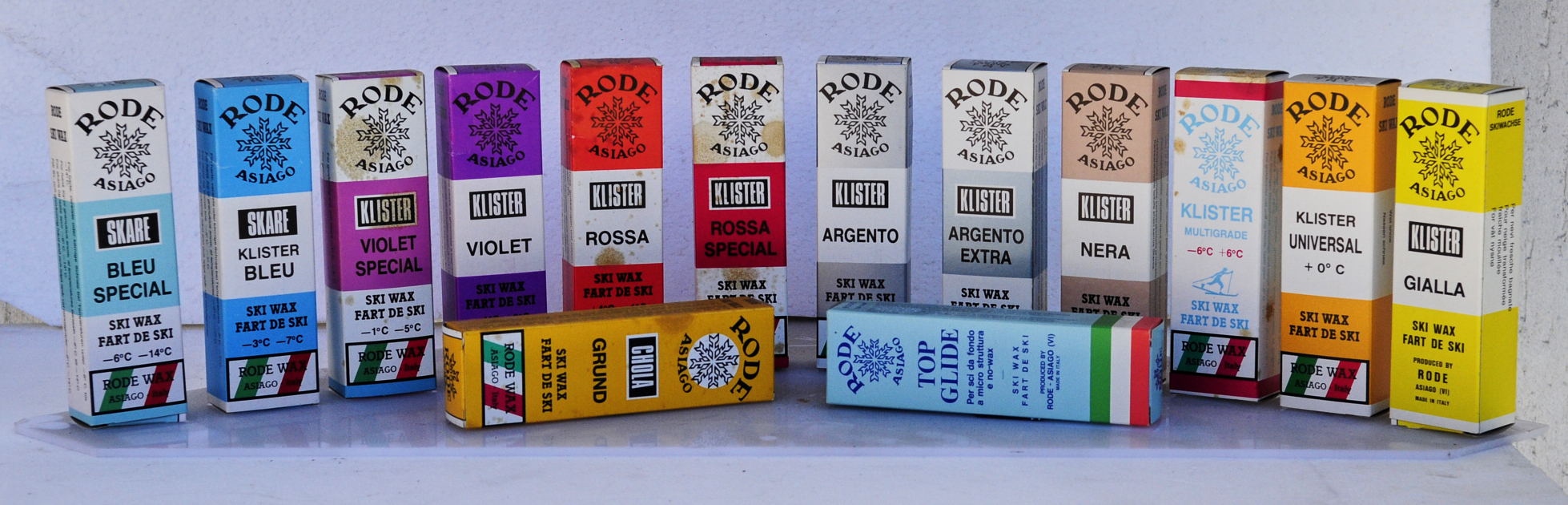
Part of the Rode klister line, including the founder’s grandson’s favorite. (Photo: Rode Wax).
feature other compounds that enhance their performance. For example, the R&D of our latest generation of HF waxes was mostly done without any fluorinated compounds in them, because that way we could notice other improvements better. That’s when we also discovered our first-generation N-Kinetic additives. The name N-Kinetic is a broader word for all the alternative technologies we use to substitute fluorinated compounds. So going fluoro-free did not mean we had to go back to the early 80s technology-wise, but more like just leaving one ingredient off from a mix of several other compounds. It’s a big change for the industry but also a possibility for companies regardless of their size, to come up with products that stand out from the competition and gain market share.
Good glide wax must do only one thing well, go fast for a long time. Whereas the properties of good kick wax are simultaneously different. It has to be sticky enough to provide good kick but be smooth enough to not ice and to allow for glide. This internal contradiction seems like some type of logic puzzle. Is it really that hard to figure out how to make a wax which simultaneously kicks and glides? Those little tins of kick wax turn out to be trickier to make than you might think.
FasterSkier: What’s harder to develop, a really good kick wax or a really good glide wax?
Rode: I think it is more difficult to develop kick waxes as you have to do many tests in the field, whereas with glide waxes you can perform laboratory tests more easily.
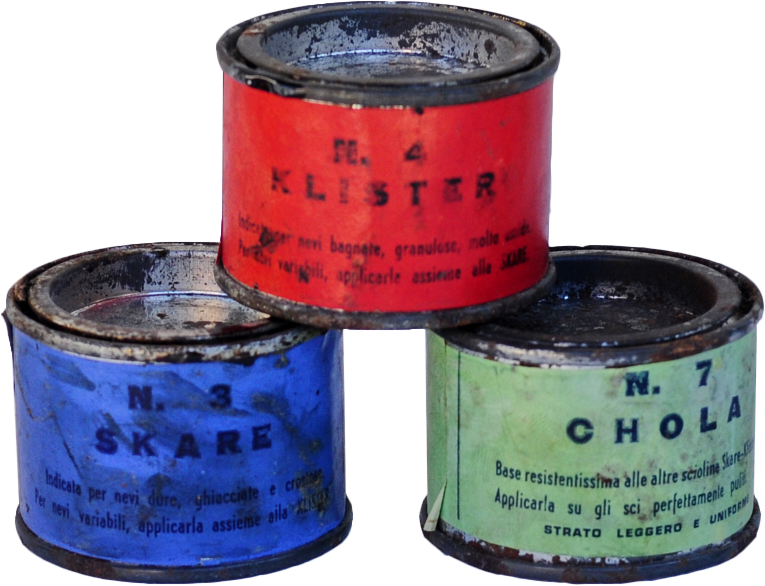
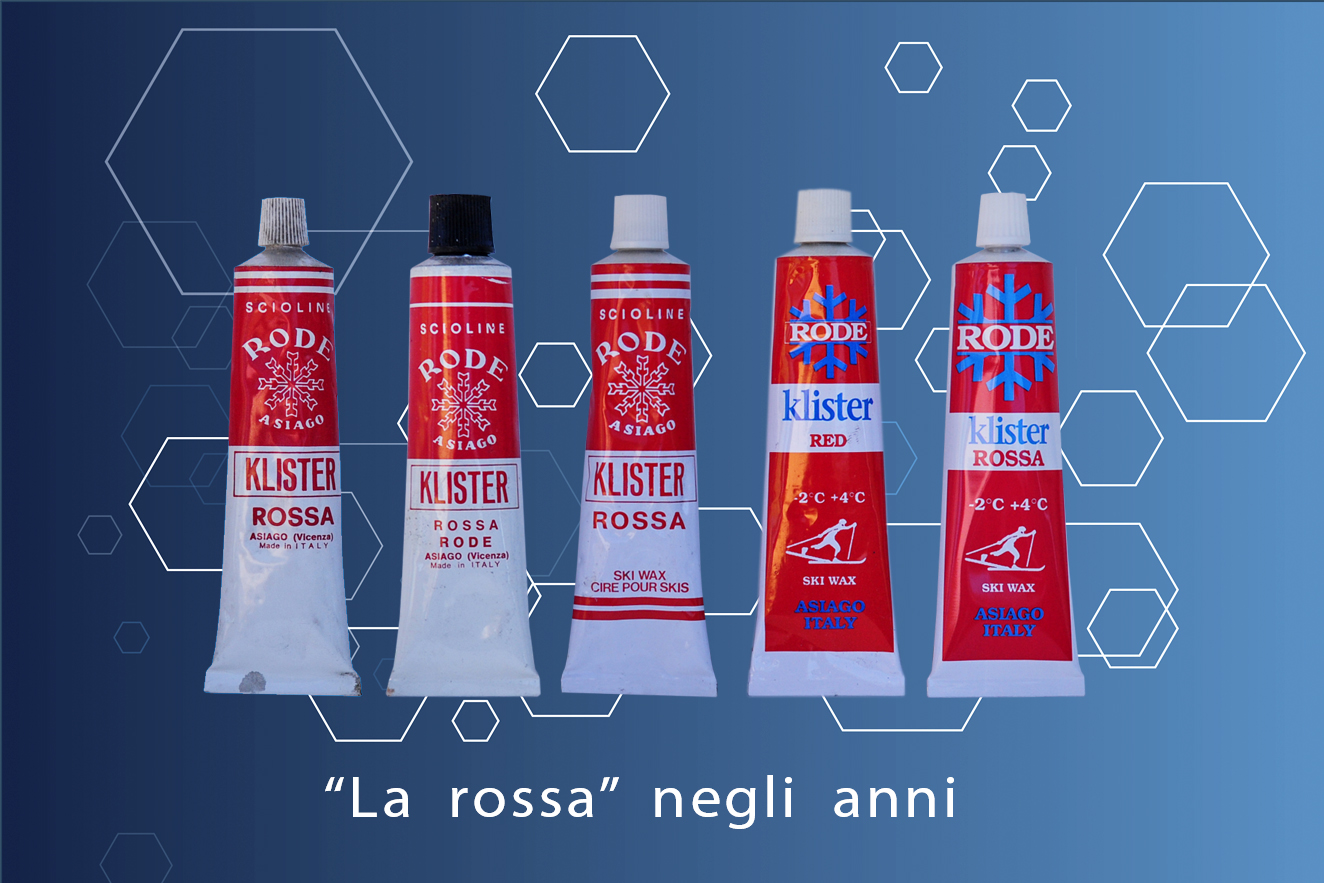
Rode’s old line of klister. Today’s waxes may be faster, but you can’t beat old school graphics. (Photo: Rode Wax Archives).
Rex: I would say developing a good kick wax is more complicated. Kick properties can’t be tested like glide waxes can be tested in glide-out tests. In addition to grip, the glide properties of grip waxes are important, especially in racing.
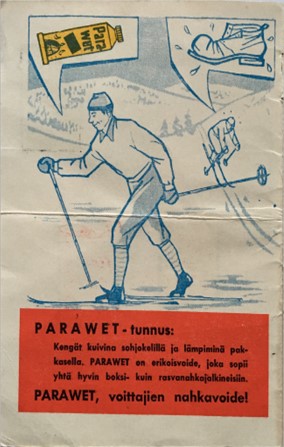
Oldies, but goodies, back in the day from Rex. (Photo: Rex Ski Wax Archives).
Fast Wax: We are in the second year of development of a kick wax. If we can find a market for it and it is as good or better than what is on the market, we would release it.
FasterSkier: Wax products seem to come and go. Sometimes there’s an impression that changes are made just for change’s sake. But there appears to be a trend that the smaller companies stick with proven products longer than larger manufacturers. Is that perception accurate?
Rex: We like to keep our line-up stable and not invent new product lines if they don’t offer anything significant. That way the line-up stays easier for people to understand because there is not a new series coming every year. But another thing is silent upgrades we make to products for one reason or another. For example, in 2019 we updated the standard glide wax series with our Power Polymers wax recipe that we launched first with our HF series. Innovations trickle down in the product line-up like that. Ski bases have changed in the last couple of decades, so waxes will have to change too, to continue delivering good performance. With that update, our beloved classic wax series was updated to meet the requirements set by modern ski base materials. Durability and speed were enhanced also. But what stays is that you can always trust our Rex blue glide wax!
Rode: If a wax is good and athletes still use it and win with it in world cup races, then we don’t see why it has to be changed. Of course, we always try to improve, but if a product has been on the market for many years this suggests it’s safe and successful. Our most famous products, such as Blue Super and Viola multigrade kick wax, or Rossa and Multigrade klister, have had constant developments in the past even if the names of the products were not changed. Every 2 to 5 years small steps were made in formulations, but they were gradual. They have remained unchanged in the past few years, but we always try to make some improvements. Keeping the product name has made customers loyal.
FasterSkier: Are we close to the point where people can throw away their wax irons for glide wax? Do you think we’ll see a day soon when ski bases evolve to the point of never needing to be treated with glide wax?
Rex: Another big change is the rise of liquid gliders. The change from “quick waxes” that were looked upon by enthusiasts[recreational skiers], to products whose properties break the boundaries and performance limits of previous hot waxes. As for throwing away the waxing iron, it depends. You always need hot waxing to lift up the hand structure, and those are used in racing a lot. And in racing use, it’s way faster to hot wax a ski than use a liquid glider and wait for it to dry for 20 minutes minimum. But for the average skier, waxing has never been easier. Aside from liquid gliders, I think the whole waxing culture has changed. People have moved away from hot waxing a couple of times every season, to using Rex Glide Cleaner after every ski to ensure their skis stay clean and fast, and then easily add the wax of the day on top of it. Wax more often, wax easier and keep the bases clean and fast all the time with minimal effort.
No one could have imagined how relatively easy waxing could be when this wax chart was developed. (Photo: Rex Ski Wax Archives)
Fast Wax: That fad [moving to waxless skis] comes around about every 8-10 years… the question of fighting friction is not a one size fits all. To maximize the reduction of friction you have to address all of the friction sources not just one.
Rode:Liquid waxes have become popular lately, mainly because almost every ski wax company put great effort in studying and developing them, and they are very good now. However, you cannot treat skis only with liquid waxes, the ski base will suffer over time. The use of iron is still necessary now if you want to maintain the ski base in a good shape. [Regarding waxless skis] I don’t know, it could be, but base treatments still cost a lot and don’t justify the benefits. You also have to consider that bases are subject to wear and tear.
Rex:I’m not seeing that [waxless skis] happening soon. If that were to happen, I think a good analogy would be skin skis. People got rid of grip waxes, but skis still require cleaning agents and conditioners to keep them working well. Skin ski products are a lot bigger product segment for us than grip waxes, and it suits us well.
FasterSkier: What’s the favorite product your company makes:
Rode: I say Klister Rossa because it is one of the first products that was developed. It’s always had good results and we still sell a lot of it today. It is perhaps the flagship of the company. There have been minimal updates of the formula over the years, but it’s very simple and easy to make, much more than all the other products. And it’s amazing how many have tried to imitate it without success.
Rex: Glide Cleaner and Blue spray gliders. With grip waxes, my favorites are Tar Universal and Gold Klister. Nothing beats classic skiing in klister conditions when the tracks are ultra-fast and you can trust the grip 100%. Also worth a mention is our upcoming hot wax for bicycle chains!
Fast Wax: Probably HSX as it has the has the greenest of the green additives in its formula. This is what 1000’s of recreational skiers use each season. All of these people leave no trace when they are done skiing.
FasterSkier:What’s the wildest idea your R&D department ever came up with that never got the go ahead?
Rode: A few crazy ideas over the years have been there. We believe it’s not always easy to test whether an idea is good or bad, but you’ll never know until you try! You should always do some testing, even if you are almost sure there will be a bad result. Even so, it’s important for experience and the development of other ideas.
Fast Wax:We shaved wax on to the ski base then sprinkled it with gunpowder. We wanted to make a flash wax, sprinkle it on light it, and have the heat generated melt the wax and save you from ironing it in. There was way too much junk left over from the gunpowder that pushed this into the trash pile pretty quick. (Editorial note: Do not try adding gunpowder to your wax, but that is some crazy out of the box thinking!)
How different would the ski world look if exploding glide wax had become a thing! (Photo: Wiki Commons)
Rex: If the wild idea is a good one, it most likely ends up in production. If it does not end up in production, it was a actually bad idea, to begin with, not a wild one.
FasterSkier: Are there any other products, other than wax which you make which would surprise people?
Fast Wax: A lot of ski brushes “Think oval with a strap” are horse brushes first, rebranded for skiers.
Rex: Over the years, we have made: Wax for dance floors, wax for diving suit zippers, wax for tire installation, wax for revolvers. Mustache wax would be nice, but we found out there is already Rex Mustache Wax on the market. Bummer!
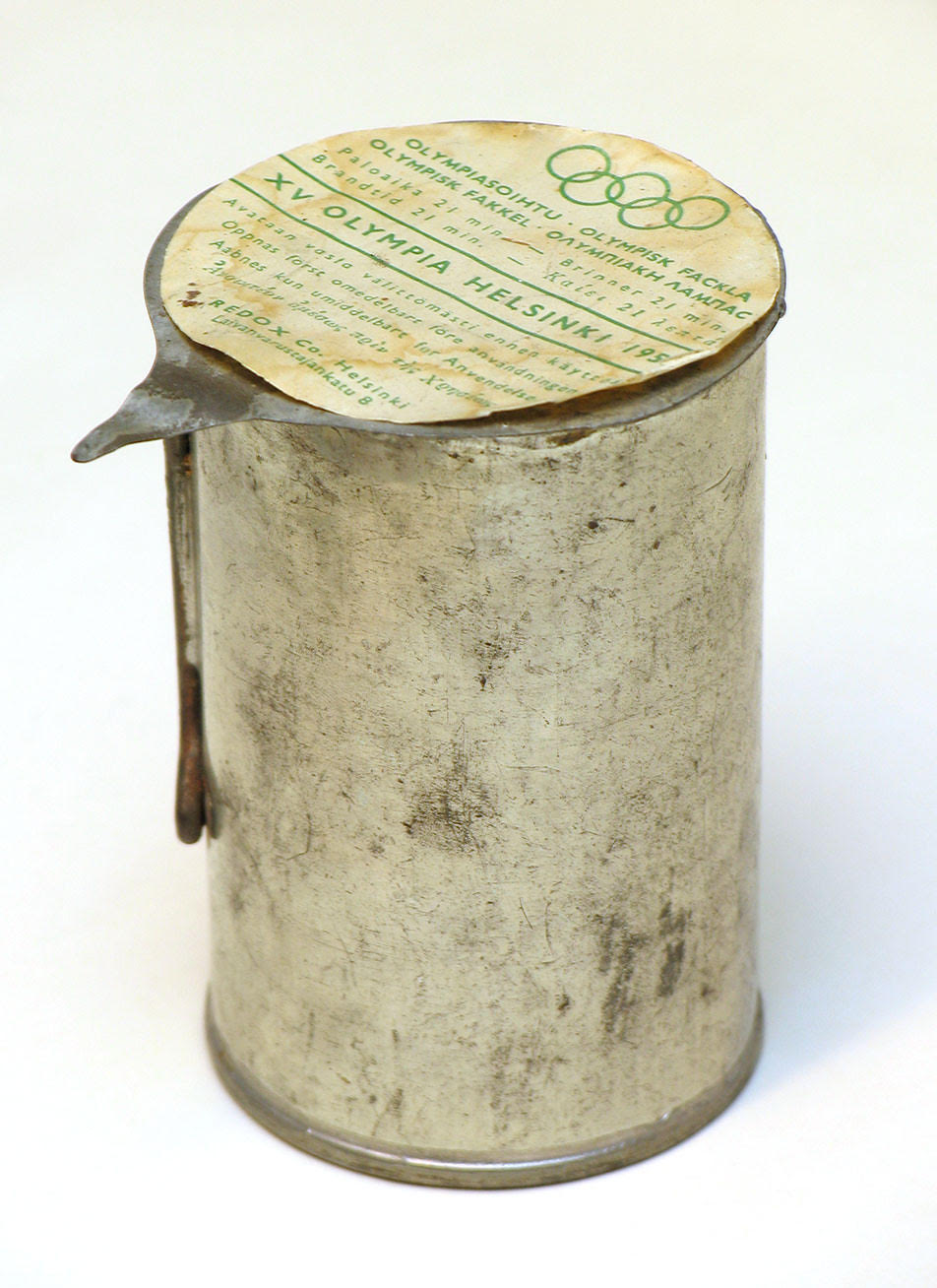
Among the many non-ski products Rex has made is this fuel cell for the 1952 Helsinki Olympic torch. (Photo: Rex Ski Wax Archives).
Rode: We’re working on something, you’ll see!
FasterSkier: Thank you to all of the representatives for taking so much time out of their busy days to talk about their great companies.
Increasing the value of a product is important. Consumers are drawn to the idea of high tech being better than run of the mill technology. To catch the attention and dollars of consumers, the marketing team will often use terms like “Aircraft Grade” or “Medical Grade” to make the ski manufacturers’ offerings more attractive. The idea being, if some material is good enough for the high tech and safety conscious aviation industry, it is going to make the ski products more durable and increase our enjoyment when using this piece of technological wonder.
Illustration 1: One of the AQ test planes after a deep wet snow ski grind test
Reversing this trend of taking aircraft grade into the ski industry is a Vermont start-up bringing the nordic ski industry into aviation. For the past five years, the northern Vermont think tank, AlphaQuebec (AQ), has been exploring the use of base structure grinding to improve the takeoff performance of aircraft using skis instead of wheels.
The fundamental problem of skis being slowed down by high moisture snow is the same for both airplanes and skiers. AQ has been investigating ways to make skis slide easier which doesn’t involve waxes or additives. Chief Research Associate, Shelby Taylor explains.
“We know waxes reduce the friction between the base of the ski and the snow. With a nordic or alpine ski you can easily wax the bases. Even a small airplane like a Piper Cub (max weight 1,200 lbs or 550 kg.) you cannot just pop the ski onto a bench and iron on your favorite wax. About three years ago we started experimenting with adding structure to the airplane ski bases. This works great, but again, applying the structure to the bases is not a simple process with the skis attached to the plane.”
Taylor explains that, “Most ski equipped aircraft are single engine bush planes weighing in between 1,200 and 3,500 lbs. (550 to 1,500 kg.) with the largest ski equipped aircraft currently in operation being a military transport LC-130 with an operational weight of 120,000 lbs. (55,000kg.) which is used to supply research stations in Antarctica. Good luck finding a ski form to wax those babies!
“Most of the ski equipped airplanes are used to move people around in snowy environments like Alaska where aircraft are used like an Uber. To keep the economies up and running many areas of the country rely on small, ski equipped aircraft to move people and products. The ground run of a ski plane is slightly longer than the same ship (plane) on wheels. Deep snow is like classic skiing in untracked or wind slabbed junk. You can move but not easily. Just like a skier, the plane sinks in and a lot of space is needed to bring the aircraft up to a speed where the wings develop lift and eventually the skis ride on top of the snow. The plane speeds up and is able to take off. If the snow is high moisture content the ski riding on the surface is slowed by the suction between the ski and the snow. Ground runs can be doubled and its often that there just isn’t enough room to safely take off. Landings can be a problem too because the moisture can grab the ski and act as a sudden brake potentially tripping the airplane and flipping it onto its back.”
We get dressed to spend a few hours outside and drive to the airport testing facility. The airfield feels like a throwback into the mid 1940s. Most of the airplanes were originally built right after WWII when general aviation had a small boom in activity. The airport has several Piper Cubs, a small 2-seat, high wing training airplanes made from steel tubes and covered in Dacron cloth to make them aerodynamic; several Aeronca Champs, a direct competitor to the Cub; Cessna 170 a more modern (these were made in the late 1950s) high wing, four seat all aluminum, and the cutest Taylorcraft, a direct descendant of the Cub with side-by-side seating made just like the Cubs and Champs. Every airplane is equipped with skis. They need to be, the runway isn’t plowed during the winter.
Illustration 2: The author heading out for a post interview sigh seeing flight.
“This is our testing fleet.” Taylor beams with pride. “We have several of the same airplane and therefore are able to test different grinds on each ship. We can load them the same in order to run side by side comparisons in the same snow to see what works the best. You’ve seen wax techs on the test hills holding hands to normalize the in run? We don’t have the airplanes touching for our tests and have the same pilot try the different grinds. This way we remove pilot technique from the data and to the best of our abilities have the only variables be the base grind.”
After the tour of the fleet we entered a large windowless hanger at the edge of the airstrip. “What are all of these?” I ask. Inside is the R&D lab where AQ has been experimenting with driving across waxing and structuring machines. The building is filled with mechanical objects more resembling pallets than ski tuning equipment, most of them less than 12 inches tall (30cm).
“As we discussed earlier, removing a ski to do anything requires a lot of time and work. As a skier, you should remember that not every grind or wax is appropriate for every snow condition.” Taylor replies. “This pile of stuff to our left was the first attempt at having a roller apply hot wax, cool, scrape and brush the skis as the airplane taxied (moves along the ground) across it. Great idea but super impractical. We found some promise with highly fluorinated waxes but obtaining them was difficult. The only reliable source for fluorinated waxes was another small Vermont company, BoxButter, and they were having troubles with the EPA closing the recycling loophole they had been using to bring these waxes to the market.
“It’s a bit ironic in how aviation has dumped literally thousands of tons of fluoros into the environment with the deicing solutions, fire retardant foams, and in the manufacturing of wire insulation for electrical systems. In truth, all of the fluoros used by the ski industry in a year is less than the weight of fluoros used to de-ice just one airliner. You guys were screwed in terms of pinning all of this environmental damage onto the ski industry. We didn’t want any part of the hassle and decided to leave the fluoro debates to others and be able to present a green alternative.
“These taxi across things we called ‘Dial-a-Wax’ and were a cool idea but not marketable. Plus, a fully loaded airplane is going in the 60 to 90 mile-per-hour range (100 to 140 kph) when in contact with the snow so wax didn’t last too long. It’s a good idea but super duper impractical so we turned to the next Holy Grail of ski speed; grinds.”
Illustration 3: Brushes used on the Grind
Illustration 4: One of the early nordic ski specific structuring rollers.
I follow Taylor through another door. Inside the small room looks like a mechanical horror movie. Strewn all across a dozen workbenches are parts from disemboweled Wintersteiger and Reichman stone grind machines. The next row of benches is filled with structure rollers and enough granite discs enabling the room to pose as a curling supply. Stood up along the walls and held in place by wide elastic bands are dozens of aircraft skis with different colored tags Taylor informs me are used to identify the grind.
“We were able to gather information from national team wax techs by distracting them with cider doughnuts and beer. While they were eating we made rubbings of the ski bases.” My quizzical look invites further clarification. “When you were in grade school did you ever place pieces of blank newsprint on old headstones before rubbing the long side of a crayon to copy the impression? We did this on skis which gives us darker areas which are high and blanks where the base has been ground away. With modern scanning equipment, we gave the density of the color of the rubbing a value, built proprietary algorithms and were able to reproduce the grinds on these granite discs. After we went through all of the trouble rubbing out the bases we got lucky; one of the Scandinavian techs is also a pilot and had just scared the crap out of himself trying to fly back to the home country to grab a pile of skis. When this tech heard about our project he coded the national team grinds and then gave us the entire top-secret binder filled with hundreds of pages of notes. This saved us a lot of crayons, doughnuts, and time.”
She leads me to a table covered in a canvas tarp. Grabbing a corner of the khaki fabric she yanks the cloth leaving it as a pile on the floor next to the bench.
“This,” she says with a lot of enthusiasm “is the Aero-Lift. A method to grind aircraft skis while they are attached to the plane. It’s like a car-wash in that the pilot can sit in the cockpit while a conveyor pulls the skis across the wheels. This is the prototype and it is showing a lot of promise. Sensors out in the field measure the moisture in the snow, air temperature, pyranometer (measures solar radiation falling onto a horizontal surface), humidity, crystal microscopy, and albedo (to determine particulate matter in the snow) and use this information to determine the most effective grind. These algorithms can also predict what grind is most appropriate at different speeds.”
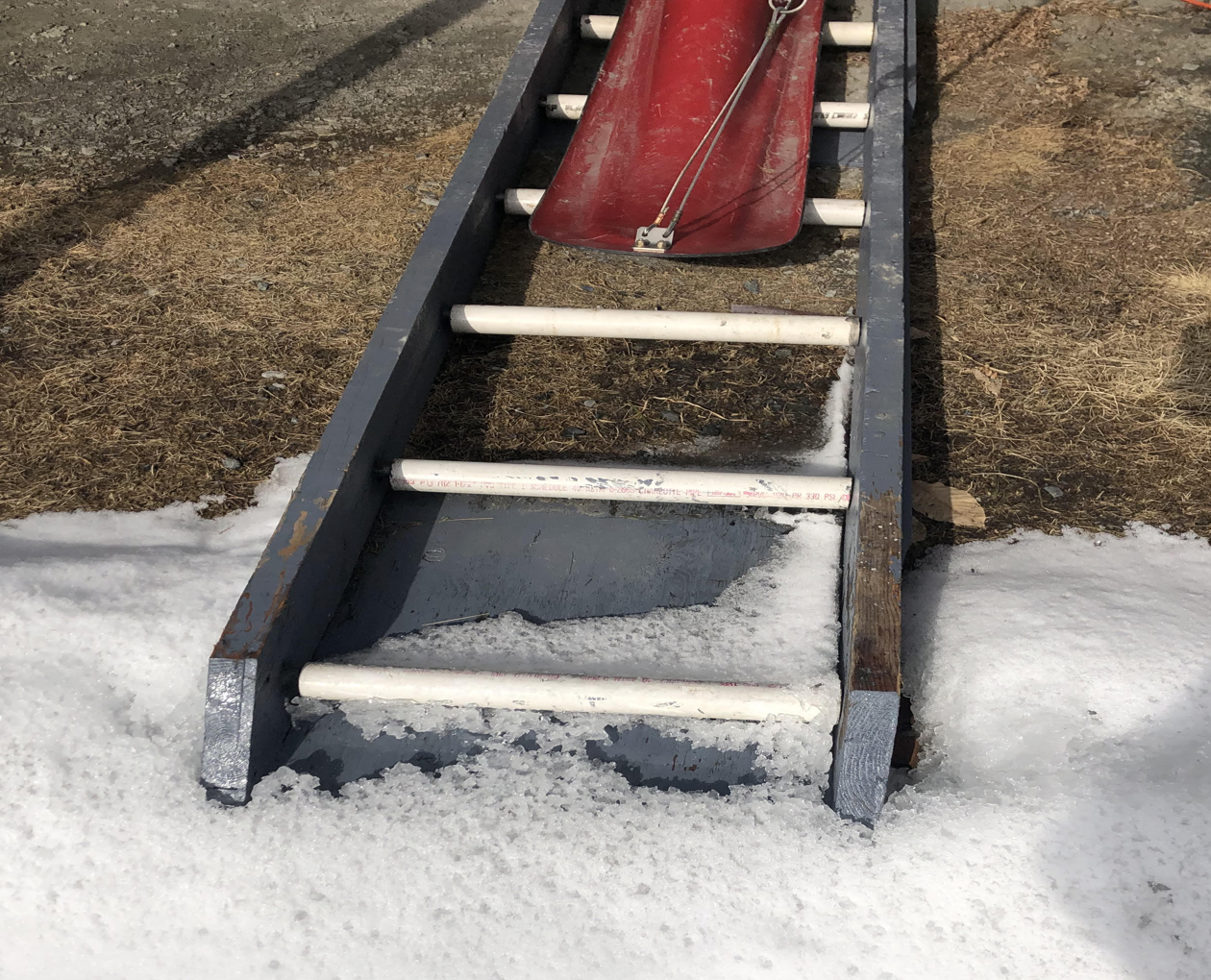
We move to another bench where a contraption resembling an old wooden ladder with PVC pipes as rungs sits idle.
“For those pilots who cannot afford the stone grind, this device, the Structure Ladder, allows them to structure the skis on the move. The benefit is being able to get the structure quickly and easily. It also doesn’t remove any of the base so while it doesn’t work as well its considerably better than nothing at all. Small time operations without the financial resources will just have to accept the lower performance. Just like skis, money makes airplanes go fast.”
Taylor grabs one of the white PVC pipes and pulls it. The pipe isn’t the actual structuring tool but a cover for the rollers beneath it.
Illustration 5: Structure ladder with covers on. Note how the ski will transition the device.
“We have developed a set of structuring rollers each approximately a centimeter wide. It’s mounted on a centering spring so skis with differing arrangements of skegs (longitudinal edges bolted to the underside to help with directional control) can be serviced. The springs keep the appropriate pressure to impress the plastic and push it out of the way so the skegs do not keep the structuring tools off the plastic bases.” NOTE: The springs are undergoing the patent process with some litigation so we were asked to not publish photographs of the actual parts. “Each of these structure ladders contains eight different rollers. Pull the cover for what you believe will work and then just taxi across and just like that you are ready to go.”
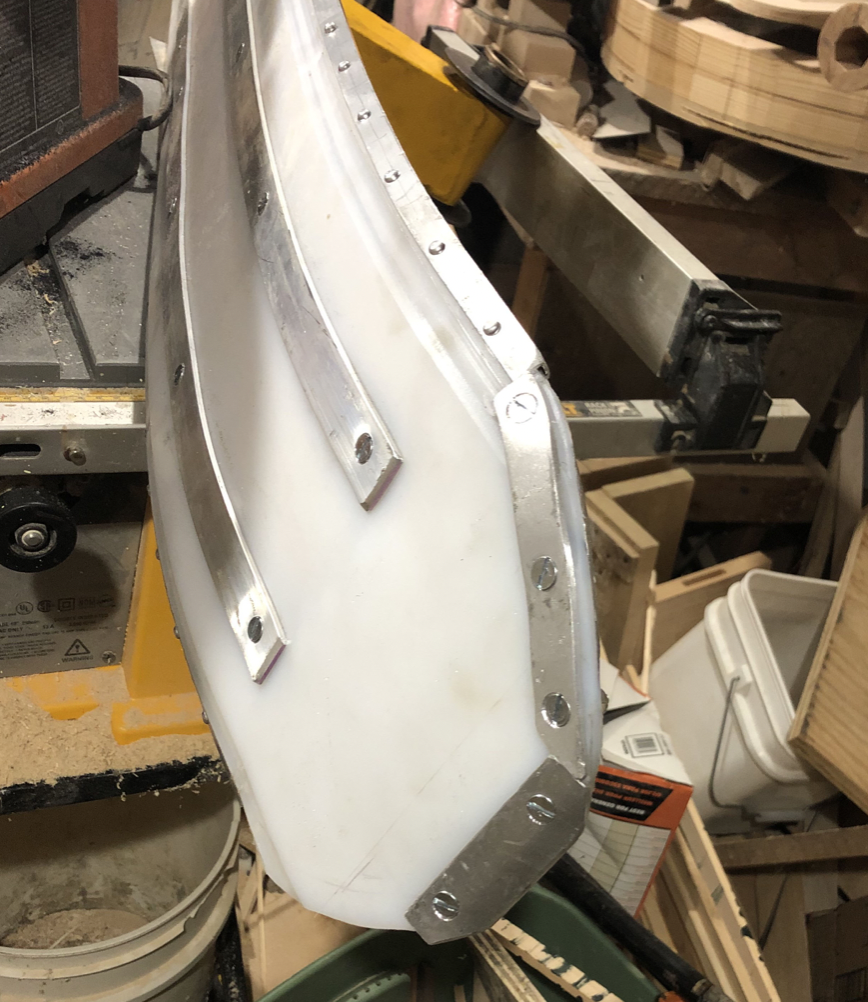
Illustration 6: UHMWPE riveted to the ski bases. The skegs act like the groove in nordic skis. These aluminum skegs are note durable bit present grinding troubles.
We spend a few more minutes in the R&D room before leaving through a backdoor to go for a flight in one of the AQ test Cubs. The idea of nordic ski technology helping the aircraft industry be safer and more fuel efficient is pretty great but I think it will be a while before Boeing or Airbus brags about the next generation of airliners made with nordic ski grade ideas.
Now that we’ve got your attention with fresh wintery tracks and crisp corduroy, read on to learn more about a new GPS-based live groom reporting tool to automate and streamline communication between groomers and skiers.
If there’s a generalization that can be made about cross country skiers, it might be that we like to “know before [we] go.” As the ski season waxes and wanes, or mid-season storms roll through, we relentlessly check the weather forecast and our local grooming report as we fantasize hungrily about the fresh corduroy or classic tracks we hope to enjoy that day.
But we can’t always know before we go. Timely grooming reporting asks those cultivating the trails to go a step further after a middle-of-the-night shift, when sitting at a computer to update the website in a timely manner might be less appealing than crawling into a warm bed or sipping a hot cup of coffee. This creates friction between the hard-working groomers and skiers who are chomping at the bit and weighing the potential disappointment of making the drive to the ski area without knowing what to expect.
Luckily for both parties, there’s a new system growing which allows faster and more efficient communication, Nordic Pulse.
Former Canadian national team member Julien Locke has been working as a web-developer for several years to support his ski career. Locke raced regularly on the World Cup from 2017 to 2019, before sustaining a severe concussion, which removed him from training and competition. His career best result arrived in Dresden, Germany where he popped a 15th place finish in the freestyle sprint in 2018. Though he still trains as a professional skier, subsequent health issues have prevented him from returning to his former performance level, but the fire still burns, and he aspires to make it back to the World Cup.
Roughly six years ago, one of Locke’s projects was a website overhaul for Sovereign Lake in Vernon, BC, including integrating a better method for sharing grooming information with skiers.
“Their grooming team was quite frustrated with not having a slick system for them to use to update the report, and their skiers were feeling like they didn’t have enough information,” Locke explained in a call. “So we made a little web based system and it worked okay, but it really opened my eyes to a real need that Sovereign Lake had, and other ski areas that I was working with also had, to promote the groomers perspective and skiers perspective. And it really inspired me to start thinking, ‘How can we make this better?’ And it took quite a few years for this project to really get going. It wasn’t until a year and half ago that I started developing it full time.”
During the interim, Locke continued to work with Sovereign Lake and other ski clubs, all the while listening to the interests, needs, and frustrations of groomers, skiers, and club organizers. Eventually, this evolved into the development and launch of Nordic Pulse, a GPS-based live grooming system that allows for simple, efficient, and automated communication on grooming operations for ski areas of all sizes and capacities.
“The goal in the beginning was to make it easier for groomers and ski areas to share what they’re doing, their trail conditions and their grooming reports. And then for skiers to have a central platform so that in November when you don’t know where to go skiing, or mid season when you have two different options of places near you, you can easily and conveniently see what conditions will be like.”
Nordic Pulse founder Julien Locke trains on the Haig Glacier. (Photo: Russell Kennedy)
In particular, a need Locke identified and aimed to solve was creating efficiency for the grooming team.
“Oftentimes, they start grooming at midnight, and are grooming until the early, early hours in the morning. They finish their shift, and you know, they’ve been up all night, they’re tired, and the last thing that they want to do is go fiddle around with the website or call somebody to tell them an elaborate description of where they went.”
Locke looked to automate the reporting process and make it seamless.
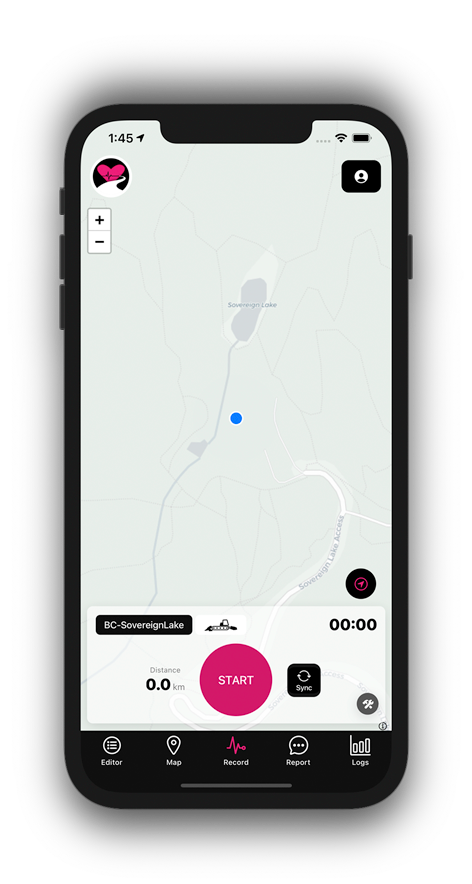
“Our solution is using GPS, so the groomers click ‘start’ when they start recording and they click ‘stop’ and when they’re done, and then, in that time, all the grooming reports are done automatically. So it really saves them quite a bit of time every day at the end of their shift not having to report or go through the trails list and try to remember what was groomed at what time.”
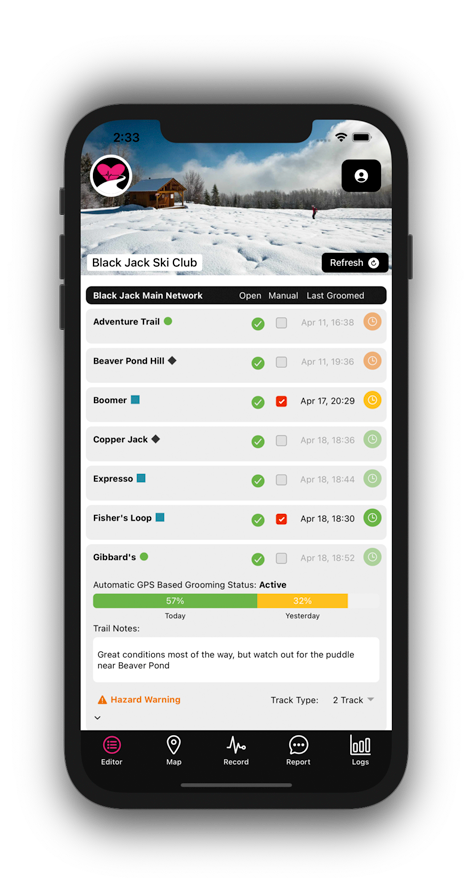
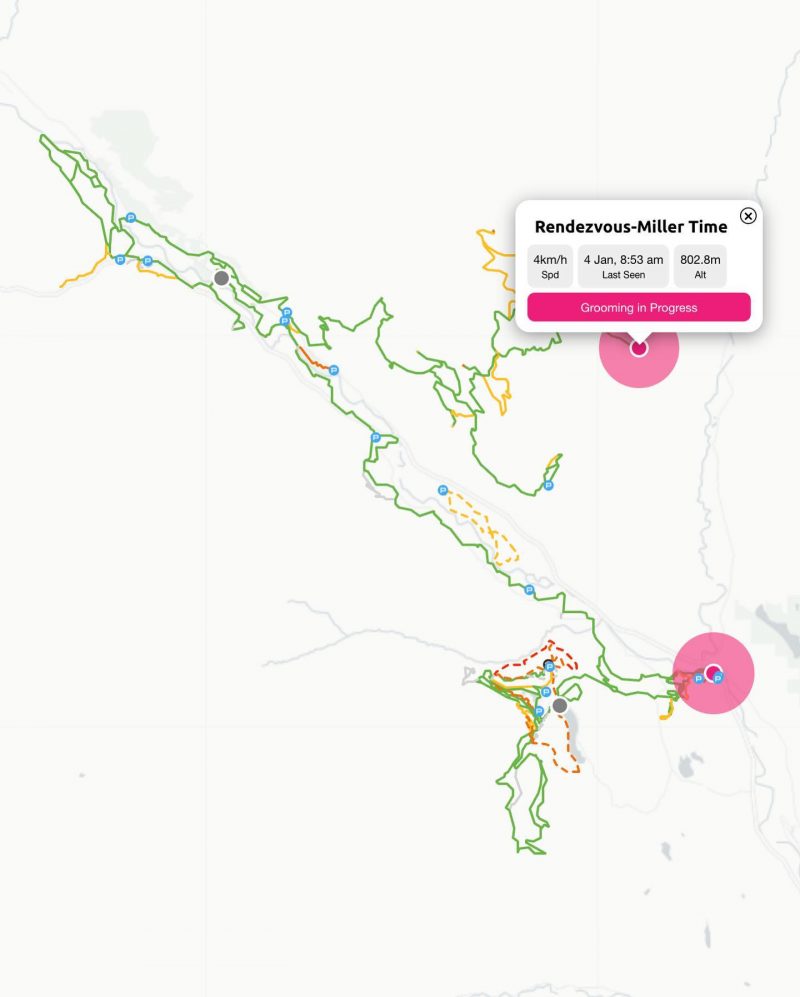
Acknowledging that it is common for a groomer to only hit part of a particular trail within a route, the traditional system of listing off what was completed can fall short. With Nordic Pulse, a color-coded map shows specifically what was groomed each day, including options to differentiate between skate and classic if track has not been reset on all trails that day. If needed, groomers can also select from a materials list to indicate what machinery was used, from snowmobile to PistonBully, depending on what the ski area has available. Additional notes can be added as needed.
“Being able to get the grooming information onto a map so that the skiers have a really quick visual of what’s been done, I think, was a real need from the people I had talked to. I know from the feedback we’ve gotten, people really appreciate being able to see visually what’s been done.”
When a new ski area comes on board, Nordic Pulse handles the mapping to create a pre-set base on which the system will run. While the app is running in the groomer’s pocket, GPS data points are collected every 20 to 30 meters, keeping precision high even for trails with frequent intersections or overlapping segments. This data is synced to the Nordic Pulse server and processed by its algorithm to determine which trails on the predetermined map were completed, with time stamps.
No cell service at your local trails, or perhaps your groomers don’t want to burn cell data? No problem.
A simple app allows groomers to track their work with GPS, which is pushed to a map so skiers can see what and when grooming took place. (Photo: nordic-pulse.com)
Groomers can run the app without having cell reception or consuming data. The GPS information will be stored locally on the device until the phone enters WiFi, then the groomer would only need to click sync to push the data to the NordicPulse server. Time stamps will be preserved to accurately reflect the work that was done, should there be delays.
Locke added that some of the earliest users of the system were ski areas based in the Kananaskis Provincial Park near Canmore, Alberta, well outside the reach of cell reception.
In terms of the cost of adopting Nordic Pulse, pricing is adjusted on a sliding scale system depending on the number of kilometers groomed by the ski area, the number of skiers, and the amount of GPS data that needs to be processed with daily grooming. Clubs are billed annually and prices currently range between $600 and $2000 per year.
Having grown up in the small town of Nelson, BC, it was important to Locke to keep the costs reasonable.
“When I started developing Nordic Pulse, I was looking at options. One strategy I could have taken was creating an enterprise level product for just large ski areas who have the budget to afford that. But I grew up in a really small club, and I really wanted Nordic Pulse to be accessible to everybody. So we’ve done our best to really keep the cost as affordable as we can by having a sliding scale.”
For ski areas with limited budgets, Nordic Pulse offers a “community edition” with no yearly fee.
A color-coded trail list and map with time stamps indicates which trails have been groomed, with room for additional notes as necessary. (Photo: nordic-pulse.com)
Rather than using GPS to track grooming and automatically update the live-grooming maps and trail reports, the community edition uses the in-app trail editor to manually update the maps or trail lists instead. While Nordic Pulse “would love to be able to offer the community edition completely free”, there is a small one-time setup fee to cover their costs in getting the but there’s no yearly costs after that.
Year one has gone “incredibly well”, surpassing Lockes original goals and expectations.
“I started developing this year and a half ago and I was optimistic we’d get maybe a dozen clubs on board in the first year. I really thought we’d start small and grow. And then, we started doing a beta testing phase, and all of the sudden, clubs were reaching out every day, it seemed. And by the time we officially launched, I think we had over almost 20 areas on board, and then by the end of the year, we had 35, and now we have around 80 ski areas total after year one. So it’s growing really fast, which has really been exciting for us. And also, I think, really great for skiers because the more ski areas that are on board, the more useful the information is for skiers, as in, skiers can go to any area and be able to check the reports on the same platform.”
The goal for next year: “Just keep growing.”
“We’re always looking are excited to have new ski areas come on, and are looking to grow more in the States and more in Canada, and potentially elsewhere in the world as well.”
Currently, the app is only designed for us by groomers, while skiers check either the Nordic Pulse site or an embedded applet on their local trail system’s website directly. The website is mobile optimized, but Locke said that a skier specific app is in the works to improve the user’s experience, and should be on line by next season.
“I’m really motivated to make the system as interesting as possible for everybody, and as useful as possible, and just continually roll out new features for both skiers and also groomers.”
So far, the feedback Nordic Pulse has received from clubs who have integrated the system this year has been “incredibly positive,” improving the experience for a growing population across all abilities within the cross country ski community.
“I think in the last few years, especially with the numbers of skiers increasing from COVID, a lot of ski areas have been feeling the need to have better ways to report their grooming and show that information. And a lot of ski areas come to us saying, ‘Hey, we’ve been thinking of doing something like this, but on our own, we can’t afford it because it’s expensive to build a system like this.’ And they really appreciate being able to use our service and tap into all those features. Already this year, we’ve had over 160,000 skiers using our platform and almost a million views, so it’s growing really fast and it’s meant a lot to me. It’s been very rewarding, and humbling to be able to make a difference in the ski world.”
What are users saying about Nordic Pulse?
According to Nordic Pulse, Ethan Meginnes of the Black Jack Ski Club in Rossland, BC, the system is a “game changer” for its members.
“As a groomer and avid skier, I am relieved to be able to relay and receive reliable information. Nordic Pulse is easy to use with multiple platforms,” Meginees said. “I would love to see every cross country ski center ultimately utilize this app.”
Methow Valley resident and regular trail user Alex Hall called the system “exceptionally good.”
“I love the live grooming report,” he wrote to FasterSkier. “Though I find that I question its accuracy at times… There do seem to be occasional misalignments, but the thing I love about the live timing is it will show you instantly, completely and comprehensively where the cats are and what they’ve done, and it’s all on a picture, so it’s really handy. It’s definitely my favored system because it’s really quick and gives that overview. It updates automatically, it’s live, it’s got color graphics. Every now and then, there is something goofy about the live map. It’s definitely [an improvement from the last system].”
The Methow Valley Trails receive a fresh groom in January, mapped with Nordic Pulse. (Photo: nordic-pulse.com)
A team of familiar faces is soon headed to the American Birkebeiner, and rumor has it, their race suits will be something to behold.
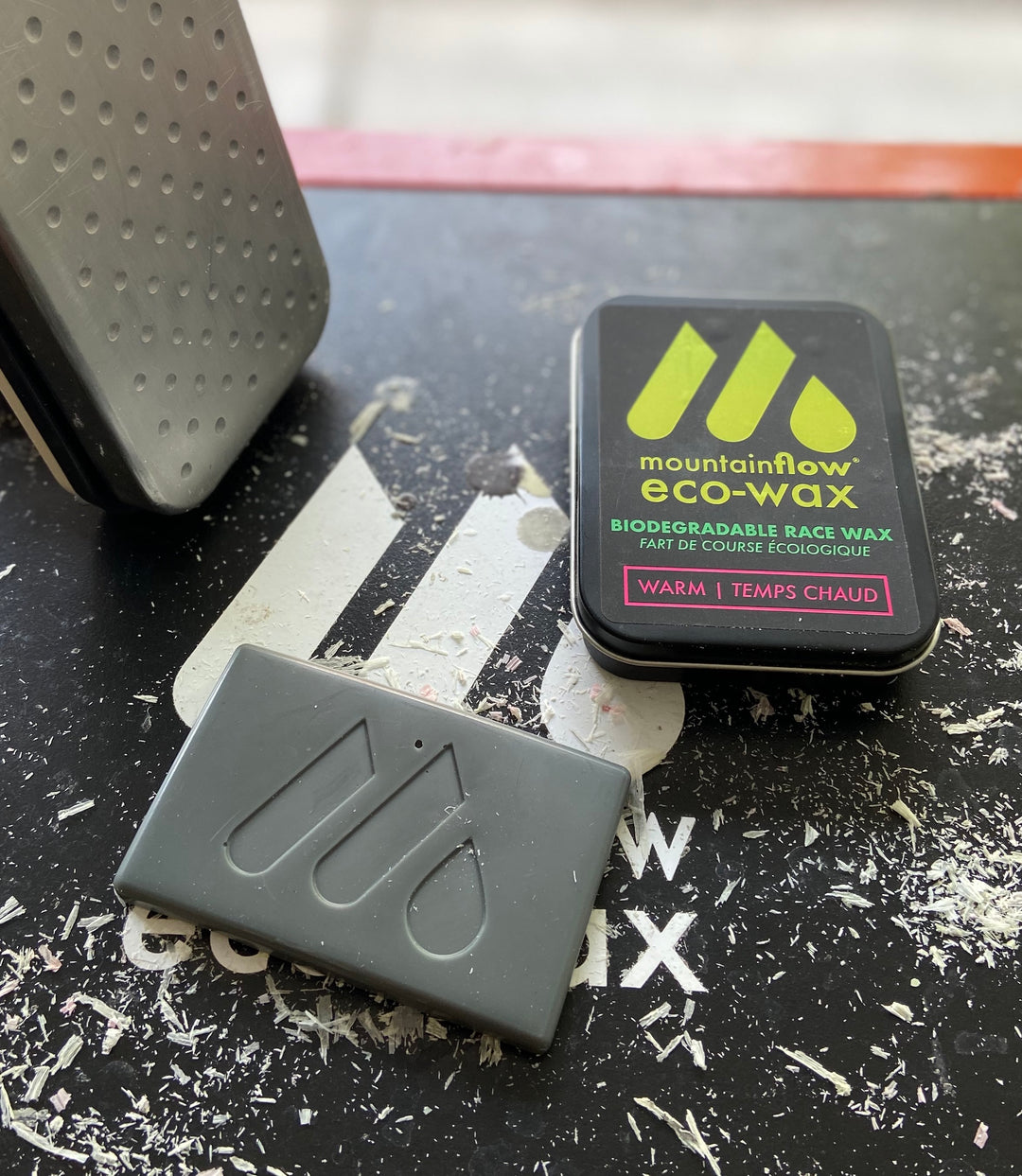
Spearheaded by brand ambassador Simi Hamilton, the team of Sophie Hamilton (Caldwell), Sadie Maubet-Bjornsen, Liz Stephen, Matt Gelso, Sylvan Ellefson, and Erik Bjornsen will be racing as members of the mountainFLOW Eco Wax team.
“We’re gettin’ the band back together!” This familiar team of retired skiers is headed to Hayward to represent mountainFLOW eco wax at the American Birkie. (Photo: mountainFLOW)
Based in the Roaring Fork Valley of Colorado, where Hamilton grew up, mountainFLOW Eco Wax is the maker of a line of plant-based ski waxes and bike maintenance products that spare the environment without compromising the performance skiers and riders expect. The company officially began in 2016 after years of tinkering in founder Peter Arlein’s kitchen. Experimenting with various plant-based alternatives to the petroleum based products that the ski industry has historically relied upon, Arlein ultimately concocted a solution that he felt checked all the boxes.
Why consider an eco-friendly wax?
“It’s a classic micro-pollution problem where you can’t see the wax coming off [your skis],” Arlein explained in a call. “It’s not like you’re littering and you can see what you threw on the side of the road, but in aggregate, it becomes a big issue. And all of these pollutants are collecting and accumulating in the rivers because they melt in the snow, and then that melts, and then it all flows down into the local watershed.”
Arlein, who has worked in the ski industry for more than 20 years as everything from a fry cook to a patroller, explained that prior to mountainFLOW, he had tried all the available eco-friendly products, but was never satisfied with the performance relative to the traditional petroleum based products on the market.
The pillars of mountainFLOW products: 100% plant based and petroleum free, without compromising ski speed and performance. (Photo: mountainFLOW)
“Eco waxes, for a while, were really bad,” Arlein said simply. “So we’re here to show, first and foremost, our waxes are high performance — and they happen to be non-petroleum and made from plants. Because it can be as green as possible, but if it’s slow, then it’s not a very good product.”
He explained that most eco-friendly products had historically relied on soy wax as a main ingredient, which is readily available, relatively cheap, and easy to work with.
“But it’s also super soft,” he said “So, in anything colder than 30 degrees. It’s just too slow.”
Through experimentation and research, mountainFLOW has developed a set of recipes that use a variety of plant-based waxes to account for the variation in moisture and friction of different temperature ranges, with which cross country skiers are well-accustomed. The ingredients they landed on had traditionally been used in the organic health and beauty industry, which is ultimately where mountainFLOW sources them.
“We’ve tweaked the ratio of plant waxes, and the different types of plant waxes that we’re using, to mimic the qualities of a traditional wax. You can measure hydrophobicity, you can measure hardness, which are the main characteristics that a normal wax has.”
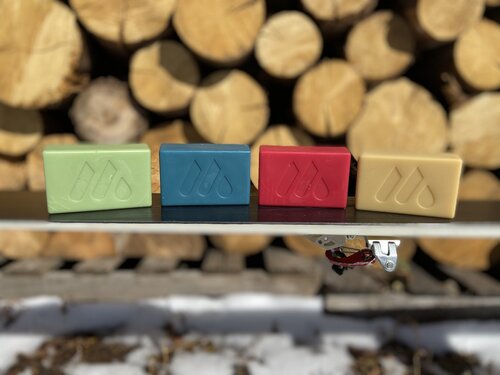
mountainFLOW’s basic line of ski waxes, akin to Swix Performance line, features three temperature ranges, plus an all-temperature wax to keep the bases of your cross country, alpine, and touring setups fast and protected. (Photo: mountainFLOW)
Expanding well-past Arlein’s kitchen, the company began to take off in 2019 after appearing on ABC’s Shark Tank.With patents on the wax formulas in hand, mountainFLOW eco waxes quickly found their way into over 600 doors. The products are now sold at retailers nationwide and now reach as far as New Zealand and Europe. Demonstrating commitment to protecting the environment, mountainFlow is a Certified B Corporation with all USDA Certified biobased products, with biodegradable and 100% post-consumer recycled packaging materials to boot.
With the harmful effects of fluorinated waxes and how to halt their use at the forefront of discussions in the cross country ski community for the last several years, the concept of eco-friendly alternatives should pique the curiosity of environmentally conscious skiers. But what the elimination of fluoros has also perhaps highlighted is that cross country skiers are reluctant to compromise when it comes to ski speed on race day.
Arlein explained how mountainFLOW has stepped up to this challenge in creating its line of race waxes, innovating with materials developed for purposes well-beyond the scope of sliding around on skinny skis as quickly as possible.
“We were able to source this ceramic nanopowder that mimics qualities of fluoros, but it’s totally non-toxic and biodegradable,” Arlein shared. “It was actually developed by the Department of Defense for use in bulletproof vests, because it’s really durable and hard. But it also happens to be super hydrophobic and slippery, so then it started being used to coat runners for luge and bobsled. We found this little lab that was making it in the Midwest, and we licensed the rights to use it for ski wax. And so that’s what we’re putting in our non-fluoro race wax, and that’s what everyone will be skiing on at the Birkie.”
MountainFLOW Eco Wax has created a biodegradable plant-based line of race waxes, allowing skiers to have fast race skis without the harmful environmental impacts of petroleum based products. (Photo: mountainFLOW)
The mountainFLOW race wax lineup includes three temperature ranges – cold, cool, and warm – which they’ve tested against comparable products from companies like Swix and Toko.
“We’ve found that the wax works especially well in cold temperatures with hard abrasive snow.”
The mountainFLOW team is in luck. Temperatures in Cable, WI the three nights prior to the American Birkebeiner on Saturday the 26th are currently predicted to be -8, -6, and -1 Fahrenheit.
Arlein comes from an alpine ski background and says his progression with cross country skiing began last year when he headed out with his wife on skate skis. “We did not go very far. And I was dying. And I looked terrible,” he laughed.
Luckily, he was already connected with Simi Hamilton, whose older sister had grown up with Arlein’s wife. Knowing the mountainFLOW products would perform just as well on cross country skis as they did on alpine and backcountry boards, he called Hamilton from his car that day hoping to rope him in for some guidance.
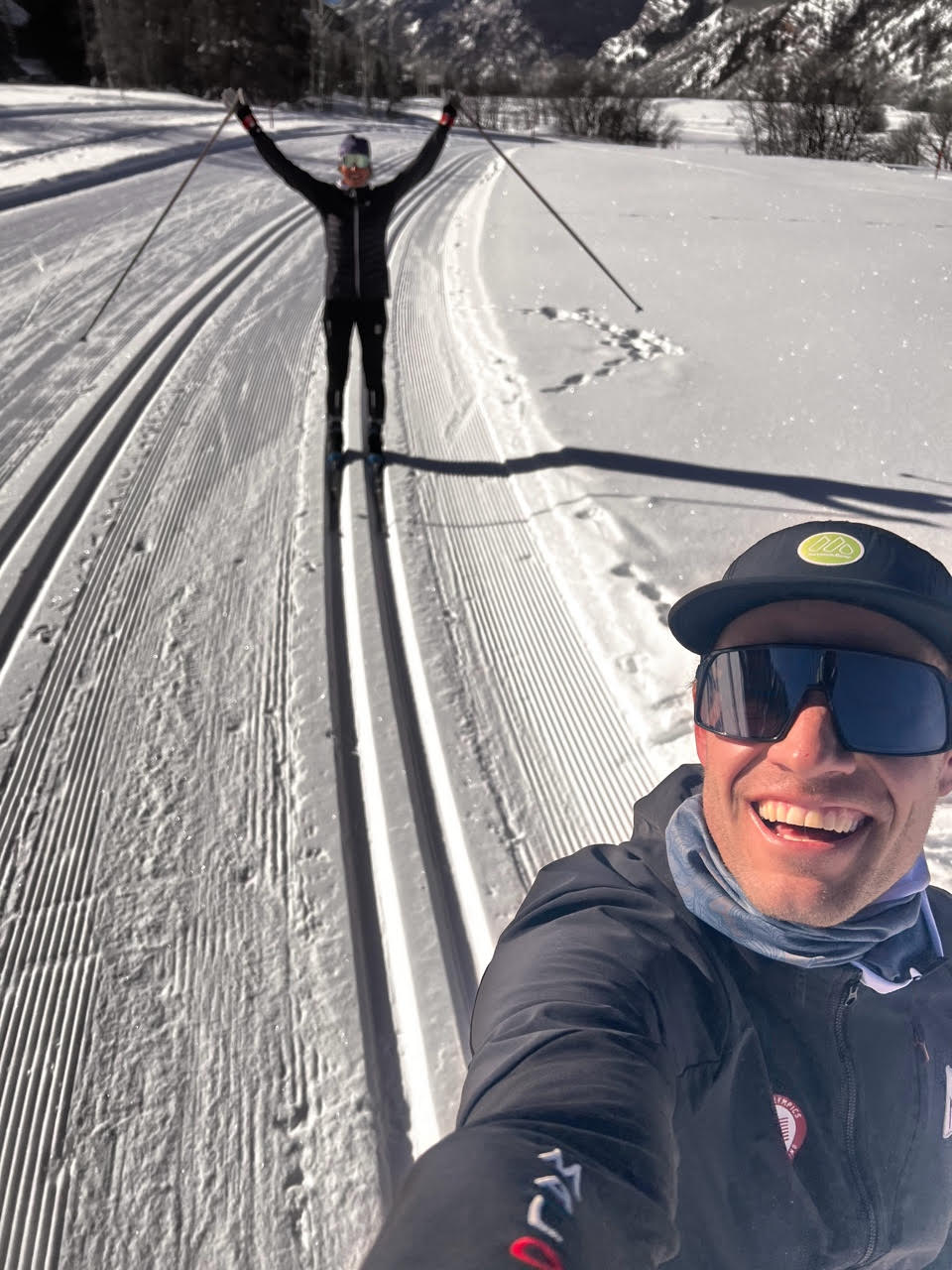
Simi and Sophie Hamilton out for a classic ski near their home in Aspen, CO. (Courtesy photo)
“I was like, ‘Simi, I need help. I don’t know what I’m doing. I’m not good at this sport. And I don’t know enough about it to speak from an authentic place. Can you help?’”
Hamilton, who has been a long-time ambassador for Protect Our Winters and spokesperson for environmental policy, quickly agreed. Hamilton paired technique advice with perspective on mountainFLOW’s ability to meet the demands of committed cross country ski racers. Having spent decades racing on the best and most expensive waxes, filled with some of the harshest chemicals, he can speak better than most to the performance of mountainFLOW’s products relative to alternatives.
“I’ve been super impressed at how well their waxes have performed,” Hamilton wrote in an email. “I haven’t had a chance to try any of their products in super wet or dirty snow yet (after all, this is Colorado), but I really think the moly is going to work awesome for those springtime conditions. We’ve had a pretty wild winter here with huge temperature fluctuations and periods of big snowfall followed by seemingly endless dry spells, and all of the waxes I’ve used thus far have performed just as well if not better than the fluorinated paraffins I’ve used in the past for hard training sessions, etc. Because I’ve been able to get out on my alpine and backcountry skis more than normal this year, I’ve definitely been better about keeping my gear in good shape with somewhat regular waxing. Without a doubt, I can say that arcing turns in powder or on groomers is way more enjoyable with some fast planks under your feet.”
Though Hamilton says he has used mountainFLOW products since the early days of tinkering in Arlein’s kitchen, it was not until this summer when he joined the team as an ambassador and consultant, first testing some of their bike lubes and cleaning products.
“I was super impressed right off the bat with their stuff. Like the ski waxes, it worked just as well, if not better, than the very best traditional (petroleum-based) lubes and cleaners I’ve found. I’ve gradually become more involved with the company over the last handful of months mostly because I really believe that what they are doing is making a difference in our ski and bike communities. They are throwing out the conventional belief that the petroleum-based products that are already out there are the only products that work well.
“MountainFLOW is showing the outdoor industry that we can venture into the mountains and use products that are both 100% sustainable andenrich the important mountain experiences we seek,” Hamilton emphasized.
“And perhaps most importantly, they’re just an awesome company with some incredible people at the helm who love to share the stoke they have for being outside and doing really fun things.”
Simi Hamilton enjoying retirement while out for a backcountry ski near his home in Aspen, CO. (Courtesy photo)
As the two schemed ways to reach the cross country ski market with mountainFLOW products, bringing a team to the Birkie seemed like an obvious choice. Arlein said the team would be “super fun, and maybe not super serious.” Perfect for a group of retirees looking for an excuse to get together.
“I was immediately psyched about the idea mostly because Peter’s number one objective was to just go have a great time at what is probably the most iconic ski event in the country. I think cross-country skiers in general are some of the most attentive people out there when it comes to climate change and other important environmental issues, so to be part of a team that can introduce this company, their ethos, and their standard-setting products to a community of people who want to be a part of the solution and not the problem, is super cool. Not to mention it’s just going to be a heck of a good time to hang out with [my former teammates] for a few days. We’re gettin’ the band back together and I couldn’t be more psyched about all these pieces falling into place!”
Those heading to Hayward this week can find the mountainFLOW team at the Birkie expo, where you can chat with Arlein and the race team about the products and race-day wax recommendations, buy waxes and tools, or have your skis waxed – for free! – by the crew. Otherwise, find mountainFLOW online or at a retailer near you, and try knowing there is a 100% money back guarantee should the products fall short of your expectations.
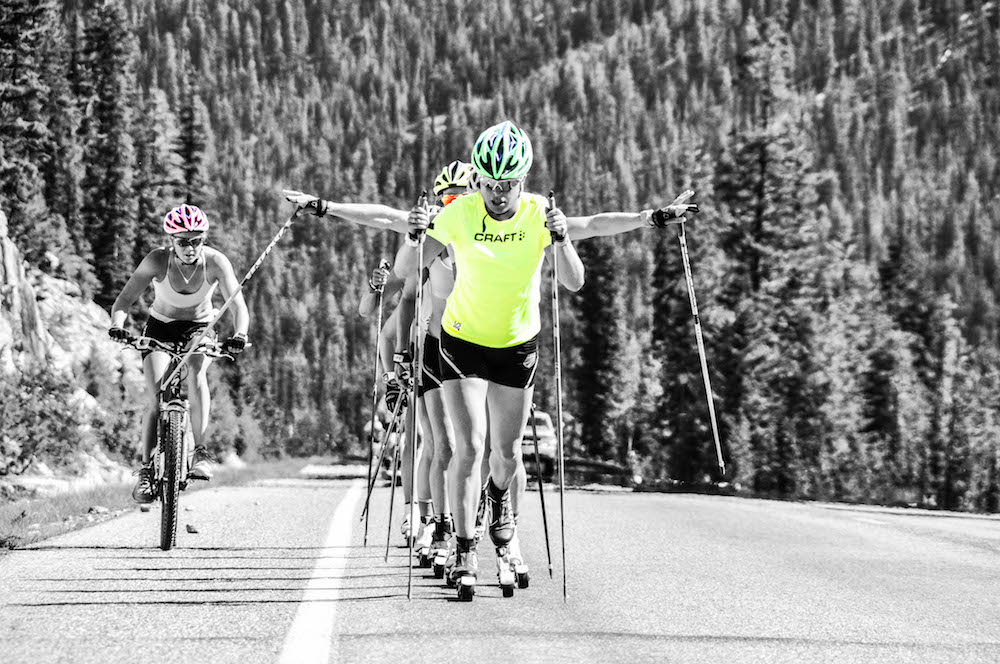
Rosie Brennan (in yellow) takes the lead while Sadie Bjornsen (in pink helmet) coaches on the bike during a 2017 U.S. women’s team camp in the Methow Valley. (Photo: Matt Whitcomb)
Last year, we ran a story on Virginia Tech’s Bicycle Helmet Ratings titled: Every day is Safety Day.
That much remains true, every day is safety day. With some medical systems around the country stressed with obvious fall out from the pandemic, we thought it wise to republish parts of the piece we ran last year. Virginia Tech presents a methodical process to determine the safest bike helmets. Although the testing is not specific to rollerskiing, it does provide an excellent approximation of the forces rollerskiers may experience in the event of a fall.
If you are in the market for a new brain bucket, the VT list is a great place to start and read up on how the helmets are evaluated for safety. Remember this when reviewing the VT list of helmets: “A lower score offers better protection.”
***
Since 2011, the Virginia Tech Helmet Lab has been rating helmets. They began with football helmets and have branched into ice hockey, baseball, softball, and soccer headgear. A few years back, the lab began publishing its findings on bicycle helmets.
In conjunction with the Insurance Institute for Highway Safety, the lab uses what it calls the STAR evaluation system to collect its data.
“Our bicycle helmet impact tests evaluate a helmet’s ability to reduce linear acceleration and rotational velocity of the head resulting from a range of impacts a cyclist might experience,” states the Virginia Tech Bicycle Helmet rating webpage. “Helmets with more stars provide a reduction in concussion risk for these impacts compared to helmets with less stars.”
The protection ratings use a 1-5 star system and a numerical score in determining a helmet’s capacity to reduce concussion risk. Readers should note that the rating website states the following when considering the numerical score: “A lower score offers better protection.”
For example, the best scoring helmet received a 10.5, whereas the lowest scoring helmet received a 25.5 score.
Impact locations from STAR methodology.
According to the STAR methodology, 12 different “impact conditions are evaluated” on each helmet. The conditions include six different impact locations with each location exposed to two different impact velocities.
Impact configurations from STAR methodology.
Rollerskiing offers a set of risk that involve speeding downhill, road debris, traffic to name a few. Accidents happen. If you are in the market place for a new helmet, the VT resource is a good starting point for research. And if the helmet of your choice comes in a hi-vis color, that’s a bonus too.
If you are still looking for some last minute holiday gift ideas we have some suggestions for you and that passionate cross-country skier on your list.
Dermatone
Dermatone is a waterless skin protector and frost guard made in Sweden. It is the best skin protection against winter drying, chapping and frostbite we’ve ever found and makes a great stocking stuffer. Apply to your nose, cheeks, and ears on those bitter days!
Keeping your sunglasses, snow goggles, and even swim goggles clear is critical when you’re getting after it. The Holmenkol No Fog + Clean makes a great stocking stuffer.
The special warming complex gives you a pleasant warm feeling soon after applying that lasts for hours. Apply before any of your adventures for hours of happy, warm feet.
We are all looking for ways to protect the environment and help keep our snow around. Bee’s Wrap is a uniquely designed plastic free and eco-friendly reusable food wrap made from organic cotton infused with sustainably harvested beeswax, jojoba oil and tree resin.
Stashed is your plastic-free answer to school lunches, a sanity-saving organizer for parental units, and a waste-free solution to pretty much everything you stick in less-colorful containers.
We are straying away from single use plastic grocery bags and are favoring reusable grocery bags. These meshed cotton drawstring reusable grocery bags provide the best alternative, keeping produce safe and fresh. They are the perfect choice when choosing eco-friendly grocery bags.
In Brave Enough, Jessie Diggins reveals the true story of her journey from the American Midwest into sports history. With candid charm and characteristic grit, she connects the dots from her free-spirited upbringing in the woods of Minnesota to racing in the bright spotlights of the Olympics. Going far beyond stories of races and ribbons, she describes the challenges and frustrations of becoming a serious athlete; learning how to push through and beyond physical and psychological limits; and the intense pressure of competing at the highest levels. She openly shares her harrowing struggle with bulimia, recounting both the adversity and how she healed from it in order to bring hope and understanding to others experiencing eating disorders.
After your hard ski and before your hot cocoa it’s important to put on dry clothes… we at FasterSkier will tell you, Saxx are both stylish and super comfortable.
These bands are great for strength and mobility work at home or while traveling. The smaller bands are also useful for activation or physical therapy exercises.
FasterSkier’s Rachel Perkins got the oatmeal mix pack for Christmas last year and has been buying the larger bags and assorted bars since. She’s a big fan of the “Can’t Beet Chocolate” oats and the “Moroccan My World” bars.
We’ve been big fans of BeFAST for years. Not only are they a great, small, family-owned company with the best customer service, but they make great products too. Their new Summersport Headband is perfect for under your helmet when you’re roller-skiing or cycling or even on those warmer winter days when you just want to keep the sweat out of your eyes. Always a killer fashion statement too.
Anti-Freeze Face Tape helps reduce the risk of frostbite. Each package contains four pre-cut pieces. Simply remove the backing and apply on clean, dry skin.
Give someone on your shopping list LED lights to help keep them safe and visible when they are out exercising. There are lots of options and here are few suggestions to choose from that are great for roller-skiing, walking, running and cycling.
Purchase for Walking, Running and Roller-skiing – Arm Band:Amazon
Purchase for Walking, Running and Roller-skiing – Vest:Amazon
If you’re looking for two workhorse waxes for someone on your list, Swix’s CH5 and CH7 are great options. No matter where you live these tend to be the two temperature ranges we are using all winter long. Because there are no flouros in the wax it’s cheap so you can get the 180g big block.
We love liquid wax, just put it on your skis before you head to the trails and then brush it off before you start (or don’t brush it, the snow will buff it out for you soon enough).
If you choose to use flourinated waxes this season we strongly suggest you do so in a well-ventilated area and wear gloves and a respirator religiously.
When it’s really cold weather Toko’s split mitt with wind resistant outer shell is a must have. The Primaloft insulation and chamude palm will keep you warm and give you great grip on your poles.
Kari Traa Maske Long Sleeve Baselayer Top – Women’s
Redefine your ideas about baselayer styling with the Maske Long Sleeve from Kari Traa. This fashion forward, wool baselayer breaks the mold with a button closure on the forward shoulder yoke. Button up for the cold, or down for that extra dash in your look.
Small package, big bright punch in the Spot325. In the bright setting you’ll sport 325 lumens of power which means you’ll see plenty of trail during that morning or evening ski. The Spot325 allows you to dim the light when an intense beam is not needed. This lightweight headlamp takes three AAA batteries.
With their fun colors and patterns, Skida has become one of the most popular brands on the trails, but you might not know they also have an amazing cashmere line so you can show your nordic style all day and evening long. (Read our review of other Skida products here)
The Salomon Bise Hoodie for women looks great and can double as an exceptionally warm midlayer for skiing when it’s really cold. This soft, warm, stylish jacket is perfect for cool days anywhere.
This is a great training jacket made of breathable wind and water repellant fabric. Perfect for training or as a crossover piece for casual everyday use.
The Gatineau Jacket is a technical multipurpose jacket, made with a combination of softshell and ribstop material. Windproof reinforced shoulder and hood. The Bionic Finish Eco ensures durability in the material, both in the form of long-lasting colors and its ability to withstand weather.
This comfortable, athletic fit Winner 2.0 Pants from Bjorn Daehlie gives you everything you need from a great fitting training pant and you will be as relaxed and comfortable when you stop off at the pub on your way back to town or your cabin.
If you’re racing the Quantum 1 is a great value with great swing weight and impact strength. This new pole shares the same strap and grip as its more expensive brothers and also has TBS basket system for excellent flexibility making swapping baskets and roller-ski ferrules easy thanks to its threaded connection.
If you love looking like you’re skiing on the World Cup the Bliz Proflip Goggles are for you. From bright sunny days to windy snowstorms, these Bliz goggles will protect your eyes and give you the visibility needed to stay on course.
There are a lot of great options out there if you are looking for an indoor bike trainer to use when time is tight or you can’t make it to the ski trails. One option is the popular Wahoo Kickr, which connects to your road bike. However, if you are a heavy sweater you will be dripping all over your nice road or tri bike, making it likely you will have to replace cables and more come spring. Not to mention they’re expensive once you start adding in all the extra goodies. Peloton and Keiser bikes are quite nice, but also pricey at $2,245 and $1,795 respectively, not to mention the monthly subscription cost of $39 for the Peloton.
At $990 the Concept2 BikeErg gives you a lot of value for your indoor training this winter. If you plan on mixing in other exercises off the bike the standard flat pedals are just fine. However, if you are planning on just riding you can swap out the pedals for your clipless ones and your saddle too. We have used the Concept2 BikeErg for the last year and have really enjoyed it.
If you’re in the market for a indoor training tool that will help you improve your strength and power, the Ercolina is a great option. It’s compact design won’t take up a lot of space. Lacking the large frame of other SkiErg’s, the Ercolina is mounted it on the wall and is even small enough to be portable if you use the mounting hooks. With adjustable resistance, the Ercolina is perfect for easier efforts as well as all-out power intervals.
There’s a ton of excitement building up for the Minneapolis World Cup. If you want to experience the event like nobody else, this is the trip for you.
Garrott Kuzzy and Holly Brooks are leading a trip to watch the event, with special behind-the-scenes access, transportation, VIP tickets, and a dinner with Kikkan Randall. Even your skis will be all taken care of. Watching the races with experienced Olympians gives you a whole new world of insights on race day! And…there are a few spots left.
If you have reached this far down in our gift guide and you still don’t know what to get the skier on your list because they seem to have every possible piece of athletic gear imaginable, then maybe it is best to make a few donations in their name. If that sounds like a good idea to you, please consider the National Nordic Foundation. Your donation will help support the dreams of young skiers nationwode.
After getting hit by a car and sustaining serious injuries, Hannah Halvorsen’s winter looks drastically different than she planned. Nonetheless, her determination to be one of the best skiers in the world is stronger than ever. To get to health and on skis as soon as possible, Halvorsen will need specialized care, which comes at a cost.
She welcomes everyone to her fundraiser to say hello, bid on her US Ski Team swag, and hear about her journey and dreams. The fundraiser will be held at Sugar Bowl Academy on Dec. 28th. If you can’t attend but want to help support her Olympic goals, here is her Paypal, mailing address, and Venmo link.
Price: Any amount that fits your budget
How to Send Money: Paypal, Venmo or send a check to the following mailing address.
Mailing Address:
Hannah Halvorsen
C/O Grace Norgard
12476 Stockholm Way
Truckee, CA 96161
FasterSkier would like to wish all of our readers, their friends and family the very happiest and healthiest holiday season!
Endurance junkies can be data nerds. The market for smart watches and wearable fitness devices has boomed, trending toward a $29 billion dollar market with 243 million units sold by 2022 according to an industry analyst’s estimates. In the world of endurance sport, professional athletes and weekend warriors alike are recording their workouts and analyzing the results using platforms like Strava, Polar Global, or Garmin Connect in search of optimal training to achieve personal bests.
Depending on your sport of choice, the metrics you track in this world of modern training might vary. Skiers often train by heart rate and time, focusing on staying within particular zones during a workout. A road marathoner might focus on pace and mileage, whereas a conversation overheard between cyclists almost certainly includes some discussion of power. What is power? The simplest explanation is that power is the amount of energy output by the rider at a given time measured in watts by a power meter.
Though commercial power meters for cycling have been available since the late ’80s, their prevalence in recreational and sub-elite training has become increasingly popular over the last decade. A power meter for running does exist, but it is much less commonly used. In cycling and triathlon, the use of a power meter is claimed to have revolutionized training by reducing subjectivity and quantifying energy expenditure so the rider knows exactly how hard they are working.
A 2018 Velopress review of the book Training and Racing With a Power Meter, 3rd Ed. reads, “For cyclists, training with power is a critical part of reaching the next level of performance… Simply put, the power meter allows you to quantitatively track your fitness changes, more easily define your weaknesses, and then refocus your training based on those weak areas.”
In cycling, it is fairly simple to measure power. Force from the legs is delivered to the pedals, which turns the crank to drive the bike forward. Most power-meters use a strain gauge located at the bottom bracket which measures the torque applied to the crankshaft and its rotational velocity. As the data are transmitted in real time to a computer, an algorithm processes the information to provide the rider with a live reading of the watts they are outputting.
In contrast, measuring power in cross country skiing is exceedingly difficult. The movement of the body while cross country skiing is much more complex; force is delivered through both skis and poles, both of which are continually changing their orientation relative to the ground and their location in space. Motion is continually happening in all three planes; forward, vertical, and lateral.
Until recently, devices used to measure these forces and motions were only found in research settings. Scientists used force measurement plates mounted to a binding or buried under the snow to estimate the forces produced by a skiers legs, while forces exerted on the pole were measured with a sensor located in the grip. In most cases, these systems were cumbersome and each system had disadvantages that would deter or prohibit an athlete from regular use in their training.
A close up look at a pair of the Proskida grip and coupler system, a power meter for cross country skiing. (Courtesy Photo)
In 2015, a small group of ski enthusiasts with strong credentials in the realm of technology and human performance set out to develop a more readily available product that could break this mold. The team included a computer scientist, a mechanical engineer, an exercise physiologist, and a dual biomedical engineer and nanotechnologist. Their innovation resulted in the creation of the Proskida grip, a sleek power-meter nearly indistinguishable from a normal pole grip.
“We’ve tried to see what the state of the art is now for wearables and sport devices and then go the next step,” stated Proskida Co-Founder Alastair Smith.
FasterSkier spoke with Smith, who is located in Canada’s Yukon, Proskida’s home base, to learn more about the evolution of the product and how it might support athletes in maximizing their potential.
“The genesis of it is that it kind of came out of the whole idea of ‘why is cross country skiing the last sport in which you can measure performance?’” questioned Smith. “If there is any sport that you absolutely need some ability to measure that is external to how hard you are actually working, it’s cross country skiing, because the conditions change so much.”
This external tool would be a contrast to the typical measures an athlete might use to track their progress during a season, such as a time trial result, a treadmill test, or a repeated interval session. The tool Proskida aspired to create would also allow athletes to quantify their performance in a training session on a daily basis, rather than just comparing various benchmarks.
While nearly indistinguishable from a normal pole grip and only about 50 grams heavier, the sensors nested in the Proskida grip collect data about the position of the pole in space and the forces being applied to the pole. The data collected are sent via Bluetooth to a phone or tablet where it can be analyzed in an app by the user or by a coach.
“We can tell the force, how effective that force is, meaning how much of that force is driving the skier forward,” explained Smith. “We can tell things like cycle rate. We can do technique identification. So we can get quite a bit of data just from those two grips.”
The Proskida grips collect and display the power a skier is producing while skiing. (Courtesy photo)
It is also possible to import other training data from a smartwatch into the Proskida app in order to include other analytics such as heart rate or distance. The grips are also designed to be easily transferred between sets of poles with a coupler system, making it so that a user only needs one pair.
Though the Proskida system is only collecting the forces that are going through the pole, Smith explained that they believe this is a significant measure of a skier’s overall power.
“If you just imagine straight double poling, the actual amount of muscle that is being used to double pole, it’s largely your legs,” he explained. “You’re raising your body up high [with your legs] and falling down onto your poles.”
Smith estimated that 50% or greater of force generated while skiing travels through the poles, regardless of whether the user is skiing classic or skate.
“We’ve kind of taken the approach that by measuring at least 50% if not greater of your performance through the poles, you’re that much closer to being able to understand how you’re improving over time rather than relying solely on heart rate or getting onto a treadmill or things like that.”
Another metric that they are exploring, also drawing from the world of cycling, is the use of identifying critical power, which is essentially a set of markers, in this case, watts, that an athlete can sustain for a given amount of time. This is likely something any athlete is already loosely aware of; if you ski all out, you cannot sustain that effort for long, whereas if you ski at a lower intensity, you can continue at that effort for much longer. Critical power is the number of watts that can be sustained for roughly an hour, which might be approximately equivalent to lactate threshold.
Proskida Co-Founder Alastair Smith looks at power data with SwissSki athlete Nadine Fähndrich. (Courtesy Photo)
Smith explained that an athlete using Proskida grips could do a critical power test similar to what cyclists complete, then use this metric to assess where in relation to that value they are skiing during subsequent sessions. One could compare to historic or bests during a workout or train based on the percentage of watts relative to their critical power, versus heart rate or effort.
“That’s been a really, really powerful tool to be able to see how you’re improving,” he said. “Not just your technique but also your general fitness level because it doesn’t matter what conditions you’re skiing.”
Anecdotally, Smith explained that in his own use, he was able to assess much more clearly the quality of a session completed in suboptimal conditions, such as newly fallen loosely packed snow.
“I’ve noticed that even in the worst conditions, you can still determine where you are in terms of your historic best,” he said. “Whereas typically, if you ski in fresh snow, it’s just a slog and it’s kind of depressing because you don’t go as far, your heart rate is going to be up.”
At this point, the product is not yet available commercially. However, it has been tested and used by seven national teams and sport federations over the last two years. These include the French National Training Centre for Cross Country Skiing (Le Centre National de Ski Nordique et de Moyenne Montagne), the German national ski team (Deutscher Skiverband), the Canadian national ski team and the Canadian Sport Institute, Swiss – Ski and the Swiss Federal Institute of Sport, and Norway’s Olympiatoppen. Smith explained that each of these groups had slightly different interests in their use of the product and that their feedback was invaluable to the development of the analytical software and fine tuning of the system.
Proskida software developer Anthony Killick heads out for a ski with his Proskida power meter grips. (Courtesy Photo)
The journey to create and produce the grips has been much longer than the innovation team originally expected.
“When we first started this, we thought, ‘Okay, we’ll do the poles and then six months later, we’ll tackle the skis,’” recalled Smith. “And now, three and a half years later, we’re still refining the poles.”
The biggest challenge the team has faced has been designing software to manage the massive amount of data the grips are able to collect.
“We’re ready for production on the hardware side, but what we’ve found, is the amount of data that we can produce is overwhelming,” said Smith. “The force, the angle, angle of attack, effective force, impulse. And then with all of that, we can start getting into symmetry as well, so you can do that for left and right. So it got to a point where, without some good software, it’s quite a challenge. So that has been our focus now is to go, okay, we’re taking this data in. Let’s present it in a quick simple way so that athletes and coaches can get some sense from it.”
Smith explained that Proskida is designing software to parse the data and narrow the display to sections that are the most important, such as the period surrounding an interval session, excluding a warm up, cool down, or any large breaks. This way, an athlete is able to quickly review and efficiently compare the data that is most beneficial to their overall training. The Proskida team anticipates that the final product and software will be ready for commercial sales by 2020.
For six in the morning, the text message was dark and terrifying. “They are not selling ski crack any more. WTF they can’t be out.”
At the time of the message, Jarrod had no idea he had a substance abuse issue or how far it would take him down a path of desperation. He just wanted to ski faster. He continues recounting the morning he hit the bottom.
“With the realization, I might be out I was wide awake and sucking down a second cup of coffee. Not gonna lie, I was super anxious when I opened the dealer’s website. Clicking to the fluoro overlay page; my friend, Bill, was correct. Each fluoro product just said: THESE PRODUCTS TEMPORARILY UNAVAILABLE. Not just pure powder overlay but any wax containing fluoro compounds had the same banner: THESE PRODUCTS TEMPORARILY UNAVAILABLE. Looking around to see if anybody else had been reading my screen, I closed the laptop and hastened out to the shop. Unceremoniously I dumped my wax kit on the work-bench pawing through everything to check on my stash. Ut-oh. I was in trouble.”
Jarrod was beginning to see he had a problem. His wax kit was almost out of fluoro powder and a web search indicated “ski-crack” as he had joked about, was currently unavailable in the US and foreign distributors would not ship into this country.
A bit of research found the unavailability is due to wax companies having to comply with The Toxic Substances Control Act (TSCA) which regulates the import or development of new chemicals. Fluorinated compounds have been in use since the 1950s and it is only recently the wax companies have been under scrutiny by the EPA and subject to the petition and request to import or manufacture anything containing a fluorinated molecule.
A bit more research into fluorinated chemicals determined most of the EPA worries stem from a class of compounds falling under the C8 designation. These compounds are commonly used in the production of plastics used to insulate wire. Bennington Vermont had a very public court battle over an aquifer contaminated by perfluorooctanoic acid (PFOA) and perfluorooctyl sulfonic acid (PFOS). Both chemicals are known to bioaccumulate in wildlife and are suspected to be human carcinogens.
Whether the impounded ski waxes contain C8 compounds is unknown. In order to avoid potential jail time and large fines, many wax companies voluntarily quarantined the stock of waxes containing fluoros until obtaining EPA approval to import, manufacture and distribute the products. But this may have created a black market for fluoros:
Jarrod continues explaining his anxiety. “ When I pressed my wax dealer to sell me some fluff he said, ‘Hey, man, the feds are sniffing around. I gotta play it cool. Can’t do any deals online or over the phone. Sorry. No way. But if you’re in the area, dude, stop by the shop for a cup of coffee. Come alone.’ ”
When Jarrod first approached me with his dilemma it felt surreal. Ski wax is a micro market and fluoro waxes an even smaller slice of a niche market. The expense of covering all bases to comply with TSCA could be significant and delay access to Jarrod’s ski crack.
Describing how he fell into the almost daily use of fluoro powder Jarrod said at first it was just a fad used for fun.
“I had found at a price so reasonable powdering the bases was an everyday affair. My racing days are long behind me and having skis move across the snow enhanced by the miracle of better living through chemistry brought pure joy to every day on the trails.
“This season my habit resulted in using almost 200 grams of pure powder. My stash was down to 15g. With rationing I might make it through this season, but what if my dealer can’t get the dust for next year? To satisfy this dependency another source needed to be found – the sooner the quicker.” Jarrod’s voice began to tremble.
“The snow was perfect. A few days old with a bit of freeze thaw cycles and impeccable grooming. The skiing would be fast if tar was applied to the bases. But with a touch of crack, orgasmic. I was starting to feel the jitters, that need pulling at my gut, my bases dragging across the snow. The fear of running out.”
Jarrod skied that day using HF wax with a bit of structure rolled in for good measure. The skiing was fast but it might have been better. While sipping a beer he began hatching a plan to keep his supply of powder and maybe a way to make a little cash too.
Scenes of young kids in hoodies hanging trailside at busy intersections, furtive glances, a brief exchange of words, a $20 bill handed over, the kid giving instructions like a ski-o map to the pickup intersection, where, with relief and craven fulfillment the small ziplock bag of sanctified white powder, the powder of the Nordic gods, is placed into my gloved hand, quickly stowed in pocket, zipped securely and I ski off knowing I’ll make it through another week of ski waxing.
The fantasy began to become a reality after receiving a spam text from Expedia advertising cheap airfare. “I considered the lucrative black market potential here. Fly round trip JFK to Oslo (Norwegian Air has convenient, affordable, direct flights and allows two huge checked bags in the Premium Cabin), fill my duffle bags with pure unadulterated dust and set up shop trailside with a few warmly dressed outdoorsy juvenile delinquents as runners. With a little mob-style enforcement I was confident that I could secure exclusive dealer intersection concessions at the largest nordic centers in Vermont. True, I might have to break a few skis or loosen some grips to gain the respect this trade would demand, but I’d be swimming in cash and the demand for product would only grow.”
In fact, the growth of demand was going to be problematic. Affordable fluoros create quick dependencies. With the EPA banning all fluoros, skiers who have even once felt the bliss of powdered skis might succumb to temptation and be unable to help themselves.
Now looking relaxed and contemplative Jarrod finished explaining his plan. “I needed to think bigger. Not regional but national in scale. I would need to franchise and manage dealer thugs from Fort Kent, ME to Snoqualmie, WA. I would need a whole crew of travelers going back and forth to Europe with huge duffle bags stuffed with ski fluff – the stuff likely poofing out in huge white clouds as the bags get tossed around. I would need a trucking network. Or perhaps I could piggy back my supply and distribution chains onto an established elicit network….. Perhaps using Russian diplomats in black stretch limos on route to Trump Resorts. Nobody would mess with those guys and they probably had connections to the Chinese who routinely scoff at US environmental laws. Hell, they’d make fluoro powder cheap and maybe for free if it meant they could flip a political finger at the US.”
“Perhaps” Jarrod paused, “distribution could be piggy backed onto the untold legions of drug dealers and ruthless criminals we’re told are hiking for miles through tortuous desert terrain to enter the US illegally at the virtually unguarded southern border?”
Looking at his hands before wiping his face he jumped up off the Windsor chair, took a deep breath and continued.
“NO.” He began thinking about his mom and how she believed her ability to raise a child could only be considered a success if the kids were not a burden on society or in jail by the time they turned 30 years old. Jarrod was 29. His introspection continued. Here he verbalizes his thoughts.
“There must be a better way to source ski crack – legally – above reproach. More research indicated the industry using the majority of fluoro compounds was the printing and food industries. Floriated compounds along with titanium dioxide are added to inks to harden and brighten the color. The fluoros are added to keep the ink from sticking to other boxes and also from sticking to the shelves. A conversation with my powder supplier revealed the C6 class of Fluoros used in ink is the same used on non-stick cookware and just might be the same compounds used in ski wax. Fluoros are added to ink at a concentration of 100 parts per million (PPM) or one gram per ten kilograms of ink.”
With less dark thoughts Jarrod recalled some of what he learned in law school which he graduated from but never did anything with his degree but pay for it. A review of RCRA Resource Conservation and Recovery Act (RCRA) is explicit mentioning Pulping liquors, the solution used to disperse and suspend wood fibers for the paper making process, that are reclaimed as defined in Title 40 of the Code of Federal Regulations (CFR) section 261.1(c), are exempt. A subset of 261.1(c), 40 CFR section 261.4(a)(6) gave him a loophole to extract the C6 fluoros from the ink and apply it to skis. The only TSCA requirement was filling out a one-page form informing EPA of the exemptions.
The extraction process is relatively simple although it requires a huge volume of ink covered material. The highest concentrations of fluoro is added to inks used in grocery products. The food producers discovered a long time ago the integrity of the packaging matters to consumers. A deformed or blemished box reminds them of second hand or discount food and is significantly less appealing therefore they buy less of the product. Brand loyalty is also reduced when consumers continue to see blemished boxes on shelves. Boxed food is subject to a wide range of humidity during the manufacture, storage, distribution and display. This moisture causes the boxes to stick together and to shelving hence the value of the added fluoro compounds. More fluoro equals less sticking equals greater sales, market share and profits.
Finding the products and brands with the highest concentration of fluoro was difficult due to the trade secret protections of the Patent and Trade Office of the US Government. Many corporations do not file for patents on their products because the patenting process demands full disclosure of materials and methods in order to obtain patent protection. Anything declared a trade secret does not carry any exclusive rights to manufacture but unlike the patent process, a trade secret does not have to disclose anything about the product. The trade secret laws, CFR 4.01.2019(a)(f), are how big oil remains exempt from disclosing what is contained in the fluids used during the fracking process.
With a newfound and responsible way to obtain his desired ski crack, Jarrod became animated describing the next step in his journey.
“If I was going into business, I intended to do it right. Research-based information would be the foundation upon which I would build this financial empire. And that starts with testing.”
After a disastrous grocery store aisle experiment designed to ascertain which cereal boxes have the most fluoros, wherein shelves were tipped to (and, sadly, far beyond) the exact angle of boxed product repose and slippage was measured, a better idea presented itself – as is so often the case with such complicated testing procedures. “We made a spring clip to grasp the box by the corners and attached the clip to a scale. By pulling on the scale and tracking the measurements we were able to see which products and brands had the least amount of stiction. Turns out the boxes with the lowest shelf friction contained the highest levels of fluoros. The best part is the test is easily administered right in the store which gave access to a wide variety of products.
“As a generalization, packaging without liners like pasta are significantly slipperier than packages with an internal plastic liner like cereals and cookies. We found that the spring tension when testing unlined boxed product needed to be significantly lower than for lined boxes – like breakfast cereals – because the test apparatus flung three-pound boxes of spaghetti down the aisle 20 or 30 feet smashing into displays of K-Cups and Yodels, scattering the dry noodles all over the aisle. We surmise the hydrophilic nature of the pasta is countered by the higher levels of fluoros in the ink. If the product requires a liner there is less incentive to use HF inks, which like ski waxes, are more expensive. For our purposes, the cereal and cracker boxes are less appealing.”
Acquiring and processing the large volume of pasta boxes was going to take a large capital investment. More research into environmental regulation turned up. The Personal Responsibility and Work Opportunity Reconciliation Act (PRWORA) signed into law by President Bill Clinton on August 22, 1996 has a provision to grant $1.1M for startup entrepreneurs who build a business around recycling. The current Administration’s trade tariffs with China has this far east nation once hungry for US recycled paper products finding the raw materials from South America. There is a glut of recycled paper with much of it ending up in landfills as there is a very limited domestic market for this paper. After finding a sympathetic clerk in the Commerce Department whose job it is to find uses for this glut, the paperwork was pushed through and financing was secured.
“Once we had a process and financing it was as simple as asking the local recycling companies for as much recycled boxboard they had. There is a glut of recycled materials and all suppliers were ecstatic to have a place to offload some of the stockpile. They are even willing to sort the product removing as much of the desired pasta boxes in order to receive the best price for the materials. They even deliver the materials for free just to get rid of it. It’s a win-win all around.”
The material science and chemistry involved in extracting the finished fluoros from recycled pasta box ink is proprietary. Soon enough boxboard was being processed and the operation moved from the basement into a 20’ by 30’ shop. Employees were hired and the business was legitimized.
“The quality of the fluorocarbons recovered exceeds our wildest hopes,” says the plant manager and general ski bum who asked us to refer to him only as Jeff K. “By tweaking the extraction with a Birch Extraction we are able to link hydrocarbon molecules from the inks with the fluoros we were after. There were two benefits to this. By selecting for the right colors consistent with the familiar waxing chart we have modified fluoros that are temperature specific and color coded. We also found that when our unique mixes are applied to ski bases they bond structurally to the pores of the ski base – somewhat like the crisp shiny smooth surface on the outside of a pasta box compared to the un-printed inside of the box board – creating an incredibly durable and long lasting fluoro treatment high. In testing we found no deterioration of the glide even after 100km of the gnarliest, most crusted, corn snow you can ski.”
Jarrod, the ski crack addict turned environmental entrepreneur named the company Box Butter. This wholly US based company has removed 30 million tons of box board from the recycling stream heading to China. All production energy is solar sourced and they are a Green Initiative Certified Zero Emission Company. A side product still in development to repurpose much of the fiber will hit the market shortly: Cracklin’ Cubes fire starters, light easily – even when wet – and burn for 10-12 minutes. “Another totally addictive, environmentally friendly,100% recycled product from the company that brought you environmentally friendly skier’s crack fluoro overlays,” says John Rollings, a competitive biathlete and an early investor. “These guys brought the fun back into skiing after the feds tried to shut down virgin fluoros. And when you’re comin’ down, ready to peel off the boards and sit by a roaring fire, they make it easy to spark up!”
Jarrod sums up his 11 month journey from crack addict to wealthy businessman. “Sure I still use powders, every time I ski. After setting aside a 55-gallon barrel of the stuff for my own use I can relax. Even if the feds ban the stuff there is enough for me and my ski buddies to last a lifetime and if I run out there is really no point in living through another winter without the powdered white stuff to enjoy.”
For a limited time Box Butter is offering free samples of Skier’s Crack Reclaimed Fluoro Overlays through their website https://boxbutterbuzz.bz.
Our coverage sponsors for that kind of big deal international championship event going on in South Korea right now have also provided some awesome prizes for you to win too! Just enter your info below and FasterSkier will draw the winners after the races have concluded. We would like to thank Fischer Sport USA, Madshus USA, Concept2, Boulder Nordic Sport, and Swix Sport US for their generous support, which made this possible.
First Place Prize
First Place Prize: A Concept2 Ski Erg
Second Place Prize
Second Place Prize: Fischer Speedmax plus skate skis with Turnamic race bindings
Third Place Prize
Third Place Prize: Madshus Nano Carbon skate boots
Fourth Place Prize
Fourth Place Prize: Swix Performance Wax Package
Fifth Place Prize
Fifth Place Prize: Race Wax Service for Two Pairs of Skis from Boulder Nordic Sport
Sixth Place Prize
Fifth Place: Stone Grinding for One Pair of Skis from Boulder Nordic Sport (shipping not included)
A group of five Norwegian students updated the dryland sit ski: on display is the Exero Spike prototype. (Photo: Exero Technologies)
There are ah-ha moments when an idea comes — poof — out of thin air. Then there are blunt-force type ideas, when reworking, redirecting and reconfiguring brings about the desired outcome. For five students from Norway who recently formed a start-up called Exero Technologies, there’s been a mix of ah-ha and continual reconfiguring.
The group of five Norwegians, all studying at NTNU in Trondheim, includes mechanical engineers and a civil engineer with a business background, are developing a new dryland specific sit-ski. NTNU’s Business School is part of the Norway Entrepreneurship Program (NEP), which is based at the University of Oslo. A unique aspect of the program sends approximately 150 NEP students to the United States for 10 weeks during the summer.
That’s how Nicoline Bergh, Bendik Fon and Solveig Christensen, three of the five founders of Exero Technologies, found themselves on their 10-week immersion at the Boston University (BU) Questrom School of Business. Bergh described BU as ideal for refining the group’s pitch and exposing their product to new user groups.
From left to right: Solveig Christensen, Nicoline Bergh, Espen Aksnes, Mathias Berg, and Bendik Fon after the Wings for Life Run in Stavanger, Norway on May 7, 2017. (Photo: Exero Technologies)
As part of NTNU’s course requirements, students must start a business.
“This project started one year ago when the three guys on our team, they studied mechanical engineering, and they began production,” Bergh said. “Initially, the mechanical engineers in the group were given a problem that was looking for new solutions: how to win more medals in the Paralympics. They were looking for new solutions to improve athlete performance … the problem was to make a new solution for the cross-country sit-ski.”
The on-snow XC sit-ski is simple yet functional. Most often the frame is aluminum or a composite with a pair of skate skis attached to the base. The athlete sits in an affixed molded seat. Forward movement is strictly a double-poling affair. Basic, light and minimalist — on-snow sit-skis have no steering or braking mechanism. In the racing scene, they are built for speed.
Like their able-bodied counterparts, para athletes train in the offseason. That requires specialized equipment. Mountain boards, a wider and longer version of their skateboard park cousins, have been the go-to platform for dryland sit-skiing.
Colette Bourgonje doing some mountain-board sit-skiing during a Canadian Para-Nordic Team training camp in Arizona in 2012. (Photo: Robin McKeever)
Mountain boards feature pneumatic tires, beefier and stiffer trucks, and in some cases a hand-operated caliper brake. A molded seat is bolted to the board. And because of the single pivots on the front and rear trucks, athletes can steer by leaning their torso.
Those modified mountain boards are a manifestation of making the best with what’s available off the shelf.
That’s where Bergh says her team’s product, the Exero Spike, will make a difference. Bergh calls the Exero Spike the “total solution”. In other words, adaptive athletes will have more steering control, comfort, off- and on-road functionality, and hand-operated front-wheel disc brakes. All that amounts to better stability and possibly a potentially bigger user group, she asserted.
Beyond the one-off mountain boards made for adaptive athletes, Bergh explained that none of the comparable products in the marketplace are best serving those adaptive athletes wanting a more fluid exercise experience.
U.S. Paralympics Nordic national-team member Andy Soule works on shooting at the Mt. Van Hoevenberg biathlon range during time-trial intervals on sit-ski mountain boards in September 2012.
“Products used today are mostly hand bikes and 3 wheel wheelchairs,” Bergh wrote in an email. “The handbike is both big and heavy and often difficult to manage on your own. With a 3 wheel chair, it is difficult to both steer and make progress at the same time, as you have to use a steering wheel to change direction, forcing you to stop making forward movement at the same time.”
Bergh envisions a market for the Exero Spike well beyond adaptive snow and dryland sit-skiers.
“So far, we have looked at people with spinal-cord injuries, amputees, cerebral palsy, polio, or other muscle diseases as our primary segment,” Berg emailed. “These also the segments that we are focusing on and see as the potential users. But, as we are developing a summer sports equipment, we see that the sled we are developing can be used for more than just cross country summer training. We’ve been testing with sledge hockey players and rowers, and we’ve got the impression that the movements they’re used to are quite similar to the sled we are developing.”
Bergh and her partners foresee approximately 50,000 potential users in Scandinavia (12,000 of whom reside in Norway), and two million potential users in the U.S.
Perhaps those numbers look inflated. As medical costs increase, in cases where more exercise correlates with smaller health bills in the long term, tools like the Spike, making outdoor exercise more accessible, may make sense. According to The Centers for Disease Control and Prevention estimates, 2.2 million people in the U.S. depend on wheelchairs for mobility. Another 6.5 million require a cane, walker or crutches.
“We want to make a product, that is both fun to use, beneficial in terms of health and that looks cool,” Bergh wrote. “We want to make a product for people with disabilities that don’t have the same options to do exercising as you and me. Also, focusing on design and making a cool product, it will differ from many of the alternatives today.”
Exero Technologies remains in start-up mode. Bergh said the group has no firm price set for their initial model, which they plan to release in a year.
“The longtime goal is to make several products, making a portfolio,” Bergh wrote. “By now, we’re starting out with the current product and will develop a sled for those who need their legs straight out. I think we will wait for the users’ feedback on the first product, and then decide whether we should experiment with different materials.”
On Sept. 7, Norway’s Spare Bank 1 announced Exero Technologies had won its business innovation competition: Exero Technologies was awarded 250,000 Norwegian Krone (almost $32,000 U.S. dollars).
Tomorrow, Jan. 1, 2016, Salomon is expected to announce the release of its new NNN-compatable boot and binding system, called Prolink. (Photo: Salomon Prolink/xc-ski.de)
The dueling alphabet soup of binding systems is about to get a whole lot simpler. For the past decade or so it’s been two camps: Salomon’s SNS system or NNN. On Jan. 1, Salomon plans to reveal a not-so-well-kept secret.
Salomon, which is owned by the Finnish-headquartered sport conglomerate Amer Sports, will begin production of NNN-compatible boots and bindings. The new system, called Prolink, shares DNA with NNN.
According to Amer Nordic Commercial Manager Isaac Wilson, some key differences remain.
The Bindings
“Starting with the easiest and the most obvious, the binding is lighter. It’s also lower and it’s thinner,” Wilson explained on the phone.
SNS devotees often claim more sensitive ski-feel is obtained with as little material between the boot sole and the ski. (Modern NNN bindings slide onto a ski-mounted plate, called the NIS system. The binding slides onto the plate with, no drilling required, and provides some fore and aft adjustment.)
Continuing Salomon’s direct-mount legacy, Prolink bindings will screw mount directly to the ski with no NNN plate in between. To allow for an easier transition from SNS to Prolink bindings, the new system will use an identical SNS screw-hole pattern. Converting skis with SNS bindings to Prolink will be simple.
New in 2015, Salomon’s Carbon Skate Lab featured a ThinPly carbon construction and three different base setups, cold, wet and universal.
Amer Sports, which owns both Salomon and Atomic, has invested millions developing new ski technologies. Both brands helped introduce and innovate classic skis with built in skins. This year Salomon rolled out a top-end price point carbon skate and carbon classic ski.
“All of our skis, from the cheapest kids ski to the most expensive carbon ski, will all come pre-drilled based on camber of where that ski should be mounted,” Wilson said of the new easy to use mounting system. “So it makes the mounting really quick. But it’s still a direct mount to the ski so you get a really direct connection.”
Wilson asserts that differences between current NNN bindings and Prolinks don’t stop at what he claims is better snow-feel, but extend to a mechanically better connection between the boot and binding.
Salomon claims its system, which compresses against the boot’s attachment point, a thin bar near the toe, is better than the NNN closure which uses a small hooks that grip and wrap around the top of the boot bar.
“There is no compression on that system so that the bar of your boot is not actually held or pressed tightly, there is a lot more movement involved,” Wilson said.
With the tighter connection, Salomon suggests its system will last longer and provide a more seamless interface between boot and ski.
The Boots
Salomon’s plan for the immediate future is to produce two runs of identical boots in each model, one with a SNS sole, the other a Prolink sole.
“We will have starting with the S-Lab Pro all the way down to the Escape touring boot, everything in there will be offered in either option,” Wilson said. “We want the conversation to turn away from, ‘What system are you on?’ to ‘What boot fits you the best? What skis do you like the most? What are the most relevant technology for you?’ Not so much, ‘What is the system you are currently using?’ ”
Older model Salomon S-Lab Skate Pro with SNS compatible sole
In the long term, production runs of boots offering an “either or” option may not be cost effective. Salomon is already thinking ahead. It’s skyrocket price Carbon Skate Lab boot pushes beyond 1K for a pair. Yet it remains a way for Salomon designers to prototype modular boot systems.
“When you go to our Carbon boot, and our new Carbon Classic boot, they will actually come with a shell with cleats … They will come with both cleats so you will have the ability to have both in the box. You’ll be able to have an SNS cleat and a Prolink cleat [that is NNN compatible] in the system,” Wilson said. “The goal will be like a cycling shoe where you never worry about what pedal you are using.”
The Binding Wars and the Bottom Line
Binding compatibility is downright unglamorous. But as the interface between ski and boot, binding compatibility is a gateway to greater profitability. For example, with the NNN system buyers have many brands to choose from to optimize fit; there’s Rossignol, Alpina, Madshus, and Fischer — just to name the major players. If your ski race quiver includes NNN bindings, it makes the most sense to purchase boots from these brands. If Salomon or Atomic boots are the most comfortable fit, then up to now, the SNS system was mandatory.
Amer Sport’s business model worked for awhile. The SNS system held strong here in the U.S. Yet gradually, brand influencers, like coaches and their ski clubs, as well as top World Cup skiers, switched to NNN. At one ski club in Bend, Ore., you’re likely to see only a few pair of Salomon boots amidst a group of 30 to 40 skiers on any given day.
Internationally, the SNS system is quite robust.
“In Germany, it’s still 80 percent,” Wilson said. “But in the U.S. and a few other places we have four really strong competitors and we lost partnership with Fischer a few years ago. Our market share shrunk. We went from 65- to 70-percent market share in the U.S. to just about 35 percent.”
In places like Norway, a major nordic-ski product consumer, SNS became an afterthought as well. Wilson said that despite Amer Sport’s investments in high end ski production, they simply were preaching to a smaller and smaller choir.
“At the end of the day, in all the business meetings we were in, we were saying no matter how much we do this we are only speaking to 35 percent of the industry, and that we are spending an awful lot of money to talk to 35 percent of the people.”
Salomon could have moved on this earlier, he added. “My biggest thing is, OK, we could have done it ten years ago, but I’m just really happy we are doing it now. … It’s hard to admit that we need to play across the full range of systems … so that we can be back to where we once were which is a much higher market share especially in boots where we are the most relevant brand still in the industry.”
Salomon’s bottom line is likely to be bolstered by the Prolink system’s introduction. Wilson explained the system is an NNN upgrade, but it’s not revolutionary. Put simply, now Salomon can attract consumers who simply prefer their boots and don’t want to change binding systems from NNN to SNS.
“Hopefully it allows people to open the ability for them to take Salomon or Atomic product and not close the door for us,” he added.
“I am proud that Salomon was not too proud to do this … I think they were really globally not that worried about it and now I think especially if they ever want to play in the Norwegian market, if they ever want to play in the U.S. market in a real way, this was a move that they had to do. I think they came to that realization and they did it.”
Wilson admitted he’s asked the question again and again — does this mean Salomon has lost the binding battle or lost the war? “For me, it’s a funny way to think about it. I feel like hopefully the consumer is the one who wins this in the end. So nobody has lost but the consumer comes out as a winner.”
Welcome to FasterSkier’s Holiday Gift Guide! The holidays are here and it’s time to go hunting for the perfect present for your favorite cross-country skiers. Whether it’s a fresh and sexy underwear or an amazing ski adventure we have recommendations for the best gifts out there. Take a look and see for yourself. You’ll walk away with some great ideas to make this ski season one to remember.
We’ve broken up our gift guide into five budgetary segments: Under $25, $25-$50, $50-$100, $100-$200 and $200-and-over. Happy shopping!
Pacsafe Cable Lock, $18. Nordic skiers are pretty good folks, but you never know when one of those gravity dependent types might venture past your gear, right? Plus you could always lock all your Fischer Speedmax together.
A traveling French Press, this will surely warm up even the coldest winter morning.
Heading out for a long run, but you don’t want to carry your bulky hydration belt… look no farther. Great for traveling business people too because it won’t take up so much room in your carry-on.
We promise not to make every other suggestion about coffee, but you can never go wrong in our minds by getting some beans from a new roaster for the skier/coffee drinker on your list to sample. The blend pictured here might be challenging to find.
Your Snoopy ornament has to have a set of skis for his workout once you’ve gone to bed.
We just love these, feel free to send some to the FasterSkier crew.
Skiers spend a lot of money on the clothing we wear when we workout and let’s face it, it often smells really bad.
As BeFast puts it, “Conquering mountains is all about attitude.” Look fast, ski fast.
Show support for the US Ski Team while looking super cool and super fast!
These “techie” socks are just darn tough and some of our favorites – perfect weight to keep feet warm and dry.
Not everywhere has internet, so when you can’t read FasterSkier, The Ski Journal is a great way to keep reading all about the sport you love.
The perfect no-seam base under any touring or racing tights and totally sexy without them. And don’t worry fellas, there’s a version for you too.
Welcome to FasterSkier’s Holiday Gift Guide! The holidays are here and it’s time to go hunting for the perfect gifts for your favorite cross-country skiers. Whether it’s a fresh pair of socks or a new wax bench we have recommendations for the best gear out there. Take a look and see for yourself. You’ll walk away with some great ideas to make this ski season one to remember.
We’ve broken up our gift guide into five budgetary segments: Under $20, $20-$50, $50-$100, $100-$200 and $200-and-over. Happy shopping!
Swix Extra Blue (10.00) – Kick wax makes a good stocking stuffer. Extra blue wax makes a great one. Make sure you’re ready for your next bluebird ski day and get as many tubes as possible. Available at New Moon, WebSkis.com, Gear West, Boulder Nordic Sport, and basically anywhere else that sells wax.
Buff (18.95) – Buy a buff to keep you or a loved one warm this winter. The buff can be used in many ways from a balaclava to a do rag to a face-mask to a hair tie and a million other things. Available at Akers.
Swix Base cleaner (15.00) – Klister can be a pain in the neck. Make your cleanup faster, easier, and less messy with the Swix Base Cleaner. Available at Boulder Nordic Sport and Gear West.
Camelback Water Bottle (8.95) – If you are anything like me, you’re constantly losing water bottles. Replace yours this year with a Camelback water bottle that has your favorite ski shop logo on it. For example take Skinny Skis.
Kind Bars (19.99) – These tasty bars are perfect for a long ski or post workout recovery snack. They’re healthy, fun, and even gluten free! Available at Vitamin Shoppe.
Ski ties (7.95) – You can never have enough ski ties. Period. Available at Boulder Nordic Sport.
Groove Pin (4.95) – Another great stocking stuffer. Make sure your groves aren’t slowing you down with a groove pin from Gear West.
Smartwool Socks (17.99) – Socks can be one of the most important clothing choices you will make this year. Ensure that you have the best this winter with Smartwool PhD Nordic Light Socks. They will keep your feet warm, dry, and feeling good. Available at Boulder Nordic Sport.
Sauce Swift Headband (18.00) – A Nordic skier can never have too much headwear. Add to your collection this year with a Sauce Swift Headband, and keep your ears warm in style. These handcrafted headbands were made with Nordic skiers in mind by former racer Shayla Swanson, and they won’t disappoint. Available at Sauce Headwear.
Make sure your hands aren’t sticky after waxing your skis this winter. Available at Gear West and Boulder Nordic Sport.
BeFAST USA 2014 Gear ($19.95 – $28.95) – Support the NNF this holiday season with one of the BeFAST USA hats or headbands. Get them at Befastsportsgear.com.
Welcome to FasterSkier’s Holiday Gift Guide! The holidays are here and it’s time to go hunting for the perfect gifts for your favorite cross-country skiers. Whether it’s a fresh pair of socks or a new wax bench we have recommendations for the best gear out there. Take a look and see for yourself. You’ll walk away with some great ideas to make this ski season one to remember.
We’ve broken up our gift guide into five budgetary segments: Under $20, $20-$50, $50-$100, $100-$200 and $200-and-over. Happy shopping!
Fischer Pole Tube (49.95) – keep your poles in one piece when you travel this ski season with the Fischer Pole tube. Available at High Peaks Cyclery.
Yoko Windstopper Arctic Mitts (49.95) – Keep your hands warm from the cold with Yoko’s Arctic Mitts. Your fingers will thank you. Available at Akers.
Drink Belt (36.00)– Make sure that you’re getting enough water on the trails with a drink belt from Fischer, Oneway, Holmenkol, or Swix.
Darn Tough Vermont Nordic Cushion Sock (22.95) – Are you tough? If you’re a cross-country skier you probably are. But you’ll need durable socks to match your hardiness. Look no further, and get yourself a pair of Darn Tough Vermont Socks. Available at Gear West.
Swix Old Skool Country Hat (30.00) – Show off your American or Canadian pride during the Olympics this year with this classic hat from Swix. Available at Boulder Nordic Sport.
Waxing apron (29.95) – Wax in style this year and wear a waxing apron. You’ll look just as professional as you feel. Available in different brands such as Swix and Holmenkol.
Toko Champion Windstopper Glove (49.00) – The perfect race day glove, the Toko champion windstoppers are durable, lightweight and have great grip. Availiable at New Moon.
Swix Super Riller (45.00) – add some structure to your skis to get reach the next level of racing. The Super Riller is a quick and easy tool for putting linear structure in the base of your ski. Availiable at the Cross-Country Ski shop.
Craft ski boxer ($40) – A warm base layer that gives support and comfort on cold and windy days. An extra layer of wind stopping fabric in the men’s boxer also adds a necessary amount of protection during a cold race. Available in both men’s and women’s sizes from Boulder Nordic Sport, Gear West, and Skinny Skis.
Swix Rectangular Medium Bronze Brush (30.00) – If you need a a versatile, all-around brush this is your best bet. It is brush that works well with most waxes, and works well on speeding up cold, herd waxes. An item for everyones wax kit, it is available at Boulder Nordic Sport.
Welcome to FasterSkier’s Holiday Gift Guide! The holidays are here and it’s time to go hunting for the perfect gifts for your favorite cross-country skiers. Whether it’s a fresh pair of socks or a new wax bench we have recommendations for the best gear out there. Take a look and see for yourself. You’ll walk away with some great ideas to make this ski season one to remember.
We’ve broken up our gift guide into five budgetary segments: Under $20, $20-$50, $50-$100, $100-$200 and $200-and-over. Happy shopping!
Craft Performance XC Pant ($110) – Perfect for cold weather training. These pants come with removable suspenders and front panels to block the cold.
Patagonia Synchilla Fleece – If you don’t already have a Patagonia fleece, you should probably get one now. They only get better with time.
Human Powered Trail Grooming Skate Lane ($199.00) – An efficient groomer that will give you a great skate lane. Available at Human Powered Trail Grooming.
3M Respirator ($150.00) – Great for the coach/technician, the respirator provides protection and comfort in smokey wax rooms.
2XU Thermal Compression Tights ($130.00) – These tights support your muscles, allowing them perform at their best by improving alignment and protecting the muscle from damage and fatigue. Get them at Boulder Nordic Sport.
Bliz ProFlip (119.99) – The next step up from Bliz, these glasses are perfect for racing.
Brooks Cascadia Running Shoes ($119.00) – These shoes are great for road running and trail running, making them the perfect all around shoe. Plus, they’re incredibly comfortable. Get a pair at Gear West.
Homenkol Matrix Starter Kit ($150) – Get a great deal on all 4 Holmenkol Matrix racing waxes. See for yourself why many love Holmenkol waxes. Simple and effective, start with the regular Matrix line. Available at Boulder Nordic Sport.
Patagonia Black Hole Pack ($149.00)
Louis Garneau Creek Jacket ($119.00) – Stay warm this insulated jacket that is both durable and waterproof. Available at Louis Garneau.
Welcome to FasterSkier’s Holiday Gift Guide! The holidays are here and it’s time to go hunting for the perfect gifts for your favorite cross-country skiers. Whether it’s a fresh pair of socks or a new wax bench we have recommendations for the best gear out there. Take a look and see for yourself. You’ll walk away with some great ideas to make this ski season one to remember.
We’ve broken up our gift guide into five budgetary segments: Under $20, $20-$50, $50-$100, $100-$200 and $200-and-over. Happy shopping!
Marwe Rollerskis ($279.00) – Marwe makes great rollerskis. their smooth ride and flex make them perfect for training. Get them at Finnsisu.
Iron Man Global Trainer ($360.00) – step up your training with this heart rate monitor that has a million other functions to get you racing faster. Get yours at Timex.
Rudy Hi-Vis Sterling Helmet ($249.99) – Protect your head while roller skiing or biking in the off season. Get yours at Rudy.
Fischer RCS Carbonlite Boots WS ($425.00) – Fischer makes great skis. They also make great boots! Get yours at Fischer Sports.
Woodskis Inc., New World Wax Table Foot Clamp ($200.00) – Make sure that you are waxing right this season. Zach Caldwell is brining his to Sochi so it must be good! Get yours at Woodrollerski.com.
Trip to see the Winter Olympic Games (Price varies) – If you have the money to spend, spend it on a trip to Sochi! See the North Americans make history this year. Register to get tickets at tickets.sochi2014.com
Finnsisu Sauna – What’s better than sauna? Nothing! Contact Finnsisu for a price and information on how to get yours.
Randy Gibbs waxed Liz Stephen’s winning skis at U.S. Distance Nationals last week. The top coat she was on was from a new company called Mantra Wax, which Gibbs is starting with fellow USST wax technician Oleg Ragilo. Courtesy photo.
When Randy Gibbs looks at the high-end ski wax on his bench, he finds himself uninspired by the plain vials of powders laid out before him. As a U.S. Ski Team service technician for the past seven years, few know better than he does how important wax is to any successful ski race. But when it comes to the brands of fluorocarbons available to most consumers, Gibbs sees a hole in the market for a product that’s cool, something skiers and coaches would be proud to own.
“Right now everything is so lame out there. They’re all boring and there’s nothing creative,” Gibbs says. “Not that those products aren’t great; we use every brand, for sure. Everyone has the best wax at certain times for certain things.”
But Gibbs thinks there’s room for another player at the service room table, and he’s hoping his new company, called Mantra Wax, will be it. Using raw materials that have been developed and tested over the past year and a half by a Russian manufacturer, Mantra aims create a line of top coats that will bring something to the wax market that it hasn’t seen before.
Mantra’s origins are certainly unique. This past winter, Gibbs and fellow U.S. team serviceman Oleg Ragilo obtained exclusive rights to package and sell the wax, and by October they plan to be delivering the high-end liquids and powders directly to coaches and technicians all over the U.S. and Europe, as Ragilo lives in Estonia and will head Mantra’s presence there. And because they plan to integrate small-batch, limited-release products into the wax line, Mantra aims to make its products cool and somewhat exclusive.
The Mantra Wax label.
“It’s going to be more like a whisky bottle or small-batch bourbon where…it’s a cool thing to have in your wax cabin,” Gibbs said. “You put it on your table and the other guy is like, ‘Oh, man. We’re screwed.’”
Gibbs and Ragilo have started with branding to establish that image. Mantra’s name was inspired by a David Grohl song with the same title, and their wax label could just as easily be an album cover.
Creative branding aside, Gibbs knows the most important thing in a wax is performance. So how does Mantra stack up next to products from major companies like Swix, Holmenkol or Toko?
Apparently, pretty favorably. At SuperTour finals, Mantra Wax had the opportunity to answer that question when the Craftsbury Green Racing Project hired Gibbs and two other technicians to help work on the team’s skis. The job became Gibbs’ chance to test Mantra’s new waxes on race day and generate some attention in the process, if the wax was successful. CGRP’s hired service crew included Eli Brown and Gibbs’ fellow U.S. serviceman Corey Wubbels to help him, and in addition to waxing CGRP’s skis all week the team also adopted Liz Stephen’s fleet.
The results turned out as well as Gibbs could have hoped. Stephen won SuperTour Finals and the 30 k classic championship, CGRP’s Ida Sargent and Pat O’Brien both podiumed in the classic sprint in miserably wet waxing conditions, and they were joined in the A-Final by Tim Reynolds and U.S. biathlete Susan Dunklee. CGRP head coach Pepa Miloucheva, able to leave the wax room and watch her skiers race for the first time in three years of coaching them, called her athletes’ results in the sprint “one of the best days” for her team all year. Skiers from other teams noted the speed of Craftsbury’s skis all week.
Mantra Wax founders Oleg Ragilo and Randy Gibbs at 2013 World Championships in Val di Fiemme, Italy. Courtesy photo.
What were they skiing on? Mantra Wax. The new powders won or were near the top of pre-race tests throughout the series and Craftsbury and Stephen raced on Mantra powders and liquids in each race at SuperTour Finals and distance nationals.
“They were awesome,” Stephen said of her skis in the 30 k.
Gibbs didn’t know what to expect from the results, but was pleased with the successful outcome of Mantra’s U.S. debut. He brought a small amount of powders with him to California to sell throughout the race series, and by the end of the week he was sold out. Gibbs said coaches returned to him to say that Mantra won a lot of their tests.
What’s so special about Mantra Wax?
“Nothing, really, other than it works really well in a lot of conditions,” Gibbs says. “It’s not a risky powder. Some of these powders, if it snows you might as well put paraffin on your skis and go out on training wax, because they get so slow. And this stuff seems to be great in new snow, old snow, manmade snow, wet snow, clean snow, fine-grained, course like out here — so it just works well. I’m not saying it’s going to win the test every time, but it’s going to be near the top more consistently, from what we’ve seen so far.”
Mantra Wax is so new it’s not yet widely available, but by the fall Gibbs hopes to have an introductory line up and running from the website and from select retail outlets. In Truckee, he sold 30-gram vials of powder for $100 each to help get the brand off the ground, but Gibbs thinks they will eventually retail for closer to $150.
Mantra Wax turned some heads in Truckee, and to increase the company’s visibility throughout the country it will put sales reps at major U.S. events next season. Gibbs also has his eyes on a few elite athletes to represent the brand, and at SuperTour Finals he and Stephen made plans to make Mantra Wax Stephen’s casual-wear sponsor next year.
“So far we’ve used their wax every day this championships,” Stephen said. “I want to support Randy and Oleg and what those guys are doing, and at the very least I want to wear what they have going on.”
Gibbs and Ragilo will continue to work on skis for the USST in the winter, by which point they hope to have two to three powders and four to five liquids as part of the Mantra Wax line, with plans to add klisters, paraffins and kick wax down the road in small-batch, special-edition releases. Gibbs foresees keeping the company relatively small, but for now things are still in the planning stages. He’d been thinking about starting a wax company for years, and now that the pieces are coming together he’s taking things slow.
“We’re not going make a million dollars or anything, but if we can make a great wax that’s better than everything else and have fun doing it, that’s what our goal is,” he said. “We don’t know what it’s going to evolve into. The Mantra is coming in hot.”
Gibbs, Eli Brown and Corey Wubbles with U.S. 30 k champion Liz Stephen. Courtesy photo.