From the FasterSkier archive — posts syndicated from athletes’ and coaches’ own blogs between 2004 and 2012, kept online as published. Current coverage is at fasterskier.com.

Category: Tech

Technical articles, including how to guides, detailed information on equipment, and the science behind it all.
  • Tariffs, Currency, and Cross-Country Skiing: How Global Economics Could Shape the 2025–26 Ski Season

    Tariffs, Currency, and Cross-Country Skiing: How Global Economics Could Shape the 2025–26 Ski Season

    When snow begins to dust the Rockies and frost settles into New England, North America’s ski community usually shifts into high gear with optimism. But as the 2025–26 ski season approaches—one poised to crescendo with the Winter Olympics in Milan-Cortina—a double economic hit is reshaping the industry: U.S. tariffs on European sporting goods and a weakened U.S. dollar against the euro. Together, they are raising prices, complicating supply chains, and threatening accessibility in a sport already navigating slim margins.
    A Perfect Storm: Tariffs Meet a Weak Dollar

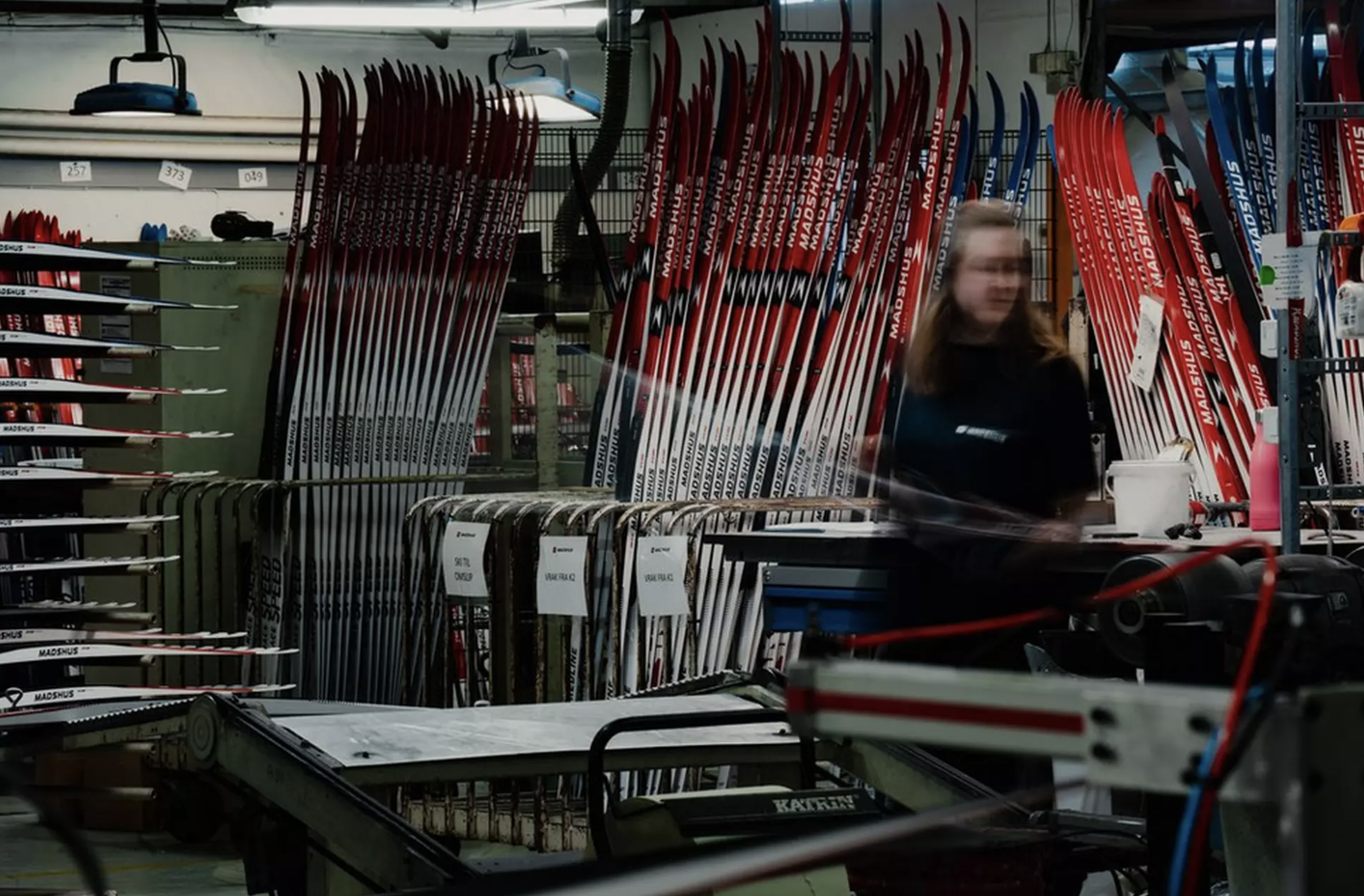
    In August 2025, U.S. officials announced a sweeping 15% tariff on European sporting goods, encompassing a wide range of products, from bicycles to skis. For cross-country skiing, nearly every major brand is affected: Fischer and Atomic (Austria), Salomon and Rossignol (France), Madshus and Swix (Norway).

    At the same time, the value of the U.S. dollar has weakened relative to the euro. In practice, this means that European brands invoicing in euros are already charging more before tariffs are added. Importers now face what retailers call a “double tax”: currency pressure first, followed by tariffs.

    “It’s not just the 15% tariff,” says Nathan Schultz, owner of Boulder Nordic Sport (BNS), which operates stores in Colorado and Maine. “When you add in the weaker dollar, it’s closer to a 25% increase on the goods we bring in from Europe. That’s a big deal for shops, teams, and families trying to keep skiing affordable.”

    In addition to a 15% tariff, importers are also faced with navigating a roughly 10% reduction in the value of the US dollar compared to the Euro since the beginning of the year.
    Retail Price Shock

    The most visible effect of these economic headwinds will be at the cash register. Industry analysts estimate that retail prices for skis, boots, and poles could climb 10–20% this season.

    A racing ski that cost $750 last winter could now exceed $850, while entry-level packages—once reliably in the $400–$500 range for high school athletes—may cross into territory that forces parents to think twice.

    Junior clubs and college programs, often purchasing equipment in bulk, face an even heavier burden. A 15% hike on 40 pairs of skis adds thousands in unbudgeted expenses, straining already tight development budgets.


    Importing in a Shifting Marketplace

    As both a retailer and importer of Holmenkol and Rode wax, Schultz has felt these challenges firsthand. Initially, tariffs were expected to be 10%, so BNS priced accordingly. When the finalized 15% tariffs hit, Schultz decided not to reprice mid-stream, absorbing about 5% of the increase himself.

    “We ate that extra hit for now,” he explains. “But it’s not sustainable forever. There will have to be more price increases unless something changes.”


    Brand-Level Challenges

    For ski brands, the new trade environment is a strategic headache. North America has long been considered a key growth market, buoyed by Olympic visibility and U.S. athletes such as Jessie Diggins, Rosie Brennan, Julia Kern, Sophia Laukli, Gus Schumacher, and Ben Ogden.

    “North America is a showcase market,” said one brand manager. “Having athletes win on the World Cup while using our skis matters—but so does making sure local clubs and young skiers can actually afford them. Tariffs and exchange rates put us in a bind.”

    Some companies may absorb part of the increase, but margins are already thin. Others could delay or scale back product launches. A new boot line slated initially for 2025 may be postponed until 2026, when pricing pressure is (hopefully) less severe.
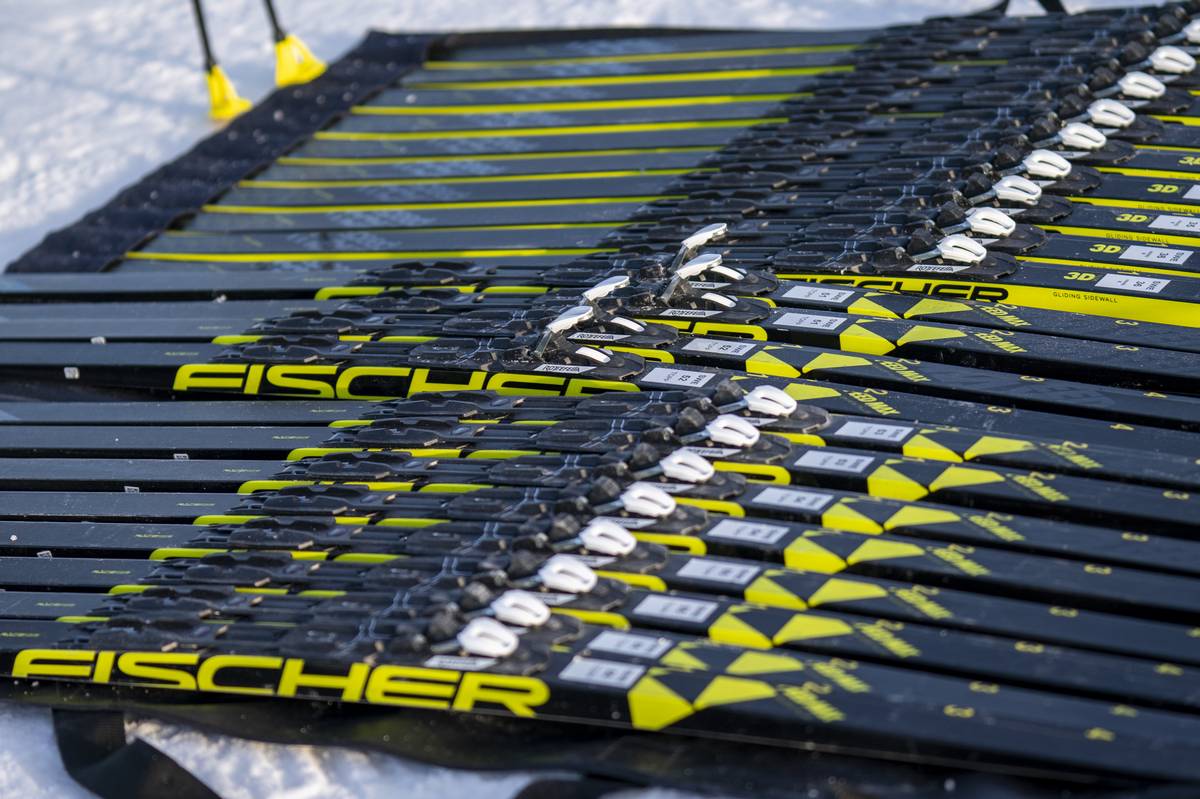
    (Photo: NordicFocus)
    Tariff Burden by Brand

    While most European brands face similar baseline tariffs, differences in origin create slight variations in exposure.

    • Fischer and Atomic (Austria): ~15% baseline tariff.
    • Salomon and Rossignol (France): ~15%.
    • Madshus and Swix (Norway): ~17% estimated, reflecting Norway’s non-EU status and potential reciprocal adjustments.
    Retail Complexity: More Labor, More Headaches

    Beyond costs, the logistics of managing inventories are increasingly complicated.

    “We have 25,000 SKUs between bike and ski,” Schultz notes. “Every brand is handling this differently. Some have had two price increases already, while others have had none. It’s a lot of extra labor just tracking what’s going on.”

    Even smaller suppliers face hurdles. Boutique companies like Guru Wax or Air Trim Masks often ship just a few boxes via UPS. But new customs procedures mean all goods are routed through central hubs, adding delays and expense. “Instead of a straightforward shipment to Denver, everything gets bottlenecked,” Schultz says.


    Barriers to Entry: The Impact on Families and Clubs

    Relative to sports like alpine skiing or hockey, cross-country skiing remains relatively inexpensive. But those margins matter. “When kids need both a skate and classic setup, it’s already a big ask,” Schultz points out. “Add 10 to 25% more on top, and suddenly the sport is out of reach for more families.”

    High school and junior programs, many of which rely on bulk gear purchases, are especially vulnerable. “If equipment becomes too expensive, it risks shrinking the base at a time when we should be growing participation,” warns Mount Greylock High School coach Hilary Greene.
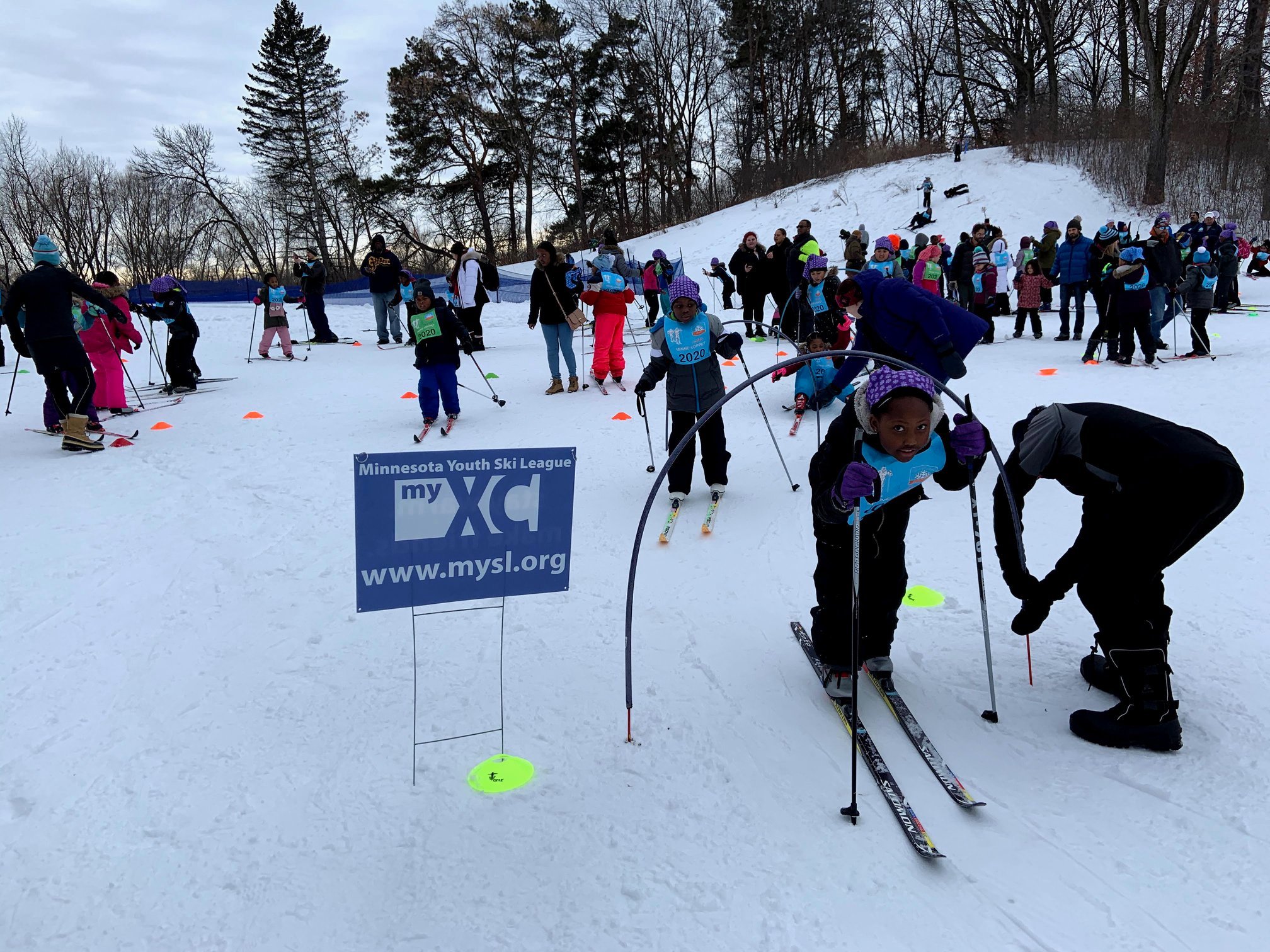
    The busy scenes of a Minnesota Youth Ski League practice. (Photo: Minnesota Youth Ski League).
    Historical Parallels

    This isn’t the first time global economics have intersected with Nordic skiing. In the early 2000s, rising costs prompted several companies to relocate their production from Western Europe to Eastern Europe and Asia. More recently, the ban on fluorocarbon wax has required significant R&D investment, squeezing brands that were already operating on thin margins.

    For Schultz, the tariffs feel uniquely discouraging: “At the start of COVID, we thought we were doomed. But it turned into a boom because people rediscovered the outdoors. This is the opposite—it just depresses the market.”


    Looking Ahead: The Olympic Test

    The timing could hardly be worse. With the 2026 Winter Olympics in Italy just months away, the industry had been bracing for a surge in interest and participation.

    “There’s always an Olympic bump,” Schultz says. “But if starter packages cost hundreds more, will families still make the leap? Rising prices could blunt that momentum.”

    Some retailers are adapting by delaying orders, expanding consignment programs, or promoting non-European goods. Industry groups, such as Snowsports Industries America (SIA), are lobbying U.S. trade officials for relief. Brands, meanwhile, are weighing long-term strategies like currency hedging, North American assembly, or collaborative lobbying.
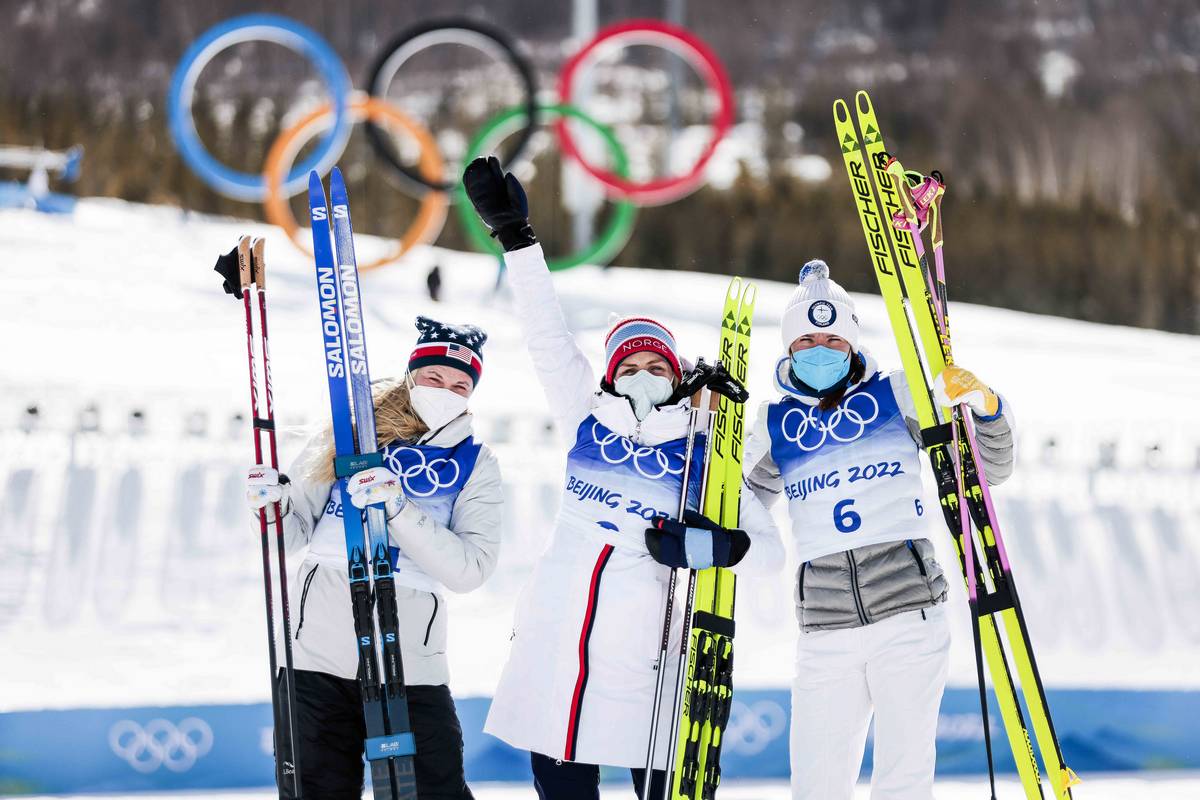
    Ski brands have a long history of using the Olympic platform to showcase innovations and new products. (Photo: NordicFocus)
    The Outlook: Uncertainty Meets Opportunity

    The following 18 months will test the resilience of the U.S. cross-country ski industry. Tariffs and currency fluctuations threaten to disrupt what should otherwise be a banner Olympic cycle. Yet history shows that Nordic skiing is an adaptable sport, built on perseverance through tough conditions.

    “Skiing is resilient,” Schultz reflects. “People love it, and once they’re hooked, they’ll find a way. Our job is to keep it as accessible as possible, even in tough times. If we do that, the sport will weather this too.”
  • Old skis? No problem for Johannes Høsflot Klæbo at World Championship sprint

    Old skis? No problem for Johannes Høsflot Klæbo at World Championship sprint

    This article was made possible through the generous support of our voluntary subscribers.  If you would like to see more articles like this one, please support FasterSkier with a voluntary subscription.  

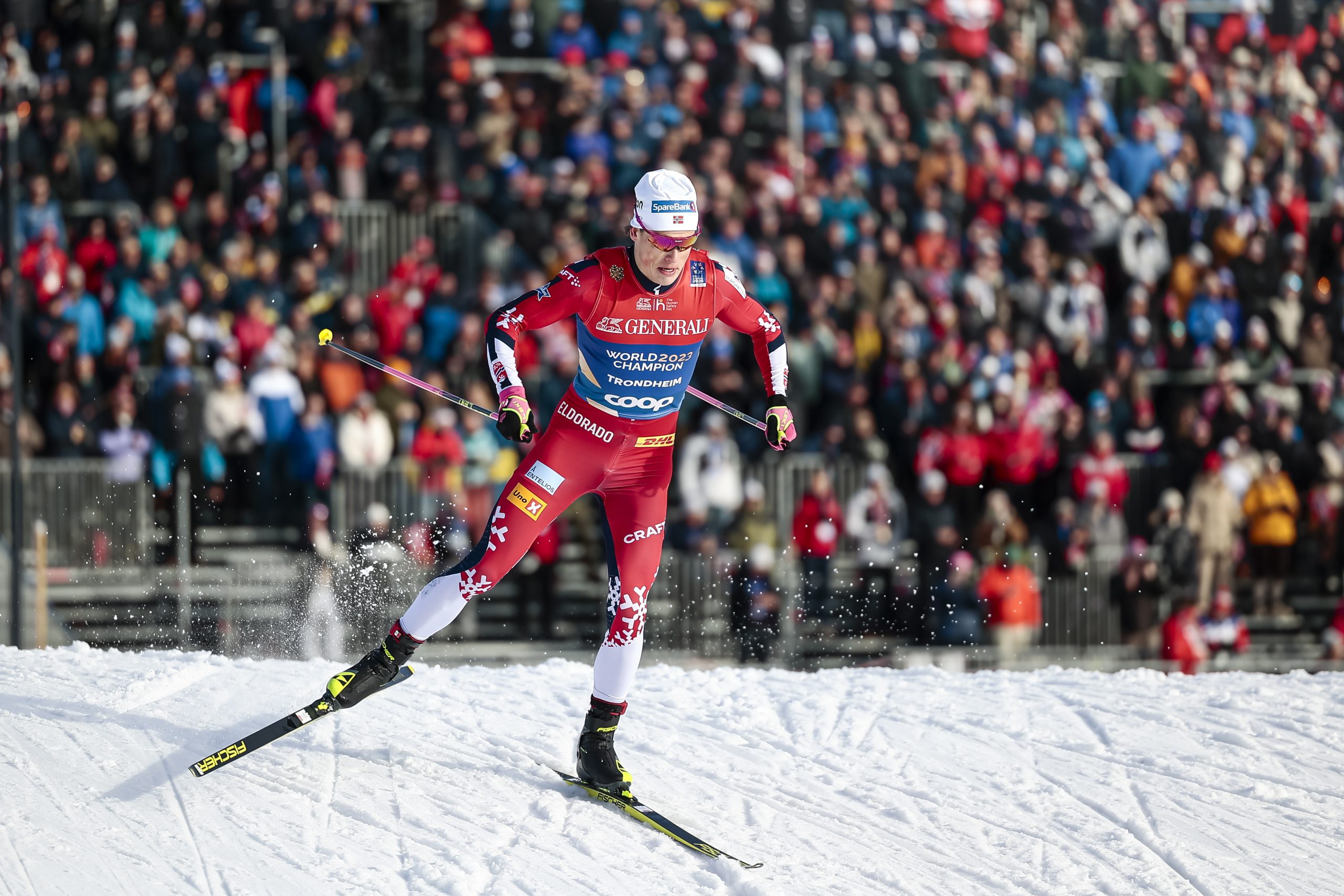
    Johannes Høsflot Klæbo won Thursday’s World Championships sprint on an older model of Fischer skis. (Photo: NordicFocus)

    TRONDHEIM, NORWAY — After winning Thursday’s world championships-opening sprint here, Norwegian superstar Johannes Høsflot Klæbo posed for photos with the new model of Speedmax cross-country skis recently unveiled by his sponsor, Fischer, the giant Austrian winter sports company.

    But if you looked carefully at Klæbo’s skis during the race, they were different, and, unusually, they were dated: The pair was several years old, a Fischer official confirmed in an interview Sunday.

    Typically, new skis are more dynamic and give athletes a more stable platform on the snow, said Gerhard Urain, Fischer’s head of nordic racing. But the older pair Klæbo used Thursday are especially good in the wet, sloppy snow conditions that have prevailed in Trondheim for the past week, according to Urain.

    “And then also, when they have good memories with the skis — when they use them in these conditions, they are confident,” he said.

    “It was the right choice for him on this day,” Urain added, noting that Klæbo’s skis appeared to be running fast compared to other athletes’ on Thursday.

    Klæbo celebrates his sprint win while holding a pair of the new Fischer Speedmaxes. (Nordic Focus)

    On the surface, Klæbo’s victory on older skis could complicate Fischer’s marketing pitch for the new Speedmaxes, which, according to the company, are characterized by “extreme lightness.”

    But coaches and ski technicians said it’s increasingly rare for older pairs of skis like Klæbo’s to still perform competitively in tests against newer models.

    Urain noted that, just a few weeks after the introduction of the new Speedmaxes, many other top competitors have been choosing to race on them — suggesting that generally, they’re performing better than the dozens of pairs of skis already in athletes’ quivers.

    In Sunday’s women’s skiathlon, the two top Norwegian finishers, Therese Johaug and Heidi Weng, both used new Speedmaxes.

    Heidi Weng, second from left, and Therese Johaug, right, raced on the new Fischer Speedmax skis in Sunday’s skiathlon. (Nordic Focus)

    “They got the skis three weeks ago, and they’re racing them, using them in the championships,” Urain said.

    The durability of Klæbo’s race-winning skis also is an argument for Fischer’s equipment in and of itself, noted Matt Whitcomb, one of the U.S. Ski Team coaches in Trondheim.

    “A ski that keeps winning stays in the fleet. I know the ski companies love to have the new graphics. But what a great testimony to Toyota when you see a ’91 Corolla in, just, great condition cruising down the road,” Whitcomb said. “There’s no better accolade to receive.”

  • Nordic Pulse Uses GPS Tracking to Improve and Accelerate Communication Between Groomers and Skiers

    Nordic Pulse Uses GPS Tracking to Improve and Accelerate Communication Between Groomers and Skiers

    Now that we’ve got your attention with fresh wintery tracks and crisp corduroy, read on to learn more about a new GPS-based live groom reporting tool to automate and streamline communication between groomers and skiers.

    If there’s a generalization that can be made about cross country skiers, it might be that we like to “know before [we] go.” As the ski season waxes and wanes, or mid-season storms roll through, we relentlessly check the weather forecast and our local grooming report as we fantasize hungrily about the fresh corduroy or classic tracks we hope to enjoy that day.

    But we can’t always know before we go. Timely grooming reporting asks those cultivating the trails to go a step further after a middle-of-the-night shift, when sitting at a computer to update the website in a timely manner might be less appealing than crawling into a warm bed or sipping a hot cup of coffee. This creates friction between the hard-working groomers and skiers who are chomping at the bit and weighing the potential disappointment of making the drive to the ski area without knowing what to expect.

    Luckily for both parties, there’s a new system growing which allows faster and more efficient communication, Nordic Pulse. 

    Former Canadian national team member Julien Locke has been working as a web-developer for several years to support his ski career. Locke raced regularly on the World Cup from 2017 to 2019, before sustaining a severe concussion, which removed him from training and competition. His career best result arrived in Dresden, Germany where he popped a 15th place finish in the freestyle sprint in 2018. Though he still trains as a professional skier, subsequent health issues have prevented him from returning to his former performance level, but the fire still burns, and he aspires to make it back to the World Cup.

    Roughly six years ago, one of Locke’s projects was a website overhaul for Sovereign Lake in Vernon, BC, including integrating a better method for sharing grooming information with skiers.

    “Their grooming team was quite frustrated with not having a slick system for them to use to update the report, and their skiers were feeling like they didn’t have enough information,” Locke explained in a call. “So we made a little web based system and it worked okay, but it really opened my eyes to a real need that Sovereign Lake had, and other ski areas that I was working with also had, to promote the groomers perspective and skiers perspective. And it really inspired me to start thinking, ‘How can we make this better?’ And it took quite a few years for this project to really get going. It wasn’t until a year and half ago that I started developing it full time.” 

    During the interim, Locke continued to work with Sovereign Lake and other ski clubs, all the while listening to the interests, needs, and frustrations of groomers, skiers, and club organizers. Eventually, this evolved into the development and launch of Nordic Pulse, a GPS-based live grooming system that allows for simple, efficient, and automated communication on grooming operations for ski areas of all sizes and capacities. 

    “The goal in the beginning was to make it easier for groomers and ski areas to share what they’re doing, their trail conditions and their grooming reports. And then for skiers to have a central platform so that in November when you don’t know where to go skiing, or mid season when you have two different options of places near you, you can easily and conveniently see what conditions will be like.”

    Nordic Pulse founder Julien Locke trains on the Haig Glacier. (Photo: Russell Kennedy)

    In particular, a need Locke identified and aimed to solve was creating efficiency for the grooming team.

    “Oftentimes, they start grooming at midnight, and are grooming until the early, early hours in the morning. They finish their shift, and you know, they’ve been up all night, they’re tired, and the last thing that they want to do is go fiddle around with the website or call somebody to tell them an elaborate description of where they went.”

    Locke looked to automate the reporting process and make it seamless. 

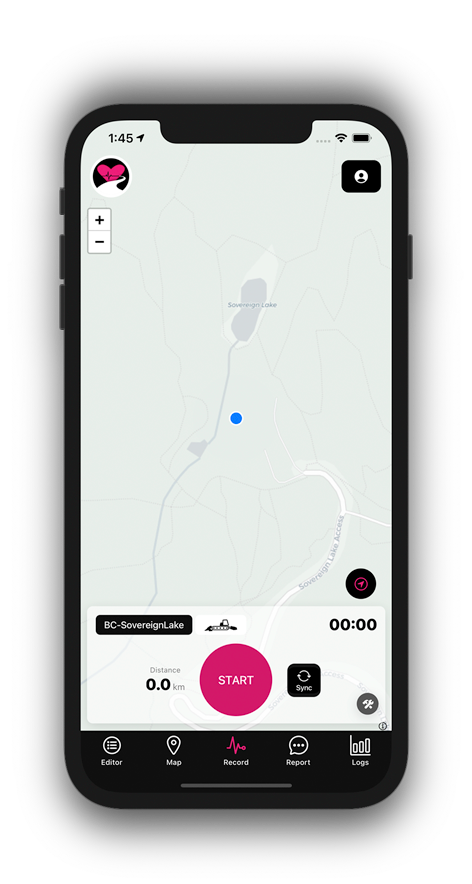
    “Our solution is using GPS, so the groomers click ‘start’ when they start recording and they click ‘stop’ and when they’re done, and then, in that time, all the grooming reports are done automatically. So it really saves them quite a bit of time every day at the end of their shift not having to report or go through the trails list and try to remember what was groomed at what time.” 

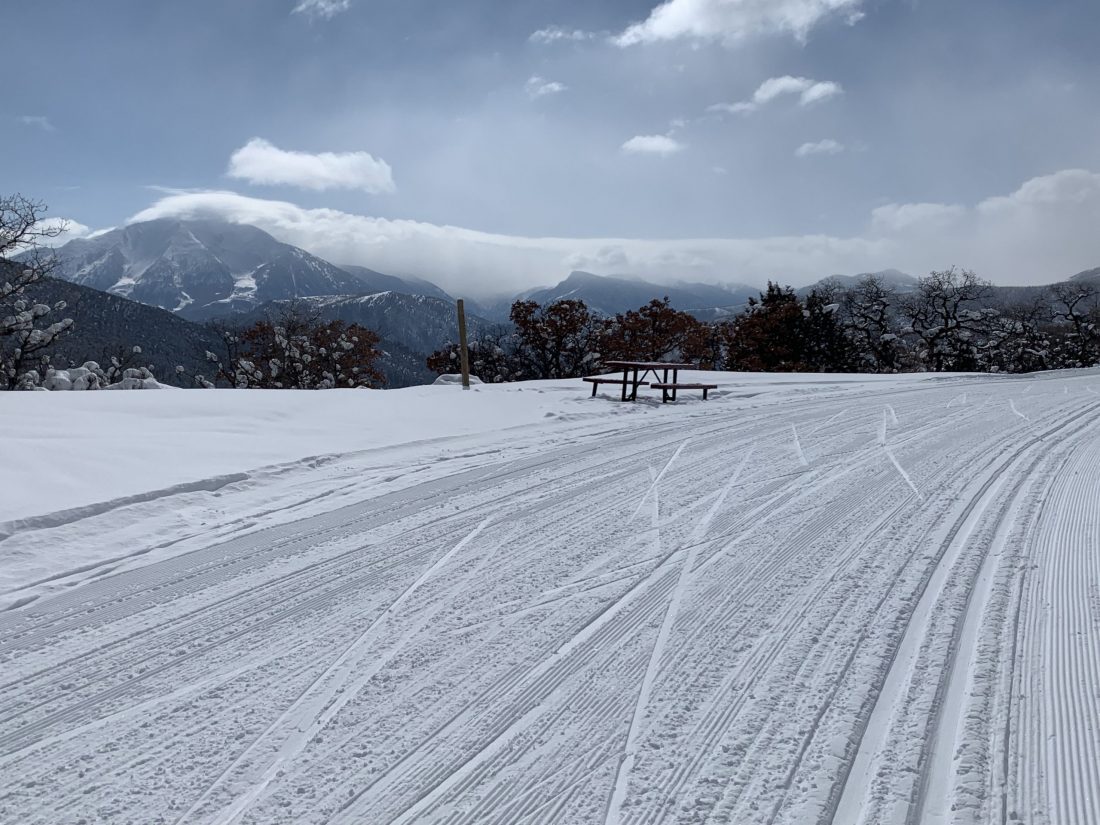
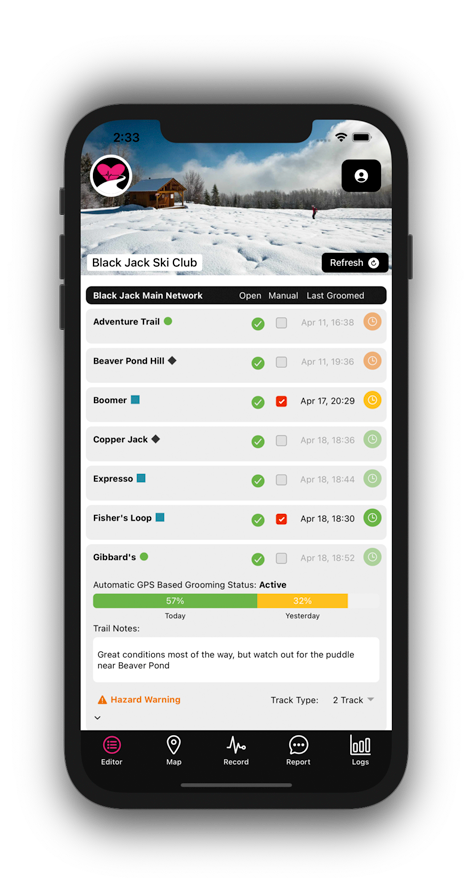
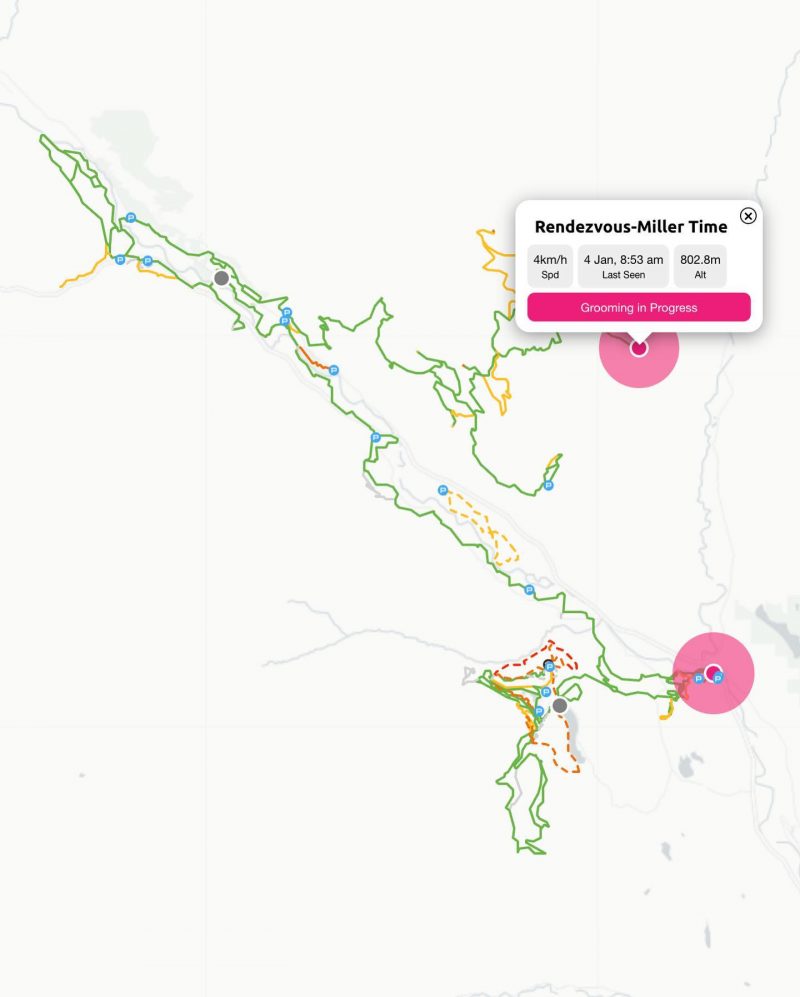
    Acknowledging that it is common for a groomer to only hit part of a particular trail within a route, the traditional system of listing off what was completed can fall short. With Nordic Pulse, a color-coded map shows specifically what was groomed each day, including options to differentiate between skate and classic if track has not been reset on all trails that day. If needed, groomers can also select from a materials list to indicate what machinery was used, from snowmobile to PistonBully, depending on what the ski area has available. Additional notes can be added as needed. 

    “Being able to get the grooming information onto a map so that the skiers have a really quick visual of what’s been done, I think, was a real need from the people I had talked to. I know from the feedback we’ve gotten, people really appreciate being able to see visually what’s been done.”

    When a new ski area comes on board, Nordic Pulse handles the mapping to create a pre-set base on which the system will run. While the app is running in the groomer’s pocket, GPS data points are collected every 20 to 30 meters, keeping precision high even for trails with frequent intersections or overlapping segments. This data is synced to the Nordic Pulse server and processed by its algorithm to determine which trails on the predetermined map were completed, with time stamps.

    No cell service at your local trails, or perhaps your groomers don’t want to burn cell data? No problem. 

    A simple app allows groomers to track their work with GPS, which is pushed to a map so skiers can see what and when grooming took place. (Photo: nordic-pulse.com)

    Groomers can run the app without having cell reception or consuming data. The GPS information will be stored locally on the device until the phone enters WiFi, then the groomer would only need to click sync to push the data to the NordicPulse server. Time stamps will be preserved to accurately reflect the work that was done, should there be delays.

    Locke added that some of the earliest users of the system were ski areas based in the Kananaskis Provincial Park near Canmore, Alberta, well outside the reach of cell reception.

    In terms of the cost of adopting Nordic Pulse, pricing is adjusted on a sliding scale system depending on the number of kilometers groomed by the ski area, the number of skiers, and the amount of GPS data that needs to be processed with daily grooming. Clubs are billed annually and prices currently range between $600 and $2000 per year. 

    Having grown up in the small town of Nelson, BC, it was important to Locke to keep the costs reasonable. 

    “When I started developing Nordic Pulse, I was looking at options. One strategy I could have taken was creating an enterprise level product for just large ski areas who have the budget to afford that. But I grew up in a really small club, and I really wanted Nordic Pulse to be accessible to everybody. So we’ve done our best to really keep the cost as affordable as we can by having a sliding scale.” 

    For ski areas with limited budgets, Nordic Pulse offers a “community edition” with no yearly fee. 

    A color-coded trail list and map with time stamps indicates which trails have been groomed, with room for additional notes as necessary. (Photo: nordic-pulse.com)

    Rather than using GPS to track grooming and automatically update the live-grooming maps and trail reports, the community edition uses the in-app trail editor to manually update the maps or trail lists instead. While Nordic Pulse “would love to be able to offer the community edition completely free”, there is a small one-time setup fee to cover their costs in getting the  but there’s no yearly costs after that.

    Year one has gone “incredibly well”, surpassing Lockes original goals and expectations. 

    “I started developing this year and a half ago and I was optimistic we’d get maybe a dozen clubs on board in the first year. I really thought we’d start small and grow. And then, we started doing a beta testing phase, and all of the sudden, clubs were reaching out every day, it seemed. And by the time we officially launched, I think we had over almost 20 areas on board, and then by the end of the year, we had 35, and now we have around 80 ski areas total after year one. So it’s growing really fast, which has really been exciting for us. And also, I think, really great for skiers because the more ski areas that are on board, the more useful the information is for skiers, as in, skiers can go to any area and be able to check the reports on the same platform.”

    The goal for next year: “Just keep growing.”

    “We’re always looking are excited to have new ski areas come on, and are looking to grow more in the States and more in Canada, and potentially elsewhere in the world as well.”

    Currently, the app is only designed for us by groomers, while skiers check either the Nordic Pulse site or an embedded applet on their local trail system’s website directly. The website is mobile optimized, but Locke said that a skier specific app is in the works to improve the user’s experience, and should be on line by next season. 

    “I’m really motivated to make the system as interesting as possible for everybody, and as useful as possible, and just continually roll out new features for both skiers and also groomers.”

    So far, the feedback Nordic Pulse has received from clubs who have integrated the system this year has been “incredibly positive,” improving the experience for a growing population across all abilities within the cross country ski community. 

    “I think in the last few years, especially with the numbers of skiers increasing from COVID, a lot of ski areas have been feeling the need to have better ways to report their grooming and show that information. And a lot of ski areas come to us saying, ‘Hey, we’ve been thinking of doing something like this, but on our own, we can’t afford it because it’s expensive to build a system like this.’ And  they really appreciate being able to use our service and tap into all those features. Already this year, we’ve had over 160,000 skiers using our platform and almost a million views, so it’s growing really fast and it’s meant a lot to me. It’s been very rewarding, and humbling to be able to make a difference in the ski world.”

    What are users saying about Nordic Pulse?

    According to Nordic Pulse, Ethan Meginnes of the Black Jack Ski Club in Rossland, BC, the system is a “game changer” for its members. 

    “As a groomer and avid skier, I am relieved to be able to relay and receive reliable information. Nordic Pulse is easy to use with multiple platforms,” Meginees said. “I would love to see every cross country ski center ultimately utilize this app.”

    Methow Valley resident and regular trail user Alex Hall called the system “exceptionally good.” 

    “I love the live grooming report,” he wrote to FasterSkier. “Though I find that I question its accuracy at times… There do seem to be occasional misalignments, but the thing I love about the live timing is it will show you instantly, completely and comprehensively where the cats are and what they’ve done, and it’s all on a picture, so it’s really handy. It’s definitely my favored system because it’s really quick and gives that overview. It updates automatically, it’s live, it’s got color graphics. Every now and then, there is something goofy about the live map. It’s definitely [an improvement from the last system].” 

    The Methow Valley Trails receive a fresh groom in January, mapped with Nordic Pulse. (Photo: nordic-pulse.com)
  • Salomon to Join NNN Club, Slated to Reveal New Boots-and-Bindings Option on Jan. 1

    Salomon to Join NNN Club, Slated to Reveal New Boots-and-Bindings Option on Jan. 1

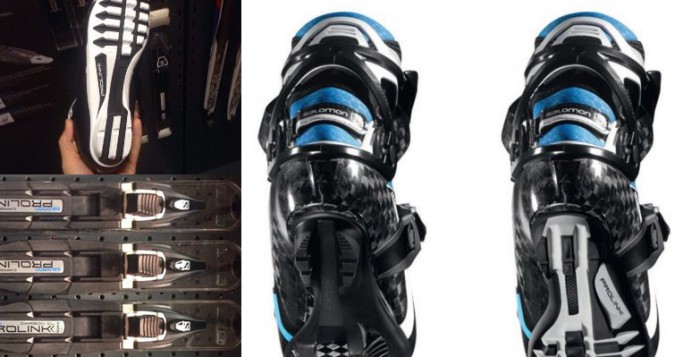
    Tomorrow, Jan. 1, 2016, Salomon is expected to announce its new NNN-compatable boot system, called Prolink. (Photo: Salomon Prolink/xc-ski.de)
    Tomorrow, Jan. 1, 2016, Salomon is expected to announce the release of its new NNN-compatable boot and binding system, called Prolink. (Photo: Salomon Prolink/xc-ski.de)

    The dueling alphabet soup of binding systems is about to get a whole lot simpler. For the past decade or so it’s been two camps: Salomon’s SNS system or NNN. On Jan. 1, Salomon plans to reveal a not-so-well-kept secret.

    Salomon, which is owned by the Finnish-headquartered sport conglomerate Amer Sports, will begin production of NNN-compatible boots and bindings. The new system, called Prolink, shares DNA with NNN.

    According to Amer Nordic Commercial Manager Isaac Wilson, some key differences remain.

    The Bindings

    “Starting with the easiest and the most obvious, the binding is lighter. It’s also lower and it’s thinner,” Wilson explained on the phone.

    SNS devotees often claim more sensitive ski-feel is obtained with as little material between the boot sole and the ski. (Modern NNN bindings slide onto a ski-mounted plate, called the NIS system. The binding slides onto the plate with, no drilling required, and provides some fore and aft adjustment.)

    Continuing Salomon’s direct-mount legacy, Prolink bindings will screw mount directly to the ski with no NNN plate in between. To allow for an easier transition from SNS to Prolink bindings, the new system will use an identical SNS screw-hole pattern. Converting skis with SNS bindings to Prolink will be simple.

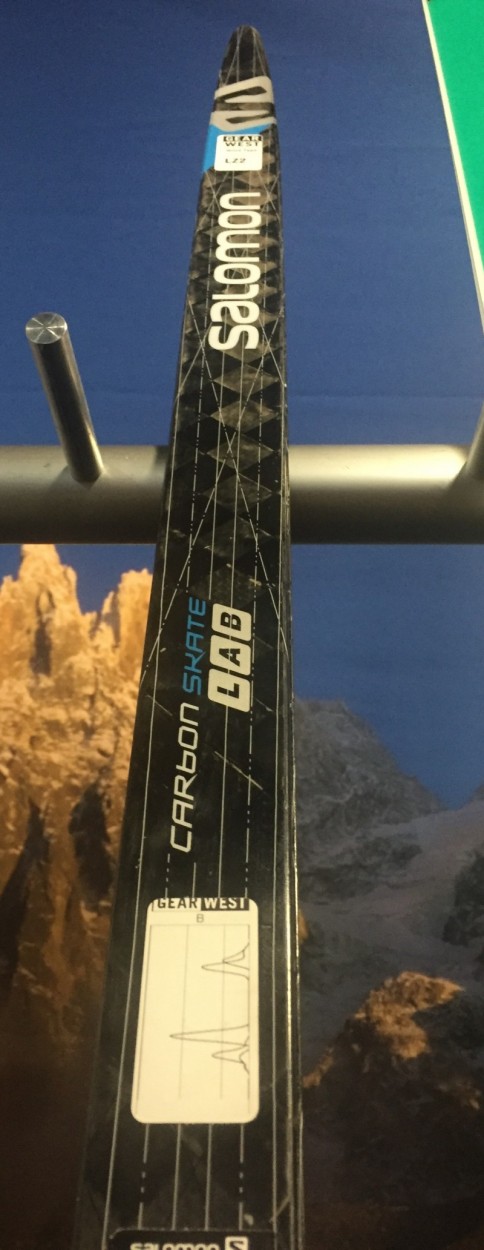
    New for 2015, Salomon’s Carbon Skate Lab features a ThinPly carbon construction and three different base setups, cold, wet and universal.
    New in 2015, Salomon’s Carbon Skate Lab featured a ThinPly carbon construction and three different base setups, cold, wet and universal.

    Amer Sports, which owns both Salomon and Atomic, has invested millions developing new ski technologies. Both brands helped introduce and innovate classic skis with built in skins. This year Salomon rolled out a top-end price point carbon skate and carbon classic ski.

    “All of our skis, from the cheapest kids ski to the most expensive carbon ski, will all come pre-drilled based on camber of where that ski should be mounted,” Wilson said of the new easy to use mounting system. “So it makes the mounting really quick. But it’s still a direct mount to the ski so you get a really direct connection.”

    Wilson asserts that differences between current NNN bindings and Prolinks don’t stop at what he claims is better snow-feel, but extend to a mechanically better connection between the boot and binding.

    Salomon claims its system, which compresses against the boot’s attachment point, a thin bar near the toe, is better than the NNN closure which uses a small hooks that grip and wrap around the top of the boot bar.

    “There is no compression on that system so that the bar of your boot is not actually held or pressed tightly, there is a lot more movement involved,” Wilson said.

    With the tighter connection, Salomon suggests its system will last longer and provide a more seamless interface between boot and ski.

    The Boots

    Salomon’s plan for the immediate future is to produce two runs of identical boots in each model, one with a SNS sole, the other a Prolink sole.

    “We will have starting with the S-Lab Pro all the way down to the Escape touring boot, everything in there will be offered in either option,” Wilson said. “We want the conversation to turn away from, ‘What system are you on?’ to ‘What boot fits you the best? What skis do you like the most? What are the most relevant technology for you?’ Not so much, ‘What is the system you are currently using?’ ”

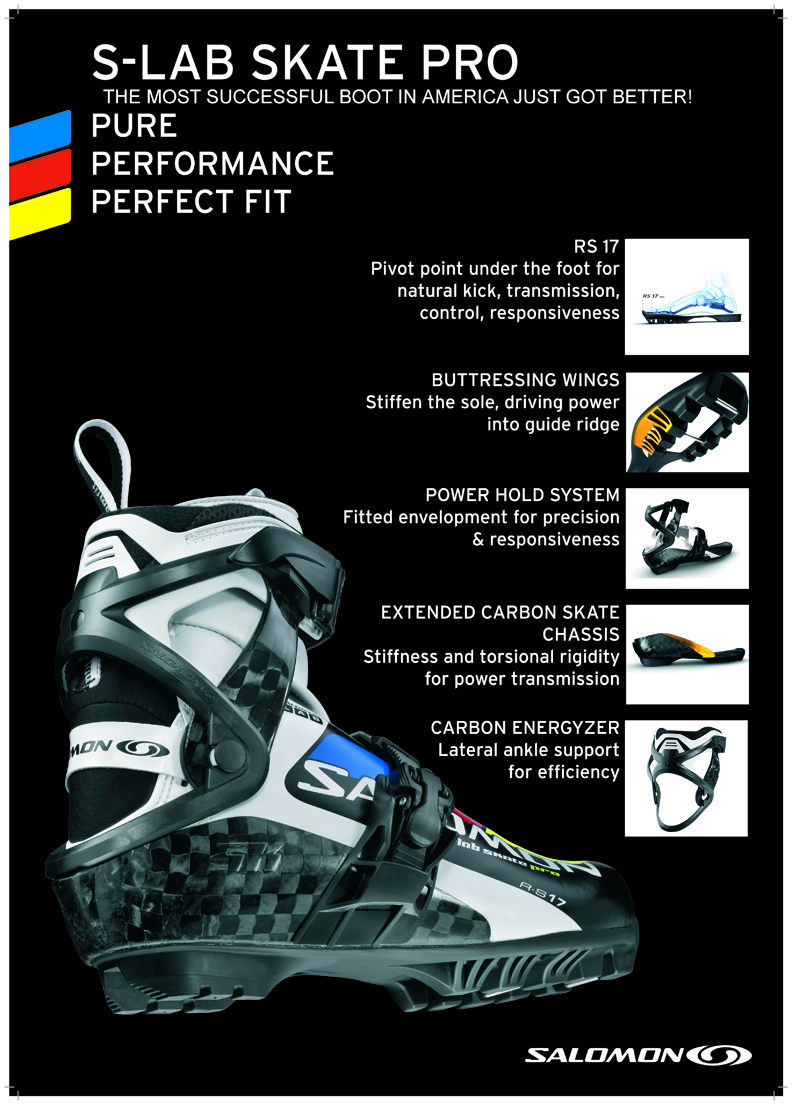
    Old model Salomon SLab Skate Pro with SNS compatible sole
    Older model Salomon S-Lab Skate Pro with SNS compatible sole

    In the long term, production runs of boots offering an “either or” option may not be cost effective. Salomon is already thinking ahead. It’s skyrocket price Carbon Skate Lab boot pushes beyond 1K for a pair. Yet it remains a way for Salomon designers to prototype modular boot systems.

    “When you go to our Carbon boot, and our new Carbon Classic boot, they will actually come with a shell with cleats … They will come with both cleats so you will have the ability to have both in the box. You’ll be able to have an SNS cleat and a Prolink cleat [that is NNN compatible] in the system,” Wilson said. “The goal will be like a cycling shoe where you never worry about what pedal you are using.”

    The Binding Wars and the Bottom Line

    Binding compatibility is downright unglamorous. But as the interface between ski and boot, binding compatibility is a gateway to greater profitability. For example, with the NNN system buyers have many brands to choose from to optimize fit; there’s Rossignol, Alpina, Madshus, and Fischer — just to name the major players. If your ski race quiver includes NNN bindings, it makes the most sense to purchase boots from these brands. If Salomon or Atomic boots are the most comfortable fit, then up to now, the SNS system was mandatory.

    Amer Sport’s business model worked for awhile. The SNS system held strong here in the U.S. Yet gradually, brand influencers, like coaches and their ski clubs, as well as top World Cup skiers, switched to NNN. At one ski club in Bend, Ore., you’re likely to see only a few pair of Salomon boots amidst a group of 30 to 40 skiers on any given day.

    Internationally, the SNS system is quite robust.

    “In Germany, it’s still 80 percent,” Wilson said. “But in the U.S. and a few other places we have four really strong competitors and we lost partnership with Fischer a few years ago. Our market share shrunk. We went from 65- to 70-percent market share in the U.S. to just about 35 percent.”

    In places like Norway, a major nordic-ski product consumer, SNS became an afterthought as well. Wilson said that despite Amer Sport’s investments in high end ski production, they simply were preaching to a smaller and smaller choir.

    “At the end of the day, in all the business meetings we were in, we were saying no matter how much we do this we are only speaking to 35 percent of the industry, and that we are spending an awful lot of money to talk to 35 percent of the people.”

    Salomon could have moved on this earlier, he added. “My biggest thing is, OK, we could have done it ten years ago, but I’m just really happy we are doing it now. … It’s hard to admit that we need to play across the full range of systems … so that we can be back to where we once were which is a much higher market share especially in boots where we are the most relevant brand still in the industry.”

    Salomon’s bottom line is likely to be bolstered by the Prolink system’s introduction. Wilson explained the system is an NNN upgrade, but it’s not revolutionary. Put simply, now Salomon can attract consumers who simply prefer their boots and don’t want to change binding systems from NNN to SNS.

    “Hopefully it allows people to open the ability for them to take Salomon or Atomic product and not close the door for us,” he added.

    “I am proud that Salomon was not too proud to do this … I think they were really globally not that worried about it and now I think especially if they ever want to play in the Norwegian market, if they ever want to play in the U.S. market in a real way, this was a move that they had to do. I think they came to that realization and they did it.”

    Wilson admitted he’s asked the question again and again — does this mean Salomon has lost the binding battle or lost the war? “For me, it’s a funny way to think about it. I feel like hopefully the consumer is the one who wins this in the end. So nobody has lost but the consumer comes out as a winner.”

  • 2015 FasterSkier Holiday Gift Guide: Over $200

    2015 FasterSkier Holiday Gift Guide: Over $200

    2015 Holiday Gift Guide

    Welcome to FasterSkier’s Holiday Gift Guide! The holidays are here and it’s time to go hunting for the perfect presents for the cross-country skiers in your life. Lucky for you, we’re going to make it easier. Scroll through, get some ideas and simply get ready to open your wallet. At least we’ve done the research for you.

    We’ve broken up our gift guide into four budgetary segments: Under $25, $25-$75, $75-$200, and $200-and-over. Happy shopping!

  • 2015 FasterSkier Holiday Gift Guide: $75-200

    2015 FasterSkier Holiday Gift Guide: $75-200

    2015 Holiday Gift Guide

    Welcome to FasterSkier’s Holiday Gift Guide! The holidays are here and it’s time to go hunting for the perfect presents for the cross-country skiers in your life. Lucky for you, we’re going to make it easier. Scroll through, get some ideas and simply get ready to open your wallet. At least we’ve done the research for you.

    We’ve broken up our gift guide into four budgetary segments: Under $25, $25-$75, $75-$200 and $200-and-over. Happy shopping!

  • 2015 FasterSkier Holiday Gift Guide: Under $25

    2015 FasterSkier Holiday Gift Guide: Under $25

    2015 Holiday Gift Guide

    Welcome to FasterSkier’s Holiday Gift Guide! The holidays are here and it’s time to go hunting for the perfect presents for the cross-country skiers in your life. Lucky for you, we’re going to make it easier. Scroll through, get some ideas and simply get ready to open your wallet. At least we’ve done the research for you.

    We’ve broken up our gift guide into four budgetary segments: Under $25, $25-$75, $75-$200 and $200-and-over. Happy shopping!

  • Rollerski Maintenance Part II: Time on Rollerskis Actually Amounts to Time On Snow

    Rollerski Maintenance Part II: Time on Rollerskis Actually Amounts to Time On Snow

    Note: Written by Matt Liebsch, director of race services at Gear West Ski and Run, this is the second installment of how-to series about taking care of your summer skis — that is, your rollerskis. 

    Now that summer is finally here, skiers are starting to lay the foundation for a successful winter race season by putting in volume and specific training. This most likely includes a fair amount of rollerskiing.  For many skiers this time spent on rollerskis actually amounts to time on-snow.  So as skiers, we should be mindful of the performance and safety of our rollerski equipment.    Rollerski maintenance is generally considered an afterthought for many, but just a few minutes of effort can greatly enhance the performance and safety of your equipment.

    Gear West's Matt Liebsch with a Swenor Carbonfibre Roller Ski (Photo: Gear West/YouTube) https://www.youtube.com/watch?v=V5mp-Lu5dM0
    Gear West’s Matt Liebsch with a Swenor Carbonfibre Roller Ski (Photo: Gear West/YouTube)

    Tip #1: My #1 rule, wear a helmet!

    Tip #2: Inspect bindings

    • I use NNN R3 bindings mounted on a composite rollerski.  This spring I noticed the bindings seemed a bit loose.  I added a bit of wood glue and retightened all the screws and all better.  For loose bindings on metal rollerskis try retightening the screws.  If that does not work, remount the binding as the mounting hole is too big/over stretched for the screw.  Move the binding forward or back at least 1cm to avoid punching 2 holes too close together.

    Tip #3: Inspect wheels

    • Deep cracks or tearing can indicate it’s time to replace the wheels.
    • Fix tracking: The number-one complaint I get about rollerskis is tracking.  The issue usually comes down to uneven wheel wear or the wheel not in alignment.  The fix for uneven wheel wear is a continued effort to swap left and right rollerskis every workout.  For a misaligned wheel, try unloosening the axel bolt and retightening it.  Also, a gentle tap of the wheel against the ground to correct the wheel alignment can fix the problem quickly.  Make sure to look at both front and rear wheels as the rear wheel is almost more important to tracking as most of the skiers weight is on the back wheel… kind of like the rudder of a boat.

    Tip #4: Check bearings

    • If they do not spin smoothly replace them or take apart the wheel/bearings and clean everything.  A grinding spin can indicate the bearing has been compromised and you never want a bearing to overheat and lockup when using the rollerski.  It is possible to remove a bearing cover and add additional bearing grease.  I recommend having a qualified shop do this or just replace the bearings which are not that costly.

    Tip #5: Fix tracking via wheel-axle nuts

    • Check that these are tight and if they are showing wear from grinding, replace them.

    Tip #6: Keep your skis clean

    • Towel off your rollerskis every time you use them in wet conditions — the road spray and wetness is not great for your equipment.  A quick dry off goes a long ways to prolonging the life of the rollerskis.

    Tip #7: Always sharpen your rollerski tips/ferrules before training sessions. Dull tips can lead to slipped pole plants.  An inopportune missed pole plant can certainly lead to a crash.

    Tip #8: DON’T!

    • Please do not loosen the rollerski axel nut in an attempt to increase speed.
    • Also, please to not use a solvent based oil (WD-40) to lubricate bearings.
  • Rollerski Maintenance for Dummies — or Smarties, Depending How You Look at It

    Rollerski Maintenance for Dummies — or Smarties, Depending How You Look at It

    Rollerskis from RollerskiShop.com (Courtesy photo)
    Rollerskis from RollerskiShop.com. Owner Clayton Keim recommends inspecting the cord on Pursuit pull break periodically. (Courtesy photo)

    Note: This is Part 1 of 2 in a how-to series about taking care of your summer skis — that is, your rollerskis. The first comes from Clayton Keim, owner of RollerskiShop.com. 

    Tip #1: When out rollerskiing, always swap your skis on your feet at the halfway point.  This will help to ensure the wheels wear evenly and last longer. When it comes time to replace the wheels, replace all of them at the same time.

    Tip #2: Check your wheels and bindings periodically for unusual wear. If you are using a 1/2- or 2/3-speed combo, put the speed 2 on the back as they have the best wheel life. The rear wheels take more friction so best-wearing wheels should always go on the back. It’s rare for binding screws to come loose, but it can happen. To check for this try pulling up on the bindings to see if loose.

    From RollerskiShop.com owner Clayton Keim: "Ferrules should be sharpened with a diamond file." (Courtesy photo)
    From RollerskiShop.com owner Clayton Keim: “Ferrules should be sharpened with a diamond file.” (Courtesy photo)

    Tip #3: Whenever maintenance requires installing or replacing any hardware, never over-tighten or under-tighten the nuts. Just make sure the hardware has been firmly tightened. Periodically check the nuts for tightness. Using lock nuts with nylon inserts are the best for staying secure.

    Tip #4: Bearings shouldn’t be wiped. Dirt will build up on the shields, but wiping them can press dirt into the bearings. A sign of a bearing going bad besides bad noise is if it has play side to side. To test for this try twisting the wheel when it’s on the rollerski. Shouldn’t have any movement side to side.

    Tip #5: Don’t spray any lubricant onto the bearings. Just leave them alone.

    Tip #6: Avoid submerging bearings in deep puddles. Rollerskiing on wet pavement is fine but if bearings are submerged they can go bad.

    Tip #7: Rollerskis are tough to keep clean, so using a rollerski bag is often an easy way to keep the road grime contained. Using fenders is another way to keep things a little cleaner as well.

    Tip #8: As far as maintenance of our Pursuit pull brake, the cord should be inspected periodically to ensure no fraying. Shouldn’t have any problem unless you put it on without looking at it and it’s wrapped wearing on the wheel in which case you’ll notice it quickly. The lockwasher between the brake and forks prevent forward rotation, so if you’re experiencing forward movement, the axle bolt needs to be tightened more.

    Tip #9: Periodically inspect [rollerskis] for cracks or signs of stress fractures. If you have a composite frame inspect the bottom for any deep scrapes that could create a weakness and place for moisture to sneak in. These gouges should be covered with a marine sealant to keep moisture out.

    Tip #10: Ferrules [a.k.a. pole tips] should be sharpened with a diamond file. The diamond dust on the file is strong to sharpen the carbide tips. A regular file won’t do the job. Sharpen it to keep the same angles as best as possible meaning sharpen both sides. It should be sharp to touch just as they are when new. Many ferrules you can get over 1,000 miles out of. If using a bench grinder, don’t overheat your ferrules which will cause the plastic to melt. Dip them in water periodically to keep the temp down.

  • Brick Wheels Hosting On-Snow Ski Fest & Swap

    Brick Wheels Hosting On-Snow Ski Fest & Swap

    Patching and raking

    Third Nordic Fall Fest and Ski Swap

    Brick Wheels, Traverse City, Mich.

    Sunday, Oct. 21 , 9 AM-6 PM

    Need a little snow fix? Longingly looking at your waxing bench already? You are in luck this weekend, Brick Wheels is hosting the Third Annual VASA Ski Club Nordic Fall Festival and Ski Swap. We’ll bring in snow from Howe Ice Arena and create a ski loop. This is the first MI Cup Race of the season!

    Events will feature a time trial, free skiing and head-to-head racing. MI Cup Team points only. Beer and food for racers are complements of our friends at Brick Wheels.

    Don’t forget to check out our Second Annual Ski Swap. Bring in your gently used nordic equipment. Drop off is Saturday 3-6 PM.

    Waxing recommendation: Early call on waxing from Chris Hall, National Swix Representative is FC8L Cera F.Liquid. The SkiGo Representative, Roger Knight says for heat Skigo HF yellow covered by Skigo CM10.

    Conditions report: Zamboni snow comes out like champagne powder. (oooh) Around 15 degrees and transforms quickly. It will be salted, raked and skied on a bunch. Some straw and carpet is possible too. Race day will be cool and sunny. Of course, early snow conditions could change.

    See you out there! Bring your shorts and sunglasses.

    Sunday Schedule of Events:

    11 am–1 pm: Time Trial Races

    11 am–4 pm: Swap

    2–4 pm: Head to Head Races

    5 pm: Swap checks and unsold equipment pick-up

    Links:

    “There’s something special about taking perfectly good snow, that’s gonna melt down a drain, and put it to good use.” Eli Brown, Nordic Fall Fest mastermind.

    Call for more information: 231- 947-4274

  • Gear Preview 2012: One Way

    Gear Preview 2012: One Way

    FasterSkier caught up with One Way’s nordic brand manager, Robert Lazzaroni, at the US Junior National Championship to find out what is new for this summer and next winter.  He walks us through their new line which will for the first time include nordic skis and boots.

  • Gear Preview 2012: Atomic

    Gear Preview 2012: Atomic

    Our final stop on our SIA Show tour brought us to the Atomic booth, where we met up with Rick Halling.  He talked to us about the new camber construction of their classic skis and the changes to their World Cup boots.

  • Gear Preview 2012: Alpina

    Gear Preview 2012: Alpina

    We continued on our SIA Show tour over at the Alpina booth, where we met up with Steve Kvinlaugh who talked to us about their responsibility to bring more younger skiers into the sport of cross country skiing and what those skiers specific needs were.  From this line of thinking was the development of their new ‘Action’ series of boots as well as a complete bottom up redesign of their elite boots.

  • Gear Preview 2012: Madshus

    Gear Preview 2012: Madshus

    Our next stop at the SIA Show was with Madshus where their Marketing Manager Connor Folley walked us through what was new with their 2012 line.  He talked to us about their new nano line of boots and their evolving focus on the hydrodynamics of the ski or in other words the tension that exists between the base of the ski and the snow surface.


  • Gear Preview 2012: Swix

    Gear Preview 2012: Swix

    Our next stop at the SIA Snow Show was at Swix USA, where we got a look at new features on next year’s carbon-composite poles, new formulations in Swix’s klister line, and tried on their new gloves.

  • Departure for West: Boulder Nordic Sport (with Video)

    Boulder Nordic Sport (BNS) took us through their West Yellowstone prep on Saturday afternoon, the day before they began the 800+ mile drive to Montana. With a 40-pair test fleet, drawers full of wax gear and about 150 pairs of freshly-ground skis to deliver back to customers, they’ve got a full trailer. Wheels went up on Sunday at 8:00 am, and after spending the night in Bozeman, MT, the crew should arrive in Yellowstone on Monday.

    In order of appearance: BNS owner Nathan Schultz, head of race service David Chamberlain, service tech Shane MacDowell and sales associate Matti Rowe.

  • FasterSkier Podcast: Tech Roundtable Part 2

    FasterSkier Podcast: Tech Roundtable Part 2

    Part 2 of the FasterSkier Tech Roundtable.

    In what may be a first in the North American skiing, FasterSkier brought together four of the best ski technicians around for a roundtable discussion on a variety of issues.

    Nathan Schultz of Boulder Nordic Sport, Mark Waechter of Nordic Ultratune, Zach Caldwell of Caldwell Sport, and Patrick Moore of the Alberta World Cup Academy digitally joined FasterSkier Editor Topher Sabot and Associate Editor Audrey Mangan from all corners of the continent.

    The discussion is split into two segments. Part 1 focuses mainly on the World Cup and associated issues, while Part 2 tackles topics relevant to racers at all levels.


  • FasterSkier Podcast: Tech Roundtable Part 1

    FasterSkier Podcast: Tech Roundtable Part 1

    In what may be a first in the North American skiing, FasterSkier brought together four of the best ski technicians around for a roundtable discussion on a variety of issues.

    Nathan Schultz of Boulder Nordic Sport, Mark Waechter of Nordic Ultratune, Zach Caldwell of Caldwell Sport, and Patrick Moore of the Alberta World Cup Academy digitally joined FasterSkier Editor Topher Sabot and Associate Editor Audrey Mangan from all corners of the continent.

    The discussion is split into two segments. Part 1 focuses mainly on the World Cup and associated issues, while Part 2 tackles topics relevant to racers at all levels.

  • FasterSkier Podcast: Ask the Ski Techs

    FasterSkier Podcast: Ask the Ski Techs

    As the weather turns colder and skiers start thinking more about their winter equipment, FasterSkier is bringing together the top technicians from around North America tomorrow, September 13, for a podcast all about skis. Joining us will be Nathan Schultz (Boulder Nordic Sport), Zach Caldwell (Caldwell Sport), Patrick Moore (Fast Trax Run and Ski Shop/Alberta World Cup Academy) and Mark Waechter (Nordic Ultratune) to talk about advancements in grind technology, ski service on the World Cup and gear they’re excited about this season.


  • Norway Finds Fast Skis and Controversy with Gallium Wax

    Norway Finds Fast Skis and Controversy with Gallium Wax

    Knut Nystad, Norway's waxing czar. Photo, Langrenn.com.

    Rewind to the 2009 World Championships in Liberec (CZE). Japan beat Norway the women’s team sprint on skis that outglided almost everyone. Norway’s wax coach Knut Nystad, who was then watching the relay from the stadium, said he saw the Japanese put Gallium under their skis between the heats.

    Fabio Ghisafi, who has been Japan’s wax coach since 2003, said to the Norwegian newspaper VG.no that he never tells the athletes what’s on their skis. But after hearing Nystad and Norwegian national team director Åge Skinstad say that Masako Ishida and Madoka Natsumi had Galluim glide wax on when they beat Norway in the team sprint in Liberec, he can’t keep quiet any longer, claiming that Skinstad and Nystad are lying.

    “They didn’t have Gallium wax on their skis. I don’t know what motives Nystad has for saying that we used Gallium. That’s simply not true,” Ghisafi said to VG.

    “We had six or seven different products, but it wasn’t Gallium,” Ghisafi said.

    Nystad recalls the situation differently.

    “If (Fabio Ghisafi) says they didn’t use Gallium under the skis during the team sprint in Liberec, I will reply that I saw them do just that between the heats, I saw that with my own two eyes,” Nystad said adding, “If I hadn’t seen that, we would have never figured out what they had under their skis. After the race, I went straight to my computer and researched Gallium on the internet.”

    The Italian wax coach, who is renegotiating his contract with Japan’s national team this month, is willing to take Nystad to court to prove his point and protect his reputation.

    “We had great skis in the team sprint in Liberec, but why would I tell Nystad what we were using? That would be giving our competitors an advantage. Nystad is lying. Nystad is destroying my image. Now, other nations believe that I am a wax coach who walks around and reveal secrets,” Ghisafi said.

    “If Nystad doesn’t stop telling other people what teams are using, I’m ready to take him to court to stop him if I have to. He can’t run around and talk to newspapers and other media about these things,” Ghisafi said.

    Ghisafi is also angry that Norway can’t just praise Ishida and Natsumi for their strong performances as racers, instead of saying that good skis and exceptional glide was the reason.

    Product and Process

    But the Liberec was just the beginning. During the 2011 World Championship in Oslo, almost all the teams struggled with the wax, one team appeared to nail it every time: the hosts. Norway also had success using Gallium wax in Callahan Valley during the 2010 Olympics, another venue where many teams had trouble nailing the wax – including Norway’s at the beginning of the Games.

    What’s their golden secret? Nystad said it’s a combination of product and process, and for the 2011 World Championships, which landed Norway on the podium every night, Gallium wax was one of those products.

    Norway's Men at the 2011 World Championships – Gallium Wax was part of the recipe for their fast skis in Holmenkollen. (Photo illustration courtesy of Go-Ski Norway)


    Wax revolution

    Gallium wax is owned by the Japanese company DOWA Holding (primarily involved in metal manufacturing). Gallium is in fact a metal, and one of the ingredients in Gallium ski waxes, which has proven successful in humid and difficult snow.

    In a press release from the Norwegian Ski Association dated November 25, 2010, Nystad classified Gallium as a revolution: “Head wax coach Knut Nystad said the (Norwegian wax team) became aware of Gallium wax because Japanese cross-country skiers and Nordic combined skiers had exceptional glide during the 2009 World Championships in Liberec. According to Knut Nystad, Gallium’s liquid wax products Gallium DR, FCG, Maxfluor and Gallium Giga Speed are as close to a wax revolution as you can get.”

    According to Ghisafi, this is not the case.

    “That is just BS. (Gallium) is no revolution. The product has existed for ten years. And it’s no miracle,” Ghisafi said.

    The Gallium difference

    So if wax techs are willing to take each other to court over Gallium, what makes it so special?

    FasterSkier caught up with Frank Evertsen from Go-Ski Norway, the distributor of Gallium in Norway, to find out what’s so different about Gallium wax.

    For starters, seven of Norway’s eight gold medals at the World Championships in Oslo were won on skis waxed with Gallium. Sure, waxing for Holmenkollen is always somewhat of a best-guess situation, due to a combination of climatic conditions that makes the snow tricky both in terms of grip and glide.

    “The unique thing about the Gallium products Doctor FCG Maxfluor, Gigaspeed, and Gigaspeed Maxfluor Moist, is that they contain gallium and fluoro carbons,” Evertsen explained to FasterSkier.

    “The recipe delivers extreme durability – the wax easily lasts through the entire Vasaloppet, and provides excellent glide in humid to wet snow conditions down to minus six or seven degrees Celsius if the humidity is over 70 percent,” Evertsen said.

    Evertsen explained that Gallium’s composition reduces friction by altering the water drop configuration to where there is less contact surface between water and the ski bases, which results in better glide.

    “Additionally, the Gallium products are super-easy to work with because it’s applied to the bases after all the waxing and manual rilling is done. You can wax a pair of skis in 30 seconds,” Evertsen said.

    Not just slapping on wax

    Nystad explained to FasterSkier that fast skis are not just the result of one magical product, but careful process and tedious testing.

    “Gallium was used during the Oslo World Championships, but that’s not the most important element for me. It’s the process that leads to the answer that matters most. If the process is good, the right answer will automatically follow because we’ve done the right legwork and tested a lot,” Nystad said to FasterSkier.

    Nystad counts off his to-do’s and responsibilities as the head wax tech: finding the best skis in terms of the ski’s properties, pick out and zero out the ski test park in terms of structure, manual structure, products and grip, determine the best structure, determine the best manual structure, identify the best glide waxes, find the best powder and topping, identify the best grip base wax, the middle layer grip wax and top coat grip wax. Finally, Nystad is responsible for determining the optimal methodology for applying the manual structure, glide wax, powder, topping and grip wax.

    “All of these processes are running simultaneously. A small improvement in any and all of these can deliver a competitive advantage. There are a lot of products involved in this network of processes, which combined gives us the ’winning recipe.’ It’s possible that other nations were better than us in some of the processes, but overall, Norway did it well this time,” Nystad said.

    Never-ending process

    During the World Cup season, Nystad oversees a team of 12 wax techs, but only two of them are employed by the Norwegian Ski Association (NSF) year-round.

    “My job is to be the head wax coach for Norway’s national team,” Nystad explained.

    “What is most important to me is to help create and take part in the various processes so that we succeed in finding the best wax solutions we can for a given event,” Nystad said.

    The Norwegian wax team also uses service reps from the various brands, because they are experts on their own products and how to apply and optimize them, Nystad said.

    Evertsen is not on the Norwegian wax team payroll, but he is definitely a part of the NSF family, given that Go-Ski Norway is one of NSF’s partners and a part of the NSF Ski Pool.

    (Additional Sources: VG.no, http://go-ski.no)