From the FasterSkier archive — posts syndicated from athletes’ and coaches’ own blogs between 2004 and 2012, kept online as published. Current coverage is at fasterskier.com.
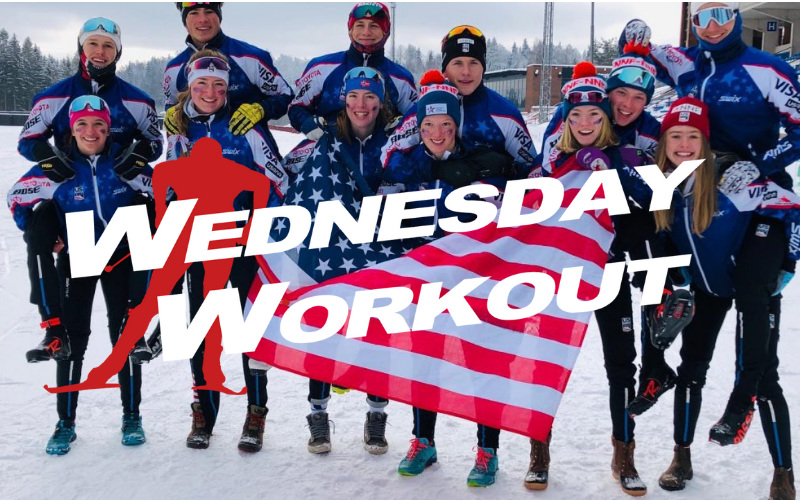
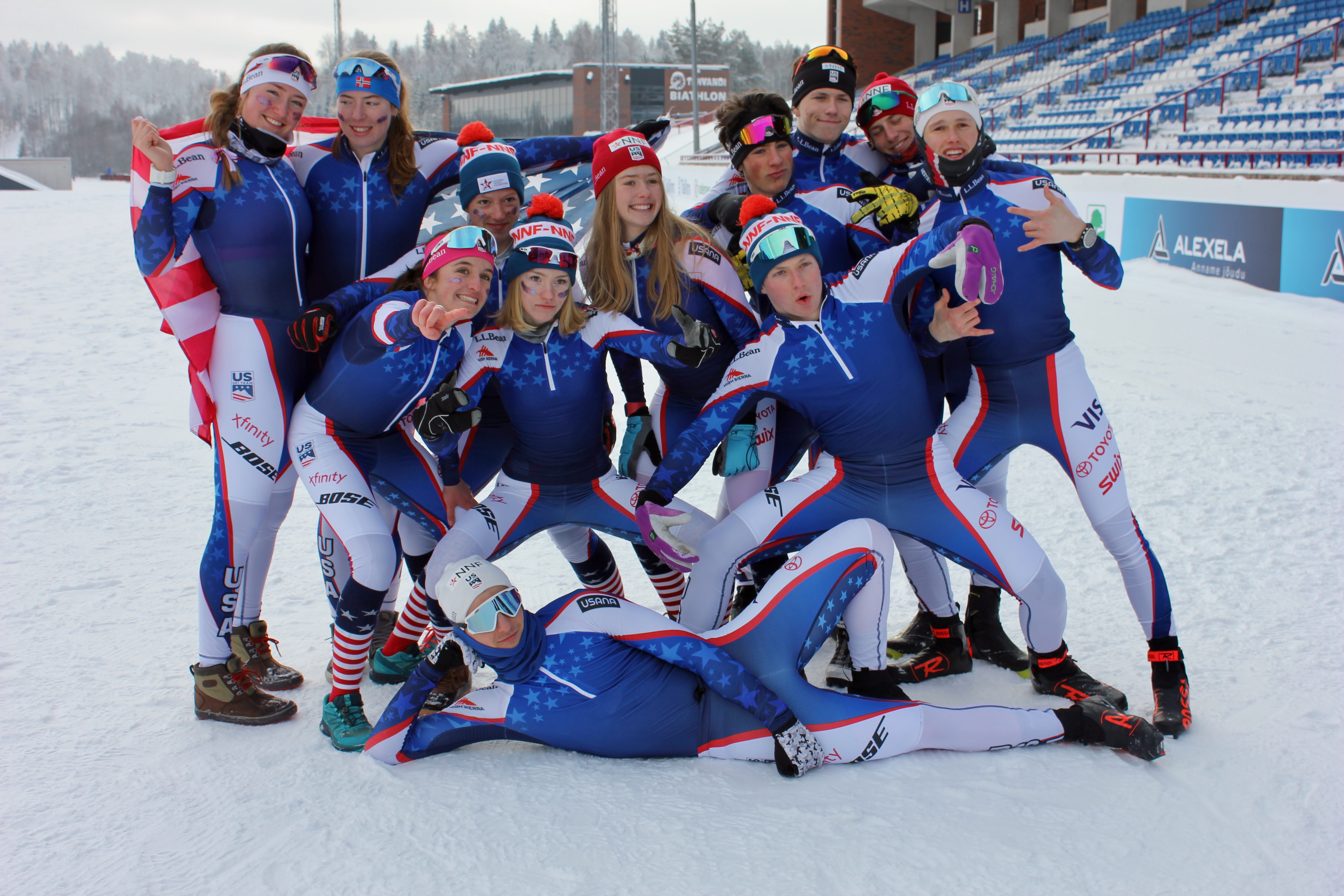
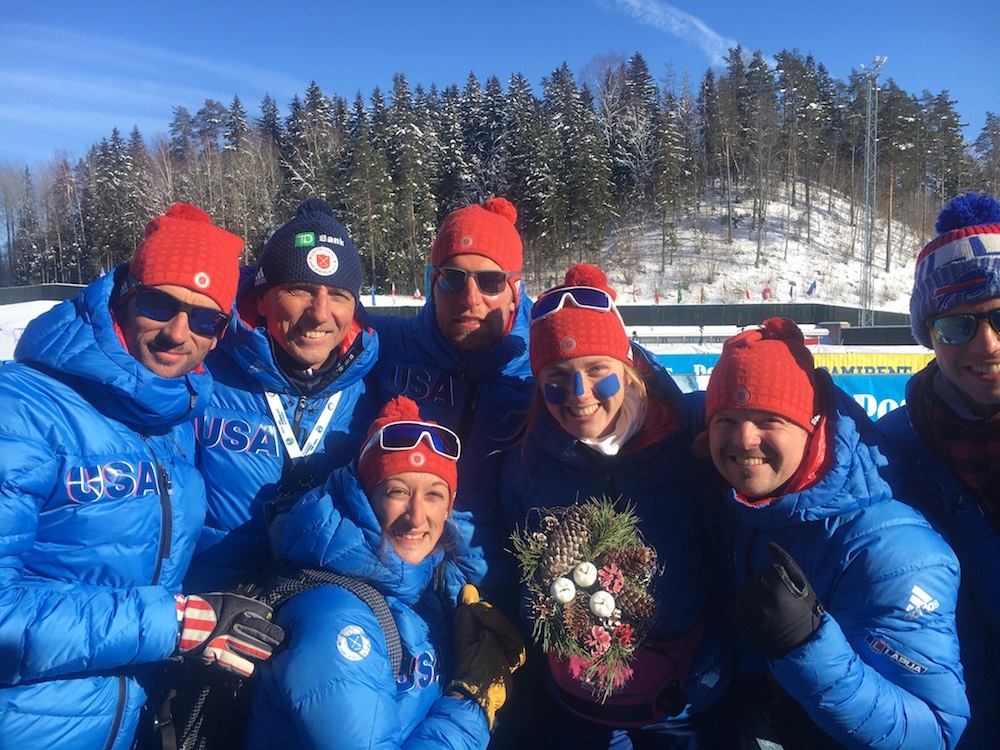
The U18 Nations Cup team poses with the flag in Otepaa, Estonia. Bottom row (from left to right): Annie McColgan (Mt Bachelor SEF), Kate Oldham (AVSC), Charlotte Ogden (SMS), Abigail Streinz (Craftsbury), Adriana Proffitt (Alaska Nordic Racing), Nina Seeman (SMS); Top row: Lane Myshrall (PCSS), Will Koch (SMS), Brian Bushey (GMVS), Michael Earnhart (Alaska Nordic Racing), Joshua Valentine (GMVS), Kai Mittelsteadt (Bridger SF). (Photo: Jane Mittelsteadt)
Kate Oldham is a U18 athlete from Carbondale, CO who skis for the Aspen Valley Ski and Snowboard Club. After strong results at US Nationals, Kate was selected as one of the six female U18 skiers to travel to Otepää, Estonia from January 20th – 30th to race in the Nations’ Cup races, where she competed in a field of about 40 junior athletes from Norway, Sweden, Finland, and Estonia. Kate finished 24th in the 1.3-kilometer classic sprint, and 20th in the 5k skate. The top three members of the team also competed in a 3 x 3k relay.
Staying in peak form while traveling domestically or internationally is a challenge that takes trial and error to dial in, making it difficult for many junior athletes. In this week’s Wednesday Workout, Kate shares what she has learned about staying healthy and ready to race while traveling, and what a typical day in the life of a U18 skier looks like during the Nations’ Cup trip. Here’s Kate’s Write up.
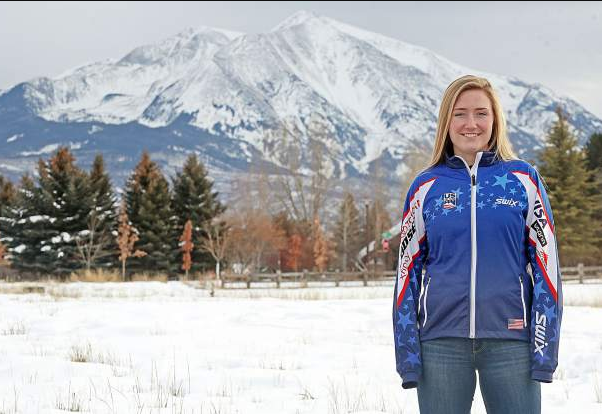
Kate Oldham of Carbondale, CO was selected for the U18 Nation’s Cup Trip in Otepaa, Estonia. (Photo: Austin Colbert/Aspen Times Screenshot)
Being on the road makes recovering from training and preparing for races more challenging. Staying on top of nutrition and self-care are very important since it’s easy to get run down or sick from the added tax on your body. To ensure that I do not allow myself to become depleted, I always bring a snack with simple carbohydrates and lots of protein for right after training, and I make sure that I have a dry change of clothes for when we are done. The snack jumpstarts my recovery since I am replacing the glycogen that is depleted during training and making protein available for my body to begin repairing the muscles that get broken down. It also stabilizes my blood sugar levels so I don’t feel as much of a post-ski crash. The change of clothes keeps me from being chilled on the ride home.
Traveling overseas adds a whole different stress. Sitting during long plane or car rides makes for a stiff body, and the sleep disruption, jet lag, and exposure to new germs can make it easy to get sick. Wearing compression socks or tights, drinking lots of water, and bringing healthy snacks are all key for big travel days. It also helps a lot to get up and walk around whenever possible to keep circulation in the legs. An easy jog or light walk will usually help to flush out lactic acid once I arrive at my destination as well, and can help with adjusting to a time change.
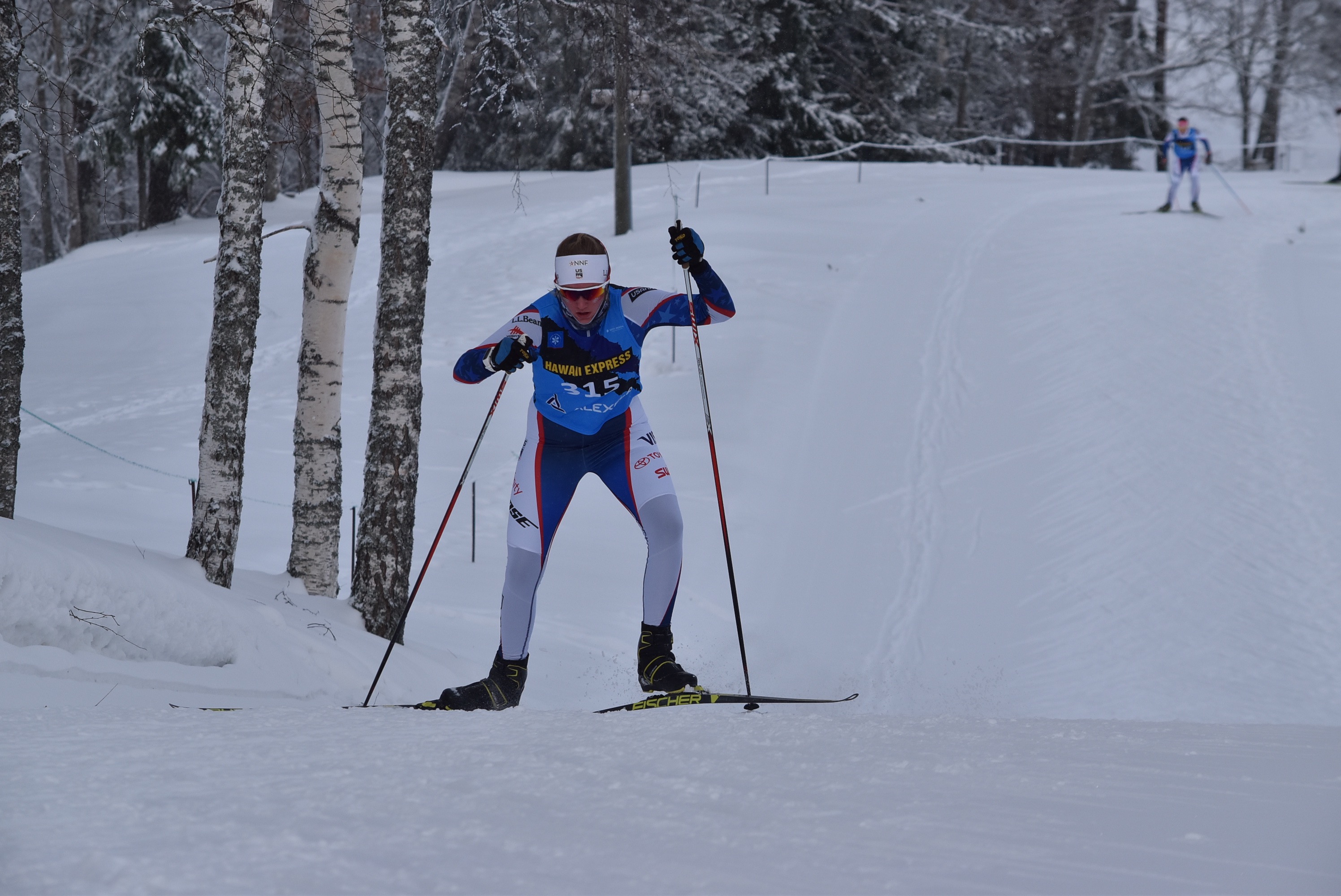
Kate Oldham (AVSC) climbs a hill during the Nation’s Cup 5-kilometer freestyle race in Otepaa, Estonia (Photo: Jane Mittelsteadt)
Luckily, managing daily nutrition in Estonia was fairly easy. The hotel we stayed at was very accommodating and helpful and provided healthy food options. As a backup or to follow a training session, I brought along protein bars and my favorite shake mix so that I always had a really good portable protein source available. My go-to’s are Vega protein powder and Bobo’s peanut or almond butter bars. That way if there are any issues with the meals being served, I can substitute a protein shake in for another part of the meal and still get the nutrients I need. I also use the bars and other protein sources like beef jerky as a quick snack before bed, which helps to sustain glucose levels overnight since they are slower to digest so I’m not as depleted in the morning.
A Day in the Life
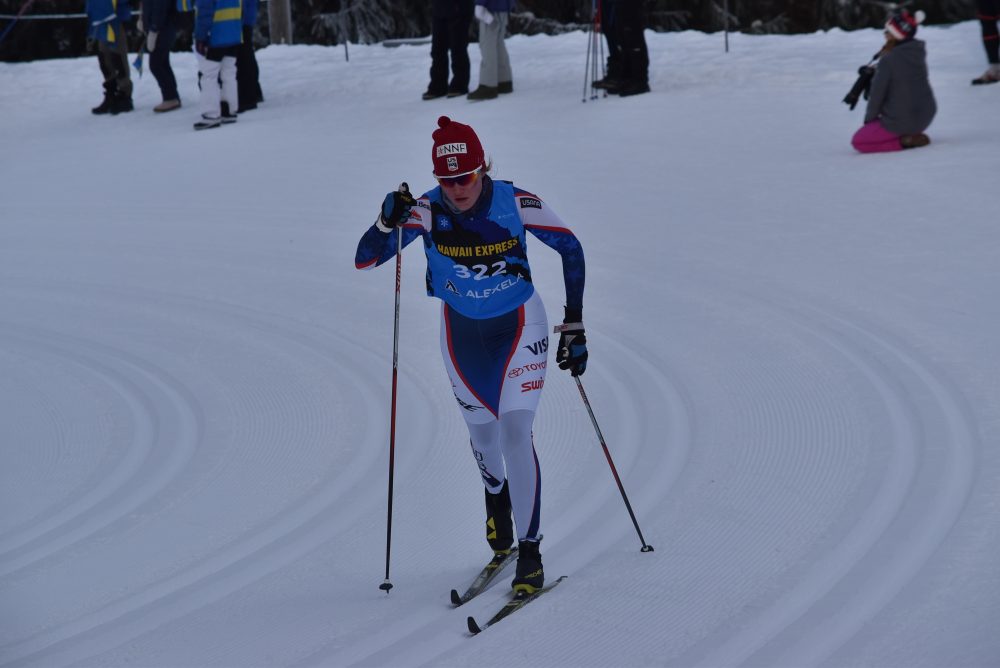
Kate Oldham (AVSC) striding forward in the Nation’s Cup 1.3-kilometer classic sprint qualifier in Otepaa, Estonia (Photo: Jane Mittelsteadt)
A day in Estonia begins with a short easy jog or walk to get my muscles moving for the day and to boost my metabolism. Then I eat breakfast, ideally three hours before the start of the day’s race. My usual breakfast before a sprint or 5k is cereal with almond milk, banana, and a scoop of peanut butter, though sometimes I eat something similar with oatmeal instead of the cereal before longer races where I want more sustained energy. After breakfast, I like to stretch before getting ready. Then glitter… very important!!
Around an hour and a half before my start, I head to the venue. I begin warming up an hour prior to the start, then it’s race time! After the race, my focus shifts to recovery again. I switch into my dry clothes and have a quick snack. I like to take a shower if possible to wash the bacteria from my skin and to warm up so I can avoid getting sick on the road. I also try to get in a larger meal within a couple hours post-race, preferably a burrito bowl with rice, beans, lots of veggies, some kind of meat, and all the toppings.
In the evening, we go for a second easy jog or walk to help flush the lactic acid that has built up from the day, followed by some stretching. Then it’s early to bed to rest up for the next day!
The U18 Nations’ Cup team celebrates their accomplishments in Otepaa, Estonia. Back row: (Photo: Jane Mittelsteadt)
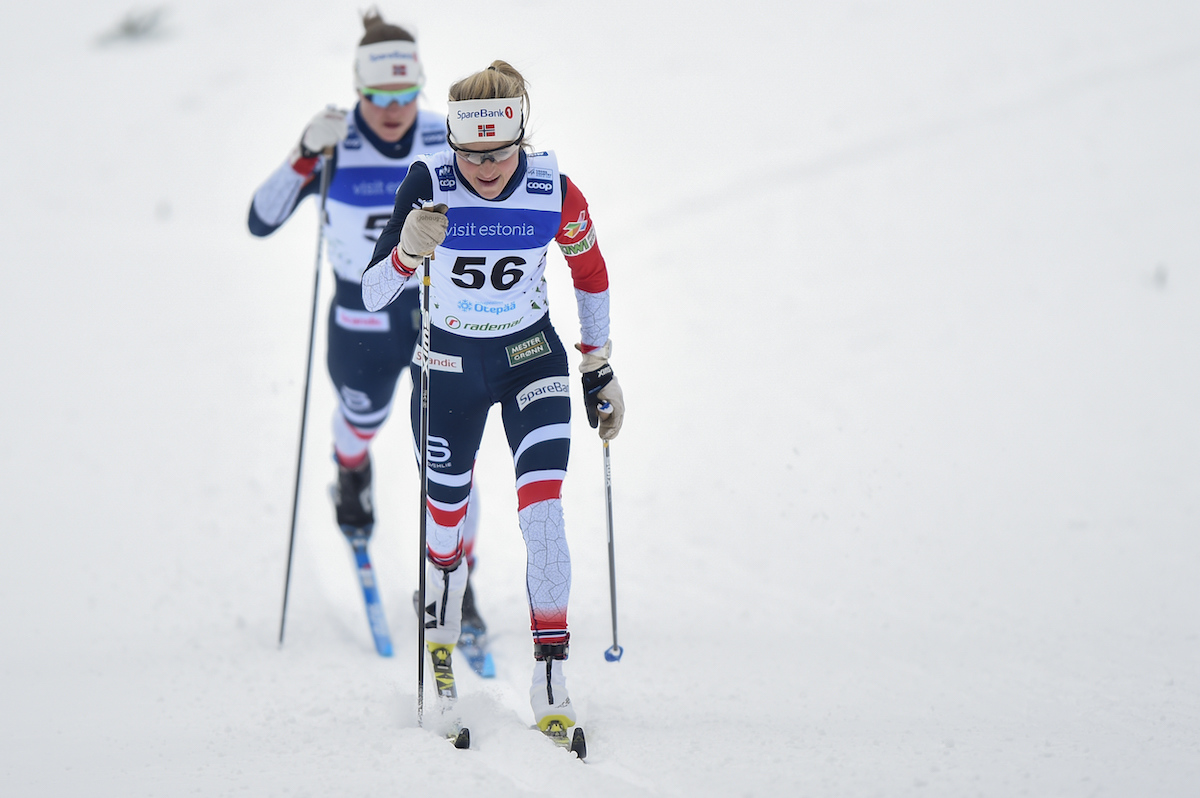
Norway’s Therese Johaug (bib 56) strides powerfully to another victory by a large margin in the 10-kilometer interval start classic race in Otepää, Estonia. (Photo: Fischer/Nordic Focus)
In the first distance race after the Tour de Ski, it remained to be seen whether Norway’s Therese Johaug, undefeated in distance events, would be able to pick up where she left off in December. As Johaug sat out the TdS, her teammate Ingvild Flugstad Østberg entered the 10-kilometer interval start classic race with momentum, having taken the win in four distance stages of the Tour, including two 10 k classic victories. Østberg also posted the fastest time of the day on the 9 k hill climb to the top Alpe Cermis, a feat that could benefit her on the course in Otepää, Estonia which featured two brutal climbs in each 5 k lap.
Appearing at the 2 k and 7 k mark, the largest uphill of the course pushed the limits of the climbing distance allowed in a FIS homologated course. It was too steep for skiers to remain in the track, forcing them into an energy sapping herringbone for the 400-meters toward the top. Adding to the challenge of the terrain were tricky waxing conditions, as light blowing snow fell throughout the race.
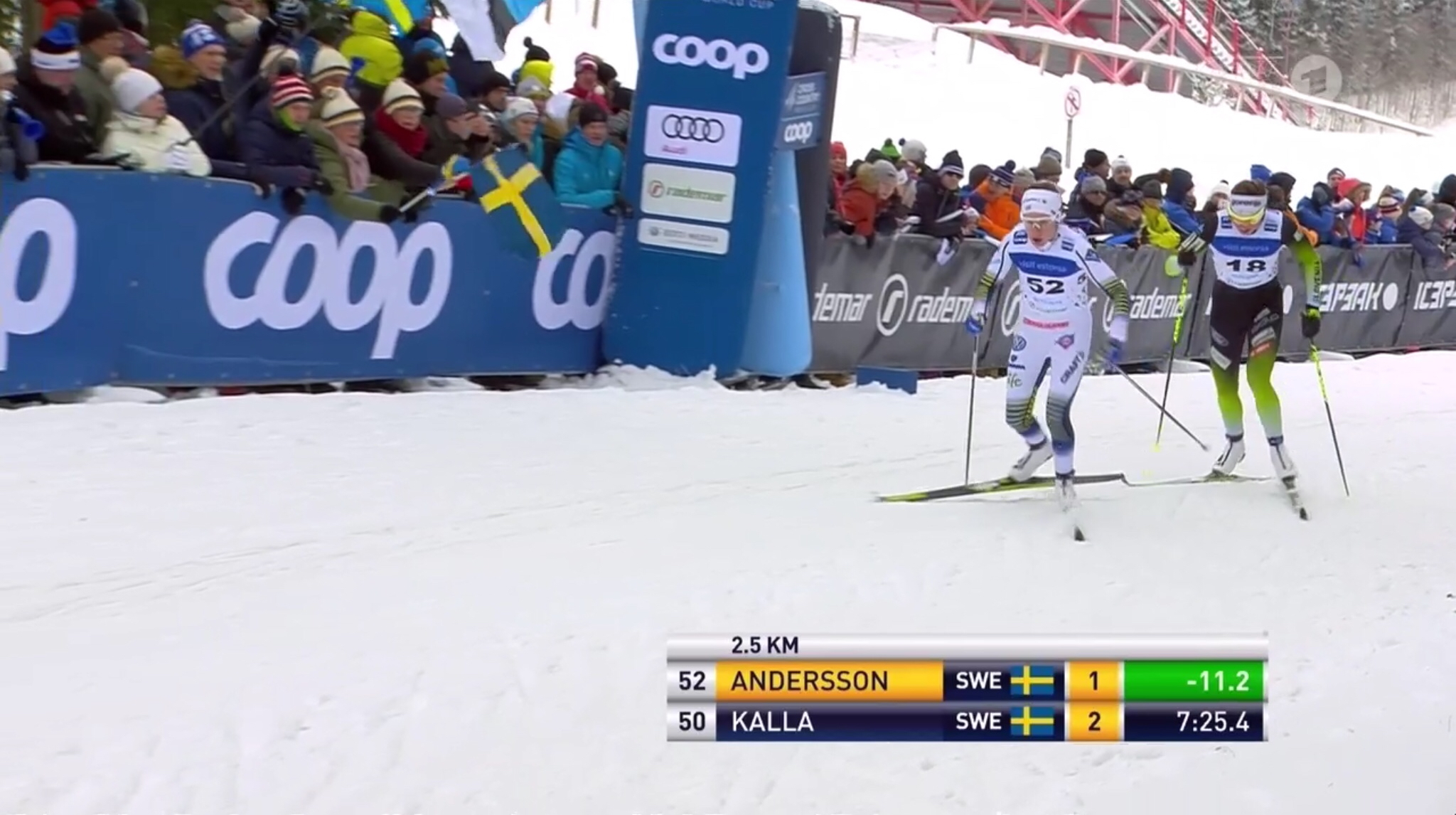
Sweden’s Ebba Andersson (bib 52) races the clock as she herringbones up the course next to the ski jump in the 10-kilometer individual start classic race in Otepää, Estonia. (Photo: Screenshot ADN/FIS Broadcast)
Known as a classic specialist, Krista Pärmäkoski of Finland was another favorite for the win. Last season, the Finn won three World Cup 10 k classic races during the season making her, according to an FIS press release, the only woman to win multiple 10 k classic events.
As skiers entered the course, Pärmäkoski, who started in bib 30, raced conservatively in her first lap, then progressively set the bar higher at each checkpoint. In the second half of the race, Pärmäkoski’s pace reserved her the leader’s chair where she watched the remaining skiers fight for her coveted spot.
Sweden’s Charlotte Kalla made an early push for the podium, skiing faster than Pärmäkoski in the first 5 k, but fell back in her second lap. Likewise, Østberg and her teammate Astrid Jacobsen, bested the Finn in the first half, falling behind in the second.
However, three skiers starting behind the Finn wearing bibs in the 50’s were able to best Pärmäkoski, one in her usual supremely dominant fashion. As Johaug attacked the long climbs, powering her way seamlessly through the course with an unmatched tempo, it became clear that the break from racing has not slowed the distance champion.
While Natalia Nepryeava of Russia and Ebba Andersson of Sweden, who started one and two minutes ahead of Johaug, respectively, were knocking down Pärmäkoski’s splits at each checkpoint, the Norwegian was chasing fiercely, gaining steadily on the other skiers.
As Johaug double poled powerfully to the finish, reeling in Nepryeava, her victory was indisputable. The Norwegian ran away with the win with a time of 29:53.7, crossing the line 48.4 seconds faster than second place Andersson, and 56.7 seconds ahead of third place Nepryeava.
“My shape is really good at the moment,” Johaug told the International Ski Federation (FIS) on Sunday. “I had a really good rest at home when the other girls were at the Tour de Ski. But after the break, I was really motivated to come back.”
Pärmäkoski ended the day in fourth (+1:14.0), followed closely by Østberg in fifth (+1:14.8), Kalla in sixth (+1:19.9), and Jacobsen in seventh (+1:26.5).
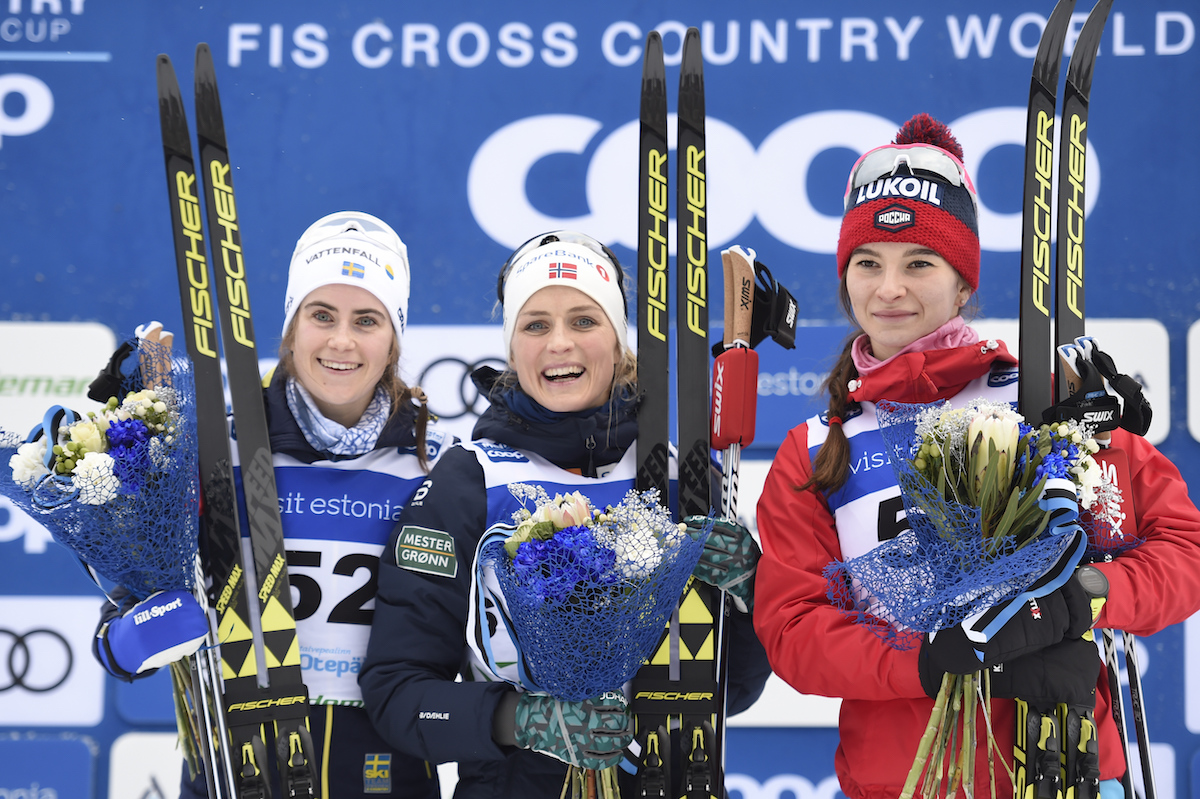
The women’s podium in the 10-kilometer interval start classic race in Otepää, Estonia. Therese Johaug of Norway (c) took the win ahead of Ebba Andersson of Sweden (l) and Natalia Nepryeava of Russia (r). (Photo: Fischer/Nordic Focus)
On the American side, Jessie Diggins posted the best result with 13th (+2:26.0). Rosie Brennan (APU) finished next in 27th (+3:09.9), followed by Sadie Bjornsen in 29th (+3:11.3), Caitlin Patterson (CGRP) in 39th (+3:50.9), and Ida Sargent (CGRP) in 41st (+4:17.2).
Diggins, who finished in sixth place in the Tour de Ski, now sits also in sixth place in the overall standings. Most often thought of as a skate specialist, Diggins has earned three top ten finishes in distance skate races outside of the TdS this season. However, she has steadily improved as a classic skier in the past few seasons and also cracked the top ten this year in the Val di Fiemme 10 k classic race.
“Today was a really interesting and tricky waxing day out there, with variable conditions and snow blown in the tracks in many sections of the course,” Diggins wrote in an email. “I was really happy with my kick and I know I lost a lot of time on the flats, but I was happy with how I raced my race. I was in the zone, pushing as hard as I possibly could and skiing technically better than years past. I’m still carrying some fatigue from the Tour so I need to rest a little more in the next few weeks, but I’m happy with where I’m sitting right now.”
“I was really impressed with Jessie’s result today,” Matt Whitcomb told FasterSkier in a call. “She works endlessly on her classic skiing, and this condition would’ve eaten her up just a couple years ago because of technique alone. She was skiing very well today.”
After racing as a discretionary pick in Period 1, Brennan declined her spots in the Tour de Ski and headed back across the pond. Because of her strong results in Period 1, Brennan was offered Period 3 starts as well. She returned to Europe for the races in Otepää and Ulricehamn, Sweden in hopes of qualifying for the World Championships in Seefeld, Austria. After today’s finish, Brennan is ranked 22nd in the overall distance World Cup standings.
“It was tough conditions this weekend in Estonia,” said Brennan. “I didn’t have too many expectations after suffering some illness and not racing for a little while. I had good feelings in the sprint, but not the speed I needed for the result I wanted. It left me optimistic for the distance race, however.”
“I was pleased to wake up to new snow as I love slow, tough races, however, I really struggled to find skis that worked well on the uphills and were still fast on the downhill,” she continued. “I made the choice I thought was best, but it wasn’t quite what I needed to be competitive today. I am happy to be back racing and my shape feels good so I am hopeful that things will improve from here.”
Dahria Beatty, the only Canadian to enter Sunday’s 10 k, finished 43rd (+4:42.5).
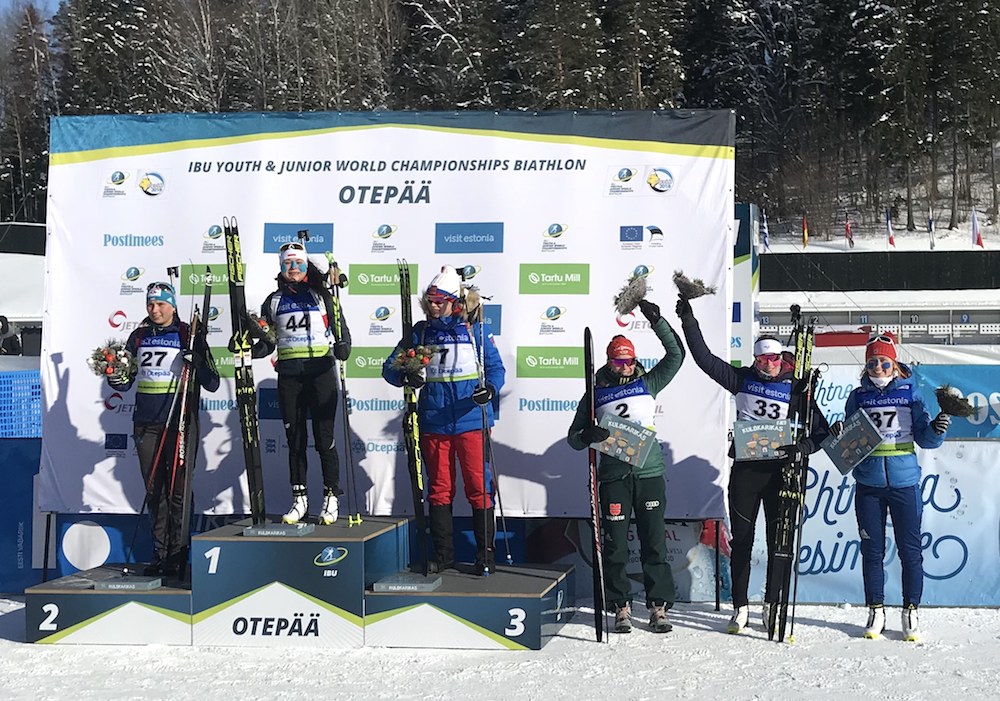
The top-six finishers at the junior women’s 12.5 k individual flower ceremony on Thursday at IBU Junior World Championships in Otepää, Estonia, with Poland’s Kamila Żuk (second from l) in first, Ukraines’s Anna Kryvonos (l) in second place, Russia’s Irina Kazakevich (third from l) in third, and American Chloe Levins (r) in sixth. (Photo: Erik Lewish)
IBU Junior World Championships (Otepää, Estonia): Junior women’s and men’s individual
Three North Americans in the top 10, top nine even. That’s what happened in a single race at the International Biathlon Union (IBU) Junior World Championships on Thursday in Otepää, with American Chloe Levins placing sixth, and Canada’s Nadia Moser and Megan Bankes claiming eighth and ninth, respectively, in junior women’s 12.5-kilometer individual.
According to the three racers, it was another beautiful day in Otepää with steady, sometimes even gusting, wind.
Levins was the earliest starter of the three, starting in the middle of the field in bib 37 (out of 70). Bankes headed out of the gate 45th and Moser started near last in 67th.
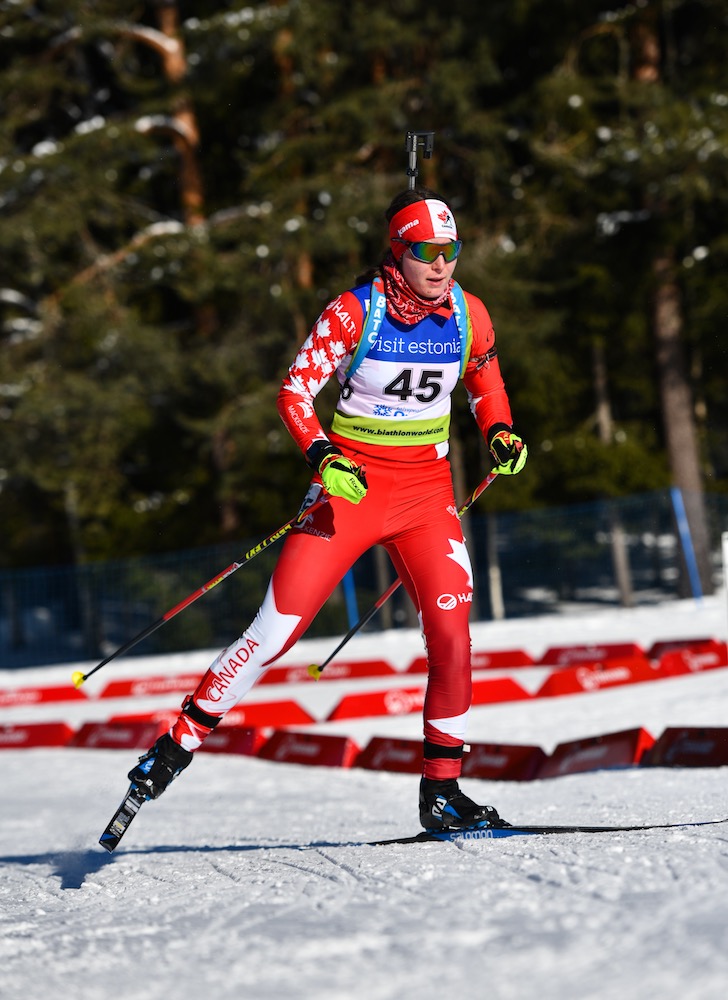
Canada’s Nadia Moser racing to eighth in the junior women’s 12.5 k individual at IBU Junior World Championships in Otepää, Estonia. (Photo: Bryan Dickson)
Despite the late start, Moser, 20 years old and in her second Junior Worlds, explained in an email that she wasn’t nervous. With temperatures rising to a high of -10 degrees Celsius (14 Fahrenheit) on Thursday morning, she almost preferred it.
“There were also 20 second start intervals which are shorter than the usual 30, so all of the competitors were out of the gate in a shorter amount of time than normal,” Moser wrote.
In neither Thursday’s women’s race nor the men’s 15 k individual that followed, nobody shot clean. In fact, only one woman shot 19-for-20: Slovakia’s Veronika Machyniakova, who ended up 11th. The top-two finishers in the women’s 12.5 k, Poland’s Kamila Żuk (who placed first in 41:36.1 minutes) and Ukraine’s Anna Kryvonos (who finished 3:04.7 minutes back in second place), both had two penalties. Russia’s Irina Kazakevich placed third (+3:20.0) with three misses — which added three minutes of penalties to her time.
“I found the wind in the range today to be fairly variable,” Bankes, the defending Junior Worlds champion in the event, wrote in an email. “It was gusting and then dying quiet significantly and also in the middle of shooting bouts which made things a little tricky.”
At last year’s Junior Worlds in Osrblie, Slovakia, Bankes shot a perfect 20-for-20 for the first time in her career and won gold in the junior women’s 12.5 k individual.
Thursday brought new challenges, and Bankes explained she was happy to clean her first prone. She went on to miss two in the next standing stage, then one in each of the following two stages (0+2+1+1) to finish the race with four penalties, which ultimately put her in ninth overall (+4:59.1).
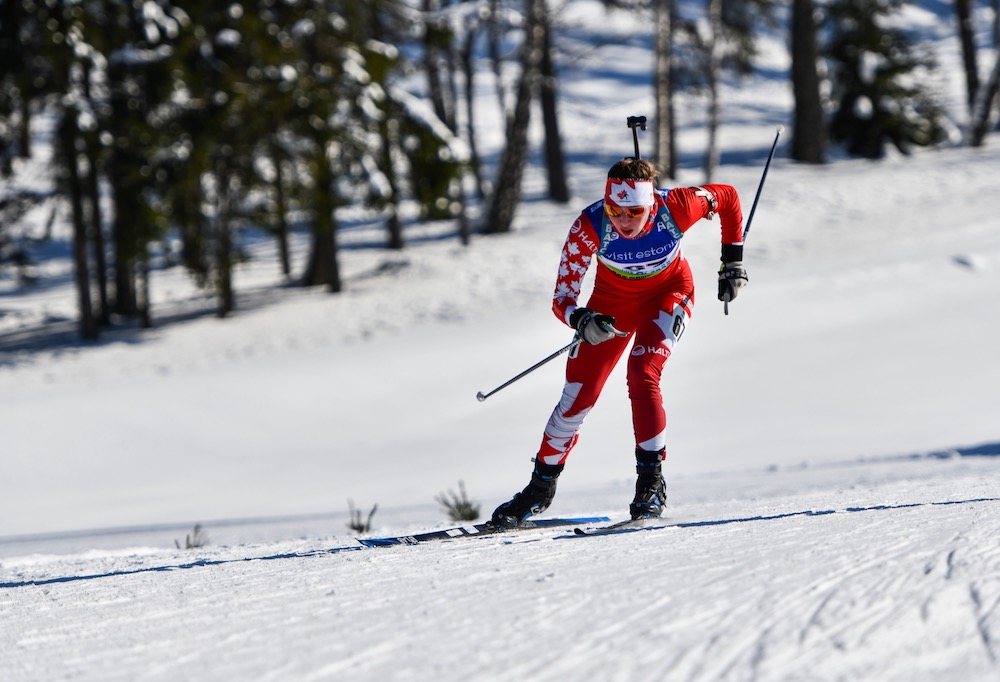
Canada’s Megan Bankes racing to ninth in the junior women’s 12.5 k individual at IBU Junior World Championships in Otepää, Estonia. (Photo: Bryan Dickson)
“I’m not totally sure what happened in my first standing (when I missed 2) but when I came into my 2nd standing the wind was gusting quite a bit, and I was really happy with how I waited for my first 4 shots, but I was a little annoyed to have missed that last one,” she recalled. “Overall I think my shooting today was pretty good, but I could have been better.”
While Bankes figured the wind was giving most others trouble as well, she didn’t think that she’d make it into the top 10 with four misses.
“I don’t like getting splits until the last lap, so I heard Andrew [Chisholm] our wax tech tell me I was fighting for 10th when I passed him, so I really tried to give everything that last lap,” Bankes, 20, wrote. “I was super stoked to see I crossed the line in 7th, and knew I wouldn’t be bumped down too much because I started 3rd seed.
“Coming off of gold last year, I definitely had high expectations for myself,” she explained. “But I tried to use that as more positive belief in myself to know I can be in the top women, and know that I can shoot well, instead of just focusing on the result number. My main goal going into these championships was to have races that I’m happy with, and to ski and shoot to the best of my abilities.”
At the end of the day, Bankes wrote that she was “really happy” with her result.
“I felt like I really held myself together on skis, and kept my technique under control, while also pushing myself to the limit throughout the race,” she wrote. “I’m super stoked to see that the youth women are totally crushing it, and to be right behind Nadia today was also super exciting (also to see Chloe Levins in 6th was fantastic – 3 North Americans in the top 10!)”
From left to right: Megan Bankes, Nadia Moser and Emily Dickson after the junior women’s 12.5 k individual at IBU Junior World Championships in Otepää, Estonia. (Photo: Bill Gilliland)
One place ahead of her, Moser scored her first non-relay top 20 at Junior Worlds, leading Canada in eighth (+4:18.9) with three penalties (1+0+1+1). Two days earlier, Moser, Bankes and their teammate Emily Dickson placed ninth in the junior women’s 3 x 6 k relay.
“I knew I could get a top 10 finish if I could pull my shooting together,” Moser wrote after Thursday’s individual race. “After my third shooting I had missed 2 targets total and I thought then that my top 10 chances were over. On may last loop I had 3 misses and was not even thinking about top 10 anymore. I realized that I must be doing better than I initially thought when everyone who was cheering me sounded really excited. I definitely got lucky today because no one cleaned their shooting. I was extremely happy to have finished in the top 10, especially since I was sure that I had no chance after missing 3 targets.”
She was pleased to see all of her training over the last year validated on Thursday.
“I tried really hard to improve over the summer and fall because I really wanted good results this season,” Moser wrote. “I think that the best thing I did today was to stay calm, and take my time in the range. I shot really slowly but that paid off in the end.”
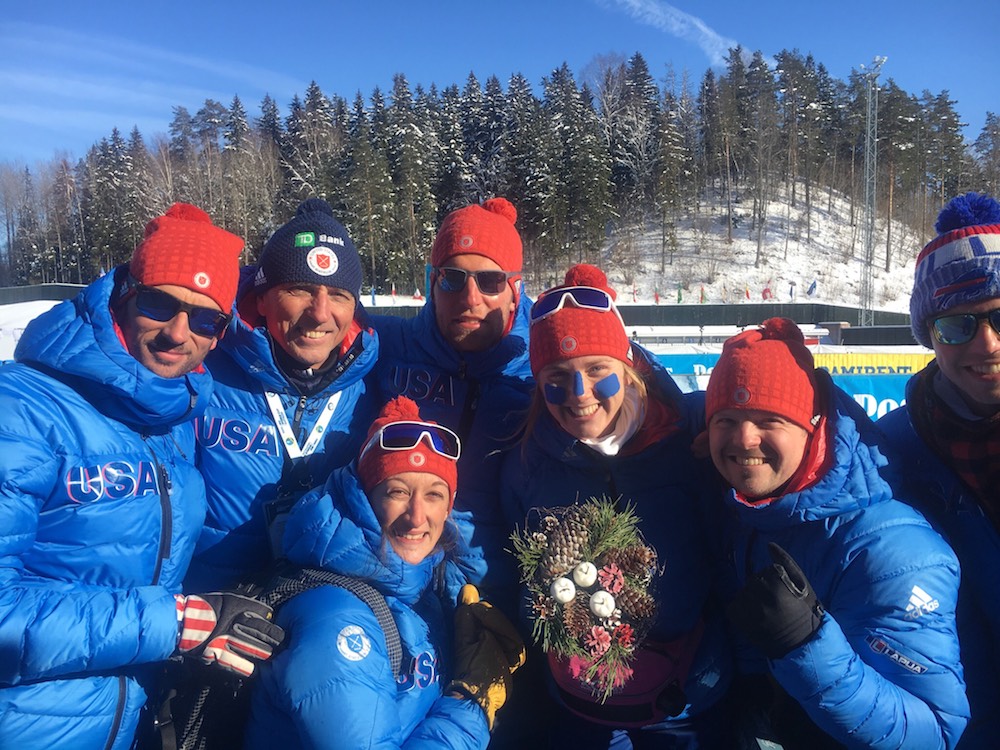
Chloe Levins (third from r) with the U.S. team staff (from l to r) wax tech Travis Voyer, coach Algis Shalna, assistant coach Danika Frisbie, wax tech Max Bergmann, wax tech Mattias Halquist, and head coach Erik Lewish, after Levins placed sixth in the junior women’s 12.5 k individual at IBU Junior World Championships in Otepää, Estonia. (Photo: Erik Lewish)
The lone American junior woman at this year’s IBU Youth/Junior Worlds, Levins, 19, finished sixth (+3:37.4) with three penalties (0+1+0+2). At last year’s Youth Worlds, Levins notched fourth place in the 7.5 k pursuit.
“There’s a big difference between youth and junior competition,” Levins wrote in an email. “A lot of juniors have IBU Cup experience, World Cup experience, and a handful even attended the Olympics. Fortunately, there’s also a big difference between the youth athlete I was last year and the junior I am now. I’ve been fortunate to compete in more winter biathlon races than ever this year, which has really helped me up my game. It’s a good feeling to see that I’m prepared to compete at this level.”
She explained that she had one goal on Thursday: “smile no matter what,” she wrote. “The hay is in the barn. Now it’s just time to get out of my own way and focus on one thing at a time.”
While Levins had experienced the rush of being near the front of the race in a pursuit, actually contending for a top result in an individual-start race was a new experience for her, she explained.
“As always, I tried not to let thoughts of my position distract me from thinking tactically about the course or my shooting process,” Levins noted. “Every lap, every corner, every shooting remained an opportunity for me until the finish line.
“A lot of my friends finished their races around me, so I did not even see my standing at the finish,” she continued. “When I finally looked at the board and saw that I was more than three minutes back of the leader, I thought that this result, with three penalties myself, was okay. I didn’t expect it to be good enough for sixth place.”
The race was Levins’s first of the week and she presumably has two more to go — as do Moser, Bankes and most of the other junior women — with a sprint on Saturday and, if they place in the top 60 of the sprint, a pursuit on Sunday.
As the only American junior woman in Otepää, Levins wrote that she was fortunate to have a significant amount of team support behind her on Thursday.
“My skis today were incredibly fast,” she emphasized. “Our wax guys made the fastest skis on the track today. … I can’t thank them enough.”
The U.S. team’s head coach and trip leader, Erik Lewish, pointed out that Levins had the seventh-fastest overall ski time and one of the best shooting performances of the day.
“It’s great to see that she is right in the mix with this very competitive field (2 of the starters today were competing in the Olympics),” Lewish wrote. “1 more hit and she would have finished in 2nd place today, this is very exciting looking forward to the Sprint and pursuit (sat and Sunday) where she will have another chance to get on the podium.”
“There are a lot of good things to take from this race and, as always, a lot of things to learn,” Levins concluded. “What’s my goal for the rest of the week? Keep learning. Keep smiling.”
According to Canada’s head coach and trip leader Jacqueline Akerman, the Canadian techs also nailed the wax.
“The techs hit the wax perfectly allowing for some of the top skis out there, when skiing form and wax meet it sets the scene for great results,” Akerman wrote. “The shooting was a bit tricky today with varying strength and switching winds, but both [Nadia and Megan] managed to keep misses to a minimum. They both hit enough to place in the top ten on a day when no one in the field shot clean and only one athlete managed one penalty. They are both happy with their performance, and the rest of us are too!”
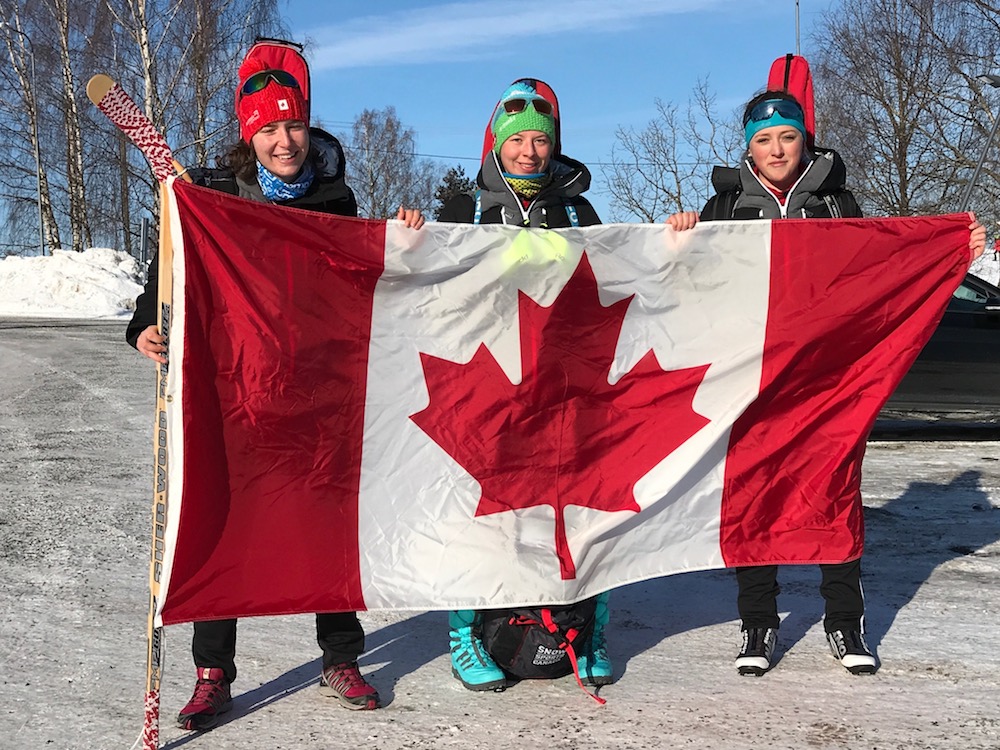
Next on the results sheet for Canada was Dickson in 36th (+8:33.7) with five penalties (2+1+0+2), and Zoë Pekos in 63rd (+15:50.6) with eight misses.
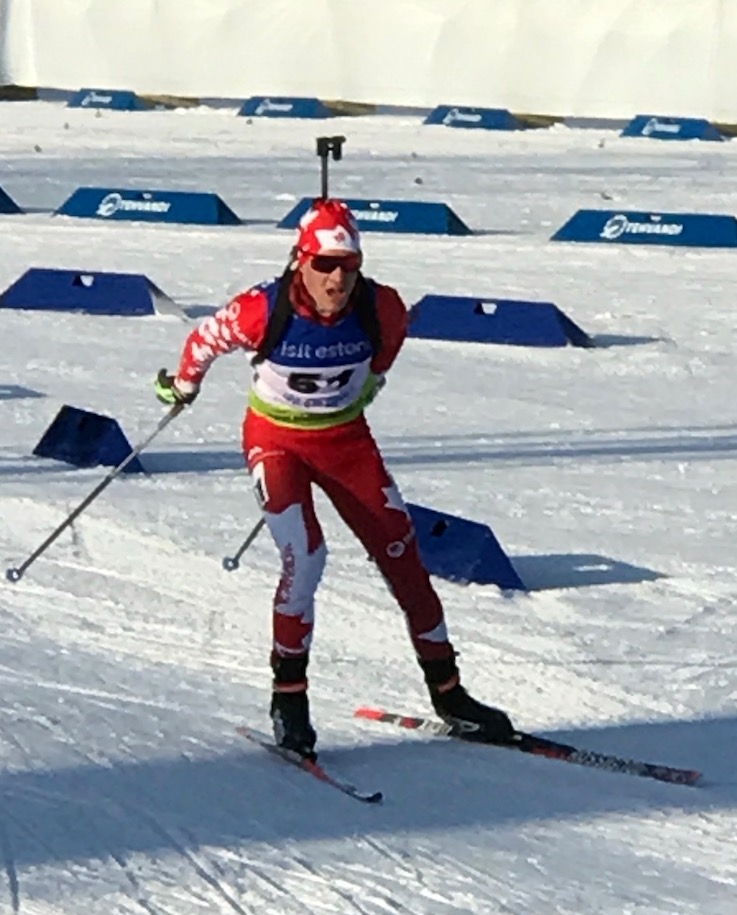
Canada’s Adam Runnalls racing to 29th in the junior men’s 15 k individual at IBU Junior World Championships in Otepää, Estonia. (Photo: Bill Gilliland)
In the junior men’s 15 k, Canada’s Adam Runnalls led the North Americans in 29th (+4:26.4) with five penalties (0+0+3+2). Teo Sanchez followed in 58th (+7:25.2) with four misses (1+1+1+1), Angus Tweedie was 67th (+9:11.8) with six misses (2+0+2+2), and Trevor Kiers 77th (+12:44.3) with 13 penalties.
For the U.S., Tim Cunningham finished 53rd (+6:49.3) with six penalties (1+3+1+1), Cody Johnson was 60th (+8:01.7) with seven misses, Jacob Pearson 83rd (+16:39.6) with 13 misses, and Cameron Christiansen 84th (+16:53.6) with eight penalties.
Russia had two on the podium in the men’s race as well, with Igor Malinovskii scoring his second-straight win after racing to gold in the junior men’s 4 x 7.5 k relay on Tuesday. He has won the last four races he’s contested, including the sprint and the pursuit at IBU Junior Open European Championships before Junior Worlds. Malinovskii finished in 41:48.5 on Thursday with three penalties (1+1+1+0), besting Norway’s Sturla Holm Lægreid in second place by 19.4 seconds; Lægreid also had three penalties (1+0+1+1). Russia’s Said Karimulla Khalili added bronze (+23.0) to his medal collection, with two misses (0+1+1+0), after capturing gold with his relay team.
No one in the junior men’s individual had fewer than two misses.