From the FasterSkier archive — posts syndicated from athletes’ and coaches’ own blogs between 2004 and 2012, kept online as published. Current coverage is at fasterskier.com.

Category: Canadian National Ski Team

  • Alison Mackie Is Chasing the Speed She Doesn’t Have Yet

    Alison Mackie Is Chasing the Speed She Doesn’t Have Yet

    This article was made possible through the generous support of our voluntary subscribers. If you value coverage like this, please support FasterSkier with a voluntary subscription.
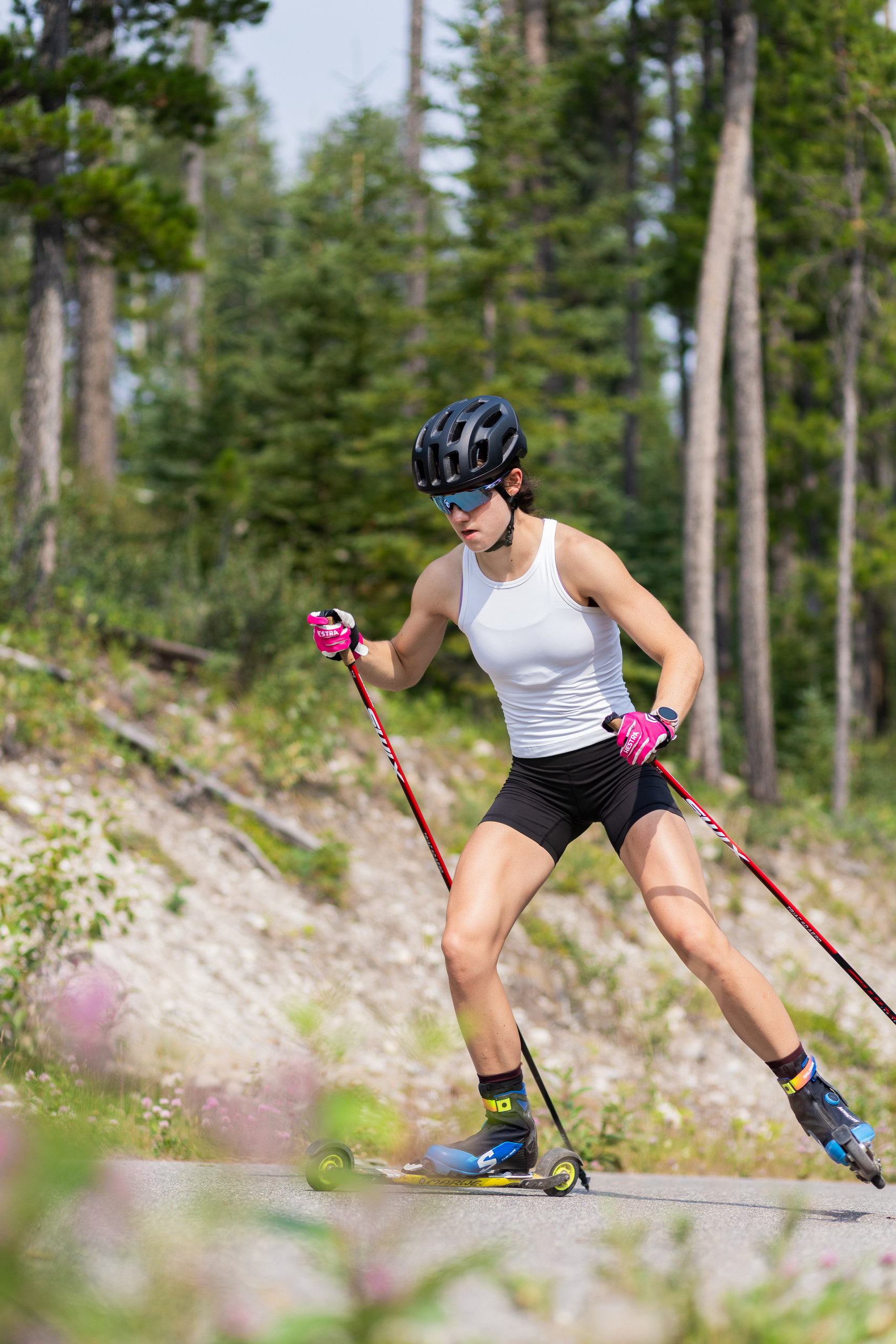
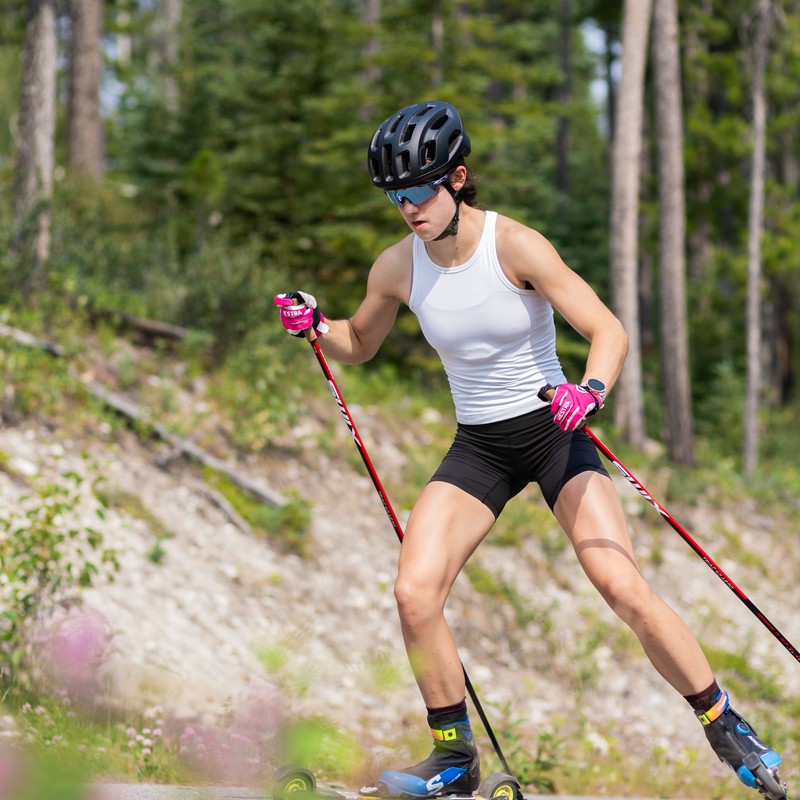
    Alison Mackie skate rollerskiing uphill on a paved forest road in a white training top and black helmet.
    Alison Mackie rollerskiing during summer training in July. She trains with the Alberta World Cup Academy in Canmore, Alberta. (Photo: Nathaniel Mah)

    For Alison Mackie, the 2024 Junior World Championships in Planica never really started.

    She had arrived in Slovenia with reason to expect something. A year earlier, at 17, she had finished 13th in the 20 k at the junior championships in Whistler, British Columbia, on home snow, in exactly the kind of long, grinding distance race that suits her. In Planica she missed the qualification in the opening sprint, fell ill, and watched the rest of the week from a hotel room. She was not on the tracks when her Canadian teammates made history either: Sonjaa Schmidt won the U23 sprint, and Canada won the U23 relay.

    Back at her base in Canmore, Alberta, at the end of that season, Mackie and her coaches set a target for the next one. Top five at the 2025 Junior World Championships in Schilpario, Italy.

    Privately, she wanted more than that.
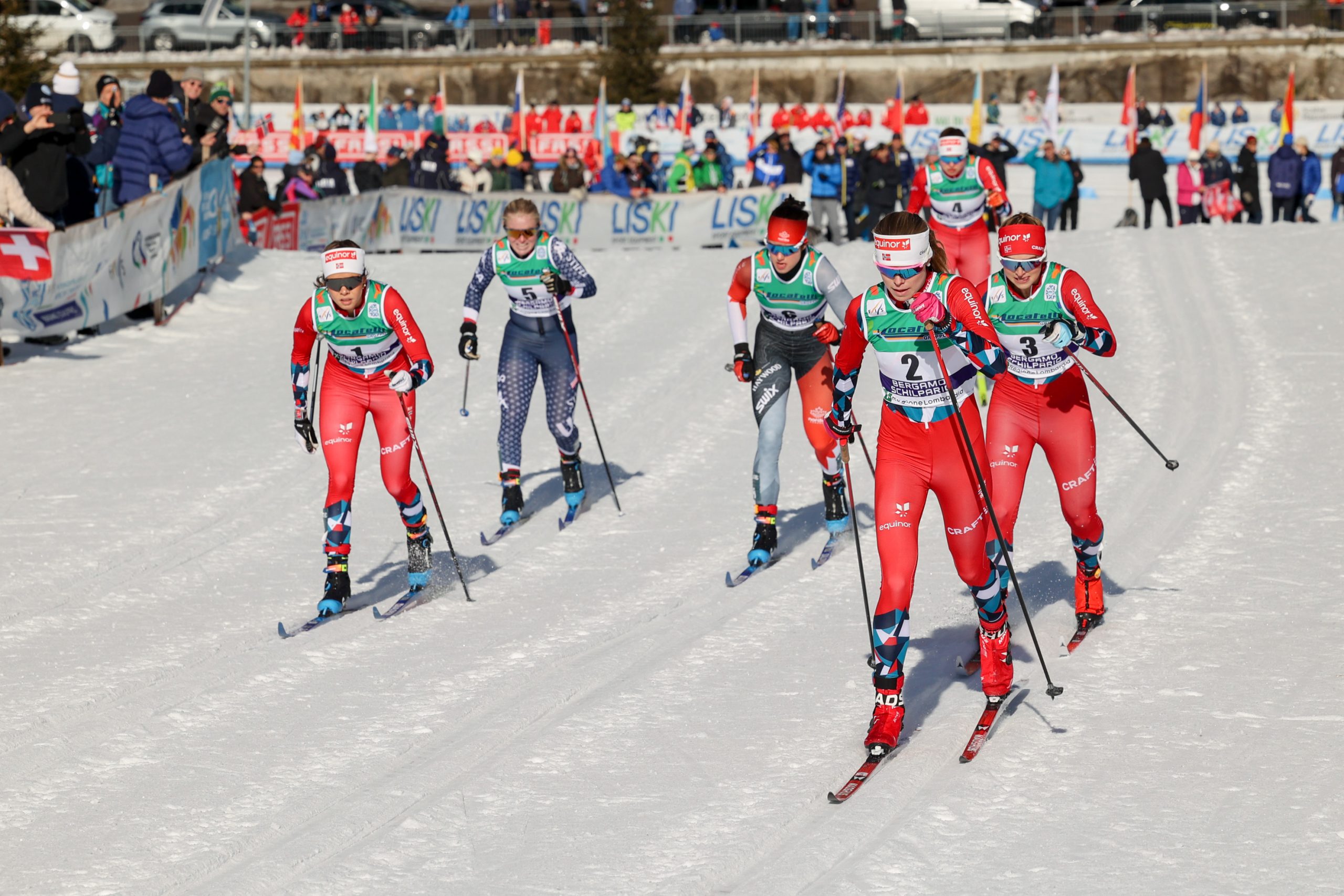
    Alison Mackie in bib 6 racing a classic sprint heat alongside Sammy Smith and four Norwegians.
    Mackie in bib 6 during the classic sprint at the 2025 Junior World Championships in Schilpario, where she finished fourth. Two bronze medals followed in the distance races. (Photo: Newspower.it)

    A Comeback in Schilpario

    “Yes, Junior World Championships in Schilpario were the main focus of my season that year,” Mackie said. “I trained specifically for that event to get my best shape there. But I wouldn’t say revenge, instead a kind of comeback because the year before in Planica I was pretty disappointed because I haven’t had the opportunity to race being sick.”

    On the Italian tracks she won bronze in the 20 k mass start classic, then bronze again two days later in the 10 k interval start skate. She was fourth in the classic sprint. They were the first junior world championship medals won by a Canadian woman since 1989.

    “I wanted a top five, and I finished with three top fours, including two medals,” she said. “The preparation we had put in proved to be correct, and I had a lot of confidence before starting the championships because I felt really good in the previous months leading up to my arrival in Italy.”
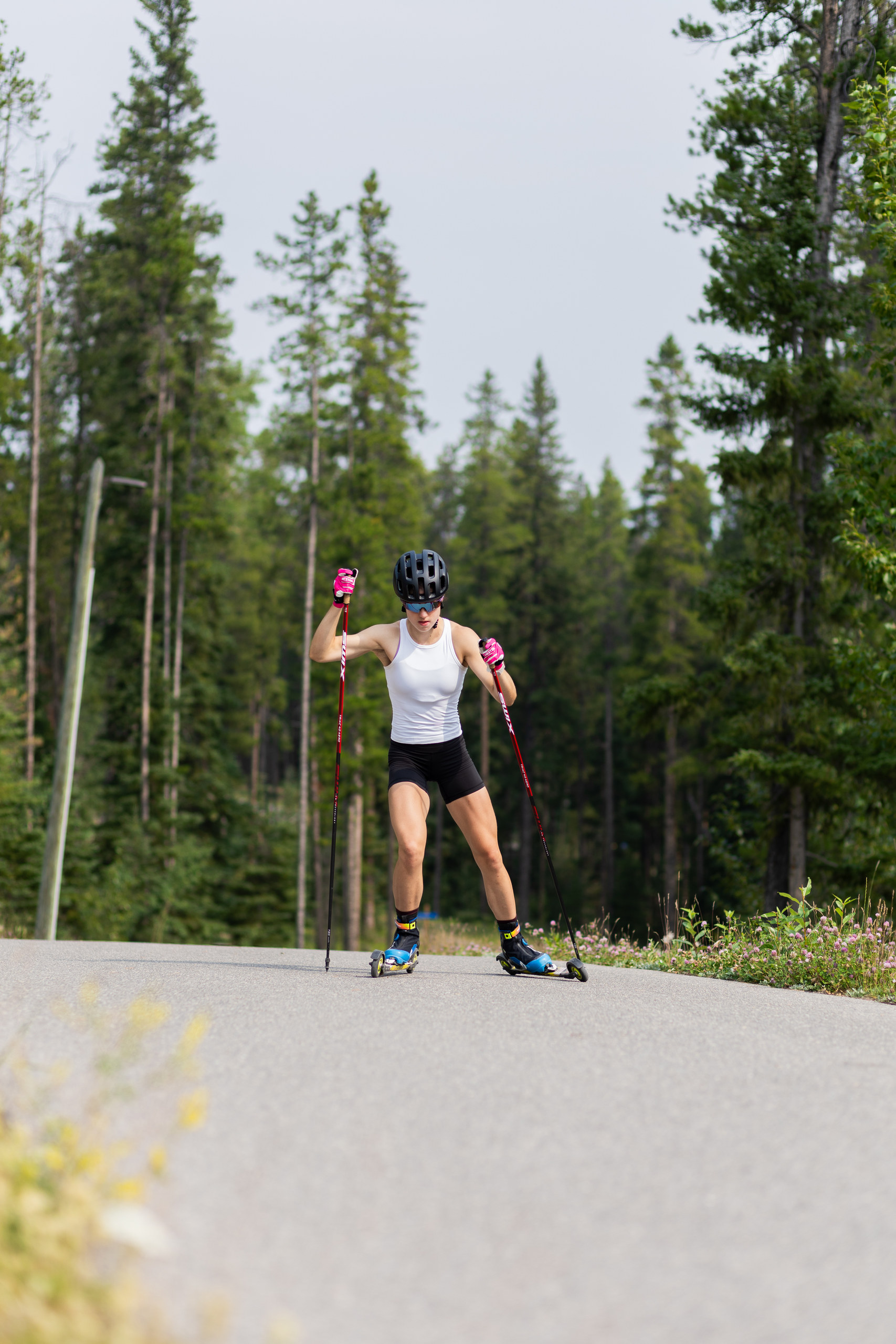
    Alison Mackie rollerskiing toward the camera on a paved road lined with evergreens.
    Mackie on a summer rollerski session in July. She started racing in Alberta as a teenager and won her first national title at 16. (Photo: Nathaniel Mah)

    Put on Skis Before She Could Walk

    Mackie was born in Montreal and raised in Edmonton, and she is 20 years old. Her mother, Jennifer, is a pediatrician. Her father, Andrew, is a pediatric cardiologist. Both of them ski, and both of them had her on skis before she has any memory of it.

    “My parents put me on ski as soon as I could walk,” she said. “So skiing accompanied all my childhood. Then I took real ski lessons and I started doing racing in my region of Alberta during my teenage times. That’s till Covid period arrived and with the restrictions I had nothing else to do others than training. But anyway, I really enjoyed myself during that period, developing my technique with my coaches at Edmonton ski club and when Covid finished my very first race that I won was our National title in March 2022 as a 16 year old.”

    Canada is known around the world as the home of ice hockey. Why did you choose cross-country skiing over hockey, freestyle, or swimming, following Summer McIntosh’s footsteps for example?

    “In parallel with cross-country skiing, I did a lot of other sports like cross-country track and field, rock climbing, mountain biking, swimming, soccer and in all of these sports I wasn’t as super competitive as I was in cross-country skiing. I did that only for fun as an opportunity to stay healthy during summer period. Cross-country skiing has been to me the only sport I competed at my best in my early ages and my favourite discipline. That’s why I chose it.”

    That first national title, won in Whistler in March 2022, is the race she keeps coming back to.

    “Yes, that race in Whistler BC was one of the first big races after the Covid pandemic,” she said. “I trained a lot during that period and didn’t have the opportunity to race and see my level, and when I went to my first National Championships and won the first race, it was a special moment and made me realize that I wanted to keep pursuing cross-country skiing for even better results and seeing how far I could get.”
    Alison Mackie racing the Olympic 10 k freestyle in Tesero, panned against a packed grandstand.
    Mackie racing to eighth in the Olympic 10 k freestyle in Tesero on Feb. 12, the best Olympic cross-country result by a Canadian woman. (Photo: Vanzetta/NordicFocus)

    Eighth at the Olympics

    The line has run one direction since. Two bronze medals at Junior Worlds. Her first World Cup top 10s, in Toblach and Val di Fiemme. Eighth in the 10 k free at the Milano Cortina Olympics in her first senior season. Gold in the 20 k mass start free at the U23 World Championships in Lillehammer in March. And at the end of that season, on 548 points, the FIS U23 overall World Cup title, the first won by a Canadian woman, with the finals held at Lake Placid.

    At the Milano Cortina Olympics you finished eighth in the 10 k free, after your first World Cup top 10s in Toblach and Val di Fiemme. What do you remember from those two weeks in Italy?

    “It was super cool being part of that multi sport event that the Olympic Games represent. It was my dream since I was a child watching Olympics on TV and having the opportunity to compete in high level in this huge event was really special to me. Definitely they have been long two weeks, also overwhelming at the time, but made me really happy how I performed overall and the 8th place I got in 10km skating has definitely been the highlight without any doubt. Entering the top 10 has been quite a surprise to me in that moment, because there were all the best skiers at the starting line. But now looking back at all the hard work I did during the whole season and the good results I got before that race in both World Cup and in under 23 World Championships, I wouldn’t say it was a huge surprise for me. Probably demanding Val di Fiemme’s track suited me very well, given that I finished as well 8th in Tour de Ski’s Cermis climb the month before.”

    What is the current situation in Canada for cross-country skiing, in terms of ski club membership, visibility in the national media, and financial support?

    “I would say the current cross-country skiing community in Canada is pretty small, if compared to other European power nations, but strong and with lots of passion in developing our discipline. There are a lot of young skiers coming up and I think it is very exciting for the great results to come in the future. Our National sports organization here in Canada are working really hard to make sure our National team can get all the support we need in order to achieve some World Cup podium with both boys and girls team during the seasons to come.”
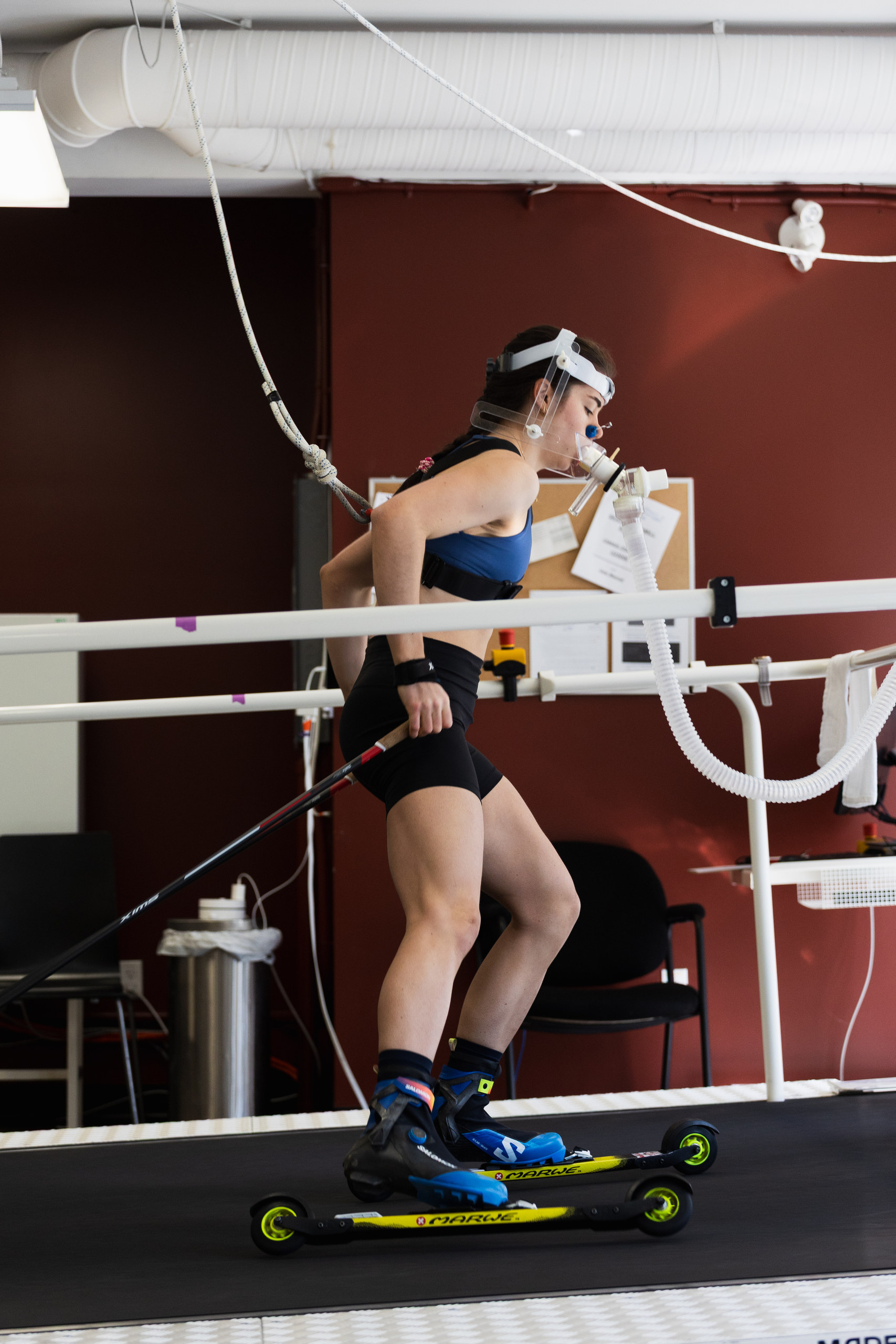
    Alison Mackie skate rollerskiing on a laboratory treadmill while wearing a metabolic mask.
    Mackie on the treadmill during a lab test in May. Distance racing is her strength, and finding speed is the summer’s assignment. (Photo: Nathaniel Mah)

    Distance Strength, Sprint Homework

    Describe yourself as a cross-country skier. What are your characteristics, your strengths, and the areas you are working on for the coming seasons?

    “I describe myself as a pretty strong skier in distance races, while I struggle a bit in sprint not to get through the top 30 and consequently not play the sprint finals, that is an element that I am working on in next seasons,” she said. “Between classic and skate I have found more success in free technique in the past seasons, but I enjoy training both classic and skate equally. Distance races are definitely my strength but I am working to improve my speed skiing as well so I could become a really strong overall skier in order, in the future, to fight for a higher overall spot in World Cup.”

    And the criticism you get from your coaches?

    “More than critics I would call special feedback from my coaches. Because sometimes I have a tendency to train too much and too hard that I need. That is something I am working on this summer, knowing when to push my body and when to give the correct time to rest and recover.”

    The World Cup calendar keeps skiers from outside Europe away from home for close to five months a season. How hard is that for you?

    “Personally I have spent on the road, following World Cup calendar, the past two seasons, but not the full European calendar. I really enjoy travelling and being on the road, so I don’t think it is a huge struggle for me. It is tough to not see friends and family for a long time but I am really lucky that I had friends and family came and watched me on tracks while I was in Europe a couple of time during season. Next season it will be quite different for me, because I am transitioning to attend the University of Utah so I will leave World Cup a bit because I do need to go to class and represent the University of Utah in North America as well.”
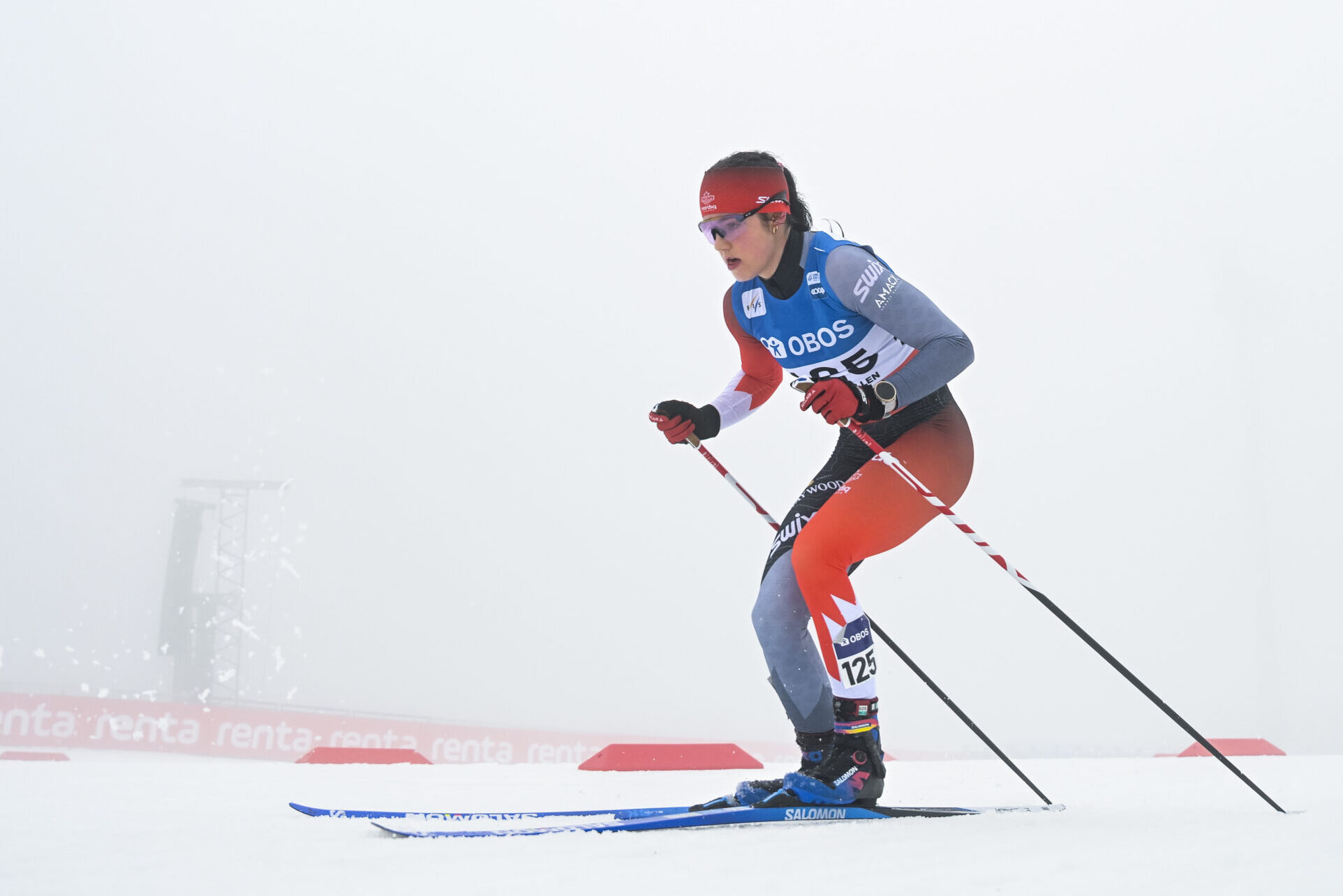
    Alison Mackie skiing in a Canadian race suit through fog at Holmenkollen.
    Mackie at the Holmenkollen World Cup in March, a week before the tour reached Lake Placid. (Photo: Authamayou/NordicFocus)

    A Winter Without Diggins

    The World Cup went to Minneapolis in the last two seasons, and Lake Placid hosted the finals in March in front of enormous crowds. Why not race in North America more often?

    “We do have actually Canmore scheduled for World Cup 2028, but realistically there are not so many resources for cross-country skiing in North America,” Mackie said. “It takes a lot of money and human power for the organization and preparation of those races. Of course, it will be amazing to have more opportunities to race in North America in the future but I have to be realistic and understand that organizing an event here in Canada, for example every four years, require lots of efforts and preparations from the local organization. Maybe we need more venues in North America that we currently have that are able to bring here World Cup events. I admit with huge pleasure that in the past seasons both Minneapolis and Lake Placid events showed how strong local communities are in terms of support and enthusiasm for cross-country skiing and those events have been a great boost for our discipline in North America, especially between young kids.”

    After fifteen seasons, this will be the first World Cup winter without Jessie Diggins, who clinched one more crystal globe in Lake Placid in March before retiring. Will she be missed outside the U.S. team as well? Did you ever get advice from her?

    “I definitely think Jessie’s presence will be missed in World Cup. Not only inside USA Team. I think she has always been a positive skier and a really amazing role model in so many ways. And 100% her presence, her ambitious way of racing and unique skiing spirit will be missed. That will definitely change some racing tactics as well. I had the opportunity to train together with Jessie in New Zealand last summer and it was a pretty cool experience and I wish all the best in her future.”
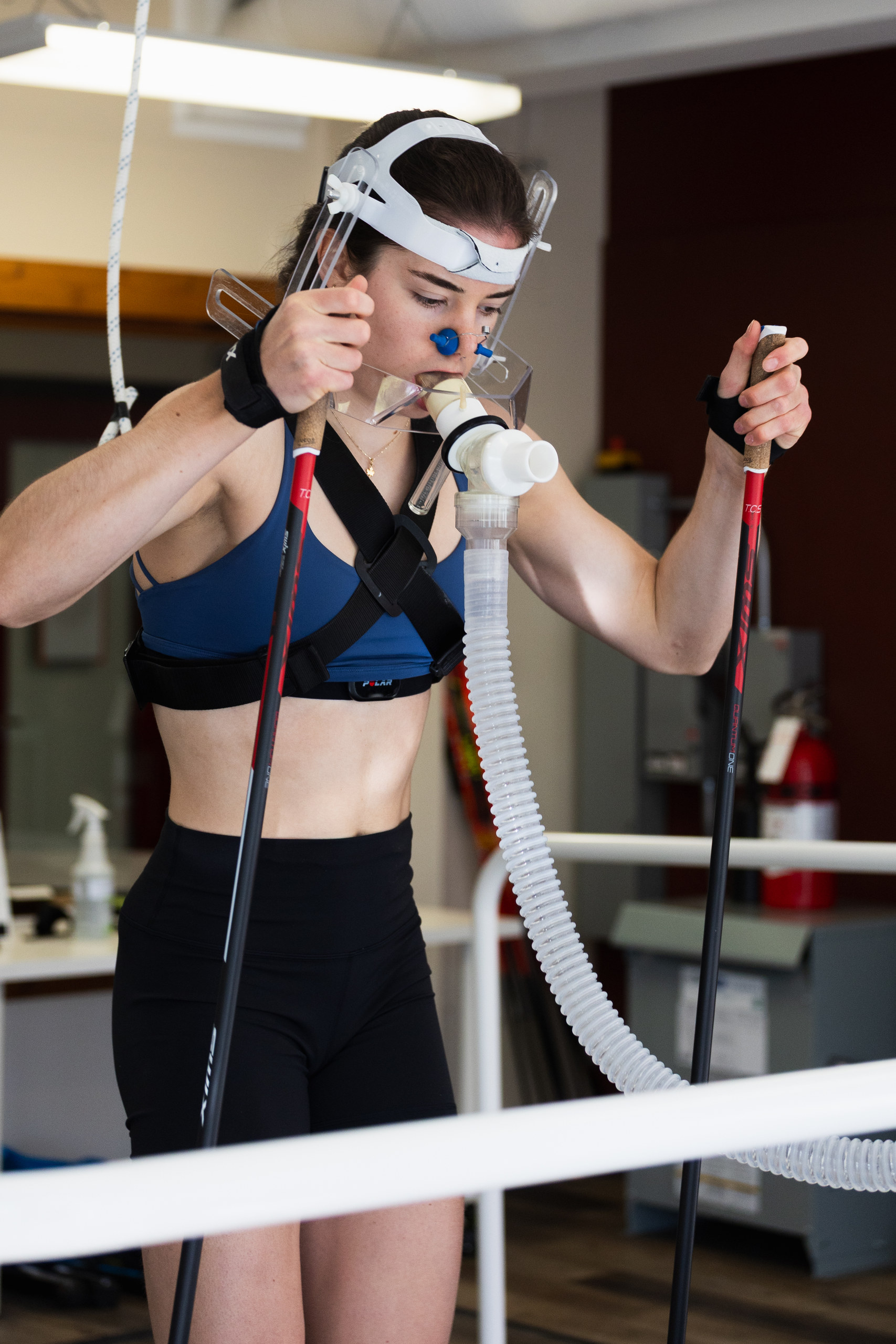
    Alison Mackie adjusting a metabolic testing mask while holding ski poles in a testing lab.
    Mackie fitting a metabolic mask before a treadmill test in May. She trains in Canmore and will study medical engineering at the University of Utah this year. (Photo: Nathaniel Mah)

    Canmore, Utah, and Life Off the Snow

    How is the Canadian team organized, and how is training divided between the women and the men at camps and at home?

    “I think Canadian skiing is gonna take a really exciting trajectory. I am really excited to work with our new Swedish coach Stefan Thomson over the next seasons but also in our group here in Canmore we have Norwegian Tormod Vatten as our assistant coach and with them we have a really strong support staff. For the Canadian National Team over the next seasons is going to be really exciting seeing where we all can go in World Cup and I am really proud to be part of this young but strong group of skiers that our Nordiq Canada are building now, under the [leadership] of former Olympic champion Beckie Scott and our amazing ski communities.”

    How do you manage your studies, at Queen’s University until last year and now at the University of Utah, with training and racing that run through most of the academic year?

    “I just make sure that I manage my schedule accordingly to have enough time for both my trainings and school throughout my day. I think having something other than skiing to focus on is really important for me. I was an online student at Queen’s University over the past two years and now I am transitioning to the University of Utah studying medical engineering. I think it is important the communication with the professors, making sure they know that my situation is a little bit different if compared to normal students, due to the fact that my training sessions, travels and races during winter season take my mind. But despite that my goal is to give my full focus during hours in classrooms too.”

    What kind of person are you away from cross-country skiing? Your personality, your interests, what you do on days off from training and racing?

    “Outside of cross-country skiing I am a pretty introvert person. I try to keep things on my own. I like studying and I really enjoy sewing clothes in my free time. I truly also love to learn new things and that is why I am excited to attend the University of Utah this year. I also love to spend time in the mountains nearby Edmonton where I grew up and in Canmore where I train myself with Alberta World Cup Academy and where I graduated in High school. Hiking, Mountain biking, running and skiing, of course, are my favourite activity when I can spend my time outside in the lush Canadian Nature.”

    In 10 to 15 years, at the end of your career, you will be proud of yourself if what?

    “I think, regardless of what I achieve in my future, I will be extremely proud of my career in addition to what I already accomplished. But really, my goal is just to ski because I love it and see where I can get of myself and also trying to inspire other young skiers. I think that there are a lot of young skiers in Canada right now, who have the potential to be amazing athletes. I really want to inspire them, showing them that anything is possible, it doesn’t matter what country you are from or how old you are. So regardless of what I achieve over the rest of my career I will always be proud of what I have already achieved.”

    Paolo Romanò is a freelance reporter based in Italy who covers cross-country skiing and Nordic combined.

    Help Support Our Coverage!

    If you value the thoughtful work and access FasterSkier provides, please consider becoming a Voluntary Subscriber. Your support directly fuels our work to cover the people, places, and moments that make our sport special.

    Join the FasterSkier community!
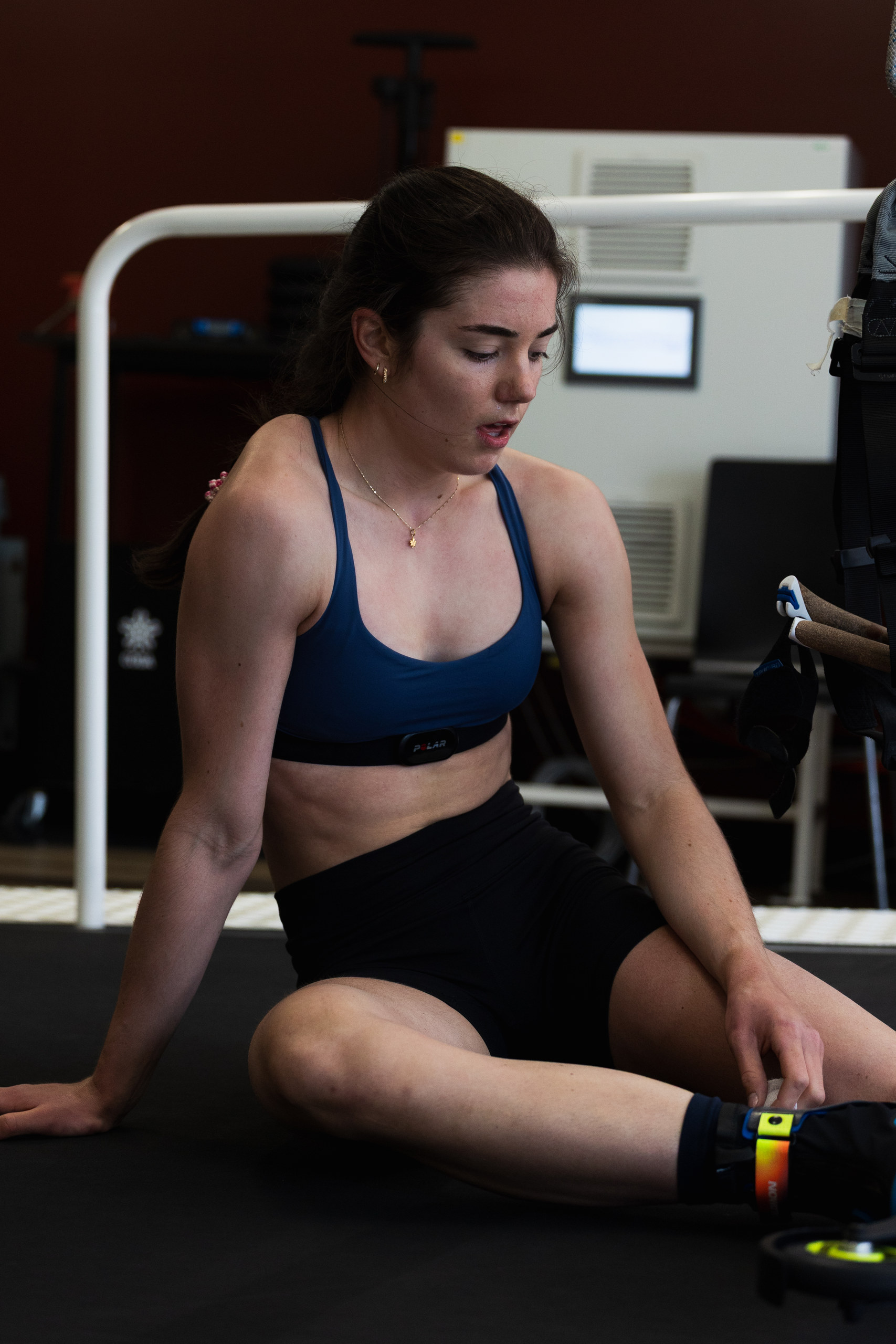
     

    Alison Mackie sitting on a laboratory floor catching her breath and unstrapping a sensor from her leg.
    Mackie catching her breath after a lab test in May. She races her first season for the University of Utah this winter. (Photo: Nathaniel Mah)
  • Beckie Scott: The Olympic Champion Rebuilding Nordiq Canada

    Beckie Scott: The Olympic Champion Rebuilding Nordiq Canada

    This article was made possible through the generous support of our voluntary subscribers. If you value coverage like this, please support FasterSkier with a voluntary subscription.

    The five minutes Beckie Scott spent at the finish line in Soldier Hollow on February 15, 2002, lasted longer than most things in her career. She had crossed the line in what felt like third place. She thought she had a medal. She did not yet know.

    “It was actually a photo finish,” Scott said. “There were about five full minutes where we didn’t know. And then it was announced.”

    Her teammates, her coaches, and the wax technicians were already gathered in the pit, standing in the cold. The result came over the loudspeaker. Bronze. Canada. Beckie Scott.

    “We went ballistic,” she said. “It was magic. By that point, a lot of the coaches and wax technicians had made their way down to the pit. We were sort of standing there all waiting, and then when it was announced, it was just chaos. But in the best possible way.”

    The Canadian flag went up the pole in third position. The bronze, in the moment, was a win.

    “There was no disappointment. We celebrated that medal like it was platinum. This was the first medal for Canada. It was a long shot. It was absolutely incredible and powerful to stand on. In that moment, I got to celebrate that and have that day, and that feeling, and all the joy that comes with it.”

    What happened next is now part of cross-country skiing’s history. The two Russian skiers who finished ahead of her were caught for doping. The bronze turned to silver, then to gold. The flag that had risen for her in third place was wrong, but only because the truth had not yet caught up to the racing.

    It would catch up eventually, though, and so would Scott, now an Olympic champion.

    Beckie Scott with the gold medal she was awarded at a ceremony in Vancouver in June 2004. A former Canadian cross-country skier, Scott finished third in the 5 k pursuit at the 2002 Olympics but was later awarded gold when the two women ahead of her were disqualified for using performance-enhancing drugs. (Photo: Cross-Country Canada)

    Scott grew up in Vermilion, Alberta, a rural community in the province’s northeastern region. Her parents were avid cross-country skiers and members of the local club. The trails started at the back of their property and ran into the provincial park. She could ski out the back door.

    When the Jackrabbit program — the Canadian equivalent of the Bill Koch Youth Ski League in the United States — rolled out across Canada in the early 1980s, her mother adopted it in Vermilion and Scott came up through it.

    “I developed just a real affinity and love for the sport, right from the start,” she said. “I was very inspired by the community. I really loved the community. I loved competing, and I just loved the idea that the harder you worked at something, the better you could do. So as a kid, it was all very exciting, and a lot of fun.”

    The Vermilion club is now more than 50 years old. The trails are well used. It remains a rare facility for a rural Alberta town.

    What was not rare, in the late 1990s, was the experience of a North American woman struggling on the World Cup. Scott was at the front of a group that did not yet exist. She was the best of her cohort, which was a difficult thing to be.

    “Even when we started on the World Cup, when I was there, the results were abysmal. It was very, very poor performances. The results were nowhere near successful, that’s for sure.”

    She remembers it now with a kind of dry humor. “I think it’s good that we had a good sense of humor, because there were a lot of days, if we weren’t laughing, we would have been crying. I do remember being completely devastated, often. Not just by being so far down the list, but by how far behind I was. That, to me, just seemed almost impossible. To see the gaps that I was seeing when I first started, in the era, I think we all know why the Russian women were skiing as fast as many of the men.”

    She did not know that at the time. She thought she was just a weak competitor.

    The way through, she said, started with a single word.

    “The first step was approaching it as a professional. Leveling up the approach to my career as a cross-country skier, as a professional. I don’t think I was doing that in the early days, and I didn’t even understand what that meant, necessarily. So that was a big shift. And then it was increasing training hours, getting serious about strength training, and technique. Taking every single piece of what a performance needs and addressing it separately, and eventually collectively. But the biggest shift for me was the mental, socio-emotional approach. Shifting the paradigm to being a professional.”

    She offers this as the lesson she most wants to pass on. The hardest part, she said, was maintaining belief.

    “In the early days, I just didn’t know at first if this was even possible, or what it was going to take, or how to get there. I had this incredibly aspirational ideal of what I wanted to be, and I was so far from that when I first started.”

    The first glimmer of light came at a World Cup in Val di Fiemme, Italy. She does not remember the exact year when we spoke, but it was in December of 1997. After seasons of trying to crack the top 30, she finished eighth.

    “That was it. That was the moment. It’s like, okay, 100 percent this can be done. And this isn’t going to be a one-off. It was totally exciting and inspiring, and I just wanted more.”

    Beckie Scott racing in Val di Fiemme (courtesy photo)

    By Salt Lake City, she was a contender. Not a sure thing, but a contender.

    “We had the belief, even years leading into Salt Lake City, that this was a golden opportunity that we shouldn’t and couldn’t pass up. We had spent our years living and training in Europe, constantly dealing with jet lag, living in hotels, foreign language, foreign food. And this was a magical opportunity on our doorstep to effectively race at home.”

    The 2002 women’s pursuit was a five-kilometer classic followed an hour and a half later by a five-kilometer skate. The format played to her strengths.

    “I could do both techniques well. There’s this powerful energy that’s created when you have a home crowd behind you. It really does change things for athletes in a way that’s hard to describe. There’s an uplift that’s just incredibly powerful. I felt it. I remember it to this day, twenty years later.”

    Then came the five minutes of waiting, and the chaos in the pit, and the medal that was, eventually, the right color.

    The irony of becoming the public face of clean sport in cross-country skiing was not lost on her. She had been vocal before Salt Lake, after most of the Finnish team was caught for doping at the 2001 World Championships in Lahti.

    “It was deeply frustrating to know that we were doing everything we could do to compete at the highest level in this sport, and we were constantly being thwarted by athletes who were using performance-enhancing drugs. That was incredibly aggravating. And it was shared. Not just by me, but my coaches, technicians, fellow teammates. This was not just unique to me.”

    When the Russians were caught in Salt Lake, her first reaction was surprise.

    “It was an open secret how much performance-enhancing drug use was going on in our sport, in particular by the Russian team. I was surprised because I did not have much belief, faith, or confidence in the anti-doping systems at that time. When I learned later about what actually happened at Salt Lake City to have those tests revealed as positive during those games, it was a remarkable series of events.”

    That path eventually led her to the World Anti-Doping Agency and a long career in sport integrity work.

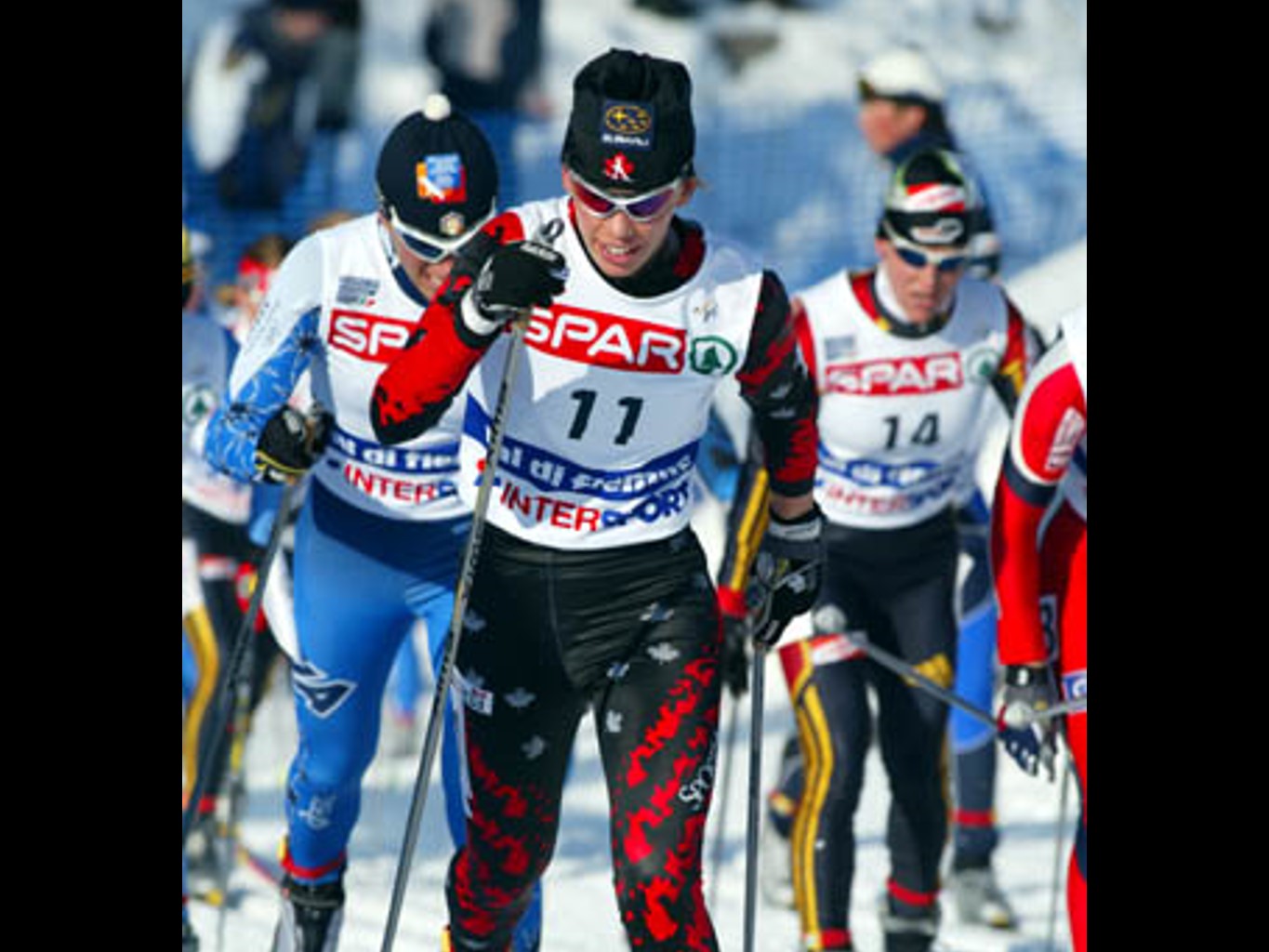
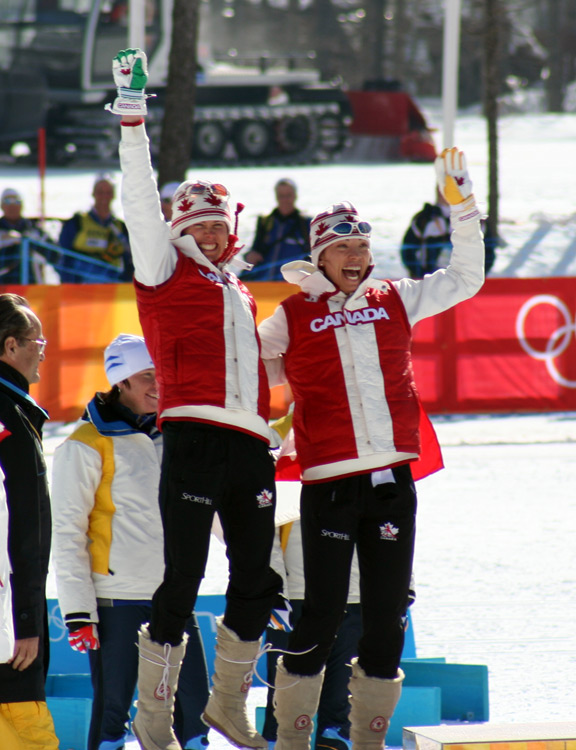
    Canada’s Beckie Scott (right) and Sara Rennner receiving their silver medal in the team sprint at the 2006 Olympics in Torino, Italy. That was two years after Scott belatedly received the gold medal she won at the 2002 Olympics, after fighting long and hard to earn it when the first two finishers were found to be doping. (Photo: courtesy photo)

    In 2006, in Turin, she won another medal. This one is remembered less for who lost it and more for who gave it.

    In the women’s team sprint, her teammate Sara Renner broke a pole. A Norwegian coach, Bjørnar Håkensmoen, standing on the side of the course handed Renner one. Renner finished the leg. Canada finished second. Norway dropped to fourth.

    “It really lived long in the hearts of people, I think, because of the sportsmanship element,” Scott said. “The Norwegian coach giving her the pole, which moved the Norwegians back to fourth and gave us the opportunity to have a silver that day. That piece was so encouraging and heartening, and really in the spirit of what we like to think the Olympics should be about.”

    The other piece, for her, was personal. The team sprint silver was the last medal of her career, won with Renner, with whom she had been racing for eleven years.

    “That was the culmination of 11 years of traveling and racing World Cups, World Championships, and Olympic Games together. And then we could stand on the podium together, in what would be the last year of my career. As teammates, but also very good friends, lifelong friends. We’re friends today. There was a dual component to that experience. It was, I think, lovely and inspiring in a lot of different ways.”

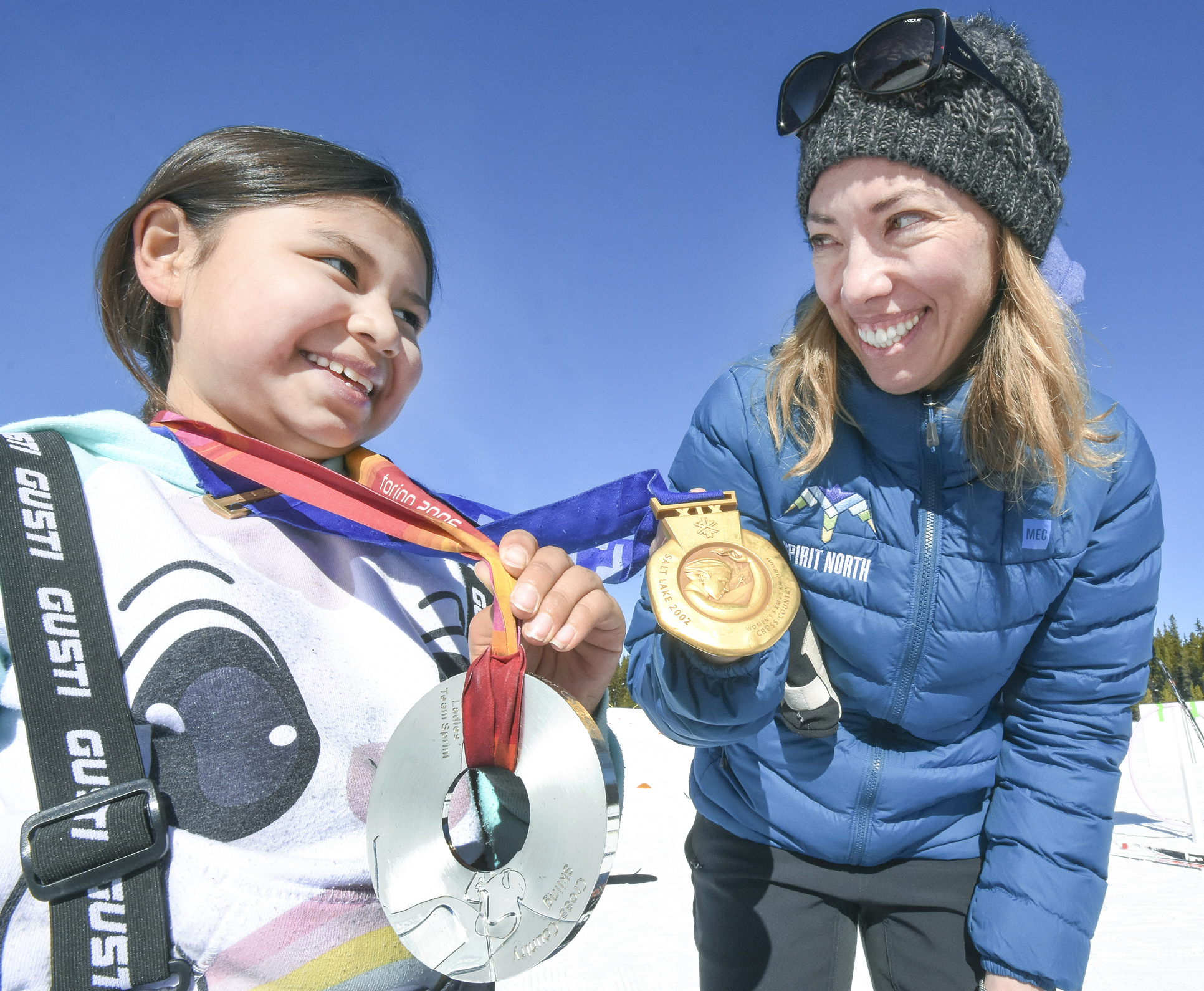
    Beckie Scott shares her silver and gold Olympic medals with a Spirit North participant. (Photo: Spirit North)

    When she retired from racing, she was invited to be an ambassador for a Learn to Ski program sponsored by an oil and gas company in northern Alberta. The program ran in indigenous communities. She would visit a community five or ten times a year, ski with the kids, show the medals, give a talk, then go home.

    She kept going home, and she kept thinking about what she had seen.

    “I began to notice many things. First, the disparity in the socioeconomic conditions of how indigenous people in this country live versus non-indigenous people. The lack of opportunity that kids were really able to access for sport and play. And then just the paradox of my own life and the opportunities that I had through sport, and my own kids were having through sport.”

    It struck her, she said, as deeply unfair.

    “An entire population of people was effectively kept out of that arena, and for no valid reason that I could see or think of.”

    The Truth and Reconciliation Commission published its final report in 2015. Among its 94 calls to action were several related to sport. Scott read the report. She had, she said, a hard time just letting things be.

    “I have a hard time just turning away and saying, not my problem. So I started a nonprofit.”

    She started with four communities in northern Alberta. The organization, Spirit North, is now national. It operates in 160 communities across Canada. It serves roughly 20,000 kids a year. It is among the largest sport for development organizations in the country.

    “The lesson there is that you can make a difference. I didn’t know anything about starting a nonprofit. I didn’t even really know much about indigenous culture and ways of being and knowing. But being open to learning, being super curious, and being driven by a vision of what change could look like, and meaningful action. That resulted in that organization.”

    Beckie Scott gives a speech while she served as the Chair of the World Anti-Doping Agency (WADA) Athlete Committee. She also served on the Compliance Review Committee. (Photo: courtesy photo)

    In March of 2025, Scott started a new job as CEO of Nordiq Canada. The skills, she said, transfer. Spirit North was a nonprofit. So is Nordiq Canada. There is a board, staff management, fundraising, finance, HR, and strategy.

    “A big part of our job at Spirit North was setting the strategy. A big part of our work here at Nordiq Canada is setting the strategy. Putting the activities together. How are we going to get to where we want to go. Many, many parallels.”

    The job she walked into was harder than the parallels suggest. The federal government had frozen its core contributions to National Sport Organizations for 20 years. The core funding that Nordiq Canada received from Sport Canada when she started last year was the same dollar figure as when she was racing two decades earlier.

    “Think about that in terms of the cost of living, inflation, and the rising demands on an NSO. It really crippled the organization in terms of capacity and what it was able to deliver.”

    She brought her CFO, Sian Bolton, from Spirit North with her. They streamlined operations. She went out and raised money.

    “I just started knocking on doors and pounding the pavement, trying to raise money for the organization. The response in the community has been encouraging. We signed on a number of new donors and had some major gift contributions. People recognize that we have a lot of talent right now in our programs in this moment. And if we don’t get behind them, we’re going to lose them. People heard that message loud and clear.”

    Then, after Milano, the federal government announced a $755 million investment in sport over the next five years.

    “It’s transformational. We are going to benefit from that. I am very optimistic about our future financial state because of the government’s recent announcement and because of our fundraising success.”

    The total budget at Nordiq Canada now sits just under $5 million, covering both the Olympic and Paralympic programs. About $2 million of that is core federal funding. Scott would like to add another $1.5 to $2 million.

    She conducted a ‘listening tour’ after taking the role. The thing she heard most often from athletes was a lack of trust in the high-performance system.

    “As an athlete, you want to believe more than anything that your NSO has got their act together and knows what they’re doing when it comes to high performance. That was one of the biggest areas that needed to be addressed.”

    She restructured the leadership team quickly. “It was time to make a fresh start. The organization needed to be right-sized for the budget and the financial situation we were in. But we also needed the right skill sets and the right roles.”

    She has, she said, four near-term goals. Podium results. Financial stability. Restoring trust and credibility. Unifying the community.

    “It’s a bit fractured,” she said of Canadian skiing now. “I think we can do a much better job of pulling together, remembering why we’re all here. Unifying as a nation behind our athletes and our programs and our development and our organization.”

    The fifth goal, on a longer arc, is coaching development.

    “I see a huge opportunity for closing the gap in coaching in this country. I look to the U.S. and what the U.S. has done to generate so many really highly qualified coaches, and not bringing them over from Europe all the time. For me, for the next four to five years, coaching development is going to be a big focus.”

    Beckie Scott and Justin Wadsworth pose with their family. (Photo: courtesy photo)

    Scott is married to Justin Wadsworth, who spent six years as head coach and high-performance director for Biathlon Canada and is now consulting for U.S. Biathlon. They try not to talk about work over dinner.

    “It’s hard. We’re living it every day, and our kids are both in it. But dinners are generally pretty lighthearted. We don’t avoid talking about work, but we certainly don’t do it all the time.”

    She is writing her report for the upcoming Nordiq Canada AGM. When she looks back on her first year, she said, it has been a remarkable one.

    “It was a lot of transformational change. New leadership in finance, high performance, events, athlete support. But at the same time, we managed to do that without destabilizing our teams. Our athlete performances continued to rise at the Olympic Games, at the Paralympic Games, at the World Juniors. We have so much to celebrate and be proud of when we think about this last year in terms of performance. The organization is on solid ground, and it’s really full steam ahead.”

    It could seem strange that the woman who became the first North American to win an Olympic gold medal in cross-country skiing now spends her days raising money, restructuring boards, and writing AGM reports. Alternatively, maybe the trail Scott got on out of her backyard in Vermilion had been leading her all along to this moment, and she has proven she is ready for it.


    Help Support Our Coverage!

    If you value the thoughtful work and access FasterSkier provides, please consider becoming a Voluntary Subscriber. Your support directly fuels our work to cover the people, places, and moments that make our sport special.

    Join the FasterSkier community!

     

  • Fast Tracks: World Champs—With the entire Canadian team behind her, Olivia Bouffard-Nesbitt was hell-bent on finishing the 50k

    Fast Tracks: World Champs—With the entire Canadian team behind her, Olivia Bouffard-Nesbitt was hell-bent on finishing the 50k

    This reporting costs money. Please support this coverage with a voluntary subscription (below) so FasterSkier can provide this level of access to the sport we all love year-round.

  • Fast Tracks: World Champs—Canadian Women following the relay

    Fast Tracks: World Champs—Canadian Women following the relay

    This reporting costs money. Please support this coverage with a voluntary subscription (below) so FasterSkier can provide this level of access to the sport we all love year-round.

  • Remembering Marty ‘Butch’ Hall

    Remembering Marty ‘Butch’ Hall

    Marty Hall, 87, (known as Butch during his youth) of Laconia, NH passed away after a short illness on February 25, 2025. Though he was born in Pennsylvania, he always considered himself a New Hampshire native. His family (his parents and two sisters, Lee Ann and Linda) moved to Gilford, NH, when he was young, right after WWII. They joined a number of families who started the Gilford Outing Club, resulting eventually in three Olympians (Marty Hall, Penny Pitou, and Richard Taylor).

    Hall was an accomplished four-event skier (cross-country, ski jumping, downhill, and slalom). While at the University of New Hampshire, he was the top skier every year, leading up to his Skimeister silver medal at the NCAA Championships in 1961. Hall took a two-year hiatus to serve in the United States Army as part of the Modern Winter Biathlon Unit in Alaska. However, it was at UNH that Marty met the love of his life, Kathy. They supported each other throughout their 58-year adventure in life across North America.

    Hall was the first full-time cross-country ski coach with the U.S. Ski Team. In the late 1960s and 1970s, under Hall’s hard-driving, passionate leadership, the U.S. Ski Team made its first foray into the international cross-country spotlight. He spearheaded the first women’s cross-country ski team in 1969 and managed and coached the inaugural US Olympic women’s cross-country team at the 1972 Olympic Games in Sapporo, Japan.

    Foremost among his accomplishments was leading the US men’s team at the 1976 Innsbruck Olympics, where Bill Koch took home a stunning silver medal, marking the historic first Olympic medal won by an American cross-country skier. Along the way, Hall helped design the first American Birkebeiner course with founder Tony Wise back in 1973 at the Telemark Lodge in Wisconsin. He was instrumental in bringing the first FIS World Cup cross-country ski race to Cable, WI in 1978, where one of his female skiers, Alison Owen, won the 5km inaugural event.

    In 1981, Hall brought his coaching leadership north of the border when he signed on as the head coach of the Canadian cross-country program. He was very influential in building a strong National Team foundation that led to excellent World Cup performances by Canadian skiers.

    Never shying away from speaking his mind, Hall sparked a controversy at the 1988 Olympics in Calgary, AB, when he implied that blood doping may be a reason for the Russians’ totally dominant performance and almost lost his job coaching the Canadian team. He was eventually vindicated when the Russians admitted to the doping years later.

    Hall retired from the Canadian national program in 1992 and later developed the race trails in Thunder Bay, Ontario, that were used for the 1995 World Championships. There, he introduced the short-loop concept, which is still used today at World Championship, World Cup, and Olympic competitions. He continued as a coach in the U.S. for eight more years, helping to build a strong program at Bowdoin College in Maine.

    In addition to coaching, Hall also introduced innovations and advancements in Nordic ski equipment, training methodologies, trail grooming, and waxing techniques that helped revolutionize the sport worldwide. He initiated a sports medicine program and created a points system for selection criteria with his wife, Kathy, that is still used to this day.

    As a mentor, Marty was always ready to stop and give advice and suggestions to those just starting out in coaching or skiing. He constantly shared his passion for the sport with anybody who was interested. Marty often said that he was so fortunate to be able to do what he loved throughout his entire career.

    Hall was a trailblazer and pioneer in cross-country skiing, leaving behind a remarkable legacy that impacted and helped shape the sport around the globe. He was recognized with induction into the U.S. Ski and Snowboard Hall of Fame’s class of 2017. The next year, he was part of the class of 2018 inducted into the Canadian Ski Hall of Fame for his contributions to the sport in Canada.

    Marty and his wife, Kathy, have been passionate supporters of the sport for many years, contributing to UNH Skiing, NENSA (New England Nordic Ski Association), the American Birkebeiner Ski Foundation, Vermont Academy, Nakkertok Nordic in Canada, and others.

    In lieu of flowers, donations may be made to the UNH SKIplex Project in Marty’s memory either online or mailed to the UNH Foundation, Elliott Alumni Center, 9 Edgewood Road, Durham, NH 03824.

    The project involves renovating the locker rooms and team spaces for the University of New Hampshire’s Nordic and Alphine ski teams. Marty and Kathy were the visionary minds behind the SKIplex and have supported the project through their advocacy and philanthropy.

  • Fast Tracks: World Champs—The Canadian Men, Once Again, Find Relay Magic

    Fast Tracks: World Champs—The Canadian Men, Once Again, Find Relay Magic

    This reporting costs money. Please support this coverage with a voluntary subscription (below) so FasterSkier can provide this level of access to the sport we all love year-round.

  • Fast Tracks: World Champs—The Conditions Were Hard, but Antoine Cyr was Happy with the Effort

    Fast Tracks: World Champs—The Conditions Were Hard, but Antoine Cyr was Happy with the Effort

    This reporting costs money. Please support this coverage with a voluntary subscription (below) so FasterSkier can provide this level of access to the sport we all love year-round.


  • Fast Tracks: World Champs—Not the Day Katherine Stewart-Jones Had Hoped to Have

    Fast Tracks: World Champs—Not the Day Katherine Stewart-Jones Had Hoped to Have

    This reporting costs money. Please support this coverage with a voluntary subscription (below) so FasterSkier can provide this level of access to the sport we all love year-round.

  • Fast Tracks: World Champs—Canada’s Sonjaa Schmidt Wasn’t Soaking in the Water, but the Good Vibes

    Fast Tracks: World Champs—Canada’s Sonjaa Schmidt Wasn’t Soaking in the Water, but the Good Vibes

    This reporting costs money. Please support this coverage with a voluntary subscription (below) so FasterSkier can provide this level of access to the sport we all love year-round.

  • Fast Tracks: World Champs—Xavier McKeever Discusses The Most Exciting Race of His Career

    Fast Tracks: World Champs—Xavier McKeever Discusses The Most Exciting Race of His Career

    This reporting costs money. Please support this coverage with a voluntary subscription (below) so FasterSkier can provide this level of access to the sport we all love year-round.

  • Tracks Set For Generations of Skiers to Follow: The North American Nordic Community Celebrates the Life of Marty Hall

    Tracks Set For Generations of Skiers to Follow: The North American Nordic Community Celebrates the Life of Marty Hall

    As many of you know, we lost a vital ambassador and supporter of North American cross-country skiing earlier this week. For those of you who might not be aware, Marty Hall was a lot more than the person, along with his wife Kathy, who supported our World Cup coverage. Marty was a friend.

    As a younger man, Marty had been a football player, nordic skier, and track star at the University of New Hampshire before becoming the US Ski Team’s first full-time coach, where he worked with some of our most legendary American skiers.

    Marty revolutionized training methodologies, trail grooming, and race formats, leaving an enduring impact on the sport. He was instrumental in the development of the Birkie Trails in Wisconsin, home to the American Birkebeiner.

    Marty wearing a camera helmet for ABC in the 1979 American Birkie. Is this the first GoPro? (Photo: Courtesy Photo)

    Kathy and he eventually moved to Canada so he could take on head coaching duties with the Canadian team.

    After his coaching career, Marty and Kathy were passionate supporters of UNH skiing, the New England Nordic Ski Association (NENSA), the Birkie Trails, Nakkertok Nordic in Ontario, and of course, the Halls have been the presenting sponsor of FasterSkier’s World Cup coverage for many years now. Their generosity and dedication strengthened the sport at all levels.

    Many of us at FasterSkier have had the privilege of spending a lot of meaningful time with Marty and Kathy: Matt also skied for UNH and has spent many hours on the phone and in person with the Halls, Nat skied for Marty at Bowdoin College, his final coaching stop, and so many of Marty’s former athletes and friends have reached out to us to share stories over the last few days, which we hope to compile soon, but we thought it might be best to share the words and memories from the FasterSkier team member who Marty had the most significant impact on.

    Marty and Kathy Hall
    Marty Hall, as our Devon Kershaw remembers:

    Marty was a real firecracker and a passionate advocate of the merits of competitive cross-country ski racing. Was he brash at times? Irritating? Of course, he was, but he was always unapologetically himself, a paramount quality if one wants to compete at the upper echelons of anything.

    Marty taught his athletes, whom he worked closely with, to get the most out of themselves. They were part of historic teams and achieved results in the USA and Canada. Some of the photos from that iconic era are legendary—as were his eyebrows.

    Later, when he was done coaching at the highest level, he was never afraid to speak his mind—a through-line of his life.  He was always ‘no holds barred’ with his opinions of what he thought teams or individuals should be doing, and nobody was safe. Not Beckie Scott, not me, not anyone. It was amusing when you weren’t involved and/or racing well enough to have his criticisms or opinions wash over you like water off the back of an otter’s soaked coat. Still, it could be irritating to be receiving his unsolicited advice—especially when things weren’t going so well on the ski tracks. Yet, he always stood by his opinions, and that ‘tough love’ aspect was just so ‘Marty.’ He just wanted—always did—for athletes to get the most out of themselves. There’s no better quality in a mentor, coach, or sparring partner.

    He was persuasive, too. This story is funny and perhaps hyperbolic, but I may have never been a cross-country ski racer at the highest level without Marty.

    I recall that Dave Wood and Marty came by my house – in Sudbury, ON (I still don’t understand why, haha – I wouldn’t go to Sudbury willingly), most likely on their way to some event somewhere in Northern Ontario. We sat in our family room, and Marty peppered me with questions. At the time, I was very on the fence between giving up top-level skiing – accepting instead a running scholarship, of which I had many offers to run in the NCAA – and, of course, Marty was having none of it. Tried as I might to explain how I loved both sports and that running was a more ‘pure’ competition with fewer variables, he turned it all on its head, educating me (preaching in pure Marty style) in the facts that those plethora of variables are what allow Canadians to win at the highest level. Mind you, no Canadian at that time had won anything in cross-country skiing for a very long time. It was over a decade since Pierre Harvey—the only Canadian to win then—did so in 1988. But he was able to beat me down to accept the reality that the chance to be the best in the world on a day was more realistic in cross-country skiing when compared to distance running as a young Canadian (I recall him being very stubborn about this—something like, “there’s no way you can be the world’s best at 5000m as a Canadian” or something like that, haha).

    Then came the war stories. Marty was a great storyteller, and the evening was filled with him and Dave—mostly Marty (there was not enough oxygen in the room for others)—telling anecdotes of the World Cup, the Olympics, the World Championships, and everything that life entailed. I drank it all up. I sat there on my sofa, totally quiet, and listened.

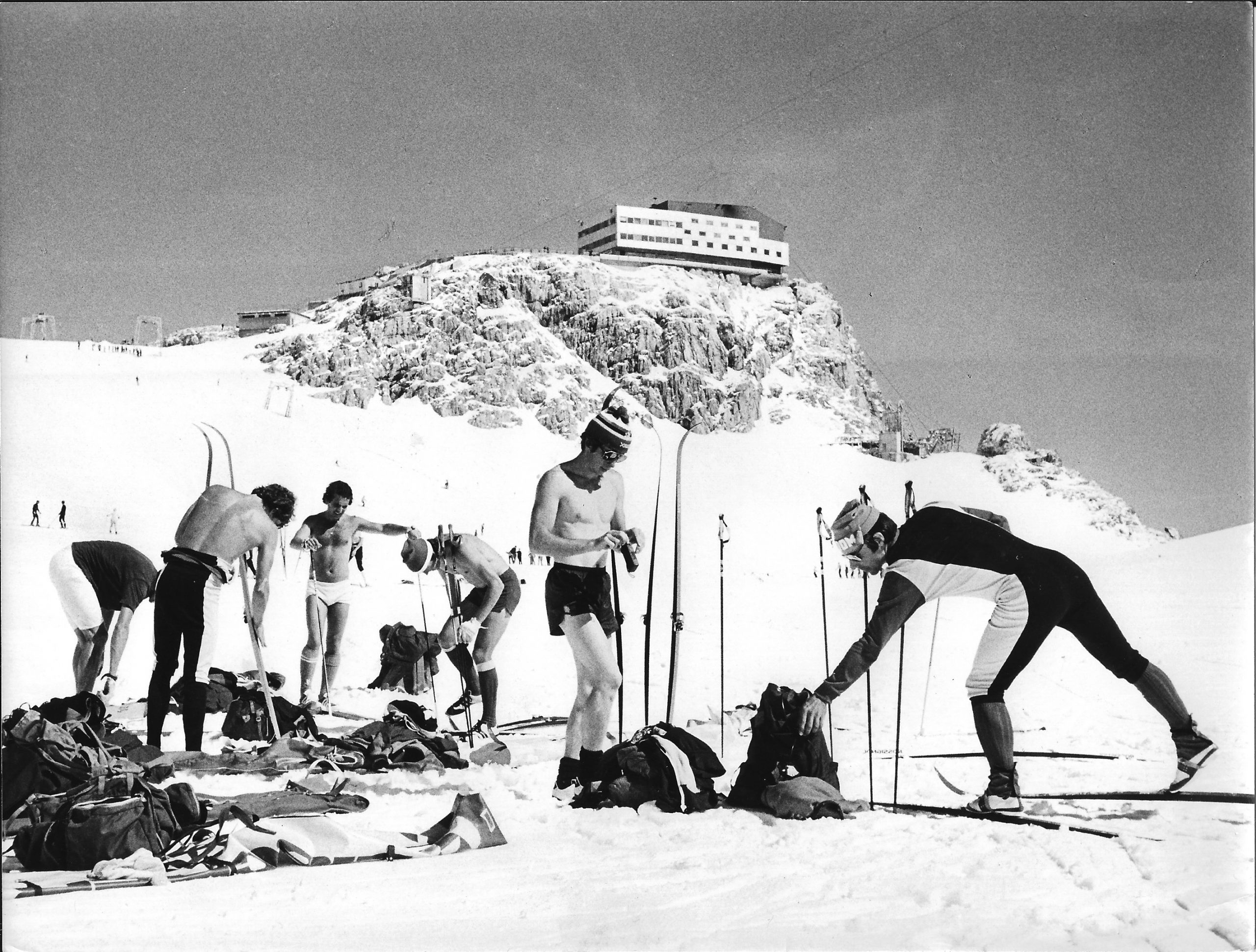
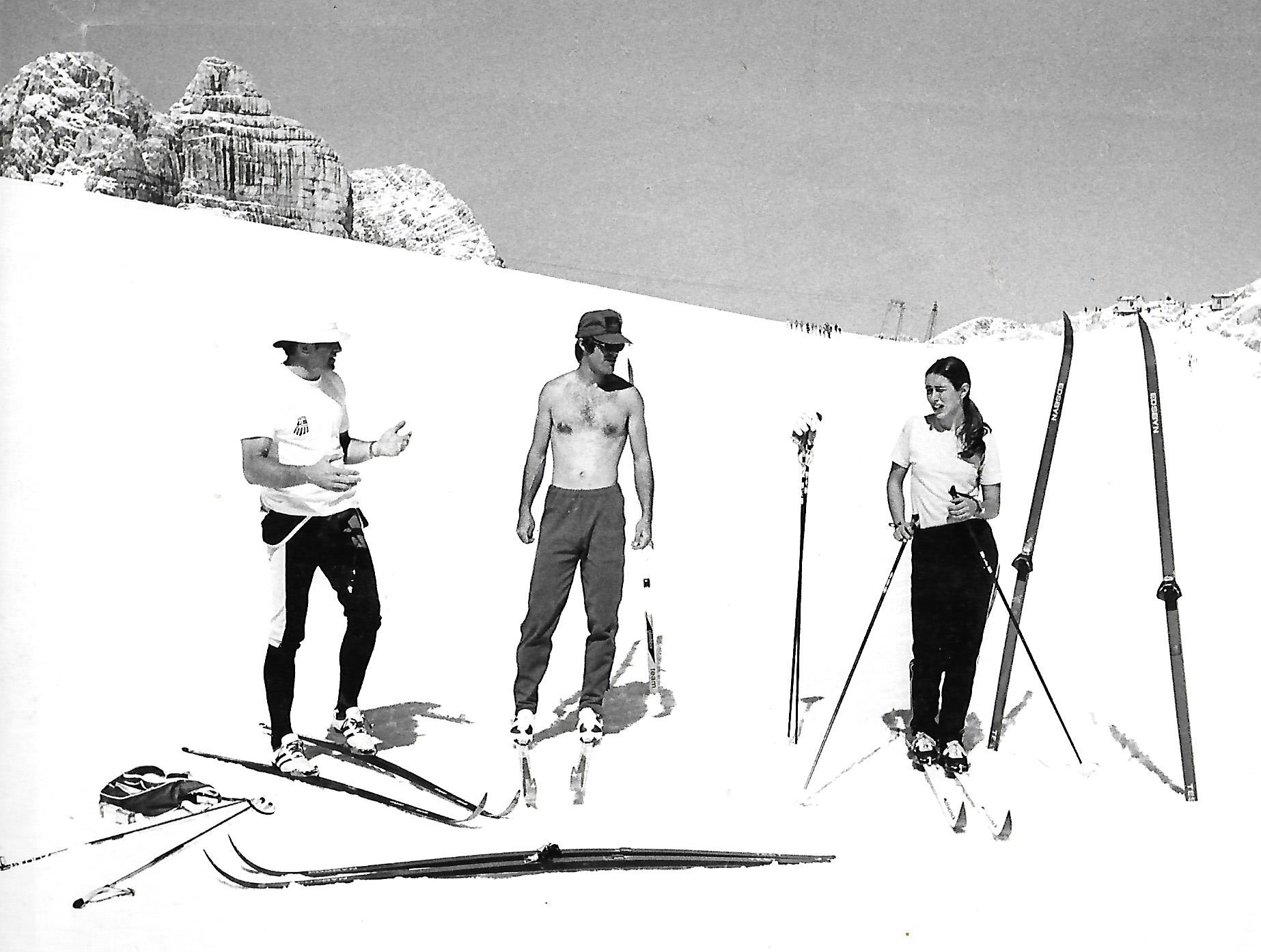
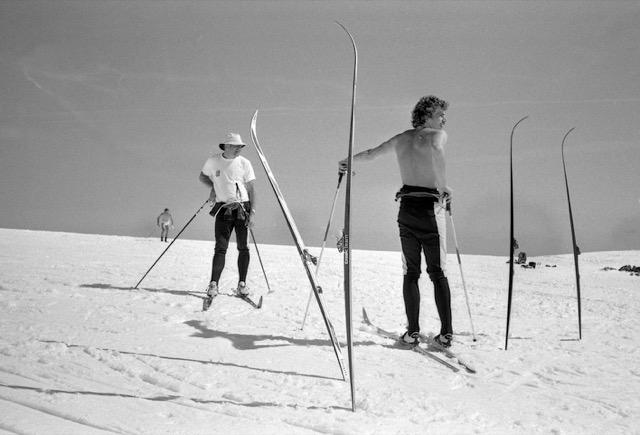
    U.S. Ski Team, 1976. on the Dachstein Glacier. (Photo: Courtesy Marty Hall)

    I finished my cross-country running season that autumn of that visit – and it was successful. The transition for me between running and skiing was always abrupt and violent. I had no upper body strength, and racing in November (when we still did that in Silver Star) was as challenging as always. I was a 2nd year Junior Boy, a club skier for a scrappy club that trained in some horrendous training conditions in a rough Northern town in the middle of nowhere. But we were driven and trained hard. A few months later, our club – Laurentian Nordic – was in Val Cartier, QC, for that year’s World Junior Trials. I had no illusions of making the team, I hadn’t even traveled to Quebec with my passport – it lay safely back in Sudbury. I barely even knew what ‘World Juniors’ was, if I’m honest. I knew that a club teammate had competed at the World Juniors a few years earlier in Canmore (Pirkko Penttila). In that first race, a 30km classic competition, I finished third, shockingly. I explicitly told my club coach, Dave Battison – that there must have been a mistake and coerced him to check with the timing staff to ensure the results were correct. There was no mistake with the results; I had finished 3rd and was now in the running to make the team. All I needed was one more good race in the 10km skate – a race that was, at best, scattershot for me (distance skating – then throughout my career, was sometimes great, other times a disaster). Shockingly, I also finished 3rd in that competition, making my first World Junior team less than a month after turning 17.

    My mom drove home to Sudbury directly after that 10km skate, over 10 hours, and couriered my passport to me in Mont Ste Anne, where we were staying for a short ‘pre-camp’ before flying to Europe. I didn’t even have running shoes (why would someone run in the winter?!), and I came to those championships with three pairs of skis (one skate, two classic), all different brands (Fischer skate skis, Atomic and Madshus classic).To say I was green would be an understatement.

    That trip changed my life. I had never been to Europe before and fell in love with the exoticness of it all—the different foods, cars, architecture, and mountains. I always loved the mountains more than anything, and we had a pre-camp in Lavaze Pass, just above Val di Fiemme. That is still one of my favorite places to cross-country ski. The alpenglow on the Dolomites is something to experience.

    1976 on the Dachstein Glacier: Marty Hall (left), women’s coach Rob Kiesel (center), Lynn Spencer-Galanes (right). (Photo: Courtesy Marty Hall)

    It was also the first time I had competed in an international competition, and we even did a time trial in the infamous Val di Fiemme stadium, where a few years later, as a first-year senior, I would compete in my first World Sr. Championships. The adventure of it all, the camaraderie with the other athletes (all were last year juniors), and representing Canada internationally was both an honor and addictive. It lit a fire in me to want more. I hated to lose and really hated to get my ass kicked. I vowed to come back stronger, to do what I could to be the best I could be – like Marty was ranting about that autumn evening in one of Canada’s worst cities – Sudbury, ON. To say I believed fully would be a lie, but I fell in love with chasing a ridiculous dream.

    That spring, I gave up on running competitively – or ‘training’ for running. One dream faded into the mists while the other became clearer. It wasn’t an easy journey. As some might know, I lost my girlfriend in a tragic cycling accident in June of 2001- as I was graduating from high school – and left Northern Ontario hating everything that Sudbury represented. I resented the countless training sessions where things were thrown at me out of truck windows, and the countless times I’d been run off the road by jackasses came to have a new meaning. Three weeks after the accident, I moved west to Canmore, a shattered version of myself. Canmore saved my life. That community was, and is, so phenomenal. I will forever be grateful to the people there who lifted me out of a deep, deep sadness and pit of despair. I tried to race for Sofie, even writing DIFS on the tips of all my skis (Do it for Sofie). I shattered myself in training, using hard training to distract me from the sadness that overcame me – when my pulse got over a certain threshold or the training session became long enough, I wouldn’t think. After a really disappointing season, I almost gave up on skiing again that spring after using training as a ‘therapy’ method left me crushed. But that spring, I used wax remover to wipe away “DIFS” and came to Spring Series in the US to race for myself. Of course, it went phenomenally well, and the results were fantastic; I was in the top 3 in the senior category.

    Where am I going with this?

    Marty reached out and congratulated me for making that first World Juniors Team – even though I got my ass kicked in Slovakia back in 2000. Alain Parent (then the junior national team coach) couldn’t believe I showed up with no passport, no running shoes and not even a pair of ‘warm-up skate skis’ to a World Championship.

    Marty Hall (left) Doug Peterson (right). (Photo: Courtesy Marty Hall)

    As a young senior, when I finally broke out and hit my first World Cup podium 3 months after turning 23 years old, again, Marty reached out. He reminded me that I had made the right choice – shockingly recalling his visit to Sudbury- but also reminded me that I wasn’t the best in the world just yet. 3rd was good, but it’s not 1st. It would take another 4.5 years before I crossed the line first – beating both Petter Northug and Dario Cologna in Toblach, ITA in early January of 2011.

    Marty and Kathy Hall with recently retired UNH Ski Coach Cory Schwartz. (Photo: Courtesy Photo)

    Tough love was part of Marty’s whole deal, but he was always honest and always believed. No excuses. Hard work over time gives results, but you have to believe. That American swagger, no doubt. As the years ticked by, he probably didn’t even remember that afternoon/evening on that dark sofa in some nondescript living room, with a skinny running kid hanging on his every word. But I do. It greatly impacted my career and life as I sit here in Norway. All of it is unimaginable for a young 16-year-old back then in Nickel City.

    Marty will be missed. There was no one quite like him. May his fire and passion never be extinguished, and may the next leaders of Canadian skiing inspire tomorrow’s skiing greats to take a chance, not give a shit what others think, and offer no respect to the international competitors. Because to channel Marty, God dammit, Canadians can and have won in this European-dominated sport we all love and devote our life to pursuing.

    From all of us at FasterSkier, Marty, you will be missed, and Kathy, we send you our love and support. Please know we are always here for you.

    Marty and Kathy Hall outside the UNH Field House. (Photo: Courtesy Photo)
  • A Story of Resilience and Hard Work: Coming Back from a Season-Ending Injury with Graham Ritchie

    A Story of Resilience and Hard Work: Coming Back from a Season-Ending Injury with Graham Ritchie

    Speaking with FasterSkier from Torsby, Sweden, Graham Ritchie is together with three teammates from the Canadian National Development Team completing a three-week long training camp in the Torsby Ski Tunnels – an experience he describes as “unique.” Working with his coach, this camp will provide Ritchie with some valuable hours on snow after an injury that caused him to sit out last season entirely.

    A 25-year-old Canadian nordic skier, Ritchie made a late debut into the nordic ski world, entering the sport toward the end of high school. With a background in competitive hockey, Ritchie credits the lateral movements of skate skiing to skills he developed as a goalie. Ritchie explained “I probably didn’t have the same endurance as you would need for XC skiing, but I would say a lot of the lateral movements in skate skiing for sure can be comparable to hockey.” It wasn’t until Grade 12 that Ritchie began to prioritize skiing over hockey, knowing nothing about World Cup skiing or international opportunities and instead pursuing it for the joy he found in the sport. 

    Ritchie has always had a solid foundation in the sport from his participation in the Canadian Jackrabbit Program growing up. His introduction to racing wasn’t until much later when he was encouraged to try a competition by some friends who were on the team. “I just had a couple buddies who cross country skied in high school and they kinda got me into it. They were saying I should come out to some practices and maybe try some provincial races, and I did, and got hooked on it and switched from hockey to skiing,” Ritchie explained. Around this time, he moved from Southern Ontario to Thunder Bay to train with the National Team Development Centre, and his career “just kept going from there.” 

    Graham Ritchie (CAN) in a World Cup relay in Gaellivare, Sweden. (Photo: NordicFocus)

    After High School, Ritchie decided to take a gap year and commit to training full time as a cross country skier – a decision fueled by passion for the sport with little expectation for what the year would entail. From there, he was hooked on the progression, seeing success build with full time training and dedication to the sport. “It wasn’t a rapid progression at first,” he shared, “but once I dedicated all my time to it, things picked up quickly, and it showed in the results.”

    With only three years of dedicated training, Ritchie qualified for the Canadian national team. Four years later, he has achieved several top-10 finishes in international competitions, including a 5th place in the team sprint at the 2022 Olympics and a 4th place in the team sprint at the 2023 World Championships. His excitement radiated through the phone when asked about career highlights, and he responded quickly, “for sure I would say was going to the Olympics.” 

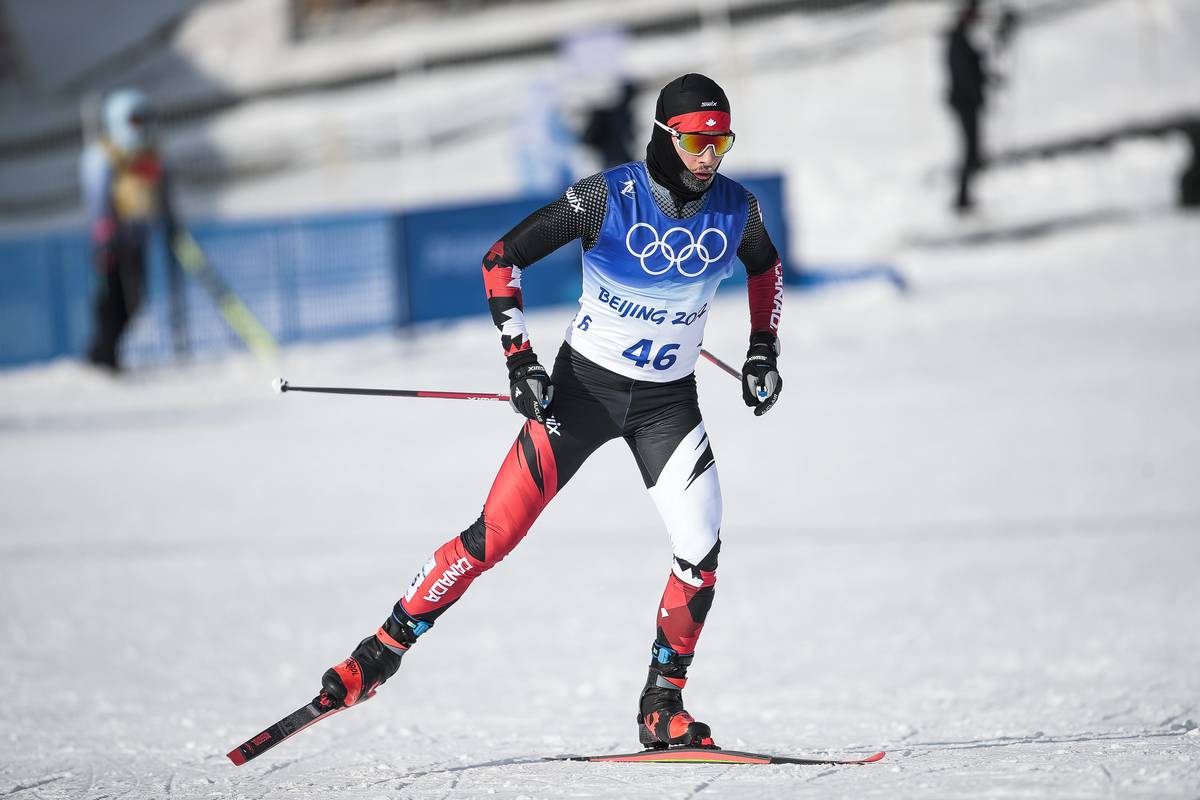
    Graham Ritchie (CAN) – during the first classic leg of the 4 x 10k relay at the 2022 Beijing Winter Olympics. (Photo: NordicFocus)

    “At the Olympics in the team sprint, Antoine Cyr and I ended up finishing 5th place in the final. And that was so far the biggest highlight of the career to date and then to just have a really good race come together at the Olympics was really cool and it gave us a lot of motivation for the future.”

    The Canadian national team, including Ritchie, has seen a lot of success in team events. Following their 5th place result in the Beijing Olympics (see this cbc article and FasterSkier post), a historic result for Canada, Ritchie and Cyr skied to 4th place the next season at the 2023 World Championships (see this FasterSkier Article). “Almost equally of a career highlight, just to see the progression we had made, which really opened our eyes training for the 2026 Olympics team sprint,” Ritchie shared. 

    Antoine Cyr (left) and Graham Ritchie (right) after the 2023 FIS Nordic World Ski Championships team sprint in Planica, Slovenia (SLO): (SLO). (Photo: NordicFocus)

    With a goal to place on the podium, the team continues to work together and build a strong culture which they believe has contributed to their successes. Reflecting on Canada’s strength in team events, Ritchie remarked, “honestly we’re not really doing anything too much different, we just have a really good team atmosphere and everyone gets along super well. We definitely have a good connection.” Later in the interview, Ritchie acknowledged, again, the camaraderie and relationship the Canadian team has with each other, pushing each other to work harder, as one of the biggest strengths of the team. 

    Graham Ritchie and Russell Kennedy having some fun on course in Dresden, Germany. (Photo: NordicFocus)

    “For me personally, I get more nervous for a team event than for an individual start because you’re not just racing for yourself personally, but also for your teammates and you don’t want to let them down. I think most of my teammates all feel the same.”

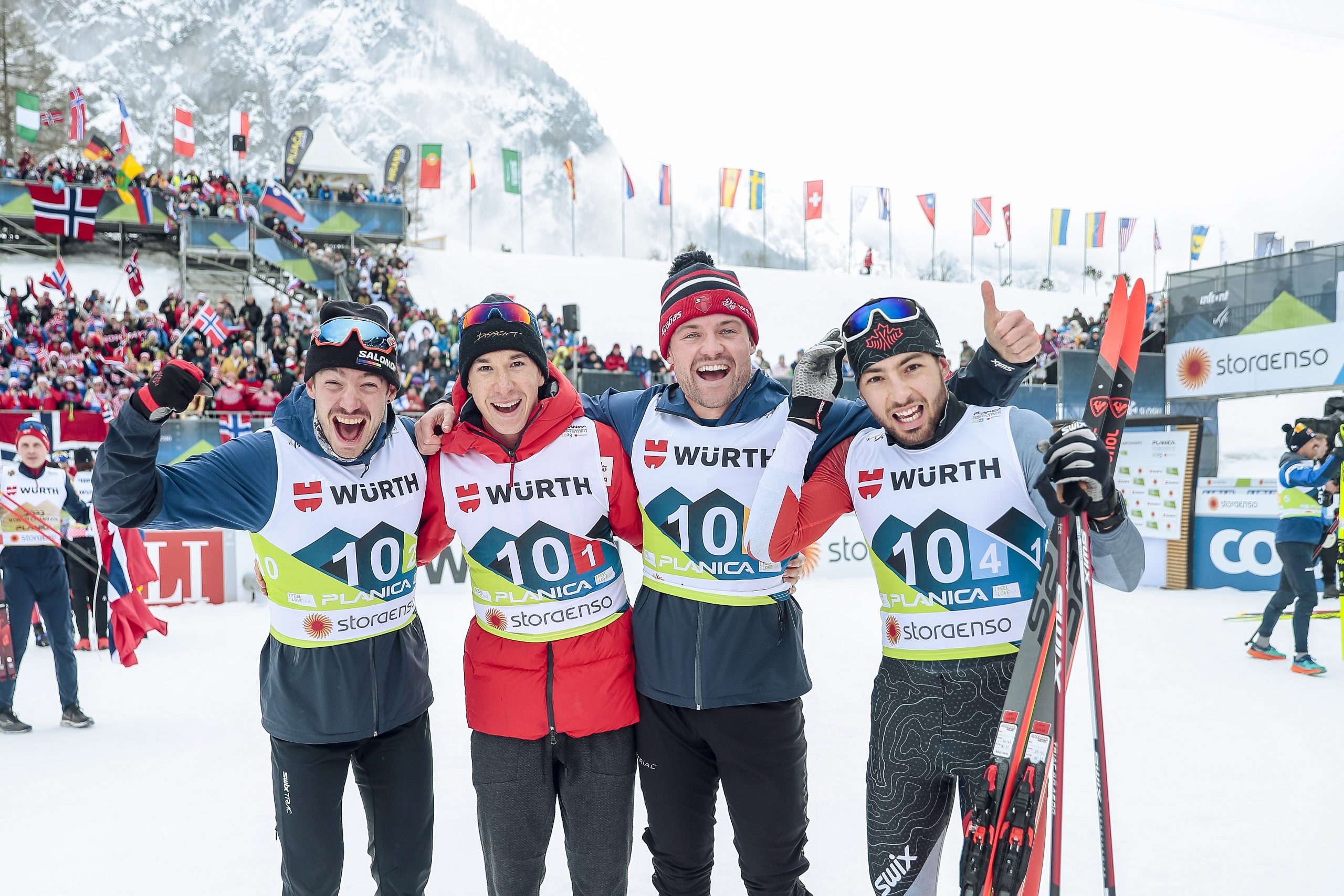
    Antoine Cyr, Xavier Mckeever, Graham Ritchie and Olivier Leveille (l-r) after finishing 5th in the men’s relay at the 2023 FIS Nordic World Ski Championships in Planica, Slovenia. (Photo: NordicFocus)

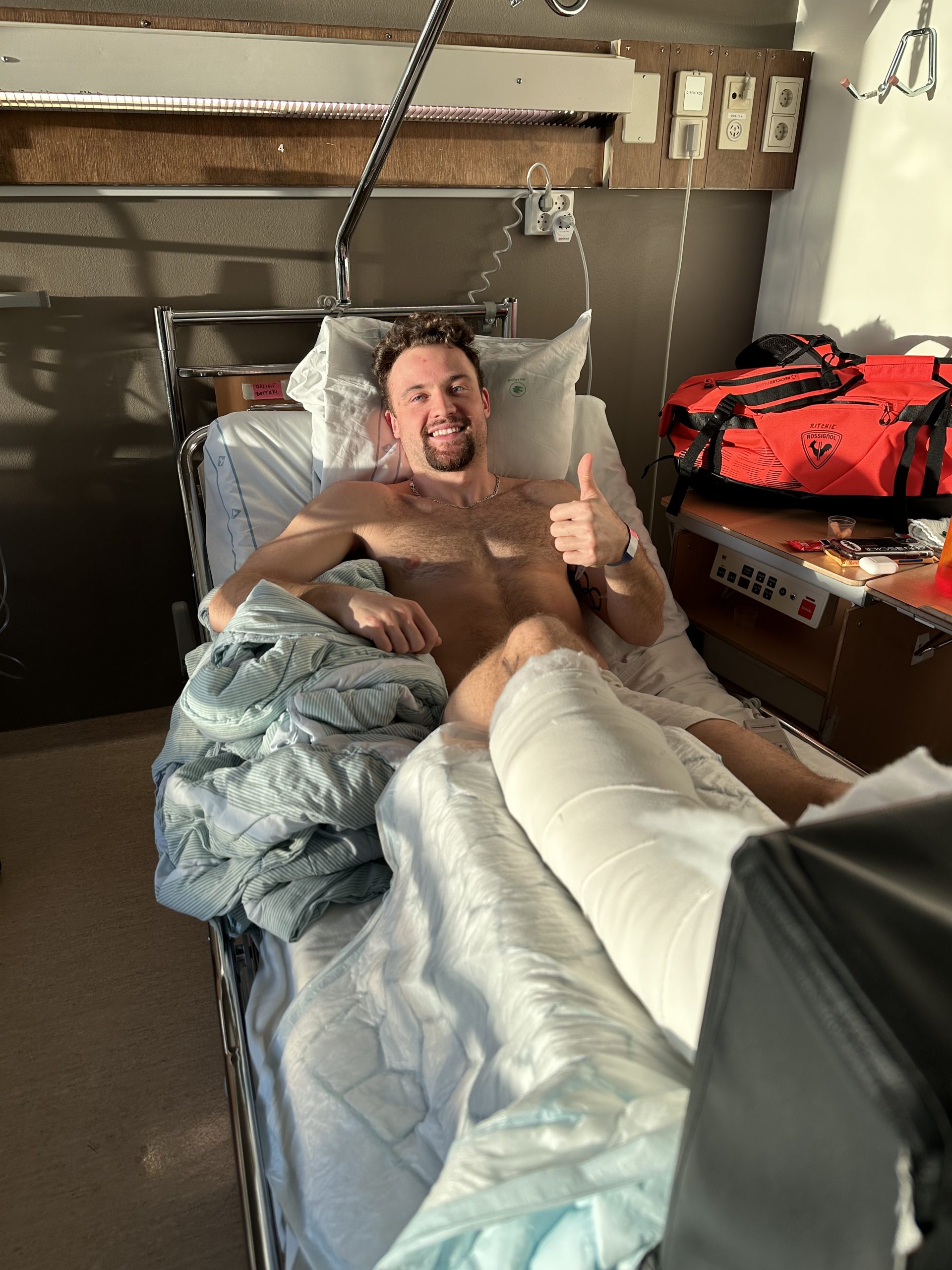
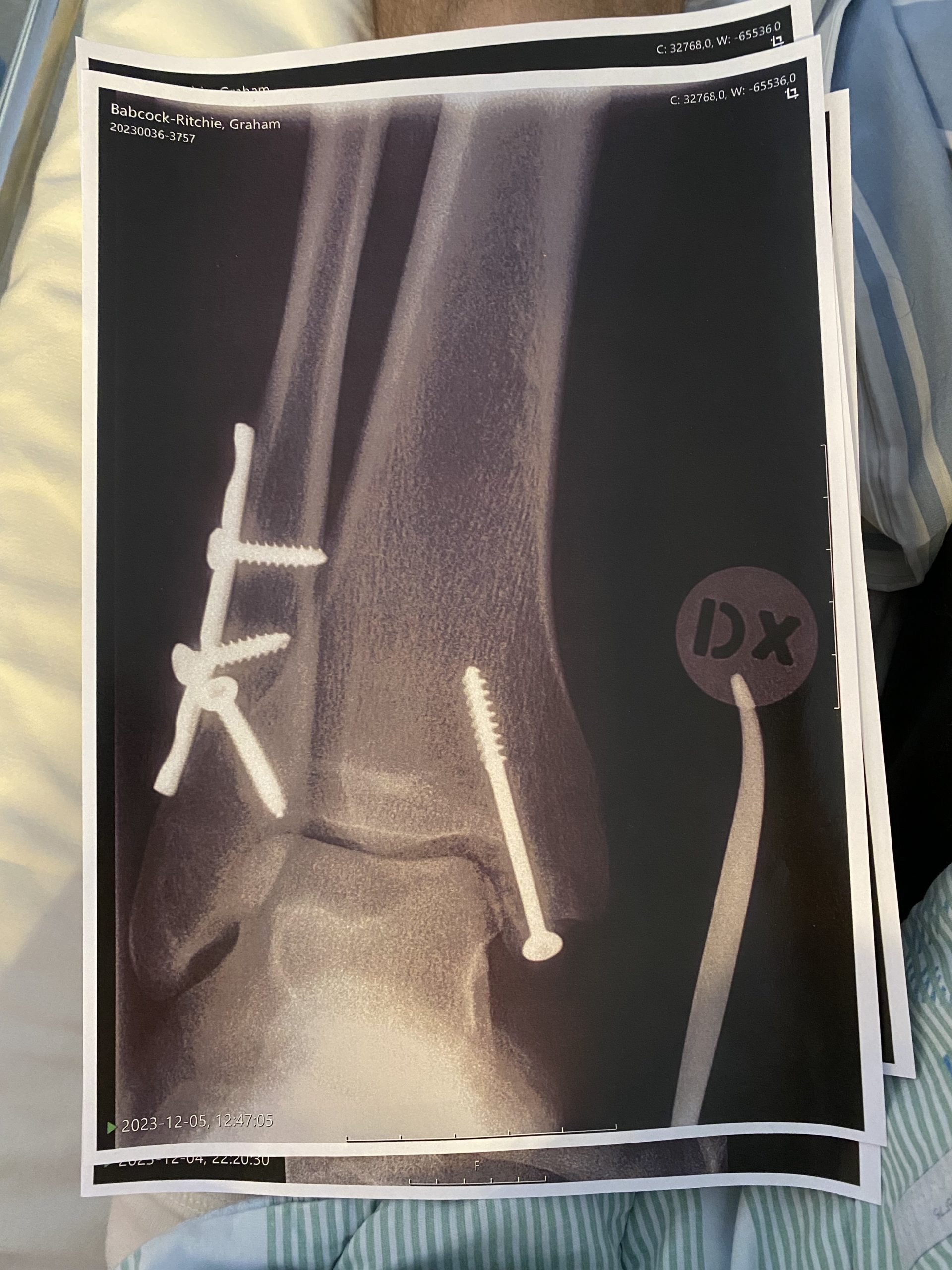
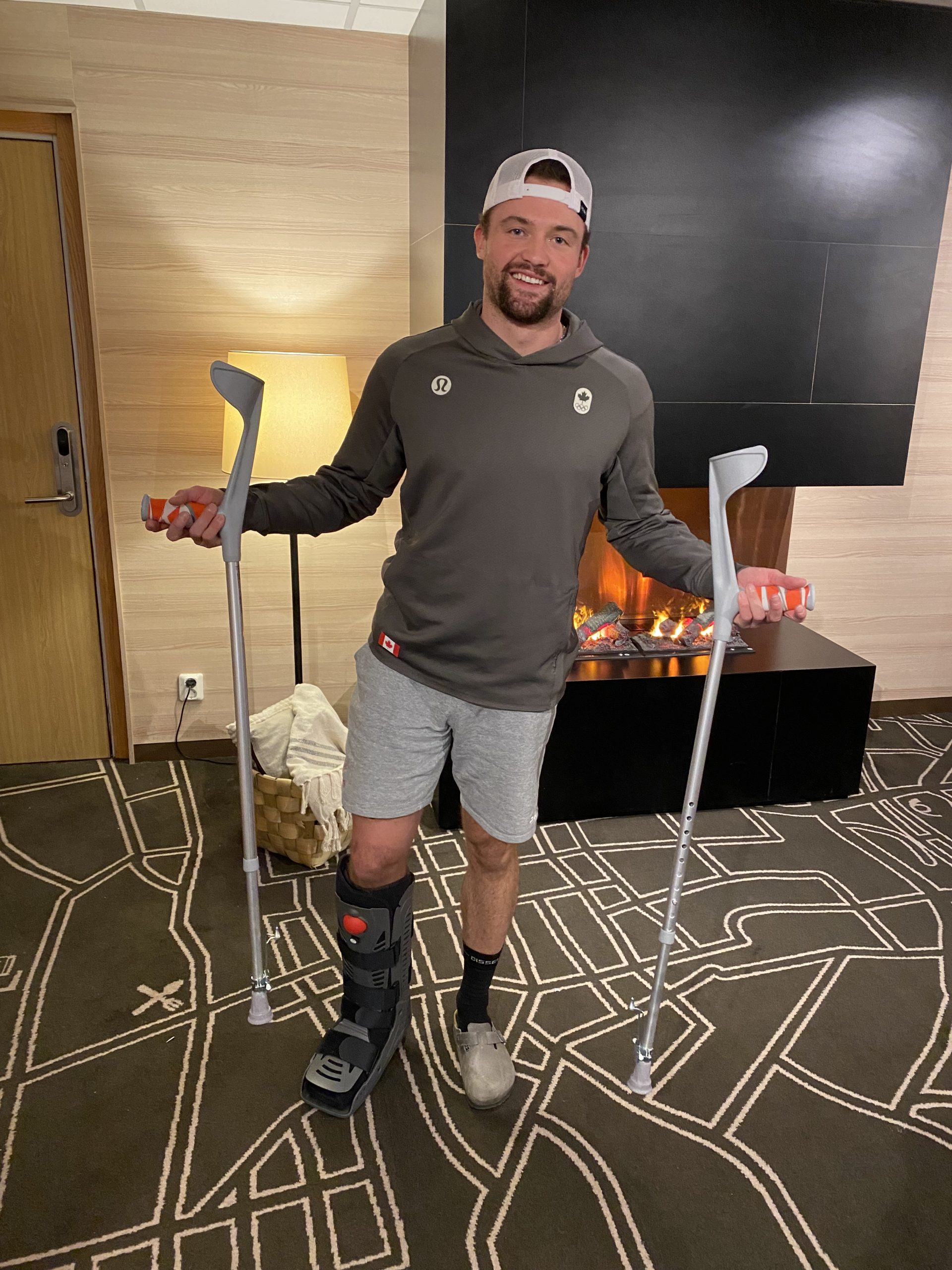
    Ritchie’s career faced a significant setback last season on December 5th in Ostersund, Sweden, when a severe fall led to a dislocated ankle and fractures in both the tibia and fibula. This injury not only ended his season, but also meant there would be a long road to recovery ahead. Now 8-months post surgery, he is still working his way back “slowly and steadily” into training and being careful not to aggravate the injury. This has meant his summer training has been impacted quite a bit, focusing primarily on double pole work to minimize ankle stress and adjusting his hours to allow for proper recovery. 

    Despite the setback, Ritchie’s enthusiasm for skiing and the outdoors remains strong. “What was even more annoying about the injury was feeling stuck inside all winter,” he explained. To spend time outside doing what he loves, fellow Canadian teammate and Para Nordic Racer Collin Cameron lent Ritchie an old Sit Ski, which, through laughter, Ritchie explained the unexpected difficulty of maneuvering around corners. 

    If you ever have the opportunity to use a sit ski we suggest you give it a try. It is a humbling experience even for an elite World Cup skier. (Photo: Courtesy Photo)

    Coming back from such a severe injury takes mental strength and positivity, for which Ritchie’s strategy has been to “think in the now, and then not think too far into the future.” Currently, focusing on rehabilitation and recovery as best he can is more important than worrying about the next season or future results. And while he was disappointed to skip out on the season last year, the young skier has a long career ahead of him. 

    Although forecasting his recovery timeline has been difficult, Ritchie is optimistic that, based on his progress over the past eight months, he will be able to start period 1 of the World Cup this December.

    Graham Ritchie (CAN) – during an individual sprint on the World Cup in Lahti, Finland in 2022. (Photo: NordicFocus)

    We wrap up the interview with one final question: given his experience making a fairly rapid jump into international racing, what advice does he have for athletes hoping to do the same? “I would say you just have to go for it,” he remarked, “It’s gonna start domestically, and then you’ll climb up into the international scene. You never know what’s going to happen. The Olympics wasn’t on my radar at all when I started the sport. You really never know, you just gotta try.” 

    Graham Ritchie’s journey highlights his growing potential and resilience as he works his way back from a major injury. As he recovers and trains, be sure to follow his progress and watch for what promises to be an exciting and successful career ahead for the young Canadian.

    Graham Ritchie during the mixed team sprint at the World Cup Finals in Falun, Sweden in 2022. (Photo: NordicFocus)
  • (Press Release) Cendrine Browne Skis to Canadian Olympic Record Finishing 16th in Nordic Marathon Katherine Stewart-Jones battles to second top-30 in Beijing

    (Press Release) Cendrine Browne Skis to Canadian Olympic Record Finishing 16th in Nordic Marathon Katherine Stewart-Jones battles to second top-30 in Beijing

    Cendrine Browne races the women’s 30 k, the final event of the 2022 Olympic Winter Games. (Photo: NordicFocus)

    Cendrine Browne set a new Canadian Olympic record by finishing 16th in the women’s 30-kilometre cross-country ski race in the free technique in Beijing.

    Browne, of Prévost, Que., wrapped up her second Olympics by having the race of her life on one of the most challenging Nordic courses in the world, clocking a time of 1:31:21.6.

    “This feels amazing to finish the Olympics on such a high note. I’m beyond happy,” beamed Browne following her second top-20 finish of the Beijing Games.

    Canada’s previous best women’s finish in the 30-kilometre Nordic distance race came at the 1992 Olympic Winter Games when Lucy Steele was 33rd.

    The 28-year-old Browne maintained a steady pace throughout the four grueling laps that featured long, steep climbs and gusty conditions at the Zhangjiakou National Cross-Country skiing Centre.

    “I’m really happy with how I was able to manage my energy and keep my energy until the last lap.When there was an attack, I was able to follow today,” added Browne, who climbed 13 spots up the standings in her final 7.5 kilometres. “Wow, what an epic race. It was so tough out here today.”

    Cendrine Browne races the women’s 30 k, the final event of the 2022 Olympic Winter Games. (Photo: NordicFocus)

    Norway’s Therese Johaug led wire-to-wire, dusting the women’s field with a time of 1:24:54.0. Jessie Diggins, of the United States, celebrated the silver medal with a time of 1:26:37.3. Kerttu Niskanen, of Finland, skied to the bronze medal in a time of 1:27:27.3.

    Katherine Stewart-Jones also skied into the top-30 for the second time in Beijing. The Chelsea, Que. skier clocked-in at 1:32:33.3.

    “It was a tough race with really windy conditions, and a tough course, but I’m proud of how hard I pushed,” said Stewart-Jones, who was competing in her first Olympic Games. “Obviously I am a little disappointed because I was skiing in a group from 17th to 30th place. I was hoping to have more energy in the last lap, but I wasn’t able to hold on. I did the best I could with the energy I had today.”

    Katherine Stewart-Jones bundled at the finish of a windy and challenging 30 k, the final event of the 2022 Olympic Winter Games. (Photo: NordicFocus)

    Dahria Beatty (Whitehorse) wrapped up her second Olympics with a 39th place finish on Sunday, and a time of 1:36:08.2.

    “It was an awesome experience,” said Beatty, who was 18th earlier in the week in the 10-kilometre individual start. “I’m happy to have had some really strong results across the board. To have the entire team have strong performances, it was an awesome Games to be a part of.”

    Laura Leclair (Chelsea, Que.) placed 51st with a time of 1:40:14.5.

    “It was definitely hard, mentally and physically,” said Leclair. “The conditions and course were really hard, but I skied smart. I lost the pack at the start but stayed there to conserve my energy throughout the race.”


    Complete Results: https://bit.ly/34S0ZxK

  • (Press Release) Canada’s Olivier Léveillé Skis to Second Top-30 Finish in Olympic Cross-Country Ski Distance Race

    (Press Release) Canada’s Olivier Léveillé Skis to Second Top-30 Finish in Olympic Cross-Country Ski Distance Race

    Olivier Leveille (CAN) – (Photo: NordicFocus)

    Canada’s Olivier Léveillé wrapped up his first Olympic Games with his second top-30 finish of the week, finishing 27th in the men’s 30-kilometre free technique race. 

    The Sherbrooke, Que. resident persevered through a broken ski and heavy winds that shortened the scheduled 5- kilometre race to 30 kilometres at the Zhangjiakou National Cross-Country Skiing Centre near Beijing. Léveillé completed the course with a time of 1:15:54.3.

    “I’m very proud of my first Olympic Games. It was bittersweet. I felt insanely good today,” said the 20-year-old. “I was well placed in the pack and was about to make a move to climb forward into the top-30 on the first lap, but unfortunately someone stuck their pole on my ski, and it broke it.”

    Léveillé was forced to battle through the next kilometre on one ski until he was met by a Team Canada ski technician to make the change.

    “I lost at least a minute on the pack in that kilometre so I was proud to make it back,” said Léveillé. “It was a a mental battle today against myself and the wind, but I was able to get my second top-30 of the Games.”

    Léveillé was also the top Canadian in the 15-kilometre individual classic cross-country ski race earlier in the week where he placed 29th.

    Two Russians, Alexander Bolshunov and Ivan Yakimushkin, finished one-two in the race. Bolshunov was first across the line in a time of 1:11:32.7. Yakimushkin claimed the silver at 1:11:38.2. Norway’s Simen Hegstad Krueger was third at 1:11:39.7.

    Rémi Drolet (Rossland, B.C.) was the only other Canadian in the 60-man field and finished 35th with a time of 1:16:27.1.

    “It was a tough one out there. “It started off okay, but it didn’t go as well as I wanted today,” said Drolet. “It was just one of those days where I was really struggling and wasn’t able to find that next gear.”

    The women’s 30-kilometre free technique race is set for Sunday in Beijing.

    Complete Men’s Results: https://bit.ly/359dNiS

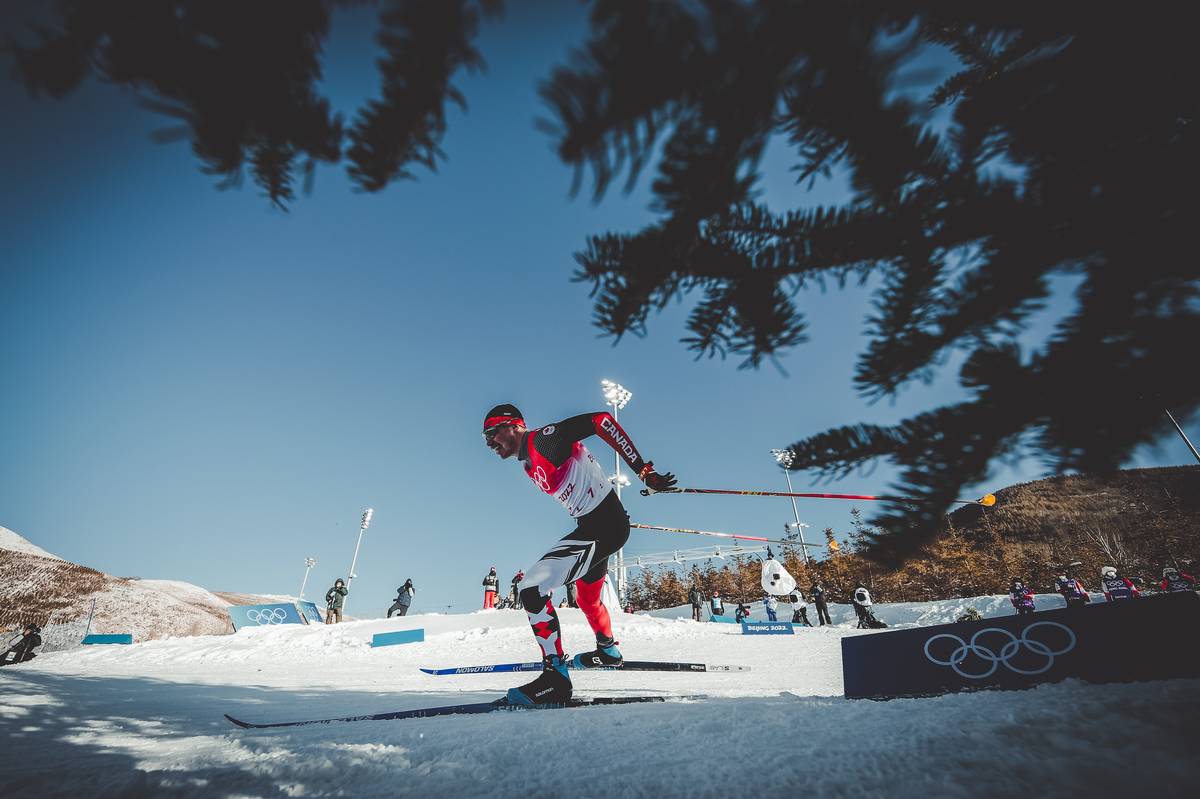
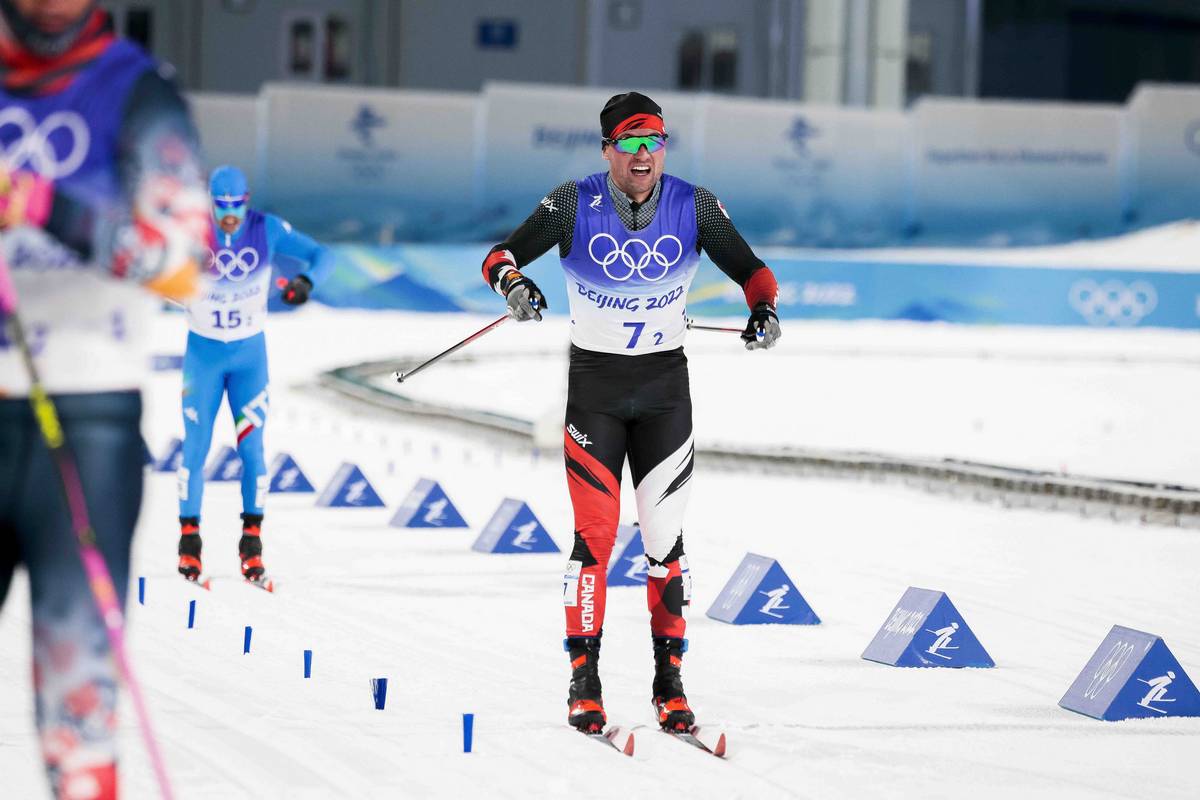
  • Cyr and Ritchie faked it til they made it – to the best classic team sprint finish in Canadian men’s history

    Cyr and Ritchie faked it til they made it – to the best classic team sprint finish in Canadian men’s history

    During the opening weekend of World Cup racing in Ruka, FIN back in November 2021, Canada’s Antoine (Tony) Cyr popped an 11th place finish in the first distance race – a tough 15-kilometre classic won by Finland’s Iivo Niskanen, now a gold medalist in the event. 

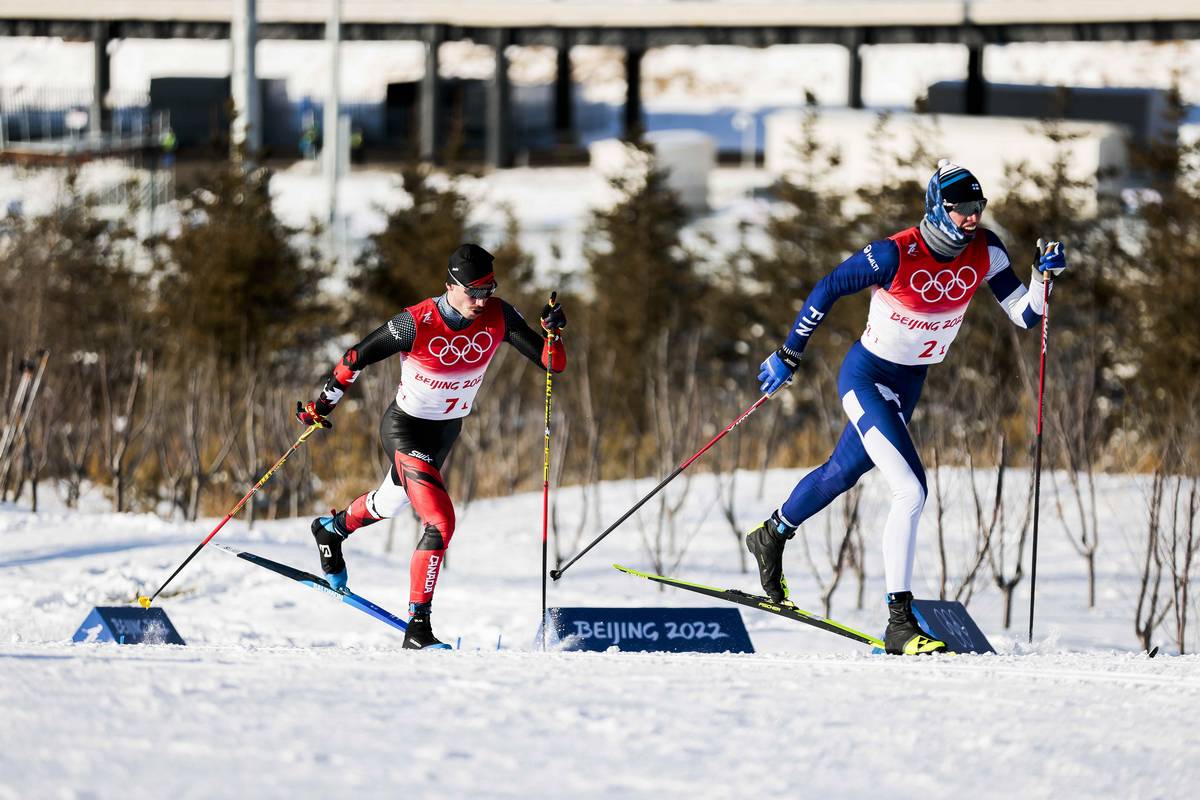
    Antoine Cyr (CAN) pushes around a the curve as he helps the Canadians to 5th in the classic team sprint during the 2022 Olympics. (Photo: NordicFocus)

    After the race, Cyr wrote to FasterSkier that the course had suited him with its long uphills and frigiddig conditions; temperatures were near zero degrees Fahrenheit ( -17 C). “Cold weather is good for us Canadians,” he said. Cyr repeated his strong showing in Ruka the next day, placing 12th in the skate pursuit. 

    Flash forward through a number of subsequent racing highs and lows, and Cyr found himself in similar circumstances: on classic skis in single digit temps, with an arduous course designed to test the mettle of the best in the world.

    Cyr was awaiting one final tag in the Olympic team sprint from partner Graham Ritchie, still amidst the lead group of eight teams, racing with some of the top names in the sport toward an Olympic medal. After receiving the tag, Cyr did his best to keep Canada in contact with the leaders, who began to surge, breaking apart this lead group as the list of medal contenders dwindled to three teams. 

    Along with William Poromaa of Sweden, Cyr lost contact with the top-three, tagging Ritchie for the final leg of the race in fifth, a position Ritchie held through the finish to cross the line in 19:45.3, only +22.3 back from the Norwegian gold medalists Johannes Høsflot Klæbo and Erik Valnes. 

    Graham Ritchie (CAN) double-poles toward the finish of the men’s team sprint. (Photo: NordicFocus)

    It was the best men’s result in a classic team sprint in Canada’s rich Olympic history. At the event’s debut in the 2006 Torino Games, which was competed classic, Devon Kershaw and George Grey took 11th in the team sprint for Canada, while Beckie Scott raced with Sara Renner to win a silver medal. Kershaw lined up with Alex Harvey at the following Games in Vancouver in 2010 for the skate team sprint, just missing the podium in fourth.

    “This is so incredible to pull this off and throw down such a good result for Canada,” Cyr told Nordiq Canada after the race. “It’s overwhelming, especially to do this with such a good friend like Graham. It is really special.”

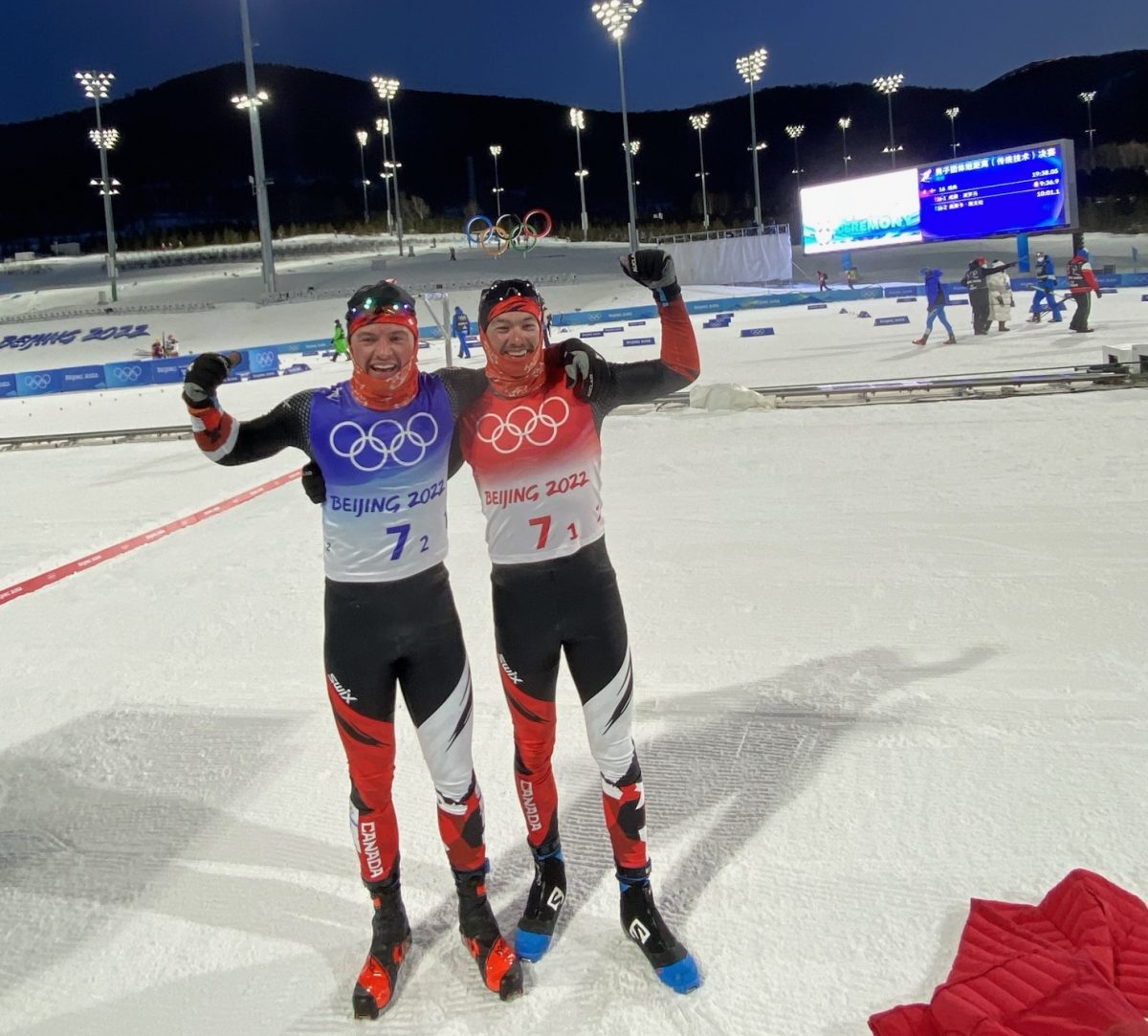
    Graham Ritchie and Antoine Cyr celebrate 5th place in the classic team sprint during the 2022 Olympic Winter Games. (Photo: Laura Leclair)

    Both 23-years-old and competing in their first Olympic Games, the Canadians had been looking for more than the results they’ve had thus far in Zhangjiakou. A pre-Olympic camp at a similar elevation in Sovereign Lake/SilverStar reportedly went well, and tight COVID safety protocols had kept the athletes healthy, allowing them to safely enter the Olympic bubble. 

    While the opening races ultimately did not feature the Canadians vying for top-10 finishes, Cyr and Ritchie could look back on the 2021 World Championships in Oberstdorf, Germany, where they took seventh for Canada in the freestyle team sprint. 

    Ritchie told FasterSkier in the mixed zone that they knew from this experience that they would need to be in the top-four in the semifinals to advance safely into the final. They had done it in the World Champs and they believed they could do it again in the Olympics. 

    “We know we had it in us, we just knew we had to race smart and race hard and have a good day,” Ritchie explained. “So [I’m] super proud of Tony and me to be able to work together and use our experience to push through that semi and end up giving our shot at a good race in the final.”

    Graham Ritchie (CAN) races at the front of the pack at the start of the men’s classic team sprint in Zhangjiakou. (Photo: NordicFocus)

    So far in the Games, Cyr has raced every event, but had not cracked the top-30 individually. Ritchie sat out the skiathlon and 15 km classic, and finished as the top-Canadian in 34th in the freestyle sprint, just off the time needed to make the heats. Racing the first two classic legs of the 4 x 10 km relay, Canada finished 11th out of 12 teams that completed the race. It’s not the makings of an underdog story about a small nation in a rebuilding phase after a string of notable retirements that one might drum up.

    “I think we put every other race in the back of our minds and just knew we [could have] a good day,” Ritchie told FasterSkier on the team’s confidence in spite of sub-optimal results. “Tony is an exceptional classic skier. And myself and him are both – we know we can pull off a sprint. So we really put those other races behind us and were only focused on today…

    “But then I mean to be on the last lap, with the podium right there,” Ritchie continued dreamily, as if still feeling the thrill. “That was pretty eye opening.”  

    Though he acknowledged the challenge of facing the likes of Klæbo, Joni Maki (FIN), and Alexander Terentev (ROC) in the last lap, who eventually took the gold, silver, and bronze medals, respectively, Ritchie shared that the possibility of a Canadian medal crept into his mind in the final lap. Moreso, it planted a seed for what might be possible in the future. 

    “I mean, during the race, I definitely thought about it. Like you could see it right there… And I mean, we’re both 23 years old. We’ve got a lot of racing left in us. So yeah, that was a big race for us. And we’re really looking forward to seeing what we can do in the future here for Canada.” 

    In the mixed zone, World Cup competition coach Erik Bråten also spoke to the team’s ability, particularly in Cyr’s case, to put aside the early results of the Games and take on a “fake it till you make a kind of attitude today. And just push through it.”

    Speaking to the difference makers that led to this outstanding result, Bråten projected that Cyr had skied among the “top-three technically”, particularly when striding up the 400 meter A-climb, which rose 30 vertical meters to the high point of the course midway. 

    Antoine Cyr (CAN) matches Iivo Niskanen (FIN) up the climb during the classic team sprint in Zhangjiakou. (Photo: NordicFocus)

    Though Cyr had raced the odd legs of the team sprint during the World Championships and was second in the classic sprint final during the Canadian Olympic Team Trials in January, having also won both the freestyle sprint and the 15 km classic earlier in the trials, Bråten deliberated the matchup he would enlist for the team sprint until official selections were due.

    “For me, this team was pretty clear before we went here. But Tony’s been struggling a little bit. And Graham hasn’t been his maximum self here either, but I felt like he did decent enough in the [freestyle sprint]. I know Tony – the potential he has. And I felt like –  we plan for success. And I think on the best day, he was the right man for the day. We don’t plan for people to have a bad day. And he had an amazing day. He showed us what he could do out there. So I just think everything came together in a perfect way.”

    This coming together means more than just a new best Olympic result in the classic team sprint for the Canadian men. Bråten stated emphatically that it is a result that could spark a return to international success for Canadian cross country skiing, elevating every level of the development pathway.

    “I think it’s extremely important. It’s important for all the athletes back home in Canada, seeing what’s possible. It’s important for coaches, the coaches of these athletes, knowing what’s going on, knowing what it takes to get this result. And they’re so young, they can do even better next year, and so on. So it’s just a trickle down effect that can be quite big both financially, but also, of course, information and knowledge wise. They know what they did to get to this level. Well, that can be shown down [the development pathway] as well.”  

    That said, feeding the development pipeline and supporting the athletes within it requires resources. While some aspects of elite level cross country skiing are relatively low cost, Canada is limited by its budget in what it can do for athletes aiming for the top.

    “The man on the boards [is] the most important person,” Bråten said simply. “Any female or male who wants to be good, the most important thing you do is just get out there and do the work, which is free. Of course, there’s equipment involved, but the work is mostly free… However, there’s so much behind this. What do you put on the boards? Which boards do you have in the first place? Are you getting the coach, physiologists, ski support you need? And  we’re good enough to do this, apparently, but…”

    Bråten trailed off before gravely stating, “One Norwegian athlete is the same budget as our entire team.”

    Graham Ritchie skis to 34th in the freestyle sprint qualifier during the 2022 Beijing Olympic Games. (Photo: NordicFocus)

    “It’s tough,” he continued. “So, for sure, we wouldn’t hurt getting a little bit more financial support.”

    Ultimately, he has confidence in the team he is supporting, and in particular in Cyr and Ritchies outlook heading into the upcoming 2023 World Championships, which will be held in Planica, Slovenia beginning in late February.

    “There’s no reason they can’t fight for at least a medal, and why not just go gold if you’re going to go for bronze?”

  • (Press Release) Olympic Rookie Olivier Léveillé Leads Canucks in Individual Classic Cross-Country Ski Race at Beijing

    (Press Release) Olympic Rookie Olivier Léveillé Leads Canucks in Individual Classic Cross-Country Ski Race at Beijing

    The youngest member on Canada’s Olympic cross-country ski team, Olivier Léveillé, battled to a 29th-place finish at the Beijing Olympics on Friday.

    The 20-year-old from Sherbrooke, Que. found his groove while steadily working his way around the 15-kilomtetre course to finish in the elite group of 30 with a time of 40:52.0.

    Canada’s Olivier Léveillé leads the North American athletes in 29th during the 15 k individual start classic. (Photo: NordicFocus)

    “It is always hard to ski at altitude, but I felt good today,” said Léveillé. “Sometimes you feel like you are stuck in a gear, but I felt like I was stuck in a good gear today.”

    Struggling with pace on a punishing skiathlon course in the Olympic opener earlier in the week, Rémi Drolet, of Rossland, B.C., bounced back and was Canada’s next best finisher in 33rd spot with a time of 41:07.7.

    “It was definitely an improvement from my last race. I don’t know that I felt a whole lot better. I think I am combating a decent amount of fatigue right now and I’m battling to get over it,” said Drolet. “But I think being able to race my own race and not having to fight to stay with the pack I didn’t blow up. I’m not satisfied with how I skied but my execution was good.”

    The nation’s top men’s skier heading into Beijing, Antoine Cyr (Gatineau, Que.), struggled to find his groove. The 23-year-old was left wanting more following a 37th place on Friday, completing the course in a time of 41:17.7.

    “I’m really disappointed in the race. It is sad, but this is life and that is why we love sports so much because there are ups and down,” said Cyr. “Emotion around a good performance is insane, but then it is also the same around a bad performance.”

    Antoine Cyr races the 10 k individual start classic during the 2022 Olympic Winter Games. (Photo: NordicFocus)

    Finland’s Iivo Niskanen was tops all day, posting the fastest splits throughout the course while skiing to the gold medal in a time of 37:54.8. Alexander Bolshunov, who is an athlete representing the Russian Olympic Committee, stopped the clock at 38:18.0 to win the silver. Norway’s Johannes Klaebo claimed the bronze medal with a time of 38:32.3.

    Canada will send Katherine Stewart-Jones, Dahria Beatty, Cendrine Browne and Olivia Bouffard-Nesbitt to the start line on Saturday for the women’s 4×5-kilometre relay.

    Complete Results: https://bit.ly/3rH4sb1


    For complete details on Team Canada at the 2022 Olympic Winter Games, please visit  https://olympic.ca/games/beijing-2022/

  • (Press Release) Dahria Beatty Beaming in 18th with Career Best Olympic Result

    (Press Release) Dahria Beatty Beaming in 18th with Career Best Olympic Result

    Canada’s Dahria Beatty was beaming after cracking the top-20 for the first time in her two trips to the Olympic Winter Games, finishing the women’s individual start 10-kilometre classic cross-country skiing event in 18th spot.

    Feeding off career-best Olympic performances in her first two starts, the 27-year-old put down a memorable performance, skiing twice around the demanding five-kilometre loop in a time of 30:00.2.

    “I definitely feel like I am in the best shape of my season now, so I knew there was potential for a strong race today,” said Beatty, who placed 28th in the skiathlon and 25th in the sprint races earlier this week.

    “I’ve been feeling good in the other two events and think that I’ve been building through each one. I had a strong result in this race at our Trials in Canmore and I feel like I’m in a lot better shape now. It was a happy surprise to be in the top-20.”

    The cagey veteran of the National Ski Team skied smart and aggressively while finding her groove while powering her way through the heavy winds and steadily working her way up the epic climbs at the Zhangjiakou National Cross-Country Ski Centre.

    “I was able to get into my own rhythm. I felt I was too conservative in the skiathlon (earlier in the week) on the climbs – especially in the classic part of the race. I had a better idea of how that would go today.

    “I really tried to push my limits on the climbs and trust that I’d be able to recover enough on the downhills to go into the next one.”

    Dahria Beatty (CAN) skiing to a personal best Olympic result of 18th in the 10 k classic. (Photo: NordicFocus)

    The Whitehorse resident was hanging tough with the sport’s elite, progressively gaining time on the field as the race went on.

    Norway’s Therese Johaug clocked the golden time at 28:06.3, edging out Finland’s Kerttu Niskanen by .4 seconds. Niskanen celebrated the silver medal at 28:06.7. Her teammate, Krista Parmakoski, finished 31.5 seconds off the leading mark to claim the bronze medal at 28:37.8.

    Beatty has only finished in the top-20 on the World Cup four times throughout her career. Three of those performances – two 15ths and a 16th place – have come in sprint races. Steadily making progress with her distance skiing, Beatty’s best World Cup distance race came last season when she was 15th in a 30-kilometre pursuit in Engadin, Switzerland.

    “If you go back to my teenage years, I was more of a distance skier, but I’ve had a lot more success sprinting internationally,” said Beatty. “It is definitely easier to break into sprinting if you are able to get that qualifying speed, but the last few years, I’ve been able to have good training seasons and that overall fitness has been caught back up with the tactical power I’ve had for sprinting.

    “I’ve never given up saying I’m an all-around skier so I’m happy that I am finally showing that again after all of these years.”

    Katharine Stewart-Jones (CAN) races the 10 k individual start classic during the 2022 Olympic Winter Games. (Photo: NordicFocus)

    Three other talented Canadian women also hit the start line on Thursday for the individual start race. Katherine Stewart-Jones (Chelsea, Que.) battled to 36th place with a time off 31:08.6. Cendrine Browne (Prévost, Que.) skied into 48th spot with a time of 31:47.9. Olivia Bouffard Nesbitt (Morin Heights, Que.) completed the 10-kilometre test in a time of 33:01.1 for 61st place.

    Additional Canadian Athlete Quotes

    Olivia Bouffard Nesbitt

    “I tried super hard, and I was able to make myself hurt. Some of those uphill’s were painful in the best way. That is how absolutely what you want in this race is to finish having hurt yourself a little bit. I’m pumped. I’m super grateful to be here and to have an Olympic bib on.”

    Cendrine Browne

    “Sadly, it was tougher today. I always have more difficulty with the 10 km classical event and the second part of the race today was a bit more difficult. I was on my own on the track for a while. I gave everything I had today even if it’s not the result I was looking for. It can only be better next time. I am looking forward to the relay event with the girls. I believe we are all in a good shape right now and the best is yet to come for us.”

    Katherine Stewart-Jones

    “Definitely pretty disappointed with my race. After the skiathlon I know that I’m in really good shape so I thought I could get a really good result today. I just fell short of that. I gave everything I had but it just wasn’t the feeling I wanted. I know I’m in shape and that’s nto the problem. I have other races to look forward to so I am excited for that.”

    Three Canadian men – Olivier Léveillé (Sherbrooke, Que.), Antoine Cyr (Gatineau, Que.) and Rémi Drolet (Rossland, B.C.) – will compete in Friday’s 15-kilometre individual start classic-ski race.

    *****

    Complete Results: https://bit.ly/3BdoBbG

    For complete details on Team Canada at the 2022 Olympic Winter Games, please visit  https://olympic.ca/games/beijing-2022/

  • (Press Release) Dahria Beatty Skis to Second-Straight Olympic Best Result Graham Ritchie finishes as top Canadian male in Olympic debut, placing 34th

    (Press Release) Dahria Beatty Skis to Second-Straight Olympic Best Result Graham Ritchie finishes as top Canadian male in Olympic debut, placing 34th

    Dahria Beatty (CAN) during the quarterfinals on her way to 25th place overall. (Photo: NordicFocus)

    Dahria Beatty turned in another Olympic best result with a 25th-place finish in Tuesday’s free technique cross-country skiing sprint race.

    The two-time Olympian was the lone Canadian to qualify for the head-to-head heats with the quickest 30 athletes. The 27-year-old clocked the 28th fastest time around the challenging 1.5-kilometre course that spirals throughout the Zhangjiakou National Cross-Country Ski Centre.

    Beatty, who hails from Whitehorse, had her day come to a halt after a photo finish for third to fifth in the round of 30. The camera determined Beatty crossed the line fifth spot in her quarter-final heat despite a hard-fought effort up and down the steep terrain.

    “I was trying really hard to make it into those semifinals. It has been a goal of mine for my entire career,” said Beatty, who was 28th in the Olympic-opening skiathlon race. “I gave it a really good shot today and I’m proud of how I skied. I’m now looking forward to the rest of the Olympics.”

    Anamarija Lampic (SLO) and Dahria Beatty (CAN) during the quarterfinals. (Photo: NordicFocus)

    The top-two athletes in each heat advance to the next round along with the next two fastest times overall. Beatty never qualified for the heats in her Olympic debut four years ago in PyeongChang.

    Sweden skied to the gold and silver medals. Jonna Sundling sprinted away from the field to claim the Olympic sprinting crown. Her teammate, Maja Dahlqvist, topped American Jessie Diggins for second spot in a tight dash to the finishing wire. Diggins celebrated the bronze.

    Other Canadian women’s results included: Cendrine Browne (Prévost, Que.) posting a career-best sprint finish in 35th; Olivia Bouffard Nesbitt (Morin Heights, Que.) in 40th; and Laura Leclair (Chelsea, Que.) 58th.

    Graham Ritchie (Parry Sound, Ont.) was the top Canadian male. The 23-year-old qualified 34th in his first ever Olympic start.

    “It’s a dream come true to be able to compete at the Olympics so that feels incredible,” said Ritchie. “Now that I have that under my belt, I’m going to focus on the rest of the week. I’m super proud to be Canadian and to be skiing here at the Games.”

    Two other Canadian men also suited up on Tuesday but did not qualify for the heats. Olivier Léveillé (Sherbrooke, Que.) was 54th. Antoine Cyr (Gatineau, Que.) placed 56th in the 88-man field.(

    Norway’s Johannes Klaebo won the men’s title. Italy’s Federico Pellegrino skied to second place, while Alexander Terentev – a representative of the Russian Olympic Committee – rounded out the men’s podium.

    Additional Canadian Athlete Quotes:

    Olivia Bouffard-Nesbitt

    “It felt great today. It was fast and fun which is everything I love about ski racing. The only thing I’m disappointed with is the result. It’s special and I’m very proud to be here on the start line happy, healthy and in shape. I’m now just looking for seconds on the racecourse. Of course, I’m disappointed but there is a lot to celebrate as well.”


    Cendrine Browne

    “It felt really good. I think that was my best sprint result. I was happy about how I skied today. It was a really tough course out there. I was one second from qualifying so a bit disappointed, but there is a lot of positives to take from this race. I’m very happy Dahria qualified so I’ll be cheering her on.”


    Laura Leclair

    “It’s so great competing here. The conditions here are really nice. It is a very difficult course, but I gave it my all today and I’m really proud.”


    The Canadian women will back on the Olympic start line Thursday for a 10-kilometre classic-ski race.


    Complete Results: https://bit.ly/3oxdTI0

  • (Press Release) Young Nordic Canucks Get First Taste of Olympic Experience in Skiathlon

    (Press Release) Young Nordic Canucks Get First Taste of Olympic Experience in Skiathlon

    Olivier Léveillé grinds out 31st-place finish on a monster of a course

    By Chris Dornan on behalf of Nordiq Canada

    BEIJING, Chn—A trio of Canadian men officially made their Olympic debut in the men’s 30-kilometre skiathlon race on Sunday at the Zhangjiakou National Cross-Country Skiing Centre near Beijing.

    The youngest member of the Canadian squad at 20 years of age, Olivier Léveillé (Sherbrooke, Que.), finished just outside the top-30 in the 70-man field, clocking a 31st-place time of 1:23:42.0.

    Olivier Léveillé leads the Canadian men in 31st in the men’s 30 k skiathlon. (Photo: NordicFocus)

    “It was a tough course and a really tough race, but I was able to stay in control and finish strong today so I’m feeling pretty good,” said Léveillé. “I’m happy now to be an Olympian. I’m going to eat, get some rest and come back strong for the sprint race.”

    Antoine Cyr (Gatineau, Que.) battled through the challenging conditions, completing his eight laps around the punishing course in a time of 1:25:26.9 for 42nd spot.

    Rémi Drolet (Rossland, B.C.) was one of 18 athletes pulled from the course after getting lapped near the 20-kilometre mark.

    Rémi Drolet competes in the men’s 30 k skiathlon during the 2022 Beijing Olympic Winter Games. (Photo: NordicFocus)

    The Canadians skied strong early in the mass start, matching the pace for the first five kilometres before the field broke apart. Léveillé bounced around the middle of pack before finding a comfortable pace in a small group of four who worked together to reel in a handful of skiers before crossing the finish line together.

    Two athletes representing the Russian Olympic Committee finished on top of the podium. Alexander Bolshunov dusted the field to win with a time of 1:16:09.8. Denis Spitsov skied to the silver medal at 1:17:20.8. Finland’s Iivo Niskanen secured the bronze with a time of 1:18:10.0.

    The men’s skiathlon consisted of 15 kilometres of classic cross-country skiing followed by a final 15 kilometres in the free technique. Athletes change equipment in a pit stop area between the two legs with the clock still running.

    The men’s and women’s Olympic free technique sprint races are slated for Tuesday, February 8.

    *****

    Complete Results: https://bit.ly/3rvbG1S

    For complete details on Team Canada at the 2022 Olympic Winter Games, please visit  https://olympic.ca/games/beijing-2022/

  • (Press Release) Cendrine Browne Battles to 20th in Epic Olympic Skiathlon

    (Press Release) Cendrine Browne Battles to 20th in Epic Olympic Skiathlon

    Three Canadian women ski into elite group of 30 on grueling race day in Beijing

    By Chris Dornan on behalf of Nordiq Canada

    Katharine Stewart-Jones (bib 23) skis to 23rd in the women’s 15k skiathlon, which opened the 2022 Beijing Olympic Games. (Photo: NordicFocus)

    BEIJING, Chn — Cendrine Browne and her teammates set the tone for the Canada’s cross-country skiers at the 2022 Winter Games after putting down her best-ever Olympic performance, skiing to 20th place in the women’s 15-kilometre skiathlon race on Saturday in Beijing, China.

    Competing in her second Olympic Games, the 28-year-old from Prévost, Que. clocked a time of 47:58.1 after a gutsy effort that challenged the top women’s cross-country skiers who were faced with long punishing climbs and blustery winds on a frigid afternoon at the Zhangjiakou National Cross-Country skiing Centre.

    “That is a career-best result today! I’m really, really happy and proud of how I raced,” said Browne. “I worked very hard on my classic the last year and I think that really helped me today. It was definitely a tough race with tough conditions so I’m glad I was able to ski relaxed and be conservative with my energy. It was really fun being in the same pack as Katherine! I’m so proud of our team. This shows that we are in great shape!”
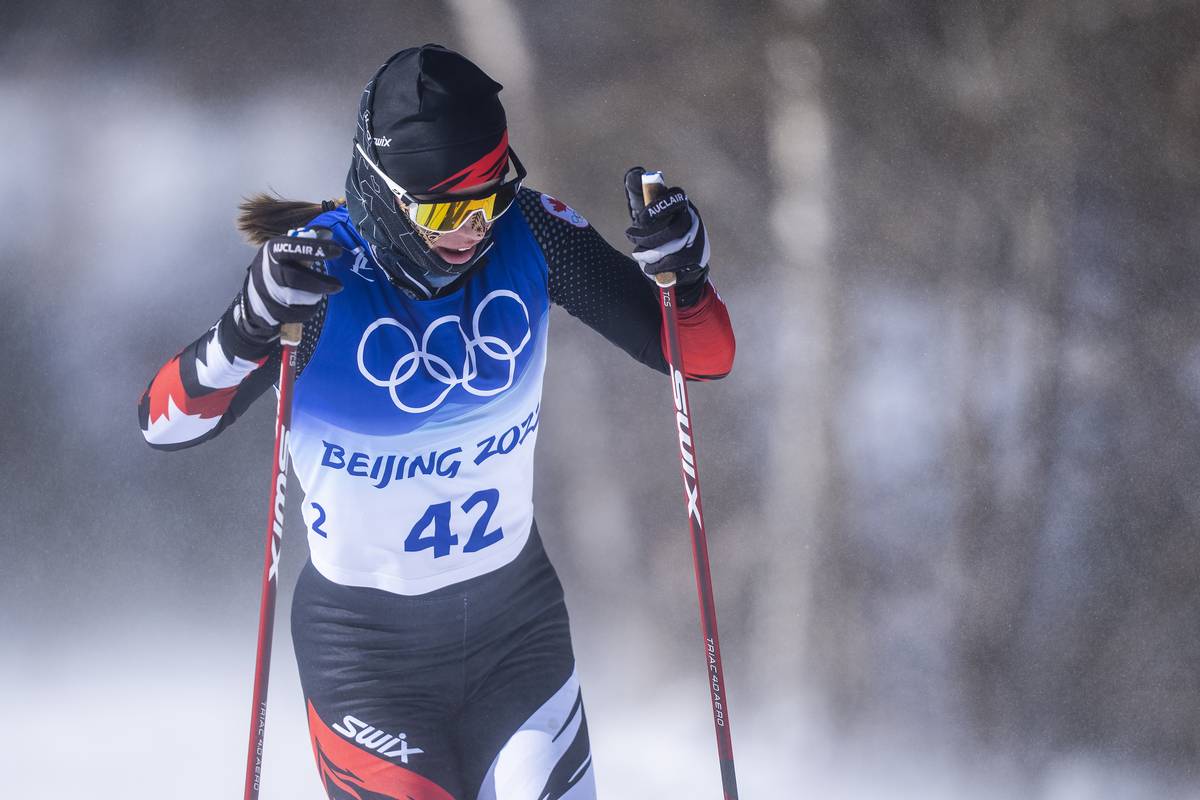
    Canada’s Browne, Katherine Stewart-Jones (Chelsea, Que.) and Dahria Beatty (Whitehorse) worked together in the chase pack for much of the race. Browne and Stewart-Jones exchanged positions as the top Canuck in each of the four laps. Skiing strong, the Canadian trio conserved their energy for a strong finish in the top-30.

    Dahria Beatty races the 15k skiathlon in Zhangjiakou, the opening event of the 2022 Beijing Winter Olympic Games. (Photo: NordicFocus)

    Skiing in and out of the top-20 on the wide-open course, Stewart-Jones (Chelsea, Que.) finished 23rd at 48:17.3 in her Olympic debut.

    “This is my first Olympic Games, so it was a really great experience. There was a lot of wind today, so it was important to stay in the tracks and conserve energy,” said Stewart-Jones. “It was a long 15 kms given how tough a course this is. I was happy with the way I felt out there despite it being so long since I had raced, and I didn’t really know what to expect. This will do a lot for my confidence for the rest of these Games.”

    Beatty also had a boost of confidence with her career best Olympic result, skiing steady in the middle of the pack en route to a 28th place finish at 48:52.0.

    “You had to be pretty strategic on the downhills today. With the wind, my goal was to be as small as possible on the downhills and then give everything I had on the climbs. I’m super happy with how it went for me. Being in the top-30 in a distance race is always something I’m happy with,” said Beatty.

    Olivia Bouffard Nesbitt (Morin Heights, Que.) scrapped her way to 44th in a time of 50:11.7.

    “It was super challenging conditions for everyone. It was windy, cold, the snow was slow, and this is a heck of a course,” said Bouffard Nesbitt. “It is one of the hardest courses if not the hardest. It was just epic today – my first Olympic race – getting blasted by the wind right off the start. You really could just feel the size of the event right away.”

    Battling for the first Nordic skiing medal of the Games, the field of 63 women set an electric pace from the start gun and held it throughout the challenging 15-kilometre test which combined 7.5 kilometres of classic cross-country skiing followed by 7.5 additional kilometres in the free technique. Athletes change equipment in a pit stop area between the two legs with the clock still running.

    Cendrine Browne (right) hugs teammate Katharine Stewart-Jones (left) after the pair finished 20th and 23rd, respectively, in the 15k Olympic skiathlon. (Photo: Nat Herz/FasterSkier-ADN)

    Norway’s Therese Johaug controlled the pack in both disciplines. A force from start-to-finish, Johaug led a group of approximately 15 athletes who strung out the field on the second hill in the first lap. Charging out onto the second half of the course after leading the pack into the exchange area, the Norwegian skied with a handful of athletes until surging with less than three kilometres to go en route to winning the gold medal with a time of 44:13.7.

    Natalia Nepryaeva, who is an athlete representing the Russian Olympic Committee, was the next best finisher 30.2 seconds off the golden pace. Nepryaeva claimed the silver with a time of 44:43.9, topping Austria’s Teresa Stadlober who grabbed the bronze medal at 44:44.2.

    The Canadian men will hit the Olympic start line for a 30-kilometre skiathlon race on Sunday.

    *****

    Complete Results: https://bit.ly/3B0mbxc

    For complete details on Team Canada at the 2022 Olympic Winter Games, please visit  https://olympic.ca/games/beijing-2022/