From the FasterSkier archive — posts syndicated from athletes’ and coaches’ own blogs between 2004 and 2012, kept online as published. Current coverage is at fasterskier.com.

Category: Health

We aren’t doctors, and we try not to play one on the internet. But if we find health information that we feel affects cross-country skiers as a group, we do our best to pass it along.
  • Self-Reported Observations Across Phases of the Menstrual Cycle Among Elite Cross Country Skiers with Guro Strøm Solli

    Self-Reported Observations Across Phases of the Menstrual Cycle Among Elite Cross Country Skiers with Guro Strøm Solli

    This article is part of a series of interviews with professionals in sports nutrition and female physiology. To get started, you can find a primer on this topic here, and listen to this podcast on Nordic Nation discussing female athlete specific nutrition with registered dietician and professional runner Maddie Alm.

    Guro Strøm Solli is a PhD candidate and instructor of exercise physiology at Nord University in Bodø, Norway. (Photo: Nord.no)

    Readers who have followed cross-country skiing for several decades may be familiar with the name Guro Strøm Solli. Now 37-years-old, Solli was a member of the Norwegian National team from 2005-2008, retiring from professional skiing in 2010. During her athletic career, Solli earned two individual sprint podiums and another in the team sprint, and finished 10th in the classic sprint during the 2005 World Championships in Oberstdorf, Germany. 

    During her athletic career, Solli also earned a degree in exercise physiology, which she built upon in a master’s program after retirement. Now based at Nord University in Bodø, Norway, Solli is working on a PhD which she expects to complete this fall focusing on a variety of aspects of the training of the renowned Marit Bjørgen.

    On the side, Solli has been involved in broader research on female athlete specific physiology and effects that the menstrual cycle (MC) has on training and performance. Her article, “Changes in Self-Reported Physical Fitness, Performance, and Side Effects Across the Phases of the Menstrual Cycle Among Competitive Endurance Athletes” published in September 2020 in the International Journal of Sports Physiology and Performance is part of a larger well-funded collaboration between universities investigating exercise physiology specific to female endurance athletes, which in Norway primarily includes cross country skiers.

    FasterSkier connected with Solli on a call in January to discuss the findings of the research and how it might benefit female athletes.  

    In reflecting on her own time as an athlete, Solli does not recall considering her own MC in training and did not experience significant side effects from it. It was not until she began working as a coach of developing athletes and an instructor at the university level that the topic crossed her radar. 

    “It was not talked about at all [when I was an athlete],” Solli recalled. “It was not a topic that was discussed by the coaches, or even the athletes so much. So that was something I was kind of thinking about — it was nothing that I focused on during my career, but I received a lot of questions from my athletes when I was a coach and also teaching exercise physiology. I experienced that there are a lot of questions, and I started to think, ‘Okay, this is something we need to look into to try to answer all these questions for the athletes.’ So it’s after my career that I’ve been more aware of the topic.”

    The research presented in Solli’s article summarized the results of 140 responses to a detailed survey by female Norwegian cross country skiers and biathletes 18-years and older who compete at a national or international level. The questionnaire involved 54 questions regarding age, overall training volume and high intensity training completed during the general preparation and competition periods of a training year, use of hormonal contraceptives, and the prevalence and intensity of side effects such as pain, bloating, mood swings, and appetite changes. Participants also identified when their overall feelings in training and competition were at their best, and conversely when their overall feelings in training and competition were at their worst, and when and to what extent these negative side effects required them to alter or miss training sessions.  

    “I think an interesting thing that we saw was that over 50% experienced this varied physical shape or training feelings across different phases,” Solli explained. “And there were over 50% that had to actually change their training because of menstrual related side effects. But only 27% had communicated about it and only 7% had planned their training according to the menstrual cycle, so it’s kind of a mismatch between the experience of the skiers and the planning of training. So I think that was an interesting finding, and I think it’s possible to gain something by increasing communication and logging to see if you can find some patterns that work for you.”

    An additional statistic that perhaps frames this series of articles is that only 8% of participants reported to have sufficient knowledge about the MC in relation to training, and, as Solli mentioned, just 27% had communicated about it with their coach.

    “We asked them why [they had not discussed it], and there was a lack of knowledge, the coach was a man, it was embarrassing, and private,” said Solli. “A lot of athletes didn’t feel the need to talk about it. So it was different topics, but lack of knowledge and that the coach is a man was the most mentioned topic to why it was difficult, so I guess there is still a barrier that there are a lot of male coaches that perhaps have the knowledge but perhaps they don’t dare to talk about this or approach it or know it it’s appropriate.”
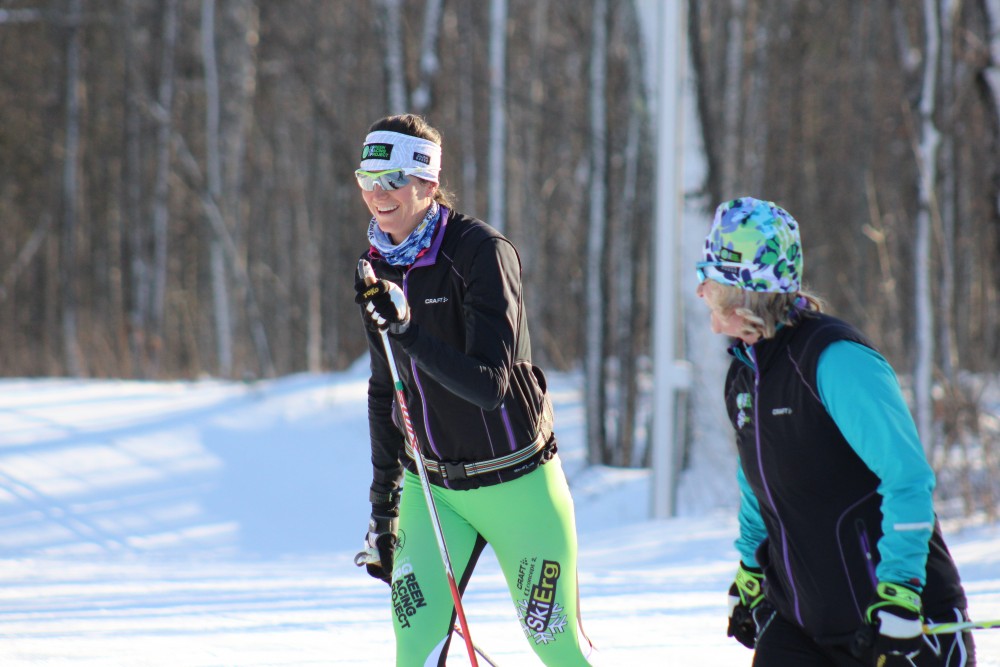
    Craftsbury Green Racing Project’s Liz Guiney (l) and head coach Pepa Miloucheva during a ski on Saturday, Jan. 2 in Houghton, Mich., the day before the kickoff of 2016 U.S. nationals.

    Some athlete quotes featured in Stolli’s September, 2020 article include:

    • “It feels like it’s a taboo. I am afraid that the coach won’t take it seriously and thinks I’m using it as an excuse.”
    • “I think I have more competence and knowledge about this topic than he.”
    • “Because he is a man.” 

    The September, 2020 article also summarizes the importance of this communication, both in terms of athletic development and overall well-being.

    “Since menstrual dysfunctions are an important marker for relative energy deficit, a syndrome affecting many aspects of physiological functioning, health, and athletic performance, it is important that athletes feel comfortable to discuss this topic with their coach. Furthermore, because of the high inter-individual variability in performance and side effects experienced by athletes during the MC, coach-athlete communication is important to safeguard the athlete’s health as well as optimize training adaptations and performance. In response, increased attention should be paid to educating female athletes and their support teams about the MC and athletic training.”

    Optimistically, Solli continued that she sees the lack of knowledge and communication as a barrier that is in the process of being broken down. 

    “I have a lot of talks about this with coaches who have wanted me to talk a little bit about the topic,” explained Solli. “And they’re very curious, and they’re starting to realize — you kind of have to get over this being a topic that you don’t mention… Particularly in elite sport, when there are so many topics that are discussed, it’s kind of silly that this topic should not be mentioned as part of the whole situation of an athlete.”

    She continued that both research and coach-athlete education on the subject is trending in the positive direction. However, high levels of variation are experienced by women, which makes it challenging to give generalized recommendations. 

    “It’s starting to be, for the last 2-3 years, kind of a hot topic. I’ve experienced that both coaches and athletes are starting to see that and to investigate if this has an impact [on the individual]. Also, when I read up on the research and meta analysis that are published that try to sum up what we know and what do we not know, it summarizes that we don’t have evidence-based recommendations that can be done on a group level, but it seems like this topic should be approached through an individual.”

    Overall, she sees increased awareness and access to information as a positive for female athletes. She noted the increased prevalence of logging apps, such as FitrWoman, that make it easier for athletes to track their cycle and observe trends in their feelings. 

    In Norway, the possibility to log the MC has also been implemented into the digital training diary that has been designed by the Norwegian Olympic Federation and is used across all sports. 

    “That’s a step forward, I think. It’s going quite fast in this area, so it will be interesting to see in five years, where are we? I think we will get a lot more knowledge just because athletes are starting to log and discuss this topic. Research takes time, but slowly we will be able to get more studies and more knowledge.”

    Zooming out to discuss existing research on the MC and how it might influence the planning of training for elite athletes, Solli noted that a pervasive theme is that the potential for optimal performance can occur during any phase.

    “In theory, we expect [hormonal fluctuations] to affect training, nutrition, and performance, but when you look at the meta analysis of how the menstrual cycle affects performance, we don’t have a clear answer on that. It seems like the studies are concluding that on average you can’t see a large difference between the performance in different phases.”
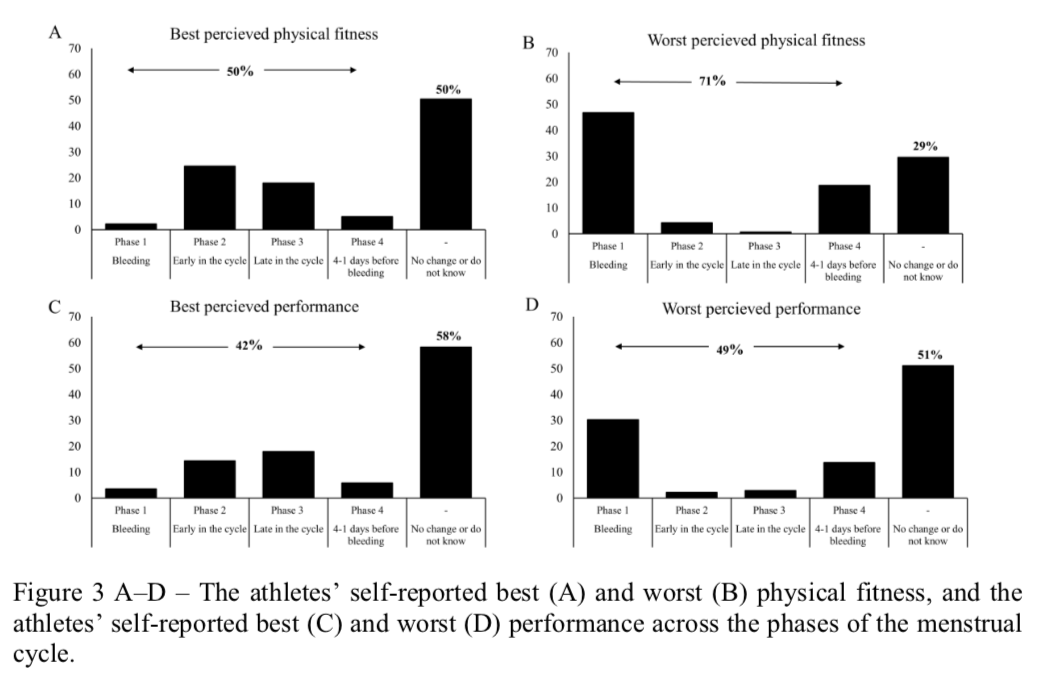
    (Click to enlarge.) Reprinted from “Changes in Self-Reported Physical Fitness, Performance, and Side Effects Across the Phases of the Menstrual Cycle Among Competitive Endurance Athletes” by G.S. Solli et. al., September, 2020 in the International Journal of Sports Physiology and Performance.

    While athletes can rest assured that racing is unimpacted, Solli explained that there are considerations athletes and coaches might apply to training to optimize adaptations. 

    “When it comes to training effect, there are some studies that highlight that it might be beneficial to periodize your strength training early in the menstrual cycle. This is the phase where you have an increased level of estrogen, which is a hormone with over 400 functions in the body, but two important functions is that it is an anabolic hormone, so it’s good for your ability to build muscle mass, and also important for bone health and to build bone mass and ensure bone density.”

    She explained that 4-5 peer-reviewed studies indicate that you can get a higher training effect in terms of muscle strength and muscle mass by periodizing strength training sessions with higher weight and lower reps in the first half of the cycle. Solli added the caveat that, like all research in this area, the studies are often small and the overall topic is still in its infancy. 

    “It will be interesting to follow the research during the next years to see if we can get stronger evidence in the case of strength training, and whether we’ll also see that we can get some endurance studies, for instance, with periodizing high intensity training in particular phases. We don’t have studies answering that conclusively yet, but it would be exciting to see.”

    Diving deeper into the survey results analyzed in her study, Stolli discussed the most prevalent themes athletes reported. She also discussed how hormonal fluctuations might explain these effects.

     “As we discovered in the study, what the athletes perceive is that the phases where they feel their worst physical shape and have their worst performance was in the days right before the menstrual bleeding and during the bleeding. Right before the menstrual bleeding, we have a drop in both estrogen and progesterone, and this hormone drop is associated with PMS symptoms and different side effects, and we also saw that in our study. The negative side effects reported by the athletes were high during the periods right before and during the bleeding phase.”

    This is also the time when athletes most frequently reported using pain-killers to manage symptoms and needing to alter their training by decreasing volume or intensity.

    “I guess that is not only my study, but also other studies highlight that those two periods can be a risk for decreased training quality or that the athletes don’t manage to perform the training they have planned because they are experiencing these negative side effects.”

    In contrast, most athletes perceived their best fitness was achieved during the middle phases of the cycle. This coincided with the window where negative side-effects were least reported.
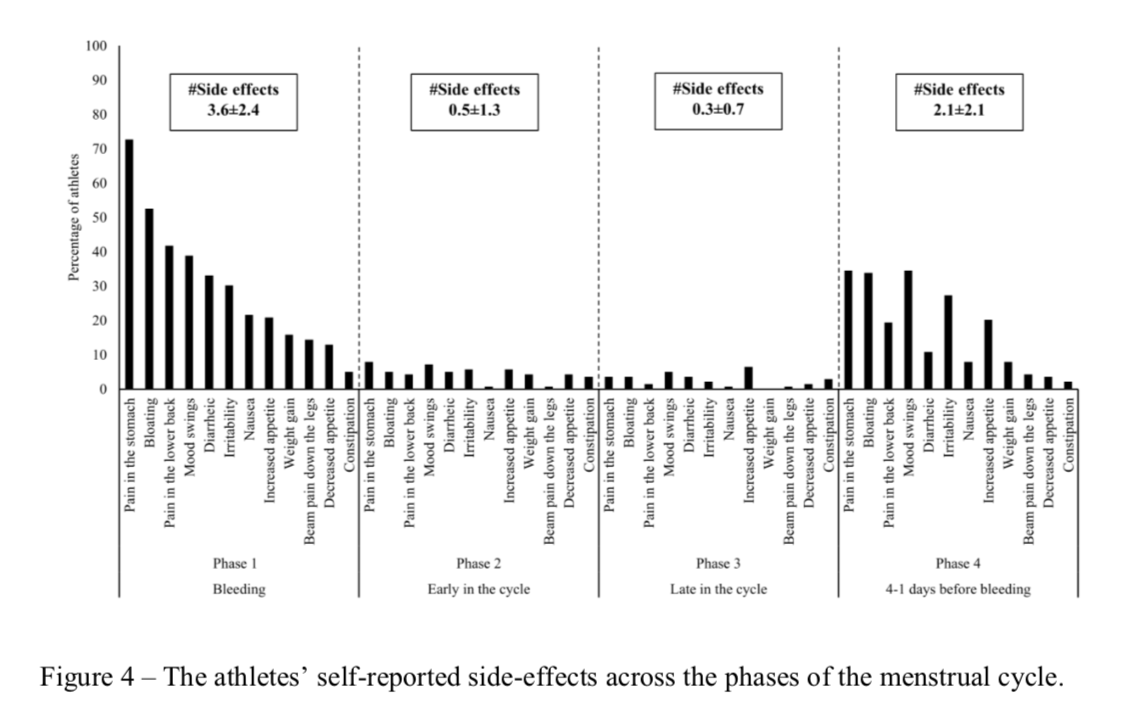
    (Click to enlarge.) Reprinted from “Changes in Self-Reported Physical Fitness, Performance, and Side Effects Across the Phases of the Menstrual Cycle Among Competitive Endurance Athletes” by G.S. Solli et. al., September, 2020 in the International Journal of Sports Physiology and Performance.

    Another noteworthy statistic Solli touched on was hormonal contraceptives (HCs), which 56% of athletes reported using. The fact that HCs were not broken into subcategories such as oral contraceptives, IUD, etc., was listed as a limitation of the study.

    “A large proportion of the athletes are using hormonal contraceptives,” said Solli in the call. “And there are a lot of different types with different amounts of synthetic estrogen and progesterone that suppresses the normal hormonal fluctuations, and you get a more stable cycle. As we saw, there were positives experienced with using HC’s that athletes reported that they get reduced pain and they also get control of the bleeding phases, so they can control it according to their competitions or trainings. But there are also some negative effects with weight gain and irregular bleeding.”

    Solli explained that there is little research apart from survey data pertaining to how HC’s might affect female athlete performance and, similar to experiences with a natural cycle, the side effects women experience vary considerably. Here too, Solli recommended considering each athlete and situation as unique, advising athletes to pay close attention while adjusting to new or different forms. 

    “From research, when they compare using HC to having a normal menstrual cycle, most studies show that there is no effect on performance and that also performance is relatively consistent across the HC cycle,” Solli explained. “Also here, an individualized approach based on each athlete’s response is recommended from research, because you see that from some athletes they report more negative side effects, so that’s important to find a type that suits you and to log the effects when starting a new type.”

    Of the athletes not using HC, a noteworthy 35% reported fewer than nine periods per year, an indicator of menstrual dysfunction possibly due to low energy availability, meaning the caloric and/or nutrient density of an athlete’s diet does not meet the demands of their training. While this may be unintentional, the condition known as Relative Energy Deficiency in Sport (RED-S) is prevalent in endurance sports, particularly those that favor leanness. It is often associated with disordered or restrictive eating behaviors. 

    RED-S can cause a cascade of negative health impacts, from hormone imbalance, to low bone density, to impaired immune function, and cardiovascular problems.

    “Although we did not assess energy intake or energy expenditure,” the article states, “high volumes of training and high amounts of high-intensity endurance training are associated with high energy expenditure and can prompt relative energy deficiencies. Elite endurance athletes and their coaches should therefore be aware of the risk of MC irregularities induced by high volumes of training and high amounts of high-intensity training. The prevention of MC irregularities should also be pursued, because primary and secondary amenorrhea can result in adverse health conditions, including reduced bone health.”
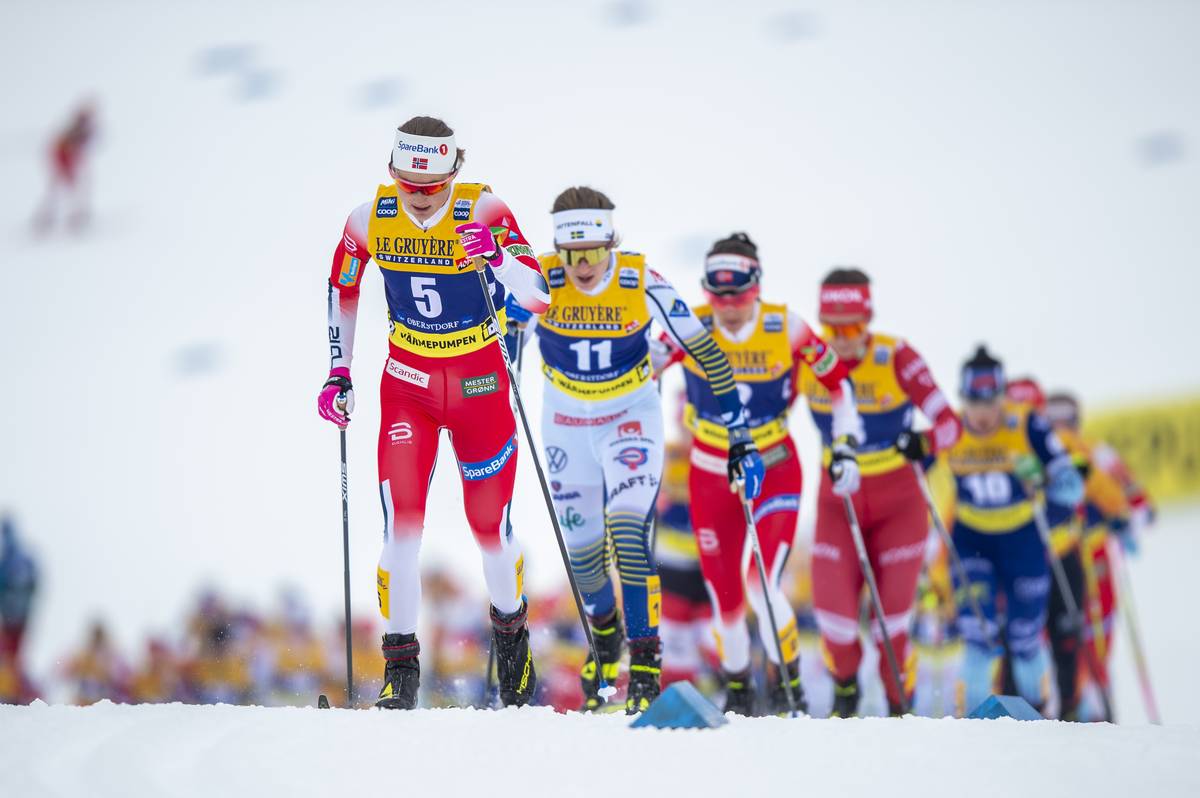
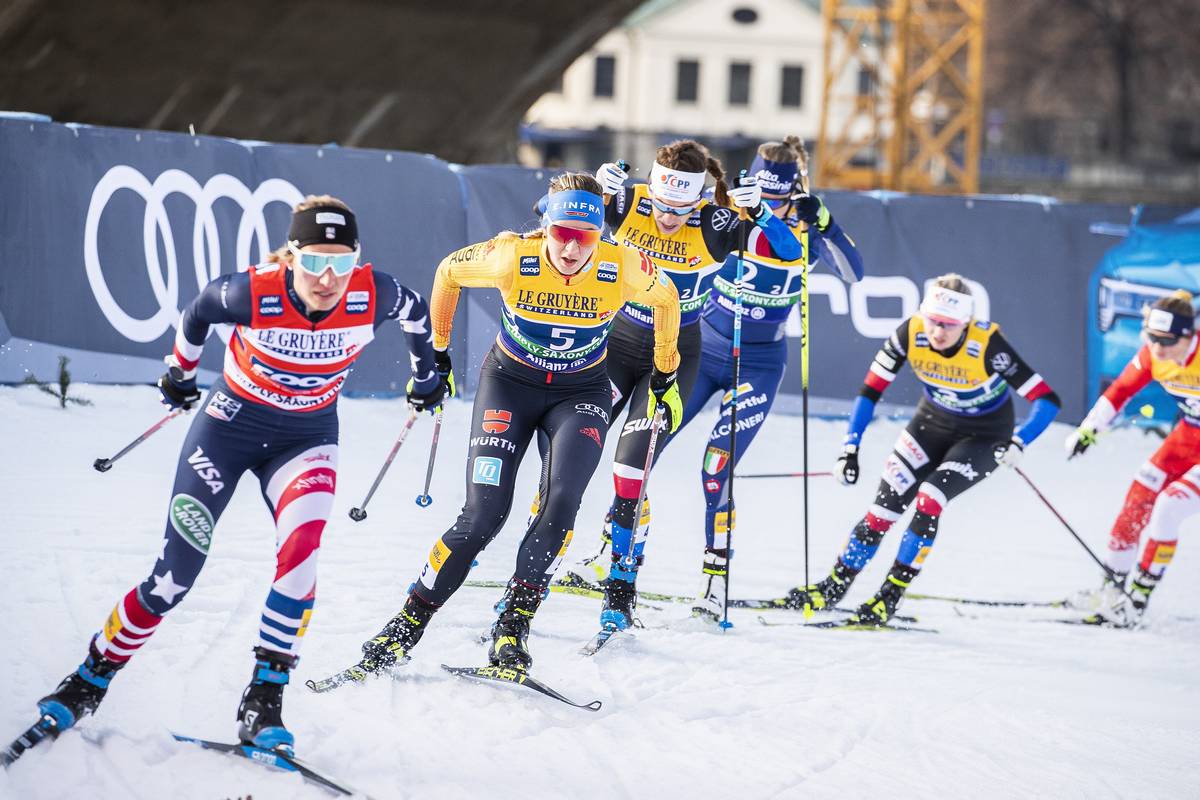
    Ingvild Flugstad Østberg (bib 5) leading the chase during the classic portions of the Obertsdorf, Germany 15 k skiathlon in January, 2020. (Photo: NordicFocus)

    At the World Cup level, this phenomenon has made FasterSkier headlines in the cases of Norway’s Ingvild Flugstad Østberg and Sweden’s Frida Karlsson, who were pulled from competition last season by national team doctors after failing to meet team health metrics. Østberg resumed competition for the 2020 Tour de Ski, where she finished third, and competed through the first weekend of racing in March in Falun. Her season then ended abruptly after she sustained a stress fracture in her foot from hopping off a three foot cement step to the ground. 

    The 30-year-old Østberg sustained a second stress fracture in July and has not competed on the World Cup this season. Østberg has been working with team doctors to bring her body back to health in order to compete in the 2021/2022 World Cup and Olympic season. 

    Karlsson was withheld from competition from early December, 2019 to February 9th, 2020 and has remained in competition since. More recently, Finland’s Kerttu Niskanen sustained a fracture in her tibia during a race in Falun that was not caused by a crash. FasterSkier has not received further insight into her situation.

    Bringing it all together with the information Solli discussed in mind, how should athletes and coaches approach this topic? Solli’s article lists a set of practical applications of the information currently available. 
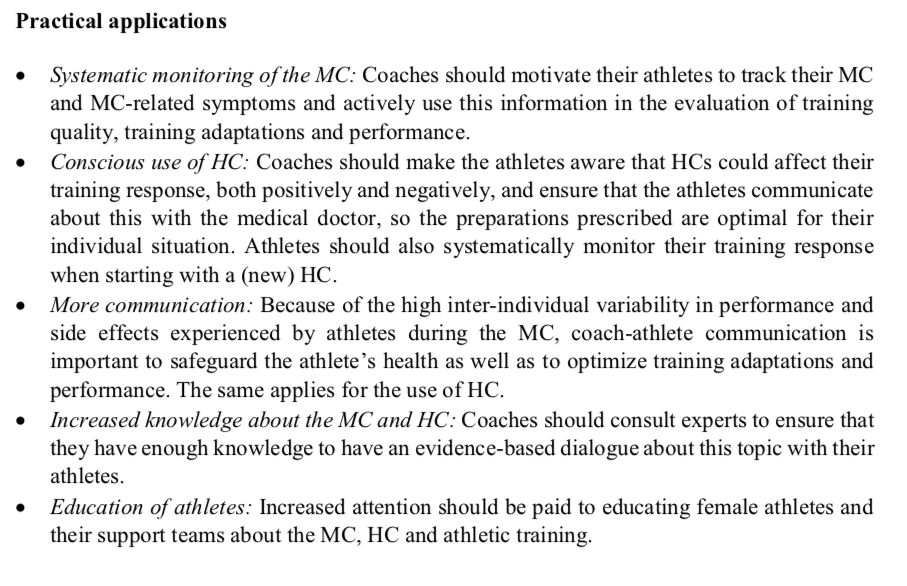
    Practical applications of self-reported data from elite cross country skiers and biathletes for coaches and athletes. Reprinted from “Changes in Self-Reported Physical Fitness, Performance, and Side Effects Across the Phases of the Menstrual Cycle Among Competitive Endurance Athletes” by G.S. Solli et. al., September, 2020 in the International Journal of Sports Physiology and Performance.

    Solli concluded that understanding the MC and how it might influence training and performance is just one piece of the puzzle of female athletic development. She stated that hype from media attention might make it seem essential, but for many who do not experience significant effects, this area might not be worth investing in. However, for many athletes, better understanding and communication could lead to significant improvement. For this reason, Solli recommends an individualized approach, adjusting the focus based on the extent to which an athlete is impacted.  

    “It is a part of a lot of different [aspects of training],” said Solli. “So you have to look at it in the bigger picture, but that doesn’t mean that we don’t need to talk about it. You can’t ignore it, but you should not make it too big of a deal if you aren’t struggling with it and you have a natural cycle and everything is okay, I don’t think you need to change something. But I think some athletes are struggling with it and I think they should know that it’s possible to get help. 

    “There is a lot of information now, a lot of good articles that are published, and information in the apps — I think it’s really good for young athletes to start there and to log [their cycle] and learn. That’s something I really would have wanted when I was a young athlete, that I could have an app and to start early to find my own pattern that I could optimize. I think that’s a really good opportunity to learn how your body works.”
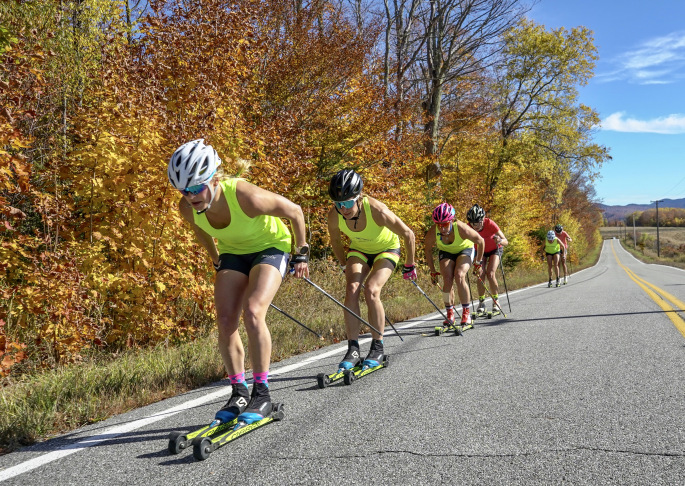
    The SMST2 squad led by Jessie Diggins pushes the pace in a double pole interval workout during a fall 2019 training camp in Lake Placid, NY. (Photo: Matt Whitcomb / smseliteteam.wordpress.com)
  • Training, Performance, and the Menstrual Cycle: A Primer

    Training, Performance, and the Menstrual Cycle: A Primer

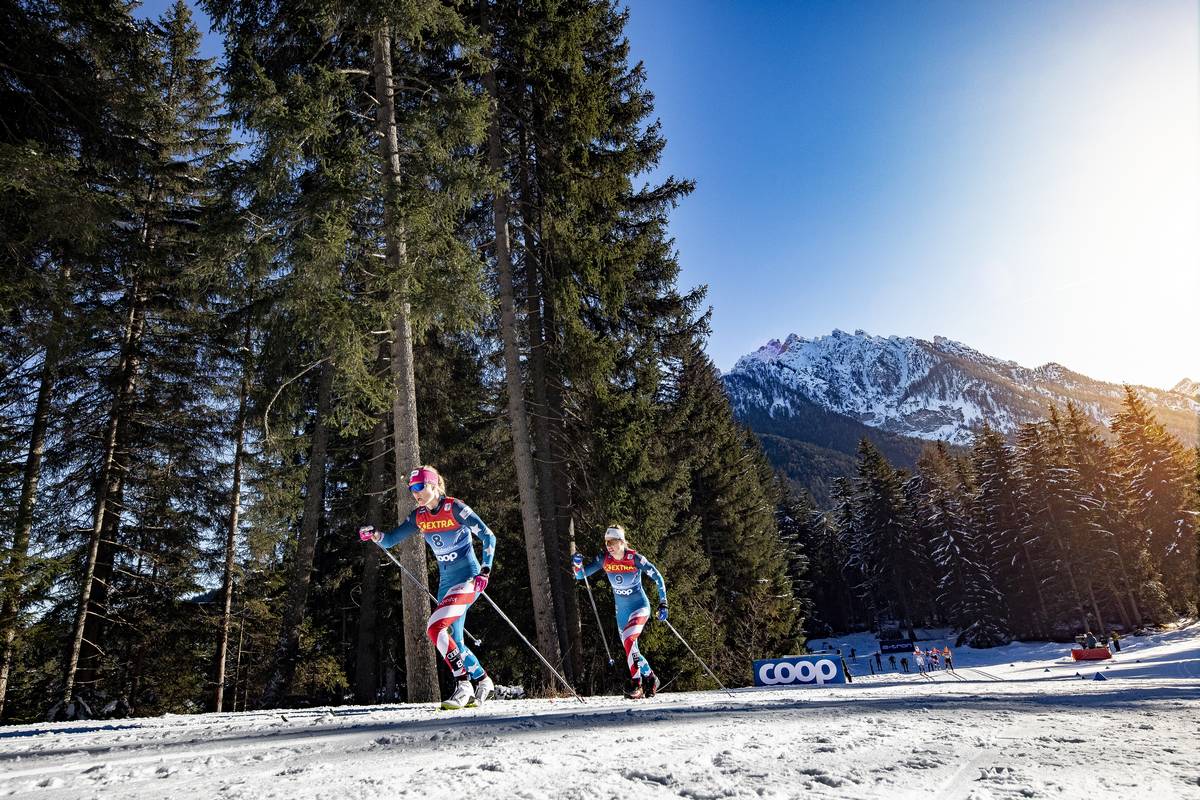
    Sadie Maubet Bjornsen (left) and Rosie Brennan (right) stride in sync during the 2020 Tour de Ski in Toblach, Italy. (Photo: NordicFocus)

    This article provides an introduction to a series of interviews with professionals in sports nutrition and female physiology. Results from a survey regarding how elite US cross-country skiers and biathletes use insight into their cycles in their own training will also be analyzed and shared. 

    An arguably essential component of developing as an athlete is learning how to listen to the signals one’s body sends. Am I skiing easy enough on my recovery days to absorb the interval workouts? Am I dehydrated? Bonking and in need of a quick hit of carbs? Am I feeling mentally and physically flat because I have been stressed at work or lacking sleep? 

    In an ideal world, progress in skiing would be predictable. If I do X-Y-Z, my performance or technique will improve. However, the body is much more complex than a simple if-then statement. For female athletes, whose hormone levels fluctuate over approximately monthly cycles, this is especially true. 

    Before we jump into the nitty gritty of hormone levels throughout the menstrual cycle and how they might be considered in optimizing training and nutrition, I’d like to insert some anec-data to highlight the importance of talking about this issue. 

    Up until 2017 when my husband and I wanted to start our family, my understanding of the menstrual cycle was that it was roughly 28 days, PMS is generally unpleasant, and menstruating can be both uncomfortable and inconvenient. I thought of my cycle as two parts: bleeding and not bleeding, and I had never considered that there might be physiological changes throughout the cycle that might cause an ebb and flow (no pun intended) in my energy, moods, immune function, or nutritional requirements. In fact, had you told me that training and nutrition should be aligned with my cycle, I might have even scoffed, thinking I just needed to suck it up on the days I didn’t feel well. 

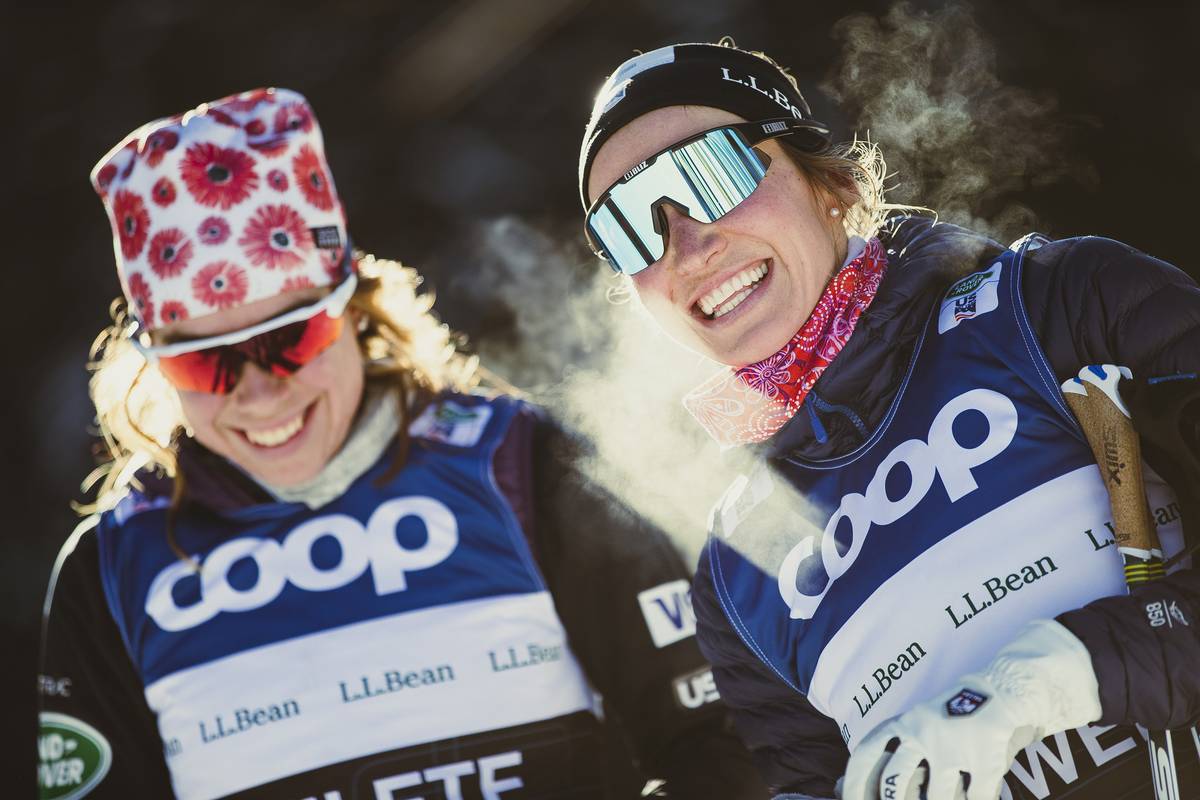
    Katharine Ogden (left) and Sophie Caldwell Hamilton (right) on a frosty training day in Toblach, Italy in December, 2019. (Photo: NordicFocus)

    In reality, that means 15 years where, despite trying to tune in on minutia of my technique and training to improve my skiing and running, my understanding of a fundamental body process I experienced regularly was all but nonexistent. This is not an uncommon scenario. And this is from someone who has a collection of books on training and performance and loves geeking out on exercise science research.

    Through learning about female physiology and tracking my cycle in preparation for pregnancy and also following the birth of my daughter in October, 2018, I’ve identified a slew of patterns that help me feel more in tune with my body than ever. I also read the book ROAR: How to Match Your Food and Fitness to Your Female Physiology for Optimum Performance, Great Health, and a Strong Lean Body for Life by Dr. Stacy Sims, which I felt provided invaluable information regarding aligning training to the menstrual cycle and empowered me to experiment in my own training and life with positive outcomes. 

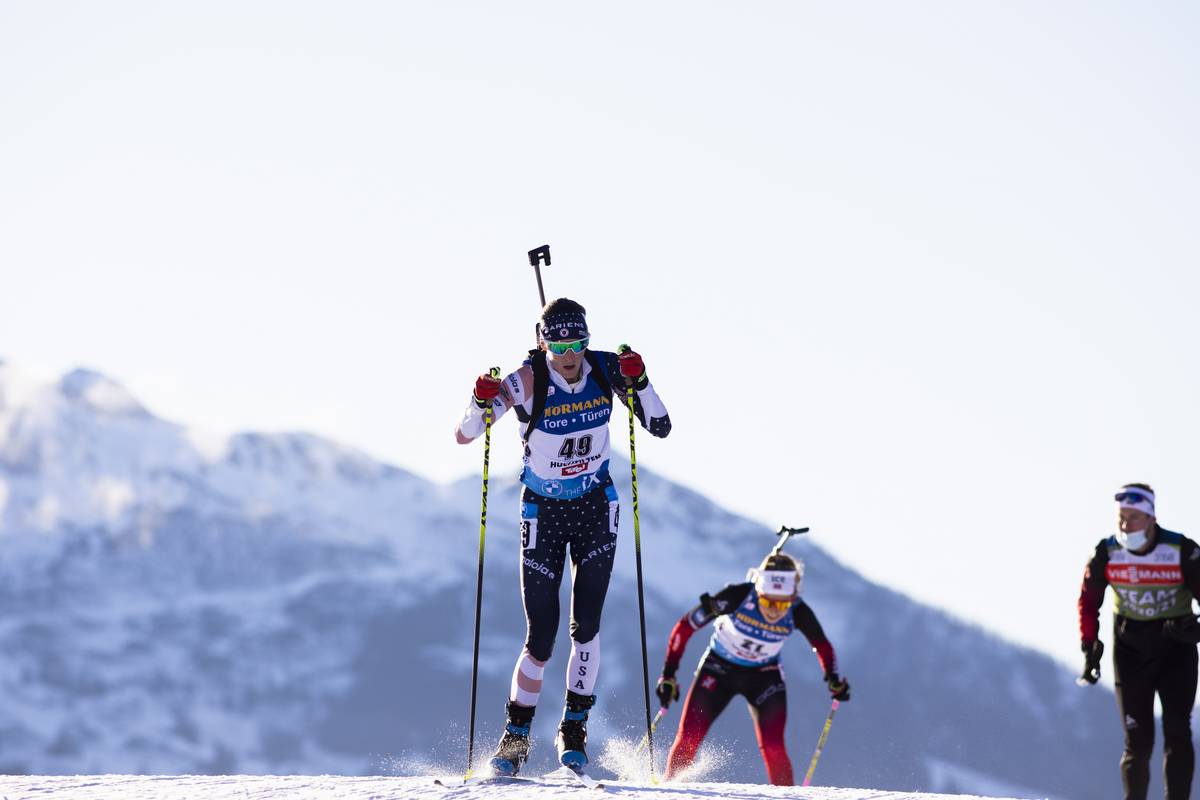
    Clare Egan crests a climb during a December, 2020 sprint in Hochfilzen, Austra. (Photo: NordicFocus)

    Apart from training, understanding that the menstrual cycle is a window into your overall health is becoming more evident with research. The “Apple Women’s Health Study” — a partnership between Apple Inc., the Harvard T.H. Chan School of Public Health, and the National Institutes of Health (NIH) — is currently analyzing a wealth of self-reported data to “demystify and illuminate menstruation and accord it the scientific scrutiny and social acceptance it deserves.” This comes in response to the fact that hormone fluctuations were long considered an uncontrollable variable that might skew scientific data, thus women were left out of experiments. 

    “In recent years, researchers have acknowledged the need to reevaluate the relationship of menstruation to overall health,” writes editor of Harvard Public Health magazine Madeline Drexler on the study. “Treating the menstrual cycle as a vital sign—comparable to blood pressure, temperature, pulse rate, and respiration rate—could lead to earlier detection of many conditions, both gynecological (such as fibroid tumors) and systemic (such as diabetes). Likewise, tracking lifestyle changes among those who menstruate—including the effects of body composition, activity levels, increased life expectancy, and postponement of childbearing—could help scientists glean factors that make an impact on menses.”
    In addition to a canary in the cave for overall health, ROAR author Dr. Sims encourages women to understand that a regular period can be an “ergogenic aid”, i.e., a performance enhancer, that should not be avoided [1]. Yes, there are times when hormones might make us feel suboptimal. Wouldn’t you like to know why that is and what you might do about it so you can ameliorate your symptoms? That’s what this series is about. 

    To further the point that the menstrual cycle should not be thought of as a bemoaned inconvenience limiting female athletes, there is no evidence that V02 max is affected at any phase of the cycle, indicating that top performances in endurance events cannot occur at any phase. If it’s not holding back performance, but there might be ways to adjust your training to optimize adaptations throughout the cycle, why not learn more and begin paying attention?

    Here is a brief primer on the menstrual cycle and what it might mean for female athletes. This information is intended to help female athletes and coaches understand the underlying physiological changes women experience throughout their cycle so they can adjust their training and nutrition to adapt accordingly, optimizing their training outcomes and performance over the long haul of endurance sport.

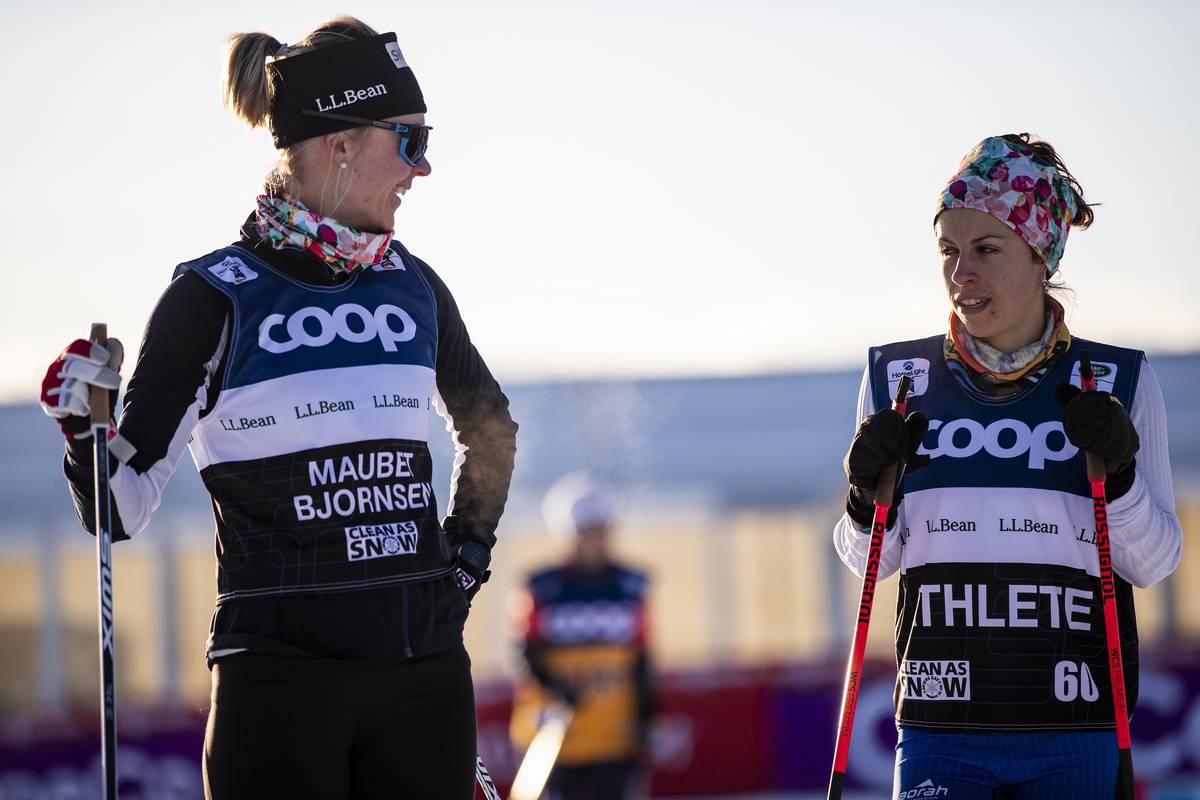
    APU teammates Sadie Maubet Bjornsen and Rosie Frankowski chat trailside during a training day before World Cup races in Lillehammer Norway in December, 2019. (Photo: NordicFocus)

    Menstrual Cycle Phases and Hormones

    For the purpose of this article, we’ll focus on what is considered normal menstruation in a healthy female. Lack of a period, called amenorrhea, is well discussed in this podcast and will be addressed in subsequent parts of this series. 

    It is also important to note that while the fluctuations of hormones in a healthy cycle is well understood, conclusive evidence of the implications is still under research. While patterns have been seen in research, positive and negative effects of the menstrual cycle are largely individual. This information is intended to inform athletes of the body process to help kick start the process of learning their own unique patterns and responses. 

    The menstrual cycle begins at the onset of menstruation and lasts on average 28 days, though 21-35 days is considered normal. At its root, the menstrual cycle prepares the uterus for pregnancy, first preparing a follicle in the ovary to release a mature egg and thickening the lining of a uterus so that the egg, if fertilized, can be implanted and develop into a tiny human. If the egg is not fertilized, the lining of the uterus begins to break down and eventually is shed during menstruation, beginning the cycle anew. Note that high performance training is not included in that basic description. 

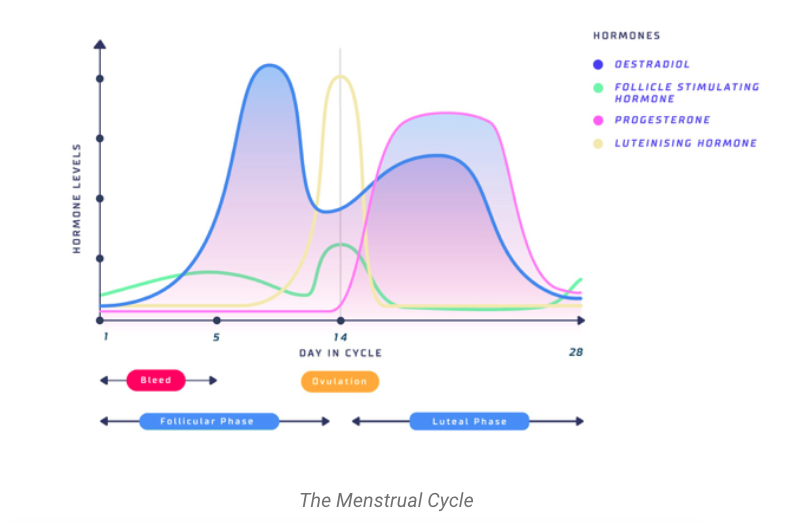
    These processes are controlled by four primary sex hormones: estradoil (or oestradiol), which is a form of estrogen, progesterone, follicle stimulating hormone (FSH), and leutinizing hormone (LH), with estradiol and progesterone being the leaders [2]. Their changes in concentration divide the menstrual cycle into two primary phases, the follicular phase, which leads up to ovulation, followed by the luteal phase. These phases can then be separated into two sub phases of early and late. 

    The profile of the fluctuations of the four primary female sex hormones over the course of a normal menstrual cycle: estradiol, progesterone, luteinizing hormone, and follicle stimulating hormone. (Photo: Screenshot fitrwoman.com)

    To align with the information presented by the revolutionary FitrWoman App — which many see as the gold standard of cycle tracking for female athletes as it includes evidence-based insights from research in physiology, performance, and nutrition — I’ll refer to the progression from early to late follicular and luteal phases as Phase 1-4, which last roughly a week each [3].

    As previously mentioned, phase 1 of the cycle begins when a woman’s period begins. In this phase, estrogen and progesterone are both low while testosterone (yes, women produce that too) is at an average level. This combination can help many women feel their strongest, however, because the lining of the uterus is being shed, women might experience side effects from inflammation at the beginning of this phase, like GI upset or fatigue [4]. If experiencing the latter, it could also be a good time for shorter, more intense sessions with plenty of rest in between, rather than longer threshold workouts. 

    In phase 2, estrogen begins to rise while progesterone remains low. Estrogen is a steroid hormone, which is linked to increased muscle mass and strength, as well as bone health [5]. With testosterone also at its highest, this can be a sweet spot for a hard block of training. Many women experience increased pain tolerance and decreased recovery time during this phase, and positive moods and mindset are also most common. The increased levels of estrogen may also promote stability in blood sugar levels, helping athletes maintain their energy levels during training. This could be a time to ski hard and ride the endorphin high!

    The definition of intensity: Sophie Caldwell turns toward the finish during a sprint heat in the 2020 Tour de Ski in Toblach, Italy. (Photo: NordicFocus)

    Phase 3 begins when ovulation occurs. After a spike in LH and FSH to initiate ovulation, estrogen drops rapidly, then begins to rise again while progesterone steadily climbs throughout. The elevated levels progesterone causes a rise in body temperature of about 0.3℃ or 0.5℉, which may influence hydration requirements and make it more challenging to regulate body temperature if training in the heat [3, 1]. Breathing rates and heart rate also increase both at rest and during exercise, making training feel a bit harder, and blood sugar levels may be less stable, placing a higher demand on carbohydrates during training and increasing the importance of balanced meals that include fiber, healthy fats, and protein to help keep energy levels and appetite predictable [2]. 

    In the fourth and final phase, both estrogen and progesterone drop to their lowest levels of the cycle. This rapid drop is linked to the symptoms commonly referred to as PMS, which include GI distress, bloating, headaches, moodswings, and fatigue. These symptoms are likely due to an inflammatory response triggered by the lack of hormones, which continues into Phase 1 as mentioned previously. You read that right. When you have PMS, you’re not “hormonal” — you’re actually un-hormonal. 
    From a training perspective, this inflammation may make it harder to recover from hard sessions, leaving you fatigued on top of other PMS symptoms. It may be possible to reduce these negative feelings by eating anti inflammatory foods, like berries, nuts, and fish, and avoiding processed and high sugar foods that are thought to exacerbate inflammation. 

    To be clear, some women experience very mild, if any, impacts from their hormonal fluctuation. However, if this is something you’re curious about or you feel your energy levels and appetite do not always match your expectations based on your training schedule, this might be something that could help you feel better throughout the month, in and out of training. 

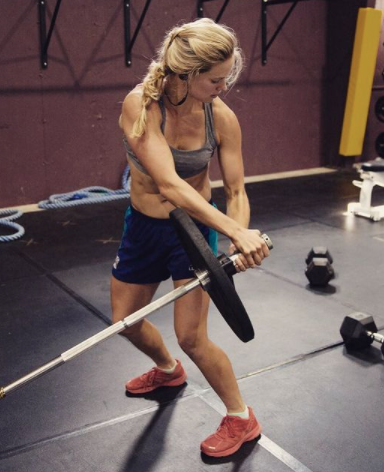
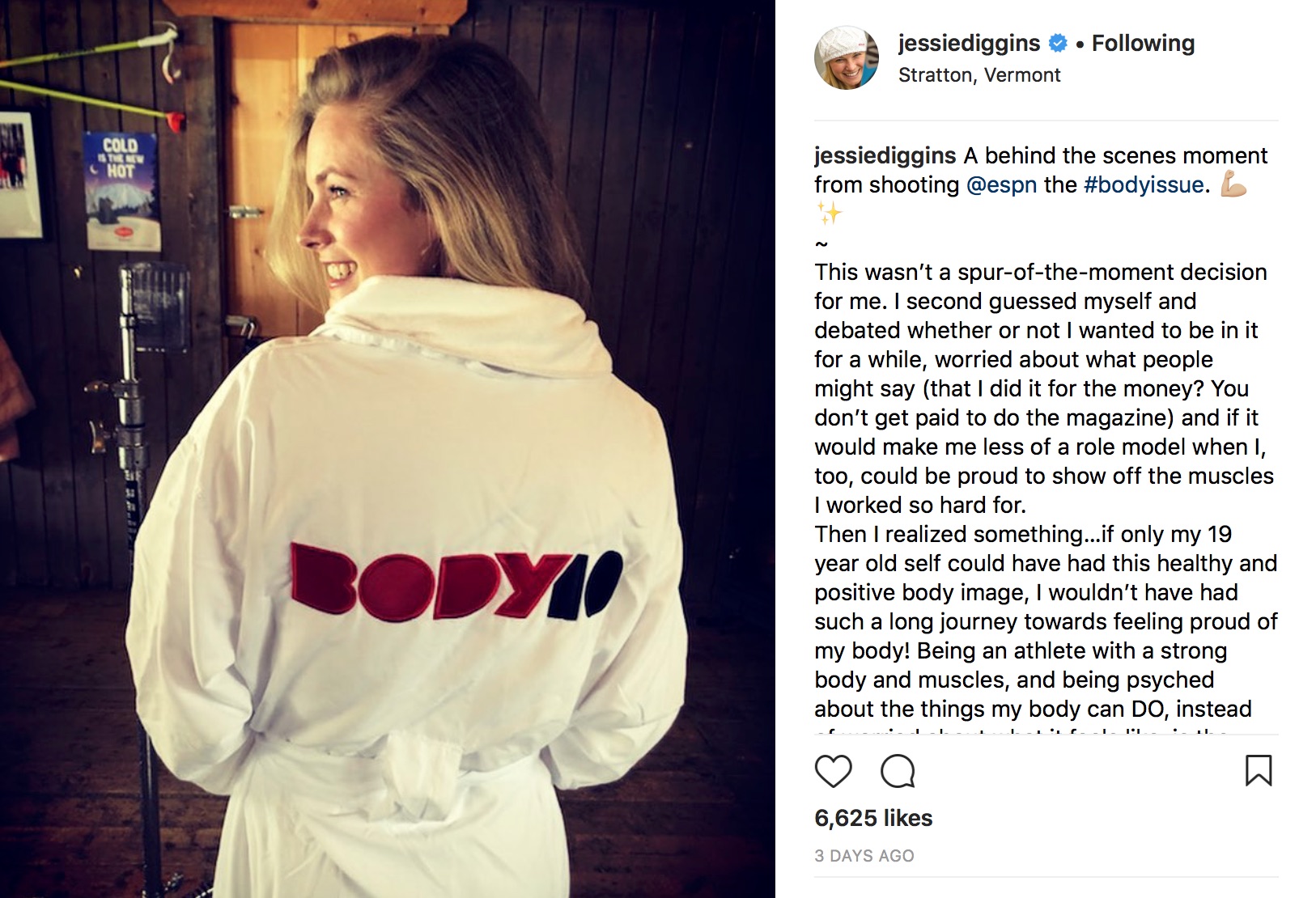
    Jessie Diggins powers through a strength session in February, 2018. (Photo: Instagram @jessiediggins)

    Conveniently, the “three weeks up, one week down” general guideline of training — meaning three weeks of building volume and/or intensity, followed by a recovery week — already aligns well with what FitrWoman recommends in terms of experimenting with aligning training to the cycle. During Phases 1 and 2, progressively build and increase loading during strength sessions. In Phase three, consolidate, meaning longer recovery between sets of intervals, or perhaps lower weight with higher reps in the gym. 

    Then, in Phase 4, rather than pushing through while feeling suboptimal, back off on the intensity sessions and include additional easy or rest days to absorb the previous three weeks of training and give your body the extra recovery it might need. 

    Want more? The team at FitrWoman hosted an informative free webinar in February 2019 on Facebook featuring Senior Sport Scientist and elite marathoner Dr. Georgie Bruinvels. The webinar is still available here. 

    Sources:

    [1] Sims, Stacy T. Roar: How to Match Your Food and Fitness to Your Unique Female Physiology for Optimum Performance, Great Health, and a Strong, Lean Body for Life. Rodale Books, 2016. 

    [2] “What Athletes Need to Know about the Menstrual Cycle.” FitrWoman, www.fitrwoman.com/post/lgfa-webinar. 

    [3] Beverly G Reed, MD and Bruce R Carr, MD. (August, 2018). The Normal Menstrual Cycle and the Control of Ovulation. www.endotext.org

    [4] Solli, Guro & Sandbakk, Silvana & Noordhof, Dionne & Ihalainen, Johanna & Sandbakk, Oyvind. (2020). Changes in Self-Reported Physical Fitness, Performance, and Side Effects Across the Phases of the Menstrual Cycle Among Competitive Endurance Athletes. International Journal of Sports Physiology and Performance. 

    [5] Chidi-Ogbolu, Nkechinyere & Barr, Keith. (January, 2019). Effect of Estrogen on Musculoskeletal Performance and Injury Risk. Frontiers in Physiology.

  • Dynamic Stretching for Wellness and Performance

    Dynamic Stretching for Wellness and Performance

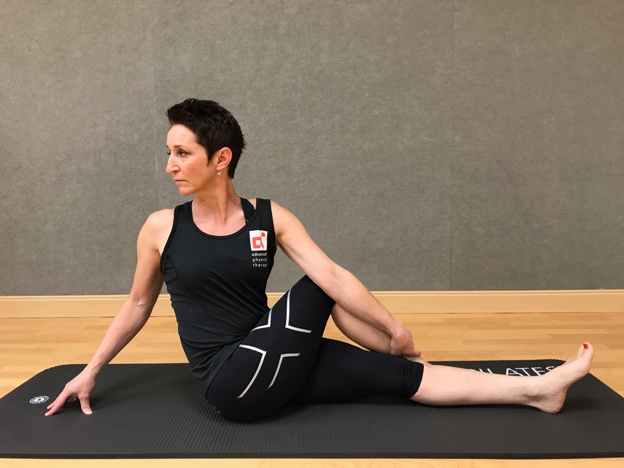
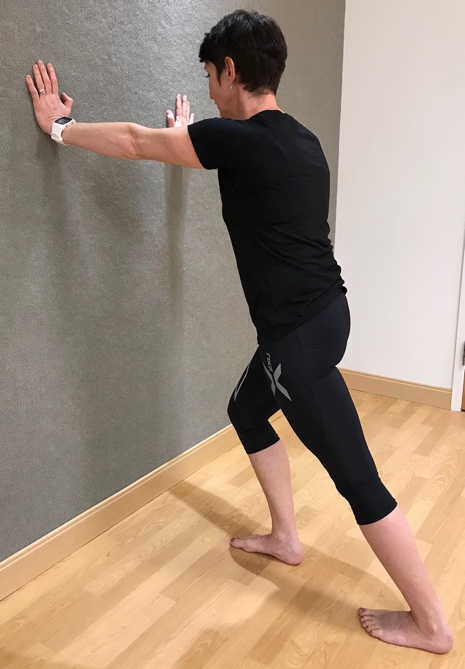
    The video presents several dynamic stretches as you begin to develop your own routine using slower, coordinated movements to move the joint through the desired motion.

    Striving for flexibility is ingrained from a young age. The sit-and-reach test was a key component of the presidential fitness test which was administered to elementary-aged school children until recently. Middle and high school athletes often go through a routine of static stretches before starting practice. Acro-yoga masters now fill our Instagram feeds, making us feel inadequate about our ability to touch both palms on the floor (and also to put both legs behind our heads).

    Stretching has long been promoted as the ultimate tool to help soothe sore muscles, aid recovery, and prevent injury. However, recent studies on the benefits of stretching have been controversial. Research that specifically targets static stretching, or holding a muscle at its end-range for 30-60 seconds (the type commonly used at high school running practice), has shown that it impairs the muscle’s elastic energy potential. This results in decreased strength and power.

    A common, yet newer school of thought, is that static holds are detrimental to overall performance when performed before physical activity. Furthermore, the belief that stretching decreases muscular soreness and aids in recovery post-exercise has been debunked. Evidence has shown that no amount of stretching can assist in alleviating the pain in our quads after that first long run of the summer. 1

    While static stretching has been shown to improve muscular flexibility, the actual benefits of this increased range of motion are up for debate. Much research has failed to link increased flexibility to a decreased risk of injury, concluding that overall, there is little to no benefit to static stretching for athletes. 1

    Why then are we still stretching… and should we be?

    There may exist a more indirect link between mobility and risk of injury for Nordic skiers than research gives credit, as decreased range of motion at a certain joint may lead to compensatory patterns and muscular imbalances that lead to overuse injuries. Also, there is evidence that a different type of stretching, dynamic stretching, can be beneficial to athletic performance when performed as part of a warm-up. 2,3

    Dynamic stretching involves stretching to a movement’s end range through repetitive, active movements without holding at end range. Muscles must actively contract, increasing blood flow to the muscle and thus temperature. This serves to decrease viscous resistance in the muscle, thereby increasing extensibility and tolerance to tensile forces. 2,5 In contrast to static stretching, dynamic stretching has been shown to facilitate increases in power, agility, jump height, and sprint performance when performed before exercise. 2,4

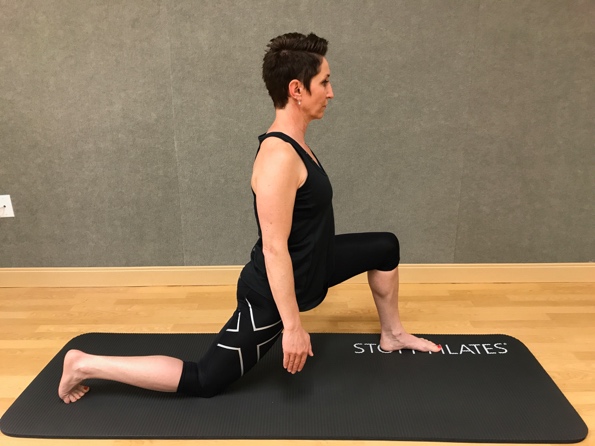
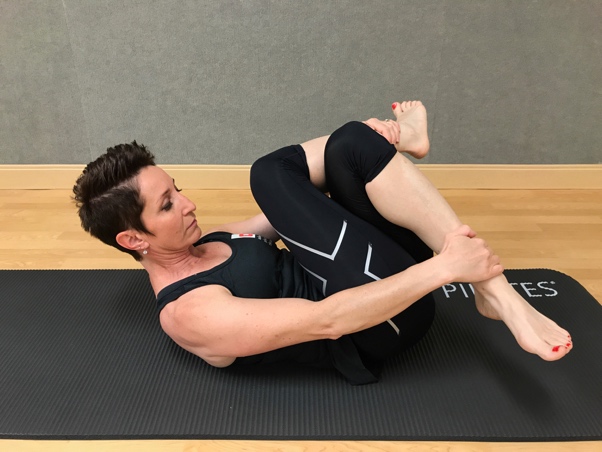
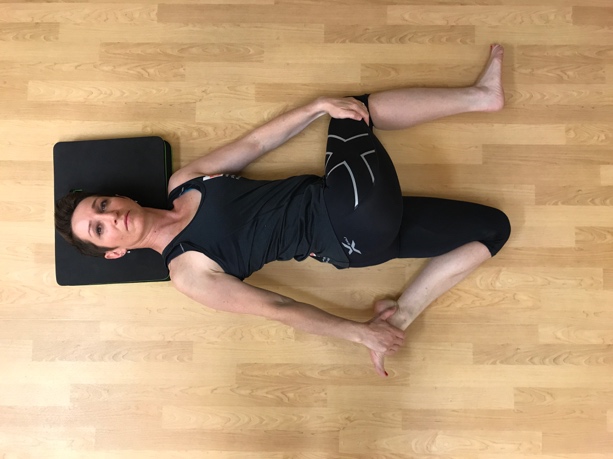
    The rationale behind dynamic stretching is to provide an active stretch into the motions a particular activity requires, making it much more functionally oriented than static stretching. In the case of skate skiing, this might entail a stretch of the adductor muscles while performing a side lunge, for example. Research has shown that neural pathways are strengthened as task-specific movement patterns are practiced, which increases muscular coordination and improves performance. 2

    How do you incorporate dynamic stretching into your pre-ski routine? This kind of stretching can be done at home, in the ski hut, or in the parking lot, but it is important to perform within about 15-20 minutes of starting your workout. You want to avoid bouncing, uncontrolled movements (also known as ballistic stretching).

    It’s best to use slower, coordinated movements to move the joint through the desired motion (see 2- minute example movie for pre-ski inspiration).

    Each movement can be performed about 8-15 times. Many of the motions are easy to perform while walking, which is great news, as research has shown that pairing these stretches with dynamic activity helps improve proprioception, or our awareness of body position, and balance. Walking can be thought of as a “mini-plyometric” and serves to activate muscle spindles, or stretch receptors. This activation during a combination of dynamic stretching and walking leads to the increased energy potential of a muscle.

    Do we need to be stretching for hours each night trying to hit the splits? According to the current research, probably not.

    Joint hypermobility has been shown to lead to instability that can cause further problems down the road- like dislocation, arthritis, and labral tears.6,7 Specific strengthening and postural control exercises may play a more significant role in injury prevention, but that’s another article in itself. However, we desire mobility that meets the requirements of the task we wish to perform, which is where dynamic stretching comes into play. By helping to improve the functional range of motion, muscle activation, and proprioception prior to activity, dynamic stretching can indirectly lead to a decreased risk of overuse injury while enhancing athletic performance. This isn’t to say you need to bag your nightly static stretching routine entirely, as anecdotal evidence from many athletes suggests it does make them feel better. There is inconclusive evidence to support why that may be the case from a physiological standpoint. However, it is a highly debated topic into which sports research will continue to delve. 


    Jessica is a 2018 Winter Olympian currently pursuing her Doctorate in Physical Therapy from the University of New Mexico. When she is not ski racing or studying, you can find her out on her mountain bike exploring the trails. Instagram: @jjyeaton.


    References:


    1.             Baxter C, Naughton LRM, Sparks A, Norton L, Bentley D. Impact of stretching on the performance and injury risk of long-distance runners. Research in Sports Medicine. 2017;25(1):78-90. doi:10.1080/15438627.2016.1258640
    2.             Opplert J, Babault N. Acute Effects of Dynamic Stretching on Muscle Flexibility and Performance: An Analysis of the Current Literature. Sports Med. 2018;48(2):299-325. doi:10.1007/s40279-017-0797-9
    3.             Vazini Taher A, Parnow A. Level of functional capacities following soccer-specific warm-up methods among elite collegiate soccer players. J Sports Med Phys Fitness. 2017;57(5):537-542. doi:10.23736/S0022-4707.16.06236-8
    4.             Kallerud H, Gleeson N. Effects of Stretching on Performances Involving Stretch-Shortening Cycles. Sports Med. 2013;43(8):733-750. doi:10.1007/s40279-013-0053-x
    5.             Freitas SR, Mendes B, Sant GL, Andrade RJ, Nordez A, Milanovic Z. Can chronic stretching change the muscle-tendon mechanical properties? A review. Scandinavian Journal of Medicine & Science in Sports. 2018;28(3):794-806. doi:https://doi.org/10.1111/sms.12957
    6.             Philippon MJ, Briggs KK, Fagrelius T, Patterson D. Labral Refixation: Current Techniques and Indications. HSS J. 2012;8(3):240-244. doi:10.1007/s11420-012-9290-z
    7.             Wolf JM, Cameron KL, Owens BD. Impact of joint laxity and hypermobility on the musculoskeletal system. Journal of the American Academy of Orthopaedic Surgeons. 2011;19(8):463-472.
  • The Power of Skiing Starts with Lifting Up Others: Ideas on Donating this Season

    The Power of Skiing Starts with Lifting Up Others: Ideas on Donating this Season

    What a year. In the spirit of optimism, we want to highlight a few non-profits worthy of your consideration when thinking of buying gifts this holiday season. We know the wonder cross-country skiing provides. Gliding through the woods, no noise, totally connected. Silent sports fuel us. Why not support organizations lifting kids up and sharing the wealth that is skiing. 


    Spirit North: Canada based and supporting Indigenous youth. Founded by Beckie Scott, a former champion cross-country skier, the organization speaks to the values of empowerment. Among some of their offerings, Spirit North engages Indigenous youth in cross-country skiing, mountain biking, cross-country running, and canoeing.

    “Spirit North is a national charitable organization that uses land-based activities to improve the health and well-being of Indigenous youth, empowering them to become unstoppable in sport, school and life.”

    You can donate to Spirit North here.


    Skiku: Skiku and NANANordic remain cornerstones for wellness in many rural and urban communities in Alaska. What the program is best known for is providing cross-country ski instruction for week-long blocks. Community schools are then entrusted with housing and maintaining ski gear accessible to local youth. The program has expanded and offers running camps during non-snow months.

    Below is a list of places involved with Skiku’s skiing efforts:

    “Where We Ski:

    Upper Kuskokwim Region: Aniak, Chuathbaluk, Crooked Creek, Sleetmute, Stony River, Upper Kalskag, Lower Kalskag

    Bering Straits Region:  Brevig Mission, Elim, Gambell, Golovin, Koyuk, Nome, Savoonga, Shishmaref, Unalakleet, Wales, White Mountain

    Lower Yukon & Kuskokwim Region: Atmautluak, Bethel, Chevak, Hooper Bay, Mountain Village, Pilot Station, Russian Mission, Scammon Bay

    NANA region:  Ambler, Buckland, Deering, Kiana, Kivalina, Kobuk, Kotzebue, Noatak, Noorvik, Selawik, Shungnak

    North Slope Region: Anaktuvuk Pass, Atqasuk, Kaktovik, Nuiqsut, Point Hope, Point Lay, Utqiaġvik (Barrow), Wainwright

    Interior Region: Arctic Village, Allakaket, Dot Lake, Galena, Hughes, Kaltag, Koyukuk, Minto, Northway, Rampart, Ruby, Shageluk, Tanacross

    Bristol Bay Region: Aleknagik, Dillingham, Manokotak

    Southcentral Region: Anchorage, Chugiak/Eagle River, Mat-Su Valley”

     You can donate to Skiku here.


    Hartland Community 4 Youth and Families: This Salt lake City non-profit provides sports, tutoring, and stewardship programs for the city’s underserved youth. We profiled Hartland this past July in FasterSkier.

    The leader of the organization is Gilberto “Juan” Rejón Magana- a passionate and committed advocate. We described his work this way in our feature: 

    “What’s important about Magana’s work is its longitudinal scope: His organization supports youth from kindergarten to high school with the end goal of matriculating in college.” 

    You can donate to Hartland Community 4 Youth and Families here. 


    Share Winter Foundation: Another organization we featured this off-season was Share Winter and their CEO Constance Beverley. As we noted then, “Share Winter is a non-profit focused solely on providing access to snowsports to a more diverse community of children.” 

    Share Winter seeks to benefit kids interested in cross-country skiing, alpine skiing, or snowboarding. In Share Winter’s own words, they are “working to improve the lives, health, and fitness of youth through winter sports.”

    Share Winter grantees include the Bridger Ski Foundation, Central Cross Country Skiing and their Nordic Rocks program, and the New England Nordic Ski Association. 

     You can donate to Share Winter here. 


    Challenged Athletes Foundation (CAF) Idaho: CAF provides financial assistance to create access to outdoor recreation for individuals with physical challenges, particularly in the area of equipment grants. CAF Idaho is embarking on a new model with their adaptive ski program, recently hiring a cross country ski coach, Wilson Dippo, whose aim is to get kids in Idaho and from the surrounding Intermountain West out on skis and recreating in the outdoors year round. Their message is this:

    “Idahoans of all abilities have the right to practice, play, perform, and compete at their best. So let’s hike, bike, swim, ski, skate, move—and keep breaking barriers.We’ll unite through sport and drive Idaho forward.”

    You can donate to CAF here. All donations up to $25,000 will be matched by a private donor this holiday season, helping your gift reach more adaptive athletes. 


    No Excuses Unlimited: No Excuses Unlimited provides training and racing grants for Paralympic level athletes, fostering development of athletes bound for international racing. This includes travel expenses and adaptive equipment. Your donation goes directly to the athletes to help with the high monetary cost of elite level training and competition. 

    You can donate to No Excuses Unlimited here. 

    We understand this is not an exhaustive list of worthy organizations. Please feel free to present worthy organizations in the comments below.

  • Another mask to add to your wardrobe? By Alasdair Tutt MSc.

    Another mask to add to your wardrobe? By Alasdair Tutt MSc.

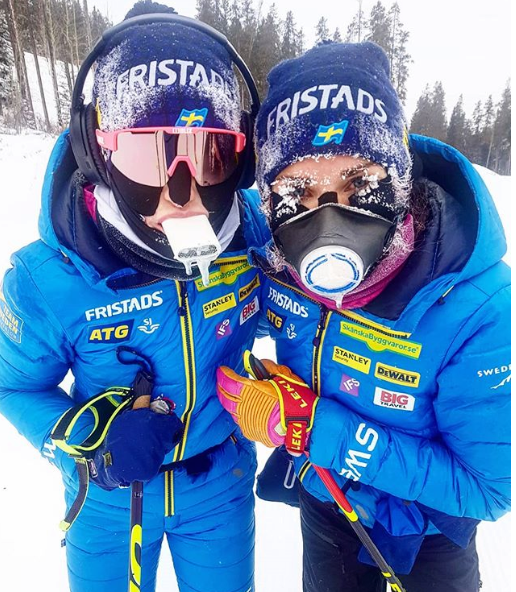
    A masked Julia Kern on course in frigid temps during the 2019 10-kilometer freestyle pursuit in Ruka, Finland. (Photo: NordicFocus)


    Another mask to add to your wardrobe?

    These masks will not provide protection from Covid-19, however, they may be key to preventing breathing problems into the future for cross-country skiers.

    Whilst it may not be news to any of the readers here, but cross-country skiing as a winter sport exposes us to some quite extreme conditions both in training and competition. The FIS cut-off of -4°F (-20°C) was primarily established to prevent cold-based injuries during competition such as hypothermia and frostbite but is well below the cut-off for asthma and its associated symptoms to be exacerbated. Once a threshold of circa 20°F is crossed, the absolute humidity of the air remains very low regardless of the relative humidity due to the curvilinear relationship between the moisture capacity of air, relative humidity and absolute humidity. This means that all cold air is dry air, which has to be heated and humidified to 98°F and 100% humidity in the lungs, then exhaled, causing dehydration in the epithelial tissue of the bronchus and potentially causing inflammation which leads to a narrowing of the airways. This phenomenon, once it affects the ability to exhale by >10% (in relation to the volume of forcefully exhaled air in the first second) is defined as exercise-induced asthma. This can also occur to a lesser extent in non-asthmatics when exercising in cold air, without crossing the threshold for a diagnosis of asthma, this is bronchoconstriction.

    Facial skin temperature may have an effect on the extent on bronchoconstriction you experience during exercise in cold temperatures (Gavhed et al. 2000; Koskela et. al 1995) due to temperature sensors in the nose, cheek and forehead. Solutions for this are “buffs”, headbands or hats (toques for those Canadian readers) and fabric taping of those areas, which has the added bonus of preventing frostbite. Skin temperature is also associated with reduced double poling performance wearing a race suit at 7°F (Wiggen et. al 2016) so windproof underlayers and appropriate clothing during training and competition may allow you to perform at your best in extreme cold.

    A recent meta-analysis by Mäki-Heikkilä et. al (2020) found that worldwide, circa 20% of cross-country skiers have physician-diagnosed exercise-induced asthma with higher occurrences in female athletes. This is about double the rate of the normal, active human population. Eriksson et. al (2018) found specifically that being a young adolescent, female cross-country skier was a significant risk factor for the development of exercise-induced asthma. Similar tendencies are seen in swimmers (where chlorine acts as an irritant) and long-distance runners (where pollen and air pollution may play a role), so we assume that the accumulation of high ventilation training volume in the presence of an irritant such as cold, dry air is a likely cause of exercise-induced asthma in skiers. Kennedy et. al (2016) found an increase in airway inflammation and frequency of coughing between the dryland training season and competition season in 18 female cross-country skiers. We also see some slight differences based on climate, with Sue-Chu et. al (1996) observing a higher incidence of asthma in drier, inland Sweden compared to the more coastal and damp Norway. We could potentially compare Anchorage and Fairbanks, Alaska in a similar way. However, this discussion is relevant to all skiers who train and compete in temperatures below 20°F on a regular basis across North America.

    To prevent asthma attacks athletes are typically prescribed a beta-agonist such as albuterol (salbutamol). This medication has had some negative press in the cross-country ski world recently with Martin Sundby’s suspension and a near-constant flow of criticism directed at the number of Scandinavian athletes who are diagnosed asthmatics. Potential performance-enhancing effects have so far only been found in power-based sports at much larger doses than are usually prescribed for asthma management, with very little evidence to suggest that using albuterol with or without asthma will create any form of performance benefit for cross country skiers who are not asthmatic (Riiser et. al 2020). Nevertheless, there is also some concern that overuse of albuterol may result in reduced effectiveness of the medication over a long period of time.

    The other method available to prevent exercise-induced asthma and bronchoconstriction is to use a heat-and-moisture exchanging mask (HME). These have been available for around 30 years for sporting use. The two options you may be familiar with and that are readily available in the USA and Canada are Airtrim and Lungplus. Both are effective at preventing bronchoconstriction during exercise and reducing the amount of lung damage caused by exercising in extreme-cold temperatures. A neck warmer or “buff” is also effective, but actually has higher mechanical resistance to breathing (Ainegren et. al, accepted for publication) and easily wets out, rendering it difficult to breathe through after a few minutes. Lungplus has the advantage of being dishwasher friendly and small whilst Airtrim has an advantage in airflow capabilities, facial coverage and being crash-safe. Ultimately in training, you should use what you are comfortable with and what gives you the best feeling. In competition, you will very rarely see a mask being used, and until recently we haven’t had definitive data as to why.

    Preliminary results from research I was involved in this past year at the Swedish Winter Sports Research Centre suggest that during sprint-type competition scenarios the Airtrim mask may affect ventilation enough to cause a decrease in performance in people without asthma. How much? On average about two to three seconds during a typical sprint distance of three and a half to four minutes. At the elite level, this is significant and could cost you around 15 places when you line up in Ruka at the World Cup as the only person with a mask on. However, it is worthwhile to note that individual results did vary across the sample group significantly, so some non-asthmatics will experience a performance benefit from mask use in short, maximum intensity competitions such as sprint races. Another study (Frischut et. al 2020) found no negative effects of the Lungplus HME on performance, however, it is worthwhile to note that the protocols and durations of studies differed by about 25 minutes and self-paced vs. fixed-speed. Our recommendation is therefore that you should test and decide what works for you until further data becomes available for generalized advice. During training, a mask may raise your heart rate and feelings of perceived exertion slightly, but not enough to take you from L1 to L2, and in return, they may actually improve lung function and certainly protect the airways a little from the cold.

    So what does this mean? Based on the available literature, if you are asthmatic you probably should be training with an HME below circa 20°F to prevent a decrease in ventilation. That part is quite simple, where it gets more complex and where many questions remain unanswered is what non-asthmatics and young adolescents should do to prevent lung damage and/or improve performance and comfort in cold weather. Our preliminary results show a tendency towards a lesser negative effect of performance the smaller you are, with the regression line crossing the axis at circa 110lbs, which means that children and smaller adults are less likely to experience performance loss compared to a larger adult when wearing a HME. About half of our sample used HME at least occasionally in temperatures below 12°F to prevent potential future decreases in lung function and the Airtrim Mask with Sport filter was the most commonly used amongst Swedish Elite Ski Gymnasium athletes.

    The big unanswered question is whether these masks, if utilized from early adolescence, can prevent the onset of asthma in cross country skiers. Whilst we don’t yet have a definitive answer, the data suggests that these masks may to some extent prevent bronchoconstriction – certainly for athletes with asthma, so it definitely won’t hurt to start early and to normalize the use of these devices, particularly in extended cold periods until we can conduct further research. Potentially half-way solutions for competitions in the cold are to use the HME for your warm-up only, then removing for competition, or to experiment with face taping and other methods of preventing facial skin temperatures from falling.

    Whilst FIS won’t be making rules around HME use in competition any time soon, we have a good chance at the moment with Covid-19 to instill healthy behaviors in our young (and not so young) athletes. Certainly, the manufacturers of these devices could do a bit to improve the comfort, or you can do a bit of DIY by adding wool felt to the edges or cutting a hole in your buff to provide a more comfortable skin-HME interface. Perhaps if sufficient people start purchasing and utilizing them it may give them the kick in the butt they need to develop more comfortable designs and materials.


    Alasdair Tutt. (Photo: Stiftung Sport-Gymnasium Davos)

    Tutt grew up skiing in Australia at Falls Creek and competed for the Australian National Team at the 2012-14 World Junior/U23 Championships before coaching the New South Wales/Australian Capital Territory Regional Teams 2014-2016, Winter Youth Olympic Games in 2016 and 2020, and three years coaching the Nordic Ski Club of Fairbanks – FXC Racing Team. He is currently a coach at the Stiftung Sport-Gymnasium Davos and Head Coach of the Davos Ski Club Nordic Team and wax technician for the Australian National Team. Alasdair holds a Bachelor of Sports Coaching from the University of Canberra, a Masters of Science – Performance Optimisation in Elite Sports from Mid-Sweden University, Level 200 USSA Coaching Certificate and Berufstrainer Ausbildung from Swiss-Ski.


    Further reading:

    Exercise in Sub-zero Temperatures and Airway Health: Implications for Athletes With Special Focus on Heat-and-Moisture-Exchanging Breathing Devices:

    https://doaj.org/article/e6c0f99492c7416e94ddb392c2502d83

    https://www.miun.se/en/Research/research-projects/ongoing-research-projects/aegis/

    The research was conducted as a collaboration between the Swedish Winter Sports Research Centre and Sports Tech Research Centres at Mid Sweden University, and the Unit of Medicine at Umeå University. For further information about the ongoing research pprogram contact helen.hanstock@miun.se

    Authors:

    Alasdair Tutt MSc., Cross Country Coach at Stiftung Sport-Gymnasium Davos in Switzerland and formerly Head Coach of the Nordic Ski Club of Fairbanks – FXC Racing program.

    Helen Hanstock PhD, Senior Lecturer Mid-Sweden University Department of Health Sciences and Researcher at the Swedish Winter Sports Research Center.

    References:

    Gavhed, D., Makinen, T., Holmer, I., & Rintamaki, H. (2000). Face temperature and cardiorespiratory responses to wind in thermoneutral and cool subjects exposed to – 10 °C. European Journal of Applied Physiology, 83(4–5), 449–456. https://doi.org/10.1007/s004210000262

    Koskela, H., & Tukiainen, H. (1995). Facial cooling, but not nasal breathing of cold air, induces bronchoconstriction: A study in asthmatic and healthy subjects. European Respiratory Journal, 8(12), 2088–2093. https://doi.org/10.1183/09031936.95.08122088

    Wiggen, Ø. N., Heidelberg, C. T., Waagaard, S. H., F X E Revik, H., & Sandbakk, Ø. (2016). The Effects of Cold Environments on Double-Poling Performance and Economy in Male Cross-Country Skiers Wearing a Standard Racing Suit. International Journal of Sports Physiology and Performance, 11(6), 776. https://doi.org/10.1123/ijspp.2015-0232

    Mäki-Heikkilä, R., Karjalainen, J., Parkkari, J., Valtonen, M., & Lehtimäki, L. (2020). Asthma in Competitive Cross-Country Skiers: A Systematic Review and Meta-analysis. In Sports Medicine (Vol. 50, Issue 11, pp. 1963–1981). Springer. https://doi.org/10.1007/s40279-020-01334-4

    Eriksson, L. M., Irewall, T., Lindberg, A., & Stenfors, N. (2018). Prevalence, age at onset, and risk factors of self‐reported asthma among Swedish adolescent elite cross‐country skiers. Scandinavian Journal of Medicine & Science in Sports, 28(1), 180–186. https://doi.org/10.1111/sms.12879

    Kennedy, M. D., Davidson, W. J., Wong, L. E., Traves, S. L., Leigh, R., & Eves, N. D. (2016). Airway inflammation, cough and athlete quality of life in elite female cross-country skiers: A longitudinal study: Airway inflammation, symptoms, and skiing. Scandinavian Journal of Medicine & Science in Sports, 26(7), 835–842. https://doi.org/10.1111/sms.12527

    Sue-Chu, M., Larsson, L., & Bjermer, L. (1996). Prevalence of asthma in young cross-country skiers in central Scandinavia: Differences between Norway and Sweden. Respiratory Medicine, 90(2), 99–105. https://doi.org/10.1016/S0954-6111(96)90206-1

    Riiser, A., Stensrud, T., Stang, J., Andersen, L.B. (2020) Aerobic performance among healthy (non-asthmatic) adults using beta2-agonists: a systematic review and meta-analysis of randomised controlled trials. British Journal of Sports Medicine Published Online First: 14 August 2020. doi: 10.1136/bjsports-2019-100984

    Frischhut, C., Kennedy, M. D., Niedermeier, M., & Faulhaber, M. (2020). Effects of a heat and moisture exchanger on respiratory function and symptoms post–cold air exercise. Scandinavian Journal of Medicine and Science in Sports, 30(3), 591–601. https://doi.org/10.1111/sms.13603


  • I Don’t Have a Six Pack, but a Car Hit Me and I Survived

    I Don’t Have a Six Pack, but a Car Hit Me and I Survived

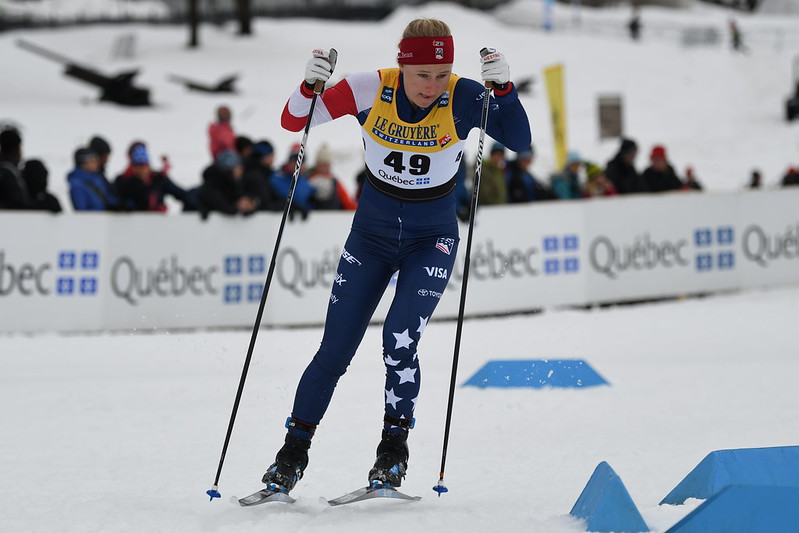
    Hannah Halvorsen during the 2019 Quebec City World Cup sprint. (Photo: Doug Stephen)

    I’ve struggled with body satisfaction my entire life. I don’t just want to be skinnier, I want to be leaner, more defined, more like an… “athlete”. But last fall, I was hit by a car and I find myself wondering, is the body I have, not the body the insecure part of me craves, responsible for my return to sport?  

    Since I was little, the word “athlete” activated images of beautiful toned-muscled people in my mind. That has been my subconscious understanding of what an athlete is. I wish I could say it was all about their performances and abilities, and that’s certainly a huge part of it, but it’s not the whole story for me. When I search a famous athlete’s Instagram account, male or female, I don’t just look for pictures of them competing, I look at their bodies. How lean and defined are they? Most of all, do they have abs?

    This would probably be okay if it was truly noted without judgment, but it’s the farthest thing from that. It’s not the same as noticing that someone has cool sunglasses or they have good technique. It’s more personal. I take in that information about how they look and then, like it or not, I compare them to myself. 

    A lot of the time, I don’t have what I notice they have. I don’t have abs. 

    I don’t think I am alone in this. There are plenty of healthy athletes who wish they looked different. For me, it’s easy to see someone else and think “why would they want to change? They look perfect the way they are.” 

    But I always want to change things. This searing thought haunts me: “if I looked like this, I’d be happier.” Someone with any sense would tell me that’s not true, that happiness comes from accepting and loving yourself the way you are. I couldn’t agree more, but knowing that doesn’t make me accept myself all the time. 

    Before I raise any huge red flags, I would say I am not in a place of dangerous self-abhorrence. I am pretty content with myself and compared to some points during high school, I have come light years in accepting who I am. I can say with full confidence that I am a good athlete with my body exactly how it is.

    But for about a year in high school, I ate as little as I could bear. I spent all my waking energy figuring out how to lose weight, while not letting anyone notice I was eating less. I don’t think I kept it as hidden as I thought I did, but I was so lost in my own self-destructive mission, I didn’t see anything else. I didn’t even see that I was tired all the time, slow, and unfocused in training. I probably was a lot less enjoyable to be around too because I was so unhappy. I didn’t see that either. 

    I have evolved from this challenging time in my life, but that doesn’t mean every moment I am overwhelmed with self-love. Most days, I wish I could change something about myself. Now, these are fleeting thoughts instead of an all-consuming obsession with changing myself. 

    In this state of relative self-acceptance, I had a realization that dumbfounded me. I realized that I don’t appreciate my health. Even though I eat a healthy amount and take care of myself, I have no real gratitude towards my body. 

    Let me explain my discovery. 

    On November 1st, I was crossing a street and was hit by a car at what the police estimate was approximately  25mph. The result was two torn knee ligaments, a fractured tibia plateau, and a skull fracture. I suffered a traumatic brain injury. When that problem was sufficiently managed,  I underwent knee surgery. I have completed hundreds of hours of rehab. I lost a ski season. I’ve endured a variety of different forms of pain, and have learned more than I want to know about insurance and the medical billing system. I have seen enough doctors to last a lifetime and still go to physical therapy several times a week and do more therapy on my own daily. The whole experience has been traumatic and exhausting.

    Now let me tell you some of the positives. First and foremost, I have no permanent injuries. Some of the injuries are going to take a while to heal completely, such as the neck and back pain I have been dealing with due to the whiplash which caused my spinal cord to sprain. And some of the injuries were incredibly severe, such as the large hemorrhages (bleeding and bruising) in my brain. But nonetheless, there’s nothing at this point that I have to accept as a lifelong consequence from this accident. I’ve had doctors of different specialties examine my various injuries and the resounding response is, “It’s incredible you aren’t more injured from this”. 

    To bring this story full circle, my realization is that I might not have been as lucky if I wasn’t healthy. I take health for granted. I can’t help but wonder, “what would have happened if I had been as unhealthy as I was that year in high school when I was significantly underweight?” Would I have had worse injuries? Would I have been capable of healing? And even more mind boggling, would I have lived? 

    It’s hypothetical to compare my injuries from this car accident to the injuries I would have sustained if I had been in similar health to my high school low-point. I considered finding a doctor who could provide a quote for this piece to provide evidence to this realization, but I don’t think it is necessary. 

    The point is, it would be less advantageous to be hit by a car in worse health than in better health. I don’t think anyone will deny me that, even though I make it without a medical license of my own. 

    There are many physical ramifications of eating disorders such as frail bones and a decreased immune system. Basically, every system in the body is negatively affected; the nervous, muscular/skeletal, endocrine, digestive, cardiovascular, respiratory, hematopoietic (blood), etc. I share this not because I think everyone should optimize their health to prepare for the hazards of crosswalks. That would be a bit apocalyptic. 

    I share this story because it is an attempt to offer another perspective on how we view ourselves. I don’t expect anyone to read this and to live the rest of their life free from body image issues. I do hope it is a reminder that being healthy is something to be grateful for. As I move forward with my rehab and recovery, I recognize that my body is something to protect and care for. It is something of irreplaceable value. 

    Like I said in the title of this article, I don’t have a six pack, but a car hit me and I survived. 


  • Coronavirus and Exercise: Links Roundup

    Coronavirus and Exercise: Links Roundup

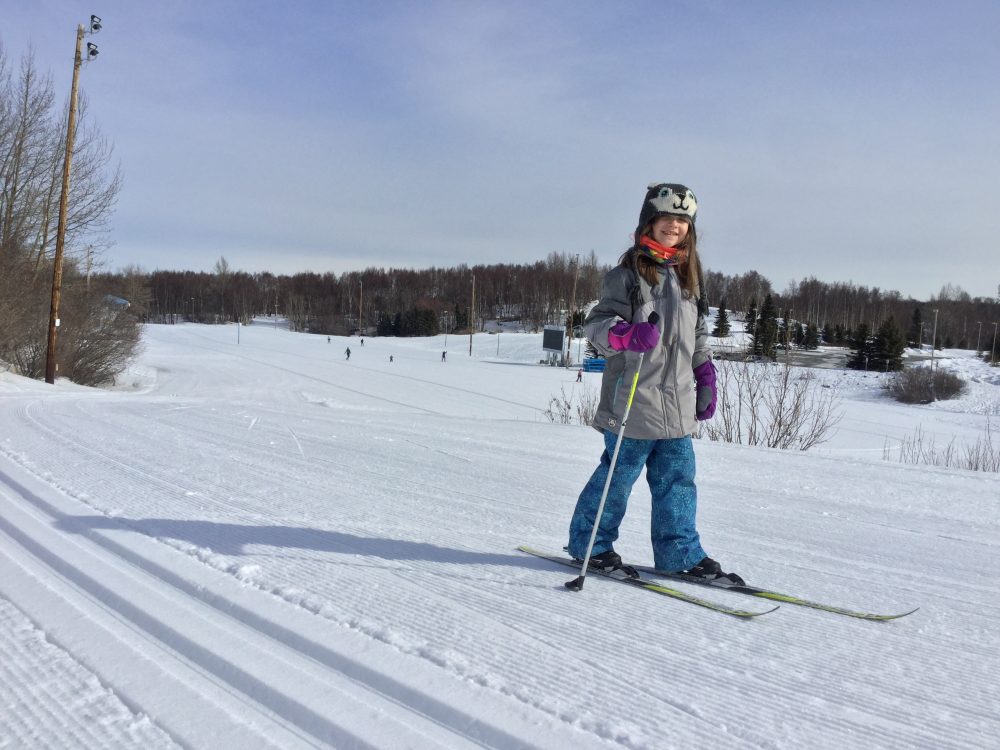
    Bridget Kentch, age 7, skis at Kincaid Park in Anchorage, Alaska, on April 8, 2020, while staying far away from everyone else save her immediate family. (photo: Gavin Kentch)
    Bridget Kentch, age 7, skis at Kincaid Park in Anchorage, Alaska, on April 8, 2020, while staying far away from everyone else save her immediate family. (photo: Gavin Kentch)

    You may have noticed that health concerns are on everyone’s mind these days. You may also have noticed that your favorite park/ski trail/hiking trail/bike path is unusually crowded, as a nation of stay-at-home individuals ventures out for fresh air and the undeniable health benefits that physical exercise provides.

    FasterSkier here compiles some recent popular scholarship on the topics of exercise best practices in the time of coronavirus. FasterSkier explicitly does not give its imprimatur to any of them; this reporter is an attorney-turned-stay-at-home-parent, and is not qualified to pass judgment on the scientific work of credentialed epidemiologists or aerosol scientists.

    With that caveat in mind, here’s a roundup of some recent articles from reputable sources. Be safe out there.

    Christie Aschwanden, “This Is the Exercise Your Body Needs During the Coronavirus Outbreak”

    The social media-friendly title notwithstanding, Aschwanden’s credentials to survey current scientific recommendations are sound; she wrote Good to Go, and has previously contributed to the New York Times, Runner’s World, NPR.org, Discover, and the Washington Post. She has also raced professionally for the Rossignol team, which does not in itself make her a better scientist, but does give her firsthand experience with elite-level training.

    Christie Aschwanden, author of Good To Go: What the Athlete in All of Us Can Learn from the Strange Science of Recovery, spent two years in Switzerland during her professional ski career competing for the Swiss Rossignol team. (Courtesy photo)

    In Aschwanden’s piece, from March 20, she cites scholarship in the Journal of Sport and Health Science, and interviews David Nieman, the author of relevant studies. She underscores the role of hard exercise in suppressing one’s immune system, writing, “So what kind of exercise intensity and duration is sufficient to push you from helping your immune system to hobbling it? Nieman says that it’s when the effort is hard enough to force your body to dig deep into its muscle glycogen – the stored sugar that fuels muscles. ‘In our lab, the stress starts after 60 minutes of intense efforts and gets really bad after 90 minutes,’ he says.”

    Aschwanden concludes that “A good rule of thumb is to limit sustained exercise (greater than 60% effort, which means 60% of your max heart rate) to no more than 60 minutes at a time. One way to do this while still getting in some harder exercise is with intermittent intensity, where you mix some high-intensity efforts with rest or low-intensity exercise.”

    Alex Hutchinson, “What’s the best way to exercise to maintain a strong immune system?”

    Alex Hutchinson, much like Aschwanden, is both a former high-level athlete (middle-distance track runner, in his case) and the author of a well-reviewed sports science book, in this case Endure: Mind, Body, and the Curiously Elastic Limits of Human Performance. In a March 29 column for Canadian newspaper The Globe and Mail, he surveys much of the same ground as Aschwanden.

    Hutchinson notes that “Doing regular moderate exercise lowers your risk compared to doing nothing; studies typically find that near-daily moderate exercisers report about half the typical number of upper-respiratory tract infections. That’s an important message for anyone who’s tempted to slack off their fitness routine until life returns to normal.” But, much like Aschwanden, he also discusses the potential concerns of too much intensity.

    Hutchinson’s bottom line is the same 60–60 recommendation as Aschwanden’s; both authors cite scholarship by the American immunologist David Nieman to support this conclusion. But Hutchinson also cites work done by a British exercise immunologist, which “compared the effects of two hours of low-intensity running with 30 minutes of high-intensity running. The longer bout disrupted immune response more than the shorter one, suggesting that duration is a bigger risk factor than intensity.”

    Tara Parker-Pope, “Can I Boost My Immune System?”

    If you’re looking for magic bullets, this piece, from a long-time New York Times consumer health writer, is not going to give them to you. But if you’d like to see the science behind why lowering your stress levels, improving your sleep habits, and eating a balanced diet will, probably, improve your body’s overall immune response, Parker-Pope provides the citations.

    The Denver Post, “Six feet may not be enough distance to stop the spread of coronavirus, experts say“

    This article from April 1 (really) summarizes the working recommendations of 37 scientists making up “a group of global experts in aerosol science.” It quotes an aerosol science professor who notes that the World Health Organization “already recommends wearing respiratory protection such as N95 masks for health care workers performing aerosol-generating procedures. But they have failed to recognize that regular breathing is a well-established aerosol-generating procedure, which is increased by talking or heavier breathing, such as when exercising.”

    Of particular interest to skiers or other athletes, the article also notes, “‘If runners and joggers are breathing hard, it could cause any virus released in their breath to travel farther if they are infected,’ said Linsey Marr, a professor of civil and environmental engineering at Virginia Tech University, who researches the airborne transport of infectious diseases. ‘It wouldn’t hurt for them to maintain a greater distance.’”

  • Book Review: “ROAR: How to Match Your Food and Fitness to Your Female Physiology for Optimum Performance, Great Health, and a Strong, Lean Body For Life” by Stacy Sims, Ph.D

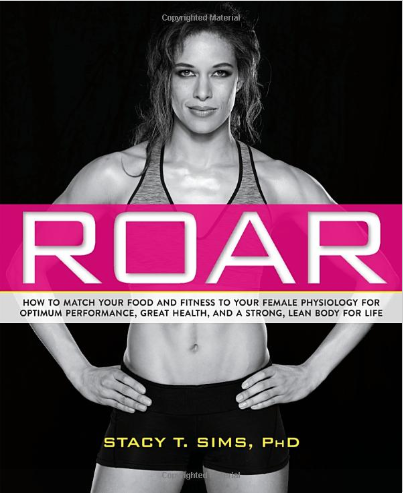
    “ROAR: How to Match Your Food and Fitness to Your Female Physiology for Optimum Performance, Great Health, and a Strong, Lean Body For Life” by Stacy Sims, Ph.D is an excellent resource for female athletes, parents, and coaches. (Photo: Screenshot Amazon.com)

    This book is for female athletes ages 12 to 92. Or for parents of female athletes. Or coaches of female athletes. Or anyone who wishes to otherwise support female athletes. 

    In 2016, Stacy Sims, Ph.D sparked a shift in training philosophy with her simple message to female athletes: “You are not a small man. Stop eating and training like one.” 

    Although the fact that there are physiological differences between men and women are abundantly clear, the implications in the realm of athletic performance do not date back to proto-humans.

    In her book, “ROAR: How to Match Your Food and Fitness to Your Female Physiology for Optimum Performance, Great Health, and a Strong, Lean Body For Life”, Sims explains that for generations, research in exercise physiology excluded women because the varying hormone levels depending on age and phase within the menstrual cycle created anomalies in data. It was assumed — perhaps naively by male scientists — that women followed the trends seen in studies performed on males. 

    Sims experienced this phenomenon first-hand during her own career as an elite triathlete; she competed in the Ironman World Championships in Kona, HI and the XTerra Worlds in Maui. She recognized that the training plan her male peers followed did not work as well for her, and that she and her female teammates recognized their fueling and hydration needs and performance were impacted by their menstrual cycles. So she set out as a scientist to better understand female-specific physiology. 

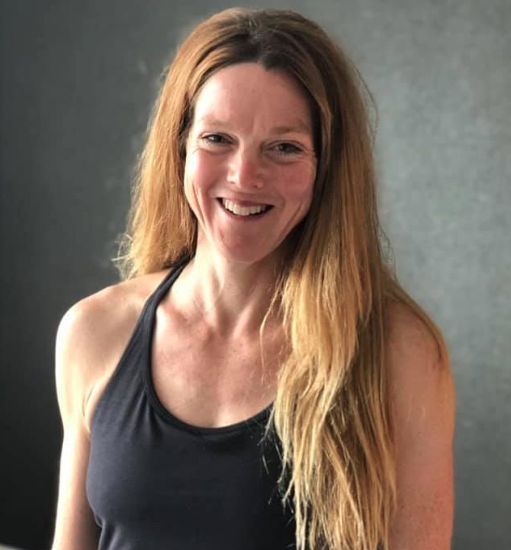
    Stacy Sims, Ph.D, is an exercise physiologist and nutrition scientist who specializes in female performance. (Photo: Screenshot Facebook.com/drstacysims)

    From 2007 – 2012, Sims studied “sex differences of environmental and nutritional considerations for recovery and performance” at Stanford University. Basing “ROAR” on the outcomes, Sims offers women research-based methods to align their training, fueling, and hydration with their female physiology to improve performance. 

    “Sex differences extend far beyond ponytails and sports bras,” she writes in the introduction.

    Some of the topics in the book include aligning training and performance schedules with phases of the menstrual cycle, understanding how female hormones affect nutrition and hydration needs, the impacts of hormonal birth control, and the effects of aging and menopause on physiology and performance. While the supporting science is included, it is well explained and can be easily understood without a degree in exercise physiology, endocrinology, or nutrition.

    Though I have been training, competing, and menstruating for more than half my life, I found “ROAR” to be eye-opening and an invaluable tool to identify opportunities to improve my own training and nutrition as I prepare for the American Birkie. I highly recommend it as a resource for female athletes of all levels and for anyone who works with female athletes. 

    Here are some of my biggest takeaways. 

    “Chapter 1: Demystifying and Mastering Your Menstrual Cycle.” 

    Right off the bat, Sims states that periods should not be avoided, and the absence of menstruation is a major red flag indicating that the athlete is not properly fueling their body, resulting in RED-S. She emphasizes that an under-fueled athlete cannot achieve peak performances and is impairing their overall health. Sims advocates for an “all in” approach to naturally restoring the body’s hormone balance by decreasing training intensity and volume (athletes can shift focus to technique here), and increasing caloric intake.

    Dr. Stacy Sims, author of “ROAR: How to Match Your Food and Fitness to Your Female Physiology for Optimum Performance, Great Health, and a Strong, Lean Body For Life”, sends a clear message to female athletes experiencing menstrual disfunction. (Photo: Instagram @drstacysims)

    In this chapter, Sims also unravels the phases of the menstrual cycle, providing information on the physiological effects of hormonal fluctuation.

    One of the biggest surprises she shares is that competing during your period actually aids performance, because that is the phase of the cycle when estrogen and progesterone are at their lowest. In the hormonal sense, this is when women and men are most alike. 

    “Once you’re in the clear of the possibility of pregnancy, the body goes into a more relaxed mode and all those energy systems used in the high-hormone phase are at your disposal for exertion,” Sims writes. 

    She explains that this optimal window extends through the low-hormone follicular phase in the week following menstruation. This window is also when women are at their strongest and can experience increased pain tolerance and decreased recovery time. This is the best window for an intense training block or a peak race, though the latter is not always in our control.

    Anecdotally, my summer goal race, the Lead King Loop 25k trail run, fell during my period. While I was expecting the worst (since I had not yet read the book), I ended up crushing my time goal, finishing third for women, and feeling the strongest I had in years. 

    Conversely, during the luteal phase of the cycle when estrogen and progesterone are at their highest. Though performance metrics like VO2 Max and lactate threshold remain constant, it is harder for women to build and repair muscle. Carbohydrate demands are higher during this phase, which affects fueling needs during exercise and may explain why many women experience cravings during the week before their period. Blood volume is also impacted, which can make it harder to control body temperature — not the easiest time to race in the heat!

    There are also the lovely symptoms of PMS which include cramping, headaches, GI issues, bloating, and mood swings. Sims explains why each of these symptoms occurs and offers suggestions for mitigation.

    Her overarching message is not to dwell on manipulating the cycle to align the low-hormone phase with peak performance, and especially not to fear the menstrual cycle as an athlete. Rather, by understanding the female physiology throughout the cycle, athletes can feel empowered to adjust their nutrition and hydration accordingly to optimize training and performance at any phase of the cycle.

    One addendum: the impacts of high levels of estrogen and progesterone also explain the negative performance impact many women experience from hormonal contraceptives. This method of birth control uses artificial forms of these hormones throughout the cycle to manipulate the lining of the uterus and prevent ovulation, essentially prolonging the high-hormone phase. 

    “Chapter 10: Daily Fueling”

    I found this takeaway less revolutionary, but so important to repeat. Sims advises women to eschew diet culture, in particular the low-carb high-fat trends, like the Ketogenic diet. She explains that while some males respond well to this type of fueling, women experience elevated levels of the stress hormone cortisol, which increases muscle breakdown and impairs the body’s ability to repair. A double whammy. 

    “In the end, a low-carb diet compromises your ability to maintain high-intensity or prolonged periods of exercise and puts your body under exorbitant stress.”

    Sims recommends a well rounded diet that includes roughly 30% of calories coming from protein, 30% fat, 40% carbohydrate. 

    No surprise — the longer and harder you train, the more carbohydrates your body needs. The same goes for protein. She offers a formula to calculate individual need for these macronutrients based on the current demands of your training program.

    From her guidance, I recognized that I need to include a bit more protein before and after my workouts (Sims recommends 10-15 grams before, 25-30 grams after hard exercise). I have also begun including a bit more protein in my bedtime snack, which typically looks like some Greek yogurt and a piece of whole grain toast with peanut butter. 

    Alayna Sonnesyn (SMST2) captions this shot of cooking with Jessie Diggins, “Gotta fuel hard to train hard!”. (Photo: Instagram @asonnesyn)

    Sims also recommends front-loading calories, in particular carbohydrates, during the morning when the body’s natural hormone stasis makes it “primed for carbohydrates”, whereas it can rely more on fats and protein later in the day. This helps keep blood sugar levels balanced, preventing spikes and crashes in energy throughout training and life. 

    Are you, like me, a 5 AM alarm clock athlete? Just give me some coffee (life-blood) so I can properly tie my shoes and get out the door! It turns out, training first thing in the morning with an empty stomach is a recipe to put your body in an over-stressed state. 

    “[Fasted training] is particularly bad in the morning because your cortisol (a stress hormone) levels are already elevated. If you go out and exercise first thing, your body wants to pump out more cortisol, but needs the right ingredients to manufacture it, which are your sex hormones – testosterone, estrogen, and progesterone.”

    High levels of cortisol stimulate fat storage and impair muscle repair and growth — not what you were hoping to get out of that gym session! You’re also digging yourself into a calorie depleted hole… 

    To counter these effects, Sims recommends consuming some protein and carbohydrates before the session, which boosts blood sugar and drops cortisol levels. In an Outside Magazine piece, Sims shares that one of her go-to’s is oats soaked overnight in almond milk and topped with greek yogurt and a little maple syrup. Yes — you might need to give yourself a little extra time to digest before getting after it, but that gives you time to do that foam rolling or activation drills you’ve been neglecting, or to mindlessly scroll Instagram. Just me?

    “Chapter 11: Sport Specific Fueling”

    This is where Sims dives into the nitty gritty. Her advice for pre, during, and post-workout fueling include explanations of how various carbohydrates are broken down in the gut and suggestions to troubleshoot GI issues like cramping, bloating, and sloshing. And though her book is based on female physiology, this section is beneficial to those with Y-chromosomes as well. 

    One of the most revealing messages regarded the breakdown of sports gels in the stomach. I have never had much luck with gels during races or training — I inevitably end up with a bloated crampy belly and sticky residue in my mouth, on my hands, and wherever I stash the wrapper. Perhaps I was just looking for Sims to confirm this bias, but her explanation of the digestive process sealed the deal that candy and real food alternatives will continue to be my fuel of choice. 

    “The trouble with gels”, as Sims puts it, comes down to two factors: osmolality and the mix of sugars contained in the gel. Osmolality is “the concentration of dissolved particles such as electrolytes in your blood plasma. The higher the carb concentration, the higher the osmolality, and the slower it leaves your stomach and your intestines.” 

    Essentially, the viscous sugary gel is too thick to be absorbed readily during exercise when your body is diverting blood flow into your working muscles and away from your stomach. Even washing it down with water, as is recommended, does not transform the gel into an optimal form. 

    Dr. Stacy Sims, author of “ROAR: How to Match Your Food and Fitness to Your Female Physiology for Optimum Performance, Great Health, and a Strong, Lean Body For Life”, provides revolutionary information on performance hydration and nutrition. (Photo: Instagram @drstacysims)

    This concept is explored further in the subsequent chapter, “Hydration is Power”, which transformed my understanding of hydration. Sims explains that many electrolyte drink solutions aim to be a source of fuel and fluids, but this doesn’t jive with the body’s digestive processes either. Sims recommends the approach of “hydration in your bottle, fuel in your pocket”, meaning separating the two for better overall fueling. The chapter is so rife with information that summarizing it here does not do it justice — go read the book!

    Back to gels. The second factor of the problem is that most gels contain a blend of three sugars: glucose, fructose, and maltodextrin. The first is good, the second two are difficult for the body to digest, requiring water to be drawn from the bloodstream into the gut during digestion, which leads to the suboptimal sloshy gut feeling. No bueno.

    That said, Sims acknowledges that gels do work well for some athletes. If this is the case for you, there is no need to fix what isn’t broken.

    What should you use if you need an alternative? Sims recommends using 100-200 food calories per hour containing primarily carbohydrates, though some protein and fats are okay. For the above reason, she recommends avoiding fructose — which is found in fruits — and sticking to low-fiber foods that contain glucose and dextrose, which can be found in bread, and sucrose, which is table sugar. In essence, nibbling on a PBJ might keep your stomach happier and your body better fueled during a training session than sucking down a couple of GUs. 

    She also speculates that many people place too much emphasis on fueling during races, but it is not a “more is better” scenario.

    “Contrary to what you may have heard, when in doubt, err toward the lesser amount [of food]. It is very common for athletes to overeat during training and racing with the thought that they are supplying their muscles with needed carbohydrate. But in reality, you’re consuming more than your gut can absorb, so the excess just remains in the stomach or intestinal tract too long, causing nausea, pain, and discomfort (which, of course, impairs performance).”

    Sims also emphasizes that when it comes to performance in long events, like the Birkie, hydration is king. Your over-distance training session bonk might actually be a result of dehydration, not of under-fueling. 

    “I’m going to drill the point home here. The solution to staying strong and delaying fatigue is taking care of hydration first and foremost — reducing your loss of blood volume — and topping off your stores with small amounts of carbohydrates from real food when possible, not the kind you drink or slurp.”

    The Consensus

    These points hardly scratch the surface of what “ROAR” has to offer. It is a worthwhile read for any female athlete, regardless of age or performance level, and can certainly be a valuable tool for a coach looking to direct developing female athletes to sound nutritional guidance to help build a healthy body that also performs its best. Having a period is a good thing. Fueling the body is essential. “Women are not small men.”


  • Fueling Fall Training: Roasted Pumpkin Curry from Cara Marrs RDN

    Fueling Fall Training: Roasted Pumpkin Curry from Cara Marrs RDN

    Cara Marrs is a registered dietician nutritionist based in Steamboat Springs, CO. (Courtesy photo)

    Looking for a fall meal that is both comforting and deeply nourishing? Steamboat Springs, CO based Registered Dietician Nutritionist Cara Marrs shares a mouth-watering anti-inflammatory recipe that we can attest fits the bill. Marrs supports clients through her practice in person and online, and has worked with local Winter Olympians as well as recreational, junior, and collegiate xc skiers on their daily and performance nutrition needs. Outside of nutrition counseling, Marrs is an avid trail runner and loves sharing in the mountain lifestyle with her family. You can find her at caramarrswellness.com or on Instagram @cara_marrs_wellness.

    “As an athlete, educator, and certified healthcare practitioner, I can help you bridge the gap between traditional and alternative nutrition therapies and formulate a plan for you as an individual.”

    This is a great recipe for chilly days when you need something that will fill your belly and warm you up!

    The roasted pumpkin is easy to prepare and lends a wonderful fall flavor while providing some high-fiber complex carbohydrates to fuel your skiing. If you are not able to find a baking pumpkin, butternut or acorn squash make great substitutes. Additionally, Leeks are a great prebiotic food, meaning they feed the “good bacteria” that populate the gut, promoting health. 

    Looking for a make-ahead dinner? Once the meat is browned, feel free to add the ingredients to a crockpot or instant pot and let them simmer away. 

    The vegetables can vary, as well as the protein sources depending on your preference. The red curry paste and touch of sriracha lends a wonderful balance of flavors to the sweeter winter squash. 

    Roasted Pumpkin Curry

    Cara Marrs RDN shares a delicious recipe for roasted pumpkin curry that is perfect for fall. (Courtesy photo)
    1. Roast a small-medium baking pumpkin brushed with olive oil and sprinkled with sea salt cut side down for 40 minutes at 375. Set aside. Roasting the pumpkin seeds too is highly recommended! 
    2. Brown protein of choice with olive oil, sea salt, 2 cloves of garlic and 1 heaping tbsp of red curry paste, and one large chopped leek. Organic tofu, organic chicken breasts, grass fed beef are all good choices here. If using beans, add in step 3 instead. 
    3. After 5 minutes, add 3 cups water or broth, 1 sliced red bell pepper, the flesh of the roasted pumpkin, 1 bunch of torn kale leaves torn, and 3 small multi-colored chopped carrots. 
    4. Stir in 1 can of coconut milk, 1 tsp turmeric, 1 tbsp honey, the juice of 1 lime, and 1 herb bouillon cube (if not using broth). Add sriracha to taste. Simmer on low-medium heat until veggies are soft.
    5. Serve with crusty fresh bread and top with the roasted seeds of the pumpkin for some extra crunch and anti-inflammatory fats. Enjoy!
    Cara Marrs RDN shares a delicious recipe for roasted pumpkin curry that is perfect for fall. (Courtesy photo)
  • The Language of Growth

    The Language of Growth

    Do you know what a Growth Mindset is? How would you rate your growth mindset? Do you use it in all the areas in which you’re trying to grow?

    The more I coach, the more I think that a lot of our problems as athletes and humans begins with how much we believe we can change, and whether or not we believe we have power over those changes. The belief that you can change is the essence of a growth mindset. Without the idea that we can improve, why try? Without the confidence that we can create change, why bother? 

    Some of the fascinating work presented by Dr. Carol Dweck in the video above shows the differences in growth vs. fixed mindset in young students only by how the adults in the teachers communicated with the students. The simple phrase “you worked so hard” vs. “you are so smart” had a significant impact on how well the students performed in subsequent tests (if you don’t know what I mean, go watch the video). We know that language matters. 

    What we often are less aware of is how much our language affects us. Your brain has loops and scripts running through it all the time, much of it semi-behind the scenes. We’re often too distracted to notice, let alone change some of this language. If a couple of small words between teacher and student can make a big difference, the hundreds and thousands of words that we think and say to ourselves each day make an even more significant difference. 

    The first step is starting to recognize when you’re using fixed-mindset language. Only after you begin to NOTICE when you say fixed things can you begin to reprogram some of those scripts to reinforce your growth mindset. 

    Here are a few things I want you to do as homework:

    1. I want you to notice when you say self-limiting (fixed mindset) things “I am X,” or “I’m not Y.” In Dweck’s original studies, the simple phrase “you are smart” actually had a very NEGATIVE impact because “smart” means fixed. What fixed things do you say to yourself? Create a system for noticing; for example, you could write them down in your phone every time. Then at the end of the day, see how often you say those things. 
    2. Take note of the subject of your limiting thoughts. Do you say more fixed things about your body? Or your intelligence? Or your emotional control? Observing fixed thoughts will inform areas on which you should focus.
    3. Once you have started to recognize these thoughts and phrases regularly, you can catch yourself in the middle of them and change the ending. Something as simple as “I’m not fast…*catch yourself thinking it*…YET” can be very powerful in the long term. Or you can stop, catch yourself, and say the non-limiting version. “I’m not good at this” can be replaced with “I’m a beginner at this.”

    Importantly, make sure you notice the negative AND THE POSITIVE tenses. “I am” can be almost as toxic in the long term as the short term, as it’s a fixed belief that you will hold to even TIGHTER.

    Joe Howdyshell holds a MS in Exercise Physiology from the University of Wyoming and is the founder of Summit Endurance Academy in Breckenridge, CO. Matti Rowe contributed to this article. He is a former nordic skier for St. Olaf College and coaches with Summit Endurance Academy.
  • Optimizing Fueling to Reap the Benefits of High Volume Summer Training with Stephanie Howe Violett Ph.D.

    Here we are in late August, halfway between the start of the training year in early May and the beginning of the competition season in late November. Volume is the name of the game during the summer and at this time of year, it is not uncommon for top athletes to train 20 to 30 hours per week. Typically, the training logs prescribe athletes to head out on long runs, rides, and rollerskis at a relatively easy pace, but the week is also peppered with interval and strength training sessions. 

    In order to not only survive but also reap the benefits of this type of training, dialing in nutrition is imperative. In particular, matching the energy output with energy intake — read: eating a lot of food. How does one keep up with the energy demands of training at this level? Though he might be prescribing the training load, U.S. Ski Team coach Matt Whitcomb expressed the answer to this question is best left to someone who specializes in the field.

    “The 20 hour weeks are easy; it’s the 25-30 hour weeks that get tough,” wrote Whitcomb in an email. “I keep it simple: I don’t talk with the athletes about nutrition.  It’s a smart place for a coach to defer to the experts if they aren’t one themselves. Too many problems are waiting for a coach to trigger this trap. And yes, this is from experience.”

    So we brought in an expert. FasterSkier reached out to Dr. Stephanie Howe Violett, who holds a Ph.D. in Nutrition & Exercise Science. In addition to her academic training, Howe Violett has practical experience in meeting the energy demands of high volume training and optimizing nutrition for athletic performance. 

    Professional ultramarathon runner Stephanie Howe Violett holds a Ph.D. in nutrition and exercise science. She offers insight into optimizing fueling strategies to meet the energy demands of high volume summer training. (Photo: Instagram @stephaniemarieviolett)

    After nordic skiing and running through college at the University of Northern Michigan, Howe Violett transitioned to a successful trail running career where she landed on the podium in prestigious races such as the Western States 100, which she won in 2014 and placed third the following year. At the time of the call, Howe Violett was in the midst of some high volume training herself, spending long days training in the French Alps.

    While pursuing her doctorate at Oregon State University, Howe Violett studied the connection between exercise and perceived hunger, more specifically looking at how intensity affects the suppression of hormones that are connected to appetite. 

    “We know just from training and racing that when you go harder it seems that you feel less hungry or less desire to eat in the time period immediately post-exercise,” explained Howe Violett about her research. “If you do hard intervals or a time trial, food doesn’t really sound appealing and there’s a reason for that.”

    Her research was specific to running, but she explained that the findings extend to most endurance sports, potentially less so in non-impact activities where the digestive system is less impacted by jarring during exercise. Cross country skiing is relatively low impact, but it can certainly be high intensity, and when paired with dryland training modes such as running and bounding, Howe Violett’s study becomes especially relevant, particularly to those looking to sustain a heavy training load. 

    “The big take-home message is that, yes, there are appetite hormones that alter our appetite in the direction of suppression for about the first hour post exercise, they’re back up to baseline at about 60 minutes post exercise,” she continued. “That’s important because when you’re trying to optimize performance, the first 30 – 40 minutes after intense exercise is when you really want to refuel because the muscles are more able to uptake the glucose and start the recovery and restoration process for the next session.” 

    While most of us are probably logging far fewer hours than the pros, the nutritional advice Howe Violett offered benefits skiers at any level. In fact, her most important point is simple.

    “Eat enough. There aren’t really strategies in terms of quirky things to do. I think timing is super important and quality is important. You might eat three [primary] meals a day, but then timing your intake before and after exercise is super important and I think that’s something skiers overlook in my experience, maybe more so at the younger ages.”

    When meeting the demands of a heavy training load, Howe Violett recommends consuming energy while training as well. 

    “Fueling during exercise is really important and that time window immediately after is really important. So if you’re doing 20 plus hours a week, I think getting that extra fuel in during those sessions is super important for your overall energy intake. Also having a snack right before bed that is preferably whey protein, dairy is the best source, because that can help with the repair process overnight.” 

    This fueling strategy was affirmed nearly verbatim by Canadian National Team skier Dahria Beatty.  

    Dahria Beatty (center) on course in the 15k mass start classic race on March 17, 2018, in Falun, Sweden. (Photo: Fischer/Nordic Focus)

    “The main thing I think about during a high volume training block is being proactive with my energy intake during and immediately post-training,” wrote Beatty in an email. “That means fuelling during long workouts before I become hungry as well as making sure I have my recovery snack ready for as soon as I am done training. 

    “My meals outside of training stay pretty similar to those during a normal training block,” Beatty continued. “In big training weeks, I pay more attention to my hunger levels mid-day and in the evening, adjusting my afternoon snack and adding an evening snack if necessary.” 

    During her training sessions, Beatty’s go-to snacks dried fruit and homemade granola bars or energy balls. After a session, particularly in the summer, she likes to make a fruit smoothie.

    “Banana-mixed berry-ginger is my current favourite,” she wrote. “After particularly hard workouts I will top my smoothie with a bit of granola, coconut, and some chocolate chips.”

    It might seem that the expression “if the fire is hot enough, any fuel will burn” could fit here, but Howe Violett explains that simply eating high calorie foods is not necessarily the answer. 

    “You want to get more nutrient dense foods — things that have a lot of vitamins, minerals, and fiber in meals. Then in training and post-training, you actually want very simple carbohydrates so that they can be absorbed a little bit easier.” 

    Kikkan Randall in the kitchen “getting ready and fueled” in the fall of 2014. (Photo: Twitter)

    An athlete who is not matching the energy or nutrient demands of their training will recognize this deficit in a slowed recovery or feeling more fatigued than would otherwise be expected. If this is the case, Howe Violett recommends considering whether the athlete is consuming enough carbohydrates.

    “Suppressing carbohydrate intake or just not getting enough carbohydrate is a common thing that people get right now because carbohydrates aren’t super popular in fad diets. It can lead to mood disturbances, feeling foggy, not recovering, just feeling like you can’t go any faster despite trying. And it can take months or years to overcome that, so I think that it’s really important to be diligent about carbohydrate intake every meal and every day. Not necessarily pasta and cereals, but whole grains like rice, quinoa, starches like potatoes and sweet potatoes, and then a lot of fruits and vegetables. Those are going to be really good sources. Then pairing that with sports products like gels and blocks during training, a bar before training, and something like chocolate milk after training. I think that’s a really good way to ensure enough carbohydrate intake to avoid overtraining or overreaching.” 

    An athlete’s training log changes with the season. High volume in the summer transitions to low volume but high intensity in the winter. How does this transition impact nutritional needs? Howe Violett emphasized that nutrition is individual and generalized advice is not something she likes to provide. For some of the athletes she works with, their nutrition plans change weekly to account for their training, travel, and race schedule.

    “I really encourage people to work one-on-one with someone because you really learn so much about yourself and how to fuel your body, what your needs are, and how to structure it throughout the season.” 

    She provided a loose framework explaining that the most overall energy is needed when the volume is highest. 

    “Nutrition is individual, but we work within the framework where we want, for a skier, 50-65% carbohydrate, 20% protein, and about 30% fat throughout the day. Then knowing that that is night and day different from what you might intake before, during, and after training, and it’s really important to optimize both of those occasions because they are both equally important and they can really help drive performance. Training is the thing we think about most of the time, but nutrition can actually be just as important and work synergistically with training and recovery.” 

    Typically during the more intense winter months, an athlete’s diet might need to be at the higher end of the range for carbohydrate since the body relies on this type of energy most while racing or completing speed sessions. Then, during the off season when volume and intensity are both low, one would be better served to eat a higher percentage of fat and protein.

    Howe Violett concluded with advice for athletes at any level, particularly juniors ascending into the college ranks, collegiate skiers chasing professional ski racing, or anyone who is looking to make a jump in their training load and seeks to optimize their nutrition accordingly. 

    “Eat enough and just ignore all diet recommendations that come from the internet or social media because it’s all just pseudoscience. Take a step back to the basics. Get enough food — if you’re hungry, it means you need to eat. I think a race weight is a really silly way to determine if you’re fit or not. I think when you feel good, when you’re well-fueled, you’re getting enough sleep, and you have energy, that’s a really good state for your body to be in. That is the whole package, nutrition, recovery, stress, and lifestyle.”

    Before transitioning to trail ultramarathons, Stephanie Howe Violett skied for the University of Northern Michigan. (Photo: Instagram @stephaniemarieviolett)
  • Eating for Immune Support During Race Week With Kylee Van Horn, RDN

    Eating for Immune Support During Race Week With Kylee Van Horn, RDN

    Whether they are traveling through Europe to compete on the World Cup or racing recreationally in local events, skiers are met with the challenge of surviving a race season that takes place during the cold and flu ridden winter months. Registered sports dietitian Kylee Van Horn of FlyNutrition, LLC shares suggestions on how to stay healthy as race day approaches.

    The scenario is all too familiar. You’ve managed to stay healthy while logging countless kilometers and the time has finally come to taper for a big race when the next thing you know, you are sniffling and sneezing, hoping your cold doesn’t knock you off your feet and leave you bedridden!  

    Why this happens before a big race is debatable.  One theory that was studied in Dr. David Neiman’s “open window theory” states that in the 3-72 hour period after hard or sustained exercise, the body produces large amounts of the stress hormone cortisol, which can impair the immune system.  If your taper for a race follows a hard training block, this could be one explanation of the increased risk for illness leading up to a race.

    voltaren

    Ultimately, your best defense against getting sick before a race is to wash your hands, get enough sleep, and eat an overall healthy diet without skimping on calories, but there are some foods and beverages that you can include into your daily diet routine that might provide a beneficial immune boost during race week.

    #1) Vitamin C Rich Foods:  One of the most well known immune supporting vitamins out there, vitamin C is a water soluble vitamin that our bodies can not produce on their own, thereby creating the need for daily consumption through diet.  Some of the foods highest in vitamin C are: red bell peppers, citrus fruits, acerola cherries, kale, kiwi, and broccoli.

    How to Include:  Have an extra smoothie or salad to maximize consumption of this vitamin.

    #2) Garlic: This nutritional powerhouse contains sulfur compounds that can support the immune system by increasing the white blood cell response in the body. White blood cells are the body’s primary defense against infectious diseases. The main compound, alliin, is converted to the white blood cell boosting allicin when garlic is chopped or crushed.

    How to Include: Add an extra clove or two to your pizza or pasta!

    #3) Probiotic Rich Foods: Probiotics are considered live microorganisms that live in our gut and provide health benefits to our bodies, including support for our immune system.  Some probiotic rich foods include: yogurt (dairy and non-dairy), miso, tempeh, and sauerkraut (unpasteurized).

    How to Include: Consider a yogurt for a snack or top your salad with some sauerkraut.

    #4) Dark Chocolate: What? Chocolate has immune support benefits?  Yes! But it depends on the cacao content of the bar. Cacao contains antioxidant properties that have been shown to increase cellular immune responses.   

    How to Include: For the best effects, choose bars that have a cacao content over 70% and a low sugar content.  Or add cacao nibs or powder to your oatmeal.

    #5) Green tea:  Green tea contains two immune supporting compounds, L-Theanine and EGCG.  It’s up to you whether you prefer matcha, sencha, or another variety of green tea,  just drink up!

    How to Include:  Drink a cup or two of green tea each day or add matcha powder to pancakes, homemade energy bars or yogurt.

    Immune Boosting Banana Berry Matcha Smoothie:

    Serves: 2

    Ingredients:

    1 cup ice cubes

    1 cup unsweetened coconut or almond milk

    ½ cup plain Greek yogurt or dairy free yogurt

    1 banana, sliced

    1 cup mixed frozen berries

    1T matcha green tea powder

    1 tsp honey

    Instructions:

    #1) Add all ingredients to the blender and blend 1-2 minutes until desired consistency is reached.  Add more coconut or almond milk if too thick of consistency.

    Note: Increase the protein content of the smoothie by adding more Greek yogurt or a vanilla protein powder

    Bio:

    Registered sports dietician Kylee Van Horn in full stride (Courtesy photo)

    Kylee Van Horn is a registered sports dietitian and owner of FlyNutrition, LLC where she offers nutritional counseling services both in person and online.  Van Horn is an accomplished distance runner who turned to the trails after running a 2:49 marathon. You can find her competing in trail races, skinning up the resorts, adventuring in the mountains, and playing with her Aussie shepherd puppy. Van Horn resides with her husband in Carbondale, CO.

    References:

    1.  Nieman, D. C. (2000, April 26). Exercise effects on systemic immunity. Immunology and Cell Biology, 78, 496-501
  • First Tracks as a New Parent: Kikkan Randall [Part 2]


    Kikkan Randall poses with her husband Jeff Ellis and their son Breck after her final race in Falun. (Photo: Instagram @kikkanimal)

    The “First Tracks” series highlights the pregnancy, postpartum, and parenting experiences of noteworthy athletes in cross-country skiing in various stages of their professional careers. The sharing of these experiences can benefit athletes in any stage of their career, whether they are an elite or recreational skier, by demonstrating that it is very possible to return to skiing, competition, and an active lifestyle with a growing family. The series will include the physical challenges of being an athlete during and after pregnancy, balancing family life with skiing, and the joy that starting a family can bring. This is part two of Randall’s “First Tracks”. You can read part one here. 

    ***


    After Kikkan Randall delivered her son, Breck Stuart Randall Ellis, on April 14th of 2016, she began her return to racing.

    “The one thing that kind of struck me as I was doing all of it, is that because I wasn’t racing while I was pregnant, I felt like I was taking my maternity leave before the baby came,” said Randall in a call, “because as soon as the baby came, it was time to get back into training.”

    Randall described the adjustment of incorporating motherhood into her lifestyle as a professional athlete as a “cool mind shift”, and expressed gratitude for her support system for enabling her to spend lots of time with her new baby while still putting in the training hours she needed to pursue her goals.

    “I had looked forward to being a parent for a long time, but I was completely blown away with how awesome it was,” said Randall. “From the moment he came into the world and you quickly realize – as a skier, my life had really been all about me, pretty selfish, because it has to be for performance. Pretty quickly it was all about him and I had to find a way for it to be about me in between.

    “It was a change in perspective too in knowing that my training time wasn’t unlimited,” she added. “So the time that I got to be out there I was really grateful for, and I wanted to make the most of it so that when I could come back and be with Breck I still could make the most of that time.”

    Kikkan Randall kisses her five-month-old son Breck after a training session with teammate Sadie Bjornsen. (Photo: Instagram @kikkanimal)

    While Randall’s capacity for high volume training while pregnant may seem super-human, her recovery process brought her closer to the mortal realm.

    “After the birth, there was just a bigger recovery process than I had anticipated,” admitted Randall. “I was still able to do three sets of eight pull-ups about a week before Breck was born, I was feeling really strong at the end of my pregnancy. So I thought, oh man when I have this baby and the extra thirty pounds come off, I’m going to be whipping out pull-ups right and left! I think I waited about four days or maybe it was a week and I was like okay, I’m going to try some pull-ups now, and I could barely do four!”

    During pregnancy, a woman’s uterus grows to between an astronomical 500 to 1000 times its original size, from about the size of a pear to approximately the size of a watermelon. In addition to relocating the remainder of the mother’s internal organs, this growth puts a major strain on the core muscles that stretch to accommodate the growing baby and on the pelvic joint, which widens to aid the delivery of the baby. The body also produces a hormone called relaxin throughout pregnancy which allows ligaments to stretch and joints to loosen more easily as the body expands. This hormone is present in the body for 12 or more weeks after pregnancy, meaning women are at an increased risk of joint injury during the immediate postpartum period.

    Because of the stretching of core muscles, many women develop a condition known as diastasis recti, which is a weakening of the connective tissue in the abdominal wall leading to a separation of the rectus abdominis, more commonly thought of as the muscles that make up a “six pack”. The degree of separation is measured by the number of fingers that can be inserted through the gap to the transverse abdominal muscles lying below. In severe cases, the condition needs to be rectified with a surgery similar to the treatment of a hernia.

    “When I started doing exercise after the birth, I was relying on all the bigger muscles [rather than utilizing the core], and I ended up injuring my back about a month after Breck was born,” Randall shared. “So then I started going to Pilates classes and working with a physical therapist that specializes in postpartum stuff to really work to re-engage. I had about two fingers worth of separation between my abs, but thankfully, I have a really strong lining underneath it, and I was able to bring it back to about a half-finger gap.

    Kikkan Randall hikes with her newborn son Breck. (Photo: Instagram @kikkanimal)

    “The core strength, for sure, took a bit to come back,” Randall continued. “I think part of it was coordination and strength. And then, really for the whole first year, I didn’t feel like I had the tension in my joints like I had before… So things like really quick speeds, sprinting off the line, that stuff, just took a while to come back and that was a surprise.

    “On the flip side, I couldn’t believe how strong I felt aerobically right off the bat. Within a week or so, I was testing things out on the ski erg and that felt pretty good, and I was getting on the bike, and that was good. We just made a really gradual approach back into training in the first three months, and I really was very cautious and easy with myself for those first six weeks, and then very gradually built back.”   

    While the non-weight-bearing nature of cross country skiing might provide benefits to a body in recovery, Randall realized that the multi-faceted training for her sport at the elite level made resuming her normal regime a slow process.

    “We brought classic in first, thought that was going to be a little easier on the body than skating,” Randall explained. “And we realized how complicated ski training is as we were trying to introduce one thing at a time so we could really tell that I was passing a stage before moving onto the next. But when you’ve got classic, skate, running, biking, strength training, and then that at all these various intensities, it was really like, oh man, where do we even start.

    “We started very simply with using biking as a way to keep up my aerobic intensity,” she continued, “then started with some really easy classic skiing and gradually worked up the volume. When that was going well we added a little bit of intensity. Then once classic was going well, then we did the same thing with skating. So I think it was three or four months before I was back to doing most of my normal training modes.”

    Not all of her training modes were easy to reintroduce.

    “Running took me a while,” Randall expressed, “probably six or seven months to get back into because I did have that separation in the front of my pelvic bone. I had started trying to run small amounts in my neighborhood thinking staying close to home would be good, but I was doing it on pavement. Then, later on, I had much better success building up my running on the trails, so I really think the surface mattered. I was able to do a lot of uphill running, striding, and stuff with poles, that was a really good way to reintroduce the impact on my legwork.”

    Despite resuming a high volume training load, Randall was able to breastfeed her son for the first eight months after giving birth, a commitment that required a lot of planning.

    “It was a blend of just timing feedings and going off for training and coming back and feeding him again and doing a lot of pumping,” Randall shared. “I did two short four-day camps on the glacier, so for that period, I was away from him. Thankfully, I had done a lot of extra pumping early on when I was producing more milk than he was eating, so I had a stockpile. So then, my husband was able to give Breck the stockpiled milk, and while I was on the glacier I was also pumping every few hours so I was building up a new stockpile.

    “So that was kind of funny to be in the middle of the night in the back corner pumping, then leaving camp with this whole cooler full of frozen breastmilk,” Randall laughed. “Then I kind of weaned off on breastfeeding right as the race season was starting.”

    Producing enough milk to sustain a growing baby adds a unique load on the body and requires approximately an additional 500 calories.

    Kikkan Randall shares a photo of herself with her newborn son captioned “Naps between training just got a whole lot better.” (Photo: Instagram @kikkanimal)

    “I didn’t really notice it,” Randall stated gratefully. “I didn’t find myself more tired. I was trying to drink a lot to keep my hydration up, but I never really felt like I got out of whack that way. I was enjoying the opportunity to eat the extra calories. Overall, I was pleasantly surprised at how well I was able to balance it with all the training that I was doing.”

    While breastfeeding did not cross her mind as a source of impedance for her recovery between training sessions, Randall did have some concerns about the lack of sleep during the first few months of Breck’s life. However, she found it to be much less detrimental than anticipated.

    “I had been wearing this device for a full year leading into pregnancy, then I wore it through my pregnancy and after – it measures the quality of my sleep and my recovery. I thought that I was going to see a huge decline, but I saw some of the best numbers I’ve ever seen!” Randall exclaimed. “So I think that the super mom powers you get, just the happiness factor… so even though I was getting less sleep, when I was sleeping I was sleeping really effectively, so it didn’t seem to have an impact on my training.”

    In reflecting back on her pregnancy and postpartum experience overall, Randall saw both advantages and disadvantages to being a skier, versus a professional athlete in a different sport.

    “I think our training as skiers is very complementary to what you do for pregnancy because of the low impact nature of it,” Randall stated. “Being able to ski a lot was really beneficial and I could bike and do all these different activities that contribute to the same goal, which was great. I could see being just a runner being challenging.

    “I do however see a difference in the return,” she continued. “I followed a couple athletes like [professional cyclist] Kristin Armstrong who came back incredibly strong after the birth of her child and won gold medals. I was just thinking about how biking is so one dimensional and so linear, it would be so easy to hop on the bike and get back in shape because it’s all aerobic and it doesn’t matter the tension [in muscles and joints] as much. So some sports may be easier that way… Skiing was just so challenging with all the different pieces to figure out.

    “But overall, there were a lot of other world cup athletes that all did it around the same time as me and everybody came back strong,” she concluded. “So I think it’s very doable.”

    As Breck’s half-birthday approached, so did the World Cup season. Randall headed to Europe with her teammates once again after eighteen months away from racing.  

    “At six months, that was about a month before the season started, I was feeling strong, training with the team, doing time trials,” Randall remembered. “I thought I was really ready to go, and then when the race season started, that was when I got the reality check that being away from race intensity for several months takes a little while to come back. I think that was also in relation to the tension in my muscles.

    “So the first three months of the race season were pretty challenging, I had to be really patient,” she added. “Then when I hit about the ten-month [postpartum] mark, I felt a really big change, and then another big change at a year.”

    Kikkan Randall’s son Breck waits happily next to their bags as they depart for a winter in Europe for the World Cup Races. (Photo: Instagram @kikkanimal)

    Apart from the physical challenge of being prepared to race at the highest level at seven months postpartum came the logistical challenge of traveling across the Atlantic for a winter on the road with an infant. What was their secret to success? Not dwelling too much on it.

    “We didn’t really think too much about how we were going to do it,” Randall admitted. “We just decided that we wanted to do it and therefore we were going to figure it out. Some people were like, ‘how did you travel five-months on the road in Europe while ski racing?’ And I was like, ‘I don’t know, we just did it! And it was awesome!’ We schlepped a lot of gear around and just made it work and it was really an awesome experience for us all together.”     

    The World Cup moves between countries on a weekly basis, meaning regular flights, bus and train rides, and time changes. While this schedule might make any traveler weary, Breck seemed to handle it without too many problems.

    Kikkan Randall travels with her son, Breck, between World Cup race venues. (Photo: Instagram @kikkanimal)

    “I don’t know that we’ll ever know the answer to the question of whether he is just a good easy-going, even-keel kind of kid, that’s just good for anything, or whether it was that early in his life we started taking him on trips, so that’s all he knows,” said Randall. “He ended up being a great traveler, even long van rides and being on big busses with the world cup field. He just went along with it.

    “The time change, however, was quite difficult,” she continued. “It probably took us a good two or three weeks to get on a routine. When we went over he was starting to only wake up two or three times a night, I really wasn’t feeding him too much during the night. When we got over there, he started waking up five or six times a night. And because we had teammates all around us and I didn’t want to disturb them, we were doing whatever it took to keep him happy through the night. But then it would be one in the morning and he was wide awake like ‘let’s play!’ Then at three in the afternoon, we couldn’t keep him awake to save our lives.”

    Luckily, Breck was born amidst a small baby boom on the World Cup, so Randall was not alone in navigating this experience. Marit Bjørgen of Norway, Aino-Kaisa Saarinen of Finland, and Katja Visnar of Slovenia all gave birth during the 2015-2016 ski season as well.

    Kikkan Randall’s son, Breck, and Aino-Kaisa Saarinen’s daughter, Amanda, play with their matching bronze medals from the World Championships in Lahti, Finland. Randall captioned the photo, “It’s okay Breck, you’ll win gold next time.” (Photo: Instagram @kikkanimal)

    “My Finnish friend [Saarinen] who is a World Cup skier and had a baby just a few weeks after me highly recommended that we do sleep training,” Randall explained. “So about three weeks into the season, we were in Switzerland and we were finally in an apartment so we wouldn’t disturb anyone around us and we committed to three or four nights of sleep training. And it was mostly done by Jeff – I got to sleep through it because I was racing – but he committed to letting him cry for longer and longer intervals and within about four nights, he was completely sleeping through the night, and from then on it was a huge game changer for us.

    “We actually found it a lot more challenging the second year when he was between a year and a half and two years old because then he wanted to move a lot more and he was more aware of what’s going on and it was harder to keep track of him on the long travels.”

    In addition to family and friends, Randall was grateful for babywearing and carrying gear during her preparation for and travel during the race season as it made it easier to bring Breck along for some sessions and to get him from place to place more easily while on the road.

    “We got a Thule chariot right away,” Randall explained. “That was super awesome because with the infant harness we could suspend him in there from pretty early on. I could use it to get out for walks and later runs. Then we could pull him behind the bike, and then we could pull him skiing.

    “We found it really useful in Europe in the winter because we could just pack him in there all nice and

    Kikkan Randall tows her son, Breck, in their Thule Chariot. (Photo: Instagram @kikkanimal)

    warm, protected from the snow and wind and rain, then whoever we had with us helping take care of him could just take him out for these great walks all the time,” she continued. “That was a really great tool, I mean we’re still using it a ton.”

    At about 10 months postpartum, Randall took third in the freestyle sprint at the World Championships in Lahti, Finland, and at about 22 months postpartum, she won her historic gold medal. However, just five months after the Olympics, Randall shared that she had been diagnosed with breast cancer. Luckily, she was given a good prognosis, however, the discovery halted the Randall-Ellis family’s plan to grow.

    “That’s been one of the toughest parts of this breast cancer deal so far,” Randall shared. “We were so excited to expand our family after the Olympics ended, and now that’s on hold for at least a couple more years. We were fortunate that we were able to do some fertility treatment before I started chemo, so we have one little embryo as a backup plan. It just gives us some hope that in case my fertility has been wiped out by the chemo, that gives us one shot maybe. And there’s no guarantee that the chemo does wreck my natural fertility. So we’ll find out in a couple years when hopefully I can take a break from the anti-hormone stuff.

    Kikkan Randall displays her newly bald head and tireless positivity after undergoing her second round of chemotherapy. (Photo: Instagram @kikkanimal)

    “With that aside, it makes me really grateful that we have Breck,” she continued, “because I know how much I love being a parent and the fact that I get to do that with Breck is so amazing. I think if I hadn’t had any children and was facing this, it would be a lot harder.

    “Also, you hate that it takes something like this to change your perspective, but we’re just really appreciating every day with Breck now, and the fact that we get to just focus on him, because sometimes when you have another kid then you have to shift your attention to two kids,” Randall added optimistically. “So we’re just going to really enjoy doing stuff with Breck and it makes me appreciate how much I love being a parent and making the most of every day that I have. And I’m staying hopeful that I get to go through this whole experience again, even if it’s not on the original timeline that I imagined.”


    Finally, Randall was asked what message she would share with a fellow skier who is pregnant or thinking about starting a family.

    “Approach this new situation with a curiosity and really just listen to your body,” Randall encouraged. “But have the confidence that your body is pretty tough and it is used to doing a lot, and probably the best thing that you can do for yourself and the baby is to just keep doing what you’re doing. I really think that when you’re used to getting a lot of exercise, and as an athlete, you’re used to taking good care of yourself, just keep doing that through pregnancy.

    “Enjoy it!” she added. “Notice what’s different and unique, and also have the confidence that when the baby comes, it may take the patience of a couple of months to get your body to come back around again, but it will and you’ll be stronger than ever. I think it’s really exciting to be able to blend athletics and being a parent whether you’re doing it at the elite level or just someone who is worried about continuing to be athletic after having kids, it really works out great.”

  • First Tracks as a New Parent: Kikkan Randall [Part 1]

    First Tracks as a New Parent: Kikkan Randall [Part 1]

    The “First Tracks” series highlights the pregnancy, postpartum, and parenting experiences of noteworthy athletes in cross-country skiing in various stages of their professional careers. The sharing of these experiences can benefit athletes in any stage of their career, whether they are an elite or recreational skier, by demonstrating that it is very possible to return to skiing, competition, and an active lifestyle with a growing family. The series will include the physical challenges of being an athlete during and after pregnancy, balancing family life with skiing, and the joy that starting a family can bring.

    Kikkan Randall shares time outside with her one week old son, Breck. (Photo: Instagram @kikkanimal)

    As she was the only U.S. Olympian and mom in PyeongChang and the first female American skier to start a family during her professional career, Kikkan Randall has led by example in the realm of training through and recovering from pregnancy. Her gold medal demonstrates that it is completely possible to return to competition after pregnancy stronger than ever. While Randall acknowledges how fortunate she was to have an uncomplicated pregnancy through which she could train at a level most would find astonishing, her experience should instill confidence in women that hope to remain active during and after pregnancy in order to maintain the active lifestyle to which they are accustomed.

    Randall and her husband, Jeff Ellis, knew that they wanted to start their family in 2016. As that was not a World Championship year and it was not an Olympic year, the timing was ideal for her to miss a season on the World Cup. As the couple began trying to conceive, Kikkan was able to maintain her normal training volume without worrying about its effect on her fertility, still participating in team camps and following her training plan. In fact, she discovered she was pregnant shortly after returning from a training camp in Norway.

    “A few weeks before that, Jeff had gotten a Diet Coke can on the airplane and it said ‘dad’ on it,” Randall shared in an interview. “There were just some funny things that ended up being a premonition or something.”

    Kikkan Randall announced via social media that she and her husband, Jeff Ellis, were expecting their first child in April 2016. (Photo: Instagram @kikkanimal)

    Once the couple found out they were pregnant, Randall’s training plan adapted to accommodate the new toll on her body, however, it did not change as much as one might think.

    “Up until the point I found out that I was pregnant, I was training full bore as if I was preparing for the season ahead,” said Randall. “Once I found out I was pregnant, the goal shifted slightly in that I was no longer trying to be in top physical shape for the race season, but I was curious about how much training I could do. So as long as I followed how my body felt, I continued doing intervals twice a week, strength training twice a week, long things. I really continued the training as normal, although I did notice in that second month quickly the extra load on my system. All of a sudden stuff just felt harder.”

    Kikkan Randall using snow biking as one of her training modes at eight months pregnant. (Photo: Instagram @kikkanimal)

    Despite things feeling more challenging, Randall was able to maintain a high training load throughout her pregnancy. She typically trained twice a day all the way through her third trimester, incorporating running, both skate and classic skiing, snow biking, and strength workouts. Once she was in the later stages of pregnancy and her belly had grown substantially, she avoided exercises that required jumping because of the added load on her joints and those that required her to lie on her back for long periods of time, which is recommended to pregnant women as the pressure on the inferior vena cava, one of the major arteries responsible for returning blood from the lower extremities to the heart, can restrict blood flow and cause complications.

    “Around the seven month mark, running started to get pretty uncomfortable,” shared Randall. “I had a little bit of separation in the front of my pelvic bone. I did some running on an anti-gravity treadmill which helped a bit, and then after a while, I was like okay, I don’t need to push it anymore. So I didn’t run that last month and a half of pregnancy. I did some hiking, especially where I could finish on an uphill and not do too much downhill.”

    One thing that challenged Randall was the lack of information pertaining to high-level athletes training through pregnancy. As it is difficult to conduct medical studies on pregnant women and so few elite athletes had chosen to get pregnant during their professional career, there was a dearth of resources explaining what she should and should not do.

    “That part wasn’t as cut and dry as I would have liked,” she said. “I was asking a lot of questions to a lot of people, but there wasn’t a lot of stuff out there that was concrete about what you can or can’t do. Thankfully, my doctors were supportive. They said, ‘Keep doing what you’re doing because that’s what your body is used to. Just listen to it.

    “My strength training coach had actually been through a pregnancy the year before herself, so she was helpful in knowing what the load on the body would be and modifying strength plans slightly,” she continued. “My personal coach, Erik Flora, was really helpful because he’s been with his wife through three pregnancies, so we worked together to design a training plan that was appropriate. I looked for stories on the internet of other elite athletes that had gone through it. I reached out to Lauren Fleshman, the runner, she gave me some tips. But a lot of it was just experimentation.”

    Kikkan Randall shares photos of herself strength training at 22 weeks pregnant with the caption “I guess I don’t need to add a weight vest anymore!”(Photo: Instagram @kikkanimal)

    Randall seemed to handle pregnancy in stride, adjusting to the changes in her body well and looking forward with anticipation. Her only emotional hurdle was simply remaining home during the winter, rather than the heading to Europe for the World Cup race season.

    “It was a little bit difficult, I had to miss a season of racing,” Randall shared. “When all my teammates left for the season and I was up in the middle of the night watching them, I really missed the racing and being there together with them.

    “But I was also really excited to be a parent,” she continued. “I was really excited with how the process [of pregnancy] was going. I was pleasantly surprised with how much I was able to do and how I felt.”

    Randall also handled the uncertainty of what her recovery would look like with the positivity and resilience for which she is known.

    “I think I went into it with the right mindset,” she said. “I had four Olympics up to that point and a very successful career, so I knew that if for some reason I wasn’t able to come back, I could still be satisfied with my career and I think that took a lot of the pressure off. I was also pretty optimistic and confident that I would come back as strong as ever and I had a lot of really great support. The ski team was really supportive, my sponsors were supportive, my husband was really supportive. So I just looked at it with a lot of optimism and excitement.”

    Perhaps a challenge unique to the world of professional athletes for whom training and racing is their career, maternity leave takes a new shape as women are not able to perform at their normal level during or immediately after their pregnancy. This extended leave has been met with mixed results as more an more professional athletes are choosing to start their families during, rather than after, their career. As aforementioned retired track athlete Lauren Fleshman illuminated, pregnancy is not always well-received by sponsors, since the athlete’s need to step away from high-level training and competition for at least a year decreases the visibility of the sponsored products.  

    Kikkan Randall sports a Fast and Female race vest at the start line of the 2016 Birkie. Randall appeared on behalf of one of her sponsors, Fischer Sports. (Photo: Instagram @kikkanimal)

    Luckily, Randall’s experience in this regard was quite positive.

    “I was proactive with all my sponsors,” said Randall. “I alerted them that ‘hey, we’re going to try to have a kid in the next year. So if I do, how can we renegotiate or keep our relationship going?’ Recognizing that they wouldn’t get the benefit of me out there racing and getting in the results, being on the podium, and getting them the exposure that way, I just proposed other ways that I could be valuable to them. Whether it was writing content for their website or social media, whether it was doing in-person appearances. So with each of my sponsors, I came up with a unique set of things that I could do since I was going to be home, not going to be away racing all the time, and they were really receptive to that. So it just took some creativity on my part.

    “I think everybody was really psyched to see that I wanted to continue racing, that I wasn’t seeing this as an either-or option, so everybody was really supportive,” she continued.

    Kikkan Randall announced the birth of her son, Breck Stuart Randall Ellis, born April 14th, 2016. (Photo: Instagram @kikkanimal)

    Randall also felt that pregnancy is handled fairly within the International Ski Federation (FIS) in terms of her ability to preserve her World Cup starts after a year away from racing.

    “When you let FIS know that you’re going to be missing a season, they put it into the same category as if you were injured,” Randall explained, “which some people really take offense to because they say ‘Pregnancy isn’t an injury.’ But that was just a technicality, basically, what they do is allow you to freeze your points so that when you come back, there is a slight penalty for not having raced the previous year, but you don’t have to start from zero again which is really nice. So I was pretty happy with that process; it was really easy to just let them know, and then my points were frozen and when I came back, things got restarted again, so that was really good.”

    Randall gave birth to her son, Breck Stuart Randall Ellis, on April 14th of 2016. Because Randall possesses a genetic blood clotting factor, she had been on a blood thinner throughout her pregnancy as a precaution. In order to keep her labor and delivery a bit more controlled, the doctors advised her to be induced when she reached full term at 39 weeks.

    “They had done a procedure in the office the day before, so by the time I got to the hospital and they hooked me up to the monitors, I was already having super mild contractions, which I couldn’t quite even feel yet,” said Randall.

    “They started me on one unit of Pitocin over half an hour… that got things going real quick!” she laughed. “It kind of skipped the slow build up stage and I went into having contractions every 90 seconds pretty intense and that was making me throw up, which was causing more contractions. So I battled through that for a couple of hours, trying all of the various techniques and everything.

    “Then the doctors checked me and I hadn’t made a single millimeter of progress,” she continued. “Basically, because it was so intense, I was kind of fighting myself. So after a few hours of that without making any progress, we started talking about an epidural, because my doctor really thought that would just help me relax. And at that point, I was pretty open to the idea. So I got an epidural, and then for the next few hours, I was able to sleep a bit and that did allow me to relax, so the next time she checked I was ready to go.”

    From there, Randall’s delivery went smoothly. Breck entered the world at a whopping 8lbs 11oz, 21 inches in length.

    “I had a great team,” Randall concluded. “My husband was there, I had a midwife and my doctor, and some great nurses involved. So, yeah, at 7:47 – we didn’t know what we were having, so it was a fun surprise, and the rest is history!”

    Stay tuned for part two in which Kikkan shares her return to training after pregnancy, traveling on the world cup with Breck, and how parenting has changed since she retired and has been undergoing treatment for breast cancer.

  • 2018 FS Gift Guide: The Complex Realities of Sport and Life as Told by Andre Agassi

    2018 FS Gift Guide: The Complex Realities of Sport and Life as Told by Andre Agassi


    As FasterSkier staff stroll into an upcoming weekend with no cross-country World Cups, it’s time to scramble and score some holiday gifts for friends and loved ones. Christmas is around the corner. It’s never too late for Hanukkah  (Hanukkah ended on December 10). In this third book idea for the gift-giving season, Harald Zimmer, German-based FS contributor, highlights Andre Agassi’s gem.

    ***

    2018 Gift Guide – Open: An Autobiography

    The autobiography of a star tennis player known for weird hairdos who retired more than a decade ago? What could I gain from that if I don’t want to also become an elite tennis player, or maybe don’t even particularly care for the sport? Those were my reservations as I sat down with Open: An Autobiography by Andre Agassi.

    Yet Agassi and this book are also among the favorite inspirations (min 31:00 in the linked podcast episode) cited by Shaun White, three-time Olympic gold medalist in halfpipe snowboarding — on the surface, a completely different athletic endeavor. According to White, both athletes dealt with “now what?“ motivational issues after experiencing success early in their careers. Success that came when both athletes were unable to think about their lives beyond their respective sports.

    In Open, Agassi describes in candid, vivid and at times hilarious detail how he struggled with a love-hate relationship for tennis. He expands upon his anti-climatic feelings after winning major tournaments; the win only providing brief joy. He elaborates on the disconnect between his curated “marketing public persona” and his true self, his many personal issues, and how sports enabled him to help others off the pitch and ultimately find new meaning for his own life.

    From the man who helped make the mullet semi-fashionable within Wimbledon’s formal grounds, Agassi allows the reader to go deep as explains how he learned to channel unpleasant but all too common events and emotions in both sports and life into the right direction and mold them into a constructive source for good.

    This solid read is recommended for both singularly driven athletes to the coaches, parents, and mentors  tasked with helping develop emerging people under their care.

    “What you feel doesn’t matter in the end; it’s what you do that makes you brave.”
    ― Andre Agassi, Open


  • A Holiday Gift for Improved Mobility: ‘Becoming a Supple Leopard’ by Kelly Starrett

    A Holiday Gift for Improved Mobility: ‘Becoming a Supple Leopard’ by Kelly Starrett


    As FasterSkier staff stroll into an upcoming weekend with no cross-country World Cups, it’s time to scramble and score some holiday gifts for friends and loved ones. Christmas is around the corner. It’s never too late for Hanukkah  (Hanukkah ended on December 10). In this first gift idea for the season, Anchorage, Alaska’s supple leopard Gavin Kentch brings limberness to our lives.  

    ***

    2018 gift guide – Supple Leopard

    What’s one book that Crossfit bros, Paleo disciples, lifehacking aficionados, and some of the world’s best Nordic skiers all swear by? Supple Leopard. Physical therapist and trainer Kelly Starrett’s work (full title: Becoming a Supple Leopard: The Ultimate Guide to Resolving Pain, Preventing Injury, and Optimizing Athletic Performance (2d ed. 2015)) introduced a wide audience to such concepts as active recovery, dynamic movement, and, especially, mobility when it was first published in 2013. The second edition, the book’s Amazon page is quick to tell you, is “Updated and expanded with more than 80 pages of new content!”

    Marketing enthusiasm and Crossfit jokes aside, the book is a magisterial treatment of many areas of functional movement, with progressive conditioning and joint and spine flexibility a particular focus. It is not a simple book; there are many diagrams, and many exercises with complex names. But for what is, essentially, a popularizing anatomy and physiology textbook, it is as lucid as you will find.

    Caveat lector (Latin for “reader beware”), the general consensus among various online fora is that Starrett’s discussion of the fundamental mechanics of human motion is superb, but that he is given to being overly dogmatic in some of his statements about the “proper” form. So maybe take his pronouncements on form as descriptivist rather than prescriptivist. But with that in mind, and if you have any interest in moving better, skiing better, or recovering better, pick this up for yourself or a skier on your list. You’ll never think about your thoracic spine the same way ever again.


  • Keeping Up the Positivity, Randall Nears Day 60 of Chemo

    Keeping Up the Positivity, Randall Nears Day 60 of Chemo

    Kikkan Randall (c) with her son, Breck, and husband, Jeff Ellis, in Penticton, British Columbia. (Courtesy photo)

    Day by day. That’s how Kikkan Randall is approaching her battle with breast cancer after being diagnosed about three months ago. Now more than 50 days into her treatment — with six rounds of chemotherapy over an 18-week span — Randall, 35, is becoming more familiar with the ugly side effects and adjusting to her new normal.

    While beating what is believed to be Stage 2 cancer remains the Olympic gold medalist’s biggest challenge yet, it’s not dampening her spirits — even on the extremely rough days, of which there have been many.

    After Round 2 of chemo, Randall returned to her family in their new home of Penticton, British Columbia, where she quickly came down with a nasty cold. That cold required a visit to a local clinic and antibiotics, and Randall now wears a mask on airplanes to fend off germs while flying to and from her cancer treatments in Anchorage, Alaska.

    “Getting the head cold on top of going through the worst days of the chemo cycle has definitely been one of the most uncomfortable weeks of my life,” Randall explained in an email to FasterSkier. “It’s mostly because I have no control and I have no idea how well my immune system can clear the cold.  Normally I would be optimistic that it would just be a tough couple of days but now I just have to wait and wait.”

    Kikkan Randall during her first chemotherapy infusion at the Providence Alaska Medical Center on July 9 in Anchorage. (Courtesy photo)

    She eventually kicked the cold and got her voice back, just in time for Round 3 of chemo on Aug. 22. After what she called a “quick 36-hour trip to Anchorage,” she was back in Penticton on Aug. 23. So far, Randall explained on her daily video blogs that her current three-week round is going better than the previous two.

    “Just getting used to my haircut … got a nice little fuzz growing on top,” she said in her Day 51 video posted last Wednesday, just over a month after she shaved her head for the first time.

    “Definitely giving me a greater appreciation for all the guys out there and gals that deal with this,” she continued with a smile. “But I have to say it is pretty low maintenance so I guess I should just embrace it.”

    Two weeks after receiving her first chemo infusion in July, Randall noticed she was losing her hair in clumps. She promptly went wig shopping with friends and scheduled an appointment with her hairdresser in Anchorage to get ahead of the hair loss.

    Randall spoke with FasterSkier on the phone from Anchorage on July 26, the day after she initially asked her hairdresser to shave it all off.

    “I sat in the chair and she said, ‘Are you ready?’ and I said, ‘Let’s do it,’ ” Randall recalled. “Three minutes later, I had a buzz cut, and I think I actually handled it better than I thought I would. It was kind of interesting to watch it, to feel it, and to be like, OK, now we’ve got that taken care of. Now we can move onto the next step.”

    The next step and every passing day has proved to be an unknown. Oncologists never know exactly how a patient will react to treatment, as “everybody seems to react differently,” Randall explained.

    “But in a lot of cases what you experience the first round is what you will generally feel like over the next subsequent rounds,” she continued. “Some of it will be a little bit cumulative, like the fatigue I’m sure will add up a little bit, but I also really think that staying active through this as much as I can will really help. I’ve noticed already that even on days where I don’t feel very good, if I get out and do something, it at least keeps my mind off of how bad I feel and I think it helps me process everything better, both physically and mentally.”

    Kikkan Randall wearing ice mittens and socks to prevent neuropathy during a chemo infusion at the Providence Alaska Medical Center in Anchorage. (Courtesy photo)

    As she approaches the halfway point of her chemo treatment — the first proactive step to eradicate the cancer (which was initially found in her breast and one lymph node), Randall has continued to make an effort to get outside and moving every day. Some days, that’s as much as a run with former training buddies or even intervals, and other days, it’s about playing with her 2-year-old son, Breck.

    Ever since announcing her diagnosis on social media, Randall has been promoting AKTIV Against Cancer, a Norwegian nonprofit that she became involved with six or seven years ago without having any direct ties to cancer. According to Randall, the organization funds research on how physical activity can affect cancer treatment and creates supportive environments for patients to work out together, both in and out of the hospital.

    “It falls along with what I believe is that physical activity is pretty much good for everything, so I was happy to support them as an athlete, but now that I actually have cancer myself, I have a little deeper connection,” she said. “I’ve committed personally to staying as active as I can through this, but I think in partnering with them, we can share the message on a bigger platform, and I’m looking forward to learning more about the research that they’ve done and also to continue to fundraise and promote awareness for getting other hospitals to have these places and rooms and programs that encourage cancer patients to be active.”

    “I’ve committed personally to staying as active as I can through this…” — Kikkan Randall, on her cancer diagnosis

    Randall continues to ride her bike to and from the Providence Alaska Medical Center in Anchorage. During a recent layover, she worked out in a Vancouver gym. And early in the treatment, she asked if she could use a stationary bike or treadmill during the several-hour-long infusions. While her oncologist and nurses ultimately encouraged her not to (“the nurses felt it would be hard to keep an eye on me for any reactions I might have to the medication”), the bottom line is: Randall is still plugging away at a rate that would put most people to shame.

    tizanidine buy online, buy baclofen online, zanaflex online

    After her last round of chemo in mid November, she’s hoping tests will reveal that her tumor has shrunk or disappeared altogether. That would make surgery “more straightforward”, she explained, yet she’ll still have to decide which type of surgery to undergo. Her options range from a lumpectomy (removal of the tumor and some surrounding tissue) to a unilateral or bilateral mastectomy (removal of one or both breasts).

    “If you do the double [mastectomy], the idea is you’re taking out the most breast tissue as possible, which is where a second breast cancer would most likely come back so it gives you a slightly better piece of mind,” Randall explained. “You don’t have to be screened quite as much after the fact because there isn’t breast tissue for it to come back to, and then from there, you can decide whether you go the double route and wear prosthetics or whether you go a reconstruction route … so there’s a lot to consider between now and then between what I want to do for maintaining the lifestyle and all the activities I want to do.”

    Kikkan Randall staying positive with pink socks and rainbow shoes during her second round of chemotherapy on July 31 at the Providence Alaska Medical Center in Anchorage. (Courtesy photo)

    Through all of this, she’s learned that her tumor responds to estrogen, progesterone and HER2 (human epidermal growth factor receptor 2)/neu protein, and is initially being treated with two chemo drugs to specifically target the HER2/neu. That should help stop the growth of the tumor, and after chemo, Randall will start taking anti-estrogen and anti-progesterone meds.

    Leading up to all of this, she and her husband had been hoping to expand their family.

    “We were just starting to try for kid number two and definitely excited to have more kids so finding out about this thing, the diagnosis, and then knowing I needed to start chemo pretty soon, we didn’t have much of a window to work with,” she explained of her diagnosis in early June.

    Later that month, before starting chemo in July, she sought fertility treatment in Seattle. There, Randall received a round of injections to stimulate egg production in her ovaries. That produced one embryo, which is being preserved in case the cancer treatment makes pregnancy difficult later on.

    “There’s no guarantee that the chemo will knock out my natural fertility, but it’s nice to know that there’s at least a small chance for the future,” Randall said. “It’s going to be challenging because the type of breast cancer that I have, I will have to be on some anti-estrogen and anti-hormone treatment for probably five to ten years even after the chemo and everything is done, so that’s going to be a little bit tricky to figure out a pregnancy in there, but at least we kind of have a backup plan.”

    While Randall repeats her multiple-leg commute between Penticton and Anchorage (a 1- to 1.5-hour drive from Penticton to Kelowna, B.C., followed by a two-stop, roughly 4.5-hour flight to Anchorage) every three weeks, she’s also staying involved in several work engagements, including with Fast and Female and as a new board member of the National Nordic Foundation.

    “I’ve definitely had to say no to some things,” she said. For instance, she had to turn down an opportunity to be in a Warren Miller movie featuring the U.S. Ski Team (which was recently filmed in New Zealand) and a trip to the 2018 Summer Youth Olympics in October in Buenos Aires, Argentina, as an International Olympic Committee (IOC) Athletes’ Commission member.

    “Everyone’s been so supportive, like the IOC, the USOC [U.S. Olympic Committee], they’ve been telling me to take as much time to make my health the number-one concern, and the same with Fast and Female, we wanted to get some stuff going this summer and fall and we’ve just had to postpone it a little bit,” she said in July. “The door’s open if I have the energy to work on some of that stuff, but if I can’t, I have the time to just focus on recovery. … And then the period after surgery is kind of up in the air in terms of what I’ll be able to do. I’m just trying to be creative; I’m hoping to be able to do stuff, maybe not as much in person but maybe I can contribute to things, whether it’s writing or interviews or projects. I’m just going to ride it out and see where it goes.”

    Back in Penticton, her husband, Jeff Ellis, has been “doing the single dad thing”, as Randall put it, while she’s away for treatment. As she retired from racing this spring, Ellis transitioned from his marketing job with the International Ski Federation to sales and marketing with Swagman bike racks. He initially took some time off from Swagman when Randall was first diagnosed before deciding to leave his job and be home full time.

    “Ultimately when Jeff said, ‘Hey, this has put things into perspective for us. I need to be home to help Kikkan out,’ they were definitely very understanding of that,” Randall said of Swagman.

    Ellis recently started his own business as an independent marketing contractor, called the Jeffrey MW Ellis Group.

    “He’s actually helping me with the ‘Kikkan Brand’ while I’m going through treatment and he’s picked up a few more small clients as well,” Randall explained.

    Asked why she went public with the diagnosis in early July and what’s driven her daily video updates every day since, Randall said she never could have kept it private.

    “I’m not very good at faking things, so I knew once I showed up in Anchorage when I wasn’t supposed to be here, people would start to ask questions and wonder what was going on and I was going to have to start bowing out of things,” she said. “I also felt like, especially Anchorage, especially Alaska, but really just so many people have supported me through my career and they really care what’s going on. So I kind of felt like they’d want to know what was going on with me. It’s always good to celebrate the good things, but I think it’s also important to share the really human moments, and I thought it was really good to show that you could be an Olympic gold medalist and four months later find out you have breast cancer.

    “I think it’s important for a lot of people out there that are battling through this, it makes them feel like, this happens to all of us,” she continued. “I learned 10 years ago when I shared my story about blood clots that it helped people. … I kind of felt like, if me going through this can have a positive impact by sharing my story, then I’m happy to do so. I don’t feel like there’s anything I need to hide; I’m willing to share this.”

    “It’s always good to celebrate the good things, but I think it’s also important to share the really human moments. … You could be an Olympic gold medalist and four months later find out you have breast cancer.” 

    One of Randall’s sponsors started a GoFundMe online fundraiser to help with some of her out-of-pocket medical and travel costs, and in a little over a month, it had generated more than $37,000 dollars toward a $45,000 goal. According to the site, any funds that exceed the associated expenses of Randall and her family will be donated to AKTIV Against Cancer.

    buy ortho tri-cyclen online, buy yasmin online

    “It’s been amazing,” Randall said of the community support in light of her diagnosis. “I got to come back after winning the gold medal, and of course I feel like our profile was higher than it had ever been — people were so excited and wishing me congratulations everywhere I went, but this has blown that out of the water. So many people have reached out, whether it’s over social media or messages through my website or cards arriving in the mail, people stopping me in the grocery store, they’re sharing their stories. Breast cancer’s way bigger of a deal than I ever appreciated.

    “My traditional income as a ski racer was coming to an end anyway and I was going to be relying on being able to travel and do speaking engagements and things like that for some projects over the next year, and I won’t be able to do that now,” she said of the fundraiser. “It’s hard to put into words, but I just feel so supported. I’ve been reading through all those messages on the tough days and then trying to reach out to as many people as I can to say thanks.

    “It’s unfortunate that it takes a situation like this to be able to appreciate the amount of people that do support me in that way,” Randall added. “But like I said, I’m blown away, I’m so grateful for it and it’s definitely going to help me through this.”

  • Wednesday Workout: Optimal Recovery with Dr. Zuzana Rogers

    Wednesday Workout: Optimal Recovery with Dr. Zuzana Rogers

    U.S. Ski Team physical therapist Zuzana Rogers with athlete Erik Bjornsen at the 2018 Winter Olympics in PyeongChang, South Korea. (Courtesy photo)

    The following Wednesday Workout comes from Dr. Zuzana Rogers, PT, ScD, SCS, COMT, of Anchorage, Alaska. Rogers has been the go-to physical therapist for the U.S. Cross Country Ski Team since 2013 and Alaska Pacific University (APU) Nordic team since 2011. 

    ***

    You are probably training hard…but is your recovery optimal?

    As you transition from summer to fall training and the intensity increases, you may start noticing certain tweaks that are happening to your body and the fatigue sets in. But you want to train more than your competitors… Intense training is only a part of the picture. As you get better and training at the edge of human capabilities, what will set you apart for your competition is appropriate recovery. Your body gets stronger and more fit AFTER THE WORKOUT, when it is able to absorb the load you just put it through.

    During the past years, literature has been all over the place when recommending the most effective method of recovery after an intense exercise. Recent systematic analysis (Dupuy et al. 2018) places active recovery, massage, compression garments, cold water immersion, contrast water therapy, and cryotherapy as effective methods in reducing exercise-induced DOMS (delayed onset muscle soreness) and fatigue.

    So let’s look at them one by one:

    1. Active recovery:

    Considered a pretty good method to recover after exercise, it helps to clear CK (creatine kinase) after approximately seven minutes of low-intensity exercise, such as a jog or a spin. It does not seem to make you feel less fatigued, but the physiological benefits are there. The effect of active recovery may be explained through enhanced blood flow in muscle tissue, which facilitates the removal of metabolic waste, and may contribute to a reduction in muscle lesions and pain.

    buy ortho tri-cyclen online, buy yaz

    How about stretching? If done aggressively, stretching has no positive impact on DOMS. Moreover, some results at <6 h after exercise indicated that aggressive stretching might even produce DOMS. However, if done with the right goal in mind, it can improve the functional range of motion of your joints and optimize the length of the muscles. The muscles work the best when used in their optimal range (this is sport-specific). Overstretched muscles become less efficient in their contractibility, therefore the performance goes down.

    Here are my favorite mobility exercises, done to improve crucial areas of restrictions found in cross-country skiers and runners:

    Hip flexor stretch to improve hip extension, connected with balance in a ½ kneeling position. Try to get your feet to cover a single line. Hold 20 seconds each side.
    Piriformis stretch: cross your knees, grab your ankles. Hold 20 seconds each side.
    Quadriceps stretch with added thoracic rotation; the Bretzel. Hold 20 seconds each side.
    The Twist: hip mobility and thoracic mobility. Use your core to get into the position and sit tall! Hold 20 seconds.
    Gastrocnemius stretch: an old favorite to improve ankle mobility. Make sure your feet are pointing straight forward! Hold 20 seconds. You can also flex your knee.

    2. Massage therapy:  

    Massage is a very traditional way to improve recovery after physical exercise both in sports and rehabilitation contexts. It seems to be the most effective method for reducing DOMS and perceived fatigue. It appears to be effective in reducing micro-inflammation of the muscle by decreasing intramuscular edema after exercise. A 20- to 30-minute massage that is performed immediately following or up to two hours after exercise has been shown to effectively reduce DOMS for 24 hours after exercise. It also reduces circulating Cortisol (stress hormone) and increases blood concentration of beta-endorphins (it makes you feel good!).

    3. Compression garments:

    They are shown to also reduce DOMS when worn after exercise, but to lesser effect than massage therapy. The use of compression garments during exercise as means of preventing DOMS and injuries is still up in the air.

    4. Cold water immersion:

    Overall fatigue after high intensity training and competition can be improved through the use of cold water immersion (cold water bath). Exposure of 11–15°C over 11–15 min was considered to be the optimal circumstance to obtain a positive impact after exercise to reduce DOMS, but this all depends on the type of exercise and its intensity. Both the level of immersion and the cold temperature of the water may reduce the formation of edema and pain sensation after exhaustive physical exercise.

    5. Whole-body cryotherapy:

    So far, the evidence in longer term DOMS reduction and post-workout recovery is limited. Cryochambers are cumbersome and costly.

    Of course, we cannot forget appropriate rehydration, refuel, nutrition and sleep, but that may be a topic for another piece.

    In general, if you are not injured, your training and recovery is straightforward.

    Happy training and recovering!

    Source:

    Dupuy O, Douzi W, Theurot D, Bosquet L, Dugué B. An Evidence-Based Approach for Choosing Post-exercise Recovery Techniques to Reduce Markers of Muscle Damage, Soreness, Fatigue, and Inflammation: A Systematic Review With Meta-Analysis. Frontiers in Physiology. 2018;9:403. doi:10.3389/fphys.2018.00403.

  • ESPN ‘Body Issue’ Prompts Diggins to Open Up About Past Eating Disorder

    ESPN ‘Body Issue’ Prompts Diggins to Open Up About Past Eating Disorder

    Jessie Diggins of the U.S. Ski Team after a World Cup classic sprint last winter in Lillehammer, Norway. (Photo: Henrik Hunnes)

    Jessie Diggins is having a big month. Nominated for an ESPY Award (along with Kikkan Randall for “Best Olympic Moment” and Paralympic nordic skiers Dan Cnossen, Oksana Masters and Kendall Gretsch for “Best Male and Female Athlete With A Disability”), Diggins recently posed ESPN The Magazine’s annual “The Body Issue”, which features various famous athletes sans clothes.

    In a blog post published Monday, the same day “The Body Issue 2018” came out, Diggins, 26, explained her reasons for agreeing to the “tastefully nude shoot that shows off athlete’s muscles”. The post, titled “Body Issue(s)” (which she called “the most important blog I’ll ever write”), shares Diggins’s personal struggle with body issues and an eating disorder she sought treatment for about eight years ago.

    “When I was 18-19 years old, I had everything in the world going for me, but I struggled with confidence and didn’t love myself,” she wrote. “I suffered from an eating disorder, and eventually sought help at a treatment center, checking in for a summer program that saved my life. So when I was approached about the ESPN issue, I thought ‘is this REALLY something I want to do? Will it bring back old memories? Will I be ok with everyone seeing my body exactly as it is?’ ”

    (Photo: Jessie Diggins/Instagram)

    The answer, she explained, was yes.

    “Realizing that I was confident enough in my own skin to say ‘yep, this is what training so many hours makes my body look like’ was an amazing moment for me,” she continued. “… Posing for ESPN was a real full-circle moment for me, and a chance for me to use a large stage to waltz right up to the microphone and share a message that I think is extremely important, and long overdue.”

    Diggins explained that her photo shoot, which took place this spring, entailed an all-female closed set, “and it was incredibly empowering.”

    “We need to open up the conversation about body image, self confidence, and disordered eating,” she wrote. “It should not be a shameful thing, or a taboo topic. It’s more prevalent than people think, and perhaps making help easier to find and less difficult to ask for could save some lives.”

    According to Diggins, when she first joined the national team eight years ago, “body image is something that was literally never talked about.” That’s changed in the time since.

    “Now, we try to make it an open conversation, just like how we share struggles with confidence in hitting the right training plan, or race day nerves,” she wrote.

    Diggins credited her parents for urging her to seek professional treatment for her disorder and The Emily Program for saving her life.

    “For me, it was never about food or really even about getting skinny. It was about feeling like I had control over something in my hectic, fast-paced life, feeling like I could turn to using symptoms of my eating disorder to numb myself and not have to feel the emotions that I was feeling,” she explained. “So instead of someone saying ‘you look too skinny’ or ‘are you struggling with eating’, I needed someone to say ‘are you stressed right now? What needs to happen so that you can have less anxiety and put less pressure on yourself right now?’ ”

    Diggins ended the post with a call to coaches, parents, teammates, friends, and significant others, urging them to be “compassionate and understanding”. Read the full post here.

    The 26th annual ESPY Awards are scheduled to air on July 18 at 8 p.m. Vote on ESPN.com:

  • Closing the Gap: Head Games

    Closing the Gap: Head Games

    Afternoon workouts at Natrudstilen Stadium in Sjusjøen, Norway. (Photo: Maks Zechel)

    Editor’s Note: The following is part of a series proposed by Maks Zechel, a 20-year-old Canadian cross-country skier embarking on his first season training abroad. In August, he made the big move to Norway, where he’ll be training and racing with Team Asker for the entire winter. Through these updates, Maks hopes to share his personal “observations, stories and lessons learned” to help close the gap between North American and Scandinavian nordic skiing. Previous posts: 1, 2, 3, 4, 5, 6, 7 and 8. 

    This particular post, entitled “Head Games”, is broken up into three parts.

    Part I: What Skiing Means to Us

    If you’re dedicated enough to be reading an online magazine about cross-country skiing, then you probably really love skiing.

    Don’t be too hard on yourself; I love skiing, too.

    The shooting range in Sjusjøen, Norway, as seen on Nov. 2. (Photo: Aleks Tangen)

    This post starts with a crisp day on skis just outside of Lillehammer on Nov. 2, 2017; a skier’s dream…

    I have never been to Wall Street, but I imagine it feels a lot like Natrudstilen Stadium in Sjusjøen*, Norway, at 9 a.m., two weeks before the season opener in Beitostølen. It’s barely below freezing, but the snow guns are blazing. They hum, interrupted by the BEEP BEEP BEEP of heavy machinery transporting snow, and a steady stream of skiers moving in every direction imaginable. You hear them, too: the squeak, WOOSH, squeak, WOOSH of tips biting into snow and carbon swinging through the air. It’s a bluebird day and the snow is rocket-fast. The sun barely skims above the highest peaks in the distance, but nobody looks up. Something much more important is on everyone’s mind today, and that is going fast on skis.

    My friends, Erland and Hedda, and I are doing intensity this morning. Dozens of others have the same plan, and Lillehammer Skiklubb (the biggest club in Norway) is running a time trial. It’s hard to tell what the biathletes are doing, as they always seem to be wearing bibs and going fast, but I jump out of their way regardless since they all carry rifles.

    The main loop is slightly under 2.5 kilometers long. No section of the track is ever empty and coaches give encouragement and feedback from all sides. There is a four-way intersection at one point on the course, which skiers approach at speed from both directions. Most people are too focused to acknowledge one another, except to tell someone to get out of their way or when they almost collide; it is chaos on a mission. Just the way that I imagine Wall Street, everyone is going about their business, and everyone thinks their business is most important. At times like these, it can be easy to lose sight of the fact that the reason we are all whizzing about this track today, is not just because of our individual goals, but because of our shared passion for this beautiful sport.

    The next evening I am back at Natrudstilen, enjoying the extra 3 k of trail that was prepared the night before. The sky is a big northern sky; the horizon is dotted with the silhouettes of stunted trees as the last strip of pink sunlight warms the remaining dark blues and purples fading into black above. The moon is full, huge, and slightly orange. The crisp air is more potent than coffee and makes skating around the glazed track effortless. When the sun is gone, the lights turn on. Dozens of skiers still churn out laps well past the 5 p.m. sunset, but it is much more peaceful than the morning bustle.

    As I ski by myself, a skier passes me in the classic tracks. He is wearing the Norwegian national team training clothes and skiing quite well, so I am quite sure he is not just a “Norges Skiforbund super-fan.” As he skis by, he pushes his strides over the short, punchy hill. He is not moving impressively fast, but by the way he moves I can tell that this is far below his competition speed. I should know who this is, but it is dark. As we crest the hill, I put my crazy-skiing-fan-sleuthing skills to work: I notice the telltale headphones, Leki poles, Fischer boots, and, the last piece of the puzzle, the initials JHK on his drinking belt. “OH S***, it’s Klæbo!”

    Norway’s Johannes Høsflot Klæbo in his debut race of the 2017/2018 season at the FIS season opener in Beitostølen, Norway, in November. (Photo: Maks Zechel)

    Over the top of the hill he relaxes his strides and glides slowly, drooping his head and letting his arms hang. He looks back and then walks over to the side of the trail to take a break. Johannes Høsflot Klæbo is the youngest person to ever win the World Cup Sprint Crystal Globe. He is also a human being who seems tired and feels the pressure of the oncoming ski season like everyone else. I may not be a World Cup medalist, but as with all skiers, I have the same good and bad days.

    The training season for a cross-country skier is long, never-ending really, with many skiers preparing for goals that are years away. How can we know that we will be ready to perform for a few minutes, or maybe an hour or more, in an event that is years away? Confidence takes many forms and comes and goes from moment to moment. The feeling that one gets in one hour of training can ruin the confidence that was built over weeks of perfectly executed workouts and races. It is an incredible skill to be able to have confidence in yourself throughout the ups and downs of training and day-to-day life and to have trust in a plan that must constantly be changed to respond to normal human imperfections.

    Why do we continue down such a path, where the tiniest bumps and setbacks in the road have such great control over our well-being? Some of the drive comes from the small daily joys: the sense of purpose, the goal setting, and the achievement of those goals. For myself, much of the joy comes from the places skiing takes me and the people that I meet, but the biggest drive comes from the special moments, those moments of complete contentment in life where everything else momentarily fades away. Sometimes they happen with others, but with the solitary nature of cross-country ski training, these moments often occur when you are on your own. It’s hard to see them coming, and for me they happen just a few times every year.

    Maybe it’s a ride to the race site with a car full of your friends, and that one song you all love comes on as you pass through the mountains. Maybe it’s 9 p.m., -15 ̊ degrees Celsius, and you’re sitting at a bus stop after a cold ski under the stars, about to make the journey home but the bus isn’t coming for another 15 minutes, when you remember to pull out your hot thermos of peppermint tea. Or maybe it’s an icy fast day on a Norwegian early season snow loop, and you just realized that one of the best skiers in the world feels just like you do.

    *Sjusjøen: pronounced “shoe-shun” (“shoe”, as in the footwear). For a more accurate pronunciation guide, please seek out a Norwegian.

    Norwegian Word of the Week:

    Norwegian: koselig

    Danish: hygge

    Translation: a feeling of coziness and/or contentment. E.g. drinking a mug of hot chocolate under a blanket next to the fire during a snowstorm; laughing with your friends; a fast day on skis when you feel like you could ski forever.

    ***

    Part II: What Skiing Does to Us

    Anyone lucky enough to have grown up cross-country skiing should know what a privilege it is to have access to such opportunities. Few people have the means to take up ski racing, whether it is for financial, geographical, or other reasons. Nonetheless, skiing manages to bring together people from many different backgrounds, uniting us with the shared love of being outside. Skiing, more than most sports, is something that sticks with you for life. I know many people that only started ski racing in university, including my parents, and for them skiing has remained one of the most important parts of their lives ever since. In North America, skiing is a sport that lacks the same intimidating atmosphere that sports like hockey and football sometimes have. It is easy to join a ski program no matter your level of experience. Skiing brings together a special community of people, but at the elite level it also begins to alienate us.

    Skiers are tough. We love how tough our sport is and we begin to encourage characteristics of toughness (at least to make sure children survive the elements of winter) in ski lessons at an early age. Skiers with the best “pain faces” are put on a pedestal by athletes and coaches because of how visible their effort is. Probably the most offensive thing you could tell a skier is that their rollerskis or skis are really fast; it is hard for skiers to admit that their performance has been aided by anything other than their own strength and technical abilities. In short, it is hard for skiers to admit they need help.

    The toughness of our sport makes us hesitate to acknowledge feelings that might make us seem weak, especially when we fail to reach our goals. Instead of asking for help, skiers compare themselves with those faster than them, and in that way blame their failures on the unchangeable characteristics that make them unique:

    “I need to look like a World Cup skier to be fast.”

    “I need to train more.”

    “I need to train harder.”

    “I need to lose 10 pounds.”

    “Am I just a slow skier who needs to work harder, or do I have a mental health issue?”

    The early days: little Maks Zechel (l) and his sister Anni skiing in Switzerland. (Photo: David Zechel)

    Many skiers get hooked on training at a young age. I started training at least four times a week when I was 11 years old; I did it because it was fun and I thought that it was the coolest thing to arrive at school and be able to tell my friends that “I ran 3 KILOMETERS this morning!” I haven’t changed much… But back then I could feel content, motivated and energized for the entire day just from that.

    Unfortunately, increased fitness and getting older make it harder to achieve the same satisfaction from running a few kilometers. I didn’t realize it at the time, but at 11 I was already becoming addicted to training. It took me until I was almost 20 years old to realize that I could no longer satisfy my mental health, to achieve contentment in life, through training alone. Some days it is enough, but other days I can train for 5 hours and finish the day feeling overweight and unfit. Sometimes it is hard to tell whether I feel unwell because I have eaten too much, or because I have barely eaten all day.

    It sounds ridiculous to call something that is “good for you” a mentally destructive addiction, but that in itself is part of the problem. Many athletes fail to gain control over their mental health issues because they don’t realize that they are sick. When somebody breaks their femur, they are told to stop training, recover and rest until they are healthy enough to train productively. It is harder to tell that someone is unwell when they are simply doing the things that are encouraged by our sport: excessive training, pushing through fatigue, gritting your teeth and working hard no matter how you feel. When one athlete races slower than another, the first thought of the slower athlete is that they have to train more and become fitter. Much of this culture comes from skiing itself, but we get a lot of it from team sports, where the motto is always, “if you’re not training hard, you may as well not be training at all.” But in endurance sports, where everybody is affected by training differently, sometimes training too much, or at the wrong time, or in the wrong way, can have the same effect on your fitness as you would have from training too little. Are you training to gain fitness or are you training to satisfy your confidence?

    When you train once or twice a day, it is easy to pretend that these issues do not exist, but when this schedule disappears, everything comes back to haunt you. I experience the most difficulty with my mental health at two, essentially opposite, times: when I race, and during the “off-month” of April.

    Racing is the amalgamation of months of rigorous training, obsessive motivation, and gasping with relief after hard efforts. Skiers take a leap of faith off of the start line, relying on all the confidence and focus they can muster to ski fast around a loop of snow in the woods. The race is exciting; it is also the origin of all your nerves, dreams and fears. In this place of vulnerability, even the smallest thoughts of doubt come to surface. It doesn’t matter if you gritted your teeth and pretended it didn’t exist for the entire year, your mental health is of utmost importance during a race, and it is essential to learn how to regulate it in order to achieve success.

    [Racing] is exciting; it is also the origin of all your nerves, dreams and fears.

    April is the period of rest and recovery craved by almost everyone at the end of a 3-5 month racing season. But for many it simply turns into the month of caving in to everything that we deprived ourselves of for 11 months: parties, staying up late, cramming in studying before exams, and being human for a change. Doing “normal” things? It’s the hardest month of the year, and every year I crawl my way to May 1st with desperation, more exhausted than at the start of April.

    This past April, I decided to face my mental health issues that I had always known existed, but never understood or recognized for what they were. What an awkward thing to talk about, mental health, but it shouldn’t be. Our minds have to be taken care of with the same attention that we give our bodies through training and recovery. It doesn’t matter what it is that makes you begin to acknowledge your difficulties, but it has to be done; it is grossly underestimated just how permanent unchecked mental health issues can be. I didn’t acknowledge my health issues because I cared about my health, but I did care that it was starting to affect the way I raced, and although not the most important reason, it was enough to motivate me to work on my mental “fitness.”

    Since moving to Norway, the issues I have had with my mental health have faded into the background. I’m too motivated and excited about where I am to think about such things. But it is still there, and the novelty of where I am will eventually wear off, and then I will have to be ready to deal with these things. It is important not to allow happy distractions to get in the way of how you deal with your mental health, because for every incredible high, there is a devastating low. It is better to take the time when you are feeling good to plan coping strategies, so that when you are hurting you can maintain your overall health in a way that is better for your success as a skier, and a person.

    Although ski racing at the highest level can seem like the only important thing in life, that level of racing can’t be maintained forever. For people who may have been training hard with a single goal in their head since they were small children, throwing them into the regular world can be an overwhelming shock. The skiing community needs to put an emphasis on not only producing elite skiers who will ski fast, but also on developing people who will be successful and healthy beyond their years in competitive sport.

    Norwegian Phrase of the Week:

    Norwegian: Uten mat og drikke, duger helten ikke.

    Translation: Without food or drink, even heroes aren’t good enough.

    ***

    Part III: Skiing Healthy

    We don’t get to choose the bodies and minds we are born with or the ailments that afflict us. But we can choose to learn about ourselves, talk to one another, and explore how we can be successful because of, not just despite, our unique personalities. Instead of struggling to get by in spite of what hinders us, thinking about our mental health should be seen as an opportunity to become better at the things in which we want to succeed.

    An evening run with teammates Erland and Eirik during Team Asker’s 10-day training camp in Mar de Pulpi, Spain, in October. (Photo: Erland Kvisle)

    People don’t understand how to talk about mental illness. If it’s in your head, then it’s not real, so get over it, right? When someone is functioning at a seemingly normal level on the surface, it is hard for people to recognize all mental illnesses as real issues. Excuses for unexpectedly poor races can be found everywhere, from eating the wrong thing for breakfast to having difficulty clearing lactate. For every race there’s a new excuse, something simple that can be easily improved on for the next race, but the subject of mental illness is never brought up. Everyone wants to hear the story behind your broken leg, but people have been taught to tip-toe around the subject of mental health. “Be considerate. Make sure you don’t offend him. She’s sick in the head. He’s really delicate. You can’t talk to her like a normal person.”

    Not everyone wants to talk about their mental health issues, but many need to. When I decided to try to improve my mental health, I was afraid to talk to others. I wanted to talk to someone, but I didn’t want to burden those that I care about with the things that I thought about myself. I am generally a happy person and I did not want people to see me as anything less than that. What I really wanted was to talk to someone straight up: “Hi, I’m Maks. I’m a happy person who loves life, but for some reason I often hate myself.” I didn’t want to see the scared or awkward looks in the eyes of those I care about as they struggled to look for something positive to say. I didn’t want pity. I didn’t want someone to tell me something positive. I needed to talk logically about what I feel, why I feel it, and what I can do to control those things.

    I desperately needed a third-party person, someone with whom I didn’t share a connection and with whom I could talk openly without affecting their happiness. This led me to seek the help of a psychologist.

    Seeing a psychologist isn’t like getting a flu shot. Part of my brain thinks in a certain way, and that can’t be fixed. I can’t hide or run away or fight it. What I can do is acknowledge what I am feeling and what it makes me want to do. Seeing a psychologist was a relieving experience for me. Instead of feeling an unclear jumble of emotions constantly tearing me apart, I could talk with someone about exactly what I felt and how I could be happy and productive in the face of how I felt.

    Spain sunsets (Photo: Maks Zechel)

    Now when I feel an incessant urge to train in a way that is unhealthy, I recognize that urge, I think about what it is that I want to do, and then I give that thought space to dissolve in my head. For my issues, it has been more productive to allow these destructive thoughts to enter my head and to think about them, rather than clenching my teeth, pretending that they don’t exist and training myself into the ground. I train out of need, but I also train because I love it. The key to finding a balance between my dependence on training and doing it because I love it has been to think about the driving force behind why I train each day. Categorizing the motivations behind my actions has helped me to do what is best for my health and progression as a skier. This allows me to think positively and rationally with focus. Allowing space in my head to understand why I feel the way I do has been more effective for me than beating these thoughts away with artificial positivity.

    If you’re reading this, then you probably really love skiing. It’s OK, I love skiing too, and I am happy to admit that it is one of the most important things in my life. But if I want skiing to continue to be a big part of my life, I can’t let it harm the rest of the person that exists beyond skier-Maks. Ski-racing careers can last a long time. I am lucky enough to have grown up around athletes and coaches who have proven that you can train and race for life, but in order to do that you have to take care of yourself. We skiers are competitive creatures, but acknowledging a mental health issue doesn’t have to mean giving up in defeat. The greatest skiers are those that understand their bodies, training, equipment, and minds the best. Each of our bodies is different, but that doesn’t prevent anyone from achieving their goals, and the same goes with our mental health.

    Norwegian Phrase of the Week:

    Norwegian: Gi drømmer en sjanse.

    English: Give dreams a chance.

    ***

    About Maks: Maks Zechel is a competitive cross-country skier who secretly wants to become a professional mile runner. He loves hiking and going on canoe trips with his family, as well as peanut butter cups in ice cream. Johan Olsson is his favourite skier and he hopes to race the Cortina-Toblach stage of the Tour de Ski one day. He enjoys writing about his experiences. Follow him on Instagram @makszechel.