From the FasterSkier archive — posts syndicated from athletes’ and coaches’ own blogs between 2004 and 2012, kept online as published. Current coverage is at fasterskier.com.
Category: Places to Ski
You can only get so much information from a ski area’s website. We give you the firsthand perspective from people who have spent plenty of time on the trails. This includes the best trails, waxing advice, child friendliness and much more. If you would like to see a specific ski area reviewed, just let us know!
There probably isn’t such a thing as a bad day cross-country skiing. Like one or two other things in life, even bad skiing is still a darn good thing. However, trying to eke out the last couple of April ski days in a season can be like eating a melting ice cream cone. It’s good, but it might be messier than it’s worth. But, there is one ski area where end of season skiing is more than just ok, it doesn’t resemble melting dairy desserts, and it’s actually pretty remarkable. That area is Mt. Bachelor, Oregon.
Located about 20 minutes from Bend, Oregon, Mt. Bachelor has all of the traits you’d expect to find in a premier ski area: a trail system with enough kilometers to keep things interesting, and excellent grooming. But it has something extra that sets it apart–a ski season the length of which is second to none. Mt. Bachelor’s season generally runs from late November to June—or longer. That’s why it’s often the choice of the U.S. national teams for their late spring/early summer camps. In fact, if you hopped on a plane and flew out to Bend today, you’d find over 7 feet—yes feet, not inches—of compacted base which came from over 459 inches of snow this winter. In other words, prime mid-season conditions.
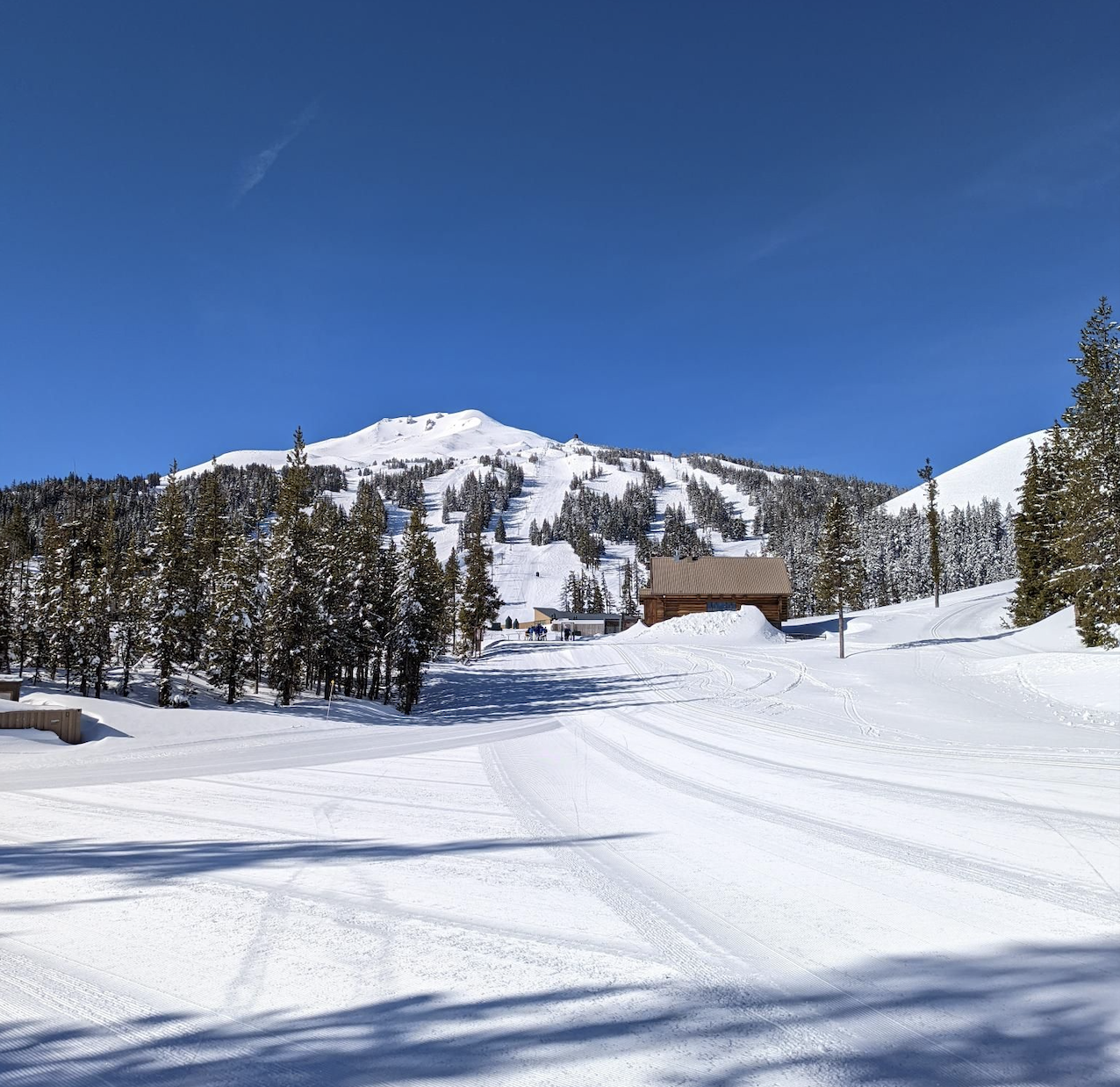
Mt. Bachelor Nordic Center, as part of the over 35 feet of snow it saw this season is falling . (Photo: Sue Foster)
Great Skiing in May and June
According to Mt. Bachelor’s cross-country manager Sydney Powell, “We always try to open around Thanksgiving and groom until the end of May. We then have camps which go through June. Maybe once in the last 10 years they haven’t been able to groom in May. Once we cross the 100 inch snowpack, it’s very likely we’ll groom through May.” Not only is the skiing excellent, but the weather is beautiful as well. “The weather in May is variable,” Powell says. “It can be in the 60s during the day and below freezing at night.” So, if you visit, prepare to ski in a T-shirt and bring lots of sunscreen.
Sue Foster, Nordic director from 2010-2022, reiterated that the standard season is from November until Memorial Day weekend. There was only one year during her time as manager that they were unable to operate through Memorial Day. Foster told FasterSkier that “The average snowfall is 462, so this year is right around average; in 2011 it was 616”—yes that’s over 51 feet of snow, or about the height of your average four story building!
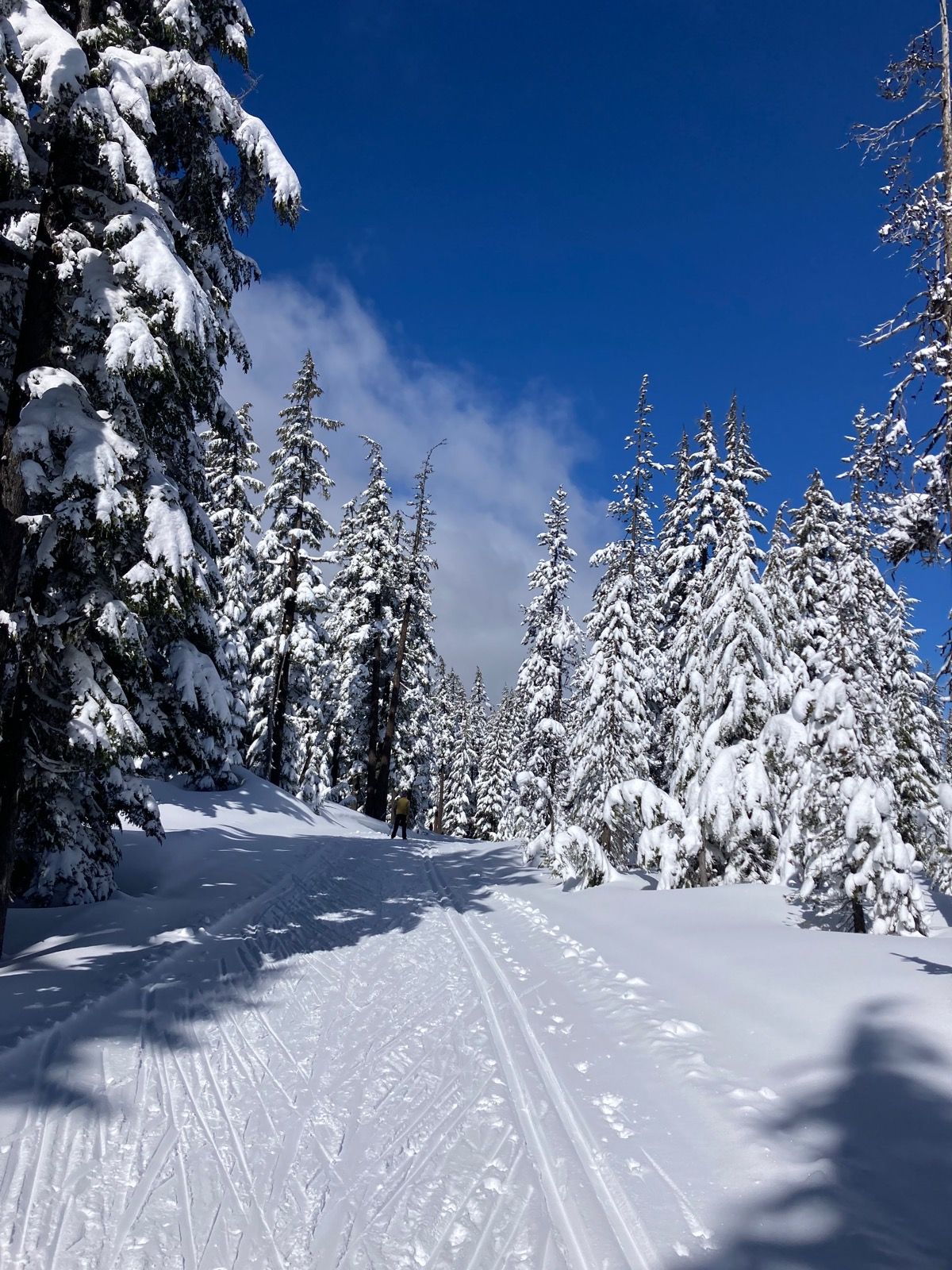
The huge snow fall at Mt. Bachelor is so deep it risks covering the trail signs. (Photo: Sue Foster)
Getting to Mt. Bachelor is a bit of a challenge, but certainly no more difficult than many other Nordic destination areas. Powell says that flying into Redmond Municipal airport is the best bet for most people; it’s about 20 minutes from Bend. Otherwise, you’re looking at a 150 mile drive from Portland. In the winter, driving from Portland can be difficult as roads can be treacherous or closed, so the drive could be more complex. One of Foster’s tips for winter visitors was to make sure that you rent a car with good traction.
There are a variety of opinions on the best time of year to visit. Powell favors February and March. “By that time, we have a good deep snowpack and we’re getting into the mid-winter part of our season, but March and April also have reliable spring skiing conditions.”
Dylan Watts, Nordic Director of MBSEF (Mt. Bachelor Sports Education Foundation) recommends visiting in the spring but avoiding the spring break week. “There’s a lot of room in the calendar when the skiing is just great. You have clear nights, so things are fast and firm in the morning with endless crust skiing opportunities. The mountain does a tremendous job with their grooming. As long as it’s doable, they groom pretty much everything. The snow is so heavy that this week (third week of April) I was worried we would lose the trail signs under the snowpack. We have so much snow that some of the hills have actually flattened out. Once people get here, they see how worth it it is and how unique a place it is. If had I had to summarize it would be Mt. Bachelor; super long season, tons of snow.”
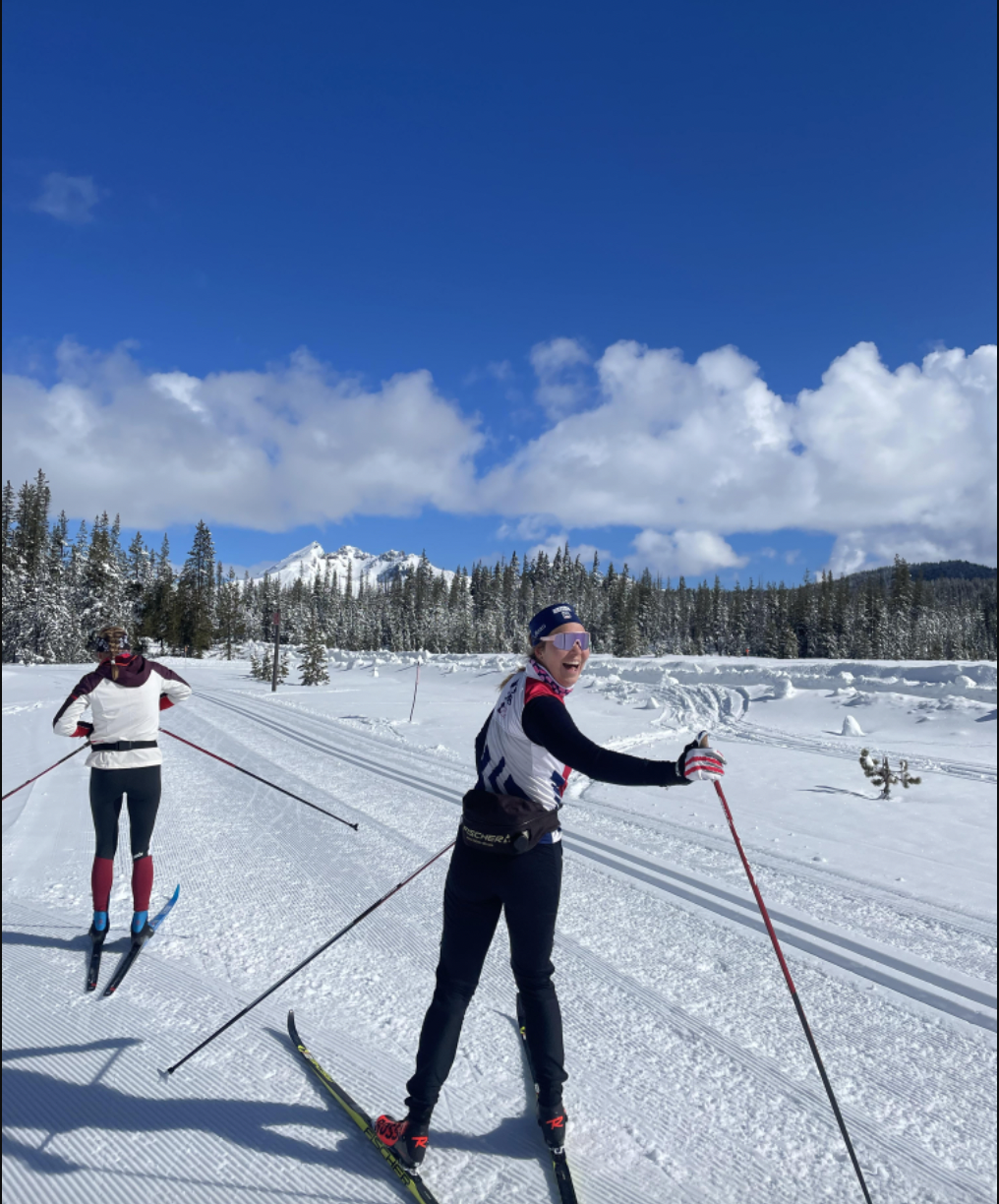
Another sunny day with impeccable grooming at Mt. Bachelor. (Photo: Sue Foster)
Chuck Kenlan, executive director of OBRA (Oregon Bicycle Racing Association), and manager of the Nordic center from 1999-2002, recommends visiting this time of year to take advantage of the crust skiing. “Clubs from all over the country will be up here having training camps in early June. The skiing is fantastic. Like all spring skiing, it’s timing your start and finish. There’s that sweet spot where it becomes really fun. I’ve joked that the only reason I ski in the wintertime is to have fitness when the crust skiing season starts. It can be incredible. You can head out into the forest, ski across Todd Lake and ski wherever you like. I’ve alpine skied in mid-July and cross-country skiing was available as well.” Kenlan feels that the best time to visit is right now. “Consistently, this time of year is amazing…They continue to groom, and they take the grooming seriously, so the groomed trails are really nice. If you want to ski in a T-shirt, it’s great. Bring tools to add structure. You also need waxes that can repel the dirt, there are lots of trees that drop debris.” Kenlan offered another useful trip when visiting: “Avoid traffic from downhillers. Leave early or go at about 11 after the morning shift is leaving.”
The secret sauce to Mt. Bachelor’s enviously long winter is it’s location. The ski area is located at about 5,700 feet, with a maximum elevation of 6,400. Down in the valley where Bend is located, elevation is only 3,600 feet; neighboring Redmond is a little above 3,000 feet. The relatively high mountains and lower valley combine to create a near perfect confluence for skiing.
It’s not just elevation that’s responsible for Bachelor’s incredibly long season, it’s also the type of snow Powell said. “It’s pretty wet and consolidates, and sticks around a long time. We call it ‘Cascade concrete’. It sets up, condenses, and takes a long time to melt.”
The view at Mt. Bachelor at dawn. (Photo courtesy Sue Foster, Photo Credit Larry Smith)
With 56 kilometers of trails there’s enough variety to keep things interesting. There’s a nice ratio of easy to difficult trails.
“The trails are amazing and fun to ski,” Kenlan says that. “They ski incredibly well. They have a reputation of having a lot of uphills…but it’s never really long difficult climbs. It’s really fun skiing. There’s also a great training oval for novice skiers.”
Another favorable aspect of the area is the temperature range. Powell says there are only a handful of days when temps dip below zero. “Usually we’re in the 20s-30s during the daytime and we get a lot of sunshine. If it gets below zero (Fahrenheit) that’s usually only overnight.”
The start of a long grooming shift at Mt. Bachelor. During winter months grooming is done at night so skiers and groomers don’t compete for trail space and the snow has a chance to set up. (Photo: Mt. Bachelor)
World Class Grooming
The grooming is also top notch. Powell said that they try to groom all the trails every evening as long as the snow cooperates. On average, it takes eight to 10 hours for one operator to groom the trail. “The grooming machines are kept off the trails while skiers are using them.” During the spring, trails close at 1:30 p.m and grooming starts at 2:00 p.m.
Foster emphasized the importance of trail grooming. “My relationship with my Operators was the most important part of my job. I don’t think folks know or appreciate the depth and talent of a good Operator. I was lucky to have some of the best and most responsible Operators in the business and I still feel that this was the secret to success in my career. These young men were avid skiers and were smart and dedicated. They knew every inch of the trail system, what was underneath the snow, the strengths and limitations of the machinery, how the Cat would react to varying conditions, and how to maximize operational efficiency to produce the best surface on a daily basis in the nightly timeframe. They did this every night, making a multitude of independent decisions to ensure that result.”
During the winter, Mt. Bachelor grooms at night so you can ski unimpeded during the day. (Photo: Sue Foster)
The ski center issues daily detailed grooming reports. Their Nordic Conditions Reports have developed a bit of their own following. They’re extremely detailed and useful; more than just “We groomed today.” For a sample, you can check out their most recent conditions.
Most of the accommodations are in the valley, so acclimation is made easier by being able to ski at elevation, sleep, rest, and live at a much lower altitude. Powell recommends seeking lodging in Bend or Sun River which puts you about 30 minutes from the mountain.
Foster added that “Mt. Bachelor operates on a permit from the United States Forest Service, therefore there isn’t lodging on site, or many of the private amenities you may find at other resorts.” But if it’s top-shelf skiing and a long season you’re after, those other things probably don’t matter.
It takes a lot of work to compact a four-story building’s worth of snow. (Photo: Mt. Bachelor)
More than just skiing
Watts points out that Mt. Bachelor’s unique geography also creates other incredible opportunities. “In the spring, visitors can ski all morning, return to the valley and hike, bike, or fly fish. It’s a combination which is hard to replicate elsewhere. Additionally, since the cross-country center is part of a downhill operation, there’s always the opportunity for Alpine skiing. The bike shops also rent bikes as well. Road biking and gravel biking are also great. There are also a lot of golf courses.”
Kenlan agrees with the view that there’s plenty to do besides ski. “Bend is an outdoor recreation mecca. Fat tire biking is available near the trail, there’s a snow park right before you get to the Mt. Bachelor parking lot.” Fat Bikes are not allowed on Mt. Bachelor ski trails, but Kenlan says that Fat bikes are allowed on the snowmobile trails, so you don’t have to break trail. “If families come and want to fat bike, there are many options. Bike rental is available at several local bike shops if you don’t want to haul your bike to Bend. Mountain biking is also becoming popular [once the snow melts] at Mt. Bachelor. There’s lift service available.”
If you can judge by the presence of the U.S. cross-country team, U.S. biathlon team, and U.S. paralympic team, then the effort to get to Bachelor is well worth it. According to Powell, each team has held, or will hold spring camps on the mountain. Powell added that there’s no impediment for unaffiliated skiers using the trails while national team camps are there.
If Mt. Bachelor is good enough for Jessie Diggins and Swedish star Maja Dahlqvist, you’ll probably find it works for you too.
One of Foster’s favorite memories was during a U.S. ski team visit. “One of my unforgettable memories of this grooming crew was on a day in May of 2021, when Matt (Whitcomb) made a special request for a trail section to be groomed for a classic time trial for the team the following day. The trail was in one of the most exposed areas in the network and while the snow was great elsewhere, this particular section was super thin, and the back side was already a ribbon. With the intensity of the sun, I doubted that it would even be skiable the next day. But I told him I would see what I could do, and I made the call. When I reached my lead Operator, I only asked him to do whatever he could do. His response was, ‘Do you think they want double tracks?’ The following day I arrived to a boulevard of snow the length of the “problem” area, a full PB400 width, with double classic tracks. To this day, I have no idea where that snow came from.”
Being on snow regularly through June offers opportunities not found elsewhere. Up for some April racing? Mt. Bachelor has that as well. Through its partnership with MBSEF, it offers the Cascade Crest Ski Race & Tour, which was held April 29th. This year’s race was postponed because there was too much snow! Not many places in the world face that problem in April. The event offers everything from a 5k kids race to a 50k marathon. If you want to keep your racing chops finely tuned into the spring, this event might be just the ticket.
Mt. Bachelor’s Nordic program isn’t just resting on its prodigious snowfall to attract skiers. Powell is also focused on the changing demographics and growth of Bend and developing programs to get more people into the sport. “A lot of people move to Bend from a warmer climate and want to take up a winter sport, so we need to appeal to them. Lessons are a big way to reach new people. We have private lessons and clinics. She’s on skis is a female specific program to draw women into the sport. “
There are also three local Snow Parks (Virginia Meissner, Wanoga, and Edison) which offer additional cross-country skiing. For non-skiing activities, visitors can also check out ice skating at The Pavilion and Seventh Mountain Resorts. If you need to chill with some rest time, Foster has many recommendations for activities off the mountain. Local attractions which she recommends are the Tower Theatre and the soaking pool at McMenamins (also known as The Old St. Francis School), which is located in a former Catholic schoolhouse, which was converted to a hotel and has a long list of amenities.
So, regardless of what combination of activities you want, Mt. Bachelor has something to offer. Best of all, no matter what else you choose to do, you can ski in prime conditions while most of North America is roller skiing!
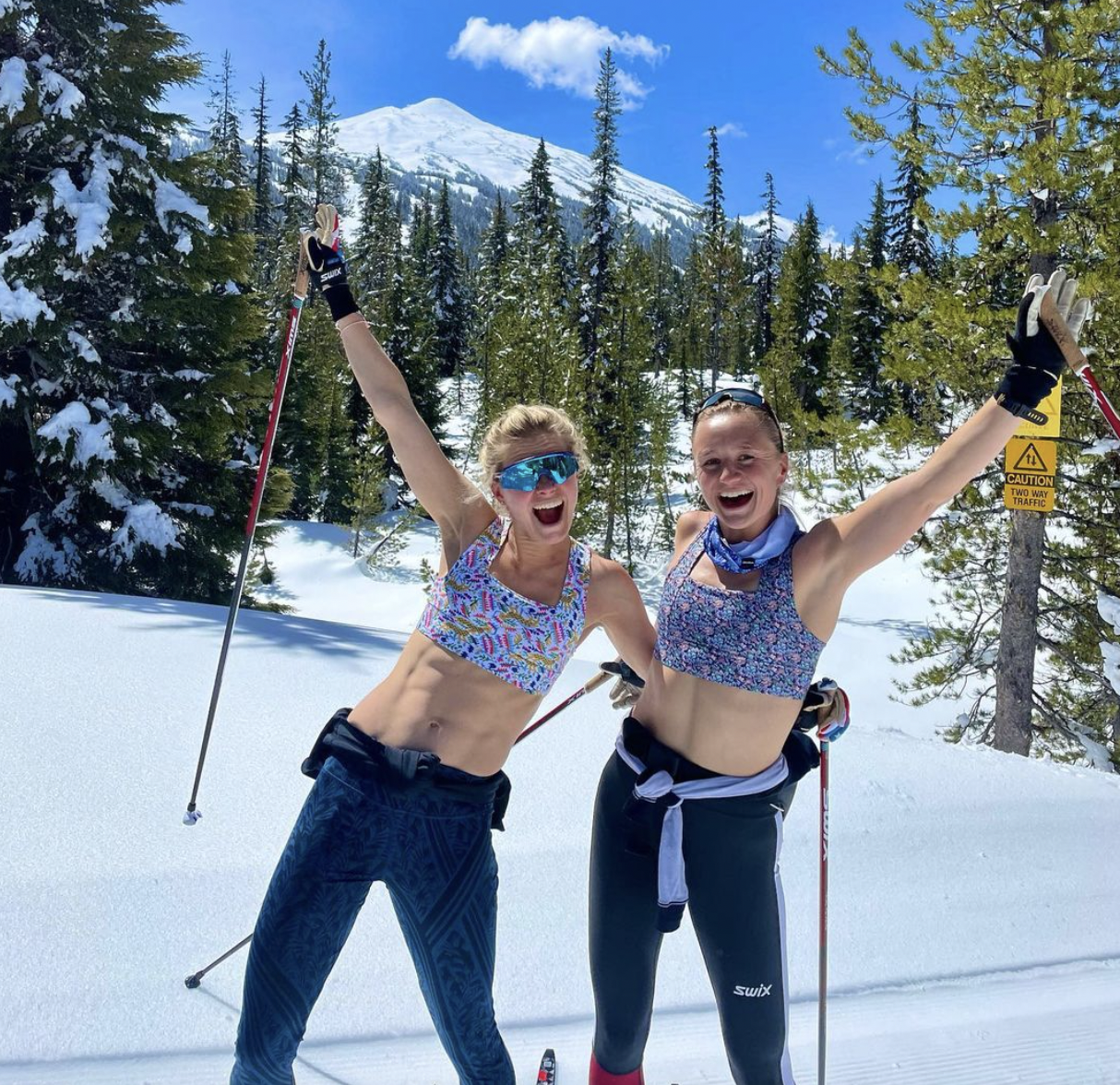
Having this available in May is way better than roller skiing. (Photo: Mt. Bachelor Nordic)
May or January? The US Ski Team has found prime conditions at Mt. Bachelor during the 2022 Bend Camp. (Photo: Noel Keeffe)
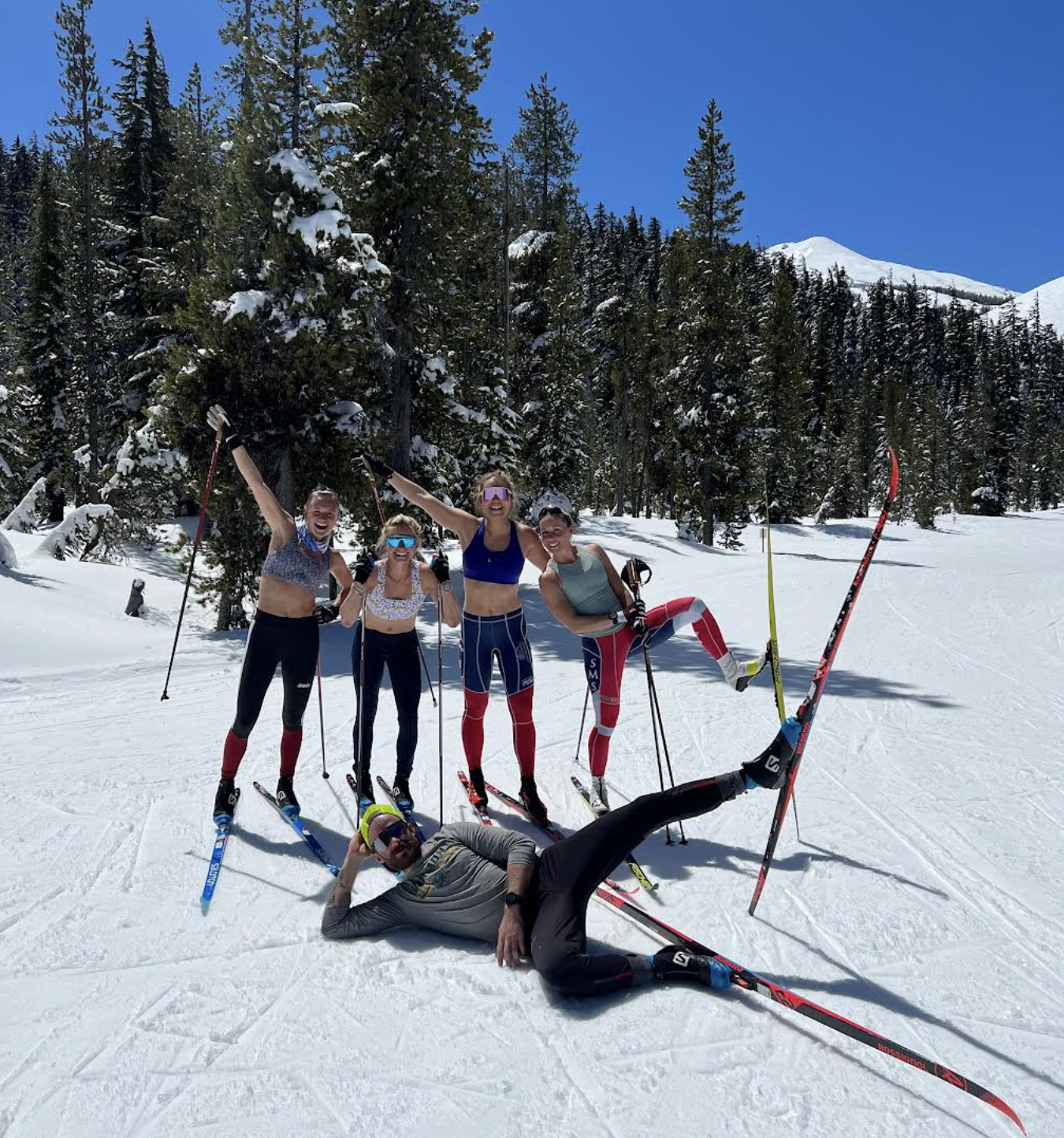
Believe it or not, it is mid-May. For those following a traditional cross-country calendar, this means the start of a new training year, building toward the 2022/2023 competition season. And, for many of the top American athletes, this means it’s time to make an annual pilgrimage to Bend, Oregon for the on-snow camp of the season at the Mt. Bachelor Nordic Center.
The weather gods were kind to the camp attendees, with nearly a foot of fresh snow falling on Mt. Bachelor last weekend, restoring it to mid-Winter conditions. April was also a fruitful month for snowfall, setting up for a base-depth of 92” currently reported on the trails – not bad for May!
To learn more about the camp and what has made Bend and Mt. Bachelor a staple of the U.S. Ski Team’s early season training, FasterSkier connected with head coach Matt Whitcomb, who shared that he has been coming to Bend almost-annually for the last 26 years.
He first experienced the trails at Mt. Bachelor during the 1996 U.S. National Championships.
“I was rooming with Justin Beckwith (current NENSA Competitive Program Director),” Whitcomb recalled fondly. “Amy Caldwell took us out and then Sverre [Caldwell] joined us, and we had our first experience racing Nationals. And it really jumped out as this town that had skiing at its center, not only alpine but cross country.”
The following summer, Whitcomb, Beckwith, and a couple additional training partners hopped into a car and drove to Oregon to spend the summer of ‘97 in Bend.
“But we weren’t, by any means, the first people to do this – we were following in the footsteps of Justin Wadsworth and Pat Weaver and a whole bunch of other people. And by our senior year [at Middlebury College], we had twenty-something people driving out from the east just to experience what Bend has in late May and June, and we’d be there through August until we had to go back to college.”
Lina Sutro (right) and Alayna Sonnesyn (left) enjoy fresh snow and a fresh groom at Mt. Bachelor during the 2022 Bend Camp. (Photo: Lauren Jortberg)
What Bend has in late May and June, he said, is a vast array of diverse training opportunities, which most importantly includes snow.
“That’s probably the first thing that really drew us in, particularly as people from the East.”
He shared that the snow report they had received from Mt. Bachelor Nordic Center manager Sue Foster was measuring the accumulation from April storms in feet, not inches.
But it’s not just the access to snow on its own that makes Mt. Bachelor worth the trip.
“The trail system is world class. You’re skiing through Douglas fir — just these massive, old old trees on creative, windy, hard trails, and on a good year they’ll have close to 30 or 40 kilometers groomed for us still in May.”
In addition to its geographical location and an accumulation of over 300” of snow annually, the elevation of the Nordic Center preserves the snowpack for late season skiing. The parking lot sits at roughly 6,000’ above sea level, while trails range from 5,750 to 6,400’.
This puts Mt. Bachelor in a similar altitude zone to Soldier Hollow, UT, offering athletes both an early season bump in red blood cells and the opportunity to fine tune their altitude skiing strategies, “which is something that we really value. Because skiing at altitude is not just something for the aerobically gifted; it’s also something for people that develop the skill of how to actually ski at altitude. So that’s been great.”
Whitcomb also lauded the convenience of Mt. Bachelor relative to their lodging down in Bend, roughly a 25 minute drive down the mountain at a significantly lower elevation of roughly 3,300’. In addition to easy access to the trails, this gives the team the opportunity to train high and sleep low, as well as to enjoy non-ski training modalities in a totally different climate.
“So recovery is complete. We can also go roller skiing in the afternoon, we can go mountain biking, we can run in shorts and tee shirts. It’s like you’re experiencing the summer and the winter on the same day for two weeks in a row.”
Fresh snow and vitamin D — Jessie Diggins and Alayna Sonnesyn head to Mt. Bachelor for the 2022 US Ski Team spring training camp. (Photo: Lauren Jortberg)
Overall, Bend and Mt. Bachelor have become a special place for Whitcomb, and for the many athletes who have made their way there over the years.
“It’s just such a wonderful environment. The way these cascade forests smell this time of the year when the new growth is coming up — you step out of the car when you first arrive and it’s like, ahh. I could be blindfolded and tell you exactly where I was.”
While Mt. Bachelor offers high quality grooming all season, Whitcomb also spoke to the relationships the US Ski Team have developed with the trail operations team, and their willingness to adapt their usual grooming patterns to best serve the visiting skiers. This year, Whitcomb is looking to replicate the track format of a World Cup stadium so the team can practice “switching lanes in the finish and figuring out how to develop more speed — a bit of a twist to our [usual] speed training.”
At the helm, and helping US Ski Team coaches interface with the grooming team, is the aforementioned Nordic Center Manager, Sue Foster, who Whitcomb says has been an invaluable resource over the years.
“She meets us in the lodge every day, she helps us prepare the TV and the chairs so that we can do a little visualization before every session. And she’s just a delightful, inviting person that makes you want to come back and see [her.] It’s rare that every athlete on the team knows the names of the people working the lodge, but Mt. Bachelor is one of those places.”
Midwinter conditions return in May to Mt. Bachelor. (Photo: Alayna Sonnesyn)
Off the ski trails, Whitcomb shared that a highlight for many athletes is the lower elevation terrain in Bend, where the unique volcanic geology of Mt. Bachelor sets up for miles of tacky “hero dirt” for afternoon rides.
“The mountain biking is some of the best in the US, particularly in May, before it’s gotten dusty.”
During the late spring, many trails along the Deschutes River are also beginning to open up, and often the team will be dropped off an hour and a half up-river to enjoy a point-to-point run back to their cluster of rental houses.
This year, the team is spread between three large rental homes in close proximity, with the staff house centrally located to host nightly team dinners catered by USOPC chef Megan Chacosky. To reduce COVID risks among the team and staff, masks are still worn during team meetings, allowing them to safely happen in-person. Though mask mandates and COVID safety precautions are largely being dropped, Whitcomb expressed the importance of keeping athletes and staff healthy, setting everyone up for success during the high-volume summer months of training.
“I think the world has made a major shift to decide that the pandemic is over, but we’re pretty well aware that the COVID is not done yet.”
Finally, Whitcomb cited the greater ski community in Bend as a reason the camp has been such a valuable component of the annual training cycle.
“As far back as I can remember, it didn’t matter whether we are registered with a local club or not, we were always being invited by [coach/director] John Downing to the XC Oregon sessions. He’s still a good friend of the team, and we have so many locals in town that are helping us out and welcome us every year to town.”
Acknowledging that he was only giving the short-list of names from the Bend skiing community who have supported and welcomed the team each year, he also noted former physiologist at the Olympic Training Center in Colorado Springs Tim Gibbons, who builds excitement for the camp by giving Whitcomb snow reports all winter, indicating how the trails are shaping up for spring skiing. And lastly, he thanked the members of the Mt. Bachelor Ski Education Foundation (MBSEF), including nordic director Dylan Watts.
This community support allows the team to maximize their time training in Bend, while also creating opportunities for outreach via programs like Fast and Female or hosting workouts for the MBSEF junior athletes. This partnership helps the team feel connected, and also stoke the enthusiasm of the next generation of cross country skiers.
“It just really feels like a family that we’re coming back to every year. So thanks to everybody that has always been welcoming. We try to be great ambassadors for the sport, and we need partners like this [to continue to move forward as a nation].
Sun, snow, and lots of training during the 2022 US Ski Team camp at Mt. Bachelor. (Photo courtesy Alayna Sonnesyn)
The Mt. Bachelor Nordic Center is known for it’s world class spring cross-country skiing. You can find more information about spring conditions at mtbachelor.com.
While many skiers were blowing the dust off of their rollerskis, hitting the track or trail, or looking for crust to cruise on May 1st, Erik Bjornsen and his wife Marine Dusser were previewing the race course for the Fossavatn Ski Marathon, or Fossavatngangan, in Isafjördur, Iceland.
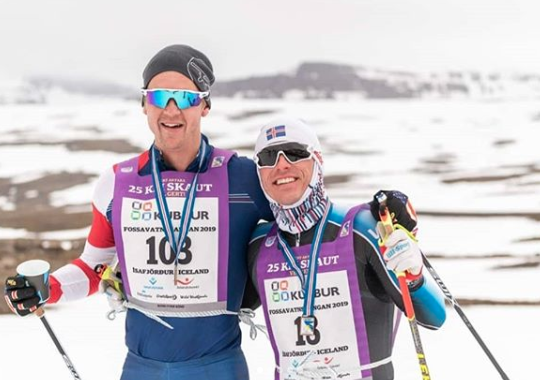
Erik Bjornsen poses with Snorri Einarsson, an Icelandic World Cup skier, at the finish of the Fossavatn Ski Marathon in Isafjördur, Iceland. (Photo: Instagram @ebjornsen1991)
While it might seem odd to begin a new season by racing a 21 k followed by a 42 k just two days later, Bjornsen and Dusser agreed that they did not go into the race with performance goals, rather to experience a new place and to enjoy the sport they both love.
“I feel like we went on vacation and we made a race out of a vacation,” Dusser explained in a call. “We like nordic skiing and we both like racing, but we didn’t really put any pressure [on ourselves].”
Though the Fossavatn has only been a member of the World Loppet series since 2015, the race dates all the way back to 1935. In addition to the 50-kilometer marathon distance, which is always classic technique, the event features a 25 k skate and classic race and a 12.5 k classic in the days preceding. There are also 1 k and 5 k children’s races. Typically, each of the courses are one loop, but because it has been a low snow year in Iceland, this year the course was rerouted and distances were scaled back as the longest available loop was 21 k, which the marathoners skied twice.
“It was kind of like skiing on the glacier [in Alaska],” Dusser shared. “You have no trees and pretty mellow terrain. No steep hills, but it’s up and down. Erik was able to double pole the classic race, but for me, it was too hilly, so I was classic skiing.”
Marine Dusser on her way to a second place finish in the 21 k skate at the 2019 Fossavatn in Isafjördur, Iceland. (Photo: Instagram @marinedusser)
While they may not have approached the race with goals, both walked away with strong results. Dusser won the 42 k classic and placed second to Caitlin Gregg in the 21 k skate, while Bjornsen was 7th in the classic and 2nd in the skate.
A glance at the results over the last few years shows names like Iivo Niskanen, Riita Lisa Roponen, and Petter Northug, just to name a few, which begs the question, ‘At an odd time in the year, what is drawing top names to the 66th north parallel for a marathon?’. The duo explained that the race manager, Bobbie Sigujónsson, had contacted Bjornsen about traveling to Iceland for the event, and has enticed other top athletes to do the same.
“I think he has been pretty good with marketing and communication, and this race is pretty sexy because it’s very pretty there and it’s so different than anything that you can see [elsewhere],” Dusser explained. “And it’s also in May, so it’s easy to get good athletes because people are on vacation. And I think that they are pretty curious about Iceland, so it’s easy to get big names because people can make a vacation out of the race.”
The couple enjoyed having the opportunity to spend time around the other top athletes attending while away from the World Cup setting.
“We got to spend some time with [Nikita] Kryukov and [Alexander] Panzhinzkiy and Iivo [Niskanen],” said Bjornsen. “I mean all those guys have Olympic gold and silver medals, so it was pretty cool to spend more time around them. We were in the same hotel as Kryukov, so we actually got to know him quite well and that was fun.”
In addition to complimenting race organizers and noting how much fun people were having in the race itself, both Bjornsen and Dusser recommend the event to anyone looking for a novel experience.
“There was a big dinner – a “fish party” they called it – where they have live music and an announcer and really good food and stuff,” said Bjornsen. “So I’d just say that we highly recommend it to everybody. It was a really fun experience and if people get the opportunity, it’s a really cool one to do in the spring at the end of the year to have a fun end of the season.”
While the names at the front of the pack might seem intimidating, Dusser added that the Fossavatn race series is inclusive for skiers of all ages and abilities.
“There were a lot of masters and I think this race is really open for all of them,” said Dusser. “Because it’s not very all-terrain either — you don’t have very long uphills. I think it’s pretty attractive for all levels. You can see every age and every level can go and have fun, so it’s not just for athletes, so it’s kind of cool.”
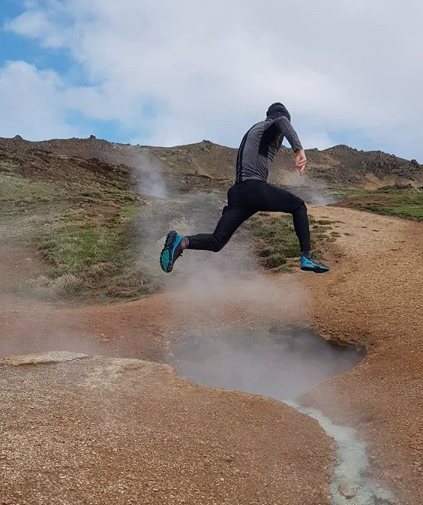
Erik Bjornsen leaps over a geothermal spring during a trail run in Iceland. (Photo: Instagram @ebjornsen1991)
Capitalizing on the opportunity, the pair used the week before the race to explore and see other parts of the country, which was new to both of them.
“We flew into Reykjavik and based out of there for three days, and explored all around that area for day trips,” Bjornsen shared. “We’d head an hour out of town each direction each day and saw different parts of southern Iceland. It’s not a huge place, so we were able to see quite a bit around Reykjavik in those first three days. Then we drove five – 600 miles to the northwestern part of Iceland [for the race]. It was in the west fjords and it was the biggest town in that section of Iceland. So it was really cool. I feel like we saw half of Iceland, or quite a bit of it, and of course snippets of the area along the way.”
Marine Dusser explores Iceland by foot. (Photo: Instagram @marinedusser)
Apart from the more obvious features that contrast their coastal Alaskan home – lower mountains and turquoise blue hot springs – they were taken aback by how much closer to the sea they felt there and also by the size of the waves.
“On the drive up there [to Isafjördur], we actually spotted some whales,” Bjornsen recalled. “You’d drive for an hour and you basically wouldn’t see anybody. We were driving through these fjords and it was a day where there wasn’t a lot of wind, so the sea was pretty quiet, and there were three or four whales that were swimming 150 or 200 meters from the road. We just turned the car off right on the road and watched. In Anchorage, it’s a bit different. You have to drive a ways. We’re in the Cook Inlet right now, and there is a lot of glacier silt, so it’s never very deep. There are some whales that are around but you rarely… it’s just a different feel around here.”
Looking ahead, Dusser, who has coached for the UAA Seawolves the last two seasons, will be continuing her work with the Alaska Biathlon Association, including coordinating the upcoming spring training camp. In her own ski career, Dusser was a member of the French National Biathlon Team. During that time, she won three medals at the Junior World Championships in biathlon and was the French Junior National Champion six times.
“We have a camp the first week of June and usually we try to invite a bunch of biathletes,” Dusser explained. “Last year we had a biathlete from Switzerland, she actually won the World Junior championship, and Tim Burke is coming as well to help coach, so that should be fun. It’s pretty busy organizing that camp, it’s pretty big every year, so it’s nice.”
Bjornsen, who this season advanced to the USST A-Team, will be continuing to work toward the upcoming World Cup season, but is also looking forward to upcoming non-ski-related events this summer.
“I’m getting back into training,” Bjornsen stated. “Doing a similar camp schedule that I’ve done in the past, so I’ll be heading down to Bend here in about a week, definitely Eagle Glacier this summer, then I’m headed to Norway, and a fall camp with the ski team. My sister is getting married [in July], then we’re having Marine’s parents come to town and my parents are coming of course, so it should be a fun summer.”
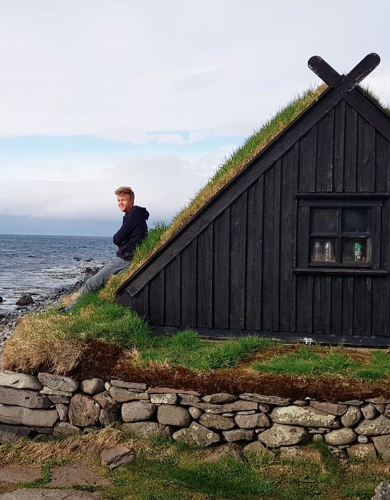
Erik Bjornsen explores coastal Iceland on a trip with his wife, Marine Dusser. (Photo: Instagram @erikbjornsen1991)
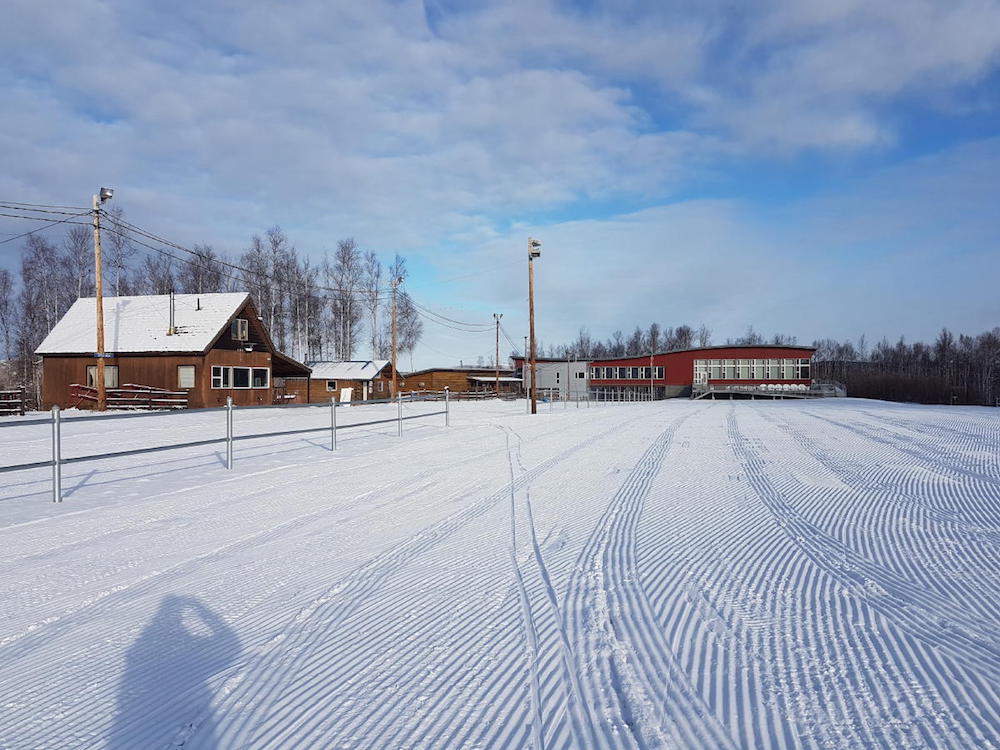
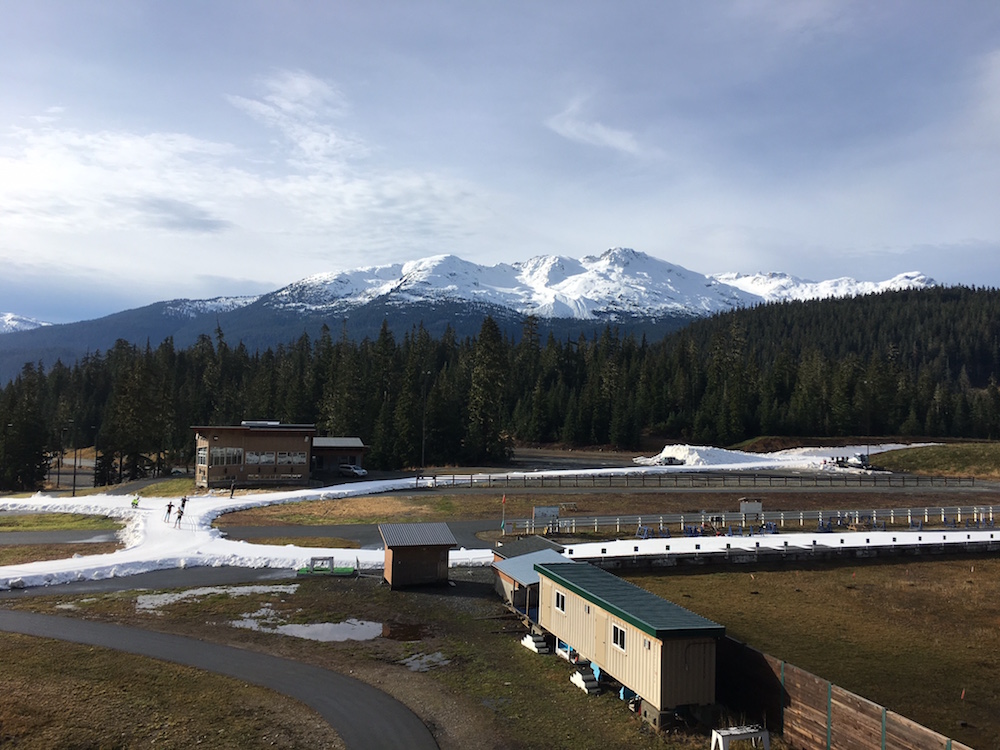
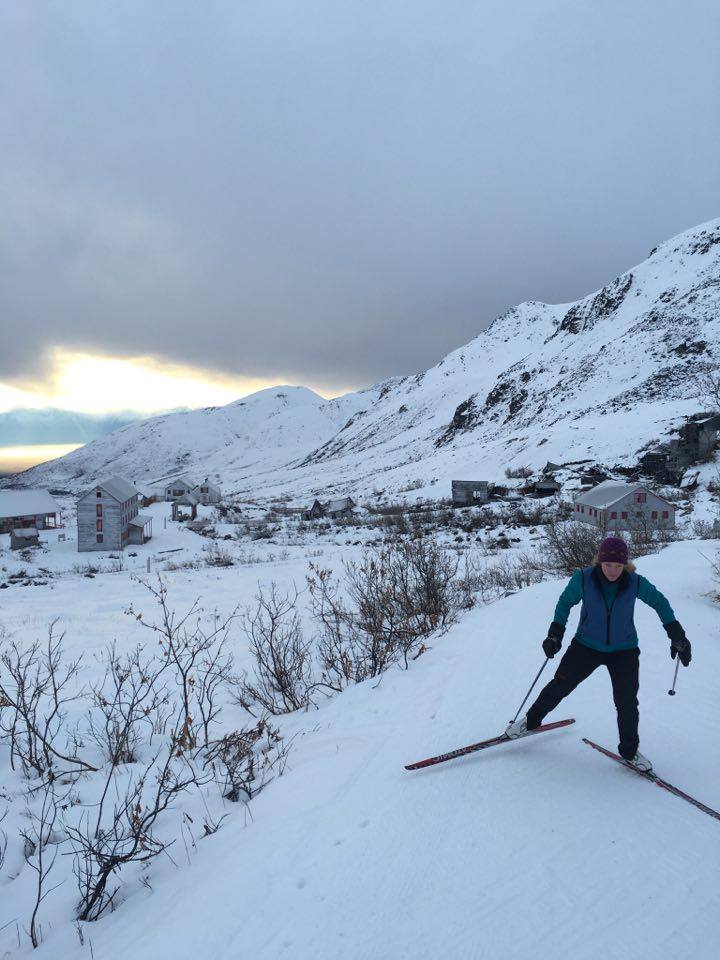
The stadium at Birch Hill Ski Area in Fairbanks, Alaska, as seen on Oct. 19, 2017. (Photo: John Estle)
Just a friendly reminder that the deadline to let us know about early season ski destinations or venues is fast approaching. We’ll extend it through the weekend (and give Mother Nature a little more time to shape up into her winter self), but if you’d like your favorite spot featured in this year’s “Where The (Skiable) White Stuff Is”, be sure to send photos and a description of the latest conditions to us by Sunday, Nov. 5.
What we’re looking for:
Original photos (with proper photo credit and caption info) and a detailed description of where to find adequate conditions for cross-country skiing (natural or manmade, it doesn’t matter!) in the U.S. or Canada in October or November. (When does it open or how long has it been open? How many groomed kilometers are there? Is there snowmaking? Any special events planned, like American Thanksgiving camps? Anything else we should know?)
Send to: info@fasterskier.com with the subject line “Fall Skiing” by Sunday, Nov. 5.
Early season skiing at the Sovereign Lake Nordic Centre on Oct. 14, 2017. (Courtesy photo)
When you think of skiing in Canada in October, Canmore’s Frozen Thunder is probably one of the first places that comes to mind. There are more options and some snowmaking that might surprise you.
This month, Canadians are skiing on natural snow, machine-made snow and farmed snow. We know skiers are already out and about in Alaska and other parts of the U.S. as well, which is why we want this year’s early season “Where The (Skiable) White Stuff Is” to compose of reader submissions. If you know where there’s November or even October skiing in the U.S. or Canada, please write us with details (When does it open or how long has it been open? How many groomed kilometers are there? Is there snowmaking? Any special events planned, like American Thanksgiving camps? Anything else we should know?)and original photos at info@fasterskier.com with the subject line: “Fall Skiing”. Deadline for submissions is Nov. 3.
To get the ball rolling, FasterSkier’s Gerry Furseth checked in with several nordic venues across Canada. They’ve already celebrated Thanksgiving, and full-on skiing is just around the corner.
Frozen Thunder
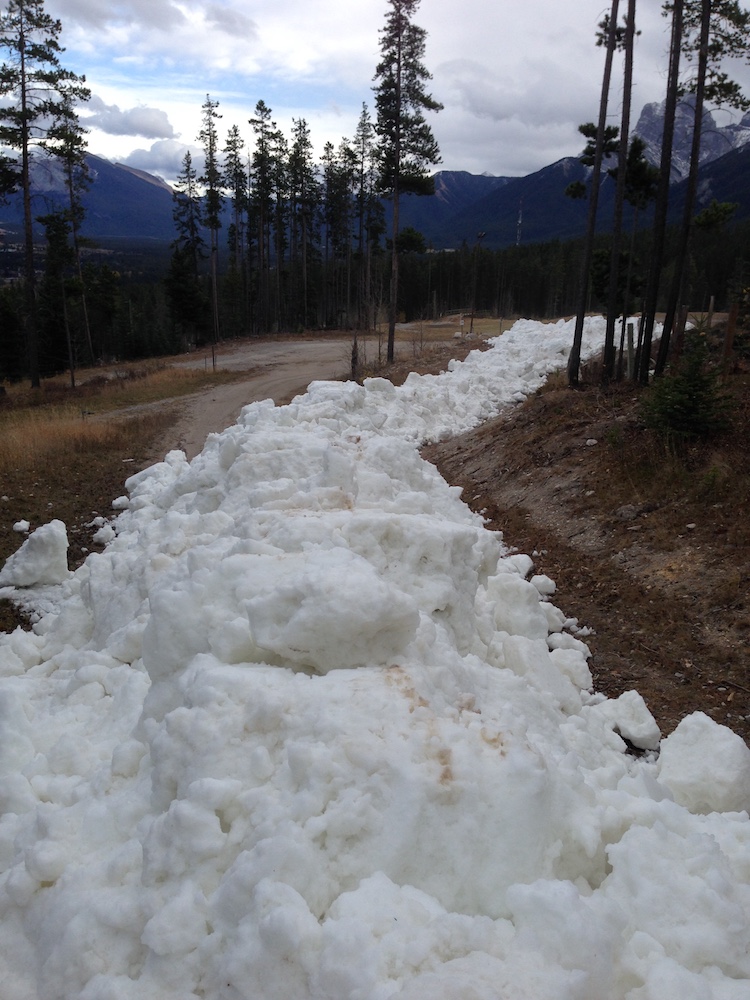
Canmore has started building Frozen Thunder for 2017. This is what it looks like with five days to go. (Courtesy photo)
The action starts on Oct. 21 with some changes for the eighth season. There will be a bigger hill as requested by the national teams and a new emphasis on avoiding exposed south-facing slopes.
The Canmore Nordic Centre (in Canmore, Alberta) is an unusual venue, one of the select few that has machine-made snow, farmed snow and natural snow.
“There is obviously an issue [with manmade snow] around warmer temperatures,” Area Manager Michael Roycroft told FasterSkier. “Last year is a good example where most of November was too warm to make snow, and that’s where Frozen Thunder comes in. That’s why we have our storage option, that allows us to essentially have snow no matter what.”
Frozen Thunder is funded mostly by national and provincial ski organizations and the focus is on providing training opportunities for high-level competitors. The snowmaking has a broader focus.
“The natural snow is obviously helpful, and it covers the rest of our trail system that’s further to the west and higher up, but it wasn’t for machine-made snow in Canmore and the nordic centre, we simply would not be able to run as a nordic facility,” Roycroft said.
Machine-made snow covers 30 kilometers, leaving 40 k dependent on natural snow.
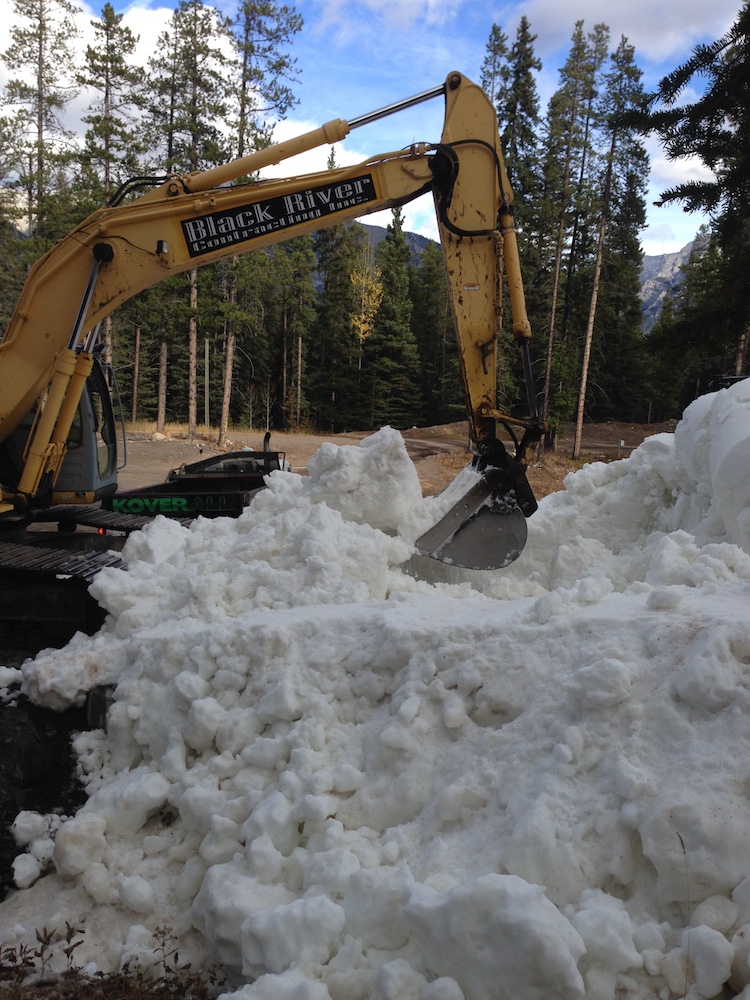
A big job requires big machinery. (Photo: Canmore Nordic Centre)
Whitehorse
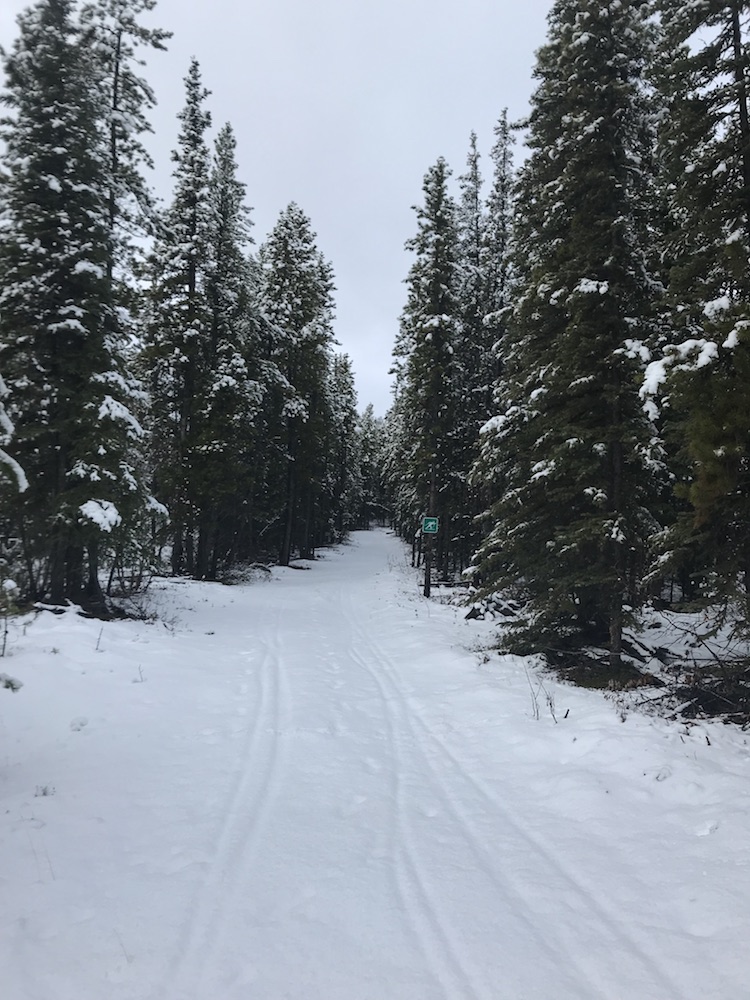
Whitehorse ski trails on Oct. 15, 2017. Another 5 centimeters was needed to set track. (Photo: Alain Masson)
When you think of Whitehorse, you probably don’t think of snowmaking. But Cross Country Yukon’s Alain Masson does.
“In the past, we often had snow available for skiing for our more advanced skiers, but it was not available to everyone,” Masson wrote in an email. “This year, our developing skiers will all have access to some early skiing in good man made snow conditions a month earlier than usual.”
Much of the early season skiing in Canada is not intermediate friendly. Thin snow, tripping hazards and travel to elevation create a barrier to less advanced or less committed skiers. The Whitehorse Cross Country Ski Club is using snowmaking to make the early season more inclusive.
The new snowmaking equipment will be used for the first time on Oct. 22.
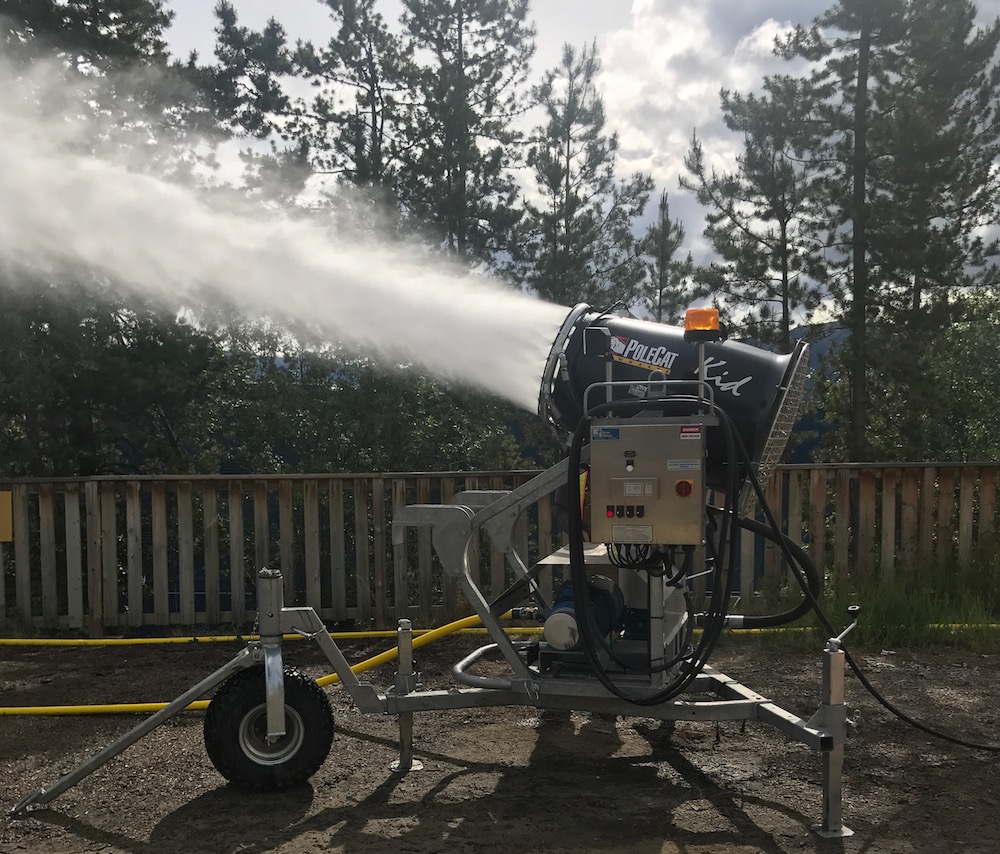
Testing the new gun in June 2017. (Photo: Alain Masson)
Sovereign Lake
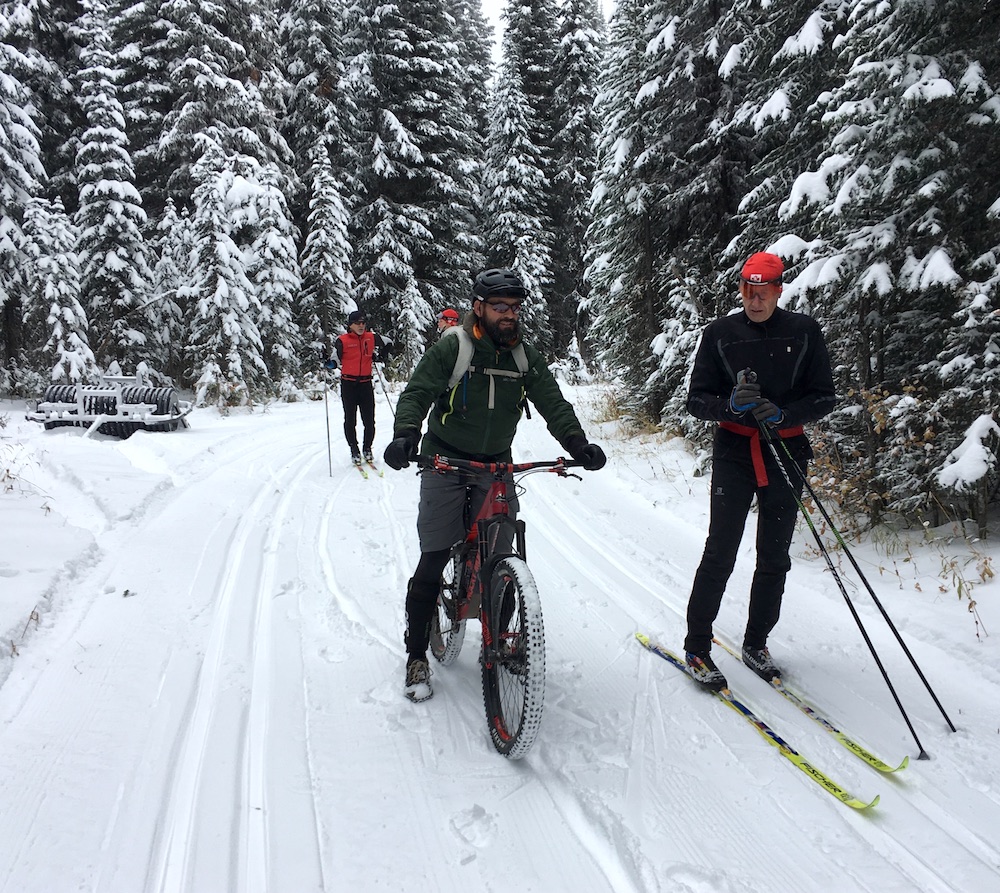
There is a difference of opinion on what season Oct. 14 belongs to. The bikers might have chosen fat bikes over plus bikes if they had realized how much snow they would see on their epic ride from Vernon to Lumby, B.C. (Photo: Gerry Furseth)
The Sovereign Lake Nordic Centre (near Vernon, British Columbia) is well known for November skiing and NorAm races. The season is limited not by loss of snow, but by biking conditions in the valley below.
“As soon as Sovereign gets snow in the fall we want to conserve as much as possible by rolling and track setting,” General Manager Troy Hudson wrote. “All of our early season grooming is done with Quads and snowmobiles to ensure a firm and supportive snowpack for the remainder of the season. Our high elevation (1,680m) and typical higher humidity in late October provides unpredictable weather that can often result in snowstorms of 10-15cm at a time.”
With 20 centimeters of fresh snow, the club set about 5 k of classic track on Oct. 14. While certain trails are open for preseason skiing, the nordic centre officially opens Nov. 10 for pass holders and day ticket sales.
Menihek Nordic
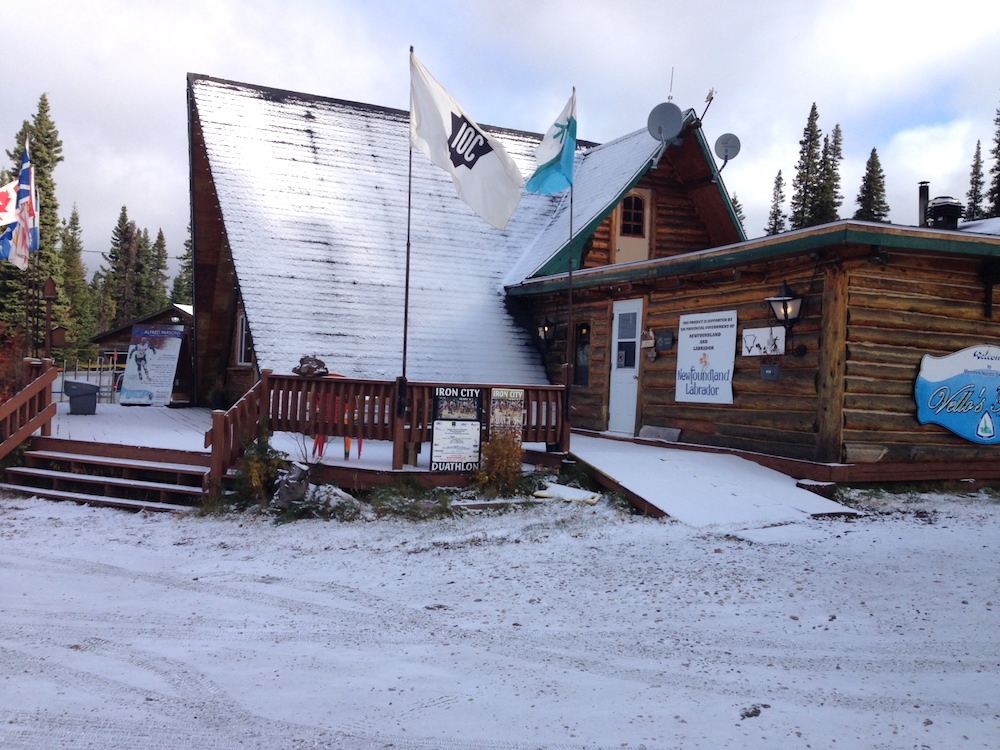
Menihek is another former national-team favourite destination that has since been replaced by Frozen Thunder. Located near Labrador City, Newfoundland and Labrador, it is a less-visited gem. While the Menihek Nordic Ski Club hasn’t received much snow to date, it is a safe bet that by the end of October they will be setting upwards of several kilometers of track.
On Oct. 12, a dusting of snow was seen at the lodge. (Photo: Gerry Rideout)
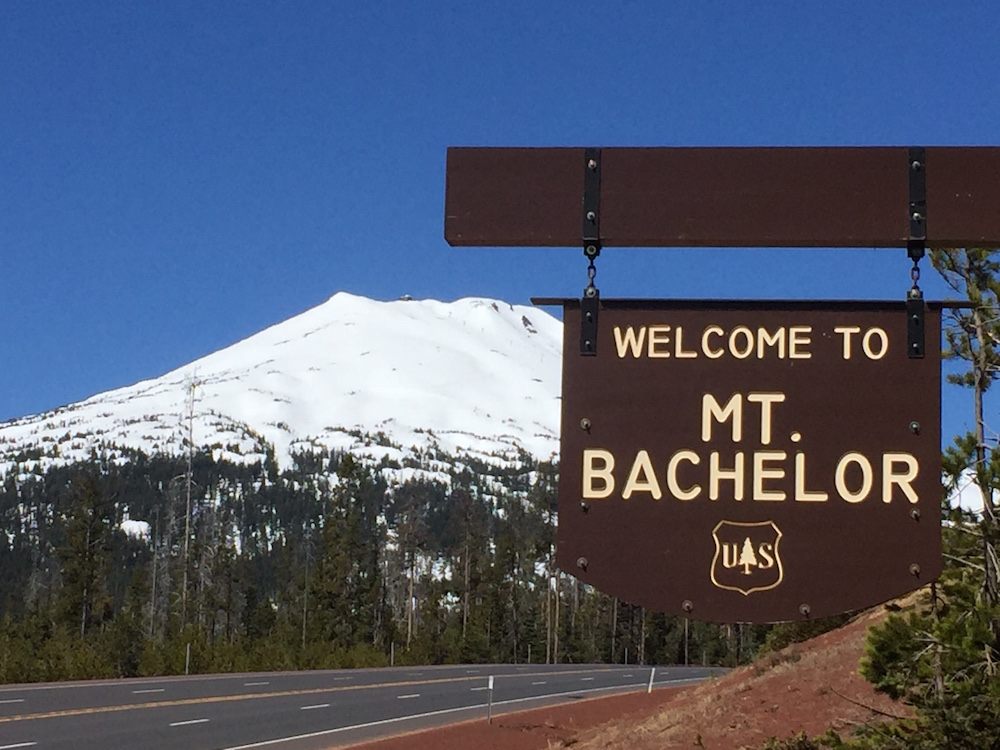
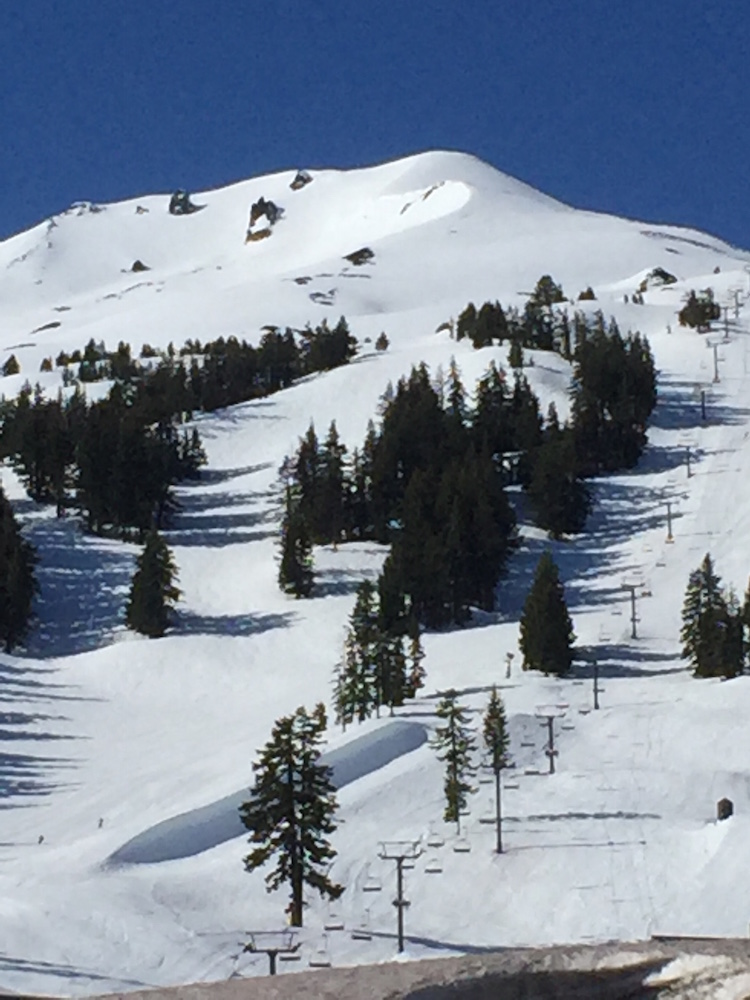
Mt. Bachelor in Bend, Ore., as seen in May 2017. (All photos: FBD)
You should be in Bend. Bend, Oregon. Right now.
For all of my “shallow readers” in the audience, those unable to focus on any piece of written work longer than 140 characters (you know who you are), you can stop here. You’ve both learned everything you need to know and also everything your SnapChat-addled brain can handle, so you’re done. For those of you with attention spans longer than those of fruit flies, dig in, as I’m about to plan your next trip for you — and here’s the good news — it’s this weekend. Or next year at this time. And every year thereafter.
Let me see if I can guess what’s going on right now for most of you — you’ve already storage waxed your skis for the summer, you’re back out on your mountain bike, and you’re re-reading each of my whap-stick reviews (skate & classic) every night before you go to bed. You tell yourself each morning as you go through your visualization and meditation routine, in which you attempt to teleport into my magnificent body and life, that this is the year that you’re going to set a PR at the (insert your favorite race here), beat your nemesis (insert the name of that person who you’ve been chasing for a decade or so) or finally slay that dragon and qualify into Wave 6 of the Birkie. Then your change-adverse subconscious kicks in and tells your mind, “Hey brain, these are great goals — you know what we really ought to do? We should do the same thing that we’ve been doing for the last 5, 10, 15, or 20 years, I bet THIS year is the year that it finally works.” Sure, that’s one approach, but you know what’s an even better tactic, one that might actually work? Try something new. And he’s a shocker, start by spending more time on snow. It is for this strategy that this report is going to come in handy.
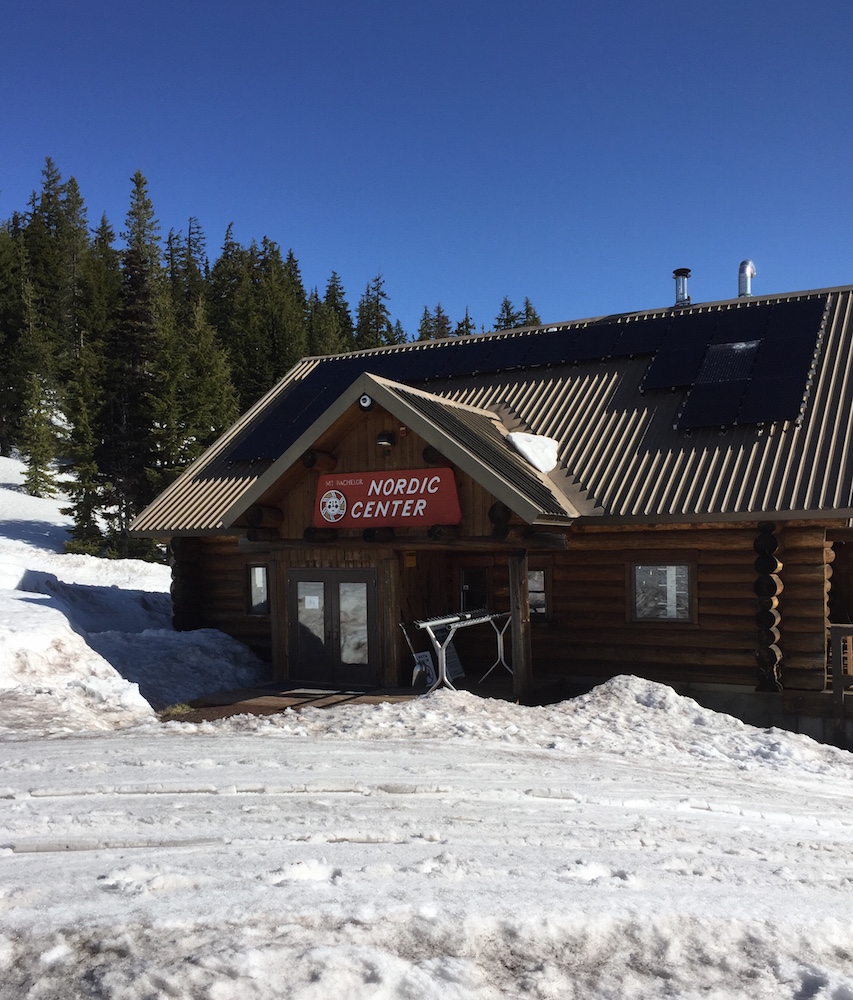
Mt. Bachelor Nordic Center in May 2017.
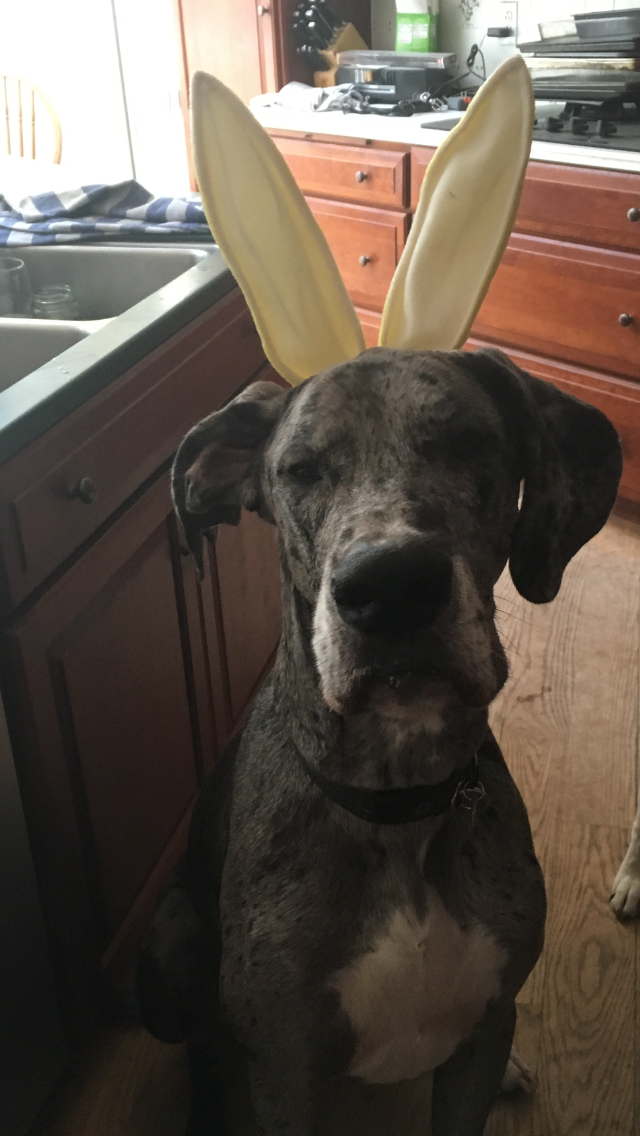
Once you make this leap of faith and commit to change, the hard part is over and then it’s just a matter of figuring out what you’re going to do differently (read, better). As usual, I have you covered, as what better way to dilute the knee-buckling pressures of adulthood and obstinate Great Danes than to escape to a place filled with cool people. And not just cool people, YOUR people. And Bend is that place. Not only can you still get on snow here right now, but you can get on really good snow.
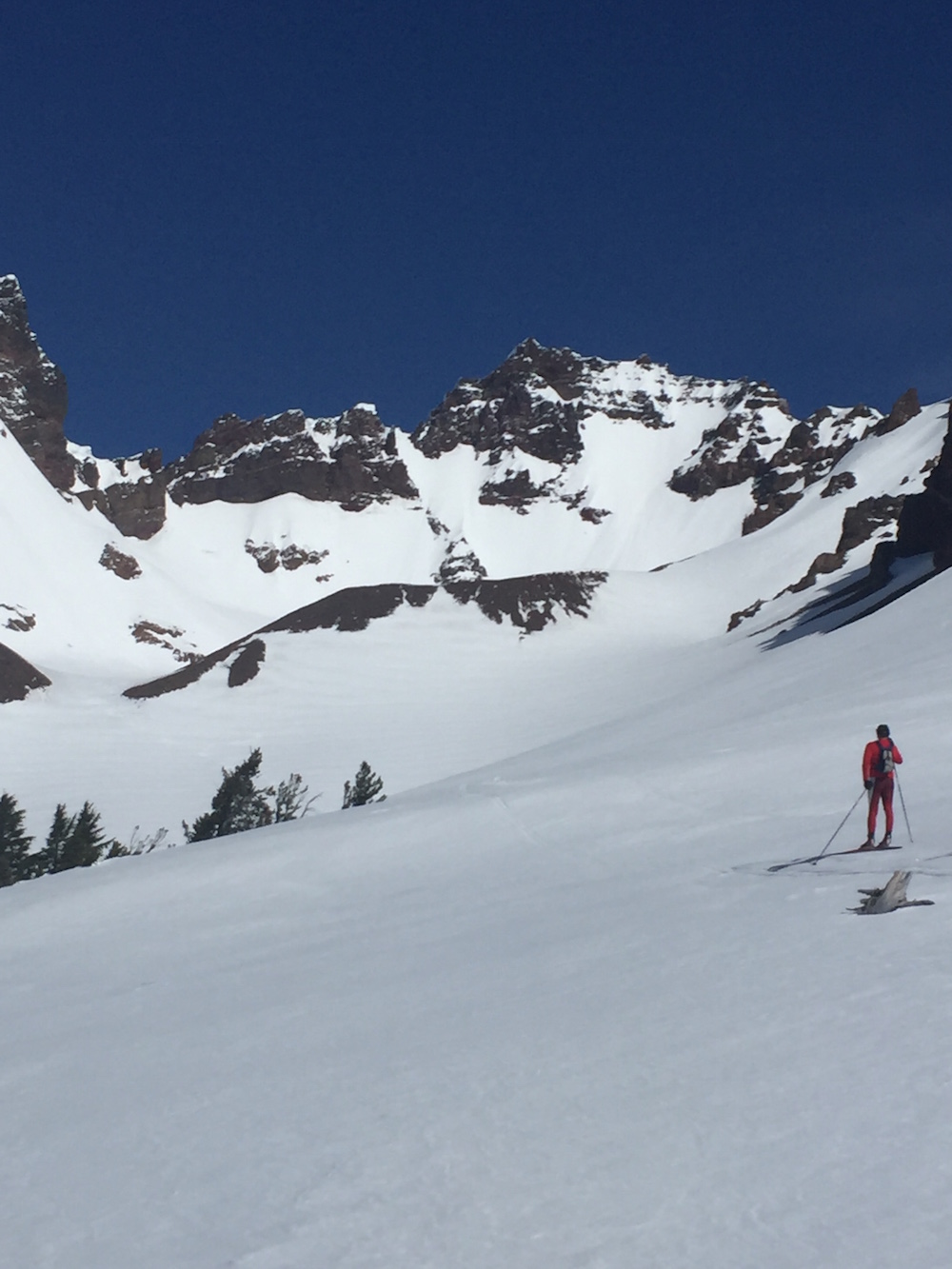
This isn’t an article about some BS 2 k loop in a carbon-monoxide-filled tunnel in the armpit of Europe. In fact, it’s about as far away from that (both literally and figuratively) as possible. The Nordic center in Bend is nestled between 1,752 and 1,950 meters at the base of Mt. Bachelor and offers an amazing array of trails and options. Right now, all 56 k of perfectly prepared trails are open and believe it or not, the venue is still getting regular new snowfall.
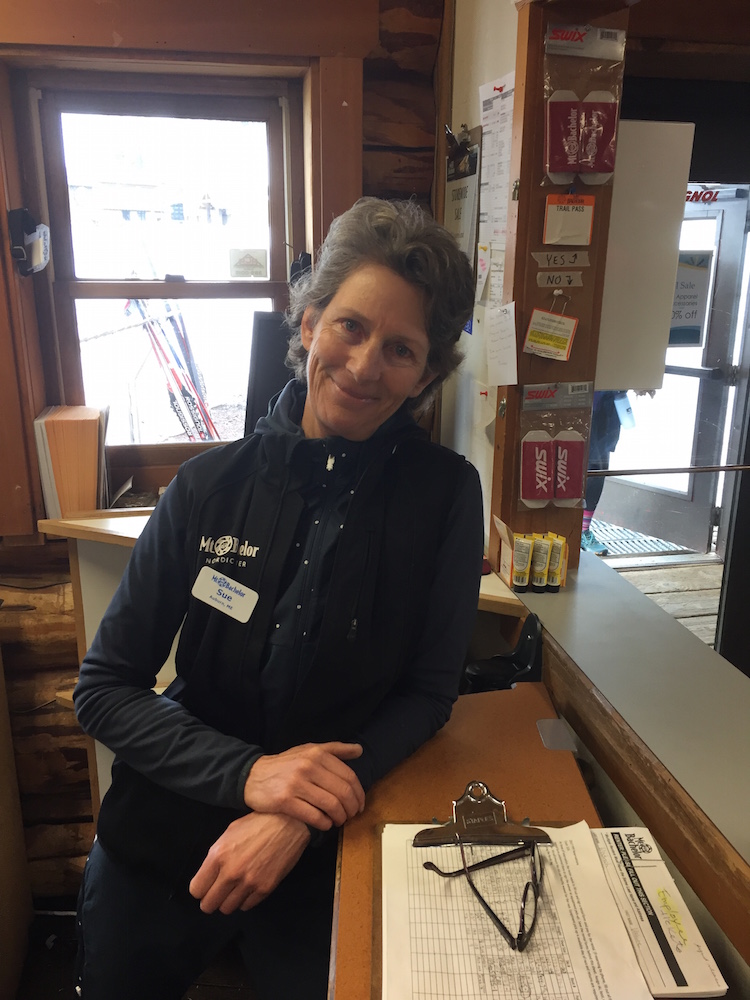
Sue Foster, Mt. Bachelor Nordic Ski Center director
“This is truly an amazing place,” said Sue Foster, director of the Mt. Bachelor Nordic Ski Center. “Our snow in early to mid-May is usually quite reliable, but this is a particularly great year, even for us. We’re still grooming the whole network, so every trail is still open, which is pretty awesome for this time of year. We may shut the lower loops down soon, but we’re still going to to have a lot of skiing available into mid-June.”
It is for all of these reasons and more (more on this in a bit), that Bend is the venue of choice in May for all of the U.S. nordic national teams: US Biathlon, Cross Country, Nordic Combined, Paralympics Nordic, and several top junior teams are either here right now or coming shortly.
“This is a fabulous place to train in May,” said US Biathlon Women’s Coach Jonne Kähkönen. “We’ve been coming here for several years as it is a perfect place to log a lot of quality hours on snow, really focus on technique and have a wide variety of outstanding dryland training options as well.
Jonne Kähkönen, US Biathlon women’s head coach, in Bend, Ore.
“I coached in Finland before I took this position with US Biathlon and we used to go to the glacier in Ramsau, Austria, for a similar camp, but this is really much better,” he continued. “Not only is the snow as good or better, but everything is much easier logistically, as you don’t have to take a gondola up every day to ski and the afternoon dryland training is accessible from right outside the condo. It’s a great way to start the season.”
Reigning biathlon world champion Lowell Bailey elaborated on some of the concepts from Kähkönen: “I come to Bend because it has been one of the most dependable places for quality on-snow training in May. With more than 50 kilometers of trails and world-class grooming, there is no better place to start the training season each year.”
His fellow world championship medalist Tim Burke concurred: “Bend is the perfect place to kick off the training season because you can combine ski-specific training in the morning with world class mountain biking in the afternoon. I don’t know of any other locations that can offer this combination in May.” But don’t just take their word for it, as this video says it all:
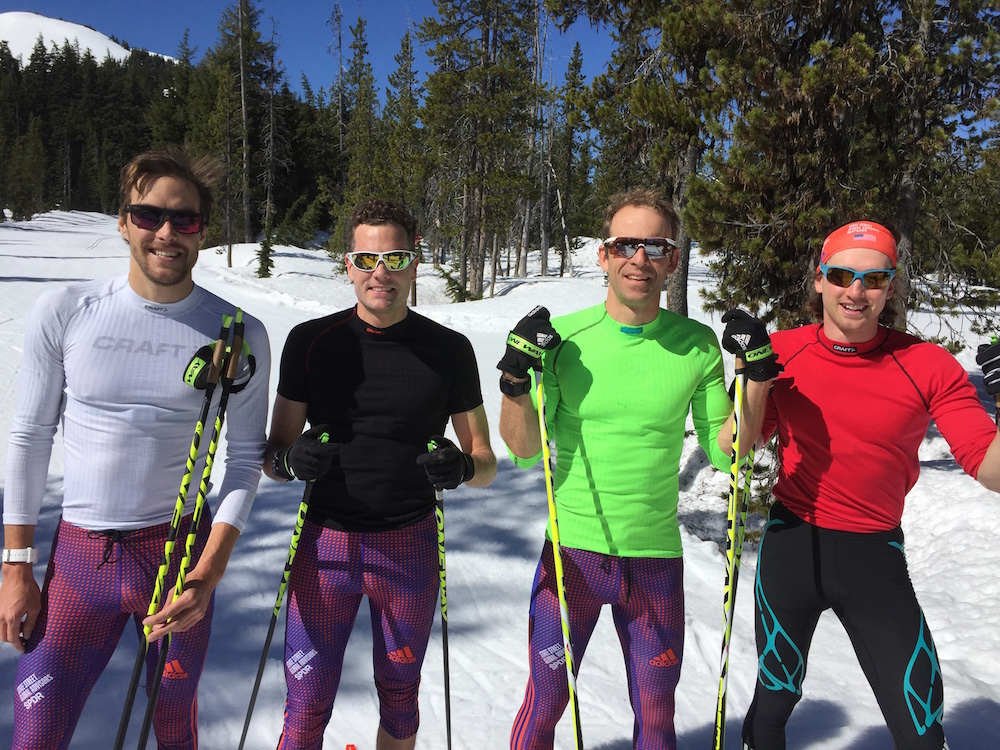
Determined to build on the incredible success of last season, the US Biathlon men’s team arrived in Bend looking leaner and more focused than ever, with their mantra being, “New year, new gut.” From left to right: Leif Nordgren, Tim Burke, Lowell Bailey, Sean Doherty.It is also important to point out that while Lowell (l) and Timmy (r) aren’t skiing quite as much as me here, they’re still skiing a fair amount and since the skiing is at altitude and there is an oxidative stress associated with high levels of aerobic training, the camp has already taken its toll on both athletes, for while they don’t look bad in the aforementioned video and photo, here is a shot of them on their first day in Bend, so wear that sunscreen people.
The XC mafia is out in force, too, with their whole gaggle on-site as well. “I’ve spent a lot of time here,” said Chris Grover, head coach of the U.S. Cross Country Ski Team. “Probably going back to the ’80s. From the national-team perspective, it’s a no-brainer — we can ski every morning on legitimate cross-country trails, which is not really something you can do on the glaciers in Europe, then in the afternoon, Bend also offers all sorts of amazing dryland options. On top of all of that, the community support that we have here is unreal: everything from the management and staff at Mt. Bachelor, to fellow skiers, to the community in general, we are always blown away at how nice people are here and how willing everyone is to lend a hand if we need help with something crazy. It’s an incredible place.”
Andy Newell (U.S. Ski Team) training both on snow and on dry land earlier this month in Bend, Ore.
The cross-country athletes share all of these sentiments as well: “The U.S. Ski Team Bend training camp is a tradition that pre-dates me, for sure,” said longtime, wily U.S. Ski Team veteran Andy Newell. “I don’t know the exact origins, but I believe it started a generation or two before me with Justin Wadsworth and all of those guys — maybe even earlier, I’m not sure — but there’s a reason why we keep coming back, it’s because it’s pretty awesome.”
Newell continued, “Bend is sweet for many reason: amazing trails, reliable conditions, and manageable elevation, so the overall quality of the training is very high, which is not something you can do in many places in Europe, especially at this time of year. In addition, the overall vibe is really cool. The camp itself has lots of focus on technique, not hammering intervals, so it’s really nice to be able to just enjoy being back together with your teammates and have fun being back on snow. Plus, as you well know, FBD, the afternoons are open for all sorts of shenanigans. It is without a doubt one of the best camps of the year.”
So elites are here, pre-elites are here, juniors are here, but what about you, the mid-life crisis, disenfranchised desk jockey with 2.2 kids, a white picket fence and a possible brain-damaged Great Dane that somehow still does not know his name, is this place for you? Of course it is.
FBD’s Great Dane
How can I write this with such confidence? Well, for starters, I am one of you: you are “my people” and vice versa. I’ve been on the tracks every day for two weeks and the skiing is amazing. However, if you are a regular reader, Instagram follower (and you certainly should be, as I am awesome), or you only know me by reputation, you may have some “concerns.” For example, why don’t we take a completely wild hypothetical: let’s say that I have lost my mind and have been filling my free time pretty much exclusively just skiing, mountain biking, paddling, and trolling Josh Smullin on Instagram. Again, this is purely hypothetical. So in this clearly random and arbitrary example, you’re now likely thinking, “this dude is nuts, I’m not going to listen to him” (often a very sound strategy, btw). OK, fine, if you aren’t going to listen to me, nonetheless Lowell, Timmy, Andy, or Kikkan, maybe you will listen to one of my favorite nordic power couples and dyed-in-the wool, uber-Master Blasters, Pat and Cyndy Flores. I’ve crossed paths with these globe trotters in Alaska, Switzerland, all over the continental U.S., and seemingly every other place where the snow is good, so it made complete sense that these crafty snow-chasers were smiling in the sun on the deck as I walked up to the nordic center one morning.
Pat FloresCyndy Flores
“You can’t beat Bend in May,” noted a tan, fit, and rested-looking Pat Flores. “Cyndy and I would come up here regardless, as there is so much great training, good restaurants and nice people, but what really makes the trip a no-brainer for us is we do JD’s master’s camp each year and this is really the icing on the cake.”
Cyndy agreed, “This is one of the few places that not only has reliable snow in May, but to be able to stay in a nice condo only 20 minutes from snow and also less than 10 minutes from a really cool town with all kinds of great restaurants, shops and fun stuff to do, makes this a ‘must-do’ every year. JD’s masters camp is great, the skiing is great, the food is great and if you’re really lucky, you might get to ski with FBD!” (Ed. note: REALLY LUCKY, as he is both everywhere and quite elusive, all at the same time, in particular when stories are due).
I have personally never attended one of JD’s camps, so being the always suspicious, ever-vigilant investigative reporter than I am, I didn’t just take Pat and Cyndy’s word for it, I also went straight to the source, XC Oregon Head Coach John “JD” Downing. “The camp is a great way for masters skiers to get to the next level,” Downing said. “We keep it fairly small, so there is a lot of personalized attention and the venue is amazing. Bend doesn’t just have skiing in May, it has really good skiing in May. Sadly, climate change is a reality everywhere, but this is one of the places that still seems to be holding up well. In fact, some of the best days I’ve ever had on snow anywhere in the world have been in Bend in early May. As you well know, you can ski all morning, then bike and run in the afternoon on a trail system that is also world class. You can even go play a round of golf. It’s an extraordinary thing, really. This why so many national teams come here at this time of year.”
Chris Grover, head coach of the U.S. Cross Country Ski Team, earlier this month in Bend, Ore.
Speaking of national teams and master blasters, Kähkönen offered very valuable advice for athletes of all ages, in particular masters: “My recommendation is to adapt your training to your length of stay. If you can only make it out for an extended weekend, that’s OK, as this can still be very productive. In this scenario, focus on skiing well and don’t worry too much about your levels of exertion. You’re at altitude and you probably won’t feel as good if you are sea level athlete, but for a short stay, that’s okay. If you are able to come out for a more extended block of training though, keep a close eye on your levels. Altitude can be tricky, so be careful to not go to hard every day. You should use this camp to set a solid aerobic base and technical foundation for the year, so be smart.”
Grover also offered up some top-secret, US Ski Team ninja sh*t: “This is a phenomenal place for skiers at all levels to come to start their seasons, as Mt. Bachelor can throw lots of different conditions at you. We view this as a strength, not a weakness, though, as it’s a great place to improve your skills, in particular in classic. If you’re here for a week, you’ll likely ski on hard wax, klister and zeros, so it is a perfect environment to test equipment, wax and work on technique in these different conditions. Even if you are mainly skating, you’ll get fresh snow, wet snow, dry snow, old snow, hard pack, and slush, sometimes many of these in one day. These variable conditions are something that you usually don’t get on glaciers, so without a doubt, practicing in this environment has made us better skiers as a national team and it most certainly will help skiers of all levels.”
For more on my travel idiosyncrasies, check out this wonderful podcast from some dude named, “Jason”.
Now that this esteemed panel has convinced you to make the trip, the next question is, “How are you going to roll? There’s BALLER, FBD-style, which means that you’ll need a stevedore to unload all of your gear (I like to have the options to choose between lots of colors and styles of underwear each morning).
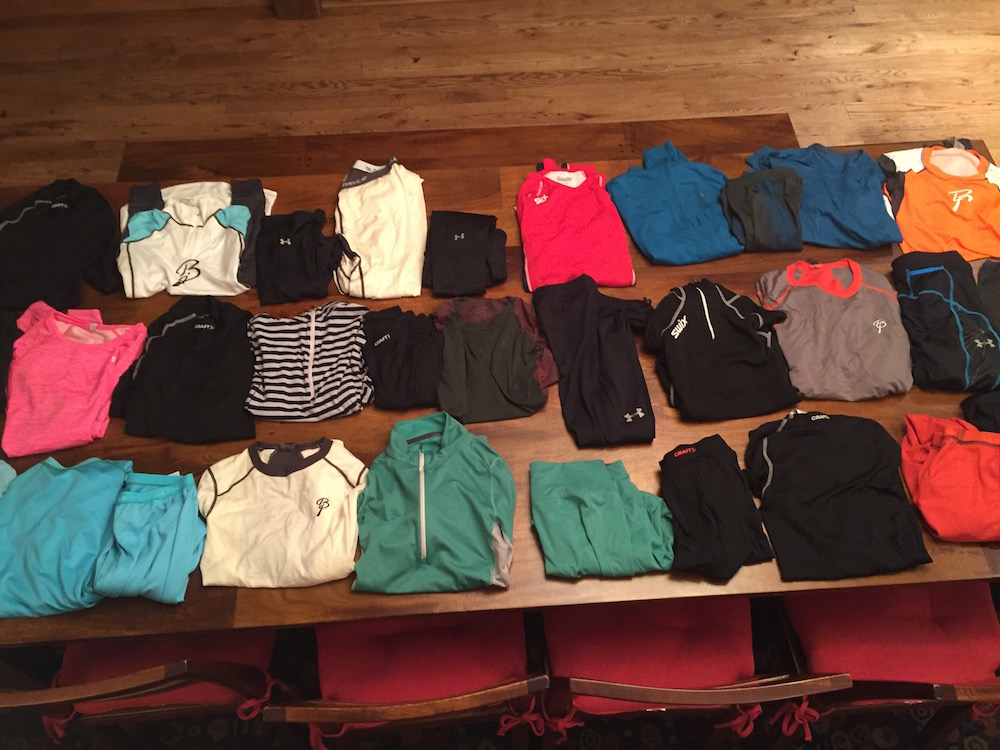
Study at the feet of the master and bring six sets of skis (rock classic, cruiser classic, race classic, rock skate, cruiser skate and race skate — yes, not having both cold race skate and warm race skate still has you upset, but you’re praying that you’ll be able to make your “cold skate” race skate skis work, as you are pretty frickin’ adaptable). Now over-stuff your ski bag with base layers of every conceivable thickness, material, color and style. Ditto for mountain-bike gear. Double-ditto for running gear. Better bring that paddling gear, too, just just in case Timmy Burke gets his nerves back after his horrific loss to me in our race on Lake Placid, then, since everyone knows you have a reputation for looking real nice for the ladies, you’ll also need your traditional two bags of personal grooming items and tastefully coordinated couture.
To adequately transport all of this crap, you’re going to need one of those stupid monster trucks but that’s OK, as your top priority is to make it to the tracks every day, regardless of road conditions, completely ignoring the fact that the scenic highway to the mountain is perfectly maintained and essentially never closes. You’ve never been one to listen to reason and you’re certainly not going to start now (after all, you are a self-loathing nordic skier who pays money to suffer) so you rationalize this ridiculous gas guzzler with the explanation that you also need this vehicle so you have room for the sherpas, in particular your shirt sherpas, as those dudes are indispensable. If you’re fortunate enough to snag one of the rare and exclusive invites to have dinner with me and you show up looking like you slept in your clothes, “my people” will immediately show you to the door. You’ve been warned. So yup, better pack that travel steamer as well.
This excessively wasteful and cumbersome manner of travel isn’t for everyone though — I get that — and to be fair, it is really more of a lifestyle and not something for which everyone is suitable emotionally and financially equipped, which is fine. Some of you out there in FasterSkier-land may consider yourself the nordic version of Seal Team 6, and thanks to my gripping expose on why you never need to do laundry again, you may prefer to go commando and travel with just one pair of socks, undies, and a T-shirt. Well, fear not my nimble travelers, I have you covered here as well (see what I did there?).
How to go “lean and mean”
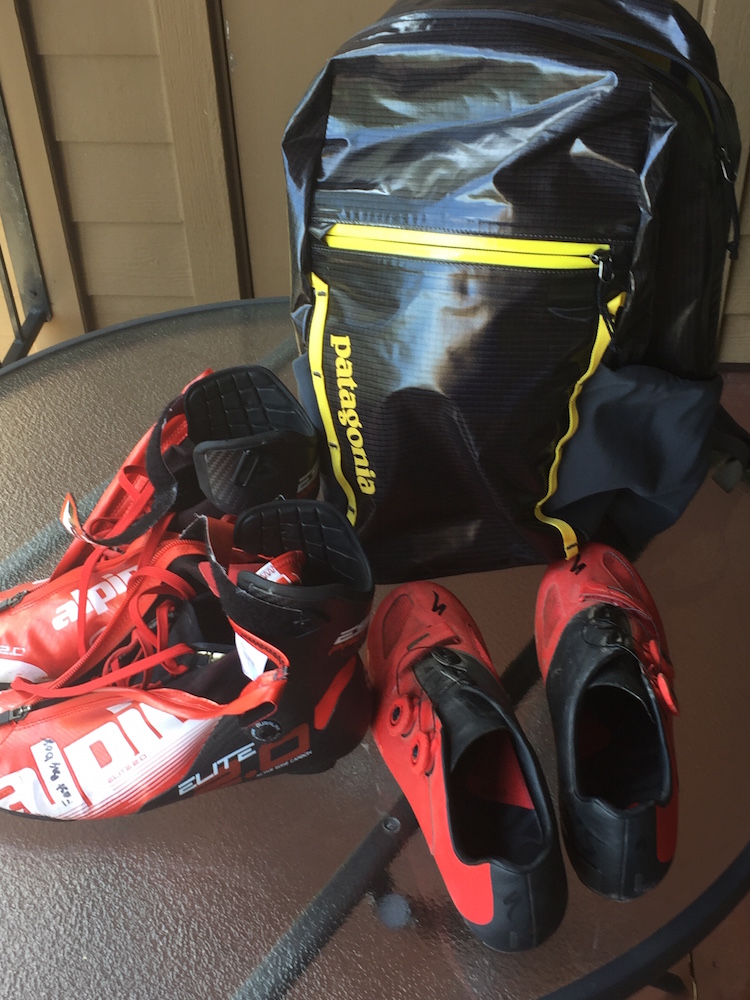
If you want to really go for it, you can do this trip with just a backpack. Load your ski boots and cycling shoes in your day pack and wear your running shoes. Stuff your one extra pair of socks and skivvies into your boots, eschew the bulky and pesky toothbrush for a pack of Tic Tacs that you pick up at a gas station in town, and POW, you are set. The fine folks at my favorite shop, WebCyclery, will hook you up with the rest: skis, boots, poles and mountain bike. If you’re one of those “I don’t need 20 outfits but I need my own skis” types, fear not, as WebCyclery also has a public wax bench, so you don’t actually have to choose between either of these two extreme examples and there is plenty of room for a reasonable, middle-of-the-road approach. Do yourself a favor, though, and regardless of which camp you gravitate towards, avoid the “why you need to travel wax” lecture from my good buddy Zach Caldwell and be pro: travel wax, then scrape at WebCyclery or up at the nordic center. The most important point here is regardless of where you are on the baggage, underwear and ski spectrum, I’m dead serious, you really can do a great, multi-day training camp with only a carry-on bag.
Now you’re geared-up and ready to crush the ski each morning, but what about the rest of your day? Glad you asked. It just so happens that Bend has a wide variety of trails to suit every skill level taste and agro level. Whether you are a normal person who can can chill in Level 1 and simply enjoy the super fun, flowing trails, or if you are one of “those guys” who gets all kitted up and lurks in the bushes ready to pounce on Adam Craig or Ryan Trebon as they ride by so you can shame them with your exemplary nordic fitness (completely disregarding the fact that they are probably out cruising and you’re about to ‘ring the bell’) none of that matters. What matters is that this place is perfectly suited for you to either be super-smart and carefully but gradually build your base fitness while loving life, or you can go out and hammer every day and completely blow yourself up by doing stupid sh*t. I know that’s how some of you roll and I’m not your mother, so knock yourself out. If you do fall into the latter category, please be sure to tell Adam and Ryan that I say hi, but don’t come crying to the FBD when you find yourself wrecked in January. Remember, no one wants to be a “Thanksgiving star and a Christmas turkey.” Church.
Just one of the many savage views that you will encounter on one of the nation’s best bike trail systems.
All right, where was I? Ah, yes, what to do with the rest of your day: the ski was epic, you tore up the dirt faster than the GOP shredding Obamacare and since you’ve now logged over six hours of training on your way to being sick and injured, you’re so hungry that you’re ready to eat your own head. Please tell me you’re not one of those annoying nordic nerds who flies with chopped up, organic, locally sourced carrots in your carry-on, nestled between the hand sanitizer and the Nalgene bottle that you filled up in the bathroom. If so, stop it, stop it right now. Have a beer and a can of Pringles on the flight like a normal person.
If this is you however, you’re probably also going to cook breakfast at your condo each morning and subsist on PBJs that you eat in the car on the drive home, as you’re concerned about not achieving the correct 4:1 carb/protein ratio before your glycogen window closes. This is all well and good, but I’d kill myself if I lived like this, so my advice to my one or two normal readers is treat yourself, after all, who deserves it more than you, right? Don’t worry, I hear ya, you’ve blown 90% of your disposable income on new skis, flights, condos, and Great Danes, so you don’t want to break the bank on lavish meals. Fair point. But, in addition to all sorts of great restaurants with real plates, flatware and food served by humans, there are some economical options that fit the bill nicely without decimating your wallet: two FBD favorites are Parrilla and The Pancake Wagon. There’s also a parking lot full of food trucks, aptly named, “The Lot,” which offers all sorts of options for people comfortable eating food that has been prepared in a structure that can drive away at a moment’s notice, one step ahead of the law.
And let’s not forget the beer — ah, my beloved beer, the source of, and solution to, so many of life’s problems. So while the FBD loves beer and Bend has all kinds of great beer places, interestingly enough, you know what the FBD hates? To be fair, this list is long and distinguished and merits an entire series of its own, so for now let’s confine this to the context of this discussion, the FBD hates the hipster/yuppie/hippie/yippie whateverthehellyourproblem is, beer snob. Yes, beer is awesome, but you know what none of us need? Some smug, pseudo-olfactory savant weirdo wearing an outfit that looks like it came out of my grandmother’s basement and a haircut that screams that he lost a bet, telling us why some particular brew “has a nose that resembles Costa Rican coco beans buried behind a pit toilet with a hint of a 1972 Volkswagen Bug seat covers,” or whatever nonsense the hip crowd is spewing these days. Just order you goddamn beer and shut up. Guy code is that you have between 15 – 20 seconds to place a beer order, with no editorializing. The ONLY circumstances in which you can offer anyone at the table any advice or commentary whatsoever is if they directly and specifically ask you a question and even in this very focused and narrow circumstance, you answer must again be limited to 15 – 20 seconds. I don’t make the rules, I just enforce them.
So assuming you navigate through these hipster-invested waters of annoying ignorance, pomp and circumstance, you should be good to go. Or are you? If you’re anything like me, my thinking in this situation usually goes something along the lines of, “I skied over 50 k today AND crushed Adam Craig in a race so secret that not even he knew it was happening, so I have earned these 162 ‘cheat calories’…..…Wait a minute…. 162 calories? In only ONE beer? Damn, that’s a lot. Maybe I should go do some sit-ups in the bathroom or I’ll never make that cut for Wave 6. I feel fat just thinking about this. Now everyone is looking at me, I can feel it. Oh crap. Do I look fat in these pants? I knew I should have skied another hour. I wonder what Noah Hoffman is having for dinner? I really wish he still blogged daily……” Then I go in the bathroom and do 15 minutes of core while sobbing uncontrollably. But that’s me.
OK, let’s move on. I now have you set up for skis, bikes, and food, anything else else? Well, if you’re anything like me, you’ve probably going to completely disregarded the very sage advice of world-class coaches like Kähkönen and Grover (we don’t need to talk about my lactate reading after doing a supposed threshold block with Burke and Bailey), and you’re now completely wrecked. Sure, you could give up and fly home while attempting to pick up the pieces of your shattered life, or, you could simply train wisely in the first place, but we all also know that you are a stubborn nordic skiers, so you aren’t going to do either one of those things, which means that your only other option is to get some professional help. Step One is to get a massage from someone who specializes in working on athletes. For this, my go-to guy is Scott Yount. He has worked on all kinds of elite skiers, so stop your crying, he can get your whiny nordic ass back out there overtraining in no time. If things really get bad, or if you showed up with some pre-existing conditions (which shortly won’t be covered by proposed, “new and improved” and “really terrific” Affordable Care Act, so act fast), hit up the PT to the stars, Dave Cieslowski, DPT, CSCS. He also specializes in Type-A, needy, nordic skiers (and is one himself), so you guys will hit it off great.
Finally, since as always, I like to make all of these reports as long and rambling as possible, not to mention my rigorous and adorable sense of honor and integrity, I would like to go on record right now and state that I do not receive any sort of remuneration whatsoever from any of these people, organizations, restaurants, shops, businesses, clubs, cliques, or churches. My uncle does not own the bike shop, nor does my brother-in-law work at the burrito place. I am simply giving you a sampling of some of your many options and suggesting places for which I have had very positive experiences. My goal is to make your trip out here not only as easy as possible, but also as fun and as successful as all of mine have been, with as little effort on your part as possible. Let’s be real clear here, too — this is this is like divulging your secret powder stash or favorite surf spot, so if you do happen to run into me somewhere in the world, suffice it to say that you owe me a beer, as you aren’t getting information of this quality from many other places. That’s just how we roll at here at FasterSkier.
You also need to promise to use this information for good, never evil. I’m trusting you with all sorts of top secret beta and if you embarrass me, I’m gonna be pissed. If you bring a bunch of East Coast attitude, use your cell phone in line at the burrito place, or get all pushy in the tent behind The Pancake Wagon and someone kicks you in the nuts, well, you had it coming. Don’t hate on these places or write me that my recommendations suck — that’s on you — this is not check-in at the Philadelphia International Airport. You are in polite society now, so act accordingly.
A few other tips, as noted earlier, the weather is unpredictable, so come prepared for sun, wind and snow, perhaps all in the same day. Embrace this, though, as there is something incredibly bad-ass about having to have the heat blasting on the drive up to the ski and the AC cranking on the drive home. Be prepared to deal with whatever the mountain throws at you — remember, skiing is an outdoor activity and you will most likely see very different conditions each day. Thankfully, I was able to shoot perhaps the most informative video EVER on mental preparation, so I’d advise watching this every morning before you head up:
In general, the optimal ski window is usually between 8:30-10:30 a.m., so lie around in bed for too long and things will get soft. If you consider your weather forecasting and navigational skills to be superior, there is also amazing crust cruising to be had when the conditions cooperate.
Crust cruising in Bend
Watch your goodies coming back in, though, as one route back to civilization has some mighty big kickers: these are known as, “FBD Killers,” so I only hit them a few times.
FBD killers
The alpine skiing is also awesome, if you’re in to that sort of thing. Some of the really hard-core locals will hit the tracks at 8:30 for a few hours, transition directly to alpine, grab some lunch, paddle, then go for a ride or run. If that’s not a perfect day, I don’t know what is.
Mt. Bachelor alpine area
In conclusion, Bend is one of the nicest places in the world to be in May for nordic skiers of all levels. “I never, ever get tired of this place,” Foster mused. “Every day up here is special. Each day has its own personality and every one is different. Even the drive to the nordic center is amazing. You’re in the trees for most of the trip up, then you hit the high country, turn the corner, and you can see the mountains — it’s breathtaking. It’s just such a cool reminder that everything is okay in the world.”
So instead of squandering those frequent flyer miles on something stupid like going to visit family, invest in your future and book a flight into Bend (Redmond) today. From there, you are less than 30 minutes away from having all of your problems solved. You’re welcome.
And remember, you owe me a beer. One that doesn’t smell too much like VW seat covers, if it’s not too much trouble, please.
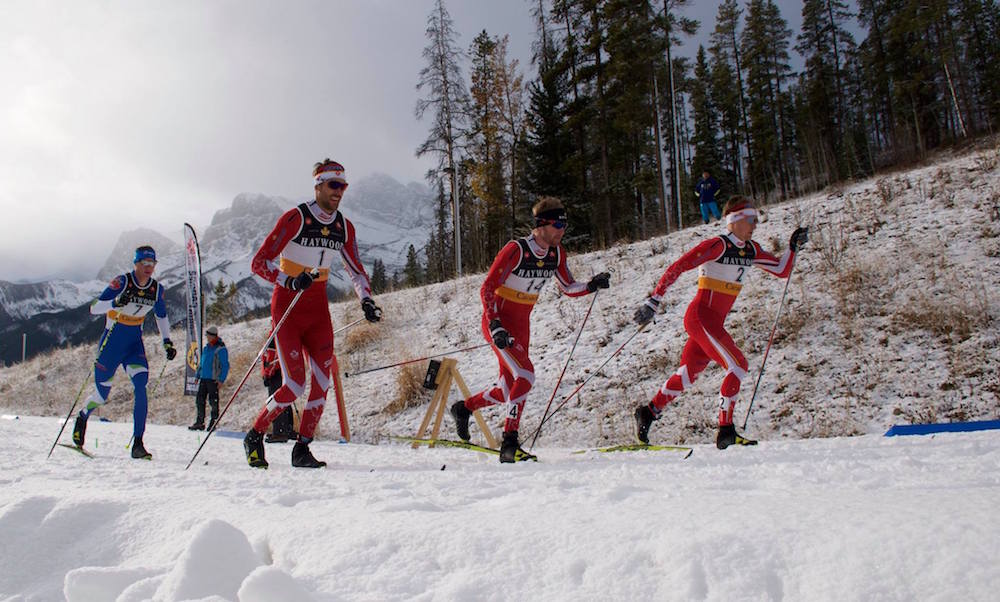
(From left to right) Bob Thompson (NTDC Thunder Bay) chases Lenny Valjas (Canadian World Cup A-Team), Graeme Killick (AWCA/NST B-team), and Knute Johnsgaard (AWCA/NST U25 Team) at the start of a classic sprint heat at 2016 Frozen Thunder in Canmore, Alberta, on Nov. 1. (Photo: Jenn Jackson)
As promised, the Canadian version of “Where the (Skiable) White Stuff Is” (a.k.a. November skiing) is here, minus the bit about where to ski at Thanksgiving. Canada doesn’t usually have much snow at Thanksgiving, mostly because Canadian Thanksgiving is in early October. But by the time U.S. Thanksgiving rolls around in late November, there is an abundance of reliable snow to choose from in Canada.
In addition to major camps and well publicized early season track setting, there are a lot of places in Canada where people quietly start skiing when there is snow. Whitehorse in the Yukon is one of those places where “early” doesn’t have the same meaning as it does in the south. No one will advertise October skiing at Barkerville, British Columbia, but the Caledonia Nordic Ski Club in Prince George can tell you about it. FasterSkier’s West-Coast based Canadian contributor was on snow Oct. 8 this year.
All of the western venues mentioned here were affected by the same weather pattern than forced the cancellation of the Bozeman SuperTour. A heatwave rolled in on Nov. 3, starting with a very warm classic sprint in Canmore, Alberta, and ending in spectacular flooding near Whistler, B.C. It has been a better start in the east.
This article will focus on reliable set track and camps open to the public in November — in Canada (for the U.S. version, click here). If your favourite early season spot isn’t featured, you are in good company. Let us know in the comments below.
And if you are visiting Canada, remember that the U.S. dollar is worth $1.35 up here.
***
CAMPS
XC SuperCamp
Where: Sovereign Lake Nordic Centre and Silver Star Mountain Resort, Vernon, B.C.
A trailside photo from 2015 SuperCamp at Sovereign Lake/Silver Star (Courtesy photo)
SuperCamp has evolved over 30 years, but its always been held on natural snow and it’s always run camps in November. Four of this season’s seven camps are in November, and biathlon options were offered this month as well.
“SuperCamp is a very comprehensive nordic experience,” Shane Landreville, SuperCamp coordinator, wrote in an email. “Trail passes are included, as are lunches, off snow programs, wax sessions, massages, and ski demos.”
Ski-in/ski-out accomodation and restaurants are available at Silver Star. Vernon, a 20-minute drive and 1,200 metres lower in elevation, offers a wide range of food and lodging alternatives. Some of the November camps sold out in mid-October when registration opened.
Glenn Bond XC Ski Camps
Where: Labrador City, Newfoundland
The 2016 Glenn Bond XC Ski Camp at Menihek Nordic on Nov. 3. (Courtesy photo)
The four-year old Glenn Bond XC Ski Camp program travelled to Menihek Nordic in Labrador City, Newfoundland, for a November camp on natural snow.
“[This camp] was November 3-6 with 70-80 cms of snow and big smiles,” Bond wrote. “Menihek Nordic wins the prize for best early season xc ski conditions this year hands down.”
(Longtime SuperCamp attendees remember Bond from his time with that program.)
NATURAL SNOW
Menihek Nordic
Where: Labrador City, Newfoundland and Labrador
Fifty centimetres (roughly 20 inches) of natural snow at Menihek Nordic in Labrador City on Oct. 23, 2016. (Photo: Menihek Nordic)
Mention ‘Lab City’ to a national team member from the 1980s and you will see the good memories scrolling behind the smile. In the glory days of Pierre Harvey, the national team would kick off its season at Menihek before moving on to Silver Star for an early season elevation camp. After that national team stopped visiting the venue in 1988, it quietly dropped off the radar, to the point that FasterSkier missed this October skiing opportunity in last year’s guide.
Labrador City is not visited by many tourists. It’s at least a 13-hour drive from Quebec City, which is the nearest major population centre. But there are some big-name skiers that have visited, including Sweden’s Gunde Svan, Americans Bill Koch and Tim Caldwell, Norway’s Anette Bøe, and the Firth sisters from Canada’s Northwest Territories. Menihek Nordic hosted the 1983 World Cup Final, the 1985 World Cup opener and was a national training centre from 1981 to 1988. Mining communities are often multicultural: the World Cup hosts were able to find local translators for 20 languages from a population of less than 10,000. Koch designed some of the trails in 1981.
What makes this venue unique, other than reliable October-to-May skiing?
“Labrador is unique in that it is nearly the last frontier,” Menihek Nordic Ski Club President Gerry Rideout explained. “There is a certain magic about Labrador, it gets in your blood.”
This season, Menihek opened on Oct. 23, held four camps in November, had the full 34 k system set on Nov. 3, and plans to stay open to the first week of May (as usual).
Sovereign Lake/Silver Star
There were lots of smiles during U.S. Thanksgiving at Sovereign Lake. Methow Valley Nordic coach Laura McCabe (a two-time Olympian) led 30 kids over the top from Silver Star and FasterSkier caught them on the way back. Locals know to start at Sovereign and stop for a croissant in Silver Star village to fuel the second half of the ski. (Photo: Gerry Furseth)
This destination is actually two ski areas. The Sovereign Lake Nordic Centre (also Sovereign Lake Nordic Club) has been operating since the 1930s under a variety of names, while Silver Star Mountain Resort is more recent, opening as an alpine-skiing area in 1958. The two organizations have 105 kilometers of interconnected nordic trails and a surprisingly good relationship between the commercial resort and the volunteer-based club (which is one of the largest cross-country ski clubs in B.C.). Silver Star hosted a World Cup in 1991, Sovereign Lake in 2005.
Daily track setting runs from November to early April, with the full 105 k usually available from late November to mid-March. Sovereign Lake reopens in May for team camps and diehard skiers.
This season, both sides opened 10 days late on Nov. 20, with 57 k set by Nov. 25.
“We are still well below our average snow pack for this time of year, but are optimizing our small machine grooming to create great tracks and corduroy,” Sovereign Lake manager Troy Hudson wrote in an email on Nov. 24.
There were at least eight private camps in November, ranging from a master’s women’s group to biathletes to a combined U.S. club camp with the Mt. Bachelor Sports Education Foundation, Methow Valley Nordic and Momentum Northwest from Oregon and Washington.
MANMADE & STORED SNOW
Frozen Thunder
Where: Canmore Nordic Centre in Canmore, Alberta
Canmore is perhaps the best known of Canada’s nordic venues. Between the 1998 Olympics, reoccurring World Cups and last season’s final stages of the Ski Tour Canada, it is famous beyond the skiing world. Each October, Frozen Thunder opens a small loop with a combination of stored snow and manmade snow.
This year, Frozen Thunder opened on Oct. 22 with a 1.7 k loop. The regular season began on Nov. 19 and is scheduled to run to April 30. So far, Canmore has hosted seven days of cross-country ski races and three biathlon races in November. All the camps were private, with the Ukraine biathlon team traveling the farthest to Canmore.
Boreal Glide (Glisse Boréale)
Where: Forêt Montmorency, owned by the Université Laval, in Saint-Ferréol-les-Neiges, Quebec
Skibec skiers on the Boreal Glide at Forêt Montmorency north of Quebec City. (Photo: La Forêt)
Located 45 minutes north of Quebec City and belonging to Laval University, the ‘Boreal Glide‘ is an early season favourite in Quebec. Set in the largest teaching and research forest in the world (at 412 square kilometers), La Forêt Montmorency has 2.5 k of early season trail using stored snow and a larger system that depends on natural snow. As of Nov. 20, it had 20-24 inches of packed snowed and track groomed for both skating and classic.
“If I had to invest my money in one single cross-country skiing area in North America, I would honestly choose the Forêt Montmorency,” La Forêt’s Director of Operations Hugues Sansregret wrote in an email. “The fact that it sits on top of the Laurentian mountains is the best guarantee for early skiing.”
Boreal Glide opened on Oct. 28 without any official camps or events — just skiing. Can’t argue with that.
Callaghan Gold
Where: Whistler Olympic Park, Callaghan Valley, B.C.
Callaghan Gold on Nov. 7, 2016, at Whistler Olympic Park in Callaghan Valley, B.C. New this year, the loop includes the biathlon range. (Courtesy photo)
Canada’s other Winter Olympic venue has created Callaghan Gold, an early season loop of stored snow. The regular season opens on Nov. 24 (U.S. Thanksgiving) and ends in early April. Located in a cool valley surrounded by rainforest, this venue has been known for lots of snow in non-Olympic years. Weather has been a challenge in the fall of 2016, eased by two last-minute storms that expanded the stored snow loop to 21 k during the opening weekend.
In the project’s four-year history, Callaghan Gold has met some challenges. In its experimental year, the stored snow came out ‘gold’, coloured by the sawdust insulation. In 2014, the storage methods were improved and an 800-metre loop of lovely, white snow greeted skiers on opening day. In 2015, record-setting warm weather melted all the snow in March, leaving nothing to store. In 2016, Callaghan Gold opened on Oct. 29 with 600 metres of trail, expanding to 1.4 k on Nov. 4.
“The warm temps and significant rainfall of November took its toll on the Callaghan gold trail depth but we feel it held up well considering,” managing director Tim Hope wrote in an email.
Nakkertok Nordic
Where: Gatineau, Quebec
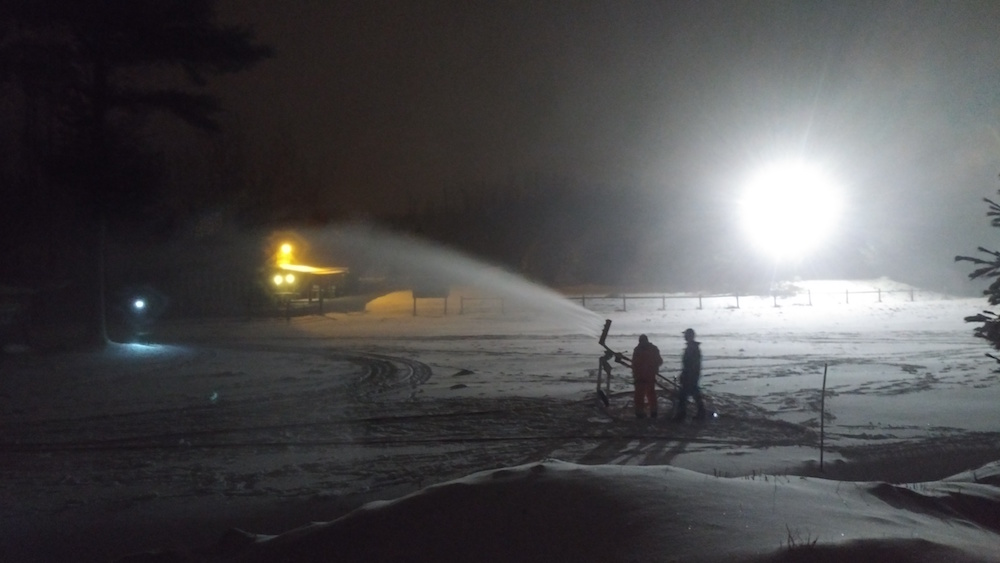
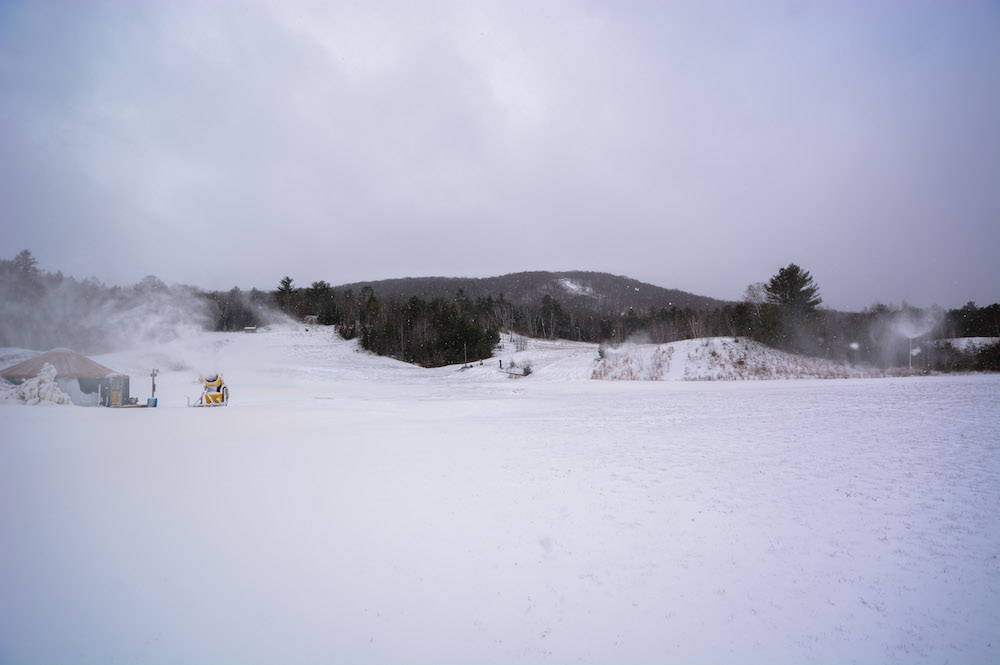
Nakkertok snowmaking in action for the first time in November, 2016. (Courtesy photo)
With two sets of ski trails just outside Ottawa and Gatineau, Nakkertok is the newest addition to reliable November snow. This month, one of the country’s largest ski clubs recently turned on its brand-new snowmaking equipment (which was largely funded by from its Project Play grand prize) and opened for skiing on Nov. 25.
According to Nakkertok Head Coach Kieran Jones, the club turned on five snow guns for the first time on Nov. 20 and was excited to test its new system and equipment. That night, the trails received an additional 15 to 20 centimeters of natural snow.
“Winter has definitely come to Ottawa-Gatineau, which is awesome!” Jones wrote. “Our initial goal was to create an 800m loop that covered our stadium, and extended out both ends. At that point we could then begin to push snow further to create 1 km of skiable terrain with a couple of quality climbs as well.”
He hoped they would have 1 k open for skiing by the end of last week.
“For now, the focus is on making sure we can have skate grooming,” Jones added. “Classic tracks will depend on the depth of snow that we’re able to produce. Nakkertok isn’t officially open to the public for day usage of the loop yet, but we’ll let you know as soon as it is!”
The Nakkertok Early Season Ski Loop (NESSL) is an important step for the region.
“It is great for the club, other clubs in the region and should allow a quality early season race site in the East,” Nakkertok fundraising mastermind Toni Scheier wrote in an email. “It will also ensure snow for the Easterns where clubs from across the country attend, (700 plus competitors) and for our Nationals bid, likely 2019.”
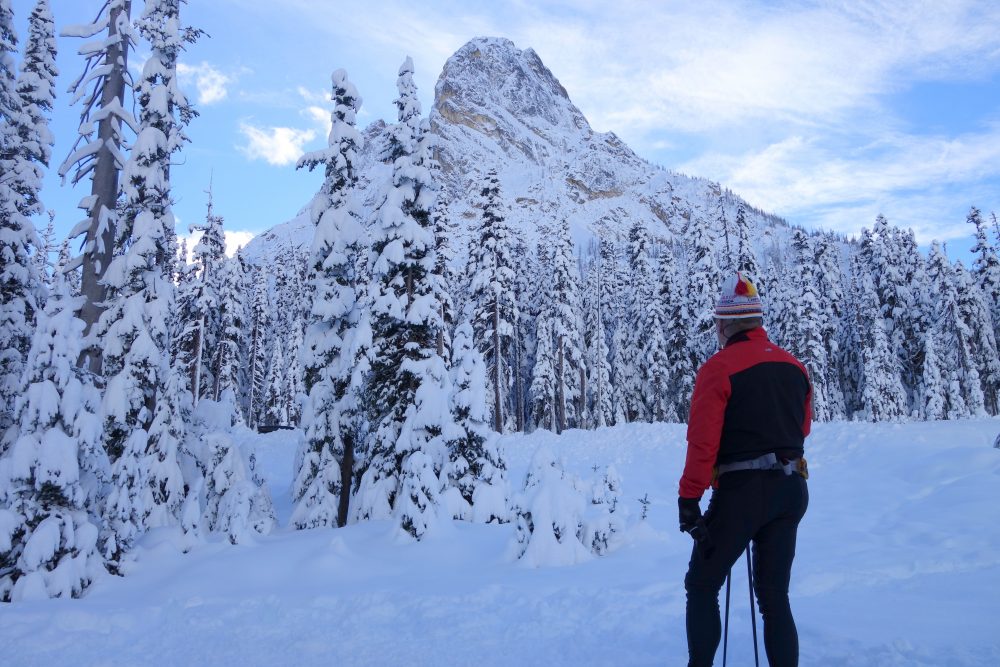
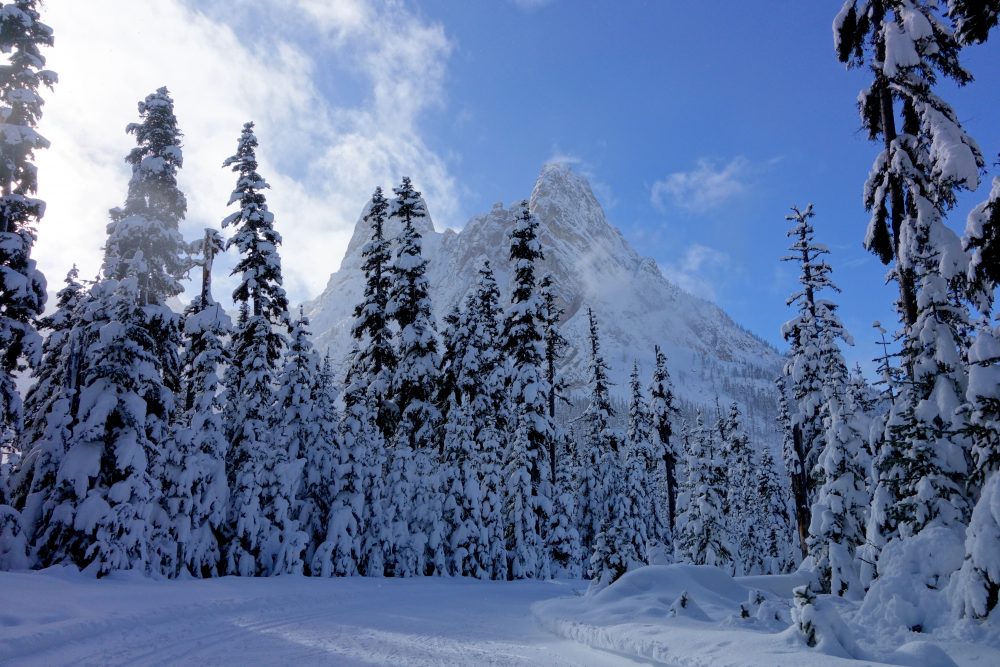
Skiing under Liberty Bell on Washington Pass in November, 2016. (Methow Trails courtesy photo)
Natural snow is where it’s at, unless there’s none to be found. In high-elevation places like West Yellowstone, Mont., (roughly 6,600 feet above sea level) and Crested Butte (nearly 9,000 feet), November skiing is almost always a given — which is why those venues have hosted Thanksgiving-week ski camps for 16 to 30+ years. And they are again this year, while looking to the skies and weather forecasts in hope of more snow — much more.
While there are only two well-known Thanksgiving camps currently being held in the U.S., there are dozens of other places around the country you can likely go skiing. We did our best to present some of the most dependable options, so at the very least you can plan a future trip on snow this time next year. No offense to the in-laws, but wouldn’t you rather be skiing on Thanksgiving? Stay tuned for our Canadian early skiing edition, and feel free to share your favorite November ski spot in the comments section below.
***
What: Yellowstone Ski Festival
Where: West Yellowstone, Montana
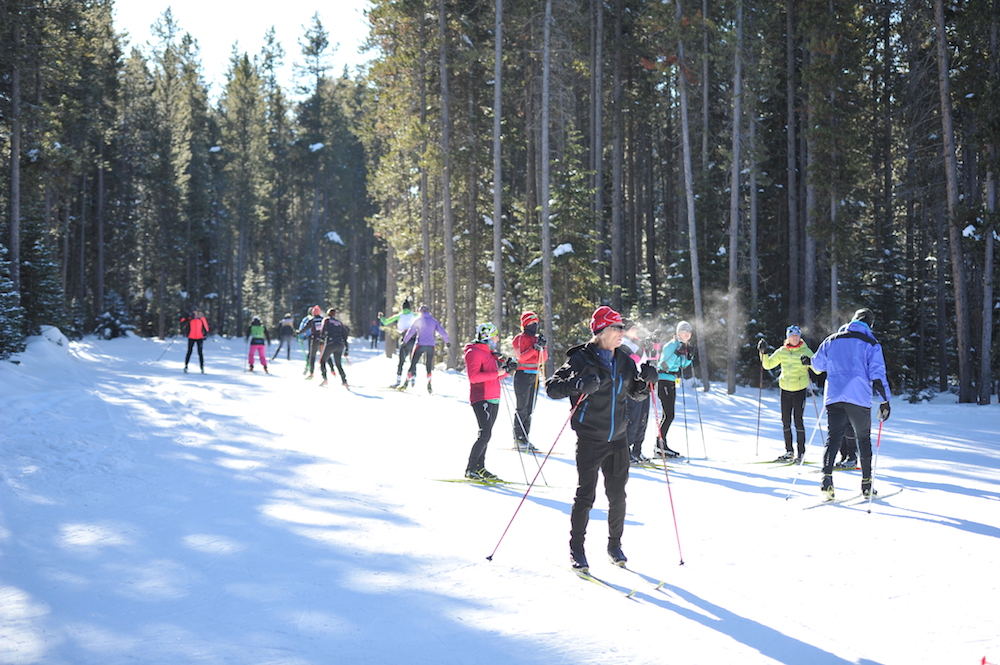
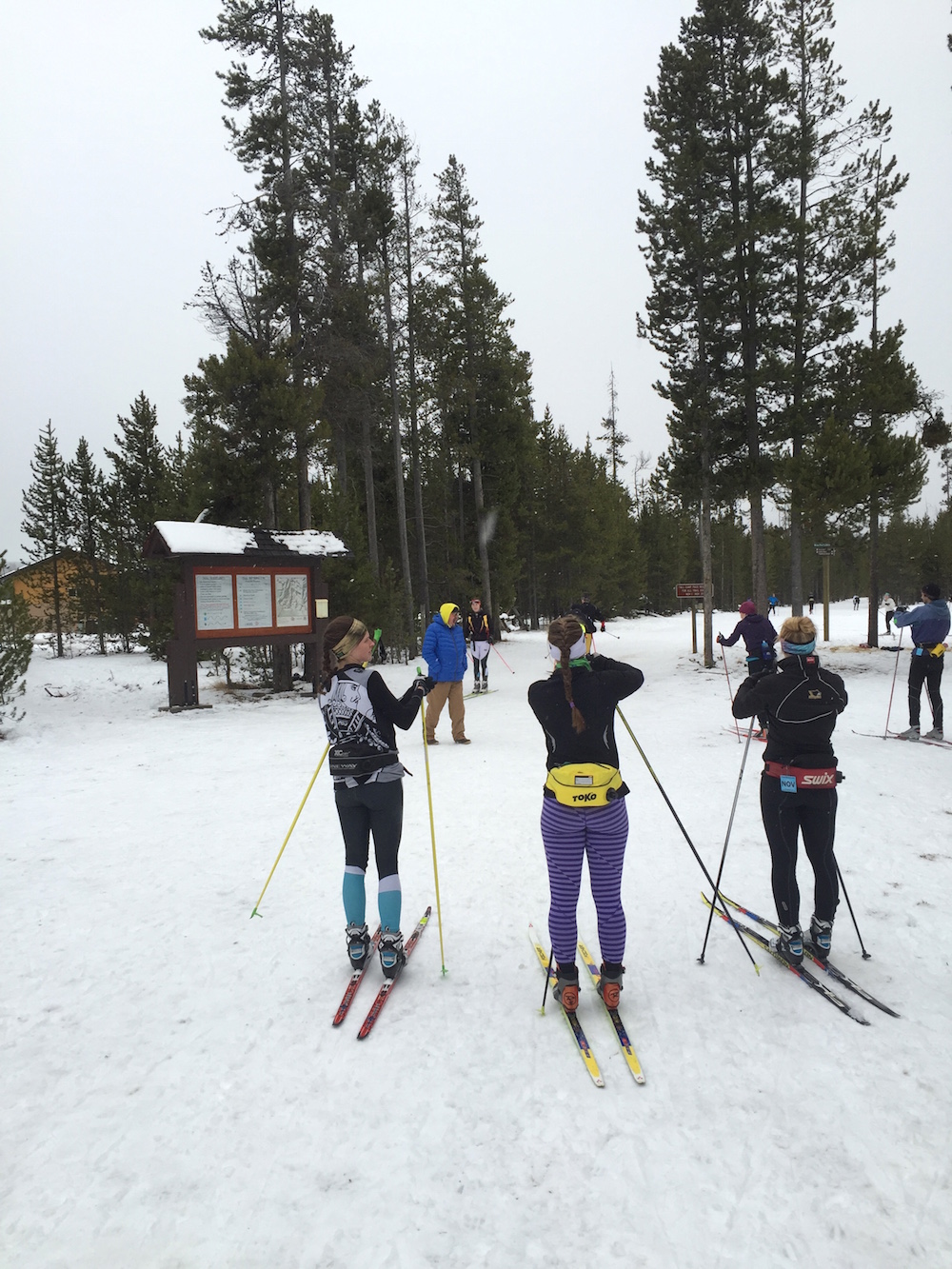
A rendezvous point at the Rendezvous Ski Trails as seen last year in West Yellowstone, Mont., during the 2015 Yellowstone Ski Festival. (Photo: 2015 courtesy photo)
How many years running: Over 30 years. “It started with Drew Barney, Torbjorn Karlsen and Dick Hunt back in the 1980s as a Fall Camp, offering clinics for coaches and citizen racers looking to improve their technique,” West Yellowstone Ski Education Foundation Program Director Moira Dow explained. “Over the years, the camp grew into one of the top training camps available to the cross-country ski community.”
Skiers at the trailhead of the Rendezvous Ski Trails in West Yellowstone, Mont., on Monday, Nov. 21, 2016. (Photo: FBD)
Target audience: Open to the public and all levels of skiers.
Anticipated participation: Around 2,500. “We think it might be a little bit lower this year because of the late snow and the lack of the SuperTour,” Dow noted. “Last year we had a lot. We had really really early snow last year. Around 3,500 in years past.”
Advance reservation required? Yes for clinics and races. Online registration only. “The competitive events and the clinics all require you to be pre-registered, but all the evening events are open to the public,” Dow said.
Trail pass rates: $55 for the month of November for adults. $26 for kids, which is 10 and under. Day passes are $12 and $6
Grooming report:Approx. 20-25 k groomed as of Monday, Nov. 21.
A young skier darts out of the start at last year’s Yellowstone Ski Festival in West Yellowstone, Mont. (Photo: 2015 courtesy photo)
What makes this camp unique?
“Good, early, reliable snow,” Dow said.
“Also it’s a place where skiers from all across the country, juniors to seniors to masters, come together,” she added. “… And as a junior, that’s pretty unique to get to be able to do that. And also to see all the equipment from vendors and see wax clinics. To have all of the elements in one spot is one of the most unique things about this camp.
“We’re a tiny town out in the middle of nowhere,” she continued. “Our ability to put on such a big event, is, in my opinion, probably one of the most unique aspects of our camp. We are almost entirely volunteer run. The fact that the people who run the festival have little to no experience cross-country skiing, but put on these races, is just flabbergasting to me. It’s pretty incredible.”
Special events: See website for complete lineup of clinics and more, including:
Presentation: Wildlife photographer Tom Murphy
Yellowstone Historic Center presents The Ski Hero Soldiers of Yellowstone
Whiskers, Whiskey, and Waxing featuring whiskey tasting samples from Willie’s Distillery of Ennis, MT
Branch Beer Bash: Micro and craft beer tasting
Presentation: Kaatsu Training by Doug Barnard
Winter Wildlands Alliance Backcountry Film Festival
Women, Wine, and Waxing
Keynote speaker Ruff Patterson
Yellowstone Ski Festival Social
— Gabby Naranja
***
What: Crested Butte Nordic Thanksgiving Camp
Where: Crested Butte, Colorado
The downtown-based Crested Butte Nordic Center. (2015 courtesy photo)
When: Wednesday, Nov. 23, to Sunday, Nov. 27, 2016
How many years running: 16 as an official, organized camp: “In case of a low-snow year, like our current situation, we have a low-snow venue called Lily Lake and that’s up on Kebler Pass which is six miles West of town,” said Drew Holbrook, marketing director for Crested Butte Nordic.
Skiing at Lily Lake in Crested Butte, Colo., on Nov. 18, 2016. (Photo: CB Nordic/Facebook video)
The road up to Kebler Pass is maintained by the county. Individuals or groups can drive up to the pass, but carpooling is encouraged when the low-snow option is in play.
“We have vans to shuttle people up to try and minimize traffic and congestion — it’s kind of like a similar situation in terms of people (but not as and because not quite as many people) as driving up on the South Plateau outside West Yellowstone, so we shuttle people up there. For the people taking clinics we shuttle them all up in vans.”
The Lily Lake area receives 600 inches of annual snowfall and no trail pass is required. As of Nov. 18, Lily Lake had received nearly six inches of snow.
The Nordic Center located in town is also prepared for low snow, according to Holbrook. “Just in the last three years we have had the trail right next to the Nordic Center in town, called Ruthie’s Run, homologated re-engineered. So it’s seeded with grass, it is mowed and basically we can groom that with literally six inches of snow or so. It’s kind of interesting because it snows a lot more up on Kebler Pass at Lily Lake, it might snow two feet up there and only six inches in town, but it’s easier to actually groom on Ruthie’s down in town if we get the snow. Lily Lake is on Forest Service property, so we have to wait until there is a foot of snow before we are allowed to groom up there.”
Crested Butte Thanksgiving Camp: not just for big people. (2015 courtesy photo)
Target audience: All ages and abilities. New skiers are encouraged to come try the sport out.
Anticipated participation: Holbrook expects 60 participants for the clinics offered. A round-robin classic “refresher” will be held Thursday, Nov. 25, with full-day clinics on the 26th and 27th.
Advance reservation required? Strongly encouraged. “For the clinics it is best to sign up ahead of time,” Holbrook said. “We never get too many people signing up until it starts snowing, but they do fill up. You might get lucky the morning of and come into the Nordic Center and sign up and get a spot, no guarantees.”
Trail pass rates: $20/day, skiers 17 & younger ski free. $150 for a 10-punch transferable pass.
Grooming report: Lily Lake is receiving snow. The low-snow option looks more than promising.
What makes this camp unique? “One thing that makes it unique, Lily Lakes is a great locals’ place to ski,” Holbrook said. “It’s pristine and scenic. And of course, its great skiing from the Nordic Center in town, too. There is plenty of room on the trails for everybody, you are not getting swarmed by people and not being able to do your workout. It’s easy to get in a good ski.”
Special events:
Ski Free Day: Wednesday, Nov. 23 at the Crested Butte Nordic Center
Crested Butte Mountain Resort “Donation Day”. Donate some money, you decide the amount, and ski with a little help from gravity at the downhill area. All proceeds support the Crested Butte Snowsports Foundation
Round-robin refresher clinic: Thursday, Nov. 24
U16 Junior Training Camp: Nov. 25-27
Alley Loop Race Series (Race #1) 5 k & 10 k skate
Winter Kick-Off Party (Saturday night): Fundraiser for Crested Butte Nordic, tickets $25/adult,$15/children. (Author’s note: Crested Butte throws fun parties.)
— Jason Albert
***
NOT CAMPS, PER SE, BUT YOU’RE PROBABLY WONDERING ABOUT:
ALASKA
Fairbanks
Birch Hill Ski Area, in Fairbanks, is probably the most reliable spot in North America for groomed early-season skiing. This is the venue that once held a FIS race on Nov. 2. Temperatures are reliably cold, and any snow that falls tends to stay. The Nordic Ski Club of Fairbanks grooms approximately 35 k of trails at Birch Hill. The trails are meticulously maintained in summer, if not manicured, and are justly renowned for their ability to provide good skiing after mere inches of snowfall.
University of Alaska Fairbanks skier Alex Eckert racing in the Alaska Nordic Cup FIS races in Fairbanks, Alaska, on Nov. 19, 2016. (Photo: Max Kaufman)
Birch Hill again held FIS races on the recent weekend of Nov. 19-20. It had snowed approximately 5″ total in Fairbanks this winter by that point. Weekend racers – and there were hundreds of them, from kindergarteners without poles to the APU Elite Team – skied on trails that had been packed and dragged to create a base of approximately 2″. There were admittedly some leaves and dirt showing through in places – but, crucially, it was leaves, not rocks. Most skiers in the FIS/USSA class of the weekend’s races competed on their prior-generation, few-years-old race skis.
Locals consistently described the conditions, which led half the APU Elite men’s team to make the trek north from Fairbanks for the weekend, as among the worst mid-November conditions in living memory.
Anchorage and nearby
Under normal conditions, as measured by a 30-year average, Anchorage around Thanksgiving is a nordic nirvana. There are at least 40 kilometers of groomed trails at Kincaid Park, on the west edge of town, and another 16 k at Hillside, on the east edge of town. (16 k are lit at Kincaid, and 8 k are lit at Hillside.) The two ski areas are connected by a network of dozens of kilometers of additional trails (also groomed, or at least snowmachine dragged), ranging from moose-dense forest to urban greenbelt, including the Coastal Trail, which runs along the shores of the Pacific Ocean for most of its 15 k. You can ski from Hillside up into the Chugach Front Range, and from the frontcountry into true backcountry. Around 20 miles out of town to the north, Beach Lake has another 20 k of groomed trails (nine of them lit). 40 miles to the south, Girdwood boasts a growing trail network of around 10 k total, including a competition-level 5 k loop. All trails are open 24/7, and there is no trail fee for any of them.
Hillside ski trails in Anchorage, Alaska, on Oct. 22, 2016, before the rains came. (Current conditions are far worse.) (Photo: Gavin Kentch)
Judging from the last three winters, however, Anchorage sadly simply cannot be recommended as a viable option for Thanksgiving snow in these days of climate change. While all three winters saw the first snowfall in October or early November, and some period of good skiing immediately thereafter, all three gave way to wind and rain by Thanksgiving week. As of the weekend of Nov. 19-20, 2016, Anchorage has no natural snow on the ground at Kincaid, a 1-2″ base of bulletproof sheet ice at Hillside, and skritchy skiing on a local golf course. On the bright side, the trail running is amazing (bring your Icebugs), and the nordic skating is world class.
Kincaid has limited snowmaking capabilities, which are capable of covering a loop of as much as 3-4 k centered around the main stadium area. (This is where over 95 percent of Anchorage ski races have occurred over the last two winters.) The Nordic Skiing Association of Anchorage (NSAA) turned the snowguns on briefly on Nov. 16, then again on Nov. 18. Recent cold temperatures have allowed them to operate continuously since. NSAA stated on Sunday morning that there were no trails open for skiing yet, but that they were “getting closer” to opening the first loop and had reached the stage where the PistenBully was starting to move snow around. A loop of approximately 2 k was opened amidst single-digit temperatures on Thanksgiving morning, Nov. 24.
In a recent email to FasterSkier, NSAA Program Manager Tamra Kornfield addressed the possibility of, for example, guaranteeing skiable snow by Thanksgiving in exchange for attracting skiers and generating user fees. Kornfield wrote, “The theory of trail fees has been discussed for many years, but currently our ski trails are on Municipal Park land, and we cannot charge to access these parks. However, I can say that the snowmaking system was designed to extend the ski season, not create it from scratch, so I do foresee doing more to fundraise for this great expense that has now saved the last two ski seasons.”
Mat-Su Valley
Archangel Road above Palmer, Alaska, on Nov. 4, 2016 (current conditions are better than this). (Photo: Gavin Kentch)
The Matanuska–Susitna Valley, approximately one hour outside of Anchorage on a major highway (call it up to 90 minutes to the ski areas discussed here), has been described on this website as having “the season of winter that starts in the fall and ends in the spring.” That’s pretty fair.
The Mat-Su Ski Club, including the redoubtable Ed Strabel and sometime FasterSkier contributor Jeff Kase, typically groom 7 k of Bill Spencer-designed trails at Government Peak Recreation Area (to be expanded as soon as next summer), 7.5 k (one-way) on Archangel Road, and 5 to 10 k at Hatcher Pass. Archangel Road hosted one of the last North American ski races of 2015/2016 and one of the first of 2016/2017. Hatcher Pass is a truly special place, as the groomed trails wend their way past the historic buildings of an old gold mine nestled in a bowl in the Talkeetna Mountains. “Imagine skiing through an Old West ghost town turned collectible Christmas village,” local Master and English professor Shannon Gramse once wrote in these pages.
Skiing at Hatcher Pass, above Palmer, Alaska, on Nov. 20, 2016. (Photo: Nat Herz)
As of Nov. 19, Government Peak (a one-hour drive one-way from central Anchorage), which is at a lower elevation than the other two areas, did not have enough snow to ski on. Archangel Road (75-minute drive) had a base of approximately 4-5″, but it is bulletproof hardpack that should provide a reliable base until spring. The Mat-Su Ski Club has been grooming there several times a week, and the skiing is good to superb. The Mat-Su Ski Club also groomed Hatcher Pass (90-minute drive) over the weekend.
For the best information on current trail conditions, including formal grooming reports when available: Anchorage (official NSAA and user-generated), Mat-Su, and Fairbanks.
— Gavin Kentch
WASHINGTON
Then there are the possible Northwest options for early season skiing, including the well-known:
Bluebird day on Washington Pass in November 2016. (Methow Trails courtesy photo)
Methow Valley
“I giggle about the current skiing up at Washington Pass which is a the top of the North Cascades Highway,” said Kristen Smith, marketing director for Methow Trails based in Winthrop, Washington. “What they have groomed is almost exactly one mile or a 1.6-kilometer loop. It goes out to the Washington Pass overlook, which is stunningly gorgeous. I mean the whole ski is the most beautiful, their probably can’t be a place anywhere in the world that has more beautiful scenery than this, on this little loop.”
Smith explained the loop is being groomed for skate and classic. “It’s a handful of super-dedicated locals who do the grooming completely on their own and you don’t pay to ski there,” Smith said.
But here’s the important beta: call or check online before you head to the Methow or think you might ski at the top of Washington Pass. The Washington Department of Transportation is closing the pass temporarily due to possible hazardous weather and avalanche conditions as of Monday, Nov. 21.
Skiing at Washington Pass, Nov., 2016. (Courtesy photo)
“It will not mean a loss of skiing,” Smith explained in the event the pass is closed for the season. “If the gate is closed farther down on the road to Washington Pass, they will start to groom different areas that we can still access. So to get the snowfall that is expected, they will start to groom just start to groom a bit lower, but bigger loops than what we have up there at Washington Pass. If we are really lucky we will get a big snowfall here on the valley floor and then Mehto Trails who I work for, we will start grooming our system. And we are all set and ready to go the moment we get six inches of snow we will start grooming our trails here.
Conditions: Pass is closed. SR 20, the North Cascades Highway, is closed from milepost 134 to milepost 171 due to impending weather and potential increasing avalanche hazard.
Restrictions Eastbound: Pass Closed
Restrictions Westbound: Pass Closed
— Jason Albert
EAST-COAST SNOW?
While they’re often among the last to get on natural snow, let’s throw eastern skiers a bone. Wintry conditions exist in New England and northeastern New York. While we can’t list them all (and are obviously unable to cover all the open nordic centers across the country), here are a couple weather-dependent options in this region’s “North Country”.
Snow guns a’blazing at Gore Mountain’s Ski Bowl in North Creek, N.Y., on Monday morning, Nov. 21, 2016. (Photo: Mike Pratt)
Gore Mountain Ski Bowl
According to general manager Mike Pratt, Gore Mountain in North Creek, N.Y., expects to open its newly homologated ski bowl on Friday, Nov. 25. Gore’s new 4.24-kilometer trail network includes 3.19 k of trails with snowmaking.
“We should have quite a bit of terrain for an opening weekend,” Pratt wrote in an email, adding that they’re hoping for trails A, B, C, and G, which would amount to a total of 2.3 k. “The open stadium could accommodate more lanes if needed, but next week’s weather will ultimately determine how much terrain is available.”
This Friday through Sunday at the Ski Bowl, the Hudson United Race Team (HURT) is holding a three-day ski camp for its junior members. Skiers of all ages not associated with the club can buy a day pass and ski on the trails as well.
“We set up this camp as a way to highlight what Gore has been doing,” HURT coach David Kvam explained.
Craftsbury
Then there’s the Craftsbury Outdoor Center, the Northeast Kingdom’s iconic ski center. Although the ski trails were dry as of Nov. 18, the forecast has potential. According to Craftsbury’s Marketing Director Sheldon Miller, the National Weather Service issued a winter storm warning for six to eight inches of snow by the end of Monday. Asked about snowmaking, Miller replied, “We’re looking for cold and dry for snowmaking, but there’s definitely some potential this week. We do need 28 [Fahrenheit] at a minimum, but colder is always better.”
With overnight temperatures forecast for low to mid 20s Sunday through Thursday, the weather looks inclined to support snowmaking.
Elsewhere, Prospect Mountain in southern Vermont received snow. According to their conditions page, they’re closed, but Zach Caldwell posted this photo montage on Sunday:
As of Tuesday, Prospect reported more than 28 inches of packed powder. Current conditions
Mt. Van Ho
A skier skates on fresh powder at Mt Van Hoevenberg last Sunday, Nov. 20, in Lake Placid, N.Y. (Courtesy photo)
In Lake Placid, N.Y., Mt. Van Hoevenberg reported “beautiful packed powder” and 30 kilometers of skiing open on a 7-inch base. Current conditions
Josie’s Cabin, Mt. Van Hoevenberg’s ski-to destination, will be open for Thanksgiving. (Courtesy photo)
“The Olympic Cross Country ski trails of Mt Van Hoevenberg have been graced with just under two feet of snow in the last few days,” nordic program manager Kris Cheney-Seymour wrote in an email. “We have a little over 30k of trails groomed very good skiing. Classic tracks are set on varied terrain.”
The lodge is open with rentals and a snack bar for Thanksgiving, along with Josie’s Cabin, a “ski-to destination.” and a ski-to destination
“Upgrades over the last two summers on the famous Ladies 5k have allowed for the earliest opening of this trail in our history,” Seymour continued. “Our 5k homologated loop will be the primary course for the upcoming 2017 Junior National Championships hosted here this March.”
— Peter Minde & Alex Kochon
***
WE WANT PHOTOS! Share your Thanksgiving week ski photos with us by emailing info@fasterskier.com (please note when and where they were taken). We’ll post our favorites to Instagram, and if you’d like to share a firsthand trail report from your favorite spot or nordic center, do so in the comments below!
The view from a higher point at the Canmore Nordic Centre during the 2012 Alberta World Cup, which took place Dec. 13-16 in Canmore, Alberta. It was the area’s fourth World Cup since 2005.
Note: This article has been corrected to omit the Salt Lake Olympic venue from the list of places that several interviewed skiers haven’t visited.
Most skiers dream of skiing like a World Cup racer.
Okay, one article can’t change your VO2 max, your last eight years of training and your technique. The next best thing is skiing where the WC Euro-stars like to ski. FasterSkier asked a few at the recent World Cup in Canmore, Alberta.
Here’s what they had to say. It’s worth noting there are almost as many favourite places as there are skiers. Also, assume that everyone loves their hometown and their “home” training centre.
North America
There is a lot of what Joran at StatisticalSkier would call selection bias here. All of the favourite venues have hosted WC races. Most of the skiers interviewed aren’t old enough to have skied at Lake Placid, N.Y., or Thunder Bay, Ontario. While Quebec City throws a great party, none of the skiers got to the permanent ski areas outside the city.
— Kristin Størmer Steira (NOR):
“I must say Canmore, it is so beautiful although I also raced in Vernon/ Silver Star and that’s a beautiful place, and of course the Olympics in Whistler was great, but this scene with all this beautiful mountains, it is great. … [Canmore] is a great course.”
— Anna Haag (SWE):
“It is hard; I really like Canmore. It was the first place I saw in Canada. For sure, it is special. But then Whistler, I have my Olympic medal so that is special. But I like it over here, I like to compete in Canada. … [Sovereign Lake/Silver Star] was really nice. The amount of snow was amazing and I think we had like almost 50 centimeters of snow during the time we were there and the conditions were perfect. [Courses] are really tough over here, especially here in Canmore. I think [Canmore is in] the top three of the toughest course I ever skied, especially with the altitude it gets even more tougher. But they are really nice and they are really fair, and that is really important for competition.”
— Tobias Angerer (GER):
“Canmore. I was many times here and I love this area with the nature, with this mountains, and the track is perfect. It is so wide, and yeah, you have place for skiing. It is really good and the atmosphere is really good. I think every year more and more people are coming and the atmosphere is better every year.”
Sweden’s Jens Eriksson (l) racing to a NorAm 15 k mass start victory on Dec. 8 at the Sovereign Lake Nordic Centre in Vernon, British Columbia. (Eriksson photo: www.teamjens.se)
— Emil Jönsson (SWE):
“You can’t be sad when you are here [in Canmore].”
— Vibeke Skofterud (NOR):
“That is hard to say. I love Canmore. I love Silver Star; I have been there for one time. To race here in Canmore, it’s amazing. It’s really hard course, but good course, it’s wide, the snow conditions is really good, and the preparation is really good, the training course is good, and we stay at the Radisson [laughs]. The nature is good. I have only positive things to say. Right now, I have to say Canmore, but also Silver Star is a really good place to stay.
— Jens Eriksson (SWE):
“The conditions in Canmore was the best I have ever competed in, hard groomed tracks and perfect conditions. … [Sovereign/Silver Star] was just a great place for anyone who loves skiing. It was really a lot of snow in Silver Star and so many nice groomed tracks every day. It was just great and very fun to train and prepare for the World Cup there.
Europe — Angerer:
“I have many, many favourite places. Davos, maybe. Holmenkollen. Trondheim is a very good track.”
— Haag:
“I have a lot of favourites. I think since me and Emil having an apartment in Davos, I think Davos is one of my favourite places in Europe.”
— Skofterud:
“Norway is good! Davos is good. I like Kuusamo, because I always race good there. A lot of nice places.”
— Eriksson:
“It’s really fun to be part of the World Cup Final in Falun [Sweden].”
— Steira got carried away and didn’t answer the question, but she did say she is going to Davos to relax before returning home for Christmas.
General:
Many skiers were excited about going to Val di Fiemme, Italy, but whether that excitement was for the 2013 Nordic Ski World Championships, the food, the skiing or some combination of these was unclear.
The Venues:
— Val di Fiemme:
The Tour de Ski finishes here, the World Championships are coming for a second visit, and Petra Majdič (SLO) loves the food. — Davos:
Swiss superstar Dario Cologna’s home, and a favourite training area for skiers from Canada, USA, Norway and Sweden. — Holmenkollen:
The race trails with ocean views are on Oslo’s mass transit system. The 2,700-kilometer trail system includes Drammen, another world cup venue. More than 100,000 spectators attended the final day of 2011 World Championships. — Falun:
Morderbakken and the World Cup Final. Enough said. — Canmore:
Elevation: 1,400 meters. Annual snowfall: 2.4 m (8 feet). Trails: 20 k in early season, or ski to the next town (Banff) once the snow starts falling. Season: October 15th to mid-April.
Events this year: World Cup, various regional XC and biathlon events.
Past Events: 1998 Olympics, 2005 World Cup, 2008 World Cup, 2010 World Cup.
Funding: 65% government support, 35% users fees. $925,000 in special grants for 2012 World Cup.
Short story: Frozen Thunder opens the new season with leftover snow from the previous winter. The natural snowfall is fairly low, but the largest nordic snowmaking system in the world provides great skiing. The facilities are as spectacular as the scenery: the Alberta government provides funding that other regions can only envy, and that money has been spent well. Accommodation is in Canmore, with the downtown less than 2 k from the stadium.
Skiing: The Olympic (classic) 3.75 k loop is brutal, even by World Cup standards. The Centennial (skate) 3.75 k loop is much more flowing and can be enjoyed by middle-aged, middle-speed masters. The descents on both trails are on the challenging side, with no recovery except on the final drop into the finish straight. The recreational trails vary from beginner-friendly to very advanced. By Christmas, it is possible to ski to Banff and catch a bus back.
At Whistler Olympic Park in April 2009, some of the nordic combined Olympians arrived early at the start line for the Woppet. Claudia Nystad was the women’s winner that year, practicing for her Olympic gold medal. (Photo: Gerry Furseth)
Elevation: 900 m. Annual snowfall: over 4 m (13 feet). Trails: 56 k. Season: Mid-November to mid-April.
Events this year: Nationals (cross country, biathlon, nordic combined, ski jumping), Payak, BC Cup.
Past Events: 2010 Olympics, 2010 Paralympics, 2009 World Cup, 2008 Nationals.
Funding: A mixture of Legacy funding and user fees.
Short story: If you want to ski a 50k/30k/15k race without worrying if there will be snow, try the Payak. This is a place with a lot of snow at low elevation, with an average 1.9m snow base by February, and much more in April. The season length is limited more by post-Olympic mandate/funding constraints than snow. Accommodation is at Whistler or Squamish. The 2010 Olympic season was by far the worst snow in the short history of the venue.
Skiing: The Olympic loops are fairly easy by WC standards, with easy descents that allow recovery. Despite this, big pack finishes were rare. The Olympic loops flow through many transitions and are fun to ski at easy pace. There are also 42 k of recreational trails.
Top of the Upper World Cup 5 k in October at Sovereign Lake Nordic Centre. (Photo: Gerry Furseth)
Elevation: 1600 m. Annual snowfall: 7 m (23 feet). Trails: 50 k + 60 k. Season: mid-November to mid-April. There is often a May re-opening for team camps.
Events this year: NorAms, BC Cup, Sovereign Lake Loppet.
Past Events at Sovereign: 2011 World Masters, 2005 World Cup.
Past Events at Silver Star: 1991 World Cup.
Funding: Sovereign is a non-profit club: one third season passes, one third day passes, the rest is event fees, fund raising and government grants. Silver Star’s nordic financials are blended in with the resort.
Short story: Although appearing as Vernon on the FIS results, this is actually two interconnected trail systems. Vernon is a town of 30,000 people (20 minutes drive and 1200 m below the skiing). Sovereign Lake is a ski club of 1,700 members that hosts races, and Silver Star is a ski resort (alpine, nordic, and village with accommodation). Most visitors buy the dual-area pass and never notice the area borders.
Skiing: The 3.75 k World Cup loops used in 2005 are fairly easy, as World Cup trails go, and were designed to be skied by club members between races. The lower (skate) 2.5 k loop and upper (classic) 5 k loop look FIS moderate on the course profile, but feel harder at race pace. Pacing an individual start on the upper 5 k is particularly challenging. Upper world cup 5 k has one challenging hairpin, otherwise descents are easy and allow recovery. The Master’s World’s 15 k loop is very flat and easy skiing. The recreational trails are only hard in the sense that climbing to the viewpoint at 1890m elevation can leave you breathless. Luckily, a dual-area pass includes one chairlift ride to the top viewpoint.
The view from 1,870 metres at Sovereign Lake on Sunday. (Photo: Gerry Furseth)
Skiers pause in the Devil's Peak area at Royal Gorge Cross Country Ski Resort in early 2011. Photo courtesy Mark Nadell — www.macbethgraphics.com
The thing about Royal Gorge is, nobody really knows how big it is.
Trail reports have varied since the cross-country ski resort went up on Donner Summit in 1971, suggesting the nearly 3,000-acre property offers anywhere between 195 to 320 kilometers of groomed terrain.
Back in the early stages of the Royal Gorge’s rapid development in Soda Springs, Calif., founder John Slouber claimed it was the largest nordic ski area in North America. Forty years later, one would be hard-pressed to refute that.
“I don’t know of anyone that grooms more kilometers than them,” said Mark Nadell, the former head of Far West Nordic who designs the area’s trail maps. “Whether they were 300 or 150 it didn’t matter, it was always more than you could eat.”
A local skier from nearby Truckee, Calif., Nadell tried to ski Royal Gorge’s perimeter with friends. Six or seven hours later, he figured they had only scratched the surface.
The obscurity that surrounds the resort’s total kilometers matches its current financial situation. Simply put, it’s a tough one to pin down and could be harder to sort out.
Six years ago when California developers Kirk Syme and Todd and Mark Foster bought the business for a reported $35 million, they had big plans in mind. Their vision, which included some 900 condominiums and two manmade lakes, never panned out for a myriad of reasons. To name a few, the economy turned sour in a saturated market, Donner Summit’s environment was both fragile and historical, and the community rallied to conserve it.
In June, news broke that Royal Gorge’s owners defaulted on a $16.7 million loan. Their continued inaction on the nonpayment put the resort under court-appointed receivership in August. The owners were given 45 days to resolve the situation with the receiver, Douglas Wilson Companies of San Diego.
Time expired without resolution in mid-September, delegating the resort’s operations to the receiver for the upcoming winter and leaving its future undecided.
For Royal Gorge and its influx of skiers, that arrangement won’t affect much, said the area’s marketing and sales coordinator Lauren Birtwhistle. General manager David Achey remains at the helm and the rest of the resort’s usual staff is in place, ready to offer lessons, rentals and the deluxe nordic ski experience unique to Royal Gorge.
“Royal Gorge will be open this season,” Birtwhistle said. “There isn’t any reason to be hesitant to make plans to come up here. … There aren’t any big dramatic changes going on.”
As part of an ongoing marketing effort, Royal Gorge reduced its season-pass price from $425 to $375 per adult and extended the early-season discount to Oct. 31.
Operating hours would most likely be similar, Birtwhistle said, from Thursday to Monday (9 a.m. to 4 p.m.) and Tuesday (9-1:30), except for holidays when the resort was open seven days a week. She didn’t anticipate major alterations to grooming, especially not at Ice Lakes Lodge, which is under separate ownership.
“The lodge is the lodge; we have the trail systems and the land,” Birtwhistle said. “Everyone has their rumors and this and that, but you wouldn’t be able to see anything different from day-to-day operations. … We’re really expecting one of our biggest years.”
The Royal Gorge Experience
The entrance to the Royal Gorge Cross Country Ski Resort. Photo courtesy of David Madison — Royal Gorge.
The ski area’s original visionary, John Slouber reportedly chose the property when he discovered a hunting lodge on Donner Summit, according to Moonshine Ink of Truckee and North Lake Tahoe.
Born in Auburn, Calif., he ski raced and guided in Europe, picking up influences from Scandinavian resorts. Starting with four trails on about 10 kilometers, Slouber quickly expanded Royal Gorge with the help of Donner Summit landowner Rancho Monterey. The resort soon encompassed some 3,000 acres, from Van Norden Meadows near the Sugar Bowl alpine resort to the edge of the 4,417-foot-deep Royal Gorge on the North Fork of the American River.
“Creation of this thing is the fun part,” Slouber once said, according to the San Francisco Chronicle. “I want to see how far it can go.”
He initially wanted an Olympic Village – a multisport playground in the heart of Royal Gorge, complete with luge runs, ski jumps, ice rinks, a biathlon stadium, five lodges, two lifts and 510 “condotel” rooms, Moonshine Ink reported.
That idea hit a snag in the early ’90s when the economy took a dive, but Slouber kept thinking. He proposed a lodge and 18 residential units on Van Norden Meadows, but Donner Summit homeowners and conservationists strongly objected.
In the end, Slouber left Royal Gorge in 2005 with plenty of developmental marks, including four lifts, two overnight lodges and a day lodge, and eight warming huts scattered among 90 trails.
Six years later, the resort stands as one of the nation’s largest. Development, however, has stalled and one surface lift remains.
“John Slouber was brilliant,” said Nadell, who worked with Royal Gorge since 1977. “He got out at just the right time, buy low, sell high.”
The Master Plan
When Syme and the Foster cousins took over in 2005, they neither anticipated the economic recession that hit the nation less than three years later nor the regulatory problems of developing Donner Summit.
The real-estate investors reportedly discovered the property in a Wall Street Journal advertisement while living in the San Francisco Bay area. Considering the building boom that was taking place in Truckee – with nearly 10 new golf courses in a few years – they figured they couldn’t lose.
Before submitting their proposals to Placer County, the new owners took the time to meet the Donner Summit locals. In January 2006, they held a public meeting and noted the community’s concerns, which mostly involved public access. Syme and Todd Foster touched upon their development plans without too much detail, and encouraged people to submit comments and stay updated on their website: royalgorgefuture.com.
Five years later, that web address did not work.
In March 2007, the developers held another meeting with Donner Summit residents, this time with concrete plans. Among them, Syme and Foster proposed 600 residential units (for a total of 900), two hotels, two artificial lakes, several ski lifts and trails and a series of retail stores and restaurants.
The community and several conservationist groups wouldn’t have it.
“We have felt that the development does not match our community, that it would be very harmful to the environment,” said Serene Lakes Property Owners Association President Ken Hall, specifically pointing out the area’s small lakes and surrounding mountains.
“We were very opposed to Mr. Syme’s plan,” Hall added. “There were just so many problems with his proposal.”
Finding an adequate water supply was a major issue. The developers suggested pulling from a lake, which would have caused a significant drop in water level, Hall said. Their expansion would have doubled the population on Donner Summit, which posed septic problems and would have required the construction of a second road in case of emergency.
According to Hall, the plans did not evolve past the talking stages and were never submitted to the county. While conservationist groups like Sierra Watch stepped in and argued their case, the developers’ lack of progress most likely came down to finances.
Perry Norris, president of the Truckee Donner Land Trust, said the market was developmentally saturated by 2007, and Donner Summit wasn’t exactly conducive to year-round activities.
“Literally, there are two or three months where there’s not snow,” Norris said.
Skiers stop at Palisade Peak Warming Hut, one of eight huts at Royal Gorge Cross Country Ski Area. Photo courtesy of David Madison — Royal Gorge.
Moving Forward
While the business didn’t work out as Syme and Foster had planned, skiers can plan on recreating Royal Gorge in the future.
Conservationists and homeowners agree: it’s a must for the area.
“We really do value the Royal Gorge cross-country ski area,” Hall said. “We don’t want to lose the resort.”
With the recent merger of the Squaw Valley and Alpine Meadows alpine resorts, the Tahoe area could be approaching an era of increased tourism, he said. The continued operation of Royal Gorge would add to that.
“When people come to visit Tahoe for say a week, they’ll typically visit different areas,” said Kevin Murnane, general manager of Tahoe Cross Country and a member of the Cross Country Ski Areas Association board of directors.
Besides Tahoe Cross Country and Royal Gorge, nordic skiers can also visit Tahoe Donner.
“In terms of a joint marketing of the area, it shows how much terrain there is,” Murnane added. “From the association side, Royal Gorge was traditionally pretty influential. John Slouber brought about this great revolution. It was creating this presence in cross country … because he had this larger approach. At the same time, the sustainability of that becomes the greater challenge.”
If all goes according to the plans of the Truckee Donner Land Trust, the property will go up for sale by November and Norris will move toward purchasing it. The land trust’s president for 11 years, he first considered Royal Gorge’s conservation potential in the early 1990s. Back then, the trust tried to buy the 1,000-acre Van Norden Meadows.
The pending acquisition, which would include more than 3,000 acres in and around the resort, would not be the land trust’s biggest deal in terms of size, Norris said.
“We’ve done larger acreages and we’ve done more expensive properties,” he said. “But I don’t think we’ve ever done one that’s so important to the community.”
Devoting some 60 hours a week to the project, Norris has met and spoke with several stakeholders regarding the transition. Foreclosure was an initial concern, but Norris said the owners cooperated with the bank, and the resort would mostly likely not go to auction.
In the meantime, the Truckee Donner Land Trust was pooling its resources, reaching out to national land trusts and calling for outside help.
“Our long term goal is to protect the property, keep the nordic center running and most likely, running it better,” Norris said. “We’re going to be looking 100 percent to the private sector to finance this opportunity, and we’re going to be looking to the nordic ski community to step up as well.”
According to Sugar Bowl Ski Resort President Rob Kautz, his alpine area — with trails that connect to Royal Gorge — was interested in purchasing the land and expanding into the nordic market. If a partnership played out, the land trust wouldn’t run the area, Sugar Bowl would.
“Royal Gorge is a great brand; it’s a wonderful cross-country resort,” Kautz said. “We would ultimately like to take over the operation. I think the community is supportive of that concept.”
“The investors in Sugar Bowl are a kind of who’s who in San Francisco,” Norris said of the downhill resort, which opened in 1939. “So they’ll be able to make the investment that the resort needs.”
As for other potential buyers, Norris said not to expect any.
In order for the Truckee Donner Land Trust to reach a deal, a long negotiating process was likely, he said. For starters, they would need to convince the Missouri lender, Armed Forces Bank, that Royal Gorge’s price tag shouldn’t be based on sheer acreage.
“In some ways, a very capable developer looked at this property for six years and wasn’t able to move the property one inch,” Norris said. “I don’t think there’s any developer that is going to come out of the woodwork and buy this property.”
If there were, the “Save Donner Summit” bumper stickers still clinging to the backs of local vehicles could dissuade them.
“A reasonable appraiser would probably conclude that the property would best be used as an open space,” Norris said. “And nordic ski area.”