From the FasterSkier archive — posts syndicated from athletes’ and coaches’ own blogs between 2004 and 2012, kept online as published. Current coverage is at fasterskier.com.
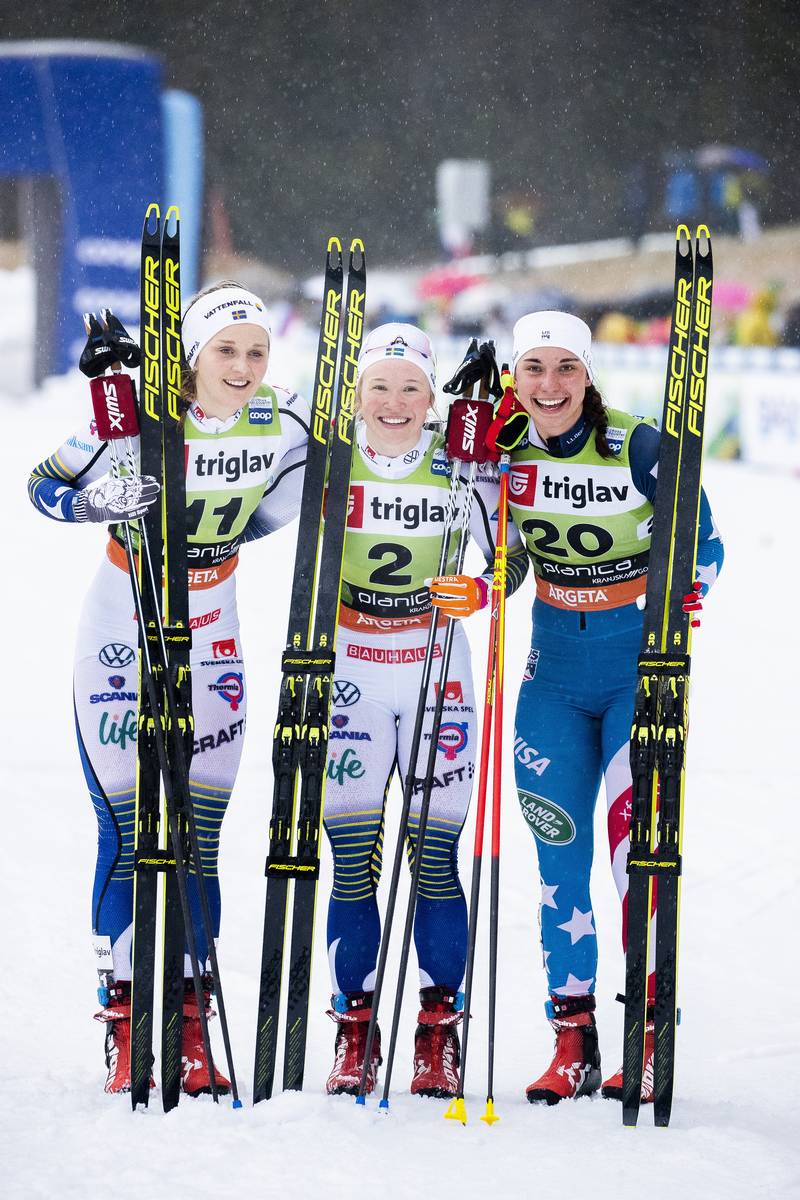
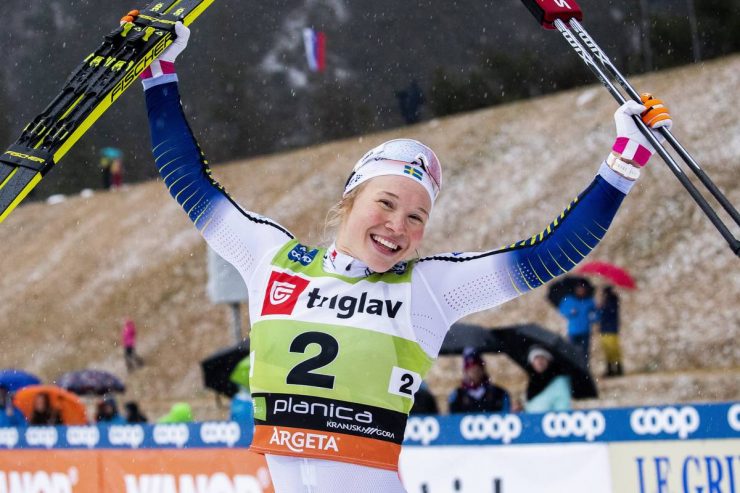
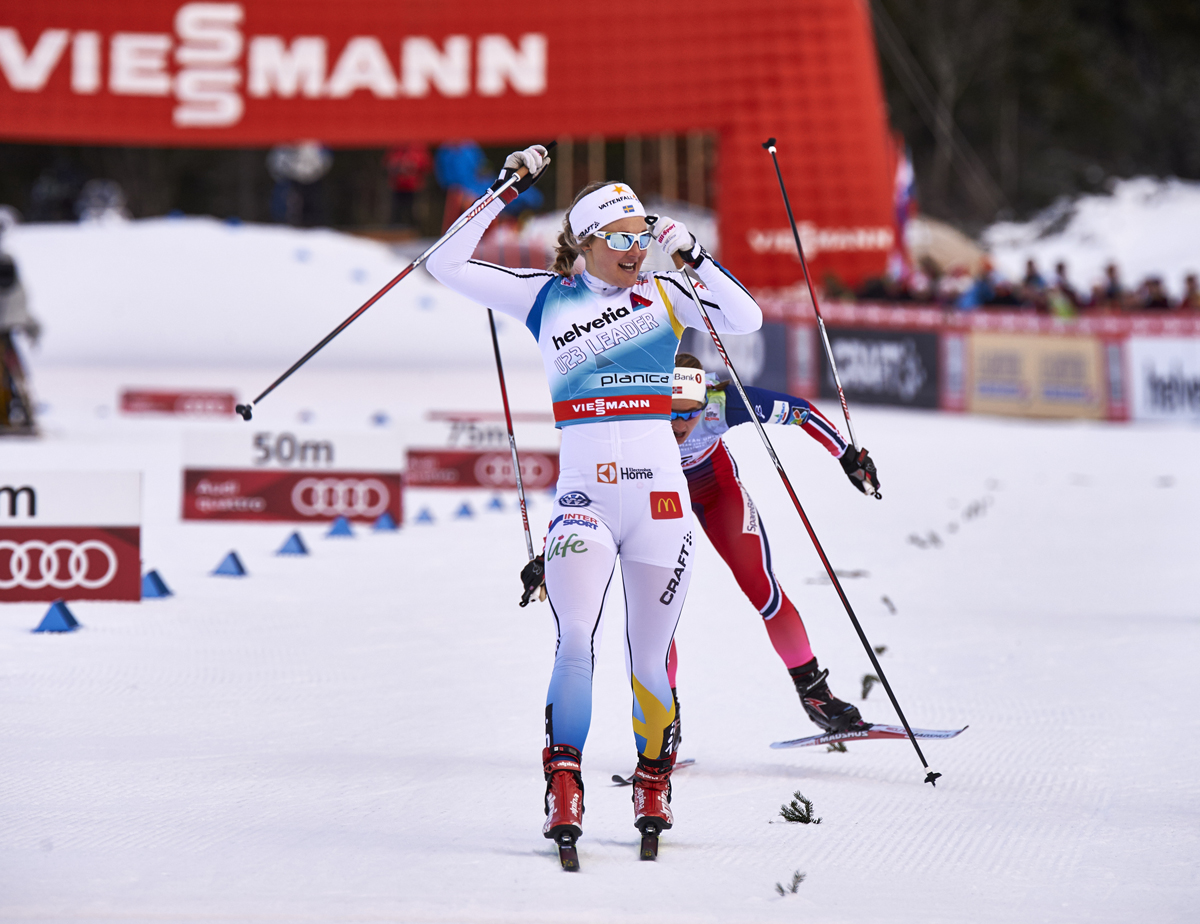
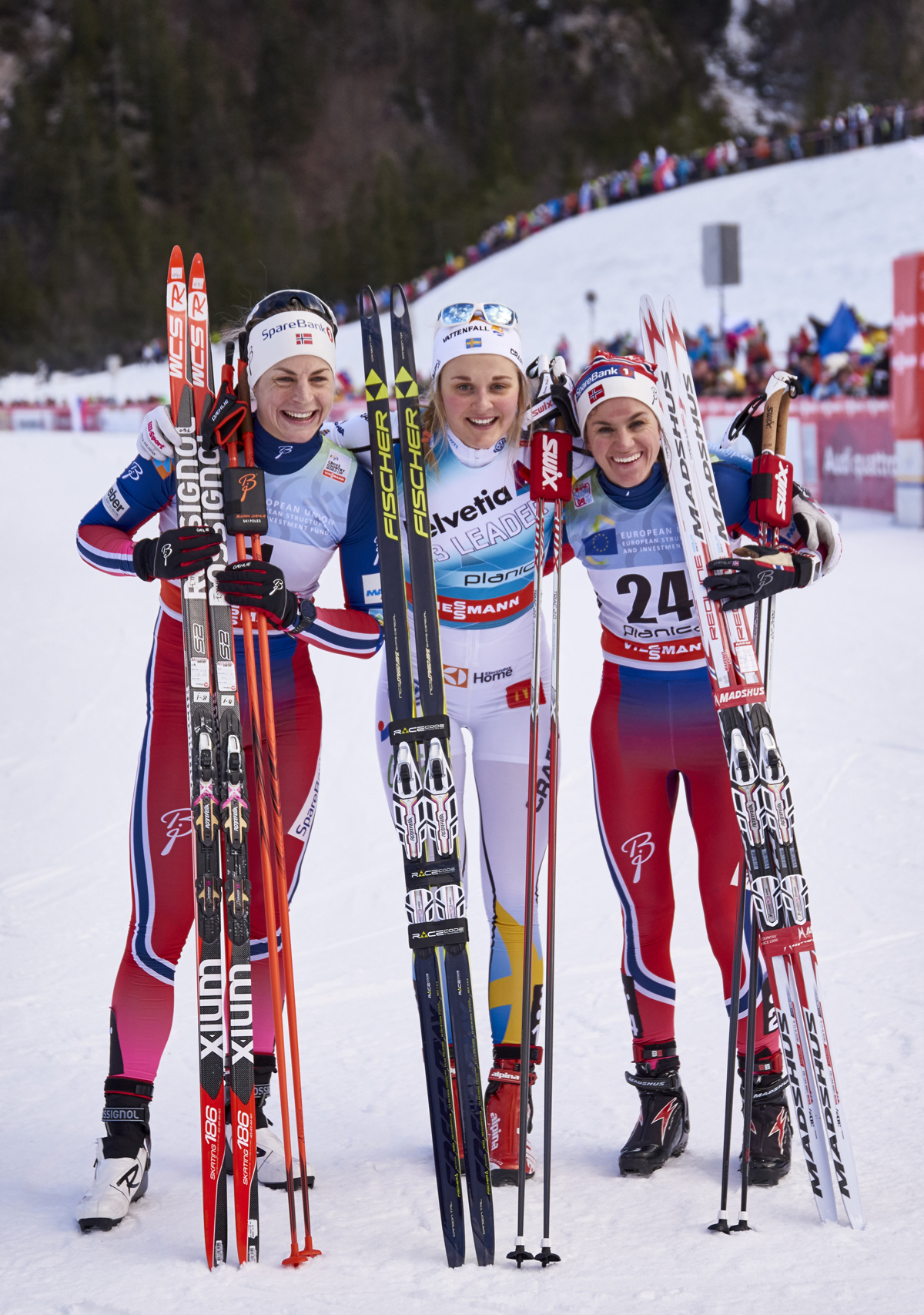
A rainy women’s podium after the 1.2-kilometer skate sprint in Planica, Slovenia. Sweden’s Jonna Sundling took the win followed by her teammate Stina Nilsson. Julia Kern (USA) took third. (Photo: NordicFocus)
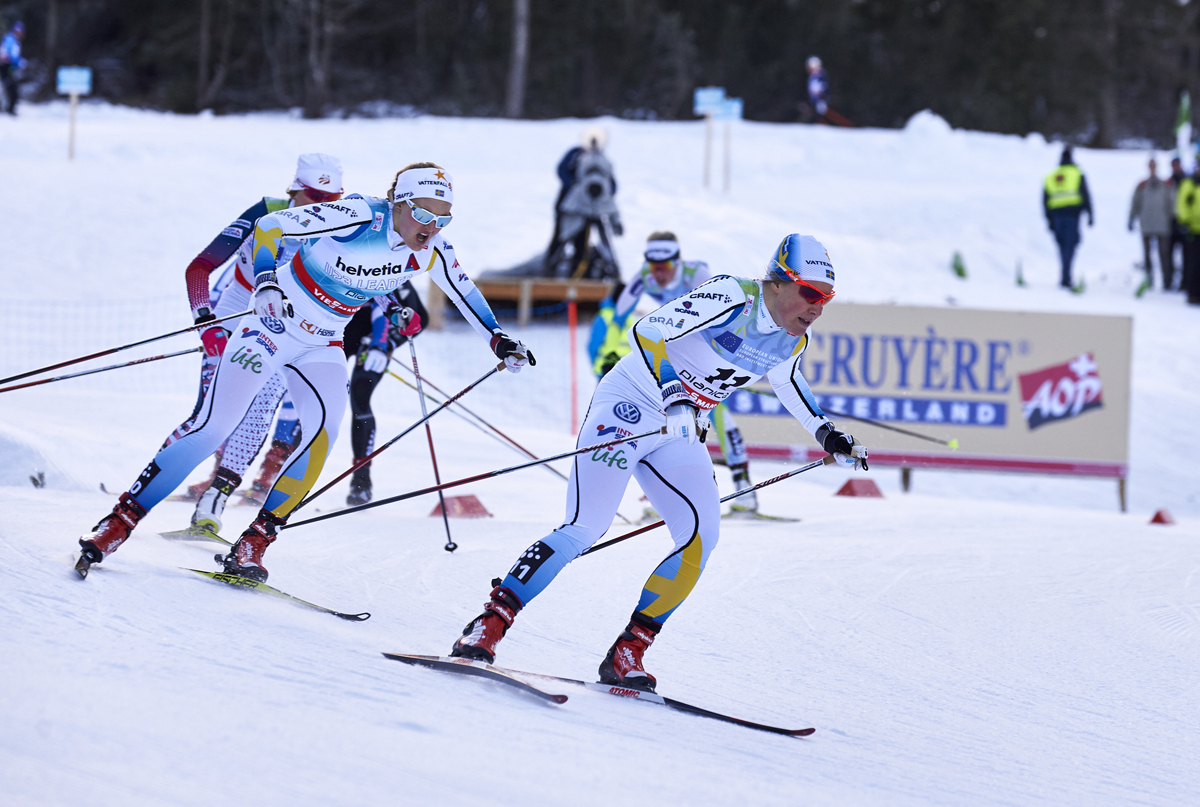
Temperatures over 40 degrees Fahrenheit, steady rain that peppered camera lenses, sparse broods of fans huddled under umbrellas, and a ribbon of white farmed snow. After a wintery start to the season in snowy Ruka, Lillehammer, and Davos, athlete’s found their spring-like gear racing the 1.2-kilometer freestyle sprint in Planica, Slovenia. With many “all-arounders” choosing to sit out the sprint focused weekend to rest for the upcoming Tour de Ski, the intimate subset of athletes contained many of the World Cup’s top short track athletes.
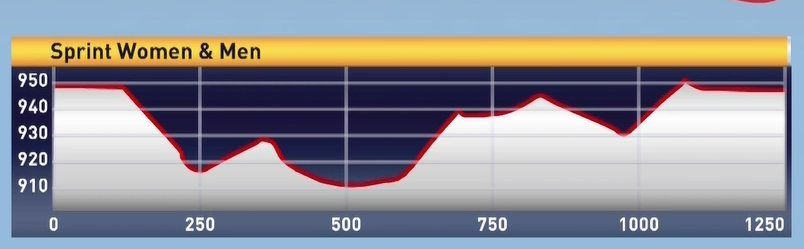
The profile of the 1.2-kilometer sprint course in Planica, Slovenia. (Photo: Screeshot FIS)
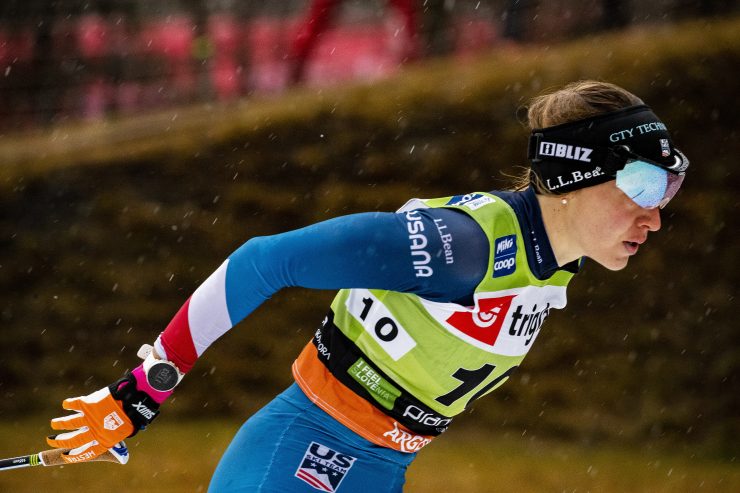
Last week’s podium finisher Sophie Caldwell was the fifth fastest qualifier, 0.56 seconds behind top finisher Laurien van der Graaff of Switzerland. Caldwell faced off with Jonna Sundling of Sweden in the first heat of the quarter-finals, leading their peers through a smooth heat and crossing the line 0.03 seconds apart with Sweden in front.
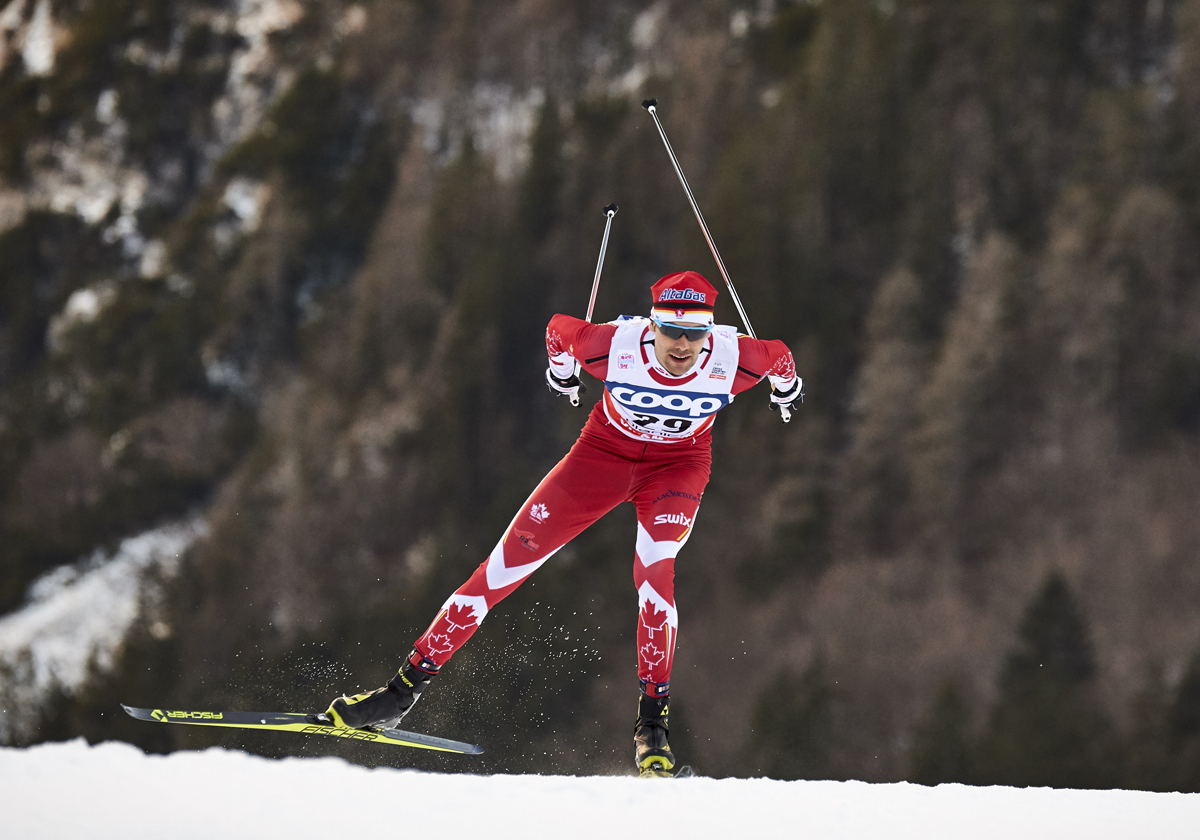
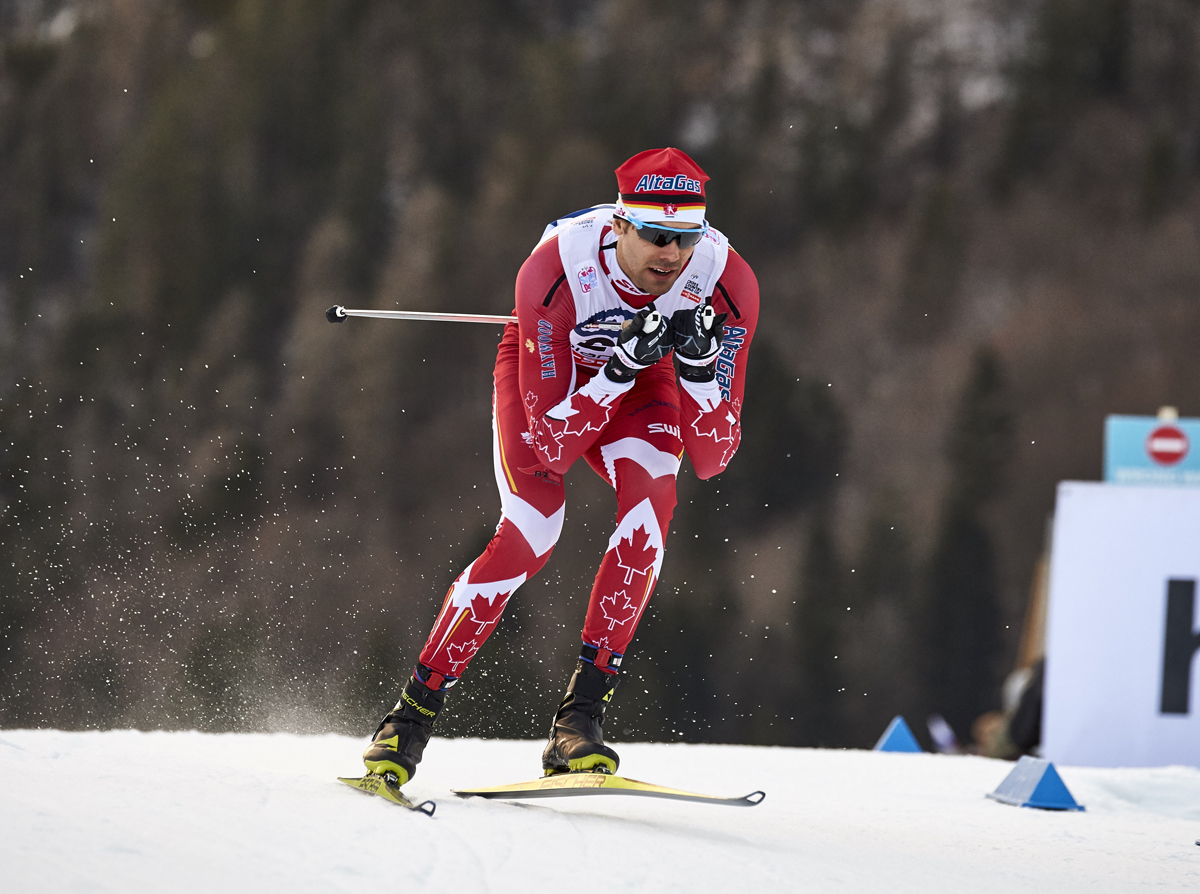
All focus, Sophie Caldwell flies to a fifth place result in qualification during the 1.2-kilometer freestyle sprint in Planica, Slovenia. (Photo: NordicFocus)
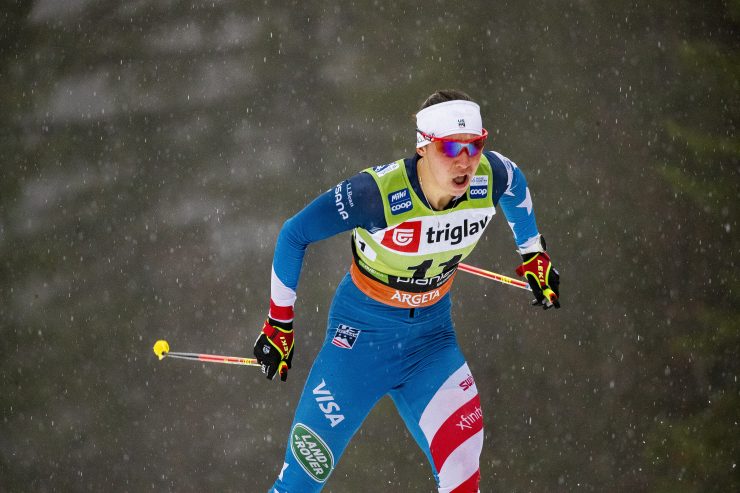
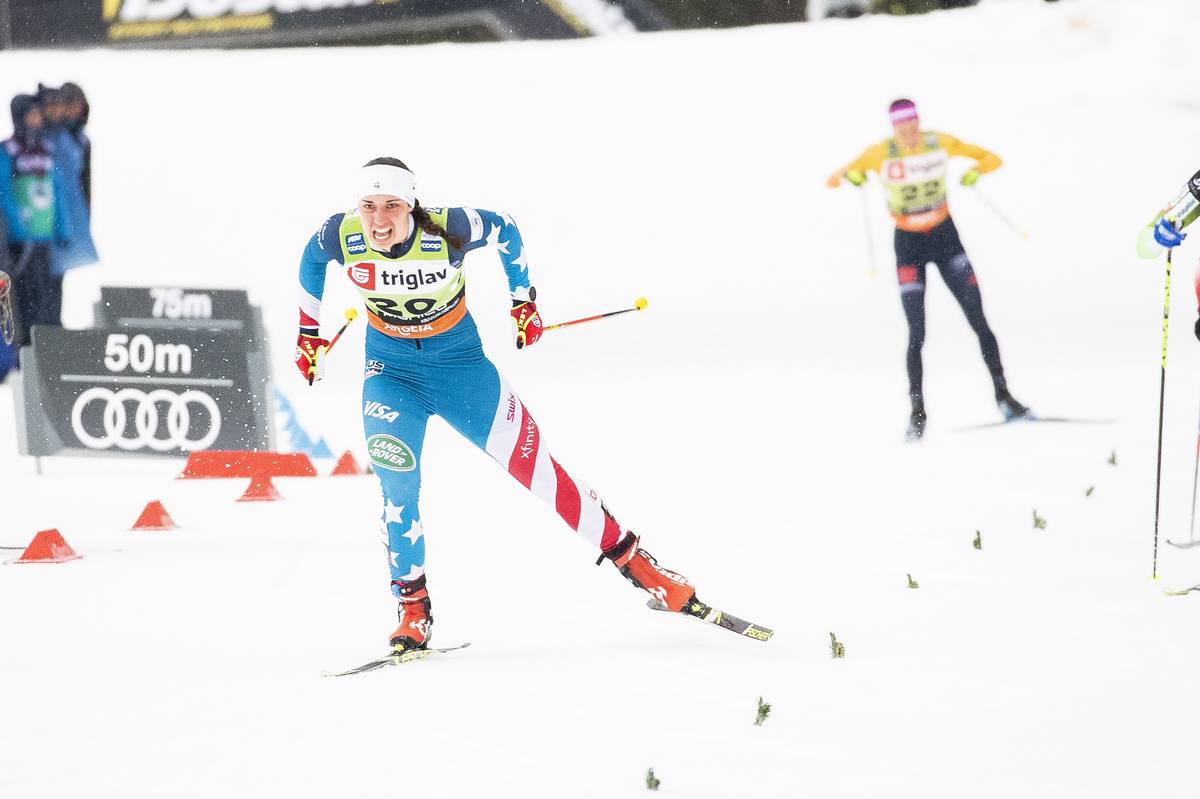
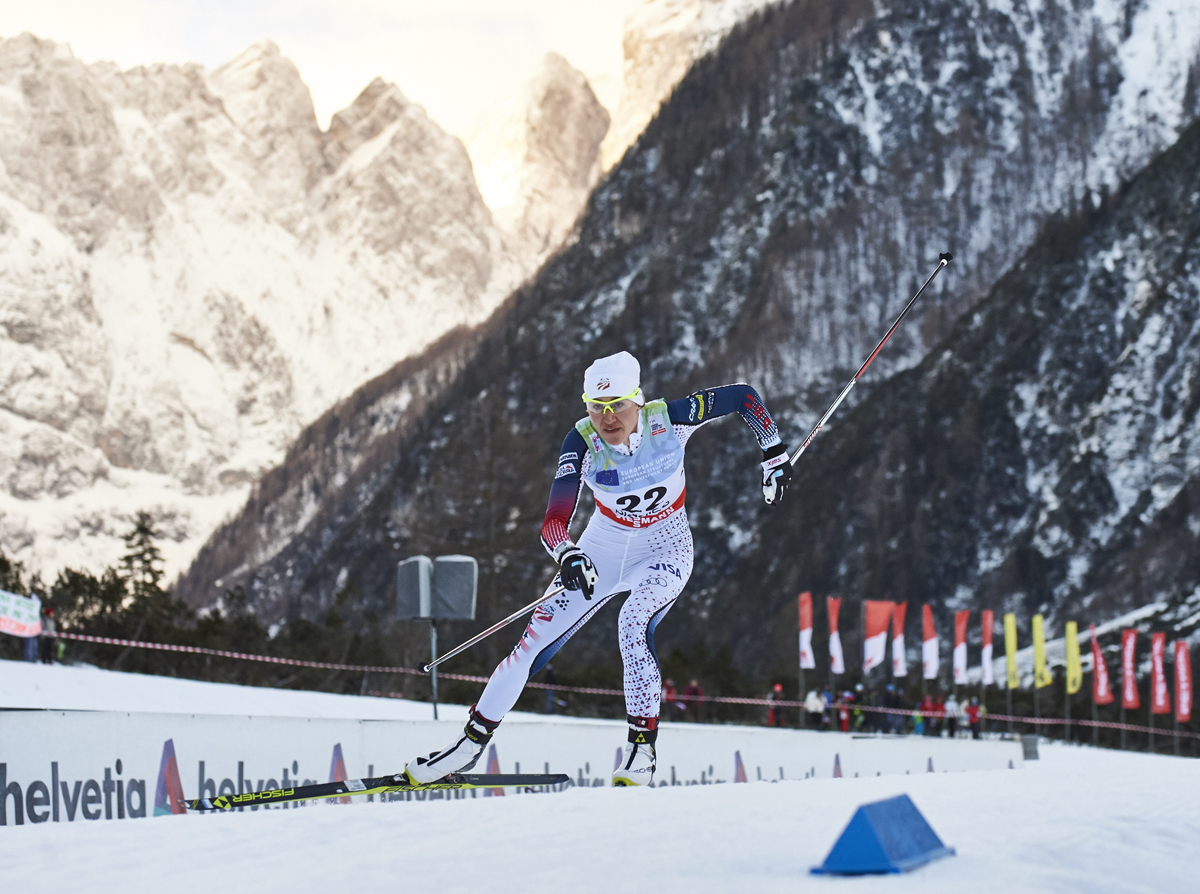
Julia Kern crests a hill on her way to a 20th place result in qualification. (Photo: NordicFocus)
Continuing to make a statement that she belongs with the sharp end of the field, Julia Kern qualified in 20th and raced in the fifth heat of the quarter-finals where six unique countries were represented.
After a conservative start, Kern was tucked at the back of the pack at the halfway mark of her quarterfinal, out of trouble when Czech athlete Theresa Beranova lost control on a fast corner and slid off the track. With a high-tempo fury, she surged around the left side at the start of the climb at the 500 meter mark to take control for the second half of the race with Maja Dahlqvist of Sweden.
Attacking on the climb with 200 meters to go, Kern surged again. Her tempo was matched by the Swede’s until Dahlqvist suddenly caught an edge and fell to the ground. Peerless, Kern flew to the finish line, her braid whipping back and forth with each powerful V2 push.
In the semi’s, Caldwell faced a pack of three Swedes, Sundling, last week’s surprise champion Linn Svahn, and 2019 sprint crystal globe winner Stina Nilsson. Also in the first heat was Norway’s top sprinter Maiken Caspersen Falla and Ane Appelkvist Stenseth. Rounding a fast turn, Falla stepped on the tip of Stenseth’s ski and the two tangled to the ground, now out of contention. Caldwell skied to third in the heat, crossing the line in a close finish with Sundling and Svahn. Her time was fast enough to secure a lucky loser spot in the final.
In her semifinal, Kern tucked into the middle of the pack, matching Anamarija Lampic of Slovenia and Johanna Hagstrӧm of Sweden. Repeating the power move that worked in the quarter, Kern seized her opportunity to surge to the front on the climb, maintaining her position over the crest of the hill and down the straight away to the finish solidifying her first spot in a World Cup final. Lampic finished second in the heat (+0.57).
Three Swedes, two Americans, and one Slovenian in the final.
Julia Kern locks eyes on the finish as wins her semi-final heat of the 1.2-kilometer freestyle sprint in Planica, Slovenia. (Photo: NordicFocus)
Racing in front of her home crowd, Lampic took an early lead in the final, tailed closely by her competitors. Just before halfway, Nilsson and Sundling took control on the climb with the Americans following closely.
Anamarija Lampic (SLO) celebrates finishing 5th place in front of a home crowd in Planica. (Photo: NordicFocus)
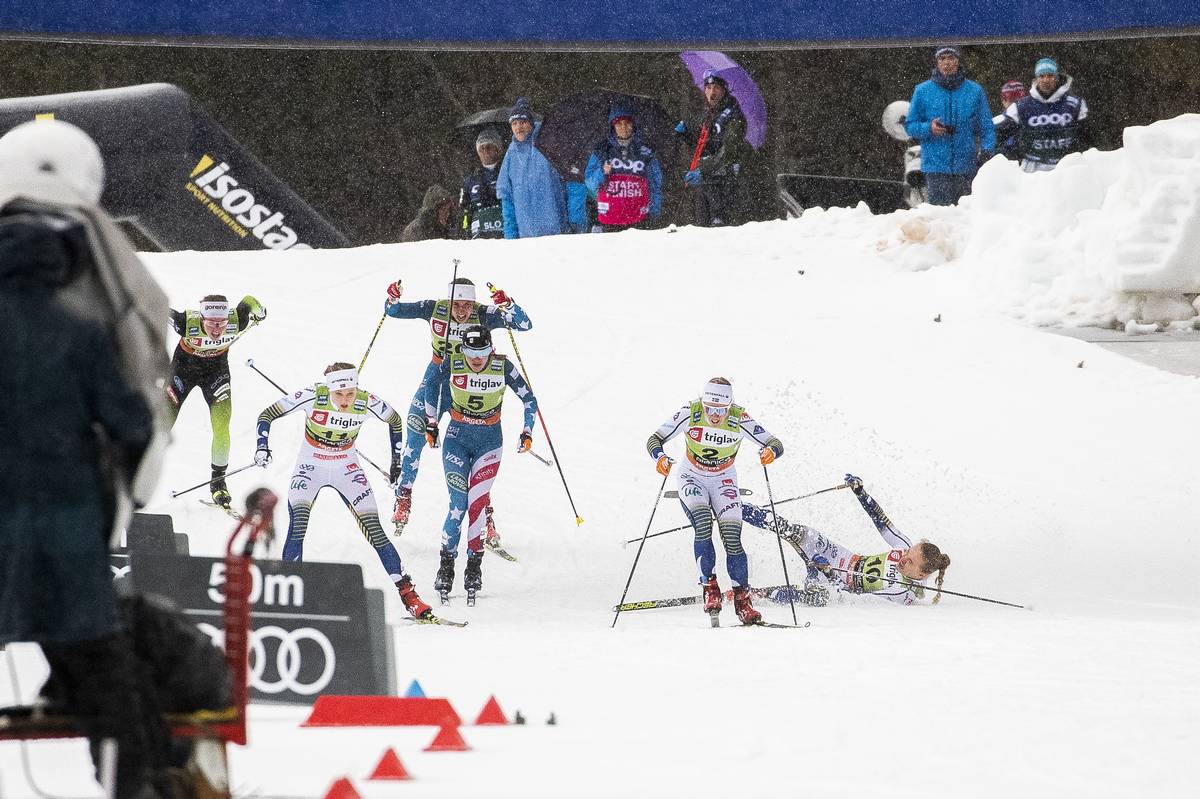
Coming into the straightaway, Svahn and Nilsson caught ski tips. Svahn lost her balance falling backward just in front of Caldwell, who managed to smoothly dodge the crash, accelerating to the finish.
In a dual with between teammates, Sundling slid her boot across the line for the win, stopping the clock at 2:32.6, Nilsson 0.22 seconds behind.
In a finish line interview, FIS called Sundling’s performance an “adventurous victory” given the weather.
“It was crazy,” agreed Sundling. “It was thunder and rain and now snow.”
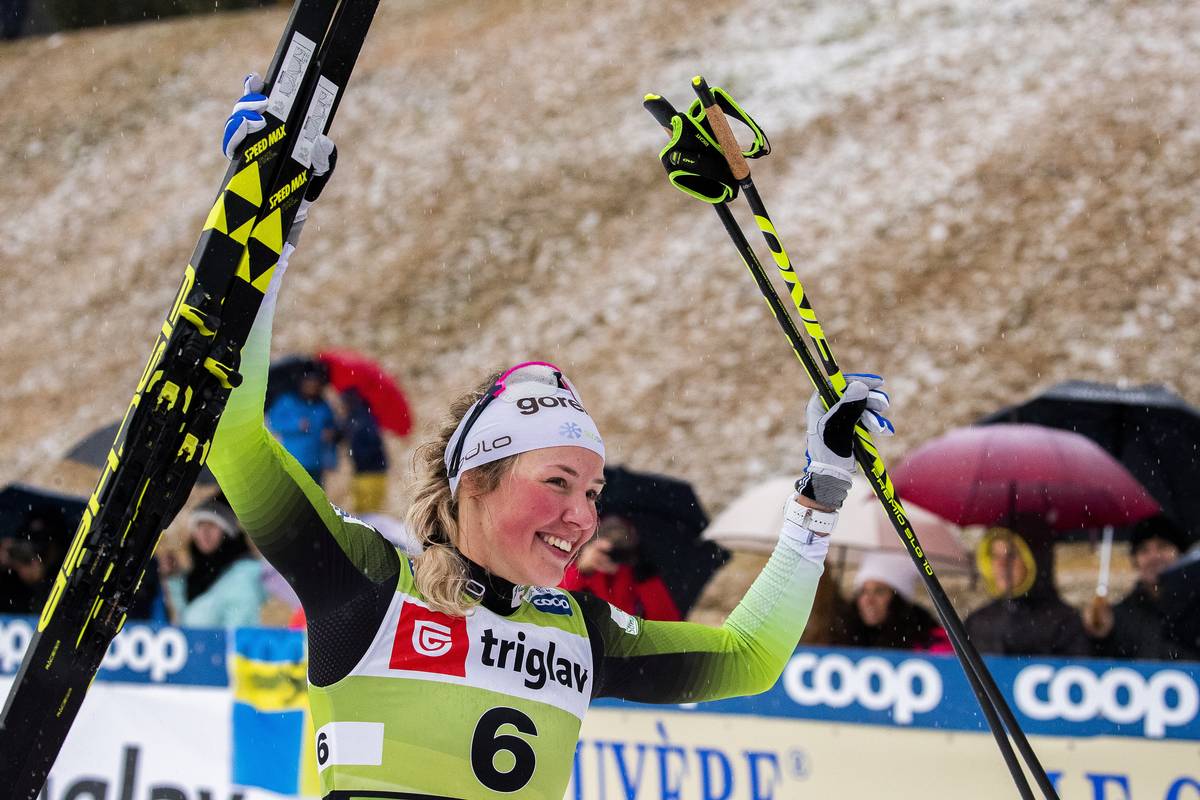
Sweden’s Jonna Sundling celebrates her victory after the 1.2-kilometer freestyle sprint in Planica, Slovenia. (Photo: NordicFocus)
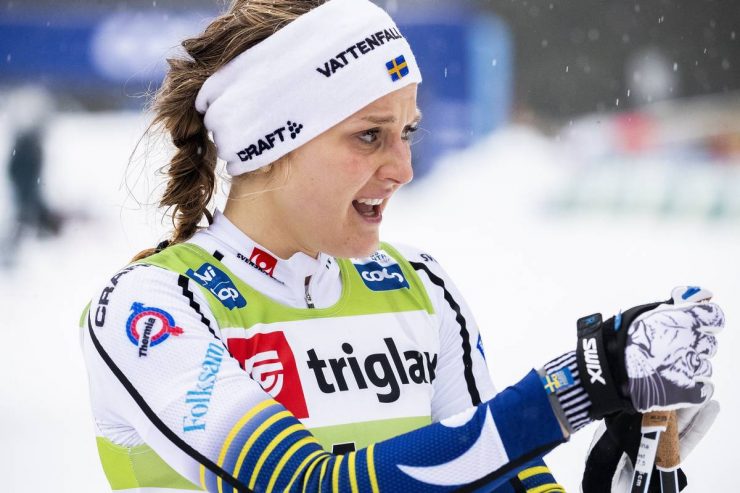
Stina Nilsson catches her breath after her second place finish at the 1.2-kilometer skate sprint in Planica, Slovenia. (Photo: NordicFocus)
Powering in their wake, Caldwell and Kern locked eyes on the finish. In the final meters, Kern outmatched Caldwell’s speed, throwing her boot over the line just ahead of her veteran teammate. She finished 0.79 behind Sundling, and Caldwell took 4th (+0.91). Lampic finished 5th (+1.49), followed by Svahn (+48.51) who skied slowly to the line looking furious.
Sophie Caldwell (black headband) congratulates Julia Kern on her first World Cup podium (3rd). (Photo: NordicFocus)
Julia Kern. 22-years-old. First World Cup final, first podium.
The Americans embraced, their backs rising and falling rapidly as they simultaneously laughed and caught their breath.
Kern carried momentum from last weekend’s strong performances in Davos; Kern was 15th in the freestyle sprint and 19th in the 10 k. In her post-race interview, she discusses her mindset as she entered uncharted territory in the final and why she was excited for the suboptimal rainy conditions in Planica. She also shares what’s next for her this season.
Post-race interview with Julia Kern.
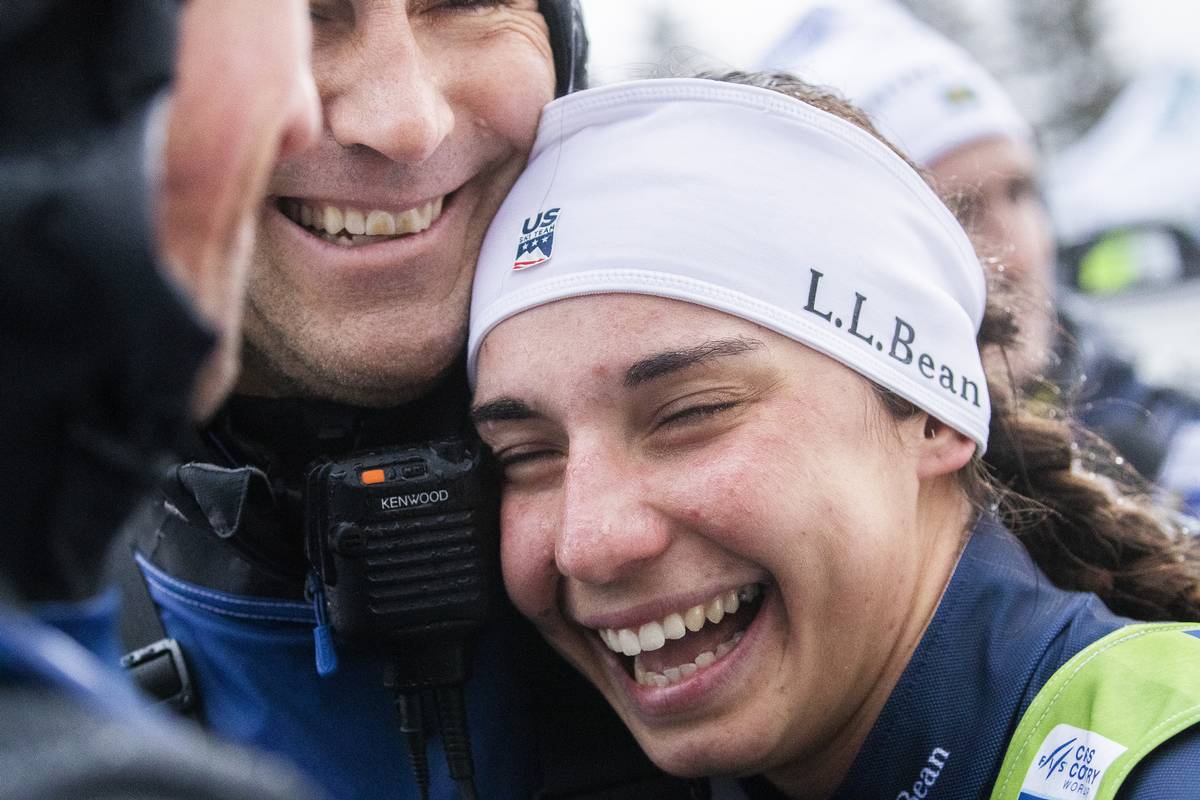
An ecstatic Julia Kern celebrates her first podium performance with her coaches after the 1.2-kilometer freestyle sprint in Planica, Slovenia. (Photo: NordicFocus)
Matt Whitcomb provided further insight into Kern’s attitude heading into the race, the tactics the team discussed, and her performance in the heats.
Post-race interview with Matt Whitcomb on Julia Kern’s first podium
Sophie Caldwell gathers herself after racing the 1.2-kilometer skate sprint in Planica, Slovenia. (Photo: NordicFocus)
Post-race interview with Sophie Caldwell
Though her vision of herself has changed over the years, Caldwell identifies short fast courses like Planica as a place she can excel. She shares insight into the course and her tactics, as well as her plans for Christmas and the following weeks.
Sophie Caldwell dodges a crash with less than 200 meters to go in the 1.2-kilometer skate sprint in Planica, Slovenia. (Photo: NordicFocus)
Post-race, Whitcomb analyzed Caldwell’s journey through the heats and her feelings on finishing just off the podium.
Post-race interview with Matt Whitcomb on Sophie Caldwell’s performance.
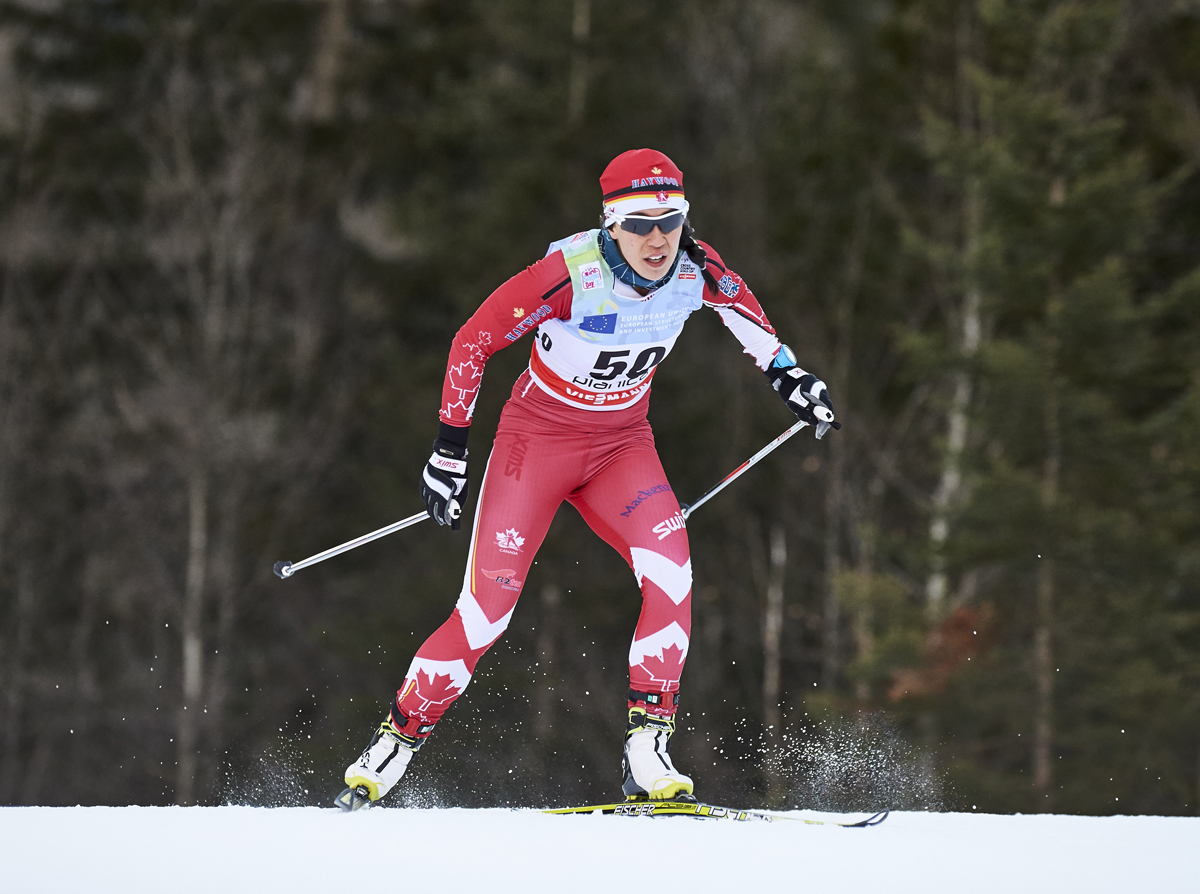
Canada’s only entrant Dahria Beatty qualified in 29th. She took third in the first heat of the quarter-finals, just over half a second behind Caldwell and Sundling. As her time was not fast enough to earn a lucky loser spot, she did not move onto the semi’s and ended the day in 16th.
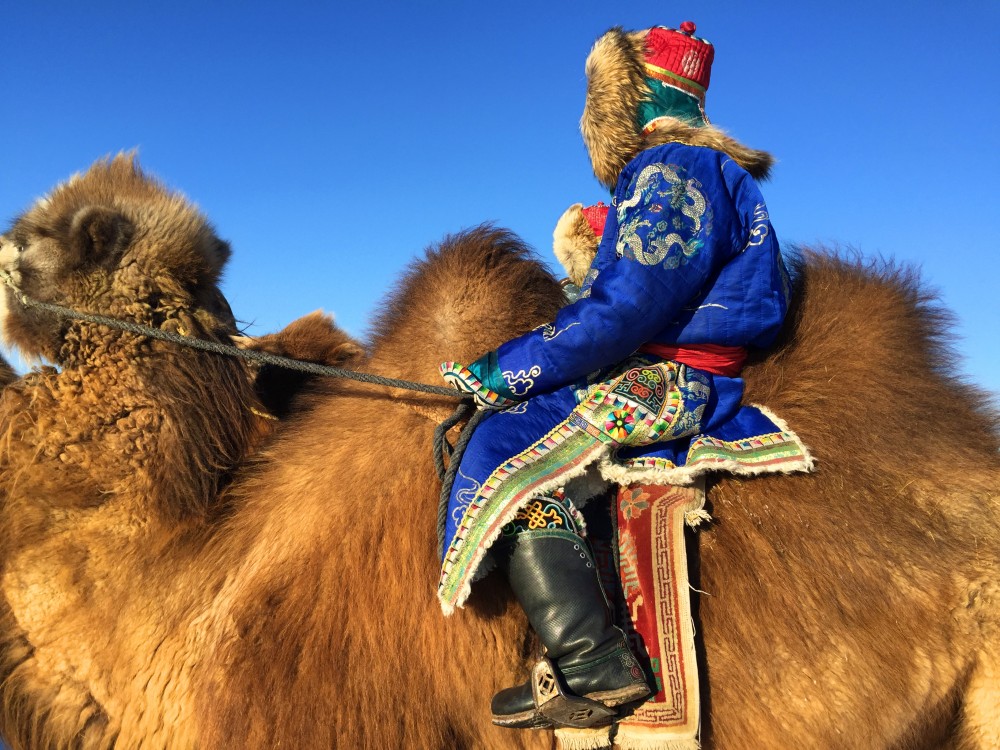
Competitors at this year’s China Tour de Ski spent their post-race recovery watching and riding camels in Xiwuqi, Inner Mongolia. (Photo: Torin Koos)
Does riding a camel count as a post-race cool down? For nordic competitors in the 2016 China Tour de Ski, it definitely did.
“The last day [of the China Tour de Ski], we had a sprint race in a place called Xiwuqi. Then in the afternoon we got to go and ride camels and see a camel race. I mean who does that?” exclaimed Holly Brooks, an Alaska Pacific University (APU) elite team member, two-time Olympian and most recently, a China Tour de Ski competitor, in a phone interview.
Torin Koos, who also raced at this year’s eighth edition of the China Tour de Ski (TdS), shared in Brooks’ surreality of a post-race jaunt on an unusual four-legged friend.
“There was a camel race going on and the athletes got wind of it and wanted to go. So the [event] organizers arranged a bus for us to go out there after the final races,” Koos, a four-time Olympian and currently an investigative news producer for KSL TV, the NBC station in Salt Lake City, said on the phone. “When else are you going to do your post-race recovery at a camel race in Mongolia?”
On top of camels, this year’s China TdS involved five stages of racing: a 1.2-kilometer freestyle sprint for Stage 1, another 1.2 k freestyle sprint for Stage 2, 50 k classic mass start “Vasaloppet” for Stage 3, 3.8 and 5.7 k mass starts for Stage 4, and finally a third 1.2 k freestyle sprint for Stage 5.
“Each stage was unique in and of itself. I mean, we had five races in three different venues,” Brooks said of the race schedule, which spanned from Jan. 1-7.
Another American racer, Lauren Fritz of APU explained on the phone, “They don’t block off a lot of time for travel. [Koos, Brooks and I] flew into China and got in at midnight” on Dec. 30.
“We had all of the next day to chill … then we raced the first stage [on Jan. 1]. The next day we took a 6 a.m. bus to a train station, took a two-hour train ride to the city, then another bus to our hotel. We raced two more days and then we got on a bus for 17 hours to Inner Mongolia for the last two stages of racing.”
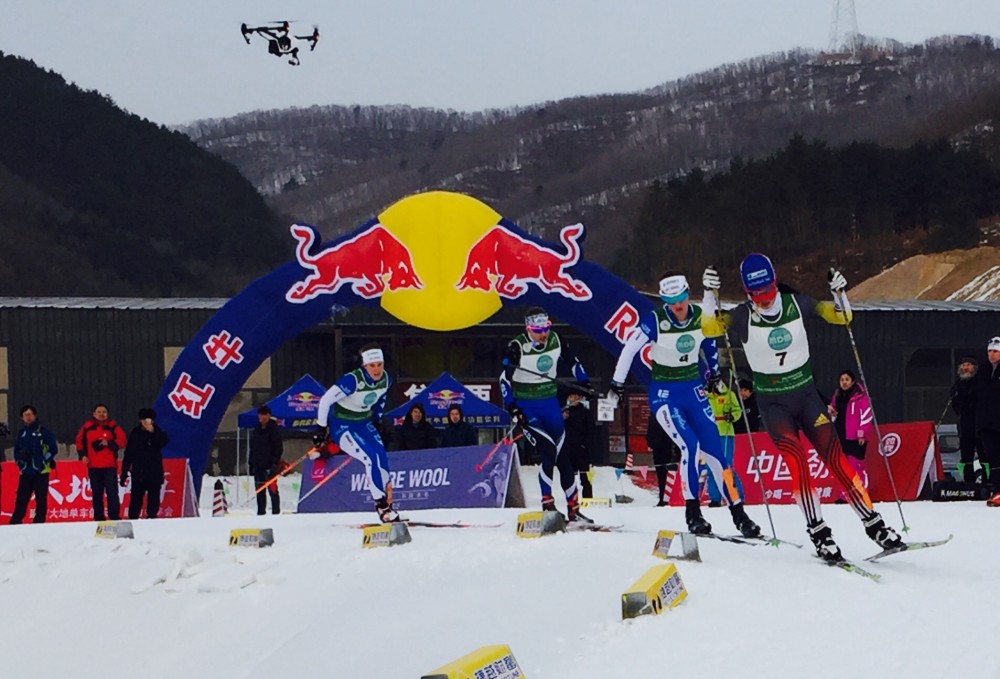
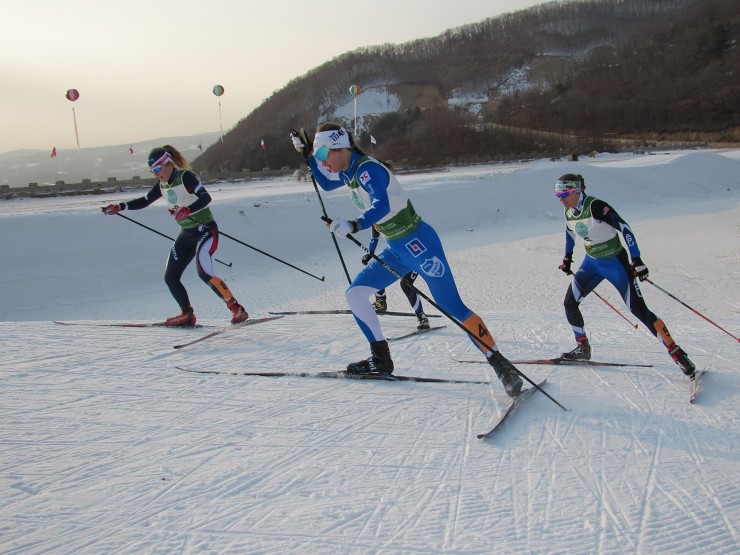
The Stage 1 women’s sprint, (from right to left) with Qu Ling (China) leading Mimmi Bjørn (Sweden), Lauren Fritz (U.S.) and Linda Danvind-Malm (Sweden) on Jan. 1 at the China Tour de Ski in Yanji. Fritz placed fourth overall, Brooks (not shown) missed the final in fifth place. (Photo: Holly Brooks)
While a 17-hour bus ride the day before a race does not appear in most skiers’ training logs, neither does a 3.8/5.7 k freestyle mass start race in Inner Mongolia.
“A 3.8 k prologue mass start is a pretty crazy race,” Fritz recalled. “It was a 1.9 k loop and the girls did it twice.”
Racers in the fourth stage launched into a steady 500-meter incline out of the start, especially unforgiving after 1,500-kilometers of bus travel the previous day.
“You could V2 the whole hill if you had good skis, so it was a hammer-fest out of the start,” Fritz said. “It was pretty cold out, I didn’t really warmup that well and because we had a 17-hour bus ride the day before, I was pretty tired. Definitely got to the top of the hill after V2ing the whole thing and was just toasted.”
The 27-year-old went on to finish 10th overall, 43.31 seconds back from the women’s prologue winner, Terese Andersson of Sweden, who topped the 3.8 k freestyle mass start in 10:10.76.
Just 1.22 seconds behind Andersson in third place, Brooks felt that with more closing speed the prologue title could have been hers.
“It was kind of fast and furious,” Brooks said. “They had a really good course and I was up there to start, but without the training I just didn’t have the finishing speed for the last 200-meters.”
Brooks spent much her fall unable to train, due to a rollerskiing accident that left her needing reconstructive surgery in her thumb’s ulnar collateral ligament.
“I rollerskied into a pile of sand and I got up and my thumb was bent backwards … so I had surgery in late September and was in a cast for two months,” she explained.
This year, Brooks has also been working to complete her masters degree in counseling psychology, which she said has taken priority over ski training.
China Tour de Ski Race Schedule: Stage 1: (Jan. 1) 1.2 k freestyle sprint Yanji, Jilin Stage 2: (Jan. 3) 1.2 k freestyle sprint Changchun, Jilin Stage 3: (Jan. 4) 50 k classic Changchun, Jilin Stage 4: (Jan. 6) 3.8/5.7 k freestyle mass start Xiwuqi, Inner Mongolia Stage 5: (Jan. 7) 1.2 k freestyle sprint Xiwuqi, Inner Mongolia
“Last year I chased the marathon scene and really kind of raced myself into submission,” she said. “I did 11 marathons and traveled by myself for four months in Europe … and at the end of the season I was just exhausted. So I ended up taking a lot of time off this summer. Then this fall, I was working full time on an internship and in grad school.”
The other American to finish third in Stage 4 was Koos, who crossed the line just 1 second after Swedish skier Lukas Johansson, who won the men’s 5.7 k freestyle mass start in 13.56.5.
“I definitely felt like I could have won it. I kind of got taken out on the next-to-last climb so I was battling back up [to the front] for a bit,” Koos explained.
However, both Brooks and Koos felt that as the Tour progressed, so did their ski racing.
“I was starting to feel better and better as the Tour went on. I think I was also getting further away from having the flu,” said Brooks, who spent much of the final week in December battling illness.
“That last qualifier somehow I was able to win it by eight seconds which I was super pumped about, but then once again, I just didn’t have the final finishing speed,” the 33-year-old Washington state native added. Brooks placed second in the Stage 5 freestyle sprint.
“Definitely the highlight was going to Inner Mongolia,” Koos said. “I’ve never seen so many cameras out on a race course. There were hundreds of people out there taking pictures. It had this big-time feel, but in the middle of nowhere.”
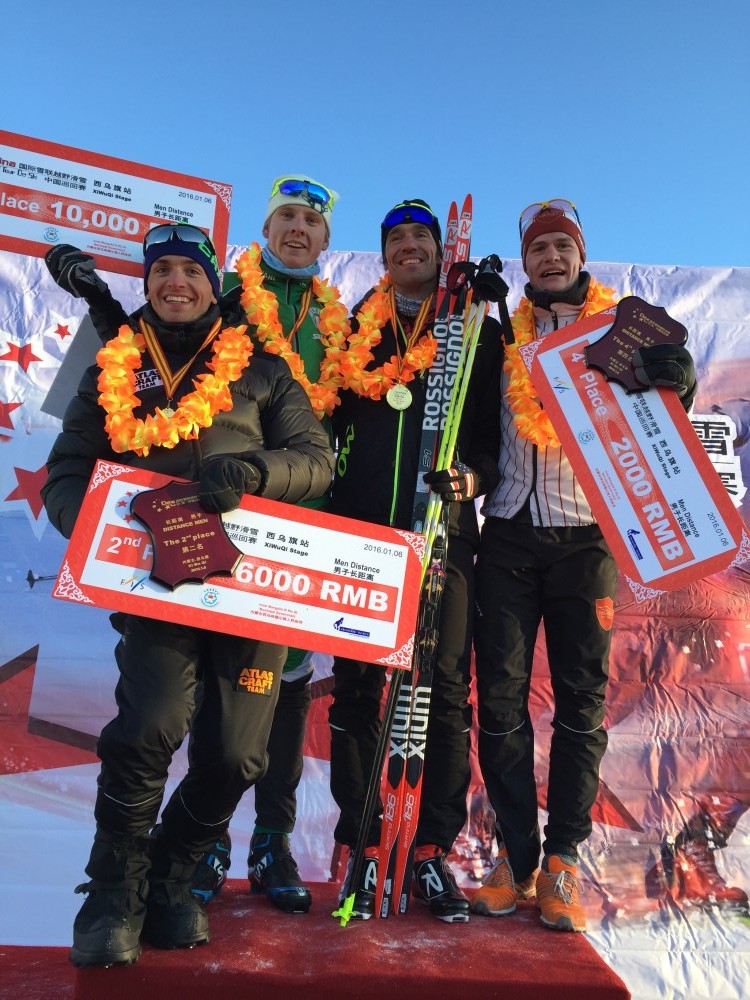
(From left to right) The Stage 4 men’s 5.7 k freestyle mass start podium, with second-place finisher Daniel Máka (Czech Republic), race winner Lukas Johansson (Sweden), American Torin Koos in third., and Torben Svensson (Sweden) in fourth sharing the top spot of the podium with prize money in hand on Jan. 6 at the China Tour de Ski in Xiwuqi, Inner Mongolia. (Photo: Holly Brooks)
“I also raced the best in Mongolia and it didn’t hurt getting on the podium [in the mass start],” he added. “I won the the sprint [qualifier] there, but couldn’t quite get it done in the rounds.”
On Jan. 7, the final day of racing, Koos advanced to the quarterfinal in the freestyle sprint. However, since only the top four advanced to the final in all of the China Tour de Ski sprint events, Koos missed moving past the semifinal and finished in fifth overall.
“All in all, it’s a little bit different when you’re working full-time and your priorities have changed a little bit,” 35-year-old Koos said of his training coming into the China TdS. “But I think as the Tour went on, I was getting stronger and I think I left there at a pretty high level.”
Based off their sprint race results from Stage 1 and Stage 2, Koos and Brooks were accurate in deeming themselves improved by the Tour’s finale.
In the first freestyle sprint, Koos qualified for the quarterfinal, but did not move on to the semifinal, ending the day in 11th.
Canadian Graham Nishikawa, the lone Canadian competitor at the China Tour de Ski, raced to sixth that day.
“I always wanted to compete in the Tour de China and this year it worked out. It was a great event! The organization was stellar and the racing was really fun,” Nishikawa wrote in an email. “We got to see so much of China and travel to places that I would have never otherwise seen. The racing was good for me. I had some bad luck with breaking poles, but raced fairly consistently everyday.”
Nishikawa, 32, is a member of the Para Nordic World Cup Team as a guide for Brian McKeever.
For Brooks, Stage 1 left her in fifth, just outside of the women’s final after qualifying for the quarter and semi. Fritz broke the bubble, moving all the way to the final, where she placed fourth.
“The sprints were my focus because I’ve had the most success in sprinting before,” Fritz said. “And they went pretty well, I had a few tactical errors and a little bad luck. Didn’t quite achieve what I wanted, but I was still pretty happy.”
Stage 2 brought the racers to Changchun, where they raced the second freestyle sprint. Here, Koos bested his previous result, finishing fifth overall, just outside of the final. Nishikawa moved into 13th.
Fritz once again advanced all the way to the final in the second freestyle sprint. Coming into the finishing stretch, she found herself in second, closing in on first place. However, with 150-meters to go, Fritz said someone stepped on her pole and she crashed, ultimately finishing the final in fourth.
Brooks qualified for the quarterfinal and semifinal that day, but didn’t advance to the final and finished the day in seventh overall.
“I’ve never seen so many cameras out on a race course. There were hundreds of people out there taking pictures. It had this big-time feel, but in the middle of nowhere.” — Torin Koos on the racing atmosphere in Inner Mongolia
The 50 k Classic Vasaloppet and More
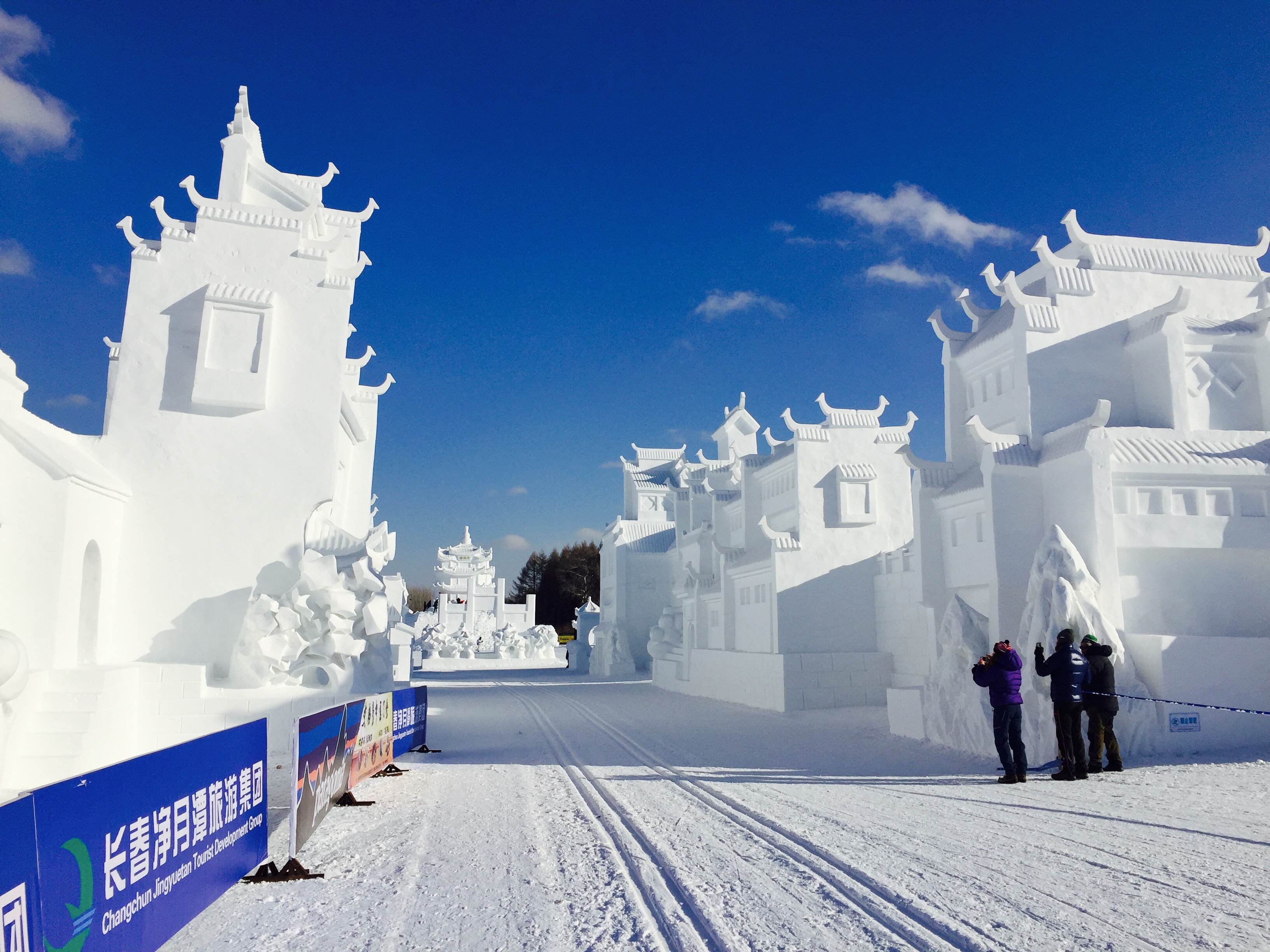
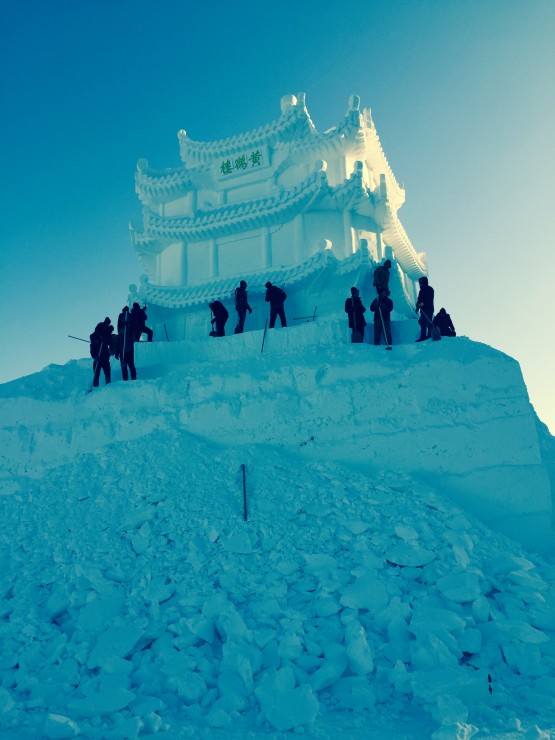
Snow castles and carvings that might even put Italy’s Roman Pantheon to shame — if not for the risk of melting — marked the lap lane to the China TdS 50 k Vasaloppet.
“Some things about China you just can’t believe. People think that we do things bigger than anybody in the U.S., but in some regards, it’s definitely not true,” Koos said. “Like, at the Chinese Vasaloppet, they had these sculptures that we were skiing by and it was something that you could maybe envision Las Vegas doing.”
This year’s China Vasaloppet promised athletes 50 k of skiing through the Jingyuetan National Forest Park, located in the northeast Jilian Province of China.
Sculptures surround the lap lane for the 50 k classic Vasaloppet marathon on Jan. 4. at the China Tour de Ski in the Changchun Jingyuetan Park. (Photo: Holly Brooks)
“Racing through snow sculptures that are five stories tall, I mean it was magnificent,” Brooks described. “You’re doing a lap lane through pavilions, doves, and castles. I’ve been in a lot of stadiums in my life, and I’ve been in a lot of marathons all over the world and this was incredible.”
A total of 258 racers showed up for the two-lap marathon and while not everyone finished, most soaked up the sunny skies and spectacular snow artwork that surrounded them during the race.
In the women’s event, Brooks led the Americans in sixth overall in 2:43:33.9, about 9 1/2 minutes behind the race winner Qinghua Ma of China, who completed the 50 k course in 2:34:08.1. Fritz finished 11th (+16:23).
“I’ve been in a lot of stadiums in my life, and I’ve been in a lot of marathons all over the world and this was incredible.” — Holly Brooks on racing the Chinese Vasaloppet 50 k classic
The men’s field saw Czech skier Petr Novak take the overall 50 k win in a time of 2:19:26.3. Koos finished 12th, 8:05.5 minutes behind Novak. Nishikawa finished about a second after Koos in 13th.
Along with a marathon through snow mansions, the China TdS boasted festival banquets almost every night.
“On this trip, every other day we were having a banquet or a celebration,” Brooks said. “Just the atmosphere and the ambience, I actually turned to someone and said, ‘I see why the Chinese don’t come to the World Cups very often, they seriously do it up in their own country.’ ”
Brooks was not alone in thinking that the tone of the Tour made for an enjoyable racing experience.
“The whole attitude at the tour was so different and it was really refreshing,” Fritz said. “If you were in the top few you were gunning for some good prize money… but once the skis came off it was way more fun than a normal SuperTour race trip, because there’s no pressure and everyone’s there to have a good time.”
A couple Americans did pocket prize money, though for Koos, it did not stay there long.
“I won a few hundred bucks or something. It was enough to buy me a sweet custom made grey suit in Beijing, so I’m looking pretty dapper these days. When in China, you just got to live it up to the fullest,” he said.
“If I had skied just a little bit faster I could have made some real money,” he added. “Maybe that’s motivation for 2017.”
Brooks also came away from the week with monetary winnings. However, the all-expense paid trip remained more important.
“There’s a company called Nordic Ways, a Swedish Tour Company, and they do everything,” she explained. “The bought my [plane] ticket. You show up at the airport and there’s someone holding up a sign with your name on it. All the transportation, three meals a day, everything is covered.”
Overall, Brooks finished the Tour in fourth, Koos placed sixth in the Tour, Fritz was the seventh overall woman, and Nishikawa the 10th overall male.
“There are so many ways to be a cross-country ski racer and I’m just really enjoying having new experiences, having new adventures, and reinventing myself every season,” Brooks said. “I feel like I really accomplished that by going to China.”
Holly Brooks (r) atop a camel after the final stage of the China Tour de Ski in Xiwuqi, Inner Mongolia. (Photo: Holly Brooks)
American Torin Koos during the qualifier of the men’s 1.2 k freestyle sprint on Friday, Jan. 1 at the China Tour de Ski in Yanji. (Photo: Torin Koos)
Sculptures surround the lap lane for the 50 k classic Vasaloppet marathon on Monday, Jan. 4. at the China Tour de Ski in the Changchun Jingyuetan Park. (Photo: Holly Brooks)
American Torin Koos (r) tests the Kung Fu crouching tiger maneuver on former Norwegian club teammate and friend, Erik Bakkejørd (NOR) during off time in the Forbidden City at this year’s China Tour de Ski. (Photo: Torin Koos)
One of many snow mansions that surrounded skiers during the 50 k classic Vasaloppet marathon lane, Monday, Jan. 4. at the China Tour de Ski in the Changchun Jingyuetan Park. (Photo: Holly Brooks)
Holly Brooks (APU) (l) and Lauren Fritz (APU) stand in front of one of the many ski yurts located in Inner Mongolia during this year’s China Tour de Ski. (Photo: Holly Brooks)
Racers competing in this year’s China Tour de Ski sit down to a banquet featuring a video projection of drone footage from the 50 k classic Vasaloppet marathon, which took place on Monday, Jan. 4., in Changchun’s Jingyuetan Park. Brooks noted that the dove snow sculpture shown in the background is close to six stories tall. (Photo: Holly Brooks)
U.S. Olympians Torin Koos (l) and Holly Brooks stand with their winnings from the 3.8/5.7 k mass start race on Wednesday, Jan. 6 in Xiwuqi, Inner Mongolia. Both Brooks and Koos place third in their respective events. (Photo: Torin Koos)
Lauren Fritz (APU) poses for a moment during a run along the Great Wall of China during the 2016 China Tour de Ski. (Courtesy photo)
A row of peking duck greets Brooks during off time in Changchun, where both Stage 2 and Stage 3 of this year’s China Tour de Ski were held. (Photo: Holly Brooks)
American Holly Brooks (r) gets some air while practicing dung fu moves with Finnish skier Anita Kirvesniemi in the Forbidden City, during off time at this year’s China Tour de Ski. (Photo: Holly Brooks)
Right to left: American Lauren Fritz (APU), along with Mimmi Bjørn (SWE), American Holly Brooks (APU) and Cecilia Mårtensson (SWE) during the women’s semi-final Stage 1 on Friday, Jan. 1 at the China Tour de Ski in Yanji. (Photo: Lauren Fritz)
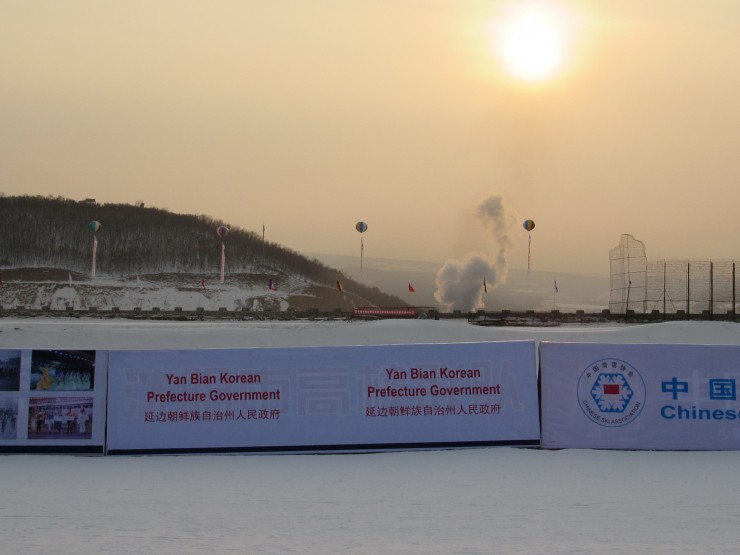
A plume of smoke rises from a nearby coal plant while looking to the southeast of the 1.2 k freestyle sprint course on Friday, Jan. 1 at the China Tour de Ski in Yanji. (Photo: Lauren Fritz)
Holly Brooks (APU) (l) and Lauren Fritz preview the Stage 1 sprint course–a 2×800-meter loop around a “gravel pit”–for the women’s 1.2 k freestyle sprint in Yanji. (Photo: Lauren Fritz)
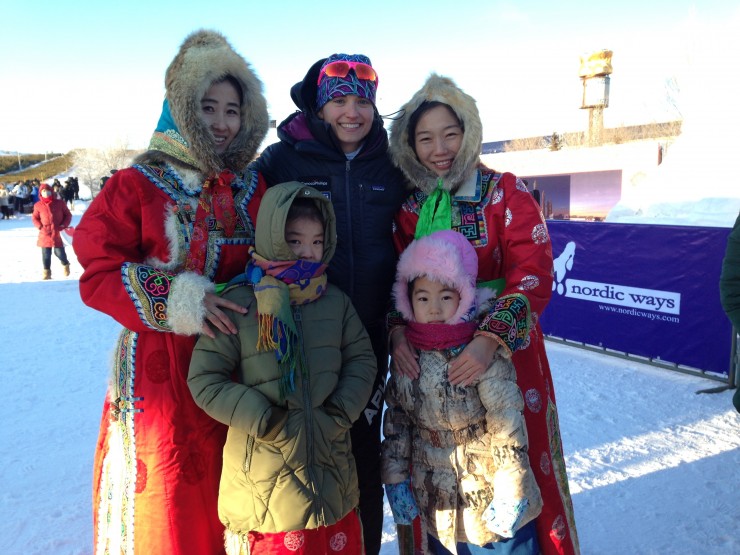
Lauren Fritz poses for a picture with local spectators in Xiwuqi, Inner Mongolia during this year’s China Tour de Ski. (Photo: Lauren Fritz)
Swedish skier and former University of Vermont athlete, Linda Danvind-Malm (l) and American Lauren Fritz (APU) stand in front of one of the many snow castles that line the lap lane to the 50 k classic Vasaloppet marathon during the 2016 China Tour de Ski in Changchun. (Photo: Lauren Fritz)
A standard meal for competitors at this year’s China Tour de Ski. (Photo: Lauren Fritz)
American Lauren Fritz (APU) leads Swedish skier Mimi Bjørn in the Stage 2 semi-final of the women’s 1.2 k freestyle sprint race on Sunday, Jan. 3, at the China Tour de Ski in Changchun. Fritz advanced to the final, where she was gaining on first place until her pole was stepped on and she crashed close to 150-meters from the finish. She ultimately finished the day in fourth overall. (Photo: Lauren Fritz)
American Lauren Fritz (APU) at the finish line for the 50 k classic Vasaloppet marathon on Monday, Jan. 4 at the China Tour de Ski in Changchun. (Photo: Lauren Fritz)
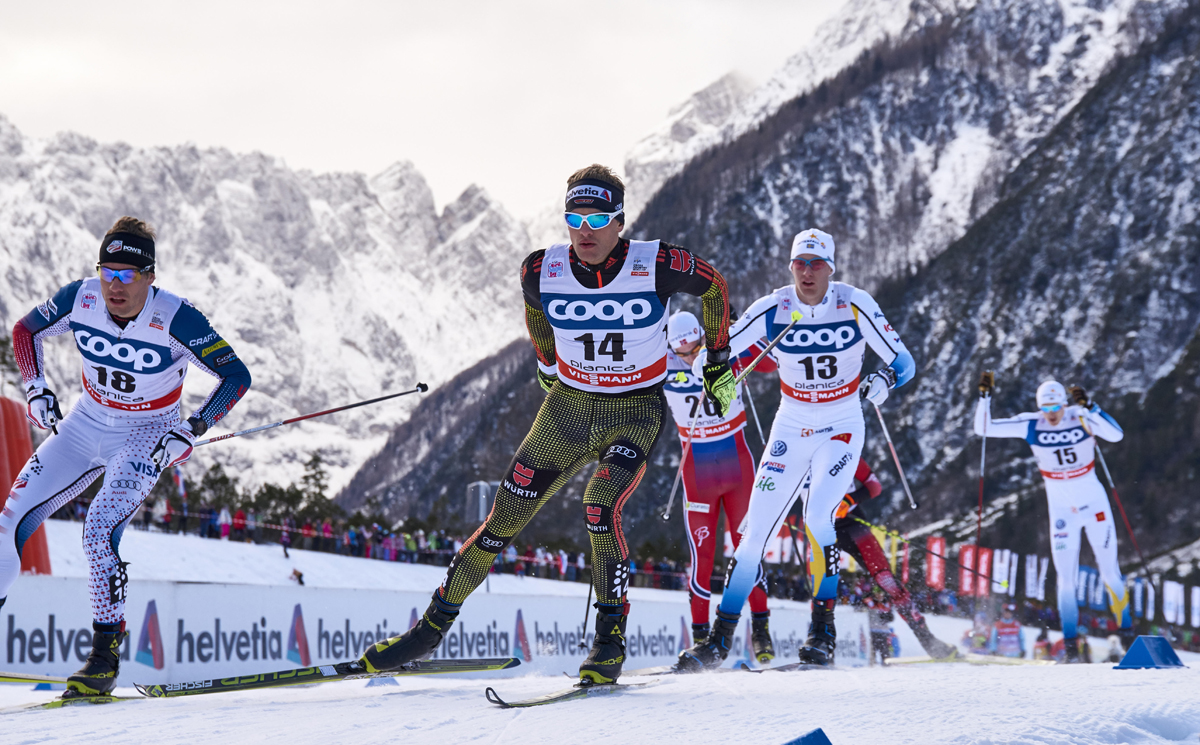
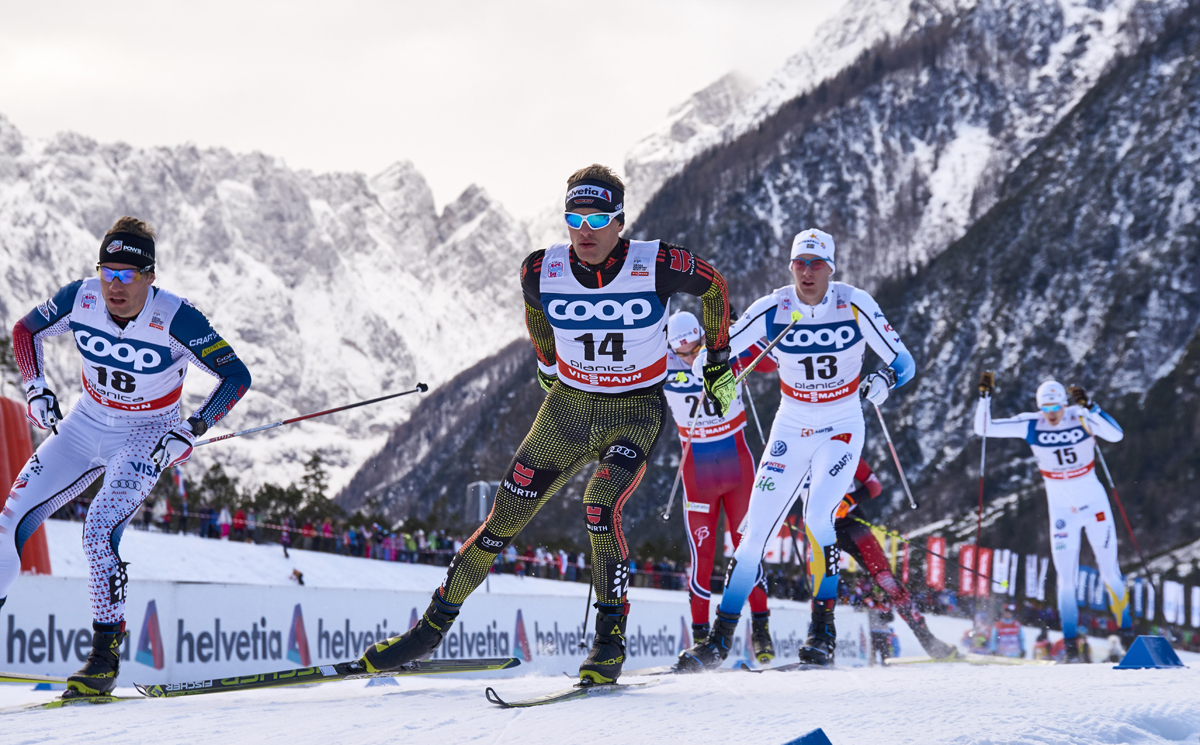
American Simi Hamilton (l) goes head-to-head with Germany’s Sebastian Eisenlauer (14), Norway’s Eivind Bakkene (26), and Sweden’s Gustav Nordstroem (13) during their 1.2 k freestyle sprint quarterfinal on Saturday at the World Cup in Planica, Slovenia. Hamilton placed fourth in a photo finish, ahead of Sweden’s Johan Edin (15), and ended up 18th overall. (Photo: Fischer/NordicFocus)
Note: This article has been updated to include comments from Chelsea Holmes.
Racing, at times, serves as a recharge. After qualifying four skiers in Saturday’s 1.2-kilometer freestyle sprint in Planica, Slovenia, but missing the semifinal and final rounds, several U.S. Ski Team members communicated that they’re geared up and ready to give it another go.
“I don’t feel super strongly one way or the other about today,” American Sophie Caldwell said in a phone interview. “It wasn’t a bad day by any means, but it definitely wasn’t what I was hoping for. … I caught a little cold after the Tour de Ski, but I’m hoping today woke my body up and I’ll be ready to go tomorrow.”
Caldwell was coming off her first World Cup victory in the classic sprint on Jan. 5 at Stage 4 of the Tour de Ski.
In Saturday’s freestyle-sprint qualifier, Caldwell clocked the 13th-fastest time, 6.33 seconds behind Norway’s Astrid Uhrenholdt Jacobsen, who won the qualifier in 2:32.29.
Caldwell then raced in the first quarterfinal of the day, which included Swedish sprint specialists Stina Nilsson and Hanna Falk, Finland’s Mona-Liisa Nousiainen, Heidi Widmer of Switzerland, and Slovenia’s Anamarija Lampic.
Heading out of the start, it was the two Swedish skiers in front, followed by Caldwell and Nousiainen in a tie for third. As the group ascended the first climb, Caldwell overtook Nousiainen on the outside left, to position herself in third for the next downhill.
Coming into the final climb of the course, it was three white suits in the front — with Nilsson leading Falk, and Caldwell following close behind.
As the trio made their way into the final 100 meters, the two Swedes broke away from Caldwell, while she responded by pushing hard in an effort to catch Falk in second. She couldn’t quite reach her, finishing third, 0.82 seconds after Falk and 0.92 seconds behind Nilsson, who won the heat and high-fived her teammate across the line.
The second quarterfinal heat was 1.3 seconds faster, and Caldwell ended up missed a lucky loser bid for the semifinals. She finished the day 13th overall.
Sophie Caldwell (USA) racing to 13th in the qualifier of the women’s World Cup 1.2 k freestyle sprint on Saturday in Planica, Slovenia. She went on to place 13th overall. (Photo: Fischer/NordicFocus)
“I think one of the most challenging parts is staying mentally engaged,” Caldwell said. “With sprint racing, so much can go right and so much can go wrong. The tiniest wrong move can mess up your entire race, if you let it.
“But I think if you have a race that doesn’t go well, being able to put it behind you and gearing up for the next one [is important],” she added.
Caldwell’s teammate Ida Sargent — the only other female U.S. Ski Team member racing — qualified in 21st, 8.94 seconds behind Jacobsen, and also missed advancing to the semifinal.
In the fifth-and-final women’s quarterfinal, Sargent took it out strong from the start, trailing Germany’s Sandra Ringwald while stay ahead of Norway’s Kathrine Rolsted Harsem, Sweden’s Maja Dahlqvist, Germany’s Anne Winkler, and Switzerland’s Nadine Fähndrich.
The two Germans moved into the lead for the course’s sharp righthand turn, while Sargent clung viciously to third.
Heading into the second climb, Fähndrich punched the pace, passing the two Germans on the inside left. Sargent held onto to the Swiss skier’s surge and moved into second.
Fähndrich gapped the field by nearly 40 meters coming into course’s closing downhill, but her burst wasn’t enough to hold off the group for the final climb. As she lost steam, so did Sargent.
Ringwald and Dahlqvist closed in to the right of Sargent, overtaking her, while Harsem pressured from the left heading into the finish.
In the final 50 meters, Harsem and Ringwald passed Fähndrich to take first and second, respectively. Dahlqvist was third (+0.32), Fähndrich fourth (+0.39), and Sargent crossed the line in fifth, 3.38 seconds after Harsem, to end up 23rd overall.
After earning World Cup starts as a Period 1 U.S. SuperTour (Continental Cup) leader, Chelsea Holmes, of Alaska Pacific University (APU) raced to 48th in Saturday’s sprint, 15.51 seconds behind the qualifying winner. For Holmes, 28, it was her first World Cup sprint and first international World Cup start. At U.S. nationals just over a week ago, she notched two podiums in the distance races: the 20 k freestyle mass start and the 10 k classic.
In an email, Holmes wrote about how her opening World Cup race went.
“My first European World Cup was super fun! I actually really liked this course. While it was certainly shorter in terms of time, than the other skate sprints I’ve done this year, I felt like the terrain and course were great, it flowed really well with good climbs and no rest.
I may have not been super fast but it was a great experience to get under my belt. Simply just being here, watching the heats yesterday and the team sprint today, I feel I learned a lot and it can only help me grow as an athlete. Now I am really looking forward to this week of training and the race this weekend!”
Hamilton, Newell in the Heats
In the men’s 1.2 k sprint, two Americans qualified for the rounds — Simi Hamilton and Andy Newell — but did not advance to the semis.
“I was not super psyched with the final result of the day, but I was happy with how my body responded after getting quite sick during the Tour and trying to recover from that last week and this week,” Hamilton said on the phone afterward.
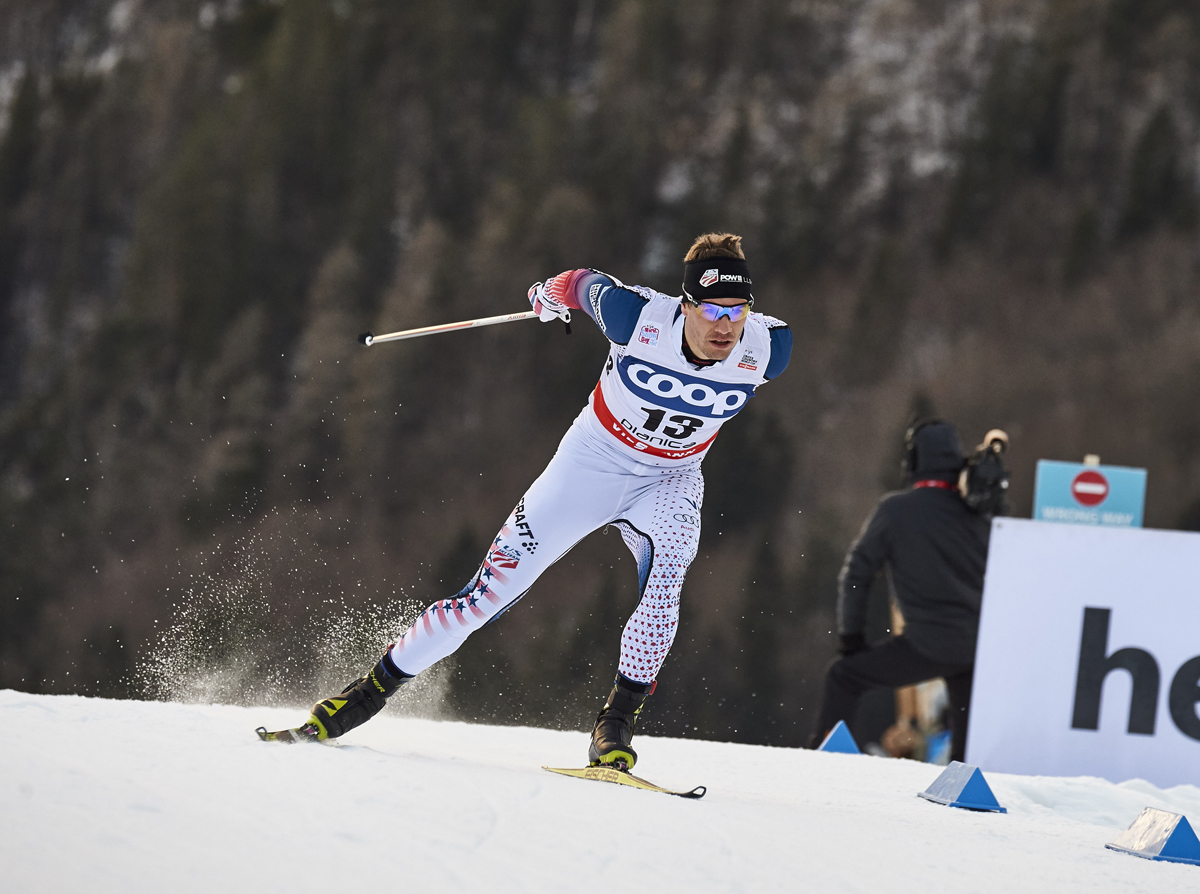
Simi Hamilton (USA) racing to 18th in the men’s 1.2 k freestyle sprint qualifier at the World Cup in Planica, Slovenia. He went on to place 18th overall. (Photo: Fischer/NordicFocus)
He had qualified 18th, 3.85 seconds behind Italy’s Federico Pellegrino, who won the qualifier in a time of 2:14.8, and ultimately won the men’s final in 2:15.12.
After withdrawing from the Tour with an illness and missing theclassic sprint in Oberstdorf, Germany, Saturday marked Hamilton’s first race effort since the third stage of the Tour in Lenzerheide, Switzerland.
“I hadn’t really done any hard efforts since Lenzerheide, so I didn’t really know what to expect from my body in terms of sprint speed and how I’d be feeling,” Hamilton said. “So I was psyched at the fact that my energy actually felt pretty good.”
Hamilton ambitiously led the fifth men’s quarterfinal out of the start, ahead of fellow quarterfinalists Sebastian Eisenlauer of Germany, Sweden’s Gustav Nordström and Johan Edin, Norway’s Eivind Bakkene, and Austria’s Bernhard Tritscher.
Heading into the initial descent, Eisenlauer jumped in front of Hamilton to take the lead.
The drive from the front soon shuffled to Nordström, and Hamilton slipped back to fifth by the last downhill and into the final climb.
As the group crested the hill into the finishing straight, Hamilton was skiing in sixth, but he gained on the group in the last hundred meters or so, finding space to pass Tritscher and Edin for fourth, just 0.32 seconds behind Eisenlauer, who won the heat in 2:19.47. Hamilton edged Edin in a photo finish for fourth, but their heat wasn’t fast enough to give him a spot in the semifinals.
“I didn’t really feel like I had that top-end speed, like I do when I am feeling really good,” Hamilton said. “But I’m [also] not in a spot right now where I’m stressed out about how fit I am or skiing through the rounds. I think it’s a matter of getting my training going again after being sick and getting into that routine of volume, as well as some harder workouts.”
Confident in his fitness and his ability, Hamilton, who finished the day 18th overall, leaves Saturday’s course craving more.
“They did an incredible job with building this new course and this new venue. It suits me really well,” he said. “It’s short, it’s really technical, it’s very twisty and turny with nothing super steep. … I’m just looking forward to taking another crack at it at some point.”
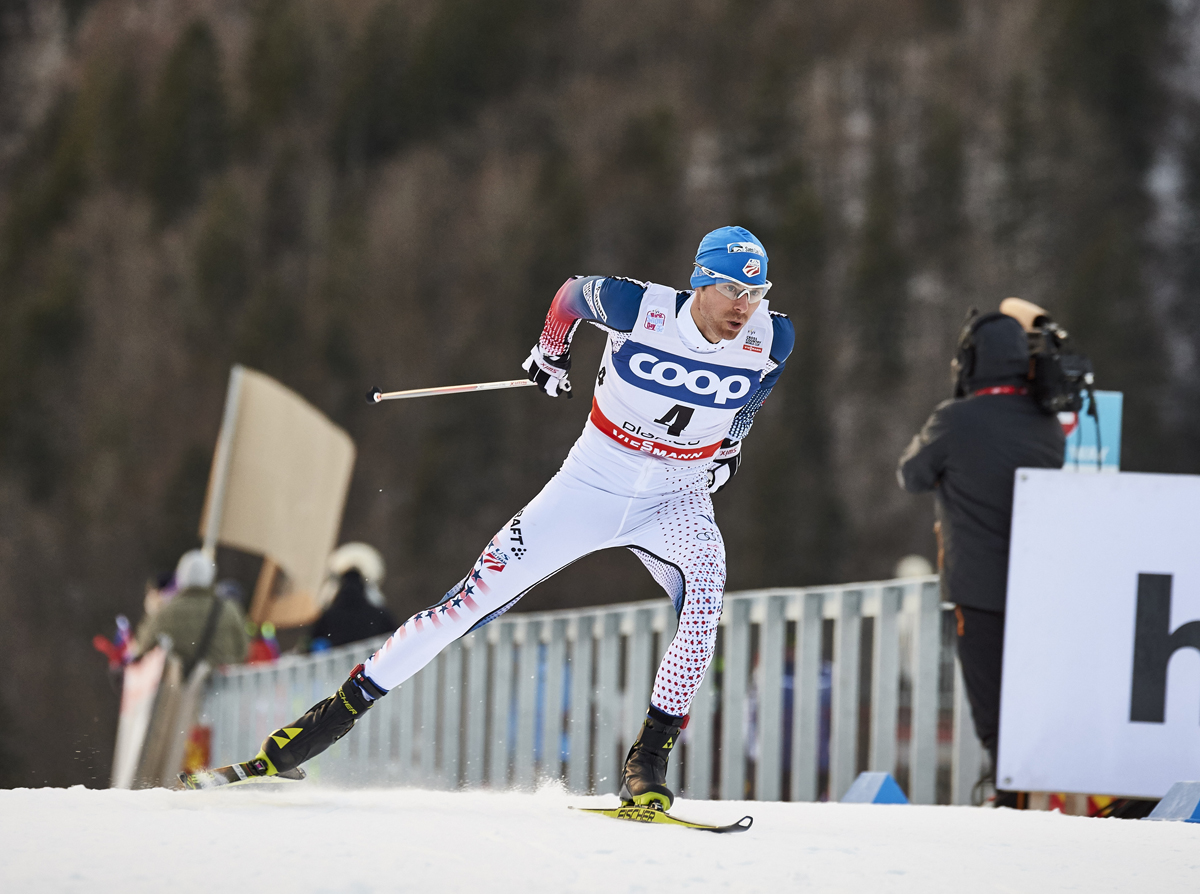
Andy Newell (U.S. Ski Team) on his way to 24th in the men’s 1.2 k freestyle sprint qualifier at the World Cup in Planica, Slovenia. He went on to place 23rd overall. (Photo: Fischer/NordicFocus)
The second American male to qualify was Andy Newell in 24th, 4.87 seconds behind Pellegrino. Newell also said that while he’s still aiming for top-10 finishes and more finishing speed, his fitness continues to improve.
“Definitely hoping to be top 10 in a race like that,” Newell said on the phone after finishing fifth in the first quarterfinal. “It’s been kind of a struggle for me with some of the last few skate sprints, especially finding the power to be able to pass people and advance to the semifinal.
“But positively, I felt pretty good today — better than I did in Tolbach after getting sick and better than I did in Lenzerheide in that skate sprint,” he added. “Although the result isn’t much better, I definitely felt a lot quicker, like I had some good moments out there in the heat, but just wasn’t able to close.”
In his quarterfinal, Newell went head-to-head with Norwegian sprint specialists Erik Brandsdal and Ola Vigen Hattestad, as well as Sweden’s Teodor Peterson, France’s Valentin Chauvin, and Switzerland’s Jöri Kindschi.
After skiing in third early on, Newell moved into second behind Peterson as they approached the final downhill. As the group raced up the final climb, Newell slid back into fourth behind the Norwegians and Swede.
In a battle down the straightaway, it was Brandsdal who came out on top in 2:16.84, edging Peterson at the finish by 0.32 seconds. Hattestad took third (+0.65), Kindschi was fourth (+1.68), and Newell was another tenth of a second back in fifth (+1.78). Kindschi passed Newell in the last 100 meters.
“I feel like I can be faster than anybody if I’m fresh, but if I’m fatigued then it becomes a little bit harder in that finishing stretch,” Newell said. “I’ve been trying to play around with my technique a little bit so I can try to improve the way I can ski when I’m tired.”
Trusting his body has more to dig into, Newell, who ended up 23rd overall, looks forward to his next few races.
“Generally I think my fitness is still improving. I still haven’t accessed my full fitness potential maybe since Kuusamo [Finland] in those beginning races,” he said, referring to his fourth place in the season-opening classic sprint. “I felt really good in some of the beginning classic races of the year, but I think I’m starting to come back to that level again so I’m excited for the next few weeks.”
In an email, Blackhorse-von Jess described adjusting to World Cup racing again.
“The European transition is the best it’s ever been. Every day feels better and better and I [have] yet to miss a night of sleep!” the Bend Endurance Academy athlete wrote. “Today was fun — Slovenia is a stunning country — but the 2:20 sprint just isn’t something I’ve done this year and the course set up much firmer than previously this week, combined with me being too cautious in the first half of the race. Not a mistake you can afford on the World Cup! Definitely looking forward to re-learning that short-duration sea-level speed you need to be competitive over here.”
Blackhorse-von Jess placed 50th overall, 7.42 seconds behind the qualifying winner.
Hanneman in 63rd (+9.42) also detailed his experience and transition to Europe thus far.
“It was a crazy fast course today!” Hanneman wrote in an email. “I got a cold right after nationals, and combined with really long travel over here, I have been feeling less than great. I wasn’t sure I was gonna be able to race earlier in the week, but I felt somewhat healthy last night, and just decided to go for it.”
Still adapting to the change in competition setting, he anticipates the opportunity to further develop his World Cup racing is yet to come.
“I haven’t been able to do any intensity since the last nationals race, so I was flat today, but I think considering, it was solid. 9 seconds behind Pellegrino is solid for me,” he wrote. “I’m looking forward to building off of it over the next two months of World Cup racing.”
After Saturday’s race, Hanneman posted on Instagram about feeling “so incredibly blessed to be racing World Cups here in Planica, and for the whole rest of the World Cup season!”
The second-straight day of skate sprints is scheduled for Sunday with the women’s and men’s 6 x 1.2 k freestyle team sprints in Planica. Both U.S. men’s teams will start in the first semifinal, with Hamilton and Newell teaming up as “USA I”, and Blackhorse-von Jess and Hanneman as “USA II”. The U.S. women, with Sargent and Caldwell, will start in the second semifinal.
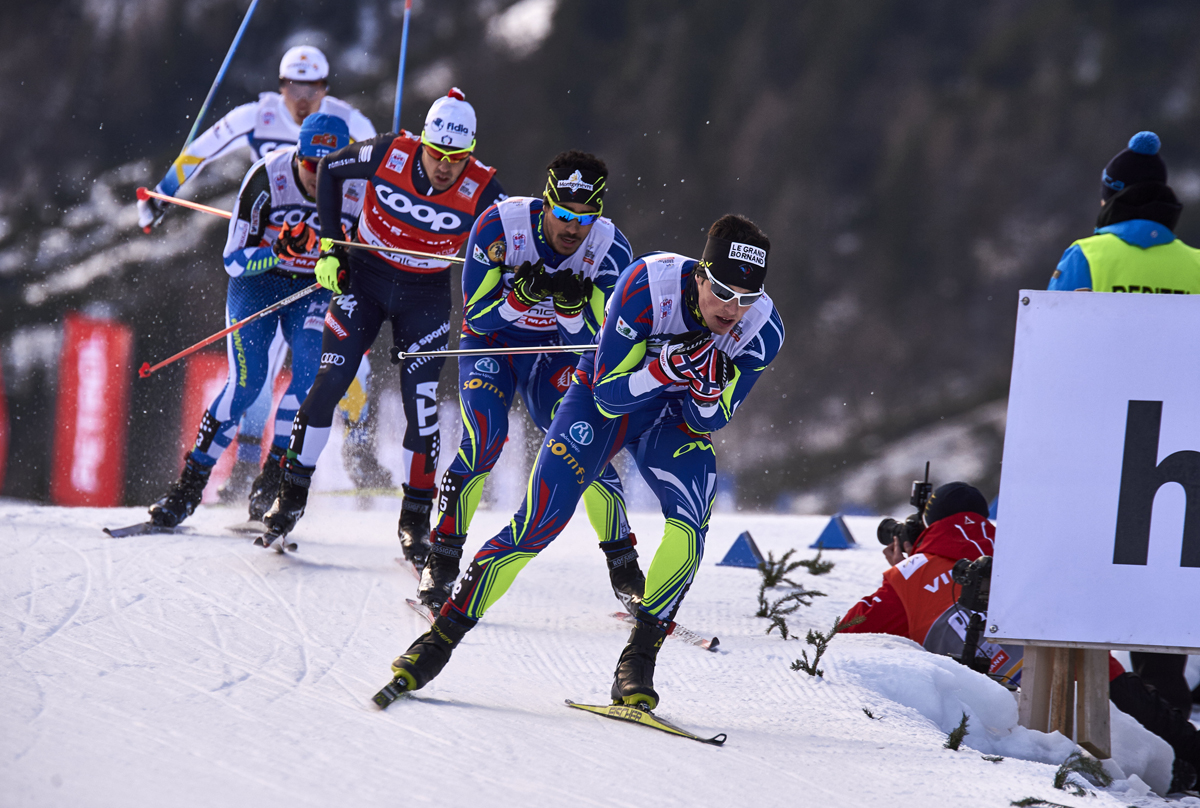
France’s Lucas Chanavat (front) and Richard Jouve (second from r) lead Italy’s Federico Pellegrino during their 1.2 k freestyle sprint quarterfinal at the World Cup in Planica, Slovenia. Pellegrino won the heat, Jouve placed second and Chanavat faded to sixth. (Photo: Fischer/NordicFocus)
Six days ago on Sunday, Jan. 10, the famed hill-climb finale up Alpe Cermis in Val de Fiemme, Italy, wrapped up the 10th annual Tour de Ski. This weekend, standard World Cup racing has resumed in Planica, Slovenia, marking the first time a World Cup event has been held in Planica — better known as a biathlon center. The last World Cup races in Slovenia took place in 2011 in Rogla, about 200 kilometers east.
On Saturday, two familiar faces in the sprint scene topped the men’s and women’s 1.2-kilometer freestyle sprint.
Italian record-breaker Federico Pellegrino raced to his fourth-consecutive freestyle sprint victory this season. He is the first racer in history to do so, and according to the International Ski Federation (FIS), is the only male to reach the podium more than once in these four races. The list of firsts goes on when it comes to 25-year-old Pellegrino.
Last season, Pellegrino became the first athlete to win three consecutive skate sprints between December 2014 and January 2015. With Saturday marking his seventh World Cup win, he is now the winningest Italian male cross-country skier of all time, according to FIS. He was previously tied with Pietro Piller Cottrer with six wins.
“Statistics are made to be changed,” Pellegrino told La Gazzetta della Sport, according to a translation. He said he had “great feelings” during the qualifier, which he won by 1.59 seconds over France’s Lucas Chanavat.
He went on to win his quarterfinal (by 0.26 seconds ahead of another Frenchman Richard Jouve), and advanced out of his semifinal after placing second, 0.6 seconds behind yet another French skier Baptiste Gros.
In the final, a trio of Frenchman (Gros, Jouve and Renaud Jay) trailed Pellegrino into the last few hundred meters before the finish, with Gros leading the charge behind him. Pellegrino skied away to the victory in 2:15.12, holding off Gross by 0.88 seconds. Jouve placed third (+1.71) and Jay completed France’s sweep of second through fourth in fourth place (+2.23).
Gros had also placed second to Pellegrino in the Davos World Cup skate sprint in December — Pellegrino’s first win of four in a row.
Russia’s Gleb Retivykh and Germany’s Sebastian Eisenlauer finished behind the French contingent in fifth (+4.18) and sixth (+4.19), respectively.
Easily the favorite going into the race, some pressure inevitably rode on Pellegrino. He reflected feeling like he “could only lose the race.”
“It felt very good in the qualification,” he told FIS after the final, “But I was worried it could get worse.”
He proceeded to comfortably advance through the heats with strategic execution. He won the third quarterfinal, which turned out to be the fastest and produced two lucky losers: Finland’s Martti Jylhä in third and Sweden’s Calle Halfvarsson in fourth.
Pellegrino then carefully navigated a loaded semifinal, with all six competitors qualifying in the top eight. Gros took the lead at about halfway through, with Pellegrino stuck a few spots back. After being boxed out of the inside lane turning into the final climb, Pellegrino fought his way into second on the final climb to ensure he’d automatically advance in the top two. Gros cruised to a fairly commanding semifinal win, which did not go unnoticed by Pellegrino.
“I learned in my semifinal how to ski in the final,” Pellegrino told FIS. “I expected Baptiste to be fast on this course, so my plan was to go in the front and get a gap on the others.”
Confident in his chances in the semi, Gros had his doubts entering the final: “In the semifinal I thought I could win, but in the final it was clear that Federico [would] win,” he later told FIS.
Gros led the final for most of the first half, while Pellegrino sat back around fourth place. This time, however, he didn’t let Gros get out of reach. About halfway through the race, Pellegrino made his move: passing on the inside, accelerating to the front of the pack ahead of Gros and significantly cranking up the pace.
With that, the race proved to be as good as done. Pellegrino created a gap leading into the final downhill, breezed up the final climb with an unmatched tempo, enjoying a sizable gap on the field before throwing his arms up to celebrate across the line.
Notably, there were no Norwegians in the men’s final. This starkly contrasts from most races throughout the World Cup season and the team’s Tour de Ski results, with the Norwegian men claiming seven of the overall top 10.
That said, a number of top contenders did not race on Saturday — largely to rest and recover after completing the Tour de Ski — including Norway’s Martin Johnsrud Sundby, Finn Hågen Krogh, Petter Northug, and Didrik Tønseth. The strong Russian sprinter, Sergey Ustiugov, also was missing from the scene.
“Today was another great day,” Pellegrino told La Gazzetta. “But it was a very difficult victory because I had to emotionally handle it right against the French, which always start as horses, head down, and it is difficult to rule them all. Fortunately with my skiing, I always managed to extricate myself from their traps, in the semifinals I figured out how to run the final and I did it. I can count on energy that I know I have.”
“I am very confident of the work I’ve done,” he added. “At home, I can store hours of work that allow me to maintain this state of form. The success allows me to put more hay in the barn…”
Pellegrino currently leads the Sprint World Cup by 196 points over Norway’s Sondre Turvoll Fossli, who placed eighth on Saturday after being eliminated in the semifinal (behind Gros, Pellegrino and fellow Norwegian Eirik Brandsdal, respectively). Gros ranks third overall, 224 points out of first.
Stina Nilsson Earns Second Sprint Victory
Sweden’s Stina Nilsson celebrates her second-career World Cup victory on Saturday at the 1.2 k freestyle sprint in Planica, Slovenia. She beat three Norwegians — Astrid Uhrenholdt Jacobsen, Heidi Weng and Ingvild Flugstad Østberg, respectively — to do so. (Photo: Fischer/NordicFocus)
In the women’s 1.2 k sprint, Sweden’s 22-year-old Stina Nilsson claimed her second World Cup victory in two months. She previously won the December freestyle sprint in Davos, Switzerland.
With this win, Nilsson, the U23 leader, took the Sprint World Cup lead as well, ahead of Norway’s Maiken Caspersen Falla. While Falla’s doctor apparently warned her against starting Saturday, (“she was not in top form,” according to NRK), she raced the qualifier anyway and placed an uncharacteristic 45th, more than 14 seconds behind qualifying winner Astrid Uhrenholdt Jacobsen, her teammate.
Nilsson started her day with the 10th-fastest qualifying time, 5.82 seconds behind Jacobsen. She proceeded to win her quarterfinal — the first one of the day — by 0.1 seconds over teammate Hanna Falk and 0.92 seconds ahead of American Sophie Caldwell in third.
From there, Nilsson met one of Norway’s biggest threats in any race: Ingvild Flugstad Østberg. Both Nilsson and Østberg had raced the entire Tour de Ski (eight races in 10 days from Jan. 1-10), with Nilsson placing 24th and Østberg second overall. Yet less than a week later, here they were. Nilsson later told NRK she skied for a total of 35 minutes this week before Saturday’s race.
Slovenian Vesna Fabjan led their semifinal of the gate, while local spectators cheered her on. Nilsson shadowed her until taking the lead about halfway through and creating a fairly big gap before into the finish. Nilsson won the semifinal by half a second over Østberg, who held off Fabjan by 0.33 seconds to advance to the final.
Sweden’s Hanna Falk leads teammate Stina Nilsson (l) and Sophie Caldwell (behind Nilsson) during their 1.2 k freestyle sprint quarterfinal at the World Cup in Planica, Slovenia. While Falk was eliminated in the semifinal (after placing fourth), Nilsson ultimately won the final. (Photo: Fischer/NordicFocus)
For Nilsson, the final was her 11th straight in as many World Cup sprint starts — both skate and classic — since December 2014.
On Saturday, she squared off in the final round against Germany’s Sandra Ringwald, Italy’s Gaia Vuerich, and three Norwegians: Østberg, Jacobsen and Heidi Weng. Third in the Tour de Ski, Weng was back in action less than a week later asa well.
In Vuerich’s third final of her career, the Italian initially led out of the start, while Ringwald and Nilsson skied in second. Into the next downhill, Nilsson took the lead, with Vuerich hanging onto second.
At about halfway through, Østberg accelerated on a climb to get in front of Nilsson. By the top of this hill, Østberg maintained her position with a fairly brisk pace, Nilsson held onto second, Jacobsen had moved into third, and Weng skied in fourth.
But could Østberg, who had been in contention for the Tour de Ski overall title until the final grueling mountain climb, hold that high tempo six days later? The last uphill on the sprint course had proved crucial throughout the day. It led up into the stadium and into the finishing straight.
As that climb approached, Nilsson rode the draft and her slick skis up alongside Østberg to challenge her to the top. She used the momentum to overtake Østberg, who began to fade at the crest of the hill, and Nilsson led over the top and toward the finish.
Behind her, the three Norwegians fanned out in a wave, one in each lane to try to chase her down. Jacobsen moved into second ahead and Weng charged late for third, just ahead of Østberg.
The women’s World Cup freestyle sprint podium in Planica, Slovenia: with Swedish winner Stina Nilsson (c), Norwegian runner-up Astrid Uhrenholdt Jacobsen (l), and Heidi Weng, also of Norway, in third. (Photo: Fischer/NordicFocus)
Nilsson captured the win in 2:33.03, 0.34 seconds ahead of Jacobsen in second and 0.55 seconds ahead of Weng in third. Østberg missed the podium by five-hundredths of a second in fourth (+0.60), Ringwald finished fifth (+2.78), and Vuerich waved to crowd as she cruised in for sixth (+26.26), happy to make the final.
“I am really happy for the second win this season. I had a great day,” Nilsson told FIS. “My plan was to ski as much as possible in the front. I am excited to be in the lead of the Sprint World Cup.”
Falla did not qualify for heats after she had been “battling illness,” according to FIS.
A sprint specialist, Falla left the Tour de Ski after winning the first stage: a freestyle sprint in Lenzerheide, Switzerland. On Saturday, she dropped to third in the Sprint World Cup standings 94 points behind Nilsson in first. Østberg ranks second, 58 points behind the leader.
According to NRK, Falla planned to travel back to Norway and skip Sunday’s freestyle team sprint.
Len Valjas (Canadian World Cup Team) racing to 31st for the third time this season in a World Cup freestyle sprint. He was 0.05 seconds outside of the top 30 needed to make the heats in Saturday’s sprint in Planica, Slovenia. (Photo: Fischer/NordicFocus)
Hundredths of a second continue to haunt Len Valjas. For the third time this season, the Canadian World Cup Team skier missed out on the top 30 needed to qualify for the World Cup heats in Saturday’s 1.2-kilometer freestyle sprint in Planica, Slovenia.
In three out of four skate sprints this season, Valjas, 27, has finished 31st. On Saturday, his qualifying time was 0.05 seconds behind 30th. At the last skate sprint in Lenzerheide, Switzerland, he was just 0.01 seconds out of qualifying, and in December in Davos, Switzerland, he was 0.04 seconds off the mark. Add all those times up and Valjas is left with one-tenth of a second separating him from World Cup points in a combined three races.
“I’m pretty disappointed to finish 31st for the 3rd time this season in skate sprints,” Valjas wrote in an email on Saturday after finishing 5.64 seconds off the top qualifying time set by Federico Pellegrino of Italy. Pellegrino went on to win the men’s final.
“There is nothing more frustrating because you know that you are in good shape and your day is being decided by a fraction of a second,” Valjas added.
Len Valjas on his way to 31st in Saturday’s World Cup 1.2 k freestyle sprint qualifier in Planica, Slovenia. (Photo: Fischer/NordicFocus)
Just over a week ago on Jan. 8, he raced in an OPA Cup skate sprint on the same course in Planica. He qualified in 19th and went on to place 10th.
While the goal had been to preview the course in advance “and try to get into the rounds this week,” according to Canadian Head Coach Justin Wadsworth, “He did say last week that this just wan’t the course for him, not his style.”
Wadsworth was reached by phone Saturday morning while in Vancouver, British Columbia. He said Valjas reported the course required a lot of grinding one skate, or V2, which didn’t necessarily suit his strengths. Regardless, they discussed how he needed to finish.
“I tell him every time, ‘You need to throw the biggest lunge in at qualifying … that’s one-tenth of a second,’ ” Wadsworth said.
After Saturday’s race, Valjas explained that he “felt really good,” he wrote. “I know I would have had some fun in the heats. I’ve missed out on valuable points and it’s not an awesome feeling.”
MacIsaac-Jones, Beatty Close to Top 30
In the women’s 1.2 k qualifier, Canada had two just outside the top 30 with Maya MacIsaac-Jones (Rocky Mountain Racers) in 31st (+0.31) and Dahria Beatty in 32nd (+0.84). For both MacIsaac-Jones, of Rocky Mountain Racers, and Beatty, 21, of the Alberta World Cup Academy (AWCA), Saturday marked their individual career bests in their first World Cup of the season.
Canada’s Maya MacIsaac-Jones (Rocky Mountain Racers) in her first international World Cup start on Saturday, racing to a career-best 31st in the women’s 1.2 k freestyle sprint in Planica, Slovenia. (Photo: Cross Country Canada/NordicFocus)
For MacIsaac-Jones, 20, it was her first international World Cup after competing in Canada’s World Cups in December 2012.
“It felt great to be racing in a World Cup again,” MacIsaac-Jones wrote in an email. “This race felt different than the Canmore World Cup because in 2012, I was competing in World Cups purely to have fun and learn from the experience. While the same can be said, in a sense, about today’s race, I started today with much higher expectations of myself.”
At the Planica OPA Cup sprint last week, she qualified in 28th and went on to place 20th. That race gave her confidence, she explained, “knowing that I could pace myself well and race the course efficiently. The snow today was a bit colder and more hard-packed than last weekend, which was great for me because it is the kind of snow I train on all the time in Canmore.”
“I was both shocked and very excited to finish 31st!” MacIsaac-Jones added. “Although I would have loved to race in the heats, my result today gives me confidence and belief in myself that I am capable of top-30 results on the World Cup circuit. It was a strong day for Canadian women, and hopefully Cross Country Canada will continue to bring more women on the World Cup circuit so that we have the opportunity to chase down some World Cup points.”
According to Wadsworth, all five women on the Canada’s current World Cup roster — MacIsaac-Jones, Beatty, Emily Nishikawa (who notched a sprint career best in 39th), Cendrine Browne (42nd), and Katherine Stewart-Jones (54th) — will continue onto the Nove Mesto World Cup in the Czech Republic next weekend. Valjas wrote that he will skip Nove Mesto to take “a short break” before the classic sprints in Drammen, Norway, and Stockholm, Sweden, in early February.
“It’s a great start, it’s exciting and that’s why we have them over [there],” Wadsworth said of two Canadian women coming so close to the points. “Stepping up on your first [World Cup] in Europe and being so close to qualifying is really what our program needs right now.”
For Beatty, a U23 Development Team member, this was her second European World Cup since placing 65th in the freestyle sprint last season in Lahti, Finland. At the OPA Cup last weekend, she qualified in 17th and placed 18th overall.
“I felt like I was climbing well today, but I didn’t take the last downhill corner very well and stumbled a little over the final bump into the stadium,” Beatty wrote on Saturday. “Coming into the finish I knew it was a better qualifier than last weekend and was hoping it would put me in the top 40.
“When I crossed the line in 31st and then later ended up 32nd I was extremely happy with the result but it was also a tiny bit bitter sweet,” she added. “When you are so close to the heats you always think about the little things that could have gotten me those 0.83 seconds. Overall it was a really good day and definitely my best qualifier of the year to date…”
On Sunday, she’ll start the team sprint with MacIsaac-Jones. AWCA Head Coach Chris Jeffries is leading the team in Slovenia, and in an email, he explained how he selected Canada’s lineup for the freestyle team sprint.
“To be honest, I kept it pretty simple with the team selections and based it completely on the results from the sprint today,” Jeffries wrote. “I kept the [OPA Cup] distance racing from last week in mind as well, but the results from today fell in line with the results at the OPA last weekend, so it made for a pretty easy decision without possible questions.”
MacIsaac-Jones and Beatty will make up one women’s team (“Canada I”), and Browne and Nishikawa will make up the other (“Canada II”). Both teams will start in the second semifinal.
“The only asterisk is Emily, since she is our female distance leader on the team and had the strongest results last week in all 3 races, despite being 3rd best today,” Jeffries continued. “But I’m really happy with Cendrine’s fitness right now, especially after her 9th place in the [OPA Cup] skate 10k last weekend. I feel as though both teams are quite even in strength, and after today’s results, am really excited to watch the girls fight it out heads up with the other teams.”
Nishikawa’s Career-Best Sprint
Emily Nishikawa (Canadian Senior Development Team) racing to a career-best World Cup sprint result of 39th in the 1.2 k freestyle sprint in Planica, Slovenia. (Photo: Fischer/NordicFocus)
For Nishikawa, of Canada’s Senior Development Team, 39th was her best World Cup sprint result since placing 48th in the skate sprint at the Canmore World Cup in 2012. A week ago, she finished fourth in the OPA Cup sprint final — her first skate sprint of the season.
“I was happy with my race, and it was nice to have my best ever world cup sprint result,” Nishikawa, 26, wrote Saturday. “I’m still trying to figure out sprint qualifying, but I’m happy with how my fitness, speed and power have come along in the past year. It was way harder and faster today than it was a week ago in the OPA race, but it was really fun racing today. Especially exciting seeing some great results from my teammates Maya and Dahria.”
Joining Valjas in the men’s sprint, Knute Johnsgaard (AWCA/U23+ Development Team) finished 54th, Andy Shields (Thunder Bay National Development Centre) was 56th, and Jess Cockney (Senior Development Team) was 61st on Saturday.
For Johnsgaard and Shields, it was their first international World Cup. For Cockney, it was his fourth World Cup sprint of the season and fourth time outside the top 60.
“I’ve been feeling slow this season and I’ve found it hard to dig into my fitness and really push through the race days and today was very similar to how I’ve felt all year,” Cockney wrote in an email. “My goals going into these races has been to find that ability to push again and I’m disappointed I haven’t made it happen yet.
“In general I’ve been really unhappy with my sprinting,” he added. “I’ve worked hard all training season and prepared well in the winter and it’s for sure been the most disappointing season I’ve ever had.”
On Tuesday, the 26-year-old Cockney will head home to Canmore, which he explained he was “thrilled about” since he hasn’t been home more than three weeks since early July.
“I’ll focus on bringing my fitness back and try to get some volume training back home and doing some different types of intensities hoping to find that consistency that I’ve been missing,” he wrote. “I won’t compete in any world cups before the Ski Tour Canada but I don’t even think I have a spot in that tour with the level I’ve been skiing lately, hopefully I can show more fitness racing the NorAms in MSA [Mont Sainte-Anne] and Easterns.”
On Sunday, Johnsgaard and Valjas will team up as Canada I, and Cockney and Shields as Canada II.
“Len is our best sprinter, and Knute has had the strongest results in both sprint and distance, so that pairing was straightforward,” Jeffries explained.
“I am fired up to race tomorrow in the team sprint,” Valjas wrote. “Hopefully get some payback for today’s disappointment!”
Knute Johnsgaard (Canadian U23+ Development Team) racing to 54th in his first international World Cup, the 1.2 k freestyle sprint in Planica, Slovenia, in January. (Photo: Fischer/NordicFocus)
Canada’s Andy Shields (NDC Thunder Bay) racing to 56th in his first international World Cup, the 1.2 k freestyle sprint in Planica, Slovenia. (Photo: Fischer/NordicFocus)
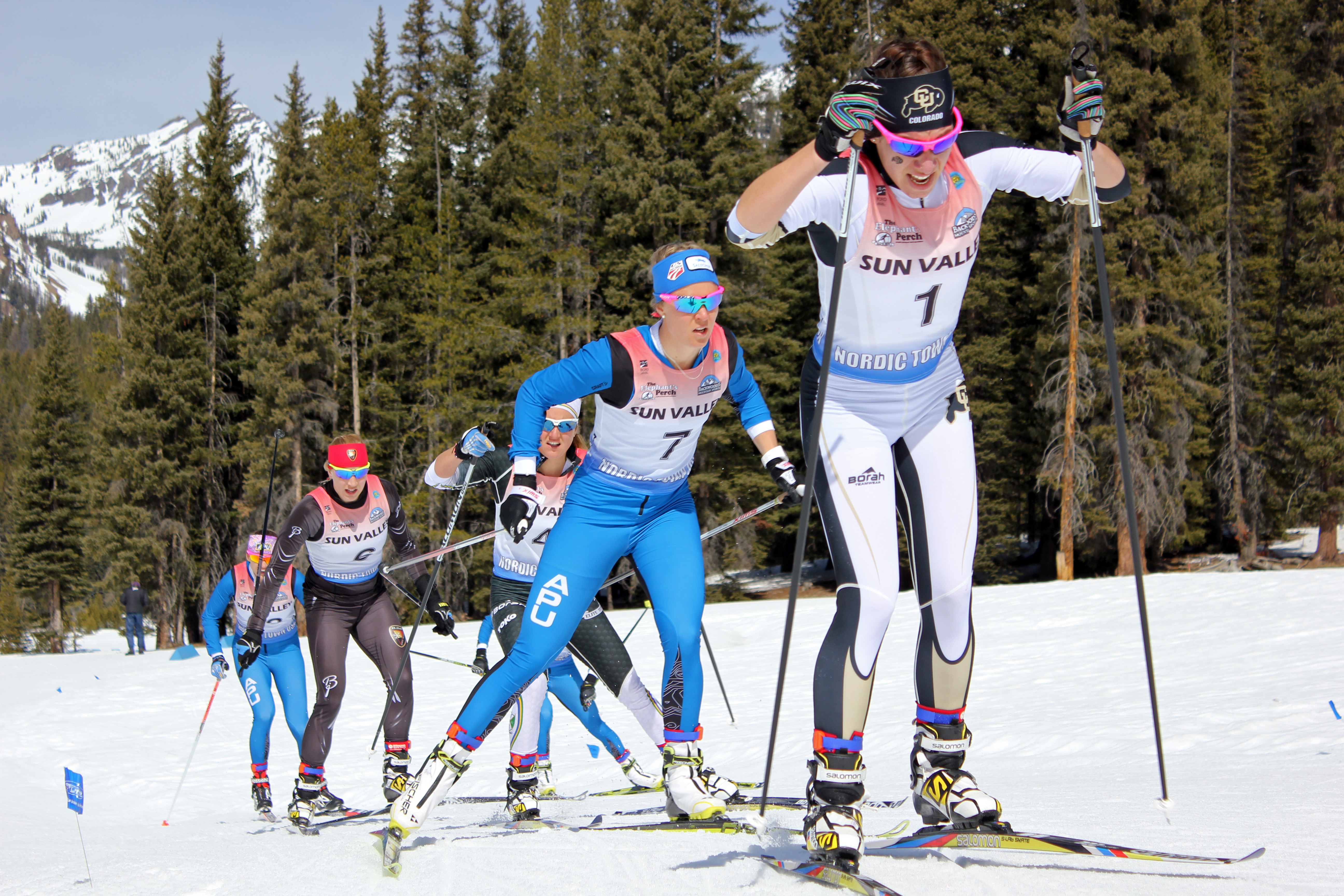
Sadie Bjornsen (USST/APU) celebrates her win in Sunday’s 1.2 k freestyle sprint. The victory is her second of the SuperTour Finals after she won Saturday’s 10 k classic on the first day of racing in Sun Valley, Idaho.
SUN VALLEY, Idaho – Maybe it’s the Rocky Mountain sun, carefree atmosphere or the successful World Cup season behind her. Whatever the reason, it seems that Sadie Bjornsen can’t stop winning at the 2015 SuperTour Finals.
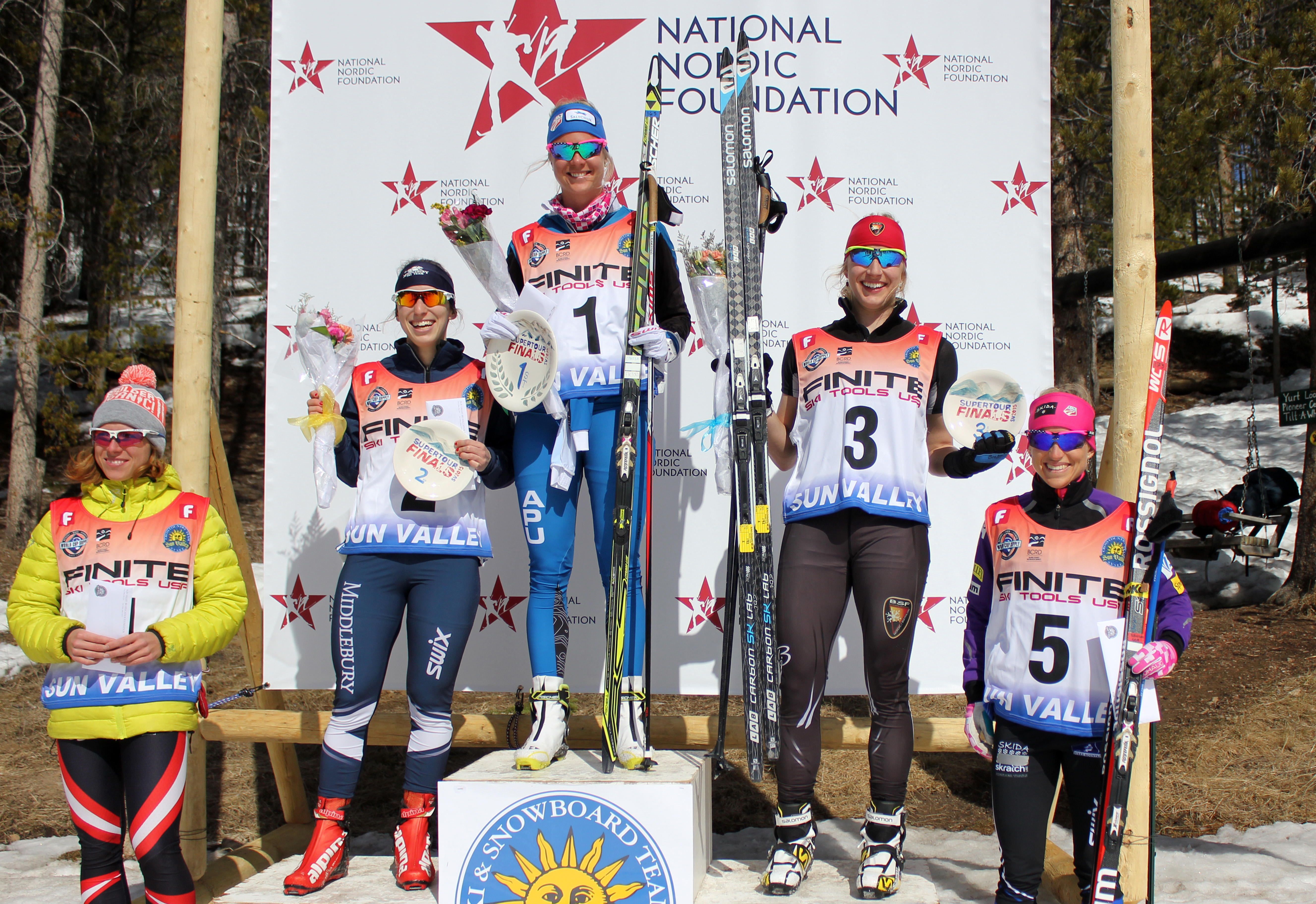
Bjornsen claimed her second victory in two days, skiing to a time of 2:43.65 in the 1.2-kilometer freestyle sprint on the trails of Galena Lodge. Middlebury College’s Kelsey Phinney earned second, trailing the U.S. Ski Team (USST) and Alaska Pacific University (APU) skier by 1.6 seconds. In third was Jennie Bender of Bridger Ski Foundation (BSF), who finished 2.16 seconds back.
Eliska Hajkova (+2.84), a coach with the Boulder Nordic Junior Racing Team and former University of Colorado-Boulder (CU) skier, claimed fourth, while Liz Stephen (USST/Burke Mountain Academy) finished fifth (+4.14) and Becca Rorabaugh (APU) placed sixth (+7.34) in the final.
The day started with a different set of leaders as CU’s Petra Hycicova, APU’s Rosie Brennan, and the University of Vermont’s Linda Danvind Malm claimed the top three positions in the qualifier. Bjornsen qualified in seventh position, 7.2 seconds behind Hycicova. The field was missing several strong skiers who are present in Sun Valley, including Sophie Caldwell, Caitlin Gregg and Ida Sargent. Caldwell is recovering from illness, while both Gregg and Sargent are dealing with concussions.
The preliminary round was a test of balance and stability as the rolling course featured 1.2 k of ice caused by low overnight temperatures. Bjornsen said the fast, but treacherous conditions were difficult and far from favorable.
“This year, I’ve struggled with skiing on ice, it was the same thing in Lahti so I was really trying but I knew that it was going to get softer and better,” Bjornsen, 25, said in a post-race interview.
Just as she predicted, the course became softer and more stable as the day progressed. By the time the APU skier entered the heats, she was ready to fight for her second win. Bjornsen took an early lead in her quarterfinal and maintained her position until the final meters. She slowed to save energy after realizing her advancement was all but clinched, and was passed by Far West’s Anja Gruber as the two crossed the line.
Sadie Bjornsen follows the University of Colorado’s Petra Hycicova in first women’s semifinal at the 2015 SuperTour Finals in Sun Valley, Idaho.
Although her strategy was successful, Bjornsen switched tactics in the remaining heats.
“[In the quarterfinal] I just went from the gun and realized it’s a lot harder to work from the front, so then I decided to use a little tactics and let some others lead,” she said. “This is my favorite grade, so I was just relying on having a lot of speed out of the corner and pushing.”
Bjornsen, along with five other women, survived the semifinals and advanced to the final. There, Stephen, a distance specialist, took control and set a fast pace from the start in an effort to break up the competition. Meanwhile, Bjornsen sat in third before the downhill, but gave several strong skates to rocket to first after the final corner.
“I was just trying to push over the tops hard because you could really make up some time, especially when you’re a bigger person, you can always make up some time pushing a little bit harder than the person in front of you,” she said. “I think I just relied on that because that’s something I’ve been working on a lot on the World Cup, pushing over the top. I could see that was an opportunity here.”
As the pack ascended the slightly uphill finish, Bjornsen maintained a comfortable margin across the line. Behind her, Phinney advanced from fifth position at the top of the hill to claim second, while Bender skied in the same lane behind Phinney to nab third.
Bjornsen said that the win was unexpected given how she was feeling after Saturday’s 10 k win.
“I can’t believe it,” she said. “I was not feeling that was going to happen this morning. I am exhausted, but everyone’s exhausted. It makes it fun when you’re exhausted when you’re winning, so that’s lucky. Two more to go.”
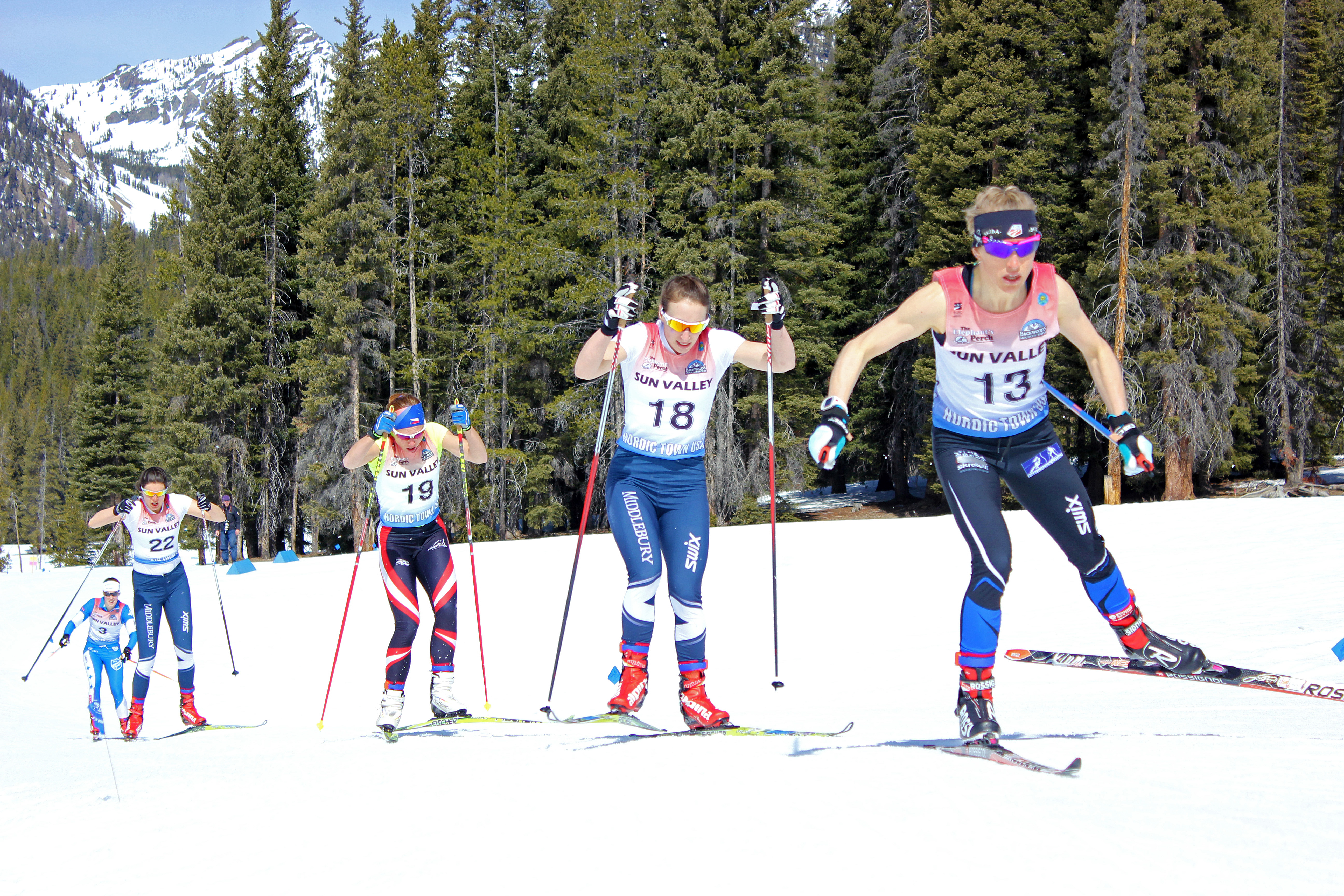
Middlebury College’s Kelsey Phinney (18), eventual second place finisher, follows Liz Stephen in the second women’s semifinal of the 1.2 k freestyle sprint at the 2015 SuperTour Finals.
Just over a second behind Bjornsen, Phinney earned her first major podium on the domestic elite circuit. Phinney, a junior at Middlebury, has seen a breakthrough year in which she has risen to the top ranks of eastern collegiate racing.
Sprinting, however, is rare on the collegiate circuit and Sunday’s race was one of only a few opportunities for the 20 year old to participate in the format. Earlier this year she finished ninth in the Craftsbury SuperTour freestyle sprint.
Phinney said the icy course in qualification prevented her from skiing powerfully, and afterward she wasn’t confident the effort was enough to qualify in the top 30. Her fears were proven wrong, as Phinney ultimately qualified in 18th.
With warmer temperatures transforming the snow, the Boulder, Colo., native was able to tackle the course with ease later in the day. In both the quarterfinal and semifinal she maneuvered to ski the inside of the ultimate corner, gaining an advantage into the uphill finish. Once there she used her finishing kick to seal the deal.
The final was no different.
“In the other heats, too, I had taken the inside corner and instead of going into that far left lane at the finish I went in into the middle lane,” she said of her tactics in the final. “I realized coming in that I was parallel with those girls and if I just gave that little extra something I could stay with them. I just saw Sadie make the move and I tried to jump on it and it was hard.”
After the corner, Phinney realized she was in second, and to keep her momentum, she told herself, “You can do this, you can do this.”
“A lot of the final was just telling myself that I belonged there,” Phinney explained. “I’m still in shock I can’t believe that just happened … I’m just having the time of my life”
The women’s 1.2 k freestyle sprint podium at the 2015 SuperTour Finals.
According to Phinney, SuperTour Finals is not only a chance to participate in fun, low-stakes racing, but also to see where she stands at the national level.
“Spring Series is a lot of fun. We get to come out to Sun Valley and ski in the sunshine,” Phinney said. “I also see it as a really good bridge between college skiing and skiing in the future and seeing where you measure up against the rest of the country. To come out here and have good results is reassuring and great.”
Following Phinney in third, Bender entered the race with little training in the two weeks prior to SuperTour Finals. After what she called a frustrating winter, the BSF skier took roughly two weeks off from skiing to reboot.
“I’ve been kind of having a rough mid-season. I took two weeks off and didn’t get on my skis,” Bender said. “Then I came here and it was a good decision.”
The 2013 and 2014 sprint national champion said that Sunday’s course suited her strengths – it was short, fast, flat, and ended on an uphill. Despite the nature of the course, Bender said that she missed several opportunities to further her placement in the final.
“A lot of the race was that last corner and the finishing stretch. I made some technical mistakes in the final. I got blocked here and there and didn’t go when I should have,” she explained. “I’m still happy with third. I wanted to get on the podium today and I did that.”
SuperTour Finals action continues Tuesday with a mixed team relay.
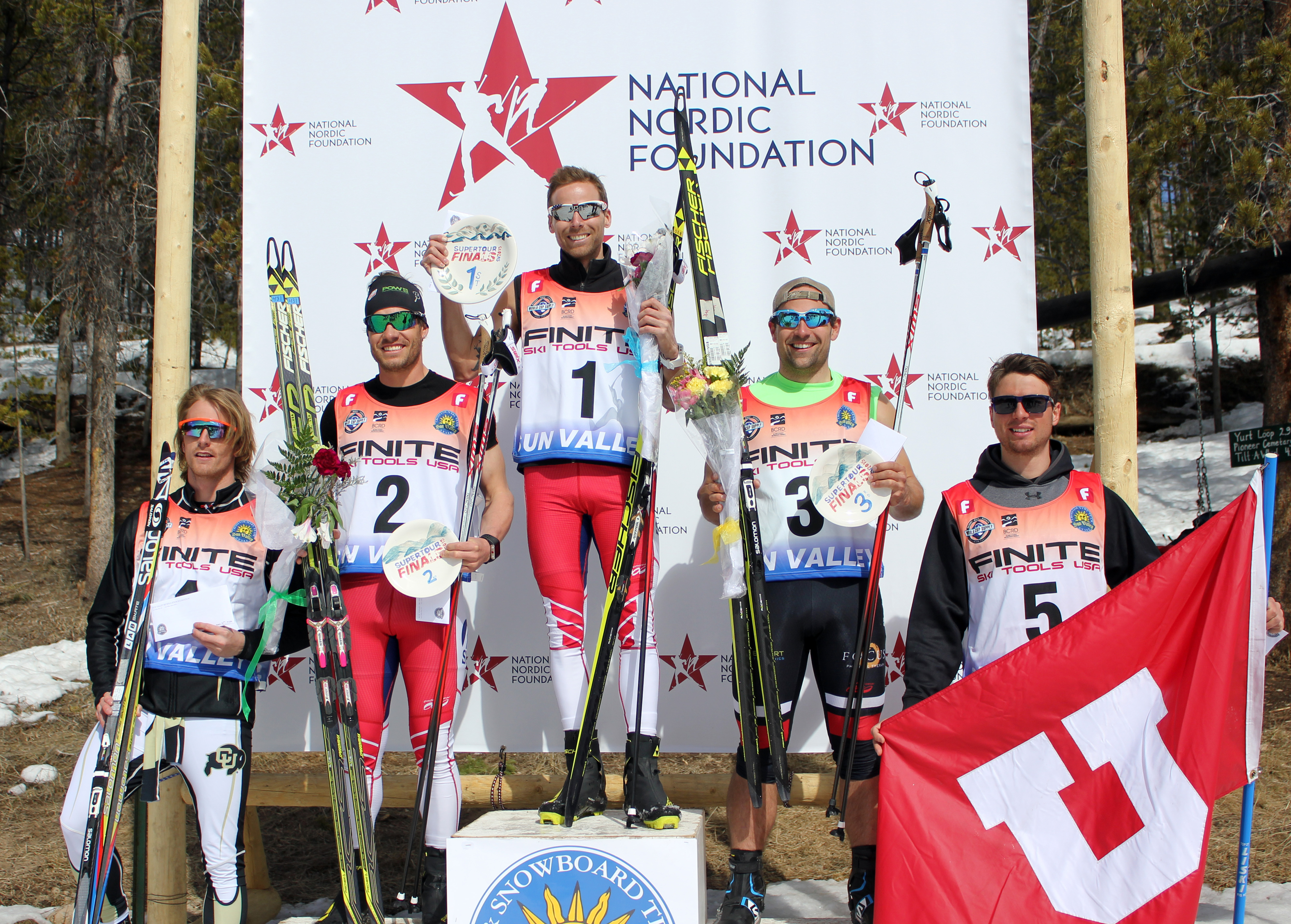
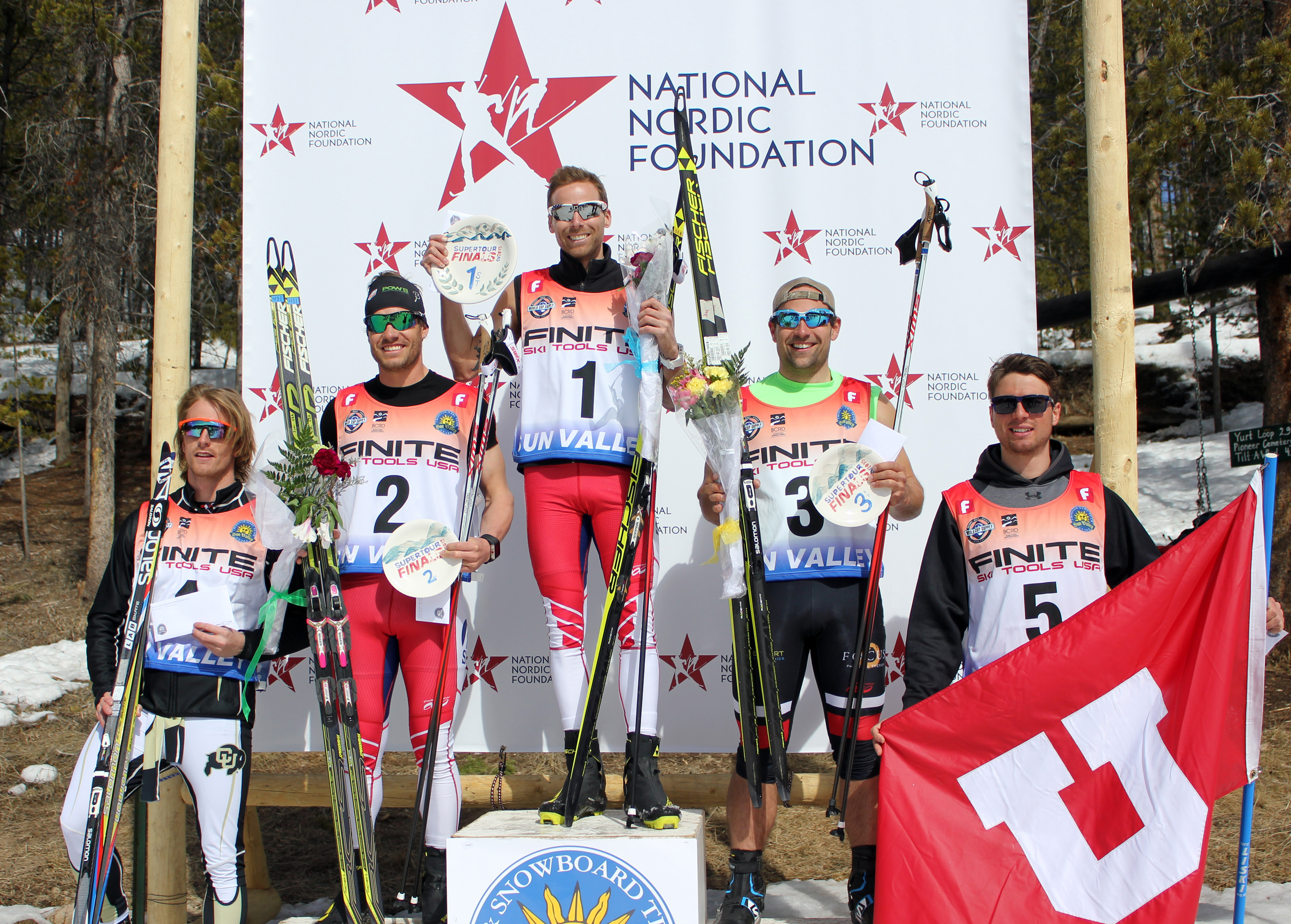
Sunday’s 1.2 k freestyle sprint podium at the 2015 SuperTour Finals in Sun Valley, Idaho. Andy Newell (1) claimed victory over teammate Simi Hamilton (2) and Bend Endurance Academy’s Dakota Blackhorse-von Jess (3).
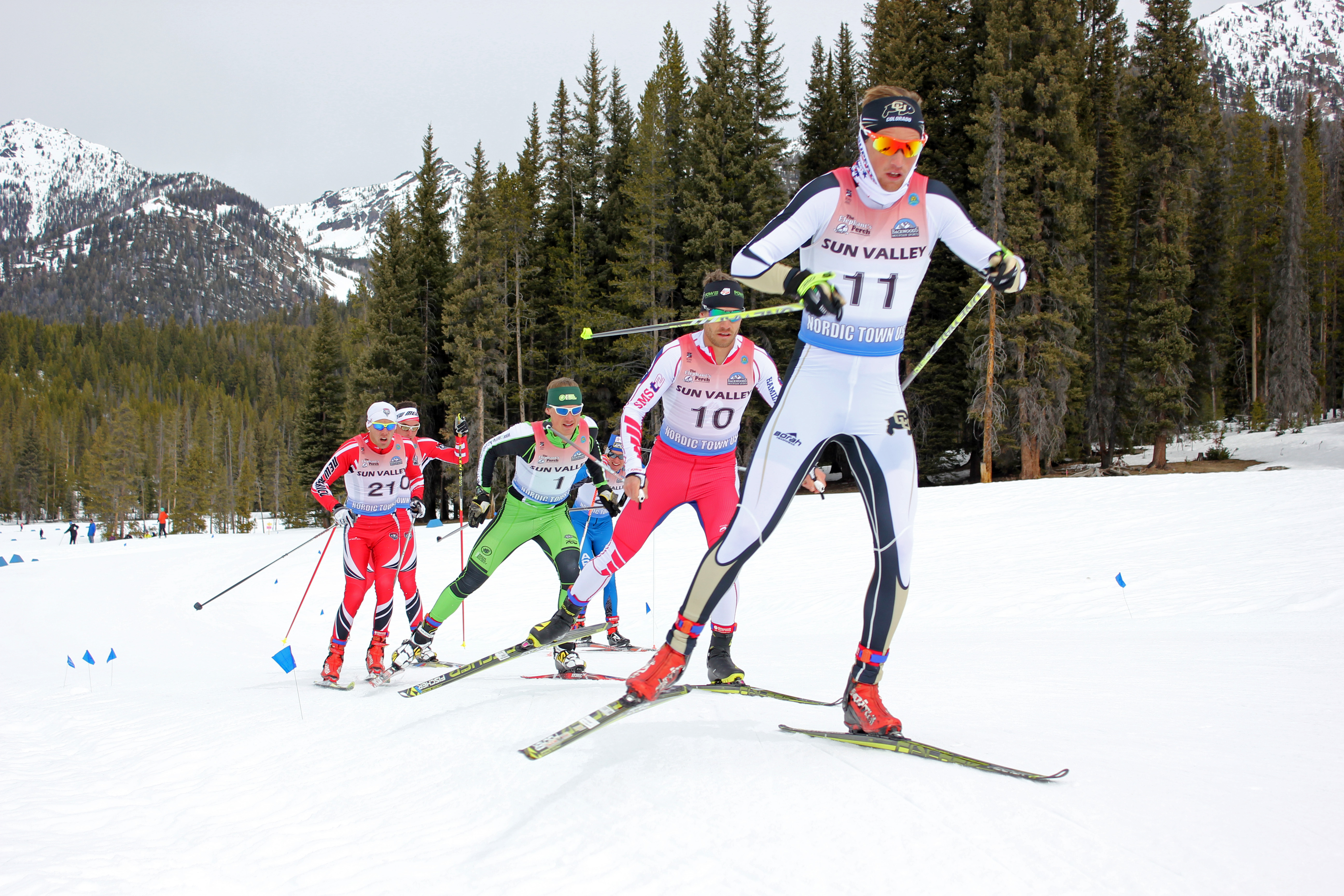
SUN VALLEY, Idaho – Living, training, and competing together over the course of a year can often lead to similar race outcomes, as demonstrated by the 1.2 k freestyle sprint at the 2015 SuperTour Finals where Stratton Mountain School T2 teammates Andy Newell and Simi Hamilton skied in the same final lane and finished roughly a tenth of a second apart to take the top two positions.
Newell’s time of 2:24.96 earned him the victory while Hamilton crossed the line just 0.12 seconds back. In third was two-time 2015 national sprint champion Dakota Blackhorse-von Jess of the Bend Endurance Academy, who finished 0.88 seconds back from Newell.
Rounding out the final were Emil Johansson of the University of Colorado (+1.28) in fourth followed closely by Noe Bellet (+1.31) of the University of Utah in fifth. Colorado teammate Mads Ek Strøm (+2.56) placed sixth.
Newell and Hamilton didn’t start their day at the top of the result sheet after placing seventh and 10th in the morning’s qualifier. Starting at 10am, the preliminary round welcomed conditions that left racers feeling as if they were on an ice rink instead of a ski trail. Many competitors struggled to find their balance on the fast course that featured rolling terrain and little climbing.
Colorado’s Mads Ek Strøm leads Simi Hamilton (10) and Alex Howe (1) in the first quarterfinal of the Sunday’s 1.2 k freestyle sprint at the 2015 SuperTour Finals in Sun Valley, Idaho. Stream eventually finished sixth, while Hamilton placed second. Howe broke two poles to finish third in the heat but did not advance as lucky loser.
“The qualifier was dicey for sure,” Newell said in a post-race interview. “It was funny, we were all trying to find skis that would work out there. I’m not sure it mattered what kind of grind or wax you had on, it was just a matter of trying to find a ski that wouldn’t slide. I went on this ski that I had never raced on before and it still felt really slippery on the ice so I was just happy to not crash in qualification.”
Hamilton added that the relative flatness of the course also added a challenging dynamic to the day’s races.
“It’s a flat course and sometimes those flat courses are the hardest,” he said after his race. “You can’t just pin it and recover on the downhill, it’s more of a steady consistent effort throughout. Skiing smooth and being relaxed was key.”
Several skiers seemed to conquer the slippery conditions, including Alex Howe of the Craftsbury Green Racing Project, Alaska Pacific University’s Tyler Kornfield, and Johansson, who went 1-2-3 in the preliminary round. However, by the time the heats rolled around over two hours later, the warming temperatures had softened the course to make balance and smooth glide a manageable feat.
As the heats progressed it became apparent that the descent before the uphill finish was key in securing a qualifying position. Skiers who used their momentum to enter the inside of the nearly 180-degree corner were often able to rocket past the competition to gain an advantage in the finishing meters.
It was a strategy that took time to catch on. In the first quarterfinal, Hamilton exited the corner in third behind Strøm and Howe, but caught a lucky break when Howe was forced to free-skate after shattering both his poles after an aggressive pole-plant. In the second quarter, Newell realized the benefits of the strategy and skied the remainder of the heats accordingly, even though his competitors caught on quickly.
“I realized early on if you could work the downhill instead of just tucking, you could get around people really easily, so that became my tactic all day, trying to work the downhill and work the corner,” he said. “I think people saw that. I did that in the quarterfinal and I think I kind of let the cat out of the bag really early. Once people saw that move, they were like, ‘Oh, I guess we can do that, too.’”
Come the final, Hamilton led from the start followed by Newell, the three collegiate skiers, and Blackhorse-von Jess in the rear. By the time the six skiers reached the downhill, Newell powered to meet Hamilton on the corner and gained momentum after finding a gap on the inside. The two exited the turn neck and neck.
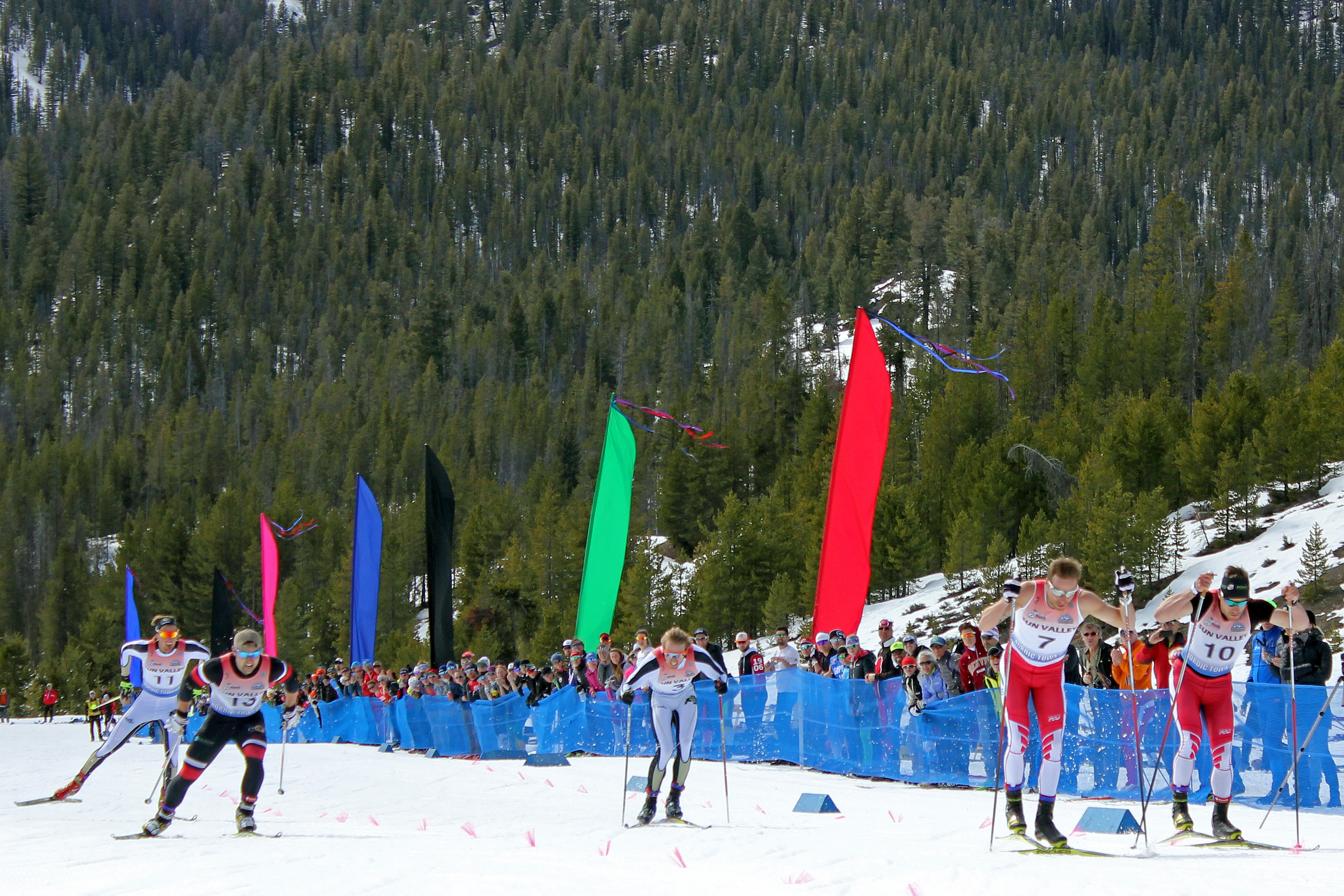
Andy Newell (7) gains a slight advantage over SMST2 teammate Simi Hamilton (10) as they cross the finish of the 1.2 k freestyle sprint at the 2015 SuperTour Finals.
As they reached the 50-meter lanes before the finish, Newell made a move to the far left lane in front of Hamilton. The two remained in the lane as Newell maintained his small advantage all the way to the line. Newell explained that the move was tactical – waiting until the last minute to choose a finishing lane prevents strategic lane choices from other competitors.
“If you play your card too early and show that you’re going to a certain lane, it allows your competitor to set up and go around you,” Newell said. “So I purposely waited to choose the inside lane. I was kind of hugging the whiskers because I didn’t want to completely box him out. Because he’s my teammate, I didn’t want to completely be like, ‘Screw you, I’m taking the lane.’”
Hamilton explained that due to the lane size, he had to adjust his technique to avoid hitting the course markers.
“I had to time my V2 to not ski into the v-boards, but racing is racing and you have to make it up on the fly. It’s just how it played out,” Hamilton said of the finish. “I was psyched to see my teammate on the podium with me. Andy has been an amazing sprinter and to be in any heat with him, he’s a great skier. I’m looking forward to training with him this summer and beyond that.”
Newell echoed the sentiment adding, “It’s always nice to get a win and to have your teammate in second, we’re happy about that.”
Hamilton said that prior to Sunday’s race he was dealing with illness but was able to ski any poor feelings away as the day progressed.
“I didn’t feel great this morning. I’ve definitely been fighting something all week,” he said. “In the past when I haven’t been feeling great, if I can just keep skiing throughout the day I’ve tended to erase it out of my system and feel better and better.”
The 27-year-old Aspen native explained that heading into Sunday’s race there was pressure to perform well due to the level of competition at this year’s SuperTour Finals.
“I think that you feel pressure because there are so many great domestic skiers right now,” he said. “Which is so cool to see. It’s awesome to come home and see so many people fight for the top spots.”
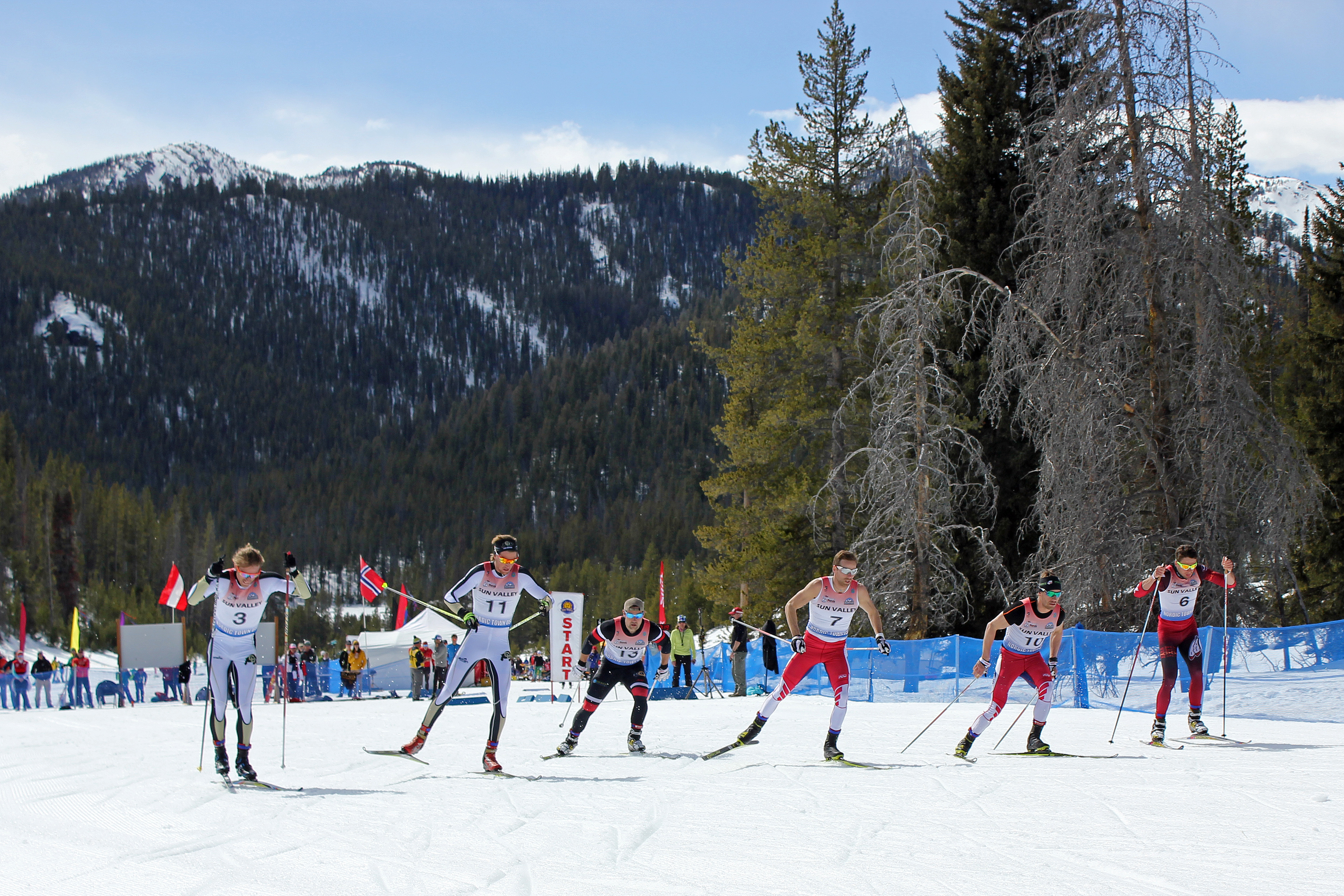
The start of the men’s final at the 2015 SuperTour Finals in Sun Valley, Idaho.
While Newell and Hamilton battled ahead, one of those strong domestic skiers, Blackhorse-von Jess, came back from sitting in last position at the start to third position at the finish.
“Coming out of the start in last place was something else,” he said, referring to the final. “About halfway across the top flat I was like, ‘I can’t sit here anymore,’ and there’s really only one opportunity, because of the way the trail twists and turns, to take the lead. So I hammered through there.”
After making his move, Blackhorse-von Jess entered the downhill with momentum that brought him to the heels of the SMST2 teammates. Unable to take the line he wanted to the finish, the Bend skier held on to third in the final meters.
“Andy, really, he took the line I wanted to take, which is exactly what I would’ve done if I had been where he was,” he said. “And then, I thought he and Simi were gonna open the door there for me at the end but I just didn’t quite have it there.”
Blackhorse-von Jess earned several World Cup starting spots and a place on the 2015 World Championships team after a successful early season. He explained that it was an adjustment to return domestic racing after a several weeks on the international circuit.
“It’s incredibly fun to be racing in the heats again,” Blackhorse-von Jess said. “I had the best time ski racing that I’ve had in the last couple years racing, at World Champs in the heats. So to come back and have guys that are better than me to race with, it changes the complexity of the race and makes it a lot more fun.”
Jessie Diggins up front in the women’s 1.2 k freestyle sprint at U23 World Championships on Wednesday in Val di Fiemme, Italy. The fastest qualifier, the U.S. Ski Team member went on to place second in the final. (Photo: FlyingPointRoad.com/Proceeds go to the National Nordic Foundation)
The International Ski Federation (FIS) Nordic Junior and U23 World Ski Championships showcase the highest level of competition among the best up-and-coming skiers around the globe, especially during Wednesday’s opening freestyle sprints. As Canadian Katherine Stewart-Jones put it: “Every second counts.”
Diggins Wins Prelim; Second in U23 Women’s Final
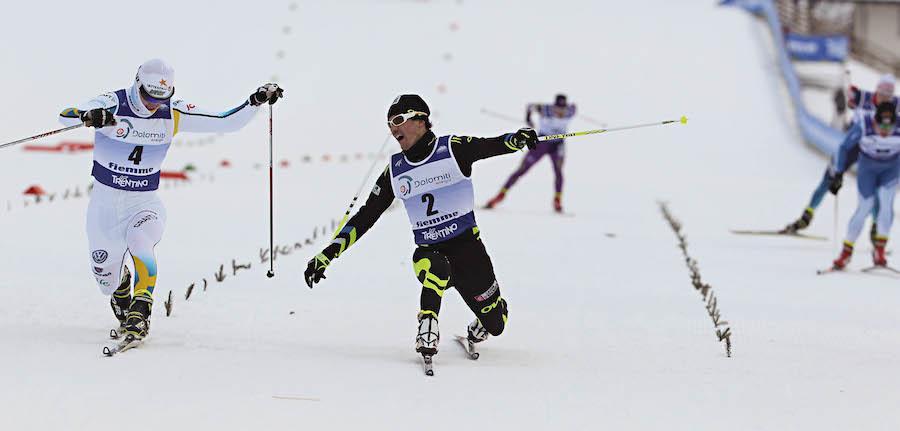
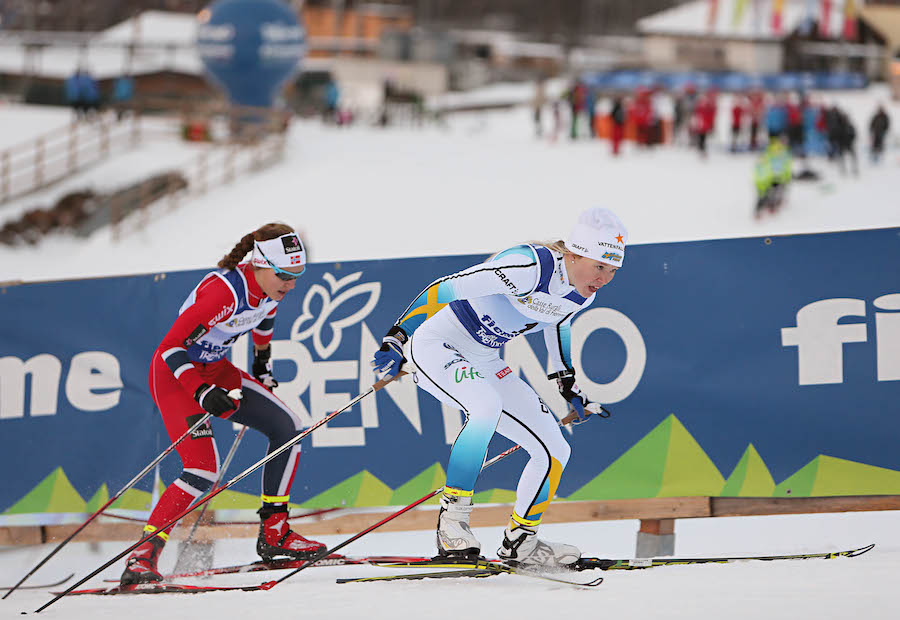
A variety of nations produced top results for both U23 men and women. In the men’s 1.5-kilometer race, six different countries occupied the top eight (Russia, France, Switzerland, Italy, Norway, and Germany) and in the women’s 1.2 k sprint, eight nations finished in the top 12 (Germany, USA, Italy, Sweden, Slovenia, France, Russia, and Norway).
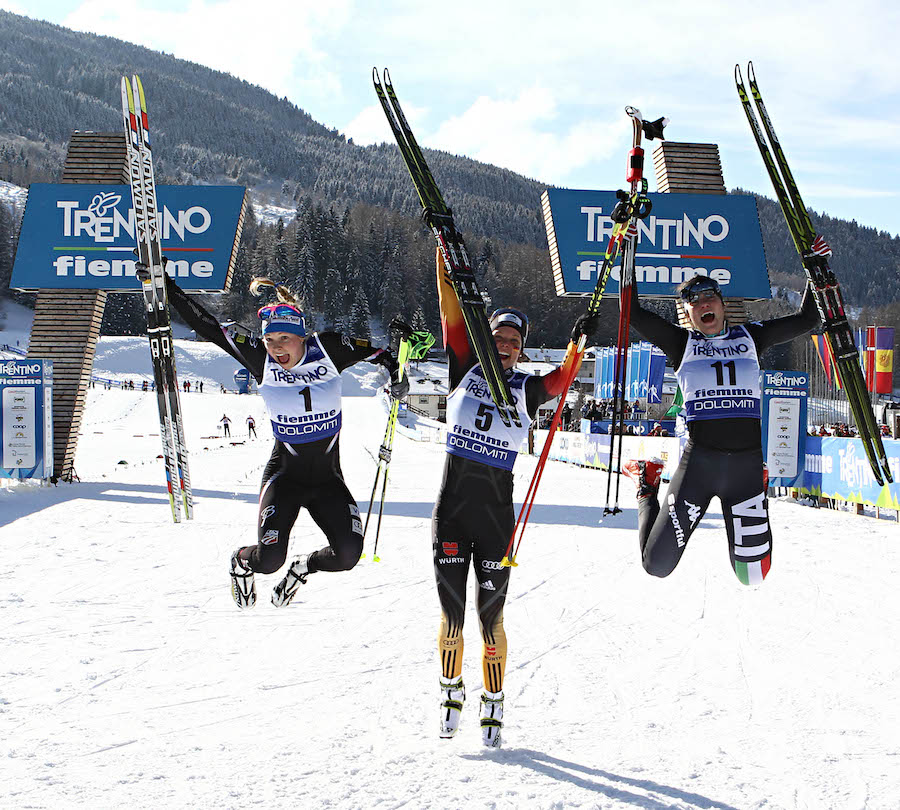
The top three women of Wednesday’s U23 freestyle sprint jumping for joy at the finish (from left to right): runner-up Jessie Diggins (USA), winner Elisabeth Schicho (GER) and Giulia Stuerz (ITA) in third. (Photo: Fiemme2014)
The athletes woke up to sunny, crisp and cold morning on Wednesday in Val di Fiemme Italy. They later warmed up and began their qualification rounds — for some, the most difficult part of sprint racing because you must push yourself as hard as you can go with no one around to go head-to-head against. Those who best demonstrated this skill included American Jessie Diggins, who won the women’s qualifier, and Russia’s Sergey Ustiugov, the men’s qualifying winner.
“The goal of coming here was to hopefully race fast, but my biggest goal was just to have fun and see the team,” Diggins told FasterSkier. “It was so good to practice dealing with pressure and use this as a tune-up race to get more experience and hopefully make the final. My goal was to make the final and get the experience, and get the tactical practice.”
The 22-year-old U.S. Ski Team member, who’s headed to her first Olympics next week, went on to place second to Germany’s Elisabeth Schicho in the final. After winning his first World Cup in a freestyle sprint in Nove Mesto, Ustiugov, 21, tallied his third U23 victory on the first day of competition in Val di Fiemme.
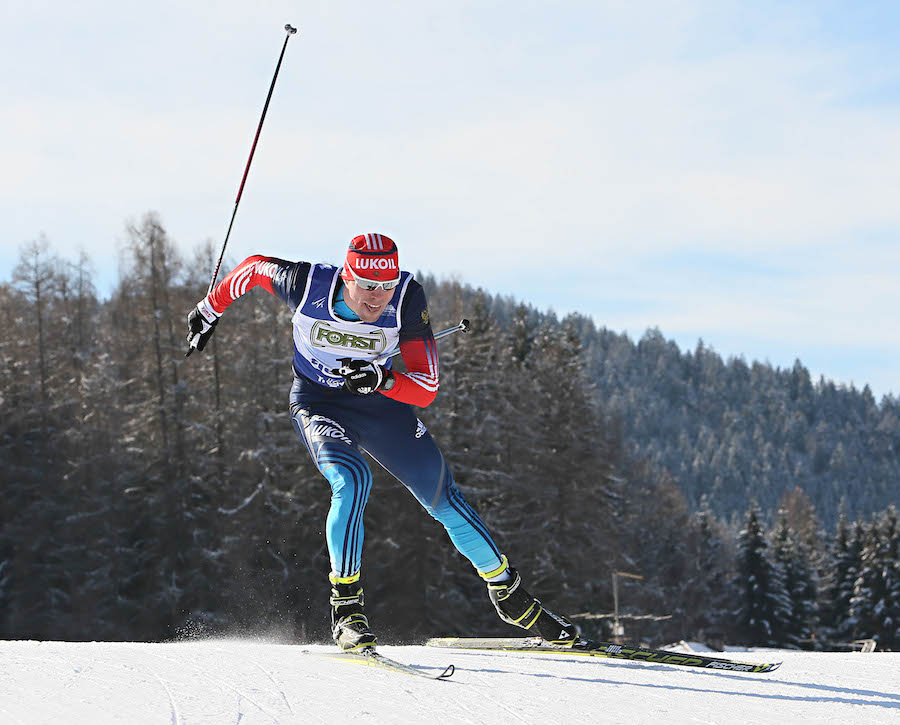
Russia’s Sergey Ustiugov on his way to winning Wednesday’s freestyle sprint on the first day of U23 World Championships in Val di Fiemme, Italy. (Photo: Fiemme2014)
“I hoped I could get a medal and eventually I made it,” Ustiugov said, according to a Fiemme2014 press release. “I felt very comfortable all the way through since the qualifications. In the final heat I started slow ‘cause I wanted to see what the others meant to do. Halfway to the finish I decided it was the right time to attack.”
In the final, Ustiugov attacked on the first climb to create a significant gap on his competitors. Behind him, Switzerland’s Roman Schaad tried to close on him and France’s Paul Goalabre. In the end, Goalabre overtook Schaad with a few powerful pole plants landed him with a second-place finish, leaving third to Schaad. American Erik Bjornsen (U.S. Ski Team) placed 18th.
In the women’s final, Diggins also kept the pace as high as possible from start to finish. Nevertheless, Schicho stuck with the young U.S. Ski Team member and overtook Diggins in a final sprint to the finish, winning by a clear margin.
“In the final I knew that I hadn’t been skiing the finishing lanes very well today, but if I could tire people out, that was going to be my chance to win it,” Diggins said. “So I went to the front and just hammered and pulled a big gap on the field except for [Schicho], who hung with me. She had a great finishing speed. Going down the last hill into the finish she slingshot me and then just skied off and I just had nothing.”
Diggins added that she was satisfied with the race and looking forward to finishing out her tapering period before peaking for Sochi.
“I am more than happy, today is pretty much a golden day,” Schicho, 22, said of her first U23 podium in a press release. “I am really proud … I felt really fit and my skis were perfect.”
A home-crowd favorite, Giula Stuerz of Italy also made the podium in third.
France’s Jean Tiberghien (2) nips Sweden’s Oskar Svensson (4) for the freestyle-sprint victory on the first day of 2014 Junior World Championships in Val di Fiemme, Italy. (Photo: Fiemme2014)
Tiberghien, Sundling Tally Junior Sprint Titles
The junior men’s 1.5 k final began in a controlled manner, without any significant moves up the first hill. Then, on the last climb, France’s Jean Tiberghien (the second-fastest qualifier after fellow Frenchman Lucas Chanavat) took the lead and attacked, testing the reaction skills of Sweden’s Oskar Svensson and Finland’s Joni Maki. Neither were able to respond, and Tiberghien, 18, entered the final straightaway with a decent gap. Ultimately, however, he had to outlunge Svensson at the finish, beating the Swede by a toe. For Tiberghien, it was his first title in his first Junior World Championship. Maki placed third.
“Becoming the world champion is simply amazing and fulfilling,” Tiberghien said in a press release. “Everything was awesome and everything went in the right direction. I still have to realize that I won the gold medal, it’s even better than a dream.”
Jonna Sundling of Sweden leads Norway’s Lotta Udnes Weng in the junior women’s 1.2 k freestyle sprint on Wednesday at Junior World Championships in Val di Fiemme, Italy. The two placed first and second in the final, respectively. (Photo: Fiemme2014)
In the junior women’s 1.2 k final, the race tactics couldn’t have been more different. The winner of both her quarterfinal and semifinal, Sweden’s Jonna Sundling attacked the first climb and reached the top of the hill with a clear margin over her competitors. With such a gap, the 19-year-old Sundling was untouchable and secured her first individual junior-world title. Norway’s Lotta Udnes Weng and Russia’s Yulia Belorukova completed the podium in second and third, respectively.
The top Canadian, Stewart-Jones placed 15th in the junior women’s sprint.
“I was super excited with how things turned out today,” she wrote in an email. “This year I have been disappointed with my qualifiers, but today I was able to have a solid one. My skis were really good, and the rest of the team seemed to agree … I did not expect to make top 15, but I am satisfied for sure!”