Tag: 1.4 k classic sprint

  • Sundling Dominates Final Sprint; Kern Finishes a Close Fourth

    Sundling Dominates Final Sprint; Kern Finishes a Close Fourth

    This World Cup coverage is made possible through the generous support of Marty and Kathy Hall and the A Hall Mark of Excellence Award.  To learn more about A Hall Mark of Excellence Award or to learn how you can support FasterSkier’s coverage please contact info@fasterskier.com.
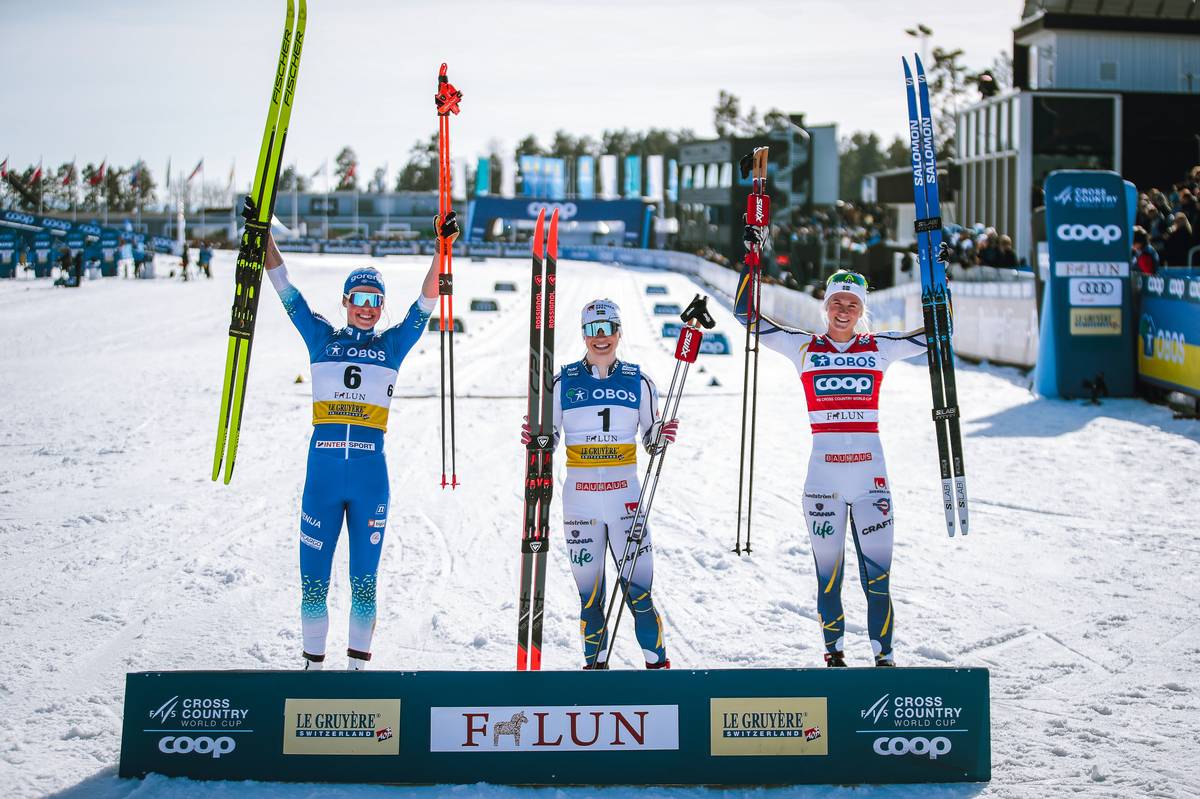
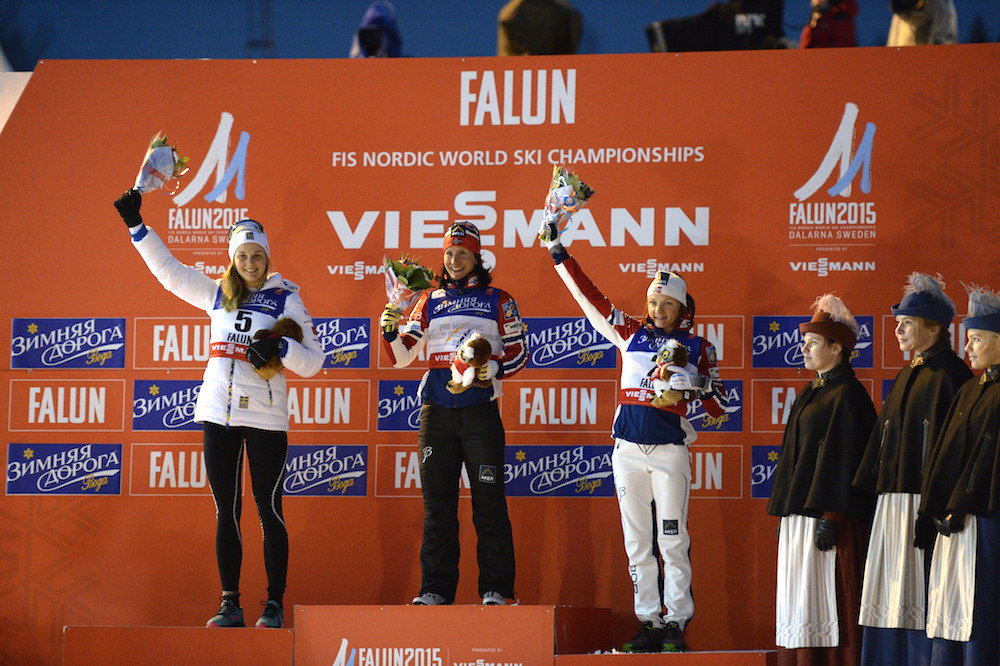
    Women’s 1.4 k classic sprint podium in Falun, Sweden: Jonna Sundling (SWE) took the win ahead of Anamarija Lampic (SLO) and Maja Dahlqvist (SWE). (Photo: NordicFocus)

    We’ve arrived at the final weekend of World Cup racing. After the cancellation of the finals scheduled to take place in Tyumen, Russia and the difficulty of finding a last-minute replacement, these three days of racing in Falun, Sweden will be the culmination of the 2021/22 World Cup season. On a warm sunny day, in full spring conditions, the women executed an exciting classic sprint on the familiar 1.4 k Falun sprint course. With this being the last sprint of the season, it was also a day to cement the places in the running for the overall women’s sprint globe (none of the team events happening Sunday will influence the rankings). 

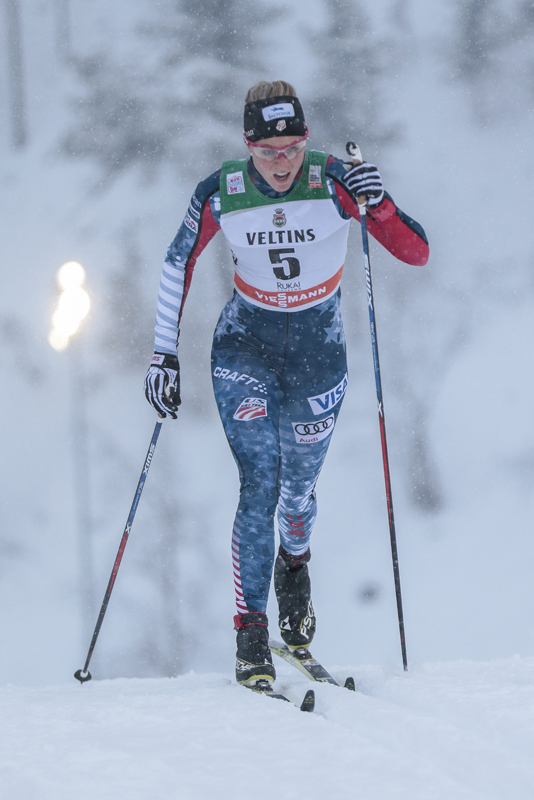
    Starting with a bang, Jonna Sundling of Sweden won the qualifier by an astonishing margin of +8.41 seconds, ahead of runner up Jasmi Joensuu of Finland. The American’s put three women into the quarter-finals, led by Rosie Brennan in 7th (+9.61). Julia Kern qualified in 17th position (+12.30), followed by her teammate and roommate, Jessie Diggins in 18th (+12.49). 
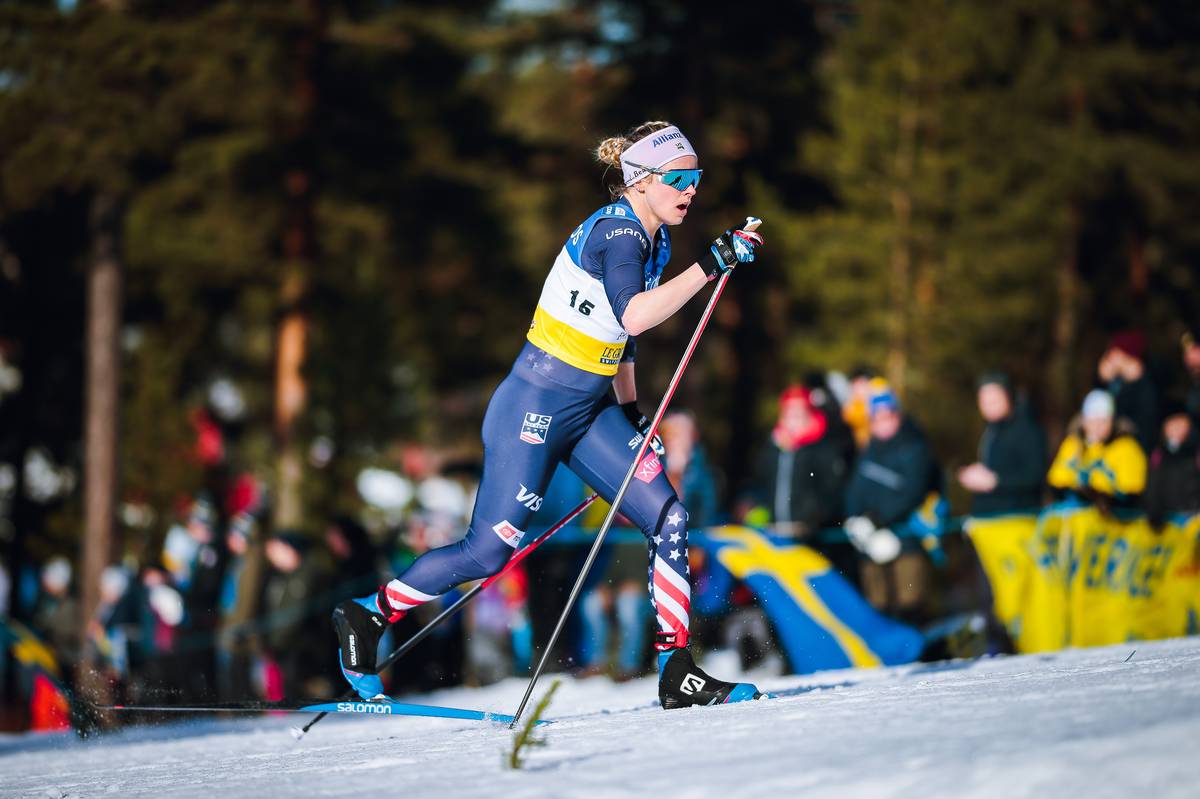
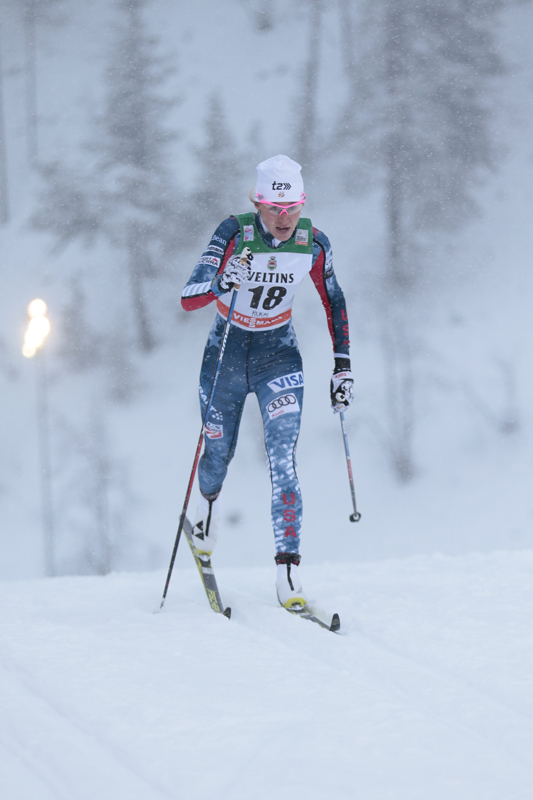
    Jessie Diggins on her way to 18th place in the qualifier. Diggins ultimately ended her day 19th. (Photo: NordicFocus)

    These were the only three American women competing today as unfortunately some late-stage positive covid tests barred the rest from competing. Having made it through a winter of international travel, living, and competing during the Omicron surge, Hailey Swirbul and Katherine Ogden announced on Monday that they had both tested positive in Norway. Lauren Jortberg, who had her World Cup debut in Lahti, Finland two weeks earlier, came directly to Falun to prepare for this weekend, only to test positive on Wednesday. 

    No Canadian women made it into the top thirty, their first finisher was Olivia Bouffard-Nesbitt in 32nd (+17.54). Katherine Stewart-Jones led a string of fellow country-women, finishing 37th (+19.49), followed by Dahria Beatty in 38th (+19.75) and Jasmine Drolet in 39th (+20.08). After competing at World Juniors in Lygna, Norway, Drolet joined the senior women and made her first World Cup appearance in the Holmenkollen 30 k last weekend where she finished 42nd. 
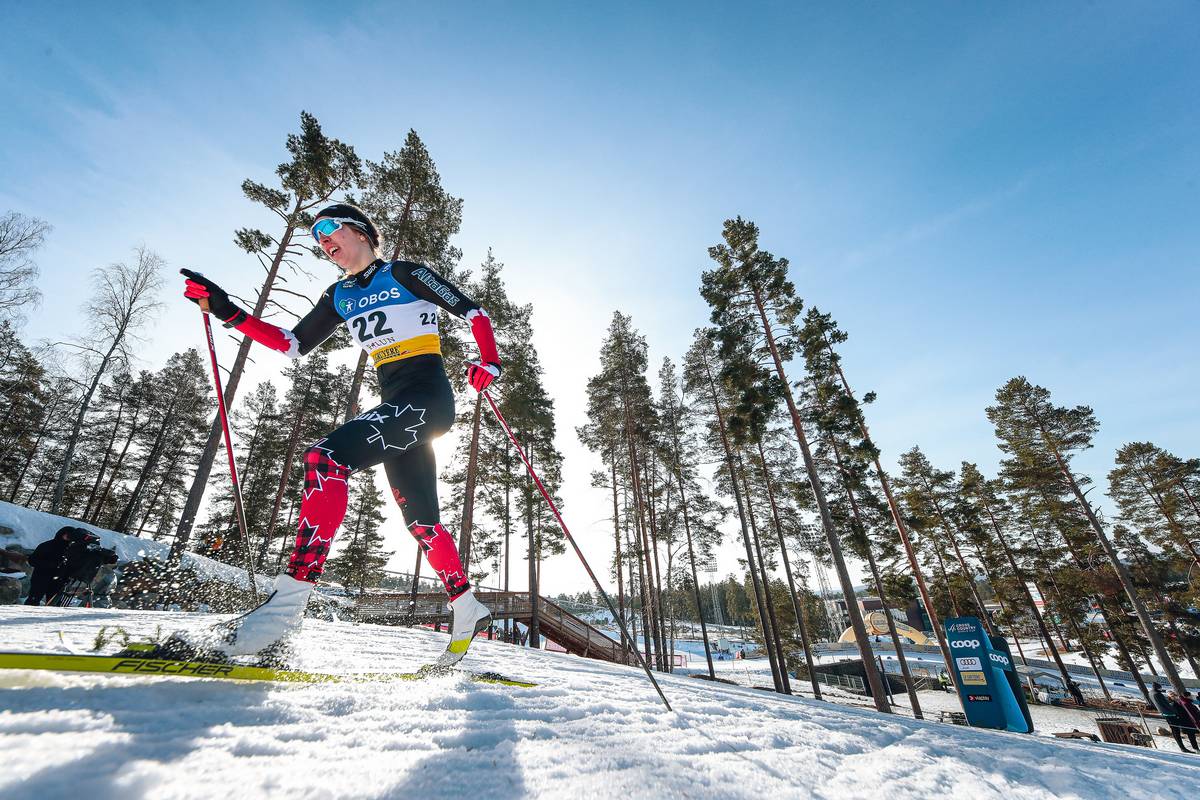
    Dahria Beatty (CAN) racing to 38th in the classic sprint qualifier on Friday (Photo: NordicFocus)

    As crowds of fans gathered, the women’s quarterfinals kicked off at 12:15 local time. In the first heat, a fast pace bought three women tickets to the semi finals, led by Anna Svendsen of Norway. After winning the classic sprint qualifier in Drammen, Norway last week only to fall in the quarter finals, Johanna Hagström (SWE), skiing on a home course, made it safely through in second. Kerttu Niskanen of Finland took third but with a fast enough time to snag a lucky loser position.

    Heat two was controlled entirely by Sundling as she skied easy out front, spreading the rest of the field. Behind her came Johanna Matintalo of Finland and Julie Myhre of Norway who made it to the semis as the second lucky loser. Brennan (USA) finished fourth, +3.39 behind Sundling, ending her day in 16th overall. 
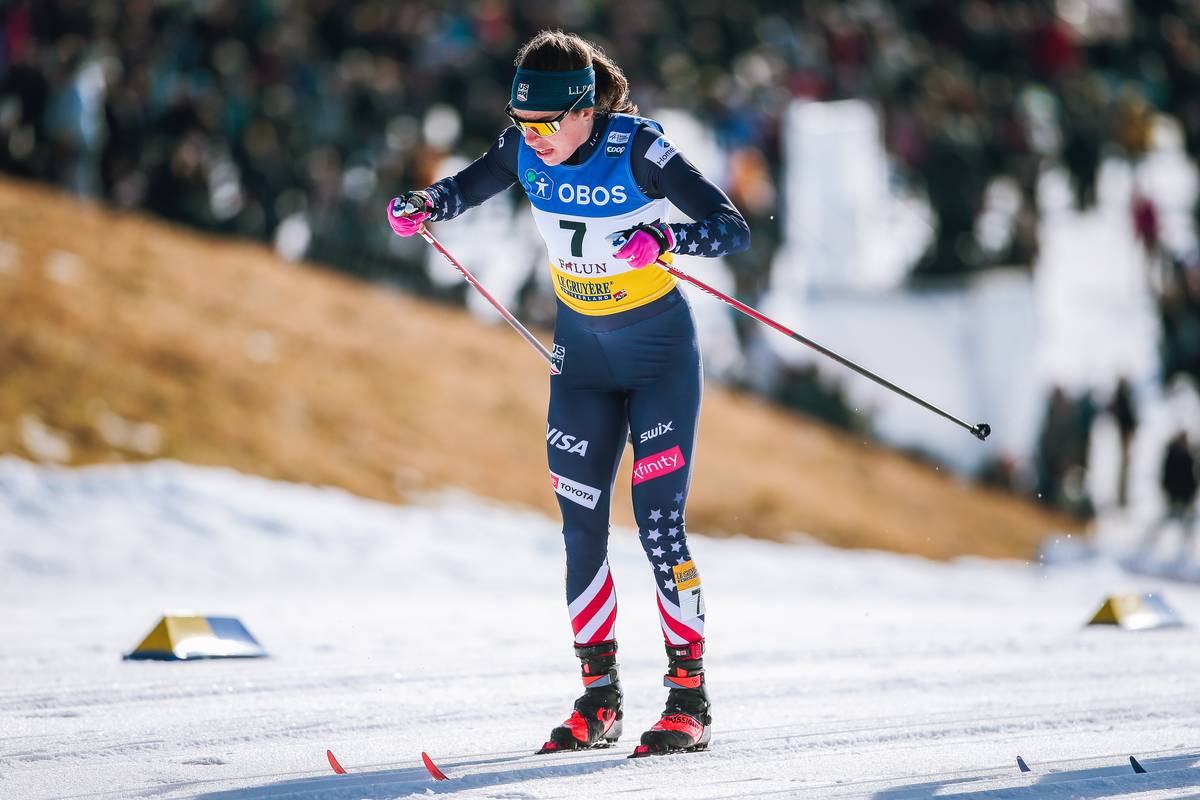
    Rosie Brennan races the quarterfinal after qualifying 7th. (Photo: NordicFocus)

    “It was warm and wild out there today,” wrote Brennan after the race. “This course is quite technical and has some challenging downhills which has made it a tough course for me in the past so I was ready to make some progress today. I had a good qualifier and that gave me some confidence for the heats. I had a very stacked heat which can go either way for me. I struggled finding space to move on the uphills which is my strength and that ultimately cost me moving on to the semi-finals by less than a second. In the bigger picture, I do think I made some strong progress on some of my weak spots on this course and I am really excited about that. I am also still feeling good and excited to race which bodes well for the rest of the weekend.”

    In heat number three, Anamarija Lampic of Slovenia took on the lead, as Diggins and Moa Lundgren of Sweden chased. Entering the final straight Nadine Fähndrich of Switzerland employed her blistering finish speed to surpass both Diggins and Lundgren, and nearly overtake an unsuspecting Lampic. This left Diggins in fourth place in a heat that was not quick enough to make lucky loser. Diggins ends the sprint season in fourth place in the overall sprint standings with 351 points; having entered the day in third with 339 points, she was bumped off the podium by Sundling. 
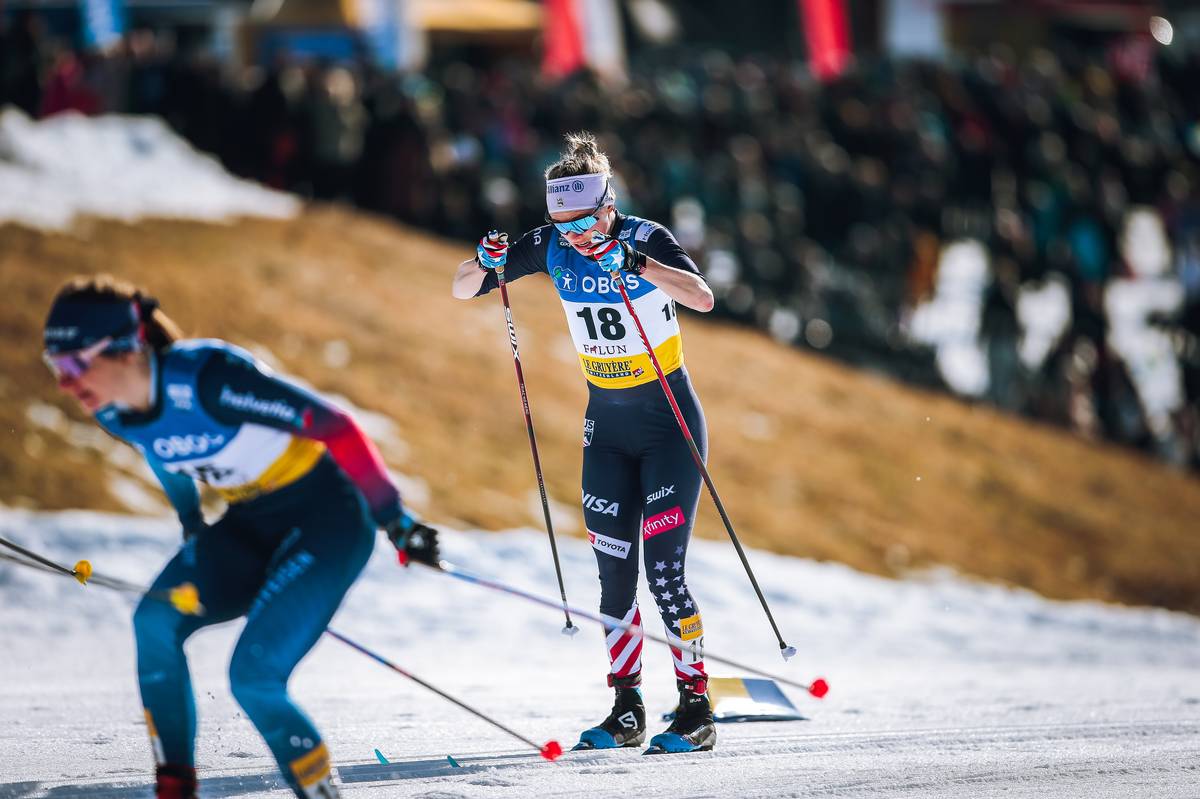
    Jessie Diggins races in heat number three in the 1.4 k classic sprint in Falun. (Photo: NordicFocus)

    Heat four saw an easy pace from the gun, with the pack largely staying together. With all six athletes still in touch as they crested the big climb, Kern navigated into third place on the ensuing tight downhill corner. An injection of speed from Maja Dahlqvist (SWE) over the next rise split the pack as Lotta Udnes Weng (NOR) shadowed, followed by Kern still in third. In the long downhill glide-out, Weng overtook the Swede, entering the final corner in first. Right with her were Kern, Dahlqvist and Laura Gimmler of Germany. A close finish saw Kern out double-pole Dahlqvist to take the win, with Weng coming second. However, a disqualification for Weng bumped Dahlqvist into second and thus have her a ticket to the semi-finals. 
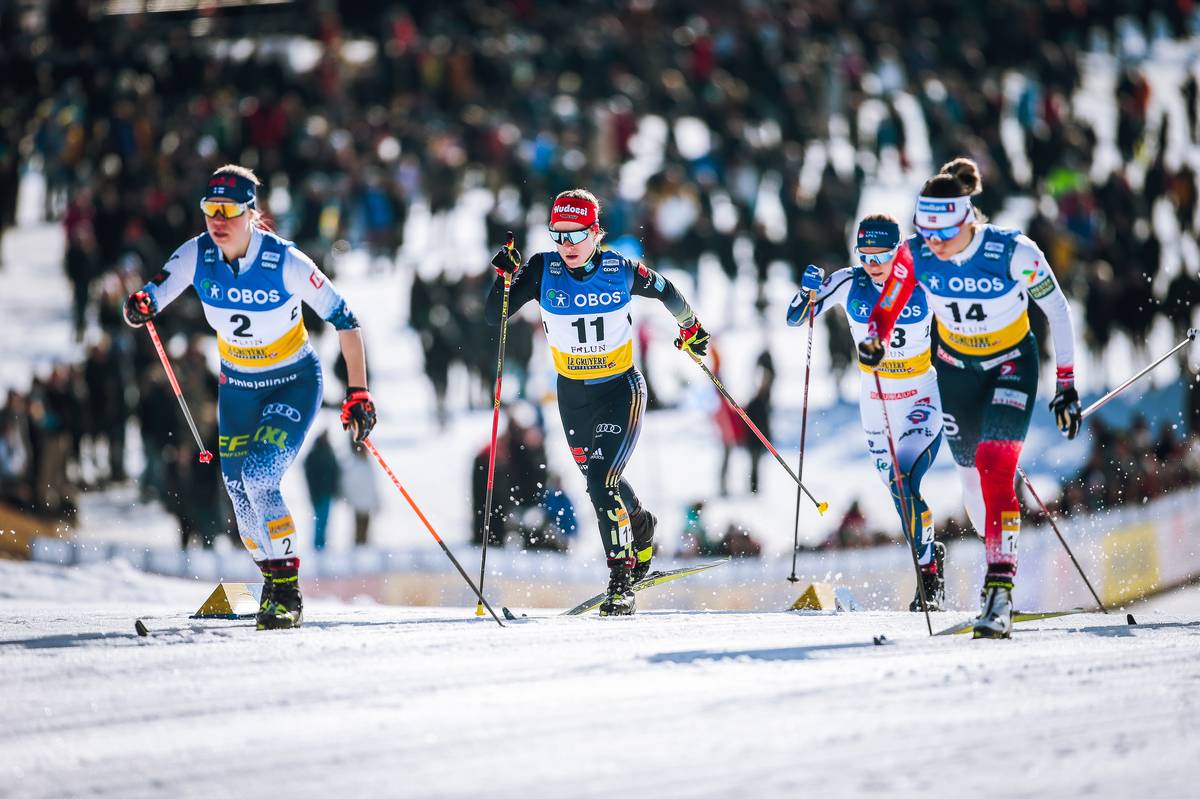
    Jasmi Joensuu (FIN) and Maiken Caspersen Falla (NOR) duke it out in the quarter-final (Photo: NordicFocus)

    After a redeeming win in Drammen last week, Maiken Caspersen Falla of Norway charged off the startline for heat five. Joensuu (FIN) and Heidi Weng (NOR) took up the chase and eventually overtook Falla on the long descent back into the stadium. Together the two Norwegians pulled away from the Finn as Joensuu faded slightly. Falla finished first and Weng, with a scream of satisfaction, crossed in second. 
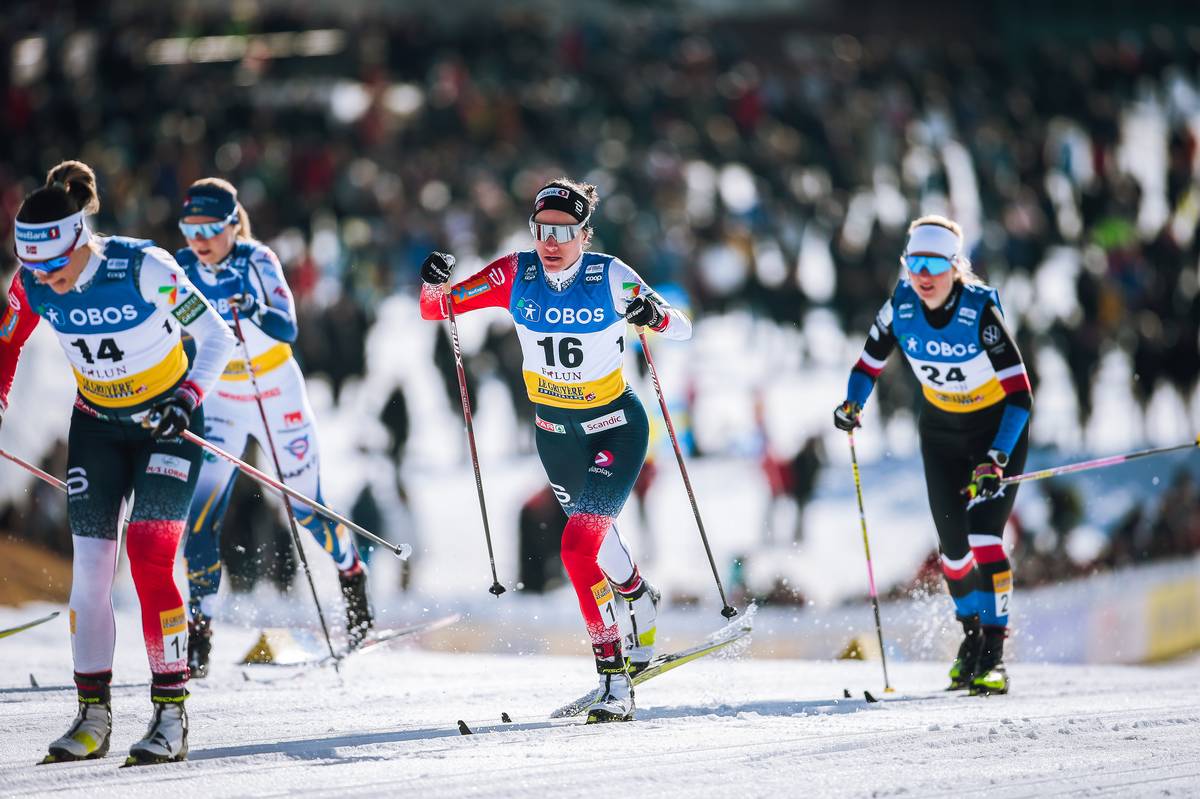
    Heidi Weng (NOR) racing in quarterfinal heat number five (Photo: NordicFocus)

    Echoing her moves from the quarter-final, Sundling (SWE) approached semi-final number one in the same manner, skiing smooth and easy out front. Lampic (SLO) followed with some occasional slips on a mushy course. Those front two continued to pull away, Sundling making it look easy as she found herself well clear of the rest of the competition. Lampic maintained second position and Matintalo (FIN) came in third, though was not quick enough to move onto the final. 

    In the second semi-final, Falla (NOR) took the lead, again trailed by Weng (NOR). Once again, Kern (USA) moved into third position on the tight middle downhill portion, setting herself up well. A fall from Weng on the next hill took her out of contention as Dahlqvist (SWE) moved into second position, Kern still in third. Switching tracks, Dahlqvist stumbled but managed to stay on her feet as Kern took the lead into the final corner. Kern held onto first position with some strong double poling and behind her Dahlqvist, Falla and Fähndrich all qualified for the final in second through fourth positions respectively. 
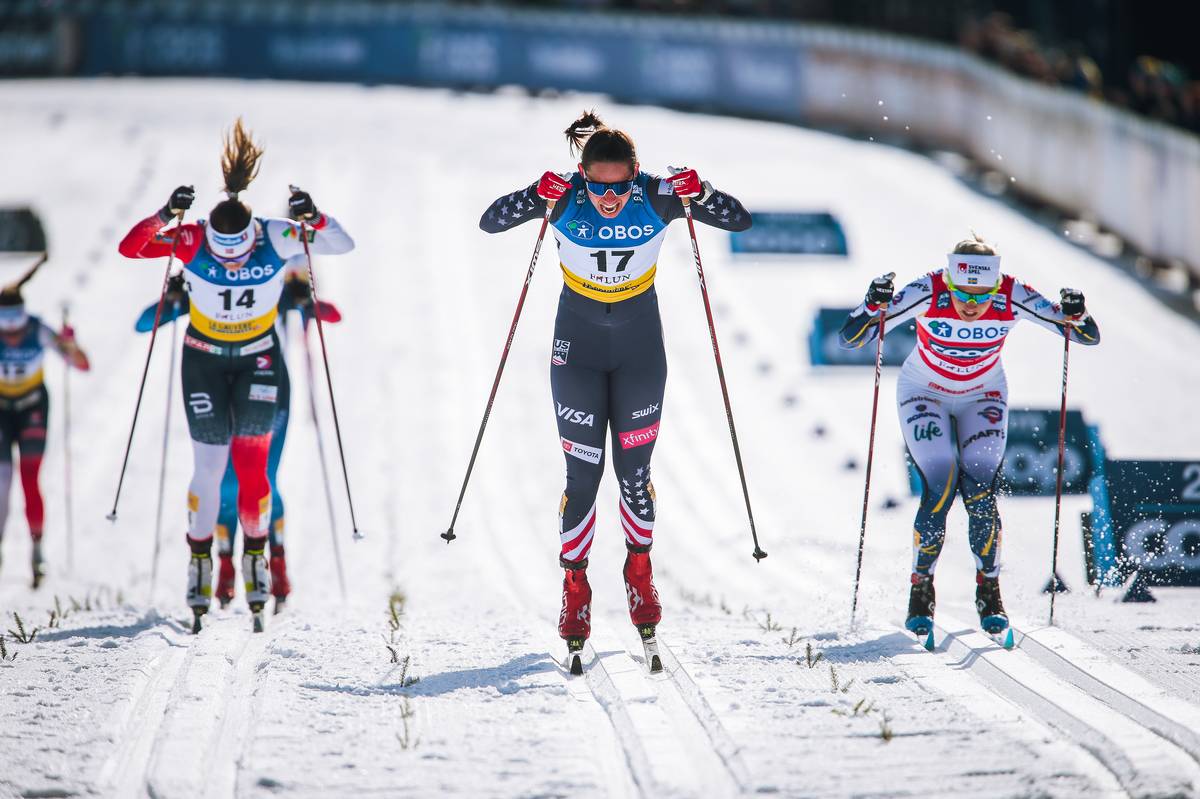
    Julia Kern, closing out fast (Photo: NordicFocus)

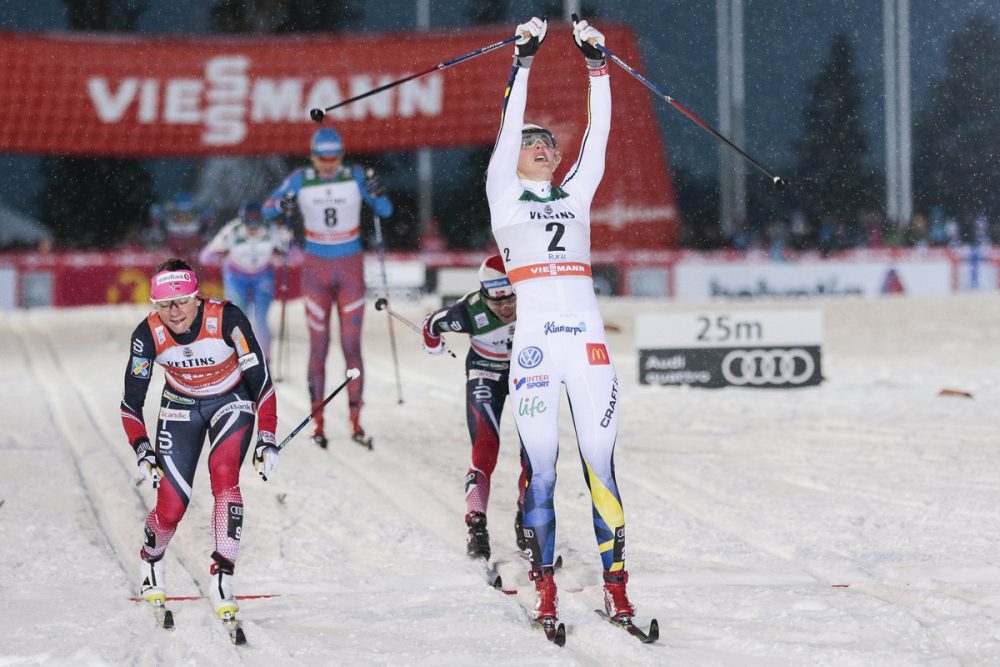
    Making her first sprint final since a stage race in Lenzerheide, Switzerland in December, Kern was all smiles on the start line as the athletes lined up for their final round. Right away, Sundling and Lampic began to pull away from the rest of the field. Up the A-climb, Sundling broke into a herringbone, clearly moving fast as she increased her lead. Dahlqvist who had been in third was overtaken by Kern who topped the hill in third. Lampic was holding strong in second, though being chased by Kern. Navigating the remaining corners and descents, Sundling cruised easily to the finish with enough of a lead to give a celebratory wave before crossing the line.

    No challengers around, Jonna Sundling cruises to victory. (Photo: NordicFocus)

    Coincidentally, Sundling won by the same margin over Lampic (+8.41 seconds) as she had on second-place qualifier Joensuu (FIN) earlier this morning. “I don’t know what is behind this result today, but the last weeks I’ve been feeling really good and it’s nice to keep the shape still,” said Sundling after her dominant victory. She added, “I didn’t compete so much in the beginning [of the season] because of injury but my motivation is on top and so is my shape, and it’s just fun to ski right now.”

    Behind them, Dahlqvist was finding a second wind in the finish straight and overtook Kern to finish in third. Kern finished fourth, matching her season personal-best from Lenzerheide where she also finished fourth, in a skate sprint. 
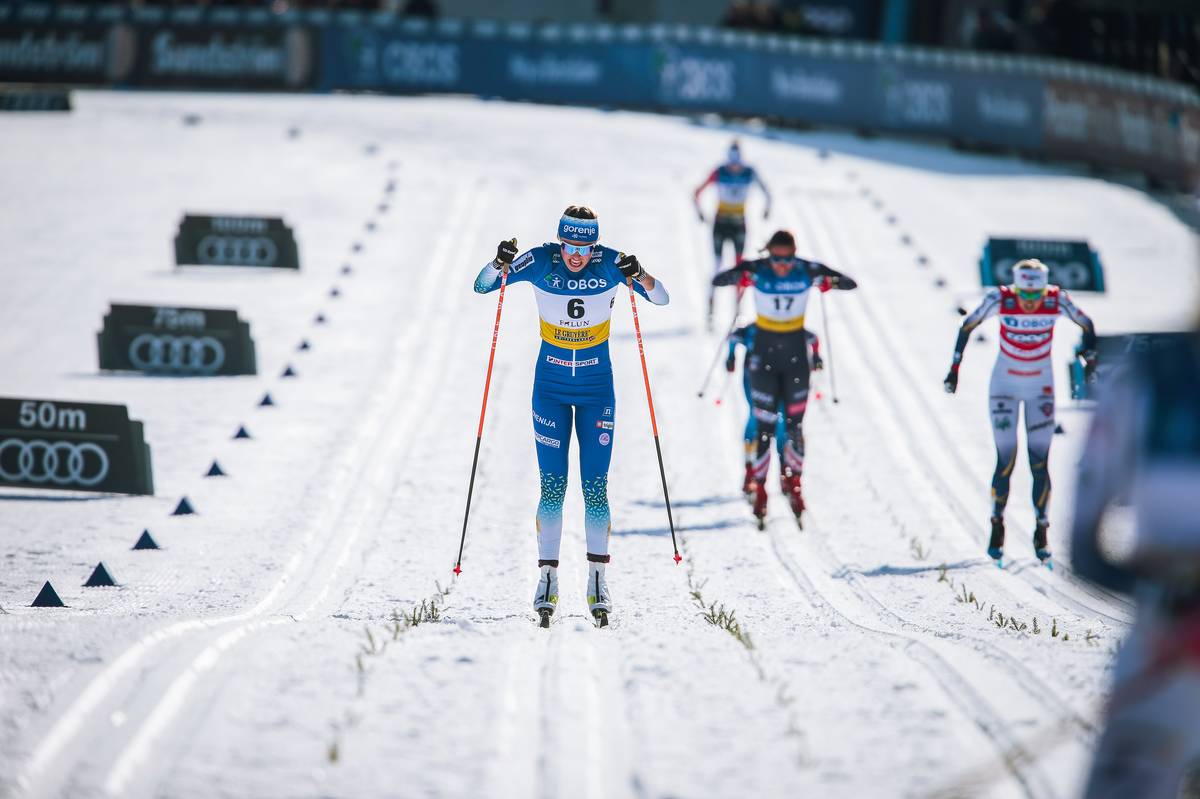
    Anamarija Lampic (SLO) heads towards a silver medal as behind her Maja Dahlqvist (SWE) overtakes Kern (USA). (Photo: NordicFocus)

    “[Kern] was really smart through the quarters and semis,” reflected coach Matt Whitcomb, “where she would ski really smooth through the first climb, and position herself really well. And normally what was happening is she was both being smart tactically and feeling very good today and that just led to a break between positions 3 or 4 and allowed her to get away. And her doublenpole punch at the end was as good as I’ve ever seen her today.”
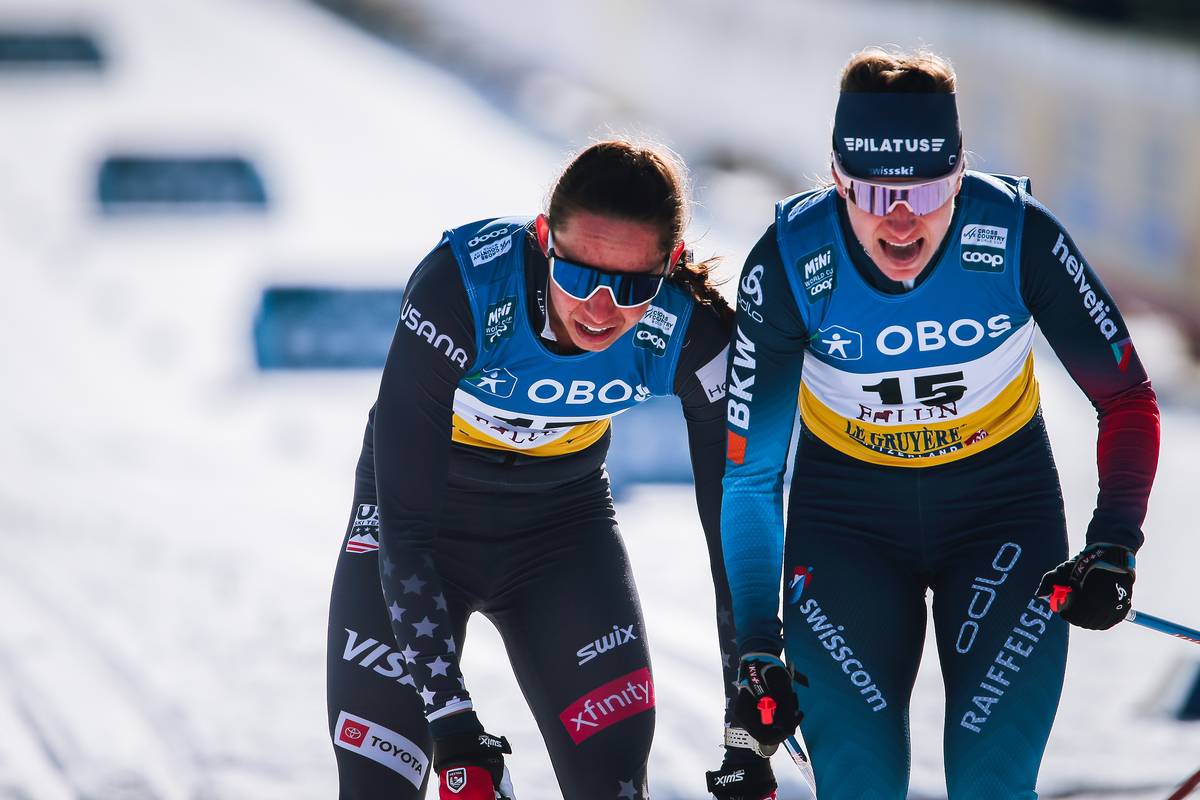
    Julia Kern after fending of Nadine Fähndrich (SUI) to finish fourth in the 1.4 k classic sprint. (Photo: NordicFocus)

    Regarding the final in which Kern seemed to have a lock on third but lost out in the closing stages Whitcomb said, “We talked about if there was a big mistake she made and we decided she could do the same thing 10 times and maybe land on the podium four or five times. She had some stumbles, had those things not happened, it would have been a little bit closer between her and Maja [Dahlqvist], but I don’t want to discredit Maja, she had all kinds of fire in the finish today.”

    He added, “It was cool, Julia’s parents are out here today, she has raced well when her parents are watching. It’s important to point out that she was fourth and not fifth, she fended off a hard-charging Fähndrich and we’re really happy with her performance today.”

    Listen to the full interview with U.S. Ski Team Head Coach Matt Whitcomb here.
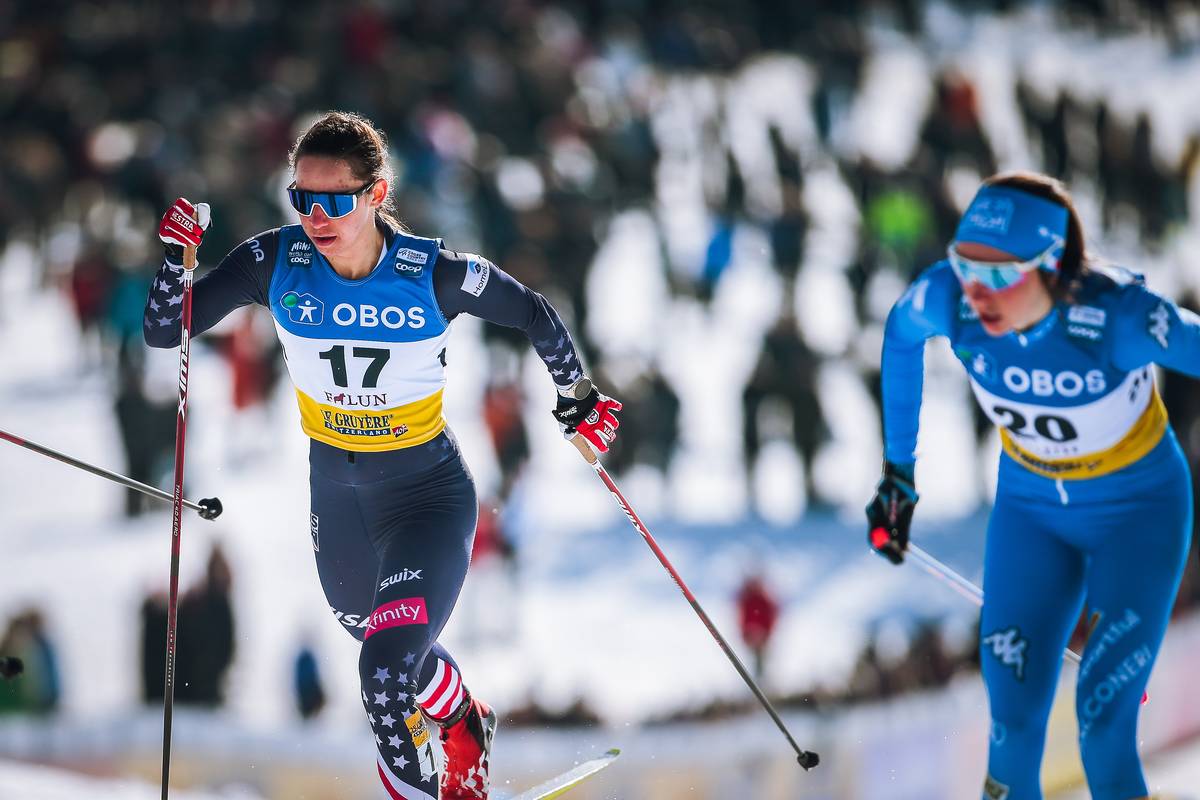
    Julia Kern races through the heats in Falun. (Photo: NordicFocus)

    Kern has put together a string of strong performances in the final period of World Cup racing, placing in the top-10 in each of the last three sprints. These results come on the tails of a first Olympic appearance that left her wanting more, after having rebounded early-season from a 2020/21 season she had described as challenging.

    “It’s a bit of a bittersweet ending,” Kern said in a call. “We’ve been on the road for so long now that, after the Olympics, especially, I was feeling excited to go home. But now when things are going well and I’m feeling really good, I don’t want to go home and I don’t want the season to end. I’m happy to end on a high note and find my stride after a frustrating Games. It’s just kind of reminded me how important having some sense of normalcy is, and I’ve kind of embraced that more after the Games. I think that’s paid off, plus some hard work, and I’ve had a little extra fire from the frustration after the games. Happy to end the season this way, and [we have] another shot tomorrow, so I’m excited for that race.”

    Commenting on how these strong results and better energy feed momentum, Kern discussed a mid-week training session she felt primed her for today’s sprint.

    “Now that I’ve been having really good energy in training… I have to give a big shoutout to our staff. On Tuesday this week, I did an interval workout here on the courses. I had Matt, Kate [Barton], and [tech] Chris Hecker out there with me, racing me around the course doing speeds, throwing elbows, pulling tactical moves, practicing the slingshot. Those types of sessions are super valuable for me when I put the energy to put in a good interval session. I learned so much from that session, and it gave me the confidence here today to ski well in the heats and be ready for anything.”

    Kern continued with a laugh that her family is her fourth place good luck charm, as they also watched her race to fourth in Lenzerheide, SUI during the Tour de Ski, ending with a comment on the American team as the season draws to a close.

    “I think our team has done a really incredible job, working through all the different colleges this season has brought. When things get tough, we bring out humor and come together. I just feel more and more appreciation for the team. My wax tech Eli and I have worked really hard all season together to start linking together some classic performances. We’ve had four classic races in a row now, and pretty much all personal bests, so that’s been a really fun relationship to build and [I appreciate] all the hard work the wax team puts in.”

    Full post-race interview with Julia Kern. Apologies for the bad echo — working through the kinks as we work our way along the audio learning curve.
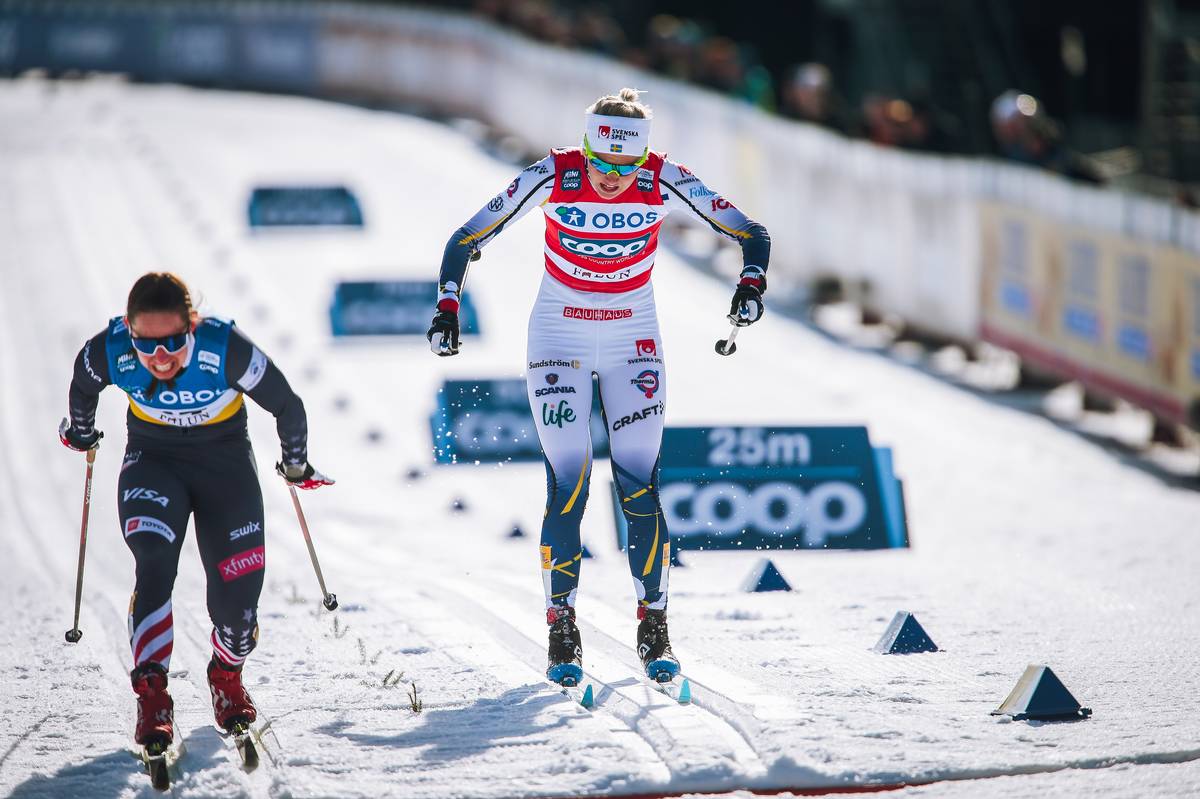
    Julia Kern edges out Maja Dahlqvist (SWE) in the classic sprint semifinal in Falun. (Photo: NordicFocus)

    Dahlqvist already had the sprint globe on lock, but her third place finish today only reinforced her strength in sprint racing this season as she racked up 638 points throughout the year. She began the season with four straight wins and earned a silver medal in the Olympic skate sprint last month. A fourth place finish in Drammen was the only time this season in which she did not finish on the podium in a sprint event.

    “It feels really really, super duper good,” said Dahlqvist about taking home the globe. “I’m super happy with that.” 
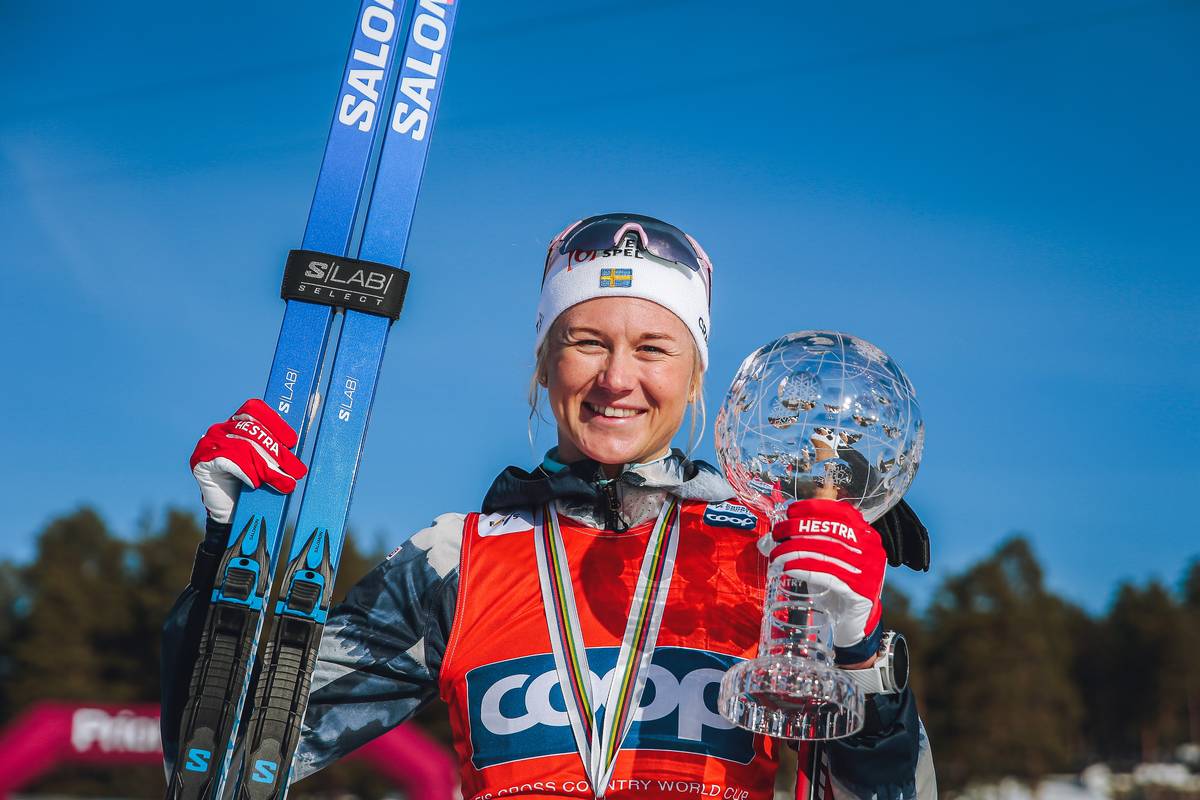
    Sweden’s Maja Dahlqvist is the 2022 World Cup sprint champion. (Photo: NordicFocus)

    Last year’s sprint globe winner, Anamaria Lampic (SLO) finished second this year with 506 points. After today’s victory, Sundling (SWE) overtook Diggins (USA) to move into third in the sprint standings with 442 points. Delaying her start to the season after sustaining an injury in an early-season FIS race, Sundling’s first World Cup start was Dresden in mid-December where she finished second in the individual skate sprint. She did not take part in the Tour de Ski, but returned to the World Cup circuit in dominant fashion, after collecting three Olympic medals, one of each color, and taking fourth place in the 30 k.

    In the final three weekends of World Cup racing, Sundling landing on the podium in four out of the five races she entered, including a third place finish in the legendary Holmenkollen 30 k classic last weekend. 

    Anamarija Lampic (SLO) congratulates the days winner, Jonna Sundling (SWE) (Photo: NordicFocus)

    Racing continues tomorrow with a 10 k skate interval start for the women. Sunday will feature two new team events, with a mixed relay happening in the morning followed by a mixed team sprint in the afternoon. 

    Results:

    Qualification | Final | Sprint Overall Standings

  • Golden Boy: Klæbo Youngest Olympic XC Winner in PyeongChang Sprint

    Norway’s Johannes Høsflot Klæbo (2) racing to gold, ahead of Italy’s Federico Pellegrino (9) and Russia’s Alexander Bolshunov (4) in the men’s 1.4-kilometer classic sprint final on Tuesday at the 2018 Winter Games in PyeongChang, South Korea. (Photo: FlyingPointRoad)

    FasterSkier would like to thank Fischer Sport USA, Madshus USA, Concept2, Boulder Nordic Sport, and Swix Sport US for their generous support, which made this coverage possible.

    PYEONGCHANG, South Korea — Johannes Høsflot Klæbo. Search the Norwegian’s name in the International Ski Federation (FIS) web databank and it appears at the top of nine of the 13 World Cup races he has entered this season.

    For many, Klæbo is more than just the name of Scandinavia’s most recent nordic speedster. It is a verb. Cross-country skiing argot has come to embrace the idea of pulling a Klæbo” or deciding to Klæbo” a course.

    On Tuesday at the Alpensia cross-country venue in PyeongChang, his name gained even more light in the glimmer of cross-country skiing stardom. He raced to a convincing win in the men’s 1.4-kilometer classic sprint at the 2018 Winter Olympics amidst freshly falling snow and frigid winds. While most racers were bundled in buffs, Klæbo kept his distinct coiffed hair sans hat.

    The victory earned Norway its third gold medal of the Games and Klæbo’s first Olympic medal. The 21 year old’s win is also the youngest gold-medal performance in the history of cross-country at the Olympics.

    But even a name like Klæbo takes pause to credit those who predate his success. His name has not always dominated nordic-news headlines. There were others before him. Looking back 12 years, Klæbo can recall the the individuals he aspired to be like. There were names that he as a 9 year old heard again and again; ones that he looked up to, that motivated his desire to not only to compete at an Olympic games, but to put forth a gold performance of his very own.

    “When Petter [Northug] was doing [cross-country skiing] so well from 2006, it’s been a big inspiration for me,” Klæbo said during a post-race press conference.

    Norway’s Johannes Høsflot Klæbo (2) and Russia’s Alexander Bolshunov (3) with spectators after winning gold and bronze, respectively, in the men’s 1.4-kilometer classic sprint on Tuesday at the 2018 Olympics in PyeongChang, South Korea. (Photo: FlyingPointRoad)

    Petter Northug, Jr., is one of Norway’s most decorated male cross-country skiers to date. In 2006 at the age of 20, Northug won three Junior World Championship titles. At the time, Klæbo was Northug’s junior by a little more than a decade. Northug went on to compete at two Olympic Games, coming away with two gold medals in 2010.

    “When you’re starting to go in high school and you’re looking forward and looking up to people doing it well in championships, you really want to do the same,” reflected Klæbo, who is mainly coached by his grandfather. “You want to do it your way. To be able now to cross the finish line first and get an Olympic gold medal. It’s quite an unbelievable feeling.”

    On Tuesday, his Olympic win was secured in the top of the final climb. Though the sprint finalists were led out of the start by Russia’s Alexander Bolshunov, who’s also 21, Klæbo stuck to the Russian’s ski tails.

    Holding tightly to Klæbo was Italy’s Federico Pellegrino. Finland’s Ristomatti Hakola, who posted the top time in Tuesday’s qualifying round in a time of 3:08.54 minutes, as well as Norway’s Pål Golberg and Sweden’s Oskar Svensson, also followed as they made their way up the initial ascent.

    “Bolshunov was quite strong in the start of the final there; he was pushing quite hard for the first uphill,”  Klæbo said. “My plan was always to be able to run fast in the last uphill and to be able to get the gap and turn around on the top there.”

    Klæbo crafted his plan perfectly. While Bolshunov’s maroon suit strode in first through the first major hill and the second course climb, Klæbo crouched patiently just behind. As they approached the final hill, the distinct bouncing stride of Klæbo came into play.

    The pitch intensified and so did Klæbo. At the halfway point, the Norwegian and Russian fought side-by-side. Just before the peak of the hill, Klæbo made his move. He pushed around Bolshunov and pressed the pace in the front.

    Rounding back toward the stadium, it was the Norwegian in first with close to a two-meter gap on the two skiers chasing him down: Bolshunov and Pellegrino. In a pack of three behind them were Golberg, Svensson and Hakola.

    The final descent featured Klæbo on his own. He cornered the final turn without anyone close to him and double poled to the 50-meter mark, checking back several times before slowing his pace. With arms outstretched and a pink gloved wave to the crowd, he crossed the finish line first in a time of 3:05.75.

    The battle for second came down to Pellegrino and Bolshunov. The 27-year-old Italian, in his second Olympics, double poled. The Olympic rookie from Russia matched him. Pellegrino, the overall Sprint World Cup champion from two seasons ago (Klæbo won the Sprint Crystal Globe last year), is better known for his dominance in the freestyle sprints. However, that didn’t prevent him from gunning to the end.

    Norway’s Johannes Høsflot Klæbo (l) and Italy’s Federico Pellegrino finishing first and second, respectively, in the first semifinal of the men’s 1.4-kilometer classic sprint at the 2018 Olympics in PyeongChang, South Korea. (Photo: FlyingPointRoad)

    “I knew that I could always talk about me like an outsider for today. This was a good thing,” Pellegrino said at the press conference. “But in Ruka when I catch the final and I think that the track was so similar with a strong uphill I started to think about a medal. Then I worked a lot during this winter for improving my classic side.” 

    Exactly one month ago, Pellegrino achieved the rare feat of beating Klæbo in a World Cup freestyle city sprint in Dresden, Germany.

    “I had only one goal for these Olympics, that was to return to Italy with one medal,” Pellegrino said on Tuesday.

    The medal would come in the color of silver. Pellegrino outlunged Bolshunov by 0.02 seconds to claim second (+1.34) place and his first Olympic medal. Bolshunov’s bronze medal is also the Russian’s first of Olympic caliber. Previously this season, Bolshunov had reached the World Cup podium five times, always in third place. Two of those races were sprints. 

    “If I may be frank I have not yet internalized this medal,” said Bolshunov, who’s competing at these Olympics as part of the “Olympic Athletes of Russia” delegation.

    “It’s only been a little while, so I have to basically understand what has happened,” he continued. “But I am very happy to be here, and I am very happy to have achieved this result.”

    Norway’s Golberg finished fourth (+3.81) and Sweden’s Svensson fifth (+7.73), while top qualifier Hakola finished the final in sixth (+20.72).

    Click here for North American article.

    Results: Qualifier | Final 
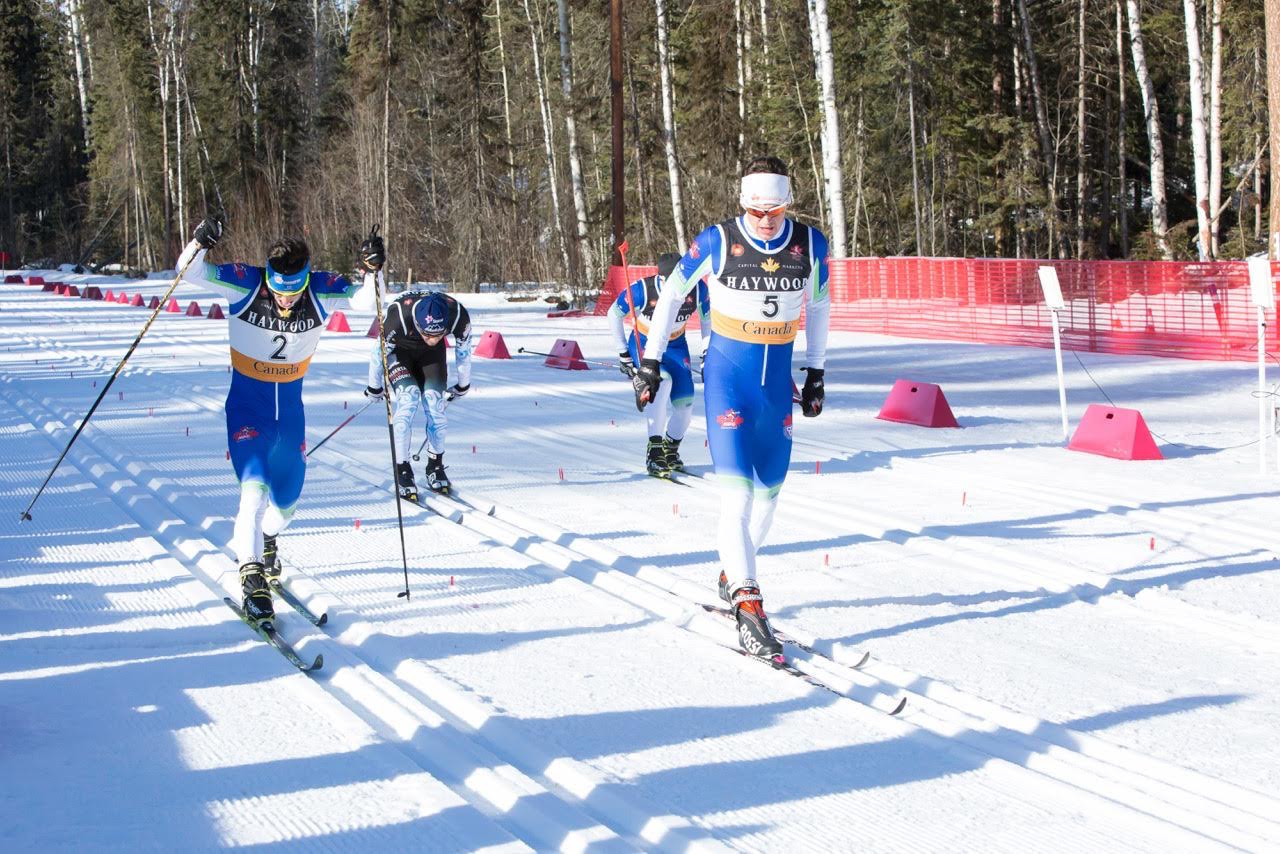
    — Jason Albert, Gavin Kentch, Ian Tovell, and Harald Zimmer contributed

    Italy’s Federico Pellegrino absorbs his silver-medal performance on Tuesday in the men’s 1.4 k classic sprint at the 2018 Olympics in PyeongChang, South Korea. (Photo: FlyingPointRoad)
  • Klæbo Commands Kuusamo Classic Sprint; Harvey 21st, Bjornsen 24th

    Klæbo Commands Kuusamo Classic Sprint; Harvey 21st, Bjornsen 24th

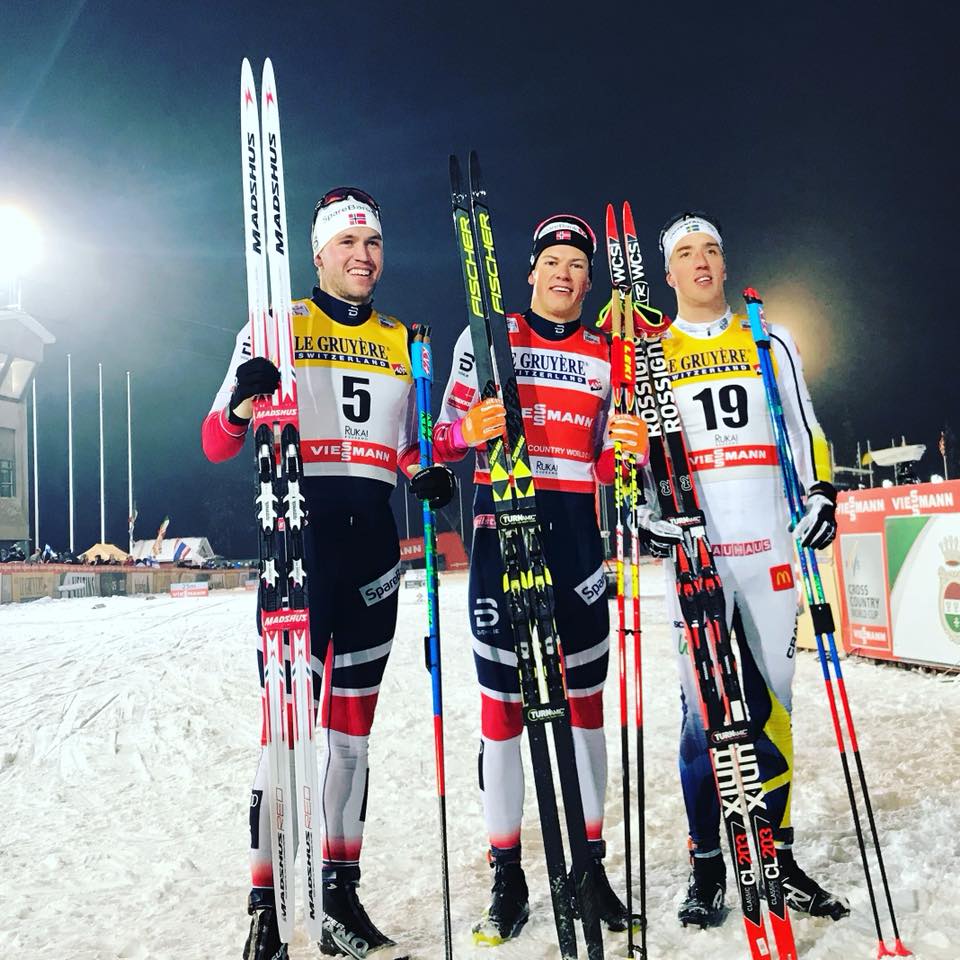
    Left to right: Norwegians Pål Golberg and Johannes Høsflot Klæbo and Sweden’s Calle Halfvarsson after placing third, first and second, respectively, in the men’s 1.4-kilometer classic sprint on Friday in Kuusamo, Finland. (Photo: FIS Cross Country/Facebook)

    There was no mistaking Norway’s Johannes Høsflot Klæbo in Friday’s 1.4-kilometer classic sprint, even with no natural light illuminating the course in Kuusamo, Finland, by the time the men’s final left the start line. The 21 year old’s distinct runner-like, high-tempo stride could be seen leading the five other men’s finalists on every climb, distinguishing him from the light fog and densely packed trees lining the course’s firmly packed tracks.

    Making his World Cup debut in the spring of 2016, Klæbo has since racked up four-regular season World Cup individual sprint podiums — of the eight World Cup sprints that he has entered — and ended last season as the men’s U23 World Cup champion as well as the overall Sprint World Cup winner, all at the age of 20.

    Last weekend at Norway’s first International Ski Federation (FIS) races of the season in Beitostølen,  Klæbo not only won the classic-sprint final, but he also topped the men’s qualifier, his quarterfinal and his semifinal.

    Klæbo repeated the feat this weekend in Kuusamo, starting first with the qualifier, clocking the fastest by 2.26 seconds over Finland’s Anssi Pentsinen in a time of 2:46.53 minutes. He then won his quarterfinal by 0.6 seconds over fellow Norwegian national-team member Pål Golberg. In his semifinal, Klæbo bested Sweden’s Calle Halfvarsson by 0.29 seconds and then, with a convincing gap on the rest of the field, crossed the finish line first in the final in 2:48.19, kick starting his 2017/2018 World Cup season with a win.

    It was not my plan to ski away so early but before the final hill I was told I had a five-minute lead so I went for it all the way to the finish,” Klæbo sai,d according to a FIS press release.

    Even before the course’s last climb, Klæbo had already set himself apart from the rest of the racers in the men’s final: Finland’s Ristomatti Hakola, Italy’s Federico Pellegrino, Sweden’s Calle Halfvarsson, and Norway’s Golberg and Sondre Turvoll Fossli. By the bottom of the first major climb he had double poled his way to a three-meter gap. 

    Klæbo already in his descent, Hakola, Golberg, Pellegrino, Fossli, and Halfvarsson crested the top of the climb in a pack and settled in for the chase. But Klæbo continued to hold them off into the second major climb, extending his gap by another two meters. As the others reached the second major climb, the race became one for second place between Halfvarsson and Goldberg. Hakola, Pellegrino and Fossli had all fallen back.

    Finishing with no one close enough to challenge him, Klæbo took the win in in 2:48.19. Goldberg crossed 1.35 seconds later for second place, while third went to Halfvarsson, 4.03 seconds after Klæbo.

    “I’m happy about the third place, but I was quite behind Klaebo,” Halfvarsson said according to a FIS press release. “I will try to catch up for the [Olympic] Games. He was impressive today.”

    Rounding out the top 10 was Finland’s Lauri Vuorinen in seventh, Russia’s Alexander Bolshunov in eighth, Switzerland’s Jovian Hediger in ninth, and Finland’s Martti Jylhä in 10th.

    Canada’s Alex Harvey advanced to the quarterfinals after qualifying in 13th (+6.13), the fastest North American in the preliminary round.

    The goal was to execute a solid day of racing since it’s the first time I put a bib on this year!” Harvey, of the Canadian World Cup Team, wrote in an email to FasterSkier. “I was pretty happy with my qualifier, it’s a short sprint here so 13th for me was a great start.”

    In his quarterfinal, Harvey went up against Finnish skiers Vuorinen, Iivo Niskanen, and Toni Ketelä as well as Estonia’s Marko Kilp, and Japan’s Hiroyuki Miyazawa. However, a loss in positioning before the major climb cost him a few seconds, and he finished his quarterfinal in fifth, 2.16 seconds behind Vuorinen, who won the heat in 2:47.40.

    “In the 1/4 final I did 1 or 2 mistakes that just cost me in term of positioning before the big hill,” Harvey wrote. “I felt great technically and actually pretty good physically too especially for the time of the year.”

    “Like normal the steep terrain is a bit of a weakness for me so again in the final wall I don’t think I was moving fast enough there,” Harvey continued. “The rest of the course I think I skied well.”

    The only other North American to qualify on Friday was Erik Bjornsen of the U.S. Ski Team (USST) in 26th (+8.71).  Racing in the same quarterfinal as Klæbo, Golberg, Finland’s Juho Mikkonen and Matias Strandvall, and Russia’s Gleb Retivykh, Bjornsen ultimately crossed in fifth, 5.12 seconds behind Klæbo.

    “We are really proud of [Erik] to qualify as strong as he did, in Scandinavia, in a classic sprint,” USST coach Matt Whitcomb said on the phone. “This is one of the hardest races of the year to do this, and it bodes really well.”

    “Talked to him between the qualification and the quarterfinals, and he was just exuding confidence and commented on how strong his double pole is feeling,” Whitcomb continued. “We saw him fire that jet in the finish stretch today. He had a really fast heat and it stressed him out a little bit, don’t know exactly what happened, but he was in the mix today and we are psyched.”

    Another USST member, Andy Newell missed qualifying by 0.38 seconds in 34th. He was 9.38 seconds off Klæbo’s top qualifying time.

    “It was frustrating to be so close and just on the outside of the qualification bubble,” Newell wrote in an email. “Just a few tenths of a second out of the top 25. I felt like I struggled today to get the right amount of glide vs kick… which is just as much on me as the tech. Grateful to be feeling healthy and looking forward to big races to come.”

    Julien Locke of Canada’s National U25 Team was the next-fastest Canadian, placing 59th (+12.07) in the qualifier. Locke finished 0.04 seconds ahead of the American Simi Hamilton (USST) in 60th (+12.13).

    “A little bit of an off day for Simi and Andy,” Whitcomb said. “For Andy on a course that is particularly good for him and he is in really good shape right now, I think he struggled with some glide.”

    Canadian World Cup Team member Len Valjas finished 63rd (+12.58). Before departing Gällivare, Sweden — where he and most of his teammate had been training and raced the opening FIS competitions — Valjas suffered a shoulder subluxation and was not “back to full health” by the time Friday’s sprint rolled around, he explained in an email.

    “I took the week really easy on the shoulder to let it recover, and gave it a try in today’s race,” Valjas wrote. “I didn’t have my normal strength in the double pole sections of today’s race. I just felt weak and couldn’t hold any speed on the flats.

    “I was happy that I was able to compete today, but I am definitely not skiing at 100%,” Valjas continued. “The shoulder is pretty sore and stiff from the qually this morning. Huge thanks to Pete Dickinson (USA physio) for taking care of me this week and helping me speed up my recovery.”

    Also competing for Canada was Knute Johnsgaard in 73rd (+12.58), Devon Kershaw in 74th (+14.01) Graeme Killick in 85th (+14.01), Jess Cockney in 95th (+18.83).

    Three additional Americans raced in the qualifier, with Scott Patterson (USST) finishing 84th (+16.14), Patrick Caldwell (USST) finishing 103rd (+21.43) and Noah Hoffman finishing in 105th (+21.85).

    Canada’s Continental Cup leader, Russell Kennedy (Team R.A.D.), who earned Period 1 World Cup start rights after ending winning last season’s overall NorAm title, did not start Friday’s sprint race.

    Results: Qualifier | Final | Ruka Triple standings (Day 1)

  • Sargent Seizes Opportunity, First Career Podium in PyeongChang Sprint

    Sargent Seizes Opportunity, First Career Podium in PyeongChang Sprint

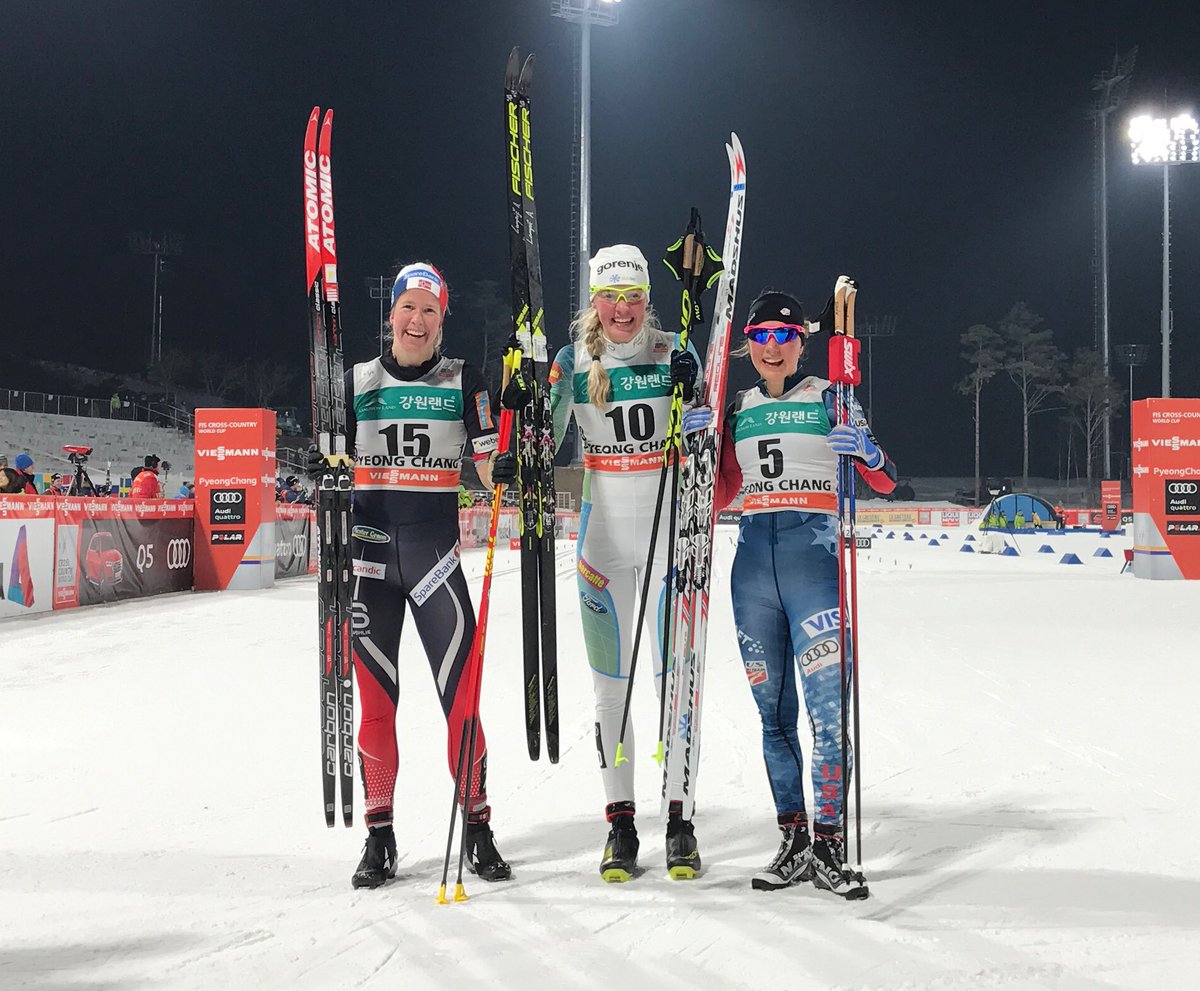
    The women's 1.4 k classic sprint podium on Friday at the pre-Olympic PyeongChang World Cup in South Korea, with Slovenia's Anamarija Lampič (c) in first, Norway’s Silje Øyre Slind (l) in second, and American Ida Sargent (r) in third. It was the first time on the World Cup podium for all three athletes. (Photo: FIS Cross-Country/Twitter)
    The women’s 1.4 k classic sprint podium on Friday at the pre-Olympic PyeongChang World Cup in South Korea, with Slovenia’s Anamarija Lampič (c) in first, Norway’s Silje Øyre Slind (l) in second, and American Ida Sargent (r) in third. It was the first time on the World Cup podium for all three athletes. (Photo: FIS Cross-Country/Twitter)

    (Note: This article has been updated to include comments from Liz Guiney, Caitlin Patterson and Jessica Yeaton.)

    Sometimes just being there is half the battle, as the saying goes.

    No Maiken Caspersen Falla. No Stina Nilsson. On Friday at the site of next year’s Olympic Winter Games in PyeongChang, South Korea, three athletes who had never made it to a World Cup podium before prevailed in the women’s 1.4-kilometer classic sprint.

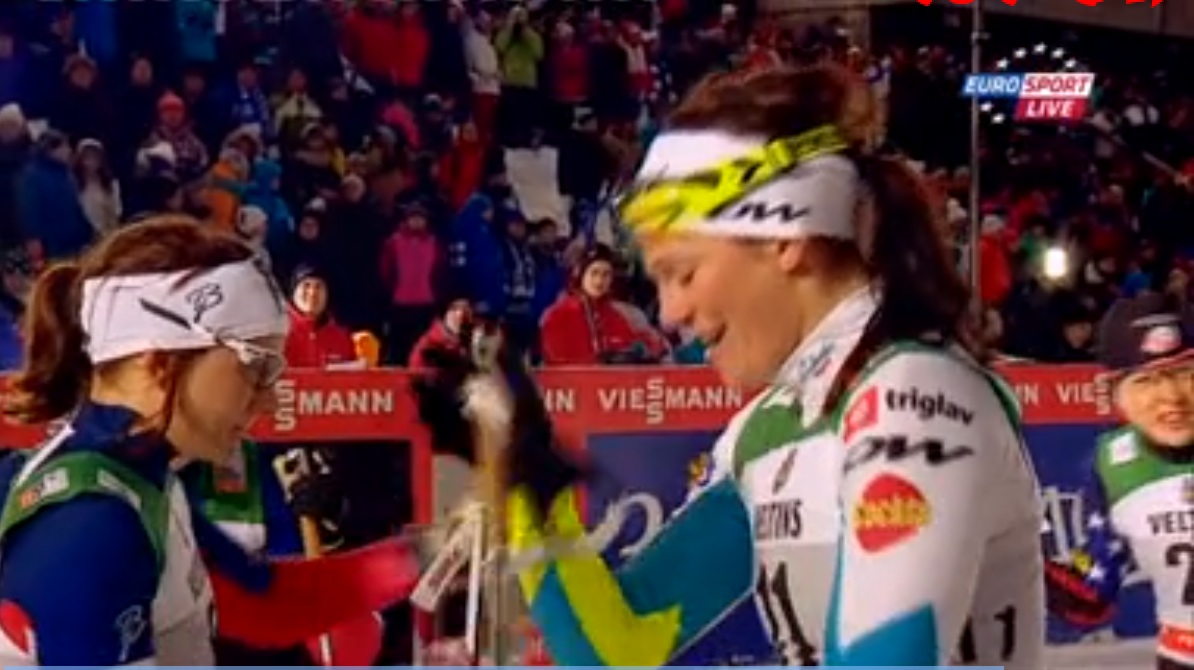
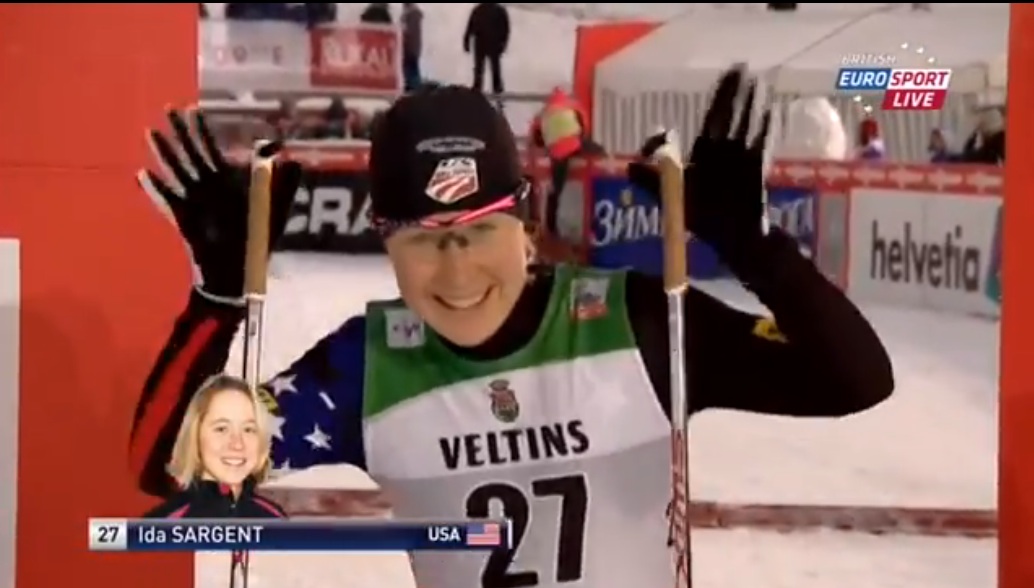
    And right there was Ida Sargent of the U.S. Ski Team (USST) in third place, smiling together with Slovenia’s Anamarija Lampič, who won her first sprint final in a time of 3:41.97 minutes (just 1.79 seconds ahead of Sargent), and Norway’s Silje Øyre Slind rounding out the picture in second place (+1.60).

    “I’m really excited about the podium and it hasn’t really set in yet,” Sargent commented on the best result of her career in an email to FasterSkier, instantly thinking of those who helped her get there. “I feel so grateful to have such an awesome team behind me both on the USST and at home in Craftsbury.”

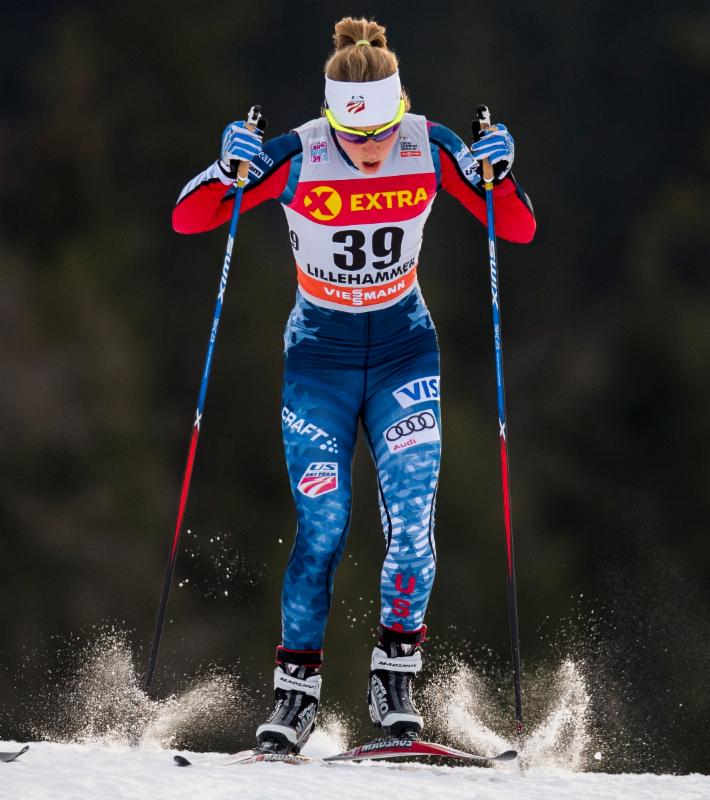
    Ida Sargent racing earlier this season at the World Cup in Lillehammer, Norway. (Photo: Toko/NordicFocus)
    Ida Sargent racing earlier this season at the World Cup in Lillehammer, Norway. (Photo: Toko/NordicFocus)

    Sargent has started in over 100 individual World Cup races, three International Ski Federation (FIS) World Championships, and the 2014 Winter Olympics. But this was the first podium finish for the 29-year-old Vermont native, and it had been a long time in the making.

    Sure, not all of the best skiers made the long trip to South Korea. In fact, while a number of the best sprinters still packed their ski bags, none of the top-25 ranked athletes in the women’s overall World Cup standings before this weekend did, including Norway’s Falla and Sweden’s Nilsson, who combined have also won 13 out of the last 15 sprint races.

    Those athletes opted to prepare for the upcoming World Championships in Lahti, Finland, by taking a training break or starting at the Norwegian and Swedish national championships also going on this week. But that was their choice, while the women smiling atop of the podium in PyeongChang had decided differently.

    As any professional in a regular job can relate to, “showing up is 80 percent of life” – a quote commonly attributed to filmmaker Woody Allen.

    And the shrunken field should not distract from the exciting heats and convincing fashion in which Sargent, along with her teammate Sophie Caldwell, qualified and advanced through the rounds in the night race under floodlights, in a beautiful and brand-new arena for the first cross-country World Cup event ever hosted by South Korea.

    Both have proven before that they can hang with the best, even when all World Cup regulars stand at the start line. Sargent has achieved five top-10 sprint finishes in her career, including a fifth place in Kuusamo, Finland, for the 2014 season opening. Caldwell won a classic sprint during the Tour de Ski last season in Oberstdorf, Germany. (The other athlete to break the streak of Falla and Nilsson was Norway’s Heidi Weng, who in December 2016 won the classic sprint in Lillehammer, Norway.)

    Earlier in the day, Caldwell had the fastest qualifying time around the 1.4 k course, which features a steady climb out of the arena soon followed by a tricky right downhill turn into the next steep climb that later gave a number of athletes problems during the heats, and another downhill back into the stadium with a sharp corner that caused some athletes to ski wide left out of the V-boards marking the course.

    “It’s probably the hardest sprint course for women that maybe we’ve ever encountered,” U.S. Ski Team (USST) Head Coach Chris Grover said in a phone interview from Korea with FasterSkier. “It almost has no flat on it except for some double poling out of the start and some double poling into the finish. You really just are spending all your time climbing. And such a small difference between the women’s course and the men’s course.”

    Sargent qualified in fifth, 4.76 seconds back from Caldwell. She had to put up a bit of a fight in her quarterfinal, coming onto the finishing stretch with three other athletes still close by and spreading out into the lanes. Sargent poled hard and prevailed to win the heat in a photo finish by 0.03 seconds against Russia’s Elena Soboleva, keeping Slind and Slovenia’s Katja Višnar at bay all within less than half a second.

    Russia's Elena Soboleva leads Norway's Silje Øyre Slind (second from r), American Ida Sargent (second from l) and Slovenia's Katja Visnar during their quarterfinal of the women's classic sprint at the World Cup in PyeongChang, South Korea. (Photo: Fischer/NordicFocus)
    Russia’s Elena Soboleva leads Norway’s Silje Øyre Slind (second from r), American Ida Sargent (second from l) and Slovenia’s Katja Visnar during their quarterfinal of the women’s classic sprint at the World Cup in PyeongChang, South Korea. (Photo: Fischer/NordicFocus)

    Then, Sargent placed second in her semifinal behind Lampič, edging Russia’s Alisa Zhambalova in third with both timed at 0.5 seconds back, though the third place would also have been sufficient to advance.

    “Both of the lucky losers came out of my quarterfinal and then the semifinal so the heats were really fast from the start, but I was able to learn a little with each one and tweak my strategy,” Sargent wrote of her progression through the heats.

    “Ida just kept herself toward the front, and had some good double-pole finishes to keep advancing through the rounds,” Grover said. “And yeah, it was just the right course, the right day, good skis, great kick, great glide, it was just the right combo.”

    Caldwell had even fewer problems than Sargent in her quarterfinal, quickly gapping the rest of the pack with Sweden’s Maria Nordström up the first climb out of the arena and finishing the heat in first place.

    But then things did not fall her way in the semifinal.

    “I’m really frustrated with how I skied the last corner of my semi,” Caldwell wrote in an email. “I was determined to make the final and was pretty mad with myself for giving it up on that last corner.”

    Her main obstacle: Justyna Kowalczyk. The 34-year-old Polish ski star certainly carries a big name on the international scene with two Olympic gold medals, but due to persistent back problems, she has had to reduce her World Cup appearances in the last seasons, mostly focusing on a few classic races and ski marathons starting for the Norwegian professional team Santander.

    But on Friday she was at the start in PyeongChang, qualifying in second position just 1.84 seconds behind Caldwell before winning her quarterfinal. In the semifinal, the two raced head to head. Initially Caldwell skied with Kowalczyk, but then lost all momentum when Sweden’s Nordström in front of her stumbled a bit and the rest of the pack caught up to them.

    American Sophie Caldwell chasing Sweden's Maria Nordström in Friday's 1.4 k classic sprint at the PyeongChang World Cup in South Korea. Caldwell finished the day in eighth overall, behind Nordström in seventh. (Photo: Fischer/Nordic Focus)
    American Sophie Caldwell chasing Sweden’s Maria Nordström in Friday’s 1.4 k classic sprint at the PyeongChang World Cup in South Korea. Caldwell finished the day in eighth overall, behind Nordström in seventh. (Photo: Fischer/NordicFocus)

    “There was a moment of panic coming off the downhill into that second hill when the Swede and Kowalczyk almost fell and I was right behind them,” Caldwell explained. “I got bumped into a pretty far track on the outside and we had lost most of our speed at that point.”

    But Caldwell kept fighting and managed to catch back up to Kowalczyk on the final downhill into the arena with the best curve technique and good skis, but ran onto her when they both took the same lane into the finish, not able to speed up as much as she had wanted to. She got passed outside by Slind who advanced in second place as well as by Nordström, who like Caldwell also missed out on the best two lucky loser times.

    “I pushed well over the top and carried my speed through the corners, positioning myself exactly where I wanted to be in the inside track,” Caldwell wrote. “Going up and over the little bump in the stadium, I let Kowalczyk get just enough ahead of me so that she was able to cut in front of me before the finish lanes and then two other people whipped by. I wish I could do it again and realize that’s part of ski racing, but it’s a bummer to screw it up tactically on a day I was feeling good and skiing well.”

    “For Sophie to win the qualifier was cool,” Grover said. “I believe that was the first time she has won the qualifier.”

    The Final

    Lampič was already smiling broadly in the start gate of her quarterfinal and semifinal, where she advanced in second and first, respectively. But back then she couldn’t yet know that her day would turn out even better.

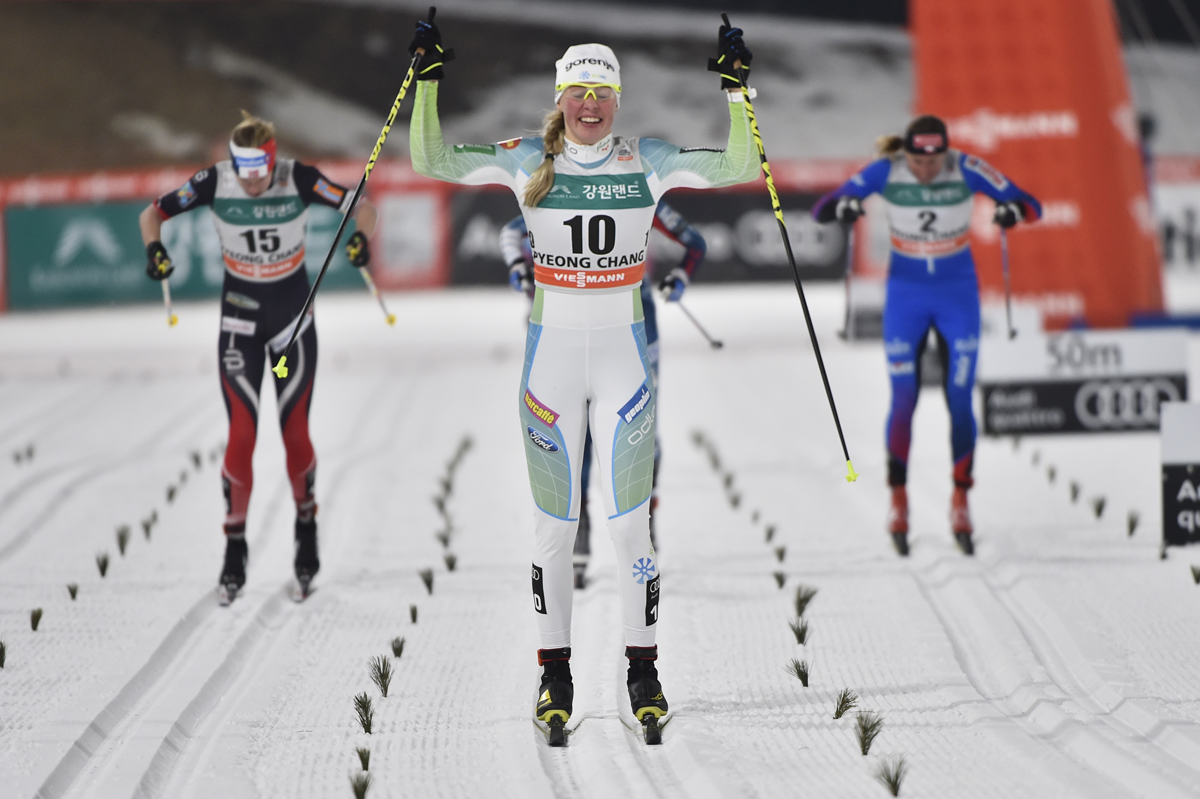
    Slovenia's Anamarija Lampic (10) celebrating her first World Cup victory and podium on Friday in the as she wins the women's 1.4 k classic sprint final in PyeongChang, South Korea. (Photo: Fischer/Nordic Focus)
    Slovenia’s Anamarija Lampic (10) celebrating her first World Cup victory and podium on Friday in the as she wins the women’s 1.4 k classic sprint final in PyeongChang, South Korea, while Ida Sargent (directly behind Lampic) races for a career-best third. (Photo: Fischer/Nordic Focus)

    In the final, initially the others let Sargent set the tempo out of the arena, but Lampič passed her by on the penultimate hill, with Slind and Kowalczyk also pushing hard to create a small gap.

    “She skied powerful over the top of the second big climb and set herself up for the downhill,” Grover said. “There’s a really tough downhill corner coming into the stadium, and she skied that great. She really carried her momentum well through that … Other people crashed, other people went outside the V-boards because they couldn’t control the corner there.”

    “I had figured out a good line on that last downhill and I also had very fast skis so I used it as a chance to move up each time,” Sargent wrote of the race situation. “I think I was behind Kowalczyk in the final at that part but I was hoping if I skied it well I could gain back some time.”

    Turning the last corner into the finishing stretch, Lampič was several meters ahead with none of her competitors able to challenge her anymore.

    “It is unbelievable I won today,” Lampič said, according to a FIS press release. “I hoped to make it to the final but to win, it’s a dream. I skied well in the downhill. I managed to get a gap on the other girls. After the curve in the stadium I knew I had a lead and I could enjoy the home stretch.”

    With her win, Lampič currently also leads the U23 standings in the World Cup.

    As they double poled hard the finish, Slind passed Sargent on the lane to her right on the last meters, but Sargent held off the final charge from Kowalczyk by half a second to claim the third place and her first World Cup podium.

    “It was tough today, the course was hard but it was hard for everybody,” the 28-year-old Slind, who is not a regular member of Norway’s senior national team on the World Cup, told FIS. “I got tired in the big climb but managed to ski the downhill well. I had some power left and was pushing hard on the homestretch.”

    Kowalczyk finished fourth (+2:35), Russia’s Alisa Zhambalova placed fifth (+4.24), and Lampic’s teammate Višnar was sixth (+17.10).

    A jubilant Sargent raised her arms as she crossed the finish line, and on the small victory lap of the podium finishers she skied to the side fence to hug with Caldwell and her other teammates, who had waited in the arena to watch her final heat.

    “It was pretty incredible to watch Ides get her first podium,” Caldwell wrote. “We were all lining the finish stretch cheering for her and of course I had to go congratulate her. Your first podium is something you remember forever and Ida is a hard worker who deserved that and I was happy I could be there to see it!”

    In recent years, the U.S. Ski Team has put a number of female athletes onto the podium. Kikkan Randall. Jessie Diggins. Sophie Caldwell. Liz Stephen posted some of the best hill-climb times in several editions of the Tour de Ski. And a month ago, Sadie Bjornsen also reached a third place. Now, Sargent joined their ranks.

    “It has been a goal of mine for a long time to be on the podium so it was a very special day!” Sargent wrote. “I’ve been inspired by so many fast teammates, so happy to follow in their footsteps!”

    All five U.S. women in the heats

    But it was not just a good race day for Sargent and Caldwell, with the U.S. team managing to put all of its starters into the heats.

    “It was a really small women’s field,” Grover noted, “so it was not a huge surprise that all of those five [women] made it in. But there were some massive spreads in times. You saw right away in the quarterfinals that they were getting pretty spaced out.”

    Sargent’s Craftsbury Green Racing Project teammate Liz Guiney qualified in 25th (+20.74 to Caldwell). She then went on to place fifth in her quarterfinal (+2:18), keeping Finland’s Mona Liisa Nousiainen behind her to finish the day in 24th place overall. It was the best individual result in her first season of World Cup races so far.

    “It’s really exciting to score World Cup points for the first time!” Guiney wrote in an email. “I recognize that this field is not the same as a normal World Cup field, but I guess you have to show up to score the points. … My season has been a bit up and down this year, so I’m hoping that this race was a good sign that things are headed in the up direction!”

    In terms of the sprint course, she described it as both fun and hard.

    “The climbs on the sprint course are pretty steep and sustained, which I think is great for a classic sprint, to discourage double poling without kick wax,” Guiney wrote. “The first downhill is fine since it’s banked, but conditions were fast on the second downhill and it definitely felt different (faster) than skiing it the previous days. I actually skidded, and a few people fell, but the most successful skiers in the rounds were picking a good line and stepping it to carry momentum.”

    Liz Stephen of the USST was the highest-ranked athlete in the overall World Cup standings, male or female, who made the trip to Korea (but with Slind’s second place, she surpassed Stephen).

    Stephen, a distance specialist, will focus on Saturday’s skiathlon, but took the opportunity for a sprint race on Friday and qualified in 29th (+23.59). It was the first time she managed to qualify for the heats in three seasons. Smiling and waving to the fans at the start of her fast quarterfinal heat together with the eventual finalists Sargent, Slind and Visnar, she quickly fell to the back of the pack and eventually finished fifth (+19.10) for the 25th place overall.

    The third Craftsbury member, Caitlin Patterson qualified in 20th (+17.90) and placed sixth in her quarterfinal (+21.81), which included the eventual winner Lampič as well as the finalist Zhambalova. With that, she achieved 27th place overall and the fourth top-30 result of her career, though her race day could have gone even better.


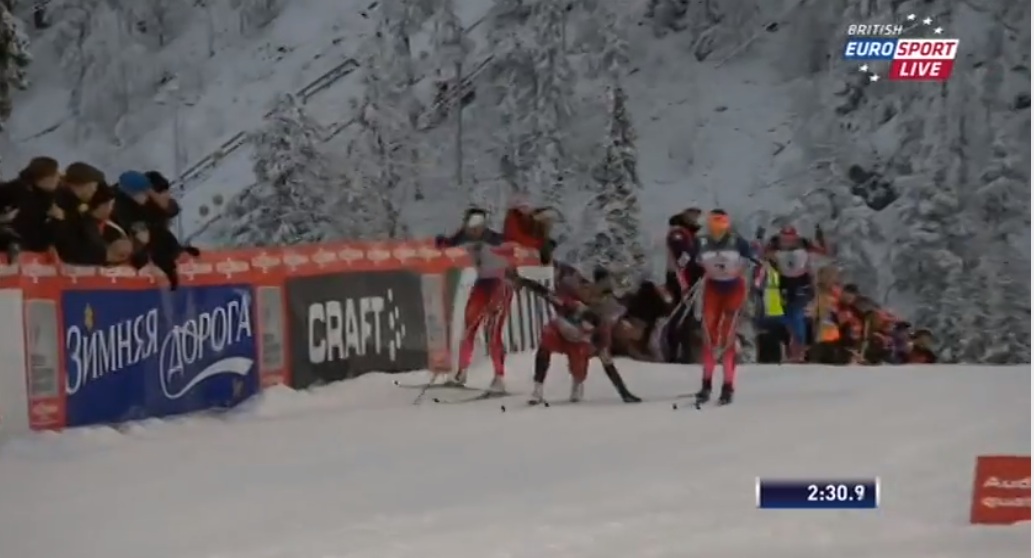
    “I am a notorious slow starter, and I was determined to start quickly, but I still ended up in 6th place by the bottom of the first hill,” Patterson wrote in an email. “I was frustrated near the top of that hill, as I was boxed in behind the 4th and 5th place women, who were moving a little slowly, as the top 3 gapped us. After taking a bad line on the first downhill, I got stuck behind the same two girls on the 2nd hill, then jumped to an outer track and moved around them, accelerating to the top of the course and building a gap behind me.

    “The 3 women leading the heat were a ways in front of me, but I was determined to do everything I could to close the gap, so I took the curvy downhill into the stadium really fast with no speed checking. I swung wide at the bottom, I think caught some grabby corduroy there, and before I knew it, crashed right at the bottom of the corner,” she continued. “I consider myself fairly good at downhills, but I think I was too focused on the women I was trying to catch, and not quite focused enough on the snow under my own feet. … It was a great experience to be in a heat on this level, but I was very frustrated with the fact that I took myself out, not to mention the poor positioning from earlier in the heat prior to the crash.”

    Her goal to start the day had been to qualify and make the most of an opportunity to race in World Cup heats.

    “I can’t say I expected that it would be easy to make the heats, even with the reduced field there are still lots of fast people here,” Patterson wrote. “I did believe that it would be possible though, and I met the goal of qualifying with a solid 22nd place.

    “It’s fun to be in the top 30, but I don’t think it means a whole lot here at this Korean World Cup,” she wrote of her overall result. “The field is undoubtedly weak, and just top 30 doesn’t really make a splash compared to the many fantastic results of the strong US women’s team right now.”

    Also racing in the heats was Jessica Yeaton of Alaska Pacific University, who internationally skis for Australia. She qualified in 30th (+26.29) and also finished 30th after placing sixth behind Stephen in the first quarterfinal (+20.1).

    “Going into the race it was my goal to make the heats once I saw that the start list was smaller than usual,” Yeaton wrote in an email. “I thought it would be an awesome opportunity to practice skiing heats, and thought I might actually have a shot at it given the size of the field.

    “My quarterfinal was fast, and I struggled to stay with the group over the top of the first hill,” she explained, “Although I am happy with my effort overall. Skiing head to head with some of the fastest qualifiers helped me realize my weaknesses with striding, and I am inspired to work on these as the Olympics approach.

    “This result is very special for me, as skiing in the heats has always been a goal of mine that I have worked hard towards achieving,” she added.

    Canada’s Annika Hicks (Alberta World Cup Academy) in 32nd (+32.96 to Caldwell’s time in the qualifier) and Sadie White (NTDC Thunder Bay) in 34th (+38.96) missed qualifying for the heats.

    Due to the time difference, the athletes aside from Sargent and Caldwell could not be reached for comment before press time.

    Racing continues on Saturday with the women’s and men’s 15/30 k skiathlons, followed by freestyle team sprints on Sunday.

    “I’m not racing tomorrow and will rest up to race the team sprint on Sunday with Sophie,” Sargent wrote regarding her plans for the weekend.

    — Jason Albert and Chelsea Little contributed

    Results: Qualifier | Final
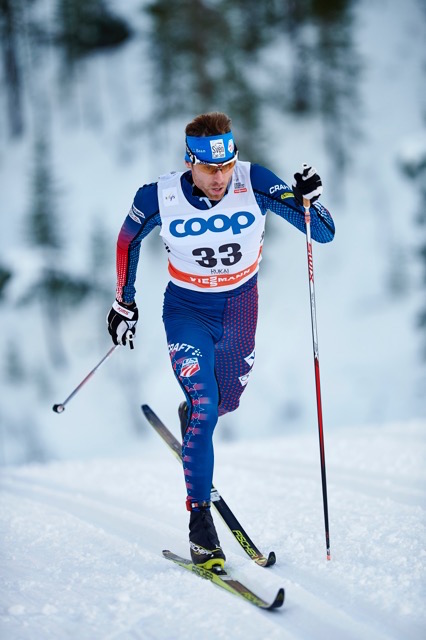
  • Friday Rundown: PyeongChang, Soldier Hollow & Eastern Canadian Champs (Updated x3)

    Katharine Ogden (SMS/USST) finishing third for bronze in the women's 10 k skiathlon on Friday at 2017 Junior World Championships at Soldier Hollow in Midway, Utah. She is the first American to reach the podium in a Junior World Championships. (Photo: FlyingPointRoad.com)
    Katharine Ogden (SMS/USST) finishing third for bronze in the women’s 10 k skiathlon on Friday at 2017 Junior World Championships at Soldier Hollow in Midway, Utah. She is the first American to reach the podium in a Junior World Championships. (Photo: FlyingPointRoad.com)

    FIS Nordic Junior World Championships (Midway, Utah): 10/20 k skiathlon

    A Junior World Championships medal has been on Katharine Ogden’s mind for some time — two years, to be exact.

    “Every day in training, it’s kind of something that I think about. It’s the little thing that helps me push myself,” Ogden, a 19-year-old member of the Stratton Mountain School and U.S. Ski Team D-team, said in a post-race interview with the U.S. Ski Team on Friday. “Even in the middle of June, I’ll be like, ‘You know what I want to be? On the podium at World Juniors.’ ”

    She did just that on Friday, racing to third in the women’s 10-kilometer skiathlon at 2017 Junior World Championships at Soldier Hollow in Midway, Utah. In doing so, she became the most successful American at World Juniors, surpassing Lindsey Williams’s previous best of fourth place in 2003.

    Ogden finished 10.4 seconds behind the winner, Norway’s Marte Mæhlum Johansen, who finished first in 27:17.3 minutes. Sweden’s Ebba Andersson took second, 6.6 seconds back. Behind Ogden, Italy’s Anna Comarella placed fourth (+51.6) ahead of Finland’s Eveliina Piippo in fifth (+58.7).

    Hailey Swirbul (University of Alaska Anchorage) was the second U.S. woman in 24th (+2:21.0), while Natalie Hynes (Whitehorse) led Canada in 28th (+3:11.3).

    Also for Canada, India McIsaac (Rocky Mountain Racers) finished 30th (+3:13.8), Lisle Compton (NTDC Thunder Bay) was 33rd (+3:45.5) and Annika Richardson (NTDC Thunder Bay) 41st (+4:49.3).

    Also for the U.S., Lauren Jortberg (Dartmouth) finished 37th (+4:04.5) and Taeler McCrerey (University of Denver) 38th (+4:07.5).

    [UPDATED] In the men’s 20 k skiathlon that followed, Russia’s Vladislav Vechkanov notched his second gold of the week in 49:40.5, outlasting Norway’s Thomas Helland Larsen by 1.9 seconds. Norway had two on the podium with Harald Østberg Amundsen in third (+2.2).

    Canada’s Gareth Williams (Telemark Race Team) was the top North American in 11th (+1:24.0) for his best result at his first Junior Worlds.

    American Wyatt Gebhardt (Steamboat Springs WSC) followed in 12th (+1:42.7) for his second-straight top 20 and Hunter Wonders (Alaska Pacific University) also finished in the top 20 for the second-straight race in 18th (+1:57.9).

    Canada’s Philippe Boucher (CNEPH) was 22nd (+3:15.7), Ryan Jackson (Team Hardwood) 31st (+3:52.5), and Remi Drolet (Black Jack) 49th (+6:57.3).

    Also for the U.S., Kam Husain (SMS) placed 50th (+6:59), and Logan Diekmann (University of Utah) was 53rd (+7:47.3).

    Results: Women | Men 
    ***

    NorAm Eastern Canadian Championships (Cantley, Quebec): Classic sprint

    The NorAm series resumed at the Nakkertok Nordic Centre on Friday with Eastern Canadian Championships with classic technique sprints.

    Alberta World Cup Academy’s Maya MacIsaac-Jones returned from U23s in time to win the 1.3 k A-final in 3:42.06, after qualifying sixth. Top qualifier Sophie Carrier-Laforte was second for CNEPH at her home event, 0.66 seconds behind. SMS Elite’s Anne Hart rounded out the podium at 3.40 seconds back.

    On the men’s side, AWCA’s Dominique Moncion-Groulx qualified first before winning every heat on his way to victory in 3:14.84 on a slightly longer 1.4 k course. NTDC Thunder Bay’s Angus Foster was a close second, 0.09 seconds behind. Team R.A.D.’s Russell Kennedy was a comfortable third, 2.75 seconds back, on a day marked by some surprising eliminations.

    The elite field is slightly smaller than usual with some athletes away in Soldier Hollow and PyeongChang. As many younger racers were stuck in school for the day, there are only about 500 starters for what is usually the largest FIS event in Canada.

    Results: Qualifier | Heats

    ***

    FIS Cross-Country World Cup (PyeongChang, South Korea): Classic sprint

    The women's 1.4 k classic sprint podium on Friday at the pre-Olympic PyeongChang World Cup in South Korea, with Slovenia's Anamarija Lampič (c) in first, Norway’s Silje Øyre Slind (l) in second, and American Ida Sargent (r) in third. It was the first time on the World Cup podium for all three athletes. (Photo: FIS Cross-Country/Twitter)
    The women’s 1.4 k classic sprint podium on Friday at the pre-Olympic PyeongChang World Cup in South Korea, with Slovenia’s Anamarija Lampič (c) in first, Norway’s Silje Øyre Slind (l) in second, and American Ida Sargent (r) in third. It was the first time on the World Cup podium for all three athletes. (Photo: FIS Cross-Country/Twitter)

    In the last month, we’ve seen two U.S. Ski Team members — Jessie Diggins and Sadie Bjornsen — on the World Cup podium. Add Ida Sargent to that list.

    On Friday, the Vermont native raced to third in the women’s 1.4-kilometer classic sprint at the first-ever World Cup in PyeongChang, South Korea. It was the first of three days of racing in PyeongChang, which will host the 2018 Winter Olympics next season.

    Sargent qualified fifth (4.76 seconds behind her teammate Sophie Caldwell, who won the qualifier in 3:40.89 minutes) and went on to win her quarterfinal in a photo finish, then placed second her semifinal (also in a photo finish), edging Russia’s Alisa Zhambalova in third by less than 0.01 seconds.

    Both advanced to the final, where Sargent ultimately finished third, 1.79 seconds behind Slovenia’s Anamarija Lampič, who won in 3:41.97. Norway’s Silje Øyre Slind took second (+1.6), just 0.19 seconds ahead of Sargent. For all three women, it was their first time on a World Cup podium.

    Sargent beat out Poland’s Justyna Kowalczyk for third by 0.56 seconds. Zhambalova finished fifth and Slovenia’s Katja Visnar was sixth (+17.1).

    “I’m really excited about the podium and it hasn’t really set in yet,” Sargent wrote in an email on Friday. “It has been a goal of mine for a long time to be on the podium so it was a very special day! I’ve been inspired by so many fast teammates so happy to follow in their footsteps!”

    All five U.S. women racing on Friday finished in the top 30 to qualify for the heats. Caldwell won the qualifier by 1.84 seconds over Kowalczyk, Caitlin Patterson qualified 22nd, Liz Guiney 25th and Liz Stephen 29th (Stephen’s first time making the heats in three years).

    Jessica Yeaton, who races for Australia but trains with Alaska Pacific University, took the last qualifying spot in 30th (+26.29).

    Canada’s Annika Hicks and Sadie White missed qualifying in 32nd (+32.96) and 34th (+38.96), respectively, out of 36 women.

    Caldwell won her quarterfinal but finished fourth in her semifinal (behind Slind, Kowalczyk, and Sweden’s Maria Nordström, respectively) to miss advancing to the final. She placed eighth overall.

    Guiney placed 24th overall after finishing fifth in her quarterfinal, Stephen was 25th after taking fifth in the same quarterfinal as Sargent (where Yeaton finished sixth for 30th overall), and Patterson was 27th after finishing sixth in her quarterfinal.

    ***

    Both Canada’s Len Valjas and American Andy Newell reached the final in the men’s 1.5 k classic sprint on Friday, where they raced to fourth and sixth, respectively.

    Valjas started the day by qualifying in second, 1.97 seconds behind Russia’s Alexander Panzhinskiy, who topped the qualifier in 3:26.78. The Canadian went on to advance in second from his quarterfinal and fourth as a lucky loser from the first semifinal. In the final, he missed out on the podium in a photo finish with Russia’s Andrey Parfenov, who took third, 0.01 seconds ahead of him.

    Meanwhile, Newell qualified seventh (+5.18) and took second in both his quarterfinal and semifinal (finishing the second semifinal 0.34 seconds behind Panzhinskiy in first).

    In the final, Russia’s 25-year-old Gleb Retivykh pulled off his first World Cup victory and podium with a 0.3-second win over Norway’s Sondre Turvoll Fossli in 3:30.79. Retivykh qualified sixth (+4.53) then won his quarterfinal and placed third in the same semifinal as Valjas, advancing as the other lucky loser.

    “I had wait six years for my first victory and it is great,” Retivykh said, according to an International Ski Federation (FIS) press release.

    Russia had two on the podium with Parfenov in third (+0.73), just ahead of Valjas. The third Russian in the final, Panzhinsky ended up fifth (+1.49), ahead of Newell in sixth (+17.19)

    Three Canadian men qualified for the heats, with Jess Cockney in 16th (+10.24) and Simon Lapointe in 25th (+14.15). Bob Thompson missed 30th by one-hundredth of a second in 31st (+16.95), and Julien Locke was 36th (+17.9).

    Three Americans qualified as well, with Simi Hamilton in 12th (+8.26) and Matt Gelso in 29th (+16.66). Distance skiers Scott Patterson and Noah Hoffman finished 44th (+24.21) and 48th (+25.28) out of 55.

    Cockney reached the semifinals after winning his quarterfinal. In the second semifinal with Newell, he placed fifth, 5.44 seconds behind Panzhinskiy, for 10th overall.

    In Cockney’s quarterfinal, Hamilton crashed and finished fourth (+41.9) for 17th overall.

    Canada’s 23-year-old Lapointe finished sixth in his quarterfinal to place 27th, besting his previous World Cup best by 43 places. Gelso took 29th for his first-ever World Cup points after placing sixth in his quarterfinal.

    Results:
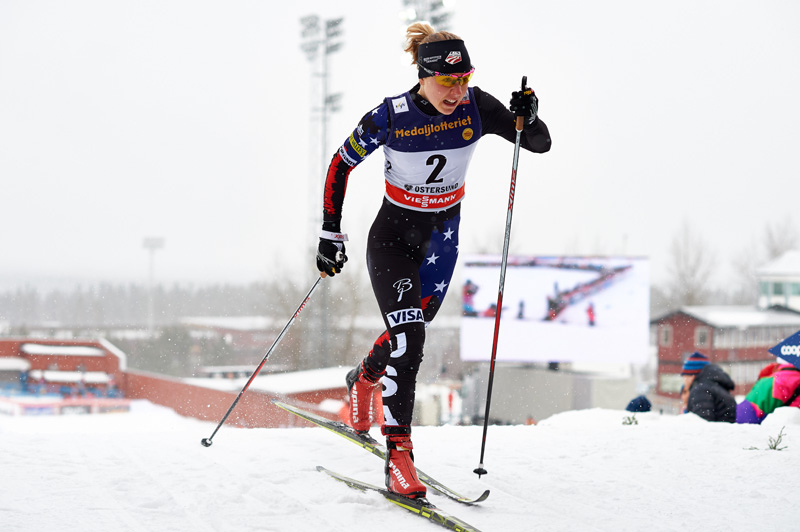
    Women’s qualifier | Women’s brackets

    Men’s qualifier | Men’s brackets 

  • Nilsson Knocks Norwegians to Second and Third in WC Opener

    Nilsson Knocks Norwegians to Second and Third in WC Opener

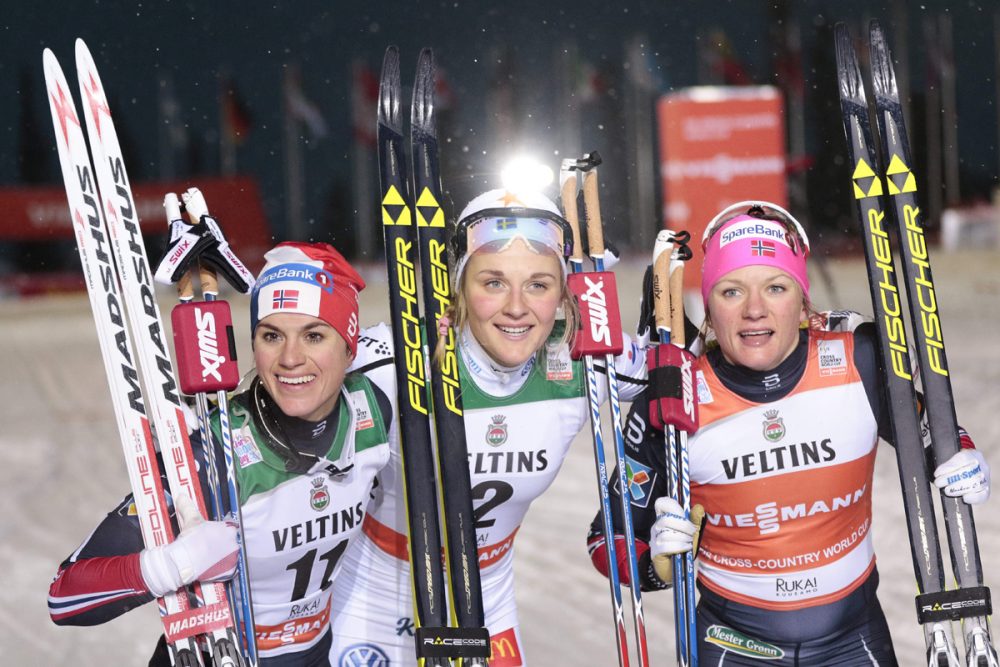
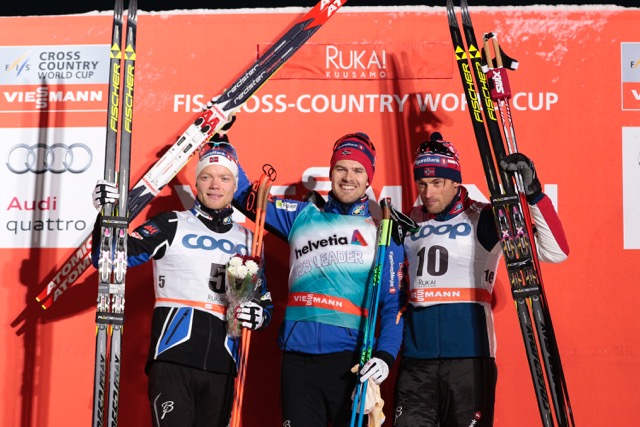
    The women's classic sprint final podium at the opening FIS races in Ruka, Finland on Saturday Nov. 26. From left to right: Heidi Weng of Norway, Sweden's Stina Nilsson, and Norwegian Maiken Caspersen. (Photo: Fischer/NordicFocus)
    The women’s classic sprint final podium at the opening World Cup races in Ruka, Finland on Saturday Nov. 26. From left to right: Heidi Weng of Norway, Sweden’s Stina Nilsson, and Norwegian Maiken Caspersen Falla. (Photo: Fischer/NordicFocus)

    Norway’s women’s team has a long history with classic racing in Kuusamo, Finland. For 15 years, International Ski Federation (FIS) Cross Country World Cup competitions have taken place on these trails, with Norway winning every classic race at the Ruka venue except two — falling to Finland’s Aino-Kaisa Saarinen in 2009 and more recently, Poland’s Justyna Kowalczyk in 2013.

    Three years later, another woman’s name has now knocked Norway’s out of first: Sweden’s Stina Nilsson.

    In the women’s 1.4-kilometer sprint final on Saturday, Nilsson battled two Norwegians –including last year’s Sprint Cup winner, Maiken Caspersen Falla — two Russians, and a Finn, for her first title ever in a classic race.

    “It feels super awesome, especially to win a classic race,” Nilsson, 23, said during a television interview.

    After qualifying second, 1.14 seconds behind the winning qualification time of 3:21.15 set by Finland’s Krista Parmakowski, Nilsson overtook the lead by the end of the first quarterfinal and held it through her semifinal and the final.

    Sweden's Stina Nilsson bib 2 racing to her first ever classic title on Saturday Nov. 26 at the pening FIS races in Ruka, Finland. Norway's Maiken Caspersen Falla (l) finished in second. (Photo: Fischer/NordicFocus)
    Sweden’s Stina Nilsson bib 2 racing to her first ever classic title on Saturday Nov. 26 at the opening World Cup races in Ruka, Finland. Norway’s Maiken Caspersen Falla (l) finished in second. (Photo: Fischer/NordicFocus)

    Nilsson and Parmakoski started the day’s rounds in the first quarterfinal one, leading Kowalczyk and another Finn, Laura Mononen, as well as Russia’s Natalia Nepryaeva and Norway’s Astrid Uhrenholdt Jacobsen off the start.

    Parmakoski pulled into the lead through the first major downhill, first major ascent and into the second major course descent. However, by the last large climb, Nilsson proved too powerful for the Finn. Within three strides, Nilsson passed Parmakoski and by the top of the hill had established enough of a gap to double pole her way safely across the finish line of her quarterfinal in first.

    In a much closer semifinal, Nilsson found herself in fourth alongside her Swedish teammate Hannah Falk for most of the heat, tightly trailing Russia’s Natalia Matveeva and Norway’s Falla all the way through the second major descent. By the bottom of the final climb, it was Matveeva in front, with Falla working to her left. Navigating to the inside, Nilsson found a second wind, eventually outlasting both the Norwegian and the Russian in the  race to the top.

    Back in the lead with 100-meters to go, Nilsson once again crossed in first, leaving the photo finish to Falla and Matveeva. Falla automatically advanced to the final after capturing second, while Matveeva earned one of the ‘Lucky Loser’ spots. Parmakoski garnered the final’s last lucky loser spot after crossing fourth in Nilsson’s semifinal. 

    Facing off against Falla once more, as well as her Norwegian teammate, Heidi Weng–the winner of the second semifinal–along with Russia’s Yulia Belorukova and Matveeva, as well as Parmakowski in the final, Nilsson took no chances off the start.

    The Swede punched the pace through the initial decent, but by the first major climb she began to lose steam. Falla challenged Nilsson on the right, while Matveeva closed in from the left. Weng hung on behind her teammate in fourth place, while Parmakoski raced in fifth and Belorukova in sixth.

    Regaining the front position from Nilsson by the second large downhill on course, the sprint leader Falla appeared to be preparing to gap herself from the group. Midway through the final climb, however, the Swede’s white suit was once more on the attack. Fading into a chase pack by the top of the climb were Falla, Weng, and Matveeva, while Nilsson blew her way back into the lead. 

    With 100 meters to go, Falla jumped in behind Nilsson. With 50 meters to go, Falla switched lanes, moving to the Swede’s right in an effort to edge by for the win. Holding on tightly her first classic title, Nilsson double poled across the finish line first in a time of 3:21.61, while Falla finished 0.17 hundreths of a second behind her in second.  

    “I’m happy about the [second] place, it was a good start to the season and it shows promise for Lillehammer– it’s fun to be on the podium already,” Falla, 26, said during a television interview.  

    Falla’s teammate Weng rounded out the podium in third, crossing 0.69 seconds off of Nilsson’s time.

    “I’m very happy, I’ve never had such a good season opener in Kusammo,” Weng, 25, said during a T.V. interview. “The conditions were challenging so we had use herringbone.”

    Other final finishers included Matveeva in fourth (+3.18), Parmakowski in fifth (+5.12) and Belorukova in sixth (+8.94).

    Four Americans Qualify; Bjornsen 17th

    American Sadie Bjornsen racing to a seventh place in the women's qualifier on Saturday Nov. 26 at the opening FIS races in Ruka, Finland. Bjornsen went on to finish 17th overall. (Photo: Fischer/NordicFocus)
    American/USST member Sadie Bjornsen racing to a seventh place in the women’s qualifier on Saturday Nov. 26 at the opening World Cup races in Ruka, Finland. Bjornsen went on to finish 17th overall. (Photo: Fischer/NordicFocus)

    The U.S. Ski Team (USST) saw four women qualify for the heats on Saturday, with Sadie Bjornsen leading the group after qualifying in seventh (+4.41), followed by Jessie Diggins who qualified 13th (+6.27), Ida Sargent in 23rd (+10.28) and Sophie Caldwell, who nabbed the final qualification spot, in 30th (+11.84).

    Though Bjornsen indicated that her preparation leading into the season has been different than in years past–due partly to a heel spur problem she has been nursing during the past two months, which forced her to engage in sans shoe training, such as swimming, ski erging, and heel-less biking–the 27-year-old saw Saturday’s performance as a good sign of where her training is taking her.

    “Today was only my third time classic skiing in the past months, so it was great to finally find my classic ‘feeling’ this morning just before the start,” Bjornsen wrote in an email to media outlets. “The past few days I have been nervous, and questioning myself more than normal, so today was a wonderful ‘check’.”  

    A Winthrop, Washington, native who trains with Alaska Pacific University (APU) in Anchorage, Alaska, Bjornsen decided prior to the start of the 2016/2017 season that she would hold no expectations over herself, other than to give every race she entered a good fight.

    With that in mind, she lead the start of her quarterfinal and pushed the pace early on. Following close behind her was the swiss skier Laurien Van der Graaff, Russia’s Daria Vedenina, Kerttu Niskanen of Finland, Norway’s Heidi Weng and Germany’s Sandra Ringwald.

    Bjornsen held her lead until the final climb of the course, where the powdery snow appeared to slow down her ability to keep up a high turnover in her herringbone. She was overtaken by Weng and Rigwald before the top of the climb and crossed fourth in her quarterfinal for 17th overall.

    “I had a great qualifier, and went into the heats with some confidence,” Bjornsen wrote. “The start was great, but I started to struggle on the final climb. I am missing a little bit of “high speed leg speed”, but that is something I am confident will come with using my legs again. I am looking forward to skiing more, and racing more!”

    “I believe that as a team, we will do well pretty much all year, but today we were kicking out the cobwebs a little bit.” — U.S. women’s head coach, Matt Whitcomb the USST’s sprint performance in Ruka

    The next two American finishers for the day were Sophie Caldwell in 20th overall and Ida Sargent in 23rd. Both were slated to start in the third quarterfinal, going head-to-head against some of Norway’s top competitors, including Falla and Ingvild Flugstad Østberg. Though her qualifier was not what she was looking for performance-wise, Caldwell was glad she was able to sneak into the rounds and get a bit more time racing before the day’s end.

    “In my quarterfinal I felt better, skied smarter, and made a better decision with skis than I did in the morning,” Caldwell, 26, wrote in an email. “Even though this isn’t the result I’m the most proud of, it is the best result I’ve ever had in Kuusamo and it was a good opportunity to clean out the cobwebs and get a race under my belt.”

    Sargent, who traveled to Europe a couple weeks prior to the start of the World Cup race season with her club team, the Craftsbury Green Racing Project, managed to jump into a few races in Muonio, Finland in hopes of feeling more mentally and physically prepared for the official FIS season’s start.

    American Sophie Caldwell racing to a 30th place in the women's qualifier on Saturday Nov. 26 at the opening FIS races in Ruka, Finland. Caldwell went on to finish 20th overall. (Photo: Fischer/NordicFocus)
    American/USST member Sophie Caldwell racing to a 30th place in the women’s qualifier on Saturday Nov. 26 at the opening World Cup races in Ruka, Finland. Caldwell went on to finish 20th overall. (Photo: Fischer/NordicFocus)

    “It has a give and take because I think having a little bit more time at home for me especially right after the Park City camp also would have been beneficial,” the 26-year-old Sargent said during a phone conversation of her decision to travel to Europe early. “It was nice to just get my feet under me and do a few warm-up races,” she added. “I think those made a big difference.”

    “Today was one of the days you had to be good at feathering [the uphills]” Sargent continued. “I’m still working on that…It was good to get the first one out of the way and go from here.”

    The final American woman to finish in Saturday’s sprint was Diggins in 26th overall. Along with a false start from Finland’s Anne Kylloenen, Diggins also dealt with a close encounter from Russia’s Polina Kovaleva at the start of her quarterfinal.

    “[Kovaleva’s] lane ended and she was going to try to move over and she tried to move over right on top of me and obviously that didn’t work,” Diggins, said during a phone conversation.

    “But I was proud of myself for not letting it rattle me and being able to shake it off and get back into the race,” Diggins added.

    Unlike previous years, Diggins did not travel to Europe for a pre-World Cup race season camp. She opted instead to spend a few extra weeks at home, meaning the opening races in Ruka would be her first on snow.

    “It was definitely pretty nerve wracking coming into the race season being like ‘OK I haven’t raced yet this year’,” Diggins said. “I mean, we’ve done time trials, but that’s not the same.”

    Though Diggins feels confident in her fitness coming into the season, the 25-year-old is ready to make changes where she feels they are necessary using Ruka as her baseline.

    “Definitely, it was really tricky conditions out there with the tracks deteriorating,” Diggins said. “But I also need to work on my technique…that’s on me and I’m not going to make any excuses for my races.”

    With four women having qualified for the heats, U.S. women’s head coach, Matt Whitcomb indicated that standout performances were not a priority for races this early in the season.

    “We always have the intention of winning the races that we race in, but there is in fact a strategy of really trying to build into this period one and to place our higher performances later in the year so that we can really smash things at World Champs,” Whitcomb said during a phone conversation. “I believe that as a team, we will do well pretty much all year, but today we were kicking out the cobwebs a little bit.”

    Results: Qualifier | Final
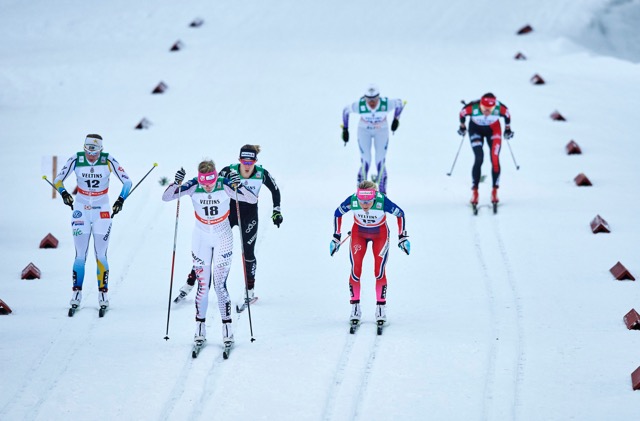
  • Norway’s Subs, Golberg and Klæbo Take 1st and 3rd in Ruka; Harvey 25th

    Norway’s Subs, Golberg and Klæbo Take 1st and 3rd in Ruka; Harvey 25th

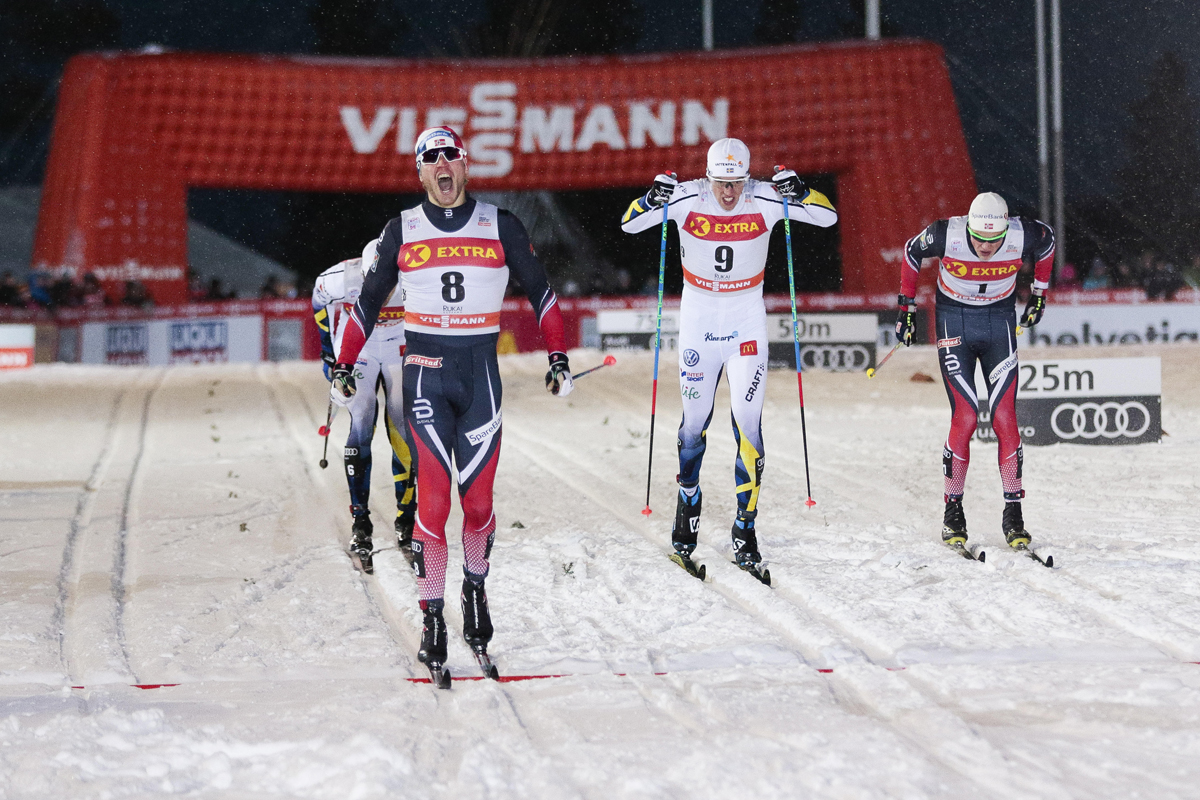
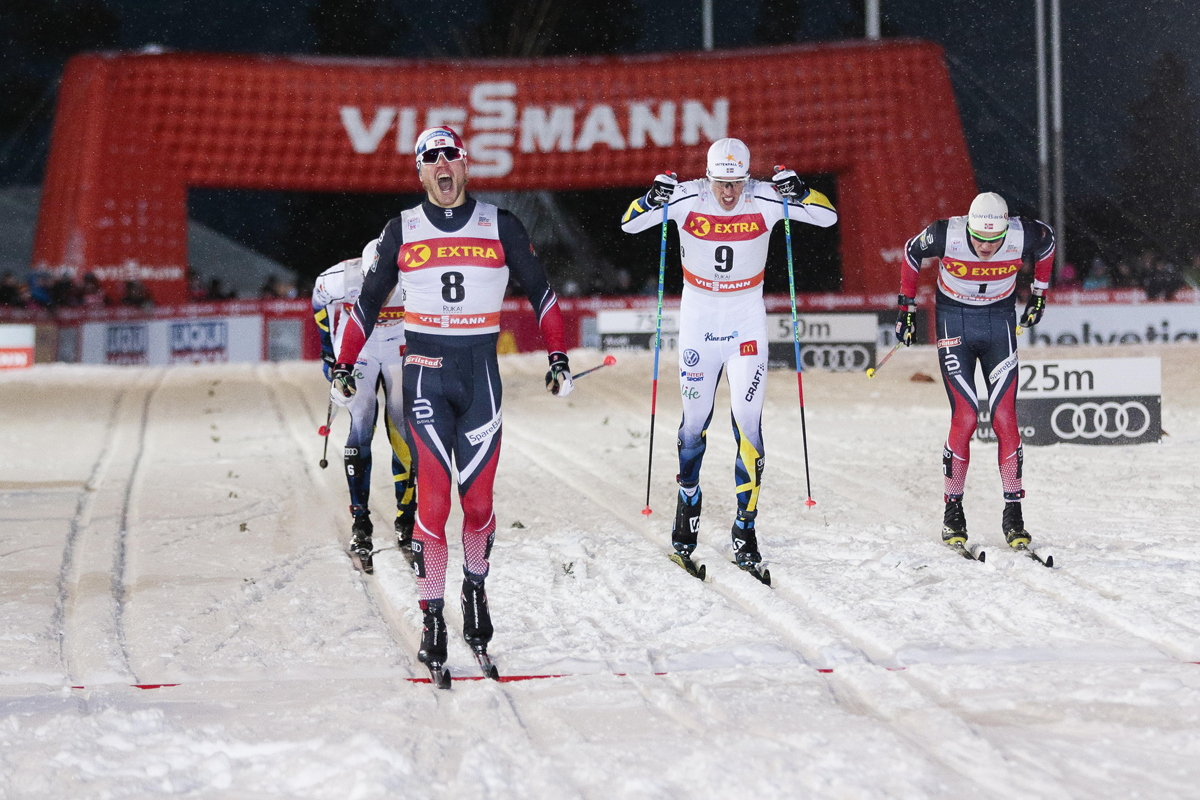
    Norway's Pål Golberg (8) celebrates his first classic sprint win in the first World Cup of the 2016/2017 season on Saturday after beating out Sweden's Calle Halfvarsson (9), Norway's Johannes Høsflot Klæbo (far right) and Sweden's Teodor Peterson (behind), respectively, in Kuusamo, Finland. (Photo: Fischer/NordicFocus)
    Norway’s Pål Golberg (8) celebrates his first classic sprint win in the first World Cup of the 2016/2017 season on Saturday after beating out Sweden’s Calle Halfvarsson (9), Norway’s Johannes Høsflot Klæbo (far right) and Sweden’s Teodor Peterson (behind), respectively, in Kuusamo, Finland. (Photo: Fischer/NordicFocus)

    The two men who landed on the first and third steps of the podium in Saturday’s World Cup opener in Kuusamo, Finland, weren’t even slated to start as of a week ago. But 20-year-old Johannes Høsflot Klæbo’s breakthrough sprint result in Beitostølen, Norway, last weekend put him on the Norwegian national team’s radar, and Pål Golberg received a call on Wednesday that he could start in Petter Northug’s place. Northug chose to skip the opening World Cup weekend because his energy wasn’t where he wanted it to be.

    “It’s just so competitive [this] time of year,” Canadian Alex Harvey observed in a post-race phone interview. “The Norwegians that were first and third [Golberg and Klæbo], they weren’t even supposed to race today, it’s just ’cause [Eirik] Brandsdal got sick and Northug decided not to come, so guys were racing for their season today. … Guys are racing just to be allowed to start next weekend, so I think guys from the big nations — Russia, Finland, Sweden, and Norway — they come in close to the best shape of the season here. I think one of the deepest fields we get is Kuusamo.”

    In spite of the depth, Golberg and Klæbo rose to the top, with just Sweden’s Calle Halfvarsson coming between them in second place. In his second World Cup start (his other was a classic sprint last February), Klæbo, of Norway’s U23 Team, put down the fastest qualifying time on the 1.4-kilometer course in 2:50.7 minutes. Russia’s Alexander Panzhinskiy clocked in 0.81 seconds slower in second, and the next-fastest qualifier, Estonian Marko Kilp was 2.01 seconds off Klæbo’s time in third.

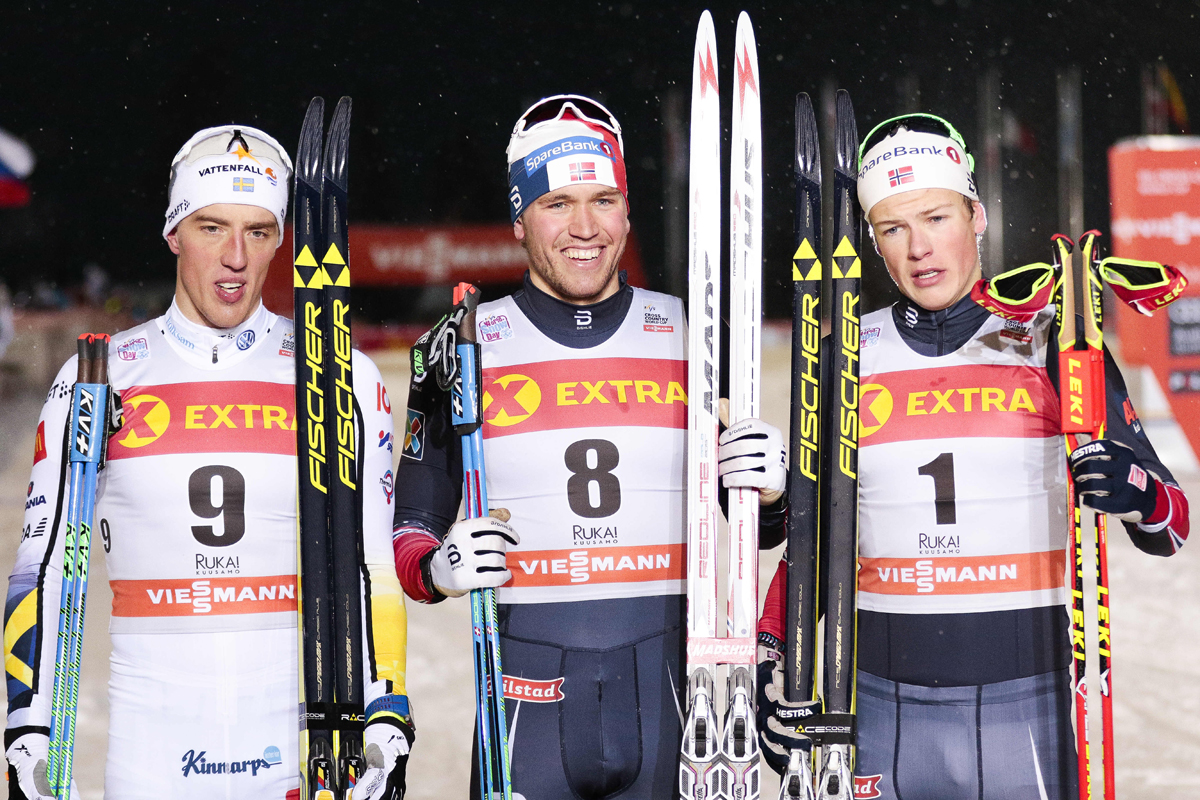
    The men's classic sprint podium in the first World Cup race of the season on Saturday in Kuusamo, Finland, with Norway's Pål Golberg (c) in first, Sweden's Calle Halfvarsson (l) in second, and Norway's 20-year-old Johannes Klaebo (r) in third. (Photo: Fischer/NordicFocus)
    The men’s classic sprint podium in the first World Cup race of the season on Saturday in Kuusamo, Finland, with Norway’s Pål Golberg (c) in first, Sweden’s Calle Halfvarsson (l) in second, and Norway’s 20-year-old Johannes Klaebo (r) in third. (Photo: Fischer/NordicFocus)

    Meanwhile, Golberg, a 26-year-old former Norwegian World Cup Team member, qualified eighth, 3.4 seconds back. From there, Klæbo in bib 1 rode his momentum all the way to the final, winning his quarterfinal and semifinal by charging to the front of the pack on the last of Ruka’s two sprint climbs: a grueling, 150-meter-long ascent into the stadium.

    Golberg placed fourth in his quarterfinal, nipping Harvey by two-hundredths of a second for the final spot in the semifinals. That ended Harvey’s racing for the day and put the Canadian 25th overall.

    “I knew it was a fast heat so I was hoping that fourth place would be lucky loser, so that’s what I was fighting for,” Harvey explained. “But in the end it was just not enough. But I never felt that I was totally out of it until I crossed the line and I knew I couldn’t come around Pål.”

    While Harvey reflected that his skis may have had just a bit too much grip in the powdery conditions, Golberg had another chance in the semifinals. There, the Norwegian raced to second in another photo finish — this time with Klæbo.

    “In the quarterfinals I had a pretty bad climb; I lost a few spots so I decided to stay more in the back in the semifinals and that worked out,” Golberg said in a post-race interview with FIS.

    While Klæbo led his semifinal competitors into the last climb, Golberg pushed past Finland’s Ari Luusua to move into second by the top. In the last 250 or so meters of the race, which flattens out and curves left into the finish, Golberg chased down Klæbo and finished 0.02 seconds behind him. Both automatically advanced to the final, and considering theirs was the fastest of the two semifinals, so did Sweden’s Halfvarsson and Teodor Peterson in third (+0.42) and fourth (+1.17) in that heat.

    In the final, Panzhinskiy — the lone Russian in the final (two Russians reached the women’s final) — set the pace out of the start while the two Swedes followed in second and third. Halfvarsson rode his faster skis on an early descent past Panzhinskiy, while Krogh lost contact with the group early.

    With Panzhinskiy on one side of Halfvarsson and Klæbo on the other, the Russian and young Norwegian challenged the Swede up the first climb, but Halfvarsson kept his spot up front. Panzhinskiy drafted and passed him on the descent before the last climb, leading Klæbo, Halfvarsson and Golberg into the base of it, while Peterson stayed in contact in back. (Krogh was well out of camera range at this point.)

    Halfvarsson pushed to move into first early in the climb while Golberg ran outside the track on the far left and seized the lead over the top. Peterson double poled behind Halfvarsson and Golberg raced away from the pack to secure the victory in 2:54.12. Halfvarsson stayed ahead of Klæbo and Peterson for second place (+0.75), while Klæbo, close on Halfvarsson’s heels, switched lanes with less than 100 meters to go to edge Peterson for third (+0.87). Peterson took fourth (+1.06), Panzhinskiy settled for fifth (+8.22), and Krogh came through the stadium casually, 1:12 minutes after Golberg in sixth.

    According to Krogh’s hometown paper, Altaposten, he decided to save his energy for Sunday’s 15 k classic after failing to stay with the group early in the race. He stopped on the last hill to talk to coaches.

    Canada's Alex Harvey (r) congratulates Norwegian winner Pål Golberg at the finish of Friday's 1.5 k freestyle sprint final. Harvey placed fifth for a season best. (Photo: Fischer/NordicFocus)
    Canada’s Alex Harvey (r) congratulates Norwegian winner Pål Golberg at the finish of a 2014 World Cup freestyle sprint in December 2014. Harvey placed fifth in that race. (Photo: Fischer/NordicFocus)

    At the finish, Golberg smiled as he patted Klæbo on the back. It was Klæbo’s first World Cup podium, and Golberg’s fourth career win.

    “This means a lot to me,” Golberg told NRK after. “I know very well that I can ski fast, but it’s always nice to be able to remind others of that.

    “It’s a bonus that I’m here,” he added. “I know that the members of the [national] team have first priority, and that makes even more to perform well.”

    The win came a week after Golberg finished second to Klæbo by 0.5 seconds in a freestyle sprint FIS race in Beitostølen. On Saturday, Klæbo told NRK in a TV interview that he was very pleased with his second World Cup start. (He placed 15th in the Drammen classic sprint last season.)

    “I didn’t chose the right tracks in the last hill and the end of the final, but I’m still happy about the third place,” Klæbo said.

    It snowed Friday night and throughout the day on Saturday, making Ruka’s notoriously tough sprint course even more challenging. Harvey estimated there were three to five centimeters of fresh snow in the morning, and snow continued to fall into the afternoon. He said organizers didn’t groom after around midnight on Friday to avoid making the course even softer.

    “These were quite difficult conditions with the new snow, but I had perfect skis,” Golberg told FIS. “Most important today was to have a good kick on the uphill. It is great to start the season with the win.”

    Sweden's Calle Halfvarsson racing to second in the 4.4 k freestyle prologue, the first stage of the 2015 Tour de Ski on Saturday in Obertsdorf, Germany. (Photo: Fischer/NordicFocus)
    Sweden’s Calle Halfvarsson racing to second in the first stage of the 2015 Tour de Ski, a 4.4 k freestyle prologue, in Obertsdorf, Germany. (Photo: Fischer/NordicFocus)

    For Halfvarsson, it was his first podium in a classic sprint and first time back on the podium in an individual World Cup since the Tour de Ski two years ago.

    “I am very happy,” the 27-year-old Halfvarsson said. “[The] finish was really hard today. Pål was very strong there. The crowd was great.”

    Harvey, who narrowly made the top-30 qualifying cutoff in 28th said he was happy to make the heats. He called Kuusamo one of the hardest places to qualify because of the depth of the field. Last year at the same venue, he placed 47th in the classic-sprint opener.

    “Just qualifying made the day a positive day already,” he said. “It was a really tricky day to find the right combination of glide and kick at the same time. In the qualifier, I went for an option with kind of slick skis, but fast, and I think the skis were really fast in qualification, but I went maybe a little too thin on the grip so I came out of the track a little earlier than I would’ve hoped for, but it was still good enough to just sneak in there.”

    For his quarterfinal, in which he faced Golberg, Halfvarsson, Russia’s Anton Gafarov, Norway’s Sondre Turvoll Fossli, and Finland’s Sami Jauhojärvi, Harvey went for more grip.

    “Knowing that it would come down to the last climb, the strategy was to go for a little more kick,” Harvey said, adding that he decided the night before to go on faster, slicker skis for the qualifier then switch to more grip for the heats. “I think I might’ve just overdid it a little bit, but the skis were still good. They were still fast.”

    Finding himself around fifth place for most of his quarterfinal, Harvey stayed in contact with the four frontrunners until the base of the last big uphill. Despite being several strides behind the group, he caught up to Golberg by the top.

    Canada's Alex Harvey racing to ninth in the second stage of the Ski Tour Canada, the men's 17.5 k classic mass start, on Wednesday in Montreal, Quebec. (Photo: John Lazenby/Lazenbyphoto.com)
    Canada’s Alex Harvey racing to ninth in the second stage of the 2016 Ski Tour Canada, the men’s 17.5 k classic mass start, in Montreal, Quebec. (Photo: John Lazenby/Lazenbyphoto.com)

    “In the hill, I had the skis to make a move, but you need to be so quick up that hill and I’m better when there’s more of a gliding phase in each stride, and when it’s just running like that, I’m not as quick as some of the other guys so I kind of got stuck in fifth,” he said. “In the finish I was starting to come around Pål Golberg for lucky loser, it was a photo finish between us, but I knew he beat me before I saw the photo and in the end he ended up winning the day, and at the end of the day, I had the best two guys in my quarterfinal.”

    All things considered, Harvey said he felt good. “I take a lot of positive out of the day but it was not perfect. I just have to be a bit stronger in the finish.”

    The seventh-ranked man in the overall World Cup last season, Harvey was the lone North American qualify for the men’s sprint rounds on Saturday.

    Andy Newell led the U.S. men in 40th, missing the top 30 by 0.48 seconds and finishing 7.74 seconds behind Klæbo. Another 0.07 seconds back, Newell’s teammate Erik Bjornsen placed 42nd (+7.81), and last year’s SuperTour winner Eric Packer finished 78th (+17.3) out of 94.

    “It was unexpected for me not to make the top 30 today,” Newell wrote in an email. “I felt pretty decent, but then again have not done any maximal efforts in about two weeks because of my elbow infection so it was hard to tell. I think it was a combination of being a little flat and also dragging a little too much kick wax around the course.”

    Andy Newell (U.S. Ski Team) on his way to 40th in the men's classic-sprint qualifier in the first race of the 2016/2017 World Cup season on Saturday in Kuusamo, Finland. (Photo: Fischer/NordicFocus)
    Andy Newell (U.S. Ski Team) on his way to 40th in the men’s classic-sprint qualifier in the first race of the 2016/2017 World Cup season on Saturday in Kuusamo, Finland. (Photo: Fischer/NordicFocus)

    Saturday marked Newell’s first race of the season after having to sit out the Beitostølen opener with a bacterial infection.

    “He healed up really quickly,” U.S. coach Matt Whitcomb said on the phone after Saturday’s race. “He’s been really smart in his preparation, he hasn’t been overreaching, and today I think he was a little bit flat. He wasn’t too far out; things were pretty tight. I think that’s as far as we have to look there. He’s been looking pretty good and I think it’s a matter of getting a race under his belt.”

    Whitcomb said Newell would likely start Sunday’s 15 k classic, but Newell didn’t give a definitive answer.

    “I will feel things out tomorrow and see how it goes,” Newell wrote. He was listed on Sunday’s start list.

    Simi Hamilton did not start on Saturday, and Whitcomb said he’s trying to get over a small cold.

    “[Not] a full-blown cold, but slightly elevated heart rate when he moves, and just general feelings of lower energy,” Whitcomb explained. “He was feeling quite a bit better yesterday so we had him do a short little race prep to test things out, about a half an hour of skiing, and it ended up sending him in the wrong direction, not dramatically but it gave us the information that we needed to say, ‘Hey, it’s not going to be smart to start today.’ ”

    Len Valjas placed 54th for Canada, 11.28 seconds off of the top qualifying time, Devon Kershaw was 63rd on the day (+12.28), Knute Johnsgaard 69th (+13.46), Bob Thompson 80th (+17.64), and Jess Cockney 83rd (+19.52).

    Final results | Qualifying | 15 k classic start list

  • Western Canadian Championships Recap: The Final Push

    Western Canadian Championships Recap: The Final Push

    Canmore's Annika Hicks (54) finished second in the women's 15 k classic mass start on the final day of Western Canadian Championships on Feb. 21, just ahead of Katherine Stewart-Jones (NDC Thunder Bay) in third.
    Canmore’s Annika Hicks (54) finished second in the women’s 15 k classic mass start on the final day of Western Canadian Championships on Feb. 21, just ahead of Katherine Stewart-Jones (NDC Thunder Bay) in third. (Photo: Sally Connon)

    Western Canadian Championships, the final NorAm weekend of the season took place Feb. 19-21 at the Otway Nordic Center in Prince George, B.C., with three races determining the final Ski Tour Canada (STC) roster for Canada.

    Dahria Beatty and Kevin Sandau left British Columbia as the overall NorAm leaders, granting them starts at the STC eight-stage World Cup.

    Beatty won the women’s 7.5-kilometre freestyle individual start on Friday, Feb. 19, by nearly 11 seconds in 19:02.7 to retake the NorAm lead from fellow U23 Development Team skier, Cendrine Browne, of the Pierre-Harvey National Training Centre (CNEPH).

    “I went out as if I was only racing 5km,” Beatty recalled in an email. “I felt really good on the first lap and then started to fade on the second lap as my legs filled with lactate. The downhills on the second lap were the hardest part as I struggled to stay on my feet I was so tired. I managed to regain a bit of composure for the final climb and hold onto the lead I had fortified on the first lap. This was my first time racing in Prince George and I really enjoyed the trails. Lots of fun and very technical!”

    U23+ Development Team skier Olivia Bouffard-Nesbitt finished second (+10.9), while Maya MacIsaac-Jones, of Rocky Mountain Racers (RMR) was 45.8 seconds behind in third, edging Annika Hicks (Canmore) by 2.1 seconds, for her first NorAm distance podium of the season.

    I’m definitely happy with the upward trend I’ve been experiencing,” Bouffard-Nesbitt wrote. “The only thing lacking is some power, but that is a result of my (lack of) summer training, so there’s nothing I can do about that now. I’m super excited to race some World Cups though!”

    Browne, citing fatigue after an altitude training block, finished fifth, 52.1 seconds behind Beatty.

    “I already knew in my warm up that something was wrong. I wasn’t feeling good,” Browne wrote in an email. “In the race, everything was confirmed. I felt awful. I couldn’t push my body was tired.”

    “When my coach called me on the phone and asked how my race went and when I said it was awful, he just said: Perfect, the altitude camp is working,” Browne added. “I was surprised by his answer but it cheered me up a little. He also said it would be hard doing the sprints too.”

    ***

    Day 2 brought another win for Beatty at Saturday’s 1.4 k classic sprint, as she beat out Bouffard-Nesbitt in the finishing straight to win by half a second in 3:44.2.  

    “I felt good in my semi and was able to carry that feeling into the final,” Beatty wrote. “Olivia led the entire race, she was skiing well and had a faster start than me to get out in front early. I just sat in behind her on both climbs as the middle track was a lot better than the two outside ones. You come into the finish off a downhill so I used her draft to step out beside and sprinted to the finish. I had a comfortable advantage by halfway down the finish shoot and carried that to the finish.”

    I raced the final how I wanted to,” Bouffard-Nesbitt explained. “I led the whole race and unfortunately got out-sprinted at the finish. It was a good wake up call, because now I can hit the gym and do some biceps curl reps to have me ready for the tour.”

    “It was a good wake up call, because now I can hit the gym and do some biceps curl reps to have me ready for the tour.” — Olivia Bouffard-Nesbitt on finishing second in the Westerns classic sprint

    MacIsaac-Jones again snatched the final podium spot, 4.55 seconds behind Beatty, ahead of Katherine Stewart-Jones (NDC Thunder Bay) in fourth.  Beatty’s second win of the weekend locked up her hold of the overall NorAm. MacIsaac-Jones took the NorAm sprint lead, displacing teammate Andrea Dupont, who skipped Westerns while racing Period 3 on the World Cup in Europe.

    “I went in today wanting to win, but I’m satisfied with a bronze medal,” MacIsaac-Jones wrote. “The race was good redemption for me from the Canada Winter Games race on this course last year, where I didn’t make the A Final. It was also a big improvement from my classic sprint at the Canmore NorAm in december, where I also didn’t make the A Final.

    “I knew that Dahria and Olivia would go for it once we hit the big climb so I just tried to hang on, but they were too fast for me and I wasn’t able to stick with them,” she added. “Katherine moved up beside me on the final climb, but I managed to hold her off and hang on to 3rd which I was really happy with.”

    As planned, Beatty headed home Sunday morning to start her final STC preparations.

    ***

    In Sunday’s 15 k classic mass start, Browne skied away to a 52-second victory in 46:00.1, while Hicks took second, 0.6 seconds ahead of Stewart-Jones in third.

    “I felt very good! The shape is back,” Browne wrote on Sunday. “Annika, Katherine and I stayed together for 2 and a half laps (we had 4 laps of 3.75km to do). I was feeling good today so I started going a little harder on the 3rd lap and starting the 4th lap, I knew I was by myself. I had really good kick so climbing the big climbs was where I knew I could break away. I went even harder on the last lap just to make sure the girls couldn’t catch up to me.”

    Junior Katie Weaver (Hollyburn) continued her steady rise, skiing with the lead three for the first lap before falling off the pace and finishing 2:48.1 back in fourth.

    Many of the STC-bound skiers skipped the distance race on Sunday.

    ***

    Black Jack's David Palmer (l) leading early in the men's 20 k classic mass start on the final day of Western Canadian Championships in Prince George, B.C., with Michael Somppi, Evan Palmer-Charrette, Andy Shields, and Patrick Stewart-Jones chasing.(Photo: Sally Connon)
    Black Jack’s David Palmer (l) leading early in the men’s 20 k classic mass start on the final day of Western Canadian Championships in Prince George, B.C., with Michael Somppi, Evan Palmer-Charrette, Andy Shields, and Patrick Stewart-Jones (r) chasing. (Photo: Sally Connon)

    On the men’s side, Andy Shields (NDC Thunder Bay) was within striking distance of Sandau’s overall lead before the weekend. With the third-ranked man, Knute Johnsgaard (AWCA/NDST) focussing on a training block before STC, it was a two-way fight for the title.  

    In Friday’s 10 k freestyle individual start, Russell Kennedy (Canmore) snatched the victory in 22:19.1, edging Sandau by 0.4 seconds and Michael Somppi (NDC Thunder Bay) by 2.5 seconds, for his first NorAm win of the season.

    “I was super pumped in my race today feeling was amazing conditions were really good and the downhills were fast and technical,” Kennedy wrote in an email.

    “There wasn’t much of a pacing strategy as it was 10k so really just had to start fast and hold on to as hard a pace as possible,” he added. “The splits were close so I knew I had to push it. I was feeling confident when we were close at the top of the last hill as I love downhills and have a good sprint. I didn’t really realize just how close it was until the after I finished though.”

    Sandau wrote in an email that he was happy to finishing in the top four considering how close it was, but always wants the win, especially considering how close he was behind Kennedy.

    “I’ve been teasing him all winter about nicking him in the distance races so he served up a nice rebuttal today,” Sandau wrote. “… I went off the line hard knowing there wasn’t room for mistakes and a lot of places to give up time. I was getting splits off Russell near the end that he was leading so I tried to claw back some time in the last few climbing sections but was just shy of enough.”

    “It’s a really good course for [Russell] and I knew with his consistency in skate races he was going to be one of the bigger threats out there,” Sandau added. “Plus he’s pretty good when he clips into a pair of alpine skis so the downhills were probably pretty easy for him, compared to me who felt like a tourist out for the first ski of the year at times.”

    Somppi in third described his race as “solid.”

    “The fitness is as good as it’s going to get at this point,” he wrote. “Now, it is all about finding the right mix of recovery and intensity to be primed and full of energy when the Tour starts.”

    Shields finished fourth, 9.7 seconds back, to stay in mathematical contention. To take the title, Shields would need at least a win and a second in the final two races.

    “I started pretty hard, got tired and had a rough middle section,” Shields wrote. “I was still getting good splits going into the last 4km so I was able to find some juice to finish off and still have a respectable split for the last lap.”

    ***

    Bob Thompson (NDC Thunder Bay) racing to second in the men's freestyle sprint qualifier at Western Canadian Championships in Prince George, B.C. He went on to win the men's final. (Photo: Sally Connon)
    Bob Thompson (NDC Thunder Bay) racing to second in the men’s classic sprint qualifier at Western Canadian Championships in Prince George, B.C. He went on to win the men’s final. (Photo: Sally Connon)

    Bob Thompson (NDC Thunder Bay) won the men’s 1.4 k classic sprint on Saturday, retaking the sprint series lead and the automatic STC start from Julien Locke (Black Jack), who was in Romania for U23 World Championships this week. Thompson needed the win to eclipse Locke in the sprint standings, taking the series 250 points to Locke’s 245.

    Also in the sprint final, Patrick Stewart-Jones (AWCA) placed second and Shields finished third. Sandau went out in the quarterfinals, having achieved his training goals.

    “Very happy that I was able to win when I needed to,” Thompson wrote in an email. “To win the NorAm sprint spot for the Tour of Canada I had to win to get enough points. Patrick was in the same position so I knew we would both be giving our all to lock the spot down. Was great that I was feeling really strong and had my best qualifier of the year as well.”

    Thompson qualified second behind Skinouk’s Simon Lapointe, who went on to place sixth in the final.

    ***

    Evan Palmer-Charrette (NDC Thunder Bay) outlasted teammate Andy Shields (l) and Patrick Stewart-Jones (AWCA) for the win in the men's 20 k classic mass start on Sunday, Feb. 21, at Western Canadian Championships in Prince George, B.C. (Photo: Sally Connon)
    Evan Palmer-Charrette (NDC Thunder Bay) outlasted teammate Andy Shields (l) and Patrick Stewart-Jones (AWCA) for the win in the men’s 20 k classic mass start on Sunday, Feb. 21, at Western Canadian Championships in Prince George, B.C. (Photo: Sally Connon)

    On Sunday, Evan Palmer-Charrette (NDC Thunder Bay) won a four-way race for first in the 20 k classic mass start. Shields finished second, 0.111 seconds back, and Stewart-Jones was third (+0.525). Somppi lost his balance in the final straight and finished fourth, 1.24 seconds behind Palmer-Charrette.  David Palmer (Black Jack) was dropped during the final lap to take fifth, 13.9 seconds out of first.

    I am quite happy with my race Sunday but overall the weekend was a bit disappointing,” Palmer-Charrette wrote. “The 10km skate on Friday is what I would pick as my strongest event and I really struggled that day. I had the race I wanted to on Sunday and am looking forward to next season!”

    The race on Sunday was a lot of fun, skiing at the front with my team-mates…,” Somppi wrote. “Tactically, I put myself in a great position to win. I led the final climbs, pushing the pace, and crested the final downhill in second, right behind Evan. Unfortunately I hit a patch of ice on the final downhill corner and stumbled, nearly crashing. Instead of using the draft and coming up beside Evan in the finish to contend for the win, I was double poling early in the finish stretch, trying to regain my speed.

    “I feel a little gypped after this weekend, to finish 3rd and 4th when I was only 2.5 seconds from winning one day and 1 second from winning the other day,” Somppi, last year’s NorAm winner, added. “I’m hoping my luck will turn in the Tour.”

    ***

    Western Canadian Championships results: Friday | Saturday | Sunday
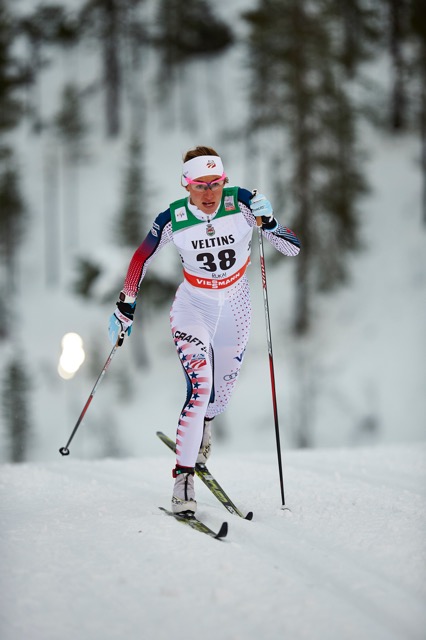
    NorAm standings

    Photos: Friday | Saturday | Sunday

  • Practice Makes Perfect: Newell Relies on Tried-and-Tested Ruka Tactics for 4th
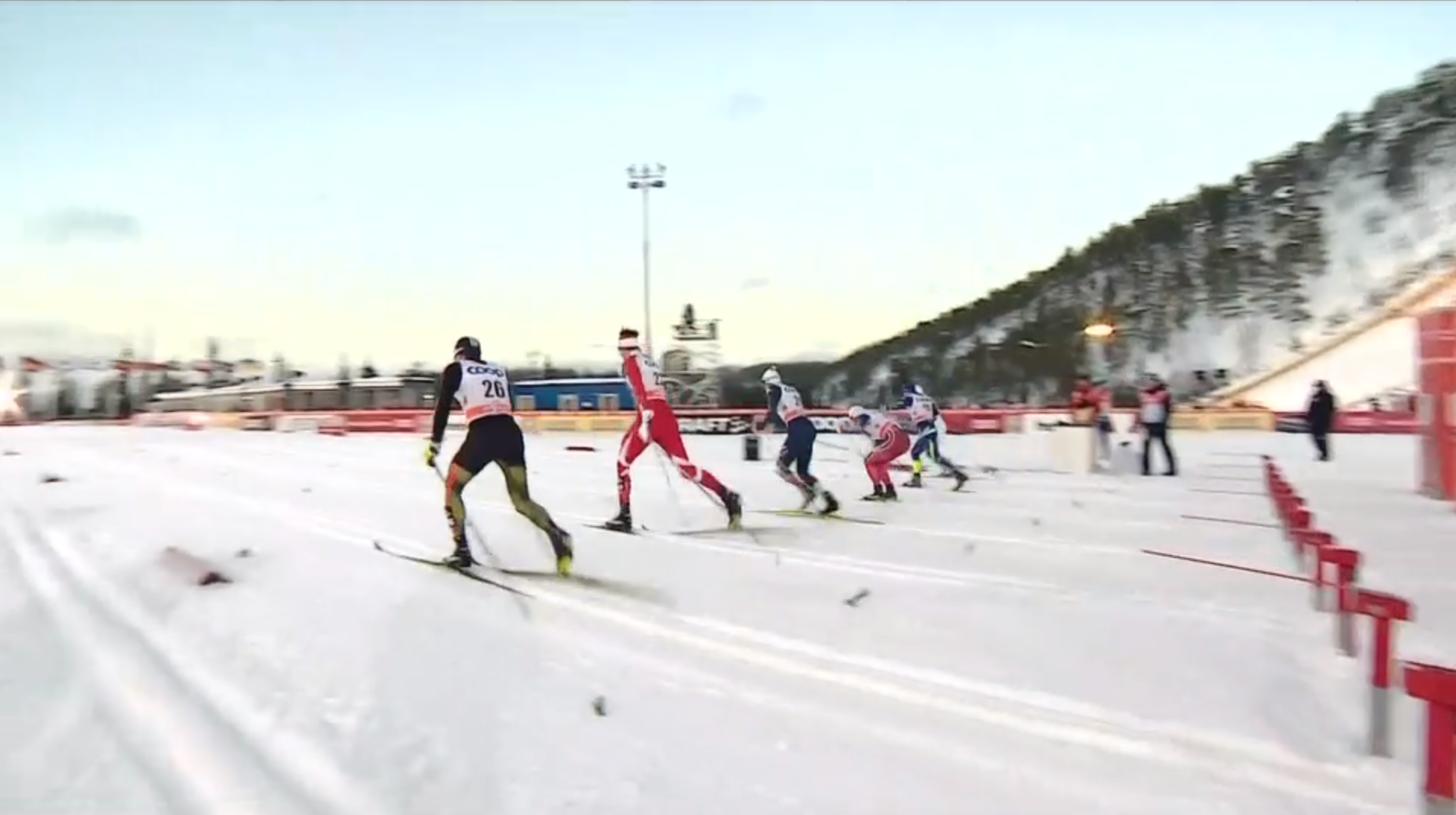
    Practice Makes Perfect: Newell Relies on Tried-and-Tested Ruka Tactics for 4th

    Andy Newell during Friday's 1.4 k classic-sprint qualifier in Kuusamo, Finland, in which he advanced in 12th. Newell went on to make the final and placed fourth for his best World Cup result since 2013. (Photo: Fischer/NordicFocus)
    Andy Newell during Friday’s 1.4 k classic-sprint qualifier in Kuusamo, Finland, in which he advanced in 12th. Newell went on to make the final and placed fourth for his best World Cup result since 2013. (Photo: Fischer/NordicFocus)

    The first time Andy Newell raced in Kuusamo, Finland, was 2006. He was 22, just shy of his 23rd birthday, and he placed 12th in the classic sprint there. What’s more impressive is that he qualified in second in that race.

    A year later, he placed fourth in the same 1.2 k classic sprint.

    Fast-forward eight years from his 2007 classic sprint there to Friday, when Newell, a longtime U.S. Ski Team member, placed fourth yet again in a slightly longer and even tougher 1.4 k classic sprint in Kuusamo.

    The first race of the Ruka Triple, Friday’s classic sprint was the official start to the 2015/2016 World Cup season, and it marked Newell’s best World Cup result since February 2013 when he was fourth in a classic sprint in Davos, Switzerland.

    “It was a long, hard day to get to the finals,” Newell said in a post-race phone interview. “I wanted to fight more for the podium, but to start off the season with a fourth is perfect because it keeps me wanting more.”

    Three days shy of his 32nd birthday, Newell has a long history with the Ruka course. He’s raced there almost 20 times, and in recent years, he’s seen how the course — with a brutally steep and long final climb back up to the stadium — can chew up the best of the field.

    He had a few tips for his U.S. Ski Team (USST) teammates on Thursday, which was Thanksgiving in the U.S. and the night before the season-opening sprint.

    “He’s the guy, as coaches, we ask for advice,” said USST Women’s Coach Matt Whitcomb, who is leading the team in Finland. “In a team meeting last night, we were talking about strategy. … Newell always has a point or two that we as coaches don’t see that he remembers from the multiple finals he’d been in here in Kuusamo.”

    Newell remembered emphasizing the importance of positioning for the final climb.

    “It all comes down to the final hill and making sure you’re in a position to kind of charge up that,” he said. If you get stuck in traffic, like he ran into during his quarterfinal, he said it’s all over.

    Fortunately for Newell, a slight misstep on that climb in his quarterfinal didn’t cost him. He had reached the heats by qualifying in 12th, 6.44 seconds behind qualifier winner Pål Golberg of Norway. Golberg was fastest around the one-lap course in 2:32.62 and another Norwegian, Sondre Turvoll Fossli was 0.43 seconds behind him in second. Fossli went on to win the final at the end of the day for his first World Cup victory.

    Of the North American men, Newell and Canada’s Lenny Valjas advanced to the heats. Valjas was 8.32 seconds back in 22nd and went on to place fifth in his quarterfinal (behind Norway’s Petter Northug, Sweden’s Teodor Peterson, France’s Baptise Gros, and Germany’s Sebastien Eisenlauer, respectively) for 25th overall.

    In his quarterfinal, Newell found himself fourth at the top of the climb and entered the finishing lanes in that position, then charged late to challenge Russia’s Alexey Petukhov for third. In a photo finish for third, Petukhov took it by 0.03 seconds, finishing 1.31 seconds behind the winner of their heat, Finland’s Matias Strandvall. Norway’s Eirik Brandsdal finished 0.21 seconds back in second.

    And while fourth in most quarterfinals didn’t come close to cutting it, Newell ended up advancing to the semifinals with Petukhov — both lucky losers based on time. Their quarterfinal, the first of five, had been the fastest of the day. Newell knew that it would probably be one of the fastest; that’s why he picked it.

    This year on the World Cup, qualifying athletes pick which quarterfinal they want to be in, based on the order in which they qualified. Newell chose the first quarterfinal to maximize his recovery time between heats.

    “I chose that first heat was because that was going to be my best pass to the final,” he explained. “It tends to be stack up to be a competitive heat, but it tends to be a good heat for lucky losers. I knew that going into it, which is why we were pushing so hard to the finish.”

    That late push showed him his training had already paid off: “For the first time in a few years I’m actually passing people in the finishing stretch,” Newell said. “That feels good to me. I have a lot of power in my double pole. I was psyched to come across the finish line strong, and when I do that I know I have a pretty good chance at a lucky loser time.”

    Lucky loser is always a relief because it means that the day isn’t over for the two chosen athletes per round (quarterfinals and semifinals), but for Newell to advance that way twice on Friday? He wasn’t exactly surprised.

    “I could tell it was fast just by the feeling of the pace,” he said of his first semifinal, which was five seconds faster than the second semi.

    While Newell moved up into third at the top of an early climb after attacking around an outside corner, Sweden’s Emil Jönsson passed him on the long uphill and Newell was in fourth coming into the finish. With another last-ditch push toward the finish, he contested Jönsson for third, and in a photo finish, Newell came out 0.03 seconds ahead. Both ended up advancing as lucky losers to the final.

    To get there, Newell had done something Whitcomb found particularly impressive: when his skis failed to grip on the long, icy climb, Newell jumped out of the tracks and ran up the right side of the trail — right through the coaches’ zone.

    “The brilliant thing that I saw from Andy today was that he was boxed in a little bit, slipped twice, hopped out the tracks, and just burned up the side of the trail,” Whitcomb said. “That quick decision-making at the bottom of the hill is what allowed him to have a fast time. He didn’t waste any time getting bogged down behind another skier.”

    Newell said that Northug ran up that hill out of the tracks on the right side “all day long.” And Northug ultimately placed third, just over a second ahead of Newell in the final.

    “It’s like being in the Tour de France. They just kind of get out of your way and you just run right through them,” Newell said of skiing through the coaches’ zone, which he found to be firmer ground than between the tracks where poles chew up the snow. “That’s a tactic skiers have used here in the past.”

    The right guy to chase

    The all-Norwegian men's podium at the Ruka Triple classic sprint, with winner Sondre Turvoll Fossli (c), Eirik Brandsdal (l) in second and Petter Northug in third. (Photo: Fischer/NordicFocus)
    The all-Norwegian men’s podium at the Ruka Triple classic sprint, with winner Sondre Turvoll Fossli (c), Eirik Brandsdal (l) in second and Petter Northug in third. (Photo: Fischer/NordicFocus)

    Opting for a little more kick beneath his skis after the semi, Newell didn’t have to run through the coaches during the final. Instead, he hung between third and fourth for most of the race then followed Fossli up the last hill.

    “My strategy for the final was to either have my own lane going up the big climb or make sure I chose a lane behind somebody that was ready to run,” Newell said. “I didn’t want to get stuck behind anybody because I think going up the hill is one of my strengths.”

    Fossli ended up being a great choice. A 22-year-old Norwegian sprinter who was selected to this race earlier this week (in place of Ola Vigen Hattestad who welcomed the birth of his first child with Slovenia’s Katja Visnar), Fossli charged up the last hill like he had something to prove and won the final by 1.03 seconds over Brandsdal.

    A year ago, Brandsdal won the Kuusamo classic sprint, ahead of Northug in second and Fossli in third. That day was a big moment for Fossli, and this was even better.

    “I’m here to stay in the top three now,” Fossli told NRK after Friday’s win, according to a translation. “You always have to go out to win, but you must have confidence and I have it now.”

    After qualifying in second, Fossli advanced out of the quarterfinals in second behind Jönsson, and went on to win his semifinal by 1.17 seconds over Brandsdal. Newell placed third, 2.31 seconds back in that heat, and Jönsson was fourth.

    “He has always been good,” Northug said of Fossli to NRK, according to a translation. “But he shows he has had progressed and is even stronger. He might have evolved and become even tougher.”

    Northug was disappointed not to finish better than third in order to have more of a cushion over his teammate Martin Johnsrud Sundby in their quest for the overall Ruka-tour win. After qualifying in third, Sundby was third in his quarterfinal for 14th overall (after Golberg in 13th).

    “It’s a little emotional,” Fossli said of his win. “There are many who are behind this win: family, friends and my girlfriend. Many who have been involved in this career.”

    As Fossli successfully broke away from the pack up the final hill, Newell found he had room to roam.

    “He left me with a pretty open lane to charge up the hill behind him,” Newell said. “If anything, I just lost a few steps going over the top, maybe that’s possibly what took me out of the podium placing.”

    Coming around the final corner in fourth, Newell decided to tuck in behind Northug to mitigate the headwind in the finishing lanes. He had hoped the two of them could rein in Fossli and Brandsdal, but they were “way too fast in the finishing stretch for Northug and I,” he recalled.

    While Northug finished 1.65 seconds behind Fossli, Newell was 1.11 seconds off the podium in fourth. Peterson took fifth, about a second after Newell, and Jönsson — who jumped out to an early lead after an aggressive start — finished sixth, 22 seconds after Fossli.

    Commenting on Norway’s podium sweep, Peterson said it wasn’t a surprise.

    “I had hoped that I could do a little more, but in the end of the hill, I did not really,” he told Aftonbladet. “I thought it seemed impossible to keep up. … Norway will be hard to beat this weekend, then we will certainly [in the future].”

    “I think Kuusamo is one of the toughest sprints of the season so I know if I can have a shot at the podium here, I can have a shot at the podium any race this year,” Newell said. “I’ve worked really hard and had a lot of focus [this offseason] so now I’m just stoked to enjoy it and have a lot of fun this season. Hopefully having fun means getting on the podium a bunch.”

    Last season, Newell’s best individual World Cup result was eighth in a skate sprint in Lahti, Finland. The season before that, he made the final in the skate sprint in Szklarska Poreba, Poland, and finished sixth.

    As for how this sets him up for the rest of the Ruka mini tour, with 10 k freestyle on Saturday and 15 k classic pursuit on Sunday, Newell said Saturday — the first of two distance races this weekend — will be about “damage control.”

    “Individual skate is always a hard event for me. Hopefully I stay in a reasonable position to fight for a good race on Sunday,” he said.

    Results: Qualifying | Final

  • A Year After Placing Fifth in Kuusamo, Sargent 7th in Season-Opening Sprint

    A Year After Placing Fifth in Kuusamo, Sargent 7th in Season-Opening Sprint

    Ida Sargent of the U.S. Ski Team racing last season in a classic-sprint qualifier at the World Cup in Ostersund, Sweden. She placed 41st and did not make the heats. (Photo: Fischer/NordicFocus)
    Ida Sargent of the U.S. Ski Team racing last season in a classic-sprint qualifier at the World Cup in Ostersund, Sweden. She placed 41st and did not make the heats. On Friday, Sargent placed seventh in the first World Cup of the season: the Ruka classic sprint in Kuusamo, Finland. (Photo: Fischer/NordicFocus)

    With the sun barely peeking over the horizon in northern Finland, the 2015/2016 World Cup kicked off Friday morning with the Ruka Triple mini-tour in Kuusamo.

    For the U.S. women, four of seven racers in the 1.4-kilometer classic sprint made the top 30 to qualify for the heats, with Sadie Bjornsen in 18th, Sophie Caldwell in 27th, Jessie Diggins in 29th, and Ida Sargent in 30th. 

    That’s why the story of Sargent finishing seventh, one spot shy of the final, is a good one.

    At the top of the final results, Norway’s Maiken Caspersen Falla took the win in 2:58.23, after lunging at the line to beat Sweden’s Stina Nilsson in second (+0.26). Norway occupied two of the three podium places, Ragnhild Haga 1.08 seconds behind Falla in third. Another Norwegian, Invild Flugstad Østberg was fourth (+2.85), Sweden’s Ida Ingemarsdotter was fifth (+5.89), and the fourth Norwegian in the stacked final, Heidi Weng was sixth (+7.83).

    Sargent, who advanced as a lucky loser out of her quarterfinal in third (behind Falla and Østberg, respectively), narrowly missed the final after placing third again in her semifinal. She finished 0.61 seconds behind Weng, the semifinal winner, and less than four-tenths of a second behind Ingemarsdotter, who advanced in second.

    Bjornsen also raced in that semifinal after winning her quarterfinal in a photo finish with Sweden’s Evelina Settlin. In the semi, Bjornsen was sixth, 8.61 seconds behind Weng, which put her 12th overall on the day. Caldwell and Diggins both placed fifth in their quarterfinals and did not advance for 23rd and 25th overall, respectively.

    In a phone interview after the race, U.S. women’s coach Matt Whitcomb reflected that going into this weekend, the team wanted more than a tepid start to the season.

    I’m really happy with the day; we started the season last year with a good race here from Ida,” he said, referring to Sargent’s career-best fifth in the Kuusamo classic sprint. “But in general, as a team, the first couple of weekends were more of a soft launch. We didn’t like it, the fans didn’t like it, the athletes didn’t like it. So our team cheer last night was ‘fast start.’ ”

    For Sargent, perhaps the qualifier wasn’t the fast start she was hoping for, but the 27-year-old classic sprint specialist squeaked into the heats by 0.1 seconds just days after recovering from a nasty cold. (Sargent skipped last weekend’s pre-World Cup tuneup in Gällivare, Sweden, due to illness.)

    Asked about expectations coming into the World Cup opener, Sargent said in a post-race phone interview that she was realistic.

    “I just wasn’t really sure what to expect. I got healthy in time, but [Thursday] was my first training day again, and the first day I did intensity,” she said. “I just did a lap of the course, Level 3, and felt horrible. So I just tried not to have any expectations and just get the season going and do everything I could on that day and bring everything that I had today.”

    As the last skier to qualify for the quarterfinals, Sargent took a breath, and settled into visualizing a successful run. “When I was 30th, I was like, ‘Well, that’s great!’” she said. “For me that was as good as winning the qualifier. It was just like making it through, and I knew I had a fresh start.”

    No stranger to Ruka-sprinting success, Sargent says her results there have more to do with the course profile than the time of year. The sprint course features two climbs, the second of which leads up to the stadium home stretch and can extinguish a skier’s best effort. That hill, the spot where most of the day’s races were decided, was something of an asset for Sargent.

    “This is a course that I love,” she said. “I think it’s the course. I like striding a lot. And this one has big hill to stride up. It just works well for me having the steep hills to stride up. I’m kind of as a smaller sprinter. I do well on hillier courses.”

    In Sargent’s quarterfinal heat, she tried to ski in control and time the last hill. There, she began charging as the incline steepened.

    “It was really fun to be right in there with those girls who are frequently on the podium and feel like I was going head-to-head with them,” she said. “Even when I finished and was in the finish area, Maiken Caspersen Falla says to me like, ‘I think you’ll be fine. I think we went fast enough,’ or something like that. And as it turned out it was like an insanely fast heat.”

    Turns out, it was fast. Sargent qualified as a lucky loser, moving into the semifinals.

    U.S. Ski Team member Sadie Bjornsen (second from left in white) races to win her quarterfinal. On the first day of the World Cup season and Ruka Triple mini tour, she finished 12th overall after placing sixth in her semifinal. (Photo: Fischer/NordicFocus)
    U.S. Ski Team member Sadie Bjornsen (second from left in white) races to win her quarterfinal. On the first day of the World Cup season and Ruka Triple mini tour, she finished 12th overall after placing sixth in her semifinal. (Photo: Fischer/NordicFocus)

    For the U.S. women, the other highlight was Bjornsen.

    Like Sargent, she also missed last week’s races due to illness.

    “The funny thing here, those are the two athletes that were sick last week in Gällivare,” Whitcomb said. “And it just is one to remember … that a sickness one week does not mean bad results the next week. … When you get sick, one thing that happens is you recover a little bit.”

    But sickness obviously isn’t a cure-all.

    “When you are sick, the confidence can be shattered somewhat quickly,” Bjornsen said after Friday’s race on the phone. “So yeah, I would say the confidence sort of came back yesterday and today.”

    Bjornsen skied steadily and with intent, coming from behind to hold off and out-double-pole Settlin to win her quarterfinal. For the third time in her World Cup career, she moved on to the semis.

    And for most of her semifinal, while racing alongside Sargent, she stayed in the mix.

    Bjornsen’s race derailed as she strided up the make-or-break final hill. She chose a glazed track far to the right.

    “It got really slippery and I didn’t have the knowledge to jump out of the track and run up the side,” Bjornsen said. In the track, her skis iced slightly and she slipped and fell.

    Yet even that mishap became a take-away moment for the emerging all-arounder.

    “Unfortunately, I kind of iced on the top and fell over and had to pick myself back up with the most flooded legs in the world. I was disappointed in how the semifinals went because I felt like I wanted to win that one,” she said. “It was a great lesson because you just have so much to learn every time you sprint race. And now I realize it doesn’t hurt to jump out the track and make a decision like that.”

    While Bjornsen righted herself atop the hill, Sargent charged ahead. At the top of the climb, the course arcs left into a final double-pole finishing stretch. There, Sargent pulled ahead of Norway’s Katherine Rolsted Harsem to move into third and pushed for second, but came up just short.

    “It was a little frustrating to just miss out on the finals,” she said. “It was kind of like a lunge with those other girls for second and third but I think Ida Ingemarsdotter and I have had lunged in the past three or four years here and kind of go back and forth with who wins it.”

    Ingemarsdotter has the height advantage of the two Idas: at 5-foot-9, she is five inches taller than Sargent.

    Regardless, after finishing seventh on the day, Sargent left wanting more.

    Sophie Caldwell (U.S. Ski Team) during the women's 1.4 k classic-sprint qualifier in Kuusamo, Finland. She qualified for the first time in Kuusamo in 27th and went on to place 23rd overall. (Photo: Fischer/NordicFocus)
    Sophie Caldwell (U.S. Ski Team) during the women’s 1.4 k classic-sprint qualifier in Kuusamo, Finland. She qualified for the first time in Kuusamo in 27th and went on to place 23rd overall. (Photo: Fischer/NordicFocus)

    For Diggins, she wanted just a bit more track. Coming off wins in both Gällivare races last weekend, Diggins left her quarterfinal race chomping for just 20 more feet of straightaway before the finish.  Despite not advancing into the semis, Diggins wrote in an email that her outlook remains positive.

    “I was really, really happy with today’s race. It was the first time I’ve ever made the heats in a [World Cup] classic sprint, and I’ve been working so hard to improve my classic technique that it feels so good to see it all pay off!” she wrote. 

    In the Gällivare classic sprint, a International Ski Federation (FIS) race, Caldwell placed second to stand on the podium with Diggins. A week later, her World Cup season debut also ended in quarterfinals, but like her teammates, Caldwell’s lasting impression is a good one.

    “I think last week’s race was a positive indicator of where my fitness and sprinting is right now, so I used it as a boost of confidence going into the sprint today,” Caldwell wrote in an email. “I was happy with the day. It was the first time I’ve qualified in Kuusamo and left me hungry for more.”

    Overall standings for the U.S. women in the Ruka mini tour are as follows: Sargent is seventh, Bjornsen 12th, Caldwell 23rd, Diggins 25th, Rosie Brennan 42nd, Caitlin Gregg 81st, and Liz Stephen 84th.

    With two distance races remaining, none of the women are out of the picture.

    “These tours are really fun because you can come from 90th place on the first day and up inside of the top 15 by the last day,” Whitcomb said. It’s always the goal to have three good-or-better races, but like any sport, you can kind of drop a race and put together two great ones and so end up with a good final result.”

    Racing will continue for the women on Saturday with a 5 k freestyle individual start.

    Results: Qualifier | Heats

  • Valjas Qualifies for Canada, 22nd on Kuusamo Course He Calls Both ‘Terrible and Amazing’

    Valjas Qualifies for Canada, 22nd on Kuusamo Course He Calls Both ‘Terrible and Amazing’

    Lenny Valjas (second from l) heads out of the start of his quarterfinal during Friday's 1.4 k classic sprint at the Ruka World Cup in Kuusamo, Finland. He placed fifth in his heat for 25th overall.
    Lenny Valjas (second from l, in red) heads out of the start of his quarterfinal during Friday’s 1.4 k classic sprint at the Ruka World Cup in Kuusamo, Finland. He placed fifth in his heat for 22nd overall in the sprint. He currently ranks 25th in the mini tour.

    (Note: Based on two different formats of results on the FIS website, there was some discrepancy over whether Valjas placed 22nd or 25th. This article has been amended to show that he placed 22nd based on the PDF version of the final results.)

    There are a couple reasons the cross-country World Cup starts in Kuusamo, Finland, each year. For one, it’s almost a sure-bet for snow in November. It’s also really, really hard.

    “After training in North America all summer, this is the first chance that we have to compare against European athletes,” Canadian World Cup sprinter Lenny Valjas said on the phone after Friday’s 1.4-kilometer classic sprint — the first race of the World Cup season held annually in Kuusamo.

    It’s also the first of a three-day mini tour, the Ruka Triple, and on Friday, Valjas was the lone Canadian to qualify and ended up 22nd on the day.

    He was one of eight Canadians to race: after him, Alex Harvey missed qualifying in 47th, Jess Cockney was 65th, Devon Kershaw was 88th, Ivan Babikov 96th, last year’s NorAm leader Michael Somppi 97th, and Graeme Killick 103rd of 115 men. In the women’s sprint, Emily Nishikawa finished 58th of 86.

    Canada's Lenny Valjas during of the World Cup classic-sprint qualifier in Drammen, Norway. Valjas qualified 19th and placed 14th overall. (Photo: Fischer/Nordic Focus)
    Canada’s Lenny Valjas during of the World Cup classic-sprint qualifier in Drammen, Norway. Valjas qualified 19th and placed 14th overall. (Photo: Fischer/Nordic Focus)

    According to Canadian Head Coach Justin Wadsworth, with temperatures right around freezing, waxing difficulties were a factor in some of his athletes’ results.

    “We went for a little more grip, which seemed to work for the most part, though there was a bit of icing up in the qualifier,” Wadsworth said.

    Some skiers used klister and some went on hairies, U.S. Ski Team member Andy Newell explained. He went for a klister-covered wax and ended up fourth overall.

    Valjas said he thought the Canadians has “the best grip of all nations.” The trouble was, they had to deal with hard, icy track, four centimeters of west snow from the night before, and windy, changing conditions throughout the day.

    “Today’s goal was just to qualify and to make it into the points. There was no huge expectations,” he explained, adding that specific results are always a bit of an unknown at this point in the season.

    He qualified in 22nd, 8.32 seconds behind Norway’s Pål Golberg, who won the qualifier in 2:32.62. In the quarterfinal, Valjas placed fifth, 4.61 seconds behind the winner of his heat, Norway’s Petter Northug. Northug went on to finish third in the final. Also in their quarterfinal, Sweden’s Teodor Peterson placed second (+0.2) and France’s Baptiste Gros was 0.52 seconds back in third.

    “Len’s skis seemed to be slow in his quarterfinal,” Wadsworth observed.

    Valjas said his race strategy included being quick off the start, staying in the middle of the pack and hammering up the last hill in order to advance to the semis. A quick start was essential.

    “For me, it is difficult to pass from the back to the front,” he said.

    On a downhill, he slipped from third to last, which may have been due to trouble with glide.

    For Valjas, the Kuusamo course has been both “terrible and amazing,” he said. Slick conditions made it more difficult than usual, he said, with tracks that were “broken and wide, especially the downhill corners, which were icy and hard to get an edge on, just super sketchy.”

    With the option to pick his quarterfinal heat, Valjas chose to race with Northug, figuring Northug would set a slower pace. Northug’s quarterfinal win ended up being the second slowest (Italy’s Federico Pellegrino was slower en route to the win), but that meant Valjas needed to be first or second behind him to advance to the semifinals.

    While that didn’t happen and his race ended there, Valjas wasn’t too concerned. He said he was confident his form would progress according to plan. After dealing with injuries the last two seasons, he’s happy to be qualifying in the first place.

    As for the rest of the weekend, Valjas will race the 10 k skate and 15 k classic pursuit “as long as I remain in good contention throughout the weekend,” he said.

    According to Wadsworth, the rest of the Canadians also felt good on Friday, despite not having the quantitative results. Harvey was reported as feeling good, “but just not as sharp” at this point in the season, Wadsworth said. He added that Kershaw was frustrated with his skis as they seemed to be icing up on the hills.

    Nishikawa told Wadsworth she felt good, “which is the main thing, as she’s a distance racer,” he said. He remained confident for Sunday’s overall mini-tour finishes as his athletes “don’t always perform well at this stage in the season, especially on a classic course like this,” he said.

    “Ideally we would want a better start [to the season], but it is what it is, we have to be patient and we’re focusing on the positives for now,” he added.

    All of the Canadians were expected to race in all three events this weekend, and Nishikawa will remain the lone women’s starter.

    “We’d love to start more women in Kuusamo, but our funding is limited and only people who have been in the top 30 will be starting this [World Cup] period #1,” Wadsworth explained in an email. “However, we do have a trip racing WC period #2 where there are more women (4) selected then men (1) (as is the case with our development team that was named this year).”

    Expanding on this, he said Knute Johnsgaard and four women from the national-development team (Olivia Bouffard-Nesbitt, Cendrine Browne, Dahria Beatty, Katherine Stewart-Jones) will race Period 2 World Cups in Slovenia and the Czech Republic. Nishikawa will also be part of that trip, while the Tour de Ski participants will be chosen based on World Cup points in Period 1.

    Results: Men | Women

  • Caldwell, Hamilton Reach Semis for 10th, 12th in Falun Classic Sprint

    Sophie Caldwell (21) follows Norway's Celine Brun-Lie (10) in their 1.4 k classic-sprint quarterfinal on Thursday at 2015 World Championships in Falun, Sweden. Caldwell went on to place third in the heat and advanced as a lucky loser. It was the first time she had raced heats in a classic sprint all season and she finished the day 10th overall. (Photo: FlyingPointRoad)
    Sophie Caldwell (21) follows Norway’s Celine Brun-Lie (10) in their 1.4 k classic-sprint quarterfinal on Thursday at 2015 World Championships in Falun, Sweden. Caldwell went on to place third in the heat and advanced as a lucky loser. It was the first time she had raced heats in a classic sprint all season and she finished the day 10th overall. (Photo: FlyingPointRoad)

    FasterSkier’s coverage of the 2015 FIS Nordic World Ski Championships in Falun, Sweden, is brought to you by the generous support of L.L. Bean, now featuring a complete line of Kikkan Randall training wear.

    FALUN, Sweden — Leading up to the 2015 FIS Nordic World Ski Championships, Sophie Caldwell had raced six World Cup sprints this season. Five of them were skate sprints.

    On Thursday, the 24-year-old U.S. Ski Team member embarked on her second classic-sprint outing of the winter. Just over a month ago in Otepää, Estonia, Caldwell missed qualifying in her first classic sprint by nine-hundredths of a second in 31st.

    So while she was happy to simply qualify in the opening race of World Championships, the 1.4-kilometer classic sprint, Caldwell was certainly looking for a little more beyond that.

    The top North American women’s qualifier in 21st, 7.87 seconds behind qualifying winner Justyna Kowalczyk of Poland, Caldwell went on to place third in her quarterfinal behind Kowalczyk and Norway’s Celine Brun-Lie, respectively.

    Sophie Caldwell (U.S. Ski Team) racing to 21st in the women's 1.4 k classic sprint qualifier on the first day of medal competition at the 2015 World Championships in Falun, Sweden. (Photo: Flying Point Road)
    Sophie Caldwell (U.S. Ski Team) racing to 21st in the women’s 1.4 k classic sprint qualifier on the first day of medal competition at the 2015 World Championships in Falun, Sweden. (Photo: Flying Point Road)

    Fortunately for her, her finishing time of 3:31.75 (which was 2.2 seconds back from Kowalczyk) was the fastest among all the third-place finishers in the quarterfinals, and Caldwell advanced to the semifinals as one of two lucky losers (the other being Sweden’s Ida Ingemarsdotter).

    “I tired a little in this long double-pole stretch, but our skis were awesome,” Caldwell said after the quarterfinal, in which she found herself in fourth early.

    Before descending down into the stadium for the final push up and over the last hill, Caldwell put herself in third behind Kowalczyk and Brun-Lie, then nearly caught Brun-Lie, finishing 0.52 seconds behind her.

    “I wanted to get into their draft and I still had no idea how close people behind us were,” she explained, still unsure at the time whether she would advance to the next round.

    “I felt like we went really fast and I’m hoping the time shows that, too,” Caldwell said.

    It was as the Vermont native, who placed sixth in the 2014 Olympics freestyle sprint but sustained two separate elbow injuries last summer and fall that kept her from competing on the World Cup until early December, made it to the semifinals in her second World Championships appearance.

    Two years ago at the last World Championships in Val di Fiemme, Italy, she competed in one race — the classic sprint — where she placed 20th as the second-best American woman (U.S. teammate Kikkan Randall finished 19th).

    Even that year, Caldwell didn’t make the semifinals.

    Knowing her strengths in skiing efficiently and relaxed, she aimed to keep her cool on two of the biggest climbs of Falun’s sprint course. But the pace out of the start of her semifinal was “pretty fast,” she said.

    “I found myself at the back of the pack, definitely getting tired on the ups, but I knew I had fast skis so I just focused on getting a really low tuck through [the stadium] and picked off sixth place,” she said.

    Caldwell skied up from sixth to fifth, finishing 5.86 seconds behind Norwegian semifinal winner Marit Bjørgen, who went on to win the final as well. Two Norwegians placed second (+0.41) and third (+1.08) behind Bjørgen — Maiken Caspersen Falla and Kari Vikhagen Gjeitnes, respectively — and Finland’s Kerttu Niskanen finished fourth, 5.34 seconds back from the winner and 0.52 seconds ahead of Caldwell.

    “My upper-body strength has improved a lot, but I still have some work to do on my double pole,” Caldwell said after the semifinal, which put her in 10th at the end of the day. “I held off sixth, which was great but it would’ve been nice to make a move on fourth, but I’m happy with the day.”

    “That’s three championships in a row where Sophie’s our best sprinter,” U.S. Ski Team Head Coach Grover said Thursday night. “She’s continually showing that she’s a big-game, big-competition skier and she skis well in that arena when the pressure is up.”

    Another American and Caldwell’s boyfriend, Simi Hamilton achieved his second-best classic sprint result of the season (and made the semifinals for the second race in a row) less than a week after placing 11th in the World Cup classic sprint in Östersund, Sweden.

    Simi Hamilton (U.S. Ski Team) during Thursday's 1.4 k classic sprint qualifier, in which he placed 28th to advance to the quarterfinals. He went on to make the semifinals and ended the day in 12th overall. (Photo: FlyingPointRoad)
    Simi Hamilton (U.S. Ski Team) during Thursday’s 1.4 k classic sprint qualifier, in which he placed 28th to advance to the quarterfinals in Falun, Sweden. He went on to make the semifinals and ended Day 1 of 2015 World Championships in 12th overall. (Photo: FlyingPointRoad)

    Hamilton qualified 28th in the men’s 1.4 k sprint, 6.64 seconds behind Russian qualifying winner Nikita Kriukov and 0.69 seconds within the top 30. His teammate, Andy Newell qualified 10th, 3.64 seconds back for his best qualifier of the season.

    Hamilton went on to place fourth in his quarterfinal, 2.74 seconds behind the winner, Norway’s Thomas Northug. Older brother Petter Northug — the eventual men’s final winner — took second, 0.09 seconds behind Thomas, who won the heat in 3:00.42, and a third Norwegian, Eirik Brandsdal placed third (+0.71).

    Hamilton’s quarterfinal ended up being the fastest by more than three seconds, and he advanced to the semifinal as the second lucky loser with Brandsdal. With about 10 minutes before the first men’s semifinal, Hamilton spent a few minutes on the spin bike trying to regroup for his next big effort.

    “I felt like I was able to maintain a good effort through the quarter, which sometimes, at least in the past I’ve struggled with a little bit,” Hamilton, 27, reflected. “I’ve always had good top speed, but I think my fitness has been one of my shortcomings. I feel like my fitness is good right now.”

    In his quarterfinal, Hamilton left the stadium trailing the pack in sixth, then moved to fifth by the top of the first major climb. He picked off another place in fourth ahead of Switzerland’s Jovian Hediger while making his way back into the stadium, the followed the Northug brothers and Brandsdal into the finish.

    Catapulted into the first semifinal, Hamilton once again found himself in sixth shortly after the start. He improved to fifth on the long climb, then slipped back to sixth, finishing 8.14 seconds behind Kriukov, the semifinal winner. Italy’s Federico Pellegrino placed second in that semifinal (+0.14), Sweden’s Teodor Peterson was third (+0.77), Switzerland’s Ueli Schnider was fourth (+1.05), and Finland’s Ristomatti Hakola fifth (+2.18).

    “I actually felt really good for the first probably 500 meters of that semi … then the wheels kind of came off,” Hamilton said after placing 12th overall. “I think the effort in the quarter just kind of caught up with me pretty quickly. But it was still sweet … great day, it’s always fun to be here in Falun where the fans are so amazing. This venue’s so great. The trails are awesome. Good first day to the championships.”

    Six U.S. Ski Team skiers in the heats

    In all, six of the eight U.S. athletes who started Thursday’s sprint qualified for the rounds, including Newell and Dakota Blackhorse-von Jess on the men’s side (in 10th and 30th, respectively), and Sadie Bjornsen and Ida Sargent for the women (in 26th and 29th).

    Kikkan Randall (U.S. Ski Team) during Thursday's 1.4 k classic sprint qualifier, in which she placed 36th to miss advancing to the heats on the opening day of 2015 World Championships in Falun, Sweden. She finished 35th overall after Sweden's Hanna Falk was disqualified. (Photo: FlyingPointRoad)
    Kikkan Randall (U.S. Ski Team) during Thursday’s 1.4 k classic sprint qualifier, in which she placed 36th to miss advancing to the heats on the opening day of 2015 World Championships in Falun, Sweden. She finished 35th overall after Sweden’s Hanna Falk was disqualified. (Photo: FlyingPointRoad)

    Kikkan Randall placed 36th in the qualifier, missing out on the necessary top 30 by 3.22 seconds, and 21-year-old Ben Saxton was 54th in his World Championships debut.

    Grover noted that the team’s overall performance on Thursday essentially matched its freestyle-sprint showing at last year’s Olympics in Sochi, Russia, where four women (Caldwell, Jessie Diggins, Randall, and Sargent) and two men (Newell and Hamilton) qualified for the heats.

    But at the end of the day, the U.S. didn’t get the A-final it had been aiming for.

    “I think when we set out in the year, we were hoping for more by today, for sure, but at the same time it’s just the first race of the championships,” Grover said. “Classic sprints have always been a hard one for us. … It’s hard to take those podiums away from the Scandinavians in the classic sprints … those athletes were in a different class that ended up on the podium and at this point at the moment, we’re not at that level.”

    With changing conditions throughout the afternoon, mostly well above freezing but with a dampness that firmed the tracks before dusk, Grover explained that the team’s wax technicians worked well together to keep their skis competitive.

    “It was a good day,” Grover said. “Good kick, good glide … It wasn’t perfect for every skier on every round, but it worked out good.”

    Sadie Bjornsen (U.S. Ski Team) racing to fourth in her classic-sprint quarterfinal for 19th overall on the opening day of 2015 World Championships in Falun, Sweden. (Photo: FlyingPointRoad)
    Sadie Bjornsen (U.S. Ski Team) racing to fourth in her classic-sprint quarterfinal for 19th overall on the opening day of 2015 World Championships in Falun, Sweden. (Photo: FlyingPointRoad)

    Sadie Bjornsen fell behind early in her quarterfinal when Sweden’s Hanna Falk obstructed her on their way out of the stadium. For Falk, it was her second yellow card within moments of her first (she received a yellow card for a false start) and she was disqualified after the heat finished.

    “Hanna just came on the top of me with absolutely no room and it forced me to have to stop,” Bjornsen said of the obstruction that set her back to sixth early on.

    From there, she lost contact with the pack on the long-and-winding uphill, and despite trying to catch Italy’s Francesca Baudin in third, Bjornsen ended up fourth, 9.51 seconds off the winning pace set by another Swede, eventual-silver-medalist Stina Nilsson. Bjørgen placed second in that quarterfinal (+0.84), and Baudin was third (+6.5).

    “I wasn’t in the draft with them and it’s a bit hard to work your way back into that,” said Bjornsen, who ended up 19th overall. “It’s a bummer because I felt really good, but I guess that happens, it’s racing. Everybody wants to be aggressive at World Champs. I gave it a go and I’m still looking for more at the championships.”

    Ida Sargent (U.S. Ski Team) was the first starter in Thursday's 1.4 k classic sprint on the opening day of 2015 World Championships in Falun, Sweden. She qualified in 29th and went on to finish 29th overall. (Photo: FlyingPointRoad)
    Ida Sargent (U.S. Ski Team) was the first starter in Thursday’s 1.4 k classic sprint on the opening day of 2015 World Championships in Falun, Sweden. She qualified in 29th and went on to finish 29th overall. (Photo: FlyingPointRoad)

    The first starter of the day, Sargent went out in bib No. 1 and qualified 29th. She then placed sixth in her quarterfinal, 8.56 seconds behind Falla as the winner.

    “Not what I was hoping for, but that’s ski racing,” Sargent said. “I had trouble finding any kick. My strength right now is really my striding so having three big hills and not being able to stride on them was a challenge for me.”

    While she was able to get out of the tracks and regain contact on the first long climb, she explained she got hung up behind Germany’s Denise Herrmann and lost contact with the leaders.

    “I just didn’t have much left after fighting the whole time for the finishing stretch,” Sargent said. “Mona Lisa [Malvalehto of Finland is] really powerful, and I didn’t have anything when she went by me.”

    Malvalehto finished fifth, 1.82 seconds ahead of Sargent. While the sprint didn’t go as the American had hoped, putting her in 29th overall, she explained she’d never forget that experience of starting first.

    “The crowd just erupted when I started,” Sargent said. “That was a really special feeling. I prefer not to be the first starter. I’ve been the first or second starter in the last three World Cups so I think it would’ve been nice to have a little more course reports … especially on a day like today when you’re not allowed to ski on the course until you’re in the race, [but] being the first racer in the World Championships, that’s a really special moment that I’ll always remember.”

    Andy Newell (U.S. Ski Team) racing to 10th in the men's 1.4 k classic sprint qualifier on Thursday, the first official day of 2015 World Championships in Falun, Sweden. He went on to place fourth in his quarterfinal for 17th overall. (Photo: FlyingPointRoad)
    Andy Newell (U.S. Ski Team) racing to 10th in the men’s 1.4 k classic sprint qualifier on Thursday, the first official day of 2015 World Championships in Falun, Sweden. He went on to place fourth in his quarterfinal for 17th overall. (Photo: FlyingPointRoad)

    Newell finished 17th overall and Blackhorse-von Jess placed 30th after the two faced off in the same quarterfinal. Newell skied up to third early out of the start, then second, before Blackhorse-von Jess surged up alongside Newell and then ahead of him near the top of the first climb.

    “They talk about how fast the World Cup is, but also no one’s going as fast as they can, especially in the quarterfinal,” Blackhorse-von Jess said after rising from sixth out of the start to first at the top of that hill. “I had to really disadvantageous start position being the last [qualifying] bib and I just waited. Nobody wants to ski the edge tracks and I didn’t mind being there.

    “I didn’t really mean to take the lead up the first hill, but I wanted to be in the top few coming down the hill,” he continued. “The first thought in my head was, ‘Damnit!’ … I thought somebody was moving on the outside and I was hoping they would hammer around and take the lead. They didn’t do that.”

    By the second uphill, Peterson took control for a moment before Canada’s Lenny Valjas moved ahead of him over the top. Newell tripped up slightly on that same horseshoe corner and Blackhorse-von Jess slipped to fifth.

    Valjas held his own until the last rise, but at the finish, Peterson had the edge by 0.17 seconds over Kriukov, who took advantage of some others’ slip-ups to move to second, and Valjas finished 0.68 seconds back in third.

    Newell nearly fell on his way down into the stadium after riding too close behind Germany’s Sebastien Eisenlauer and took fourth (+1.06), Eisenlauer was fifth (+2.35), and Blackhorse-von Jess was 2.9 seconds back in sixth.

    From left to right: Canada's Lenny Valjas, American Andy Newell, Sweden's Teodor Peterson, and another American, Dakaota Blackhorse-von Jess go head to head in the men's 1.4 k classic sprint quarterfinal on Thursday at 2015 World Championships in Falun, Sweden. (Photo: FlyingPointRoad.com)
    From left to right: Canada’s Lenny Valjas (21), American Andy Newell, Sweden’s Teodor Peterson, and another American, Dakaota Blackhorse-von Jess lead early in the men’s 1.4 k classic sprint quarterfinal on Thursday at 2015 World Championships in Falun, Sweden. (Photo: FlyingPointRoad.com)

    “It went completely to plan up until then and then I was out of it all of a sudden because I lost a lot of speed,” Newell said of his second tangle of the heat, in which he “came in really tight on [Eisenlauer’s] draft” and had to free his ski from the German’s boot to move around him.

    Newell balanced on one ski for a moment then pushed to come back from fourth, but wasn’t able to make up for the lost time.

    “It’s just little mistakes like that that can take it out of you, especially in a quarterfinal,” Newell said. “I feel like my shape’s good, my speed’s good, my fitness is good, but I’m just struggling in the finish there and I think it would’ve been a good day if I was able to get through.”

    Dakota Blackhorse-von Jess   (Bend Endurance Academy) racing to 30th in the men's 1.4 k classic sprint qualifier in his first World Championships race on Thursday in Falun, Sweden. (Photo: FlyingPointRoad)
    Dakota Blackhorse-von Jess (Bend Endurance Academy) racing to 30th in the men’s 1.4 k classic sprint qualifier in his first World Championships race on Thursday in Falun, Sweden. (Photo: FlyingPointRoad)

    Recapping his first World Championships race, Blackhorse-von Jess described it as “incredibly fun. It’s hard coming to World Championships and having it be your first sprint heat,” he said. “You make one tactical error and that really is the end of your day, and I was hoping to bring it back. … I was just a little too far back.”

    “I was definitely excited for Dakota,” Grover said. “I was excited to see him sneak in there for his first time getting into the points [in a World-Cup-level race]. I was excited for Andy’s qualification. To be just three seconds back [from the top qualifier], that was showing he was kind of coming into form. Unfortunately, he didn’t have the best quarterfinal; he just got hung up at the end.

    “Simi skied great, but unfortunately he just didn’t have time to recover [between heats],” he added. “[Those were] good signs from Simi but we’ve had those all year. … and Sadie probably didn’t get the fairest shake at it with the obstruction.”

    With Sunday’s freestyle team sprints on the horizon after the men’s and women’s skiathlons on Saturday, Grover said the discussions for who would comprise the women’s team in particular were still ongoing.

    “We really just don’t have the athletes that have made the 100-percent solid case [for their selection],” he said, adding that the decision would be based off “today’s results, recent trends and historical trends,” as well as the track conditions.

    “[We have] a lot of discussion to do this evening in order to figure out how we’re going to approach the team sprint and how we’re going to approach the skiathlon,” Grover added.

    — Lander Karath contributed reporting

    Results: Women | Men

  • Bjørgen Seizes First Win of 2015 Worlds, Holds Off Sweden’s Nilsson in Classic Sprint

    Norway's Marit Bjørgen (c) celebrates her 15th World Championships gold and record-setting 30th overall medal (between Olympics and World Championships) with a classic-sprint win in the women's 1.4 k final on Thursday, the official first day of the 2015 World Championships in Falun, Sweden. She edged Sweden's Stina Nilsson (r) in second and Norway's Maiken Caspersen Falla (l) in third. (Photo: FlyingPointRoad)
    Norway’s Marit Bjørgen (c) celebrates her 13th World Championships gold and record-setting 30th overall medal (between Olympics and World Championships) with a classic-sprint win in the women’s 1.4 k final on Thursday, the official first day of the 2015 World Championships in Falun, Sweden. She edged Sweden’s Stina Nilsson (r) in second and Norway’s Maiken Caspersen Falla (l) in third. (Photo: FlyingPointRoad)

    FasterSkier’s coverage of the 2015 FIS Nordic World Ski Championships in Falun, Sweden, is brought to you by the generous support of L.L. Bean, now featuring a complete line of Kikkan Randall training wear.

    FALUN, Sweden — Marit Bjørgen really needed to turn it on at one pivotal point in the women’s 1.4-kilometer classic sprint final on Thursday, the first day of medal competition at the 2015 FIS Nordic World Ski Championships. And in her eighth World Championships — more than any other Norwegian cross-country skier can lay claim to — she knew exactly where to do it.

    Just before the sun set around 5 p.m. in Falun, Sweden, Bjørgen, 34, hit the stride she had been waiting for all day, coming from behind to take her 13th World Championships gold medal ahead of Sweden’s Stina Nilsson and Norwegian teammate Maiken Caspersen Falla, respectively.

    Between the Olympics and World Championships, the gold marked Bjørgen’s 30th medal, putting her in yet another league of her own. Before Thursday’s sprint, she was tied with Norwegian skiing legend Bjørn Dæhlie with 29 total medals.

    “Thirty medals is great,” Bjørgen said at a post-race press conference. “The sprint was my first individual gold in 2003 so to still be fighting for a medal in the sprint 12 years after, it’s great and it’s a good feeling. … I’m 34 years [old] and still taking all the sprints around me.”

    But Bjørgen wasn’t in it for the record books — she had a job to take care of on Thursday, especially if she wanted to breathe easy for the rest of World Championships.

    Four out of five Norwegians made it all the way to the final (with the exception of Celine Brun-Lie, who placed fifth her her semifinal), where Falla led out of the start and up the initial winding climb out of the stadium. Nilsson followed Falla closely in second and Bjørgen remained tight in third, ahead of Norway’s Ingvild Flugstad Østberg and Kari Vikhagen Gjeitnes, and Poland’s Justyna Kowalczyk, who initially trailed in sixth after a slow start.

    “I overslept at the start and it had an impact on everything,” Kowalczyk told TVP1, according to a translation.

    As the incline intensified, Falla, who had qualified second earlier in the day (0.24 seconds behind Kowalczyk) and won her quarterfinal before placing second in her semifinal to Bjørgen, dug deeper in the final. She remained up front, leading her three Norwegian teammates in the same lane, while Nilsson skied alongside and slightly behind her over the top.

    Meanwhile, Kowalczyk surged from last to fourth, just behind Bjørgen, before the quick turn at the summit into an immediate fast descent.

    Falla led up the subsequent climb — also steep but shorter than the first — followed by Nilsson, while Kowalczyk and Bjørgen took advantage of open lanes on the right. At the crest, Bjørgen moved left and in front of Kowalczyk, sneaking ahead of Nilsson as well as the group veered left down toward the stadium. Bjørgen sat back on her fast skis and rode up on the tails of Kalla, passing her to take the lead before the bottom.

    As the lead four, with Bjørgen, Falla, Nilsson, and Kowalczyk, cruised into the stadium, they had one last rise before a final descent and sharp righthand turn into the finishing flat.

    Before that uphill, Nilsson soared to second with superior glide, tucking past Falla, and chased Bjørgen over the top before challenging her to the finish. While she never drew even with Bjørgen, the Norwegian was well aware of the Swede’s presence.

    “I feel Stina right behind me for the last 150 meters and I did have to push really hard before the finish line,” Bjørgen said.

    The women's classic sprint podium at 2015 World Championships on Thursday in Falun, Sweden, with winner Marit Bjørgen (second from l) of Norway, Sweden's Stina Nilsson (l) in second, and Norway's Maiken Caspersen Falla in third. (Photo: Falun2015)
    The women’s classic sprint podium at 2015 World Championships on Thursday in Falun, Sweden, with winner Marit Bjørgen (second from l) of Norway, Sweden’s Stina Nilsson (l) in second, and Norway’s Maiken Caspersen Falla in third. (Photo: Falun2015)

    She held off Nilsson by 0.42 seconds, winning in 3:26.63, while Falla hung onto third, 0.99 seconds after Bjørgen and 0.44 seconds ahead of Kowalczyk.

    “I’m incredibly happy and relieved,” Bjørgen told NRK after winning gold in her first try at 2015 World Championships. “When I got to the finals, the beast woke in me. Then I knew the smell of medal and I knew I was really nervous at the starting line.”

    Bjørgen nervous? It might’ve had something to do with the fact that she raced the final on brand-new skis, which were stoneground on Monday, according to VG.

    “In the quarterfinals, I went on the old couple that I’ve won so much, but then I decided to switch to the new skis,” she said in the press conference.

    After qualifying sixth, 2.54 seconds off Kowalczyk’s top time of 3:24.89, Bjørgen placed second in her quarterfinal, 0.84 seconds behind Nilsson, and won her semifinal by 0.41 seconds over Falla. Gjeitnes as the third-fastest qualifier raced to third in that semifinal, 1.08 seconds behind Bjørgen, to advance to the final as one of two lucky losers.

    Østberg was the other with a third-place finish in her semifinal after Kowalczyk and Falla, respectively.

    “I’m feeling in good shape, but I think anything is possible. If you have good skis, good day, it is possible to have more medals,” Bjørgen said of her outlook for the rest of the World Championships.

    She could race all six events, or she might opt out of the team sprint on Sunday — she said she wouldn’t decide until Saturday.

    “I have taken my goal, one individual gold, and I can relax a bit more,” she said at the conference.

    For Nilsson, 21, the silver medal marked her first podium in her second appearance at World Championships. In 2013 in Val di Fiemme, Italy, she placed fifth in the classic sprint — her lone race of the championships.

    As she crossed the finish in second on Thursday, she threw her arms up and yelled exuberantly. The 18,300-strong crowd boomed with excitement as well.

    “I have not had time to think about what I’ve done,” she told Aftonbladet, according to a translation.

    “I’m very happy,” she added. “I [felt] very empty when going in to the finish, but it’s nice to be empty and be second. … Not doubt about it that Marit was the strongest today.”

    After what she considered a normal morning (“I had the feeling that I have every morning; I felt hungry,” she said at the press conference), Nilsson qualified fifth and made sure to finish in the top two of her next two heats. Then she completed the day in second overall, and while the moment hadn’t quite sunk in after the race, she had to acknowledge the Swedish fans.

    “Every time they introduced me in the stadium, I got just as much praise as Marit,” she told Aftonbladet. “It does not happen every day. … It’s nice to know that there were people here for my sake.”

    In the conference, a Swedish reporter even tried to get Norwegian men’s winner Petter Northug to comment on Nilsson.

    “I think [runner-up Alex] Harvey knows more about Stina Nilsson…,” Northug said with a smirk.

    “Not me,” responded Harvey, the Canadian silver medalist, then jokingly added, “Maybe my teammate.”

    The 2014 Olympic champion in the freestyle sprint, Falla, 24, told NRK that she gave everything she had in the final, but that ultimately cost her.

    “I had a very good day, and I felt better and better,” she said. “I used up everything I had, but Marit was simply too strong today.”

    That said, the success was obviously good for the team. Gjeitnes placed fifth after Kowalczyk, 6.10 seconds behind Bjørgen, and Østberg finished sixth, 10.47 seconds back.

    And while they were Norwegians in Sweden, both Falla and Bjørgen said they heard Swedes cheering for them — or maybe it was just Nilsson.

    “The atmosphere here is really good,” Falla said in the conference. “I have a lot of supporters here, a lot of family, to know that all the people that are really important to me are standing around of course, it means a lot and helps me reach my goal here in Falun.”

    She told reporters she wasn’t sure whether the classic sprint would be her lone race in Falun, or if she’d race the freestyle team sprint as well.

    “Today, I am just enjoying third in this race,” Falla said.

    Kowalczyk came up short of her first individual podium of the season at this level, after placing fourth in the 10 k classic in the opening World Cup in Kuusamo, Finland, and fifth in a 5 k classic during the Tour de Ski. She did not finish the Tour, pulling out before the final hill-climb pursuit despite ranking fifth overall, then went on to place third in last month’s World Cup freestyle team sprint in Otepää, Estonia, with teammate Sylwia Jaskowiec.

    “On the one hand, I am glad that I was in the final, but on the other hand, I’m equally sorry,” Kowalczyk said to TVP1. “The opportunity was great, perhaps the only one in this championship.

    “I was ready for a medal,” she added. “I should not have a worse start than Marit, because it is not her specialty, and I was weaker. I have to blame myself for it. If I could kick, I would have kicked. I have not watched the final [from behind].”

    Bjørgen was complimentary of Kowalczyk’s season-best sprint.

    “I would say she’s back and is good in classic,” Bjørgen said in the conference. “It’s great to see her there, and I really wanted her to be there.”

    Among the semifinalists who ended up in the top 12, Finland’s Kerttu Niskanen placed seventh, Slovakia’s Alena Prochazkogva was eighth, Brun-Lie placed ninth, Sophie Caldwell of the U.S. was 10th, Slovenia’s Katja Visnar 11th,  and Sweden’s Ida Ingemarsdotter 12th.

    Stay tuned for a complete North American report.

    Results: Qualifier | Final results

  • Valjas 14th, Jones 24th for Canada in World Champs Sprint

    Canada's Lenny Valjas (l0 skis alongside Andy Newell, Teodor Petersen, and Dakaota Blackhorse-von Jess en route to a third place finish in his quarterfinal of the 1.4 k classic sprint in Falun, Sweden. Valjas finished his day in 14th. (Photo: flyingpointroad.com)
    Canada’s Lenny Valjas (l0 skis alongside Andy Newell, Teodor Petersen, and Dakaota Blackhorse-von Jess en route to a third place finish in his quarterfinal of the 1.4 k classic sprint in Falun, Sweden. Valjas finished his day in 14th. (Photo: flyingpointroad.com)

    FALUN, Sweden — Lenny Valjas’ best results of the 2015 season, whether in Davos or Östersund, have been just outside the semifinals. It was a trend that continued Thursday in the 1.4 k classic sprint at the 2015 FIS World Ski Championships where he placed 14th overall, adding to a successful day for Canada that saw teammate Alex Harvey claim second place behind Norwegian Petter Northug.

    Qualifying in 21st position, Valjas entered his quarterfinal with two other North Americans –  Andy Newell and Dakota Blackhorse-von Jess of the U.S. Ski Team – in addition to Russian Nikita Kriukov, Teodor Peterson of Sweden, and German Sebastian Eisenlauer.

    Valjas trailed the five skiers as they left the stadium, but held contact over the first hill. By the time he reached the second climb, the Canadian was rearing to go and charged to the lead. “You just have to run like a camel up the hill, with big, long steps,” Valjas said of his advancement from last to first. “When you have good skis it is actually not that hard.”

    Valjas entered the downhill in the lead, which he described as a disadvantage due to drafting. Regardless, the 26-year-old explained that he was able to hold his position through the downhill due to fast skis. As he and the other leaders entered the stadium’s U-turn, Valjas allowed Kriukov to inch past him on the inside, thus losing a valuable position as he, the Russian, and the Swede entered the final straightaway into the finish.

    “I messed up when I didn’t try to block Nikita [Kriukov] in the last stadium hill. I should have gone right and I had the room,” Valjas explained. “I knew he was coming fast and I should have taken the inside line, and instead I look the outside around the whole way. I got out-gunned in the double pole. I had no chance.”

    Unable to hold pace with Kriukov or Peterson, Valjas finished his heat in third position. Because the quarterfinal was the slowest of the day, he did not advance as lucky loser.

    Valjas said that he was disappointed not to advance because the conditions were favorable and similar to those in Drammen, Norway, where the Canadian won his first World Cup silver medal in 2012. According to Valjas, the result was also frustrating because he has been just outside the semifinals all season. Last weekend in Östersund, Sweden he finished 13th in the same event.

    “Last week I missed just by a tenth and this week just under a second. I had good shape for this course today too,” Valjas explained. “I feel like I just came up short.”

    Teammate Jesse Cockney joined Harvey and Valjas in Thursday’s race, ultimately finishing 49th.

    Canada's Perianne Jones raced to fifth place in her qualifier to finish 24th overall in the 1.4 k classic sprint in Falun, Sweden for the 2015 FIS Nordic World Ski Championships. (Photo: flingpointroad.com)
    Canada’s Perianne Jones raced to fifth place in her qualifier to finish 24th overall in the 1.4 k classic sprint in Falun, Sweden for the 2015 FIS Nordic World Ski Championships. (Photo: flingpointroad.com)

    In the women’s classic sprint, Perianne Jones was the lone starter for the Canadian team. She qualified in 28th position and ended her day in 24th after finishing fifth in her quarterfinal. After a slow start in the heat, Jones trailed the five women for much of the winding course. While she was able to make up some ground on the downhills, it was only enough to get her past Switzerland’s Laurien van der Graaff.

    “I actually felt pretty good when I was climbing the top of the first hill and the second hill but I was just too far back at that point,” Jones explained in a post-race interview. “I did have really fast skis, so when I came into the stadium I was able to close a little of the gap but it wasn’t enough.”

    Jones, who took time off from World Cup racing during the holiday season, said she was feeling in better racing shape since her return to Europe.

    “I stayed at home for a month and did some racing in Canada. I think that helped me a lot. I got kind of stale on the World Cup,” she said. “I think the quality of work I was able to do at home, and the racing I did helped a lot to get me in shape.”

    Jones explained that her goal for Thursday’s sprint was to crack the top-12, but that considering her previous fall of racing she was pleased to be in the heats.

    While two other Canadian women, Emily Nishikawa and Olivia Bouffard-Nesbitt, are in attendance at Worlds, both sat out Thursday’s race due to illness. According to Canadian National Team Head Coach Justin Wadsworth, Devon Kershaw and Graeme Killick are also sick, but will look to race later in the championships.

    “Olivia is the most sick, which is really too bad because she might miss the whole championships,” Wadsworth said.

    Cross country competition at the 2015 Nordic World Ski Championships continues Saturday with the 15/30 k skiathlons.

    Results: men | women

  • Caldwell Leads Four North American Women Into Heats in World Champs Sprint Opener

    Sophie Caldwell (U.S. Ski Team) racing to 21st in the women's 1.4 k classic sprint qualifier on the first day of medal competition at the 2015 World Championships in Falun, Sweden. (Photo: Flying Point Road)
    Sophie Caldwell (U.S. Ski Team) racing to 21st in the women’s 1.4 k classic sprint qualifier on the first day of medal competition at the 2015 World Championships in Falun, Sweden. (Photo: Flying Point Road)

    FasterSkier’s coverage of the 2015 FIS Nordic World Ski Championships in Falun, Sweden, is brought to you by the generous support of L.L. Bean, now featuring a complete line of Kikkan Randall training wear.

    FALUN, Sweden — Four North American women advanced to the heats on the first day of medal competition at the 2015 FIS Nordic World Ski Championships, with American Sophie Caldwell leading the crew in 21st in Thursday’s classic-sprint qualifier.

    Poland’s Justyna Kowalczyk racing to first in the women's 1.4 k classic sprint qualifier on the first day of medal competition at 2015 World Championships in Falun, Sweden. (Photo: Flying Point Road)
    Poland’s Justyna Kowalczyk racing to first in the women’s 1.4 k classic sprint qualifier on the first day of medal competition at 2015 World Championships in Falun, Sweden. (Photo: Flying Point Road)

    Poland’s Justyna Kowalczyk rounded the 1.4-kilometer course, marked by two significant climbs, with a top time of 3:24.89. Norway qualified in second through fourth, with Maiken Jaspersen Falla finishing 0.24 seconds back in second, Kari Vikhagen Gjeitnes clocking 0.51 seconds back in third, and Ingvild Flugstad Østtberg finishing 0.65 seconds behind in fourth.

    Stina Nilsson led Sweden in fifth in the qualifier, 1.19 seconds after Kowalczyk, and Norway’s fourth of five women, Marit Bjørgen ranked sixth (+2.54).

    Caldwell finished 7.87 seconds back in 21st, leading three American women in the top 30. Sadie Bjornsen was 26th (+9.47) and Ida Sargent qualified in 29th (+11.64).

    “It was really hard,” Caldwell said after. “It was a long course with a lot of climbing. I think I took it out a little hot, but it was fun. It was crazy with the crowd.”

    For the quarterfinal, she explained she’ll try to conserve as much as possible before a final downhill leading into a 90-degree turn and the finishing flat.

    “Saving a little bit for the final stretch is going to be key,” Caldwell said. “It’s a long finish stretch.”

    Canada’s lone female racing on Thursday, Perianne Jones qualified in 28th (+9.98), advancing to the quarterfinals for the second time this World Cup season.

    “Compared to last week’s sprint course [in Östersund, Sweden], which was pretty short and little ups and downs, this was a hard hill off the start, for sure, but it’s a great sprint course,” Jones said. “I hope I feel a little better in the heats, but I’m happy at least to be in.”

    One of the U.S. team’s favorites, Kikkan Randall did not make the heats for the second-straight classic sprint after placing 36th, 3.22 seconds out of the top 30 and 14.86 seconds behind Kowalczyk.

    “I’m a little bummed, I’m frustrated,” Randall said. “I was hoping to find some better speed this late in the season but I’m still excited for the skate events to come up. Skating’s been going a lot better than classic for me, so good to get this one out of the way.

    “For me, classic skiing is really 50/50,” she said. “When I nail it, I can be really strong and today I just felt like technically I didn’t nail it so I lost some key momentum on the top of the climbs. I was flooded, I gave it everything I had, but just haven’t quite found that magic yet this season.”

    Randall’s Alaska Pacific University teammate Jessica Yeaton, racing for Australia, placed 51st in her World Championships debut, 31.46 seconds behind the winner.

    “It’s kind of overwhelming, but at the same time it’s just another race so once you figure that out, it’s really fun,” Yeaton said. “Today I was kind of hoping to finish in the top 50 … I was pretty close. Really, [I’m not setting] super-high goals, but just trying to gain experience.”

    Heats start at 15:15 CET (9:15 EST).

    Qualifier results | Heat brackets

  • Brandsdal Defends Kuusamo Sprint Title, Norway Takes Top Four with Russia in Hot Pursuit 

    Brandsdal Defends Kuusamo Sprint Title, Norway Takes Top Four with Russia in Hot Pursuit 

    An all-Norwegian men's podium on Saturday at the 1.4 k classic-sprint World Cup opener in Kuusamo, Finland. Eirik Brandsdal (c) won it, Petter Northug (l) was second and Sondre Turvoll Fossli notched a career-best third in his first World Cup final. (Photo: FIS Cross Country/Twitter)
    An all-Norwegian men’s podium on Saturday at the 1.4 k classic-sprint World Cup opener in Kuusamo, Finland. Eirik Brandsdal (c) won it, Petter Northug (l) was second and Sondre Turvoll Fossli notched a career-best third in his first World Cup final. (Photo: FIS Cross Country/Twitter)

    The World Cup season got off to a blistering start on Saturday in the northern reaches of Finland with a 1.4-kilometer classic sprint. Eighty-seven men toed the line for the prologue on a gray day in Kuusamo, Finland.

    Alexander Panzhinskiy of Russia put down the best qualifying time of 2:38.35, two-tenths of a second ahead of Norway’s Sondre Turvoll Fossli in second place and 5 1/2 seconds faster than the last man to make it to the heats, Martin Jaks of the Czech Republic.

    Norway managed to put eight men into the heats with host nation, Finland, grabbing seven of the 30 qualifying slots.  Three North Americans — Simi Hamilton (USA), Alex Harvey (CAN), and Andy Newell (USA) — qualified in 16th, 17th and 24th, respectively. Harvey went on to place 14th, Hamilton was 26th and Newell 28th after being eliminated in the quarterfinals.

    Just-below-freezing variable conditions combined with the hilly course made for difficult waxing conditions, which were evident through the day as the skiers attacked each round.

    When asked how the conditions affected wax choice on Saturday, U.S. Ski Team wax technician Gus Kaeding wrote, “Finding kick wasn’t a problem, managing icing with [a] mix of dry powder and ice was. It took a combination of wax, correct application, athletes skiing the conditions, and patience to pull off good skis.

    “When everything comes together we see a career best! Congrats Ida!” he added, referring to American Ida Sargent’s career-best fifth-place finish in the women’s sprint.

    Two memorable moments from the men’s race came from Fossli and Italy’s Federico Pellegrino in the quarterfinals. Fossli was leading the fourth quarterfinal coming into the last turn before the finishing straight, when it appeared that his pole or strap broke leaving him to cover the last few hundred meters with a single pole.  Striding hard nonetheless, he watched his teammate Finn Hågen Krogh pass him, and Krogh seemed to consider, if only for a moment, letting Fossli win.  Better safe than sorry, and he led Fossli into the finish in first and second, and the two moved on to the semifinals.

    The second moment came with Pellegrino as his heat entered the final climb before the stadium. Sitting in sixth at the base of that hill, Pellegrino swung to the outside and put in some extremely fast and hard striding, opening up a sizable gap between himself and the rest of the field by the top.  He was unable to repeat his performance in the semifinal and finished third in that heat for seventh overall.

    The final turned out to be a battle between Norway and Russia with four Norwegians and two Russians in the mix. The finalists jumped out to a clean start with the Norwegians leading the Russians into the first corner.  At the bottom of the first climb, Russia’s Sergey Ustiugov put in a brief kick to attempt to take the lead, but settled into third at the crest.

    Norway’s Petter Northug, whose technique and power had been less than stellar in his previous two heats, seemed to put it together on the final climb, looking strong and composed while powering from fourth to the front as the Russians faded.

    Northug’s teammate, Eirik Brandsdal led Fossli, Ustiugov and Northug, the last two of which were side by side, in the flat before the climb, followed by Russia’s Alexey Petukhov and Krogh. Northug moved up at the base, passing Ustiugov and Fossli. Brandsdal remained in the lead and the Norwegians kept charging ahead while the Russians appeared to lose steam with a not as much kick.

    Rising up and over the top, Northug inched ahead of Brandsdal, who slipped on his kick momentarily. Fossli moved to third ahead of Krogh. Around the last turn, Northug and Brandsdal skied alongside each other, and Brandsdal held stronger to the finish — winning in 2:34.84 by 0.47 seconds.

    Saturday's winner, Brandsdal congratulates fellow Norwegian Fossli, who placed third, at the finish of the men's classic sprint final in Kuusamo, Finland.
    Saturday’s winner, Brandsdal (l) congratulates fellow Norwegian Fossli, who placed third, at the finish of the men’s classic sprint final in Kuusamo, Finland.

    Norway swept the podium with Fossli placing third (+1.18), and Krogh took fourth (+1.69) ahead of Petukhov in fifth (+4.54) and Ustiugov in sixth (+14.63).

    For the second-straight year, Brandsdal, 28, won the Kuusamo classic-sprint (last year beating Russia’s Anton Gafarov and Sweden’s Teodor Petterson, respectively). It was his sixth World Cup victory.

    “I felt from the beginning it was my day,” he told FIS after the race. “I had also perfect skis. I struggled a little bit in the quarterfinal when I did not ski up the hill as I had planned, but the semifinal was much better. In the final I managed to keep calm and go for the victory. Sprint World Cup is one of my goals and it is great to start the season with the victory.”

    Brandsdal won both his quarterfinal (by 0.5 seconds over Sweden’s Teodor Peterson) and semifinal (by nearly two seconds over Northug). And for now, he’s in the lead for the overall 2014/2015 World Cup.

    “I saw the eyes of Peter. It will be tough next time,” Brandsdal told VG. “He is set on the [overall] yellow jersey.”

    Northug was probably the most talked about athlete competing today.  After a summer of legal battles and a 50-day jail sentence stemming from a drunk-driving incident in May, he stepped onto the course with intensity.

    “It’s good to get a good start. I was only double poling in Beitostølen,” he said of his FIS classic-sprint win in Norway last week. “Today I was on grip wax and it is a tough course, and I am happy to be on the podium. On the last climb I did not have any power left. When Eirik attacked I could not react, but I am happy for the second place.”

    Fossli, 21, was excited about a podium in his first World Cup final, and told FIS he felt strong all day.

    “I was lucky in the quarterfinal to make it to the semifinal with one pole,” he said. “It feels great to be on the podium. I was second in Beitostølen and it is great to start the World Cup season with a podium.”

    The World Cup continues Sunday in Ruka with a 10/15 k classic and then moves to Lillehammer, Norway, for a series of three races next weekend.

    Results | Heats

    ***

    About the author: Tommy is a former Stratton Mountain School and Middlebury College skier.  After college, he took a different route from skiing and spent nine years flying attack helicopters for the Marine Corps. After too many winters spent in hot dusty climates, he left the Marines and is back in Vermont where he couldn’t be happier.  

  • Bjørgen Racks Up Win No. 1 in First Race of Season: Kuusamo Classic Sprint

    Bjørgen Racks Up Win No. 1 in First Race of Season: Kuusamo Classic Sprint

    The women's classic sprint podium on Saturday in Kuusamo, Finland: with winner Marit Bjørgen (c), runner-up Katja Visnar (l) and Maiken Caspersen Falla in third. (Photo: FIS Cross Country/Twitter)
    The women’s classic sprint podium on Saturday in Kuusamo, Finland: with winner Marit Bjørgen (c), runner-up Katja Visnar (l) and Maiken Caspersen Falla in third. (Photo: FIS Cross Country/Twitter)

    Marit Bjørgen appeared a little surprised with herself at the finish of Saturday’s World Cup opener. A classic-sprint win in the first race of the season? Sure, she was the 2010 Olympic champ in that event, but the 34-year-old Norwegian had barely warmed up into racing, and last year, she placed 13th in the Kuusamo classic sprint after qualifying first. Either way, she’d take it.

    “I am grateful to win today,” she told FIS after the race. “It’s still a sprint and to take the victory, I’m really happy for that. We had very good skis today, the Norwegian girls.”

    That was a bit of an understatement. The Norwegians across the board had rocket skis on a just-below-freezing morning and afternoon: “Norway hit the wax out of the park,” U.S. Ski Team Women’s Coach Matt Whitcomb said. “But we saw every team have everything from great kick to really slippery to icing a ton to just damage control in all three of those categories.”

    Case in point: the 1.4-kilometer women’s final, in which three Norwegians — Bjørgen, Ingvild Flugstad Østberg, and Maiken Caspersen Falla — led the charge early on.

    Slovenia’s Katja Visnar kept herself in the mix up front, but she was the exception.

    Østberg, the fastest qualifier by 2.9 seconds over teammate Celine Brun-Lie and four more Norwegians (Bjørgen, Kari Vikhagen Gjeitnes, Falla, and Heidi Weng) in third through sixth, led both her quarterfinal and semifinal aggressively out of the start and held her own in first through the finish.

    The 24-year-old Østberg tried it once more for the final, with Visnar sticking close and Bjørgen just a couple meters back in third, ahead of Falla. Meanwhile, American Ida Sargent in her first classic-sprint final kept in contact at the back with Russia’s Natalia Matveeva.

    Bjørgen squeezed in front of Visnar on the lefthand turn at the top of the first major hill (one of two), and Sargent moved to fifth.

    Norway's Bjørgen (l) and Østberg (r) flying down the long descent of Kuusamo's 1.4 k classic-sprint course while leading the final before the last, grinding climb to the finish.
    Norway’s Bjørgen (l) and Østberg (r) flying down the long descent of Kuusamo’s 1.4 k classic-sprint course while leading the final before the last, grinding climb to the finish.

    By the end of the 25-second downhill on the other side, Bjørgen was up to first several meters ahead of Østberg. Visnar began to close on the second Norwegian, challenging both Østberg and Bjørgen into the long, final climb — one of the steepest on the circuit — back up to the stadium.

    Østberg found the grip she needed and came back even with Bjørgen over the top, but got hung up on her iced-over skis shortly after, allowing Bjørgen, Visnar and Falla to overtake her.

    It looked like Bjørgen never glanced back. She continued to keep a ski length between her and Visnar and double poled powerfully around the final turn toward the finish. With Visnar inching closer with each push, Bjørgen held her off until the finish, throwing up her arms immediately upon crossing the red line.

    “I am really happy that I kept the young girls behind me,” she told FIS. “I am in good shape at the beginning of the season after the hard training I have done. I was training a lot in November.”

    Marit Bjørgen (r) celebrates her win in Saturday's women's sprint final in Kuusamo, ahead of Katja Visnar (Slovenia) in second, Falla (Norway) in third, Østberg (Norway) in fourth, and American Sargent (l) in fifth, ahead of Russia's Matveeva (not shown).
    Marit Bjørgen (r) celebrates her win in Saturday’s sprint final in Kuusamo, ahead of Katja Visnar (Slovenia) in second, Falla (Norway) in third, Østberg (Norway) in fourth, and American Sargent (l) in fifth, ahead of Russia’s Matveeva (not shown).

    Bjørgen edged Visnar by 0.46 seconds in 2:58.33. Falla took third, 1.7 seconds after Bjørgen, and Østberg settled for fourth, another 1.3 seconds back. Sargent finished fifth (+5.95) for a World Cup career best, and Matveeva was sixth (+12.37).

    It was Bjørgen’s fifth podium in the Ruka classic sprint, putting her on par with Slovenian legend Petra Majdič.

    Interestingly, Visnar has placed second in four World Cup races — all of which took place in either Finland or Russia, according to FIS.

    Eurosport announcers observed that Bjørgen was gasping for air on the final climb — two meters longer than last year because of the way it was tracked.

    “It was a difficult race, but we had very good skiing,” Bjørgen said after her 67th World Cup win (83 if you include stages).

    This year, the Kuusamo classic sprint was not a stage because the venue is hosting two races Saturday and Sunday as opposed to three (known as the Ruka Triple). Therefore, the race counted toward full World Cup points.

    That was good news for Bjørgen, who’s won the overall World Cup three times (in 2012, 2006, and 2005).

    In addition to ideal skis, Bjørgen paced her quarterfinal and semi to near-perfection on Kuusamo’s notoriously challenging course. She won her quarterfinal by 0.23 seconds over Matveeva and 0.45 seconds ahead of another Russian, Anastasia Dotsenko. In her semifinal, she topped Matveeva once again (this time by 1.14 seconds) and bumped Polish rival Justyna Kowalczyk to third, 1.51 seconds behind.

    Their semifinal was three seconds slower than the first (in which Østberg beat Visnar by one-tenth of a second and Falla by 1 second), which kept Kowalczyk from advancing to the final as a lucky loser.

    Sargent, who was fourth in Østberg’s semi (3.23 seconds back), moved on instead along with Falla, the 2014 skate-sprint Olympic gold medalist.

    “I was pretty excited because I have only been in one final before and haven’t ever been in a classic final,” Sargent said. “I was just psyched to have one opportunity and see what I could do.”

    Østberg was slightly disappointed with her result after never having lost the lead all day until the final.

    “It was really a very good day, but what happened at the end was dull,” she told NRK, according to a translation. “I got a little icing under the skis and it’s a shame when you feel so good.”

    Slovenia's Katja Visnar, who finished second in Saturday's classic sprint, after getting hugs from the three Norwegians, including Maiken Caspersen Falla (l), in the final in Kuusamo, Finland.
    Slovenia’s Katja Visnar, who finished second in Saturday’s classic sprint, after getting hugs from the three Norwegians, including Maiken Caspersen Falla (l), in the final in Kuusamo, Finland.

    Visnar, who advanced in second in both her quarterfinal and semi, was just as excited at Bjørgen at the finish — also pumping her arms and joining her on the victory lap in front of Kuusamo’s filled stadium.

    “My training works, and it has brought me to where I am,” Visnar told FIS. “I have been training distance more and I am not so tired in the heats as I was before. Now when I have a good day I believe I can make it to the final. The final was fast. I had great skis and grip in the uphill. I felt strong in double poling to the finish line.”

    The three Norwegian women all congratulated her afterward.

    Falla won her quarterfinal with the fastest quarterfinal time of the day in 2:58.48.

    “I am happy about third place today,” she told FIS after achieving her 16th World Cup podium. “It is a good start to the season.”

    Kowalczyk (c) stumbles over her snow-packed skis just after topping the final climb in her semifinal, while Bjørgen (l) and Brun-Lie (r) go around her.
    Justyna Kowalczyk (c) stumbles over her snow-jammed skis just after topping the final climb in her semifinal, while Norway’s Marit Bjørgen (l) and Celine Brun-Lie (r) go around either side of her.

    The biggest shakeup was the absence of Kowalczyk in the final. She was second in her quarterfinal behind Falla, and third in her semifinal. Opting for more kick than most, Kowalczyk had no problem running up the last hill and holding off Bjørgen and Brun-Lie initially for first in their semi — until she tripped over the top.

    Brun-Lie lost second around the final corner and Kowalczyk made up as much as she could, double poling to third behind Bjørgen and Matveeva.

    According to Infostrada Sports, 15 of the last 17 classic sprints in the World Cup or World Championships belong to either Bjørgen or Kowalczyk.

    Kowalczyk ended up seventh on the day after winning the Kuusamo classic sprint last year (when Kikkan Randall was second and Bjørgen was 13th). On Saturday, Randall missed out on the semifinals and settled for 16th overall.

    Already in the first race of the season, reporters asked Bjørgen about her prospects for 2015 World Championships in February.

    “As long as the trails are like here it’ll go well,” Bjørgen told Aftenposten. “I like trails of length, and I think that there may be opportunities in the sprint course in Falun.”

    Results | Heats

  • Sargent Seals Career-Best Fifth, Channels Her Sis in Kuusamo Classic Sprint Opener

    Sargent Seals Career-Best Fifth, Channels Her Sis in Kuusamo Classic Sprint Opener

    The U.S. Ski Team women earlier this week while training in Muonio, Finland. From left to right: Jessie Diggins, Kikkan Randall, Ida Sargent, Sophie Caldwell, and Sadie Bjornsen. (Photo: Ida Sargent/Instagram)
    The U.S. Ski Team women earlier this week while training in Muonio, Finland. From left to right: Jessie Diggins, Kikkan Randall, Ida Sargent, Sophie Caldwell, and Sadie Bjornsen. (Photo: Ida Sargent/Instagram)

    There was plenty to think about and perhaps more to stress over on Saturday at the first World Cup of the 2014/2015 season in Kuusamo, Finland.

    Ida Sargent of the U.S. Ski Team tried to keep in mind everyone else was essentially going through the same thing at the 1.4-kilometer classic sprint on a day with temperatures hovering right around zero degrees Celsius. But there was so much to remember: how to warmup, when to get to the start line, what to do between heats, and when and what she should eat to keep her energy up.

    Ida Sargent (U.S. Ski Team/CGRP) leads Perianne Jones (Canadian NST) in round 2. The two went on to place first and second among women in the Frozen Thunder classic sprint on Friday. (Photo: Angus Cockney)
    Ida Sargent (U.S. Ski Team/CGRP) leads Perianne Jones (Canadian NST)during the heats of the Frozen Thunder classic sprint on Oct. 24 in Canmore, Alberta. Sargent went on to beat out Jones for first overall. (Photo: Angus Cockney)

    It was a routine she and many others on the circuit would refine over the course of the four-month season, but for now, she had to do her best.

    In a phone interview after the race, Sargent, 26, recalled being a little tight in the qualifier.

    “We were kind of struggling with skis and got them dialed in a little bit more for the race, but I didn’t feel like I had a good warmup so I was kind of stressed and trying to get it together,” she said.

    Like others, she found that the tracks were pretty washed out and glazed over from the get-go.

    “I think I was kind of fighting it too much in the qualifier rather than just relaxing and skiing smoothly,” she said. “It was really unstable conditions, which is not my favorite.”

    Sargent made the top-30 qualifying cut in 27th, finishing 13.86 seconds behind qualifier winner Ingvild Flugstad Østberg, who rounded the challenging course in 2:59.79.

    After that, Sargent continued testing her skis, put faith in her wax technicians and took a deep breath, “Like phew, made it through that one,” she said. Next, she thought about a fresh start for the heats.

    From then on, every time Sargent advanced, it was a bonus — although she would’ve liked to have done so with a little more wiggle room.

    For the first time in her life in a classic sprint, the Vermont native and Craftsbury Green Racing Project skier made it all the way to the final (she had placed sixth in a 2013 World Cup skate-sprint final in Sochi, Russia, so anything better than that on Saturday was gravy, she figured).

    And while she mostly honed in on what she needed to do at a given time — like racing up the last, brutal climb as fast as possible — she also had her older sister to ski for.

    About three months ago, Sargent’s sister Elsa was diagnosed with breast cancer shortly after getting married in July in Vermont. Two years older than Sargent, she received her last chemotherapy treatment on Wednesday, the day before Thanksgiving.

    Ida Sargent stands by the bride, her sister Elsa, during her Vermont wedding in July. (Photo: http://idasargent.blogspot.com/search?updated-max=2014-09-22T05:39:00-07:00&max-results=7)
    Ida Sargent (second from l) stands by the bride, her sister Elsa, during her Vermont wedding in July. (Photo: IdaSargent.blogspot.com)

    “I [last] saw her at the wedding when it just was pure happiness,” Sargent said of Elsa, her best friend, who lives in Seattle. “I’ve just been really impressed with the strength that she’s had through this whole fall so I just wanted to channel that today and do my best to keep fighting. I think it’s pretty incredible to just be healthy and fit and just wanted to do my best to be strong like she has been.

    “I feel really lucky that she’s on the mend and on the recovery and can move on with her normal life hopefully,” she added. “She’s always been really supportive of my skiing. We used to train together when she was still racing. She was a fierce competitor then, we had our battles and I was just impressed she had that same strength for this battle.”

    Sargent was pleased with her own ability to overcome some elements that usually don’t play to her strengths: variable conditions — with icy tracks and powder over the tops of the hills — and a long, double-pole finish.

    Based on her qualifier, she started in an unfavorable outside lane in each heat, then worked to come back from behind, making up the most ground on the wall before the stadium. In last at the base of the hill, she jumped up to third by the top in her quarterfinal, hung on with a strong double pole around the curving finishing flat, and lunged for third, 0.45 seconds behind Finnish winner Mona-Lisa Malvalehto.

    Sargent (l) lunging for third in her quarterfinal at Saturday's World Cup classic sprint in Kuusamo, Finland.
    Sargent (l) lunging for third in her quarterfinal at Saturday’s World Cup classic sprint in Kuusamo, Finland. Finland’s Mona-Lisa Malvalehto (7) won and Norway’s Kari Vikhagen Gjeitnes was second.

    Her quarterfinal time turned out to be the second fastest among third-place finishers, and she advanced to the semifinal with Russia’s Anastasia Dotsenko, the other lucky loser.

    “I was kind of frustrated in the quarterfinal; I had felt really strong in the uphill, but I hadn’t had a lane to find space to go, so I kind of felt like I needed a few more meters and I would’ve been top two in the quarterfinal if I had a little more time,” Sargent said. “I was just kind of hoping that I would get another chance for the semifinal and then I was pretty happy it worked out that way.”

    While waiting for the final word that she was in the semis, she continued to warm up. Then during her semifinal, Sargent starting in the far lane again focused on staying patient and moving up steadily from behind. On the big climb, she moved from sixth to fourth.

    “I just tried to stay in contact and be patient and find openings when I could, but I think I was always last or pretty close to last going into the uphill, but I knew I had enough kick to go up,” she said. “So I could just go hard then and not stress about the early part of the course.”

    Pushing up and over the top, she double poled to maintain her position in fourth, finishing 3.23 seconds behind Østberg as the winner. Slovenia’s Katja Visnar was second in that semifinal, and another Norwegian, Maiken Caspersen Falla, took third, while Sargent outlasted Norway’s Kari Vikhagen Gjeitnes in fifth (+4.29) and Malvalehto in sixth (+14.47).

    Once she found out she was a lucky loser once again and into the final — for her first time ever in a classic sprint — Sargent said she was “psyched.” She hadn’t been in a final since two seasons ago in Sochi.

    According to U.S. women’s coach Matt Whitcomb, the atmosphere in Sochi for those races didn’t come anywhere close to Kuusamo.

    “This is one of the classic venues, so it’s no joke,” he said. “She was able to capture a couple of lucky loser positions, which by no means were giveaways, she had to ski very fast to get those spots. It wasn’t like people were falling down in front of her and she snuck through and actually was the lucky loser — she was very fast today.”

    Ida Sargent smiles at the camera before the start of the women's classic sprint final on Saturday in Kuusamo, Finland.
    Ida Sargent smiles at the camera before the start of the women’s classic sprint final on Saturday in Kuusamo, Finland.

    Lined up with five other women in the final, Sargent gave the camera a big smile when it panned to her.

    “I was just psyched to have one opportunity and see what I could do,” she said. “The techs were all just taking care of the skis and really dialing things in between the heats so it was really easy for me to just focus.”

    Squaring off against Norway’s Marit Bjørgen, Visnar, Falla, Østberg, and Russia’s Natalia Matveeva, Sargent resolved to go as hard as she could. Still, she remained patient up the first climb and carefully picked an open lane for the steep uphill.

    “I was right there and still battling with those girls until going over the top of the hill, I missed a few strides and a little gap opened up,” she said.

    Marit Bjørgen (r) celebrates her win in Saturday's women's sprint final in Kuusamo, ahead of Katja Visnar (Slovenia) in second, Falla (Norway) in third, Østberg (Norway) in fourth, and American Sargent (l) in fifth, ahead of Russia's Matveeva (not shown).
    Norway’s Marit Bjørgen (r) celebrates her win in Saturday’s women’s sprint final in Kuusamo, ahead of Slovenia’s Katja Visnar in second, Norway’s Falla and Østberg in third and fourth, and American Sargent (l) in fifth, ahead of Russia’s Matveeva (not shown).

    Bjørgen charged to the front over the top of the big climb and never looked back for a 0.46-second victory over Visnar, who closed hard to pass Østberg, who had lost momentum after icing up a bit over the top. Falla placed third, 1.7 behind Bjørgen, Østberg was fourth (+3.02) and Sargent finished fifth (+5.95) ahead of Matveeva (+12.37).

    “I kept fighting and I was really happy with that,” Sargent said. “The best part was, I got to the finish line and before I could even get my clothes on, all the rest of the girls on the team were there waiting for me. They had all been out cheering even though we have another race tomorrow, they all cheered and greeted me with tons of hugs in the finish area. It was just really special and definitely the best part of the day.”

    They also reminded her of the support they’d given her after hearing about Elsa.

    “Just having the support of the family and the support of all my teammates throughout this whole fall has been really wonderful,” she said.

    “I am ecstatic with her top five. That is such an incredible result for the U.S.A.,” Whitcomb said on the phone after the race. “Not to mention for it just being a personal best for Ida. … When she first got on skis, she was struggling to find kick; she was very patient with the waxing process and went through four or five editions. The way Ida skis, it’s important not to start too thick with wax. It’s important to start with a thin layer, and today her pairs that we were testing out there were all a little bit too thin.”

    While her skis weren’t perfect for the qualifier (no team’s were, Whitcomb said, except for maybe Norway), she was able to “sneak through” in qualification, which he said is often her biggest challenge.

    “Once she’s in the heats, she tends to excel better than she does in qualification,” he said. “So I was not surprised when she was able to move through a few rounds today. The name of the game today was patience and Ida did a nice job with that. To be fifth, you have to be fast, and she was skiing with fantastic energy up these climbs, fighting eyes wide open, moving through windows, and dealing with the challenges. It’s a big success for Ida, to say nothing of the result. But the result, for our team – just makes us all just so proud.”

    Randall, Bjornsen in the Rounds

    Teammate Kikkan Randall, who placed 16th, after qualifying in 12th and finishing fourth in her quarterfinal, said the kind of pressure Sargent maintained until the finish of each heat was what kept her in it and would make her successful this season.

    Randall striding it out in Kuusamo.  Photo: Fischer / Nordic Focus.
    Randall striding it out last year in Kuusamo, where placed second in the classic sprint to Poland’s Justyna Kowalczyk. This year, she placed 16th in the World Cup opener, worth full World Cup points and no longer part of a mini tour. (Photo: Fischer/Nordic Focus)

    “I think overall it was a really good day for our team,” Randall said, after five U.S. Ski Team (USST) members qualified for the heats, including Simi Hamilton in 16th, Sadie Bjornsen in 19th and Andy Newell in 24th.

    “Those that raced today are feeling at least good about where they know their body is,” Whitcomb observed. “In general I think it was a confidence booster for the team, in spite of some areas where we could have done better.”

    Randall lost ground on the big climb into the stadium when she was boxed out in her lane, directly behind Sweden’s Hanna Falk in second and beside Norway’s Barbro Kvåle.

    “I almost felt like I went backwards,” Randall recalled after standing up to avoid riding up on Falk’s skis. The slowdown allowed snow to clump on the bottom of her skis, which she had asked for more grip on to get up the monster hill.

    “When my skis iced [Kvåle] got even with me and she had the inside lane, came out of the turn a little bit ahead of me,” she explained.

    Randall finished about a second behind Kvåle in fourth. Norway’s Celine Brun-Lie won the quarterfinal, and Falk was second (+2.84).

    “I felt like I skied strong in the quarterfinals but made some wrong tactical choices,” she added in an email. “My energy was good in the rounds and I was disappointed to have my day end early after the quarterfinal.

    “Now looking forward to testing out the distance shape in tomorrow’s 10km,” she of Sunday’s classic race. “I can’t believe I’m saying this but actually hoping for slightly colder weather tomorrow for better tracks!”

    Sadie Bjornsen ended up 29th after placing sixth in the same quarterfinal, 4.35 seconds behind Randall.

    After switching to a stickier pair of skis “which ended up being a wrong pick,” she said, Bjornsen almost went down at the back of the pack on a 180-degree turn before heading back toward the stadium. Gliding, she felt fine, but the tracks on the hills were variable, and that’s where she stumbled.

    By the time she got to the final climb, Bjornsen wasn’t too far behind Randall. Norway’s Therese Johaug ended up holding her off for fifth, 6 seconds behind Brun-Lie, and Bjornsen was another 3 seconds back in sixth.

    “I felt good in my qualifier; it’s the first time I’ve gone fast like that this year,” Bjornsen said. “I felt like I was not really on top of my game yet, but that’s sort of the goal this year. … This year I chose to not do any racing and try to be at my fittest in February. I felt good, but it wasn’t my most spectacular, which is what I wanted.”

    Last year, she qualified in third in the Kuusamo classic sprint and went on to place 26th. And while she doesn’t need a podium at this point in the season, she’s excited about more classic skiing on Sunday.

    “It’s supposed to get cooler so maybe some more Kuusamo-like conditions,” she said.

    As for Sargent, Bjornsen said her teammate has always been strong on this course.

    “She’s really fit this year and she’s also really good in the finishing stretch, which is what you need on a course like this,” she explained. “It’s fun to see it come together for her.”

    Jessie Diggins did not qualify in 64th after crashing while descending down out of the first climb, right before the flat section.

    “In the flat light and icy corner, I somehow must have caught an edge and down I went,” she explained in a Skype interview. “I actually came sliding to a stop at Simi’s feet as he was warming up, and he was cheering for me saying ‘get up! get up! You can still do this!’ so I charged as hard as I could and Johaug actually didn’t pass me, but I knew she was close so it was extra motivation to get back up to speed!

    “I am really happy with how today went for a lot of reasons…my body felt great,” Diggins added. “I felt like my classic technique was a ton better and I am really happy with how my skis were from the techs, my only slip-up was falling down in some tough conditions. It was a bad place to fall because I lost all the glide and then had to use extra energy getting back up to speed, so I have a lot of confidence coming out of today because I think that if I hadn’t fallen it might have been a really good qualifier!”

    Diggins explained she’s fine — not as banged up as she was after falling in last year’s Kuusamo sprint qualifier— and “nothing a little foam rolling and icing my shin won’t fix!”

    She added that she was proud of Sargent. “It’s always so cool to see someone get a career best,” she said, adding, “I’m so proud of the team for getting 5 into the heats: Sadie, Kikkan, Ida, Andy, Simi…it’s really cool that on a day when it’s tricky waxing and weird conditions we can still have a strong team showing!”

    Hamilton, Newell Sixth in Quarterfinals

    Hamilton ended up 26th after placing sixth in his quarterfinal, and Newell was 28th with a similar result in his quarterfinal. Both had trouble on the final climb, with Hamilton struggling to find his rhythm on the way up, and Newell icing up over the top and dropping from third to sixth in the last few hundred meters.

    “I think it took extra-good balance today and kind of feathery feel, which I’m not always the best at, but I think today was a step in the right direction,” Hamilton said.

    He had been skiing smoothly for the first half of the race, before Finland’s Matias Strandvall jumped in front of him near the base of the big hill, he said. Rather than switch to one of the blown-out left lanes (which were used in the qualifier as well), Hamilton stuck to the right side.

    “That climb is always a chaos-fest,” he said. “You get people that ski it very differently. What works best for me is skiing the bottom really relaxed and upping the tempo near the top.”

    Following Strandvall, a strong classic skier who went on to place third in the heat, he said the pack all ran up it in a similar rhythm — one which wasn’t ideal for Hamilton. He tensed up early and by the time he got to the top, said he felt really tight.

    “I’m never the greatest double poler, and it was a long double pole to the finish,” he said. “It’s a super-hard finish, it’s one of those courses where if you don’t have anything left in the tank for the last 30 or 40 seconds, it really shows. I think that’s been one of my weaknesses, where you have a really hard effort before a really long straight finish — that’s been something I’ll be working on and just getting better at going really hard and staying strong for the last 30 seconds, and especially in classic skiing, working on double pole.”

    Between the qualifier and heats, Newell said they had plenty of time to test skis, and that’s what most of the top 30 men and top 30 women did on the last climb. Randall estimated she went up it 15 to 20 times in that period.

    “I made sure after qualification I had enough kick, for sure,” Newell said, noting his skis felt slick up that hill in the qualifier. He chose a different pair of skis and different wax for the heats. “We knew it would be sticky, but we thought it would free up and kick off easily.”

    For him, it didn’t.

    “The snow, for some reason, was icy over the top,” he recalled of his quarterfinal. “I was charging up over the top in a decent position and over the top I couldn’t shake that and get the skis rolling so that was a little bit of a bummer. I didn’t feel super quick in the finish, either.”

    Canada’s Alex Harvey was skiing alongside him up the hill at the time, and Harvey said both he and Newell slipped simultaneously. Unfortunately for Newell, he couldn’t get the skis gliding well again, lost his momentum and went from third to sixth.

    “I ended up dropping quite a few places right there and the skis were dragging going around the last corner,” Newell said. “My fitness is good and I’m feeling fine, so the placings of the day don’t really indicate where we’re at as a team. It was really cool to see Ida in the final. That was huge.

    “This is a hard World Cup to start in,” he added. “A lot of these Europeans have been on snow a lot longer than we have. I know it’s always a bit of a shock for me to come here and run that hill; you just don’t see terrain like that on rollerskis. … It’s just the first race so we’re not too worried about it.”

    Whitcomb said the team looked good and wasn’t concerned about arriving to Scandinavia a little later than other teams.

    “We had a great camp in Canmore with the Canadian National Team and the Alaskans have had 10 days on snow up around Anchorage, so we’ve had decent exposure to snow,” he said. “But adjusting to jetlag and getting over here and putting your bib on for the first time – that’s always a bit of a wildcard. … I was expecting that we’d be able to put together a great day and I think we’ll walk home from the venue satisfied this evening.

    “We’ve got a good team vibe going right now,” he added. “It’s always interesting in the first week; everyone has been doing quite a bit of skiing on their own because everyone is feeling different. People have horrible nights of sleep, people have great energy, horrible energy, and so we do a lot of skiing on our own, and it’s been great to see people starting to come back together as bodies have normalized.”

    On Friday, the day before the race, the USST held its traditional race prep, where every athlete — male and female — met with their personal wax techs to figure out which skis they’d use on race day then all did an agreed-upon workout.

    “The sort of rule of thumb is that you don’t have to do the exact-same race preparation as everybody, but for these sprint days, we like everyone to start together,” Whitcomb said. “It helps us build that team presence, and it seems to generate a good amount of energy. … It was really fun to watch us, for the first time, putting the stars and the stripes on and hammering some race preparation together. And so you have people left wanting more after today … and they can, and so that hunger will help us as we move forward.”

    Also for the U.S., Erik Bjornsen placed 56th and 2013/2014 overall SuperTour winner Reese Hanneman raced to 67th in the qualifier out of 87 men.

    — Seth Adams contributed reporting

  • Jones Tops Gällivare Women’s Classic Sprint; Harvey Second and Three Canadian Men in Final

    Jones Tops Gällivare Women’s Classic Sprint; Harvey Second and Three Canadian Men in Final

    Alex Harvey racing in the World Cup individual classic sprint last weekend in Asiago, Italy. Harvey posted the 13th-fastest qualifying time but was disqualified for skating. (Photo: Fischer/Nordic Focus)
    Alex Harvey during the World Cup classic-sprint qualifier last December in Asiago, Italy. He posted the 13th-fastest time, but was disqualified for skating. He missed qualifying for the heats in three-straight sprints at the beginning of last season, but things could be turning up for the 26-year-old Harvey if Gallivare is any indication. (Photo: Fischer/Nordic Focus)

    This time last year, the most racing Alex Harvey had done leading up to the World Cup opener was a time trial with teammate Devon Kershaw at the Canadian’s training base in Davos, Switzerland.

    Harvey went to Davos again this year, only as long as he had to, though, since the snow wasn’t ideal, before meeting the rest of the team this past Monday in Gällivare, Sweden. There, he and three other Canadian World Cup Team members and four development-team skiers converged for about five days of training before the first International Ski Federation (FIS) race of the season in Europe.

    Canada's Perianne Jones en route to the 1.2 k classic sprint victory at an opening FIS race in Gallivare, Sweden. (Photo: SportEventGallivare)
    Canada’s Perianne Jones en route to the 1.2 k classic sprint victory at an opening FIS race in Gallivare, Sweden. (Photo: SportEventGallivare)

    Perianne Jones was one of them. A year ago, she was still home in Canmore, Alberta, trying to get her iron levels under control. She didn’t start racing until Dec. 21 at the World Cup in Asiago, Italy.

    On Saturday, Jones, part of Canada’s development B-team, put down the second-fastest women’s qualifying time in the 1.2-kilometer classic sprint in Gällivare after Petra Novakova of the Czech Republic. The two faced off in the A final, which Jones led from start to finish and won by 1.8 seconds in 2:54.19.

    “It’s been great to get to Europe and get adjusted, and get the racing season going!” Jones, 29, wrote in an email. “I wanted to have good feelings racing today, and just go through a race day/prep and everything to make sure I have things dialed in for next weekend, and of course I wanted to win too! Training has been going well, I feel much better right now than I did this time last year, so that’s a good sign!”

    After Novakova in second, another Czech, Karolina Grohova finished third 1 second later. Sixteen-year-old Swedish junior Emma Ribom was fourth (+4.09), Norway’s Anna Svendsen placed fifth (+5.73) and Nelly Johansson of Sweden was sixth (+11.0). Twenty-four women raced the heats.

    Russia's Sergey Ustiugov on his way to a semifinal win on Saturday at the FIS 1.4 k classic sprint in Gallivare, Sweden.  He went on to win the final. "Perfect workout before the World Cup premiere next weekend and a good proof that the mold is in the works," Ustiugov said after the final. (Photo: SportEventGallivare)
    Russia’s Sergey Ustiugov on his way to a semifinal win on Saturday at the FIS 1.4 k classic sprint in Gallivare, Sweden. He went on to win the final. “Perfect workout before the World Cup premiere next weekend and a good proof that the mold is in the works,” Ustiugov said after the final. (Photo: SportEventGallivare)

    The men’s 1.4 k sprint was a speedy one, with Russia’s Sergey Ustiugov setting the pace in the qualifier with the fastest time of 2:46.12 and ultimately winning the final in a blistering 2:38.55. Canadian World Cup sprinter Lenny Valjas qualified third (+2.31) after Evgeniy Belov of Russia in second (+0.33).  Harvey qualified in fourth, 3.65 seconds after Ustiugov, which he was pleased with.

    “Just because I’m a dork, I looked at times from last year in Kuusamo and I think he beat me by six seconds [in the classic-sprint qualifier],” Harvey said on the phone after Saturday’s sprint. “So now to be 3.6 behind him in the qualifier is probably good thing. It means I have a better chance of qualifying in Kuusamo next weekend.”

    Ustiugov was a top qualifier in the classic sprint at World Cup Finals in Falun last season, clocking the second-fastest time there — about 3.3 seconds faster than Harvey, who qualified in 10th.

    But it took Harvey two World Cup sprints (three if you count his disqualification in Asiago) before he made it to the quarterfinals for the first time last winter.

    “I think this year is probably a bit better, but we’ll see when it really counts in Kuusamo,” Harvey said of the 2014/2015 World Cup opener next weekend.

    To his team’s advantage, it won’t be their first race of the season.

    “It’s different for everybody, but for me, it’s important to get some races in — that’s why I chose to do both races this weekend,” he said, referencing Sunday’s 15 k classic. “Last year all I’d done was a time trial with Devon in Davos. When you’re doing quite similar training, you’re going to be in quite similar shape so it’s hard to know if you’re on or not because you don’t compare with other nations.”

    On Saturday, Harvey ended up second overall — winning his quarterfinal and finishing right behind Ustiugov in both the semifinal and final. Belov was third, Valjas fourth, Russia’s Stanlislav Volzhentsev fifth and Canadian B-team member Jess Cockney sixth. Thirty-five men competed.

    Because of his qualifying time, Harvey started in the fourth lane, toward the outside of the pack in the A final. Everyone raced on classic skis on a minus 5-degree Celsius morning, Harvey said, and he nearly caught Ustiugov up front along the big climb back to the stadium. With 300 or 400 meters to go, he was fourth, then surged ahead of Valjas and Belov right before the finish.

    Harvey said he let out a mini fist pump at the finish, then he remembered what Canadian World Cup coach Tor-Arne Hetland told him the day before.

    “Yesterday Tor-Arne said, ‘Do not let up before the line ever,’ ” Harvey recalled. “If I did that in the first race of the season that would’ve been bad. I let up a bit, but I didn’t get caught.”

    Sergey Ustiugov (RUS) lunges across the finish line in the men's 15 k classic in the 2014 U23 World Championships in Val di Fiemme, Italy. Ustiugov finished second after winning Wednesday's freestyle sprint. (Photo: Fiemme 2014)
    Sergey Ustiugov lunging across the finish for second in the men’s 15 k classic in the 2014 U23 World Championships in Val di Fiemme, Italy. (Photo: Fiemme 2014)

    Finishing 0.97 seconds after Ustiugov, Harvey held off Belov by two-hundredths of a second. But Harvey was skeptical about the final times.

    “I didn’t think it was that close,” Harvey said. “I knew I had him, but I guess he must’ve stretched because Lenny was coming from him. I felt like it was bigger than just two-hundredths of a second.”

    Valjas finished three-hundredths of a second after Belov, Volzhentsev crossed the line almost three seconds later, and Cockney was another 2.26 seconds back in sixth.

    In an email, Valjas explained he was coming off a huge training load this fall, but took some time off before flying to Europe to recover.

    “I’ve been feeling really good skiing this week, especially considering I’m still dealing with jet lag,” the 26-year-old Toronto native wrote. “The heats today were easy until the final. [The] Russians pushed the pace hard. Coming into the final straight it was two Russians leading Alex and I in. I was very happy with my kick at the end, I could see I was gaining on the others but it was a little too late as I lost a ridiculously close lunge to Belov.

    “Fun day racing and I’m ready for Kuusamo,” Valjas added. “Looking to get back into the points after missing the top 30 last year with my knee surgery.”

    “Tor-Arne said, ‘Do not let up before the line ever.’ If I did that in the first race of the season, that would’ve been bad. I let up a bit, but I didn’t get caught.” — Alex Harvey, second to Sergey Ustiugov and just ahead of another Russian, Evgeniy Belov, in third

    Lenny Valjas during the Frozen Thunder classic sprint on Oct. 24 in Canmore, Alberta, in which he placed eighth. "I've had a huge training load this fall and was feeling pretty tired in Canmore for the Frozen Thunder races," he wrote in an email after Saturday's FIS classic sprint in Gallivare. "I felt strong today in the race, like my old fast self." (Photo: Angus Cockney)
    Lenny Valjas during the Frozen Thunder classic sprint on Oct. 24 in Canmore, Alberta, where he placed eighth. “I’ve had a huge training load this fall and was feeling pretty tired in Canmore for the Frozen Thunder races,” he wrote in an email after Saturday’s FIS classic sprint in Gallivare. “I felt strong today in the race, like my old fast self.” (Photo: Angus Cockney)

    Cockney, 25, wrote in an email that the qualifier felt “pretty weak,” and was disappointed with qualifying eighth, 10.39 seconds after Ustiugov.

    He devoted much of his offseason to improving his qualifiers and quickly resolved to target certain training aspects this coming week to get back to where he had been in previous workouts this fall.

    “ I tried to really pin it for the final and ski hard from the gun,” Cockney explained. “I moved towards the front for the first climb and held onto second behind Ustiugov for a big chunk of the race but I was really gassed near the end and wasn’t able to hang on to anyone moving past me.

    “Today was a good starting spot for the early season,” he added.

    Next weekend, he’ll race a Norwegian Cup near Lillehammer instead of the Kuusamo World Cup in Finland.  The races will be the same format as in Kuusamo, and he’ll race with Team Trøndelag, he explained.

    In the meantime, Harvey said the FIS races are a good tuneup before the real thing. Not only did it help him remember what it feels like to wear a race bib and step on the start line, but it was a good reminder for timing critical parts of the morning (eating, warmup, etc.) — and at 9:30 a.m. on Saturday in the dark in Sweden, that wasn’t easy.

    “I mistimed my warmup for the qualifier so I didn’t feel like I had enough time,” he recalled. “These are things you can learn for a real race. When it’s a time trial, you can just tell the coach, I need five more minutes, and he might postpone the start, but today he couldn’t, so I think it’s good to have a real race with a real bib and everything.”

    Two years ago, the Canadians opened the season with FIS races in Bruksvallarna, Sweden. Harvey, for one, was glad they weren’t there nor in Beitostølen, Norway, this year.

    He spoke with Sweden’s Marcus Hellner, who recently left Bruksvallarna for Gällivare. (Hellner opted out of the sprint, but planned to race Sunday’s 15 k.)

    “He came here because he said it was sh*tty,” Harvey said. “They had to do their interval sessions at noon because there was too much traffic on the track before that and said it was pretty bad conditions and a really short loop. And Beitostølen, it’s mayhem there. It’s probably a bigger deal than an actual World Cup. It’s live on TV and there’s so many media, journalists, people so it’s just a lot of people on the tracks. Here were able to do the races and then we’re able to relax and have nice enjoyable training sessions.”

    And they’ve got some competition as well.

    “It’s good to race these Russian guys and some Czech guys, too,” Harvey said. “Ales Razym is a decent sprinter and tomorrow there will be a decent field, too.”

  • Hanneman Proclaimed Winner After Newell’s Late-Lane Change in SuperTour Finals Sprint

    Hanneman Proclaimed Winner After Newell’s Late-Lane Change in SuperTour Finals Sprint

    (Reese Hanneman (102) leads Andrew Newell (101) and Benjamin Saxton (104) while skiing to victory during the men's final at the Super Tour Finals classic sprint races at Kincaid Park on Sunday in Anchorage, Alaska. (Photo: Bill Roth/Anchorage Daily News)
    Alaska Pacific University’s Reese Hanneman (r) leads Andrew Newell (c), of the Stratton Mountain School (SMS) T2 and U.S. Ski teams, and Benjamin Saxton (SMS), in the men’s classic-sprint final at the Super Tour Finals at Kincaid Park on Sunday in Anchorage, Alaska. The three went on to finish in the top 3, with Newell first, Hanneman second and Saxton third, but Newell was relegated for obstructing Hanneman and listed as sixth. (Photo: Bill Roth/Anchorage Daily News)

    ANCHORAGE, Alaska — Andy Newell’s victory was over almost as soon as he’d finished. The U.S. Ski Team member’s lane switch in the last 80 or so meters before the finish of the men’s 1.4-kilometer classic sprint final at SuperTour Finals on Sunday prompted several jury members to convene once he finished first.

    In the second lane from the right out of four lanes to the finish, Reese Hanneman of Alaska Pacific University (APU) had been trailing Newell slightly, who was farthest right, before Newell decided to shift left to the inside of a slight lefthand curve before the final straightway.

    He had to accelerate to do so and needed to leave enough room between him and Hanneman before jumping across his lane, two tracks to the left. Hanneman, who’s lived and trained in Anchorage for the last five seasons and is originally from Fairbanks, later said he had to stand up for a second and the move cost him a chance at winning. Newell claimed he had the space and went for the opening.

    The two double poled to the line, where Newell stayed ahead of Hanneman by several meters through the finish. Hanneman tossed his head back in disappointment — it was the one low point of an otherwise picture-perfect day. Warm sun, consistent conditions, and for Hanneman, a win in each of the preceding heats with the exception of the qualifier, in which he placed second to Newell by 2.6 seconds.

    Andy Newell (101) beat Reese Hanneman (102) to the finish of Sunday's 1.4 k classic sprint final, but was later relegated to sixth in the heat for obstructing Hanneman about 80 meters before the finish. (Photo: Rob Whitney)
    Andy Newell (101) beat Reese Hanneman (102) to the finish of Sunday’s 1.4 k classic sprint final, but was later relegated to sixth in the heat for obstructing Hanneman about 80 meters before the finish. (Photo: Rob Whitney)

    In the final, Hanneman had to come to grips with losing to Newell in the end-all race of the day. In first for much of the 1.4 k loop, which included a gradual downhill into a tight right corner and long descent before the big climb back up, Hanneman initially attacked at the bottom of the final hill known as Elliott’s Climb and led halfway up.

    Newell followed him closely and pulled up alongside Hanneman some 200 meters before the finish, then the two raced side by side over the top. Skiing in the same suit for the same team as Newell, Ben Saxton of the Stratton Mountain School (SMS) was the next closest competitor a few seconds back.

    Just after the crest before the flat to the finish, that’s where the moment in question went down. That’s what sent APU head coach Erik Flora running to the finish to meet with jury members after the two finished. According to Hanneman, the jury was already aware of the incident and in the process of discussing whether to deny Newell of the victory because of obstruction.

    About an hour and 45 minutes later, the announcement was made: unofficially, Hanneman had won, and everyone else in the final had moved up one place — Saxton to second, Tyler Kornfield (APU) in third, Pat O’Brien (Craftsbury Green Racing Project) in fourth, and Dakota Blackhorse-von Jess (Bend Endurance Academy) in fifth. Newell was relegated to sixth with a competition suspension.

    A 15-minute protest period allowed Stratton coaches to file the first official protest of the day, in which they opposed the decision to penalize Newell. Twenty-five minutes later, the jury arrived at their decision: Hanneman would remain the classic-sprint champion and Newell was sixth.

    Start of the men's final at the SuperTour Finals classic sprint on Sunday at Kincaid Park in Anchorage, Alaska. (Photo: Rob Whitney)
    Start of the men’s final at the SuperTour Finals classic sprint on Sunday at Kincaid Park in Anchorage, Alaska. (Photo: Rob Whitney)

    It wasn’t the way anyone wanted it to happen.

    “I would rather win without all that shenanigans, but that was one of the few times I’ve actually felt like a move really kind of did affect the race,” the 24-year-old Hanneman said. “So that’s why I wanted to stand behind that.”

    As the jury informed both men of their decision inside the timing trailer the finish, Hanneman sat on a table looking down and Newell stood up, smiling. He wasn’t happy. If anything, he was in awe.

    “I don’t see how that’s possible. … I don’t really now what they’re thinking,” Newell said. “I think they’re kind of beginners in there.”

    For someone who laughed as he said he’s “been to a lot of TD meetings in my life,” Newell’s frustrations were easily understood. Hanneman got it and initially didn’t want to rock the boat. Second was a great result, but he stood behind his coaches’ decision to follow up with the jury. Hanneman is known as one of the most social guys on the circuit, amiable and friends with a lot of people. Newell’s also highly respected at the domestic and international levels.

    “That’s what I want it to be. I have nothing against anybody, I don’t want anyone having anything against me,” Hanneman said. “But I don’t want people to abuse that and ski all over me because I’m a nice guy.”

    As for the official decision, technical delegate Bill Rogers said Newell was issued a competition suspension for obstruction, something that wouldn’t affect other races this week.

    “Basically we had the jury made a decision based on evidence, Andy Newell protested that and so we did have a closed jury meeting, which involves interviewing both the athletes and then separately meeting to go over the evidence,” Rogers said.

    The process itself involved calling the athletes and their coaches to the table, which convened outside then moved into a private meeting inside the timing trailer, to review video and photos. Hanneman argued that Newell skied over his skis: “They have pictures of video of him just mobbing all over my gear,” he said.

    Newell couldn’t say whether there was contact or not, but said he made a point to get far enough ahead of Hanneman to make his lane change.

    “I also changed two tracks over instead of one so I wouldn’t block him,” Newell said. “I guess according to the video he stands up a little bit, but I am barely even going near the tips of his skis, if they did at all.”

    The process itself, according to Newell, involves the jury asking each skier involved “was is it intentional or not, is the first question … and it was obviously not intentional,” he said. “And then, was there an advantage or not? And that’s kind of the shady area. It’s not like Reese lost much time, he did maybe stand up for a second and so if you call that an advantage or not, I don’t know because it didn’t really affect the outcome of the race.”

    Hanneman said the jury asked about contact first, to which he said, “Absolutely. Was it intentional? That’s more up to [Newell], I have no clue. But to say you accidentally switched tracks? That doesn’t happen. … I felt like once he made that move that kind of decided the race. It seems like they made the right decision even though I wish they didn’t have to make that decision at all.”

    Newell knew that because his previous infraction at World Cup Finals last weekend was a technical warning, equivalent to a yellow card on the World Cup (for skating while changing lanes in a classic sprint), it wouldn’t affect anything at SuperTour Finals. Plus, the season was over after these races in Anchorage.

    Friends 'til the end: the men's final, all of which placed in the top sixth (from left to right) Andy Newell, Reese Hanneman, Ben Saxton, Pat O'Brien, Dakota Blackhorse-von Jess, and Tyler Kornfield. (Photo: Rob Whitney)
    Friends ’til the end: the men’s final, all of which placed in the top sixth (from left to right) Andy Newell, Reese Hanneman, Ben Saxton, Pat O’Brien, Dakota Blackhorse-von Jess, and Tyler Kornfield. (Photo: Rob Whitney)

    The penalty cost Newell $650 dollars in prize money, plus the $100 he and his coaches had to put forward to protest. At the end of the day, he made $100 for sixth place, which the protest fee negated.

    On the flip side, Hanneman took home an extra $250 dollars for the win ($750 for first as opposed to $500 for second). It was the SuperTour leader’s second victory in national-caliber classic sprints this season after he won his first national title at U.S. Cross Country Championships in the classic sprint in January.

    But he also knew what the other side of a jury decision felt like. In December, Hanneman was disqualified for skating in a Besh Cup classic sprint — which he initially won.

    “I know that it’s not fun but when you do something that’s questionable, like when I skated in Besh Cup, I was like, well, I shouldn’t have done that and know I know,” he said. “You need that to reinforce … Andy needs to know that he can’t make a move like that because it’s not fair racing. You have to some checks like that to keep people in line.”

    According to Rogers, “Unfortunately, obstruction in sprints is common. I think it’s very normal.” He declined to explain how the jury made their final decision and the evidence they considered in the process.

    At the end of the day, Hanneman was a champion and the 20-year-old Saxton had one of the best races of his career in second — up there with his runner-up finish in the skate sprint at 2014 nationals. He finished 4.74 seconds behind Hanneman (who ultimately won in 3:25.56) and held off Kornfield by 1.49 seconds.

    For Kornfield, the 2012 national classic-sprint champion, third stood as his best race of the season. He finished 4 seconds ahead of O’Brien, who ended up fourth, and 13 seconds ahead of Blackhorse-von Jess in fifth.

    Saxton said Hanneman and Newell took off toward the bottom of the hill, over the first roller on the way up to the finish. He was caught in the far left lane in fourth and unable to go with them. Despite the fact that he thought he could’ve stuck with them to the finish, Saxton said he was happy with his result — even if it was third at first.

    “I haven’t felt this good all year. This was an incredible feeling,” Saxton said.

    “Andy and Reese threw down World Cup qualifiers today so that’s pretty awesome,” he added, referring to Newell’s top time of 3:19.52. Hanneman was 2.6 seconds back in second and Blackhorse-von Jess advanced to the heats 4.09 seconds behind Newell in third. Saxton qualified fourth (+7.4).

    Saxton went on to win his quarterfinal (as did Newell), as well as the first semifinal by 0.24 seconds over Newell.

    “It’s pretty cool for me to get to race against Andy [and] experience that for the first time,” Saxton said. “[Watching him in the quarterfinals] it was incredible dichotomy between him and the other skiers. He’s so relaxed. It’s not that there technique is bad, but it’s just this innate tightness. There’s a laboredness in their movements.”

    So to beat him in the semifinal was fun.

    “In my semi, we went side by side up the hill, so it was cool to feel that pace and feel the turn of pace,” Saxton said. “It was exciting.”

    Hanneman bested O’Brien in the second semifinal by 0.83 seconds. O’Brien and Simi Hamilton (SMST2/USST) also won their quarterfinals, but Hamilton placed fourth in the second semifinal, 2.6 seconds behind Blackhorse-von Jess in third, and did not make the final.

    “Reese is skiing incredible,” said Saxton, Hanneman’s roommate in Europe last year, shortly after the finish. “I could not be happier for that guy.”

    — Nat Herz contributed reporting

    Results