Tag: 1.5 k classic sprint

  • In-Depth Race Coverage: Slow Heats with Tight Finishes in the SoHo SuperTour Classic Sprint

    In-Depth Race Coverage: Slow Heats with Tight Finishes in the SoHo SuperTour Classic Sprint

    By Rachel Bachman Perkins and Ben Theyerl 

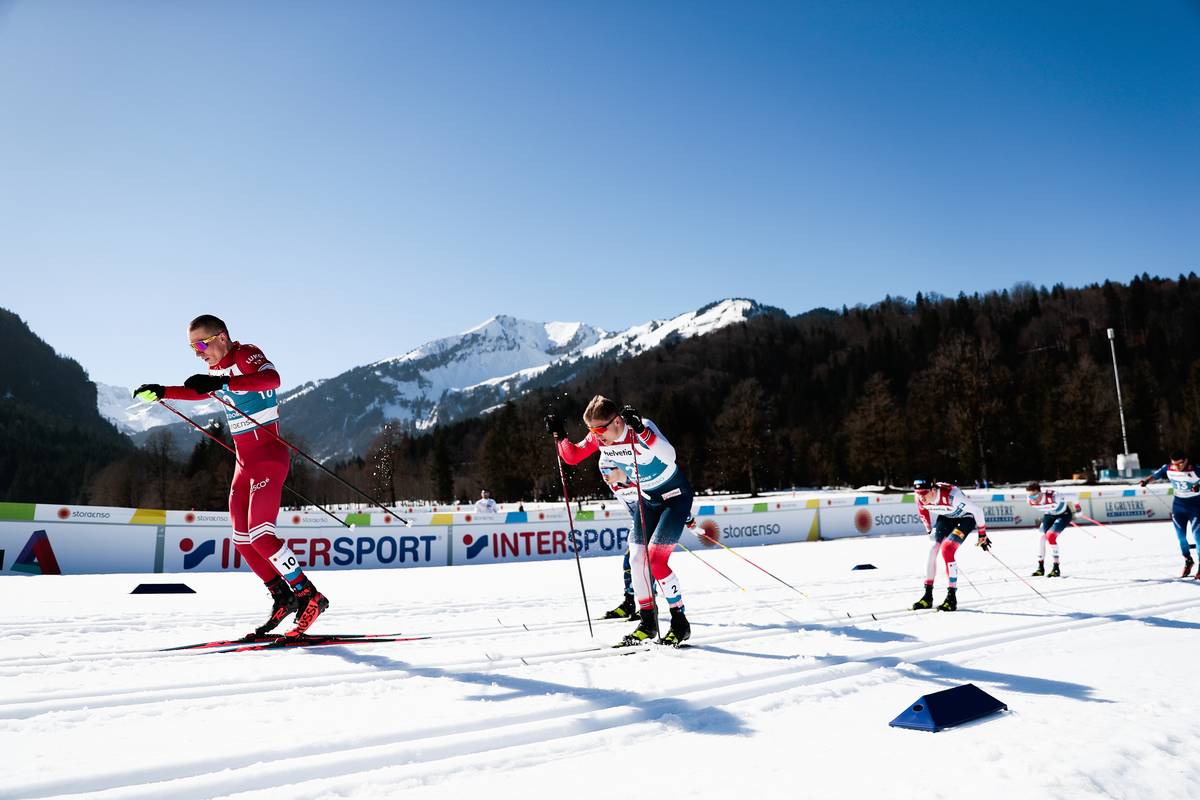
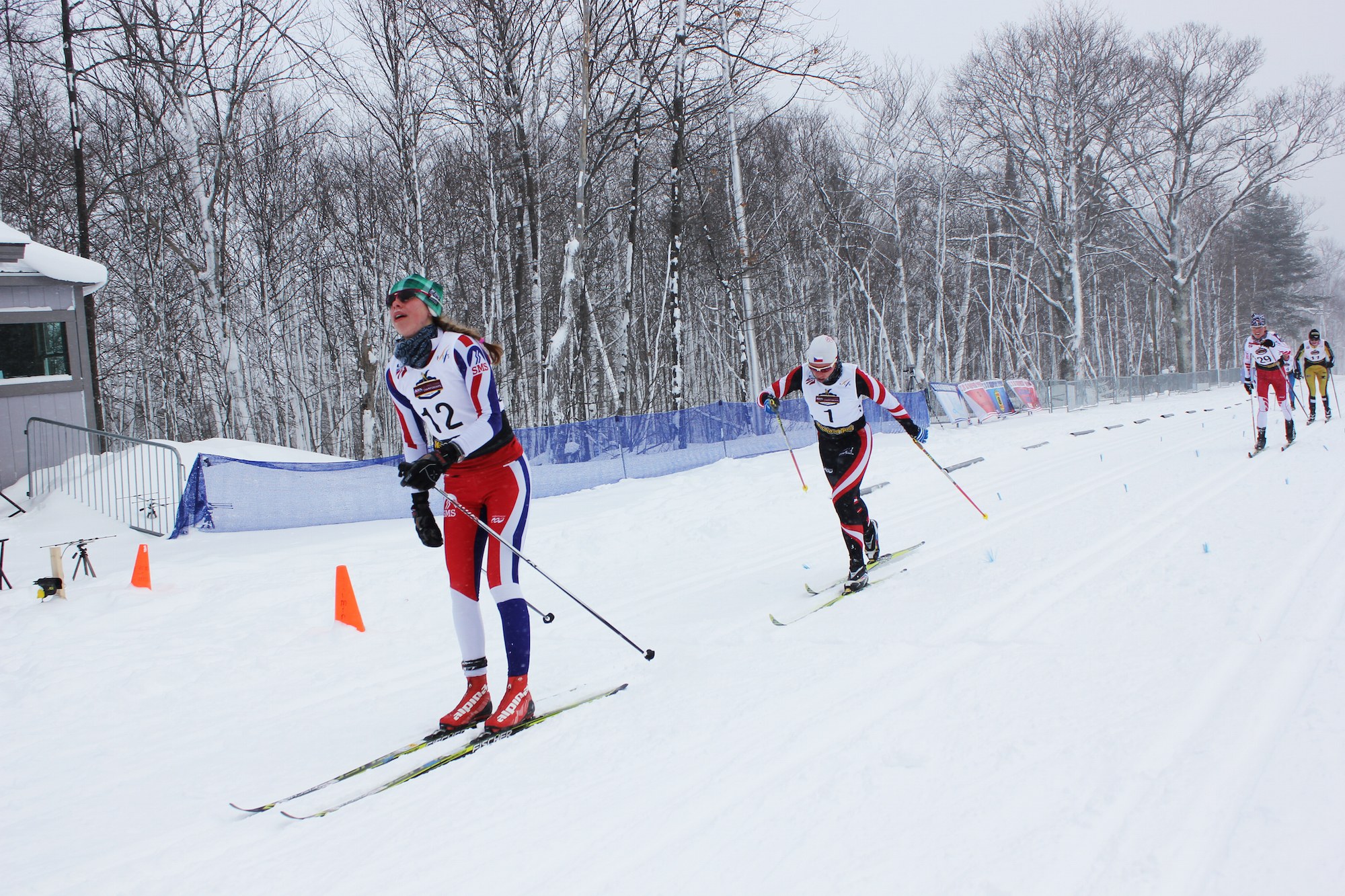
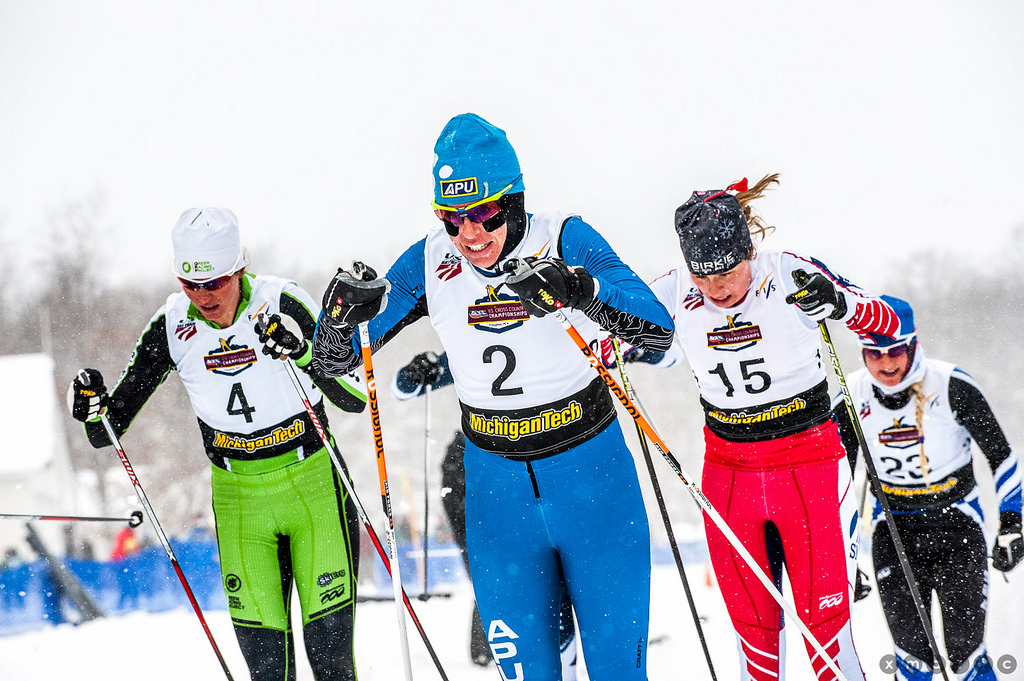
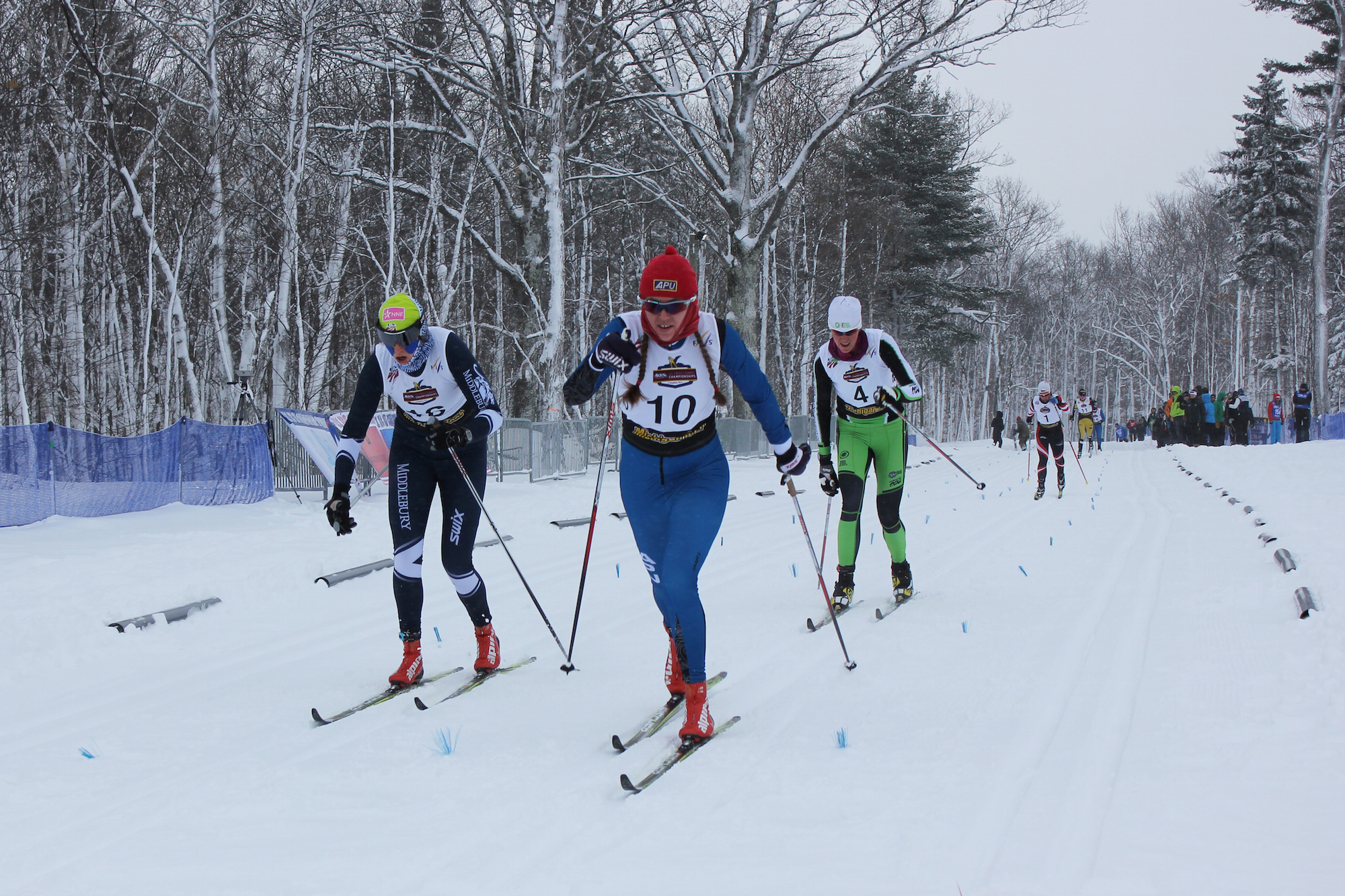
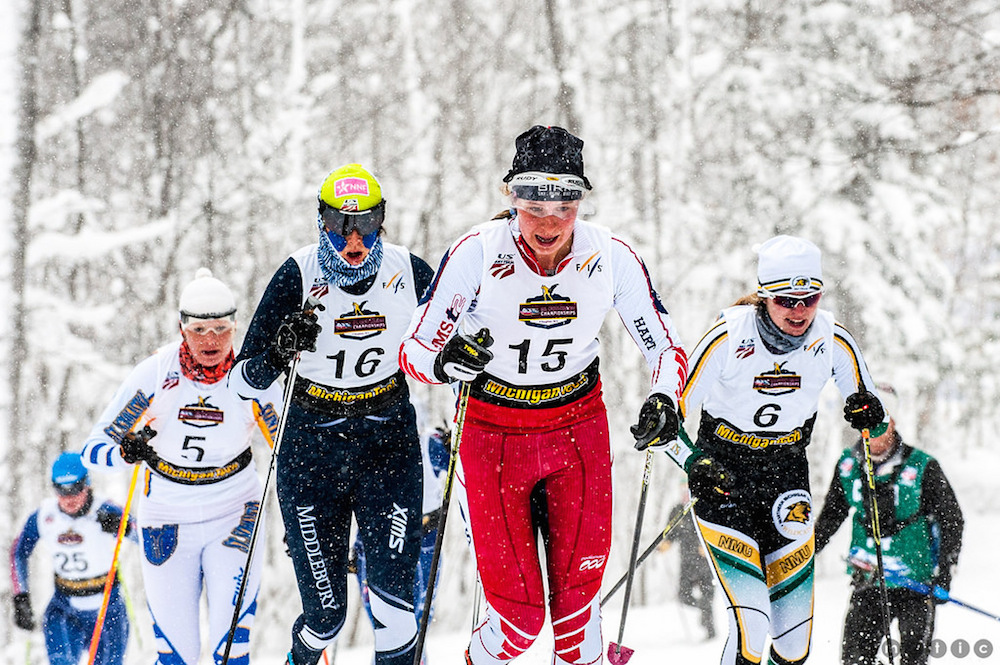
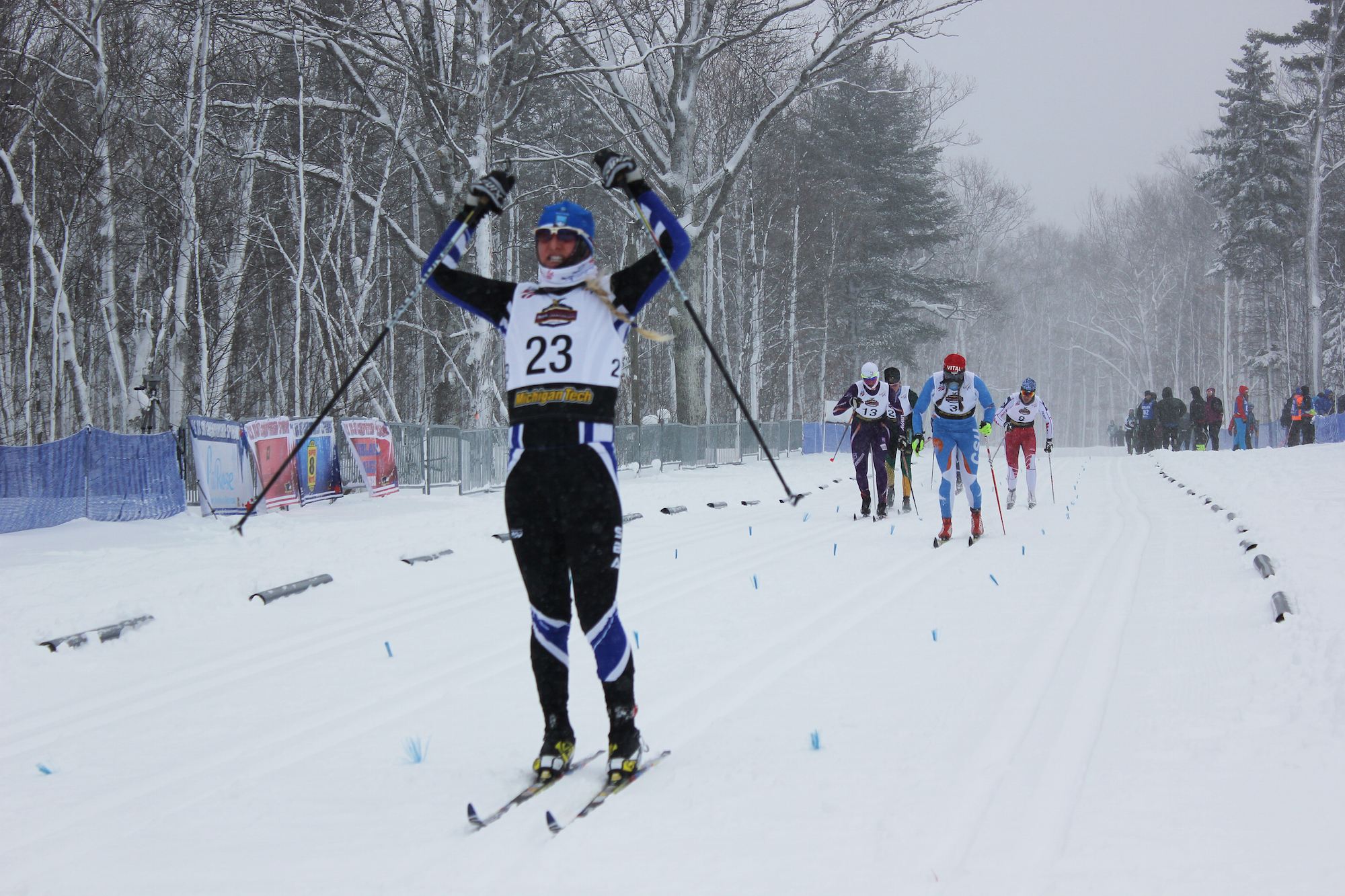
    Precipitation was no longer a threat for the final day of racing in Soldier Hollow on Friday, a 1.5-kilometer classic sprint offered alongside the 2022 U.S. Cross Country Championships, yet classified as SuperTour only. However, athletes still faced unseasonably warm weather as blazing sun brought temperatures into the low 50’s on course during the midday heats. 

    Howling wind and rippling bibs could be heard as background noise as Adam Verrier called the event on the livestream, creating extra work for the athletes who would fight through degrading course conditions throughout the heats. This extra work showed in the times on course; with the combination of freestyle technique and significantly faster course conditions, Sunday’s sprint races featured times over a minute faster on average. A similar difference was seen even between the qualifier today at 9 a.m., when temperatures were still colder and tracks firmer, and the heats which began at 12:30 p.m. 
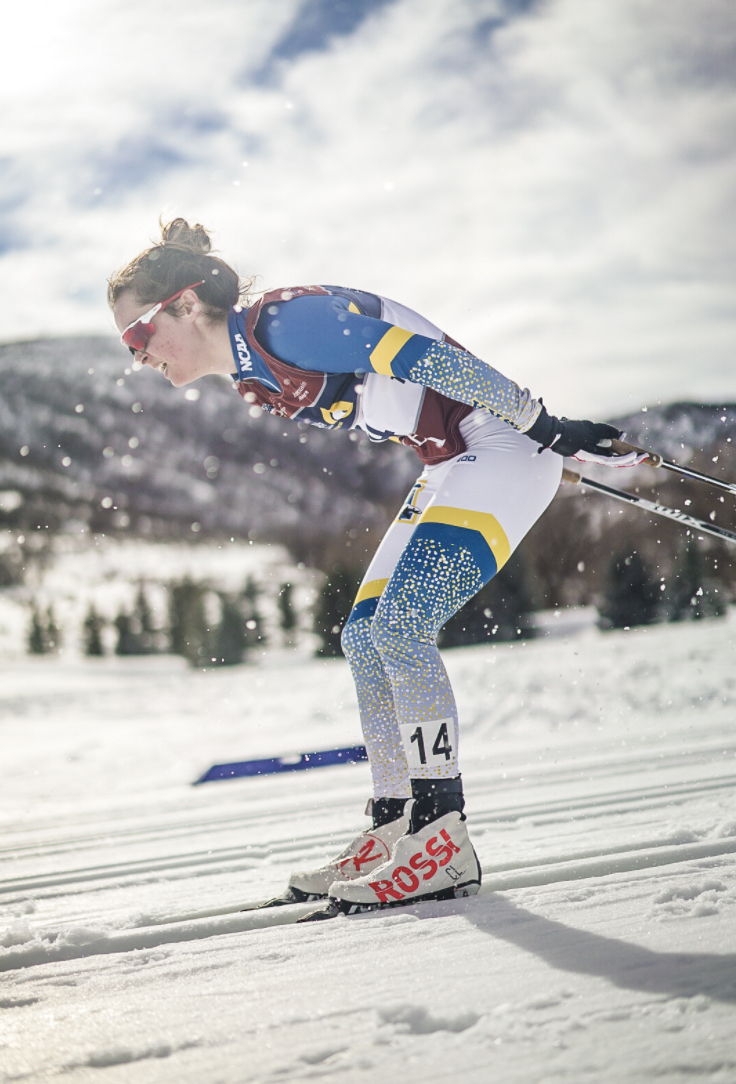
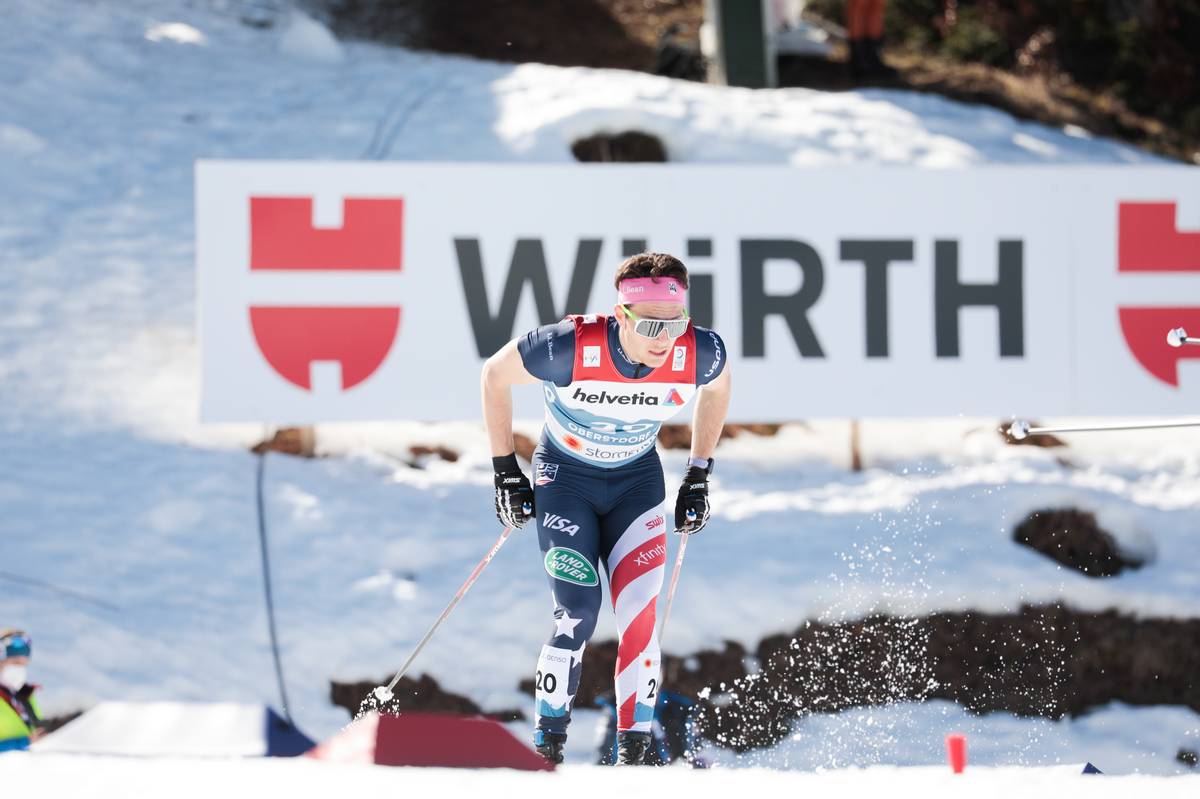
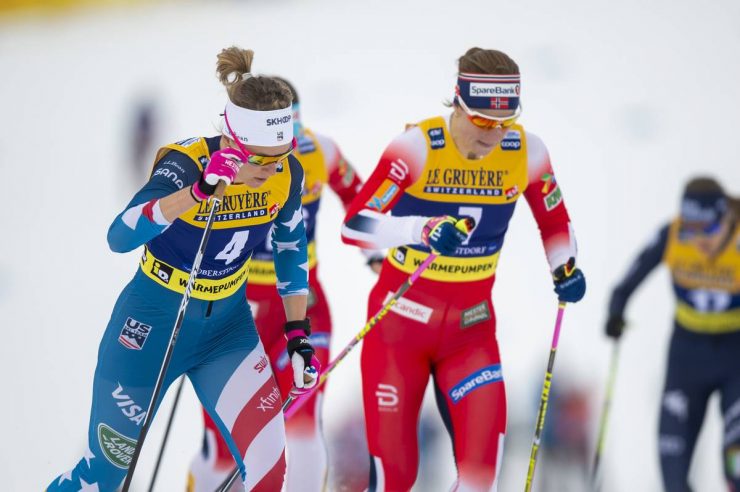
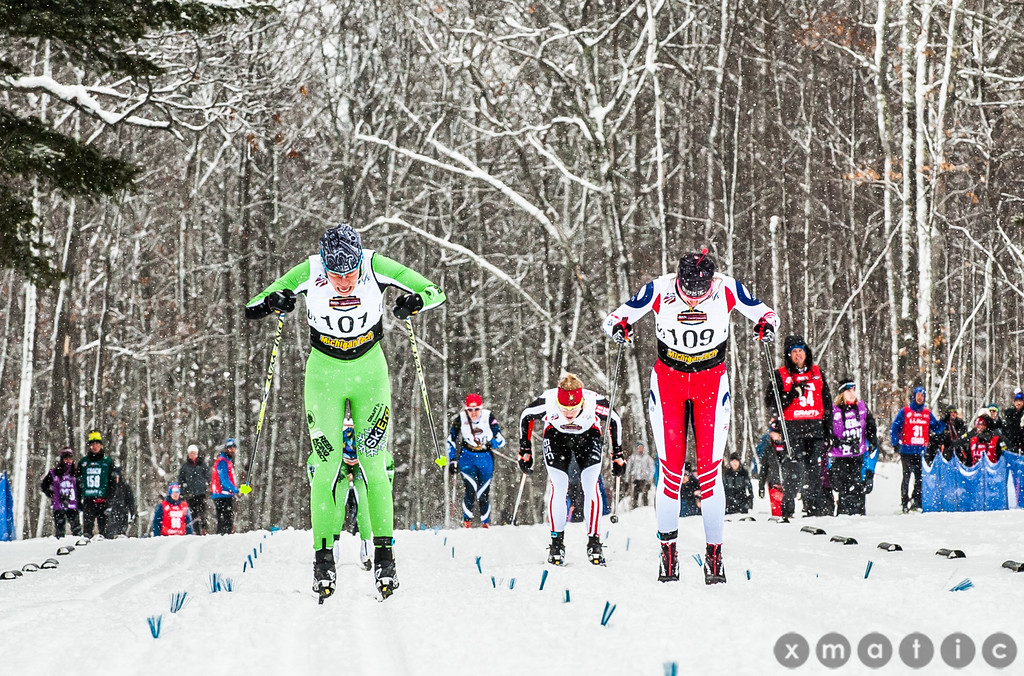
    Warm temperatures, degrading tracks, and loose granular spray set the stage for a challenging classic sprint in Soldier Hollow. (Photo: Tobias Albrigtsen / @untraceableg)

    “Sprint” seemed to perhaps be a misnomer, as times in the women’s heats climbed over five minutes and were well above four minutes in the men’s heats. Combined with a qualifier, this meant athletes who raced through the final saw between 16 and 20 minutes of racing, testing their endurance and fitness differently from the average sprint event.   

    Women’s Race: Katharine Ogden on Top from Qualifier to Final

    On the heels of a second place finish in yesterday’s 15k classic, Katharine Ogden (USST/SMS T2) set the bar in the qualifier, finishing in 3:51.79.

    Julia Richter (U of Utah) was the second fastest qualifier (+0.77), ahead of Lauren Jortberg (BSF Pro) in third (+1.48). Both Ogden and Jortberg won their quarterfinal to advance comfortably into the semis, however, Richter took fifth in Heat 4 and did not advance.

    In the first semifinal, two Craftsbury teammates Annika Landis and Caitlin Patterson led the way in the opening climb, with Ogden and Sydney Palmer-Leger (USST/U of Utah) sitting in third and fourth a few strides behind. Descending from the high point, a third Craftsbury racer, Michaela Keller-Miller, had pulled to the front, but was quickly overtaken by Patterson and Ogden as the pack headed into the final short herringbone climb before the long descent toward the stadium. Patterson and Ogden sat in low tucks, letting their fast skis glide as long as possible before transitioning to doublepole as they headed over the bridge and into the finish. 
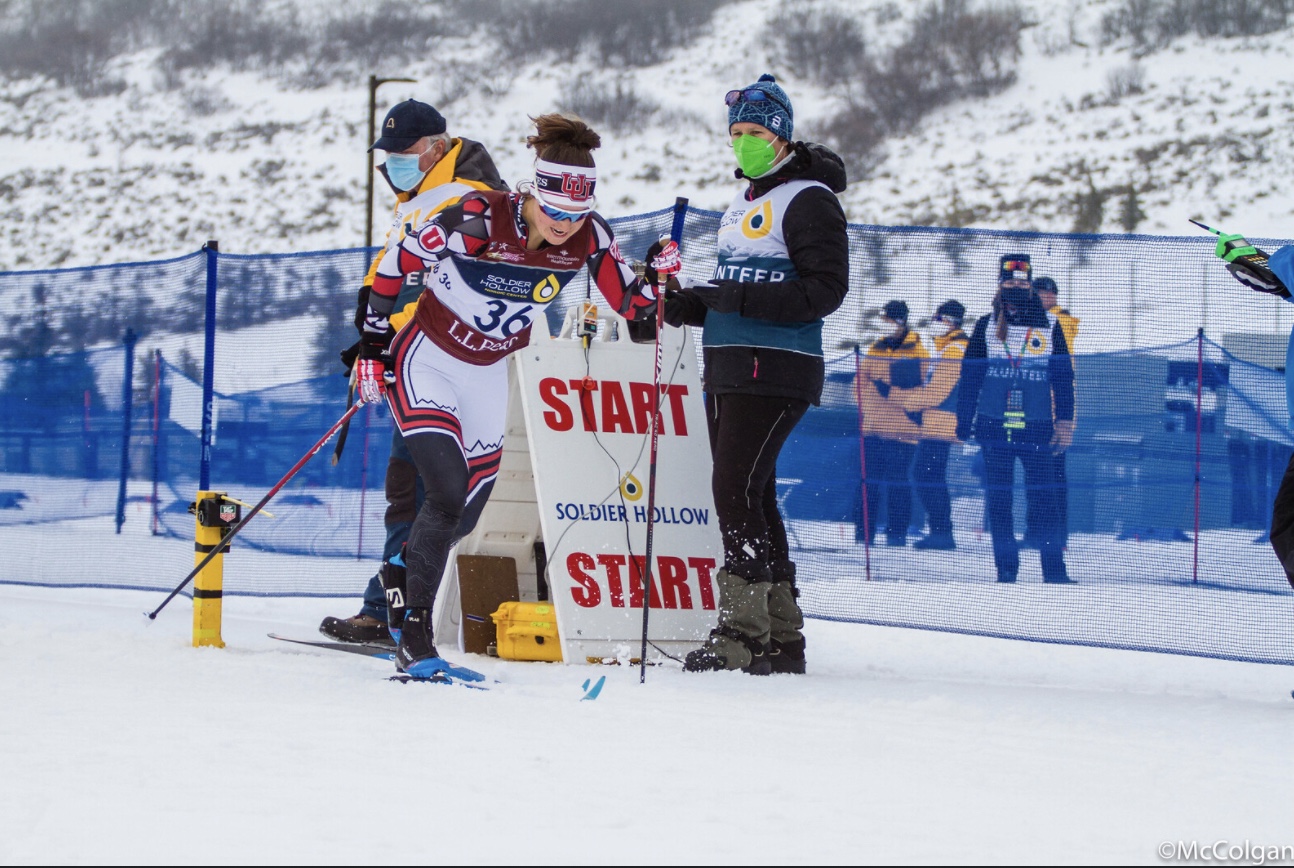
    Sydney Palmer-Leger heads out for the 10k interval start classic race during the 2022 U.S. Cross Country Championships in Soldier Hollow. (Photo: John McColgan)

    Upping the power in the final 200m, Palmer-Leger accelerated to make contact with Patterson as the women crossed over the bridge, but Patterson had better glide in the quick descent from the bridge’s exit, maintaining an advantage as they headed into the final stretch. Patterson tucked in on the tails of Ogden in the left-most track to go one-two in the heat, with Palmer-Leger not quite in the fight for an automatic qualifier spot finishing 1.5 seconds behind Patterson in third. 

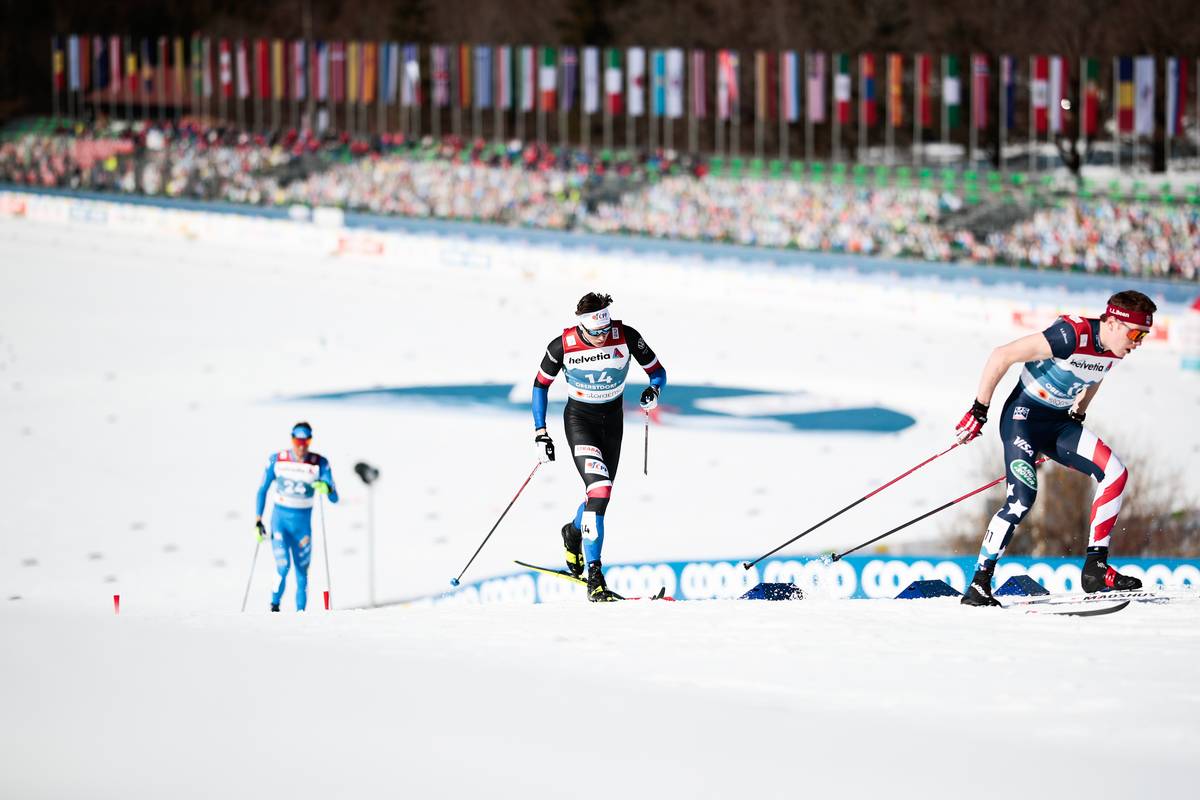
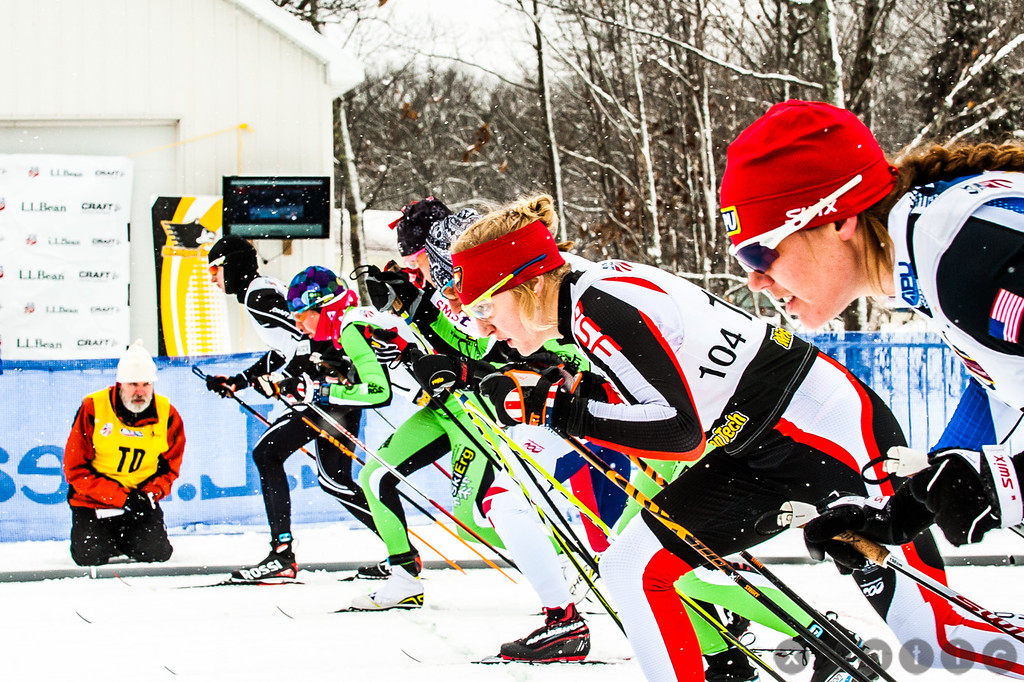
    In the second semi, Bridger Ski Foundation (BSF) Pro Team members, Lauren Jortberg and Hannah Rudd lead the charging, looking as if their skis were gliding well as they pushed the downhills, perhaps with compromised kick as both showed signs of slipping in the final punchy climb. 

    In the long glideout, Lauren Jortberg moved from the far left side of the course outside of the track into the second track, losing some time on Rudd who had stuck with the second track from the start. Nevertheless, both held a significant gap over the remainder of the heat as they doublepoled over the bridge and into the finish lanes. Rudd took the win in 4:55.52, roughly +0.7 seconds ahead of Jortberg in second. 

    A few meters behind, Craftsbury teammates Margie Freed and Alexandra Lawson raced side by side to third and fourth, and as the heat proved to be seven seconds faster on average than the first, both advanced to the final.

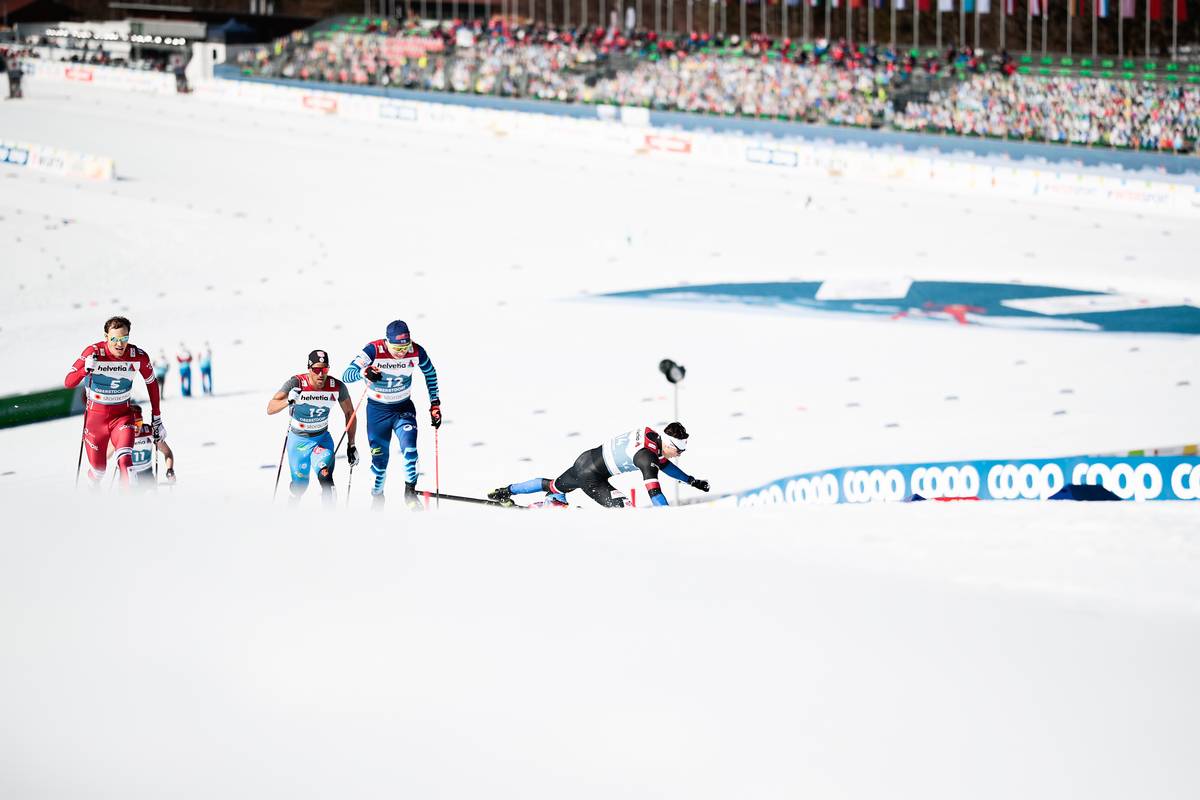
    As the women’s final headed out of the stadium and toward the first climb, Lauren Jortberg who was the first in a train of two BSF skiers, had her ski stepped on as she was switching from doublepole to a run outside the track. This caused Jortberg to stand up, spin sideways and crash in slow motion. Rudd, who was just behind, quickly moved around Jortberg without going down, soon taking the lead charging up to top of the first climb with Patterson, Freed, and Ogden close behind.

    Patterson looked strong with solid kick as she chased a slipping Rudd up and over the final long climb, but it was Ogden on fast skis who quickly moved into second on the subsequent downhill.

    Over the last punchy climb the women ran. Heading into the long glideout, Ogden was off the front in the left-most track, but Rudd and Patterson remained within reach a few ski lengths behind. Descending off the bridge, the top three accordioned together, all choosing the same track with Ogden confidently leading the way to the finish. Patterson, who was in third, moved into her own lane to the right, slowly gaining ground on Rudd as they headed to the line. 
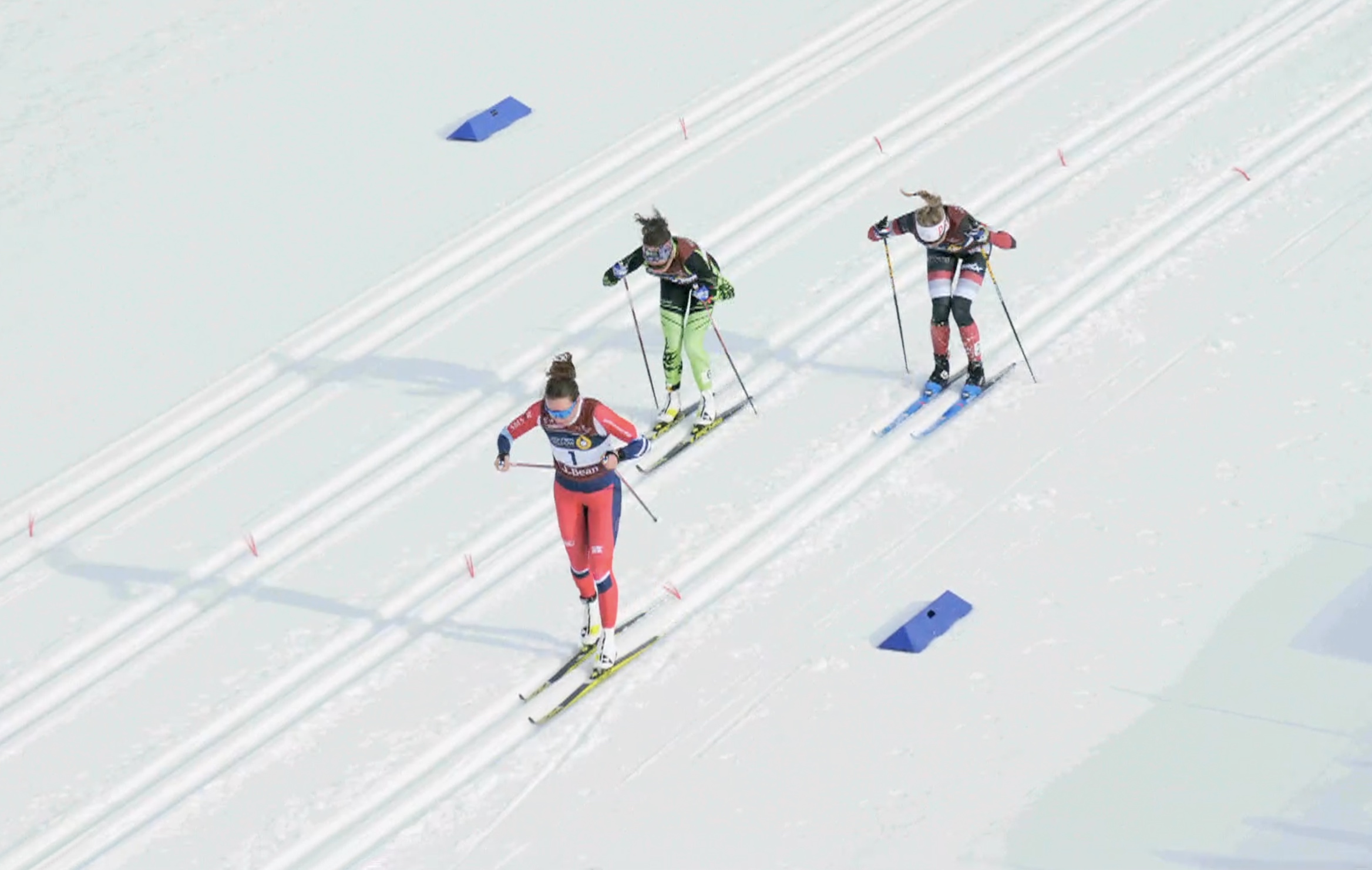
    Katharine Ogden leads Caitlin Patterson and Hannah Rudd to the line during the SuperTour classic sprints in Soldier Hollow. (Photo: Livestream Screenshot)

    Ogden maintained her lead to stop the clock in 5:01.63, while Patterson edged out Rudd for second (+0.98) and third (+1.53), respectively. After regaining contact with the pack following her crash, Jortberg finished fourth (+6.64), with Lawson fifth (+7.11), and Freed sixth (+21.55).

    “I was having a lot of fun out there today!” Ogden wrote to FasterSkier after the race. “The sprint was definitely on the long side, especially late in the day, but that did not significantly affect my strategy; I am confident in my endurance as well as my short duration power. I was really excited to have fast skis from Pat [O’Brien] and it was fun to experience the high level of sprinting in the U.S. currently. I also haven’t really done a full sprint day in a while so that was a lot of fun! It was also so impressive to see Caitlin get her fourth podium in as many races and to see Hannah Rudd have an incredible breakout performance today!”
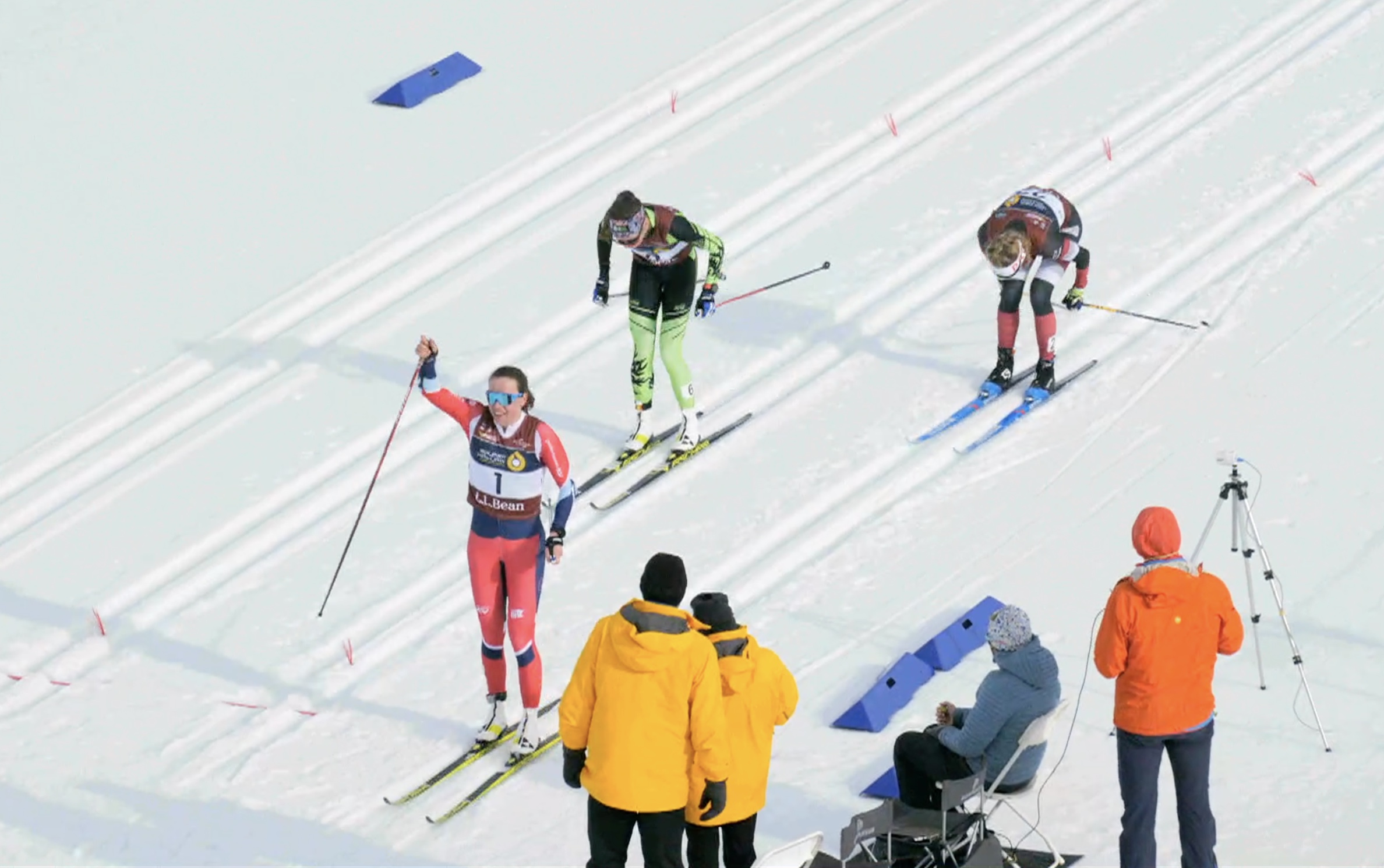
    Katharine Ogden celebrates her win in the classic sprint while Caitlin Patterson edges out Hannah Rudd for second and third. (Photo: Livestream Screenshot)

    In a post-race email, Patterson reflected on her experience racing through the heats. 

    “My racing today went fairly well, and it was a beautiful day to be out skiing and spectating,” wrote Patterson. “The sun-warmed snow became quite wet and broken apart for the heats, and combined with the wind, it certainly made a long sprint with plenty of herringbone and some sloppy tracks. I tried not to really think about the time duration much, it was mostly about getting from start to finish, however long it would take. All of the heats required some scrappy skiing, moving around through the slush and timing the length of the tuck. Now I’m really looking forward to some recovery after a good week!”

    Patterson also spoke to the week of racing in Soldier Hollow, where she finished on the podium four times in as many races, including wins in both the 10k individual classic and the skate sprint. But she was not the only person in a green suit putting together a successful week. Yesterday, she shared the distance classic podium with teammate Adam Martin. On Tuesday, Crafstbury went 3-4-5 in the 20k skate, with Lawson and Freed leading a chase group behind Frankowski and Patterson. And today, five CGRP women raced in the semis, with three advancing to the final. 

    “Everyone at Nationals is really feeling the fatigue, and myself and my team were no exception out there today. The race coughs are becoming quite terrible from so many days of racing at altitude, which is not the most fun to be coughing uncontrollably in this time of COVID. However, I was really proud of our whole team, with 5 women in the top 10! We have a really strong group, as evidenced by the performances in the distance races too; it came as no surprise to me that the women were awesome today, because training and doing intervals all summer and fall we’ve been neck-in-neck and pushing each other.”
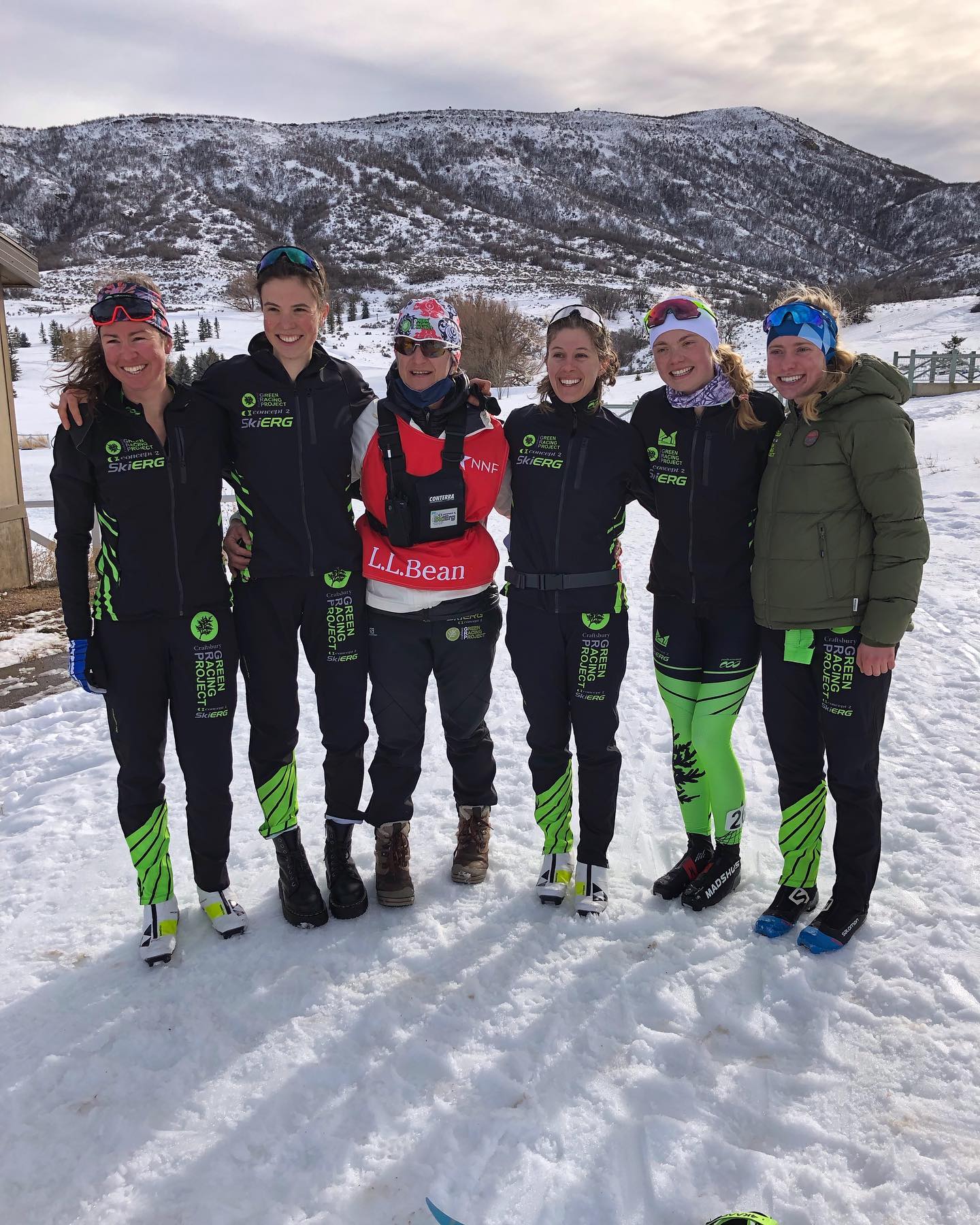
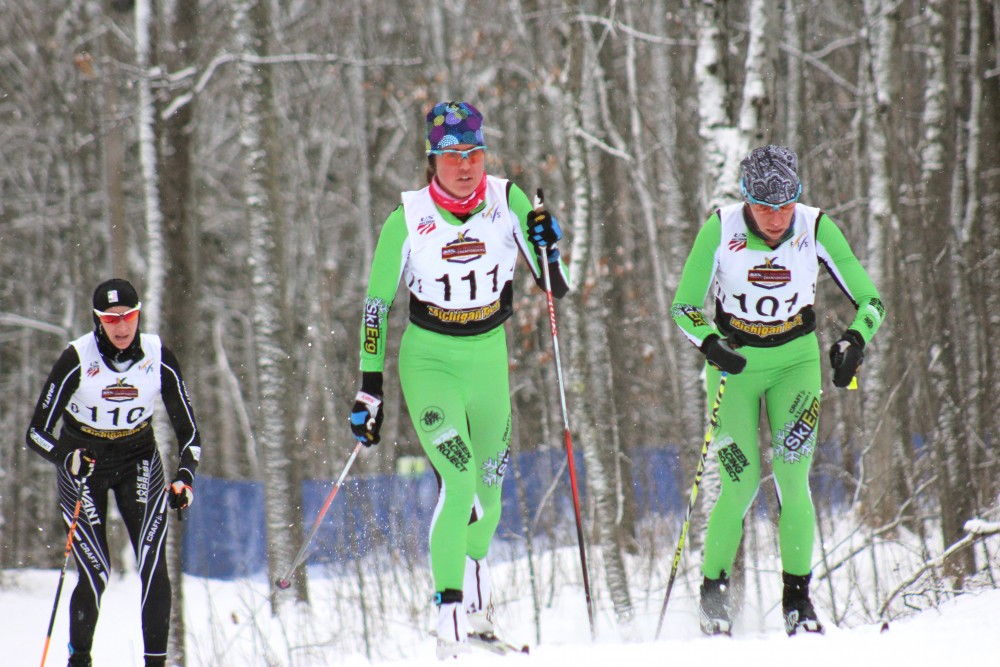
    The women of Craftsbury with coach Pepa Miloucheva. CGRP put five women into the semifinal and three into the final of the SuperTour classic sprint in Soldier Hollow. (Photo: Facebook Crafsbury Green Racing Project)

    For Rudd, this was her first career SuperTour podium. Originally from Plymouth, MN, she graduated from University of Alaska Anchorage (UAA) in May, 2020 before heading to Bozeman to join the newly minted BSF Pro Team. Placing in the top-10 in each of the three stages of the 2022 U.S. Cross Country Championships, Rudd has steadily worked her way up the results list, finishing 10th in Sunday’s freestyle sprint, 8th in the 20k mass start free, and 6th in the 10k interval start classic. She ends her week in Soldier Hollow on a podium high note. 
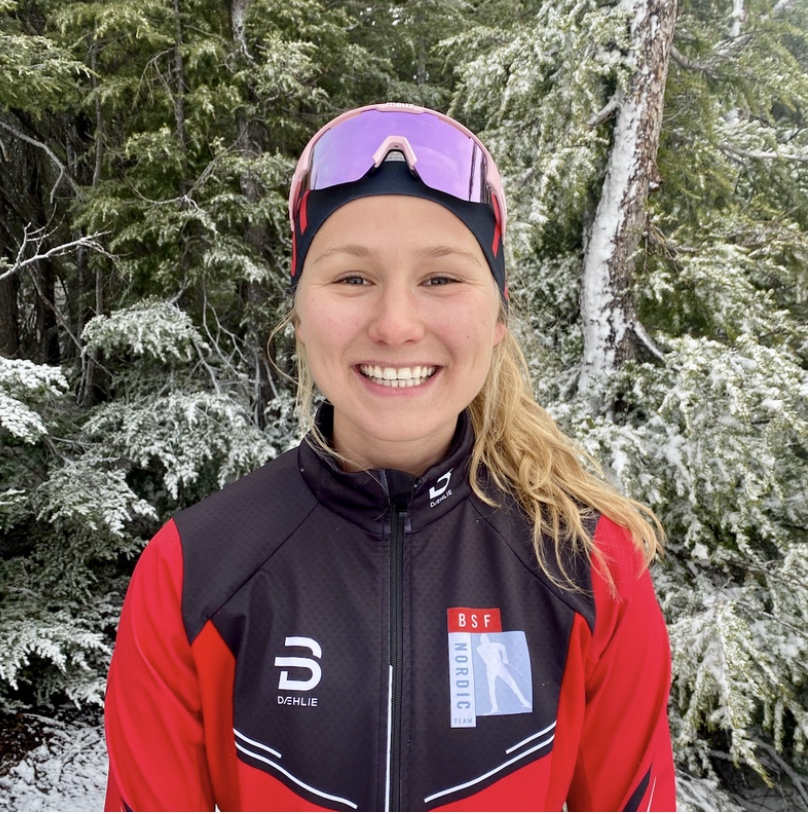
    Hannah Rudd is a member of the BSF Pro Team based in Bozeman, MT. (Photo: bridgerskifoundation.org)

    “Yesterday was a pretty exciting day for me!,” Rudd wrote to FasterSkier after the race. “The sprint course at Soldier Hollow this year was very challenging as it included three solid climbs. During the qualifier, the course remained very firm and fast. However, the temperature quickly began to rise throughout the day, and by the time the quarterfinals began, the sun was baking the course, the wind was blowing, and temps were nearing 50 degrees. This made the snow begin to transform and slow down and turned the tracks into mashed potatoes in some sections. 

    “I woke up in the morning feeling quite tired from the past week of racing so I was not sure how the day was going to play out,” Rudd continued. “I ended up qualifying in 22nd, so it was clear that I had some work to do in the heats. I felt like I was able to gain momentum and energy throughout the day, and progressed through the quarters, and semis and onto the final. Going into the final, I knew that my team’s skis were running really well so I tried to ski big and relaxed and put myself in a good position for the last downhill. It was pretty neat to be in a final with my BSF teammate Lauren Jortberg, who is an incredible sprinter and someone that I have learned a lot about sprint racing from over the past few years. I was extremely excited to land myself a spot on the podium and think it will help me to continue building momentum and confidence for the rest of the season!” 

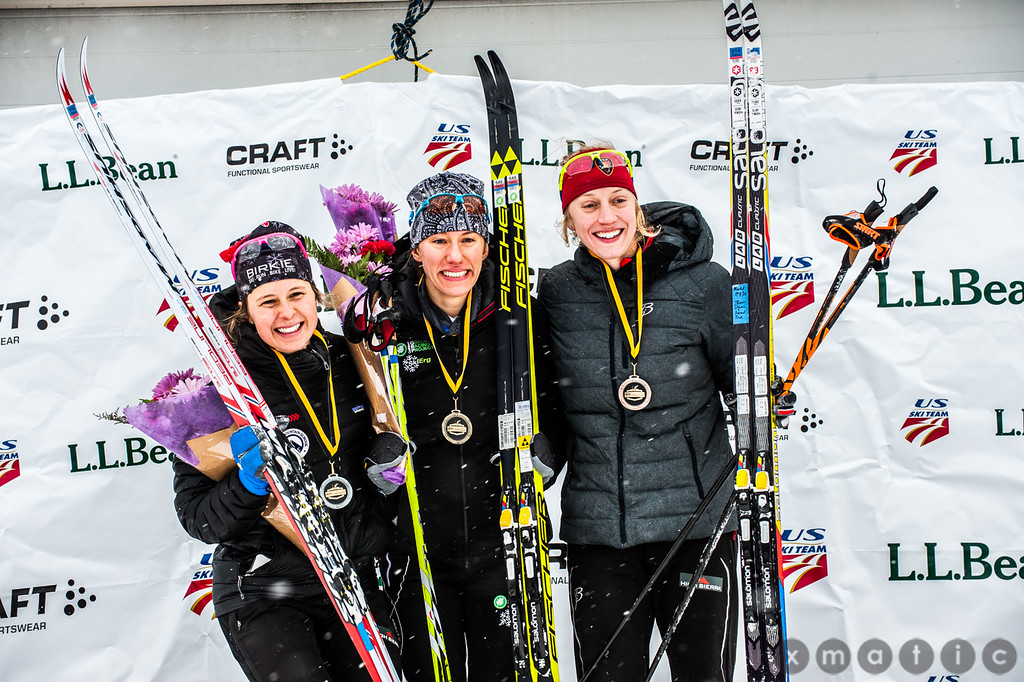
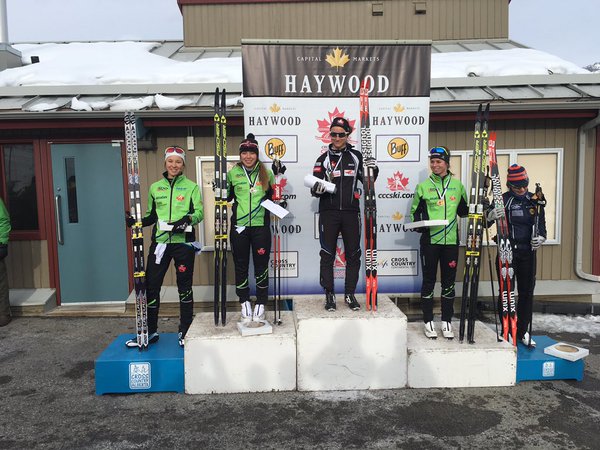
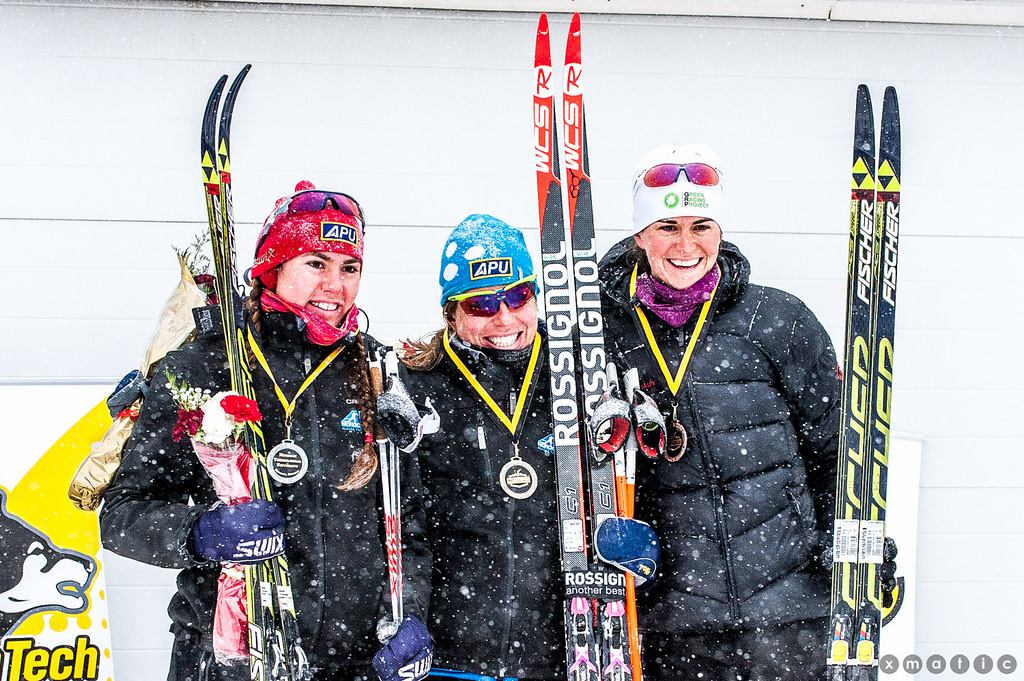
    The podium ceremony for the women’s final following the SuperTour classic sprint in Soldier Hollow. Katharine Ogden took the win ahead of Caitlin Patterson and Hannah Rudd, with Lauren Jortberg 4th, Alexandra Lawson 5th, and Margie Freed 6th. (Photo: Facebook Craftsbury Green Racing Project)
    Men’s Race: Colorado’s Magnus Bøe Upsets Schoonmaker in the Final 

    In qualifying, JC Schoonmaker (USST/UAA) showed why he has been the U.S. Ski Team’s most reliable fixture of World Cup Classic heats this season, winning the qualifying with a time of 3:08.43, 6.42 seconds ahead of 2nd place Peter Holmes (Sun Valley SEF). Andreas Kirkeng (University of Denver) rounded out the top 3 (+6.57), in a field where the top 30 were all within 20 seconds of each other.

    With a dominant performance in qualification, the racing throughout the day always seemed to have one eye on where Schoonmaker was in the field. In his quarterfinal, Schoonmaker looked to start conservatively from the back of the field, which led the whole heat to sit back as well. When he moved to the front at the beginning of the first climb, the race surged forward with him. No one could match him, however, and he finished with a comfortable lead, with Kjetil Bånerud (NMU) taking the 2nd semifinal spot (+1.02).
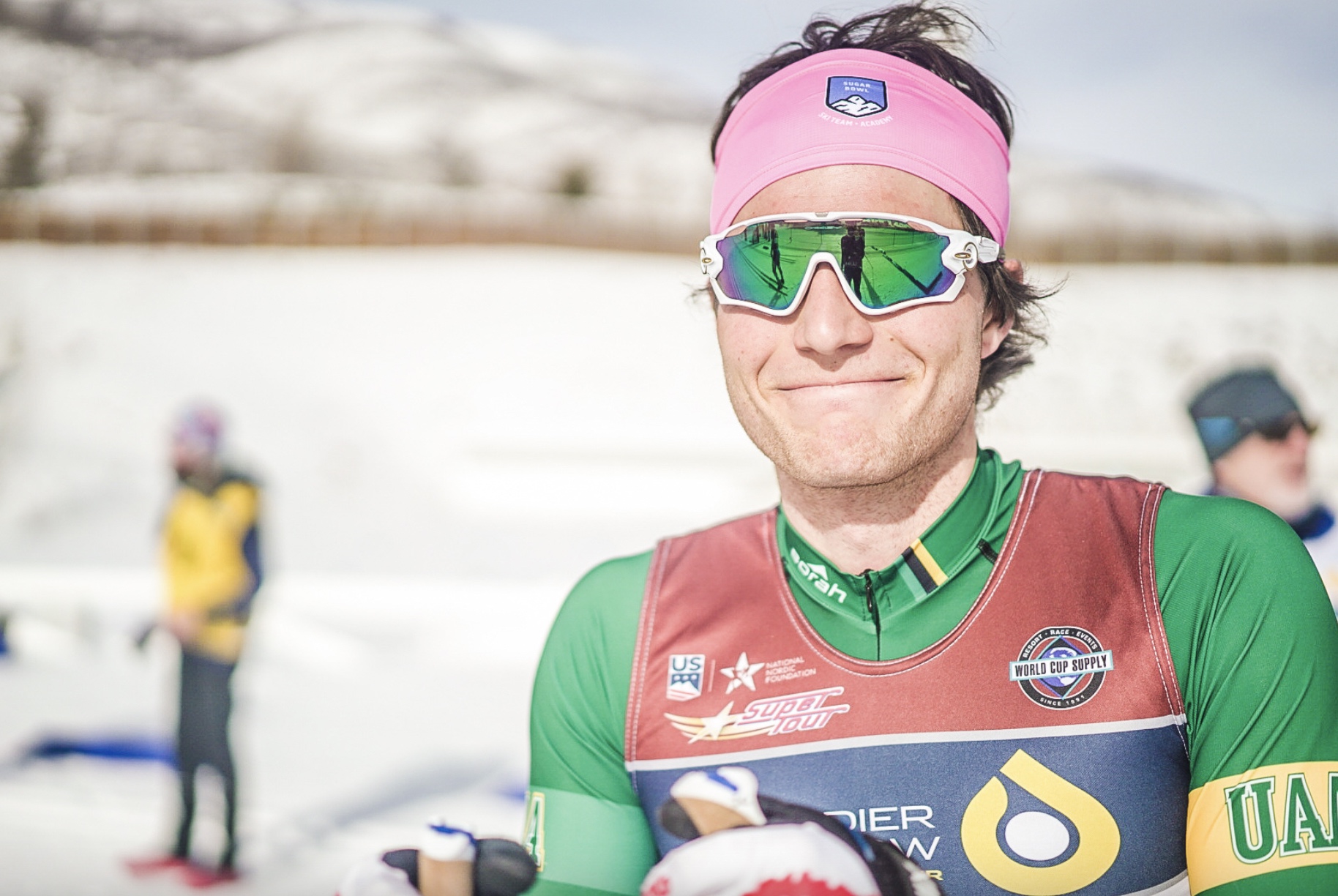
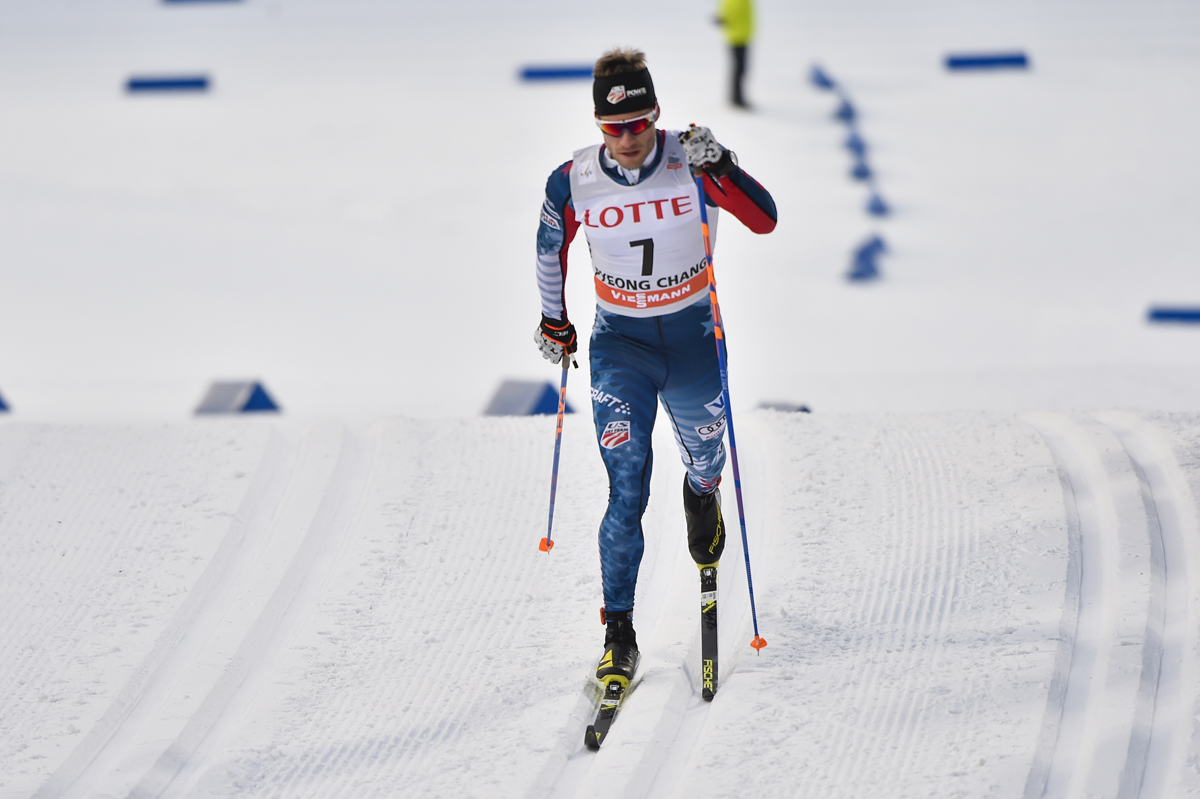
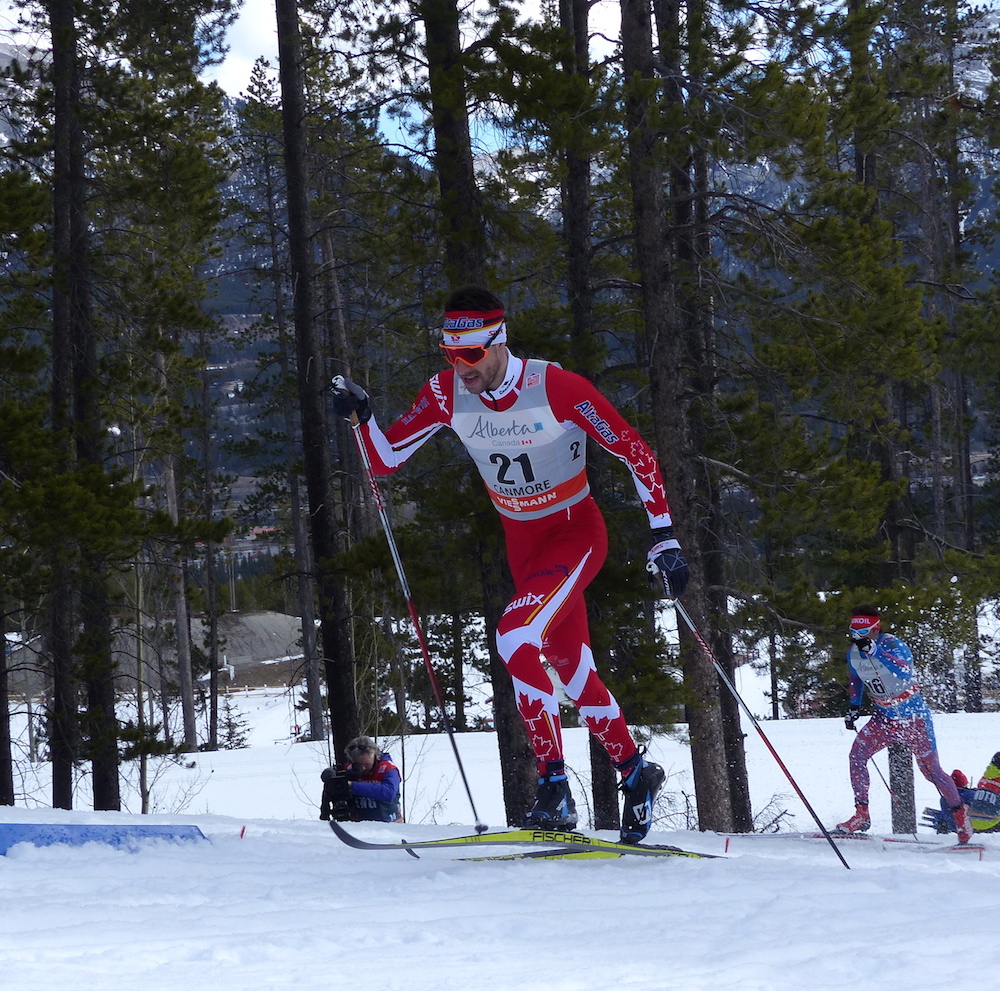
    JC Schoonmaker prepares for a sunny and warm classic sprint in Soldier Hollow. (Photo: Tobias Albrigtsen / @untraceableg)

    The following two quarterfinals also previewed the competitors, and their preferred way of attacking the course, that would define the semifinal and final racing later on.

    The second heat set a stark contrast in pace to the previous heat, with Noel Keefe (U of Utah) and Bill Harmeyer (SMS T2) leading the field out hard from the gun. Hunter Wonders (APU) and Johnny Hagenbuch (SVSEF) were able to keep with the pair though, and ended up out-sprinting Keefe and Harmeyer going into the finish. Still, the duel between Keefe and Harmeyer led to a blistering pace for the heat overall, and they would claim the lucky loser spots for the semifinals.

    Then came the 3rd quarterfinal, featuring winner of today’s most aggressive racer award (unofficially handed out here, by Fasterskier), Ian Torchia (SMS T2), who in every heat he was in today would hammer out to the front of the pack while others seemed content to let the field play out. He was joined in the heat by Magnus Bøe (U of Colo.), who made his move on the first climb, stayed out in front, and came through in first place. Torchia, meanwhile, held onto second to advance automatically to the semifinal.

    The semifinals marked more an amalgamation of race strategies than anything unique. But it was an amalgamation – which requires multiple parts. And indeed, on a course known for rewarding smart-racing, and in conditions – above freezing, on man-made, wind-swept snow – that reward smart waxing as well.
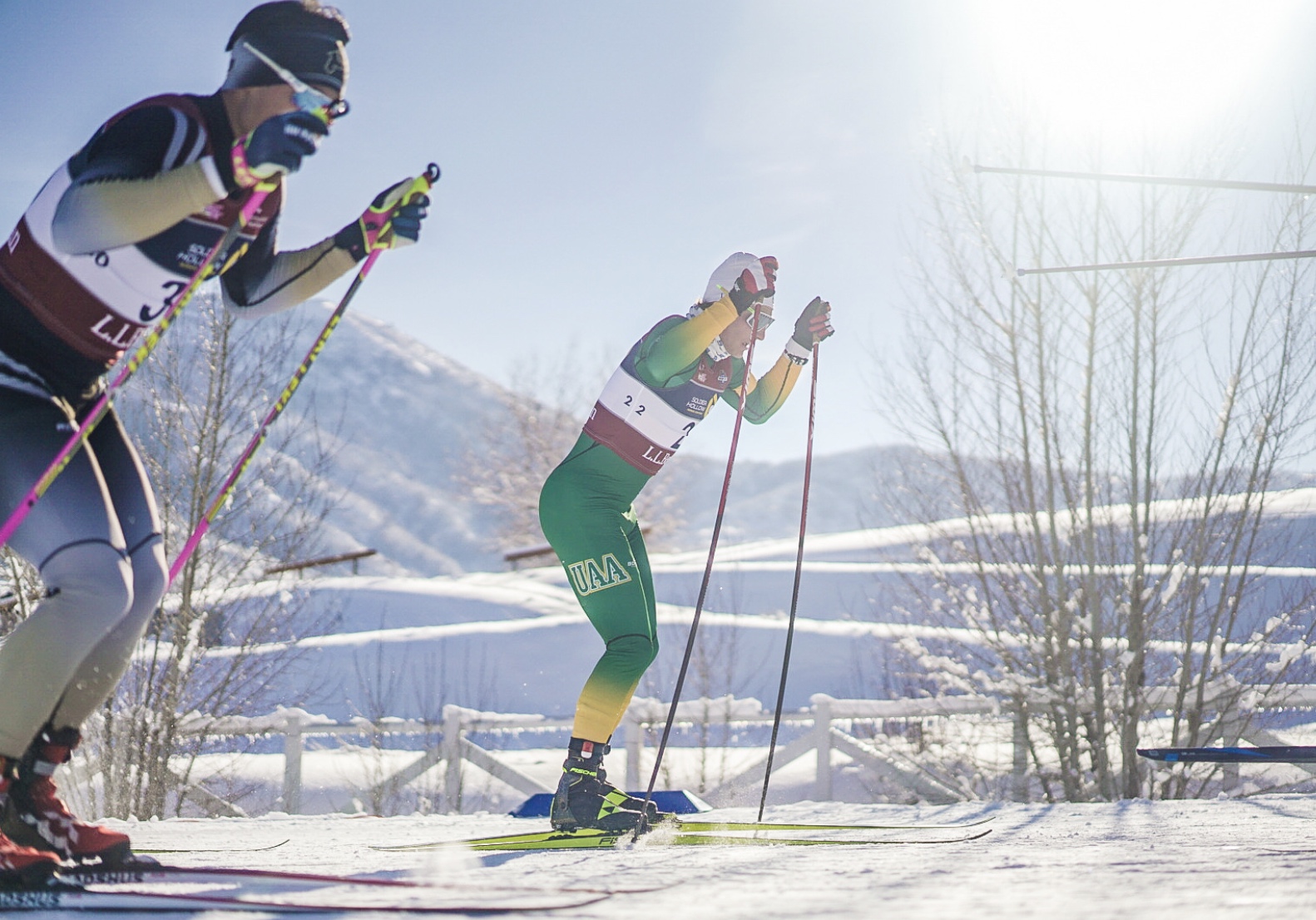
    Magnus Bøe and JC Schoonmaker are off the line during the 2022 U.S. Cross Country Championships freestyle sprint stage. (Photo: Tobias Albrigtsen / @untraceableg)

    The first semifinal featured Schoonmaker and Bøe, both of which stayed back in the back during the early part of the course. Going into the first climb, Bøe took a look back, saw Schoonmaker and Harmeyer were sitting in fifth and sixth place, respectively, and decided to attack. He led over the top, into the downhill, and up the final climb. Schoonmaker successfully did maneuver through the pack to counter the move, and on the final climb took the outside line up, cutting in to tuck behind Bøe going into the final downhill. When they came up, Schoonmaker had used the draft to put himself out front, while Bøe held off a late-surge from Hunter Wonders (APU) to take the second qualifying spot into the finals.

    The second semifinal was again led out by Ian Torchia, who was then followed by former sprint National Champion Tyler Kornfield (APU). Kornfield seemed content to sit behind Torchia until the first climb, when he put in a burst of speed and broke open the field. The smartest racer, however, may have been Karl Schulz (SVSEF), who rode Kornfield’s attack, and then drafted, to go into the final climb with speed. By the time he hit the downhill, he had a gap which would remain unclosed. Kornfield, who had gone into the downhill in second, found himself joined by Noel Keefe and Ian Torchia into the final sprint for the second spot. As it would happen, all three would make it through to the finals, with Kornfield in second, and Keefe and Torchia being rewarded for their efforts early in the race by claiming the two lucky loser spots to the final.

    The A-final then looked like this: JC Schoonmaker, Magnus Bøe, Karl Schulz, Tyler Kornfield, Noel Keefe, and Ian Torchia.

    JC Schoonmaker races the qualifier during the SuperTour classic sprints in Soldier Hollow, UT. (Photo: Tobias Albrigtsen / @untraceableg)

    With memories of Schoonmaker’s dominating qualifier in mind, it seemed like the field orbited around him off the line. Schulz found himself in front, but not going full bore to open the field up. Even Torchia, when he did make a move to the front, didn’t seem to do so with the same force that had marked his quarter and semifinal attacks. Schoonmaker waited until the first climb to move to the front, and then the final really was on. Schultz seized on the attack, and then put an extra-push into the downhill to try and open up an unclosable gap like he had in his semifinal. It was a good move, but one that didn’t prove to have the same force as his previous attack, and going into the final climb he was joined up with Bøe and Schoonmaker. 

    Then, Schoonmaker’s pace seemed to drop-off, with a few noticeable slips that progressed into a herringbone. Bøe, meanwhile, went for the herringbone from the get-go. He was the one that made contact with Schulz before the course gave way to a final downhill on the day. Schultz held a gap on the field through the glideout and over the bridge, but it proved not to be enough of a margin to feel comfortable in the final stretch. Meanwhile, Schoonmaker had fallen back to fifth.

    Utilizing his dominating doublepole sprint, when they hit the final 100m it was all Bøe, who closed a significant gap to catch Schulz in the final 50 meters. Looking as if he was leaping forward with each push, Bøe switched lanes, overtaking Schultz just before the line and letting out a fist pump as he realized a SuperTour – and collegiate – victory in a time of 4:08.28. Pushing to the line, Schulz was a close second (+0.35). (Video clip here.)
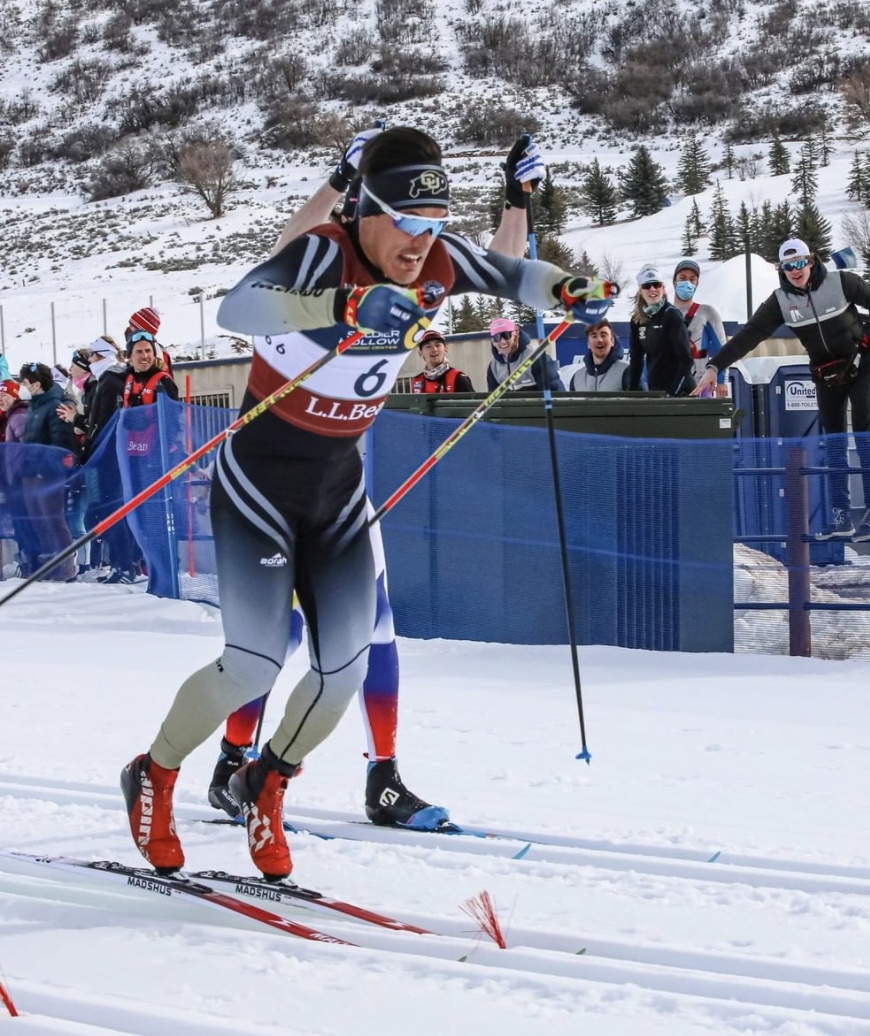
    Magnus Bøe overtakes Karl Schultz just before the finish of the men’s classic sprint final. (Photo: Instagram @cubuffs)

    After a gap, Schoonmaker, who was fighting for the final podium spot alongside Kornfield and Torchia, crossed the line outside of the track in third place (+4.53). Kornfield was a half second back from Schoonmaker for fourth (+5.10), with Torchia fifth (+5.64), and Keefe sixth (+11.02).

    After the race Bøe explained that he changed his tactics in the heats relative to Sunday’s freestyle sprint, though he joked he thought it wise not to reveal everything. 

    “Today was a windy and slow-condition day,” Bøe wrote in an email. “There was headwind in the first half, and tailwind in the second half. Hence, pulling during the first half would be pointless. Furthermore, the second half, particularly for the last downhill there was very little to gain on the slipstream, due to the low speed and the ‘suctiony’ snow (cold conditions create better glide for the person coming behind on ‘heated tracks’). Therefore during all my heats I pretty much went all out from the top of the last uphill all the way to the finish, which on sunday would’ve been a suicide.”

    Bøe walked through the final, including how he reacted to lead changes and adjusted his strategy when the race began to play out differently than anticipated. 

    The final started off very slow, but then the positioning battle developed gradually from under the bridge. My main focus was to keep my eyes on JC, since he was clearly the favorite of the day, and I knew I would do well if I laid it up to beat him. Hence I never fell for the temptation of passing him, even though I had many chances of doing so. However, he did get tired during the last climb and tried to get others to pass him. This is when Karl took off and gained a massive gap that at first seemed too late to close. As soon as I realized that JC might not be able to catch up, I committed to catching Karl by myself. I made sure to put in a great push before the downhill straight, and did the ‘supertuck’ to gain every single inch I could. Once I started double poling towards the last bend it was just heads down and maximum effort. Was never certain I would catch Karl, I thought maybe he’d have something left at the very end. But lucky for me he didn’t and I had just enough to pull it off.”
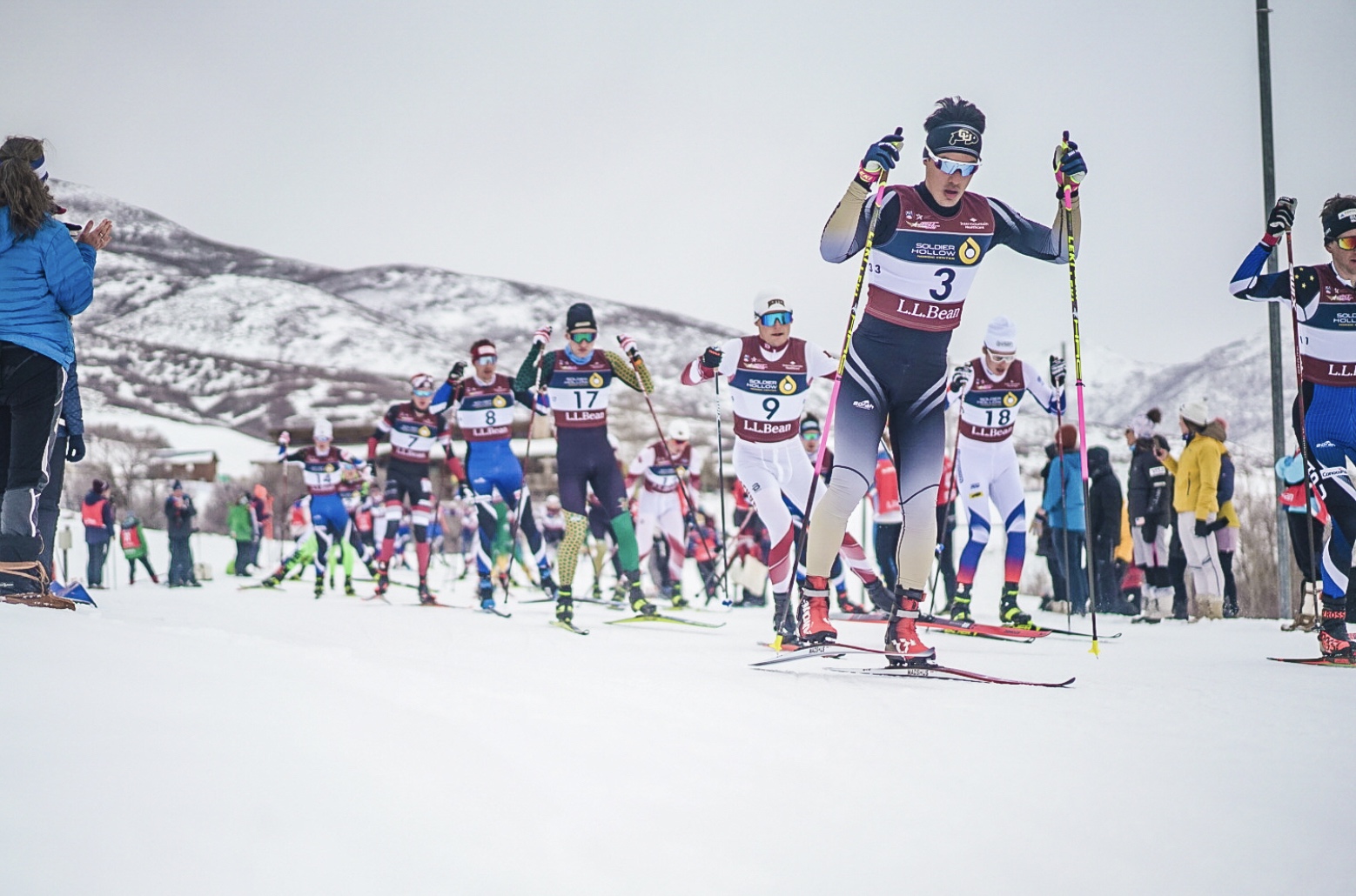
    University of Colorado’s Magnus Bøe heads out for the men’s 30k mass start free during the 2022 U.S. Cross Country Championships in Soldier Hollow. (Photo: Tobias Albrigtsen / @untraceableg)

    A dual citizen of Korea and Norway, 23-year-old Bøe has already built a robust resume in international ski racing, including competing for Korea during the 2018 Olympics in Pyeongchang. Earlier this week, Bøe was fifth in Sunday’s freestyle sprints and finished 11th in the 15k classic. His only down race of the series happened in the 30k mass start freestyle, where he finished 43rd (+12:30.9).

    This week of racing has been up and down, from a miserable 30km where I got lapped, to today’s win. It’s been a lot of fun, and not least has been helpful for my shape. Next up is the Super Tour in Sun Valley, which I am looking forward to. Think I would be able to build on top of what I gained during this week.”

    For Schultz, today also marked a career-first SuperTour podium. The 23-year-old Lake Placid, NY Native raced for the University of Vermont (UVM) until graduating in May, 2020, then heading to Sun Valley. Schultz had a podium just-miss earlier this year in a freestyle sprint where he finished fourth during the opening weekend of SuperTour racing in Duluth, MN. 

    I was pretty fatigued from the three races prior,” Schultz wrote after the race. “I knew there was a decent headwind on that first climb, so I decided I’d tuck in behind up and over the first climb. I figured I’d need to save my strength for the final climb and long finishing straight, so I played my cards well and pushed where I needed to, and it just worked perfectly. I’ve learned sprinting is about preserving energy for critical parts of the course, it couldn’t have gone better.”

    “And I won’t lie,” Schultz continued. “The spectators and everyone cheering allowed me to find another gear, especially up the last climb. I dug deeper than I have before.”
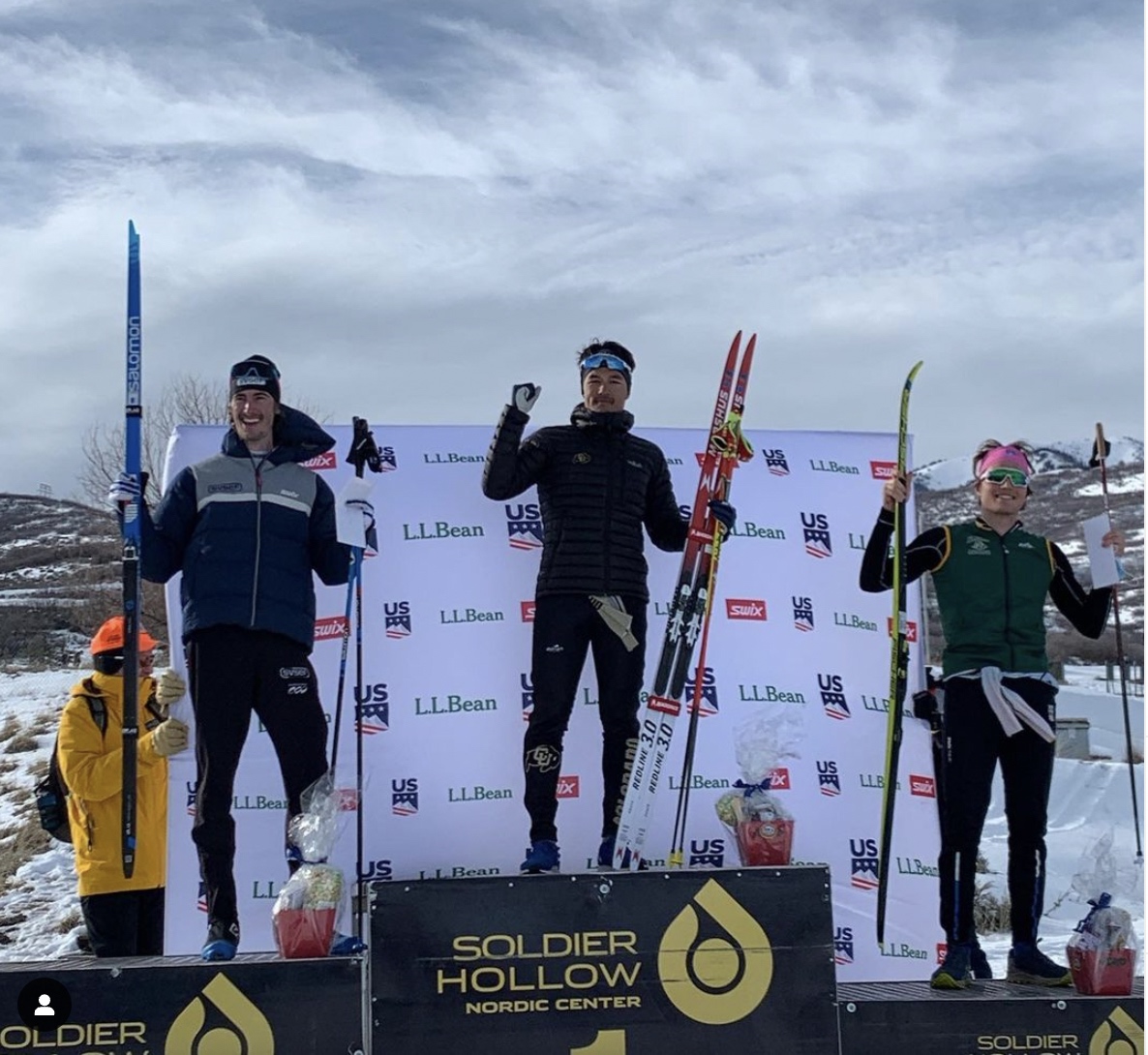
    The men’s podium of the SuperTour 1.5k classic sprint in Soldier Hollow: Magnus Bøe took the win ahead of Karl Schultz and JC Schoonmaker. (Photo: Instagram @nysefnordic)

    Writing to FasterSkier after the race, Schoonmaker explained how changing conditions forced athletes to make tough decisions about skis as well as tactics. 

    “It was a pretty crazy difference from this morning to the afternoon,” Schoonmaker explained. “The morning was icy and fast and the heats got really sloppy and slow.  I had amazing skis in the morning and in the heats I struggled a bit with choosing whether to go for more kick or glide. I ended up asking for less kick to free the ski up a bit and I’m still not sure what was the right call. It was just really challenging conditions.”

    Schoonmaker also explained that he had made fewer adjustments to the technique he had found such success with in Sunday’s skate sprint, however, the final proved to break the mold of what has historically proven to be the recipe for Soldier Hollow sprint racing.

    “For this course I tried to take a somewhat similar approach as in the skate race by respecting the draft on the last downhill and trying to be careful about the guys behind me there. In the quarterfinal I felt I was able to ski away and create a big enough gap so that I couldn’t get sucked back in by the draft. In the semifinal, I tried to stay more in the pack and use the draft for myself. The final was tricky because I was going to try and use the draft again but Karl put in a really good move on the last hill that I couldn’t match. Then I was leading the rest of the pack and I decided to push over and try to catch Karl rather than go to the back to find the draft. It ended up not working out so great, but I’m happy with the day and the tough effort.” 

    We conclude a week of racing at Soldier Hollow, then, with a race that highlighted the strength and depth of the domestic circuit of U.S. skiing at present. Variable conditions on a technical course, which racers approached with tactics as diverse as the regions they hail from, indicated that this is a field that represents top-level racing. It was a testament to the development and growth of the sport in this country that a top-level racer like Schoonmaker can come off the World Cup and find a field where every heat is raced with closeness and intensity in his own country. That bodes well, and is a great place to leave the last national gathering of the US ski racing community before its best representatives look to take a crack at the Olympic Games in Beijing next month.

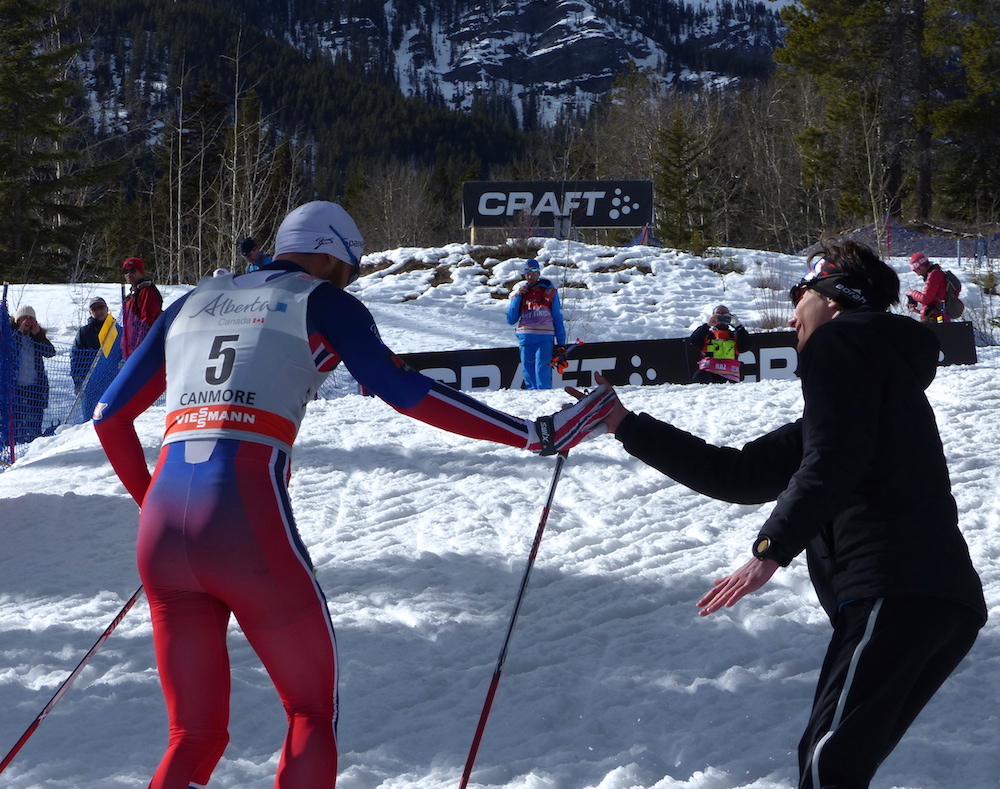
    The spirit of the sport captured at the finish line as Alaska Winter Stars athlete Meredith Schwartz embraces her coach at the finish of the classic sprint in Soldier Hollow. (Photo: Tobias Albrigtsen / @untraceableg)

    FasterSkier extends congratulations to all athletes who competed in Soldier Hollow this week, commending their efforts in a fiercely competitive field through a variety of race formats and course conditions. Also, a big thank you to Tobias Albrigtsen and John McColgan, who generously shared their photos with us throughout the week. Stayed tuned for an upcoming gallery highlighting many of the fantastic images that were not included in our reports. 

    Full Results:

    Qualification | Women’s Final | Men’s Final

    Livestream Replay

  • Soldier Hollow SuperTour Rundown: Ogden and Bøe Win a Warm and Slow Classic Sprint

    Soldier Hollow SuperTour Rundown: Ogden and Bøe Win a Warm and Slow Classic Sprint

    Here’s a quick results recap from today’s SuperTour classic sprint in Soldier Hollow. Stay tuned tomorrow for detailed coverage including comments from athletes. 

    On a second warm and slow day of classic racing, temperatures in Soldier Hollow, UT climbed into the low 50’s as athletes raced through the heats of the 1.5 kilometer sprint. 

    In the women’s race, Katharine Ogden (USST/SMS T2) won each round of racing, from the qualifier to the final, where she stopped the clock in 5:01.63. Caitlin Patterson (CGRP) was second for women (+0.48), with Hannah Rudd (BSF Pro Team) in third (+1.53). 

    The men’s podium of the SuperTour 1.5k classic sprint in Soldier Hollow: Magnus Bøe took the win ahead of Karl Schultz and JC Schoonmaker. (Photo: Instagram @nysefnordic)

    The men’s final saw a surprise upset. After JC Schoonmaker (USST/UAA) won the qualifier, and took first in his quarterfinal, and semi, it was Magnus Bøe (U of Colo.) whose tactics and strength carried him over the line in 4:08.28 for the men’s win. Bøe narrowly edged out Karl Schultz (SVSEF) who finished second (+0.35), with Schoonmaker hanging on for third (+4.58).

    Full Results:

    Men’s Qualifier | Heats

    Women’s Qualifier (not available) | Heats

  • Norwegian Triple Championship Podium with Klæbo Crowned the Winner; Ogden 17th for the US

    Norwegian Triple Championship Podium with Klæbo Crowned the Winner; Ogden 17th for the US

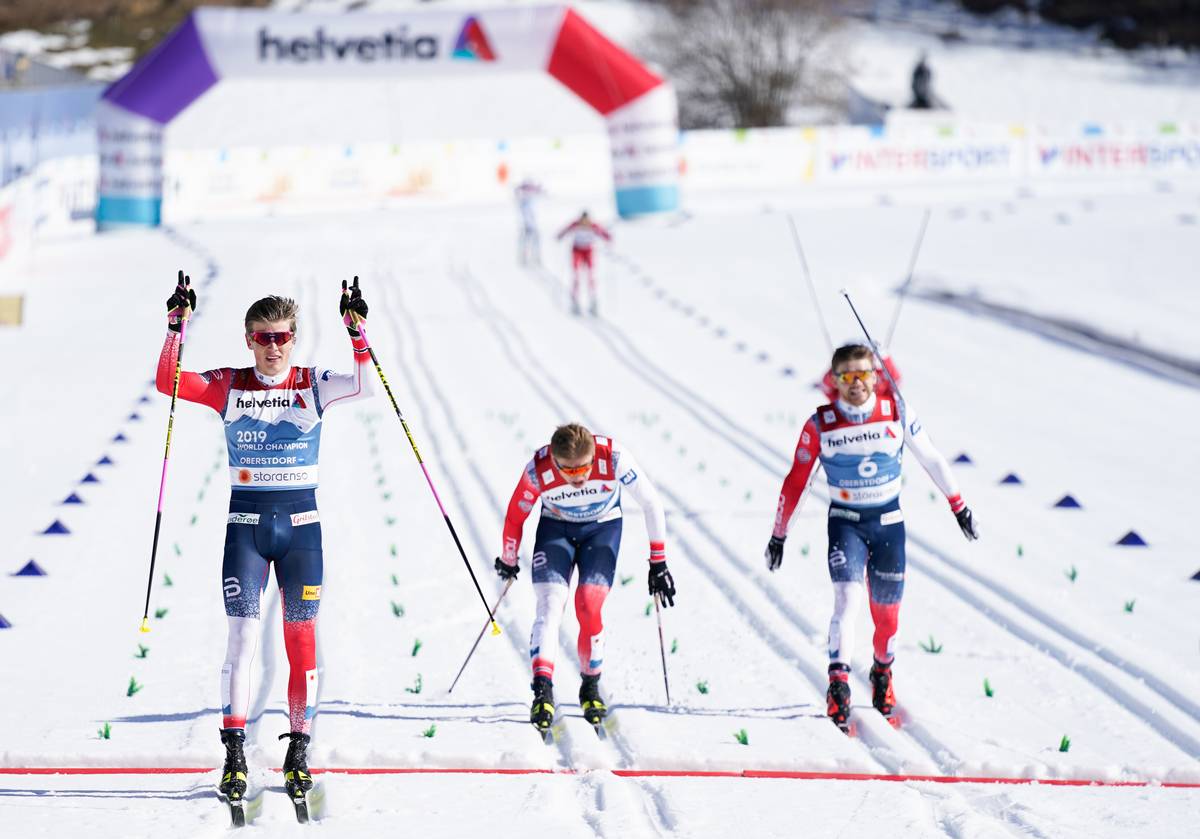
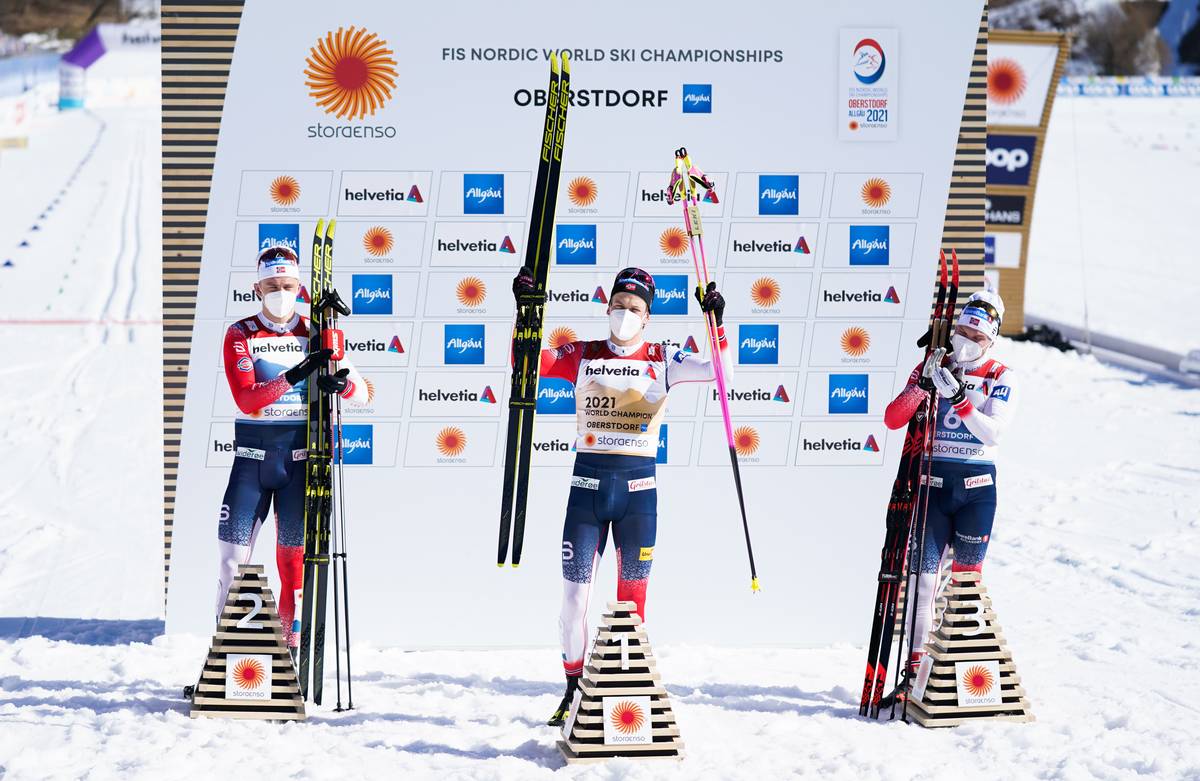
    Norsk triple. Johannes Høsflot Klæbo (left) raises his hands in victory as Valnes (middle) and Taugbøl (right) lunge for the line. (Photo: NordicFocus)

    This World Championship coverage is made possible through the generous support of Marty and Kathy Hall and their A Hall Mark of Excellence Award. To learn more about A Hall Mark of Excellence Award or to learn how you can support FasterSkier’s coverage please contact info@fasterskier.com.

    Against the backdrop of hundreds of cardboard cut-out fans, the men battled for the first medals of the 2021 World Championships in Oberstdorf, Germany. Despite warming temperatures, conditions were firm and fast for the 1.5 k classic sprint, likely due to the application of salt to help with freezing. The course featured three climbs with the last being the most significant and sustained. 

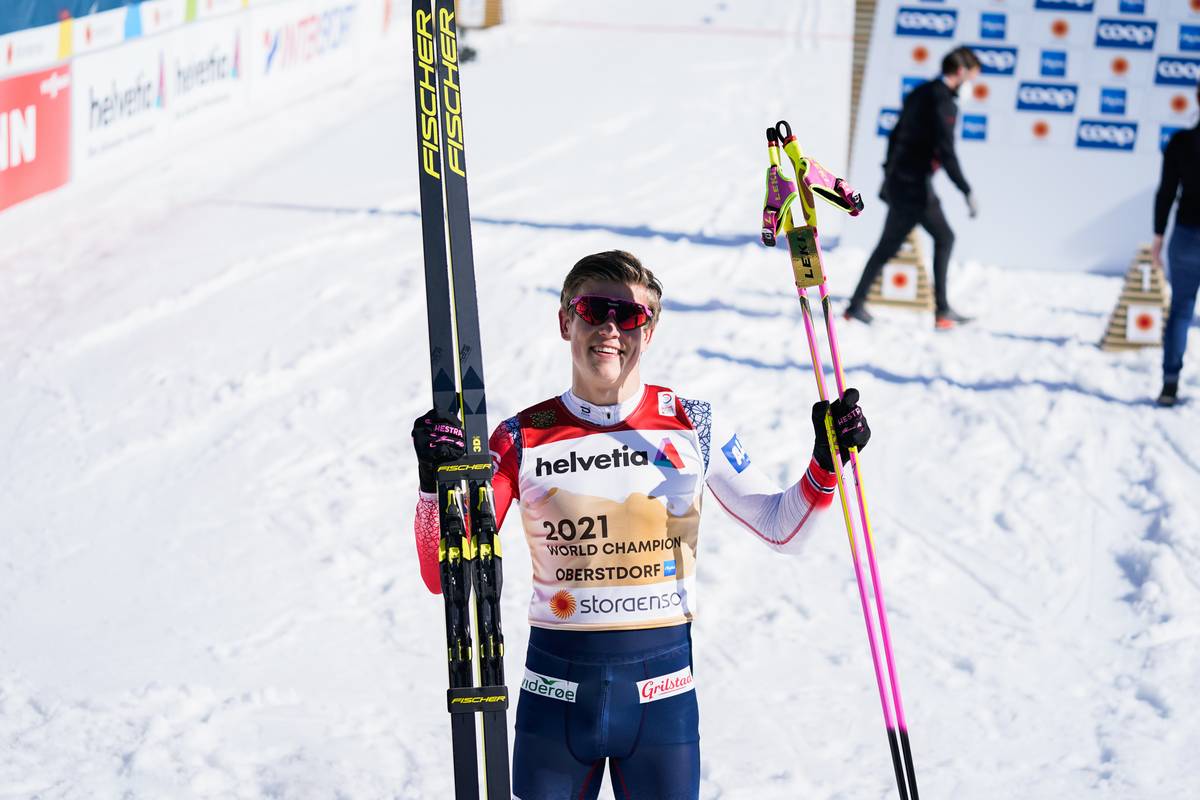
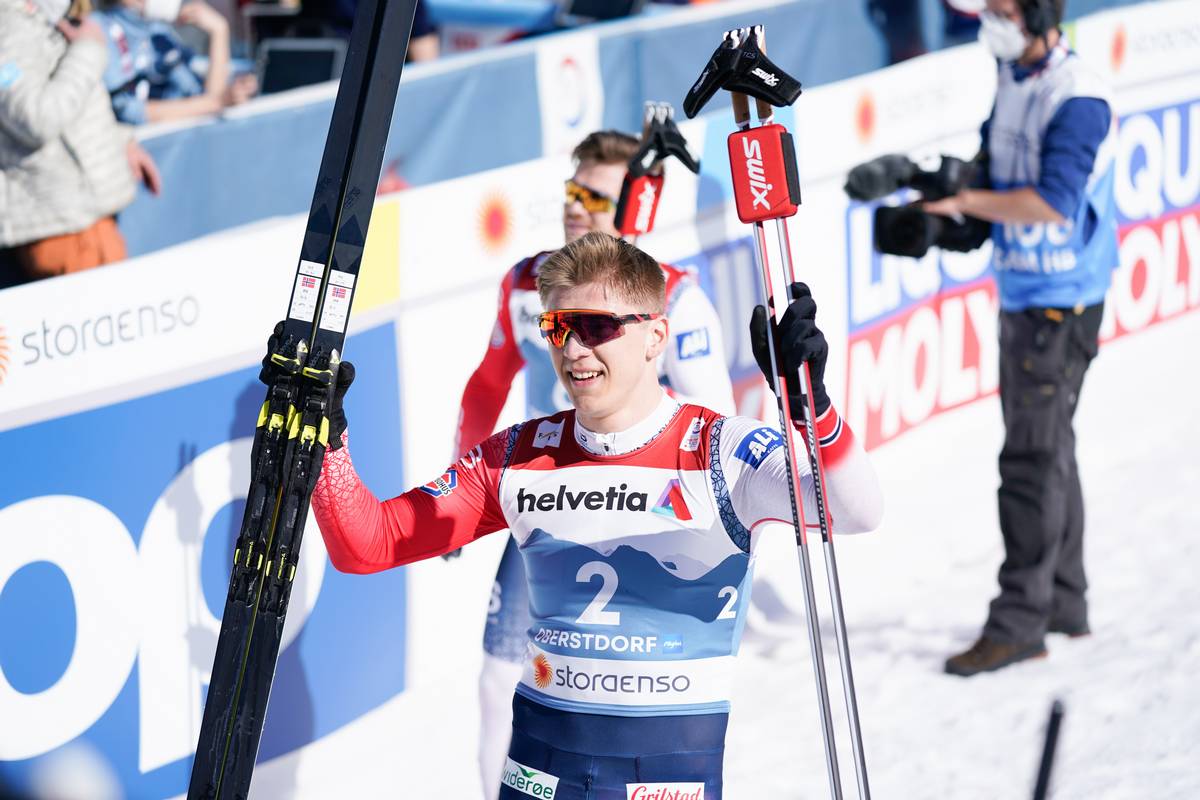
    A smiling Klæbo after being the first athlete to complete back-to-back sprint victories at World Championships. (Photo: NordicFocus)

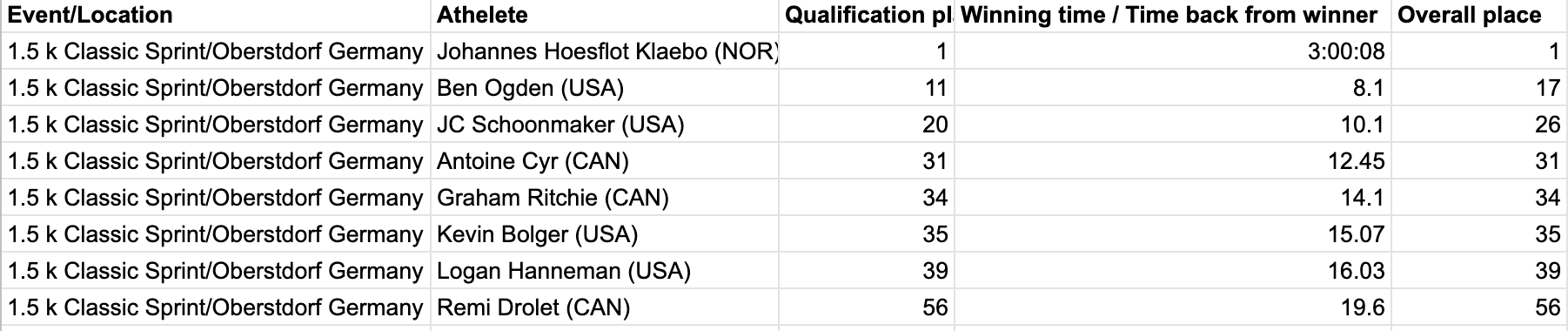
    From start to finish, the day belonged to Johannes Høsflot Klæbo who won the qualifier in a time of 3:00:08 and took his second consecutive sprint World Championships gold medal, becoming the first male athlete in history to repeat back to back sprint golds, winning the final in a time of 3:01.30. 

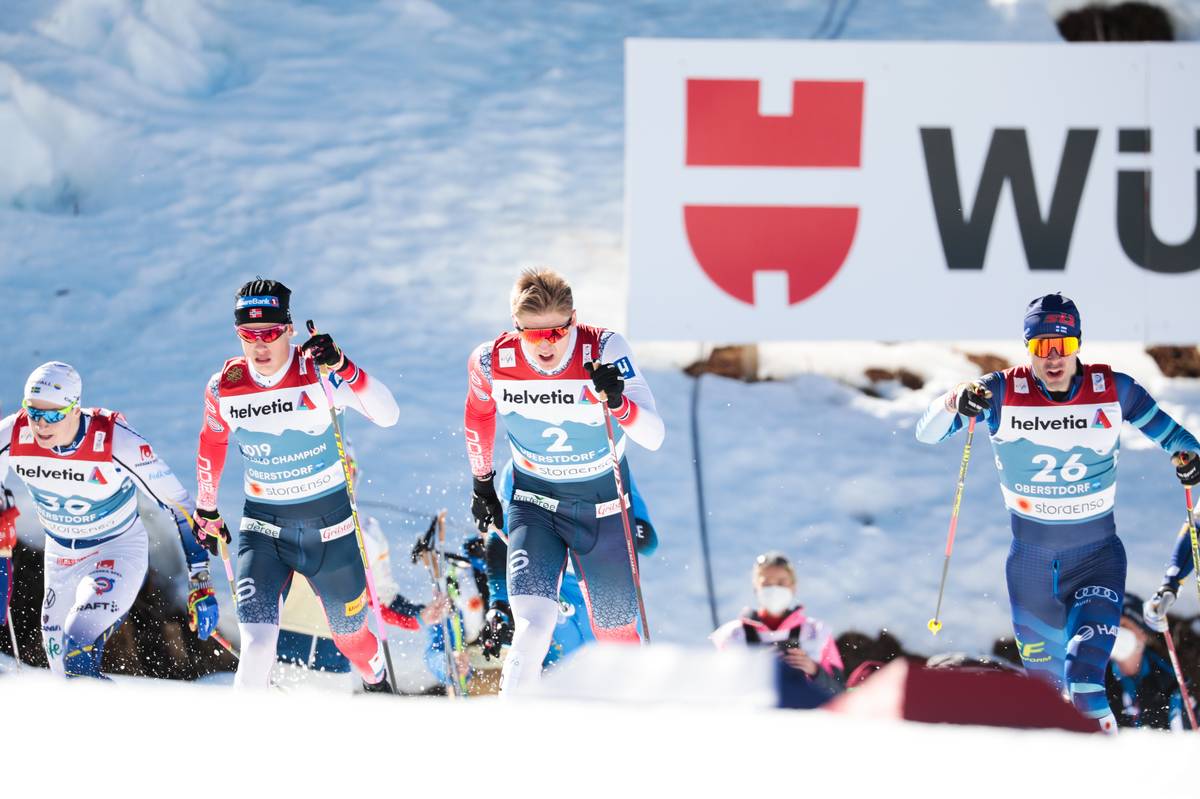
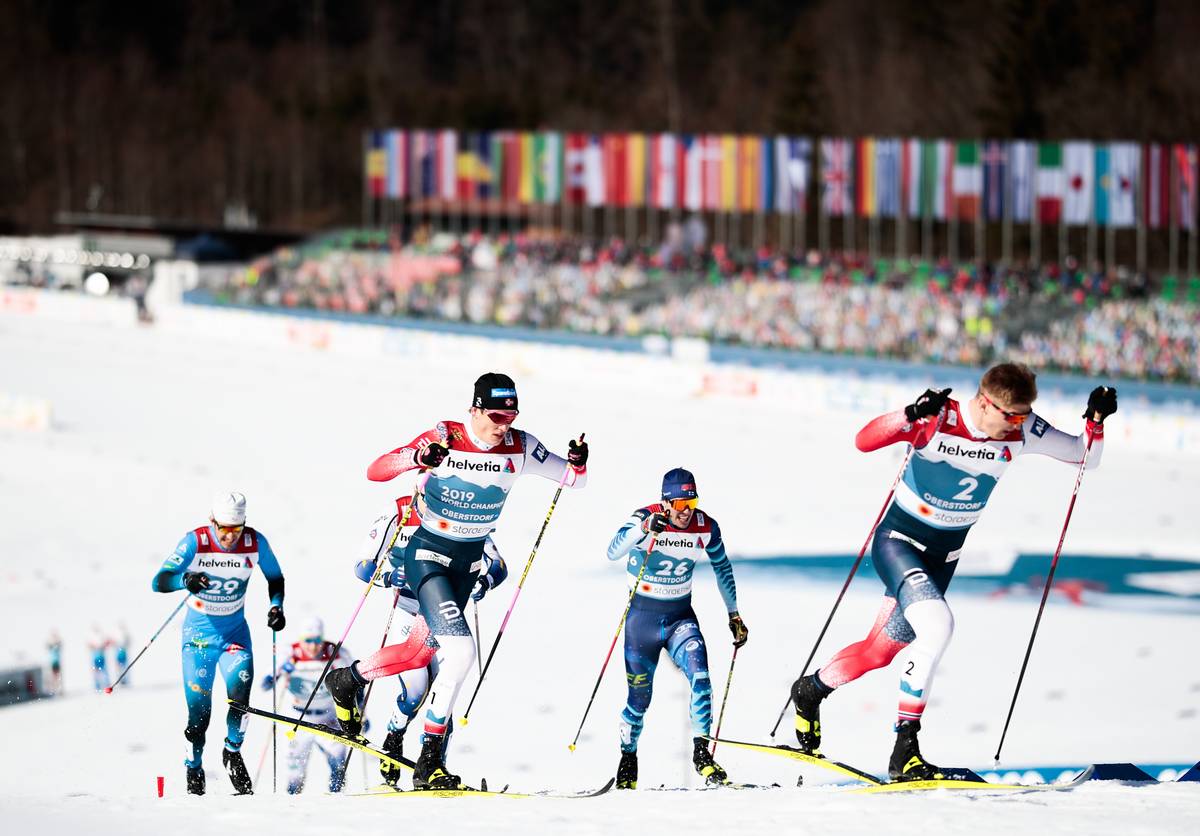
    As in the women’s race, the final hill proved to be the decisive factor throughout the quarterfinals and into the remaining rounds. The hill was no stride-fest, but instead a full-on sprint-run. Competing in Heat 1, Norwegians Erik Valnes and Klæbo easily gapped their competitors on the climb and advanced with ease.  

    The eventual 1-2 skiers charging. Valnes (bib 2) and Klæbo (left). (Photo: NordicFocus)
    Valnes (bib 2) and Klæbo (left) lead over the crest of the hill in their quarter-final heat. (Photo: NordicFocus)

    Racing in Heat 2 was J.C. Schoonmaker for the United States who qualified in 20th position. Schoonmaker came in 6th in his heat to finish 26th overall. After the race, Schoonmaker said, “I did not feel my best today but it was a solid result I think for my first World Champs, and I think I can walk away, I learned a lot and I think I am happy with it. But definitely saw it going better and I hoped it was going to go better. But, yeah I think it was overall still good.” 

    A sleeve-less JC Schoonmaker (USA) racing through warm temps in the quarter-final rounds. (Photo: NordicFocus)

    His teammate, Ben Ogden, qualified in 11th position and raced in the fifth quarterfinal. Ascending the final climb in that heat, Francesco De Fabiani of Italy found himself caught in the slush and went down, taking Cerny Ondrej of the Czech Republic down with him.

    Ondrej Cerny (CZE) taking the stumble. (Photo: NordicFocus)
    Ogden was able to move around the crash and capitalize. (Photo: NordicFocus)

    Ogden ended up fourth after a solid fight in his quarterfinal and 17th overall. In a post-race interview, Ogden said about his day, “It was good in general. The qualifier was really good. I was happy to be able to feel fast in that. And then in the heats were a little tricky, as they often are. Just remembering that this is only my second heat so far this year since World Juniors last year. I have a lot to learn and that was my first ever World Cup level heat. So, yeah, I am really excited with the whole day, and we will be looking forward to the skiathlon in a few days” 

    In the semi-final rounds, once again Klæbo and Valnes went one-two in the first semi. Given this was the faster semi, Alexander Bolshunov (representing the Russian Ski Federation at these championships) and Oskar Svensson of Sweden, also advanced from this heat as lucky losers. Coming from the second semi-final was Håvard Solås Taugboel of Norway and Sergey Ustiugov (RSF) who bested the likes of skate sprint legend Federico Pellegrino and steady sprint finalist Gleb Retivykh to advance to the final. 

    Bolshunov (RSF) and Valnes race against a picturesque backdrop through the sprint rounds (Photo: Nordic Focus)

    Preparing for one last round, the three Norwegians, two Russians, and lone Swede took their start positions, having shed hats and layers as the temperatures and efforts increased. Steady through the first part of the course, again the final climb marked a crucial moment. Taking the inside lane Klæbo stomped his way up the hill using his trademark technique. However, it was his teammate Valnes who was first over the crest. As they descended into the stadium Klæbo shot to the outside and took off. Valnes was left to fend-off his teammate Taugboel to secure second place while bronze went to Taugboel, making it a Norwegian triple. 

    Triple Norwegian podium for the first championship event of 2021 (Photo: NordicFocus)

    Speaking to FIS after the race Klæbo said, “I don’t know what to say. I’ve been so nervous the last couple of days. It’s been a really strange season with not so many competitions and I think we made some decisions that weren’t so good when we were sitting at home watching the Tour de Ski, but today it feels great and is a dream come true.” When asked about the conditions he replied, “I think it was a really tough day, the conditions were really good today, I think it was the right decision to salt it yesterday. It’s really hard out there when it’s so warm, and you are losing a lot of energy.”

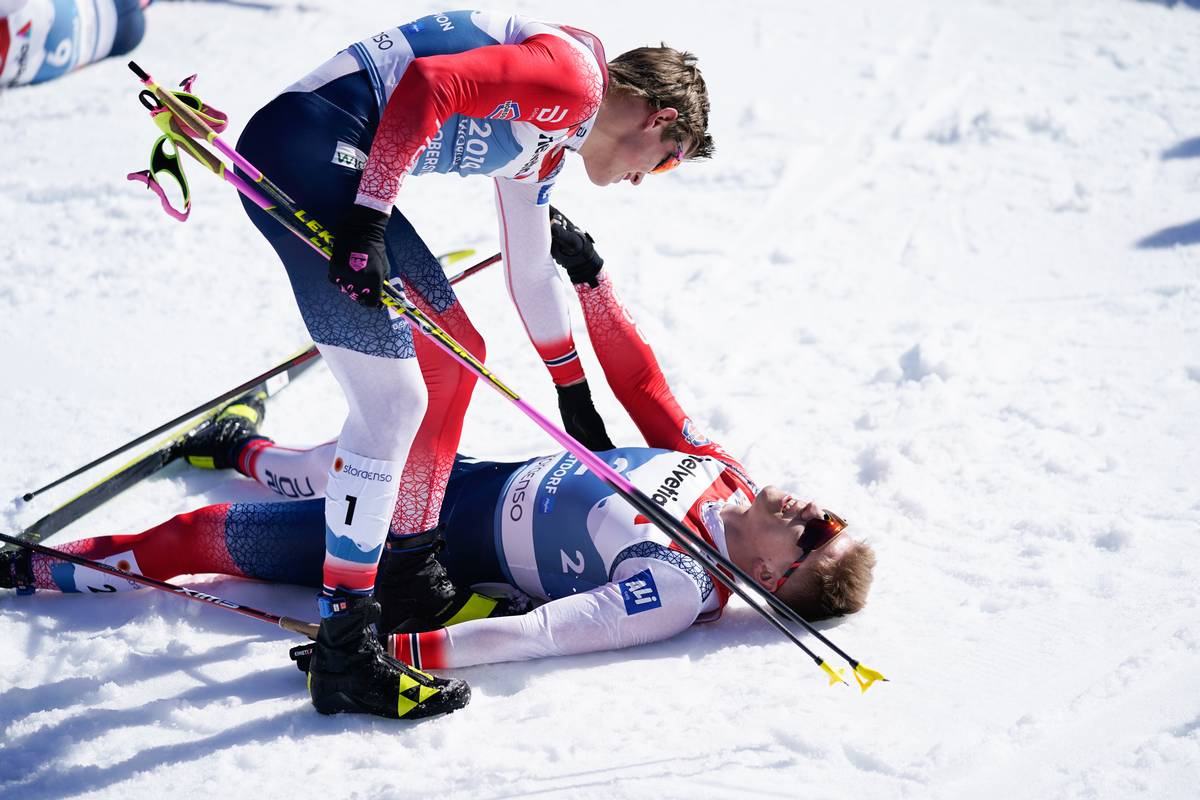
    Klæbo congratulates a tired teammate, Valnes, after they finish 1-2 in the classic sprint. (Photo: NordicFocus)

    Klæbo came out of his first World Championships in 2019 with three gold medals after winning the individual sprint as well as the team sprint and relay event with teammates. After this victory on Thursday it seems like he is well on his way to another successful championship. For his teammate Valnes, this is his first time competing at World Championships. Valnes has made one other podium appearance this season when he won the classic sprint at the season opener in Ruka, Finland. This is also the first time at World Championships for Taugboel who has had three individual World Cup podiums throughout his career, all in sprint events. 

    Valnes after placing second in the classic sprint (Photo: Nordic Focus)

    Racing continues on Saturday with a 30 k skiathlon.

    Results: Men’s Final | Men’s Qualifier

  • Stage 5 Ski Tour 2020: Championship Style Classic Sprinting

    Stage 5 Ski Tour 2020: Championship Style Classic Sprinting

    A full-on championship course in Trondheim, Norway where the World Championships will go down in the mid-2020s. That’s a long way off. This much was true: the venue, like this tour, has been kind to Norway. Maiken Caspersen Falla and Johannes Høsflot Klæbo pleased the home fans. And yes, with all the fans, it seems this might be a venue to revisit in the near future.

    One more day, a Stage 6 15 k/ 30 k classic pursuit to go.


  • Rebounding From the Skiathlon, Three Americans Sprint to Top-10 Results (Updated)

    Rebounding From the Skiathlon, Three Americans Sprint to Top-10 Results (Updated)

    The speedy women of Oberstdorf. Natalia Nepryaeva (RUS) won the classic sprint ahead of Anamarija Lampic (SLO) and Jessie Diggins. (Photo: NordicFocus)

    Onward and upward. Day two in Oberstdorf, Germany featured a 1.5-kilometer classic sprint with three sharp toothlike climbs. Seemingly riding the edge of their capability inside the tracks, athletes pumped their way up each pitch before wrapping around a bend and descending an equal grade back toward the stadium.

    Wolf jaw or race course? The Obesrtdorf sprint loop in profile. (Photo: Screenshot FIS Broadcast)

    After what Matt Whitcomb called an “off day”, the Americans demonstrated their ability to rebound. To not let the sensations or disappointment from one day percolate into subsequent races. Onto the next.

    This was clearly demonstrated in the qualifying round: three, four, nine, eleven. Diggins was the fastest of the crew finishing 2.24 seconds behind top qualifier Natalia Nepyaeva of Russia, who stopped the clock at 3:38:08. Diggins was 0.8 seconds behind Anamarija Lampic of Slovenia, who won both sprint events, skate and classic, during the Tour de Ski, and took second the weekend after the Tour in the freestyle sprint in Dresden. Lampic also popped the second fastest qualifying time of the day.

    Sadie Maubet Bjornsen nearly matched Diggins time in fourth (+2.35), followed by Sophie Caldwell in ninth (+5.38), and Rosie Brennan in eleventh (+5.90). The only other country to put three athletes in the top ten was Norway, a testament to the strength of the American women on a day where our expectations meet reality. 

    Striding it out in Oberstdorf, Caitlin Patterson skis to 61st in the qualifier. (Photo: NordicFocus)

    Also starting for the U.S., Caitlin Patterson took 61st (+24.18), and Alayna Sonnesyn finished 66th (+26.7).

    In the quarterfinals, Maubet Bjornsen wore the lowest bib number in the first heat, which is curious as this is often the choice of the top two qualifiers (see Diggins comments on heat selection below). Maubet Bjornsen took second in a tight finish with Lotta Udnes Weng and Astrid Uhrenholdt Jacobsen of Norway, moving with Weng into the first wave of semis. 

    Caldwell won the third heat of the semis in a photo finish with Ane Appelkvist Stenseth of Norway. Brennan was eliminated after finishing fourth in the fourth heat to finish 16th for the day, a top result in the event. 

    Rosie Brennan attacks the climb behind Norway’s Heidi Weng. (Photo: NordicFocus)

    “Sprint is always such a bitter sweet event for me,” Brennan emailed. “While today was the best classic sprint of my career, I still felt that I made some mistakes and didn’t ski as well as I felt. The course here is long and has some good striding which I was really excited about. I know there are probably some sprinters that aren’t excited about the length but I felt the course did a good job of including all kinds of skiing and really rewarding good skiers. I am really happy with my feelings and for sure have a little list of things to work on moving forward.”

    Diggins charged full gas through the fifth heat of the quarters for the win, beating out Sweden’s Linn Svahn who advanced alongside her. 

    Jessie Diggins leads Sweden’s Linn Svahn during the quarterfinal in Oberstdorf. (Photo: NordicFocus)

    In the first semi, Caldwell and Maubet Bjornsen took it out with the leaders, matching Nepryaeva’s long powerful bound up the climbs and the speedy out-of-the-track tempo of Anna Svendsen of Norway. Coming into the final downhill, Svendsen, Nepryaeva and Caldwell pulled ahead, creating a small gap to the remaining women. Caldwell held her tuck longer than the other women, collecting herself for a spicy double pole sprint to the finish. Sliding across the line at the heels of Nepryaeva, Caldwell stayed ahead of the Norwegian to take second in the heat. Maubet Bjornsen finished fifth between Nadine Faehndrich of Switzerland and her opponent from the quarters, Weng.

    “It was one heck of a thrill out there today on the courses for next year’s World Championships,” wrote Maubet Bjornsen in an email to several outlets. “This is certainly one of the hardest sprint courses I have sprinted on, but I really enjoyed it! My legs felt a lot stronger than last weekend, but still not quite recovered enough to put together the race I was dreaming of today. Finishing 9th is still and achievement, but I know I am capable of more when I have my full strength.

    “My tactic today was to race at the front of the group, even if it required a bit more energy, because then I knew I wasn’t going to get stuck behind anything. I always feel most confident skiing that way. In the final climb of the semi’s, I think I paid the price a bit.”
    Sadie Maubet Bjornsen matches Astrid Uhrenholdt Jacobsen (NOR) up the climb in Oberstdorf. (Photo: NordicFocus)

    Striding hot out of the gate, Diggins also held a position at the front, matching Lampic, who dictated the pace, up the climbs and tucking into her draft on the descents. On the last and longest climb, Diggins was overtaken by Svahn and Heidi Weng of Norway and she was unable to regain her position on the subsequent downhill. Though her tempo was faster than her opponents in the final double pole sprint, she finished fourth. As her time would have won the previous heat, Diggins and Svahn advanced with Lampic and Weng as the lucky losers. 

    Again taking the reins from the start-beep, Lampic surged to the front of the group and stayed there, though she could not drop the strong group of women in her wake. Up the final climb, Nepyaeva matched Lampic stride for stride, her long powerful pushes keeping her alongside the Slovenian’s green and black suit.

    Like a slingshot, Nepryaeva sped around Lampic as they rounded the final curve into the straightaway. The duo duked it out double poling in perfect synchrony, but Lampic recovered no ground on the Russian. Nepraeva stopped the clock at 3:27:08, the fastest split of the day. 

    Racing for the last podium position, Diggins and Caldwell flew into the final straight in neighboring tracks, with Svahn not far behind. Firing on all cylinders, Diggins pulled ahead of Caldwell to take third by just over a second (+2.44). After being left behind by the Americans, Svahn finished fifth (+5.16), followed long after by Stenseth (+30.20). The Norwegian had fallen off the pace midway through the round, ceding her chances to contend with the pack. 

    Due to poor WiFi connection, athletes chose to send comments via email. Reflecting on her performance, Diggins expressed that she “loved” the long sprint course.

    “You had time to try out different tactics and that last hill saw some moves, for sure. We had awesome skis today so I was able to use a little bit of a slingshot to get into good position in the finishing lanes, and I just worked to stay smooth and calm in the first half, while looking for openings to get into better position.”

    Diggins explained that heat selection is variable, and did not feel today’s variance from a usual bracket was explained by the length of the course. Her choice to race in the fifth quarter and second semi were based simply on her perception of the opportunity to advance.

    “I chose the latter heat because it was wide open, and seemed to be a good path forward out of the quarters. But you never know how it’s going to go, and I was happy to secure lucky loser time in the fast semifinal!”

    Gasping for air after an effort Diggins can be proud of in Oberstdorf. (Photo: NordicFocus)

    After finishing 22nd in the skiathlon, some might question from the comfort of their couches whether Diggins is on the same form that we have seen in previous years. As was discussed with Matt Whitcomb, “success breeds expectation.” We expect to see Diggins at the top of the results sheet day in and day out, and that pressure can creep into an athletes self-expectation as well. When asked how she handles this, Diggins explained that she does not dwell on what is on the paper or posted in the comments.

    “That’s a great question about handling expectations and pressure…and my plan for that has always been to set really concrete process-oriented goals, work as hard as I can to meet them, and then regardless of the result on paper I can decide if it was a “good” day for myself or not based on my effort, focus, technical progress and strategy.”

    In her post-race remarks, Caldwell offered an insightful perspective that took into account her strengths as a sprint specialist versus an all-arounder like Diggins or Maubet Bjornsen.

    “This sprint was definitely one of our longest ones, and for sure the longest one of the year. I think it’s really exciting to have varying sprint courses throughout the year and this is about as far from the Dresden course as you can get. I used to think short and flat suited me best, but now I don’t really know what I like, especially for classic, but I try to be excited for any kind of sprint so I don’t count myself out before it begins. That said, I do think that there are already a lot more distance races than sprints, so when it gets much over 3 minutes, it’s starting to favor distance skiers more, which is fine to do sometimes, it’s just too bad when there are already so few sprints if too many of them start getting really long. But I personally really enjoyed the course and the race today. I don’t think it’s too much different for recovery for me whether the course is 3 mins or 3:30, but I think for the men it is probably harder because if they’re in the second half of the bracket, they have a lot less recovery. I usually just try to move around until I’ve flushed my legs out and then relax for a little bit and then start moving around again before my next heat!

    “Today was a really awesome day for our team. I was psyched to make my first classic final in years, and I think only my third ever. I’ve now had three 4th places in the last four races, which is a little bittersweet, but it’s important to remind myself that 4th is still a really strong result, especially in a tough classic sprint. It was great to ski with Sadie in my semi and I know she’s bouncing back from giving her all in the tour, but is getting stronger each day and a good result today is a huge step in the right direction. And Jessie was on fire all day and it was awesome to see her get another classic podium. So really fun to have such a strong day for our women and even though it was a tough day for the guys, I know they will be fighting back in Falun!”

    Sophie Caldwell skis to 4th place in Oberstdorf. (Photo: NordicFocus)

    Between the city sprints in Dresden and today’s event in Oberstdorf, Caldwell headed to Austria for an altitude camp. She explains the role this plays in balancing training and recharging, and how the sprinters use an altitude stint to build fitness without losing their top end speed.

    “Simi and I just took a little break in Seefeld during the distance weekend in Nove Mesto and it’s was really nice both physically and mentally. The schedule this year is very demanding, with almost no weekend off, so we felt it was important to find in a couple times to work in a break, remove ourselves from the World Cup, and take some time for ourselves. I was really tired right after Dresden and didn’t realize it until I allowed myself to take a break, so it was nice to have a few days of true recovery and then I felt I was able to train really well for 9 or 10 days before coming here. Seefeld is at mild altitude, but I think it’s only at 3,700 ft, so as long as I keep my easy skis easy, I don’t feel too many effects of altitude and don’t worry about not being sharp when coming down a little in elevation.”

    Maya Macisaac-Jones posted the top qualifying time for Canada in 35th. (Photo: NordicFocus)

    Racing for Canada, Maya Macisaac-Jones posted the top qualifying time in 35th (+14.28), followed by Dahria Beatty (+15.79), Katherine Stewart-Jones in 50th (+18.58), and Katherine Weaver 65 (+26.08).

    Qualification | Final Results 

  • Klæbo, Falla Defend Beito Sprint Titles; Newell 16th, Hart 31st for U.S.

    Klæbo, Falla Defend Beito Sprint Titles; Newell 16th, Hart 31st for U.S.

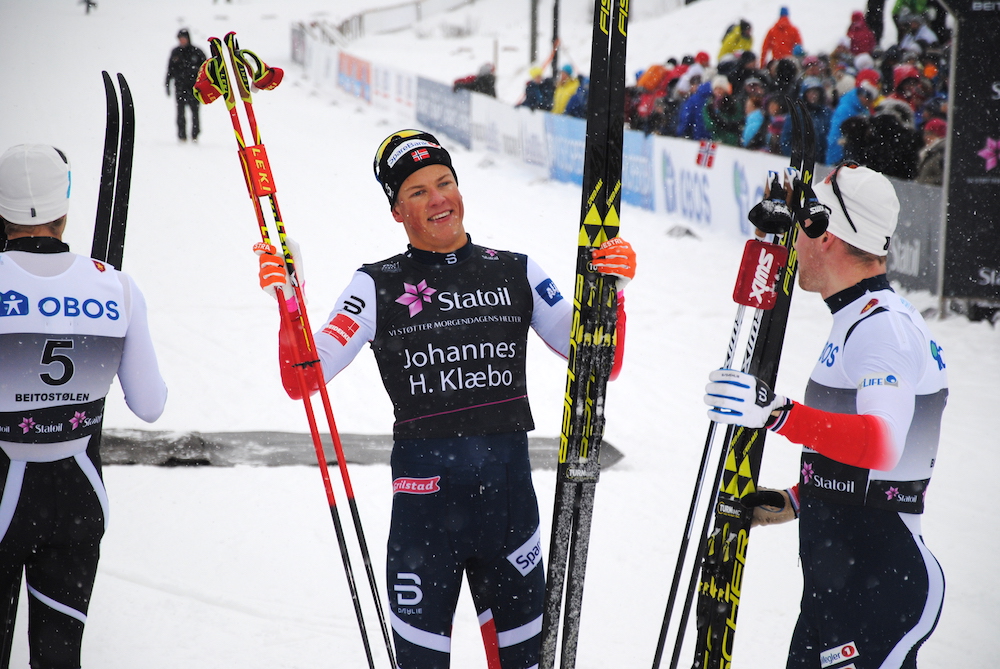
    Norway’s Johannes Høsflot Klæbo celebrates his first win of the season on Saturday in the men’s 1.5 k classic sprint FIS race in Beitostølen, Norway. (Photo: Aleks Tangen)

    BEITOSTØLEN, Norway — A year ago, 20-year-old Johannes Høsflot Klæbo leapt onto the scene with a season-opening skate-sprint win in Beitostølen. Before that, he made waves at 2016 U23 World Championships, winning gold in the skate sprint, 10-kilometer classic and 4 x 5 k relay. But until last season, Klæbo, a member of Norway’s national U23 team, was hardly a household name to those outside of Norwegian skiing circles.

    That all ended in Beito. Klæbo landed on the podium in the first World Cup sprint of the 2016/2017 season, placing third in the classic sprint in Kuusamo, Finland, and accumulated half a dozen podium finishes throughout last winter. He capped the season as the men’s U23 World Cup champion as well as the Sprint World Cup winner.

    Now a full-fledged member of the Norwegian Sprint World Cup Team, Klæbo, who turned 21 last month, returned to Beitostølen to post a second- and first-place finish so far in two International Ski Federation (FIS) races there. He started his season off by taking second in Friday’s 15 k classic, 18 seconds behind reigning Overall World Cup champion Martin Johnsrud Sundby.

    On Saturday, Klæbo won the 1.5 k classic sprint in Beitostølen without so much as a blemish, winning the qualifier to start the day then topping each of his heats en route to the final.

    Norway’s Johannes Høsflot Klæbo crossing the line first for the win in the men’s classic sprint final on Saturday at the FIS season-opener in Beitostølen, Norway. (Photo: Aleks Tangen)

    Up against five other Norwegians in the final, Klæbo raced to first once more in 3:50.4 minutes, finishing 1.1 seconds ahead of runner-up Kasper Stadaas. World Cup sprinter Eirik Brandsdal followed in third (+1.8), Fredrik Riseth was fourth (+6.4), Sondre Turvoll Fossli crossed in fifth (+6.7), and Emil Iversen was sixth (+9.2).

    “My goal was to ski a good race,” Klæbo told a group of reporters after. “I wanted to get away from the pack towards the end and luckily the gap remained until the end.”

    Iversen called attention to the young Norwegian while speaking with reporters after the race. “There has never been a talent like him,” Iversen said.

    With snow starting to fall just before the men’s qualifier, Klæbo fared best on the course, racing to a 3.07-second qualifying win over Riseth with a time of 3:39.76.

    Norwegian sprint coach Arild Monsen emphasized Klæbo’s ability to accelerate in and out of turns.

    “Cross-country skiing has seen some development in recent years with specific techniques in specific zones, and Johannes has developed an ability to take advantage of that,” Monsen told a group of reporters. “We saw that very clearly today. The trick is to technically skilled when you’re tired and he’s able to do that almost to point where we don’t understand how.”

    Klæbo went on to win his quarterfinal by 0.5 seconds over Norway’s Gjøran Tefre, then his semifinal by 0.2 seconds over Brandsdal. U.S. Ski Team member Andy Newell faced him in the quarterfinal, where Newell finished fourth in the heat, 3.7 seconds behind Klæbo and 2.6 seconds behind Norway’s Emil Nyeng in third. Newell missed advancing to the semifinals and finished the day in 16th overall.

    “I knew we were going to have a fast heat because Klæbo had set a pretty strong pace from the first hill on, so we were really close to lucky losers,” Newell told FasterSkier in a post-race interview. “The second heat was just barely faster.”

    With his second Beitostølen sprint victory, Klæbo told NRK that he was glad to get this race under his belt.

    “This felt good, and I’m glad that sprint is up and running,” he said. “This was a good race considering what will happen next weekend.”

    The World Cup kicks off next weekend in Kuusamo with a classic sprint on Nov. 24, followed by 15 k classic and 15 k freestyle races for the men on Nov. 25 and 26.

    The lone American man in Saturday’s race, Newell qualified in 11th, 10.86 seconds off Klæbo’s time.

    “Felt good in qualification, skis weren’t perfect because it started snowing just before,” Newell told FasterSkier after. “Skis were fast, but not quite enough grip, so we did a little re-wax for the heats.”

    He noted that he’s been working with Fischer in Beitostølen as he’s there without his team (the rest of the U.S. Ski Team is currently training in Rovaniemi, Finland).

    For the first 300 meters of his quarterfinal, six skiers started at a relaxed pace with Klæbo and Newell at the back of the pack leading into the the first downhill. While both were able to work their way to the front on the first climb, Newell lost steam on the second-to-last hill, “Danskebakken” (Danish hill).

    “I was stuck in the back up the first hill, so I had to burn a match to get to the front, which probably made me a little tired for the last hill,” Newell reflected.

    With what he called “great grip” up the big climb, he felt like he was dragging a bit over the top.

    “I was definitely getting a little tired on the flat part over the top,” he said. “Because it’s the first sprint, maybe I wasn’t aggressive enough in the transitions, maybe it’s because the skis were a little draggy, but it seemed like I would get passed by somebody or two people going into each hill.”

    With enough grip on the climbs, he would pass those racers back.

    “So tried to finish strong but not quite there, but it’s a long season and hopefully the body will feel a little better in Kuusamo,” Newell said. “It’s all good, just training so looking forward to the World Cup.”

    Out of the 30 men who qualified for Saturday’s sprint heats, only two were not Norwegian: Newell and Great Britain’s Andrew Young (who qualified 22nd). Young went on to finish the day in 23rd overall after finishing fifth in his quarterfinal.

    Falla Stuns with Late Attack 

    Maiken Caspersen Falla (l) leading the women’s final up a climb, along with fellow Norwegian national team member Astrid Uhrenholdt Jacobsen (in green) during the women’s 1.5 k classic sprint FIS race on Saturday in Beitostølen, Norway. (Photo: Aleks Tangen)

    In the women’s race, Maiken Caspersen Falla controlled the women’s race in a similar fashion to Klæbo, winning the qualifier, quarter, semi, and ultimately, the final.

    In the final, Falla, who won last year’s Beitostølen skate sprint as well as her second-straight Sprint World Cup Crystal Globe, skied with the pack until the final climb where she made her move before entering the final stretch alone. Falla, 27, finished 3.7 seconds clear of anybody in 3:01.1. In another all-Norwegian final, Mari Eide placed second and Astrid Uhrenholdt Jacobsen claimed third (+4.8). Tiril Udnes Weng placed fourth (+6.7), Kari Vikhagen Gjeitnes was fifth (+11.1) and Ane Appelkvist Stenseth was sixth (+18.5).

    Falla started the morning with a qualifying win in 2:54.86, 1.77 seconds ahead of Slovenia’s Katja Visnar in second. She didn’t slow down much for the heats, racing to first in each in 3:01.7, 3:02.3 and 3:01.1, respectively.

    “I felt that it went better and better and it’s wonderful to have that feeling when you’re sprinting,” Falla told NRK after.

    After watching her attack and pass three women on the final hill, NRK commentator Fredrik Aukland called her “the best sprinter in the world”.

    When asked if this performance was good enough to win any race in the future, she told a group of reporters, “I hope so, of course. There is finishing hill already next weekend that is kind of similar to this one and I have practiced running up hills a lot so it’s obviously fun to test it in a race.”

    Teammates with Newell on the Stratton Mountain School (SMS) Elite Team, Anne Hart raced to 31st for the second day in a row, missing qualifying in the top 30 by 0.28 seconds.

    “I am happy about my qualification,” she told FasterSkier immediately after her race, before she knew whether her time was fast enough for the heats. “The course is a lot faster than yesterday, good condition.”

    Hart started the qualifier third out of 58 women, just ahead of Visnar in bib 4. Her time was 17.55 seconds back from Falla’s.

    “I skied with Katja Visnar and she is really good classic sprinter,” Hart said. “… It feels really good to be able to ski with all these World Cup skiers.”

    Nichole Bathe, who was born in the U.S. but is racing for Great Britain, finished 33rd (+19.26), about 2 seconds out of the top 30.

    Canada’s Isabella Howden of Barrie Cross Country (BXC) finished 58th (+57.28) in the qualifier. In the men’s qualifier, her teammates Joey Foster and Scott James Hill finished 74th (+32.45) and 84th (+36.64), respectively, and fellow Canadians Ryan Jackson and Maks Zechel (who are training in Norway with Team Asker) finished 97th (+43.99) and 102nd (+48.48), respectively, out of 109.

    The Beitostølen weekend concludes with 10/15 k freestyle individual starts on Sunday.

    Results:
    Men’s qualifier | Men’s brackets

    Women’s qualifier | Women’s brackets

  • Valjas 4th, Newell 6th in PyeongChang Sprint Final

    Valjas 4th, Newell 6th in PyeongChang Sprint Final

    Russia's Gleb Retivykh (l) racing to his first World Cup victory and podium on Friday in the World Cup classic sprint in PyeongChang, South Korea, ahead of Norway's Sondre Turvoll Fossli (second from l), Canada's Len Valjas (behind Fossli), and Russia's Andrey Parfenov and Alexander Panzhinskiy. (Photo: Fischer/NordicFocus)
    Russia’s Gleb Retivykh (l) racing to his first World Cup victory and podium on Friday in the World Cup classic sprint in PyeongChang, South Korea, ahead of Norway’s Sondre Turvoll Fossli (second from l), Canada’s Len Valjas (behind Fossli), and Russia’s Andrey Parfenov (second from r) and Alexander Panzhinskiy (r). (Photo: Fischer/NordicFocus)

    As a sphere, the Earth is a tidy shape and can be divided into equal segments. It takes roughly 24 hours for the planet to rotate on its axis once, constituting a single day. So there’s 24 time zones, one for each hour of rotation. On Friday, the tidiness was disrupted a bit for European-based World Cup skiers. PyeongChang, South Korea, host of the 2018 Winter Olympics, was site of the men’s World Cup 1.5-kilometer classic sprint.

    PyeongChang sits a full eight hours ahead of Central European Time, a time zone most World Cup skiers are adjusted to. To accommodate the time shift, the sprints were run at night, under the lights.

    “It’s been tough. We knew the races were going to be really late here in Korea so that the T.V. time works in Europe,” U.S. Ski Team (USST) member Andy Newell said on the phone. “But as far as adjusting, you go in and out and definitely feel pretty tired at times, like when you’re trying to fire it up and get ready to race. But once you’re racing, it seems like it’s OK. You don’t notice the jet lag once you’re out there on the track.”

    In a field of 55 skiers, Newell was one of two North Americans to make the men’s final; the other was Canada’s Lenny Valjas. Newell placed sixth in the final (+17.1), Valjas fourth (+0.74) in a photo finish with Russia’s Andrey Parfenov (+0.73), who skied to third overall.

    “It was really close between me and Lenny,” Parfenov told the International Ski Federation (FIS), according to a press release. “I know he was next to me. I was lucky have a better lunge. It was a good track for classic. There is not so much double poling sections, more uphills and that was good for me. I am really happy for my second podium of my career.”

    Russia’s 26-year-old Gleb Retivykh won the final in 3:30.79, ahead of Norway’s Sondre Turvoll Fossli in second (+0.30). It was Retivykh’s first career World Cup win and first time on the podium, despite finishing in the top 10 in World Cup sprints on 10 other occasions. And despite his comments to FIS, the Russian’s speediness may just have allowed him to momentarily outrun the jet lag.

    “I arrived here yesterday so I am still jet lagged,” Retivykh said. “I knew Sondre is very strong. I did not think I could win. I was hoping for a good result. I had to wait six years for my first victory and it is great.”

    Valjas Leads Canada in 4th

    Time zones and new food be damned. For seasoned athletes like Valjas and Newell, planes, shuttle buses, and exploratory cuisine are all part of the international skiing life. Despite the time-zone-shift-wormhole, both skiers delivered.

    For Valjas, of Canada’s World Cup A-team, the vagaries of food prep in South Korea flummoxed him.

    “Adjusting to the time change went fairly well, but I ran into some trouble with the food here,” Valjas wrote in an email. He is allergic to peanuts and fish; two ingredients in the form of peanut and fish oil that’s ubiquitous in Korean meals.

    “The last two dinners I have not been able to eat because I had reactions,” Valjas added. “Even the ‘safe’ boiled potatoes ended up having peanut oil dribbled all over them. The language barrier makes it very hard to understand which foods may or may not kill me. I could feel my energy getting lower and lower today, could have been my inability to eat well or the jet lag after flying here two days ago.”

    Canada's Lenny Valjas racing to second in the men's classic sprint qualifier on Friday at the World Cup in PyeongChang, South Korea. (Photo: Fischer/Nordic Focus)
    Canada’s Lenny Valjas racing to second in the men’s classic sprint qualifier on Friday at the World Cup in PyeongChang, South Korea. (Photo: Fischer/Nordic Focus)

    Despite the lack of food intake, Valjas qualified in second place, 1.97 seconds back from fifth-place overall finisher and first-place qualifier Alexander Panzhinskiy of Russia.

    Valjas’s progression looked like this: second in his quarterfinal then advancing to the finals as the second lucky loser from the first semifinal. And ultimately his fourth place in the final — where he missed his eighth-career World Cup podium and his third of the season, by 0.01 seconds.

    “I have mixed feelings about today,” Valjas wrote about his PyeongChang classic sprint experience. “It’s tough to be that close and come up short.”

    Mindful that the day was also about gaining pre-Olympic beta, Valjas noted his time in South Korea was well spent.

    “On the bright side, I learned so much skiing the Olympic course today. It’s a very tough course, but it is built amazingly well,” he wrote. “The climbs are the perfect grade for striding, and racing at night with all the lights was really cool. … I hope I can use the valuable info I learned tonight to my advantage when I race here next winter in the Olympic sprint.”

    Jess Cockney (Canadian World Cup B-team) racing to 16th in the men's classic sprint qualifier on Friday at the World Cup in PyeongChang, South Korea. He went on to place 10th overall for a season best. (Photo: Fischer/NordicFocus)
    Jess Cockney (Canadian World Cup B-team) racing to 16th in the men’s classic sprint qualifier on Friday at the World Cup in PyeongChang, South Korea. He went on to place 10th overall for a season best. (Photo: Fischer/NordicFocus)

    Jess Cockney, of Canada’s World Cup B-team, placed 10th after qualifying 16th. Cockney skied to first in his quarterfinal after avoiding several skiers involved in crashes, including one involving U.S. Ski Team member Simi Hamilton.

    “I felt that I could ski relaxed and work my way through some positions in the second half of the course and it ended up being really good to also avoid the crashes in my heat,” Cockney wrote in an email.

    In his semifinal, Cockney was on fumes and finished fifth.

    “He gave it all on the quarterfinal so he lost a lot of energy there, but still making it to the semi is very good,” Charles Castonguay, Canada’s lead coach in PyeongChang, said on the phone. “But at the end, I think he did really well, too. Top 10 for him is really really good and he is pretty confident that he can repeat that for Lahti in two weeks [at World Championships]. We had a little chat after and he said he was pretty happy; he said he gave it his all. … It’s his best result since [last] year in Quebec [where he placed 10th in the freestyle sprint]. So yeah, it’s promising for him for the Otepää World Cup and the Worlds at Lahti.”

    The next best Canadian was Simon Lapointe, of the Pierre-Harvey National Training Centre (CNEPH), who qualified 25th and finished 27th overall. Friday marked his first international World Cup and his previous personal best was 70th in a Ski Tour Canada stage last year.

    Bob Thompson (NTDC Thunder Bay) missed qualifying by one-hundredth of a second in 31st (for his best World Cup result by 21 places), and Julien Locke (Alberta World Cup Academy/Canadian National U25 Team), in his first World Cup, placed 36th.

    Newell Sixth in Final

    The 1.5 k men’s course was a no-rest affair. Thirty seconds of initial double poling brought skiers into a roller coaster of a course — two big ups, quick downs, and a straight away finish all under the brights lights. 

    Leading the U.S. was veteran USST skier Newell in sixth overall. He qualified seventh (+5.18).

    “For me in the qualifier, how I gauge a good or bad qualifier, usually it doesn’t even necessarily depend on what place I finish, a lot of it is seconds back and a lot of it is how I feel if I nailed the course or not,” Newell said on the phone Friday night.

    A thorough student of the classic-skiing sprint scene, Newell adjusted after sensing he hadn’t skied the second major hill effectively.

    “I know my strengths and weaknesses on a course like this,” Newell said. “I know I can be as good as anyone on those hills and so that was kind of the goal, was to make sure I was in a good position.”

    American Andy Newell chasing Russia's Alexander Panzhinskiy during their quarterfinal of the men's classic sprint at the PyeongChang World Cup in South Korea. (Photo: Fischer/Nordic Focus)
    American Andy Newell (7) chasing Russia’s Alexander Panzhinskiy during their quarterfinal of the men’s classic sprint at the PyeongChang World Cup in South Korea. (Photo: Fischer/Nordic Focus)

    Newell was matched with top-qualifier Panzhinskiy in his quarter and semifinal. Panzhinskiy and Newell placed first and second in both, respectively, with Newell 0.63 seconds back in the quarter and 0.34 seconds back in the semi.

    “[Panzhinskiy] was the top qualifier so I knew he was going to be fast and so we were kind of really able to kind of get away from anyone in our heats in both the quarterfinal and the semifinal up that [second] hill,” Newell said.

    As a made-for-television production, the heats run on a tight schedule. And due to clearing the course after several crashes, organizers were running behind schedule. The time after the Newell’s semifinal to the final was reduced, hampering both Panzhinskiy’s and Newell’s normal pre-final recovery period.

    “Maybe we pushed each other a little too hard in the semifinal because I think we were both a little tired,” Newell reflected. “It just so happened that the schedule they were running behind with the heats today, which means the semifinal went off five to ten minutes late, but they have to keep the final on time. … That kind of took us by surprise because I think we both pushed each other pretty hard in that semi and then to have a short ten-minute recovery as opposed to one that’s fifteen or twenty, that was definitely a tough turnaround.”

    Newell skied from the back in the final. According to the Vermont-based skier, he changed skis in the final, and that decision compounded with his less-than-normal, pre-finals recovery period impacted his overall placing.

    “I swapped out for a different pair of skis and was using a different pair of skis in the final,” Newell said. “It was an easier-kicking pair of skis, which probably worked out great for the first few heats, but in the final I think one of the things that came to bite us was the fact that [my wax tech] Mark and I kept adding a layer of wax to make sure we had good grip up that big climb because it was such decisive part of the race. But by the final I think we were dragging a little bit too much wax, which really played a big role in me getting shelled off after about half way through because yeah, kick was dragging considerably in the final, but you know that’s all part of the game.”

    Newell ultimately finished 17.19 seconds back in sixth after realizing his efforts were in vain. But being present and racing well in PyeongChang remained important for Newell.

    “This race in particular was kind of one of the races I wanted to make sure I was at,” Newell said of how he planned out his current World Cup campaign. “My goals are really quite focused towards the Olympics next year. For me, the excitement was there today just because it’s a new venue and it’s the place where the Olympics are going to be taking place next year and I know I can be competitive in these classic sprints.”

    Newell will skip Saturday’s skiathlon to prep for Sunday’s freestyle team sprint. He’ll be racing the team sprint with Hamilton.

    “I was not feeling great all day, and it’s been kind of a tough week for me in general,” Hamilton wrote of his adjustment to South Korea. “I was definitely struggling with how my body was responding to big travel and a pretty significant time shift, but still, I think it is extremely valuable to be able to be here experiencing the courses and the layout of the land before 2018.”

    Simi Hamilton (U.S. Ski Team) racing to 12th in the men's classic sprint qualifier on Friday at the PyeongChang World Cup in South Korea. He went on to finish 17th overall after crashing in his quarterfinal and finishing fourth in that heat. (Photo: Fischer/NordicFocus)
    Simi Hamilton (U.S. Ski Team) racing to 12th in the men’s classic sprint qualifier on Friday at the PyeongChang World Cup in South Korea. He went on to finish 17th overall after crashing in his quarterfinal and finishing fourth in that heat. (Photo: Fischer/NordicFocus)

    Hamilton qualified 12th, which he was dissatisfied with.

    “I felt like I had a pretty weak qualifier, and was struggling to find big power and big glide on the two big climbs,” he wrote.

    Hamilton’s focus this year has been on skate sprinting: a traditionally strong technique for him.

    “But with so many skate sprints this year and the fact that the sprint in Lahti is skate, I haven’t really been thinking too much about classic sprinting or gearing my training towards classic sprinting,” he explained. “So I think with some focused training I’ll be able to dial in my preparations for this course specifically and hopefully feel much better in qualification the next time we are racing here.”

    In his quarterfinal, Hamilton was well positioned for the second climb — sitting back a few meters from the leaders.

    “Coming down the fast descent into the bottom of that hill, I made a slingshot move to the outside, open track on the far left, and was carrying some really good momentum past the two Norwegians in my heat,” he recalled.

    With his momentum carrying him up to the leaders, Norwegian Daniel Stock swerved into Hamilton’s tracks. (Stock was eventually relegated to 30th overall due to his obstructing Hamilton.)

    “I think he skied right over both of my bindings with his left ski as he was skating into that track. My feet were basically stopped dead in their tracks as the rest of my body was hurling up the hill.”

    A broken pole and stopped dead, Hamilton’s chances of advancing had been squelched.

    “As I got to my feet, the pack was already about 10 meters ahead of me and I realized that my night was over,” Hamilton added. He finished 17th overall.

    Another American, Matt Gelso (Sun Valley Ski Education Foundation) scored his first career World Cup points. Gelso had earned the World Cup starts as the Period 1 SuperTour leader.

    “It’s great to score my first ever World Cup points in my second-ever sprint,” Gelso wrote in an email. “Never thought my first points would come in a sprint. I skied the transitions well in my qualifier and accelerated through the course. I probably could have started harder but overall pacing was pretty good.”

    Gelso qualified 29th and placed 29th overall after finishing sixth in his heat.

    Also for the U.S., Scott Patterson (Alaska Pacific University) finished 44th and Noah Hoffman 48th in the qualifier.

    Results: Qualifier | Final
  • Morgan Gets What He Came For, 9th in U23 Classic Sprint

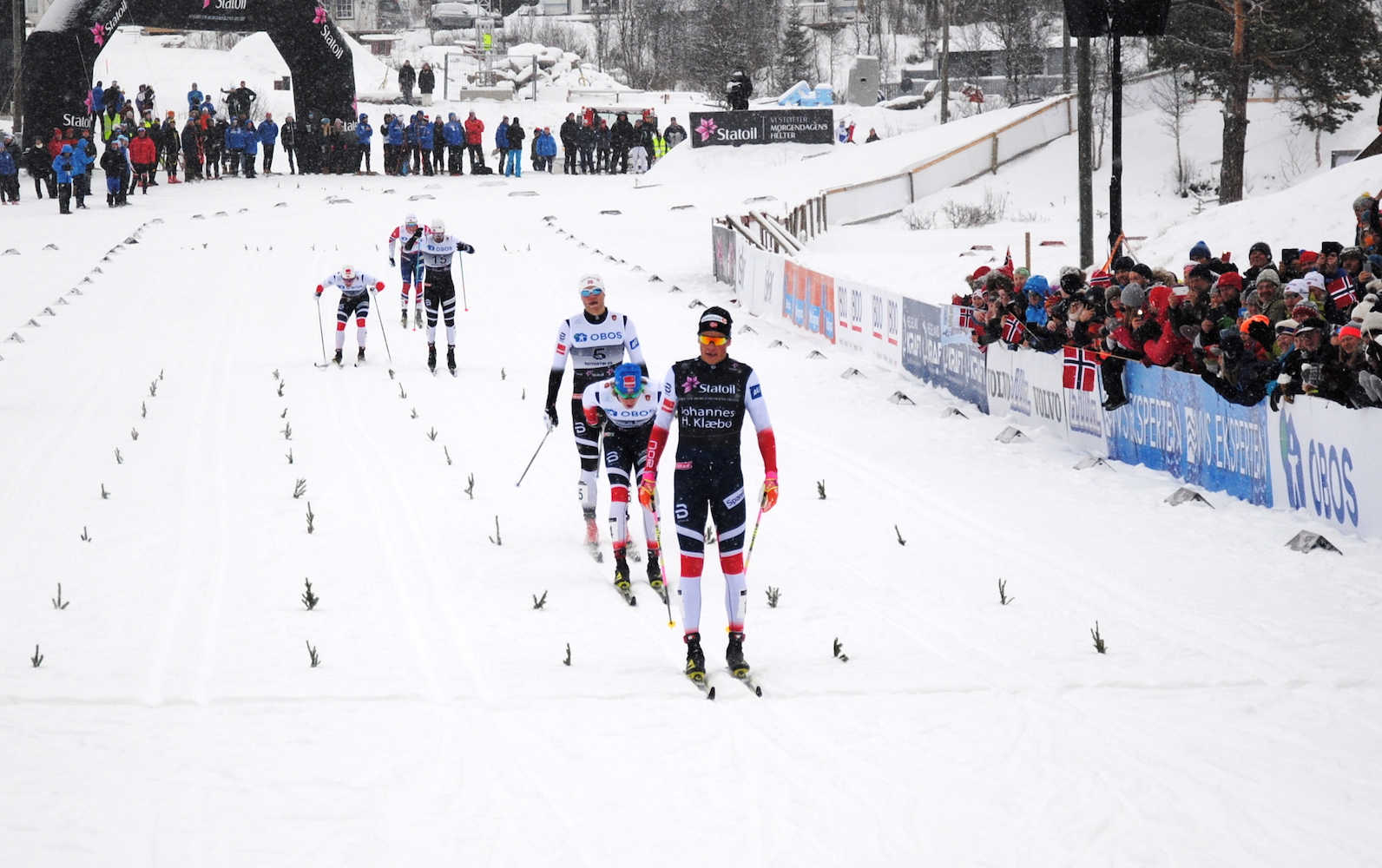
    American Cole Morgan (11) racing alongside Russia’s Alexander Bolshunov (1) in the men's semifinal of the U23 World Championships classic sprint on Tuesday at Soldier Hollow in Midway, Utah. (Photo: FlyingPointRoad.com)
    American Cole Morgan (11) racing alongside Russia’s Alexander Bolshunov (1) in the men’s semifinal of the U23 World Championships classic sprint on Tuesday at Soldier Hollow in Midway, Utah. (Photo: FlyingPointRoad.com)

    Two weeks after being officially selected to the U.S. team for 2017 senior World Championships, which will be held later this month in Lahti, Finland, 22-year-old Cole Morgan still felt like he had something to prove, goals to chase, races to qualify for.

    That’s where U23 World Championships came in. For Morgan, a former University of Vermont skier who graduated last spring and began a professional racing career with the Sun Valley Ski Education Foundation (SVSEF) in Sun Valley, Idaho, his goal for the one race he was competing in at his first U23 Worlds was to finish in the top 12 — which would secure his spot at 2017 World Cup Finals, according to the U.S. Ski Team’s selection criteria.

    So he went after it on Tuesday at Soldier Hollow in Midway, Utah, racing to 11th in the men’s 1.5-kilometer classic-sprint qualifier, 8.19 seconds off the fastest time set by Russia’s Alexander Bolshunov in 3:36.52. Morgan went on to take second in his quarterfinal, 0.85 seconds behind Bolshunov in first, and fifth in his semifinal for ninth overall.

    “Coming into these championships already having qualified for World Champs honestly didn’t really take of any of the pressure to perform,” Morgan wrote in an email after Tuesday’s sprint.

    He had drawn the attention of U.S. coaches and earned the final men’s sprint spot on the U.S. World Championships team in a tiebreak, based on his SuperTour results, according to U.S. Head Coach Chris Grover.

    “If anything I feel like I put more pressure on myself because I felt that I had to prove that I deserve that spot and really wanted to show that I can mix it up with guys with World Cup experience,” wrote Morgan, who has never started a World Cup.

    Once he had successfully achieved a top 12 by making the semifinals, “I just wanted to give it my best in the semi and see how far I could go,” Morgan wrote.

    His quarterfinal strategy had been to stick behind Bolshunov.

    “I had a really good start and was able to tuck right in behind him right after the start,” Morgan explained. “From then on I just skied behind him for the rest of the course and remained in contact over the last climb. I had some of the fastest skis out there today and was able to come around him on the outside into the finish but didn’t have as much left in the double pole finish.”

    Bolshunov crossed the line first in 3:38.13 and Morgan followed in second to automatically advance to the semifinal. Behind him, Slovenia’s Miha Šimenc finished third (+1.2) and the second American in the heat, Paddy Caldwell was fourth (+6.17).

    American Paddy Caldwell (20) racing to fourth in his quarterfinal at Tuesday's U23 World Championships men's classic sprint at Soldier Hollow in Midway, Utah. He ended up 18th overall, his best sprint result at U23 Worlds. (Photo: FlyingPointRoad.com)
    American Paddy Caldwell (20) racing to fourth in his quarterfinal at Tuesday’s U23 World Championships men’s classic sprint at Soldier Hollow in Midway, Utah. He ended up 18th overall, his best sprint result at U23 Worlds. (Photo: FlyingPointRoad.com)

    Caldwell, of the Stratton Mountain School (SMS) and U.S. Ski Team D-team, was one of three U.S. men to reach the rounds after qualifying in 20th (+14.68). With his quarterfinal result, he ended the day in 18th for his best sprint result by 25 places at his third U23 World Championships.

    Morgan’s Sun Valley teammate, Jack Hegman qualified 23rd (+15.59) and finished sixth in the last quarterfinal, 5.71 seconds behind Norway’s Chrisander Skjønberg Holth in first. That put Hegman 28th overall at his first U23 Worlds (after having competed in 2014 Junior Worlds). Cal Deline (Dartmouth) narrowly missed the heats after placing 31st in the qualifier, 0.14 seconds out of 30th.

    In the first men’s semifinal, Norway’s Fredrik Riseth, who had qualified fourth and won the first quarterfinal, beat Bolshunov to the line in 3:35.21. The Russian finished 0.28 seconds back in second, Norway’s Joachim Aurland followed in third (+0.68), and Russia’s Alexey Chervotkin (who spent the better part of this season on the World Cup) was fourth (+2.8). Morgan finished fifth (+9.67), ahead of Sweden’s Axel Ekström, also a World Cup skier who finished 32nd in the Tour de Ski, in sixth (+10.74).

    Morgan explained that he used his quarterfinal strategy in the semifinal and was in a good position until the downhill before the last climb.

    “I was just too blown out from my quarter to push the last hill at all,” he wrote. “I was in sixth off the back at the top but was able to make up some good time on the downhill and the finish with my skis to move into fifth.

    “I’m really happy with this result as I met my goal for the championships and felt good about where I’m at with my skiing,” Morgan added. “This is my only event this week so I was stoked to have a good one.”

    Next on his agenda: the 34 k Boulder Mountain Tour on Feb. 4 in Sun Valley before leaving for Finland on Feb. 16.

    Norway's 21-year-old Fredrik Riseth (4) celebrates his U23 World Championships classic sprint win on Tuesday, which he took by 1.05 seconds over Russia’s Alexander Bolshunov, at Soldier Hollow in Midway, Utah. Riseth won the classic sprint two years ago at 2015 Junior Worlds. (Photo: FlyingPointRoad.com)
    Norway’s 21-year-old Fredrik Riseth (4) celebrates his U23 World Championships classic sprint win on Tuesday, which he took by 1.05 seconds over Russia’s Alexander Bolshunov, at Soldier Hollow in Midway, Utah. Riseth won the classic sprint two years ago at 2015 Junior Worlds. (Photo: FlyingPointRoad.com)

    Meanwhile on Tuesday, the four men who finished ahead of Morgan in the semifinal plus Russia’s Andrey Sobakarev and Norway’s Holth (who placed first and second, respectively, in the second semifinal) advanced to the final. There, Riseth — who won the Junior Worlds classic sprint two years ago — beat Bolshunov again for the overall victory in 3:32.78. Bolshunov took silver, 1.05 seconds back, and Norway had two on the podium with Aurland in third (+2.3).

    Canada’s Evan Palmer-Charrette (NTDC Thunder Bay) was 0.92 seconds out of qualifying in 33rd (+18.21). He led Canadian teammates Julian Smith (NTDC Thunder Bay) in 34th (+18.59), Scott James Hill (Team Hardwood) in 35th (+18.73), and Alexis Dumas (CNEPH) in 42nd (+30.79).

    Results: Qualifier | Brackets | Overall
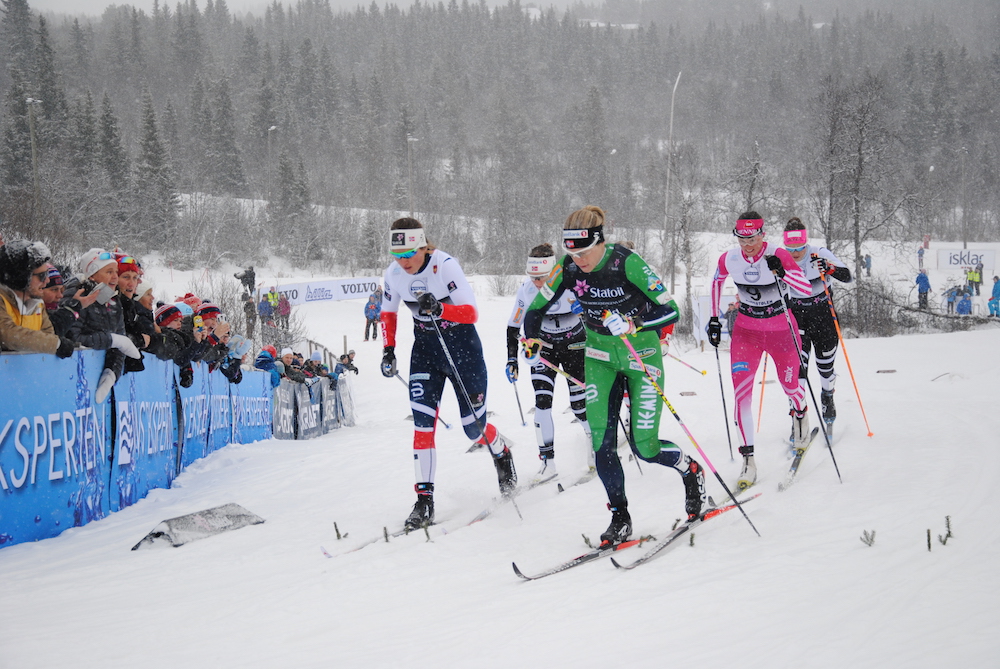
    The men's classic sprint podium on Tuesday at U23 World Championships at Soldier Hollow in Midway, Utah, with Norway's Fredrik Riseth (c) in first, Russia’s Alexander Bolshunov (l) in second, and Norway's Joachim Aurland (r) in third. (Photo: FlyingPointRoad.com)
    The men’s classic sprint podium on Tuesday at U23 World Championships at Soldier Hollow in Midway, Utah, with Norway’s Fredrik Riseth (c) in first, Russia’s Alexander Bolshunov (l) in second, and Norway’s Joachim Aurland (r) in third. (Photo: FlyingPointRoad.com)
  • Diggins Outlunges Sargent in Classic Sprint for 2nd Win of SuperTour Finals

    Diggins Outlunges Sargent in Classic Sprint for 2nd Win of SuperTour Finals

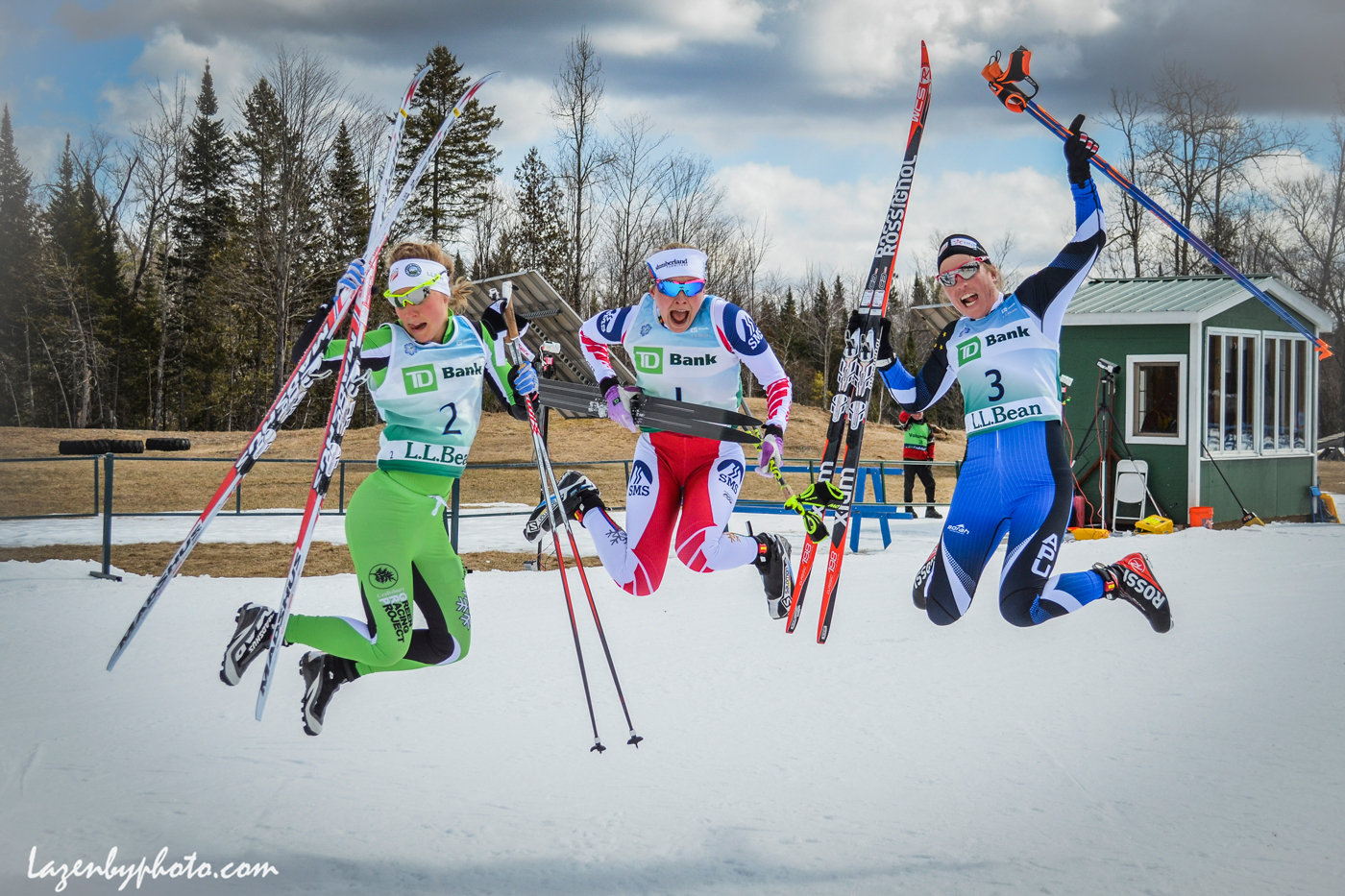
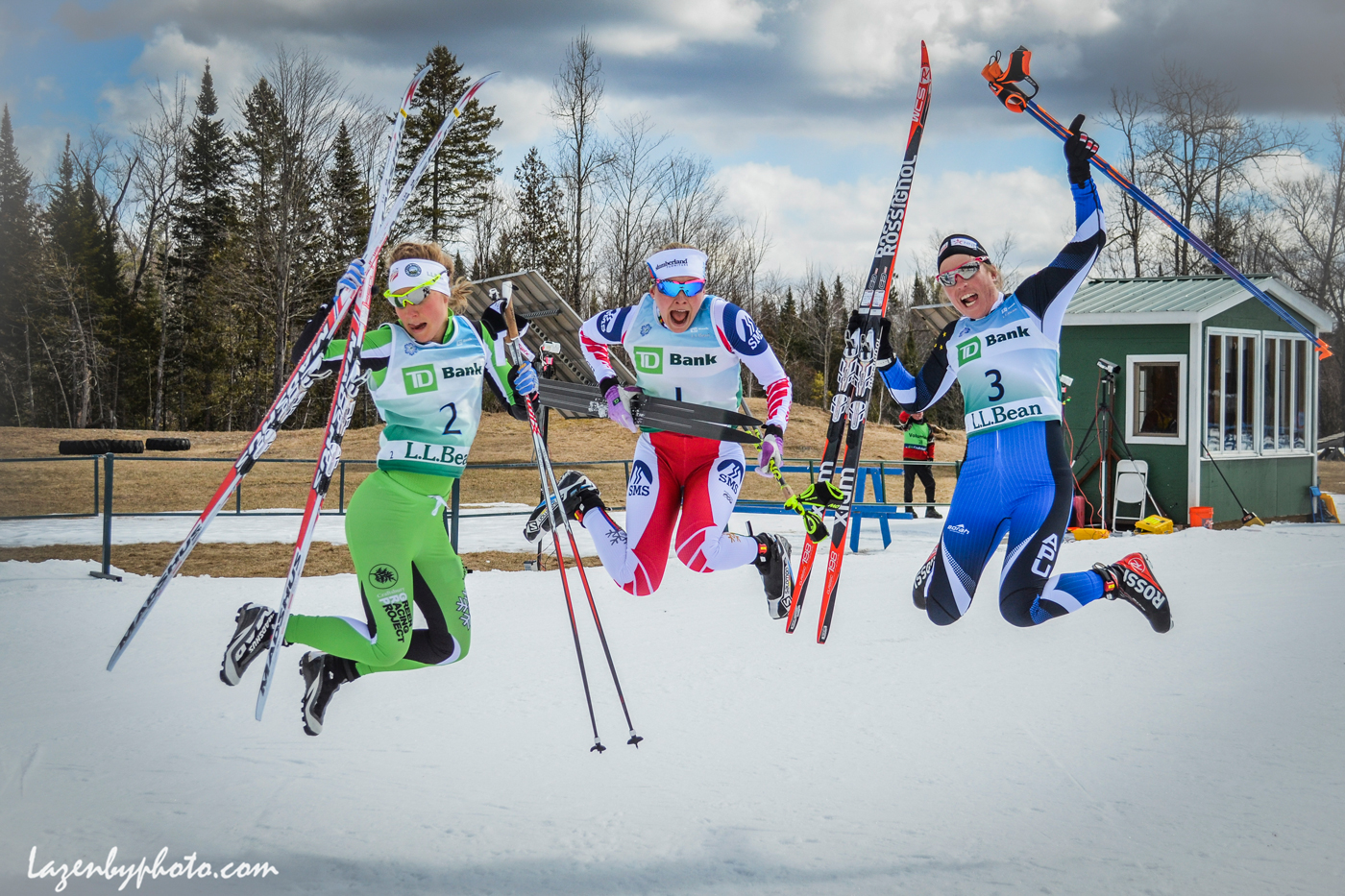
    The top three women in the SuperTour Finals classic sprint on Tuesday jump for joy: with winner Jessie Diggins (c), runner-up Ida Sargent (l) and third-place finisher Rosie Brennan (r). All three women are on the U.S. Ski Team but raced for their respective clubs in Craftsbury, Vt. (Photo: John Lazenby/Lazenbyphoto.com)
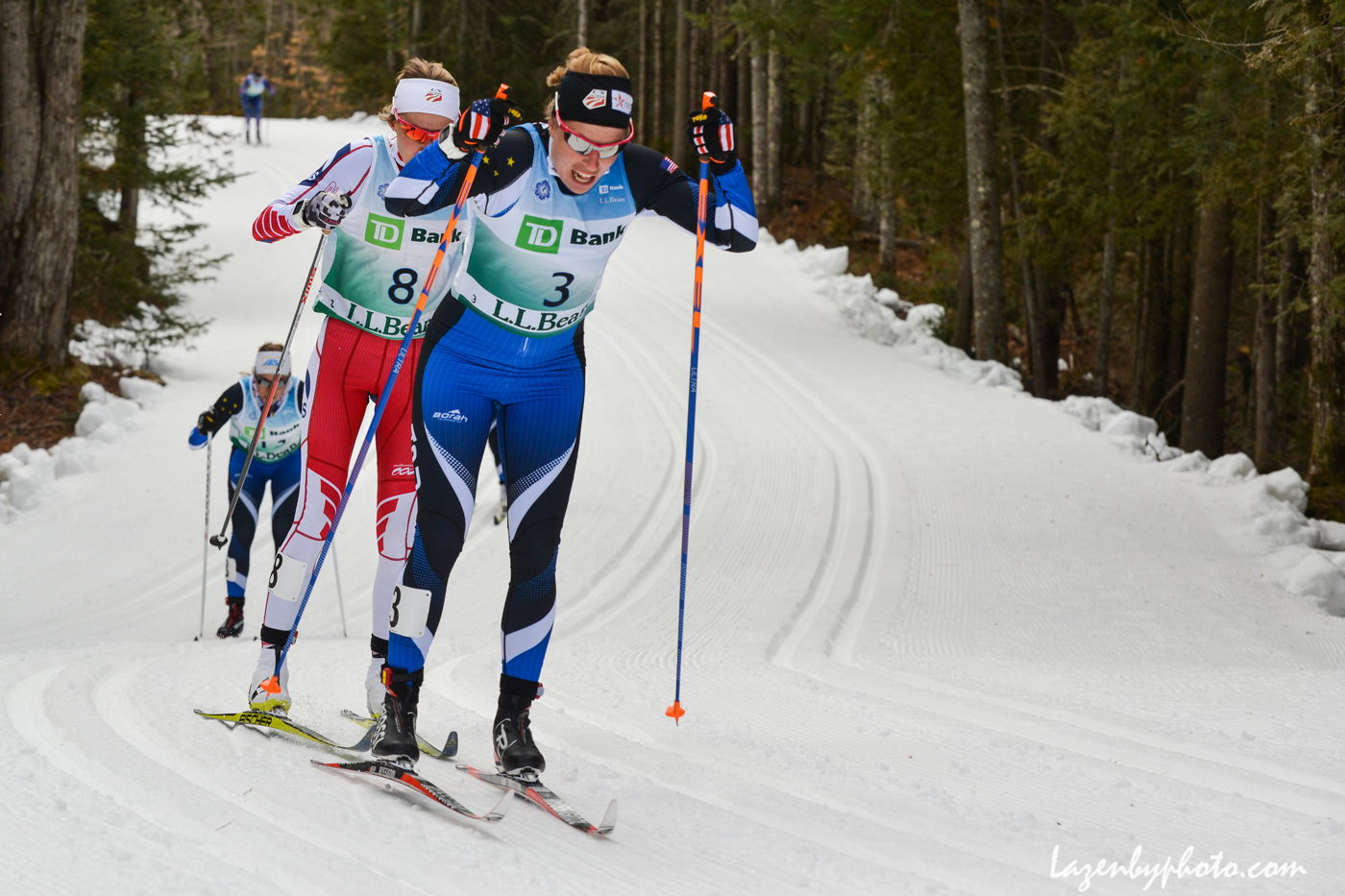
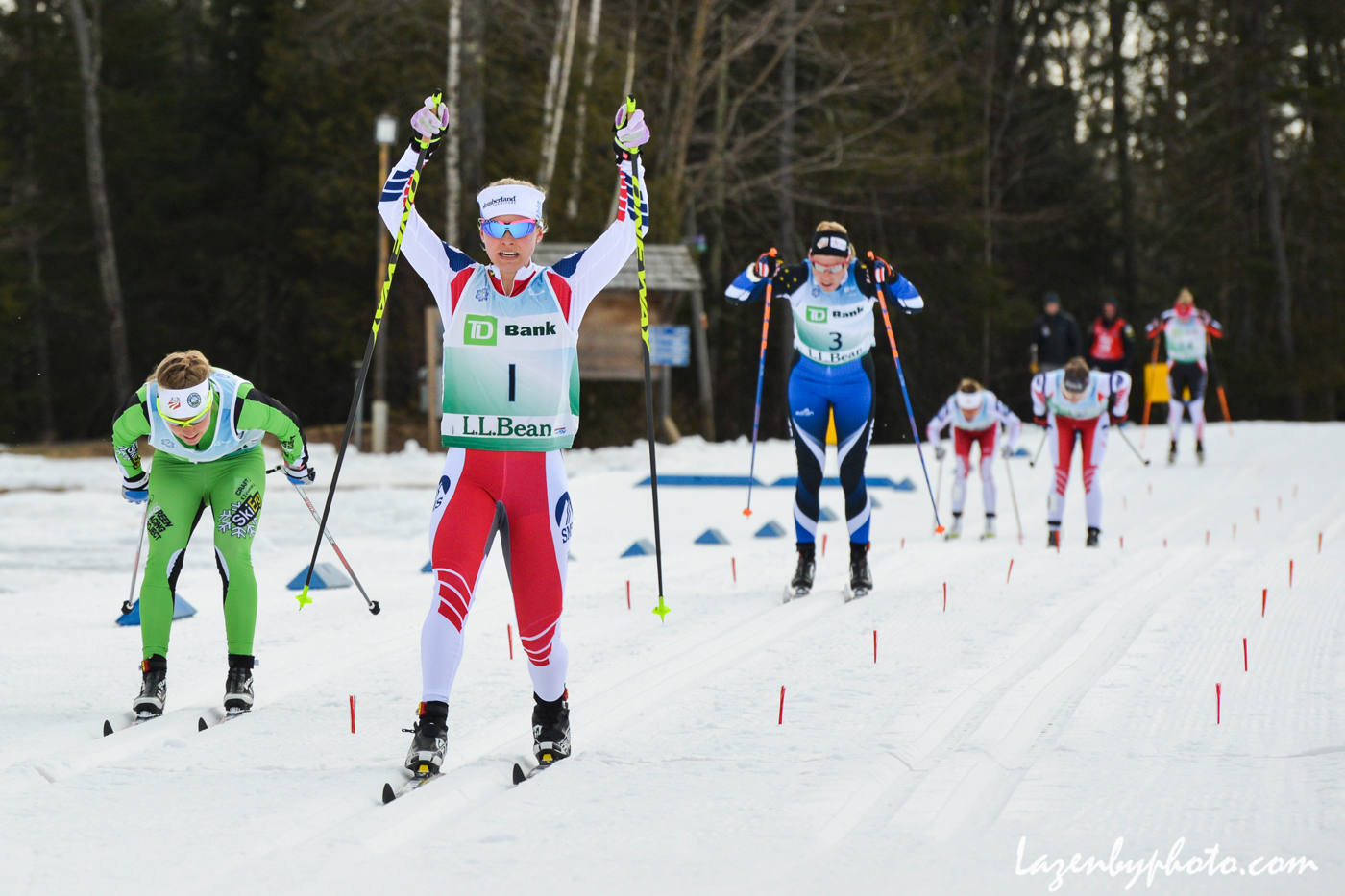
    The top-three women in the SuperTour Finals classic sprint jump for joy, with winner Jessie Diggins (c), runner-up Ida Sargent (l) and third-place finisher Rosie Brennan (r). All three women are on the U.S. Ski Team but raced for their respective clubs on Tuesday in Craftsbury, Vt. (Photo: John Lazenby/Lazenbyphoto.com)

    Note: This article has been updated to include comments from Sophie Caldwell and Dartmouth Nordic Assistant, Hilary McNamee.

    While the glamour of racing in a suit sporting the American stars and stripes at a World Cup is a tough experience to beat for many U.S. cross-country skiers, racing at home amidst friends and family in the club suit that started it all makes for a pretty close second.

    While U.S. Ski Team (USST) members have to leave their club tights behind during World Cup competitions, they’re quick to don them again when they return to domestic racing in the U.S.

    This holds especially true for Jessie Diggins, of the Stratton Mountain School (SMS) T2 Team and USST. Diggins raced to her second-straight SuperTour Finals win this week in the women’s 1.5-kilometer classic sprint on Tuesday in Craftsbury, Vt.

    “It was fun skiing in those red, white and blue SMST2 suits again and especially awesome to have half the final with my club teammates!” Diggins wrote in an email. “The atmosphere here is definitely more relaxed than a World Cup, with less pressure, which makes it just a lot of fun. And spring series is supposed to be fun!”

    After Diggins won the qualifier in a time of 3:30.60, she continued to dominate all three heats, ultimately winning the final in a slightly faster 3:30.27.

    Ida Sargent and her mother, Lindy, after Sargent finished second in the classic sprint final at 2016 SuperTour Finals in Craftsbury, Vt. (Photo: John Lazenby/Lazenbyphoto.com)
    Ida Sargent and her mother, Lindy, after Sargent finished second in the classic sprint final at 2016 SuperTour Finals in Craftsbury, Vt. (Photo: John Lazenby/Lazenbyphoto.com)

    Her USST teammate, Ida Sargent, of the Craftsbury Green Racing Project (CGRP) finished second in the final, 0.73 seconds behind. On the phone after, Sargent said that being club-proud before a home-crowd fueled her.

    “After all the World Cup racing it’s really fun to end the season here altogether, racing against club teammates and my U.S. Ski Team teammates and friends,” Sargent said. “ I live in Craftsbury, so … from the starters, to the timers, to the jury, I knew all of the [volunteers] …[including] my dad, who was one of the course control people out on course.”

    Third-place finisher, Rosie Brennan — also on the USST — said that racing the sprint for her club Alaska Pacific University (APU) also provides a visual of how domestic teams create opportunities toward the World Cup.

    “I’ve been on the other side of it, too, being on the SuperTour all year and doing really well and anxious to see how I do against the World Cup skiers,” Brennan said. “It’s important for us to come back and do these races because it … shows that path [towards other levels of racing] to everybody that’s here.”

    This seems to be true, for athletes and coaches alike.

    “[I]t’s always a blast to hop in with the fastest ladies in the country (and WORLD!!), just to know how FAST fast is,” Dartmouth Nordic assistant, Hilary McNamee, who qualified for the first quarterfinal, wrote in an email.  “That quarterfinal with Jesse Diggins, Annie Hart and Caitlyn Patterson… whoa. They don’t mess around. I like to keep in touch with what it feels like to train and race– the soreness, the nerves, the feeling of accomplishment because it allows me to better relate to the athletes I work with. ”

    The Final

    The club team charm continued in the final, at least for SMST2, with three Stratton skiers advancing through the quarterfinals and semifinals into the final heat.

    “[A]ny day the final has three SMS T2 suits in it is a good day,” Stratton’s Annie Hart, who finished fourth, wrote in an email.  

    Rosie Brennan (3) of APU leads Stratton's Sophie Caldwell (8) during their quarterfinal in the women's classic sprint at SuperTour Finals on Tuesday in Craftsbury, Vt. (Photo: John Lazenby/Lazenbyphoto.com)
    Rosie Brennan (3) of APU leads Stratton’s Sophie Caldwell (8) during their quarterfinal in the women’s classic sprint at SuperTour Finals on Tuesday in Craftsbury, Vt. (Photo: John Lazenby/Lazenbyphoto.com)

    The third SMST2 skier to toe the start line of the women’s final, alongside Diggins and Hart, was Sophie Caldwell, also of the USST.

    While SMST2 comprised the first half of the final start list, Brennan and Sargent as well as Jennie Bender, of the Bridger Ski Foundation, made up the second half.

    “In the final with so many talented ladies and World Cup winners, I just felt so excited,” Hart wrote. “Regardless of result, it is just such a great opportunity.”

    Out of the start, Caldwell and Diggins set the pace into the first downhill, according to Sargent.

    “Their skis were gliding faster I think and so I just kind of tucked in behind them,” she said.

    While Sargent pinpointed the lead pace pushers as Caldwell and Diggins, Brennan attributed the first race attack as one from Diggins and Sargent.

    “Jessie and Ida went off pretty hot on the start,” Brennan said. “I kind of made my move on the uphill to try and to get up to them.”

    After double poling the qualifier on skate skis for the first time, Bender qualified in 14th, 20.6 seconds behind Diggins. She then won her quarterfinal and advanced as a lucky loser from the first semifinal, and found her body fighting to keep pace in the final with Brennan, Diggins and Sargent up the first major climb.

    “I slipped a bit on the hill and just kind of ran out of gas,” Bender said on the phone. “I’ve never double poled a qualifier before, but I think it was a good experience … and I was happy to be in the final with this crew of girls. I just wanted to be more a bit more in that top five.”

    As the top five rounded into the finishing stretch, Diggins emerged in first, but Sargent refused to let her out of her sight.

    “Jessie and I were just drag racing up the climbs,” Sargent said. “And we were neck and neck in the last climb.”

    Jessie Diggins (1), racing for the Stratton Mountain School T2 Team, winning the women's classic sprint final at SuperTour Finals on Tuesday by 0.73 seconds over Ida Sargent (l) of the Craftsbury Green Racing Project. (Photo: John Lazenby/Lazenbyphoto.com)
    Jessie Diggins (1), racing for the Stratton Mountain School T2 Team, winning the women’s classic sprint final at SuperTour Finals on Tuesday by 0.73 seconds over Ida Sargent (l) of the Craftsbury Green Racing Project. (Photo: John Lazenby/Lazenbyphoto.com)

    However, in the final lunge to the line, Diggins took first by 0.73 seconds over Sargent. 

    “[Diggins] is just such a strong double poler,” Sargent said. “She poled just a little ahead on the last double pole to the finish, but I was psyched to be close to her.”

    Finishing third, 2.85 seconds back, was Brennan.

    “These were the first rounds of the year for me, basically actually since nationals last year.” explained Brennan, after spending the entire season on the World Cup. “I was definitely a little rusty … but it was fun to be able to ski the heats with [my World Cup teammates], especially Ida and Sophie and Jessie because they have been skiing heats all year. So to see how they do it, for sure, helps you learn how to ski different sections of the course better and, hopefully, not lose as much time.”

    About 3 1/2 seconds off the podium, Hart took fourth (+6.36), a result she was “psyched” about.

    “I think it was a testament and a good finale to all the hard work I’ve put into fitness and lasting through three very fast rounds,” Hart wrote.  “The most important thing I’ve learned, and where I’ve improved my sprinting and distance, is skiing with the confidence that I can compete. With each heat I had more and more confidence, and I think that showed in my racing [today].”

    Caldwell, who also celebrated her 26th birthday on Tuesday, finished the day in fifth (+8.85).

    “Yesterday was a fun day of racing with friends,” Caldwell wrote in and email on Wednesday. “I was really proud to have three SMS T2 skiers in the final and to watch Jessie win once again. I’m feeling the effects of a long season and am pretty tired and not skiing as fast as I would like to be, but it’s a great atmosphere and fun to be in the same place as the rest of the skiing community.”

    “Huge thanks to the outdoor and all the volunteers who have helped make this happen!” she added.

    Rounding out the final was Bender in sixth (+13.14).

    “Spring Series every year is always a bit more of a mental challenge,” Bender said. “But I’ve been enjoying the process.”

    So have a number of others, including McNamee.

    “In the last two years of working at Dartmouth and jumping into races, I’ve found that I actually race MUCH better than when I was an athlete,” McNamee wrote. “I think that is 100% mental. I’m no longer emotionally attached to my race results, which takes the pressure off entirely. Before, ski racing was so entangled with my self-worth, every bad result, every mediocre interval session was so corrosive to my self-confidence. Now, I don’t give a crap. I just appreciate the sport for all it’s ups and downs.”

    McNamee raced to 22nd overall, after qualifying in 20th, 24.53 seconds back from Diggin’s first place qualifing time of 3:30.6.

    “I come out of retirement about once a year, to throw down– mostly to preserve my street cred among the Dartmouth squad,” McNamee wrote in an email. “I’m very selective about the races…I try to time it for the end of the season when everyone else is tired and burnt out, so I look relatively good by comparison.”

    Racing picks up again Thursday with the mixed team relay event, with four members per team (two male, two female) racing 2 x 5 k classic followed by 2 x 5 k freestyle.

    Results: Qualifier | Final results | Brackets

  • SuperTour Finals Photo Gallery: Women’s Classic Sprint

    The last week of SuperTour racing taking place this year in Craftsbury, Vt. has already hit the halfway mark, with the women’s 1.5-kilometer classic sprint on Tuesday at the Craftsbury Outdoor Center. Check out some of the photos that capture the top moments of the event.

  • With No Pressure, Pellegrino Wins First Classic Sprint; Valjas 11th in Canmore

    With No Pressure, Pellegrino Wins First Classic Sprint; Valjas 11th in Canmore

    The men's top three (left to right) second place Erik Brandsdal (NOR), winner Federico Pellegrino (ITA), and third place finisher Maurice Manificat (FRA) after the the men's final 1.5 k classic sprint at the Ski Tour Canada on Tuesday in Canmore.
    The men’s top three in the fifth stage of the Ski Tour Canada, the 1.5 k classic sprint on Tuesday in Canmore, Alberta, with Italian winner Federico Pellegrino (c), Norway’s Eirik Brandsdal (2) in second, and France’s Maurice Manificat (r) in third.

    CANMORE, Alberta — Belay the pressure, bridal the win.

    Just ask Italy’s Federico Pellegrino, the winner of the men’s 1.5-kilometer classic sprint in Canmore on Tuesday.

    “Today … I was really without pressure, any kind of pressure,” Pellegrino told FasterSkier after the final, “Because the globe was in Italy.”

    After Pellegrino secured the Sprint World Cup Crystal Globe last week in Québec City, he entered the Ski Tour Canada’s fifth stage–trophy still in tow–with no weight on his shoulders.

    Italy's Federico Pellegrino celebrates his first-ever World Cup classic sprint victory, ahead of Norway's Eirik Brandsdal (r) and France's Maurice Manificat, the latter of which reached his first sprint final on Tuesday for third overall in Canmore, Alberta.
    Italy’s Federico Pellegrino celebrates his first-ever World Cup classic sprint victory, ahead of Norway’s Eirik Brandsdal (r) and France’s Maurice Manificat, the latter of which reached his first sprint final on Tuesday for third overall in Canmore, Alberta.

    “I raced like this in the first month of the season and I won four times,” said Pellegrino, the first non-Norwegian or Swedish male to win the overall Sprint World Cup.

    “Then when I started to think about the globe I had some problems — in my mind,” he added. “But after Gatineau, after Québec City, after I won the globe, I was without any kind of pressure.”

    Pellegrino’s win in the sprint final on Tuesday, which he secured in a time of 3:43.33 minutes, stood as his second World Cup classic sprint podium–after placing third in 2013 in Davos, Switzerland–and his first classic-sprint career win.

    “Turn after turn, it was always better for me and for my skis,” Pellegrino said. “My goal for today was to pass the quarterfinals and then to pass the semifinal and then to win the final. And when you realize your goals, it’s so good.”

    The Final: Pellegrino On the Prowl, Northug On Standby

    Seeing the likes of Petter Northug strolling around a sprint course? At the start of the final, the Norwegian wasted no time — or energy — making a statement about his final sprint effort.

    “I was just skiing around and enjoying the great tracks,” Northug told FasterSkier afterward.

    Norway's Petter Northug (lower left, looking back) stops to watch the results of his own final during the men's 1.5 k classic sprint at the Ski Tour Canada Stage 5 on Tuesday in Canmore, Alberta. (Photo: Peggy Hung)
    Norway’s Petter Northug (lower left, looking back) stops to watch the results of his own final during the men’s 1.5 k classic sprint at the Ski Tour Canada Stage 5 on Tuesday in Canmore, Alberta. (Photo: Peggy Hung)

    Some hypothesized it was a tactical move to save himself for the Tour’s later races. However, Northug’s usual cheeky charades also perhaps played into his decision to take his time.

    “I’m a really bad skier when it comes to finals,” Northug said. “I have to work on that.”

    Sprinting and sarcasm? More of the same from Norway’s notorious nordic celeb.  

    While Northug slowed to a trudge within the first few hundred meters, France’s Maurice Manificat, Pellegrino, and three other Norwegians — Finn Hågen Krogh, Martin Johnsrud Sundby and Eirik Brandsdal — burned the pace at the sound of the gun.

    “Our tactic was to try to get the pace as slow as possible for Petter and Martin, but these [Pellegrino and Manificat] didn’t want to,” Krogh said during a post-race press conference. “For sure, I wanted to stay as close to these guys as possible.”

    Heading into the second half of the Tour in Canmore, Northug and Sundby ranked in the top five, with Northug sitting in second and in pursuit of Russia’s Sergey Ustiugov in first. On Tuesday, Ustiugov won the qualifier and rocketed to first in his quarterfinal, but fell to fifth in his semifinal and did not reach the final. He placed ninth on the day, but remains 19.5 seconds ahead of Northug in the Tour.

    In the final, Manificat led the group up the first and second climbs, while Brandsdal, Krogh, Pellegrino and Sundby followed behind.

    “Perhaps I could have done a little better,” Sundby said during an interview after the race. “I have a major job to do for the next competition. But my shape is quite good. Better now than the beginning of the tour.”

    As the group looped back by the stadium, Brandsdal and Krogh moved to the front by the top of the third major course climb, with Pellegrino pressing hard to their right. Manifcat and Sundby losing ground at the top of the final descent.

    The men's classic sprint final on Tuesday in Canmore, Alberta, with France's Maurice Manificat (17) and Finn Hagen Krogh (9) leading up the first of two climbs. (Photo: Peggy Hung)
    The men’s classic sprint final on Tuesday in Canmore, Alberta, with France’s Maurice Manificat (17) and Finn Hågen Krogh (9) leading up the first of two climbs, while Norway’s Eirik Brandsdal (2), Martin Johnsrud Sundby (l) and Italy’s Federico Pellegrino (behind Manificat) hang with the pack. (Photo: Peggy Hung)

    By the bottom of the last hill, however, the five finalists had regrouped for the finishing stretch.

    Pellegrino pulled Manificat in the right-most tracks, while Sundby, Krogh and Brandsdal stuck to the two center lanes. Manifact then maneuvered out from behind Pellegrino in front of Brandsdal, challenging the Italian from his left. Breaking free of Manificat, Brandsdal went left, ahead of Sundby.

    The final double-pole pushes, however went to the blue suit of Pellegrino, who outlunged Krogh by 0.54 seconds. Manificat was 1 second back in third place.

    “I didn’t know this morning that I would be on the podium with these guys, the best in the world,” Manificat said at a post-race press conference, sitting alongside Pellegrino and Krogh.

    In his first sprint final and first sprint podium, Manificat made it clear that he was not going to let that stop him from the prized step.

    “I’m not really a sprinter,” he said during an in-person interview. “[But] even if the legs burn and the body burns you have to stay focused.”

    With his previous best in a World Cup sprint being eighth–which he last achieved in both 2010 and 2011–Manificat referred to sprinting as “a game”. This season, the French men’s team found it’s a game they have won multiple times. At the last freestyle sprint in Quebec, France’s Baptiste Gros edged Canada’s Alex Harvey for the win.

    “We have for sure a good sprinter team this year,” Manificat said at a press conference. “They inspire us and especially me, and I tried to do something for the race today.”

    Just off the podium, Sundby placed fourth (+2.21), which was enough to move him up to fourth in the Tour, 1:55.3 behind Ustiugov and about 45 seconds behind fellow Norwegian Emil Iversen in third overall. Krogh finished fifth (+32.79) while Northug leisurely rounded the course, crossing the line 2:15.14 minutes back in sixth.

    Canada’s Valjas ‘Can’t Complain’ in 11th; Harvey In Need of ‘Reflection’

    Canada's Len Valjas racing to 18th in the qualifier at the Stage 5 classic sprint at the Ski Tour Canada in Canmore, Alberta. Valjas went on to place 11th for his second-best result of the season. (Photo: Peggy Hung)
    Canada’s Len Valjas racing to 18th in the qualifier at the Stage 5 classic sprint at the Ski Tour Canada in Canmore, Alberta. Valjas went on to place 11th for his second-best result of the season. (Photo: Peggy Hung)

    After getting to compete in Tuesday’s sprint heats in front of a home crowd, Canadian World Cup Team member Lenny Valjas said he “can’t complain.”

    While he didn’t reach the final, Valjas stood as the top North American on Tuesday, placing 11th after finishing sixth in his semifinal. The result was his second best of the season, after placing 10th in a classic sprint at the Tour de Ski earlier this year.

    “This was a dream come true to get back in the semi for the second time this year, back here at home,” Valjas said during an in-person interview. “I have my parents here, family. I couldn’t have picked a better day.”

    After qualifying in 18th, Valjas advanced to the fourth quarterfinal where he finished in third, 0.61 seconds behind Northug, who won that heat in 3:33.40.

    “In the quarterfinal, the skis were fantastic,” said Valjas, a 27-year-old Toronto native.

    He moved on to the second semifinal as the first of two lucky losers.

    Canada's Len Valjas (18) during his quarterfinal of the men's 1.5 k classic sprint at the Ski Tour Canada Stage 5 on Tuesday in Canmore, Alberta. (Photo: Peggy Hung)
    Canada’s Len Valjas (18) racing to third in his quarterfinal of the men’s 1.5 k classic sprint at the Ski Tour Canada Stage 5 on Tuesday in Canmore, Alberta. (Photo: Peggy Hung)

    “The semifinal I just started getting a bit tired,” he recalled. “I was I was sitting at the back and if you don’t push over the tops of the hills, you don’t get the same finishing speed.”

    The top Canadian fought for fifth at the top of the second climb, but ultimately settled for sixth, 7.76 seconds Manificat, who won that second semifinal in 3:45.07.

    “Usually I qualify and stop,” Valjas said regarding some of this season’s sprint races. “This is hard. Doing this three times today, that’s how you get fit for sprinting. It’s just the feeling of skiing fast when you’re dead. I’m not used to that, because I [have been] unlucky getting 31st so many times [this season]. … Next year, I want to get into the heats early.”

    Two Canadian men reached the heats, with Alex Harvey qualifying in 14th (+5.41) and ending the day in 21st overall.

    “Very disappointed with today’s result, even more so because I lost ground on the ones I am chasing and it allows for the those behind me to gain some ground after I kept them at bay in Quebec City,” Harvey wrote in a statement to the media.

    “My analysis and comments will come after I’ve had a chance to think calmly,” Harvey added. “The entire team will be part of the reflection.”

    Alex Harvey racing to 14th in the qualifier at Tuesday's classic sprint in Canmore, Alberta. He went on to place 21st overall after being eliminated in the quarterfinals. (Photo: Peggy Hung)
    Alex Harvey racing to 14th in the qualifier at Tuesday’s classic sprint in Canmore, Alberta. He went on to place 21st overall after being eliminated in the quarterfinals. (Photo: Peggy Hung)

    Despite skiing in second for much of the beginning of his quarterfinal, Harvey slipped back to fifth by the end of his heat, crossing 5.12 seconds behind Sundby, who won the third quarterfinal in 3:34.61.

    “He was definitely unhappy about the skis,” Canadian head coach Justin Wadsworth said after.

    Wadsworth added that the way Harvey raced the course’s corners could have also affected his speed in the quarterfinal.

    “Some places are sunny, some are in the shade, it’s all if you come out of the corner and you’re in kind of the wrong place,” Wadsworth explained. “If you hit a little bit of that wet snow that maybe somebody else didn’t hit, that’s game over coming into this long downhill and it translates into looking like bad skis.”

    Harvey slipped one spot to fifth in the Ski Tour Canada (STC) standings heading into Wednesday’s 30 k skiathlon.

    “It’s a bittersweet day,” Wadsworth said, referring to the juxtaposed performances of Harvey and Valjas, as well as 22-year-old Dahria Beatty’s breakthrough in 15th place in the women’s sprint. “In Alex’s case he got bumped out of the quarters and we’re going to use that as a positive and be more rested for tomorrow.”

    No American men qualified on Tuesday, with U.S. Ski Team member Erik Bjornsen leading the team in 44th. 

    “Just trying to keep it rolling,” Bjornsen said of the rest of the Tour. “[With] four races left, really looking forward to some of those distance races and finishing in the 15 k classic. That’s a good race for me.”

    Canada’s Devon Kershaw narrowly missed the heats in 33rd, Simi Hamilton (USA) placed 47th, Knute Johnsgaard (CAN) was 48th, Andy Newell (USA) 52nd, Patrick Stewart-Jones (CAN) 54th, Jess Cockney (CAN) 54th, Bob Thompson (CAN) 58th, Graeme Killick (CAN) 59th, Russell Kennedy (CAN) 61st, Reese Hanneman (USA) 62nd, Andy Shields (CAN) 64th, Kevin Sandau (CAN) 66th, Ivan Babikov (CAN) 68th, Noah Hoffman (USA) 69th, Simone Lapointe (CAN) 70th, Scott Patterson (USA) 72nd, Eric Packer (USA) 73rd, Michael Somppi (CAN) 76th, Tad Elliott (USA) 77th, Dakota Blackhorse-vonn Jess (USA) 78th, Brian Gregg (USA) 81st, and Matt Liebsch (USA) 83rd.

    — Gerry Furseth, Jason Albert, and Alex Kochon contributed

    Results: Qualifier | Heats | Tour standings (through Stage 5)
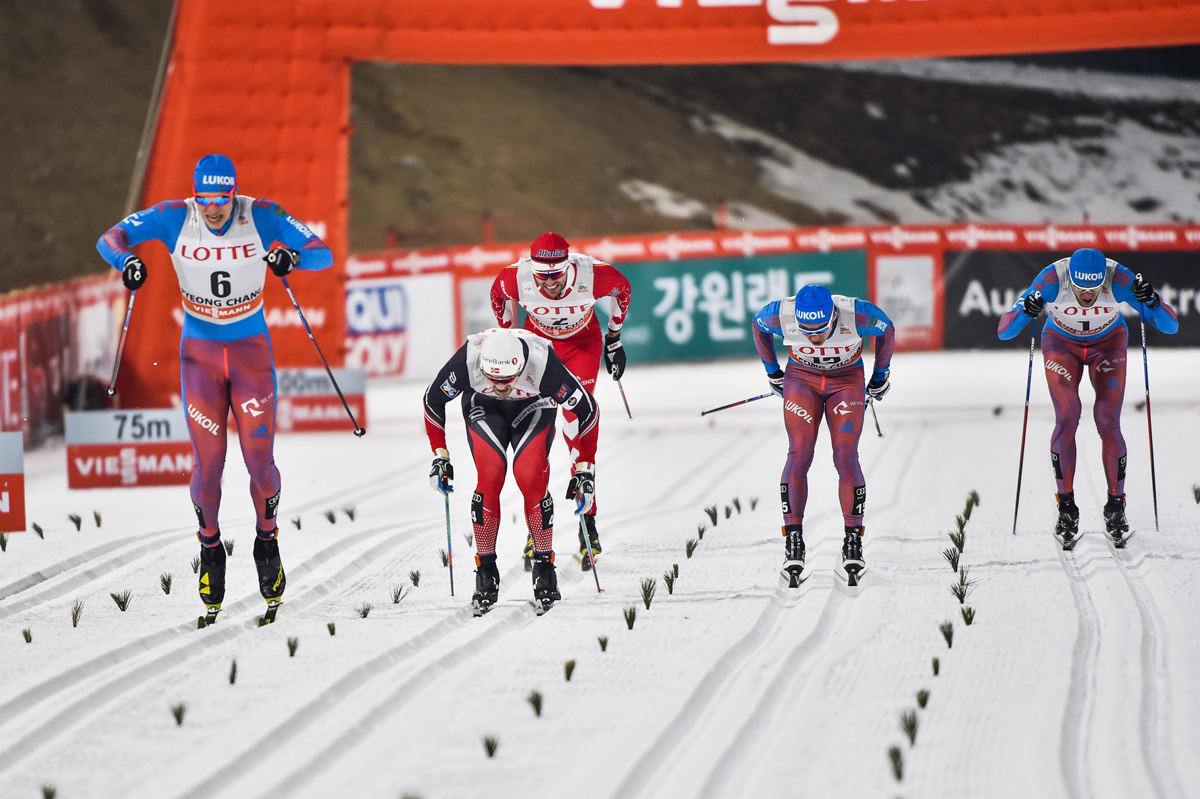
    Petter Northug (NOR) (l) high fives Remi Drolet (spectator) as he finishes his final lap during the men's 1.5 k classic sprint at the Ski Tour Canada on Tuesday in Canmore. (Photo: Peggy Hung)
    Norway’s Petter Northug (l) high fives Remi Drolet (spectator) as he finishes his final lap during the men’s 1.5 k classic sprint at the Ski Tour Canada on Tuesday in Canmore. (Photo: Peggy Hung)
  • Photos from U.S. Nationals: Classic Sprint

    Photos from U.S. Nationals: Classic Sprint

    HOUGHTON, Mich. — The last day of racing at U.S. Cross Country Championships on the Michigan Tech Trails wrapped up last Saturday, Jan. 9, with the 1.5-kilometer classic sprint. At the end of the day, Alaska Pacific University’s Eric Packer and Craftsbury Green Racing Project’s Kaitlynn Miller both walked away with their first U.S. national title. From the qualifier, to the rounds, to the podium ceremony, FasterSkier provides the day’s top moments in photos. Special thanks to Christopher Schmidt.

    Results: Overall | Qualifier | Heats
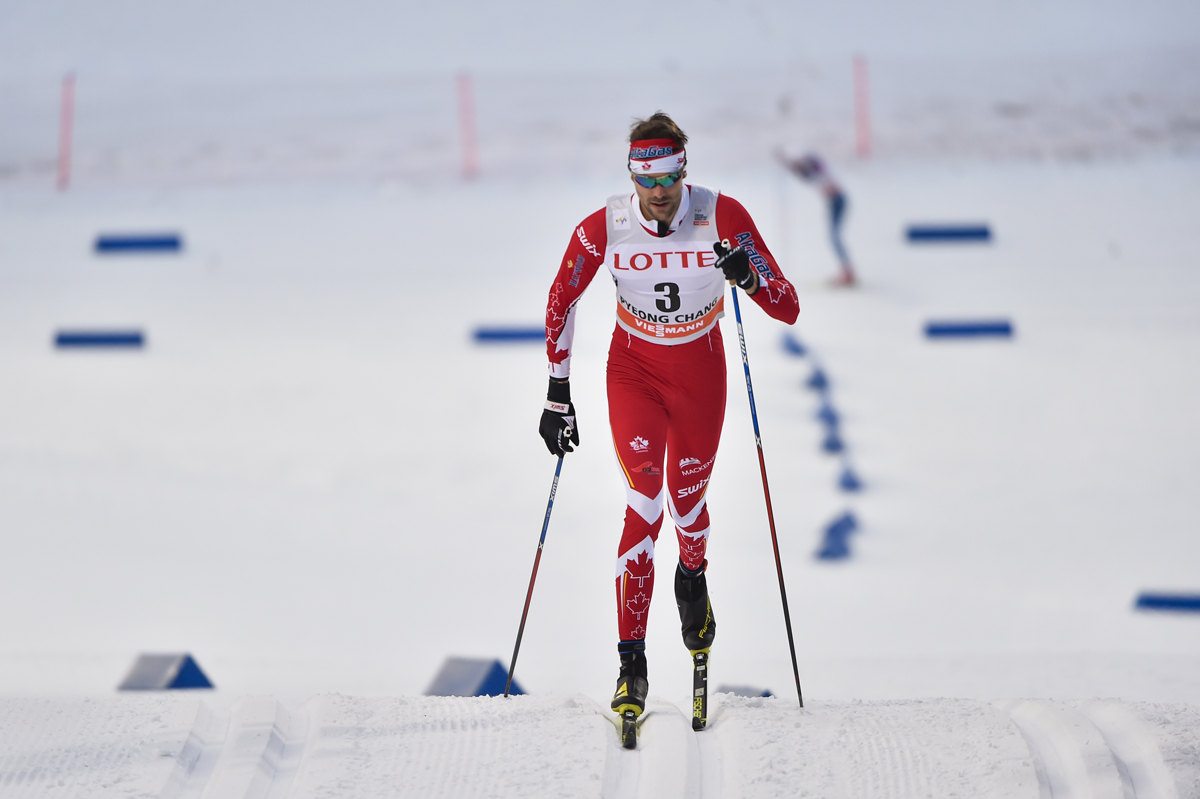
  • Packer Holds Off Hanneman for First National Title; APU Puts 3 in Top 4 in Classic Sprint

    Left to right: APU head coach Erik Flora runs along side APU athletes Eric Packer and Reese Hanneman during the final of the men's 1.5 classic sprint on Saturday at U.S. nationals in Houghton, Mich. Packer won the event, while Hanneman took second.
    Alaska Pacific University teammates Eric Packer (5) and Reese Hanneman (4) go head to head in the men’s 1.5 k classic sprint final on Saturday at U.S. nationals in Houghton, Mich., while coach Erik Flora (l) runs alongside them. Packer won the final by 0.67 seconds, denying Hanneman a sweep of this week’s sprints.

    HOUGHTON, Mich. — The step into the reality of a goal is at times, long awaited. It is a step that Eric Packer of Alaska Pacific University (APU), the race winner of the men’s 1.5-kilometer classic sprint at U.S. Cross Country Championships on Saturday, feels he has finally made.

    “I’ve dreamed of winning at nationals for a long time and to finally make it happen is really special,” said the 24-year-old during an in-person interview after winning his first U.S. nationals title on the Michigan Tech Trails. He had reached the national podium twice before: placing third in two races at 2012 nationals (classic sprint and 30 k classic mass start) in Rumford, Maine.

    After racing to fourth overall in the 15 k classic individual start a week ago, then 11th in the freestyle sprint on the same course last Monday, and 25th in the 30 k freestyle mass start on Thursday, Packer remained receptive to any opportunity afforded him during Saturday’s sprint.

    “The most challenging part for me was I was very tired after the qualifier,” said Packer. He qualified fourth, 4.74 seconds behind qualifying winner Didrik Fjeld Elset, a Michigan Tech freshman from Norway.

    “It’s the accumulation of the week of racing and it’s hard to stay with it and remember that even though it’s the end of the week, it’s still a national championship,” Packer explained.

    In the end, it was a challenge that left the Anchorage native unmatched in the final. To get there, Packer had won his quarterfinal and placed second his semifinal (behind Dakota Blackhorse-von Jess, of the Bend Endurance Academy) to automatically advance to the final.

    “[APU] had a great day and that’s really cool for Eric to win,” Blackhorse-von Jess said after racing to fifth in the final, 5.37 second off Packer’s winning time of 3:38.17.

    Along with Packer, APU’s Reese Hanneman and Tyler Kornfield also advanced to the final and placed second and fourth, respectively.

    APU teammates and brothers Logan Hanneman (7) and Reese Hanneman (4) lead teammate Tyler Kornfield (17), Welly Ramsey (Mountain Endurance Sports) and Fredrik Schwencke of Northern Michigan University (far left) during their quarterfinal of the men's 1.5 k classic sprint on Saturday at U.S. nationals in Houghton, Mich.
    APU teammates and brothers Logan Hanneman (7) and Reese Hanneman (4) lead teammate Tyler Kornfield (17), Welly Ramsey of Mountain Endurance Sports (27) and Fredrik Schwencke of Northern Michigan University (far left) during their quarterfinal of the men’s 1.5 k classic sprint on Saturday at U.S. nationals in Houghton, Mich.

    “My fiancé is trying on wedding dresses today, so I knew I had to win some money,” said Hanneman, the runner-up by 0.67 seconds. He got engaged last month.

    Beyond bridal bouquets, Hanneman also now has World Cup starts ahead of him.

    “I’m going to Europe [on Sunday] and I’ll race the sprints in Slovenia next weekend, all of Period 3,” said Hanneman, 26, also originally from Alaska. After that, he’s headed to Canada for the season-ending World Cup tour.

    Overall third place finisher, Elset, 22, crossed 1.05 seconds after Packer, and explained he was seeking redemption after the skate sprint.

    “I really wanted to do well today because I crashed in the semifinals on Monday,” Elset said.

    Out of six hungry finalists in the men’s field, the contention for the title would prove challenging — especially with some racers on skate skis.

    “I went with classic skis for the qualifier and then double poled all three heats,” Kornfield said. He finished fourth after Elset edged him in a photo finish for third. Both were given the same time. 

    Elset also double poled the final, after double poling the qualifier and his quarterfinal and semifinal as well.

    “It was OK for the first three heats, but in the final when the guys were fast, my arms were really, really tired,” Elset said. 

    Hanneman and Blackhorse-von Jess took the opposite route, opting to race classic skis throughout the day.

    Though another Norwegian, 23-year-old Håkon Hjelstuen, a former Michigan Tech skier, dabbled with double poling, he ultimately went with classic skis in the final.

    “I tried it in the semis. It’s kind of a game,” Hjelstuen said after placing sixth overall, 24 seconds behind Packer.

    Figuring that most racers would use skate skis during the quarterfinals and then switch to classic skis in the semi, Hjelstuen hoped to catch other competitors off guard.

    “I thought, ‘OK, the other guys are probably doing it in their quarters and then maybe switching,’ so I was trying to switch the other way,” the Norwegian explained.

    Also hoping to gain more control over his heats, Kornfield reasoned he made the right choice to double pole through the rounds.

    “All my heats had mixtures of skate skis and classic skis so the downhills; it was obvious who could take the turns better,” Kornfield said. “Because I could take better lines than the classic skiers, I was able to choose where I wanted to go.”

    The start of the men's classic sprint final (from left to right), with Didrik Elset of Michigan Tech, Dakota Blackhorse-von Jess of Bend Endurance Academy ), Tyler Kornfield (APU), and Reese Hanneman (APU) at the start of the final for the men's 1.5 k classic sprint on Saturday at U.S. nationals in Houghton, Mich. (Photo: Christopher Schmidt)
    The start of the men’s classic sprint final (from left to right), with Didrik Elset of Michigan Tech, Dakota Blackhorse-von Jess (Bend Endurance Academy), Tyler Kornfield (APU), and Reese Hanneman (APU). Eventual winner Eric Packer is not shown. (Photo: Christopher Schmidt)

    The light snowfall, track traffic during rounds, along with the course’s lengthy climb to the finish, made decisions on ski choice largely up to the individual.

    “I tested classic versus skate in the morning and the tracks were really weird,” Packer observed.

    “It was glaze-y in places and new snow, so my skate skis were a little bit faster for the double pole and I double poled in the qualifier in the morning, but then I switched to classic for all the other heats,” he explained.

    The Final: From Start to Finish

    With four racers in the final on classic skis and the rest on skate, the final men’s race of the day took off at the sound of the gun, those on skate skis pushing the pace early on.

    “I took the start and I wanted to go kind of hard down the hills in the beginning to take advantage of my good glide,” Elset said. “From there on in, it was just answering the attacks that came from the guys with good kick.”

    While Elset and Kornfield remained in the lead for the first part of the course, the rest of the field was forced to hunt for the front.

    “The guys [on skate skis] got in front and were gliding a little bit faster on the first downhill,” Hanneman recalled. “I couldn’t get my own track on the first hill, so I was kind of forced to just hang back. … I tried to make a pass on the inside, but I realized that was just going to cause a big mess, so I kind of backed off a little bit.” 

    Still a tight pack after cresting the first uphill, the group made their way into the corner before the next big climb.

    Coming out of the corner to the second large climb, it was Hanneman who made the first move to take the lead.

    “On that second big climb I was able to get my own track so then I was able to put the hammer down and kind of put some space between me and the skate ski guys,” Hanneman said.

    Following Hanneman, Packer also saw his chance to better position himself for the second half of the course.

    “Tyler and Didrik were driving the pace and then Reese pulled out on the side and was able to pass them striding,” Packer said. “I jumped in behind Reese and together we broke away a little bit on the second climb.” 

    As Packer and Hanneman maneuvered their way to the front, the battle behind them ensued.

    “I was leading up until the second big uphill, and I just didn’t have enough power to get over the top fast enough to be within range of Packer and Reese,” Kornfield said.

    APU coaches and wax techs celebrate with hugs after having three APU athletes in the top four, including overall race winner Eric Packer (not shown) for the men's 1.5 k classic sprint on Saturday at U.S. nationals in Houghton Mich.
    APU coaches and wax techs, including head coach Erik Flora (l) celebrate after three APU athletes finished in the top four, including overall race winner Eric Packer (not shown) at the men’s 1.5 k classic sprint on Saturday at U.S. nationals in Houghton, Mich.

    “Didrik led down the hill, but Reese pulled up alongside him on the second climb,” Blackhorse-von Jess explained. “I was back there trying to pick my way through traffic, trying to get back in contact with the main group. [Hjelstuen] was in fifth and he kind of got detached and I got stuck behind him a little bit. Eventually, I got around him, but I just couldn’t close it to the big group.”

    After moving around the sixth-place Norwegian, who advanced to the final as a lucky loser, Blackhorse-von Jess explained, “I went for it, but I chose the wrong lane I guess, so I lost some speed in that downhill before the last uphill. Still, I would rather go for it than go for nothing.”  

    With that, the finalists rounded the last corner on course, a sea of blue in the lead.

    Packer cornered first, Hanneman centimeters to his left and Kornfield in the center lane just behind.

    In the lane to the left of Hanneman and Kornfield was the gold suit of Michigan Tech’s Elset closing in on the three APU skiers.

    “On that final turn, Packer and I were having a double-pole battle,” Hanneman said. “He came out of that turn a little faster than I did, so he pulled faster than I did and we were side by side.” 

    Packer then made his move around Hanneman in the final 100 meters.

    “In the finish, I jumped out from behind Reese to make a pass and I jumped out into a super-slow lane that was filled with new snow,” Hanneman said. “So I just double poled as hard as I could and got by and then once I got past him I tried to get back into a faster track.” 

    As the teammates battled for first, Packer outlunged Hanneman at the line by about six-tenths of a second.

    Not far behind Hanneman and Packer, Elset challenged Kornfield for third. In an extremely close photo finish, Elset came away with the overall podium finish, though Kornfield stood as the third American at the end of the day. Blackhorse-von Jess finished about four seconds later in fifth and Hjelstuen rounded out the final in sixth.

    With his first U.S. nationals win packed away, a euphoric Packer stood on the top of Saturday’s men’s sprint podium.

    “It feels amazing,” he said. “It’s a dream come true.”

  • Miller Owns Classic Sprint on Final Day of U.S. Nationals

    Miller Owns Classic Sprint on Final Day of U.S. Nationals


    Miller of CGRP (bib 101) outsprints Hart (bib 109) for the win in the final of the classic sprints (photo: Christopher Schmidt)
    Miller of CGRP (bib 101) out sprints Hart (bib 109) for the win in the final of the classic sprints (photo: Christopher Schmidt)

    HOUGHTON, Mich. — Kaitlynn Miller took charge of every heat she raced in during the women’s 1.5-kilometer classic sprint on Saturday, and in doing so, earned her first national title in the final race of 2016 U.S. Cross Country Championships.

    Miller, of the Craftsbury Green Racing Project, started the day with the fastest qualifying time of 4:19.42 minutes, 3.5 seconds faster than teammate Liz Guiney in second. The 24-year-old Miller went on to win her quarterfinal and semifinal en route to a commanding victory in the final over Anne Hart of the Stratton Mountain School (SMS) T2 Team and Jennie Bender (Bridger Ski Foundation), respectively.

    Earlier this week in the freestyle sprint at nationals, Bender had edged Hart for the win, Craftsbury’s Caitlin Patterson placed third, and Miller finished 0.7 seconds off the podium in fourth. Not all was lost: Miller had finished second to Patterson in the 10 k classic the day before for her first-ever podium at nationals.

    But on Saturday, the 24-year-old Miller seized the opportunity to stand one step higher on the podium, made possible by a no-nonsense strategy.

    The classic sprint was held on the same 1.5 k course as the freestyle sprint on Monday, featuring a descent at the start, followed by a punchy climb and descent and then a long uphill grind to the finish.

    Miller’s strategy was to take it out hard so she could lead and have more control of her race.

    “I really like to be able to pick my line on the downhills and choose my track on the way up,” she explained after the final. “It keeps me away from some of the mayhem.”

    Her aggressive approach was rewarded as she won both her quarterfinal and semifinal, first by 0.17 seconds ahead of Patterson and then by 1.09 seconds over Bender.

    Six women line up for the start of the classic sprint final on the final day of racing at U.S. Nationals in Houghton
    Six women line up for the start of the classic sprint final on the final day of racing at U.S. Nationals in Houghton (photo: Christopher Schmidt)

    “I figured if it worked in the quarterfinal and the semifinal, I would do it in the final,” Miller said.

    Again in the final, Miller took it out hard from the line while Hart tucked in behind her. Together they gapped the field, making it a two-woman race for the title.

    “I knew Kaitlynn Miller was having a really great day so my tactic was to get right on her and hopefully pull it off in the end,” Hart, 23, said.

    Behind them, Bender, Patterson, Becca Rorabaugh of Alaska Pacific University (APU), and Natalia Naryskina of Central Cross Country (CXC) jostled for the remaining places.

    Bender found herself in last heading down the first hill after picking a slow track off the start.

    “I actually got gapped a bit down that first hill and had to work a bit harder to catch up, but I charged the last hill to get into third,” she explained.

    Bender’s surge wasn’t quite enough to catch Miller and Hart, and she finished third, 4.19 seconds off Miller’s winning time of 4:16.53.

    As the two race leaders sprinted up into the stadium and into the finishing straight, it was all Miller.

    “We came to the finishing straightaway together and I swung out to try and pass her, but I just didn’t have it today,” Hart said. Miller held her off by 1.24 seconds for the win.

    For Hart, it was her second runner-up performance in as many sprints this week.

    “I really wanted to win, but if you would have told me a year ago that I would have been disappointed with second, I wouldn’t know what you were talking about,” she said. “It’s a great, competitive group of women and U.S. skiing is really taking off, especially on the women’s side, so any day you can be second is a good day.”

    Following a freestyle sprint title on Monday, Bender achieved her second podium of the week in third.

    “I am always hoping one of these years I’ll get a double-win in the sprints, but considering my classic sprinting has been touch and go, I’m happy with third,” Bender said. She has won two U.S. nationals skate sprints (2016 and 2014) as well as a classic sprint (2013) in her career.

    Miller (CGRP) takes her first national title in the classic sprints. Hart (SMST2) and Bender (BSF) added to their sprint podium count at U.S. Nationals taking second and third respectively (photo: Christopher Schmidt)
    Miller (CGRP) takes her first national title in the classic sprints. Hart (SMST2) and Bender (BSF) added to their sprint podium count at U.S. Nationals taking second and third respectively (photo: Christopher Schmidt)

    Patterson had to recover from some tactical missteps when she found herself boxed out after a slow start and lost momentum when she was forced wide on the icy and washed-out downhill corner.

    “At that point I had a free track in front of me, but not so much momentum or energy,” Patterson recalled. “I tucked behind Jennie and almost covered that move, but she had a little more energy than me coming into the final stretch.”

    Patterson placed fourth, 2.28 seconds short of her fourth podium in four races this week after winning both distance races (the 10 k classic individual start and 20 k freestyle mass start).

    Rorabaugh finished nearly 10 seconds after Patterson in fifth (+16.25). Like Patterson, she also said she made some sub-optimal tactical decisions in the final, which kept her from fighting for a podium.

    “The course is more tricky when it is not as slow as last year,” Rorabaugh explained, referring to the heavy snowfall that made last year’s classic sprint at nationals in Houghton feel like an endurance race. “This year you need to make decisions about when to kick and when to double pole.

    “In all honesty, I think people skied really well in the final,” she added. “People made good moves in the right places and I was just on my heels a bit.”

    Naryskina followed in sixth (+29.94) after advancing to the final based on time, as a two-time “lucky loser” out of both her semifinal and quarterfinal.

    Bender also attested to the strength of the field. “The other two girls [Miller and Hart] were striding really well,” she said. “I’m happy to be on the podium. It was a fight out there for sure.”

    Craftsbury teammates Kaitlynn Miller (r) and Caitlin Patterson (111) lead CXC's Natalia Naryshkina in their classic-sprint quarterfinal on Saturday at U.S. nationals in Houghton, MIch. Miller edged Patterson by 0.17 seconds to win the heat and went on to win the final for her first national title.
    Craftsbury teammates Kaitlynn Miller (r) and Caitlin Patterson (111) lead CXC’s Natalia Naryshkina in their classic-sprint quarterfinal on Saturday at U.S. nationals in Houghton, MIch. Miller edged Patterson by 0.17 seconds to win the heat and went on to win the final for her first national title.

    Patterson was thrilled for her teammate. “I could see her up ahead on the finishing straightaway ahead of Anne and even though I was suffering and trying to maybe catch third, I was so excited for her,” she recalled.

    For Miller, this was the pinnacle of a week of personal bests.

    “I am really excited. I was surprised, but I was looking forward to this race and I just went out there and gave it all I had,” she said. “I carried my momentum from my qualifier, through the heats and to the final.”

    Miller’s results at 2016 nationals have elevated her to second in the overall SuperTour standings behind Patterson. As the overall leader, Patterson plans to race Period 3 of the World Cup and will depart for Europe in late January.

    Period 2 SuperTour action will resume January 30-31 in Lake Placid, N.Y.

    Complete results | Finals

  • Canmore NorAm Roundup: Sandau and Beatty Win Two of Three

    Canmore NorAm Roundup: Sandau and Beatty Win Two of Three

    Kevin Sandau in the NorAm leader's bib sets the pace from the front of the pack in the men's 16.5 k freestyle mass start on the second day of the NorAm opener in Canmore, Alberta. His Alberta World Cup Academy teammate, Knute Johnsgaard, chases him down. (Photo: Alberta World Cup Academy/Twitter)
    Kevin Sandau in the NorAm leader’s bib sets the pace from the front of the pack in the men’s 16.5 k freestyle mass start on the second day of the NorAm opener in Canmore, Alberta. His Alberta World Cup Academy teammate, Knute Johnsgaard, chases him down. (Photo: Alberta World Cup Academy/Twitter)

    You’ve seen it on the World Cup, and now it’s happening at the domestic level: double poling a classic distance race, as seen at Canada’s NorAm opener in Canmore, Alberta.

    The top men went without kick wax for the 10-kilometer classic interval start on Saturday, Dec. 5, double poling around a 2.5 k biathlon loop.

    Kevin Sandau of the Alberta World Cup Academy powered to the win in 24:42.9 minutes, edging his AWCA teammate Knute Johnsgaard (National U23+ Development Team) by 2.9 seconds. Ian Murray (Capital Region Training Group) skied the fastest last lap to edge Brian McKeever of Canada’s Para Nordic Ski Team by 3.5 seconds for third, 9.5 seconds back from Sandau.

    In an email, Sandau, 27, explained that double poling was essentially a no-brainer on the Canmore Nordic Centre’s biathlon trails — flatter than the usual race course with shorter climbs.

    “Off the start I knew I needed to be aggressive as it was going to be a fast race,” he wrote. “Just gunned it off the start and trusted my body could clear the lactate from my arms on the downhills. Felt pretty solid throughout so wasn’t a bad plan.”

    Johnsgaard explained he would have preferred striding over double pole, so considering that, he was happy with second place.

    “Of course I would have liked to be 3 seconds faster! I was being extra careful not to do any skate or step turns, perhaps too careful,” Johnsgaard wrote in an email. “I just tried to pace things right and find the fastest part of the track. I was outside the track almost the whole race.”

    For Murray, third stood as his NorAm career best.

    “At the age of 37 I guess you could say I am coming into my groove,” Murray wrote. “I was 22nd on the first lap which was a bit slower than I hoped to start.  Kevin Sandau passed me when I was on my second lap and that kicked me into gear. I have been focusing on ski marathon racing the last couple of years so I’m still figuring out the pacing for the 10 and 15km races.”

    McKeever explained that he tried to build into the race, but was missing a few gears. “[I] was overly cautious about not skating, and consequently was not aggressive enough,” he wrote in an email.

    In his first time double poling a distance race, Colin Abbott (Yukon Ski Team) in seventh (behind CNEPH’s Alex Dumas in sixth) observed that the pacing is different.

    “You don’t max out aerobically as easily so the concern for pacing is trying not to burn your arms too soon in the race,” Abbott wrote. “I went out maybe a bit faster than was ideal, and definitely slowed on the last lap but don’t think the end result would have changed much if I started slower.”

    NDC Thunder Bay athletes (in green) took second, third and fourth in the women's NorAm 5 k classic interval start, behind  Sophie Carrier-Laforte (c) of the Pierre Harvey National Training Centre in first. (Photo: NDC Thunder Bay/Twitter)
    NDC Thunder Bay athletes (in green) took second, third and fourth in the women’s NorAm 5 k classic interval start, behind Sophie Carrier-Laforte (c) of the Pierre Harvey National Training Centre in first. Katharine Stewart-Jones (second from l) placed second, Alannah Maclean (second from r) with third, and Jenn Jackson (l) was fourth. Rocky Mountain Racers’ Andrea Dupont (r) placed sixth. (Photo: NDC Thunder Bay/Twitter)

    In the women’s 5 k classic race, Sophie Carrier-Laforte of the Pierre Harvey National Training Centre (CNEPH) won the two-lap race in 14:31.5, followed by U23 Development Team member Katherine Stewart-Jones (NDC Thunder Bay), 10.3 seconds back.

    Thunder Bay had two on the podium with Alannah Maclean in third, 17.9 seconds behind Carrier-Laforte, and another athlete in fourth: Jenn Jackson (+30.8)

    “I was aiming for a podium this week but didn’t expect to get it today,” Stewart-Jones wrote in an email. “It’s a very short race so I planned on going out really hard and just try to hold on to the same pace. On the first lap, I focused on skiing efficiently and then just went as hard as I possibly could on the second [lap].”

    She added that her double-pole work this summer appears to have paid off.

    While Stewart-Jones’s first lap ranked fourth and second lap was second-fastest among the women, Carrier-Laforte skied the fastest last lap. Andrea Dupont (Rocky Mountain Racers) was fastest on Lap 1, but faded on Lap 2 to place fifth (+36.0). Maclean posted the second-fastest opening lap.

    Saturday’s 10/15 k classic results: Men | Women
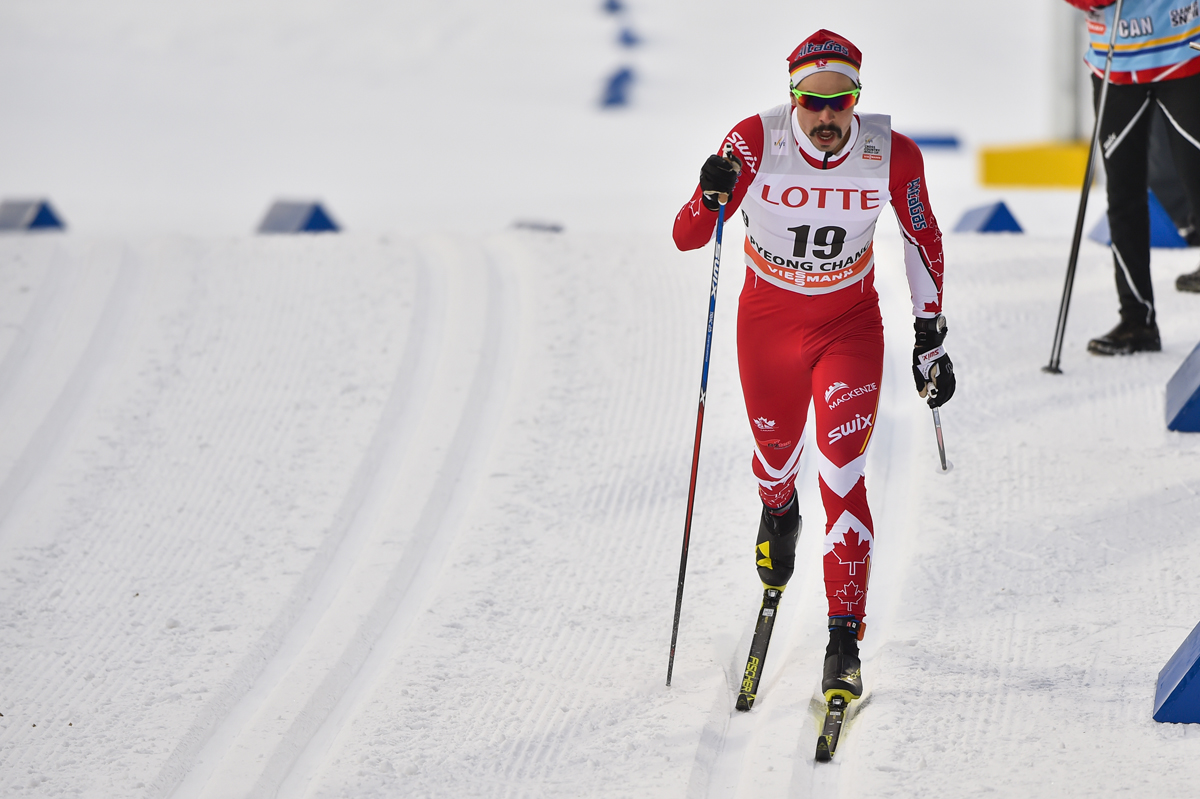
    Kevin Sandau (c) and his Alberta World Cup Academy teammates Knute Johnsgaard (l) and Patrick Stewart-Jones (r) placed first, second and fourth, respectively in the men's NorAm 16.5 k freestyle mass start on Dec. 6 in Canmore, Alberta. (Photo: Alberta World Cup Academy/Twitter)
    Kevin Sandau (c) and his Alberta World Cup Academy teammates Knute Johnsgaard (l) and Patrick Stewart-Jones (r) placed first, second and fourth, respectively in the men’s NorAm 16.5 k freestyle mass start on Dec. 6 in Canmore, Alberta. (Photo: Alberta World Cup Academy/Twitter)

    On Sunday, Dec. 6, Sandau repeated with a win in the second race of the season: the men’s 16.5 k freestyle mass start. The races were once again held on Canmore’s biathlon trails, this time on a 3.3 k loop.

    Sandau won it in 38:59.9, again ahead of Johnsgaard, who finished 36.6 seconds back in second. About a minute and 3 seconds behind Sandau, McKeever placed third, four-tenths of a second ahead of fourth-place finisher Patrick Stewart-Jones (AWCA).

    For Sandau, the race and the victory were even better than the day before.

    “The 15km skate played out a lot more to my strengths and really let me test out my fitness,” he wrote. “I knew before the start I just wanted to go full throttle right from the gun. It was a mass start, and there was a crazy westerly wind, so I knew this race was going to be easier to bunch up and make it harder to break away.”

    He strategized his pace changes for the bottom of the five-lap course, where there were two “decent climbs,” he explained. His fourth time around, he broke away from Johnsgaard and skied the rest of the race alone.

    “I knew once I could break away from anyone, I could really start to put some time in because they had to fight the wind just as much as I did at that point on,” Sandau wrote.

    Johnsgaard anticipated that Sandau would be the man to beat, “so the two of us started hard right out of the gate to try and lose the field as soon as possible,” Johnsgaard wrote.

    They broke away around 5 k, and while Sandau’s pace felt fast, Johnsgaard explained holding on until the last 3.3 k lap.

    “By that time I was hurting pretty bad and lost a lot of time on my last lap,” he wrote. “I thought everyone would catch back up to me but luckily we had opened up a big enough gap earlier on.”

    McKeever noted the superior shape of Sandau and Johnsgaard compared to him and the rest of the field. “It went as well as it could have,” McKeever wrote. “I played the tactics right and made the most of the day.”

    Dahria Beatty of the U23 Development Team and AWCA charged hard on the last lap of the women’s 10 k freestyle mass start to win by 8.8 seconds in in 27:07.5. Frédérique Vézina placed second and her CNEPH teammate Cendrine Browne (NST U23 Development Team) took the final podium step in third, 13.7 seconds behind Beatty. Another CNEPH skier Jaqueline Mourao, originally from Brazil, was 1.4 seconds off the podium in fourth. Mourao turns 40 later this month.

    “It’s always amazing to be able to win a race!” 21-year-old Beatty wrote in an email after her second senior NorAm victory. “I ended up leading most of the race. My original plan had been to sit back for the first lap in the pack and then if I felt strong push the long climb that was on both the second and third lap.”

    As she approached the climb on the second of three laps, she explained she tried to keep the pace high to “string out the pack.”

    “On the final lap on the same long climb I had a ski lengths gap coming off the downhill so I took advantage of that small gap and just skied as hard as I could without looking back,” Beatty wrote. “I didn’t let off at all until the final 500 meters when I finally checked to confirm the gap my coaches had been telling me I had.”

    Vézina wrote that, while she made a race plan and executed it well, mass starts are a toss up.

    “You can expect some things but at the end you can really make intelligent decisions once you are in the race,” Vézina wrote. “I’m happy with the way I managed my race.”

    Despite a broken pole at the beginning of the race and losing contact with the leaders, Browne was pleased to see where she stacked up at the start of the season.

    “You always ask yourself if you are in shape or not compared to the other skiers,” Browne wrote. “The tactics didn’t play out as planned … I was planning on leading with Dahria but it didn’t really work out because I had to make my way back to the front.”

    Sunday’s 10/16.5 k freestyle mass start results: Men | Women

    Women's Canmore NorAm classic sprint winner Dahria Beatty (AWCA/NST U23 Development Team) after her A-final victory. (Photo: CCC/Twitter)
    Women’s Canmore NorAm classic sprint winner Dahria Beatty (AWCA/NST U23 Development Team) after her A-final victory. (Photo: CCC/Twitter)

    On Tuesday, the final day of NorAm racing in Canmore, Beatty went on to win the women’s 1.5 k classic sprint final by 2.51 seconds over Browne. Earlier in the day, Browne topped the qualifier in 4:36.2, and Beatty was 6.8 seconds off the pace to qualify in fifth.

    Browne and Beatty both won their quarterfinals before facing off in the semifinal, where Browne took first by 1.62 seconds over Beatty in second. In the final, Beatty explained that for the first time in a race, she screamed in elation as she crossed the finish. It was her first senior sprint victory.

    “Going into this race I wanted to ski in the top two in all heats to avoid being stuck at the back of an accordion-effect after the herringbone climb. In all my heats I was able to do that,” she wrote. “Everyone’s skis were icing after this climb so it was easy to lose time kicking it off at the top. For the final I asked my coach to put a less sticky wax on so I would ice less and I think that made a big difference. I was still able to make it up the hills but more importantly I was able to crest the hill super aggressively on both laps, thus carrying more speed into the downhill.”

    With two big climbs separated by two downhills, Beatty explained that it made sense to push hard each time up. That made pacing simple; she simply wanted to be in front.

    “When I came down the last hill in the lead I went into sprint mode and didn’t look back,” she wrote. “I had to look at the results afterwards to realize how far behind the others were.

    Another great thing about today was the rain waited until the women’s race was over, bonus.”

    Dahria Beatty (l) and Jenn Jackson after Tuesday's NorAm classic sprint in Canmore, Alberta. Beatty won the race for her second-straight victory of the weekend, and Jackson placed third behind Cendrine Browne (not shown). (Photo: CCC/Twitter)
    Dahria Beatty (l) and Jenn Jackson after Tuesday’s NorAm classic sprint in Canmore, Alberta. Beatty won the race for her second-straight victory of the weekend, and Jackson placed third behind Cendrine Browne (not shown). (Photo: CCC/Twitter)

    Browne was pleased to win a sprint qualifier for the first time in her career and did so by four seconds over Jenn Jackson. Later in the final, she edged Jackson by 0.25 seconds for second place. Jackson was third, ahead of Andrea Dupont in fourth, Vézina in fifth, and Marie Corriveau (CNEPH/National Junior Team) in sixth.

    For Browne, 22, it was her second podium in a senior sprint.

    “In the semi final, my plan was to climb the last hill faster then Dahria so I would have more speed than her in the downhill. I had the same plan in the A final but it didn’t work out as well,” she explained. “I had a pretty high level of energy today but I still tried to manage it in the quarter final and in the semi final. … My skis were great. I had great kick and my skis were fast, and that helped me a lot.”

    Bob Thompson (Thunder Bay NDC) made the top 30 to qualify for the heats in the 1.5 k men’s sprint, but was more than 17 seconds off the pace in 20th. Johnsgaard set the time to beat in the qualifier in 3:51.05.

    In the quarterfinals, Thompson placed second to Julien Locke (Black Jack), but came back to beat Locke in the semifinal by 0.15 seconds. Thompson went on to win the men’s final by 1.24 seconds over Patrick Stewart-Jones.

    Cendrine Browne (CNEPH) edges Jenn Jackson (NDC Thunder Bay) for second in the women's NorAm classic sprint final. (Photo: CCC/Twitter)
    Cendrine Browne (CNEPH) edges Jenn Jackson (NDC Thunder Bay) for second in the women’s NorAm classic sprint final. (Photo: CCC/Twitter)

    “Definitely great to finish the day and the weekend with a win, seems I’m becoming notorious for coming off a poor qualifier and then figuring things out in the heats,” Thompson wrote in an email.

    After the quarterfinal, he switched from grip skis to zeros/rub skis, he wrote, “and they made a huge difference.

    “I definitely let my skis do a bit of work so I tried to keep the first lap in control and just keep a solid position in second or third and then just make sure to stay close over the top into the downhill to get the draft,” he added. “Tough day to try and lead into the downhill and finish.”

    “Bob was really strong in the finish today and I have to accept that,” Stewart-Jones wrote. “The final was a little bizarre because the pace started out fast, but then on the top of the climb on the second lap it slowed right down because it was so narrow and no one could get by the leader. The pack bunched right up and from there on it was pretty much a 6 way drag race to the finish.”

    Andy Shields (NDC Thunder Bay) placed third, 1.35 behind Thompson. Sandau was fourth, Locke fifth and Johnsgaard sixth.

    “The classic sprint was a big turnaround from how I was skiing on the weekend,” Shields wrote. “Distance skiing so far this year has felt terrible. Luckily my sprinting pep is still strong. I went on wax for the quarter and it was unbelievably fast.”

    With wet snow and rain before his semifinal, Shields switched to zeros, “which had crazy grip but lacked a bit in glide,” he wrote. “The techs were able to tune my zeros for the final. … Happy with now having NorAm podiums in both skate and classic sprinting, as well as podiums in both skate and classic distance.”

    Tuesday’s classic sprint results: Overall | Qualifying

  • Teammates Square Off in All-Norwegian Final; Brandsdal Wins in Beito

    Teammates Square Off in All-Norwegian Final; Brandsdal Wins in Beito

    An all-Norwegian men's podium on Saturday at the 1.4 k classic-sprint World Cup opener in Kuusamo, Finland. Eirik Brandsdal (c) won it, Petter Northug (l) was second and Sondre Turvoll Fossli notched a career-best third in his first World Cup final. (Photo: FIS Cross Country/Twitter)
    Eirik Brandsdal (c) after winning the 2014/2015 World Cup opening classic sprint in Kuusamo, Finland last November with runner-up and teammate Petter Northug (l) and Sondre Turvoll Fossli. (Photo: FIS Cross Country/Twitter)

    The men’s 1.5-kilometer classic sprint final on Sunday in Beitostølen, Norway, shaped up quite nicely for the home nation, the only country out of six with any athletes in the final. Even so, the all-Norwegian sprint finalists showed no mercy on one another, as Eirik Brandsdal was all smiles after beating Petter Northug by 0.6 seconds in the final.

    For the 29-year-old sprint specialist, race tactics were key to Brandsdal’s win.

    “In the finals, I got [what I] desired and planned,” he told Langrenn, according to a translation. “I knew that Pål [Golberg] would go strongly in front and that Petter would lie slightly behind.”

    With no no room for hesitation, Brandsdal accelerated up the final rise in order to get in front and sped toward the finish ahead of Northug.

    Eirik Brandsdal (NOR) and Len Valjas (CAN) charge to the finish line during the final heat.  Photo: Fischer/Nordic Focus.
    Norway’s Eirik Brandsdal (1) charges to the finish line for a World Cup classic sprint title in Drammen Norway, in 2012. (Photo: Fischer/Nordic Focus)

    After he made his move past Northug, Brandsdal recalled thinking one thing, ” ‘Do not look back. Imagine that you have the devil at your heels.’ “

    He told Adressa that “It was great to keep ‘the king’ behind [me] and on the run. It only [makes me] look forward to Kuusamo. I guess we have a new challenge there.”

    The World Cup season starts in less than two weeks in Kuusamo, Finland.

    While Brandsdal won the final in 3:38.3 — the fastest course time of the day — Northug placed second and Pål Golberg was third, 1.2 seconds back.

    The runner-up by six-tenths of a second, Northug declined to comment after the final. Throughout the day, his sprint rounds were nothing short of interesting, starting with his quarterfinal, which Northug won by 0.2 seconds over Norwegian up-and-comer Emil Nyeng, 24. Nyeng (Ringebu-Faavang Skiklubb) won the qualifier to start the day by 1.9 seconds over 23-year-old Sindre Odberg Palm (Spydeberg Il).

    Petter Northug racing in 2014 in Val di Fiemme, Italy. (Photo: Fischer/Nordic Focus)
    Petter Northug racing in 2014 in Val di Fiemme, Italy. (Photo: Fischer/Nordic Focus)

    Also in that quarterfinal, Northug, 29, faced off against his two younger brothers, Tomas, 25, and Even, 20. While Northug and Nyeng automatically advanced in the top two, France’s Baptiste Gros moved on as a lucky loser in third, and Tomas and Even placed fourth and fifth in the heat, respectively.

    “I know that I am better than them,” Petter Northug said of his brothers to Langrenn. “I did not choose [to] start as number two, but I gave my place to Even and stood in the second row.” 

    Northug qualified 11th, Even was 20th in the qualifier and Tomas made the cut in 30th.

    The trio didn’t back off the pace, posting the second-fastest quaterfinal heat time. In the end, however, only Petter advanced to the semifinals. There, Northug and Brandsdal raced neck-and-neck to the line, ending in a photo finish for the win. They advanced with identical times.  

    Previously, Brandsdal, who qualified fifth, topped Golberg by 0.6 seconds to win their quarterfinal.

    One name missing from the sprint final was Norwegian sprint specialist Ola Vigen Hattestad, who did not advance past the quarterfinals. Instead, Palm, Morten Eide Pedersen and Martin Løstrøm Nyenget rounded out the final, finishing fourth (+2.8), fifth (+4.9) and sixth (+6.5), respectively.

  • Americans Go 15th, 16th, 17th with Bittersweet Feelings After Otepää Sprint

    Americans Go 15th, 16th, 17th with Bittersweet Feelings After Otepää Sprint

    Simi Hamilton (l) and Switzerland's Gianluca Cologna going head-to-head in the quarterfinal of the men's 1.5 k classic sprint on Saturday in Otepää, Estonia. Hamilton placed third in the heat, ahead of teammate Andy Newell in fourth (not shown) and Cologna in fifth. (Photo: Fischer/NordicFocus)
    American Simi Hamilton (l) and Switzerland’s Gianluca Cologna going head-to-head in the quarterfinal of the men’s 1.5 k classic sprint on Saturday in Otepää, Estonia. Hamilton placed third in the heat, ahead of teammate Andy Newell in fourth (not shown) and Cologna in fifth. (Photo: Fischer/NordicFocus)

    Three Americans made the heats on Saturday, and all of them felt basically “meh” about their races.

    “If at first you don’t succeed…try, try again,” Sadie Bjornsen wrote in an online message after placing 15th in the women’s 1.2-kilometer classic sprint in Otepää, Estonia.

    In some ways, she found a good deal of success: Bjornsen qualified in 18th, 6,76 seconds behind Norway’s Ingvild Flugstad Østberg, who won the qualifier and went on to win the women’s final. Then the 25-year-old Bjornsen, who was coming off some of her best results of the season in her first Tour de Ski 10 days earlier, nearly secured a spot in the semifinal.

    Sadie Bjornsen (U.S. Ski Team) racing to 29th in the World Cup classic sprint on Saturday in Kuusamo, Finland. On Sunday, she placed 17th in the 10 k classic to lead the U.S. (Photo: Fischer/Nordic Focus)
    Sadie Bjornsen (U.S. Ski Team) racing to 29th in the World Cup classic sprint early this season in Kuusamo, Finland. (Photo: Fischer/Nordic Focus)

    But she was three-hundredths of a second short. In a photo finish for second in her quarterfinal, Bjornsen finished third to Sweden’s Magdalena Pajala, and was 0.34 seconds behind the heat’s winner of the heat, Kari Vikhagen Gjeitnes of Norway.

    According to U.S. Ski Team Head Coach Chris Grover, Bjornsen executed her tactics almost perfectly.

    “She skied great and of course she is not that happy with it because she has had a lot of qualifiers, but she has struggled to get through the quarterfinals this year,” he said on the phone Saturday. “She really wanted to get through there and man, did she come incredibly close.”

    In six sprints this season (two of which have been classic sprints), Bjornsen has made the quarterfinals in four of them, but yet to advance to the semifinals. Her best result this season has been 13th in the Tour de Ski freestyle sprint in Val Müstair, Switzerland.

    Out of the start, she challenged for the lead, but tucked behind Russia’s Anastasia Dotsenko after the two bumped slightly while vying for the same track. Pajala led the group out, with Gjeitnes coming up alongside the Swede at the base of the lone climb on the women’s course.

    Bjornsen skied hard to get directly behind Pajala, and with five women bunched together at the apex, she was fifth heading into the descent. Sweden’s Evelina Settlin went down moments later, slipping out of contention, and Bjornsen moved into fourth next to Gjeitnes.

    She rode her skis even with the Norwegian, tucking while Dotsenko had to stand up and double pole over the last rise, and Gjeitnes and Bjornsen caught Pajala rounding the corner into the finishing straight.

    While it looked to be a double-pole showdown for first between Bjornsen and Pajala, with Bjornsen slightly ahead early, Gjeitnes caught them both before the finish, and Pajala outlunged Bjornsen at the line.

    Sweden's Magdalena Pajala (second from l) edges American Sadie Bjornsen (l) for second behind Norway's Kari Gjeitnes (r) in the quarterfinal of the women's 1.2 k classic sprint on Saturday in Otepää, Estonia. Russia's Anastasia Dotsenko (second from r) pushes for fourth.
    Sweden’s Magdalena Pajala (second from l) edges American Sadie Bjornsen (l) for second after Norway’s Kari Gjeitnes (r) in the quarterfinal of the women’s 1.2 k classic sprint in Otepää, Estonia. Russia’s Anastasia Dotsenko (second from r) pushes for fourth.

    “Sadie knew she wanted to be in the top two and she put herself in position with a few meters to go where she was actually second, but she just couldn’t hold off Pajala there at the end,” Grover said.

    If she could do it again, Bjornsen explained she would want more of a push at the end.

    “I was double poling against one of the finalists [Pajala, who ended up sixth]… so I think I was in there,” Bjornsen wrote. “It was one of those days where the weather was making each heat slower and slower, so maybe on a different day, it could have been a lucky loser position.”

    Her heat was the fifth-and-final quarterfinal before the men started. Temperatures hovered above freezing, but it started to rain lightly before the heats. Later on in the rounds, that turned to snow.

    Soon after Bjornsen’s heat, two other U.S. Ski Team members — Andy Newell and Simi Hamilton — started next to each other with four others in the first men’s quarterfinal on a 1.5 k course with a second, steeper climb.

    Newell pushed to get in front and lead up the first climb with Norway’s Pål Golberg, while Hamilton skied behind Newell at the back of the pack. Another Norwegian, Ola Vigen Hattestad worked to get in front of Newell at the base of the second hill, which required the not-so-pretty herringbone technique to get up in the softening conditions.

    Golberg stayed ahead over the top and Hattestad trailed him by a few meters in second, while Newell skied in third ahead of Hamilton and Switzerland’s Gianluca Cologna. None of the men were quite close enough to get a draft, leaving Newell and Hamilton to race the clock in third and fourth into the finish.

    “They [Hattestad and Golberg] had good skis today,” Hamilton said on the phone afterward. The two went on to place second and fourth in the final. “Not that we didn’t, but [the Norwegians] have the resources and the people to make great skis every day and that really showed. I was really psyched on my skis for sure, but having great skis, it’s hard to bridge that gap, especially with such a long hard downhill on the second part of the course.”

    In the finishing lanes, both Hamilton and Newell realized it was faster outside the track and skied alongside each other. Hamilton came from behind to finish 0.42 seconds ahead of Newell and 3.26 seconds behind Golberg, who won the quarterfinal, and Hattestad, who was 0.3 seconds back in second.

    Americans Andy Newell (21) and Simi Hamilton (30) chase Norway's Pal Golberg up the first of two climbs in the men's 1.5 k classic-sprint quarterfinal on Saturday in Otepää, Estonia. (Photo: Fischer/NordicFocus)
    Americans Andy Newell (21) and Simi Hamilton (behind Golberg in bib 1) chase Norway’s Pal Golberg up the first of two climbs in the men’s 1.5 k classic-sprint quarterfinal on Saturday in Otepää, Estonia. (Photo: Fischer/NordicFocus)

    Their quarterfinal was the third slowest, and neither Hamilton nor Newell advanced to the semifinals.

    While Hamilton, who narrowly qualified in 30th and went on to place 16th overall, hadn’t felt great in the qualifying round, he noted some improvement in the quarterfinals — and some of his weaknesses as well.

    “Up the gradual climb from 400 meters to a ‘k’ or so, I felt like I kind of lost some energy there and that’s something I need to work on for the future,” he said. “I wasn’t able to relax as much there.”

    However, he felt he regrouped on the second half of the course.

    “I was happy how I skied that,” he said, after putting in a surge up the last climb. “I knew that [Cologna and Ueli Schnider] were fading behind me and I wanted to put a gap on them so they couldn’t get a draft off me.”

    Hamilton was pleased with his double-pole finish and his ability to maintain good technique and a high tempo in that stretch, which he’s been working on. He also knew the conditions on Saturday didn’t suit him: “It was kind of soft and sloppy … I think it takes really good balance, something that I’m always working on, but I definitely like it when it’s super-icy and fast and firm.

    “I know there’s a lot more,” he added. “I still have some work to do before world champs, but that’s what this time of year is for — keep the train going and trust the coaches and know that in just a few weeks we’ll be at the top of our game.”

    “His fitness is there,” Grover commented. “He skied really relaxed during his quarterfinal on the back … but then just got stronger as the round went on and actually passed Andy in the final stretch. He had a great finish and double pole [which] he has been working on it a lot and it is really coming.”

    Newell, who qualified 21st and placed 17th overall, said on the phone Saturday that it was fun, but “weird” to be classic sprinting again after not having raced that format since the first World Cup of the season in Kuusamo, Finland.

    “This was the first time we had raced this [course], and I think if I’m feeling 100 percent, this is a really good course for me … one I hope to make the finals in,” he said. “But I’m still kind of working into things.”

    This season, Newell has been struggling to manage an allergic reaction that comes out in the form of hives and elevated heart rates, and seems to intensify with hard workouts. While his heart rate had normalized this week, Newell took it easy leading up to Saturday’s sprint, Grover explained.

    “We’ve been just trying to figure out what’s causing that by trying different diets and different medicines,” Newell explained. “It’s more like there’s something suppressing my system … in a way that’s making me hive up when I’m under stress.”

    This week, he started eating gluten-free, following the lead of teammate Liz Stephen, which he said he’d try for a couple weeks despite it being hard to do in Europe.

    “Until I figure out my allergic reaction, my racing’s not going to be at my potential,” Newell said. “I think if I felt 100 percent, it would’ve been a better day. I was in there and I knew Hattestad and Golberg would be tough in the finish. … I would’ve been happy trying to lead over that hill and gap them a little bit.”

    While he knew Golberg and Hattestad would be tough to beat and even more difficult to catch in the finishing stretch, he didn’t realize Hamilton was right behind him.

    “I think for both Simi and I, the race was finished at the top hill,” he said.

    In the final straightaway, Newell recalled feeling “draggy; a little fatigued for sure. You just have to try to get across the finish line quickly in hopes that you’re going to get a lucky loser spot,” he said.

    But after a long break from racing, he was ready to get back at it again.

    “I think my body and my energy are feeling good for sure. I don’t think the result showed that,” Newell said.

    On Sunday, Newell and Hamilton will team up in the freestyle team sprint, while Erik Bjornsen and SuperTour leader Matt Gelso (Sun Valley Ski Education Foundation) start on the second squad.

    On the women’s side, Sadie Bjornsen and Sophie Caldwell will team up, and Ida Sargent and SuperTour leader Rosie Brennan (Alaska Pacific University) will form the second team. Liz Stephen and Jessie Diggins are taking a break after the Tour and training in Seiser Alm, Italy.

    Caldwell started first on Saturday and placed 31st in the qualifier, 0.9 seconds out of the top 30 needed to make the quarterfinals in her first classic sprint of the season.

    “Even though the result wasn’t anything spectacular, I am not disappointed,” Caldwell wrote in an email. “I knew that classic sprinting was going to be more difficult for me because I’m naturally a better skate sprinter and it requires more upper body strength, which I’m still working on. The course was pretty broken down and the women’s course in particular had a lot of double poling. I don’t mind the soft conditions, but a gradual classic course is probably not my strength.”

    She felt like she had good skis — a sentiment echoed by her teammates — and Grover agreed.

    “I think our skis were actually pretty good for the day,” he said, explaining they used straight klister. “Norway had smoking-fast skis during qualification. I think probably they were probably just better than everybody else’s. I mean, they had ten guys make the rounds.”

    Alaska Pacific University's Rosie Brennan completes the trifecta in the last race of U.S. Cross Country Championships with a skate-sprint victory in Houghton, Mich.
    Alaska Pacific University’s Rosie Brennan notching her third-straight win in the last race of U.S. Cross Country Championships with a skate-sprint victory in Houghton, Mich.

    Brennan placed 38th in her first World Cup of the season, 2.8 seconds from 30th. It was her first time back on the circuit since December 2013, and her best result since finishing 38th in the World Cup skiathlon two seasons ago in Canmore, Alberta.

    Straight off U.S. nationals in Houghton, Mich., seven time zones away, Brennan and Gelso arrived in Estonia on Wednesday night.

    “There is always some amount of jetlag and shaking the travel out, but I feel like I have been faring well all things considered,” Brennan wrote in an email.It felt good to go hard again, but I feel I don’t have the turn over I would like after a long week of really slow snow in Houghton. I have to say, the course even felt really short after Houghton, which is not the usual reaction when coming from the U.S.”

    At nationals, Brennan won three out of four races.

    “I was hoping to just feel like I was skiing well today and I think I accomplished that,” she explained. “I have found from my previous experiences over here that putting some sort of results goal in front of you is often counterproductive and that you can’t beat yourself up over results here. It takes a lot of patience. Weaknesses are often inflated when you go against the best so I already have a good idea of what I need to work on to get the result I believe I am capable of. I’m happy to be here and trying to take each day on its own to make the best of my time here.”

    Sargent finished 43rd after falling in the qualifier on the downhill corner into the stadium.

    “It is kind of a high-speed corner and it was a little bit tricky … you kind of went from an icy track to loose snow,” Grover explained. “I think her klister just grabbed a little bit as she was going around the corner and the skis were on edge. … It was the worst place on the course to lose your momentum because it is absolutely the place where you are going the fastest. … She is obviously bummed out because it is basically the same thing that she did in Val Müstair.”

    “Another sprint another fall…Ugh!” Sargent tweeted afterward. “Practicing patience and getting psyched for the next one!”

    Erik Bjornsen finished 57th in the men’s qualifier, 15.19 seconds behind Golberg.

    In terms of the team on the whole and what they’re working on in the weeks leading up to World Championships next month, Grover said it breaks down on an individual basis.

    “Everybody’s got their thing that is holding them back a little,” he said. “For some it is perhaps fatigue, for some it is that they haven’t fine tuned their fitness, for some it is a double-pole finish, for some it is how they are herringboning compared to some of these others. … I think going into our two-week camp in Davos following Rybinsk [next weekend] everybody is going to have their list that needs to get accomplished if everybody is going to take a step forward.”

    — Matt Voisin contributed reporting

    Results: women | men
  • Marshall Top Canadian in 44th, Valjas 45th in Otepää Classic Sprint

    Marshall Top Canadian in 44th, Valjas 45th in Otepää Classic Sprint

    Lenny Valjas placed 45th in the men's 1.5 k classic sprint qualifier on Saturday in Otepää, Estonia. (Photo: Fischer/NordicFocus)
    Lenny Valjas placed 45th in the men’s 1.5 k classic sprint qualifier on Saturday in Otepää, Estonia. (Photo: Fischer/NordicFocus)

    In her first World Cup of the season and best result since the 2012 World Cup freestyle sprint at home in Canmore, Alberta, Alysson Marshall launched back into international-racing action on Saturday and placed 44th in the women’s 1.2-kilometer classic sprint in Otepää, Estonia.

    The NorAm, or Continental Cup, leader for Period 1, she was one of two Canadian women selected to this weekend’s Otepää World Cup. The other, Perianne Jones, opted to stay home and race at Western Canadian Championships in Lake Louise, Alberta.

    “It’s great to be back on the World Cup!” Marshall, 26, wrote in an email on Saturday after finishing 44th in the qualifier, 15.67 seconds back from the qualifier winner, Ingvild Flugstad Østberg of Norway, and 6.42 seconds out of the top 30 needed to advance to the heats.

    Marshall, a national development-team member, most recently placed fifth in a classic sprint at last weekend’s NorAm in Duntroon, Ontario. Last Saturday after the sprint, Alberta World Cup Academy teammates Marshall, Jess Cockney and the men’s NorAm leader Patrick Stewart-Jones flew to Estonia for a Sunday arrival.

    Alysson Marshall at the Frozen Thunder classic sprint on Oct. 24 in Canmore, Alberta. (Photo: Angus Cockney)
    Alysson Marshall (48) racing alongside Americans Liz Stephen (44) and ahead of Erika Flowers (37) at the Frozen Thunder classic sprint on Oct. 24 in Canmore, Alberta. (Photo: Angus Cockney)

    “I’m just starting to feel like I have adjusted to the time change,” Marshall explained. “I am definitely disappointed with today, I started well but body wasn’t 100% and I couldn’t maintain the pace over the top of the course. Hopefully next weekend will go better!”

    Without another Canadian woman on the circuit, she won’t be racing Sunday’s freestyle team sprint. Marshall plans to next race the freestyle sprint on Saturday, Jan. 24 in Rybinsk, Russia.

    Canadian World Cup Team member Lenny Valjas finished 45th in the men’s 1.5 k classic sprint on Saturday, 12.1 seconds back from the top qualifying time set by Norway’s Pål Golberg, and 3.83 seconds out of the top 30.

    Jess Cockney placed 61st in the men's 1.5 k classic sprint qualifier on Saturday in Otepää, Estonia. (Photo: Fischer/NordicFocus)
    Jess Cockney placed 61st in the men’s 1.5 k classic sprint qualifier on Saturday in Otepää, Estonia. (Photo: Fischer/NordicFocus)

    Cockney, of the national development B-team, placed 61st in the qualifier after winning the NorAm classic sprint in Duntroon last week. Back in 2011 in Otepää, Cockney placed 61st in a classic sprint as well.

    Stewart-Jones, who was second in the Duntroon sprint, finished 62nd on Saturday in his first international World Cup, and first World Cup since 2012 in Canmore.

    According to Sunday’s start list, Cockney and Valjas will team up in the 6 x 1.5 k freestyle team sprint.

    Alex Harvey, Devon Kershaw, Ivan Babikov, and Graeme Killick are taking the weekend off to recover and train in Seefeld, Austria, before traveling to Rybinsk on Wednesday.

    Results: women | men
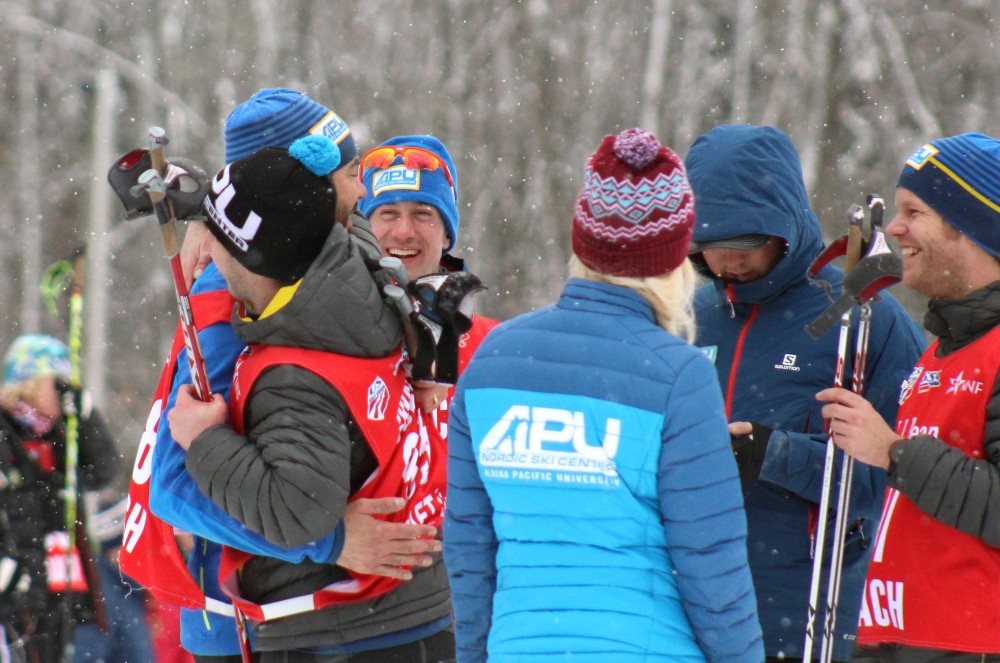
  • Tomas Northug Gets His, Wins First World Cup in Otepää Classic Sprint

    Tomas Northug Gets His, Wins First World Cup in Otepää Classic Sprint

    Norway's Tomas Northug, 24, celebrates his first World Cup win on Saturday in the men's 1.5 k classic-sprint final in Otepää, Estonia. (Photo: Fischer/NordicFocus)
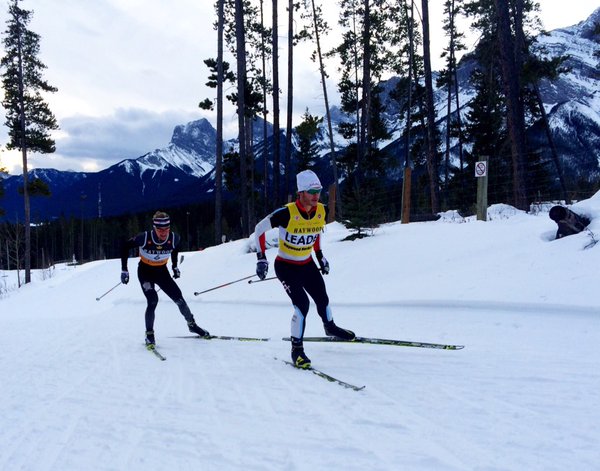
    Norway’s Tomas Northug, 24, celebrates his first World Cup win on Saturday in the men’s 1.5 k classic-sprint final in Otepää, Estonia. (Photo: Fischer/NordicFocus)

    If he hadn’t been a Northug, one might have wondered what that 24-year-old Norwegian was doing.

    Tomas Northug had already ditched his hat during the men’s 1.5-kilometer classic sprint on a snowy, just-above-freezing afternoon in Otepää, Estonia. And not long after the start of the final, he made it clear that he was going to drop everyone else if he could, too.

    Commentators remarked that his surge early on the first of two climbs on the 1,500-meter course had been very Northug-like, referring to the gutsy performances often churned out by his older brother Petter.

    Norway's Tomas Northug in Saturday's 1.5 k classic-sprint qualifier, in which he advanced in seventh and went on to win the final for his first World Cup win in Otepää, Estonia. (Photo: Fischer/NordicFocus)
    Norway’s Tomas Northug in Saturday’s 1.5 k classic-sprint qualifier, in which he advanced in seventh and went on to win the final for his first World Cup win in Otepää, Estonia. (Photo: Fischer/NordicFocus)

    But Petter wasn’t racing on Saturday — Tomas was — and he made his presence known after advancing from the semifinal in fourth as a lucky loser (who was luckily not taken out by Russian Sergey Ustiugov’s late, self-inflicted crash).

    Out of the start in the final, Northug positioned himself in second, sitting on the heels of Norwegian teammate Finn Hågen Krogh, the Sprint World Cup leader who opted to double pole on skate skis for the final, while staying ahead of the final’s other Norwegian double-poler, Pål Golberg, in third.

    At the base of the first climb, it became apparent that double poling was not the way to go in the slow-and-chewed-up snow, and Northug stepped right to get around Krogh and move to first. The double-polers hopped in behind him by the midway point of the climb, and from there, they started to lose Northug. He strode away while the three others on classic skis (Finland’s Toni Ketelae, and Norway’s Ola Vigen Hattestad and Sondre Turvoll Fossli) lost contact in a one-track train behind Krogh and Golberg.

    By the top, Northug heard he had a 50-meter gap from a Norwegian coach (arguably closer to 40 meters) and he took his word, refraining from looking back until several strides later as he began the tuck down the backside of the hill. Meanwhile, another up-and-comer seeing a World Cup breakthrough, Ketelae, 26, led the chase with Hattestad, both several seconds behind on the first descent.

    “I feel there was room and I came up the uphill and I think about the race Bjørgen did many years ago,” Northug said in a post-race interview with FIS in broken English. “The coach [on] the uphill say I had fifty [meters] and say to go so I do it.”

    In the second semifinal, Ketelae edged four Norwegians (Fossli, Eirik Brandsdal, Timo Andre Bakken, and Vegard Bjerkreim Nislen, respectively) and Russia’s Alexander Panzhinskiy for the win. With that confidence, he chased down Northug to the best of his ability in the final, but the young Norwegian was too far gone.

    Northug ran with a narrow herringbone up the steepest of the two hills, getting more encouragement from Norwegian coaches, and Ketelae and Hattestad skied together some six seconds behind on the following downhill.

    With 200 meters remaining, Northug double poled up and over the last rise, glanced back once more and realized the race was his. He nearly took himself out on the lefthand corner before the finishing straight, teetering for a moment on his inside ski in all his excitement, but picked the center lane and double poled like mad to the line. There, sealing the win in 3:50:59, he looked back, raised his arms to his chest and pumped them fiercely, gesturing that he, in fact, was the man.

    Norway's Tomas Northug (7) celebrates his first World Cup victory and podium on Saturday in the men's classic sprint in Otepää, Estonia, while teammate Ola Vigen Hattestad (l) challenges Finland's Toni Ketelae (in blue behind Northug) for second.
    Norway’s Tomas Northug (7) celebrates his first World Cup victory and podium on Saturday in the men’s classic sprint in Otepää, Estonia, while teammate Ola Vigen Hattestad (l) challenges Finland’s Toni Ketelae (in blue behind Northug) for second.

    Trailing Ketelae into the stadium, Hattestad jumped to a left lane to challenge the Finn for second. Hattestad outlunged Ketelae in such a close photo finish, time couldn’t even determine it, but a finish-line camera could. The two finished 1.57 seconds after Northug, with Ketelae placing third for his first World Cup top 10 and podium.

    After holding his own in fourth for much of the final, Golberg placed fourth, 6.28 behind Northug, and Krogh finished about a second ahead of Fossli, who struggled to keep pace early on and finished 9.23 seconds back.

    “It was not really plan to [go ahead] like that, but I felt very strong,” Northug told NRK, according to a translation.  “There are some feelings, it is clear there. I have put an enormous amount of work, but not quite achieved what I want. And then came here today.”

    The men's classic-sprint podium in Otepää, Estonia: with Norwegian winner Tomas Northug (c), Ola Vigen Hattestad (l) of Norway in second, and Finland's Toni Ketelae (r) in third. (Photo: Fischer/NordicFocus)
    The men’s classic-sprint podium in Otepää, Estonia: with Norwegian winner Tomas Northug (c), Ola Vigen Hattestad (l) of Norway in second, and Finland’s Toni Ketelae (r) in third. (Photo: Fischer/NordicFocus)

    Northug’s previous best was fifth in a classic-sprint final at 2013 World Cup Finals in Stockholm, Sweden. In the only other classic sprint before Saturday’s this season, he missed the final but placed eighth in Kuusamo, Finland, and was sixth in a freestyle sprint last month in Davos, Switzerland.

    He qualified for the heats on Saturday in seventh, 4.4 seconds behind Golberg, who set the fastest qualifying time in 3:17.61. Times were notably slower as the day wore on, with the track breaking down amid wet-and-heavy snowfall and with each passing round of men’s and women’s heats. Fossli qualified second, 1.68 seconds back, and Brandsdal, in the hunt for the Sprint World Cup title, ranked third (+2.74).

    The fourth-fastest qualifier, Sweden’s Emil Jönsson edged Northug in their quarterfinal by 0.06 seconds in 3:26.74, which ended up being the second-fastest men’s heat. The two advanced to the semifinals, where Northug got a boot out ahead of Jönsson, who was behind Ustiugov when the Russian poled between his legs and face planted in the finishing stretch. Ustiugov fell into Northug on his left, but Northug avoided escaped with a minor clip and strode a few steps toward the line with Jönsson charging on his right.

    The photo-finish picture from the men's sprint for second and third in the 1.5 k classic-sprint final in 1.5 k classic sprint in Otepää, Estonia, with Hattestad (bottom) edging Ketelae. (Photo: FIS Cross Country/Twitter)
    The photo-finish picture from the men’s sprint for second and third in the 1.5 k classic-sprint final in 1.5 k classic sprint in Otepää, Estonia, with Hattestad (bottom) edging Ketelae. (Photo: FIS Cross Country/Twitter)

    Northug nipped him by 0.16 seconds for the final lucky loser spot, despite finishing fourth in his heat (Jönsson was fifth and Ustiugov finished 14 seconds later in sixth).

    Ketelae qualified in 12th and went on to win his quarterfinal, half a second ahead of Fossli, and his semifinal as well, by six-hundredths of a second over Fossli and nine-hundredths of a second ahead of Brandsdal. Right then and there, the Finn had already achieved a career-best day.

    “It is amazing to finish third today,” Ketelae told FIS. “It was my first World Cup final and my first World Cup podium result. I felt very good since the prologue.”

    Hattestad noted that the final was a gamble when it came to selecting skis.

    “I was testing three pairs of skis before the final,” he told FIS. “I think it was the most crazy final I have ever skied. I did not catch Tomas, [he went] away and then the gap was too big.”

    Results

  • Brennan Paves the Way, Keeps on Plugging for Classic-Sprint National Title (with Gallery)

    Brennan Paves the Way, Keeps on Plugging for Classic-Sprint National Title (with Gallery)

    Rosie Brennan (APU) celebrates her definitive win in the women's 1.5 k classic sprint on Tuesday at U.S. Cross Country Championships in Houghton, Mich., where she notched her third national title. (Photo: Jake Ellingson)
    Rosie Brennan (APU) celebrates her definitive win in the women’s 1.5 k classic sprint on Tuesday at U.S. Cross Country Championships in Houghton, Mich., where she notched her third national title. (Photo: Jake Ellingson)

    HOUGHTON, Mich. — As Rosie Brennan plowed through the fresh powder and tried to pick out what she thought was the best lane for the women’s 1.5-kilometer classic sprint at U.S. Cross Country Championships on Tuesday, she thought, this is brutal.

    Not only did she have to start first in the qualifier, which began at 10 a.m. after nearly half a foot of fresh snow had fallen since two hours earlier, when the groomer last passed over the Michigan Tech course, but Brennan had nobody starting directly behind her, either. Caitlin Gregg (Team Gregg/Madshus) in bib No. 2 had scratched.

    “I had no idea how fast I was going relatively, plus I was plowing the tracks for everybody so it actually was kind of unfortunate,” Brennan recalled with a laugh. “But I just tried to tell myself that if I skied well, that I had to be moving fast enough and just hope for the best.”

    The Alaska Pacific University (APU) veteran ended up second in the qualifier, 1.16 seconds behind Eliška Hájková, a 2013 University of Colorado Boulder graduate and current Boulder Nordic Junior Racing Team coach, who clocked the fastest time of 5 minutes, 18.63 seconds.

    After the race, several described it as more like a prologue or even a distance race than a typical sprint. At least for many, it felt that way.

    “I kind of felt like I was doing a 5 k,” said Brennan’s APU teammate Becca Rorabaugh, who qualified 10th.

    Fortunately for the racers, the track got faster by the time the heats rolled around at 12:30 p.m., and there were more options that the one track Brennan picked to lead 136 women out in the qualifier.

    The organizers re-groomed the loop after the men’s qualifier ended at 11:50, and with wet snow from a northwest wind off Lake Superior about 10 miles north, the course set quickly before the women’s quarterfinals started 40 minutes later.

    It was still about 7 degrees with a biting wind shooting across the stadium start and finish, but racers seemed unfazed once they got moving. With the snow still falling, as long as they could find a skied-in track, they were generally happy.

    Rosie Brennan leading her quarterfinal in Tuesday's 1.5 k classic sprint at U.S. Cross Country Championships in Houghton, Mich. (Photo: Christopher Schmidt)
    Rosie Brennan leading her quarterfinal in Tuesday’s 1.5 k classic sprint at U.S. Cross Country Championships in Houghton, Mich. (Photo: Christopher Schmidt)

    The blizzard let up by the afternoon, right about the time Brennan started to come into her own. With three SuperTour victories out of four races on the circuit this season (and a national podium on Sunday), she had the confidence — and she soon realized she had the ski speed as well.

    “I thought it would be more prudent to be patient basically on top of the big climbs because it’s still half a [kilometer] to the finish,” she explained, “But I just noticed how fast my skis were.”

    Seeing that, the 26-year-old Park City, Utah, native decided to take advantage of the gap she had created and extend her lead on the downhills then up the final gradual climb to the finish.

    Brennan won her quarterfinal by 2.55 seconds over 17-year-old Katharine Ogden of the Stratton Mountain School (SMS) in second. In the semifinal, she again stole the show ahead of 16-year-old runner-up Hannah Halvorsen (Sugar Bowl Academy) and Anne Hart (SMST2), who advanced as the lucky loser in third, 1.18 seconds behind Brennan.

    Ogden in fourth — ahead of Erika Flowers (SMST2) in fifth and another New England skier, Julia Kern (Cambridge Sports Union) in sixth — did not advance. The three women went head-to-head in the B-final (along with Hájková, Michigan Tech’s own Deedra Irwin, and APU’s Rosie Frankowski), where Ogden bested Hájková by nearly a second to win the heat and tie her best-senior-nationals result in seventh.

    Katharine Ogden (SMS) winning the women's classic-sprint B-final on Tuesday at U.S. Cross Country Championships in Houghton, Mich.
    Stratton’s Katharine Ogden (l) winning the women’s classic-sprint B-final for seventh overall on Tuesday, ahead of Eliška Hájková (Boulder Junior Nordic Racing Team), at U.S. Cross Country Championships in Houghton, Mich.

    “I kind of went in with not a lot of expectations, just hoping to do the best I could and I was pretty psyched with how it ended up,” Ogden said. “It’s also really cool to see Julia Kern [who qualified in third], is a junior; she was in my heat, and Hannah Halvorsen is even younger than me and she [was] in this A-final.”

    Six women lined up for the A-final, four of them ages 23 and under. Brennan and Rorabaugh were the most experienced in the group, and Hart had raced one national A-final before, but none of the other three — Halvorsen, Liz Guiney (Craftsbury Green Racing Project) and Heather Mooney (Middlebury College) — had previously made it that far in national sprint.

    “At that point, it was just very exciting,” Halvorsen recalled. “I wasn’t really worried — I just wanted to have fun out there. It was just an honor to get to race with those super-fast girls and go as hard as I could.”

    For Brennan, it was a matter of business. She wondered if she had the snap she needed to win her third national title, especially given how long the course felt and how cold it was.

    “It’s hard to feel great all the time,” Brennan said. “I really just tried to trust the fitness that I’ve built and try to keep skiing and not look back and just keep going.”

    That’s exactly what she did, and to no one’s surprise in the final.

    Rosie Brennan (c), leads Liz Guiney (l) and Anne Hart shortly after the start in the women's 1.5 k classic sprint final at U.S. Cross Country Championships in Houghton, Mich. (Photo: Christopher Schmidt)
    Rosie Brennan (2), leads Liz Guiney (4), Anne Hart (15) and Hannah Halvorsen (23) shortly after the start in the women’s 1.5 k classic sprint final at U.S. Cross Country Championships in Houghton, Mich. (Photo: Christopher Schmidt)

    “I knew Rosie was just gonna blow it out of the water so I just tried to hang on,” Rorabaugh said with a laugh.

    Brennan did just that, surging to front of the pack out of the start, slightly ahead of Rorabaugh and Guiney, and directly in front of Hart before the downhill out of the stadium. According to Rorabaugh, Brennan attacked on the course’s two steeper climbs — most notably on the slight downhill in the middle and on the second hill about two-thirds of the way through.

    “It’s kind of like training, like, ‘Oh, Rosie’s going away on a hill again, this is my chance to hang on,’ ” Rorabaugh said.

    But unlike some training sessions in Anchorage, Alaska, this time, Brennan dropped Rorabaugh and the rest of the field for good.

    “I actually was putting most of my time in over the top of that first uphill and in the downhill,” Brennan said. “And then I guess the second uphill, I just surged to the top of that and then just tried to relax and ski it in.”

    Becca Rorabaugh (10) leads Heather Mooney (l) and Liz Guiney (r) into the finish in the semifinal of the U.S. Cross Country Championships women's 1.5 k classic sprint on Tuesday in Houghton, Mich.
    Becca Rorabaugh (10) leads Heather Mooney (l) and Liz Guiney (4) into the finish in the semifinal of the U.S. Cross Country Championships women’s 1.5 k classic sprint on Tuesday in Houghton, Mich.

    Just like each of her preceding heats, she won the final comfortably by 6.82 seconds in 4:52.72.

    Rorabaugh sensed a couple women gunning behind her for second, so she sped  up on the final gradual climb before the stadium straightaway.

    “I figured they were close enough that I should just go as hard as I could, so I was happy that the finishing stretch was striding today,” she said of the still-dragging conditions.

    After securing the win, Brennan looked behind her to welcome her teammate and the rest of her competitors (including Guiney as a former Park City teammate) across the line. She and Rorabaugh embraced after delivering the 1-2 APU punch, and Guiney, who finished 3.67 seconds later, stayed 2.4 seconds ahead of Hart for her first national podium in third.

    “[I’m] tired, cold. I’m ecstatic, honestly,” Brennan said with a laugh after. “Last year, I technically got the national championship [in the classic sprint], but I was second [to Russia’s Natalja Naryshkina] so to win outright is that much sweeter. I really like classic sprinting so it was just good — good course and good skiing for me.”

    “It’s hard to feel great all the time. I really just tried to trust the fitness that I’ve built and try to keep skiing and not look back and just keep going.” — Rosie Brennan (APU), two-time national classic sprint champion

    APU's Rosie Brennan (c) and Becca Rorabaugh (l) on the podium in first and second, respectively, and Liz Guiney (Craftsbury Green Racing Project) in third in the women's classic sprint at U.S. nationals in Houghton, Mich. (Photo: Christopher Schmidt)
    APU’s Rosie Brennan (c) and Becca Rorabaugh (l) on the podium in first and second, respectively, and Liz Guiney (Craftsbury Green Racing Project) in third in the women’s classic sprint at U.S. nationals in Houghton, Mich. (Photo: Christopher Schmidt)

    It was also her fourth win out of six SuperTour races this year. Rorabaugh said she was happy the two could team up to take first and second.

    “We work really hard together all the time so it’s really great to have it play out like this,” she said.

    Guiney, a 23-year-old, first-year senior who qualified in fourth, placed ninth the last two years at nationals in the classic sprint (in 2013) and freestyle sprint (in 2014).

    “It’s really exciting,” said Guiney, who won her quarterfinal ahead of Frankowski and placed third in her semifinal behind Brennan and Rorabaugh, respectively. “It’s kind of a cool realization for me that I can be up there.”

    Hart improved upon her best nationals finish (which was fifth in the 2013 skate sprint) in fourth on Tuesday, about 13 seconds behind Brennan, and explained her main goal after qualifying in 15th was to keep an open mind and chip away at the heats.

    Anne Hart (SMST2) leads her quarterfinal ahead of Middlebury's Heather Mooney (16) and Northern Michigan University's Vivian Hett (6). (Photo: Christopher Schmidt)
    Anne Hart (SMST2) leads her quarterfinal ahead of Middlebury’s Heather Mooney (16) and Northern Michigan University’s Vivian Hett (6). (Photo: Christopher Schmidt)

    “It was really anyone’s day out there,” she said. “When you look at [Sunday’s 15 k] skate race with Kyle [Bratrud] having such a standout race, you just have to remember that anything can happen.”

    Hart won her quarterfinal by 1.32 seconds over Mooney, advanced out of the semifinal in third, and by the time the final rolled around, she was mostly aiming to stay in front of her fellow U23 competitors.

    “[Stratton coach] Pat [O’Brien] gave us stunningly fast skis today, so all of the starts the plan was, I figured Rosie was going to be the fastest out there,” Hart recalled. “I was just like, if I can just get myself right behind her and stay on her as long as possible…”

    She did so on the first climb, but by the second hill, she thought, “ ‘OK, maybe not,’ ” Hart said. “From there on out, it was just kind of battling for spots and with U23’s, every spot matters, so I was just willing myself to the finish line.”

    Her father was cheering her on from the sidelines, which helped, she said.

    “I graduated from Dartmouth last year and the first year out of college, I’ve been told a million and a half times by everyone and their mother that … it’s really different,” Hart said. “I just had what I call a bunch of vanilla races [to start the season], and so it’s just a confidence booster to say, ‘I’m doing this for a reason, I can do this.’ … So it’s gonna help me sleep better at night I think.”

     “It’s just a confidence booster to say, ‘I’m doing this for a reason, I can do this.’ ” — Anne Hart (SMS T2 Team), fourth

    Sixteen-year-old Hannah Halvorsen celebrates her quarterfinal win on Tuesday in the women's 15 k classic sprint at U.S. Cross Country Championships in Houghton, Mich.
    Sixteen-year-old Hannah Halvorsen celebrates her quarterfinal win on Tuesday in the women’s 15 k classic sprint at U.S. Cross Country Championships in Houghton, Mich.

    Halvorsen in fifth (+15.16) said her parents also buoyed her throughout the day.

    “My parents were really believing in me so I decided I’d give it what I have and I was pretty surprised that I was able to do really well in the heats,” Halvorsen said. “I had a lot of fun skiing with some fast girls.

    “I’ve been training this year with World Juniors kind of on my mind, but just trying to focus on the process and ski as well as I can,” she added. “So we’ll see what happens and how the points play out.”

    Twenty-year-old Mooney in sixth (+15.36), in her senior year at Middlebury, improved upon her two eighth-place finishes at nationals in the classic sprints in 2013 and 2011.

    “I was in the A-final at Spring Series when I was a J2, same race, but I was psyched [about today],” she said after qualifying 16th. “[I] tried to go into it without any expectations … definitely was intimidated by a six-minute sprint course, but just took each one as it came.”

    As for her goals for the rest of the season — and whether U23 World Championships are at the heart of them — Mooney said not necessarily.

    “This sounds really silly — I’d like to race fast enough to be among the top U23’s, but I love college racing and this is my last year and I’m really excited to try to race really consistently and be at the top of the college circuit, focusing on NCAAs,” she said. “I’d love to make [U23 World Championships], but also I’m going to spend the winter in the East and I’m excited for that.”

    Note: The defending freestyle sprint champion and 2013 classic sprint champion, Jennie Bender of the Bridger Ski Foundation crashed out of contention while leading up and over a climb near the end of her quarterfinal.  She placed fifth, 7.8 seconds behind Rorabaugh as the quarterfinal winner, and did not advance to the semifinals.

    “I was leading, then I was on my face,” Bender recalled in an email. “Knocked the wind out of me. … I am pretty disappointed, because I came into this race with high hopes, but that’s sprint racing. Looking forward to the skate sprint.”

    — Lander Karath contributed reporting

    Results