From the FasterSkier archive — posts syndicated from athletes’ and coaches’ own blogs between 2004 and 2012, kept online as published. Current coverage is at fasterskier.com.

Tag: 10 k freestyle

  • Klaebo Races Toward Olympic Immortality

    Klaebo Races Toward Olympic Immortality

    This article was made possible through the generous support of our voluntary subscribers who have helped put our Nat Herz on the ground at the Olympics. If you value coverage like this, please support FasterSkier with a voluntary subscription.

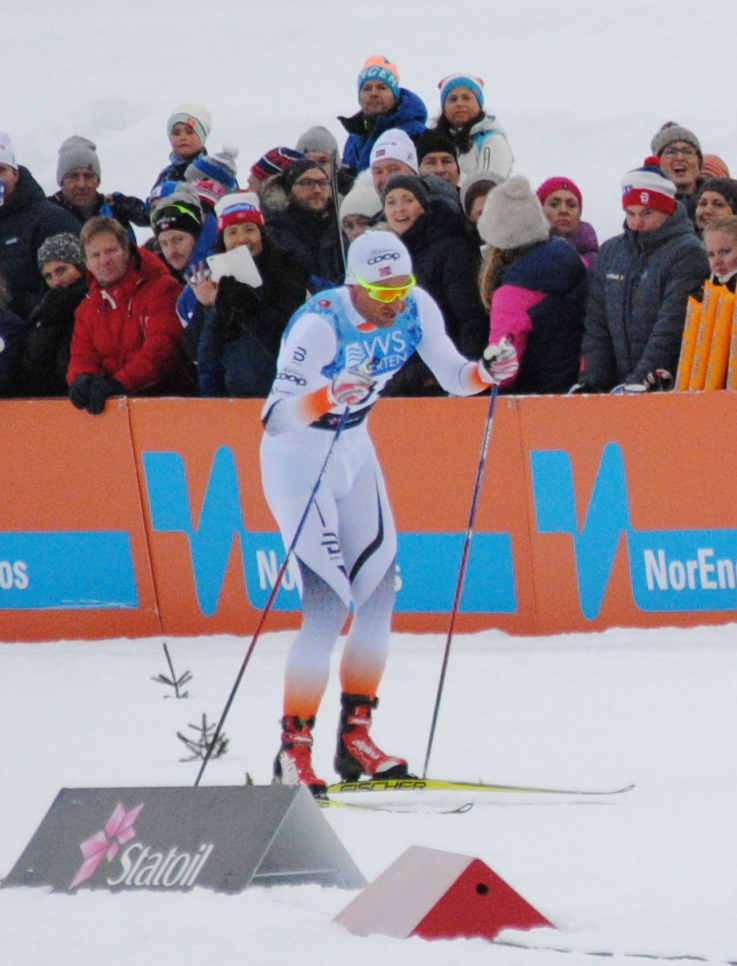
    Johannes Hoesflot Klaebo (NOR) on his way to his third gold medal of the Olympic Winter Games in Milano-Cortina. His victory in the 10 k Freestyle gave him his eight Olympic gold medal, tying him for the most ever with his compatriots Marit Bjoergen, Bjorn Daehlie, and Ole Einar Bjoerndalen. (Photo: Barbieri/NordicFocus)

    Two days ago, at the finish line of the Men’s Classic Sprint, Norway’s Oskar Opstad Vike celebrated like a lottery player who had just scratched the winning ticket. Fist-pumping, chest-thumping, wild gesticulating toward fan-filled grandstands and visceral howling at the proverbial moon. He hadn’t won gold—Johannes Hoesflot Klaebo did that. Vike hadn’t won silver—Ben Ogden secured that little piece of Olympic skiing history. What Vike celebrated was his own third place finish—his bronze medal. Norwegian skiers can dream of no higher honor than to win an Olympic medal in cross-country skiing, and Vike had just done that. His goal had been met, his future had been made, his celebration was sincere. There are plenty of male Norwegian skiers who are capable of winning an Olympic medal; what Vike understood was this: most of them never get to. It was a visual reminder of just how important this ski-thing is to the Kingdom of Norway.

    Imagine, then, what it must be like to be Johannes Hoesflot Klaebo, arguably the greatest skier of all time. He’s done so much in his career that only the near-impossible will suffice. Last year, at the World Championships in his hometown of Trondheim, Klaebo swept the entire card of races: Skiathlon, Sprint, Team Sprint, Team Relay, 10 k and 50 k. No one had ever done that before. No one had even come close. Klaebo did it, and made it look easy. Now, in the Olympic Winter Games of Milano-Cortina, Klaebo finds himself faced with perhaps the most daunting and elusive of athletic accomplishments—do it again.

    And today, “doing it again” meant doing something that Klaebo had actually never done before—win a 10 k Freestyle Interval Start.
    “This is the first time I’ve won a 10 k Skating Interval Start,” said Klaebo. “So being able to do that here at the Olympics, it’s just amazing. And with the weather and the atmosphere, to have my best day here at the Olympics, it’s special.”

    The 10 k Freestyle Interval Start was the race in which Klaebo’s pursuit of ski-immortality was most clearly vulnerable. If he got careless, if he made mistakes, if he showed up a little flat, or if one of his Norwegian teammates showed up supernaturally hot, the 10 k could’ve marked the end of Klaebo’s quest for Olympic perfection. After all, the 10 k interval start is a race that Klaebo can’t control by simply sitting in and sprinting. This is a distance that each skier must race alone, competing against their own limitations, summoning their own competitive courage, and baring their own athletic souls. Each of them knows that in order to win they must commit fully . . . but any skier who over-commits—even by just a little bit—would find themselves hitting the wall. There is nothing to gain by taking it easy, and there is much too lose by going too hard. We can assume that must be kind of terrifying for a skier like Klaebo. On his march toward Olympic immortality, Klaebo would know that this race puts him at his most vulnerable. And the only way to combat that would be to commit every ounce of energy he has. No coasting across the finish line today, no waving to the crowd down the finishing straightaway. The media suggests that Klaebo is the greatest cross-country skier ever. If he wanted to prove it, then an all-out effort in the 10 k would be required.

    Mathis Desloges (FRA) continued his magnificent run in the Olympic Winter Games of Milano-Cortina with his second silver medal, this time in the 10 k Freestyle Interval Start. (Photo: – Vanzetta/NordicFocus)

    And that is exactly what Klaebo did, skiing the opening kilometers smoothly and conservatively, then creating a steady acceleration over the closing kilometers that no other skier could match. Klaebo would continue his pursuit of six gold medals, winning the 10 k Freestyle by a narrow, but sufficient, margin over Mathis Desloges (FRA) and Einar Hedegart (NOR).

    Canadian skiers delivered fine performances as well, with Thomas Stephen in ninth, Remi Drolet 19th, and Max Hollman 23rd. British skiers also distinguished themselves at the 10 k distance, with Andrew Musgrave finishing a tremendous sixth, followed by Joe Davies in 12th. A shirtless John Steel Hagenbuch delivered the top American finish in 14th, even after a suffering a mid-race course deviation that may have cost him precious seconds and precious finish-placings.

    “I made a mistake,” said Hagenbuch. “And I think I was more just proud I made the mistake and I just let it go.”

    “I have so many friends and family out here cheering, and I could hear them. And it’s just a beautiful day. It’s hard to be upset. Such a nice day like this when you get to ski and be with your teammates and represent the United States on the highest stage. I’m really proud to be here.” said Hagenbuch. “But I went into today with my goal being try as hard as you can. And I would have been a little bit faster had I not made that mistake. But I did try as hard as I could. So in many ways, I achieved my goal.”

    A year ago—after Klaebo’s miraculous clean-sweep of World Championship events in Trondheim, fans began wondering if he might retire. After all, after such delivering such a performance the only sufficient encore is to do so again. But there’s no way that could happen, right? No way the stars would so align, or the fitness be so sharp, and the equipment be so dialed, and the conditions be so conducive. No way . . . but less than a year later here we are, halfway to seeing the impossible happen yet again. Three events, three gold medals, three events remain. As fans of cross-country skiing, we’ve come to expect it . . . it’s Johannes Hoesflot Klaebo, after all.

    No waving to the crowd down the finishing straightaway today: Johannes Hoesflot Klaebo (NOR) needed to battle all the way to the line in order to hold off Mathis Desloges and Einar Hedegart. (Photo: Barbieri/NordicFocus)
    10 k Freestyle

    Experience matters—just ask Einar Hedegart. Announcers love to remind us that Hedegart “wasn’t even a cross-country skier” until his arrival on the World Cup tour two months ago, but that’s a statistic that ignores the facts. Hedegart has spent his career as a biathlete, the Nordic discipline that combines Freestyle Nordic skiing and marksmanship. That means that Hedegart has spent years refining his technique as a skier—he’s hardly a skiing neophyte, and Freestyle (the technique designated in biathlon races) is his specialty. That said, racing tactics in biathlon prioritize the discipline to avoid exhaustion during races in order to steady a competitor’s aim on the shooting range. It’s a sport that rewards steady pacing, conservative racing, measured efforts. Ironically, Hedegart never managed to excel at the top level in biathlon. Fortunately, someone suggested he hang up his rifle and just plain race. Some months ago, Hedegart seems to have found that his bodily engine could produce tremendous speed across the snow. He proved it with two World Cup victories (albeit over fields that did not include Klaebo), but he still did not have much experience in racing at this level, or under these pressures. Klaebo possesses blazing finishing speed; it was likely that he’d pace his race in a way that would take advantage of that. The only tactic left to the less-experienced Hedegart was to go out hard, and hope to hang on. That’s the way the stage was set, and that’s the way the race played out.

    Klaebo would wear bib number 44, making him the first of the realistic contenders to start. Klaebo knew he would be pursued by his own countrymen—Harald Oestberg Amundsen, Martin Loewstroem Nyenget, and Hedegart—each of them determined to interrupt Klaebo’s date with destiny.

    Einar Hedegart (NOR) started fast and showed the strain down the stretch. His inexperience may have cost him the gold medal, but the extraordinary effort he delivered in the early kilometers of the 10 k Freestyle may also have earned him the bronze. -(Photo: Barbieri/NordicFocus)

    Race day in Val di Fiemme dawned sunny and warm, with temperatures rising to the mid 40s by race time. The snow would play a part in the challenges on the day, with slushy conditions along course edges and the possibility of earlier racers experiencing superior conditions. Klaebo began conservatively, posting only the 12th fastest split time at 1.8 kilometers. But by the next time check at 3.7 kilometers he had jumped to the top of recorded splits. The pre-race favorite was warming to his task.

    10 k is a funny distance. By Nordic skiing standards, it’s so short—just over 20 minutes—but so very much can go wrong in that relatively brief timespan. Many of the expected mistakes were evident in the first few meters skied by the earliest starters, skiers from Roumania and Japan and Latvia and Ukraine who took off like sprinters. Way too fast, way too soon . . . the uphills would be soon to appear, and legs and arms that had already begun to accumulate lactate would be in serious trouble. Ten kilometers is a short distance to race, but do it wrong and it can begin to feel endlessly long.

    It’s not often that fans see Johannes Hoesflot Klaebo (NOR) lying on the snow at the end of a race. In the Olympic 10 k Freestyle, he gave it his all. (Photo: Barbieri/NordicFocus)

    DesLoge, Hedegart, Amundsen, Nyenget all started quickly, coming through the early checkpoints at the top of the list where they were joined by the impassioned French revelation, Desloges. Klaebo trailed by seven seconds at this first checkpoint, but his time of moderate effort would soon end. Klaebo began tightening the screws; by the halfway point of the race, his early splits still led over DesLoge, Amundsen and Nyenget. Not so for the fast-starting Hedegart who came through the halfway mark with an advantage of five seconds over Klaebo. Five seconds with five kilometers to go—it seemed like a lot, but also somehow seemed manageable. Klaebo would find himself needing to produce a scorching finish to close the gap, but Klaebo is entirely capable of producing the scorching finish. He stormed up the final hill—the one that has recently made him meme-famous for his 11+ mph run during his Sprint victory—and dashed across the finish line with an urgency we rarely see in his races. Klaebo collapsed to the snow at the finish line . . . the kind of drama we’re accustomed to seeing from Jessie Diggins, but a demonstration that Klaebo, himself, rarely allows. It’s amazing to see this great skier arriving at the finish line totally spent. He knew he’d need to commit that level of effort if he wanted to beat the hard-charging Hedegart.

    The leader’s chair doesn’t look comfortable. Johannes Hoesflot Klaebo (NOR) spent some tense moments waiting to see if his lead would be enough to deliver gold. (Photo: Barbieri/NordicFocus)

    Klaebo sat in the leader’s chair, but it was a seat in which he found himself incapable of getting comfortable.

    “When you start early, you just fight with yourself out there,” saud Klaebo. “And when you cross the finish line, it’s all about waiting. Luckily, I was able to see that people were losing a little bit at the end there.To be able to see that I’m first is just crazy.”

    With 2.5 kilometers remaining, Hedegart continued to lead Klaebo by 5.5 seconds. Well, experience matters—Hedegart knows that now. Next time, Hedegart may not go out quite so hard. But that’s a lesson he needed to learn, and today’s classroom was the race course in Val di Fiemme. Hedegart’s’ all-or-nothing tactic fell short, but it would also be rewarded—with Olympic bronze. And, in between Klaebo and Hedegart, came the indefatigable Desloges, securing his second silver medal of these Olympic Games. Americans and Canadians have been coming on in the rankings, and the world has anticipated the return of Russian athletes, but it is the arrival of the Frenchmen—and Desloges in particular with his medals in the Skiathon and the 10 k—that has begun to show that the podium need not be the exclusive domain of skiers from Norway.

    Youth can be a time of glorious impetuousness, like Icarus flying too near the sun. Hedegart may have learned that lesson, though we hope he will also be as thrilled with his bronze as was his teammate, Vike, just the other day. Announcers make much of Hedegart winning his “first Olympic medal “. . . but it’s so presumptuous to assume that any athlete who wins such a medal could ever win another. To repeat such a feat is even more rare than accomplishing it the first time. Hedegart may find himself on this podium many times more, but today we hope he pumps his fist and thumps his chest and celebrates with the crowd that is thrilled by his accomplishment.

    And now Klaebo has claimed his eighth (!) Olympic gold medal, drawing him into a tie atop the all-time Winter Olympic medal standings with three other Norwegian legends: Marit Bjoergen, Bjorn Daehlie, and Ole Einar Bjoerndalen. And Klaebo still has three events remaining in these Olympic Games. But there is still much that can go wrong in Klaebo’s quest for even more gold—teammates could stumble in relays, equipment malfunctions could slow him down, conditions could conspire against him—but if there ever were an athlete who can overcome all those obstacles, then we are watching him today in the Olympic Winter Games of Milano-Cortina.

    Men’s Olympic 10 k Freestyle Interval Start RESULTS

    Help Support Our Olympic Coverage!

    FasterSkier will have our own Nat Herz on the ground at the Olympics, which, to be honest, is a very big financial lift for us. If you value the thoughtful work and access FasterSkier provides at championships like this one, please consider becoming a Voluntary Subscriber. Your support directly fuels the work we do to cover the people, places, and moments that make our sport special.

    Join the FasterSkier community!
    Allan Corona (MEX), Samer Tawk (LBN), Matthew Smith (RSA), Rakan Alireza (KSA) at the finish line of the Olympic 10 k Freestyle, embodying the value of a famous phrase from within the Olympic Creed: “The most important thing in the Olympic Games is not to win bu to take part.” (Photo: Vanzetta/NordicFocus)
  • Ogden Ties Second-Best U.S. Result at Junior Worlds in Fifth

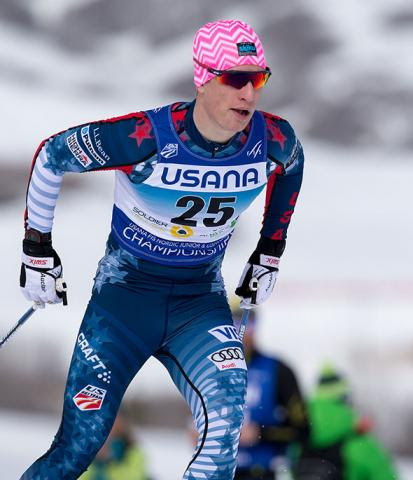
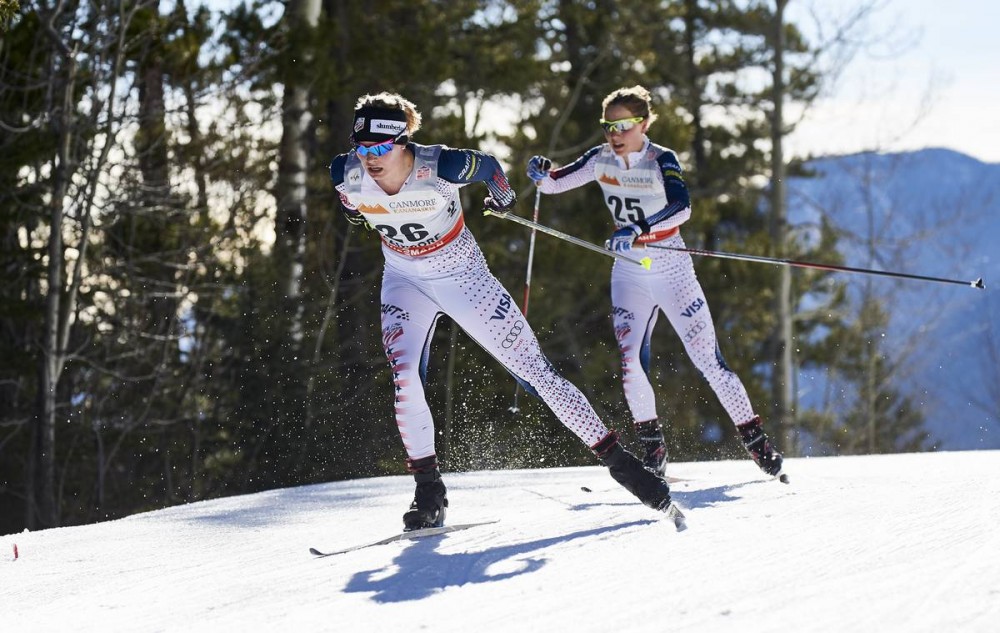
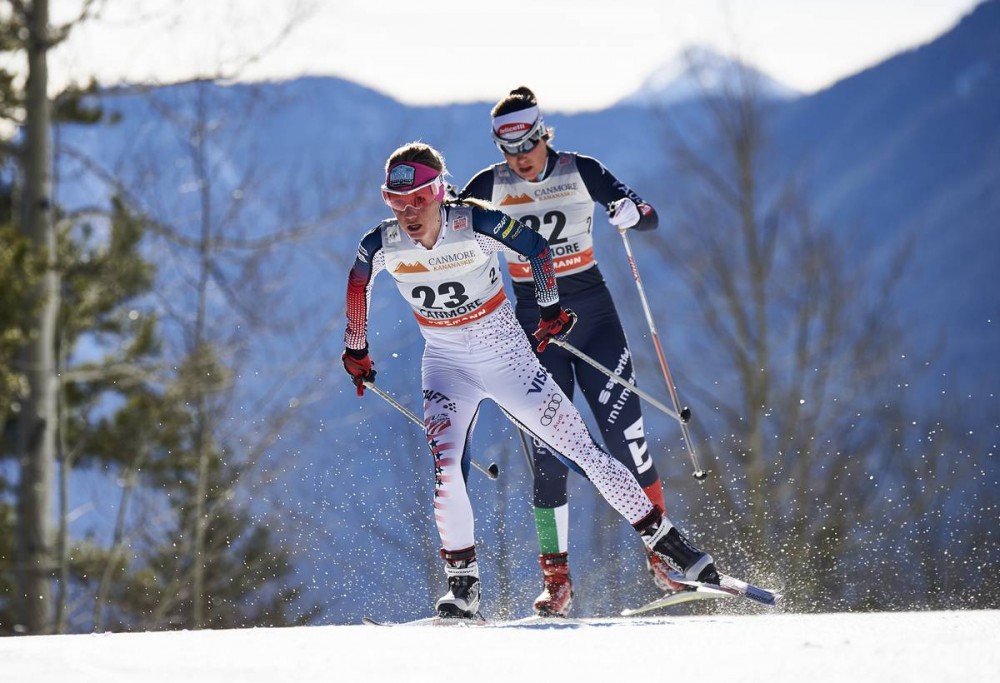
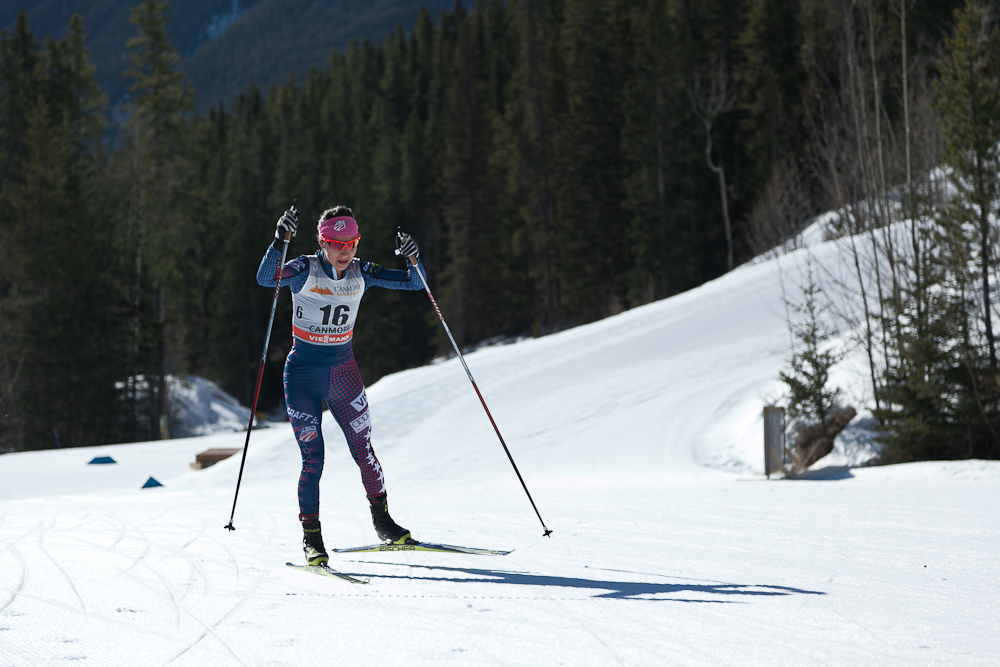
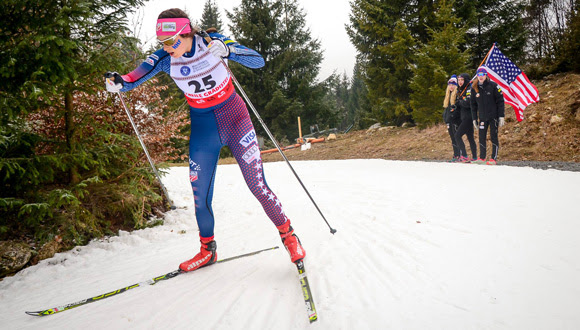
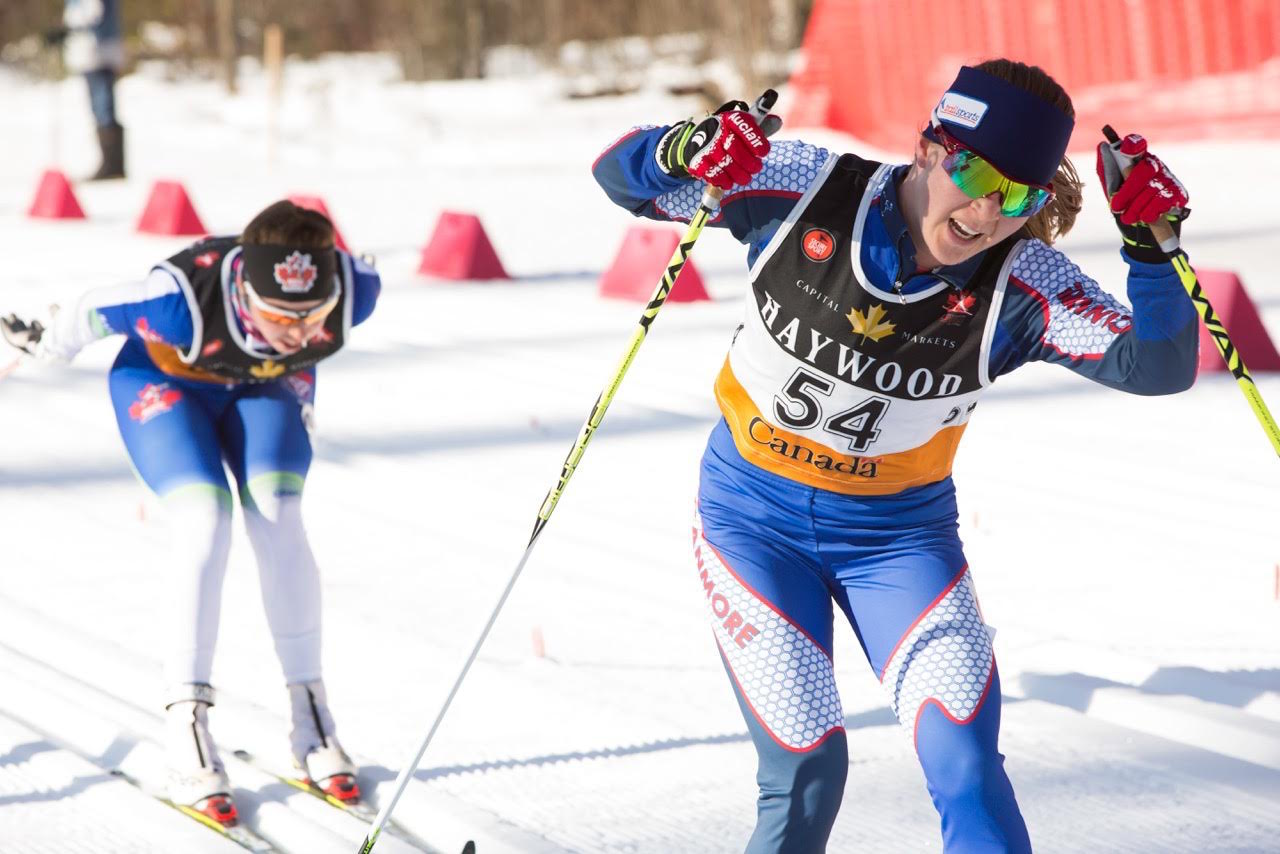
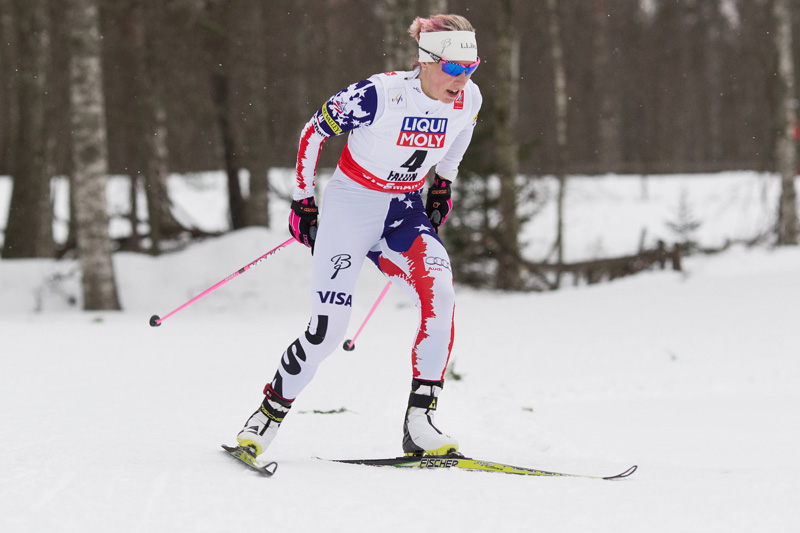
    Katharine Ogden (Stratton Mountain School/U.S. Ski Team D-team) racing to fifth in the women's 5 k freestyle at 2017 Junior Worlds on Wednesday for her best result in her third Junior Worlds. (Photo: FlyingPointRoad.com)
    Katharine Ogden (Stratton Mountain School/U.S. Ski Team D-team) racing to fifth in the women’s 5 k freestyle at 2017 Junior Worlds on Wednesday for her best result in her third Junior Worlds. (Photo: FlyingPointRoad.com)

    (Note: This article has been updated to include comments from Americans Katharine Ogden and Taeler McCrerey, as well as Canada’s Gareth Williams.)

    Katharine Ogden’s name had already been in the U.S. Ski & Snowboard Association (USSA) record books, right behind Lindsey Williams, Leif Zimmerman and Torin Koos as one of the top finishers in U.S. history at Nordic Junior Worlds Championships.

    Ogden, 19, of the Stratton Mountain School (SMS) and U.S. Ski Team (USST) Development “D” Team, was tied with five other Americans who also placed sixth at Junior Worlds, including current World Cup skiers Andy Newell and Kikkan Randall, and Kris Freeman, who went on to finish fourth in two senior World Championships.

    On Wednesday, Ogden moved up in the ranks, placing fifth for the second-best U.S. result at Junior Worlds, equalling Zimmerman and Koos.

    Katharine Ogden (Stratton Mountain School/U.S. Ski Team D-team) racing to fifth in the women's 5 k freestyle at 2017 Junior Worlds on Wednesday for her best result in her third Junior Worlds. (Photo: FlyingPointRoad.com)
    Katharine Ogden (Stratton Mountain School/U.S. Ski Team D-team) racing to fifth in the women’s 5 k freestyle at 2017 Junior Worlds on Wednesday at Soldier Hollow in Midway, Utah. (Photo: FlyingPointRoad.com)

    “I’m really psyched about my result … it was so awesome to see that I’m in a good place to stick with these top girls in the mass start race,” Ogden wrote in an email after the women’s 5-kilometer freestyle at Soldier Hollow in Midway, Utah.

    She had previously finished sixth in the 10 k skiathlon two years ago in Almaty, Kazakhstan.

    “My goal going into the 5k skate was mostly just getting a feel for how I can race in this field and on these courses so as to know how to race the skiathlon,” she explained, referring to her target race on Friday. “In the skiathalon I’m really hoping for another top 6 and maybe (hopefully) a podium.”

    “It’s really encouraging to know that all those U.S. Ski Team girls that are doing so well [on the World Cup] right now were in the same place that I am at one point,” Ogden said in a post-race interview with the U.S. Ski Team.

    She has her share of World Cup starts, eight to be exact, after racing the entire Ski Tour Canada — an eight-stage series that closed out the 2015/2016 international race season. This year, her fifth place on Wednesday puts her soundly within U.S. Ski Team criteria for selection to 2017 World Cup Finals, which will take place March 17-19 in Quebec City, Quebec.

    But back to Junior Worlds: Ogden achieved a career best on Wednesday and was 6.5 seconds shy of a medal. Ogden started the one-lap 5 k individual start in bib 54 (of 57).

    Asked what she was thinking about as she warmed up and lined up at the start, Ogden couldn’t get over how nervous she was.

    “Honestly I was pretty nervous before the start of the race. That’s basically all that I was thinking about,” she wrote. “I felt good once I started racing, the nerves just went away! The course was totally awesome for me.”
    While she didn’t get many splits, Ogden explained she heard just enough to know that she was with the leaders.

    “That motivated me because I was aware that every second was important,” she wrote.

    Just over 13 minutes later, she crossed the finish line in third, 6.5 seconds behind behind Russia’s Mariya Istomina, who was fastest across the line in bib 50. Italy’s Anna Comarella, who started 53rd, 30 seconds ahead of Ogden, came up 3.2 seconds shy of the Russian for second at the time. And Ogden was another 3.3 seconds back in third.

    “I honestly didn’t have too much of a strategy,” Ogden told the U.S. Ski Team. “It was a short race, so I knew I was going to have to go hard basically from the start. But I was also trying to walk the line of not blowing up.”

    The 2002 Olympic trails at Soldier Hollow peak out around 5,900 feet above sea level. That can be a doozy for most of the world that trains closer to sea level, including Ogden from Landgrove, Vt. Asked in a pre-Junior Worlds questionnaire what she was most excited for at these championships, Ogden wrote “racing at altitude.”

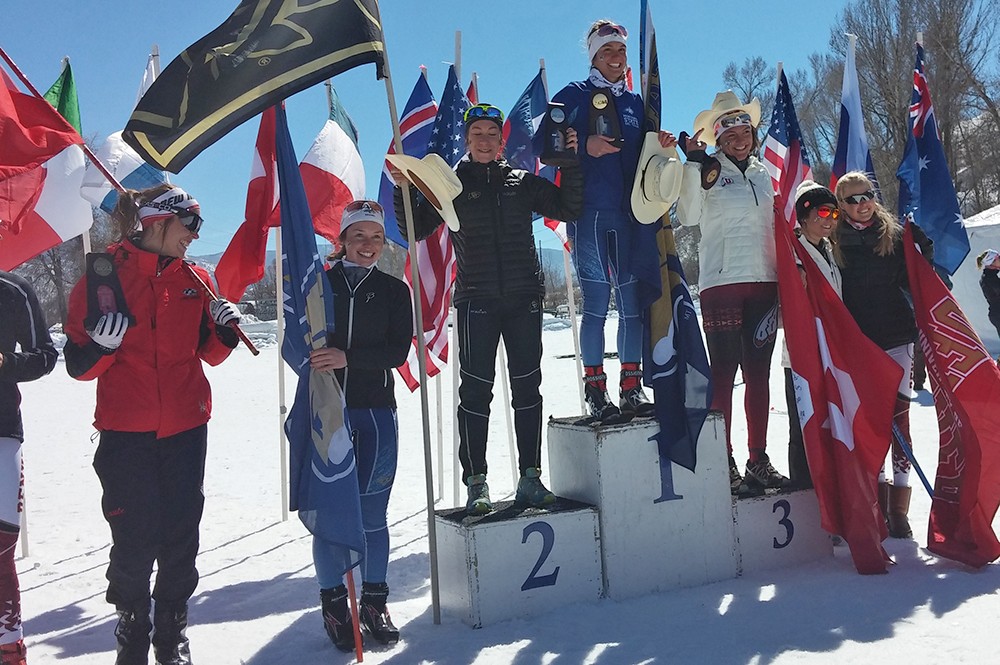
    The women's 5 k freestyle podium on Wednesday at 2017 Junior World Championships at Soldier Hollow in Midway, Utah, with Sweden’s Ebba Andersson (c) in first, Norway’s Marte Mæhlum Johansen (l) in second and Russia's Mariya Istomina (r) in third. (Photo: FlyingPointRoad.com)
    The women’s 5 k freestyle podium on Wednesday at 2017 Junior World Championships at Soldier Hollow in Midway, Utah, with Sweden’s Ebba Andersson (c) in first, Norway’s Marte Mæhlum Johansen (l) in second and Russia’s Mariya Istomina (r) in third. (Photo: FlyingPointRoad.com)

    Of the three women that started after Ogden, two of them reached the podium. Norway’s Marte Mæhlum Johansen in bib 56 bested Istomina’s time by 1.5 seconds to become the new race leader — albeit briefly. That bumped Ogden to fourth and the American ultimately placed fifth after the final starter, Sweden’s Ebba Andersson, finished 13.8 seconds faster than Johansen for the win in 12:45.4 minutes.

    Andersson became a three-time Junior Worlds champion, after winning last year’s 10 k freestyle and 4 x 2.5 k freestyle relay with Sweden’s women’s team in Rasnov, Romania.

    “When I was thinking about the race I made a tactic that I would have a controlled start and then power to the end and I think I succeeded,” Andersson told the U.S. Ski Team media. “The course was amazing today. It was incredible and the weather, too.”

    Following the trend of the rest of the week so far, conditions were hard-packed and temperatures just below freezing on a bluebird day.

    Ogden led three U.S. women in the top 20 on Wednesday, with Hannah Halvorsen (Sugar Bowl Academy/USST) in 13th (+1:01.2) and Taeler McCrerey (University of Denver) in 20th (+1:18.9). The team’s fourth woman, Hailey Swirbul (University of Alaska Anchorage) placed 31st (+1:35.5).

    “My goal for this race was to pace it well so I could use my energy wisely,” Halvorsen, also a member of the USST D-team, wrote in an email. “I liked how firm and fast the course was because I could focus on skiing smooth, powerful, and relaxed. I was really happy with how things went!”

    As the 22nd starter, Halvorsen initially crossed the line in second.

    “I was excited to cross the line in second but I didn’t know how promising that would be with half the field still to finish,” she wrote. “I was a little bummed to not stay in the top ten but I know this was a great race for me.”

    Two days earlier, in her first race of her first Junior Worlds, Halvorsen finished 11th in the classic sprint.

    Also on Monday, McCrerey, a sophomore at the University of Denver, placed 40th in the classic sprint. She landed 20th on Wednesday for a career best at her first Junior Worlds.

    “Today I set out to achieve my first solid race at world juniors,” McCrerey wrote in an email.

    She explained that interval-start races are her strength and growing up 9,000 feet above sea level in Frisco, Colo., didn’t hurt, either.

    “The 5k course is one of the most challenging I have raced at Soldier Hollow so that also benefited me,” McCrerey noted.

    The 44th starter, she explained that she received splits at two parts of the race.

    “The splits were surprisingly close as skiers 5-18 were all within 6 seconds of each other,” she wrote. “Unfortunately all the fast girls started behind me so I was not receiving splits off of them. Racing at ‘home’ in this big of races has been an incredible experience. It’s fun to hear people cheering for the ‘host country’ and waving the stars and stripes so proudly!
    “Today was a good day,” McCrerey added. “I learned a lot about racing at this level which has made me grow as a skier. Special congratulations to my teammates Hannah and Katherine on their exceptional performances today.”

    Canada had four women in 39th through 46th, with Lisle Compton (NTDC Thunder Bay) in 39th (+1:51.9), Annika Richardson (NTDC Thunder Bay/Canadian Junior Team) in 41st (+1:57.8), Claire Grall-Johnson (Nakkertok) in 42nd (+1:58.2), and India McIsaac (Rocky Mountain Racers) in 46th (+2:12.9).

    Russia Sweeps Men’s Podium; Wonders 16th

    The all-Russian 10 k freestyle men's podium on Wednesday at 2017 Junior World Championships at Soldier Hollow, with winner Vladislav Vechkanov (c), Egor Kazarinov (l) in second, and Yaroslav Rybochkin (r) in third. (Photo: FlyingPointRoad.com)
    The all-Russian 10 k freestyle men’s podium on Wednesday at 2017 Junior World Championships at Soldier Hollow, with winner Vladislav Vechkanov (c), Egor Kazarinov (l) in second, and Yaroslav Rybochkin (r) in third. (Photo: FlyingPointRoad.com)

    After women’s race wrapped up in the morning, the men’s 10 k freestyle began at noon. Hunter Wonders, of Alaska Pacific University, led two Americans in the top 20 — finishing 16th in 24:25.8. The winner, Russia’s Vladislav Vechkanov, who had qualified fifth in the classic sprint then went on to place 10th on Monday, started in bib 59 (of 73) and posted an untouchable time of 23:08.6.

    Russia swept the podium with two of Vechkanov’s teammates coming closest to him. Egor Kazarinov, the 70th starter, finished 7.9 seconds back in second, and Yaroslav Rybochkin was 13.3 seconds back in third.

    For 19-year-old Vechkanov, the gold was his first medal in two Junior Worlds, after placing seventh in the skate sprint last year in Rasnov.

    “I arrived at the finish and actually I didn’t think I would win gold,” he told the U.S. Ski Team media. “So I pushed knowing that I would be in top three, but not winning. I started really slow. The on the second loop I tried to increase my speed. On the last uphill I tried my best to make it to the finish line without any strength and I hoped I would be in the top three. But now I’m first!”

    American Hunter Wonders (APU) racing to 16th in the men's 10 k freestyle at 2017 Junior World Championships on Wednesday at Soldier Hollow in Midway, Utah. (Photo: U.S. Ski Team/Steven Earl)
    American Hunter Wonders (APU) racing to 16th in the men’s 10 k freestyle at 2017 Junior World Championships on Wednesday at Soldier Hollow in Midway, Utah. (Photo: U.S. Ski Team/Steven Earl)

    Wonders’s time was 1:17.2 minutes back, which put him 16th in his first Junior Worlds race. He started 25th, two minutes behind his U.S. teammate Wyatt Gebhardt, of the Steamboat Springs Winter Sports Club. Gebhardt ended up 19th (+1:21.9), also in his Junior Worlds debut.

    Also for the U.S, Bill Harmeyer (University of Vermont) placed 29th (+2:02.6) and Lance McKenney 61st (+4:23.3).

    Following Gebhardt in 19th, Canada’s Gareth Williams, of the Telemark Race Team in Kelowna, B.C., placed 20th (+1:24.6) in his first Junior Worlds race. His Canadian teammates Antoine Blais (Skibec) followed in 32nd (+2:07.8), Philippe Boucher (CNEPH) 35th (+2:10.3), and Remi Drolet (Black Jack) 50th (+2:49.1).

    “This and the skiathlon were both my target races after not qualifying for Canada’s sprint team,” Williams explained in an email. “In my head I wanted to be inside the top 20 on the day, but since it is my first Worlds race I had no idea what to expect.”

    Toward the end of the second lap, he started cramping.

    “This made it difficult for me to give a proper finishing kick on the last few hills. I was getting splits that I was fighting for a top 20, so for me that was motivating,” Williams wrote. “Overall I am happy with the day, top 20 is something to be pleased with. Now that I have a taste of what it’s like here at Worlds, I can adjust my goals for the coming races. I hope tomorrow’s skiathlon can go equally as well, if not better.”

    Results: Women | Men

  • Wednesday Rundown: Ogden Fifth in Junior Worlds 5 k Freestyle (Updated)

    Katharine Ogden (Stratton Mountain School/U.S. Ski Team D-team) racing to fifth in the women's 5 k freestyle at 2017 Junior Worlds on Wednesday for her best result in her third Junior Worlds. (Photo: FlyingPointRoad.com)
    Katharine Ogden (Stratton Mountain School/U.S. Ski Team D-team) racing to fifth in the women’s 5 k freestyle at 2017 Junior Worlds on Wednesday for her best result in her third Junior Worlds. (Photo: FlyingPointRoad.com)

    FIS Nordic Junior World Championships (Midway, Utah): 5/10 k freestyle

    Coming into 2017 Junior World Championships with a career-best individual of sixth at Junior Worlds (which she achieved in the 10-kilometer skiathlon two years ago), Katharine Ogden of the Stratton Mountain School (SMS) and U.S. Ski Team (USST) D-team did one better on Wednesday, racing to fifth in the women’s 5 k freestyle individual start at Soldier Hollow in Midway, Utah.

    Ogden started 54th and initially finished third, behind Russia’s Mariya Istomina and Italy’s Anna Comarella, respectively. That was a good spot to be in, considering there were only 57 starters.

    But the final two women out on course, Norway’s Marte Mæhlum Johansen in bib 56 and Sweden’s Ebba Andersson in bib 57 ultimately bumped Ogden out of third, then fourth, respectively. Andersson took the win in 12:45.4 minutes, finishing 13.8 seconds faster than Johansen in second. Istomina held on for third (+15.3), Comarella was fourth (+18.5), and Ogden was 6.5 seconds off the podium in fifth (+21.8) for her best result in three Junior Worlds.

    The U.S. had three women in the top 20 with Hannah Halvorsen (Sugar Bowl Academy/USST) in 13th (+1:01.2) and Taeler McCrerey (University of Denver) in 20th (+1:18.9). The team’s fourth woman, Hailey Swirbul (University of Alaska Anchorage) placed 31st (+1:35.5).

    Lisle Compton (NTDC Thunder Bay) led the Canadian women in 39th (+1:51.9), Annika Richardson (NTDC Thunder Bay) finished 41st (+1:57.8), Claire Grall-Johnson (Nakkertok) was 42nd (+1:58.2), and India McIsaac (Rocky Mountain Racers) 46th (+2:12.9).

    [UPDATED] In the men’s 10 k freestyle that followed, Vladislav Vechkanov, the fifth qualifier in Monday’s classic sprint, led a Russian podium sweep. He won in 23:08.6, 7.9 seconds ahead of his teammate Egor Kazarinov, while the third Russian, Yaroslav Rybochkin was 13.3 seconds back.

    Two Americans finished in the top 20, with Hunter Wonders (Alaska Pacific University) in 16th (+1:17.2) and Wyatt Gebhardt (Steamboat Springs WSC) in 19th (+1:21.9). Also for the U.S, Bill Harmeyer (University of Vermont) placed 29th (+2:02.6) and Lance McKenney 61st (+4:23.3).

    Gareth Williams (Telemark) led the Canadians in 20th (+1:24.6), Antoine Blais (Skibec) finished 32nd (+2:07.8), Philippe Boucher (CNEPH) placed 35th (+2:10.3), and Remi Drolet (Black Jack) 50th (+2:49.1)

    Results: Women | Men

  • After Five Weeks Away, Bjørgen Back on Top in Ulricehamn; Four Americans in Top 25

    After Five Weeks Away, Bjørgen Back on Top in Ulricehamn; Four Americans in Top 25

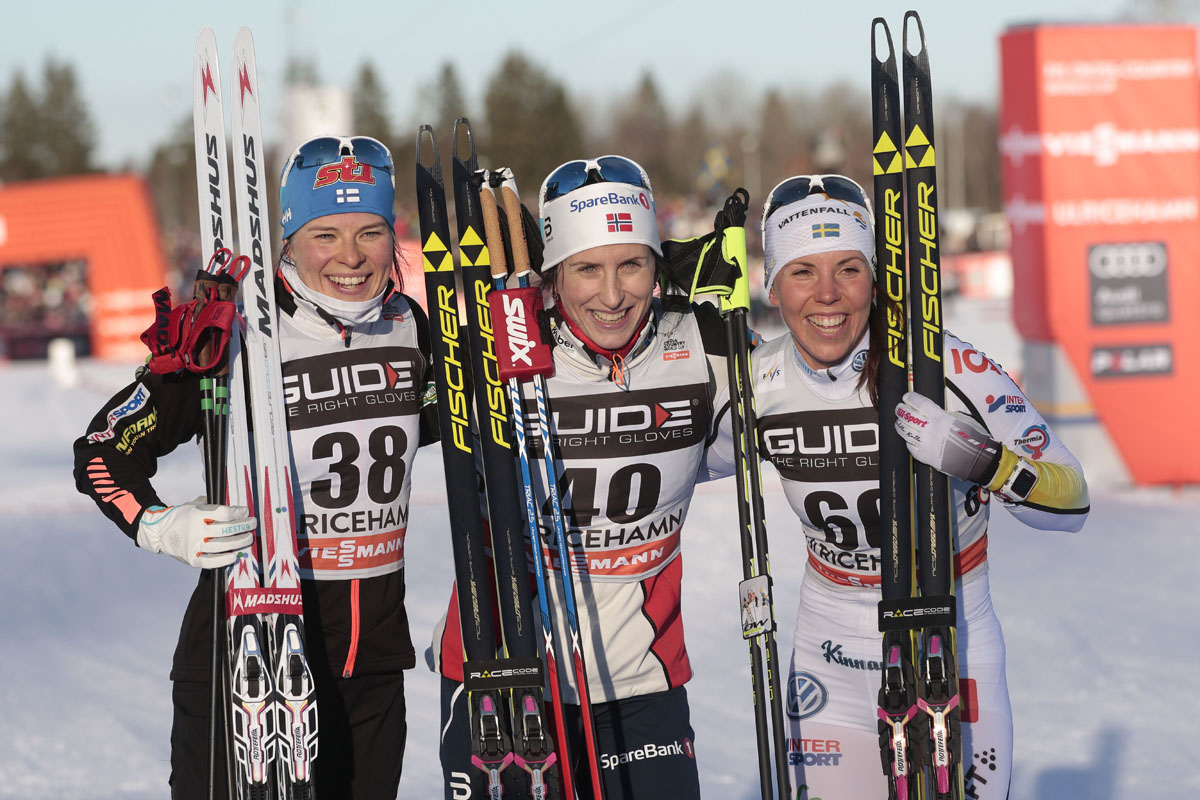
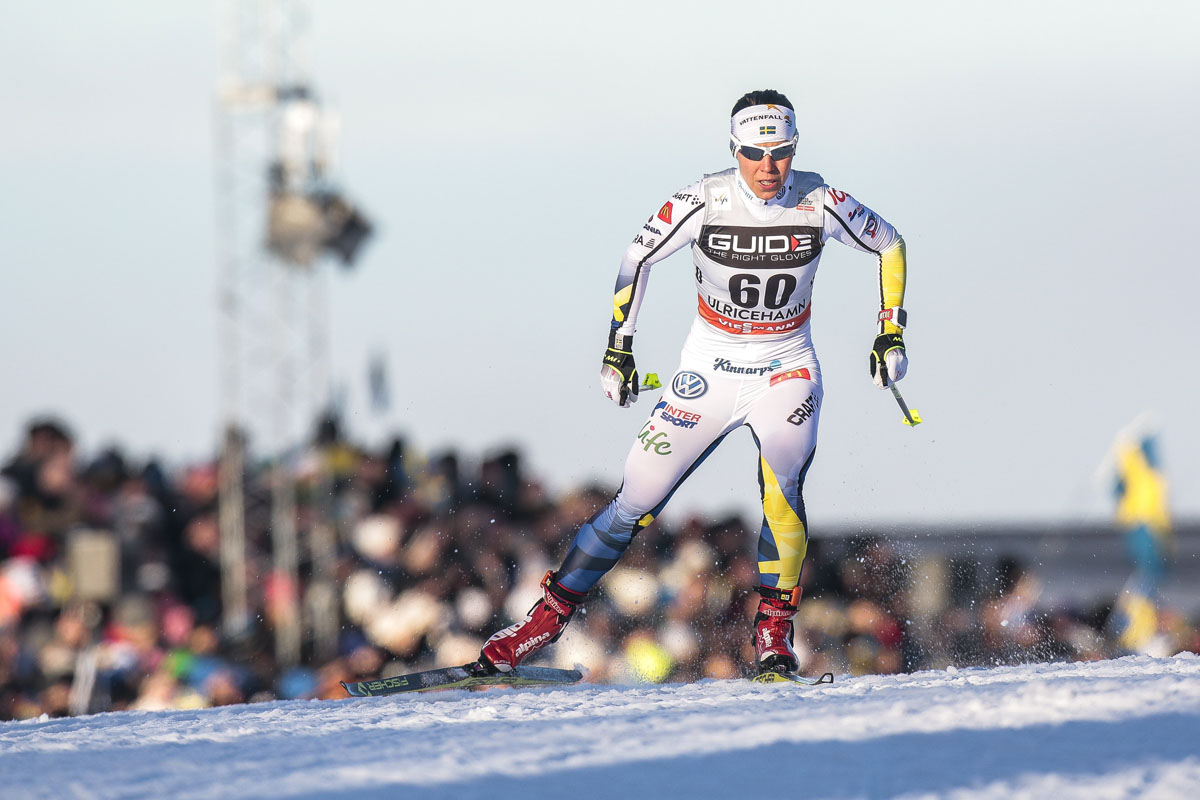
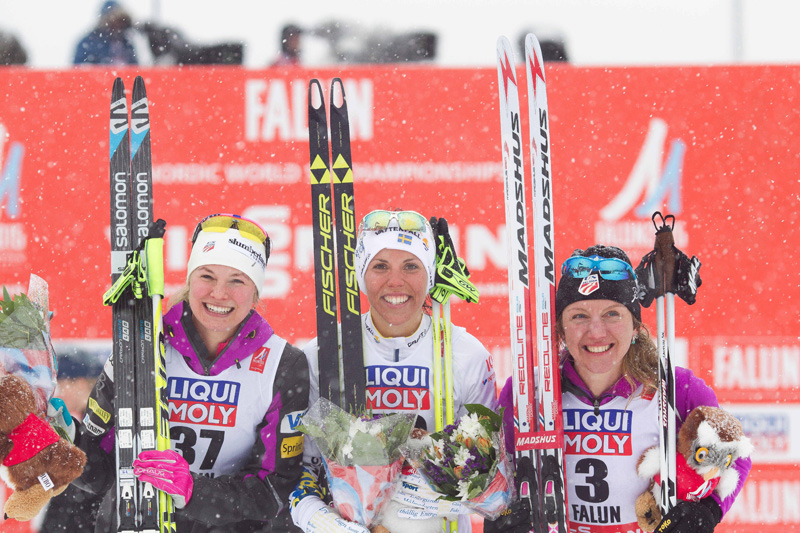
    Left to right: Finland's Krista Pärmäkoski, Norway's Marit Bjørgen and Sweden's Charlotte Kalla on the podium for the women's 10-kilometer freestyle race on Saturday in Ulricehamn, Sweden. (Photo: Fischer/Nordic Focus)
    Left to right: Finland’s Krista Pärmäkoski, Norway’s Marit Bjørgen and Sweden’s Charlotte Kalla on the podium at the World Cup women’s 10-kilometer freestyle on Saturday in Ulricehamn, Sweden. (Photo: Fischer/Nordic Focus)

    There are a lot of things Marit Bjørgen is not. She is not the only woman on Norway’s national team who knows how to win. She is not in the early stages of her cross-country career — her first World Cup debut came in December 1999. In comparison to many of her Norwegian teammates, she is not young. The average age of Norway’s women competing in Saturday’s 10-kilometer freestyle individual start in Ulricehamn, Sweden, (Bjørgen not included) was 25.

    At 36, Bjørgen’s age bests most of her teammates by close to a decade.

    But the new mom is also not letting any of that stop her from adding to her cache of cross-country wins. Saturday being the first opportunity she had since her last race in La Clusaz, France, to prove that winning is what she does.  

    “It’s so much fun to be back because I’ve been on my own for five weeks,” Bjørgen told NRK after Saturday’s race. “At least now I know that I’m on the right path.”

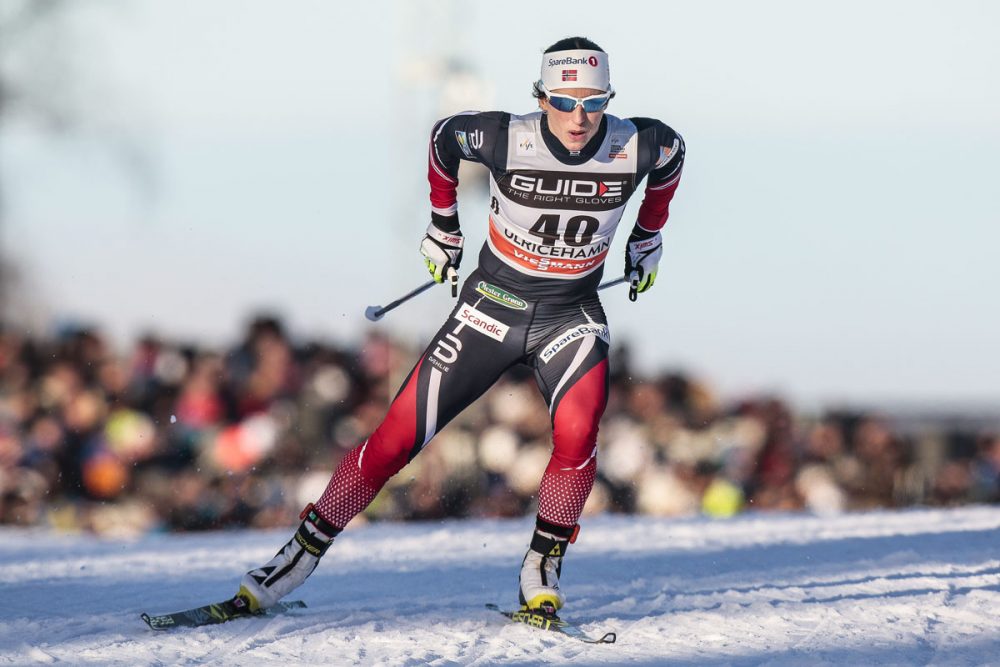
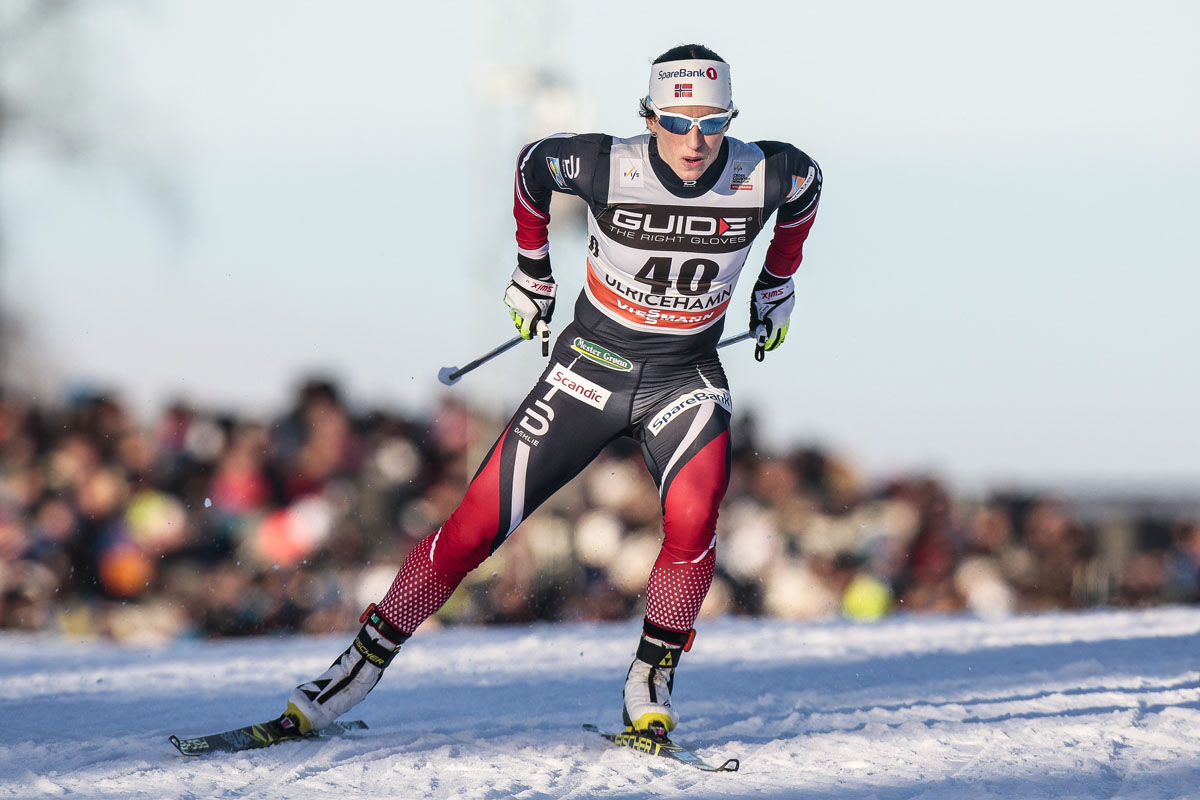
    Norway's Marit Bjørgen on her way to winning the women's 10-kilometer freestyle race on Saturday in Ulricehamn, Sweden. (Photo: Fischer/Nordic Focus)
    Norway’s Marit Bjørgen on her way to winning the World Cup women’s 10-kilometer freestyle on Saturday in Ulricehamn, Sweden. (Photo: Fischer/Nordic Focus)

    However, starting the Ulricehamn 10 k in bib 40, with 21 more racers still hungrily eyeing her back, Bjørgen would not know for sure if she made the right choice until the final starters behind her, including the likes of Sweden’s Charlotte Kalla, completed the course.

    Bjørgen’s Norwegian teammate Heidi Weng and Finland’s Krista Pärmäkoski — who both competed in this year’s Tour de Ski and finished first and second, respectively, in the overall — and started before Bjørgen, were also challenging her choice to forego five weeks of racing.

    Pärmäkoski was first to the front, leading both Weng and Bjørgen by exactly one second at the 1.5 k mark.

    Weng went next, this time Bjørgen and Pärmäkoski trailing behind by less than a second with 7 k still to go. Continually creeping up toward the top three was Kalla in fourth, less than four seconds back and American Jessie Diggins in fifth, within six seconds of the front.

    But with one 5 k lap down, Bjørgen began to break through.

    At 6.5 k, she had put close to three seconds into the Finn, now sitting in second place and more than 15 seconds into her teammate Weng, who had faded to fifth.

    With 2 k to go, Bjørgen continued to lead, while Kalla moved into third. The Swede, however, had no idea she was within 14 seconds of the front. The volume of a home crowd had her confused, thinking she was in 14th place instead.

    “It was all of the noise from the eager Swedish spectators that created the confusion, in addition to a sign with the number 14 on it,” Kalla told adressa.no. “It probably meant that I was 14 seconds behind, but I misunderstood.”

    Sweden's Charlotte Kalla racing to a third place finish in the women's 10-kilometer freestyle race on Saturday in Ulricehamn, Sweden. (Photo: Fischer/Nordic Focus)
    Sweden’s Charlotte Kalla racing to third place in the World Cup women’s 10-kilometer freestyle race on Saturday in Ulricehamn, Sweden. (Photo: Fischer/NordicFocus)

    With no intentional charge coming from Kalla, and Pärmäkoski pushing to the max of her 10 k skate pace, Bjørgen furthered her push for the win. She continued to put time into Pärmäkoski, ultimately finishing 10.7 seconds ahead of her in a time of 23:46.3 for her 104th individual World Cup title.

    When asked about the difference between her start and finishing speed, the Norwegian, who now also holds 22 individual wins on Swedish soil, responded with a bit of humor.

    “I’m starting to get old you know, it takes a while to get going,” Bjørgen told NRK.

    With a second place on Saturday, Pärmäkoski now has six individual podiums this season.

    “I had a great day,” Pärmäkoski said according to an International Ski Federation (FIS) press release. “I have proven to myself I can ski fast also in free technique.”

    Finishing 24.9 seconds behind Bjørgen, Kalla claimed the final podium spot in third, although unbeknownst to her until she received congratulations from Bjørgen and her Swedish teammate Hanna Falk, who finished eighth (+36.4).

    “I first realized that I had finished 3rd when Marit and Hanna gave a hug,” Kalla told adressa.no.

    “The audience [today] was world-class,” she added, according to a FIS press release.

    Four American Women in the Top 25

    Despite Saturday being an individual start, the two-lap 10 k course meant quite a few racers wound up skiing in company. For many of the American racers, that company came from their U.S. teammates.

    Though she started 30 seconds behind her fellow U.S. Ski Team (USST) member Kikkan Randall, Jessie Diggins in bib 32 soon managed to catch Randall in bib 31. The 25-year-old Diggins proceeded to pass her and lead Randall through the first of two laps.

    “I didn’t have the snappy good feelings I was hoping to have in my body today, but it was a solid race,” Diggins, who finished seventh (+34.9), wrote in an email to FasterSkier.

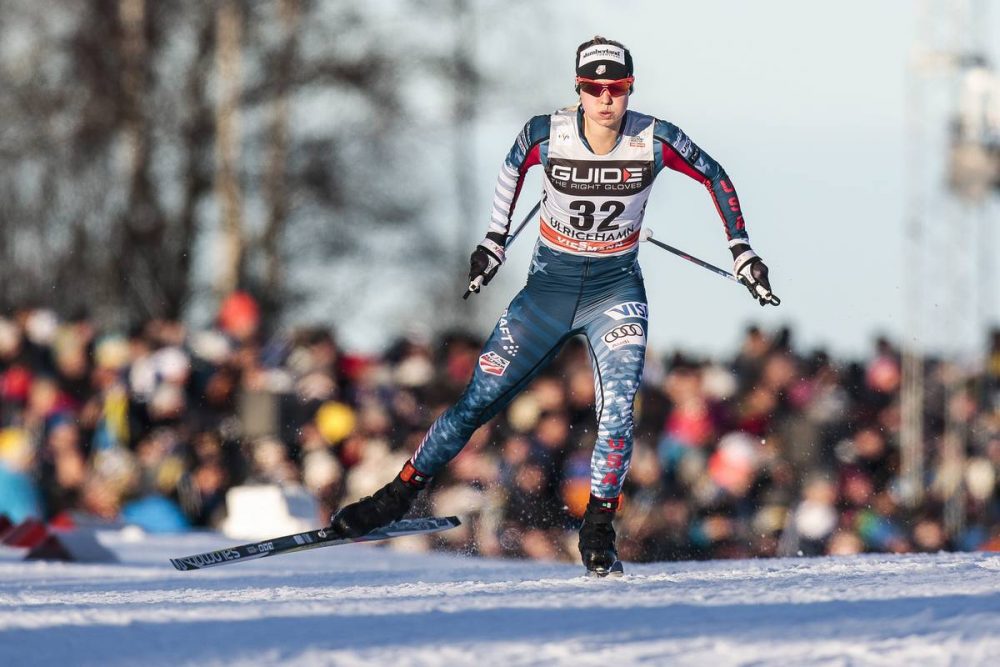
    American Jessie Diggins on her way to a seventh place finish in the women's 10-kilometer freestyle race on Saturday in Ulricehamn, Sweden. (Photo: Salomon/Nordic Focus)
    American Jessie Diggins on her way to a seventh place finish in the World Cup women’s 10-kilometer freestyle on Saturday in Ulricehamn, Sweden. (Photo: Salomon/NordicFocus)

    “It’s always hard when you know that on your best days you are capable of more, but at the same time we had great skis, and it was really fun for me to be able to ski with my teammates today!” she added.

    By the end of Diggins’s and Randall’s first lap together, their USST teammate Sadie Bjornsen cruised on course. For the next lap, Bjornsen led the trio of U.S. skiers.

    “Skating has been going well this year. I have a lot more confidence every time I start a race, so that is fun,” Bjornsen said on the phone after Saturday’s race.

    The U.S. trade-off train continued, with Bjornsen in bib 56 catching another USST member Rosie Brennan — who had start 30 seconds ahead of her in bib 55 — for their last lap.

    “It was an American line out there,” Bjornsen added, who ended the day as the second American in 12th (+1:00.5).

    The ‘American line,’ at least with Bjornsen, was something Brennan anticipated.

    “You never really want to get caught but … I love skiing with Sadie and so it was great to have her pull me into the finish,” Brennan said on the phone.

    Brennan further explained that having the comfort of a teammate, whose strengths and weakness could compliment her own, also made the pass more appreciated.

    “When some of these other fast girls come past you, [because] you’ve never skied with them before, it’s hard to truly believe you can keep up with them, but when it is someone you have spent so much time skiing with it was easy to convince myself like ‘oh of course I can stay with her’.” said Brennan, who ultimately finished 24th (+1:30.7).

    The one American who did not see any of her U.S. teammates during the race was Liz Stephen, who started 14th and finished the day in 16th (+1:07.30).

    Instead, Stephen found herself racing with another familiar face, Italy’s Virginia de Martin Topranin, who spent time training with Stephen on Eagle Glacier this summer.

    “We skied part of a lap together,” Stephen said on the phone. “But other than that I didn’t see anybody out there, which is good. That’s the point of an individual start … Mass starts you get to see plenty of people, sometimes it feels good just to be by yourself.”

    The fifth American woman to finish was Randall in 40th (+1:59.6) followed by Liz Guiney, the Period 1 SuperTour leader from the Craftsbury Green Racing Project, in 52nd (+2:33.2).

    “Competing in Ulricehamn was pretty awesome today,” Randall wrote in an email to several media outlets. “The course was packed with some of the most enthusiastic fans I’ve ever seen! It was a pretty cool course, too. Deceptively hard with a lot of gradual terrain and not many places to recover.
    “I had great skis today and a couple of really good opportunities to ski with my teammates,” she added. “But unfortunately I wasn’t able to fully capitalize on those rides and had a lackluster day. I had a decent race from about 2.5km to 7.5km but wasn’t able to keep the pedal down.”

    USST Head Coach Chris Grover noted that while there won’t be a 10 freestyle event at World Championships in a little over a month, the U.S. women’s team performance on Saturday was a good sign of where their training has taken them and where they are headed.

    “Of course you are always … hoping that we are going to have a podium but that’s not going to happen every day,” Grover said. “I think it is an excellent indication that we have a lot of women who are extremely fit and on the right day they can have some pretty extraordinary results.”

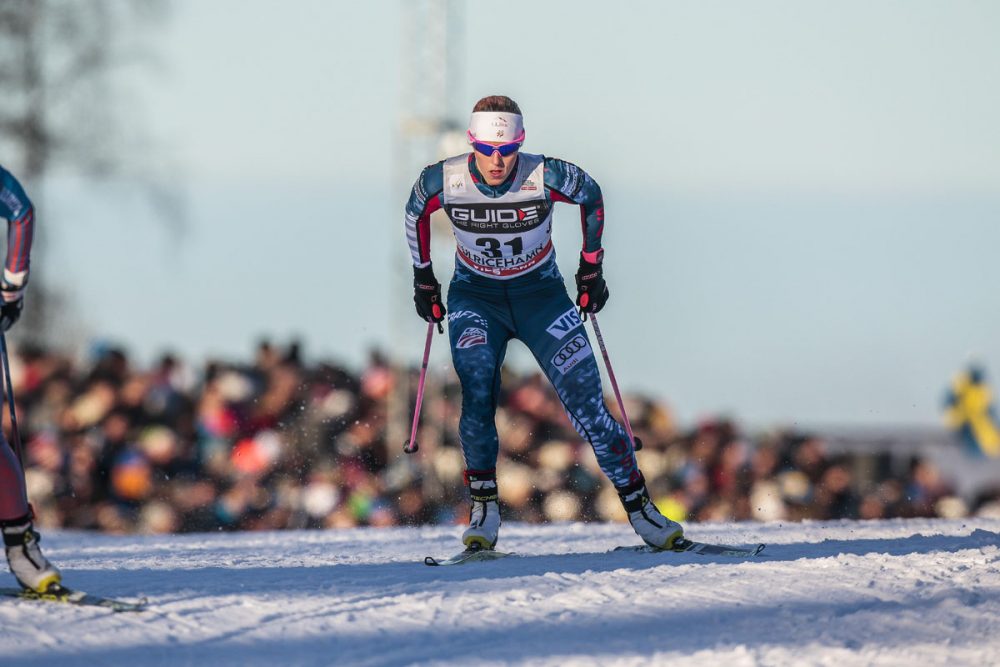
    American Kikkan Randall racing during the women's women's 10-kilometer freestyle race on Saturday in Ulricehamn, Sweden. (Photo: Fischer/Nordic Focus)
    American Kikkan Randall racing during the women’s women’s 10-kilometer freestyle race on Saturday in Ulricehamn, Sweden. (Photo: Fischer/Nordic Focus)

    The lone Canadian woman competing on Saturday in Ulricehamn, Cendrine Browne, of Canada’s national U25 Team, posted her career-best individual World Cup result in 35th (+1:52.0).

    “Along the race the coaches were telling me, ‘You’re five seconds away from top 30!’ ” Browne recalled on  the phone after. “So I was really trying to push harder. I was a little tired at the end, so next time I’d like to be less tired, but I guess you can’t really control that.”

    Browne explained that though most of her teammates remained in North America in order to prep for U23 or senior World Championships, she felt traveling to Europe and racing the World Cup was what she need to best prep for the upcoming Lahti cross-country events.

    “I had the choice to stay home, and train, and do races at home, but I also had the choice to come here and race instead, and I really love racing on the World Cup,” Browne explained.

    Athletes return tomorrow for the women’s 4 x 5 k relay. The U.S. women’s squad will field two teams, one with Brennan, Bjornsen, Stephen, and Diggins in bib 4, and the other with Randall, Sargent, Sophie Caldwell, and Guiney in bib 9.

    “I’m really looking forward to anchoring one of our TWO relay teams tomorrow!” Diggins wrote. “It’s really special for us to be able to field two teams and relays are my absolute favorite days. Time to break out the relay socks!”

    “So fun to see my teammates ski well today which has us all fired up for tomorrow’s relays!” Randall wrote. “Really pumped that we are fielding two women’s teams!”

    Results | Relay start list

  • Halfvarsson on Win Streak; Harvey Repeats in 10th in Lillehammer Mini Tour

    Halfvarsson on Win Streak; Harvey Repeats in 10th in Lillehammer Mini Tour

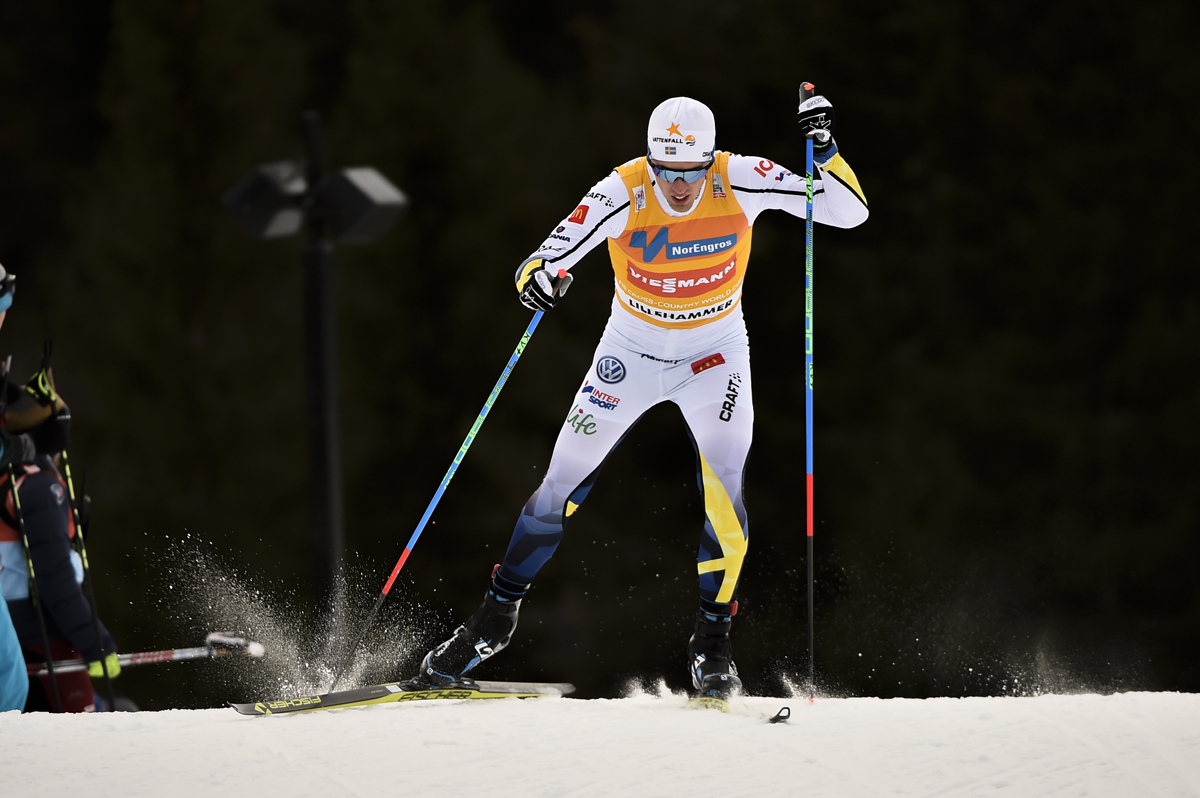
    Calle Halfvarsson racing to first by 0.8 seconds over Swedish teammate Marcus Hellner (not shown) in the men's 10 k freestyle on Saturday at the World Cup in Lillehammer, Norway. Halfvarsson is undefeated so far in the Lillehammer mini tour through two days of racing. (Photo: Fischer/Nordic Focus)
    Calle Halfvarsson racing to first by 0.8 seconds over Swedish teammate Marcus Hellner (not shown) in the men’s 10 k freestyle on Saturday at the World Cup in Lillehammer, Norway. Halfvarsson is undefeated so far in the Lillehammer mini tour through two days of racing. (Photo: Fischer/Nordic Focus)

    LILLEHAMMER, Norway — The men’s 10-kilometer freestyle on Day 2 of the Lillehammer mini tour turned out to be a nail biter and a win-win situation for Swedish fans on Saturday.

    Calle Halfvarsson, who won Friday’s classic sprint, started 42nd, 6 minutes behind his teammate Marcus Hellner in bib 30. Both are Swedish national team veterans. And both were vying for the top step of the podium.

    Halfvarrson ended up taking the win by just 0.8 seconds in 23:04.9. Hellner, four years Halfvarsson’s elder at 31, placed second, ahead of Russia’s Sergey Ustiugov in third (+6.7).

    For the second-straight race, Canada’s Alex Harvey placed 10th, 23.5 seconds behind Halfvarsson.

    “It was really fun to fight with Marcus until the finish,” Halfvarsson told FIS after, according to a press release. “My body felt good. I felt little bit tired in the first lap from yesterday’s sprint. In the second lap I got better and I could ski really fast on the last uphill.”

    Hellner explained that, as an earlier starter, he didn’t have the advantage of knowing where his teammate stood and how fast he needed to go to beat him. While Hellner had the fastest time at 8.3 k (by 3.3 seconds over Halfvarsson), the 27-year-old Halfvarsson had the edge at the finish. (Halfvarsson also posted the fastest splits at 3.3 and 5.8 k.)

    Sweden's Marcus Hellner racing to second, 0.8 seconds out of first, in the men's 10 k freestyle on Saturday at the Lillehammer World Cup in Norway. (Photo: Fischer/NordicFocus)
    Sweden’s Marcus Hellner racing to second, 0.8 seconds out of first, in the men’s 10 k freestyle on Saturday at the Lillehammer World Cup in Norway. (Photo: Fischer/NordicFocus)

    “It is a good feeling to be on the podium,” Hellner told FIS of his first World Cup podium of the season. “The body feels good. I have some work to do with my technique, I hope I can get better.”

    The two Swedes helped keep the Norwegians off the podium, which hasn’t happened on Norway’s home turf since a 50 k in Trondheim in March 2009.

    During the post-race press conference, Halfvarsson said it was cool to have two Swedes at the top “and it’s extra cool that it’s Marcus I’m fighting against.”

    When asked if it was more gratifying to beat Hellner or all of the Norwegians, Halfvarsson laughed before saying that he’d rather beat Norwegians.

    After the race, Harvey told FasterSkier in an in-person interview that he considers top 10 to be a benchmark. He recalled starting too fast on the first lap and fading a bit on the second, “at least the first half of it.”

    The men's 10 k freestyle podium at the Lillehammer World Cup, with Sweden taking the top two with winner Calle Halfvarsson (c) and runner-up Marcus Hellner (l) and Russia's Sergey Ustiugov in third. (Photo: Fischer/NordicFocus)
    The men’s 10 k freestyle podium at the Lillehammer World Cup, with Sweden taking the top two with winner Calle Halfvarsson (c) and runner-up Marcus Hellner (l) and Russia’s Sergey Ustiugov in third. (Photo: Fischer/NordicFocus)

    Out of 97 finishers, Harvey’s split times ranked sixth at 3.3 k, seventh at 5.8 k, and 10th at 8.3 k.

    “Sometimes you start too slow and you just can’t get it back, so I don’t think [my first lap affected me] too much, but had I started 5 seconds slower, I could have been 10 seconds faster on the second lap, but it really wasn’t a whole lot,” Harvey explained.

    He continued by saying that his start aligned with his strategy.

    The two-lap race included 209 meters of climbing resulting in 74 meters of total elevation gain. The first hill of the race began about 100 meters from the start, but Harvey, who said that “the conditions were some of the best we’ve had in years,” didn’t seem to mind the hilly course.

    Sunday marks the final stage of the three-day mini tour, where Halfvarsson will start first in the 15 k pursuit. Harvey, who will be the eighth athlete out of the gate, 51 seconds after Halfvarsson and 1 second behind Norway’s Martin Johnsrud Sundby, had a positive outlook for Sunday.

    “I think I’ll have a decent group around me, and I may not be too far away from some good athletes so I can try to stay with them and move up the rankings, hopefully I’ll be around Finn Hågen [Krogh, who’s starting 8 seconds ahead in fourth] and get a good ride,” Harvey said.

    Halfvarsson will start 28 seconds before Ustiugov in second and 38 seconds ahead of Hellner, who’s currently third in the tour.

    Alex Harvey (Canadian World Cup Team) placed 37th in the 10 k freestyle at Stage 6 of the Tour de Ski to drop five places to 15th overall in the Tour. (Photo: Fischer/NordicFocus)
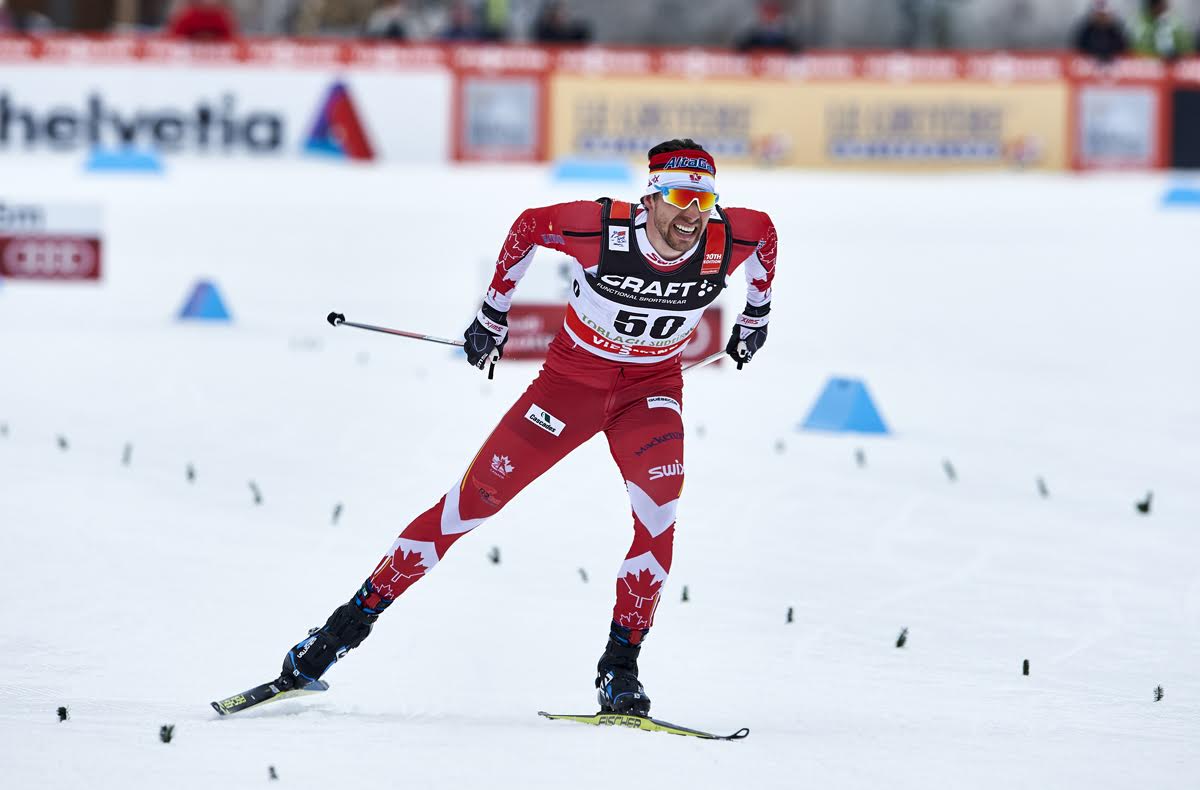
    Alex Harvey (Canadian World Cup Team) racing in the 2016 Tour de Ski 10 k freestyle, where he placed 37th in Toblach, Italy. (Photo: Fischer/NordicFocus)

    When asked what his strategy for the pursuit, Harvey, 28, replied, “to hunt, it’s a hunting race tomorrow.”

    Switzerland’s Dario Cologna, who finished seventh on Saturday, 14.3 seconds behind Halfvarsson, chose a different strategy.

    “I tried to find a good speed and not push too hard at the beginning and find a good rhythm and keep that up and I think it worked well,” Cologna said, adding that he hopes to be in top 10 on Sunday. He’ll start 11th, 59 seconds after the leader.

    Noah Hoffman led the U.S. men in 33rd (+1:08.6), and was 5.3 seconds away from scoring World Cup points in the top 30.

    “My goal was to go out and just ski with really relaxed muscles, and just ski high energy … and I think I did that pretty well,” Hoffman told FasterSkier after. “I wasn’t really good in the early splits and [Canada’s Devon] Kershaw started coming up behind me, and he got really close to me and then, but because I was feeling relaxed, I was able to kind accelerate through the race and ended up beating Kershaw by a couple of seconds, so I executed it the way I wanted to.”

    Kershaw ended up 40th (+1:16.7) as the second-fastest Canadian of the day. Teammate Len Valjas was close behind in 42nd (+1:19.1). The two will start the pursuit with Valjas in 37th (+1:54) and Kershaw in 43rd (+2:01).

    U.S. Ski Team Head Coach Chris Grover called Hoffman’s race a “big step in the right direction.”

    “He really paced that course well,” Grover said in a phone interview. “He was maybe a little bit back perhaps from where he wanted to be at the first time check, but compared to the field, he was kind of just picking through people all the way through the race.

    “He skied with a lot of energy out there,” he added. “I know he feels like he is coming out from underneath this really big training load and now that he is having a chance to rest, we are going to start seeing his fitness coming through, and seeing his ability coming through.”

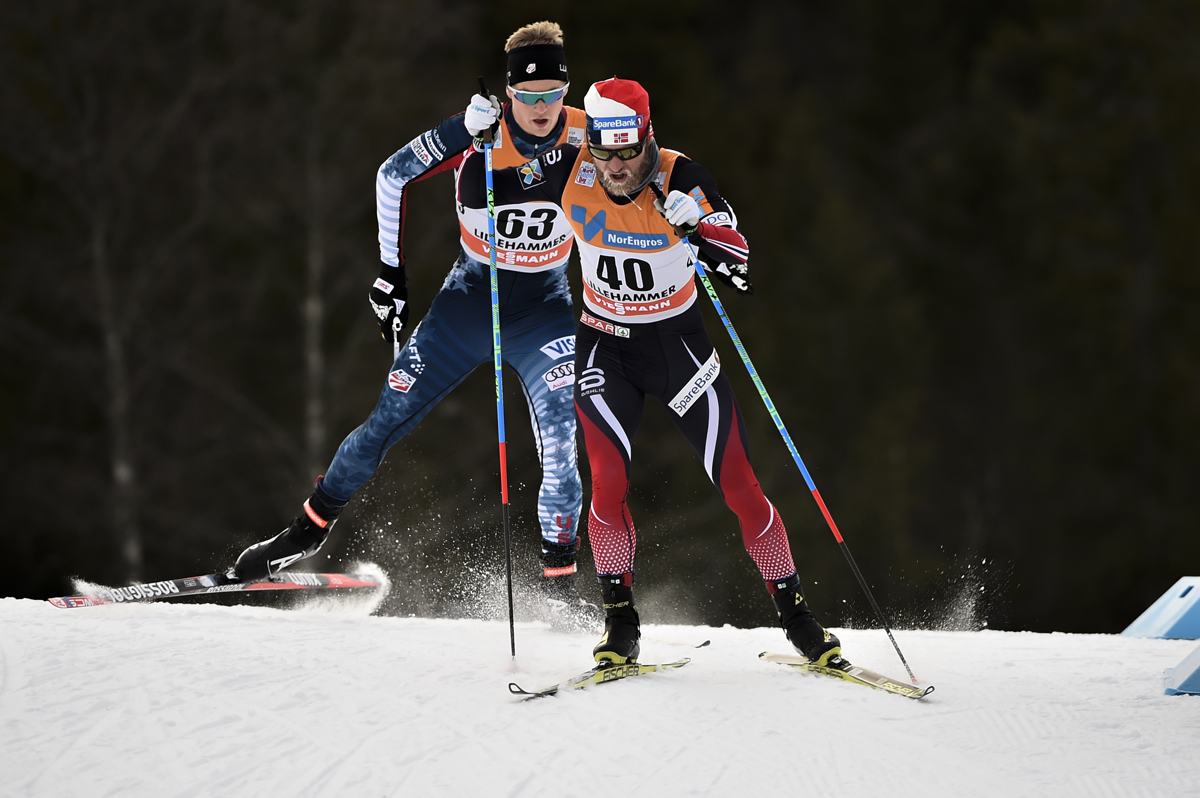
    U.S. Ski Team member Eric Bjornsen chases Norway's Martin Johnsrud Sundby in the men's 10 k freestyle on Saturday at the Lillehammer World Cup in Norway. Sundby went on to place sixth and Bjornsen finished 45th. (Photo: Fischer/NordicFocus)
    U.S. Ski Team member Eric Bjornsen chases Norway’s Martin Johnsrud Sundby in the men’s 10 k freestyle on Saturday at the Lillehammer World Cup in Norway. Sundby went on to place sixth and Bjornsen finished 45th. (Photo: Fischer/NordicFocus)

    Hoffman’s teammate Erik Bjornsen, who placed 24th in Friday’s sprint, finished 45th (+1:22.2) on Saturday.

    Bjornsen told FasterSkier that he was hoping for better, but that his performance was realistic according to his current abilities.

    “I felt pretty good the first 5 k and I had a sweet ride,” Bjornsen said. “I was skiing it with Sundby [who ended up sixth], and then once I got tired, it was hard to push, I think I was losing a lot of time on the last 5 k.”

    Grover called Bjornsen’s race “solid.”

    “He was really climbing through the ranks for awhile,” Grover said. “And then he lost contact and he kind of had a little bit of a flat space in the middle of the 10 k, and then closed quite well, so really solid day for him, and I think tomorrow could be another good day for him. He’s in great shape right now.”

    Bjornsen will start the pursuit 44th, 1 second behind Kershaw and 2:01 behind Halfvarsson. Hoffman will start 6 seconds later in 48th.

    Norway’s Petter Northug finished the race in 51st (+1:26.6) and will start the pursuit 36th (+1:53), just ahead of Valjas. Northug told a group of journalists after Saturday’s 10 k that lacked power in his strides, which he noticed after crossing the 2 k mark.

    Also for the North Americans, Canada’s Graeme Killick placed 64th (+1:46.6), Knute Johnsgaard 73rd (+2:22), Bob Thompson 88th (+3:03.4), and Andy Shields 89th (+3:06.3). Americans Simi Hamilton finished 69th (+1:55.8) and Eric Packer was 78th  (+2:28.7).

    Results | Mini-tour standings (after Day 2) | Pursuit start list

  • Friday Rundown: West Yellowstone FIS Racing; Bozeman Canceled

    Friday Rundown: West Yellowstone FIS Racing; Bozeman Canceled

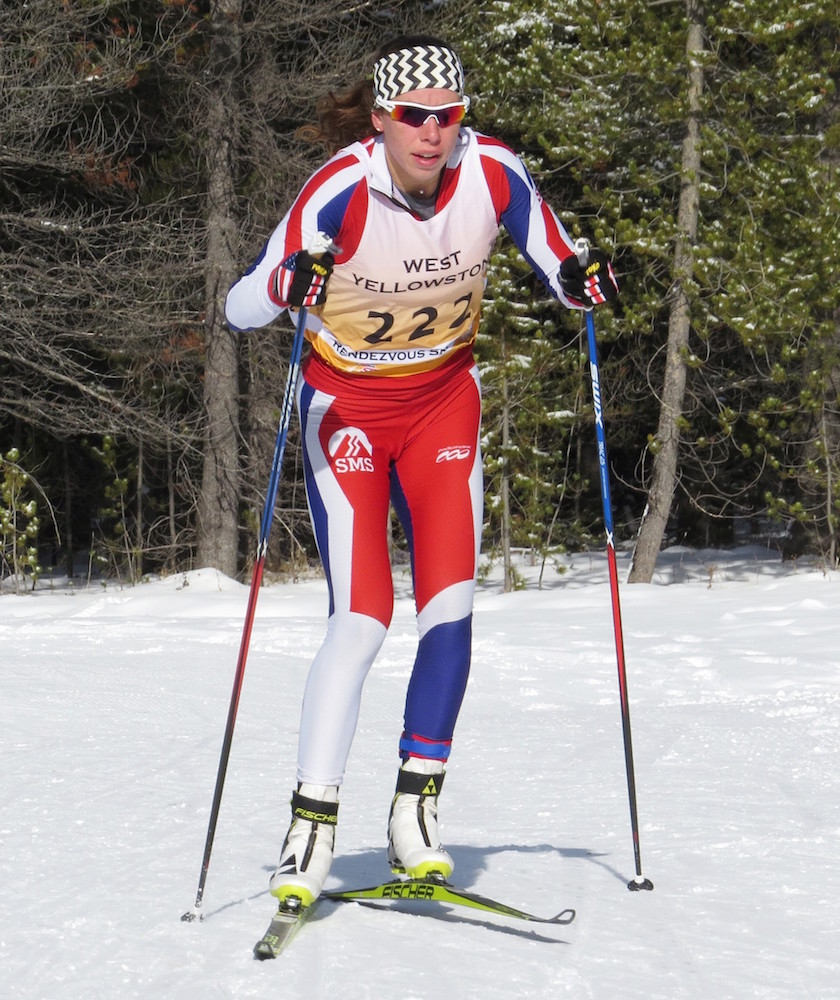
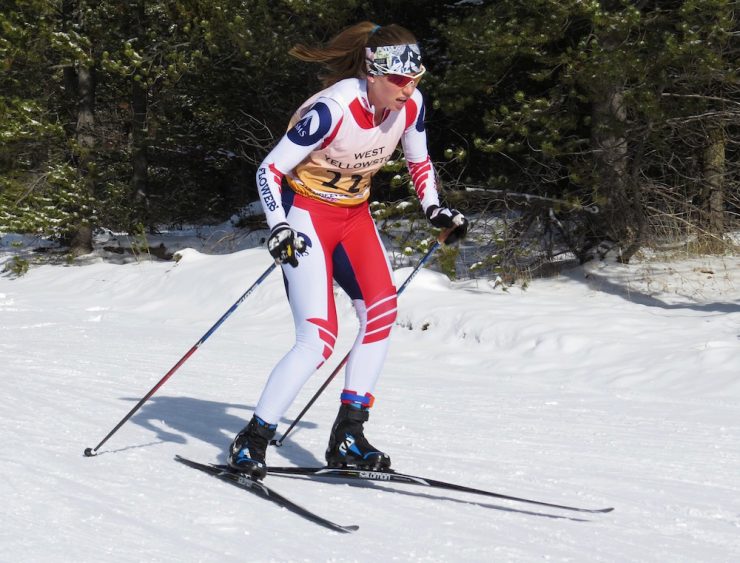
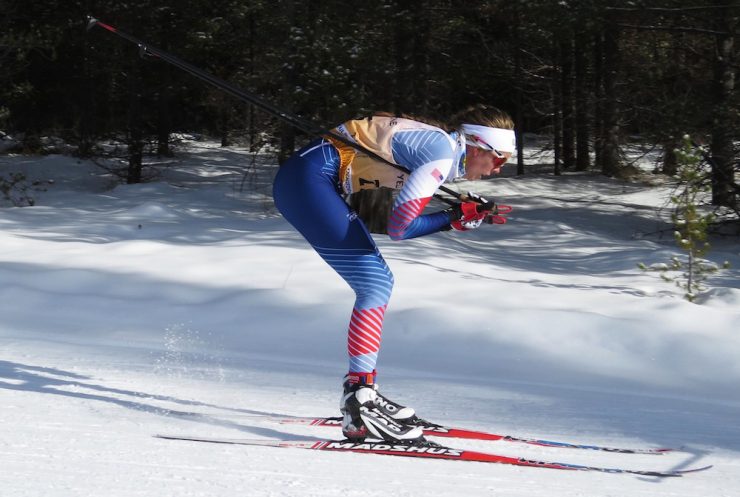
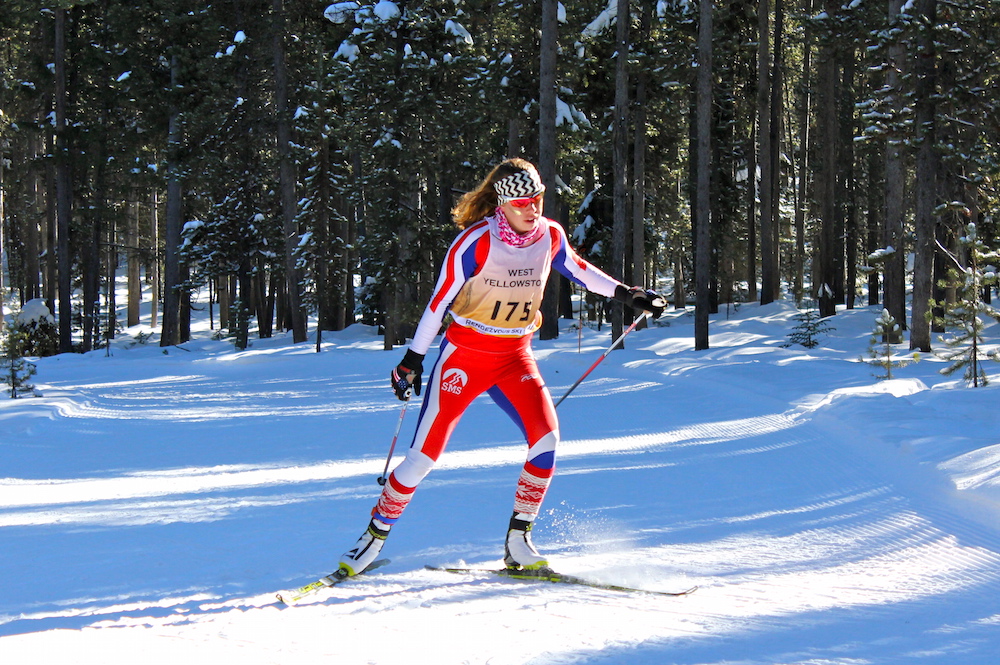
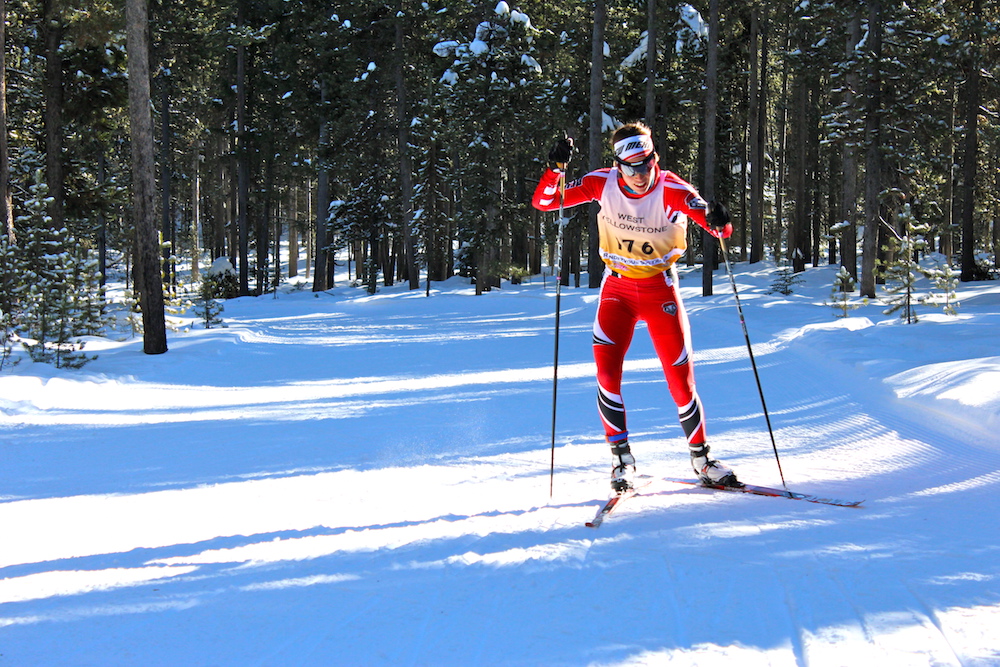
    Katharine Ogden (SMS/USST) racing to an 11-second win in the women's 5 k freestyle FIS race on Friday in West Yellowstone, Mont. (Photo: Ian Harvey/Toko)
    Katharine Ogden (SMS/USST) racing to an 11-second win in the women’s 5 k freestyle FIS race on Friday in West Yellowstone, Mont. (Photo: Ian Harvey/Toko)

    The first official cross-country ski races of the season in the Lower 48 were held Friday in West Yellowstone, Mont., and for the first time in a long time, they weren’t U.S. SuperTour races.

    But they were International Ski Federation (FIS) sanctioned and once again a big part of the West Yellowstone Ski Festival, which has been known to attract 3,500 skiers and has been an early season tradition for more than 30 years.

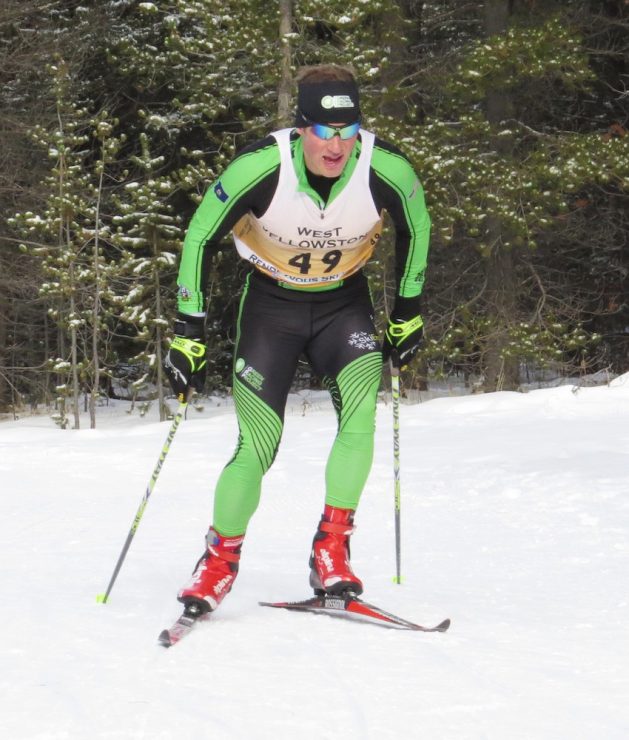
    Paddy Caldwell, of the U.S. Ski Team’s D-team, Dartmouth College and the Stratton Mountain School (SMS) T2 Team, won the men’s 10-kilometer freestyle on Friday at the Rendezvous Ski Trails. He bested nearly 90 in the men’s race, putting down the fastest time in 20:32.4 minutes, which was 26.7 seconds ahead of runner-up Rogan Brown, of the Sun Valley Ski Education Foundation (SVSEF). Mads Strøm, a Norwegian-born University of Colorado-Boulder (CU) senior and two-time NCAA champion, placed third, 31.1 seconds behind Caldwell.

    Just 0.2 seconds off the podium, Sun Valley’s Jack Hegman placed fourth (+31.3), and Ben Lustgarten, of the Craftsbury Green Racing Project (CGRP), was close behind in fifth (+32.4), as was Silas Talbot, of the Bridger Ski Foundation (BSF) Elite Team, in fifth (+37.4).

    Rounding out the top 10, Karsten Hokanson (Montana State University) placed seventh (+53.6), Patrick Johnson (Far West) was eighth (+56.7), and Norway’s Petter Reistad (CU) and Welly Ramsey (Farmington Ski Club) tied for ninth (+57.6). Oscar Ivars (University of Utah) took the next spot in 11th (+1:01.5).

    In the women’s 5 k freestyle, Katharine Ogden, another U.S. Ski Team (USST) D-team member who trains with SMS, took the win. She beat out CU’s Petra Hyncicova, originally from the Czech Republic, by 11.8 seconds with a winning time of 11:45. One of Ogden’s training partners, Erika Flowers (SMST2) placed third (+13.3).

    Craftsbury’s Liz Guiney took fourth (+19.4), Jennie Bender (BSF) was fifth (+22.4), Mary Rose (SVSEF) sixth (+27.0), Anne Hart (SMST2) seventh (+32.8), Christina Rolandsen (CU) eighth (+34.7), Kaitlynn Miller (CGRP) ninth (+36.5), and Hannah Halvorsen (Sugar Bowl Elite Team/USST D-team) 10th (+36.8) in a tighter women’s field, which included 76 finishers.

    FIS racing continues at the Rendezvous Trails on Saturday, with 5/10 k classic races scheduled.

    In related news, the first SuperTour races of the season — which were supposed to take place next weekend, Dec. 3-4 — were canceled. At the top of the Bridger Ski Foundation’s SuperTour event page, it now reads: “Bozeman SuperTour Cancelled: Due to lack of snowfall the races are not able to be run.” The SuperTour opener doubled as the first races of the Canadian NorAm season as well.

    Just like in the U.S., Cross Country Canada (CCC) intended to use Bozeman as part of its selection races for 2017 World Championships and the Continental Cup leader (COC) World Cup spots. Now instead of considering an athlete’s best three results out of seven race days, CCC will consider three out of five.

    “Bozeman was part of our NorAm COC series selection process; however now that Bozeman is cancelled it’s not in the picture,” CCC High Performance Director Thomas Holland wrote in an email to FasterSkier on Friday night.

    UPDATE: On Friday afternoon, the Yellowstone Ski Festival announced on Facebook that it would be hosting the SuperTour in Bozeman’s place.

    “Are you ready for some more West Yellowstone fun? ‘Cuz we’re hosting the SuperTour next weekend December 3 & 4,” the post read. “Saturday Freestyle Sprints, Sunday 15k/10k Classic; 5k U16 Classic. Registration site is in progress but will be on ysfraces.athlete360.com. And can you volunteer? Send us a message at info@skirunbikemt.com to give us your info. Thanks!”

    “The altitude at West Yellowstone is too high to use it as a selection race for the Canadian team – will not count for the FIS COC series,” Holland wrote.

    We’ll post more information as it becomes available.

    Friday’s complete results

  • Bjørgen Wastes No Time With Beito Comeback; Tønseth Wins Again

    Bjørgen Wastes No Time With Beito Comeback; Tønseth Wins Again

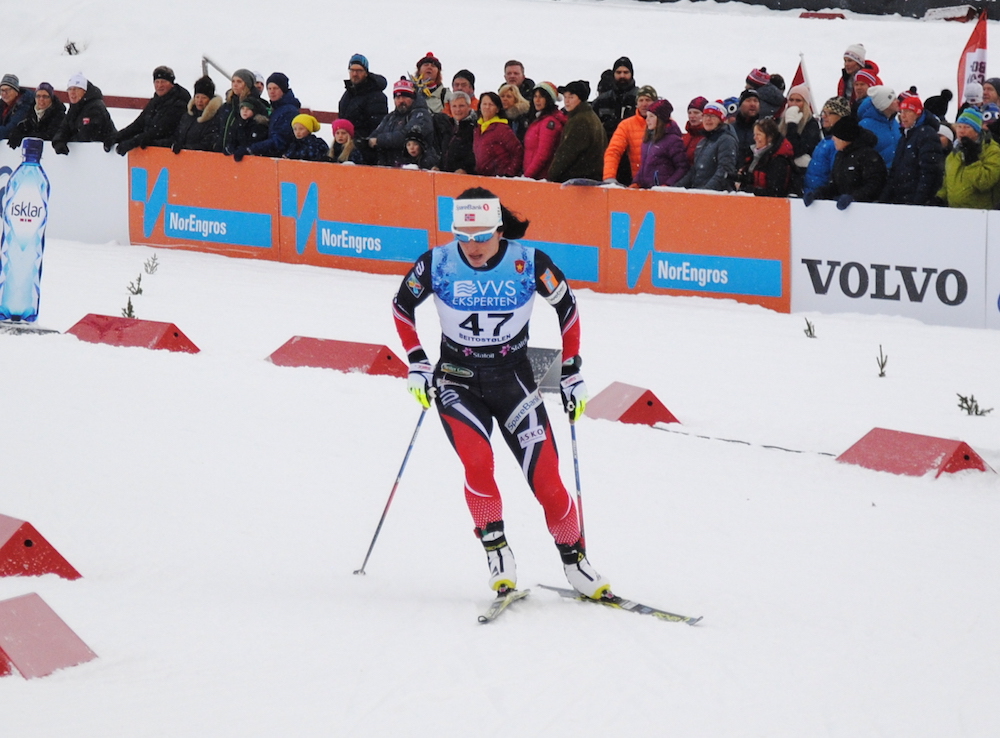
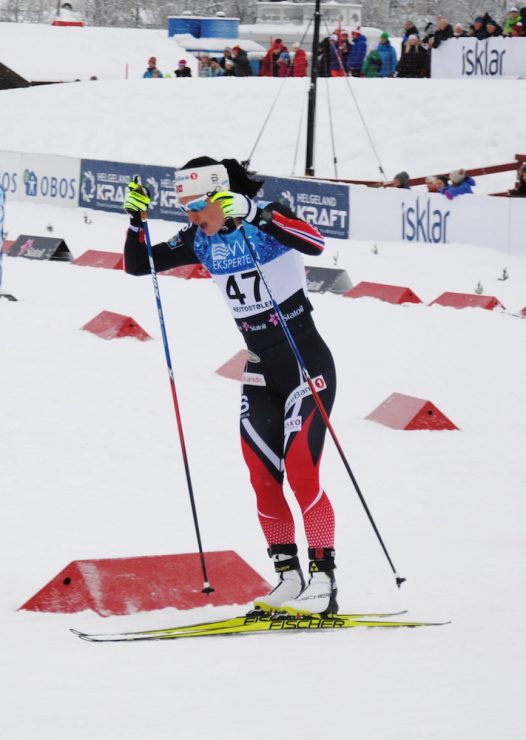
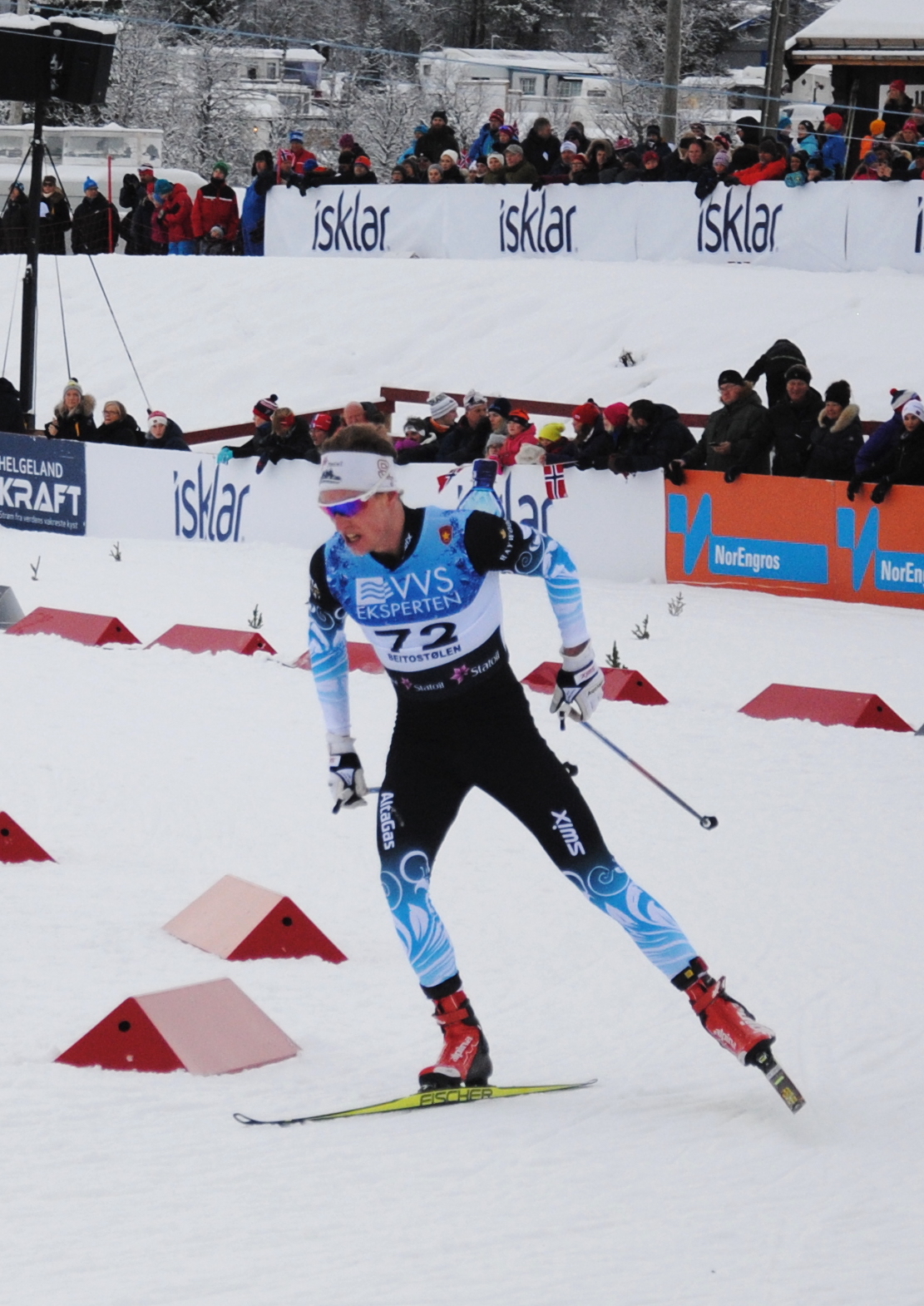
    Marit Bjørgen racing to first in the women's 10 k freestyle FIS race on Saturday in Beitostølen, Norway. It was her first FIS race since March of 2015. (Photo: Aleks Tangen)
    Norway’s Marit Bjørgen racing to first in the women’s 10 k freestyle on Saturday in Beitostølen, Norway. It was her first FIS race since March of 2015. (All photos: Aleks Tangen)

    BEITOSTØLEN, Norway — Saturday’s 10-kilometer freestyle individual start was, from the start, all about Marit Bjørgen. Her previous race was 603 days earlier on March 27, 2015 in Harstad, Norway, but that didn’t seem to affect Norway’s six-time Olympic gold medalist one bit.

    “I’ll admit that I have had my doubts,” she told Dagbladet about returning to competition. “And I’ve been tired, but I made it through it and I’ve appreciated the good times.”

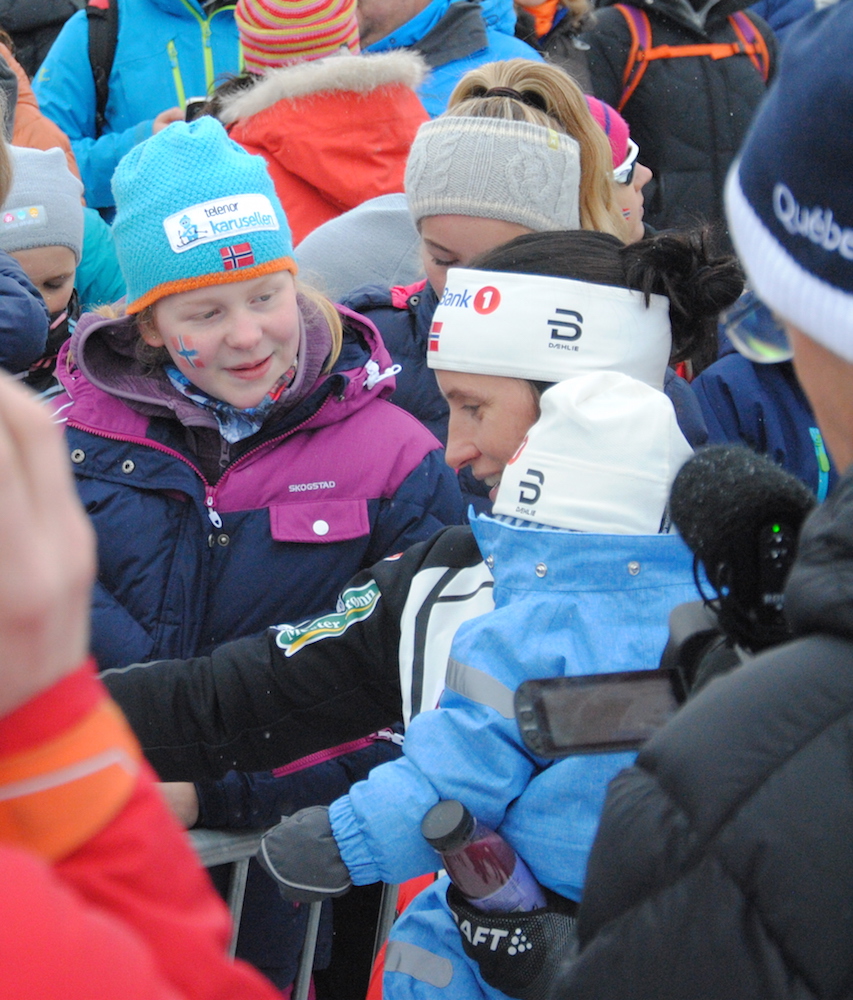
    Norway's Marit Bjørgen with her baby, Marius, and fans in Beitostølen, Norway, following Bjørgen's first race since having a child in December 2015. Saturday marked Bjørgen's first race back since March 2015. (Photo: Aleks Tangen)
    Norway’s Marit Bjørgen with her baby, Marius, and fans in Beitostølen, Norway, following Bjørgen’s first race since having a child in December 2015. Saturday marked Bjørgen’s first race back since March 2015. (Photo: Aleks Tangen)

    The 36-year-old Bjørgen led Saturday’s International Ski Federation (FIS) race at every split mark and crossed the finish line in 24:40.3 minutes.

    Fellow Norwegian national-team member Heidi Weng followed in second, 11.7 seconds behind. After  placing second to teammate Ingvild Flugstad Østberg in Friday’s 10 k classic, Weng told VG that Bjørgen, who sat out the race with a cold, was “probably sitting at home and laughing at how slow it went went. She will race fast and I think will see Marit Bjørgen as good as she has been in the past. She’s done great during the summer and fall training.”

    After her second-straight second-place finish, Weng told Dagbladet that she opened fast on Saturday, but her muscles tired as the race progressed.

    “It’s irritating, but I really had no chance toward the end, and it’s not that bad, really, because I don’t think I’ve ever had a better season opener. I’m a little surprised by that really,” she said.

    When asked by FasterSkier if she thought she could match her performances in Sunday’s skate sprint, Weng said, “I didn’t make it through from the prologue last year so I’m hoping that I can do better than that, but we’ll see.”

    The race for third place proved to be the most exciting with Østberg crossing the finish line 28.2 seconds behind Bjørgen and just 1.7 seconds in front of Norway’s Astrid Uhrenholdt Jacobsen, who finished fourth. Norway swept the top eight as Kari Øyre Slind followed 2.9 seconds later in fifth and her sister Silje Øyre Slind was sixth, another 17.5 seconds behind.

    Østberg told FasterSkier that she will not be competing in Sunday’s sprint. “If the World Cup weekend had been two weeks away then maybe, but after doing two tough races in two days and since sprints takes a lot of energy rest is probably the best,” she said.

    Nonetheless, a first and third place finish in Beitostølen is Østberg’s best start to a season yet.

    “It is without a doubt my best season opener, and I’m super happy,” she told both FasterSkier and Oppland Arbeiderblad, a regional newspaper from her hometown of Gjøvik.

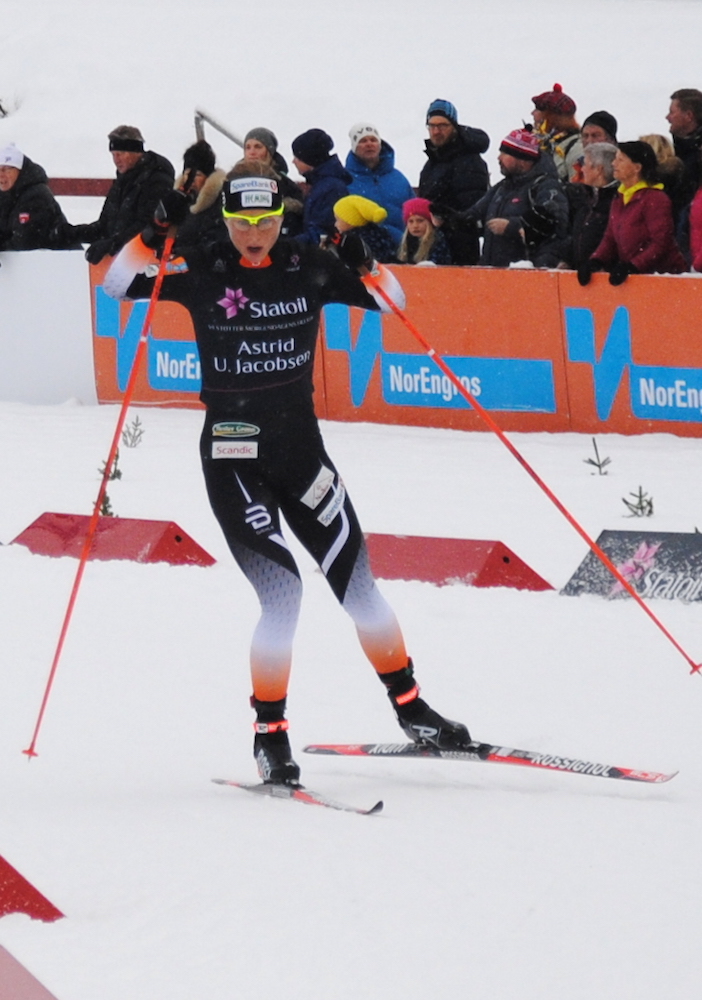
    Astrid Uhrenholdt Jacobsen (Norway) racing to fourth in the women's 10 k freestyle FIS race on Saturday in Beitostølen, Norway. (Photo: Aleks Tangen)
    Astrid Uhrenholdt Jacobsen (Norway) racing to fourth in the women’s 10 k freestyle FIS race on Saturday in Beitostølen, Norway. (Photo: Aleks Tangen)

    Jacobsen narrowly missed the podium after crossing the finish line 1.7 seconds slower than Østberg.

    “I feel like I’m not quite there yet,” Jacobsen told FasterSkier after. “I still have some work to do in order to be in top shape, but I still ski relatively fast and I feel like I have a very good base condition so I think it can be a good year.”

    Asked what it was like to have Bjørgen back, Jacobsen replied, “She wins as expected. I skied with her on my second lap and I definitely think she can ski faster. This race wasn’t Marit in her top shape.”

    When asked about Bjørgen’s ability to perform as well as she did on Saturday, considering she hasn’t raced since 2015, Jacobsen smiled and waited a moment before she answered, “That’s something only Marit can do.”

    Eighteen-year-old Norwegian Mathilde Myhrvold finished 27th (+3:49.7) of 48 finishers on Saturday. In 2014, she competed in the track and field World Junior Championships in Eugene, Oregon, and last season she won the Norwegian Cup. Saturday stood as her first race this season.

    “Slightly after finishing the first lap I started feeling a little tired and then I skied a little slower, but I improved toward the finish and I’m happy about that,” Myhrvold said. “I may have started a little too fast and maybe that’s why I was tired.”

    She figured a few races would help her return to top shape, and for the rest of the season, she’s focused on improving her conditioning for FIS Junior World Championships trials.

    One spot ahead of her on the results sheet, American Cambria McDermott, who is living and training in Norway, finished 26th (+3:33.6). Canada’s Isabella Howden and Madison Fraser, both of Team Hardwood, placed 45th (+6:19.6) and 47th (+6:59), respectively.

    (Story continues below)


    Another ‘W’ for Tønseth

    Norway’s Didrik Tønseth repeated his podium-topping performance from Friday’s 15 k classic and won Saturday’s 15 k freestyle in 33:20.9. But the biggest surprise of the men’s race was second-place finisher Simen Hegstad Krüger, who crossed the finish line in a time that was only six seconds slower than Tønseth.

    Norway's Didrik Tønseth racing to his second-straight win of the weekend in the 15 k freestyle FIS race on Saturday in Beitostølen, Norway. (All photos: Aleks Tangen)
    Norway’s Didrik Tønseth racing to his second-straight win of the weekend in the 15 k freestyle FIS race on Saturday in Beitostølen, Norway. 

    “I had nothing more to give, but this podium finish is incredibly satisfying,” the 23-year-old Krüger, who won the 15 k freestyle at U23 World Championships last season, told NRK after Saturday’s race.

    “I’m hoping for a spot on the team for the World Cup in Lillehammer, but it might be too late for that,”

    Norwegian men’s coach Tor-Arne Hetland seemed open to placing Krüger on the team for Lillehammer in two weeks.

    “We’ll be choosing the team on Monday and I think the mini tour will suit him well, so he may  receive a positive message in the coming week,” he told NRK.

    Tønseth had the advantage of starting five bibs after Krüger and told NRK that he felt like he was in good shape and that he was ready to start the season. The 2017 World Championships in Lahti, Finland, are his main focus.

    Norway swept the top five after a close fight for third, which Simen Andreas Sveen took, 32.6 seconds behind Tønseth. Anders Nøstedahl Gløersen was another 1.9 seconds back in fourth (+34.5), Mathias Rundgreen placed fifth (+36.9) and Andrew Musgrave of Great Britain finished sixth (+37.0).

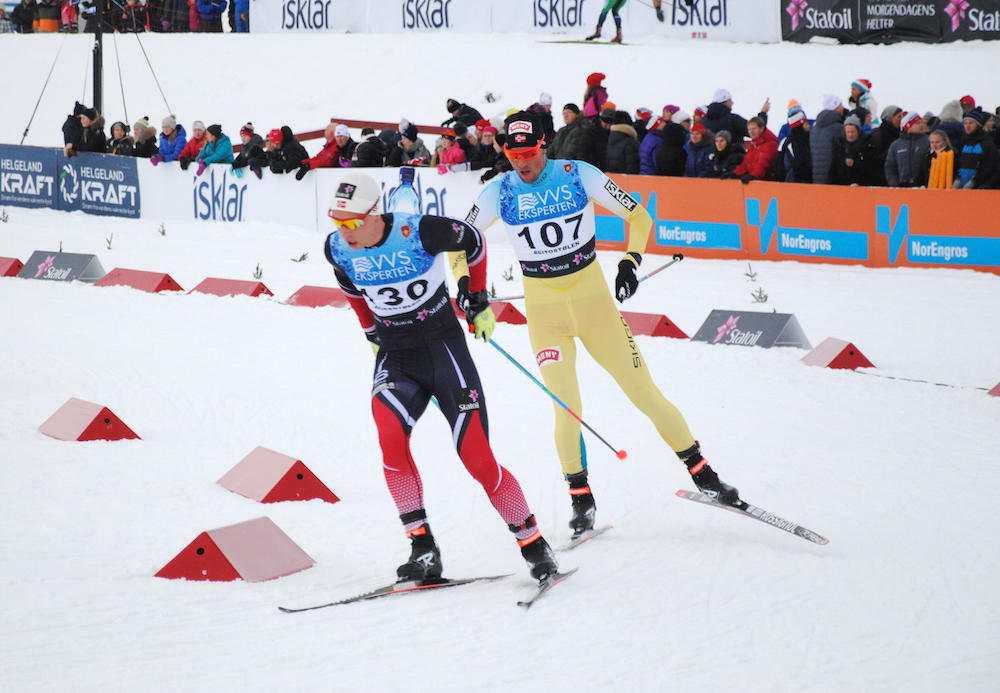
    Norway's 25-year-old Mathias Rundgreen (130) leads Chris Jespersen (107), a 33-year-old Norwegian World Cup regular, in the men's 15 k freestyle FIS race in Beitostølen, Norway. (Photo: Aleks Tangen)
    Norway’s 25-year-old Mathias Rundgreen (130) leads 33-year-old Chris Jespersen (107), also of Norway, in the men’s 15 k freestyle FIS race in Beitostølen, Norway. Rundgreen placed fifth and Jespersen finished eighth on Saturday.

    “I feel good about the race, but I felt a little limply in the beginning,” Musgrave told FasterSkier after. “Though I was able to close some of the gap toward the end, but not enough.”

    Like most World Cup skiers, Musgrave’s goal for the season is World Championship and he’ll be in both Kuusamo, Finland, and Lillehammer over the next two weekends to compete in the World Cup.

    One place behind Musgrave was Norwegian Sjur Røthe in seventh (+37.2), who told FasterSkier that he felt “heavy during the start.” In a post-race interview with NRK, Røthe said he’s focused on the World Championships 50 k. He planned to skip Sunday’s sprint to recharge for the World Cup.

    Petter Northug (Norway) approaching the finish of Saturday's 15 k freestyle FIS race in Beitostølen, Norway. (Photo: Aleks Tangen)
    Petter Northug (Norway) approaching the finish of Saturday’s 15 k freestyle FIS race in Beitostølen, Norway. (Photo: Aleks Tangen)

    Petter Northug finished Friday’s race like it was a workout, and during the start of Saturday’s race, it appeared that he was on the path to a podium, but such was not the case. Northug led the race at the 1.2 and 2.1 k marks, but for the rest of the race, he was unable to maintain the same speed as the other top finishers and ended up 15th (+1:02.6). However, Northug didn’t seem to be affected by his fading speed, telling Dagbladet, “I am where I want to be. I’ve had two good workouts now and I’m confident that the job is done. I am excited for the important races that are approaching.”

    But he did offer some explanation for what happened.

    “I opened too hard and during the second lap I felt like it would be too much to maintain the tempo,” Northug told NRK.

    Out of 123 male finishers, Jack Carlyle (NDC Thunder Bay) led several Canadian juniors in 90th (+3:48.4). His NDC teammate Scott James Hill finished 101st (+4:25.6), Joey Foster (Pierre-Harvey Training Centre) was 103rd (+4:31), and Team Hardwood skiers Ryan Jackson was 106th (+4:50.4) and Kieran Jones was 115th (+6:11.5).

    Results: Women | Men

    Jack Carlyle (NDC Thunder Bay) racing to 90th to lead the Canadian men in the 15 k freestyle FIS race in Nov. 19 in Beitostølen, Norway. (Photo: Aleks Tangen)
    Jack Carlyle (NDC Thunder Bay) racing to 90th to lead the Canadian men in the 15 k freestyle FIS race in Nov. 19 in Beitostølen, Norway.
  • Holmes and Green Take 2016 Frozen Thunder Distance Titles in More of a Training Scenario

    Holmes and Green Take 2016 Frozen Thunder Distance Titles in More of a Training Scenario

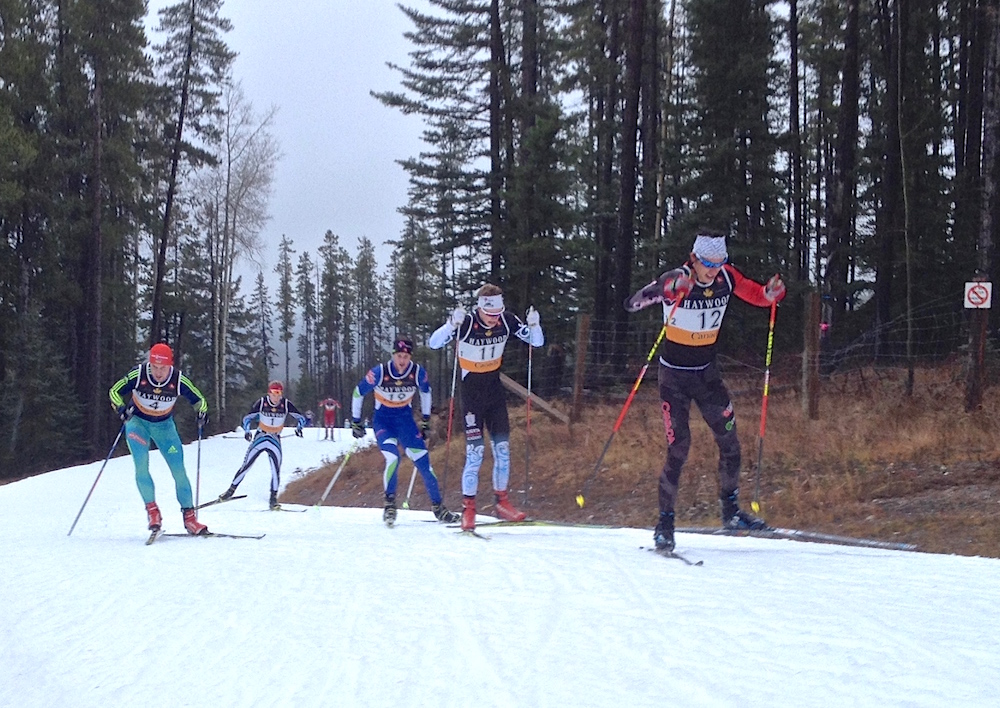
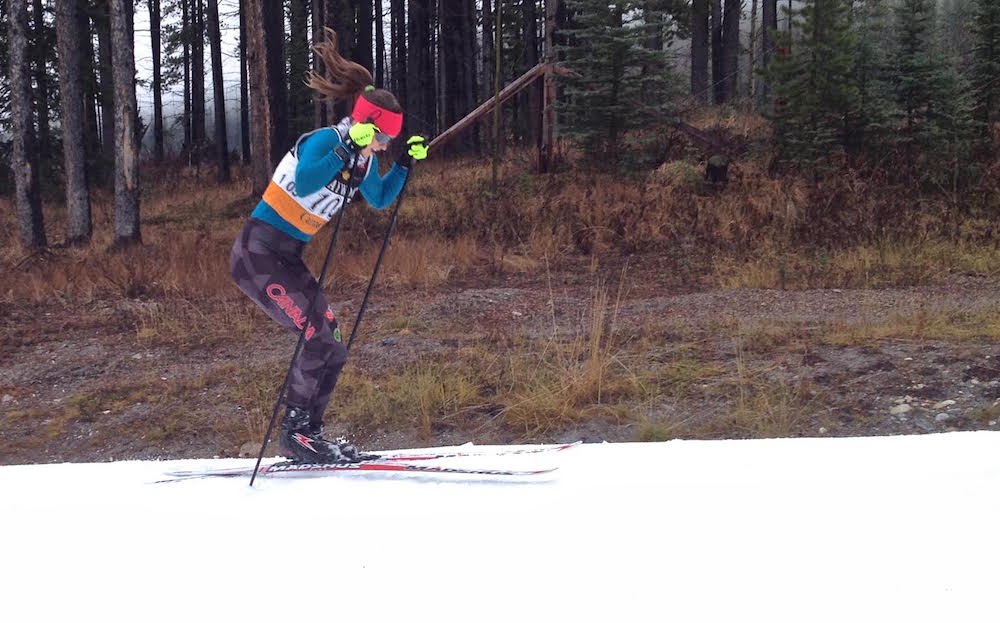
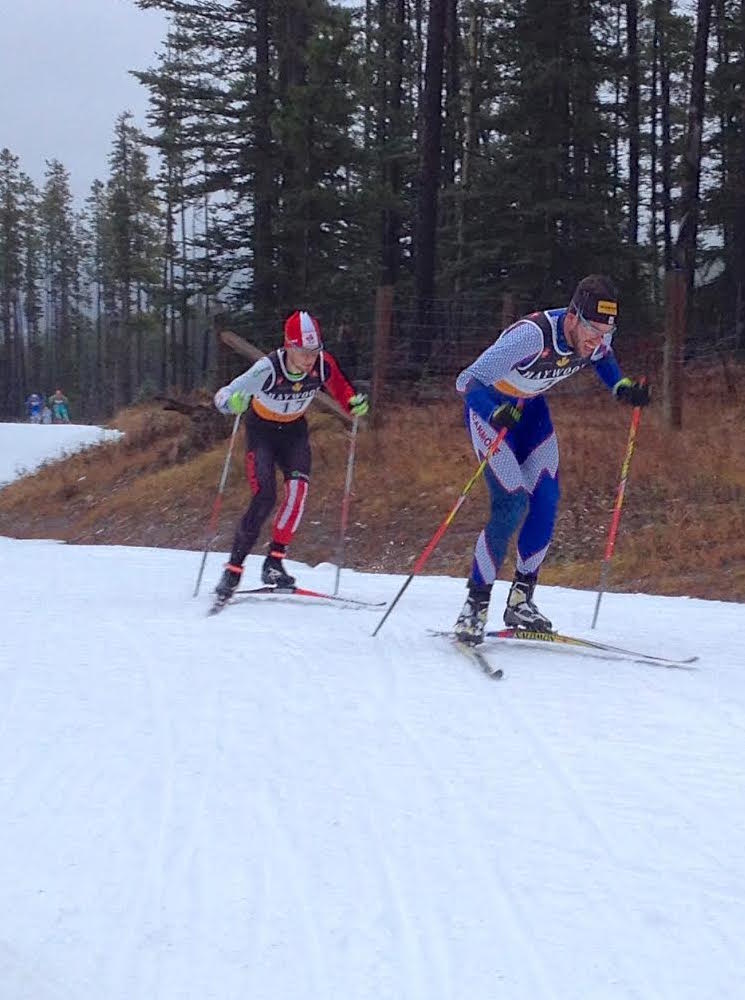
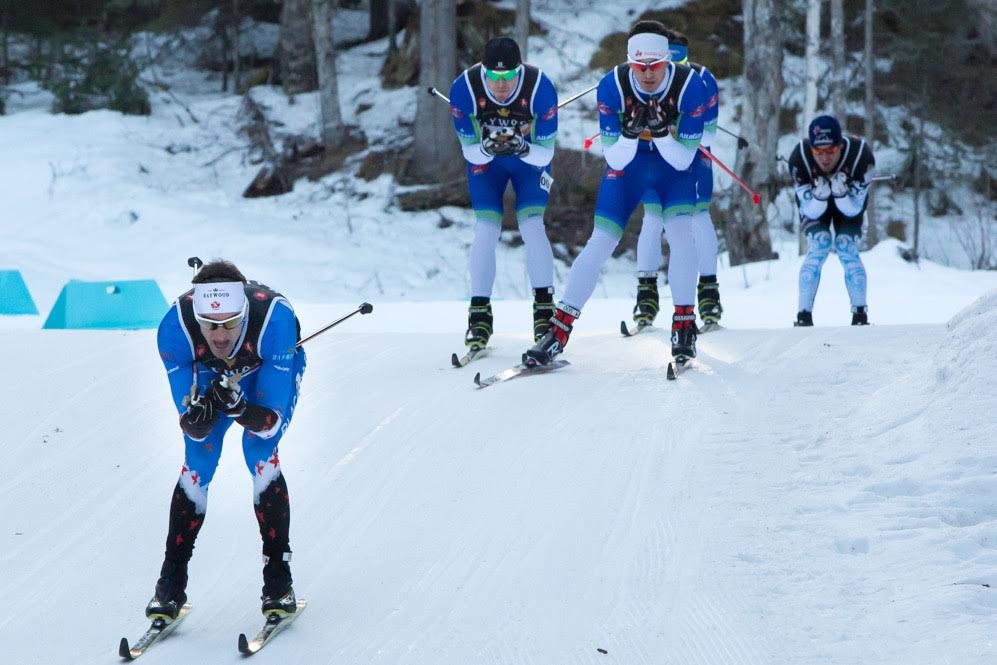
    Biathlon Canada's Brendan Green (r) leads Ukrainian biathlete Olexandr Zhrynyi (4) and Canadians Jack Carlyle, (11), NDC Thunder Bay's Bob Thompson (19) and Gareth Williams (1) during the men's 10 k freestyle interval start on Friday at Frozen Thunder in Canmore, Alberta. (Photo: Matthias Ahrens)
    Biathlon Canada’s Brendan Green (r) leads Ukrainian biathlete Olexandr Zhrynyi (4) and Canadians Jack Carlyle, (11), NDC Thunder Bay’s Bob Thompson (19) and Gareth Williams (1) during the men’s 12 k freestyle interval start on Friday at Frozen Thunder in Canmore, Alberta. (Photo: Matthias Ahrens)

    On Friday, the Canmore Nordic Centre celebrated Day 7 of Frozen Thunder with freestyle interval-start distance races, Canada’s first unofficial on-snow races of the 2016/2017 season. As with previous years, the nordic community has been out in force on Alberta’s early season ski trails.

    Local skiers include members of Canada’s cross-country, biathlon and Para-Nordic teams as well as three larger clubs. The U.S. and Ukrainian biathlon teams are also in Canmore, along with a salting of top cross-country skiers from the western U.S.

    With no points or selection opportunities on the line for Friday’s race, most considered it a training race. A second day of rain led some athletes to drop out or skip the distance race altogether, leaving a grand total of 97 finishers, all using the same low-fluoro wax.

    Chelsea Holmes of Alaska Pacific University (APU) won the women’s 7.5 k freestyle in 18:18.6.

    “We had fantastic conditions,” she wrote in an email. “It was a little bit like the APU summer training grounds on Eagle Glacier :)”  

    The men started first, leaving the women with a chewed-up surface of a few inches of wet, corn snow on a firmer base. Regardless, conditions remained mostly consistent from the first to last female starter.

    Holmes explained she came to Canmore to spend time with her husband, who works in nearby Banff, and “to get in a race effort with a bib on and try to get my body going” before heading back to natural snow in Alaska.

    Caitlin Gregg (Team Gregg/Madshus) placed second, 6.3 seconds off of Holmes’s winning time.

    “I was pretty happy with my race today,” Gregg wrote. “It was honestly one of those days when I didn’t feel great (energy-wise) on course but I skied well and the result was quite good. I raced on a new pair of my Madshus skis and felt like they were a huge part of my speed out there when I was a bit off ;)”

    Whereas Holmes had four weeks of glacier skiing in the summer, Gregg hadn’t been on snow since March.

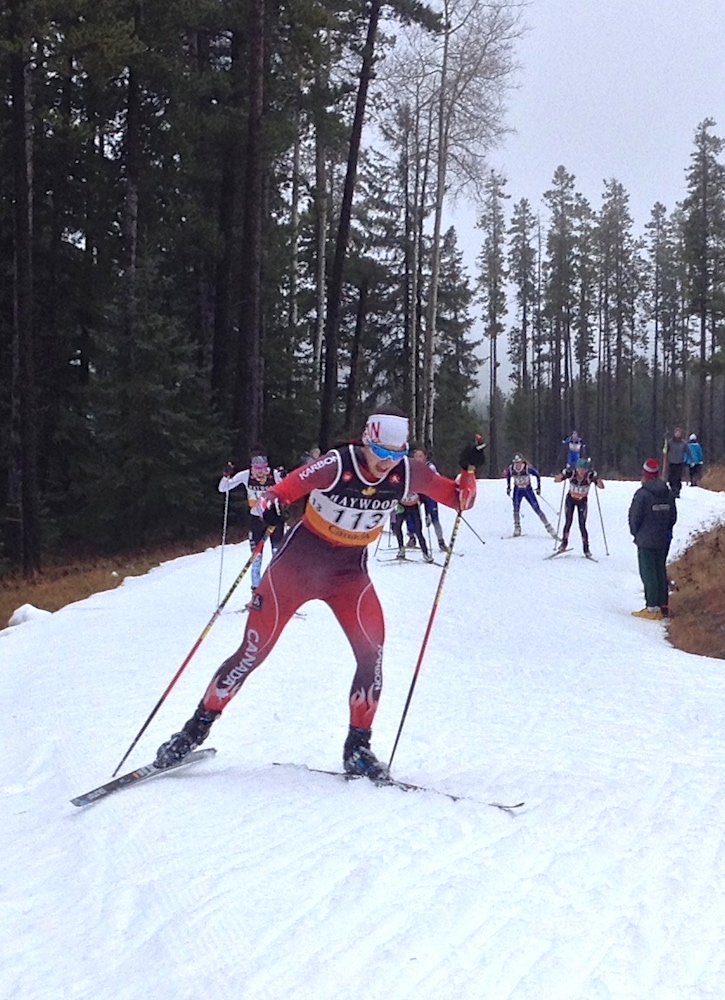
    Biathlon Canada's Rosanna Crawford racing to third in the women's 7.5 k freestyle on Friday at Frozen Thunder in Canmore, Alberta. (Photo: Matthias Ahrens)
    Biathlon Canada’s Rosanna Crawford (113) racing to third in the women’s 7.5 k freestyle on Friday at Frozen Thunder in Canmore, Alberta. (Photo: Matthias Ahrens)

    “It was pretty soft [conditions] but I tried to figure out how to maintain speed by playing around with my power, tempo and technique,” Gregg wrote. “I find myself racing some softer loop courses during the year and wishing I had more practice for those conditions so today was a great learning day!”

    Biathlon Canada’s Rosanna Crawford, who lives and trains in Canmore, was the top Canadian, placing third, 42 seconds back from Holmes.

    “Today was not great for me,” Crawford wrote in an email. “Definitely didn’t feel great on the skis. Heavy legs. We are at the end of a pretty tough intensity block with 5 sessions on the roller ski treadmill that can leave you feeling pretty drained. The soft slushy snow also doesn’t work great for a tall girl like me!”

    Crawford spent three weeks of August skiing in New Zealand with the national team and is excited to be wearing a bib on snow again.

    “I love sprints and wish that I could race more of them!”  she wrote. “We did a prologue in our fall Testival this year, a 3km race and that went really well for me, so hopefully I can transfer that over to snow for the skate qualifier next week!”

    Like the other racers, she didn’t take the race results too seriously.

    “These races don’t mean much […] because you don’t know how loaded or tired athletes are going into them. It’s just fun to get back on snow and feel the race vibes and nerves!”

    Olivia Bouffard-Nesbitt of the Alberta World Cup Academy (AWCA) and U25 national team placed seventh (+1:14.7), behind her teammate on both teams Dahria Beatty in fourth, Julia Ransom (Biathlon Canada) in fifth, and Mary Rose, of the Sun Valley Ski Education Foundation (SVSEF) Gold Team, in sixth.

    National team biathlete Julia Ransom racing to 5th place. (Photo: Matthias Ahrens)
    Biathlon Canada’s Julia Ransom racing to fifth place in the women’s 7.5 k freestyle on Friday at Frozen Thunder in Canmore, Alberta. (Photo: Matthias Ahrens)

    “I was very happy with the race today, Bouffard-Nesbitt wrote in an email. “I had a tough summer, spending 3 months on crutches due to a foot injury. My first real intensity session was only a couple of weeks ago, so I really had no expectations going into the race today. I’m happy with my decision to race because; it felt good to push hard and I was happy to see that I hadn’t lost too much fitness over the summer. This was definitely a training race for everyone, not much ski testing was done and everyone was on the same wax (LF6).”

    She added that snow skiing caused less pain in her foot than rollerskiing, and Frozen Thunder marked the first time she had been on snow since March.

    “[That’s] probably the longest I’ve gone off snow for the last 5 or 6 years, so it feels really good,” Bouffard-Nesbitt wrote.

    Green Edges Gelso 

    Another leading member of Biathlon Canada, Brendan Green won the men’s 12 k, completing the six laps in 23:11.2 to edge out Matt Gelso (SVSEF Gold Team) by 4.6 seconds.

    “All in all I think I raced well,” Green wrote in an email. “This was our first hard effort on snow and I feel like I was able to put in quite a good effort.  There are still areas for me to work on but today was a good test.”

    Green is seeing value from three weeks of New Zealand snow and the first week of Frozen Thunder. “This training season encompassed the most time I’ve ever spent on snow, and I think this has been really positive for me,” he wrote.

    After ideal snow at New Zealand’s Snow Farm and first five days at home in Canmore, Green explained he was happy to race in trickier conditions.

    “The course was soft but not unlike conditions we often face while racing in Europe, so in that regard it was good practice,” he wrote, adding that the Frozen Thunder course has been holding up well. 

    “Honestly I felt a little slow motion out there today, but that is pretty standard for an early season effort like this,” Gelso wrote in an email. “It certainly feels great to have performed as well as I did today, but the races that count begin in December and that’s when I want to be skiing fast.”

    Gelso saw having bib 16 of 65 as an advantage.

    “Conditions did change throughout the men’s race with much later starters seeing a pretty soft and chopped up course for their whole race instead of just the last 4 laps or so,” he wrote.

    Despite four weeks of skiing in Falls Creek, Australia, with his team this summer, “an extra week of skiing at the end of October goes a long way towards being prepared to race well in early December,” Gelso noted.

    Third place went to Ukrainian biathlete Olexandr Zhyrnyi, who finished 8.1 seconds back.  Para-Nordic star Brian McKeever placed fourth, 4.3 seconds behind Zhyrnyi and 1.3 seconds ahead of Russell Kennedy (AWCA).

    Russell Kennedy leads national team biathlete Christian Gow (Photo: Matthias Ahrens)
    Russell Kennedy (AWCA) leads Christian Gow (Biathlon Canada) in the men’s 12 k freestyle on Friday at Frozen Thunder in Canmore, Alberta. (Photo: Matthias Ahrens)

    “I felt good about my race today,” Kennedy wrote in an email. “It’s always good to start the season on a positive note!”

    Kennedy didn’t travel for summer snow, which made local skiing more important to him.

    “Frozen Thunder is definitely a huge asset to western North America. There is no doubt that it helps get you into ski shape long before the season starts,” he wrote.

    Brian Gregg (Team Gregg/Madshus) was a bit disappointed with his 14th place, 39.2 seconds back, but is more focussed on preparing for future races.

    “It is nice to not have to worry about the wax component of the race,” he wrote after Friday’s race. “30 second intervals gave plenty of room on the course and the course is at least two skiers wide.  The organizers and volunteers have a dialed operation.”

    With only a week on snow in summer at Haig Glacier, Gregg is enjoying the chance to learn about his skis and be surrounded by elite skiers.

    “I love skiing on snow!” he wrote. “The setup on Frozen Thunder is fantastic too as it offers the ability to easily test skis in a variety of snow conditions.  Although it is unique to be on snow that has been saved all summer, we are finding ourselves racing more and more on transformed man made snow.”

    Complete Results

    Racing continues with a classic sprint on Tuesday, Nov. 1 and a freestyle sprint on Thursday, Nov. 3, both starting at 9 a.m. mountain time.  Two Canadian men will be selected for the World Cup Period 1 based on the qualifying results.  If you live in the region, Shaw TV Calgary will have live coverage of the classic sprint from 10 a.m.

    FasterSkier is seeking photos from the 2016 races at Frozen Thunder. Please email submissions with caption and credit info to info@fasterskier.com.

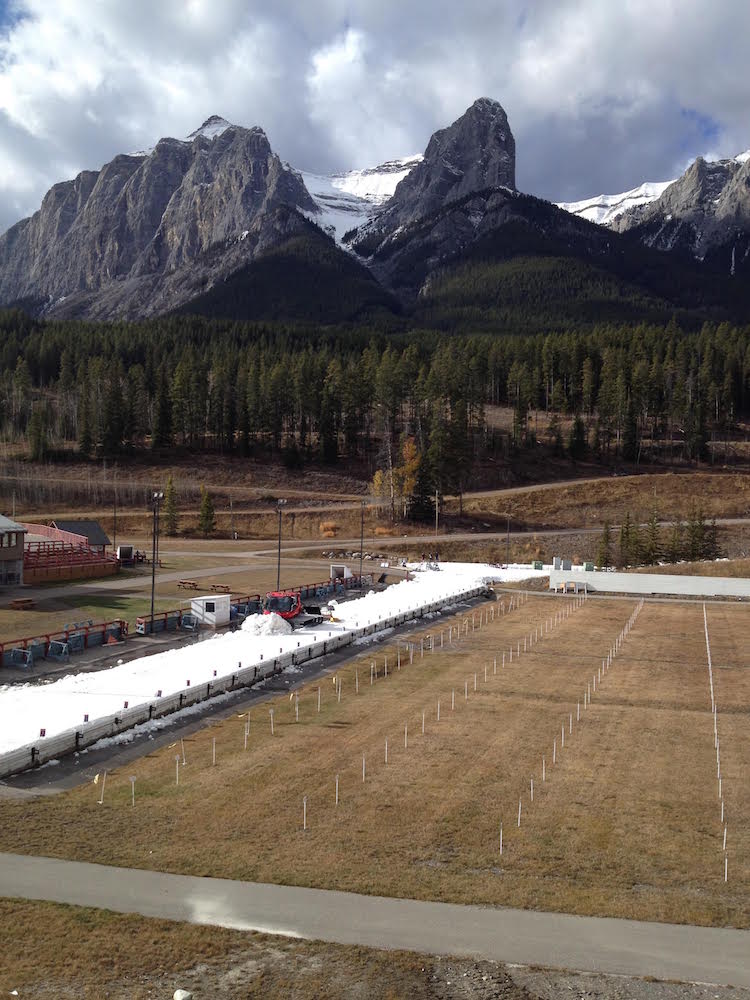
    Building the biathlon range for Frozen Thunder 2016 (Photo: Matthias Ahrens)
    Building the biathlon range for Frozen Thunder 2016 at the Canmore Nordic Centre in Canmore, Alberta. (Photo: Matthias Ahrens)
  • FasterSkier’s Collegiate Skiers of 2016: Mads Strøm and Linn Eriksen

    FasterSkier’s Collegiate Skiers of 2016: Mads Strøm and Linn Eriksen

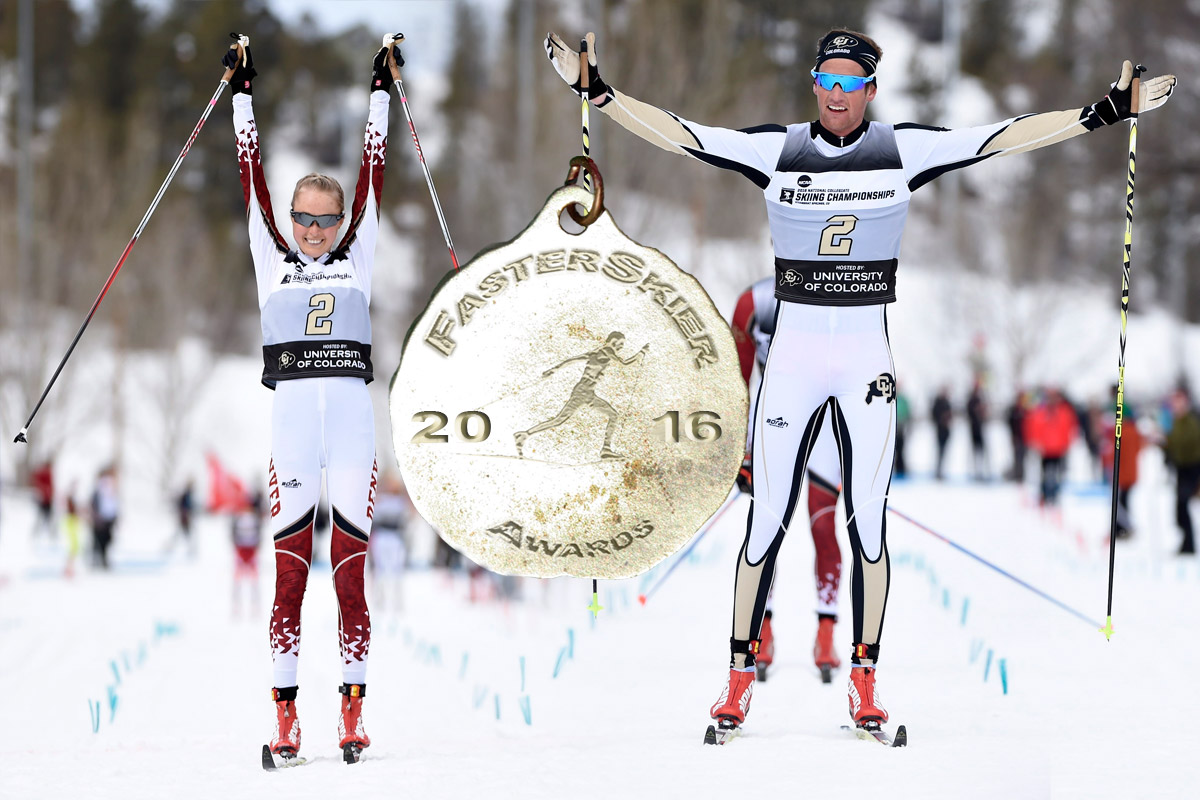
    FasterSkier's Collegiate Skiers of 2016: Mads Strøm and Linn Eriksen. (photo: Curtis Snyder of the CU Sports Information Dept. and Jamie Schwaberow/NCAA Photos).
    FasterSkier’s Collegiate Skiers of 2016: Mads Strøm and Linn Eriksen. (photo: Curtis Snyder of the CU Sports Information Dept. and Jamie Schwaberow/NCAA Photos).

    With the 2015/2016 season officially in the rearview, FasterSkier is excited to unveil its annual award winners for this past winter. Votes stem from the FS staff, scattered across the U.S. and Canada, and while not scientific, they are intended to reflect a broader sense of the season in review.

    We kicked off the series Monday with Juniors of 2016: Katharine Ogden and Sean Doherty. This second set of honors goes to outstanding male and female skiers on the U.S. NCAA collegiate circuit. 

    ***

    Mads Strøm, University of Colorado-Boulder

    Even after tallying four wins in a row and six victories this past season, the University of Colorado-Boulder (CU) junior Mads Ek Strøm was still nervous before his final competitions of the 2016 college race season.

    Nerves, however, didn’t stand a chance with the 24-year-old Norwegian.

    By the time he finished the men’s 10-kilometer freestyle — the first of two nordic races at the NCAA Skiing Championships event this year in Steamboat Springs, Colo. — Strøm had skied to his seventh win of the season and fifth win in a row, securing himself as the most distinguished CU skier of all time.

    Prior to Strøm, the most season wins accomplished by a CU skier were six, set first in 1989 by Per Kare Jakobsen and then again in 1999 by Ove Erik Tronvoll.

    “I was so nervous,” Strøm said of coming into the 10 k, according to CUBuffs.com. “I just had to find good skis, good pacing, and push it as hard as possible. It was definitely the best win of the year. Pulling it off when it matters the most is great.”

    An Oslo native, Strøm began attending CU in 2014. He made his debut on the NCAA Championships podium during his freshman year, when he won the 2014 men’s 20 k freestyle race at Soldier Hollow in Midway, Utah.

    One podium only warranted more. After his freshman year, Strøm continued to chase the top spots, garnering 25 career podium finishes and 13 individual titles by the time he won this year’s men’s 10 k event, according to CU’s Sport Information Specialist Curtis Snyder.

    However, Strøm’s goal for this college season wasn’t to win just one of the NCAA Championships races. He wanted both.

    “Obviously I wanted to win,” Strøm had told FasterSkier after he finished second in the men’s 15 k classic mass start Sun Valley SuperTour in December — before the college season started. “I haven’t gotten quite there yet because I have been training almost 100 hours every month since May. I’ve planned that in one month from now I’m going to be in better shape and my plan is to win both races at NCAA’s.”

    Strøm’s plan to wait and win worked. When he crossed the finish line first in the men’s 20 k classic mass start, the second nordic race of NCAA Championships, Strøm accomplished his season goal and much more.

    After winning eight out of 12 races in the collegiate race schedule, Strøm now holds the record for most season victories of any CU skier, alpine or nordic.

    “He became the fifth CU skier to sweep the individual NCAA Championships in program history, joining John Skajem (alpine, 1987), Line Selnes (1988, Nordic), current Nordic assistant Jana Weinberger (2006, Nordic), Maria Grevsgaard (2008, Nordic) and Lucie Zikova (2008, alpine),” Snyder wrote in an email regarding Strøm’s NCAA podium sweep.   

    The Norwegian’s achievements this season don’t end with the collegiate race scene. Strøm also finished fourth and ninth at the SuperTour season opener in West Yellowstone, Mont., in the 15 k freestyle and sprint, respectively. 

    The following SuperTour in Sun Valley Idaho, also saw Strøm ski to second in the men’s 15 k classic mass start and 11th place in the classic sprint.

    Strøm, who plans to major in business and would like to one day compete at the Olympics, will return to CU next year for his final nordic ski season as a senior.

    Linn Eriksen, University of Denver

    One out of two. For every two college races University of Denver (DU) sophomore Linn Eriksen raced this year, she won one. That includes the final nordic college race of the season at NCAA Championships: the women’s 15 k classic mass start.

    Also from Oslo, Eriksen, 21, commanded this year’s NCAA Championships mass start, striding away to a 19.9-second victory over the University of New Mexico’s (UNM) Kati Roivas.

    Though Eriksen has stood at the top of the podium before as Norway’s four-time Junior National Champion, her victory in this year’s 15 k was her first NCAA title, as well as her first NCAA podium appearance. 

    Her breakthrough at this year’s NCAA’s also helped the Denver Pioneers to their 23rd national championship.

    “Moritz [Madlener] and Linn [Eriksen] have led the team all year and they did it again today,” DU head nordic coach David Stewart said according to a DU press release.  “Linn skied a masterful race, leading from start to finish, breaking away on the last lap to ski to a solo win.”

    Eriksen’s other notable accolades from the season include first-place finishes in women’s 5 k freestyle and 15 k classic at the Montana State University invite, victories in both races at the UNM invite, second place in the 5 k freestyle at the University of Utah invite, third place in the 15 k classic CU invite, second place in the 5 k freestyle at the DU Regional race, and her top-10 finish in the first race of NCAA Champioships, the 5 k freestyle where she placed eighth.

    After finishing the season as an All-American in both NCAA Championships races, Eriksen’s name will not go unnoticed at the start of next year’s college race season, her junior year.

  • The Last ‘Hurrah’, Diggins Wins 10 k Skate by Half a Minute; Bjornsen Headed Home

    The Last ‘Hurrah’, Diggins Wins 10 k Skate by Half a Minute; Bjornsen Headed Home

    Jessie Diggins of the Stratton Mountain School (SMS) T2 Team and U.S. Ski Team (USST) powers through the women's 10 k freestyle en route to a victory on the first day of racing at SuperTour Finals in Craftsbury, Vt. (Photo: John Lazenby/Lazenbyphoto.com)
    Jessie Diggins of the Stratton Mountain School (SMS) T2 Team and U.S. Ski Team (USST) powers through the women’s 10 k freestyle en route to a victory on the first day of racing at SuperTour Finals in Craftsbury, Vt. (Photo: John Lazenby/Lazenbyphoto.com)

    It had been 116 days since the season started with the November World Cup and SuperTour races and just nine days since the conclusion of the Ski Tour Canada. Needless to say, it has been a long season.

    U.S. SuperTour Finals, held this week in Craftsbury, Vt., is a unique season-ending series. The senior men’s and women’s fields are a conglomerate of domestic racers (which compete all winter on the SuperTour circuit), collegiate racers (some of which are fresh off NCAA Championships), and the U.S. Ski Team (with several members returning from nearly four months abroad on the World Cup circuit). Also known as Spring Series, the U.S. finals give World Cup racers the opportunity to reconnect with their programs and race alongside their club teammates.

    Consistent with the snow struggles all season across the U.S. and Europe this season, Monday’s individual start races were held on a manmade 3.4-kilometer loop in Craftsbury. However, athletes commended the challenging course organizers and volunteers laid out.

    In the women’s 10 k freestyle, U.S. Ski Team (USST) member Jessie Diggins, racing for the Stratton Mountain School T2 Team, started third and quickly posted the fastest splits to cross the finish line first in a time of 24:26.9.

    Jessie Diggins (Stratton Mountain School T2 Team/U.S. Ski Team) celebrates her win in the women's 10 k freestyle on the first day of U.S. SuperTour Finals on Monday in Craftsbury, Vt. (Photo: John Lazenby/Lanzenbyphoto.com)
    Jessie Diggins (Stratton Mountain School T2 Team/U.S. Ski Team) celebrates her win in the women’s 10 k freestyle on the first day of U.S. SuperTour Finals on Monday in Craftsbury, Vt. (Photo: John Lazenby/Lanzenbyphoto.com)

    That time held up throughout the day and when the final results were posted, only two racers managed to keep Diggins within 36 seconds of them: USST teammate Sadie Bjornsen and Riitta-Liisa Roponen of Finland, respectively.

    Bjornsen, of Alaska Pacific University (APU) bested Roponen, a 37-year-old Finnish A-team member, by just 0.2 seconds for second place, clocking 36.2 seconds behind Diggins. Due to nagging injuries and sickness, this will be Bjornsen’s only race this week.

    “Today was a challenging and fun grand finale,” Bjornsen wrote in an email. “I am still pretty sick and managed to get a little overuse shoulder injury at the end of the tour. So I have decided to pull the plug and head back home tomorrow. When you are so exhausted, it becomes a bit dangerous to race when you are sick.”

    Although SuperTours are usually devoid of overseas national-team racers, Finland and Italy were represented in Craftsbury on Monday.

    “Riitta-Liisa and Virginia [De Martin Topranin, of Italy] are here racing to have fun and see the U.S. while getting some racing in,” Diggins explained in an email. “I think it’s so great to have an international field here at Spring Series.”

    Roponen last race at the Worldloppet at home in Lahti, Finland, which she won. Her best individual World Cup result this season was fifth at the Lahti World Cup 15 k skiathlon. Topranin, 28, placed 11th on Monday, more than two minutes back. She is coming off a 22nd-place overall finish in the Ski Tour Canada (STC) and a top individual result of seventh in a 10 k classic mass-start stage at the Tour de Ski.

    Diggins finished fifth overall in the STC and has broke through with five World Cup podiums this season, including a win in the 5 k freestyle at the Tour de Ski.

    Finland's Riitta-Liisa Roponen racing to third in the women's 10 k freestyle on Monday at SuperTour Finals in Craftsbury, Vt. (Photo: John Lazenby/lazenbyphotos.com)
    Finland’s Riitta-Liisa Roponen racing to third in the women’s 10 k freestyle on Monday at SuperTour Finals in Craftsbury, Vt. (Photo: John Lazenby/lazenbyphotos.com)

    “In all honesty, racing again after the tour was tough!” Diggins wrote. “The World Cup season took quite a lot out of me, but after a total rest week with my boyfriend in Boston I’m happy and healthy again and excited for one last ‘hurrah’ to close out the season.”

    About 50 seconds off the podium and nearly 1 1/2 minutes behind Diggins, fourth through seventh place all finished within 7.5 seconds of one another. Chelsea Holmes (APU) led them in fourth (+1:25.4), followed closely by Liz Stephen (Burke Mountain Academy/USST) in fifth (+1:26.5), Ida Sargent of the Craftsbury Green Racing Project (CGRP) and USST in sixth (+1:27.8) and Caitlin Patterson (CGRP) in seventh (+1:32.9).

    Overall, echoes of fatigue resounded among the racers.

    “I feel pretty beat up and tired, but I think I am one of many who have that feeling,” Holmes wrote in an email. “When you race it doesn’t really matter how you feel, you just do your best.”

    Coming off of a fifth- and an eighth-place finish at NCAA Championships, Emilie Cedervaern of the University of New Mexico was the top collegiate skier in 10th (+2:07.2).

    Ahead of her, two women who represented the U.S. at the STC, Annie Hart (SMST2) placed eighth (+1:45.0) and Rosie Brennan (APU/USST) was ninth (+1:56.1).

    Racing continues Tuesday with the men’s and women’s 1.5 k classic sprints. Heats begin at 11:30 a.m. Eastern time.

    “It was so nice to be racing in the U.S. again and to see everyone!” Diggins wrote. “That’s why I come to spring series — it’s all about the awesome people that I never get to see enough!”

    Results

    — Alex Kochon contributed

    Jessie Diggins (c) of the Stratton Mountain School T2 Team and U.S. Ski Team topped the podium in the women's 10 k freestyle individual start on Monday, the first day of racing at U.S. SuperTour Finals in Craftsbury, Vt. Sadie Bjornsen (second from left) of APU/USST placed second and Finland's Riitta-Liisa Roponen (second from r) placed third. Chelsea Holmes (not pictured) was fourth, Liz Stephen (l) fifth and Ida Sargent (r) sixth. (Photo: John Lazenby/Lanzenbyphoto.com)
    Jessie Diggins (c) of the Stratton Mountain School T2 Team and U.S. Ski Team topped the podium in the women’s 10 k freestyle individual start on Monday, the first day of racing at U.S. SuperTour Finals in Craftsbury, Vt. Sadie Bjornsen (second from left) of APU/USST placed second and Finland’s Riitta-Liisa Roponen (second from r) placed third. Chelsea Holmes (not pictured) was fourth, Liz Stephen (l) fifth and Ida Sargent (r) sixth. (Photo: John Lazenby/Lanzenbyphoto.com)
  • ‘Don’t Call Me a Sprinter,’ Østberg Hammers to 10 k Win: Diggins Holds Strong in 5th

    ‘Don’t Call Me a Sprinter,’ Østberg Hammers to 10 k Win: Diggins Holds Strong in 5th

    Norway's Ingvild Flugstad Østberg leads Slovenia's Alenka Cebasek during the women's 10 k freestyle at Stage 7 of the Ski Tour Canada in Canmore, Alberta. Østberg went on to win the stage by 23 seconds over her teammate Heidi Weng. (Photo: Fischer/NordicFocus)
    Norway’s Ingvild Flugstad Østberg leads Slovenia’s Alenka Cebasek during the women’s 10 k freestyle at Stage 7 of the Ski Tour Canada in Canmore, Alberta. Østberg went on to win the stage by 23 seconds over her teammate Heidi Weng. (Photo: Madshus/NordicFocus)

    CANMORE, Alberta — High-alpine sun, firm snow and fast tracks were a Canmore Visitor’s Center dream during the Ski Tour Canada’s (STC) Stage 7 freestyle individual-start races on Friday. It was also a dream day for Ingvild Flugstad Østberg of Norway.

    Hers is a name all over the top-three results during this year’s World Cup season. Østberg has podiumed in 18 individual races this year, one of which included a distance win at the Tour de Ski’s 5-kilometer freestyle pursuit in Lenzerheide, Switzerland.

    In the women’s 10 k freestyle on Friday, Østberg crushed the field to win her second race of the season and a coveted Alberta World Cup Academy cowgirl hat along with it.

    Finland's Krista Parmakoski (r) broke up an all-Norwegian sweep of Friday's 10 k freestyle podium, placing third behind Norwegian winner Ingvild Flugstad Østberg (c), and runner-up Heidi Weng (l) also from Norway, in Stage 7 of the Ski Tour Canada in Canmore, Alberta. (Photo: Fischer/Nordic Focus)
    Finland’s Krista Parmakoski (r) broke up an all-Norwegian sweep of Friday’s 10 k freestyle podium, placing third behind Norwegian winner Ingvild Flugstad Østberg (c), and runner-up Heidi Weng (l) also from Norway, in Stage 7 of the Ski Tour Canada in Canmore, Alberta. (Photo: Madshus/Nordic Focus)

    “The hat is perfect,” Østberg told FasterSkier. “I thought I was going to win a hat the other day when I started the sprint, but then I got this cool belt buckle. Now I got the hat so that is perfect. So that was motivation today.”

    The western wear may not be the most conventional nordic head gear, but Friday, Østberg looked like she could have sported the new lid along with her lycra and still dominated.

    Østberg climbed, glided the flats and hopped-stepped up the steeps faster and more efficiently than anyone in the 53-women field. The 10 k course took Østberg all of 23:20.1 minutes to complete and she gapped her nearest competitor, teammate and second-place skier Heidi Weng, by a stunning 23 seconds. Finland’s Krista Parmakoski was third, 24.5 seconds back, besting fourth-place skier Norway’s Kari Øyre Slind, by 0.1 seconds.

    “This was unbelievable,” Østberg said in the post-race press conference. “I never thought  I was going to win this kind of competition, 10 k skate individual start. I thought that was my weakest kind of competition, But today was perfect.”

    Østberg was second at the first time check, and first at the second and third checkpoints. By 6.9 k, she was already 24 seconds up on Norway’s Therese Johaug. Despite her obvious speed on the course, Østberg explained she remained in a comfortable zone, within her limits.

    “I was so focused on doing my best and focusing on the technique, and tried not to ski fast,” Østberg told FasterSkier. “It was like I felt my speed was average. I guess that is when you ski fast. I heard that I was fighting second and third place. I thought that was good. With two kilometers left my coach said you are fighting for the win. And then I was like, ‘Oh my God, are you kidding me?’ And then all of a sudden I was 23 seconds ahead, that is crazy. I thought it was my weakest kind of race. Turns out that I win, and it is my best. Crazy.”

    Looking at Østberg’s podiums from the past few years, it’d be easy to compartmentalize her as a sprinter; a one-dimensional skier who would likely podium on sprint day, but could be feast or famine — most often famine — on distance days.

    “Many years now that I am a sprinter, but I’ve always said I am not a sprinter,” Østberg explained to FasterSkier. “Don’t call me a sprinter because I want to be an all-around skier and I want to do good in all kind of distances.”

    The 25 year old is mindful that she has a model on the Norwegian team.

    “I see Marit Bjørgen and I see that it is possible, and I see myself in her or I see that I am like her, the same type,” Østberg said. “I’ve also said that I want to fight for medals in distance races. When I was in Sochi, I said I want to fight for it on the next Olympics. So I am ahead of my development, how do you say, my goals. This is kind of earlier than I thought I was going to be good in distance races, but it is so fun, I can ski fast and skating and classic and short and long races. Sometimes when Therese wins by one minute, you feel like she is so strong that you can never be as good as her. Today I see it is possible.”

    “Sometimes when Therese wins by one minute, you feel like she is so strong that you can never be as good as her. Today I see it is possible.” — Norway’s Ingvild Flugstad Østberg, after her second win of the season, the 10 k freestyle at Stage 7 of the Ski Tour Canada

    Johaug, who sits second overall with one stage to go, exactly 30 seconds behind Weng, found herself in a spot she rarely visits; off the podium in sixth place, 40.1 seconds behind Østberg. Not only was Østberg as good as Johaug, she proved next year Norway could have a four-way fight for the overall Crystal Globe — there’s Johaug, Weng, Bjørgen, and now Østberg.

    Norway's Heidi Weng racing to second in the women's 10 k freestyle at Stage 7 of the Ski Tour Canada in Canmore, Alberta. Here she's seen leading Canadians Cendrine Browne and Annika Hicks. (Photo: Fischer/NordicFocus)
    Norway’s Heidi Weng racing to second in the women’s 10 k freestyle at Stage 7 of the Ski Tour Canada in Canmore, Alberta. Here she’s seen leading Canadians Cendrine Browne (4) and Annika Hicks (31). (Photo: Madshus/NordicFocus)

    This year, Østberg is second in the World Cup overall standings with 2051 points. Johaug is first with 2235 points.

    Weng, third on the overall World Cup standings and first in the Ski Tour Canada (STC), knew the race was Østberg’s, but the STC could be hers.

    “I start very slowly I think, but in the last lap I wasn’t very tired and Ingvild was so strong, so that’s good,” Weng said in the press conference. “I take some seconds to Therese and that was very good to hear. It’s been a good day.”

    By placing second on Friday, Weng earned a 10-second time bonus, and a buffer from the always charging Johaug heading into Saturday’s final stage, a 10 k classic pursuit.

    Diggins Digs in

    Norway, Norway, Norway, Norway reads the STC’s top-four women’s overall standings. Finland, Norway, Finland, Finland, Sweden reads sixth through 10th. Sandwiched in between all that Scandinavian power, fifth overall, is U.S. skier Jessie Diggins.

    Now a top-10 staple, Diggins skied aggressively on the twisting, technical, and energy-sapping course. Her three official time splits were fifth, sixth and sixth place. When the day’s serious challenger’s had finished, Diggins was fifth on the stage, one spot and 7.5 seconds ahead of Johaug.

    Diggins explained each day on a Tour is unique. One day the body is good, the other, maybe bad.

    “You know, I felt better than the last race,” Diggins said. “Not as good as I was hoping to feel, but also you just don’t know during the Tour. You just have to get out there and do the best that you can. You’re body is going to feel awesome or it’s not and it was a solid race. Not what I was hoping for, but it’s OK. It kind of goes in waves out there you feel good, you recover, or you don’t.”

    U.S. Ski Team members Jessie Diggins (l) and Ida Sargent (r) racing to fifth and 38th, respectively, during the women's 10 k freestyle at Stage 7 in Canmore, Alberta. (Photo: Fischer/NordicFocus)
    U.S. Ski Team members Jessie Diggins (l) and Ida Sargent (r) racing to fifth and 38th, respectively, during the women’s 10 k freestyle at Stage 7 in Canmore, Alberta. (Photo: Salomon/NordicFocus)

    The other grinding tour on the World Cup calendar is the Tour de Ski. It features the mother of all hill climbs, the Alpe Cermis, as it’s final stage. That beasty climb is atypical on the race circuit. Diggins noted that Saturday’s stage, a pursuit, will have its own drama, but a drama most skiers are more familiar with than those on the Cermis.

    “A hill climb, it’s like not ski racing,” Diggins said. “It’s its own category. It’s totally, totally different. With the hill climb, you’re either really good at it or you’re not and people change by minutes. I mean minutes are made up and lost out there and it’s going to be more like seconds [on Saturday].

    “It will be very interesting to see it as a normal pursuit race instead of a hill climb and I think that you might see less dramatic shifts, unless there’s some explosion out there,” she added. “I think it’s more fair in the interests of ending a tour. If you’re ending overall it’s nice to end it with a race that we do all year, instead of something we do once a year. I think it’s probably the most fair way to do it.”

    Sadie Bjornsen, also of the U.S. Ski Team, skied to 17th on the stage (+1:25.0).

    “It was okay,” Bjornsen said of her race. “It wasn’t great, but I went as hard as I could with all the rest of my energy. Seven days in, I’m tired. My second lap itself felt considerably slower than the first one and I think it was just hard to fight from the back of the pack today for those top positions.”

    Her sensations were spot on. Bjornsen skied her first 5 k lap in 11:57.3. Bjornsen’s second 5 k was approximately three quarters of a minute slower.

    Despite the interval start and a two lap course, Bjornsen skied on her own for much of her race.

    “I didn’t really ski with anybody,” Bjornsen said. “I was kind of skiing on my own most of the day today, which with skate skiing, that’s been is a battle that I’m trying to figure out. I find that if I can skate behind somebody I can figure out the skate pacing. But today my goal was to work on my individual pacing and see what I could do. You know I feel like maybe I went out a little too hard and got tired, but at this point in the Tour, why not send it and see what you can do.”

    With a solid race on the final stage, Bjornsen’s stars could align — she’s currently 11th overall in the Tour (+6:35.4), one spot out of the top 10 and 47 seconds behind tenth place Charlotte Kalla from Sweden.

    “I’m really excited,” Bjornsen said. “Tomorrow is going to be, probably one of the toughest races of the year — and maybe in my life. We’ll see what can happen. It’ll be fun. Although honestly every race here in Canmore has felt somewhat like that hill climb. At this point it’s almost the same thing as a hill climb.”

    Caitlin Gregg (U.S. Ski Team/Team Gregg), leads Italy's Giulia Stuerz during the women's 10 k freestyle at Stage 7 of the Ski Tour Canada in Canmore, Alberta. (Photo: Fischer/NordicFocus)
    Caitlin Gregg (U.S. Ski Team/Team Gregg), leads Italy’s Giulia Stuerz during the women’s 10 k freestyle at Stage 7 of the Ski Tour Canada in Canmore, Alberta. Gregg placed 19th for her season best. (Photo: Madshus/NordicFocus)

    The third U.S. Ski Team (USST) women in the top 20 was Caitlin Gregg, 19th and 1:26.9 out of first.

    “Today was awesome,” Gregg said. “My best finish of the season. Pretty psyched. Really, really close to the top 15 and you know I think considering I did a lot of racing in the last couple, last week. And after coming back from the Birkie, I feel like kind of on top of the world. That’s pretty sweet.”

    The sweetness the 35-year-old Gregg has experienced recently included her fourth American Birkebeiner win.

    Asked if she thought the renowned 50 k race set her up for success as the STC, “I would say probably not,” Gregg said. “I mean maybe, if we had a 30 k in here, it could have been. But it’s a lot of shorter racing and it’s just a different kind of racing, a different kind of event. But I’ve been pretty happy with my range, I suppose, of my ability. I was pretty close to qualifying in the sprint last week in skate. Then today to be a solid 19th. I think it speaks volumes to just the older you get, the more you can do in terms of length, but then keeping that speed going. So I’m pretty happy.”

    Starting in bib 23, Gregg’s checkpoint split times reveal a consistent race: 20th, 19th and 18th.

    “To be honest I wanted to go out kind of conservatively, which doesn’t seem to happen for me,” Gregg said.

    She gained ground steadily on the women in bib 22, Italian Giulia Stuerz — Gregg’s new World Cup ally.

    “But I was really lucky,” Gregg admitted. “I met up with an Italian girl, I caught her from 30 seconds ahead of me. She pushed me really well in the second lap. We worked together and I think it was her first time ever in the points. We raced together now in the mass start back in Quebec and we raced together I think in the skiathlon. We’re kind of joking, we’re like teammates now. We’re just pushing each other every race to get better and better. So I have a friend in Italy. … I’m known to make a lot of friends on and off the trails and so it’s always fun when they help you get your best and you help them get their best.”

    After the stage, Gregg is 34th overall (+14:17.6)

    The last North American in the top 30, and well within it, was Alaska Pacific University (APU) skier Chelsea Holmes. On Friday, Holmes earned her first World Cup points by placing 22nd (+1:35.1).

    Chelsea Holmes (APU) racing to a World Cup carer best in 22nd during the women's 10 k freestyle at Stage 7 of the Ski Tour Canada in Canmore, Alberta.
    Chelsea Holmes (APU) racing to a World Cup carer best of 22nd during the women’s 10 k freestyle at Stage 7 of the Ski Tour Canada in Canmore, Alberta.

    Despite her World Cup career best, Holmes admitted she felt less than optimal. “But I think everyone did,” Holmes said. “Which is something you have to remember.”

    Holmes made her European World Cup debut this season on Jan. 16 in Planica, Slovenia.

    “This year when I was in Slovenia, I had a hell of a time, I was so distracted by all the impressive people,” Holmes said of the high-octane international racing. “I just try to not pay attention to anyone else, it’s really hard otherwise. It’s really easy to get caught up in everything else going on around you.”

    Seven stages through, Holmes has proven each day is unique and each race day begins with a blank results sheet.

    “I thought about what I wanted to do and I knew it was going to be really tough today because the skiathlon was super rough,” Holmes said. “I definitely knew the first kilometer was like, ‘This is not going to go well.’ ”

    She recalled U.S. Ski Team Women’s Coach Matt Whitcomb and APU Head Coach Erik Flora telling the team the night before that you don’t have to feel good to ski well.

    “So you just have to keep going, I guess,” Holmes said.

    Holmes will keep going. She has the privledge of racing the STC’s last stage on Saturday. She currently is 32nd overall (+13:39.9).

    Also for the U.S., Rosie Brennan placed 31st, 0.8 seconds out of 30th (for 25th overall). Just over a week after her World Cup debut, Katharine Ogden, of the Stratton Mountain School (SMS) and USST D-team, placed 34th. Ida Sargent, of the Craftsbury Green Racing Project (CGRP) and USST was 38th, Annie Hart (SMST2) 39th, Kaitlynn Miller (CGRP) 41st, and Jennie Bender (Bridger Ski Foundation) 49th.

    Leading the way for Canada, Emily Nishikawa (Canadian Senior Development Team) placed 35th (+2:11.3). Dahria Beatty, of the Alberta World Cup Academy (AWCA) and national U23 team, was 40th, Olivia Bouffard-Nesbitt (CNST) 42nd, Cendrine Browne, of the Pierre-Harvey Training Centre (CNEPH) and U23 team, 44th, Maya MacIsaac-Jones (Rocky Mountain Racers) 46th, Annika Hicks (Canmore Nordic) 48th, Sophie Carrier-Laforte (CNEPH) 52nd, and Jenn Jackson (Thunder Bay National Development Centre) 53rd.

    Racing continues for the women on Saturday with the final stage, a 10 k classic pursuit.

    — Gabby Naranja, Gerry Furseth and Alex Kochon contributed

    Results | Tour standings (through Stage 7) | Pursuit start list

  • NCAA Champs Day 1: Strøm Makes CU History; Miller Nabs Individual Win for MSU

    NCAA Champs Day 1: Strøm Makes CU History; Miller Nabs Individual Win for MSU

    Note: FasterSkier is seeking photos from the nordic races at 2016 NCAA Skiing Championships. Please email info@fasterskier.com with photos of top finishers or for more info.

    ***

    Two juniors, one from Montana State University (MSU) and the other from the host team, the University of Colorado-Boulder (CU), claimed the ultimate collegiate titles on Thursday at 2016 NCAA Skiing Championships in Steamboat Springs, Colo.

    It was the first of two days of nordic racing at Howelsen Hill, and Anika Miller (MSU) and Mads Strøm (CU) emerged as the individual winners in the 5- and 10-kilometer freestyle races, respectively.

    The women's 5 k freestyle podium on the first day of nordic racing at 2016 NCAA Skiing Championships in Steamboat Springs, Colo. Anika Miller (MSU) placed first, Petra Hyncicova (CU) finished second and Utah's Sloan Storey took third. (Photo: MSUBobcats.com)
    The women’s 5 k freestyle podium on the first day of nordic racing at 2016 NCAA Skiing Championships in Steamboat Springs, Colo. Anika Miller (MSU) placed first, Petra Hyncicova (CU) finished second and Utah’s Sloan Storey took third. (Photo: MSUBobcats.com)

    Miller led four Bobcats in the top 10, winning the women’s 5 k freestyle individual start in 13:06.1. Her teammate, Cambria McDermott, placed fourth, 9.4 seconds back.

    “When I finished, I had no idea how I’d done actually until my teammates jumped on me and were screaming,” Miller told NCAA.com. “I had no idea. I just started crying.”

    A native of McCall, Idaho, Miller bested second-place finisher Petra Hyncicova (CU) by 7.9 seconds for the win, becoming the first MSU skier to win an individual title since 1978, when Dan Brelsford (now the director of skiing) won the slalom race, according to an MSU press release. She is also the first female skier to win an individual title for MSU.

    Just one-tenth of a second behind Hyncicova, Sloan Storey (University of Utah) reached the final step of the podium in third.

    An NCAA champion in 2014, Strøm achieved his second freestyle title in the men’s 10 k freestyle on Thursday in 22:06.8. His time proved to be 10.6 seconds faster than runner-up Ian Torchia of Northern Michigan University (NMU). Denver University’s Moritz Madlener placed third (+19.8).

    For Strøm, the win was his fifth in a row and seventh total this season, according to a CU press release.

    “It feels awesome, it feels amazing,” the 24-year-old Norwegian told CUBuffs.com.  “For ten months this has been my goal and to accomplish my goal is amazing. I was so nervous. I knew there was going to be a mass crowd out. I just had to find good skis, good pacing, and push it as hard as possible. It was definitely the best win of the year. Pulling it off when it matters the most is great.”

    Mads Strøm of the University of Colorado-Boulder celebrates his win in the men's 10 k freestyle on Thursday at 2016 NCAA Championships in Steamboat Springs, Colol. (Photo: Jamie Schwaberow/NCAA via CUBuffs.com)
    Mads Strøm of the University of Colorado-Boulder celebrates his win in the men’s 10 k freestyle on Thursday at 2016 NCAA Championships in Steamboat Springs, Colol. (Photo: Jamie Schwaberow/NCAA via CUBuffs.com)

    Strøm explained he had to “push it all the way to the end,” so hard that he was physically ill across the line.

    “I was so tired in the end,” he added. “As soon as I crossed the finish line, I had to lie down.”

    With his seventh win, Strøm is the winningest male nordic skier in CU history. He exceeded the amount of wins of Per Kare Jakobsen (who won six races in 1989) and Ove Erik Tronvoll (six in 1999). It was also the 89th individual win by a Buff, the most of any school in NCAA history, the CU release stated.

    For women’s runner-up Hyncicova, a 21-year-old sophomore from the Czech Republic, second stood as her best result of the season and matched her career best.

    “It was so hard, but it was really nice in the end. I didn’t hope for getting second, so it’s really nice,” Hyncicova told CUBuffs.com.  “I really didn’t have any idea what I was hoping for. In each race you want to win, but I didn’t expect that I would win here because I was always around fifth [place] this season.  I went to Romania a couple of weeks ago [for U23 World Championships], so I was really tired and didn’t feel that great.

    “I was really nervous before the start,” she added. “But once I saw everyone here — the alpine’s and everyone who cheered for us — I was like, ‘Yes I have to do it. I have to do it for the team.’ ”

    Team Standings (through 4 races):

    1. Montana State: 282
    2. Utah: 264
    3. Denver: 263
    4. Colorado: 214.5
    5. Vermont: 154
    6. New Mexico: 139.5
    7. Dartmouth: 126
    8. Alaska Anchorage: 124
    9. Northern Michigan: 122
    10. Middlebury: 81

    “I feel somewhat relieved but happy,” CU Nordic coach Bruce Cranmer said.  “Compared to racing, coaching is way more stressful.  You are worried about everyone and getting the right wax. I am still trying to calm down. I get so fired up.

    “Mads did great,” Cranmer added. “The guy that got second [Torchia] is one of the top U.S. [skiers] that went to World Juniors. [Mads] was on really good form before he got here, so I had high expectations without trying to get too caught up.

    “As for Petra, we were hoping for a top five finish. That is we thought she was capable of.  … For her to finish in second is awesome. … She does really well in skating.”

    Late last month, Torchia led the U.S. junior men in Romania with his top individual result of the week in 15th in the 15 k freestyle. It was his second-best at Junior Worlds since placing 11th last year in the 20 k skiathlon.

    Following Torchia in second, Northern Michigan had three in the top 10 with Adam Martin in fourth (+28.4) and Jake Brown in ninth (+56.1).

    “We knew that if we had a good day, all three of those guys were capable of winning and we just didn’t know which one,” said NMU Head Coach Sten Fjeldheim told NCAA.com. “We weren’t shocked or surprised that they’re all in the top 10, but you never know at altitude.”

    The base elevation of Steamboat Springs’ Howelsen Hill is about 6,700 feet.

    Through four events (two cross-country and two alpine) at 2016 NCAA Championships, Montana State leads the team standings with 282 points and Utah is second with 264. Denver is a close third, with 263 points after two days of racing. With a win and second-place finish on Thursday, CU moved into fourth in the standings, with 214.5 points.

    MSU’s previous team best was seventh, which it achieved last year with 259 points. The University has already exceeded that total at the halfway point of the championships. Racing wraps up Saturday with 15/20 k classic mass starts.

    “The momentum definitely helps our mindset, but the bottom line is we’ve got to go out and race the same way that we race everyday. That’s the way to succeed,” MSU Head Coach Matthew Johnson told NCAA.com. “Trying to mix it up and change it for the championship isn’t going to go well. Coming in with too much excitement isn’t going to go well, but skiing like we’re in the lead and skiing like we’re champions is going to do well for us.”

    5/10 k freestyle results | with splits

    Top 10 men: 

    1. Mads Strøm (CU) 22:06.8
    2. Ian Torchia (NMU) +10.6
    3. Moritz Madlener (DU) +19.8
    4. Adam Martin (NMU) +28.4
    5. Sawyer Kesselheim (MSU) +28.6
    6. Petter Reistad (CU) +35.1
    7. Nick Hendrickson (DU) +40.6
    8. Lars Hannah (DU) +50.1
    9. Jake Brown (NMU) +56.1
    10. Jack Hegman (UVM) +56.9

    Top 10 women:

    1. Anika Miller (MSU) 13:06.1
    2. Petra Hyncicova (CU) +7.9
    3. Sloan Storey (Utah) +8.0
    4. Cambria McDermott (MSU) +9.4
    5. Emilie Cedervaern (UNM) +12.8
    6. Natalia Mueller (Utah) +13.1
    7. Taeler McCrerey (DU) +13.4
    8. Linn Eriksen (DU) +13.6
    9. Ane Johnsen (CU) +14.7
    10. Mary Kate Cirelli (UVM) +17.5
  • Another Top 12 for Good, Ogden Repeats in 13th and Torchia 15th as Junior Worlds Conclude (Updated)

    Another Top 12 for Good, Ogden Repeats in 13th and Torchia 15th as Junior Worlds Conclude (Updated)

    Paddy Caldwell (Dartmouth/SMS/USST) racing to 21st in the men's 15 k freestyle at U23 World Championships in Rasnov, Romania. (Photo: Logan Hanneman)
    Paddy Caldwell (Dartmouth/SMS/USST) racing to 21st in the men’s 15 k freestyle at U23 World Championships in Rasnov, Romania. (Photo: Logan Hanneman)

    (Note: This article has been updated to include comments from Jasper Good, a U.S. Nordic Combined skier, and Annika Taylor, a California native who races for Great Britain.)

    Twelfth, 13th, 15th. Those were the top results three Americans posted in Thursday’s competitions — between nordic combined and cross-country — at U23/Junior World Championships in Rasnov, Romania.

    Jasper Good (U.S. Nordic Combined) racing to 11th in the normal hill/10 k individual competition at 2016 Junior World Championships in Rasnov, Romania. (Courtesy photo)
    Jasper Good (U.S. Nordic Combined) racing to 11th in the normal hill/10 k individual competition at 2016 Junior World Championships in Rasnov, Romania. (Courtesy photo)

    Jasper Good, a 19-year-old nordic-combined skier from Steamboat Springs, Colo., raced to 12th in the normal hill/5-kilometer Gundersen, finishing 1:13.3 behind winner Thomas Portyk of the Czech Republic, after starting 1:20 back. Portyk improved from second in the jump to win by 5.1 seconds in 11:01.5 minutes. Germany’s Terence Weber placed second and Estonia’s Kristjan Ilves, the jump leader, finished third (+5.4).

    Good jumped to 14th then raced the seventh-fastest 5 k to climb to 12th. On Tuesday at junior worlds, he recorded his career best in his fourth World Championships: 11th in the normal hill/10 k.

    “I wanted to put myself in the fight for a top 10 finish and I did that both days so to some degree I am happy with that,” Good wrote in an email on Sunday after the competitions. “Although I really wanted to break the top 10 I am happy as I was able to put two consistent competitions together. Both days were what I would call an accurate portrayal of my average level. I am happy that my average had me finishing in the top 15 on both days but a little disappointed I wasn’t able to have a slightly above average day to get me into the top 10.”

    “With all of the challenges we were faced with this week between lack of snow, wind on the jump hill, and an excessive amount of schedule changes I am happy I was still able to move past it and perform when it mattered,” he continued.

    Americans (from left to right) Ben Loomis, Stephen Schumann, coach Martin Bayer, Jared Shumate, and Jasper Good after an individual competition at 2016 Nordic Combined Junior World Championships. Not pictured: Koby Vargas. (Photo: Jasper Good)
    Americans (from left to right) Ben Loomis, Stephen Schumann, coach Martin Bayer, Jared Shumate, and Jasper Good after an individual competition at 2016 Nordic Combined Junior World Championships. Not pictured: Koby Vargas. (Photo: Jasper Good)

    In the normal hill/4 x 5 k team event on Friday, Good and fellow Americans Jared Shumate, Stephen Schumann and Ben Loomis placed sixth, about 5 1/2 minutes behind the Austrian winners. According to Good, that was his team-best result at junior worlds.

    “I think the fact that our team event rank has been improving every year I have been on the team is a huge testament to the potential coming up in US Nordic Combined!” Good wrote.

    He planned to finish the season with two more weekends of Continental Cup competitions.

    In Thursday’s individual nordic-combined competition, three Americans followed Good with Koby Vargas in 32nd, Schumann in 38th and Shumate in 44th.

    Nordic Combined results: Thursday’s 5 k individual | Friday’s team event

    Friday also marked the last day of individual cross-country racing as well, Katharine Ogden of the Stratton Mountain School (SMS) and U.S. Ski Team (USST) finished 13th in the junior women’s 10 k freestyle individual start, two days after placing 13th in the 5 k classic. On Thursday, Ogden finished 1:11.4 behind Ebba Andersson of Sweden, the winner in 23:29.8.

    Andersson won the 10 k skate (originally scheduled as a skiathlon, but changed before the championships because of low snow) by 29 seconds, ahead of Germany’s Katharina Hennig in second and 32.2 seconds ahead of Norway’s Tiril Udnes Weng in third. The fifth starter, Andersson consistently clocked the fastest splits in the four-lap race. Ogden started sixth and posted times that ranked within the top 15 for most of the race.

    “The conditions were fast and icy with a little corn snow built up in some places,” Ogden explained in an email.

    The course had frozen overnight, giving it a much different feel than the slow slush athletes had previously raced in this week.

    “I struggle a little in faster conditions like that which is why I was focusing on really skiing bigger and getting more power as opposed to my usual fast tempo skiing,” the 18-year-old Vermont native continued. “I had high expectations going into this race and I was initially a little disappointed with how it went result wise. However, I am really psyched that I fought it out and raced as hard as I could in conditions that did not favor my strengths.”

    “Katharine Ogden had an awesome day and was consistent in her race today as well as in the results,” USST Development Coach and trip leader Bryan Fish told USSA. “She did a great job holding on to her place throughout the race.”

    Also making the top 30 in the junior women’s race, Vivian Hett of Northern Michigan University (NMU) placed 30th (+2:06.3) for her career best in two world championships.

    “My goal coming into the competition was to better my results from last year,” Hett, 19, wrote in an email. “I felt like last year didn’t do a great showing of the skier I would like to be and I feel as if I have improved that this year.”

    In Rasnov, she achieved her first top 30 after placing 36th in the classic sprint at 2015 junior worlds in Almaty, Kazakhstan.

    “My main focus today was to pace the race correctly,” Hett explained. “Being from sea level, I like to consider Romania at altitude even though it’s not very high up. We’re at about 3500ft at the race venue and I knew that if I went out too hard, I could possibly burn up. With that being said, it was my goal to ski the first lap smoothly and go from there.”

    At the race’s halfway point, her split time ranked 23rd. By 7.5 k, Hett’s time was 25th fastest and she ended up 30th.

    “The second half of the race was tough but I kept getting splits that I was in the mid 20s and that kept me firing,” she wrote. “I’m very happy with my results. It’s the best I’ve done at Junior Worlds and it makes all the summer and fall training worth it!”

    Also representing the U.S. in the junior women’s race, two other NMU skiers Nicole Schneider and Sarah Bezdicek placed 40th and 46th, respectively.

    Canada’s Hannah Mehain finished 54th, Natalie Hynes was 56th and Sadie White 59th.

    Junior women’s 10 k results

    In the 4 x 2.5 k freestyle relay on Friday, the U.S. junior women raced to eighth, 1:07.3 behind the Swedish winners, and Canada, with two athletes out sick, was unable to field a full team and did not finish.

    Julia Kern (SMS/USST) started first for the U.S., putting the team in 12th at the first exchange, 15.3 seconds behind Russia in first.

    “Julia had an awesome leg until she tangled with an Italian girl and fell,” Ogden explained in an email on Friday. “She gained back a bit of time but still tagged off in 12th place.”

    Ogden raced the fifth-fastest second leg to improve to seventh, 16.4 seconds behind Sweden in first by the second exchange.

    “I made up most of the places that I got by utilizing a quick V1 up some of the steeper pitches,” Ogden wrote.

    Hett lost one position on the third leg and tagged off in eighth, 45 seconds behind Sweden, and Bezdicek kept the team in eighth through the finish, crossing the line 30 seconds after Italy in seventh.

    “Our team was happy with our result,” Ogden explained. “It would have been awesome to have seen what would have happened if Julia hadn’t fallen but then again that’s totally just a part of the game and it happens.”

    Sweden won the final race of the championships, with Emma Ribom, Elina Rönnlund, Andersson, and Jenny Solin, in 22:30.7. Norway was just 0.6 seconds away from gold in second place, and Russia finished third, 10.2 seconds behind.

    Mehain skied the first leg for Canada, tagging Hynes in ninth, 10.6 seconds behind the leaders. Hynes then came through the second exchange in 12th before the team had to pull out of the race without two more athletes.

    Junior women’s relay results

    In the junior men’s 15 k freestyle on Thursday, Ian Torchia, another NMU Wildcat, raced to 15th for his best result of the week. In two Junior World Championships, it was his second-best individual result after placing 11th in the 20 k skiathlon last year in Almaty.

    Ian Torchia (10) racing the first leg of the junior men's 4 x 5 k relay at Junior World Championships on Friday in Rasnov, Romania. (Photo: Logan Hanneman)
    Ian Torchia (10) racing the first leg of the junior men’s 4 x 5 k relay at Junior World Championships on Friday in Rasnov, Romania. (Photo: Logan Hanneman)

    “Coming into the week I had high goals and after the disappointment of 43rd in the [10 k] classic race I threw that race in the toilet and refocused for the skate,” Torchia wrote in an email.

    “My strategy was to try and start out hard but I was missing a little pop today so I was lucky to get a ride off the eventual 6th place Russian Ivan Krillov,” he added. “I stayed on him thanks to my fast boards waxed by Justin Beckwith and the hard working tech crew. After he peeled off for his finish I gave it all I had in the last lap and held onto 15th.”

    Torchia finished 1:24.2 behind the winner, Ivan Yakimushkin of Russia, who completed the six-lap race in 31:19.1. Yakimushkin won by 12.2 seconds over Norway’s Mattis Stenshagen in second place, and Russia’s Denis Spitsov was 29.2 seconds back in third.

    “I was happy with my performance today as the icy fast power course with short steep climbs did not play to my strengths,” Torchia wrote. “I was originally disappointed with all the changes from a skiathlon to a 20k mass start to a 15k individual start but as a team we all adjusted and dealt with the ‘interesting’ conditions for all the races this week.”

    According to Fish, “Ian Torchia did an excellent job in pacing his race and moving up,” he told USSA. “He kept charging hard throughout the race and eventually was able to move all the way up to 15th place, in a very competitive field.”

    Joey Foster led Canada in 33rd, 2:22.5 behind the winner, for his best result in his debut junior worlds. Also for Canada, Philippe Boucher placed 39th, Ryan Jackson was 57th and Antoine Blais 61st.

    Racing for the U.S., Cully Brown placed 41st, Zak Ketterson was 60th and Leo Hipp 74th.

    Junior men’s 15 k results

    Norway trounced the junior men’s 4 x 5 k relay on Friday by 47.7 seconds, winning in 43:07.5 with Stenshagen, Vebjørn Hegdal, Jan Thomas Jenssen, and Johannes Høsflot Klæbo.

    Russia took silver and France earned bronze, 1:18.2 behind Norway.

    Ian Torchia (c) in bib 10 racing the opening "scramble" leg for the U.S. junior men in Friday's 4 x 5 k relay at Junior World Championships in Rasnov, Russia. (Photo: Logan Hanneman)
    Ian Torchia (c) in bib 10 racing the opening “scramble” leg for the U.S. junior men in Friday’s 4 x 5 k relay at Junior World Championships in Rasnov, Russia. The U.S. placed 11th. (Photo: Logan Hanneman)

    The U.S. placed 11th (+3:21.5) with Torchia, Brown, Henry Harmeyer, and Ketterson. Canada finished 15th (+4:29.1) with Boucher, Foster, Blais, and Jackson.

    “Scrambling for the relay tomorrow on such a narrow course is going to be hectic,” Torchia predicted on Thursday, adding he was “looking forward to mixing it up with the best.”

    He tagged the U.S. in ninth after skiing the first leg, 12 seconds behind Norway in first. Brown held that position but slipped 57.4 seconds behind the leaders (Russia) by the second exchange. Harmeyer lost two places by the final exchange, tagging in 11th and 2:21.8 out of first, and Ketterson remained in 11th through the finish.

    Canada opened with Boucher racing to 17th by the first exchange (+1:04.6), then Foster held that position and tagged Blais 2:04.5 out of first. Blais raced the 11th-fastest third leg to bring his team to 15th by the final exchange (+3:10.7) and Jackson kept them in 15th, about 30 seconds away from either 14th or 16th.

    Junior men’s relay results

    In the U23 men’s 15 k freestyle, Paddy Caldwell led the U.S. in 21st and Adam Martin placed 29th for the second-consecutive top 30’s for both Americans.

    Caldwell, of the Dartmouth and Stratton ski teams, as well as the USST D-team, finished 1:34.2 behind the winner for his best result of the week.

    Norway’s Simen Hegstad Krueger won it in 31:13.3, while France took second and third with Clement Parisse (+13.3) and Alexandre Pouye (+32.8), respectively.

    “Today’s race was my main focus for the week,” Caldwell, 22, wrote in an email. “I had awesome skis out there — big thanks to all the wax techs for getting amazing skis. I did not feel as good as I had hoped out there today, my legs felt heavy and I couldn’t keep the distance pace that I usually aim for. With that the wheels started to come off the last few laps and I fell back quite a bit. I wanted to be up in that top five/ top ten spot but didn’t have it today.”

    Paddy Caldwell (Dartmouth/SMS/USST) racing to 21st in the men's 15 k freestyle at U23 World Championships in Rasnov, Romania. (Photo: Logan Hanneman)
    Paddy Caldwell (Dartmouth/SMS/USST) racing to 21st in the men’s 15 k freestyle at U23 World Championships in Rasnov, Romania. (Photo: Logan Hanneman)

    After posting the sixth-fastest split at 2.5 k, Caldwell’s time stood up as the 12th fastest at 7.5 k, and by 12.5 k, he was down to 20th.

    “He went out strong in the beginning and lost a little bit of time in the end, but he still showed a lot of promise in a very deep U23 field,” Fish told USSA.

    Caldwell’s career best at a U23 or junior world championship was 10th in the 20 k skiathlon two years ago in Val di Fiemme, Italy. That was at junior worlds; last year at U23’s in Almaty, he placed 15th in the 15 k freestyle and 20th in the 30 k skiathlon.

    Looking ahead to the rest of the season, Caldwell wrote that he’s “Not entirely sure what the rest of the season holds! But I am looking forward to spring series and whatever races I have between now and then!”

    On Friday, Matt Liebsch announced that he had earned the final men’s spot for the U.S. at the Ski Tour Canada (STC) — the season-ending World Cups from March 1-12. U.S. Ski Team Head Coach Chris Grover previously explained in an email that either Liebsch or an outstanding performer at U23’s would earn that final spot.

    American Adam Martin (18) of Northern Michigan University racing to 29th in the men's 15 k freestyle at U23 World Championships in Rasnov, Romania. (Photo: Logan Hanneman)
    American Adam Martin (second from left in bib 18) of Northern Michigan University racing to 29th in the men’s 15 k freestyle at U23 World Championships in Rasnov, Romania. (Photo: Logan Hanneman)

    For Martin, who declined the U.S. team’s offer to compete at STC (instead choosing to focus on NCAA Championships in two weeks), he left U23 World Championships “quite satisfied,” as he considered classic skiing to be his strength.

    “I started more aggressively than Tuesday,” Martin wrote on Thursday. “Fortunately, an Italian who was on his first lap caught me on my second lap, and I skied with him until the finish. This helped me dig deeper I think.”

    He finished 2:01.6 behind the winner and one-tenth of a second out of 28th.

    “Leaving the championships I’m optimistic,” Martin, 21, wrote. “I would really like to qualify again next year and race [at U23 World Championships] in Soldier Hollow.”

    In his first world championships, Canada’s Jack Carlyle cracked the top 40 in 32nd (+2:10.4). Also for Canada, Alexis Dumas placed 38th, Scott James Hill was 42nd and Angus Foster finished 72nd.

    Akeo Maifeld-Carucci of the Bridger Ski Foundation placed 39th for the U.S. and Kyle Bratrud (CXC) was 43rd.

    U23 men’s 15 k results

    American Heather Mooney racing to 42nd in the women’s 10 k freestyle at the U23 World Championships on Thursday in Rasnov, Romania. (Photo: FIS)
    American Heather Mooney racing to 42nd in the women’s 10 k freestyle at the U23 World Championships on Thursday in Rasnov, Romania. (Photo: FIS)

    In the U23 women’s 10 k freestyle, Germany’s Victoria Carl claimed gold by in 23:14.1, 18.9 seconds ahead of Slovenia’s silver medalist Lea Einfalt and 27.1 seconds ahead of Russia’s Anastasia Sedova in third.

    A California native and dual citizen of Great Britain, Annika Taylor (Sugar Bowl Academy Elite Team) achieved her first top 30 in two U23 World Championships, placing 30th, 2:06.8 behind the winner.

    Taylor, 22, has spent most of the season racing World Cups for Great Britain. She led the British team in Rasnov, with Sarah Hale finishing 40th in Thursday’s 10 k skate. Earlier in the week, Taylor finished 34th in the 10 k classic and 36th in the freestyle sprint.

    “I was really looking for a top-20 result at these championships, so I was left wanting more at the end of the week,” Taylor wrote in an email. “At the [World Cup] races in Falun, my body felt really good, most likely indicating a bit of a peak in performance, which then left me tired in the training week leading up to Romania. Although I didn’t achieve my results-based goal for the championships, I still had a few personal ‘wins’ of the week, including racing my 24th race of the 15-16 ski season, marking 4.5 months on the ski-traveling road, and seeing friends from the EISA carnival circuit!

    “After 4 years at UNH focusing only on distance racing, this year has been a ‘relearning how to sprint’ year, and I’m excited to get to race a few sprints at the Tour of Canada!” she continued. “I’m also planning on racing Supertour Finals in Craftsbury (as long as my body keeps going after racing 8 races at the T of C).”

    Canada’s Frédérique Vézina finished 35th (+2:35.6) for her best result of the week. Americans Felicia Gesior and Kelsey Phinney placed 38th and 39th, respectively, and Heather Mooney was 42nd and Kristen Bourne 44th for the U.S.

    Canada occupied 45th through 47th, with Kendra Murray, Alannah Maclean and Sophie Carrier-Laforte, respectively.

    “Overall, Romania was a positive and unique experience,” Taylor wrote. “I had so many laughs with my British teammates, shared plenty of hugs with Heather and Kelsey, played with stray dogs, visited Dracula’s castle, and even got a slight face-tan!”

    U23 women’s 10 k results

    On Saturday, most of the athletes planned to leave Romania. Ogden is headed to Ottawa, Canada, to compete in the eight-stage STC.

    “Romania was an awesome experience and I think that I will definitely remember the stunning views of the Transylvanian alps,” Ogden reflected. “And I’ll probably remember all the crazy schedule changes and the heroic effort of the organizing committee to pull off this even with barely any snow.”

  • Western Canadian Championships Recap: The Final Push

    Western Canadian Championships Recap: The Final Push

    Canmore's Annika Hicks (54) finished second in the women's 15 k classic mass start on the final day of Western Canadian Championships on Feb. 21, just ahead of Katherine Stewart-Jones (NDC Thunder Bay) in third.
    Canmore’s Annika Hicks (54) finished second in the women’s 15 k classic mass start on the final day of Western Canadian Championships on Feb. 21, just ahead of Katherine Stewart-Jones (NDC Thunder Bay) in third. (Photo: Sally Connon)

    Western Canadian Championships, the final NorAm weekend of the season took place Feb. 19-21 at the Otway Nordic Center in Prince George, B.C., with three races determining the final Ski Tour Canada (STC) roster for Canada.

    Dahria Beatty and Kevin Sandau left British Columbia as the overall NorAm leaders, granting them starts at the STC eight-stage World Cup.

    Beatty won the women’s 7.5-kilometre freestyle individual start on Friday, Feb. 19, by nearly 11 seconds in 19:02.7 to retake the NorAm lead from fellow U23 Development Team skier, Cendrine Browne, of the Pierre-Harvey National Training Centre (CNEPH).

    “I went out as if I was only racing 5km,” Beatty recalled in an email. “I felt really good on the first lap and then started to fade on the second lap as my legs filled with lactate. The downhills on the second lap were the hardest part as I struggled to stay on my feet I was so tired. I managed to regain a bit of composure for the final climb and hold onto the lead I had fortified on the first lap. This was my first time racing in Prince George and I really enjoyed the trails. Lots of fun and very technical!”

    U23+ Development Team skier Olivia Bouffard-Nesbitt finished second (+10.9), while Maya MacIsaac-Jones, of Rocky Mountain Racers (RMR) was 45.8 seconds behind in third, edging Annika Hicks (Canmore) by 2.1 seconds, for her first NorAm distance podium of the season.

    “I’m definitely happy with the upward trend I’ve been experiencing,” Bouffard-Nesbitt wrote. “The only thing lacking is some power, but that is a result of my (lack of) summer training, so there’s nothing I can do about that now. I’m super excited to race some World Cups though!”

    Browne, citing fatigue after an altitude training block, finished fifth, 52.1 seconds behind Beatty.

    “I already knew in my warm up that something was wrong. I wasn’t feeling good,” Browne wrote in an email. “In the race, everything was confirmed. I felt awful. I couldn’t push my body was tired.”

    “When my coach called me on the phone and asked how my race went and when I said it was awful, he just said: Perfect, the altitude camp is working,” Browne added. “I was surprised by his answer but it cheered me up a little. He also said it would be hard doing the sprints too.”

    ***

    Day 2 brought another win for Beatty at Saturday’s 1.4 k classic sprint, as she beat out Bouffard-Nesbitt in the finishing straight to win by half a second in 3:44.2.  

    “I felt good in my semi and was able to carry that feeling into the final,” Beatty wrote. “Olivia led the entire race, she was skiing well and had a faster start than me to get out in front early. I just sat in behind her on both climbs as the middle track was a lot better than the two outside ones. You come into the finish off a downhill so I used her draft to step out beside and sprinted to the finish. I had a comfortable advantage by halfway down the finish shoot and carried that to the finish.”

    “I raced the final how I wanted to,” Bouffard-Nesbitt explained. “I led the whole race and unfortunately got out-sprinted at the finish. It was a good wake up call, because now I can hit the gym and do some biceps curl reps to have me ready for the tour.”

    “It was a good wake up call, because now I can hit the gym and do some biceps curl reps to have me ready for the tour.” — Olivia Bouffard-Nesbitt on finishing second in the Westerns classic sprint

    MacIsaac-Jones again snatched the final podium spot, 4.55 seconds behind Beatty, ahead of Katherine Stewart-Jones (NDC Thunder Bay) in fourth.  Beatty’s second win of the weekend locked up her hold of the overall NorAm. MacIsaac-Jones took the NorAm sprint lead, displacing teammate Andrea Dupont, who skipped Westerns while racing Period 3 on the World Cup in Europe.

    “I went in today wanting to win, but I’m satisfied with a bronze medal,” MacIsaac-Jones wrote. “The race was good redemption for me from the Canada Winter Games race on this course last year, where I didn’t make the A Final. It was also a big improvement from my classic sprint at the Canmore NorAm in december, where I also didn’t make the A Final.

    “I knew that Dahria and Olivia would go for it once we hit the big climb so I just tried to hang on, but they were too fast for me and I wasn’t able to stick with them,” she added. “Katherine moved up beside me on the final climb, but I managed to hold her off and hang on to 3rd which I was really happy with.”

    As planned, Beatty headed home Sunday morning to start her final STC preparations.

    ***

    In Sunday’s 15 k classic mass start, Browne skied away to a 52-second victory in 46:00.1, while Hicks took second, 0.6 seconds ahead of Stewart-Jones in third.

    “I felt very good! The shape is back,” Browne wrote on Sunday. “Annika, Katherine and I stayed together for 2 and a half laps (we had 4 laps of 3.75km to do). I was feeling good today so I started going a little harder on the 3rd lap and starting the 4th lap, I knew I was by myself. I had really good kick so climbing the big climbs was where I knew I could break away. I went even harder on the last lap just to make sure the girls couldn’t catch up to me.”

    Junior Katie Weaver (Hollyburn) continued her steady rise, skiing with the lead three for the first lap before falling off the pace and finishing 2:48.1 back in fourth.

    Many of the STC-bound skiers skipped the distance race on Sunday.

    ***

    Black Jack's David Palmer (l) leading early in the men's 20 k classic mass start on the final day of Western Canadian Championships in Prince George, B.C., with Michael Somppi, Evan Palmer-Charrette, Andy Shields, and Patrick Stewart-Jones chasing.(Photo: Sally Connon)
    Black Jack’s David Palmer (l) leading early in the men’s 20 k classic mass start on the final day of Western Canadian Championships in Prince George, B.C., with Michael Somppi, Evan Palmer-Charrette, Andy Shields, and Patrick Stewart-Jones (r) chasing. (Photo: Sally Connon)

    On the men’s side, Andy Shields (NDC Thunder Bay) was within striking distance of Sandau’s overall lead before the weekend. With the third-ranked man, Knute Johnsgaard (AWCA/NDST) focussing on a training block before STC, it was a two-way fight for the title.  

    In Friday’s 10 k freestyle individual start, Russell Kennedy (Canmore) snatched the victory in 22:19.1, edging Sandau by 0.4 seconds and Michael Somppi (NDC Thunder Bay) by 2.5 seconds, for his first NorAm win of the season.

    “I was super pumped in my race today feeling was amazing conditions were really good and the downhills were fast and technical,” Kennedy wrote in an email.

    “There wasn’t much of a pacing strategy as it was 10k so really just had to start fast and hold on to as hard a pace as possible,” he added. “The splits were close so I knew I had to push it. I was feeling confident when we were close at the top of the last hill as I love downhills and have a good sprint. I didn’t really realize just how close it was until the after I finished though.”

    Sandau wrote in an email that he was happy to finishing in the top four considering how close it was, but always wants the win, especially considering how close he was behind Kennedy.

    “I’ve been teasing him all winter about nicking him in the distance races so he served up a nice rebuttal today,” Sandau wrote. “… I went off the line hard knowing there wasn’t room for mistakes and a lot of places to give up time. I was getting splits off Russell near the end that he was leading so I tried to claw back some time in the last few climbing sections but was just shy of enough.”

    “It’s a really good course for [Russell] and I knew with his consistency in skate races he was going to be one of the bigger threats out there,” Sandau added. “Plus he’s pretty good when he clips into a pair of alpine skis so the downhills were probably pretty easy for him, compared to me who felt like a tourist out for the first ski of the year at times.”

    Somppi in third described his race as “solid.”

    “The fitness is as good as it’s going to get at this point,” he wrote. “Now, it is all about finding the right mix of recovery and intensity to be primed and full of energy when the Tour starts.”

    Shields finished fourth, 9.7 seconds back, to stay in mathematical contention. To take the title, Shields would need at least a win and a second in the final two races.

    “I started pretty hard, got tired and had a rough middle section,” Shields wrote. “I was still getting good splits going into the last 4km so I was able to find some juice to finish off and still have a respectable split for the last lap.”

    ***

    Bob Thompson (NDC Thunder Bay) racing to second in the men's freestyle sprint qualifier at Western Canadian Championships in Prince George, B.C. He went on to win the men's final. (Photo: Sally Connon)
    Bob Thompson (NDC Thunder Bay) racing to second in the men’s classic sprint qualifier at Western Canadian Championships in Prince George, B.C. He went on to win the men’s final. (Photo: Sally Connon)

    Bob Thompson (NDC Thunder Bay) won the men’s 1.4 k classic sprint on Saturday, retaking the sprint series lead and the automatic STC start from Julien Locke (Black Jack), who was in Romania for U23 World Championships this week. Thompson needed the win to eclipse Locke in the sprint standings, taking the series 250 points to Locke’s 245.

    Also in the sprint final, Patrick Stewart-Jones (AWCA) placed second and Shields finished third. Sandau went out in the quarterfinals, having achieved his training goals.

    “Very happy that I was able to win when I needed to,” Thompson wrote in an email. “To win the NorAm sprint spot for the Tour of Canada I had to win to get enough points. Patrick was in the same position so I knew we would both be giving our all to lock the spot down. Was great that I was feeling really strong and had my best qualifier of the year as well.”

    Thompson qualified second behind Skinouk’s Simon Lapointe, who went on to place sixth in the final.

    ***

    Evan Palmer-Charrette (NDC Thunder Bay) outlasted teammate Andy Shields (l) and Patrick Stewart-Jones (AWCA) for the win in the men's 20 k classic mass start on Sunday, Feb. 21, at Western Canadian Championships in Prince George, B.C. (Photo: Sally Connon)
    Evan Palmer-Charrette (NDC Thunder Bay) outlasted teammate Andy Shields (l) and Patrick Stewart-Jones (AWCA) for the win in the men’s 20 k classic mass start on Sunday, Feb. 21, at Western Canadian Championships in Prince George, B.C. (Photo: Sally Connon)

    On Sunday, Evan Palmer-Charrette (NDC Thunder Bay) won a four-way race for first in the 20 k classic mass start. Shields finished second, 0.111 seconds back, and Stewart-Jones was third (+0.525). Somppi lost his balance in the final straight and finished fourth, 1.24 seconds behind Palmer-Charrette.  David Palmer (Black Jack) was dropped during the final lap to take fifth, 13.9 seconds out of first.

    “I am quite happy with my race Sunday but overall the weekend was a bit disappointing,” Palmer-Charrette wrote. “The 10km skate on Friday is what I would pick as my strongest event and I really struggled that day. I had the race I wanted to on Sunday and am looking forward to next season!”

    “The race on Sunday was a lot of fun, skiing at the front with my team-mates…,” Somppi wrote. “Tactically, I put myself in a great position to win. I led the final climbs, pushing the pace, and crested the final downhill in second, right behind Evan. Unfortunately I hit a patch of ice on the final downhill corner and stumbled, nearly crashing. Instead of using the draft and coming up beside Evan in the finish to contend for the win, I was double poling early in the finish stretch, trying to regain my speed.

    “I feel a little gypped after this weekend, to finish 3rd and 4th when I was only 2.5 seconds from winning one day and 1 second from winning the other day,” Somppi, last year’s NorAm winner, added. “I’m hoping my luck will turn in the Tour.”

    ***

    Western Canadian Championships results: Friday | Saturday | Sunday

    NorAm standings

    Photos: Friday | Saturday | Sunday

  • Eastern Canadian Champs Recap: Somppi, Shields, Beatty, and Browne Top Podium

    Eastern Canadian Champs Recap: Somppi, Shields, Beatty, and Browne Top Podium

    The women's leaders in Sunday's 15 k classic mass start at Eastern Canadian Championships in Cantley, Quebec, with Dahria Beatty, Cendrine Browne, and Jenn Jackson. (Photo: W. James MacLean)
    The women’s leaders in the 15 k classic mass start on Day 3 of Eastern Canadian Championships on Feb. 7 in Cantley, Quebec, with Dahria Beatty (l), Cendrine Browne (c), and Jenn Jackson (r) at the front of the pack. Beatty went on to win by 7.7 seconds over Browne, in the NorAm leader’s bib. (Photo: W. James MacLean)

    Though patterns develop and race favorites exist, winning is never a given. At least according to Cendrine Browne, the NorAm leader and overall champion of the women’s 10-kilometer freestyle at Eastern Canadian Championships last Saturday, Feb. 6, at the Nakkertok Nordic Ski Centre, Cantley, QC

    “I don’t think you can get used to winning. Winning is great but every day is different,” Browne, a member of Canada’s U23 Development Team and the Pierre-Harvey National Training Centre (CNEPH), wrote in an email.

    Browne’s victory in the 10 k individual start — the second day of the three-day NorAm Eastern Championships — marked her fifth NorAm win this season, coming off back-to-back distance wins at her home NorAm in Mont Sainte-Anne, Quebec.

    “I chose to ski on white bases today at everybody’s surprise, but they were really fast,” Browne explained after winning in 27:10.8 minutes.

    “I didn’t pace myself, I just went hard all the time and it worked pretty well,” she added. “I felt good mentally and physically, and that helped a lot.”

    Finishing 9.1 seconds behind Browne was her biggest NorAm distance rival, fellow U23 Development Team member, Dahria Beatty, of the Alberta World Cup Academy (AWCA). 

    Beatty and Browne also both recently returned from World Cup races in Europe, where they teamed up with Emily Nishikawa and Maya MacIsaac-Jones in the first World Cup relay for all four women.

    Rounding our Saturday’s top three for the women was Olivia Bouffard-Nesbitt, of the U23+ Development Team and Rocky Mountain Racers (RMR), who finished 21.8 seconds off Browne’s winning time.

    “I was getting really good splits in the first 5k (being told I was leading) and I was having a lot of fun on course,” Bouffard-Nesbitt wrote in an email. “I faded in the second half of the race, but that can be a consequence of going hard at the start, so I have no regrets.”

    Also of RMR, MacIsaac-Jones, who won Friday’s freestyle sprint on the first day of Easterns, was pleased with her fourth-place finish, 43.8 seconds behind Browne.

    “My race today was really good — I was 4th, which is my best distance NorAm result this year!” MacIsaac-Jones wrote in an email.

    Somppi Dethrones Sandau in 15 k Skate

    Also on Saturday, Michael Somppi, of the Thunder Bay National Development Centre (NDC), claimed a decisive win in the men’s 15 k freestyle. Somppi completed the course in a time of 34:45.1, besting second-place finisher Kevin Sandau (AWCA) by 25.3 seconds.

    “I’m super happy I was able to get back to feeling like myself in a skate race.  I was really pumped to get back onto the top step at the NorAm,” Somppi wrote in an email.

    The winner of every NorAm distance race he has competed in this season (with four victories total; he skipped the M.S.A. NorAm), Sandau regarded his next few weeks of race efforts as most important.

    “Western’s has always been part of the plan leading up to the Tour,” Sandau wrote in an email, referring to the second set of championships, Feb. 19-21 in Prince George, British Columbia.

    “Even with a [Ski Tour Canada] spot locked up now unofficially, I’ll be using it as some final hard efforts before flying out East,” he added.

    The Ski Tour Canada, doubling as World Cup Finals, starts March 1 in Gatineau, Quebec, and extends through March 12 with the last four races in Canmore, Alberta.

    Noting he was “pumped” to be on the podium on Saturday, Russell Kennedy, of the Canmore Nordic Ski Club, finished third, 31.2 seconds behind Somppi.

    “I nailed my pacing. That was huge it really helped me as I made up a lot of time at the end,” Kennedy wrote in an email.

    Kennedy also pointed to external sources of motivation during his race, including the man who started just ahead of him, Brian McKeever, of the Canadian Para-Nordic Ski Team.

    “It also was good to have Brian there. He was super motivating,” Kennedy wrote.

    McKeever, visually impaired, raced to fifth overall, 1:01.9 out of first and 19.6 seconds behind Knute Johnsgaard (AWCA/U23+ Development Team) in fourth.

    Results: Women | Men

    Beatty Back On Top in Sunday’s 15 k Mass Start

    Though Saturday left her chasing down Browne, Beatty positioned herself as the woman to beat by the Nakkertok course’s final climb on Sunday in the women’s 15 k classic mass start.

    “My plan going into today was to stay in contact until the final climb and leave everything on that final climb,” Beatty wrote in an email on Sunday.

    Despite losing contact at one point during her third lap of the 5 k loop, Beatty managed to stick to her plan. Amidst Sunday’s snowfall, the Whitehorse native left everything on the last uphill and came away with the win in 46:54.4.

    “I was able to regain contact with Cendrine and my skis were gliding especially well so I was able to carry good speed into the final climb and get a gap before the downhill into the finish,” Beatty wrote.

    Browne finished 7.7 seconds later in second place.

    “A second place is great but I could have won…My skis were so slow!” Browne wrote in an email.

    Finding herself at the back of the lead pack during the downhills, Browne put her focus into Sunday’s course climbs.

    “I told myself that if I wanted to win, I would have to give everything I had in the uphills because I couldn’t count on my skis in the downhills,” Browne wrote. “So in the second last uphill, I tried to break away from the pack. It worked. I had a 10-meter gap before the second last downhill.”

    However, by the bottom of the hill, Beatty caught back up to Browne.

    “As I was going down, Dahria passed me like I was still,” Browne added. “I tried to catch up in the last up hill and fell. So I didn’t catch her. I finished 2nd. I was disappointed. I hate giving excuses but I think I could have won.”

    Finishing just 2.0 seconds behind Browne, and 9.7 seconds behind Beatty, was NDC Thunder Bay’s Katherine Stewart-Jones in third place.

    “There was a big lead pack for a lot of the race. It was easy to stay relaxed because I had very fast skis,” Stewart-Jones wrote in an email. “I think the race came down to the last couple of hills of the course, whoever had energy left in the tank.”

    She pulled some energy from fans on from the trailside.

    “It was amazing to see the support from my home club,” Stewart-Jones, who grew up training with Nakkertok, wrote. “There were so many people out there cheering me on!”

    After a large crash in the first lap, Bouffard-Nesbitt lost contact with the front group and raced to a 10th overall (+2:01.0).

    “I’ve hardly classic skied this winter due to my stress fracture, and I’ve really been struggling in classic races,” Bouffard-Nesbitt wrote in an email.

    “As a whole I’m happy with the weekend. I’m going to try to not be too hard on myself for this last classic race,” she added.

    Shields Takes All in 20 k Mass Start

    The men's leaders during the 20 k classic mass start on Feb. 7 at Eastern Canadian Championships in Cantley, Quebec. (Photo: W. James MacLean)
    The men’s leaders during the 20 k classic mass start on Feb. 7 at Eastern Canadian Championships in Cantley, Quebec, with Andy Shields (r) leading, Brian McKeever (l), Sandau (yellow bib), with Sandau’s AWCA teammate Knute Johnsgaard behind him, and Scott Hill (6) of NDC Thunder Bay right there in the lead pack. (Photo: W. James MacLean)

    En route to his third-career NorAm win, Andy Shields (NDC Thunder Bay), came away victorious in the men’s 20 k classic mass start on Sunday.

    Shields completed the four-lap race in 52:53.6, besting second place finisher Jesse Cockney (CNEPH/NST) by 12.1 seconds.

    “The herringbone sections were coved in deep sugary snow but I felt comfortable on them,” Shields wrote in an email.

    With 2 k to go, Shields gapped the field during a herringbone hill and skied comfortably away to first place.

    “It never felt like the pace was unmanageable so a ‘thank-you’ to the body for being in good shape today,” Shields wrote.

    Cockney confirmed that Shields’ skiing on Sunday was left unrivaled by any other skier on course.

    “Andy definitely won with stronger legs today. He was skiing the steep climbs really well and had lots left for the final lap,” Cockney wrote in an email.

    After starting in bib 31, Cockney was happy to have maneuvered his way up to the front of the pack.

    “I’m quite happy to have moved up from bib 31 to near the front. The distance races here have also been better feelings pushing hard than the rest of the year,” he wrote.

    Finishing just 1.3 seconds off of Cockney was Johnsgaard in third, 13.4 seconds behind Shields.

    “Kevin and I were leading a lot on the first lap, but there was a bit of fresh snow in the tracks and it was hard to drop the group,” Johnsgaard wrote in an email.

    “We’d get a gap on some climbs and then it would come back together on the downhills. The course was basically double pole and then herringbone up steep climbs in ankle deep corn snow,” he added.

    According to Johnsgaard, the herringbone sections played to Shields’ strength, but not his own.

    “Not exactly my idea of a nice classic course,” Johnsgaard wrote. “Andy had some super herring bone on the last major climb and broke away a bit.”

    Sandau, who had been skiing in the front pack with Shields, Johnsgaard and Cockney, crashed, which he wrote cost him “a podium spot.”

    Despite his fall and fifth-place finish, 20.4 seconds off of first place, Sandau was satisfied with how he felt during the races.

    “The past couple weeks had a really good chunk of volume and I was happy how I felt in both distance days and had some good fight,” Sandau wrote.

    Ahead of Sandau in fourth, McKeever was half a second off the podium and 14 seconds behind Shields.

    Results: Women | Men

    — Gerry Furseth and Alex Kochon contributed reporting

    (From left to right) Kevin Sandau, Andy Shields, Brian McKeever, Michael Somppi, and Jess Cockney after the men's 20 k mass start on Sunday, Feb. 7. Shields won by 12 seconds over Cockney, Knute Johnsgaard (not shown) placed third, McKeever was fourth, Sandau (the NorAm leader) fifth and Somppi eighth on the last day of Eastern Canadian Championships in Cantley, Quebec. (Photo: W. James MacLean)
    (From left to right) Kevin Sandau, Andy Shields, Brian McKeever, Michael Somppi, and Jess Cockney after the men’s 20 k mass start on Sunday, Feb. 7. Shields won by 12 seconds over Cockney, Knute Johnsgaard (not shown) placed third, McKeever was fourth, Sandau (the NorAm leader) fifth and Somppi eighth on the last day of Eastern Canadian Championships in Cantley, Quebec. (Photo: W. James MacLean)
  • Crossing Off the List: Anne Hart, Paddy Caldwell Top Craftsbury SuperTour 5/10 k Freestyle

    Crossing Off the List: Anne Hart, Paddy Caldwell Top Craftsbury SuperTour 5/10 k Freestyle

    Anne Hart (SMST2) (center) in first, teammate Erika Flowers in third (r) and Chelsea Holmes (APU)  during the podium ceremony for the women's 5 k freestyle individual start SuperTour event on Saturday in Craftsbury, Vermont. (Photo: John Lazenby/Lazenbyphoto.com)
    Anne Hart of the Stratton Mountain School (SMS) T2 Team (c) in first, teammate Erika Flowers in third (r) and APU runner-up Chelsea Holmes (l) during the podium ceremony for the women’s SuperTour 5 k freestyle on Feb. 6 in Craftsbury, Vt. (Photo: John Lazenby/Lazenbyphoto.com)

    Graduate from Dartmouth as a five-time NCAA All-American? Check. Crush Crossfit? Check. Become a professional nordic skier? Check. Stand at top of a SuperTour race podium? Check.

    While American Anne Hart, the winner of the SuperTour women’s 5-kilometer freestyle individual start last Saturday in Craftsbury, Vt., has already notched plenty of athletic and academic achievements, her first SuperTour win was no different.

    “It feels great! It was my first ever SuperTour win, so it’s nice to cross that off the list,” Hart, who races for Stratton Mountain School (SMS) T2 Team and won the event with a time of 11:36.2, wrote in an email after the race.

    Hart has consistently been working her way to the top of the results this season, with two second-place finishes at this year’s U.S. nationals, a third-place finish in the freestyle sprint in Lake Placid, N.Y., two weekends ago, and finally, first in the Craftsbury SuperTour 5 k skate.

    Anne Hart (SMST2) racing to a first place finish during the women's SuperTour 5 k individual start race on Saturday in Craftsbury, Vermont. (Photo: John Lazenby/Lazenbyphoto.com)
    Anne Hart (SMST2) racing to first place in the women’s SuperTour 5 k individual start on Feb. 6 in Craftsbury, Vt. (Photo: John Lazenby/Lazenbyphoto.com)

    “I am a pretty strong V2er, and I love skiing that isn’t tempo based but instead relies on a good push and a long glide,” wrote Hart, a 23-year-old native of Stillwater, Minn.

    “This kind of course rewarded big, relaxed, and powerful skiing. It challenged me because pacing has historically been my Achilles heel, and there were no opportunities to let off the gas and recover on a long downhill,” she added.

    After assessing the profile of the 2 x 2.5 lap course — each loop found to be predominantly flat, with a few gradual uphills and downhills — Hart and her SMST2 coach, Patrick O’Brien, decided to Hart should ski the first lap at threshold and make her move with 1.5 k to go.

    “For me the biggest take away from the race is pacing is a thing for a reason — it doesn’t mean go slowly the first lap, it just means save something in the tank so you can push all the way THROUGH the line instead of just struggling TO the line,” Hart wrote.

    Crossing the line just 2.8 seconds off Hart’s time in second place was Alaska Pacific University (APU) racer, Chelsea Holmes.

    While some might argue the fast, flat course was not well-suited for Holmes’ skiing style, the 29-year-old Alaskan’s performance refuted that.

    “While I might not be a power skier suited for flat courses, I can free skate pretty well and that course was all about using your leg strength and skiing the transitions well,” Holmes wrote in an email.

    She put her focus on the transitions and working the whole course — including, at one point, a chase back to the front.

    Anne Hart (SMST2) (l) hugs teammate Erika Flowers after their first and third place finishes respectively in the women's 5 k freestyle individual start SuperTour event on Saturday in Craftsbury, Vermont. Anne Hart (SMST2) (center) in first, teammate Erika Flowers in third (r) and Chelsea Holmes (APU)  during the podium ceremony for the women's 5 k freestyle individual start SuperTour event on Saturday in Craftsbury, Vermont. (Photo: John Lazenby/Lazenbyphoto.com)
    Anne Hart (SMST2) (l) hugs teammate Erika Flowers after their first- and third-place finishes respectively in the SuperTour women’s 5 k freestyle on Feb. 6 in Craftsbury, Vt. (Photo: John Lazenby/Lazenbyphoto.com)

    “I actually fell on an icy patch on the last downhill from the upper stadium to the lower before you loop around to finish,” she wrote. “In retrospect I wish I had been a bit more careful as it cost me some valuable time in a tight race.” 

    Despite the short course and fast times, by the time she toed the finish line, Holmes had pushed her way back towards the top.

    “It was a super fun race and I have to congratulate the girls on the podium, 5km is tough!” Holmes added after her second-consecutive SuperTour podium and placing third in the 10 k classic in Lake Placid the weekend before.

    In her third skate distance race of the year, Erika Flowers (SMST2) snagged the final podium spot in third, 10.5 seconds back from teammate Hart.

    “With no huge uphills or downhills, the course required constant output which played to my strengths,” Flowers wrote in an email. “I also love fast conditions where I can ski big with lots of glide. I’ve always liked racing in Craftsbury because the courses flow really well.”

    Originally from Bozeman, Mont., Flowers’ four years as a ski racer for Dartmouth College on New England snow, as well as her current East Coast training at Stratton in southern Vermont, prepared her Craftsbury’s conditions during Saturday’s 5 k event.

    “The biggest challenge for me was finding a balance between tempo and power knowing that you can waste a lot of energy skiing frantically in icy conditions but if you take your foot off the gas for a second you immediately start losing time,” she wrote. “I think I skied smoothly and was able to carry momentum throughout the course and pick off some places on the second lap.”

    Flowers lunged for the line in the end, just barely edging APU’s Jessica Yeaton out of third place by 0.1 seconds.

    “I also never forget to lunge!” Flowers added. “It was very tight between Jessica Yeaton and I for 3rd place so every second really does count.” 

    Caldwell Cranks to the Top of the Men’s Field

    Paddy Caldwell (Dartmouth College/SMST2/USST) racing to a first place finish during the men's 10 k freestyle individual start SuperTour even on Saturday in Craftsbury, Vermont.  (Photo: John Lazenby/Lazenbyphoto.com)
    Paddy Caldwell (Dartmouth College/SMST2/USST) racing to a first-place finish during the SuperTour men’s 10 k freestyle on Feb. 6 in Craftsbury, Vt. (Photo: John Lazenby/Lazenbyphoto.com)

    There are times when ski racing is simply a grind. Then there are times when a skier puts the grind into their racing. Paddy Caldwell (Dartmouth College/SMST2/U.S. Ski Team), the winner of the SuperTour men’s 10 k freestyle individual start SuperTour race on Saturday in Craftsbury, Vt., proved he’s one for the latter.

    “I felt great during the race. That was definitely the best I have felt all year and I am hoping to keep bringing good energy into the rest of the season,” Caldwell wrote in an email.

    “The course was a total grind, not much rest but no major climbs. I was focused on hitting the transitions hard and trying to keep momentum everywhere on course,” he added.

    Caldwell did keep his momentum — and then some. He won the 10 k freestyle in 20:42.9, leading the second-place finisher Tad Elliott (Ski and Snowboard Club Vail) by 37.9 seconds.

    Tad Elliot (SSCV) races to a second place finish in the men's 10 k freestyle individual start SuperTour event on Saturday in Craftsbury, Vermont. (Photo: NENSA/Amber Dodge)
    Tad Elliott (SSCV) races to second place in the SuperTour men’s 10 k freestyle individual start on Feb. 6 in Craftsbury, Vt. (Photo: NENSA/Amber Dodge)

    “Paddy Caldwell crushed us,” Elliott, a former U.S. Ski Team member, wrote in an email. “It was a fantastic race from him. I don’t think I could have done anything different to go faster. For him to ski like that was just impressive and awesome. I look forward to seeing his races later this season.” 

    Though he spends his summers training at Stratton, Caldwell is currently studying and racing at Dartmouth College for the winter term, furthering his studies in geography and economics.

    “I am planning on racing this weekend and next weekend for Dartmouth to compete in the carnivals before U23s!” he wrote.

    Pumped for Caldwell, Elliott was also pleased by his own performance.

    “My skate skiing has been feeling really good lately and I have felt fantastic on my feet skiing,” wrote Elliott, a national champion in this year’s 30 k freestyle mass start. I knew the course suited me well with all the gliding. I skied to win!” he wrote in an email.

    Despite missing out on the victory, Elliott wrote, “I was really proud of how I skied.”

    He finished 1.1 seconds ahead of Kris Freeman (Team Freebird), who placed third, 39 seconds behind Caldwell.

    “The course had not that many big hills on it and was one of the flattest races I have done,” Freeman wrote in an email. “Ironically this made the race very hard. No uphills meant no downhills so I was working hard the entire time.” 

    While the course was made more difficult by the constant expenditure of energy, Freeman also noted the fast conditions made the 10 k go by quickly.

    “The race felt like a 20-minute skate sprint qualifier,” he wrote, noting that, despite having higher result-based goals, his body “energy was better than it has been” on Saturday.

    With limited snow in Stowe, Vt., organizers moved the SuperTour races from Trapp Family Lodge to the Craftsbury Outdoor Center, and most racers were grateful for the course challenge, as opposed to no course at all.

    “I’m so impressed with the skiing at Craftsbury, big thanks to everyone here for making this weekend happen,” Caldwell wrote.

    An excited Paddy Caldwell (Dartmouth College/SMST2/USST) (center) standing in first next to second place finisher, Tad Elliot (SSCV) (l) and third place finisher, Kris Freeman (Team Freebird) during the podium ceremony for the men's 10 k freestyle individual start SuperTour even on Saturday in Craftsbury, Vermont.  (Photo: John Lazenby/Lazenbyphoto.com)
    An excited Paddy Caldwell (Dartmouth College/SMST2/USST) (center)  Tad Elliott (SSCV) (l), and Kris Freeman (Team Freebird) during the podium ceremony for the SuperTour men’s 10 k freestyle on Feb. 6 in Craftsbury, Vt. (Photo: John Lazenby/Lazenbyphoto.com)

    Results: Women | Men

    Photos

  • Krogh Rebounds to Win 10 k Skate; Hoffman Skis to 19th in Stage 6

    Krogh Rebounds to Win 10 k Skate; Hoffman Skis to 19th in Stage 6

    Norway's Finn Hågen Krogh (c) after winning his first race of the season, the 10 k freestyle at the sixth stage of the Tour de Ski in Toblach, Italy. He beat teammate Martin Johnsrud Sundby (l) by 3.6 seconds and France's Maurice Manificat in third by 14.6 seconds. (Photo: Fischer/NordicFocus)
    Norway’s Finn Hågen Krogh (c) after winning his first race of the season, the 10 k freestyle at the sixth stage of the Tour de Ski in Toblach, Italy. He beat teammate Martin Johnsrud Sundby (l) by 3.6 seconds and France’s Maurice Manificat in third by 14.6 seconds. (Photo: Fischer/NordicFocus)

    Finn Hågen Krogh knows enough about the topsy turvy nature of this year’s Tour de Ski to maintain his focus on the overall outcome, not his last worst race.

    “It’s ups and downs in the Tour, you just always have to look forward,” the 25-year-old Norwegian said in a post-race press conference following Friday’s 10-kilometer freestyle in Toblach, Italy. “There will always be some race that suits you. You just need to recover and move on.

    “I don’t like doing bad ski races. I’m a sore loser and hopefully a good winner,” he told FasterSkier last Sunday after Stage 3 in Lenzerheide, Switzerland. He had just placed third in the 10 k freestyle pursuit after posting the fastest time of the day. “I like to do my best so every time I feel that I didn’t race to my potential I feel a little sad.”

    Talk about high expectations.

    For Krogh, Wednesday’s fifth stage was one of those days to forget, after placing 25th in the 15 k classic mass start. He had been skiing in fourth around 8 k when suddenly, for reasons unbeknownst to him and his coaches and techs, both his skis popped off. Krogh put them back on, but found himself outside the top 30 and more than 30 seconds back by 8.75 k. He finished a minute and seven seconds behind the winner.

    Norway's Finn Hågen Krogh racing to his first World Cup victory of the season in Stage 6 of the Tour de Ski, the 10 k freestyle in Toblach, Italy. (Photo: Fischer/NordicFocus)
    Norway’s Finn Hågen Krogh racing to his first World Cup victory of the season in Stage 6 of the Tour de Ski, the 10 k freestyle in Toblach, Italy. (Photo: Fischer/NordicFocus)

    Krogh rebounded on Friday, and was a good winner. In the 10 k freestyle individual start, he bested teammate Martin Johnsrud Sundby with a winning time of 22:07.8. Sundby, also coming back from an uncharacteristic 23rd in Wednesday’s 15 k, took second, 3.6 seconds after Krogh. France’s Maurice Manificat finished third, 14.6 seconds back from the win.

    Heading into the last weekend of the Tour, including Sunday’s slog up Val di Fiemme’s Alpe Cermis, the Tour’s overall is still up for grabs. A bad day on Saturday or Sunday — which evidently is possible even for the best like Sundby — no skier has a lock on the Tour’s overall. That’s what made Friday’s race compelling.

    Krogh started in bib 54, a minute ahead of Sundby in bib 56. The split times reveal a tight race from the beginning.

    With a dusting of fresh snow on the trees and a slate-gray sky above, the two Norwegians hammered away. At the first time check at 1.7 k, Krogh and Sundby tied for third best time. At 2.1 k, the time difference between the two remained an eye-blink; Krogh bested Sundby by one tenth of a second. At 6.7 k, Sundby took Krogh by 1.8 seconds.

    No doubt, Sundby and Krogh received the stats from coaches along the course. Yet the duel seemed over by 7.1 k: Sundby led by eight seconds — a margin Sundby never seems to hand back in a race’s closing kilometers.

    However, in the final 2.9 k, Krogh gained enough speed to beat Sundby by 3.6 seconds at the finish.

    Russia’s Sergey Ustiugov, finished in fourth, 16 seconds back, and overall contender, Norway’s Petter Northug placed 15th (+34.5).

    Norway's Martin Johnsrud Sundby racing to second in the men's 10 k freestyle at the sixth stage of the Tour de Ski in Toblach, Italy. He remained in control of the overall Tour lead, 1:28.1 minutes ahead of fellow Norwegian Petter Northug in second. (Photo: Fischer/NordicFocus)
    Norway’s Martin Johnsrud Sundby racing to second in the men’s 10 k freestyle at the sixth stage of the Tour de Ski in Toblach, Italy. He remained in control of the overall Tour lead, 1:28.1 minutes ahead of fellow Norwegian Petter Northug in second. (Photo: Fischer/NordicFocus)

    After Stage 6, Sundby remains in the overall lead. Northug trails by 1:28.1, with Ustiugov right behind in third (+1:31.8). Krogh sits in fourth, where he can whiff the overall podium, 2:07.5 behind.

    During the press conference, Krogh expressed that he understood the stars had aligned. “Yeah, it’s always good when you beat Martin. He has been extremely good this season, so you have to do everything right to beat him. Today was a great victory for me,” Krogh said.

    Krogh saved enough energy during the race to prevent a pacing drop off.

    “They said I was leading by a few seconds only,” Krogh recalled. “The start maybe I started a little bit too hard. The middle of the race was maybe little bit slow for me, but in the end I knew maybe I could win. Then I just pushed with everything I had.”

    The ability to move beyond a poor result, as Krogh has done, remains a hallmark of successful skiers. Friday’s win sets him up for a possible two-day run at the overall podium.

    Norway's Finn Hågen Krogh pushing to the finish in the 10 k freestyle on Friday in Toblach, Italy. He won by 3.6 seconds for his first World Cup victory of the season in Stage 6 of the Tour de Ski. (Photo: Fischer/NordicFocus)
    Norway’s Finn Hågen Krogh pushing to the finish in the 10 k freestyle on Friday in Toblach, Italy. He won by 3.6 seconds for his first World Cup victory of the season in Stage 6 of the Tour de Ski. (Photo: Fischer/NordicFocus)

    “I just have to focus on doing good races in the end. Today and tomorrow, you just have to be in the top,” he explained. “The last day, maybe I can look if it’s possible to catch Ustiugov, but before today, I said it was impossible, but you never know. He can have maybe a bad tomorrow. So we will just have to see.”

    As for the Tour leader, Sundby also proved one poor race does not make or break him. His performance stumble during Oberstdorf’s Stage 5 mass start, where he placed 23rd, is only a transitory part of his Tour narrative.

    “It was relieving for my head to see that that thing that happened in Oberstdorf wasn’t like a total melt down physically. I am happy about this race,” Sundby said in the press conference.

    “I had the feeling like it was going to be a good day. I didn’t feel like at all like I did in Oberstdorf. That was good,” he continued. “I knew that Finn was going to do a good race … He is quite strange like that. When he has a bad day like in Oberstdorf, he also does good races just after. So the most important thing for me today was for sure to have Ustiugov and Petter in the distance. Nothing is sure in this Tour. Everything can happen. We saw that in Oberstdorf and again we have a new race tomorrow. I will not take anything for granted.”

    Hoffman’s First Top 20 of Season

    For the U.S., Noah Hoffman bested his 41st on Wednesday. He finished in 19th as the top North American, 42.5 seconds behind Krogh, for his best result of the season.

    Noah Hoffman (U.S. Ski Team) racing to 19th in the 10 k freestyle at Stage 6 of the Tour de Ski in Toblach, Italy. (Photo: JoJo Baldus)
    Noah Hoffman (U.S. Ski Team) racing to 19th in the 10 k freestyle at Stage 6 of the Tour de Ski in Toblach, Italy. (Photo: JoJo Baldus)

    After the race, Hoffman said his plan was basic. “My only goal was to keep it under control, and keep it clean … And I think I did that, so I’m happy,” he said.

    The minimalist strategy kept Hoffman within the top 30 for the race’s duration. At the second time check, 2.1 k in, he was 28th. At the last time check before the finish, his time ranked 13th.

    “I caught a nice ride early on, from one of the current leaders, [Russian Stanislav Volzhentsev], who was on his second lap and it was a good pace for me,” Hoffman recalled. “So I just stayed behind him, tried to keep it easy, and I tried to make it on my own on the last lap.”

    Asked about Thursday’s rest day, the last of just two in the 10-day Tour, Hoffman was appreciative. “It was really good,” he said. “Needed and really good.”

    With two stages remaining, Hoffman sits in 27th overall (+7:28).

    Harvey Slips to 15th Overall

    After beginning the day in 10th overall, Canada’s Alex Harvey hoped to move up, but instead, dropped back five places to 15th (+4:36.6).

    Finishing 37th in the 10 k skate, a rare day when he was outside the points in a distance race, Harvey said he lacked his normal power.

    “I felt good in the warm up. In the race, I had no power,” he said.

    Alex Harvey (Canadian World Cup Team) placed 37th in the 10 k freestyle at Stage 6 of the Tour de Ski to drop five places to 15th overall in the Tour. (Photo: Fischer/NordicFocus)
    Alex Harvey (Canadian World Cup Team) placed 37th in the 10 k freestyle at Stage 6 of the Tour de Ski to drop five places to 15th overall. (Photo: Fischer/NordicFocus)

    Harvey said his skis were good and the course was one on which he expected to excel. “It’s a lot of one-skate so it should be good for me,” he said.

    Asked about his pacing, “I have no clue, but I was just bad from the beginning,” Harvey responded.

    In a phone interview, Canadian National Team Head Coach Justin Wadsworth posits that Harvey is perhaps fatigued from a long, hard training season and grueling Tour.

    “He didn’t have any real pop today, so I think that was just the story,” Wadsworth said. “In this sport, there are a lot of variables and just talking with Alex and just seeing, I think on the days when he has been a little rested, he’s had decent races. I think it was the other day, he might have a little general fatigue, but again this is my speculation.”

    As for the Canadian team’s skis, Wadsworth said they were in the running.

    “Skis are good,” he said. “When you are in good shape you can make the skis go well. When you are not in that maybe as good of shape, it’s harder to push the skis and you are not pushing as hard over the top. It’s one of those things.

    “I mean, for sure when we are testing and everything, the skis feel good. They feel free and I think the speed was good on them,” Wadsworth added.

    Historically, the Canadian team has thrived at the Tour de Ski.

    “This team, we have had so much success in the past, especially in the Tour,” Wadsworth said of the core crew, with Harvey, Devon Kershaw, Ivan Babikov, and Lenny Valjas — the four members of the Canadian World Cup Team.

    “The Tour has been one of those places where we have always been the strongest and we’ve got a lot of medals and I think it is frustrating for our guys,” he added. “I don’t think for whatever reason we are in top shape right now. We are going to have to go back and dissect things and look at the reasons why.

    “It is not as fun and it puts pressure on everybody — from the wax techs, to myself, to the athletes,” Wadsworth continued. “Of course everything is sunshine and rainbows and unicorns when you are skiing well. And usually when you are skiing well, then it starts to reflect on the rest of the team. Right now we are definitely struggling a bit. But I do think coming out of the Tour if we do a good job resting and recovering, we are going to have good results this season. Now we can go for individual stages in the last two days and see what we get.”

    Canadian Ivan Babikov finished 41st on Friday, 4:18.4 behind Krogh, for 33rd in the Tour (+9:21.8), while teammate Devon Kershaw placed 46th (+4:19) for 36th overall (+9:44.8). The second U.S. male aiming to complete his first Tour, Erik Bjornsen skied to 56th (+ 4:14.6) for 44th overall (+11:10).

    Racing continues Saturday in Val di Fiemme, Italy, with the men’s 15 k classic mass start.

    Results | Tour standings (through Stage 6) | Stage 7 start list

  • Ogden Pulls the Upset, Edges Holmes in West Yellowstone 10 k

    Ogden Pulls the Upset, Edges Holmes in West Yellowstone 10 k

    Katharine Ogden (SMS/USST) racing to her first SuperTour win in Saturday's 10 k freestyle individual start at the West Yellowstone SuperTour in Montana. She beat Chelsea Holmes (APU) by 1.8 seconds.
    Katharine Ogden (SMS/USST) racing to her first SuperTour win in Saturday’s 10 k freestyle individual start at the West Yellowstone SuperTour in Montana. She beat Chelsea Holmes (APU) by 1.8 seconds.

    WEST YELLOWSTONE, Mont. — Katharine Ogden, or KO as she’s known to many of her friends on the SuperTour circuit, used patience, pacing and tactics to deliver a knock-out punch to the rest of the women’s field in the first distance SuperTour race of the 2015/2016 season.

    Cold temperatures persisted in West Yellowstone, the annual site of the season-opening SuperTour races, but despite a one-hour start delay to let temperatures rise, the competition heated up quickly. The course for the women’s 10-kilometer freestyle individual start was flatter than many that the SuperTour regulars face throughout the season, but because they also offer fewer opportunities to glide on downhills, courses with less climbing aren’t always easier. Saturday’s race utilized a 5 k loop in near-perfect, cold conditions.

    As a concession to the cold, racers started at 15-second intervals, and after about 20 B-seeded skiers through, the elite women in the field started out on the course.

    Chelsea Holmes (APU) led most the women's SuperTour 10 k freestyle on Saturday in West Yellowstone, Mont. She ultimately finished second to U.S. Ski Team rookie Katharine Ogden, who had been sitting in third or fourth for much the race.
    Chelsea Holmes (APU) led most the women’s SuperTour 10 k freestyle on Saturday in West Yellowstone, Mont. She ultimately finished second to U.S. Ski Team rookie Katharine Ogden, who had been sitting in third or fourth for much the race.

    Chelsea Holmes of Alaska Pacific University (APU), certainly one of the favorites heading into the day, was one of the first A-seeds to start.

    “I was psyched on the late start – I love a long morning,” Holmes said in a post-race interview. “My skis were great, the techs worked really hard and did an amazing job, but honestly, I was rather terrified in my warmup. I just felt smashed.”

    An experienced competitor, Holmes, 28, didn’t let that get to her.

    “I don’t think that how you feel in warmup is always an indication of how your race is going to go, so I just tried to keep that in mind,” she said.

    However, as one of the first A-seeds on the course, Holmes didn’t get a lot of feedback regarding her position in comparison to others.

    “I tried not to let it affect me, I was going as hard as I could, and honestly, I don’t know if those splits would have made any difference,” she said. “I was focused on my race plan and not really thinking about what was happening behind me.”

    Holmes is often a fast starter, and Saturday was no exception. She had a strong lead at 5 k, and at the 7.5 k mark, she was still some 22 seconds ahead of Ogden, according to splits from coaches on course.

    A U.S. Ski Team rookie, Ogden of the Stratton Mountain School (SMS) started 15 seconds behind Holmes. In the same distance opener last year, Ogden, who turned 18 earlier this month, placed second in West Yellowstone.

    Going into Saturday’s race, she said she was “feeling pretty nervous but trying not to think about it … I had a lot of expectations, partly because I had a pretty good day last year on this course.”

    Emilie Cedervaern (University of New Mexico) placed third in Saturday's SuperTour 10 k freestyle in West Yellowstone, Mont., 35.6 seconds behind winner Katharine Ogden (not shown).
    Emilie Cedervaern (University of New Mexico) placed third in Saturday’s SuperTour 10 k freestyle in West Yellowstone, Mont., 35.6 seconds behind winner Katharine Ogden (not shown).

    After a good warmup, and feeling that her “skis were really fast,” she set out behind Holmes and 15 seconds ahead of of eventual third-place finisher, Emilie Cedervaern of the University of New Mexico.

    “My first lap was pretty slow actually,” Ogden said. “That wasn’t part of my race plan, but it happens to me pretty often. … I was pretty psyched because I was starting behind Chelsea Holmes, and she’s really fast. It was awesome to be able to get a glimpse of her now and then and think ‘OK, this is a good race because she hasn’t completely dropped me!’ ”

    As the race progressed, Ogden continued to ski well, but didn’t pose an obvious threat.

    “Emilie actually passed me at one point,” Ogden reflected, “but I managed to pass her back.”

    At the 7.5 k mark, with just 2.5 k left to go, on-course splits indicated that Ogden was still some 20 seconds down to Holmes, skiing in third or fourth place. In those last few kilometers, however, she found another gear.

    “I was getting myself back into a position where I could see Chelsea again, and at the bottom of the last hill, my coach Matt Boobar told me that I was only four seconds down. I thought, ‘OK, maybe I can catch up.”

    She did. At the finish, Ogden clocked 27:07 minutes, beating Holmes’ time by 1.8 seconds.

    As the A-seed skiers continued to roll in to the finish, it became apparent that Holmes and Ogden had outpaced the rest of the field. When final results were posted, the up-and-comer Ogden had eked out the victory and Cedervaern held on for third, 35.6 seconds behind Ogden. It was her first SuperTour win and third podium.

    Despite narrowly missing the win, Holmes, who placed fourth in Friday’s sprint, called it a “very successful start to the race season.”

    In a text message after the race, Cedervaern wrote that she was generally happy with her race despite feeling “tired and slow” between 5 and 7 k. “Other than that I thought it went very well!” she wrote.

    Six-and-a-half seconds off the podium, Jennie Bender, who won Friday’s freestyle sprint, placed fourth (+42.1). The Bridger Ski Foundation skier finished 3.1 seconds ahead of the University of Utah’s Veronika Mayerhofer in fifth (+45.2), and Caitlin Patterson (Craftsbury Green Racing Project) was sixth (+52.4).

    Seventh through ninth were separated by half a second, with APU’s Rosie Frankowski in seventh (+53.4), Eliska Hajkova, a Boulder Nordic Junior Racing Team coach, in eighth (+53.6), and Becca Rorabaugh (APU) in ninth (+53.9). Utah’s Sloan Storey rounded out the top 10 in 10th (+1:01).

    The SuperTour’s next stop is in Sun Valley, Idaho, for next weekend’s classic sprint and distance races.

    Results

    ***

    About the Author: Travis followed up a somewhat undistinguished competitive career with the University of Colorado with coaching positions in Steamboat, Boise, and most recently as the Gold Team Coach in Sun Valley. As of 2011, he works with middle school skiers, including his own two boys, and sells second homes to dot-com millionaires in Nordic Town USA: Sun Valley, Idaho. 

  • Junior Nationals: Day 2 Freestyle Individual Start Photos & Video (Updated)

    Junior Nationals: Day 2 Freestyle Individual Start Photos & Video (Updated)

    The second day of 2015 U.S. Junior Nationals featured the 5- and 10-kilometer freestyle individual starts, with the U16 men and women skiing two laps of a 2.5 k course, and the U18 and U20 men and women racing four laps.

    Racing resumes again on Friday with the 5/10/15 k classic mass starts. Race schedule

    Video above by Skyler Mullings of Far West Nordic. For more videos, check out the 2015 XC Junior Nationals YouTube channel.

    Below are some podium shots from Wednesday at Auburn Ski Club in Soda Springs, Calif., courtesy of Mark Nadell/MacBeth Graphics. View his complete gallery here.


    Podium finishers:

    U16 women

    1. Ezra Smith (Rocky Mountain) 17:18.5

    2. Madeline Donovan (Rocky Mountain) 17:35.0

    3. Molly Gellert (Alaska) 17:48.7


    U16 men

    1. Canyon Tobin (Alaska) 15:15.2

    2. Walker Bean (New England) 15:27.8

    3. Nolan Herzog (Rocky Mountain) 15:28.3


    U18 women

    1. Katharine Ogden (New England) 16:03.3

    2. Julia Kern (New England) 16:30.1

    3. Hailey Swirbul (Rocky Mountain) 17:19.2


    U18 men

    1. Karl Schulz (Mid-Atlantic) 31:48.0

    2. Zak Ketterson (Midwest) 31:53.3

    3. Hunter Wonders (Alaska) 32:01.7


    U20 women

    1. Vivian Hett (Midwest) 17:25.4

    2. Hannah Hardenbergh (Rocky Mountain) 17:40.6

    3. Emily Hyde (Pacific Northwest) 17:41.5


    U20 men

    1. Lars Hannah (Rocky Mountain) 30:37.9

    2. Ian Torchia (Midwest) 31:01.0

    3. Parker McDonald (New England) 31:25.1


    Complete results

  • Diggins, Gregg React to Historic Double Podium in Falun; U.S. Lands Four in Top 15

    Diggins, Gregg React to Historic Double Podium in Falun; U.S. Lands Four in Top 15

    The U.S. took two out of three spots on the podium in Tuesday's 10 k freestyle at 2015 World Championships. From left to right at the medals ceremony: silver medalist Jessie Diggins (USA), gold medalist Charlotte Kalla (Sweden) and bronze medalist Caitlin Gregg (USA) at the medals plaza on Tuesday night in Falun, Sweden.
    The U.S. took two out of three spots on the podium in Tuesday’s 10 k freestyle at 2015 World Championships. From left to right at the medals ceremony: silver medalist Jessie Diggins (USA), gold medalist Charlotte Kalla (Sweden) and bronze medalist Caitlin Gregg (USA) at the medals plaza on Tuesday night in Falun, Sweden.

    FasterSkier’s coverage of the 2015 FIS Nordic World Ski Championships in Falun, Sweden, is brought to you by the generous support of L.L. Bean, now featuring a complete line of Kikkan Randall training wear.

    FALUN, Sweden — When Jessie Diggins crossed the finish line in Falun’s Lugnet Arena she collapsed. Unable to breathe and near tears after completing the 10-kilometer freestyle interval start at the 2015 FIS Nordic World Ski Championships, Diggins could barely move. She felt a hand on her back, but was hardly able to recognize who was comforting her.

    The hand belonged to teammate Caitlin Gregg. The 34-year-old Gregg was the third starter and finished long before Diggins. She led the results for much of the day — unsurprising at first as the lower seeded skiers were at the front of Tuesday’s start list. However, she remained in the leader’s chair as skier after skier failed to match her time. It was only until Diggins finished that Gregg lost the lead.

    When the whirlwind day — filled with blowing snow, tears and cheers — was complete, Diggins and Gregg placed second and third, respectively, behind home-crowd favorite Charlotte Kalla of Sweden. Kalla’s time of 25:08.8 outpaced Diggins by 41.0 seconds and Gregg by 46.9.

    The results were historic. Until Tuesday, no American woman had earned a distance podium at an international-championship event. With the U.S. women’s results in the 2015 World Championships 10 k freestyle, that feat was accomplished twice over.

    “I still cannot believe that this is happening, it feels like it is still sinking in.” Diggins said after the flower ceremony.

    Caitlin Gregg (Team Gregg/Madshus) racing to bronze on Tuesday in the 10 k freestyle at 2015 World Championships in Falun, Sweden. Gregg finished third behind Swedish winner Charlotte Kalla and fellow American Jessie Diggins, who was second. (Photo: Madshus/NordicFocus)
    Caitlin Gregg (Team Gregg/Madshus) racing to bronze on Tuesday in the 10 k freestyle at 2015 World Championships in Falun, Sweden. Gregg finished third behind Swedish winner Charlotte Kalla and fellow American Jessie Diggins, who was second. (Photo: Madshus/NordicFocus)

    The night before the 10 k freestyle U.S. Ski Team women’s coach Matt Whitcomb gathered the team for a pep talk. According to Diggins and Gregg, the theme of his speech revolved around the simple question: Why not?

    He emphasized that many skiers count themselves out before they’ve even had the chance and that every member of the U.S. team had the opportunity to achieve their best. The two skiers didn’t know it at the time, but Whitcomb’s central message — anything is possible –– would become a reality the next day.

    Taking Whitcomb’s advice, both athletes entered the 10 k with high expectations. Diggins, a regular on the World Cup circuit, explained her goal was a top six: “If I was having an amazing day,” she said.

    Prior to Tuesday her best result in a World Championships distance race was 23rd, while her best World Cup distance result was fifth. Gregg, on the other hand, skied with the goal of being an early leader. She easily accomplished her objective, but soon realized that her time was much better than she could have expected.

    “My goal was to try to come in, be the leader, and put in a good time,” she said. “I think it took maybe another twenty or thirty skiers before I started realizing that it was actually a really, really good time.”

    Gregg watched Diggins from the leader’s chair as the 23 year old trailed on the final climb and then roared into the finish to best Gregg by nearly six seconds. “Then all of a sudden things started to become a reality,” she said.

    “I was hoping for maybe a top six if I was having an amazing day but I didn’t think that – of course I was skiing so hard and giving it everything I had – I just didn’t realize that everything I had was going to be a medal.” — Jessie Diggins, 2015 World Championships 10 k freestyle silver medalist

    Conditions played a large role in Tuesday’s race, with light snow falling from the start. As the 10 k progressed, the flakes became larger and wetter, leaving many teams with poor wax. The Norwegians, whose powerhouse skiers like Marit Bjørgen, Therese Johaug, Heidi Weng and Astrid Uhrenholdt Jacobsen often sweep the podium, were nowhere to be seen on the leaderboard. Their top finisher was Weng in 22nd, and the team complained of dragging skis in the new snow.

    In sharp contrast, the U.S. skiers lauded their wax technicians for speedy skis. When asked by the Norwegian press whether her medal could be explained by the poor wax of the other competitors, Diggins said that waxing, good or bad, is part of ski racing.

    “I wasn’t thinking about [the Norwegians] because a lot of times they have great skis. They don’t sit up here [when they medal] and say it was their skis,” she said. “I know I was lucky with the skis and how the snow was, but I also took advantage of the opportunity.”

    “It was nice of Norway to share the podium,” she added with a smile.

    As an early starter with bib 3, Gregg avoided the worst of the snow. Before the start, she wasn’t thrilled with the starting position because there wouldn’t be many opportunities for splits on course. Looking back, however, Gregg said the position was beneficial given the conditions.

    “It’s hard to say, you can’t predict those kind of things but when they happen, you have to take opportunities like that and grab them and go,” she said.

    This is Diggins’ second-career World Championships medal. Her first came from the 2013 freestyle team sprint in Val di Fiemme, Italy, where she joined forces with Kikkan Randall to claim gold. The pair was the first to earn a World Championships title in the history of U.S. skiing.

    Diggins said that her first World Championships podium was much different than Tuesday’s. In 2013, she expected to medal in the event, while in 2015 she didn’t feel that pressure. According to the Minnesota native, Tuesday’s podium — while an individual start — felt like a team event because she and Gregg, who now lives in Minneapolis, shared the podium.

    “To be here with Caitlin, it feels like another team event,” she said. “Just the fact that we’re making some history here as the first U.S. women to podium in a distance event at Championships is really crazy and it’s still sinking in.”

    Gregg hasn’t been at, or near, the top of international skiing since the start of her career. The 34-year-old’s best World Cup result was in a 2010 Canmore World Cup, where she place 14th in the 10 k freestyle. Her next best result was last year in Falun at the 2014 World Cup Finals where she had the 25th fastest time in the 10 k pursuit. Last season, Gregg missed a spot on the Olympic team despite dominating the domestic distance circuit.

    Americans Jessie Diggins (l) and Caitlin Gregg (r) hold up their silver and bronze medals from the 10 k freestyle at the 2015 FIS Nordic World Ski Championships in Falun, Sweden.
    Americans Jessie Diggins (l) and Caitlin Gregg (r) hold up their silver and bronze medals from the 10 k freestyle at the 2015 FIS Nordic World Ski Championships in Falun, Sweden.

    As the 2014 SuperTour leader, Gregg started the 2014/2015 season on the World Cup, but contracted shingles and consistently race in the 50s on the World Cup.

    Due to USSA criteria and the previous year’s Olympic selections, it appeared uncertain whether or not Gregg would be named to the U.S. World Championships team. Come Jan. 26, however, Gregg’s name was on the list and she was preparing conquer the 10 k freestyle — a race she had been focusing on all year.

    According to Gregg, Tuesday’s bronze medal was validation of a career that’s consisted of hard work and perseverance. She said her medal sent a clear message that developing skiers who aren’t often given the best opportunities from the start of their careers can still be successful — all it takes is a little passion and grit.

    “If you really truly feel it in your heart, keep pushing, keep pushing,” she said.  “Anything is possible.  Obviously, a lot of things fell together today for me, but I think it is a super strong message.”

    “Some skiers just take a little bit longer to get going,” she added with a laugh. “You can win your medal at 34 years old.”

    To race the World Championships 10 k freestyle Gregg skipped the 2015 American Birkebeiner last weekend — a race both she and her husband Brian attempt to participate in every year. Gregg explained that many of her fans, friends and fellow competitors were disappointed that she couldn’t race in Wisconsin, but that her podium would likely help them forgive her.

    “I know people were a little bit bummed I missed the Birkie, but I think they’re gonna forgive me this time,” she said.

    After finishing the Birkie, Brian hopped on a plane to Sweden, arriving just in time to help test Gregg’s skis on Monday. He said that his wife’s focus and perseverance was the key to Tuesday’s success. He cited Gregg’s failure to make the U.S. Ski Team (USST) after the 2007 World Championships in addition her absence from last year’s Olympics as speedbumps in her career, and explained her ability to overcome such obstacles allowed her to fight for Tuesday’s podium.

    “Sometimes when there’s more chaos, she does better,” he said. “She does well in these high-pressure championship events and nails the races she needs to nail.”

    According to Whitcomb, the 10 k freestyle was always the U.S. women’s best shot at a medal in Falun.

    Americans Jessie Diggins (l) and Caitlin Gregg (r) share the women's World Championships 10 k freestyle podium with Sweden's Charlotte Kalla (c), who won the race by 41 seconds for her first individual gold on Tuesday in Falun, Sweden. Diggins took second while Gregg took third, 46.9 seconds back. Both finishes were the best distance result in history for a U.S. woman at a World Championships. (Photo: Fischer/NordicFocus)
    Americans Jessie Diggins (l) and Caitlin Gregg (r) share the women’s World Championships 10 k freestyle podium with Sweden’s Charlotte Kalla (c), who won the race by 41 seconds for her first individual gold on Tuesday in Falun, Sweden. Diggins took second while Gregg took third, 46.9 seconds back. Both finishes were the best distance result in history for a U.S. woman at a World Championships. (Photo: Fischer/NordicFocus)

    “A lot of people have been talking about the team sprint being our best chances for a podium and I was absolutely in disagreement,” he said. “It was this day. I didn’t know who it was going to be, that’s for sure, but the 10 k and the relay are just fantastic events for us.”

    Whitcomb added the USST’s ability to push through much of Tuesday’s adverse weather conditions also aided in Gregg’s and Diggins’ performaces.

    “I think it was Phil Mickelson who always looked to those rainy days and said, ‘Bring it on because I know it’s gonna to bum people out. And this is not gonna bum me out.’ So today is our day for that,” he said.

    Both Gregg and Diggins said that while cross-country skiing in the U.S. is not popular or well-funded like many European programs, the Americans create an environment that allows for success.

    “It’s taken so many people to get us here,” Diggins said. “It took an amazing team of people here at the World Championships and this team of girls that we have been traveling around the world with.”

    “I feel like the podium doesn’t just belong to us, it’s like skiing in the United States that’s there on the podium today,” she added.

    Whitcomb agreed, saying a combination of peak fitness and U.S. team atmosphere were key to creating an environment for success.

    “We knew what we needed to enter the championships with and that was rested athletes and a team that was tightly bound,” he explained. “I think you saw on some of our recent media productions that this team has come together really tightly and when the team is right, the racing is right.”

    USST Head Coach Chris Grover added that two podiums at World Championships will help raise awareness for cross-country skiing in America.

    “It helps us build a story about these underdogs from a country where we don’t have a big of a budget as some of our competitors or where cross country skiing is appreciated like it is in Scandinavia. Hopefully we can continue to ignite a new generation of young U.S. athletes,” he said.

    Kikkan Randall racing to 15th in the 10 k freestyle individual start at the 2015 FIS Nordic World Ski Championships in Falun, Sweden. (Photo: Fischer/Nordic Focus)
    Kikkan Randall racing to 15th in the 10 k freestyle individual start at the 2015 FIS Nordic World Ski Championships in Falun, Sweden. (Photo: Fischer/Nordic Focus)

    Four U.S. Women in the Top 15

    Diggins and Gregg weren’t the only U.S. skiers to turn heads Sunday. Liz Stephen (+1:06.4) skied to 10th, as a late starter who battled some of the worst of the snowy conditions. Before the 10 k, Stephen was seen as a U.S. favorite for a distance medal.

    “Certainly it’s not the podium I put down on my goal sheet and that was in my brain when I started the race but I’m really happy with the effort. My day was in Russia this year and it will come again. I’m just so happy for the U.S. Ski Team,” she said, smiling.

    “I’ve always skied for the effort and the team and the love I have for the sport, and today was a perfect representation of all of those,” Stephen added. “The podium is just a gold star you get at the end. The people and the sport are why I do it.”

    Whitcomb was impressed with Stephen’s skiing and said it was the best he had seen from the 27-year-old team veteran.

    “I’ve never seen Liz ski so perfectly as she did today. It’s the best I’ve ever seen out of her,” he said.

    Just down the results sheet was Randall (+1:25.2) who finished 15th to give the U.S. women one of their best collective distance results to date. As the fourth starter of the day, Randall left the finish area with little idea of her placement and said her effort in the 10 k was far from what she wanted.

    “I didn’t have a lot of snap out there, so yeah, another tough one,” Randall said. “Such a great atmosphere and such a great course, and not able to take advantage of it.”

    Whitcomb explained that he had never seen a day like Tuesday’s where all four skiers placed within the top 15 and called it “picture-perfect.”

    Results