Tag: 15 k skate

  • The 2022 FIS Junior World Ski Championships kick off in Lygna, NOR with 15/30 k skate

    The 2022 FIS Junior/U23 World Ski Championships trip has been made possible through support from the National Nordic Foundation (NNF), which has identified this invaluable opportunity for developing athletes as one of its “Pillar Projects”. You can support the NNF and the next generations of America’s top skiers by making a donation here


    LYGNA, NOR — Originally scheduled to take place in Zakopane, Poland but moved to Lygna, Norway, the 2022 FIS Junior World Ski Championships kicked off a week of competition on Tuesday. Situated roughly an hour north of Oslo at around 2,000 ft, the Lygna stadium could be described crudely as the middle-of-nowhere. But that would be vastly underselling the venue that hosted the Norwegian National Championships in 2019, which features a stout race course and offers classic Norwegian countryside charm. 

    The first event on the schedule was the 15 k skate mass start for the women and a 30 k skate mass start for the men. The women went first, completing three laps of a 5 k loop. Toeing the line for the US were Sydney Palmer-Leger (University of Utah/Park City, Utah), Samantha Smith (Sun Valley Ski Education Foundation/Sun Valley, Idaho), Nina Schamberger (Summit Nordic Ski Club/Leadville, Colorado), and Kate Oldham (Aspen Valley Ski Club/Carbondale, Colorado). 

    “This is my third World Juniors,” said Palmer-Leger, “I was in Lahti, my first one. [It’s] definitely the best World Juniors I’ve been to right now, it’s kinda chill, the last couple years are intense. You know, the first World Juniors you don’t know what to expect and now I’m the one with the most experience, being over in Europe so it’s kind of fun to know what I’m doing a little bit.” 

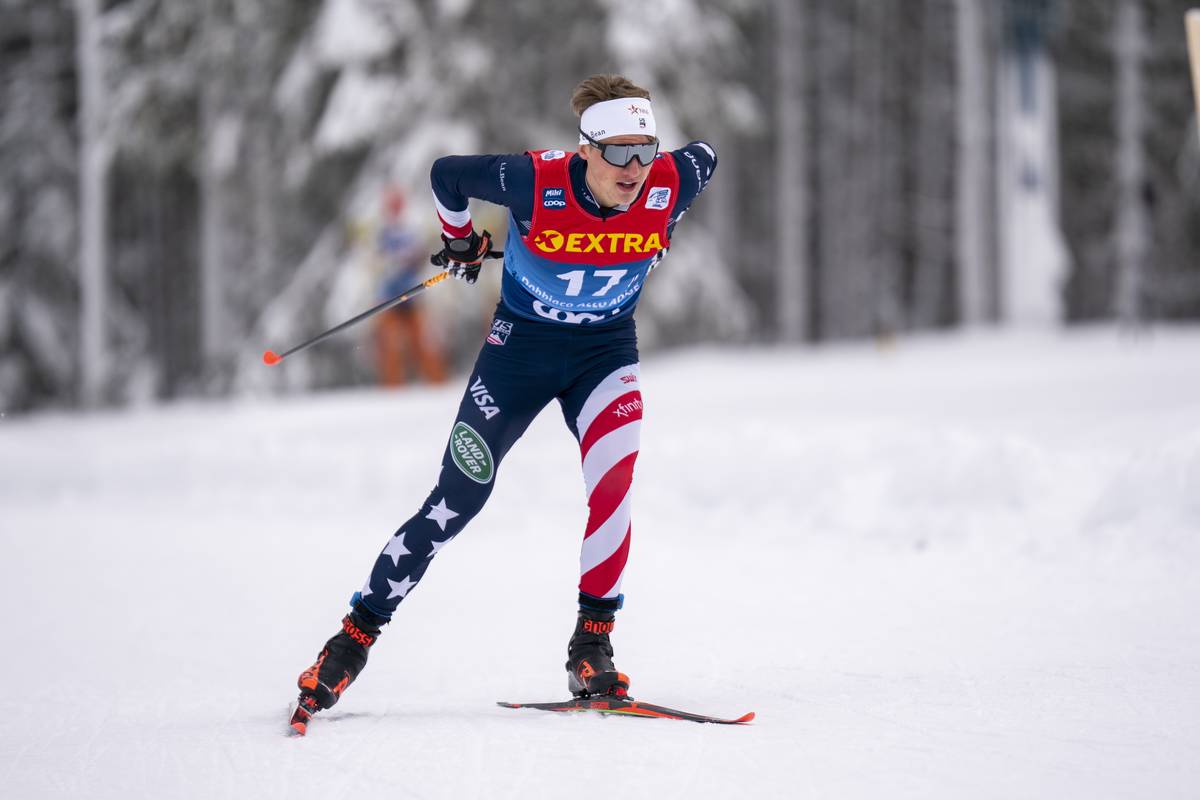
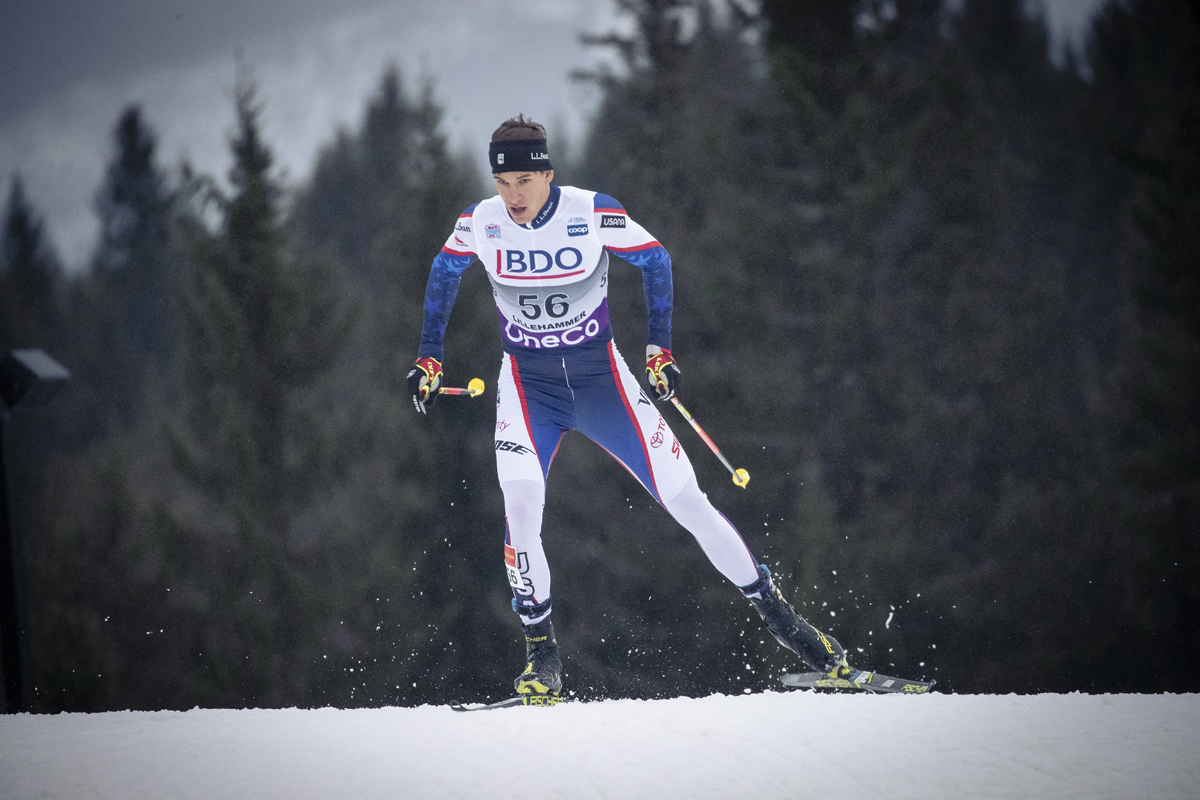
    Sydney Palmer-Leger leads the women’s 15 k mass start skate during the 2022 Junior World Ski Championships in Lygna, NOR. (Photo: flyingpointroad.com)

    Palmer-Leger spent the first part of the season racing Period I of the World Cup with the US Ski Team, including skiing the scramble leg for the second US relay team in Lillehammer. Speaking to the course here in Lygna, Palmer-Leger said, “It’s a pretty hard course, there’s not a whole lot of rest in the first part but, it’s fun, there’s a lot of V1 the first part.” Last year at World Juniors in Vuokatti, Finland, several of the junior US women were not able to compete due to Covid-contact tracing protocols. Palmer-Leger was one of those unlucky few and she explained, “This is my second mass start at World Juniors because last year Novie [McCabe] and I were quarantined. This is my last year as a junior, so that’s really fun.”

    15 k later, Palmer-Leger was the first finisher for the US in sixth position, with Helen Hoffman of Germany, Lisa Eriksson of Sweden, and Tuva Brusveen-Jensen of Norway finishing first through third respectively. “It’s sort of difficult doing these races because girls are not very relaxed,” Palmer-Leger explained, “and you’re stepping on each others poles and skis, and [the course] is really tight [in some places], and it goes from a a gradual downhill into a pretty steep uphill and girls sometimes will just stop and it’s like the accordion effect and I got stuck in the middle a bunch of times and luckily I didn’t break any poles. A bunch of Russians broke poles and some of our girls broke poles. I went down once but didn’t break anything.” 

    After this strong start to the week, she concluded “I’m really excited. Being in Norway is amazing.”

    The next US finisher was youngster Samantha Smith. Smith is just 16 years old and the 15 k was her first-ever World Juniors race. She finished in 11th (+1:11.3) behind race winner Hoffmann (GER). Kate Oldham was also competing for the first time at World Juniors and posted a top-thirty finish in 27th place (+3:09.5). Nina Schamberger is also 16 years old and the 15 k was her first World Juniors race. She finished in 41st, +4:04.1 back. 

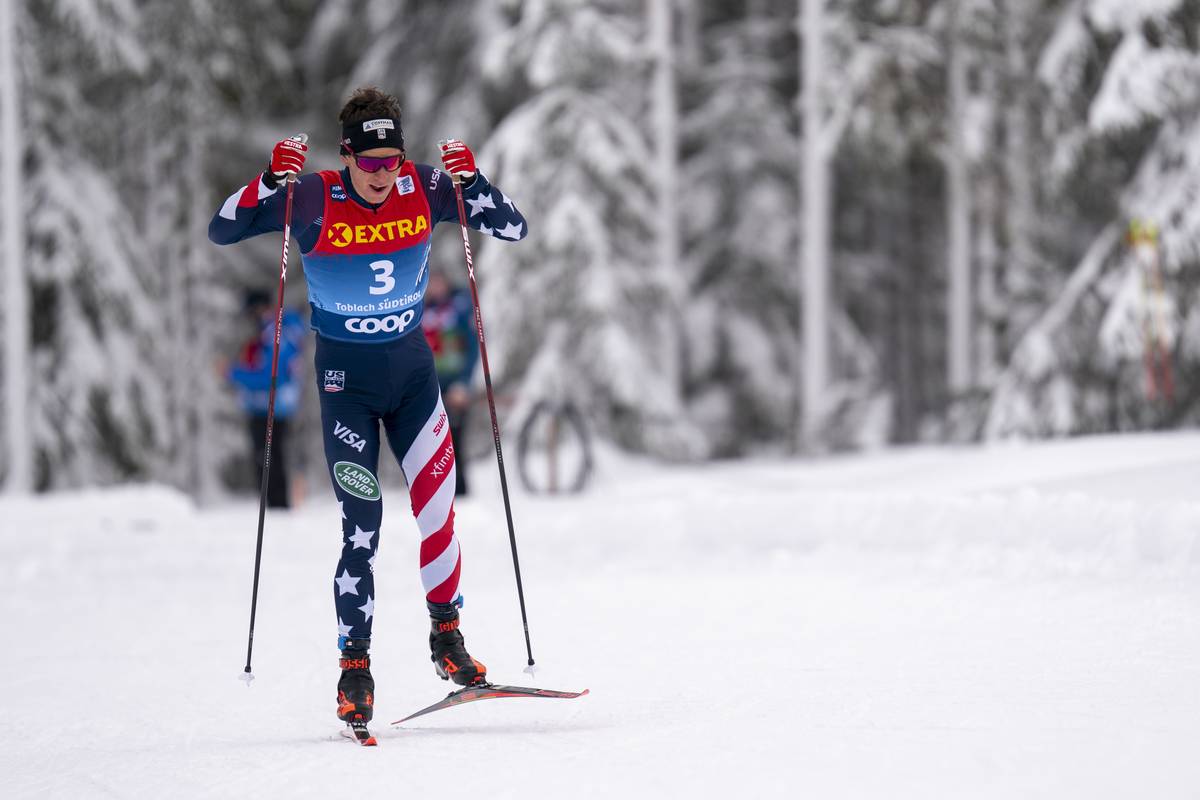
    Michael Earnhart (left) and Walker Hall (right) race the 30 k skate during the 2022 Junior World Ski Championships in Lygna, NOR. (Photo: flyingpointroad.com)

    Moving right along, the men were soon on the start-line, ready for their six laps. Starting at 3pm local time, the temperature was dropping as a slight wind picked up. Competing for the US was Michael Earnhart (APU Nordic Ski Center/Eagle River, Alaska), Walker Hall (University of Utah/Winthrop, Wash.), Brian Bushey (University of Utah/Waitsfield, Vermont), and Alexander Maurer (University of Colorado/Anchorage, Alaska). 

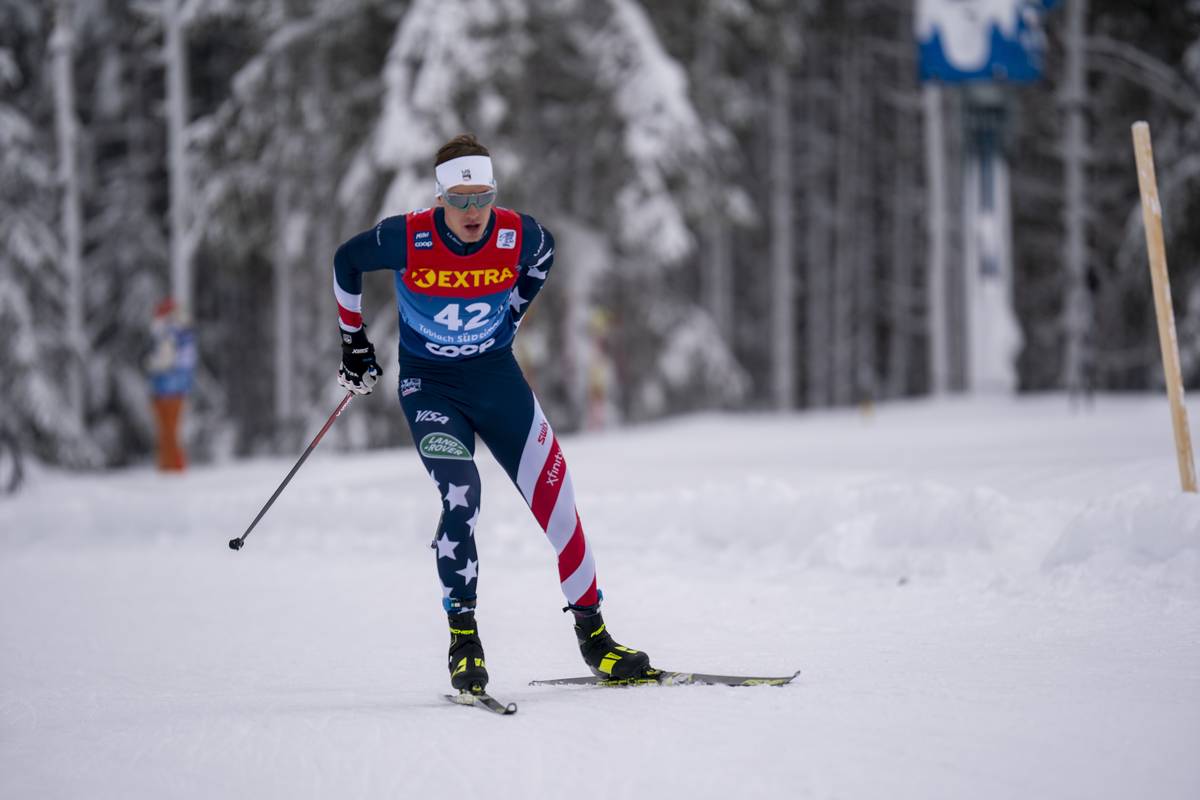
    “Last year was my first [World Juniors] but this year is the first year I felt like I had a chance to get top 10 and everything, last year I was like ‘well I’ll be happy if I get top 30’” said Earnhart, after the race. In a competition where Russians took the top four finish positions, Earnhart managed to achieve that goal in the first race of the week, finishing in 10th (+2:33.5). 

    Talking through his race he said, “ the first half of the race I was just trying not to break equipment, trying not to fall, kinda trying to have fun you know, it’s fun skiing in a pack so I was just trying to stay relaxed. I got pushed a little ways back, I think I was back to 20th or 30th at some points but I just stayed relaxed. Then, on the fourth lap it started to string out and I was like, ‘Ok, I’ve got to get in a better position, get up there.’ Going into the last lap, I think I was in 12th and I knew that top ten gets you on the US ski team and I really wanted that, so I was just looking at 10th. I was like, ‘He’s right there. I gotta keep going.’ He got a little tired and I was hungry so…”

    Earnhart pre-qualified for World Juniors this year by achieving a sub-50 FIS points result in the 15 k skate mass start Super Tour in Cable, WI earlier this season. He explained, “I did the 30 k at Nationals because I pre-qualified for this, just for the simple [reason], ‘I need more 30k experience.’” 

    Michael Earnhart leads the American junior men in the 30 k mass start skate during the 2022 Junior World Ski Championships in Lygna, NOR. (Photo: flyingpointroad.com)

    Also pre-qualifying for World Juniors in the same event, Brian Bushey finished his day in 16th position, +3:46.5 behind the top Russian, Alexander Ivshin. This in spite of the fact that as Earnhart put it, “Bushey took a big tumble, it’s a learning experience for sure.” 

    Speaking of learning experiences, Walker Hall was having one out on the course as he made his first World Juniors appearance, racing his first-ever 30 k. “My legs were so tired after like 10 k,” he said at the finish. He landed just outside the top-thirty, coming 31st, +6:01.7 back. Rounding out the U.S. finishers, Alexander Maurer finished 36th, +6:48.9 out, also making his first World Juniors appearance. 

    Racing continued Wednesday with the women’s and men’s relay events. Coverage of that event to follow. 

    World Juniors links and information:

    Home page and general info | race program | results and live timing (all races) | streaming (only for Thursday through Sunday’s races, purchase required)
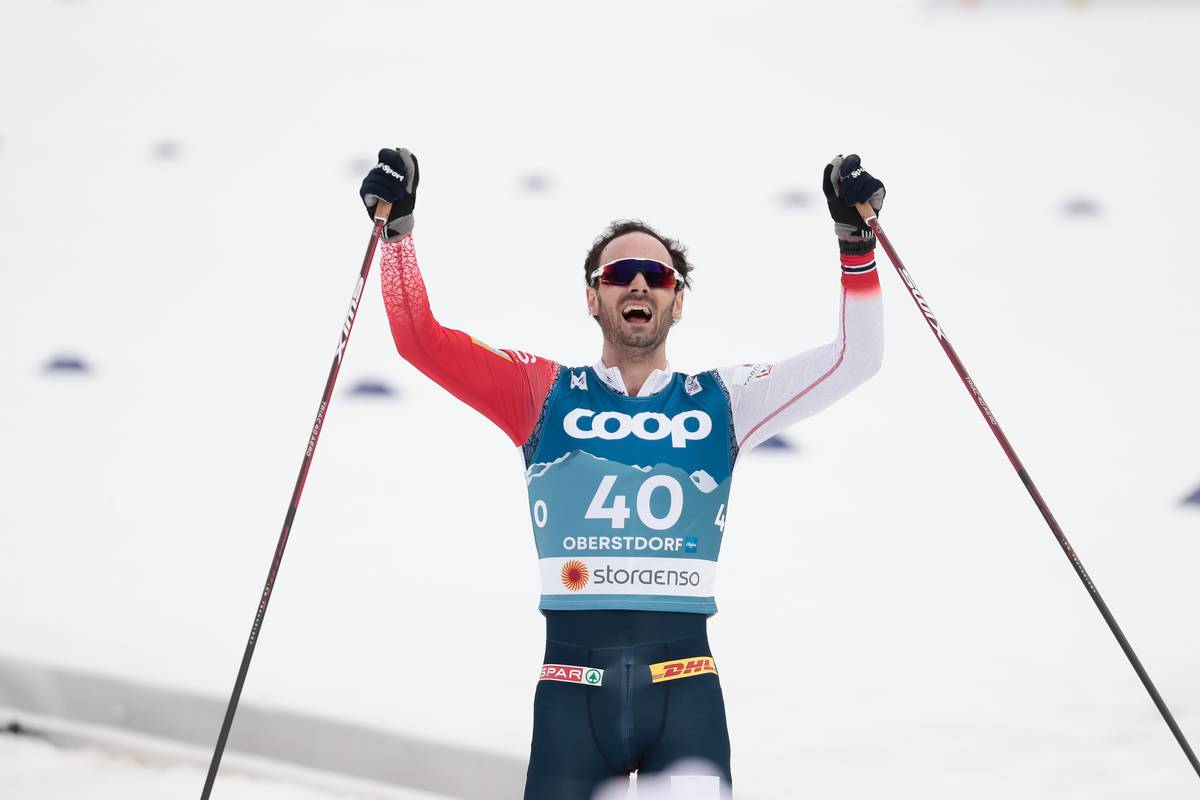

  • The Devon Kershaw Show: 2021 World Championships 15 k Skate with Kris Freeman

    The Devon Kershaw Show: 2021 World Championships 15 k Skate with Kris Freeman


    For what it is worth, and it is worth something, the 15 k interval start skate at the 2021 World Championships in Oberstdorf, Germany lived up to the hype as the race of truth. Coming in, we would have expected Russia’s Alexander Bolshunov to search, seek, and destroy every centimeter of this salted and then melting course. It was a grind for all. And throughout the laps on a brutal course, the Russian was subdued by a Norwegian trifecta on the podium.

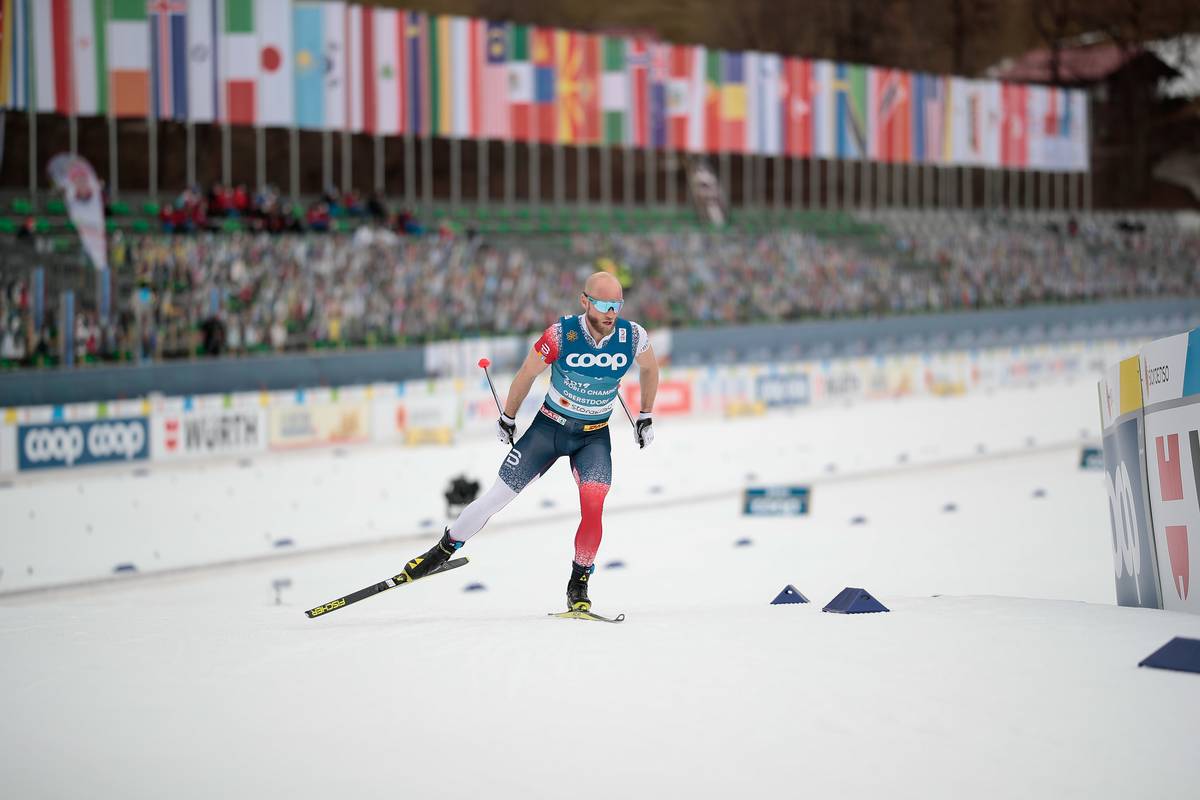
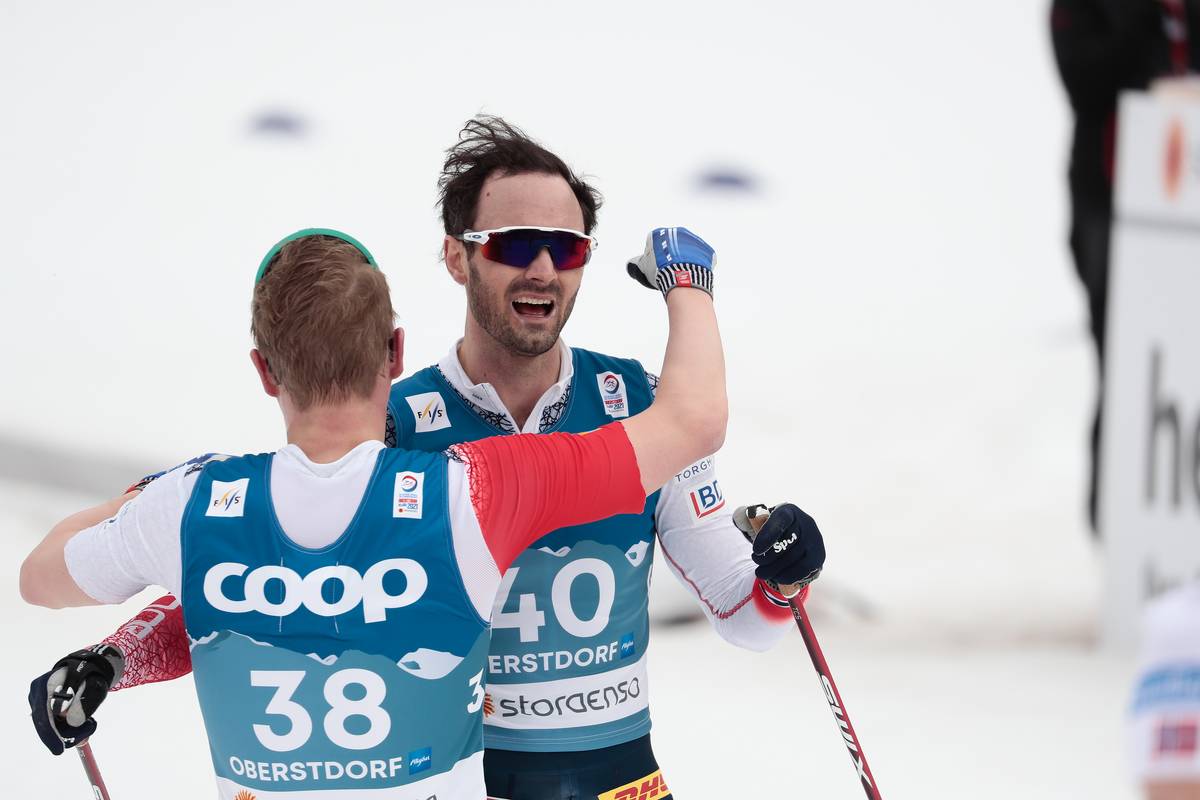
    Hans Christer Holund took the win. And even a flash-to-his-past Martin Johnsrud Sunday (NOR) put on a show placing seventh.

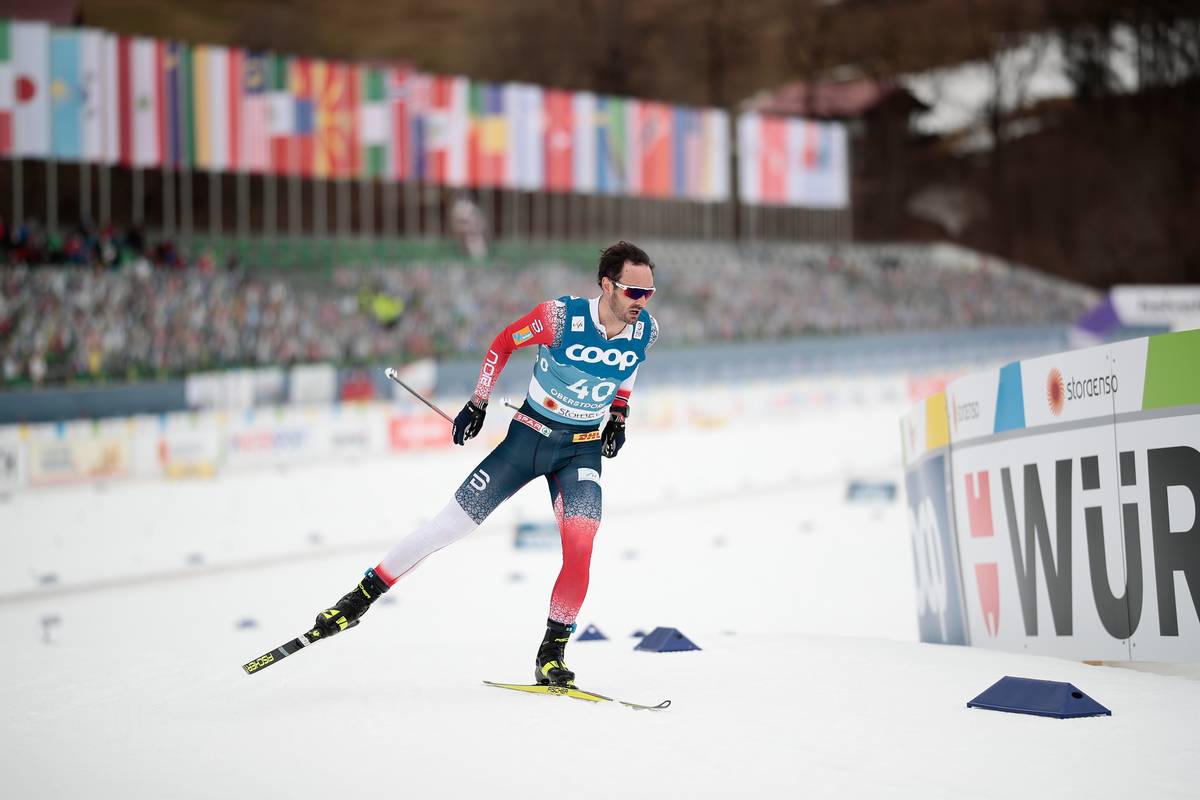
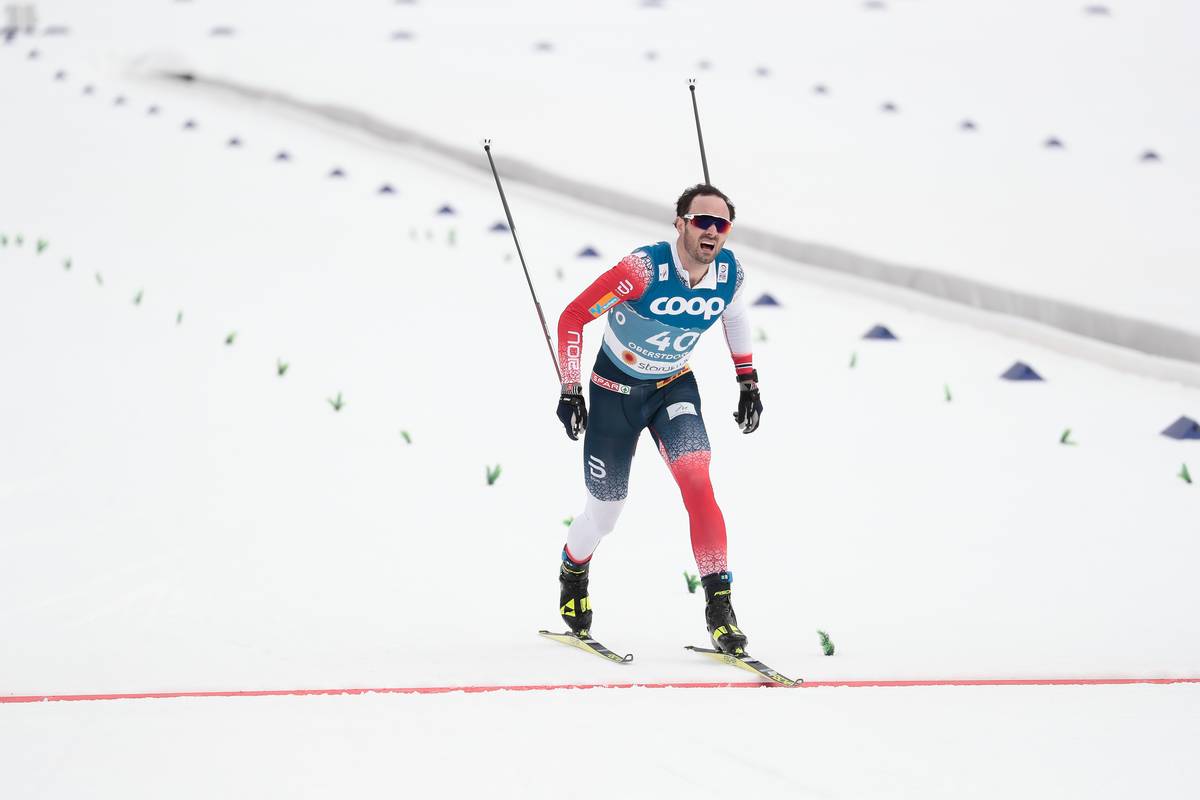
    Gliding in for a championship win in the men’s 15 k skate: Hans Christer Holund of Norway. (Photo: NordicFocus)

    You can read up on the full-race report here. In the meantime, on the podcast today is American distance ski legend Kris Freeman. He’s here to fill us in on the sufferfest that is the 15 k and provide some perspective on this marquee event.

    Thanks for listening.

    Kris Freeman racing in Canmore, Alberta back in 2010.


    Kris Freeman (USA)racing in Oslo back in 2011.

    Thanks for listening.

  • Another Norwegian Sweep in the 15-Kilometer Skate: Holund, Krüger, and Amundsen

    Another Norwegian Sweep in the 15-Kilometer Skate: Holund, Krüger, and Amundsen

    This World Championship coverage is made possible through the generous support of Marty and Kathy Hall and their A Hall Mark of Excellence Award. To learn more about A Hall Mark of Excellence Award or to learn how you can support FasterSkier’s coverage please contact info@fasterskier.com.

    Here we are in the back half of the 2021 World Championships in Oberstdorf, Germany. As athletes strive for their peak fitness, storylines from the World Cup season, pandemic, and historic World Championship results intertwine to set the stage for the 15-kilometer interval start classic. 

    Sundby who had not raced a World Cup this season, had an auto start as the reigning 15 k champion – made the best of his opportunity. (Photo: NordicFocus)

    Out of the woodwork and starting in bib 19 was Norway’s Martin Johnsrud Sunby, who earned an automatic start based on his long sought after victory in the 15 k classic during the 2019 World Championships in Seefeld, Austria, his first career individual win at a World Championship or Olympic Games. Because his start was based on this result, he added to the four additional Norwegians on the start list, rather than taking a spot away.

    The 36-year-old Sundby has a storied history on the Norwegian National team, but has not raced on the World Cup since the 2020 50 k classic at the Holmenkollen, where he finished 12th. He had two top-5 World Cup results last season, two in skiathlon and one in the 15 k classic, but this season he has only cracked the top-10 once while racing domestically and is listed as DNF or DNS for each of the three 15 k skate opportunities he was presented. Dark horse?

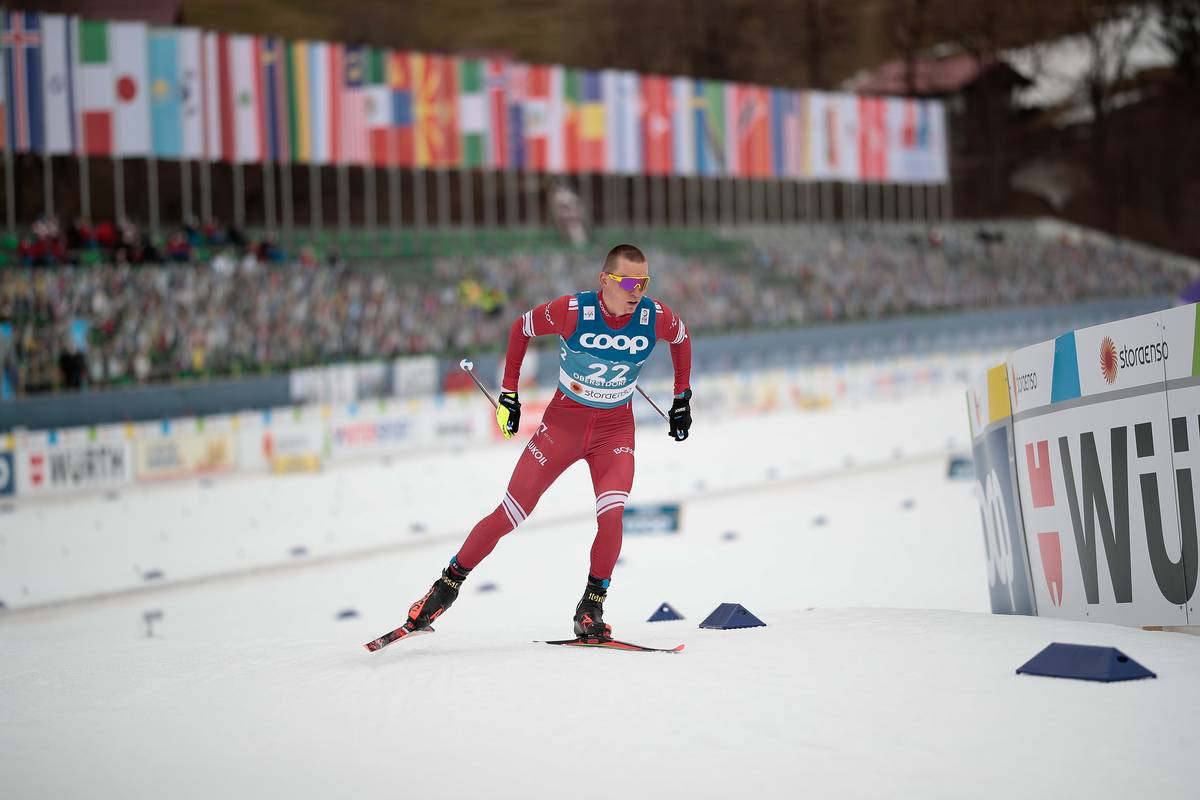
    Picked as a favorite for the 15k, the beast that is Bolshunov came up slightly short of the medals on Wednesday when he placed fourth overall. (Photo: NordicFocus)

    Perhaps the more obvious storyline, who may resonate with Sundby’s slew of not-quite-gold individual World Championship results, is whether the Russian Ski Federation’s Alexander Bolshunov could repeat his win in Saturday’s 30-kilometer skiathlon, where he collected his career first gold medal to hang above his collection of four silver medals. Positioned well above the field in the overall and distance World Cup standings, all eyes were on Bolshunov in bib 22 as he time trialed through the woods on the tracks in Oberstdorf.  

    In an individual start where athletes are seen passing checkpoints at a variety of times, it can be difficult to assess the performances without a look to the splits at checkpoints. That said, Bolshunov exhuded confidence and strength as he pushed over the top of each climb, worked every corner, and rhythmically grinded through the woods, his bright yellow and purple glasses a contrast to his typical stoicism. By 1.8 k, he had 4 seconds over the rest of the field. 

    But the story was not pre-written for us. Roughly 80% of the field started behind Bolshunov, and the string of Norwegian’s were looking equally strong.

    The 22-year-old Harald Østberg Amundsen of Norway – with only three World Cup starts, shines with a third place in the 15 k skate at World Championships. (Photo: NordicFocus)

    Perhaps a new-to-us name, Harald Østberg Amundsen of Norway was one of Bolshunov’s biggest threats. I’ll fill you in — it looks as if we’ll want to get to know him. 

    The 22-year-old has several noteworthy results in the 15 k skate event:  2nd in 15k skate at the Norwegian National Championship in 2020, followed by a 3rd place result in 2021 behind Sjur Røthe and Simen Hegstad Krüger. Amundsen also has a 1st, 3rd and 4th in the event in domestic FIS races this season while Norway was sitting out the World Cup due to concerns for COVID-19 management and athlete safety in the opening weekend of events in Ruka. 

    A U23 World Champion in the 30 k skate, Amundsen has just three World Cup starts, one this season in the 15 k skate in Falun where he landed in 8th, overshadowed in our coverage by the three Norwegian men ahead of him and a career best result and first top-10 for Gus Schumacher, who finished 9th. 

    Harald Østberg Amundsen skis his way onto the podium in his first senior World Championships. (Photo: NordicFocus)

    Starting in bib-10, Amundsen set the bar for his more experienced teammates, and the rest of the field for that matter. As splits rolled in, he was just over 5 seconds back on Bolshunov at the 5 k, seven seconds at the 10 k, and then the plot began to twist. 

    Perhaps the Russian began to fade or perhaps the Norwegians had an untapped gear, but by 12.9 k, Amundsen was over 18 seconds ahead of Bolshunov. 

    Within the last kilometer, cameras followed Amundsen as he rocketed down a hill into a hairpin curve that spit skiers back into a final steep climb. At the apex of the curve, his skis sunk into the degrading corn snow, sending him into the back seat and costing him his balance. Amundsen shot out of the corner into the fencing, however, with no broken equipment — and unfortunately, no momentum — he rebounded to head to the finish, where his time flashed green on the leaderboard, more than 27 seconds ahead of the field. 

    Amundsen had plenty of time to soak in this moment, as his time was not challenged until his teammates starting much deeper in the field entered their last 5k of the race. 

    Hans Christer Holund beats the clock in the 15 k skate. (Photo: NordicFocus)

    Progressively working his way up was Norway’s Hans Christer Holund in bib 40, who took bronze in the skiathlon on Saturday. He set the fastest split at the 6.6 k mark by 1.6 seconds, incrementally building his lead until it was 9.1 seconds at 10 k, 15.9 seconds at 12.9 k, and ending with a bang, 20.2 at the finish. He stopped the clock with a time of 33:48.7.

    Hans Christer Holund smashes the 15 k skate in Oberstdorf, Germany, winning by a margin of more than 20 seconds. (Photo: NordicFocus)
    Hans Christer Holund celebrates a gold medal performance in the 15 k skate. (Photo: NordicFocus)

    Looping around his teammates in a surge of emotion and adrenaline, Holund was ecstatic at the finish. A second gold medal to keep his 2019 50 k freestyle gold medal company.

    “It’s amazing, I don’t know what to say,” Holund told FIS breathlessly after the race. “I am as shocked now as I was in Seefeld two years ago. I had a really good day — this track is super tough, and it’s tough conditions. I knew I was going to have a good race as long as I was staying calm in the first round and tried to push harder later in the race.”

    On course, Norway’s Simen Hegstad Krüger raced to second overall in the 15 k Wednesday. (Photo: NordicFocus)
    Simen Hegstad Krüger and Hans Christer Holund celebrate a job well done in the 15 k skate. (Photo: NordicFocus)

    Also climbing his way up the time standings was Krüger, who sat in 11th at the 5 k and 6th at the halfway point. He overtook Amundsen by the 10 k mark and continued to surge, though he could not make any headway on Holund. He finished solidly in second place for a silver medal (+20.2), with Amundsen holding on for bronze (+35.6).

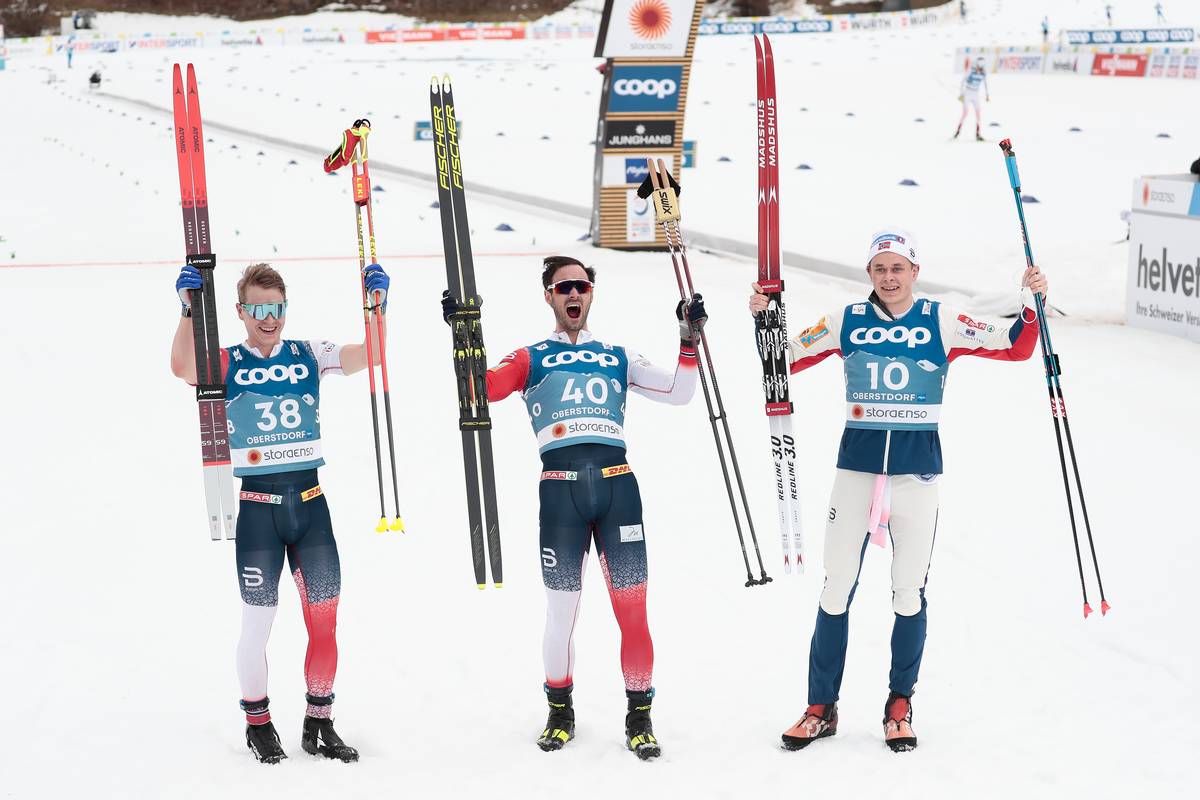
    The men’s podium of the 15 k skate: Hans Christer Holund takes gold ahead of Simen Hegstad Krüger and Harald Østberg Amundsen. (Photo: NordicFocus)

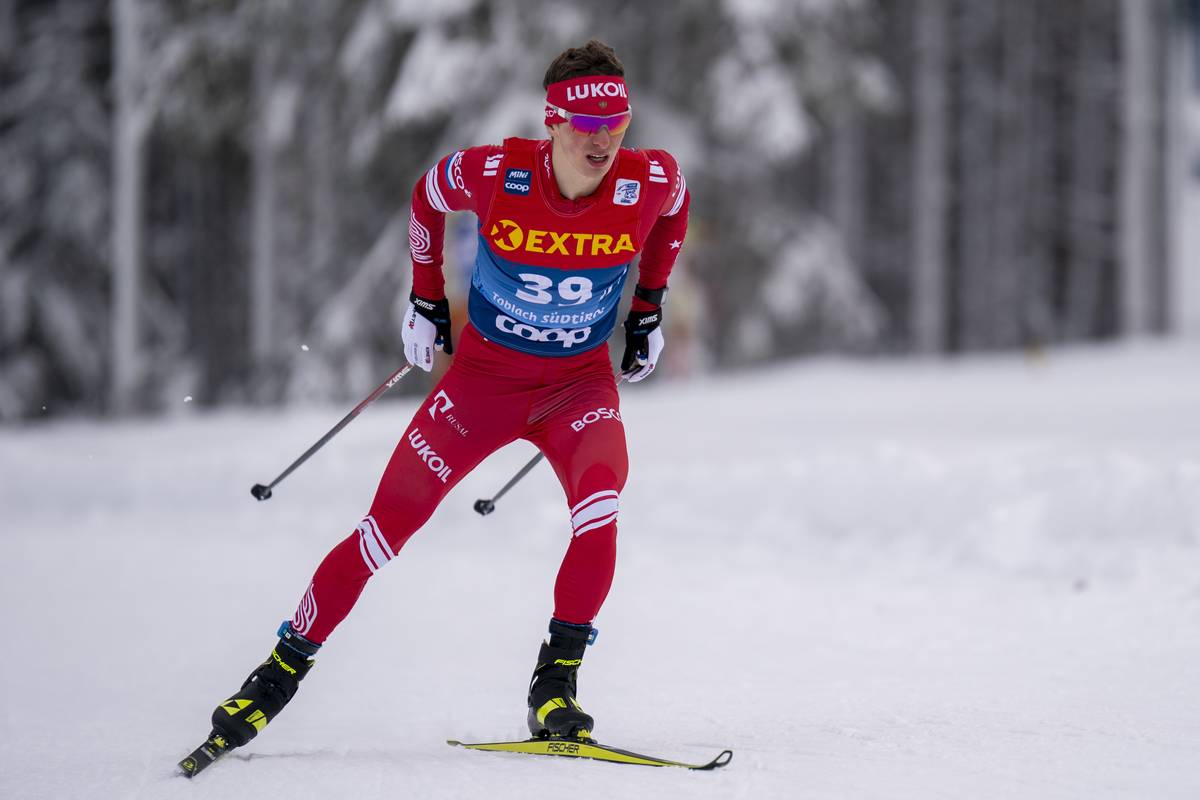
    Bolshunov took fourth (+43.7) with his teammate Artem Maltsev 5th (+50.7), interrupting the string of five Norwegians in the top 7. That’s right: Røthe in 6th (+55.3) and our dark horse, Sundby, in 7th (+55.9). 

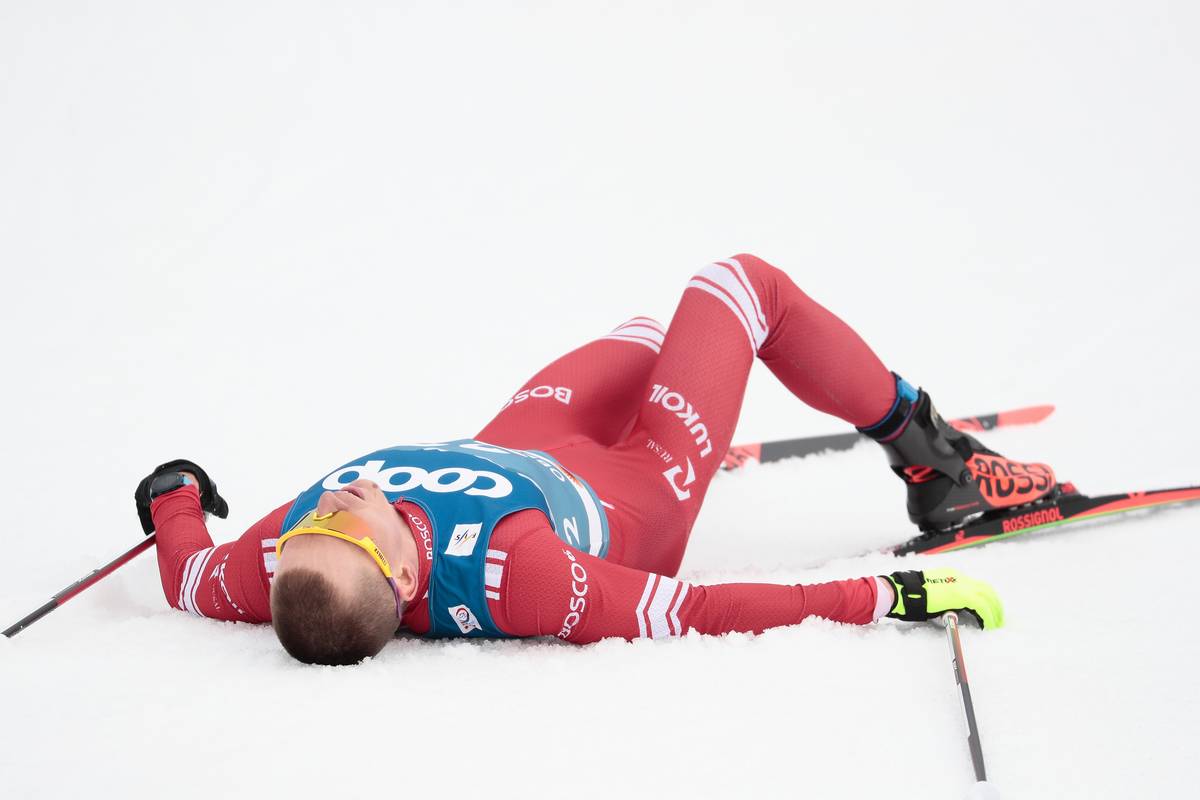
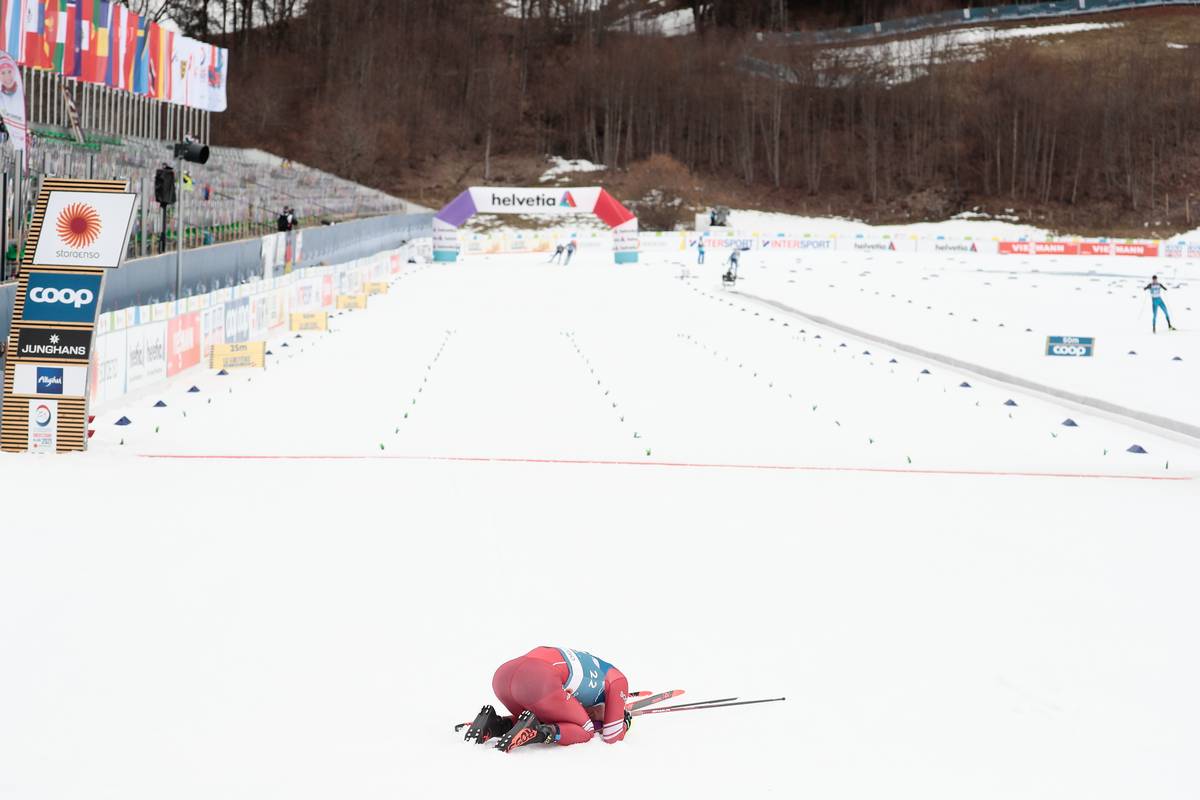
    Alexander Bolshunov collapses at the finish of the 15 k skate in Oberstdorf. (Photo: NordicFocus)
    Disappointment on display as Bolshunov takes fourth in the 15 k skate. (Photo: NordicFocus)

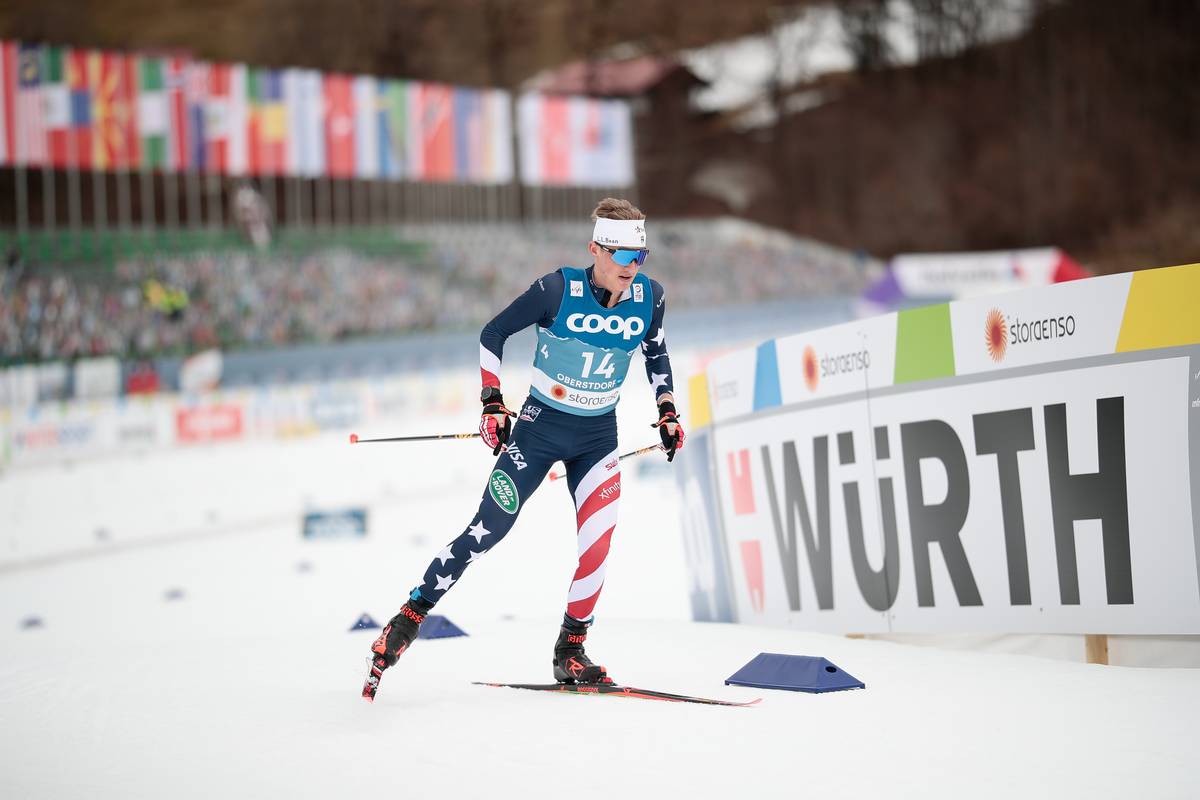
    Perhaps with the weight of a U23 World Championship gold medal in an individual start distance event — the 10 k classic — Gus Schumacher started in bib 14 to kick things off for the Americans. It was clear that it would not be Schumacher’s day as he hovered well outside the top-30, finishing 51st (+4:02.3).

    Gus Schumacher, in his first individual championship event, skied to 45th. (Photo: NordicFocus)

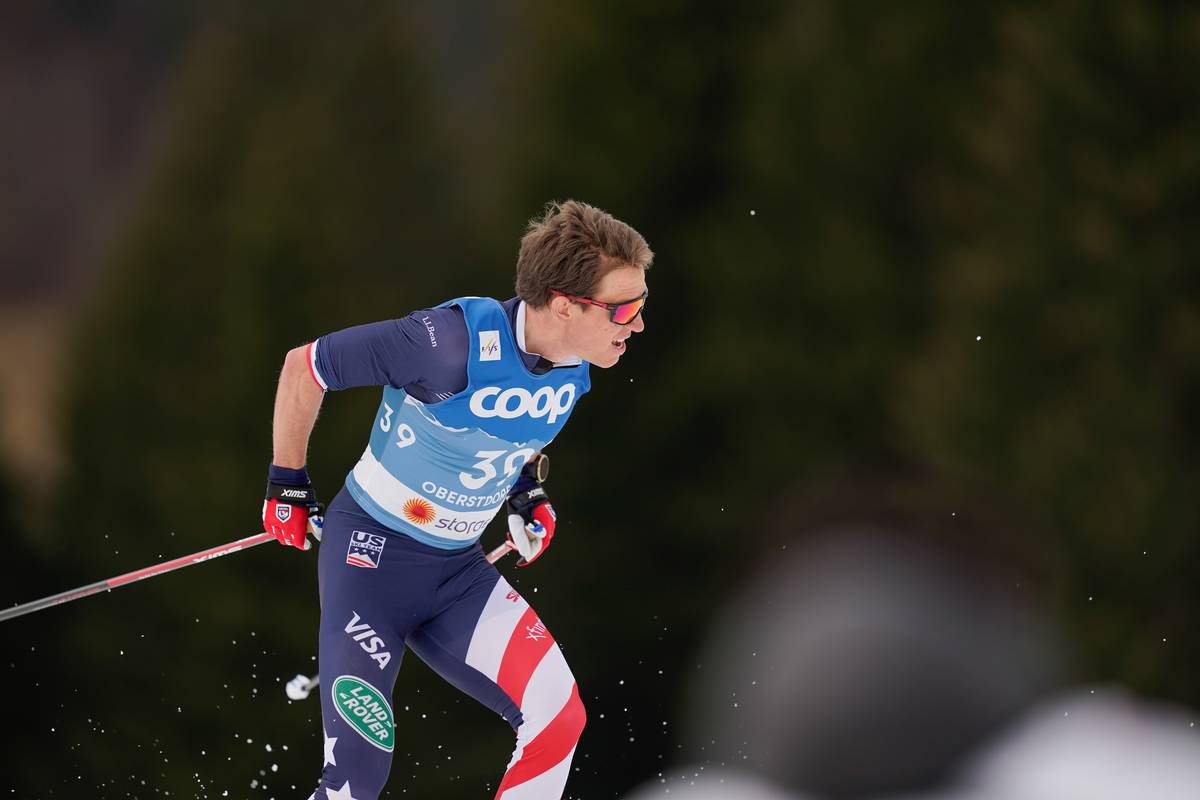
    Coming off of top-20 finishes in skiathlon and wearing higher bib numbers were Scott Patterson and David Norris. After 15 k, Patterson held the top spot for Americans in 27th (+2:22.0), with Norris a few spots behind in 34th (+2:47.6).

    “It was a tough race,” said Patterson in a post-race interview. “I think I started out pretty strong, skiing where I wanted to be. But the conditions started to deteriorate on laps two and three. I definitely suffered because of that and bled a lot of time. The winner started thirty seconds behind me and just blew by me. It definitely was not quite what I wanted but I think there are still some good signs for later in this week.”

    Though official start lists have not been released, both Patterson and Norris will race the 50 k classic on March 7th.

    Scott Patterson races to 27th in the 15 k skate in Oberstdorf, Germany. (Photo: NordicFocus)

    “I had higher expectations, but I know given the circumstances and that it is a tough day I felt like I fought through it and did my best,” said Norris of his race. “I cannot complain. My skis were good. All the support was there, I just did not feel my sharpest.” 

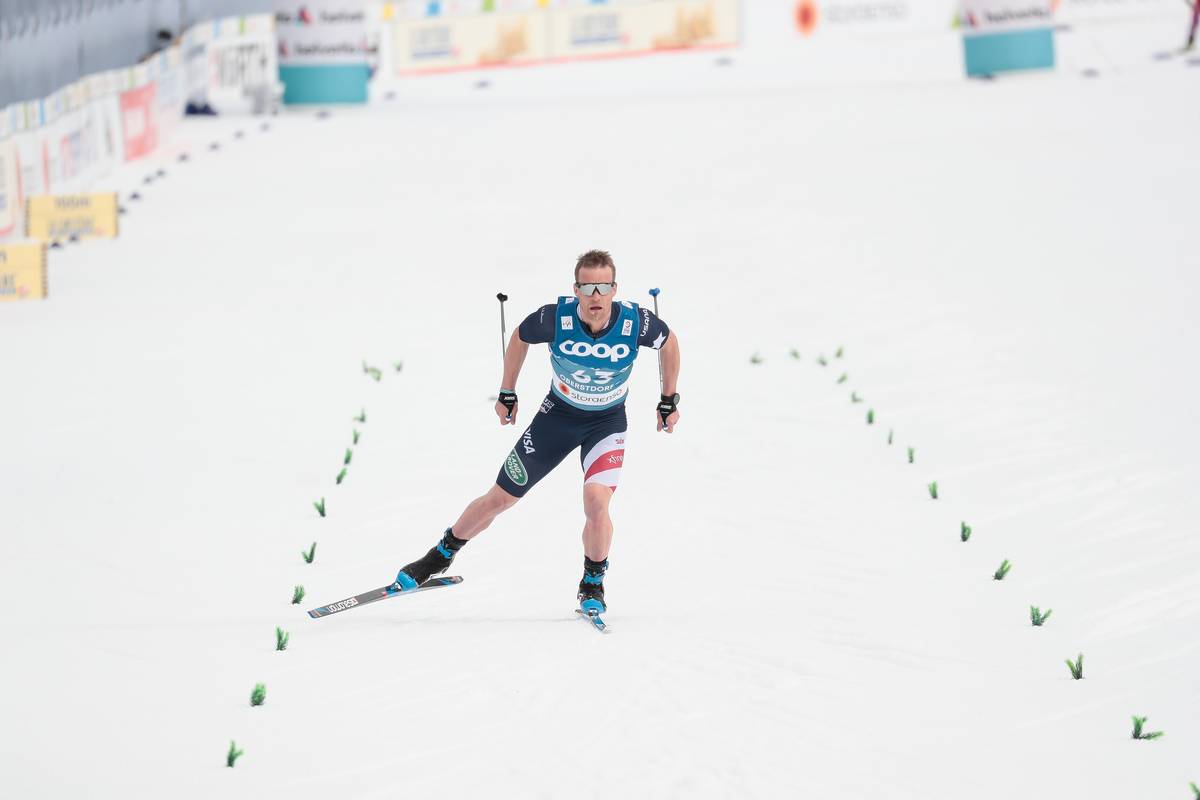
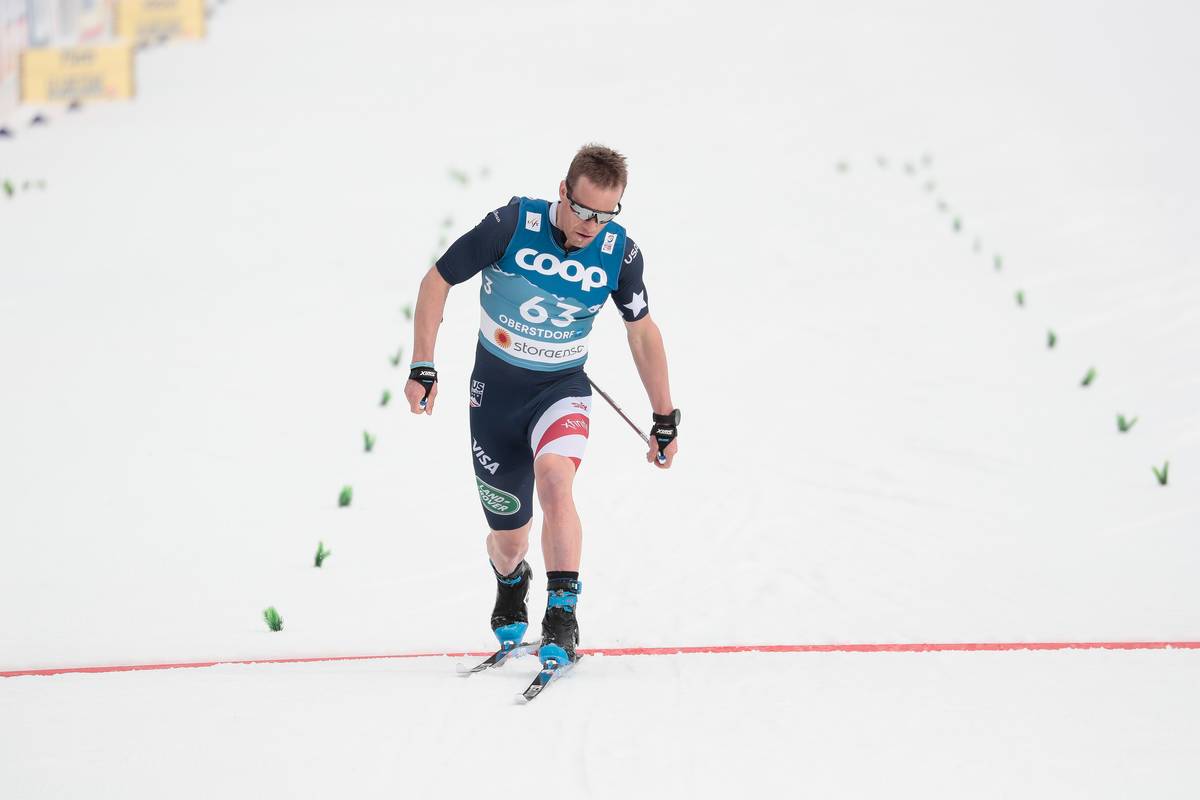
    A name we associate more with sprinting, Simi Hamilton finished just 0.1 second outside the top-30 in 31st (+2:34.2). After ending his team sprint with Schumacher in the semifinals, Hamilton spoke with optimism after his race.

    Down the final straight for Simi Hamilton in the 15 k skate. (Photo: NordicFocus)

    “I never really know what to expect in an individual start,” said Hamilton after the race. “I’m a good mass start skier because I think that requires a little more sprint tactics and you always have someone to ski with. These individual start races are tough for me, mentally and physically. Just not having trained for races like this, they’re tough, but I know that I’m fit right now. With the focus on the team sprint, fitness is a big thing for that kind of race, so just being distance fit kind of comes with that territory.”

    Simi Hamilton, for the U.S., toes in for 31st in the 15 k skate. (Photo: NordicFocus)

    Hamilton discussed the changing conditions as skiers lapped the course. Tracks became softer and wetter, though hardpack conditions on the flats held up well. The biggest climb became soft and slow, even more taxing than it otherwise might have been. He shared that they could only check out the downhill that took out Amundsen once before the race began, but the tacky corner with a fresh groom was nothing like the conditions in the back half of the race. “You have to expect the unexpected,” he stated with a laugh. 

    Hamilton complemented the techs for their job producing fast skis and finished with a positive outlook on his day.

    “It was nice to get an effort in like that,” Hamilton said. “It kind of validates a lot of the work you’ve been putting in for other races, so it was fun.”

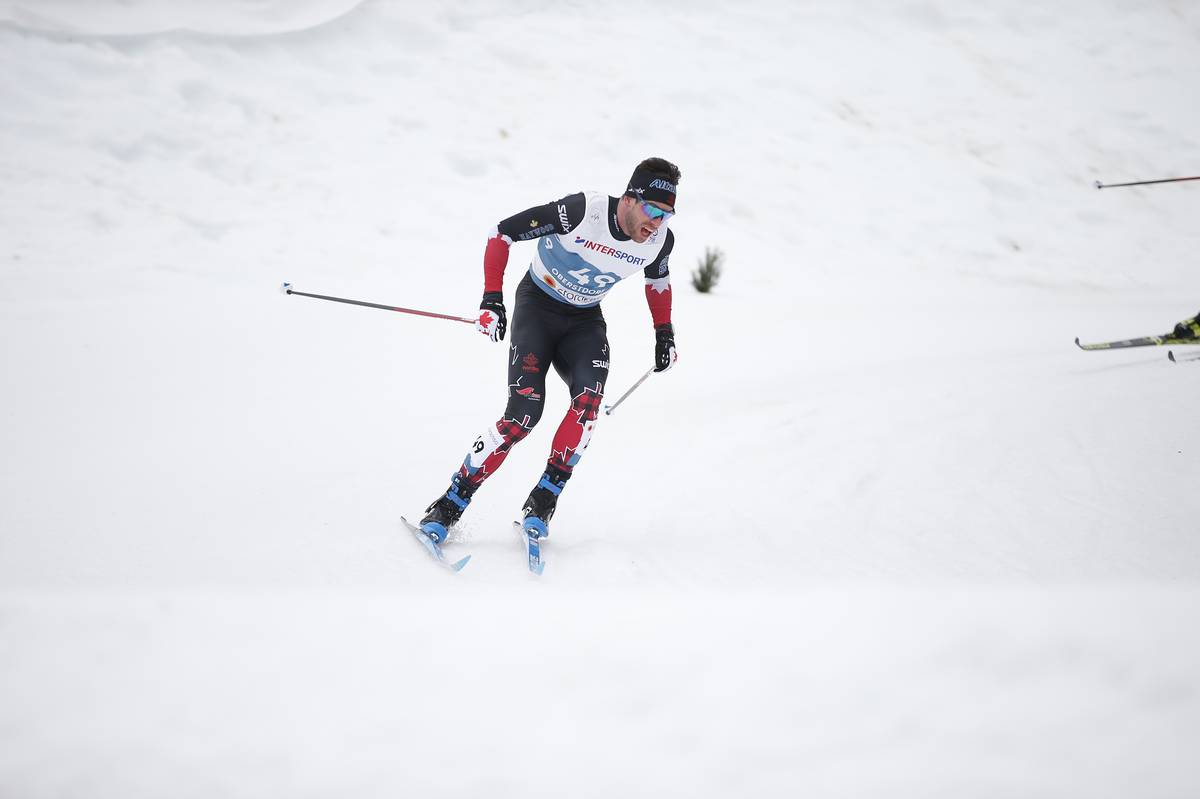
    Canada’s Russell Kennedy rounds the fateful corner on the tracks in Oberstdorf. (Photo: NordicFocus)

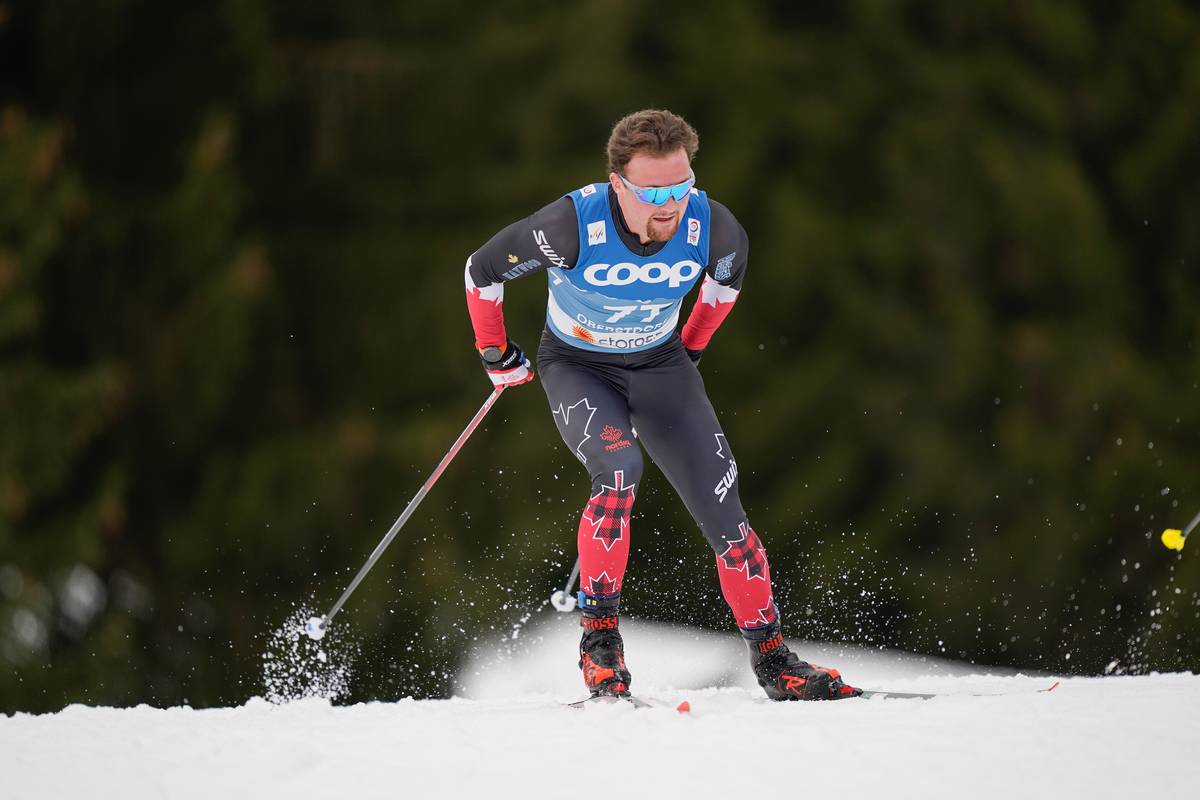
    Racing for Canada, Russell Kennedy cracked the top-30 (+2:34.1).

    Next up for Canada was Phillipe Boucher in 50th (+4:00.2), with Remi Droulet close behind in 52nd (+4:02.7), and Graham Ritchie rounding out the Canadian field in 67th (+5:15.3).

    Graham Ritchie of Canada skis to 67th in the 15 k skate. (Photo: NordicFocus)

    Final Results


    Do you enjoy FasterSkier?  If you do, help keep FasterSkier free for our readers.


  • Bolshunov and Russia Sweep, Schumacher in 14th: Stage 4 of the Tour de Ski

    Bolshunov and Russia Sweep, Schumacher in 14th: Stage 4 of the Tour de Ski

    Lights out. Alexander Bolshunov takes the Stage 4 15-kilometer individual start freestyle by eight seconds. (Photo: NordicFocus)

    This World Cup coverage is made possible through the generous support of Marty and Kathy Hall and their A Hall Mark of Excellence Award. To learn more about A Hall Mark of Excellence Award or to learn how you can support FasterSkier’s coverage please contact info@fasterskier.com.

    Stage 4 of the Tour de Ski introduced a change of scenery on Tuesday with the flanks of the Dolomites sinking from sky to valley floor in Tobalch, Italy. The day’s 15 k skate pursuit brings the Tour’s traveling circus to a new locale, however, the narrative remains the same: Russia’s Alexander Bolshunov, last season’s overall World Cup winner, has gripped the TdS lead after winning Stages 2 and 3.

    Barring the unforeseen, and citing Bolshunov’s runaway performance in Sunday’s 15k skate pursuit, which he won by a margin of 53.7 seconds over his teammate Artem Maltsev, and with four stages remaining, this TdS appears to be locked up for the twenty-four-year-old Bolshunov. If Bolshunov slam-dunks the remainder of the Tour, he’ll have won back-to-back Tours – the first male skier to do so since Swiss star Dario Cologna won in 2010/2011 and 2011/2012.

    Bolshunov began as the last of 63 starters. As such, he had the gift of knowing the fastest splits at every time check allowing him to notch the pace up, throttle down to conserve energy, or simply sustain an unmatchable combo of power and cardio endurance.

    At 5k, 10k, and the finish, Bolshunov was true to form as the leader. He won in 32:49.6 minutes to capture his third stage win of this Tour and take a 1:15 minute lead into Stage 5, a 15 k classic pursuit.

    “It was a tough race without much help. I had to just listen to splits. I am happy with the result and thanks to the service for good skis.” Bolshunov said post-race through a translator.

    Denis Spitsov (RUS) powers through the 15-kilometer individual start freestyle to take 2nd in Stage 4 of the 2021 Tour de Ski. (Photo: NordicFocus)

    As Devon Kershaw noted through a text mid-race, “It’s the Russian championship out there.”

    Officially, not exactly, but the results illustrate the dominance. Denis Spitsov second (+8.3), Ivan Yakimushkin third (+13.9), Alexey Chervotkin fourth (+19.2), Artem Maltsev fifth (+21.8), Maurice Manificat of France sixth (+22.9), Evgeniy Belov seventh (+27.6), and Andrey Melnichenko eighth (+29.2).

    In other words, seven of the top eight finishers on the day were Russian. Top-heavy and deep. The only Russian outside the top-10 was Alexander Terentev in 15th (+52.5).

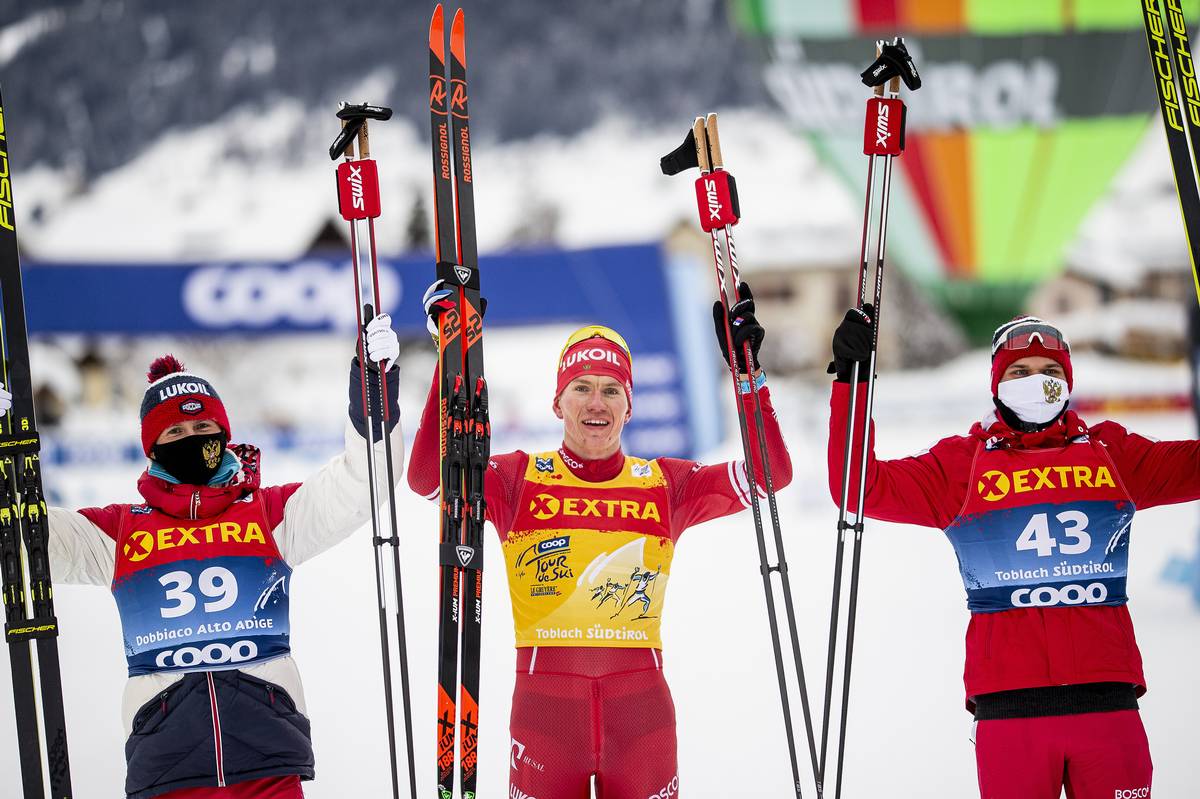
    The top three men celebrate their performance after Stage 4 of the 2021 Tour de Ski. Russians Alexander Bolshunov, Denis Spitsov (left), and Ivan Yakimushkin (right) clocked the top three fastest times, respectively. (Photo: NordicFocus)

    One spot ahead of Terentev, at 51.3 seconds back was twenty-year-old Gus Schumacher for the U.S. Starting in Bib 17, the Anchorage, Alaska based skier posted a career-best World Cup result in 14th. Before Tuesday’s race, Schumacher possessed two World Cup top-30s: a 25th in the Davos skate sprint, and the 24th best time of day in the Ruka 15 k skate pursuit. Both races were this season. According to FIS, he has contested 13 World Cup events, including today’s race.

    “In many ways, and it is a bold statement, but in many ways, it is up for consideration for the race of the day,” said U.S. Head Coach Matt Whitcomb. “When an athlete new to the World Cup gets his first t0p-15 that is a really special moment and to do it somewhat early in the Tour, when there are still 63 men starting is just super impressive.”

    Post-race comments from U.S. Head Coach Matt Whitcomb.

    Gus Schumacher skis to a World Cup career-best 14th in Stage 4 of the 2021 Tour de Ski, a 15-kilometer individual start freestyle. (Photo: NordicFocus)

    Starting in bib 17, Schumacher notched the 16th fastest split at 5k.

    “It was definitely kind of a similar approach as always that I have,” said Schumacher about his first 5 k. “I try to focus on the first five to eight minutes being easier than I think it should be. I think my best races come when I feel like I did that. But, my split was still good. So today, I think I got to that first time where I got a split, and there were only 17 people through, they said I was tied for first and I was still feeling pretty comfortable. … When you hear the good split and you also feel good after six minutes, that was when I think I was like, ‘I can do something with this.’”

    On his second go-around, at 10 k, he was positioned further back on the leaderboard at 26th, 56.1 seconds off of Bolshunov’s mark, and 13 seconds off the pace of Swiss skier Dario Cologna, who skied through in 15th (+43.0).

    Eventually, Schumacher locked onto a ride with the 39th starter, Spitsov. Although eventually placing second overall, Spitsov was eighth after 10k. According to Schumacher, the Russian caught Schumacher atop the course before a working descent.

    “I saw [Spitsov] on a 180 corner, and I knew who it was and I was pretty excited, I was like, ‘this is going to be a good ride’. He caught us, I was in a little group, and he caught us right before the downhill, and I just hopped in behind him.

    “It was kind of funny because that downhill felt really easy behind him when I am sure it was about as fast as before just working it, but I was able to not work it that hard. Going into the third lap, [Spitsov] notched it up a lot actually. That little rest was good so I could hang through the third lap.”

    Post-race comments from Gus Schumacher.

    Spitsov gained roughly 10 seconds on Bolshunov on his third lap. For his part, Schumacher gained too. At 12.1 k he was 18th overall, 17th at 13 k, and ultimately sliding across the line 14th. For the overall Tour, Schumacher is 25th (+4:55).

    Placing the race in context for his U23 cohort, which is small on the World Cup, of the seven U23 athletes Schumacher was second fastest. Terentev, the Russian in 15th, is also a U23 and anchored the Russian junior team at the 2018 and 2019 Junior World’s Relay. Both races were won by the Schumacher anchored U.S. team.

    Scott Patterson on his way to a 32nd place finish in Stage 4 of the 2021 Tour de Ski. (Photo: NordicFocus)
    Kevin Bolger on course during Stage 4 of the 2021 Tour de Ski. (Photo: NordicFocus)

    Also for the U.S., Scott Patterson was just outside the points in 32nd (+1:38.1), and Kevin Bolger placed 40th (+1:57.1). Simi Hamilton did not start. 

    Racing continues tomorrow with Stage 5 of the Tour de Ski, a 15 k classic pursuit.

    Stage 4 Results | Overall 


  • Russian Sweep in Davos 15 k Skate: Scott Patterson Leads U.S. in 16th

    Russian Sweep in Davos 15 k Skate: Scott Patterson Leads U.S. in 16th


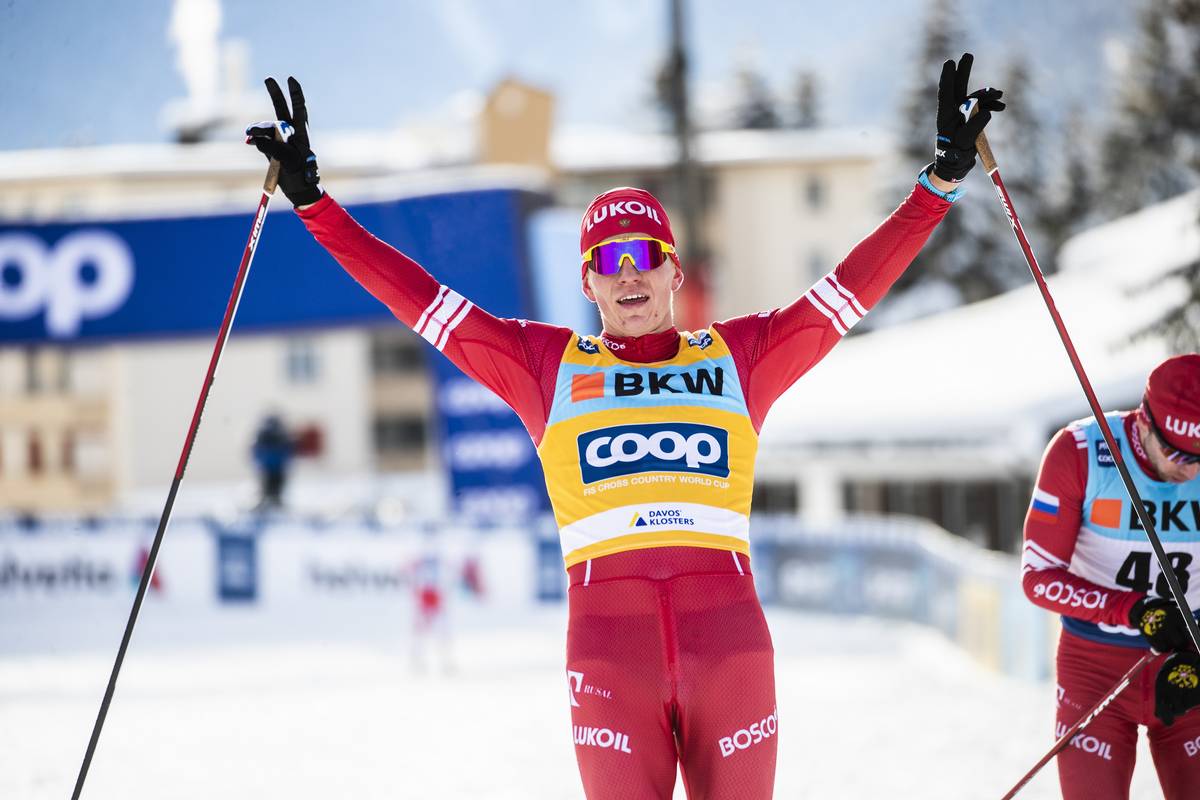
    Alexander Bolshunov (RUS) celebrates his victory – 15km men, Davos (SUI). Photo: NordicFocus

    This World Cup coverage is made possible through the generous support of Marty and Kathy Hall and their A Hall Mark of Excellence Award. To learn more about A Hall Mark of Excellence Award or to learn how you can support FasterSkier’s coverage please contact info@fasterskier.com. 

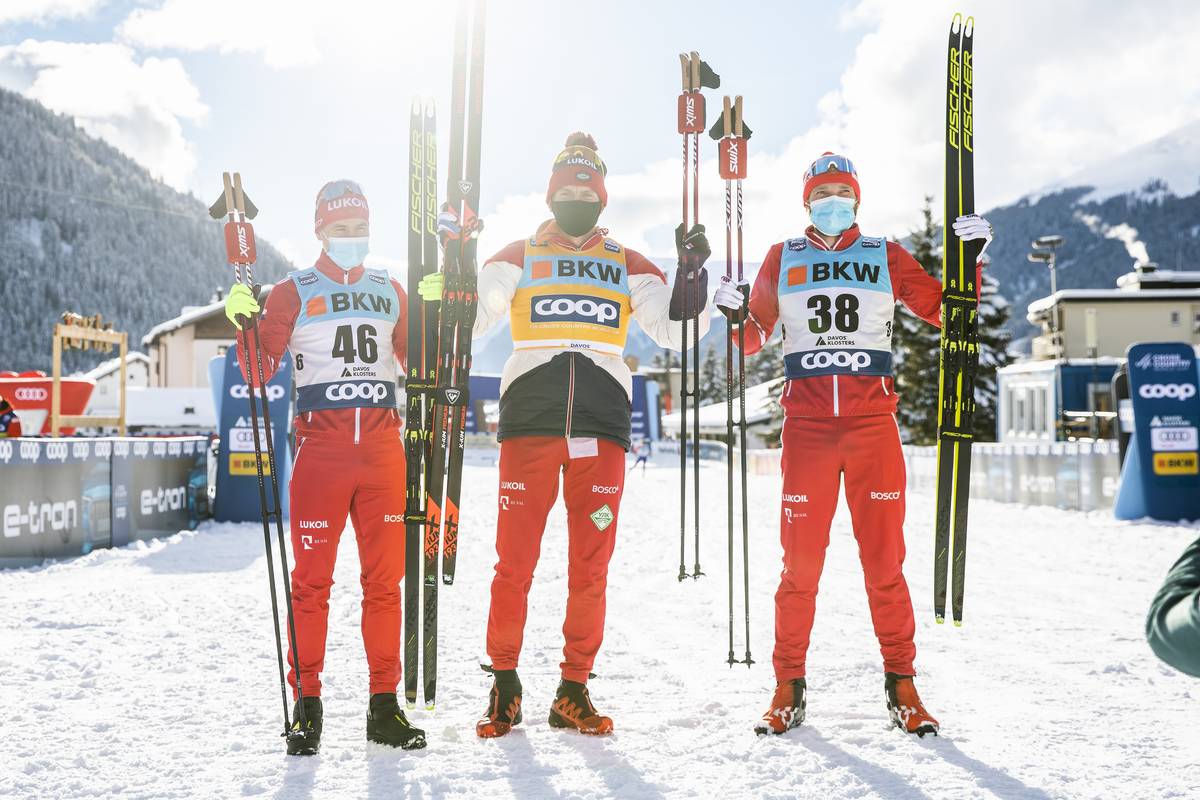
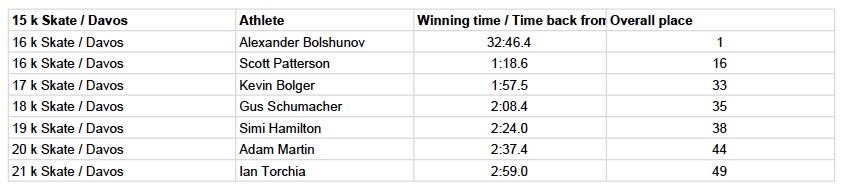
    In warming temperatures and through clearing skies the men battled their way three times around the challenging 5-kilometer course in Davos. With the noted absences of Norway, Sweden, and Finland, today’s 15 k individual skate title was arguably Alexander Bolshunov’s of Russia for the taking. And take it he did, with a time of 32:46.4, putting himself more than 30 seconds ahead of his fellow countrymen and the remaining field. Completing the Russian sweep of the podium were Andrey Melnichenko in second place and Artem Maltsev in third. 

    Bolshunov started out strong and only grew stronger. At 2.2 k he was leading by a sliver of time, 1.6 seconds, at 5 k that gap had widened to 16.4 seconds. By 10 k he was 26.3 seconds up on Melnichenko (RUS). Not laying off the gas he continued to push on, finishing with a lead of 32.2 seconds. In a post-race interview with FIS Bolshunov spoke through a translator, saying, “The plan was to go all the loops equally and keep the high pace. He is very happy with the performance of the team and hopes they will keep the high pace until the World Championships”. 

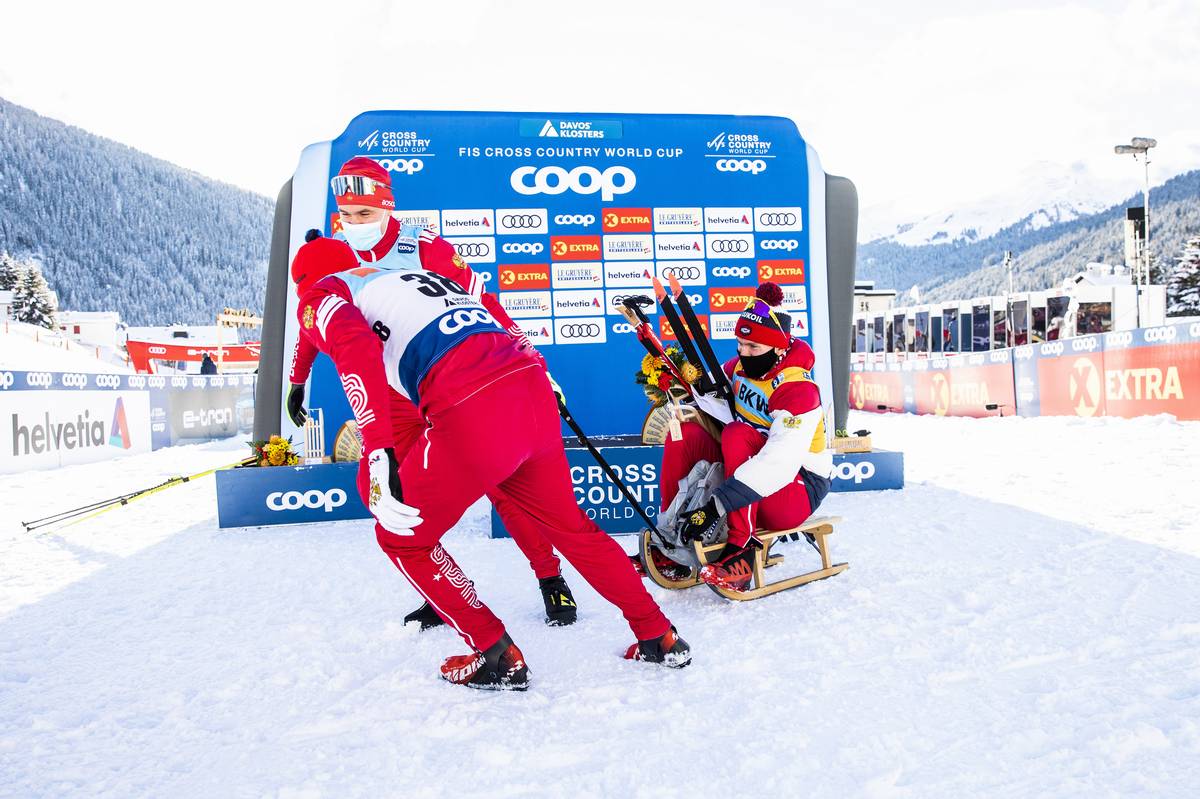
    The Davos 15 skate playground: Andrey Melnichenko (RUS), Alexander Bolshunov (RUS), Artem Maltsev (RUS), (l-r). (Photo: NordicFocus)

    Melnichenko maintained solid splits in second place through the entire race, Dario Cologna of Switzerland came within one second at 5 k but ultimately dropped more than 43 seconds to finish 14th. Melnichenko posted the second-fastest time two weeks ago in Ruka in the 15 k skate pursuit, prior to that, his last individual podium was the 3rd fastest time in the final stage of the Tour de Ski, the notorious hill climb up the Alpe Cermis in Val di Fiemme, Italy. 

    For Maltsev (RUS), today’s third-place finish is his first individual World Cup podium. His previous top distance result was 6th place in Toblach during a Tour de Ski stage, skate 15 k. 

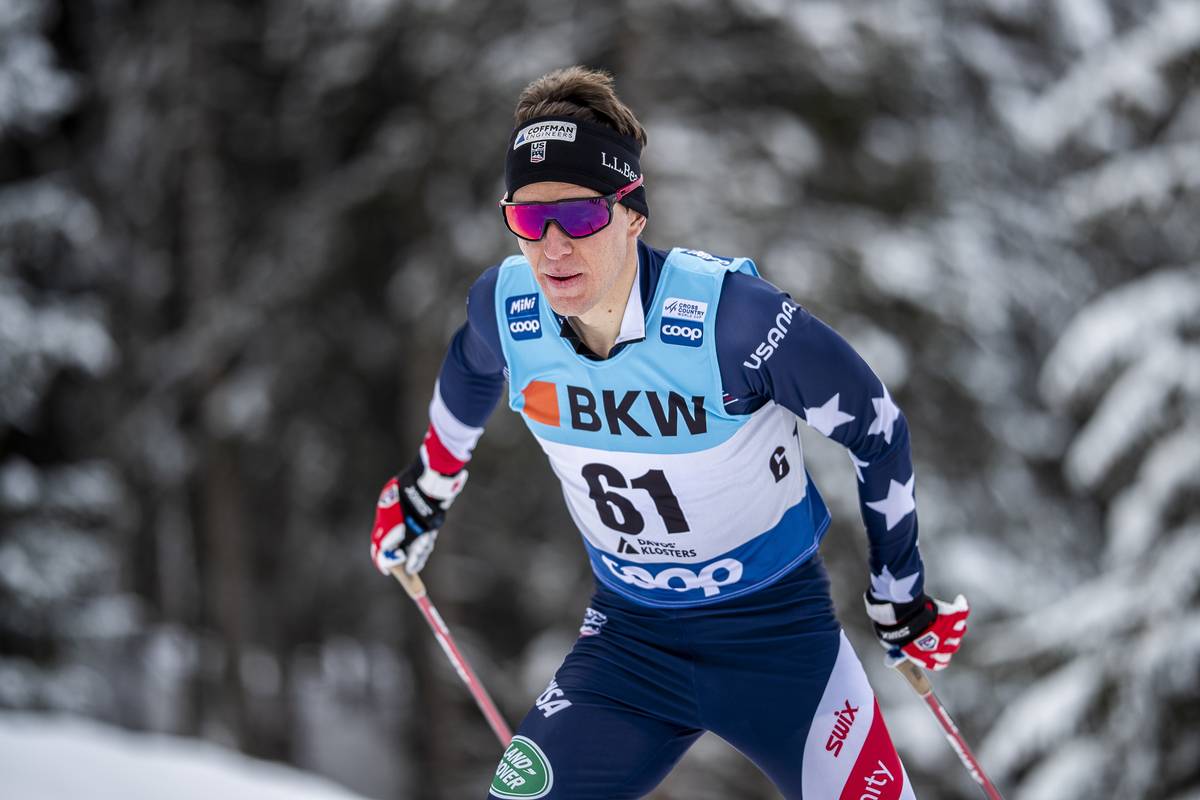
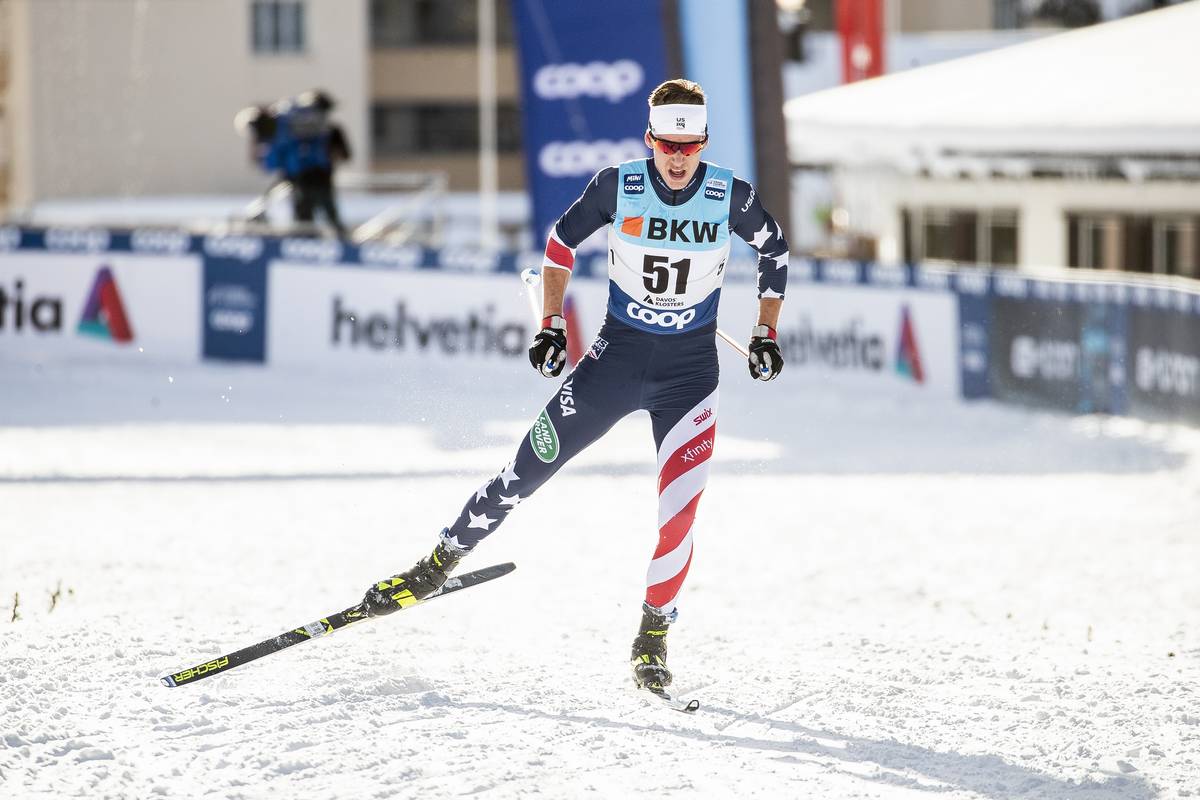
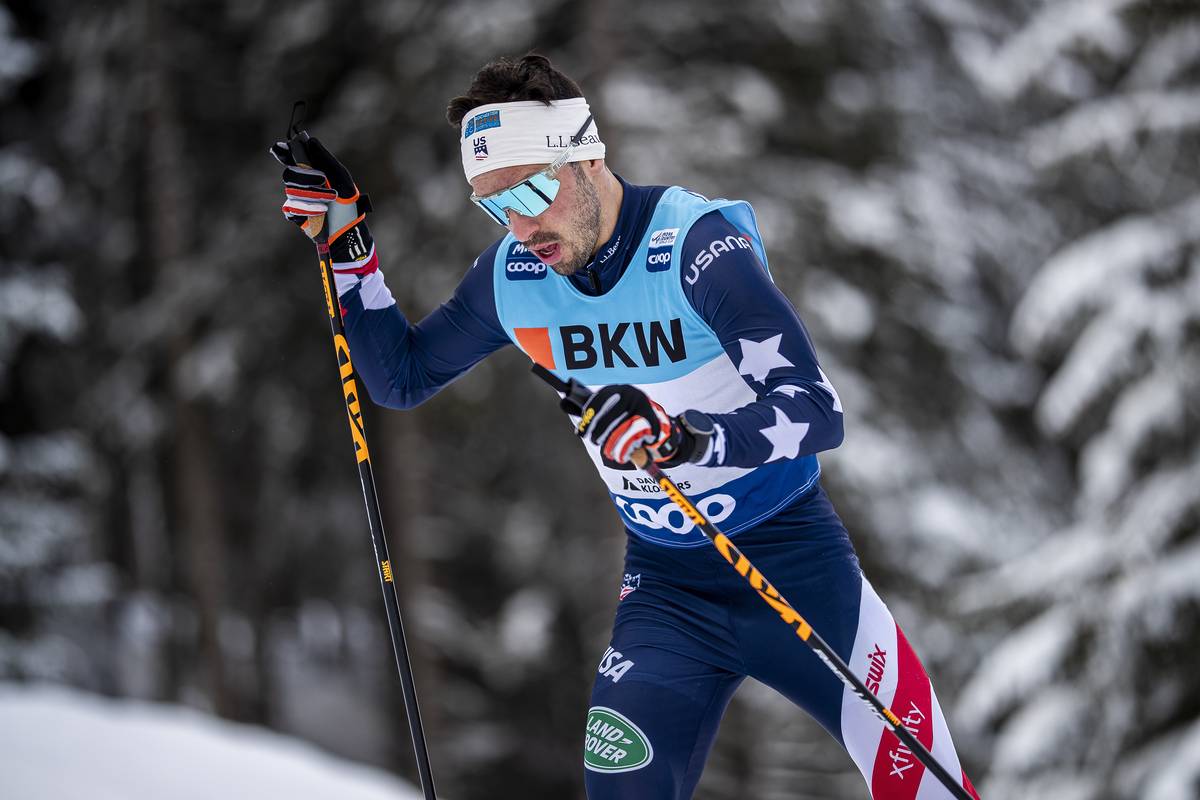
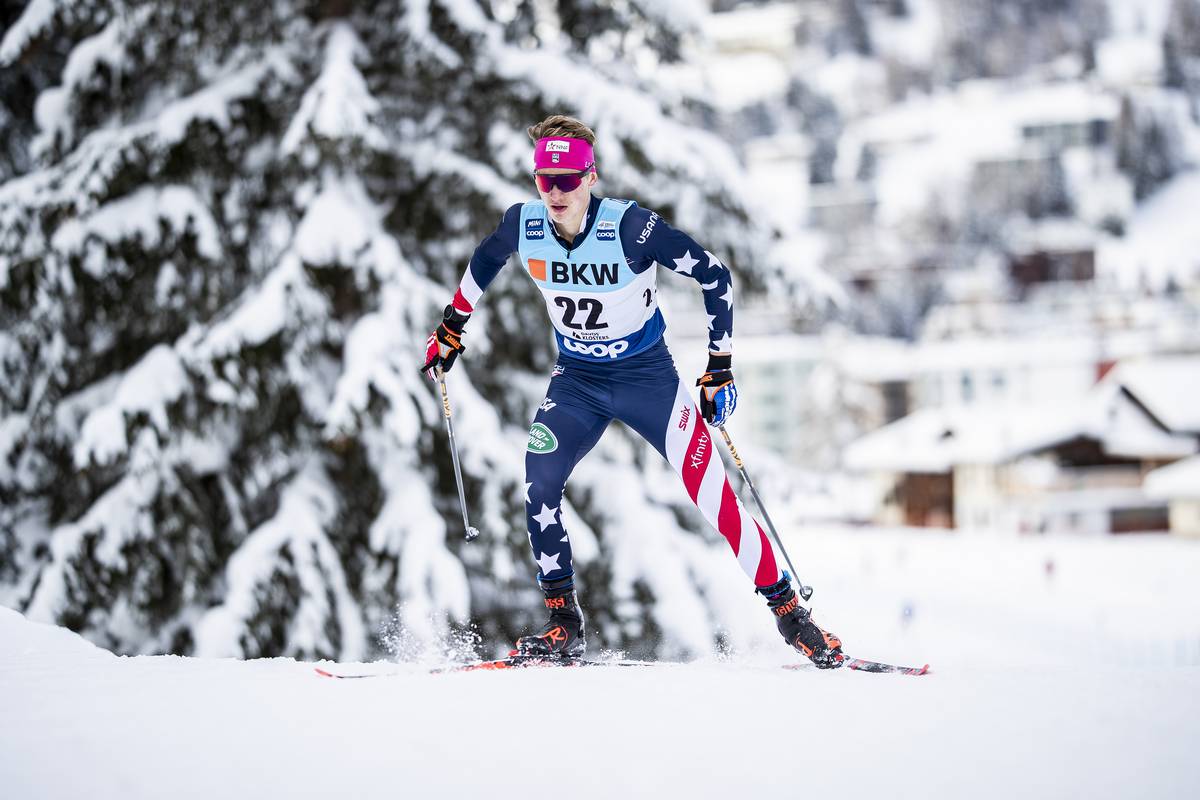
    Scott Patterson (USA) on his way to a top-twenty finish. Photo: Nordic Focus

    Scott Patterson was the first finisher for the American men in 16th place. “This is my fourth year racing the 15k skate in Davos”, Patterson wrote in an email to Faster Skier. “It is the first year that I actually felt like I had something to give. The last 3 years, it felt like I started out slow and faded, whereas this year I started strong and held on pretty well. I’m psyched on the result from today and looking forward to more racing soon.”

    Last year Patterson finished 51st in this same event in Davos. Back in 2018, Patterson began a tear at the PyeongChang Olympics. In three individual events, he placed 18th in the 30 k skiathlon, 21st in the 15 k skate, and 11th in the 50 k classic mass start. He continued his top-20 pattern in Oslo’s 2018 50 k skate, with a solid 16th place. A year later in Oslo, he was 19th in the 50 k classic. Last season, Patterson pulled himself from the World Cup early on and raced domestically for the remainder of the winter. His form and confidence took a hit as he was unable to connect the dots and repeat his 2018 run. Early this year, Patterson is finding his way into the top-30. He concluded the Ruka weekend with the 23rd fastest time of the day in the 15 k skate pursuit.   

    In reference to watching fellow APU/USST members Rosie Brennan and Hailey Swirbul achieve the podium just hours before the men’s race Patterson wrote, “I watched the women crush on TV and then our guys van arrived at the waxing truck about when they were getting back there. It was quite a celebratory mood and felt like a little pressure that we had to do something impressive as well. Also, seeing those types of performances is always a good indication that our wax techs have done a great job. Once I was warming up though, I was able to get back in the zone and focus on my own racing.”

    Kevin Bolger (USA) posting his best-ever World Cup distance result. Photo: Nordic Focus

    Post-race interview with Kevin Bolger. 

    Just outside the top thirty were Kevin Bolger (33rd) and Gus Schumacher (35th). This is Bolger’s best distance finish to date, his previous top distance result being in a stage race in Québec in 2019 where he placed 44th in a 15 k classic mass start. Simi Hamilton, Adam Martin, and Ian Torchia rounded out the finishes for the U.S. men in 38th, 44th, and 49th, respectively. 
    Post-race interview with U.S. Head Coach Matt Whitcomb discussing the men’s racing. 


    Results: Men’s 15 k

  • Norway’s Røthe and Tønseth Gap the Field; Difficult Day for North Americans

    Norway’s Røthe and Tønseth Gap the Field; Difficult Day for North Americans

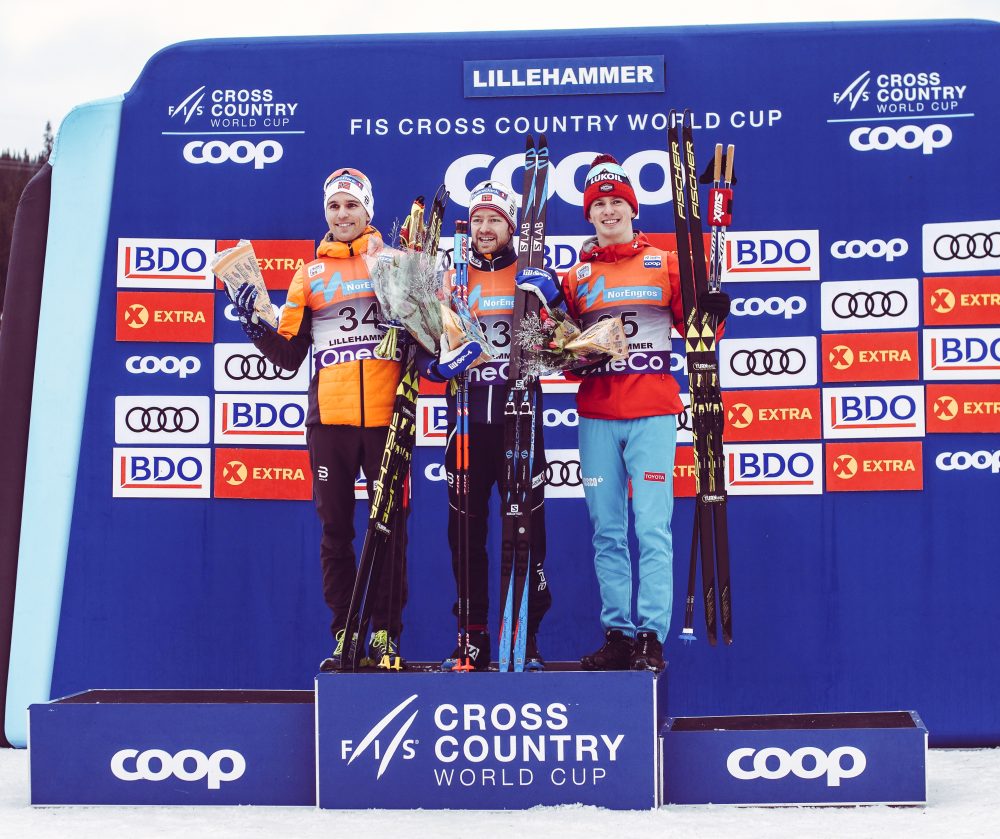
    The men’s podim from the second day of World Cup racing in Lillehammer, Norway. In the 15 k freestyle, Norway’s Sjur Røthe (center) won, teammate Didrik Tønseth (left) placed second, and Russia’s Denis Spitsov (right) was third. (Photo: Henrik Hunnes)
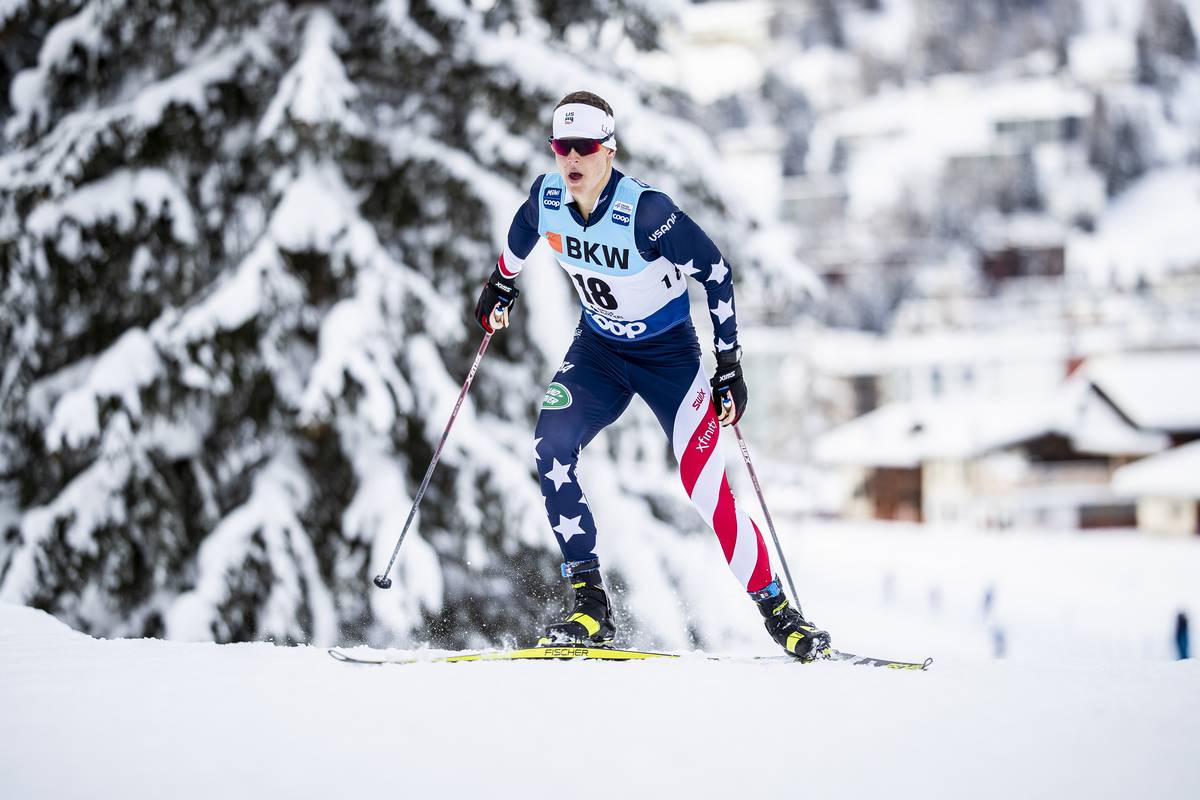
    Norway shined on their home course in Lillehammer, Norway with Sjur Røthe posting the fastest time of 36:3.0 minutes in the 15-kilometer individual start freestyle, followed closely by teammate Didrik Tønseth (+6.0). The Norwegians claimed six of the top-ten spots. Russia’s Denis Spitsov took the third podium position, finishing 28.6 seconds back.

    In his first distance World Cup race of the season, Switzerland’s Dario Cologna placed fourth (+38.3).

    “It feels amazing,” Røthe told the International Ski Federation (FIS) about his race. “I didn’t know that I was fighting for the victory, I just heard I was fighting with Didrik. I didn’t know it was for the victory until the last 5k. But I did everything I could and I kept a high speed the whole way, so I’m really satisfied.”

    For North America, Alex Harvey was the best finisher in 17th (+1:20.5). His fellow Canadians Andy Shields took 61st (+3:08.4), and Russell Kennedy placed 64th (+3:17.0).

    “I just had bad legs,” Harvey told FasterSkier in the mixed zone after the race. “I felt good in the warm-up, but racing I couldn’t climb.”

    When asked whether his podium finish in yesterday’s sprint may have left him fatigued today, Harvey replied, “Probably, but it felt like in the warmup and in my morning jog, I didn’t feel that fatigued. I am missing something in distance right now, it was kind of the same in Kuusamo. So hopefully a couple races will help to bring the base level a bit higher.”

    Harvey also noted that the course conditions played a role in his race day sensations. The weather and lack of natural snow added another layer of challenge. Rain and warm temperatures eroded the 5k manmade loop exposing wood chips, pebbles, and the ground below. While course officials worked to preserve the snow, they could not maintain the firm base that the course started with.

    Alex Harvey of Canada in the mixed zone after the 2018 World Cup 15 k freestyle in Lillehammer, Norway. Harvey placed 17th. (Photo: Henrik Hunnes)

    “It was really soft, the corners and everything,” said Harvey. “So it was hard to kind of rest the legs … you see on the results it was good for the lighter guys. Sjur, Didrik, and Spitsov are some of the lightest guys on the tour. So yeah, it was really sloppy skiing, for me it was really hard.”

    He added, “That corner heading into the stadium, you can see the pavement at the bottom. So somebody must have hit the pavement.”

    The Americans were well outside the points today; Erik Bjornsen of the U.S. Ski Team (USST) finished 43rd (+2:24.5).

    Bjornsen, who was disappointed with his finish, commented, “I just wanted to go out there and push as hard as I can and try not to rush things. To find a good pace and be able to keep it. But 3-4k into the race, the legs were just kind of stiffening up. I’m not really feeling the snap and the energy that I’d like to and the climbs are feeling hard. Hopefully, I can figure it out in the next couple of weeks. It would be great to score some points before Christmas.”

    David Norris (APU) in 54th (+2:44.5) was the next best U.S. skier. He was the day’s first men’s starter. Wearing bib number one can put an athlete in a lonely and frustrating position in an interval start as it means either skiing alone up front or being passed. But Norris saw it as an opportunity to ski with more experienced racers behind him.

    “It was kind of nice to ski alone for a lap and a half,” Norris reflected. Then, different than in the past, some of the guys that were passing me I was able to ski with for a while rather than just trying to catch a ride and blowing up.”

    Simi Hamilton (USST), who was the only American to qualify for the sprint heats yesterday, took his race in stride after placing 56th (+2:59.4). “I wasn’t expecting a ton,” Hamilton said. “At certain points in the season, I think I’m capable of putting together good distance skate races, but it’s still early. I’m not reading too much into it, but I thought my pace was okay and it was good beginner racing.

    “Late November, early December, you want to be feeling good and racing fast. But, our goal for the season is racing fast in February for World Champs,” Hamilton added. “So I think any result you have this time of year you have to take with a grain of salt… I think it’s okay not to feel your best this time of year”

    The course in Lillehammer is always taxing, as it features a four-minute climb, amongst other difficult hills.

    “The course is just naturally really tough,” Hamilton shared. “You have that one decent recovery from the high point. But you’re still kind of working down that, doing some cornering. Pretty much everywhere else, you’re working the entire course. You’re either cornering, or it’s a long gradual climb, or a long steep climb, or a short steep climb.”

    While today’s results may have been lackluster, the Americans are looking ahead to the races to come.

    “I’m going to go out there and fight, but I’m not really sitting in a great position,” said Bjornsen. “I prefer the classic, so hopefully, I can just kind of move up and who knows. Tomorrow is a new day, so hopefully, I’ll be feeling good.”

    While he hopes to see continued improvement, Bjornsen’s goals lie later in the season.

    “I’m going to try to peak at World Champs,” he said. “And there are three team sprints on the schedule this year. Simi and I definitely want to, before we end our careers, get a podium together. So it’s definitely a goal … We’ve been fifth a few times and sixth, so we’re not that far off. I think on the right day it could for sure happen.”

    Hamilton is looking forward to the road ahead as well. He added, “We go to Beitostolen on Monday. I’ll probably ski a relay there which I’m really psyched about. It’s just a 7.5 k in our relays now, so that’s a good skate distance for me. At the same time, I kind of get to use the next couple of weeks to really fine tune my speed for the sprint in Davos. I’ll definitely use the next 10 days to two weeks to get in some really sprint specific workouts.”

    Kevin Bolger (USST) in a photo taken during Friday’s skate sprint qualifier in Lillehammer, Norway. (Photo: Fischer/Nordic Focus)

    The remaining American finishers were Paddy Caldwell (USST) in 67th (+3:33.1), Kevin Bolger (USST) 68th (+3:38.7), Scott Patterson (USST) 73rd (+3:52.3), and Adam Martin (CGRP) 75th (+4:05.0)

    In his first racing on the World Cup, prior to Kuusamo Martin had not contested a World Cup, Martin felt optimistic about today’s result.

    “I’m really happy just to be here on the World Cup this fall and I’m trying to learn as much as I can,” Martin said. “These are incredibly good skiers and they’re in really good shape, so it’s a good learning experience.”

    Not to be forgotten are the impressive results of Britain’s Andrew Musgrave. Norway is practically home now to Musgrave, an athlete feared on the World Cup but also at the annual gathering at the Norwegian National Championships.

    He finished the day in sixth place, 45.1 seconds behind Røthe. It’s an impressive result as any considering the deep men’s field here in Lillehammer.

    “The race today was good for me,” Musgrave emailed. “I had really good skis- the snow was pretty dirty after the warm weather we’ve been having the last few days, so most peoples skis were slowing down a lot every lap. Mine seemed to stay fast though.”
    Historically, Musgrave peaks for the big events. He was barely off the podium in the Lahti Worlds 50 k skate. He has a penchant for arriving in form to maximize the win potential.
    “I’ve been doing a lot of training the last few weeks, so haven’t been racing all that fast (my 65th place in the Norwegian Cup in Gålå last wasn’t exactly my strongest performance ever),” Musgrave explained. “It’s nice to see that I’m back to myself again now I’ve dropped my volume down again. Hopefully the extra training will pay off later in the winter though. That’s the plan anyway!”

    Men’s Results

  • Østberg Tops Weng in Davos Duel, Cementing All-Around Threat

    Østberg Tops Weng in Davos Duel, Cementing All-Around Threat

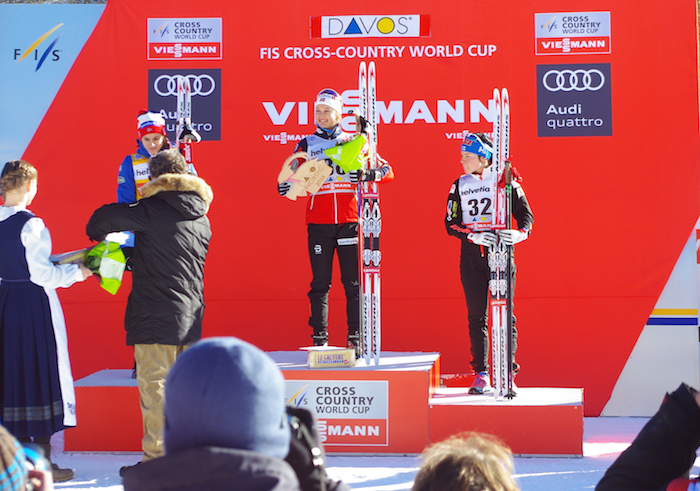
    Ingvild Flugstad Østberg took the first 15 k win of her career on Saturday, besting Norwegian teammate Heidi Weng and Finland's Krista Parmakoski in the women's 15 k freestyle individual start at the World Cup in Davos, Switzerland.
    Ingvild Flugstad Østberg took the first 15 k win of her career on Saturday, besting Norwegian teammate Heidi Weng and Finland’s Krista Parmakoski in the women’s 15 k freestyle individual start at the World Cup in Davos, Switzerland.

    DAVOS, Switzerland — Ingvild Flugstad Østberg didn’t plan to start Saturday’s 15 k skate World Cup like a bat out of hell.

    But by 2.2 kilometers into the course, she already had a 7.9-second lead over Heidi Weng, her Norwegian teammate and the overall leader of the World Cup.

    That gap widened and closed and widened and closed, and at the finish Østberg had just that: a 7.9-second win over Weng, and her first World Cup victory ever in a distance longer than ten kilometers.

    Østberg has an Olympic silver medal in the sprint and a gold medal in the team sprint, but last season emerged as a real overall threat on the World Cup, winning five and ten kilometer races and ranking in the top three in the Tour de Ski, Ski Tour Canada, and overall World Cup standings.

    Yet the win in a 15 k still represented another step in her evolution as a complete skier.

    “For sure it feels really good,” Østberg said in a post-race press conference. “It’s a long time since I won a sprint now. So maybe I have to focus more on sprints! It has been a lot of training for several years, and now my first win in a distance over 10 k. So I’m surprised and very happy.”

    Weng, who started two bibs ahead of Østberg, found the race challenging. It is the first time the World Cup has been to altitude this season; Davos sits at over 5,000 feet above sea level. Despite the pain and fatigue, Weng tried to maintain her pace and technique.

    “I thought it was very hard from the beginning,” she said in the press conference. “I opened slowly. I thought that I can go better, and that everyone would be tired on this track.”

    It was true: with the altitude and the long flat and climb – there’s virtually no rest on the course for the first three kilometers of the five kilometer lap – lots of women were suffering.

    “For sure you have to pace yourself really good here,” Østberg said. “Otherwise it will be not a good feeling if you start too fast.”

    At some points on the course Østberg’s split was only one or two seconds faster than the time Weng had just laid down; Krista Parmakoski of Finland was also within 10-20 seconds.

    But Østberg kept pushing, despite her accidentally fast start.

    “I heard that I had some seconds on Heidi and Krista, but I know that both of them ski really fast at the end,” Østberg said. “So I tried to keep up the speed, because I knew I couldn’t slow down.”

    In the end she was able to open it back up, earning the second Davos win of her career.

    “I had my first sprint World Cup win here, and this is my first win in 15 k, so maybe Davos is a nice place for me,” she said.

    Parmakoski also held her pace, moving from fourth on the first lap – Swiss local Nathalie Von Siebenthal had opened hard – up to third by the halfway point. When all was settled her finishing time was 16.7 seconds off the mark set by Østberg.

    “Because these last few weeks have been classic, and I thought I would be a little bit better on classic style, I was a little bit nervous before this race,” Parkmakoski said in an interview. “Now I’m happy because I know that my technique is better than last year and I know that I can do also good results in skating. I have done a lot of work this summer on the skating technique.”

    While the Norwegians went one-two and put four athletes in the top 12 (Ragnhild Haga seventh (+1:10.8), and Kari Øyre Slind 11th (+1:38.9), the Finns also had a good day, with Riitta-Liisa Roponen eighth (+1:21.4), Kerttu Niskanen 12th (+1:41.7), and Laura Mononen 14th (+1:48.1).

    “The men have also had some good races,” Parmakoski said. “The women’s team knows that we all have to ski fast because we have been so close in the summer training. So we have a good feeling on our team right now.”

    That bodes well for World Championships, to be held on their home turf in Lahti. Parmakoski didn’t think that her fast start to the season – this was her third podium of the season – would compromise her ability to perform in the coming months.

    “Of course I hope that I am in a little bit better shape there,” she said. “But now it is important that I am healthy, and that I get some good training during the season, before the World Championships.”

    Von Seibenthal faded as the race went on, first dropping to fourth place and then by the finish to sixth  (+1:05.6). It was still the best World Cup result of her career.

    Rising to take fourth place was the U.S. Ski Team’s Jessie Diggins, who hovered in sixth place at the halfway point but skied aggressively over the last five kilometers to decisively seal a top finish; she was 54.3 seconds behind Østberg’s time, and 6.2 seconds ahead of fifth-place Yulia Tchekaleva of Russia.

    Both Diggins and Tchekaleva dodged questions about the McLaren Report, released yesterday, which documented widespread systematic doping by Russian athletes, including those in cross-country skiing.

    “My role here is to compete,” Tchekaleva told the press before leaving the mixed zone.

    Diggins said that her statement was summed up by a petition begun by the U.S. Track and Field Athlete Advisory Committee, and which Diggins said that she had signed.

    The petition demands, among other things, that the World Anti-Doping Agency is given authority and capacity to investigate all instances of non-compliance with the World Anti-Doping Code, including imposing consequences for noncompliance, and that international competitions are no longer held in Russia.

    Results

  • Hoffman Works His Way into 15 k Skate, Wins Day 1 of SuperTour Finals

    Hoffman Works His Way into 15 k Skate, Wins Day 1 of SuperTour Finals

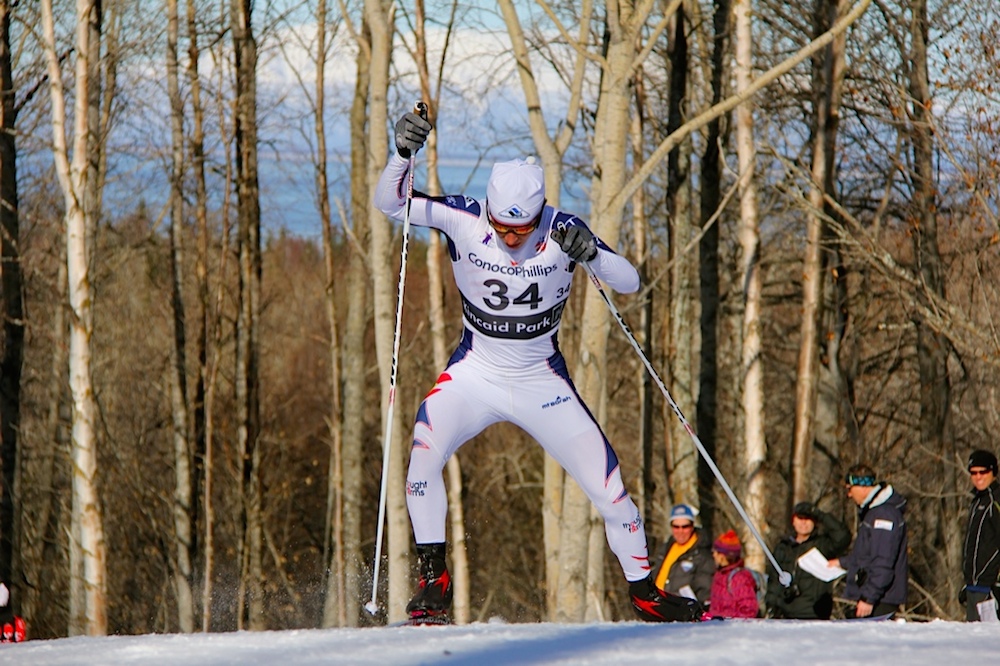
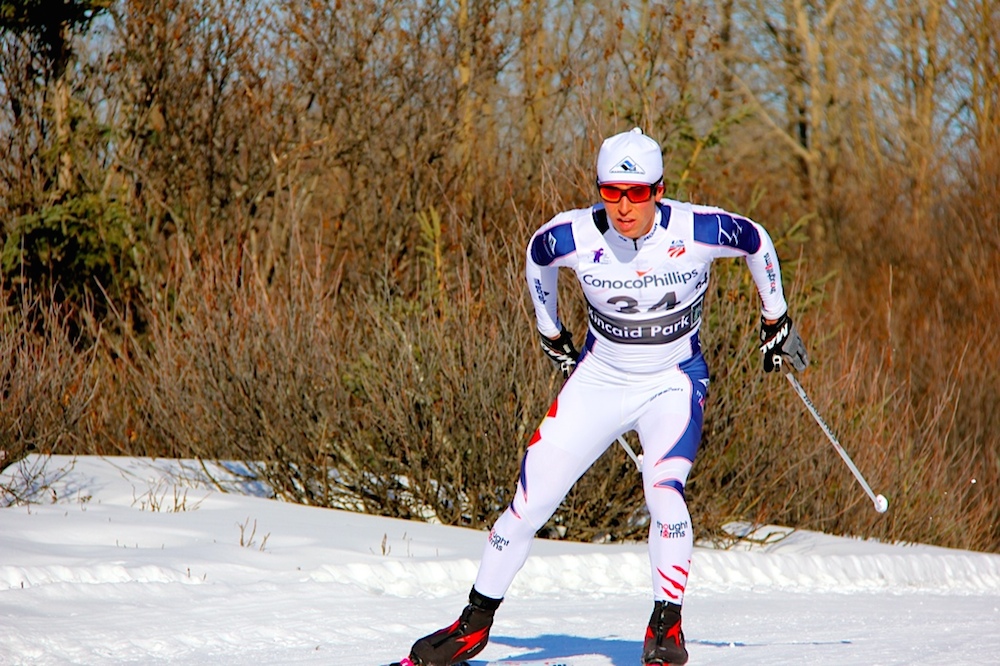
    Noah Hoffman (SSCV/Team HomeGrown/USST) racing to a 10.9-second win in Saturday's 15 k freestyle at SuperTour Finals at Kincaid Park in Anchorage, Alaska. (Photo: Rob Whitney)
    Noah Hoffman (SSCV/Team HomeGrown/USST) racing to a 10.9-second win in Saturday’s 15 k freestyle at SuperTour Finals at Kincaid Park in Anchorage, Alaska. (Photo: Rob Whitney)

    ANCHORAGE, Alaska — Separated by 30 seconds at the start, nearly 70 men in Saturday’s 15.9-kilometer freestyle raced around Kincaid Park individually on Saturday in the SuperTour Finals opener.

    One by one, they ascended massive hills, like Elliott’s Climb at the end of each 5.3 k lap, and descended a winding section of the course known as S Turns. They made their way back to the stadium World Cup start area via trails named Burky’s Climb and Roller Coaster.

    Some made up ground on their competitors; others lost it.

    With one lap to go, it was pretty obvious which side of that Noah Hoffman of the U.S. Ski Team (USST), Ski & Snowboard Club Vail and Team HomeGrown was on.

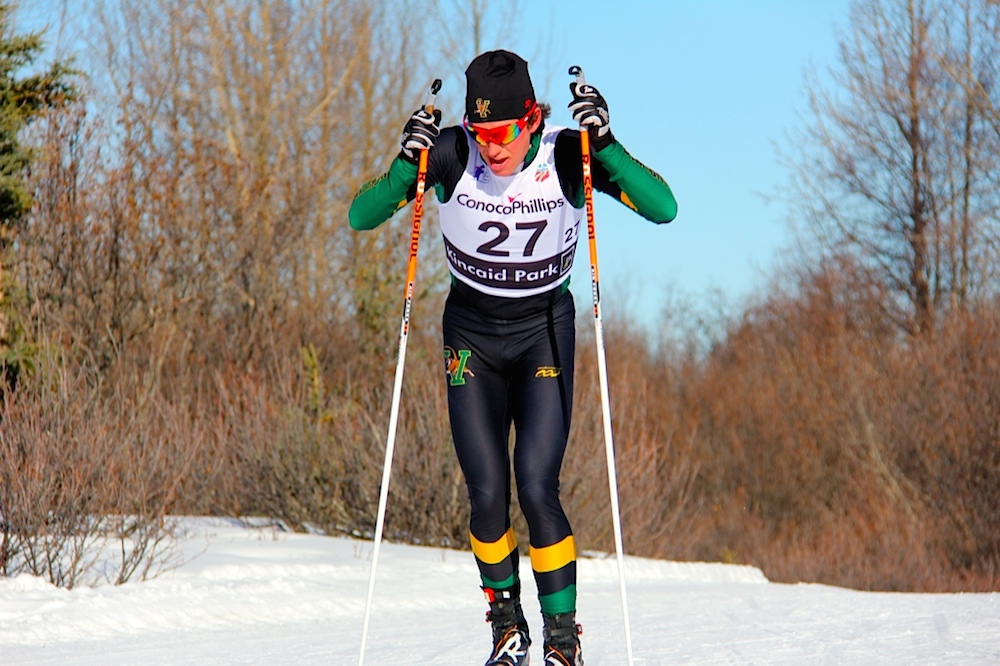
    University of Vermont senior Scott Patterson racing to second in Saturday's 15 k freestyle at SuperTour Finals in Anchorage, Alaska. (Photo: Rob Whitney)
    University of Vermont senior Scott Patterson racing to second in Saturday’s 15 k freestyle at SuperTour Finals in Anchorage, Alaska. (Photo: Rob Whitney)

    Watching him climb Elliott’s the second time around 10 k was unlike anyone else. Scott Patterson of the University of Vermont (UVM) led Hoffman by half a second after the first 5 k loop, then fell behind by 4.6 seconds by the end of the second.

    “There’s no recovery out there,” Hoffman said after the race. “You’ve got to work the whole thing. The downhills are turny, really require you to work, but for the most part it’s just rolling terrain and no big uphills, no big downhills, quite different than anything I’ve raced [overseas] all year. It was fun.”

    With about 5 k to go, Hoffman, 25,  put the hammer down on the hills he knew were his strength. The lone skier at Spring Series from his Colorado club, Hoffman stood out in white — and in his ability to attack when most were visibly slowing.

    “My strategy was try just to ski really high energy but keep it relaxed, knowing that I couldn’t really go over the line because there was no place to recover,” Hoffman said. “There were limited opportunities out there to attack on the uphills so I had to really focus when I did have that opportunity.”

    Hoffman continued to gap Patterson, a UVM senior from Anchorage, on the final lap and ultimately beat him by 10.9 seconds for a victory in his first SuperTour Finals since 2012.

    “I knew I was close to Scott,” Hoffman said. “I was getting word out there, ‘Tied! Up by two, down by two,’ so I knew it was a close race and you’ve just got to work for every second out there and see what happens.”

    While Patterson gave Hoffman a run, nobody else came too close. Erik Bjornsen of Alaska Pacific University (APU) and the USST was in a three-way fight for third with Patrick Johnson (Far West Elite Team) and David Norris (Montana State University) with one lap to go.

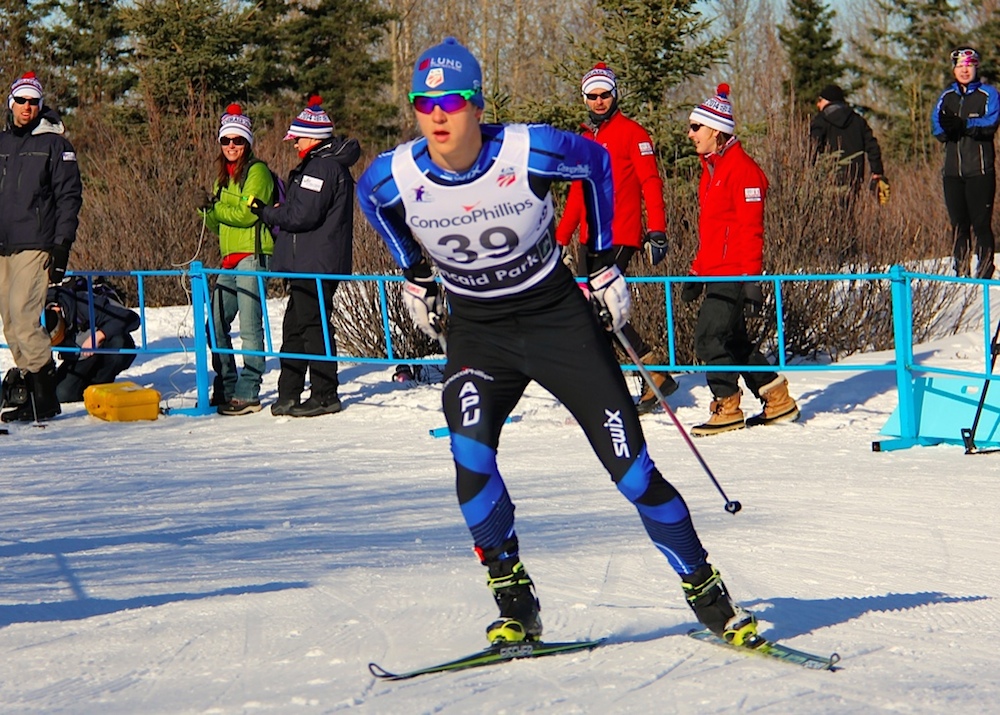
    Erik Bjornsen (APU/USST) racing out of the World Cup start area to third place in Saturday's 15 k freestyle at SuperTour Finals in Anchorage, Alaska.
    Erik Bjornsen (APU/USST) racing out of the World Cup start area to third place in Saturday’s 15 k freestyle at SuperTour Finals in Anchorage, Alaska. (Photo: Rob Whitney)

    Bjornsen ended up third, 59.3 seconds behind Hoffman and 3.1 second ahead of Norris in fourth, and said he lost time on the second loop and didn’t have the finishing punch he’s used to.

    “I really didn’t find that top gear in the last lap that I was looking for, so that was a little disappointing,” Bjornsen said.

    But a podium is a podium at a race series that ranks right up there with U.S. nationals prestige (on March 28, the 30 and 50 k classic mass starts will serve as U.S. Distance Nationals).

    “It’s been cool this year going to the Olympics,” Bjornsen said. “I think Anchorage has started to notice my name. Just a ton of fans out there. It was so fun.

    “I thought I was fourth,” he continued. “I’m happy with [third]. … It’s a tough race. You’ve just got to keep working the whole time and keep moving. As soon as you kind of rest or chill for a little bit I think you lose a lot of time.”

    “I think Anchorage has started to notice my name. Just a ton of fans out there. It was so fun.” — Erik Bjornsen (APU/USST), third in SuperTour Finals 15 k freestyle

    Patterson didn’t let off the brakes, especially with Anchorage spectators lining the course, but thought he came undone a little bit on the final climb. At the halfway point, he recalled being two seconds ahead of Hoffman in the lead — an accomplishment for any non-USST member, let alone a college racer.

    Noah Hoffman on his way to winning his first SuperTour Finals race in two years. He did not compete in Truckee, Calif., last season. (Photo: Rob Whitney)
    Noah Hoffman on his way to winning his first SuperTour Finals race in two years. He did not compete in Truckee, Calif., last season. (Photo: Rob Whitney)

    “It seemed like every person was giving me splits, every volunteer was cheering for me so it was pretty cool. Definitely had a good crowd out there that knew me well,” he said.

    “Scott’s a great skier, I’ve known that for a long time,” Hoffman said. “It was never a guarantee I’m going to win this race. I’m just glad to edge it out. I hope to ski Scott at the World Cup level sometime soon.”

    If Patterson, the younger of the two siblings at the Finals (Caitlin of the Craftsbury Green Racing Project is the other), has his way, that’s exactly how his career will go down. The first step is not being intimidated by a USST athlete. The second: learn how to deal with limited splits on when you start ahead of the person you’re trying to chase down.

    “It was hard to kind of know — up, down, going back and forth — so I tried to push it in, but I was a little slow on the last hill,” Patterson said. “He definitely picked it up towards the end.”

    For Hoffman, the attack made all the difference. Besides Patterson and Bjornsen on the podium, Hoffman beat everyone else by more than a minute. Norris was fourth (+1:02.4), Lex Treinen (APU) fifth (+1:06.2). Johnson placed sixth, Matt Gelso (Sun Valley Ski Education Foundation) took seventh, Reese Hanneman (APU) was eighth, Brian Gregg (Team Gregg/Madshus) ninth, and the former APU skier Mark Iverson (Rossignol) 10th.

    Hoffman and Bjornsen were among four in the top eight getting wax help from APU this week, including Norris and Hanneman.

    “I don’t really know how my fitness is at the moment; it was a lot of travel,” Hoffman said after flying from Sweden to Anchorage earlier this week. “I’ve been sleeping pretty well for the most part this week, but it’s a hard transition, it’s also just been a long season.”

    Results

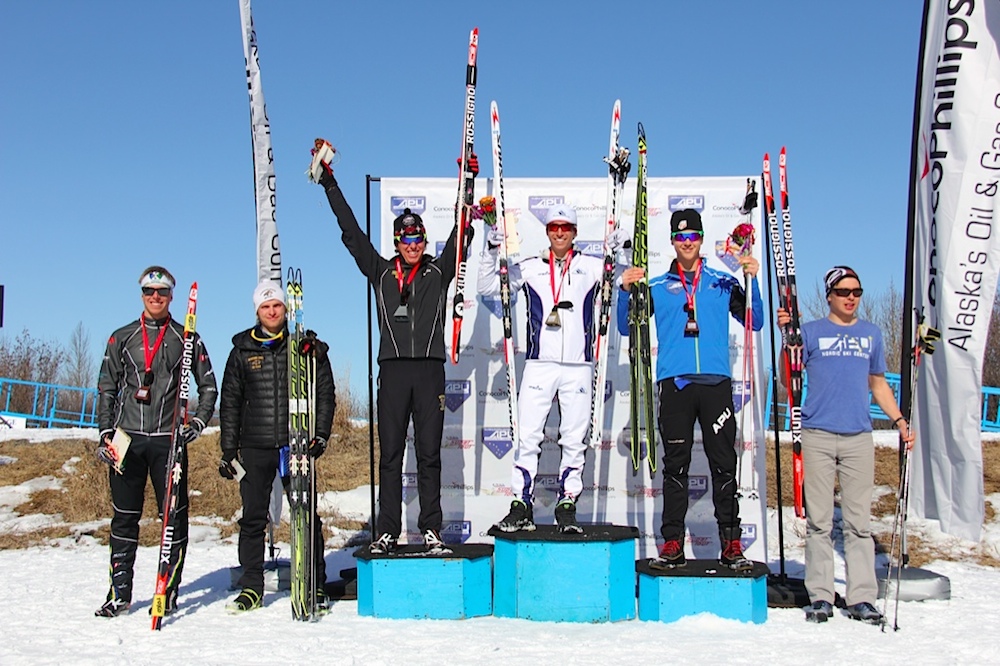
    The men's 15 k freestyle individual start podium at SuperTour Finals in Anchorage, with winner Noah Hoffman (c), runner-up Scott Johnston (third from l) and Erik Bjornsen (second from r) in third.(Photo: Rob Whitney)
    The men’s 15 k freestyle individual start podium at SuperTour Finals in Anchorage, with winner Noah Hoffman (c), runner-up Scott Patterson (third from l) and Erik Bjornsen (second from r) in third.(Photo: Rob Whitney)