Tag: 1985 Seefeld World Championships

  • Interview: 1985 Overall World Cup Champion Anette Bøe

    Interview: 1985 Overall World Cup Champion Anette Bøe

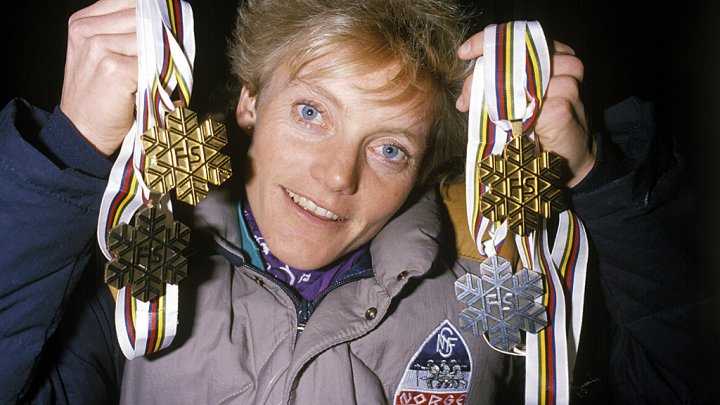
    Anette Bøe displays her medals from the 1985 World Championships in Seefeld, Austria. She earned two gold, one silver, and a bronze at the Championships and was crowned Overall World Cup Champion later that year. (Photo: Anette Bøe/Facebook)
    Anette Bøe displays her medals from the 1985 World Championships in Seefeld, Austria. She earned two gold, one silver, and a bronze at the Championships and was crowned Overall World Cup Champion later that year. (Photo: Anette Bøe/Facebook)

    Anette Bøe has led a life filled with innovation and adventure.

    The Norwegian skier was the first woman on the international racing circuit to venture into the realm of skate skiing in 1984 despite a Norwegian distaste for the new technique.

    When she retired from professional skiing, she decided she wanted to try a new sport in order to “cool-down” and in the process earned a podium finish in the inaugural year of the mountain bike World Cup in 1989.

    She didn’t stop there. Fulfilling a childhood desire to play hockey, Bøe joined a professional team where she earned two Norwegian national championships.

    According to Bøe, her adventurous nature can be traced back to her hometown of Larvik, Norway.

    “It was a very active, small town and I was very lucky to grow up in that kind of community,” she said in a phone interview. “When we came back from school we were always on skates or skis.”

    In addition to the active environment she grew up in, Bøe attributed her entry and drive in nordic skiing to her father Albert. Before Bøe was born, Albert attended the University of Denver as one of the first Norwegians to receive a ski scholarship, under famed coach Willy Shaeffler.

    Bøe was born in 1957 and from then on her father used his experiences as a ski racer to ensure his daughter shared his love for the sport.

    “I think he had a plan with me because he loved cross-country skiing,” she said.
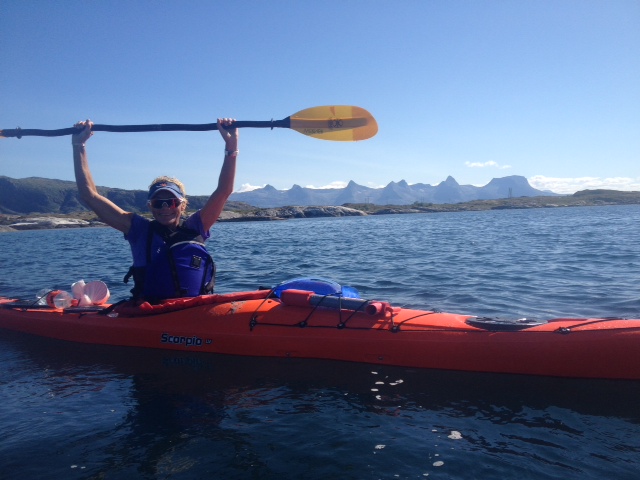
    1985 Overall World Cup Champion Anette Bøe kayaks on Norway's Helgeland Coast in a recent photo. (Photo: Anette Bøe)
    1985 Overall World Cup Champion Anette Bøe kayaks on Norway’s Helgeland Coast in a recent photo. (Photo: Anette Bøe)

    With guidance from her father throughout her developmental years, Bøe had dreams of becoming the best skier in the world, despite disapproval of such ambitions at the time.

    “It sounds crazy, but in the old days you couldn’t say that to anyone,” Bøe said of her aspirations. “Now it’s open. You can say that to anyone you want to, but in the old days you couldn’t say ‘I have a goal to be the best skier in the world.’”

    Her drive to succeed lasted well into the peak of her skiing career. In the 1980s she was training in St. Moritz, Switzerland where she interacted with many international teams and broadened her horizons outside of the often-isolated Norwegian team.

    Because of her familiarity with international teams such as the U.S. Ski Team, Bøe experienced the new technique of skating very early on in its conception.

    Bøe was selected for the Norwegian Olympic team in 1984, but despite winning a trial race, she was not picked to compete. She watched from the sidelines as skiers like Bill Koch used skating to their advantage. Later that season, Bøe followed suit and made the decision to abandon the kick wax on her skis, making her the first woman to skate on the international circuit.

    “No one on the girls side of the Olympics was skating but then I picked it up in the end of 1984 at the last ski race,” Bøe explained. “I took off the wax and I skated. I’m actually the first woman in the world to be skating without wax (on the international racing scene).”

    By 1985, Bøe had fully embraced the skating technique and earned two gold medals at the World Championships in Seefeld, Austria in addition to two other podium finishes. Later that year she was crowned the Overall World Cup Champion.

    Bøe also won the prestigious Holmenkollen Medal in 1985, Norway’s highest honor in in skiing.

    For the Norwegian, the creation of skating represented a new era not only for her but also for nordic skiing as a whole.

    “I think it was really good for cross country skiing when the skating came because everybody had a new chance,” she said.

    She pointed to the U.S. Ski Team as an example, saying that the innovative use of skate skiing opened the door for skiers like Bill Koch and Kikkan Randall to shine on the international stage and grow the sport outside the realms of Scandinavia.

    According to Bøe, the Norwegian national team was reluctant to embrace the new technique and suffered the consequences. She said she was fortunate to be training in St. Moritz at the time, so that she could practice the technique.

    “The Norwegians were in the back yard and all the other nations were in the front because they picked it up pretty quick,” she said. “We lost a generation in Norway of skaters because they were old-fashioned.

    “I was lucky to be in the right spot, in the right time and be open to changes. Every day being an athlete you need to find new ways.”

    Bøe retired from her cross country skiing World Cup career in 1989, but knew she still needed sport in her life.
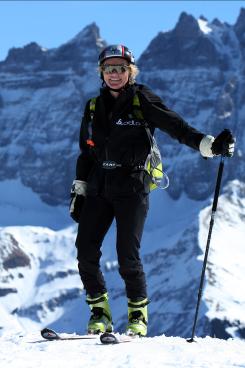
    (Photo: Anette Bøe Skiskole)
    “I like to give something back (to others) what the sport gave to me,” Anette Bøe says of her relationship with cross country skiing today. (Photo: Anette Bøe Skiskole)

    During her first of many visits to America Bøe witnessed mountain biking for the first time, and was inclined to try it.

    “I was lucky because I have always been adventurous and wanted to do new things,” she said on her entrance into the new sport.

    By the end of 1989 Bøe had participated in the inaugural year of the mountain biking World Cup and took third place in a cross country style race, making her one of the first women in the world to earn a World Cup podium in mountain biking.

    By the early 1990s she was finished with bike racing, but her ventures into new realms of athleticism were far from over.

    During her career as a skier, Bøe had an encounter with a Norwegian women’s hockey team. Having always been intrigued by hockey from a young age, Bøe talked with the team. After her conversation she walked away thinking that as soon as she retired from skiing she would play hockey.

    Once her skiing career ended, Bøe did just that. She joined a local team and in the 1990s she and her teammates won two Norwegian national championships.

    In 2000 she was awarded the Honorary Prize of Egeber, a distinction bestowed on Norwegian athletes who excel in more than one sport, for her accomplishments in cross country skiing and hockey.

    Bøe found her experience as a hockey player very rewarding, not only because of her successes but also because of the team dynamic she discovered while competing on ice.

    “When I was a cross country skier I would always ski by myself and I was always depending on me,” she said. “But when you are on a team and depending on the team to play together, it’s totally another ball game. For me it was good, it was very interesting.”

    Since Bøe’s departure from professional competition, she has filled her time with a variety of endeavors. She’s worked in the Norwegian television and radio industry, as a manager for an ice hockey team, and as a packager for athletic firms and Olympic sponsors.

    One of her favorite projects is the ski school that she created ten years ago.
    Anette Bøe hopes to move to the U.S. soon to be closer to friends and her two children who live in Denver and Boston. (Photo: Anette Bøe Skiskole)
    Anette Bøe hopes to move to the U.S. soon to be closer to friends and her two children who live in Denver and Boston. (Photo: Anette Bøe Skiskole)

    “That’s giving me a lot because it’s nice to give something back to the sport,” Bøe said of her ski school. “I see people getting happy when they break the code; when they feel all their body weight is on one ski and they can kick and glide with total body control on the skis.”

    However, now that the 56-year-old has more time on her hands she thinks she might be ready for a change. At the movement, Bøe sees that change as a move to the U.S.

    Intrigued by her father’s stories of America as a young girl, Bøe always found the U.S. very attractive. On top of that, two of her children will be living in the country in the coming year: her oldest daughter, Thea, graduated from the University of Denver in 2013 and is still living in Colorado, while her youngest son, Oliver, will be attending a boarding school in Boston this coming year.

    Bøe has been searching for work in the U.S. but can only commit to a year due to uncertainly of whether her youngest son will stay stateside. Earlier this year, Bøe had secured a job in Massachusetts but due to her sister’s illness she was forced to decline.

    Much like many other accomplished foreign skiers in the country, Bøe envisions herself as a possible coach or public figure in the U.S. cross country skiing community.

    “I like to give something back (to others) what the sport gave to me,” she said.

    Whatever lies ahead for the 1985 Overall World Cup Champion, her ability to take advantage of her surroundings will likely ensure that her future is just as innovative as her past.

  • Then and Now: A Conversation with Peter Ashley

    Then and Now: A Conversation with Peter Ashley

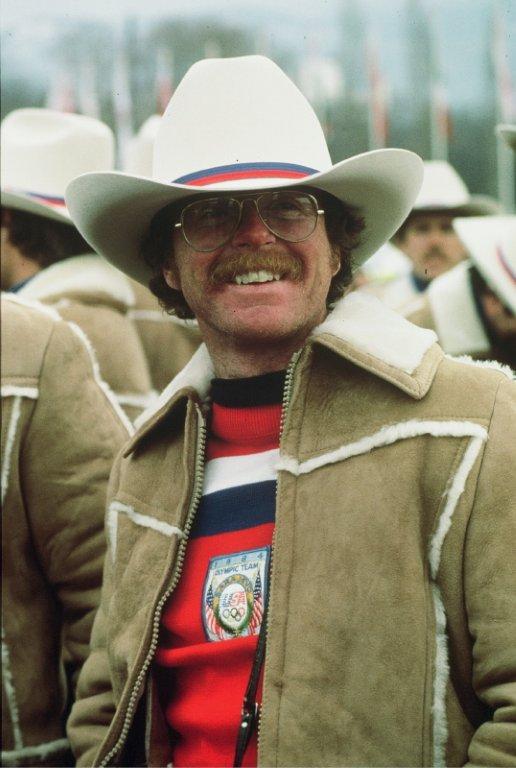
    Peter Ashley at the 1984 Sarajevo Olympics opening ceremony. Now the nordic vice president at Fischer Skis USA, he was the U.S. Ski Team women's coach from 1984-85. (Courtesy photo)
    Peter Ashley at the 1984 Sarajevo Olympics opening ceremony. Now the nordic vice president at Fischer Skis USA, he was the U.S. Ski Team women’s coach from 1984-85. (Courtesy photo)

    Peter Ashley is “Mr. Fischer” in the United States. For over 18 years, he has been vice president of the nordic division at Fischer Skis. He is responsible for everything that has to do with Fischer Nordic USA: ski selection, pricing, marketing, reps, budget, and more.

    Peter Ashley during a recent cruise near Portsmouth, N.H. (Photo: John Estle)
    Peter Ashley during a recent cruise near Portsmouth, N.H. (Photo: John Estle)

    Although Fischer is his life these days, Ashley has been involved with cross-country skiing in many other capacities for decades before working for Fischer. He has truly been around the nordic block. Ashley has had just about every job that skiing offers and has experienced the evolution of the sport firsthand. FasterSkier’s Nancy Fiddler caught up with him recently on the phone in a conversation about the development of cross-country skiing and some of his best stories from a pivotal period in the 1980s.

    Ashley, 62, lives in Contoocook, N.H., with his wife, Rhonda, and three Maine Coon cats. New England is his home now, but Ashley is a self-declared westerner with strong roots in Jackson Hole, Wyo. For Ashley, the West was where the whole skiing thing started.

    Growing up, his family was hugely involved with skiing and the Jackson Hole Ski Club (JHSC). Ashley trained and raced alpine, then nordic with the JHSC, making his first Junior National nordic team in the mid 1960s when he was in eighth grade. He continued to race alpine and nordic until his junior year in high school, when he admits that his size and athletic talent were more suitable to cross-country skiing.

    It has been all nordic ever since for Ashley, who went on to race at the University of Colorado under the direction of Bill Marolt. After graduating in 1974 with a degree in finance, the same year that fiberglass skis were introduced, Ashley returned to Jackson Hole to try his hand at coaching. He got his feet wet coaching juniors for four years as head coach of JHSC, the beginning of a 12-year run of coaching that took him all the way to the U.S. Ski Team. Along the way, Ashley worked with a lot of interesting characters, traveled the world, and witnessed firsthand some big changes in skiing.

     “Skiing was a very, very different sport 25 years ago.”     — Peter Ashley      

    World Cup cross-country ski racing has been divided into two disciplines since the 1986/1987 season: classic and freestyle (skating). The evolution of skiing from an all-classic technique sport to a two-discipline sport took place over the course of several rocky seasons and saw some major battles.

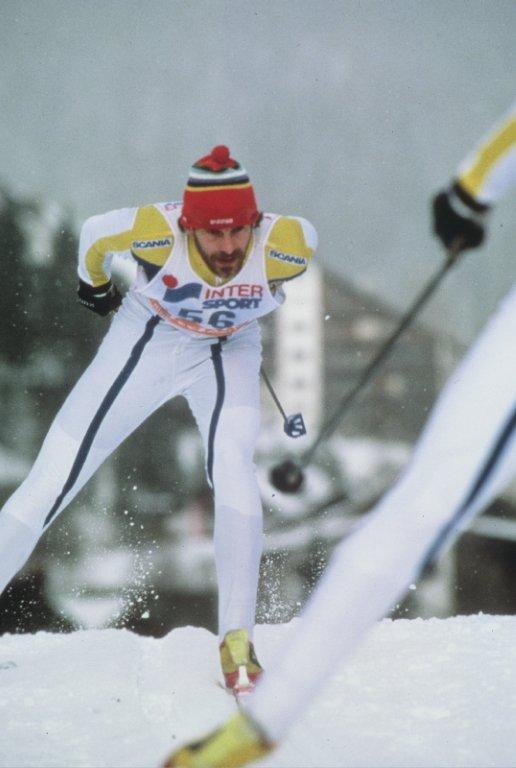
    Sweden's Thomas Wassberg, after whom the "Wassberg" skating technique is named, freestyle racing at the 1985 World Championships in Seefeld, Austria.
    A multiple Olympic gold medalist, Sweden’s Thomas Wassberg, after whom the “Wassberg” skating technique is named, freestyle racing at the 1985 World Championships in Seefeld, Austria. (Photo: Peter Ashley)

    The year was 1985; the place: Seefeld, Austria, and the event: the 35th Nordic World Ski Championships. There was a lot of drama in the days leading up to the races, and the hot topic was skating. The question surrounding the final preparation was whether skating would be allowed in the championship races, or just the traditional classic skiing.

    Left to the Norwegians, who had already banned skating in junior competition in Norway, there would not have been any skating at the 1985 Worlds. The prevailing attitude is best summed up by Norwegian Ivar Formo, Controller of Equipment, who said, “no one can be the World Champion on skis without grip wax.”

    The women’s coach for the U.S. Ski Team (USST) from 1984-85, Ashley was in the thick of this historical debate. Cross-country skiers had been experimenting with skating for a couple of years. As he remembers it, skiing had taken on a hybrid form by the time of the Seefeld World Championships. Skiers were still using kick wax, but moving with the marathon skate and a gliding herringbone, which eventually morphed into a rudimentary V1 technique.

    With narrow trails with set tracks and athletes using short poles, long skis and kick wax, the stage was hardly set for the break out of skating. Still, athletes were looking for faster and faster methods of skiing. At Seefeld, just days before the first race, Swedish skier Gunde Svan was seen experimenting with one very long pole and no kick wax. This silliness by the eventual-double gold medalist was quickly put down by the organizers, who were desperately looking for a way to prohibit skating at the Championships.

    According to Ashley, the way it finally went down was with a nations’ meeting where a vote would temporary prohibit skating in Seefeld. A unanimous vote was required. All it took was a single “no” vote from the Australians, and the rest is history.

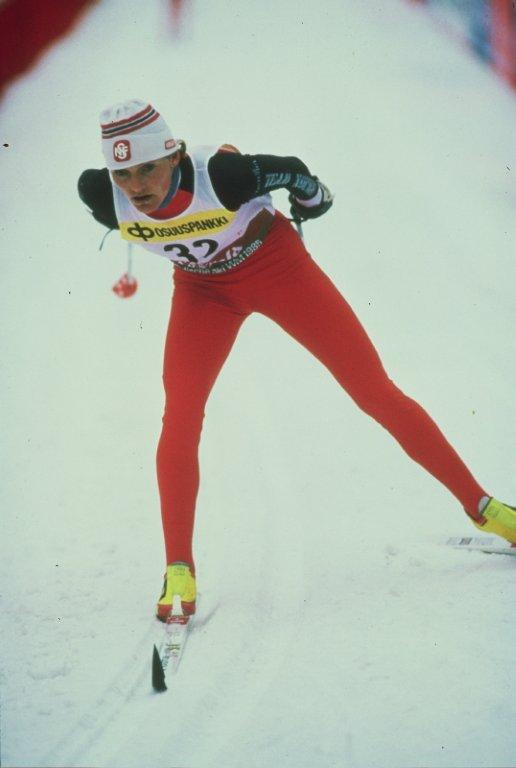
    Annette Bøe of Norway skating at the 1985 World Championships in Seefeld, Austria (Photo: Peter Ashley)
    Annette Bøe of Norway skating at the 1985 World Championships in Seefeld, Austria (Photo: Peter Ashley)

    Ashley recalls snow conditions on the Seefeld courses contributing to the decision by some teams to abandon kick wax entirely. As if 32 degrees Fahrenheit wasn’t bad enough, the snow was extremely dirty. “Nothing was kicking and everything was slow,” Ashley said.

    For some athletes, this was the first time they would race without kick wax. The Americans had been fooling around with the skating techniques and little to no kick wax for some time on classic equipment, according to Ashley, who recently learned that was a different story for the Norwegians, whose ski leaders did not embrace skating.

    In a conversation two years ago with former biathlete and nordic skier Grete Nykkelmo, Ashley said he learned that the Norwegian women were not allowed to skate in training. Nykkelmo, who won four medals at 1985 World Championships: a gold in the 20 k, bronze in the 5 and 10 k, and a silver medal in the relay, said that the Norwegian women had to quickly get with the program. In the end, skiers who went with kick wax were losers. The Norwegians managed to top the medal charts at Seefeld, but the battle wasn’t over yet.

    The 1984-85 World Cup season was fraught with conflict over skating. Ashley remembers that in the races prior to the World Championships, organizers went to great lengths to keep skating out. He describes barriers built on the race trails to prevent any kind of skating, ugly coaches’ meetings and threats of disqualifications.

    After Seefeld, things were still not resolved and for the rest of the season, race organizers tried everything possible to keep classic skiing as part of every race. Some races (Falun ’85 World Cup) had sections of course that were classic only and other sections on the same course that were “freestyle.”

    “We were just trying to make sense of all the technical changes that were happening.”  — Ashley

    A season later, the 1985-86 World Cup was all skating. Classic skiing had all but disappeared for the time being (except for in Norway). Poles got longer, skis got shorter, and a good solution for boots was yet to be arrived at. In short, it was an equipment revolution and nordic skiing experienced a huge bump in sales.

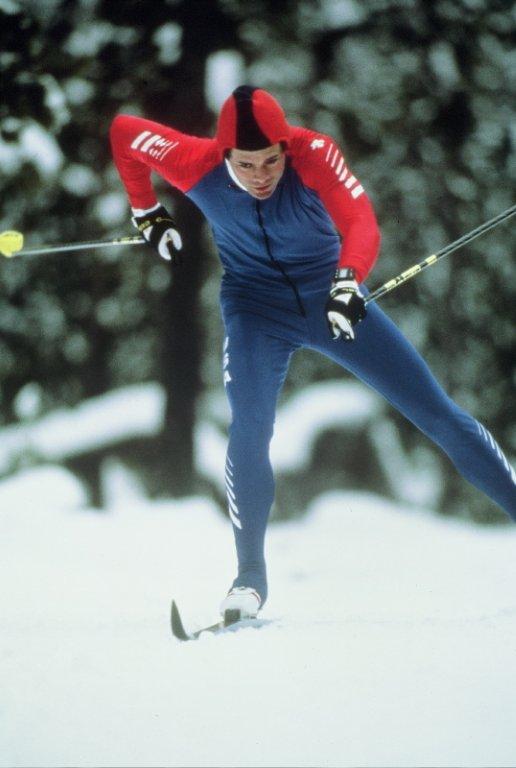
    U.S. cross-country skiing great Bill Koch, who pioneered the skating/freestyle technique in the 80s. (Photo: Peter Ashley)
    U.S. cross-country skiing great Bill Koch, who pioneered the skating/freestyle technique in the 80s. (Photo: Peter Ashley)

    Only a decade earlier, cross-country skis went from wood fabrication to fiberglass, a phenomenon that changed the sport completely, according to Ashley. Fischer fiberglass skis first appeared at the 1974 Falun worlds. Adidas was the first company to do away with the bulky three-pin bindings and duck-billed boots, replacing them with running-shoe-like boots and 38-millimeter bindings. The skis were faster and the boot-binding system sleeker, but it was still classic skiing.

    In 1986 and 1987, Ashley once again found himself in the middle of everything. He was now responsible for Cross-Country Coaches Education for the U.S. Ski and Snowboard Association (USSA). He recalls this period an “extremely challenging” time to be trying to teach the country how to ski. Skating was here to stay, but by 1987, thanks largely to the Norwegians, classic skiing was back in international competition. It was now no longer possible to use any form of skating in a classic race.

    What started as a hybrid classic-skate technique was now two distinctive methods of skiing. While classic skiing remained much the same, advances in skating equipment like higher cut, plastic-cuffed boots caused skating techniques to change almost overnight. Pole timing to match terrain evolved and Ashley was running to keep pace with all of it. V1, V2, V2 Alternate – these were names Ashley and others came up with to describe the new techniques. He remembers this period in U.S. skiing history as a bit chaotic, with too many experts and no definitive organization. He also recognizes this time as when the sport was thrown “wide open.”

    The Path to Fischer

    After the 1986-87 season, Ashley found himself without a job. It was a time of change, and USSA and the USST, in preparation for a merge, let the coaching staff go. For Ashley, it was time to move on, but he wasn’t ready to let go of the sport entirely.

    For a year, he cut trails at Jeremy Ranch in Park City before beginning a stint working at Pacific Mountaineer in Palo Alto, Calif. The move to the Bay Area was a big one for Ashley, who had always lived in the mountains, but he stayed involved with skiing by coaching masters near Lake Tahoe.

    In 1994, Ashley got a phone call from former skier Dan Simoneau, who presented an opportunity that ultimately led to Ashley’s current position at Fischer. A two-time Olympian and current nordic director at Mt. Bachelor Sports Education Foundation, Simoneau was getting ready to leave Fischer, then owned by Raichle Molitor, for a new job at Timex. He offered Ashley a position as Fischer product manager and Ashley took him up on it. By November, Ashley was living in Connecticut and quickly learning everything there was to know about Fischer skis. He admits that on his first purchasing trip to Europe, he felt more than a little bit unprepared.

    Going on 19 years with the company, Ashley has landed and is thriving. He is grateful for the success of Fischer and acknowledges that the company is grateful that people believe in them at the top of the sport.

    “This is not an un-cool sport to be in nowadays.” — Ashley

    Ashley has seen tremendous growth and change in the sport of cross-country skiing in the U.S. He believes the sport is benefiting already from the recent success of the U.S. women’s team. This success in a sport dominated by Europeans was a long time coming. Ashley has seen generations of female cross-country skiers in our country pave the way for today’s champions. There have been many hurdles to cross, like doping, politics and funding problems over the years, but the image of cross-country skiing has never looked better, he said.

    Looking back over the decades, Ashley sees nordic skiing as much more main stream now than 20 years ago. Nordic skiers used to be branded as eccentric, loner types in the ’70s and ’80s, dedicated athletes in a fringe winter sport with very little media exposure. Kooky behavior was not uncommon and almost expected of the athletes of this period.

    There are higher expectations for today’s nordic athletes. The sport is maturing in the U.S. and is highly professional for athletes and coaches alike. Social media has increased the visibility of today’s skiers, who are able to manage their own brand. Media training is necessary for athletes to help them deal with this increased visibility. The bar has been raised, according to Ashley, and there is no better example than Kikkan Randall of a nordic skier who “acts the right way.”

    Finally, Ashley is excited to see the success of U.S. skiers directly affecting the numbers of kids entering the sport today. It’s a new, very cool sport to be a part of.

    Peter Ashley is putting together a slideshow of the history of skating, the cast of characters of the time, and the international scene from the early to mid-80s to present this fall at FinnSisu in St. Paul, Minn.