From the FasterSkier archive — posts syndicated from athletes’ and coaches’ own blogs between 2004 and 2012, kept online as published. Current coverage is at fasterskier.com.

Tag: 2002 Salt Lake Olympics

  • From the Archives: Norway Beats Italy in Olympic Relay in Soldier Hollow (February 2002)

    From the Archives: Norway Beats Italy in Olympic Relay in Soldier Hollow (February 2002)

    A 21-year-old Kris Freeman skis leg two of the men’s relay for the U.S. at the 2002 Winter Olympics at Soldier Hollow. (photo: Cory Smith)

    This humble website went live twenty years ago today. (How long ago was that? Pretty long, judging from this recent Buzzfeed listicle.) As a later retrospective on this site would explain, “FasterSkier was founded in January 2002 by Torbjœrn Karlsen, Cory Smith and Erik Stange. FasterSkier.com was launched on February 1, 2002 and quickly grew to become one of the most trusted sources for Cross-Country skiing information in the United States … .”

    The ur-articles from February 1, 2002, have sadly been lost to the ravages of time; the switch to the “modern” CMS interface has not been kind to content from the site’s first year. Early coverage presumably included a “Hello, World!” introduction, while the substantive focus was likely on the 2002 Winter Olympics, which began in Salt Lake City one week later.

    Happily enough, the site’s Olympics coverage is preserved in its entirety, thanks to the intercession of the Internet Archive’s Wayback Machine. You can find a roundup of all 2002 Olympics coverage here, and a link to all compiled Olympic race reports here.
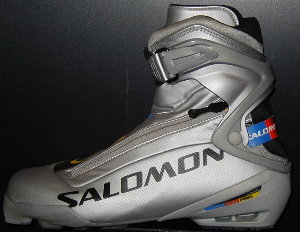
    Coming soon to a store near you! Salomon Carbon Pro skate boot (photo: Cory Smith)

    The articles are, collectively, a heck of a period piece, and are worth your time, particularly if you have been reading this site for years and would like to see how far the technology has come. You may also be interested in the gear reviews, of, for example, the new, all-gray Salomon Carbon Pro. “I think that they are a real improvement over the Pilot Racing Skate 9,” our reviewer wrote, in a comparison to the product better and more universally known as “bumblebee boots.”

    It was tough to choose just one article from an embarrassment of historical riches to reprint for today, but this piece, a race recap of the men’s 4 x 10-kilometer relay, feels appropriate. Thomas Alsgaard; Cristian Zorzi; Anders Aukland; John Bauer; Kris Freeman. This was a long time ago.

    (The writeup of the women’s relay, from four days later, may be found here; it ends, “The Americans finished a disappointing 13th,” and says little more than that about the American team composed of Wendy Wagner, Nina Kemppel, Barbara Jones, and Aelin Peterson.)

    This article was written by site co-founder Cory Smith, and was originally published on February 17, 2002. Photos and captions, both also by Smith, are reprinted as they originally appeared. A few bonus race photos are appended at the bottom, thanks to Smith’s impressive archives.
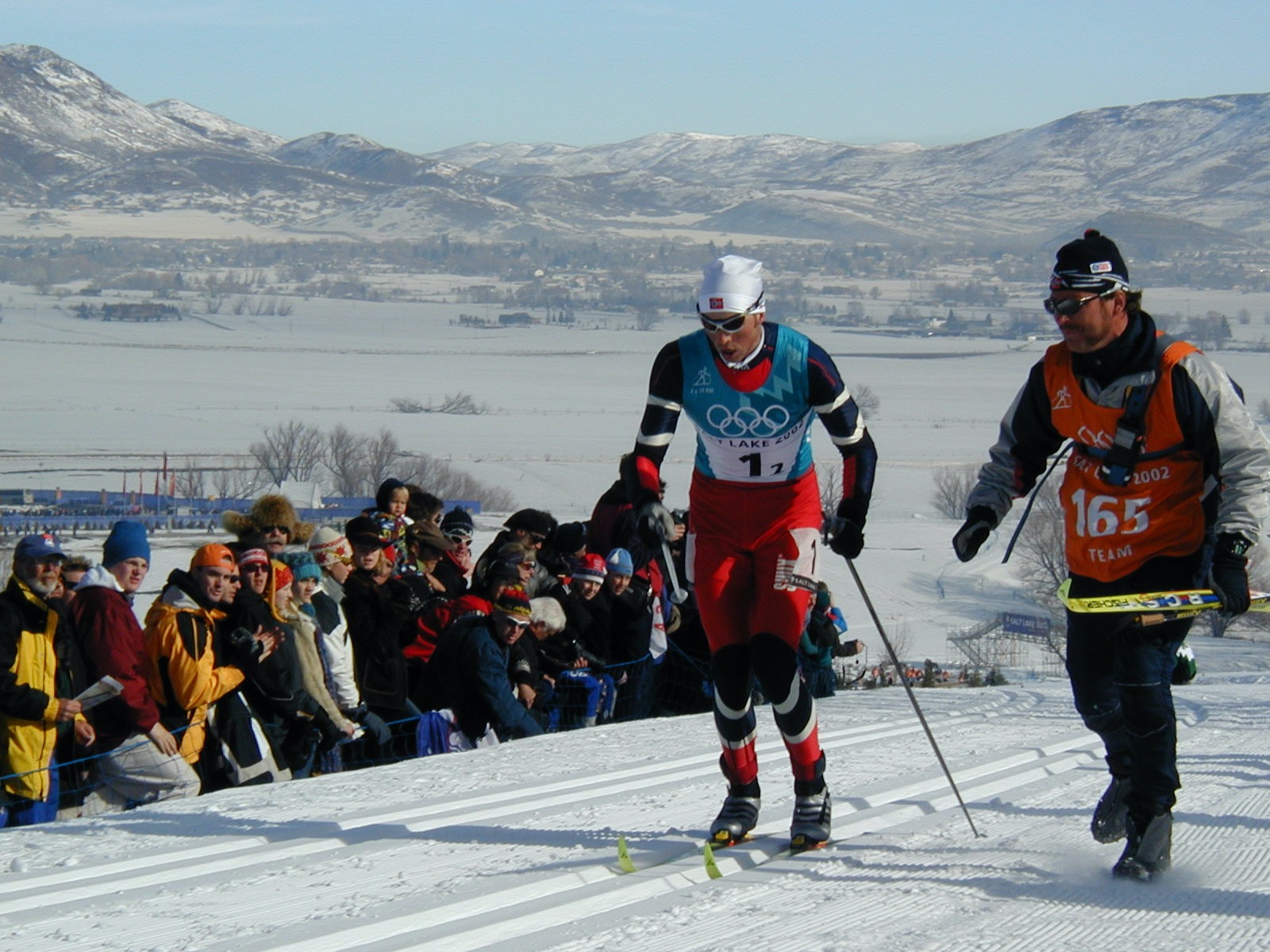
    A Norwegian athlete skis in the men’s relay at the 2002 Winter Olympics at Soldier Hollow. (photo: Cory Smith)

    Norway Beats Italy in Sprint to Finish (again), US Men’s Relay Team Posts Best Result Ever

    By Cory Smith

    By the length of one ski, Thomas Alsgaard brought order back to the cross country ski world. In today’s Men’s Cross Country 4 x 10K Relay race, the Norwegian team proved that even without an individual gold medalist in these games, they are still the best team in the world. Thomas Alsgaard outsprinted Cristian Zorzi in the final 100 meters to take home the gold for Norway. 
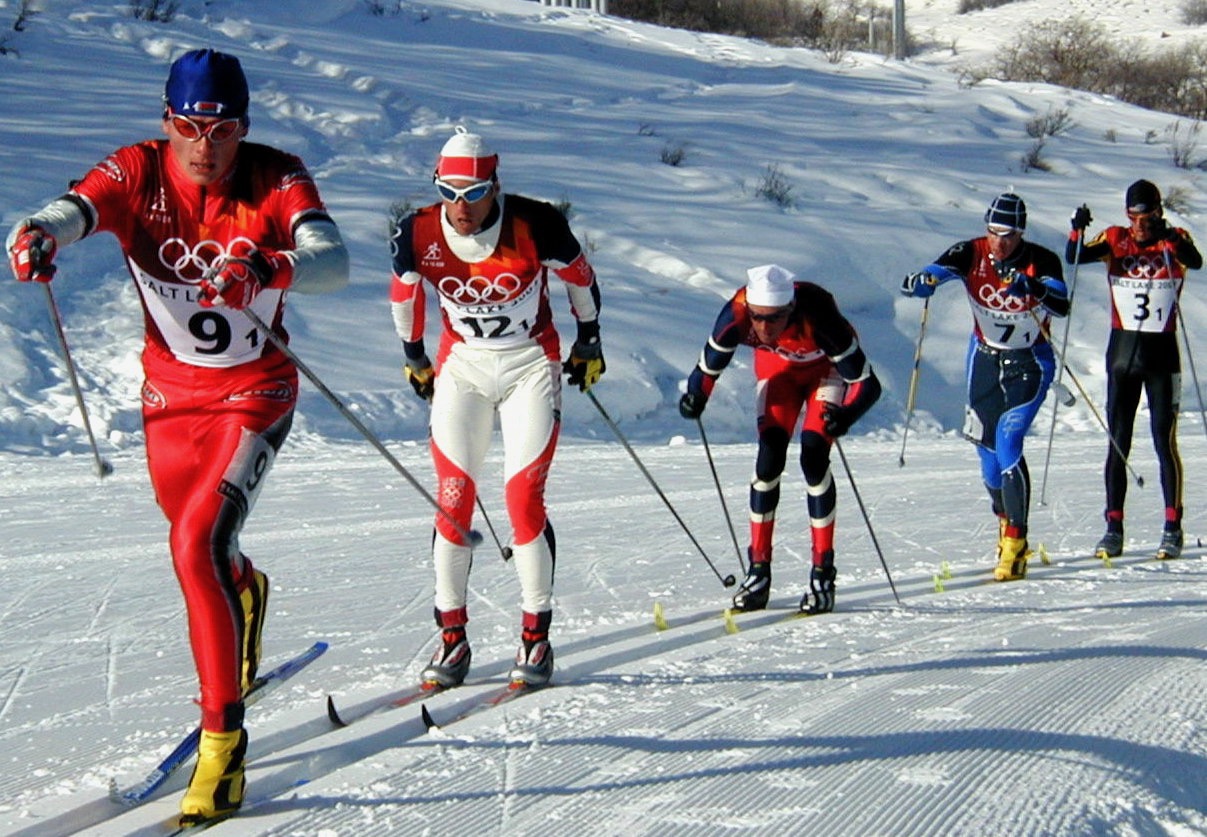
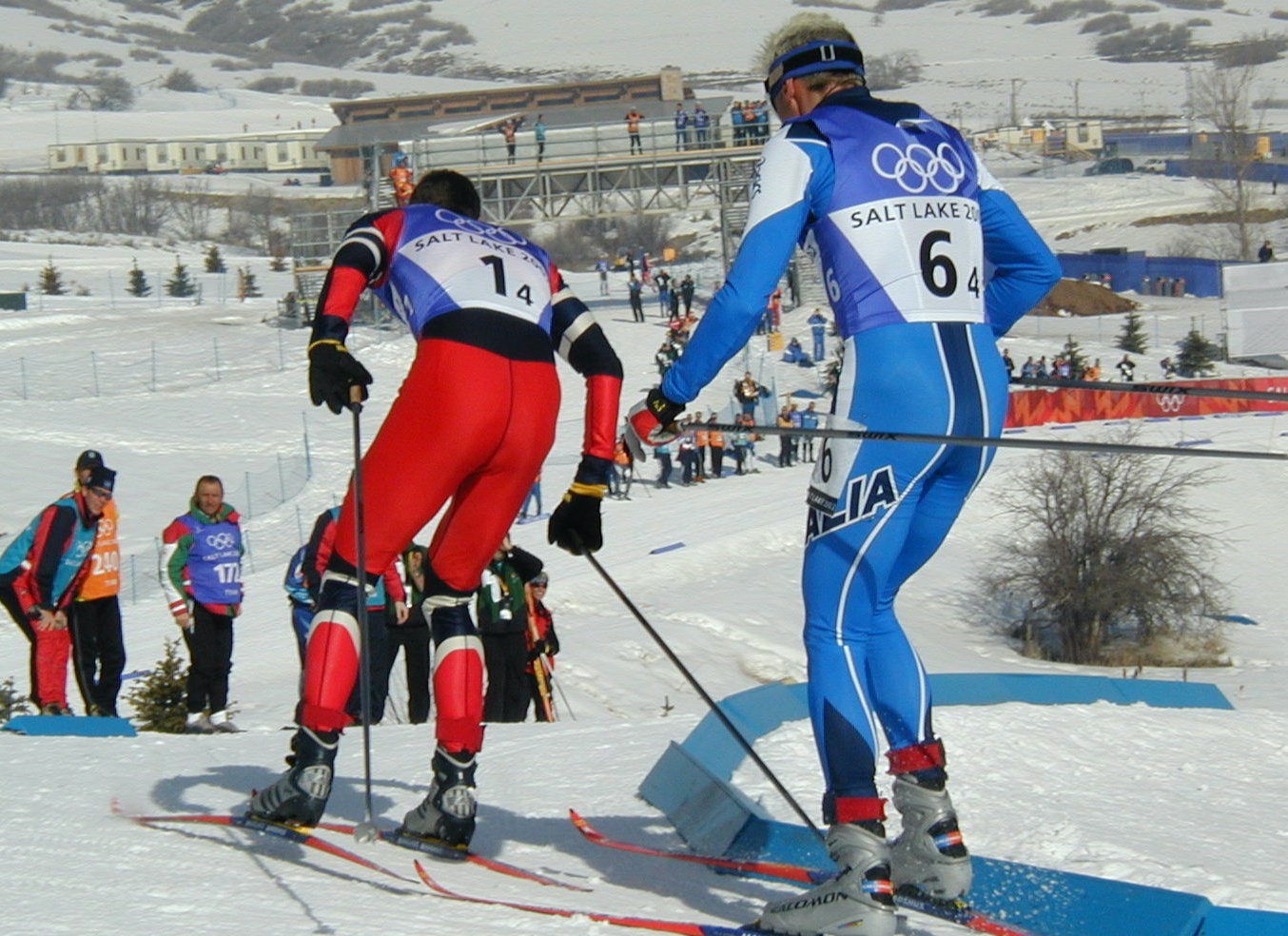
    John Bauer (USA, bib 12) and Anders Aukland (NOR, bib 9) follow Belarus’s Roman Virolainen in the men’s relay at the 2002 Winter Olympics at Soldier Hollow. (photo: Cory Smith)

    In a week that has seen more men’s gold medals for Estonia and Spain* than for Norway, and even a Canadian woman winning a medal, Sunday’s race was also extremely memorable, but with a more familiar outcome. The entire country of Norway was able to breathe a sigh of relief after their relay team put them back on top of the nordic world. 

    Meanwhile, the US men’s team, in the top five for most of the race, posted their top Olympic relay result by finishing a very impressive 5th. All four US skiers skied very fast and very smart to come within seconds of a medal for the first time ever.

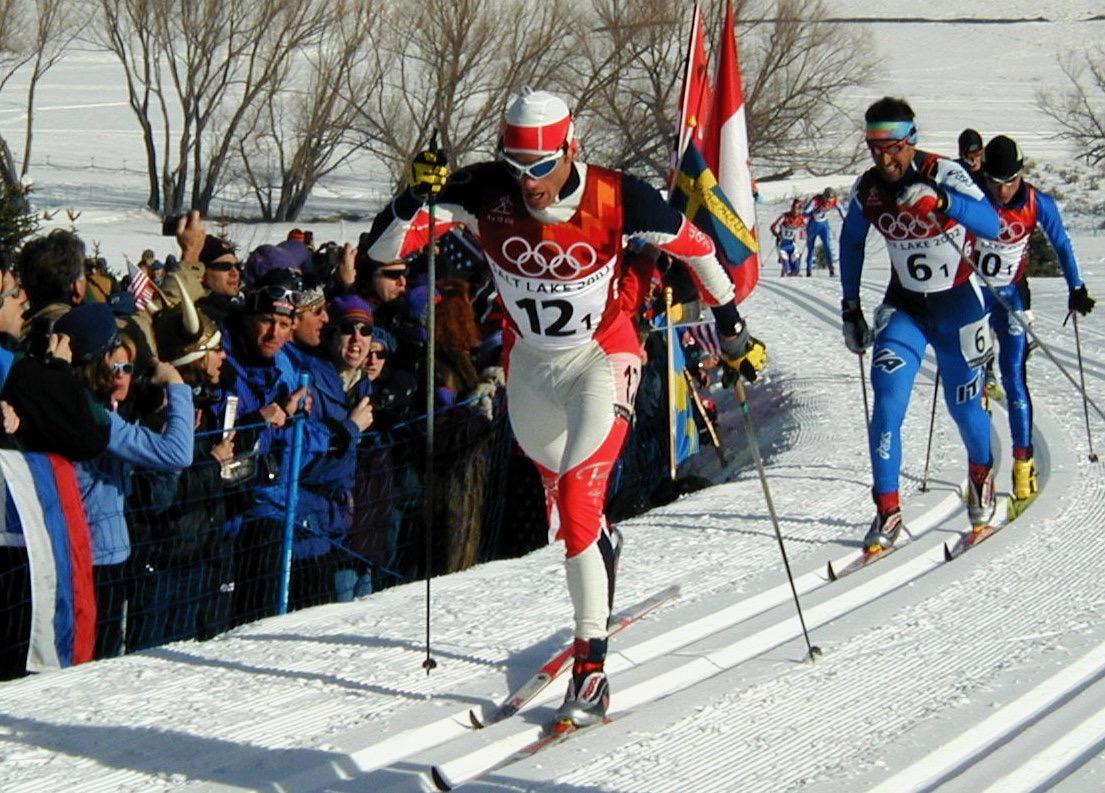
    Norway showed their dominance of the classic technique right from the start. After letting Belarus’s Roman Virolainen lead for much of the first lap, Norway’s Anders Aukland took control on his second 5K loop and opened a 10 second lead. Meanwhile, John Bauer, after a slow start that had him in last place out of the stadium, had moved up to the front of the pack and was actually leading the chase of Aukland. Bauer lost a few places gliding through the stadium, but he finished his excellent scramble leg in 5th place, right with Italy, Kazahkstan, and Germany, only 13 seconds off the lead.
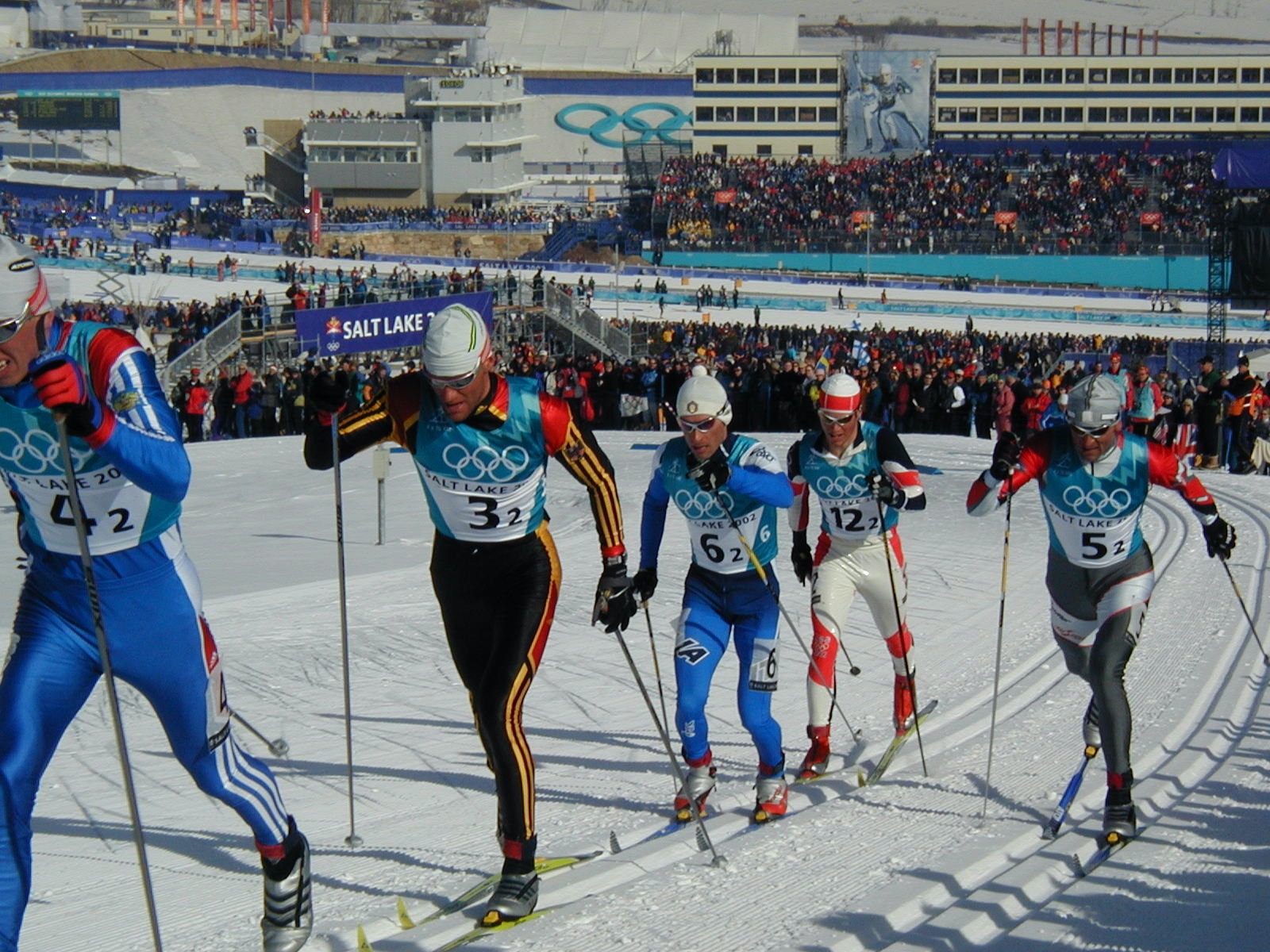
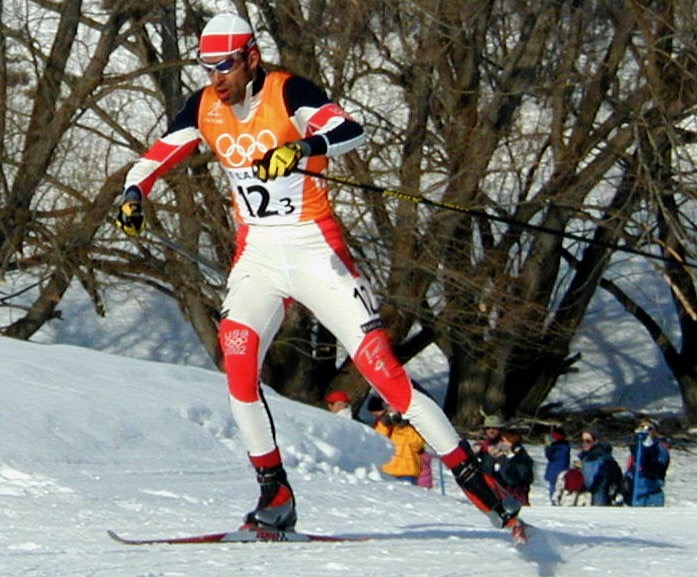
    Kris Freeman (bib 12) stays right with the lead pack. (photo: Cory Smith)

    On the second leg, Norway’s Frode Estil build the lead up to a maximum of 24 seconds while Kris Freeman (USA) jumped in behind Germany, Italy and Kazahkstan in the pursuing pack. As the leg went on, Estonia’s Andrus Veerpalu bridged up to the pursuing pack, as did Russia’s Mikhail Ivanov and Austria’s Mikhail Botvinov. This pack of six strong skiers started to cut into Estil’s lead, but as the leg came to an end, the pack began to break up. At the end of the second leg, Norway had an 11 second lead over Russia and Estonia. Kris Freeman skied an amazing strong race to stay in the thick of it, coming in right behind Italy’s Giorgio di Centa, in 5th place only 25 seconds off the lead. Halfway through the relay and the US men were only 14 seconds from a medal!
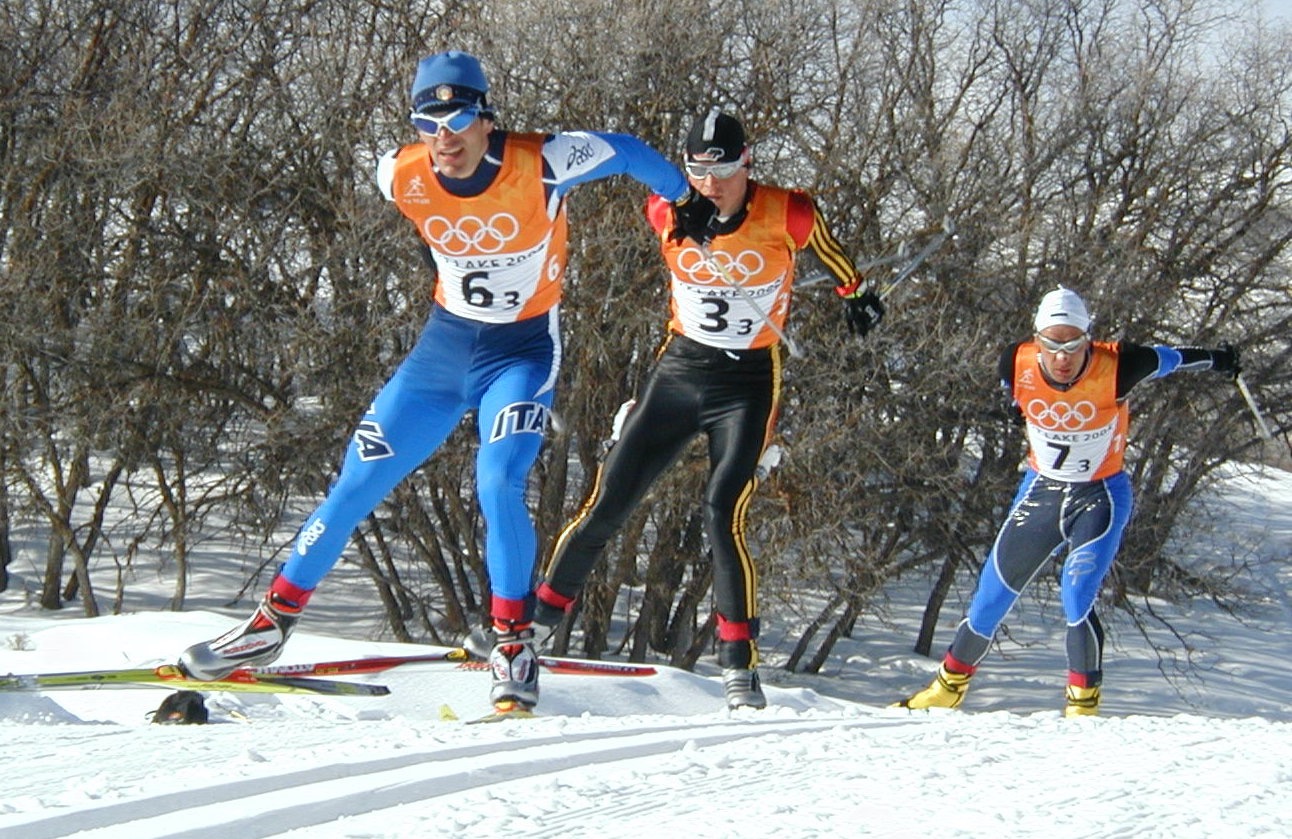
    Pietro Piller Cottrer (ITA) charges towards the lead with Tobias Angerer (GER) in tow. (photo: Cory Smith)

    The clear standout on the third leg was Italy’s Pietro Piller Cottrer. He started his leg in 4th place, then quickly passed the Russian and the Estonian and after about 5K, he was right with Norway’s Kristen Skjeldal fighting for the lead. The two of them skied together the rest of the leg, setting up yet another epic final duel between Italy and Norway. Justin Wadsworth looked to finally be over the head cold that had hindered him all week. He was smart enough to not try to stay with Piller Cottrer, but instead skied a very solid leg all on his own, until he was caught by Austria’s Gerhard Urain, whom he latched onto and followed until blowing by him near the end of the leg to finish in 5th place. In between the leaders and Wadsworth, Germany and Estonia came in together in 3rd and 4th.
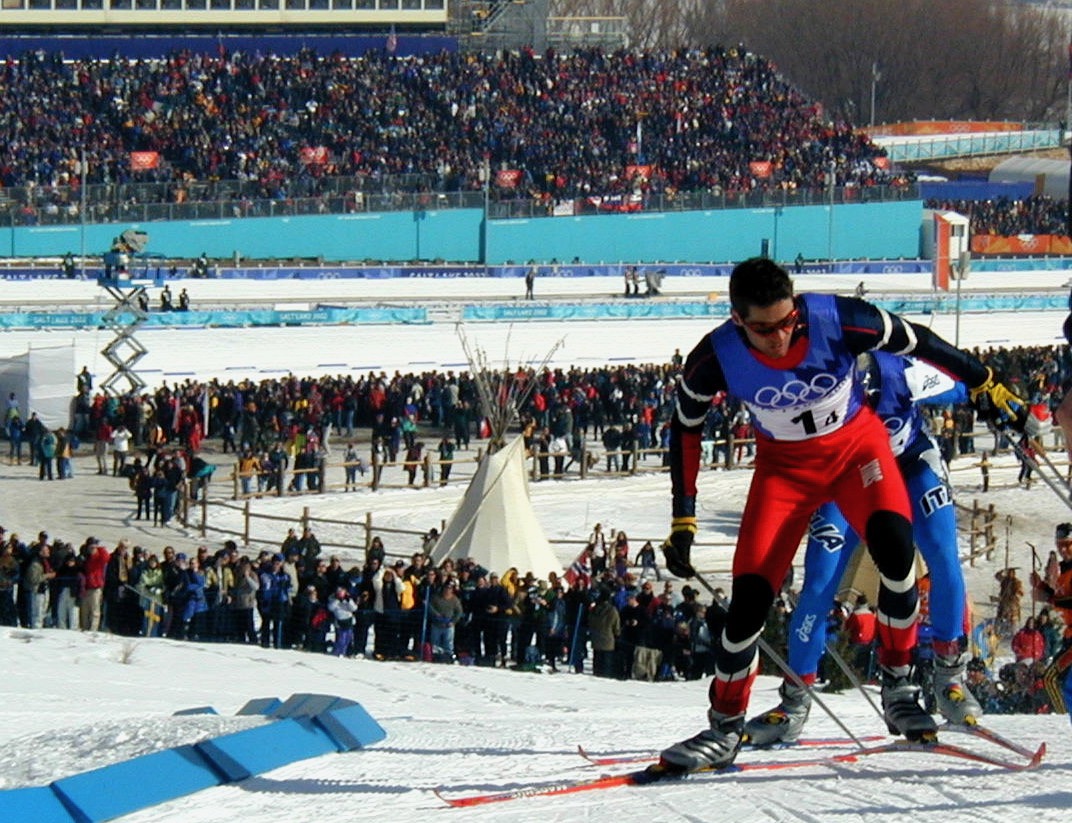
    Alsgaard leads Zorzi into the stadium to sprint for all the marbles. (photo: Cory Smith)

    On the final leg, it became obvious that Alsgaard’s strategy was to try and shake Italy’s Zorzi, one of the best sprinters in the world, early. Alsgaard led most of the leg, but Zorzi held tight. Meanwhile, Germany’s Rene Sommerfeldt had pulled away from Estonia to assure a bronze medal. Carl Swenson jumped in behind Russia’s Nikolaj Bolchakov and Austria’s Christian Hoffman and they quickly passed the Estonian team. With the top three significantly ahead, Swenson was skiing strong and relaxed, as is his trademark, and was clearly gearing up for the finish. Along the way, they dropped the Russian, setting up a duel between Hoffman, who outsprinted Alsgaard in the 1999 Relay to win the World Championship, and Swenson.

    Speaking of duels, Alsgaard and Zorzi were putting on a tactical clinic. Going up the last big climb at 9K, Alsgaard had the lead and tried on a couple of occasions to put on a kick and lose the Italian. But Zorzi held tight and made a pass just before the top of the hill. Just before the downhill, Zorzi dropped into a tuck and slowed way down, obviously trying to get Alsgaard to pass, so that he could draft. 

    Alsgaard wanted nothing to do with that plan and instead of passing, he pushed on the back of Zorzi’s ski with his pole to speed him up. Then Zorzi pulled over and nearly stopped. Alsgaard did the same. They were a kilometer from the finish and they were standing still arguing about who was going to lead! 

    Alsgaard eventually took the lead reluctantly. They went stride for stride up the short hill by the stadium and then dropped down to prepare for the sprint. On the gradual downhill, Zorzi freeskated hard to take the lead, and had about 5 meters on Alsgaard as they rounded the turn. Alsgaard then kicked it in and began gaining on Zorzi. With 50 meters to go, they were dead even, but it was clear that Alsgaard had greater speed. Alsgaard got a slight lead and held it. It was a very close finish, but there was no doubt that Norway had won. 
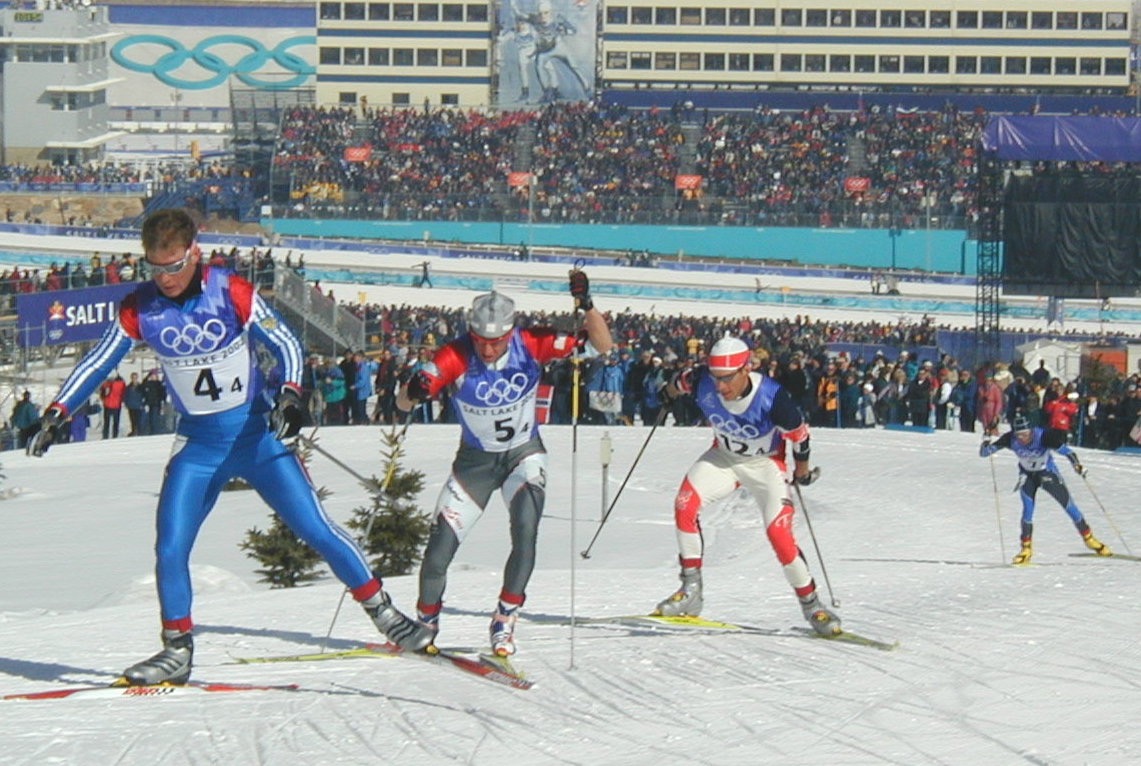
    Carl Swenson and Christian Hoffman pass the Russian team. (photo: Cory Smith)

    Germany’s Sommerfeldt finished all alone in a surprising 3rd, and was mobbed by his bronze-winning teammates as he crossed the line. The battle was now for 4th. Swenson was up against formidable competition in Hoffman, but if any American could outsprint him, it would be Swenson and that’s why he was in the anchor position. Hoffman had the lead around the corner and they went toe to toe down the line. 

    For a moment it looked like Swenson would catch him, but there just wasn’t enough distance left. Another 20 meters and he would have had it. But instead Austria took 4th and the US maintained its 5th place on all four legs to post its best relay result ever. 

    The US skiers skied very, very well, both physically and tactically. But none of them skied unbelievably well, they all simply skied strong like they have all week. What I am trying to say is that this was no fluke. They finished right where they belong. They have been one of the top five teams on these trails all week and today they certified that. What is even more amazing is that there were two other American skiers, Pat Weaver and Andrew Johnson, who could have filled in and skied just as well. The US now has at least six World Class skiers. Don’t look now, but the United States is a force to be reckoned with.
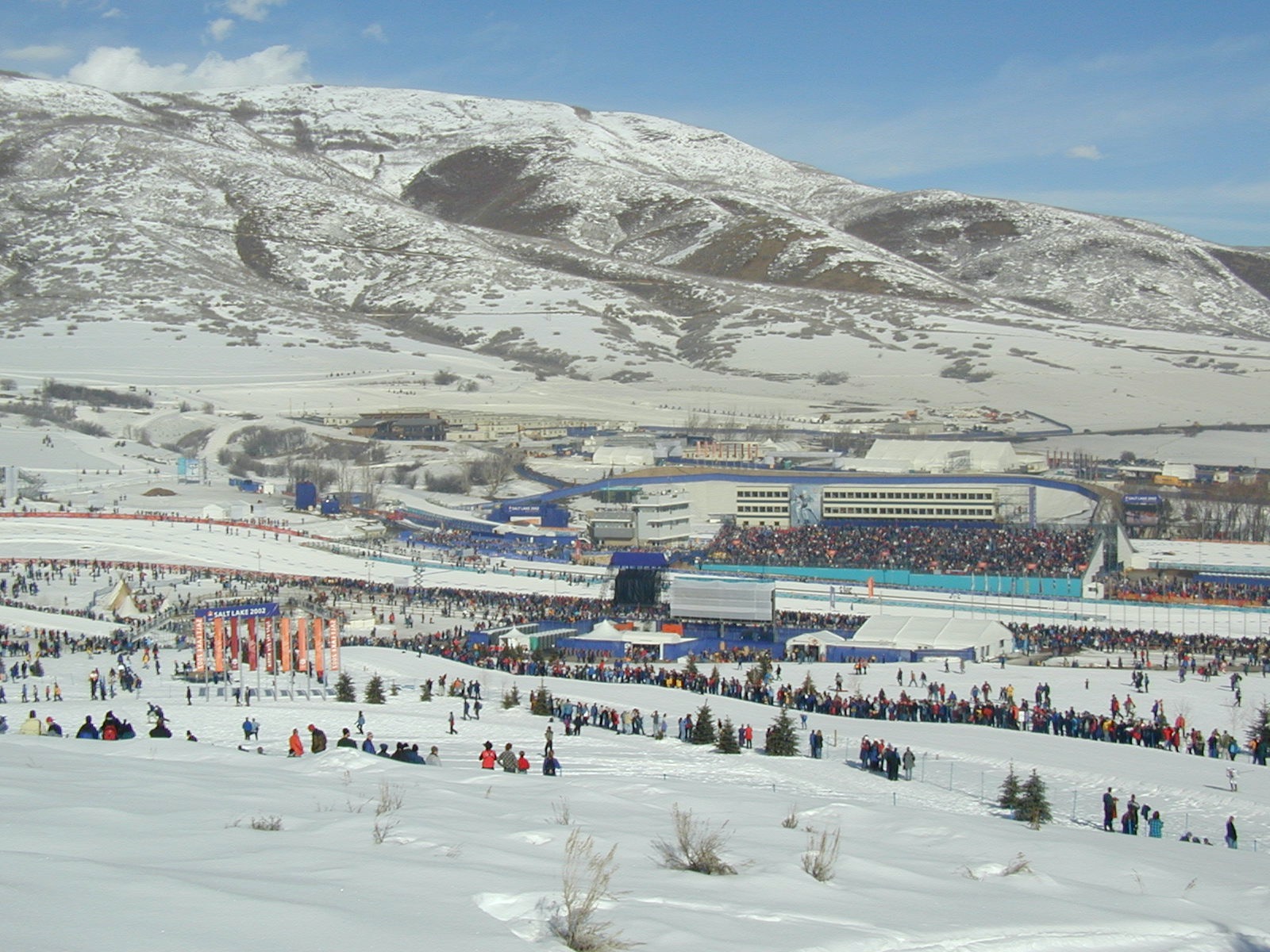
    20,000 people cheer wildly at Soldier Hollow. (photo: Cory Smith)

    Just as amazing as the race itself, was the crowd. Soldier Hollow was sold out for the first time ever, with 20,000 people watching a cross country ski race in this country for the first time ever. The crowd was loud and energetic. It was a sight that warmed the hearts of all Nordic die-hards on hand. Today, our little sport took a huge step forward in many ways.

    Results

    [* Modern-day footnote: This statement, while accurate at the time, was ultimately belied by history, as the three gold medals that Johann Mühlegg won for Spain at these Olympics (in the 30-kilometer skate, 50-kilometer classic, and 2 x 10-kilometer pursuit) were subsequently rescinded following his disqualification for a positive darbepoetin test.]

    Some additional photos from this race:
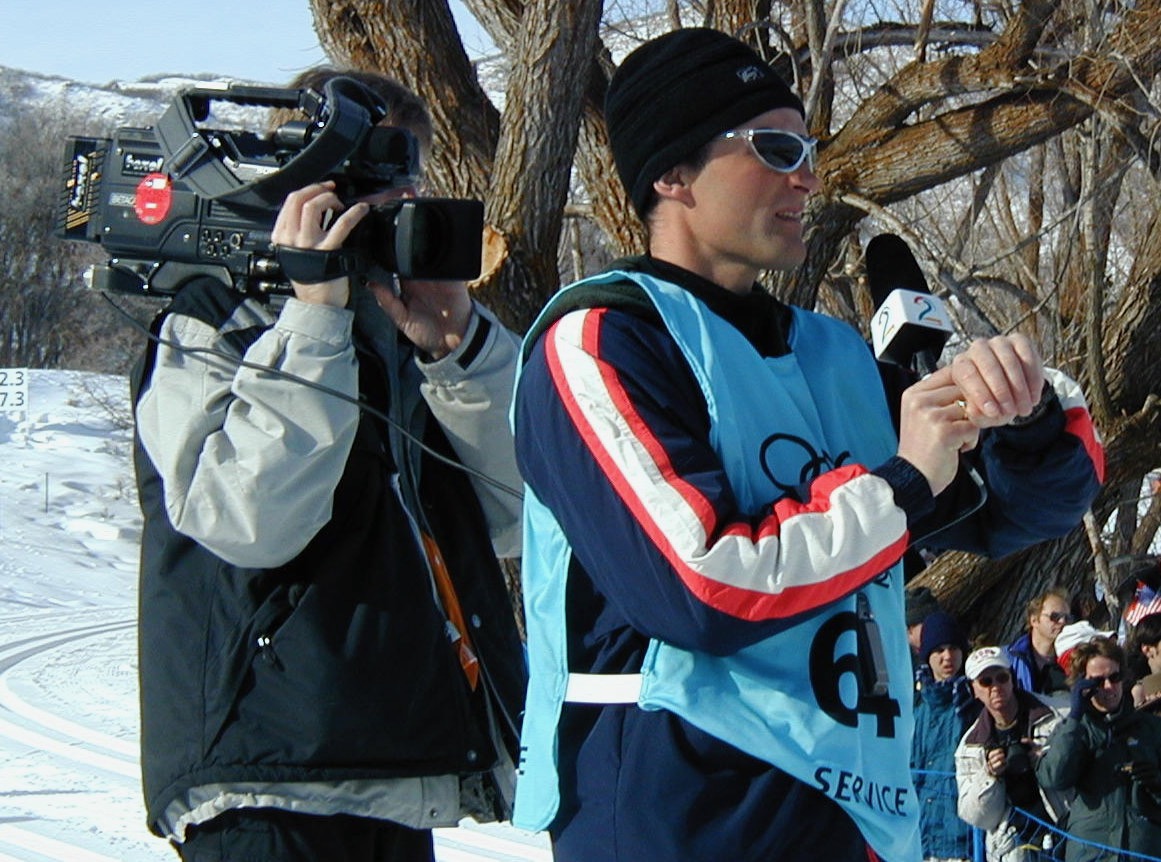
    Vegard Ulvang serves as a commentator for Norwegian television at the 2002 Winter Olympics at Soldier Hollow. (photo: Cory Smith)
    Thomas Alsgaard leads Cristian Zorzi in the men’s relay at the 2002 Winter Olympics at Soldier Hollow. (photo: Cory Smith)
    Justin Wadsworth skis leg three of the men’s relay for the U.S. at the 2002 Winter Olympics at Soldier Hollow. (photo: Cory Smith)
    John Bauer skis leg one of the men’s relay for the U.S. at the 2002 Winter Olympics at Soldier Hollow, slightly ahead of Fabio Maj of Italy (bib 6) and Andrei Golovko of Kazakhstan (bib 10). (photo: Cory Smith)
  • Luke Bodensteiner Talks New Potential and a Possible New Olympics in Utah

    Luke Bodensteiner Talks New Potential and a Possible New Olympics in Utah

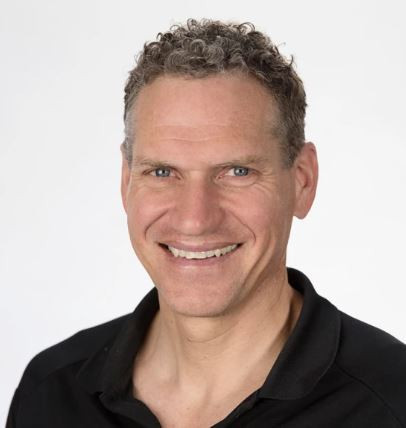
    In the thick of the elite winter sport scene for more than 25 years. That would in part define Luke Bodensteiner. He strung together an Olympic cross-country ski career and ended his over two-decade stint at U.S. Ski & Snowboard as their Chief of Sport. For roughly the past year, Bodensteiner has worn two hats at the Utah Olympic Legacy Foundation (UOLF): Chief of Sport Development and GM of Soldier Hollow (SoHo), the cross-country and biathlon venue from the 2002 Games. The SoHo part of his responsibilities involves managing the complex which includes ski trails, a biathlon range, waxing outbuildings, and an iconic but dated timing building.

    Chief of Sport Development involves broader management responsibilities.

    In Bodensteiner’s words, he “essentially guides all of the winter sports programs across the venues.” Considering this is a former winter Olympic site, the breadth of geography and sport-specific venue types are vast. There’s Utah Olympic Park with its sliding track and six ski jumps, Utah Olympic Oval with facilities for speed skating, and two arenas capable of housing hockey and figure skating, and the assets at Soldier Hollow.

    Salt Lake and the surrounding region, including Park City and the Heber Valley, are again in the Olympic news. The 2002 host city, Salt Lake, is the United States Olympic & Paralympic Committee’s (USOPC) winter Olympic bid city for either the 2030 or 2034 winter Games.

    The bidding and site awarding process was reformed in 2019. Now, the International Olympic Committee (IOC) is tasked with engaging potential hosts in a more transparent dialogue. Further, the IOC also removed its hard timeline of selecting a host city seven years in advance. This came amidst a series of potential host city dropouts. In 2014 Oslo pulled out when Norway’s government declined support for a 2022 Games. Calgary pulled a potential bid when the city’s electorate voted in a referendum that the 2024 Games were an undesirable expenditure. 

    The reforms allow places like Salt Lake greater flexibility as negotiations unfold, stakeholders determine new costs and benefits, and unexpected social-earthquakes manifest like COVID. The real issue is this: The IOC wants bidders who have community buy-in. 

    This past February it became official, the Salt Lake City-Utah Committee for the Games was formed.

    The prospects of an Olympics both excites Bodensteiner but also adds some complexity to the suite of his responsibilities. And although Salt Lake possesses the know-how and legacy venues, this is no slam dunk. 

    “Optimistic. But it is complicated,” Bodensteiner said when asked about Salt Lake’s prospects for a 2030 Game’s winning bid. “There is a lot up in the air right now. Tokyo is postponed and who knows what happens this year. I would say really optimistic because the IOC, on many levels, needs to present a sustainable Olympics and the budget for a Salt Lake 2030 Olympics is actually less money than was spent in 2002 because of the existing infrastructure. There are not currently that many candidates, but obviously Sapporo, [Japan] is in the mix. They have a nice bid and nice venues and they have this interesting Tokyo situation which could play in their favor or not. Barcelona, [Spain] has made some noise about making a bid but it is not probably real or realistic. Of course, Calgary bowed out in the last go-around which was fortunate for Salt Lake. So there are a lot of really positive factors for Salt Lake.”

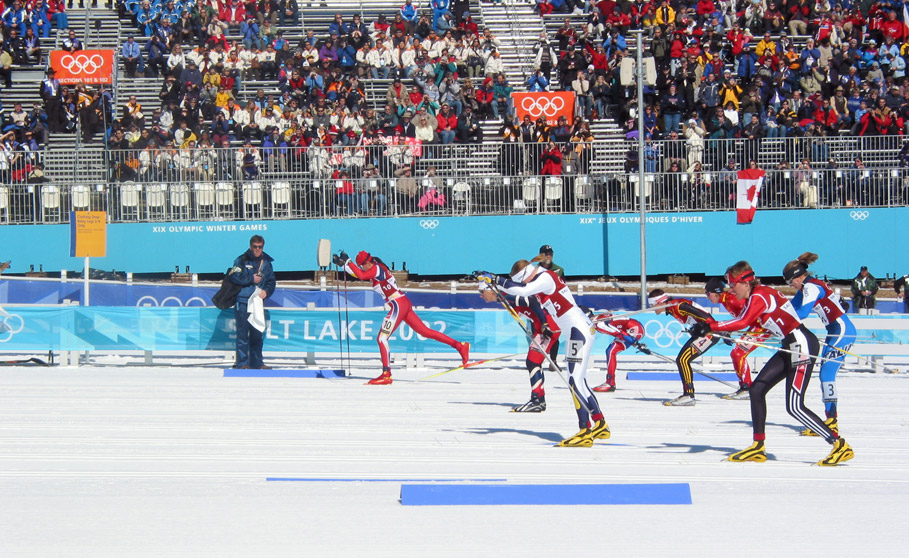
    The start of a women’s race at the 2002 Olympics in Soldier Hollow

    Bodensteiner also acknowledged that LA’s 2028 Summer Games could complicate a 2030 SLC bid. Domestically, there is only so much advertising budget to allocate. Back-to-back Games could be untenable from a marketing standpoint. In that event, Salt Lake could defer it’s bid to 2034.

    Either way, a ten year timeline to a potential Olympics adds a real degree of earnestness to Bodensteiner’s goals as he helps reform sport development at the Utah Olympic Legacy Foundation. From a venue standpoint, the community appears in support of nascent initiatives to fund venue modernization. Something Bodensteiner says is simply rejuvenating venues to a new Olympic standard, not a complete scrape and rebuild.

    I’m going to rewind here to a quote from Bodensteiner’s exit interview with FasterSkier from U.S. Ski & Snowboard back in July 2019. Here’s that exchange: 

    FasterSkier: You are Chief of Sport, but I am hearing you talk like someone who is less focused on medals. Is this something you have learned and absorbed at US Ski & Snowboard over twenty some odd years?

    LB: You are exactly right, you get pigeonholed after you have been known as somebody who is single mindedly chasing medals at the Olympics for twelve years. That becomes your brand or your persona. It is important to, it is better to not let that happen at the end of the day. 

    I think it has been an evolution. And I would say in our work at the U.S. Ski Team, while we have really, I would not say single-mindedly chased performance at the Olympics although that is something that my team thought about and worked on every single day for the twelve years I was there, I think we also built out programs and philosophies and plans on where we were going. 

    We were also recognizing that that is a real short term perspective and there are things that you might do in the short term that will yield those kinds of results that don’t create a sustainable foundation. And so I think we have always had some level of emphasis on club development or coaches education and important things like that.


    Even prior to COVID and the jolt and now sustained tremors to remove structural racism, Bodensteiner had been thinking more holistically about athletes and what success looks like. He understands his mandate involves building equity in sport not simply creating a pipeline that terminates at a single point with medal success.

    “We have asked, should we be hosting the Olympics in 10 years time, what is the story we want to be told about our community through the experience of our kids?, Bodensteiner said. “If the eyes of the world are looking at us what does success look like for us? Our metrics are really focused on broadening the number of kids who are involved in our programs, improving our demographic makeup so that the participation in our programs really reflects our communities from the racial diversity perspective, gender diversity, economic diversity, so that we are not just here for the kids that can afford what we think is affordable.”

    According to Bodensteiner, his first eight months in the job with UOLF were consumed with understanding the foundation’s programs and how they were similarly failing. In his words, “diagnosing where we are creating these kinks that give us effectively the same results that any other youth sports program in America gets and then rolling out the set of initiatives to start to correct those.”

    He cited stats that youth most often leave organized sport at 11 years old for girls and 12 for boys. Bodensteiner says retaining those youth remains a priority while also seeing that they find success off the field.

    Then life was disrupted in mid-March. Good intentions, retooled programming, and any semblance of normalcy evaporated in the short-term.  

    “We had to shift from looking forward to shifting to how do we get through this initial shock here and how do we bring kids back into sports? Bodensteiner said. 

    Harnessing Bodensteiner’s bearish sentiments about a successful Olympic bid, the change he envisions may have a 10-year arc. Yet the change has tangible incremental goals. Better retention. Youth participants reflecting the diverse population in the greater Salt Lake region. Kids who feel valued not simply for a sport result but for engaging in self-improvement.

    Along with a community steering group, Bodensteiner has absorbed and processed what these positive outcomes might resemble in a decade. UOLF, like many in sport, continue to grapple with the duality of participation and performance. The Olympics can be polarizing, especially in an era when the collateral damage of chasing medals is exposed. The human costs have been real. But in Bodensteiner’s eyes, sport can be more humane and foster a culture where participation and performance aren’t fossilized in their pre-2020 form.     

    “We have our eyes set on 2030 and so for us, it is a long term transformation plan,” said Bodensteiner. “We have put our heads together for about three months to think this through and one of the things that really came out was that participation and performance are often viewed as opposing factors. We really want to achieve both. We want to achieve both in a way that those two factors support each other rather than pull each other apart. The ultimate success for us is to provide a high amount of accessibility and have a positive impact on athletes’ lives and have some of those kids go on to have that ultimate sport success of being on an Olympic team in their backyard in ten years time.”

    With the sporting venue assets in place and a dynamic region with the legacy of Olympic hosting know-how, the UOLF might just pull it off. 


  • Cross Country Canada: The Reboot Part Two

    Cross Country Canada: The Reboot Part Two

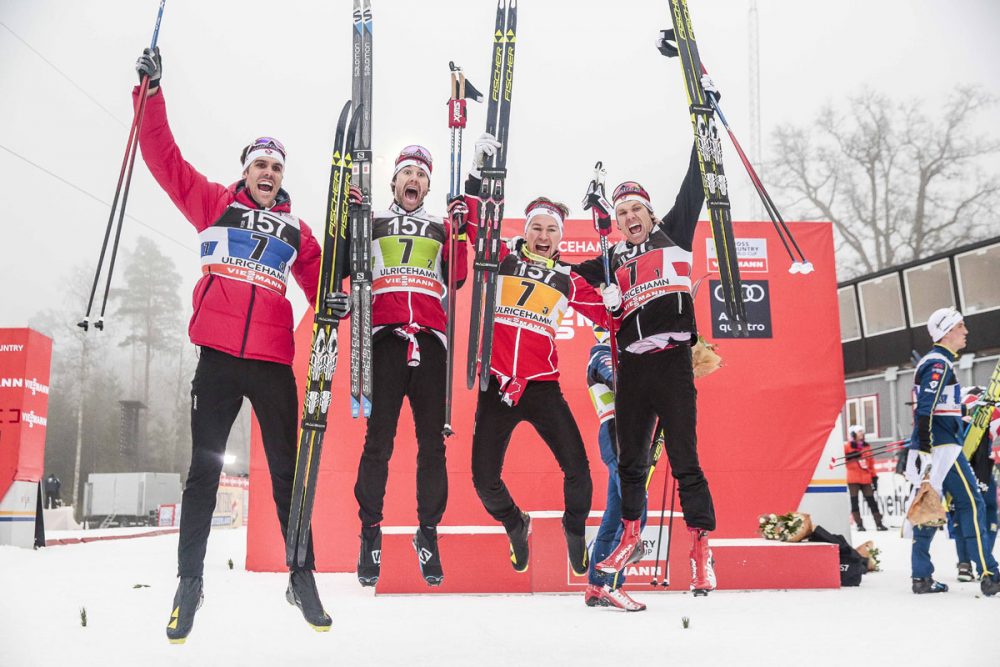
    Left to right: Canada’s Len Valjas, Alex Harvey, Knute Johnsgaard, and Devon Kershaw after their historic third place finish in the 2017 men’s 4 x 7.5-kilometer team relay in Ulricehamn, Sweden. (Photo: Fischer/Nordic Focus)

    This is the second part of FasterSkier’s report on the state of high performance cross-country skiing and athlete development in Canada. You can read part one here.

    Cross Country Canada (CCC), as the national governing body for cross-country skiing in Canada has the difficult task of steering a rather large ship. The idea in steering the ship is to maintain a path requiring little quick and nimble maneuvering. Survey the landscape, mine the data, set a course, and sail. Along the way, there’s the ability to make slight adjustments for efficiencies, accommodate unforeseen changes.

    To help make those macro and micro changes, Cross Country Canada hired Nic Lemyre as a high performance consultant in June, 2018. Lemyre, a Canadian living in Oslo, Norway has concrete ideas of what sustainable improvement and success resemble.

    Where do we want to be?

    Nic Lemyre (Photo: Norges Idrettshøgskole/Norwegian Sports Academy/)

    “We’re thinking our starting point is to build a really strong relay team, on both the women’s and the men’s side,” Lemyre told FasterSkier. “We want to have five athletes, so that we can rotate with the fifth athlete and we’re never in a situation where we can’t field a strong team because one athlete’s injured or sick.”

    According to Lemyre, the composite team must be derived of skiers who can hit specific individual benchmarks “[When] we have athletes that can start scoring points in every race they enter on the world cup, that’s a medium term goal,” Lemyre said. “From there, we start aiming for the top-15 for all athletes that are identified in that group.“

    Part of the reasoning behind the relay vision is that for a skier to get a permanent spot on the World Cup, the athlete not only has to reach a high level, but also help raise four other Canadians up to that level. Lemyre believes this should foster cooperation and team spirit.

    “It helps us meet goals of performance,” Lemyre added. “But also it helps us meet goals that are related to how to build a strong performance culture, where the athletes need to support each other, to learn from each other. They need to push each other. They need to push each other beyond limits they may have experienced before.”

    How do we get there?

    After PyeongChang, CCC appeared to have both the political will to start the painful process of another re-invention. However, that will came with a reduced budget with which CCC could support its future options.

    The simplified model of corporate restructuring begins with terminating certain roles and concludes with creating new roles filled by new individuals near the top of the organizational pyramid. Often, in a medium or large corporation, most people will be shuffled around and only a few near the top will lose their jobs. The final step is to find a quick win to help the newly reshaped organization gain morale and unify.

    buy amoxicillin online

    In a small organization like CCC, everyone is near the top. While the process works well for the survival of the organization, it can be hard on individuals. 

    The change at CCC began with long-time High Performance (HP) director Tom Holland’s planned retirement. Lemyre was hired as a consultant to oversee the restructuring of the HP group. Shortly before Lemyre’s hiring, CCC eliminated some positions.

    As Joel Quenneville’s recent firing demonstrates, proven ability and past success is not enough to provide job security during a reboot. (Quenneville was the NHL’s Chicago, Blackhawk’s head coach since 2008. During his tenure Quenneville lead the team to three Stanley Cups.)

    On November 1st, CCC hired Erik Bråten as a new national team coach and modified Louis Bouchard’s title. Bouchard remains head of the National Training Centre in Mont Ste-Anne, Québec, with the added title and responsibilities of World Cup Head Coach.

    Bråten, a recent Norwegian School of Sports Science graduate with a specialization in cross-country skiing, won the 2018 coach of the year award from the Norwegian ski federation. This hiring didn’t happen as quickly as some had hoped, but is considered the first win for CCC’s new structure.

    “Erik has a strong sports science background applied to cross-country skiing,” Lemyre said on the phone. “His profile is unique in our environment. The fact that he’s young is really positive for us, because he’s open to this new experience. He comes with a solid base, and his excitement and his motivation, I think, will be great assets in applying that knowledge in the right culture in Canada. At an individual level, Erik is unique in working one on one with athletes. I think our athletes are going to really appreciate that.”

    Along with bringing in new personel, Lemyre aims to improve sharing of training information in Canada. In Norway’s organizational structure, athletes and coaches are able to log hours and training plans on an interface organized by the Norwegian National Ski Federation. It’s a model and template Lemyre is intimate with.

    “The fact is that we have a large country, and we can’t be with athletes every day of the year following them on site,” Lemyre said. “Now the technology is there to pool [training data] in a way that our coaching staff and the local coaches can communicate really well, But also as we’re building up our science team, we also have interaction with our different people involved in helping the athletes develop.”

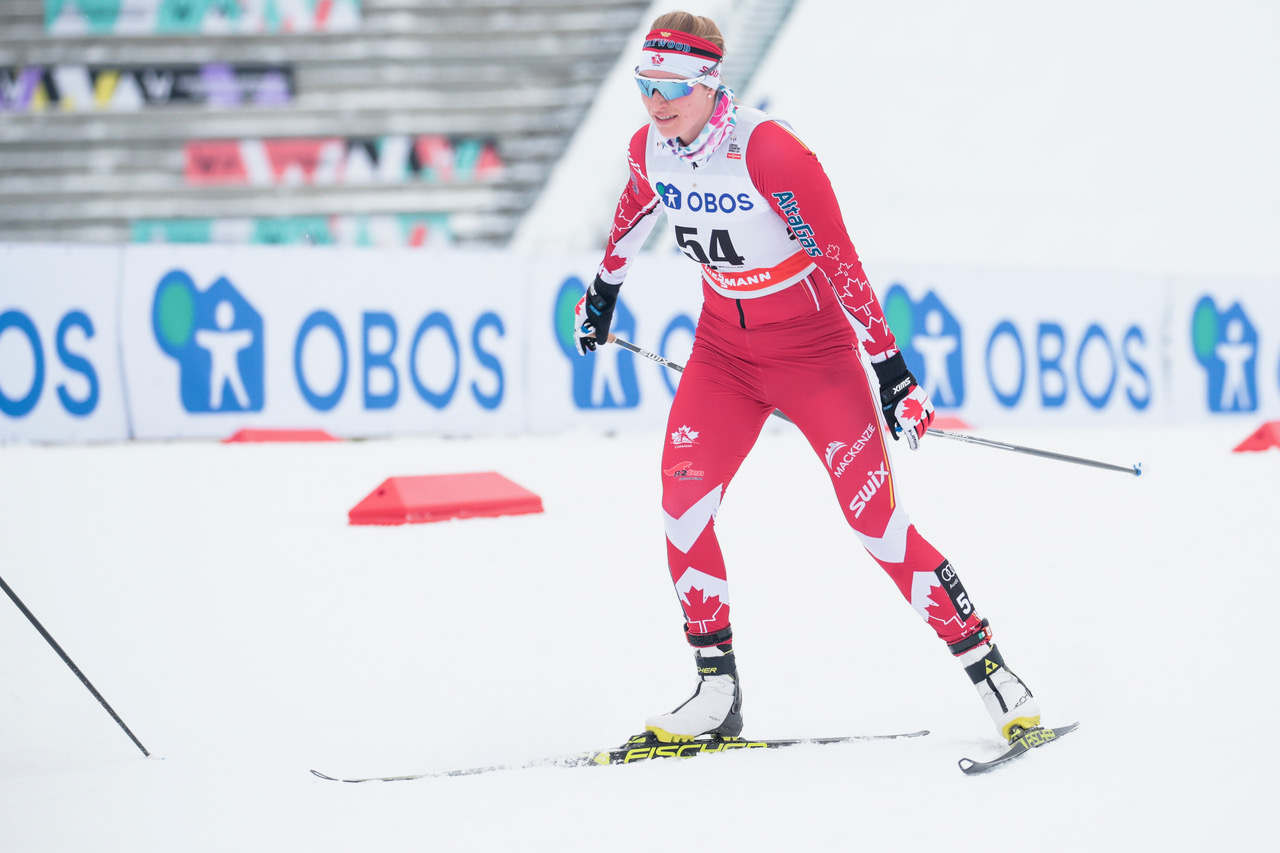
    Dahria Beatty racing the 2018 Holmenkollen 30 k freestyle mass start in Oslo, Norway. (Photo: Fischer/NordicFocus)

    Another planned shift is to interchange athletes between Europe and Canada more often. For example, Dahria Beatty will start the season in Canada — a change encouraged by her coach Chris Jeffries and supported by Lemyre.

    “This summer my coach Chris and I came up with a plan that allowed me to stay in Canada to start the season to build into the race season and then head over the Europe and race on the World Cup circuit leading up to World Championships in Seefeld,” Beatty said. “With this being the first year of the new quadrennial, it is the perfect time to fine tune some of those race details domestically before leaving for Europe mid-December. I am looking forward to racing part of the Tour de Ski then period 3 and hopefully finding my peak for World Championships and World Cup finals in Quebec.”

    Lemyre’s concept is to allow athletes like Beatty to build into the early part of the season domestically and arrive in Europe at a higher level of race fitness.

    “The way we scheduled the trips this year, giving some athletes the chance to prepare very well before they race on the World Cup,” Lemyre added. “I think some of them will be stronger when they show up on the World Cup, and also they’ll be able to sustain that level of performance over the time period they are on the World Cup. We will try to be a little more selective and well prepared when we show up, and then post really good results when the athletes are racing the World Cup.”

    Jeffries stated that the stress of living abroad, a dynamic known all to well by North American World Cup skiers, can be counterproductive to a developing athlete.

    “The last few years, our top athletes spent the majority of their time in Europe,” Jeffries said. “I think it stalled our development a little bit, because we’re always living out of a suitcase, and we’re always having to ski races where we’re trying to perform.”

    Dave Wood spent 18 years as a national team coach. His time leading the team included the post-Nagano rebuild and managing athletes at the Olympics in Vancouver. His vision includes giving skiers more time to develop and less emphasis on being fast all season.  

    “Sara [Renner] had far less World Cup starts before she was top-15 at the Olympics than the people of today,” Wood said. “I think that this big argument about experience is valuable when you are looking for seconds. When you are looking for minutes, [World Cup experience] makes no difference.”

    Will it Work?

    The U.S. has been able to develop a strong women’s team built off Kikkan Randall’s determination to drag U.S. skiing to the top. Randall took inspiration and knowledge from Canada’s post-1998 rebuild where Scott, Renner, Milaine Thériault, Jamie Fortier and Amanda Fortier decided it was time to lead the charge.

    American Kikkan Randall tucking during the women’s 10 k classic mass start at 2018 World Cup Finals in Falun, Sweden. (Photo: Fischer/NordicFocus)

    In both cases, the athletes didn’t succeed alone. The “fantastic five” got the support of Holland, Wood, and many others. Randall also collected a large supporting cast, well documented by Peggy Shinn’s book ‘World Class’. 

    Laura McCabe, now a Methow Valley coach and two-time Olympian, spent most of her free time in Nagano with the Canadian women’s team because it felt like a group that had a vision and a willingness to support one another to collective success.

    “It just shoots you up the ladder when you come back and you feel like you have a very safe place, you’re working on this goal together, you’re all in it together, and you’re there for each other all the time,” McCabe told FasterSkier. “I felt like the Canadian women were doing that. And now I feel like Matt Whitcomb has led that charge for the American women.”

    While crediting Randall for starting the process, McCabe feels that the team’s work to be a team is the critical factor.

    “They have goals, team goals and they have personal goals,” McCabe said. “They are always there for each other. One of their biggest goals is to basically keep their relationships positive and keep everybody moving forward. I think that is one of the number one reasons that team is doing well.”

    In a conversation last May with FasterSkier, Yukon coaching icon Alain Masson spoke of the complexities of achieving success on the international stage. Simply possessing physical gifts, the aerobic capacity, the predisposition to tolerate and absorb high training loads, is no guarantee of success.

    There’s the behind the scenes unglamourous work of nurturing athletes, remaining true to organizational core values, and feeding the system with money, intellect, and vision.

    “Definitely, there’s a minimum set of physical characteristics that you need to perform at that level,” Masson explained to FasterSkier. “But you also need many characteristics, personality characteristics, that are vital. What Alex showed, and Sara Renner, and Chandra [Crawford] and Beckie [Scott]. I think athletes that combine both the physical and the mental characteristic at a time when the program works together, and everything lines up with the funding, good leadership, and everybody working together. That’s the difficulty, this is the issue, trying to get all of that together. As the women in the U.S. have demonstrated, when you have all of that lining up, it’s amazing what you can do.” 


  • Cross Country Canada: The Reboot Part 1

    Cross Country Canada: The Reboot Part 1

    Canada’s Alex Harvey celebrating on the podium after placing second in the men’s 15 k freestyle mass start in Seefeld, Austria, for his best result of the 2018 World Cup season. (Photo: Salomon/NordicFocus)

    Cross Country Canada (CCC) has begun a reboot process as the new Olympic cycle starts. Corporations call this a reset, a rebranding, a new direction, restructuring, and various other names that try to disguise the challenges and issues that come with enacting real change.

    The reboot process traditionally starts with an acknowledgement that the current level of success, and that of the foreseeable future, doesn’t align with the goals or the potential of the organization.

    Canada left PyeongChang with no medals at three consecutive Olympics, only one skier in the World Cup red group, and a perception that there was no obvious successor to Alex Harvey.

    There are many people who, with the benefit of hindsight, believe that CCC allowed itself to be trapped by a combination of success and the Own The Podium (OTP) funding model. 

    The process of assigning blame for the past, called “blamestorming”in the corporate world, is one of the most effective ways to waste time and destroy morale without doing anything to improve the future. The “best practices” approach to a reboot starts with four apparently simple questions: How did we get here? Where are we now? Where do we want to be in five years? How can we get there?

    While CCC does many things as a national sport body, this article will focus on high performance and the development system.

    How did we get here?

    After a disastrous 1998 Olympics in Nagano, CCC shrank to a full-time staff of five and endured a forced re-invention. Four years later, in 2002 at Salt Lake, Beckie Scott won all three medals in the skiathlon after the initial silver and gold medalists were caught doping. Sara Renner missed the B final in the sprint for 9th place.

    Canadian Chandra Crawford in the 2011 team sprint in Dusseldorf, Germany. (Photo: Fischer/NordicFocus)

    In 2006 in Torino, Chandra Crawford earned a surprise gold in the sprint while Scott finished fourth. Scott had earlier teamed up with Renner for a team sprint silver medal.

    buy vancomycin

    In 2010, there were no Canadian cross-country medals. However, there were signs of promise. Renner skied to her fourth Olympic top-10 finish. All four Canadians competing in the men’s skiathlon finished in the top-15. Devon Kershaw lost out in final kilometer of the 50 k to finish fifth, 1.6 seconds away from gold.

    That post-Vancouver glow was possibly the point where CCC temporarily slid off the rails.

    A number of Canadian sports fell victim to OTP incentives. A sport qualifies for OTP funding by having good prospects for a medal in the next Olympics. The money comes with strings attached, to ensure that resources are spent on improving the probability that specific individuals will podium. For smaller sports where the OTP money is a significant proportion of the sport’s annual budget, it is hard to make choices that put that money at risk. Choices like balancing the emerging athletes in the pipeline, while simultaneously supporting those athletes already at the top-end of the sport. 

    As a result, many sports have lost their OTP eligibility by losing the focus on development and the vision that qualified the sport for OTP in the first place. Some people put cross-country skiing in the list of sports that fell into this trap.

    After 2010, the future looked bright. Harvey and Kershaw were World Champions in the 2011 team sprint. Kershaw was second overall in the 2011/2012 World cup. (A feat only equaled in North America by Scott and Jessie Diggins).

    Harvey arrived at Sochi in 2014 as a medal favorite. He was fresh off a World Cup podium in Toblach the weekend before the 2014 Games began. Sochi ended poorly when Canada, along with Norway, couldn’t solve the difficult waxing conditions.

    In 2017, the men’s World Cup relay podium in Ulricehamn, Sweden sustained the hope — that result earned another year of OTP funding for five men. (Harvey remained a the top, as he won the men’s 50 k skate at the Lahti, Finland World Championships.) 

    The results in PyeongChang were similar to 2002 numerically: Harvey was close to a medal in multiple races and Lenny Valjas collected 7th in the classic sprint. A medal would have changed the mood, but not overall situation. 

    Where are we now?

    Post-PyeongChang, CCC believes Canada is not achieving the international results a country with plentiful snow and 37 million people is capable of.

    The development system in Canada consists of the National Team, the official training centers (Centre National d’Entrainment Pierre Harvey (CNEPH), Thunder Bay National Team Development Centre (TBay), and the Alberta World Cup Academy (AWCA)), and the clubs. The ten provinces and three territories have teams, but don’t have a formal place in the development system as each of the thirteen regions approaches development support differently. In the last few years, the number of clubs actively recruiting and developing athletes while supporting a high performance team has increased. For our purposes, as no official name has been affixed to these clubs, the term ‘elite club’ will be used here.

    In the past, all national team members were required to belong to a training center while developing athletes were encouraged to join.

    “I can speak for many of the athletes, they thought that if they didn’t go to a training centre, then they might as well quit skiing,” Telemark’s coach Adam Elliot said. “It was that broad of a choice, they felt they had to choose between skiing and school immediately.”

    The landscape is more diverse now, with more options. The examples that follow skew to Western Canada, largely because the coaches quoted brought teams to Sovereign Lake snow camps in May and November and were available for in-person interviews. Eastern Canada remains equally diverse in terms of its club offerings.

    A common theme among the coaches and athletes is that each athlete’s needs are different, and he or she needs to find an environment that fills those needs. FasterSkier asked AWCA’s head coach Chris Jeffries how an athlete should choose his or her path to success.

    “It’s such an individual, case by case thing,” he said. “I don’t have an answer.”

    In 2017, a shift to allow more development paths resulted in new senior National Team member Gareth Williams staying at his home club, Telemark, in Kelowna, BC. Elliot described how it came about.

    “Tom Holland approached us, for Gareth, and said we like what you’re doing in the Okanagan, and we want to keep Gareth there. We’re going to support you and your program to be able to support Gareth.”

    Also in 2017, Julien Locke returned to his home club Black Jack while Russell Kennedy shifted to the new Team R.A.D., part of the Canmore Nordic Club.

    To further illustrate the spectrum of options and pathways, FasterSkier contacted three Canadian athletes, each with a history of NorAm podiums and some international success, to discuss their ski-training choices. Dahria Beatty started at AWCA and has remained there, Evan Palmer-Charette started at TBay then recently moved to Team R.A.D., and Andy Shields has gone rogue.

    Dahria Beatty en route to 20th overall in the Seefeld World Cup freestyle sprint for her season-best result in 2017/2018. (Photo: Fischer/NordicFocus)

    “For me, I’ve been working with Chris [Jeffries] for six years,” Beatty told FasterSkier in November. “It works really well for me, and I have a good group of training partners where I am, that can push me everyday in training.”

    AWCA is also the home training group for National Team skier Emily Nishikawa and two junior national team skiers. AWCA also benefits from its close proximity to a number of other training groups.

    “For me, Canmore’s a location where I want to be training, where I want to be based out of,” Beatty said. “All the pieces fit well together for [me], it’s somewhere I think I can keep improving.”

    Palmer-Charrette made a summer-time decision to change things up by finding a fresh environment in Team R.A.D.

    “I think the best part of being on a training centre is the entire program is based around a small group of athletes of similar age which makes for a great training and racing environment,” Palmer-Charrette wrote. “I feel training centres, as they are, are best-suited for junior/u23 athletes and especially great for athletes who are a bit late to the game like I was at the end of high school and will really benefit from learning from other athletes on the day to day training life.”

    Shields is no longer affiliated with an official team. He funds his skiing by painting houses in the summer and representing ski wax companies in the winter. Although he refers to ski racing as a hobby, he did end the last season as COC leader and will race period 1 of the World Cup.

    “I don’t think I could have done this straight out of junior,” Shields wrote. “My time on Tbay is still having a huge positive effect on my ski career. Being on a team through my early years as a senior made it much easier to get a decent training base and set a couple good habits in place which are paying dividends.”

    Shields did reflect and offer an alternative to how he might have changed his path to elite level skiing.

    “If I could go back in time I would have gone the NCAA route straight out of junior,” Shields added. “College skiing in the States is a much better deal than a training center for people in their early twenties. You can go down to the States, get a degree, not pay a dime, and come out the other side with plenty of time to have a full-time ski racing career. I would have joined a training centre upon finishing with NCAA.”

    The Canadian university system differs from the U.S. model, offering little money for sports. Heading south to the U.S. as a student-athlete remains an option for some Canadian skiers. Most athletes remain in the Canadian system to develop. With that in mind, FasterSkier asked why some athletes had chosen some of the Western based training centres.

    Jeffries, who leads the AWCA, also noted how his program has evolved. There appears to be room at the AWCA for those with concurrent goals. The AWCA has partnered with the University of Calgary to allow AWCA athletes to work towards degrees.

    “We’re always evolving our programming, and what it entails, and how we package it,” Jeffries said. “That’s why we have this new university program this year, because you just look at the popular decision making of graduated high school athletes.” 

    Elliott, based in the Okanagan, said his program offers athletes a well rounded experience too. 

    “You’ve got the trifecta,” Elliot said. “You’ve got access to education opportunities for post-secondary. We’ve got the university, UBC Okanagan, and the college. Most of the people who’ve moved here have gone to school. Secondly, it’s the Okanagan. Which is probably the best place to ski in North America, with skiing up and down the valley –with Nickel Plate, Telemark, [Kelowna] Nordic, Sovereign, and Larch Hills. The third is that you’re moving into a community of skiers: family, volunteers, everybody trying to make a go of keeping people in sport.”

    Clearly the times have changed from a programming perspective and the past’s financial windfall for Canadian cross-country skiing.

    “Probably the quad between 2010 and 2014, CCC had more money almost than it knew what to do with, ” Dave Wood, former National Team head coach, told FasterSkier in May as he finished up a long ski day. “Now, I think the budget’s still three and a half million. While it’s maybe low compared to what it has been, it’s a hell of a lot higher than it was in ‘99, by about four times.” 

    Former CCC High Performance Director Tom Holland spoke of those larger commitment from clubs during the Frozen Thunder races in October. 

    “There’s a lot more resources,” Holland said, referencing the increased numbers of coaches attending Frozen Thunder with their athletes. “One of the reasons clubs are more important now is that there are paid coaches at the clubs. That’s why training centres started in the 90’s, because you’ve got to have a coach, full-time.”

    Thee deep question remains: what next for Cross Country Canada as it ponders a post-Alex Harvey scene? Better and more diverse options for Canadian skiers, like those modernizing their offerings to connect with the student-athlete, is a step forward. But fans of the sport, and of course Cross Country Canada, have short-term and long-term goals. No one wants to see another Olympic quadrennial transpire without the glimmer of medal potential at the international championship level. 

    “I think when Alex Harvey retires, mostly likely after next year with Lenny Valjas, it will be the end of an era having athletes being able to finish on the podium at World Cups, World Championships, said Alain Masson, Whitehorse head coach. “So definitely, the program is going to go into a real rebuilding phase with lots of young athletes, but no guarantee of success in the near future.” 

    This is part one of a two-part story. 


  • USBA SoHo Trials Open with Men’s and Women’s Sprint; Dunklee and Doherty Claim Senior Wins

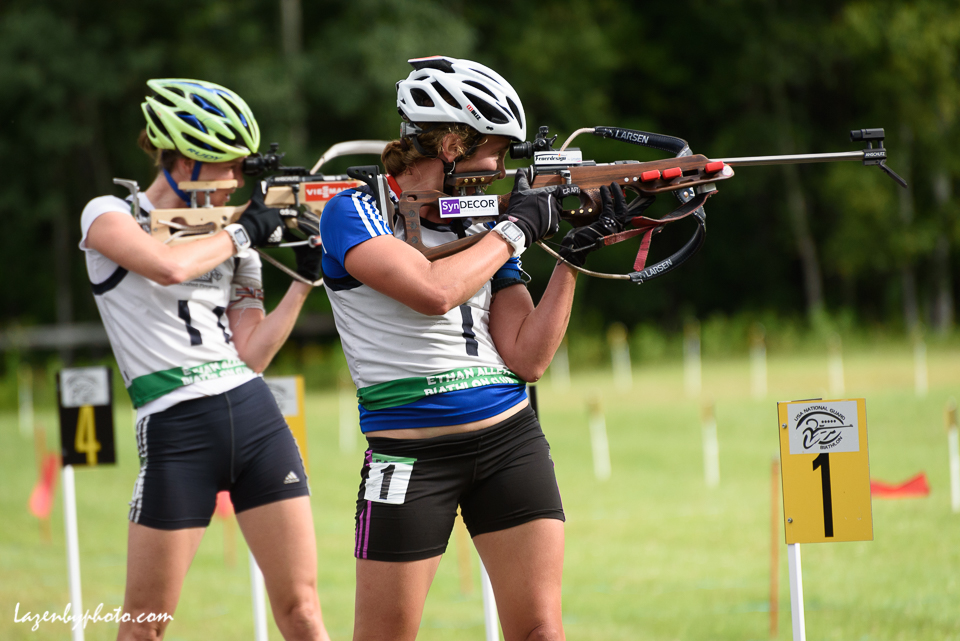
    Susan Dunklee (front) and Clare Egan (l) during a shooting stage of the women’s mass start at Clare Egan (USBA/CGRP) racing to second in the women’s mass start at US Biathlon Rollerski Championships on Aug. 13 in Jericho, Vt. 2017 (Photo: John Lazenby/Lazenbyphoto.com)

    US Biathlon team trials kicked off on Tuesday, Oct. 30, at Soldier Hollow in Midway, Utah, with a total of 47 athletes in attendance. On the line for senior competitors racing this week are starting spots for US Biathlon’s 2018/2019 World Cup and IBU Cup teams.

    The first race of the week involved a men’s 10-kilometer and women’s 7.5 k sprint, with 12 senior women and 14 senior men racing. A junior men’s sprint and junior women’s sprint was held as well, with 11 junior men and 10 junior women participating.

    In the senior women’s sprint, US Biathlon team veteran and two-time Olympian, Susan Dunklee claimed the overall win. Dunklee cleaned her prone stage and missed one standing to finish in a time of 22:17 for first.

    After tying Dunklee’s shooting score, Clare Egan, raced to second place, finishing 25 seconds behind the overall winner’s time.

    Third place went to Emily Dreissigacker, who also tied Dunklee’s shooting score and finished 1:09 seconds behind Dunklee’s time.

    “I always enjoy training in Utah in the fall,” the 32-year-old Dunklee told US Biathlon after the race in Midway. “This winter the World Cup will return to Soldier Hollow for the first time in 18 years and it will be a highlight of our season. Today was a great chance to practice racing at the venue and familiarize ourselves with the range.”

    This February, the Soldier Hollow Nordic Center is slated to host IBU World Cup races from the 14th to 17th. The last major international biathlon competitions held at Soldier Hollow were the 2002 Olympic Winter Games.

    buy advair diskus online

    During the first day of competition at US Biathlon’s World Cup trials at Soldier Hollow, Susan Dunklee (bottom) placed first, Clare Egan (top-left) second, and Emily Dreissigacker (top-right) was third. (@usbiathlonwomen Instagram screenshot)

    Following the senior women’s sprint on Tuesday was the senior men’s sprint. Twenty-three-year-old, Sean Doherty, took the win, in a time of 25:26 after missing one prone shot and cleaning while standing.

    “I am happy with my race today. The course here is challenging and the altitude adds a lot of difficulty, especially in the range,” Doherty, who is a native of Center Conway, New Hampshire, told US Biathlon. “I’m looking forward to tomorrow as another chance to sharpen up before the season.”

    Finishing behind Doherty on Tuesday was Paul Schommer, a former skier for the College of St. Scholastica, in second. Schommer finished 51 seconds behind Doherty’s time, after missing one prone shot and two standing.

    The third senior men’s finisher in Tuesday’s sprint, Travis Cooper, missed two prone and one standing, finishing 1:20 seconds behind Doherty.

    Wednesday, racers will return to the venue for a second sprint race.

    Results

  • Beckie Scott Describes “Disrespect” and “Laughter” From WADA Colleagues, Steps Down From CRC

    Beckie Scott Describes “Disrespect” and “Laughter” From WADA Colleagues, Steps Down From CRC

    Canadian Beckie Scott during an interview with the BBC following her decision to resign from the Compliance Review Committee. (BBC Screenshot)

    On September 20th, this year, the World Anti-Doping Agency’s (WADA) Executive Committee made the decision reinstate the Russian Anti-Doping Agency (RUSADA). WADA’s 12 person Executive Committee had met in Seychelles to vote on a recommendation from the Compliance Review Committee (CRC) that RUSADA’s suspension be lifted. Nine Executive Committee members voted in favor of the CRC’s recommendation, two voted against, and one abstained.

    Days before WADA decided to reinstate RUSADA, former Canadian cross-country skier, Beckie Scott, stepped down from her position on the CRC. Scott, one of the most outspoken athletes on anti-doping, was one of six members on the CRC panel. Scott remains the chair of WADA’s Athlete Committee.

    On October 12, the BBC posted a video interview with Scott during which she explained her decision to leave the CRC. The three-minute video interview–which can be accessed by clicking here–reveals that Scott felt she was “treated with a level disrespect” by her WADA colleagues at the meeting. Scott departed her position due to a “fundamental disagreement” with the decision to reinstate RUSADA and the way she was treated at the meeting.

    “There was laughter when I read the list of athlete committees who had produced statements and who were confronting the decision,” Scott told the BBC. “It was all, it was a combined effect that left me feeling as though there is very little respect, there is very little appreciation, and there is very little value for the contribution that the athletes have at this table.”

    In 2004, Scott was awarded a long-awaited Olympic gold medal after two Russians were stripped of their medals from the 2002 Salt Lake City Olympics for failed drug tests.

    At WADA’s meeting this September, Scott said the “comments and gestures that were inappropriate” and directed toward her when she produced statements from those opposing the reinstatement went unchallenged from WADA’s president and director general.

    “I was disappointed by that,” Scott said. “I think it is indicative of two things: One is the lack of regard for the athlete’s voice generally. I think that there has…been an attitude of dismissal, of belittling, and marginalization; sidelining of the athlete’s voice. I think it is also indicative of the leadership of WADA’s alignment with the Olympic movement.”

    Scott described the tactic as one meant to “bully” her.

    “I think that there has been an incredible loss of confidence and faith in the organization as a result of this,” Scott said. “I think all the athletes have been galvanized by this. They have seen fit to express their frustration on a level that I have never seen before. I think we are seeing an unprecedented level of outcry, of outrage, of mobilization of the athlete voice as a result of this.

    buy ventolin online

    ”

    The alleged behavior from members of WADA has the Canadian Centre for Ethics in Sport (CCES) and AthletesCAN pushing for an independent review of the incident.

    A full transcript of Scott’s interview with the BBC is presented below.

    ***

    Beckie Scott (BS): I made the decision based on the fact that I fundamentally disagreed with it. I felt that this was a compromise that was unacceptable. I would say I was treated with a level of disrespect and with comments and gestures that were inappropriate. And indicative of a general attitude of dismissal and belittling of the athlete voice at the table.

    BBC: From whom?

    BS: That was behavior directed at me by the members of the Olympic movement who are members of the WADA Executive Committee.

    BBC: So members of the Olympic movement in the form of an Executive Committee meeting said things that were designed to denigrate, intimidate, dismiss?

    BS: Bully.

    BBC: To Bully? They tried to bully you?

    BS: Yeah.

    BBC: Can you tell me now that was done?

    BS: I mean just through comments, through gestures. There was laughter when I read the list of athlete committees who had produced statements and who were confronting this decision. It was all, it was a combined effect that left me feeling as though there is very little respect, there is very little appreciation, and there is very little value for the contribution that the athletes have at this table.

    BBC: What about WADA’s president and Director General, did they step in or say anything?

    BS: There was no confrontation or challenging of that behavior at the time it took place.

    BBC: You disappointed by that?

    BS: I was disappointed by that. I think it is indicative of two things: one is the lack of regard for the athlete’s voice generally. I think that there has, there has been this um, attitude of dismissal, of belittling, and marginalization, sidelining of the athlete’s voice. I think it is also indicative of the leadership of WADA’s alignment with the Olympic movement.

    BBC: Is WADA’s reputation at an all-time low among athletes?

    BS: I think that there has been an incredible loss of confidence and faith in the organization as a result of this. I think all the athletes have been galvanized by this. They have seen fit to express their frustration on a level that I have never seen before. I think we are seeing an unprecedented level of outcry, of outrage, of mobilization of the athlete voice as a result of this.

    buy ventolin online


    BBC: Is WADA’s future on the line here do you think?

    BS: I think something needs to change. And I think that the time is now. We need a return to integrity based decision making. A return to a place where athletes are valued and contributing members of the organization and a return to what sport is fundamentally all about.

  • Opening Acts in PyeongChang: USST Press Conference and Catching Up with Sargent

    (From left to right) U.S. Ski Team members and 2018 Olympians Rosie Brennan, Kikkan Randall, Sadie Bjornsen, Jessie Diggins, Erik Bjornsen, and Ida Sargent posing after their intro press conference on 2-7-18. (Photo: Flyingpointroad.com)

    FasterSkier would like to thank Fischer Sport USA, Madshus USA, Concept2, Boulder Nordic Sport and Swix Sport US for their generous support, which made this coverage possible.

    ***

    PYEONGCHANG, South Korea — Sitting one-by-one across the stage dressed in what appeared to be the brightest of bright white tops, Kikkan Randall, Jessie Diggins, Rosie Brennan, Ida Sargent, and the Bjornsens (both Erik and Sadie) held court for the attending media Wednesday afternoon at PyeongChang’s mountain cluster media center. All athletes are members of the U.S. Ski Team (USST) and 2018 Olympians.  

    Randall, the seasoned vet, fielded a spectrum of questions centered around her role as the foundational piece of the U.S. women’s cross-country-ski juggernaut. It’s the Anchorage-based skier’s fifth Olympic Games.

    Back in 2002, when Nina Kemppel competed in her last of four Games for the U.S. cross-country ski team, Randall, as part of the same 2002 Salt Lake squad, was beginning her own five-Olympiad odyssey. Sixteen years later, Randall could reflect on being, at times, a lonely success story on the women’s side, to the present, when on the most recent World Cup weekend in Seefeld, Austria, two U.S. women scored wins: Sophie Caldwell in the freestyle sprint, Diggins in the 10 k mass start skate.

    Jessie Diggins and the media swarm during her intro press conference at the 2018 PyeongChang Olympic Games. (Photo: Flyingpointroad)

    As much as the press was there to see a champ like Randall, they also were captured by Diggins’s spunk and verve. Erik Bjornsen took it all in after stating in his intro that this was his first press conference. He proceeded to take out his smartphone and unabashedly capture a few panning video shots of the scrum of reporters there to learn more about the U.S. cross-country team poised to make history in South Korea.

    For those who follow the sport and in particular the U.S. women, much was said about the “team” and their devotion to it. But each athlete also spoke of their personal goals and ambitions.

    After the main press conference, when athletes took one-on-one questions, FasterSkier had an opportunity to check in with Brennan, Erik Bjornsen and Sargent.

    2018 is Brennan’s first Olympics, yet she arrives with a broad scope of World Cup experience to draw from. She scored two top-20’s in successive World Cup 10 k freestyle races in Davos, Switzerland and Toblach, Italy. She nailed a 15th place in the Tour de Ski’s opening skate sprint. It was a solid Period 1 on the World Cup for Brennan.

    Much has been written about the U.S. women’s collective prospects in the 4 x 5 k relay. That team, which could include more names than the four-member team is alloted, is still not set in stone.

    Asked if she would be approaching her first race opportunities as a demonstration to the coaches of her overall fitness, Brennan was anything but coy.

    Sophie Caldwell (3) leading her U.S. teammate Rosie Brennan (15) and Norway’s Astrid Uhrenholdt Jacobsen in the quarterfinal of the women’s freestyle sprint at Stage 1 of the 2018 Tour de Ski in Lenzerheide, Switzerland. (Photo: Fischer/NordicFocus)

    “I have been struggling the last few weeks since the TdS with my own racing,” the 29-year-old Brennan said. “And so at this point I am just hoping to had enough time to turn my form around and to race better myself. I obviously don’t want to be part of a relay team that I’m going to let down. So I want to be in my best shape before I even think about that. That is one of my goals and I hope I’ve had some time to turn my shape around. But I think at this point, I am looking for every opportunity to race that I can get to show that I have turned this around and that I am ready and then will start looking at that relay spot.”

    Most recently, Brennan struggled in Seefeld’s 10 k skate mass start, finishing 53rd. Brennan also after completed the Tour de Ski (TdS), which concluded Jan. 7. Understanding that maintain high level fitness on the World Cup is a challenge few master, Brennan said the TdS had sapped her energy.

    “Just a little more fatigue than I expected from the Tour despite the fact that we only had six and half races,” Brennan acknowledged. “There were a lot of weather events so everything was a little more energy intensive and a little hectic. I came in with a lot more training than I have in the past, I trained a little harder during Period 1 in hope to be sharp for the Olympics, and I think I didn’t respect that as much as should have and was a little tired afterwards. And also fighting a little illness and things like that. I am feeling a lot better now and I hope a little rest is all I needed.”

    For Erik Bjornsen, who is experiencing his second Olympics after racing three individual events and the 4 x 10 k relay in Sochi, these Games could become a stepping stone. In Seefeld, Bjornsen placed ninth in the 15 k mass start skate. If Bjornsen’s positive energy in the press conference was any indication, he might be trending into rarefied air on the men’s side.

    “I think I could have some good performances,” Bjornsen, 26, said. “I don’t have the pressure that everybody else does, but I do have have the potential to put in some really solid results.”

    (Left to right) USST members and 2018 Olympians Ida Sargent, Erik Bjornsen and Kikkan Randall during thier intro press conference on Wednesday at the PyeongChang Games. (Photo: Flyingpointroad)

    Last year at the Nordic World Championships in Lahti, Finland, he and teammate Simi Hamilton placed fifth in the team sprint. In PyeongChang, the course remains championship-tough, but athletes are more exposed to the elements as the tracks were built on a hilly golf course.

    “Of course, I’m really excited for the team sprint,” Bjornsen said. “And these courses, I’ve been out there once, it is a little early to say. It seems good. It is a golf course, but there are some big climbs, which I like. I like hard-work sections but there are also some flatter sections, which suits a big guy like myself. And then having wind, I was joking before, it should be good for the guys that are chasing.”

    Then let’s talk about tough and gritty. Topping the list would be Sargent. If you missed this, here’s the short version. Back on Jan. 27, prior to her start in Seefeld’s skate sprint qualifier, Sargent fell and broke her thumb.

    “It was a complete clean break,” Sargent, 30, stated. “Every pole plant was very painful. But actually, I felt like my brain was a bigger a detriment because it happened 15 minutes at most before the start and I knew that something was wrong. I was thinking the whole time, ‘This is bad, this is bad.’ I could feel the pain and was thinking that something very serious was going on.”

    On her literal whirlwind of treatment, Sargent flew to Vail, Colorado, for surgery on her thumb at The Steadman Clinic.

    “I had a plate inserted and seven screws securing this plate,” Sargent explained during a follow-up phone interview on Thursday. “So good hardware in there, and an amazing surgeon. My surgeon was very confident; he has done this before, and he knew that the plate was extremely secure so that he wasn’t at all concerned about it moving or not me not having  the stability. I think he ended up using a slightly larger plate just to make sure it was plenty secure.”

    The next morning, post-surgery, Sargent was cleared for active recovery to increase her mobility and bring down the swelling.

    “Two days later I was skiing, doing some one pole and some two pole,” Sargent added. It was incredible to me that they can take a clean break and fully stabilize it.”

    Sargent was clear when asked if there’s anything she cannot do.

    “Nope,” she said. “The only restriction is just personally managing the pain when I ski. The bone is not fused together yet, that eventually will happen. I also obviously have the trauma of having screws put into the bone and there is the swelling, but that has been going down. I have been working with Zuzanna Rodgers here in Korea. We have working on some exercises and some massage to reduce the swelling.”

    Ida Sargent (5) leads her semifinal heat and teammates Jessie Diggins (4) and Sophie Caldwell (9) around a corner at this season’s Davos World Cup. (Photo: Reese Brown / U.S. Ski & Snowboard)

    It is cold here in PyeongChang. It’s a dry cold, but when temps are slow to budge from the single digits and eventually warm to the low teens, cold is cold. Most people with surgical procedures requiring the insertion of metal plates claim cold temps can complicate their sensations. Here in Korea, that seems not to be a problem for Sargent.

    “I was talking with someone yesterday who has a plate in their hand as well, and they feel the cold,” Sargent said “I don’t think I feel it because I still have a fair amount of swelling on top of the plate at the moment. So I think that that is providing some increased insulation. That is the bonus of that maybe. I haven’t felt the cold from it.”

    Sargent stated she was scheduled to race next Tuesday’s classic sprint.

    “As long as I am feeling like my thumb is good to go and I feel confident in my ability to ski well with it, I’ll be racing that,” Sargent explained. “The sprint is on Tuesday, so I still have five days or something at this point That is the plan right now and putting the full focus on being recovered and ready for that day.”

    The 2018 PyeongChang Olympics begin Saturday with the women’s 15 k skiathlon.