Tag: 2003 World Championships

  • Spillane Calls It a Career, Explains Decision Before 2014 Olympics

    Spillane Calls It a Career, Explains Decision Before 2014 Olympics

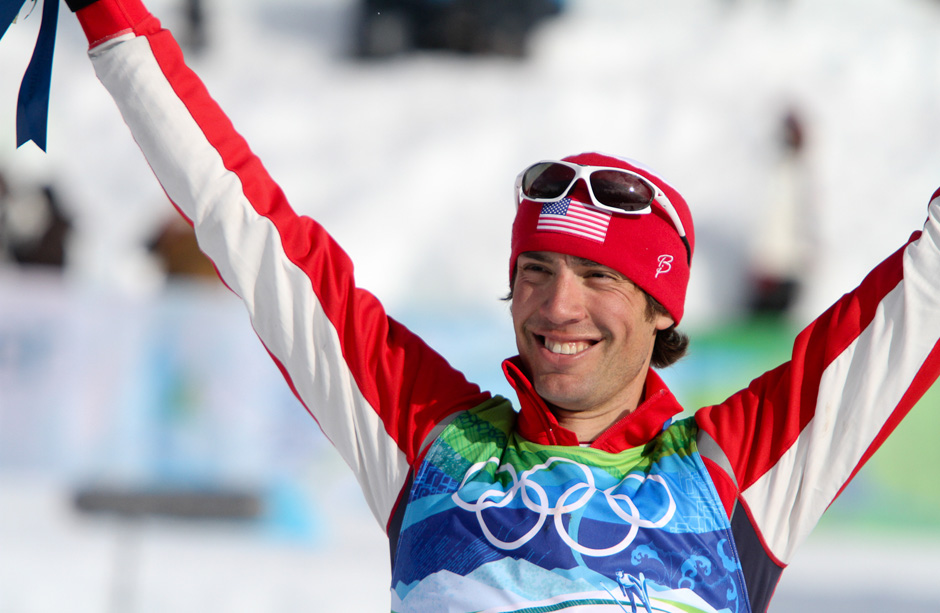
    Johnny Spillane's climb to the podium will be a little steeper next year after suffering torn knee ligaments in a cliff-jumping accident earlier this month. Vancouver 2010 - Nordic Combined Individual Large Hill - Johnny Spillane, podium
    Four-time Olympian Johnny Spillane after notching his third-straight silver medal at the 2010 Winter Olympics in Vancouver, British Columbia. A longtime staple of the U.S. Nordic Combined Team, Spillane, 32, recently announced his retirement.

    It’s hard to imagine U.S. Nordic Combined without Johnny Spillane.

    For more than a decade, the Steamboat Springs, Colo., native has been the sport’s poster child, winning America’s first gold at 2003 World Championships and later notching three silver medals at the 2010 Olympics.

    He’s been to every Olympics since 1998 and bounced back from several injuries to return to the team year after year. But this season, Spillane won’t be training for the 2014 Olympics. At 32, he recently decided to call it a career, and is the first of three over-30, A-team members to do so (Billy Demong, 33, and Todd Lodwick, 36, apparently have their sights set on Sochi, Russia).

    The news came in the form of a letter to the Steamboat Springs community, published in Steamboat Today on April 18.

    “I would like to take this opportunity to thank the community of Steamboat Springs for the incredible support it has given me over the years,” he began. His national-team career spanned more than 15 seasons.
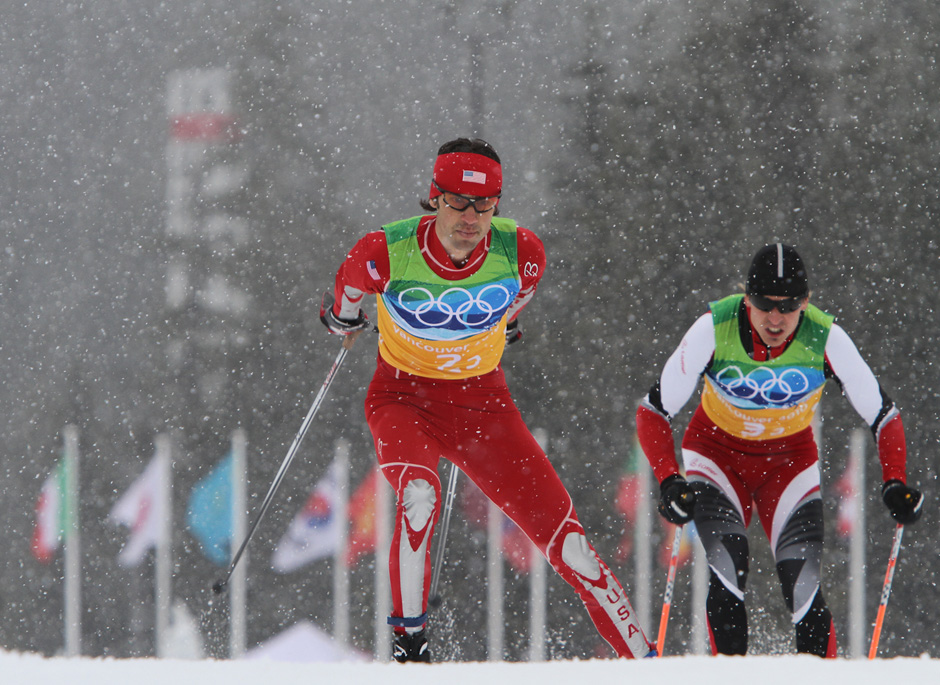
    Johnny Spillane racing in the team event at the 2010 Olympics, in which he won his second of three silver medals
    Johnny Spillane (l) racing in the team event at the 2010 Olympics, in which he won his second of three silver medals.

    “I’ve been very fortunate to be raised in this town and have the opportunities that Steamboat provides, but it is time for me to move on,” Spillane wrote. “It has been a long and productive career, and I have no regrets as I start a new chapter in my life.”

    Not to worry, Steamboat; Spillane’s staying right at home. In an interview with FasterSkier, he explained that he’ll pursue passions like fly fishing and start by guiding this summer.

    “It was a long, long career so I’m pretty excited to be done,” Spillane said on the phone of the decision he made a couple of weeks ago. Every year, he reevaluates, and this year, the time was right.

    “I’m sure there’s more things that can be accomplished, but at the same time, there’s other things I want to do besides travel and ski,” he said with a laugh.

    Initially, he plans to “explore as many different opportunities” as possible, which could include something in the fly-fishing industry and part-time junior coaching with the Steamboat Winter Sports Club.

    “I don’t anticipate getting into coaching at any kind of high level because at that point you’re just traveling a ton anyways, and that’s what I’m trying to avoid to begin with,” Spillane said. “I would be open to [coaching] really young kids here in Steamboat, something that you could do a few nights a week, but beyond that I don’t have too much interest.”

    While few are questioning his next steps, a lot of people are wondering why Spillane decided to call it quits before an Olympic year.

    Simply put, he wants to spend more time with his wife, Hilary, and two daughters. His oldest, Hadley, is 2 ½, and Genevieve will turn 1 in May.

    “It’s so much traveling and with having kids and stuff like that, I’d had enough,” Spillane said. “I’ve done this a long time. I’ve been to four Olympics and while it would be great to go to another, it’s not going to change my career in any way or anything like that.”

    Last season, the 2003 world sprint champion competed in one event at World Championships in Val di Fiemme, Italy. There, he was 30th in the large-hill competition, and he cheered his teammates (Taylor Fletcher, Bryan Fletcher, Lodwick and Demong) on as they captured the nation’s first World Championships medal – bronze – in the team event.

    “For sure, you want to be competing, but if you’re not gonna be the one out there, you want to be helping in every way you can,” Spillane said. “I was in the wax room, testing skis and doing everything I could to help contribute.”

    His best individual World Cup result last season came in January, when he was 22nd on the large hill in Klingenthal, Germany. Despite traveling with the team all season, Spillane competed just five times. Hindered by injuries in the past, it wasn’t his body that was keeping him out of it this time. Rather, new rules required athletes to make the top 50 in preliminary jumps to advance to the actual competitions.

    Spillane said he “struggled pretty heavily with the rule changes,” especially the tighter suits.

    “There was a learning curve there and it took me a while to get it figured out,” he explained. “I don’t think I ever got it entirely figured out. I think that was by far the only contributing factor to some of the poor results I had because I felt really good skiing all winter long. It was just a matter of jumping well enough to put myself in any kind of position to be competitive.”

    The changes were certainly “annoying,” Spillane said, but they’re also inherent in the sport. For a smaller nordic-combined squad like the U.S. it made adapting even tougher.

    “Every time they make a rule change, it takes the countries that don’t have the financial capabilities to really explore the equipment a couple years to catch up,” he said. “You’re spending half your energy trying to figure out your equipment where you want to be spending that energy training and improving. That part is hard. Everybody gets frustrated with that.”

    It’s also difficult missing out on opportunities to ski up to your potential. If Spillane could’ve made the top 50 on the jump hill more often last season, he believed he could’ve skied up to 20th or so.

    But that’s all behind him now. Looking back on an individual World Championships gold, four national titles, and three silvers at the 2010 Olympic Games (the first of which was America’s first), Spillane said it’s the team he’ll remember most.

    “What I’m most proud of is what the team accomplished as a whole while I was a part of it, whether it was individual results or team results,” he said. “Becoming one of the stronger nations in the world was for me one of the most exiting parts of it. The individual results and competitions were great, but I don’t focus on them all that much.

    “Obviously I would’ve liked to have done better at every competition, but at some point you just have to be satisfied with what you did, and that’s where I’m at,” Spillane added. “I’m proud of the results I had, I wish some of them were better, but that’s in the past. I know that I did everything I could to get the results that I did get, and that lets you sleep at night.”
  • Val di Fiemme Gets Greener, Upgrades for Third World Championships

    Val di Fiemme Gets Greener, Upgrades for Third World Championships

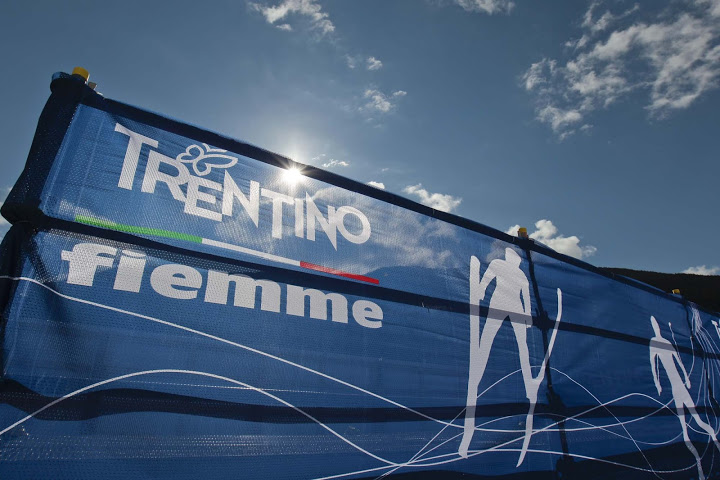
    Clear skies in Val di Fiemme welcome the FIS Nordic World Ski Championships in the Val di Fiemme region of Trentino, Italy. (Photo: Federico Modica/Fiemme 2013)
    Clear skies in Val di Fiemme welcome the FIS Nordic World Ski Championships in the Val di Fiemme region of Trentino, Italy. (Photo: Federico Modica/Fiemme 2013)

    FasterSkier’s coverage of the 2013 FIS Nordic World Ski Championships in Val di Fiemme, Italy, is brought to you by the generous support of Fischer Sports.

    VAL DI FIEMME, Italy – Val di Fiemme’s no stranger to World Championships. The winter-sports mecca located in the heart of the Dolomites in northeastern Italy has been around the block a time or two, and is about to host its third FIS Nordic World Ski Championships.

    Yes, things are different than in 1991. Luca Zanon, the 2013 World Championships sports assistant, was just being born then, when Val di Fiemme held its first international cross-country, nordic-combined and ski-jumping event.

    Homologation? Never heard of it. And if people are going to ski 50 kilometers, the idea was to make as long a loop as possible.

    In 2003, the venue hosted the 40th World Championships, one marked by changes. Cross-country sprints grew from 1 to 1.5 kilometers, following a precedent set by the 2002 Olympics in Salt Lake City. Longer sprints? Go figure.

    Fast-forward 10 years to the 2013 edition, which kicks off with cross-country qualifying races on Wednesday. This year’s World Championships include some 55 nations, according to Zanon. Female ski jumpers are here in numbers – 46 to be exact – in their third World Championships since Liberec, Czech Republic (2009), and Olso, Norway (2011).

    This event will likely attract tens of thousands of spectators and has required the collective effort of more than 1,200 volunteers, many of which worked the 1991 championships, Zanon said.

    Times have changed, the courses have been widened and made more viewer-friendly, but the ultimate goal remains the same: to put on a memorable and rock-solid event. When Val di Fiemme was awarded the championships in 2008 (along with the FIS Tour de Ski finals and Nordic Combined World Cup), its organizers made a point to include the valley’s eco-friendly and homegrown tradition. For example, they used local contractors to create new buildings with raw wood at the Lago di Tesero cross-country stadium.

    Since then, at least 11 FIS inspections have taken place between the cross-country and jumping venues and according to a press release, “Val di Fiemme never disappoint expectations.”

    Zanon took the time to elaborate on the preparations on Tuesday, one day before the first races and opening ceremony.

    FasterSkier: How long has this been in the making?

    Luca Zanon: Planning all the events, more than four years. It started when we agreed with the sponsoring and then with collecting volunteers, even though we have a strong number of volunteers that are here since the first World Championship in 1991. A lot of them are still working so we didn’t have to collect as many volunteers, just to improve the level of English, to improve the level of IT technology. The age of volunteers, the average, is 10 years  [younger] compared with the last World Championships we had here.

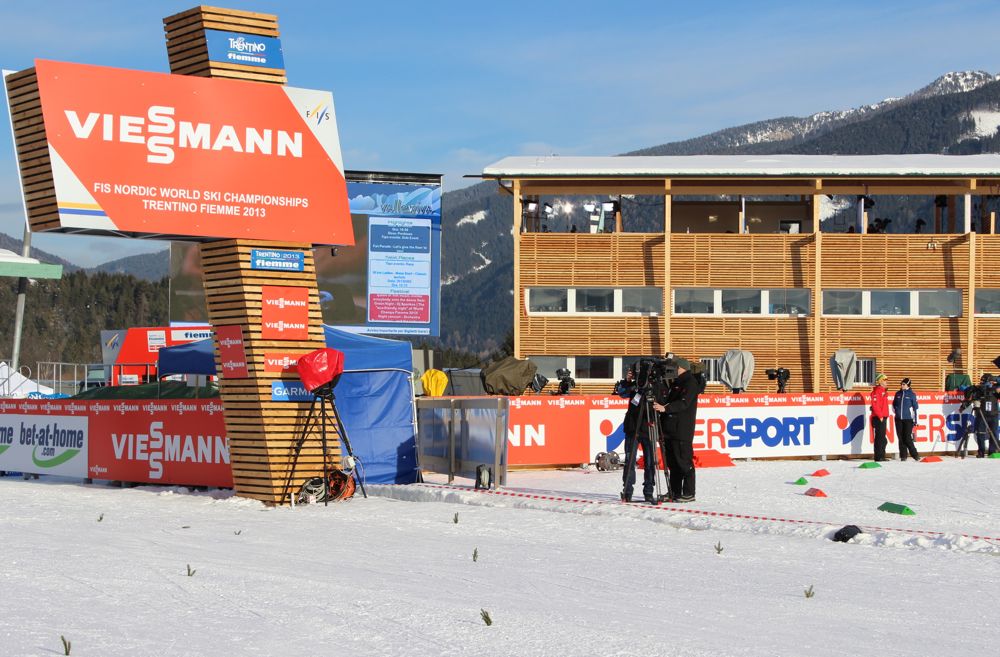
    TV personnel fine-tune near the finish line. The wood building behind them was built specifically for television media at the 2013 FIS Nordic World Ski Championships at the Lago di Tesero stadium in Val di Fiemme, Italy.
    TV personnel fine-tune near the finish line. The wood building behind them was built specifically for television media at the 2013 FIS Nordic World Ski Championships at the Lago di Tesero stadium in Val di Fiemme, Italy.

    Regarding the cross-country venue, it has been renewed. We built another fixed building and the wooden building is removable after the events. It is for TV, it was ecological with the wood, and it is removable.

    FS: That TV building is going to be dismantled after? How long did it take to build?

    LZ: Yes. One month. There were a lot of people working on it.

    FS: How else has this venue and this event changed since 1991?

    LZ: For sure, IT technologies and there is a lot of stuff that has to be done with computers now. Maybe 20 years ago they used to do every kind of communication in a completely different way so now everything is concentrated on emails and the exchange of emails. So if you lose one email you lost a very important part of your job. I think that 20 years ago is completely different. You had to be very clear from the beginning with how to communicate with all the other staff with volunteers. Now just with an SMS you can tell them, ‘Come one hour later. Come one hour before.’ Twenty years ago, the chief of volunteers had to go house by house maybe.

    In terms of material, the course’s preparation, it is completely different because of the technologies.

    FS: How have the courses changed?

    LZ: Wider for sure because of FIS regulations and TV wants mass-start competition so there are a lot of athletes on the same time and in the same space of the track. For this reason they have to be wider, and they guarantee a very spectacular overview for the spectators.

    If we talk about spectators and television and a spectacular view, I have to say, all the courses are shorter because they tend to, even in the 50 kilometers, to cross the stadium more times to get visibility for sponsors for television. Twenty years ago there was a huge course of 20 kilometers for the last race, the 50 kilometers, they just went two times around and there was only three or four television points. And now every [corner] and every downhill there is three or four cameras and the courses are shorter for this reason. Now the sponsor can be put all the time under the vision of the cameras.

    FS: How many athletes are registered?

    LZ: The number of athletes asked to enroll was more or less 500 for both men and ladies. It was a bit less for ski jumping, 150 more or less, divided by men and women, about 46 women. And for nordic combined, we have 70 athletes enrolled coming from 17 different names. In total we have 55 nations with all the sports, and some of them will try to qualify tomorrow for the other races.

    Tomorrow are the qualifications for cross-country, but there are no official results, there is not the first winner since it is just a qualification race to guarantee the athletes to take part to the next competition starting with the sprint on Thursday.

    [Note: The top 10 men and women, who did not have enough FIS points to secure starts before World Championships, will qualify for individual distance races.]

    In case they don’t qualify, they can take part in [Thursday’s classic] sprint as well since there is a qualification for the sprint race.

    Photo gallery from cross-country venue

    Race organizers’ website

    Schedules: Cross country | Nordic combined | Ski jumping