Tag: 2006 Olympics

  • As WADA Commission Promises More To Come, Skiing’s Past Doping Scandals Emerge

    As WADA Commission Promises More To Come, Skiing’s Past Doping Scandals Emerge

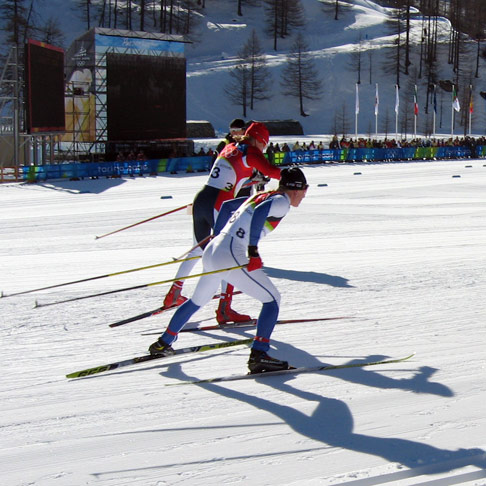
    Kristina Smigun (in white and blue) on the way to gold at the 2006 Olympics. That medal may now be stripped, according to Norway's TV2.
    Kristina Smigun (in white and blue) passing the Czech Republic’s Katerina Neumannova on the way to gold at the 2006 Olympics. That medal may now be stripped, according to Norway’s TV2.

    In an interview with Britain’s The Independent, Dick Pound warned that the revelations coming in the second part of his WADA Independent Commission report would shock the sports world.

    “When we release this information to the world, there will be a wow factor,” Pound said. “I think people will say how on earth could this happen? It’s a complete betrayal of what the people in charge of the sport should be doing.”

    Pound was referring to the investigation into the International Association of Athletics Federations (IAAF), the international governing body for track and field. The Independent Commission looked at data from 15,000 blood samples which had been leaked by someone inside the organization.

    Their findings led to criminal proceedings in France against the former IAAF President, Lamine Diack, and the suprises may not stop there.

    He also suggests that other international federations take matters into their own hands because the problems are not limited to track and field athletes in Russia, but system-wide, and also not limited to Russia.

    “This is the opportunity in certain executive committees to close their doors and say ‘as of today, the old system is gone, we’ll deal with those that need to be identified in due course but we’re going to level the playing field’,” he said. “I think the option is there but will it be taken? I don’t know. For some sports their actual credibility is at risk.”


    Meanwhile, doping scandals in nordic sports continue to emerge in relation to past Winter Olympics.
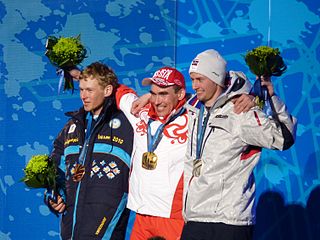
    Norway's Nils Erik Ulset (right) with a Russian gold medalist at the 2014 Paralympic Games. (Photo: Matt Boulton / Wikimedia Commons)
    Norway’s Nils Erik Ulset (right) with a Russian gold medalist at the 2014 Paralympic Games. (Photo: Matt Boulton / Wikimedia Commons)

    On Monday, NRK ran an interview with Nils Erik Ulset, a Paralympic skier and biathlete who has medaled at four separate Olympics. In Sochi, the anti-doping procedure was unfamiliar, he said.

    “I became gradually aware that foreign athletes were gathered into one room, and the Russians in another,” he told NRK. “I also noted that the Russian athletes only held for three to four minutes. It is not possible to conduct an inspection that quickly.”

    When Ulset tried to enter the door the Russian athletes were going through, he was turned back.

    The International Paralympic Committee (IPC) has denied that there was anything irregular in antidoping in Sochi.

    “All doping tests during the Winter Paralympics in Sochi were conducted according to the international standard for testing,” wrote Craig Spence, the communications director for the IPC, in an email to NRK. “Independent observers from WADA and members of the IPC Anti-Doping Committee were also present to supervise. They have not notified about anything worrying.”

    That’s a similar line to the official International Olympic Committee response to calls for re-testing of samples from the 2014 Olympics, after the WADA Independent Commission revealed that the Russian state security apparatus FSB had infiltrated the Olympic anti-doping laboratory.

    Despite those allegations, the IOC released a statement saying that “the IOC has no reason to question the credibility of the results of the anti-doping tests carried out at the Olympic Winter Games 2014.”

    In this case, Spence told NRK that “the IPC is an organization deeply committed to protecting the clean athletes and provide equal competitive conditions for all.”

    Yet, damningly, when NRK tried to follow up with other Norwegian Paralympic athletes, they found that few others had ever been tested in Sochi.

    Scandals from even further in the past are also rearing their ugly heads.
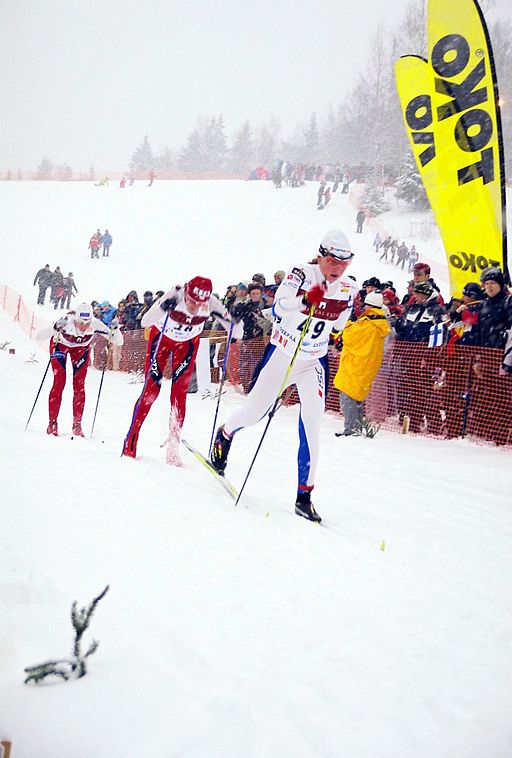
    Kristina Smigun in 2007. (Photo: Wikimedia Commons)
    Kristina Smigun in 2007. (Photo: Wikimedia Commons)

    Last year it was reported by Germany’s ARD news service that samples from the 2006 Olympics had been re-tested using new methods and Estonian cross-country skier Kristina Smigun’s samples had been contained prohibited substances.

    Norway’s TV2 picked up the story this week, reporting that Smigun’s case has been mired in the Court of Arbitration for sport, but that she could soon be stripped of her gold medals from the 10 k classic and the 15 k skiathlon.

    The Estonian Olympic Committee confirmed to TV2 that they had been notified in December 2013 of a positive test.

    The International Ski Federation, WADA, the Estonian Ski Federation, and the Estonian Anti-Doping Association all told TV2 that the matter was in the hands of the IOC. The television report stated that both Smigun’s ‘A’ and ‘B’ samples had tested positive, yet there has been no news or action for almost two years.

    The IOC said that they could not comment on the matter other than that many lawyers were involved, and that they hoped a verdict would be announced in three to six months.

    But the Court of Arbitration for Sport denied that the case had been brought to them.

    “As stated earlier, there is not, and has never been, a case concerning the IOC and Kristina Smigun and / or retesting of samples from the Turin Olympics in CAS system,” the organization wrote in an email to TV2.

    The Court of Arbitration for Sport frequently lists upcoming hearings on their website, but cannot provide information until after cases are settled. Therefore, it is not altogether surprising that there is no information about a Smigun case on their website, whether one exists or not.

    Norway stands to benefit, a lot, should Smigun’s medals be stripped. It would mean another gold medal for Marit Bjørgen, in the 10 k classic, and silver rather than bronze for Hilde Gjermundshaug Pedersen in the same race. And for Kristin Størmer Steira, recently retired, it would mean moving up from fourth place to bronze in both races – ending long-running painful jokes about wooden medals.

    There’s no evidence so far that other re-tested samples from skiers at the 2006 Olympics resulted in new anti-doping cases.

    Some are speaking out to urge action by international federations. U.S. Biathlon Association President and CEO Max Cobb spoke to FasterSkier soon after the first part of the Independent Commission’s report dropped, urging investigation into all sports.

    Tore Bøygard, the head of the Norwegian biathlon federation, has now spoken out to NRK, one of the main Norwegian broadcasting companies.

    “It is suggested that there is doping in other sports,” he said, according to a translation. “The sport cannot survive with some shadow ofdoping hanging around. Therefore, you might as well get it scrutinized. Should there be something left there, so you might as well get it up and get it on the table…. We should not be so naive.”

    Bøygard has sent a letter to Anti-Doping Norway asking them to pressure WADA to initiate further investigations.

  • Post-Retirement, Crawford Hits the Books Hard, Gets into Calgary’s MBA Program

    Post-Retirement, Crawford Hits the Books Hard, Gets into Calgary’s MBA Program

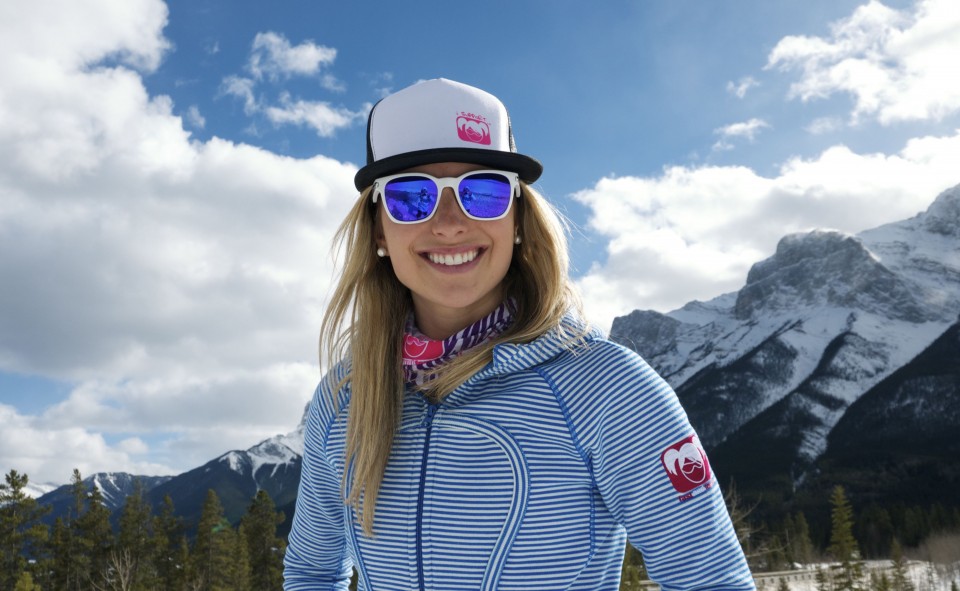
    Fast and Female founder/president Chandra Crawford retired from competitive-nordic racing this spring after 14 years in the sport (and five more in biathlon). She was recently accepted into the University of Calgary's business school. (Photo: Chandra Crawford/ http://chandracrawford.com/ive-never-met-anyone-so-excited-to-write-the-gmat-before/)
    Fast and Female founder/president Chandra Crawford retired from competitive-nordic racing this spring after 14 years in the sport (and five more in biathlon). She was recently accepted into the University of Calgary’s business school. (Photo: Chandra Crawford/chandracrawford.com)

    Chandra Crawford knows a thing or two about headspace, and as she smiled at the program director for the University of Calgary’s Executive MBA (Master of Business Administration) program as the they reviewed admission requirements, the director told her she’s never met anyone so excited to take the GMAT (Graduated Management Admission Test).

    Born and raised in nearby Canmore, Alberta, Crawford, now 30, finished high school 14 years ago and catapulted into competitive nordic racing. Before that as a junior, she had been a biathlete for five years, but by age 22, she was known on the world scope as one of the most promising cross-country sprinters — a surprise gold medalist in the skate sprint at the 2006 Torino Olympics.

    Chandra Crawford celebrating her gold medal at the 2006 Olympic Winter Games in Torino, one of the many strong performances by North American women in the past decade.
    Crawford celebrating her gold medal in the freestyle sprint at the 2006 Olympic Winter Games in Turin, Italy.

    That moment changed her life forever, defining her career and who she was as a skier.

    Crawford put off education in pursuit of loftier goals in skiing — but after a gold medal, where does one go from there? She went on to win her first World Cup gold in Canmore in 2008 and repeated the feat two months later at a World Cup sprint in Lahti, Finland. She competed at two more Olympics in Vancouver in 2010 and most recently in Sochi, Russia.

    In her blog, Crawford recalled her former teammates and Canada’s gold and silver medalists, Beckie Scott and Sara Renner, saying it would take “ten years to get good.” That kind of commitment is was kept Crawford onboard through the Sochi Games, after she opted to train apart from the national team last spring and spent much of last season playing catchup.

    Gold medals six years ago weren’t enough to secure her international starts this past season without first proving herself, and Crawford went through the process just as any Canadian not on the World Cup Team would — by giving it all she had at trials. In January at the Canadian Olympic trials in Canmore, Crawford won the freestyle sprint to earn her trip to Sochi. She had previously raced two World Cup sprints in December in Davos, Switzerland, and Asiago, Italy, placing 43rd and 45th, respectively.

    Back on the World Cup in February in Toblach, Italy, she finished 34th in the freestyle sprint, just shy of the top 30 needed to make the sprint rounds. Crawford went on to race one event at the Olympics — the skate sprint — where she placed 44th.

    “Looking back on it now, it seems like things never really came around physically,” she said on the phone from Canmore in late April. “How much I had burned out from my tough years — I didn’t really have the time to recover from it.”

    Two seasons ago in February 2013, Crawford had put racing on hold after the pre-Olympic World Cup in Sochi — flying home to Canmore to recover before her last season-long Olympic push. She didn’t race again that 2012/2013 season, and resumed training last spring as a member of the newly formed Team Ninja, a band of four independent female racers in Canmore.

    Chandra Crawford (CAN) during qualification.  Photo: Fischer/Nordic Focus.
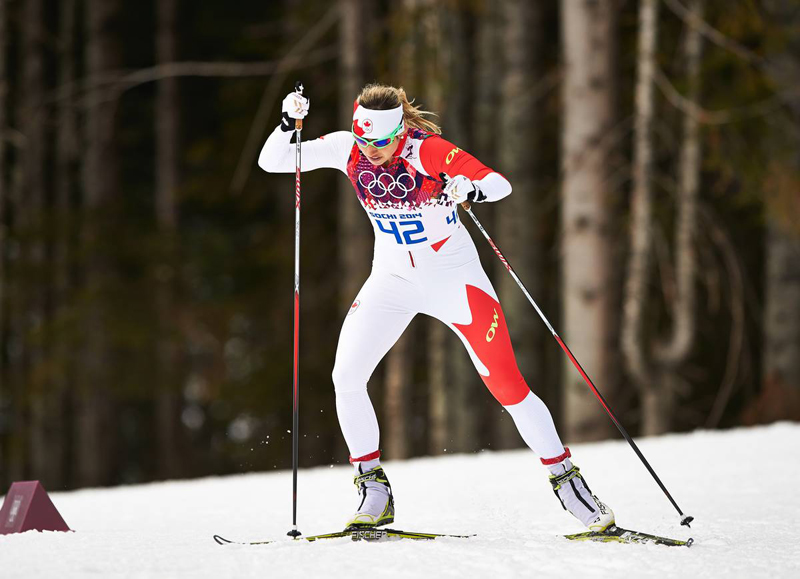
    Crawford in what would be the final race of her career, the Sochi Olympics freestyle sprint qualifier, in which she placed 44th. (Photo: Fischer/Nordic Focus)

    While she had always hoped for a comeback story, it didn’t come to fruition. Her energy levels went through highs and lows, something she attributed to thyroid and iron issues, which she explained as a direct result of overtraining.

    “It’s not bad luck, it’s just what happens,” she said of her underactive thyroid, which doctors discovered last fall. “Your endocrine system just gets blown out.

    “The energy was different at different points throughout the normal training and racing year, but I never really got going fast,” she explained. “I was always working hard, but I was never really [skiing] hard. I was maximizing other aspects, like am I doing everything I can technically? … I always came out that I’m going 10 out of 10 on the process. This normally works.”

    Come spring, she was about ready to be finished altogether.

    “I was on the fence if I would continue through Sochi or not,” Crawford said. “I redefined success into my own terms. That’s what enabled me to carry on and ski through Sochi. It was a great feeling, like the feeling you get from the last rep and last international race of a career — everything leading up to it was my last taper or my last World Cup…”

    Crawford was optimistic at the Olympics, and she enjoyed what turned out to be the final race of her career while back with the national team.

    “This year was amazing,” she said. “The less I needed from the team, the more I enjoyed it.”

    “It was a great feeling, like the feeling you get from the last rep and last international race of a career — everything leading up to it was my last taper or my last World Cup…” — Chandra Crawford, on ending her racing career with the Sochi Olympics

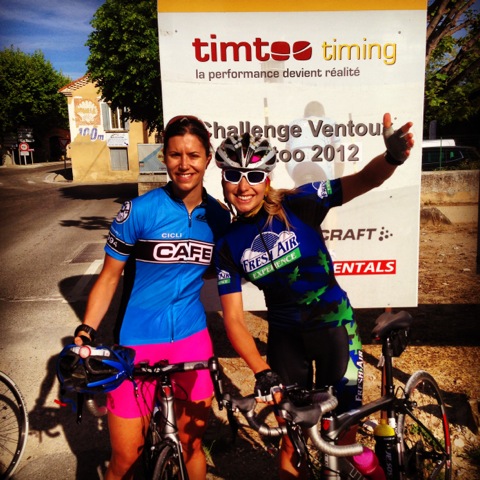
    Rosanna (l) and Chandra Crawford on one of their bike outings during the Gold Medal Plates trip last month in Provence, France. (Photo: Rosanna Crawford)
    Rosanna (l) and Chandra Crawford on one of their bike outings during the Gold Medal Plates trip last month in Provence, France. (Photo: Rosanna Crawford)

    Crawford spent the rest of the Olympics cheering on her younger sister, Rosanna, a Canadian biathlete in her second Olympics. There, Rosanna posted her Olympic best of 25th in the 7.5-kilometre sprint.

    “Chandra has been one of the major factors in my career, watching her get her gold medal when I was 18 really helped motivate me to strive for the Olympics,” Rosanna, 25, wrote in an email. “It was always a dream of mine to go but once I saw her go and win it made me realize that if she can then I could too! She has always been my biggest fan and always rooting for me.”

    The sisters recently spent two weeks wining, dining and biking in Provence, France, with Gold Medal Plates (GMP). The foundation auctions exotic destinations as a fundraiser for Own The Podium and to support “Canadian Excellence in cuisine, wine, the arts and athletic achievement,” according to its website. This marked the Crawford sisters’ second-straight trip overseas with GMP; last year they visited Tuscany, Italy. Chandra was on year No. 6 with the program.

    “I feel so lucky to have such an awesome sister that’s taught me it’s ok to be strong and powerful and to follow your dreams,” Rosanna added. “Her work with Fast and Female has also motivated me to be a good role model and know that there are always people looking up to you.”

    Nearly nine years ago, Crawford founded Fast and Female, a series of sports-based events designed to empower females ages 9 to 19, with the help of her teammates on the Canadian National Team in 2005. The concept took off and spread throughout the nation by 2007, at which point the program became a registered-nonprofit corporation with a board of directors.  Crawford became president, overseeing the nonprofit’s mission and vision while focusing on her job as an athlete — which Fast and Female championed front and center.

    It wasn’t long before the series caught on the U.S. and other countries overseas. According to Crawford, Fast and Female had 105 ambassadors in 24 sports as of April, and was on track for a record-smashing 3,000 participants this year.

    “Fast and Female really took itself internationally,” she said, pointing out events in Sweden and Norway this past winter, and a presence in Australia. “We’re running with a lot of volunteer-based energy. We’re a really small team based here in Canada with how big we are.”

    Looking forward, she’s like to make the series “more profound,” extending beyond sport experience to working together to “create solutions in the environment,” she said. “I just can’t say enough about the American program and how I learned from everything Kikkan [Randall] and [U.S. women’s coach] Matt Whitcomb and the American team create.”

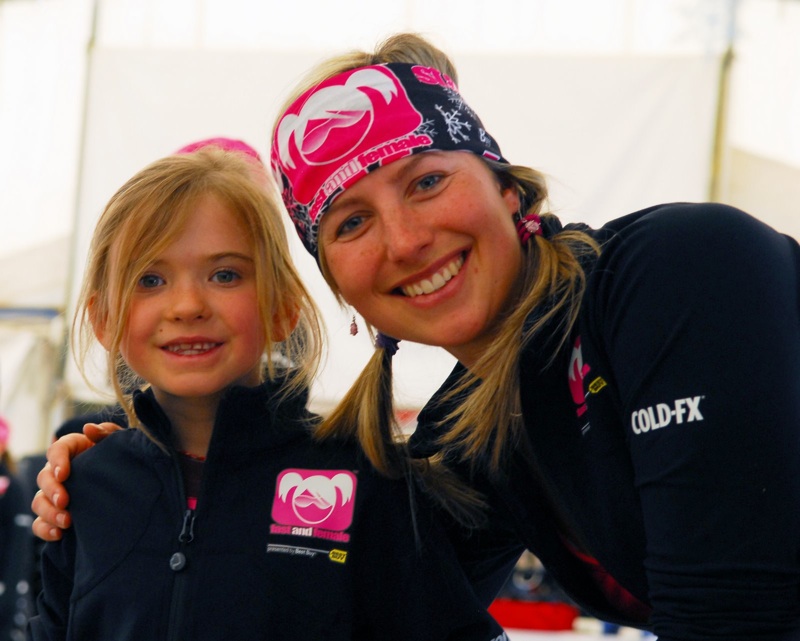
    Chandra Crawford during a Fast and Female event in 2009.
    Chandra Crawford during a Fast and Female event in 2009.

    Fast and Female celebrates its nine-year anniversary in November. While Crawford will remain president/founder, she’s going to spend the next two years learning how to be a better business leader and generate more revenue for her program moving forward.

    That’s right, Crawford go into Calgary’s Haskayne School of Business, scoring a 540 on the GMAT “with about 25 hours studying math and by being a positive game-day performer,” she wrote in an email.

    “It was so fun to wake up on test day with the exact feeling of a race morning: ‘Today is the day I get to do the thing I prepared for!’ she recalled. “ ‘Right on!’ ”

    In addition to a score of at least 500, she needed 10 years of work experience to get in (without a university degree). Everything she learned with Fast and Female — from brand marketing to relationships — qualified, she explained.

    “It’s going to be extremely challenging to do two years of business school, but I’m ready to get growing way out of my comfort zone and am at a great time in my life to invest in my skills through education,” she added.

    “It was so fun to wake up on test day with the exact feeling of a race morning: ‘Today is the day I get to do the thing I prepared for! Right on!’ ” 

    Her goals with the program include becoming a better leader for Fast and Female and a more-effective motivational speaker for business groups, all while staying open to possibilities “because at least half of the amazing things in anyone’s life could not have been predicted,” she said.

    “It’s great to see Chandra so excited about this next phase of her life,” her father, Glen Crawford, wrote in an email. “I think I can speak for both Louise & myself when I say, as a parent, our biggest priority was giving our 3 children the opportunity to experience many things. We started doing that really early on. I think it was a good move because it seems that with kids, by the age of about 5 or 6, they already know what they like and what they don’t like.”

    The key was choosing activities they had fun with at an earlier age.

    “The other thing that was key was raising our kids in Canmore,” Glen added. “I think Chandra & Rosanna are testament to the fact that if you build facilities, you will train Olympians. Without the ’88 Olympics and the Canmore Nordic Centre, I’m sure our girls would have still gone on to do great things, but it probably wouldn’t have been Nordic ski racing.”

    The owner of his own media-production business, Glen made the following video for Chandra’s retirement party last month, which highlights some of the great moments he shared with her as a cameraman at many of her races.

  • After 15-Plus Years, Zimmermann Retires from Skiing

    After 15-Plus Years, Zimmermann Retires from Skiing

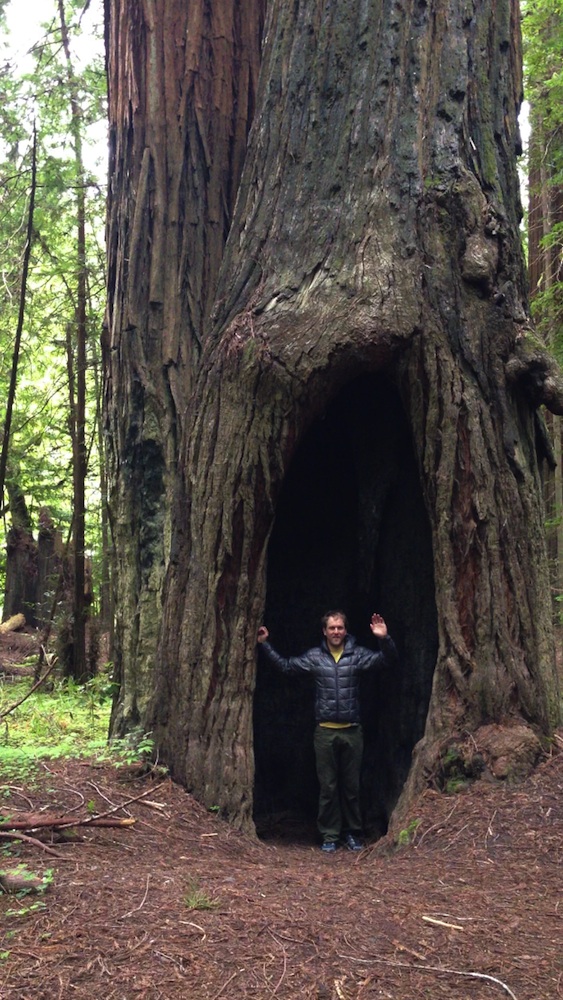
    2006 Olympian and former U.S. Ski Team member Leif Zimmermann exploring the redwoods along the Avenue of the Giants in northern California in April. He retired from competitive cross-country skiing this spring. (Courtesy photo)
    Longtime Bridger Ski Foundation skier Leif Zimmermann exploring the redwoods along the Avenue of the Giants in northern California in April. A former U.S. Ski Team member and 2006 Olympian, he retired from competitive nordic skiing this spring. (Courtesy photo)

    Three years ago, Leif Zimmermann decided to go for it. A talented cross-country skier since he picked up the sport at 13, Zimmermann knew he was on the cusp of something great.

    In 2003 at the age of 20, the Bozeman, Mont., native broke through with a fifth-place finish at Junior World Ski Championships in Sollefteå, Sweden – the best American result. He excelled in another skate sprint a year later at U.S. Cross Country Championships, winning his first national title in 2004. That followed six Junior National wins, and Zimmermann went on to achieve three more senior national titles.

    In 2006, he went to the Olympics in Turin, Italy.

    “I feel fortunate to be able to have experienced that,” Zimmermann said on the phone Tuesday in Bozeman. “It was a full month of the whole Olympic movement. You can go to the Olympics, which is awesome as a spectator, but to go behind the scenes as an athlete is special.”

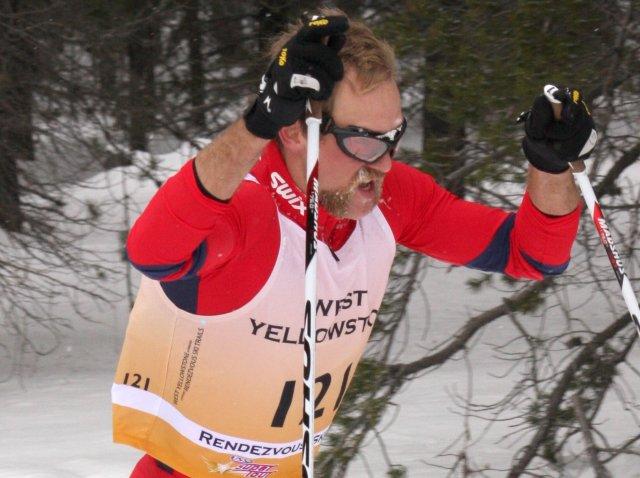
    Leif Zimmermann on his way to winning the 15 k freestyle at the 2011 SuperTour in West Yellowstone, Mont.
    Zimmermann en route to winning the 15 k freestyle at the 2011 SuperTour in West Yellowstone, Mont.

    Four years later after the 2010 Winter Olympics (and 2009 World Championships), he realized what was required to make the team again. A U.S. Ski Team member for five years, Zimmermann knew he needed to fully commit with hard work, mental perseverance and a strategic plan.

    “The level I was skiing in maybe 2008, 2010-ish was right below being able to ski competitively on the World Cup,” said Zimmermann, who’s started more than dozen World Cups with an individual best of 38th. He wanted to crack into the 20s.

    “I felt like I was on the verge of getting up to that level, and I knew I wasn’t going to do it in three months,” he added. “I needed sustained training, multiple years to build that up. You have to go about it systematically. That was the basis of me developing a plan.”

    He did so with longtime coach Dragen Danevski, the Bridger Ski Foundation director who had mentored Zimmermann since he began as a biathlete. In his third season of carrying out the plan (which carried into 2014/2015), Zimmermann made another decision earlier this year: it was time to step away from full-time, competitive racing and retire.

    “The last couple seasons I’ve had a hard time keeping the fun up enough for me to be able to do this,” he said. “In turn, I was training about 75 percent than I needed to and working 25 percent.”

    Employed in the offseason part-time by a contractor in Big Sky, Mont., Zimmermann traveled to Peru last summer for 10 days of guiding clients along the Inca Trail. An athlete ambassador to Inca Runners, he visited Lima beforehand for a few days of surfing. He returned to Bozeman in July and resumed full-time training with BSF.

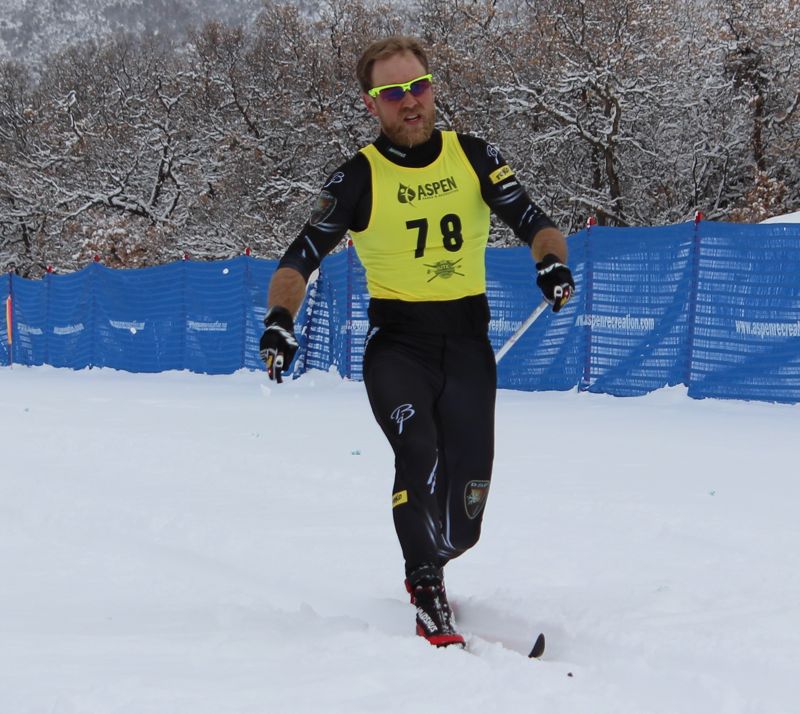
    Formerly of the Bridger Ski Foundation and U.S. Ski Team, Leif Zimmermann finishes fourth for a season-best SuperTour result in the 10 k classic in Aspen, Colo., in early February.
    Zimmermann finishes fourth for a season-best 2012/2013 SuperTour result in the 10 k classic in Aspen, Colo., in early February.

    Last winter in Aspen, Colo., Zimmermann posted his season-best SuperTour result of fourth in the 10-kilometer classic. He was 47th in the freestyle sprint at nationals, and at the American Birkebeiner 52 k skate race in February, Zimmermann placed 28th.

    “I’ve skied well the last couple years but not like I had planned to,” he said. “Physically my body needed a break and I was satisfied with what I’d done. I’m not disappointed; it was a good time to transition to the next phase of my life. All of my adult life has been skiing.”

    Nearly 16 years ago, Zimmermann started skiing with Danevski. A multi-sport athlete who played baseball and soccer, one of his soccer buddies prompted him to try biathlon. Zimmermann liked hunting; he’d appreciate the marksmanship, his friend’s father reasoned.

    “I enjoyed biathlon and started to improve a lot,” Zimmermann said. “My skiing came quickly, especially skating.”

    A year later, he realized his true calling was cross-country as the BSF biathlon program started to fizzle. He hasn’t done any biathlon races in eight years, but still has his rifle. “It just didn’t pan out,” he said.

    Fortunately, his ski career did.

    “I really enjoyed World Juniors and U23s and being able to learn and develop at all those entry level world championships,” he said. “I think that’s a pretty cool phase of your career as a junior. You just learn so much and experience so much in such a short amount of time. I don’t think you really appreciate it as it’s happening.”

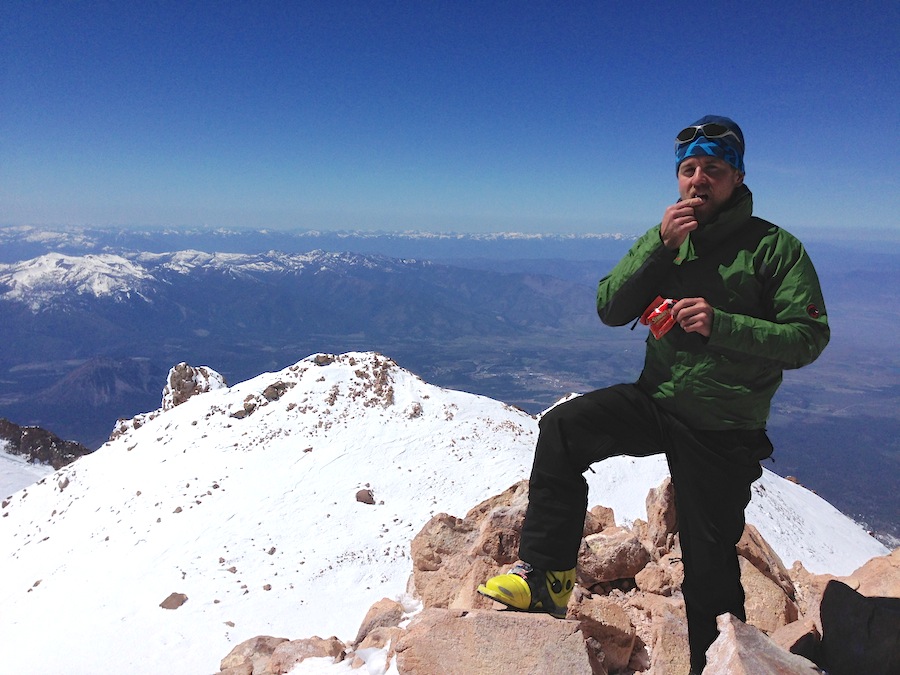
    Former Bridger Ski Foundation and U.S. Ski Team member Leif Zimmerman enjoying a snack on top of Mount Shasta, an active volcano and fifth-highest peak in California, in April. Zimmermann retired from skiing this spring. (Courtesy photo)
    Zimmerman enjoying a snack on top of Mount Shasta, an active volcano and fifth-highest peak in California, in April. (Courtesy photo)

    He does now.

    “I don’t necessarily have any regrets,” Zimmermann said. “I would’ve liked to have put 100 percent into skiing … I could’ve done a little more fundraising, done things a little bit differently, maybe moved to another spot. It was a tough time for all skiers the last five years with all the economic instabilities…

    “I’m definitely pleased with all the things I’ve been able to do with my ski career,” he added. “I wasn’t able to fulfill that goal to reaching the World Cup or going to Sochi, but I’m definitely pleased with how it turned out.”

    This spring, he started an adult baseball league and played again for the first time in 10 years. After his last races at Spring Series in Truckee, Calif., Zimmermann drove up along the northern West Coast in April, visiting friends and family in Oregon. He climbed an active volcano called Mount Shasta, the second-highest peak in the Cascades and fifth highest in California.

    He’s currently working full-time with the Big Sky contractor on custom and remodeling projects, but won’t be far from skiing come winter. Zimmermann anticipated he’ll jump into a SuperTour now and then, and continue helping new BSF elite athletes get settled in Bozeman.

    “I’m going to be involved with BSF,” he said. “I don’t know exactly what I’m going to do this winter. I might go to some junior qualifiers or help out with the elite team a little bit.”

    Perhaps he’ll assistant coach or help wax, but ideally, he’s looking for something full time in the nordic industry. Until then, Zimmermann said he’ll enjoy a less hectic fall and spend more time in the woods, setting up camp and bow hunting.

    A few weeks ago, 2010 Olympian Garrott Kuzzy, 30, came to Bozeman and the two had dinner. Kuzzy retired in 2011, and Zimmermann the decision to step away from racing is a generational thing with skiers his age.

    “A lot of it is, it’s time to move on to different phases in your life,” he said.

  • Italian Court Clears Mayer, Five Others of 2006 Doping Involvement

    An Italian court cleared six Austrians of involvement in the doping scandal of the 2006 Turin Olympics on Friday. Former cross-country coach Walter Mayer, ski president Peter Schroecksnadel and biathlon director Markus Gandler were cleared, along with team doctor Peter Baumgartl and skiers Martin Tauber and Jurgen Pinter.

    The Austrian Ski Federation released a statement following the verdict saying that the decision proves “many accusations against Austria ski federation representatives were false.”

    Though six walk free, three others were given fines and sanctions. According to the Associated Press (via Sportsnet), former cross-country coach Emil Hoch was handed 20 months and 26,000 euros, biathlete and 2002 bronze medallist Wolfgang Perner got 18 months and 23,000 euro and biathlete Wolfgang Rottmann received 16 months and 20,000 euros. Perner and Rottman both plan to appeal.

    Italian police raided Austria’s hotel rooms in 2006 in response to a tip-off that Mayer had been seen in the area despite being banned for his involvement in a doping scandal in 2002 (for which he received 15 months in prison). Doping paraphernalia was found in the athletes’ rooms during the Turin raid, prompting an investigation and formation of a disciplinary panel by the International Olympic Committee (IOC). The panel handed the Austrian Olympic committee a $1 million fine and lifetime bans to four athletes (one of which was later reduced to a four-year ban by the Court of Arbitration for Sport).

  • Tough on Dopers at the Oslo World Championships

    The toughest anti-doping effort ever in a World Championship, including nightly doping tests and test analysis that cover “new” substances. The cheaters are living a dangerous life during the Oslo world championships. The doping inspectors are stepping up their efforts in front of the championship, and are sifting through the European ski resorts where the teams are polishing their final details before the competitions begin next week. The Norwegian teams were tested during their final altitude camp in Alpe di Siusi (ITA) last week.

    “There are always some skiers we follow more closely. We have blood profiles. If they seem to diverge from what’s normal, of course we will look closer at those,” Inggard Lereim said to Norwegian news agency NTB.

    Lereim has been a central part of the anti-doping research and testing for decades. During the world championships, he is the organizer’s medical expert in charge in regards to anti-doping efforts. The racers will be tested more extensively and frequently than ever during a major event. More than 600 doping samples will be analyzed at Aker University hospital doping lab in Oslo.

    Additionally, the World Anti-Doping Agency (WADA) will request more out of competition samples as well. For each event at the world championships, six athletes will be tested (the top four and two random).

    Sleepless

    Night time can be used for a lot of different things besides sleeping. The anti-doping inspectors warn that they will use the nights to perform unannounced raids.

    “The strategy was used the first time during the 2006 Olympics in Turin. It will definitely be continued during these world championships. Some of the illegal substances are detectable only for an extremely short period of time, which means the doping test has to be performed shortly after the substance has been taken in order to detect it,” Lereim explained.

    There have been several doping scandals in nordic skiing. The biggest to date was the 2001 doping scandal that surfaced during the Lahti world championships. The Finnish hosts had rigged an organized doping machine.

    “That was just sad, and as a huge fan of Finns and Finland, it shocked me. If this championship had been hosted in Norway or Sweden, nothing would have been found. Only a few days before the 2001 Worlds, the doping lab in Helsinki developed a testing procedure that was capable of detecting Hemohes. I knew nothing about it,” Lereim said.

    Right before the 2002 Olympics in Salt Lake City, the doping experts cracked the code to detect Nesp. That was the end of Johann Muehlegg’s career.

    Skiers should not feel safe before these World Championships either. New test methods make cheating riskier.

    Cleaner now

    “The ethics of this sport (cross-country skiing) is for the most part very good in most countries. A lot has happened in the anti-doping effort over the past 25 years. Several years ago, I was mentor to the FIS in Eastern Europe in this field. That was a bizarre experience. I could go on for days talking about my experiences over there,” Lereim said.

    “There will always be some communities that are willing to cheat. I am mostly mad at my colleagues, the physicians. More than anything, the doctors, the coaches and the pharmacists are the ones who are behind the doping problems. The good thing is that the FIS has the jurisdiction to expel these individuals for life. A lot of sports don’t have that,” Lereim concluded.

    The 2011 World Championships in Oslo begin on February 23 and conclude on March 6.

    From Langrenn.com, February 14, 2011 Translation by Inge Scheve

  • Chris Cook – The Lone Goat

    Chris Cook – The Lone Goat

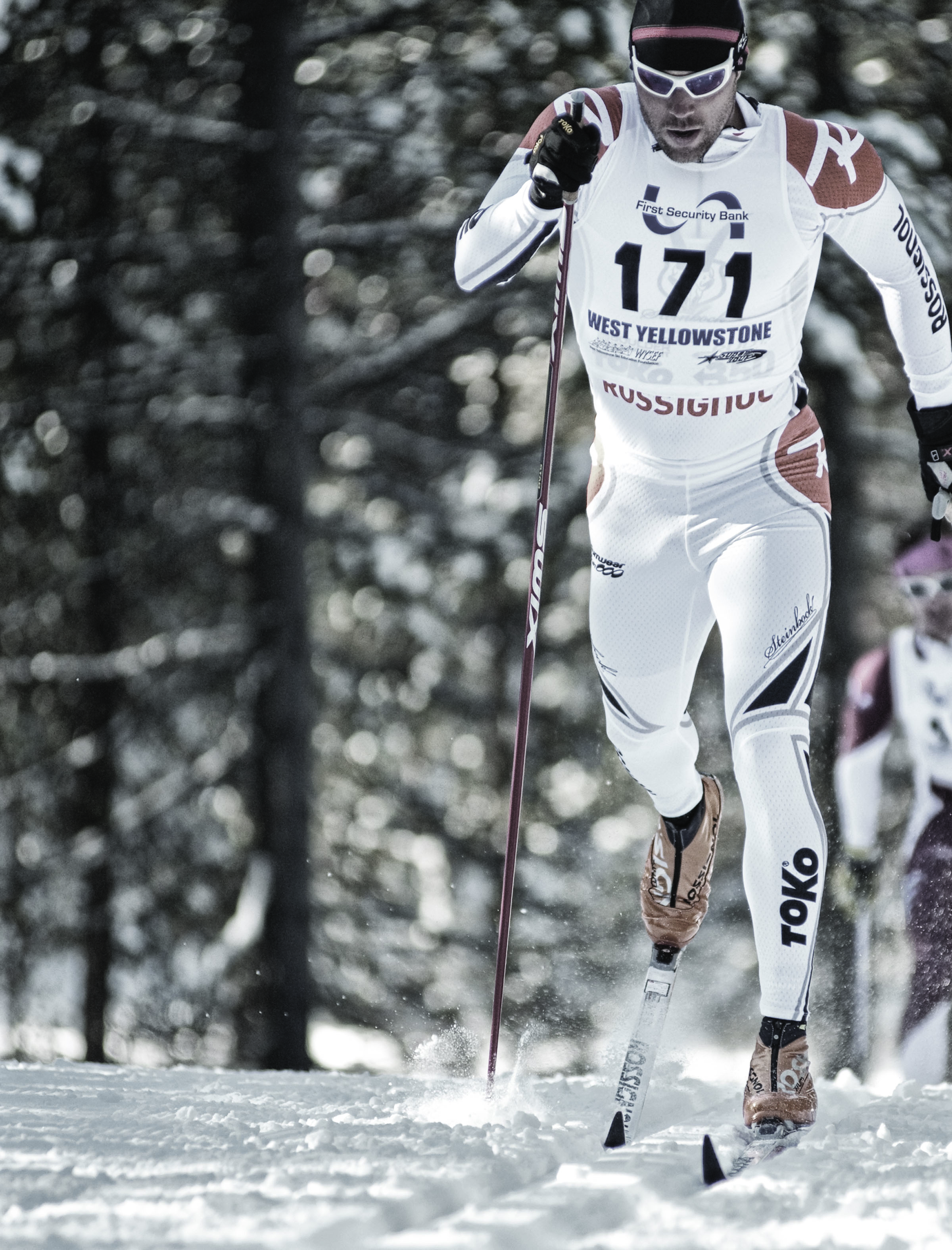
    Photos courtesy of Chris Cook/Steinbock Racing

    Despite stellar race results for the team last season, Chris Cook is the only goat left in the Steinbock herd for the 2010-11 season, and he has moved back to his hometown of Rheinlander, Wisconsin. Two others are off the elite racing circuit: Zack Simons went back to school, and Andrew Johnson took a coaching position with the University of Vermont.

    That leaves Cook to tend to the business side of the organization as well as his race efforts, which will get underway with nothing less than World Cup level events. As the overall winner of the 2009-2010 SuperTour and the leader of the SuperTour sprint series, the 30-year-old qualified to race in Europe as a part of the U.S. Ski Team for the first World Cup races of this season.

    The team was well on its way to growing its herd last spring. They applied for funding and targeted sponsors. But with the economy still sluggish and some major grant applications falling through this year, Steinbock Racing was unable to offer the level of support that they needed to commit to the team. The result was that athletes who had showed interest in joining for 2010-2011 opted to stay with their local clubs for the season, Cook explained, adding that he is still hopeful that this will change in the future.

    However, Cook is a glass-half-full kind of guy. He sees their choice to stay with their clubs as a sign that the club structure and support for cross-country skiing in North America is improving.

    “The clubs and organizations across the United States have gotten good at raising funds and support for senior skiers, and that’s good for the sport,” Cook said, noting that when he graduated from college in 2003, there were only two or three teams nationwide. Now, they have multiplied, he added.

    Ready to race

    Being a one-goat herd is no picnic, but Cook feels confident going into the racing season. He comes off one of his best mountain biking seasons, and feels as fit as ever despite not having trained on snow during the summer. On November 15, he leaves for Sweden, where he will join the US Ski Team for the World Cup season opener in Gällivare, Sweden on November 20.

    “I’ve been training hard, and I think I’ll get dialed in quickly once I get on snow,” Cook said.

    There are no hitches in Cook’s motivation, and he has no problem getting the workouts done. With a decade of experience training and racing at the international level, including the 2006 Olympics and more than 30 World Cup starts, Cook knows the drill – and he knows how to design his own training plan.

    “When you’ve been around this level for this long, you know what works for you and what doesn’t,” Cook said, adding that he still works closely with his former coach, U.S. Ski Team Head Coach Chris Grover.

    Ambitious schedule

    With the 2011 World Championships in Oslo as his overall season goal, Cook is ready to get down to work. In order to make the Worlds team, Cook knows he’ll have to deliver solid results both at the U.S. National Championships in January, and in the early season races.

    The World Cup opener in Gällivare features a 15-kilometer skate race and a relay. Cook hopes to make the relay team, but doesn’t have great expectations for the 15 k.

    “The 15 k freestyle event is not one that has been a great success for me so far,” he said, explaining that his biggest goal for the Gällivare races is to regain the feel for the snow and just get the routine down.

    The following weekend, Cook moves on to Kuusamo, Finland, with the U.S. Ski Team. The Finland stop features events more to Cook’s taste: a 15-kilometer classic race and a classic sprint.

    But his final World Cup stop, in Davos, Switzerland, December 11 and 12, is what Cook is looking forward to the most: a 15-kilometer classic and a freestyle sprint.

    “By then, I should be fully changed over and dialed in on the snow. And I’m a fan of the 15K classic. It’s always been one of the most enjoyable races for me,” Cook said.

    He considers his former experience with World Cup racing a major advantage.

    “Especially on the sprint courses, it’s a lot different going to a venue for the first time. A huge part of the racing is getting to know the courses. When you’ve got the experience and you’re comfortable with the course, that’s one more thing you can cross off the list and not have to worry about,” Cook said.

    As for his chances to make the Worlds team, Cook said there are a lot of unknowns, but he’ll give it his best shot.

    “I’m not sure of the team selection process or how many they’ll even take. I try not to think about those things,” Cook said. “I know I have to race hard and do well. I’ll just have to let the chips fall where they may.”

    Long-term goal: growing the herd

    “I really wanted to continue the team and keep the name out there, even if it’s only me. It has been so much fun running it and being accountable for everything the team puts out there. I maintain the web site, do the Twitter and have a Facebook page,” Cook said. Over time, he said that his goal is to grow Steinbock racing back into a team. Whether that happens next season or over time is still too early to predict, Cook said.

    To attract more athletes, Cook is pursuing different avenues. This year, he is getting involved with skiers at the high school level and trying to extend an arm to juniors and younger skiers. That is exactly the kind of attitude that his sponsor Ian Harvey with Toko USA admires in Cook. He has worked with Cook as a sponsor for five years, on and off.

    “Cook is a representative for Toko, he has a good personality and we’re proud to sponsor him,” Harvey said, explaining that results are only one of the factors he looks for when deciding to sign an athlete.

    “I look for results, but more importantly, I look for a person with enthusiasm for cross-country skiing and who enjoys working with other people. Chris is that kind of guy. I think he could easily grow his team,” Harvey said.

    Cook is also doing more online community outreach, putting a lot of effort into the Steinbock Racing web site and promoting the team on social media.

    The transition to a one-man show has definitely been a learning experience, but Cook said he is enjoying the team management part of the job as well, noting that he feels like he has plenty of resources to draw on when he needs to. Time is the bigger issue, but he sees light in the end of the tunnel there too.

    “I still have Zack and Andrew to help me when I have questions about the web site. There are only so many hours in a day to take care of everything, but once we’re racing and traveling and staying in hotels, you’re searching for things to do, so I think it will be just fine,” Cook said.