From the FasterSkier archive — posts syndicated from athletes’ and coaches’ own blogs between 2004 and 2012, kept online as published. Current coverage is at fasterskier.com.

Tag: 2010 vancouver olympics

  • Calgary in Final Three for 2026 Olympics

    Calgary in Final Three for 2026 Olympics

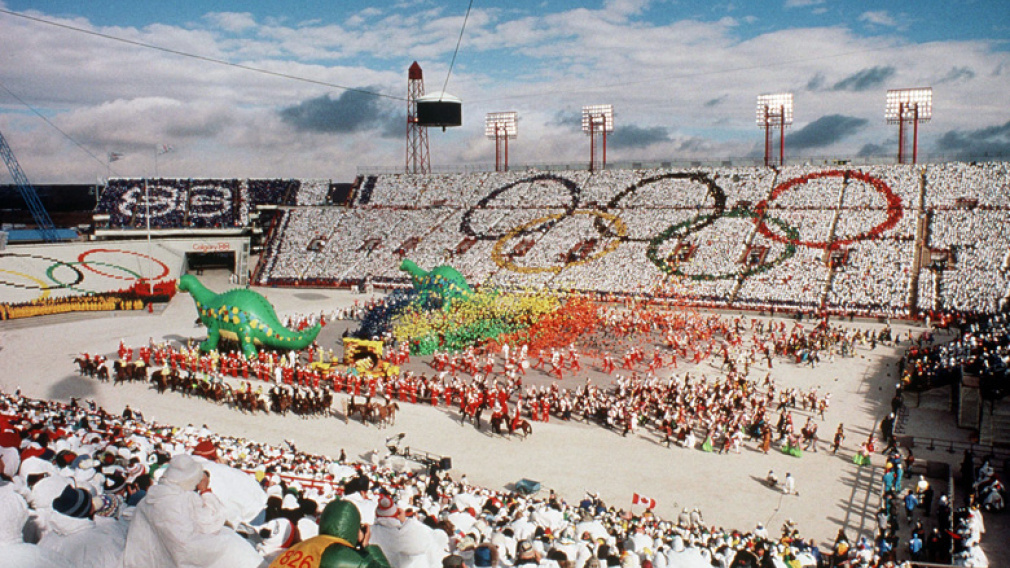
    The Opening Ceremony at the 1988 Winter Olympics in Calgary, Alberta. Calgary is in the final three for hosting the 2026 Winter Olympics and Paralympics. (Photo: Olympic.ca)

    The bidding process for the 2026 Winter Olympics and Paralympics is crawling forward, and when the International Olympic Committee (IOC) announced the shortlist last Thursday, Oct. 4, Calgary was in the final three. 
    Calgary, Alberta, is one of the final three in the running to host the 2026 Winter Olympics and Paralympics. (Photo: www.calgary2026.ca)

    Much has changed since the last time Calgary, Alberta, hosted the Games in 1988 as well as since Vancouver, British Columbia, in 2010. The IOC is now in favour of joint bids, re-use of existing facilities and lower costs. These improvements have resulted in more competition for 2026 than for 2022 (which was awarded to Beijing), but each comes with challenges.

    The increased interest in 2026 may turn out to be temporary. Sapporo, Japan, ended its bidding process after a major earthquake. Sion, Switzerland, dropped out after losing a referendum, and Graz, Austria, couldn’t get the support of its regional government.

    Last Thursday, the IOC announced that Erzurum, Turkey, was out of contention. IOC Vice President Juan Antonio Samaranch, Jr., referenced telecommunications, transport and airports as concerns, but did not mention that there was no sliding centre (for bobsled, luge and skeleton). The Turkish government had previously declined the suggested use of Sochi’s sliding centre, some 650 kilometers away in Russia, which would likely have been unpopular with the IOC as well.

    Calgary, Stockholm (Sweden), and Milano/Cortina d’Ampezzo (Italy) are still in the running, each with their own advantages and challenges. While most cost estimates are being disputed by local “experts”, comparing costs between bids remains difficult.

    buy vibramycin online

    Bid books are to be delivered in January 2019 with a final decision announced in September 2019. The September announcement will be in Lausanne, Switzerland, replacing the originally planned meeting in Milano, as bidding countries are not allowed to host decision meetings.

    Calgary

    An image from the “Yes Calgary 2026” Eventbrite page.

    Many of Calgary’s 1988 Olympic facilities are still in tact, the most visible being the 70- and 90-meter ski jumps. By the 1992 Winter Olympics in Albertville, France, the standard jump sizes were increased, replacing the 90-meter hill with the HS106 (K95) and adding a larger HS140 (K125) hill. Neither of the existing jumps, slated for closure this month, are suitable for upgrading. 

    The current proposal from Calgary is to maintain the jumps in Whistler, B.C., to current standards, allowing ski jumping and nordic combined events to be held in Whistler. This would save a great deal of money and avoid the construction of facilities that will get minimal use after the Olympics. The 11-hour drive and one-hour time difference between Calgary and Whistler is the largest separation of the remaining bids. The flying time from Calgary to Vancouver is about 90 minutes, but requires an additional 2 1/2 hours of driving to and from airports. The distance is not viewed as a problem in the IOC’s new vision. This is a big change from the 2010 bid process, when the two-hour drive from Vancouver to Whistler was originally seen as a deal-breaker. The cooperation between Whistler and Calgary makes financial sense for the local organizing committee, but will be difficult to achieve during the current economic battle between Alberta and British Columbia (see “The Alberta/B.C. Conflict” sidebar).

    The Alberta/B.C. Conflict:
    This is a very complicated and long-standing issue, but the conflict is currently front and centre in both provinces.

    Alberta’s economy is almost entirely dependent on oil exports. Alberta is desperate to build a new pipeline to transport diluted bitumen to the coast for shipping. Alberta needs this export capability to restore its status as the richest province and re-employ laid-off citizens. The Alberta government needs the tax revenue from increased exports to function, let alone maintain support for expensive recreation facilities like Canmore Nordic Centre and Frozen Thunder.

    B.C.’s economy depends on tourism, fisheries, and forestry, all of which would be seriously damaged by an ocean oil spill. A large increase in tanker traffic through the narrow and rock-infested passage to the open ocean is a serious concern, with the cleanup expected to be more difficult than the Exxon Valdez oil spill, with Vancouver, Victoria and Seattle all at risk.

    The dispute between the provinces is unlikely to be solved quickly, unless the politicians of one province put their own voters’ jobs at risk to help the other province. The federal government is feeling the pain of Alberta’s tax revenue drop, but the Federal Appeals Court ruled that they must consider risks of an ocean oil spill before expanding their recently purchased pipeline to Vancouver. The Washington state government is concerned about the risk its state will face while Alberta reaps all the rewards, but it seems unlikely that it can interest the U.S. federal government in an environmental issue.

    A natural gas (LNG) pipeline from Alberta to the coast is currently proceeding with support from the B.C. government as the risks to B.C. are much smaller. While the gas pipeline is in the news, it is unlikely to distract Calgary’s residents from viewing the 2026 plebiscite as a way to share their economic pain.

    There is an idea that the Olympics should move around the world, and many feel that it is Europe’s turn. Calgary already hosted in 1988 and Vancouver in 2010. Asia has hosted since 2014 with Sochi in 2014, PyeongChang (South Korea) in 2018, and next up Beijing (China) in 2022.

    Calgary has the most organized bid, having started the process three years ago.

    The city of Calgary’s non-binding plebiscite is scheduled for Nov. 13. Voters will be considering their struggling economy, growing provincial debts, the disputed legacy from 1988, costs, and hitting back at B.C. against the possibility of a better legacy after 2026. While cross-country skiers wouldn’t doubt the value of the Canmore Nordic Centre to North American skiing, not all Calgarians are convinced about the value of hosting the Games.

    The IOC is campaigning for Calgary to support the bid.

    As a side note, in 2010, most Canadians saw the Vancouver Olympics as a two-hour event. The men’s gold-medal hockey game was what changed those Olympics from ‘disaster’ to ‘best-ever’ status.

    Milano/Cortina d’Ampezzo

    The Milano/Torino/Cortina d’Ampezzo bid briefly lost Milano in August before Italy’s differences were resolved. Then, when the national government confirmed that it would not support the bid financially, Torino dropped out, apparently for good. The Lombardy and Veneto regions are expected to provide funding, and considering that the two regions’ combined GDP is larger than Sweden’s, this may not be a problem.

    This bid is very spread out, in European terms, with events in Milano, Cortina d’Ampezzo, Val di Fiemme, and Anterselva (“Anterselva” is the official Italian name for what the biathlon world and German-speaking locals call Antholz). Milano has excellent train service and two major airports, making it the most accessible host city. However, the mountain communities are served largely by bus and travel times can be as much as six hours from Milano. Express buses could reduce this to four hours.

    order antabuse online, order betnovate cream

    Italy’s national political situation is always interesting, with short-lived coalitions running the country most of the time. This bid is dependent on the far more effective regional governments; while Lombardy and Veneto officially represent only 40 percent of Italy’s GDP, their influence is much larger.

    Milano/Cortina, Italy, is among the final-three candidates in the running to host the 2026 Winter Olympics. (Photo: Neveitalia/Twitter)

    Stockholm

    Stockholm’s Royal Palace as seen in 2012 during FIS Cross Country World Cup Finals.

    Stockholm’s bid is moving along quietly, with Latvia planning housing for its existing sliding centre at Sigulda, 680 kilometers and a ferry ride away from Stockholm. Sweden has most of its facilities in place already and appears to have the least building costs of the candidates. Sweden’s bid currently has no official support from any level of government, which is partially why it’s been less visible. Sweden’s September federal election has added some uncertainty, with the far right making large gains and the prime minister losing a vote of confidence on Sept. 25. It is not clear that a stable coalition will form, which brings more uncertainty to the process of gaining political support and funding.

    More on the 2026 candidates

    Robert Livingstone of gamesbids.com wrote a good summary of bid politics before the announcement of the final three. 

    The Canadian Broadcasting Corporation (CBC) asked some experts to rank the three short-listed bids. The result is interesting, more for the reasoning that the ranking.

  • Kalla Cranks Out Win in Blink’s Lysebotn Opp; Stephen 6th

    Kalla Cranks Out Win in Blink’s Lysebotn Opp; Stephen 6th

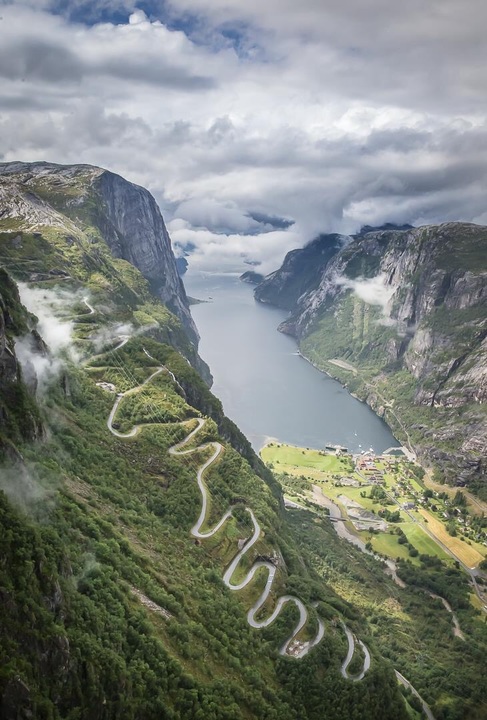
    The 7.5-kilometer race course for the Lysebotn Opp, an annual hill climb at the Blink Ski Festival in Lysebotn, Norway. (Photo: Blink Ski Festival/ Facebook)

    There’s a little more than six months to go until the opening ceremony of the 2018 PyeongChang Winter Olympics. For the recently turned 30-year-old Charlotte Kalla, a two-time Olympic gold medalist and three-time silver medalist from Sweden, nothing would be sweeter than to capture another gold this winter in South Korea.

    Her last individual Olympic win came in 2010 in Vancouver, B.C., when she took first in the women’s 10-kilometer freestyle. A repeat podium in the PyeongChang 10 k skate is not far from her thoughts.

    “It is a race that is certainly on my mind,” Kalla told NRK on Thursday, according to a translation.

    What better way for Sweden’s 10 k favorite to practice than at the Blink Ski Festival’s Lysebotn Opp, an annual 7.5 k freestyle rollerski hill climb in Lysebotn, Norway? With names sure to contest her at the Olympics –including Norway’s Marit Bjørgen and Heidi Weng, as well as Finland’s Krista Pärmäkoski, Germany’s Stefanie Böhler and American Liz Stephen — on the start list for Thursday’s race, Kalla couldn’t resist entering herself.

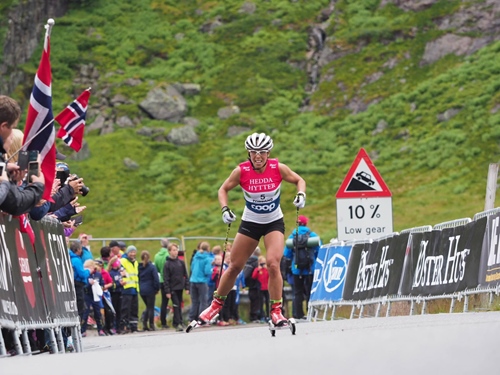
    Sweden’s Charlotte Kalla (r) racing to the win in the Lysebotn Opp, a 7.5-kilometer uphill climb, at the 2017 Blink Ski Festival on Thrusday in Lysbotn, Norway. (Photo: Axelar/Arild Aarnes)

    If her performance in the rollerski race is any indication of where Kalla is headed this winter, it’s the direction she wants. After breaking away with Bjørgen, Pärmäkoski and Weng early on in the race to form a lead pack of four women, Kalla quickly decided to make the race her own.

    Within the next few kilometers, Kalla dropped the two Norwegians and Pärmäkoski and went on to finish first in a time of 33 minutes, 18.3 seconds. Weng followed 40.3 seconds later and Bjørgen crossed in third, 1 minute and 50.5 seconds back. 

    Notably, Kalla’s time was faster than 57 out of 100 elite men that raced the same 7.5 k course later on Thursday.

    “One shouldn’t focus too much on what happens in July, there is a lot left to be done before the season, but it’s been long since I’ve been in this good a shape in July. The last time was probably 2013,” Kalla told NRK.

    The Lysebotn Opp’s 2014 champion,Stephen finished sixth overall (+3:35.7) on Thursday, after  Norway’s Ragnhild Haga in fourth (+2:43.4) and Pärmäkoski in fifth (+2:47.0). Prior to winning three years ago, Stephen also placed third in the famous rollerski hill climb in 2012 (the Lysebotn Opp was added to the festival in 2010).

    (Article continues below)

    https://www.instagram.com/p/BXHv6bPB5Ln/?taken-by=lizhillstephen

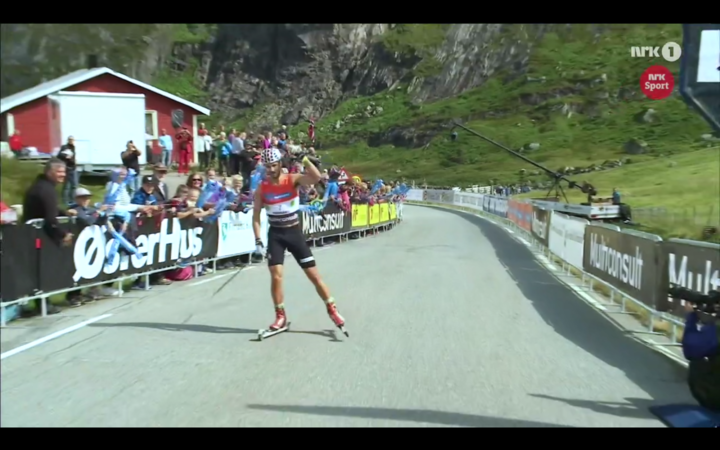
    In the men’s 7.5 k uphill race that followed, Hans Christer Holund broke away for the win in 27:37.6, besting fellow Norwegian Simen Hegstad Krüger in second (+1:13.9) and Finland’s Matti Heikkinen in third (1:25.6).

    Holund took it out strong from the start, holding his lead through the climb’s entirety.

    Norway’s Hans Christer Holund after winning the men’s 7.5-kilometer Lysebotn Opp rollerski hill climb on Thursday at the 2017 Blink Ski Festival in Lysebotn, Norway. (Photo: NRK screenshot)


    “I am healthy and have done some solid training this summer,” the 28-year-old Holund told NRK after. “It looks promising. There’s still a lot of time Olympics, but it does look promising. It is so competitive in Norway and it’s tough to just be selected. If I am selected for the Olympics when the time comes then I will be good enough and then an Olympic gold-medal is the next task.”

    Norway occupied seven of the top eight on Thursday, with Henrik L’Abée-Lund in fourth (+1:59.6), Sjur Røthe in fifth (+2:05.7), Martin Johnsrud Sundby (Wednesday’s 60 k winner) in sixth (+2:11), Simen Andreas Sveen in seventh (+2:12.4), and Gaute Kvåle in eighth (+2:14.7).

    Andy Newell of the U.S. Ski Team did not race the hill climb, but he was back for the 15 k mass start on Friday (as was Stephen for the women’s 10 k). Stay tuned for results in a separate report.

    Results: Women | Men

  • Last of Canada’s World Cup Female Veterans, Jones Plans Her Next Move

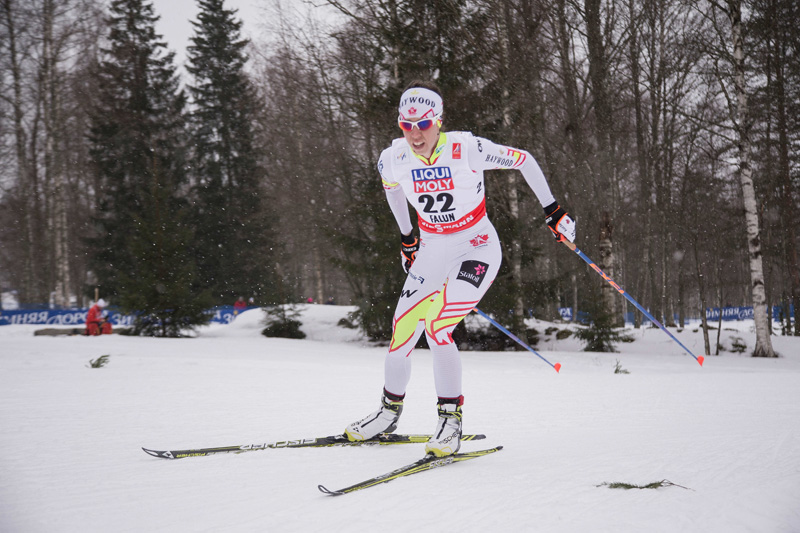
    Canada's Perianne Jones (Alberta World Cup Academy/National Development B-Team) racing to 32nd for her best World Championships distance result at 2015 worlds in Falun, Sweden. (Photo: Fischer/NordicFocus)
    Perianne Jones (Canadian National Development B-Team) races to 32nd for her best World Championships distance result at 2015 World Championships in Falun, Sweden. (Photo: Fischer/NordicFocus)

    For the last 12 years, Perianne Jones was more or less on autopilot, leading the life of a professional nordic racer in Canmore, Alberta, and giving little thought to what would come after skiing.

    The 30-year-old Canadian national-team member and Nakkertok Nordic prodigy had moved west from her hometown of Almonte, Ontario, immediately after high school. She immersed herself in full-time training and racing, and by 2009, made the Canadian World Cup Team.

    Two Olympics and five seasons later, Jones was inching toward retirement. Health issues stunted the start of her 2013/2014 season; she discovered in the fall of 2013 that she had hemochromatosis, a genetic condition that causes too much iron in the body. She spent the next few months working to manage her iron levels and returned to the World Cup circuit in late December 2013.

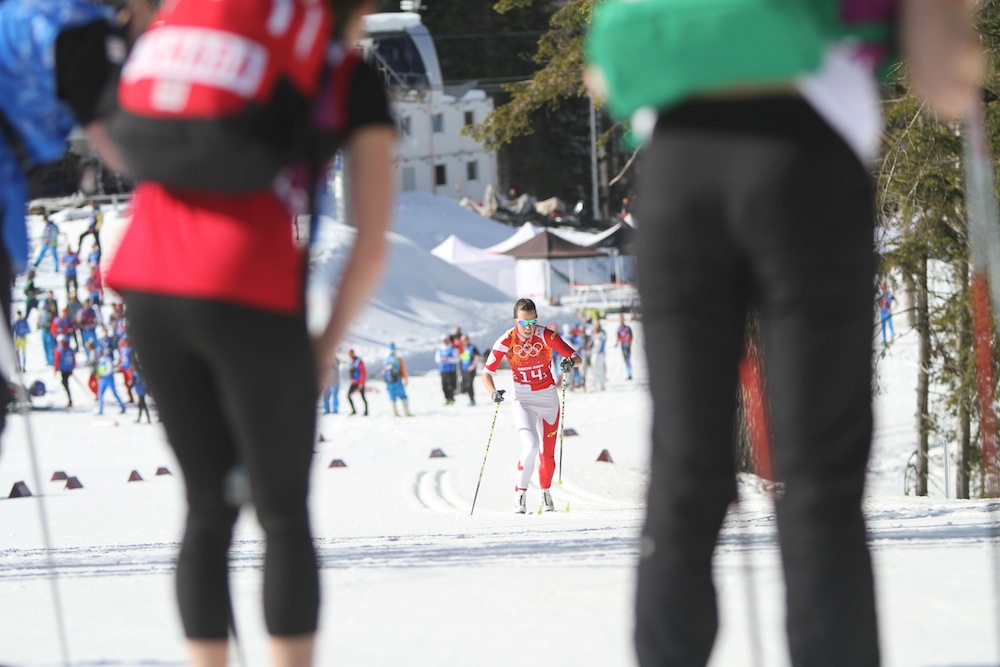
    Canadian biathletes and fellow cross-country skiers cheer on their own Perianne Jones on the first leg of the 4 x 5 k relay at the Sochi Olympics on Friday. Jones dropped to 14th and the team finished 14th, one place better than their finish at the 2010 Vancouver Games.
    Canadian biathletes and fellow cross-country skiers cheer on their own Perianne Jones on the first leg of the 4 x 5 k relay at the Sochi Olympics. the team finished 14th, one place better than their finish at the 2010 Vancouver Games.

    Two months later, she competed at her second Olympics in Sochi, Russia, placing 23rd in the freestyle sprint for her personal Olympic best. In the classic team sprint, she and teammate Dasha Gaiazova placed 11th after notching third in the same event at the 2013 Sochi World Cup a year earlier.

    Jones ended her season with a second-place finish in the freestyle sprint at 2014 Canadian Nationals in Corner Brook, Newfoundland, and was subsequently named to the national development B-team last May.

    Also last spring, her coach, Eric de Nys, left the national team to head up a new training program in Canmore: the WinSport Junior Cross Country Ski Team. Jones lost the bulk of the funding she had received as a World Cup Team member, yet decided to continue on for another season.

    “I, for sure, wanted to do another year after Sochi, and do things right,” she said on the phone from Canmore in early April. “… [Not making the World Cup Team] was a bummer, but at the same time, I know I didn’t make the criteria. I had one top-ten two seasons ago and you needed two top-twelves. I was put on the development team, so it meant that this past season cost me way more than it ever has…”

    “I, for sure, wanted to do another year after Sochi, and do things right.” — Perianne Jones

    As a development athlete, she said the costs amounted to $40,000 to $50,000, and that included government assistance as a carded athlete.

    “Even if you’re carded, you still have to pay for a place to live,” Jones said. “And living in Canmore is not cheap.”

    Carded athletes essentially receive an allowance each month, she explained. The government cuts qualifying individuals checks that could be used for anything — even a flat-screen TV — but the amount is generally considered a living allowance.

    “As a development skier, you have to cover housing and your team fee, which is around $10,000 and your winter expenses on the road, and then your flights to and from and around Canada,” Jones said. “It adds up.”

    Without stressing too much over finances, she focused on the 2014/2015 season and logged some of her career-best distance results, placing 32nd in the 10 k freestyle and 37th in the skiathlon at 2015 World Championships in Falun, Sweden.

    Canada's Perianne Jones raced to fifth place in her qualifier to finish 24th overall in the 1.4 k classic sprint in Falun, Sweden for the 2015 FIS Nordic World Ski Championships. (Photo: flingpointroad.com)
    Canada’s Perianne Jones racing to fifth in the 1.4 k classic sprint at 2015 World Championships in Falun, Sweden. She placed 24th overall. (Photo: flyingpointroad.com)

    Also in Falun, she finished 24th in the classic sprint and was 21st for a season best in the preceding World Cup classic sprint in Östersund, Sweden.

    “This past year I was healthy the whole season, which was quite an accomplishment for me,” she said. “It wasn’t my best season in terms of results, but health-wise it was really good. … I was pleased with both my sprints in Östersund and at world champs. It always can be better for sure, but I don’t have any regrets.”

    In Falun, she announced she would leave the international-racing scene at the end of the season. She capped off her career at 2015 Canadian Nationals in Thunder Bay, Ontario, winning the classic sprint, placing second in both the 5 k freestyle and 10 k classic individual races, and fifth in the 30 k freestyle mass start.

    In Thunder Bay, Nakkertok hosted a retirement dinner in her honor, complete with a video and several athletes and her brother Kieran Jones — Nakkertok’s head coach — speaking about the impact she had on their ski careers.

    “That was the only time I cried all week,” Jones said. “The ski club has been a huge part of my life and maybe I didn’t realize how I had been a part of them so much in the last ten years because I haven’t been around that much. I would totally love to go back to Ottawa and be a part of that some more.”

    She clarified that her involvement with Nakkertok would most likely be as a volunteer.

    “I have an interest in being involved, not necessarily in coaching at a high level, but when I was growing up with Nakkertok the ski club was entirely volunteer run,” she said. “I will be involved with a ski club wherever I end up. I will miss certain parts of skiing, but to have Joel still a part of the team will be an easier way to make that transition.”

    On Friday, Jones and her husband, Joel Jaques, a national-team wax technician, hopped aboard their 32-year-old Dodge getaway van and began a road trip to Ottawa. She guessed they might be gone for at least a month, with Jaques heading back to Canmore for a week in the middle of their trip for a training camp. How far they’d go depended on how the van ran. They bought it in February, about the time Jones knew her career was winding down.

    “We were just kind of joking about vans; there was one in Canmore and we offered the guy quite a bit less than he was asking and he said sure, and we’re like, OK, I guess we’re doing this,” she said.

    If they have time and the van makes it to Newfoundland, a friend offered to keep the van and buy their plane tickets back to Canmore. There, Jaques will go back to work with the national team and Jones will decide on her next move: she’s considering studying healthcare in Calgary or Ottawa.

    Meanwhile, she also planned to start working in Canmore to cover the cost of last season. While she essentially made up her mind to race one last season a year ago, the bill she received at the end of it ultimately solidified her retirement.

    “At the beginning of [last] season, I thought if I work and keep skiing, I would need to make the World Cup Team and need other women on the World Cup Team around me to keep going,” she reflected. “As the season kept going, I was realizing that even if all those things came into place, I wasn’t motivated to keep training for another year.”

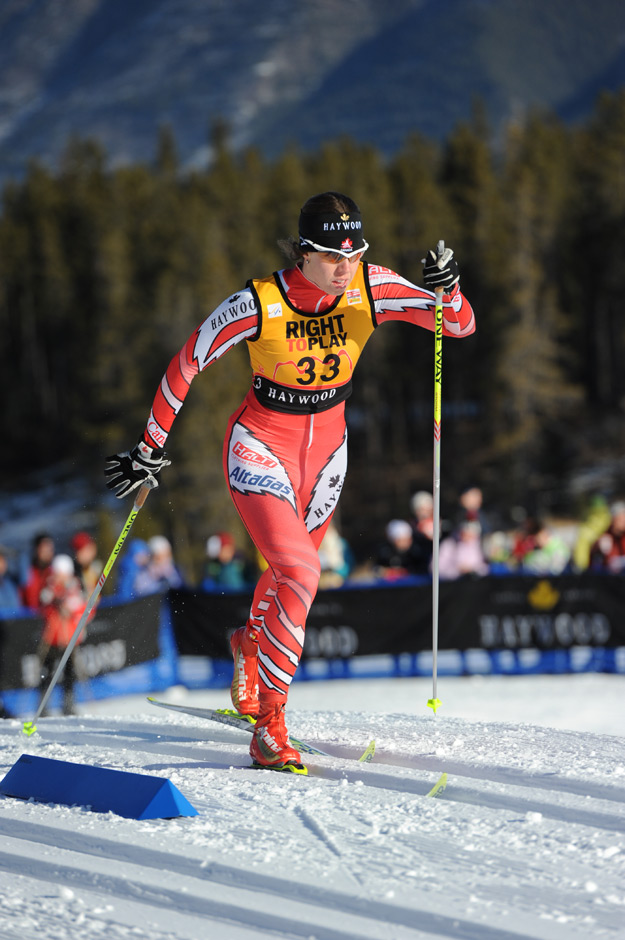
    Perianne Jones (CAN) was 29th in the Canmore World Cup on Feb 5, 2010. Photo: Win Goodbody.
    Perianne Jones racing to 29th in the Canmore World Cup in February 2010. (Photo: Win Goodbody)

    After graduating high school, Jones started a fall term the University of Calgary, but found the commute back and forth from Canmore difficult. She took an online course at Athabasca University, but realized that didn’t work for her, either. Instead, she spent the next 12 years focusing on skiing.

    “I’m happy with the decisions I made and I’m sure my ski career was the best quality,” she said. “Hindsight’s twenty-twenty; there’s always things that could’ve gone better, but at the same time I was able to commit 100 percent to skiing. Although I’m not educated right now, I’m really looking forward to going to school and I can put 100 percent of my energy into school.”

    Jones and Jaques were also looking forward to having the freedom to visit friends this spring.

    “I’m looking forward to waking up and being able to what I want to do for exercise,” Jones said.

    “I will not be out on my rollerskis,” she added with a laugh. “So far it doesn’t feel a whole lot different. I feel pretty good about my decision, and I’m confident it was the right one. So many people say that it’s really hard [to retire] and some people say it’s awesome, but I think it depends on the person. I have enough plans to keep me busy; I don’t think I’ll be bored.”

    Looking back, she credited her two national-team coaches, de Nys and Justin Wadsworth, for the longevity of her career. She worked with de Nys, a development coach before he became the women’s national-team coach, for most of her senior years.

    “Eric really got to know me as an athlete and I got to know him as a coach, and I really trusted him and we were able to work well together,” Jones said. “And Justin, he’s been with the team since [2010] and he wasn’t my personal coach until this past year, but the transition was pretty seamless … I don’t feel like I lost Eric as a coach this year, but I feel like I gained Justin. Whenever we had a question about something, either of us could easily call Eric or visit him in his office.”

    In her career, Jones notched three top-15’s at both Junior World Championships and U23 World Championships, finishing eighth at 2008 U23’s in Malles Venosta, Italy.

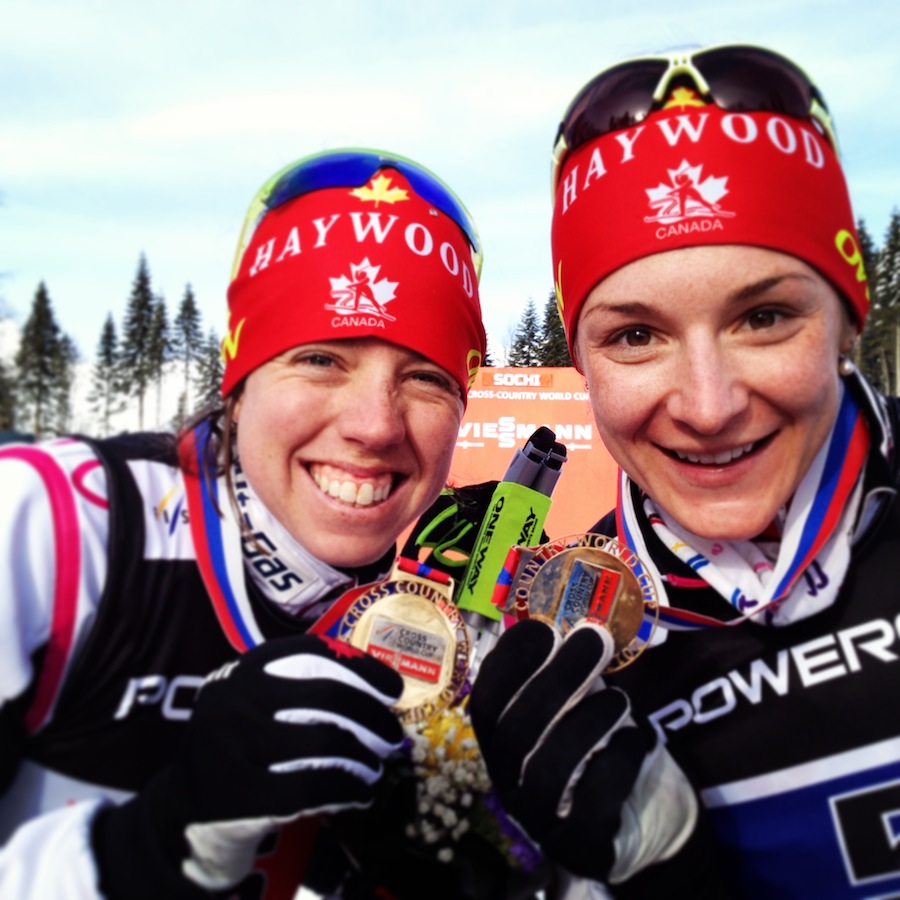
    Canadians Perianne Jones and Dasha Gaiazova celebrate their first bronze of the season, and together, in the Sochi World Cup classic team sprint. (Photo: Chandra Crawford)
    Canadians Perianne Jones (l) and Dasha Gaiazova celebrate their first bronze together in the Sochi World Cup classic team sprint. (Photo: Chandra Crawford)

    “I had some really good World Junior experiences, some good results and some really fun times with the team,” she explained.  “For sure, the two medals that I won with Chandra and Dasha respectively in Milano and Sochi were highlights.”

    In 2012, Jones and Chandra Crawford teamed up for third in the World Cup freestyle team sprint in Milano, Italy.

    Jones also recalled making the 2010 Olympics in Vancouver, British Columbia, as a major high point. She qualified in 2009 when she and Sara Renner placed sixth in the World Championships classic team sprint in Liberec, Czech Republic.

    “That was the first time we got to go to the medal ceremony … and it was with Sara, who was a pretty big mentor,” she said. “I was actually never really on the team with Beckie [Scott] or Milaine [Thériault], but I traveled quite a bit with Sara. … Having them come before me and have the results that they did and just being the people that they are, they made it pretty appealing to chase after ski-related goals … Everything was so positive that I never I had any doubt that A.) I would enjoy it and B.) it would be possible.”

    The last of Canada’s three veteran females to retire — following the departures of Crawford and Gaiazova from the national team last year — Jones was excited to see what the next generation of women could accomplish.

    “I spent the majority of the season on the road with Emily [Nishikawa] and that was just awesome,” she said. “I’m glad I was there for that and able to witness her best season ever, and I think it’s a sign for really great things to come. There are younger women coming up, too, and they have Emily to look up to so there’s no doubt in my mind that they will do great things.”

    Regardless of where she attends school, Jones envisioned that she and Jaques would end up living somewhere in western Canada.

    “We don’t really want to leave Canmore,” she said.

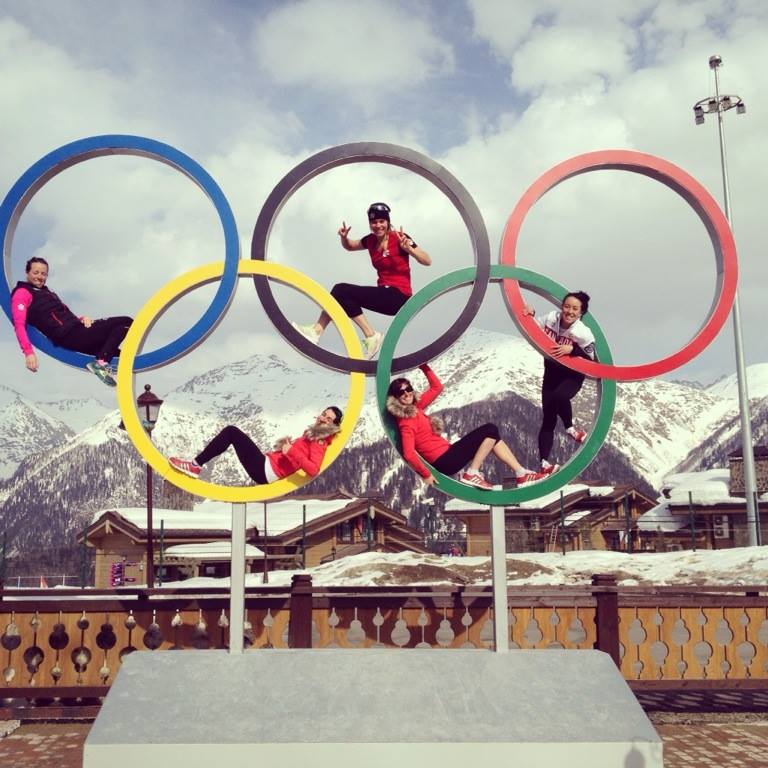
    Several members of the Canadian Olympic cross-country ski team get the perfect photo opp at the Olympic rings in Krasnaya Polyana, Russia. (From left to right): Perianne Jones, Amanda Ammar, Heidi Widmer, Brittany Webster, and Emily Nishikawa. (Photo: Emily Nishikawa)
    Several members of the 2014 Canadian Olympic cross-country ski team get the perfect photo opp at the Olympic rings in Krasnaya Polyana, Russia. (From left to right): Perianne Jones, Amanda Ammar, Heidi Widmer, Brittany Webster, and Emily Nishikawa. (Photo: Emily Nishikawa)
  • Catching Up with Canada’s Former Head Coach Dave Wood

    Catching Up with Canada’s Former Head Coach Dave Wood

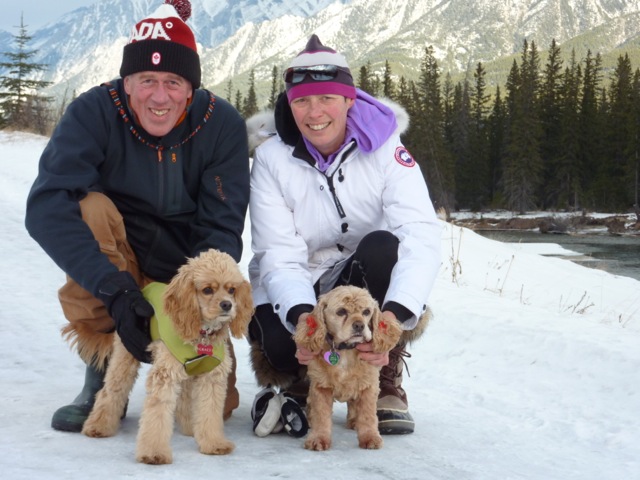
    Dave Wood, Alison and their two Cocker Spaniels (Courtesy photo)
    Dave Wood, Alison and their two Cocker Spaniels (Courtesy photo)

    Several weeks ago, I received an email from Dave Wood, a longtime head coach of the Canadian National Ski Team. He had just arrived in my hometown of Mammoth Lakes, Calif., with a small group of athletes from Black Jack Ski Club in Rossland, B.C. We planned a rendezvous to catch up and to chat about the local training hot spots.

    It had been a few years since Wood had been in Mammoth with skiers. Back around 2003 or 2004, during his tenure as Canada’s national-team head coach, he had discovered this high-altitude training location through an online search and some U.S. distance running links. A reconnaissance to the area gave him all the information he needed: a “live high and train high or low” scenario with great fall weather and miles of trails and open roads.

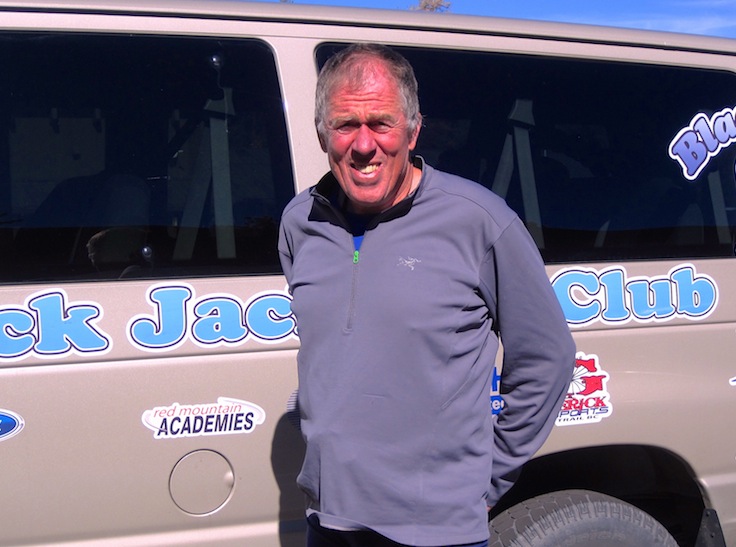
    Dave Wood Black Jack Ski Club Oct. 2013
    Dave Wood during a recent altitude dryland camp in Mammoth Lakes, Calif.

    For several subsequent falls, Wood and his national team left their home base in Canmore, Alberta, for three weeks of high-altitude sunshine in the Eastern Sierra. Now, Wood was back, this time with a few dedicated athletes from Black Jack, of which he had been the head coach since 2010.

    The Black Jack camp format was similar to the national-team camps he ran in Mammoth years before. Condominium living at just over 8,000 feet gave athletes rollerskiing options right out the door, with single-track running trails not too far away. Proximity to the town of Mammoth Lakes offered a fitness club, grocery store, and some rest day “in-town” opportunities were just a short bike ride away.

    As Wood explained over coffee, the beauty of coming to Mammoth was the convenience of being able to stay in town and drive 40 minutes down to 4,000 feet for intensity training. He raved about the “exceptional rollerskiing,” where on one lonely road leading to Nevada, his athletes saw only a handful of cars during an over-distance rollerski workout.

    I had hoped to join Wood and his Black Jack skiers for several workouts, but managed just one: a long run in Lower Rock Creek. Wood had to leave town for a couple of days, so he enlisted me to take the athletes to a nearby trailhead for their run over Duck Pass. Several inches of snow overnight jammed up that idea, so I drove down the hill with the guys and Chisa Obayashi, a Japanese skier who has been training under Wood’s supervision the past few months. I had in mind beginning the run out of the snow zone at the Paradise trailhead, just north of Bishop, Calif.

    The Black Jack Ski Club, with head coach Dave Wood, while hiking Mount Assiniboine on the Great Divide on the British Columbia/Alberta border in August 2011. (Photo: Dave Wood)
    The Black Jack Ski Club, with head coach Dave Wood, while hiking Mount Assiniboine on the Great Divide on the British Columbia/Alberta border in August 2011. (Photo: Dave Wood)

    Tagging along on the run through towering Jeffrey pines and golden aspens, I was able to learn a little bit about the Black Jack athletes. David Palmer and Colin Ferrie, accomplished junior skiers, are heading into their first year as seniors. They, along with teammate Julien Locke, who missed the trip due to an injury, are among the best in their age group in Canada. They have had solid training all summer including a trip to get on snow at the Haig Glacier. Following their Mammoth camp, they will be heading to Canmore for some time on Frozen Thunder.

    An adopted Black Jack skier, Obayashi made the trip down to Mammoth with the men’s team and was also planning to join them after in Canmore, where she would get some snow kilometers before going to Finland for the start of the racing season. Obayashi connected with Wood through her manager in Japan and had only positive things to say about her training experience in North America, she told me as we ran on the Lower Rock Creek trail.

    The kind of individualized coaching she was receiving from Wood was hard to come by in Japan. She had no regular training group in Japan, so the opportunity to train with Black Jack was setting her up well for her quest to make the Japanese Olympic Team.

    Chief, Cook and Bottle Washer

    A few days later, I met up with Wood again for lunch. He pulled up in the team van on time, but appeared a bit flustered. Dressed in running clothes, he explained that he had dropped off his group over in June Lake to do a three-hour, point-to-point run. He then drove to the termination of the run, parked and began to run the trail in to meet the athletes. They ended up missing a key turn and added nearly an hour to their run. Wood shook his head, muttering something about knuckleheads, but it was hard for Wood to disguise his pride in his skiers.

    The soft-spoken 58-year-old Wood is unflappable, handling his role as “chief, cook and bottle washer” for Black Jack in his customary professional manner. He uses the same thorough and systematic system to train his club skiers as he did to build a solid Canadian team. Wood uses the Mammoth camp as an altitude block is based on science, experience and much thought. There is even a short recovery phase when the athletes pack up and go down to 4,000 feet to sleep.

    Dave Wood at the 2010 Olympics in Callaghan Valley, British Columbia. (Photo: Dave Wood)
    Dave Wood at the 2010 Olympics in Callaghan Valley, British Columbia. (Courtesy photo)

    Four years after resigning from his position at Cross Country Canada following the 2010 Olympics, Wood seems to have landed on his feet. As he explained it, after 18 years with CCC, holding positions as head wax technician, head coach and team leader, it was time to move on. He described his transition without a trace of rancor. In fact, the move to Rossland seemed like the most natural thing in the world.

    After eight years of commuting from Canmore to Rossland to see his girlfriend (about a 6 ½-hour drive in good weather), Wood saw his exit from CCC as the perfect opportunity to move in with Alison, an operating-room nurse at a local hospital. At the same time, Black Jack was looking for a head coach, so Wood felt the timing was perfect.

    Black Jack is a well-established nordic club with over 700 members. It offers programs for 4 year olds to masters, with a small, but active racing program. Ski Academy opportunities are available for Black Jack skiers, as well as for the local alpine program, Red Mountain Racers.

    With about 3,500 residents, Rossland is nestled in the Monashee Mountains of the West Kootenay region at an elevation of 3,410 feet. Winter sports are a big deal there, which usually has skiing from early November through late April. Red Mountain Resort boasts an average 300 inches of snowfall per year and the Black Jack trail system features 40 kilometers of groomed track, a lighted loop, a kids terrain park, and a biathlon range. An extensive mountain-bike park offers single track riding and running during the summer, making Rossland an ideal home for a nordic skier.

    Wood’s approach to ski racing is simple. He believes the bottom line is using the training to become faster.

    “You can’t improve by just going to Europe to race,” he said. “You have to figure out a way to cut 45 seconds over 15 kilometers before going.”

    He likes to keep travel to a minimum during the training phase in order to accomplish goals. There are so many training and racing opportunities out there for skiers, but it’s easy to lose sight of what you are really after, which can boil down to those 45 seconds.

    Thoughts from a Former Coach

    While Wood has been busy with Black Jack the past several years, he’s kept an eye on what is happening at the national level in Canada. Coaching the nation’s top skiers through CCC gave him perspective on his job as a club coach, which notably has different viewpoints and team structure than the nation’s four training centres. There is a lot of training, racing and experience necessary to bridge the gap from club to national-team skier and even more to move into the international realm.

    Wood’s approach to ski racing is simple. He believes the bottom line is using the training to become faster.

    On the state of skiing in Canada, Wood has definite concerns. He recognizes the success of the women’s team in recent years, with medal performances by Beckie Scott, Sara Renner and Chandra Crawford, and a men’s team highlighted by Devon Kershaw’s overall second place in the 2012 World Cup, and Kershaw and Alex Harvey’s sprint championship title at the 2011 World Championships. The problem CCC faces is a lack of depth in its program, he said.

    Wood sees the potential for Canadian success at Sochi in the sprint and team sprint. On the Canada’s stated goal of winning two medals, Wood said, “You have to ski the race before you win the medal.”

    While Harvey is a proven racer, Kershaw has to have a better year than last year for any of this to happen, he said. Wood sees lack of depth on the women’s side as a liability, as well as problems with the Olympic qualification system. It’s difficult to compete against teams like Russia, Norway and Sweden that have large pools of athletes racing at a high level. Those countries can play with putting athletes with fresh legs out in every race.

    One of the underlying problems he sees within the Canadian system is that all of the funding is at the World Cup level. He estimates that what was CCC’s $180,000 dollar budget in 1999 is probably now close to a $2-million dollar budget. Development is left up to the four training centres. While these centres are nationally funded, Wood said there’s a lack of a coaching system, resulting in inexperienced coaches.

    In his opinion, the biggest hurdle for athletes taking part in the training centres is the cost. At a given training centre, he estimated $12,000 Canadian dollars covers a year of coaching and four weekends of racing, but by the time the racing season is over, participants doll out $20,000 to $30,000 annually. Sponsorships are difficult to come by and jobs are low-paying in the training centre locales. Wood isn’t sure enough athletes are going through the system to build the kind of depth CCC needs to become an international power.

    Adding to the situation is the lack of skier development opportunity through the Canadian universities, he said. Lots of junior athletes are dropping out of the sport at 18 years old to get an education.

    Wood is confident that what he is providing at Black Jack is an affordable, high-quality program for juniors and seniors to help make the jump to the international level. A lot of money is spent on Integrated Sports Teams at the national training centres, he said. Besides the expense of these doctors, trainers, massage therapists, etc., is the cost of waxing and equipment.

    “Cut down on this nonsense, and it would be affordable,” Wood said.

    Wood keeps expenses down for his athletes by, once again, keeping things simple. He keeps his wax box stocked with a minimum of wax brands, and while not denying that wax technology is a major element of ski racing, he said it helps to remember what the race really comes down to.

    “Cut down on this nonsense, and it would be affordable.”

    After the Mammoth camp, Wood and the Black Jack skiers planned to head back to Rossland for a short break. Wood had a few days of downtime with Alison and their two Cocker Spaniels, then was due in Canmore for an on-snow camp at Frozen Thunder.

    The schedule in November is dedicated to snow camps in Vernon and Rossland, with racing kicking off at December NorAms in the same locations. Things ramp up in January for the Black Jack skiers, with a NorAm in Canmore, the qualifier for Olympics, U23, and Junior World competitions. The remainder of the season sees the team criss-crossing Canada attending Eastern and Western Canadian Championships, and Canadian Championships in Newfoundland in March. The season concludes with March BC provincial events.