Tag: 2012 Alberta World Cup

  • Bits from Canmore: Athlete Notes and Quotes (+Video Montage)

    Bits from Canmore: Athlete Notes and Quotes (+Video Montage)

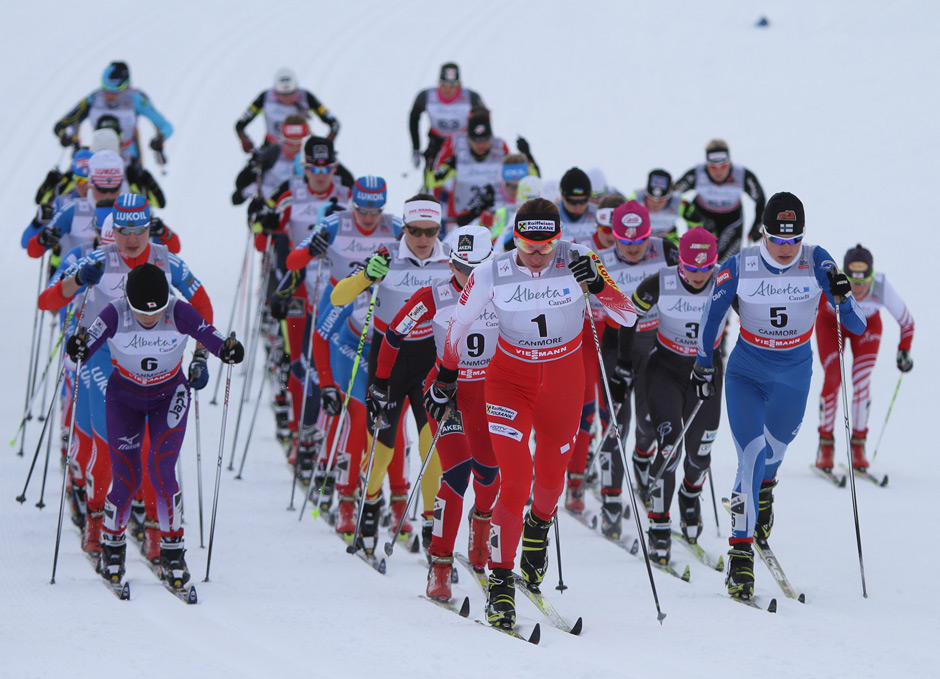
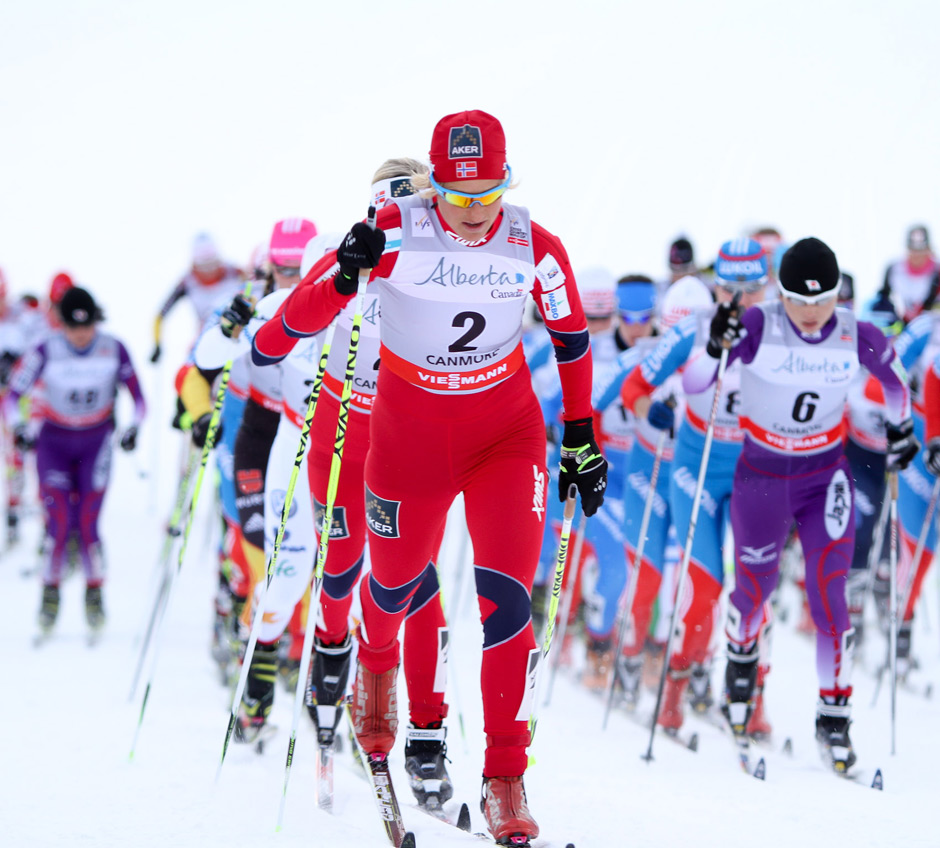
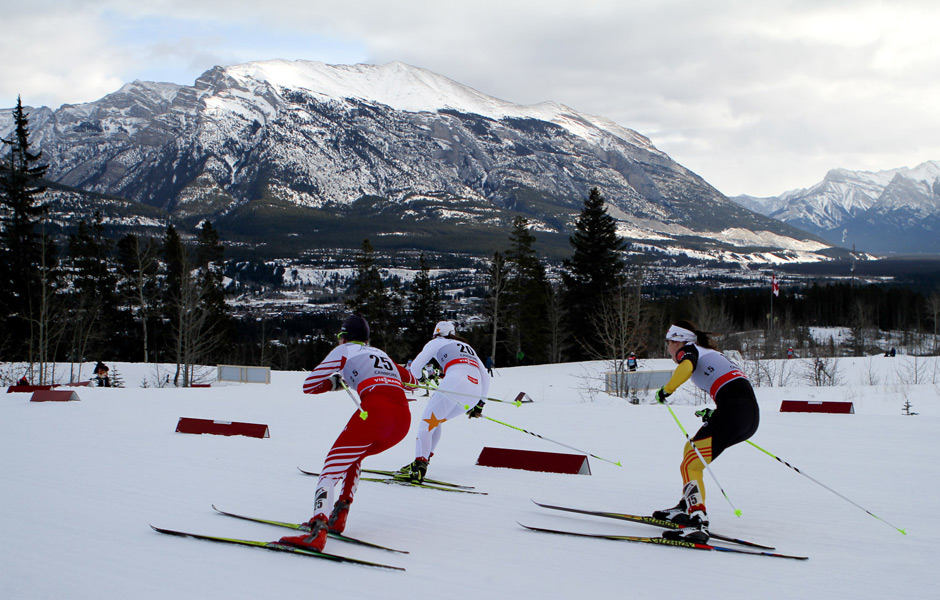
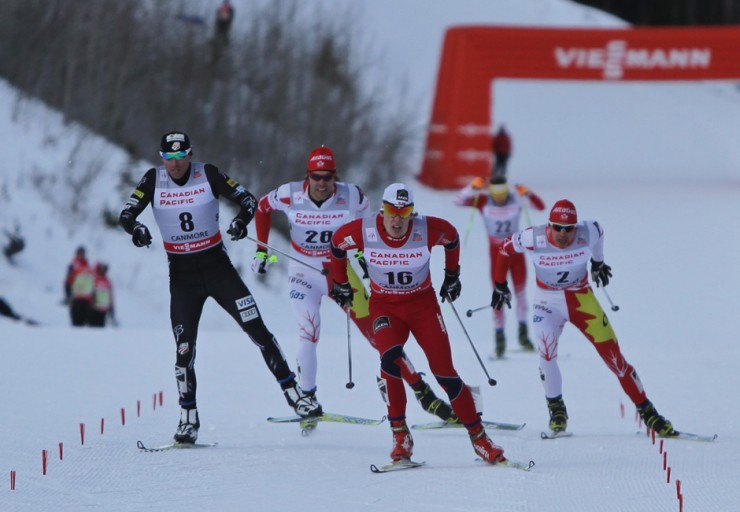
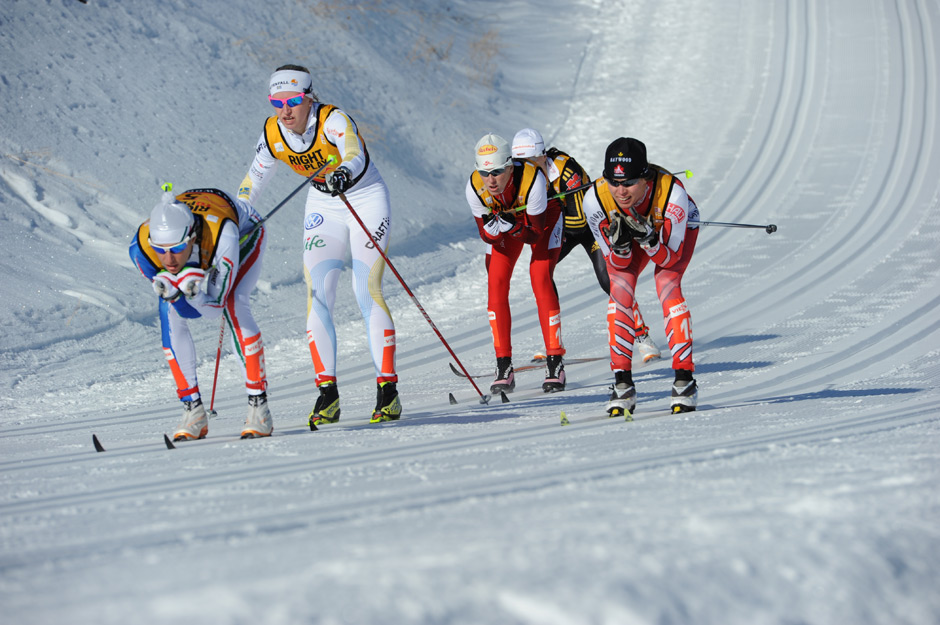
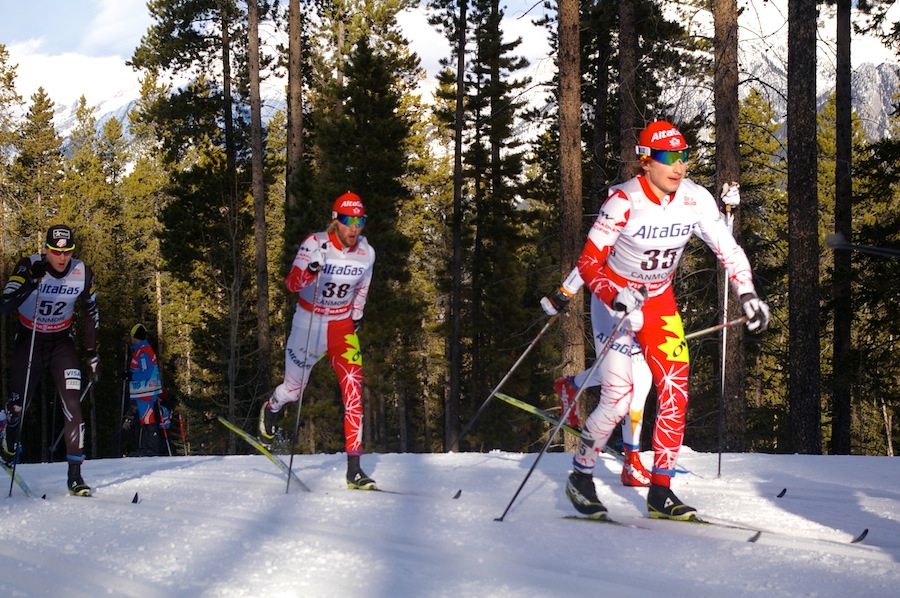
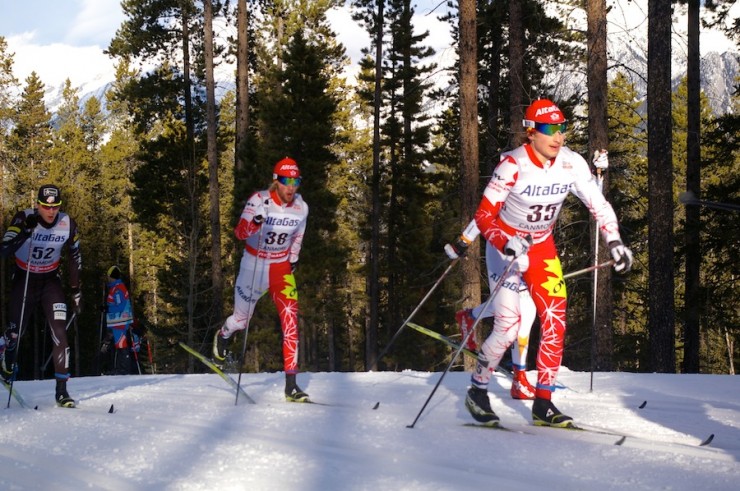
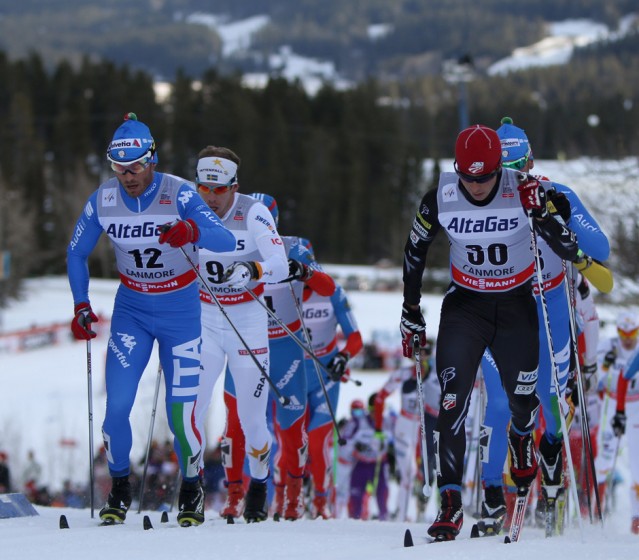
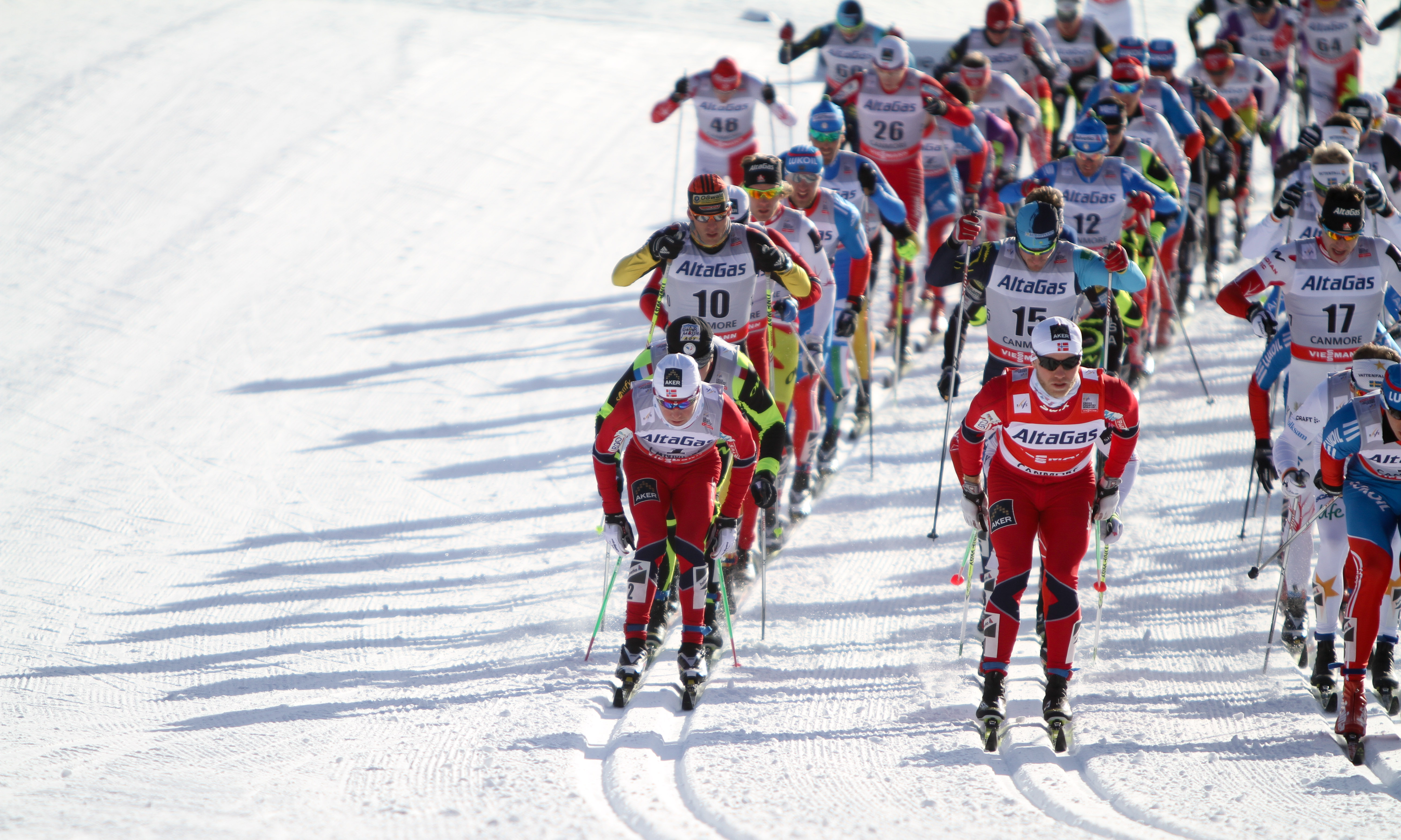
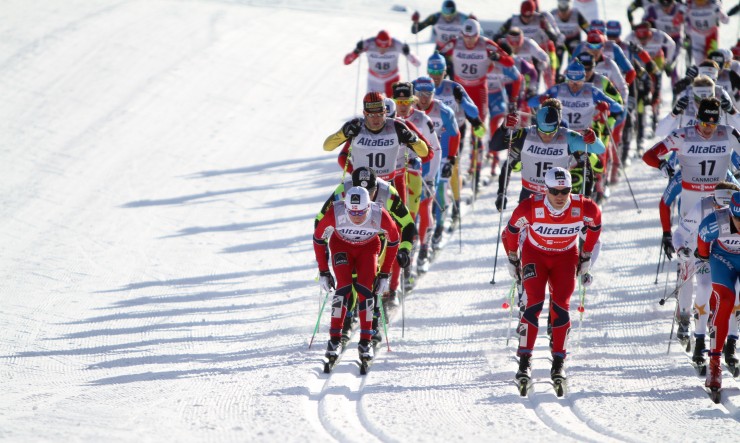
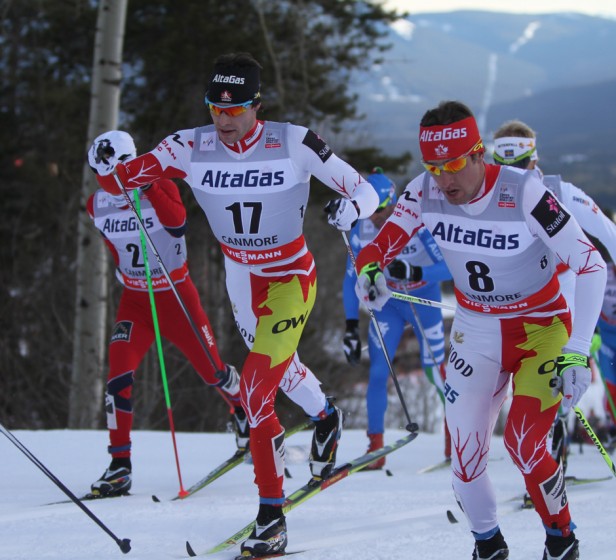
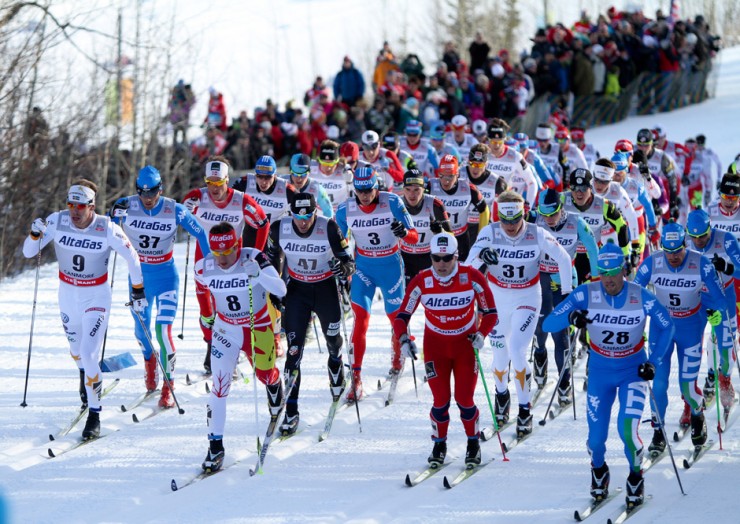
    Start of the Alberta World Cup 15 k classic mass start on Dec. 13 in Canmore, Alberta.

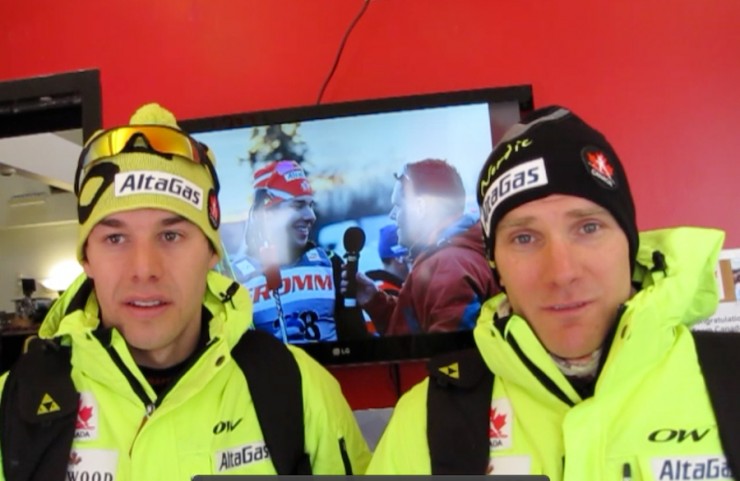
    CANMORE, Alberta – With the holidays heralding a rest period for many, Canmore might be in the back of many racers minds, but we haven’t forgotten about several of the athletes we interviewed there. Here are some of the highlights, and be sure to check out our video montage with several Canadian nation’s group skiers.

    Déjà vu?

    It was good until the top of the hill and just complete lactate at the top, just really heavy. We knew it was going to happen so we tried to forget about it and keep skiing well. – Alysson Marshall, Alberta World Cup Academy (AWCA), on sprint qualifier
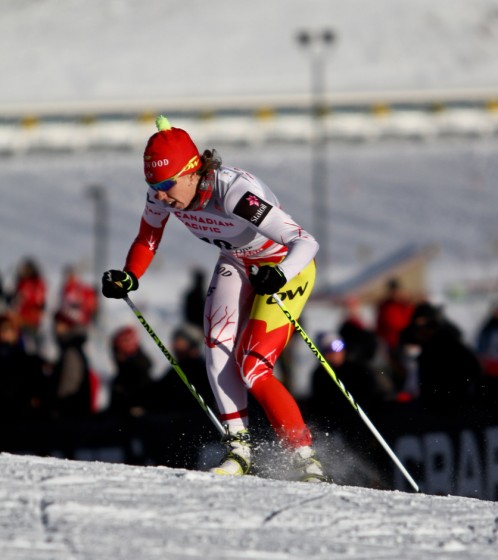
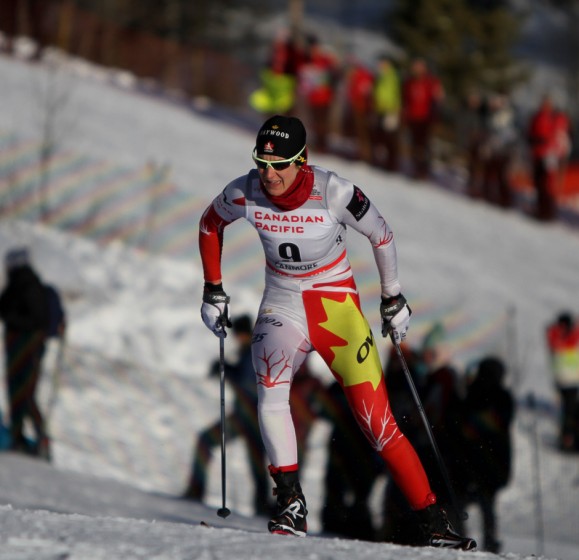
    Canadian National Team member Perianne Jones attacks the hill in the 1.3 k freestyle sprint in Canmore, Alberta. She was 11th overall for an individual World Cup best.

    The top piece always feels like you should’ve went harder, but I’m pretty happy. – Andrea Dupont, Rocky Mountain Racers (RMR)

    I wanted to ski my own race and make sure that I pushed over the hills well. – Paul Kovacs, Australian NST

    It’s tough but it’s really just one climb, it’s pretty short. – Mikey Sinnott, Sun Valley Ski Education Foundation (SVSEF) on sprint course

    It’s not that long but there’s no forgiveness on it. It’s like, ugh. – Patrick Stewart-Jones, AWCA

    Those hills are so tough … They really burn you. – Michael Somppi, AWCA

    It’s a big opportunity to get to race in a world cup at home so I just went all in and it was good. I did the best I could so I’m happy. – Marlis Kromm, AWCA 

    There’s still some big opportunities for us for the rest of the winter, just race, move onto the next race. – Matt Wylie, AWCA 

    Newbies

    Before doing the World Cups, people would tell me that’s what it’s going to be like, but you could never actually like feel like what it is, I couldn’t have guessed what it was going to feel like. It’s such a cool feeling. – Corey Stock (Cambridge Sports Union)

    It was pretty fun to see all those people cheering for us at home, well it’s not really home, but it’s still in Canada and to see all those fast skiers too. We see that nothing is impossible. – Frédérique Vézina (CNEPH)

    I’m still really nervous every morning, but hopefully it gets normal by the end of the year. I’m just getting used to that level. Hopefully in a couple years, everything is gonna be fast. – Alexis Turgeon, Pierre-Harvey NTC (CNEPH)

    Improvement’s always good. I think I can do better but I couldn’t have done any better today. – Russell Kennedy, AWCA (42nd in skate sprint qualifier)

    It’s really an honor to be able to race in these world cups. It’s amazing to be able to race these and get some experience racing against international athletes. – Maya McIsaac-Jones, Rocky Mountain Racers

    It’s pretty awesome to represent Canada. – Zoe Roy, RMR

    It was fun for me, a good experience to ski with the fastest so I appreciate. – Anne-Marie Comeau (CNEPH)

    It’s a great experience just to race against these guys. It’s so different than any NorAm you could ever do. – Knute Johnsgaard, Yukon Elite Squad

    Ready or Not, Go!

    I think I found some parts of my lung that I haven’t felt before. It felt pretty horrible … You feel like you’re at the end of the sprint, but you’re only a third of the way through. – Reese Hanneman, Alaska Pacific University (APU) on sprint qualifier

    I didn’t know I was racing until 8 this morning. [US Ski Team member] Simi [Hamilton] was sick or something so they knocked on my door, they were like, ‘Hey, you want to do a hot lap?’ I was like, ‘What do you mean, like, drive you to the venue right now?’ And they’re like, ‘No you want to race? Simi’s out and Freeman didn’t want to race.’ So it kind of fell to me. I’m glad I skied the course like once [the day before] and kind of learned it. I wasn’t sure how I’d be able to ski the course. … I was kind of excited just to get to go out there. – Mikey Sinnott, SVSEF

    I was awake at 4:30 this morning. It’s hard to expect a similar performance to yesterday, just because it’s a completely different race, but I’m happy. A 30 k is usually quite a pain train for me so I think I got better at it today and I’m still learning. – Jesse Cockney, AWCA

    I felt pretty flat. I think six days of not doing anything, it makes sense. I wasn’t really expecting to do much today [Saturday], just use [the sprint] as a good warmup for [Sunday], but yeah, it’s a tough course. A minute and a half of climbing and then shoot down to the finish. – Sylvan Ellefson, Ski & Snowboard Club Vail (SSCV)/Team HomeGrown

    I don’t think the shape is right there for this weekend. It was tough. – Graeme Killick, AWCA

    I wish I wasn’t tired but I think I am a little bit tired. I guess maybe traveling or something, but altitude I think takes it out of you, too. – Caitlin Patterson (Craftsbury Green Racing Project)

    Happy Thoughts

    This is such a beautiful day. The course was just perfect, great snow and it was so awesome to hear so many fans. I know my parents are out there and tons of my friends from the Yukon are here, too, which is super cool. I couldn’t have asked for a better day. – Emily Nishikawa, AWCA (34th in skiathlon)

    There’s so many awesome fans here and I have so many family and friends. I’m out here to just hopefully have a good result, but mostly have a good time and just race well. – Sylvan Ellefson, SSCV/Team HomeGrown

    Canmore fans are the best fans especially when you’re from here. I think we’ve got such a great community supporting cross-country skiing and the national ski teams, it’s just a fantastic place to train and race and we’re very, very proud to be a part of this community. – Brian McKeever, Canadian Para-Nordic Ski Team

    I think it’s so cool to have the best in the world come to our home course. I see them walking around downtown and it’s pretty neat. – Marlis Kromm, AWCA

    Outside Skiing

    [Note: Sylvan Ellefson dedicated his races on Saturday and Sunday to those affected by the Connecticut school shooting]

    When I’m not ski racing I’m in the fourth grade classroom at my old elementary school and my mother-in-law is a kindergarten teacher. I just can’t even imagine having her be in those teachers’ positions or even the families’ positions in Connecticut. – Ellefson 
  • Randall, Sargent Pick Off the Places to Soar to Skiathlon Top 14

    Randall, Sargent Pick Off the Places to Soar to Skiathlon Top 14

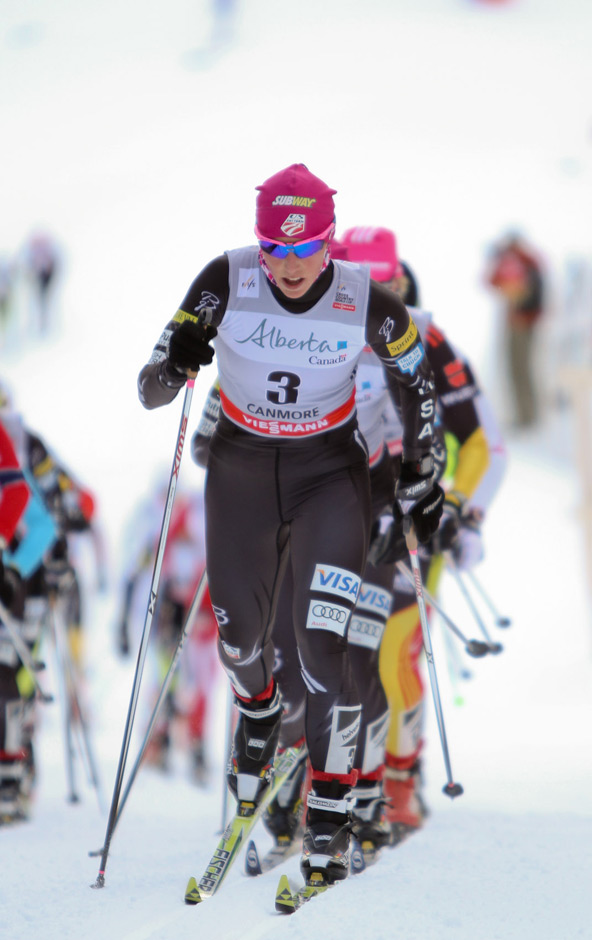
    Ida Sargent (USST/CGRP) pushing to secure 14th in the Alberta World Cup 15 k skiathlon, ahead of Aurore Jean (FRA) and Virginia De Martin Topranin (ITA) on Sunday.

    Coverage of the Alberta World Cup made possible through the generous support of Travel Alberta and Tourism Canmore.

    CANMORE, Alberta – From the back, it was easy to get panicky in Sunday’s mass start. Poland’s Justyna Kowalczyk went out hard in the 15-kilometer World Cup skiathlon without even meaning to, taking a couple Norwegians with her. Less than halfway into the first lap, she and sixth others were breaking away.

    Almost 20 seconds back, U.S. Ski Team members Kikkan Randall, Holly Brooks and Ida Sargent skied methodically just outside the top 20. With more than 13 kilometers to go, they weren’t going to blow it. For all but one, that restraint would be their ticket to a top 14.

    Kikkan Randall (USST/APU) en route to placing eighth in the Alberta World Cup 15 k skiathlon on Sunday, the last of three days of racing in Canmore, Alberta.

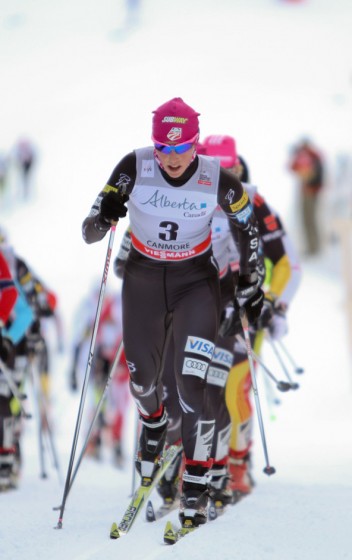
    But Randall wasn’t feeling all that great to start. The classic leg was a bit of a struggle, she said, and by the halfway point, she trailed Kowalczyk in first by more than a minute and 12 seconds. Sargent was one place ahead of Randall in 20th, just 0.4 seconds ahead. Brooks entered the transition in 24th.

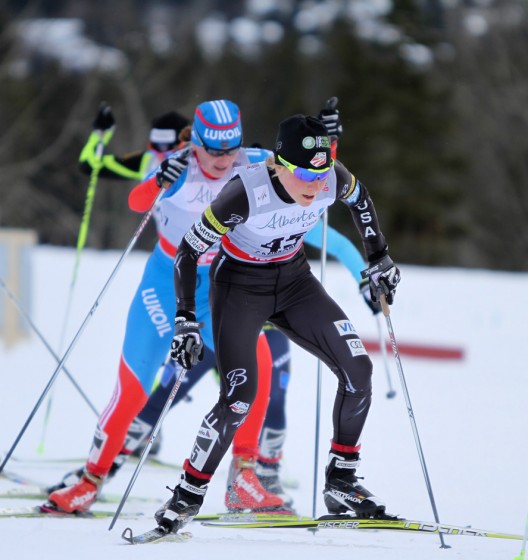
    For Randall, the skate leg was significantly better. On the first of two laps, she climbed to 13th while Kowalczyk simultaneously extended her lead. The Alaska Pacific University (APU) skier wasn’t trying to make up a minute and a half on her, but she continued to pick off the places.

    With two kilometers to go, Randall led the second chase group while skiing in eighth, and knew it was going to take all the strength she had left to hold the five others off. Three races in four days had taken its toll on her, and she had little left to give.

    To the surprise of few, she found some extra energy and outsprinted Ingvild Flugstad Oestberg (NOR) to the finish. Randall also edged her Swedish friend Anna Haag and Katerina Smutna of Austria to place eighth (+1:18.4).

    “The classic part was really hard for me; my body’s just so sluggish,” Randall said. “Those first couple hills are so aerobic and you really just have to be able to kick into that high-end gear. I found the same thing in the classic race [on Thursday]. Just the first lap I didn’t feel like I could get into that gear, but then once my body warms up, I find it a little bit later on.”

    She found it in Thursday’s 10 k classic mass start, where she placed sixth, just as she found it on Sunday. Randall’s result rivaled that of her seventh-place skiathlon showing in last season’s Tour de Ski. She later finished 12th in a 15 k skiathlon in Lahti, Finland, despite a nagging Achilles pain that turned out to be an injury.

    For the first lap of Sunday’s skate leg, Randall tried to focus on her rhythm and immediate positioning rather than worry about what place she was in.

    “Once I did that, I looked up and saw that some skiers were starting to come back to me,” she said. “Coming into that second lap, I knew that next pack was right there and I really wanted to close up to them. It was nice, I got up to them, got to rest a little bit and then make one more push.”

    On the final stretch into the stadium, she pushed and beat them all.

    “Skating is just feeling so much more natural to me right now,” Randall said. “All the distance races this season I’ve been in the fight, so to feel like I’m just a little out of it was tough.”
    She thought of its as a hard workout in preparation for the upcoming Tour, and in doing so, kept herself in contention for the overall World Cup lead. Kowalczyk’s win and bonus points put her in first, 33 points ahead of Randall in second. Reigning World Cup champ Marit Bjørgen, who opted to skip the Canadian World Cups before the Tour, trails Randall by 32 points in third.
    “I’m definitely getting a little tired,” Randall said. “[Saturday’s sprint] was a lot, but I’m happy I responded over the second half [Sunday] and really looking forward to a nice little break. Then we’ll do it all over again.”

    Ida Sargent leads a chase group in the skate leg of the Alberta World Cup 15 k skiathlon on Sunday. She went on to place 14th for her best distance result.

    Just 16.5 seconds behind Randall, Sargent placed 14th for her best result in a distance race, second-best in Canmore. The Craftsbury Green Racing Project member was 10th in Saturday’s skate sprint and used what she learned there on Sunday. Instead of leading into the final downhill, she tucked in around second or third.

    It worked as she beat Aurore Jean (FRA), Irina Khazova (RUS) and Virginia De Martin Topranin (ITA) to the line.

    “I just tried to be patient, move up when I could but not freak out ’cuz I knew it would be a long race,” Sargent said. “I was kind of picking off people in the classic, then in the skate, packs kind of formed and I was worried about going too hard too soon, so I skied with the pack, which was pretty fast, and just knew how to ski the finish.”

    While some might pin the 24-year-old as a sprinter, Sargent was 18th in a 10 k classic race in Kuusamo a few weeks ago.

    “I look to Kikkan a lot and find inspiration from her,” she said. “She started out being more of a sprinter. I don’t want to be a sprint specialist. Sprinting comes more easily to me and I’ve taken advantage of that, but I’d really like to improve my distance skiing.”

    An all-around skier, Brooks (APU) wasn’t thrilled with placing 28th, nearly three minutes back from the winner. She remained close with Sargent and Randall through the transition, but fumbled her skate pole and had to turn around to retrieve it. That wasn’t really a big deal, she said. Feeling tired was.

    “I’m just really fatigued for some reason,” Brooks said. “I’m having hard time with the altitude, which is crazy ’cuz normally I really love racing at altitude.”

    After skiing a relaxed classic leg, she expected to have more left for the skate.

    “My legs just felt dead,” she said. “Just didn’t quite have it today and need to take some rest the net couple days and need to regroup.”

    Leading the Canadians, Emily Nishikawa of the Alberta World Cup Academy achieved as personal best of 34th (+3:39.2). Realizing her strength in skating, the 23-year-old tried to save something for the second half of the race, especially the hills.

    “Those girls are fast,” Nishikawa said of the frontrunners. “I wasn’t able to stay with that pace off the start, but I kept my own rhythm going and I think it worked for me. I was able to pick off a lot of girls in the skate.

    “I had a great race and I’m thrilled to get in the 30s,” she added. “I’m one step closer to my goal of getting in the top 30 and in the top 15, so I think it’s a good start and I’m looking to improve on this for sure.”

    Canadian National Team members Dasha Gaiazova and Chandra Crawford placed 37th and 46th, respectively. Gaiazova said she was “fairly satisfied” with her result after feeling good for the start of her classic leg, then backing off on the end of the second lap.

    “I started to feel like woah this is maybe a little too hard,” she said. “Up to that point I was still in one of the chase groups and it was going well. It’s just at that 6 ½ k, I felt like I started to fall off a little bit, and then by the time I got into the skating, I’d already lost that group. … It was just short of a fight for the whole skate leg and that was really tough. I pushed really hard so that’s good.”

    After falling behind early, Crawford said she gave it her all, which is what she set out for.

    “It’s a treat for me any time I get to race,” she said, after placing sixth in Saturday’s sprint. “I want to get out there, struggle, push through the rough patches, dig deep, try and stay on girls, push the pace, do good technique even when I’m exploded in my muscles. I accomplished all those things, and I’m really impressed with our younger girls coming on strong like that.”

    Crawford was also excited to discover her sixth-place finish prequalified her for the 2014 Sochi Olympics. Her teammate, Perianne Jones also secured a spot with two top-12s this season.

    “This weekend was a blast,” Crawford said. “I really enjoyed racing today. I knew it was going to be tough and super hard. We were skiing up mountains up there. It’s what I grew up doing and it doesn’t get any easier.”

    — Topher Sabot and Gerry Furseth contributed reporting

    Women’s results


  • Kowalczyk Astounds with Skiathlon Victory, Her Second at Alberta World Cup

    Kowalczyk Astounds with Skiathlon Victory, Her Second at Alberta World Cup

    Justyna Kowalczyk (POL) leads the women’s 15km skiathlon out of the start.

    Coverage of the Alberta World Cup made possible through the generous support of Travel Alberta and Tourism Canmore.

    CANMORE, Alberta – Justyna Kowalczyk knows a thing or two about racing in Canmore. Among them, hard tracks, big hills and cold snow. Perfect, she thought before Sunday’s World Cup 15-kilometer skiathlon.

    Every single distance race Poland’s pride and joy has done at the Canmore Nordic Centre, some 1,400 meters (4,600 feet) above sea level, she’s made the podium. Last year’s overall World Cup runner-up, Kowalczyk has won four races in Canmore since 2008, and two of them came this week.

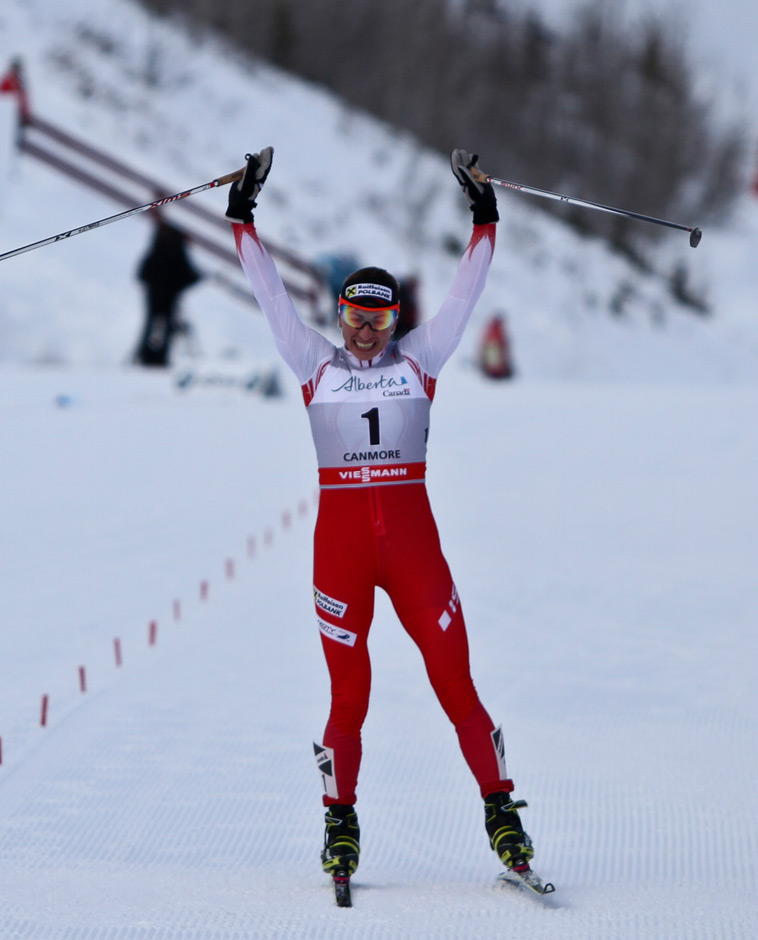
    After a victory in Thursday’s 10 k classic mass start, the 29-year-old rebounded from a less-then-stellar skate sprint on Saturday (in which she was 21st) to win the skiathlon. Doing so didn’t seem to be much of a problem; she created a gap of nearly a minute and ended up finishing in 42:51.5 minutes, 34.9 seconds ahead of Finland’s Anne Kylloenen in second.

    Just one-tenth of a second behind, Vibeke Skofterud of Norway took third after Kylloenen outsprinted her to the finish. Kristin Størmer Steira (NOR) was fourth (+35.8) after initially trying to hang on to Kowalczyk with Skofterud for the first half of the race. Skofterud dropped off the pace on the second of four laps, but Steira held on.

    Kowalczyk opened up an 11-second gap by the transition, and over the next kilometer, Steira fell off the pace. Skofterud picked up the slack and led a six-person chase group, but the 30-second deficit progressively increased. With one lap to go, Kowalczyk was nearly 50 seconds ahead.

    “My plan was not so fast the first lap and then … ,” Kowalczyk said with a laugh.

    The rest was self explanatory. She created a gap that made her essentially untouchable, even as the group worked together to catch up – albeit slightly – with three kilometers to go. Kowalczyk’s lead went from 52 seconds to about 35 at the finish.

    “This was good plan I think,” she added.

    Steira tailing Kowalczyk in the classic portion of the race.

    Kowalczyk said she expected Steira and Skofterud to stick with her, and was surprised to drop Skofterud relatively early. Meanwhile, Kowalczyk tried to maintain a steady pace in the classic leg and accelerate when she put on her skate skis, and was pleased to find she wasn’t tired at the transition.

    “My ski was working better today [and] I feel good,” she said. “It was really nice, not-so-fast snow, perfect for me.

    Her win put her atop the World Cup standings ahead of American Kikkan Randall (who was eighth on Sunday) and Norway’s Marit Bjørgen, respectively.

    “I have good feelings here, great memories,” she added, acknowledging a crowd with dozens of Canmore-based Polish supporters. “Sprint skating is not perfect for me, but all races, number one or number two is perfect.”

    First place was probably preferable on Sunday. Kylloenen, 25, was more than happy with her silver, which matched the previous personal best she set Thursday. Kylloenen hadn’t been on a World Cup podium before this week, and on Sunday, she climbed from skiing outside the top 10 early to do so.

    “I know that I’m in very good shape now,” Kylloenen said in a press conference. “I also tried to stay in the group and I know that I’m very strong that last part.”

    Skofterud early in the race.

    She edged Skofterud as well as Steira, Masako Ishida (JPN), Valentina Shevchenko (UKR) and Alija Iksanova (RUS), respectively, by less than two seconds at the finish. Kikkan Randall was next across the line in eighth, 1:18.4 minutes back, Ingvild Flugstad Oestberg (NOR) was ninth (+1:18.5) and Anna Haag (SWE) was 10th (+1:19.2).

    Skofterud said she didn’t feel well during the classic portion, but hung in and found the 7.5 k skate leg was an entirely different race. About 10 seconds back on Steira at the transition, she led the chase group out on the next lap while Steira fell off the pace.

    “I had to fight hard to stay in the group and when I get my skating skis I felt better and

    better,” Skofterud said. “In the end I was looking forward to the sprint and I was looking for where Kylloenen was because I know she has a good last hundred meters, but I’m happy.”

    After placing fourth in Thursday’s 10 k, she was pleased to capture her first individual World Cup podium of the season. The 32-year-old said she’s been having problems with her lungs in Canmore.

    “This year I have not been feeling that good so I have been fighting hard to get in shape,” Skofterud said. “Today I felt better than I did Thursday, but still not 100 percent, but it’s going the right way and it’s good to go home to Christmas with better feeling.”

    From here, she’ll prepare for the second World Cup period, minus the Tour de Ski. She made the decision to skip the Tour in order to maintain her form and training through the holidays and peak at World Championships. Without the conflict, it was an easy decision to race in Canmore.

    Skofterud (l) and Kylloenen (r) battle to the line.

    “I wanted to race every race before Christmas except for the sprint,” she said. “I think it was positive.”

    Narrowly missing the podium in fifth and sixth, Ishida and Schevchenko took turns leading the chase pack, but ultimately, Skofterud drove the pace. Steira also got in the mix after climbing back from seventh place.

    “I was surprised [with] myself with this day and that made me feeling even better than I did,” Skofterud said. “When I saw that I had possibilities to take part in the sprint, it was a good feeling and that made me stronger. It was cool to ski down into the stadium in front.”

    — Topher Sabot contributed reporting

    Women’s results

    It isn’t pretty but Kylloenen’s lunge gets the job done.
    Kowalczyk celebrates across the line.
    Downhill.
  • Valjas Solid in Seventh, Cockney Surprises in Ninth in Canmore World Cup Sprint

    Valjas Solid in Seventh, Cockney Surprises in Ninth in Canmore World Cup Sprint

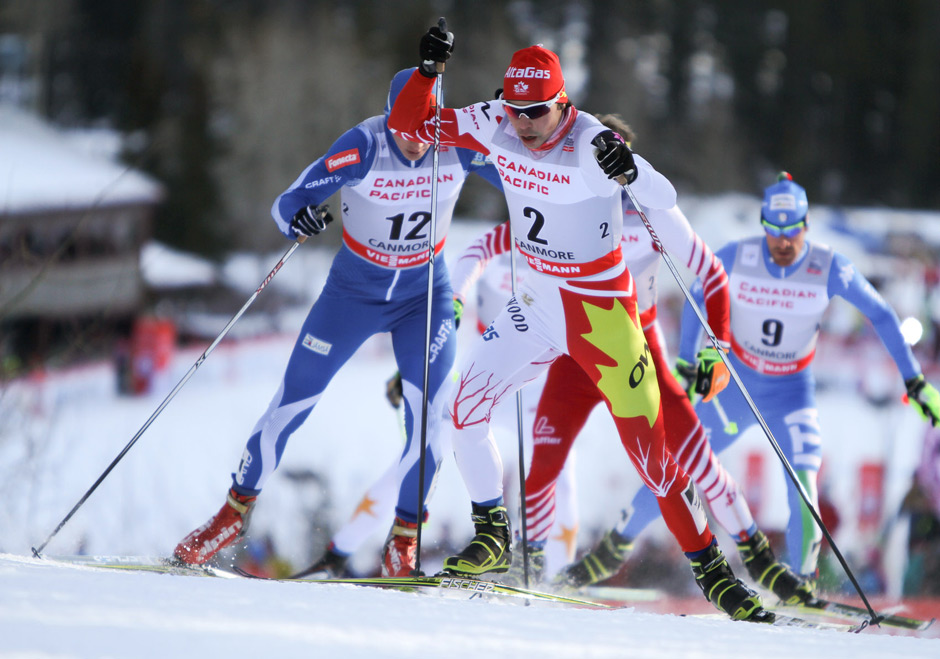
    Canadian Jesse Cockney of the Alberta World Cup Academy and Senior Development Team (2) leads Finland’s Anssi Pentsinen (12) and the rest of his quarterfinal in Saturday’s World Cup 1.3 k skate sprint in Canmore, Alberta. Cockney won the heat and went on to place ninth overall for a personal best in his fifth World Cup start.

    Coverage of the Alberta World Cup made possible through the generous support of Travel Alberta and Tourism Canmore.

    CANMORE, Alberta – On Saturday, Jesse Cockney pretty much did the unthinkable, leading his 1.3-kilometer freestyle sprint quarterfinal from start to finish. And he tried to do the same in his semifinal.

    Big deal. Actually, it is, especially for someone who’s never made the heats in a World Cup sprint to do so on one of the more difficult courses on the circuit.

    Few dared to try it; most knew the last few hundred meters down into the stadium decided the race. If you were in front the whole time, up the long climb and down the hill, you might as well be toast.

    Anders Gloeersen (NOR) and Andy Newell (l) lead their semifinal in the final stretch of the Alberta World Cup 1.3 k sprint. Canadians Lenny Valjas (second from left) and Jesse Cockney (r) ended up third and fifth in the heat, respectively, for seventh and ninth overall.

    Cockney, 23, didn’t care. Strong feelings of self belief lifted the Alberta World Cup Academy/Canadian Senior Development Team skier to the second-fastest qualifying time in his third World Cup sprint.

    He was only slower than one man, eventual winner Emil Jönsson of Sweden. The surprising start fueled his adrenaline in the ensuing rounds, where Cockney ultimately placed ninth.

    His previous World Cup best was 32nd in last weekend’s skate sprint in Quebec City. Before that, he achieved sixth in the U23 World Championships classic sprint two seasons ago in Otepää, Estonia.

    “It’s bittersweet right now,” Cockney said Saturday. “I’ve never skied this well in my life and there’s a lot more days like this to come, but right now, I’m a little upset that I maybe wasted a great day. It’s a really fantastic day, but still I feel like I was pretty close.”

    After winning his quarterfinal in a photo finish (and leading the entire way), Cockney decided to go for it again in the semifinal. He charged out of the gate with Canadian National Team member Lenny Valjas close behind, and the two skied abreast ahead of the group to the height of the land. The pace slowed at the top as the Canadians tried to pick their position – preferably not in front – on the downhill. Both knew what was coming: a game-changing slingshot that could swallow them at the finish.

    The tactics didn’t quite work out to their liking, and Valjas moved ahead down the hill to try to gap the field. When he looked back before the finishing straight, he realized he hadn’t created enough space. Cockney attempted to hold his own on the outside lane and ended up straddling a v-board. Valjas sunk to third as Norway’s Anders Gloeerson and Andy Newell of the U.S. flew by.

    Canadian National Team member Lenny Valjas narrowly qualified in 28th for the Alberta World Cup 1.3 k skate sprint heats on Saturday. He went on to place seventh for his best result of the season.

    Cockney settled for fifth in a photo finish with Austria’s Harald Wurm, and neither Canadian advanced to the final. It was a tough way to end a good day for both Valjas and Cockney, with Valjas notching a season best of seventh.

    “That was fun, like a roller derby out there,” said Valjas, who qualified in 28th. “A lot of pushing and shoving. It was awesome to ski with my teammate Jesse. He had an unbelievable day. It’s a really wide course, but on this kind of a downhill course you almost need it wider.”

    Valjas played his tactics near perfectly in his quarterfinal, sitting tight then accelerating in the final stretch to advance in second behind Newell. The semifinal was a bit dicier, and Valjas knew what was in store when he glanced back and saw four men behind him.

    “The attack didn’t work,” he said. “Maybe I should have stood up, let a few people by, but I’m happy. This is my first real race [coming off my] hand injury and I’m super happy.”

    About a month ago, Valjas broke a bone near his pinky finger and has been healing it since. Thursday’s 15 k was his first without a cast. While his result on Saturday showed rapid improvement, Valjas said he and his teammates were looking for more after Devon Kershaw and Alex Harvey failed to qualify in 50th and 52nd, respectively.

    “None of the guys are happy with the start of their season,” Valjas said. “They’re missing one gear. For Alex to be in the top 11 [Thursday] missing that gear … I was skiing behind him and it wasn’t the Alex of late last year. It’s coming. It’s part of our training. To have these results, still missing our top gear, we’re happy.”

    Cockney was also excited about his future prospects, especially in potentially securing a World Championships spot in February.

    “I hope that the coaches see that I’ve improved on a lot of things over the summer and the last year and I belong with these guys,” said Cockney in his second year on the national development team. “I beat everyone except one guy in the qualifier.”

    After placing 63rd in Thursday’s 15 k mass start, Cockney said he used his frustrations to motivate him for the sprint. He also changed his mental approach to sprint qualifiers this year.

    “I’m an emotional guy,” he said. “I feed off myself and feed off all of the race emotion. There was a lot of positive energy around.”

    Canadian head coach Justin Wadsworth wasn’t surprised by his performance. He had seen Cockney hang with Kershaw during intensity workouts in Canmore throughout the summer.

    “You just don’t see that, when we do longer intensity, for anyone to be able to stay with him, and Jesse has done it a few times,” Wadsworth said. “So I’ve always been impressed by him. I didn’t think he had the qualifying speed like that so I was really impressed today and I hope it gives him the boost to take his skiing to the next level.

    “Qualifying that high up shows he can do it on this kind of skate course and we will just have to evaluate where he is and what races are coming up and the courses and if they kind of suit him,” he added. “My guess is we are definitely going to give him some opportunities. He’s young.”

    Alberta World Cup Academy skier Phil Widmer (r) and Switzerland’s Christoph Eigenmann (l) leading their quarterfinal in the Alberta World Cup 1.3 k sprint in Canmore on Saturday. Widmer edged Eigenmann to place third in the heat, but failed to advance.

    Another Canadian who made the heats, Phil Widmer (AWCA) placed 15th for his second-best result in 23 individual World Cup starts.

    He qualified in 24th and was third in his quarterfinal (in a photo finish with the top three), but failed to advance based on time.

    “I knew in the back of my mind the heat wasn’t fast so lucky loser wasn’t going to play a factor,” Widmer wrote in an email. “I was gunning for top 2 in the heat.”

    Switzerland’s Christoph Eigenmann set the pace for the quarterfinal from the start, which it was considerably slower than other heats. Widmer tucked behind, and by the top of the climb, it became evident that nobody wanted to lead. Russia’s Anton Gafarov eventually went ahead on the downhill, followed by Frederico Pellegrino (ITA) and Widmer, and it came down to an all-out sprint to the line (which Simon Persson of Sweden won after waiting in fourth).

    “The last dowhill is so fast and the finishing straight is quite long, so for me it was about using the rest of the course to get set up for the last downhill and finishing straight,” Widmer wrote. “It’s a lot of fun to get to race in front of the home crowd!! The community is so supportive of these races, it’s a rush to get to compete in front of friends and family and in our own back yard.”

    Summing up the day, Wadsworth said it was the best so far this season.

    “We really needed a day when the team skied better on a whole,” he said, pointing out the high points, which included Chandra Crawford in sixth and Perianne Jones in 11th as well. “It has been the best weekend of the year, the best day of any weekend so far this year.”

    As for the rest of the Canadian men, AWCA skiers Russell Kennedy and Michael Somppi were 42nd and 55th, respectively. Alexis Turgeon of the Pierre-Harvey Training Centre (CNEPH) was 56th, Patrick Stewart-Jones (AWCA) 58th, Matt Wylie (AWCA) 59th and Andy Shields (Thunder Bay) 61st, Raphaël Couturier (CNEPH) 62nd and Ian Murray (Rocky Mountain Racers) 64th.

    — Gerry Furseth contributed reporting

    Men’s results

  • Canmore Crowd Lifts Crawford to Sprint Final; Jones Sets Personal Best in 11th

    Canmore Crowd Lifts Crawford to Sprint Final; Jones Sets Personal Best in 11th

    Canadian Chandra Crawford chases frontrunner Justyna Kowalczyk of Poland in Saturday’s quarterfinal at the World Cup 1.3 k freestyle sprint in Canmore, Alberta. Crawford finished third in the heat ahead of Kowalczyk in fifth, and went on to place sixth overall.

    Coverage of the Alberta World Cup made possible through the generous support of Travel Alberta and Tourism Canmore.

    CANMORE, Alberta – It was four years ago, but the memory’s still pretty fresh for 29-year-old Canadian National Team member Chandra Crawford.

    She had been cruising into the stadium at the Canmore Nordic Centre and saw the sun beating down on the final flat. Beyond that, she glanced at the Three Sisters mountains, an iconic range in her hometown.

    Then she won gold in the World Cup skate sprint. It had been a great moment, one she’d never forget, but it wasn’t the end-all.

    The night before Saturday’s 1.3-kilometer freestyle sprint, Crawford said she didn’t sleep much. Her heart raced thinking about the sprints and what she wanted to achieve. Without an individual top 30 on the World Cup yet this season, she had a big hill to climb – and at Canmore, that’s literal.

    Crawford attacked the challenging course from the qualifier, completing the up-and-down loop with the third fastest time of the morning behind her friend Kikkan Randall of the U.S. and Laurien van der Graaff of Switzerland. Randall won the qualifier in 2:55.48, and Crawford was just 2.94 seconds slower.

    The crowd went wild. Born in Canmore, Crawford was the top Canadian qualifier – female or male – on the day. What’s more, she went on to advance as a lucky loser twice in the quarterfinals and semifinals. She had been third in her quarterfinal by 0.5 seconds to winner Celine Brun-Lie (NOR) and runner-up Ida Sargent (USA), then placed fourth in a fast heat behind Denise Herrmann (GER), Randall and Maiken Caspersen Falla (NOR), respectively.

    Her dad, Glen, a cameraman for the Canadian Broadcasting Company, first told Crawford she made the final. Just like in 2008, he was the first person she saw at the finish.

    “I’m just really lucky I can cross the finish line and look up and see my dad,” she told the Canadian Press after winning in Canmore four years ago. “It’s pretty unique on a World Cup I think.”

    Yet it happened again on Saturday, and this time, it might have been a bit more dramatic.

    “I stumbled out of that tent like, ‘Oh, that was a hell of a day,’ and he’s like, ‘You’re gonna be in the final!’ ” she recalled. As soon as the spectators found out, they were ecstatic, too.

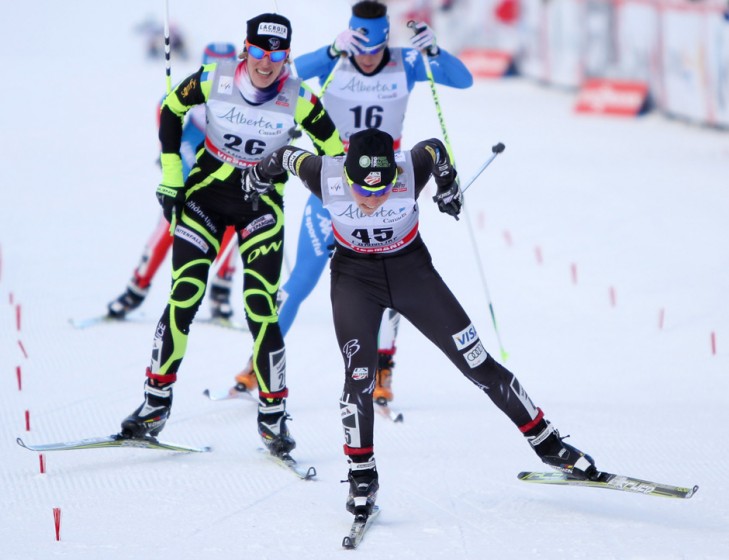
    In the final, Crawford finished sixth behind Falla, Randall, Brun-Lie, Herrmann and Ingvild Flugstad Oestberg, respectively. She had been in contention for a podium, following Randall in fourth up the climb. Randall moved from third to first, but Crawford couldn’t answer her push. Randall and Falla skied away from the field, and the remaining four battled for third.

    “I got gapped over the top by Maiken and Kikkan, not enough K’s in my name probably,” Crawford said. “And then I thought, ‘OK, get third. You gotta beat, like, Herrmann or something.’ That was all going pretty well, but everyone had a little more jam than me coming down the homestretch. Being a double lucky loser I think I took it pretty far.”

    Smiling at the finish, Crawford talked about the cowboy-hat-wearing crowd that fueled her.

    “That’s definitely where I got a lot of the positivity from today,” she said. “I was really forcing it this last week to get my mind around some belief and some confidence. It’s been a little bit tricky.”

    At the same time, her form was coming around and the Canmore course suited her, Crawford said. It was drastically harder than the one she won on previously, but the conditions combined with her fast skis and high energy made for her season-best result.

    Perianne Jones (CAN) going for it in the Alberta World Cup 1.3 k freestyle sprint on Saturday in Canmore. She finished 11th overall for an individual best.

    Not far behind in 11th, teammate Perianne Jones notched a World Cup individual best after qualifying in 14th, taking second in the quarterfinal and sixth in the semi.

    A Canmore resident when she’s not traveling the world, Jones showed her knowledge of the course, sitting back in the quarterfinal and catching the slingshot draft on the last hill. She jetted into the stadium and advanced in second behind Falla. In the semifinal, she couldn’t quite hold on and skied alone into the finish.

    “My legs were full of lactic acid and I was working really hard to go up that hill,” Jones said. “I didn’t have it in me. I lost a lot of time over the top. …. I really wanted to be in there in that last heat, and I’m pretty bummed about that, but I was really happy with the way I skied my quarterfinal so that’s the positive thing.”

    Jones has also been dealing with illness since notching her previous best of 12th three weeks ago in Kuusamo, Finland. Last weekend, like Crawford, she failed to make the top 30 at the Quebec World Cup and advance in the sprint.

    “It’s been slow to start. I’ve had to really listen to my body and respect my body,” Jones said. “I’ve had to sit out a lot of races, which is hard when all I want to do is race, but it’s coming around and I think after Christmas I’ll be even stronger.”

    The third woman on Canada’s World Cup team, Dasha Gaiazova placed 20th after narrowly qualifying in 29th. Upset after her run ended in the quarterfinals, where she was fifth, she talked about what the race meant to her, especially so close to her home in Banff.

    “Every sprint, every race is so precious, especially Canmore, it’s so cool,” Gaiazova said. “I think as a team, we all feel like we’re in good shape, just as good as last year, but we just need some results to prove it, I guess. I think everybody’s just getting a little impatient, maybe. I’m sure it’s gonna come. Every little detail out on the race course is so important to execute well.”

    Dasha Gaiazova (CAN) during Saturday’s Alberta World Cup sprint qualifier, where she made the cut in 29th and advanced for the first time in a World Cup skate sprint in Canmore, Alberta.

    She simply didn’t have enough left at the end.

    “When I first started climbing I felt like, I can push harder,” she said. “And [I said], ‘Screw this I’m going to the front and I can do this.’ I felt like, this is great, this is exactly what I want to be doing, so I kept pushing all the way. At the end, I don’t know, the finishing stretch is a little uphill so you really need to push hard through that and I just ran out of gas.

    “It’s unfortunate,” she added. “I’ll try next time.”

    Regardless, it was an improvement since her last World Cup skate sprint in Canmore. Back in 2008 when she was struggling with Celiac disease, she placed 42nd.

    Just outside of the top 30 on Saturday, Heidi Widmer of the Alberta World Cup Academy (AWCA) placed 34th for her best individual World Cup result.  Born in Banff, she’s lived in Canmore for the last five years.

    “I was really rooting for a qualification in my backyard, but it’s also motivating at the same time,” Widmer said.

    Andrea Dupont (Rocky Mountain Racers) finished 41st, Alysson Marshall (AWCA/NST) was 43rd, Kate Brennan (AWCA) placed 47th and Emily Nishikawa (AWCA/NST) was 48th.

    Also racing for Canada, Dahria Beatty (Yukon Ski Team) was 55th, Marlis Kromm (AWCA) 57th, Alana Thomas (AWCA) 61st, Rebecca Reid (AWCA) 62nd, Maya McIsaac-Jones (RMR) was 63rd, Erin Tribe (Thunder Bay) 65th and Zoe Roy (RMR) 67th.

    — Gerry Furseth contributed reporting

    Women’s results

  • After ‘Viciously Bad’ Qualifier, Kershaw and Harvey to Sit Out Canmore Skiathlon

    After ‘Viciously Bad’ Qualifier, Kershaw and Harvey to Sit Out Canmore Skiathlon

    Canadian National Team member Alex Harvey during the Alberta World Cup 1.3 k freestyle sprint qualifier in Canmore, Alberta, where he placed 52nd on Saturday. Teammate Devon Kershaw also struggled in 50th.

    Coverage of the Alberta World Cup made possible through the generous support of Travel Alberta and Tourism Canmore.

    CANMORE, Alberta – When you don’t have it, well, it’s just not there. That’s more or less how Devon Kershaw and Alex Harvey felt Saturday after placing 50th and 52nd, respectively, in the Alberta World Cup 1.3-kilometer freestyle sprint.

    Two of Canada’s favorite “nordic knights” didn’t quite live up to their standards in the qualifier. For the 24-year-old Harvey, it was his worst sprint result in three years. Kershaw, who turns 30 in five days, placed 62nd in a classic sprint three weeks ago in Kuusamo, Finland. This season, he has yet to make the rounds in three World Cup sprints.

    Canadian Devon Kershaw pushing in Saturday’s World Cup sprint qualifier in Canmore, Alberta. He was 50th and failed to advance to the quarterfinals.

    Despite showing signs of progress with an individual season-best of 17th in Thursday’s 15 k mass start, Kershaw said he lacked energy and felt “extremely flat” in the sprint. Harvey felt the same way, and about a half hour after the qualifier, both decided to bag Sunday’s 30 k skiathlon.

    “My race was viciously bad,” Kershaw said. “I didn’t have any power at all in the body and still feeling super-fatigued from the hard effort on Thursday so I am really disappointed.”

    “I felt kind of the same,” Harvey said as the two sat inside the Canmore Nordic Centre trying to get warm with temperatures around -6 degrees Celsius (20 Fahrenheit) outside. “No power on each stride and no tempo either, so you are pretty screwed when that happens.”

    The new 1.3 k sprint course, considered by several to be the hardest short sprint course on the circuit, was unforgiving with a long climb out of the start followed by a sweeping descent into the stadium. Harvey said he was offsetting (V1-ing) over the top without any power.

    “Then I was dead after thirty seconds,” he said. “Just nothing in the body.”

    And Kershaw even cut his hair for Saturday’s race. But just like Samson, the biblical warrior who’s hair was also cut, it made him weaker.

    “I am working on growing it out again,” Kershaw said.

    Alex Harvey (l) and Devon Kershaw visibly disappointed after placing 52nd and 50th, respectively, in the World Cup skate sprint qualifier on Saturday in Canmore.

    While their results were low points for both, the two national team members are moving on without risking another energy-draining race on Sunday.

    “I think Thursday and today, if you don’t listen to signs like that … fool me once, shame on you. Fool me twice, you’re an idiot,” Kershaw said. “So it is time to put the legs up and change gears.

    “We kind of thought maybe we could get away with it, but now we have to turn the page for what matters in the season, that’s the Tour de Ski and World Championships,” he added.

    Wadsworth said deciding to let them sit out Sunday’s skiathlon wasn’t an easy decision, but given their full race schedule and the toll it’s taken on those two especially, he felt it was necessary.

    “It has just been so tough, we’ve been trying to keep the training up for the Tour, and travel and race,” he said. “This schedule, well it’s just too much.”

    “It is not easy not to race them tomorrow and tomorrow is really the day we had pinned some hopes on for both of them,” he continued. “[But] they’ve been having a really hard time recovering.”

    In their place, Canadians Knute Johnsgaard and John Parry, both on the Yukon Elite Team, will start the skiathlon. After that, the last race of the weekend, Wadsworth said he’s giving his guys some time off that involves about four or five days completely off.

    “We’re going to go for kind of a radical rest approach,” he said. “My guess is they really were running in the classic race at like 40 percent and if they can do what they did at 40 percent then I think their 100 percent is going to be really wicked when it finally comes out.”

    Next stop: Davos, which is a good thing for the Canadians.

    “We have a good setup there and a place they like to be so hopefully it’ll be just what they need,” Wadsworth said.

    Men’s final results

  • Cockney Rises to the Occasion, Second in Sprint Qualifier

    Cockney Rises to the Occasion, Second in Sprint Qualifier

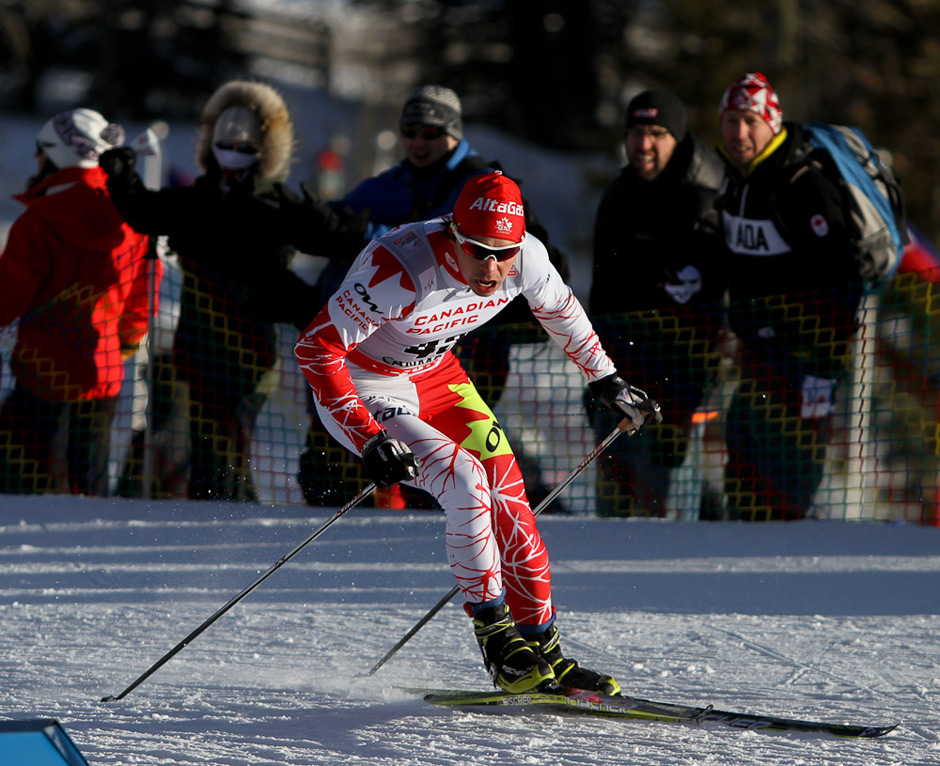
    Jesse Cockney on his way to qualifying second in the 1.3 k skate sprint qualifier in at the Alberta World Cup in Canmore on Saturday.

    Coverage of the Alberta World Cup made possible through the generous support of Travel Alberta and Tourism Canmore.

    Note: This article has been corrected to reflect the number of FIS points Jesse Cockney received for placing second in Saturday’s qualifier.

    CANMORE, Alberta – That feeling of placing dead last on Thursday haunted Jesse Cockney. Sure, the 23-year-old Alberta World Cup Academy and Canadian Senior Development team skier was only in his sixth World Cup (with previous appearances in Quebec last weekend and Estonia two seasons ago).

    But 63rd in the 15-kilometer classic mass start wasn’t going acceptable. At the time, Cockney said he’d toss that one in the trash and move on. Saturday, he stormed out of the gates in the 1.3 k freestyle sprint qualifier in the second race of the Alberta World Cup, posting the second-fastest time, 1.26 seconds behind Sweden’s Emil Jönsson (who won in 2:31.12).

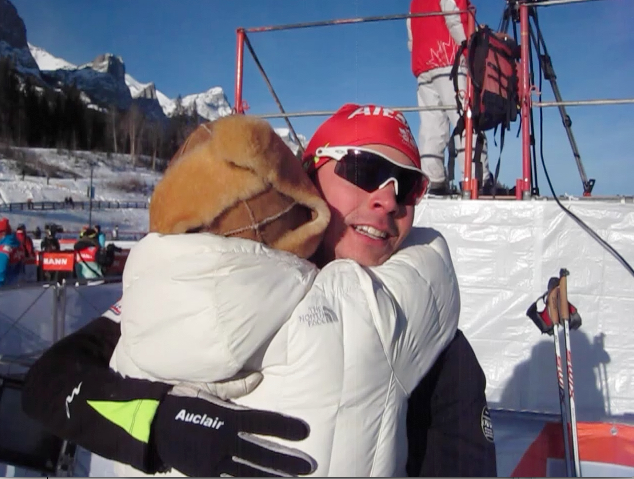
    Jesse Cockney (Alberta World Cup Academy/Canadian Senior Development Team) gets a hug from his mom after placing second in the Alberta World Cup 1.3 k skate sprint qualifier on Saturday in Canmore.

    Cockney celebrated upon realizing his feat at the finish, throwing his arms up and yelling. A few moments later, his mom came over to give him a hug. She was ecstatic and so was Cockney.

    Regardless of the outcome up the upcoming heats, Cockney wouldn’t likely forget that moment. His previous best in a World Cup individual sprint was 32nd last weekend in Quebec. Saturday’s result gave him 10.01 FIS points before the heats even started.

    “A lot of work left to do, but pretty happy right now,” Cockney said.

    What was his secret? “Being confident and being pissed off after Thursday,” he said. “I was pretty down after Thursday, but you need the valleys to feel the peaks. This feels pretty awesome.”

    At the top of the long climb that summed up this sprint course, Cockney’s father, Angus, a former top Canadian cross-country skier, said he clocked him in fourth. He was excited after the qualifier, as was Cockney’s mom, Trish.

    “Feeling nervous. Excited, happy,” she said. “He had challenges on Thursday. Better today. I just hope he can keep it together … and do well.”

    “I gotta calm down,” Cockney said. “Now I gotta relax.”

    — Gerry Furseth contributed reporting

    Men’s qualifier results

  • New Sprint Course Welcomes World’s Best in Canmore (with GoPro Video)

    New Sprint Course Welcomes World’s Best in Canmore (with GoPro Video)

    Coverage of the Alberta World Cup made possible through the generous support of Travel Alberta and Tourism Canmore.

    Click here for a video of the new sprint course (embedded below)

    CANMORE, Alberta — When Hanna Falk of Sweden kicks off Saturday’s freestyle sprint qualifier, she will christen the third course variation in as many events.

    Back in 2008, hometown favorite Chandra Crawford won the race on a loop that Canmore’s current chief of competition Mike Norton described as “way too short and too easy.”

    In 2010, the sprint was classic, and that course came in at the other end of the spectrum. Post-season surveys yielded a consistent response from athletes — too long, and according to Norton, “hard.”

    For this year’s edition, changes were necessary, both due to homologation standards and the desire of organizers to put on a top-notch event.

    After examining data on other World Cup sprint courses, Norton said the decision was made to make the Canmore version harder and longer than 2008, but shorter than 2010.

    Chandra Crawford celebrates her Canmore sprint victory in 2008.

    The loop climbs fairly steadily out of the stadium to a high point, and a table-top flat, before descending to the classic Canmore finish — fast downhill to the homestretch.

    The total length is 1.3k, longer than the 2012 1.2k World Cup average that Norton calculated, but definitely not one of the longest.

    “I’ve had a couple athletes say it was the hardest short sprint course they’ve ever done,” Norton said.

    A NorAm event just two weeks ago served as test-run, and with the presence of the top Canadian domestic racers and the Switzerland’s sprint squad, competition was appropriately fierce, and Norton said athlete response was positive.

    The 2010 version featured two 180-degree turns, both of which have been removed, hopefully resulting in fewer tangles and crashes while creating better flow.

    U.S. Ski Team coach Matt Whitcomb expects the course to ski “really fast,” with the working time from the start to the descent being “really short.”

    But Whitcomb cautions not to discount the difficulty. He describes the first climb out of the stadium as “deceptively difficult,” and points to the technical aspects of several sharp corners as an added challenge.

    Norton confirmed the potential for brevity, noting that that course “doesn’t have a lot of total climb,” just 37 meters in fact.

    Skiers make their way across the top flat section of the sprint course in Thursday’s classic race.

    It isn’t all about climbing, however. The top of the course, which features several hundred meters of flat before skiers can gain a little respite prior to a sweeping right-hand turn under a bridge.

    “The legs will be feeling it at the top of that course,” said Esther Bottomley, an Australian who has spent time training in Canmore and raced the NorAm two weeks ago.

    “If you’ve gone too hard up the climb and can’t ski hard on the flat section before dropping back down…you could lose a lot of time,” Bottomley added.

    The run-in to the homestretch, however, is still the key.

    Whitcomb hesitated to make predictions, but agreed that the descent and ensuing 200 meters would be the crux.

    “I would have to say it will probably be won or lost in the final homestretch,” he said.

    Norton said many people state that whomever has the fastest skis will rule the day, a claim he disagrees with.

    The Swiss men were able to ski away on the climbs, creating an insurmountable gap in the NorAm race, and with a gradual grade up to the finish line, Norton says it isn’t only about skis.

    Stefan Kuhn leads his heat into the finish stretch in the 2010 Canmore classic sprint. Despite the gap, he ended up 5th in the heat. (Photo: Win Goodbody)

    “Even the fastest skis in the world, you still have to work to get up that last 100 meters,” he said, but did admit that it’s “not ideal.”

    A World Cup race is not a NorAm, so breaking away will be much harder. Whitcomb points to the myriad strategies that can be employed approaching the final third of the race.

    “There are some awesome tactics to be found on this final stretch here,” he said, specifically mentioning the varying options of line through the last corner, and when to pull out of a tuck.

    U.S. coaches have worked with athletes individually to discuss tactics. Each skier has certain strengths and weaknesses that will influence approach, Whitcomb explained.

    And ultimately, racers need to respond to the immediate situation.

    “You can come up with all these plans and sometimes you end up with the one you planned on, and sometimes it is the opposite of what you planned on,” Whitcomb said.

    There is danger in trying to execute a specific strategy at all costs, and the key, Whitcomb said, is envisioning various scenarios and being prepared for all of them.

    “There is a lot to think about here. It is a really good course … really fun,” Whitcomb said.

    — Alex Matthews contributed reporting

    Note: Some web browsers are not displaying the video properly. Use the link below to view the video directly in youtube.

    Click here for a video of the course

  • Notes and Quotes: Canadian Edition from Day 1 in Canmore

    Notes and Quotes: Canadian Edition from Day 1 in Canmore

    Coverage of the Alberta World Cup made possible through the generous support of Travel Alberta and Tourism Canmore.

    Alberta World Cup Academy/Canadian Senior Development Team members Kevin Sandau (r) and Graeme Killick (c) and Erik Bjornsen (U.S. Ski Team) charge up a climb about halfway through the Alberta World Cup men’s 15 k classic mass start on Thursday.

    CANMORE, Alberta – Twenty-nine Canadians, count them, put their bodies to the test Thursday in the first of three races at the Alberta World Cup. On tap was the 10- and 15-kilometer classic mass starts – not the easiest format to start with, especially not on Canmore’s challenging mini loops.

    The women worked their way around the stadium three times and the men did four loops, and by the end, some slurred their speech, others didn’t want to rehash the suffer-fest, and guys like Devon Kershaw had a hard time seeing.

    But the course was the same for everybody, and just think of how some of those nation’s group skiers felt. Even though several of the Canadians hail from Canmore, it didn’t make it much easier out there, certainly not for some in their first World Cup races (or first in a few years).

    “Rough day to have a rough day,” said 21-year-old Patrick Stewart-Jones of the Alberta World Cup Academy (AWCA), which is located on-site at the Canmore Nordic Centre, after finishing 58th in his first World Cup.

    “There is no forgiveness in the World Cup,” he added. “I felt decent at the start, but after that, the wheels came off a little. I can’t be too disappointed, I just did a World Cup and I finished, and it was a beautiful day.”

    His teammate, Graeme Killick, who is on Canada’s Senior Development Team (NST) as well, had done two World Cups in Otepää, Estonia, two seasons ago. Those didn’t really count, he said, after placing 40th on Thursday.

    “I look on this as kind of my debut,” Killick said. “I’ve only done one World Cup, it was before U23s in Estonia, it wasn’t the greatest for me. … [Today was a] good experience, for sure. Couple things I might improve on. All in all, it was good.”

    Something out of his control was breaking a pole on the first lap. After the finish, he still had one labeled “Newell.”

    “Someone’s leg went through [my pole at] the bottom on the first lap,” Killick explained. “Luckily I got a pole pretty quick.”

    Anne-Marie Comeau (Pierre-Harvey National Training Centre) en route to placing 46th in her first World Cup on Thursday in Canmore, Alberta. The 16-year-old was the second top Canadian female in the 10 k classic mass start.

    The youngest of the Canadian bunch, Anne-Marie Comeau of the Pierre-Harvey National Training Centre (CNEPH) had one of the best results in 46th. She was just over a minute behind the top Canadian female, Brittany Webster (Highlands Trailblazers) in 38th, and Comeau’s only 16. (She turns 17 on Jan. 6).

    “It is hard, but I like the trails here,” Comeau said. “It is bonne [French for ‘good’] to race against the best in the … countries.”

    As for the 15 k skiathlon she plans to start Sunday: I don’t expect anything,” Comeau said. “I just want to have fun and no stress.”

    Far more experienced as a former Canadian National Team member, Webster, 25, said she felt the same.

    “It’s great to be able to get this one out of the way,” Webster said in her first World Cup since racing in Canmore in February 2010. Back then, she placed 57th in a 10 k skate race.

    “What I really like about this, too, is they made all [the distance races] mass start,” Webster added. “I think for Canadians and the U.S. Ski Team, it’s really good for us to have that opportunity because if you’re doing an individual start, you don’t get to see the pace as much. You’re kind of skiing your own race more so. It’s great to be able to ski with a whole crowd of girls and sort of see where they’re at, see how they climb the hills and see how they double pole and everything like that. It helps you race faster.”

    Emily Nishikawa (AWCA/NST), who was 48th, said the spectators also helped.

    “It was a great experience, really cool to have so many fans out here,” she said. “It was just so loud with all the crowd cheering.  It was really cool to race on our home turf.  I was really happy about that.”

    In terms of racing, she’s hoping for a better result in Saturday’s skate sprint or Sunday’s skiathlon.

    “I started a little bit fast … but my body was a little tired today and I lost a little on the last two laps,” Nishikawa said.

    Another AWCA and Senior Development skier, Kevin Sandau placed 39th and said he was happy with how his body felt considering.

    I was able to really push over the hills so that was good for me,” he said. “I was hoping to be a bit closer to the leaders. Kind of midway through the race, I made a few bad tactical choices just with lane choices on the hills, so learn from that for the 30k. … If I can build on today, that should be a better day.”

    Eighteen-year-old Frédérique Vézina (CNEPH) simply followed the lead of others in her first World Cup, putting her 51st.

    “It was pretty tough, but really nice to see how fast those girls go,” she said. “The fastest in the world are here, it was nice to complete against them. … It was just a good experience.”

    One spot behind her, 19-year-old Julia Ransom of the Biathlon Alberta Training Centre in Canmore was somewhat surprised with placing 52nd.

    “I think it was a little better than I was expecting actually. I am happy with how I placed, in terms of Canadians,” she said. “I was so excited just to race. Getting onto the top uphill I just realized how much fun skiing is, how much fun racing is.  I went in with no expectations and just went out and had fun.”

    Back in the game, Frédéric Touchette (CNEPH/NST) placed 54th in his first World Cup since 2009 in Vancouver, British Columbia (where he was 21st in a 30 k pursuit and 33rd in a classic sprint).

    “I haven’t raced much in the last two years because I was injured,” he said. “I am kind of getting back in the racing mode. I am not in as good shape as three years ago, but it is getting back. It is fun.”

    — Gerry Furseth contributed reporting

    Canadian women’s results | Canadian men’s results


  • Led by Harvey and Freeman, Canadian & U.S. Men on the Upswing

    Led by Harvey and Freeman, Canadian & U.S. Men on the Upswing

    Coverage of the Canmore World Cups was made possible through the generous support of Travel Alberta and Tourism Canmore.

    Italy’s Roland Clara (l) and Noah Hoffman (r) among the leaders on the second of four laps in the Alberta World Cup 15 k classic mass start Thursday in Canmore. Hoffman went on to place 22nd and Clara was 15th.

    CANMORE, Alberta – A lot can happen in a four-lap mass start around the Canmore Nordic Centre. Just ask American Andy Newell, who collided with Norway’s Martin Johnsrud Sundby at the end of the first lap. Or Newell’s teammate Noah Hoffman, who worked his way from 30th to lead halfway through, then faded back to 22nd.

    Add two sprint bonuses to the mix and you’ve got one unforgiving 15-kilometer classic race on arguably the toughest courses on the World Cup circuit. Having a bad day? Good luck.

    Canadian National Team members Alex Harvey (17) and Ivan Babikov (8) skiing together early in the Alberta World Cup 15 k classic mass start in Canmore.

    Alex Harvey thought just that as he warmed up Thursday. The top Canadian at last weekend’s Québec World Cup sprints in 21st, Harvey had less pressure riding on him in Canmore, but was still hoping to perform after a less-than-satisfactory start to his season.

    But in training, he just wasn’t feeling it. Four days after arriving in Canmore, about 1,400 meters (4,600 feet) above sea level, he was still trying to transition from the 70-meter-high sprint course in Québec City.

    “It’s either the third or the fourth day that it really hits you at altitude,” Harvey said. “I guess for me it was the fourth day.”

    Regardless, he put himself in position to contend and hung on to finish a season best 11th on Thursday. It wasn’t easy to do in Canmore, and he thought hard about his strategy beforehand.

    “I was like, ‘Hey, I’m gonna have to ski smart the first couple laps, kind of drift a bit on the uphills, let other guys go by me and then work my way back in the group on the flats,’ which is what I did,” Harvey said. “I think it paid in the end. First time up the incline I was feeling pretty tired already.”

    Just 20.2 seconds back from the winner, Tim Tscharnke of Germany (who won in 41:14.8), Harvey had started in bib 17 and stayed patient while hanging around the top 10. He followed the lead of teammate Ivan Babikov, who pushed hard out of the start with the first seeded group. The two skied together early in the race and remained within the top 20 for most of it.

    Meanwhile, Newell worked his way toward the front of the first lap right behind Babikov, but fell out of contention on the downhill into the stadium. Harvey continued to pace himself while several others blew up.

    “Coming from sea level, it felt really fast. It felt hard,” Harvey said. “It was really painful the whole way … [but] I think the body needed a hard workout. We didn’t do any intensity workouts since Québec just because it was a such a short time between the races. Still, 11th is my best race of the season so I’m happier.”

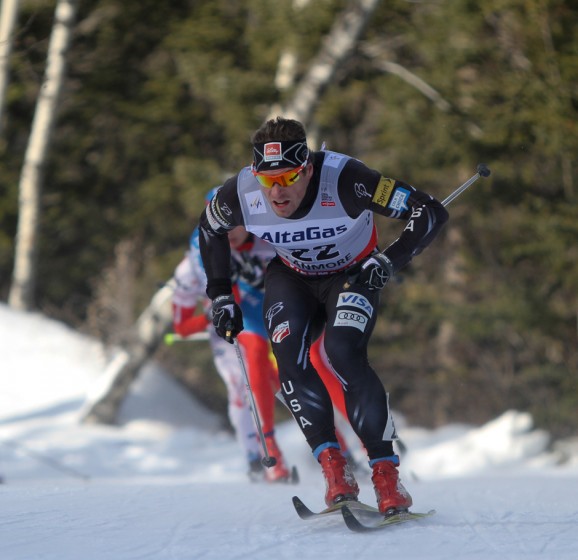
    Freeman (USA) skiing to 14th place in the Alberta World Cup 15 k classic mass start on Thursday in Canmore, Alberta.

    Another North American notching a season best, U.S Ski Team veteran Kris Freeman (Maine Winter Sports Center) tallied 14th, 33.9 seconds back, for his top Canmore World Cup finish (he was 18th in a 15 k skate in 2005).

    After skiing within or close to the top 10, the 32-year-old Freeman dropped off the pace slightly on the last gradual uphill. He had worked hard to get his own track and contend with the leaders, and had little energy left on the multi-tiered climb.

    “I hate saying that it’s still early in the season; hopefully that last gear will come around,” Freeman said. “The good news is I blew up with two k to go and only dropped from 10th to 14th so that’s OK, I guess.”

    Without an individual top 30 this season before Thursday, Freeman said this result was a good sign.

    “It was … important to get in the top 15 today and prove to myself that I belong here and get some confidence rolling,” he said. “It’s a solid race. I would’ve loved to have been able to hang with the leaders, but just that last little bit wasn’t there.”

    U.S. head coach Chris Grover said the team didn’t have its best day Thursday, but several athletes scored individual victories: Hoffman (Ski & Snowboard Club Vail/Team HomeGrown) learned what it was like to lead a World Cup and Erik Bjornsen (Alaska Pacific University) tallied his top individual result in 36th.

    “I’m proud of him for regrouping,” Grover said of Hoffman, who lost contact with the leaders after the first sprint bonus around 6 k. “He was definitely hurting on the third lap, but he pulled it back together and hung on for quite a good finish. That was great for him and nice to see Freeman kind of back in the mix. Really excited also to see Erik Bjornsen having a strong race for a young guy. He’s going to be one to watch for the future.”

    While Hoffman was disappointed with his result, stating “I just blew to pieces the third time up the big hill,” he wouldn’t have changed much except maybe letting a few guys go ahead for the preem rather than try to stick with them.

    Ivan Babikov (second from l) and Andy Newell (directly behind) up front shortly after the start of the Alberta World Cup 15 k classic mass start on Thursday in Canmore.

    “I spent what I had too early,” Hoffman said.

    On the other end of the spectrum, Bjornsen smiled broadly after racing for the first time Canmore. He said he struggled on the third lap, but caught a second wind on the fourth.

    “I was super excited my first couple laps, skiing with the group and stuff and feeling comfortable,” he said. “They kind of made a kick at the top of the hill for the BMW points and I think that’s kind of where I dropped off.”

    Regardless, he skied with and passed iconic skiers like Maurice Manificat of France (who started in the first group in bib 4 and ended up 44th).

    “It was just fun to ski with some World Cup guys,” Bjornsen said. “Saw Manificat in the group and I said, ‘All right, I’m tucking behind this guy,’ so I skied behind him for a lap, like, this is nuts. It was a blast.”

    Canadians Make Progress

    Among the more seasoned racers closer to the front, Canadian Devon Kershaw wasn’t particularly pleased with placing 17th. On the flip side, his all-time best in Canmore was 16th, he said.

    “I know this course like the back of my hand, but man, it smacks me pretty good every time I race here,” Kershaw said. “I’ve just never been able to translate it to a great race.

    Devon Kershaw (CAN) rounding a corner in the Alberta World Cup 15 k classic mass start on Thursday in Canmore. Kershaw placed 17th.

    “I gave it everything I could and that’s all you can do,” he added. “Am I happy with 17th? Absolutely not. This is my favorite race, 15 k classic, and I wanted to feel better than that today.”

    A hefty amount of racing and traveling had taken its toll on Kershaw, and he was looking forward to getting away for two weeks of distance training in Europe before the Tour de Ski.

    “It’s an energy drain for sure to race at home, but at the same time, I’d rather be here than northern Scandinavia where it’s not even light, quotation marks, for three hours a day,” Kershaw said. “It’s a beautiful place to race and a beautiful place to come home to.”

    Babikov, who was 20th (+59.1) said he lost contact with the group around the same time Hoffman charged for the bonus (where Hoffman was fourth for eight bonus points). Before that, Babikov said he felt good on the first and second laps. His body just didnt’ respond at the end.

    “It’s just the beginning of the season or the third weekend,” Babikov said. “For now it’s just a matter of the shape, who’s where, like who’s feeling what, and we just try to ski smooth. Just trying to relax and ski in the points.”

    A cast-free Lenny Valjas (CAN) racing to 24th in the  15 k classic mass start on Thursday in Canmore. It was his first time not wearing a brace since breaking a bone in his hand in November.

    Not far behind, Canadian sprinter Lenny Valjas notched a notable distance result in 24th (+1:20.5). It was his first race without wearing a cast for his injured hand, and he said he felt great.

    “It was a tough course, tough day, but I am happy with the result,” Valjas said. For this weekend, that’s it for distance races. He’ll do the freestyle sprint on Saturday but skip the 30 k skiathlon on Sunday.

    “I will be watching and cheering,” Valjas said. “Too long for me.”

    As for what happened to Newell, who placed 59th of 63, he explained the poorly timed pile up.

    “I was feeling great for the first part if the race and somehow moved up into the top 3 or 4 without even trying too hard,” he wrote in an email. “Martin Sundby just kind of jumped in front if me on the big downhill into the stadium and we had a long slide together and hit really tangled up. So we went from the top few skiers to the very back and lost a ton if time.

    “We both tried to catch back up and ski back to the pack but it was tough to bridge the gap,” he added. “In the end Sundby ended up pulling the plug. I tried to hang in there and ski it in the last two laps but was not moving quickly.”

    Canadian Jesse Cockney (Alberta World Cup Academy) said he’d put this race far behind him after placing 63rd. His teammate Graham Nishikawa called it downright hard after placing 38th (+2:22.7).

    “I tried to hang with the lead group for as long as possible, but blew up on the third lap,” Nishikawa wrote in an email. “Overall I am happy, I went for it.”

    Other top Canadians include Kevin Sandau (39th), Graeme Killick (40th), David Greer (47th) and Brian McKeever (49th). Tad Elliott was 46th for the U.S. men and David Norris (Montana State University) placed 48th to make the top 50.

    — Topher Sabot and Gerry Furseth contributed reporting

    ***

    Men’s results | International recap

  • Alberta World Cup Chair Promises Plenty of Competition (Updated)

    Alberta World Cup Chair Promises Plenty of Competition (Updated)

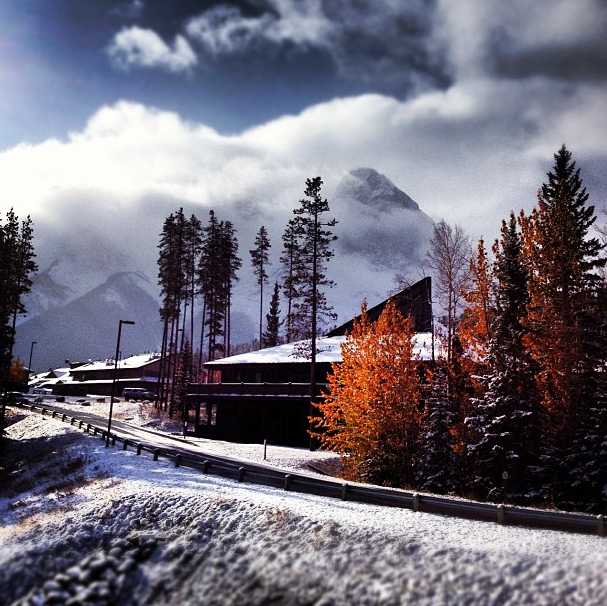
    A look at the Canmore Nordic Centre in mid-October. (Skyler Davis photo/twitter.com/skylerskidavis)

    (Note: This article has been updated to reflect the number of competitors registered as of Friday, Nov. 16, and approximate number of red-group skiers.)

    With the Alberta World Cup in Canmore less than a month (more precisely, four weeks) away, Organizing Committee Chair Ken Hewitt said it’s been a whirlwind at work. The phone rings by the minute, emails are piling up in his inbox, but it’s all good.

    As of Friday, Hewitt wrote in an email that 217 athletes registered for the distance and sprint races at the Canmore Nordic Centre from Dec. 13-16. Team registration closed Nov. 1, but nations were still sorting out whom they’d send. For instance, Sweden and Finland won’t pick their roster for the Canada World Cups (including the preceding Québec City sprints) until after the first World Cups at the end of the month.

    And while certain big names in the sport have already announced they won’t be coming to either the Québec or Alberta World Cups (i.e. Norway’s Petter Northug, Marit Bjørgen, Therese Johaug, Switzerland’s Dario Cologna and Sweden’s Marcus Hellner), Hewitt was sure there wouldn’t be any shortage of competition between the 10/15 k classic, skate sprint and 15/30 k skiathlon.

    “People are asking, ‘Are the top skiers coming to the World Cups in Canada?’ and the answer is unequivocally, yes,” Hewitt said.

    No, last year’s World Cup champions, Cologna and Bjørgen, will instead stay in Europe to prep for the Tour de Ski, but the second-place finishers – Canada’s Devon Kershaw and Poland’s Justyna Kowalczyk – will be there.

    Norway planned to send 18 athletes, 15 of which were in the red group (World Cup top 30 in sprint or distance), Hewitt said. According to Norwegian head coach Vidar Løfshus, the entire national team except Northug, Bjørgen and Johaug planned to compete in Québec and Canmore.

    In all, more than 80 red-group athletes had registered for Canmore. Individual entries won’t be finalized until early December, but the Alberta organizing committee has a good idea how many people are coming from each team.

    Between athletes and coaches, Russia registered 56 and will likely have close to 34 skiers competing in Canmore. Canada as the host nation should have more than 30 athletes (with up to 14 quota spots per race), and most of the top Americans would be there, amounting to 20-something U.S. athletes, Hewitt said.

    Twenty-one nations were registered, compared to slightly fewer than 20 in Québec. There’s been speculation whether the Quebec races will be more competitive, with its two sprints accounting for 20 percent of the World Cup calendar, but Hewitt said they expected 160 to 200 athletes in Canmore all along, so they’re “at the top end of their expectations.”

    “We always knew they’d be coming,” he said. “In every World Cup, some athletes chose to sit out. You pick your race, Düsseldorf last year, some of the athletes missed it. It’s always that way. We were never particularly concerned, and we’re satisfied and reaffirmed when we see the size of the teams.”

    Keeping in mind those numbers included coaches and technicians, Sweden has about 22 registered, Italy listed more than 20 and Kazakhstan plans to bring 17 or 18 individuals. Germany’s sending about a dozen athletes, six of which are in the red group.

    “There’s no question, absolutely no question that both of the World Cups [in Québec and Alberta] will have top caliber A-team athletes,” Hewitt said.

    In turn, lodging is filling up fast. Out of four hotels in town, only one has space left, Hewitt said.

    ***

    2012 Alberta World Cup teams

    • Germany
    • Australia
    • Austria
    • Canada
    • United States
    • Finland
    • France
    • Italy
    • Kazakhstan
    • Norway
    • Poland
    • Czech Republic
    • Russia
    • Slovakia
    • Slovenia
    • Sweden
    • Switzerland
    • Venezuela
    • Japan
    • Ukraine
    • New Zealand