Tag: 2012 London Paralympics

  • Former Swimmer Kendall Gretsch on Unexpected Paralympic Golds, Hunger for More

    Former Swimmer Kendall Gretsch on Unexpected Paralympic Golds, Hunger for More

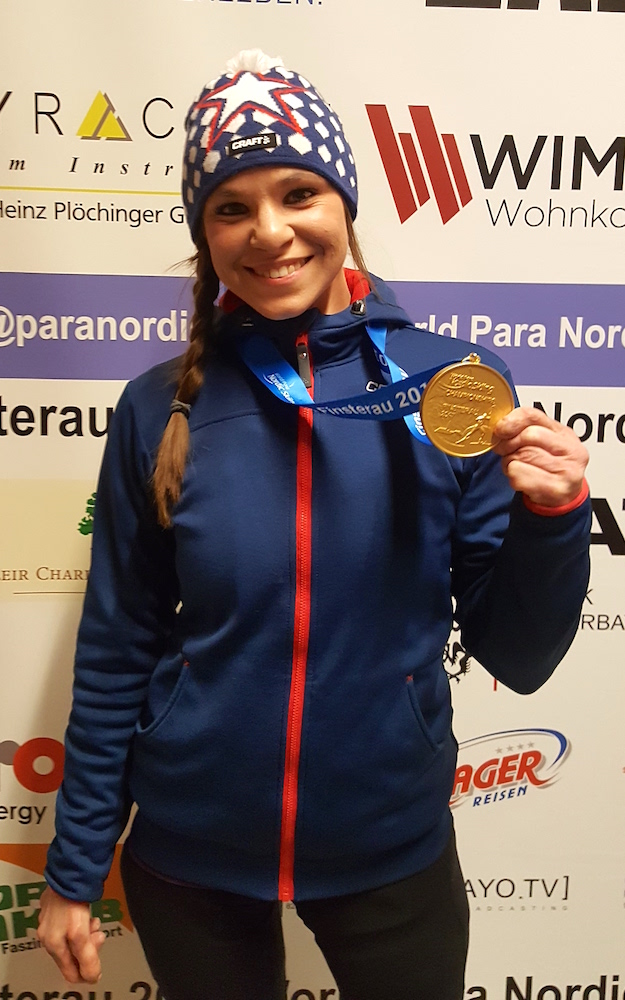
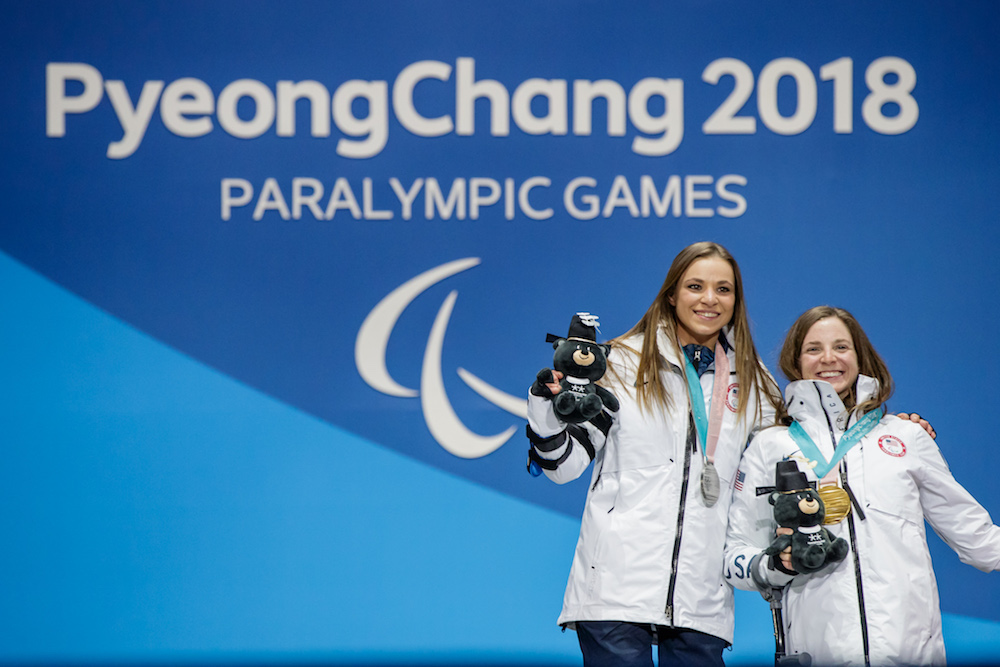
    Kendall Gretsch (r) and Oksana Masters at the 2018 Paralympics medal ceremony for the women’s sitting 6 k biathlon sprint after Gretsch won gold and Masters claimed silver on the first day of competition in PyeongChang, South Korea. (Photo: U.S. Paralympics/Joe Kusumoto)

    As a sophomore at Washington University in St. Louis, Missouri, Kendall Gretsch stumbled across an article that would change her life. It was the spring of 2012, just a few months before the Summer Paralympics in London.

    Gretsch had been reading the local news when she came across a story about a St. Louis college student who hoped to attend the London Games as part of the U.S. Paralympics Swimming team.  

    Born with spina bifida, Gretsch had been a swimmer in high school. After graduating in 2010, she enrolled at Washington University with the intent of studying biomedical engineering and no plans to swim collegiately. 

    However, within the first few months of her freshman year, she missed the athletic outlet. She began to swim and exercise on her own. By the time she came across the aforementioned article about a year later, she was ready to jump back into the pool, struck by the idea of pursuing the Paralympic dream.

    “I was just so oblivious to any sort of para-sport,” Gretsch, 26, reflected on the phone earlier this summer, noting that she had not really thought of the Paralympics as “an option” for continuing her athletic career until reading the piece.

    Competing at the Paralympics quickly became her goal, but it wasn’t limited to swimming.
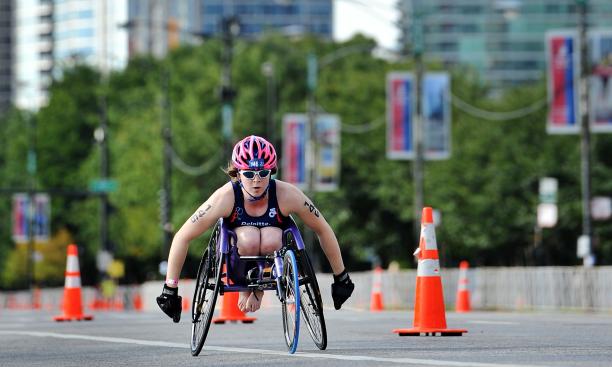
    Kendall Gretsch is a three-time world champion in the women’s paratriathlon PT1 classification. (Photo: IPC)

    “In high school, I just liked being a part of the team and the social aspect of [swimming], the sport elements of being able to push yourself and set your own individual goals,” said Gretsch, a native of Downers Grove, Illinois.

    Following her sophomore year of college, Gretsch returned to Illinois in search of an adaptive sports program to join. What she found was Dare2Tri. Based out of Chicago, the Dare2Tri program offered swim sessions, and Gretsch made it out for the final swim practice of the season. After getting out of the pool, she was approached by one of the instructors. Would she be interested in stepping outside and trying her luck on the track?

    “She had me come right out after the swim practice and try racing wheelchair,” Gretsch recalled. “I ended up doing my first triathlon race that summer.”

    After graduating in college in 2014, she competed in her first international race and started focusing solely on paratriathlon. At 2014 world championships, she won gold in the PT1 classification and was later awarded 2014 Female Para Triathlete of the Year by USA Triathlon.

    In 2015, Gretsch won another World Championship paratriathlon title and was also nominated for an ESPY Best Female Athlete with a Disability award. (She would earn a third World Championship title in 2016.)

    World Championships and awards aside, the Paralympics were still on Gretsch’s radar in the spring of 2016. Her chance seemed forthcoming. The 2016 Summer Paralympics in Rio de Janeiro, Brazil, would be the first in history to feature paratriathlon. However, the PT1, Gretsch’s class, was not to be contested for women.

    If she wanted to compete at the Paralympics, she would have to wait and see if her classification would be included at the 2020 Summer Paralympic Games in Tokyo or turn her attention elsewhere. But where to go?

    During her first year with Dare2Tri, she had heard about adaptive cross-country skiing.

    “Someone I had met through triathlon mentioned to me in passing, ‘Hey, there’s this group up in Madison, [Wisconsin], they do adaptive nordic skiing, you should check it out sometime,’” Gretsch explained. “So nordic skiing was in the back of my mind [leading up to Rio].”

    She decided to give nordic skiing a go. She moved to Madison and took a technical-support job with an electronic health records company, Epic Systems, while training in an effort to make the 2018 Winter Paralympics in PyeongChang, South Korea.

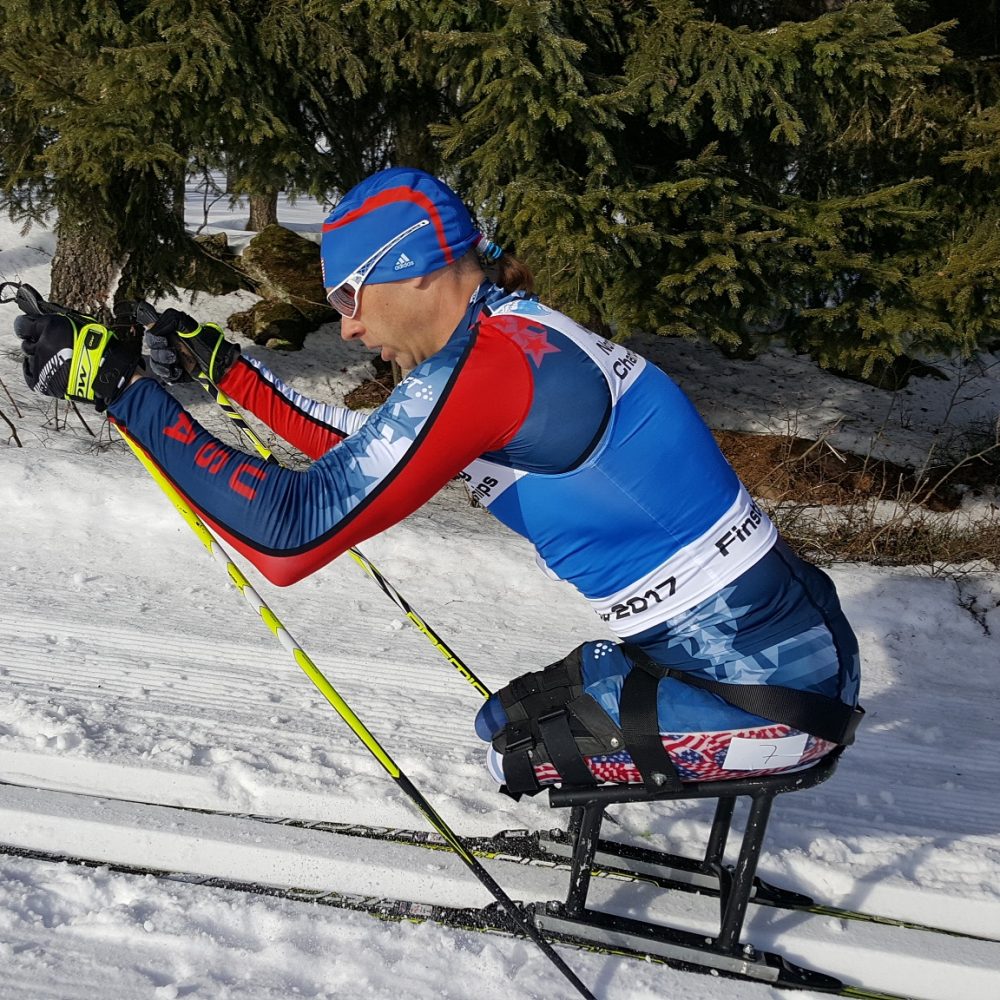
    “Maybe it’s just because I had a background in swimming that I felt like triathlon came a little bit more naturally,” Gretsch said of her transition to nordic. “The hardest part about learning to nordic ski was definitely the maneuvering. In nordic, when you’re in a sit ski, your skis are fixed together, straight. When you’re maneuvering around a corner, you can’t just pick up your foot and step around a corner, like you would if you were standing. So learning how to maneuver was really fun and challenging. We spent a long time on that in practice.”

    Kendall Gretsch takes aim during the women’s 6-kilometer sitting biathlon at the 2018 Paralympic Winter Games on Saturday in PyeongChang, South Korea. She won the race to become the first American woman to medal in a biathlon event at the Paralympics (or Olympics). (Photo: US Paralympics/Mark Reis)

    Beyond the challenge of learning a new sport, Gretsch also bumped up against a lack of snow during her first season as a cross-country skier.

    “I would travel every weekend to find snow,” Gretsch said of her first winter in Wisconsin. “In Madison, there wasn’t really any snow, so during the week I wasn’t really skiing that much at all. I was just sort of skiing during the weekends and then as much as I could during the week.”

    Gretsch remained in Madison through the winter and into the summer. A little less than a year out from the 2018 Paralympics, she turned her attention completely to skiing, putting paratriathlon on hold. Four months prior to the Games, she moved Bozeman, Montana, to train with the U.S. Paralympics Nordic team and then-head coach Eileen Carey (Carey recently became the director of U.S. Paralympics Nordic).

    By the time the Winter Paralympics rolled around, Gretsch had a full year of nordic training under her belt. Still, what came in South Korea was slightly unexpected.
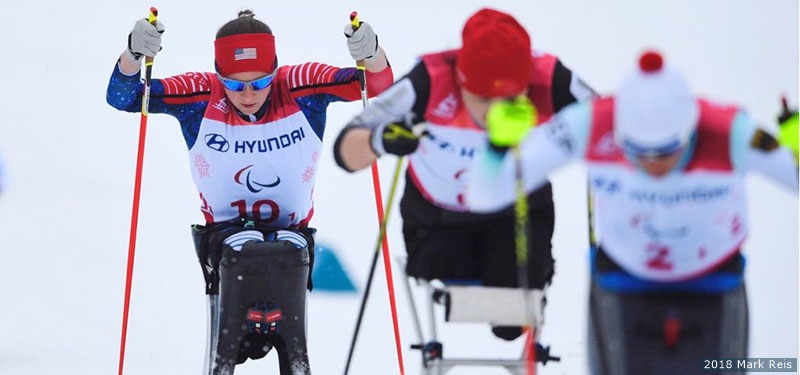
    American Kendall Gretsch (l) racing in the 4 x 2.5 k mixed relay at the 2018 Paralympic Winter Games in PyeongChang, South Korea. Her team finished seventh. (Photo: U.S. Paralympics/Mark Reis)

    In the opening event of the Games, Gretsch became the first American to take home a gold medal in Paralympic biathlon by winning the 6-kilometer sitting sprint. One day later, she won a second gold medal in the 12 k sitting cross-country distance race.

    “A lot of times — this probably sounds really terrible — I feel like in triathlon, people are waiting for me to fail,” Gretsch said. “Whereas in a new sport, you have your own personal expectations of how things should go, but no one else really has those expectations for you. You don’t have a target on your back. So there’s a lot of freedom with that.”

    With two Paralympic gold medals to her name, Gretsch plans to continue cross-country skiing. She also hopes that her classification will eventually be included in the Summer Paralympics so that she may become a Paralympic triathlete as well.

    “I think we’ll know by the end of this year whether or not my classification will be in Tokyo for triathlon,” she said. “So the plan right now is to do both.”

    And for someone as strong and talented as Gretsch, more medals from both sports is not out of the question.

    “It’s a very humbling experience being able to hear your anthem,” Gretsch said, according to a U.S. Paralympics Nordic press release after her second gold medal in PyeongChang. “Puts everything into perspective. Knowing that you’re here not just here for yourself but for your country.”

  • Masters Claims First IPC World Champs Title, Second Time Around for Arendz, Silver for Soule (Updated)

    Masters Claims First IPC World Champs Title, Second Time Around for Arendz, Silver for Soule (Updated)

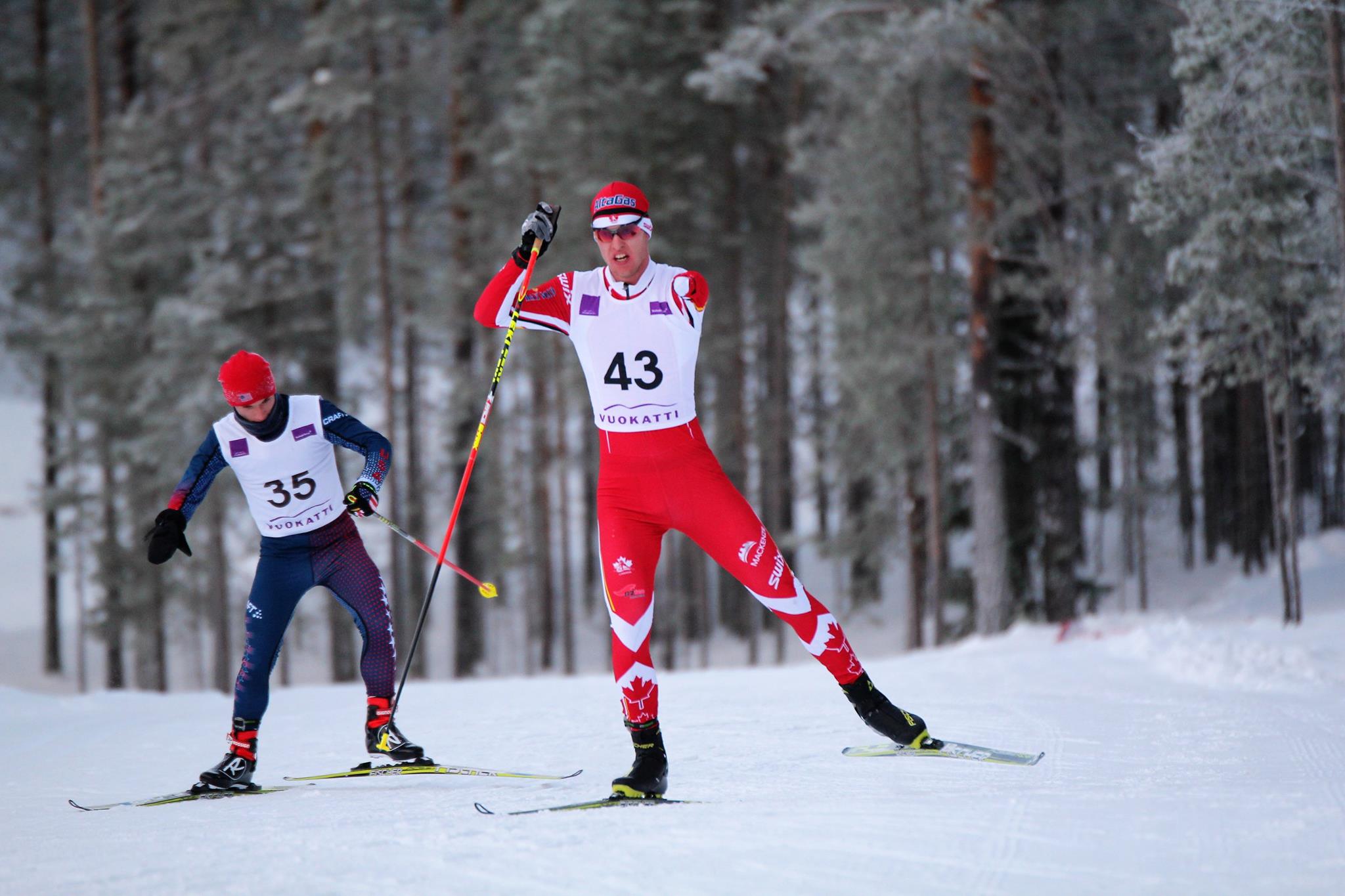
    Mark Arendz (43) of the Canadian Para-Nordic Ski Team racing to silver on Dec. 12, 2016 in Vuokatti, Finland. He finished second in the men’s standing long-distance event that day, and won his second-career World Championships gold on Saturday, Feb. 11, in Finsterau, Germany. (Photo: Canadian Para-Nordic Skiing/Facebook)

    The 2017 International Paralympic Committee (IPC) World Nordic Skiing Championships kicked off Saturday, Feb. 11, in Finsterau, Germany. Day 1 included middle-distance biathlon events for both genders, with Canada’s Mark Arendz earning his second-career IPC World Championships title. On Day 2, both genders competed in a cross-country sprint, where American Oksana Masters raced to her first world title and her U.S. Paralympics Nordic teammate Andy Soule claimed silver. Complete results and race recap below.

    ***

    There’s no better way to start a World Championships week than with a world title. After hitting all 20 targets in the men’s 12.5 k standing biathlon race, that’s just what Canada’s Mark Arendz did, taking gold on the opening day, Saturday, Feb. 11, in a time of 30:39.3 minutes.

    “To start the World Championships off with a World Title is a huge boost of confidence going into the rest of the competitions here in Germany,” Arendz wrote in an email to FasterSkier. “ It is proof that the changes that the program and I have made this year are working. That the training and hard work is going in the right direction.”

    The win is 26-year-old Arendz’s second World Championships title and first podium at a top-level international race (in a non-Paralympic year) in three years, according to a Canadian Para-Nordic Skiing press release. He previously took gold in a biathlon sprint and two bronze medals in 2013.

    “The biggest change for me has come from my approach to shooting,” Arendz said, according to the press release. “My new (shooting) coach has really brought my shooting back to the level that it once was. I was repeating too many bad habits, so the key was to rebuild the shooting from the ground up. Today, I proved the shooting is once again back on top.

    “Shooting clean at major events is key,” he added. “I controlled what I could on the range. On the course, I worked on areas where I am stronger and held a consistent pace.”

    France’s Benjamin Daviet finished behind Arendz in second place in a time of 31:14.3 with two misses (0+0+1+1), while third place went to Ukraine’s Grygorii Vovchynskyi in a time of 31:22.8 after two misses (0+1+0+1).

    (Recap continues below)

    https://www.instagram.com/p/BQYuIbflxiv/

    The women’s 10 k standing biathlon gold went to Oleksandra Kononova, who completed the course in a time of 31:41.5 after three misses (1+0+1+1).

    “I am happy but there is still a lot of work to do and many races to compete in,” Kononova said according to an IPC press release.

    Second place went to Liudmyla Liashenko, also of Ukraine, in a time of 33:05.7 with five missed shots (2+1+2+0). The final women’s standing podium spot was taken by Japan’s Yurika Abe in a time of 34:14.3 and one miss (1+0+0+0).

    Two Canadian women competed in Saturday’s standing biathlon event, with Brittany Hudak leading the team in eighth place. Hudak finished in 36:39.2 after shooting clean. Her teammate, Emily Young finished 10th in a time of 39:28.2 with five misses (0+2+0+3).

    In the men’s 12.5 k sitting biathlon race, Germany’s Martin Fleig took gold in a time of 37:31.0 with one penalty (1+0+0+0). It was his first world title and in front of a home crowd.

    “I cannot believe it, it is unreal for me, I do not know what is going on,” Fleig said according to an IPC press release. “I had a good race and I only missed one shot. Having my people cheering for me gives me extra power.”

    Ukraine’s Taras Rad placed second in a time of 37:52.2 with two misses (2+0+0+0) and third place went to Korea’s Eui Hyun Sin in a time of 39:37.4 after four misses (2+1+1+0).

    Just missing the podium in fourth place overall was Canada’s Collin Cameron, who finished in a time of 40:02.0 after one miss (0+1+0+0). In sixth was American Andy Soule, finishing in a time of 40:10.4 with five penalties (1+2+0+2). Canada’s Derek Zaplotinsky finished ninth in a time of 43:05.8 with four misses (1+0+3+0).

    Belarus’s Lidziya Hrafeyeva won the women’s 10 k sitting biathlon race, completing the course in a time of 34:46.0 with one miss (0+1+0+0).

    “My first medal at a Worlds and it is gold. This is like a dream for me,” Hrafeyeva said according to an IPC press release.

    Anja Wicker of Germany claimed second in a time of 36:22.1 after two misses (1+0+1+0), while Andrea Eskau, also of Germany, took third in a time of 36:48.5 with one miss (1+0+0+0). Just off the podium in fourth was American Oksana Masters, who finished in a time of 36:53.7 with five misses (1+2+1+1).

    “I know I have very strong opponents such as Belarus’ Lidziya Hrafeyeva, USA’s Oksana Masters and my teammate Andrea Eskau,” Wicker said according to an IPC press release.  “But I am giving my best.”

    In the men’s 12.5 k visually impaired biathlon race, Ukraine swept the podium with Iurii Utkin taking the win. Utkin shot clean and completed the course in a time of 32:50.7.

    “It feels great to win this title, this is very big and I did not expect to win. But hopefully now I will win more golds in the days to come,” Utkin said according to an IPC press release.

    His teammate, Anatolii Kovalevsky claimed second place in a time of 33:07.4 after also shooting 100 percent. Dmytro Suiarko earned the final medal after finishing third in a time of 33:51.9 with one miss (1+0+0+0).

    Ukraine also took the top two spots in the women’s visually impaired biathlon event, with Olga Prylutska winning in a time of 33:11.4 after two misses (1+0+1+0) and Ukiraine’s Oksana Shyshkova racing to second place in a time of 33:18.5 with one missed shot (0+0+1+0). Third went to Germany’s Clara Klug in a time of 36:47.9 after two missed shots (1+0+1+0).

    Day 1 results: Men’s 12.5 k standing | Women’s 10 k standingMen’s 12.5 k sitting | Women’s 10 k sitting |  Men’s 12.5 k visually impaired | Women’s 10 k visually impaired

    Day 2

    Athletes returned to the venue on Sunday, Feb. 12, for the first day of cross-country races at 2017 IPC World Nordic Skiing Championships: the sprints.

    ***

    Oksana Masters (U.S. Paralympics Nordic) after winning her first IPC World Championships gold in the women’s cross-country sitting sprint on Sunday, Feb. 12, in Finsterau, Germany. (Photo: John Farra/US Paralympics Nordic)

    Oksana Masters is far from your average athlete. The 27-year-old member of the U.S. Paralympics Nordic Skiing A-team has competed in three Olympics in three different sports: rowing, skiing and handcycling. She earned a bronze medal at the 2012 Summer Games in London and later a silver and another bronze medal at the 2014 Winter Games in Sochi, Russia.

    Five months after competing in the 2016 Summer Olympics in Rio de Janeiro, Brazil, Masters has added another medal to her growing list. This one gold.

    The Kentucky native won the women’s sitting sprint on Sunday in a time of 2:59.36, besting both Germany’s Eskau and Belarus’s Hrafeyeva for her first world title.

    “This was unreal,” Masters said, according to a U.S. Paralympics press release. “I’ve been competing in sports for so long, and this was my first world championship title. I’ve put anything and everything I had into sprinting, especially after getting so close in Sochi. I’m just so excited to bring home a world championship for Team USA for the Paralympic Nordic program.”

    Masters’s gold was historic for both her and the U.S. — the last time the U.S. national anthem was played at a World Championships was six seasons ago.

    “This is a huge day for Oksana and Andy [Soule] and historical for our program and we plan to keep the momentum going!” U.S. Paralympics Nordic Head Coach Eileen Carey wrote in an email.

    Eskau took second in a time of 3:14.97, while Hrafeyeva claimed third in a time of 3:17.24.

    In the men’s sitting sprint, another American reached the podium as Soule, U.S. Paralympics Nordic’s other A-team member, captured silver behind Ukraine’s Maksym Yarovyi in first. Yarovyi completed the sprint in a time of 2:37.77, while Soule crossed in a time of 2:47.99.

    Andy Soule (U.S. Paralympics Nordic) racing to silver in the men’s cross-country sitting sprint on Sunday, Feb. 12, in Finsterau, Germany. (Photo: John Farra/US Paralympics Nordic)

    “It is not just me that got me here,” Soule wrote in an email. “I have worked hard but without my teammates working with me and the continued support of my coaches and technicians none of this is possible. Our team is doing great things right now and I see a great future for us.”

    While Soule explained that he was able to avoid any traffic spills in his semifinal, he narrowly avoided one in his final.

    “It was a very tight race into the first turn and there was a little bit of contact,” Soule wrote. “One racer did not make it out clean and I came out tightly following two other racers in my class. When we turned up hill I took the lane they didn’t and was able to out climb them. From the top it was once again able to just hold on to a lead (for second). I was not quite able to catch Maksym Yaroviy, who gets a considerable start on me due to his classification.”

    Third place went to Trygve Steinar Larsen of Norway in a time of 2:47.23. Canada’s Cameron just missed the podium with a career-best fourth in 2:47.76.

    “Tactically I could have done a few things a little differently in the finals, but overall this was an excellent day for me, and I’m very happy with this result for just my third ever sprint race in Europe,” said Cameron, a 28-year-old World Championships rookie and former sledge hockey player, according to a Canadian team press release. “To get this close to my first podium obviously encourages me to use everything I learned from today to make myself better and ski smarter in the future.”

    American Aaron Pike also competed in Sunday’s sitting sprint, finishing in ninth overall in a time of 2:46.62 after being eliminated in the semifinals. A second Canadian competed in the sit sprint, with Sebastien Fortier finishing in 17th in a time of 3:06.33.

    Ukraine’s Ihor Reptyukh won the men’s standing sprint, crossing first in a time of 2:50.53. Witold Skupien of Poland earned silver in a time of 2:52.38, while Ukraine’s Vovchynskyi took bronze in a time of 2:54.84.

    Moving up from her second place in Saturday’s event was Ukraine’s Liashenko, who won the women’s standing cross-country sprint in a time of 3:21.05. Her teammate Kononova also earned her second medal of the week with a silver place finish in a time of 3:19.82. Rounding out the all-Ukraine podium in third was Iryna Bui, who crossed in a time of 3:36.30.

    “I worked very hard, corrected the mistakes from previous races and this is consequence of that,” Liashenko said according to an IPC press release.

    Canada’s Young took sixth in a time of 3:42.64.

    “It was not perfect, but better than yesterday,” Young said, according to a team press release. “I came in with a fresh slate and ready for a fight. I had a race plan and knew the course well. The races got better each time and it was encouraging to hang on to some of the fastest skiers for longer than I could in the past. I am happy with where I am in the sprinting field this far in my career.”

    Sweden’s Zebastian Modin claimed first in the men’s visually impaired sprint, crossing in a time of 2:46.76. Ukraine’s Utkin earned his second medal in a row, crossing second in a time of 2:54.35. France’s Thomas Clarion took the final men’s visually impaired podium spot, crossing third in a time of 2:52.85.

    “One year ago, I was thinking of throwing the skis into the fire, of retiring because of so many injuries I suffered,” Modin said according to an IPC press release. “And now being here is amazing.”

    The women’s visually impaired cross-country sprint went to Austria’s Carina Edlinger, who crossed in a time of 3:26.42 for the win. Second place was taken by Ukraine’s Shyshkova, while third went to Belarus’s Sviatlana Sakhanenka in a time of 3:29.75.


    Day 2 results: Men’s sitting sprint | Women’s sitting sprintMen’s standing sprint | Women’s standing sprint | Men’s visually impaired sprint | Women’s visually impaired sprint

    After a rest day on Monday, athletes return to the venue for Day 3 of competition with individual (long-distance) biathlon races.

    Update: On Tuesday, Arendz racked up another medal — silver — in the men’s 15 k standing individual biathlon event.

    “After crossing the finish line, all I could initially think about was the single miss (in shooting), and the fact I let the gold slip through my fingers,” Arendz said, according to a press release. “But I quickly warmed up to the fact that I had won a World Championship silver medal.”

    Also with her second podium in three races, Masters finished third in the 12.5 k sitting individual biathlon event. Pike notched a career-best fourth in the men’s 15 k sitting biathlon event, just ahead of Canada’s Zaplotinsky, who recorded a career-best fifth. Soule followed in seventh.

    Hudak raced to fifth in the women’s standing 12.5 k biathlon race.

  • Masters Makes It a Triple, Bound for Rio Paralympics in Handcycling

    Masters Makes It a Triple, Bound for Rio Paralympics in Handcycling

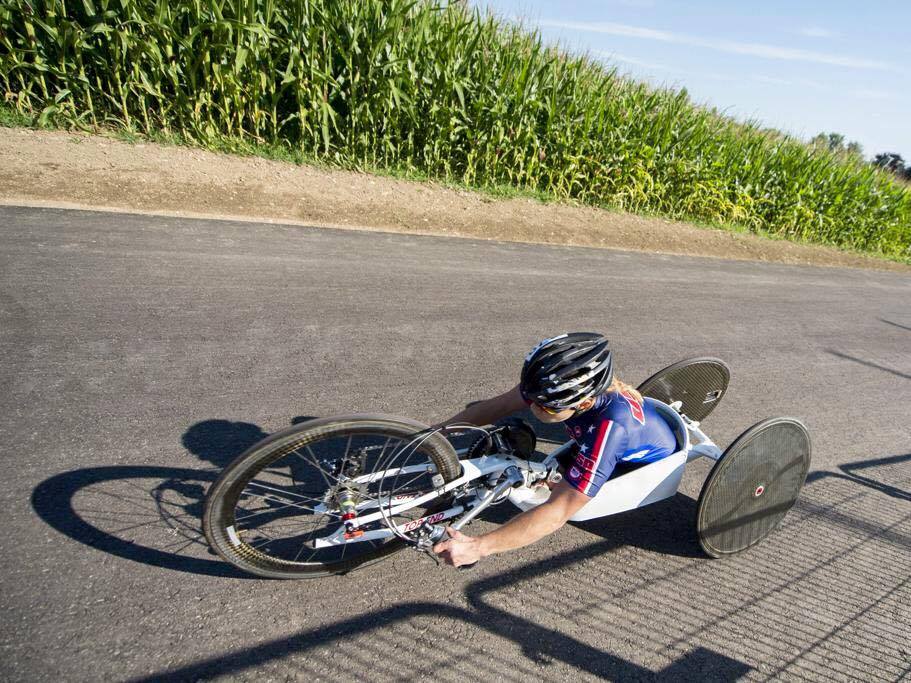
    Three sport Paralympic athlete, Oksana Masters training for handcycling for the 2016 Rio Summer Paralympics taking place in September. (Photo: Oksana Masters USA Facebook)
    Multi-sport Paralympic athlete Oksana Masters training for handcycling in anticipation of the Rio 2016 Summer Paralympics, which will be held in September. (Photo: Oksana Masters/Facebook)

    Not many individuals have the opportunity to represent the U.S. at the Olympics. Even fewer have had the opportunity to do so three times. And fewer still in three different sports. By the closing ceremony of this year’s 2016 Summer Paralympics in Rio de Janerio, which kick off Sept. 7, U.S. Paralympic rower-turned-skier-turned-cyclist Oksana Masters will have accomplished all of the above and potentially podium in all three sports.

    The road to Rio for Masters, however, was not like the smooth paved streets she now occasionally finds herself cycling on as she preps for the 2016 Paralympic games. Born in Ukraine with birth defects believed to have been caused by Chernobyl, Masters spent the first 7 1/2 years of her life in several orphanages before being adopted by Gay Masters, an American speech pathologist. At the time of her adoption, Masters was severely underweight. Gay brought the malnourished child back to the U.S. and moved to Louisville, Ky., when Masters was a teenager, according to the Associated Press.

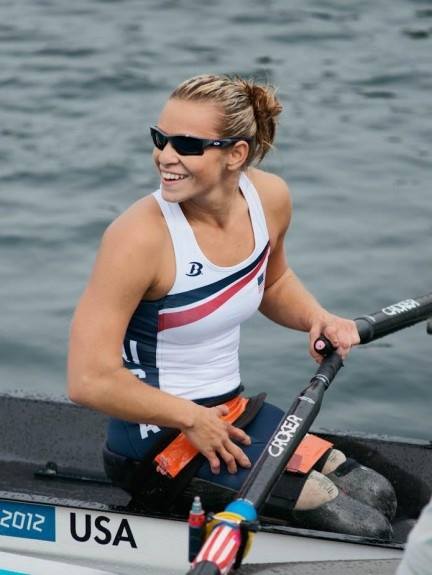
    Three sport Paralympic athlete, Oksana Masters who rowed to a bronze medal along with Rob Jones (not shown) during the 2012 London Summer Paralympic games. (Photo: Oksana Masters USA Facebook)
    Oksana Masters rowed to a bronze medal along with Rob Jones (not shown) at the 2012 London Summer Paralympic games. (Photo: Oksana Masters/Facebook)

    In the years that followed, Masters didn’t just adapt, she thrived. She began competing seriously in rowing and in 2012, qualified for the London Summer Paralympics, where she and her U.S. teammate Rob Jones took bronze in the trunk-and-arms mixed double sculls. That same year she was featured in ESPN The Magazine’s Body Issue. Also in 2012, she was also approached by one of the coaches for the U.S. Paralympic Nordic Ski team.

    While rowing had been a part of her life for 11 years, due to issues with her back, Masters decided to trade in her oars for skis in 2013. She took up sit skiing, and the 2014 Winter Games in Sochi, Russia, became her new focus.

    By the end of the 2013/2014 ski season, Masters not only qualified for Sochi in cross-country skiing and biathlon, she came away with two medals: silver in the 12-kilometer cross-country and bronze in the 5 k cross-country sit-ski events. There in Sochi, the notion of cycling first crossed her mind.

    “One of our teammates for the U.S., she was a sit skier, her summer sport was hand cycling and she really liked the tradeoff [between skiing and cycling],” Masters, now 27, explained in a recent phone interview from Champagne, Ill. “I originally would be doing rowing, but my body is not able to do that motion right now and I wanted to maintain a fitness level and she spoke really highly of [cycling].”

    By the end of the winter, Masters decided to give cycling a try. With only a couple months of training under her belt, she qualified for the 2014 UCI Para-cycling Road World Championship team and raced to fourth place in both the road race and time trial. After another successful ski season, she spent all of last summer cycling and once again qualified for the 2015 UCI Para-cycling Road World Championships and took bronze in the H5 road race. Eventually, what began as just a way of staying in shape for skiing became her third Paralympic sport.

    “One of the things I was lacking in skiing was race tactics and how to race,” Masters said. “Rowing didn’t have any of that because you’re in your own lane and you can just put your head down and hammer home. Skiing, there’s a lot more to it than going hard. So cycling was kind of like a way to stay in shape in the summer and learn more about racing. Then it just somehow led into going to Rio.”

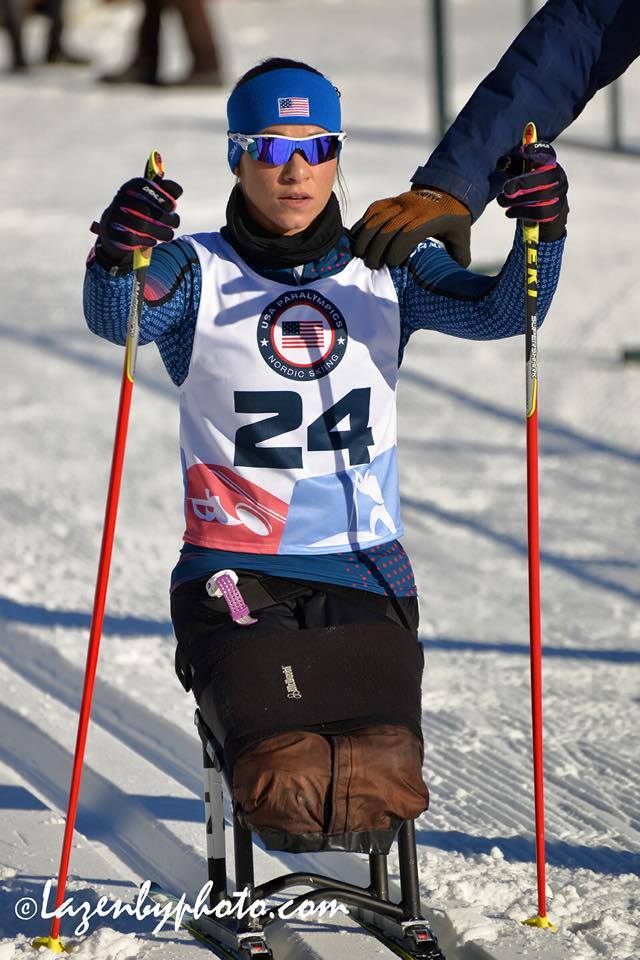
    Three sport Paralympic athlete, Oksana Masters competing for the U.S. Paralympics Nordic A-team in Craftsbury, Vt. (Photo: Oksana Masters USA Facebook/John Lazenby/Lazenbyphoto.com)
    Oksana Masters competing at 2016 U.S. Paralympic Nordic nationals in Craftsbury, Vt. (Photo: John Lazenby/Lazenbyphoto.com)

    Nowadays, Masters trains for cycling in Champagne, Ill., as well as Colorado Springs, Colo., with her coach, Mike Creed, a U.S. Paralympic cycling coach, at the Colorado Olympic Training Center.

    Undefeated in cross-country races last season and the two-time International Paralympic Committee (IPC) Overall World Cup champion, Masters remains on the U.S. Paralympic Nordic Skiing A-team and plans to compete this upcoming winter.

    “I’m really excited to be cycling and to see what cycling can bring out for my skiing as well,” she said. “With this heat, I  also cannot wait for winter.”

    To prepare for skiing, Masters will work with U.S. Paralympic Nordic Head Coach Eileen Carey. Though the triple-sport Paralympian has spent most of her summer focusing on cycling, she said she’s excited to get back to skiing.

    “The biggest challenge in athletes competing in multiple sports at a high level is being able to balance the calendar and making sure that they are able to have the opportunities they need to achieve their goals in both sports,” Carey wrote in an email to FasterSkier. “Based on what their individual goals are, we make big efforts to accommodate their schedules in other sports in a way that allows them to maximize their time on snow.”

    According to Carey, for sit-skiers such as Masters and Tatyana McFadden and Aaron Pike (both also competing in Rio in wheelchair track and field), competing at a high level in multiple sports is a good thing.

    “I think for sit skiers especially, doing two sports can work to their advantage,” she wrote. “There are so many possibilities of overuse injuries when you are using primarily your upper body.  Doing a sport that uses a different motion can provide variety that I think is really important for both sports.  We have seen Tatyana McFadden and Aaron Pike, who both compete in wheelchair racing, achieve personal bests in races just weeks after winter when they were doing no specific training in their racing chairs.  There are certainly challenges in balancing two sports, but we see it as a competitive advantage and structure our program in that way.”

     “Skiing, there’s a lot more to it than going hard, so cycling was kind of a way to stay in shape in the summer and learn more about racing. Then it just somehow led into going to Rio.” — Oksana Masters, 27, three-time U.S. Paralympian

    After trials in June and early July in Charlotte, N.C., Masters was one of 18 athletes named to the U.S. Cycling Team for Rio. Team qualification involved a time trial in which both upright cyclists and handcyclists competed against each other — Masters a part of the handcycling group. With the time trial behind her, her goals for the Games are unfettered by the pressure to podium.

    “I just want to finish with the pack,” she said. “I would love to bring home a medal and I totally believe that I can I would just be happy if I finished with the pack though. I’m not going to put the pressure of going for the gold right now.”

    For Masters, it’s not so much the medal, but the opportunity to once again represent the U.S., this time in another new sport.

    “I haven’t even had time to focus on what I’m looking forward to, just not getting my butt kicked,” Masters said. “It’s going to be a good challenge and I’m really looking forward to being able to represent the U.S. Paralympic team and to be able to represent it in more than one sport. I feel very, very, very humbled and thankful to have that opportunity and I’m really excited to show the versatility of any athlete.”

    Sochi Winter Paralympian Oksana Masters qualified for the 2016 Summer Paralympics in hand cycling early last month. They will be her third consecutive Paralympics (she rowed in London in 2012, raced biathlon and nordic in Sochi in 2014, and will hand cycle in Rio next month.) (Photo: Oksana Masters/Facebook)
    Sochi Winter Paralympian Oksana Masters qualified for the 2016 Summer Paralympics in cycling early last month. This will be her third consecutive Paralympics (she rowed in London in 2012, raced biathlon and nordic in Sochi in 2014, and will hand cycle in Rio next month.) (Photo: Oksana Masters/Facebook)