Tag: 2013 Holmenkollen 30 k

  • Sophia Laukli was crushing her Olympic debut. Then she went the wrong way. She still finished 15th.

    Sophia Laukli was crushing her Olympic debut. Then she went the wrong way. She still finished 15th.

    It had been more than a month since Sophia Laukli last wore a race bib. Her last competitions took place on January 15th and 16th during the 2022 Sun Valley Nordic Invitational, where she was second to Rosie Brennan in the 5 k individual start skate, racing at altitude on a tough course. Eleven days prior, she was the fifth woman, and the first American, to the top of the Alpe Cermis in Val di Fiemme, Italy during the final stage of the Tour de Ski. 

    Earlier in the season, Laukli popped a Top-20 at altitude in Davos, Switzerland, finishing 19th in the 10 k individual start skate

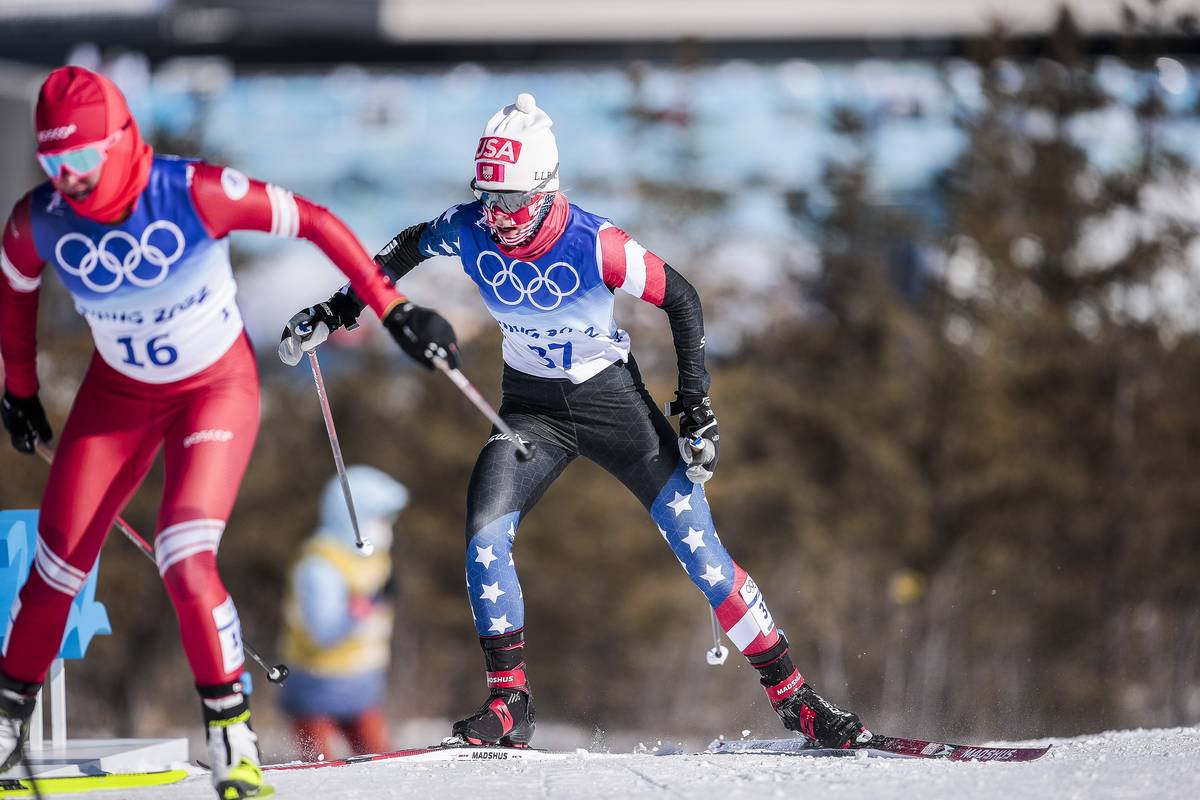
    Racing through brutal wind and cold, Sophia Laukli skis to 15th in the 30 k skate. (Photo: NordicFocus)

    It’s become clear: Laukli is a contender in freestyle distance races, and the harder (and higher) the better. 

    Heading into the Games, Laukli knew she would be starting the 30 k mass start freestyle. Given the elevation, the challenge of the course, the technique, and the distance, perhaps this selection by the coaches was a no-brainer. 

    “I love this course,” Laukli said of the venue in Zhangjiakou in a post-race interview with FasterSkier in the mixed zone. “The hills really work to my advantage.”

    But no one could have predicted just how challenging the day would be. Wind ripped across open sections of the course, forcing athletes to drop into low gears even on flatter sections just to stay upright and moving forward. Most athletes wore large strips of tape across their faces, with buffs covering all remaining exposed skin save for their mouths and noses.
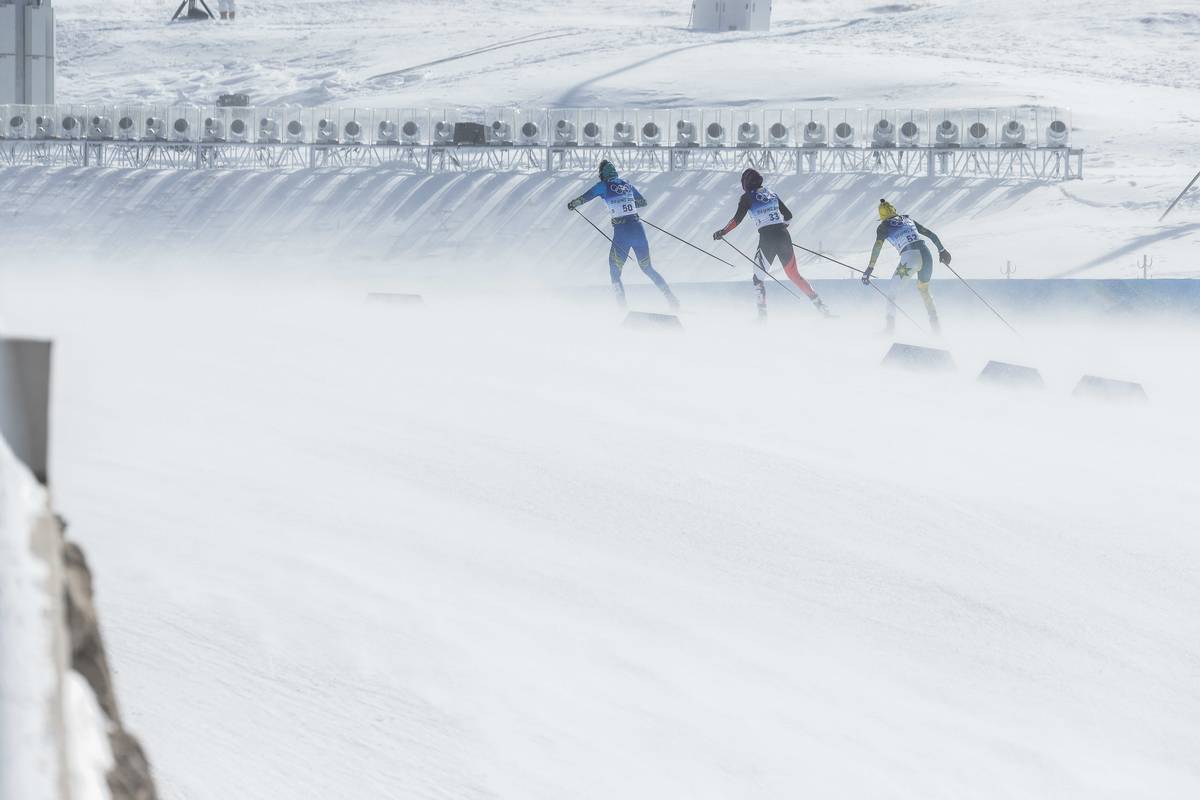
    Snow-filled wind gusts obscure the v-boards lining the 7.5 k course in Zhangjiakou during the women’s 30 k mass start skate. (Photo: NordicFocus)

    The American women showed they could handle whatever Zhangjiakou threw at them that day. Highlighted by Jessie Diggins silver medal performance – earned while fighting through painful cramping and fatigue after spending two days with food poisoning – the team put all four starters inside the top-20. Rosie Brennan skied to 6th, with Laukli in 15th, and Novie McCabe 18th.

    But Laukli was almost 13th. 

    With only a few hundred meters to go, Laukli made a wrong turn, accidentally following the lap course rather than the route to the finish lanes. 

    How did it happen?

    “I honestly don’t know exactly,” Laukli said in the mixed zone. “There was a huge gust of wind that kind of covered where it was marked ‘finish’ and ‘lap’, and I think it was a combination of [being] tired and not really seeing where to go. I definitely noticed a little bit too late, and then got passed, but I guess those things happen. I’m definitely a little bit bummed out. But I’m happy with the overall race.”

    Laukli is not the only athlete to have made a wrong turn at the Olympics. A wrong turn during the 30 k classic might have cost Austria’s Theresa Stadlober a medal at the 2018 Games in PyeongChang. There’s adrenaline, fatigue, nerves, and so many other factors at play, without wind gusts lifting clouds of dry loose snow into the air in the stadium. 

    “I’m bummed for her,” said coach Chris Grover, “that she lost two places, because she worked hard for those… but she did the right thing, retracing her steps all the way back, and that’s one of the lessons that you do once on the big show and then you never do it again. Jessie did it in Sochi.”
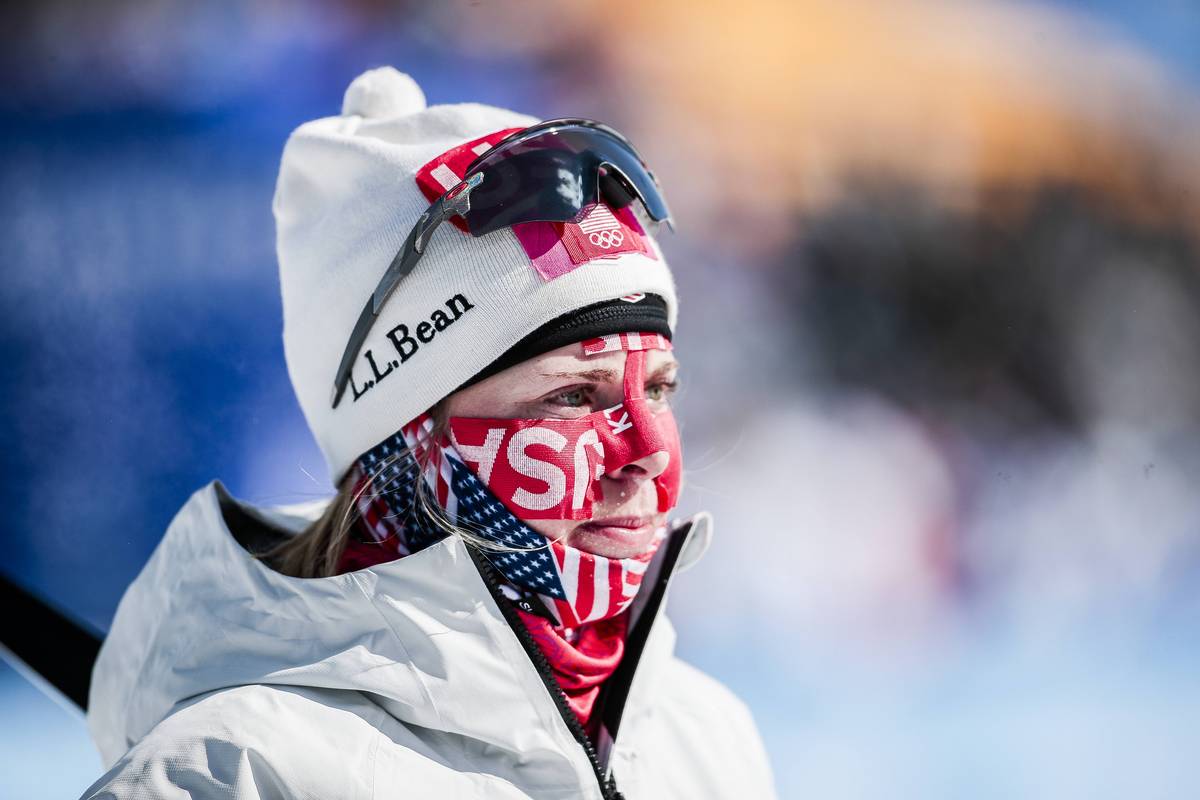
    Despite a wrong turn inside the final 400 meters, Sophia Laukli finished 15th in the 30 k skate in her Olympic debut. (Photo: NordicFocus)

    Having one of the best races of her season during her first and only appearance at the 2018 Games, Laukli admitted she felt panicked as she backtracked to the split to avoid disqualification. Having come to a stop and lost all momentum, it was devastating to see a pair of Norwegian twins, Lotta and Tiril Udnes Weng, skiing fast with a tailwind toward the final bend into the stadium. There was nothing Laukli could do to avoid losing those two places. 

    But to her coaches and supporters, this wrong turn was not the defining moment of Laukli’s Olympic debut. 

    Laukli showed mental toughness, dedication, and patience as she spent the three weeks prior to the 30 k training in Zhangjiakou, watching, supporting, and celebrating her teammates as they raced in earlier events, while trying to stay focused on her own opportunity that was yet to come. 

    “It was definitely not the easiest last month,” she told FasterSkier. “I really love racing, and so to have such a long break and just wanting to race, it was a bit tough.”

    She explained that, without races as a fitness checkpoint, she poured herself into her training to maintain her race shape, but ultimately was not sure what would happen on race day.

    “I think I was lucky in that it was a 30 k – it’s maybe easier to race a 30 k when you’re not in your fastest form, because it’s just a slower race. So I think that helped a lot.”
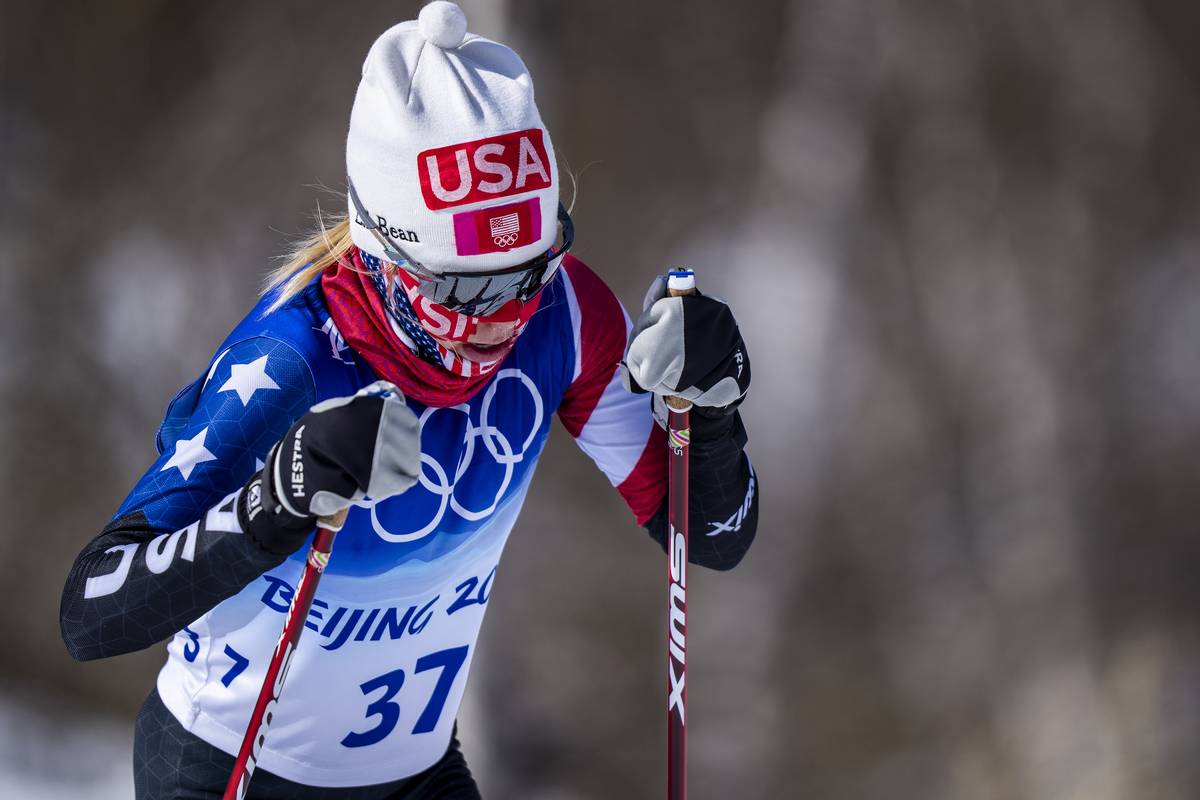
    Racing on her own for the second half, Sophia Laukli finishes her Olympic debut in 15th place. (Photo: NordicFocus)

    At the 10 k mark, Laukli sat in 15th, racing on the back of a large chase group led by Rosie Brennan. Over the next 5 k, a group of three, including Laukli, lost contact with this group and slowly separated. For the second half of the race, as the wind “really, really picked up”, Laukli found herself racing on her own with no one to work with or use as a wind break. At times, the headwind was so strong that Laukli said she ended up fighting it in V1 as she lapped through the false flat of the stadium at 22.5 k. 

    Ever onward, Laukli kept pushing, eventually overtaking a Latvian athlete who began to fade to find herself in 13th – 13th in the world at the Olympics – with a roughly 45 second gap to the next skier in the final kilometer. 

    “I felt like I was able to pace it pretty well,” she said. “It was definitely a bummer that I had to see most of it alone because I think it would have been beneficial to be in a group. But I did my best and I’m pretty proud of how it went.”

    While the takeaway here should remain that Laukli posted a top-15 result in her first Olympic performance at 21-years-old in some of the gnarliest conditions imaginable, the sting was still painful as she passed through the mixed zone. 

    “I’m probably in a better place than I was the minute after I finished. But to be honest, I’m pretty pissed. I really wanted to prove myself today, to prove that I earned that start. And just to make such a stupid, preventable mistake at the end… I was not stoked. But like I said, that happens, I guess. It sucks that it’s at the Olympics in my Olympic debut, but yeah, not a lot I can do about it now.”

    Perhaps Nat Herz said it best as their conversation in the mixed zone ended. 

    “As a guy who watches a lot of these races, I don’t think anyone’s gonna hold it against you, or remember it in however many years.”
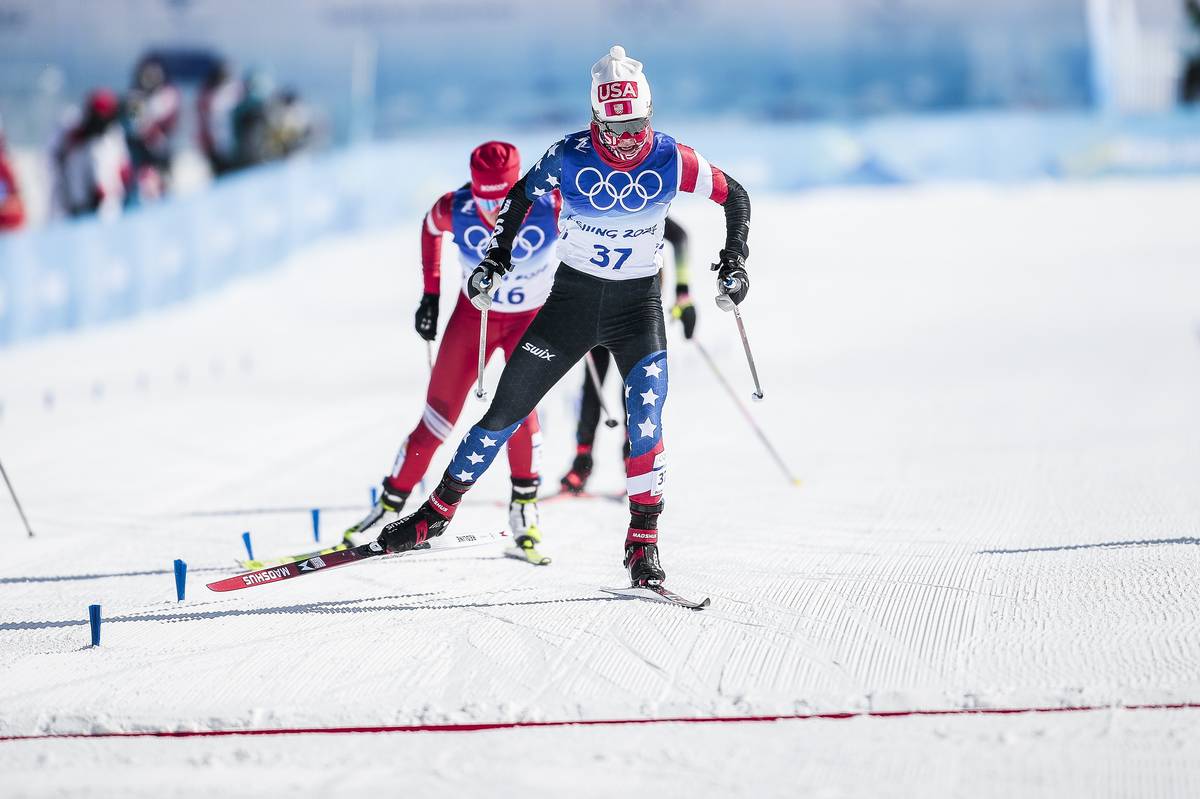
    Sophia Laukli pushes to the line for 15th in the 30 k mass start freestyle. (Photo: NordicFocus)
  • FasterSkier Exclusive: Despite Blow-Up, Tønseth Still Aiming for Tour Podium

    FasterSkier Exclusive: Despite Blow-Up, Tønseth Still Aiming for Tour Podium

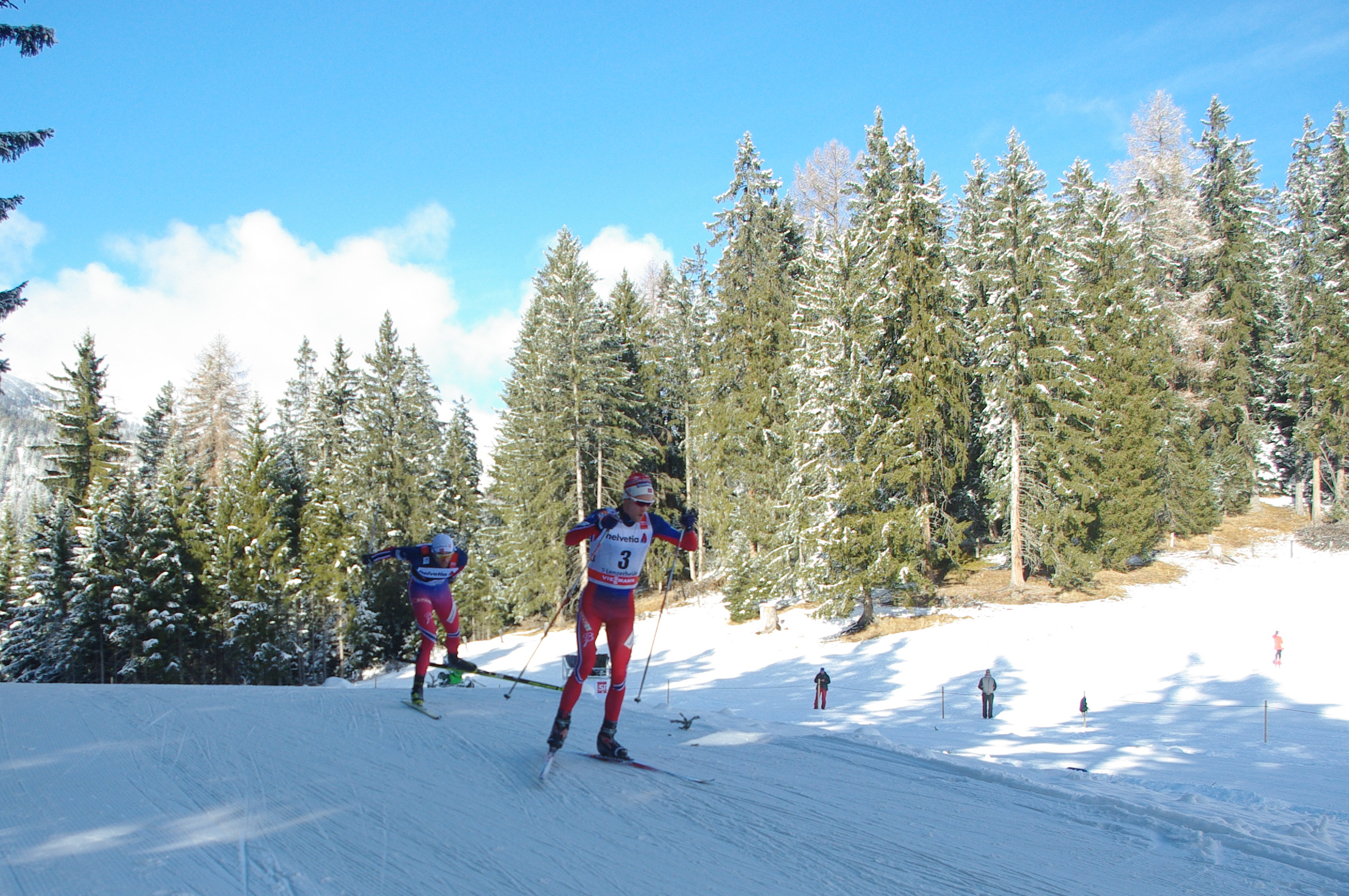
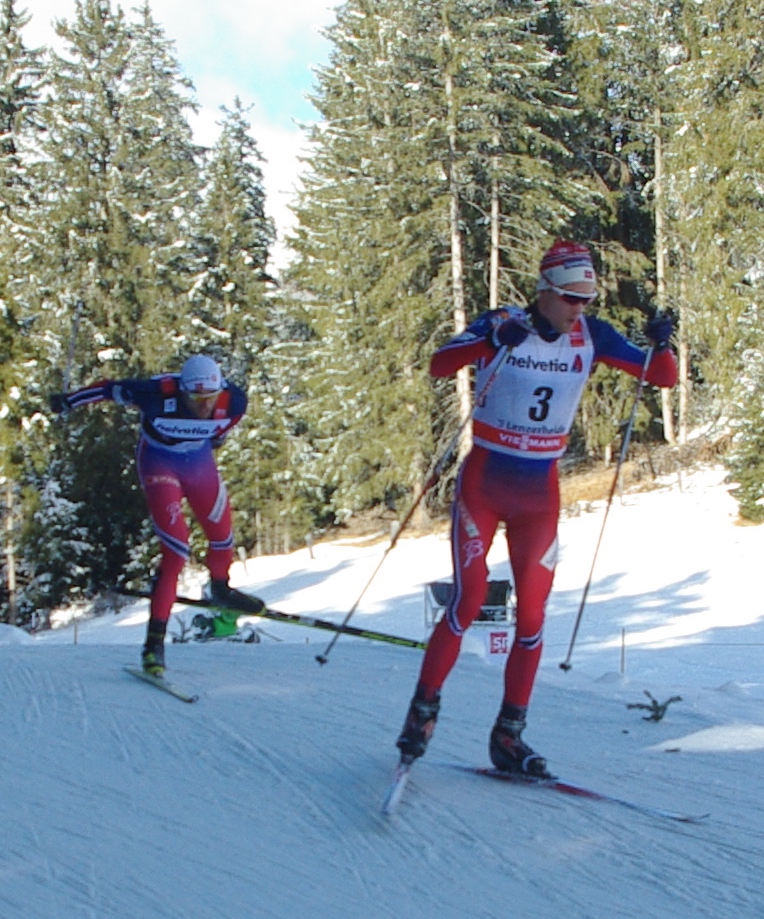
    Didrik Tønseth leading Petter Northug early in the 10 k pursuit in Lenzerheide. The tables turned later in the race.
    Didrik Tønseth leading Petter Northug early in the 10 k pursuit in Lenzerheide. The tables turned later in the race.

    LENZERHEIDE, Switzerland—Didrik Tønseth went into Sunday’s stage of the Tour de Ski ranked third, right where he wanted to be.

    So did ambition get the better of him? By the finish of the 10 k skate pursuit, the 24-year-old Norwegian was on the ground, exhausted, having gained one place and then lost four in a blow-up of epic proportions.

    Tønseth had closed a 13-second gap to superstar teammate Petter Northug in the opening lap of the 10 k skate pursuit, but when Northug attacked hard later, Tønseth couldn’t go with him. He ended up being caught and passed by several other skiers as he struggled though the final kilometers.

    “After the race I have another opinion, but before the race I believed I could open hard and that the pace was good,” Tønseth admitted to FasterSkier after the finish. “But maybe it was too hard in the opening.”

    The two had not compared notes over breakfast (as they had joked they would in the previous days press conference), and Northug was surprised to find Tønseth on his tails so early in the race.

    “I was shocked when he caught up with me so early in the race,” Northug told Norwegian daily Dagbladet on Saturday. “Just then, I felt like a bad skier.”

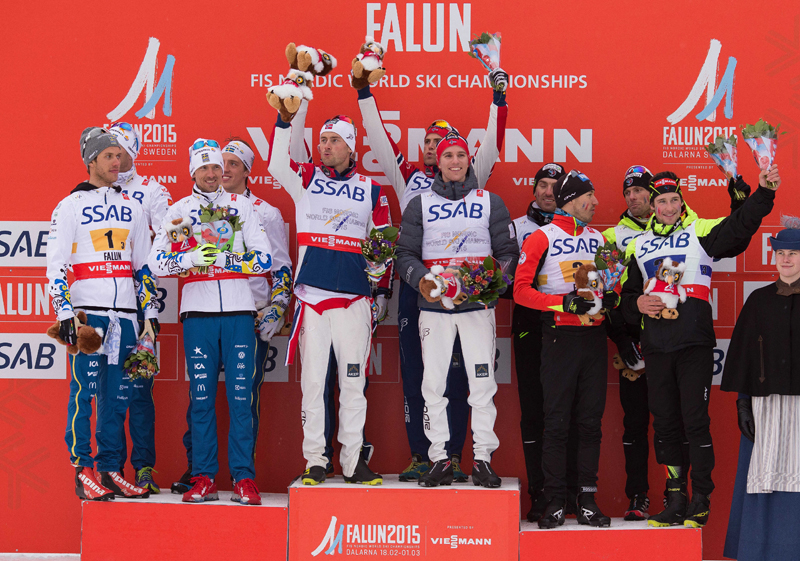
    Petter Northug (front left) and Didrik Tønseth (front right) share the top step of the podium after teaming up for gold in the 4 x 10 k relay at 2015 World Championships in Falun, Sweden. (Photo: Fischer/NordicFocus)
    Petter Northug (front left) and Didrik Tønseth (front right) share the top step of the podium after teaming up for gold in the 4 x 10 k relay at 2015 World Championships in Falun, Sweden. (Photo: Fischer/NordicFocus)

    Fans have seen Northug many times wait until the final hundred meters before putting on a furious finishing sprint to dust his competitors – Norwegian newspaper VG even compiled a list of the most famous incidents.

    So when Tønseth told FasterSkier that he hoped for some more help from Northug in the middle section of the race, it was hard to find the precedent.

    But at the same time, in many previous races Northug waited even longer before attacking – sometimes until just 300 or 100 meters from the finish. Tønseth was caught by surprise when Northug went for it with two kilometers to go, putting 20 seconds on the younger racer almost immediately.

    That’s the move of a champion.

    “It didn’t matter if you were a Norwegian or Swede or anything,” Tønseth told FasterSkier. “When he is in beast mode there isn’t any difference.”

    Tønseth set a podium finish in the Tour de Ski as a goal before the event began. He had a good start, making the semifinals in the skate sprint – his first World Cup semifinal ever, and only the second time he has made it out of qualifying.

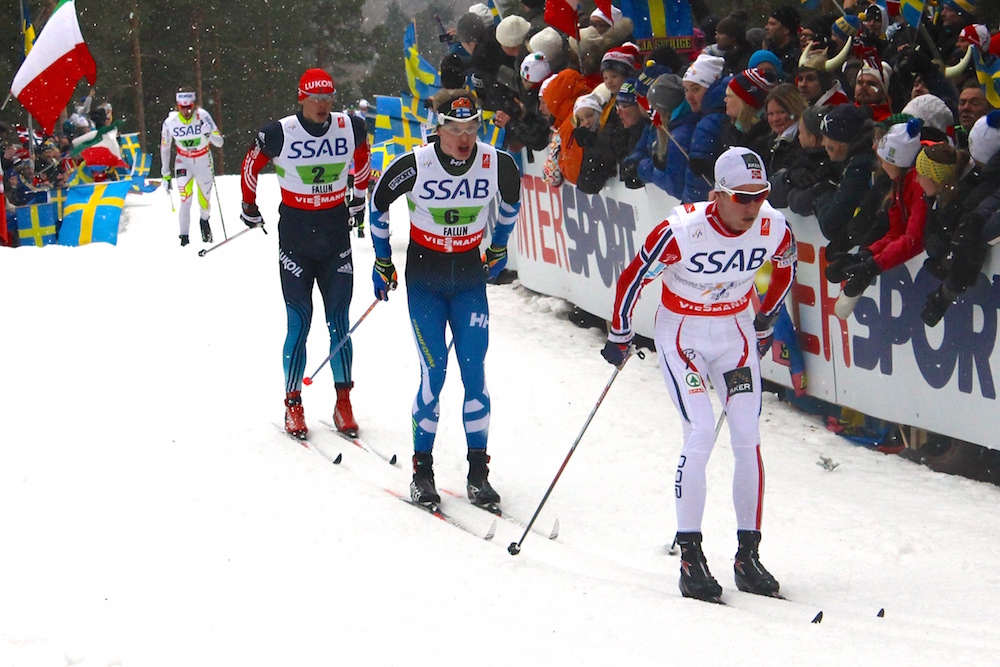
    Didrik Toenseth of Norway leading Iivo Niskanen of Finland and Alexander Bessmertnykh of Russia in the men's 4 x 10 k relay at 2015 World Championships.
    Didrik Toenseth of Norway leading Iivo Niskanen of Finland and Alexander Bessmertnykh of Russia in the men’s 4 x 10 k relay at 2015 World Championships.

    His next test is a classic sprint. It will be another challenge for the distance specialist; in the opening World Cup classic sprint in Kuusamo, Finland, this season, he finished 35th in qualifying.

    “I’m not sure about the classic, we’ll see,” he said. “Hopefully I’ll have some luck.”

    With bonus seconds from the sprint on the line, it could very well turn out to be essential in determining the Tour de Ski podium.

    “There are a couple of good sprinters up there [in the rankings], with Finn [Hagen Krogh] and [Sergei] Ustiugov,” Tønseth said. “So sprint is really important.”

    But once he’s through that, things should look up for Tønseth. If it’s any consolation, he has a relatively solid hold on sixth for the moment, with a 38-second gap to seventh-place Alexey Poltoranin of Kazakhstan.

    And the last time he finished the Tour de Ski, in 2014, he was ninth – and made up 38 seconds on Northug in the final climb up the Alpe Cermis in Italy.

    So can he regain his podium position soon?

    “I hope for the best!”

  • Tchekaleva Fueled by Birth of Son: ‘It was a Very, Very Strong Feeling to Start Training Again’

    Tchekaleva Fueled by Birth of Son: ‘It was a Very, Very Strong Feeling to Start Training Again’

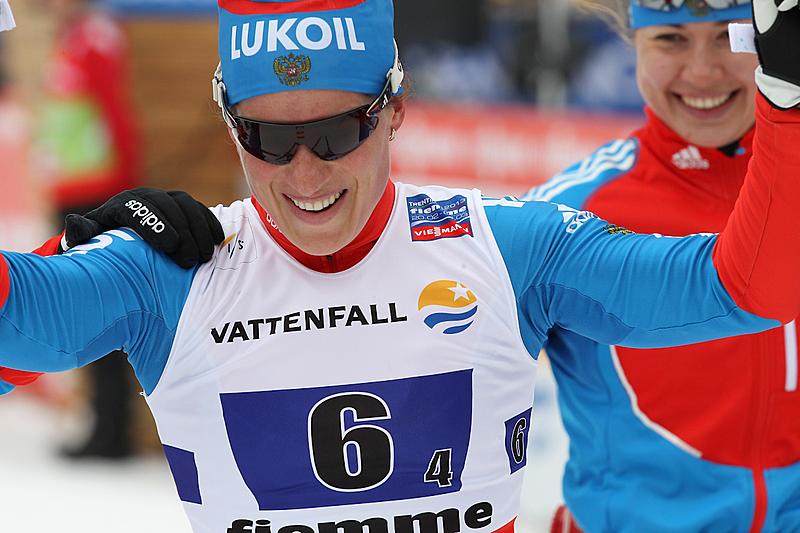
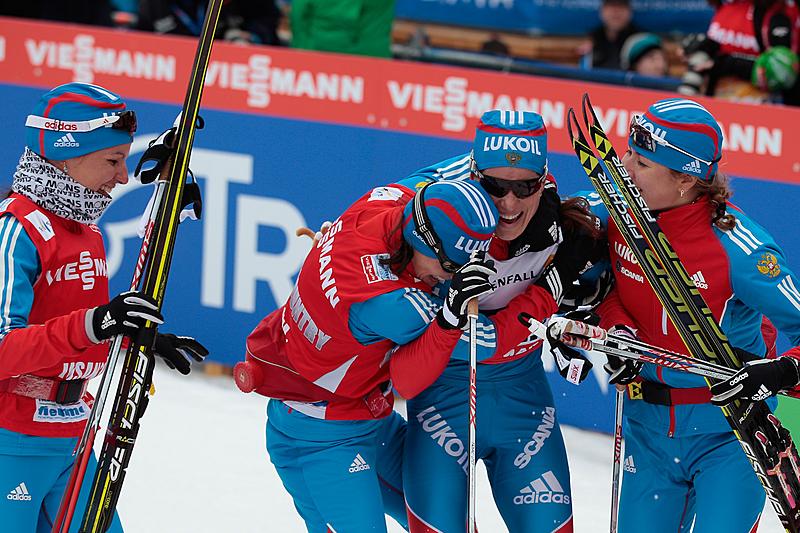
    Russia's 4 x 5 k relay congratulates anchor Yulia Tchekaleva, who lifted the team to third on Thursday at the 2013 World Championships in Val di Fiemme, Italy. (Photo: Fiemme2013)
    Russia’s 4 x 5 k relay congratulates anchor Yulia Tchekaleva, who lifted the team to third on Feb. 28 at the 2013 World Championships in Val di Fiemme, Italy. (Photo: Fiemme2013)

    It’s OK if Yulia Tchekaleva’s name doesn’t roll off your tongue. But you might as well get used to reading it.

    The 29-year-old Russian has enjoyed a breakout season in more ways than one, notching two bronze medals at World Championships in back-to-back races (the 10-kilometer freestyle and 4×5 k relay) in Val di Fiemme, Italy.

    Tchekaleva went on to place third in last weekend’s 30 k freestyle mass start at the Holmenkollen World Cup in Oslo, Norway. It was her fifth medal of the season, including her silver from the pre-Olympic World Cup skiathlon in Sochi, Russia, and bronze in the 5 k freestyle at the early-season World Cup mini tour in Kuusamo, Finland.

    And all this came less than a year after having a baby. Before she gave birth to her son, who turned 1 on Jan. 9, Tchekaleva was more of an unknown. She didn’t have an individual World Cup medal and didn’t make the 2009 World Championships or 2010 Olympics, yet today, she’s Russia’s leading woman.

    FasterSkier sat down with Tchekaleva, who spoke through a translator, after anchoring Russia to bronze in the 4×5 k at World Championships. She dedicated the medal to her son and her family.

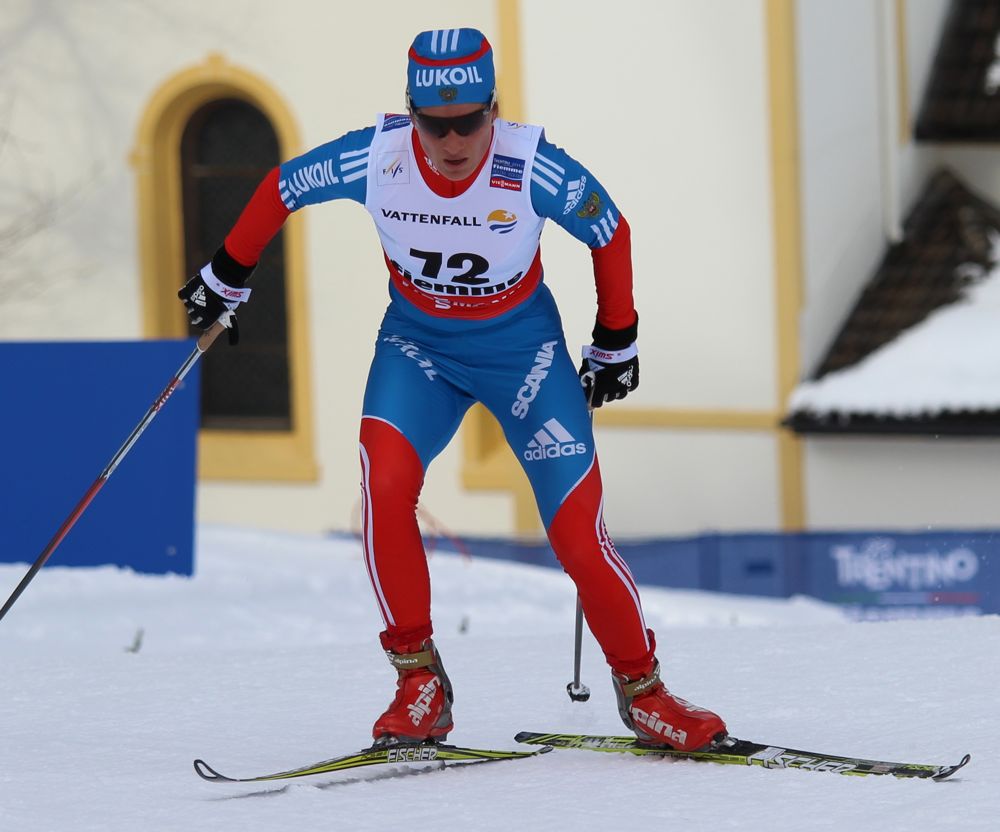
    Russia's Yulia Tchekaleva en route to bronze in the 10 k freestyle at 2013 World Championships in Val di Fiemme, Italy.
    Russia’s Yulia Tchekaleva en route to bronze in the 10 k freestyle at 2013 World Championships in Val di Fiemme, Italy.

    FasterSkier: How difficult was it to return after having a child?

    Yulia Tchekaleva: My husband is my private coach so I didn’t even imagine that everything would be so fast and easy to return back to skiing. The first five months after the baby was born, I was training at home, I was feeding baby with my milk, and I was training with my husband only.

    FS: When did you start training with the national team again?

    YT: From the beginning of June 2012. In two months after I started training with the national team, I felt even in two months very, very, strong and with the same physical shape and state as it was before. Even better.

    FS: How much did you train during your pregnancy?

    YT: Nothing at all. During pregnancy no training. The season of 2011 stopped and I finished training. When I understood that I am pregnant, I stopped training. I felt my body, my shape, I felt so tired after the season so I just wanted to have rest and to enjoy the pregnancy. So it was nine months of rest, it was a vacation, a holiday. When I gave birth to the baby, I just wanted to start training. It was a very, very strong feeling to start training again.

    FS: What does the World Championships relay medal mean to you?

    YT: When I got a medal in the individual, I didn’t feel as emotional. After [the relay] race I feel more emotions, more happiness, more everything, because we didn’t expect it until the last moment. So there’s much more happiness for the country.

    All the girls are very, very happy because for most of them, probably some of them this will be the highest feeling and medal of their career. That is why they are really happy.

    — Audrey Mangan contributed reporting

    Russia's 4 x 5 k relay congratulates anchor Yulia Tchekaleva, who lifted the team to third on Thursday at the 2013 World Championships in Val di Fiemme, Italy. (Photo: Fiemme2013)
    Russia’s 4 x 5 k relay congratulates anchor Yulia Tchekaleva, who lifted the team to third on Feb. 28 at the 2013 World Championships in Val di Fiemme, Italy. (Photo: Fiemme2013)