Tag: 2013 SuperTour Finals

  • After 10 Years in the Marines, Bermejo on his Next Mission

    After 10 Years in the Marines, Bermejo on his Next Mission

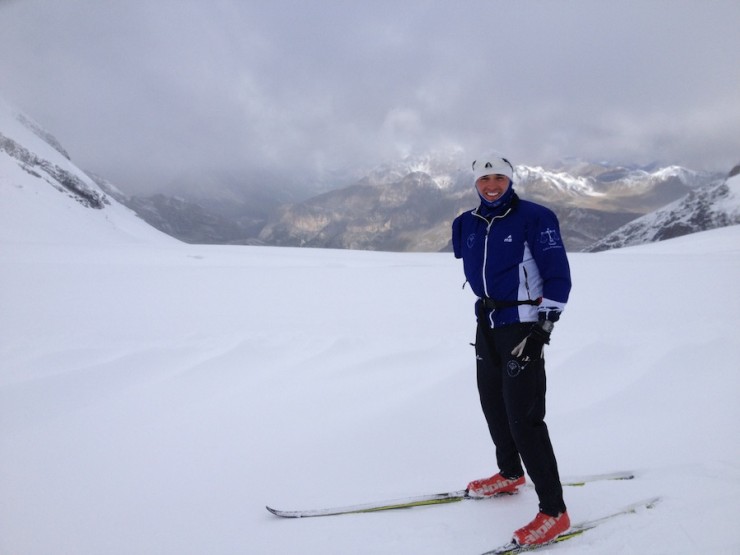
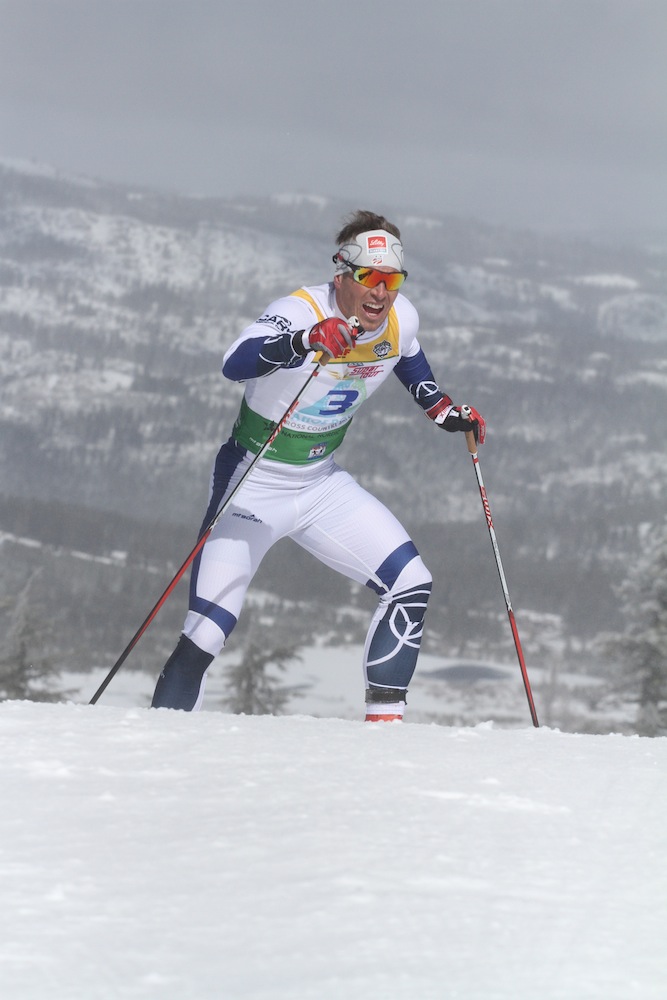
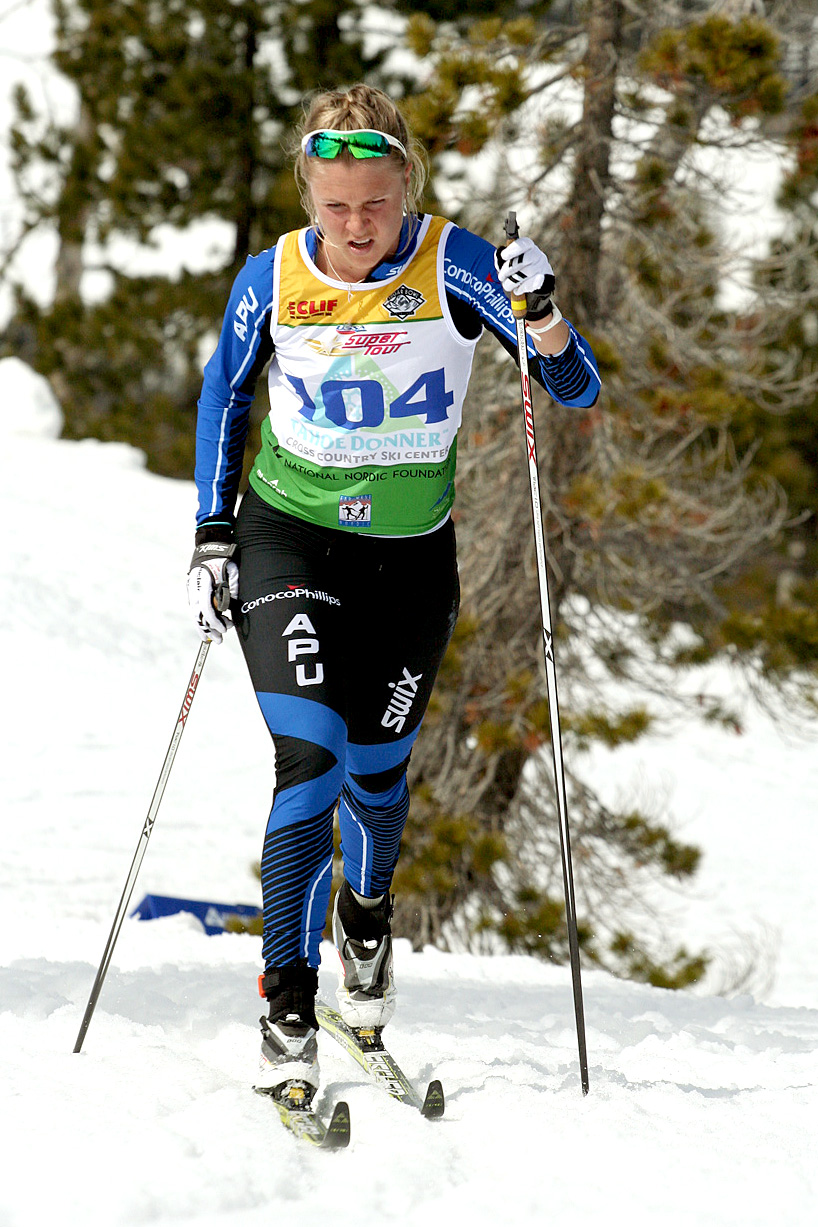
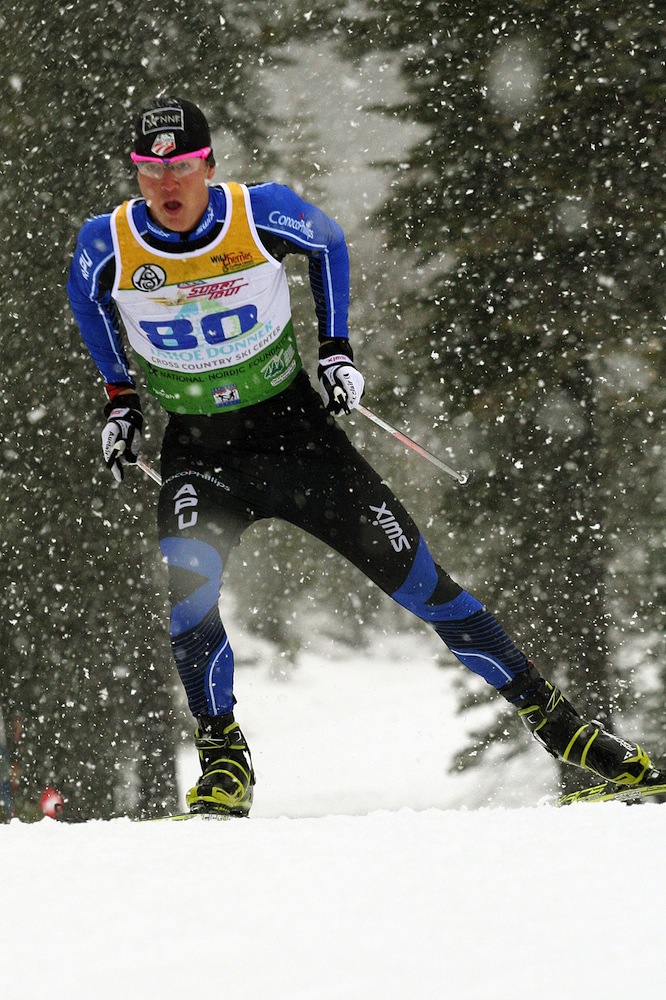
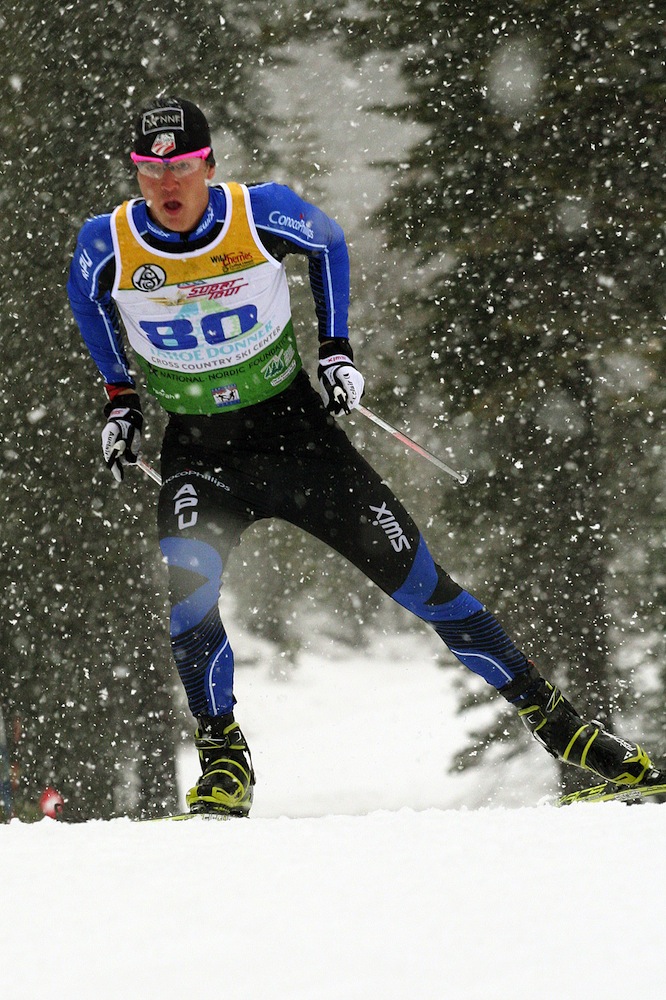
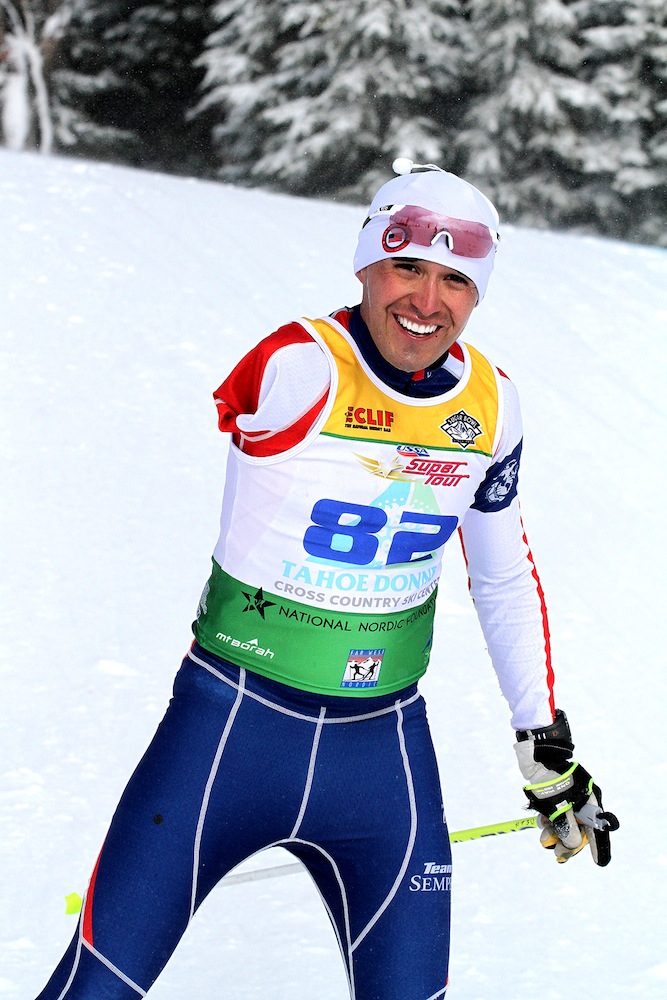
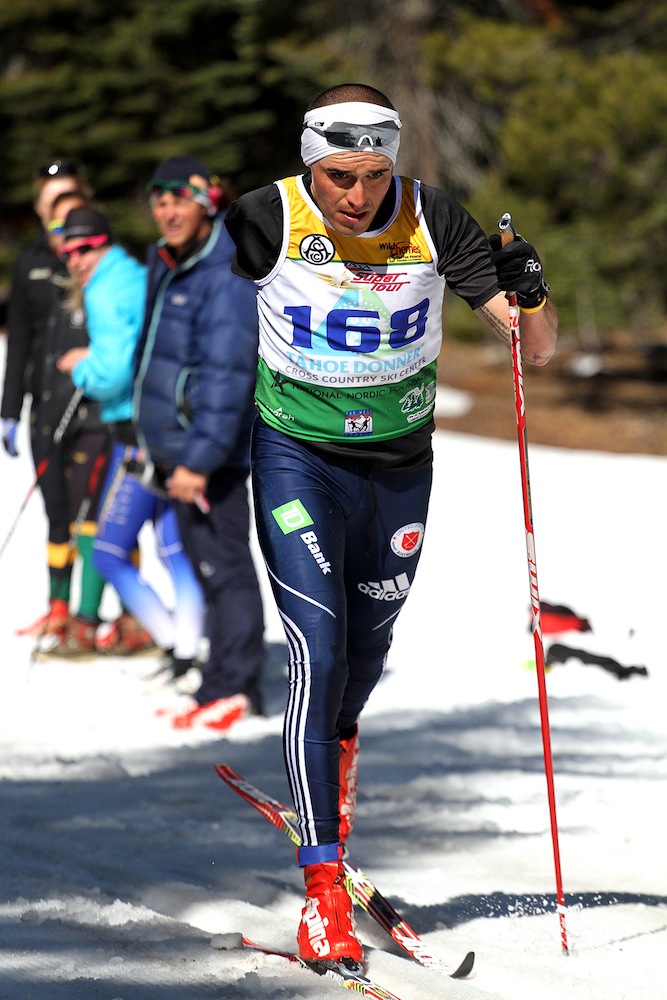
    Omar Bermejo of the U.S. Paralympics Development Team cracks a smile during the 2013 SuperTour Finals hill climb at Sugar Bowl Resort on Aug. 8 in Truckee, Calif. (Photo: Mark Nadell/MacBeth Graphics)
    Omar Bermejo of the U.S. Paralympics Development Team cracks a smile during the 2013 SuperTour Finals hill climb at Sugar Bowl Resort on April 8 in Truckee, Calif. (Photo: Mark Nadell/MacBeth Graphics)

    The wind howling sideways across Sugar Bowl’s alpine slopes in Truckee, Calif., skiers and spectators alike at the U.S. SuperTour Finals hill climb in April grimaced in the cold. The Spring Series skate race was mostly a snow squall, with competitors battling a headwind at times as they pushed toward the top.

    Rounding one of the last corners into a blustery abyss, Omar Bermejo smiled for the camera. He might as well have been back in San Diego, Calif., where he was stationed with the U.S. Marine Corps; Bermejo appeared in his own world, immune to his frigid surroundings.
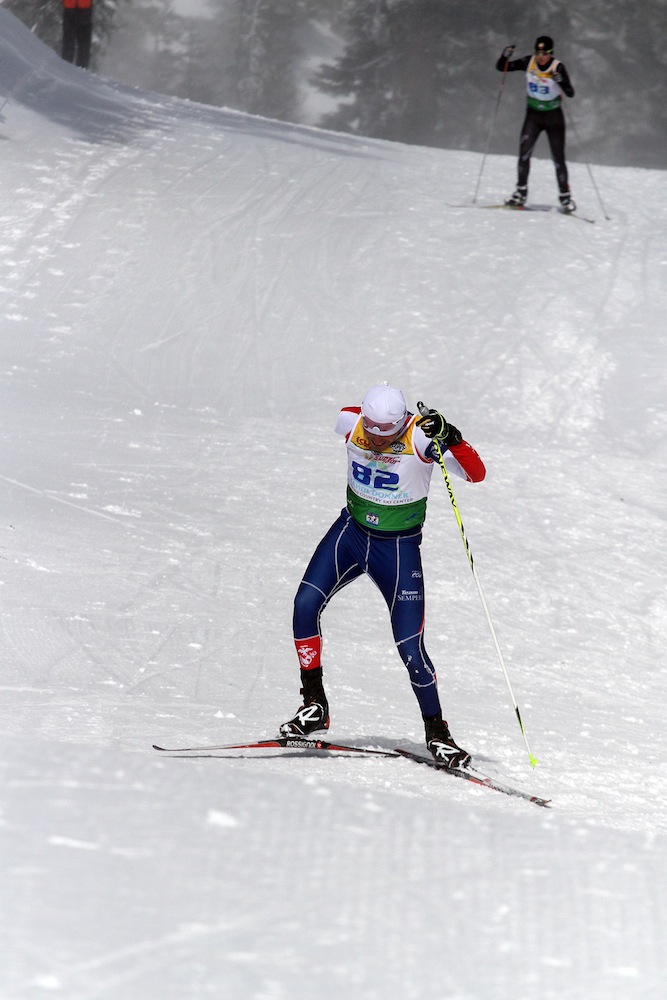
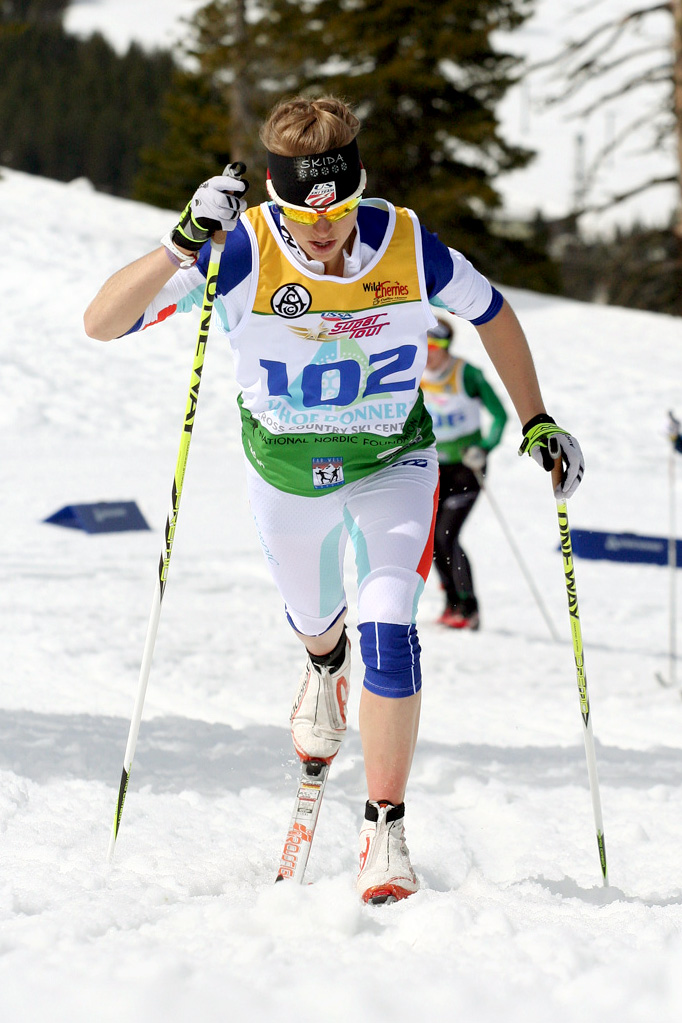
    Omar Bermejo (U.S. Paralympics) climbs more than 1,000 feet to the top of Mt. Disney at Sugar Bowl Resort for the SuperTour Finals hill climb on April 8 in Truckee, Calif. (Photo: Mark Nadell/MacBeth Graphics)
    Omar Bermejo (U.S. Paralympics) climbs more than 1,000 feet to the top of Mt. Disney at Sugar Bowl Resort for the SuperTour Finals hill climb on April 8 in Truckee, Calif. (Photo: Mark Nadell/MacBeth Graphics)

    “Being a Marine, you kind of crave those little, like, I-hate-my-life kind of moments,” Bermejo said three days later on April 11. “I don’t know, I liked it.”

    Skating was his favorite technique and doing so up a mountain wasn’t awful – even with one arm, the U.S. Paralympics Development Team member explained. A Marine for more than 10 years, Sgt. Bermejo rewarded himself for surviving four deployments in Iraq by buying a motorcycle in 2008. Cruising around that June in San Diego, he hit a patch of dirt on a curve and lost control of the bike, crashed and had his right arm amputated as a result.  

    Four months later, he started skiing for physical therapy, and it didn’t take long for the U.S. Paralympics Nordic Program to catch wind of his new hobby.

    “During my recovery, I had rehab [and the therapists] were like, ‘Hey do you want to try cross-country skiing?’ ” Bermejo, 31, recalled at Spring Series on April 11. “I was like, ‘Yeah, I want to go down some hills.’ And then they were like, ‘All right, go up that hill.’ I was like, ‘Wait a second, you tricked me!’ ”

    His voice fluctuated with excitement as he spoke, not long after racing 20 kilometers on the last day of the season. “Actually I started on classic skis and I was like, ‘Oh wow, this is like running. I feel great!’ ”

    Bermejo was, and remains, a fiercely competitive athlete. Before his accident, he was a road runner, racing 10 k’s, half marathons, you name it, Bermejo explained on the phone in June. He was just about to leave his hometown of Grand Rapids, Mich., to fly east to live and train with the Maine Winter Sports Center (MWSC) in Caribou, Maine.

    Early last season, MWSC head coach Will Sweetser helped Bermejo and Kevin Burton, a U.S. Paralympics visually impaired skier, at the SuperTour in Bozeman, Mont. The relationship continued through U.S. nationals and SuperTour Finals, with Bermejo meeting the team in March for a weeklong training camp in Maine. Ultimately, Sweetser asked Bermejo if he wanted to move there.

    “I really jumped at that,” Bermejo said. “I’m a stand-up athlete so I can sort of keep up with the able-bodied guys.”
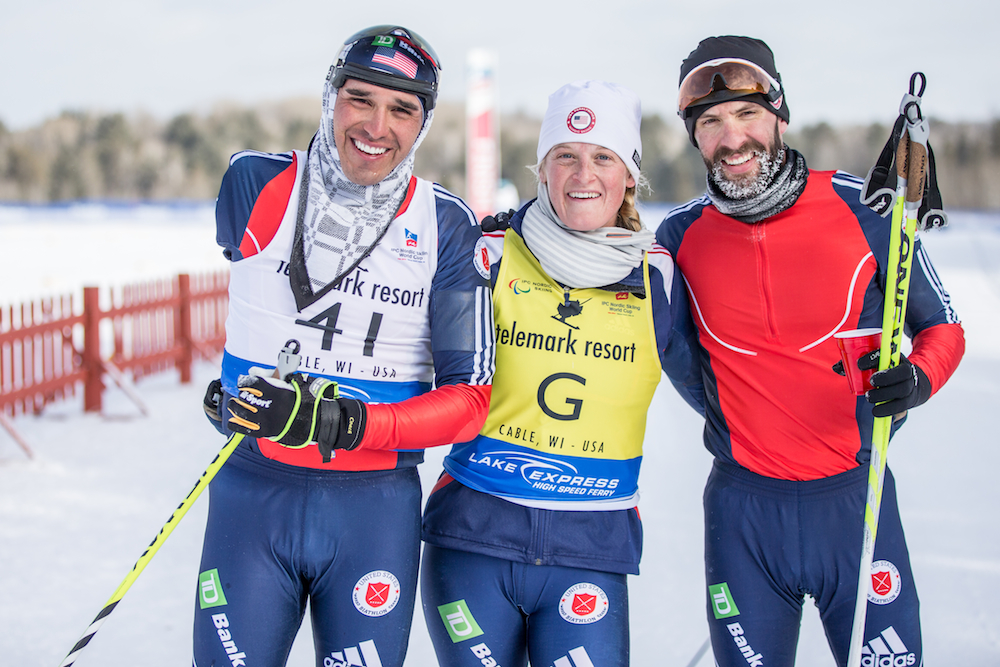
    U.S. Paralympics Development Coach Eileen Carey (c) with two of her athletes, Omar Bermejo (l) and Kevin Burton at the 2013 IPC World Cup in Cable, Wis. (Photo: James Netz)
    U.S. Paralympics Development Coach Eileen Carey (c) with two of her athletes, Omar Bermejo (l) and Kevin Burton at the 2013 IPC World Cup in Cable, Wis. (Photo: James Netz)

    By stand-up, Bermejo meant his adaptive category, which allows him to ski just like anybody else with just one arm. His able-bodied teammates include Kris Freeman, Sam Tarling and Welly Ramsey of MWSC’s Olympic Development Cross-Country Team (ODT).

    “We are really excited to have Omar join us as a member of our ODT,” Sweetser wrote in an email. “While working with him last year as a service tech, he and I hit it off. I think that many of the professional clubs can offer a whole lot of help to most stand up adaptive athletes.”

    “Pretty psyched to have Omar join us,” he added. “Our junior group love him and really get pumped to train with him.”

    Not long after settling into Maine, Bermejo presented to the MWSC juniors. In September, he traveled to Italy with top skiers like Freeman, Tarling and U.S. Ski Team member Noah Hoffman to train at altitude in the Italian Alps.

    “Sometimes I feel as if I don’t belong there since in reality I have only been skiing for only two years,” Bermejo wrote in an email. “But whenever those thoughts come around is when I tell myself that I must push myself a little harder or smarter to get through and succeed at my training.”

    ***

    Three days after ascending more than 1,000 feet to the top of Sugar Bowl’s Mt. Disney, nearly 8,000 feet above sea level, Bermejo completed the 20 k classic at U.S. Distance Nationals on a borderline-hot, slushy day. About five kilometers in, he broke his pole. With no one around to hand him a replacement, he skied the next several hills without any use of his upper body. In his first Sprint Series, Bermejo wasn’t about to quit.
    Omar Bermejo during a slushy 20 k classic at U.S. Distance Nationals on April 11 at Royal Gorge near Truckee, Calif. (Photo: Mark Nadell/MacBeth Graphics)
    Omar Bermejo during a slushy 20 k classic at U.S. Distance Nationals on April 11 at Royal Gorge near Truckee, Calif. (Photo: Mark Nadell/MacBeth Graphics)

    “I had to basically no pole the whole thing,” Bermejo said after finishing in just over an hour and a half. “Towards the way back, somebody gave me a pole so I’m like, ‘OK,’ … it was the last [race] so I had to make it count.”

    That kind of grit is what U.S. Paralympics quickly picked up on. Post-rehab, Bermejo moved to Arizona to be with friends and lift his spirits.

    “I was trying to deal with my arm being missing,” he said. “I used to be a strong guy, like great runner, so I wanted to get back to that.”

    He discovered U.S. Paralympics coach Rob Rosser was hosting a biathlon clinic at the University of Arizona and decided to check it out.

    “I was in the mode that I could do anything,” Bermejo said. “[Rosser] invited me to the Empire State Games in upstate New York and I was like, ‘Wow, this is great. I want to continue doing this.’ ”

    Arizona, he soon realized, was not the best place for skiing. Bermejo started shopping around for new places to live and train, and Marc Mast in Sun Valley, Idaho, invited him to check out his Wood River Ability Program. In the summer of 2011, Bermejo moved there permanently.

    U.S. Paralympics Development Coach Eileen Carey, formerly of the MWSC, wrote in an email that she first worked with Bermejo at a development camp in February 2012 in Lake Placid, N.Y., where he traveled for the Empire State Games.

    “Since that time he has been hooked and has dedicated himself to becoming a Paralympic skier and biathlete,” Carey explained. “He has made huge gains in such a short period, which I would attribute to his professional and driven approach. He is introspective and I think that helps him see the small progressions that he makes and keep perspective on the fact that he is not yet the athlete he will one day become.”

    “Being a Marine, you kind of crave those little, like, I-hate-my-life kind of moments, but I don’t know, I liked it.” — Bermejo on the 2013 SuperTour Finals hill climb at Sugar Bowl Resort

    Last winter, Bermejo competed at the International Paralympic Committee (IPC) World Cup in Cable, Wis., and skied well enough to earn points. That gave him affirmation and hope. In a year, he wondered if he could make the 2014 Paralympics.
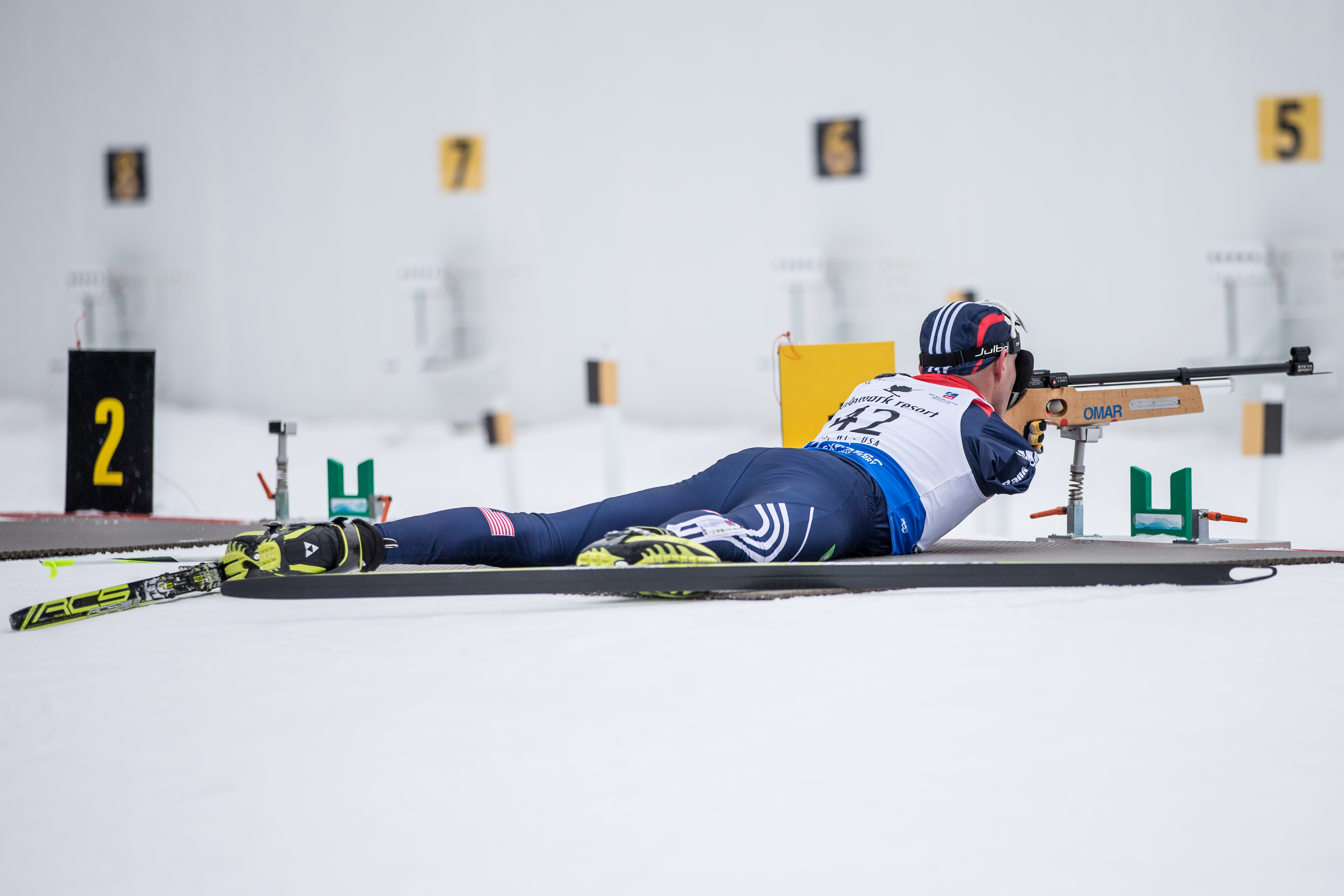
    Omar Bermejo competed in both biathlon and cross-country events at the IPC World Cup in Cable, Wis., last season. (Photo: James Netz)
    Omar Bermejo competed in both biathlon and cross-country events at the IPC World Cup in Cable, Wis., last season. (Photo: James Netz)

    He decided his best shot would be in biathlon. “With my Marine background and the shooting, it’s something that holds near and dear to my heart,” he said.

    “Right now on the international level, I’m like a nobody, but I want to get there,” Bermejo added. “They’ll be like, ‘Here comes the American guy; watch out for him.’ Eventually that’s what I want to do, I want to be a force.”

    Months after his East-Coast move, Bermejo was already pleased with his progress. Sun Valley was a great start, he explained, but he needed to train with others and follow a specific outline.

    “I asked my Paralympic coaches if moving to Maine would be a good idea and they told me it would be great if I was willing to sacrifice my then current social life and my love for the west of the country,” Bermejo wrote in an email. “I must say it was tough and one hell of a move but I have made huge improvements working with all the coaches at MWSC and I believe I am ready to use my newfound skills to work in the upcoming season.”

    Along with Carey, U.S. Paralympics Nordic High Performance Director John Farra encourages stand-up athletes to train with an elite club with able-bodied nordic skiers.

    “He has made a significant commitment to the sport and it has resulted in impressive improvement for a relative newcomer,” Farra wrote in an email. “We are excited for Omar to integrate into the MWSC program and see how far they can help him progress with his skiing. “

    So far, the best thing he’s learned is to “slow down to go fast,” he wrote. “When I first started skiing just freshly out of the Marine Corps my technique was to go as hard and quick as possible and hopefully I would go fast enough, however, after a couple of races I took a beating and I was not going anywhere.”

    In Maine, he realized if he relaxed and thought more about smooth skiing and glide, he could suddenly go faster and longer without feeling tired.

    Following U.S. nationals in January, U.S. Paralympics will select its national team for the 2014 Winter Games in Sochi, Russia. While Bermejo isn’t a shoe-in for one of the 19 spots, he’s optimistic.

    “Omar is one of the athletes who is Sochi ‘Eligible’ and in a good position to be able to qualify for the Team,” Farra wrote, referring to the Paralympic-team criteria. “I would expect he will make the team if he continues to train in a professional way through next winter.”

    “Omar has been a great part of our program over the last year or so,” Carey wrote. “He is an A-lister through and through. He is one of those people you meet and hope you will know forever.”

    Looking at the strides he’s made since his accident five years ago, Bermejo feels grateful for the opportunities he’s been afforded by the U.S.

    “I am proud to have served under our flag in the military and would like to keep serving my country but this time as an inspiration to never quit and never stop dreaming no matter what happens,” he wrote.

    “I want people to know that it does not matter how fast I can complete a race, how many people I can beat, what skis or waxes I use, or even how many medals I can accrue in my lifetime.. What matters is achieving happiness..  And I know I have already won at that ever since I started Nordic skiing.”

    He has several people to thank for his quick rise within the sport, including Mast, who “was the first person that saw potential in me,” the Hall family in Casper, Wyo., “for opening their doors and allowing me to make my training easier,” and his girlfriend Lindsey Hall “for giving me the inner strength to keep going when the going is tough.”

  • SuperTour Finals Extras: Quotes from the Climb

    SuperTour Finals Extras: Quotes from the Climb

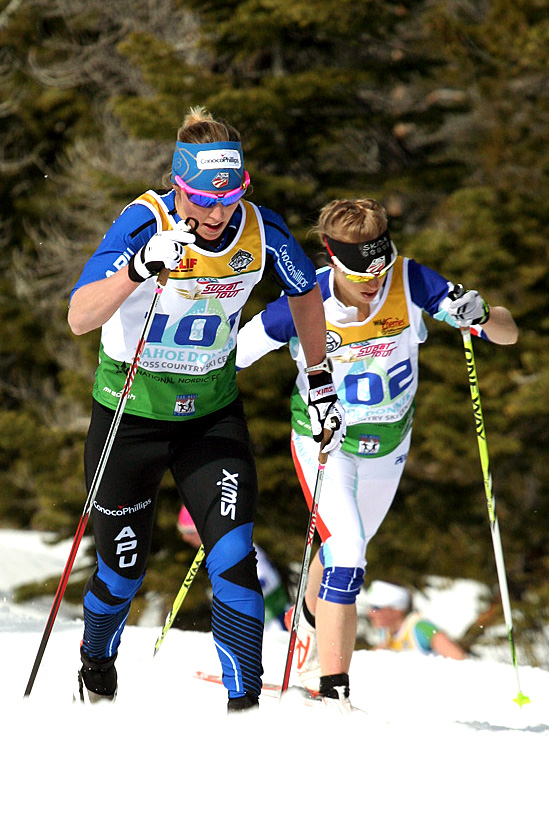
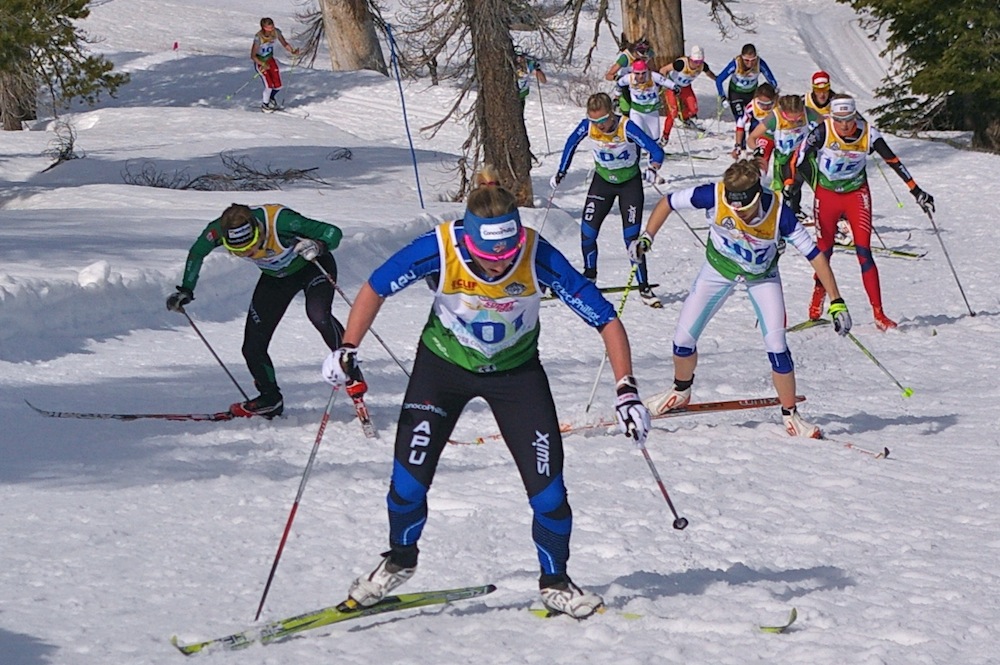
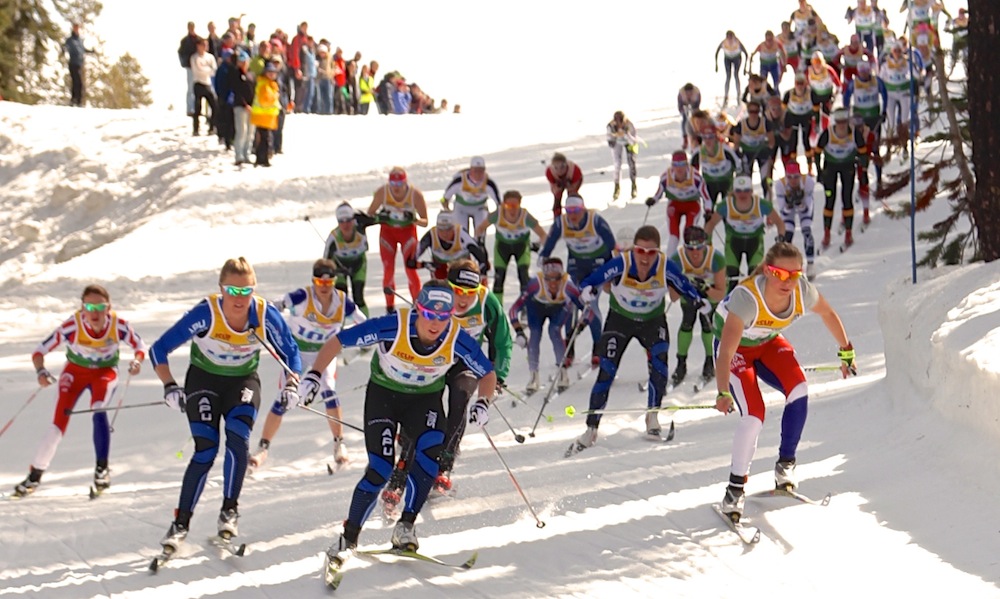
    Far West's Kyla Burill leads Janelle Webb up Monday's 6 k hill climb at SuperTour Finals up Sugar Bowl Resort in Truckee, Calif. (Photo: Mark Nadall/MacBeth Graphics)
    Far West’s Kyla Burill leads Janelle Webb up Monday’s 6 k hill climb at SuperTour Finals up Sugar Bowl Resort in Truckee, Calif. (Photo: Mark Nadall/MacBeth Graphics)

    FasterSkier’s coverage of SuperTour Finals and U.S. Distance Nationals is brought to you by the generous support of Concept2, the leading manufacturer of indoor rowers, racing oars, and the SkiErg.

    TRUCKEE, Calif. – After heaving themselves to the top of Mt. Disney at Sugar Bowl Resort on Monday, several of top finishers were pretty animated about the 6 k hill climb, the final pursuit-style event of SuperTour Finals. Here are some of the best quotes outside of the men’s and women’s race reports.


    On the premise of hill climbs:

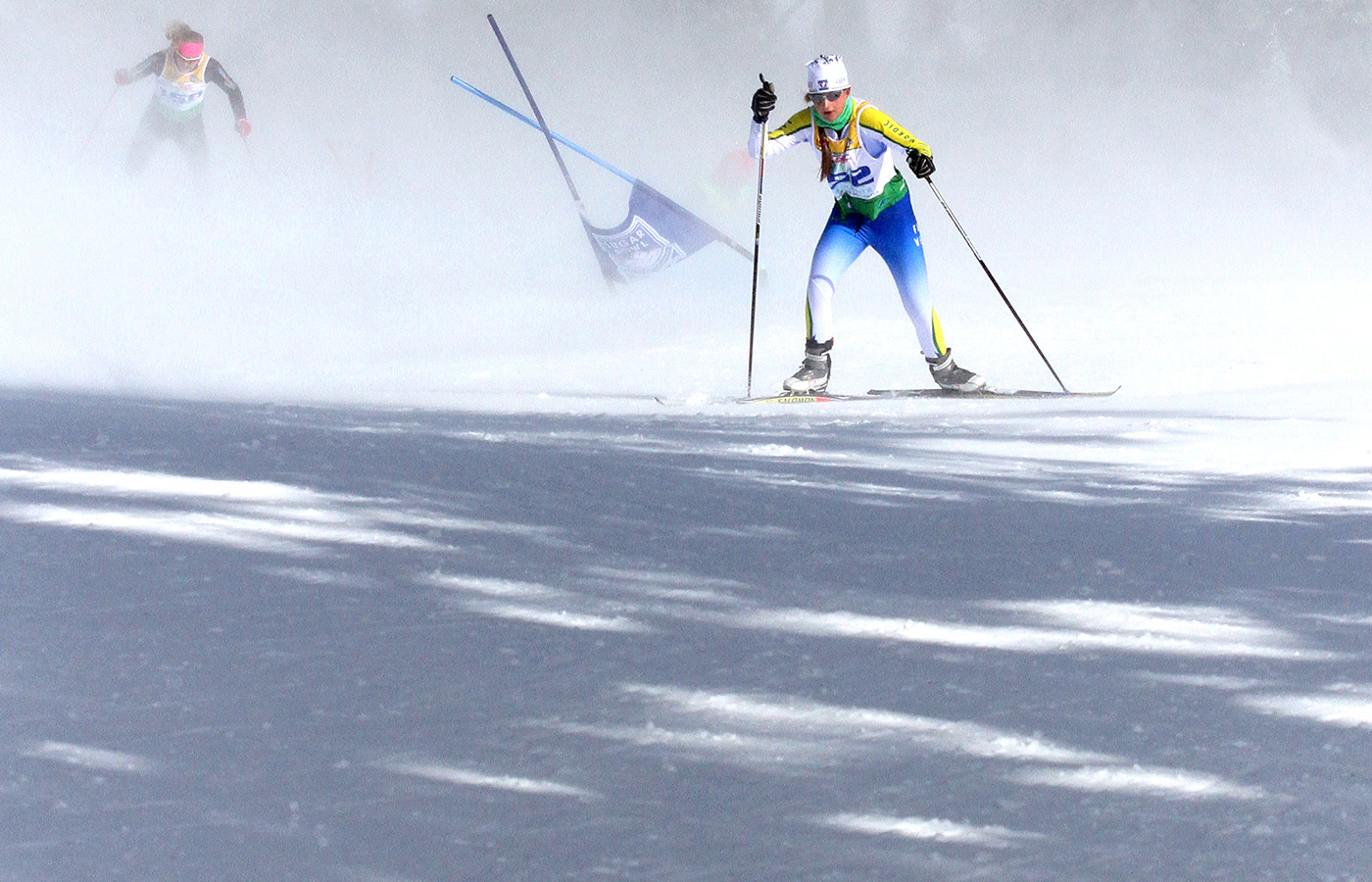
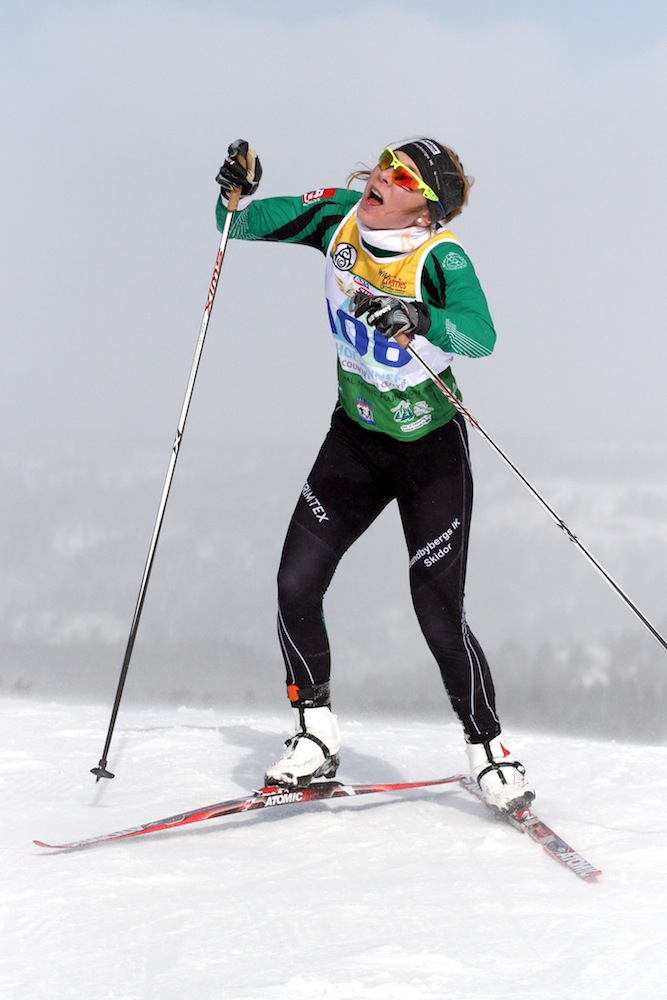
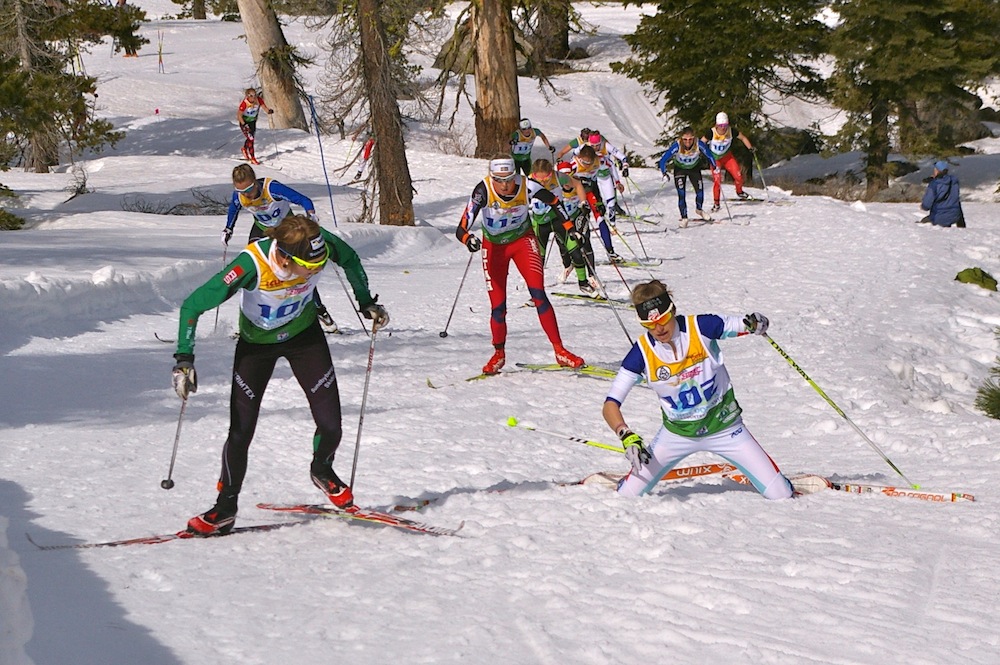
    Lisa Larsen of Sweden nears the finish of Monday's agonizing 6 k hill climb at Sugar Bowl Resort at the SuperTour Finals in Truckee, Calif. Larsen placed seventh overall. (Photo: Mark Nadell/MacBeth Graphics)
    Lisa Larsen of Sweden nears the finish of Monday’s agonizing 6 k hill climb at Sugar Bowl Resort at the SuperTour Finals in Truckee, Calif. Larsen placed seventh overall. (Photo: Mark Nadell/MacBeth Graphics)

    “I don’t know, you’re skiing up a mountain, you’re not supposed to do that anyways. It could be the nicest day ever, and it’s still gonna be one of the hardest things you’ve ever done.” – Liz Stephen (Burke Mountain Academy/U.S. Ski Team), overall women’s SuperTour Finals winner, first to the top with fastest time-of-day

    “I actually really like hill climbing. I’m really bad at downhills so I’d much rather just go up the whole time. … It’s always hard when you first start out. It feels just impossible, like you’re never gonna make it there, then once you get going it’s not so bad.” – Rosie Brennan (Alaska Pacific University), sixth overall

    “I like going up hill … and I like V1-ing.” – Brian Gregg (Central Cross Country), 10th overall with second-fastest time


    On the inevitable mental battle:

    “I just put my head down and had to keep reminding myself, this is crazy, but everybody’s in this. It hurts so bad, but you just keep trucking.” – Sadie Bjornsen (APU/USST), third overall

    “I single-sticked so much. Erika [Flowers] was right behind me on the results and I knew she was kind of catching me at one point, and part of me wanted to stop to just have someone to follow, but it was like, ‘Don’t do it don’t do it!’ Spectators help but. You also just want to get to the top.” – Chelsea Holmes (Sun Valley Ski Education Foundation), 12th overall with third-fastest time

    “We’re all tired at this point in the year. If you can trick your mind on certain days that you’re feeling good … the goal was honestly to have fun out there, which was really difficult with that wind.” – Stephen

    “This year I just decided to not pay attention to anybody around me ’cause I know what my strengths are climbing a hill, and it’s not really anything. … I did a lot of skinning two weeks ago in France, and I was like, ‘Just pretend you’re skinning.’ My legs go the classic style a lot better then the side style.” – Sadie Bjornsen

    “I did exactly what my plan was, which was to go out and not blow up on the first loop, go up the hill at what I thought was a sustainable pace, and try to catch Erik [Bjornsen] there. I did catch him.” – Kris Freeman (Maine Winter Sports Center/USST), second to Bjornsen with the fastest time-of-day


    On giving credit where it’s due:

    “[Erik Bjornsen’s] at an age where he gets stronger every year. Erik Flora had him following me around in Bend [Oregon] at Level 3 when I was doing Level 1 two years ago. He’s a resilient kid; he can recover from that. I think recovering from hard training is one the most important things as a ski racer so I’m really impressed with him.” – Freeman


    On the conditions:

    “The wind was so brutal. When it was at your back, it was so sweet. You’d try to ski super big trying to get boosted up, but when you’d turn the corner and it was blowing sideways and blowing your poles. … It was a crosswind at the finish. It definitely felt like I was V1ing sideways into it ’cause otherwise you’d get blown off the side.” – Jessie Diggins (Stratton Mountain School T2 Team/USST), fifth overall with second-fastest time

    “The wind is less obnoxious than the powder. It’s all right, not the most fun conditions, but make you tougher, hopefully.” – Holmes

    “The top is just survival mode. You’re doing everything you can to move and it didn’t help that all a sudden there’d be piles really deep and then there’d be ice and stuff.” – Sadie Bjornsen


    On the finish:

    “You could hardly see even my parents cheering; they were standing up there in this crazy storm. Thank God ’cause we wouldn’t have known where to go. I was like, ‘Thank you guys, and my mom. You’re still standing here! You’re in a full-on storm!’

    – Sadie Bjornsen

    “It was windy, but I heard it was worse before we got there. By the top part, it flattens out so it’s the only part you can ski well. It didn’t feel as windy as when you’re standing still and getting buffeted by the side wind. I thought the top was the best part for sure. You could actually get some glide.” – Mikey Sinnott (SVSEF), third overall

    “I was really excited when I previewed the course [the day before] and I could see that last four hundred, five hundred meters was gonna be skiable, maybe V2, and it was. I think I V2-ed a lot of that.” – Erik Bjornsen (APU/USST), overall SuperTour Finals winner/first to top


    On how Sugar Bowl stacks up to other hill climbs (including Italy’s Alpe Cermis, the famous final climb of the Tour de Ski):

    “It was brutal. It’s funny because we were talking about how we thought this climb was a little bit easier than Jay Peak [at SuperTour Finals] last year, but with the four k or whatever we skied before the hill climb, it was a tough race.” – Sylvan Ellefson

     (Ski & Snowboard Club Vail/Team HomeGrown), fourth overall

    “This one, in my mind, was a little easier than Jay Peak. We got a nice run into it, nice ski section in the beginning and then just a couple steep pitches. Jay Peak was so steep the whole time even though it’s shorter [at 1.8 k].” – Tad Elliott (SSCV/HomeGrown/USST), 13th overall with third-fastest time

    “I feel like Alpe Cermis is always going to be the hardest, but this compares pretty well because of altitude, snow drifts, they were so deep.” –Diggins

    “I thought this wasn’t as skiable, more side hill and more awkward grades.” – Kikkan Randall (APU/USST), second overall

    “The actual hill climb seemed a little shorter than the one in the Tour, but we’re way higher than it ever was on the World Cup. It’s just a different deal. The altitude is a huge, huge factor here. You guys [FasterSkier] posted the tape of us walking up the hill in the 15 k the other day. I saw myself coming up the hill and I’m thinking, ‘That’s kind of embarrassing,’ and then I saw the rest of the field come up and I’m like, ‘Oh yeah, I was walking, but I was walking with impulse.’ ” – Freeman, who won Friday’s 15 k classic mass start


    On getting back down the mountain:

    “I don’t think I’ve ever been that cold. That was miserable.” — Erik Bjornsen, stuck on the chairlift for an estimated 15 minutes with Skyler Davis (SMST2/USST). Most people skied down.


    On the last races of the season:

    “It’s good to be four down, one to go. I’ve been feeling really good. [On Monday] I didn’t feel great on the second half, but hill climbing is such a unique thing. I’m hoping to have the energy to finish up one more, and I’m definitely ready to be done.” – Randall

    “Every mini tour I’ve done this year, the 10 k classic I’ve taken myself effectively out of the running. … Every time there’s a slushy, klistery classic race, I need to really work on that. So it’s cool to come out of it knowing where I can improve.” – Diggins, who placed 18th in Friday’s 10 k classic mass start

    “It’s great to end the season here in California. I think the organizers have done an awesome job, and I hope they have it again out here. It’s a little bit too late in the season; that’s the only thing. We’ve all had a long season. A week before this is a more ideal time for all of us. I think right now we’re beating ourselves into a hole that will take an extra week to come out of.” – Stephen

    “I think Sylvan and I are just gonna lay in bed and watch movies, get some ice cream and coffee and hopefully we’ll be up there with these boys in the 50 k.” – Elliott

  • Bjornsen Digs Deep, Bests Freeman in Hill Climb for First SuperTour Finals Title

    Bjornsen Digs Deep, Bests Freeman in Hill Climb for First SuperTour Finals Title

    Erik Bjornsen (APU/USST) just before clinching his first SuperTour Finals overall victory by 20.5 seconds ahead of Kris Freeman (MWSC/USST) in Monday's 6 k freestyle hill climb at Sugar Bowl Resort in Truckee, Calif. (Photo: Mark Nadell/MacBeth Graphics)
    Erik Bjornsen (APU/USST) just before clinching his first SuperTour Finals overall victory by 20.5 seconds ahead of Kris Freeman (MWSC/USST) in Monday’s 6 k freestyle hill climb at Sugar Bowl Resort in Truckee, Calif. (Photo: Mark Nadell/MacBeth Graphics)

    FasterSkier’s coverage of SuperTour Finals and U.S. Distance Nationals is brought to you by the generous support of Concept2, the leading manufacturer of indoor rowers, racing oars, and the SkiErg.

    TRUCKEE, Calif. – Erik Bjornsen thought he was done for. The 21-year-old U.S. Ski Team and Alaska Pacific University (APU) skier had gone out too hard, too early in Monday’s 6-kilometer freestyle hill climb before the real ascent up Sugar Bowl Resort even started.

    Bjornsen had been fighting nerves 24 hours before the final pursuit; thoughts about whether he could hold onto the overall lead for his first SuperTour Finals title infiltrated his mind.

    Two U.S. Ski Team (USST) A-team members started closest to him: first Andy Newell (Stratton Mountain School T2 Team), 41 seconds back, then Kris Freeman (Maine Winter Sports Center), seven seconds later.

    Bjornsen was excited, but anxious. Standing next to Newell on the start line, he smiled as the veteran jokingly talked trash.

    “I was telling him I was gonna catch him, even though I really knew I probably wasn’t,” Newell said after the race.

    Bjornsen laughed, most concerned about Freeman. Starting less than a minute ahead of the defending SuperTour Finals champ wasn’t necessarily enough. But around four kilometers in, Bjornsen was already more than 15 seconds up on him.

    Normally, that would be great for Bjornsen, but not when you’re climbing more than 1,000 feet to the top of Mt. Disney, nearly 8,000 feet above sea level.

    Upon hearing the split from APU head coach Erik Flora, Bjornsen felt a pang of panic. He wasn’t comfortable; he was dying, he said.

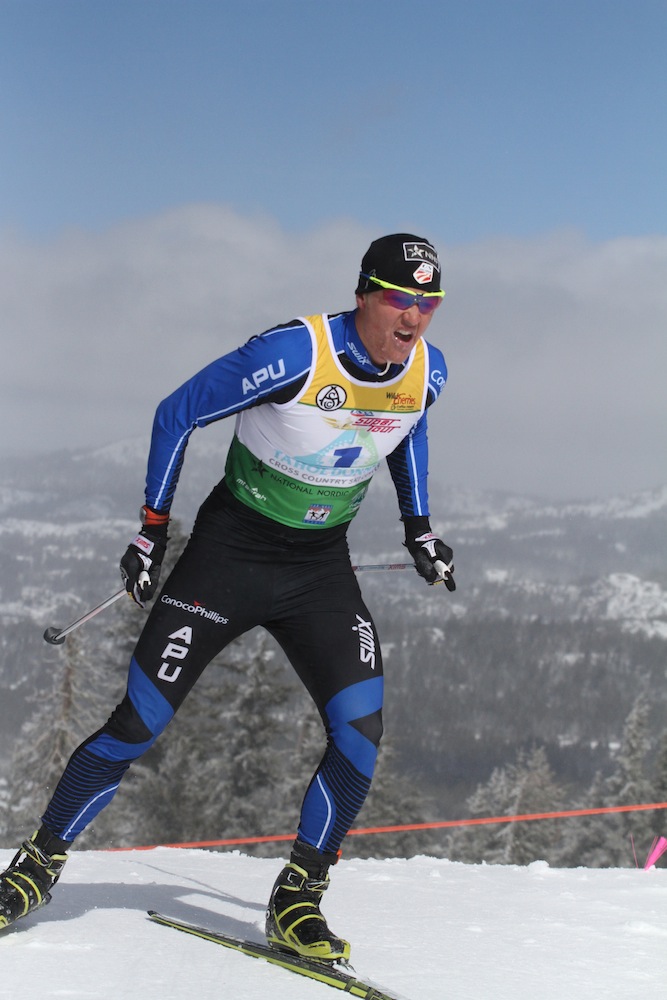
    Kris Freeman (MWSC/USST) putting the hurt on up Sugar Bowl Resort on Monday in the 6 k hill climb, the final event of 2013 SuperTour Finals in Truckee, Calif. He finished second overall behind Erik Bjornsen (APU/USST) with the fastest time of the day. (Photo: Mark Nadell/MacBeth Graphics)
    Kris Freeman (MWSC/USST) putting the hurt on up Sugar Bowl Resort on Monday in the 6 k hill climb, the final event of 2013 SuperTour Finals in Truckee, Calif. He finished second overall behind Erik Bjornsen (APU/USST) with the fastest time of the day. (Photo: Mark Nadell/MacBeth Graphics)

    About a kilometer later, Bjornsen looked back to face reality. Freeman was right behind him. Moments later, he caught Bjornsen. The two skied together for the remainder of the grueling climb, turning the corner at the ridgeline into a massive wind.

    Now’s my chance, Bjornsen thought. He found his own second wind and pushed the pace.

    I was starting to put some time on him,” Bjornsen recalled. “When I saw that first chairlift, I thought we were finishing right there, so I put a sprint on and I got up over that first hump.”

    But the finish line wasn’t there. Bjornsen’s stomach sank again, but he quickly lifted his head up, guessing he was about 10 feet ahead of Freeman.

    “I was like, ‘I’ve put this effort in and I can’t let it go now,’ ” he said. “Then one of my coaches was like, ‘It’s right there!’ I tried to put in another kick and got up over that little hill and just kind of walked over the finish line. I think it was the hardest I’ve ever pushed myself.”

    The runner-up by 20.5 seconds, Freeman, 32, said he gave it his all as well. Along the gradual uphill to the finish, he also tried to attack.

    “I thought by turning the screw by one click at the top I’d be able to go by him, but he turned up three clicks and he beat me,” Freeman said. “I don’t really feel like I lost today; I feel like he won.”

    That’s a unique statement coming from the three-time Olympian.

    “I hate losing,” Freeman said. “But it’s exciting going into next year at the Olympics. If we have Bjornsen there skiing like this, we’re starting get a real relay team going and that’s pretty cool.”

    For Bjornsen, the SuperTour Finals crown – a culmination of four days of racing in the last week – was another stellar result in a season filled with breakthroughs. Last year, Bjornsen was third in the tour; this year, he was the top domestic racer as the period-one SuperTour leader. A USST development skier for the last two seasons, he went on to achieve his first national title in the 15 k freestyle and also made the World Championships team.

    According to Flora, Bjornsen’s gold-medal winning performances at SuperTour Finals, with a prologue victory and two other podiums, weren’t unexpected, but they sure were nice.

    “I think the biggest thing is it’s just confirming,” Flora said. “Last summer we made a pretty big push in his training, and there’s always the chance that it goes great and there’s the chance that it doesn’t go as well.

    You always have goals and think you can reach a certain level, but to see how strong he was during this tour, I think it surprised both of us,” he continued. “The confidence he brings into next year will be the biggest addition to his performance.”

    With the fourth-fastest time of the day, Bjornsen completed the course – downhill and gradual for the first four kilometers, and up for the last two – in 25 minutes, 28 seconds. It wasn’t the 13-minute, 1.8 k hill climb he had taken third in last year at Jay Peak in Vt., and just like that one, it wasn’t easy.

    “I can’t believe I won the overall tour,” Bjornsen said. “I did not expect that at all coming into this week, and I’m super excited with all the racing that’s gone on so far.”

    Brian Gregg (CXC) leads APU's Mark Iverson up the final ascent before the finish in Monday's 6 k freestyle hill climb up Sugar Bowl at SuperTour Finals in Truckee, Calif. Gregg skied the second-fastest time for 10th overall. (Photo: Mark Nadell/MacBeth Graphics)
    Brian Gregg (CXC) leads APU’s Mark Iverson up the final ascent before the finish in Monday’s 6 k freestyle hill climb up Sugar Bowl at SuperTour Finals in Truckee, Calif. Gregg skied the second-fastest time for 10th overall. (Photo: Mark Nadell/MacBeth Graphics)

    Freeman was the fastest from the bottom in 25:00.5, about 15 seconds ahead of 10th-place finisher Brian Gregg (Central Cross Country), who had the second-fastest time for the second-straight year.*

    USST member Tad Elliott (Ski & Snowboard Club Vail/Team HomeGrown) ranked third for time, 20.6 seconds behind Freeman. He was 13th overall. **

    Despite establishing himself as one of the nation’s fiercest hill climbers, Freeman isn’t a fan.

    “It was absolutely miserable,” he said. “I don’t think anyone here actually wanted to do the race today.”

    Several inches of new snow covered the alpine slopes, making the freestyle race even more work than expected. Early Monday morning, winds gusted at near 40 miles per hour at the bottom, reaching above 50 mph near the top.

    “I kind of hope that this is the hill climb that ends hill climbs at Spring Series,” Freeman said. “I don’t think it’s something that we necessarily need to practice. It only happens once on the World Cup a year.”

    He suggested a 15 k skate pursuit to complement the 15 k classic mass start, or have a 50 k mass start and a 30 k pursuit.

    “I don’t think that doing a mini tour every year is necessary,” Freeman added. “I think that this hill climb and Jay Peak was a bit over the top.”

    Racers were divided over which was tougher, with Jay Peak launching into a relentless incline without a lower loop. Overall third-place finisher, Mikey Sinnott (Sun Valley Ski Education Foundation), said it depended on the day.

    Mikey Sinnott (SVSEF) racing to third overall on Monday in the 6 k freestyle hill-climb pursuit at Sugar Bowl in Truckee, Calif. (Photo: Mark Nadell/MacBeth Graphics)
    Mikey Sinnott (SVSEF) racing to third overall on Monday in the 6 k freestyle hill-climb pursuit at Sugar Bowl in Truckee, Calif. (Photo: Mark Nadell/MacBeth Graphics)

    “It’s so easy to tip over and just have a rough day out there, and that just changes your perspective of it,” said Sinnott, who started fourth, 52 seconds behind Bjornsen. He finished 1:07.9 back with the seventh-fastest time.

    “Sometimes they can go well, sometimes they can go bad,” he said. “Hill climbs are the worst race when you have 3 k to go and you can’t see straight.”

    Lucky for him, he felt “solid,” he said.

    “I wanted to try to stick with Freeman a little more, but he got a little bit of separation on me on the first little hill,” Sinnott said of the first 3 k. “Newell got between us so that kind of let Freeman go, but it worked out because that kept me under control.”

    Sylvan Ellefson (SSCV/HomeGrown) started 1:16 back in sixth and caught Sinnott early in the two-kilometer climb. Ellefson stuck behind him until the top, and the two worked together to try to catch Freeman.

    “When you’re on a slope so steep, it looks like you’re really close, but really you’re like 40 seconds behind,” Ellefson recalled. “We moved up on him a little bit, then Mikey jumped in front of me again and after that we skied together towards the top.”

    Battling for third, Ellefson passed him again as they turned the corner along the ridge. For Sinnott, the timing couldn’t have been better.

    “Sylvan passed me right when the headwind started coming,” Sinnott said. “He took the brunt force of that and gave me a little bit of a cushion.”

    Before the finish, Sinnott overtook Ellefson once more.

    “I was having a lot of trouble with my legs so I did what I could to hold on and hold onto the time that I had,” Ellefson said. He finished 20.1 seconds behind Sinnott in fourth with the fifth-fastest time.

    “I’m not usually a climber, but I think at this altitude I can be,” the Vail native said.

    Newell finished fifth overall (+1:42.6) after placing 35th in the opening prologue and clawing back into contention with a classic-sprint victory on Saturday.

    “The hill climb’s a tough event for me,” Newell said after entering the pursuit in second. “I think it could’ve been a lot better tour if I would’ve had a better prologue.”

    Skiing with Freeman early, Newell said he fell behind on the first part of the climb, letting both him and Sinnott go by him.

    “I just felt like they were going a little bit too fast so I skied up the mountain myself,” he said. “I couldn’t really find the motivation. It was super hard today so I went kind of easy.”

    Freeman was also disappointed with two of his three previous SuperTour Finals results: he was 11th in the prologue and 38th in the sprint, failing to qualify for the heats and losing the overall lead (after he won Friday’s 15 k classic mass start).

    “I’m disappointed that I lost the tour, but it’s hard to overcome two really crappy days,” Freeman said. “I feel good about winning both distance days on the time.”

    Also:

    * Gregg found success on his wife’s skis, using Caitlin Compton Gregg’s 182-centimeter Salomons for the first time in a race.

    “A little bit shorter, a little lighter,” he said. “It’s an advantage of being a married couple; you share your fleets a little bit.”

    Tad Elliott (SSCV/Team HomeGrown/USST) nearing the finish of Monday's SuperTour Finals hill climb at Sugar Bowl Resort with the third-fastest time. (Photo: Mark Nadell/MacBeth Graphics)
    Tad Elliott (SSCV/Team HomeGrown/USST) nearing the finish of Monday’s SuperTour Finals hill climb at Sugar Bowl Resort with the third-fastest time. (Photo: Mark Nadell/MacBeth Graphics)

    Gregg started 22nd and ended up 10th, catching a ride from Elliott, who started 23rd and made up 10 seconds on him within the first 4 k. The two skied together up the climb, picking off places along the way.

    “It’s a disadvantage to start three minutes back, but it’s also an advantage because you can catch people,” Gregg said. “It’s sort of like having real-time splits. I couldn’t see Erik or Kris, those guys were way up there, but I could see some of those other guys.”

    ** “I actually caught and passed Brian Gregg before the steep part and gained time back into him,” Elliott said. “He caught me on the steeper sections and we skied together ’til the finish.”
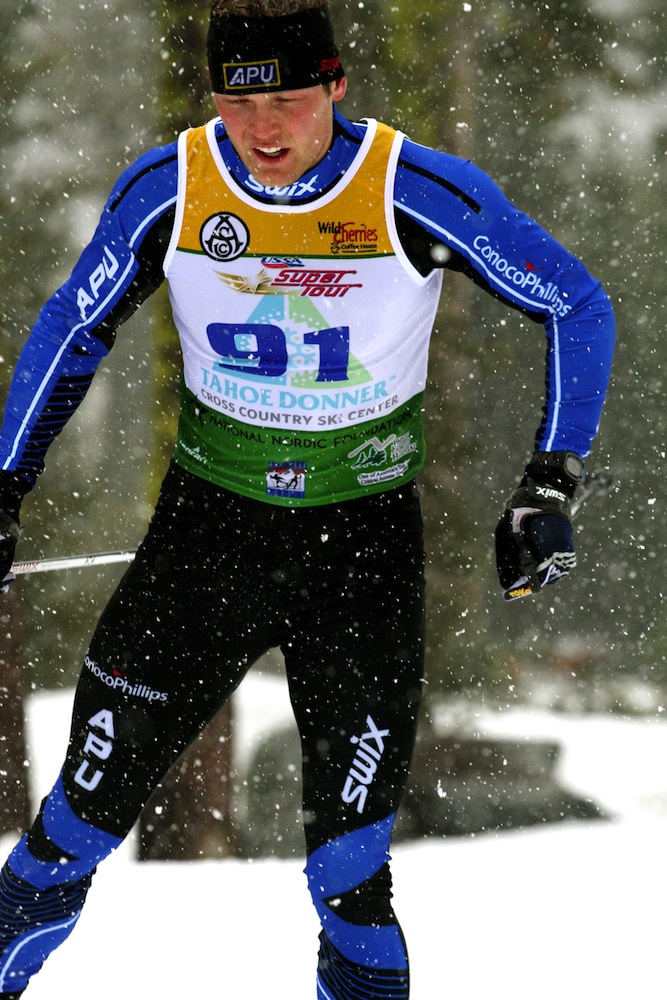
    According to Elliott, who ended up 13th behind Gregg, Mark Iverson (APU) in 11th, and Trygve Market (University of Denver) in 12th, it wasn’t much of a final sprint.

    “I could see the finish line, but just couldn’t do anything at that point,” he said. “I was pretty tired. I really wanted to try to go for time of day, that was a goal … but the steep sections are actually kind of a weakness for me. Brian was skiing those the best, I think, of the field.”

    — Audrey Mangan contributed reporting

    Results: Overall | Time-of-day

    Photo gallery

  • SuperTour Finals Extras: Days One Through Three

    SuperTour Finals Extras: Days One Through Three

    Erik Bjornsen (APU/USST) racing to a victory in the 2013 SuperTour Finals opening prologue at Auburn Ski Club last Thursday. (Photo: Mark Nadell/MacBeth Graphics)
    Erik Bjornsen (APU/USST) racing to a victory in the 2013 SuperTour Finals opening prologue at Auburn Ski Club last Thursday. (Photo: Mark Nadell/MacBeth Graphics)

    FasterSkier’s coverage of SuperTour Finals and U.S. Distance Nationals is brought to you by the generous support of Concept2, the leading manufacturer of indoor rowers, racing oars, and the SkiErg.

    SODA SPRINGS, Calif. — In their last races of the season, several top skiers had plenty to say in the first three of four races at SuperTour Finals.

    Here are some of the best quotes that didn’t make it into the following race reports from Auburn Ski Club:


    On the draw of Spring Series:

    “It’s fun to see all people I haven’t see all year, for sure, and I love to cross-country ski race so I’m just enjoying that part about it.” – Liz Stephen (Burke Mountain Academy/U.S. Ski Team)
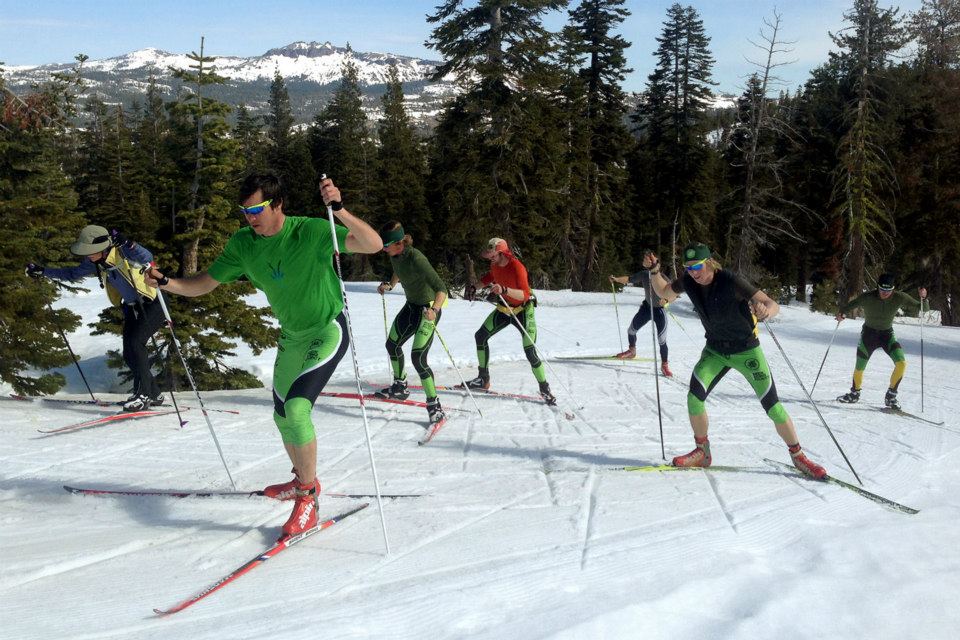
    “I love skiing in Tahoe, especially days like this. I had my first and last JNs here and my last JNs was pretty successful here. I always have good memories of this place.” – Erik Bjornsen (Alaska Pacific University/USST), second in Friday’s 15 k classic mass start

    “I started my college career in Reno and then I transferred to Utah so it’s really special to be back here … just to see everybody in the U.S. It’s a good time.” – Maria Graefnings (SWE), fifth in Saturday’s 1.5 k classic sprint


    On racing at altitude (7,000+ feet):

    “Nothing really feels good skiing here, especially at altitude, so you just have to convince yourself that once you go hard, it’ll feel better.” – Sadie Bjornsen (APU/USST)

    “It didn’t feel as terrible as I thought. My legs only quit on me for like 30 seconds, which I think was a positive.” – Mike Sinnott (Sun Valley Ski Education Foundation), third in Thursday’s 3.3 k freestyle prologue

    “I was training at 9,000 feet before I came up here at home [in Durango, Colo.]. I felt great training at home, everything was going well. I just don’t really know what’s going on. Maybe a long season, a lot of travel, not really sure, but obviously these other guys are skiing fast, too.” – Tad Elliott (Ski & Snowboard Club Vail/Team HomeGrown), 17th in the men’s 15 k classic mass start on Friday

    “I think racing this high at altitude and this time in the season is gonna be hard no matter what the conditions are. … You really have to keep the pacing in check.” –Stephen

    Rosie Brennan (APU) leads a pack of women, including Caitlin Gregg (second from r), Susan Dunklee and Annelies Cook (l), up the new A-climb at Auburn Ski Club in the 10 k classic mass start at SuperTour Finals on April 5.
    Rosie Brennan (APU) leads a pack of women, including Caitlin Gregg (second from r), Susan Dunklee and Annelies Cook (l), up the new A-climb at Auburn Ski Club in the 10 k classic mass start at SuperTour Finals on April 5.

    On Auburn Ski Club’s new A-climb:

    “I was crawling up it. That was a hard-core thing.” – Stephen, third in Friday’s 10 k classic mass start


    On racing in the rain/snow in Thursday’s prologue:

    “Thankfully, it’s a short race. I figured if you’re warm enough at the start, you can probably stay warm enough for eight or nine minutes … I wished I would have saved my race suit ’til the race. I warmed up in the bottom half and by the time I started my legs were pretty soaked.” – Kikkan Randall, prologue winner and second-fastest overall in men’s/women’s 3.3 k

    “I thought it was gonna be sunny so I came up here with no warm clothes. As we started driving up, it started raining and I thought, ‘OK, this is gonna be interesting.’ Then we got out here and it was snowing, but it made it kind of exciting. It’s kind of mysterious out in the woods, you know?” – Sadie Bjornsen, third in prologue

    “I came out early and I skied before the girls’ race and I was pumped because it was super fast. Then I started the race and it dropped over that hill, and I was like, ‘Oh God, it’s slow.’ ” – Mark Iverson (APU), tied Sinnott for third in prologue

    Mike Sinnnott (SVSEF) in Saturday's classic sprint qualifier. (Photo: Mark Nadell/MacBeth Graphics)
    Mike Sinnnott (SVSEF) in Saturday’s classic sprint qualifier. He went on to place sixth in the final. (Photo: Mark Nadell/MacBeth Graphics)

    “These conditions, I actually thought, weren’t as bad as they looked. I mean, it’s raining, but it turned to snow for us, and it didn’t go to super-soupy mush. It firmed up … The trails were actually quite nice and good skiing. It didn’t bother me. It was kind of like, ‘Whatever, let’s go for it.’ ” – Sinnott


    On conditions later in the week:

    “There’s like a lake on the right side of the stadium, but other than that … it was sloppy, but totally skiable.” – Sadie Bjornsen, third in classic sprint


    On peaking for the last races of the season:

    “Early season, I really wanted to make those World Cups for the sprint, and I came out sprinting pretty hard and kind of paid the price the whole rest of the year. … But to be able to ski those World Cups in December, which was an early-season goal, and to be able to collect myself and ski well out here, which was my other big goal, was really sweet. It makes you forget those races in the middle of the winter when you’re not feeling yourself and you’re not racing the way you’d want.” – Pat O’Brien (Craftsbury Green Racing Project), second in classic sprint

    “People always remember the most-recent results, so … I think it’s really important to have good results in the last part of the season. For me, it’s really motivating for the summer to know that I can duke it out with some of the top guys in the U.S. It’ll motivate me to train hard so I have the chance to make the Olympics.” – Erik Bjornsen, with three-consecutive podiums in as many races at SuperTour Finals

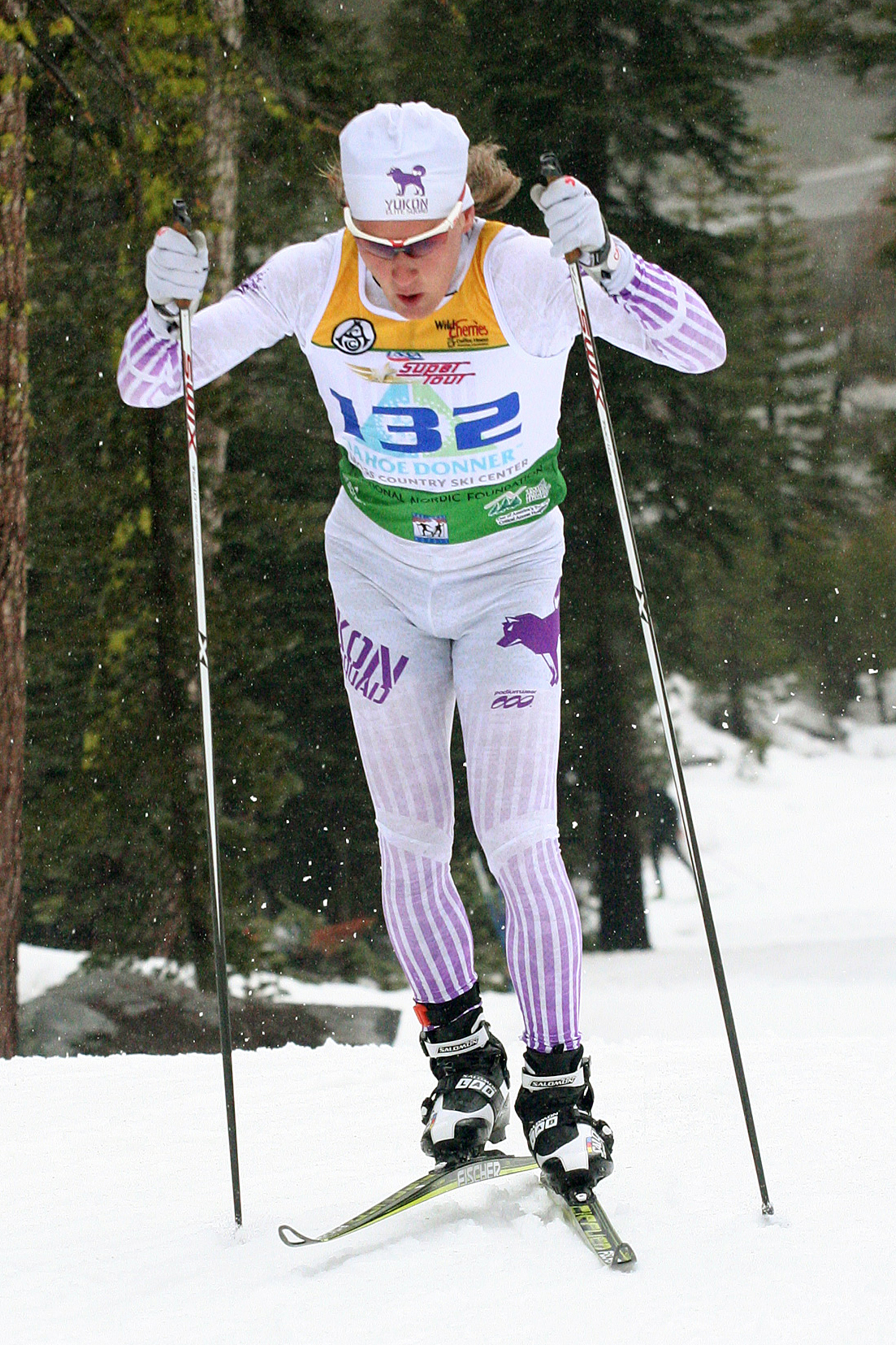
    “I actually haven’t really done a prologue before. I like them now.” – Knute Johnsgaard (CAN/Yukon Elite Squad), second in men’s prologue

    “Today was probably my favorite day of this race series so far. You might have seen I threw my arms up at the finish. I was pretty excited. … Ever since joining APU, [head coach Erik] Flora was like, ‘I think you can be a hybrid, you can ski both distance and sprint.’ I feel like there’s so much less pressure on you if you can do both. You see guys on the team that are just sprinters and it comes down to a sprint day and they’re just like, ‘Uh, this is my one race in a three-day series,’ and I just didn’t want to do that. I think I might like distance better now. It’s a lot of fun, and I’m happy to be able to do both of them.” – Erik Bjornsen, third in classic sprint

    Andy Newell (SMST2/USST) on his way to winning Saturday's classic sprint final at SuperTour Finals in Soda Springs, Calif. (Photo: Mark Nadell/MacBeth Graphics)
    Andy Newell (SMST2/USST) on his way to winning Saturday’s classic sprint final at SuperTour Finals in Soda Springs, Calif. (Photo: Mark Nadell/MacBeth Graphics)


    On teammate respect:

    “[Andy] Newell inspires me a lot. I don’t think he gets enough credit, actually, for his sprinting. To be as consistent as he is, seems like he’s always making the A-finals. People say, like, ‘Oh, he can’t make it to the podium,’ but, I’ve seen what it takes and it’s really impressive. Like him and Noah [Hoffman] and [Kris] Freeman, they’re all skiing strong. I hope I can push them, too, and hope to train with them this summer. I’d like to raise the level of men’s skiing in the U.S. and those guys can do it.” – Erik Bjornsen, second in 15 k classic mass start


    On the unexplainable:

    “I felt great in the beginning, really fast skis, really good kick, felt comfortable and controlled and actually didn’t reach Kris [Freeman] on the uphill ’cause I was worried about blowing up. I let the gap go and skied smooth and consistent and those guys [in the chase group] were charging and they caught me. That’s kind of how it’s gone this year for me; I think I’m comfortable, think I’m fine. I’m where I’d like to be or where I could be skiing, and I get pretty tired.” – Tad Elliott, 17th in 15 k classic mass start


    On the unintentional:

    “I’m a little bit not so good at skiing behind someone, I just step on their skis all the time. I like it because then I don’t need to do the pace myself, but it’s maybe a little bit annoying for them.” – Lisa Larsen (SWE), fourth in 10 k classic mass start

    ***

    Photo Galleries

  • Sargent Gives Randall a Run at SuperTour Finals, World Cup Sprint Champ Prevails

    Sargent Gives Randall a Run at SuperTour Finals, World Cup Sprint Champ Prevails

    The women's classic sprint podium at 2013 SuperTour Finals. From left to right: Ida Sargent (CGRP/USST) in second, Kikkan Randall (APU/USST) in first, and Sadie Bjornsen (APU/USST) in third. (Photo: Mark Nadell/MacBeth Graphics)
    The women’s classic sprint podium at 2013 SuperTour Finals on Saturday at Auburn Ski Club. From left to right: Ida Sargent (CGRP/USST) in second, Kikkan Randall (APU/USST) in first, and Sadie Bjornsen (APU/USST) in third. (Photo: Mark Nadell/MacBeth Graphics)

    FasterSkier’s coverage of SuperTour Finals and U.S. Distance Nationals is brought to you by the generous support of Concept2, the leading manufacturer of indoor rowers, racing oars, and the SkiErg.

    SODA SPRINGS, Calif. – Kikkan Randall is quick to note her weakness in classic sprinting, but few at SuperTour Finals wouldn’t have picked her to win Saturday’s 1.5-kilometer classic sprint.

    That made Ida Sargent’s underdog run to the final even sweeter.

    Kikkan Randall (APU/USST) in Saturday's 1.5 k classic sprint qualifier at 2013 SuperTour Finals. She posted the fourth-fastest qualifying time behind USST teammate Ida Sargent in first. (Photo: Mark Nadell/MacBeth Graphics)
    Kikkan Randall (APU/USST) in Saturday’s 1.5 k classic sprint qualifier at 2013 SuperTour Finals. She posted the fourth-fastest qualifying time behind USST teammate Ida Sargent in first. (Photo: Mark Nadell/MacBeth Graphics)

    Both U.S. Ski Team members, Sargent, of the Craftsbury Green Racing Project (CGRP), is six years younger and in her second season on the national team.

    Alternatively, Randall, an Alaska Pacific University (APU) staple, has been racing World Cups since 2001. At 30, she’s coming off her second-straight World Cup sprint crown and entered Saturday’s sprint undefeated in the first two races of the series.

    But on an above-freezing afternoon at Auburn Ski Club with a mixture of rain and snow falling sporadically, anything could happen. Fortunately, Sargent had adrenaline and top-notch wax technicians on her side.

    For Spring Series, Craftsbury enlisted the help of U.S. Ski Team (USST) service techs Randy Gibbs and Cory Wubbels, along with Eli Brown and the team’s own Nick Brown. On Saturday, two CGRP women and two of its men (Pat O’Brien and Tim Reynolds) made the finals. Sargent toed the line with teammate and U.S. Biathlon A-teamer Susan Dunklee.

    To get to that point, Sargent won the qualifier and successive heats thereafter. Suddenly, Randall wasn’t a shoe-in favorite in the final, and the attention turned to Sargent.

    “Ida’s a legit classic sprinter,” Randall said. “She’s been top ten on the World Cup; she’s knocked on the door of the podium. When she puts it together, she can be better than me. I knew I had my work cut out for me.”

    Sargent kept her energy high as she cruised through the rounds, winning the qualifier by 1.35 seconds, then commanding both her quarterfinal and semifinal.

    In her last race of the season, it was the kind of day the Vermont native envisioned. Facing off against two USST teammates in the final, including Sadie Bjornsen (APU), would be the perfect ending despite not feeling well.

    Sargent had been fighting a cold since she arrived in Truckee, Calif., and coming off more than four months on the World Cup circuit, she booked an early flight home. She would leave Sunday, giving her all in the classic sprint.

    Ida Sargent (CGRP/USST) en route to winning Saturday's 1.5 k classic sprint qualifier at 2013 SuperTour Finals at Auburn Ski Club in Soda Springs, Calif. She went on to place second to Kikkan Randall (APU/USST) in the final. (Photo: Mark Nadell/MacBeth Graphics)
    Ida Sargent (CGRP/USST) en route to winning Saturday’s 1.5 k classic sprint qualifier at 2013 SuperTour Finals at Auburn Ski Club in Soda Springs, Calif. She went on to place second to Kikkan Randall (APU/USST) in the final. (Photo: Mark Nadell/MacBeth Graphics)

    “I think when you have that last little bit of energy, you’re like, ‘You’ve got to go, this is it,’ ” Sargent said. “You can see the finish line.”

    Shooting to front of the six-person final from the start, she had every intention of finishing first. Randall tucked behind her, followed by Dunklee and the rest of the field, and they soared down out of the stadium. There, she and Randall took charge and gapped the others.

    “My strategy was to try to hang onto her at the start and try to stay close,” Randall said.

    Sargent had already beaten her once, in the semifinals, where she led Randall and Bjornsen respectively across the line. Randall made some mental notes for the final, then executed accordingly.

    “I saw that Ida had really fast skis and got away early,” Randall recalled. “I knew the key to being able to stay with her in the final was just work really hard at the beginning to get in her draft, otherwise it would be too much gap to make up at the end.”

    After qualifying in fourth behind Sargent, Sophie Caldwell (Stratton Mountain School T2 Team) and Bettina Gruber (Swiss National Team), respectively, Randall asked her wax techs for more kick.

    “I felt a little bit like a fish flopping around on the deck,” Randall said. “But we got the skis dialed in for the rounds.”

    She won her quarterfinal ahead of Sweden’s Maria Nordström (University of Colorado) and fellow USST member Liz Stephen (Burke Mountain Academy). Randall and Nordström advanced to the semis, where they met Sargent, Rosie Brennan (APU), Jessie Diggins (SMST2/USST), and Sophie Caldwell (SMST2).

    “It was kind of crazy how our semifinal was basically as U.S. Ski Team time trial,” Randall said. “It was a good success just to make it past the semifinal, really.”

    That kind of challenge, especially with Sargent, fueled her. Drafting Sargent for the first half of the final, Randall attacked on the last climb. Sargent switched to another track, attempting to hold on as Randall accelerated to the finish. Winning by several seconds, it was Randall’s third-straight victory of SuperTour Finals. Sargent took second ahead of Bjornsen, who was a few more meters back in third.

    “To be chasing someone down in the final … it’s gonna make us all better,” said Randall, referring to her USST teammates. “[We’ll] have a better chance of getting a medal in a team sprint in classic and just being more competitive on the World Cup.”

    Kikkan Randall casually celebrates her classic-sprint win over USST teammate Ida Sargent (l) on Saturday at SuperTour Finals in Soda Springs, Calif. (Photo: Mark Nadell/MacBeth Graphics)
    Kikkan Randall casually celebrates her classic-sprint victory over USST teammate Ida Sargent (l) on Saturday at SuperTour Finals in Soda Springs, Calif. (Photo: Mark Nadell/MacBeth Graphics)

    The win puts Randall 1 minute and 19 seconds ahead of Bjornsen for the last race of SuperTour Finals: Monday’s freestyle hill-climb pursuit at Sugar Bowl Resort.

    “Classic sprints are really hit or miss for me, especially today with challenging waxing conditions, I just never quite know,” Randall said. “The feeling so far the week have been pretty good so I was optimistic and positive.”

    To start the week, Sargent placed 13th in Thursday’s freestyle prologue and sixth in Friday’s 10 k classic mass start.

    “It was tough going up against the sprint World Cup champion, but I’m happy to be there,” Sargent said of Saturday’s silver. “It was a fun way to end the season.”

    After notching her third podium of the week, Bjornsen said the hill climb would be “interesting.”

    “I’m not much of a climber, let alone on skate skis, so we’ll see,” she said.

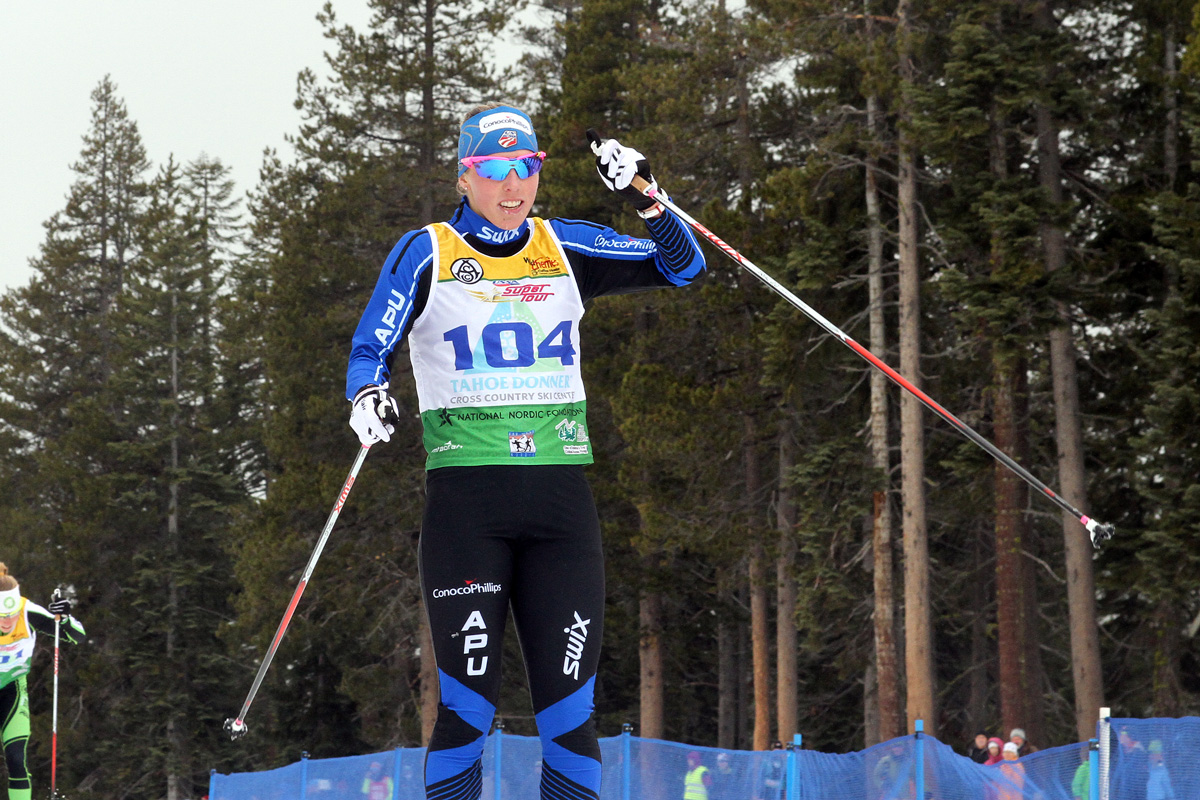
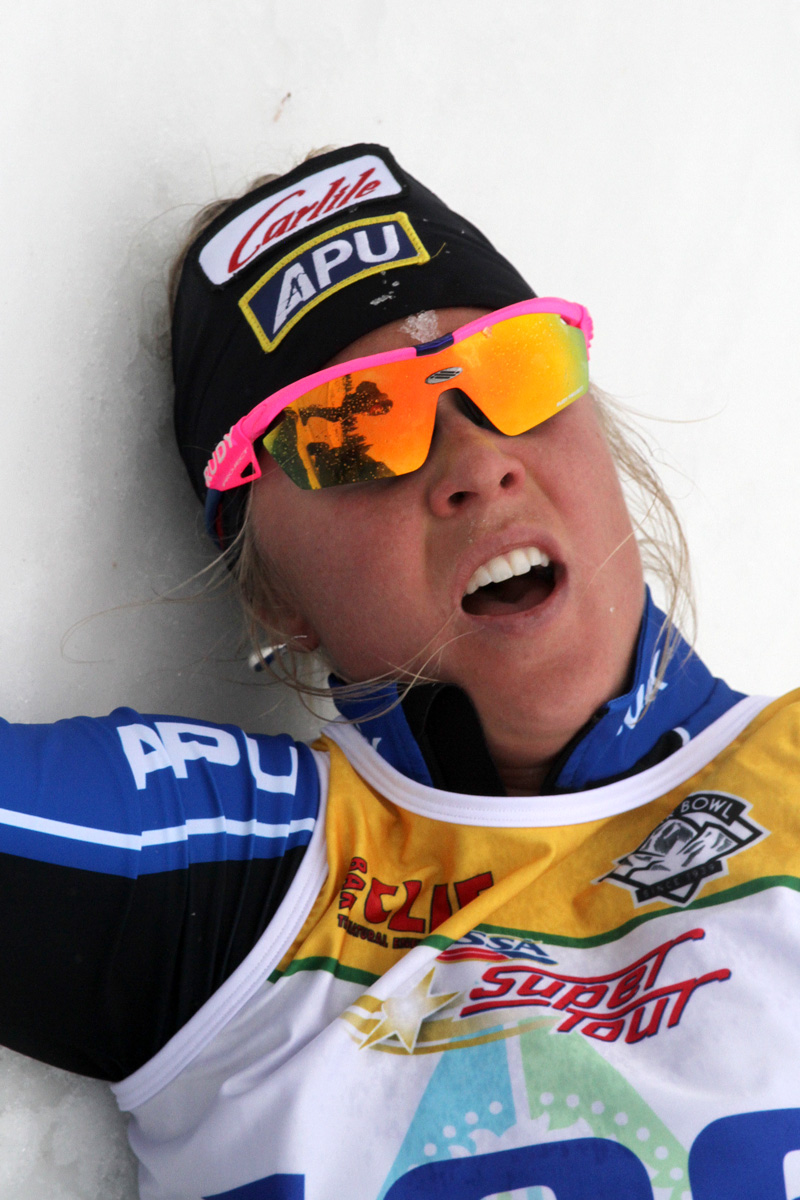
    An exhausted Sadie Bjornsen (APU/USST) after notching her third podium in as many races at SuperTour Finals. She was third in Saturday's classic sprint.
    An exhausted Sadie Bjornsen (APU/USST) after notching her third podium in as many races at SuperTour Finals. She was third in Saturday’s classic sprint. (Photo: Mark Nadell/MacBeth Graphics)

    As for the sprint final, Bjornsen said she made a poor lane choice out of the start and fell off the back early.

    “It was so wet,” Bjornsen said of the snow in the stadium. “From there, I just tried to catch back up to these girls. … I wish I could’ve really been up there or started with them. I was catching them but there wasn’t enough time.”

    With the two steep climbs near the end, she said the course was challenging, but fair.

    “It’s more about the strongest person on the top of the hill instead of who has the fastest skis,” she said. “It’s fun in that regard.”

    Brennan, who finished fourth in the final, noticed the difference in ski speed as she watched Randall and Sargent take off. Unable to catch them on the downhill, she and teammate Bjornsen battled for third.

    “Sadie put on a nice move on the [last] uphill and that was sort of that,” Brennan said.

    Plagued by a back injury, Brennan said she lacked some confidence heading into the sprint.

    “I skied probably way too aggressively in my quarter and semi just because I didn’t know if I could do it or not,” the former USST member explained. “I didn’t have as much in the final as I would’ve liked, but it was really good to be able to ski with Kikkan and Ida and those girls that I haven’t raced against this year.”

    Fifth-place finisher Maria Graefnings, who graduated from the University of Utah last year and returned to Sweden for her first World Cup top 30 this season, was also happy to have made the final. A two-time NCAA champion who placed 28th in the 10 k freestyle World Cup opener in Gällivare, Sweden, the 27-year-old said sprints weren’t usually her thing.

    “I was like, ‘Oh man, just go for it,’ ” she said. “I was debating klister or zeros. It was a little bit tricky waxing today, but I’m super happy with the result. I was like, ‘OK, I better hold on, try to stick to them as long as I can.’ ”

    Dunklee followed Graefnings into the finish for sixth, completely drained by the back-to-back heats. Like her quarterfinal and semi, the biathlete charged hard to lead out of the start. In the final, she said that tactic didn’t work.

    “I fell off fast,” Dunklee said. “I didn’t have much left in the tank at that point. I think I overdid it a little in the semis, but I made it to the final so I’m pretty damn excited about that.”

    Excited to be among a strong showing of U.S. biathletes, with Annelies Cook and Hannah Dreissigacker racing in her semifinal as well, Dunklee was also thrilled at the chance to race Randall.

    “It was a very special moment standing on that start line … and thinking, ‘Man this is a moment I can be proud of,’ ” Dunklee said.

    Tracing her success to her running career at Dartmouth College, she was thankful the course involved a lot of striding and that her skis aided her along.

    “Our techs just nailed it today,” she said. “I had some of the fastest skis going down that hill and then I also had plenty of kick to get up so it can’t really get much better than that.”

    — Audrey Mangan contributed reporting

    Results | SuperTour Finals standingsPhoto gallery


  • Randall Makes Racing 10 k at Altitude Look Easy, Clinches Second SuperTour Finals Win

    Randall Makes Racing 10 k at Altitude Look Easy, Clinches Second SuperTour Finals Win

    U.S. Ski Team veterans Kikkan Randall (Alaska Pacific University) leads Liz Stephen (Burke Mountain Academy) in Friday's 10 k classic mass start at 2013 SuperTour Finals at Auburn Ski Club in Soda Springs, Calif. Randall went on to win by 36.6 seconds, and Stephen was 47 seconds behind in third. (Photo: Mark Nadell/MacBeth Graphics)
    U.S. Ski Team veterans Kikkan Randall (Alaska Pacific University) leads Liz Stephen (Burke Mountain Academy) in Friday’s 10 k classic mass start at 2013 SuperTour Finals at Auburn Ski Club in Soda Springs, Calif. Randall went on to win by 36.6 seconds, and Stephen was 47 seconds behind in third. (Photo: Mark Nadell/MacBeth Graphics)

    FasterSkier’s coverage of SuperTour Finals and U.S. Distance Nationals is brought to you by the generous support of Concept2, the leading manufacturer of indoor rowers, racing oars, and the SkiErg.

    SODA SPRINGS, Calif. – Housemates for the week, Kikkan Randall and Liz Stephen talked tactics before Friday’s 10-kilometer classic mass start at SuperTour Finals.

    That morning, with temperatures in the high 30s, was expected to warm quickly to nearly 50 degrees Fahrenheit, even at elevations exceeding 7,000 feet on Donner Summit. That’s where U.S. Ski Team (USST) veterans Randall and Stephen and the rest of the women’s field would race at Auburn Ski Club at 10:30 a.m. after the men’s 15 k.

    Stephen, a Burke Mountain Academy alum spending the week with Alaska Pacific University (with ski-waxing help from the Craftsbury Green Racing Project), bounced some strategy ideas off Randall.

    “I was like, ‘Maybe we should go really hard off the front and try to break up the pack,’ because those corners, you don’t want to ski them with seventy other people,” Stephen said. “But Kikkan kind of warned me, she’s like, ‘I don’t know if you really want to do that Liz. I think you’re gonna blow up.’ And I was like, ‘Yeah, you’re probably right.’ ”

    Stephen, 27, heeded the 30-year-old Randall’s advice and initially held back. Meanwhile, Randall led the up the A-climb around 3 k, keeping her head down and staying smooth while the rest of the pack tried to follow. When she got to the top, Randall heard she had an eight-second lead.

    Kikkan Randall leads Sweden's Lisa Larsen (l) and Liz Stephen (r) and the rest of the women in Friday's 10 k classic mass start the first time up the A-climb at 2013 SuperTour Finals at Auburn Ski Club in Soda Springs, Calif.
    Kikkan Randall leads Sweden’s Lisa Larsen (l) and Liz Stephen (r) and the rest of the women in Friday’s 10 k classic mass start the first time up the A-climb at 2013 SuperTour Finals at Auburn Ski Club in Soda Springs, Calif.

    “I was like, ‘What?’ ” Randall recalled. “I felt like I was keeping it really controlled.”

    What she didn’t realize was that Stephen and Sweden’s Lisa Larsen (Sundbybergs IK), who were closest to her the first time up the hill, had stumbled in the slushy snow.

    Both fell forward: Larsen first, then Stephen (Larsen stepped on Stephen’s ski while recovering). Regaining their composure, they held their own and pushed the last few meters to the top ahead of Sweden’s Maria Graefnings (Falun Borlange SK) and Sadie Bjornsen (APU/USST).

    For Randall, the two-time World Cup sprint champion and this year’s overall bronze medalist, the win was essentially in the bag. She didn’t think of it that way.

    “The last bit, I wasn’t focused on the gap anymore, I was just focused on trying to hold it together and ski as well as I could,” Randall said. “I knew I was getting sloppy.”

    The spectators watching her round the 5 k course might have witnessed otherwise. Despite the conditions, Randall appeared to be on form and en route to her second-straight victory in as many races at SuperTour Finals. She won Thursday’s 3.3 k freestyle prologue in damp and windy conditions, besting every competitor – male or female – except Erik Bjornsen (APU/USST) in the individual start. To be fair, she said, the men had snowier conditions.

    “It would be one thing if we knew the conditions were really a little more equal,” she said. “Then I’d be like, ‘Oh OK. I’m giving the boys a run for their money.’ It’s still fun to be able to heckle the guys a little bit and be able to show that a little weather conditions and we’re right there with them!”

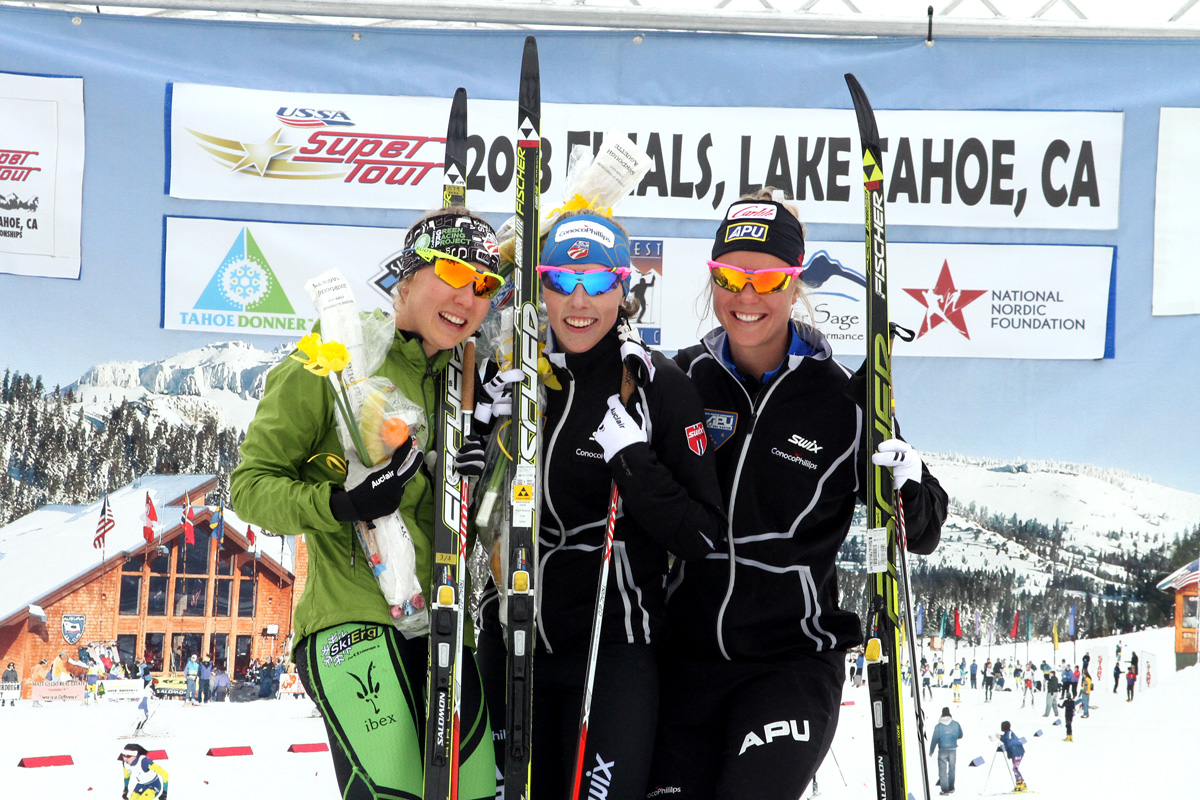
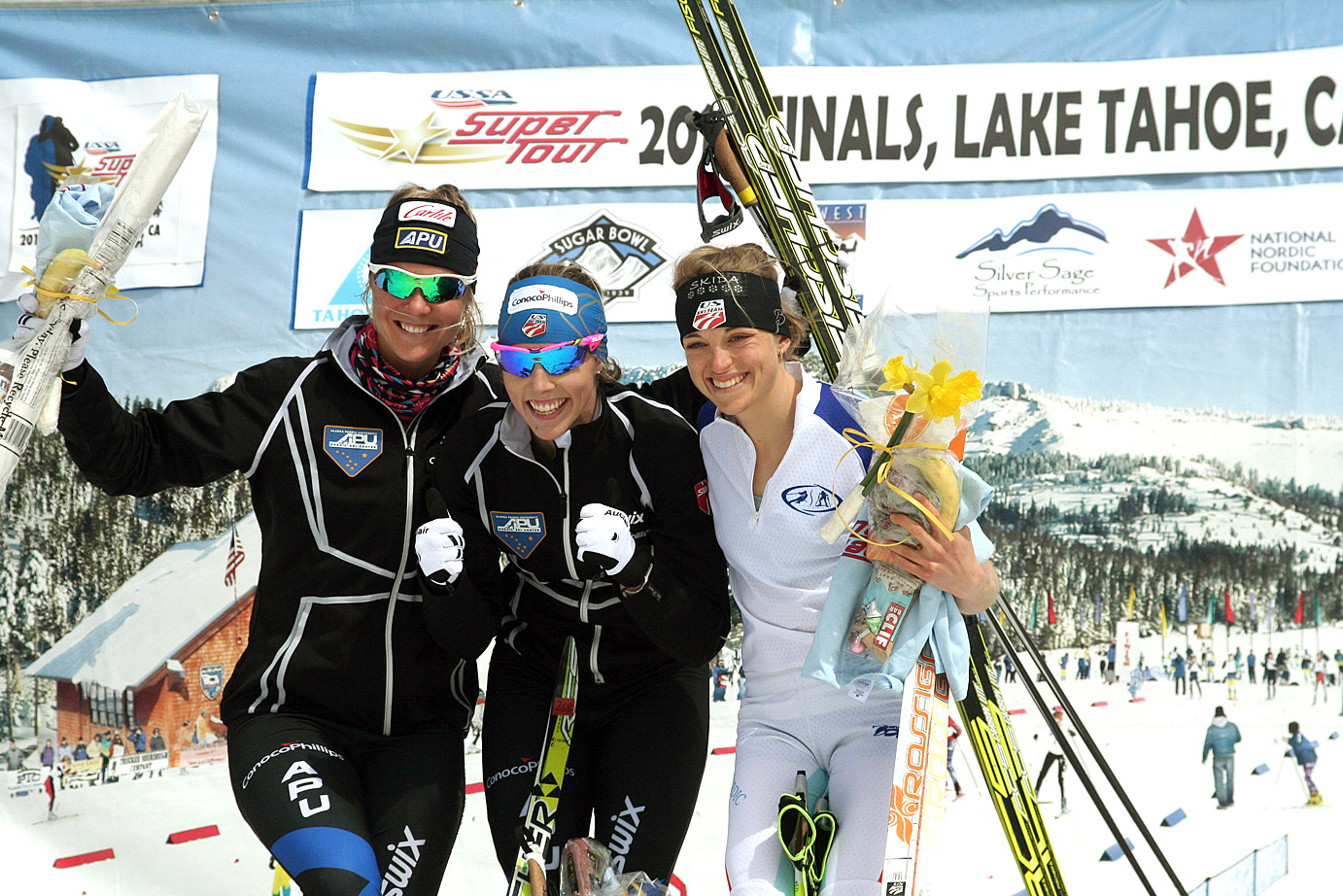
    The women's 10 k classic mass start podium at 2013 SuperTour Finals. From left to right: runner-up Sadie Bjornsen (APU/USST), winner Kikkan Randall (APU/USST), and bronze-medalist Liz Stephen (BMA/USST). (Photo: Mark Nadell/MacBeth Graphics)
    The women’s 10 k classic mass start podium at 2013 SuperTour Finals. From left to right: runner-up Sadie Bjornsen (APU/USST), winner Kikkan Randall (APU/USST), and bronze-medalist Liz Stephen (BMA/USST). (Photo: Mark Nadell/MacBeth Graphics)

    Randall went on to win Friday’s 10 k classic on a dry and sunny day without much trouble, finishing 36.6 seconds ahead of runner-up Bjornsen in 31:40.8. But it didn’t come easy, she said.

    “The second lap, things were getting a little slower and a little softer and it was kind of hard to hold together,” Randall said. “The way this altitude works, it definitely starts creeping up on you. I knew I just needed to keep a good rhythm and the energy was pretty good.”

    Her lead grew from about 18 seconds after the first lap to more than half a minute on the second.

    “I was definitely fighting through some heavy muscles that last two k,” she said. “Really kind of a surprising race today. I didn’t expect to get off the front like that.”

    It wasn’t so much of a shock to those who finished behind her.

    “She went for the preem over the top of the hill and clearly got it and just never looked back,” Stephen said after taking third, 47 seconds behind Randall and 11.3 seconds ahead of Larsen in fourth. “She was stronger today, for sure.”

    Sadie Bjornsen (APU/USST) racing to second in Friday's 10 k classic mass start at SuperTour Finals in Soda Springs, Calif. (Photo: Mark Nadell/MacBeth Graphics)
    Sadie Bjornsen (APU/USST) racing to second in Friday’s 10 k classic mass start at SuperTour Finals in Soda Springs, Calif. (Photo: Mark Nadell/MacBeth Graphics)

    Bjornsen broke open the chase group on the second lap to claim silver, capitalizing on Larsen’s late crash on the second lap. After falling for a second time as well, Stephen also passed the Swede on the descent before the stadium.

    “On the last hill, I think I was so tired I couldn’t control my limbs and I just fell down,” Stephen said. “It’s really hard out there, but honestly I’d rather have it soft like this than bullet-proof ice any day. I think racing this high at altitude and this time in the season is gonna be hard no matter what the conditions are.”

    She said the 15 k, like the upcoming 30 k classic mass start, which will be held at Royal Gorge next Wednesday, was all about pacing with so little oxygen to pull from.

    “I actually had one brief thought in the race about the 30 k,” Stephen said. “It was at one of my lowest points out there, and I was just like, ‘Oh my gosh, that’s gonna be a long race,’ [but] it’s April and we’ve had the dream season and I’m just enjoying it. It’s fun to be in the sun in California.”

    After finishing third in the opening prologue, Bjornsen put herself in second behind Randall in the SuperTour Finals standings. With a goal of sitting tight the first lap, the 23-year-old from Anchorage said she saved her legs as much as possible up the A-climb while staying in the top five.

    “The second lap, I went in the front of the chase pack and just tried to break as many people off the back as I could,” Bjornsen said. “I knew it wasn’t the most tactically smart thing, but I could see that Kikkan was just going for it so I wanted to try to chase back to her.”

    She came closer than anybody else, refusing to let up on the last lap and eventually passing Larsen for second.

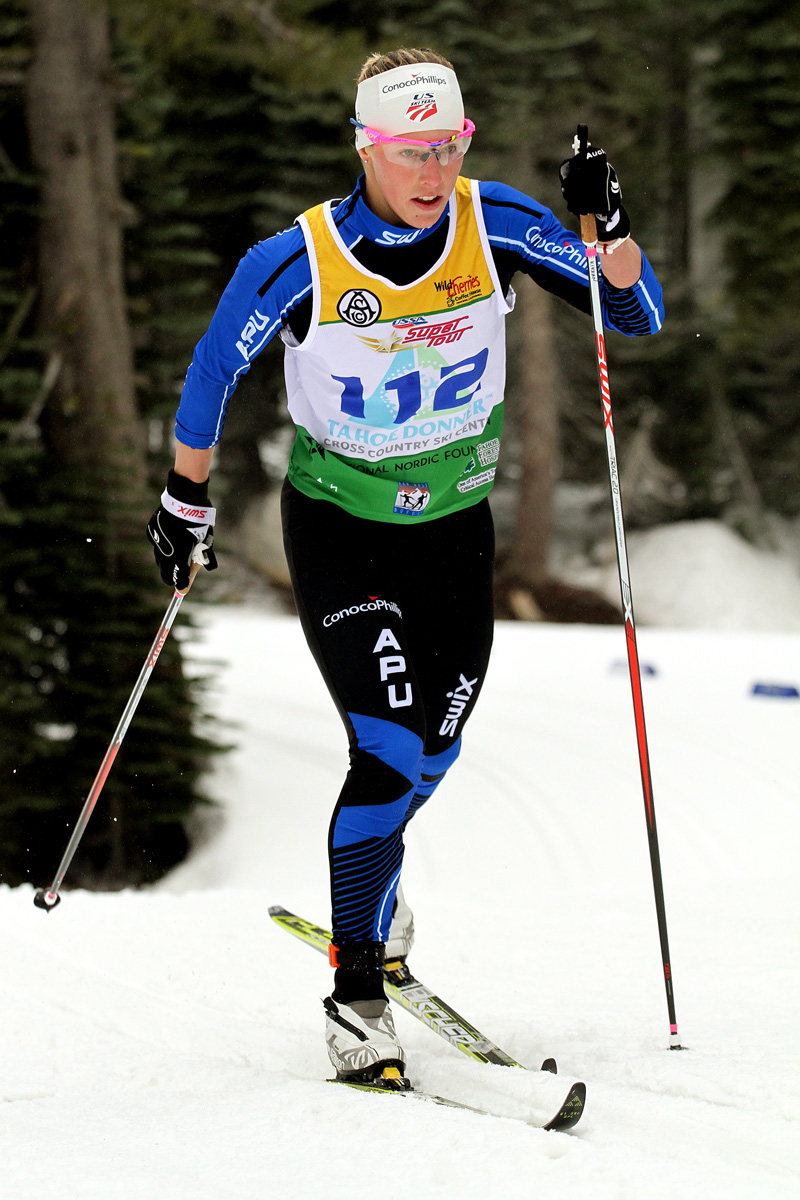
    Liz Stephen (Burke Mountain Academy/U.S. Ski Team) striding to third in Friday's 10 k classic mass start at SuperTour Finals in Soda Springs, Calif. (Photo: Mark Nadell/MacBeth Graphics)
    Liz Stephen (Burke Mountain Academy/U.S. Ski Team) striding to third in Friday’s 10 k classic mass start at SuperTour Finals in Soda Springs, Calif. (Photo: Mark Nadell/MacBeth Graphics)

    “Once I hit the climb, it was just survival mode to the end,” Bjornsen said. “Liz took herself out on the last hill and I think Lisa maybe red-lined it a little bit too hard over the top. … It’s too bad those girls weren’t able to stay on their feet all the way to the end because it would’ve been a good drag race down here to the finish line.”

    Barely making it over the finish before collapsing like most others, Larsen, 22, said she was satisfied with her race – one of her best at altitude. But that didn’t take the sting away from her second crash.

    “I fell so hard on my chest this last downhill,” Larsen said. “It was no so good, but I’m not very used to this altitude.”

    Placing 19th in the prologue the day before, Larsen said she learned her lesson after going too hard on the A-climb.

    “I decided not to go with Kikkan up there [today] because it would be so hard, that hill,” she said. “I pushed it too hard there yesterday and I lost so much time down the hill.”

    The women’s prologue runner-up, Jessie Diggins (Stratton Mountain T2 Team/USST) finished 18th (+3:01.5) on Friday.

    “I bonked and my stomach cramped up on the first lap on the hill,” Diggins said. “I was kind of walking, like, folded over in half. … It would’ve felt really good to get a good puke in there at the top of the hill. It was definitely not a good feeling today.”

    She reminded herself that not every race was destined to be great. Diggins didn’t feel good before the start on Friday and was unsure how she’d fare for the rest of the series, but wasn’t too concerned.

    U.S. Ski Team members Sadie Bjornsen (second from l), Kikkan Randall (c) and Jessie Diggins (r) lead early in the women's 10 k classic mass start at 2013 SuperTour Finals. (Photo: Ryan Scott)
    U.S. Ski Team members Sadie Bjornsen (second from l), Kikkan Randall (c) and Jessie Diggins (r) lead early in the women’s 10 k classic mass start at 2013 SuperTour Finals. (Photo: Ryan Scott)

    “If you’re not acclimated yet and you’re not used to racing at altitude very well, then you’re gonna struggle, I think,” she said. “The nice thing about racing here is I’m not putting any pressure on myself. The goal is to have fun racing here at the end of the season. I don’t have crazy, like, I need to win or else!”

    Last year at SuperTour Finals in Craftsbury, Vt., Diggins said she felt differently.

    “Racing at sea level and having the 30 k be a skate race, I was definitely putting a lot more pressure on myself,” she said. “This year I’m kind of learning that I need to just stop putting that kind of pressure on myself because it takes the fun right out of it. I think I’m doing a lot better with just, relax and soak up some Vitamin D.”

    Rounding out the top 10 on Friday, Graefnings placed fifth, Ida Sargent  (CGRP/USST) was sixth, Sophie Caldwell (SMST2) took seventh, and Rosie Brennan (APU) was eighth.

    In her first classic race since Spring Series last year, U.S. Biathlon’s Annelies Cook (Maine Winter Sports Center) notched ninth. Swiss National Team member Bettina Gruber placed 10th, and two other U.S. national team biathletes Hannah Dreissigacker and Susan Dunklee finished 11th and 12th, respectively.

    — Audrey Mangan contributed reporting

    Results

    Liz Stephen (r) struggles to get back on her feet the first time up the A-climb in Friday's 10 k classic mass start at SuperTour Finals at Auburn Ski Club. Sweden's Lisa Larsen (l) stumbled just before her on the hill, and both crashed again on the second lap in the slushy conditions.
    Liz Stephen (r) struggles to get back on her feet the first time up the A-climb in Friday’s 10 k classic mass start at SuperTour Finals at Auburn Ski Club. Sweden’s Lisa Larsen (l) stumbled just before her on the hill, and both crashed again on the second lap in the slushy conditions.

    For more photos, visit Mark Nadell’s MacBeth Graphics photo gallery.

  • Bjornsen Weathers Boggy SuperTour Finals Opener, Wins Prologue

    Bjornsen Weathers Boggy SuperTour Finals Opener, Wins Prologue

    Erik Bjornsen (APU/USST) en route to a 14.5-second victory in Thursday's 3.3 k freestyle prologue, which kicked off 2013 SuperTour Finals at Auburn Ski Club near Truckee, Calif. (Photo: Mark Nadell)
    Erik Bjornsen (APU/USST) en route to a 14.5-second victory in Thursday’s 3.3 k freestyle prologue, which kicked off 2013 SuperTour Finals at Auburn Ski Club near Truckee, Calif. (Photo: Mark Nadell/MacBeth Graphics)

    FasterSkier’s coverage of SuperTour Finals and U.S. Distance Nationals is brought to you by the generous support of Concept2, the leading manufacturer of indoor rowers, racing oars, and the SkiErg.

    SODA SPRINGS, Calif. – Lifting his fogged glasses at the finish of the men’s SuperTour Finals opening prologue, Erik Bjornsen turned to look behind him.

    Soaking wet in near-freezing temperatures on Donner Summit, the Alaska Pacific University (APU) and the U.S. Ski Team (USST) member stood there, counting silently until he reached 40 seconds, he later told Sun Valley’s Mike Sinnott.

    With no sign of Sinnott, who started 30 seconds behind him in the 3.3-kilometer freestyle race, Bjornsen moved on and out of the finish pen to get warm.

    One day after sunny skies and 60-degree temperatures blanketed the region, some 175 competitors at Auburn Ski Club withstood a damp and windy morning on Thursday. Rain turned to wet snow for the women’s race, and that snow intensified into variable squalls throughout the men’s competition.

    Fortunately, all anyone had to do was complete one 3.3 k lap, the same for both men and women, but that in itself was a challenge. Filling in as Tahoe Donner’s backup host for SuperTour Finals, Auburn organizers constructed a new hill, which some racers, like Sinnott, referred to as the “wall.”

    In an all-out prologue, that kind of terrain is tough to tackle, especially at more than 7,000 feet above sea level. Add to that the issue of poor visibility with foggy or no eyewear and you’re in for an interesting race.

    APU and US Ski Team member Erik Bjornsen (second from left) celebrates his first career SuperTour victory at 2013 SuperTour Finals after winning Thursday's 3.3 k freestyle prologue at Auburn Ski Club in Soda Springs, Calif. Canadian Knute Johnsgaard (Yukon Elite Squad) was second), and Mark Iverson (APU) and Mike Sinnott (Sun Valley) tied for third. (Photo: Mark Nadell/MacBeth Graphics)
    APU and US Ski Team member Erik Bjornsen (second from left) celebrates his first career SuperTour victory at 2013 SuperTour Finals after winning Thursday’s 3.3 k freestyle prologue at Auburn Ski Club in Soda Springs, Calif. Canadian Knute Johnsgaard (Yukon Elite Squad) was second), and Mark Iverson (APU) and Mike Sinnott (Sun Valley) tied for third. (Photo: Mark Nadell/MacBeth Graphics)

    Bjornsen, who posted the fastest time of the day in 7:47, said he couldn’t see much of anything for the last half kilometer.

    “I was really unbalanced and kind of sloppy, but coach said I looked good at the finish,” he recalled. “I heard the time a little bit after and couldn’t believe it.”

    For Bjornsen, who won his first national title earlier this year at the age of 21, it was the first SuperTour win of his career and set him up nicely for the remaining four races at SuperTour Finals. With a 15 k classic mass start on Friday, Bjornsen will lead the standings by at least 14.5 seconds, the amount of time he beat Canadian runner-up Knute Johnsgaard by on Thursday.

    “It’s super exciting … and pretty unexpected,” Bjornsen said. “Coming into these races, I didn’t have a lot of pressure on myself. Now I see I might be in good form so I’m pretty excited for the rest of the races, and I hope I can go for the overall podium.”

    A year ago at SuperTour Finals in Craftsbury, Vt., Bjornsen tied Noah Hoffman for third in the 3.3 k freestyle prologue. Simi Hamilton of the Sun Valley Ski Education Foundation (SVSEF) and USST won in 5:59.4, and Sylvan Ellefson (Ski & Snowboard Club Vail/Team HomeGrown) was second.

    Bjornsen went on to finish third overall and was 12th in the U.S. Distance Nationals 50 k.

    This year, two men again tied for third, with Sinnott (SVSEF) and Mark Iverson (APU) finishing 15.7 seconds behind Bjornsen.

    Mike Sinnott (SVSEF) starting out Thursday's 2013 SuperTour Finals freestyle prologue at Auburn Ski Club in Soda Springs, Calif. He tied Mark Iverson (APU) for third. (Photo: Mark Nadell/MacBeth Graphics)
    Mike Sinnott (SVSEF) starting out Thursday’s 2013 SuperTour Finals freestyle prologue at Auburn Ski Club in Soda Springs, Calif. He tied Mark Iverson (APU) for third.

    “Man, that kid was flying,” Sinnott said of Bjornsen. “I started right behind him and I was on the steep wall with him and then I never saw him again.”

    With huge flakes swirling about the start slowing the course below, Sinnott made a mental note to copy Bjornsen’s strategy of starting easy then push up the big climb.

    “After the climb, there was still a ton of work and I hammered hard after that,” Bjornsen said.

    Sinnott did the same, fearing he’d lose ground on the backside into the stadium.

    “That’s what I wanted to do but just didn’t have it as much as him,” Sinnott said. “Hats off, that guy skied a really strong and smart race.”

    The tenth starter in the randomized A-seed of FIS points, Bjornsen was the only early racer besides Craftsbury’s Pat O’Brien (who finished fifth) to crack the top 10. Contenders who started before him, like Andy Newell (Stratton Mountain School T2/USST), Ellefson, and NCAA champions Miles Havlik and Rune Ødegård, did not make the top 20.

    Havlik started first and placed 28th, Newell went out fourth and ended up 35th, Ellefson placed 24th, and Ødegård was 47th. Bjornsen was also the only man to beat Kikkan Randall, who won the women’s race in 7:57.9.

    “It’s kind of hard to gauge sensations out here,” said O’Brien, of the Craftsbury Green Racing Project (CGRP). “Coming from sea level, everything feels really slow, a huge difference in ski speed. Right as we were heading out a big snow squall came in and was kind of like wet, heavy snow and I was skiing and didn’t have glasses or anything, kind of lost track where I was out on the course.

    “I’m super happy with how things went,” he added. “It’s a great way to start out the series. … [I’ve] been feeling kind of junky the last few days but I think in a short-enough race like this, you can kind of push through it.”

    Newell said he felt awful afterward, but that was normal for prologues. The conditions weren’t.

    “My skis were so slow; I’m hoping the other people’s felt that slow, too,” he said. “I almost fell over on the downhills, they were so sticky. It just started snowing so hard just before the start.”

    Knute Johnsgaard (Yukon Elite Squad) racing to second in Thursday's 2013 SuperTour Finals 3.3 k freestyle prologue at Auburn Ski Club in Soda Springs, Calif. (Photo: Mark Nadell/MacBeth Graphics)
    Knute Johnsgaard (Yukon Elite Squad) racing to second in Thursday’s 2013 SuperTour Finals 3.3 k freestyle prologue at Auburn Ski Club in Soda Springs, Calif. (Photo: Mark Nadell/MacBeth Graphics)

    Part of the newly formed Yukon Elite Squad, Johnsgaard started in the second half of the 100-man pack and rose to second despite not feeling great, either.

    “I felt really terrible actually,” the 20-year-old Whitehorse native said. “I felt slow with heavy legs. … I got a couple splits at the finish, but I didn’t really believe them because I felt so bad.”

    Coming off five races at Canadian Nationals in Whistler, B.C., which wrapped up last Saturday, Johnsgaard decided to change his plane ticket on a whim and finish his season in California in an effort to boost his FIS points.

    “I’m finally kind of getting to where I wanted to be all year so now I gotta make the most of it,” he said.

    Iverson, 30, hadn’t raced in two months since finishing second in the Boulder Mountain Tour in early February. He suffered a muscle injury in his back in a non-skiing-related incident afterward, “doing something stupid,” Iverson explained.

    He took 2 ½ weeks off completely and went on to take bronze in his first race back on Thursday.

    “My only experience in prologues at altitude was two years ago at Sun Valley and I had an epic, epic, just-came-to-pieces,” Iverson said of placing 85th in the 3.5 k at 2011 SuperTour Finals. “I just tried to go out and not panic and try to ski loose and try to maintain a lightness to the glide and kick.”

    It worked, as Iverson tallied another personal best this season. In January, he won his first SuperTour in Minneapolis and placed second overall in the Tour de Twin Cities.

    In terms of pacing this one, Iverson kept himself in check. During training on Wednesday, he did a Level 3-4 workout around the course with his APU teammates.

    Mark Iverson (APU) in Thursday's 2013 SuperTour Finals prologue at Auburn Ski Club in Soda Springs, Calif. Iverson tied Mike Sinnott (SVSEF) for third. (Photo: Mark Nadell/MacBeth Graphics)
    Mark Iverson (APU) in Thursday’s 2013 SuperTour Finals prologue at Auburn Ski Club in Soda Springs, Calif. Iverson tied Mike Sinnott (SVSEF) for third. (Photo: Mark Nadell/MacBeth Graphics)

    “We were all just gassed at the end,” he said, making a point not to go much harder on Thursday.

    While the prologue at altitude was undeniably tough, Iverson said he was enjoying his visit so far.

    “It could’ve been better weather, but it’s not much worse than Eagle Glacier in the summertime some days,” he said of APU’s summer training mecca near Anchorage.

    “When it’s beautiful, it’s absolutely amazing; you’re on top of a mountain in Alaska,” Bjornsen explained. “But when it’s raining, it’s way foggier and it’s way windier. You get rain like this, and it’s usually a lot softer than this. Snow doesn’t freeze … so I’ve actually gotten really good practice skiing in sloppy snow.

    “You kind of have to have a lighter touch,” Bjornsen added. “I’ve just learned a lot about that the last three years. I was just such a pure sprinter, I was hammering each of my strokes. My coach said I looked really smooth today and I think that’s part of it paying off on Eagle Glacier.”

    Rounding out the top 10, University of Colorado freshman Gustav Nordstom placed sixth, Brent Knight (APU) was seventh, Nils Koons (CGRP) was eighth, Brian Gregg of Central Cross Country (CXC) took ninth, and Tim Reynolds (CGRP) was 10th.

    — Audrey Mangan contributed reporting

    Results

    Photos courtesy of Mark Nadell at MacBeth Graphics. Click here for his SuperTour Finals gallery.

  • Facing Driest Winter on Record, Organizers Get Creative For SuperTour Finals

    Facing Driest Winter on Record, Organizers Get Creative For SuperTour Finals

    Craftsbury Green Racing Project skiers training at Royal Gorge this week in preparation for SuperTour Finals. Photo: Mark Nadell, Macbeth Graphics.
    Craftsbury Green Racing Project skiers training at Royal Gorge this week in preparation for SuperTour Finals. Photo: Mark Nadell, Macbeth Graphics.

    If it wasn’t already official, it is now: if you want to host a major cross-country ski championship in the United States, you’d best have a contingency plan for worst-case snow scenarios. The area around Lake Tahoe, Calif., usually one of the best places to go spring skiing in the country, just recorded its driest January through March on record. Race organizers for the 2013 SuperTour Finals and Distance Nationals, faced with insufficient snowpack on the newly-homologated championships courses at Tahoe Donner Cross Country Ski Center this week, were recently forced to move three races to higher ground. The 30/50 k was moved to Royal Gorge Cross Country Ski Resort and the freestyle prologue and 10/15 k classic will take place at Auburn Ski Club.

    “[The original course] has melted out, particularly in the stadium and a couple key parts of the trails,” said chief of competition August Teague on Monday afternoon. “We spent two weeks really trying to find snow and really make it work and it just wasn’t… We ran out of snow where we were planning on racing, and Royal Gorge stepped up.”

    The freestyle prologue, 10/15 k classic and classic sprint will now all take place at Auburn Ski Club and the hill climb will remain at Sugar Bowl Resort. The entire series was set up to be a tour that showcased ski areas in northern California, so the decision to cut Tahoe Donner from the lineup was a tough one for organizers. Homologation improvements were made to the trail system in preparation for the championships, but given the limited snow cover it was either move the races or shrink the original loop from 10 k to a few kilometers — not an ideal way to race a marathon, as athletes learned in Craftsbury, Vt., last year.

    “It’s really unfortunate that we’re not able to showcase those trails, because there was a lot of time and energy spent to make sure they were championship- and Olympic-caliber courses,” Teague said.

    Though the backup 10 k course at Royal Gorge is not fully homologated nor as wide as Teague would have liked, volunteers have worked overtime since the venue changes became official to make the reserve courses as good as they can be. A new section of trail was built up out of snow in the last three days to make sure the distance nationals course includes an challenging ascent of A-climb caliber.

    Now that the backup plan is in place, Teague thinks Royal Gorge has plenty of snow. The biggest remaining challenge for organizers is the threat of runoff from underneath. Teague estimates the new course still has a half-meter to a meter of snowpack on north-facing aspects and predicts they’ll have to divert drainage away from the trails to minimize melting from below. Rain and temperatures in the 60s are forecast this week.

    The organizing committee planned for the possibility of a low snow year, but the driest winter on record was an unusual curveball. Average snowfall over the last 30 years for Tahoe City between January an March has been about 16 inches. On Monday, the region officially tallied a whopping low point of 2.68 inches of precipitation for the same time frame.

    “We had backup plans in mind, but we never thought we’d have to go to them because an average snow year would have been fine, even last year would have been fine,” Teague said. “Things are changing whether people want to admit or not.”

    In the days before the race, the weather has been variable — Auburn Ski Club received a dusting of new snow on Monday morning. But despite the snow woes, the best skiers in the country have been showing up in Truckee over the past week to get ready for the upcoming series and to finish off the season. There are valuable Continental Cup points to be had in Truckee in the jockey for World Cup start rights next fall, and as long as there are races the field will show up to compete. At Teague’s last check, 175 athletes had signed up, including several international names from Sweden, Switzerland and Norway. Lisa Larsen (SWE), Maria Graefnings (SWE), Hanna Falk (SWE) and Bettina Gruber (SUI) are among the entrants, as is most of the U.S. Ski Team athletes that were racing on the World Cup all winter.

    Petter Northug, Jr. (NOR), was almost among the list of entrants as well. According to Teague, the 2013 World Cup champion had been seriously considering a trip Truckee to log a high-altitude training and racing block away from the spotlight, but race obligations in Norway ultimately kept him at home.

    “He really wanted to come and train at altitude, but unfortunately Norwegian championships [in Løten] was the same week and there was a lot of pressure from the Norwegians that he partake in that,” Teague said.

    2013 SuperTour Finals begin on Thursday with a 3.3 k freestyle prologue at Auburn Ski Club.

    Event website.