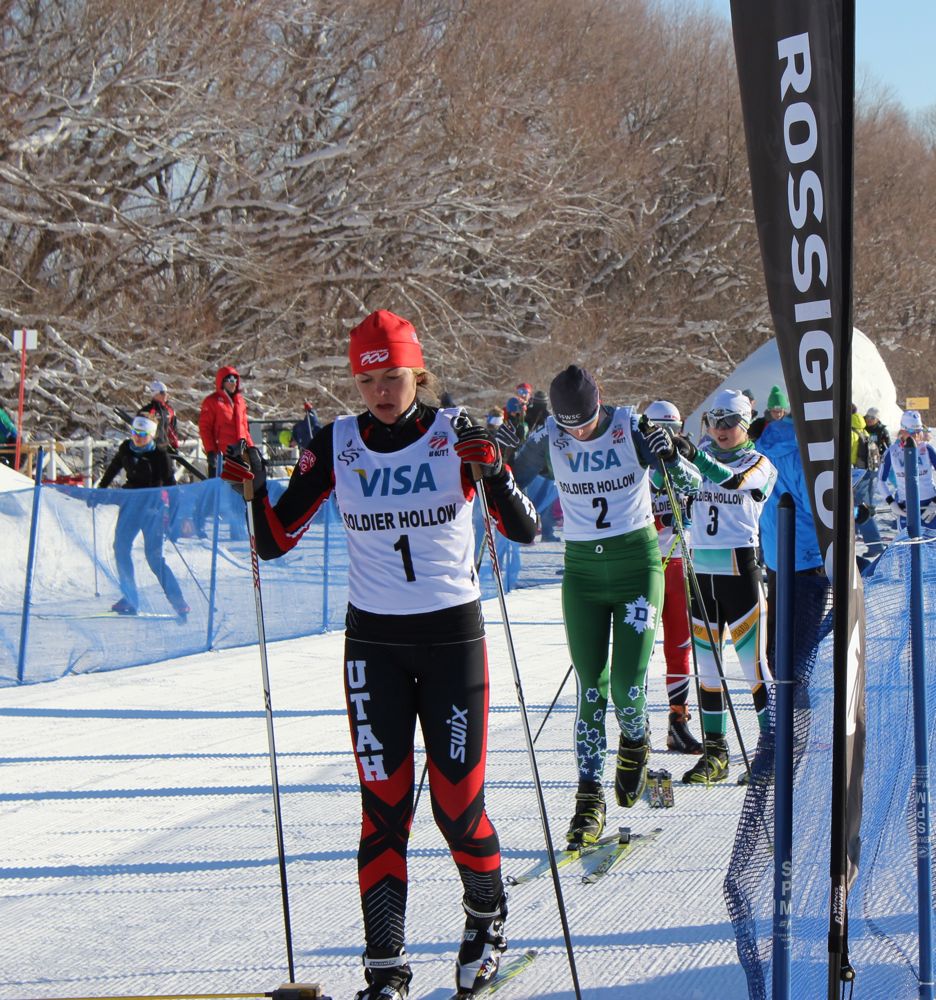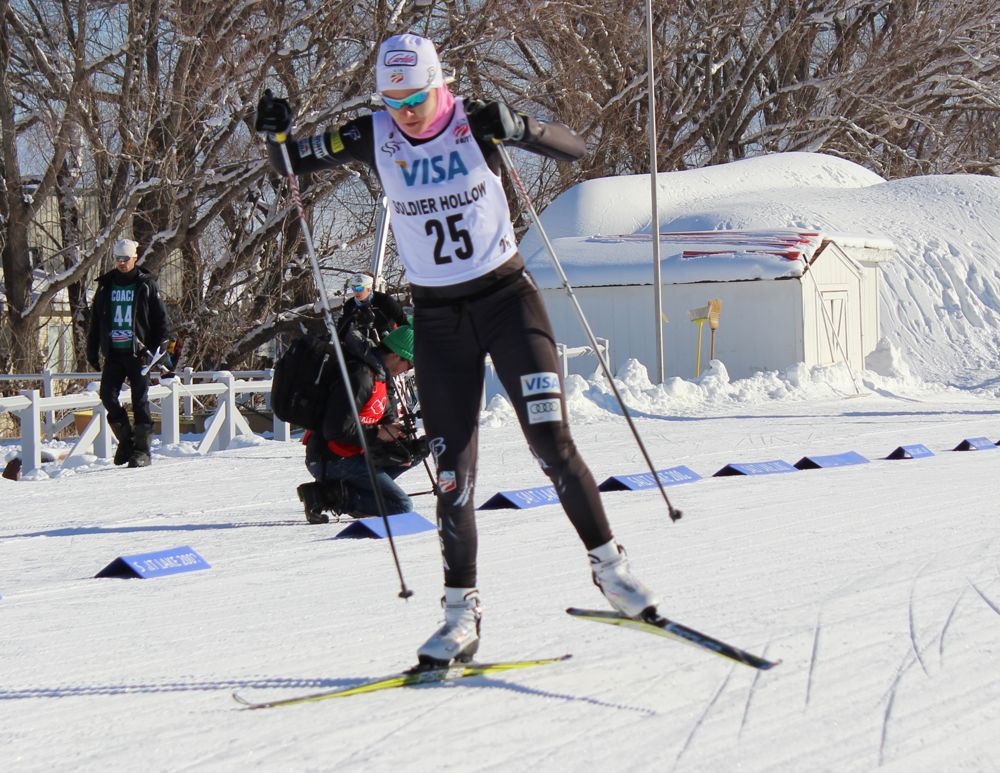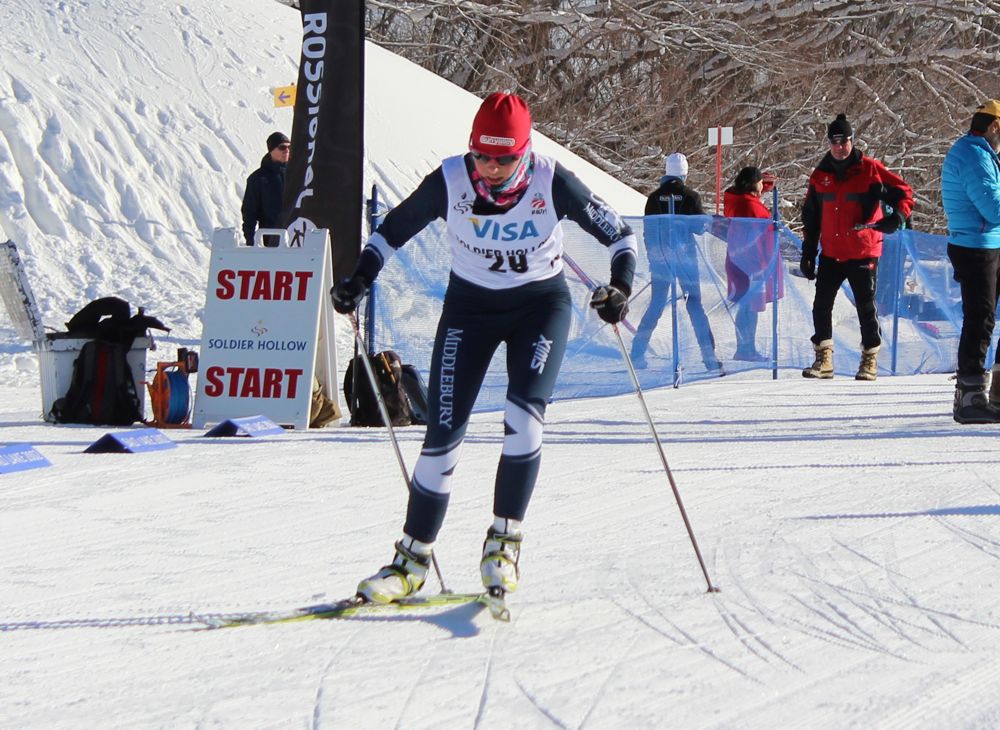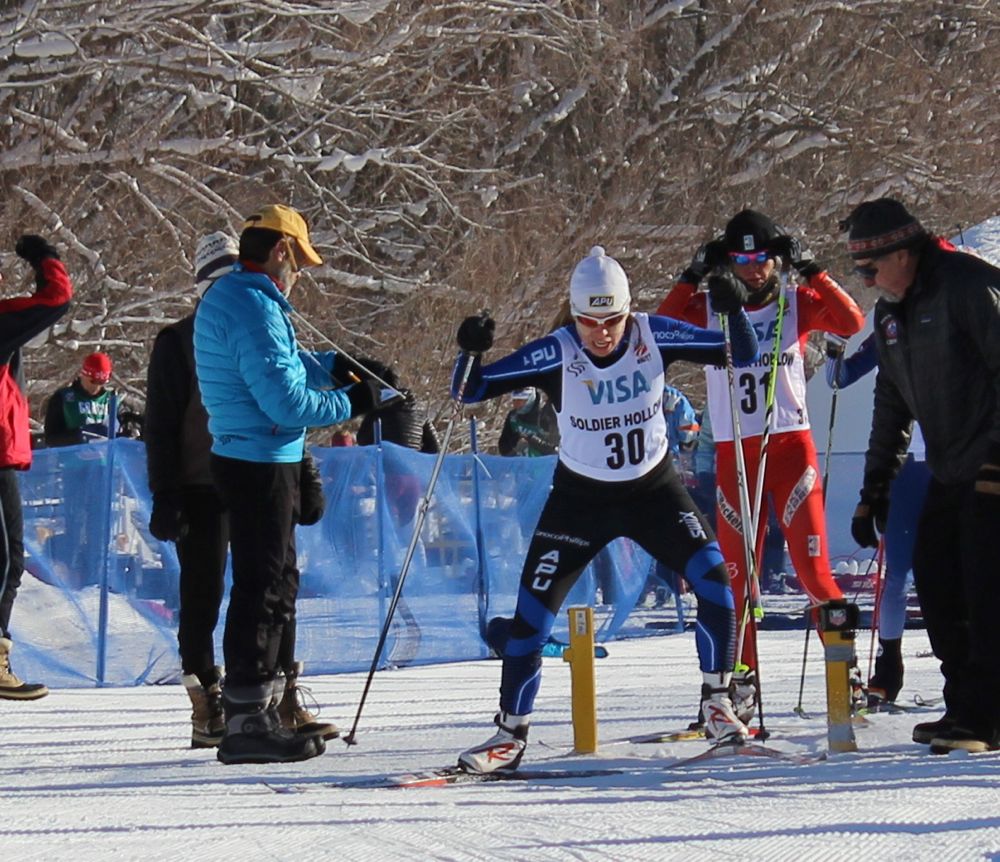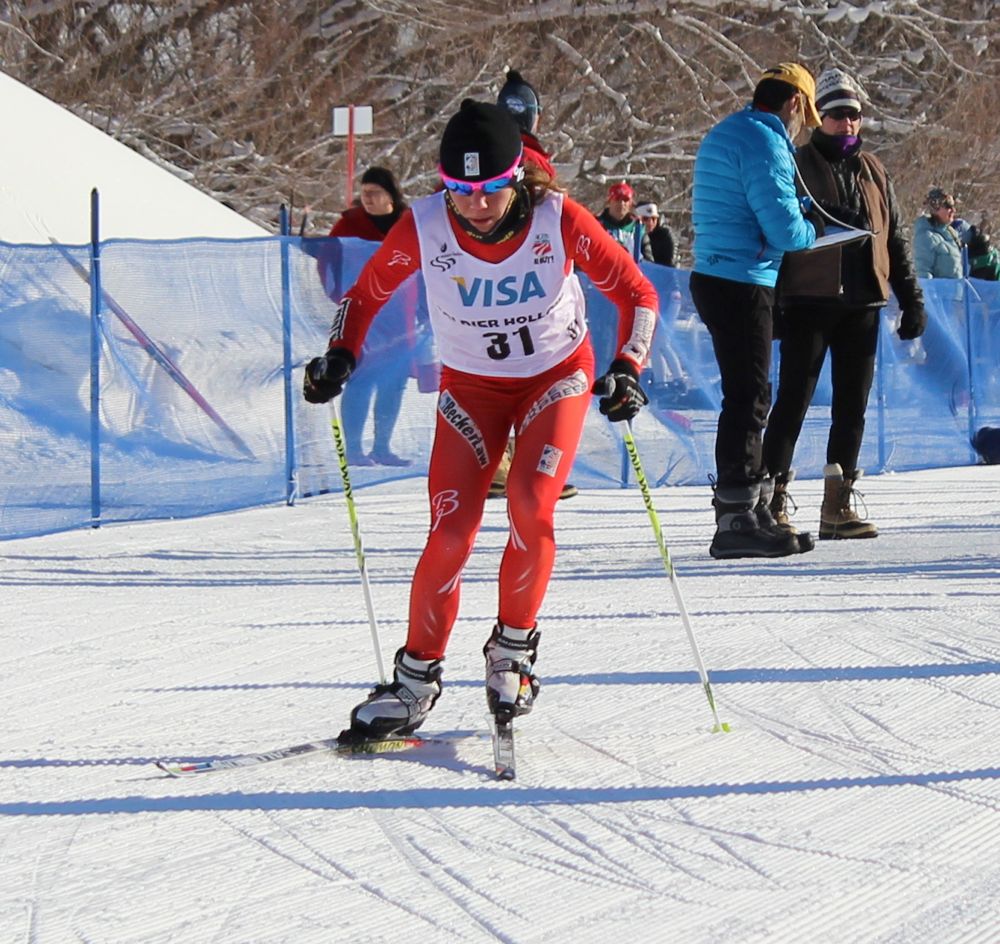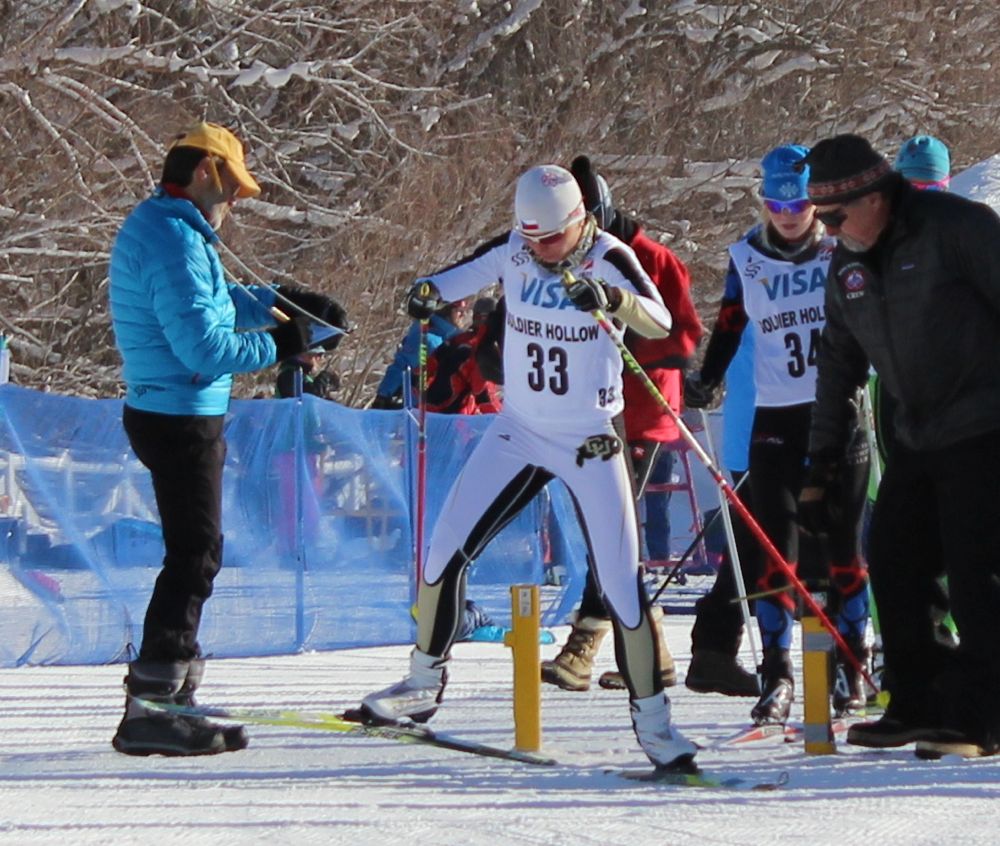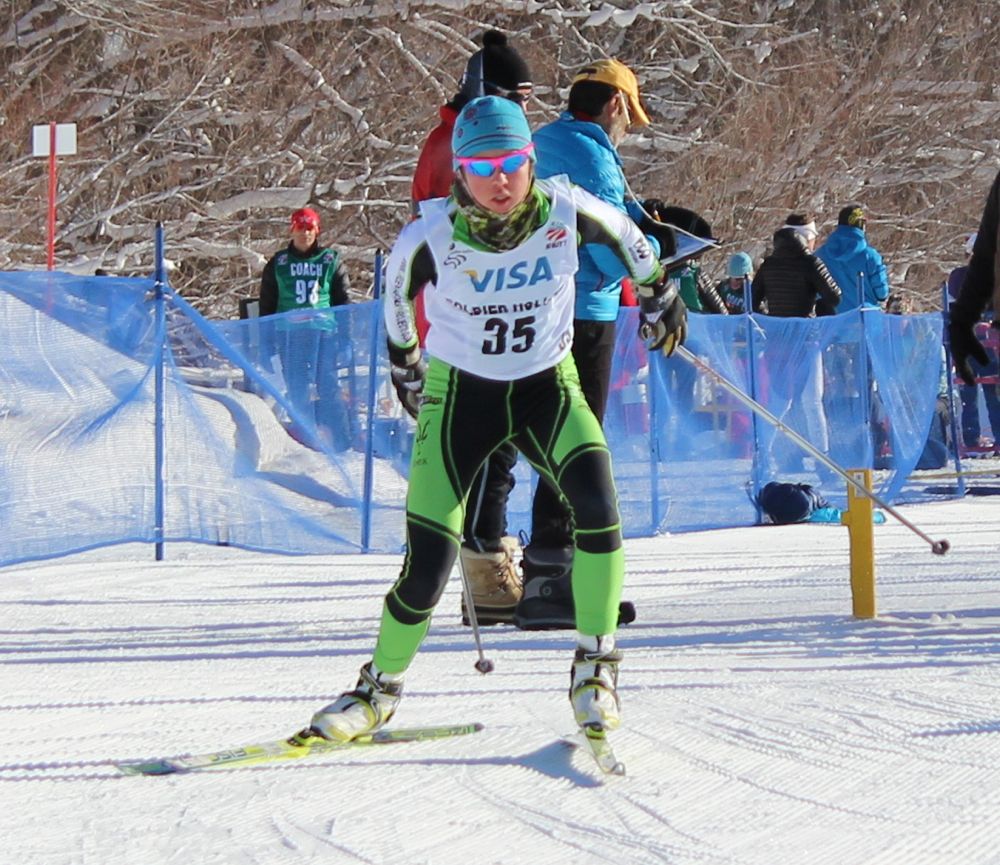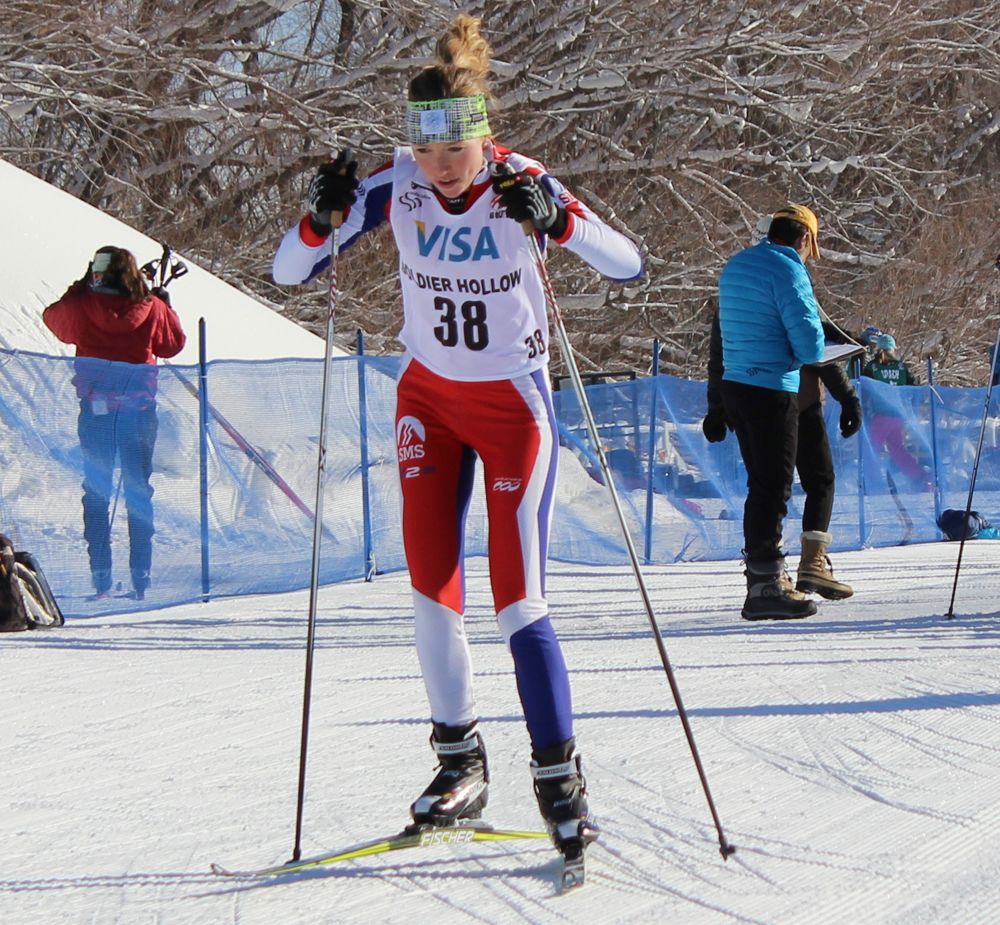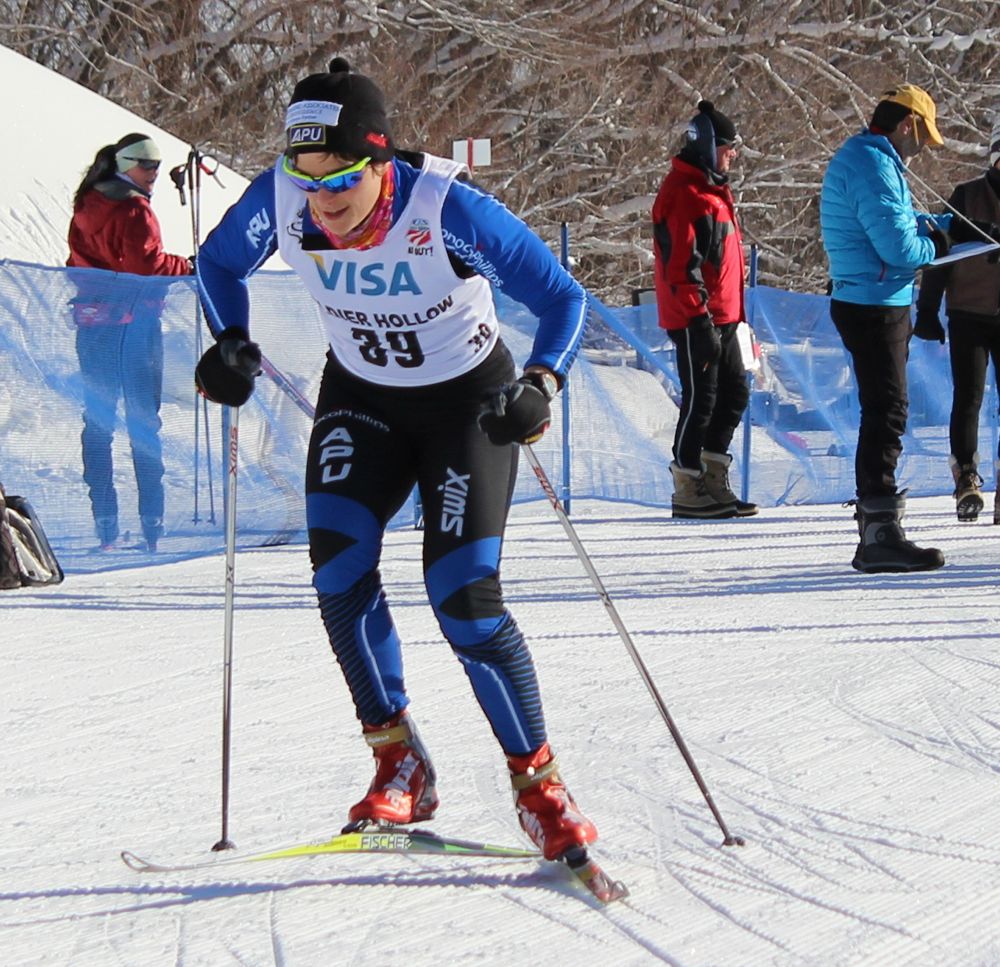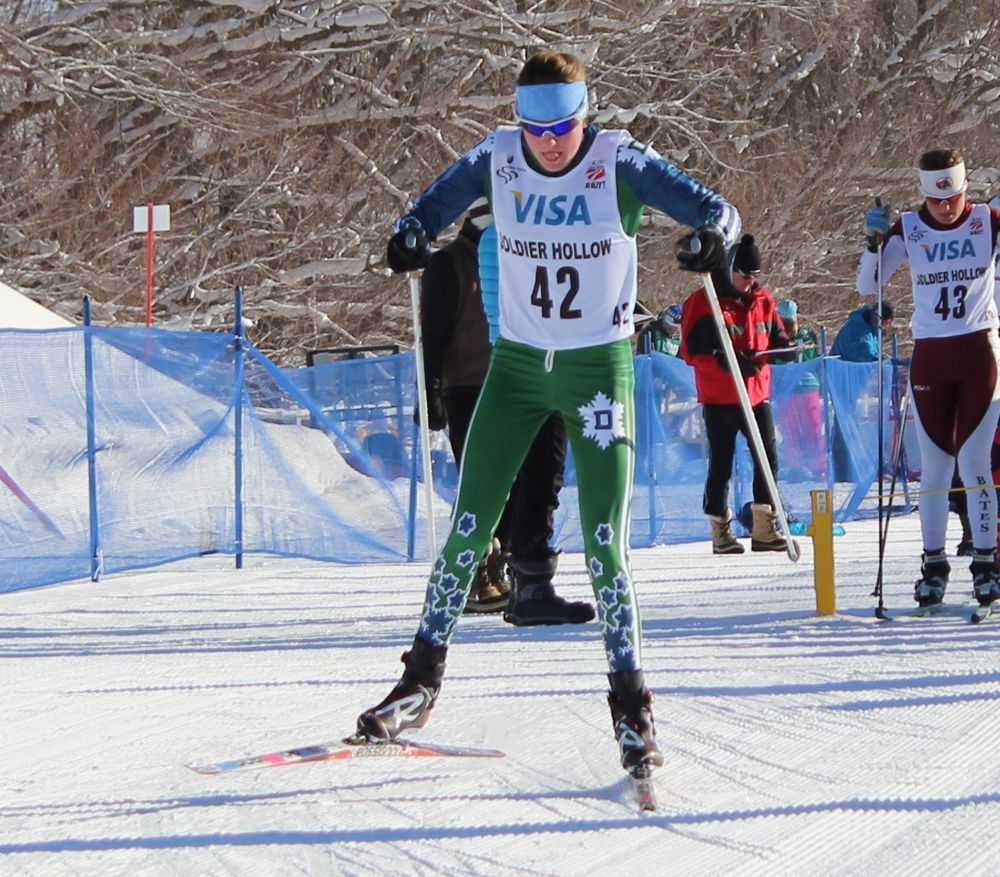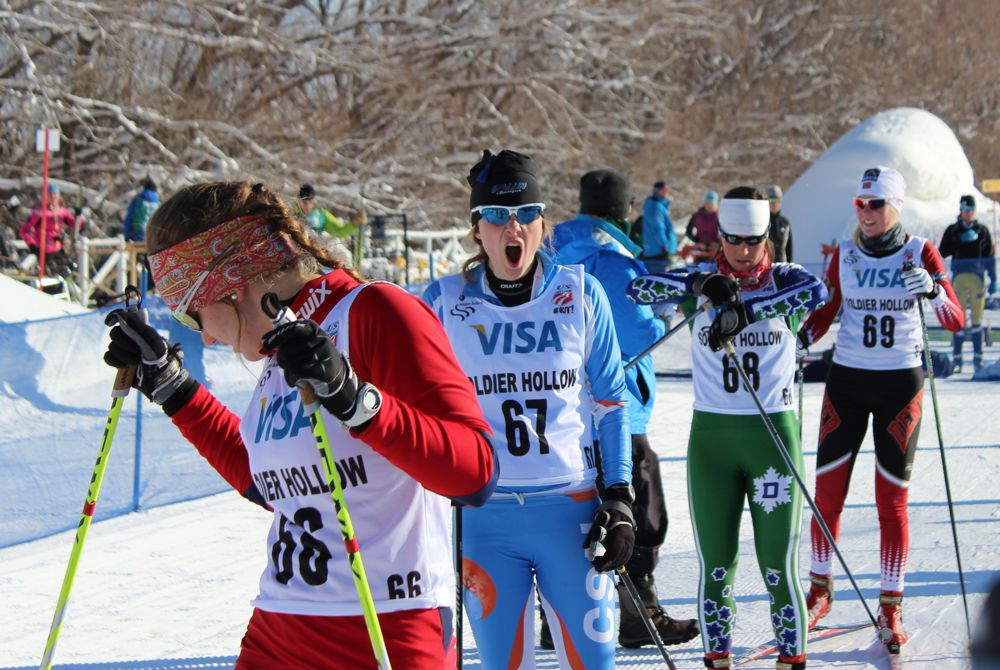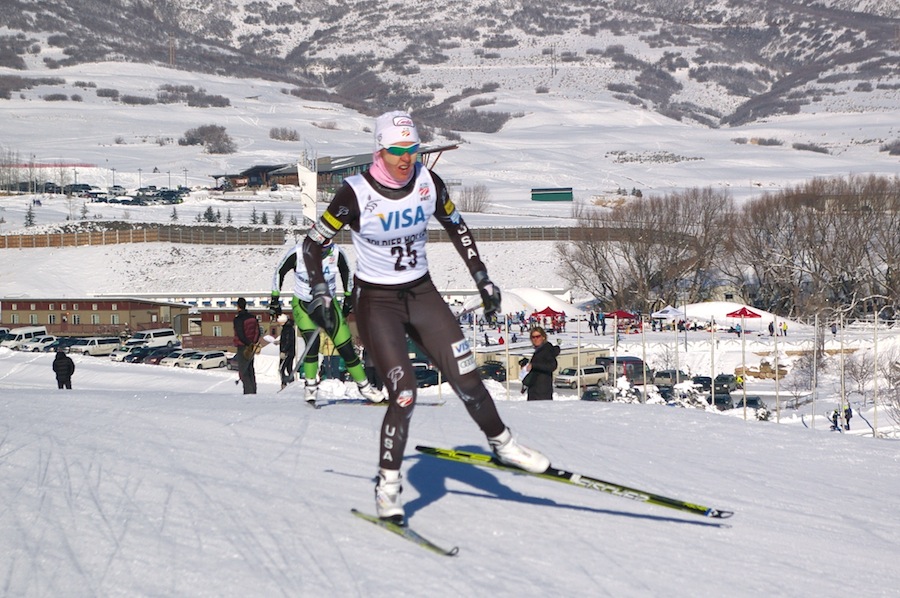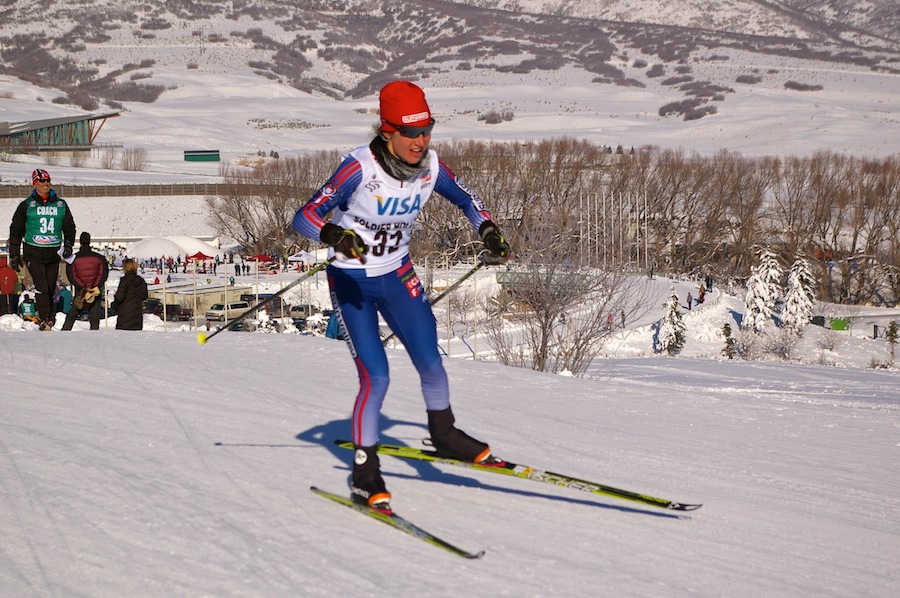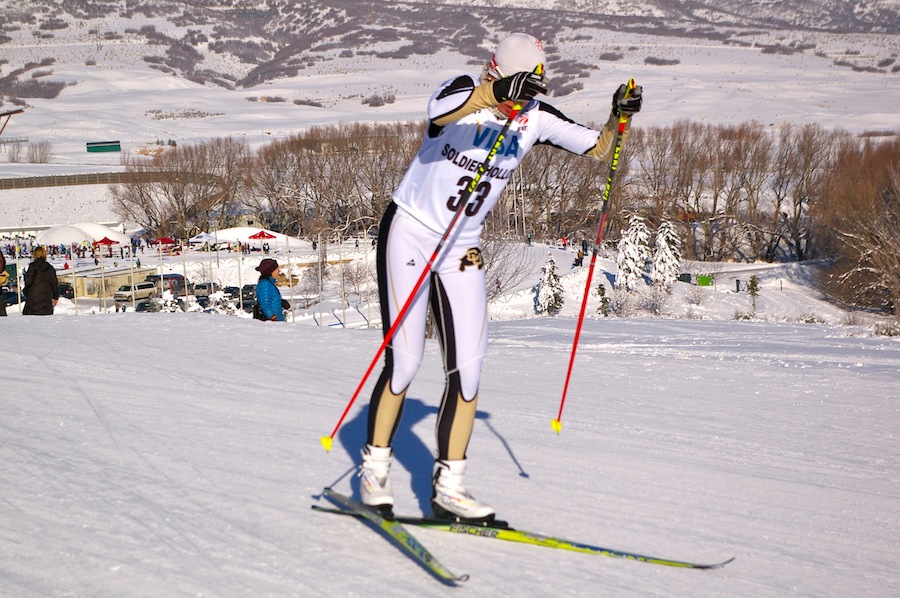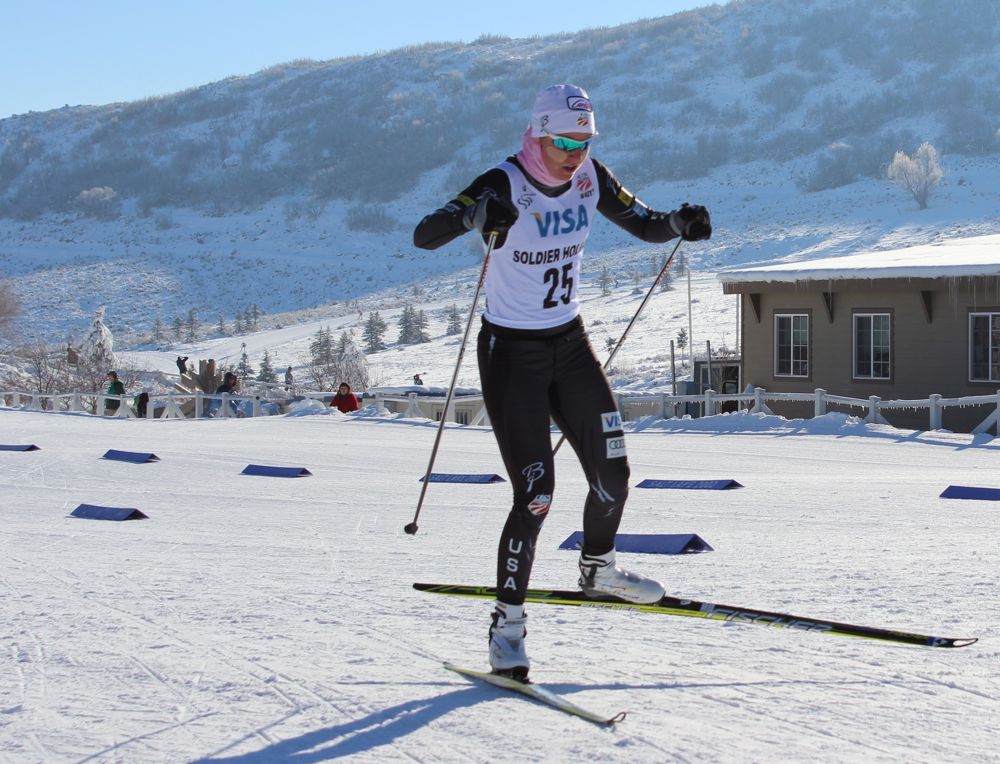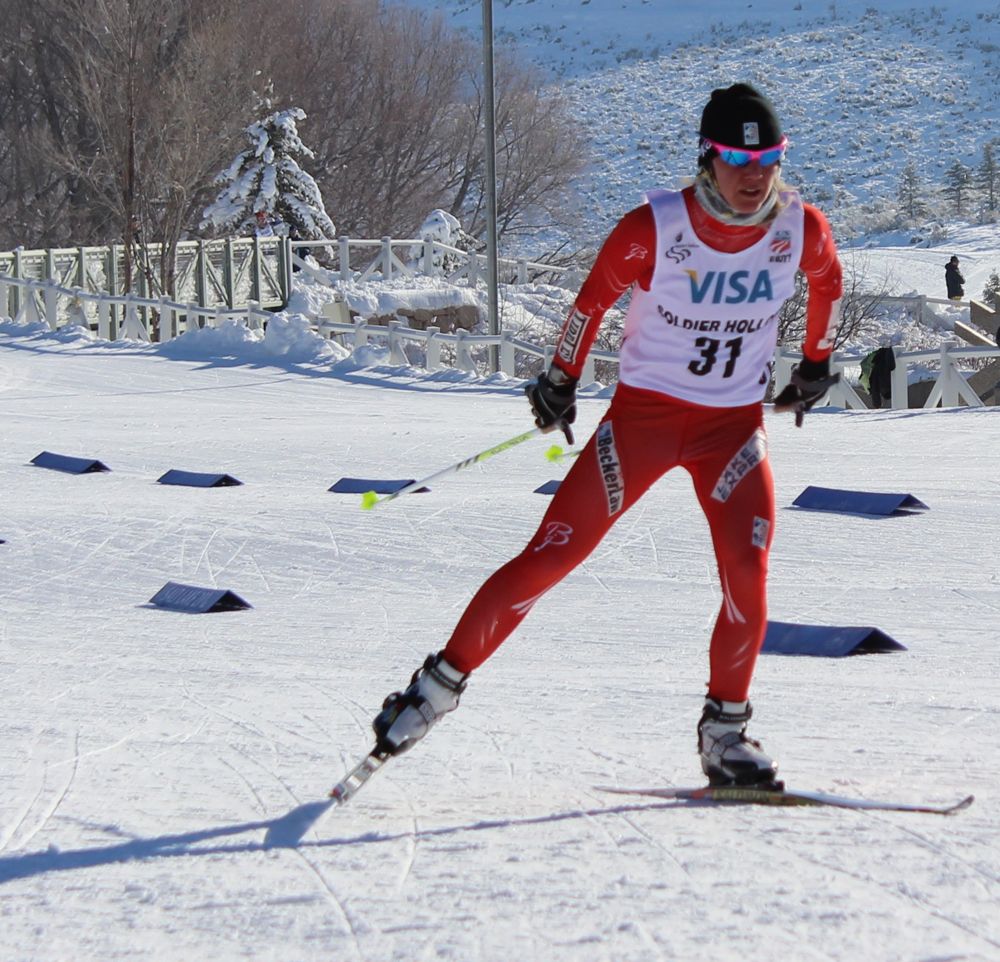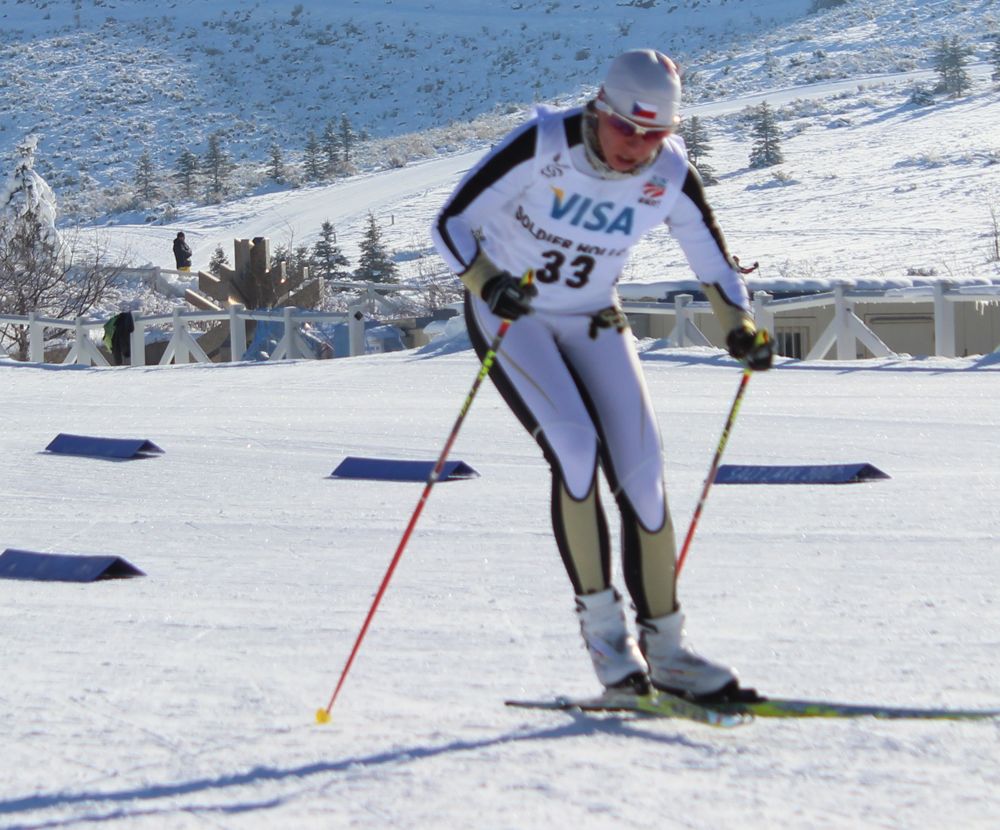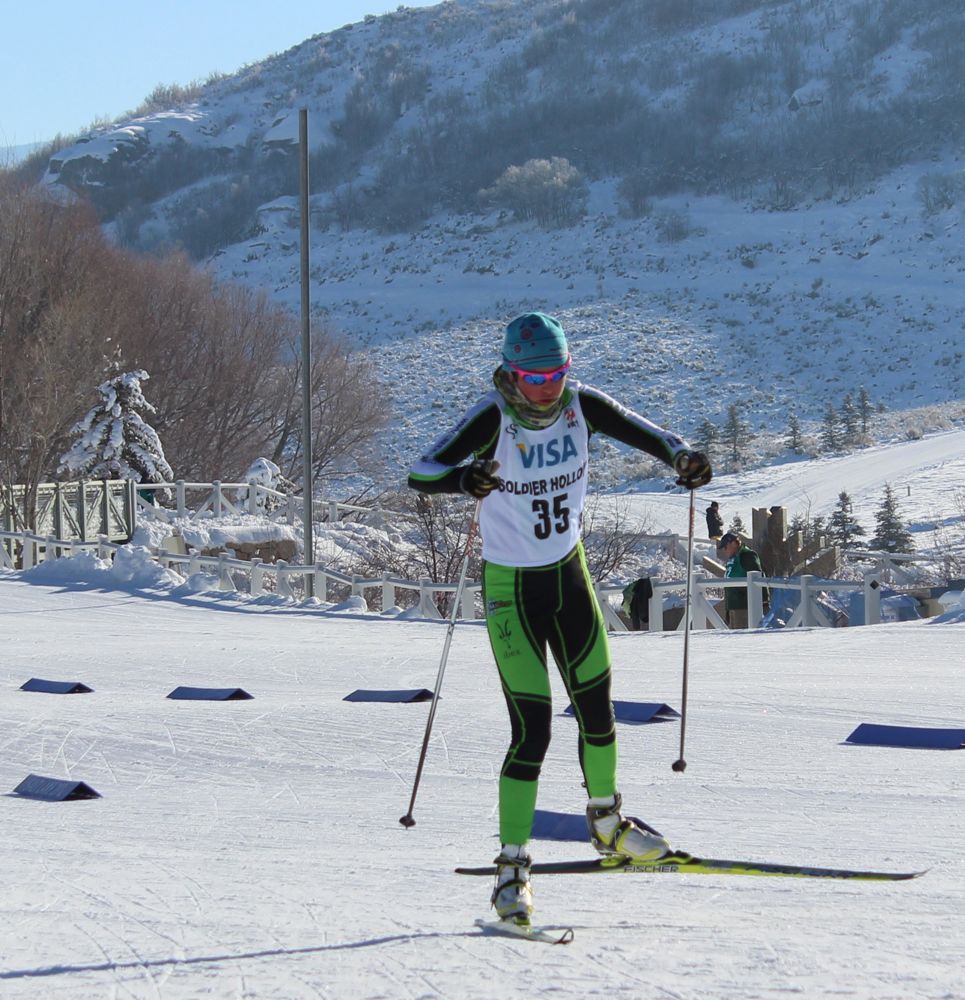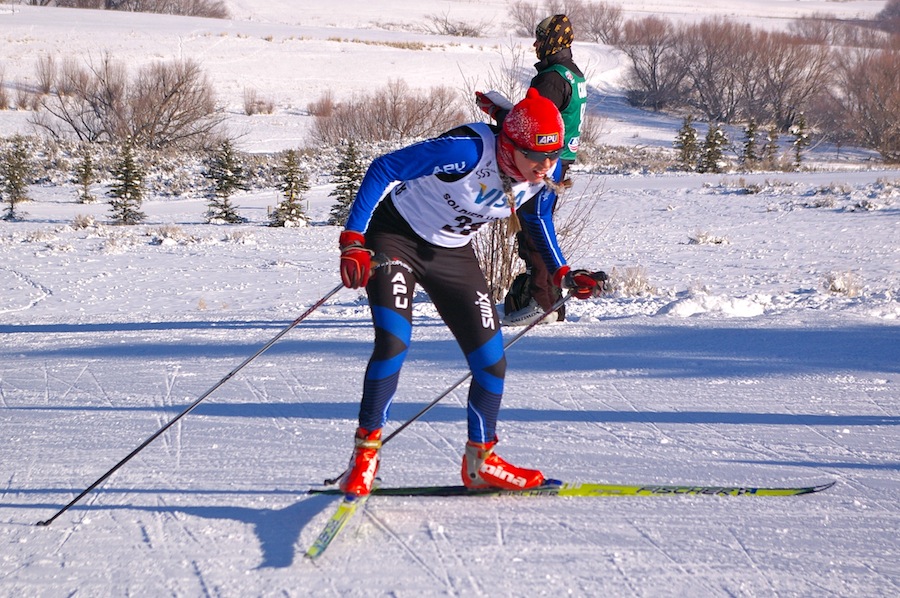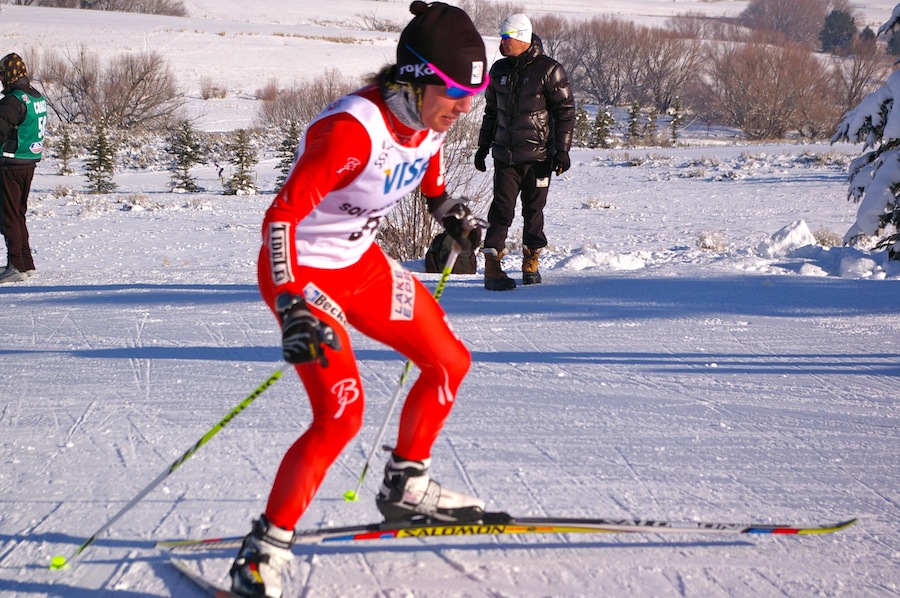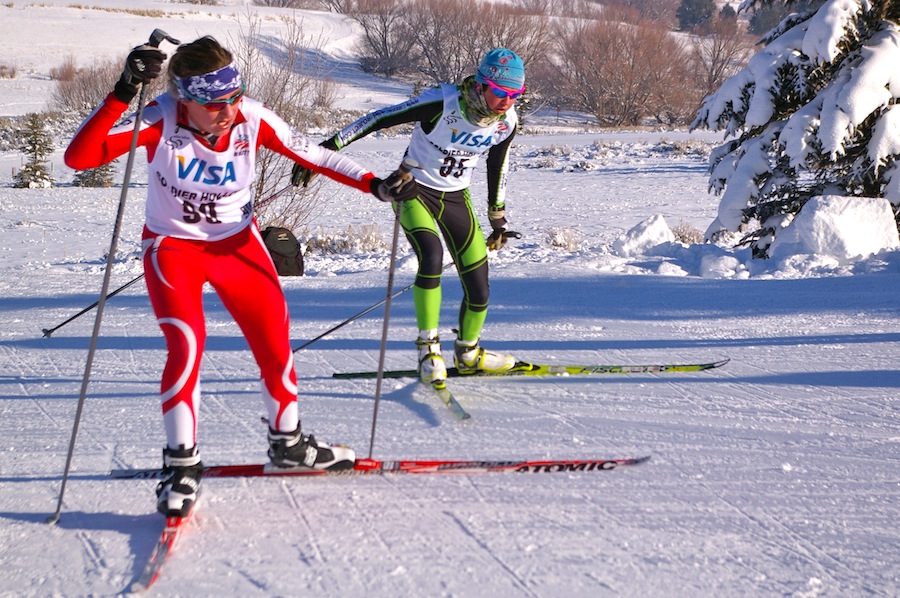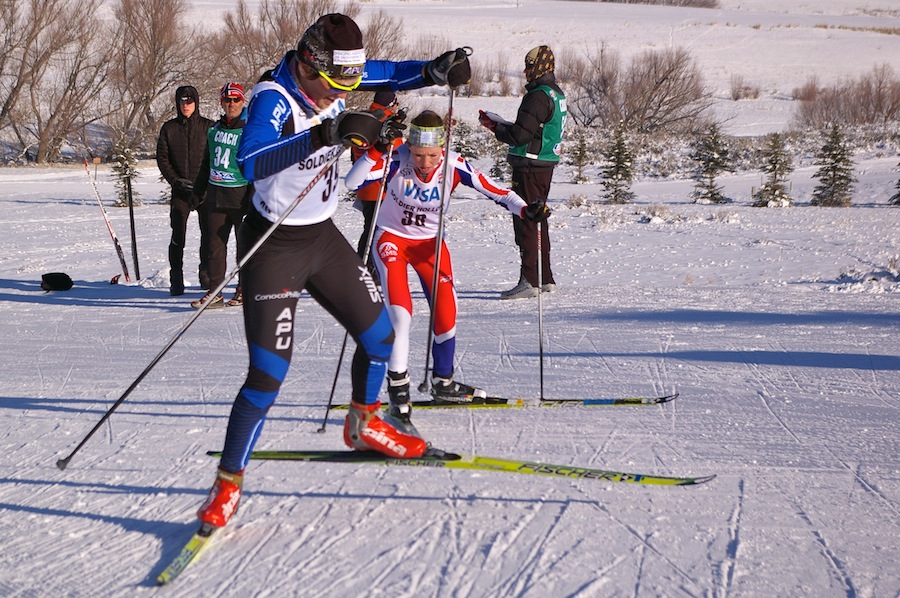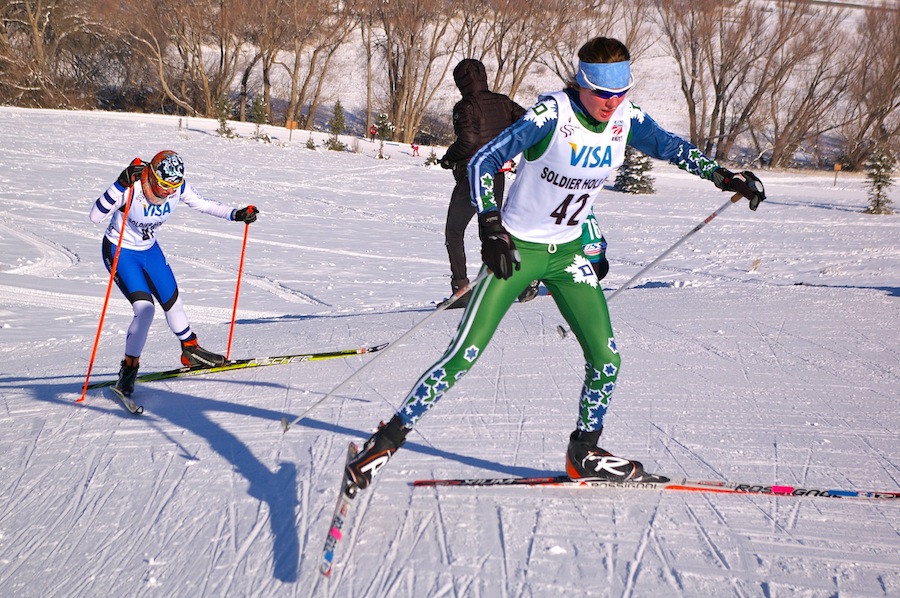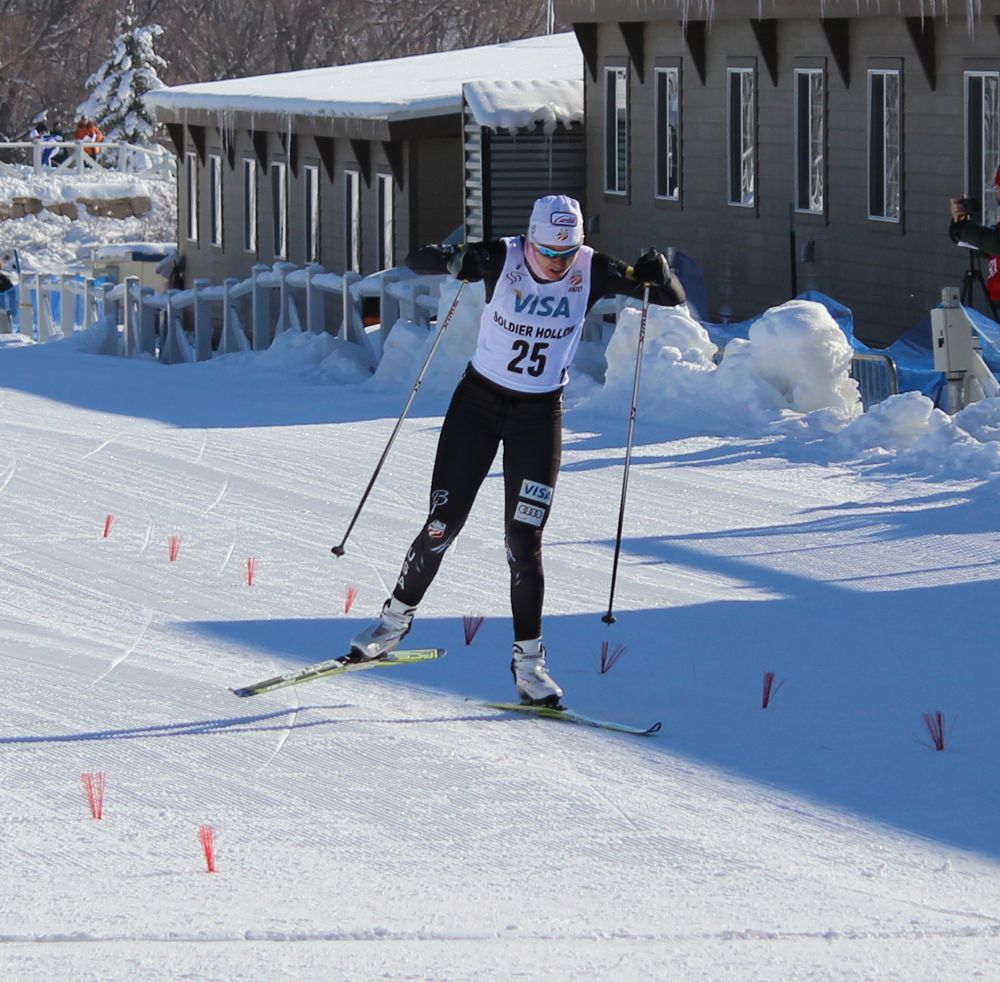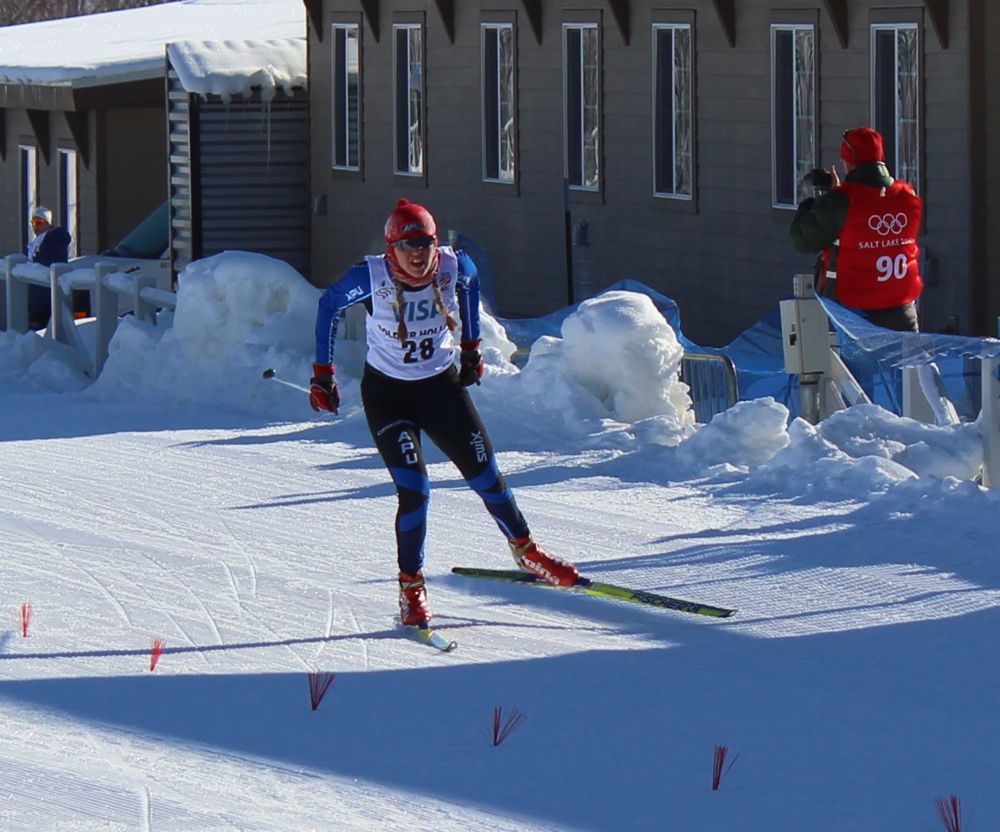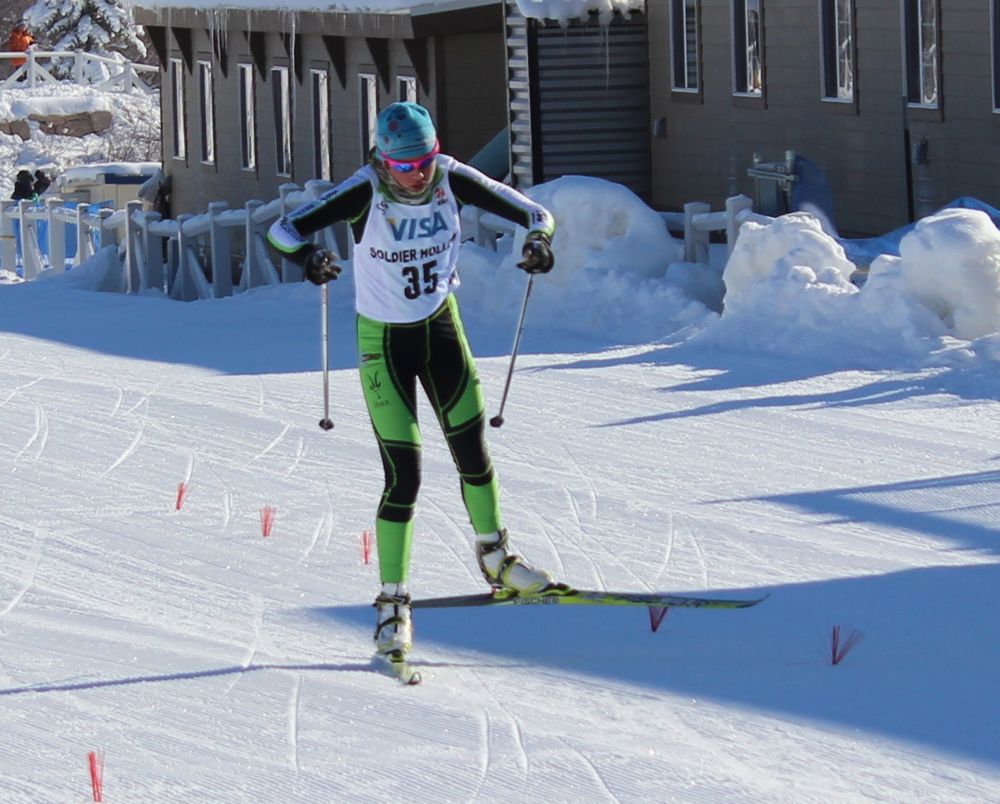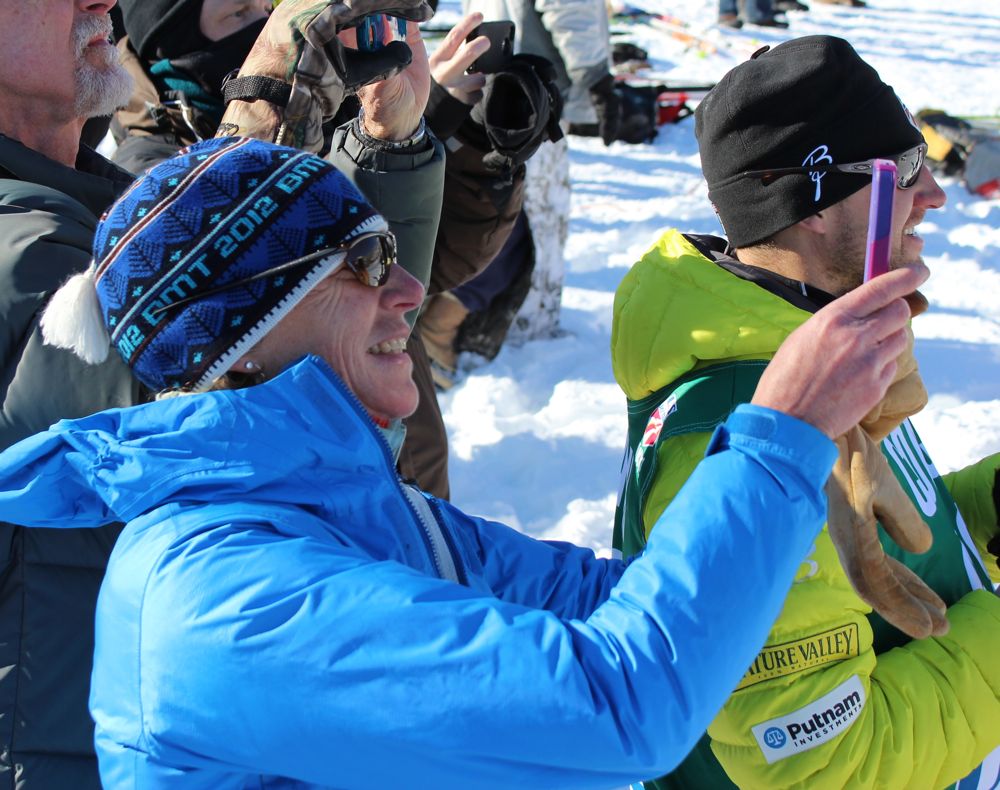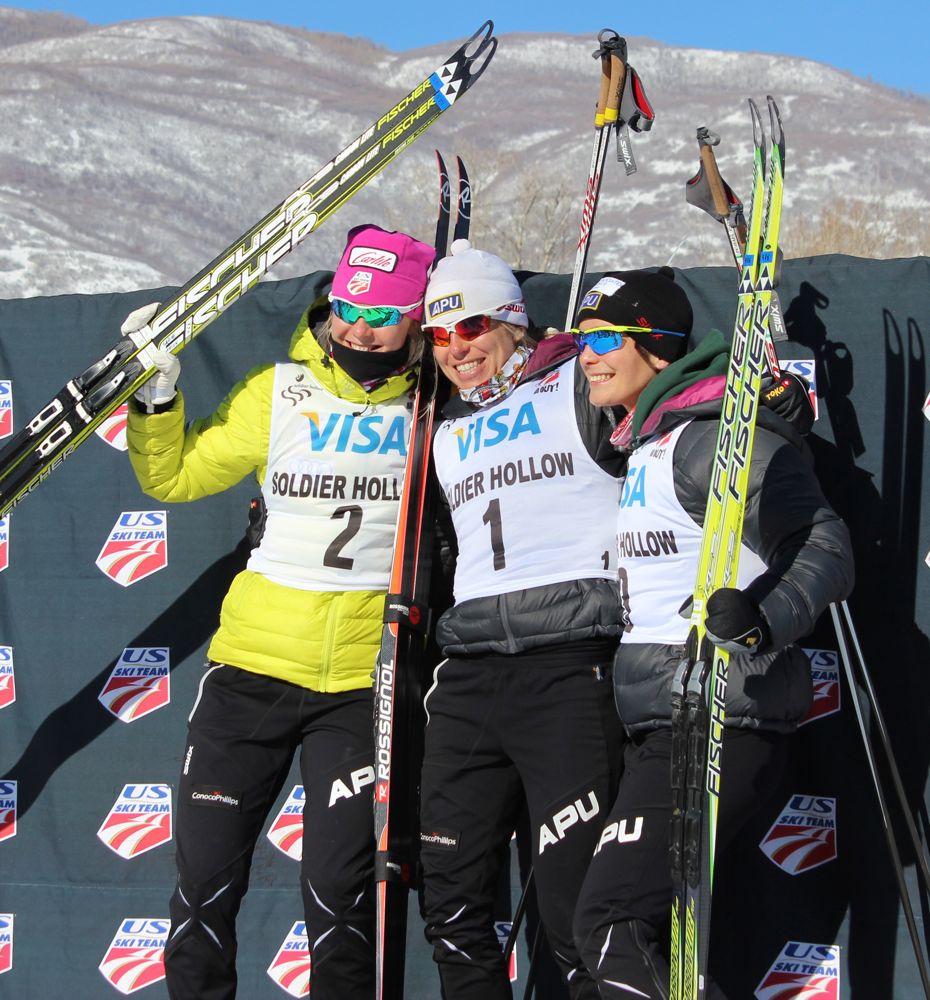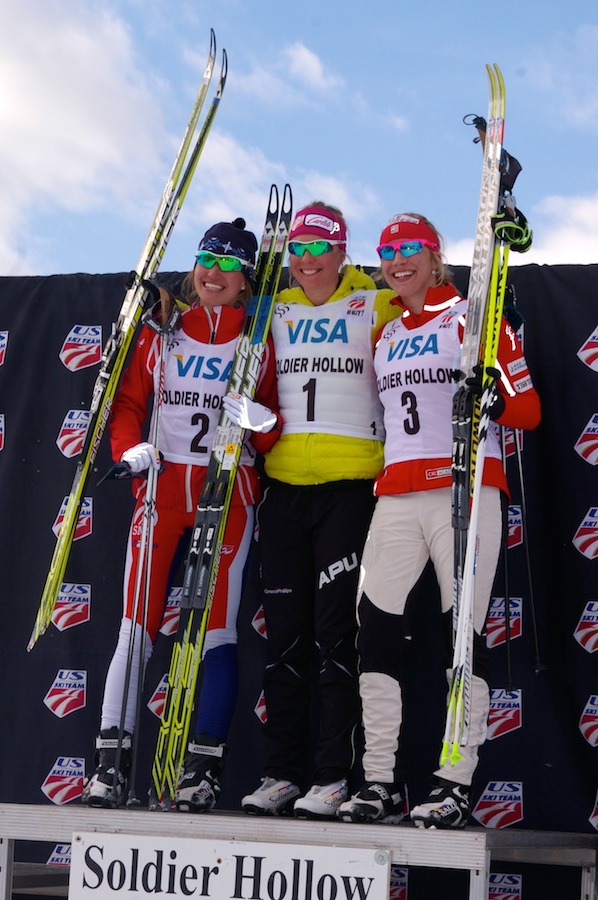
We know, we know. It’s a bit late, but hey, masterpieces take work. We also wanted to keep the memories of the 2013 U.S. Cross Country Championships alive almost two weeks after they ended so here it is, the final video recapping the women’s freestyle sprint at Soldier Hollow.
Tag: 2013 U.S. Cross Country Championships
-

Bjornsen Keeps Calm in Skate Sprint, Saves Kick for Second Straight National Victory
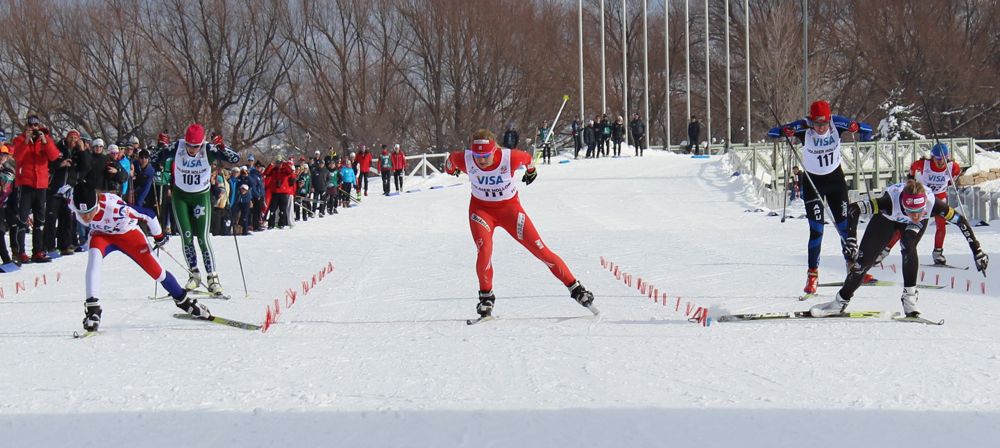
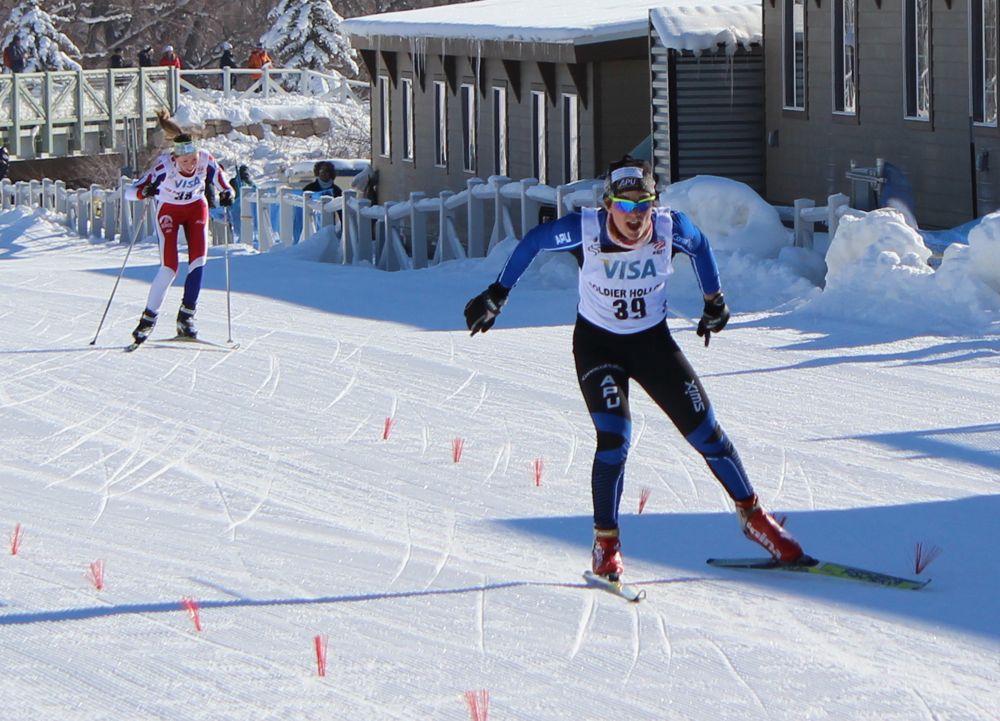
Sadie Bjornsen of APU/USST (front right) edges Stratton’s Sophie Caldwell (l) and CXC’s Jennie Bender (c) in the 1.3 k freestyle sprint final at U.S. nationals on Tuesday in Soldier Hollow. Caldwell was second and Bender placed third while Becca Rorabaugh (117) was fourth, Annie Hart (103) fifth and Caitlin Gregg (r) sixth. FasterSkier’s coverage of the 2013 U.S. Cross Country Championships is brought to you through the generous support of The Memory Clinic in Bennington, Vt.
MIDWAY, Utah – The whole tactics and ‘let’s see if I can outsmart you’ game was pretty much out the window by the start of the women’s freestyle sprint final at U.S. Cross Country Championships on Tuesday.
Or so it seemed.
With every passing quarterfinal and semifinal, six competitors per heat shared the task of completing the 1.3-kilometer course the fastest and smartest way possible. Play your cards right – getting in any fighting position except first on the long downhill – and you could make the final. Do that in the final, and you should make the podium.
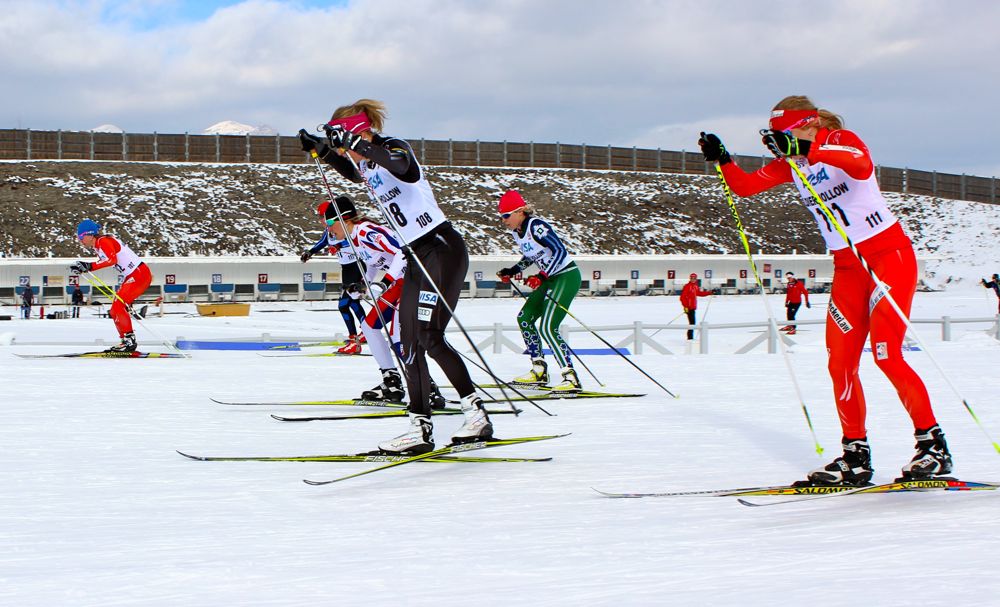
Caitlin Gregg of CXC (l) leads the start of the 1.3 k skate sprint final at U.S. nationals in Soldier Hollow. She ended up sixth behind Sadie Bjornsen (in black), who captured her second straight victory. It was too easy, and Caitlin Gregg – one of the shorter ones in the bunch – knew it wouldn’t work for her. The 32-year-old Central Cross Country (CXC) skier had watched US Ski Team (USST) member Tad Elliott use his small stature to his advantage in the men’s final just before. He stormed out of the gate and tried to drop the field, building a gap by the first straightaway. But Gregg never saw the finish.
Oh well, she thought. Might as well go for it, too.
“Look at how much taller are these girls are than me,” Gregg said. “I’m a little [makes sound effects] meep, meep, meep. I had to go where my strengths were. I pretty much just hammered as hard as I could.”
The rest of the women’s finalists simply followed her lead. The pace was much different than they were used to, but it was a welcome change to the typical jockeying game that came about later in the heats.
Sadie Bjornsen, of Alaska Pacific University (APU) and the USST, didn’t stress.
“Kudos to Caitlin for charging from the start,” Bjornsen said. “That’s a scary thing with this course. … I was afraid it was gonna be a cat-and-mouse again.”
Instead, she followed Gregg and Sophie Caldwell (Stratton Mountain School T2 Team) up the short, steep climb known as the horseshoe at Soldier Hollow, putting herself in third for the downhill.
Meanwhile, Caldwell just ahead in second was getting nervous.
“It’s just really stressful coming down the hill because positions could change so much and always felt very flustered,” said Caldwell, who placed third in the preceding classic sprint at nationals.
“The position I came into the stadium wasn’t ideal,” she added. “It wasn’t terrible, but Jennie [Bender] and Sadie [Bjornsen] both flew by me in the draft on the downhill.”
Rounding the corner into the stadium, it was all Caldwell could do to challenge Bjornsen to the line. The two lunged in a photo finish, and Bjornsen took the win for her second straight national title and first in a sprint. Caldwell was second, and Bender finished just behind in third.
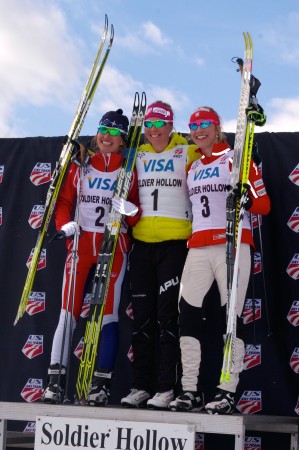
Women’s freestyle sprint podium at 2013 U.S. nationals: 1. Sadie Bjornsen (APU/USST), 2. Sophie Caldwell (SMST2), 3. Jennie Bender (CXC) “This time, I remembered to lunge at the finish,” Bjornsen said, after taking second to Bender in the classic sprint last week.
Caldwell also lunged, but longed for a few extra meters to catch up.
“I was pretty sure when I finished that Sadie had gotten the win,” Caldwell said. “I don’t know if I looked over or just felt that she was a little ahead.”
For Caldwell, it was her best finish at nationals this year (following two third-place finishes) and tied her skate-sprint result from last year’s U.S. championships, where she was second to USST member Jessie Diggins.
For Bjornsen, 23, two victories and two silvers in four races were as much as she could’ve asked for following an injury filled offseason.
“For all of us who got a win this week, it’s a dream come true of course,” Bjornsen said. “But this wasn’t even in my hopes and plans two months ago before the season. Today was a real test of my fitness because I was exhausted, as was everybody … It’s just a good feeling to be able to finish a fourth race in a big week like that strong.”
One step behind a repeat sprint victory, Bender (CXC) nearly made it into the mix for first or second after winning the classic sprint last week. After the finish, she couldn’t remember if she lunged or not, but was wishing she did.
Regardless, she was excited about her national showing after a bout with mono and Lyme disease last summer.
“The podium definitely gives me hope for the rest of the season,” Bender said. “I had no idea how today would go really.”
Given the women’s course was identical to the classic sprint, she knew what was coming. For her, it was perfect.
“It’s definitely a super-tactical course and you never really knew what was going to happen,” Bender said. “I had to go into it with that mindset that whatever happens, happens. Each race is different.”
In the semifinal, she fell behind on the final climb and was nearly out of contention to advance. Making up time on the downhill, she slingshot back into position and won the heat. For the final, she worked her way up on the outside of the hill, scooting into fourth for the descent. There, she passed Caldwell and Becca Rorabaugh (APU), who ended up fourth.
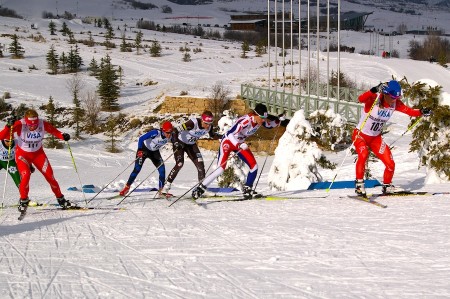
Caitlin Gregg (r) leads up the “horseshoe” climb in Tuesday’s U.S. nationals skate sprint final at Soldier Hollow in Midway, Utah. Sophie Caldwell (second from r) hangs in second, Sadie Bjornsen sits in third, and Jennie Bender (l) makes her way up the outside. “I was like, ‘OK, just stay in the pack, just stay there, just stay there … I’m lost again,’ ” Bender recalled thinking. “Coming down this hill I just got super low and made sure I pushed really hard off so that I could catch up and it worked. Each time I came flying around the outside and I was like, ‘Sweet! All right, let’s go for this!’ ”
Following Rorabaugh in fourth, Annie Hart (Dartmouth College) also slipped by Gregg for fifth. Gregg ended up sixth, but remained satisfied with her effort. Earlier in the day, she had qualified in second just 0.63 seconds behind Caldwell, who won in 2:55.07.
Gregg thought that was great considering she suffered a mild concussion a few days before when she hit her head on a beam.
“I didn’t do the classic 20 k because I’ve been having a lot of concussions this year,” she said, referring to one suffered in the Engadin ski marathon in March. “[Monday] I felt better and today I felt fine. I’ve kind of learned the drill with how bad it is and how long it takes now [to recover]. It’s probably not great, the doctors say, but it’s kind of a low-risk sport.”
Looking back, she’s not sure she would’ve changed her strategy for the final.
“Every other heat I went out in the pack and I did that signature slingshot, but then I was like, ‘Gosh these girls are so good,’ ” Gregg said. “I just thought, ‘What if? I gotta just try it I guess. Why not?’ ”
The third-fastest qualifier, Hart was regret-free after notching a career best at nationals. Two years ago, she was 17th in a classic sprint.
“I’ve been having an OK week, nothing bad by any stretch of the imagination, but also nothing that was just like, ‘Yeah, that’s really what I wanted,’ ” Hart said. “And today was just so perfect. I could not have asked for a better day, just like, skis were great, course was great. I just stayed really relaxed, and it was just a blast.”
After falling slightly behind on the last climb, Hart reunited with the group on the descent.
“We were just all in this huge glomp coming around the turn and then it was just like, everyone’s yelling and you’re just zoned into the lane you want and someone’s in your lane,” she said. “But it was just so much fun. I would not have done, I don’t think, anything differently.”
Rorabaugh was also thrilled with a nationals best of fourth after notching two sixth-place finishes earlier this week. Not feeling well to start the day, she considered calling it quits after qualifying in 17th.
“I’ve been kind of sick the last couple races and I was like, ‘Man, this just isn’t smart. I’m not trying to make U23’s,’ ” Rorabaugh said. “This morning I was pretty sure I wasn’t racing, coughing stuff up, total mess and so then I was like, ‘I’ll try the prelim, see what happens.’ Debated after that for a long time and then I was like, ‘Whatever I’ll just ski, it’ll be fun,’ and it was!”
In the heats, Rorabaugh stuck with a similar tactic: don’t lead.
“It works out better to try to come from behind at the end with the big corner and the fast finish,” she said after advancing second in her quarterfinal and third in her semi.
Rorabaugh took the inside lane to the finish, edging Hart on the outside behind Caldwell.
“So now I’m fourth!” Rorabaugh said of breaking her streak. “Now of course I’m like, ‘Oh, I was so close to top three.’ ”
— Audrey Mangan contributed reporting
Qualifier results | Heat results
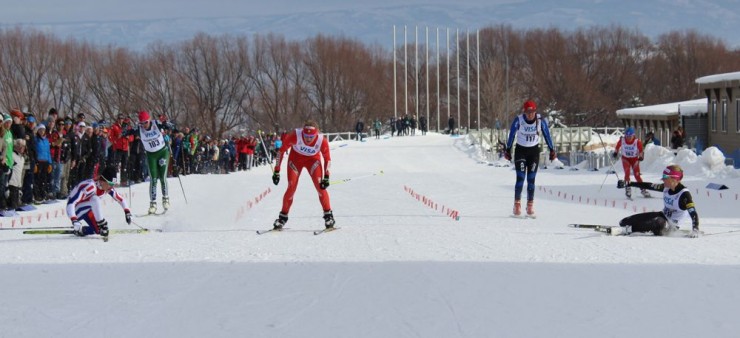
U.S. nationals skate sprint women’s final finish: post-lunge with Sadie Bjornsen (r) in first, Sophie Caldwell (l) in second and Jennie Bender (c) in third. -

Bjornsen Gets What She Came For, Wins National Title in 20 k Classic Mass Start
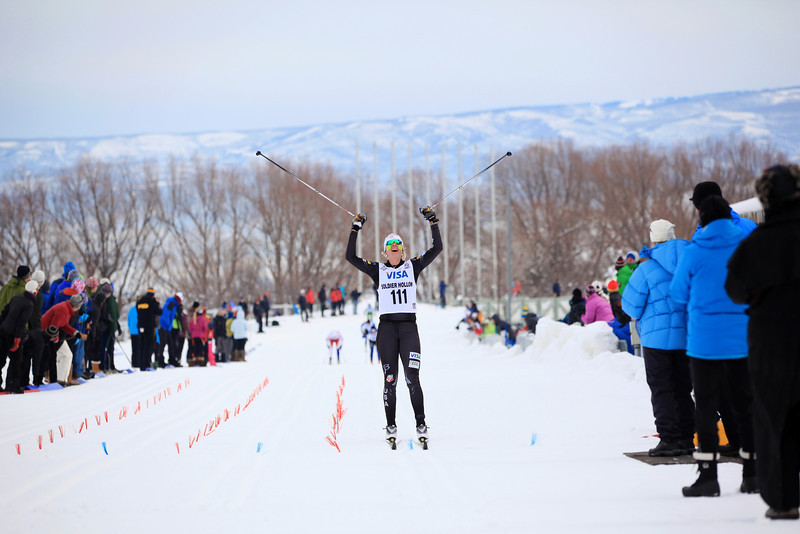
Alaska Pacific University and U.S. Ski Team member Sadie Bjornsen celebrates her first national title on Sunday in the 20 k classic mass start at Soldier Hollow in Midway, Utah. (Photo: Sarah Brunson/U.S. Ski Team) FasterSkier’s coverage of the 2013 US Cross Country Championships is brought to you through the generous support of The Memory Clinic in Bennington, Vt.
MIDWAY, Utah – Just like the feeling one gets when cranking the handle on a jack-in-the-box, the women’s 20-kilometer classic mass start at the U.S. Cross Country Championships had the imminent feeling that any one of the six frontrunners was going to pop.
But who would it be, when would they go, and how hard would they push?
While Sunday’s main contenders are probably too young to understand the toy reference – all below the age of 25 – they probably shared a similar sense of anticipation.
Skiing together for the duration of the four-lap race at Soldier Hollow and breaking away from more than 70 others on the first lap, each of the leaders periodically sized one another up while ticking off the loops and buying time before the final showdown.
Somewhere along the fourth lap would most likely be the turning point, but who was going to put up the biggest challenge?
Would it be Chelsea Holmes of the Sun Valley Ski Education Foundation, the established climber, who led much of the race? What about Sophie Caldwell (Stratton Mountain School T2 Team), who sat out the preceding 10 k freestyle race in preparation for this? Then there was Caitlin Patterson (Craftsbury Green Racing Project), a quiet but consistent threat, and of course the Alaska Pacific University (APU) women – Sadie Bjornsen, Rosie Brennan and Kate Fitzgerald – contenders for a podium in any race.
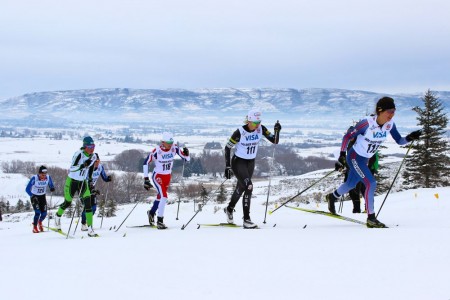
Chelsea Holmes (SVSEF) leads a pack of six women up Hermod’s in the 20 k classic mass start at U.S. Cross Country Championships on Sunday at Soldier Hollow in Midway, Utah. Sadie Bjornsen of APU/USST (second from r) won and Holmes finished sixth. Spectators flocked to Hermod’s Hill, the infamous multi-tiered climb featured in the 2002 Winter Olympics. That’s where it had to happen on the final lap; someone was going to make a move.
Bjornsen, also on the U.S. Ski Team, spared them the guesswork. She attacked on an earlier hill – the high point of the sprint course – before the long descent leading into Hermod’s for the last time. A runner-up in the two preceding races at the U.S. nationals, Bjornsen wasn’t going to let it happen again. She and the others had responded to Fitzgerald’s move earlier in the lap on one of the straightaways up top, and now it was her turn.
“I was not gonna get second again today,” the 23-year-old Bjornsen said. “The mistakes I made before was I wasn’t fully committing to really going for it, and today when I surged there, I was telling myself in my head, ‘Sadie you gotta commit, you gotta go a hundred percent.’ ”
She was especially trying to shake Caldwell directly behind her.
“When I looked behind me and it was Sophie, I tried to surge on the top of the sprint hill just to lose her sprinting legs a little bit,” Bjornsen said. “When I was coming down the hill, I saw she was still with me so I just gunned it as hard as I could to the finish and that was that.”
Bjornsen won by nearly 13 seconds in 1:05:39.2 for her second national title since dominating the 10 k classic at U.S. nationals two years ago. Fitzgerald was second (+12.9) after reigning in Caldwell on the last climb, tucking behind her on the backside descent and outsprinting her to the finish. Caldwell placed third (+14.1), Brennan took fourth (+20.4), Patterson was fifth (+24.8) and Holmes finished sixth (+36.5) in the front group.
An early leader, Becca Rorabaugh (APU) came through in ninth after falling off the pace after the first lap. She finished about 35 seconds behind Rose Kemp of the University of Utah in seventh (+3:00.6) and Annie Pokorny of Middlebury College in eighth (+3:05.4).
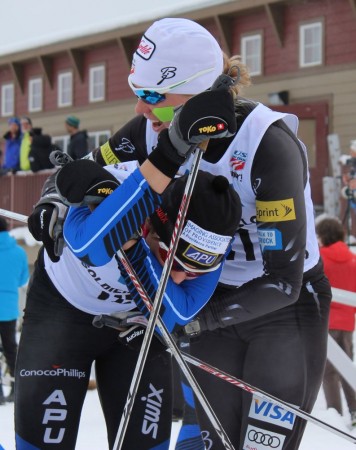
APU teammates Sadie Bjornsen (r) and Kate Fitzgerald congratulate each other after placing first and second, respectively, in Sunday’s 20 k classic mass start at U.S. nationals. However, the main stories of the day were APU’s Bjornsen and Fitzgerald, who both notched career bests. Bjornsen had never raced a 20 k before yet made a point to win it. Fitzgerald had achieved two bronzes at nationals, but coming off a shoulder injury this summer, she wanted to prove she could achieve more.
Bjornsen said she had been looking forward to this race all week, seeing how classic was her favorite. Generally considered a sprinter, she wanted to erase that.
“There’s a distance skier in all of us,” Bjornsen said. “No sprint specialists.”
To succeed in her desire to win, she enlisted the motivation of her teammates overseas. Sunday morning, APU’s Kikkan Randall and Holly Brooks finished 12th and 38th in the Tour de Ski. Another USST member, Liz Stephen posted the second-fastest time up the 9 k Alpe Cermis and landed 15th overall. Rookie Jessie Diggins (SMS/USST) pulled off 21st in the final standings.
“I talked to all the girls over in Europe this morning and I was like, ‘You guys are so tough today, all I’m gonna think about today is you guys, and when I’m struggling, I’ll think about how you guys went seven days in a row,’ ” Bjornsen said. “I just kept thinking about that. There’s always more when you imagine that.”
Thinking about her teammates racing up Italy’s grueling mountain made accelerating up Hermod’s for the last time slightly easier. Meanwhile, Caldwell couldn’t hold on. After attempting to stay with Bjornsen for the final kilometer after her attack, Caldwell lost ground on the major climb.
“I had really good skis, good kick, so I was hoping people would hold the attack for as long as possible, like wait until the last hill,” Caldwell said. “[That] more or less happened, but I got pretty tired going over the top.”
When Fitzgerald passed her at the bottom of the long downhill, Caldwell knew what was in store: “a double-pole showdown,” she said. Unfortunately, Caldwell was out of gas, but still happy with her first podium in a U.S. nationals distance race.
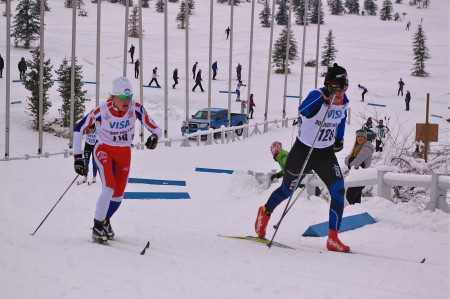
Stratton Mountain’s Sophie Caldwell (l) chases Kate Fitzgerald (APU) into the finish of the 20 k classic mass start at U.S. nationals. Fitzgerald out-double-poled her for second, and Caldwell was third for career bests for both women. And despite contending with three APU women, which in many ways worked together, Caldwell wasn’t intimidated.
“I’ve been on a team with Rosie before; I’ve been to World Juniors with Sadie before so we’re all sort of on the same team when it comes down to it,” Caldwell said. “I don’t think they’re plotting against me or anything. It’s fun to ski with friends.”
Bjornsen said there was a bit of joking going on throughout the hour-long race.
“The coaches kept asking, ‘Do you want GU or do you want gel?’ and I was, like, just saying the opposite of Chelsea every time,” she recalled. “And Fitz was tripping over herself and we were making jokes, and then at one point I could see Rosie was pissed off, she kept getting stuck [behind] people and she just takes off and I looked at my other teammates and was like, ‘Uh oh, here she goes.’
“We all know each other’s strengths and we all know how to wreck each other if we wanted to, but we were all sort of working together,” she added. “If Rosie took off, I took off with her and it was the same with Fitz. It’s so fun to have a team, it’s just like another interval day.”
Like most of the other top finishers, Fitzgerald described the race as fun, but said it was a little stressful at times.
“It’s funny with these long races, there are times when you’re just like ‘Oh my gosh, I can barely hang on,’ ” she said. “And then sometimes you’re like, ‘Oh I feel good, all right, I’m just gonna go.’ You can never give up. You can’t count yourself out. It’s definitely cool and having so many teammates around, too, to remind you, like, OK, I can do this.”
The second-place finish was about as good as gold for Fitzgerald, who separated her shoulder in a mountain-bike accident in June. She couldn’t do much of anything for a couple weeks, and according to APU head coach Erik Flora, she trained with one pole until October. Before that, Fitzgerald missed the second half of last season while sick with a virus.
“I feel like it wasn’t a huge detriment, but I feel like I definitely have less upper-body strength this season,” Fitzgerald said of the shoulder injury. “I had a lot of help from my coaches to train around the injury kind-of-thing, so yeah, it was a bummer but I just tried my best to train as best as I could.”
“To be able to be so strong today in the double poling, it’s tremendous,” Flora said of Fitzgerald. “We know she’s really strong and a good racer, but coming off an injury like that, it’s just great to see her back on form.”
Flora had been among the excited spectators running up Hermod’s to get in good cheering position on the women’s last lap. With three of his athletes in the mix, he knew anything could happen.
“The girls train in a group so much that they know how to ski in a pack,” he said. “You could see how relaxed they were, and they were just kind of floating around and they were making good moves.”
As for Bjornsen’s victory, which mimicked that of her younger brother, Erik, who won Friday’s 15 k freestyle and was second in Sunday’s 30 k, Flora said both were exceptional.
“When they first came to us, one of our goals was the distance races and now within a couple years they’re both medalists at nationals in distance racing,” he added. “So I would say that goal’s been met and they’re just getting stronger every day.”
All living together in Anchorage, the Bjornsen siblings and Brennan resolved to become better skaters this summer, Sadie said. “We all proved it to ourselves,” she added.
Brennan won Friday’s 10 k freestyle for her first national title and on Sunday, was slightly disappointed with fourth.
“I wish that I had a little more to get on the podium, but I really can’t be upset with that; it was a good race,” Brennan said. “I actually wasn’t even sure I was gonna start so I’m glad I did.”
Feeling like she was coming down with a cold, Brennan waited until this morning to make a call on whether to race. She decided to give it a go, but felt she might have been missing her top gear. Regardless, she found herself pushing the group early.
“The pace was really relaxed for the first two laps and then on the third lap we turned it up a bit to kind of see where people were at,” Brennan said. “No one was really faltering at all. That’s when I realized that it was gonna be really a battle. I tried to go into relaxed mode without letting any moves go by. It got pretty tough at the end. Everyone was giving a little push at one point or another.”
A two-time fifth place finisher at nationals this year, Patterson said she was simply impressed with the group and satisfied she could hang on.
“The main thought that was coming to my mind when I was out there was, ‘This is one tenacious group of skiers,’ ” Patterson said. “No one was falling off. Everyone was kind of shuffling around, leading here and there and it was pretty intense. … I think I’ve got to be happy with how close I was to them at the finish and just overall.”
For Holmes, who was fifth at U.S. Distance Nationals last year in the 30 k skate race, her sixth-place finish in the classic race was a personal best and an affirmation that she was headed in the right direction.
Despite leading the group for much of the second and third laps, Holmes said she fell off the back on the flat section with one kilometer to go.
“I just couldn’t stay on and it was a little bit gone,” she said.
After starting out the season with three SuperTour podiums, including a skate sprint victory, in Bozeman and West Yellowstone, Mont., Holmes said she struggled to find her form.
“Something went downhill somewhere,” she said. “You always want to feel good. I haven’t, so I said, today I’m just gonna go ski. … Those girls are super strong so stick with them, pull when I could and see where it went.
“Honestly, I’m happier than I have been in a few weeks,” she added. “So that’s good.”
— Audrey Mangan contributed reporting

Women’s 20 k classic podium at U.S. Cross Country Championships in Soldier Hollow on Sunday. 1. Sadie Bjornsen (APU/USST), 2. Kate Fitzgerald (APU), 3. Sophie Caldwell (SMST2) 
APU teammates Sadie Bjornsen (r) and Kate Fitzgerald congratulate each other after placing first and second, respectively, in Sunday’s 20 k classic mass start at U.S. nationals. 
Stratton Mountain’s Sophie Caldwell (l) chases Kate Fitzgerald (APU) into the finish for what Caldwell called a “double-pole showdown” in the 20 k classic mass start at U.S. nationals. Fitzgerald had the edge for second, and Caldwell was third for career bests for both women. 
Alaska Pacific University and U.S. Ski Team member Sadie Bjornsen celebrates her second national title on Sunday in the 20 k classic mass start at Soldier Hollow in Midway, Utah. (Photo: Sarah Brunson/U.S. Ski Team) 
Bjornsen bringing it home into finish of the 20 k classic mass start at U.S. nationals on Sunday at Soldier Hollow. 
Caitlin Patterson and Chelsea Holmes (in back) chase Sadie Bjornsen, Sophie Caldwell, Kate Fitzgerald and Rosie Brennan (not shown) at the start of the last time up Hermod’s Hill in Sunday’s 20 k classic mass start at U.S. nationals. 
Sadie Bjornsen working within the group (not shown) on her third of four times up Hermod’s Hill. 
Stratton Mountain School T2 Team skier Sophie Caldwell (l) and Sadie Bjornsen (APU/USST) race head-to-head in the 20 k classic mass start at U.S. nationals on Sunday in Soldier Hollow. (Photo: Sarah Brunson/U.S. Ski Team) 
Sadie Bjornsen leading the front pack 
Chelsea Holmes (SVSEF) leads a pack of six women up Hermod’s in the 20 k classic mass start at U.S. Cross Country Championships on Sunday at Soldier Hollow in Midway, Utah. Sadie Bjornsen of APU/USST (second from r) won and Holmes finished sixth. -
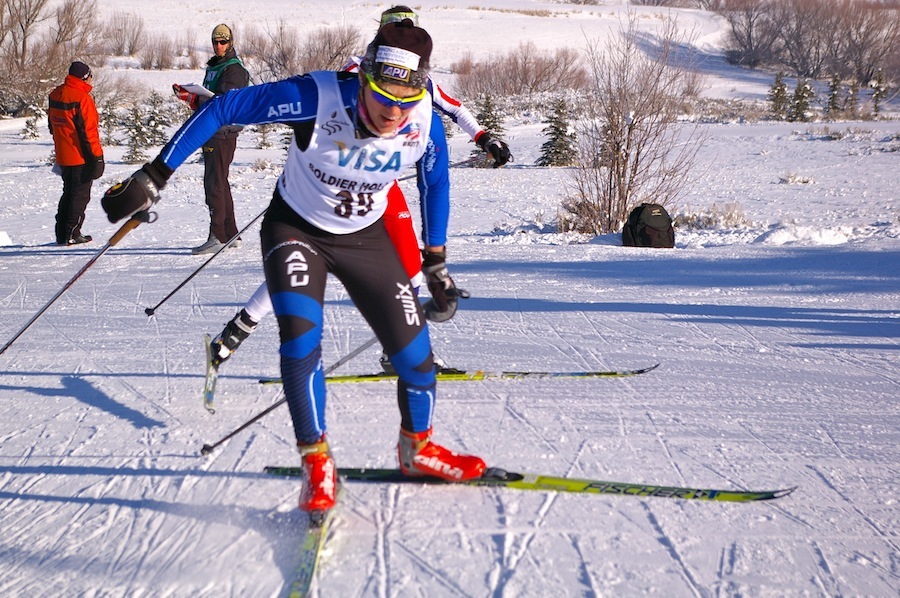
Photo Gallery: U.S. Nationals Women’s 10 k Skate
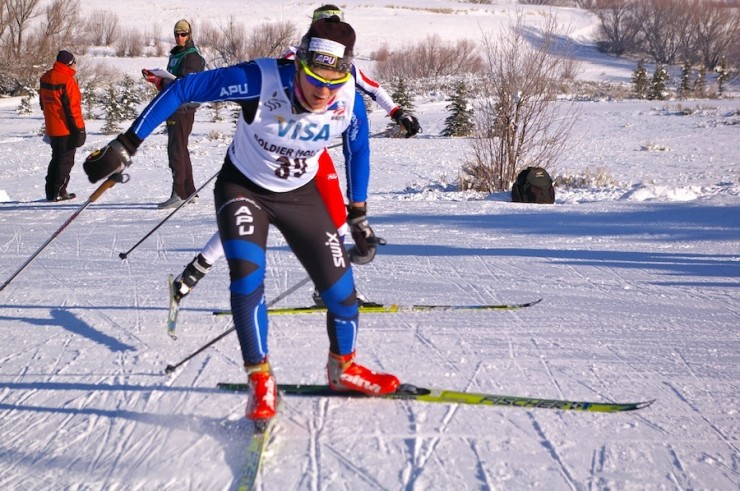
APU’s Kate Fitzgerald and Erika Flowers of the SMS T2 Team (behind) about halfway up Hermod’s on the last lap. Fitzgerald placed third and Flowers was eighth. FasterSkier’s coverage of the 2013 U.S. Cross Country Championships is brought to you through the generous support ofThe Memory Clinic in Bennington, Vt.
MIDWAY, Utah — Friday’s 10- and 15-kilometer freestyle races at Soldier Hollow were hardly a walk in the park. Racers had to tackle a modified 5 kilometer course, a slight variation of the 2002 Olympic 5 k that some thought was harder. Women went around twice, and the mental game was intensified by the individual start with skiers staggered at 15 seconds rather than 30. It made for a lot of chasing, some tricky passing situations and a lot of gritty racing. Take a look at some of the top women.
For a more extensive gallery, check out Bert Boyer’s collection.
The first starters in the 2013 U.S. Cross Country Championships women’s 10 k individual start prepare for the two-lap pain game. 
Sadie Bjornsen (APU/USST) among the early starters in Friday’s 10 k freestyle individual start at U.S. nationals at Soldier Hollow. 
Annie Pokorny (Middlebury) out of the start. She went on to place fourth. 
Rosie Brennan (APU) out of the start. 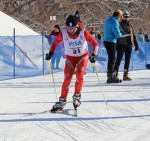
Caitlin Gregg (CXC) starting out. She finished 10th. 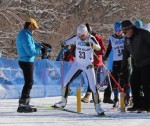
Eliska Hajkova (University of Colorado) out of the start. She went on to place ninth. 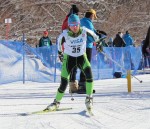
Caitlin Patterson (CGRP) starts out. She ended up fifth for a personal-best at nationals. 
Erika Flowers (SMST2) takes off out of the start. She went on to place eighth. 
Kate Fitzgerald (APU) takes off from the start en route to a third-place finish. 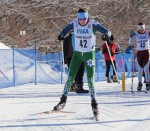
Mary O’Connell (Dartmouth) out of the start. She ultimately placed seventh for a career best at nationals. 
Some excited women at the start of Friday’s 10 k free. 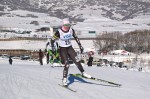
Sadie Bjornsen (APU/USST) sets a strong pace on the first of two laps in the women’s 10 k freestyle individual start on Friday at Soldier Hollow. She placed second in the event. 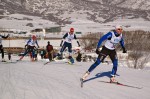
Rosie Brennan (APU) leads a pack, including Middlebury’s Annie Pokorny (second from r) on the first of two laps in the U.S. nationals 10 k freestyle individual start at Soldier Hollow on Friday. Brennan went on to win by nearly 11 seconds. 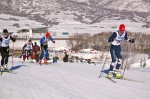
Middlebury College sophomore Annie Pokorny (r) and others, including Becca Rorabaugh (second from r) chase eventual winner Rosie Brennan (not shown) on the first lap. Pokorny ended up fourth and Rorabaugh was sixth. 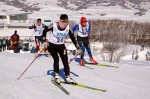
Monica Markvardsen (24), APU’s Becca Rorabaugh (28) and Anna Svendsen (21) of the University of Utah ski together on the first lap. 
Caitlin Gregg, 2013 U.S. nationals 10 k free Soldier Hollow 
Chelsea Holmes (SVSEF) on her first lap. 
Hajkova working the straightaway on the first lap. 
Fitzgerald (r) and Flowers ski together on a long straightaway on the first of two laps. 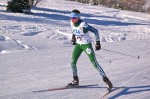
O’Connell (Dartmouth) on her first lap. 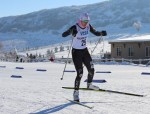
Bjornsen coming through the stadium after her first of two laps. 
Brennan (l), Clare Egan (c) of Craftsbury and Annie Hart (Dartmouth) come through the stadium after their first lap. 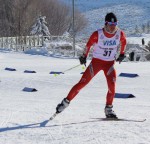
Gregg (CXC) enters the stadium to start the second and final lap. 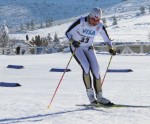
Hajkova in the stadium after her first lap. 
Patterson enters the stadium for the first time. 
The straightaway before the second tier of Hermod’s Hill. 
Bjornsen works her way up Hermod’s Hill for the second and final time on Friday. 
Annie Pokorny (Middlebury) climbing Hermod’s for the last time on Friday. 
Rorabaugh about halfway up the final climb. 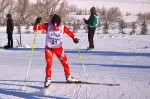
Gregg pushing up Hermod’s for the last time on Friday. 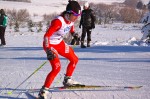
Caitlin Gregg 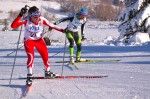
Patterson (r) passes Hannah Peterson of Durango Nordic on the final climb. 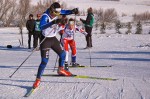
Fitzgerald (l) and Flowers work their way up Hermod’s for the last time. 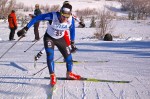
Fitzgerald and Flowers (behind) about halfway up Hermod’s on the last lap. 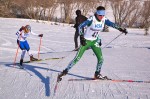
O’Connell leads Taeler McCrerey of Summit Nordic up the long climb. 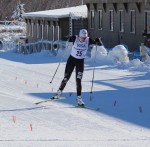
Bjornsen approaches the finish line. 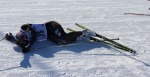
Bjornsen exhausted after women’s 10 k freestyle individual start at U.S. nationals at Soldier Hollow. She ultimately placed second to APU teammate Rosie Brennan. 
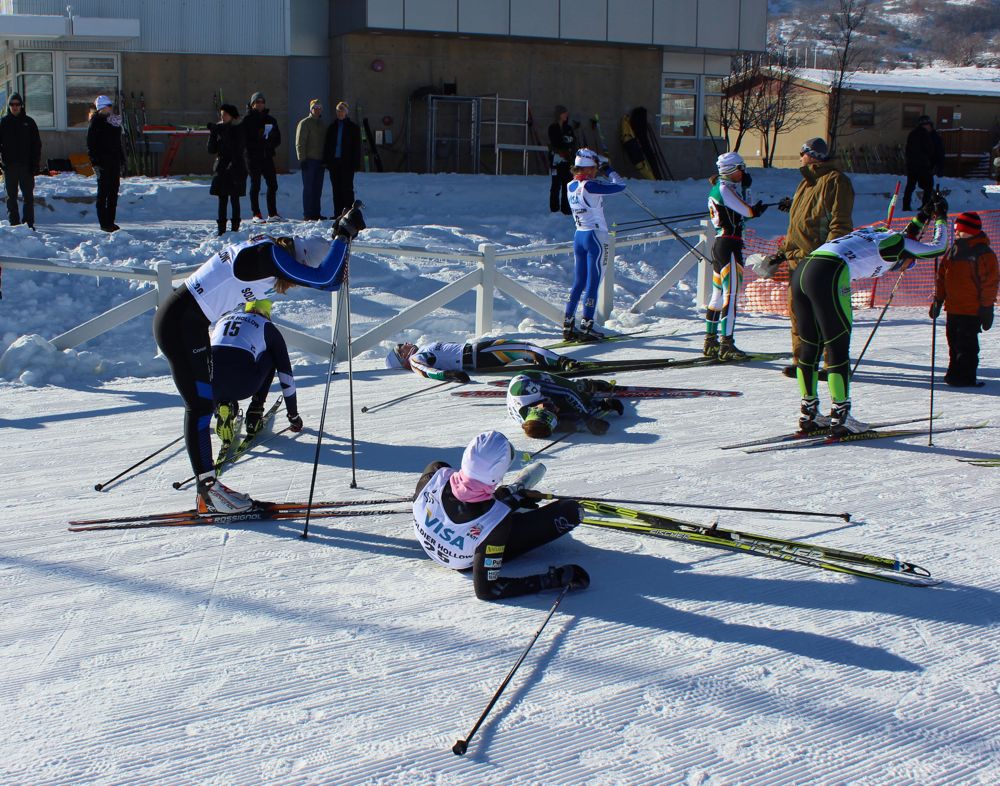
Some of the early women’s finishers 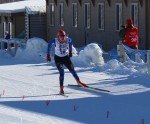
Rorabaugh stays strong through the finish 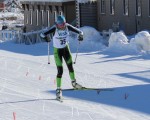
Patterson brings it home for fifth place. 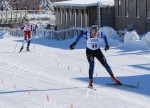
Fitzgerald leads Flowers into the finish for third and eighth place, respectively. 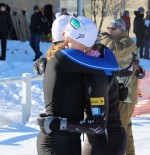
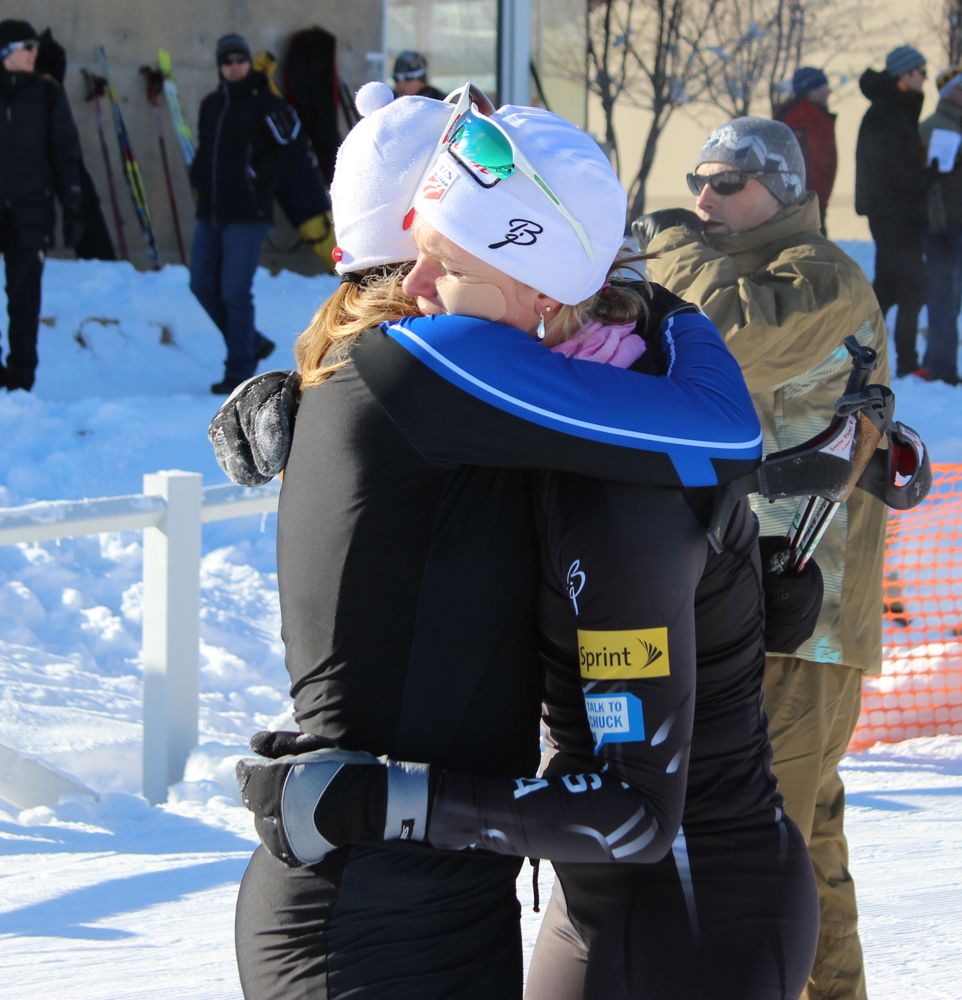
Winner Rosie Brennan (l) and runner-up Sadie Bjornsen embrace at the finish. 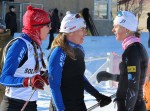
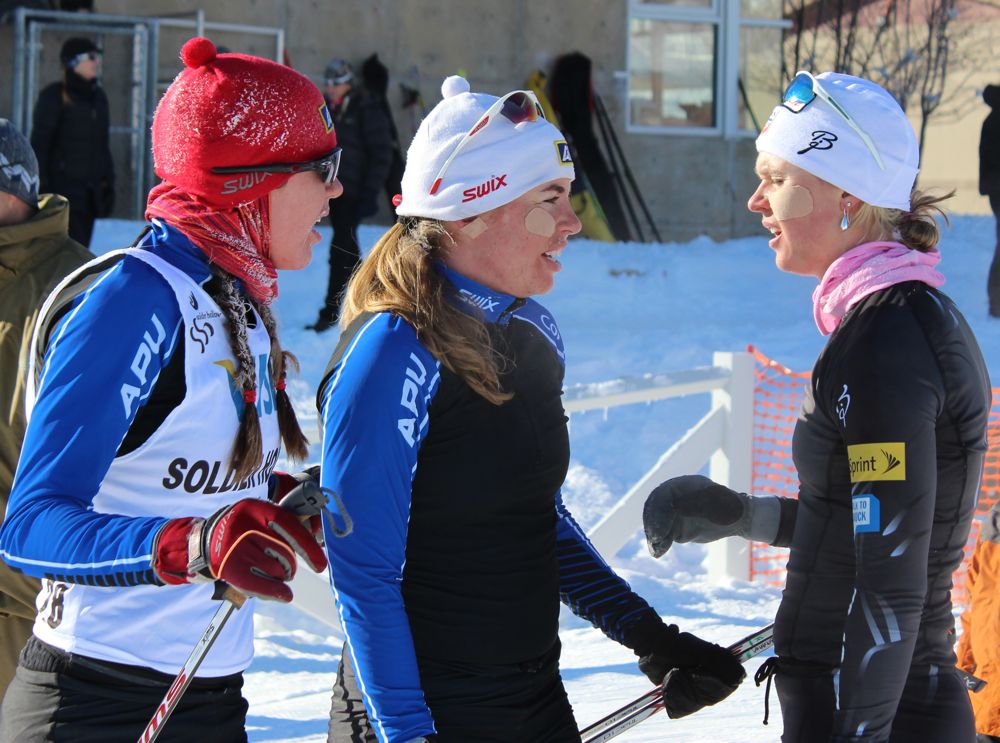
Three APU teammates converse at the finish: Rorabaugh (l), Brennan (c) and Bjornsen. 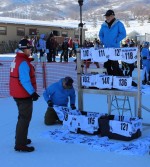
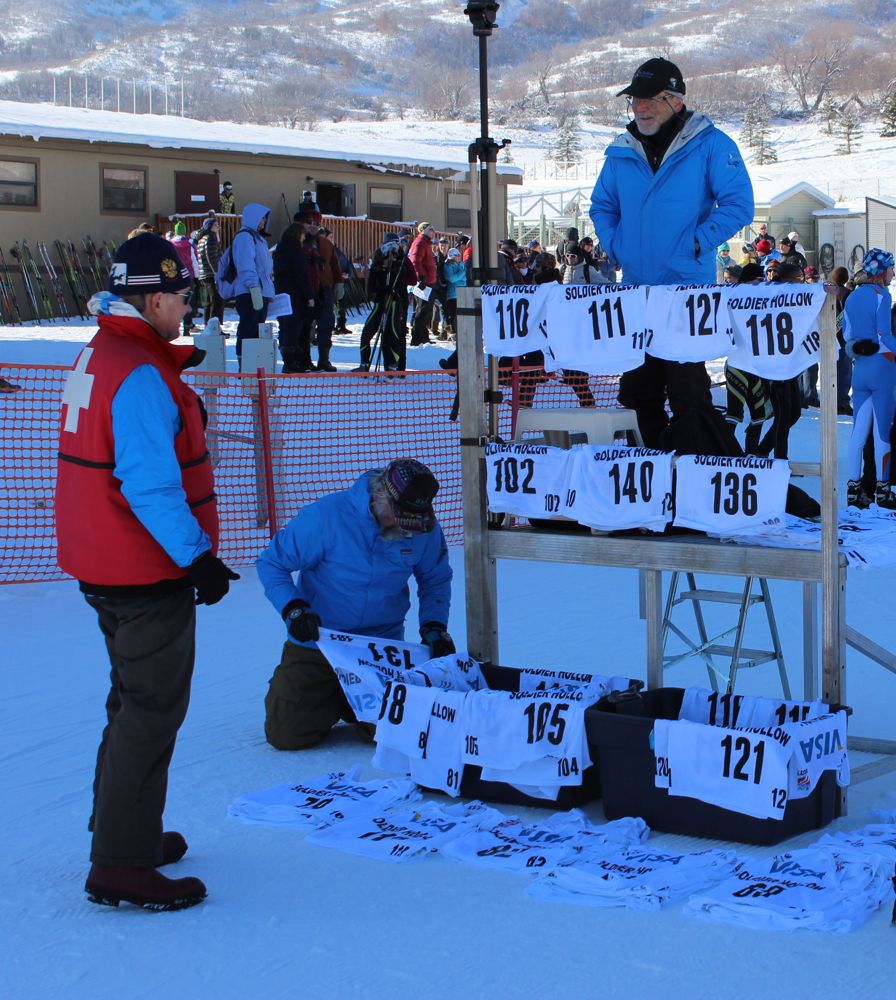
Volunteers organize bibs at the finish. 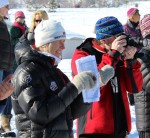
Mr. and Mrs. Bjornsen cheer on their daughter, Sadie, who was second in the 10 k freestyle race at U.S. Nationals on Friday. Later that afternoon, their son, Erik, won the men’s 15 k for his first national title. 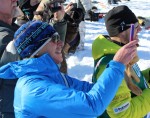
Wiggy Brennan of Park City captures the moment as her daughter, Rosie, tops the podium in the 10 k freestyle race Friday in Soldier Hollow. Rosie races for APU and it was her first national title. 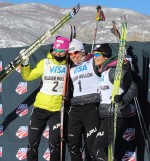
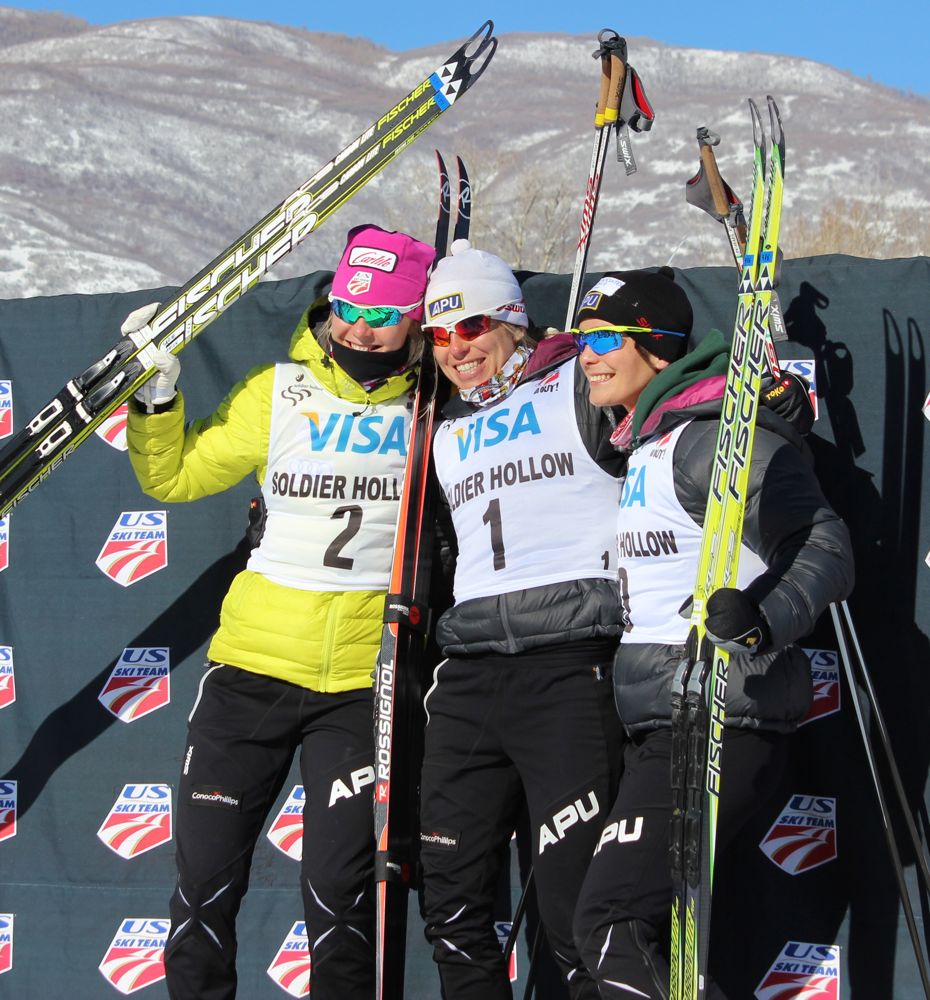
APU sweeps the women’s 10 k freestyle podium with winner Rosie Brennan (c), runner-up Sadie Bjornsen (l) and Kate Fitzgerald in third. -
Brennan Makes Peace with Soldier Hollow, Leads APU 10 k Sweep
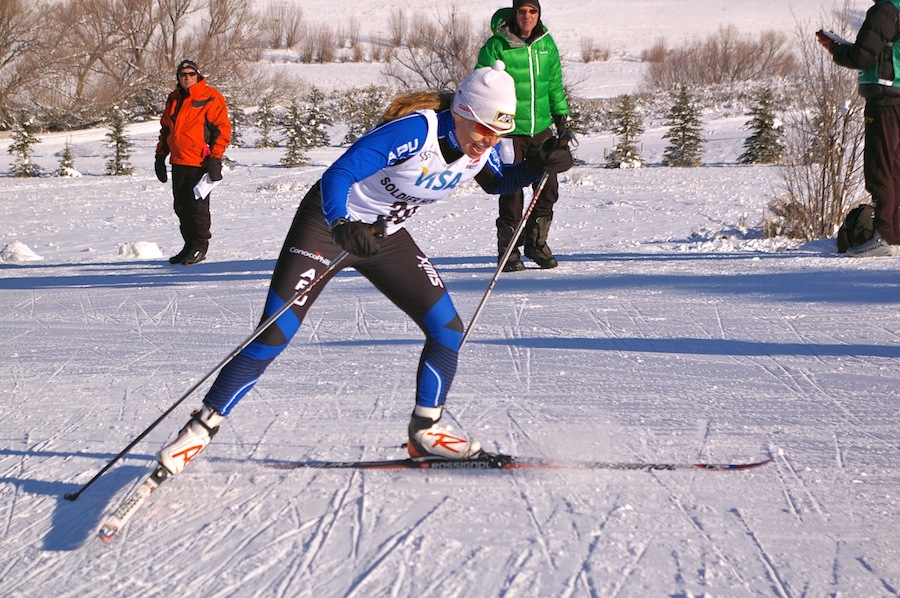
Rosie Brennan (APU) pushing up the infamous Hermod’s Hill for the last time at Soldier Hollow on Friday in Midway, Utah. The Park City native won the 10 k freestyle individual start by 10.9 seconds over teammate Sadie Bjornsen for her first national title. FasterSkier’s coverage of the 2013 U.S. Cross Country Championships is brought to you through the generous support of The Memory Clinic in Bennington, Vt.
MIDWAY, Utah — If there was ever a place for Rosie Brennan to win her first national title, just outside Park City, Utah, had to be it. That’s where the 24-year-old Alaska Pacific University skier grew up; it’s where her mom convinced her to try nordic in eighth grade.
It’s where Brennan said she “had a love-hate relationship” with Soldier Hollow throughout her ski career. How better to erase the memories of some tough-to-swallow results there than dominate one at U.S. Cross Country Championships?
With a podium finish already out of the way (Brennan was third in Wednesday’s classic sprint), she climbed two rungs higher on Friday, winning the women’s 10-kilometer freestyle individual start on the second day of nationals. More than a victory, it was an affirmation for Brennan, who spent two years on the national team from 2007 to 2009 and was known as a classic sprinter.
“It’s sweet to be home, but I’ve always struggled racing here,” Brennan said after her 10.9-second win over APU teammate Sadie Bjornsen of the U.S. Ski Team. “It’s really awesome to be able to excel at home.”
Brennan’s mom, Wiggy, celebrated with her. A Park City resident and volunteer at nationals, she said it was “very exciting” to see her daughter win. “I’ve watched a lot of races in my life,” she said with a laugh.
An all-APU podium at U.S. nationals on Friday. Rosie Brennan (c) won the 10 k freestyle individual start, Sadie Bjornsen (l) was second and Kate Fitzgerald placed third. Brennan, too, couldn’t have been much happier.
“To be honest I never thought I’d win a skate race,” she said. “Then starting in West [Yellowstone], I realized that the work I’d done this summer was finally starting to pay off, so it suddenly became my goal to start winning more skate races and now, I don’t know, maybe I even like it more.”
At the first SuperTour of the season in November, Brennan started off with a freestyle victory – her first – in a 10-kilometer freestyle individual start. With another staggered start on tap for Friday, she was excited going in.
“I actually really enjoy individual starts, I’m sort of an old-fashioned skier that way,” she said. “I like the grinding-individual mental game a lot. That’s sort of my strength.”
Brennan capitalized on what turned out to be a tough day for most, working hard in the early single-digit temperatures and resulting sluggish conditions. She said the conditions helped her pace the challenging course at Soldier Hollow (a slight variation from the Olympic 5 k with more climbing initially and a turnaround about three-quarters up Hermod’s Hill).
To survive and do well at nearly 6,000 feet above sea level, Brennan knew she’d have to keep her tempo low and power high throughout the two-lap race.
On the first loop, she caught teammate Becca Rorabaugh, who started 30 seconds ahead of her and ultimately placed sixth (repeating her result from Wednesday). Knowing Rorabaugh’s strength in downhills, Brennan followed her lead on the long descent before the massive climb up Hermod’s.
Meanwhile, Brennan was getting splits that she was a couple seconds behind Bjornsen. Then she started hearing she was ahead of her.
“The lead was slowly decreasing the whole time, particularly on the flats ’cause she’s a lot better there,” Brennan said. “The whole time I was thinking, ‘How can I make up seconds on the flats? There’s one more hill at the end. Just pick it up there.’ ”
She did, leaning hard as she V1ed up the two-tiered climb, and racing down the hill’s backside before the stadium for the nearly 11-second win.
“I’m so excited,” Brennan said. “My parents were here, I have lots of friends and family here, all my old coaches are here so it’s been really great.”
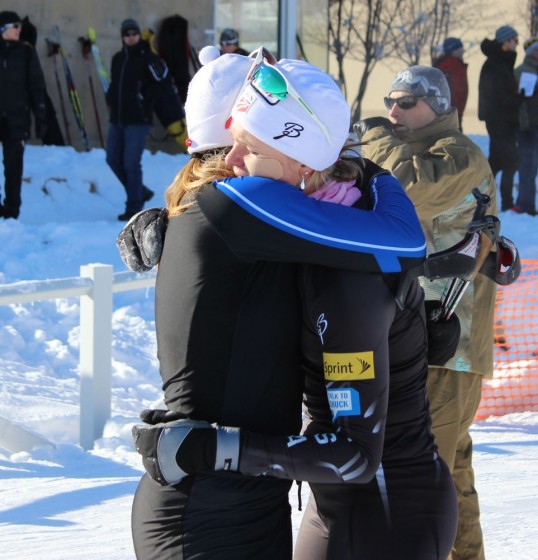
Rosie Brennan (l) and APU teammate Sadie Bjornsen embrace after the 10 k freestyle race at U.S. nationals on Friday. Brennan won and Bjornsen took second. One of the earlier starters in bib 25, five spots ahead of Brennan, Bjornsen said she didn’t have many splits to go off, but heard she was eight seconds behind her teammate just before her last time up Hermod’s. That motivated Bjornsen to give her all.
“I skied that hill with Rosie in a camp in October, and I remember she just flew by me like I was standing still,” Bjornsen recalled. “What she told me was, ‘You know what Sadie? You have to use your weight into your legs,’ and so all I was thinking about was taking big steps and putting my weight into each step so I was just giving it every last bit.”
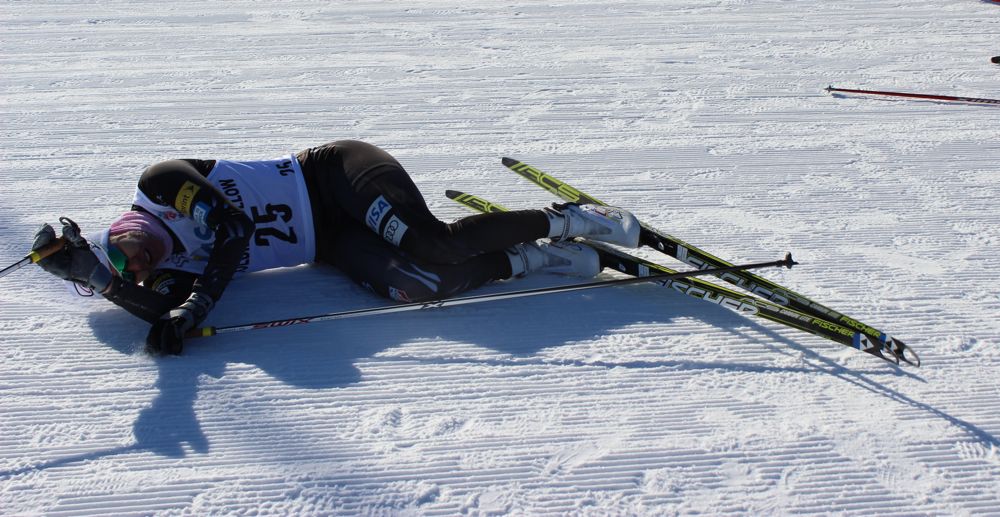
At the finish, Bjornsen laid on the ground longer than she could ever remember doing. “Just like, eyes in the back of the head,” she said. “So I think I really pushed it at the end.”
A runner-up for the second-straight race at U.S. nationals after placing second to Jennie Bender (Central Cross Country) in the classic sprint, Bjornsen said she “kind of had a fire” fueling her from the start. Two days ago, Bender overtook her at the end of the A-final, winning by 0.3 seconds. Bjornsen, who won a national title in the 10 k classic race two years ago, wanted more.
“I had so much determination from that that I think I did the opposite of what I always do,” Bjornsen said of her pacing, in which she felt she went out too hard. “I was just having so much fun on the transitions, then I got to Hermod’s and all of a sudden I realized I had gone out too hard and started feeling the burn. I really struggled between 5 and 6 k. I think I lost a lot of it right there.”
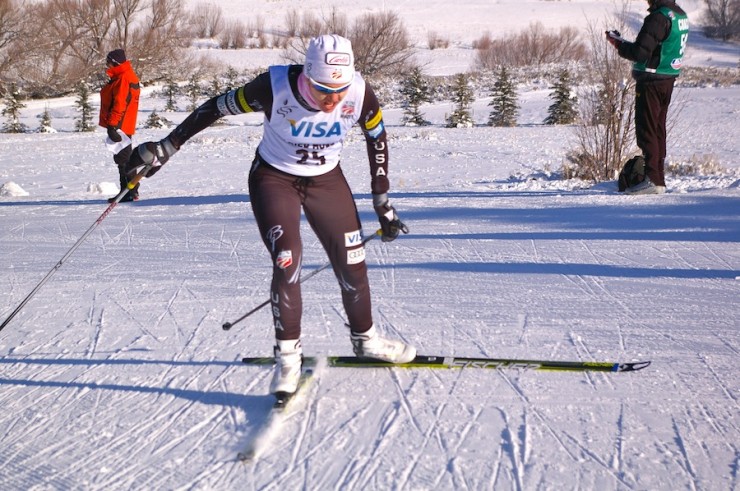
Sadie Bjornsen (APU/USST) putting her head down up Hermod’s for the last time Friday in the 10 k skate race at U.S. nationals in Midway, Utah. She ended up second to APU teammate Rosie Brennan. Even though she would retool her strategy next time, Bjornsen was pleased with her performance and even happier for Brennan.
“I knew she had a win; I said this earlier this year that she had it in her,” she said.
And with Kate Fitzgerald placing third (+38.2) to complete the APU podium sweep, she said it was simply an awesome day. Head coach Erik Flora, too, said it was incredible.
“Starting with Kikkan [Randall] this morning and Holly [Brooks] had another solid day for a classic prologue, so lot of good energy and the girls just tore it up,” he said, referring to Randall’s seventh place finish in the fifth stage of the Tour de Ski, a 3.3 k classic prologue in which Brooks was 38th.
Most of all, APU’s success came down to its team element, Flora explained.
“It’s my belief that everybody trains hard, everybody commits themselves to this, but the team is what makes it,” he said. “It gives you an advantage. Every day in the highs and the lows, you have friends you can share those with.”
Fitzgerald also enjoyed the upside, tying her best-national finish of third after last year’s classic sprint. While some felt the 15-second intervals clumped racers together making it harder to pass, Fitzgerald said she didn’t have any troubles and enjoyed the quick turnover.
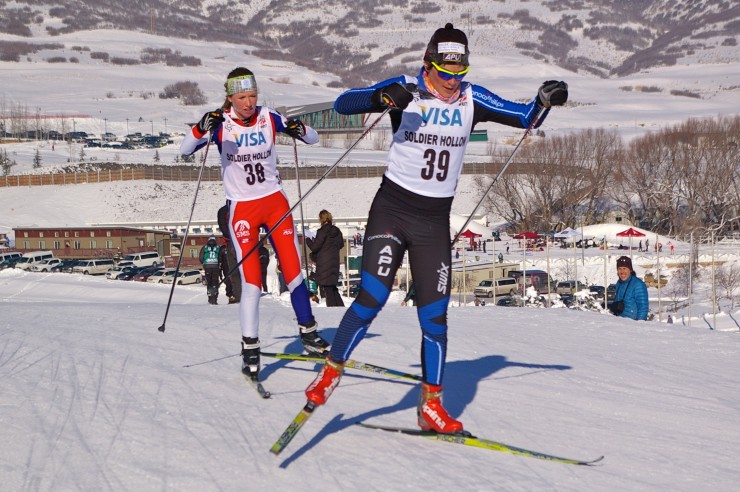
APU’s Kate Fitzgerald (r) and Erika Flowers (Stratton Mountain School T2 Team) work their way up Hermod’s on the first of two laps in the 10 k individual skate race at U.S. nationals on Friday in Midway, Utah. Fitzgerald placed third and Flowers was eighth. “You always had someone around so you’re like, ‘All right, just follow that girl!’ ” she said after working to continually pick off people.
Fitzgerald spent the first lap keeping her heart rate in check, “trying not to go above the red line, especially up Hermod’s,” she said. There was no need to kill it in any one spot, just stay smooth.
Earlier this season in West Yellowstone, Fitzgerald’s blood sugar crashed during the 10 k, a similar distance race at altitude. She had the issue once before in a race, she said.
“Now I’m just eating a lot more carbs, which is awesome, I don’t have a problem with that,” Fitzgerald explained. “I am just really cautious about eating a ton for breakfast and dinner and things like that.”
Feeling good on Friday, she aimed to stay competitive and on-track with the split that she was in third or close to it for most of the race.
“I knew I was somewhere around podium so I was just trying to keep it steady and going,” she said.
Fitzgerald succeeded, and Annie Pokorny of Middlebury College shattered her previous best of 16th at nationals in fourth place, 2.3 seconds off the podium. After growing up in Park City, Pokorny moved to Washington and finished high school in Sun Valley. Racing at what felt like home at Soldier Hollow, she had hoped for a top 10.
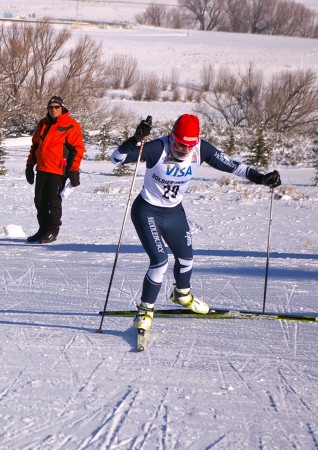
Annie Pokorny (Middlebury) on her way to placing a career-best fourth at U.S. nationals in Friday’s 10 k freestyle individual start at Soldier Hollow in Midway, Utah. “It was kind of one of those, ‘I know I can get a top 10; that would be friggen awesome!’ ” the 20-year-old sophomore said.
She had consciously worked to improve her skating since late November after placing 21st in the 10 k SuperTour opener in West Yellowstone. She met with her coach, Andrew Gardner, and told him she wanted to be better in the discipline.
“I think it’s finally starting to click,” Pokorny said. “Today was a really good day.”
After starting relatively easy then finding another gear to stick with Brennan, who passed her on the first hill, Pokorny had a sense of how well she did after finishing. But fourth? She didn’t initially believe it.
“I just like looked at the board and said, ‘All right, I’m gonna cool down and come back and see where I really finished,’ ” she said with a laugh. “When I came back, I was still in fourth and still really excited so it was a perfect day.”
Caitlin Patterson (Craftsbury Green Racing Project) was content with her best national finish of fifth (+42.4) despite feeling like she was missing a little “pop.” Her toes were part of the problem, she said.
“I think I got frostbite or frostnip on my toes when I was in Alaska so my feet are just frozen all the time now,” she said. “So that made it a little bit interesting.”
Rather than hurt, Patterson said they felt more like blocks of ice after racing in sub-zero temperatures at the Besh Cup two weeks ago. “But that happens,” she said.
“Today was fun,” Patterson added. “I usually can feel fairly well when I’m near the edge, the red line that I don’t want to cross at altitude, so I mostly focus on skiing really smooth and in a good rhythm and definitely a little bit conservative on the first lap, though I was hurting a little bit by the end.”
On the final climb, she looked up and saw about 10 people ahead of her and nearly came to a stop at the turnaround at the top.
“It’s a little bit too bad because I think I was pretty close to third,” Patterson said after finishing 4.2 seconds off the podium..
Rorabaugh was next in line, 49 seconds behind Brennan, for her third sixth-place finish in the last four races. She was seventh in the other, the Bozeman SuperTour 10 k classic mass start.
“I feel like it’s very consistent,” Rorabaugh said of Friday’s result. “I’d like to break through that a little bit. I think I was only 10 seconds out of top three today, which is pretty close, so I’m pretty happy.”
She recalled several different tactics throughout the day: “Annie Pokorny went out really hard and then survived, some people went out really hard and died.” She started conservatively and finished hard. “It worked for me,” she said.
Shooting for a top 30, Dartmouth College freshman Mary O’Connell, who raced for the Steamboat Springs Winter Sports Club, achieved seventh (+51.0). She was previously 19th in a classic sprint at nationals last year before competing at Junior Worlds in Erzurum, Turkey.
“I wasn’t sure what my fitness was going to be but it went really well,” O’Connell said. “I was getting splits about being in the top 10, which I did not really believe at the time.”
— Audrey Mangan contributed reporting
-
U.S. Nationals Notes and Quotes: Classic Sprint Edition
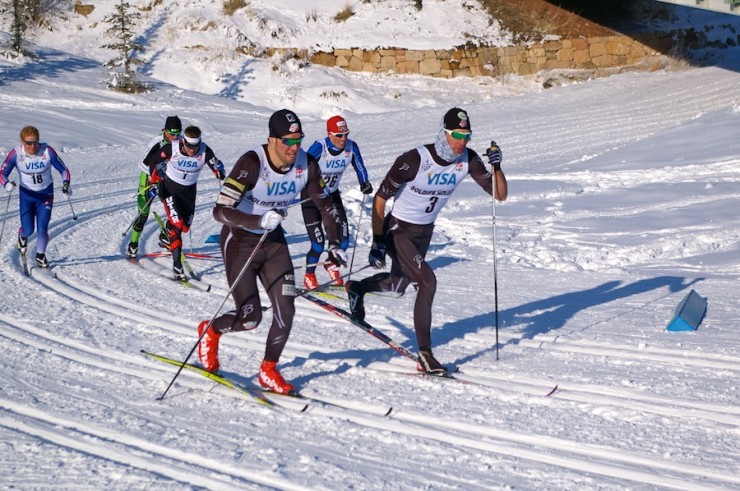
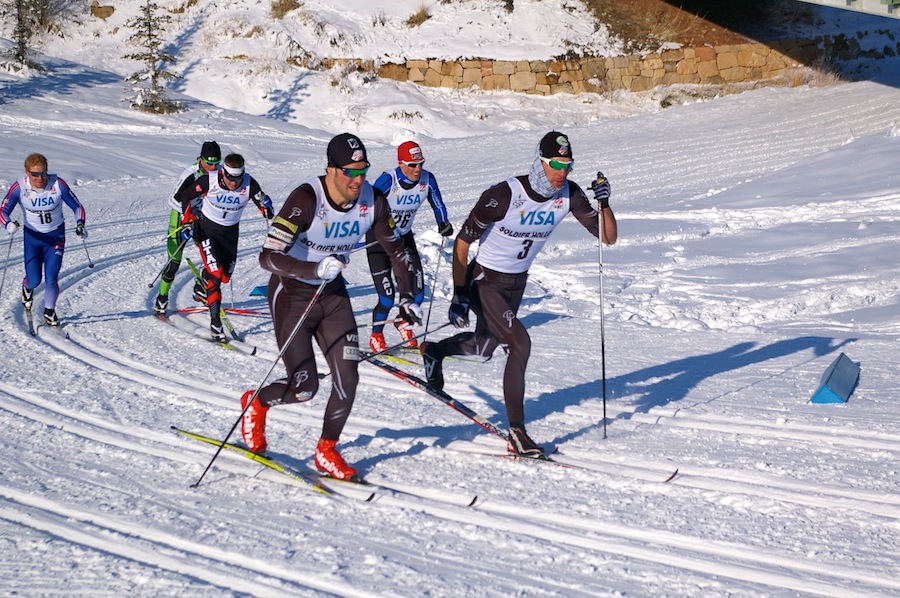
Skyler Davis (SMS T2) and Torin Koos (BSF/Rossignol) matched stride for stride on the last climb during the heats. MIDWAY, Utah – Tactics were the name of the game in Wednesday’s classic sprint at Soldier Hollow on the first day of racing at the 2013 U.S. Cross Country Championships. Some of the best didn’t have them completely dialed in, and with that, they failed to move on.
U.S. Ski Team member Erik Bjornsen, who finished eighth after being eliminated in the quarterfinals, racked it up as a learning experience. At least racers like him will have another shot on Tuesday with the skate sprint – and they’ve got two distance races before that. But enough about the future, let’s get to what we didn’t fit in Wednesday’s race recaps.
On tactics:
“I thought I could break some people on this first uphill, and that wasn’t the case. I went out hard and lead it over the top, and Torin [Koos] and Matt [Gelso] were right behind me and they slingshotted past me like everybody said they would.
I think everybody’s learned that you can’t be leading over that hill unless you really have a gap. Skyler Davis did it a couple times today, but there wasn’t a lot of other people, well the girls were, but that’s a little different. Number one thing is not lead over the top.” – Erik Bjornsen (Alaska Pacific University/USST), 21st
“The beginning is probably the most rough because it’s where the panic sets up coming around the turn, you really can’t drop back too much. … On the down you just need to be top three. So I seemed to catch up on the downhill. I passed Sophie [Caldwell] and I was like, ‘Woah, OK.’ ” – Jenny Bender (Central Cross Country), women’s winner
“The qualifier was really funny. I didn’t do any double-poling warmup, and for the first time, it didn’t feel good and I was concerned about it. But then once we got into the heats the first quarter, I tried tactics but I was a little frustrated because even though we’re back in the U.S. and could be skiing easy, it’s good practice to go hard. So then in the semi, I was like I’m just gonna go for it.” – Sadie Bjornsen (APU/USST), 2nd
“I was just trying not to be the leader at the top of the hill, basically. The draft was so important that it was important to be around second or third on the downhill to make sure you get the advantage in the draft. And then just having a strong double pole; it’s a long finishing stretch. … Because of the way it skis tactically, it was nice to relax. Normally when girls race, we just go as hard as we can the whole time and last one standing wins sort of thing. So it was fun to ski in there and move a little bit and then just really give it over the top of the last hill into the finish.” – Rosie Brennan (APU), 3rd
“[I] definitely tried to get behind people because that’s such a key point to get that draft. And yeah it was just trying to hang in there in the finishing stretch. For sure, it’s a lot longer, like, you can see the finish, but then its like am I there yet? But it’s a great finish for sure.” – Kate Fitzgerald (APU), 4th
“All today I knew my strength was not necessarily the double-pole finish, so throughout the day I tried to put some time in on the hills and I felt great for most of it. My arms just felt dead on that final stretch. … Usually my strategy is not to lead, this is more for skate sprints because I have a pretty good finish kick so I hold on the end of that. But classic sprinting is a little different, especially for the double-pole finish.” – Sophie Caldwell (Stratton Mountain School T2 Team), 5th
On whether or not to use skate skis:
“Qualification was good, it was really cold and I decided to still use the skating skis to use the upper body. It wasn’t the best choice, but I wanted to take that opportunity to know that I could do that in the final, and I ended up opting to go with the kick wax instead. Obviously it was a pretty good choice.
“I think it would’ve been an OK choice to go with skating as well, but I just had the idea that I know how to win this on the kick wax.I had a pretty good idea that I would race against some of the other guys in the heats, and I was like, ‘OK, this is where they’re gonna be really good, but I think I can do this better than them.’ ” – Torin Koos (Bridger Ski Foundation/Rossignol), men’s winner (qualified third on skate skis, won A-final on classic boards)
“I double poled most everything until that last hill and when Torin [Koos] came up beside me, he was afraid I was on no-wax skis so he’s like, ‘Are you double poling?’ because he figured if I was double poling he needed to be leading going into that. I didn’t answer him, but he quickly figured it out when I started striding.” – Erik Bjornsen, who stuck with classic skis
On feeling good:
“In Bozeman, I finished a heat and I wanted to weave around like this (wavers on her feet), and today I felt back to normal. I was kinda jazzed, like, ‘Oh, this is a good sign. I don’t feel completely dead.’ So you know, one heat at a time.” – Bender
“I felt good today. I’m really low on racing. I’ve only done two sprints and both those the health was not good. I was just trying to race for qualification reasons. So this is kind of like a start to the season because it’s only the second of the year. I’m really looking to build on this. … My health’s good. Coming back into race shape. ” – Koos
“I’ve been feeling better. We had some races at home [in Sun Valley, Idaho] and I’ve been getting some rest and feeling pretty good. Ready for the 15 k, for sure.” – Mike Sinnott (Sun Valley Ski Education Foundation), 2nd
“[These] last five days are the best I’ve felt all year so I have to take that as a real good sign for the next week and the next couple weeks.” – Skyler Davis (SMS/USST), 4th
“I’m pretty excited that’s the best I’ve done at nationals ever. I find it ironic because I didn’t think classic sprinting was my forte. … Maybe as a team we did enough double-pole sprinting this summer, … but this summer my goal was to work on my distance racing and my threshold.” – Becca Rorabaugh (APU), 6th
“I was feeling pretty well, been out at altitude for a while so didn’t hurt as much as Bozeman or Yellowstone because those were really bad.” – Ben Saxton (F.A.S.T. Performance Training), 5th
“I was feeling really good at home [in Durango, Colorado], had a great holiday and had some awesome training. My twin brother’s up here helping me test with Team HomeGrown. I had a great holiday training with those guys and had a few down days the last couple days, but feel like I’m coming back now. It’s the best classic sprint qualifier I’ve ever had, just missed the top 30 so I’m stoked.” – Tad Elliott (Ski & Snowboard Club Vail/Team HomeGrown/USST), 39th
“I felt good, I felt powerful. The [SuperTour] races in Bozeman and West Yellowstone were pretty similar to this, but those races I felt pretty weak and I didn’t have the speed. I felt like I had the speed today and whatever it was it just didn’t work out.” – Tyler Kornfield (University of Alaska Fairbanks), last year’s national classic sprint champ, 42nd in Wednesday’s qualifier
On keeping results in perspective:
“I was pretty frustrated after the races in Montana, but I mean, it’s a long season. This happened before, it happens to everyone. You just need to get through it, stay focused stay calm and relaxed. … I’m going to have to adjust my goals, but I still have big goals.” – Kornfield
“I did have some people, a few this summer, that I got angry at who told me to write the year off. I’m pretty stubborn so having something you can’t control is extremely frustrating no matter what it is, but at the same time, to come to terms with what you can’t control is an interesting process. I think that’s what I’ve been: more relaxed and I’ve come into a lot of races with a neutral mentality. I still have goals, but it’s possibly been helpful because I had no expectations.” – Bender
“I always just try to go into races with, I mean, just be myself and we’ll see how the rest of it plays out. A lot of factors on the day, skis and tactics and everything, worked really well for me. The next sprint will be a lot different and next meet will be different. Just changes it up, I guess.” – Saxton
On Soldier Hollow:
“I did my first World Cup here, my first Olympics here, my first national championship here, and so I was looking forward to coming back. It kind of feels like it’s coming full circle, and it’s really cool that it’ll be this year and next because no matter what, the organizers here do a phenomenal job. The course is always in very fair shape. As an athlete it makes you feel like what you do is respected.” – Koos
“It’s great. That’s a great course, it’s a fantastic venue, you know, racing with a bunch of my friends. … These bibs are not as tight as the ones in Rumford (puts on podium bib). That’s nice. Good-fitting bibs are nice.” – Dakota Blackhorse-von Jess (Bend Endurance Academy), 3rd
“SoHo always pumps out a lot of snow and you can see, it’s pretty wild. The course is in great shape, two feet of snow everywhere pretty much.” – Leif Zimmermann (BSF), 48th
“I knew some of the guys wanted to keep skiing in Europe; I wanted to be here, though. That was kind of the plan all along. If I was really killing it early season that might have been an option, but knowing how good Noah [Hoffman] and Kris [Freeman] are doing, they go the Tour [de Ski] starts and I’m here. Both win-win situations. I’m happy to be here and these are big races. I always want to try do well at national champs.” – Elliott
***
-
No Stranger to SoHo, Koos Gets Redemption in Classic Sprint
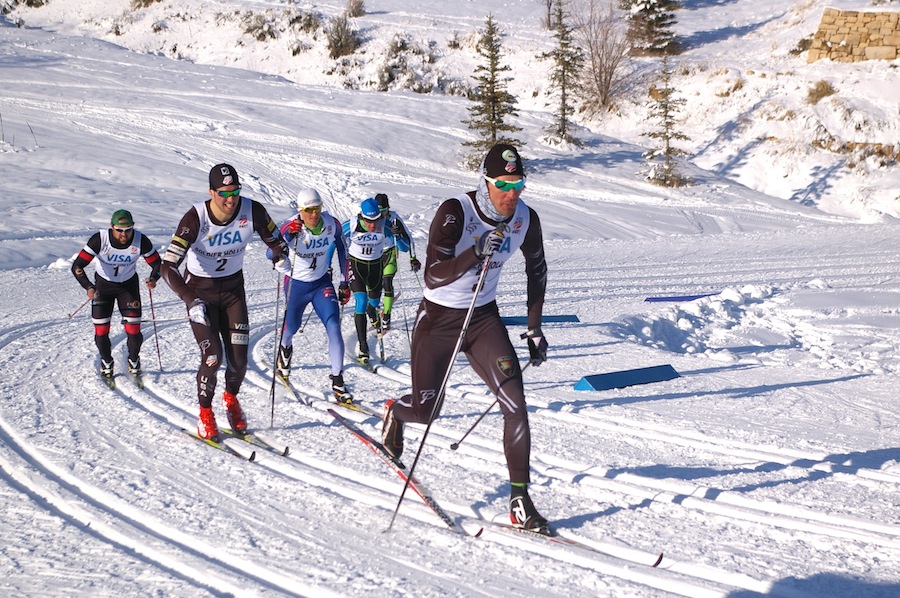
Torin Koos (Bridger Ski Foundation) leads the A-final of the classic sprint up the second of two climbs on the 1.3-kilometer course on Wednesday. Koos went on to win his fourth sprint title, seventh overall, ahead of Skyler Davis (second from left), who was fourth, Mike Sinnott (c) in second, and Dakota Blackhorse-von Jess (l) in third. FasterSkier’s coverage of the 2013 U.S. Cross Country Championships is brought to you through the generous support of The Memory Clinic in Bennington, Vt.
MIDWAY, Utah – Unlike many of the blank slates surrounding him, young minds with open expectations at one of their first U.S. Cross Country Championships, Torin Koos had a lot to think about Wednesday.
Here he was, 32 years old and skiing for the umpteenth time at the Soldier Hollow nearly 6,000 feet above sea level. The 1.3-kilometer sprint course remained largely the same since his previous visits: rolling terrain with a long slingshot finish. Without any sizable trees in sight, there was no place to hide, no place to slack.
The former U.S. Ski Team member, now with the Bridger Ski Foundation and Rossignol, didn’t see himself falling behind anyhow. Nope, he had come to win, like always. Even after being sick for the start of the season. Even after being disqualified in last year’s U.S. nationals classic sprint – which ruined his run for his fourth straight national title – Koos was thinking positive and looking ahead.
“I tried not to think about that stuff last year,” Koos said after winning Wednesday’s sprint for his seventh national title, second in a classic sprint. “I know what happened in that race [last year] and I know that is absolutely just part of racing, and many things like that happened to me, I feel, even in that same race. It was a decision that was made. I don’t really agree with that, but that’s in the past.”
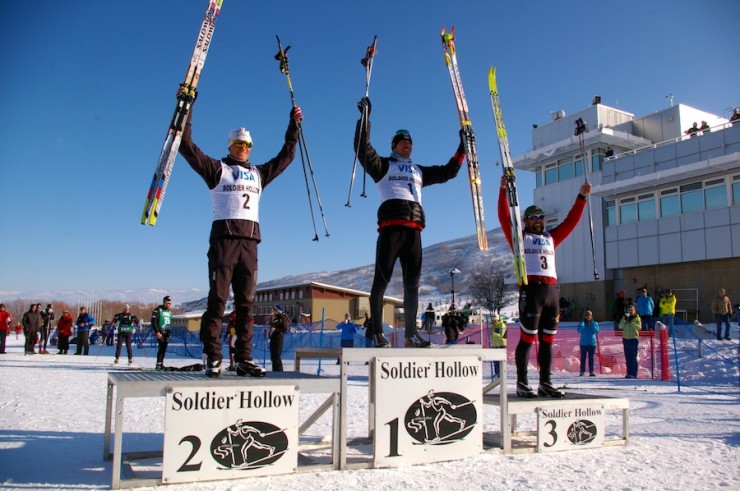
Torin Koos of the Bridger Ski Foundation/Rossignol (c) atop the 2013 U.S. Nationals men’s classic sprint podium, with Mike Sinnott (Sun Valley Ski Education Foundation) in second and Dakota Blackhorse-von Jess (Bend Endurance Academy) in third. Standing in the stadium at Soldier Hollow, the site of the 2002 Olympics where Koos raced his first World Cup, Olympics and national championship, he smiled and soaked up the “now.” He had made a plan and executed it, he said.
The five men skiing behind Koos in the A-final – Skyler Davis (USST/Stratton Mountain School T2 Team), Mike Sinnott (Sun Valley Ski Education Foundation), Dakota Blackhorse von-Jess (Bend Endurance Academy), Ben Saxton (F.A.S.T. Performance Training) and Alex Howe (Craftsbury Green Racing Project) – weren’t exactly surprised that he took it. The three-time Olympian had challenged them from the beginning, double poling hard up the first gradual climb then continuously leading over a straightaway at the top.
Knowing that the most-used tracks were icing up, Koos opted for an outside lane up the second hill – a tactic he figured no one else would think of. Davis apparently did, skiing right behind Koos up the last climb and getting the benefit of some extra kick. Meanwhile, Koos put on the jets.
“I looked back and saw I had three or five meters, not very much, but I had the little bit of the climb [left] and I knew I had good skis so I tried to put in a little spurt up through the horseshoe,” he said. “I was able to get a little bit of a gap and hold it to the finish line.”
Davis tried to hang on, thinking he’d come up with a way to pass Koos on the long descent into the stadium, but he was caught off guard coming out of the screaming downhill corner.
“We all switched lanes for some reason,” Davis said. “I kind of got off balance then I got back on balance, went into the inside lane, double poling I was in second, third, second, third and then I was just gassed out.”
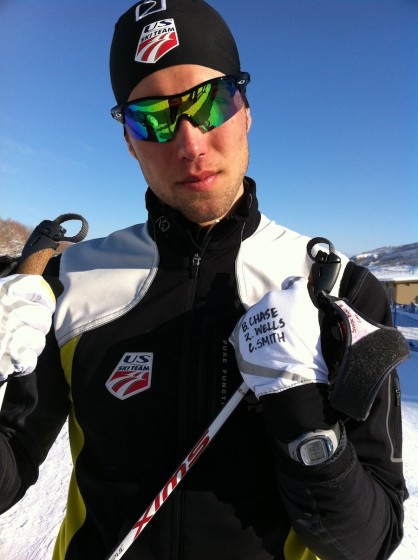
Skyler Davis pays tribute to his fallen friends, including Charlie Smith, a former nordic racer from Bend, Ore. Davis settled for fourth while Sinnott edged Blackhorse-von Jess, the top qualifier, for second.
“I really wanted to win today,” the usually upbeat Davis said, looking at the ground. “A couple of my friends passed away so I was racing for them today.”
On his white ski gloves, he had written their names: “B. [Brian] Chase”, “Z. [Zachary] Wells”, and “C. [Charlie] Smith”.
While their deaths were separate, they had all come in the last week, Davis said. Chase and Wells were his friends from Vermont, and Smith was an NCAA bronze medalist who raced for the University of Nevada-Reno.
Blackhorse-von Jess, too, fought back emotions when talking about Smith, who shared his hometown in Bend, Ore. At the same time, Blackhorse-von Jess also used it as motivation for securing his fourth national podium, the first in a classic sprint.
“He’s definitely in many people’s thoughts this week, which is cool,” Blackhorse-von Jess said, adding that the support of his family watching him race for one of the first times in five or six years was uplifting.
His defining moment Wednesday came in his semifinal, when he fell in the scrub zone shortly after the start.
“The first thought was, ‘Expletive, coach is gonna kill me!’ The second thought was, ‘Mmm, I can probably get this back,’ ” Blackhorse-von Jess said. “Luckily I have really smart teammates who were at the first turn and they were like, ‘You’re fine, you’re gonna roll back into them, be relaxed,’ and that helped a lot. I stayed really calm and it was good.”
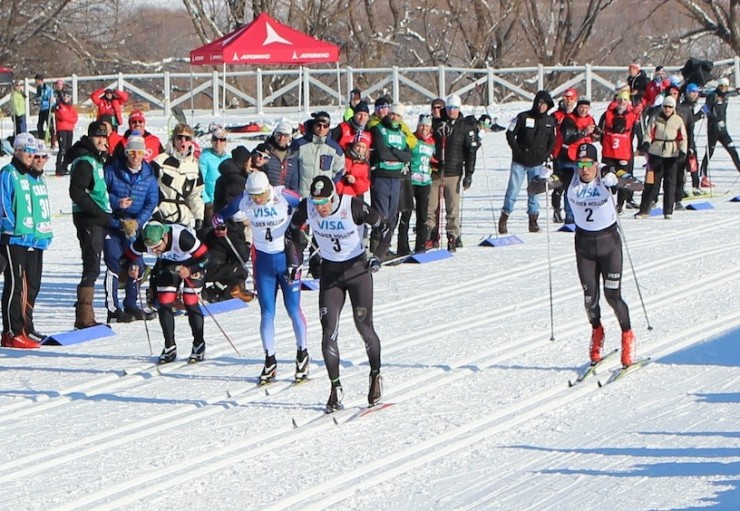
The finish of the men’s A-final at the U.S. nationals classic sprint on Wednesday at Soldier Hollow in Midway, Utah. Torin Koos (second from r) won, followed by Mike Sinnott (second from l), Dakota Blackhorse-von Jess (l) and Skyler Davis (r), respectively. Blackhorse-von Jess did, in fact, catch up and went on to place second to Sinnott in the heat. In the final, the two chased Koos to the line.
“I got close to second, got real close,” he said. “Mikey and I had a really good battle. It was a lot fun. You want to be disappointed, but I raced hard and there’s nothing else you can do so I’m excited.”
Sinnott was also pleased – even though it was his third consecutive silver at nationals in the classic sprint.
“Happy birthday to Sylvan [Ellefson] is the first thing I want to say,” he said of his friend, who skis for Ski and Snowboard Club Vail and Team HomeGrown and placed 12th on Wednesday. “I would’ve liked to climb one more place up, but I was pretty happy. … It’s nice to have some good heats in this year.”
It was also good practice to be in them with someone like Koos. After qualifying in fourth behind Blackhorse-von Jess, Davis and Koos, respectively, Sinnott won both his quarterfinal and semifinal, but had to step it up once more in the A-final.
“Torin and Skyler went out a bit harder than I had done in the other heats and then Torin just picked it up on the hill,” Sinnott said. “It was a lot more of a kind of fast pace, real sprint race.”
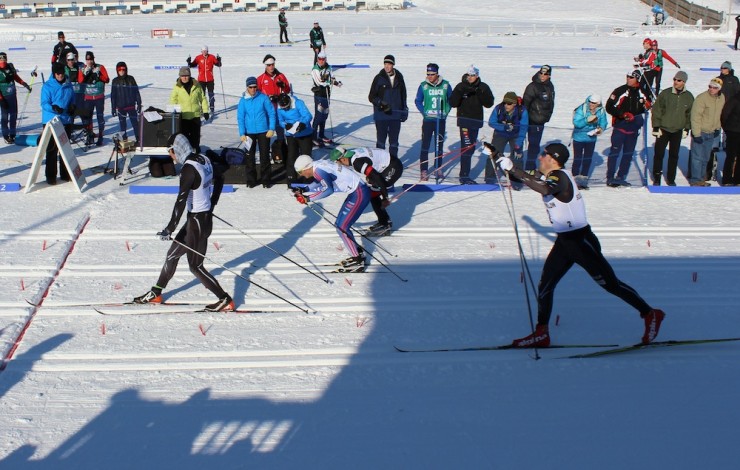
Torin Koos (BSF/Rossignol) pulling out the victory at U.S. nationals on Wednesday in the classic sprint ahead of Mike Sinnott (SVSEF) in second, Dakota Blackhorse-von Jess (BEA) in third and Skyler Davis (USST/SMS) in fourth. The fifth- and sixth-place finishers, Saxton and Howe, respectively, felt similarly after making the A-final at senior nationals for the first time.
“At the risk of sounding like a fan boy, there are like posters of all these guys in my room that you get at expos or whatever and I was racing them today,” said Saxton, 19, currently taking a post-grad year to train in Wisconsin.
“My goal coming in was to qualify for senior heats so I was pretty excited to go past that,” he said. “It was just sprint racing, especially at Soldier Hollow, it’s a really tactical course and anything can happen and coaches gave us wicked fast skis.”
But fast skis can only get you so far, and when Koos and Davis initially took off, Saxton was a bit slow on the uptake and had to catch up before the second climb. Working his way up the inside lane, he started to slip and fade back again.
“Barring any miracle skis, it was not going to pull me back to contact on the downhill,” Saxton said. “I just double poled really hard and Alex gave me a great finish and it was really fun.”
Howe, 23, who recently graduated from the University of Vermont, had previously placed 21st in a classic sprint at nationals in 2009. Heading into Wednesday, he hoped to make the heats “and ski more than one,” he said.
Howe went on to place second in his quarterfinal and decided to go for it in the semi in hopes of advancing further. He did, but realized he was a bit drained at the start of the final. He resolved to hang toward the back and try to push at the end.
“Both times when we turned to striding on those two hills my legs were absolutely toast,” Howe said. “By the time I got to the bridge [near the finish], I was like maybe I’ll be able to catch [Saxton] but there was no way.”
Moving forward, Howe has his sights set on distance races and surpassing his expectations after an pneumonia sidelined him for six months this summer.
“Prior to that I wasn’t in the best shape going into the summer so I think I beat myself up going into that,” he said. “I just remember it being 95 degrees outside, and I was sitting inside underneath a blanket shivering. I had to go the hospital. … Hopefully that’s behind me.”
And as for his new standard: “I just like to think of it as I’m back doing more of where I should be,” said Howe, a 2008 Junior Nationals sprint champion. “I’m a little more focused now than I have been in the last couple years, putting my energy more toward what it should’ve been toward.”
Men’s heat results | Qualifying results
–Audrey Mangan contributed reporting
-

Photo Gallery: Pre-Race, U.S. Nationals Classic Sprint
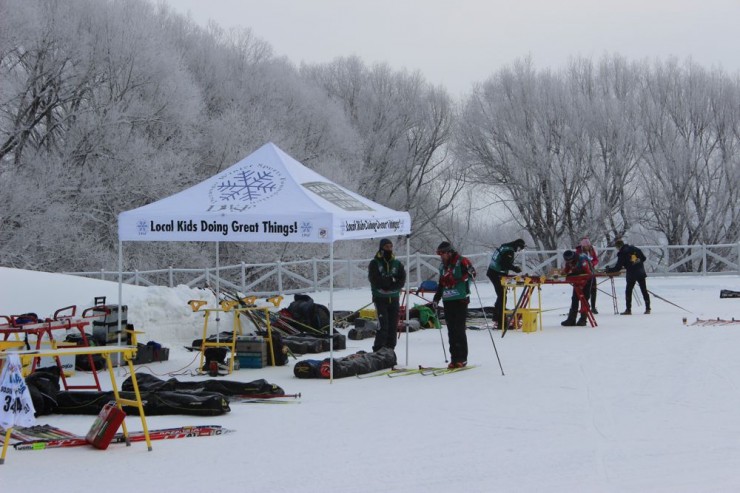
Teams make wax adjustments the morning of the classic sprint at Soldier Hollow. The first starter gets on course at 10:00 am MST. FasterSkier’s coverage of the 2013 U.S. Cross Country Championships is brought to you through the generous support of The Memory Clinic in Bennington, Vt.
MIDWAY, Utah — Less than an hour remains until the first event of U.S. Nationals begins. Athletes arrived at Soldier Hollow Wednesday morning to brisk temperatures, overcast skies and a light dusting of new snow. Despite all the skate ski chatter that’s gone on, many athletes were warming up on classic equipment.
There are 221 men and 155 women on the classic sprint start list; qualification begins at 10:00 am and heats start at 1:00 pm MST. While you wait for results to start coming in this morning, here’s a snapshot of the scene in the stadium.

IMGP7539 
IMGP7535 
IMGP7533 
IMGP7532 
IMGP7531 
IMGP7524 
IMGP7536 
IMGP7526 
IMGP7525 
IMGP7516 
IMGP7517 
IMGP7519 
IMG_1812 
IMG_1813 
Teams make wax adjustments the morning of the classic sprint at Soldier Hollow. The first starter begins at 10:00 am MST. 
IMG_1816 
IMG_1817 
IMG_1819 
IMG_1820 
IMG_1821 
IMG_1823 
IMG_1824 -

Pre-Nationals Photos from Soldier Hollow
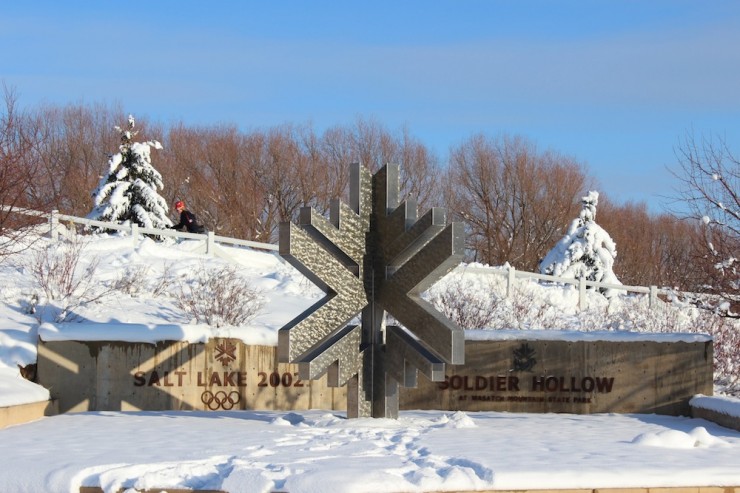
Soldier Hollow on Jan. 1, 2013. Site of the 2002 Olympics and most recently, 2013 U.S. Cross Country Championships (Jan. 2-8). FasterSkier’s coverage of the 2013 U.S. Cross Country Championships is brought to you through the generous support of The Memory Clinic in Bennington, Vt.
MIDWAY, Utah — On the eve of the 2013 U.S. Cross Country Championships, actually New Year’s Day, some coaches and skiers still lingered on the course at Soldier Hollow — some testing skis, others casually cruising around the 1.4-kilometer loop. Wednesday morning, this venue will be packed with more than 400 racers and representatives from all over the nation.
But for a look at Soldier Hollow on Tuesday afternoon, check out the following slideshow.
Races start with a classic sprint at 10 a.m., followed by a freestyle individual start on Friday, classic mass start on Sunday and freestyle sprints on Tuesday. For more information, visit the event website.