From the FasterSkier archive — posts syndicated from athletes’ and coaches’ own blogs between 2004 and 2012, kept online as published. Current coverage is at fasterskier.com.
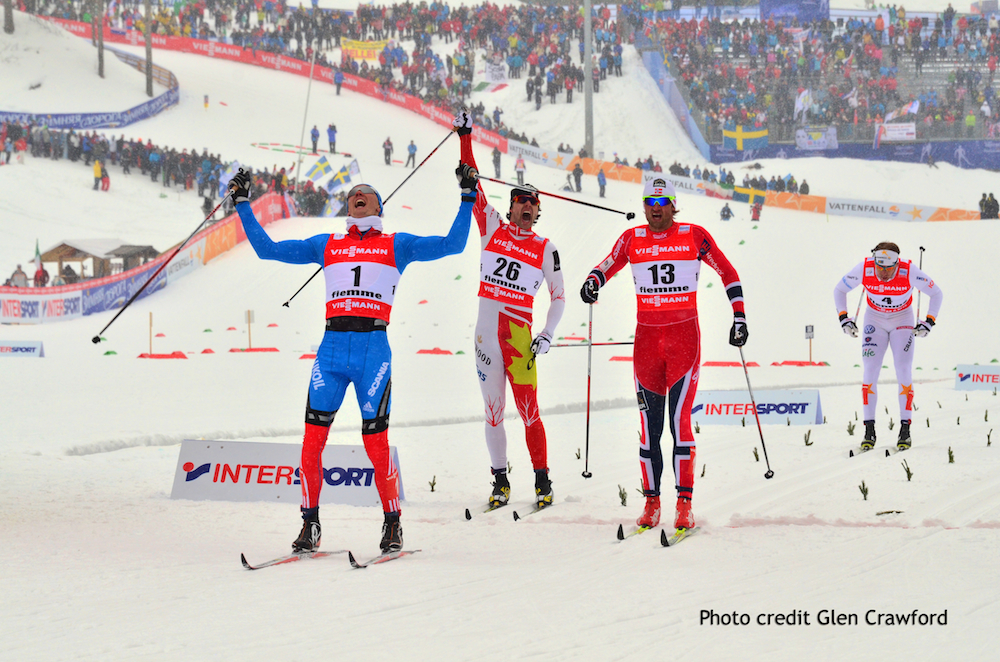
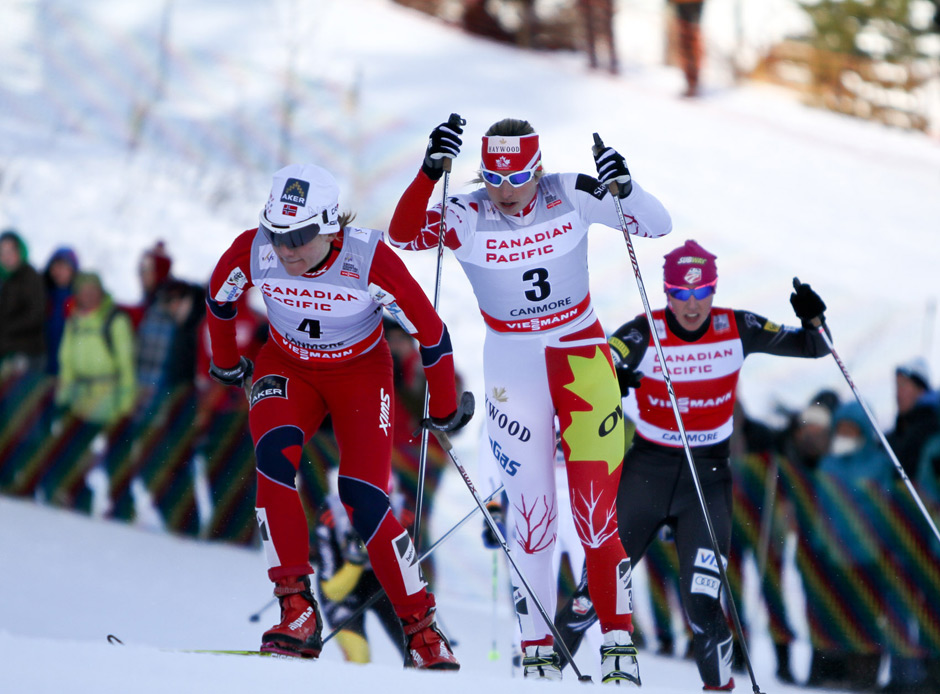
Russia’s Nikita Kriukov (l) celebrates his first World Championships gold in Thursday’s 1.5 k classic sprint, just ahead of Norwegian Petter Northug (second from r) and Alex Harvey (second from l) of Canada in Val di Fiemme, Italy. Northug was second for his 10th World Championships medal, Harvey was third for his second and Emil Jonsson (r) of Sweden placed fourth. (Photo: Glen Crawford)
FasterSkier’s coverage of the 2013 FIS Nordic World Ski Championships in Val di Fiemme, Italy, is brought to you by the generous support of Fischer Sports.
VAL DI FIEMME, Italy — Regardless of personal favorites at the FIS Nordic World Ski Championships, the finishing image from the men’s 1.5-kilometer classic sprint final on Thursday had to make you smile.
Russia’s Nikita Kriukov threw back his head and embraced his first World Championships victory with open arms, Canadian Alex Harvey fist-pumped in third and Petter Northug sort of grimaced in relief after placing second for his 10th World Championships medal.
Norway’s reigning 50 k and 30 k skiathlon champion, Northug has won seven golds in World Championships distance events, so Thursday’s silver – his third at worlds – was about as good as he could have asked for. He turned to Kriukov to congratulate him and the two chatted during the victory lap.
Given Northug’s typical reluctance to congratulate anyone, especially not Russians, that really says it all.
He didn’t extend quite the same geniality toward Emil Jönsson, because, well, he’s Swedish. According to NRK, when Swedish commentators asked Northug whether he wanted to beat Jönsson more than Kriukov, he said, “That’s right.”
“I see myself as an outsider in a classic sprint so usually Emil and other sprinters beat me,” Northug elaborated in another interview. “So for me to win silver today, I’m very happy.”
Jönsson, who was fourth and 2.61 seconds off the pace, responded respectfully. “Today Petter showed how strong he is,” he told NRK.
But the storyline wasn’t Northug, who intentionally stepped ahead of Jönsson on the final descent into the stadium to secure second. “I looked at the photos [showing] I cut in front of him today; it is one of the sweetest feelings I’ve had in the championship of all times,” Northug told NRK, according to a translation.
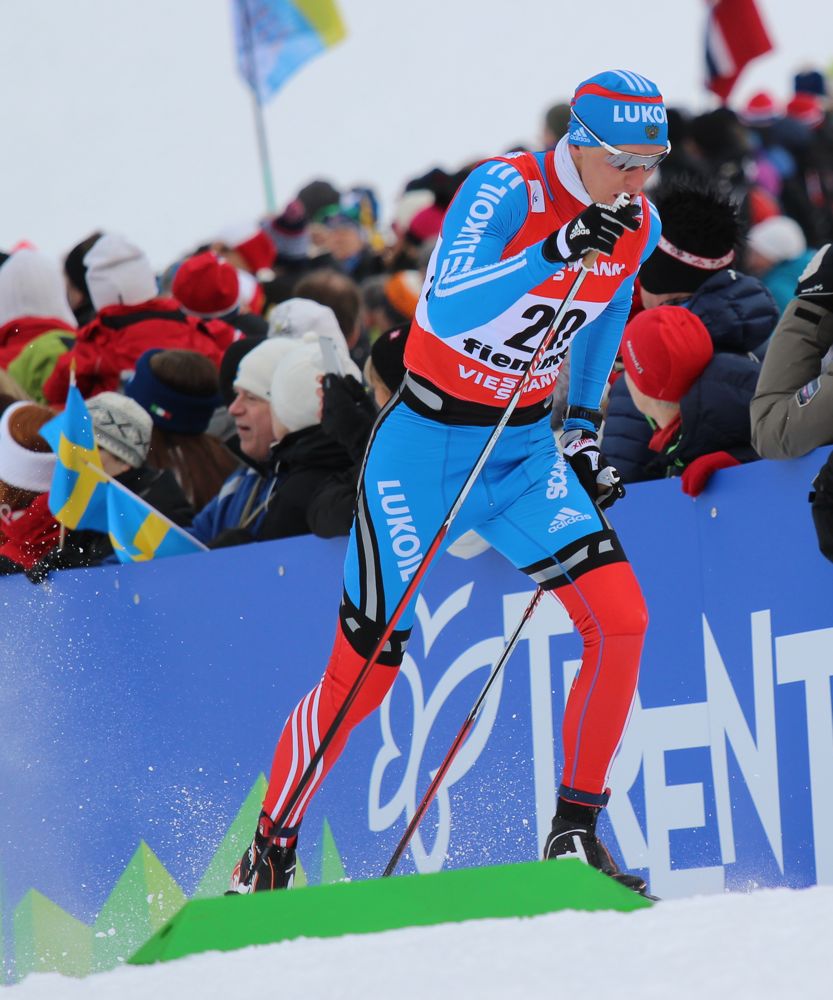
Nikita Kriukov of Russia en route to his first qualifying win, which he achieved at World Championships on Thursday. He went on to claim his first world title in the 1.5 k sprint in Val di Fiemme, Italy.
Kriukov, 27, was the big winner on the first day of his third World Championships. He started the morning off by winning the qualifier for the first time at the World-Cup level, 0.3 seconds ahead of Kazakhstan’s Alexey Poltoranin, who went on to place 11th after tripping out of the start and breaking his pole in his semifinal.
“I’m really very happy,” Kriukov told reporters after the race. “I said for myself today I can win, and I did it.”
In the quarterfinals, Kriukov placed second to Norwegian Paal Golberg in a photo finish, then went on to beat Golberg by 0.52 seconds in the semifinal. Golberg was third in that semi and Jönsson was 0.31 seconds back in second.
A false start delayed the final, which Northug said he did intentionally.
“I did it to get more rest,” Northug told NRK after winning the second semifinal in a photo finish with teammate Eirik Brandsdal. “Every minute counts.”
Brandsdal confirmed he made a pact with Northug in advance. “One of us had to make false start,” Brandsdal said.
While Brandsdal went on to place sixth, 27.17 seconds after Kriukov, Northug was just 0.4 seconds back in second and Harvey 0.84 seconds behind in third. For Harvey, it was his first individual title after winning the classic team sprint with Devon Kershaw at the 2011 World Championships in Oslo, Norway.
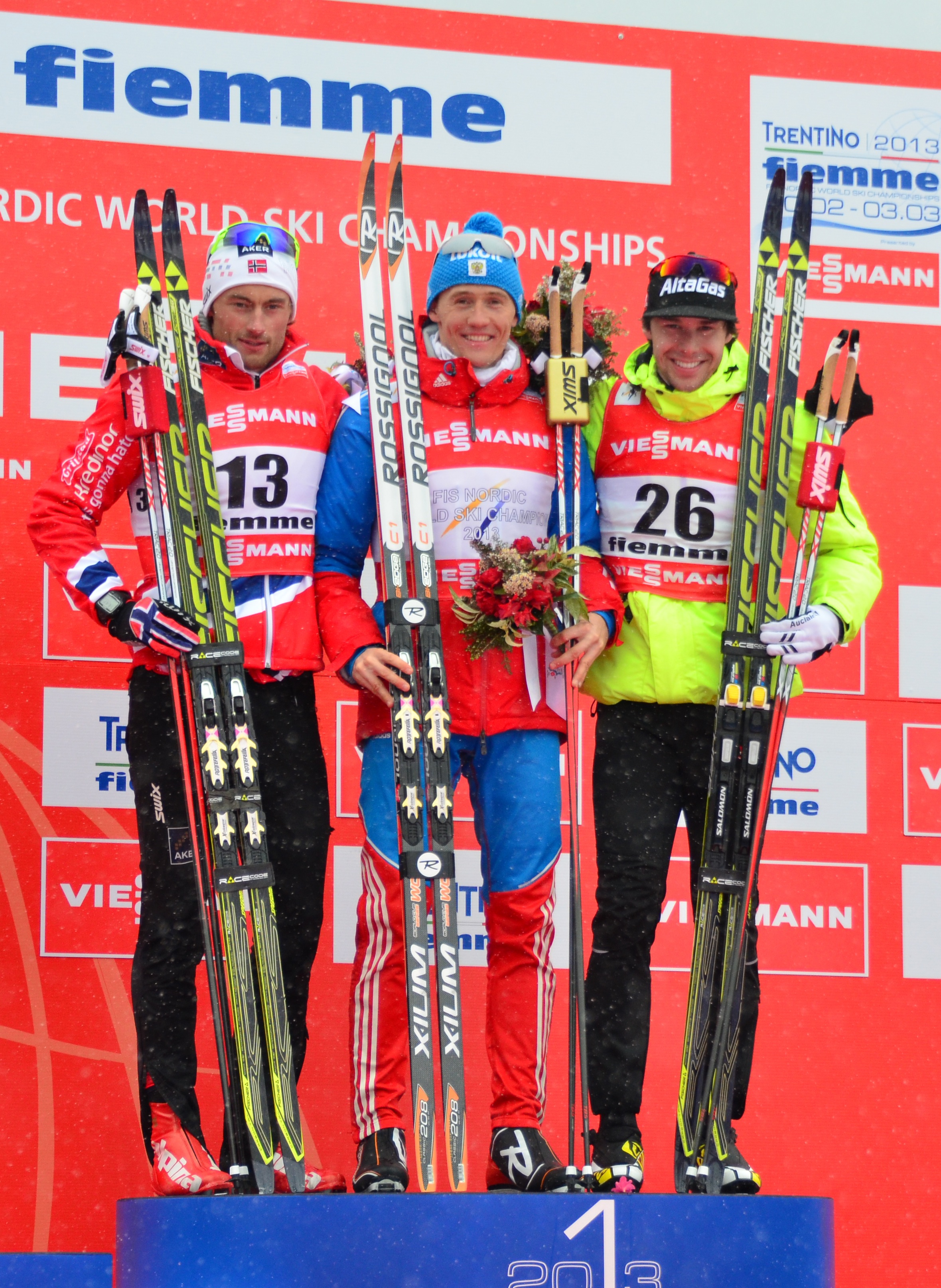
2013 World Championships classic sprint winner Nikita Kriukov (RUS) with Norwegian runner-up Petter Northug (l) and Canadian bronze medalist Alex Harvey (r). (Photo: Glen Crawford)
“I’m in heaven right now,” the 24-year-old Canadian told reporters after narrowly qualifying in 26th. “It’s been a rough start to the day with barely making it into the heats, but then we adjusted the skis and then it was really fast.”
In the final, Kriukov patiently followed Jönsson’s lead up the first long grind. Northug positioned himself in third and Harvey tucked behind Brandsdal in fourth at the top while Golberg skied in sixth.
On the downhill before the last climb, Kriukov slipped by Jönsson, who worked hard to keep up. Harvey ran outside of the tracks in third, and along the final bump and ensuing stadium downhill, Northug moved into second – a few meters behind Kriukov and just ahead of Jönsson.
Northug then stepped into Jönsson’s middle lane, and Harvey followed Kriukov on the inside track. Kriukov held off his challengers to the finish, which were clearly defined after a double-pole showdown for first through third. Jönsson finished two seconds later in fourth and Golberg was fifth to help Norway put three in the top six.
“I gave everything in the last hill and hoped for a little gap,” said Jönsson, the World Cup sprint leader, after failing to best his third-place finish in the skate sprint in Oslo. “Unfortunately the other guys have good glide, catch me and glide past me. It doesn’t feel so good, but ah, it’s a sprint.”
Kriukov, on the other hand, felt great. Asked when he knew he had gold, he replied, “Maybe only on the last 100 meters. After second uphill I stay only third place, but I understand that after downhill, I keep in the group and my speed was faster than the other guys.”
And the fight to hold off Northug? “It’s good,” he laughed. “I like beating Petter.”
He and Harvey also chatted while skiing back and fourth for fans along the finishing stretch. According to Harvey, Kriukov wanted the three of them to line up for a 100-meter sprint to celebrate, but Harvey and Northug wanted to do recovery.
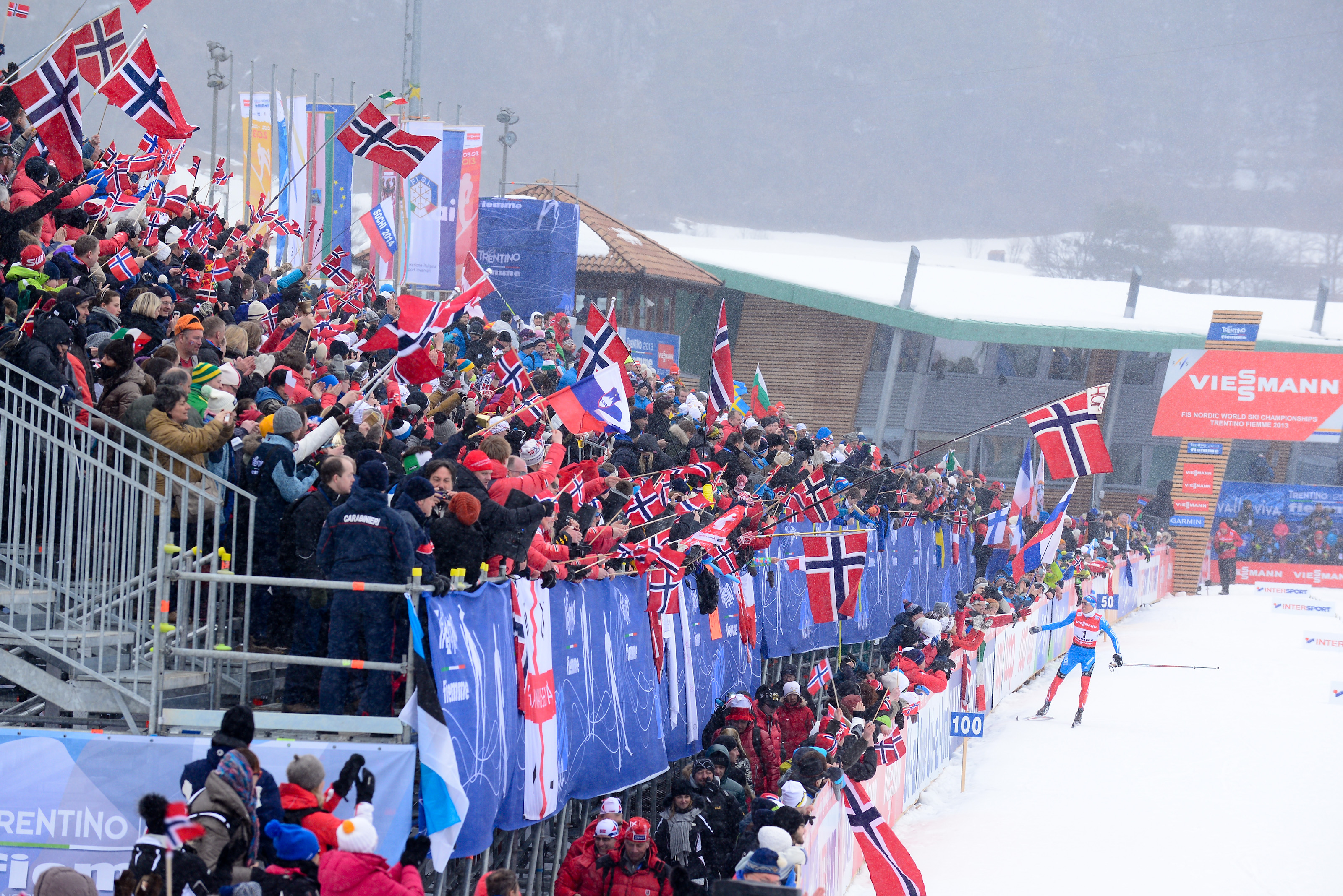
Russia’s Nikita Kriukov high-fives a crew of proud Norwegian fans after edging their own Petter Northug in Thursday’s 1.5 k classic sprint at World Championships in Val di Fiemme, Italy. (Photo: Fiemme2013)
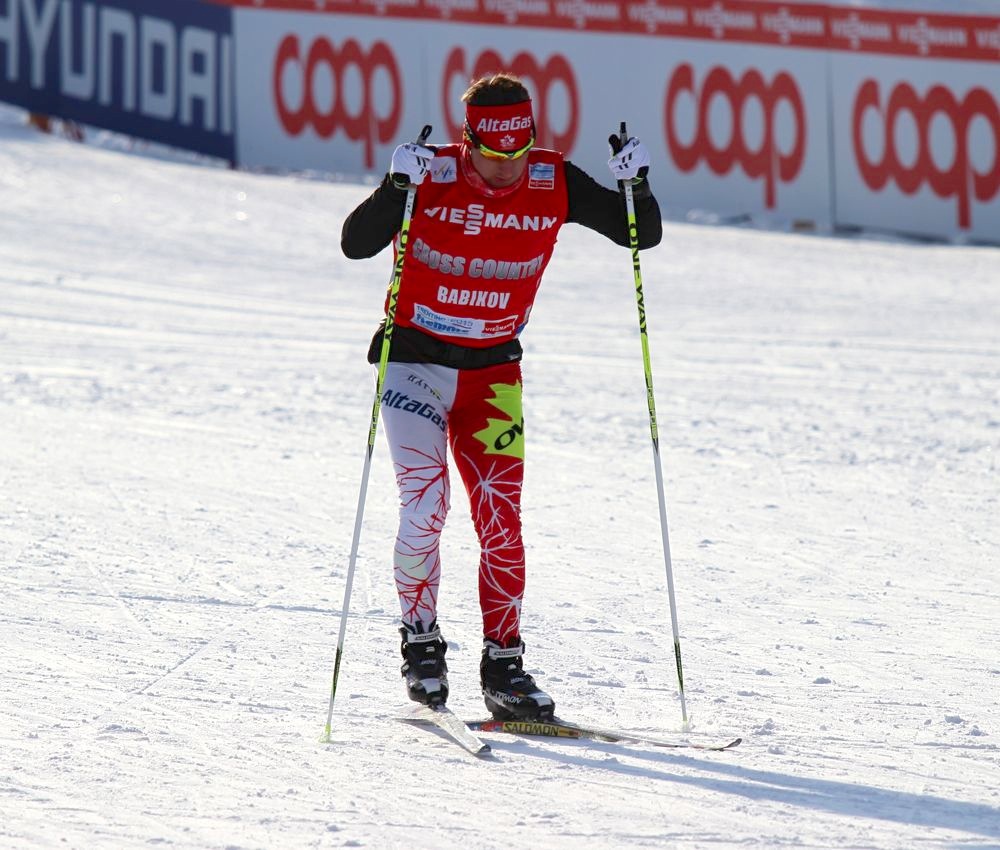
Canadian World Cup team member Ivan Babikov training on Wednesday before the 2013 FIS Nordic World Ski Championships start in earnest with Thursday’s classic sprints in Val di Fiemme, Italy.
FasterSkier’s coverage of the 2013 FIS Nordic World Ski Championships in Val di Fiemme, Italy, is brought to you by the generous support of Fischer Sports.
VAL DI FIEMME, Italy — If you close your eyes and ski the course at the 2013 FIS Nordic World Ski Championships, well, go ahead and try it.
When you literally hit the wall that climbs out of the stadium, which curves upward and continues at an unforgiving grade to the top of the sprint course, you’ll realize you’re on something similar to the World Cup course in Canmore, Alberta, except you’re in the Dolomites in northeastern Italy.
For the Canadian World Cup team, they might as well be at home, head coach Justin Wadsworth said under blue skies while testing skis in the Lago di Tesero stadium Wednesday afternoon. All but one of his athletes had trained earlier in the day, before the 5- and 10-kilometer freestyle qualifying races, which opened the 1 ½-week World Championships.
Dozens of lesser-known skiers from non-skiing nations, like Iran and India, had come and gone after the qualifiers, which granted the top-10 women and men starts in the individual races at World Championships. But for Wadsworth, two Canadian wax technicians and Ivan Babikov, it was just another day in the sun – just like in Canmore.
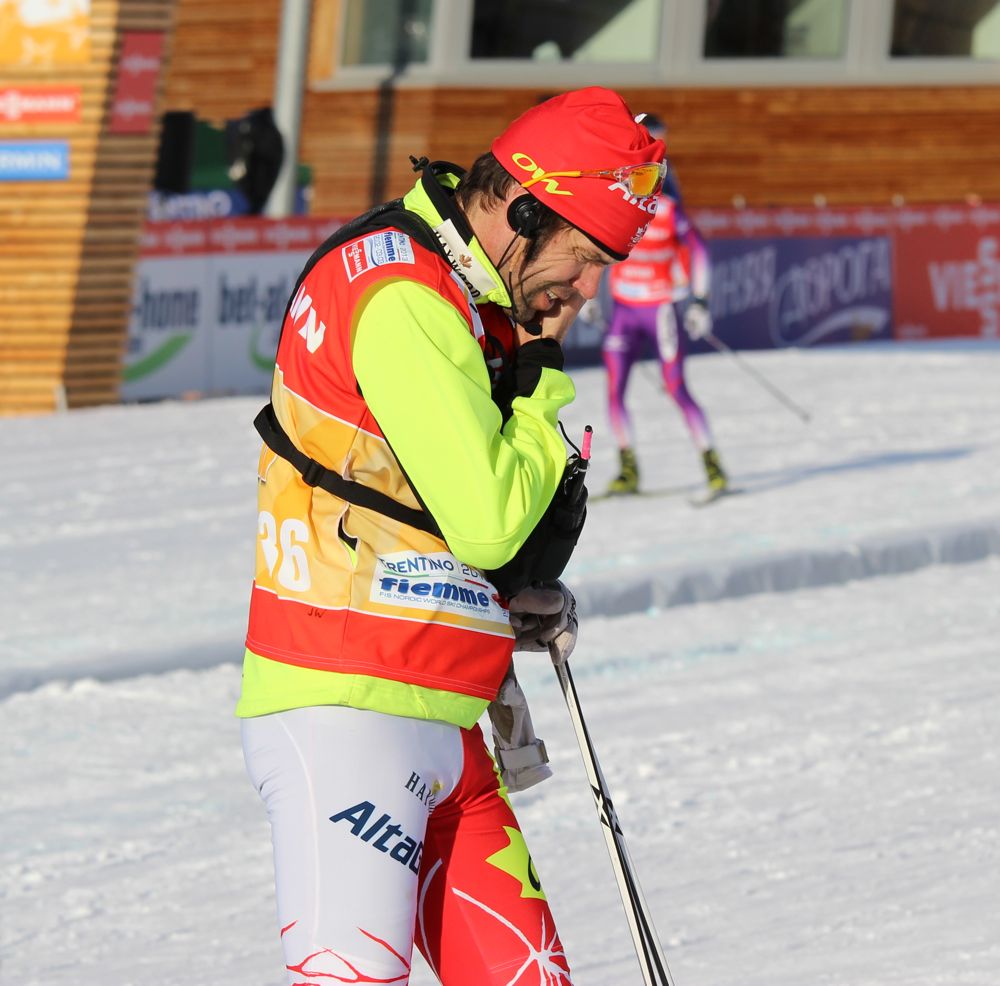
Canadian National Ski Team Head Coach Justin Wadsworth during Wednesday’s afternoon training at the 2013 Nordic World Ski Championships in Val di Fiemme, Italy.
“The first pitch is really like Canmore and the snow is like Canmore so it’s good for us, I think,” Wadsworth said. “Knock on wood, we’ve always had success in Val di Fiemme. We’ve gotten a lot of podiums here.”
And several are still fresh on the Canadians’ list of season-highs. In early January, 24-year-old Lenny Valjas notched second in the 15-kilometer classic sprint at the Val di Fiemme segment of the Tour de Ski. Teammate Alex Harvey was third in the same race, the second-to-last stage, and Babikov went on to place second the next day in the 9 k freestyle climb up the nearby Alpe Cermis.
Two years ago, Devon Kershaw was third in Val di Fiemme in a 20 k classic mass start, and a year later, Harvey placed second in the same event at the 2011/2012 Tour. All of that adds up to a lot of good memories, but the fact is, the Canadian men haven’t had the smoothest of rides this season.
Valjas injured his hand shortly before the first races in Europe, Kershaw tore a ligament in his foot not long after, but raced on it through eight-painful weeks, and Harvey dislocated his shoulder during training three weeks ago in Sochi, Russia.
On the women’s side, Chandra Crawford announced earlier this month that she was ending her season early to gear up for next year, and she flew home to Canmore before World Championships. All the adversity aside, the two other females on Canada’s World Cup team – Dasha Gaiazova and Perianne Jones – have been pretty darn consistent.
Both are coming off a podium in Sochi, where they placed third in the classic team sprint at the pre-Olympic World Cup. Three weeks before, Gaiazova tallied a career-best fourth in a 0.85 k classic sprint in Liberec, Republic. Both have guaranteed themselves trips to the 2014 Sochi Olympics, with Jones recording three top-12s in classic sprints this season.
So what does that mean for Thursday’s classic sprint? According to Wadsworth, good things for the women. Both are healthy, which is more than he could say about Valjas, who skied for the first time in four days on Wednesday. He came down with strep throat after last weekend’s Davos World Cup. Fortunately, a physician — Harvey’s mom — was traveling with them and caught the ailment early.
“It’s bad timing,” Wadsworth said, adding that they were glad to have the doctor around and believe to have remedied the effects with antibiotics. On Wednesday, Valjas told Wadsworth he felt OK in training.
“He just didn’t know stamina-wise what he had left,” Wadsworth explained. “This illness has taken something out of him for sure, but … he’s a Jedi, man. That guy can do stuff you never think he could do, so we’ll let him do it.”
That said, Valjas as well as Harvey, Kershaw and Phil Widmer (Alberta World Cup Academy) planned to start the 1.5 k classic sprint. Joining Gaiazova and Jones, Continental Cup leaders Andrea Dupont (Rocky Mountain Racers) and Emily Nishikawa will race the women’s 1.2 k classic sprint.
Of the six races at World Championships, Wadsworth considered Thursday’s individual sprint – as well as the team sprints, men’s relay and men’s 50 k classic mass start – to be their best opportunities for the podium. And the Canadians are shooting for at least two medals, one more than they achieved at the 2011 World Championships in Oslo, Norway (where Harvey and Kershaw won the classic team sprint).
“The whole season’s been aimed toward this,” Wadsworth said, as he reiterated several times this year. But sometimes, his team’s results – with all its athletes having been on the podium at the World Cup level – have come up short of expectations.
Wadsworth said that’s a matter of timing. The team did an altitude camp in Italy before the Davos World Cup, which explained some athletes’ sub-par results in Switzerland.
“Your body’s in the middle of adjusting back from altitude and we’re racing there so we knew not to expect much there,” he explained. “We have athletes that know they can medal. … Everyone knows to show up to the big event and perform. As a staff and as a whole program, we don’t expect anything but great performances.”
Harvey, for one, is ready. In a phone interview on Wednesday night, he said his shoulder wasn’t a problem and three days after the injury in Sochi, he taped it up and did intervals. Now back in Val di Fiemme, he’s looking forward to the classic sprint as well as the relay, 50 k and hopefully the team sprint – with three men contending for two spots.
“I’ve been feeling really good in training in the last month,” Harvey said. “I always have had good feelings on these courses and this type of snow.”
Too much rest leading up to Davos hurt him, but now that he had his 39th in the classic sprint out of the way, he was feeling good about his chances. Asked what event he was most looking forward to, Harvey said the relay, in which the Canadians (Valjas, Kershaw, Babikov and Harvey) placed fifth at the opening World Cup in Gällivare, Sweden. They did not compete in the second relay of the season in La Clusaz, France.
“It’s been a slow start to the season, but we didn’t want to compete for overall World Cup,” Harvey said. “The championships was the only target this year. … We know we’ve done pretty well on this course. Everyone likes this area, just extra confidence.”
According to Wadsworth, it’s undecided whether Harvey will skip the 15 k freestyle next week or Saturday’s 30 k skiathlon to rest for Sunday’s team sprint. Kershaw would likely sit out the skiathlon and compete in all five other races, Wadsworth said.
“We made a big call in Oslo by skipping the 15 k classic,” Wadsworth said. “Devon and Alex could’ve medaled in that I think, and we sucked it up and skipped that race and got a gold medal out of it [one day later]. I don’t see why that strategy should change here too much.”
Gaiazova, Jones and Dupont will focus on the sprints, while Nishikawa and Brittany Webster (Highlands Trailblazers) will represent Canada in the distance races. Babikov and Graham Nishikawa will be ones to watch in the men’s distance events, and Wadsworth said both Nishikawas are feeling better after a long bout with illness.
“Every day we should have somebody that’s in the hunt,” Wadsworth said.
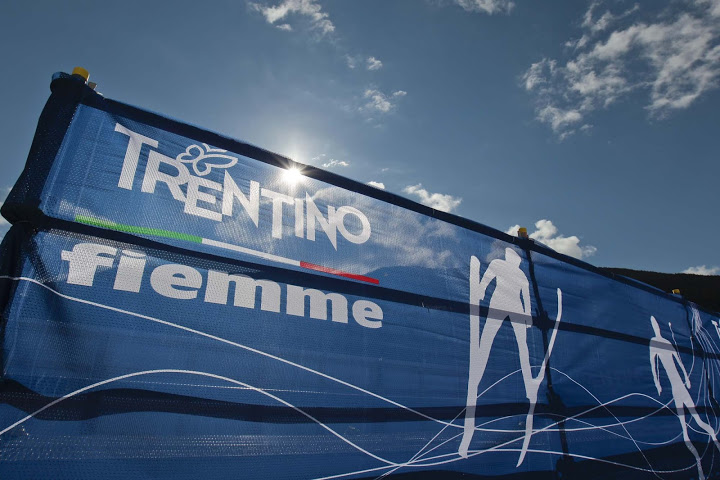
Clear skies in Val di Fiemme welcome the FIS Nordic World Ski Championships in the Val di Fiemme region of Trentino, Italy. (Photo: Federico Modica/Fiemme 2013)
FasterSkier’s coverage of the 2013 FIS Nordic World Ski Championships in Val di Fiemme, Italy, is brought to you by the generous support of Fischer Sports.
VAL DI FIEMME, Italy – Val di Fiemme’s no stranger to World Championships. The winter-sports mecca located in the heart of the Dolomites in northeastern Italy has been around the block a time or two, and is about to host its third FIS Nordic World Ski Championships.
Yes, things are different than in 1991. Luca Zanon, the 2013 World Championships sports assistant, was just being born then, when Val di Fiemme held its first international cross-country, nordic-combined and ski-jumping event.
Homologation? Never heard of it. And if people are going to ski 50 kilometers, the idea was to make as long a loop as possible.
In 2003, the venue hosted the 40th World Championships, one marked by changes. Cross-country sprints grew from 1 to 1.5 kilometers, following a precedent set by the 2002 Olympics in Salt Lake City. Longer sprints? Go figure.
Fast-forward 10 years to the 2013 edition, which kicks off with cross-country qualifying races on Wednesday. This year’s World Championships include some 55 nations, according to Zanon. Female ski jumpers are here in numbers – 46 to be exact – in their third World Championships since Liberec, Czech Republic (2009), and Olso, Norway (2011).
This event will likely attract tens of thousands of spectators and has required the collective effort of more than 1,200 volunteers, many of which worked the 1991 championships, Zanon said.
Times have changed, the courses have been widened and made more viewer-friendly, but the ultimate goal remains the same: to put on a memorable and rock-solid event. When Val di Fiemme was awarded the championships in 2008 (along with the FIS Tour de Ski finals and Nordic Combined World Cup), its organizers made a point to include the valley’s eco-friendly and homegrown tradition. For example, they used local contractors to create new buildings with raw wood at the Lago di Tesero cross-country stadium.
Since then, at least 11 FIS inspections have taken place between the cross-country and jumping venues and according to a press release, “Val di Fiemme never disappoint expectations.”
Zanon took the time to elaborate on the preparations on Tuesday, one day before the first races and opening ceremony.
FasterSkier:How long has this been in the making?
Luca Zanon: Planning all the events, more than four years. It started when we agreed with the sponsoring and then with collecting volunteers, even though we have a strong number of volunteers that are here since the first World Championship in 1991. A lot of them are still working so we didn’t have to collect as many volunteers, just to improve the level of English, to improve the level of IT technology. The age of volunteers, the average, is 10 years [younger] compared with the last World Championships we had here.
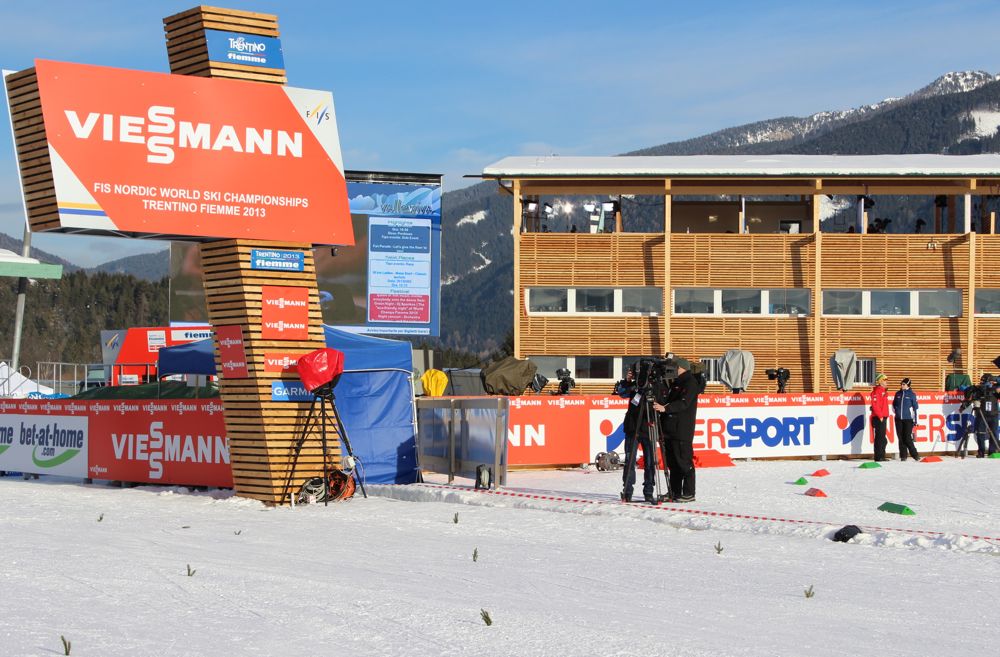
TV personnel fine-tune near the finish line. The wood building behind them was built specifically for television media at the 2013 FIS Nordic World Ski Championships at the Lago di Tesero stadium in Val di Fiemme, Italy.
Regarding the cross-country venue, it has been renewed. We built another fixed building and the wooden building is removable after the events. It is for TV, it was ecological with the wood, and it is removable.
FS:That TV building is going to be dismantled after? How long did it take to build?
LZ: Yes. One month. There were a lot of people working on it.
FS:How else has this venue and this event changed since 1991?
LZ: For sure, IT technologies and there is a lot of stuff that has to be done with computers now. Maybe 20 years ago they used to do every kind of communication in a completely different way so now everything is concentrated on emails and the exchange of emails. So if you lose one email you lost a very important part of your job. I think that 20 years ago is completely different. You had to be very clear from the beginning with how to communicate with all the other staff with volunteers. Now just with an SMS you can tell them, ‘Come one hour later. Come one hour before.’ Twenty years ago, the chief of volunteers had to go house by house maybe.
In terms of material, the course’s preparation, it is completely different because of the technologies.
FS:How have the courses changed?
LZ: Wider for sure because of FIS regulations and TV wants mass-start competition so there are a lot of athletes on the same time and in the same space of the track. For this reason they have to be wider, and they guarantee a very spectacular overview for the spectators.
If we talk about spectators and television and a spectacular view, I have to say, all the courses are shorter because they tend to, even in the 50 kilometers, to cross the stadium more times to get visibility for sponsors for television. Twenty years ago there was a huge course of 20 kilometers for the last race, the 50 kilometers, they just went two times around and there was only three or four television points. And now every [corner] and every downhill there is three or four cameras and the courses are shorter for this reason. Now the sponsor can be put all the time under the vision of the cameras.
FS:How many athletes are registered?
LZ: The number of athletes asked to enroll was more or less 500 for both men and ladies. It was a bit less for ski jumping, 150 more or less, divided by men and women, about 46 women. And for nordic combined, we have 70 athletes enrolled coming from 17 different names. In total we have 55 nations with all the sports, and some of them will try to qualify tomorrow for the other races.
Tomorrow are the qualifications for cross-country, but there are no official results, there is not the first winner since it is just a qualification race to guarantee the athletes to take part to the next competition starting with the sprint on Thursday.
[Note: The top 10 men and women, who did not have enough FIS points to secure starts before World Championships, will qualify for individual distance races.]
In case they don’t qualify, they can take part in [Thursday’s classic] sprint as well since there is a qualification for the sprint race.
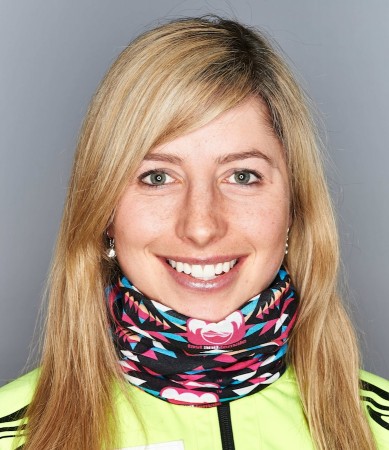
Chandra Crawford, Canadian World Cup Team member and 2006 Olympic gold medalist, in Chamonix-Mont-Blanc, France. (Courtesy photo)
Countless times, Chandra Crawford relied on her upbeat attitude and incredible self-motivation to rise to the occasion. When it came to racing, there were no bad days, just a genuine love of the sport.
At the age of 22, the always-smiling, wide-eyed girl from Canmore, Alberta, won gold in the freestyle sprint at the 2006 Olympics. She notched her first World Cup victory the following season in her hometown and won another gold in a World Cup skate sprint a few months later in March 2008 in Lahti, Finland.
Canadian Chandra Crawford (3) follows Maiken Caspersen Falla of Norway with Kikkan Randall (USA) close behind in the Alberta World Cup freestyle sprint semifinals on Dec. 15 in Canmore.
Now 29, Crawford’s no longer a girl, yet she still thrives off that same optimistic adrenaline that’s fueled her for the last 13 years. For instance, take the Canmore World Cup. Heading into the races two months ago, Canada’s leading national-team female hadn’t cracked the top 30 this season. In her signature event in front of thousands of fans, she qualified in third in Canmore and went on to place sixth in the World Cup final.
After the holiday break, in which she spent time with her two teammates – Dasha Gaiazova and Perianne Jones – training and racing Alpen Cups in Germany, Crawford struggled to get back near the top. In mid-January at a World Cup skate sprint in Liberec, Czech Republic, she was 29th. She didn’t finish her next race, a 10 k classic mass start in La Clusaz, France.
That’s when Crawford knew something was wrong. And unlike all the other times she had buried the bad feelings and triumphed, she took a hard look at the root of the cause.
“I spend a lot of time with my training logs, analyzing a lot of what I’ve been up to and how I’ve been feeling over the last year, and there were just so many strong reasons in there for the state I’m in,” Crawford said on the phone Wednesday. “It just seemed clear to me that I was in a pretty good hole.”
She wasn’t burnt out, sick of the sport or tired of racing, she said. Rather, Crawford realized she had done too much in the last year, which culminated into an overwhelming sense of mental and physical fatigue. Stress in the last year was a contributing factor, but moreover, that paired with a “super-hard” training sessions took a toll on her body.
“I’ve been hammering for a lot of years now so to take a breather after 13 solid years of full-time training and racing at as high a level as my body can at all times, I don’t feel too bad about it,” Crawford said.
On Tuesday, Cross Country Canada (CCC) issued a press release stating Crawford decided to end her season early to recover for next year’s Winter Olympics in Sochi, Russia. After prequalifying for the 2014 Games with her Canmore result, Crawford appeared to be in a safe spot. But what was next for Canada’s golden child? And what would become of the nation’s World Championships hopes with just two World Cup females racing in Val di Fiemme, Italy, later this month?
A Little R & R
According to Crawford, who flew home from Sochi on Monday, she’ll take some off before resuming training. She formulated a loose plan with Canadian women’s coach Eric de Nys before leaving after breaking the news to him last week.
Nervous about the conversation, Crawford said she waited until she saw him in person to discuss it. After spending time with his family in Canmore, de Nys rejoined his team on the flight to Sochi for the pre-Olympic World Cup.
“We were sitting on the plane together for a couple hours and then finally I just said, ‘I’m thinking about stopping the season,’ ” Crawford recalled. “And he said, ‘We’re on the same page,’ so then I was completely calm and I knew it was the right thing.”
According to de Nys, Crawford’s only obligation is to be ready to go in May when the team starts training for the 2013/2014 season. He said her situation is much like that of a season-ending injury; she’s going to take time to recover, recuperate and follow a training plan in doing so.
“We know she’s a performer so I don’t have any worries about her getting back into shape,” de Nys said on the phone from Valdidentro, Italy, where Gaiazova and Jones are training before the Davos World Cup.
“Sometimes things go awry,” he added. “It might seem drastic midway through the season, but it happens quite often where athletes have to miss a couple months of racing.”
De Nys used LukášBauer, the Czech Republic’s famous World Cup skier, as an example. Bauer’s season was cut short in February last year when he discovered a fracture in his heel.
“He couldn’t walk anymore,” de Nys said. “That’s not what he wanted to do, but in this situation it’s the same thing. Of course, Chandra wants to try to finish the season, but when we really thought about it, talked about it, it doesn’t make sense. I think she’s going to come back stronger from this.”
Chandra Crawford (CCC photo)
Crawford does, too, but she’s a little unsure of the timeline required to get there.
“I don’t know what to expect,” she said. “I don’t know how long this is supposed to take, but that’s why we’ve shied away a little bit from trying to put timeframes on it. In the past, when I make a goal I am going to do everything in my power to achieve it, which can sometimes lead to forcing it or maybe trying to fabricate a state that might not actually be happening.”
Moving forward, she said there are two scenarios she’ll try to avoid. One, disappointment when she doesn’t meet her goals. And two, “acting fine because I decided I want to be fine at a certain time,” she said.
“We’ve seen this past year that, although I have tremendous abilities to create an optimal state and that’s why I’ve raced well in the past, the system is overtaxed now and I need to be more honest about my skiing level and listen to my body better,” Crawford said.
Making the decision to stop racing three weeks before World Championships wasn’t easy, especially given Crawford’s love of Italy. According to de Nys, it was better to make it sooner rather than later.
“It’s no fun when you know you can be on the podium and you’re finishing 40th or 50th, you know something’s not going right,” he said. “When you just kind of get in the water and you’re spinning your wheels, you know that’s time to take a break and re-gather everything and come back fighting stronger.”
Crawford said another factor in her decision was her experience with previous Olympic years – and the media attention leading up to it. Upon returning to Canada, she had four interviews on Tuesday and two that she moved to Wednesday.
“The first question of the first interview of the Olympic countdown was, ‘Do you feel the weight of the nation’s expectations on you to win gold?’ ” Crawford said. “If I get drilled with that question the entire year, even with all my media training and whatever I do to deflect it or focus on the process, it’s still a thought that just comes up so much more often with the media presence.”
After envisioning herself coming home and “crumpling onto the couch,” Crawford said she’s exhausted but happy. And while she was considering a two-week yoga retreat in Mexico to take her away from the temptation to ski, she wrote in an email Thursday that she might cancel the trip.
“Just looking at enjoying home life and not running around so much,” Crawford explained.
Whatever she ends up doing to unwind, Crawford said she doesn’t take anything for granted – not a vacation, her team or all the racing opportunities she’s been given.
“I’m definitely spoiled rotten and I really appreciate everyone being behind me because I’m definitely putting my all into my pursuit of skiing,” she said. “It’s interesting that this time putting my all into it means taking a step back.”
The founder of Fast and Female, Crawford will continue with her less-involved role, attending about two events per year and delegating responsibilities to her board and a new executive director. As the movement of empowering young girls keeps spreading across North America, Crawford said she’s thankful for the athletes, volunteers and regional coordinators behind it, especially Kikkan Randall and other US Ski Team members. Ultimately, Crawford wants to make more appearances in the future, but reasons, “my chance to pursue my dreams to the best of my abilities on the racing side is just a short time window right now.”
As she embarks on a fresh start in racing, she’s looking forward to feeling regenerated for next season.
“I’m just preparing to go into the Olympic year so rested and so calm from this time I took to step back and center myself and become so healthy and energized,” Crawford said. “There are just so many things I pour energy into that I really have to be really disciplined and prioritize for the Olympic year.”
World Champs Outlook
In Crawford’s absence at the upcoming World Championships, an additional female sprinter will not be selected, according to CCC High Performance Director Thomas Holland.
When the team was named a week and a half ago, the selection committee extended its 11-person maximum for one additional distance woman on the squad. Without Crawford, the team was back to 11. Of the five women, three are sprinters.
With the opportunity for one team sprint and one relay per gender at World Championships, Canada’s women appear to be in a good position for the former. Last weekend, Gaiazova and Jones teamed up to win bronze in the classic team sprint in Sochi. The Canadians will also field a women’s relay.
“This is not an event we have done well in,” Holland wrote in an email, pointing out their 16th-place finish at the 2007 World Championships. They didn’t have a relay in 2009 and placed 14th two years ago. “It would be nice to see an upward improvement from the last 3 [World Championships].”
De Nys explained Canada has been working to rebuild its women’s program for the last several years since Beckie Scott and Sara Renner captured silver in the team sprint at the 2006 Olympics.
“Now, we’re very strong, but just in sprint so we’re trying to get some momentum behind distance skiing in Canada as well,” de Nys said. “Sometimes it takes a little while before you have the right horses in the stables, you know?”
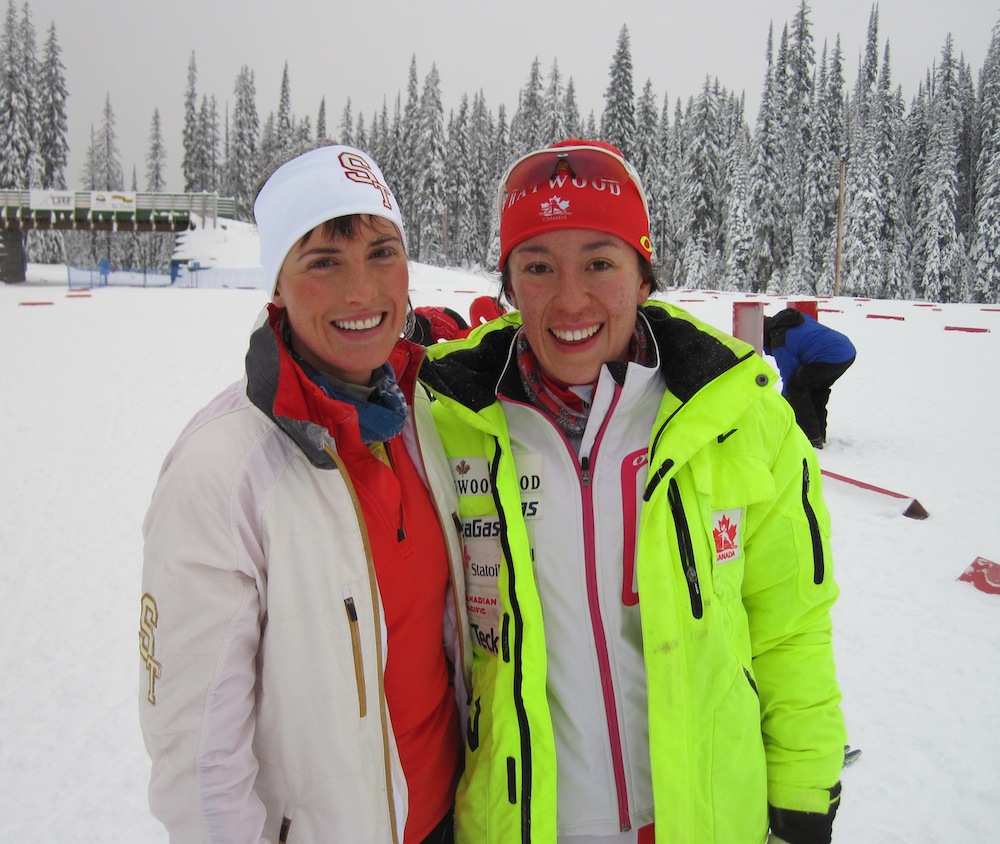
Brittany Webster (Highlands Trailblazers) and Emily Nishikawa (AWCA/NST) at the Sovereign Lake NorAm in December. Both distance skiers were recently named to the 2013 Senior World Championships team.
(Note: This article has been updated to include comments from Andrea Dupont and Brittany Webster.)
One thing you can say about Cross Country Canada when it comes to selection decisions and criteria consideration, they’re one thorough bunch. Two days after NorAm racing wrapped up in Duntroon, Ontario, Canada’s World Championships selection committee reached out to nominated individuals on Tuesday.
The nation’s seven World Cup team members knew they were in, and five others got the email they had been waiting for.
While there were no real surprises, the committee and national-team head coach Justin Wadsworth had to “consider a couple of challenging decisions in selecting the most competitive team,” according to a press release on Wednesday.
In doing so, they had to work within CCC’s selection criteria, and the limitations of World Cup (WC) quota (distance 4 men and 3 women; sprint 4 men and 4 women), World Championships (WSC) quota (4 men and 4 women per event) and their own budget.
Six men and six women were selected to the team – one beyond their originally stated 11-person maximum. CCC High Performance Director Tom Holland explained “the addition and exception was a matter of fairness,” and applied to the selection of two female distance skiers (Emily Nishikawa and Brittany Webster).
All athletes were “nominated for selection” to the 2013 Senior World Championships team, which will compete in the Davos World Cup from Feb. 16-17 and World Championships in Val di Fiemme, Italy, from Feb. 20-March 3.
Joining the men’s squad, with World Cup skiers Devon Kershaw, Alex Harvey, Ivan Babikov and Lenny Valjas, Alberta World Cup Academy (AWCA) teammates GrahamNishikawa (also on the Senior Development Team) and Phil Widmer made the cut.
Nishikawa was essentially a shoe-in after winning both distance races at the World Championships trials over two weekends of NorAm racing in January. In the first in Thunder Bay, Ontario, Nishikawa won the skiathlon. On Sunday, he won the 15 k freestyle individual start in Duntroon, Ontario, to secure his ticket.
One of the sprint favourites, Widmer was somewhat of a unique case after he won the first classic sprint in Thunder Bay then crossed the line first in the A-final at Duntroon. The jury ruled that Widmer’s tangle with AWCA teammate Jesse Cockney near the finish should cost him the victory and relegated Widmer to sixth – last in the heat. Upset with the decision then, Widmer was pleased it didn’t affect his World Championships bid.
“Phil Widmer clearly deserved to be selected to WSC,” the CCC release stated. “[He] was selected for having been the winner of the Lappe sprint race and being the top qualifier in both sprint races.”
“I think it was pretty clear, I didn’t win, I got relegated, but I’ve been skiing well,” Widmer said on the phone Wednesday. “You never know until you know. … It’s pretty exciting, I mean, thankful for the opportunity and looking forward to racing in Europe this year.”
Widmer, 29, has competed at two World Championships previously in 2009 and 2007. At the most recent in Liberec, Czech Republic, he was 30th in the classic sprint.
“I was on the national team three years ago and from there had to evaluate my ski career and what I wanted to get out of it,” Widmer said. “To work my away back kind of makes me thankful for this opportunity. … To be on the outside looking in, it’s kind of nice to be on the inside again.”
He credited his coaches and staff at the World Cup Academy, which had two other World Championships qualifiers in Nishikawa and his sister, Emily. “It’s really been a good year of training that’s resulting in this,” Widmer said.
One of the more notable absences, Jess Cockney (AWCA/NST) was not nominated despite having placed second in the Canmore World Cup skate sprint qualifier in December. He was ninth overall that day in the sprint.
“The selection committee and the Head Coach also recognized that Jesse Cockney’s results in the sprint trial races, as judged by total qualifying times and final performance, were worthy of selection consideration,” the release stated. “The lack of WC and WSC quota was the defining factor in not being able to select Jesse for this event.”
He will be an alternate, called upon if any of the male sprinters get sick or realize they can’t compete before the event. Cockney has also been selected for World Cups in March in Lahti, Finland, and Drammen, Norway.
On the women’s side, Nishikawa, Webster (Highlands Trailblazers), and sprinter Andrea Dupont (Rocky Mountain Racers) will join the three World Cup members (Dasha Gaiazova, Perianne Jones and Chandra Crawford) on the World Championships team.
Nishikawa, 23, was selected based on force majeure, something beyond reasonable anticipation or control. The AWCA and development-team member sat out Sunday’s 10 k skate with a cold, which she said was a tough decision but one she ultimately had to make.
After winning the skiathlon in Thunder Bay, Nishikawa was in prime position heading into Duntroon’s distance race.
“I had been looking forward to that race for a really long time so I was pretty upset not to race,” she said Wednesday. Fortunately for her, the selection committee reasoned she was one of the best female distance skiers in Canada.
“In order to accommodate the force majeure, the selection committee evaluated the single best distance selection race, based on CPL [Canada Points List] points, of the two winners of the distance trials races – Emily Nishikawa and Brittany Webster,” the release noted. “Emily was selected based on comparing her single best race to Brittany Webster’s best single CPL result: Emily Nishikawa – Lappe skiathlon winner: 90.39 CPL. Brittany Webster – Duntroon 10K skate winner: 89.80 CPL.”
Regardless, Webster – a former national-team member – was also selected.
“Given that Brittany Webster won the second distance 10K skate winner, there was no fair way to judge if Brittany could have been ahead of Emily in the 10K skate trials race in Duntroon,” the release said. “Also considered is that Brittany has had 5 NorAm podiums (up to the end of the Duntroon NorAm), was the top Canadian in the Canmore WC 10K [classic] event and that there are distance quota starts available for women at the Davos WC and the WSC. Based on this examination of performance and opportunity, Brittany was also selected.”
Asked whether she thought she’d make it, Webster wrote in an email that she felt her chances were 50-50.
“It’s always tough when there are so many phenomenal men and women,” she wrote. “I knew Andrea had already gotten a spot, and probably Em too as she is better at sprinting than I am, and I also knew that Jess would be in the mix (I was really rooting for him to grab a spot too). Already, the team spots were filled, so it was a question of whether they were going to take extra people. I am lucky to have some consistent distance results on my side, especially in classic. I knew that would help me.”
The Senior World Championships will be Webster’s first, but she previously made the team in 2006/2007 for the World Championships in Japan. That same year, World Juniors were delayed due to snow and ended up overlapping with senior worlds, so Webster declined her spot.
A U23 World Championships veteran, Nishikawa was looking forward to her first Senior World Championships as well.
“I guess I was relieved because I didn’t race that last race,” she said. “But I felt I raced well and … it was kind of out of my hands.”
As for heading to Val di Fiemme with her older brother: “It’s so awesome,” Nishikawa said. “I’m really happy for him and it’s cool that we’ll both be there together.”
Dupont secured her first trip to Europe for World Cup and World Championship experience after sweeping the NorAm classic sprints in Thunder Bay and Duntroon. Plain and simple: “Andrea Dupont was selected for having been the winner of both of the women’s sprint races,” the release stated.
“I am super excited about the opportunity,” Dupont wrote in an email. “I worked a lot on tactics this year and have finally been able to put together a few good sprints with solid qualifiers and finals. … To me this means that training is actually been effective and the last 4 years of hard work have paid off.”
For a complete explanation and look at CCC’s World Championships selection overview, process and ranking, click here.
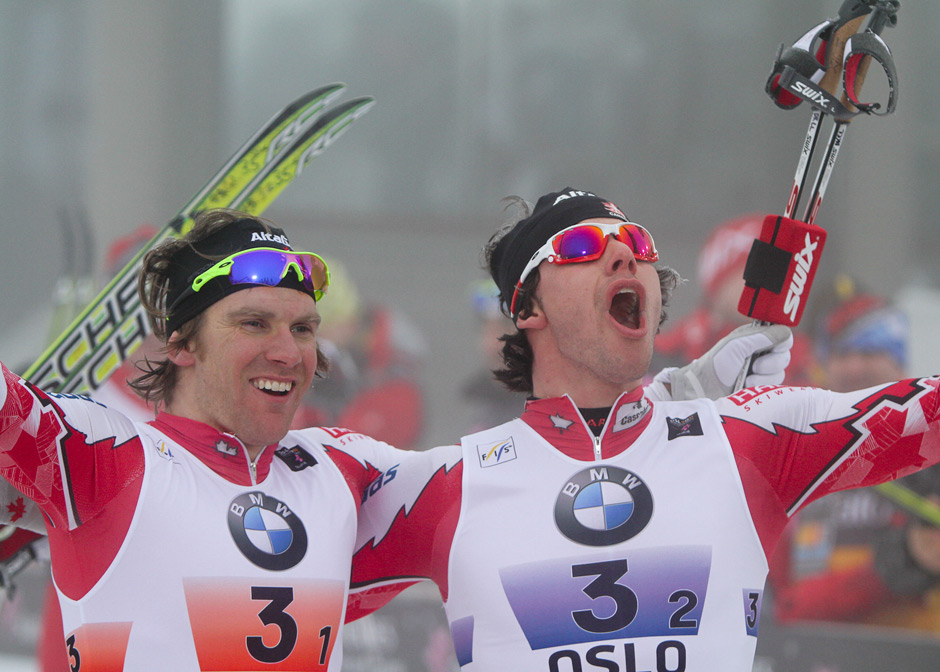
Alex Harvey (R) and Devon Kershaw (L) celebrating their World Championships gold in the team sprint at the 2011 World Championships in Oslo, Norway. A few hardworking domestic skiers will get to join them on Canada’s 2013 World Championships team.
If you thought the Americans had to wait a while for the naming of their cross-country World Championships team, which is supposed to be announced by the end of this week, try being Canadian.
Domestic racers up north won’t find out until at least Monday, Jan. 28 (a week and a half from now), who made the cut for the International Ski Federation (FIS) World Ski Championships from Feb. 20 to March 3 in Val di Fiemme, Italy. That might seem like enough time for up to 11 athletes to get their travel and training arrangements in line, but really, everyone just wants to know.
With another set of trials ahead in two weekends, we’ll have to sit tight until after the Duntroon NorAm classic sprints and 10/15 k freestyle races from Jan. 26-27 in central Ontario.
After that, the selection process should be relatively straightforward, according to Cross Country Canada High Performance Director Thomas Holland.
“You’re looking at whoever wins and for the second [set of trials], two people for races,” he said on the phone Wednesday.
That’s barring any unusual circumstances (i.e. someone falls, someone gets sick, etc.), in which case the selection committee might use some discretion. Holland and Canadian national team head coach Justin Wadsworth will be overseas in Sochi, Russia, when the team is supposed to be named, which could also delay the process.
“If there are any difficulties, we’re not going to make a rush judgment,” Holland said. “Let’s say there’s a force majeureor something weird happens. In an ideal world, Monday some kind of announcement will come out.”
As it stands, seven of 11 possible athletes on Canada’s 2013 Senior World Championships team prequalified. The entire World Cup team (Alex Harvey, Devon Kershaw, Ivan Babikov, Lenny Valjas, Chandra Crawford, Dasha Gaiazova and Perianne Jones) met the criteria by notching top-12 World Cup results this season.
That leaves four spots open for domestic skiers, and while Holland didn’t want to predict how those would play out by gender or discipline (sprint and distance), he stated they were looking to fill the 11-person maximum and get racers international racing experience.
“You’ve got to also look at where you’re going to do well,” Holland said. “The most-likely scenario is to take a sprinter and a distance [skier from both genders]. We’re not locked into that but you need to look at where we can probably get the best placings.”
The fact that Cross Country Canada (CCC) is using two sets of NorAm classic sprints and distance races as trials (first at Lappe Nordic in Thunder Bay on Jan. 3 and 5, and also at Highlands Nordic in Duntroon) indicates that they’re searching for individuals in both.
For the women, it’s a bit more open-ended with one sprint spot and possibly some more distance starts on the line (up to four per race). Holland hopes whomever they select for the sprints (male and female) can excel at distance races as well, especially on the women’s side, freeing up some distance spots for additional up-and-coming skiers.
“Our [women’s] World Cup team is predominantly sprint-oriented so I think there’s lots of potential every distance day for someone who gets selected to the team,” Holland said. “It’s not the same on the men’s side. It’s quite a bit tighter.”
So let’s take a look, first at the criteria laid out by CCC and then at those who prequalified and/or might have the best shot at making the team. Remember, there are upcoming races in Duntroon, which hold a lot of weight, plus Canada Points Lists (CPL) rankings (scheduled to be released Jan. 21) that could help the selection committee decide.
Here’s how the criteria breaks down, paraphrased from CCC:
Maximum team size: 11
Max number of Canadians of each gender per race: 4 (except the team sprint)
Ratio of sprinters/distance skiers: Based on Wadsworth’s recommendations
Who prequalified: All seven World Cup team members (four men, three women) based on the following selection standards:
a. Made FIS red group at the end of period 1
b. Top-12 distance or top-12 classic sprint result on the 2012/2013 World Cup
Who else can qualify:
c. One male and one female based on Wadsworth’s direct recommendation
d. Race winners in designated distance and sprint trials (if there are two winners, tiebreak will be CPL)
i. In sprints, selected athlete must have won at least one of the two sprint trials
e. “Athletes with exceptional results at U23 World Championships [next week] could be added to this trip and not considered part of maximum team size of 11.” Based on Wadsworth’s recommendations and consideration of other factors (starts available, depth of U23 field, time behind winner, etc.)
***
So here’s what were looking at for a potential Senior World Championships team (divided into sprint and distance spots). Note that not every skier will likely do all six races in Val di Fiemme, leaving room for extras, such as another man on the distance side. According to Holland, CCC is looking to bring a fifth distance male to World Championships to fill in for the any of the four World Cup skiers if they decide not to race a particular event.
This speculative and incomplete breakdown is not in order, and as a reminder, is based on one set of trials and the last CPL distance and sprint rankings, which were published Dec. 21. Asterisks (*) denote athletes who meet the criteria.
Men:
Distance races
1. Alex Harvey*
2. Devon Kershaw*
3. Ivan Babikov*
4. Lenny Valjas* (unclear whether he’ll start all the distance races)
5. Graham Nishikawa? Michael Somppi?
Sprint
1. Harvey*
2. Kershaw*
3. Valjas*
4. Phil Widmer? (Jesse Cockney could have shot at this in Duntroon, but his ninth-place skate sprint result at the Canmore World Cup — where he was second in the qualifier — didn’t grant him a classic start at world champs. At the very least, Holland said he’ll earn World Cup starts later this season.)
Women:
Distance
(Will any of the World Cup women race distance? If they do, this is how it might look)
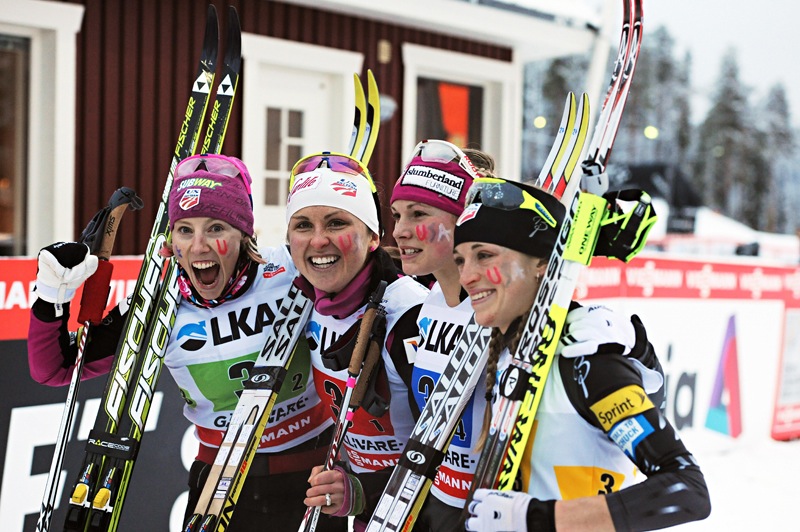
The U.S. women after placing third in the Gaellivare World Cup relay, the first relay podium in the history of the program – Kikkan Randall, Holly Brooks, Jessie Diggins, and Liz Stephen. Photo: NordicFocus/Felgenhauer/Fischer.
The 2013 World Championships begin on February 20th in Val di Fiemme, Italy, and if you think this has been an exciting season so far, think again. Against the dramatic backdrop of the Dolomites, the season will reach its high point in every way possible in a few short weeks. Stakes. Emotion. Nerves. Expectation. The title World Champion has a ring of absolute finality to it, and here in 2013 Americans seem to have a greater chance at taking one home than it’s had in recent memory.
Before we get ahead of ourselves, the U.S. Ski Team has yet to select the lineup of athletes it will send to Italy in the first place. Luckily the wait is almost over — on Monday, the window of time for VdF hopefuls to turn in worthy performances ended. USST head coach Chris Grover told FasterSkier he hopes to finish running the numbers on the National Ranking List in time to announce the team by the end of the week.
The suspense! Friday is three whole days from now and nobody wants to wait that long, so just for fun let’s take a look at the criteria and figure out who the shoe-ins, likelies and long-shots are.
Here are the selection criteria, paraphrased from USSA:
Up to four (4)U.S. athletes may start in each event and up to eight (8) athletes per gender will be named to the team.
Athletes who rank in the top 60 in the World Cup overall will be named to the team
Athletes who rank in the top 50 in the World Cup sprint or distance standings will be named to the team.
If items 2 and 3 result in a team larger than eight athletes, ties will be broken firstly by whomever has the most World Cup points in distance or sprint, secondly by lowest current FIS points.
If additional athletes are selected to the team (‘additional’ being those who don’t have a full resume of World Cup starts), the USST will go down the National Ranking List from the last twelve months to do it. (The list is developed from competitors’ best four USSA-scored races, sprint or distance, from within the selection period.)
Discretion is allowed.
Right. That all sounds very mathematical and complex, but at the very least we can figure out who has definitely made it based on the top 60/top 50 thresholds. The lists below show where every American athlete with World Cup points ranks on the relevant lists as of January 14. Asterisks (*) denote athletes who meet the criteria.
Overall:
Women
3. Kikkan Randall *
21. Liz Stephen *
33. Holly Brooks *
37. Jessie Diggins *
39. Ida Sargent *
70. Sophie Caldwell
78. Sadie Bjornsen
93. Becca Rorabaugh
Men
29. Andy Newell *
45. Noah Hoffman *
60. Kris Freeman *
124. Simi Hamilton
125. Skyler Davis
133. Tad Elliott
Sprint:
Women:
1. Kikkan Randall *
21. Ida Sargent *
36. Sophie Caldwell *
46. Jessie Diggins *
51. Holly Brooks
52. Sadie Bjornsen
62. Becca Rorabaugh
64. Liz Stephen
Men:
4. Andy Newell *
72. Simi Hamilton
73. Skyler Davis
Distance:
Women:
5. Kikkan Randall *
18. Liz Stephen *
24. Holly Brooks *
41. Jessie Diggins *
49. Ida Sargent *
67. Sadie Bjornsen
Men:
30. Noah Hoffman *
43. Kris Freeman *
73. Andy Newell
86. Tad Elliott
According to Grover, who has the final say in team naming, objective qualifiers will always take precedence over discretionary picks. Based purely on those first two objective criteria, then, the U.S. World Championships team should begin like this:
Women: Kikkan Randall, Liz Stephen, Holly Brooks, Jessie Diggins, Ida Sargent, Sophie Caldwell
Men: Andy Newell, Noah Hoffman, Kris Freeman
Pretty straightforward. The secondary factors that go into qualifying start to confuse the process. There are as many as two more spots on the women’s squad and five more on the men’s to bring the athlete count up to eight, but Grover has already said he won’t simply bring as many athletes as he can. The team will consist of six to eight athletes per gender, and athletes beyond the automatic qualifiers need to prove they can be competitive in order to go.
“Our goal is not simply to fill start spots,” Grover wrote in an email in December. “Yes, we get four start spots per race per sex, with the exception of the Team Sprint, where we get two starters per sex. Rather, our goal is to be successful. We have our sights set on a medal in VdF. This Championships will not be an experiential or development project for us, and the Team that is named will reflect that fact.”
Given the differences in depth of field between the men and women in the U.S. at the moment, that means different things between the two genders. On the women’s side you don’t necessarily have to look outside the U.S. Ski Team to fill the roster, if it will even exceed six people. As the top American performer last weekend in Liberec, Czech Republic, and the winner of a sprint and distance race at U.S. Nationals, Sadie Bjornsen is the most obvious first addition. Becca Rorabaugh is the only other American that exists on the World Cup ranking lists but was outperformed at Soldier Hollow by several women, including title-winners Rosie Brennan and Jennie Bender. This is presumably where tie-breakers, the National Ranking List and discretion will come into play, but again, we don’t know if the team will even consist of the maximum eight people.
The men’s team clearly needs more than three people on it. Simi Hamilton is a guaranteed addition; you need two people for a team sprint and he’s next on the sprint list after Newell. This brings the tally of obvious men’s choices to four. You also need four distance guys for the relay, and Elliott is the fourth man on the World Cup distance list.
Men’s results from U.S. Nationals upset a bunch of things, however. Torin Koos and Erik Bjornsen, among others, both beat Elliott in the 30 k. Koos also makes a strong sprint candidate, as would Dakota Blackhorse-von Jess, but U.S. Nationals is not the only race being used to fill those additional spots. The criteria say that the USST will use a year’s worth of domestic results to pick additional team members, but the discretionary clause also allows for giving more weight to recent improvement in results.
It should be mentioned that the lack of absolute clarity is kind of unavoidable. The U.S. has more athletes than ever who stand a good chance of doing well, and in line with its stated goals the national team wants to focus its resources on ensuring that someone like Kikkan Randall has the support she needs to podium before it considers maxing out the team quota. For the domestic skiers hoping to take one of those maybe-additional spots, however, it makes for an uncertain qualifying process. After he won the freestyle sprint at Soldier Hollow we asked Blackhorse-von Jess whether he knew what it took to get named to the team and this is what he said:
“When I was at the World Cup (in Quebec) I asked what do I need to do, because the objective criteria don’t apply to very many of us and after that it’s sort of up in the air. And it makes sense, but it’s hard to figure out how do I do it. The short answer is win. Win the qualifying, win the races was sort of what I was shooting for.”
In the end, winning is all anyone was shooting for. With the selection period now over, everyone just has to sit tight and wait for the nominations to come out.
Canadian World Cup Team members Chandra Crawford (r) and Perianne Jones duking it out to the finish of the inaugural WinSport Frozen Thunder Classic sprint Oct. 26 in Canmore, Alberta. Crawford won by 0.2 seconds. (Cross Country Canada/James Cunningham photo: cccski.com)
Without a doubt, the Canadian World Cup team faced some challenges last season even though its results didn’t really show it. Sure, every team has its ups and downs and occasional tizzy, but Canada generally kept it under wraps.
Devon Kershaw continued to podium one weekend after the next and ended up second overall in the World Cup. Simultaneously, most of his teammates also notched personal bests: Alex Harvey finished sixth overall, Lenny Valjas tallied three podiums in a month and each of the three women (Chandra Crawford, Perianne Jones and Dasha Gaiazova) finished the season with career-best sprint rankings.
According to head coach Justin Wadsworth, it was a successful season by all measures, but they needed to make some changes at the end of it. Before the start of the 2012/2013 training season, the Cross Country Canada (CCC) coaching and high-development staff decided to split the team in two – into men and women – to devote more resources and attention to each.
“When things go pretty well you don’t want to make radical, radical changes,” Wadsworth said in a phone interview from Canmore before the team left for Sweden last week. “At the same time, we had a good season, but I think we can do better.”
Wadsworth remained head coach, but also took the role of men’s coach. He hired Louis Bouchard of the Pierre-Harvey National Training Centre as the assistant men’s coach, and former assistant Eric de Nys became the women’s coach. Torbjørn Karlsen came on as a consultant to the women’s team.
Then, they got to work. Above all, Wadsworth and de Nys said they tried to instill a sense of professionalism in their athletes. If they wanted to keep improving and be the world’s best, they had to believe it. Moreover, they had to get along.
“We’re becoming, as a team, more respectful of each other and more professional,” Wadsworth said on the phone from Canmore before leaving for Sweden last week. “The results are great, blah, blah, blah, but the team itself, we’ve had our share of difficulties and challenges, and I think our team has continued to keep rising above those and be professional. A good example is Devon and Chandra’s breakup last year and stuff, those are really hard things to internalize as a team when we’re traveling together and we’re in the same hotel and same vans all the time.”
For North American skiers and staff, it’s especially tough to spend most of November through March overseas without much alone time.
“It’s a lot different when you’re with a team from Sweden or Switzerland that are racing for a week or two weeks together and then they go home and everyone takes a break and it’s kind of fun to be back on the road with each other,” Wadsworth said. “We’re more or less on the road with each other for five months out of the year. I think that managing that is a lot harder than it might seem on the outside.”
Yet once again, they’re heading into the season full-steam ahead, and Wadsworth said the athletes’ overall spirits are as high as ever. With that final piece in place, they should be able to top last season’s results, he reasoned.
“We just have to be smart, but I think every weekend could provide us an opportunity,” he said. “Last year, there was only one weekend we didn’t have a top five and that was a weekend where Devon scored more World Cup points in Nove Mesto than he would’ve if he would’ve finished second. Essentially we scored a top five every weekend, and if we do that again this year I’d be really pleased. It just shows consistency and kind of depth.”
Goals
With a series of what Wadsworth called “peaks” on the race schedule to look forward to, there’s one big event the team is emphasizing: FIS World Championships from Feb. 20-March 3.
“I’ll just say I’ll be disappointed if we don’t come away with a couple medals there,” he said. “I think we have so many opportunities between our men and our women and some of the different races there that I expect more than that. With that said, though, it’s one 10-day period out of the year where you’ve got to be firing on all cylinders.”
Beyond that, he wants to increase the team’s tally of 15 World Cup podiums last season to 20. That’s why they’ve been focusing on individuals. On the women’s side, de Nys has made a point to push his three skiers – specifically Crawford and Jones, who train together in Canmore – harder than ever. He asks that all his athletes show up to work ready to go and he’s tried to explain what it takes to be the best.
“It’s not necessarily that we want to be as good as, we want to be better than whoever’s leading the charge,” de Nys said in a phone interview from Canmore two weeks ago. “We have a good idea of what we have to do and we’re gonna try damn hard to get there, and if we fail in our attempts at least we know we tried really, really hard.”
But failure doesn’t exactly fit in their agenda. De Nys said he’s expecting at least one medal at World Championships from his group of veterans, most of which made measurable strides in testing this summer and fall.
“Everyone had a pretty good season, but we want to really build on the consistency so we’re not having so many peaks and valleys in performance,” he said. “We want to get some medals on the World Cup.”
The women’s training group has been effective, but also presented unique challenges with varying levels of experience, de Nys said. Two Senior Development Team members from the Alberta World Cup Academy, Alysson Marshall and Emily Nishikawa, joined the team at camps.
“So we have Emily who’s 23 and has very limited World Cup experience to Chandra Crawford who has a gold medal at the Olympics,” de Nys said. “It’s a very diverse dichotomy, I guess, of skiing talent and trying to bring those five ladies together to work hard and build off of each other’s strengths and weaknesses, and at the same time, challenging them to do things and push themselves to places they’ve never been before. That’s been the real focus.”
About 90 percent of the time, Crawford and Jones trained together with one of their close friends, Amanda Ammar of the Canmore Nordic Centre. De Nys considered those three the core training group in Canmore, which he’d like to see grow to at least half a dozen next year. Gaiazova followed a slightly different plan in Québec with Bouchard as her personal coach, but when they all got together, the overarching goals were the same.
“In July we were already way further ahead then we were last year in October,” de Nys said. “Really encouraged by what we’ve done, and we’ll just have to see how it plays out on the snow.”
Women’s World Cup Team
Chandra Crawford
Age: 29 on Nov. 19
2011/2012 World Cup sprint rank: 7th (tied best-ever in 2008); 29th overall
Number of World Cup podiums last season: 2 (second at Rogla skate sprint, 3rd at Milan team sprint)
Personal best: Olympic gold medal (2006 in skate sprint)
Personal goal: Podiums at Canadian World Cups in mid-December and World Championships
“I would like to stand on some of those podiums they’re building over in Québec and one in Canmore,” Crawford said. “But it is early season so we’ll see what can happen. Then there’s world champs in Italy; I love racing in Italy. My classic sprinting is feeling better than ever, and Val di Fiemme is pulling me, I’m already feeling how good that finish line is going to feel to cross after a sweet classic sprint.”
Dasha Gaiazova
Age: 28
2011/2012 World Cup sprint rank: 26th (personal best); 46th overall
Number of World Cup podiums last season: 0
Personal best: 8th in two World classic sprints (Drammen and Otepää) and 9th at Rogla skate sprint last season; 20th in skate sprint at 2011 World Championships
Personal goal: Canada World Cup sprints and World Championships
“I’m really looking forward to racing in Québec, it’s a sprint so it’s going to be perfect for me,” Gaiazova said. “It’s always such a treat to be back in Canmore and race in front of old friends and supporters and family. … And then of course the World Championships, the sprint and the classic. I love classic skiing and I love Italy so it should be a good match for me.”
Perianne Jones
Age: 27
2011/2012 World Cup sprint rank: 47th (personal best); 72nd overall
Number of World Cup podiums last season: 1 (3rd at Milan team sprint)
Personal best: 12th at Milan World Cup skate sprint (2012); 29th in skate sprint at 2011 World Championships
Personal goals: “World championships and the Canadian World Cups are the focus,” Jones wrote in an email. “We are now an even stronger women’s team so we are looking forward to sprint relaying together. I have some more distance goals after a couple 30th places last year I’d like to be more solidly in the points while sprinting will still be my main focus.”
Spoiler alert: “I think you’re going to see different things from the women this year,” she said after placing second to Crawford at last month’s Frozen Thunder sprint time trial.“We’ve done different training and I think more effective training than in the past, and I’m excited to see our distance results also, not just our sprint results.”
***
Men’s World Cup Team
Devon Kershaw
Age: 29
2011/2012 World Cup overall rank: 2nd
Number of World Cup podiums last season: 6
Personal best: 2011 world champion in classic team sprint; won Szklarska Poreba World Cup skate sprint and Rybinsk 15 k skate (2012); 5th in 50 k classic at 2010 Olympics
Personal goal: Primarily World Championships, where he hopes to defend the team sprint title he won with Alex Harvey in 2011
“Last year everyone was going for the overall, everyone was going for the Tour de Ski, but this year World Champs will be the bulk of the focus,” he said in an October interview. “It’s been a dream of mine for ten years now to be on the podium at a championship with our men’s relay. We were close in 2009 [Canada was fifth], and I believe if we are all healthy and in decent shape that 2013 could pose a great chance to show the skiing world on the big stage what we are capable of as a team. That’s a dream I’d like to see accomplished before I retire.”
While he’s not focused on an overall World Cup title this year, he didn’t rule out trying to win the Tour di Ski.
“The Tour is my favorite race of the season, one that I hold so close to my heart,” Kershaw said. “But Alex and I and the North Americans will be the only skiers that will be racing in Canada, nobody else that’s of any note will come over, so I don’t know how the Tour will go, but I’m hoping good.”
Coach’s comment: When Kershaw spoke to FasterSkier last month, he talked about the team flying under the radar, with the exception of Alex Harvey in Québec. But after Kershaw finished second overall on the World Cup last year, are they still the underdogs? Sort of, Wadsworth said.
“We just do our own thing,” he said. “We’re so far out of the mix with the world media and the attention that’s on the rest of the ski world, it’s kind of nice. … If you look at anything on the FIS website, there’s very few things on our team for the level of the team we have. I think it’s a good place to be. I still don’t think people respect, maybe, our team like they should, but we’re only going to keep getting better and winning more races so it’s a good place to be.”
Alex Harvey
Age: 24
2011/2012 World Cup overall rank: 6th
Number of World Cup podiums last season: 3
Personal best: 2011 world champion in classic team sprint; won 2012 World Cup Finals 3.3 k skate prologue and 2nd in 15 k skate pursuit in Falun; 3rd at Lahti World Cup skiathlon (2012)
Personal goal: More than one medal at World Championships
“We wanted to defend our world championships title, that’s in the team sprint, but also we want individual medals,” Harvey said. “The team sprints will be huge, and after that I think I’ll do [most] all the races unless things change dramatically this year. Fifteen-kilometer skate hasn’t been my strength so … that’ll be the event that I probably skip.
“After that, I think there’s a good shot at all the other races: the 50 k, I like the course there, the last two years have been really good for me. I was second last year and fifth the year before on that course in a classic race. The 30 k should be good, too, and we’re looking forward to the relay. I think we’re going to be firing at all the races. I think they’re all good opportunities.”
Lenny Valjas
Age: 24 on Nov. 21
2011/2012 World Cup sprint rank: 12th (28th overall)
Number of World Cup podiums last season: 3
Personal best: 2nd at Drammen World Cup classic sprint, 3rd at Stockholm classic sprint, 3rd at World Cup Finals 15 k classic in Falun (all in March 2012)
Personal goal: “The main goal is World Champs,” he said last week, two days after breaking a bone in his hand near his pinky finger. “That’s so far away, I’m not worried about that at all. The goal would be to get on the podium there, is the team goal for everybody, just get a few podiums at that championship.”
In an email update on Tuesday, Valjas said the swelling had gone down, but he would continue to train with one pole for at least another week.
“It is still pretty tender but the good news is the pole strap does not sit close to the broken part of my hand,” he wrote. “I can’t wait to use two poles again. Uni-poling sucks!”
Coach’s comment: “He won’t be racing in the first races in Bruksvallarna,” Wadsworth said. “But I think after two weeks in the place it is, it should be fairly stable and I think with the way the ski strap goes around his wrist it shouldn’t bother him too much. After we give it a little period of time here it should be good to go. I don’t think he should have any problems with it.”
As for all his training leading up to the fluke injury, which occurred when Valjas tried to catch a football last week, Wadsworth said he had taken it to the next level, bumping up the quality and workload at camps.
Ivan Babikov
Age: 32
2011/2012 World Cup distance rank: 34th (52nd overall)
Number of World Cup podiums last season: 0
Personal best: Won Tour de Ski stage (10 k skate pursuit) in 2009; 5th in 30 k pursuit at 2010 Olympics; 4th in 15 k skate at Canmore World Cup (2005)
Personal goal: Alberta World Cup, Tour de Ski and World Championships
“For me, it’s a pretty exciting season. First of all it’s a pre-Olympic season and it’s pretty cool to see how much I’ve done [since] the year before,” Babikov said. “But also, we have a World Cup in Canmore this year and there’s a pursuit race that I love and I’m really looking forward to. The Canmore trails are my favorite in the world. The uphills are really hard and the altitude and stuff, and it’s home, of course; friends and family are going to be there. That’s kind of my goal, to do well here.
“For the second part, the Tour is always big for me, and this year it’s shorter. There’s one less sprint race, which is good for me. I think it’s going to be tighter this year. For the end of season, there’s the World Championship in February in Val di Fiemme where I won my only World Cup so far at the hill climb. I love those trails, they’re hard, and I love Italy. Our team’s been so strong and the relay and the individual races, of course, it’s gonna be awesome.”
Coach’s comment:“We definitely tweaked [Ivan] harder than anybody else because the first part of the year was really good for him, but he kind of faded after that,” Wadsworth said.“And his wife did have a baby and stuff so it was a lot of stress at home and traveling back and fourth. This year we tried to learn from the things that worked well for him last year, and now we’re trying to increase them and get him to ski fast all year. Right now all the indicators are really that he’s made probably the biggest jump up of anyone on the team.”
***
Also racing Period 1 on the World Cup: last season’s NorAm winners
Alysson Marshall
Team: Alberta World Cup Academy/Senior Development Team
Age: 24
Number of individual World Cup starts: 11
Personal best: 33rd at Otepää World Cup classic sprint(Jan. 2011)
Personal goal: “The major events that I am focusing on this year are the Canadian World Cups and World Champs,” Marshall wrote in an email. “I am hoping to race well in the Scandinavian WCs but my main focus is to perform in Canada. After Christmas my goal will be to qualify for the World Champs and set myself up for good results there.”
Kevin Sandau
Team: Alberta World Cup Academy/Senior Development Team
Age: 24
Number of individual World Cup starts: 6
Personal best: 37th in 35 k mass start at World Cup Finals in Falun (March 2012)
Personal goal: “I hope to apply what I learnt from last seasons WC trips in terms of travel and race preparation as I start transition to racing more and more world cup races. I want to be racing at a speed in Gällivare and Kuusamo to what I think will progress to a top-12 in Canmore. I think a good start would be a PB finish in one of these races.”
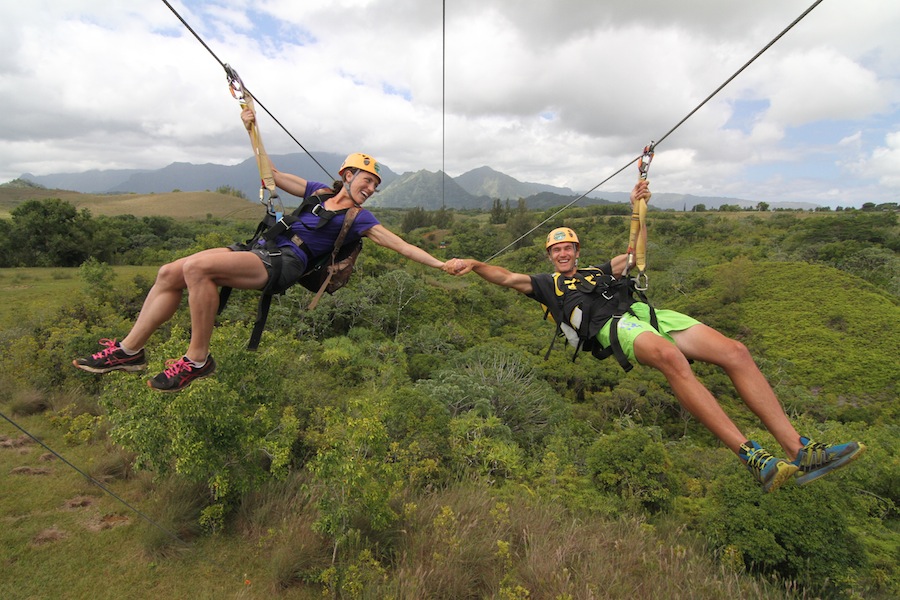
Sarah and Sylvan Ellefson showing the love while on a zip line in Kauai, Hawaii, during their honeymoon earlier this month. The two were married Aug. 11 and spent eight days in Hawaii immediately after. (Sylvan Ellefson courtesy photo)
Thousands of miles from the U.S. mainland on the northern island of Hawaii, Sylvan Ellefson tweeted photos from his honeymoon in Kauai. He posted the first the day after arriving with his new wife, Sarah Ellefson, formerly Wright.
“Lounging after a casual 3hr waterfall run,” wrote Ellefson, the 25-year-old defending SuperTour champion.
Friends and family tweeted back in retaliation. Training? They should be relaxing for crying out loud! Ellefson responded two days later.
“She made me,” he tweeted. “All I want is another Piña Colada.”
Sylvan and Sarah Ellefson (formerly Wright) on their honeymoon in Kauai, Hawaii. (Courtesy photo)
Between kicking back at luaus and happy hour, riding zip lines and exploring a 4,300-acre ranch on four wheels, Ellefson and his bride enjoyed plenty of R & R on their eight-day getaway. The two were married Saturday, Aug. 11, at a lakeside ranch near his hometown in Vail, Colo., and left for Kauai the following Monday.
Slightly more than two weeks later, Ellefson was back home resting before an interval session with his Ski and Snowboard Club Vail (SSCV) team. That morning, he ran 30 minutes, did 1 ½ hours of strength and an hour double pole.
“It’s been a big day,” Ellefson said on the phone Monday afternoon.
But he was ready to get back at it since arriving home a few days earlier. Once back in the U.S., the Ellefsons headed to Minnesota, where Sarah – a former University of New Hampshire skier – is from. Then they went to Boulder, where Sarah lives while studying physical therapy, to watch the USA Pro Am Cycling Challenge last weekend.
“I’m jazzed to be moving around again,” Ellefson said. “The wedding week was pretty crazy and then the honeymoon was nice and relaxing, kind of.”
He laughed.
Here’s the rest of FasterSkier’s interview with Ellefson, which details everything from the wedding-day downpour to what the Colorado native and World Championships hopeful has planned for this season.
***
FasterSkier: Now that you’re a husband, how do you feel?
Sarah and Sylvan Ellefson were married Aug. 11 at Piney River Ranch near Vail, Colo. (DavidLynn Photography)
Sylvan Ellefson: Totally different. I feel like a whole different person. No, I’m kidding. It doesn’t feel any different at all other than I’ve got this hunk of metal on my finger. I keep playing around with it, I’m sure I’m going to lose this thing here.
FS: Tell me about the wedding. How did you decide to get married there and how did it go?
SE: We got married at the Piney River Ranch. It’s north of Vail, half an hour by dirt road. We originally wanted to [get married] at the top of Vail Mountain, which is where my parents got married, but then Sarah’s mom came into town and I told them to go check out this one other place just to see if they wanted to do that. They went up to Piney River Ranch last August, I think it was, and checked it out and I’m pretty sure we booked it that same day that they went up there.
Everything [the ceremony, reception, etc.] was up there. It started at four, and it was super nice when we got up there. The clouds were kind of moving around the mountains … and then right before the wedding was supposed to happen, we started the procession and everyone was outside on the wedding deck. It started raining a little bit, and then the rain started coming down pretty hard and people started opening umbrellas. All of a sudden it was a torrential downpour and then it started hailing (laughs). It was crazy. Everyone went back into the dressing rooms and everything, and we had to talk to the ranch owners to figure out what we wanted to do. We looked at the clouds coming, and it just looked like it was going to be some kind of pretty crazy weather.
We ended up having a super-intimate wedding; it was actually really nice. We moved everybody in under the covered area. The lake that was behind us started steaming because of the contrast of the hail and the air and everything. The backdrop was really cool, and obviously I didn’t get to see it because I was looking right at Sarah and the crowd the whole time.
Sylvan and Sarah Ellefson (center) celebrate their marriage with their wedding party at Piney River Ranch on Aug. 11 near Vail, Colo. (Courtesy photo)
[Note: The rain stopped after the ceremony and the skis remained clear all night.]
We did the wedding there and then everyone ate and we danced for a bunch of hours. We had a bonfire and a keg back behind the camping area, right behind where the wedding was, and we just hung out around the fire until two in the morning. It was super fun and everyone that was up there camped and then cruised down the next morning. We stayed in a cabin that was up there.
The next morning we woke up and kind of cleaned everything up and Sarah and I rode down the dirt road back into Vail on this tandem mountain bike. It’s probably like eight or nine miles to Piney River, but it’s a really bumpy dirt road.
FS: How was Hawaii?
SE: We had an awesome trip. We were literally at our hotel maybe five percent of the whole time we were in Kauai. … We got in really late the first night and then the next morning we met with the concierge to kind of figure out what we wanted to do, and it was basically, like, bam, bam, bam, everything after that. Right after that we went for that three-hour run up to a waterfall. That night we went to a luau. The next morning, we went zip lining for a half day and then we found a swimming hole and chilled there for a while. We had to go hit up happy hour at the bar that afternoon, otherwise we were paying like 12 dollars per drink (laughs).
Newlyweds Sylvan and Sarah Ellefson spent a day and a night at Kauai Ranch in Hawaii, where several movies like Tropic Thunder, Dragonfly and The Descendants, were filmed. They explored on a four-wheeler and stayed in a yurt. (Courtesy photo)
Probably the coolest part of the whole honeymoon, though, was we went to this ranch called Kauai Ranch and it is the ranch where, like, “Tropic Thunder” and “Dragonfly” and part of “The Descendents” was filmed. We stayed at this really sweet little canvas yurt-tent. It was like this [4,300]-acre ranch and we went an explored it running one morning and then we got to use this four-wheeler vehicle, the Gator, for another five hours in the afternoon and we didn’t even cover all the trails that were on the ranch.
FS: Did you rest at all?
SE: Oh yeah. We probably slept, like, nine hours a night. It was nice. Leading up to the wedding it was, like, five hours, six hours, five hours, five hours.
FS: When did you and Sarah get engaged and how did you meet?
SE: We got engaged last July 22. We met at Carnival Crush, you know that little tradition that the East-coast skiers have on Valentine’s Day? Sarah gave me a live goldfish when we were juniors in college and it kind of just sparked after that. I think that was four and a half or five years ago. She said it was our first pet together. I didn’t know how to take that. I think she was joking, but I took her seriously, so jokes on her!
Sylvan and Sarah Ellefson take to the dance floor at their wedding on Aug. 11 at Piney River Ranch. (Courtesy photo)
FS: And you two recently had dinner with Kikkan?
SE: I had no idea she was going to be in town and she texted me last Thursday night [Aug. 23], like, ‘Hey I’m in Vail. We should catch up, grab some food or something.’ And I was like, ‘Yeah, Friday night.’ It was good to see her because I haven’t seen her before we left Spring Series.
FS: Whom have you mostly trained with this summer?
SE: [In] May, I did the Bend camp, and then a couple weeks later we came back to Bend with the junior team and a couple post-grad students and the Bend locals, like [XC Oregon’s] Ollie Burruss and Matt Briggs were there, so I trained there for about half of June.
When we came back I mostly trained with a lot of the junior and then the college guys that are here for the summer, like Conor Wallace and Sean Woods and Tony Ryerson. Actually [SSCV nordic director] Dan [Weiland] and [head coach] Eric [Pepper] have been getting out on the rollerskis quite often this summer so they’ve kind of been training partners as well. And then Cal Deline and Parker McDonald, Christian Shanley, all those juniors.
[Team HomeGrown teammate] Ryan Scott was here for a week in July right before the wedding, and we had a good training week together. I just missed [U.S. Ski Team members and Homegrown teammates] Tad [Elliott] and Noah [Hoffman]. They came right after the wedding when I went to Hawaii. I think they did a bunch of skiing with the juniors here and the other college guys.
FS: How’s training gone so far?
Sylvan Ellefson (front) joins the Ski and Snowboard Club Vail junior team in Bend, Ore., for an on-snow camp this past spring. (Courtesy photo)
SE: Training’s actually been really awesome this summer. I think it’s always really great to kick it off with training in Bend in that May-June period. To be on snow that early in the season is kind of exciting instead of being on rollerskis and getting in the habit for the entire summer it’s fun to be able to ski on snow. You’re still kind of used to it. And then come July, you’re just starting to pick things up. I did a lot of running races and biking races this summer and those have been going pretty well and it’s fun because we have a pretty competitive local race series for [trail] running and [mountain] biking, so I’ve been doing those.
FS: You blogged about placing third for the first time in a pro mountain bike race in July. Was that a goal of yours?
SE: It’s a pretty competitive race series. A lot of the guys actually do race pro and race around the U.S. and I scored a third place in one of the races. I was pretty psyched for that because I’m usually like fourth every time.
If I train biking, it’s more like a recovery thing and if I do the bike races, it’s more of an intensity spot. For me, it’s good to keep that race vibe going to make sure I get that race feeling every now and then, and I don’t totally forget before the first race pops up at the beginning of the season.
FS: How does your training plan this summer compare to last year?
SE: Basically when I was over in Europe, I definitely got my butt kicked, which I think was good and bad. It kind of sucks to get your butt kicked sometimes, but it’s also a really good learning experience.
Every time I felt like there was something I could work on, I wrote it down and sent it to Eric and Dan and we compiled a list of things to work on this summer to help me get ready for the upcoming race season. It ranged from doing more double-pole sessions to changing up our intervals a little bit, like, changing formats of races like having the preems. We’ve been doing a lot of intervals where we switch from just Level 3 and just Level 4 to doing a Level 3 piece with some Level 4 in between and then dropping back down to L3 and bringing it up again.
I noticed in a lot of the mass-start races, you can see on TV the front of the pack is usually so calm and collected. When you’re in the front, you get in a really good rhythm. I was watching all these races I was in on the World Cup last year, seeing these guys up front it just looks like it’s so easy. What they don’t show is in the back, it’s just nuts because it’s all the people who are probably racing a couple of their first races or whatever and they’re just really stressing out, me included. They’re trying to get a good spot and it requires more energy to ski at the back of the pack, especially in the beginning of the race. Until I start skiing better, I’m not going to be at the front of the pack so I need to kind of adjust to that back-of-the-pack skiing. For me, that was being able to, maybe fresh off the bat, hold onto like a Level 2 or even a Level 4 pace and then dropping back into a threshold pace without totally going under, being able to recover from it.
FS: How are you feeling heading into this season?
SE: I think my confidence going into this year is much better, which will be good. I’m not going to lie, lining up when I was in Rybinsk for my first mass start, looking at the people that I was lined up next to it was like, ‘Holy crap, these are all the people that I’ve ever watched on TV and now I’m standing next to them.’ Obviously, everybody’s going to have that shock value. I think going into this year, it’s more focused for me on a result more than experience. It’s not in my head that I’m just going to be racing World Cup this year, I want to be racing fast and I want to be getting results.
I think the first period will be good for me. What qualified me to go over to Europe last year were like 10 and 15 k skate and classic races, and I’m pretty excited to race those first races because I think there’s three 15 k’s and maybe one 10 k. I’m excited about that. I’m pretty excited with how my prologue and sprinting has been going, and then this fall, hopefully I’ll be able to ramp it up a little bit in Lake Placid and Park City and Canmore with these top-tier sprinters in the U.S., Simi and Newell.
FS: So you’re going to take advantage of a paid-for trip to the World Cup (as the SuperTour winner) and race Period 1 in Europe and Canada? Are you worried about relying on World Cup results to qualify for World Championships, rather than stay home and qualify domestically?
SE: I wasn’t really sure what I wanted to do. It was kind of a tactical decision because the world champs team is decided off your FIS points, but it’s kind of taking a chance. If I were to race in the U.S. and I was racing as well as I did at the beginning of last season, I would be getting good enough FIS points to bring me to World Champs. On the other hand, I would be giving up and opportunity to go race the World Cup, and I feel like that would be just a wasted opportunity.
Dan and Eric and I all decided that it would probably be best if I just took advantage of that opportunity. Assuming that I go into the first period as fit as I was last year, then I think me on a perfect day, skiing like I would at the top of my game, would land me a top-30 result, which is something that I’m looking for in this upcoming period.
The biggest reason that I’ve decided to go over to Europe this first period, I guess it depends on my ultimate goal. My ultimate goal is to progress U.S. skiing and kind of help the U.S. men to get to that next level. I think if I were to stay home that would be a little bit of a disservice to that.
I’m approaching this season similar to how I approached last season. If I stick to a similar plan just upping my hours from last year, I think that technically my body should react well to it. Hopefully period one shouldn’t be smooth sailing necessarily, but it should hopefully feel good while I’m racing over there. If I’m feeling good, hopefully I’ll be getting that top-30 spot that I want.
FS: What other goals do you have?
SE: I would love to get a top 30 on the World Cup. One of my goals is to win a race at U.S. nationals this year and then I guess another goal is just to rank in the top five for both sprint and distance in the U.S. at the end of next season. I think now I’m ranked fourth in the sprint, somehow, and seventh for distance.
[Note: Last year, Ellefson mostly made the top 60 in his first World Cup starts. He was third in the 15 k skate at U.S. nationals and finished the SuperTour series as the overall winner despite injuring his ankle in Sweden at the end of the season.]
FS: Looking back at the jump you made last year, what do you attribute your success to?
SE: I think my change in training and also it was kind of a change in confidence. The previous year, I had won two SuperTour races and just getting that feeling of winning a race is pretty cool. You know who you’re racing and you can beat them or you’re at that level, so you know you have the opportunity to bring yourself up to that next level.
Actually at the beginning of the [season] last year, I think it was November, I kind of changed [it] up. I never really prepped for a season like I had before last year, and I basically just did more intervals than I ever had the November before. I made sure I gave my body enough time to recover before those first races in Bozeman and West Yellowstone and I seemed to benefit [he won two SuperTour races in Bozeman and was second in two of the openers in West Yellowstone].
I’ve never skied that well early season so I was a little bit worried about U.S. nationals about how I’d be skiing there, but my body I guess … was fit and skied well. Unfortunately I got sick right after [nationals], and then went to Minnesota, skied well [he was second and third at the Minneapolis SuperTour], but got sick again after that. I was on antibiotics twice in, like, three weeks and I think it took a toll on my body before I went to Europe.
Then I had a good experience on the World Cup, and I honestly had no idea what to expect when I cam back to the U.S. I was racing every weekend, but I wasn’t able to train that much because I still wasn’t feeling 100 percent. When I came back to Vermont and I stayed with Liz Stephen, I skied, like, once, I went on a run once and then just kind of went into Spring Series without having trained that much, but I think my body held onto a lot of that fitness from the entire winter. My only goal was I really just wanted to get that World Cup spot for the fall, and I tried to race my butt off and ended up getting that spot, which I was super psyched about.
FS: And now you’re feeling good and the ankle is better?
SE: It’s great. My PT here in Vail has just done wonders for me. It’s all healed up and all that good stuff now. It’s pretty exciting for me not having to worry about that anymore.
FS: Next Monday, you wrote that you’re going back to school at Red Sandstone Elementary. What will you be doing?
SE: I’m a teacher’s assistant at my old elementary school. I go in for about 2-3 hours everyday when I am around. 4th graders. It’s super fun!
***
While Ellefson took care of business in Craftsbury, Vt., where he clinched the overall SuperTour title in late March, he also had some fun while staying at the home of his friend and U.S. Ski Team veteran, Liz Stephen. Her father helped film the following, and if you’re really into their music video, Ellefson said “The Bland” has another one coming soon.
Torin Koos, three-time Olympian and former U.S. Ski Team member, soaking up the sun in Norway toward the end of his three-month stint with the Strindheim IL ski club in Trondheim. (Courtesy photo/www.in-the-arena-torin.blogspot.com)
It’s easy to get caught up in busy work. Torin Koos has plenty between taking two summer courses toward his master’s at Westminster College, fitting in workouts and writing features for a ski website he and seven others took over June 1.
The three-time Olympian has website-usability tests to prepare for, professional and technical writing work to do. His site, skierpost.com, requires that he compose one story a week, and Koos said he’s been interviewing several other subjects in the meantime.
Someday, he hopes to be an investigative journalist, perhaps for The New York Times. That’s his dream job anyway. For now, the 31-year-old is fully committed to preparing for the next ski season and aiming for the FIS Nordic World Ski Championships in Val di Fiemme, Italy.
Amid the projects and tasks, he’s taken time to reflect. After more than a dozen years in the game, Koos knows the life of a professional skier is a journey. That’s why he spent three months in Norway last season training with the Strindheim Idrettslag ski club in Trondheim.
“When you look at your ski career or whatever, it’s a little bit kind of like a story,” Koos said in a phone interview from Salt Lake City. “That was a chapter of it that I will definitely remember.”
The way it ended was something he would certainly hold onto. In his blog, Koos reflected on two notable races at Norwegian nationals in March. First, he had what he considered one of his best races of the season in the freestyle team sprint in Fauske.
Racing on Strindheim’s second team, Koos clocked the fastest times of the day on three of six legs, besting favorites like Petter Northug, Anders Gløersen, Kent Ove Clausen, and Niklas Dyrhaug.
“The weather and the rain turned the ski tracks into mashed potatoes, making for a pretty epic sprint relay,” Koos wrote. “On my final lap of the final I caught back up to the leaders with 400 meters to go, then soon preceded to take about the hardest fall I’ve ever had on cross-country skis. Poles were broken, my suit was torn, I lost skin, but fortunately my surgically repaired shoulder held up.”
Koos (BSF/Rossignol) winning the A-final of the men's classic sprint at 2012 U.S. Nationals in January in Rumford, Maine. While waiting to take to the podium, he found out his win was in question. (Photo: Flying Point Road)
Last spring, Koos had shoulder operation after dislocating it before 2011 World Championships. He couldn’t use his right arm until August, yet was in racing shape by the winter. At the 2012 U.S. nationals in Rumford, Maine, he won his fifth national title and nearly swept both sprints, but was disqualified in the classic A-final after committing two infractions.
He appealed the decision, which was ultimately unsuccessful, and made his overseas trip to Norway. A few months before in October, he trained with his longtime Norwegian friends from Team Sjusjoen on the Dachstein glacier in Ramsau, Austria.
He kept his close ties with Sjusjoen head coach Petter Hagen, who collaborates with Bridger Ski Foundation coach Dragan Danevski on Koos’ training plan, while continuing to learn the Norwegian way with Strindheim. One day after the Norwegian nationals team sprint, Koos ended his season in Strindheim’s blue and yellow with a memorable 50 k.
The morning of the race on March 31, he woke up to a sore shoulder, snowflakes and temperatures nearing 40 degrees Fahrenheit. The classic course climbed about 820 feet from sea level, and Koos could tell it wasn’t going to be easy. At the top, the wet snow turned dry. He had no glide, but plenty of kick, and was one of the lucky ones to finish the Norwegian nationals mass start in 33rd.
“After a while, though, I really had this feeling of how much fun it was to be a ski racer,” Koos wrote in his blog. “I remember being 37 kilometers in and I kept thinking several times over, ‘How cool is this?’ It really made me appreciate the opportunity I had that day to compete.
“The first thing Petter Hagen did when he saw me was give a firm handshake and say, ‘Good job. You had fun out there today.’ He knew exactly how I felt,” Koos continued. “I’ve had better races. There have been competitions where I’ve dug down deeper into the pain cave and came out on top because of it. But I’ve had fewer good feelings after finishing a season than I had in Fauske. I’m keeping this feeling for a long time.”
Extracurricular Activities
A couple of weeks later, Koos returned to the U.S. and started helping out at his junior-high school in Leavenworth, Wash. For the last five years, he has visited his former track coach, Greg Peck, also a fifth-grade teacher. Together, they take students on a wildflower hike up Ski Hill, a 7 ½-kilometer loop Koos has skied thousands of times.
Koos also helped out Peck’s track team for two weeks. Rather than coach runners, Koos filled in at the high jump and long jump, which weren’t exactly his forte. The former mid-distance runner watched several technique videos from the University of Oregon to bring him up to speed.
“I had to go brush up on my skills in those areas,” Koos said with a laugh. “I guess in junior high I did do the long jump so that was my only saving grace.”
Before resuming classes May 1 in Salt Lake City, Koos spent some time on the West Coast, participating in a 91-mile Ski to Sea relay with seven others. Koos did the alpine portion called the downhill ski, but it was mostly a grinding ascent.
In the six times he’s done the race, Koos said he alpine skied three of them. This year, his Barron Heating team assigned Central Cross Country (CXC) skier Brian Gregg to the nordic leg. Koos wasn’t going to argue with that.
“He did a really great job,” Koos said, after Gregg won the nordic race. “It’s also a fun challenge to do something you do once every seven hundred days or something, put on alpine boots and run up a mountain.”
He finished eighth in 19:52, estimating at least 16 minutes of that was uphill. At the end of the day, Barron Heating won the event.
“You start at mid mountain and then you run to the top of the mountain in your ski boots carrying your skis,” Koos said. “I was running in alpine boots and some of the people had some tricky, NASA-like alpine touring boots. … [Then] you’re just letting it rip on the way down.”
The next weekend, Koos tested himself in a 5 k road race in Salt Lake City. A year earlier, he couldn’t run. He had also been set back by mononucleosis, but on June 2, he was healthy and decided to go for it. Shooting for a 16:30, he ran a 16:13 and won the race.
“It’s not setting any world records or anything; it’s probably three minutes behind what Ben True can run it in,” Koos said, referring to the 2011 USA Running Circuit series national champion.
“I’m just excited to feel strong and have the body responding the way I remember some days in the past,” he added.
As for the upcoming ski season, he would first focus on making it to the Canadian World Cups in Québec and Canmore, Alberta, in December.
“That’s a big opportunity for all skiers in North America,” he said. “I probably think about that most every day.”
Then, he’ll see where his racing and results take him, hopefully to world championships at the end of February.
“I think there’s a lot of people that are thinking Sochi and Val di Fiemme,” the former U.S. Ski Team member said. “I went to Val di Fiemme in 2003 so it would be interesting to come back a decade later. … I just want to go into this season and every day just really think of it of playing with supreme confidence. I just want to ski better than ever, for sure. I definitely have some motivation for that.”
In his second year with the Bridger Ski Foundation, Koos said he would join them in Bend, Ore., for a junior camp next week. After living in Bend for two years, Koos said this would be his first time back since leaving in 2010, and he was excited to see old friends and train on snow.
Now living in downtown Salt Lake City, he’ll finish classes at the end of July and complete 90 percent of his workouts there in the meantime. With school three nights a week, Koos occasionally runs after 9 p.m. or logs late hours in the gym.
“Sometimes I’m burning the midnight oil, but otherwise it’s pretty good,” he said.
By next summer, he hopes to have completed all his courses and be close to graduating with a master’s degree in professional communication. At that point, he’ll likely be training for the 2014 Sochi Olympics.
“There’s still opportunities out there and there’s still some things I want to accomplish in skiing,” Koos said. “The best days on the race trails or training with guys are some of my best memories so I want to keep making some more.”