From the FasterSkier archive — posts syndicated from athletes’ and coaches’ own blogs between 2004 and 2012, kept online as published. Current coverage is at fasterskier.com.

Tag: 2014 Canadian Olympic Team Trials

  • How Webster, Ammar Earned Additional Spots on Canada’s Olympic Team

    How Webster, Ammar Earned Additional Spots on Canada’s Olympic Team

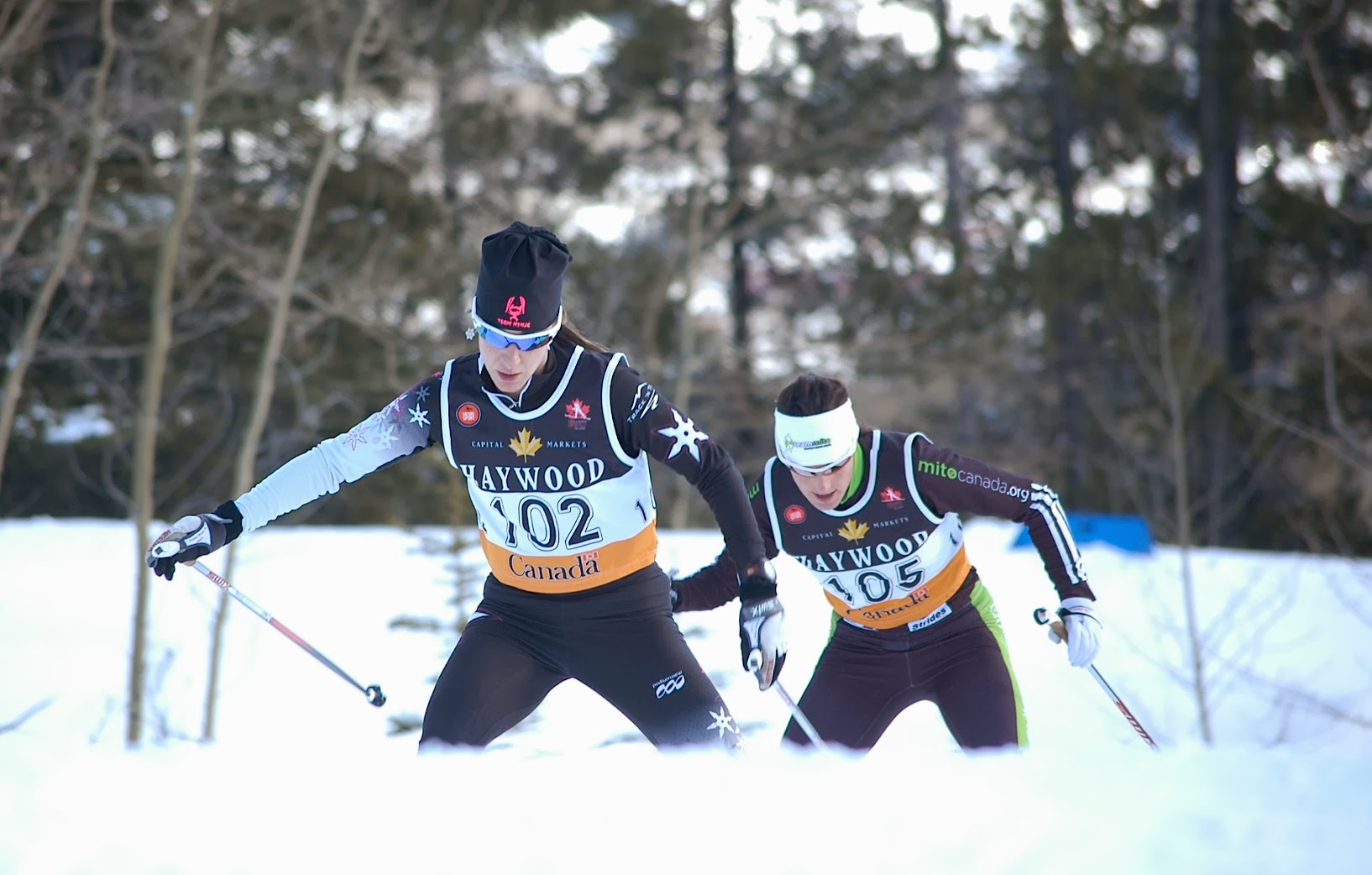
    Amanda Ammar (Team Ninja) leads Brittany Webster (Highland Trailblazers) in the 15 k skiathlon on Jan. 12 at 2014 Canadian Olympic Trials in Canmore, Alberta. (Photo: Angus Cockney)
    Amanda Ammar (Team Ninja) leads Brittany Webster (Mito Canada) in the 15 k skiathlon on Jan. 12 at 2014 Canadian Olympic Trials in Canmore, Alberta. (Photo: Angus Cockney)

    Editor’s Note: With the Olympic Games set to kick off in earnest with the Opening Ceremony on Friday night (Moscow Time Zone, 9 hours ahead of EST), the Canadian National Cross-Country Team is ready to go in the mountain village of Krasnaya Polyana, where it’s been training for the last few days. This article explains how their team grew by two just a few weeks before the Olympics, and shortly after the official nomination.

    ***

    On Jan. 14, Cross Country Canada (CCC) nominated 11 athletes to its 2014 Olympic squad: a roster that included seven prequalified World Cup skiers, plus an additional two men and two women.

    Over the next week, teams like the U.S. also announced their Olympic picks, with the U.S. nordic team opting to use 14 of its 17 allotted quota spots. Nations that chose not to fill their quotas for various reasons, limited support-staff accreditation being one of them, gave countries like Canada the option to bring more athletes.

    By Jan. 23, the CCC appeals process was in its final stages regarding the selection of its own team — a policy designed to ensure member athletes get fair treatment when it comes to decisions that “may include, but are not limited to, carding, contract matters, harassment, selection and discipline,” according to the document.
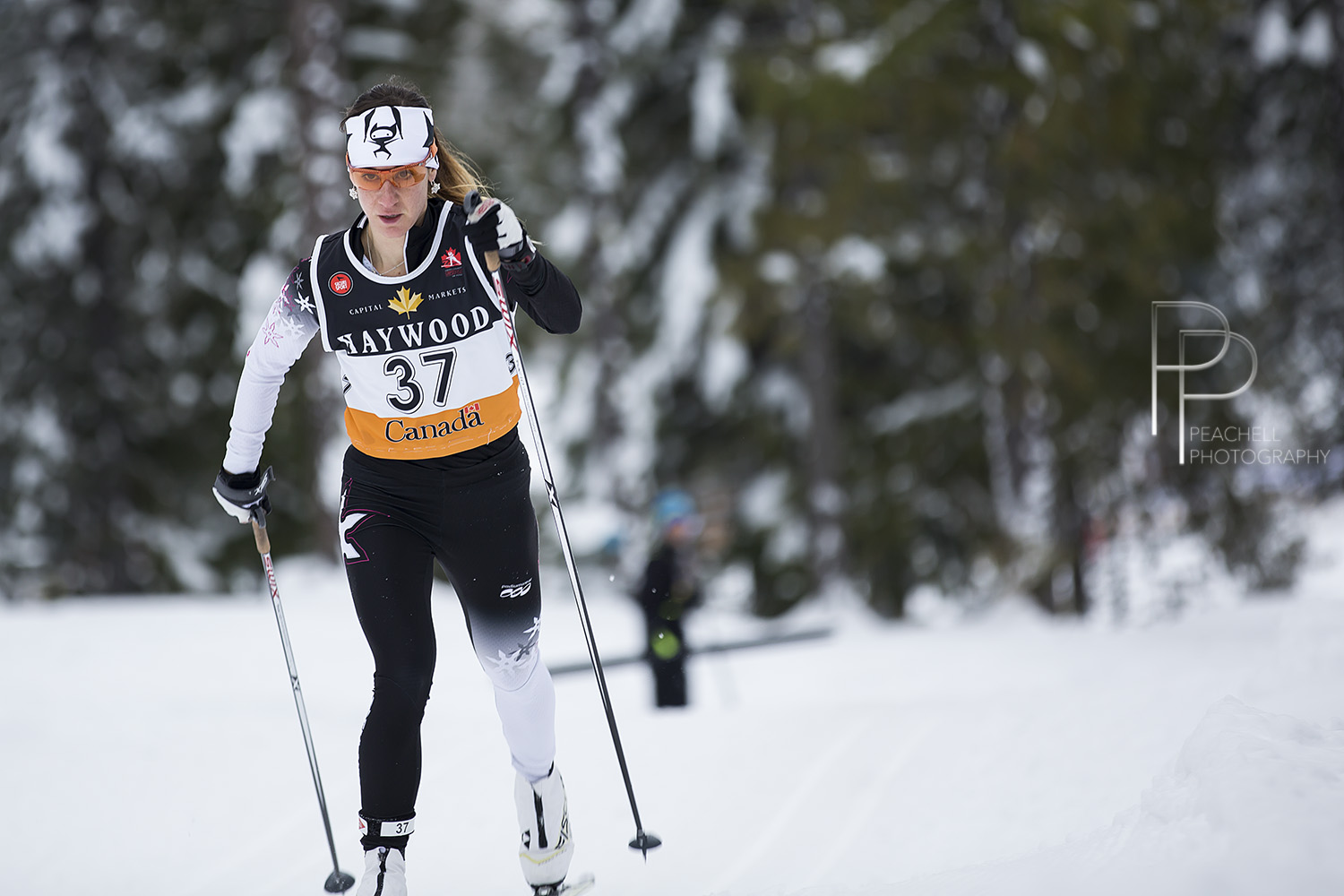
    Amanda Ammar (Team Ninja) racing to third in the Black Jack NorAm 10 k classic individual start on Dec. 15 in Rossland, B.C. (Photo: Shelley Peachell/Peachell Photography, http://peachellphotography.com/)
    Amanda Ammar (Team Ninja) racing to third in the Black Jack NorAm 10 k classic individual start on Dec. 15 in Rossland, B.C. (Photo: Shelley Peachell/Peachell Photography)

    Two former national-team members who narrowly missed the Olympic cut based on their  Canadian Points List (CPL) standings after Olympic Team Trials — Brittany Webster (Mito Canada) and Amanda Ammar (Team Ninja) — stepped forward.

    “If an athlete is not satisfied with the decision of a selection committee in any of our selections, they can appeal internally within Cross Country Canada,” CCC High Performance Director Thomas Holland explained on the phone. “They go to the president, he [sends it to] another panel to hear the appeal.”

    With the Olympics three weeks away and a panel typically having up to 21 days to hold a hearing, CCC rejected one of the appeals because of the short time frame, Holland explained. In that instance, athletes can go to Sport Dispute Resolution Centre of Canada (SDRCC) to have their appeal reconsidered.

    “That’s what Amanda Ammar did,” Holland said. “So then you basically have a hearing for both sides and there’s an arbitrator who decides the case.”

    Based on CCC’s published criteria, which stated it could take up to 12 athletes to the Olympics, Webster was the first one in the door after CCC accepted her appeal.

    “The criteria was a little ambiguous on one point, so she made a case internally to appeal,” Holland explained. “It was all friendly fire anyway. She brought that case forward for the ambiguity in the criteria, which was really looking at the second-place finish [at Olympic Trials].”

    Reviewing Olympic Trials

    The team’s selection process consisted of a prequalification stage at the World Cup level, followed by a series of NorAm races in early January in Canmore, Alberta, which doubled as trials. In addition to the seven World Cup athletes that prequalified, CCC planned to take four more athletes from the results of those trials: a male and female sprinter, and a male and female distance skier.

    For three out of the four disciplines, the decision was clear.

    Heidi Widmer of the Alberta World Cup Academy (AWCA) and National Senior Development Team (NST) won the second freestyle sprint after placing second in the first one to Chandra Crawford, of the World Cup Team and Team Ninja, who had prequalified.

    Jesse Cockney (AWCA/NST) placed second and first, respectively, in the two freestyle sprints, and Graeme Killick (AWCA/NST) finished second in the 10 k classic race by just 1.5 seconds and then dominated the skiathlon a few days later.

    As a result, Widmer, Cockney and Killick were all named to their first Olympic team two days after the trials, along with Emily Nishikawa (AWCA/NST), who won the women’s 10 k classic race by 54 seconds. She went on to place sixth in the 15 k skiathlon, more than 2 minutes behind Ammar as the winner.
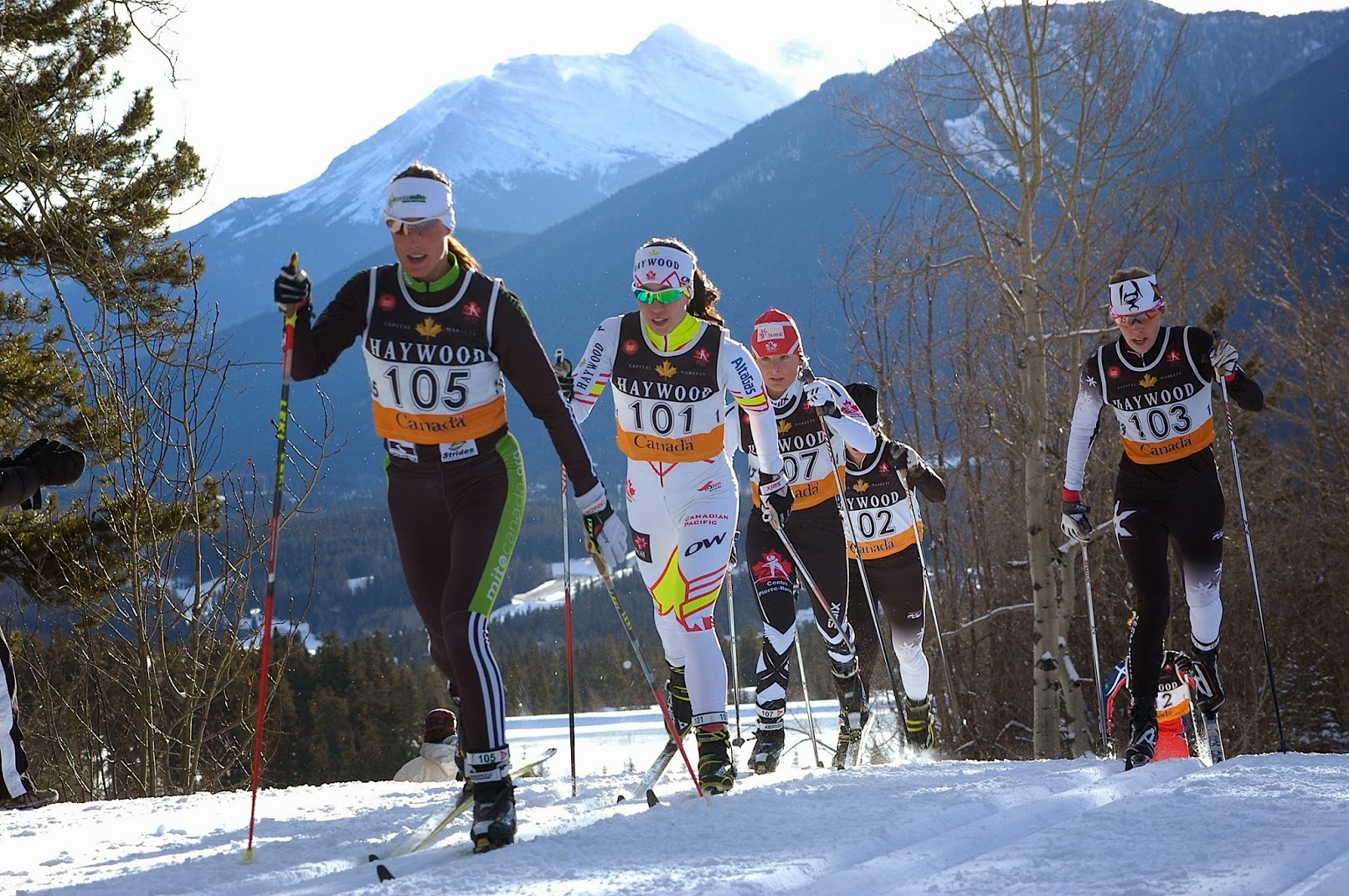
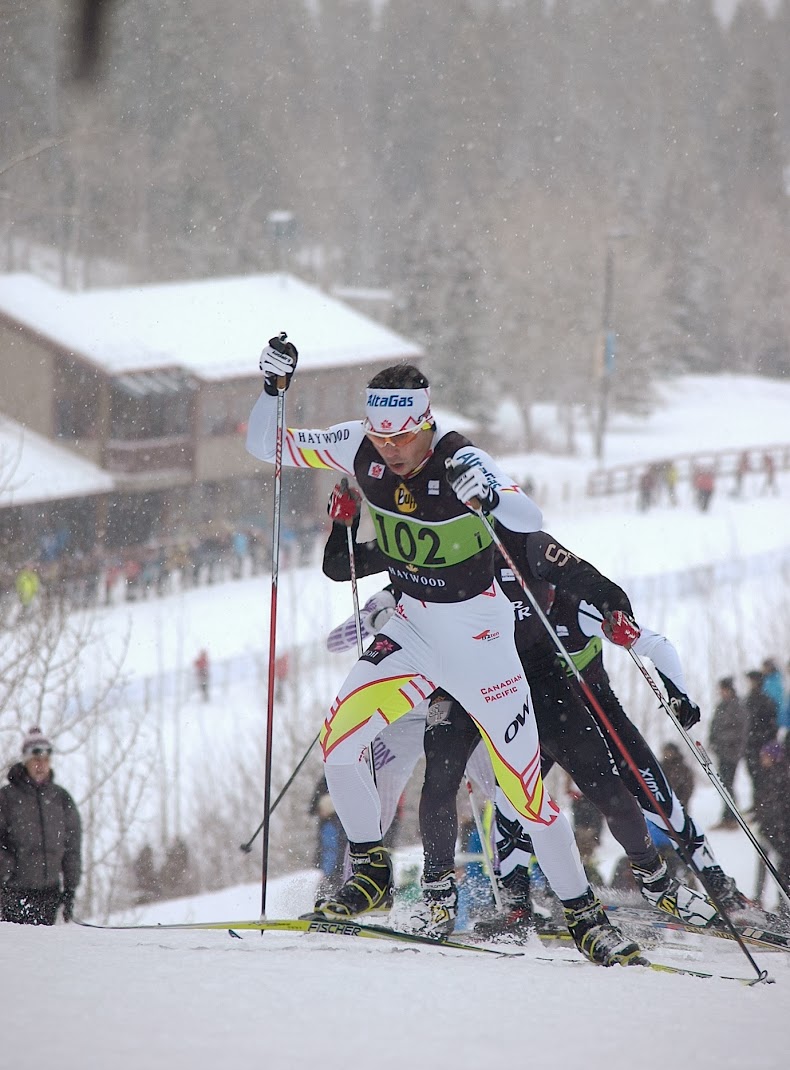
    Emily Nishikawa (101) follows Brittany Webster (105) in the women's 15 k skiathlon at Canadian Olympic Team Trials on Jan. 12 in Canmore, Alberta. Nishikawa placed sixth in the final race of the trials, securing her spot at the 2014 Sochi Olympics from Feb. 7-23. Webster took second after winner Amanda Ammar (102). (Photo: Angus Cockney)
    Brittany Webster (105) leads Emily Nishikawa (101) in the women’s 15 k skiathlon at Canadian Olympic Team Trials on Jan. 12 in Canmore, Alberta. Nishikawa placed sixth in the final race of the trials, securing her spot at the 2014 Olympics. Amanda Ammar (102) won, and Webster placed second. (Photo: Angus Cockney)

    Ammar had placed sixth in the 10 k classic, 1:50 behind Nishikawa. Webster placed second in both of those races.

    Going into the trials, the general consensus among athletes was that winning one of the races was necessary to have a chance at nomination. Nishikawa was named to the team based on her CPL points for the two races better than Ammar’s, topping her by a single point, according to Ammar’s Facebook page. CPL points are the Canadian equivalent of USSA/FIS points.

    After the Olympic team was announced, both Ammar and Webster filed appeals with CCC with separate arguments.

    Ammar stated that the CPL-based selection process was flawed and additionally, that Canada wouldn’t fill its distance starts at the Olympics with the athletes already nominated to the team, with four sprinters among five women. She argued that, had Nishikawa placed fifth in the skiathlon (versus sixth), the points for the skiathlon would have been better because of Nishikawa’s strong point profile, which would’ve boosted Ammar’s points. The CPL scoring system considers only the seed points of the top-five finishers in each race to determine the race points.

    Webster, on the other hand, could have been nominated to the team based on Olympic qualifying standards.  According to CCC’s Nomination Procedures for the 2014 Olympics, an athlete does not explicitly need to win one of the trials races to be selected. In fact, a key component of qualification is having the best points between two trials races.

    “If there are two race winners, the ranking list based on the athlete’s sum total of the designated distance races … will decide the top ranked athlete for the purpose of selection,” the document states.

    Through the end of the trials on Jan. 12, Webster’s points for those races were higher than those of both Nishikawa and Ammar. That, paired with additional Olympic quota spots granted to Canada on Jan. 24, supported Webster’s grounds for nomination.

    Holland said the whole process, including Ammar’s appeal to an outside governing entity, moved quickly — and involved other athletes, such as Para-Nordic Team veteran and 2010 Olympian Brian McKeever, who “started to appeal and for various reasons withdrew that appeal,” Holland explained.

    While McKeever could not be reached for comment, Holland said McKeever, who won the 15 k classic at trials, brought up his case after more athletes were being considered for additional quota spots.

    “He felt that he had a better ranking so why wouldn’t he be considered,” Holland said. “Once an outside appeal committee jumps in, the decision can get very messy because other athletes can come forward and say, ‘What about me?’ We made that case very clear. Anyways, we’re past it, we’ve got our team, and we’re happy to move forward.”

    The entire process started shortly after trials, and with team-naming deadlines looming for both the national and Sochi Olympic committees, Holland said the panel had to move quickly.

    “Sometimes you have to do this within hours,” he said. “That’s why it happened fast and that’s why we have an appeals process that allows for that. It moves pretty quick and these aren’t just hearsay, these are things where we have to put forward a case and put facts on the table.”

    Reacting, Moving Forward

    Once CCC acknowledged it could take up to 13 athletes to the Olympics, both Webster and Ammar received notice on Jan. 24 that they would be named to the team, according to Ammar.

    “I found out on Friday at 6 a.m.,” Ammar said. “So it was a very long, exciting day.”

    When she first discovered she didn’t make it, Ammar said, “Like a normal athlete, I just cried.”
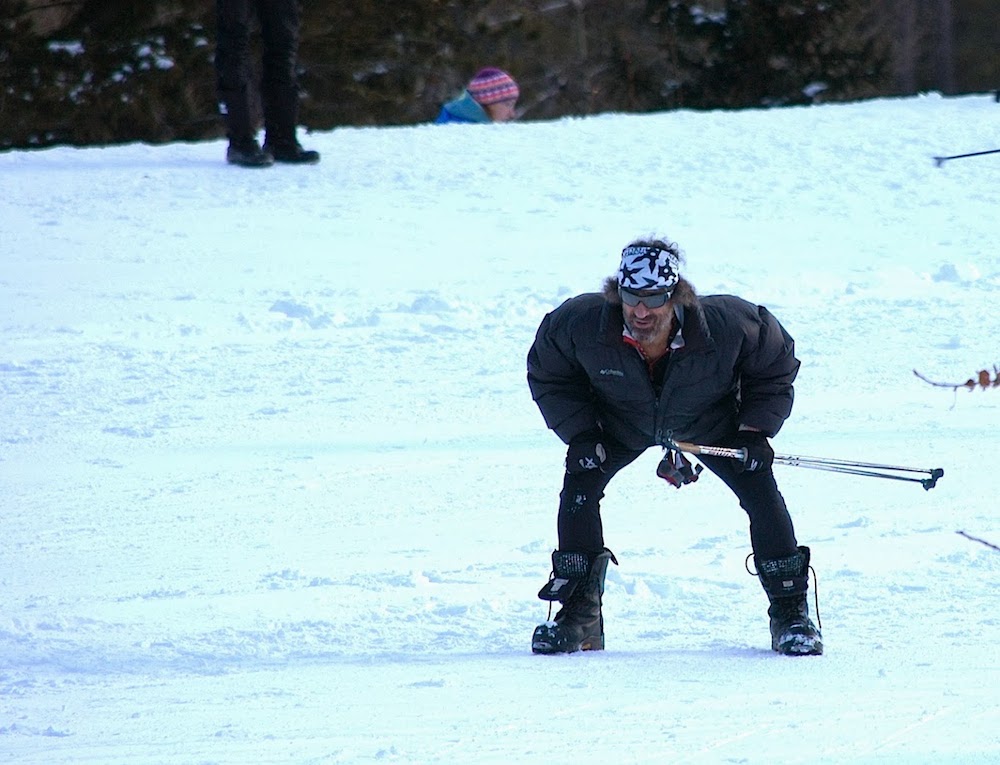
    Frank Ammar cheering for his daughter Amanda Ammar (Team Ninja) on the final day of the Canadian Olympic Team Trials in Canmore, Alberta. A week and a half after the trials, Amanda was named to her second Olympic team. (Photo: Angus Cockney)
    Frank Ammar cheering for his daughter Amanda Ammar (Team Ninja) on the final day of the Canadian Olympic Team Trials in Canmore, Alberta. A week and a half after the trials, Amanda was named to her second Olympic team. (Photo: Angus Cockney)

    The one-point margin was what got her.

    “I mean if it was something huge, then I would have gotten over it, but luckily my dad doesn’t take really no for an answer, and he’s like, ‘Nope, nope, we’re fighting this, nope, we are fighting this,’ and he talked to my old coach, and they’re like, ‘Oh yeah, we more than have a case here, this shouldn’t be an issue.’ So we went forward, and there was a lot of people behind me and supporting me throughout this whole thing.”

    A 2006 Olympian, Ammar, who turned 28 on Thursday, stepped away from skiing for two seasons (from 2009-2011) and came back to it with the help of her boyfriend and coach, Chris Butler. She had been derailed by injuries and dealt with pains in her back and foot as recently as last fall. The NorAm leader at the end of last season, she had the opportunity to start this winter over in Europe. She declined, resolving to rehab her injuries and train more at home to peak for Olympic trials.

    “It feels deserving, it feels amazing, it feels exciting,” Ammar said of being named to her second Olympics. “I have never felt so strong in my whole career. Taking that time away and coming back and training the way I believed to be the best, and staying true to myself and doing my own things as an independent racer has never been more fun and more rewarding. When I hit those start lines at trials this year, I knew there was nothing more I could have done, and there was nothing more in my way.”

    Eight years ago, the Olympics came as a bit of a surprise.

    “I wanted to go to world juniors, and I wanted to be fit, and I ended up making the Olympics — sweet,” she said.

    This time around, she revived and reinvented herself.

    “I came back from so much,” she said. “I came back from an eating disorder, I came back from a back injury, I came back from food allergies, I came back from overtraining, I came back from sleep problems. It was so hard, and I put it out there — I made it real — I said, ‘I want to make Sochi,’ and I just went for it.”

    A member of the 2010 Olympic team, Webster, 26, has also returned to the sport. Four years ago at the Games in Vancouver, B.C., she was initially too sick to race and did not start as a result.

    “[The team] wanted to fly me back to Calgary so I could go back, and in their words, ‘Rest up for a day or two’ and then start training again, but not be around the Olympic environment,” Webster said. “They were going to fly me back for the team relay and the 30 k skate, and for me, it made a little more sense to stay in place and try to recover as best as I could.

    “I had a fever, a sinus infection, a sore throat, and I wasn’t really fit to fly, so I decided instead to stay with my parents at their condo, and that didn’t fly well,” she continued. “So that was basically the end of the story.”

    After taking some time off after the 2010 Olympic season, Webster renewed her zest for racing, making it to World Championships last year in Val di Fiemme, Italy, where sickness knocked her out for all but two of the competitions.

    “I think that if I’m healthy and fit and feeling the way I do now, I can definitely pull out a good race,” Webster said. “What that is on the World Cup or Olympic scene, I have no idea. I would love to think that it’s a top 30, but I really haven’t had a lot of experience stepping on the start line in a good mindset and … healthy in a championship like this, so that would be like the ideal circumstance. In order to get there, I just have to stay happy and healthy and really just enjoy the whole process.”

    Earlier this week, Webster and Ammar flew to Sochi to join their team in the mountain village of Krasnaya Polyana, where all the nordic events will be held. On Saturday, On Saturday, Webster, Ammar and Nishikawa will represent Canada in the women’s 15 k skiathlon, the first race of six women’s events at the 2014 Olympics.

    “I came back from so much … It was so hard, and I put it out there — I made it real — I said, ‘I want to make Sochi,’ and I just went for it.”  — Amanda Ammar

    Accreditation

    In terms of staffing, Canadian Head Coach Justin Wadsworth wrote in an email that they will  have three coaches, seven wax technicians, a team doctor, osteopath, two massage therapists, physiologist, and Holland as the team leader in Russia. Of the 16, all but four (the doctor, osteopath, physiologist, and one masseuse) are accredited, which grants access to the venue and certain restricted areas.

    Canada worked with Australia to bolster its accredited staff. According to Holland, the relationship between the two national teams started before the World Cup races in Sochi a year ago.

    “It is simply an arrangement where we [work] their skis in exchange for accreditation,” he wrote. “Works for both nations. Every Games we are short on accreds for techs.”
     

  • Canadian Olympic First-Timers on Qualifying, Shifting Focus to Sochi

    Canadian Olympic First-Timers on Qualifying, Shifting Focus to Sochi

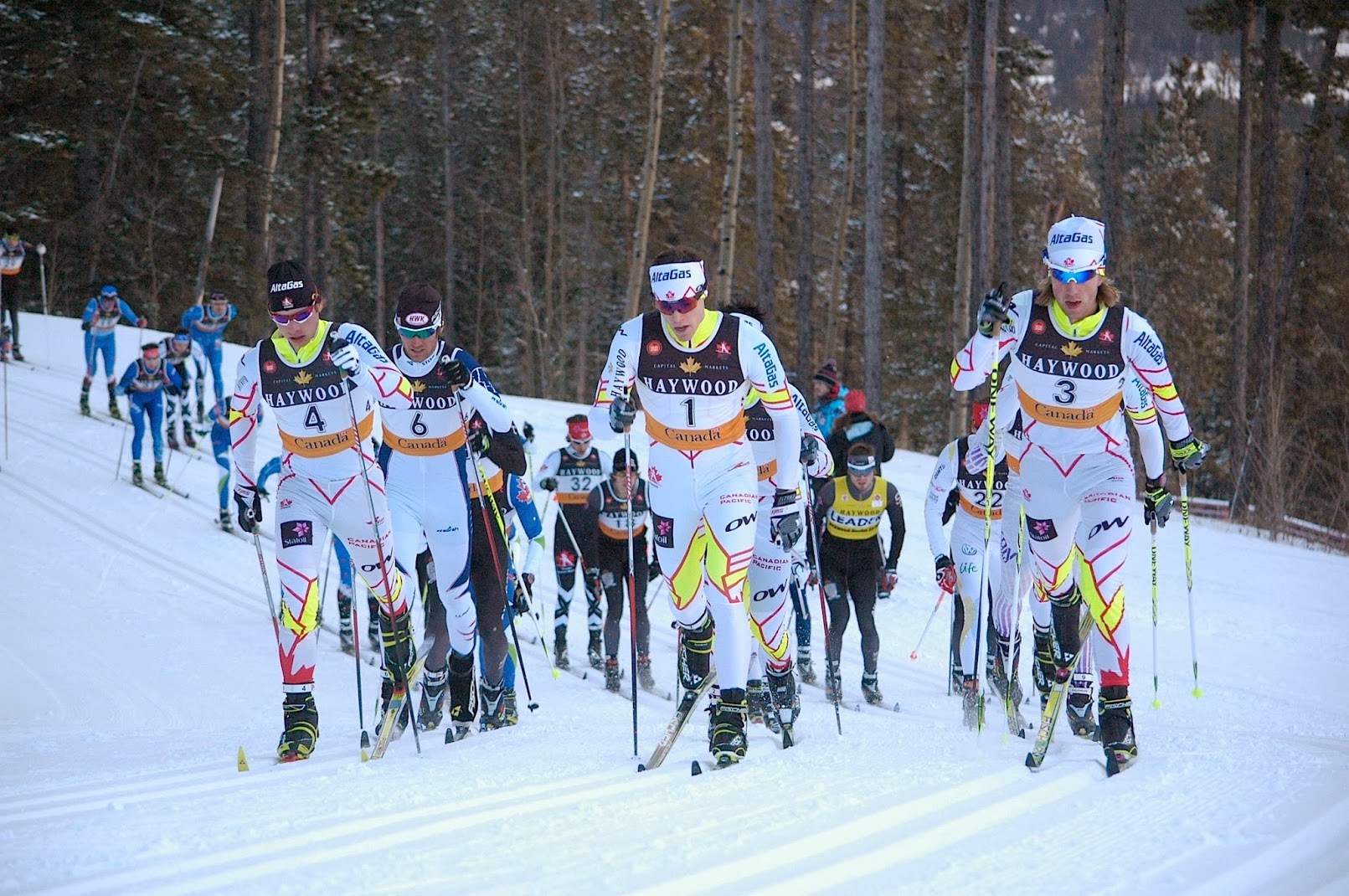
    Graeme Killick (3), Michael Sompp (1) and Kevin Sandau (4) lead early in the men's 30 k skiathlon at Canadian Olympic Team Trials on Jan. 12 in Canmore, Alberta. Killick ended up winning by nearly a minute to secure his ticket to the 2014 Sochi Olympics. (Photo: Angus Cockney)
    Graeme Killick (3), Michael Sompp (1) and Kevin Sandau (4) lead early in the men’s 30 k skiathlon at Canadian Olympic Team Trials on Jan. 12 in Canmore, Alberta. Killick ended up winning by nearly a minute to secure his ticket to the 2014 Sochi Olympics. (Photo: Angus Cockney)

    The Canadian Olympic team was officially announced last week in Calgary, Alberta. While seven of the 11 team members were no surprise (most prequalified for the Games with their World Cup results last season), four of the newly minted Olympians earned their spots through the high-stakes week of Olympic Trials racing. Graeme Killick, Emily Nishikawa, Jesse Cockney, and Heidi Widmer, all of the Alberta World Cup Academy (AWCA) and Canadian Senior Development Team (NST), managed to keep their nerves and fitness together to each garner their first trip to the big show — the 2014 Winter Olympics, which start in just over two weeks in Sochi, Russia. Here, we profile these Olympic newbies and their thoughts before heading to Sochi.

    Graeme Killick

    Killick, 24, scored his ticket to Sochi via a second place in the trials’ 15-kilometre classic race and a win in the 30 k skiathlon, and has been steadily improving over the past few years on the AWCA and NST. After placing 15th in his last U23 Championships in 2012, Killick made a smooth transition to a senior career with a handful of NorAm podiums in 2013, including a third-place finish in the 10 k freestyle at Canadian Nationals.

    In a phone interview last week, Killick mentioned that the hardest part of qualifying for the Olympics this year has been the increased level of competition amongst the Canadian men.

    “This year, more than any other Olympic qualifier in the past, the level of competition in Canada is at an all-time high,” Killick said. “I think that alone made it hard to achieve, but I think it was all the training [I’ve] put in the last couple years, [I’ve] been able to put it together for these two races.

    “Every qualifier has been a challenge, like for U23 Championships and World Juniors, those are things that I’ve had to overcome over the years, and it all culminates to these trials,” he added. “I think being able to have a good result here [is from] all of the rest of the qualifiers that have helped me to put it together for this week.”

    With less international-racing experience than most on the Canadian Olympic squad, Killick will primarily be looking to build on his  experience and skills, but believes the Canadians have a shot at some good results.

    “I think for these Olympics, and I think for myself, I’ll just continue to improve,” he said. “The more racing I get and the more international experience I get. I’m looking forward to the World Cups in Toblach [Italy] to prepare me for racing at the international level and at the Olympics. “

    Emily Nishikawa

    Emily Nishikawa (101) follows Brittany Webster (105) in the women's 15 k skiathlon at Canadian Olympic Team Trials on Jan. 12 in Canmore, Alberta. Nishikawa placed sixth in the final race of the trials, securing her spot at the 2014 Sochi Olympics from Feb. 7-23. Webster took second after winner Amanda Ammar (102). (Photo: Angus Cockney)
    Emily Nishikawa (101) follows Brittany Webster (105) in the women’s 15 k skiathlon at Canadian Olympic Team Trials on Jan. 12 in Canmore, Alberta. Nishikawa placed sixth in the final race of the trials, securing her spot at the 2014 Sochi Olympics from Feb. 7-23. Webster took second after winner Amanda Ammar (102). (Photo: Angus Cockney)

    Nishikawa won the first distance race of the Olympic Trials, a 10 k, by almost a minute to secure her nomination to the Olympic squad. She also placed sixth in the 15 k skiathlon.

    At 24, Nishikawa has a solid resume of international results. She competed at last year’s World Championships and placed 34th in the World Cup 15 k skiathlon in December 2012 in Canmore. Prior to that, she placed as high as 17th at U23 Championships.

    This season, the Whitehorse native has been on a hot streak. Coming off of an especially consistent summer and fall of training, Nishikawa has had podium finishes in three out of the four NorAm races before the trials. Though she said she felt confident about her chances of making the team prior to trials, she is very happy everything came together at the right time.

    “[Making the Olympics] is a childhood dream come true,” Nishikawa said. “I’m so thrilled, and so honored, and proud to represent Canada at the Olympics. I’ve definitely been working towards this goal for a long, long time, so yeah, everything’s come together for me, and to compete at the Olympics—I’m just thrilled.”

    Nishikawa’s brother, Graham, will also be potentially racing a few weeks later in Sochi as a backup guide for Brian McKeever at the Paralympics.

    Jesse Cockney

    Jesse Cockney en route to a skate-sprint victory at Canadian Olympic Team Trials on Jan. 11 in Canmore, Alberta. Cockney won the A-final to elevate him to his first Olympics at the 2014 Winter Games in Sochi, Russia. (Photo: Angus Cockney)
    Jesse Cockney en route to a skate-sprint victory at Canadian Olympic Team Trials on Jan. 11 in Canmore, Alberta. Cockney won the A-final to elevate him to his first Olympics at the 2014 Winter Games in Sochi, Russia. (Photo: Angus Cockney)

    Cockney was sick before the Olympic Trials. While he casually mentioned that he had been ill in a pre-trials interview, he didn’t seem too fazed by the situation. However, after the races, Cockney confessed that he had, in fact, been very sick, very “strung up,” and very stressed, what with hearing “Olympics” mentioned every day.

    However, his dad, Angus Cockney, who was an elite nordic racer who got his starts in the Northwest Territories in the mid ’60s, knew what to do.

    “My dad … really helped me calm down and relax, and made sure that I was enjoying the process and just dealing with what was in front of me,” Cockney said. “He’s good at keeping me positive.”

    Cockney, 24 (and coincidentally sharing a birthdate with Emily Nishikawa), placed second and first in the freestyle sprints at Trials. Coming off an early season on the World Cup, Cockney had a weak sense of his fitness.

    “The good days are a little different over there,” he said. “Instead of finishing on the podium like I feel like I would have in Canada, I was finishing in the 60’s over there, so it was a different feeling for sure.”

    This was especially tough going into trials; Cockney said believing in himself was the toughest challenge for making the team.

    “I think that, along with a lot of people that are going to the Olympics, the biggest challenge is really finding true belief that you can do it,” he said. “I struggle a lot with self-doubt and I’m pretty hard on myself with a lot of things so that was a big thing for me to be sure that I was confident going into the races.”

    Cockney has had some of the stronger results of this class of Olympic freshmen. The Yellowknife native placed ninth in the Canmore World Cup sprint last year, and had eight podiums in last year’s NorAm circuit.

    Along with the families of the other Olympians, Cockney’s family is trying to make it to Sochi, despite the complexities of Russian visa acquisition.

    “I am not holding out a whole lot of hope that they’ll be able to go,” he said. “But they’re trying as hard as they can. I’m happy that they at least are in a position where they can do that, and one of my sponsors is being very generous and offered to help pay their way, so that’s amazing … [But if they can’t come] they’ll probably end up seeing more of me on TV than they would if they came to Russia.”

    Heidi Widmer

    Heidi Widmer on her way to winning the Canadian Olympic Team Trials skate sprint on Jan. 11 in Canmore, Alberta. Widmer, 22, qualified for her first Olympics in Sochi, Russia. (Photo: Angus Cockney)
    Heidi Widmer on her way to winning the Canadian Olympic Team Trials skate sprint on Jan. 11 in Canmore, Alberta. Widmer, 22, qualified for her first Olympics in Sochi, Russia. (Photo: Angus Cockney)

    At 22, Widmer is the youngest member of the Canadian Olympic cross-country team. Coming from a strong skiing family (her brother, Phil, a 2006 Olympian, narrowly missed qualifying for this year’s team), she dominated the women’s freestyle sprints, placing second to Chandra Crawford in one race and winning the other (Crawford only raced the first race).

    Last season, Widmer competed in the Canadian World Cups and had two podium finishes at nationals.

    Hailing from Banff, Alberta, Widmer is still somewhat shell-shocked from her nomination. Although she had a strong season last year, she said that the realization of making the team has “sunk in in steps.”

    “It wasn’t all at once, it was in chunks,” Widmer explained. “Each day I realized it differently.”

    Widmer had no idea what to expect going into this season after sustaining a head injury this fall. She had to take several weeks completely off and temper her training carefully after that.

    “Going into the season, I had no idea what to expect because in the fall, I was dealing with my head [injury], and I think that really challenged me to focus just on what I could do in each training session,” she said. “I wasn’t really looking too far ahead or anything. You’re very much living day by day when you’re dealing with an injury. So going into the season I kind of went in with that mentality of just being like ‘What can I do today?’ and just really being present in the moment and taking advantage of every opportunity that I was given.”

    Clearly, that attitude paid off. Widmer departed for Europe this past Sunday, where over the course of the next few weeks she will compete in U23 Championships, the World Cup skate sprint in Toblach, and the Olympics, in quick succession.

    Along with the American Olympic squad, most of the Canadians will be doing a training camp in Seiser Alm, Italy, before departing for the World Cup races Feb. 1-2 in Toblach, Italy.