Tag: 2014 Lillehammer World Cup

  • Despite Slow World Cup Start, Gregg Optimistic and Working Toward World Champs

    Despite Slow World Cup Start, Gregg Optimistic and Working Toward World Champs

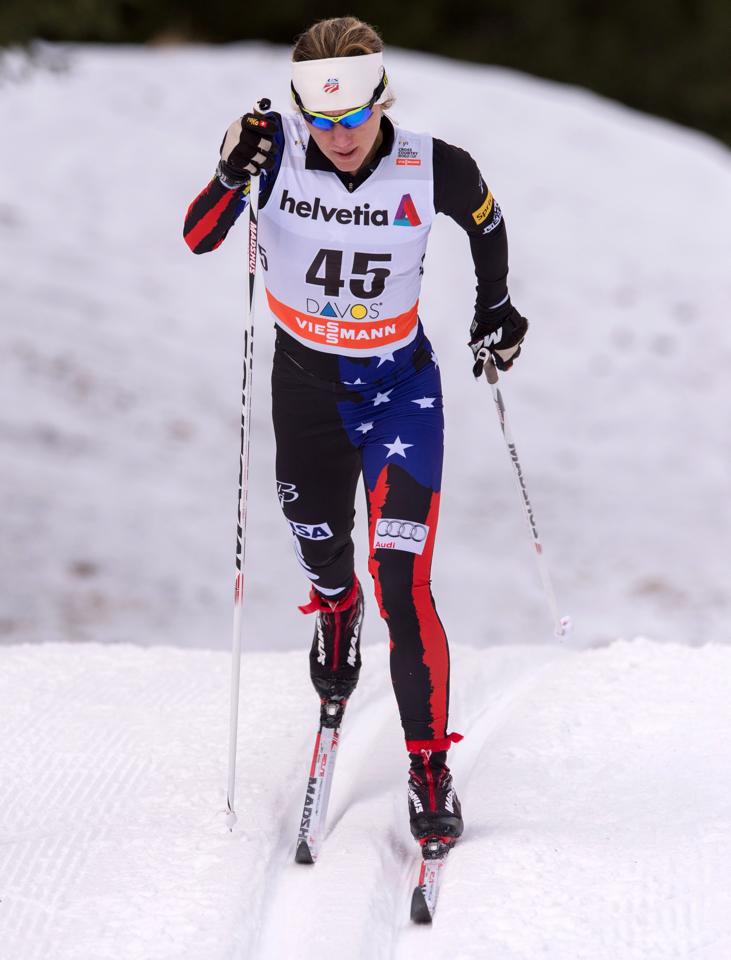
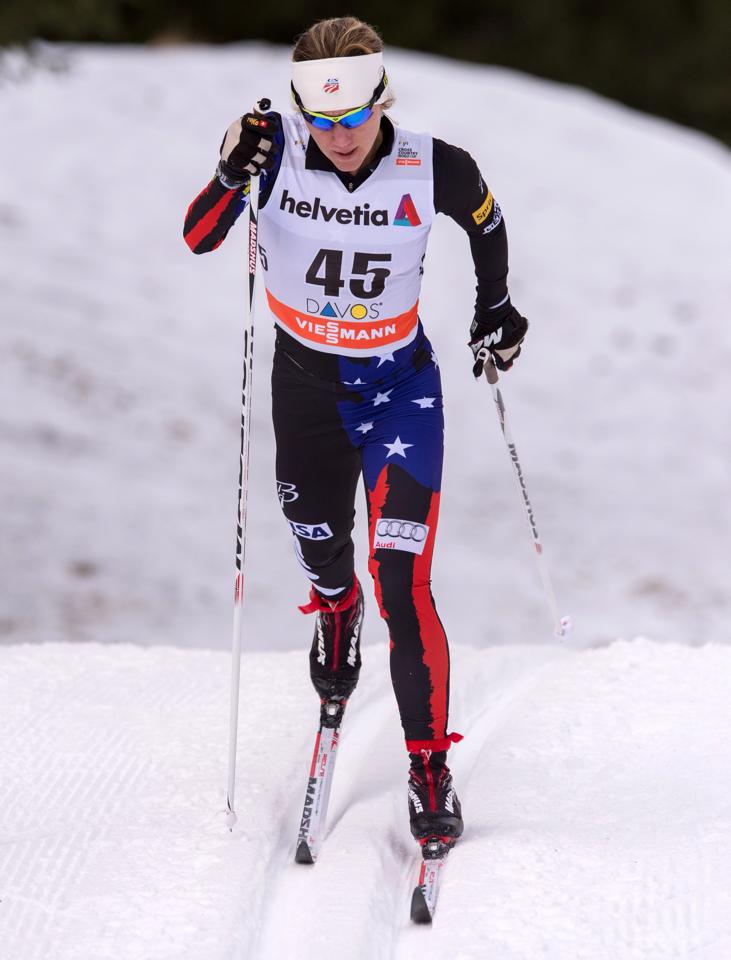
    Caitlin Gregg (Team Gregg) skiing to 56th place in the Davos World Cup 10 k classic, Dec. 13. (Photo: Toko)
    Caitlin Gregg (Team Gregg/Madshus) skiing to 56th place in the Davos World Cup 10 k classic on Dec. 13. (Photo: Toko)

    Caitlin Gregg had big plans before arriving in Europe to race the World Cup circuit as the 2014 SuperTour leader. Aiming to qualify for the 2015 World Championships in Falun, Sweden, Gregg intended to ski for World Cup points. If she accumulated enough, a top-50 ranking would mean automatic qualification for World Championships.

    After three World Cup weekends, that strategy appears to be out of reach for Gregg.

    In the first few weekends of the 2014/2015 season, the 34-year-old Minneapolis native has been near the back of the World Cup pack. Choosing not to start in November’s opening World Cup races in Kuusamo, Finland, Gregg’s first World Cup competition was the mini tour in Lillehammer, Norway, where she placed 78th in the sprint. The following day, she was 62nd in the 5-kilometer freestyle. In the final 10 k pursuit, she skied the 70th -ranked time and finished 68th overall  in the mini tour out of 74 women.

    In the latest World Cup in Davos, Switzerland, Gregg improved on her previous results, skiing to 56th in the 10 k classic and 60th in the 1.3 k freestyle sprint. However, it wasn’t close to the top-30 she had been aiming for.

    “I’d be lying if I said I wasn’t a little bit disappointed with the results,” Gregg said after the Davos 10 k. “I was gunning for a little bit higher, especially in that 5 k skate. I was looking to be in the points.”

    Some of Gregg’s fellow U.S. competitors have started their seasons slower than they’d hoped as well, with several of them outside the points.

    While not everyone has posted strong results, the difference between the U.S. Ski Team (USST) women and Gregg is that they have each cracked into the top-30 at least once.

    According to Gregg, members of the USST also have more wiggle room at the beginning the season, while she doesn’t as a Continental Cup leader.

    “Obviously the ideal thing would be to be on the ski team, because they have a little bit of leeway in terms of, OK, are they firing on all cylinders now or are they waiting for World Champs?” she said. “In my position, or really anyone on the SuperTour, we don’t really have that opportunity.”

    She said she was in a similar situation last year, when she started the season on the SuperTour circuit in the U.S. She believed a fast start was necessary to earn a spot on the Olympic team.

    Gregg delivered in late 2013, earning a podium in every nationally attended race she competed in before leaving for Europe in January for the Word Cup. However, she was not selected to the Olympic team.

    “But it’s a tough position on either side,” she acknowledged.
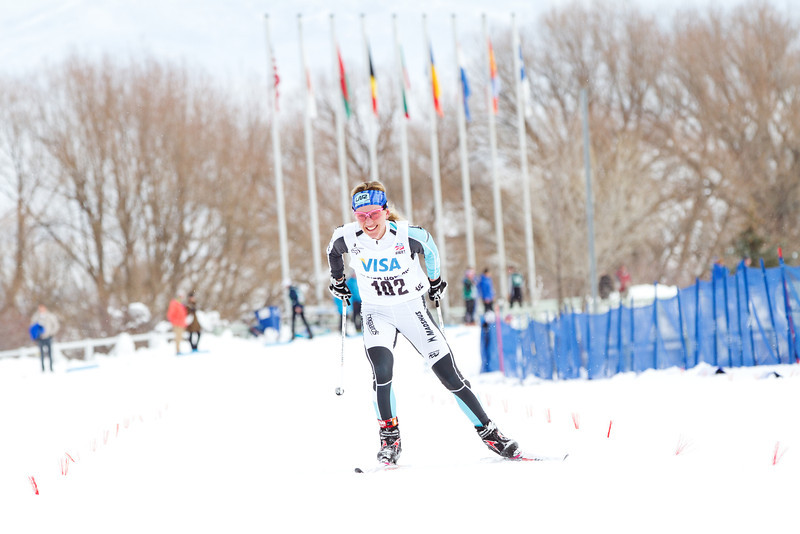
    Caitlin Gregg (Team Gregg/Madshus) racing to a nearly four-minute victory in the 20 k freestyle mass start at U.S. Cross Country Championships on Jan. 8 at Soldier Hollow in Midway, Utah. (Photo: U.S. Ski Team/Sarah Brunson)
    Caitlin Gregg (Team Gregg/Madshus) racing to a nearly four-minute victory in the 20 k freestyle mass start at the 2014 U.S. Cross Country Championships at Soldier Hollow in Midway, Utah. (Photo: U.S. Ski Team/Sarah Brunson)

    Her current situation is reminiscent to that of Alaska Pacific University’s Rosie Brennan last season.

    The 2012/2013 SuperTour leader, Brennan started her winter on the World Cup with the hope of earning a spot at the Olympics. However, her best result was a top 60. While she earned a national title and several podiums at the 2014 U.S. national, she did not make the Olympics.

    Even with the fast track to pre-qualification rapidly escaping, both Gregg and her husband, Brian, are still gunning for World Championships — they’ll just have to be picked by discretion or USSA points.

    “We’ve seen people turn around some maybe slower starts to the season. We’re still optimistic,” she said. “We put in some good training this year. We want to go as the husband-and-wife duo. We got blocked last year, so now we have to go again strong.”

    Gregg believes her best chance for qualification is to perform well in the upcoming World Cup 10 k freestyle in Davos this weekend. Now that she’s already raced the course, Gregg believes that knowledge and experience will help her accomplish a strong result.

    When she returns to the domestic circuit for the 2015 U.S. national in Houghton, Mich., Gregg will again look to make an impression in the 10 k freestyle.

    “A good statement in the 10 k at nationals and hopefully [it will] really put that little thought in the back of their minds again to bring us. Again, it’s all based on USSA points, so really looking to chase those down and see what we can do there,” she said.

    Despite the challenge of skiing at the international level, Gregg said that the trip to Europe has been worthwhile for a variety of reasons.

    “I wouldn’t trade this – even if it means that I don’t make World Championships because I came over here. I just have learned so much,” she said.

    “I wouldn’t trade this – even if it means that I don’t make World Championships because I came over here. I just have learned so much.” — Caitlin Gregg (Team Gregg/Madshus) on starting the 2014/2015 season on the World Cup

    Gregg explained that after racing two weekends on the World Cup, she’s seen improvements in her skiing, especially in classic skiing.

    Traditionally stronger in skating, Gregg’s 56th in last Saturday’s 10 k classic is her strongest result thus far on the 2014/2015 World Cup. She started amongst some of the strongest skiers on the circuit including Krista Parmakoski of Finland and Justyna Kowalczyk of Poland. She said that her race felt better than the earlier distance races of the season.

    “I think last weekend I was like, ‘where did I give up all that time?’ Today was one of those days where you think, OK, that’s where it was,” she explained on Saturday. “I was happy when I got to the line with what I did out there, and I couldn’t have done anything else. My skis were dialed, I felt great, everything was great.”

    As she enters the last World Cup weekend before returning stateside, Gregg said she’s excited to take advantage of the opportunities skiing on the World Cup has given her.

    “[I’m] disappointed, but still really taking it in and learning so much. Psyched for the opportunity and knowing that it will make me a stronger skier down the road,” she said.

    If she doesn’t make World Championships, you can expect to see Gregg competing her “other passion,” the American Birkebeiner on Feb. 21 in Hayward, Wis. “I don’t want to say [that’s] the second choice or anything like that, but that’s the plan,” she said.

  • Same Norwegian Men’s Podium, Same Order as Sundby Tops Krogh in Lillehammer Pursuit

    Same Norwegian Men’s Podium, Same Order as Sundby Tops Krogh in Lillehammer Pursuit

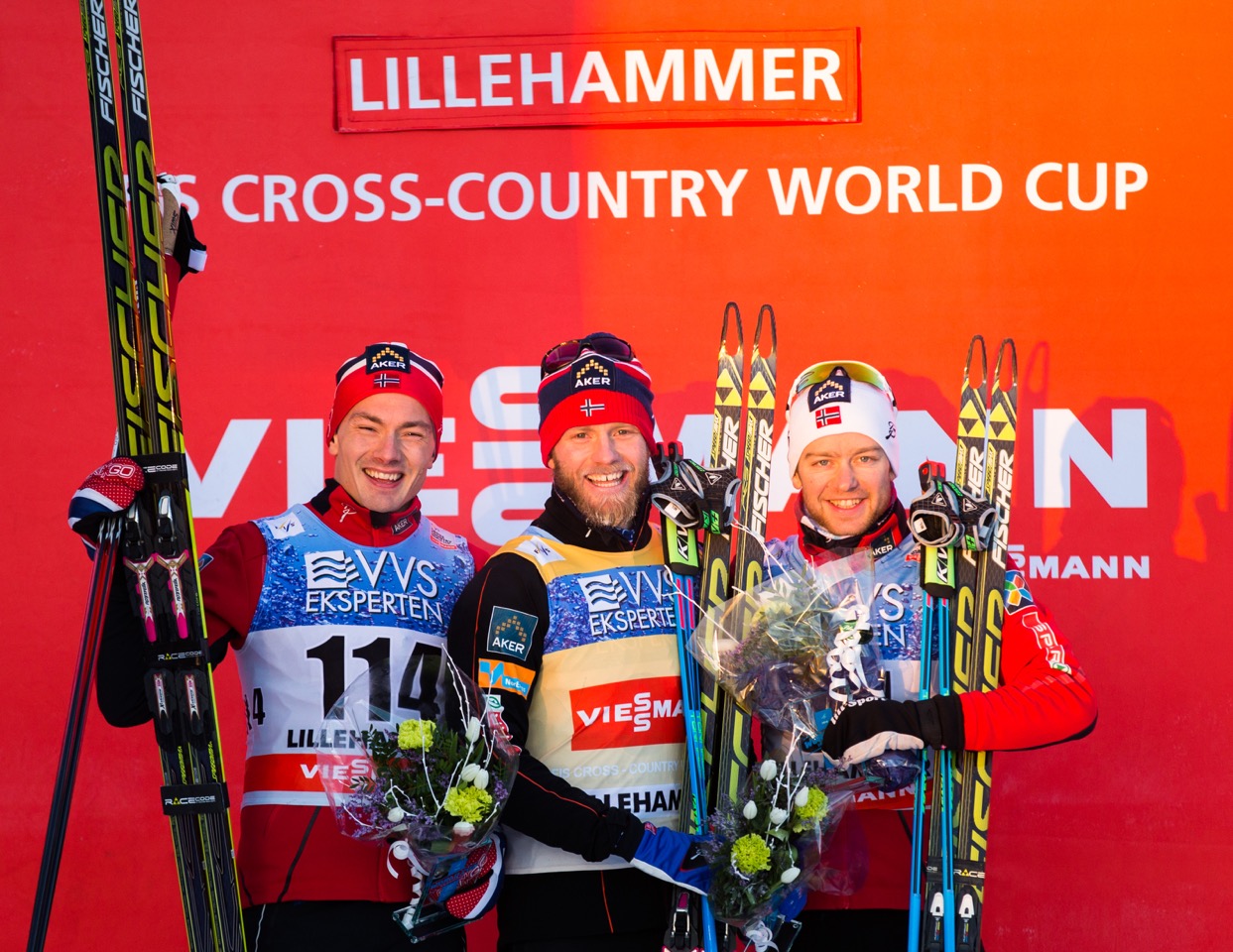
    The men's podiums on Day 2 and 3 of the Lillehammer World Cup were exactly the same, with three Norwegians (as pictured after Saturday's 10 k freestyle). On Sunday, Martin Johnsrud Sundby (c) repeated in first for his fourth-consecutive mini-tour win, Finn Hågen Krogh was second (l), and Sjur Røthe third. (Photo: Fischer/NordicFocus)
    The men’s podiums on Day 2 and 3 of the Lillehammer World Cup were exactly the same, with three Norwegians (as pictured after Saturday’s 10 k freestyle). On Sunday, Martin Johnsrud Sundby (c) repeated in first for his fourth-consecutive mini-tour win, Finn Hågen Krogh was second (l), and Sjur Røthe third. (Photo: Fischer/NordicFocus)

    Coming into the final stage of the Lillehammer triple, Norway’s Martin Johnsrud Sundby the clear favorite despite starting 20 seconds back in second. Sundby won all the World Cup stage-tours last season — the opening Ruka Triple, Tour de Ski and World Cup Finals — and his sweep marked the first time a male managed to win all three of the tours in single season.

    Maybe somebody forgot to tell his teammate Finn Hågen Krogh that before Sunday’s 15-kilometer classic pursuit. After the first two races of this weekend’s mini tour, in which Krogh notched back-to-back podiums (third in Friday’s sprint and second on Saturday), the 24-year-old Norwegian found himself with a 20-second head start on Sundby.

    Finn Hågen Krogh lunging in Saturday's 10 k freestyle individual start. He ended up second, just 2.2 seconds behind Norwegian teammate Martin Johnsrud Sundby. (Photo: Fischer/NordicFocus)
    Finn Hågen Krogh lunging in Saturday’s 10 k freestyle individual start. He ended up second, just 2.2 seconds behind Norwegian teammate Martin Johnsrud Sundby, but continued to lead the Lillehammer mini tour heading into Sunday’s 15 k classic pursuit.(Photo: Fischer/NordicFocus)

    But Sundby, in the yellow overall World Cup leader’s bib, was already on a roll after winning Saturday’s 10 k freestyle by 2.2 seconds over Krogh.

    So was Krogh — after finding himself as the World Cup mini-tour leader for the first time in his career heading into the final pursuit.

    At the start of his race, Krogh showed every indication that he could hold off the charging Sundby. At 2.2 kilometers, he led by 18.3 seconds, but by 5 k, he down to 12.8 seconds ahead.

    “I started out hard, like a regular 15 km, and tried to go my own race,” he told NRK after the race.

    Also in pursuit of Krogh, his Norwegian teammates Pål Golberg and Sjur Røthe started 26 and 27 seconds behind him, respectively. Sweden’s Calle Halfvarsson went out fifth, another second later, and the sixth-man, Norway’s Niklas Dyrhaug, didn’t start until 15 seconds after Halfvarsson.

    At the 3.3 k mark, the chase group of Golberg, Røthe and Halfvarsson was only able to chip away four-tenths of a second off Krogh’s lead. But as soon as all three left the start, they were first hunting Sundby. They caught their first glimpse of him at 0.9 k.

    After the first lap at 5 k, the three men caught Sundby, but it wasn’t long until Sundby launched his own attack to reel in Krogh. The chase group tried to respond but they couldn’t match his acceleration around 5.8 k.

    “I had a plan, and it was running into Finn quickly as possible, and keep the rest of the people behind us,” Sundby told NRK, according to a translation. “We spent longer to catch Finn, than I had envisioned.”

    To Sundby’s surprise, Krogh remained ahead through the 8.3 k checkpoint, where he was 1 second ahead of Sundby.

    “He went on an insanely good run ahead and I would hold second so long — I thought that he wanted to go alone into the finish,” Sundby added.

    When Sundby closed the gap and caught Krogh, the pair worked together for a while to increase their lead over the chase group. The pace increased, assuring Krogh of a podium spot, and it became a matter of which order he and Sundby would end up.

    Martin Johnsrud Sundby racing to a 2.2-second victory in Saturday's 10 k freestyle, the second stage of the Lillehammer mini tour. Sundby went on to win Sunday's 15 k classic pursuit as well, this time by 16.6 seconds over teammate Finn Hågen Krogh. (Photo: Fischer/NordicFocus)
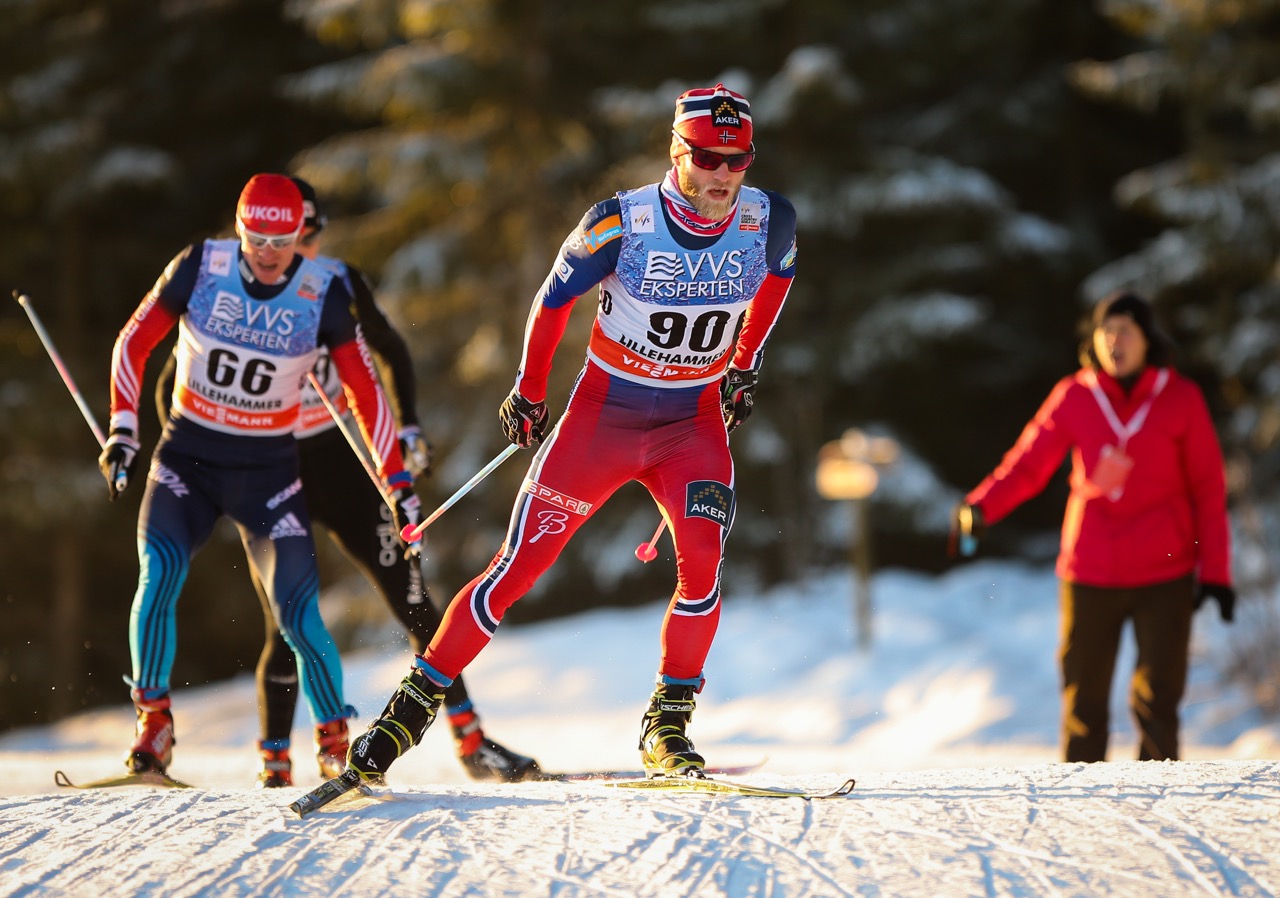
    Martin Johnsrud Sundby (90) racing to a 2.2-second victory in Saturday’s 10 k freestyle, the second stage of the Lillehammer mini tour. Sundby went on to win Sunday’s 15 k classic pursuit as well, this time by 16.6 seconds over teammate Finn Hågen Krogh. (Photo: Fischer/NordicFocus)

    Sundby tried to answer the question before the finish, attacking several times but Krogh matched the pace each time.

    Then, at the 13.3 k mark, Sundby launched what would be his final attack heading into the final climb up to the stadium.

    “I went all-out on the last hill” Sundby told NRK. “My plan was to give everything on the last climb and not look back until I was on the top.”

    His plan worked perfectly. Krogh quickly fell behind, and Sundby opened a sizable lead, which he held across the line for the 16.6-second victory in 39:48.2.

    “It was a heavy finish,” Krogh recalled. “I was struggling with grip and I had no chance to keep Martin’s tempo. I had hoped Martin would attack later. I was just too tired to follow him. Second place in the mini tour is a big achievement. I am really happy about the whole weekend.”

    It was an exciting finish for third place, after Røthe, Golberg and Halfvarsson skied together for most of the race, trying to close the gap to Sundby and Krogh.

    Røthe looked to be in the best form compared to the other members of the chase group heading into the last climb. The 26-year-old Norwegian launched an attack similar to Sundby’s on the climb, aiming to separate himself from Golberg and Halfvarsson before the downhill curve and straightaway into the finish.

    Golberg recognized the attack and countered, dropping Halfvarsson to rejoin the charging Røthe. At the finish, Røthe had a little more left, out-double poling Golberg by 1 second for third (+36.5).

    “My plan was to stay behind Martin and Finn,” Røthe said. “It was a hard fight on the last uphill. I thought I had a little gap on Pål, but he managed to catch me on the top. We were not far away from each other before the home stretch. I believed that if I gained a few meters before the finishing straight, I can beat Pål.”

    The all-Norwegian podium was a repeat from Saturday’s 10 k, which featured Sundby in first, Krogh in second and Røthe in third. Norway swept the top five with Didrik Tønseth, who started 21st and raced himself to fifth place after passing Halfvarsson less than a kilometer before the finish.

    Tønseth posted the fastest time of the day in 39:20.9. Kazakhstan’s Alexey Poltoranin ranked second (+1.4) after racing from 30th to 11th at the finish, and Sundby’s time was 7 seconds slower than Tønseth’s to rank third.

    Finland’s Matti Heikkinen improved one position to seventh (+50.9), and Switzerland’s Dario Cologna skied up from 12th to eighth, 0.3 seconds behind him. Dyrhaug was another 0.7 seconds back in ninth, and Canada’s Alex Harvey made the top 10 in 10th, 0.6 seconds after Dyrhaug, after starting 11th.

    The win gave Sundby his fourth-consecutive mini-tour victory and extended his Overall World Cup lead to 82 seconds over Krogh. Golberg is currently 79 seconds back from Krogh in third.

    Results

  • No ‘I’ in Team: Sundby Praises Teammates After Lillehammer 10 k Win, Norwegian Sweep

    No ‘I’ in Team: Sundby Praises Teammates After Lillehammer 10 k Win, Norwegian Sweep

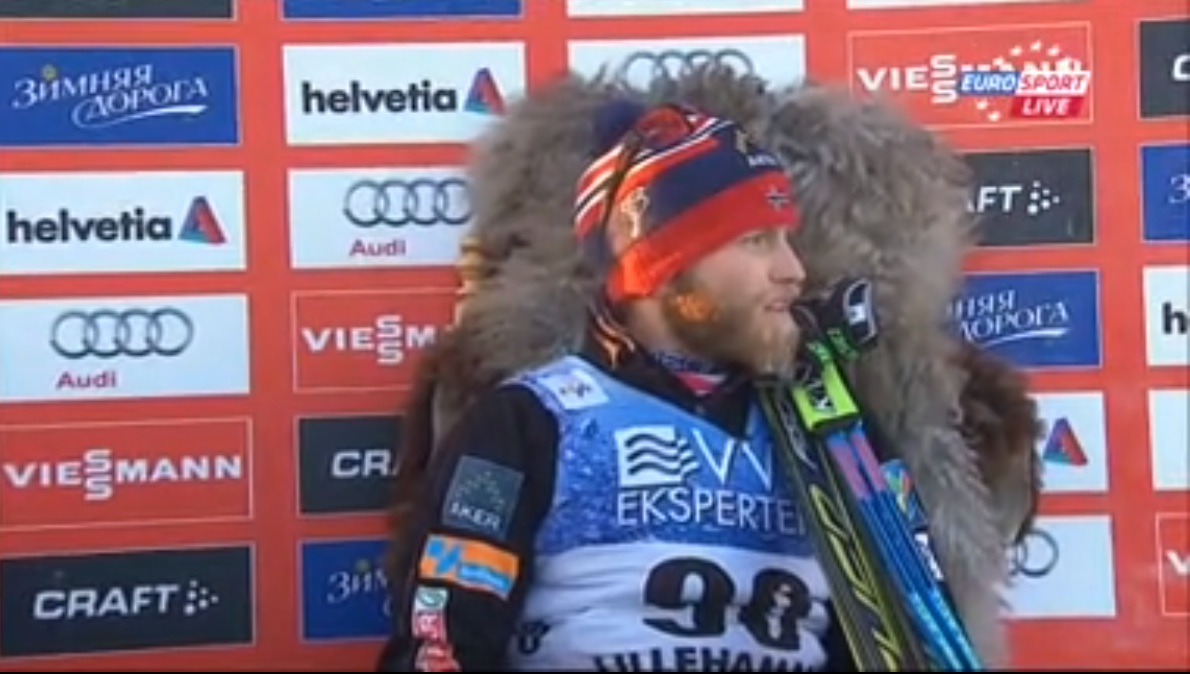
    Martin Johnsrud Sundby (Norway) shows his happy face after winning the men's 10 k freestyle at the Lillehammer World Cup mini tour on Saturday in Norway. (Photo: FIS Cross Country/Twitter)
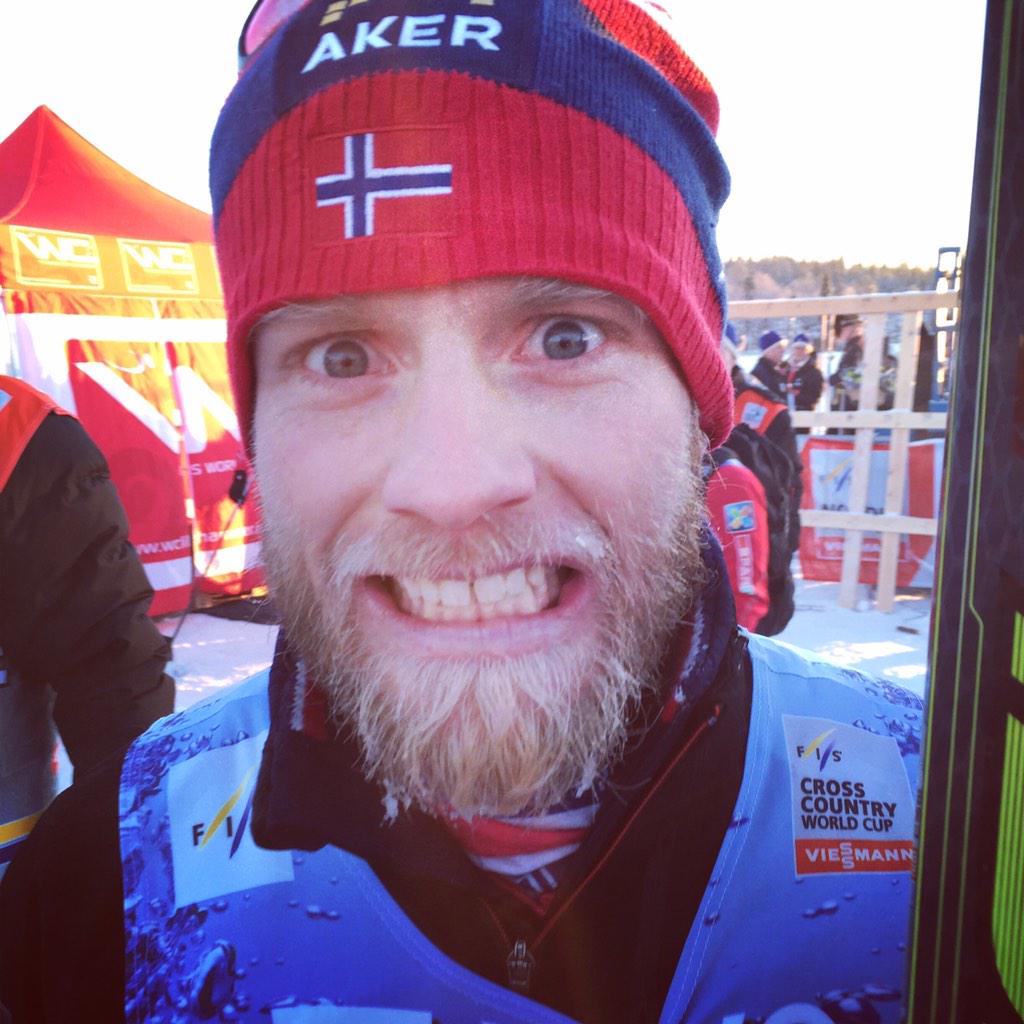
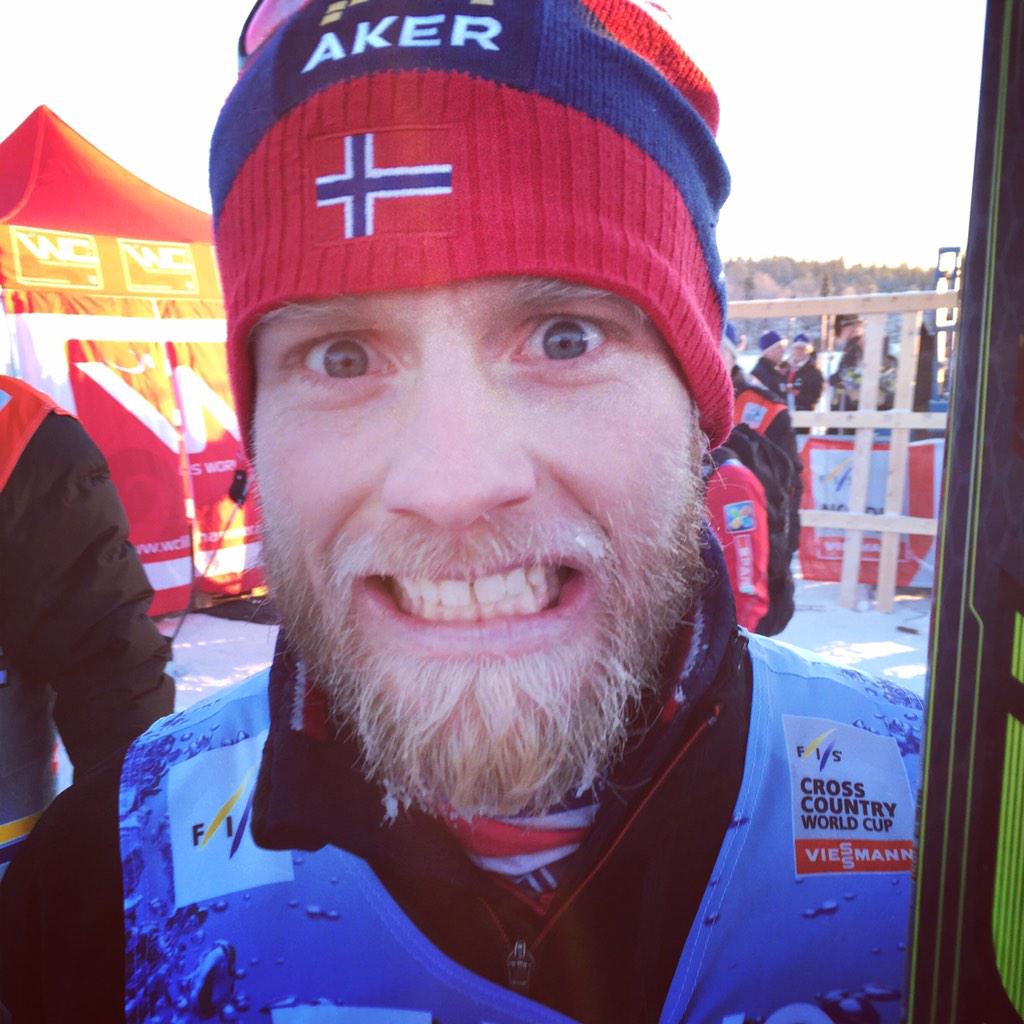
    Martin Johnsrud Sundby (Norway) shows his happy face after winning the men’s 10 k freestyle at the Lillehammer World Cup mini tour on Saturday in Norway. (Photo: FIS Cross Country/Twitter)

    If you’re trying to imagine how Norway’s Martin Johnsrud Sundby reacted to his win on Saturday, picture his female teammate Therese Johaug realizing she beat Marit Bjørgen by three-tenths of a second for the win. Better yet, watch the video.

    Sundby was basically the opposite of that. It’s not that the 30-year-old defending Overall World Cup champion is too cool to jump up and down and yell, he just had a different way of showing his emotions.

    And he was actually a little emotional on Saturday.

    Sundby led a Norwegian podium sweep, winning the men’s 10-kilometer freestyle individual start — the second stage of the Lillehammer World Cup mini tour — by 2.2 seconds over teammates Finn Hågen Krogh and Sjur Røthe, who was 6.4 seconds back in third.

    Norway's Martin Johnsrud Sundby quietly awaiting his fate while sitting in the leader's chair near the end of the men's Lillehammer World Cup 10 k freestyle on Saturday. He ended up holding off Sweden's Calle Halfvarsson, then teammate Finn Hågen Krogh, for the 2.2-second victory.
    Norway’s Martin Johnsrud Sundby quietly awaiting his fate while sitting in the leader’s chair near the end of the men’s Lillehammer World Cup 10 k freestyle on Saturday. He ended up holding off Sweden’s Calle Halfvarsson, then teammate Finn Hågen Krogh, for the 2.2-second victory.

    Sweden’s Calle Halfvarsson placed fourth, 1.5 seconds off the podium, and Norway took fifth and sixth with Niklas Dyrhaug and Chris Andre Jespersen, respectively.

    “I am happy for the win, but I am extremely happy for the team,” Sundby told FIS.

    With Friday’s sprint winner, Pål Golberg, in 12th and Didrik Tønseth in 17th, the Norwegians had  seven of 15 starters in the top 20. What might be more notable is neither Petter Northug (in 35th) nor Eirik Brandsdal (in 53rd), who led the Overall World Cup before Saturday’s race, were among them.

    “We have trained hard for so many months now, and … for me, kind of a captain for this team, I get a bit touched when the guys are so good,” Sundby said.

    After finishing 14th in the sprint (just like Johaug), Sundby ranked 15th in the mini tour, 27.4 seconds behind Golberg, after Friday’s race. He improved to second on Saturday behind Krogh, and will start 20 seconds after Krogh in Sunday’s 15 k classic pursuit. Golberg will head out 6 seconds later in third.

    Sundby’s win also put him in the yellow bib for in the second World Cup weekend of the 2014/2015 season.

    But even after standing up from the leader’s chair and flexing his right arm a little bit for doting Norwegian spectators, Sundby was quick to defer the attention back to his teammates.

    “It is an absolutely insane team effort,” he told NRK.

    Four different Norwegians took turns in the leader’s chair: first Jespersen (who topped Sweden’s Daniel Richardsson by 13 seconds. Before that, Richardsson ousted Switzerland’s Curdin Purl, who started eighth of 118 men).

    Jespersen’s initial splits weren’t anything outstanding: he ranked 22nd at 2.2 k, but sped up to ninth by the halfway point. With 1.8 k to go, the 31-year-old Jespersen posted the eighth-fastest time of all the finishers. During his race, it was the fastest.

    “I do not think it was so much fun to be peed on last weekend, so I had decided today [to go hard],” he told NRK, referring to the 15 k classic in Kuusamo, Finland, where he placed 45th.

    “The ending was abnormally good to me,” he said of his finish on Saturday.

    The 17th starter, Jespersen remained in the hot seat for some time until his teammate Dyrhaug topped him by 0.6 seconds. Dyrhaug turned it on even later in his race, going from fifth at 7.2 k to first by the finish.

    At the end of the day, Dyrhaug’s 8.3 k time ranked eighth and he ended up fifth.

    Røthe then took over the top position by 12.5 seconds. With Sundby just six starters behind him, he looked as if he knew he wouldn’t be in first for long. Røthe posted the fastest times through every checkpoint but the first one at 0.9 k (where Switzerland’s Roman Furger had the quickest start), until Sundby, Halfvarsson and Krogh came through.

    At 2.2 k, Halfvarsson took the lead, followed by Sundby 3.4 seconds back. The order stayed the same with Røthe in third until 5 k, where Røthe’s time ranked second-fastest by just 0.3 seconds over Sundby.

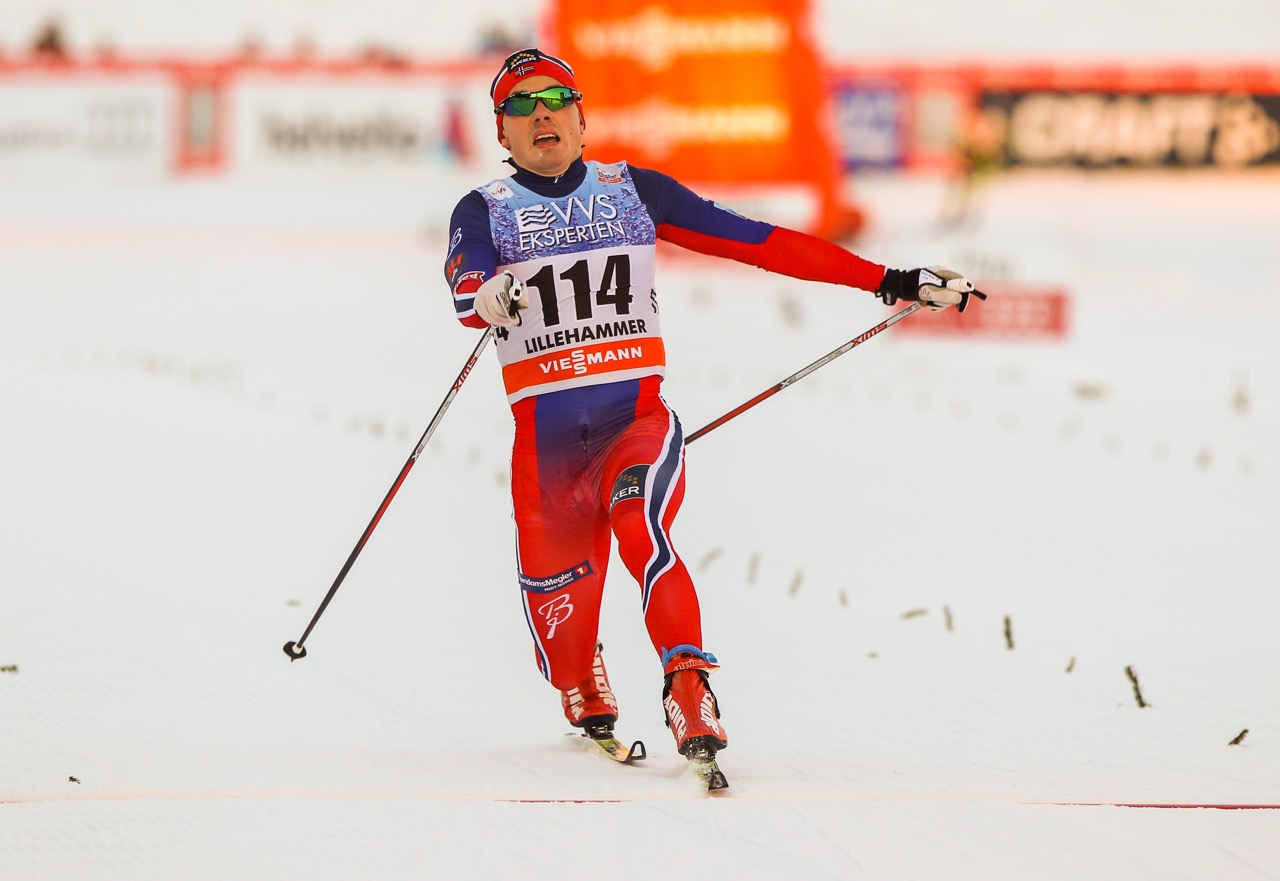
    Halfvarsson remained in first until 8.3 k, where Sundby, who started 1 minute ahead him, had the edge by 1.1 seconds. Later on, Krogh, the 114th starter, would post the third-fastest time at that marker, 2.7 seconds behind Sundby.

    That’s about when Sundby, in the leader’s chair after displacing Røthe by 6.4 seconds, started to pack up his belongings. Any way about it, even if Krogh had the race of his life and beat him, or Golberg as the last starter picked off six places in the last 2 k to reach the podium, Sundby knew he was headed to the flower ceremony.

    “I did an even race. I tried to push hard last 2 kilometers,” Sundby told FIS. “I tried to collect some seconds on the last uphill where a few skiers were struggling. Everybody must have had tired legs.”

    Finn Hågen Krogh after pushing himself well past the red zone to challenge Norwegian teammate Martin Johnsrud Sundby (not shown) for the win in Saturday's 10 k freestyle individual start at the Lillehammer World Cup. Krogh was 2.2 seconds off the mark for second.
    Finn Hågen Krogh after pushing himself well past the red zone to challenge Norwegian teammate Martin Johnsrud Sundby (not shown) for the win in Saturday’s 10 k freestyle individual start at the Lillehammer World Cup. Krogh was 2.2 seconds off the mark for second.

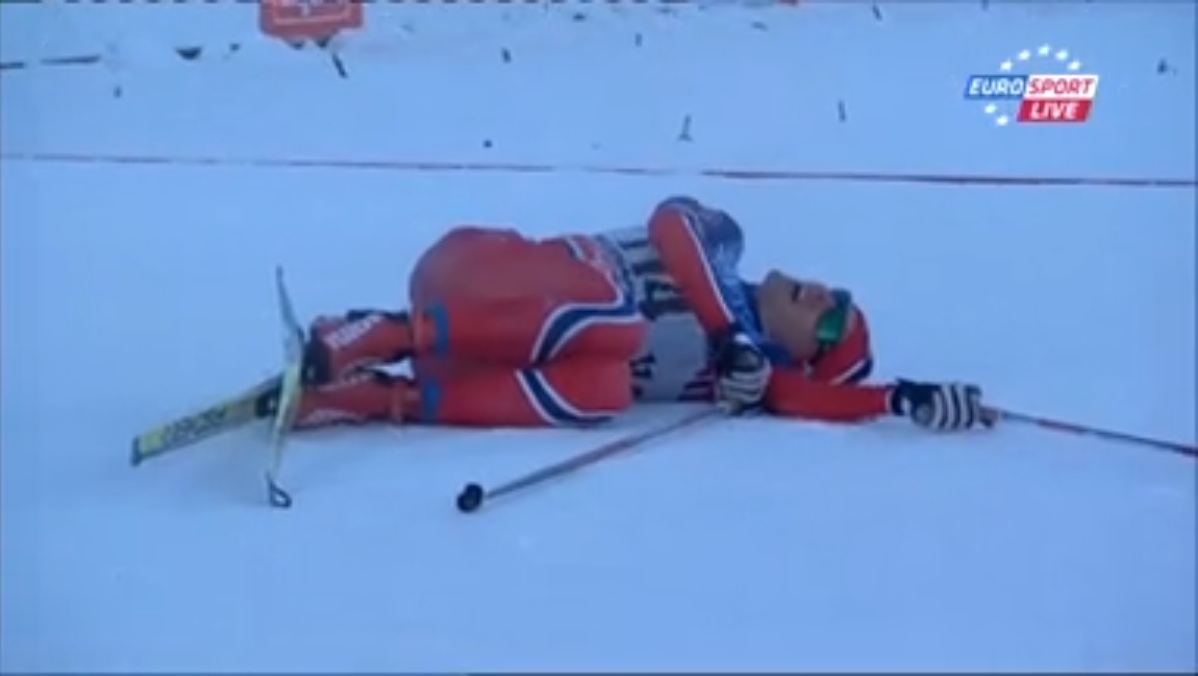
    Halfvarsson faded in the last two kilometers to put himself on the edge of a top-three, finishing 7.9 seconds behind Sundby. Krogh looked to be after the win more than a podium as he pushed himself to the brink into the stadium, collapsing and gasping for air at the finish. He ended up 2.2 seconds behind Sundby for second overall.

    “Since yesterday’s prologue I felt my shape has been very good,” Krogh said. “I was ready for today; it was maybe better than I expected. I found a good rhythm from the start. I had very good skis and I felt confident.”

    Røthe was third, another 4.2 seconds back, and Halfvarsson settled for fourth, 1.5 seconds later.

    “I’m really happy to be back on the podium,” Røthe said after his first individual World Cup podium since placing third in the 2012 skiathlon in Canmore, Alberta (and not counting his second-fastest time in last year’s Tour de Ski final climb in Val di Fiemme, Italy).

    “It is even better to be there with my good friends Finn and Martin,” he added.

    After not feeling quite in top form before Saturday, Sundby, who now leads the Overall World Cup by 9 points over Krogh and 20 points over Brandsdal in third, told reporters he was excited for Sunday’s pursuit.

    “Hopefully we get an exciting race tomorrow,” he told FIS. “I think both the race and the winner could be exciting.”

    ***

    Notes: Great Britain’s Andrew Musgrave, 24, had the best distance race of his career (not counting the eighth-fastest time in the 2014 Tour de Ski final climb) in 13th, which puts him 10th in the mini-tour standings before the pursuit.

    Canadian Alex Harvey dropped from sixth to 11th in the mini tour, after placing 33rd, 54.6 seconds behind Sundby. He cited his bothersome left leg, with a blood-flow issue that typically springs up and pains him on uphill skating courses, as the reason behind his result.

    “At the top of the course [around 3.5 k] before we go back down to the stadium, there’s a lot of offset, like steep climbing and my leg was starting to feel pretty bad already,” Harvey said on the phone. “So I was just fighting against it already and I couldn’t push after that. I couldn’t use my leg much, and the downhills were so icy that it was kind of hard to relax and recover so I was always contracting the legs. It was just a really bad day for my leg I guess.”

    He’ll start Sunday’s pursuit 59.3 seconds behind Krogh and 0.4 behind Musgrave, and is focused on picking off as many places as possible — possibly up to Dyrhaug, who’s starting 16 seconds ahead of him in sixth.

    Complete results | with Splits

  • Pendulum Shifts Again to Johaug, Beats Bjørgen in Lillehammer 5 k Skate 

    Pendulum Shifts Again to Johaug, Beats Bjørgen in Lillehammer 5 k Skate 

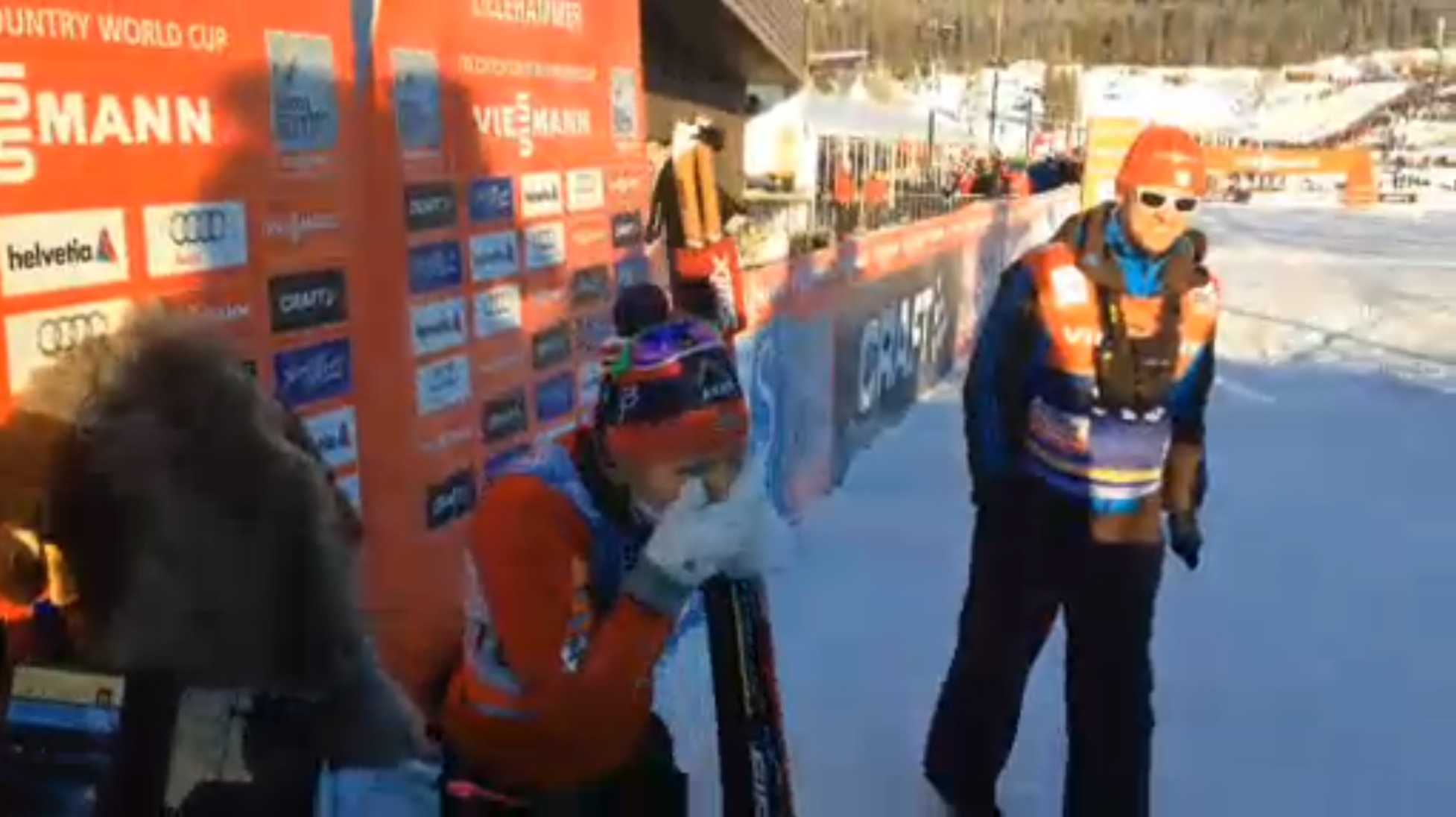
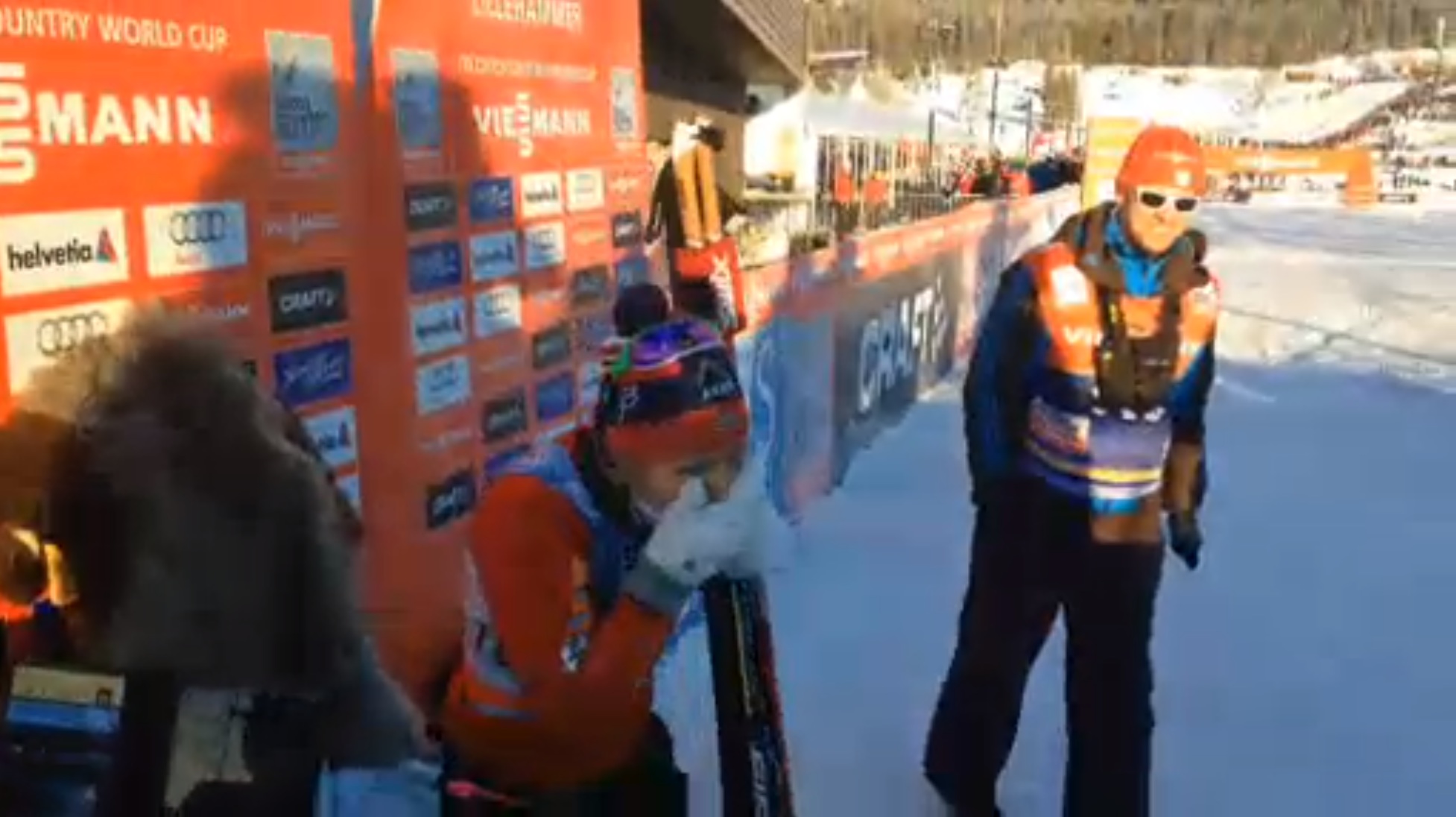
    Norway's Therese Johaug realizing she won Saturday's 5 k freestyle on the second day of the Lillehammer World Cup mini tour by 0.3 seconds over teammate Marit Bjørgen. (Aftenposten.no video)
    Norway’s Therese Johaug realizing she won Saturday’s 5 k freestyle on the second day of the Lillehammer World Cup mini tour by 0.3 seconds over teammate Marit Bjørgen. (Aftenposten.no video)

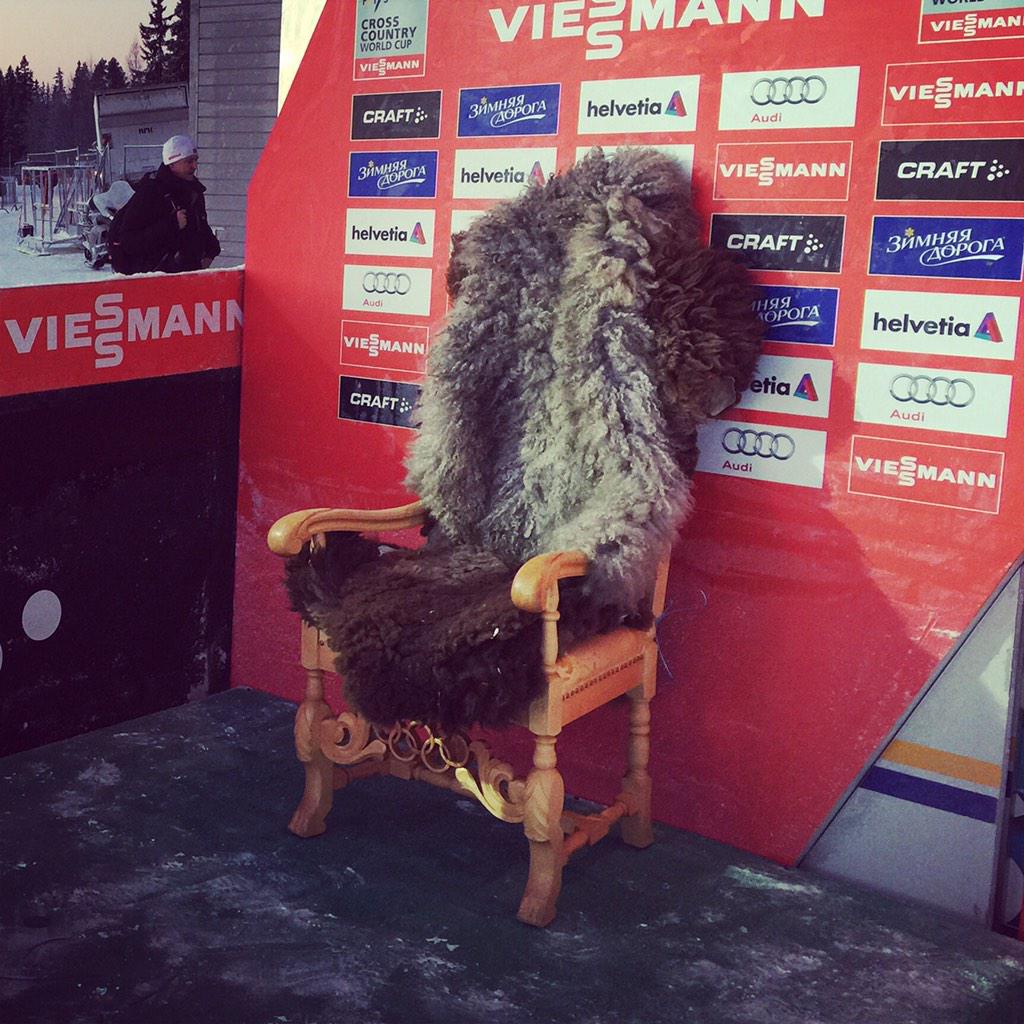
    Sitting in a fur-covered leader’s chair, which resembled a throne with its handcrafted touches and Olympic rings, Therese Johaug clasped one of its wooden arms through her white mitten, holding her skis and poles in the other hand.

    She bit her thumb and tapped her legs furiously in anticipation — waiting for it, waiting for it, until the exact moment when her Norwegian teammate Marit Bjørgen finished and Johaug realized she won Saturday’s 5-kilometer freestyle, the second stage of the Lillehammer World Cup.

    The leader's chair at the Lillehammer mini-tour 5 and 10 k freestyle individual starts on Saturday. (Photo: FIS Cross Country/Twitter)
    The leader’s chair at the Lillehammer mini-tour 5 and 10 k freestyle individual starts on Saturday. (Photo: FIS Cross Country/Twitter)

    Johaug held off Bjørgen by 0.3 seconds with the winning women’s time of 12:33.7. When she knew it was certain, she leapt out of the chair, screaming, then covering her mouth. Then she couldn’t contain it anymore, as she let out some more sounds of elation and smiled for the cameras all around her.

    “This girl was more than just a little bit nervous,” Johaug told the NRK TV station, referring to herself in the third person. “It was so close, and I was sitting there listening to the PA system the whole time. I was scared of celebrating too early, and after everything was over, I had to ask myself if it really was me who won.”

    Despite winning last weekend’s 10 k classic at the World Cup opener in Kuusamo, Finland, by 42 seconds over Bjørgen, Johaug wasn’t convinced she could top her teammate for the second-straight distance race of the season.

    “I was so nervous sitting in the leader’s chair. Last weekend I had one of my best performances in my career, but knew it would be difficult to repeat it,” she said.

    However, Johaug held nothing back once the victory was clear, true to her normal Johaug-self.

    The last starter, Bjørgen topped Johaug’s 2.2 k time by 4.2 seconds. Sweden’s Charlotte Kalla ranked third at the checkpoint, 3.2 seconds behind Johaug, and Norway’s Heidi Weng was fourth-fastest there, another 2.4 seconds back.

    Johaug started 70th of 96 women and 14th in the mini tour to start the day, trailing Bjørgen by 32.4 seconds. Weng started 92nd as the third-ranked woman heading into Day 2, 9.3 seconds behind Bjørgen.

    It didn’t take long for Johaug (who placed 14th in Friday’s sprint) to get up to speed, as she posted the fastest time at 3.3 k, where Bjørgen ended up trailing by 0.8 seconds in second. There, Kalla was up to third, 9 seconds behind Johaug, and Weng was fourth (+12.5).

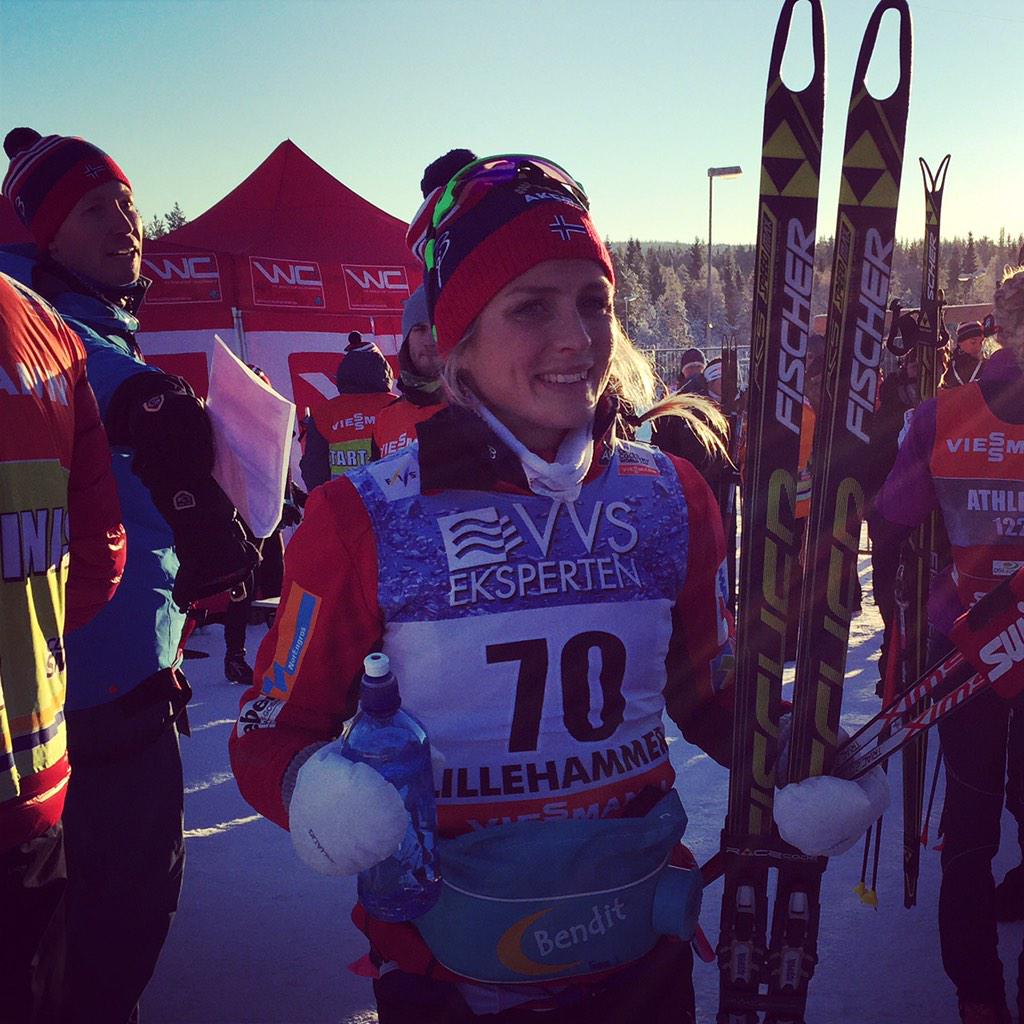
    Johaug after winning the women's 5 k freestyle at the Lillehammer World Cup on Saturday in Norway. (Photo: FIS Cross Country/Twitter)
    Johaug after winning the women’s 5 k freestyle at the Lillehammer World Cup on Saturday in Norway. (Photo: FIS Cross Country/Twitter)

    Just over a kilometer and a half later, Johaug maintained her speed and bumped Kalla in bib 54 from the leader’s chair by 11.3 seconds. She’d stay there until bursting out of it when Bjørgen finished, just three-tenths of a second off her mark.

    “I was four seconds ahead and it’s a bit irritating to lose that along the course,” Bjørgen said to NRK.

    After winning Friday’s skate sprint, Bjørgen missed out on her claiming second win in as many days of the three-stage Lillehammer mini tour, but remains solidly in the lead in both the mini tour and Overall World Cup standings. However, she said she expects Sunday’s 10 k classic pursuit to be a fight to the end, as the 10 k classic is one of Johaug’s specialities.

    “I did not lose many seconds today,” Bjørgen said. “Therese was in good shape. I have a 32-second lead in the mini-tour on her.”

    Weng, who was third for the second-straight day, 10.9 seconds behind Johaug, improved to second in the Lillehammer standings and is currently 19.9 seconds out of first. She’ll start Sunday’s pursuit 20 seconds after Bjørgen in second, and Johaug will go out third, 12 seconds later.

    “I have to keep my pace tomorrow. It will be an exciting race,” Bjørgen said. “I have to find my rhythm and then I will see how fast I will be.”

    Norway swept the podium on Saturday and occupied six of the women’s top seven, with Ragnhild Haga in fifth behind Kalla, Martin Ek Hagen in sixth, and Ingvild Flugstad Østberg in seventh.

    Kalla managed to break up the red-white-and-blue in a fourth, just 0.4 seconds off the podium.

    Kalla skied well from the start and was in the lead for a while. However, once Johaug was on the course, she knew where things were headed.

    “I would have loved to podium today, but you can’t expect that,” Kalla said to the Swedish newspaper SportExpressen.se.

    “The Norwegians seem to be in shape these days,” she added. “Both Weng and Bjørgen were in the sprint final yesterday, and Therese skied really fast in Finland last weekend.”

    But she was hoping for a podium, and was not happy about missing third so narrowly.

    “Crap,” she said about the loss to Weng.

    Jessie Diggins was the top American, finishing in 15th place, 39.5 seconds behind Johaug. Sadie Bjornsen was 20th, 45 seconds behind. Liz Stephen was 22nd, 48.3 seconds behind. Caitlin Gregg was 62nd (+1:16.6) and Kikkan Randall was 63rd (+1:19.5).

    Bjørgen remains in Overall World Cup leader by 98 points over Johaug in second. Østberg ranks third, 19 points behind Johaug, and Weng is fourth heading into the final World Cup stage of the weekend.

    Complete results | with Splits